WO2014112111A1 - 車両内情報提供システムおよび車両内情報提供システムの映像コンテンツ提供方法 - Google Patents
車両内情報提供システムおよび車両内情報提供システムの映像コンテンツ提供方法 Download PDFInfo
- Publication number
- WO2014112111A1 WO2014112111A1 PCT/JP2013/050992 JP2013050992W WO2014112111A1 WO 2014112111 A1 WO2014112111 A1 WO 2014112111A1 JP 2013050992 W JP2013050992 W JP 2013050992W WO 2014112111 A1 WO2014112111 A1 WO 2014112111A1
- Authority
- WO
- WIPO (PCT)
- Prior art keywords
- video content
- video
- display device
- video display
- information
- Prior art date
- Legal status (The legal status is an assumption and is not a legal conclusion. Google has not performed a legal analysis and makes no representation as to the accuracy of the status listed.)
- Ceased
Links
Images


Classifications
-
- H—ELECTRICITY
- H04—ELECTRIC COMMUNICATION TECHNIQUE
- H04N—PICTORIAL COMMUNICATION, e.g. TELEVISION
- H04N21/00—Selective content distribution, e.g. interactive television or video on demand [VOD]
- H04N21/20—Servers specifically adapted for the distribution of content, e.g. VOD servers; Operations thereof
- H04N21/21—Server components or server architectures
- H04N21/214—Specialised server platform, e.g. server located in an airplane, hotel, hospital
- H04N21/2146—Specialised server platform, e.g. server located in an airplane, hotel, hospital located in mass transportation means, e.g. aircraft, train or bus
-
- H—ELECTRICITY
- H04—ELECTRIC COMMUNICATION TECHNIQUE
- H04H—BROADCAST COMMUNICATION
- H04H20/00—Arrangements for broadcast or for distribution combined with broadcast
- H04H20/53—Arrangements specially adapted for specific applications, e.g. for traffic information or for mobile receivers
- H04H20/61—Arrangements specially adapted for specific applications, e.g. for traffic information or for mobile receivers for local area broadcast, e.g. instore broadcast
- H04H20/62—Arrangements specially adapted for specific applications, e.g. for traffic information or for mobile receivers for local area broadcast, e.g. instore broadcast for transportation systems, e.g. in vehicles
-
- H—ELECTRICITY
- H04—ELECTRIC COMMUNICATION TECHNIQUE
- H04N—PICTORIAL COMMUNICATION, e.g. TELEVISION
- H04N21/00—Selective content distribution, e.g. interactive television or video on demand [VOD]
- H04N21/20—Servers specifically adapted for the distribution of content, e.g. VOD servers; Operations thereof
- H04N21/23—Processing of content or additional data; Elementary server operations; Server middleware
- H04N21/24—Monitoring of processes or resources, e.g. monitoring of server load, available bandwidth, upstream requests
- H04N21/2407—Monitoring of transmitted content, e.g. distribution time, number of downloads
-
- H—ELECTRICITY
- H04—ELECTRIC COMMUNICATION TECHNIQUE
- H04N—PICTORIAL COMMUNICATION, e.g. TELEVISION
- H04N21/00—Selective content distribution, e.g. interactive television or video on demand [VOD]
- H04N21/40—Client devices specifically adapted for the reception of or interaction with content, e.g. set-top-box [STB]; Operations thereof
- H04N21/41—Structure of client; Structure of client peripherals
- H04N21/414—Specialised client platforms, e.g. receiver in car or embedded in a mobile appliance
- H04N21/41422—Specialised client platforms, e.g. receiver in car or embedded in a mobile appliance located in transportation means, e.g. personal vehicle
-
- H—ELECTRICITY
- H04—ELECTRIC COMMUNICATION TECHNIQUE
- H04N—PICTORIAL COMMUNICATION, e.g. TELEVISION
- H04N21/00—Selective content distribution, e.g. interactive television or video on demand [VOD]
- H04N21/40—Client devices specifically adapted for the reception of or interaction with content, e.g. set-top-box [STB]; Operations thereof
- H04N21/47—End-user applications
- H04N21/482—End-user interface for programme selection
Definitions
- the present invention relates to an in-vehicle information providing system and a video content providing method of the in-vehicle information providing system.
- video content is provided mainly in three ways.
- a central device installed near the driver's seat and a terminal (modem) installed in each vehicle are connected by an analog line, and video data of video content is transmitted to each vehicle via the central device and the modem. It is transmitted to a video display device, and video such as advertisements and news is displayed on the video display device.
- this method has a drawback that image quality is deteriorated.
- the central device and the video display device are digitally connected by Ethernet (registered trademark) or the like, the video data is distributed by broadcast, and the video data is decoded by each video display device to display the video. is there.
- Ethernet registered trademark
- This method can provide clear video, but it is assumed that the same video content is displayed on all video display devices as in the first method.
- the third method is similar to the second method in that the central device and the video display device are digitally connected, and video content is transmitted from the central device to each video display device in advance.
- the video content is stored and displayed. According to this method, it is possible to transmit different video contents to each video display device, and the disadvantages of the above two methods can be solved.
- this method is referred to as “video display device storage type”.
- content presentation data (corresponding to a video display device) stores content data and manages a video (corresponding to a central device). ) Stores streaming data, and these data are displayed by switching control.
- Patent Document 1 the video display device storage type device represented by Patent Document 1 has the following problems.
- the storage medium of the central device can store a large amount of video data for a long time.
- the storage medium needs a very expensive unit capacity such as a solid state drive (SSD) that is resistant to heat and vibration. There is. Therefore, the number of video contents that can be stored in the central device is limited.
- SSD solid state drive
- central management of the video content is indispensable at the central device, and it is necessary to transmit the data in consideration of the load on the central device.
- an embedded device for example, a low clock CPU
- an embedded device for example, a low clock CPU
- the present invention has been made in view of the above, and provides an in-vehicle information providing system capable of efficiently displaying video content without causing an increase in cost and without reducing reliability.
- An object of the present invention is to obtain a video content providing method for an in-vehicle information providing system.
- the present invention is connected to a video display device that displays a plurality of video contents transmitted from a ground communication device to a train, an inter-vehicle communication path, and an in-vehicle communication path.
- the central device is a video content distribution management table in which identification information for uniquely identifying each video content and each video content is stored in association with each other, each video content, And the first information storage unit in which the video content is stored and the video display device to store the video content based on the video content distribution management table are determined, and the determined video
- a first information control unit that distributes video content stored in the first information storage unit to a display device, wherein each video display device includes the video content distribution management table, A second information storage unit that stores video content distributed from one information control unit, a location where the video content is stored based on the video content distribution management table, and the determined location And a second information control unit for displaying the video content read out from.
- each video display device since each video display device transmits video content to each other by using the video content distribution management table, the video is not increased and the reliability is not lowered. There is an effect that the content can be displayed efficiently.
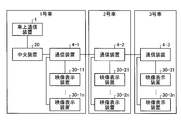
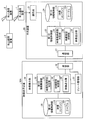
- FIG. 1 is a diagram illustrating an on-vehicle communication device, a central device, and an image display device that constitute an in-vehicle information providing system according to a first embodiment of the present invention.
- FIG. 2 is a diagram illustrating a configuration example of a device mounted on each vehicle.
- FIG. 3 is a diagram showing in detail the components of the in-vehicle information providing system according to the first embodiment of the present invention.
- FIG. 4 is a diagram showing a video content distribution management table.
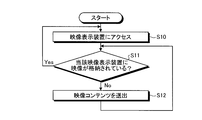
- FIG. 5 is a flowchart showing the operation of the central apparatus.
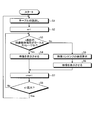
- FIG. 6 is a flowchart illustrating an operation in which the information control unit of the video display apparatus specifies the storage location of the video content and displays the video.
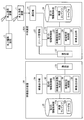
- FIG. 7 is a configuration diagram of the in-vehicle information providing system according to the second embodiment of the present invention.
- FIG. 8 is a configuration diagram of the in-vehicle information providing system according to the third embodiment of the present invention.
- FIG. 1 is a diagram illustrating an on-vehicle communication device, a central device, and an image display device that constitute an in-vehicle information providing system according to a first embodiment of the present invention.
- FIG. 2 is a diagram illustrating a configuration example of a device mounted on each vehicle.
- FIG. 3 is a diagram showing in detail the components of the in-vehicle information providing system according to the first embodiment of the present invention.
- FIG. 4 is a diagram showing a video content distribution management table (referred to as “management table 100”).
- the in-vehicle information providing system is intended for a train including a plurality of vehicles (No. 1 to No. 3 in FIG. 2).
- the on-board communication device 1, the central device 20, the communication device 4 (4-1 to 4-3), and the video display device 30 (30-11 to 30-), which are devices constituting the in-vehicle information providing system. 3n) is installed on the train side.
- the ground communication device 2 and a ground editing device 3 which are devices constituting the in-vehicle information providing system are installed.
- the on-vehicle communication device 1, the central device 20, the communication device 4-1, and a plurality of video display devices 30-11 to 30-1n are installed in the first vehicle, and the communication device 4- 2 and a plurality of video display devices 30-21 to 30-2n are installed, and a communication device 4-3 and a plurality of video display devices 30-31 to 30-3n are installed in the third car.
- the central device 20 is connected to the on-board communication device 1 and the communication device 4-1.
- the central device 20 is connected to various control operation devices such as a master controller (not shown), and the central device 20 performs input / output processing of various data.
- One or more communication devices 4 are installed in each vehicle, connected to each other via an inter-vehicle communication path (not shown), and have a function of transmitting and receiving data transmitted between the vehicles.
- the communication device 4 is provided with a plurality of connection ports (not shown) so that a plurality of video display devices 30 can be connected.
- the communication device 4 has a function of relaying the management table 100 and video content 110 (for example, advertisements and news) distributed from the central device 20 to the video display device 30.
- the video display device 30 has a function of storing the management table 100 and the video content 110 distributed via the communication device 4, and reads the video content 110 stored in the local storage and displays it on the video display unit 34, or remotely.
- the video content 110 stored in the storage is downloaded and displayed on the video display unit 34. Details of these functions will be described later.
- the ground editing device 3 is provided in, for example, a building of an advertisement production company, and the ground editing device 3 edits the management table 100 and the video content 110.
- the ground communication device 2 is installed on, for example, a station platform and connected to the ground editing device 3.
- the on-vehicle communication device 1 has a function of communicating with the ground communication device 2 by radio such as WiFi.
- the central device 20 includes a communication unit 21, a first information control unit 23, a first information storage unit 24, and a communication unit 27.
- the communication unit 21 is an interface for connecting the on-board communication device 1 to the central device 20, and the communication unit 27 is an interface for connecting the communication device 4 (see FIG. 2) to the central device 20.
- the first information control unit 23 stores the data of the management table 100 and the video content 110 transmitted from the ground communication device 2 via the communication unit 21 in the first information storage unit 24.
- the management table 100 is transmitted to the video display device 30 and the first information is stored in the video storage location described in the management table 100.
- the video content 110 in the storage unit 24 is distributed.
- the video display device 30 includes a communication unit 31, a second information control unit 32, a video display unit 34, and a second information storage unit 35.
- the communication unit 31 is an interface for connecting the communication device 4 (see FIG. 2) to the central device 20.
- the second information control unit 32 stores the management table 100 and the video content 110 transmitted from the first information control unit 23 in the second information storage unit 35.
- the video storage state determination unit 33 of the second information control unit 32 determines the storage location of the video content based on the management table 100.
- the second information control unit 32 reads the video content 110 stored in the local storage and displays it on the video display unit 34.
- the video storage location described in the management table 100 is a device other than the device in which the management table 100 is stored, that is, the video storage location is a data storage unit (remote storage) of a device other than the own device.
- the second information control unit 32 makes a transmission request for the video content 110 to the information control unit of the device (for example, the first information control unit 23 of the central device 20), and transmits it in response to the transmission request.
- the displayed video content 110 is displayed on the video display unit 34.
- FIG. 4 shows an example of the management table 100.
- the management table 100 stores identification information (for example, a file name or the video content ID shown in FIG. 4) for uniquely identifying a plurality of video contents 110 and video storage.
- Identification information for example, a file name or the video content ID shown in FIG. 4
- N is an integer other than 0
- the storage location of the video content with IDs “001”, “030”, and “077” is the video display device 30-11.
- the storage location of the video content with ID “003” is the central device 20
- the storage location of the video content with IDs “008” and “010” is the video display device 30-21.
- the video storage state determination unit 33 of the video display device 30-11 refers to the management table 100, so that the video content with the ID “001” is stored in the second information storage unit 35 of the video display device 30-11 (local Storage).
- the second information control unit 32 of the video display device 30-11 reads the video content with the ID “001” from the local storage.
- the video storage state determination unit 33 of the video display device 30-11 refers to the management table 100 so that the video content with the ID “008” is stored in the second information storage unit 35 (remote control) of the video display device 30-21. Storage).
- the second information control unit 32 of the video display device 30-11 requests the video display device 30-21 to transmit the video content with the ID “008”.
- the types of video content 110 include information with a relatively high update frequency such as news and weather forecasts and information with a relatively low update frequency such as CM.
- CM relatively low update frequency
- As a place where these video contents 110 are stored for example, information having a relatively high update frequency is stored in the central device 20, and an update frequency is stored in a place other than the central device 20 (video display device 30-11 or the like). Stores slow information.
- the location where the video content 110 is stored is not limited to these.
- information with a low update frequency is stored in each video display device 30, and part of the information with a high update frequency is stored in the central device 20.
- the information may be stored and the remaining part of the information may be distributed and stored in the plurality of video display devices 30.
- a plurality of video contents 110 and a management table 100 are distributed and stored in a plurality of devices in the system, and each video display device 30 is stored in the management table 100. Based on this, the video content 110 is read and displayed. Therefore, compared to the case where all the video contents 110 are stored in the central device 20 and the video content 110 stored in the central device 20 is downloaded and displayed on each video display device 30, the central device 20 and each video display are displayed. The load on the communication path with the device 30 can be reduced, and the number of channels that can be displayed can be increased.
- the storage capacity of the entire system can be used effectively, and the number of channels that can be distributed without increasing the storage capacity of the central device 20 can be increased. .
- the in-vehicle information providing system it is possible to reduce the load on the central device 20 due to the transmission of the video content 110. Therefore, even when a CPU with a low clock is used for the central device 20, a large amount of video content 110 can be distributed. Further, packet loss due to vehicle noise or vibration can be reduced, and the throughput in the central device 20 can be improved.
- the management table 100 and the video content 110 edited by the ground editing device 3 are received by the first information control unit 23 via the ground communication device 2, the on-board communication device 1, and the communication unit 21, and the first information It is stored in the storage unit 24.
- This management table 100 is also transmitted to the video display device 30 mounted on each vehicle and stored in the second information storage unit 35 of the video display device 30.
- the video storage locations are confirmed in the order of serial numbers in the management table 100, and according to the example of FIG. It is determined that it is stored in -21.
- the video distribution control unit 26 reads the video content 110 whose storage location is specified by the video storage state determination unit 25 from the first information storage unit 24, and adds a header indicating a transmission destination to the video data of the read video content 110. Grant and distribute. Receiving this packet, the second information control unit 32 of the video display device 30 extracts the video data, and this video data is stored in the second information storage unit 35 as the video content 110. Through the same procedure, the video content 110 to be stored in the video display device 30 specified by the video storage state determination unit 25 is stored in each video display device 30.
- FIG. 5 is a flowchart showing the operation of the central device 20.
- the video storage state determination unit 25 of the first information control unit 23 accesses each video display device 30 (Step S10), and manages the video content 110 stored in the second information storage unit 35 of the video display device 30.
- Step S10 accesses each video display device 30
- Step S10 manages the video content 110 stored in the second information storage unit 35 of the video display device 30.
- the table 100 it is determined whether or not the video content is stored in the video display device 30 even though the video storage location described in the management table 100 is the video display device 30.
- the video transmission unit 28 of the first information control unit 23 stores it in the first information storage unit 24.
- the video content not stored in the video display device 30 is sent to the video display device 30 from the received video content (step S12). Then, the processes of steps S11 and S12 are repeated until transmission of all video contents to be stored in the video display device 30 is completed.
- step S11 When the video content described in the management table 100 is stored in the video display device 30 (step S11, Yes), the video storage state determination unit 25 executes the process of step S10 again.
- FIG. 6 is a flowchart showing an operation in which the information control unit of the video display device specifies the storage location of the video content and displays the video.
- the second information control unit 32 reads the management table 100 stored in advance (step S1). When the storage location of the video content with the serial number “1” is the local storage (step S2, step S3, Yes), the second information control unit 32 sends the video content stored in the local storage to the video display unit. It is displayed (step S4).
- the second information control unit 32 sets the information control unit of the device in which the video content is stored.
- a transmission request for video content is made (step S5).
- the video transmission unit 28 of the central device 20 reads the video content corresponding to the transmission request from the first information storage unit 24 and sends it to the video display device 30 that is the request source.
- Send to And the 2nd information control part 32 of the video display apparatus 30 which received video content displays this video content on the video display part 34 (step S6).
- the video storage state determination unit 33 increments n by 1 (step S7). If the value of n does not exceed the maximum serial number of the management table 100 (No at step S8), the second information control unit 32 performs steps S3 to S7 until the value of n exceeds the maximum serial number. The process is repeated.
- step S8 If the value of n exceeds the maximum value of the serial number of the management table 100 (step S8, Yes), the second information control unit 32 executes the processes from step S1 to S7 again.
- the second information control unit 32 is requested to transmit the next video content 110. With this operation, a time lag from when the display of one video content 110 is completed until the display of another video content 110 is started can be prevented.
- the operation of the video sending unit 38 of the video display device 30 is the same as that of the video sending unit 28 of the central device 20.
- the video storage state determination unit 33 of the video display device 30-11 determines that the video storage location of the serial number “3” is the video display device 30-21
- the video transmission of the video display device 30-21 The transmission request from the video display device 30-11 is transmitted to the unit 38.
- the video transmission unit 38 of the video display device 30-21 reads out the video content corresponding to the transmission request from the second information storage unit 35, and transmits this video content to the requesting video display device 30-11. .
- the second information control unit 32 of the video display device 30-11 that has received the video content causes the video display unit 34 to display the video content.
- the video display method in the video display unit 34 generally changes depending on the source of the video data, such as whether video data is read from the local storage and displayed, or video data distributed from the remote storage is displayed.
- the S / W structure of the video display unit 34 is complicated.
- the video distribution control unit 36 similar to the video distribution control unit 26 provided in the central device 20 includes the video display device 30. Since the video display unit 34 can receive video data from the video distribution control unit 36, it is necessary to be aware of whether the video data reading source is a local storage or a remote storage.
- the S / W structure of the video display unit 34 can be simplified.
- the video content that has been transmitted from the central device 20 to each video display device 30 (for example, the video content with ID “001” shown in FIG. 4) is stored in the first information storage unit of the central device 20. If it deletes from 24, the free capacity of the 1st information storage part 24 will increase, and the 1st information storage part 24 can be utilized effectively.
- the video display device 30-11 of the first car and the video display device 30-21 of the second car are defined as representative video distribution devices.
- the management table 100 may be stored only in those representative video display devices, and video data may be transmitted based on the management table 100 only between the central device 20 and the representative video display device. If comprised in this way, compared with the case where transmission of video data between all the video display apparatus groups mounted in each vehicle, the processing load of the central apparatus 20 is reduced, and in each vehicle. Video displayed on a plurality of video display devices can be synchronized.
- the central apparatus 20 stores the management information in which the identification information for uniquely identifying each video content 110 and each video content 110 are stored in association with each other.
- 100, the first information storage unit 24 in which each video content 110 is stored, and the video display device 30 in which the video content 110 is to be stored are determined based on the management table 100, and the determined video display device 30 is determined.
- a first information control unit 23 that distributes the video content 110 stored in the first information control unit 23, and each video display device 30 includes a management table 100 and a first information control unit. The video content 110 distributed based on the management table 100 and the second information storage unit 35 in which the video content 110 distributed from the unit 23 is stored.
- FIG. FIG. 7 is a configuration diagram of the in-vehicle information providing system according to the second embodiment of the present invention.
- the difference from the first embodiment is that a central device 20A is used instead of the central device 20, and a resource management unit 22 is provided in the central device 20A.
- a central device 20A is used instead of the central device 20, and a resource management unit 22 is provided in the central device 20A.
- the same reference numerals are given to the same parts as those in the first embodiment, and the description thereof is omitted, and only different parts will be described here.
- the resource management unit 22 is connected to the first information control unit 23 and the communication unit 27.
- the usage rate for example, CPU usage rate
- the usage rate for example, network usage rate
- the calculation of the usage rate of the inter-vehicle communication path indicates the communication between the central device and the video display device, not the usage rate with respect to the communication path of the entire system in the train.
- a command for restricting transmission of the video content 110 to the video display device 30 is output from the resource management unit 22 to the first information control unit 23, In the video transmission unit 28 of the first information control unit 23 that has received this command, the transmission of the video content 110 to the video display device 30 is interrupted, or the video content 110 is transmitted at a transmission rate slower than the normal transmission rate. Is done.
- the resource management unit 22 may be configured to manage only one of the CPU usage rate and the network usage rate, and even if configured in this way, the same effect as described above can be obtained.
- FIG. FIG. 8 is a configuration diagram of the in-vehicle information providing system according to the third embodiment of the present invention.
- the difference from the first embodiment is that a video display device 30A is used instead of the video display device 30, and a resource management unit 37 is provided in the video display device 30A.
- a video display device 30A is used instead of the video display device 30, and a resource management unit 37 is provided in the video display device 30A.
- the same reference numerals are given to the same parts as those in the first embodiment, and the description thereof is omitted, and only different parts will be described here.
- the resource management unit 37 is connected to the second information control unit 32 and the communication unit 31.
- the resource management unit 37 for example, the CPU usage rate of the second information control unit 32 and the network usage rate of the inter-vehicle communication path connected to the communication unit 31 are managed.
- the resource management unit 37 sends the video content 110 to another device to the second information control unit 32 and the video to the video display unit 34.
- a command for restricting transmission of the content 110 is output.
- the transmission of the video content 110 to another video display device 30 is interrupted, or the transmission rate of the video content 110 is lower than the normal transmission rate. Sent out.
- transmission of the video content 110 to the video display unit 34 is interrupted, or the video content 110 is transmitted at a transmission rate slower than the normal transmission rate.
- This configuration can prevent the performance of the video display device 30A from deteriorating.
- the resource management unit 37 may be configured to manage only one of the CPU usage rate and the network usage rate, and even with this configuration, the same effect as described above can be obtained.
- the in-vehicle information providing system according to the first to third embodiments may be configured such that the resource management units 22 and 37 are provided in the central device 20 and the video display device 30. Similar effects can be obtained.
- the in-vehicle information providing system shows an example of the content of the present invention, and can be combined with another known technique. Of course, it is possible to change and configure such as omitting a part without departing from the scope.
- the present invention is mainly applicable to an in-vehicle information providing system, and in particular, efficiently displays video content without causing an increase in cost and without reducing reliability. It is useful as an invention that can
- 1 on-board communication device 2 ground communication device, 3 ground editing device, 4-1, 4-2, 4-3 communication device, 20, 20A central device, 21 communication unit, 22 resource management unit, 23 first information Control unit, 24 first information storage unit, 25 video storage state determination unit, 26 video distribution control unit, 27 communication unit, 28 video transmission unit, 30, 30A, 30-11, 30-21, 30-31, 30 -1n, 30-2n, 30-3n video display device, 31 communication unit, 32 second information control unit, 33 video storage state determination unit, 34 video display unit, 35 second information storage unit, 36 video distribution control Section, 37 resource management section, 38 video transmission section, 100 video content distribution management table, 110 video content.
Landscapes
- Engineering & Computer Science (AREA)
- Signal Processing (AREA)
- Multimedia (AREA)
- Aviation & Aerospace Engineering (AREA)
- Computer Networks & Wireless Communication (AREA)
- Human Computer Interaction (AREA)
- Two-Way Televisions, Distribution Of Moving Picture Or The Like (AREA)
- Train Traffic Observation, Control, And Security (AREA)
- Information Transfer Between Computers (AREA)
- Management, Administration, Business Operations System, And Electronic Commerce (AREA)
- Controls And Circuits For Display Device (AREA)
Abstract
Description
図1は、本発明の実施の形態1にかかる車両内情報提供システムを構成する車上通信装置、中央装置、および映像表示装置を示す図である。図2は、各車両に搭載される機器の構成例を示す図である。図3は、本発明の実施の形態1にかかる車両内情報提供システムの構成機器を詳細に表す図である。図4は、映像コンテンツ配信管理テーブル(「管理テーブル100」と称する)を示す図である。
図7は、本発明の実施の形態2にかかる車両内情報提供システムの構成図である。実施の形態1との相違点は、中央装置20の代わりに中央装置20Aが用いられ、中央装置20Aにはリソース管理部22が設けられている点である。以下、実施の形態1と同一部分には同一符号を付してその説明を省略し、ここでは異なる部分についてのみ述べる。
図8は、本発明の実施の形態3にかかる車両内情報提供システムの構成図である。実施の形態1との相違点は、映像表示装置30の代わりに映像表示装置30Aが用いられ、映像表示装置30Aにはリソース管理部37が設けられている点である。以下、実施の形態1と同一部分には同一符号を付してその説明を省略し、ここでは異なる部分についてのみ述べる。
Claims (4)
- 地上通信装置から列車に送信される複数の映像コンテンツを表示する映像表示装置と、車両間通信路および車両内通信路に接続され情報を中継する通信装置と、前記車両内通信路により同一車両内の前記通信装置と前記車上通信装置とに接続され列車内に伝送される情報を管理する中央装置と、を備えた車両内情報提供システムであって、
前記中央装置は、
前記各映像コンテンツをユニークに識別する識別情報と前記各映像コンテンツとが対応付けて格納される映像コンテンツ配信管理テーブルと、前記各映像コンテンツと、が格納される第1の情報格納部と、
前記映像コンテンツ配信管理テーブルに基づいて映像コンテンツを格納すべき映像表示装置を判定し、判定された映像表示装置に対して前記第1の情報格納部に格納された映像コンテンツを配信する第1の情報制御部と、を有し、
前記各映像表示装置は、
前記映像コンテンツ配信管理テーブルと、前記第1の情報制御部から配信された映像コンテンツと、が格納される第2の情報格納部と、
前記映像コンテンツ配信管理テーブルに基づいて映像コンテンツが格納されている場所を判定し、判定された場所から読み出された映像コンテンツを表示する第2の情報制御部と、を有すること、
を特徴とする車両内情報提供システム。 - 前記中央装置は、前記第1の情報制御部の使用率と前記車両間通信路の使用率との少なくとも一方が所定の値を超えたとき、前記映像表示装置への映像コンテンツの送出を規制させる指令を前記第1の情報制御部に出力するリソース管理部を有することを特徴する請求項1に記載の車両内情報提供システム。
- 前記映像表示装置は、前記第2の情報制御部の使用率と前記車両間通信路の使用率との少なくとも一方が所定の値を超えたとき、他の映像表示装置または映像表示部への映像コンテンツの送信を規制させる指令を前記第2の情報制御部に出力するリソース管理部を有することを特徴する請求項1に記載の車両内情報提供システム。
- 地上通信装置から列車に送信される複数の映像コンテンツを表示する映像表示装置と、車両間通信路および車両内通信路に接続され情報を中継する通信装置と、前記車両内通信路により同一車両内の前記通信装置と前記車上通信装置とに接続され列車内に伝送される情報を管理する中央装置と、を備えた車両内情報提供システムの映像コンテンツ提供方法であって、
前記地上通信装置は、
車上通信装置に対して、前記各映像コンテンツをユニークに識別する識別情報と前記各映像コンテンツとが対応付けて格納される映像コンテンツ配信管理テーブルと、前記各映像コンテンツと、を送信するステップを含み、
前記中央装置は、
前記車上通信装置で受信された前記映像コンテンツ配信管理テーブルと前記各映像コンテンツとを格納するステップと、
前記映像コンテンツ配信管理テーブルに基づいて映像コンテンツを格納すべき映像表示装置を判定するステップと、
判定された映像表示装置に対して前記第1の情報格納部に格納された映像コンテンツを配信するステップと、を含み、
前記各映像表示装置は、
前記映像コンテンツ配信管理テーブルに基づいて映像コンテンツが格納されている場所を判定するステップと、
判定された場所から読み出された映像コンテンツを表示するステップと、
を含むことを特徴とする車両内情報提供システムの映像コンテンツ提供方法。
Priority Applications (5)
| Application Number | Priority Date | Filing Date | Title |
|---|---|---|---|
| JP2013527412A JP5355830B1 (ja) | 2013-01-18 | 2013-01-18 | 車両内情報提供システムおよび車両内情報提供システムの映像コンテンツ提供方法 |
| SG11201504302RA SG11201504302RA (en) | 2013-01-18 | 2013-01-18 | In-vehicle information distribution system and image-contents distribution method of in-vehicle information distribution system |
| US14/650,382 US9532081B2 (en) | 2013-01-18 | 2013-01-18 | In-vehicle information distribution system and image-contents distribution method of in-vehicle information distribution system |
| PCT/JP2013/050992 WO2014112111A1 (ja) | 2013-01-18 | 2013-01-18 | 車両内情報提供システムおよび車両内情報提供システムの映像コンテンツ提供方法 |
| EP13872223.6A EP2947573B1 (en) | 2013-01-18 | 2013-01-18 | Intra-vehicle information pro vision system and video content supply method therefor |
Applications Claiming Priority (1)
| Application Number | Priority Date | Filing Date | Title |
|---|---|---|---|
| PCT/JP2013/050992 WO2014112111A1 (ja) | 2013-01-18 | 2013-01-18 | 車両内情報提供システムおよび車両内情報提供システムの映像コンテンツ提供方法 |
Publications (1)
| Publication Number | Publication Date |
|---|---|
| WO2014112111A1 true WO2014112111A1 (ja) | 2014-07-24 |
Family
ID=49765037
Family Applications (1)
| Application Number | Title | Priority Date | Filing Date |
|---|---|---|---|
| PCT/JP2013/050992 Ceased WO2014112111A1 (ja) | 2013-01-18 | 2013-01-18 | 車両内情報提供システムおよび車両内情報提供システムの映像コンテンツ提供方法 |
Country Status (5)
| Country | Link |
|---|---|
| US (1) | US9532081B2 (ja) |
| EP (1) | EP2947573B1 (ja) |
| JP (1) | JP5355830B1 (ja) |
| SG (1) | SG11201504302RA (ja) |
| WO (1) | WO2014112111A1 (ja) |
Families Citing this family (1)
| Publication number | Priority date | Publication date | Assignee | Title |
|---|---|---|---|---|
| FR3077947B1 (fr) * | 2018-02-14 | 2021-06-25 | Speedinnov | Systeme de diffusion de flux d'informations au sein d'un vehicule ferroviaire |
Citations (4)
| Publication number | Priority date | Publication date | Assignee | Title |
|---|---|---|---|---|
| WO2005008471A1 (ja) | 2003-07-22 | 2005-01-27 | Softbank Corp. | コンテンツ提示装置、管理サーバ、コンテンツ提示システム及びコンテンツ提示方法 |
| JP2005242447A (ja) * | 2004-02-24 | 2005-09-08 | Nec Saitama Ltd | ファイルダウンロード方法およびリモート装置 |
| JP2007193098A (ja) * | 2006-01-19 | 2007-08-02 | Nec Corp | コンテンツ再生システム、方法、携帯型情報端末、及び、ネットワークサーバ |
| WO2012066641A1 (ja) * | 2010-11-16 | 2012-05-24 | 三菱電機株式会社 | 映像情報配信表示システムおよび映像情報配信表示方法 |
Family Cites Families (12)
| Publication number | Priority date | Publication date | Assignee | Title |
|---|---|---|---|---|
| AR020608A1 (es) * | 1998-07-17 | 2002-05-22 | United Video Properties Inc | Un metodo y una disposicion para suministrar a un usuario acceso remoto a una guia de programacion interactiva por un enlace de acceso remoto |
| US7072360B2 (en) * | 2000-09-22 | 2006-07-04 | Narad Networks, Inc. | Network architecture for intelligent network elements |
| JP3875950B2 (ja) | 2002-12-26 | 2007-01-31 | 三菱電機株式会社 | 映像情報配信表示システム |
| US20050289611A1 (en) * | 2004-06-25 | 2005-12-29 | Nkb Inc. | Subway-car broadcasting system |
| ES2402201T3 (es) * | 2005-07-12 | 2013-04-29 | Mitsubishi Electric Corporation | Sistema de control de suministro de información de vídeo instalado en un tren |
| JP4591465B2 (ja) * | 2007-03-27 | 2010-12-01 | 株式会社日立製作所 | 列車内通信システム |
| US20090007192A1 (en) * | 2007-06-28 | 2009-01-01 | Gajendra Prasad Singh | On board wireless digital entertainment, communication and information system for mass transportation medium |
| US20110035776A1 (en) * | 2008-06-03 | 2011-02-10 | Mitsubish Electric Corporation | On-train information service system, on-train information presenting method, and passenger train-use information displaying device |
| SG174354A1 (en) * | 2009-03-23 | 2011-11-28 | Mitsubishi Electric Corp | On-train information providing device, on-train information providing system, and audio data providing method |
| AU2010269639B2 (en) | 2009-07-06 | 2013-12-05 | Mitsubishi Electric Corporation | System for delivering contents carried on railroad train and method for displaying railroad train content information |
| JP5881684B2 (ja) * | 2010-05-25 | 2016-03-09 | トムソン ライセンシングThomson Licensing | ビデオサービスを提供する方法及びモバイルコンテンツ配信システム |
| JP2012081831A (ja) | 2010-10-08 | 2012-04-26 | Mitsubishi Electric Engineering Co Ltd | 車内案内表示システム |
-
2013
- 2013-01-18 US US14/650,382 patent/US9532081B2/en not_active Expired - Fee Related
- 2013-01-18 JP JP2013527412A patent/JP5355830B1/ja not_active Expired - Fee Related
- 2013-01-18 WO PCT/JP2013/050992 patent/WO2014112111A1/ja not_active Ceased
- 2013-01-18 EP EP13872223.6A patent/EP2947573B1/en active Active
- 2013-01-18 SG SG11201504302RA patent/SG11201504302RA/en unknown
Patent Citations (4)
| Publication number | Priority date | Publication date | Assignee | Title |
|---|---|---|---|---|
| WO2005008471A1 (ja) | 2003-07-22 | 2005-01-27 | Softbank Corp. | コンテンツ提示装置、管理サーバ、コンテンツ提示システム及びコンテンツ提示方法 |
| JP2005242447A (ja) * | 2004-02-24 | 2005-09-08 | Nec Saitama Ltd | ファイルダウンロード方法およびリモート装置 |
| JP2007193098A (ja) * | 2006-01-19 | 2007-08-02 | Nec Corp | コンテンツ再生システム、方法、携帯型情報端末、及び、ネットワークサーバ |
| WO2012066641A1 (ja) * | 2010-11-16 | 2012-05-24 | 三菱電機株式会社 | 映像情報配信表示システムおよび映像情報配信表示方法 |
Non-Patent Citations (1)
| Title |
|---|
| See also references of EP2947573A4 |
Also Published As
| Publication number | Publication date |
|---|---|
| EP2947573A1 (en) | 2015-11-25 |
| SG11201504302RA (en) | 2015-07-30 |
| US9532081B2 (en) | 2016-12-27 |
| JP5355830B1 (ja) | 2013-11-27 |
| JPWO2014112111A1 (ja) | 2017-01-19 |
| EP2947573A4 (en) | 2016-10-26 |
| US20150319465A1 (en) | 2015-11-05 |
| EP2947573B1 (en) | 2019-02-27 |
Similar Documents
| Publication | Publication Date | Title |
|---|---|---|
| US8483710B2 (en) | Mobile caching and data relay vectoring systems and methods | |
| JP4591465B2 (ja) | 列車内通信システム | |
| WO2007007494A1 (ja) | 列車搭載映像情報配信制御表示システム | |
| US7522634B2 (en) | User-to-user data relay systems and methods | |
| US11417206B2 (en) | Switching an operation mode based on the speed of user equipment | |
| CN100394738C (zh) | 分布式多媒体信息传播系统 | |
| JP2001063581A (ja) | 列車内情報提供システム | |
| CN104378405A (zh) | 用于车辆的远程信息处理服务的系统和方法 | |
| CN109756549A (zh) | 轨道交通乘客信息系统、方法、云平台及云播控器 | |
| JP5355830B1 (ja) | 車両内情報提供システムおよび車両内情報提供システムの映像コンテンツ提供方法 | |
| US20120013457A1 (en) | System and method for monitoring transportation system vehicle operator use of mobile devices | |
| CN108696839A (zh) | 一种车队通信方法及装置 | |
| CN112180887A (zh) | 基于oled透明车窗显示的控制系统 | |
| US10692373B2 (en) | Method for providing information to information representation units for a public transportation vehicle | |
| KR102201019B1 (ko) | 철도차량 승객용 시각정보 실시간 제공시스템 | |
| CN207150762U (zh) | 一种车载多媒体播放系统 | |
| JP4818210B2 (ja) | 無線データ通信シミュレーション装置 | |
| CN213338421U (zh) | 基于oled透明车窗显示的控制系统 | |
| WO2013178440A1 (en) | Information transmission system and method installed on a train | |
| KR200211779Y1 (ko) | 열차용 인포비젼시스템 | |
| KR102747098B1 (ko) | 차량서비스장치 및 차량서비스장치의 동작 방법, 그리고 중계 차량 | |
| JP3529348B2 (ja) | 車両内情報提供システム | |
| KR100420705B1 (ko) | 열차용 인포비젼시스템 | |
| JP2015022557A (ja) | コンテンツ情報配信システム | |
| JP6427475B2 (ja) | 表示制御装置、表示制御方法、表示制御プログラムおよびコンテンツ表示システム |
Legal Events
| Date | Code | Title | Description |
|---|---|---|---|
| ENP | Entry into the national phase |
Ref document number: 2013527412 Country of ref document: JP Kind code of ref document: A |
|
| 121 | Ep: the epo has been informed by wipo that ep was designated in this application |
Ref document number: 13872223 Country of ref document: EP Kind code of ref document: A1 |
|
| WWE | Wipo information: entry into national phase |
Ref document number: 14650382 Country of ref document: US |
|
| WWE | Wipo information: entry into national phase |
Ref document number: 2013872223 Country of ref document: EP |
|
| NENP | Non-entry into the national phase |
Ref country code: DE |