WO2014119627A1 - キメラ動物の作製方法 - Google Patents
キメラ動物の作製方法 Download PDFInfo
- Publication number
- WO2014119627A1 WO2014119627A1 PCT/JP2014/051997 JP2014051997W WO2014119627A1 WO 2014119627 A1 WO2014119627 A1 WO 2014119627A1 JP 2014051997 W JP2014051997 W JP 2014051997W WO 2014119627 A1 WO2014119627 A1 WO 2014119627A1
- Authority
- WO
- WIPO (PCT)
- Prior art keywords
- cells
- cell
- pluripotent stem
- embryo
- stem cells
- Prior art date
- Legal status (The legal status is an assumption and is not a legal conclusion. Google has not performed a legal analysis and makes no representation as to the accuracy of the status listed.)
- Ceased
Links
Images







Classifications
-
- A—HUMAN NECESSITIES
- A01—AGRICULTURE; FORESTRY; ANIMAL HUSBANDRY; HUNTING; TRAPPING; FISHING
- A01K—ANIMAL HUSBANDRY; AVICULTURE; APICULTURE; PISCICULTURE; FISHING; REARING OR BREEDING ANIMALS, NOT OTHERWISE PROVIDED FOR; NEW BREEDS OF ANIMALS
- A01K67/00—Rearing or breeding animals, not otherwise provided for; New or modified breeds of animals
- A01K67/027—New or modified breeds of vertebrates
- A01K67/0271—Chimeric vertebrates, e.g. comprising exogenous cells
-
- C—CHEMISTRY; METALLURGY
- C07—ORGANIC CHEMISTRY
- C07K—PEPTIDES
- C07K14/00—Peptides having more than 20 amino acids; Gastrins; Somatostatins; Melanotropins; Derivatives thereof
- C07K14/435—Peptides having more than 20 amino acids; Gastrins; Somatostatins; Melanotropins; Derivatives thereof from animals; from humans
- C07K14/46—Peptides having more than 20 amino acids; Gastrins; Somatostatins; Melanotropins; Derivatives thereof from animals; from humans from vertebrates
- C07K14/47—Peptides having more than 20 amino acids; Gastrins; Somatostatins; Melanotropins; Derivatives thereof from animals; from humans from vertebrates from mammals
- C07K14/4701—Peptides having more than 20 amino acids; Gastrins; Somatostatins; Melanotropins; Derivatives thereof from animals; from humans from vertebrates from mammals not used
- C07K14/4747—Apoptosis related proteins
-
- C—CHEMISTRY; METALLURGY
- C12—BIOCHEMISTRY; BEER; SPIRITS; WINE; VINEGAR; MICROBIOLOGY; ENZYMOLOGY; MUTATION OR GENETIC ENGINEERING
- C12N—MICROORGANISMS OR ENZYMES; COMPOSITIONS THEREOF; PROPAGATING, PRESERVING, OR MAINTAINING MICROORGANISMS; MUTATION OR GENETIC ENGINEERING; CULTURE MEDIA
- C12N5/00—Undifferentiated human, animal or plant cells, e.g. cell lines; Tissues; Cultivation or maintenance thereof; Culture media therefor
- C12N5/06—Animal cells or tissues; Human cells or tissues
- C12N5/0602—Vertebrate cells
- C12N5/0607—Non-embryonic pluripotent stem cells, e.g. MASC
-
- C—CHEMISTRY; METALLURGY
- C12—BIOCHEMISTRY; BEER; SPIRITS; WINE; VINEGAR; MICROBIOLOGY; ENZYMOLOGY; MUTATION OR GENETIC ENGINEERING
- C12N—MICROORGANISMS OR ENZYMES; COMPOSITIONS THEREOF; PROPAGATING, PRESERVING, OR MAINTAINING MICROORGANISMS; MUTATION OR GENETIC ENGINEERING; CULTURE MEDIA
- C12N5/00—Undifferentiated human, animal or plant cells, e.g. cell lines; Tissues; Cultivation or maintenance thereof; Culture media therefor
- C12N5/06—Animal cells or tissues; Human cells or tissues
- C12N5/0602—Vertebrate cells
- C12N5/0696—Artificially induced pluripotent stem cells, e.g. iPS
-
- A—HUMAN NECESSITIES
- A01—AGRICULTURE; FORESTRY; ANIMAL HUSBANDRY; HUNTING; TRAPPING; FISHING
- A01K—ANIMAL HUSBANDRY; AVICULTURE; APICULTURE; PISCICULTURE; FISHING; REARING OR BREEDING ANIMALS, NOT OTHERWISE PROVIDED FOR; NEW BREEDS OF ANIMALS
- A01K2207/00—Modified animals
- A01K2207/12—Animals modified by administration of exogenous cells
-
- A—HUMAN NECESSITIES
- A01—AGRICULTURE; FORESTRY; ANIMAL HUSBANDRY; HUNTING; TRAPPING; FISHING
- A01K—ANIMAL HUSBANDRY; AVICULTURE; APICULTURE; PISCICULTURE; FISHING; REARING OR BREEDING ANIMALS, NOT OTHERWISE PROVIDED FOR; NEW BREEDS OF ANIMALS
- A01K2227/00—Animals characterised by species
- A01K2227/10—Mammal
- A01K2227/105—Murine
-
- C—CHEMISTRY; METALLURGY
- C12—BIOCHEMISTRY; BEER; SPIRITS; WINE; VINEGAR; MICROBIOLOGY; ENZYMOLOGY; MUTATION OR GENETIC ENGINEERING
- C12N—MICROORGANISMS OR ENZYMES; COMPOSITIONS THEREOF; PROPAGATING, PRESERVING, OR MAINTAINING MICROORGANISMS; MUTATION OR GENETIC ENGINEERING; CULTURE MEDIA
- C12N2501/00—Active agents used in cell culture processes, e.g. differentation
- C12N2501/40—Regulators of development
- C12N2501/48—Regulators of apoptosis
Definitions
- the cell introduced into the embryo is a pluripotent stem cell capable of forming a colony after being made into a single cell.
- a method for evaluating the differentiation ability of a cell or the function or safety of a cell in vivo A chimeric animal is prepared according to the method described in any of (1) to (5) above (however, the cell to be evaluated is used as a cell to be introduced into an embryo of a non-human mammal) A method for evaluating the differentiation ability of a cell into each tissue or the function or safety of a cell in vivo by examining the contribution of the cell to each tissue.
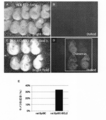
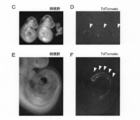
- FIG. 2A and 2C show micrographs (controls) of fetuses obtained using epiblast stem cells without Bcl-2 transduction, while FIGS. 2C and 2D are obtained with epiblast stem cells transduced with Bcl-2.
- FIG. 2E is a graph showing the effect of forced Bcl-2 expression on EpiSC chimera formation rate.
- the box in FIG. 2D shows the presence of a fetus that has formed a chimera.
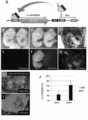
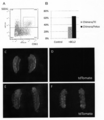
- FIG. 3 shows the acquisition of mouse Sox17-expressing endoderm lineage progenitor cells from K17-5 cells, a mouse ES cell line introduced with a Sox17 reporter (FIG. 3A), and the obtained Sox17-expressing endoderm lineage progenitor cells.
- FIG. 4 shows the expression levels of pluripotent stem cell markers (FIG. 3B), ectoderm markers (FIG. 3C), mesoderm markers (FIG. 3D) and endoderm markers (FIG. 3E).
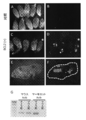
- FIG. 4 shows an optical micrograph of a fetus obtained by introducing an endoderm lineage progenitor cell obtained by introducing a gene encoding Bcl-2 into K17-5 cells and then inducing differentiation (FIGS.
- FIGS. 4A and 4C show micrographs (controls) of fetuses obtained using K17-5 cells into which the gene encoding Bcl-2 has not been introduced
- FIGS. 4C and 4D show the gene encoding Bcl-2.
- the microscopic image of the fetus obtained using the introduced K17-5 cell-derived cells is shown.
- the arrow in FIG. 4D indicates the presence of the part that formed the chimera.
- FIG. 5 shows the localization of cells derived from K17-5 cells in fetuses obtained using K17-5 cells into which a gene encoding Bcl-2 has been introduced.
- FIGS. 5 shows the localization of cells derived from K17-5 cells in fetuses obtained using K17-5 cells into which a gene encoding Bcl-2 has been introduced.
- FIG. 6C and 6E are obtained with epiblast stem cells introduced with Bcl-xL. The micrograph of the obtained fetus is shown.
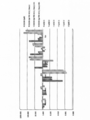
- FIG. 7 shows the results of cluster analysis of gene expression profiles in EpiSCs forcibly expressing Bcl-2 and gene expression profiles of EpiSCs and ES cells.
- FIG. 8 is a diagram showing in more detail the expression levels of six genes in EpiSCs in which ES cells, EpiSCs, and Bcl-2 were forcibly expressed.
- FIG. 9 is a diagram showing the results of quantifying the expression of CD31 using FACS for two types of EpiSC strains in which Bcl-2 was forcibly expressed.
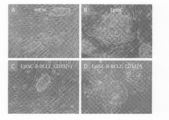
- FIG. 10 shows the shape of colonies formed by cells that are highly expressing CD31 (cells in the frame of FIG.
- Prime-type pluripotent stem cells and naive-type pluripotent stem cells differ in a number of respects.
- prime-type pluripotent stem cells mainly form monolayer flat colonies
- naive-type pluripotent stem cells mainly form stratified colonies.
- Brachyury and Fgf5 are known as specific marker genes in prime type pluripotent stem cells
- CD31, Rex1, Klf4 and NrOb1 are known in naive type pluripotent stem cells.
- prime-type pluripotent stem cells and na ⁇ ve-type pluripotent stem cells differ in biochemical characteristics and physiological characteristics. It would be easy for those skilled in the art to obtain prime-type pluripotent stem cells and discriminate prime-type pluripotent stem cells based on the above properties and the like.
- epiblast stem cell refers to a cell line established from the late epiblast of the post-implantation embryo, or a cell obtained from the pre-implantation embryo and in a differentiation stage corresponding to the epiblast stem cell.
- Epiblast stem cells can be cultured in the presence of basic fibroblast growth factor (bFGF) and activin A, and exhibit the physiological characteristics of forming large colonies in monolayers when adherent culture is performed. 2 further shows the characteristic that one of the two X chromosomes is inactivated, which is similar to the characteristic exhibited by primed ES cells or iPS cells.
- bFGF basic fibroblast growth factor
- activin A activin A
- primordial-type pluripotent stem cell means a prime-type pluripotent stem cell such as a prime-type ES cell or iPS cell.
- pluripotent stem cells are not particularly limited, but include primate pluripotent stem cells such as humans and monkeys, and mammalian pluripotent stem cells such as pigs, cows, sheep and goats, etc. Can be mentioned.
- the pluripotent stem cell is preferably a human pluripotent stem cell.
- the chimera-forming ability of prime-type pluripotent stem cells is inferior to the chimera-forming ability of naive-type pluripotent stem cells.
- cell death-resistant cells that is, pluripotent stem cells that are unlikely to cause cell death, such as apoptosis-resistant pluripotent stem cells (that is, It is preferable to use pluripotent stem cells) having a low apoptotic capacity.
- cell death-resistant cells for example, apoptosis-resistant cells
- Cell death-resistant prime-type pluripotent stem cells can form chimeric animals as embryo-introduced cells without cell death-inhibiting treatment (for example, apoptosis-inhibiting treatment) Can be used.
- a prime-type pluripotent stem cell when used as an embryo-introduced cell, for example, a prime-type pluripotent stem cell capable of forming a colony in adhesion culture after single cell formation can also be used.
- the colony formation rate after single cell formation is preferably 20% or more, more preferably 40% or more, and still more preferably 60% or more.
- the cell death resistant cell forms a colony after being made into a single cell and / or has a high rate of formation (for example, preferably 20% or more, more preferably 40% or more, and further preferably Is 60% or more).
- a high rate of formation for example, preferably 20% or more, more preferably 40% or more, and further preferably Is 60% or more.
- mesodermal stem cells or mesoderm progenitor cells include hematopoietic stem / progenitor cells.
- Hematopoietic stem / progenitor cells are not particularly limited by methods well known by those skilled in the art. For example, Gr-1, Mac-1, Ter119, CD4, CD8, and the like by antibody staining of blood cells in adult mouse bone marrow or fetal liver. Cells that are not stained with B220, IL-7R, CD41, and CD48 antibodies and that are stained with CD150 antibodies can be selected using FACS or the like.
- the method may further comprise generating an embryo obtained by introducing the cell in the womb of a non-human foster mother to obtain a fetus or a litter.
- the production of a chimeric mammal generally involves introducing a cell having a chimera-forming ability, such as a mammalian ES cell, into a mammalian embryo, and transplanting the obtained embryo into the uterus of a foster mother, And obtaining a chimeric offspring from the foster animal.
- the non-human foster animal can be the same species as the embryo into which the cell is introduced.
- the chimera formation rate improved dramatically by carrying out the cell death suppression process (for example, apoptosis suppression process) to the progenitor cell determined lineage.
- the cell death suppression process for example, apoptosis suppression process
- genetically modified animals can be efficiently produced. More specifically, genetic modification is performed on primordial germ cells (germ cells) derived from pluripotent stem cells or primordial germ cells (germ cells) collected from embryos, and cell death suppression treatment (for example, If it is transplanted into an embryo after an apoptosis-inhibiting treatment, germ cells derived from genetically modified cells can be efficiently obtained. If a mutant lacking germ cells is used in the embryo to be transplanted, germ cells derived from genetically modified cells can be obtained more efficiently.
- chimeric animals can be produced by transplanting pluripotent stem cells.
- embryo transfer cells are unlikely to contribute to the germ line, and the present invention is particularly useful in the production of avian genetically modified animals. This method is advantageous.
- a knockout animal having a homologous gene causing a defect in an organ or a body part that is difficult to survive or difficult to survive is difficult to survive and cannot obtain a litter. Therefore, such animals are usually obtained by crossing viable animals having heterogeneous genes that cause defects in organs or body parts that cannot survive or become difficult to survive. In this case, according to Mendel's law, animals that have homozygous genes that cause defects in organs or body parts that cannot survive or are difficult to survive are among the offspring obtained by crossing viable animals. It can only be obtained with a probability of 25% in theory.
- the present invention relates to the use of a cell death inhibitor (for example, an apoptosis inhibitor, a necrosis inhibitor or an autophagy inhibitor) for producing a reprogramming promoter for primed pluripotent stem cells.
- a cell death inhibitor for example, an apoptosis inhibitor, a necrosis inhibitor or an autophagy inhibitor
- the present invention also provides a cell death inhibitor (eg, apoptosis inhibitor, necrosis inhibitor or autophagy inhibitor) for producing an inducer of naive pluripotent stem cells for use with primed pluripotent stem cells. ) Regarding the use of.
- the present invention also relates to the use of a cell death inhibitor (eg, apoptosis inhibitor, necrosis inhibitor or autophagy inhibitor) for producing naive stem cells from primed pluripotent stem cells.
- the distribution of cells derived from embryo-introduced cells in the obtained chimeric animal can be easily analyzed.
- the compound When evaluating the differentiation potential, the compound may be treated before introducing the embryo-introduced cell or embryo into the embryo. By examining the change in differentiation ability with and without compound treatment, it is possible to examine the effect of the compound on the differentiation ability of cells.
- expression of a specific gene may be induced in the embryo-introduced cell, or expression of a specific gene may be suppressed, and the influence of the gene on differentiation of the embryo-introduced cell may be evaluated.
- the ability to form chimeras could be improved by treating human iPS cells with apoptosis. Therefore, according to the present invention, there is provided a method for improving the chimera-forming ability of human pluripotent stem cells, the method comprising performing cell death suppression treatment on human pluripotent stem cells. According to the present invention, there is also provided a method for producing a chimeric animal, comprising introducing human pluripotent stem cells into a mammalian embryo, wherein the cells are treated for cell death inhibition. A method is provided. Human pluripotent stem cells include human ES cells and iPS cells and can be used in the present invention. In the present invention, the chimera formation rate can be further improved by selecting iPS cells from those having high chimera-forming ability (for example, higher than average).
- the embryo was cultured in KSOM medium until it became a blastomere, and then transplanted into the uterus of a pseudopregnant recipient ICR female mouse.
- EpiSC-tdT-TRE-Bcl-2 obtained using a micromanipulator was injected into a mouse blastocyst, and the embryo was transplanted into the uterus of a recipient mouse as described above.
- Recipient mice received 2 mg / mL doxycycline water for 1 week after embryo transfer.
- the embryos were collected at E12.5, and the embryos were observed under a fluorescence microscope.
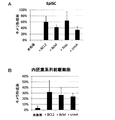
- cells derived from EpiSC-tdT-TRE-Bcl-2 contributed to the whole body of the fetus (FIGS. 1D and 1E). That is, by using EpiSC in which Bcl-2 is forcibly expressed as an embryo transfer cell, a highly efficient chimeric animal can be produced.
- the ability to form chimeras was confirmed even when chimeric mice were produced using EpiSCs derived from EB3DR (EpiSC-A-Bcl2) or EpiSCs derived from BDF-1 (EpiSC-B-Bcl2) instead of EpiSC-tdT.
- the chimera formation rates were about 25% and about 60%, respectively (FIG. 1J).
- EpiSC was able to improve chimera-forming ability by introducing Bcl-2 and forced expression.
- the EB3DR-derived EpiSC (EpiSC-A) is an EpiSC derived from an EB3DR ES cell and having a gene linked to a DsRed-T4 gene under the control of a CAG expression unit.
- the EB3DR mouse ES cell line was provided by Dr. Hitoshi Niwa (RIKEN, Development and Regeneration Center).
- EpiSCs were established from chimeric epiblast embryos prepared by transplanting EB3DR into mouse embryos, and then DsRed-expressing cells were isolated using FACS.
- a tet-on-BCL2 expression vector was introduced into this to prepare Bcl-2 expression cells (EpiSC-A-TRE-Bcl-2).
- K17-5 mouse ESC strain was infected with Tet-on AiLV expressing Bcl-2 gene in K17-5 cells as described in Example 1A, and EGFP-expressing cells were isolated using FACS.
- the K17-5-TRE-Bcl-2 cells into which the -2 gene was integrated were obtained.
- the cells were further infected with an EGFP-expressing lentiviral vector linked to the CAG promoter, and cells with a stronger EGFP signal (K17-5-TRE-Bcl-2-GFP) were obtained by FACS. Isolated.
- K17-5-TRE-Bcl-2-GFP-derived CD25 positive cells strongly expressed the endoderm marker (FIG. 3E). From these results, it was confirmed that the human CD25 positive cells derived from K17-5-TRE-Bcl-2-GFP are not pluripotent stem cells but endoderm lineage progenitor cells.
- EB3DR-EpiSC Example 1A based on the mouse EpiSC and ESC gene expression data (GSE7866) reported by Tesar et al., Nature (2007), 448 (7150): 196-199 in Example 1A
- the gene expression profiles of the EpiSC-A and EpiSC-A-TRE-BCL2 strains established in step 1 were comprehensively compared, and cluster analysis was performed. Cluster analysis of gene expression profiles was performed using EB3DR-EpiSC and three mouse ES cell lines (mES_ESF58 / 1, mES_ESF175 / 1 and mES_ESF122) as comparative controls.
- ES cells were obtained from marmoset by a conventional method (Sasaki et al, 2005, Stem Cells).
- marmoset ES cells in which the human Bcl-2 gene was forcibly expressed using tet-on AiLV according to the production method described in Example 1A were produced (test group).
- marmoset ES cells were fluorescently labeled by introducing the CAG-tdTomato vector according to the method described in Example 3B.
- As a control marmoset ES cells that were fluorescently labeled by simply introducing the CAG-tdTomato vector were used.
- Examples 4B and 4C show that apoptosis-suppressing treatment also improves chimera-forming ability for pluripotent stem cells (eg, ES cells or iPS cells) of mammals other than rodents such as humans and marmosets. It shows that it is effective in the above.
- pluripotent stem cells eg, ES cells or iPS cells
- Examples 4B and 4C show that chimeric animals were obtained even when human iPS cells or marmoset ES cells were introduced into mouse embryos. It is particularly noteworthy that the species differs greatly between humans or marmoset and mice. It is well understood by those skilled in the art based on this result that a chimeric animal between different species will be obtained between closely related species.
Landscapes
- Life Sciences & Earth Sciences (AREA)
- Health & Medical Sciences (AREA)
- Engineering & Computer Science (AREA)
- Chemical & Material Sciences (AREA)
- Zoology (AREA)
- Organic Chemistry (AREA)
- Biomedical Technology (AREA)
- Genetics & Genomics (AREA)
- Bioinformatics & Cheminformatics (AREA)
- Biotechnology (AREA)
- Wood Science & Technology (AREA)
- Cell Biology (AREA)
- Environmental Sciences (AREA)
- General Health & Medical Sciences (AREA)
- Biochemistry (AREA)
- Developmental Biology & Embryology (AREA)
- Microbiology (AREA)
- General Engineering & Computer Science (AREA)
- Biodiversity & Conservation Biology (AREA)
- Animal Behavior & Ethology (AREA)
- Animal Husbandry (AREA)
- Biophysics (AREA)
- Medicinal Chemistry (AREA)
- Gastroenterology & Hepatology (AREA)
- Molecular Biology (AREA)
- Proteomics, Peptides & Aminoacids (AREA)
- Toxicology (AREA)
- Transplantation (AREA)
- Micro-Organisms Or Cultivation Processes Thereof (AREA)
- Measuring Or Testing Involving Enzymes Or Micro-Organisms (AREA)
Abstract
Description
(1)キメラ動物を作製する方法であって、
哺乳動物由来のプライム型多能性幹細胞、組織幹細胞、前駆細胞、体細胞または生殖細胞を哺乳動物の胚に導入することを含んでなる、方法。
(2)胚に導入される細胞が、細胞死抑制処理されたものであることを特徴とする、上記(1)に記載の方法。
(3)胚に導入される細胞が、系列決定済み前駆細胞である、上記(1)または(2)に記載の方法。
(4)胚に導入される細胞が、内胚葉系列前駆細胞である、上記(3)に記載の方法。
(5)胚に導入される細胞が、Sox17発現細胞である、上記(4)に記載の方法。
(6)胚に導入される細胞が、単一細胞化後にコロニーを形成できる多能性幹細胞である、上記(1)~(4)のいずれかに記載の方法。
(7)キメラ動物を作製する方法であって、
ヒト多能性幹細胞を哺乳動物の胚に導入することを含んでなり、
該細胞が、細胞死抑制処理されていることを特徴とする、方法。
該細胞に対して細胞死抑制処理を行うことを特徴とする、方法。
(9)上記(8)に記載の方法により得られた細胞。
(10)細胞の分化能または細胞の生体内での機能若しくは安全性を評価する方法であって、
上記(1)~(5)のいずれかに記載の方法に従ってキメラ動物を作製し(但し、評価対象の細胞を非ヒト哺乳動物の胚へ導入する細胞として用いる)、作製されたキメラ動物中の各組織への該細胞の寄与を調べることにより、細胞の各組織への分化能または細胞の生体内での機能若しくは安全性を評価する、方法。
(11)プライム型多能性幹細胞をより未分化な状態にする方法であって、
プライム型多能性幹細胞に対して細胞死抑制処理を行なうことを含んでなる、方法。
(12)細胞死抑制剤を含んでなる、プライム型多能性幹細胞を対象とした初期化促進剤。
(13)ナイーブ型多能性幹細胞を製造する方法であって、
プライム型多能性幹細胞に対して細胞死抑制処理を行なうことを含んでなる、方法。
(14)
細胞死抑制剤を含んでなる、プライム型多能性幹細胞に対して用いるためのナイーブ型多能性幹細胞の誘導剤。
細胞と化合物を接触させることと、
該細胞を胚導入細胞として用いてキメラ動物を作製し、キメラ動物の体内での該細胞の分布を調べることにより、該細胞のキメラ形成能および/または分化能を評価することと、
評価結果に基づいて細胞のキメラ形成能および/または分化能に正または負の影響を与える化合物を選択することと、
を含んでなる化合物のスクリーニング方法。
細胞と化合物を接触させることと、
該細胞を胚導入細胞として用いてキメラ動物を作製し、キメラ動物の体内での該細胞の分布を調べることにより、該細胞のキメラ形成能および/または分化能を評価することと、
評価結果に基づいて細胞のキメラ形成能および/または分化能に正の影響または負の影響を与える化合物を選択することと、
を含んでなる化合物のスクリーニング方法が提供される。
本実施例では、マウスエピブラスト幹細胞(EpiSC)を用いてキメラマウスの作製を試みた。
そこで、発明者らは、様々な因子を検討したところ、抗アポトーシス因子として知られるBcl-2遺伝子を導入したEpiSCは、キメラ形成能を有することを見出した。
本実施例では、EpiSCよりもさらに分化した内胚葉系列前駆細胞であっても、Bcl-2遺伝子の強制発現によりキメラ動物の作製に利用できるかを検証した。
本実施例では、Bcl-2遺伝子以外の遺伝子として、Bcl-2同様に抗アポトーシス機能を有するBcl-xL遺伝子(Genbank Accession No.BC089016)の導入を試みた。
実施例2A~4Aでは、アポトーシスを抑制する処理をした細胞は、キメラ形成能を向上させていた。そこで、本実施例では、アポトーシスを抑制する処理をしたEpiSCの遺伝子発現解析を行い、EpiSCおよびES細胞の遺伝子発現と比較した。

上記実施例では、アポトーシス抑制因子として、Bcl-2またはBcl-xLを用いたが、本実施例では、さらにXiapおよびcrmAをアポトーシス抑制因子として細胞に強制発現させ、細胞のキメラ形成能を確認した。
実施例1Bでは、アポトーシス抑制処理をしない場合でも、割合は低いながら内胚葉系列前駆細胞がキメラに寄与した。エピブラスト幹細胞においても同様の結果が得られるかを確認するため、本実施例では、アポトーシス抑制処理がなされていないエピブラスト幹細胞のキメラ形成能を検証した。
本実施例では、内胚葉前駆細胞と同様に、始原生殖細胞においても細胞死抑制によってキメラの作製が可能になるかどうかを検証し、さらに導入した始原生殖細胞の生殖細胞への寄与を確認した。
本実施例では、ヒトiPS細胞のキメラ形成能に対する、細胞死抑制処理の効果を検証した。
本実施例では、マーモセットES細胞のキメラ形成能に対する、細胞死抑制処理の効果を検証した。
実施例2A~4A、1Bおよび2Bにおいてキメラ形成能の低い細胞またはキメラ形成能を有しない細胞を用いて、高効率にキメラ動物を作製できるようになった理由としては以下のようなことが考えられる。本実施例の結果を考慮すると、発生過程の細胞は、異なる時間腔得間的環境、例えば、本来の発生運命と異なる領域に置かれた際に細胞死またはアポトーシスを起こしている可能性が示唆される。そのため、本発明で観察された現象は、細胞のアポトーシスを抑制することにより、細胞は胚発生の段階が適合する時期まで生き延びることができるのではないかと考えられる。
Claims (14)
- キメラ動物を作製する方法であって、
哺乳動物由来のプライム型多能性幹細胞、組織幹細胞、前駆細胞、体細胞または生殖細胞を哺乳動物の胚に導入することを含んでなる、方法。 - 胚に導入される細胞が、細胞死抑制処理されたものであることを特徴とする、請求項1に記載の方法。
- 胚に導入される細胞が、系列決定済み前駆細胞である、請求項1または2に記載の方法。
- 胚に導入される細胞が、内胚葉系列前駆細胞である、請求項3に記載の方法。
- 胚に導入される細胞が、Sox17発現細胞である、請求項4に記載の方法。
- 胚に導入される細胞が、単一細胞化後にコロニーを形成できる多能性幹細胞である、請求項1~5のいずれか一項に記載の方法。
- キメラ動物を作製する方法であって、
ヒト多能性幹細胞を哺乳動物の胚に導入することを含んでなり、
該細胞が、細胞死抑制処理されていることを特徴とする、方法。 - 哺乳動物由来のプライム型多能性幹細胞、組織幹細胞、前駆細胞、体細胞若しくは生殖細胞のキメラ形成能を向上させる方法であって、
該細胞に対して細胞死抑制処理を行うことを特徴とする、方法。 - 請求項8に記載の方法により得られた細胞。
- 細胞の分化能または細胞の生体内での機能若しくは安全性を評価する方法であって、
請求項1~5のいずれか一項に記載の方法に従ってキメラ動物を作製し(但し、評価対象の細胞を非ヒト哺乳動物の胚へ導入する細胞として用いる)、作製されたキメラ動物中の各組織への該細胞の寄与を調べることにより、細胞の各組織への分化能または細胞の生体内での機能若しくは安全性を評価する、方法。 - プライム型多能性幹細胞をより未分化な状態にする方法であって、
プライム型多能性幹細胞に対して細胞死抑制処理を行なうことを含んでなる、方法。 - 細胞死抑制剤を含んでなる、プライム型多能性幹細胞を対象とした初期化促進剤。
- ナイーブ型多能性幹細胞を製造する方法であって、
プライム型多能性幹細胞に対して細胞死抑制処理を行なうことを含んでなる、方法。 - 細胞死抑制剤を含んでなる、プライム型多能性幹細胞に対して用いるためのナイーブ型多能性幹細胞の誘導剤。
Priority Applications (5)
| Application Number | Priority Date | Filing Date | Title |
|---|---|---|---|
| EP14746871.4A EP2954777A4 (en) | 2013-01-29 | 2014-01-29 | PROCESS FOR THE PREPARATION OF A CHIMERIC TIERS |
| JP2014559722A JP6231501B2 (ja) | 2013-01-29 | 2014-01-29 | キメラ動物の作製方法 |
| US14/764,445 US20160073616A1 (en) | 2013-01-29 | 2014-01-29 | Method for producing chimeric animal |
| US15/873,482 US10645912B2 (en) | 2013-01-29 | 2018-01-17 | Method for producing chimeric animal |
| US16/857,855 US11844336B2 (en) | 2013-01-29 | 2020-04-24 | Method for producing chimeric animal |
Applications Claiming Priority (4)
| Application Number | Priority Date | Filing Date | Title |
|---|---|---|---|
| US201361757910P | 2013-01-29 | 2013-01-29 | |
| US61/757,910 | 2013-01-29 | ||
| JP2013-239327 | 2013-11-19 | ||
| JP2013239327 | 2013-11-19 |
Related Child Applications (2)
| Application Number | Title | Priority Date | Filing Date |
|---|---|---|---|
| US14/764,445 A-371-Of-International US20160073616A1 (en) | 2013-01-29 | 2014-01-29 | Method for producing chimeric animal |
| US15/873,482 Division US10645912B2 (en) | 2013-01-29 | 2018-01-17 | Method for producing chimeric animal |
Publications (1)
| Publication Number | Publication Date |
|---|---|
| WO2014119627A1 true WO2014119627A1 (ja) | 2014-08-07 |
Family
ID=51262339
Family Applications (1)
| Application Number | Title | Priority Date | Filing Date |
|---|---|---|---|
| PCT/JP2014/051997 Ceased WO2014119627A1 (ja) | 2013-01-29 | 2014-01-29 | キメラ動物の作製方法 |
Country Status (4)
| Country | Link |
|---|---|
| US (3) | US20160073616A1 (ja) |
| EP (1) | EP2954777A4 (ja) |
| JP (3) | JP6231501B2 (ja) |
| WO (1) | WO2014119627A1 (ja) |
Cited By (5)
| Publication number | Priority date | Publication date | Assignee | Title |
|---|---|---|---|---|
| WO2016052759A1 (ja) * | 2014-10-02 | 2016-04-07 | 学校法人自治医科大学 | 多能性幹細胞再樹立法 |
| WO2017175876A1 (ja) * | 2016-04-05 | 2017-10-12 | 学校法人自治医科大学 | 幹細胞を再樹立する方法 |
| CN107920501A (zh) * | 2015-07-01 | 2018-04-17 | 米纳瓦生物技术公司 | 基于干细胞的器官和组织的产生的方法 |
| US10246679B2 (en) | 2015-03-02 | 2019-04-02 | The University Of Tokyo | Method for producing pluripotent stem cell having improved chimera forming ability from primed pluripotent stem cell, and composition and combination therefor |
| WO2019073960A1 (ja) | 2017-10-10 | 2019-04-18 | 国立大学法人 東京大学 | 分化ポテンシャルを改変した多能性幹細胞の動物の作製への応用 |
Families Citing this family (4)
| Publication number | Priority date | Publication date | Assignee | Title |
|---|---|---|---|---|
| JP6506865B1 (ja) | 2018-03-14 | 2019-04-24 | 栗田工業株式会社 | 蒸気の凝縮方法 |
| US11859213B2 (en) | 2019-05-16 | 2024-01-02 | Regents Of The University Of Minnesota | Development of superior chimerism by hiPSC engineering and embryo aggregation |
| WO2021107117A1 (ja) * | 2019-11-28 | 2021-06-03 | 国立大学法人京都大学 | 多能性幹細胞からの造血細胞の製造法 |
| WO2024036106A1 (en) * | 2022-08-08 | 2024-02-15 | The Board Of Trustees Of The Leland Stanford Junior University | Embryo microglia complementation for in vivo microglia manipulation and production of a non-human animal model for validation of gene function and therapeutic screening |
Citations (5)
| Publication number | Priority date | Publication date | Assignee | Title |
|---|---|---|---|---|
| WO2006009297A1 (ja) * | 2004-07-20 | 2006-01-26 | Yasumitsu Nagao | Es細胞を用いたキメラ作製 |
| WO2008102602A1 (ja) | 2007-02-22 | 2008-08-28 | The University Of Tokyo | Blastocyst complementationを利用した臓器再生法 |
| WO2009104794A1 (ja) | 2008-02-22 | 2009-08-27 | 国立大学法人 東京大学 | 遺伝子改変による致死性表現型を持つ動物の繁殖用ファウンダー動物作製法 |
| WO2010021390A1 (ja) | 2008-08-22 | 2010-02-25 | 国立大学法人 東京大学 | iPS細胞とBLASTOCYST COMPLEMENTATIONを利用した臓器再生法 |
| WO2010087459A1 (ja) | 2009-01-30 | 2010-08-05 | 国立大学法人東京大学 | 幹細胞を用いた異種間胚胞キメラ動物の作製法 |
Family Cites Families (4)
| Publication number | Priority date | Publication date | Assignee | Title |
|---|---|---|---|---|
| GB9308271D0 (en) | 1993-04-21 | 1993-06-02 | Univ Edinburgh | Method of isolating and/or enriching and/or selectively propagating pluripotential animal cells and animals for use in said method |
| WO1998016630A1 (en) | 1996-10-11 | 1998-04-23 | The Texas A & M University System | Methods for the generation of primordial germ cells and transgenic animal species |
| MXPA04005010A (es) * | 2001-11-26 | 2005-04-08 | Advanced Cell Tech Inc | METODO PARA HACER Y USAR NUCLEOS CELULARES SOMáTICOS METODOS PARA HACER Y USAR NUCLEOS CELULARES SOMáTICOS HUMANOS REPROGRAMADOS Y CELULAS DEL TALLO HUMANAS AUTOLOGAS E ISOGENICAS. |
| US10246679B2 (en) * | 2015-03-02 | 2019-04-02 | The University Of Tokyo | Method for producing pluripotent stem cell having improved chimera forming ability from primed pluripotent stem cell, and composition and combination therefor |
-
2014
- 2014-01-29 US US14/764,445 patent/US20160073616A1/en not_active Abandoned
- 2014-01-29 JP JP2014559722A patent/JP6231501B2/ja active Active
- 2014-01-29 WO PCT/JP2014/051997 patent/WO2014119627A1/ja not_active Ceased
- 2014-01-29 EP EP14746871.4A patent/EP2954777A4/en active Pending
-
2017
- 2017-10-19 JP JP2017202273A patent/JP6279141B1/ja active Active
-
2018
- 2018-01-16 JP JP2018004656A patent/JP6619462B2/ja active Active
- 2018-01-17 US US15/873,482 patent/US10645912B2/en active Active
-
2020
- 2020-04-24 US US16/857,855 patent/US11844336B2/en active Active
Patent Citations (5)
| Publication number | Priority date | Publication date | Assignee | Title |
|---|---|---|---|---|
| WO2006009297A1 (ja) * | 2004-07-20 | 2006-01-26 | Yasumitsu Nagao | Es細胞を用いたキメラ作製 |
| WO2008102602A1 (ja) | 2007-02-22 | 2008-08-28 | The University Of Tokyo | Blastocyst complementationを利用した臓器再生法 |
| WO2009104794A1 (ja) | 2008-02-22 | 2009-08-27 | 国立大学法人 東京大学 | 遺伝子改変による致死性表現型を持つ動物の繁殖用ファウンダー動物作製法 |
| WO2010021390A1 (ja) | 2008-08-22 | 2010-02-25 | 国立大学法人 東京大学 | iPS細胞とBLASTOCYST COMPLEMENTATIONを利用した臓器再生法 |
| WO2010087459A1 (ja) | 2009-01-30 | 2010-08-05 | 国立大学法人東京大学 | 幹細胞を用いた異種間胚胞キメラ動物の作製法 |
Non-Patent Citations (22)
| Title |
|---|
| ARDEHALI R. ET AL.: "Overexpression of BCL2 enhances survival of human embryonic stem cells during stress and obviates the requirement for serum factors.", PROC. NATL. ACAD. SCI. USA, vol. 108, no. 8, 22 February 2011 (2011-02-22), pages 3282 - 3287, XP055280620, DOI: 10.1073/PNAS.1019047108 * |
| BAI H . ET AL., STEM CELL RES., vol. 8, no. 1, 6 August 2011 (2011-08-06), pages 26 - 37, XP028113474, DOI: 10.1016/J.SCR.2011.08.002 * |
| BRONS ET AL., NATURE, vol. 448, no. 7150, 2007, pages 191 - 195 |
| HAN D.W. ET AL.: "Epiblast stem cell subpopulations represent mouse embryos of distinct pregastrulation stages.", CELL, vol. 143, no. 4, 1 January 2010 (2010-01-01), pages 617 - 627, XP028931106, DOI: 10.1016/J.CELL.2010.10.015 * |
| HAN ET AL., CELL, vol. 143, 2010, pages 617 - 627 |
| HAYASHI ET AL., CELL, 2011 |
| HAYASHI ET AL., CELL, vol. 146, no. 4, 2012, pages 519 - 532 |
| HITOMI MATSUNARI ET AL.: "Buta no Taiji Hassei Kiko o Riyo shita Tanosei Kansaibo Yurai Suizo no Saisei: Buta ni Okeru Haibanho Hokan Genri no Shomei", NIPPON SAISEI IRYO GAKKAISHI, vol. 10, 2011, pages 185, XP008182694 * |
| HUANG Y. ET AL.: "In Vivo differentiation potential of epiblast stem cells revealed by chimeric embryo formation.", CELL REP., vol. 2, no. 6, 27 December 2012 (2012-12-27), pages 1571 - 1578, XP055280607, DOI: 10.1016/J.CELREP.2012.10.022 * |
| KAWASAKI H. ET AL., NUCLEIC ACID RES., vol. 31, 2003, pages 700 - 707 |
| KOBAYASHI T. ET AL.: "Generation of rat pancreas in mouse by interspecific blastocyst injection of pluripotent stem cells.", CELL, vol. 142, no. 5, 1 September 2010 (2010-09-01), pages 787 - 799, XP055053670, DOI: 10.1016/J.CELL.2010.07.039 * |
| KUKEKOV ET AL., GLIA, vol. 21, 1997, pages 399 - 407 |
| LEE N. S., NAT. BIOTECH., vol. 20, 2002, pages 500 - 505 |
| OHGUSHI M. ET AL., CELL STEM CELL, vol. 7, 2010, pages 225 - 239 |
| PADDISON P. J. ET AL., GENES AND DEV., vol. 16, 2002, pages 948 - 958 |
| SASAKI ET AL., STEM CELLS, 2005 |
| See also references of EP2954777A4 |
| SUI G., PROC. NATL. ACAD. SCI. U. S. A., vol. 99, 2002, pages 5515 - 5520 |
| TESAR ET AL., NATURE, vol. 448, no. 7150, 2007, pages 196 - 199 |
| TOSHIHIRO KOBAYASHI ET AL.: "Generation of Interspecific Chimera and Their Application for Organ Regeneration", CELL TECHNOLOGY, vol. 31, no. 3, 2012, pages 302 - 307, XP008180854 * |
| TOSHIHIRO KOBAYASHI ET AL.: "Generation of organ derived from pluripotent stem cells toward the next generation of regenerative medicine", ENDOCRINOLOGY, DIABETOLOGY & METABOLISM, vol. 35, no. 2, 2012, pages 95 - 100, XP008180904 * |
| USUI J. ET AL.: "G eneration of kidney from pluripotent stem cells via blastocyst complementation.", AM. J. PATHOL., vol. 180, no. 6, 1 June 2012 (2012-06-01), pages 2417 - 2426, XP008160271, DOI: 10.1016/J.AJPATH.2012.03.007 * |
Cited By (7)
| Publication number | Priority date | Publication date | Assignee | Title |
|---|---|---|---|---|
| WO2016052759A1 (ja) * | 2014-10-02 | 2016-04-07 | 学校法人自治医科大学 | 多能性幹細胞再樹立法 |
| US11441125B2 (en) | 2014-10-02 | 2022-09-13 | Jichi Medical University | Method for reestablishment of pluripotent stem cells |
| US10246679B2 (en) | 2015-03-02 | 2019-04-02 | The University Of Tokyo | Method for producing pluripotent stem cell having improved chimera forming ability from primed pluripotent stem cell, and composition and combination therefor |
| CN107920501A (zh) * | 2015-07-01 | 2018-04-17 | 米纳瓦生物技术公司 | 基于干细胞的器官和组织的产生的方法 |
| WO2017175876A1 (ja) * | 2016-04-05 | 2017-10-12 | 学校法人自治医科大学 | 幹細胞を再樹立する方法 |
| JPWO2017175876A1 (ja) * | 2016-04-05 | 2019-03-14 | 学校法人自治医科大学 | 幹細胞を再樹立する方法 |
| WO2019073960A1 (ja) | 2017-10-10 | 2019-04-18 | 国立大学法人 東京大学 | 分化ポテンシャルを改変した多能性幹細胞の動物の作製への応用 |
Also Published As
| Publication number | Publication date |
|---|---|
| JPWO2014119627A1 (ja) | 2017-01-26 |
| JP2018082716A (ja) | 2018-05-31 |
| US20160073616A1 (en) | 2016-03-17 |
| JP6279141B1 (ja) | 2018-02-14 |
| JP6231501B2 (ja) | 2017-11-15 |
| US10645912B2 (en) | 2020-05-12 |
| US20200315148A1 (en) | 2020-10-08 |
| US20180360004A1 (en) | 2018-12-20 |
| US11844336B2 (en) | 2023-12-19 |
| EP2954777A1 (en) | 2015-12-16 |
| EP2954777A4 (en) | 2016-11-09 |
| JP6619462B2 (ja) | 2019-12-11 |
| JP2018046833A (ja) | 2018-03-29 |
Similar Documents
| Publication | Publication Date | Title |
|---|---|---|
| JP6619462B2 (ja) | キメラ動物の作製方法 | |
| Le Bin et al. | Oct4 is required for lineage priming in the developing inner cell mass of the mouse blastocyst | |
| JP5456467B2 (ja) | ラットおよび他種由来の多能性細胞 | |
| JP5807862B2 (ja) | ラット胚性幹細胞を用いたキメララットの作製法 | |
| JP5686357B2 (ja) | iPS細胞などの多能性細胞とBLASTOCYSTCOMPLEMENTATIONを利用した臓器再生法 | |
| Sofikitis et al. | Efforts to create an artificial testis: culture systems of male germ cells under biochemical conditions resembling the seminiferous tubular biochemical environment | |
| JP5588405B2 (ja) | ラット胚性幹細胞 | |
| Glover et al. | Primordial germ cell technologies for avian germplasm cryopreservation and investigating germ cell development | |
| JP2020043864A (ja) | 幹細胞を用いた異種間胚胞キメラ動物の作製法 | |
| WO2010069008A9 (en) | A germline competent cell derived from adult tissue | |
| Economou et al. | Intrinsic factors and the embryonic environment influence the formation of extragonadal teratomas during gestation | |
| JP4502317B2 (ja) | 未分化細胞を選別する方法およびその利用 | |
| JP6366944B2 (ja) | プライム型多能性幹細胞からキメラ形成能を向上させた多能性幹細胞を製造する方法並びにそのための組成物および組合せ | |
| WO2015152146A1 (ja) | 1倍体胚性幹細胞の培養方法 | |
| Gutiérrez | A study on the Death-Inducer Obliterator (Dido) function in somatic cell reprogramming to pluripotency | |
| Zhou | Characterisation of nascent mesoderm derived from mouse embryonic stem cells grown in 3-D and 2-D culture systems | |
| Okumura | Germ cell nuclear factor is not required for the down-regulation of pluripotency markers in fetal ovarian germ cells | |
| Blij | Specification and regulation of mammalian extraembryonic and pluripotent embryonic lineages in vivo and in vitro | |
| Samarut et al. | Ectopic expression of Cvh (Chicken Vasa homologue) mediates the reprogramming of chicken embryonic stem cells to a germ cell fate | |
| Beteramia | Pluripotent adult stem cells from the mouse testis | |
| Gonzalez | Molecular mechanisms controlling human embryonic stem cell self-renewal and differentiation | |
| HK1178199A (en) | Method for constructing chimeric rat using rat embryonic stem cells |
Legal Events
| Date | Code | Title | Description |
|---|---|---|---|
| 121 | Ep: the epo has been informed by wipo that ep was designated in this application |
Ref document number: 14746871 Country of ref document: EP Kind code of ref document: A1 |
|
| ENP | Entry into the national phase |
Ref document number: 2014559722 Country of ref document: JP Kind code of ref document: A |
|
| NENP | Non-entry into the national phase |
Ref country code: DE |
|
| WWE | Wipo information: entry into national phase |
Ref document number: 14764445 Country of ref document: US |
|
| WWE | Wipo information: entry into national phase |
Ref document number: 2014746871 Country of ref document: EP |