WO2014122895A1 - ジアザトリフェニレン環構造を有する化合物および有機エレクトロルミネッセンス素子 - Google Patents
ジアザトリフェニレン環構造を有する化合物および有機エレクトロルミネッセンス素子 Download PDFInfo
- Publication number
- WO2014122895A1 WO2014122895A1 PCT/JP2014/000415 JP2014000415W WO2014122895A1 WO 2014122895 A1 WO2014122895 A1 WO 2014122895A1 JP 2014000415 W JP2014000415 W JP 2014000415W WO 2014122895 A1 WO2014122895 A1 WO 2014122895A1
- Authority
- WO
- WIPO (PCT)
- Prior art keywords
- group
- substituted
- unsubstituted
- carbon atoms
- atom
- Prior art date
- Legal status (The legal status is an assumption and is not a legal conclusion. Google has not performed a legal analysis and makes no representation as to the accuracy of the status listed.)
- Ceased
Links
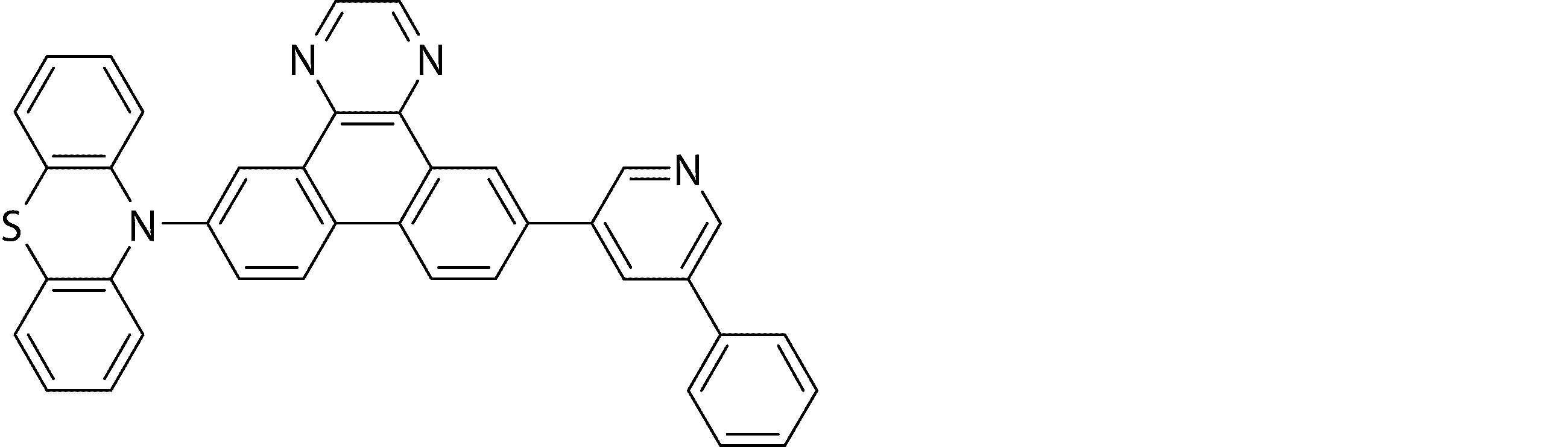
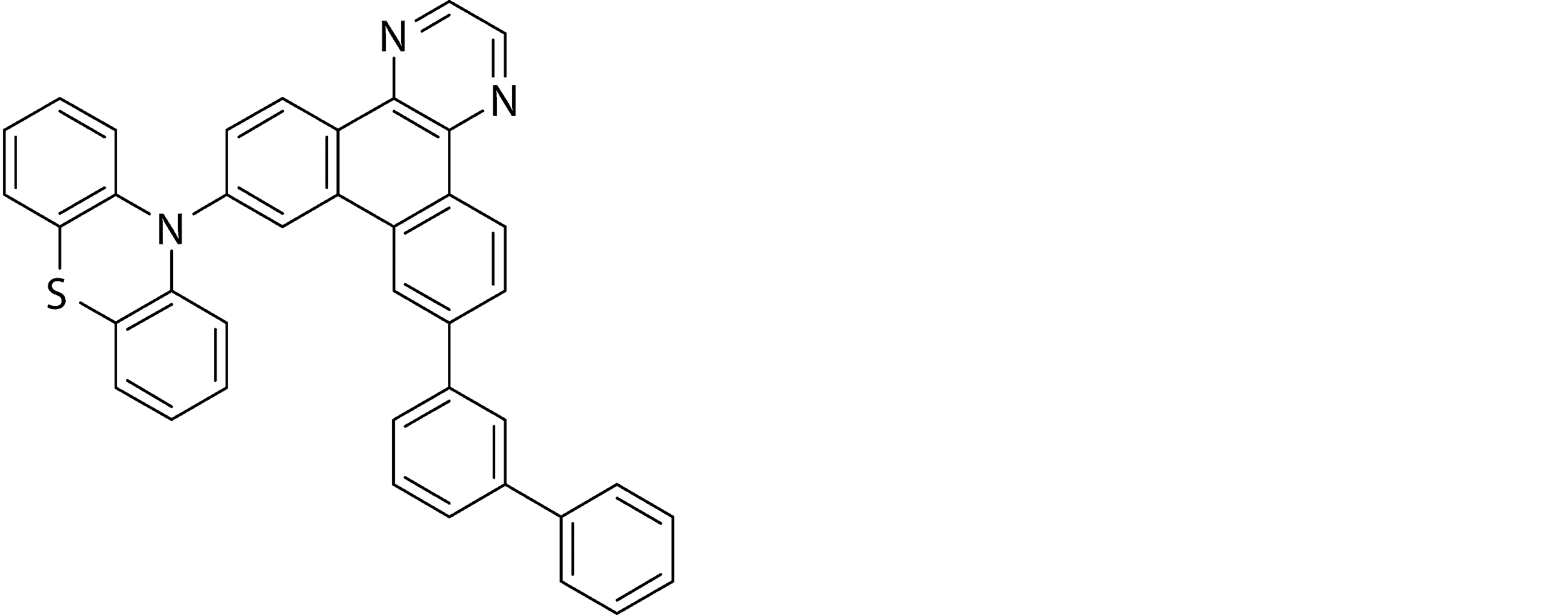
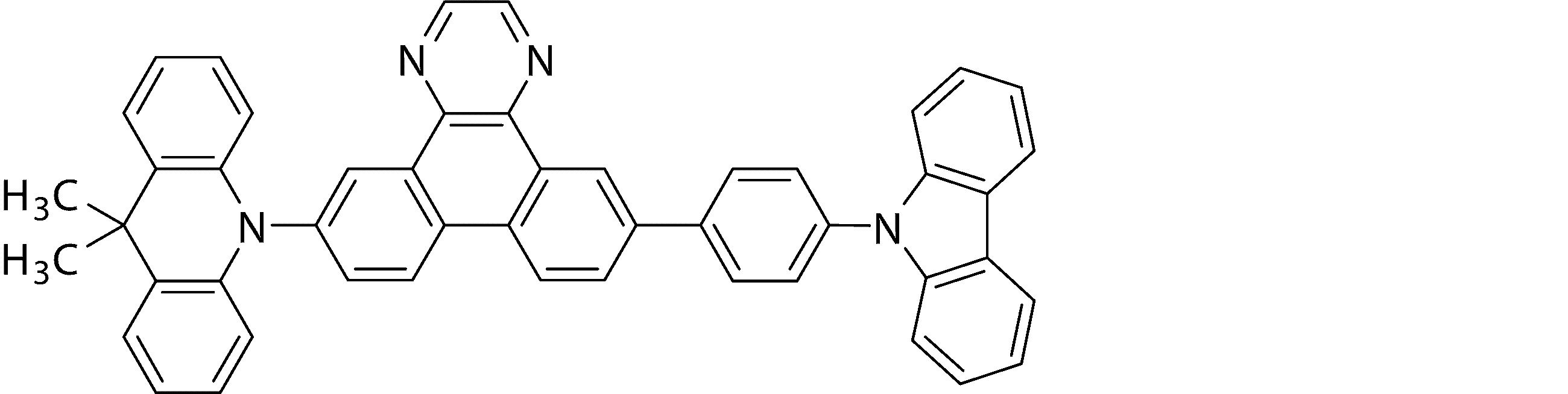
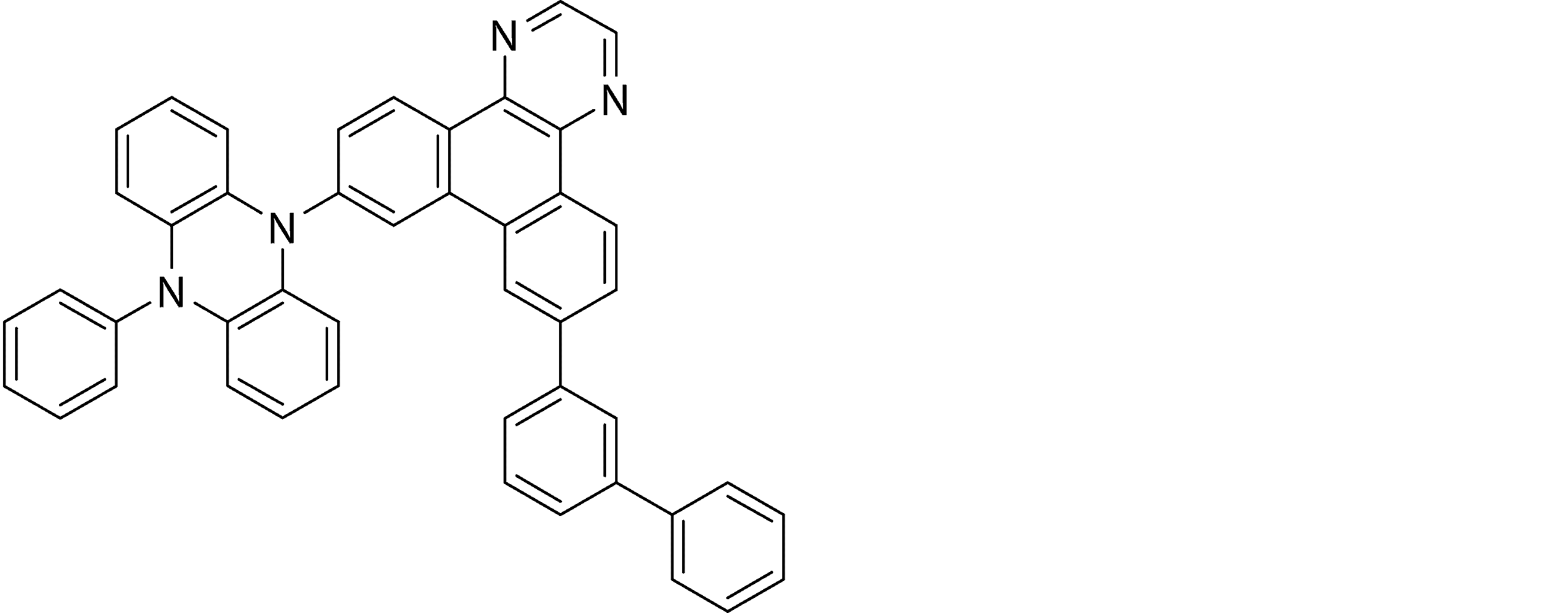
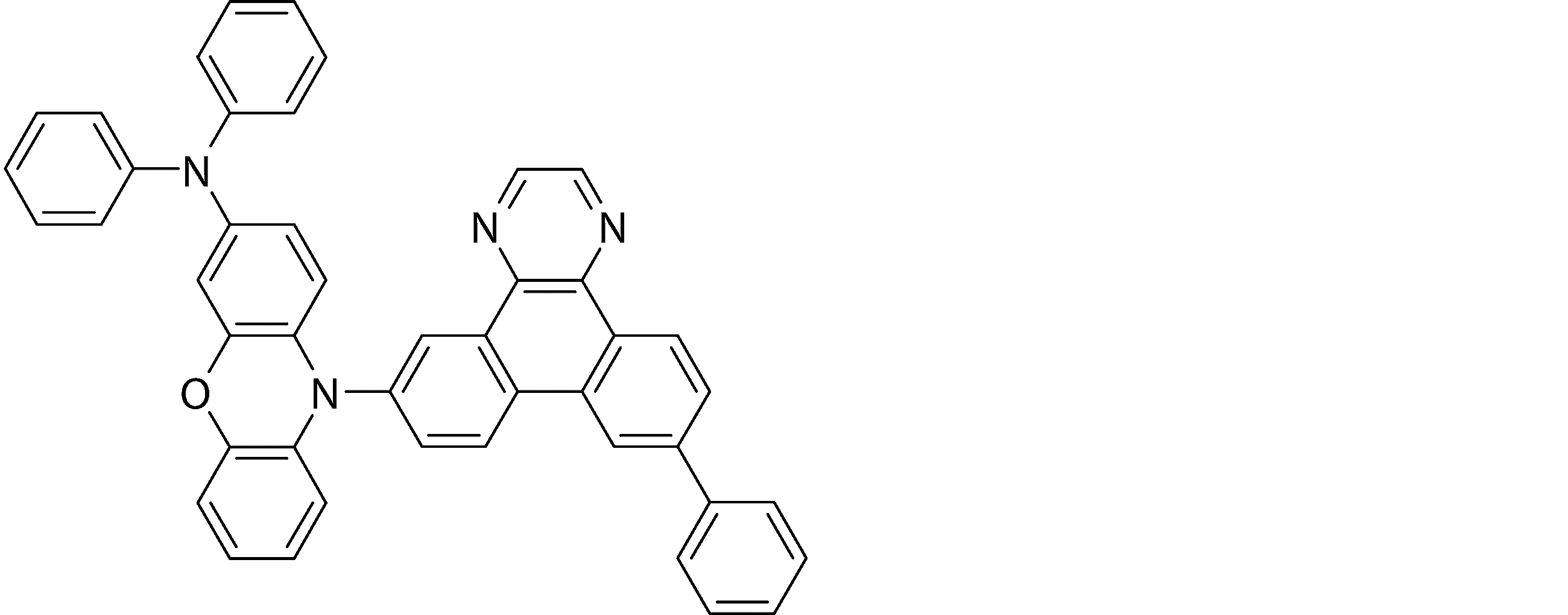
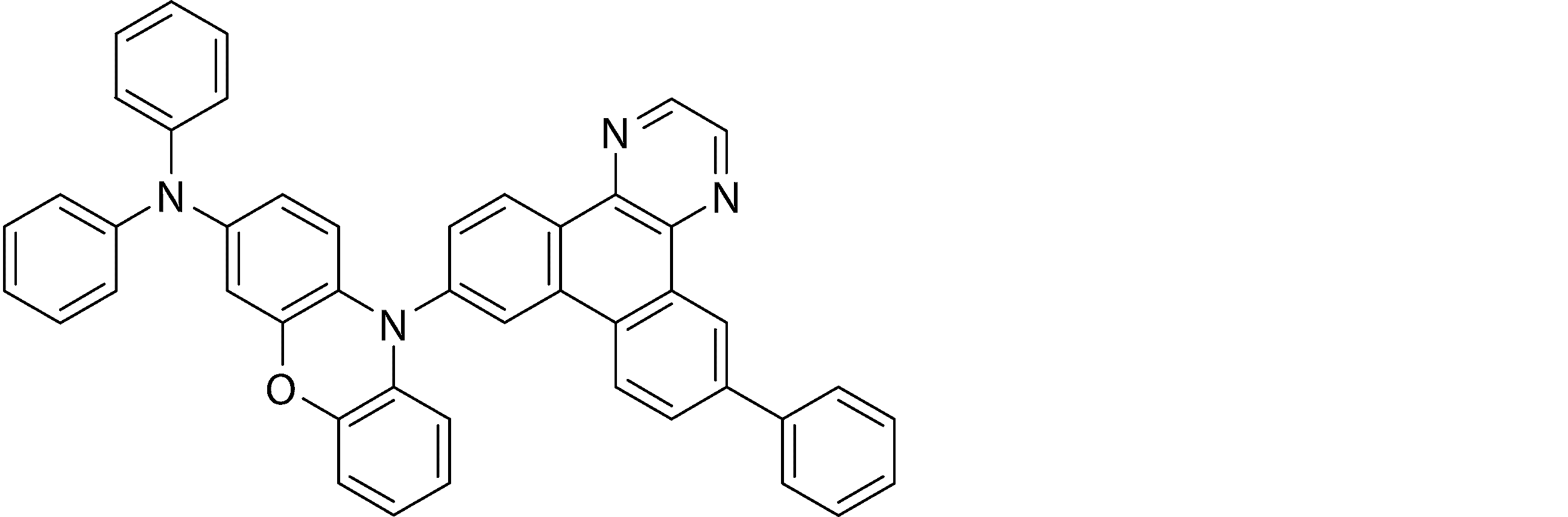
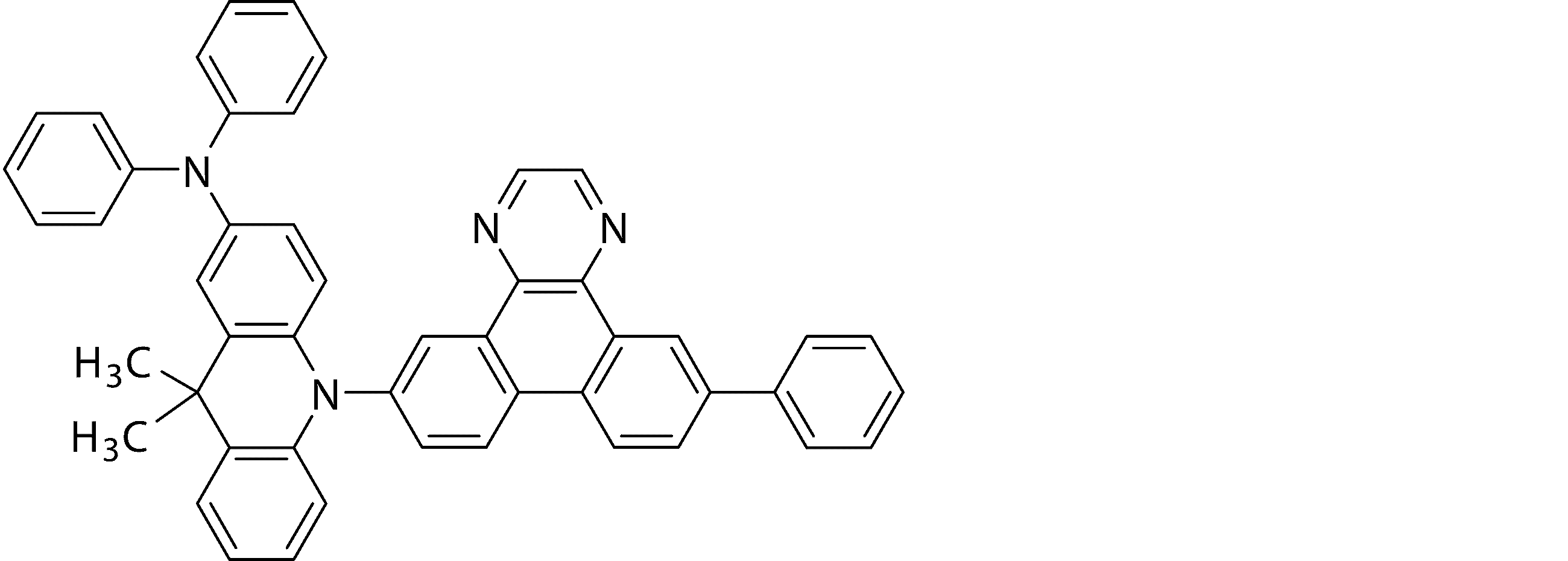
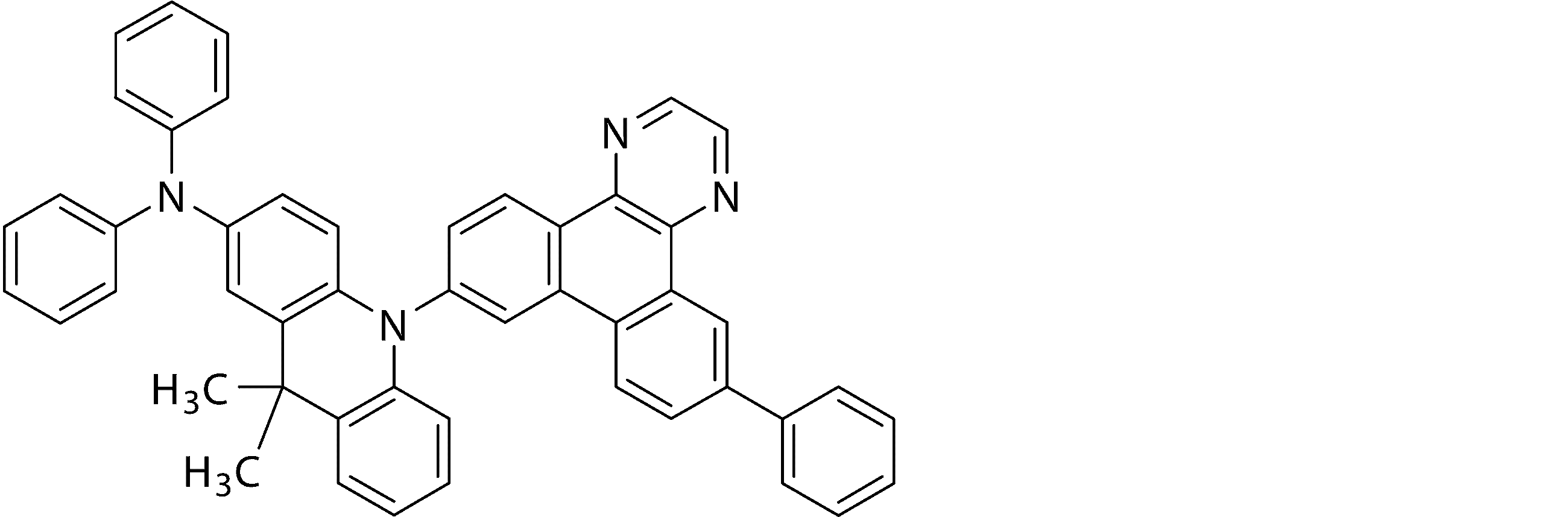
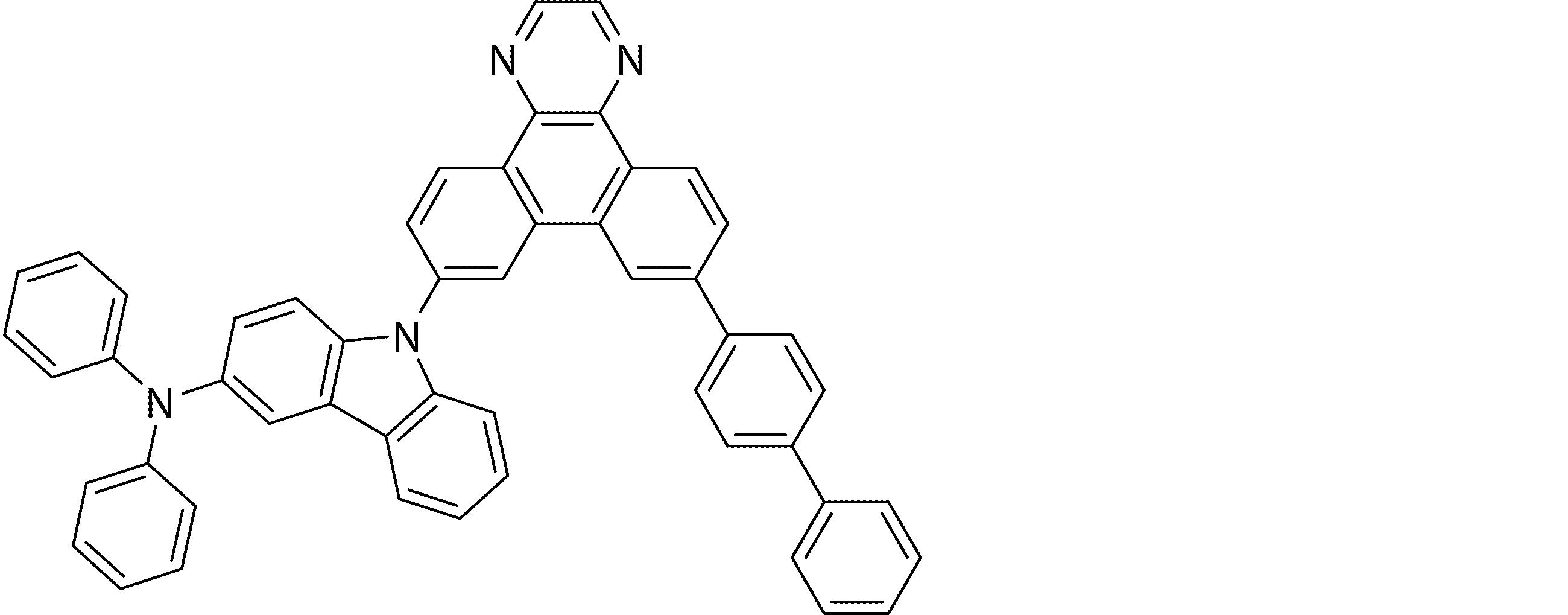
- DYSXYXZFYFXVPO-UHFFFAOYSA-N C(C1c2c3cccc2)=CC=CC1N3c1ccc(c2cc(-[n]3c4ccccc4c4c3cccc4)ccc2[n]2-c3cc4c5nccnc5c(ccc(-c5ccccc5)c5)c5c4cc3)c2c1 Chemical compound C(C1c2c3cccc2)=CC=CC1N3c1ccc(c2cc(-[n]3c4ccccc4c4c3cccc4)ccc2[n]2-c3cc4c5nccnc5c(ccc(-c5ccccc5)c5)c5c4cc3)c2c1 DYSXYXZFYFXVPO-UHFFFAOYSA-N 0.000 description 1
- RUJRIUJWINWXIG-UHFFFAOYSA-N C(c(cc12)ccc1-c1ccc(C=C(c3ccccc3)c3ccccc3)cc1C21c(cc(C=C(c2ccccc2)c2ccccc2)cc2)c2-c2ccc(C=C(c3ccccc3)c3ccccc3)cc12)=C(c1ccccc1)c1ccccc1 Chemical compound C(c(cc12)ccc1-c1ccc(C=C(c3ccccc3)c3ccccc3)cc1C21c(cc(C=C(c2ccccc2)c2ccccc2)cc2)c2-c2ccc(C=C(c3ccccc3)c3ccccc3)cc12)=C(c1ccccc1)c1ccccc1 RUJRIUJWINWXIG-UHFFFAOYSA-N 0.000 description 1
- QYONHDOXHWLEDG-UHFFFAOYSA-N CC(CC=C1c2c3cccc2)C=C1N3c(cc1)cc(C(c2c3)(c4cc(-[n]5c6ccccc6c6ccccc56)ccc4-c2ccc3N2c3ccccc3C3C=CC=CC23)c2c3)c1-c2ccc3-[n]1c(cccc2)c2c2c1cccc2 Chemical compound CC(CC=C1c2c3cccc2)C=C1N3c(cc1)cc(C(c2c3)(c4cc(-[n]5c6ccccc6c6ccccc56)ccc4-c2ccc3N2c3ccccc3C3C=CC=CC23)c2c3)c1-c2ccc3-[n]1c(cccc2)c2c2c1cccc2 QYONHDOXHWLEDG-UHFFFAOYSA-N 0.000 description 1
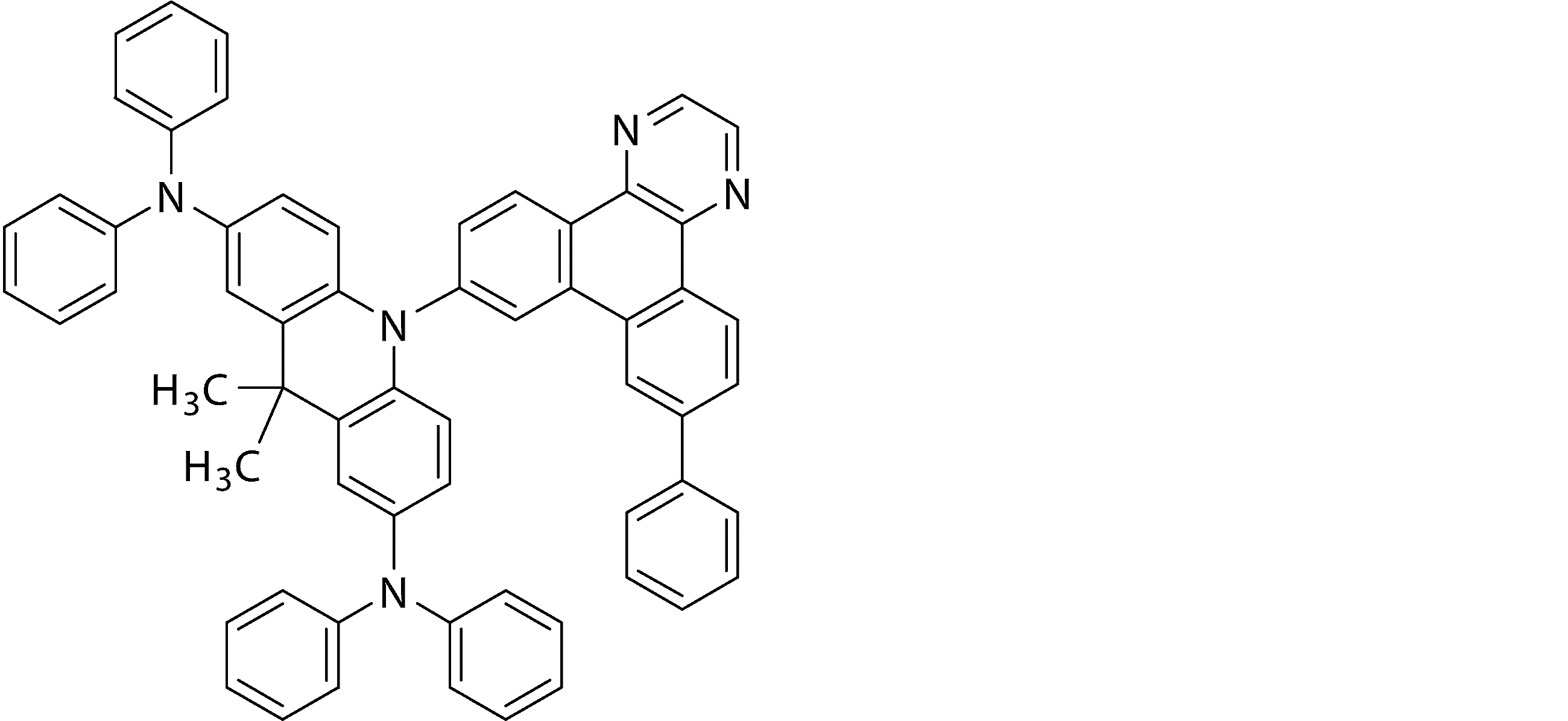
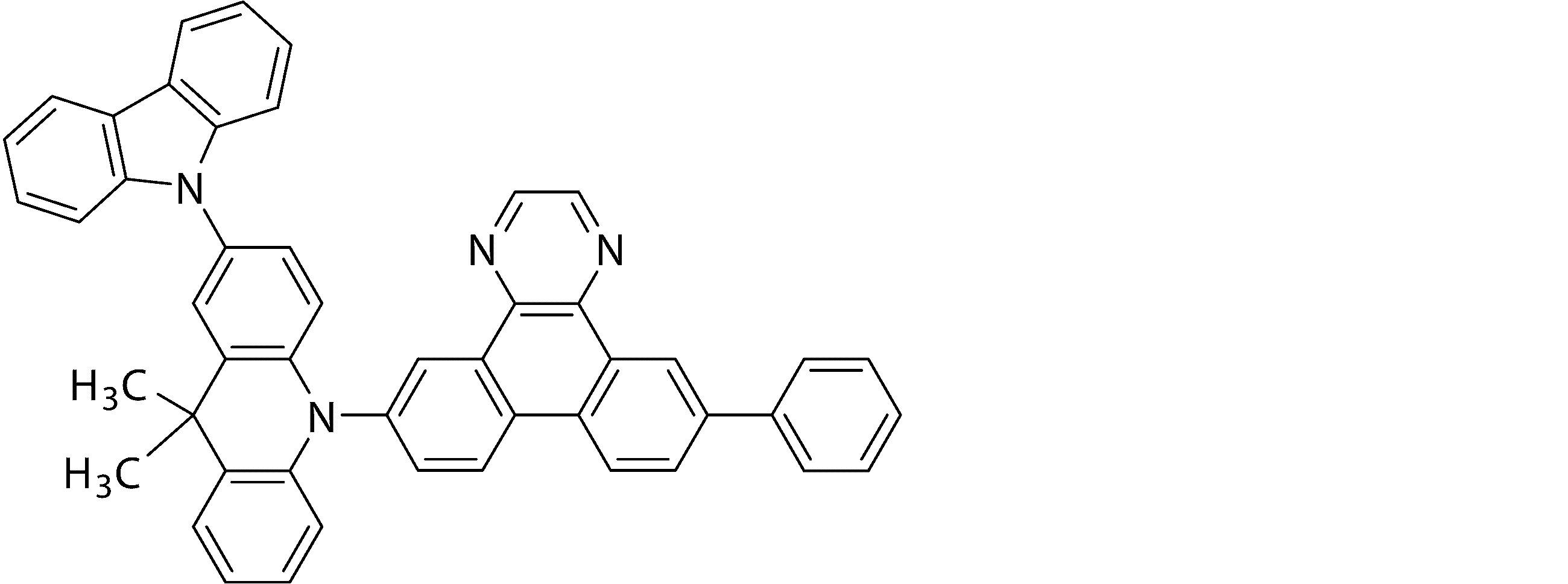
- WWSIJNYMSWOEOH-UHFFFAOYSA-N CC1(C)c(cc(cc2)N(c3ccccc3)c3ccccc3)c2N(c2cc3c(ccc(-c4ccccc4)c4)c4c4nccnc4c3cc2)c2ccccc12 Chemical compound CC1(C)c(cc(cc2)N(c3ccccc3)c3ccccc3)c2N(c2cc3c(ccc(-c4ccccc4)c4)c4c4nccnc4c3cc2)c2ccccc12 WWSIJNYMSWOEOH-UHFFFAOYSA-N 0.000 description 1
- 0 C[C@]1([C@](*)C1)N(C)C Chemical compound C[C@]1([C@](*)C1)N(C)C 0.000 description 1
- ICQSXDNQGLLYLR-UHFFFAOYSA-N c(cc1)cc(c2ccccc22)c1[n]2-c(cc1)cc(c2ccccc22)c1[n]2-c1ccc2c3nccnc3c(ccc(-[n]3c(ccc(-[n]4c5ccccc5c5c4cccc5)c4)c4c4ccccc34)c3)c3c2c1 Chemical compound c(cc1)cc(c2ccccc22)c1[n]2-c(cc1)cc(c2ccccc22)c1[n]2-c1ccc2c3nccnc3c(ccc(-[n]3c(ccc(-[n]4c5ccccc5c5c4cccc5)c4)c4c4ccccc34)c3)c3c2c1 ICQSXDNQGLLYLR-UHFFFAOYSA-N 0.000 description 1
- MCAAGMPOOFEXMD-UHFFFAOYSA-N c(cc1)cc(c2ccccc22)c1[n]2-c(cc1)ccc1N(c(cc1)ccc1-[n]1c(cccc2)c2c2c1cccc2)c1ccc(c(ccc(N(c(cc2)ccc2-[n]2c(cccc3)c3c3c2cccc3)c(cc2)ccc2-[n]2c(cccc3)c3c3c2cccc3)c2)c2c2c3nccn2)c3c1 Chemical compound c(cc1)cc(c2ccccc22)c1[n]2-c(cc1)ccc1N(c(cc1)ccc1-[n]1c(cccc2)c2c2c1cccc2)c1ccc(c(ccc(N(c(cc2)ccc2-[n]2c(cccc3)c3c3c2cccc3)c(cc2)ccc2-[n]2c(cccc3)c3c3c2cccc3)c2)c2c2c3nccn2)c3c1 MCAAGMPOOFEXMD-UHFFFAOYSA-N 0.000 description 1
- PUGRXOZZRZPBEQ-UHFFFAOYSA-N c(cc1)ccc1-c(cc1c2c3ccc(N4c(ccc(N(c5ccccc5)c5ccccc5)c5)c5Sc5cc(N(c6ccccc6)c6ccccc6)ccc45)c2)ccc1c1c3nccn1 Chemical compound c(cc1)ccc1-c(cc1c2c3ccc(N4c(ccc(N(c5ccccc5)c5ccccc5)c5)c5Sc5cc(N(c6ccccc6)c6ccccc6)ccc45)c2)ccc1c1c3nccn1 PUGRXOZZRZPBEQ-UHFFFAOYSA-N 0.000 description 1
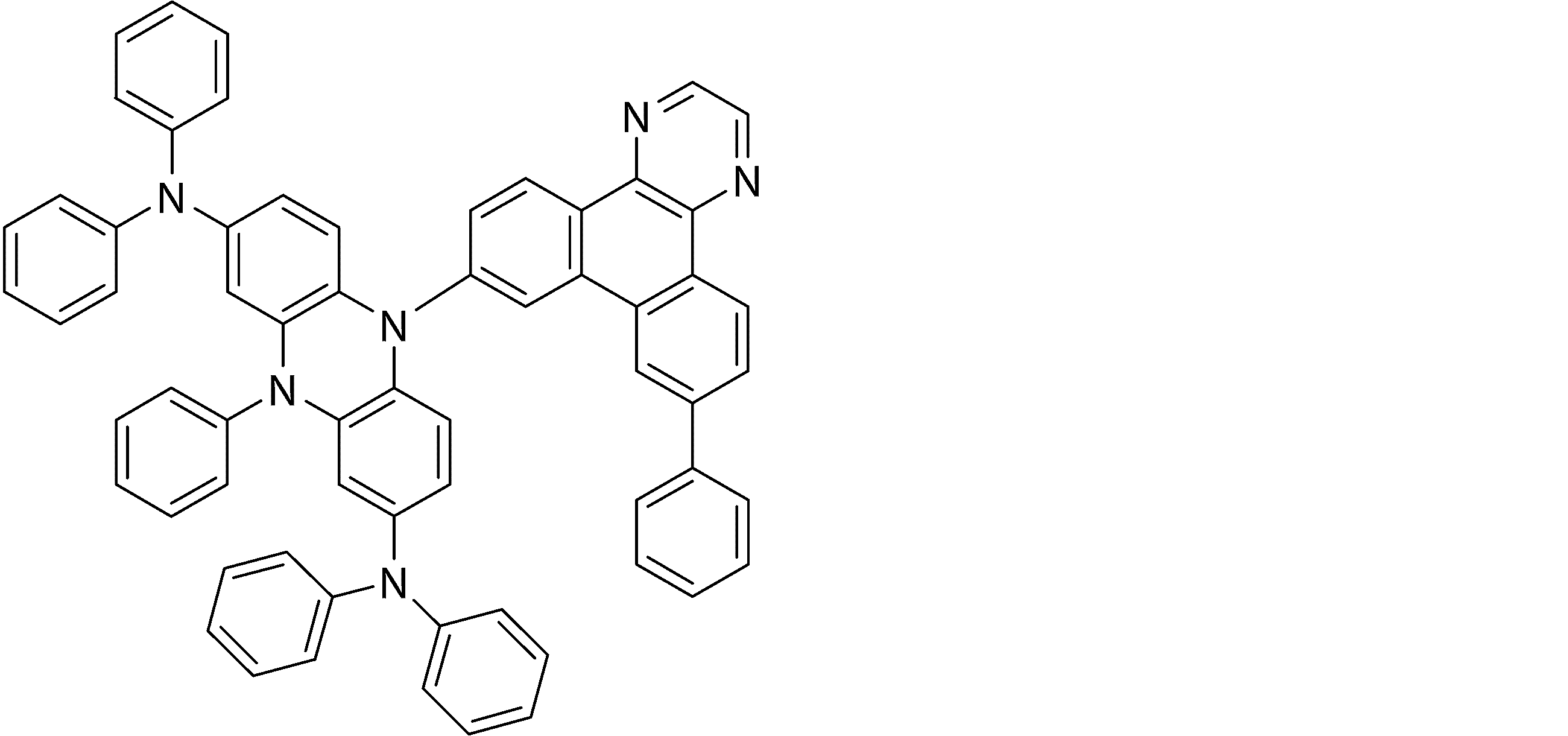
- QVLRNVNYBIJNFH-UHFFFAOYSA-N c(cc1)ccc1-c1ccc(c(cc(cc2)N3c(ccc(N(c4ccccc4)c4ccccc4)c4)c4N(c4ccccc4)c4ccccc34)c2c2c3nccn2)c3c1 Chemical compound c(cc1)ccc1-c1ccc(c(cc(cc2)N3c(ccc(N(c4ccccc4)c4ccccc4)c4)c4N(c4ccccc4)c4ccccc34)c2c2c3nccn2)c3c1 QVLRNVNYBIJNFH-UHFFFAOYSA-N 0.000 description 1
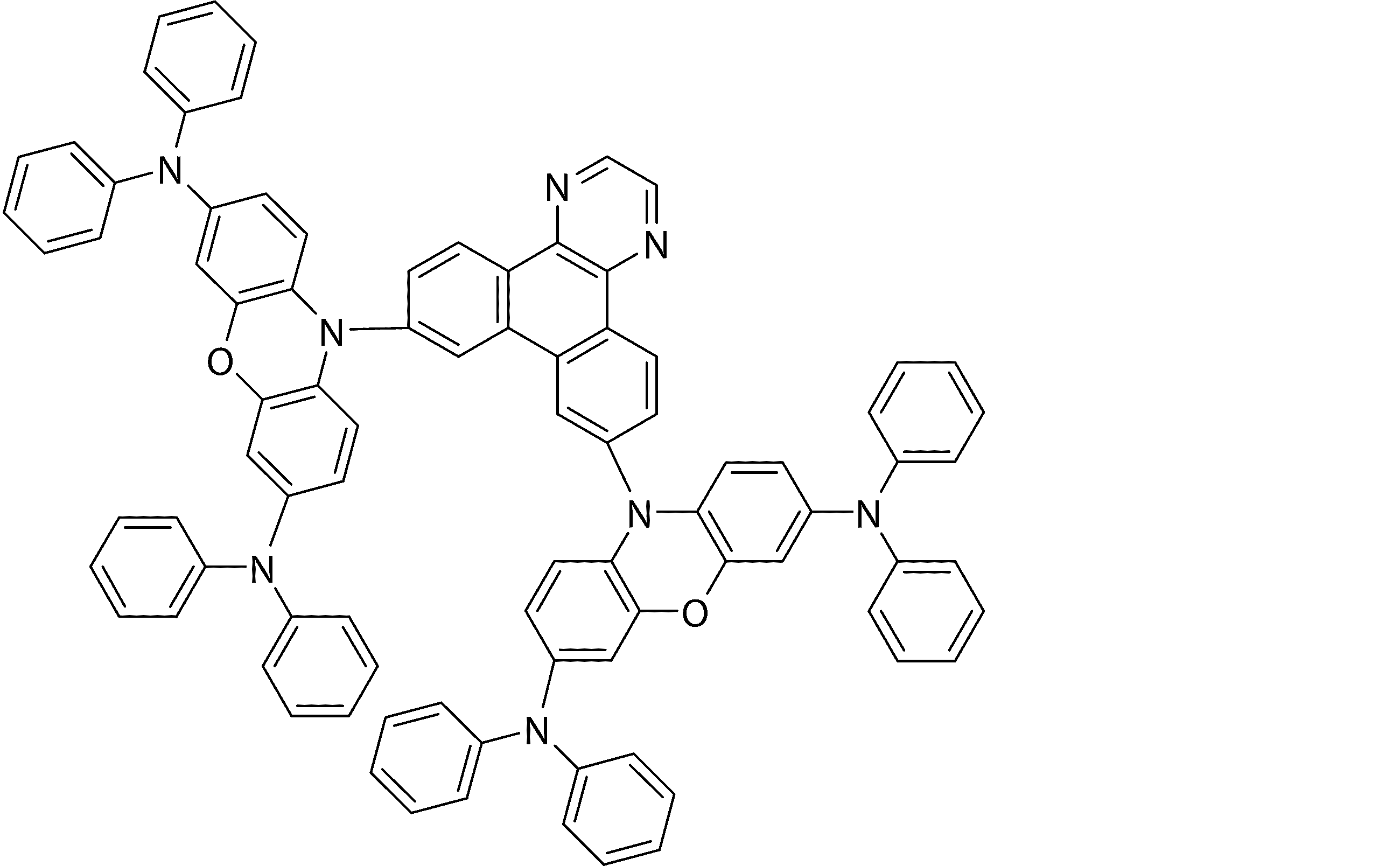
- AMJOHLDSKUHSDR-UHFFFAOYSA-N c(cc1)ccc1-c1ccc(c(cc(cc2)N3c(ccc(N(c4ccccc4)c4ccccc4)c4)c4Oc4cc(N(c5ccccc5)c5ccccc5)ccc34)c2c2c3nccn2)c3c1 Chemical compound c(cc1)ccc1-c1ccc(c(cc(cc2)N3c(ccc(N(c4ccccc4)c4ccccc4)c4)c4Oc4cc(N(c5ccccc5)c5ccccc5)ccc34)c2c2c3nccn2)c3c1 AMJOHLDSKUHSDR-UHFFFAOYSA-N 0.000 description 1
- XOHXKIOLLKQNTF-UHFFFAOYSA-N c1ccc2c3nccnc3c(cc(cc3)N4c5ccccc5N(c(cc5)cc6c5c5ccccc5c5c6nccn5)c5ccccc45)c3c2c1 Chemical compound c1ccc2c3nccnc3c(cc(cc3)N4c5ccccc5N(c(cc5)cc6c5c5ccccc5c5c6nccn5)c5ccccc45)c3c2c1 XOHXKIOLLKQNTF-UHFFFAOYSA-N 0.000 description 1
Images


Classifications
-
- C—CHEMISTRY; METALLURGY
- C07—ORGANIC CHEMISTRY
- C07D—HETEROCYCLIC COMPOUNDS
- C07D401/00—Heterocyclic compounds containing two or more hetero rings, having nitrogen atoms as the only ring hetero atoms, at least one ring being a six-membered ring with only one nitrogen atom
- C07D401/14—Heterocyclic compounds containing two or more hetero rings, having nitrogen atoms as the only ring hetero atoms, at least one ring being a six-membered ring with only one nitrogen atom containing three or more hetero rings
-
- C—CHEMISTRY; METALLURGY
- C07—ORGANIC CHEMISTRY
- C07D—HETEROCYCLIC COMPOUNDS
- C07D241/00—Heterocyclic compounds containing 1,4-diazine or hydrogenated 1,4-diazine rings
- C07D241/36—Heterocyclic compounds containing 1,4-diazine or hydrogenated 1,4-diazine rings condensed with carbocyclic rings or ring systems
- C07D241/38—Heterocyclic compounds containing 1,4-diazine or hydrogenated 1,4-diazine rings condensed with carbocyclic rings or ring systems with only hydrogen or carbon atoms directly attached to the ring nitrogen atoms
- C07D241/46—Phenazines
- C07D241/48—Phenazines with hydrocarbon radicals, substituted by nitrogen atoms, directly attached to the ring nitrogen atoms
-
- C—CHEMISTRY; METALLURGY
- C07—ORGANIC CHEMISTRY
- C07D—HETEROCYCLIC COMPOUNDS
- C07D333/00—Heterocyclic compounds containing five-membered rings having one sulfur atom as the only ring hetero atom
- C07D333/50—Heterocyclic compounds containing five-membered rings having one sulfur atom as the only ring hetero atom condensed with carbocyclic rings or ring systems
- C07D333/76—Dibenzothiophenes
-
- C—CHEMISTRY; METALLURGY
- C07—ORGANIC CHEMISTRY
- C07D—HETEROCYCLIC COMPOUNDS
- C07D401/00—Heterocyclic compounds containing two or more hetero rings, having nitrogen atoms as the only ring hetero atoms, at least one ring being a six-membered ring with only one nitrogen atom
- C07D401/02—Heterocyclic compounds containing two or more hetero rings, having nitrogen atoms as the only ring hetero atoms, at least one ring being a six-membered ring with only one nitrogen atom containing two hetero rings
- C07D401/04—Heterocyclic compounds containing two or more hetero rings, having nitrogen atoms as the only ring hetero atoms, at least one ring being a six-membered ring with only one nitrogen atom containing two hetero rings directly linked by a ring-member-to-ring-member bond
-
- C—CHEMISTRY; METALLURGY
- C07—ORGANIC CHEMISTRY
- C07D—HETEROCYCLIC COMPOUNDS
- C07D401/00—Heterocyclic compounds containing two or more hetero rings, having nitrogen atoms as the only ring hetero atoms, at least one ring being a six-membered ring with only one nitrogen atom
- C07D401/02—Heterocyclic compounds containing two or more hetero rings, having nitrogen atoms as the only ring hetero atoms, at least one ring being a six-membered ring with only one nitrogen atom containing two hetero rings
- C07D401/12—Heterocyclic compounds containing two or more hetero rings, having nitrogen atoms as the only ring hetero atoms, at least one ring being a six-membered ring with only one nitrogen atom containing two hetero rings linked by a chain containing hetero atoms as chain links
-
- C—CHEMISTRY; METALLURGY
- C07—ORGANIC CHEMISTRY
- C07D—HETEROCYCLIC COMPOUNDS
- C07D403/00—Heterocyclic compounds containing two or more hetero rings, having nitrogen atoms as the only ring hetero atoms, not provided for by group C07D401/00
- C07D403/02—Heterocyclic compounds containing two or more hetero rings, having nitrogen atoms as the only ring hetero atoms, not provided for by group C07D401/00 containing two hetero rings
- C07D403/04—Heterocyclic compounds containing two or more hetero rings, having nitrogen atoms as the only ring hetero atoms, not provided for by group C07D401/00 containing two hetero rings directly linked by a ring-member-to-ring-member bond
-
- C—CHEMISTRY; METALLURGY
- C07—ORGANIC CHEMISTRY
- C07D—HETEROCYCLIC COMPOUNDS
- C07D403/00—Heterocyclic compounds containing two or more hetero rings, having nitrogen atoms as the only ring hetero atoms, not provided for by group C07D401/00
- C07D403/14—Heterocyclic compounds containing two or more hetero rings, having nitrogen atoms as the only ring hetero atoms, not provided for by group C07D401/00 containing three or more hetero rings
-
- C—CHEMISTRY; METALLURGY
- C07—ORGANIC CHEMISTRY
- C07D—HETEROCYCLIC COMPOUNDS
- C07D413/00—Heterocyclic compounds containing two or more hetero rings, at least one ring having nitrogen and oxygen atoms as the only ring hetero atoms
- C07D413/02—Heterocyclic compounds containing two or more hetero rings, at least one ring having nitrogen and oxygen atoms as the only ring hetero atoms containing two hetero rings
- C07D413/04—Heterocyclic compounds containing two or more hetero rings, at least one ring having nitrogen and oxygen atoms as the only ring hetero atoms containing two hetero rings directly linked by a ring-member-to-ring-member bond
-
- C—CHEMISTRY; METALLURGY
- C07—ORGANIC CHEMISTRY
- C07D—HETEROCYCLIC COMPOUNDS
- C07D413/00—Heterocyclic compounds containing two or more hetero rings, at least one ring having nitrogen and oxygen atoms as the only ring hetero atoms
- C07D413/02—Heterocyclic compounds containing two or more hetero rings, at least one ring having nitrogen and oxygen atoms as the only ring hetero atoms containing two hetero rings
- C07D413/08—Heterocyclic compounds containing two or more hetero rings, at least one ring having nitrogen and oxygen atoms as the only ring hetero atoms containing two hetero rings linked by a carbon chain containing alicyclic rings
-
- C—CHEMISTRY; METALLURGY
- C07—ORGANIC CHEMISTRY
- C07D—HETEROCYCLIC COMPOUNDS
- C07D413/00—Heterocyclic compounds containing two or more hetero rings, at least one ring having nitrogen and oxygen atoms as the only ring hetero atoms
- C07D413/14—Heterocyclic compounds containing two or more hetero rings, at least one ring having nitrogen and oxygen atoms as the only ring hetero atoms containing three or more hetero rings
-
- C—CHEMISTRY; METALLURGY
- C07—ORGANIC CHEMISTRY
- C07D—HETEROCYCLIC COMPOUNDS
- C07D417/00—Heterocyclic compounds containing two or more hetero rings, at least one ring having nitrogen and sulfur atoms as the only ring hetero atoms, not provided for by group C07D415/00
- C07D417/02—Heterocyclic compounds containing two or more hetero rings, at least one ring having nitrogen and sulfur atoms as the only ring hetero atoms, not provided for by group C07D415/00 containing two hetero rings
- C07D417/04—Heterocyclic compounds containing two or more hetero rings, at least one ring having nitrogen and sulfur atoms as the only ring hetero atoms, not provided for by group C07D415/00 containing two hetero rings directly linked by a ring-member-to-ring-member bond
-
- C—CHEMISTRY; METALLURGY
- C07—ORGANIC CHEMISTRY
- C07D—HETEROCYCLIC COMPOUNDS
- C07D417/00—Heterocyclic compounds containing two or more hetero rings, at least one ring having nitrogen and sulfur atoms as the only ring hetero atoms, not provided for by group C07D415/00
- C07D417/14—Heterocyclic compounds containing two or more hetero rings, at least one ring having nitrogen and sulfur atoms as the only ring hetero atoms, not provided for by group C07D415/00 containing three or more hetero rings
-
- C—CHEMISTRY; METALLURGY
- C07—ORGANIC CHEMISTRY
- C07D—HETEROCYCLIC COMPOUNDS
- C07D421/00—Heterocyclic compounds containing two or more hetero rings, at least one ring having selenium, tellurium, or halogen atoms as ring hetero atoms
- C07D421/14—Heterocyclic compounds containing two or more hetero rings, at least one ring having selenium, tellurium, or halogen atoms as ring hetero atoms containing three or more hetero rings
-
- C—CHEMISTRY; METALLURGY
- C07—ORGANIC CHEMISTRY
- C07F—ACYCLIC, CARBOCYCLIC OR HETEROCYCLIC COMPOUNDS CONTAINING ELEMENTS OTHER THAN CARBON, HYDROGEN, HALOGEN, OXYGEN, NITROGEN, SULFUR, SELENIUM OR TELLURIUM
- C07F3/00—Compounds containing elements of Groups 2 or 12 of the Periodic Table
- C07F3/003—Compounds containing elements of Groups 2 or 12 of the Periodic Table without C-Metal linkages
-
- C—CHEMISTRY; METALLURGY
- C07—ORGANIC CHEMISTRY
- C07F—ACYCLIC, CARBOCYCLIC OR HETEROCYCLIC COMPOUNDS CONTAINING ELEMENTS OTHER THAN CARBON, HYDROGEN, HALOGEN, OXYGEN, NITROGEN, SULFUR, SELENIUM OR TELLURIUM
- C07F5/00—Compounds containing elements of Groups 3 or 13 of the Periodic Table
- C07F5/02—Boron compounds
- C07F5/022—Boron compounds without C-boron linkages
-
- C—CHEMISTRY; METALLURGY
- C07—ORGANIC CHEMISTRY
- C07F—ACYCLIC, CARBOCYCLIC OR HETEROCYCLIC COMPOUNDS CONTAINING ELEMENTS OTHER THAN CARBON, HYDROGEN, HALOGEN, OXYGEN, NITROGEN, SULFUR, SELENIUM OR TELLURIUM
- C07F5/00—Compounds containing elements of Groups 3 or 13 of the Periodic Table
- C07F5/06—Aluminium compounds
- C07F5/061—Aluminium compounds with C-aluminium linkage
-
- C—CHEMISTRY; METALLURGY
- C07—ORGANIC CHEMISTRY
- C07F—ACYCLIC, CARBOCYCLIC OR HETEROCYCLIC COMPOUNDS CONTAINING ELEMENTS OTHER THAN CARBON, HYDROGEN, HALOGEN, OXYGEN, NITROGEN, SULFUR, SELENIUM OR TELLURIUM
- C07F7/00—Compounds containing elements of Groups 4 or 14 of the Periodic Table
- C07F7/02—Silicon compounds
- C07F7/08—Compounds having one or more C—Si linkages
- C07F7/0803—Compounds with Si-C or Si-Si linkages
- C07F7/0805—Compounds with Si-C or Si-Si linkages comprising only Si, C or H atoms
-
- C—CHEMISTRY; METALLURGY
- C07—ORGANIC CHEMISTRY
- C07F—ACYCLIC, CARBOCYCLIC OR HETEROCYCLIC COMPOUNDS CONTAINING ELEMENTS OTHER THAN CARBON, HYDROGEN, HALOGEN, OXYGEN, NITROGEN, SULFUR, SELENIUM OR TELLURIUM
- C07F7/00—Compounds containing elements of Groups 4 or 14 of the Periodic Table
- C07F7/02—Silicon compounds
- C07F7/08—Compounds having one or more C—Si linkages
- C07F7/0803—Compounds with Si-C or Si-Si linkages
- C07F7/0805—Compounds with Si-C or Si-Si linkages comprising only Si, C or H atoms
- C07F7/0807—Compounds with Si-C or Si-Si linkages comprising only Si, C or H atoms comprising Si as a ring atom
-
- C—CHEMISTRY; METALLURGY
- C07—ORGANIC CHEMISTRY
- C07F—ACYCLIC, CARBOCYCLIC OR HETEROCYCLIC COMPOUNDS CONTAINING ELEMENTS OTHER THAN CARBON, HYDROGEN, HALOGEN, OXYGEN, NITROGEN, SULFUR, SELENIUM OR TELLURIUM
- C07F7/00—Compounds containing elements of Groups 4 or 14 of the Periodic Table
- C07F7/02—Silicon compounds
- C07F7/08—Compounds having one or more C—Si linkages
- C07F7/0803—Compounds with Si-C or Si-Si linkages
- C07F7/081—Compounds with Si-C or Si-Si linkages comprising at least one atom selected from the elements N, O, halogen, S, Se or Te
- C07F7/0812—Compounds with Si-C or Si-Si linkages comprising at least one atom selected from the elements N, O, halogen, S, Se or Te comprising a heterocyclic ring
-
- C—CHEMISTRY; METALLURGY
- C07—ORGANIC CHEMISTRY
- C07F—ACYCLIC, CARBOCYCLIC OR HETEROCYCLIC COMPOUNDS CONTAINING ELEMENTS OTHER THAN CARBON, HYDROGEN, HALOGEN, OXYGEN, NITROGEN, SULFUR, SELENIUM OR TELLURIUM
- C07F9/00—Compounds containing elements of Groups 5 or 15 of the Periodic Table
- C07F9/02—Phosphorus compounds
- C07F9/28—Phosphorus compounds with one or more P—C bonds
- C07F9/50—Organo-phosphines
- C07F9/5022—Aromatic phosphines (P-C aromatic linkage)
-
- C—CHEMISTRY; METALLURGY
- C07—ORGANIC CHEMISTRY
- C07F—ACYCLIC, CARBOCYCLIC OR HETEROCYCLIC COMPOUNDS CONTAINING ELEMENTS OTHER THAN CARBON, HYDROGEN, HALOGEN, OXYGEN, NITROGEN, SULFUR, SELENIUM OR TELLURIUM
- C07F9/00—Compounds containing elements of Groups 5 or 15 of the Periodic Table
- C07F9/02—Phosphorus compounds
- C07F9/28—Phosphorus compounds with one or more P—C bonds
- C07F9/50—Organo-phosphines
- C07F9/53—Organo-phosphine oxides; Organo-phosphine thioxides
- C07F9/5325—Aromatic phosphine oxides or thioxides (P-C aromatic linkage)
-
- C—CHEMISTRY; METALLURGY
- C07—ORGANIC CHEMISTRY
- C07F—ACYCLIC, CARBOCYCLIC OR HETEROCYCLIC COMPOUNDS CONTAINING ELEMENTS OTHER THAN CARBON, HYDROGEN, HALOGEN, OXYGEN, NITROGEN, SULFUR, SELENIUM OR TELLURIUM
- C07F9/00—Compounds containing elements of Groups 5 or 15 of the Periodic Table
- C07F9/02—Phosphorus compounds
- C07F9/547—Heterocyclic compounds, e.g. containing phosphorus as a ring hetero atom
- C07F9/6553—Heterocyclic compounds, e.g. containing phosphorus as a ring hetero atom having sulfur atoms, with or without selenium or tellurium atoms, as the only ring hetero atoms
- C07F9/655345—Heterocyclic compounds, e.g. containing phosphorus as a ring hetero atom having sulfur atoms, with or without selenium or tellurium atoms, as the only ring hetero atoms the sulfur atom being part of a five-membered ring
- C07F9/655354—Heterocyclic compounds, e.g. containing phosphorus as a ring hetero atom having sulfur atoms, with or without selenium or tellurium atoms, as the only ring hetero atoms the sulfur atom being part of a five-membered ring condensed with carbocyclic rings or carbocyclic ring systems
-
- C—CHEMISTRY; METALLURGY
- C07—ORGANIC CHEMISTRY
- C07F—ACYCLIC, CARBOCYCLIC OR HETEROCYCLIC COMPOUNDS CONTAINING ELEMENTS OTHER THAN CARBON, HYDROGEN, HALOGEN, OXYGEN, NITROGEN, SULFUR, SELENIUM OR TELLURIUM
- C07F9/00—Compounds containing elements of Groups 5 or 15 of the Periodic Table
- C07F9/02—Phosphorus compounds
- C07F9/547—Heterocyclic compounds, e.g. containing phosphorus as a ring hetero atom
- C07F9/6564—Heterocyclic compounds, e.g. containing phosphorus as a ring hetero atom having phosphorus atoms, with or without nitrogen, oxygen, sulfur, selenium or tellurium atoms, as ring hetero atoms
- C07F9/6581—Heterocyclic compounds, e.g. containing phosphorus as a ring hetero atom having phosphorus atoms, with or without nitrogen, oxygen, sulfur, selenium or tellurium atoms, as ring hetero atoms having phosphorus and nitrogen atoms with or without oxygen or sulfur atoms, as ring hetero atoms
- C07F9/6584—Heterocyclic compounds, e.g. containing phosphorus as a ring hetero atom having phosphorus atoms, with or without nitrogen, oxygen, sulfur, selenium or tellurium atoms, as ring hetero atoms having phosphorus and nitrogen atoms with or without oxygen or sulfur atoms, as ring hetero atoms having one phosphorus atom as ring hetero atom
-
- C—CHEMISTRY; METALLURGY
- C09—DYES; PAINTS; POLISHES; NATURAL RESINS; ADHESIVES; COMPOSITIONS NOT OTHERWISE PROVIDED FOR; APPLICATIONS OF MATERIALS NOT OTHERWISE PROVIDED FOR
- C09K—MATERIALS FOR MISCELLANEOUS APPLICATIONS, NOT PROVIDED FOR ELSEWHERE
- C09K11/00—Luminescent materials, e.g. electroluminescent or chemiluminescent
- C09K11/06—Luminescent materials, e.g. electroluminescent or chemiluminescent containing organic luminescent materials
-
- H—ELECTRICITY
- H10—SEMICONDUCTOR DEVICES; ELECTRIC SOLID-STATE DEVICES NOT OTHERWISE PROVIDED FOR
- H10K—ORGANIC ELECTRIC SOLID-STATE DEVICES
- H10K85/00—Organic materials used in the body or electrodes of devices covered by this subclass
- H10K85/60—Organic compounds having low molecular weight
- H10K85/631—Amine compounds having at least two aryl rest on at least one amine-nitrogen atom, e.g. triphenylamine
- H10K85/636—Amine compounds having at least two aryl rest on at least one amine-nitrogen atom, e.g. triphenylamine comprising heteroaromatic hydrocarbons as substituents on the nitrogen atom
-
- H—ELECTRICITY
- H10—SEMICONDUCTOR DEVICES; ELECTRIC SOLID-STATE DEVICES NOT OTHERWISE PROVIDED FOR
- H10K—ORGANIC ELECTRIC SOLID-STATE DEVICES
- H10K85/00—Organic materials used in the body or electrodes of devices covered by this subclass
- H10K85/60—Organic compounds having low molecular weight
- H10K85/649—Aromatic compounds comprising a hetero atom
- H10K85/654—Aromatic compounds comprising a hetero atom comprising only nitrogen as heteroatom
-
- H—ELECTRICITY
- H10—SEMICONDUCTOR DEVICES; ELECTRIC SOLID-STATE DEVICES NOT OTHERWISE PROVIDED FOR
- H10K—ORGANIC ELECTRIC SOLID-STATE DEVICES
- H10K85/00—Organic materials used in the body or electrodes of devices covered by this subclass
- H10K85/60—Organic compounds having low molecular weight
- H10K85/649—Aromatic compounds comprising a hetero atom
- H10K85/657—Polycyclic condensed heteroaromatic hydrocarbons
-
- H—ELECTRICITY
- H10—SEMICONDUCTOR DEVICES; ELECTRIC SOLID-STATE DEVICES NOT OTHERWISE PROVIDED FOR
- H10K—ORGANIC ELECTRIC SOLID-STATE DEVICES
- H10K85/00—Organic materials used in the body or electrodes of devices covered by this subclass
- H10K85/60—Organic compounds having low molecular weight
- H10K85/649—Aromatic compounds comprising a hetero atom
- H10K85/657—Polycyclic condensed heteroaromatic hydrocarbons
- H10K85/6572—Polycyclic condensed heteroaromatic hydrocarbons comprising only nitrogen in the heteroaromatic polycondensed ring system, e.g. phenanthroline or carbazole
-
- C—CHEMISTRY; METALLURGY
- C09—DYES; PAINTS; POLISHES; NATURAL RESINS; ADHESIVES; COMPOSITIONS NOT OTHERWISE PROVIDED FOR; APPLICATIONS OF MATERIALS NOT OTHERWISE PROVIDED FOR
- C09K—MATERIALS FOR MISCELLANEOUS APPLICATIONS, NOT PROVIDED FOR ELSEWHERE
- C09K2211/00—Chemical nature of organic luminescent or tenebrescent compounds
- C09K2211/10—Non-macromolecular compounds
- C09K2211/1003—Carbocyclic compounds
- C09K2211/1007—Non-condensed systems
-
- C—CHEMISTRY; METALLURGY
- C09—DYES; PAINTS; POLISHES; NATURAL RESINS; ADHESIVES; COMPOSITIONS NOT OTHERWISE PROVIDED FOR; APPLICATIONS OF MATERIALS NOT OTHERWISE PROVIDED FOR
- C09K—MATERIALS FOR MISCELLANEOUS APPLICATIONS, NOT PROVIDED FOR ELSEWHERE
- C09K2211/00—Chemical nature of organic luminescent or tenebrescent compounds
- C09K2211/10—Non-macromolecular compounds
- C09K2211/1003—Carbocyclic compounds
- C09K2211/1011—Condensed systems
-
- C—CHEMISTRY; METALLURGY
- C09—DYES; PAINTS; POLISHES; NATURAL RESINS; ADHESIVES; COMPOSITIONS NOT OTHERWISE PROVIDED FOR; APPLICATIONS OF MATERIALS NOT OTHERWISE PROVIDED FOR
- C09K—MATERIALS FOR MISCELLANEOUS APPLICATIONS, NOT PROVIDED FOR ELSEWHERE
- C09K2211/00—Chemical nature of organic luminescent or tenebrescent compounds
- C09K2211/10—Non-macromolecular compounds
- C09K2211/1003—Carbocyclic compounds
- C09K2211/1014—Carbocyclic compounds bridged by heteroatoms, e.g. N, P, Si or B
-
- C—CHEMISTRY; METALLURGY
- C09—DYES; PAINTS; POLISHES; NATURAL RESINS; ADHESIVES; COMPOSITIONS NOT OTHERWISE PROVIDED FOR; APPLICATIONS OF MATERIALS NOT OTHERWISE PROVIDED FOR
- C09K—MATERIALS FOR MISCELLANEOUS APPLICATIONS, NOT PROVIDED FOR ELSEWHERE
- C09K2211/00—Chemical nature of organic luminescent or tenebrescent compounds
- C09K2211/10—Non-macromolecular compounds
- C09K2211/1018—Heterocyclic compounds
- C09K2211/1025—Heterocyclic compounds characterised by ligands
- C09K2211/1029—Heterocyclic compounds characterised by ligands containing one nitrogen atom as the heteroatom
- C09K2211/1033—Heterocyclic compounds characterised by ligands containing one nitrogen atom as the heteroatom with oxygen
-
- C—CHEMISTRY; METALLURGY
- C09—DYES; PAINTS; POLISHES; NATURAL RESINS; ADHESIVES; COMPOSITIONS NOT OTHERWISE PROVIDED FOR; APPLICATIONS OF MATERIALS NOT OTHERWISE PROVIDED FOR
- C09K—MATERIALS FOR MISCELLANEOUS APPLICATIONS, NOT PROVIDED FOR ELSEWHERE
- C09K2211/00—Chemical nature of organic luminescent or tenebrescent compounds
- C09K2211/10—Non-macromolecular compounds
- C09K2211/1018—Heterocyclic compounds
- C09K2211/1025—Heterocyclic compounds characterised by ligands
- C09K2211/1029—Heterocyclic compounds characterised by ligands containing one nitrogen atom as the heteroatom
- C09K2211/1037—Heterocyclic compounds characterised by ligands containing one nitrogen atom as the heteroatom with sulfur
-
- C—CHEMISTRY; METALLURGY
- C09—DYES; PAINTS; POLISHES; NATURAL RESINS; ADHESIVES; COMPOSITIONS NOT OTHERWISE PROVIDED FOR; APPLICATIONS OF MATERIALS NOT OTHERWISE PROVIDED FOR
- C09K—MATERIALS FOR MISCELLANEOUS APPLICATIONS, NOT PROVIDED FOR ELSEWHERE
- C09K2211/00—Chemical nature of organic luminescent or tenebrescent compounds
- C09K2211/10—Non-macromolecular compounds
- C09K2211/1018—Heterocyclic compounds
- C09K2211/1025—Heterocyclic compounds characterised by ligands
- C09K2211/1029—Heterocyclic compounds characterised by ligands containing one nitrogen atom as the heteroatom
- C09K2211/104—Heterocyclic compounds characterised by ligands containing one nitrogen atom as the heteroatom with other heteroatoms
-
- C—CHEMISTRY; METALLURGY
- C09—DYES; PAINTS; POLISHES; NATURAL RESINS; ADHESIVES; COMPOSITIONS NOT OTHERWISE PROVIDED FOR; APPLICATIONS OF MATERIALS NOT OTHERWISE PROVIDED FOR
- C09K—MATERIALS FOR MISCELLANEOUS APPLICATIONS, NOT PROVIDED FOR ELSEWHERE
- C09K2211/00—Chemical nature of organic luminescent or tenebrescent compounds
- C09K2211/10—Non-macromolecular compounds
- C09K2211/1018—Heterocyclic compounds
- C09K2211/1025—Heterocyclic compounds characterised by ligands
- C09K2211/1044—Heterocyclic compounds characterised by ligands containing two nitrogen atoms as heteroatoms
-
- C—CHEMISTRY; METALLURGY
- C09—DYES; PAINTS; POLISHES; NATURAL RESINS; ADHESIVES; COMPOSITIONS NOT OTHERWISE PROVIDED FOR; APPLICATIONS OF MATERIALS NOT OTHERWISE PROVIDED FOR
- C09K—MATERIALS FOR MISCELLANEOUS APPLICATIONS, NOT PROVIDED FOR ELSEWHERE
- C09K2211/00—Chemical nature of organic luminescent or tenebrescent compounds
- C09K2211/10—Non-macromolecular compounds
- C09K2211/1018—Heterocyclic compounds
- C09K2211/1025—Heterocyclic compounds characterised by ligands
- C09K2211/1096—Heterocyclic compounds characterised by ligands containing other heteroatoms
-
- C—CHEMISTRY; METALLURGY
- C09—DYES; PAINTS; POLISHES; NATURAL RESINS; ADHESIVES; COMPOSITIONS NOT OTHERWISE PROVIDED FOR; APPLICATIONS OF MATERIALS NOT OTHERWISE PROVIDED FOR
- C09K—MATERIALS FOR MISCELLANEOUS APPLICATIONS, NOT PROVIDED FOR ELSEWHERE
- C09K2211/00—Chemical nature of organic luminescent or tenebrescent compounds
- C09K2211/18—Metal complexes
- C09K2211/185—Metal complexes of the platinum group, i.e. Os, Ir, Pt, Ru, Rh or Pd
-
- H—ELECTRICITY
- H10—SEMICONDUCTOR DEVICES; ELECTRIC SOLID-STATE DEVICES NOT OTHERWISE PROVIDED FOR
- H10K—ORGANIC ELECTRIC SOLID-STATE DEVICES
- H10K50/00—Organic light-emitting devices
- H10K50/10—OLEDs or polymer light-emitting diodes [PLED]
- H10K50/11—OLEDs or polymer light-emitting diodes [PLED] characterised by the electroluminescent [EL] layers
-
- H—ELECTRICITY
- H10—SEMICONDUCTOR DEVICES; ELECTRIC SOLID-STATE DEVICES NOT OTHERWISE PROVIDED FOR
- H10K—ORGANIC ELECTRIC SOLID-STATE DEVICES
- H10K50/00—Organic light-emitting devices
- H10K50/10—OLEDs or polymer light-emitting diodes [PLED]
- H10K50/14—Carrier transporting layers
- H10K50/16—Electron transporting layers
-
- H—ELECTRICITY
- H10—SEMICONDUCTOR DEVICES; ELECTRIC SOLID-STATE DEVICES NOT OTHERWISE PROVIDED FOR
- H10K—ORGANIC ELECTRIC SOLID-STATE DEVICES
- H10K50/00—Organic light-emitting devices
- H10K50/10—OLEDs or polymer light-emitting diodes [PLED]
- H10K50/18—Carrier blocking layers
Definitions
- the present invention relates to a compound suitable for an organic electroluminescence element which is a self-luminous element suitable for various display devices and the element, and more specifically, a compound having a diazatriphenylene ring structure, and an organic compound using the compound.
- the present invention relates to an electroluminescence element.
- organic electroluminescent elements are self-luminous elements, they have been actively researched because they are brighter and have better visibility than liquid crystal elements and can be clearly displayed.
- an organic electroluminescence element carriers are injected into a luminescent material from both positive and negative electrodes to generate an excited luminescent material and emit light.
- 25% of the generated excitons are excited to the excited singlet state, and the remaining 75% are excited to the excited triplet state. ing. Therefore, it is considered that the use efficiency of energy is higher when phosphorescence, which is light emission from an excited triplet state, is used.
- phosphorescence generally has a high quantum yield because the excited triplet state has a long lifetime, which results in saturation of the excited state and energy deactivation due to interaction with excitons in the excited triplet state. .
- an organic electroluminescence element using a material exhibiting delayed fluorescence can be considered.
- the latter material that exhibits thermally activated delayed fluorescence is considered to be particularly useful.
- excitons in the excited singlet state emit fluorescence as usual.
- excitons in the excited triplet state absorb heat generated by the device, cross the system into excited singlets, and emit fluorescence.
- the light is emitted from the excited singlet, it is emitted at the same wavelength as the fluorescence, but the lifetime of light generated by the cross-system crossing from the excited triplet state to the excited singlet state, that is, the emission lifetime is usually Since the fluorescence becomes longer than the fluorescence and phosphorescence, it is observed as fluorescence delayed from these. This can be defined as delayed fluorescence.
- the ratio of the compound in an excited singlet state, which normally generated only 25% is 25%. It becomes possible to raise it to the above.
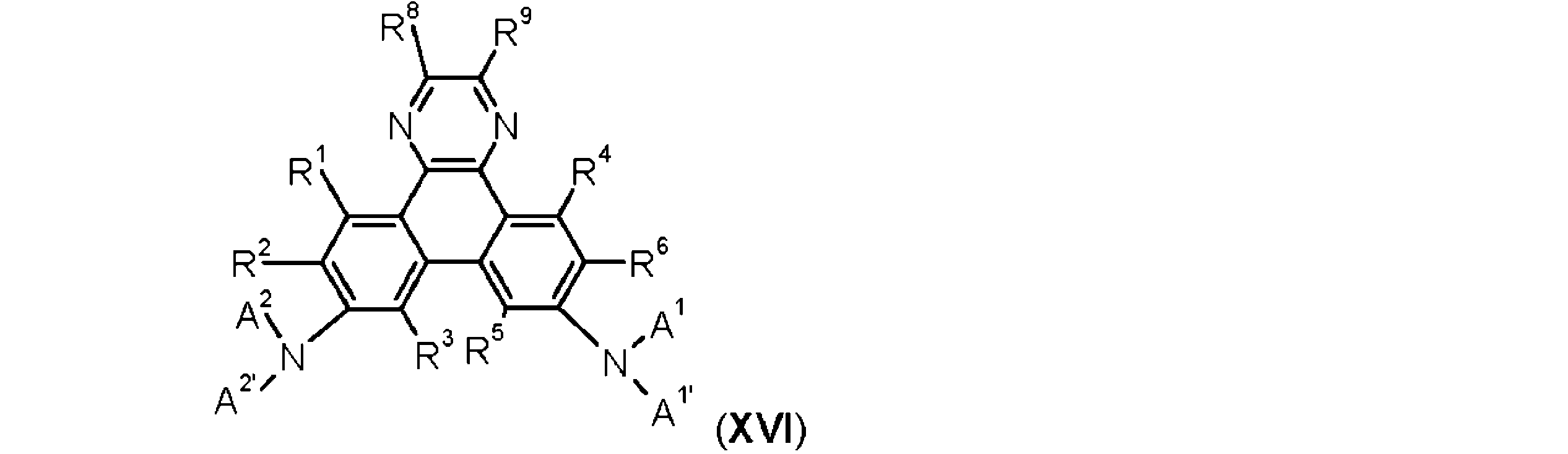
- a compound having a 1,4-diazatriphenylene structure represented by the following general formulas (X) and (XVI) has been proposed as a host material of a phosphorescent light-emitting material (see, for example, Patent Document 3).
- X represents a substituted or unsubstituted aromatic hydrocarbon group, a substituted or unsubstituted aromatic heterocyclic group or a substituted or unsubstituted condensed polycyclic aromatic group, or an aromatic hydrocarbon group
- Y has a hydrogen atom, a deuterium atom, a fluorine atom, a chlorine atom, a cyano group, a nitro group, and a substituent.
- cycloalkyloxy groups substituted or unsubstituted aromatic hydrocarbon groups, substituted or unsubstituted aromatic heterocyclic groups, substituted or unsubstituted condensed polycyclic aromatic groups, substituted or unsubstituted aryloxy groups, Or a disubstituted amino group substituted by a group selected from an aromatic hydrocarbon group, an aromatic heterocyclic group or a condensed polycyclic aromatic group, and R 1 to R 8 may be the same or different from each other;
- the present invention is also directed to the general formula (1) wherein X and Y are substituted or unsubstituted phenoxazinyl group, phenothiazinyl group, acridinyl group, phenazinyl group, aromatic hydrocarbon group or condensed polycyclic aromatic group.
- X and Y are substituted or unsubstituted phenoxazinyl group, phenothiazinyl group, acridinyl group, phenazinyl group, aromatic hydrocarbon group or condensed polycyclic aromatic group.
- this invention is an organic electroluminescent element of said 11) description whose above described organic layer is a light emitting layer.
- this invention is an organic electroluminescent element of the said 11) description which radiates
- this invention is an organic electroluminescent element of the said 11) description whose above described organic layer is an electron carrying layer.
- the present invention is the organic electroluminescence device according to 11) above, wherein the organic layer is a hole blocking layer.
- aromatic hydrocarbon group “aromatic heterocyclic group” or “fused polycyclic aromatic group”
- phenyl group specifically, phenyl group, biphenylyl group, terphenylyl group, naphthyl group, anthryl group, phenanthryl group , Fluorenyl group, indenyl group, pyrenyl group, perylenyl group, fluoranthenyl group, triphenylenyl group, pyridyl group, furyl group, pyrrolyl group, thienyl group, quinolyl group, isoquinolyl group, benzofuranyl group, benzothienyl group, indolyl group, carbazolyl Group, benzo
- substituted aromatic hydrocarbon group “substituted aromatic heterocyclic group” or “substituted condensed polycyclic aromatic group” represented by X in the general formula (1), specifically, , Deuterium atom, cyano group, nitro group; halogen atom such as fluorine atom, chlorine atom, bromine atom, iodine atom; methyl group, ethyl group, n-propyl group, isopropyl group, n-butyl group, isobutyl group, tert A linear or branched alkyl group having 1 to 6 carbon atoms such as a butyl group, an n-pentyl group, an isopentyl group, a neopentyl group, or an n-hexyl group; a methyloxy group, an ethyloxy group, a propyloxy group, or the like; A linear or branched alkyl group having 1 to 6 carbon atoms such as a
- the “group”, “aromatic heterocyclic group” or “fused polycyclic aromatic group”, the “substituted or unsubstituted aromatic hydrocarbon group” represented by X in the general formula (1) “Aromatic hydrocarbon group”, “aromatic heterocyclic group” or “fused polycyclic aromatic group” in “substituted or unsubstituted aromatic heterocyclic group” or “substituted or unsubstituted condensed polycyclic aromatic group” The same groups as those shown for can be mentioned.
- these groups may have a substituent, and as the substituent, a “substituted aromatic hydrocarbon group” or “substituted aromatic heterocyclic group” represented by X in the general formula (1) above. Or the thing similar to what was shown regarding "substituent” of "substituted condensed polycyclic aromatic group” can be mention
- X in the general formula (1) is preferably “a substituted or unsubstituted aromatic heterocyclic group” or “a substituted or unsubstituted condensed polycyclic aromatic group”. It is more preferable that the aromatic group is an aromatic heterocyclic group. It is preferably a carbazolyl group as Moreover, as a substituent which these groups have, the di-substituted amino group substituted by the carbazolyl group and the aromatic hydrocarbon group is preferable, and the carbazolyl group and the diphenylamino group are more preferable.
- a linear or branched alkyl group having 1 to 6 carbon atoms which may have a substituent represented by Y in the general formula (1), “may have a substituent "C1-C6 straight chain” in "C5-C10 cycloalkyl group” or "C2-C6 linear or branched alkenyl group which may have a substituent”
- Specific examples of the “straight or branched alkyl group”, “cycloalkyl group having 5 to 10 carbon atoms” or “linear or branched alkenyl group having 2 to 6 carbon atoms” include a methyl group, Ethyl group, n-propyl group, isopropyl group, n-butyl group, isobutyl group, tert-butyl group, n-pentyl group, isopentyl group, neopentyl group, n-hexyl group, cyclopentyl group, cyclohexyl , 1-adamanty
- a linear or branched alkyl group having 1 to 6 carbon atoms having a substituent represented by Y in the general formula (1), “a cycloalkyl group having 5 to 10 carbon atoms having a substituent”
- a substituent specifically, deuterium atom, cyano group, nitro group; fluorine atom, chlorine Halogen atoms such as atoms, bromine atoms and iodine atoms; linear or branched alkyloxy groups having 1 to 6 carbon atoms such as methyloxy group, ethyloxy group and propyloxy group; alkenyl groups such as allyl group; phenyl Aryloxy groups such as oxy and tolyloxy groups; arylalkyloxy groups such as benzyloxy and phenethyloxy groups; phenyl groups and biphenylyl ,
- the “linear or branched alkyloxy group having 1 to 6 carbon atoms” or the “cycloalkyloxy group having 5 to 10 carbon atoms” in the “good cycloalkyloxy group having 5 to 10 carbon atoms” includes: Specifically, methyloxy group, ethyloxy group, n-propyloxy group, isopropyloxy group, n-butyloxy group, tert-butyloxy group, n-pentyloxy group, n-hexyloxy group, cyclopentyloxy group, cyclohexyloxy group Cycloheptyloxy group, cyclooctyloxy group, 1-adamantyloxy group, 2-adamantyloxy group, etc. Rukoto can. These groups may be bonded to each other through
- a linear or branched alkyloxy group having 1 to 6 carbon atoms having a substituent represented by Y in the general formula (1) or “cycloalkyl having 5 to 10 carbon atoms having a substituent”
- substituents in “oxy group” include deuterium atom, cyano group, nitro group; halogen atom such as fluorine atom, chlorine atom, bromine atom, iodine atom; methyloxy group, ethyloxy group, propyloxy
- aromatic hydrocarbon group aromatic heterocyclic group
- aromatic heterocyclic group or “fused polycyclic aromatic group” in the above
- substituted or unsubstituted aromatic group represented by X in the above general formula (1) "Aromatic hydrocarbon group", “substituted or unsubstituted aromatic heterocyclic group” or “substituted or unsubstituted condensed polycyclic aromatic group” in “aromatic hydrocarbon group”, “aromatic heterocyclic group” or " Examples thereof include the same groups as those shown for the “fused polycyclic aromatic group”.
- these groups may have a substituent, and as the substituent, a “substituted aromatic hydrocarbon group” or “substituted aromatic heterocyclic group” represented by X in the general formula (1) above. Or the thing similar to what was shown regarding "substituent” of "substituted condensed polycyclic aromatic group” can be mention
- aryloxy group in the “substituted or unsubstituted aryloxy group” represented by Y in the general formula (1), specifically, a phenyloxy group, a biphenylyloxy group, a terphenylyloxy group, A naphthyloxy group, an anthryloxy group, a phenanthryloxy group, a fluorenyloxy group, an indenyloxy group, a pyrenyloxy group, a perylenyloxy group, and the like can be given.
- substituted aryloxy group represented by Y in formula (1)
- substituents in the “substituted aryloxy group” represented by Y in formula (1) include deuterium atom, trifluoromethyl group, cyano group, nitro group; fluorine atom, chlorine atom Halogen atoms such as bromine atom and iodine atom; methyl group, ethyl group, n-propyl group, isopropyl group, n-butyl group, isobutyl group, tert-butyl group, n-pentyl group, isopentyl group, neopentyl group, n A linear or branched alkyl group having 1 to 6 carbon atoms such as a hexyl group; a linear or branched alkyloxy having 1 to 6 carbon atoms such as a methyloxy group, an ethyloxy group or a propyloxy group Group: alkenyl group such as allyl
- Aromatic hydrocarbon in “disubstituted amino group substituted by a group selected from aromatic hydrocarbon group, aromatic heterocyclic group or condensed polycyclic aromatic group” represented by Y in general formula (1)
- group aromatic heterocyclic group or “fused polycyclic aromatic group”
- substituted or unsubstituted aromatic hydrocarbon group represented by X in the general formula (1)
- “Aromatic hydrocarbon group”, “aromatic heterocyclic group” or “fused polycyclic aromatic group” in “substituted or unsubstituted aromatic heterocyclic group” or “substituted or unsubstituted condensed polycyclic aromatic group” The same groups as those shown for can be mentioned.
- these groups may have a substituent, and as the substituent, a “substituted aromatic hydrocarbon group” or “substituted aromatic heterocyclic group” represented by X in the general formula (1) above. Or the thing similar to what was shown regarding "substituent” of "substituted condensed polycyclic aromatic group” can be mention
- Y in the general formula (1) is preferably “substituted or unsubstituted aromatic heterocyclic group” or “substituted or unsubstituted condensed polycyclic aromatic group”. More preferably, it is an ⁇ aromatic heterocyclic group '', particularly a phenoxazinyl group, a phenothiazinyl group, an acridinyl group, a phenazinyl group, an aromatic hydrocarbon group or a disubstituted amino group substituted with a condensed polycyclic aromatic group.
- carbazolyl group As a substituent which these groups have, the di-substituted amino group substituted by the carbazolyl group and the aromatic hydrocarbon group is preferable, and the carbazolyl group and the diphenylamino group are more preferable.
- a linear or branched alkyl group having 1 to 6 carbon atoms which may have a substituent represented by R 1 to R 8 in the general formula (1), “having a substituent In the “cycloalkyl group having 5 to 10 carbon atoms” or “straight or branched alkenyl group having 2 to 6 carbon atoms which may have a substituent”.
- Examples of “straight or branched alkyl group of 6”, “cycloalkyl group of 5 to 10 carbon atoms” or “straight chain or branched alkenyl group of 2 to 6 carbon atoms” specifically include , Methyl group, ethyl group, n-propyl group, isopropyl group, n-butyl group, isobutyl group, tert-butyl group, n-pentyl group, isopentyl group, neopentyl group, n-hexyl group, cyclopentyl group, cyclo Hexyl group, 1-adamantyl, 2-adamantyl, vinyl group, allyl group, isopropenyl group include a 2-butenyl group, and the like. These groups may be bonded to each other through a single bond, a substituted or unsubstituted methylene group, an oxygen atom or a sulfur atom to form a ring.
- a linear or branched alkyl group having 1 to 6 carbon atoms having a substituent represented by R 1 to R 8 in formula (1), “5 to 10 carbon atoms having a substituent”
- Specific examples of the “substituent” in the “cycloalkyl group of” or “straight-chain or branched alkenyl group having 2 to 6 carbon atoms having a substituent” include a deuterium atom, a cyano group, and a nitro group; Halogen atoms such as fluorine atom, chlorine atom, bromine atom and iodine atom; linear or branched alkyloxy group having 1 to 6 carbon atoms such as methyloxy group, ethyloxy group and propyloxy group; Alkenyl groups; aryloxy groups such as phenyloxy groups and tolyloxy groups; arylalkyloxy groups such as benzyloxy groups and phenethyloxy groups; phenyl groups and bif
- a linear or branched alkyloxy group having 1 to 6 carbon atoms having a substituent represented by R 1 to R 8 in the general formula (1) or “having 5 to 5 carbon atoms having a substituent”
- Specific examples of the “substituent” in “10 cycloalkyloxy groups” include deuterium atom, cyano group, nitro group; halogen atom such as fluorine atom, chlorine atom, bromine atom, iodine atom; methyloxy group, ethyloxy
- Arylalkyloxy groups such as groups; phenyl groups, biphenylyl groups, terphenyly
- substituents may be further substituted by the substituents exemplified above.
- substituents may be bonded to each other via a single bond, a substituted or unsubstituted methylene group, an oxygen atom or a sulfur atom to form a ring.
- phenanthryl group fluorenyl group, indenyl group, pyrenyl group, perylenyl group, fluoranthenyl group, triphenylenyl group, pyridyl group, furyl group, pyrrolyl group, thienyl group, quinolyl group, isoquinolyl group, benzofuranyl group, benzothienyl group, Indolyl, carbazolyl, benzoxazolyl, benzothiazolyl, quinoxalyl, benzimidazolyl, Zoriru group, dibenzofuranyl group, dibenzothienyl group include phenoxazinyl group, phenothiazinyl group, and carbolinyl group and the like. These groups may be bonded to each other through a single bond, a substituted or unsubstituted methylene group, an oxygen atom or a sulfur atom to form a ring.
- substituted aromatic hydrocarbon group “substituted aromatic heterocyclic group” or “substituted condensed polycyclic aromatic group” represented by R 1 to R 8 in the general formula (1), Specifically, deuterium atom, trifluoromethyl group, cyano group, nitro group; halogen atom such as fluorine atom, chlorine atom, bromine atom, iodine atom; methyl group, ethyl group, n-propyl group, isopropyl group, a linear or branched alkyl group having 1 to 6 carbon atoms such as n-butyl group, isobutyl group, tert-butyl group, n-pentyl group, isopentyl group, neopentyl group, n-hexyl group; methyloxy group A linear or branched alkyloxy group having 1 to 6 carbon atoms such as ethyloxy group
- aryloxy group in the “substituted or unsubstituted aryloxy group” represented by R 1 to R 8 in the general formula (1) include a phenyloxy group, a biphenylyloxy group, a terphenyl group.
- examples thereof include a tolyloxy group, a naphthyloxy group, an anthryloxy group, a phenanthryloxy group, a fluorenyloxy group, an indenyloxy group, a pyrenyloxy group, and a perylenyloxy group.
- These groups may be bonded to each other through a single bond, a substituted or unsubstituted methylene group, an oxygen atom or a sulfur atom to form a ring.
- substituted aryloxy group represented by R 1 to R 8 in the general formula (1)
- substituents include deuterium atom, trifluoromethyl group, cyano group, nitro group; fluorine Halogen atoms such as atom, chlorine atom, bromine atom, iodine atom; methyl group, ethyl group, n-propyl group, isopropyl group, n-butyl group, isobutyl group, tert-butyl group, n-pentyl group, isopentyl group, Linear or branched alkyl group having 1 to 6 carbon atoms such as neopentyl group or n-hexyl group; linear or branched alkyl group having 1 to 6 carbon atoms such as methyloxy group, ethyloxy group or propyloxy group Alkyloxy groups; alkenyl groups such as allyl groups; aralkyl groups
- substituents are further substituted by the substituents exemplified above. May be. These substituents may be bonded to each other via a single bond, a substituted or unsubstituted methylene group, an oxygen atom or a sulfur atom to form a ring.
- aromatic hydrocarbon group “aromatic heterocyclic group” or “fused polycyclic aromatic group”
- substituted or unsubstituted aromatic hydrocarbon represented by X in the above general formula (1)
- Aromaatic hydrocarbon group "aromatic heterocyclic group” or “fused polycycle” in “group”
- “substituted or unsubstituted aromatic heterocyclic group” or “substituted or unsubstituted condensed polycyclic aromatic group” The same groups as those shown for the “aromatic group” can be mentioned.
- these groups may have a substituent, and as the substituent, a “substituted aromatic hydrocarbon group” or “substituted aromatic heterocyclic group” represented by X in the general formula (1) above. Or the thing similar to what was shown regarding "substituent” of "substituted condensed polycyclic aromatic group” can be mention
- the compound having a diazatriphenylene ring structure represented by the general formula (1) of the present invention has a small difference ( ⁇ E ST ) between excited triplet energy and excited singlet energy obtained by theoretical calculation, and a resonator. Since the intensity (f) is relatively large, the luminous efficiency is high, delayed fluorescence can be emitted, and the thin film state is stable.
- the compound having a diazatriphenylene ring structure represented by the general formula (1) of the present invention can be used as a constituent material of a light emitting layer of an organic electroluminescence element (hereinafter abbreviated as an organic EL element).
- an organic EL element an organic electroluminescence element
- the compound having a diazatriphenylene ring structure represented by the general formula (1) of the present invention can be used as a constituent material of an electron transport layer of an organic EL device.
- a material having a higher electron injection / movement speed than conventional materials the electron transport efficiency from the electron transport layer to the light emitting layer is improved, the light emission efficiency is improved, and the driving voltage is lowered, It has the effect
- the compound having a diazatriphenylene ring structure represented by the general formula (1) of the present invention can also be used as a constituent material of a hole blocking layer of an organic EL device.
- a material with excellent hole-blocking ability and electron transportability compared to conventional materials and high stability in the thin film state the driving voltage is lowered and current resistance is maintained while having high luminous efficiency. Is improved and the maximum light emission luminance of the organic EL element is improved.
- FIG. 1 is a 1 H-NMR chart of the compound of Example 1 of the present invention (Compound 1).
- FIG. 2 is a 1 H-NMR chart of the compound of Example 2 of the present invention (Compound 2).
- FIG. 3 is a 1 H-NMR chart of the compound of Example 3 of the present invention (Compound 4).
- FIG. 3 is a 1 H-NMR chart of the compound of Example 4 of the present invention (Compound 25).
- FIG. 6 is a 1 H-NMR chart of the compound of Example 5 of the present invention (Compound 31).
- FIG. 3 is a 1 H-NMR chart of the compound of Example 6 of the present invention (Compound 10).
- FIG. 3 is a 1 H-NMR chart of the compound of Example 7 of the present invention (Compound 12).
- 1 is a 1 H-NMR chart of a compound of Comparative Synthesis Example 1 (Comparative Compound A).
- FIG. It is the figure which showed the EL element structure of Example 12 and Comparative Example
- a cross-coupling reaction such as Suzuki coupling with a corresponding boric acid ester synthesized from a diazatriphenylene derivative having a bromo group and a corresponding aryl halide (see, for example, Non-Patent Document 2) or Buchwald
- a compound having a diazatriphenylene ring structure of the present invention can be synthesized by performing a condensation reaction such as a Hartwig reaction.
- diazatriphenylene was first synthesized by reacting 9,10-phenanthrenequinone and ethylenediamine, and then brominated with N-bromosuccinimide or the like to synthesize a diazatriphenylene derivative having a bromo group.
- the compound having a diazatriphenylene ring structure of the present invention can be synthesized by performing a cross-coupling reaction such as Suzuki coupling or a condensation reaction such as Buchwald-Hartwig reaction. It should be noted that bromo-substituted products with different substitution positions can be obtained by changing the bromination reagent and conditions.
- the compounds were purified by column chromatography, adsorption purification using silica gel, activated carbon, activated clay, etc., recrystallization using a solvent, crystallization method, and the like.
- the compound was identified by NMR analysis.
- the work function was measured as a physical property value.
- the work function is an index of the energy level as the light emitting layer material.
- the work function was measured using an atmospheric photoelectron spectrometer (AC-3 type, manufactured by Riken Keiki Co., Ltd.) by forming a 100 nm thin film on the ITO substrate.
- an anode As the structure of the organic EL device of the present invention, on the substrate sequentially, an anode, a hole injection layer, a hole transport layer, an electron blocking layer, a light emitting layer, a hole blocking layer, an electron transport layer, a cathode, Further, there may be mentioned those having an electron injection layer between the electron transport layer and the cathode.
- several organic layers can be omitted.
- an anode, a hole transport layer, a light emitting layer, an electron transport layer, an electron injection layer, and a cathode can be sequentially formed on the substrate.
- Anode, hole transport layer, light emitting layer, electron transport layer, and cathode can be sequentially formed on the substrate.
- the light emitting layer, the hole transport layer, and the electron transport layer may have a structure in which two or more layers are laminated.
- a material in which trisbromophenylamine hexachloroantimony is further P-doped to a material usually used in the layer, or a polymer having a TPD structure in its partial structure A compound or the like can be used.
- a phosphorescent light emitting material can be used as the light emitting material.
- a phosphorescent emitter of a metal complex such as iridium or platinum can be used.
- Green phosphorescent emitters such as Ir (ppy) 3
- blue phosphorescent emitters such as FIrpic and FIr6, and red phosphorescent emitters
- Btp 2 Ir (acac) and Ir (piq) 3 are used.
- the host material it is possible to use 4,4′-di (N-carbazolyl) biphenyl (hereinafter abbreviated as CBP), carbazole derivatives such as TCTA, mCP, etc.
- CBP 4,4′-di (N-carbazolyl) biphenyl
- carbazole derivatives such as TCTA, mCP, etc.
- the phosphorescent light-emitting material into the host material by co-evaporation in the range of 1 to 30 weight percent with respect to the entire light-emitting layer.
- an element having a structure in which a light-emitting layer manufactured using a compound having a different work function as a host material is stacked adjacent to a light-emitting layer manufactured using the compound of the present invention can be manufactured (for example, non-patented). Reference 6).
- a compound having a diazatriphenylene ring structure represented by the general formula (1) of the present invention a phenanthroline derivative such as bathocuproine (hereinafter abbreviated as BCP), aluminum, (III)
- BCP bathocuproine
- BAlq metal complexes of quinolinol derivatives such as bis (2-methyl-8-quinolinate) -4-phenylphenolate
- various rare earth complexes oxazole derivatives, triazole derivatives, triazine derivatives
- a compound having a hole blocking action can be used. These materials may also serve as the material for the electron transport layer.
- These may be formed alone, but may be used as a single layer formed by mixing with other materials, layers formed alone, mixed layers formed, or A stacked structure of layers formed by mixing with a layer formed alone may be used.
- These materials can be formed into a thin film by a known method such as a spin coating method or an ink jet method in addition to a vapor deposition method.
- metal complexes of quinolinol derivatives including Alq 3 and BAlq in addition to a compound having a diazatriphenylene ring structure represented by the general formula (1) of the present invention, metal complexes of quinolinol derivatives including Alq 3 and BAlq, various types Metal complexes, triazole derivatives, triazine derivatives, oxadiazole derivatives, thiadiazole derivatives, carbodiimide derivatives, quinoxaline derivatives, phenanthroline derivatives, silole derivatives, benzimidazole derivatives such as TPBI, and the like can be used.
- quinolinol derivatives including Alq 3 and BAlq
- various types Metal complexes triazole derivatives, triazine derivatives, oxadiazole derivatives, thiadiazole derivatives, carbodiimide derivatives, quinoxaline derivatives, phenanthroline derivatives, silole derivatives, benzimidazole derivatives such as
- These may be formed alone, but may be used as a single layer formed by mixing with other materials, layers formed alone, mixed layers formed, or A stacked structure of layers formed by mixing with a layer formed alone may be used.
- These materials can be formed into a thin film by a known method such as a spin coating method or an ink jet method in addition to a vapor deposition method.
- an electrode material having a low work function such as aluminum or an alloy having a lower work function such as a magnesium silver alloy, a magnesium indium alloy, or an aluminum magnesium alloy is used as the electrode material.
- preferable compounds as materials that can be added are given.
- adding as a stabilizing material can be considered.
- a reaction vessel purged with nitrogen was charged with 1.1 g of 6,11-dibromo-1,4-diazatriphenylene, 0.8 g of sodium-tert-butoxide, 1.8 g of phenoxazine, 56 mg of tri-tert-butylphosphine, and 30 mL of toluene. In addition, nitrogen was bubbled. After degassing under reduced pressure, 31 mg of palladium acetate was added, heated with stirring, and refluxed for 20 hours.
- Example 2 ⁇ Synthesis of 6,11-bis (phenothiazin-10-yl) -1,4-diazatriphenylene (Compound 2)> Nitrogen substitution was performed on 2.0 g of 6,11-dibromo-1,4-diazatriphenylene synthesized in Example 1, 3.0 g of potassium carbonate, 3.2 g of phenothiazine, 0.1 g of tri-tert-butylphosphine, and 60 mL of toluene. Nitrogen was bubbled through the reaction vessel. After degassing under reduced pressure, 60 mg of palladium acetate was added, heated with stirring, and refluxed for 20 hours.
- Example 4 ⁇ Synthesis of 6,11-bis ⁇ 3- (diphenylamino) carbazol-9-yl ⁇ -1,4-diazatriphenylene (Compound 25)> 6,11-dibromo-1,4-diazatriphenylene 1.0 g synthesized in Example 1, 0.7 g potassium carbonate, 2.1 g 3- (diphenylamino) carbazole, 0.05 g tri-tert-butylphosphine, Toluene 50 mL was added to the reaction vessel purged with nitrogen, and nitrogen was vented. After degassing under reduced pressure, 30 mg of palladium acetate was added, heated with stirring, and refluxed for 7 hours.
- Example 6 ⁇ Synthesis of 7,10-bis (phenoxazin-10-yl) -1,4-diazatriphenylene (Compound 10)> 7,10-dibromo-1,4-diazatriphenylene 1.0 g synthesized in Example 5, sodium-tert-butoxide 0.7 g, phenoxazine 1.4 g, tri-tert-butylphosphine 0.05 g, toluene 60 mL was added to a reaction vessel purged with nitrogen and aerated with nitrogen.
- Example 7 ⁇ Synthesis of 7,10-bis (9,9-dimethylacridan-10-yl) -1,4-diazatriphenylene (Compound 12)> 1.0 g of 7,10-dibromo-1,4-diazatriphenylene synthesized in Example 5, 0.6 g of sodium tert-butoxide, 1.6 g of 10-H-9,9-dimethylacridane, tri-tert -A reaction vessel purged with nitrogen by 0.07 g of butylphosphine and 80 mL of toluene was added and aerated with nitrogen.
- Example 8 Using the compound of the present invention, a deposited film having a thickness of 100 nm was prepared on an ITO substrate, and the work function was measured with an atmospheric photoelectron spectrometer (AC-3 type, manufactured by Riken Keiki Co., Ltd.). Work Function Compound of the Invention Example 1 5.60 eV Compound of Example 3 of the present invention 5.80 eV Compound of Example 5 of the present invention 5.70 eV Compound of Example 6 of the present invention 5.70 eV Compound of Example 7 of the present invention 5.90 eV CBP 6.00eV
- the compound of the present invention has an energy level suitable as a material for the light emitting layer, which is comparable to that of CBP generally used as a light emitting host.
- Example 9 For the compound of Example 1 of the present invention (Compound 1), a 10 ⁇ 5 mol / L toluene solution was prepared. When this toluene solution was irradiated with ultraviolet light at 300 K while passing nitrogen, fluorescence having a peak wavelength of 547 nm was observed. Further, when the time-resolved spectrum of this toluene solution was measured using a small fluorescence lifetime measuring apparatus (Quantaurus-tau manufactured by Hamamatsu Photonics Co., Ltd.) before and after the aeration of nitrogen, the fluorescence having an emission lifetime of 0.055 ⁇ s and the emission Delayed fluorescence with lifetimes of 0.703 ⁇ s and 9.25 ⁇ s was observed.
- a small fluorescence lifetime measuring apparatus Quantaurus-tau manufactured by Hamamatsu Photonics Co., Ltd.
- Example 10 In Example 9, instead of the compound of Example 1 of the present invention (Compound 1), a 10 ⁇ 5 mol / L toluene solution of the compound of Example 2 of the present invention (Compound 2) was prepared, and the characteristics were evaluated in the same manner. Went. As a result, fluorescence having a peak wavelength of 564 nm was observed, fluorescence having an emission lifetime of 0.01 ⁇ s, and delayed fluorescence having emission lifetimes of 0.052 ⁇ s and 4.2 ⁇ s were observed. Moreover, PL quantum efficiency was 1.9% before nitrogen ventilation, and 7.5% after nitrogen ventilation.
- Example 11 In Example 9, instead of the compound of Example 1 of the present invention (Compound 1), a 10 ⁇ 5 mol / L toluene solution of the compound of Example 3 of the present invention (Compound 4) was prepared, and the characteristics were evaluated in the same manner. Went. As a result, fluorescence having a peak wavelength of 503 nm was observed, fluorescence having an emission lifetime of 0.047 ⁇ s and delayed fluorescence having an emission lifetime of 14.3 ⁇ s were observed. Moreover, PL quantum efficiency was 6.8% before nitrogen ventilation, and 25.8% after nitrogen ventilation.
- Example 12 In Example 9, instead of the compound of Example 1 of the present invention (Compound 1), a 10 ⁇ 5 mol / L toluene solution of the compound of Example 4 of the present invention (Compound 25) was prepared, and the characteristics were evaluated in the same manner. Went. As a result, fluorescence having a peak wavelength of 544 nm was observed, fluorescence having an emission lifetime of 0.046 ⁇ s, and delayed fluorescence having emission lifetimes of 1.21 ⁇ s and 12.77 ⁇ s were observed. Moreover, PL quantum efficiency was 10.4% before nitrogen ventilation, and 47.4% after nitrogen ventilation.
- Example 13 In Example 9, instead of the compound of Example 1 of the present invention (Compound 1), a 10 ⁇ 5 mol / L toluene solution of the compound of Example 5 of the present invention (Compound 31) was prepared, and the characteristics were evaluated in the same manner. Went. As a result, fluorescence having a peak wavelength of 532 nm was observed, fluorescence having an emission lifetime of 0.05 ⁇ s and delayed fluorescence having an emission lifetime of 18.10 ⁇ s were observed. Moreover, PL quantum efficiency was 29.3% before nitrogen ventilation, and 77.1% after nitrogen ventilation.
- Example 14 In Example 9, instead of the compound of Example 1 of the present invention (Compound 1), a 10 ⁇ 5 mol / L toluene solution of the compound of Example 6 of the present invention (Compound 10) was prepared, and the characteristics were evaluated in the same manner. Went. As a result, fluorescence having a peak wavelength of 545 nm was observed, fluorescence having an emission lifetime of 0.04 ⁇ s and delayed fluorescence having an emission lifetime of 3.42 ⁇ s were observed. Moreover, PL quantum efficiency was 3.7% before nitrogen ventilation, and 30.2% after nitrogen ventilation.
- Example 15 In Example 9, instead of the compound of Example 1 of the present invention (Compound 1), a 10 ⁇ 5 mol / L toluene solution of the compound of Example 7 of the present invention (Compound 12) was prepared, and the characteristics were evaluated in the same manner. Went. As a result, fluorescence having a peak wavelength of 490 nm was observed, fluorescence having an emission lifetime of 0.04 ⁇ s and delayed fluorescence having an emission lifetime of 22.8 ⁇ s were observed. Moreover, PL quantum efficiency was 10.2% before nitrogen ventilation, and 35.6% after nitrogen ventilation.
- the organic EL element has a hole transport layer 3, a light emitting layer 4, an electron transport layer 5, and an electron injection layer 6 on a glass substrate 1 on which an ITO electrode is previously formed as a transparent anode 2.
- the cathode (aluminum electrode) 7 was deposited in this order.
- the glass substrate 1 on which ITO having a thickness of 100 nm was formed was washed with an organic solvent, and then the surface was washed by UV ozone treatment. Then, this glass substrate with an ITO electrode was mounted in a vacuum vapor deposition machine and the pressure was reduced to 0.001 Pa or less. Subsequently, NPD was formed as a hole transport layer 3 so as to cover the transparent anode 2 so as to have a film thickness of 35 nm at a deposition rate of 2.0 ⁇ / sec.
- Binary vapor deposition was performed at a vapor deposition rate of and a film thickness of 15 nm was formed.
- the TPBI was formed as the electron transport layer 5 so as to have a film thickness of 65 nm at a deposition rate of 2.0 ⁇ / sec.
- lithium fluoride was formed as the electron injection layer 6 so as to have a film thickness of 0.8 nm at a deposition rate of 0.1 ⁇ / sec.
- cathode 7 was formed by vapor-depositing aluminum so as to have a film thickness of 70 nm.
- the characteristic measurement was performed at normal temperature in air
- Example 17 In Example 16, the material of the light emitting layer 4 was changed from CBP and the compound of Example 1 of the present invention (Compound 1) to mCP and the compound of Example 6 of the present invention (Compound 10), and the deposition rate ratio was mCP: present invention.
- the characteristic measurement was performed at normal temperature in air
- Example 1 For comparison, the material of the light emitting layer 4 in Example 16 was changed from the compound of Example 1 (Compound 1) to the compound of Comparative Synthesis Example 1 (Comparative Compound A), and the organic EL was subjected to the same conditions as in Example 16. An element was produced. About the produced organic EL element, the characteristic measurement was performed at normal temperature in air
- the luminance of the organic EL element of Example 16 was 82 cd / m 2 of the organic EL element of Comparative Example 1 using Comparative Compound A.
- the EL element 2338cd / m 2 in the organic EL element of example 17 was significantly improved as 2158cd / m 2.
- the organic EL element of Example 16 was 24.5 cd / m 2 compared to 0.9 cd / A of the organic EL element of Comparative Example 1 using Comparative Compound A, and the organic EL of Example 17 The device greatly improved to 19.2 cd / m 2 .
- the organic EL element of Example 16 is 10.7 lm / W compared to 0.4 lm / W of the organic EL element of Comparative Example 1 using Comparative Compound A, and the organic EL element of Example 17 is compared with the organic EL element of Example 17. Greatly improved to 9.7 lm / W.
- the organic EL device using the compound of the present invention can achieve a significant improvement in luminous efficiency as compared with the organic EL device using Comparative Compound A.
- the compound having a diazatriphenylene ring structure of the present invention can emit delayed fluorescence and has good thin film stability, and thus is excellent as a material for a light emitting layer, particularly as a dopant material for a light emitting layer. Moreover, the brightness
Landscapes
- Chemical & Material Sciences (AREA)
- Organic Chemistry (AREA)
- Biochemistry (AREA)
- Health & Medical Sciences (AREA)
- General Health & Medical Sciences (AREA)
- Molecular Biology (AREA)
- Life Sciences & Earth Sciences (AREA)
- Engineering & Computer Science (AREA)
- Materials Engineering (AREA)
- Physics & Mathematics (AREA)
- Spectroscopy & Molecular Physics (AREA)
- Electroluminescent Light Sources (AREA)
- Plural Heterocyclic Compounds (AREA)
- Nitrogen Condensed Heterocyclic Rings (AREA)
Abstract
Description
1993年にプリンストン大学のM.A.Baldoらは、イリジウム錯体を用いた燐光発光素子によって8%の外部量子効率を実現させた。
また、熱活性化遅延蛍光(TADF)による発光を利用する素子も開発されている。2011年に九州大学の安達らは、熱活性化遅延蛍光材料を用いた素子によって5.3%の外部量子効率を実現させた(例えば、非特許文献1参照)。
そこで、遅延蛍光を示す材料を利用する有機エレクトロルミネッセンス素子が考えられる。ある種の蛍光物質は、系間交差などにより励起三重項状態へとエネルギーが遷移した後、三重項-三重項消滅あるいは熱エネルギーの吸収により、励起一重項状態に逆系間交差され蛍光を放射する。有機エレクトロルミネッセンス素子においては、後者の熱活性化型の遅延蛍光を示す材料が特に有用であると考えられる。ここで、有機エレクトロルミネッセンス素子に遅延蛍光材料を利用した場合、励起一重項状態の励起子は通常通り蛍光を放射する。一方、励起三重項状態の励起子は、デバイスが発する熱を吸収して励起一重項へ系間交差され蛍光を放射する。この場合、励起一重項からの発光であるため蛍光と同波長での発光でありながら、励起三重項状態から励起一重項状態への逆系間交差により、生じる光の寿命、すなわち発光寿命は通常の蛍光や燐光よりも長くなるため、これらよりも遅延した蛍光として観察される。これを遅延蛍光として定義できる。このような熱活性化型の励起子移動機構を用いること、すなわち、キャリア注入後に熱エネルギーの吸収を経ることにより、通常は25%しか生成しなかった励起一重項状態の化合物の比率を25%以上に引き上げることが可能となる。100℃未満の低い温度でも強い蛍光および遅延蛍光を発する化合物を用いれば、デバイスの熱で充分に励起三重項状態から励起一重項状態への系間交差が生じ、遅延蛍光を放射することから、発光効率が飛躍的に向上する(例えば、特許文献1および特許文献2参照)。



また、これらの基が有する置換基としては、カルバゾリル基、芳香族炭化水素基で置換されたジ置換アミノ基が好ましく、カルバゾリル基、ジフェニルアミノ基がより好ましい。
また、これらの基が有する置換基としては、カルバゾリル基、芳香族炭化水素基で置換されたジ置換アミノ基が好ましく、カルバゾリル基、ジフェニルアミノ基がより好ましい。
また、9,10-フェナントレンキノンとエチレンジアミンを反応させることによって、ジアザトリフェニレンをまず合成した後に、N-ブロモコハク酸イミドなどによるブロモ化を行うことによって、ブロモ基を有するジアザトリフェニレン誘導体を合成し、上記同様、Suzukiカップリングなどのクロスカップリング反応もしくはブッフバルド・ハートウィッグ反応などの縮合反応を行うことによって、本発明のジアザトリフェニレン環構造を有する化合物を合成することができる。
尚、ブロモ化の試薬、条件を変更することによって、置換位置の異なるブロモ置換体を得ることができる。
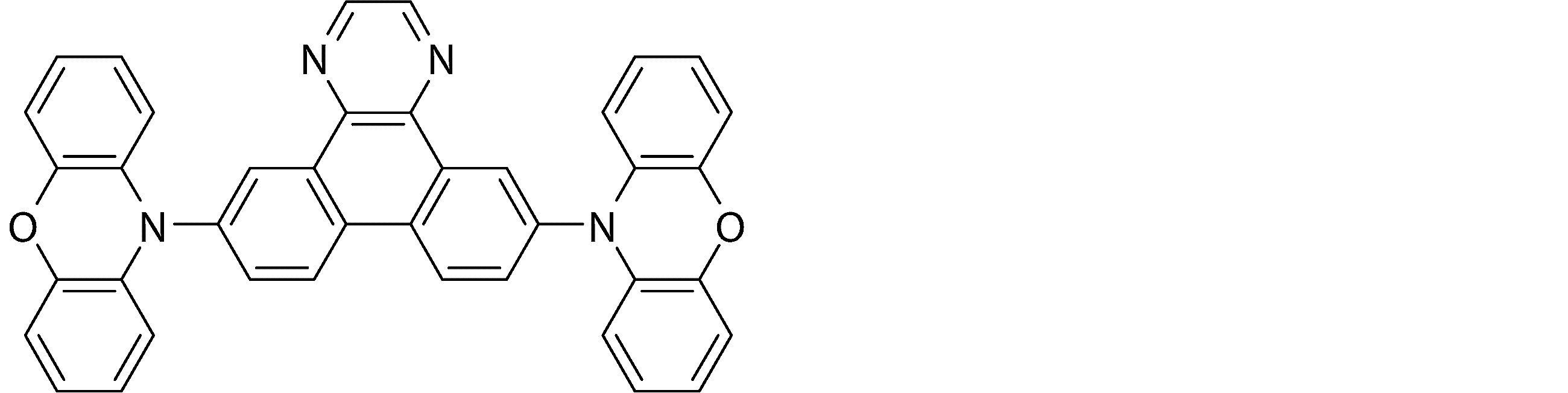


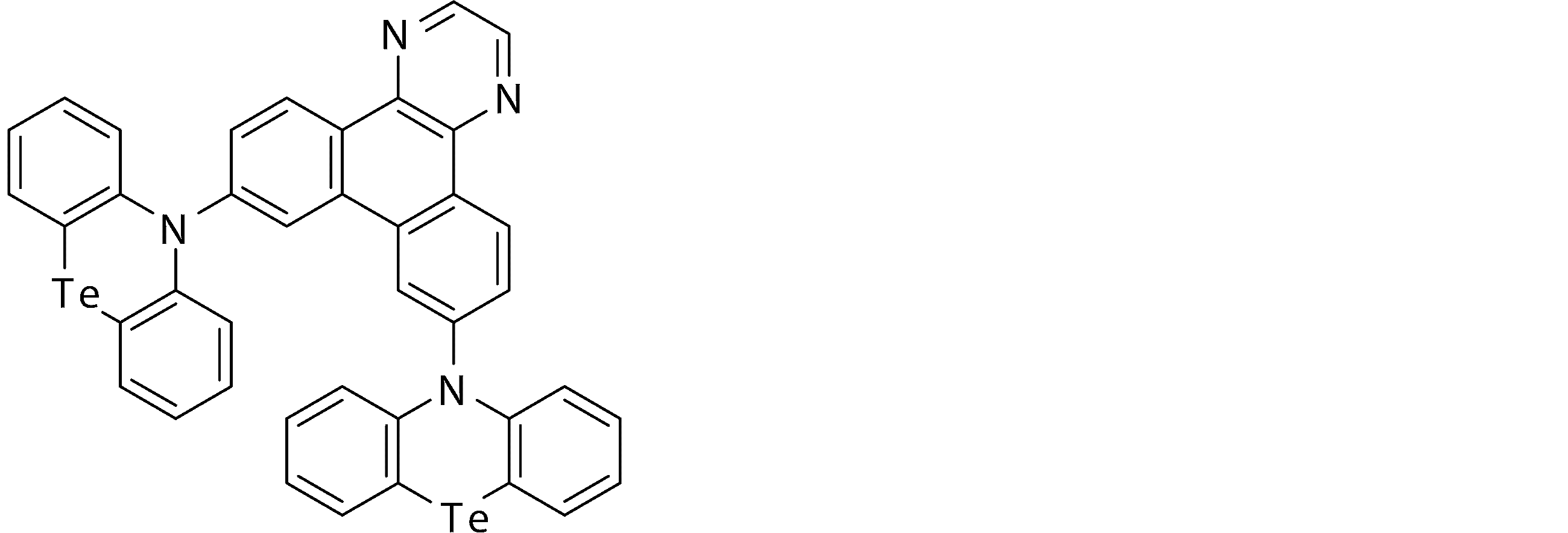


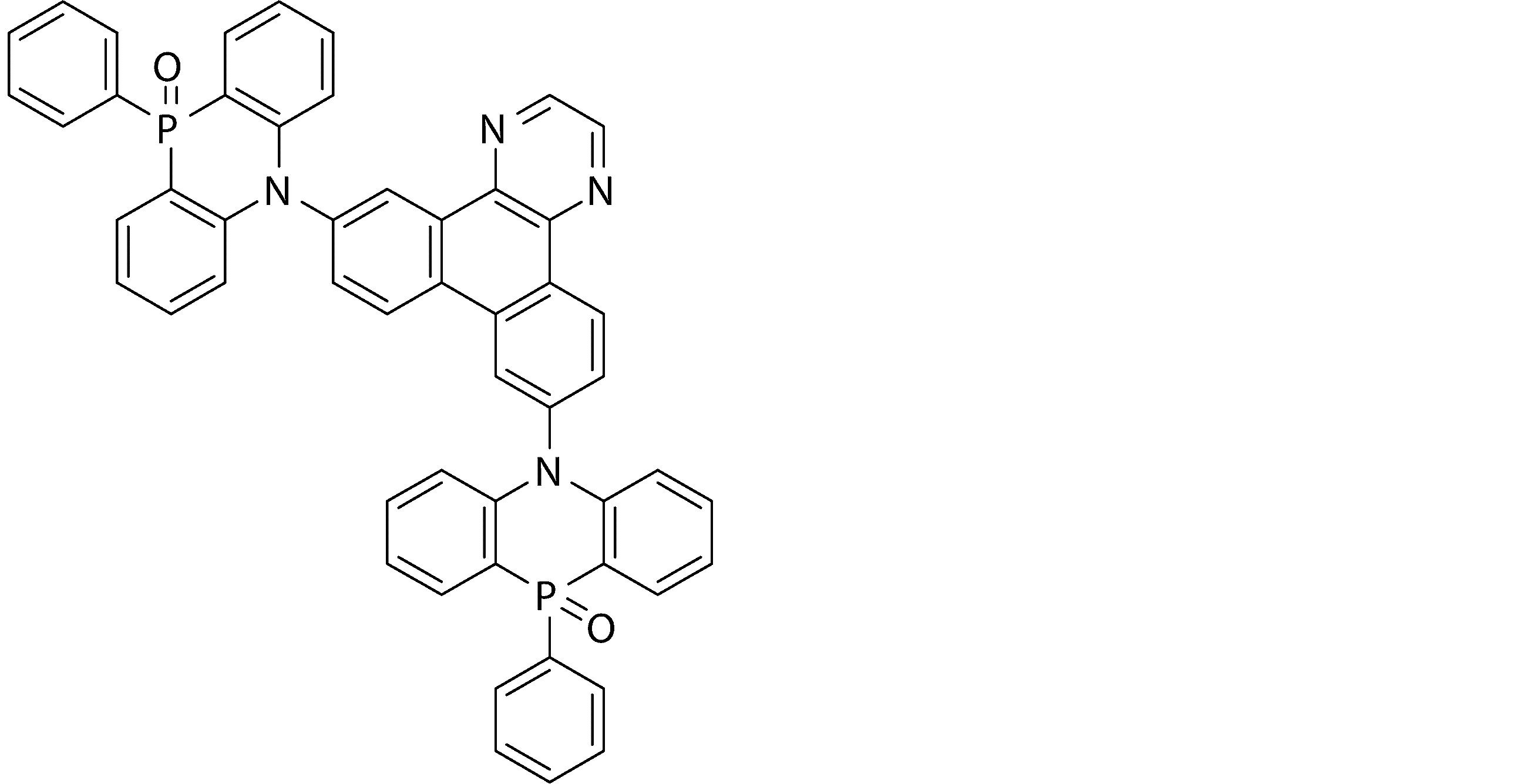


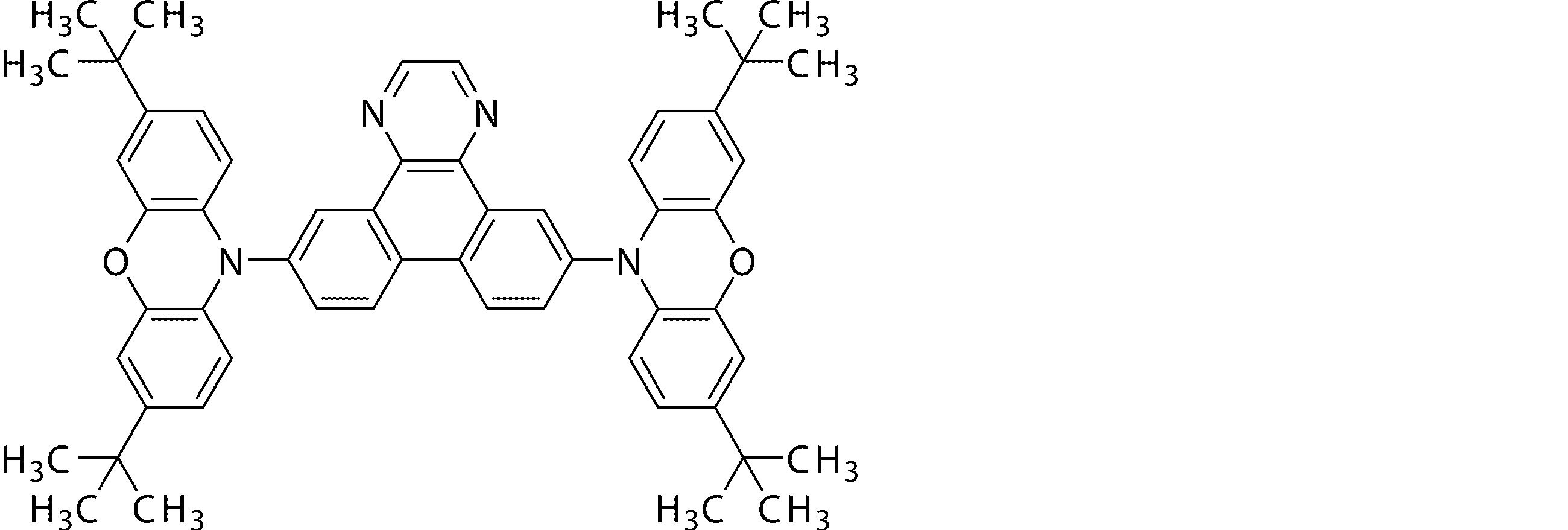
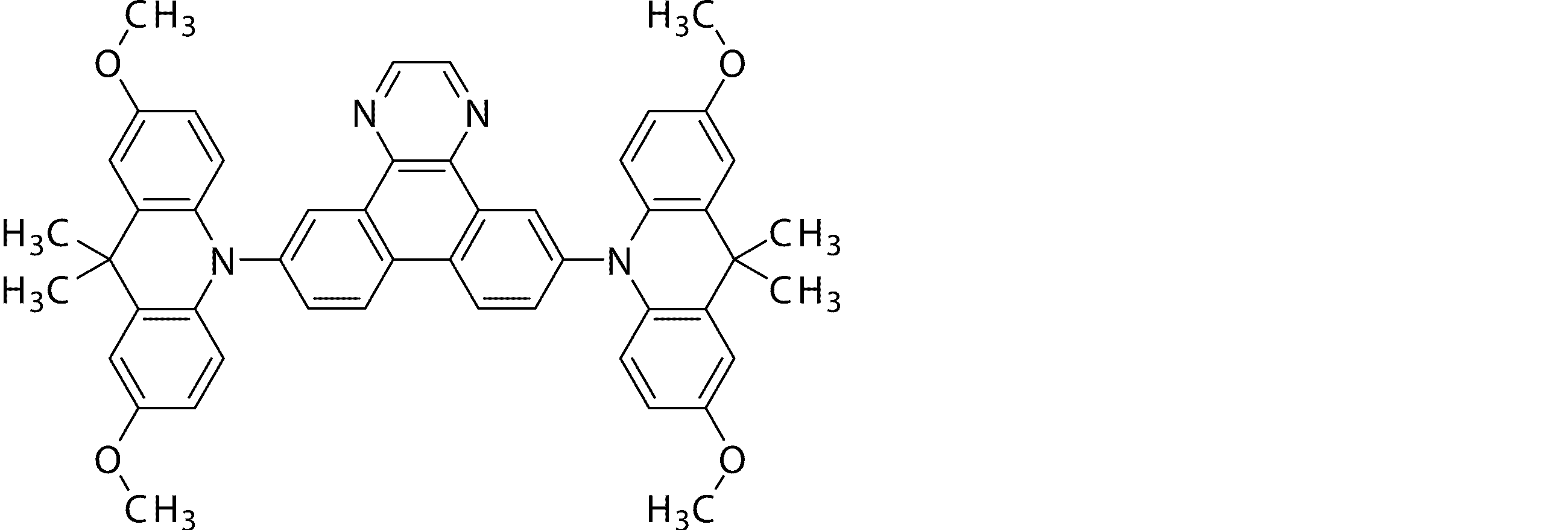


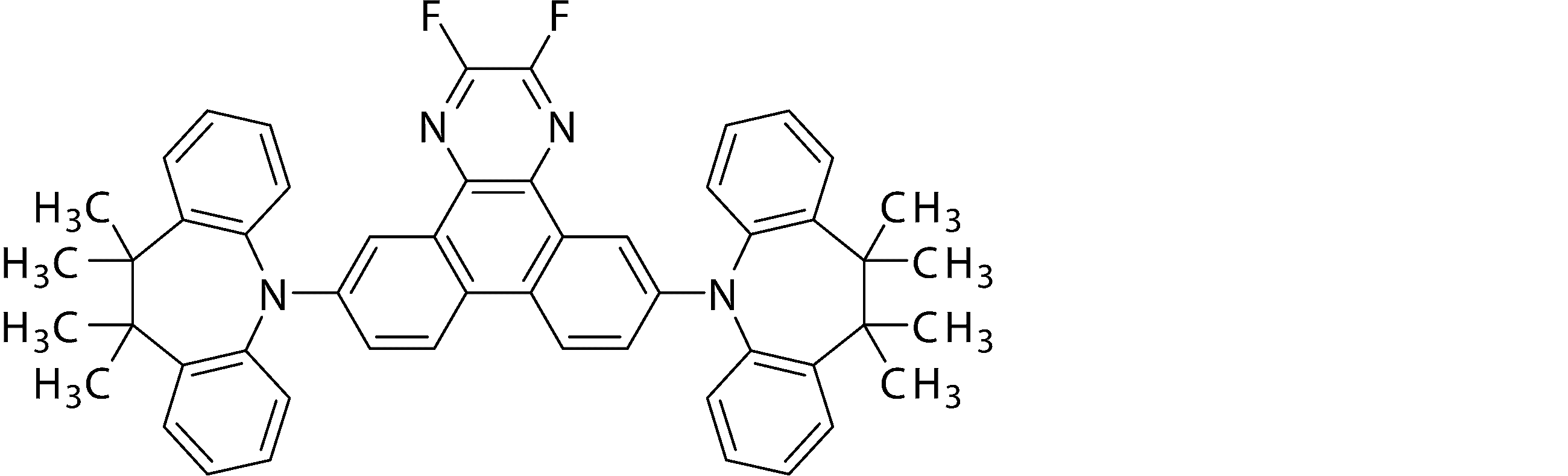

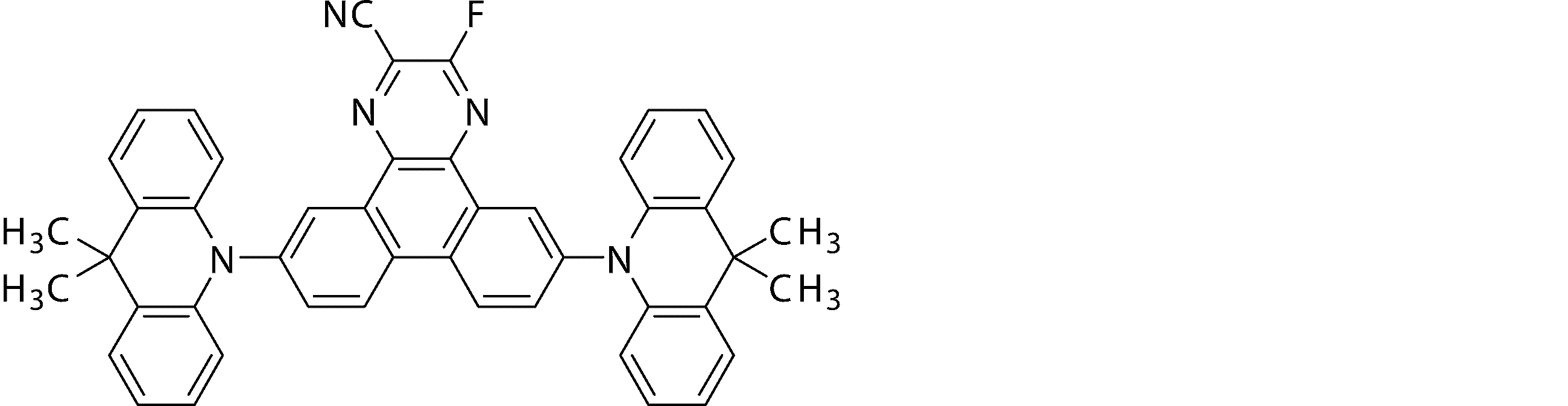

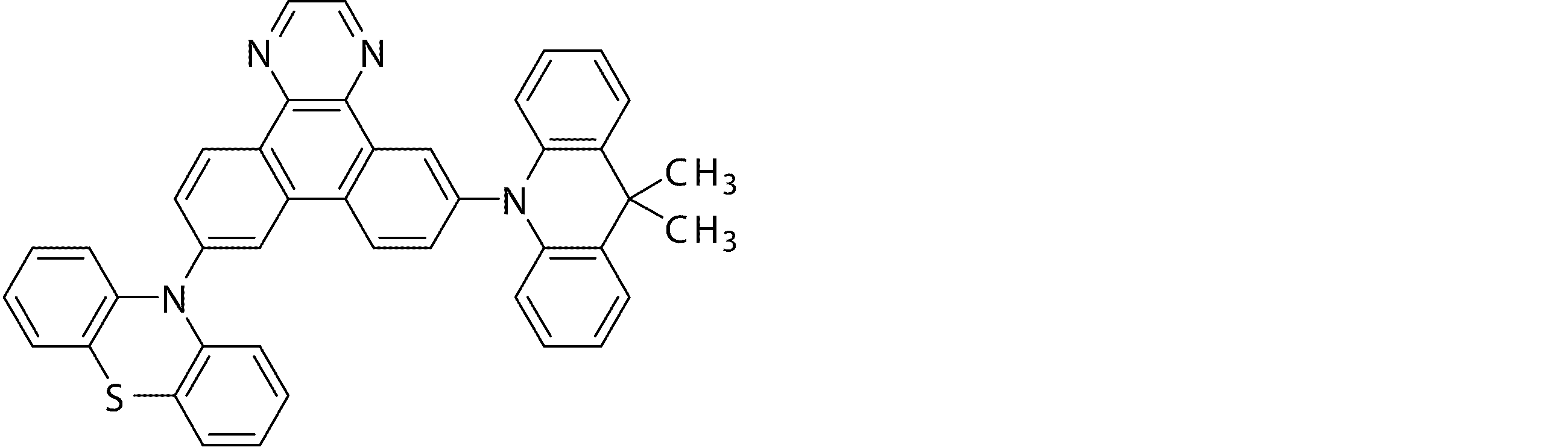












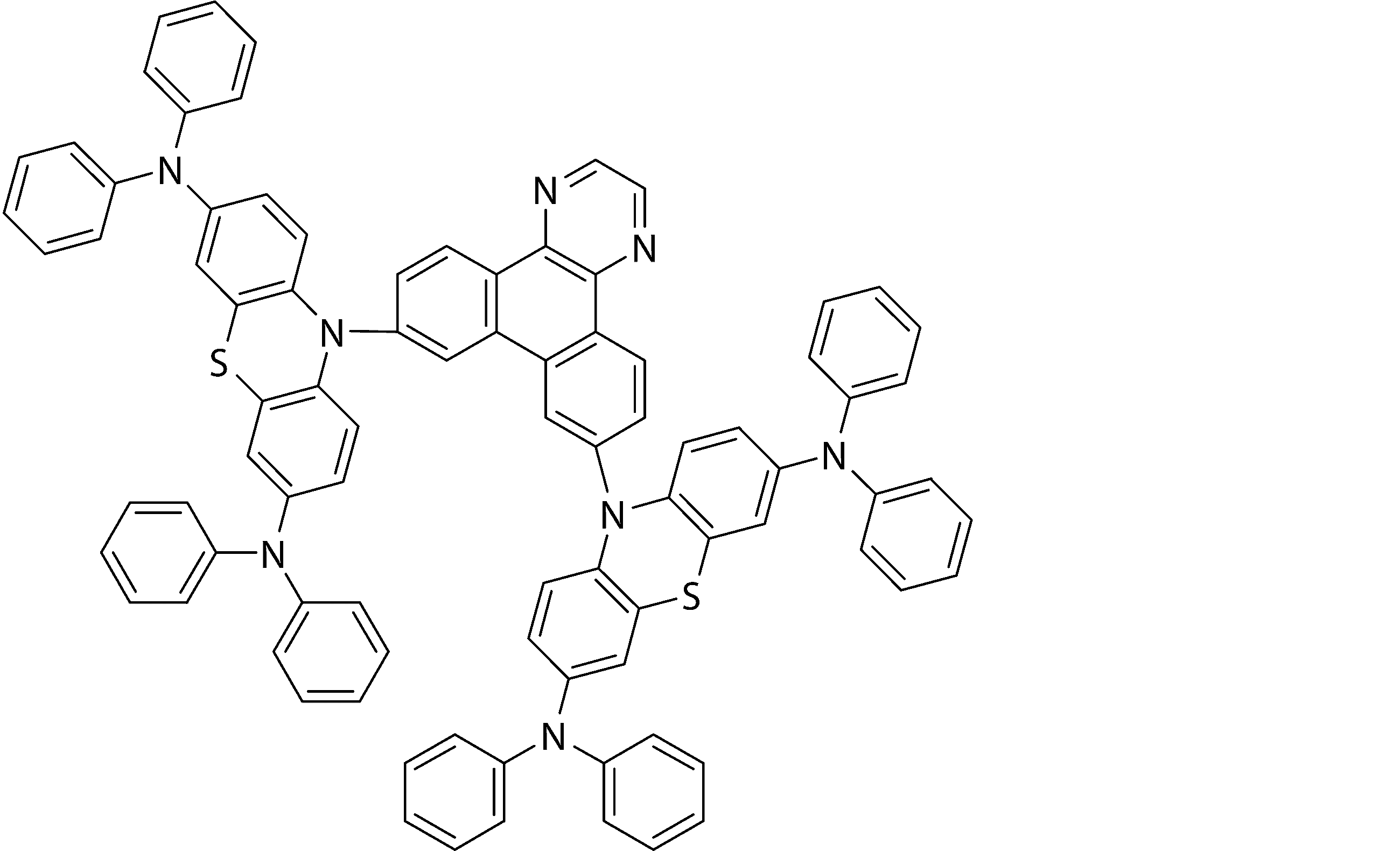
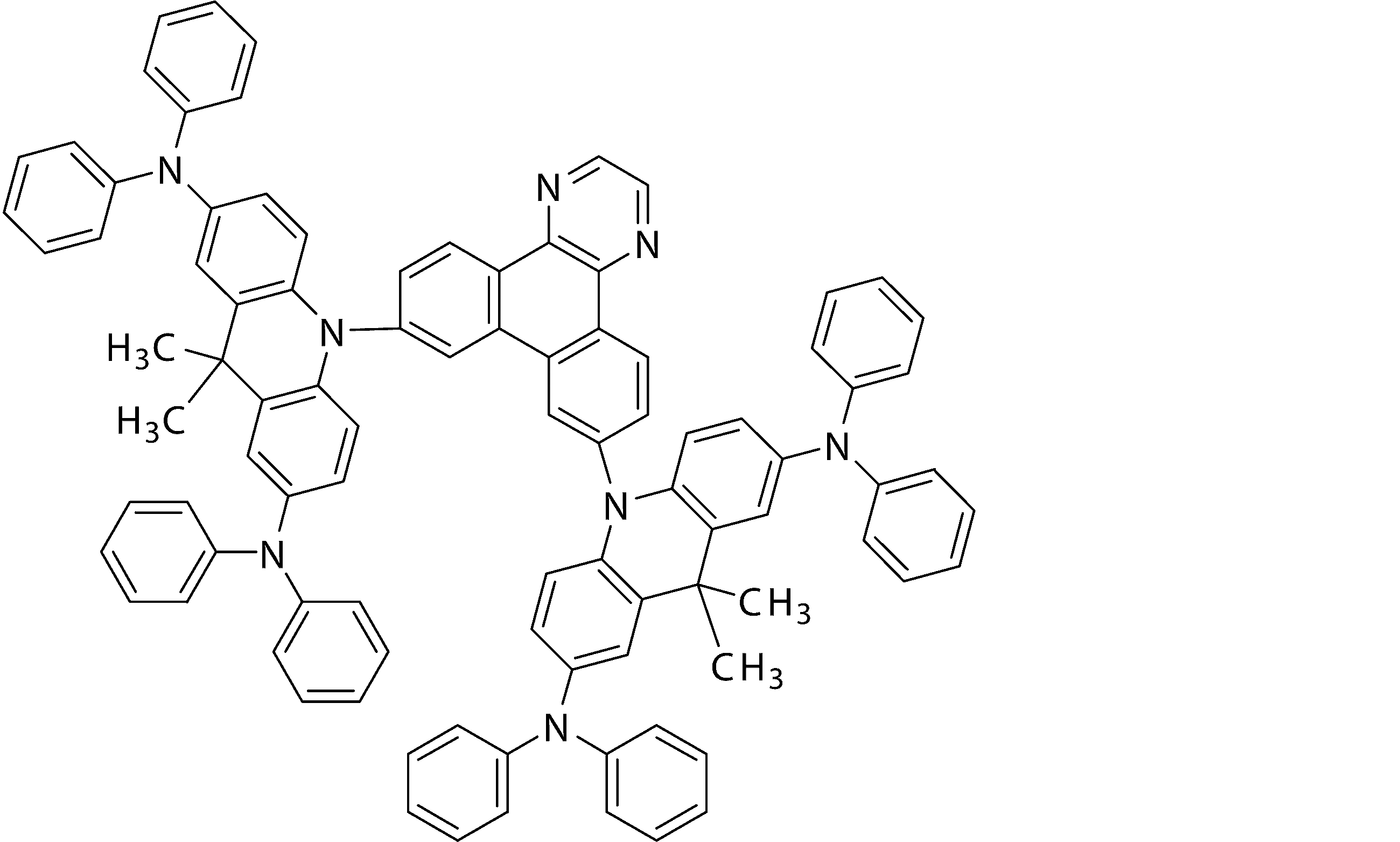


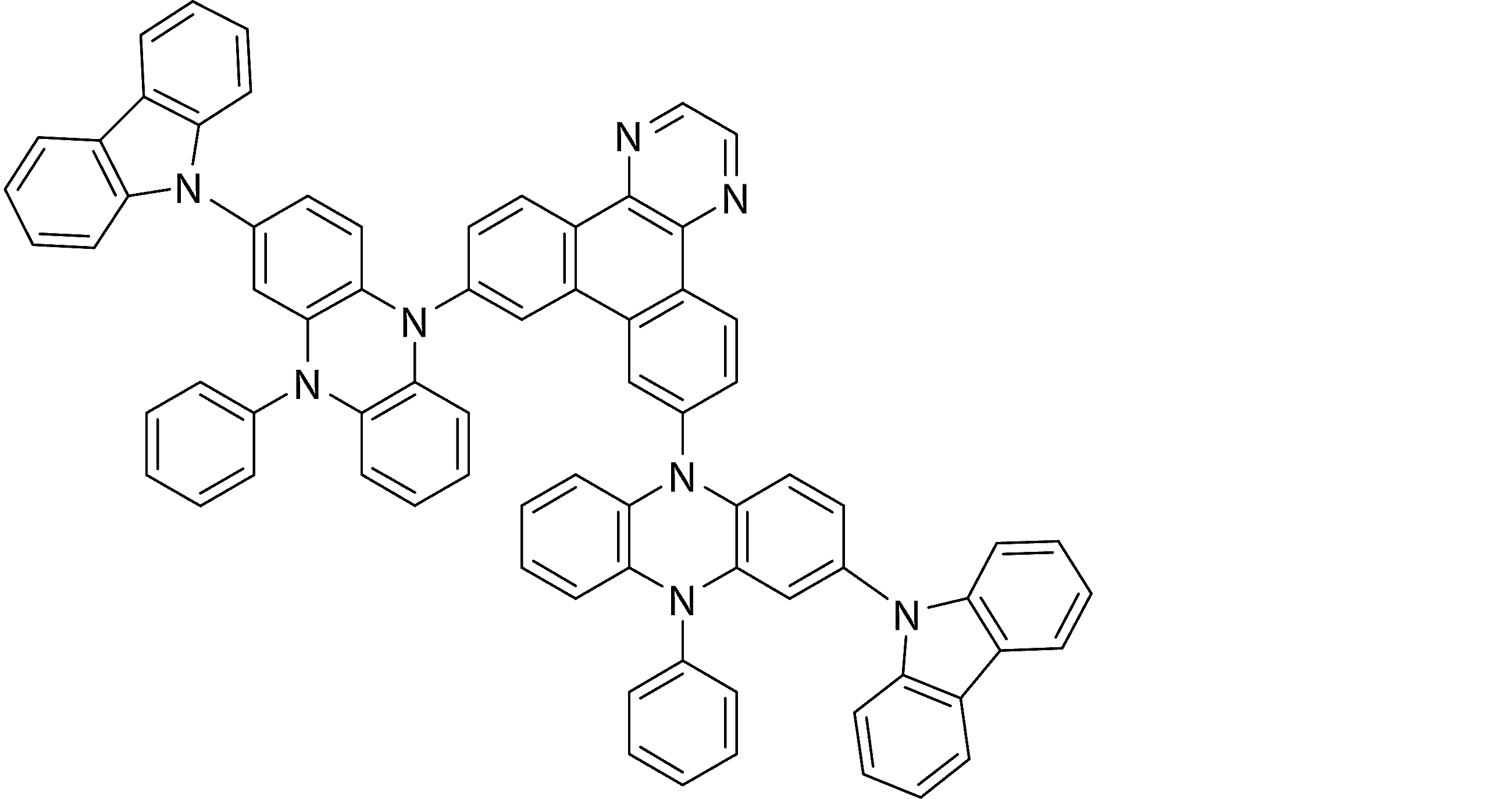


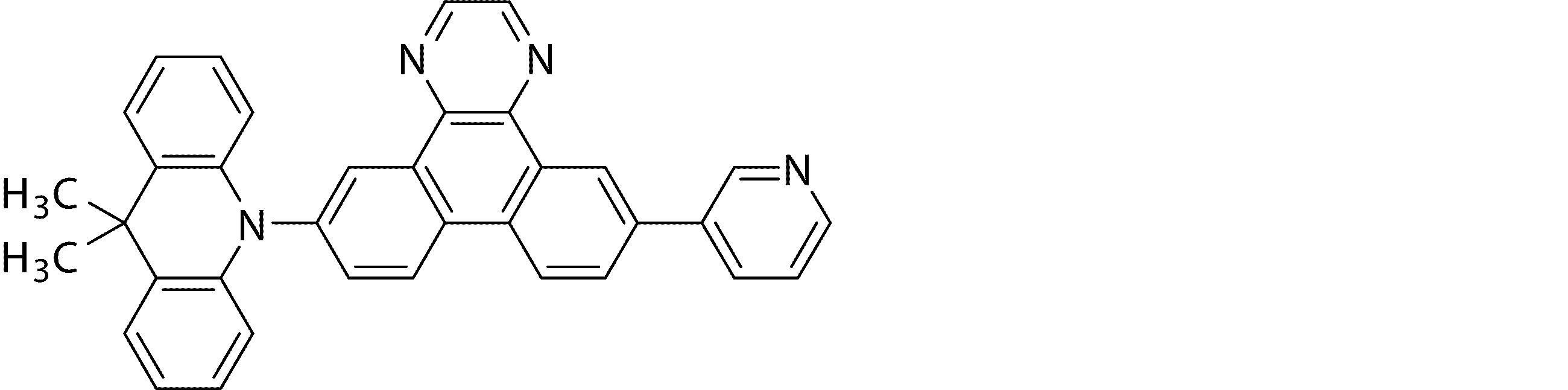
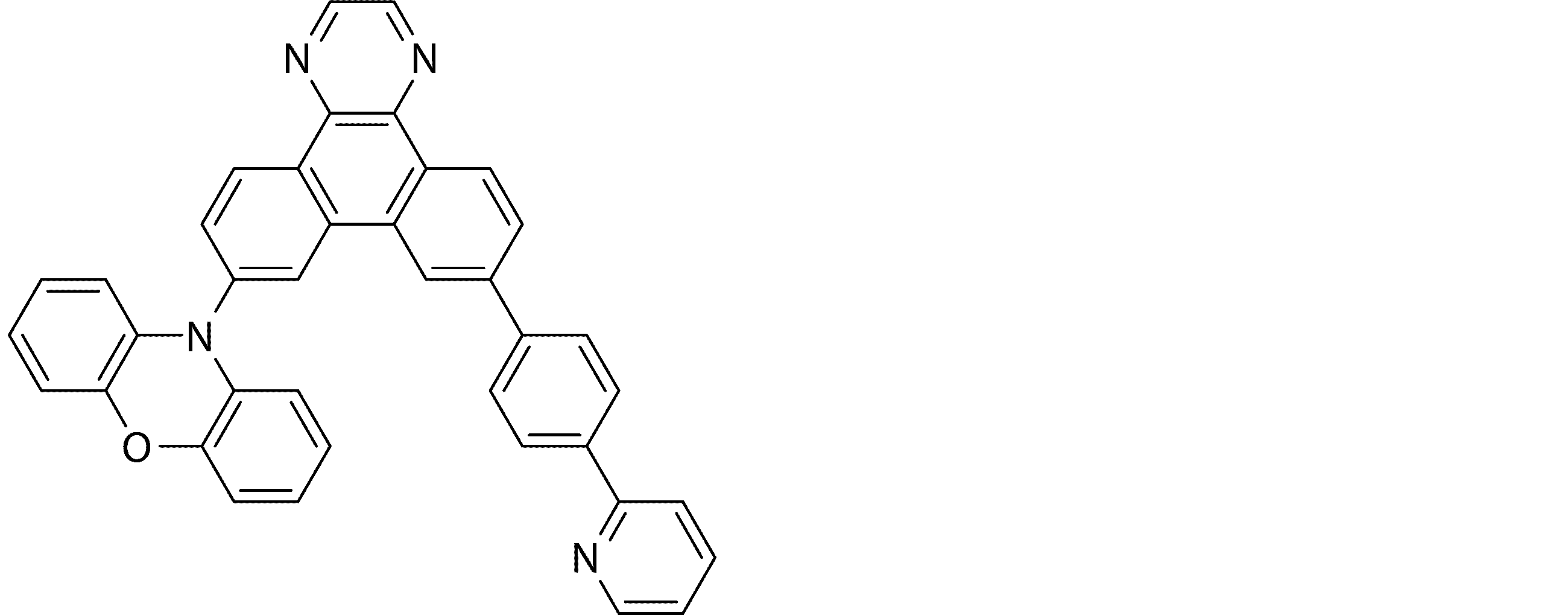

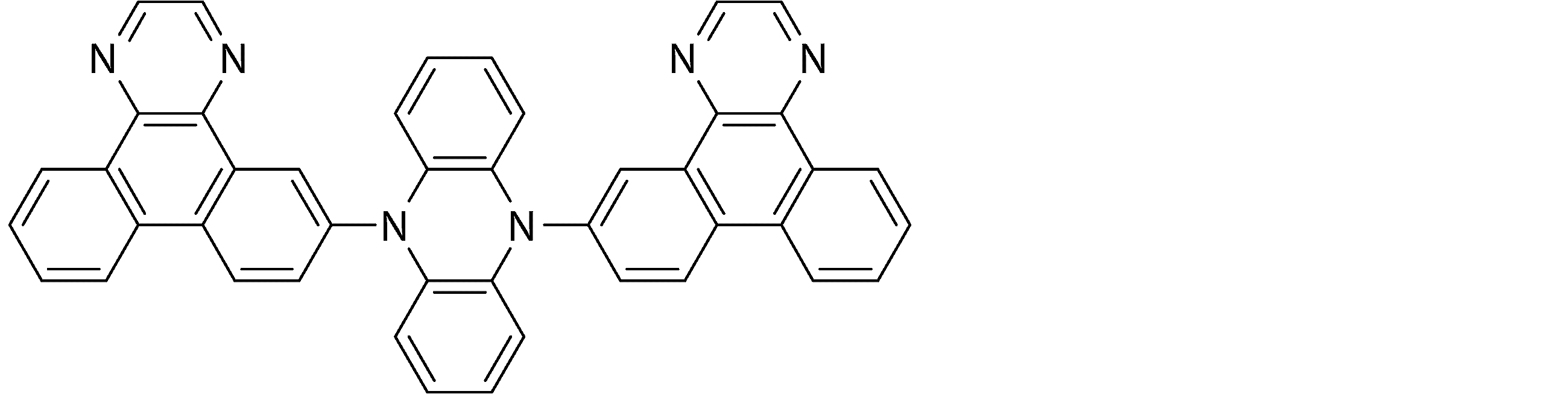
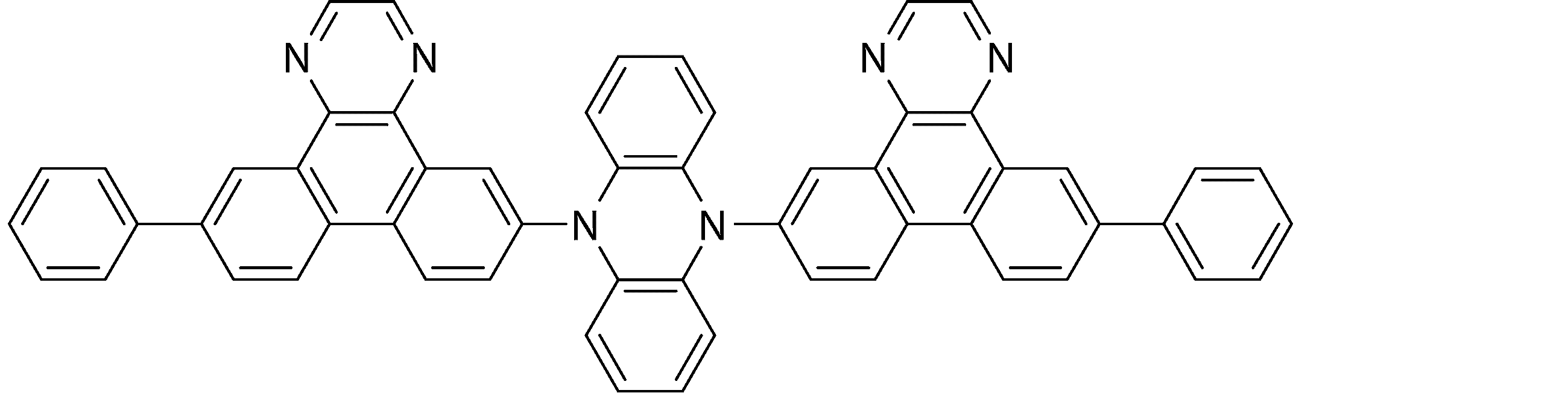


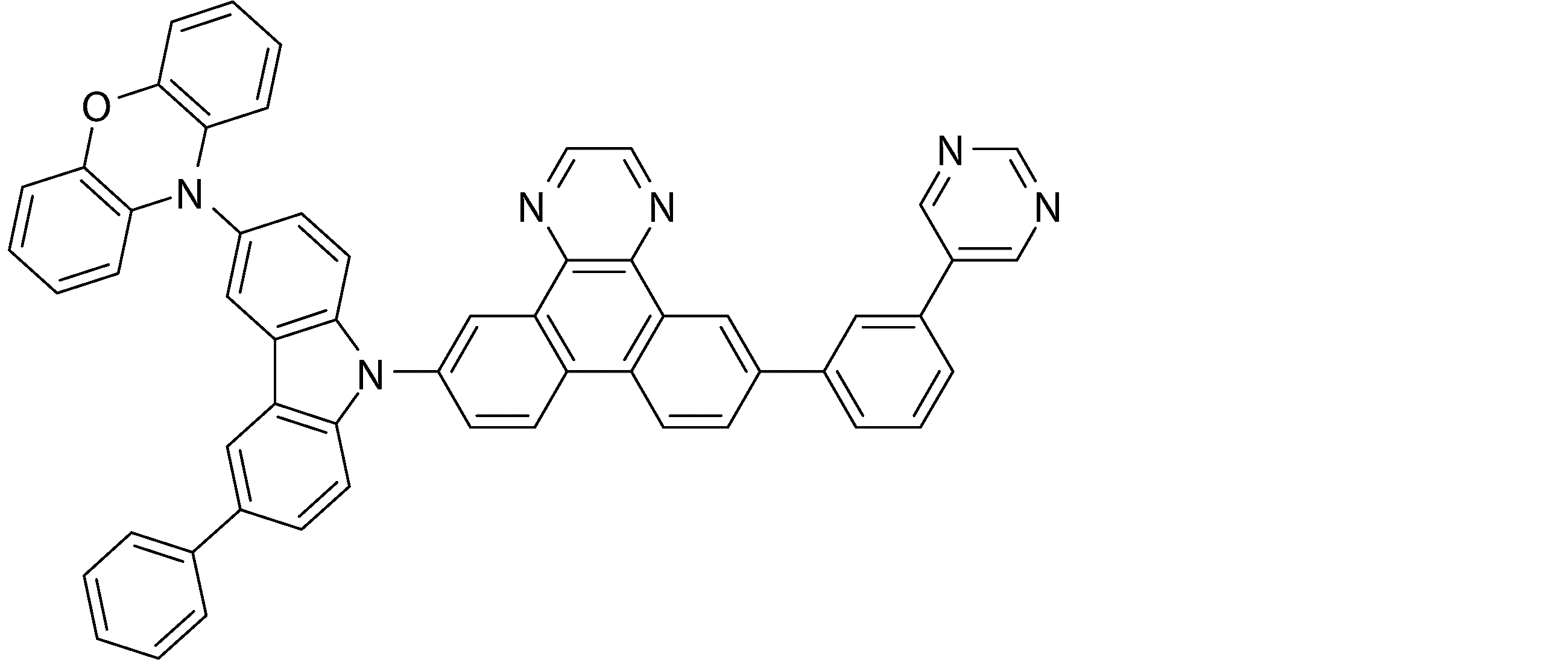








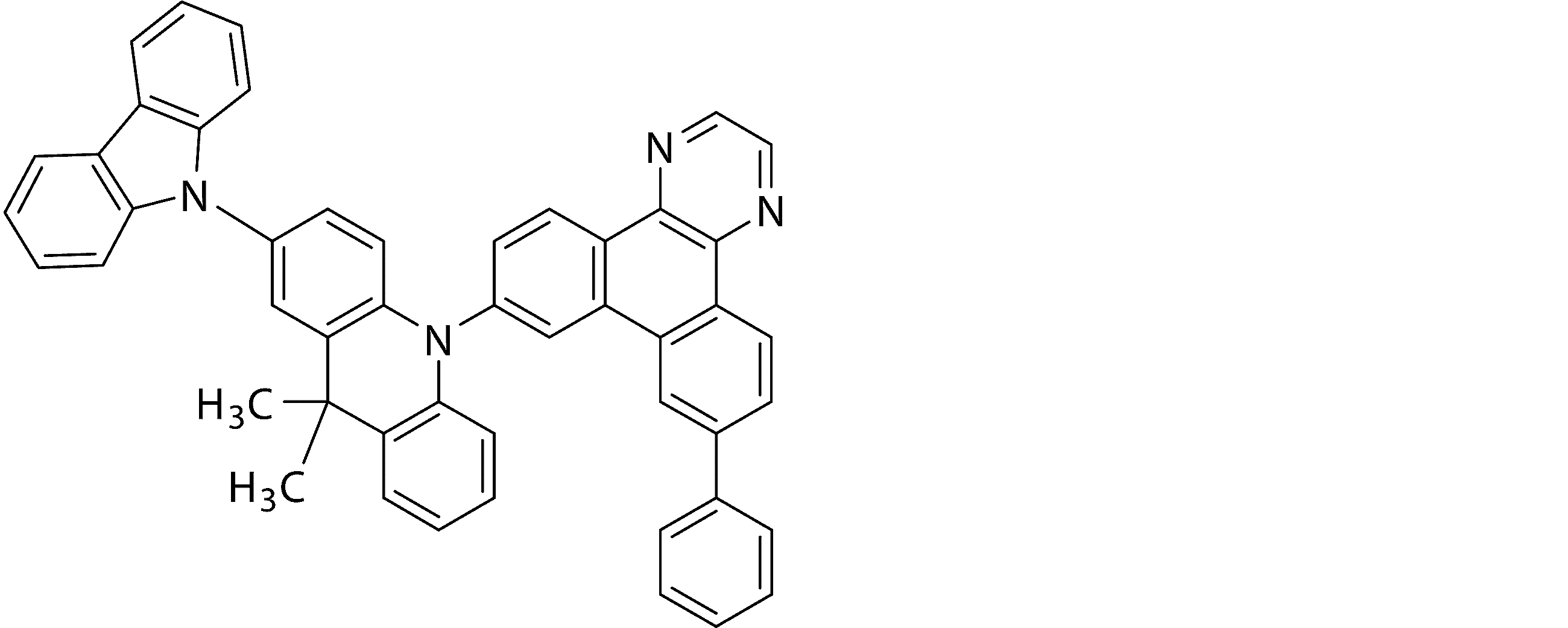
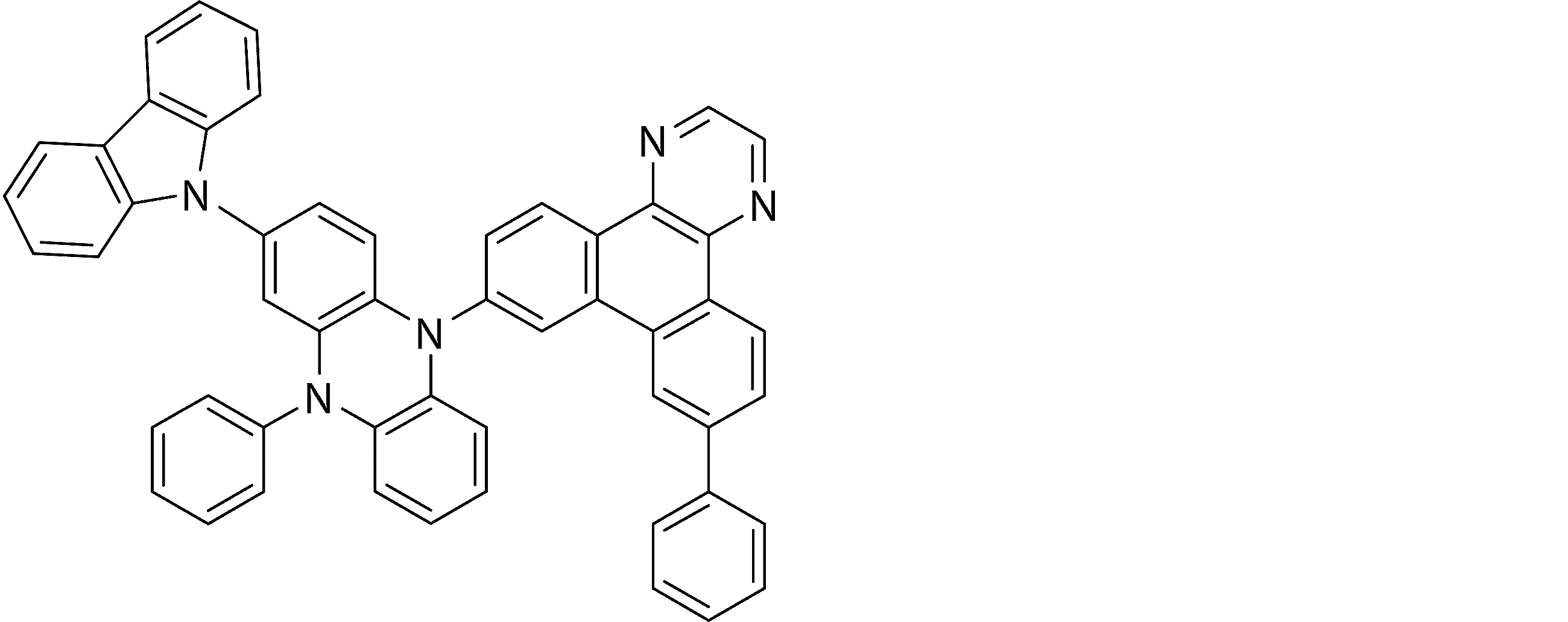


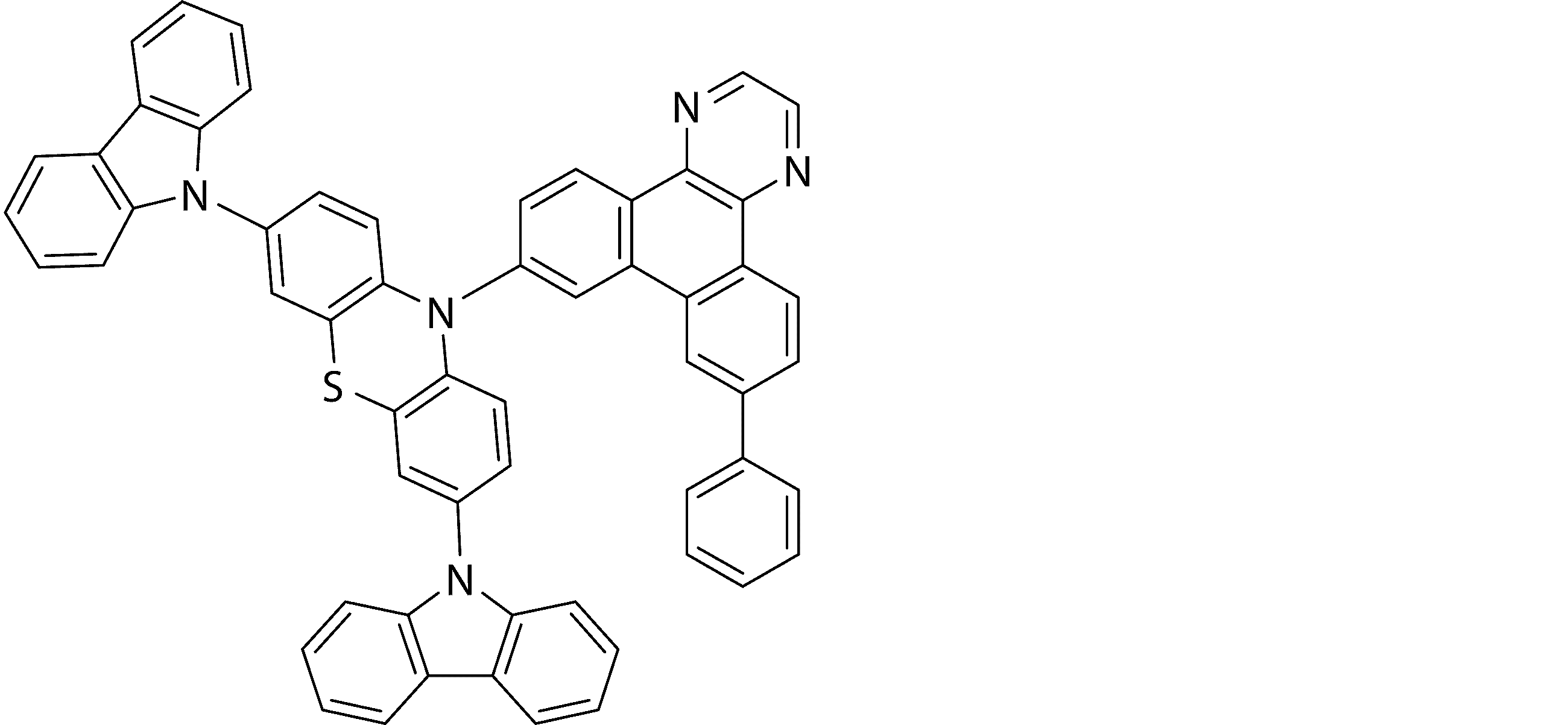
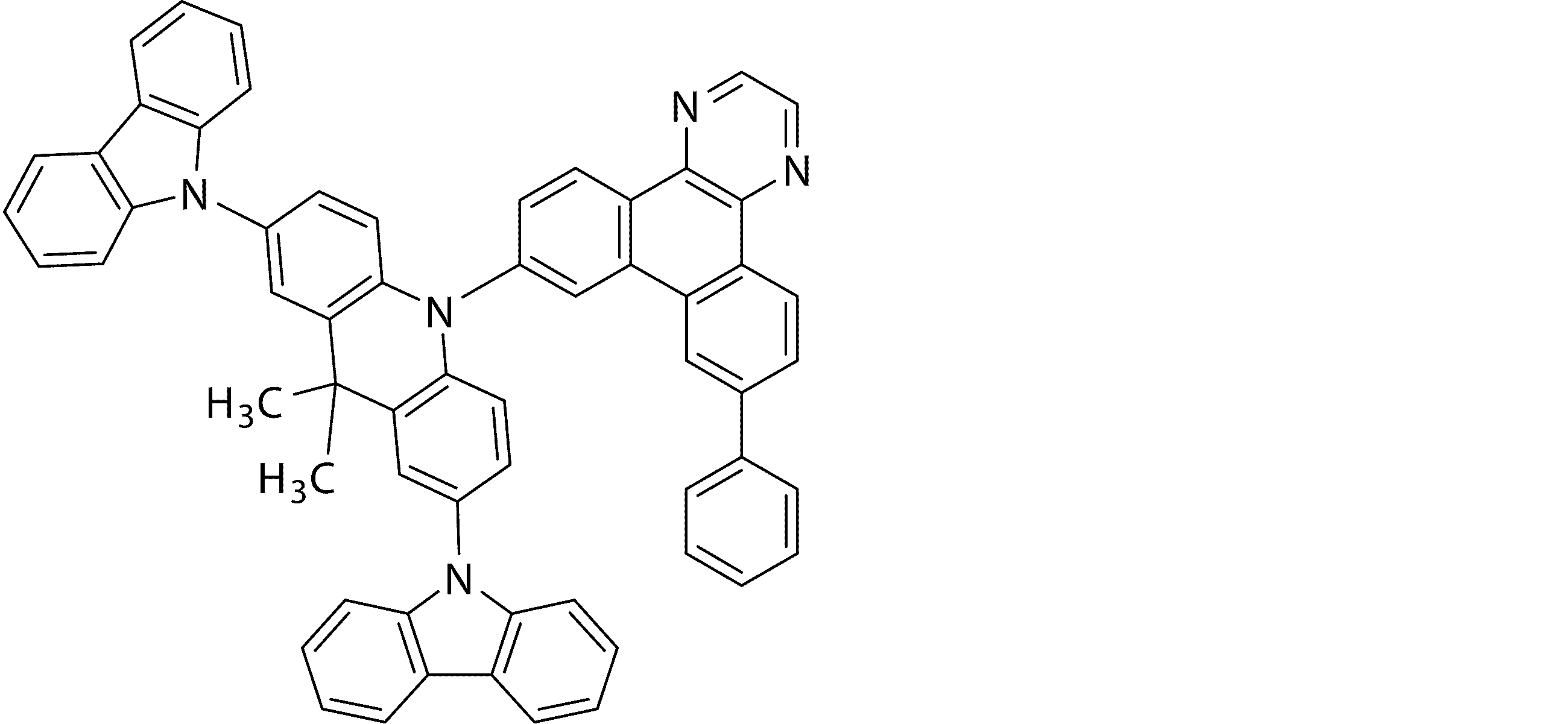
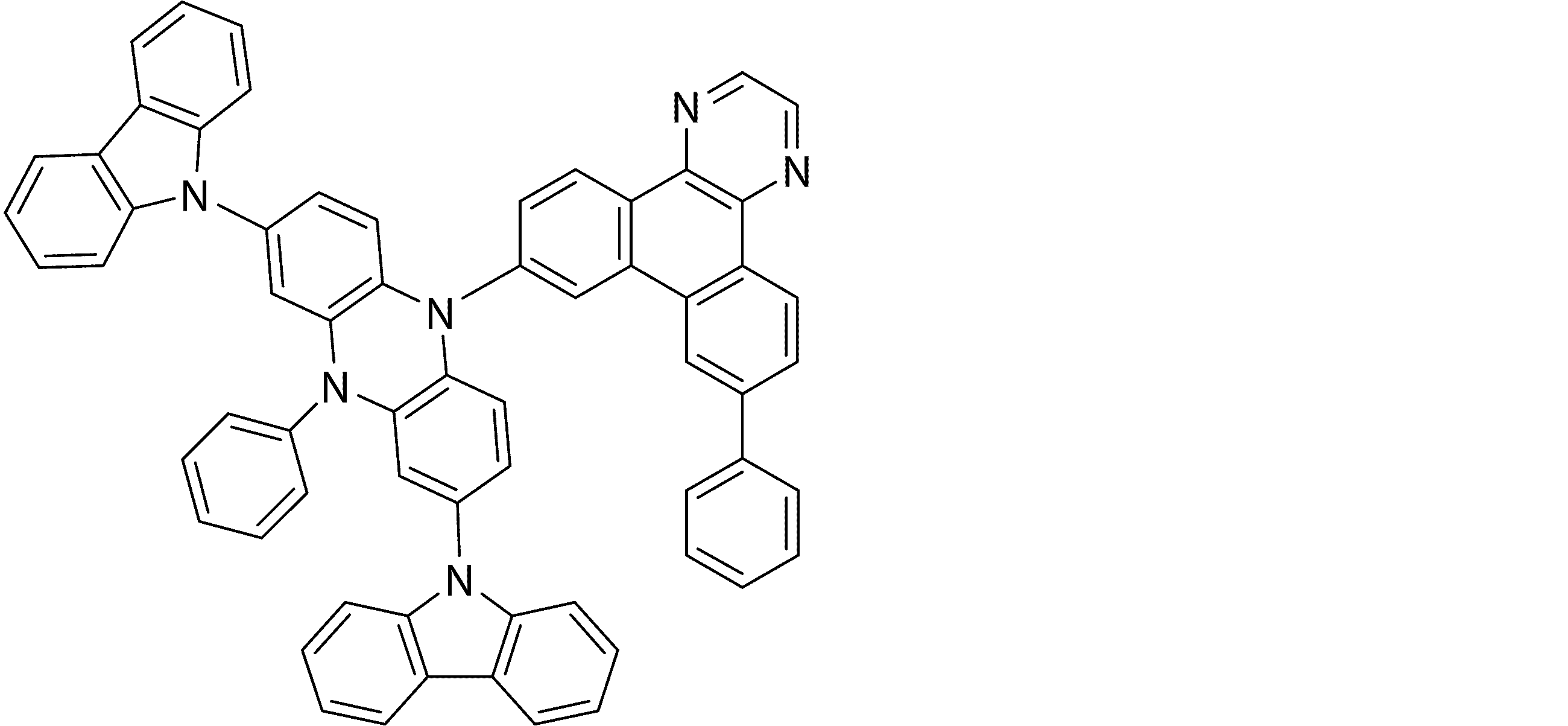

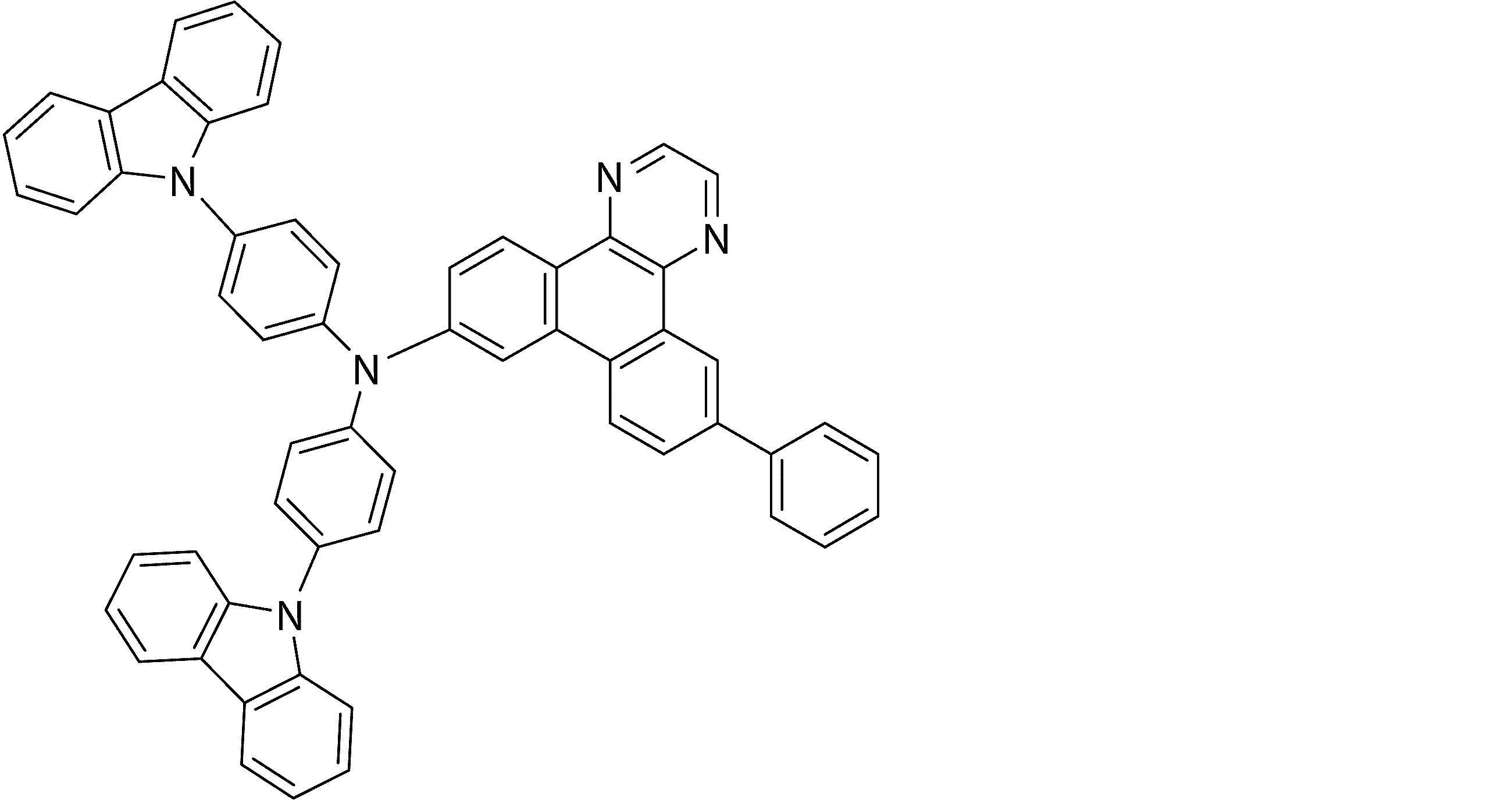

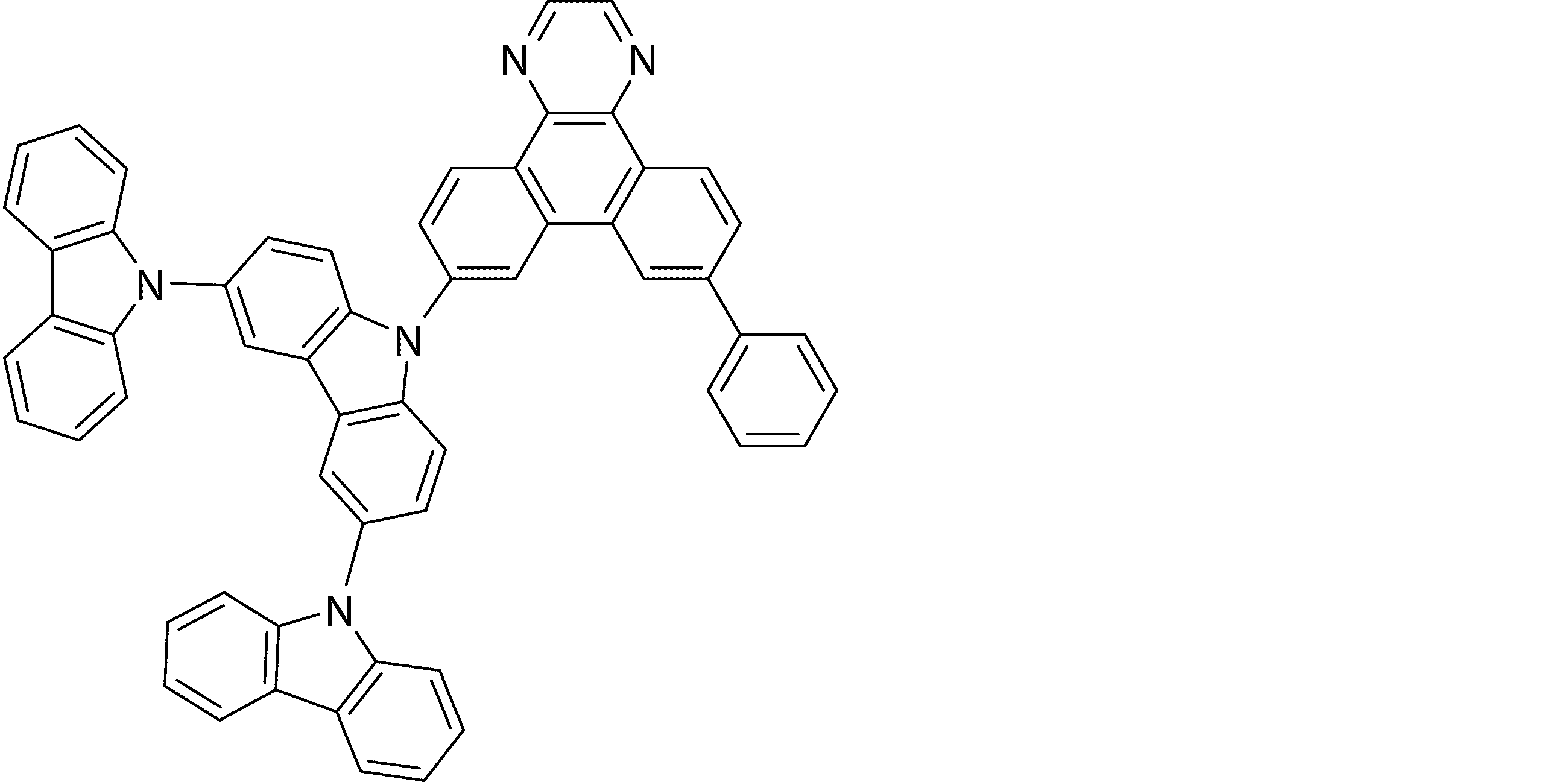


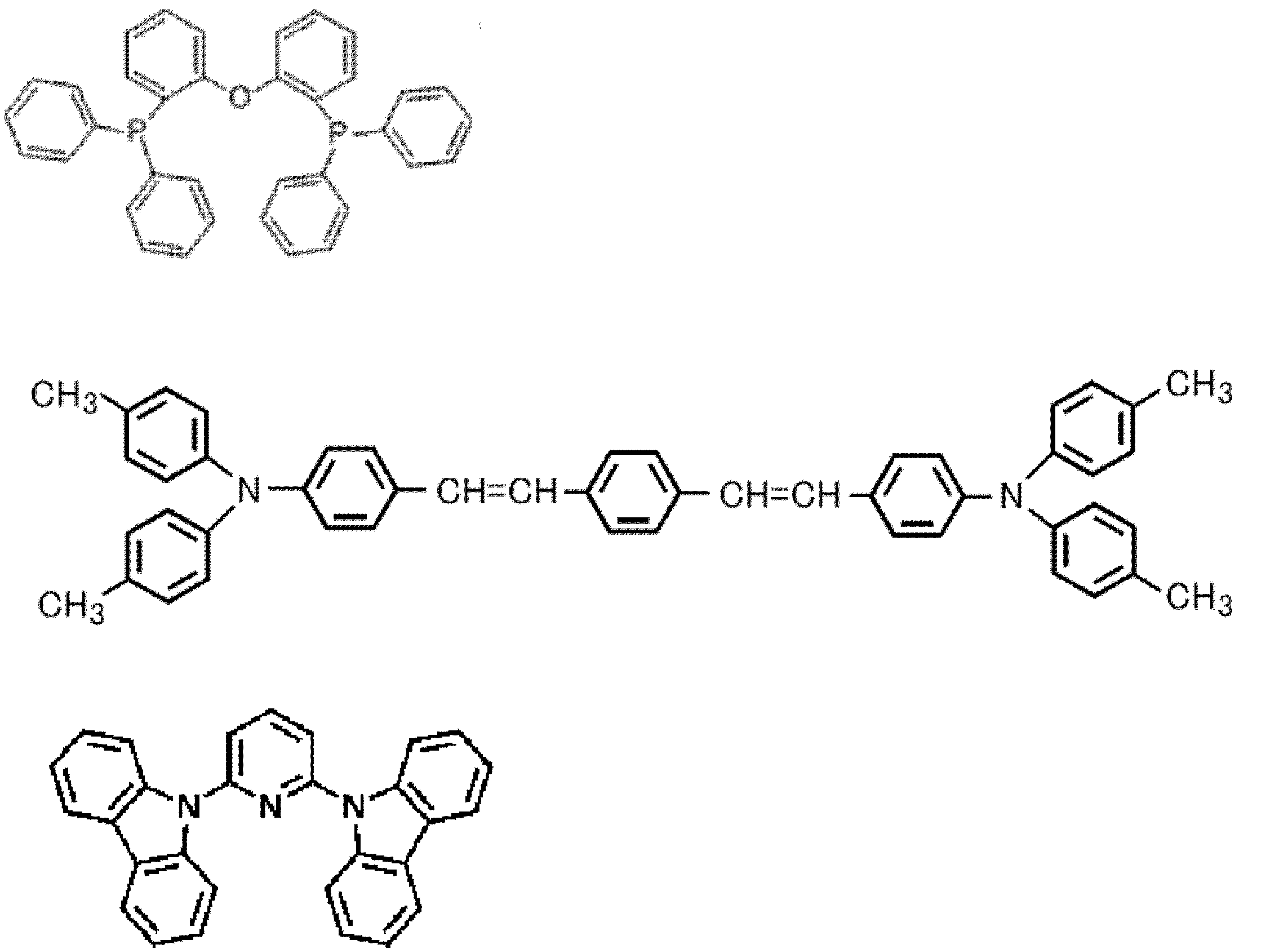





<6,11-ビス(フェノキサジン-10-イル)-1,4-ジアザトリフェニレン(化合物1)の合成>
窒素置換した反応容器に、9,10-フェナントレンキノン10g、濃硫酸100mLを加え、窒素を通気した。N-ブロモコハク酸イミド18gを加え、室温で2時間攪拌した。水50mLを加えた後、氷水600mLに加えた。析出する固体をろ過によって採取し、酢酸エチル100mLを用いた加熱還流洗浄を行った後、真空乾燥を行うことによって、2,7-ジブロモ-9,10-フェナントレンキノンの黄色固体(収率73%)を得た。
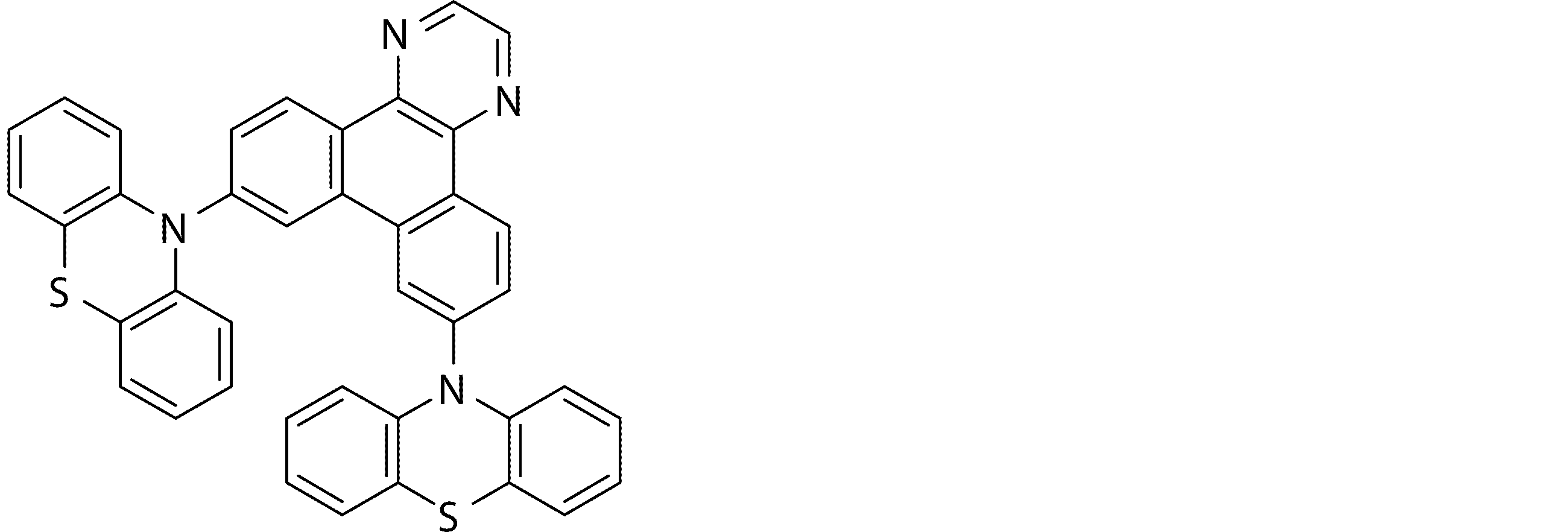
<6,11-ビス(フェノチアジン-10-イル)-1,4-ジアザトリフェニレン(化合物2)の合成>
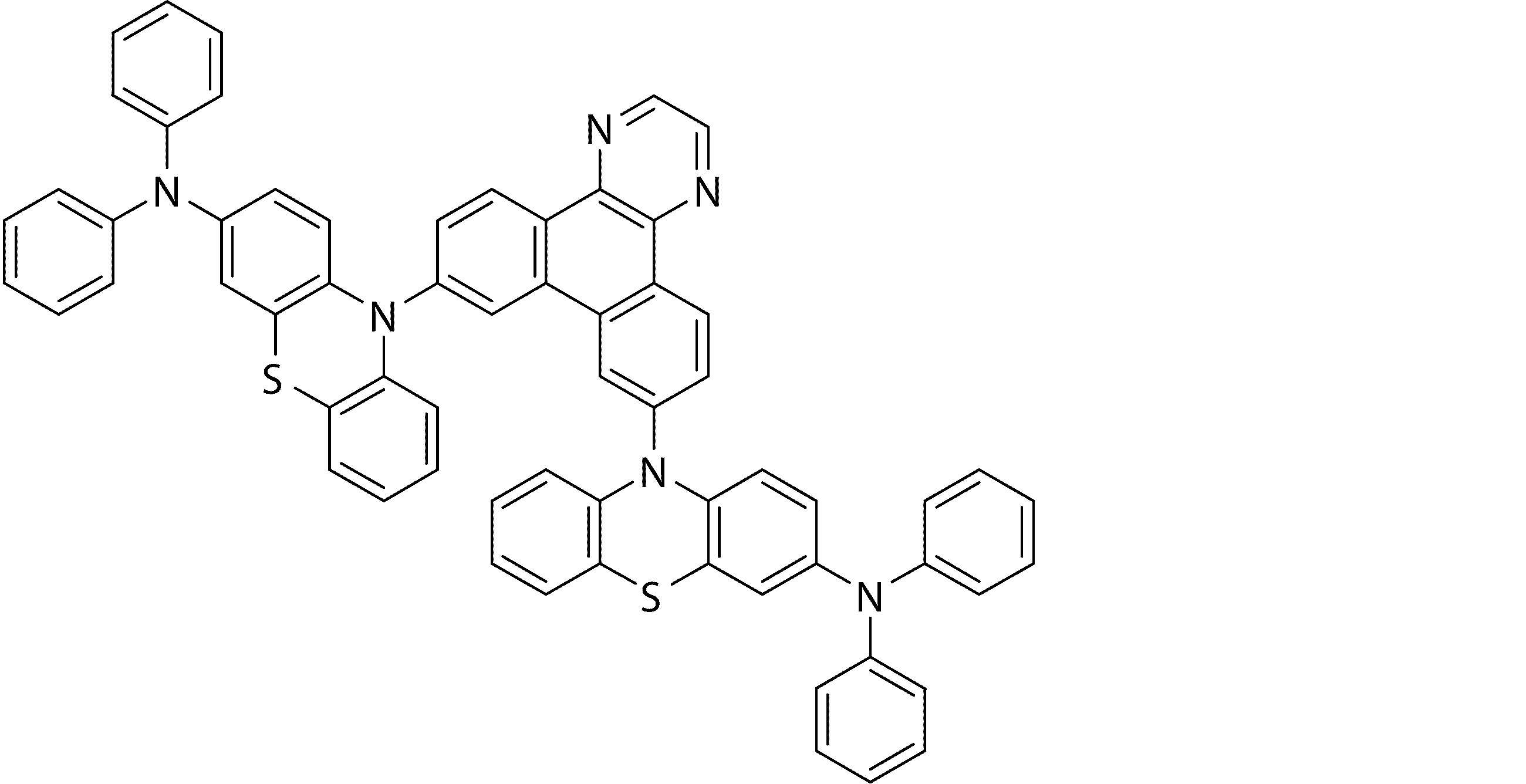
実施例1で合成した6,11-ジブロモ-1,4-ジアザトリフェニレン2.0g、炭酸カリウム3.0g、フェノチアジン3.2g、トリ-tert-ブチルホスフィン0.1g、トルエン60mLを窒素置換した反応容器に加え、窒素を通気した。減圧脱気した後、酢酸パラジウム60mgを加え、攪拌しながら加熱し、還流を20時間行った。放冷した後、析出する固体をろ過によって採取し、メタノールを用いた加熱還流洗浄、続いて、アセトンを用いた加熱還流洗浄を行った後、真空乾燥を行うことによって、6,11-ビス(フェノチアジン-10-イル)-1,4-ジアザトリフェニレン(化合物2)の灰色固体(収率76%)を得た。
<6,11-ビス(9,9-ジメチルアクリダン-10-イル)-1,4-ジアザトリフェニレン(化合物4)の合成>
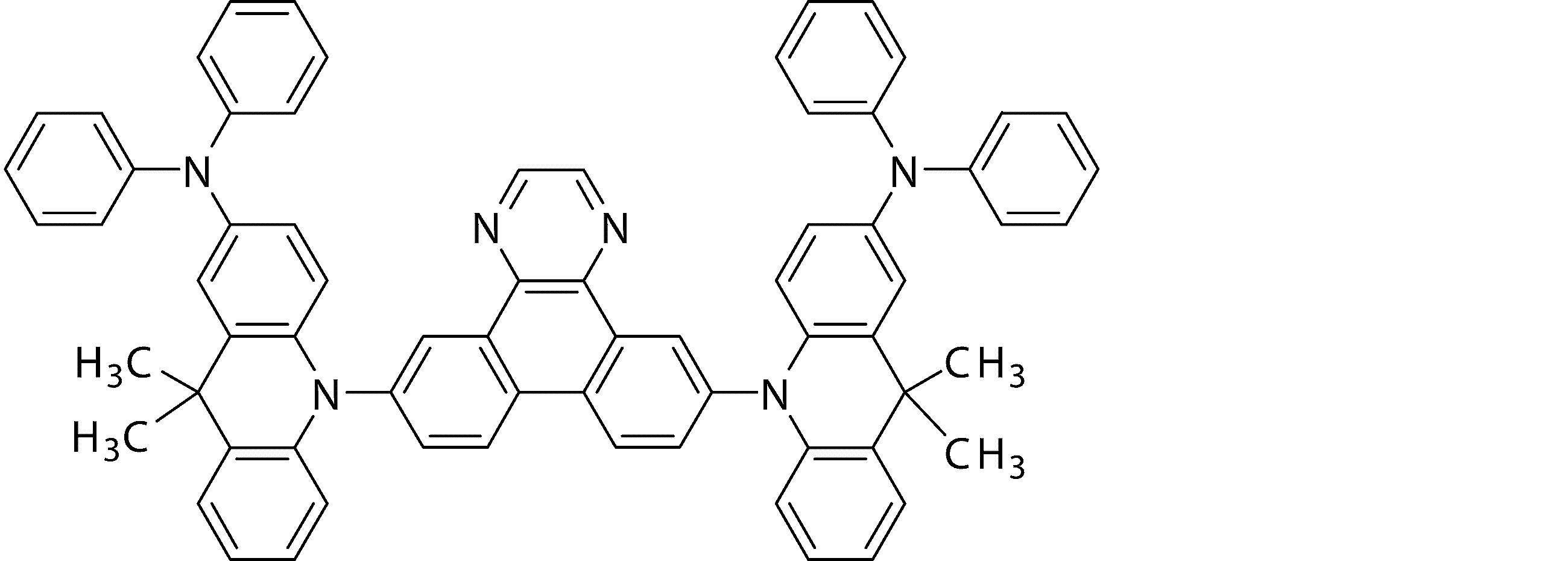
実施例1で合成した6,11-ジブロモ-1,4-ジアザトリフェニレン0.9g、炭酸カリウム0.9g、10-H-9,9-ジメチルアクリダン1.0g、トリ-tert-ブチルホスフィン0.05g、トルエン20mLを窒素置換した反応容器に加え、窒素を通気した。減圧脱気した後、酢酸パラジウム30mgを加え、攪拌しながら加熱し、還流を18時間行った。放冷した後、析出する固体をろ過によって採取し、メタノールを用いた加熱還流洗浄、続いて、アセトンを用いた加熱還流洗浄を行った後、1,2-ジクロロベンゼンを用いた再結晶による精製を行うことによって、6,11-ビス(9,9-ジメチルアクリダン-10-イル)-1,4-ジアザトリフェニレン(化合物4)の灰色粉末(収率30%)を得た。
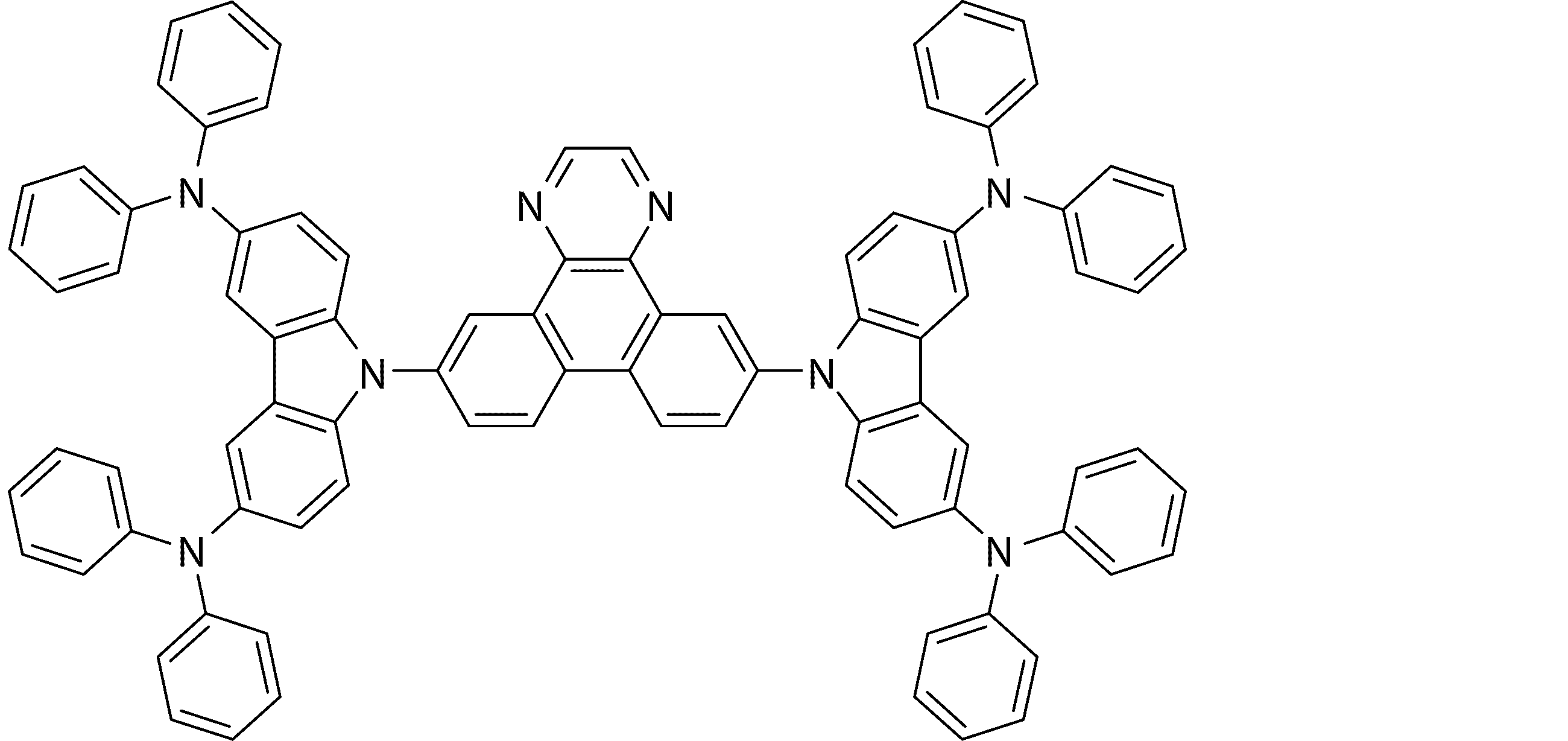
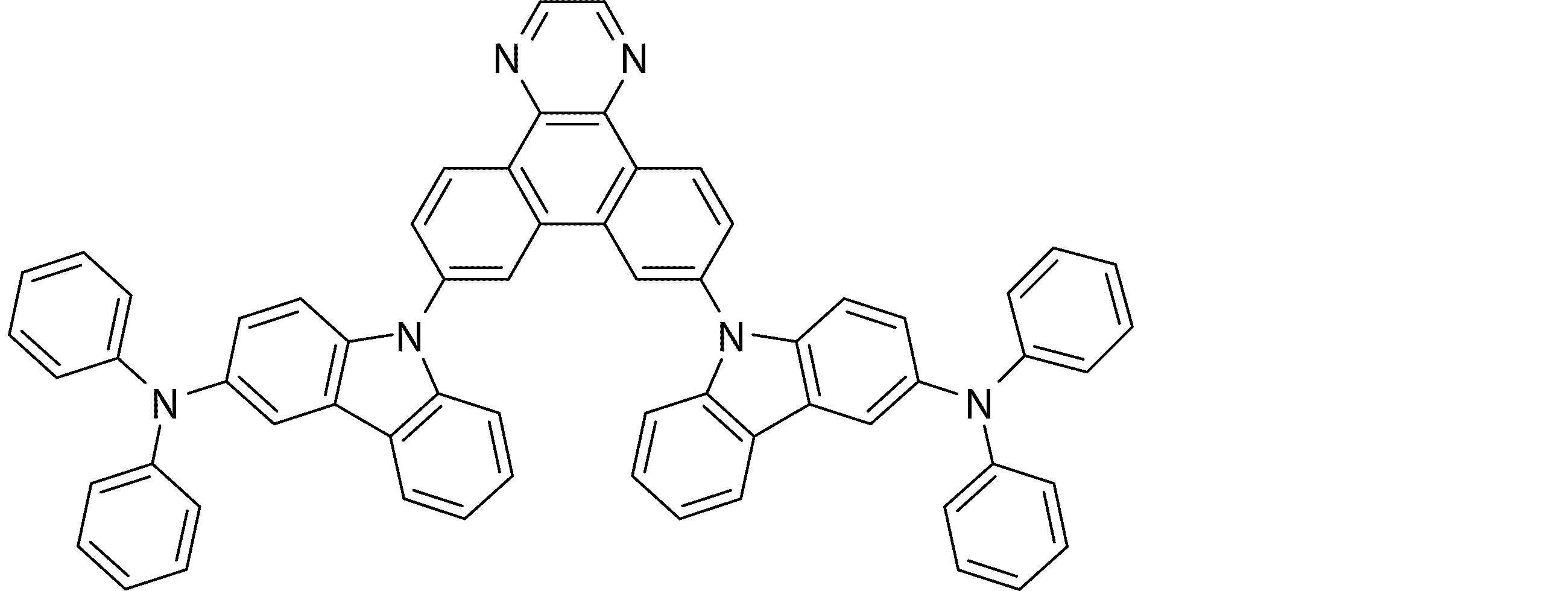
<6,11-ビス{3-(ジフェニルアミノ)カルバゾール-9-イル}-1,4-ジアザトリフェニレン(化合物25)の合成>
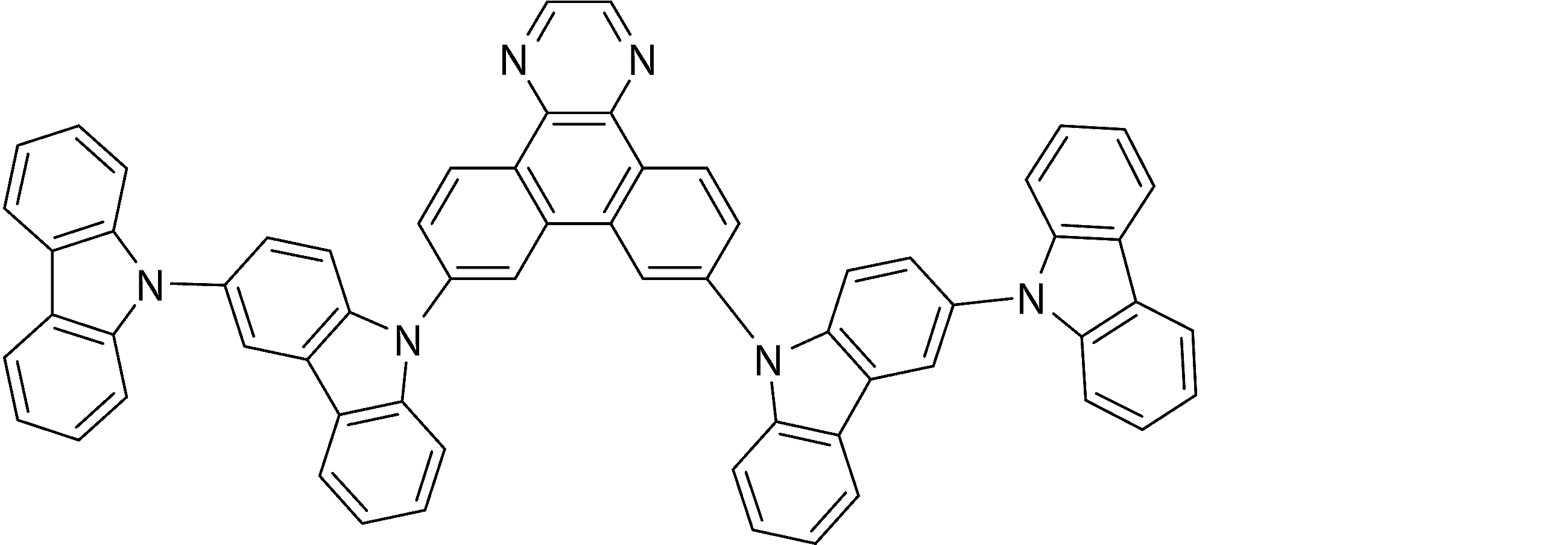
実施例1で合成した6,11-ジブロモ-1,4-ジアザトリフェニレン1.0g、炭酸カリウム0.7g、3-(ジフェニルアミノ)カルバゾール2.1g、トリ-tert-ブチルホスフィン0.05g、トルエン50mLを窒素置換した反応容器に加え、窒素を通気した。減圧脱気した後、酢酸パラジウム30mgを加え、攪拌しながら加熱し、還流を7時間行った。放冷した後、析出する固体をろ過によって採取し、シリカゲルカラムクロマトグラフィーによる精製を行うことによって、6,11-ビス{3-(ジフェニルアミノ)カルバゾール-9-イル}-1,4-ジアザトリフェニレン(化合物25)の黄色粉末(収率70%)を得た。
<7,10-ビス{3-(ジフェニルアミノ)カルバゾール-9-イル}-1,4-ジアザトリフェニレン(化合物31)の合成>
窒素置換した反応容器に、9,10-フェナントレンキノン50g、過酸化ベンゾイル2.5g、ニトロベンゼン250mLを加え、窒素を通気した。臭素83gを加えて加熱し、還流下で2時間攪拌した。放冷後、エタノール250mLを加え、析出する固体をろ過によって採取した。固体をエタノールを用いて洗浄した後、真空乾燥を行うことによって、3,6-ジブロモ-9,10-フェナントレンキノンの黄色固体(収率70%)を得た。
<7,10-ビス(フェノキサジン-10-イル)-1,4-ジアザトリフェニレン(化合物10)の合成>
実施例5で合成した7,10-ジブロモ-1,4-ジアザトリフェニレン1.0g、ナトリウム-tert-ブトキシド0.7g、フェノキサジン1.4g、トリ-tert-ブチルホスフィン0.05g、トルエン60mLを窒素置換した反応容器に加え、窒素を通気した。減圧脱気した後、トリス(ジベンジリデンアセトン)ジパラジウムクロロホルム接合体0.06gを加え、攪拌しながら加熱し、還流を24時間行った。放冷した後、析出する固体をろ過によって採取し、シリカゲルカラムクロマトグラフィーによる精製を行うことによって、7,10-ビス(フェノキサジン-10-イル)-1,4-ジアザトリフェニレン(化合物10)の黄色粉末(収率90%)を得た。
<7,10-ビス(9,9-ジメチルアクリダン-10-イル)-1,4-ジアザトリフェニレン(化合物12)の合成>
実施例5で合成した7,10-ジブロモ-1,4-ジアザトリフェニレン1.0g、ナトリウム-tert-ブトキシド0.6g、10-H-9,9-ジメチルアクリダン1.6g、トリ-tert-ブチルホスフィン0.07g、トルエン80mL窒素置換した反応容器に加え、窒素を通気した。減圧脱気した後、トリス(ジベンジリデンアセトン)ジパラジウムクロロホルム接合体0.07gを加え、攪拌しながら加熱し、還流を18時間行った。放冷した後、析出する固体をろ過によって採取し、シリカゲルカラムクロマトグラフィーによる精製を行うことによって、7,10-ビス(9,9-ジメチルアクリダン-10-イル)-1,4-ジアザトリフェニレン(化合物12)の黄色粉末(収率60%)を得た。
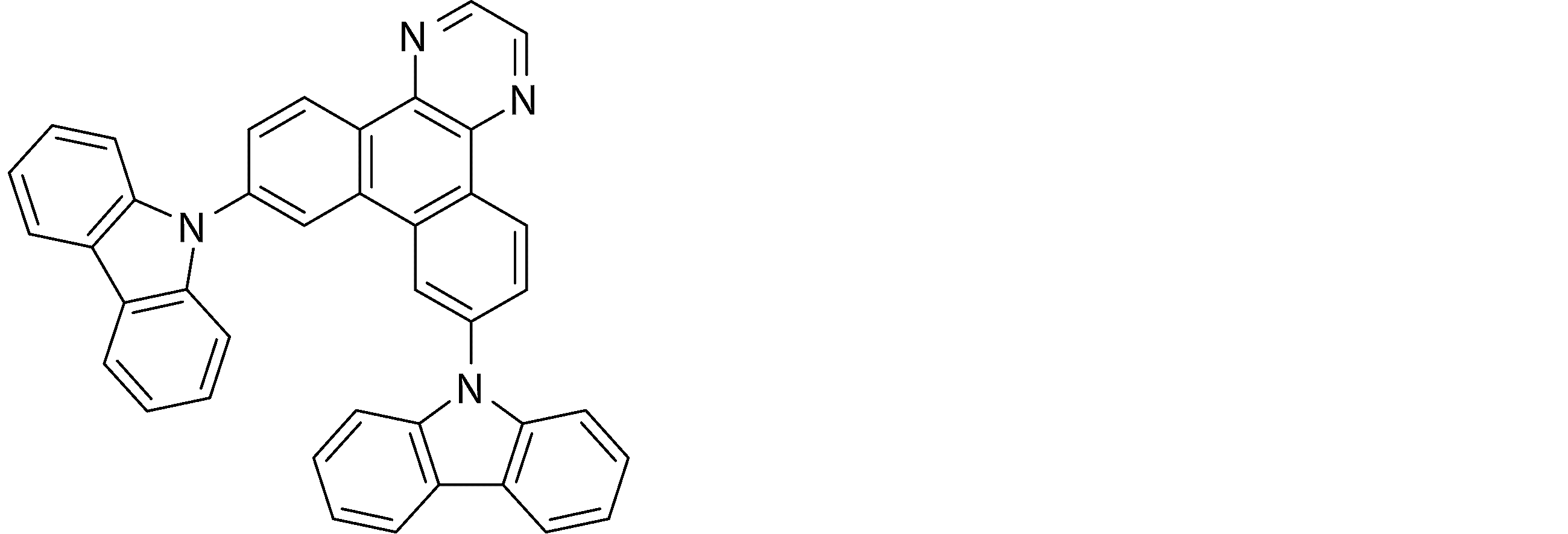
<6,11-ビス(9-カルバゾリル)-1,4-ジアザトリフェニレン(比較化合物A)の合成>
実施例1で合成した6,11-ジブロモ-1,4-ジアザトリフェニレン1.5g、炭酸カリウム1.3g、カルバゾール1.8g、トリ-tert-ブチルホスフィン0.08g、トルエン40mLを窒素置換した反応容器に加え、窒素を通気した。減圧脱気した後、酢酸パラジウム40mgを加え、攪拌しながら加熱し、還流を17時間行った。放冷した後、析出する固体をろ過によって採取し、メタノールを用いた加熱還流洗浄、続いて、アセトンを用いた加熱還流洗浄を行った後、真空乾燥を行うことによって、下記構造式の6,11-ビス(9-カルバゾリル)-1,4-ジアザトリフェニレン(比較化合物A)の灰色粉末(収率74%)を得た。

本発明の化合物を用いて、ITO基板の上に膜厚100nmの蒸着膜を作製して、大気中光電子分光装置(理研計器製、AC-3型)で仕事関数を測定した。
仕事関数
本発明実施例1の化合物 5.60eV
本発明実施例3の化合物 5.80eV
本発明実施例5の化合物 5.70eV
本発明実施例6の化合物 5.70eV
本発明実施例7の化合物 5.90eV
CBP 6.00eV
本発明実施例1の化合物(化合物1)について、10-5mol/Lのトルエン溶液を調製した。このトルエン溶液について、窒素を通気しながら300Kで紫外光を照射したところ、ピーク波長が547nmの蛍光を観測した。
また、このトルエン溶液について、窒素の通気前後における小型蛍光寿命測定装置(浜松ホトニクス(株)製Quantaurus-tau)を用いた時間分解スペクトルを測定したところ、発光寿命が0.055μsの蛍光、そして発光寿命が0.703μsおよび9.25μsの遅延蛍光を観測した。
また、このトルエン溶液について、窒素の通気前後におけるフォトルミネッセンス量子効率を絶対PL量子収率測定装置(浜松ホトニクス(株)製Quantaurus-QY)を用いて、300Kで測定したところ、窒素通気前で3.5%(4.0%)、窒素通気後で14.0%(23.9%)であった。
実施例9において、本発明実施例1の化合物(化合物1)に代えて本発明実施例2の化合物(化合物2)の10-5mol/Lのトルエン溶液を調製し、同様の操作で特性評価を行った。その結果、ピーク波長が564nmの蛍光を観測し、発光寿命が0.01μsの蛍光と、発光寿命が0.052μsおよび4.2μsの遅延蛍光を観測した。
また、PL量子効率は、窒素通気前で1.9%、窒素通気後で7.5%であった。
実施例9において、本発明実施例1の化合物(化合物1)に代えて本発明実施例3の化合物(化合物4)の10-5mol/Lのトルエン溶液を調製し、同様の操作で特性評価を行った。その結果、ピーク波長が503nmの蛍光を観測し、発光寿命が0.047μsの蛍光と、発光寿命が14.3μsの遅延蛍光を観測した。
また、PL量子効率は、窒素通気前で6.8%、窒素通気後で25.8%であった。
実施例9において、本発明実施例1の化合物(化合物1)に代えて本発明実施例4の化合物(化合物25)の10-5mol/Lのトルエン溶液を調製し、同様の操作で特性評価を行った。その結果、ピーク波長が544nmの蛍光を観測し、発光寿命が0.046μsの蛍光と、発光寿命が1.21μsおよび12.77μsの遅延蛍光を観測した。
また、PL量子効率は、窒素通気前で10.4%、窒素通気後で47.4%であった。
実施例9において、本発明実施例1の化合物(化合物1)に代えて本発明実施例5の化合物(化合物31)の10-5mol/Lのトルエン溶液を調製し、同様の操作で特性評価を行った。その結果、ピーク波長が532nmの蛍光を観測し、発光寿命が0.05μsの蛍光と、発光寿命が18.10μsの遅延蛍光を観測した。
また、PL量子効率は、窒素通気前で29.3%、窒素通気後で77.1%であった。
実施例9において、本発明実施例1の化合物(化合物1)に代えて本発明実施例6の化合物(化合物10)の10-5mol/Lのトルエン溶液を調製し、同様の操作で特性評価を行った。その結果、ピーク波長が545nmの蛍光を観測し、発光寿命が0.04μsの蛍光と、発光寿命が3.42μsの遅延蛍光を観測した。
また、PL量子効率は、窒素通気前で3.7%、窒素通気後で30.2%であった。
実施例9において、本発明実施例1の化合物(化合物1)に代えて本発明実施例7の化合物(化合物12)の10-5mol/Lのトルエン溶液を調製し、同様の操作で特性評価を行った。その結果、ピーク波長が490nmの蛍光を観測し、発光寿命が0.04μsの蛍光と、発光寿命が22.8μsの遅延蛍光を観測した。
また、PL量子効率は、窒素通気前で10.2%、窒素通気後で35.6%であった。
有機EL素子は、図9に示すように、ガラス基板1上に透明陽極2としてITO電極をあらかじめ形成したものの上に、正孔輸送層3、発光層4、電子輸送層5、電子注入層6、陰極(アルミニウム電極)7の順に蒸着して作製した。
続いて、透明陽極2を覆うように正孔輸送層3として、NPDを蒸着速度2.0Å/secで膜厚35nmとなるように形成した。この正孔輸送層3の上に、発光層4としてCBPと本発明実施例1の化合物(化合物1)を、蒸着速度比がCBP:本発明実施例1の化合物(化合物1)=95:5となる蒸着速度で二元蒸着を行い、膜厚15nmとなるように形成した。この発光層4の上に、電子輸送層5として前記TPBIを蒸着速度2.0Å/secで膜厚65nmとなるように形成した。この電子輸送層5の上に、電子注入層6としてフッ化リチウムを蒸着速度0.1Å/secで膜厚0.8nmとなるように形成した。最後に、アルミニウムを膜厚70nmとなるように蒸着して陰極7を形成した。作製した有機EL素子について、大気中、常温で特性測定を行った。
実施例16において、発光層4の材料を、CBPと本発明実施例1の化合物(化合物1)からmCPと本発明実施例6の化合物(化合物10)に代え、蒸着速度比がmCP:本発明実施例6の化合物(化合物10)=95:5となる蒸着速度で二元蒸着を行った以外は、同様の条件で有機EL素子を作製した。作製した有機EL素子について、大気中、常温で特性測定を行った。作製した有機EL素子に直流電圧を印加したときの発光特性の測定結果を表1にまとめて示した。
比較のために、実施例16における発光層4の材料を、実施例1の化合物(化合物1)から比較合成例1の化合物(比較化合物A)に代え、実施例16と同様の条件で有機EL素子を作製した。作製した有機EL素子について、大気中、常温で特性測定を行った。作製した有機EL素子に直流電圧を印加したときの発光特性の測定結果を表1にまとめて示した。

2 透明陽極
3 正孔輸送層
4 発光層
5 電子輸送層
6 電子注入層
7 陰極
Claims (15)
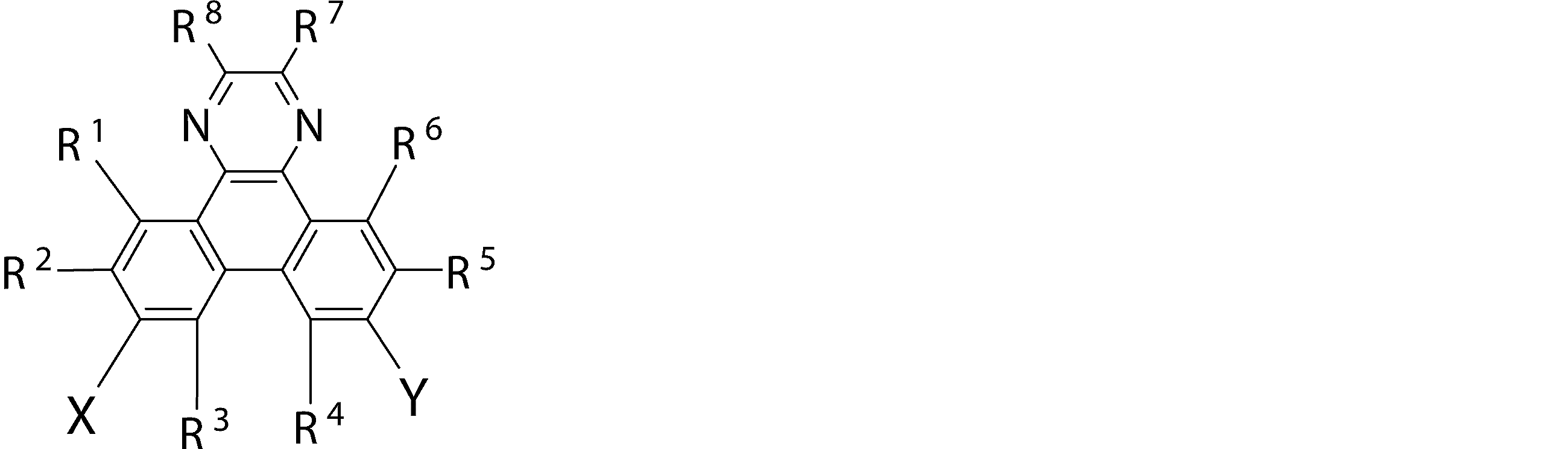
- 下記一般式(1)で表されるジアザトリフェニレン環構造を有する化合物。
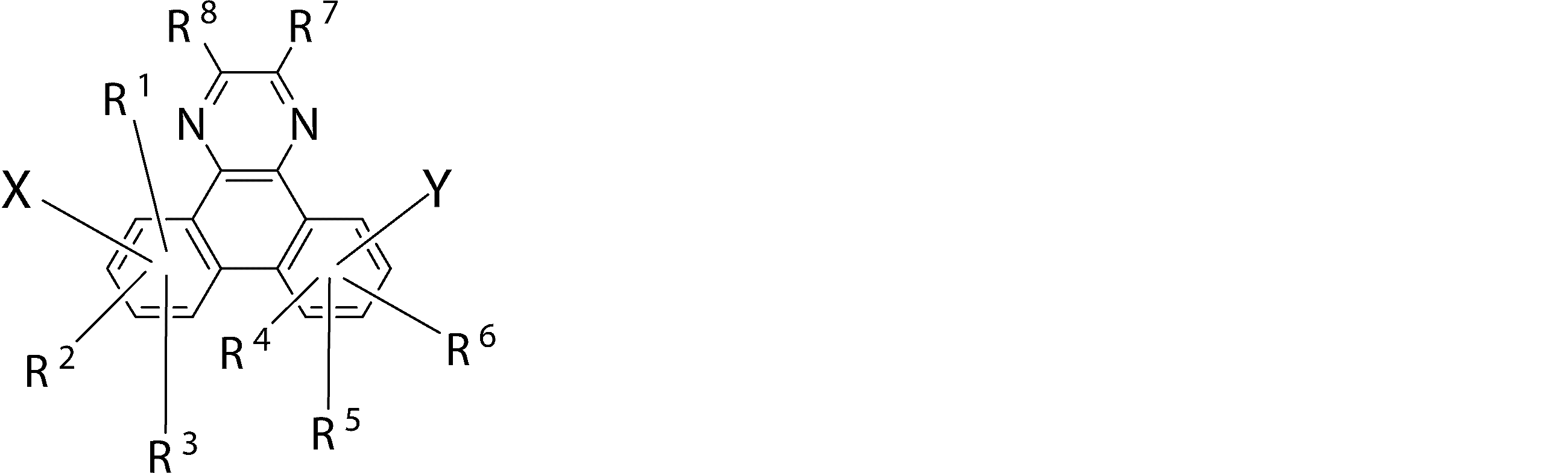
(式中、Xは置換もしくは無置換の芳香族炭化水素基、置換もしくは無置換の芳香族複素環基または置換もしくは無置換の縮合多環芳香族基、または芳香族炭化水素基、芳香族複素環基もしくは縮合多環芳香族基から選ばれる基によって置換されたジ置換アミノ基を表し、Yは水素原子、重水素原子、フッ素原子、塩素原子、シアノ基、ニトロ基、置換基を有していてもよい炭素原子数1ないし6の直鎖状もしくは分岐状のアルキル基、置換基を有していてもよい炭素原子数5ないし10のシクロアルキル基、置換基を有していてもよい炭素原子数2ないし6の直鎖状もしくは分岐状のアルケニル基、置換基を有していてもよい炭素原子数1ないし6の直鎖状もしくは分岐状のアルキルオキシ基、置換基を有していてもよい炭素原子数5ないし10のシクロアルキルオキシ基、置換もしくは無置換の芳香族炭化水素基、置換もしくは無置換の芳香族複素環基、置換もしくは無置換の縮合多環芳香族基、置換もしくは無置換のアリールオキシ基、または芳香族炭化水素基、芳香族複素環基もしくは縮合多環芳香族基から選ばれる基によって置換されたジ置換アミノ基を表し、R1~R8は相互に同一でも異なってもよく、水素原子、重水素原子、フッ素原子、塩素原子、シアノ基、ニトロ基、置換基を有していてもよい炭素原子数1ないし6の直鎖状もしくは分岐状のアルキル基、置換基を有していてもよい炭素原子数5ないし10のシクロアルキル基、置換基を有していてもよい炭素原子数2ないし6の直鎖状もしくは分岐状のアルケニル基、置換基を有していてもよい炭素原子数1ないし6の直鎖状もしくは分岐状のアルキルオキシ基、置換基を有していてもよい炭素原子数5ないし10のシクロアルキルオキシ基、置換もしくは無置換の芳香族炭化水素基、置換もしくは無置換の芳香族複素環基、置換もしくは無置換の縮合多環芳香族基、置換もしくは無置換のアリールオキシ基、または芳香族炭化水素基、芳香族複素環基もしくは縮合多環芳香族基から選ばれる基によって置換されたジ置換アミノ基であって、単結合、置換もしくは無置換のメチレン基、酸素原子または硫黄原子を介して互いに結合して環を形成してもよい。) - 下記一般式(1-1)で表される請求項1記載のジアザトリフェニレン環構造を有する化合物。

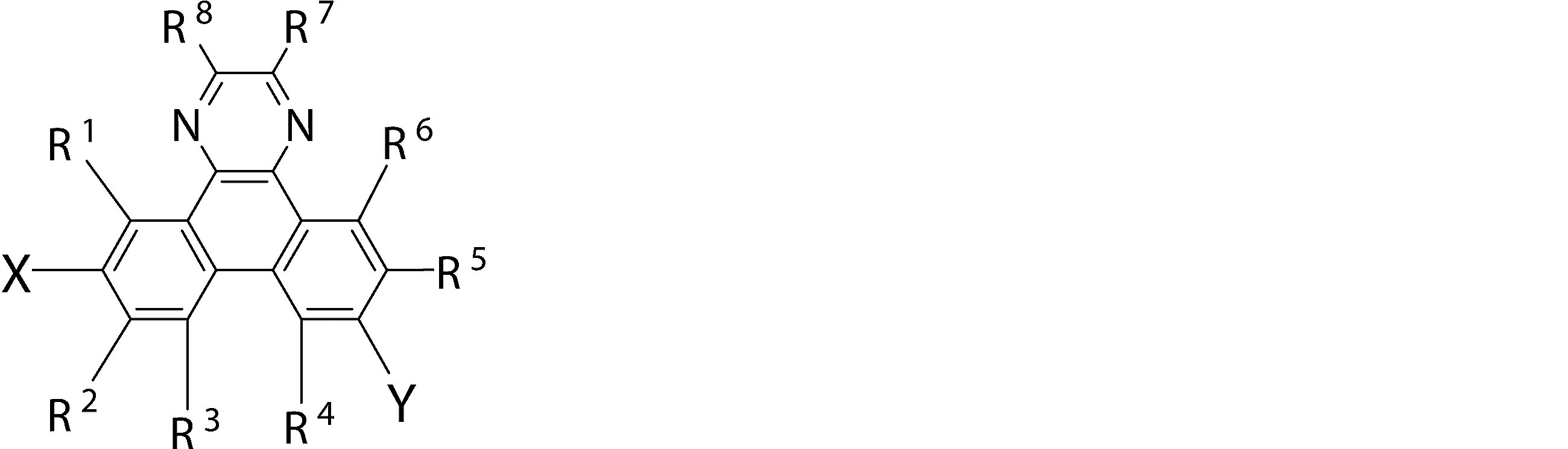
(式中、Xは置換もしくは無置換の芳香族炭化水素基、置換もしくは無置換の芳香族複素環基または置換もしくは無置換の縮合多環芳香族基、または芳香族炭化水素基、芳香族複素環基もしくは縮合多環芳香族基から選ばれる基によって置換されたジ置換アミノ基を表し、Yは水素原子、重水素原子、フッ素原子、塩素原子、シアノ基、ニトロ基、置換基を有していてもよい炭素原子数1ないし6の直鎖状もしくは分岐状のアルキル基、置換基を有していてもよい炭素原子数5ないし10のシクロアルキル基、置換基を有していてもよい炭素原子数2ないし6の直鎖状もしくは分岐状のアルケニル基、置換基を有していてもよい炭素原子数1ないし6の直鎖状もしくは分岐状のアルキルオキシ基、置換基を有していてもよい炭素原子数5ないし10のシクロアルキルオキシ基、置換もしくは無置換の芳香族炭化水素基、置換もしくは無置換の芳香族複素環基、置換もしくは無置換の縮合多環芳香族基、置換もしくは無置換のアリールオキシ基、または芳香族炭化水素基、芳香族複素環基もしくは縮合多環芳香族基から選ばれる基によって置換されたジ置換アミノ基を表し、R1~R8は相互に同一でも異なってもよく、水素原子、重水素原子、フッ素原子、塩素原子、シアノ基、ニトロ基、置換基を有していてもよい炭素原子数1ないし6の直鎖状もしくは分岐状のアルキル基、置換基を有していてもよい炭素原子数5ないし10のシクロアルキル基、置換基を有していてもよい炭素原子数2ないし6の直鎖状もしくは分岐状のアルケニル基、置換基を有していてもよい炭素原子数1ないし6の直鎖状もしくは分岐状のアルキルオキシ基、置換基を有していてもよい炭素原子数5ないし10のシクロアルキルオキシ基、置換もしくは無置換の芳香族炭化水素基、置換もしくは無置換の芳香族複素環基、置換もしくは無置換の縮合多環芳香族基、置換もしくは無置換のアリールオキシ基、または芳香族炭化水素基、芳香族複素環基もしくは縮合多環芳香族基から選ばれる基によって置換されたジ置換アミノ基であって、単結合、置換もしくは無置換のメチレン基、酸素原子または硫黄原子を介して互いに結合して環を形成してもよい。) - 下記一般式(1-2)で表される請求項1記載のジアザトリフェニレン環構造を有する化合物。

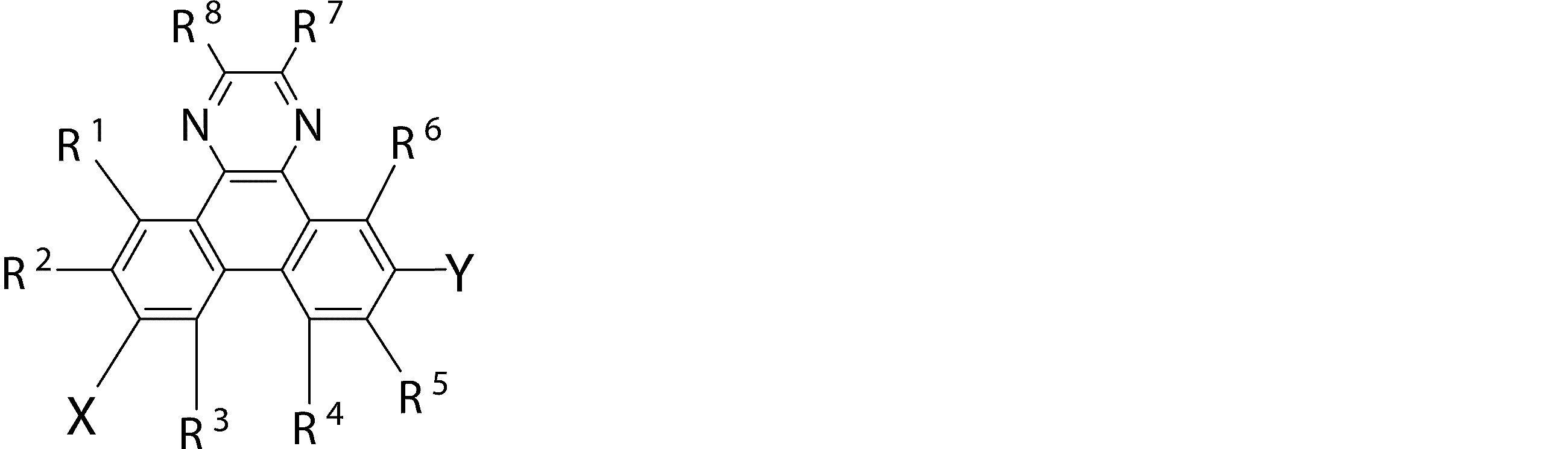
(式中、Xは置換もしくは無置換の芳香族炭化水素基、置換もしくは無置換の芳香族複素環基または置換もしくは無置換の縮合多環芳香族基、または芳香族炭化水素基、芳香族複素環基もしくは縮合多環芳香族基から選ばれる基によって置換されたジ置換アミノ基を表し、Yは水素原子、重水素原子、フッ素原子、塩素原子、シアノ基、ニトロ基、置換基を有していてもよい炭素原子数1ないし6の直鎖状もしくは分岐状のアルキル基、置換基を有していてもよい炭素原子数5ないし10のシクロアルキル基、置換基を有していてもよい炭素原子数2ないし6の直鎖状もしくは分岐状のアルケニル基、置換基を有していてもよい炭素原子数1ないし6の直鎖状もしくは分岐状のアルキルオキシ基、置換基を有していてもよい炭素原子数5ないし10のシクロアルキルオキシ基、置換もしくは無置換の芳香族炭化水素基、置換もしくは無置換の芳香族複素環基、置換もしくは無置換の縮合多環芳香族基、置換もしくは無置換のアリールオキシ基、または芳香族炭化水素基、芳香族複素環基もしくは縮合多環芳香族基から選ばれる基によって置換されたジ置換アミノ基を表し、R1~R8は相互に同一でも異なってもよく、水素原子、重水素原子、フッ素原子、塩素原子、シアノ基、ニトロ基、置換基を有していてもよい炭素原子数1ないし6の直鎖状もしくは分岐状のアルキル基、置換基を有していてもよい炭素原子数5ないし10のシクロアルキル基、置換基を有していてもよい炭素原子数2ないし6の直鎖状もしくは分岐状のアルケニル基、置換基を有していてもよい炭素原子数1ないし6の直鎖状もしくは分岐状のアルキルオキシ基、置換基を有していてもよい炭素原子数5ないし10のシクロアルキルオキシ基、置換もしくは無置換の芳香族炭化水素基、置換もしくは無置換の芳香族複素環基、置換もしくは無置換の縮合多環芳香族基、置換もしくは無置換のアリールオキシ基、または芳香族炭化水素基、芳香族複素環基もしくは縮合多環芳香族基から選ばれる基によって置換されたジ置換アミノ基であって、単結合、置換もしくは無置換のメチレン基、酸素原子または硫黄原子を介して互いに結合して環を形成してもよい。) - 下記一般式(1-3)で表される請求項1記載のジアザトリフェニレン環構造を有する化合物。

(式中、Xは置換もしくは無置換の芳香族炭化水素基、置換もしくは無置換の芳香族複素環基または置換もしくは無置換の縮合多環芳香族基、または芳香族炭化水素基、芳香族複素環基もしくは縮合多環芳香族基から選ばれる基によって置換されたジ置換アミノ基を表し、Yは水素原子、重水素原子、フッ素原子、塩素原子、シアノ基、ニトロ基、置換基を有していてもよい炭素原子数1ないし6の直鎖状もしくは分岐状のアルキル基、置換基を有していてもよい炭素原子数5ないし10のシクロアルキル基、置換基を有していてもよい炭素原子数2ないし6の直鎖状もしくは分岐状のアルケニル基、置換基を有していてもよい炭素原子数1ないし6の直鎖状もしくは分岐状のアルキルオキシ基、置換基を有していてもよい炭素原子数5ないし10のシクロアルキルオキシ基、置換もしくは無置換の芳香族炭化水素基、置換もしくは無置換の芳香族複素環基、置換もしくは無置換の縮合多環芳香族基、置換もしくは無置換のアリールオキシ基、または芳香族炭化水素基、芳香族複素環基もしくは縮合多環芳香族基から選ばれる基によって置換されたジ置換アミノ基を表し、R1~R8は相互に同一でも異なってもよく、水素原子、重水素原子、フッ素原子、塩素原子、シアノ基、ニトロ基、置換基を有していてもよい炭素原子数1ないし6の直鎖状もしくは分岐状のアルキル基、置換基を有していてもよい炭素原子数5ないし10のシクロアルキル基、置換基を有していてもよい炭素原子数2ないし6の直鎖状もしくは分岐状のアルケニル基、置換基を有していてもよい炭素原子数1ないし6の直鎖状もしくは分岐状のアルキルオキシ基、置換基を有していてもよい炭素原子数5ないし10のシクロアルキルオキシ基、置換もしくは無置換の芳香族炭化水素基、置換もしくは無置換の芳香族複素環基、置換もしくは無置換の縮合多環芳香族基、置換もしくは無置換のアリールオキシ基、または芳香族炭化水素基、芳香族複素環基もしくは縮合多環芳香族基から選ばれる基によって置換されたジ置換アミノ基であって、単結合、置換もしくは無置換のメチレン基、酸素原子または硫黄原子を介して互いに結合して環を形成してもよい。) - 下記一般式(1-4)で表される請求項1記載のジアザトリフェニレン環構造を有する化合物。
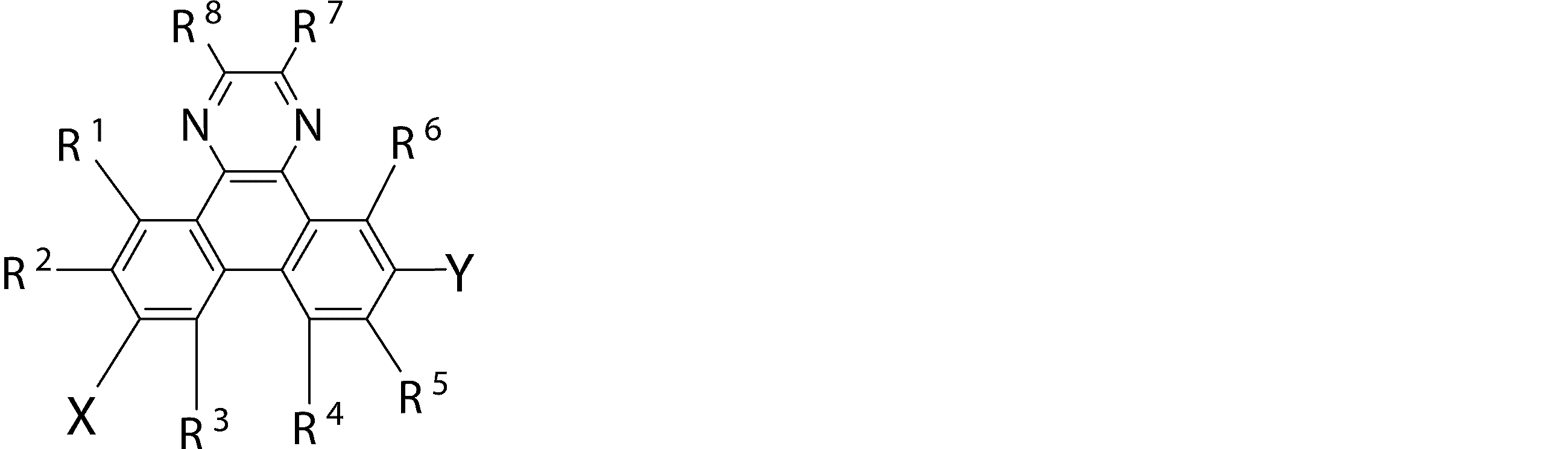
(式中、Xは置換もしくは無置換の芳香族炭化水素基、置換もしくは無置換の芳香族複素環基または置換もしくは無置換の縮合多環芳香族基、または芳香族炭化水素基、芳香族複素環基もしくは縮合多環芳香族基から選ばれる基によって置換されたジ置換アミノ基を表し、Yは水素原子、重水素原子、フッ素原子、塩素原子、シアノ基、ニトロ基、置換基を有していてもよい炭素原子数1ないし6の直鎖状もしくは分岐状のアルキル基、置換基を有していてもよい炭素原子数5ないし10のシクロアルキル基、置換基を有していてもよい炭素原子数2ないし6の直鎖状もしくは分岐状のアルケニル基、置換基を有していてもよい炭素原子数1ないし6の直鎖状もしくは分岐状のアルキルオキシ基、置換基を有していてもよい炭素原子数5ないし10のシクロアルキルオキシ基、置換もしくは無置換の芳香族炭化水素基、置換もしくは無置換の芳香族複素環基、置換もしくは無置換の縮合多環芳香族基、置換もしくは無置換のアリールオキシ基、または芳香族炭化水素基、芳香族複素環基もしくは縮合多環芳香族基から選ばれる基によって置換されたジ置換アミノ基を表し、R1~R8は相互に同一でも異なってもよく、水素原子、重水素原子、フッ素原子、塩素原子、シアノ基、ニトロ基、置換基を有していてもよい炭素原子数1ないし6の直鎖状もしくは分岐状のアルキル基、置換基を有していてもよい炭素原子数5ないし10のシクロアルキル基、置換基を有していてもよい炭素原子数2ないし6の直鎖状もしくは分岐状のアルケニル基、置換基を有していてもよい炭素原子数1ないし6の直鎖状もしくは分岐状のアルキルオキシ基、置換基を有していてもよい炭素原子数5ないし10のシクロアルキルオキシ基、置換もしくは無置換の芳香族炭化水素基、置換もしくは無置換の芳香族複素環基、置換もしくは無置換の縮合多環芳香族基、置換もしくは無置換のアリールオキシ基、または芳香族炭化水素基、芳香族複素環基もしくは縮合多環芳香族基から選ばれる基によって置換されたジ置換アミノ基であって、単結合、置換もしくは無置換のメチレン基、酸素原子または硫黄原子を介して互いに結合して環を形成してもよい。) - 前記一般式(1)において、Xが置換もしくは無置換のフェノキサジニル基、フェノチアジニル基、アクリジニル基、フェナジニル基、または芳香族炭化水素基もしくは縮合多環芳香族基で置換されたジ置換アミノ基を置換基として有するカルバゾリル基から選ばれる1価基である、請求項1記載のジアザトリフェニレン環構造を有する化合物。
- 前記一般式(1)において、Yが置換もしくは無置換のフェノキサジニル基、フェノチアジニル基、アクリジニル基、フェナジニル基、または芳香族炭化水素基もしくは縮合多環芳香族基で置換されたジ置換アミノ基を置換基として有するカルバゾリル基から選ばれる1価基である、請求項1記載のジアザトリフェニレン環構造を有する化合物。
- 前記一般式(1)において、XおよびYが置換もしくは無置換のフェノキサジニル基、フェノチアジニル基、アクリジニル基、フェナジニル基、または芳香族炭化水素基もしくは縮合多環芳香族基で置換されたジ置換アミノ基を置換基として有するカルバゾリル基から選ばれる1価基である、請求項1記載のジアザトリフェニレン環構造を有する化合物。
- 前記請求項1に記載のジアザトリフェニレン環構造を有する化合物からなる発光材料。
- 遅延蛍光を放射する請求項9に記載の発光材料。
- 一対の電極とその間に挟まれた少なくとも一層の有機層を有する有機エレクトロルミネッセンス素子において、前記請求項1に記載のジアザトリフェニレン環構造を有する化合物が、少なくとも1つの有機層の構成材料として用いられている有機エレクトロルミネッセンス素子。
- 前記した有機層が発光層である請求項11記載の有機エレクトロルミネッセンス素子。
- 前記した有機層が遅延蛍光を放射する請求項11記載の有機エレクトロルミネッセンス素子。
- 前記した有機層が電子輸送層である請求項11記載の有機エレクトロルミネッセンス素子。
- 前記した有機層が正孔阻止層である請求項11記載の有機エレクトロルミネッセンス素子。
Priority Applications (3)
| Application Number | Priority Date | Filing Date | Title |
|---|---|---|---|
| JP2014523128A JP5614568B1 (ja) | 2013-02-07 | 2014-01-28 | ジアザトリフェニレン環構造を有する化合物および有機エレクトロルミネッセンス素子 |
| US14/762,308 US10032995B2 (en) | 2013-02-07 | 2014-01-28 | Compound having diazatriphenylene ring structure, and organic electroluminescent device |
| CN201480019675.9A CN105121428B (zh) | 2013-02-07 | 2014-01-28 | 具有二氮杂苯并菲环结构的化合物和有机电致发光器件 |
Applications Claiming Priority (4)
| Application Number | Priority Date | Filing Date | Title |
|---|---|---|---|
| JP2013022476 | 2013-02-07 | ||
| JP2013-022476 | 2013-02-07 | ||
| JP2013-156642 | 2013-07-29 | ||
| JP2013156642 | 2013-07-29 |
Publications (1)
| Publication Number | Publication Date |
|---|---|
| WO2014122895A1 true WO2014122895A1 (ja) | 2014-08-14 |
Family
ID=51299495
Family Applications (1)
| Application Number | Title | Priority Date | Filing Date |
|---|---|---|---|
| PCT/JP2014/000415 Ceased WO2014122895A1 (ja) | 2013-02-07 | 2014-01-28 | ジアザトリフェニレン環構造を有する化合物および有機エレクトロルミネッセンス素子 |
Country Status (5)
| Country | Link |
|---|---|
| US (1) | US10032995B2 (ja) |
| JP (1) | JP5614568B1 (ja) |
| CN (1) | CN105121428B (ja) |
| TW (1) | TWI641604B (ja) |
| WO (1) | WO2014122895A1 (ja) |
Cited By (28)
| Publication number | Priority date | Publication date | Assignee | Title |
|---|---|---|---|---|
| JP2014218499A (ja) * | 2013-05-09 | 2014-11-20 | ユニバーサルディスプレイコーポレイション | 含窒素多環芳香族をアクセプターとして含むドナー−アクセプター化合物 |
| CN104830320A (zh) * | 2015-05-24 | 2015-08-12 | 吉林大学 | 菲并吡嗪衍生物发光材料及其在电致发光器件方面的应用 |
| WO2015159541A1 (ja) * | 2014-04-18 | 2015-10-22 | 保土谷化学工業株式会社 | テトラアザトリフェニレン環構造を有する化合物、発光材料および有機エレクトロルミネッセンス素子 |
| JP2016192553A (ja) * | 2011-08-31 | 2016-11-10 | 株式会社半導体エネルギー研究所 | 複素環化合物を有する発光素子、発光装置、電子機器、及び照明装置 |
| JP2017054972A (ja) * | 2015-09-10 | 2017-03-16 | コニカミノルタ株式会社 | 有機エレクトロルミネッセンス素子、表示装置、照明装置、π共役系化合物、及び発光性薄膜 |
| US10388888B2 (en) | 2014-12-29 | 2019-08-20 | University Court Of The University Of St Andrews | Light emitting electrochemical cells and compounds |
| WO2020076796A1 (en) | 2018-10-09 | 2020-04-16 | Kyulux, Inc. | Novel composition of matter for use in organic light-emitting diodes |
| WO2021157642A1 (ja) | 2020-02-04 | 2021-08-12 | 株式会社Kyulux | ホスト材料、組成物および有機発光素子 |
| US11101440B2 (en) | 2015-07-01 | 2021-08-24 | Kyushu University, National University Corporation | Organic electroluminescent device |
| WO2021235549A1 (ja) | 2020-05-22 | 2021-11-25 | 株式会社Kyulux | 化合物、発光材料および発光素子 |
| WO2022025248A1 (ja) | 2020-07-31 | 2022-02-03 | 株式会社Kyulux | 化合物、発光材料および発光素子 |
| US11335872B2 (en) | 2016-09-06 | 2022-05-17 | Kyulux, Inc. | Organic light-emitting device |
| WO2022168956A1 (ja) | 2021-02-04 | 2022-08-11 | 株式会社Kyulux | 化合物、発光材料および有機発光素子 |
| US11476435B2 (en) | 2017-08-24 | 2022-10-18 | Kyushu University, National University Corporation | Film and organic light-emitting device containing perovskite-type compound and organic light-emitting material |
| US11482679B2 (en) | 2017-05-23 | 2022-10-25 | Kyushu University, National University Corporation | Compound, light-emitting lifetime lengthening agent, use of n-type compound, film and light-emitting device |
| WO2022244503A1 (ja) | 2021-05-20 | 2022-11-24 | 株式会社Kyulux | 有機発光素子 |
| WO2022270354A1 (ja) | 2021-06-23 | 2022-12-29 | 株式会社Kyulux | 化合物、発光材料および有機発光素子 |
| WO2022270602A1 (ja) | 2021-06-23 | 2022-12-29 | 株式会社Kyulux | 有機発光素子および膜 |
| WO2023282224A1 (ja) | 2021-07-06 | 2023-01-12 | 株式会社Kyulux | 有機発光素子およびその設計方法 |
| WO2023053835A1 (ja) | 2021-09-28 | 2023-04-06 | 株式会社Kyulux | 化合物、組成物、ホスト材料、電子障壁材料および有機発光素子 |
| WO2023090288A1 (ja) | 2021-11-19 | 2023-05-25 | 株式会社Kyulux | 化合物、発光材料および発光素子 |
| WO2023140130A1 (ja) | 2022-01-19 | 2023-07-27 | 株式会社Kyulux | 化合物、発光材料および有機発光素子 |
| US11930654B2 (en) | 2017-07-06 | 2024-03-12 | Kyulux, Inc. | Organic light-emitting element |
| WO2024111223A1 (ja) | 2022-11-22 | 2024-05-30 | 株式会社Kyulux | 化合物、発光材料および発光素子 |
| US12048175B2 (en) | 2015-12-28 | 2024-07-23 | Kyushu University, National University Corporation | Organic electroluminescent device |
| WO2024166785A1 (ja) | 2023-02-10 | 2024-08-15 | 株式会社Kyulux | 化合物、発光材料および発光素子 |
| WO2024181526A1 (ja) | 2023-03-01 | 2024-09-06 | 株式会社Kyulux | 化合物、発光材料および発光素子 |
| WO2024204430A1 (ja) | 2023-03-27 | 2024-10-03 | 株式会社Kyulux | 有機発光素子 |
Families Citing this family (5)
| Publication number | Priority date | Publication date | Assignee | Title |
|---|---|---|---|---|
| CN105810846B (zh) | 2014-12-31 | 2020-07-07 | 北京维信诺科技有限公司 | 一种有机电致发光器件 |
| CN106749243B (zh) * | 2017-01-06 | 2019-06-07 | 上海天马有机发光显示技术有限公司 | 双偶极化合物、包含其的发光层主体材料、oled显示面板和电子设备 |
| TWI659029B (zh) * | 2017-01-13 | 2019-05-11 | 國立大學法人九州大學 | 二氰基n-雜環化合物、發光材料及使用其之發光元件 |
| CN108276445B (zh) * | 2017-11-01 | 2020-03-31 | 黑龙江大学 | 一种热激发延迟荧光主体材料及其制备和应用 |
| KR102748155B1 (ko) * | 2020-02-13 | 2025-01-02 | 삼성디스플레이 주식회사 | 유기 전계 발광 소자 및 유기 전계 발광 소자용 함질소 화합물 |
Citations (14)
| Publication number | Priority date | Publication date | Assignee | Title |
|---|---|---|---|---|
| JP2007189001A (ja) * | 2006-01-12 | 2007-07-26 | Konica Minolta Holdings Inc | 有機エレクトロルミネッセンス素子材料、有機エレクトロルミネッセンス素子、表示装置及び照明装置 |
| WO2008119666A1 (en) * | 2007-03-29 | 2008-10-09 | Basf Se | Heterocyclic bridged biphenyls |
| JP2008247887A (ja) * | 2007-01-31 | 2008-10-16 | Qinghua Univ | ジナフチレエチレン派生物、その合成方法、ジナフチルエチレン派生物から作られたフィルム及びそのフィルムを含む有機エレクトロルミネッセンスダイオード。 |
| WO2009100991A1 (en) * | 2008-02-12 | 2009-08-20 | Basf Se | Electroluminescent metal complexes with dibenzo[f,h]quinoxalines |
| WO2010006890A1 (en) * | 2008-07-18 | 2010-01-21 | Basf Se | Azapyrenes for electronic applications |
| KR20110042004A (ko) * | 2009-10-16 | 2011-04-22 | 에스에프씨 주식회사 | 축합방향족 화합물 및 이를 포함하는 유기전계발광소자 |
| WO2011081431A2 (ko) * | 2009-12-30 | 2011-07-07 | 주식회사 두산 | 유기발광 화합물 및 이를 포함한 유기 전계 발광 소자 |
| WO2012068234A2 (en) * | 2010-11-17 | 2012-05-24 | Gilead Sciences, Inc. | Antiviral compounds |
| US20120197020A1 (en) * | 2011-02-01 | 2012-08-02 | Semiconductor Energy Laboratory Co., Ltd. | Heterocyclic compound |
| US20120193613A1 (en) * | 2011-02-01 | 2012-08-02 | Semiconductor Energy Laboratory Co., Ltd. | Heterocyclic compound |
| JP2013063963A (ja) * | 2011-08-31 | 2013-04-11 | Semiconductor Energy Lab Co Ltd | 複素環化合物、発光素子、発光装置、電子機器、及び照明装置 |
| WO2013056776A1 (de) * | 2011-10-20 | 2013-04-25 | Merck Patent Gmbh | Materialien für organische elektrolumineszenzvorrichtungen |
| JP2013118368A (ja) * | 2011-11-04 | 2013-06-13 | Semiconductor Energy Lab Co Ltd | ジベンゾ[f,h]キノキサリン化合物、発光素子、発光装置、電子機器、及び照明装置 |
| WO2013104649A1 (en) * | 2012-01-12 | 2013-07-18 | Basf Se | Metal complexes with dibenzo[f,h]quinoxalines |
Family Cites Families (1)
| Publication number | Priority date | Publication date | Assignee | Title |
|---|---|---|---|---|
| JP6082749B2 (ja) | 2011-11-16 | 2017-02-15 | ギリアド ファーマセット エルエルシー | 抗ウイルス化合物としての縮合イミダゾリルイミダゾール |
-
2014
- 2014-01-28 JP JP2014523128A patent/JP5614568B1/ja active Active
- 2014-01-28 WO PCT/JP2014/000415 patent/WO2014122895A1/ja not_active Ceased
- 2014-01-28 CN CN201480019675.9A patent/CN105121428B/zh active Active
- 2014-01-28 US US14/762,308 patent/US10032995B2/en active Active
- 2014-02-06 TW TW103103956A patent/TWI641604B/zh active
Patent Citations (14)
| Publication number | Priority date | Publication date | Assignee | Title |
|---|---|---|---|---|
| JP2007189001A (ja) * | 2006-01-12 | 2007-07-26 | Konica Minolta Holdings Inc | 有機エレクトロルミネッセンス素子材料、有機エレクトロルミネッセンス素子、表示装置及び照明装置 |
| JP2008247887A (ja) * | 2007-01-31 | 2008-10-16 | Qinghua Univ | ジナフチレエチレン派生物、その合成方法、ジナフチルエチレン派生物から作られたフィルム及びそのフィルムを含む有機エレクトロルミネッセンスダイオード。 |
| WO2008119666A1 (en) * | 2007-03-29 | 2008-10-09 | Basf Se | Heterocyclic bridged biphenyls |
| WO2009100991A1 (en) * | 2008-02-12 | 2009-08-20 | Basf Se | Electroluminescent metal complexes with dibenzo[f,h]quinoxalines |
| WO2010006890A1 (en) * | 2008-07-18 | 2010-01-21 | Basf Se | Azapyrenes for electronic applications |
| KR20110042004A (ko) * | 2009-10-16 | 2011-04-22 | 에스에프씨 주식회사 | 축합방향족 화합물 및 이를 포함하는 유기전계발광소자 |
| WO2011081431A2 (ko) * | 2009-12-30 | 2011-07-07 | 주식회사 두산 | 유기발광 화합물 및 이를 포함한 유기 전계 발광 소자 |
| WO2012068234A2 (en) * | 2010-11-17 | 2012-05-24 | Gilead Sciences, Inc. | Antiviral compounds |
| US20120197020A1 (en) * | 2011-02-01 | 2012-08-02 | Semiconductor Energy Laboratory Co., Ltd. | Heterocyclic compound |
| US20120193613A1 (en) * | 2011-02-01 | 2012-08-02 | Semiconductor Energy Laboratory Co., Ltd. | Heterocyclic compound |
| JP2013063963A (ja) * | 2011-08-31 | 2013-04-11 | Semiconductor Energy Lab Co Ltd | 複素環化合物、発光素子、発光装置、電子機器、及び照明装置 |
| WO2013056776A1 (de) * | 2011-10-20 | 2013-04-25 | Merck Patent Gmbh | Materialien für organische elektrolumineszenzvorrichtungen |
| JP2013118368A (ja) * | 2011-11-04 | 2013-06-13 | Semiconductor Energy Lab Co Ltd | ジベンゾ[f,h]キノキサリン化合物、発光素子、発光装置、電子機器、及び照明装置 |
| WO2013104649A1 (en) * | 2012-01-12 | 2013-07-18 | Basf Se | Metal complexes with dibenzo[f,h]quinoxalines |
Non-Patent Citations (2)
| Title |
|---|
| "IPCOM000196573D", IP.COM JOURNAL, vol. 10, no. 6B, 2010, pages 1 - 8 * |
| CHEMISTRY - A EUROPEAN JOURNAL, vol. 18, no. 9, 2012, pages 2707 - 2714 * |
Cited By (34)
| Publication number | Priority date | Publication date | Assignee | Title |
|---|---|---|---|---|
| JP2016192553A (ja) * | 2011-08-31 | 2016-11-10 | 株式会社半導体エネルギー研究所 | 複素環化合物を有する発光素子、発光装置、電子機器、及び照明装置 |
| JP2019065289A (ja) * | 2013-05-09 | 2019-04-25 | ユニバーサル ディスプレイ コーポレイション | 含窒素多環芳香族をアクセプターとして含むドナー−アクセプター化合物 |
| JP2014218499A (ja) * | 2013-05-09 | 2014-11-20 | ユニバーサルディスプレイコーポレイション | 含窒素多環芳香族をアクセプターとして含むドナー−アクセプター化合物 |
| WO2015159541A1 (ja) * | 2014-04-18 | 2015-10-22 | 保土谷化学工業株式会社 | テトラアザトリフェニレン環構造を有する化合物、発光材料および有機エレクトロルミネッセンス素子 |
| US10388888B2 (en) | 2014-12-29 | 2019-08-20 | University Court Of The University Of St Andrews | Light emitting electrochemical cells and compounds |
| CN104830320A (zh) * | 2015-05-24 | 2015-08-12 | 吉林大学 | 菲并吡嗪衍生物发光材料及其在电致发光器件方面的应用 |
| US11101440B2 (en) | 2015-07-01 | 2021-08-24 | Kyushu University, National University Corporation | Organic electroluminescent device |
| JP2017054972A (ja) * | 2015-09-10 | 2017-03-16 | コニカミノルタ株式会社 | 有機エレクトロルミネッセンス素子、表示装置、照明装置、π共役系化合物、及び発光性薄膜 |
| US12048175B2 (en) | 2015-12-28 | 2024-07-23 | Kyushu University, National University Corporation | Organic electroluminescent device |
| US11335872B2 (en) | 2016-09-06 | 2022-05-17 | Kyulux, Inc. | Organic light-emitting device |
| US11482679B2 (en) | 2017-05-23 | 2022-10-25 | Kyushu University, National University Corporation | Compound, light-emitting lifetime lengthening agent, use of n-type compound, film and light-emitting device |
| US11930654B2 (en) | 2017-07-06 | 2024-03-12 | Kyulux, Inc. | Organic light-emitting element |
| US11476435B2 (en) | 2017-08-24 | 2022-10-18 | Kyushu University, National University Corporation | Film and organic light-emitting device containing perovskite-type compound and organic light-emitting material |
| WO2020076796A1 (en) | 2018-10-09 | 2020-04-16 | Kyulux, Inc. | Novel composition of matter for use in organic light-emitting diodes |
| WO2021157642A1 (ja) | 2020-02-04 | 2021-08-12 | 株式会社Kyulux | ホスト材料、組成物および有機発光素子 |
| WO2021157593A1 (ja) | 2020-02-04 | 2021-08-12 | 株式会社Kyulux | 組成物、膜、有機発光素子、発光組成物を提供する方法およびプログラム |
| WO2021235549A1 (ja) | 2020-05-22 | 2021-11-25 | 株式会社Kyulux | 化合物、発光材料および発光素子 |
| WO2022025248A1 (ja) | 2020-07-31 | 2022-02-03 | 株式会社Kyulux | 化合物、発光材料および発光素子 |
| WO2022168956A1 (ja) | 2021-02-04 | 2022-08-11 | 株式会社Kyulux | 化合物、発光材料および有機発光素子 |
| WO2022244503A1 (ja) | 2021-05-20 | 2022-11-24 | 株式会社Kyulux | 有機発光素子 |
| WO2022270354A1 (ja) | 2021-06-23 | 2022-12-29 | 株式会社Kyulux | 化合物、発光材料および有機発光素子 |
| WO2022270602A1 (ja) | 2021-06-23 | 2022-12-29 | 株式会社Kyulux | 有機発光素子および膜 |
| WO2023282224A1 (ja) | 2021-07-06 | 2023-01-12 | 株式会社Kyulux | 有機発光素子およびその設計方法 |
| WO2023053835A1 (ja) | 2021-09-28 | 2023-04-06 | 株式会社Kyulux | 化合物、組成物、ホスト材料、電子障壁材料および有機発光素子 |
| WO2023090288A1 (ja) | 2021-11-19 | 2023-05-25 | 株式会社Kyulux | 化合物、発光材料および発光素子 |
| WO2023140130A1 (ja) | 2022-01-19 | 2023-07-27 | 株式会社Kyulux | 化合物、発光材料および有機発光素子 |
| WO2024111223A1 (ja) | 2022-11-22 | 2024-05-30 | 株式会社Kyulux | 化合物、発光材料および発光素子 |
| EP4624468A1 (en) | 2022-11-22 | 2025-10-01 | Kyulux, Inc. | Compound, light-emitting material and light-emitting element |
| WO2024166785A1 (ja) | 2023-02-10 | 2024-08-15 | 株式会社Kyulux | 化合物、発光材料および発光素子 |
| EP4663634A1 (en) | 2023-02-10 | 2025-12-17 | Kyulux, Inc. | Compound, light-emitting material, and light-emitting element |
| WO2024181526A1 (ja) | 2023-03-01 | 2024-09-06 | 株式会社Kyulux | 化合物、発光材料および発光素子 |
| EP4674848A1 (en) | 2023-03-01 | 2026-01-07 | Kyulux, Inc. | Compound, light-emitting material, and light-emitting element |
| WO2024204430A1 (ja) | 2023-03-27 | 2024-10-03 | 株式会社Kyulux | 有機発光素子 |
| EP4694635A1 (en) | 2023-03-27 | 2026-02-11 | Kyulux, Inc. | Organic light emitting element |
Also Published As
| Publication number | Publication date |
|---|---|
| JP5614568B1 (ja) | 2014-10-29 |
| JPWO2014122895A1 (ja) | 2017-01-26 |
| TWI641604B (zh) | 2018-11-21 |
| US10032995B2 (en) | 2018-07-24 |
| CN105121428B (zh) | 2019-12-24 |
| US20160064676A1 (en) | 2016-03-03 |
| CN105121428A (zh) | 2015-12-02 |
| TW201434828A (zh) | 2014-09-16 |
Similar Documents
| Publication | Publication Date | Title |
|---|---|---|
| JP5614568B1 (ja) | ジアザトリフェニレン環構造を有する化合物および有機エレクトロルミネッセンス素子 | |
| JP5867840B1 (ja) | アザフルオレン環構造を有するスピロ化合物、発光材料および有機エレクトロルミネッセンス素子 | |
| JP2020074357A (ja) | テトラアザトリフェニレン環構造を有する化合物、発光材料および有機エレクトロルミネッセンス素子 | |
| EP3275969B1 (en) | Material for organic electroluminescent device, light-emitting material, and organic electroluminescent device | |
| JP5807011B2 (ja) | カルバゾール環構造を有する化合物および有機エレクトロルミネッセンス素子 | |
| JP6223201B2 (ja) | インデノアクリダン環構造を有する化合物および有機エレクトロルミネッセンス素子 | |
| JP2015155378A (ja) | トリフェニレン環構造を有する化合物および有機エレクトロルミネッセンス素子 | |
| JP6251675B2 (ja) | アクリダン環構造を有する化合物および有機エレクトロルミネッセンス素子 | |
| JP7217320B2 (ja) | 有機エレクトロルミネッセンス素子用材料及び有機エレクトロルミネッセンス素子 | |
| WO2015029354A1 (ja) | トリフェニレン環構造を有する化合物および有機エレクトロルミネッセンス素子 | |
| JP2016086147A (ja) | 有機エレクトロルミネッセンス素子 | |
| WO2012115219A1 (ja) | ビピリジル基とカルバゾール環を有する化合物及び有機エレクトロルミネッセンス素子 | |
| WO2018181370A1 (ja) | アザカルバゾール構造を有する化合物および有機エレクトロルミネッセンス素子 | |
| WO2014083785A1 (ja) | フェナンスロアクリダン環構造を有する化合物および有機エレクトロルミネッセンス素子 | |
| WO2014065300A1 (ja) | アクリダン環構造を有する化合物および有機エレクトロルミネッセンス素子 |
Legal Events
| Date | Code | Title | Description |
|---|---|---|---|
| ENP | Entry into the national phase |
Ref document number: 2014523128 Country of ref document: JP Kind code of ref document: A |
|
| 121 | Ep: the epo has been informed by wipo that ep was designated in this application |
Ref document number: 14748660 Country of ref document: EP Kind code of ref document: A1 |
|
| NENP | Non-entry into the national phase |
Ref country code: DE |
|
| WWE | Wipo information: entry into national phase |
Ref document number: 14762308 Country of ref document: US |
|
| 122 | Ep: pct application non-entry in european phase |
Ref document number: 14748660 Country of ref document: EP Kind code of ref document: A1 |