WO2014128806A1 - データ共有システム - Google Patents
データ共有システム Download PDFInfo
- Publication number
- WO2014128806A1 WO2014128806A1 PCT/JP2013/007110 JP2013007110W WO2014128806A1 WO 2014128806 A1 WO2014128806 A1 WO 2014128806A1 JP 2013007110 W JP2013007110 W JP 2013007110W WO 2014128806 A1 WO2014128806 A1 WO 2014128806A1
- Authority
- WO
- WIPO (PCT)
- Prior art keywords
- communication
- communication terminal
- list
- data
- parent
- Prior art date
- Legal status (The legal status is an assumption and is not a legal conclusion. Google has not performed a legal analysis and makes no representation as to the accuracy of the status listed.)
- Ceased
Links
Images





Classifications
-
- H—ELECTRICITY
- H04—ELECTRIC COMMUNICATION TECHNIQUE
- H04L—TRANSMISSION OF DIGITAL INFORMATION, e.g. TELEGRAPHIC COMMUNICATION
- H04L67/00—Network arrangements or protocols for supporting network services or applications
- H04L67/01—Protocols
- H04L67/10—Protocols in which an application is distributed across nodes in the network
- H04L67/1001—Protocols in which an application is distributed across nodes in the network for accessing one among a plurality of replicated servers
- H04L67/1004—Server selection for load balancing
-
- H—ELECTRICITY
- H04—ELECTRIC COMMUNICATION TECHNIQUE
- H04L—TRANSMISSION OF DIGITAL INFORMATION, e.g. TELEGRAPHIC COMMUNICATION
- H04L67/00—Network arrangements or protocols for supporting network services or applications
- H04L67/01—Protocols
- H04L67/10—Protocols in which an application is distributed across nodes in the network
- H04L67/104—Peer-to-peer [P2P] networks
- H04L67/1059—Inter-group management mechanisms, e.g. splitting, merging or interconnection of groups
-
- H—ELECTRICITY
- H04—ELECTRIC COMMUNICATION TECHNIQUE
- H04L—TRANSMISSION OF DIGITAL INFORMATION, e.g. TELEGRAPHIC COMMUNICATION
- H04L67/00—Network arrangements or protocols for supporting network services or applications
- H04L67/01—Protocols
- H04L67/10—Protocols in which an application is distributed across nodes in the network
- H04L67/104—Peer-to-peer [P2P] networks
- H04L67/1074—Peer-to-peer [P2P] networks for supporting data block transmission mechanisms
- H04L67/1076—Resource dissemination mechanisms or network resource keeping policies for optimal resource availability in the overlay network
-
- H—ELECTRICITY
- H04—ELECTRIC COMMUNICATION TECHNIQUE
- H04L—TRANSMISSION OF DIGITAL INFORMATION, e.g. TELEGRAPHIC COMMUNICATION
- H04L67/00—Network arrangements or protocols for supporting network services or applications
- H04L67/50—Network services
- H04L67/51—Discovery or management thereof, e.g. service location protocol [SLP] or web services
-
- H—ELECTRICITY
- H04—ELECTRIC COMMUNICATION TECHNIQUE
- H04W—WIRELESS COMMUNICATION NETWORKS
- H04W4/00—Services specially adapted for wireless communication networks; Facilities therefor
- H04W4/06—Selective distribution of broadcast services, e.g. multimedia broadcast multicast service [MBMS]; Services to user groups; One-way selective calling services
-
- H—ELECTRICITY
- H04—ELECTRIC COMMUNICATION TECHNIQUE
- H04W—WIRELESS COMMUNICATION NETWORKS
- H04W84/00—Network topologies
- H04W84/02—Hierarchically pre-organised networks, e.g. paging networks, cellular networks, WLAN [Wireless Local Area Network] or WLL [Wireless Local Loop]
- H04W84/10—Small scale networks; Flat hierarchical networks
- H04W84/12—WLAN [Wireless Local Area Networks]
-
- H—ELECTRICITY
- H04—ELECTRIC COMMUNICATION TECHNIQUE
- H04W—WIRELESS COMMUNICATION NETWORKS
- H04W84/00—Network topologies
- H04W84/18—Self-organising networks, e.g. ad-hoc networks or sensor networks
-
- H—ELECTRICITY
- H04—ELECTRIC COMMUNICATION TECHNIQUE
- H04W—WIRELESS COMMUNICATION NETWORKS
- H04W84/00—Network topologies
- H04W84/18—Self-organising networks, e.g. ad-hoc networks or sensor networks
- H04W84/20—Leader-follower arrangements
-
- H—ELECTRICITY
- H04—ELECTRIC COMMUNICATION TECHNIQUE
- H04W—WIRELESS COMMUNICATION NETWORKS
- H04W88/00—Devices specially adapted for wireless communication networks, e.g. terminals, base stations or access point devices
- H04W88/02—Terminal devices
- H04W88/04—Terminal devices adapted for relaying to or from another terminal or user
Definitions
- the present invention relates to a data sharing system, a data sharing method, a communication terminal, and a program for sharing data among a plurality of communication terminals that can communicate with each other wirelessly.
- One type of method of sharing data among a plurality of communication terminals is a method of sharing data in a distributed manner among individual communication terminals without using a central management device such as a server.
- the epidemic method when communication terminals approach each other due to movement, it is proposed as a first related technique related to the present invention to use the epidemic method to exchange each other's information and synchronize the stored information ( For example, refer nonpatent literature 1).
- a communication terminal in the network detects another communication terminal, it exchanges a holding list (also called a summary vector) that is a list of data (content) held by itself. Understand the contents of the possession list of the communication terminal. Then, the communication terminal exchanges communication messages with other communication terminals having a holding list that does not match the holding list of the own communication terminal, and shares data.
- the management server centrally manages the content possession status of each node, so that a plurality of nodes that hold the requested content are managed.
- the node having the smallest number of hops with the user terminal can be selected as the content distribution source node.
- the object of the present invention is the above-described problem, that is, between communication terminals having a large number of hops when each communication terminal receives a possession list different from the possession list of its own communication terminal from a plurality of other communication terminals. It is to provide a data sharing system that solves the problem of wasteful data exchange.
- a data sharing system includes: One of the plurality of communication terminals functions as a parent having a relay function, and the remaining communication terminals function as children not having the relay function, and exchange of communication messages between the child communication terminals.
- Is a data sharing system for sharing data among the plurality of communication terminals connected to a communication network performed via the parent, Each of the above communication terminals A communication unit that stores the information of the parent and controls the validity / invalidity of the relay function in the communication terminal according to the stored parent information; A data storage unit for storing one or more data; A holding list transmitting unit that transmits a holding list, which is a list describing data information stored in the data storage unit, to the other communication terminal by the communication message;
- the possession list storage unit that temporarily stores the possession list received from the other communication terminal, refers to the parent information of the communication unit, and if the own communication terminal does not function as the parent, the possession list From the possession list stored in the list storage unit, the possession list which does not match the possession list of the own communication
- a data sharing method includes: One of the plurality of communication terminals functions as a parent having a relay function, and the remaining communication terminals function as children not having the relay function, and exchange of communication messages between the child communication terminals.
- Each of the communication terminals transmits a holding list, which is a list describing information of data held by the own communication terminal, to the other communication terminals by the communication message,
- Each of the communication terminals temporarily stores the possession list received from the other communication terminal, and when the own communication terminal does not function as the parent, the possession of the own communication terminal from the stored possession list
- the holding list that does not match the list and the transmission source is the parent communication terminal is preferentially selected and the own communication terminal functions as the parent, the own communication terminal is selected from the stored list stored above. An arbitrary holding list that does not match the holding list is selected, and the communication message is exchanged with the other communication terminal that is the transmission source of
- a communication terminal is: One of the plurality of communication terminals functions as a parent having a relay function, and the remaining communication terminals function as children not having the relay function, and exchange of communication messages between the child communication terminals. Is the communication terminal connected to the communication network performed via the parent, A communication unit that stores the information of the parent and controls the validity / invalidity of the relay function in the communication terminal according to the stored parent information; A data storage unit for storing one or more data; A holding list transmitting unit that transmits a holding list, which is a list describing data information stored in the data storage unit, to the other communication terminal by the communication message; The possession list storage unit that temporarily stores the possession list received from the other communication terminal, refers to the parent information of the communication unit, and if the own communication terminal does not function as the parent, the possession list From the possession list stored in the list storage unit, the possession list which does not match the possession list of the own communication terminal and whose transmission source is the parent communication terminal is preferentially selected, and the own communication terminal
- a data sharing method includes: One of the plurality of communication terminals functions as a parent having a relay function, and the remaining communication terminals function as children not having the relay function, and exchange of communication messages between the child communication terminals. Is a data sharing method executed by the communication terminal connected to a communication network performed via the parent, The communication terminal A communication unit that stores the parent information, controls the validity / invalidity of the relay function in the communication terminal according to the stored parent information, a data storage unit that stores one or more data, a possession list storage unit, Have Receiving a holding list describing information of data held by the other communication terminal from the other communication terminal and temporarily storing it in the holding list storage unit, Refers to the information of the parent of the communication unit, and if the own communication terminal does not function as the parent, it does not match the possession list of the own communication terminal and transmits from the possession list stored in the possession list storage unit When the original list is the parent's communication terminal and the own communication terminal functions as the parent, the own communication terminal from the possession
- a program according to the fifth aspect of the present invention is: One of the plurality of communication terminals functions as a parent having a relay function, and the remaining communication terminals function as children not having the relay function, and exchange of communication messages between the child communication terminals.
- a computer constituting the communication terminal connected to a communication network performed via the parent, A communication unit that stores the information of the parent and controls the validity / invalidity of the relay function in the communication terminal according to the stored parent information;
- a data storage unit for storing one or more data;
- a holding list transmitting unit that transmits a holding list, which is a list describing data information stored in the data storage unit, to the other communication terminal by the communication message;
- the possession list storage unit that temporarily stores the possession list received from the other communication terminal, refers to the parent information of the communication unit, and if the own communication terminal does not function as the parent, the possession list From the possession list stored in the list storage unit, the possession list which does not match the possession list of the own communication terminal and whose transmission source is the parent communication terminal
- each communication terminal has a smaller number of hops when receiving a possession list different from the possession list of its own communication terminal from a plurality of other communication terminals. It is possible to exchange data between them.
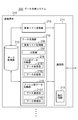
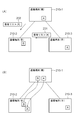
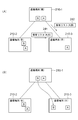
- 1 is a block diagram of a data sharing system according to a first embodiment of the present invention. It is a block diagram of the communication terminal which concerns on the 1st Embodiment of this invention. It is a flowchart which shows the data sharing procedure in the data sharing system which concerns on the 1st Embodiment of this invention. It is a figure which shows an example of the scene where data is shared between several communication terminals in the 1st Embodiment of this invention. It is a figure which shows the other example of the scene where data is shared between several communication terminals in the 1st Embodiment of this invention. It is a block diagram of the data sharing system which concerns on the 2nd Embodiment of this invention.
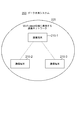
- a plurality of communication terminals 110 that can exchange communication messages with each other wirelessly form one communication network 120.
- All of the communication terminals 110 may be mobile communication terminals, some may be mobile communication terminals, and the rest may be fixed terminals. Although only three communication terminals are depicted in FIG. 1, the number may be two or less, or may be four or more.
- the communication network 120 has a hierarchical network topology. In this embodiment, it consists of two layers of parent and child, and among the plurality of communication terminals 110 connected to the communication network 120, only one communication terminal 110 functions as a parent, and all the remaining communication terminals 120 serve as children. Function. In the communication network 120, communication messages between the child communication terminals 110 are exchanged via the parent communication terminal 110. That is, the parent communication terminal 110 functions as an access point.
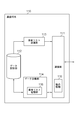
- FIG. 2 shows a configuration example of the communication terminal 110.
- the communication terminal 110 includes a communication unit 111, a data storage unit 112, a possession list transmission unit 113, and a data exchange unit 114.
- the communication unit 111 has a function of transmitting / receiving a communication message to / from another communication terminal 110 wirelessly.
- the communication unit 111 stores parent information 115 in the communication network 120 and controls the validity / invalidity of the relay function according to the parent information 115. That is, if the own communication terminal 110 is a parent communication terminal of the communication network 120, the communication unit 111 enables the relay function, and communication from a child communication terminal 110 in the communication network 120 to another child communication terminal 110 is performed. Relay.
- the data storage unit 112 stores one or more data. Individual data is arbitrary. For example, any of text data, image data, and audio data may be used, or they may be mixed. The data may be called content.
- the possession list transmission unit 113 has a function of transmitting the possession list, which is a list in which information of data stored in the data storage unit 112 is described, to another communication terminal 110 through the communication unit 111.
- the information of the data in the list is arbitrary as long as it is information that can specify the data, and may be, for example, a summary vector or a data identifier.
- the possession list transmission unit 113 transmits the possession list, for example, at regular intervals.
- the data exchange unit 114 has a function of exchanging communication messages with other communication terminals 110 through the communication unit 111 to share data.
- the data exchange unit 114 includes a holding list storage unit 116 that temporarily stores a holding list received from another communication terminal 110. It is arbitrary how long the possession list for the past is stored in the possession list storage unit 116, and it may be a fixed period in the past or a variable time.
- the data exchange unit 114 refers to the parent information 115 of the communication unit 111 and performs different operations depending on whether the own communication terminal 110 does not function as a parent or functions as a parent.
- the data exchange unit 114 When the own communication terminal 110 does not function as a parent, the data exchange unit 114 does not match the possession list of the own communication terminal from the possession list stored in the possession list storage unit 116 and is the communication terminal 110 whose transmission source is the parent. A certain holding list is preferentially selected, and data is shared by exchanging communication messages with other communication terminals 110 that have transmitted the selected holding list. On the other hand, when the own communication terminal 110 functions as a parent, the data exchange unit 114 selects an arbitrary holding list that does not match the holding list of the own communication terminal 110 from the holding list stored in the holding list storage unit 116, Data is shared by exchanging communication messages with other communication terminals 110 that have transmitted the selected possession list.
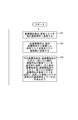
- Each communication terminal 110 in the data sharing system 100 uses the possession list transmission unit 113 to transmit the possession list, which is a list of data retained by the own communication terminal, to the other communication terminals 110 through the communication unit 111 (step S1). ).
- each communication terminal 110 when each communication terminal 110 receives a possession list from another communication terminal 110, each communication terminal 110 temporarily stores the received possession list in the possession list storage unit 116 of the data exchange unit 114 (step S2).
- Each communication terminal 110 uses the data exchange unit 114 to exchange a communication message with the other communication terminal 110 having a holding list that does not match the holding list of the own communication terminal through the communication unit 111, and Sharing is performed (step S3).
- the communication terminal 110 that functions as a child without functioning as a parent uses the data exchange unit 114 to match the possession list of the own communication terminal from the possession list stored in the possession list storage unit 116.
- the holding list whose source is the parent communication terminal 110 is preferentially selected, and communication messages are exchanged with other communication terminals 110 of the source of the selected holding list to share data. Do.
- communication terminal 110 functioning as a parent uses data exchange unit 114 to select an arbitrary holding list that does not match the holding list of own communication terminal 110 from the holding list stored in holding list storage unit 116.
- the communication message is exchanged with the other communication terminal 110 that is the transmission source of the selected possession list to share the data.
- data can be shared among a plurality of communication terminals 110.
- the communication terminal 110-1 functions as a parent
- the communication terminals 110-2 and 110-3 serve as children. Taking the case of functioning as an example, the operation of the present embodiment will be described more specifically.
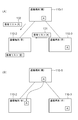
- the parent communication terminal 110-1 and the child communication terminal 110-3 have the same data A, and the child communication terminal 110-2 has no data.
- the communication terminal 110-2 receives the holding list 131 from the communication terminal 110-3, and immediately after that, receives the holding list 132 from the parent communication terminal 110-1.
- the communication terminal 110-2 temporarily stores the possession lists 131 and 132 received before and after in the possession list storage unit 116. Since the communication terminal 110-2 is a child communication terminal, the possession list 132 of the parent communication terminal 110-1 is preferentially selected from the possession list storage unit 116, and the transmission source of the selected possession list 132 is selected. Data is shared by exchanging communication messages with the communication terminal 110-1. As a result, as shown in FIG. 4B, communication terminal 110-2 acquires data A that does not exist in its own communication terminal from parent communication terminal 110-1. As a result, all the communication terminals 110 share the same data A with one-hop communication.
- the communication terminal 110-2 selects the previously received holding list 131 and acquires data A from the communication terminal 110-3 that is the transmission source of the selected holding list 131, the communication terminal 110-2 receives two hops. Communication is required.
- the child communication terminal 110-2 has data B, and the parent communication terminal 110-1 and the child communication terminal 110-3 have one data. It is assumed that the communication terminal 110-2 receives the possession list 141 from the communication terminal 110-3 and receives the possession list 142 from the parent communication terminal 110-1 immediately after that in the absence of the communication terminal 110-2.
- the communication terminal 110-2 temporarily stores the holding lists 141 and 142 received in succession in the holding list storage unit 116. Since the communication terminal 110-2 is a child communication terminal, the holding list 142 of the parent communication terminal 110-1 is preferentially selected from the holding list storage unit 116, and the transmission source of the selected holding list 142 is selected. Data is shared by exchanging communication messages with the communication terminal 110-1. As a result, as shown in FIG. 5B, the communication terminal 110-2 provides the communication terminal 110-1 with data B that the communication terminal 110-1 does not have. As a result, in the 1-hop communication, the communication terminal 110-1 and the communication terminal 110-2 have the same data B, and the communication terminal 110-3 has no data. This state is the same as the state shown in FIG. For this reason, from the state shown in FIG. 5B, all communication terminals 110 can share the same data B with one-hop communication. Therefore, from the state shown in FIG. 5A, all the communication terminals 110 can share the same data B with two one-hop communications.
- the communication terminal 110-2 selects the holding list 141 received earlier and provides the data B to the communication terminal 110-3 that is the transmission source of the selected holding list 141.
- Two-hop communication is required.
- the communication terminal 110-1 in order for the communication terminal 110-1 to subsequently acquire the data B from the communication terminal 110-2 or the communication terminal 110-3, further one-hop communication is required. For this reason, a total of three hops of communication is required.
- each communication terminal when each communication terminal receives a possession list different from the possession list of its own communication terminal from a plurality of other communication terminals, the communication terminal having a smaller number of hops. It is possible to exchange data between them. The reason is that each communication terminal temporarily stores the received possession list, and if it is not the parent, it does not match the possession list of the own communication terminal from the stored possession list and the transmission source is the parent. This is to preferentially select a holding list that is a communication terminal, and to exchange data with other communication terminals that have transmitted the selected holding list to share data.
- a plurality of communication terminals 210 that can exchange communication messages with each other wirelessly form one communication network 220.
- Each communication terminal 210 may be a mobile communication terminal, or a part may be a mobile communication terminal and the rest may be a fixed terminal. Although only three communication terminals are illustrated in FIG. 6, the number may be two or less, or may be four or more.
- the communication network 220 is a communication network that conforms to the Wi-Fi Direct specification.
- a communication network conforming to the Wi-Fi direct specification only one communication terminal among a plurality of communication terminals participating in the network is selected as a group owner (parent) and functions as an access point.
- the group owner is selected by negotiating between a plurality of communication terminals participating in the network.
- FIG. 7 shows a configuration example of the communication terminal 210.
- the communication terminal 210 includes a communication unit 211, a data storage unit 212, a holding list transmission unit 213, and a data exchange unit 214.
- the data storage unit 212 and the possession list transmission unit 213 have the same functions as the data storage unit 112 and the possession list transmission unit 113 of the communication terminal 110 according to the first embodiment shown in FIG.
- the communication unit 211 has a function of negotiating with another communication terminal 210 to determine a group owner (parent) and storing the determined parent information 215.
- the communication unit 211 controls the validity / invalidity of the relay function according to the parent information 215. That is, if the own communication terminal 210 is a parent of the communication network 220, the communication unit 111 enables the relay function and relays communication from the child communication terminal 210 in the communication network 220 to the other child communication terminal 210. .
- the data exchange unit 214 has a function of exchanging communication messages with other communication terminals 210 through the communication unit 211 to share data.
- the data exchange unit 214 includes a holding list storage unit 216, a comparison unit 217, a pull type data exchange unit 218, and a push type data exchange unit 219.
- the possession list storage unit 216 has a function of temporarily storing the possession list received from another communication terminal 210.
- the comparison unit 217 compares the possession list received from the other communication terminal 210 stored in the possession list storage unit 216 with the possession list of the own communication terminal, and compares this comparison result with the parent stored in the communication unit 211. And the other communication terminal 210 that acquires the data, the list of the acquired data, and the other communication terminal 210 that provides the data and the list of the provided data.
- the pull-type data exchange unit 218 transmits a data request to a communication terminal having data from a communication terminal having no data, and the communication terminal that has received the data request receives the request source.
- data is transmitted to other communication terminals, and data sharing is performed between the communication terminals.
- the pull type data exchange unit 218 includes a data request unit 2181 and a data response unit 2182.
- the data request unit 2181 receives the other communication terminal 210 from which the data is acquired and the list of acquired data from the comparison unit 217, requests data from the other communication terminal 210 through the communication unit 211, and receives other data in response to the request.
- the data transmitted from the communication terminal 210 by the communication message is received through the communication unit 211 and stored in the data storage unit 212.
- the data response unit 2182 has a function of reading data requested from the pull-type data exchange unit 218 of the other communication terminal 210 from the data storage unit 212 by a communication message and transmitting the data to the other communication terminal 210 through the communication unit 211. Have.
- the push-type data exchange unit 219 transmits data without a data request from the communication terminal to the communication terminal having no data, as shown in FIG. It has a function of exchanging data between communication terminals.
- the push type data exchange unit 219 includes a data transmission unit 2191 and a data reception unit 2192.
- the data transmission unit 2191 receives from the comparison unit 217 another communication terminal 210 that provides data and a list of the data to be provided, reads data to be provided from the data storage unit 212, and performs other communication through the communication unit 211. It has a function of transmitting to the terminal 210.
- the data receiving unit 2192 has a function of storing data received from the push-type data exchange unit 219 of another communication terminal 210 in the data storage unit 212 by a communication message.
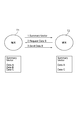
- each communication terminal 210 uses the communication unit 211 to determine which communication terminal is the parent of the communication terminals connected to the communication network 220.
- Negotiate with 210 step S11).
- the determined parent information 215 is temporarily stored in the communication unit 211.
- each communication terminal 210 uses the possession list transmission unit 213 to transmit the possession list, which is a list of data retained by the own communication terminal, to the other communication terminals 210 through the communication unit 211 (step S12).
- each communication terminal 210 when each communication terminal 210 receives a possession list from another communication terminal 210, each communication terminal 210 temporarily stores the received possession list in the possession list storage unit 216 of the data exchange unit 214 (step S13).
- Each communication terminal 210 uses the data exchange unit 214 to exchange a communication message with the other communication terminal 210 having a holding list that does not match the holding list of the own communication terminal through the communication unit 211, and Sharing is performed (step S14). At that time, the communication terminal 210 that does not function as a parent but functions as a child does not match the possession list of the own communication terminal from the possession list stored in the possession list storage unit 216 and the transmission source is the parent communication terminal 210. Is preferentially selected, and pull-type data exchange and / or push-type data exchange is performed with another communication terminal 210 that has transmitted the selected possession list.
- the communication terminal 210 functioning as a parent selects an arbitrary holding list that does not match the holding list of the own communication terminal 210 from the holding list stored in the holding list storage unit 216, and the transmission source of the selected holding list A pull-type data exchange and / or a push-type data exchange is performed with another communication terminal 210.
- steps S12 to S13 are repeated.
- the processes in steps S11 to S14 may be repeated.
- data can be shared among a plurality of communication terminals 210.
- the parent communication terminal 210-1 and the child communication terminal 210-3 have data A
- the child communication terminal 210-2 has data B.
- the communication terminal 210-2 receives the holding list 231 from the communication terminal 210-3, and immediately after that, receives the holding list 232 from the parent communication terminal 210-1.
- the communication terminal 210-2 temporarily stores the possession lists 231 and 232 received in succession in the possession list storage unit 216. Since the communication terminal 210-2 is a child communication terminal, the holding list 232 of the parent communication terminal 210-1 is preferentially selected from the holding list storage unit 216, and the transmission source of the selected holding list 232 is selected. Data is shared by exchanging communication messages with the communication terminal 210-1. As a result, as shown in FIG. 10B, the communication terminal 210-2 obtains data A that does not exist in the communication terminal 210-1 from the communication terminal 210-1 by the pull-type data exchange method, and the communication terminal 210-1 Data B that does not exist is provided to the communication terminal 210-1 by the push-type data exchange method.
- the communication terminal 210-2 selects the holding list 231 received earlier, acquires the data A and transmits the data B with the communication terminal 210-3 that is the transmission source of the selected holding list 231. In the case of providing, each requires two-hop communication.
- the parent communication terminal 210-1 and the child communication terminal 210-2 have data A and B, and the child communication terminal 210-3 has data A.
- the communication terminal 210-3 receives the possession list 241 from the communication terminal 210-2 and immediately thereafter receives the possession list 242 from the parent communication terminal 210-1.
- the communication terminal 210-3 temporarily stores the holding lists 241 and 242 received in succession in the holding list storage unit 216. Since the communication terminal 210-3 is a child communication terminal, the holding list 242 of the parent communication terminal 210-1 is preferentially selected from the holding list storage unit 216, and the transmission source of the selected holding list 242 is selected. Data is shared by exchanging communication messages with the communication terminal 210-1. As a result, as shown in FIG. 11B, communication terminal 210-3 acquires data B that does not exist in its own communication terminal from communication terminal 210-1 by the pull-type data exchange method. On the other hand, when the communication terminal 210-3 selects the previously received possession list 241 and acquires data B from the communication terminal 210-2 of the transmission source of the selected possession list 241, it is 2 hops. Communication is required.
- the same effects as those of the second embodiment can be obtained, and data can be exchanged efficiently.
- the reason is that the data exchanged between the communication terminals using the push type data exchange method and the pull type data exchange method is limited to the data to be shared between the communication terminals, and is shared between the communication terminals. This is because there is no waste of unscheduled data being transmitted and received between communication terminals.
- FIG. 12 shows an example of a hardware configuration when the communication terminal in each of the above-described embodiments is configured by an electronic information processing apparatus such as a computer.
- the communication terminal 910 in this example includes a CPU (Central Processing Unit) peripheral part, an input / output part, and a legacy input / output part.
- the CPU peripheral section includes a CPU 902, a RAM (Random Access Memory) 903, a graphic controller 904, and a display device 905 that are connected to each other by a host controller 901.
- the input / output unit includes a communication interface 907, a hard disk drive 908, and a CD-ROM (Compact Disk Read Only Memory) drive 909 connected to the host controller 901 by the input / output controller 906.
- the legacy input / output unit includes a read only memory (ROM) 910, a flexible disk drive 911, and an input / output chip 912 that are connected to the input / output controller 906.
- ROM read only memory
- the host controller 901 connects the RAM 903, the CPU 902 that accesses the RAM 903 at a high transfer rate, and the graphic controller 904.
- the CPU 902 operates based on programs stored in the ROM 910 and the RAM 903 to control each unit.
- the graphic controller 904 acquires image data generated by the CPU 902 or the like on a frame buffer provided in the RAM 903 and displays the image data on the display device 905.
- the graphic controller 904 may include a frame buffer for storing image data generated by the CPU 902 or the like.
- the input / output controller 906 connects the host controller 901 to the hard disk drive 908, the communication interface 907, and the CD-ROM drive 909, which are relatively high-speed input / output devices.
- the hard disk drive 908 stores programs and data used by the CPU 902.
- the communication interface 907 is connected to another communication terminal 320 to transmit / receive a program or data.
- the CD-ROM drive 909 reads a program or data from the CD-ROM 992 and provides it to the hard disk drive 908 and the communication interface 907 via the RAM 903.
- the input / output controller 906 is connected to a ROM 910, a flexible disk drive 911, and a relatively low-speed input / output device such as an input / output chip 912.
- the ROM 910 stores a boot program executed when the communication terminal 310 is started, a program depending on the hardware of the communication terminal 310, and the like.
- the flexible disk drive 911 reads a program or data from the flexible disk 993 and provides it to the hard disk drive 908 and the communication interface 907 via the RAM 903.
- the input / output chip 912 connects various input / output devices via the flexible disk drive 911 or a parallel port, a serial port, a keyboard port, a mouse port, and the like.
- the program executed by the CPU 902 is stored in a recording medium such as the flexible disk 993, the CD-ROM 992, or an IC (Integrated Circuit) card and provided by the user.
- the program stored in the recording medium may be compressed or uncompressed.
- the program is installed in the hard disk drive 908 from the recording medium, read into the RAM 903, and executed by the CPU 902.
- the program executed by the CPU 902 causes the communication terminal 910 to function as a communication unit, a data storage unit, a holding list transmission unit, a data exchange unit, and the like in each of the above-described embodiments.
- the programs shown above may be stored in an external storage medium.
- storage media in addition to the flexible disk 993 and CD-ROM 992, optical recording media such as DVD (Digital Versatile Disk) or PD (Phase Disk), magneto-optical recording media such as MD (MiniDisk), tape media, IC cards
- DVD Digital Versatile Disk
- PD Phase Disk
- MD Magneto-optical recording media
- tape media IC cards
- an information sharing system may be provided as a program via a network by using a storage medium such as a hard disk or a RAM provided in a server system connected to a dedicated communication network or the Internet as a recording medium.
- each communication terminal has functions of both a push type data exchange method and a pull type data exchange method.
- the present invention is not limited to such a case, and each communication terminal only needs to have at least one of a push-type data exchange method and a pull-type data exchange method.
- the present invention can be applied to a data sharing system for sharing data such as various contents between communication terminals mounted on a vehicle such as an automobile or between portable communication terminals.
Landscapes
- Engineering & Computer Science (AREA)
- Computer Networks & Wireless Communication (AREA)
- Signal Processing (AREA)
- Multimedia (AREA)
- Information Transfer Between Computers (AREA)
- Mobile Radio Communication Systems (AREA)
Abstract
Description
複数の通信端末のうちの一の上記通信端末が中継機能を有する親として機能し、残りの上記通信端末が上記中継機能を有しない子として機能し、上記子の通信端末同士の通信メッセージの授受は上記親を経由して行われる通信ネットワークに接続する上記複数の通信端末間でデータを共有するデータ共有システムであって、
上記各通信端末は、
上記親の情報を記憶し、該記憶した上記親の情報に従って自通信端末における上記中継機能の有効無効を制御する通信部と、
1以上のデータを記憶するデータ記憶部と、
上記データ記憶部に記憶されているデータの情報を記載したリストである保有リストを上記通信メッセージによって他の上記通信端末へ送信する保有リスト送信部と、
他の上記通信端末から受信した上記保有リストを一時的に記憶する保有リスト記憶部を有し、上記通信部の上記親の情報を参照し、自通信端末が上記親として機能しない場合は上記保有リスト記憶部に記憶されている上記保有リストから自通信端末の上記保有リストと一致せず且つ送信元が上記親の上記通信端末である上記保有リストを優先的に選択し、自通信端末が上記親として機能する場合は上記保有リスト記憶部に記憶されている上記保有リストから自通信端末の上記保有リストと一致しない任意の上記保有リストを選択し、上記選択した保有リストの送信元の上記他の通信端末との間で上記通信メッセージを授受してデータの共有を行うデータ交換部と
を有する。
複数の通信端末のうちの一の上記通信端末が中継機能を有する親として機能し、残りの上記通信端末が上記中継機能を有しない子として機能し、上記子の通信端末同士の通信メッセージの授受は上記親を経由して行われる通信ネットワークに接続する上記複数の通信端末間でデータを共有するデータ共有方法であって、
上記各通信端末が、自通信端末の保有するデータの情報を記載したリストである保有リストを上記通信メッセージによって他の上記通信端末へ送信し、
上記各通信端末が、他の上記通信端末から受信した上記保有リストを一時的に記憶し、自通信端末が上記親として機能しない場合は上記記憶されている上記保有リストから自通信端末の上記保有リストと一致せず且つ送信元が上記親の上記通信端末である上記保有リストを優先的に選択し、自通信端末が上記親として機能する場合は上記憶されている上記保有リストから自通信端末の上記保有リストと一致しない任意の上記保有リストを選択し、上記選択した保有リストの送信元の上記他の通信端末との間で上記通信メッセージを授受してデータの共有を行う。
複数の通信端末のうちの一の上記通信端末が中継機能を有する親として機能し、残りの上記通信端末が上記中継機能を有しない子として機能し、上記子の通信端末同士の通信メッセージの授受は上記親を経由して行われる通信ネットワークに接続する上記通信端末であって、
上記親の情報を記憶し、該記憶した上記親の情報に従って自通信端末における上記中継機能の有効無効を制御する通信部と、
1以上のデータを記憶するデータ記憶部と、
上記データ記憶部に記憶されているデータの情報を記載したリストである保有リストを上記通信メッセージによって他の上記通信端末へ送信する保有リスト送信部と、
他の上記通信端末から受信した上記保有リストを一時的に記憶する保有リスト記憶部を有し、上記通信部の上記親の情報を参照し、自通信端末が上記親として機能しない場合は上記保有リスト記憶部に記憶されている上記保有リストから自通信端末の上記保有リストと一致せず且つ送信元が上記親の上記通信端末である上記保有リストを優先的に選択し、自通信端末が上記親として機能する場合は上記保有リスト記憶部に記憶されている上記保有リストから自通信端末の上記保有リストと一致しない任意の上記保有リストを選択し、上記選択した保有リストの送信元の上記他の通信端末との間で上記通信メッセージを授受してデータの共有を行うデータ交換部と
を有する。
複数の通信端末のうちの一の上記通信端末が中継機能を有する親として機能し、残りの上記通信端末が上記中継機能を有しない子として機能し、上記子の通信端末同士の通信メッセージの授受は上記親を経由して行われる通信ネットワークに接続する上記通信端末が実行するデータ共有方法であって、
上記通信端末は、
上記親の情報を記憶し、該記憶した上記親の情報に従って自通信端末における上記中継機能の有効無効を制御する通信部と、1以上のデータを記憶するデータ記憶部と、保有リスト記憶部とを有し、
他の上記通信端末から上記他の通信端末が保有するデータの情報を記載した保有リストを受信して上記保有リスト記憶部に一時的に記憶し、
上記通信部の上記親の情報を参照し、自通信端末が上記親として機能しない場合は上記保有リスト記憶部に記憶されている上記保有リストから自通信端末の上記保有リストと一致せず且つ送信元が上記親の上記通信端末である上記保有リストを優先的に選択し、自通信端末が上記親として機能する場合は上記保有リスト記憶部に記憶されている上記保有リストから自通信端末の上記保有リストと一致しない任意の上記保有リストを選択し、
上記選択した保有リストの送信元の上記他の通信端末との間で上記通信メッセージを授受してデータの共有を行う。
複数の通信端末のうちの一の上記通信端末が中継機能を有する親として機能し、残りの上記通信端末が上記中継機能を有しない子として機能し、上記子の通信端末同士の通信メッセージの授受は上記親を経由して行われる通信ネットワークに接続する上記通信端末を構成するコンピュータを、
上記親の情報を記憶し、該記憶した上記親の情報に従って自通信端末における上記中継機能の有効無効を制御する通信部と、
1以上のデータを記憶するデータ記憶部と、
上記データ記憶部に記憶されているデータの情報を記載したリストである保有リストを上記通信メッセージによって他の上記通信端末へ送信する保有リスト送信部と、
他の上記通信端末から受信した上記保有リストを一時的に記憶する保有リスト記憶部を有し、上記通信部の上記親の情報を参照し、自通信端末が上記親として機能しない場合は上記保有リスト記憶部に記憶されている上記保有リストから自通信端末の上記保有リストと一致せず且つ送信元が上記親の上記通信端末である上記保有リストを優先的に選択し、自通信端末が上記親として機能する場合は上記保有リスト記憶部に記憶されている上記保有リストから自通信端末の上記保有リストと一致しない任意の上記保有リストを選択し、上記選択した保有リストの送信元の上記他の通信端末との間で上記通信メッセージを授受してデータの共有を行うデータ交換部と
して機能させる。
[第1の実施形態]
図1を参照すると、本発明の第1の実施形態にかかるデータ共有システム100は、無線によって互いに通信メッセージを授受可能な複数の通信端末110が一つの通信ネットワーク120を形成する。それぞれの通信端末110は、全て移動通信端末であっても良いし、一部が移動通信端末、残りが固定端末であっても良い。図1には、3台の通信端末しか描かれていないが、2台以下であっても良いし、4台以上であっても良い。
図6を参照すると、本発明の第2の実施形態にかかるデータ共有システム200は、無線によって互いに通信メッセージを授受可能な複数の通信端末210が一つの通信ネットワーク220を形成する。それぞれの通信端末210は、全て移動通信端末であっても良いし、一部が移動通信端末、残りが固定端末であっても良い。図6には、3台の通信端末しか描かれていないが、2台以下であっても良いし、4台以上であっても良い。
図12は、上述した各実施形態における通信端末をコンピュータ等の電子情報処理装置で構成した場合のハードウェア構成の一例を示す。この例の通信端末910は、CPU(Central Processing Unit)周辺部と、入出力部と、レガシー入出力部とを備える。CPU周辺部は、ホスト・コントローラ901により相互に接続されるCPU902、RAM(Random Access Memory)903、グラフィック・コントローラ904、及び表示装置905を有する。入出力部は、入出力コントローラ906によりホスト・コントローラ901に接続される通信インターフェイス907、ハードディスクドライブ908、及びCD-ROM(Compact Disk Read Only Memory)ドライブ909を有する。レガシー入出力部は、入出力コントローラ906に接続されるROM(Read Only Memory)910、フレキシブルディスク・ドライブ911、及び入出力チップ912を有する。
以上、本発明を幾つかの実施形態を挙げて説明したが、本発明は以上の実施形態にのみ限定されず、その他各種の付加変更が可能である。例えば、以下のような実施形態も本発明に含まれる。
110…通信端末
120…通信ネットワーク
Claims (13)
- 複数の通信端末のうちの一の前記通信端末が中継機能を有する親として機能し、残りの前記通信端末が前記中継機能を有しない子として機能し、前記子の通信端末同士の通信メッセージの授受は前記親を経由して行われる通信ネットワークに接続する前記複数の通信端末間でデータを共有するデータ共有システムであって、
前記各通信端末は、
前記親の情報を記憶し、該記憶した前記親の情報に従って自通信端末における前記中継機能の有効無効を制御する通信部と、
1以上のデータを記憶するデータ記憶部と、
前記データ記憶部に記憶されているデータの情報を記載したリストである保有リストを前記通信メッセージによって他の前記通信端末へ送信する保有リスト送信部と、
他の前記通信端末から受信した前記保有リストを一時的に記憶する保有リスト記憶部を有し、前記通信部の前記親の情報を参照し、自通信端末が前記親として機能しない場合は前記保有リスト記憶部に記憶されている前記保有リストから自通信端末の前記保有リストと一致せず且つ送信元が前記親の前記通信端末である前記保有リストを優先的に選択し、自通信端末が前記親として機能する場合は前記保有リスト記憶部に記憶されている前記保有リストから自通信端末の前記保有リストと一致しない任意の前記保有リストを選択し、前記選択した保有リストの送信元の前記他の通信端末との間で前記通信メッセージを授受してデータの共有を行うデータ交換部と
を有するデータ共有システム。 - 前記データ交換部は、前記通信メッセージの授受による前記データの共有では、前記保有リストの送信元の前記他の通信端末に対して、自通信端末が保有していないデータを要求する前記通信メッセージを送信し、前記要求先の前記他の通信端末から前記通信メッセージによって送信される前記データを受信する
請求項1に記載のデータ共有システム。 - 前記データ交換部は、前記通信メッセージの授受による前記データの共有では、前記保有リストの送信元の前記他の通信端末に対して、当該他の通信端末が保有していないデータを前記通信メッセージによって送信する
請求項1または2に記載のデータ共有システム。 - 前記通信部は、他の前記通信端末とネゴシエーションを行って何れの前記通信端末が前記親として機能するかを決定する
請求項1乃至3の何れかに記載のデータ共有システム。 - 前記通信ネットワークは、Wi‐Fi Direct仕様に準拠する通信ネットワークである
請求項1乃至4の何れかに記載のデータ共有システム。 - 複数の通信端末のうちの一の前記通信端末が中継機能を有する親として機能し、残りの前記通信端末が前記中継機能を有しない子として機能し、前記子の通信端末同士の通信メッセージの授受は前記親を経由して行われる通信ネットワークに接続する前記複数の通信端末間でデータを共有するデータ共有方法であって、
前記各通信端末が、自通信端末の保有するデータの情報を記載したリストである保有リストを前記通信メッセージによって他の前記通信端末へ送信し、
前記各通信端末が、他の前記通信端末から受信した前記保有リストを一時的に記憶し、自通信端末が前記親として機能しない場合は前記記憶されている前記保有リストから自通信端末の前記保有リストと一致せず且つ送信元が前記親の前記通信端末である前記保有リストを優先的に選択し、自通信端末が前記親として機能する場合は前記憶されている前記保有リストから自通信端末の前記保有リストと一致しない任意の前記保有リストを選択し、前記選択した保有リストの送信元の前記他の通信端末との間で前記通信メッセージを授受してデータの共有を行う
データ共有方法。 - 複数の通信端末のうちの一の前記通信端末が中継機能を有する親として機能し、残りの前記通信端末が前記中継機能を有しない子として機能し、前記子の通信端末同士の通信メッセージの授受は前記親を経由して行われる通信ネットワークに接続する前記通信端末であって、
前記親の情報を記憶し、該記憶した前記親の情報に従って自通信端末における前記中継機能の有効無効を制御する通信部と、
1以上のデータを記憶するデータ記憶部と、
前記データ記憶部に記憶されているデータの情報を記載したリストである保有リストを前記通信メッセージによって他の前記通信端末へ送信する保有リスト送信部と、
他の前記通信端末から受信した前記保有リストを一時的に記憶する保有リスト記憶部を有し、前記通信部の前記親の情報を参照し、自通信端末が前記親として機能しない場合は前記保有リスト記憶部に記憶されている前記保有リストから自通信端末の前記保有リストと一致せず且つ送信元が前記親の前記通信端末である前記保有リストを優先的に選択し、自通信端末が前記親として機能する場合は前記保有リスト記憶部に記憶されている前記保有リストから自通信端末の前記保有リストと一致しない任意の前記保有リストを選択し、前記選択した保有リストの送信元の前記他の通信端末との間で前記通信メッセージを授受してデータの共有を行うデータ交換部と
を有する通信端末。 - 前記データ交換部は、前記通信メッセージの授受による前記データの共有では、前記保有リストの送信元の前記他の通信端末に対して、自通信端末が保有していないデータを要求する前記通信メッセージを送信し、前記要求先の前記他の通信端末から前記通信メッセージによって送信される前記データを受信する
請求項7に記載の通信端末。 - 前記データ交換部は、前記通信メッセージの授受による前記データの共有では、前記保有リストの送信元の前記他の通信端末に対して、当該他の通信端末が保有していないデータを前記通信メッセージによって送信する
請求項7または8に記載の通信端末。 - 前記通信部は、他の前記通信端末とネゴシエーションを行って何れの前記通信端末が前記親として機能するかを決定する
請求項7乃至9の何れかに記載の通信端末。 - 前記通信ネットワークは、Wi‐Fi Direct仕様に準拠する通信ネットワークである
請求項7乃至10の何れかに記載の通信端末。 - 複数の通信端末のうちの一の前記通信端末が中継機能を有する親として機能し、残りの前記通信端末が前記中継機能を有しない子として機能し、前記子の通信端末同士の通信メッセージの授受は前記親を経由して行われる通信ネットワークに接続する前記通信端末が実行するデータ共有方法であって、
前記通信端末は、
前記親の情報を記憶し、該記憶した前記親の情報に従って自通信端末における前記中継機能の有効無効を制御する通信部と、1以上のデータを記憶するデータ記憶部と、保有リスト記憶部とを有し、
他の前記通信端末から前記他の通信端末が保有するデータの情報を記載した保有リストを受信して前記保有リスト記憶部に一時的に記憶し、
前記通信部の前記親の情報を参照し、自通信端末が前記親として機能しない場合は前記保有リスト記憶部に記憶されている前記保有リストから自通信端末の前記保有リストと一致せず且つ送信元が前記親の前記通信端末である前記保有リストを優先的に選択し、自通信端末が前記親として機能する場合は前記保有リスト記憶部に記憶されている前記保有リストから自通信端末の前記保有リストと一致しない任意の前記保有リストを選択し、
前記選択した保有リストの送信元の前記他の通信端末との間で前記通信メッセージを授受してデータの共有を行う
データ共有方法。 - 複数の通信端末のうちの一の前記通信端末が中継機能を有する親として機能し、残りの前記通信端末が前記中継機能を有しない子として機能し、前記子の通信端末同士の通信メッセージの授受は前記親を経由して行われる通信ネットワークに接続する前記通信端末を構成するコンピュータを、
前記親の情報を記憶し、該記憶した前記親の情報に従って自通信端末における前記中継機能の有効無効を制御する通信部と、
1以上のデータを記憶するデータ記憶部と、
前記データ記憶部に記憶されているデータの情報を記載したリストである保有リストを前記通信メッセージによって他の前記通信端末へ送信する保有リスト送信部と、
他の前記通信端末から受信した前記保有リストを一時的に記憶する保有リスト記憶部を有し、前記通信部の前記親の情報を参照し、自通信端末が前記親として機能しない場合は前記保有リスト記憶部に記憶されている前記保有リストから自通信端末の前記保有リストと一致せず且つ送信元が前記親の前記通信端末である前記保有リストを優先的に選択し、自通信端末が前記親として機能する場合は前記保有リスト記憶部に記憶されている前記保有リストから自通信端末の前記保有リストと一致しない任意の前記保有リストを選択し、前記選択した保有リストの送信元の前記他の通信端末との間で前記通信メッセージを授受してデータの共有を行うデータ交換部と
して機能させるためのプログラム。
Priority Applications (3)
| Application Number | Priority Date | Filing Date | Title |
|---|---|---|---|
| JP2015501093A JP6281561B2 (ja) | 2013-02-22 | 2013-12-04 | データ共有システム |
| EP13875443.7A EP2960802A4 (en) | 2013-02-22 | 2013-12-04 | SYSTEM FOR COMMON DATA UTILIZATION |
| US14/769,524 US20160006802A1 (en) | 2013-02-22 | 2013-12-04 | Data sharing system |
Applications Claiming Priority (2)
| Application Number | Priority Date | Filing Date | Title |
|---|---|---|---|
| JP2013032835 | 2013-02-22 | ||
| JP2013-032835 | 2013-02-22 |
Publications (1)
| Publication Number | Publication Date |
|---|---|
| WO2014128806A1 true WO2014128806A1 (ja) | 2014-08-28 |
Family
ID=51390646
Family Applications (1)
| Application Number | Title | Priority Date | Filing Date |
|---|---|---|---|
| PCT/JP2013/007110 Ceased WO2014128806A1 (ja) | 2013-02-22 | 2013-12-04 | データ共有システム |
Country Status (4)
| Country | Link |
|---|---|
| US (1) | US20160006802A1 (ja) |
| EP (1) | EP2960802A4 (ja) |
| JP (1) | JP6281561B2 (ja) |
| WO (1) | WO2014128806A1 (ja) |
Families Citing this family (1)
| Publication number | Priority date | Publication date | Assignee | Title |
|---|---|---|---|---|
| KR20160099610A (ko) * | 2014-03-04 | 2016-08-22 | 닛본 덴끼 가부시끼가이샤 | DTN(Disruption/Delay/Disconnect Tolerant Network)에서 이용되는 노드 장치 및 통신 방법 |
Citations (3)
| Publication number | Priority date | Publication date | Assignee | Title |
|---|---|---|---|---|
| JP2008003981A (ja) * | 2006-06-26 | 2008-01-10 | Matsushita Electric Ind Co Ltd | 携帯電話端末、試用コンテンツデータ交換システム、および試用コンテンツデータ交換方法 |
| JP2012114649A (ja) | 2010-11-24 | 2012-06-14 | Nippon Telegr & Teleph Corp <Ntt> | コンテンツ配信方法及びシステム |
| JP2013038724A (ja) * | 2011-08-10 | 2013-02-21 | Ricoh Co Ltd | 無線通信装置、無線通信プログラム及び無線通信方法 |
Family Cites Families (5)
| Publication number | Priority date | Publication date | Assignee | Title |
|---|---|---|---|---|
| US5630116A (en) * | 1993-08-11 | 1997-05-13 | Nec Corporation | Automatic delivery system for master files in a distributed processing system |
| US20090005548A1 (en) * | 2002-11-14 | 2009-01-01 | Dharmacon, Inc. | siRNA targeting nuclear receptor interacting protein 1 (NRIP1) |
| US8782527B2 (en) * | 2007-06-27 | 2014-07-15 | Microsoft Corp. | Collaborative phone-based file exchange |
| KR100933166B1 (ko) * | 2007-08-20 | 2009-12-21 | 삼성전자주식회사 | 근거리 네트워크에서 데이터를 공유하기 위한 방법 및 이를 위한 단말기 |
| US20140201280A1 (en) * | 2012-04-23 | 2014-07-17 | Emily Qi | Systems and methods for resuming group owner responsibilities for peer-to-peer wireless connections |
-
2013
- 2013-12-04 EP EP13875443.7A patent/EP2960802A4/en not_active Withdrawn
- 2013-12-04 WO PCT/JP2013/007110 patent/WO2014128806A1/ja not_active Ceased
- 2013-12-04 JP JP2015501093A patent/JP6281561B2/ja active Active
- 2013-12-04 US US14/769,524 patent/US20160006802A1/en not_active Abandoned
Patent Citations (3)
| Publication number | Priority date | Publication date | Assignee | Title |
|---|---|---|---|---|
| JP2008003981A (ja) * | 2006-06-26 | 2008-01-10 | Matsushita Electric Ind Co Ltd | 携帯電話端末、試用コンテンツデータ交換システム、および試用コンテンツデータ交換方法 |
| JP2012114649A (ja) | 2010-11-24 | 2012-06-14 | Nippon Telegr & Teleph Corp <Ntt> | コンテンツ配信方法及びシステム |
| JP2013038724A (ja) * | 2011-08-10 | 2013-02-21 | Ricoh Co Ltd | 無線通信装置、無線通信プログラム及び無線通信方法 |
Non-Patent Citations (2)
| Title |
|---|
| A. VAHDAT; D. BECKER: "Epidemic Routing for Partially-Connected Ad Hoc Networks", TECH. REPORT CS-200006, April 2000 (2000-04-01) |
| See also references of EP2960802A4 |
Also Published As
| Publication number | Publication date |
|---|---|
| JP6281561B2 (ja) | 2018-02-21 |
| EP2960802A1 (en) | 2015-12-30 |
| JPWO2014128806A1 (ja) | 2017-02-02 |
| EP2960802A4 (en) | 2016-10-26 |
| US20160006802A1 (en) | 2016-01-07 |
Similar Documents
| Publication | Publication Date | Title |
|---|---|---|
| CN102714829B (zh) | 电子设备及其操作方法 | |
| CN102763373B (zh) | 基于远程访问使用本地网络装置的服务的方法和设备 | |
| US8903972B2 (en) | Method and apparatus for sharing contents using information of group change in content oriented network environment | |
| US8973074B2 (en) | Method and system for isochronous communication in audio/video networks | |
| JP2018528726A (ja) | 無線ピアツーピアネットワーク内のデバイス、無線通信システム及び制御方法 | |
| JP6311697B2 (ja) | データ共有システム | |
| KR20120066979A (ko) | 근거리 무선 통신 시스템 | |
| CN105991377A (zh) | 通用即插即用UPnP设备之间发现与通信的方法 | |
| CN104113607A (zh) | 数据共享方法、电子设备以及数据共享系统 | |
| JP6515804B2 (ja) | 通信端末 | |
| EP2280512A1 (en) | Electronic apparatus and control method for remotely processing files | |
| JP6281561B2 (ja) | データ共有システム | |
| JP6524912B2 (ja) | 通信端末の接続制御方法 | |
| JP4320046B1 (ja) | 機器探索システム及びその制御方法 | |
| JP2007151109A (ja) | 多重客体伝送プロトコル支援方法及びその装置 | |
| JP6365531B2 (ja) | アクセスポイント決定方法 | |
| CN115767734B (zh) | 分布式自组网业务资源调度方法 | |
| JP6849961B2 (ja) | ネットワーク構成方法 | |
| KR20140071937A (ko) | 무선 통신 시스템에서 통신 링크 설정 장치 및 방법 | |
| CN116866279A (zh) | 一种基于Shovel的RabbitMQ队列水平扩展方法及系统 | |
| CN115277878A (zh) | 一种发送报文的方法、处理报文的方法及设备 | |
| KR20140078257A (ko) | 단말들 간에 자원을 공유하기 위한 장치 및 방법 | |
| TW200423633A (en) | Partitioned medium access control | |
| JP2017168896A (ja) | 通信装置、履歴情報管理方法及び履歴情報管理プログラム | |
| JP2001175616A (ja) | 情報転送装置及び情報転送方法 |
Legal Events
| Date | Code | Title | Description |
|---|---|---|---|
| 121 | Ep: the epo has been informed by wipo that ep was designated in this application |
Ref document number: 13875443 Country of ref document: EP Kind code of ref document: A1 |
|
| ENP | Entry into the national phase |
Ref document number: 2015501093 Country of ref document: JP Kind code of ref document: A |
|
| WWE | Wipo information: entry into national phase |
Ref document number: 14769524 Country of ref document: US |
|
| NENP | Non-entry into the national phase |
Ref country code: DE |
|
| WWE | Wipo information: entry into national phase |
Ref document number: 2013875443 Country of ref document: EP |