WO2014141127A1 - Composition containing buffered aminoalkyl glucosaminide phosphate derivatives and its use for enhancing an immune response - Google Patents
Composition containing buffered aminoalkyl glucosaminide phosphate derivatives and its use for enhancing an immune response Download PDFInfo
- Publication number
- WO2014141127A1 WO2014141127A1 PCT/IB2014/059731 IB2014059731W WO2014141127A1 WO 2014141127 A1 WO2014141127 A1 WO 2014141127A1 IB 2014059731 W IB2014059731 W IB 2014059731W WO 2014141127 A1 WO2014141127 A1 WO 2014141127A1
- Authority
- WO
- WIPO (PCT)
- Prior art keywords
- composition
- buffer
- subject
- crx
- solution
- Prior art date
- Legal status (The legal status is an assumption and is not a legal conclusion. Google has not performed a legal analysis and makes no representation as to the accuracy of the status listed.)
- Ceased
Links
Classifications
-
- A—HUMAN NECESSITIES
- A61—MEDICAL OR VETERINARY SCIENCE; HYGIENE
- A61K—PREPARATIONS FOR MEDICAL, DENTAL OR TOILETRY PURPOSES
- A61K31/00—Medicinal preparations containing organic active ingredients
- A61K31/70—Carbohydrates; Sugars; Derivatives thereof
- A61K31/7028—Compounds having saccharide radicals attached to non-saccharide compounds by glycosidic linkages
- A61K31/7032—Compounds having saccharide radicals attached to non-saccharide compounds by glycosidic linkages attached to a polyol, i.e. compounds having two or more free or esterified hydroxy groups, including the hydroxy group involved in the glycosidic linkage, e.g. monoglucosyldiacylglycerides, lactobionic acid, gangliosides
-
- A—HUMAN NECESSITIES
- A61—MEDICAL OR VETERINARY SCIENCE; HYGIENE
- A61K—PREPARATIONS FOR MEDICAL, DENTAL OR TOILETRY PURPOSES
- A61K31/00—Medicinal preparations containing organic active ingredients
- A61K31/70—Carbohydrates; Sugars; Derivatives thereof
- A61K31/7008—Compounds having an amino group directly attached to a carbon atom of the saccharide radical, e.g. D-galactosamine, ranimustine
-
- A—HUMAN NECESSITIES
- A61—MEDICAL OR VETERINARY SCIENCE; HYGIENE
- A61K—PREPARATIONS FOR MEDICAL, DENTAL OR TOILETRY PURPOSES
- A61K39/00—Medicinal preparations containing antigens or antibodies
- A61K39/39—Medicinal preparations containing antigens or antibodies characterised by the immunostimulating additives, e.g. chemical adjuvants
-
- A—HUMAN NECESSITIES
- A61—MEDICAL OR VETERINARY SCIENCE; HYGIENE
- A61K—PREPARATIONS FOR MEDICAL, DENTAL OR TOILETRY PURPOSES
- A61K9/00—Medicinal preparations characterised by special physical form
- A61K9/0012—Galenical forms characterised by the site of application
- A61K9/0043—Nose
-
- A—HUMAN NECESSITIES
- A61—MEDICAL OR VETERINARY SCIENCE; HYGIENE
- A61K—PREPARATIONS FOR MEDICAL, DENTAL OR TOILETRY PURPOSES
- A61K9/00—Medicinal preparations characterised by special physical form
- A61K9/14—Particulate form, e.g. powders, Processes for size reducing of pure drugs or the resulting products, Pure drug nanoparticles
- A61K9/16—Agglomerates; Granulates; Microbeadlets ; Microspheres; Pellets; Solid products obtained by spray drying, spray freeze drying, spray congealing,(multiple) emulsion solvent evaporation or extraction
- A61K9/1605—Excipients; Inactive ingredients
- A61K9/1617—Organic compounds, e.g. phospholipids, fats
-
- A—HUMAN NECESSITIES
- A61—MEDICAL OR VETERINARY SCIENCE; HYGIENE
- A61P—SPECIFIC THERAPEUTIC ACTIVITY OF CHEMICAL COMPOUNDS OR MEDICINAL PREPARATIONS
- A61P31/00—Antiinfectives, i.e. antibiotics, antiseptics, chemotherapeutics
-
- A—HUMAN NECESSITIES
- A61—MEDICAL OR VETERINARY SCIENCE; HYGIENE
- A61P—SPECIFIC THERAPEUTIC ACTIVITY OF CHEMICAL COMPOUNDS OR MEDICINAL PREPARATIONS
- A61P37/00—Drugs for immunological or allergic disorders
- A61P37/02—Immunomodulators
-
- A—HUMAN NECESSITIES
- A61—MEDICAL OR VETERINARY SCIENCE; HYGIENE
- A61P—SPECIFIC THERAPEUTIC ACTIVITY OF CHEMICAL COMPOUNDS OR MEDICINAL PREPARATIONS
- A61P37/00—Drugs for immunological or allergic disorders
- A61P37/08—Antiallergic agents
-
- A—HUMAN NECESSITIES
- A61—MEDICAL OR VETERINARY SCIENCE; HYGIENE
- A61K—PREPARATIONS FOR MEDICAL, DENTAL OR TOILETRY PURPOSES
- A61K39/00—Medicinal preparations containing antigens or antibodies
- A61K2039/555—Medicinal preparations containing antigens or antibodies characterised by a specific combination antigen/adjuvant
- A61K2039/55511—Organic adjuvants
Definitions
- the present invention relates to a composition comprising aminoalkyl
- glucosaminide phosphate compounds AGPs
- Methods for using the compositions are also disclosed.
- Aminoalkyl glucosaminide phosphates are synthetic ligands of the Tolllike Receptor 4 (TLR4).
- TLR4 Tolllike Receptor 4
- AGPs and their immunomodulating effects via TLR4 are disclosed in patent publications such as WO 2006/016997, WO 2001/090129, and/or U.S. Patent No. 6, 1 13,918 and have been reported in the literature. Additional AGP derivatives are disclosed in U.S. Patent No. 7, 129,219, U.S. Patent No. 6,525,028 and U.S. Patent No 6,91 1 ,434.
- Certain AGPs act as agonists of TLR4, while others are recognized as TLR4 antagonists.
- AGPs are known to be useful as vaccine adjuvants and immunomodulators for stimulating cytokine production, activating macrophages, promoting innate immune response, and augmenting antibody production in immunized animals.
- AGPs as adjuvants and/or immunomodulators have principally been utilized in the form of an oil-in-water emulsion, typically using sterilized water and glycerol (approximately 2%).
- glycerol approximately glycerol
- the present invention provides a pharmaceutical composition comprising one or more AGPs and a buffer.
- the pharmaceutical composition disclosed in the present invention herein may result in one or more of the following benefits:
- buffered AGP composition with improved stability and/or potency at about pH 7 or at a physiologically normal pH, or at a pharmaceutically acceptable pH.
- composition of the invention there is also provided a method of treating a subject (or patient such as a human or other mammal) with the composition of the invention.
- composition comprising (i) an aminoalkyi glucosaminide phosphate or a pharmaceutically acceptable salt thereof, and (ii) a buffer.
- the buffered solution and AGP compound are combined to form a composition having utility as an immunomodulator.
- a method for modulating the immune response of a subject comprising administering to said subject an effective amount of the pharmaceutical composition.
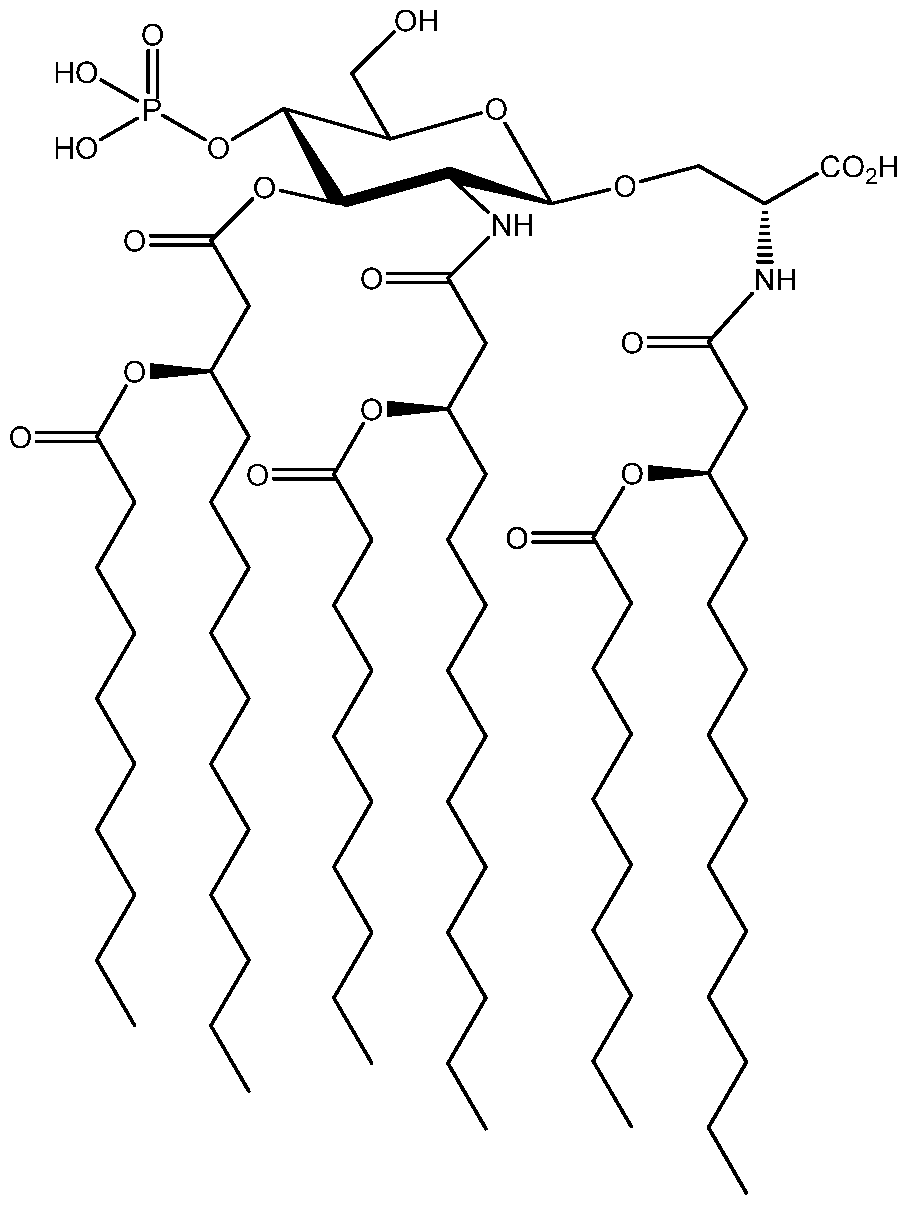
- Figure 1 shows the structure of CRX-601 and the CRX-601 degradant from the examples.
- Figure 2 shows the accelerated rate of degradation for buffers formulated with CRX- 601 at a neutral or near physiological pH.
- Figure 3 shows accelerated rate of degradation for three buffers formulated with CRX-601 at a near optimal pH for each buffer.
- Figure 4 shows the structure of CRX-527 and the CRX-527 degradant from the examples.
- Figure 5 shows accelerated rate of degradation using phosphate and HEPES buffers in CRX-527 and CRX-601 , respectively.
- Figure 6 shows the long term stability of CRX-601 formulated in three buffers
- Figure 7 through 9 show relative potency among the three buffers (HEPES, acetate, citrate) formulated with CRX-601 at a near optimal pH for each buffer.
- AGPs are Toll-Like
- TLR4 Toll-like receptor 4 recognizes bacterial LPS
- AGPs are a monosaccharide mimetic of the lipid A protein of bacterial LPS and have been developed with ether and ester linkages on the "acyl chains" of the compound.
- composition of the invention are known and disclosed in WO 2006/016997 which is hereby incorporated by reference in its entirety.
- aminoalkyl glucosaminide phosphate compounds set forth and described according to Formula (III) at paragraphs [0019] through [0021 ] in WO 2006/016997.
- AminoalkyI glucosaminide phosphate compounds employed in the present invention have the structure set forth in Formula 1 as follows:
- n 0 to 6
- n 0 to 4.
- X is 0 or S, preferably 0;
- Y is 0 or NH
- Z is 0 or H
- each R-i , R 2 , R 3 is selected independently from the group consisting of a Ci -2 o acyl and a C1-20 alkyl;
- R 4 is H or Me
- R 5 is selected independently from the group consisting of -H, -OH, -(C r C 4 ) alkoxy, -P0 3 R 8 R 9 , -OP0 3 R 8 R 9 , -S0 3 R 8 , -OS0 3 R 8 , -NR 8 R 9 , -SR 8 , -CN, -N0 2 , - CHO, -C0 2 R 8 , and -CONR 8 R 9 , wherein R 8 and R 9 are each independently selected from H and (C r C 4 ) alkyl; and
- each R 6 and R 7 is independently H or P0 3 H 2 .
- the configuration of the 3' stereogenic centers to which the normal fatty acyl residues (that is, the secondary acyloxy or alkoxy residues, e.g., R-iO, R 2 0, and R 3 0) are attached is R or S, preferably R (as designated by Cahn-lngold-Prelog priority rules).
- Configuration of aglycon stereogenic centers to which R 4 and R 5 are attached can be R or S. All stereoisomers, both enantiomers and diastereomers, and mixtures thereof, are considered to fall within the scope of the present invention.
- n The number of carbon atoms between heteroatom X and the aglycon nitrogen atom is determined by the variable "n", which can be an integer from 0 to 4, preferably an integer from 0 to 2.
- the chain length of normal fatty acids R-i , R 2 , and R 3 can be from about 6 to about 16 carbons, preferably from about 9 to about 14 carbons.
- the chain lengths can be the same or different. Some preferred embodiments include chain lengths where R1 , R2 and R3 are 6 or 10 or 12 or 14.
- n is 0, R 5 is C0 2 H, R 6 is P0 3 H 2 , and R 7 is H.
- This preferred AGP compound is set forth as the structure in Formula 1 a as follows:
- Formula 1 a the configuration of the 3' stereogenic centers to which the normal fatty acyl residues (that is, the secondary acyloxy or alkoxy residues, e.g., R-iO, R 2 0, and R 3 0) are attached as R or S, preferably R (as designated by Cahn-lngold-Prelog priority rules).
- Configuration of aglycon stereogenic centers to which R 4 and C0 2 H are attached can be R or S. All stereoisomers, both enantiomers and diastereomers, and mixtures thereof, are considered to fall within the scope of the present invention.
- Formula 1 a encompasses L/D-seryl, -threonyl, -cysteinyl ether or ester lipid AGPs, both agonists and antagonists.
- CRX-601 Especially preferred compounds of Formula 1 are referred to as CRX-601 and CRX-527. Their structures are set forth as follows:
- CRX 547 having the structure shown.
- Still other embodiments include AGPs such as CRX 602 or CRX 526 providing increased stability to AGPs having shorter secondary acyl or alkyl chains.
- the composition comprising an AGP is buffered using a zwitterionoic buffer.
- the zwitterionic buffer is an aminoalkanesulfonic acid or suitable salt.
- amninoalkanesulfonic buffers include but are not limlited to HEPES, HEPPS/EPPS, MOPS, MOBS and PIPES.
- the buffer is a pharmaceuteically acceptable buffer, suitable for use in humans, such as in for use in a commercial injection product.
- the buffer is HEPES.
- citrate e.g., sodium citrate having a pH of about 5
- acetate e.g., ammonium acetate having a pH of about 5.
- the AGPs CRX-601 , CRX- 527 and CRX-547 are buffered using HEPES having a pH of about 7.
- the buffers may be used with an appropriate amount of saline or other excipient to achieve desired isotonicity. In one preferred embodiment 0.9% saline is used.
- HEPES CAS Registry Number: 7365-45-9 C 8 H 18 N 2 0 4 S
- HEPES is a zwitterionic buffer designed to buffer in the physiological pH range of about 6 to about 8 (e.g. 6.15 -8.35) and more specifically from a more useful range of about 6.8 to about 8.2 and, as in the present invention, between about 7 and about 8 or between 7 and 8, and preferably between about 7 and less than 8.
- HEPES is typically a white crystalline powder and has the molecular formula: C 8 Hi 8 N 2 0 4 S of the following structure:
- HEPES HEPES is well-known and commercially available. (See, for example, Good et al.,
- the citrate buffer e.g., sodium citrate
- acetate when employed as the buffer in the composition of the invention both have a pH of about 5. In one embodiment the concentration of the buffer is about 10 mM, but in some embodiments an increased buffer concentration may be needed.
- the citrate and acetate buffers may be employed in the compositions of the invention with AGPs that require an acidic or slightly acidic pH. Acetate buffer works well in environments or compositions in which citrate buffers may not be used, such as in the presence of alum. Citrate and acetate buffers are commercially available.
- the composition of the invention may be a dispersion or solution.
- the composition is a nanoparticulate solution with particle sizes of ⁇ 200 nm.
- the composition is a nanoparticulate solution with particle sizes of ⁇ 200 nm displaying micellar or liposomal characteristics.
- the solution or dispersion is suitable for
- the size of particulates in solution is determined in part by the length of time the composition in the solution or dispersion is subjected to sonication.
- the present invention provides a method for enhancing an immune response of a subject comprising administering to the subject an effective amount of the pharmaceutical composition.
- compositions of the present invention may be used to protect or treat a mammal by means of administering via systemic or mucosal route.
- administrations may include injection via the intramuscular, intraperitoneal, intradermal or subcutaneous routes; or via mucosal administration to the oral/alimentary, respiratory, genitourinary tracts.
- the composition of the invention may be administered as a single dose, or multiple doses.
- the compositions of the invention may be administered by different routes for priming and boosting, for example, IM priming doses and IN for booster doses.
- the composition of the present invention may be administered alone or with suitable pharmaceutical carriers, and can be used in the manufacture of solid or liquid form, such as tablets, capsules, powders, solutions, suspensions, or emulsions.
- the composition may be formulated into a "vaccine,” and administered in free solution, or formulated with an adjuvant, or excipient.
- Vaccine preparation is generally described in Vaccine Design ("The subunit and adjuvant approach” (eds Powell M. F. & Newman M.J.) (1995) Plenum Press New York). Encapsulation within liposomes is described by Fullerton, US Patent 4,235,877. The vaccines may be stored in solution or lyophilized.
- Effective doses of treatments which incorporate the compositions of the present invention for the treatment of a subject vary depending upon many different factors, including means of administration, target site, physiological state of the patient, other medications administered, physical state of the patient relative to other medical complications, and whether treatment is prophylactic or therapeutic. Treatment dosages need to be titrated to optimize safety and efficacy.
- Subject doses described herein typically range from about 0. 1 g to 50mg per administration which depending on the application could be given daily, weekly, or monthly and any other amount of time there between. More typically mucosal or local doses range from about 10 g to 10mg per administration, and optionally from about 100 g to 1 mg, with 2-4 administrations being spaced days or weeks apart.
- immune stimulant doses range from 1 g to 10 mg per administration, and most typically 10 g to 1 mg, with daily or weekly administrations.
- Doses incorporating the invention described herein for parenteral delivery e.g., for inducing an innate immune response, or in specialized delivery vehicles typically range from about 0.1 g to 10 mg per administration, which depending on the application could be given daily, weekly, or monthly and any other amount of time there between. More typically parenteral doses for these purposes range from about 10 g to 5mg per administration, and most typically from about 100 g to 1 mg, with 2-4 administrations being spaced days or weeks apart.
- parenteral doses for these purposes may be used in a range of 5 to 10,000 times higher than the typical doses described above.
- a method for ameliorating or substantially preventing an infectious disease, an autoimmune disease, neurological disorder or an allergic or inflammatory condition in a subject comprising administering to the subject an effective amount of the pharmaceutical composition.
- an exogenous antigen may be administered to the subject along with the pharmaceutical composition.
- compositions for eliciting or enhancing an immune response are administered to a warm-blooded animal, such as a human or other mammal, with an antigen such as a protein or polypeptide antigen or a polynucleotide that expresses a protein or polypeptide antigen.
- an antigen such as a protein or polypeptide antigen or a polynucleotide that expresses a protein or polypeptide antigen.
- the amount of antigen administered to elicit a desired response can be readily determined by one skilled in the art and will vary with the type of antigen administered, route of administration and immunization schedule.
- the compositions of the present invention can also be administered without an exogenous antigen, to elicit immediate protection via a non-specific resistance effect.
- Compositions having the ability to stimulate non-specific resistance and/or elicit an adjuvant effect can be used in rapid acting vaccine formulations.
- aliphatic by itself or as part of another substituent, means, unless otherwise stated, a straight or branched chain, or cyclic hydrocarbon radical, or combination thereof, which may be fully saturated, mono- or polyunsaturated and can include di- and multivalent radicals, having the number of carbon atoms designated (i.e., C-I-C-I O or CM O means one to ten carbons).
- saturated hydrocarbon radicals include groups such as methyl, ethyl, n-propyl, isopropyl, n-butyl, t-butyl, isobutyl, sec-butyl, cyclohexyl, (cyclohexyl)methyl,
- An unsaturated aliphatic group is one having one or more double bonds or triple bonds. Examples of unsaturated aliphatic groups include vinyl, 2- propenyl, crotyl, 2-isopentenyl, 2-(butadienyl), 2,4-pentadienyl, 3-(1 ,4-pentadienyl), ethynyl, 1 - and 3-propynyl, 3-butynyl, and the higher homologs and isomers.
- an aliphatic group will have from 1 to 24 carbon atoms.
- a "lower aliphatic” group is a shorter chain aliphatic group, generally having eight or fewer carbon atoms.
- the term “acyl” refers to a group derived from an organic acid by removal of the hydroxy group. Examples of acyl groups include acetyl, propionyl, dodecanoyl, tetradecanoyl, isobutyryl, and the like. Accordingly, the term “acyl” as used herein is meant to include a group otherwise defined as -C(0)-aliphatic, where the aliphatic group is preferably a saturated aliphatic group.
- salts are meant to include salts of the active compounds which are prepared with relatively nontoxic acids or bases, depending on the particular substituents found on the compounds described herein.
- base addition salts can be obtained by contacting the neutral form of such compounds with a sufficient amount of the desired base, either neat or in a suitable inert solvent.
- Examples of pharmaceutically acceptable base addition salts include sodium, potassium, calcium, ammonium, organic amino, or magnesium salt, or a similar salt.
- the salt is an ethanolamine salt, such as monoethanolamine (MEA) or triethanolamine (TEA).
- MEA monoethanolamine
- TEA triethanolamine
- acid addition salts can be obtained by contacting the neutral form of such compounds with a sufficient amount of the desired acid, either neat or in a suitable inert solvent.
- Examples of pharmaceutically acceptable acid addition salts include those derived from inorganic acids like hydrochloric, hydrobromic, nitric, carbonic, monohydrogencarbonic, phosphoric,
- salts of amino acids such as arginate and the like, and salts of organic acids like glucuronic or galacturonic acids and the like (see, for example, Berge, S.M., et al, "Pharmaceutical Salts," Journal of Pharmaceutical Science, 66, 1 -19, 1977).
- Certain specific compounds used in the composition of the present invention contain both basic and acidic functionalities that allow the compounds to be converted into either base or acid addition salts.
- pharmaceutically acceptable carrier means a medium that does not interfere with the immunomodulatory activity of the active ingredient and is not toxic to the patient to whom it is administered.
- Pharmaceutically acceptable carriers include oil-in-water or water-in-oil emulsions, multiple emulsions (e.g. water in oil in water), micro-emulsions, liposomes, microbeads, microspheres, microsomes and the like.
- the carrier may be a microsphere or preferably a nanoshpere, or may be a microparticle or preferably a nanoparticle, having a compound of this invention within the matrix of the sphere or particle or adsorbed on the surface of the sphere or particle.
- the carrier may also be an aqueous solution or micellar dispersion containing triethylamine, triethanolamine or other agent that renders the formulation alkaline in nature, or a suspension containing aluminum hydroxide, calcium hydroxide, calcium phosphate or tyrosine adsorbate.
- Carriers may also include all solvents, dispersion media, vehicles, coatings, diluents, antibacterial and antifungal agents, isotonic and absorption delaying agents, buffers, carrier solutions, suspensions, colloids, and the like. The use of such media and agents for pharmaceutical active substances is well known in the art. Except insofar as any conventional media or agent is incompatible with the active ingredient, its use in the therapeutic compositions is contemplated.
- liposomes, nanocapsules, microparticles, lipid particles, vesicles, and the like are used for the introduction of the compositions of the present invention into suitable host cells/organisms.
- the compositions of the present invention may be formulated for delivery either encapsulated in a lipid particle, a liposome, a vesicle, a nanosphere, or a nanoparticle or the like.
- liposome and liposome-like preparations as potential drug carriers is generally known to those of skill in the art (see for example, Lasic, Trends Biotechnol 1998 Jul; 16(7):307-21 ; Takakura, Nippon Rinsho 1998
- Liposomes have been used successfully with a number of cell types that are normally difficult to transfect by other procedures, including T cell suspensions, primary hepatocyte cultures and PC 12 cells (Renneisen et al., J Biol Chem. 1990 Sep.
- liposomes are free of the DNA length constraints that are typical of viral-based delivery systems. Liposomes have been used effectively to introduce genes, various drugs, radiotherapeutic agents, enzymes, viruses, transcription factors, allosteric effectors and the like, into a variety of cultured cell lines and animals. Furthermore, the use of liposomes does not appear to be associated with autoimmune responses or
- liposomes are formed from phospholipids that are dispersed in an aqueous medium and spontaneously form multilamellar concentric bilayer vesicles (also termed multilamellar vesicles (MLVs).
- MLVs multilamellar vesicles
- the invention provides for pharmaceutically- acceptable nanocapsule formulations of the compositions of the present invention.
- Nanocapsules can generally entrap compounds in a stable and reproducible way (see, for example, Quintanar-Guerrero et al., Drug Dev Ind Pharm. 1998 Dec;24(12):1 1 13- 28).
- ultrafine particles sized around 0.1 ⁇
- Such particles can be made as described, for example, by Couvreur et al., Crit Rev Ther Drug Carrier Syst.
- immunomodulator means a substance that alters the immune response in a subject, such as by augmenting, reducing, changing or otherwise affecting the subject's immune response.
- compositions of the subject invention that can be administered parenterally, i.e. intraperitoneally, subcutaneously or intramuscularly include the following preferred carriers.
- suitable carriers for subcutaneous use include but are not limited to a phosphate buffered saline (PBS) solution, or 0.9% sodium chloride in USP Water for Injection, and 0.01 -0.1 % triethanolamine in USP Water for Injection.
- Suitable carriers for intramuscular injection include but are not limited to 10% USP ethanol, 40% propylene glycol and the balance an acceptable isotonic solution such as 5% dextrose , or 0.9% sodium chloride in USP Water for Injection.
- suitable carriers for intravenous use include but are not limited to 10% USP ethanol, 40% USP propylene glycol and the balance USP Water for Injection, or 0.9% sodium chloride in USP Water for Injection.
- the carrier includes 10% USP ethanol and USP Water for Injection; for yet another embodiment the acceptable carrier is 0.01 -0.1 %
- compositions or dispersion may be filtered through a 5 micron filter, or preferably a 0.2 micron filter, without removing the active ingredient.
- compositions of this invention are mucosal administration, particularly intranasal administration or in some cases administration by inhalation (pulmonary administration).
- Pulmonary drug delivery can be achieved by several different approaches, including liquid nebulizers, aerosol-based metered dose inhalers (MDIs), and dry powder dispersion devices.
- Compositions for use in administrations of this type are typically dry powders or aerosols.
- Dry powders contain, in addition to the composition of the invention, a carrier, an absorption enhancer, and optionally other ingredients.
- the carrier is, for example, a mono-, di- or polysaccharide, a sugar alcohol or another polyol.
- Suitable carriers include lactose, glucose, raffinose, melezitose, lactitol, maltitol, trehalose, sucrose, mannitol; and starch. Lactose is particularly preferred, especially in the form of its monohydrate.
- absorption enhancers such as polypeptides, surfactants, alkyl glycosides, amine salts of fatty acids or phospholipids.
- ingredients of the formulation typically must be in a finely divided form, i.e. their volume median diameter should generally be from about 30 to about 200 microns, as measured by a laser diffraction instrument or a coulter counter.
- the desired particle size may be produced using methods known in the art, e.g. milling, micronization or direct precipitation.
- intranasal route of administration provides numerous advantages over many other forms of administration for the compounds of this invention.
- one advantage of intranasal administration is convenience.
- An injectable system requires sterilization of the hypodermic syringe and in the institutional setting, leads to concerns among medical personnel about the risk of contracting disease by being accidentally stuck by a contaminated needle. Strict requirements for the safe disposal of the used needle and syringe must also be imposed in the institutional setting.
- intranasal administration requires little time on the part of the patient and the attending medical personnel, and is far less burdensome on the institution than injectables.
- intranasal administration is patient acceptance of the drug delivery system. Intranasal administration is perceived as non-invasive, is not accompanied by pain, has no significant after-effects and produces the gratification of prompt relief in the patient exhibiting the symptom. This is of particular advantage when the patient is a child. Another important consideration is that the patient may be able to self-administer the prescribed dosage(s) of nasal spray.
- compositions of this invention may be intranasal administration.
- compositions of this invention may be intranasal administration.
- compositions may be formulated as liquids or as solids. Such formulations may contain one or more additional adjuvants, agents for enhancing absorption of the active ingredients by permeation across the nasal membrane, and (for liquid compositions) an additional aqueous buffer or other pharmaceutically acceptable carriers.
- the composition may further optionally include one or more polyhydric alcohols and one or more preservative agents. Suitable preservatives include, for example, gentamicin, bacitracin (0.005%), or cresol.
- the compositions may be administered to the nasal cavity in the form of a spray by using an atomizer, nebulizer, sprayer, dropper or other device which insures contact of the solution with the nasal mucous membrane.
- the device may be a simple one such as a simple nasal sprayer that may be used by the patient, or may be a more elaborate instrument for more accurate dispensing of the compositions, that may be used in a physician's office or a medical facility.
- Nasal powder compositions can be made by lyophilizing the composition of the present invention or adsorbing the composition onto suitable nasal powders (e.g.
- the final step is size
- Powders can be administered using a nasal insufflator, or they may be placed in a capsule set in an inhalation or insufflation device. A needle is penetrated through the capsule to make pores at the top and the bottom of the capsule and air is sent to blow out the powder particles. Powder formulation can also be administered in a jet-spray of an inert gas or suspended in liquid organic fluids.
- compositions of the subject invention are administered to an individual in an effective amount or a pharmaceutically effective amount, to effect or enhance the individual's immune response.
- effective amount or “pharmaceutically effective amount” is that amount which shows a response over and above the vehicle or negative controls.
- An “adjuvant-effective amount” is that amount of the compound in question that, when administered in conjunction with an antigen, shows a response over and above that produced by the antigen alone.
- dose of the composition of the subject invention to be administered to a patient will depend upon the particular compound used, the route of administration, the pharmaceutical composition, and the patient.
- the MonoMac6 Potency assay is used to quantitatively measure the relative potency between two different lots of a biological product.
- a dose range of test and reference compounds are co-incubated with MonoMac6 cells, a human monocytic cell line, and cell supernatants are harvested for further testing.
- a chemokine marker (MIP-1 ⁇ ) measured from the cell supernatants by a nested ELISA, serves as readout.
- a potency analysis template was constructed into which raw optical densities are pasted, and analysis is automatically performed. Based on the slope and the parallelism between the test and reference response curves, set criteria within the defined metrics determine whether or not a successful potency determination can occur. If these criteria are successfully met, the analysis will yield a relative potency value of the test product against the reference product.
- the molecular weight of HEPES is 238.3 g/mol.
- 6.044 g of HEPES was weighed and 200 mL of sterile water was added and the mixture was stirred using a magnetic stirrer.
- the pH of the solution was measured to be 5.2.
- 5 N NaOH was added dropwise to achieve a final pH of 7.0.
- the molecular weight of HEPES is 238.3 g/mol.
- 6.044 g of HEPES was weighed and 200 mL of sterile water was added and the mixture was stirred using a magnetic stirrer.
- the pH of the solution was measured to be 5.2.
- 5 N NaOH was added dropwise to achieve a final pH of 8.0.
- the molecular weight of ammonium acetate is 77.08 g/mol.
- 1.927 g of ammonium acetate was weighed and 200 mL of sterile water was added and the mixture was stirred using a magnetic stirrer.
- the pH of the solution was measured to be 6.6.
- acetic acid was added dropwise to achieve a final pH of 5.0.
- the molecular weight of ammonium acetate is 77.08 g/mol.
- 1.927 g of ammonium acetate was weighed and 200 mL of sterile water was added and the mixture was stirred using a magnetic stirrer.
- the pH of the solution was measured to be 6.6.
- acetic acid was added drop wise to achieve a final pH of 5.5.
- the molecular weight of trisodium citrate (dehydrate) is 294.1 g/mol and citric acid (monohydrate) is 210.14 g/mol.
- citric acid monohydrate
- 3.670 g of trisodium citrate and 2.627 g of citrtic acid were weighed and 200 mL of sterile water was added and the mixture was stirred using a magnetic stirrer.
- the pH of the solution was measured to be 4.1.
- 5 N NaOH was added dropwise to achieve a final pH of 6.0.
- the molecular weight of trisodium citrate (dehydrate) is 294.1 g/mol and citric acid (monohydrate) is 210.14 g/mol.
- citric acid monohydrate
- 3.670 g of trisodium citrate and 2.627 g of citric acid were weighed and 200 mL of sterile water was added and the mixture was stirred using a magnetic stirrer.
- the pH of the solution was measured to be 4.1.
- 5 N NaOH was added dropwise to achieve a final pH of 6.1.
- the molecular weight of trisodium citrate (dehydrate) is 294.1 g/mol and citric acid (monohydrate) is 210.14 g/mol.
- citric acid monohydrate
- 3.670 g of trisodium citrate and 2.627 g of citric acid were weighed and 200 mL of sterile water was added and the mixture was stirred using a magnetic stirrer.
- the pH of the solution was measured to be 4.1.
- 5 N NaOH was added dropwise to achieve a final pH of 7.0.
- the molecular weight of TRIS is 121.14 g/mol.
- 3.029 g of TRIS was weighed and 200 mL of sterile water was added and the mixture was stirred using a magnetic stirrer.
- the pH of the solution was measured to be 10.5.
- 6 N HCI was added dropwise to achieve a final pH of 7.0.
- the molecular weight of succinic anhydride is 100.07 g/mol.
- 2.502 g of succinic anhydride was weighed and 200 mL of sterile water was added and the mixture was stirred using a magnetic stirrer.
- the pH of the solution was measured to be 2.5.
- 5 N NaOH was added dropwise to achieve a final pH of 7.0.
- the molecular weight of sodium phosphate (monobasic) is 137.99 g/mol and sodium phosphate (dibasic) is 141.96 g/mol.
- 0.059 g of sodium phosphate (monobasic) and 0.082 g of sodium phosphate (dibasic) were weighed and 80 mL of sterile water was added and the mixture was stirred using a magnetic stirrer.
- the pH of the solution was measured to be 7.0.
- the molecular weight of sodium phosphate (dibasic) is 141.96 g/mol and sodium chloride is 58.5 g/mol.
- 7.098 g of sodium phosphate (dibasic) and 5.844 g of sodium chloride was weighed and 900 mL of sterile water was added and the mixture was stirred using a magnetic stirrer.
- the pH of the solution was measured to be 9.0.
- 6 N HCI was added dropwise to achieve a final pH of 6.1.
- Table 1 lists seven common buffers regarded as being useful in the pharmaceutical arts.
- CRX-601 was formulated in each of the buffers summarized in Table 1 at a target concentration of 2 mg/ml_.
- the buffers were formulated at or near their reported optimal pH shown in Table 1.
- Table 2 shows the processing time to achieve a partially clear solution (i.e. achieve a particle size of approximately 200 nm) by sonication for each of the CRX- 601 buffered formulations.
- Degradation Buffers 1 -7 of Table 1 were screened for stability at the concentrations shown in the Table using an accelerated stability test.
- the buffer compositions were maintained for 14 days at 40°C.
- the stability of CRX-601 in each composition was determined by measuring the percent of CRX-601 in the composition with respect to common CRX-601 degradant (structures shown in Figure 1 ).
- the plot in Figure 2 shows the data from the first set of buffers that were screened with CRX-601. The slope of the trend lines fitted to each data series is a measure of the rate of degradation of CRX-601.
- No significant changes in pH were observed during the study.
- the particle size for all the formulations remained stable except for CRX-601 in Liposome Hydration Buffer (LHB) and acetate buffer which showed aggregation.
- LHB Liposome Hydration Buffer
- the stability of CRX- 527 in each composition was determined by measuring the percent of CRX-527 in the composition with respect to common CRX-527 degradant (structures shown in Figure 4).
- purity for the buffered solution was determined by measuring the percent of CRX-601 in the composition with respect to the common CRX-601 degradant, as explained above.
- the HEPES buffer provides AGP compounds desired stability at notably different pH value than do the acetate and citrate buffers.
- CRX-601 Potency Testing A MonoMac 6 cell potency assay was used to measure relative potency of CRX 527 in different buffers at an optimal pH and relative potency of CRX 601 in different buffers at an optimal pH.
- Initial experiments comparing potency of CRX-527 in HEPES and CRX-527 IN showed no significant difference in potency, (data not shown)
Landscapes
- Health & Medical Sciences (AREA)
- Life Sciences & Earth Sciences (AREA)
- Chemical & Material Sciences (AREA)
- Public Health (AREA)
- Veterinary Medicine (AREA)
- Medicinal Chemistry (AREA)
- Animal Behavior & Ethology (AREA)
- General Health & Medical Sciences (AREA)
- Pharmacology & Pharmacy (AREA)
- Epidemiology (AREA)
- Molecular Biology (AREA)
- Bioinformatics & Cheminformatics (AREA)
- Engineering & Computer Science (AREA)
- General Chemical & Material Sciences (AREA)
- Chemical Kinetics & Catalysis (AREA)
- Immunology (AREA)
- Nuclear Medicine, Radiotherapy & Molecular Imaging (AREA)
- Organic Chemistry (AREA)
- Microbiology (AREA)
- Otolaryngology (AREA)
- Mycology (AREA)
- Biophysics (AREA)
- Communicable Diseases (AREA)
- Pulmonology (AREA)
- Oncology (AREA)
- Medicinal Preparation (AREA)
- Pharmaceuticals Containing Other Organic And Inorganic Compounds (AREA)
- Medicines Containing Antibodies Or Antigens For Use As Internal Diagnostic Agents (AREA)
Abstract
Description




Claims


Priority Applications (7)
| Application Number | Priority Date | Filing Date | Title |
|---|---|---|---|
| JP2015562506A JP2016512226A (en) | 2013-03-15 | 2014-03-13 | Compositions containing buffered aminoalkyl glucosaminide phosphate derivatives and their use to enhance immune responses |
| CA2905162A CA2905162A1 (en) | 2013-03-15 | 2014-03-13 | Composition containing buffered aminoalkyl glucosaminide phosphate derivatives and its use for enhancing an immune response |
| ES14712786T ES2743465T3 (en) | 2013-03-15 | 2014-03-13 | Composition containing buffered aminoalkyl glucosaminide phosphate derivatives and their use to enhance an immune response |
| US14/777,091 US9827260B2 (en) | 2013-03-15 | 2014-03-13 | Composition for buffered aminoalkyl glucosaminide phosphate compounds and its use for enhancing an immune response |
| BR112015023502A BR112015023502A2 (en) | 2013-03-15 | 2014-03-13 | composition, and methods for enhancing an immune response and substantially improving or preventing an infectious disease, an autoimmune disease, or an allergic condition in an individual |
| EP14712786.4A EP2968376B1 (en) | 2013-03-15 | 2014-03-13 | Composition containing buffered aminoalkyl glucosaminide phosphate derivatives and its use for enhancing an immune response |
| CN201480027113.9A CN105188710A (en) | 2013-03-15 | 2014-03-13 | Composition containing buffered aminoalkyl glucosaminide phosphate derivatives and its use for enhancing an immune response |
Applications Claiming Priority (2)
| Application Number | Priority Date | Filing Date | Title |
|---|---|---|---|
| US201361791165P | 2013-03-15 | 2013-03-15 | |
| US61/791,165 | 2013-03-15 |
Publications (1)
| Publication Number | Publication Date |
|---|---|
| WO2014141127A1 true WO2014141127A1 (en) | 2014-09-18 |
Family
ID=50382517
Family Applications (1)
| Application Number | Title | Priority Date | Filing Date |
|---|---|---|---|
| PCT/IB2014/059731 Ceased WO2014141127A1 (en) | 2013-03-15 | 2014-03-13 | Composition containing buffered aminoalkyl glucosaminide phosphate derivatives and its use for enhancing an immune response |
Country Status (9)
| Country | Link |
|---|---|
| US (1) | US9827260B2 (en) |
| EP (1) | EP2968376B1 (en) |
| JP (1) | JP2016512226A (en) |
| CN (1) | CN105188710A (en) |
| BE (1) | BE1021939B1 (en) |
| BR (1) | BR112015023502A2 (en) |
| CA (1) | CA2905162A1 (en) |
| ES (1) | ES2743465T3 (en) |
| WO (1) | WO2014141127A1 (en) |
Cited By (7)
| Publication number | Priority date | Publication date | Assignee | Title |
|---|---|---|---|---|
| WO2016109880A1 (en) * | 2015-01-06 | 2016-07-14 | Immunovaccine Technologies Inc. | Lipid a mimics, methods of preparation, and uses thereof |
| WO2017013603A1 (en) | 2015-07-21 | 2017-01-26 | Glaxosmithkline Biologicals Sa | Adjuntive immunotherapy for the prevention or treatment of infectious disease |
| WO2020007760A1 (en) * | 2018-07-03 | 2020-01-09 | Glaxosmithkline Intellectual Property Development Limited | Tlr4 compounds or pharmaceutically acceptable salts thereof, corresponding pharmaceutical compositions or formulations, methods of preparation, treatment or uses |
| WO2020109365A1 (en) | 2018-11-29 | 2020-06-04 | Glaxosmithkline Biologicals Sa | Methods for manufacturing an adjuvant |
| US12150948B2 (en) | 2018-02-12 | 2024-11-26 | National Institutes Of Health (Nih), U.S. Dept. Of Health And Human Services (Dhhs), U.S. Government | Toll-like receptor ligands |
| EP4169527A4 (en) * | 2020-06-22 | 2025-03-05 | Sumitomo Pharma Co., Ltd. | ADJUVANT WITH TLR4 AGONIST ACTIVITY |
| EP4245763A4 (en) * | 2020-11-11 | 2025-06-18 | Daiichi Sankyo Company, Limited | Novel aminoalkyl glucosaminide 4-phosphate derivative |
Families Citing this family (2)
| Publication number | Priority date | Publication date | Assignee | Title |
|---|---|---|---|---|
| CN106791330B (en) * | 2017-01-11 | 2019-08-13 | Oppo广东移动通信有限公司 | Camera module and terminal |
| US12496340B2 (en) * | 2019-05-23 | 2025-12-16 | The University Of Montana | Vaccine adjuvants based on TLR receptor ligands |
Citations (20)
| Publication number | Priority date | Publication date | Assignee | Title |
|---|---|---|---|---|
| US4235877A (en) | 1979-06-27 | 1980-11-25 | Merck & Co., Inc. | Liposome particle containing viral or bacterial antigenic subunit |
| US5145684A (en) | 1991-01-25 | 1992-09-08 | Sterling Drug Inc. | Surface modified drug nanoparticles |
| US5552157A (en) | 1990-08-27 | 1996-09-03 | Kabushiki Kaisha Vitamin Kenkyusya | Liposome for entrapping gene, liposomal preparation and process for the manufacture of the preparation |
| US5565213A (en) | 1990-07-26 | 1996-10-15 | Taisho Pharmaceutical Co., Ltd. | Stable liposome aqueous suspension |
| US5567434A (en) | 1989-03-31 | 1996-10-22 | The Regents Of The University Of California | Preparation of liposome and lipid complex compositions |
| US5738868A (en) | 1995-07-18 | 1998-04-14 | Lipogenics Ltd. | Liposome compositions and kits therefor |
| US5795587A (en) | 1995-01-23 | 1998-08-18 | University Of Pittsburgh | Stable lipid-comprising drug delivery complexes and methods for their production |
| US6113918A (en) | 1997-05-08 | 2000-09-05 | Ribi Immunochem Research, Inc. | Aminoalkyl glucosamine phosphate compounds and their use as adjuvants and immunoeffectors |
| WO2001090129A2 (en) | 2000-05-19 | 2001-11-29 | Corixa Corporation | Prophylactic and therapeutic treatment of infectious, autoimmune and allergic diseases with mono and disaccharide-base compounds |
| US20020048588A1 (en) * | 1997-05-08 | 2002-04-25 | Johnson David A. | Aminoalkyl glucosaminide phosphate compounds and their use as adjuvants and immunoeffectors |
| WO2003005952A2 (en) * | 2001-07-10 | 2003-01-23 | Corixa Corporation | Compositions and methods for delivery of proteins and adjuvants encapsulated in microspheres |
| US6525028B1 (en) | 2002-02-04 | 2003-02-25 | Corixa Corporation | Immunoeffector compounds |
| US20040156863A1 (en) * | 2002-02-21 | 2004-08-12 | Mark Page | Stabilized HBc chimer particles as therapeutic vaccine for chronic hepatitis |
| US6911434B2 (en) | 2002-02-04 | 2005-06-28 | Corixa Corporation | Prophylactic and therapeutic treatment of infectious and other diseases with immunoeffector compounds |
| WO2006016997A2 (en) | 2004-07-08 | 2006-02-16 | Corixa Corporation | Certain aminoalkyl glucosaminide phosphate compounds and their use |
| WO2006052820A2 (en) * | 2004-11-08 | 2006-05-18 | Duke University | Human immunodeficiency virus vaccine |
| WO2006110344A1 (en) * | 2005-04-07 | 2006-10-19 | Wyeth | Novel methods for inducing an immune response against human immunodefiency virus |
| US7129219B2 (en) | 2000-08-04 | 2006-10-31 | Corixa Corporation | Immunoeffector compounds |
| WO2007085962A2 (en) * | 2006-01-26 | 2007-08-02 | Pfizer Products Inc. | Novel glycolipid adjuvant compositions |
| US7288640B2 (en) | 2002-07-08 | 2007-10-30 | Corixa Corporation | Processes for the production of aminoalkyl glucosaminide phosphate and disaccharide immunoeffectors, and intermediates therefor |
Family Cites Families (5)
| Publication number | Priority date | Publication date | Assignee | Title |
|---|---|---|---|---|
| GB0030263D0 (en) | 2000-12-12 | 2001-01-24 | Pbt Ip Ltd | Gas flow control valve |
| ES2456066T3 (en) | 2002-07-08 | 2014-04-21 | Corixa Corporation | Processes for the production of aminoalkyl glucosaminide phosphate and disaccharide immunoefectors, and intermediates for it |
| CN101863930A (en) | 2003-01-06 | 2010-10-20 | 科里克萨有限公司 | Certain aminoalkyl glucosaminide phosphate compounds and their purposes |
| CN102755645A (en) * | 2005-11-04 | 2012-10-31 | 诺华疫苗和诊断有限公司 | Influenza vaccines with reduced amount of emulsion adjuvant |
| SI1991266T1 (en) * | 2006-01-26 | 2013-10-30 | Zoetis P Llc | Novel glycolipid adjuvant compositions |
-
2014
- 2014-03-13 CN CN201480027113.9A patent/CN105188710A/en active Pending
- 2014-03-13 CA CA2905162A patent/CA2905162A1/en not_active Abandoned
- 2014-03-13 EP EP14712786.4A patent/EP2968376B1/en active Active
- 2014-03-13 BE BE2014/0160A patent/BE1021939B1/en not_active IP Right Cessation
- 2014-03-13 US US14/777,091 patent/US9827260B2/en not_active Expired - Fee Related
- 2014-03-13 WO PCT/IB2014/059731 patent/WO2014141127A1/en not_active Ceased
- 2014-03-13 ES ES14712786T patent/ES2743465T3/en active Active
- 2014-03-13 JP JP2015562506A patent/JP2016512226A/en active Pending
- 2014-03-13 BR BR112015023502A patent/BR112015023502A2/en not_active Application Discontinuation
Patent Citations (20)
| Publication number | Priority date | Publication date | Assignee | Title |
|---|---|---|---|---|
| US4235877A (en) | 1979-06-27 | 1980-11-25 | Merck & Co., Inc. | Liposome particle containing viral or bacterial antigenic subunit |
| US5567434A (en) | 1989-03-31 | 1996-10-22 | The Regents Of The University Of California | Preparation of liposome and lipid complex compositions |
| US5565213A (en) | 1990-07-26 | 1996-10-15 | Taisho Pharmaceutical Co., Ltd. | Stable liposome aqueous suspension |
| US5552157A (en) | 1990-08-27 | 1996-09-03 | Kabushiki Kaisha Vitamin Kenkyusya | Liposome for entrapping gene, liposomal preparation and process for the manufacture of the preparation |
| US5145684A (en) | 1991-01-25 | 1992-09-08 | Sterling Drug Inc. | Surface modified drug nanoparticles |
| US5795587A (en) | 1995-01-23 | 1998-08-18 | University Of Pittsburgh | Stable lipid-comprising drug delivery complexes and methods for their production |
| US5738868A (en) | 1995-07-18 | 1998-04-14 | Lipogenics Ltd. | Liposome compositions and kits therefor |
| US6113918A (en) | 1997-05-08 | 2000-09-05 | Ribi Immunochem Research, Inc. | Aminoalkyl glucosamine phosphate compounds and their use as adjuvants and immunoeffectors |
| US20020048588A1 (en) * | 1997-05-08 | 2002-04-25 | Johnson David A. | Aminoalkyl glucosaminide phosphate compounds and their use as adjuvants and immunoeffectors |
| WO2001090129A2 (en) | 2000-05-19 | 2001-11-29 | Corixa Corporation | Prophylactic and therapeutic treatment of infectious, autoimmune and allergic diseases with mono and disaccharide-base compounds |
| US7129219B2 (en) | 2000-08-04 | 2006-10-31 | Corixa Corporation | Immunoeffector compounds |
| WO2003005952A2 (en) * | 2001-07-10 | 2003-01-23 | Corixa Corporation | Compositions and methods for delivery of proteins and adjuvants encapsulated in microspheres |
| US6911434B2 (en) | 2002-02-04 | 2005-06-28 | Corixa Corporation | Prophylactic and therapeutic treatment of infectious and other diseases with immunoeffector compounds |
| US6525028B1 (en) | 2002-02-04 | 2003-02-25 | Corixa Corporation | Immunoeffector compounds |
| US20040156863A1 (en) * | 2002-02-21 | 2004-08-12 | Mark Page | Stabilized HBc chimer particles as therapeutic vaccine for chronic hepatitis |
| US7288640B2 (en) | 2002-07-08 | 2007-10-30 | Corixa Corporation | Processes for the production of aminoalkyl glucosaminide phosphate and disaccharide immunoeffectors, and intermediates therefor |
| WO2006016997A2 (en) | 2004-07-08 | 2006-02-16 | Corixa Corporation | Certain aminoalkyl glucosaminide phosphate compounds and their use |
| WO2006052820A2 (en) * | 2004-11-08 | 2006-05-18 | Duke University | Human immunodeficiency virus vaccine |
| WO2006110344A1 (en) * | 2005-04-07 | 2006-10-19 | Wyeth | Novel methods for inducing an immune response against human immunodefiency virus |
| WO2007085962A2 (en) * | 2006-01-26 | 2007-08-02 | Pfizer Products Inc. | Novel glycolipid adjuvant compositions |
Non-Patent Citations (14)
| Title |
|---|
| "Vaccine Design", 1995, PLENUM PRESS, article "The subunit and adjuvant approach" |
| BERGE, S.M. ET AL.: "Pharmaceutical Salts", JOURNAL OF PHARMACEUTICAL SCIENCE, vol. 66, 1977, pages 1 - 19 |
| CHANDRAN ET AL., INDIAN J EXP BIOL., vol. 35, no. 8, August 1997 (1997-08-01), pages 801 - 9 |
| COUVREUR ET AL., CRIT REV THER DRUG CARRIER SYST., vol. 5, no. 1, 1988, pages 1 - 20 |
| GOOD ET AL., BIOCHEMISTRY, 1966 |
| HW FUNG ET AL: "Optimizing manufacturing and composition of a TLR4 nanosuspension: physicochemical stability and vaccine adjuvant activity", JOURNAL OF NANOBIOTECHNOLOGY, vol. 21, no. 11, 21 December 2013 (2013-12-21), pages 43 - 43, XP055119539, ISSN: 1477-3155 * |
| LASIC, TRENDS BIOTECHNOL, vol. 16, no. 7, July 1998 (1998-07-01), pages 307 - 21 |
| MARGALIT, CRIT REV THER DRUG CARRIER SYST., vol. 12, no. 2-3, 1995, pages 233 - 61 |
| MUHLEN, EUR J PHARM BIOPHARM., vol. 45, no. 2, March 1998 (1998-03-01), pages 149 - 55 |
| MULLER ET AL., DNA CELL BIOL., vol. 9, no. 3, April 1990 (1990-04-01), pages 221 - 9 |
| QUINTANAR-GUERRERO ET AL., DRUG DEV IND PHARM., vol. 24, no. 12, December 1998 (1998-12-01), pages 1113 - 28 |
| RENNEISEN ET AL., J BIOL CHEM., vol. 265, no. 27, 25 September 1990 (1990-09-25), pages 16337 - 42 |
| TAKAKURA, NIPPON RINSHO, vol. 56, no. 3, March 1998 (1998-03-01), pages 691 - 5 |
| ZAMBAUX ET AL., J CONTROLLED RELEASE., vol. 50, no. 1-3, 2 January 1998 (1998-01-02), pages 31 - 40 |
Cited By (9)
| Publication number | Priority date | Publication date | Assignee | Title |
|---|---|---|---|---|
| WO2016109880A1 (en) * | 2015-01-06 | 2016-07-14 | Immunovaccine Technologies Inc. | Lipid a mimics, methods of preparation, and uses thereof |
| US10533033B2 (en) | 2015-01-06 | 2020-01-14 | Immunovaccine Technologies Inc. | Lipid A mimics, methods of preparation, and uses thereof |
| US10988500B2 (en) | 2015-01-06 | 2021-04-27 | Immunovaccine Technologies Inc. | Lipid A mimics, methods of preparation, and uses thereof |
| WO2017013603A1 (en) | 2015-07-21 | 2017-01-26 | Glaxosmithkline Biologicals Sa | Adjuntive immunotherapy for the prevention or treatment of infectious disease |
| US12150948B2 (en) | 2018-02-12 | 2024-11-26 | National Institutes Of Health (Nih), U.S. Dept. Of Health And Human Services (Dhhs), U.S. Government | Toll-like receptor ligands |
| WO2020007760A1 (en) * | 2018-07-03 | 2020-01-09 | Glaxosmithkline Intellectual Property Development Limited | Tlr4 compounds or pharmaceutically acceptable salts thereof, corresponding pharmaceutical compositions or formulations, methods of preparation, treatment or uses |
| WO2020109365A1 (en) | 2018-11-29 | 2020-06-04 | Glaxosmithkline Biologicals Sa | Methods for manufacturing an adjuvant |
| EP4169527A4 (en) * | 2020-06-22 | 2025-03-05 | Sumitomo Pharma Co., Ltd. | ADJUVANT WITH TLR4 AGONIST ACTIVITY |
| EP4245763A4 (en) * | 2020-11-11 | 2025-06-18 | Daiichi Sankyo Company, Limited | Novel aminoalkyl glucosaminide 4-phosphate derivative |
Also Published As
| Publication number | Publication date |
|---|---|
| US20160022719A1 (en) | 2016-01-28 |
| EP2968376A1 (en) | 2016-01-20 |
| ES2743465T3 (en) | 2020-02-19 |
| CN105188710A (en) | 2015-12-23 |
| BR112015023502A2 (en) | 2017-07-18 |
| US9827260B2 (en) | 2017-11-28 |
| BE1021939B1 (en) | 2016-01-27 |
| EP2968376B1 (en) | 2019-06-05 |
| CA2905162A1 (en) | 2014-09-18 |
| JP2016512226A (en) | 2016-04-25 |
Similar Documents
| Publication | Publication Date | Title |
|---|---|---|
| US9827260B2 (en) | Composition for buffered aminoalkyl glucosaminide phosphate compounds and its use for enhancing an immune response | |
| US6153217A (en) | Nanocochleate formulations, process of preparation and method of delivery of pharmaceutical agents | |
| EP3222621B1 (en) | Lipidated immune response modifier compound and its medical use | |
| JP6050822B2 (en) | Use of nanoparticles as carriers for amphipathic or hydrophobic molecules in the medical field including nanoparticles, treatments for the preparation of nanoparticles, and cancer treatment and food-related compounds | |
| CN104470938B (en) | Disaccharide synthetic lipid compound and use thereof | |
| WO2004035032A2 (en) | Pharmaceutical formulations of camptothecine derivatives | |
| US20190374463A1 (en) | Treatment of protein aggregation myopathic and neurodegenerative diseases by parenteral administration of trehalose | |
| WO2009115053A1 (en) | Injectable sustained-release pharmaceutical formulation and the preparation method thereof | |
| KR20210141546A (en) | Stable bacterial extract manufacturing process and use thereof as a medicament | |
| US11351157B2 (en) | Treatment of immunological disease using berberine nanoparticles | |
| KR20210023813A (en) | Treatment methods and compositions for treating prostate cancer using 6,8-bis-benzylthio-octanoic acid | |
| CN116059167A (en) | A kind of co-loaded micelles and its synergistic drug system, preparation method and application | |
| US20180153984A1 (en) | Adjuvant particles comprising adenosine receptor antagonists | |
| CN101773468A (en) | Zanamivir nasal nanometer suspension and preparation method thereof | |
| CN111417392A (en) | Cannabidiol and chitosan compositions and methods of use | |
| US20220313659A1 (en) | Methods for Increasing the Bioavailability of OTC and Pharmaceutical Drugs | |
| Shaik et al. | Development of a new vaccine adjuvant system based on the combination of the synthetic TLR4 agonist FP20 and a synthetic QS-21 variant | |
| CA3179062A1 (en) | Nanoparticulate formulation | |
| KR20220033450A (en) | Anti-influenza viral composition comprising niclosamide | |
| US20160339041A1 (en) | Liposome comprising at least one cholesterol derivative | |
| US20240108685A1 (en) | Oral liposomal compositions | |
| US20110104248A1 (en) | Liposomes and immunopotentiating compositions containing the same | |
| WO2025021052A1 (en) | Cpg oligodeoxynucleotide capable of regulating immune function of body and use thereof | |
| CN119258224A (en) | Drug combination of ursolic acid and multi-target tyrosine kinase receptor inhibitor | |
| JP4092367B1 (en) | Liposomes and compositions for immunostimulatory activity comprising the same. |
Legal Events
| Date | Code | Title | Description |
|---|---|---|---|
| WWE | Wipo information: entry into national phase |
Ref document number: 201480027113.9 Country of ref document: CN |
|
| 121 | Ep: the epo has been informed by wipo that ep was designated in this application |
Ref document number: 14712786 Country of ref document: EP Kind code of ref document: A1 |
|
| ENP | Entry into the national phase |
Ref document number: 2015562506 Country of ref document: JP Kind code of ref document: A |
|
| ENP | Entry into the national phase |
Ref document number: 2905162 Country of ref document: CA |
|
| NENP | Non-entry into the national phase |
Ref country code: DE |
|
| WWE | Wipo information: entry into national phase |
Ref document number: 14777091 Country of ref document: US |
|
| WWE | Wipo information: entry into national phase |
Ref document number: 2014712786 Country of ref document: EP |
|
| REG | Reference to national code |
Ref country code: BR Ref legal event code: B01A Ref document number: 112015023502 Country of ref document: BR |
|
| ENP | Entry into the national phase |
Ref document number: 112015023502 Country of ref document: BR Kind code of ref document: A2 Effective date: 20150915 |