[Title of the Invention]
PHENYL ALKYL CARBAMATE COMPOUNDS FOR USE IN PREVENTING OR TREATING EPILEPSY OR EPILEPSY-RELATED SYNDROME [Technical Field]
The present invention provides a pharmaceutical composition for preventing and/or treating a epilepsy or epilepsy-related syndrome, for example an intractable epilepsy or its related syndrome such as drug-resistant epilepsy, comprising the phenyl alkyl carbamate compound as an active ingredient, and a use of the phenyl alkyl carbamate compound for preventing and/or treating epilepsy or epilepsy-related syndrome.
BACKGROUND OF THE INVENTION
Epilepsy and its related syndromes may be classified according to whether the associated seizures are partial or generalized, and whether the etiology is idiopathic or symptomatic/cryptogenic. Several important syndromes can be further grouped according to age of onset and prognosis.
Epilepsy is a chronic brain disease in which epileptic seizures are the predominant feature. Generally, most epilepsies and diseases associated therewith are difficult to treat, since epilepsies are not etiologically elucidated. Thus, administration of an anti epileptic agent is a common approach toward suppressing epileptic seizures or inhibiting propagation of focal seizures to other portions.
The older established antiepileptic drugs (AEDs) such as phenyloin, carbamazepine, clonazepam, ethosuximide, valproic acid and barbiturates are widely prescribed but suffer from a range of side effect. Furthermore, there is a significant group of patients (20-30%) that are resistant to the currently available therapeutic agents. Fifty million people in the world have epilepsy, and there are between 16 and 51 cases of new-onset epilepsy per 100,000 people every year. A community-based study in southern France estimated that up to 22.5% of patients with epilepsy have drug-resistant epilepsy. Patients with drug-resistant epilepsy have increased risks of premature death, injuries, psychosocial dysfunction, and a reduced quality of life.
One study showed that the use-dependent blockade of the fast sodium current in dentate granule cells by carbamazepine was lost in hippocampi resected from patients with
carbamazepine-resistant temporal-lobe epilepsy, although this finding did not extend to lamotrigine, which has a pharmacologic action similar to that of carbamazepine. Altered expression of subtypes of the γ-aminobutyric acid type A (GABAA) receptor has also been observed in patients with drug-resistant temporal-lobe epilepsy. Whether these changes result in reduced sensitivity to anti epileptic drugs that act on the receptor is unknown.
Since 1989 several new drugs have been launched, including felbamate, gabapentin, lamotrigine, oxcarbazepine, tiagabine, topimarate,vigabartrin,zonisamide and levetiracetam. While many of new drugs AEDs show improved efficacies and side-effect profiles, patients with intractable epilepsy remain untreated. Because of the need to individualize therapy, no rigid set of guidelines can be applied to determine medical intractability. There is still a need for improved medication.
[SUMMARY OF THE INVENTION]
An embodiment provides a pharmaceutical composition for the prevention and the treatment of an epilepsy or a epilepsy-related syndrome, comprising a phenyl alkyl carbamate compound of the following Chemical Formula 1 , an enantiomer or a diastereomer thereof, or a mixture of enantiomers or diastereomers; or a pharmaceutically acceptable salt thereof.
Another embodiment is to provide a method of preventing and/or treating an epilepsy or a epilepsy-related syndrome in a subject comprising administering a pharmaceutically effective amount of a phenyl alkyl carbamate compound represented by Chemical Formula 1 ; a racemate, an enantiomer, a diastereomer, a mixture of enantiomers, or a mixture of diastereomers thereof; or a pharmaceutically acceptable salt thereof, to the subject in need.
Still other embodiment is to provide a phenyl alkyl carbamate compound represented by Chemical Formula 1 ; a racemate, an enantiomer, a diastereomer, a mixture of enantiomers, or a mixture of diastereomers thereof; or a pharmaceutically acceptable salt thereof, for use in the prevention and/or treatment of epilepsy or the manufacture of a pharmaceutical composition for preventing and/or treating an epilepsy or a epilepsy-related syndrome.
[DETAILED DESCRIPTION OF THE EMBODIMENTS]
Continuing its research work in the field of epilepsy, the present inventors, as results of studies on the development of the drugs useful for prevention and/or treatment of an epilepsy or a epilepsy-related syndrome, found that a substituted phenyl alkyl carbamate compounds of the following Chemical Formula 1 exhibits remarkably excellent anti-epilepsy
activity in various emulation models and simultaneously has very low toxicity, and completed the invention.
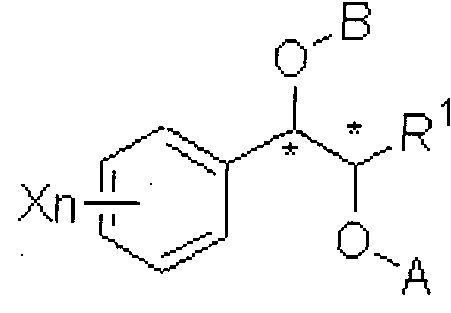
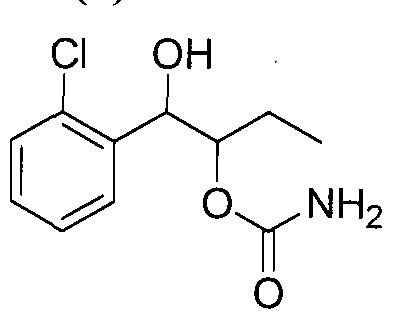
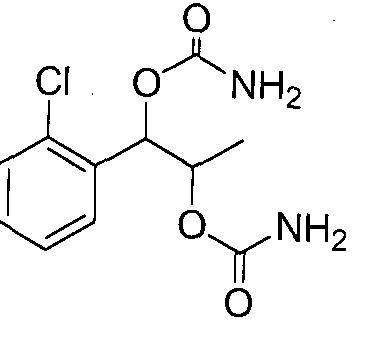
An embodiment of the present invention provides a pharmaceutical composition for prevention and/or treatment of an epilepsy or a epilepsy-related syndrome, comprising an organic compound, i.e., phenyl carbamate derivatives, more particularly, a phenyl alkyl carbamate compound represented by following Chemical Formula I; a racemate, an enantiomer, a diastereomer, a mixture of enantiomers, or a mixture of diastereomers thereof; or a pharmaceutically acceptable salt thereof:
[Chemical Formula I
wherein,
X is a halogen, for example, chlorine, fluorine, iodine, or bromine,
n, that means the number of substituent X, is an integer from 1 to 5, for example, 1 or 2,wherein X is the same or different each other, when n is 2 or larger,
R1 is a hydrogen or linear or branched Ci-C4 alkyl group, for example, methyl group, ethyl group, isopropyl group, or butyl group,
A is selected from the group consisting of an allyl, a Ci-C i9 linear or branched alkyl group (such as a methyl, t-butyl, benzyl, p-methoxybezyl, 2- napthylmethyl,trityl group etc.), a C2-C8 alkoxy alky ether group (such as a methoxy methy(MOM), methoxyethoxymethyl(MEM), thertahydropyranyl(THP), benzyloxymethyl(BOM), methyl thiomethyl(MTM), trimethylsilylethoxymethyl(SEM), ethoxyethyl(EE) group etc.),
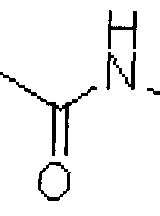
and a carbamoyl derivative represented by
,
B is selected from the group consisting of an allyl, a
linear or branched alkyl group (such as a methyl, t-butyl, benzyl, p-methoxybenzyl, 2- napthylmethyl, trityl group etc.), a C
2-C
8 alkoxy alky ether group (such as a methoxy methy(MOM), methoxyethoxymethyl(MEM), thertahydropyranyl(THP), benzyloxymethyl(BOM), methyl thiomethyl(MTM), trimethylsilylethoxymethyl(SEM), ethoxyethyl(EE) group etc.),
and a carbamoyl derivative represented by O and
R and R may be the same as or different from each other, and independently selected from the group consisting of hydrogen, a linear or branched lower alkyl group of Q- C4, for example Ci-C3, a cycloalkyl group of C3-C8, for example C3-C7, and benzyl group, and more specifically, R and R may be the same as or different from each other, and independently selected from the group consisting of hydrogen, methyl group, propyl group, isopropyl group, cyclopropyl group, cyclohexyl group, bicycloheptane group, and benzyl group.
In an embodiment, when A is a carbamoyl group, B is an allyl, a linear or branched Cj-Ci9 alkyl group or a C2-C8 alkoxy alky ether group; when B is a carbamoyl group, A is an allyl, a linear or branched C1-C19 alkyl group or a C2-C8 alkoxy alky ether group; or A and B are carbamoyl derivative at the same time.
In an embodiment of Chemical Formula 1, the C 1 -C 19 linear or branched alkyl group is independently linear or branched C1-C6 lower aliphatic alkyl such as methyl, ethyl, t-butyl and the like; a substituted or unsubstituted C3-C[9 cycloaliphatic and substituted or unsubstituted C6-Ci8 aromatic group such as benzyl, naphtyl, trityl and the like. The cycloaliphatic group and the aromatic group may be substituted with at least one selected from the group consisting of hydrogen, Ci-C lower alkyl and Ci-C6 alkoxy group.
The examples of Ci-C6 lower aliphatic alkyl include methyl, ethyl, propyl, t-butyl, pantyl, hexyl and the like. The examples of C6-C) aromatic group is benzyl such as benzyl, methylbenzyl, methoxybenzyl and the like, naphtyl such as 2-naphtylmethyl, trityl group and the like.
Another embodiment provides a pharmaceutical composition containing a phenyl alkyl carbamate derivertive compound represented by Chemical Formula I; a racemate, an enantiomer, a diastereomer, a mixture of enantiomers, or a mixture of diastereomers thereof; or a pharmaceutically acceptable salt thereof, as an active ingredient.
Since the compound has two chiral carbons at the 1st and 2nd positions from the X substituted phenyl alkyl carbamate derivative group, they may be in the form of a racemate, an enantiomer, a diastereomer, a mixture of enantiomers, or a mixture of diastereomers.
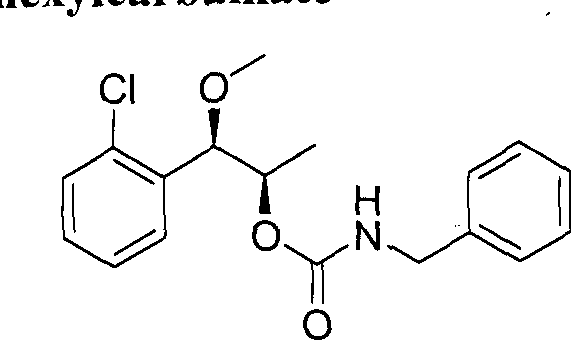
In a concrete embodiment, the compound may be selected from the group consisting of:
1 -(2-chlorophenyl)- 1 -carbamoyloxypropyl-2-carbamate,
1 -(2-chlorophenyl)- 1 -carbamoyloxypropyl-2-N-methylcarbamate,
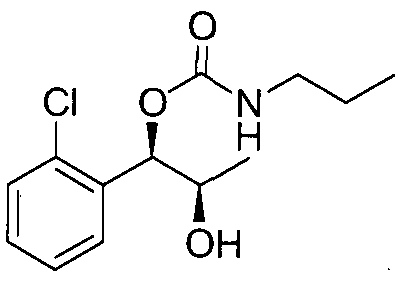
1 -(2-chlorophenyl)- 1 -carbamoyloxypropyl-2-N-propylcarbamate
1 -(2-chlorophenyl)- 1 -carbamoyloxybutyl-2-carbamate,
1 -(2-chlorophenyl)- 1 -carbamoyloxy-3-methyl-butyl-2-carbamate,
1 -(2-chlorophenyl)- 1 -carbamoyloxyhexyl-2-carbamate,
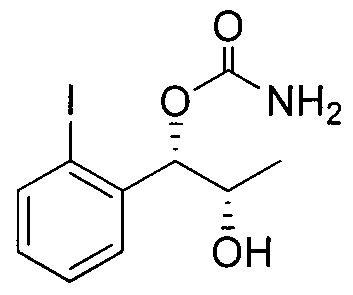
1 -(2-iodophenyl)- 1 -carbamoyloxypropyl-2-carbamate,
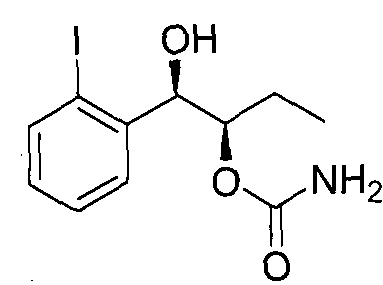
1 -(2-iodophenyl)- 1 -carbamoyloxybutyl-2-carbamate,
1 -(2-iodophenyl)- 1 -carbamoyloxy-3 -methyl-butyl-2-carbamate,
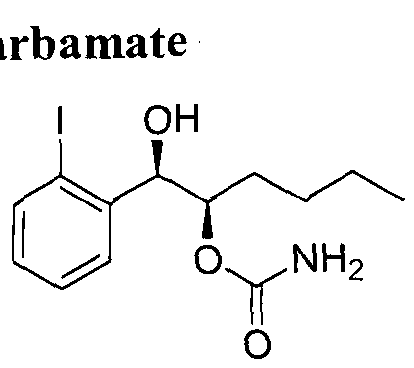
1 -(2-iodophenyl)- 1 -carbamoyloxyhexyl-2-carbamate,
1 -(2-fluorophenyl)- 1 -carbamoyloxypropyl-2-carbamate,
1 -(2-fluorophenyl)- 1 -carbamoyloxybutyl-2-carbamate,
1 -(2-fluorophenyl)- 1 -carbamoyloxy-3 -methyl -butyl-2-carbamate,
1 -(2-fluorophenyl)- 1 -carbamoyloxyhexyl-2-carbamate,
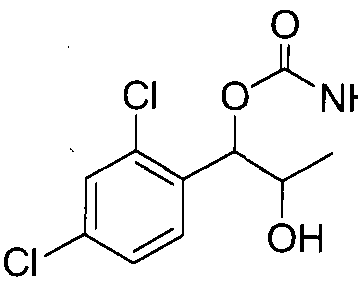
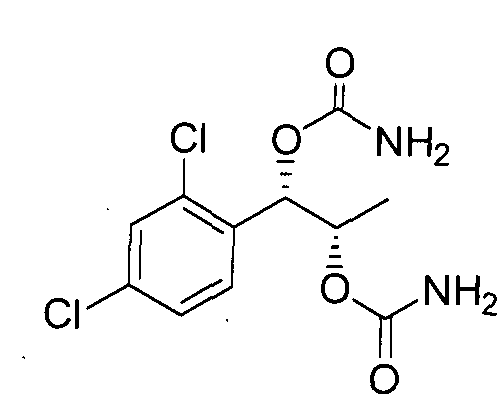
1 -(2,4-dichlorophenyl)- 1 -carbamoyloxypropyl-2-carbamate,
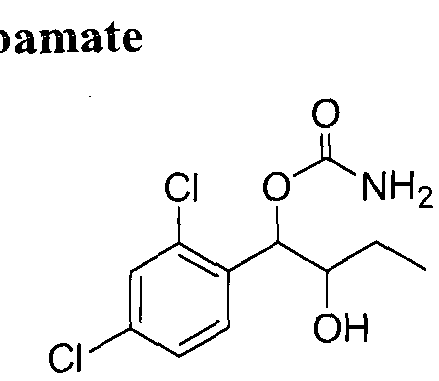
1 -(2,4-dichlorophenyl)- 1 -carbamoyloxybutyl-2-carbamate,
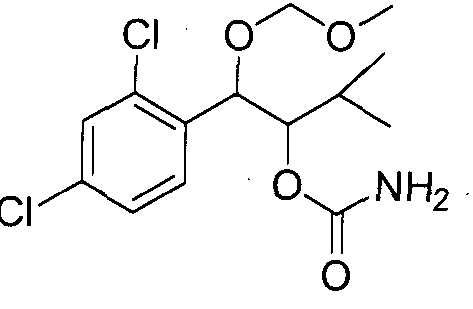
1 -(2,4-dichlorophenyl)- 1 -carbamoyloxy-3-methyl-butyl-2-carbamate,
1 -(2,4-dichlorophenyl)- 1 -carbamoyloxyhexyl-2-carbamate,
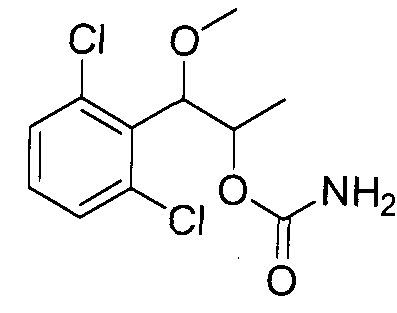
1 -(2,6-dichlorophenyl)-l -carbamoyloxypropyl-2-carbamate,
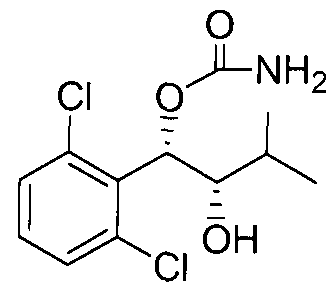
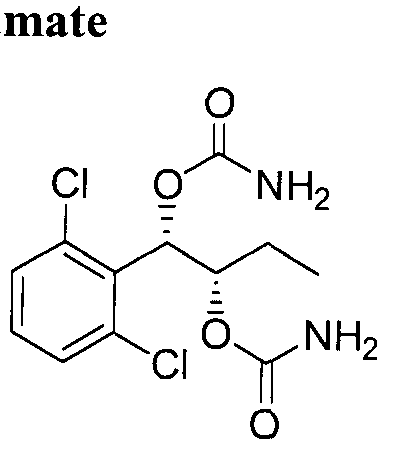
1 -(2,6-dichlorophenyl)- 1 -carbamoyloxybutyl-2-carbamate, l-(2,6-dichlorophenyl)-l -carbamoyloxy-3 -methyl -butyl-2-carbamate,
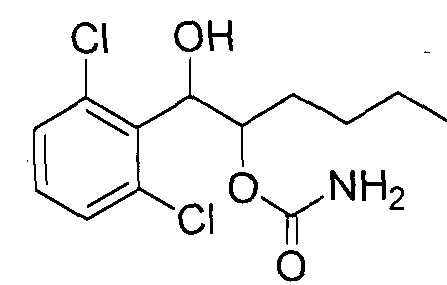
1 -(2,6-dichlorophenyl)- 1 -carbamoyloxyhexyl-2-carbamate,
1 -(2,4-difluorophenyl)- 1 -carbamoyloxypropyl-2-carbamate
1 -(2,5-difluorophenyl)- 1 -carbamoyloxypropyl-2-carbamate
1 -(2,6-difluorophenyl)- 1 -carbamoyloxypropyl-2-carbamate
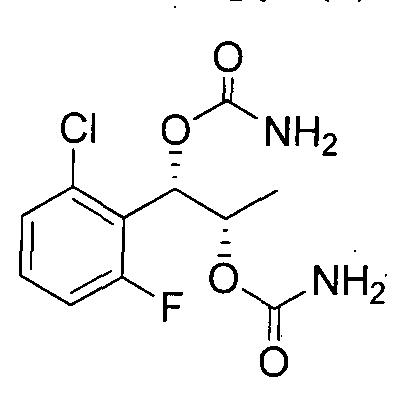
1 -(2-chloro-6-fluorophenyl)- 1 -carbamoyloxypropyl-2-carbamate
1 -(2-chlorophenyl)- 1 -(methoxy)-ethyl-2-carbamate,
1 -(2-fluorophenyl)- 1 -(methoxy)-ethyl-2-carbamate,
1 -(2-iodophenyl)- 1 -(methoxy)-ethyl-2-carbamate,
1 -(2-iodophenyl)- l-(methoxy)-propyl-2-carbamate,
1 -(2-iodophenyl)- 1 -(methoxy)-propyl-2-N-methylcarbamate,
1 -(2-iodophenyl)- 1 -(methoxy)-propyl-2-N-propyl carbamate,
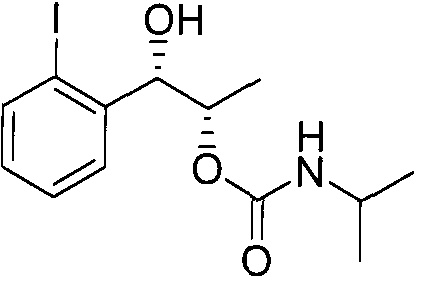
1 -(2-iodophenyl)- 1 -(methoxy)-propyl-2-N-isopropylcarbamate,
1 -(2-iodophenyI)- l-(methoxy)-propyl-2-N-cyclopropylcarbamate,
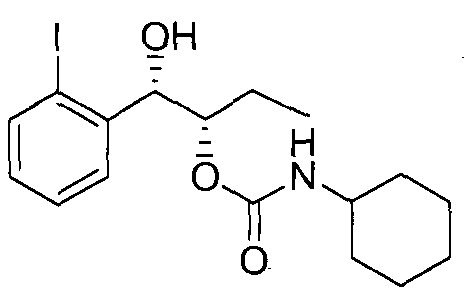
l-(2-iodophenyl)- l -(methoxy)-propyl-2-N-cyclohexylcarbamate,
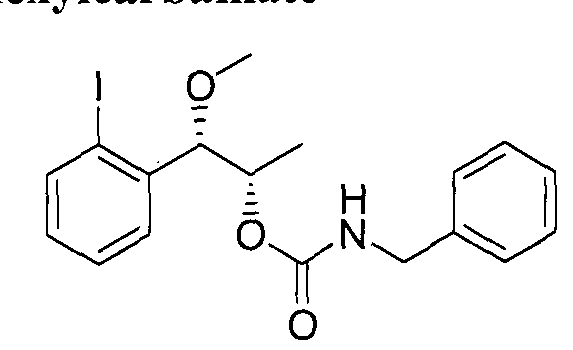
l-(2-iodophenyl) l-(methoxy)-propyl-2-N-benzylcarbamate,
l-(2-iodophenyl) 1 -(methoxy)-propyl-2-N-bicyclo[2,2, 1 Jheptanecarbamate
1 -(2-iodophenyl) 1 -(methoxy)-butyl-2-carbamate,
1 -(2-iodophenyl) l-(methoxy)-butyl-2-N-methylcarbamate,
l-(2-iodophenyl)- l -(methoxy)-butyl-2-N-propylcarbarnate,
1 -(2-iodophenyl)- l-(methoxy)-butyl-2-N-isopropylcarbamate,
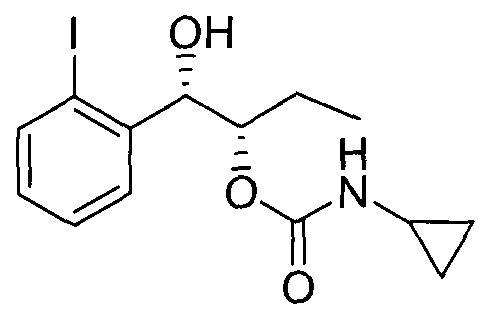
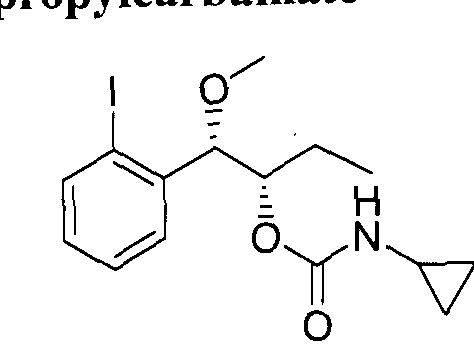
l-(2-iodophenyl)- 1 -(methoxy)-butyl-2-N-cyclopropylcarbamate,
1 -(2-iodophenyl) - l-(methoxy)-butyl-2-N-cyclohexylcarbamate,
l-(2-iodophenyl)- l-(methoxy)-butyl-2-N-benzylcarbamate,
1 -(2-iodophenyl)- 1 -(methoxy)-butyl-2-N-bicyclo[2,2,l Jheptanecarbamate,
1 -(2-iodophenyl)- 1 -(methoxy)3 -methyl-butyl-2-carbamate,
1 -(2-iodophenyl)- 1 -(methoxy)-3 -methyl -butyl-2-N-methyl carbamate,
l-(2-iodophenyl)- 1 -(methoxy)-3 -methyl -butyl-2-N-propylcarbamate,
l-(2-iodophenyl)- 1 -(methoxy)-3 -methyl -butyl-2-N-isopropylcarbamate,
l-(2-iodophenyl)- l-(methoxy)-3-methyl-butyl-2-N-cyclopropylcarbamate, l-(2-iodophenyl)- l-(methoxy)-3-methyl-butyl-2-N-cyclohexylcarbamate, l -(2-iodophenyl)- 1 -(methoxy)-3 -methyl -butyl-2-N-benzylcarbamate,
l-(2-iodophenyl)- 1 -(methoxy)-3 -methyl -butyl-2-N-bicyclo[2,2, 1 Jheptanecarbamate, 1 -(2-iodophenyl)- 1 -(methoxy)-hexyl-2-carbamate,
1 -(2-iodophenyl)- l-(methoxy)-hexyl-2-N-methylcarbamate,
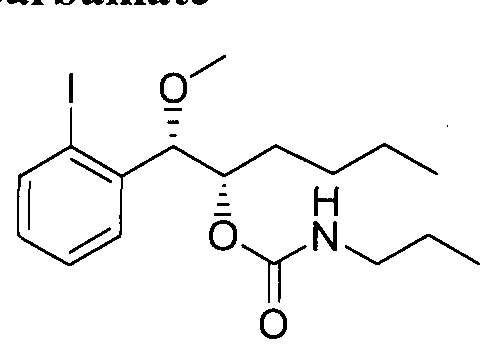
1 -(2-iodophenyl)- l-(methoxy)-hexyl-2-N-propylcarbamate,
1 -(2-iodophenyl)- l-(methoxy)-hexyl-2-N-isopropylcarbamate,
l-(2-iodophenyl)- l-(methoxy)-hexyl-2-N-cyclopropylcarbamate,
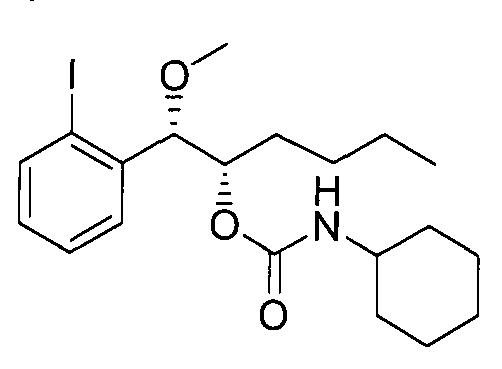
l-(2-iodophenyl)- l-(methoxy)-hexyl-2-N-cyclohexylcarbamate,
l-(2-iodophenyl)- 1 -(methoxy)-hexyl-2-N-benzylcarbamate,
1 -(2 -iodophenyl) - 1 -(methoxy)-hexyl-2-N-bicyclo[2,2, 1 Jheptanecarbamate, l-(3-iodophenyl)~ 1 -(methoxy)-propyl-2-carbamate,
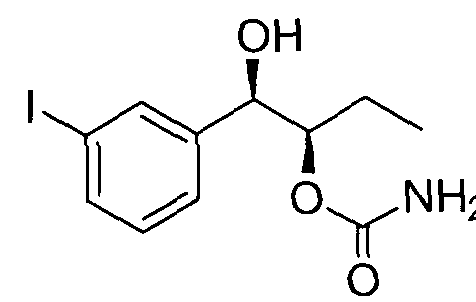
l-(3-iodophenyl)- 1 -(methoxy)-butyl-2-carbamate,
l-(3-iodophenyl)- 1 -(methoxy)3 -methyl-butyl-2-carbamate,
l-(3-iodophenyl)- 1 -(methoxy)-hexyl-2-carbamate,
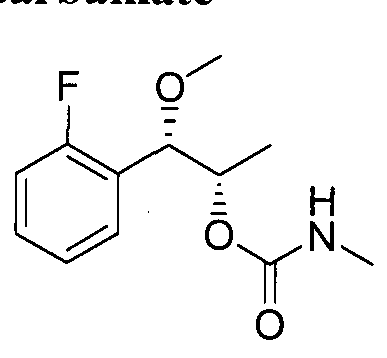
1 -(2-fluorophenyl )- 1 -(methoxy)-propyl-2-carbamate,
-(2-fluorophenyl)- ■(methoxy)-propyl-2-N-methylcarbamate,
-(2-fluorophenyl)- ■(methoxy)-propyl-2-N-propylcarbamate,
-(2-fluorophenyl)- (methoxy)-propyl-2-N-isopropylcarbamate,
-(2-fluorophenyl)- (methoxy)-propyl-2-N-cyclopropylcarbamate, -(2-fluorophenyl)- (methoxy)-propyl-2-N-cyclohexylcarbamate,
-(2-fluorophenyl)- (methoxy)-propyl-2-N-benzylcarbamate,
-(2-fluorophenyl)- (methoxy)-propyl-2-N-bicyclo[2,2, 1 Jheptanecarbamate -(2-fluorophenyl)- (methoxy)-butyl-2-carbamate,
-(2-fluorophenyl)- (methoxy)-3-methyl-butyl-2-carbamate,
-(2-fluorophenyl)- (methoxy)-hexyl-2-carbamate,
-(4-fluorophenyl)- (methoxy)-proyl-2-carbamate,
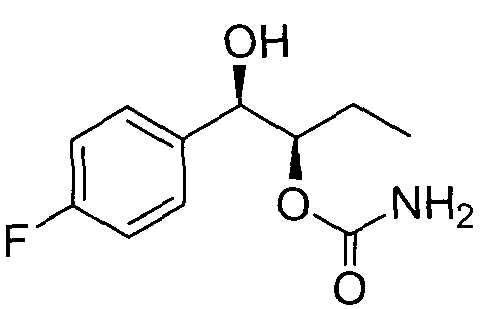
-(4-fluorophenyl)- (methoxy)-butyl-2-carbamate,
-(4-fluorophenyl)- (methoxy)-3-methyl-butyl-2-carbamate,
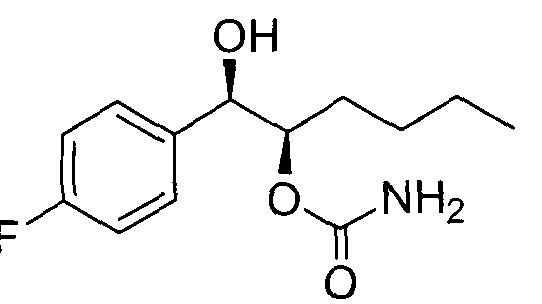
-(4-fluorophenyl)- (methoxy)-hexyl-2-carbamate,
-(2-chlorophenyl)- (methoxy)-propyl-2-carbamate,
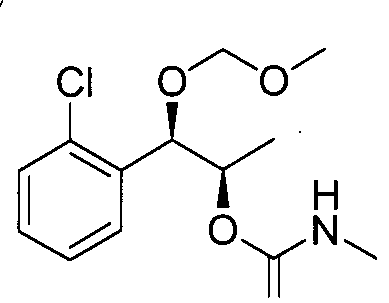
-(2-chlorophenyl)- (methoxy)-propyl-2-N-methylcarbamate,
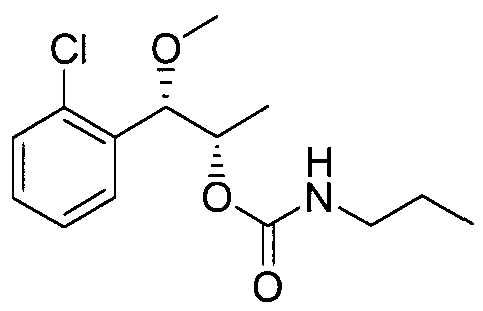
-(2-chlorophenyl)- ■(methoxy)-propyl-2-N-propylcarbamate,
-(2-chlorophenyl)- ■(methoxy)-propyl-2-N-isopropylcarbamate,
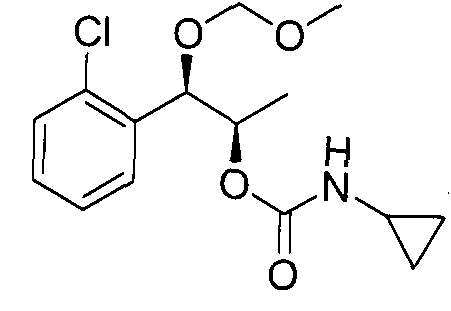
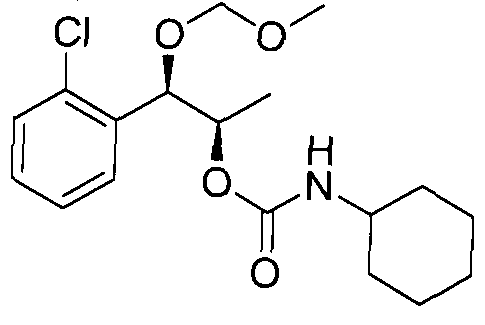
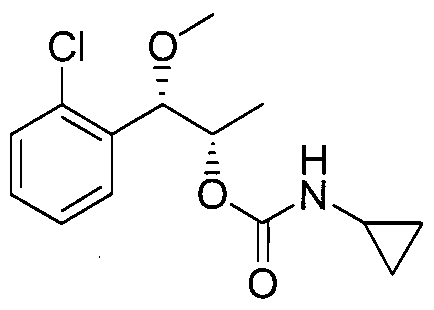
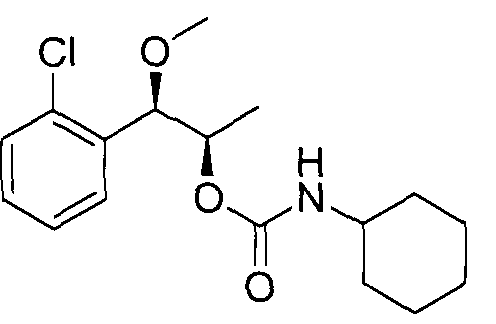
-(2-chlorophenyl)- (methoxy)-propyl-2-N-cyclopropylcarbamate, -(2-chlorophenyl)- (methoxy)-propyl-2-N-cyclohexylcarbamate,
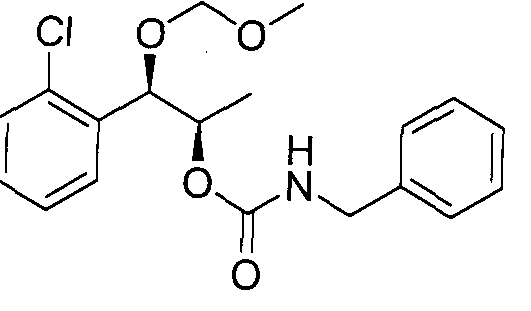
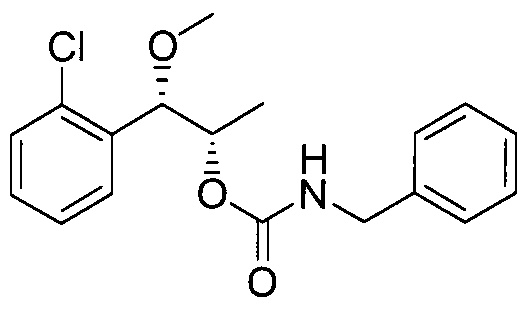
-(2-chlorophenyl)- (methoxy)-propyl-2-N-benzylcarbamate,
-(2-chlorophenyl)- (methoxy)-propyl-2-N-bicyclo[2,2, 1 jheptanecarbamate -(2-chlorophenyl)- (methoxy)-butyl-2-carbamate,
-(2-chlorophenyl)- (methoxy)-3-methyl-butyl-2-carbamate,
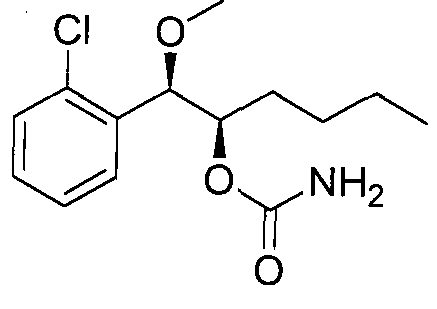
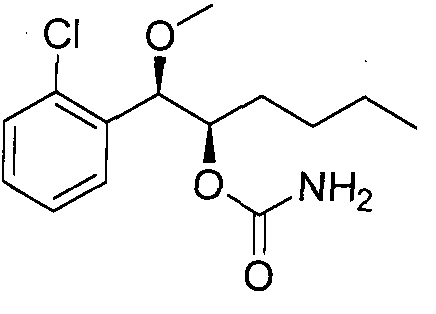
-(2-chlorophenyl)- (methoxy)-hexyl-2-carbamate,
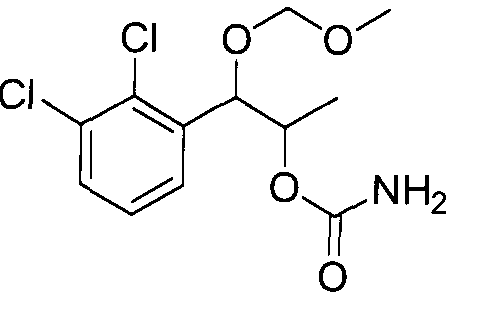
-(2,3-dichlorophenyl )- 1 -(methoxy)-propyl-2-carbamate,
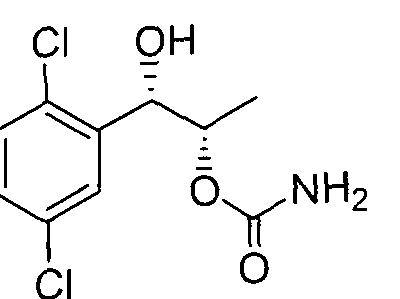
-(2,4-dichlorophenyl )- 1 -(methoxy)-propyl-2-carbamate,
-(2,4-dichlorophenyl )- 1 -(methoxy)-butyl-2-carbamate,
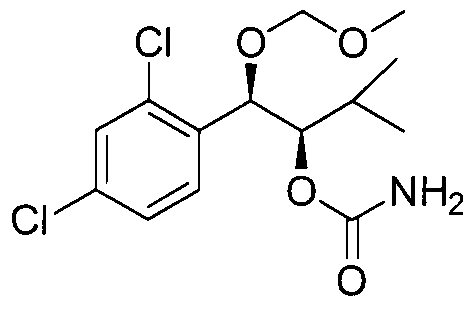
-(2,4-dichlorophenyl )- 1 -(methoxy)-3-methyl-butyl-2-carbamate,
-(2,4-dichlorophenyl )- 1 -(methoxy)-hexyl-2-carbamate,
-(2,6-dichlorophenyl )- 1 -(methoxy)-propyl-2-carbamate,
-(2,6-dichlorophenyl )- 1 -(methoxy)-butyl-2-carbamate,
-(2,6-dichlorophenyl )- 1 -(methoxy)-3-methyl-butyl-2-carbamate,
1 -(2,6-dichlorophenyl)-l -(methoxy)-hexyl-2-carbamate,
1 -(2-chlorophenyl)- 1 -(methoxymethoxy)-ethyl-2-carbarnate,
1 -(2-fluorophenyl)- 1 -(methoxymethoxy)-ethyl-2-carbamate,
1 -(2-iodophenyl)- 1 -(methoxymethoxy)-ethyl-2-carbamate,
1 -(2-chlorophenyl)- 1 -(methoxymethoxy)-propyl-2-carbamate,
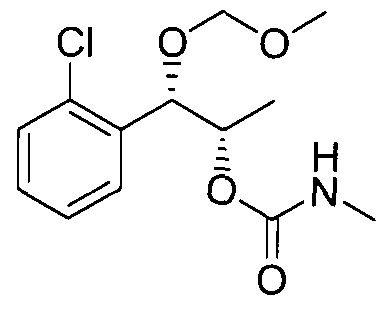
1 -(2-chlorophenyl)- 1 -(methoxymethoxy)-propyl-2-N-methylcarbamate, 1 -(2-chlorophenyl)- 1 -(methoxymethoxy)-propyl-2-N-propylcarbamate, 1 -(2-chlorophenyl)- 1 -(methoxymethoxy)-propyl-2-N-isopropyl carbamate, 1 -(2-chlorophenyl)- 1 -(methoxymethoxy)-propyl-2-N-cyclopropylcarbamate, 1 -(2-chlorophenyl)- 1 -(methoxymethoxy)-propyl-2-N-cyclohexyl carbamate, 1 -(2-chlorophenyl)- l -(methoxymethoxy)-propyl-2-N-benzyl carbamate, 1 -(2-chlorophenyl)- 1 -(methoxymethoxy)-propyl-2-N- bicyclo[2,2, 1 Jheptanecarbamate
1 -(2-chlorophenyl)- 1 -(methoxymethoxy)-butyl-2-carbamate,
1 -(2-chlorophenyl)- 1 -(methoxymethoxy)-3-methyl-butyl-2-carbamate,
1 -(2-chlorophenyl)- 1 -(memoxymethoxy)-hexyl-2-carbamate,
l-(2,3-dichlorophenyl)-l-(methoxymethoxy)-propyl-2-carbamate,
1 -(2,4-dichlorophenyl)- 1 -(methoxymethoxy)-propyl-2-carbamate,
1 -(2,4-dichlorophenyl)- 1 -(methoxymethoxy)-butyl-2-carbamate,
1 -(2,4-dichlorophenyl)- 1 -(methoxymethoxy)-3-methyl-butyl-2-carbamate, l-(2,4-dichlorophenyl)-l -(methoxymethoxy)-hexyl-2-carbamate,
1 -(2,5-dichlorophenyl)- 1 -(methoxymethoxy)-propyl-2-carbamate,
1 -(2,6-dichlorophenyl)-l -(methoxymethoxy)-propyl-2-carbamate,
1 -(2,6-dichlorophenyl)- 1 -(methoxymethoxy)-butyl-2-carbamate,
1 -(2,6-dichlorophenyl)- 1 -(methoxymethoxy)-3-methyl-butyl-2-carbamate,
1 -(2,6-dichlorophenyl)- 1 -(methoxymethoxy)-hexyl-2-carbamate,
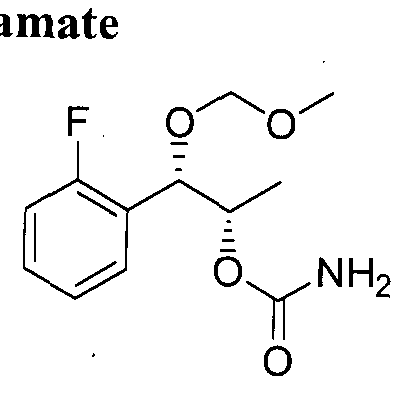
1 -(2-fluorophenyl)- 1 -(methoxymethoxy)-propyl-2-carbamate,
1 -(2-fluorophenyl)- 1 -(methoxymethoxy)-propyl-2-N-methyl carbamate,
1 -(2-fluorophenyl)- 1 -(methoxymethoxy)-propyl-2-N-propyl carbamate,
1 -(2-fluorophenyl)- 1 -(methoxymethoxy)-propyl-2-N-isopropyl carbamate,
1 -(2-fluorophenyl)- 1 -(methoxymethoxy)-propyl-2-N-cyclopropylcarbamate,
1 -(2-fluorophenyl)- 1 -(methoxymethoxy)-propyl-2-N-cyclohexylcarbamate,
1 -(2-fluorophenyl)- 1 -(methoxymethoxy)-propyl-2-N-benzylcarbamate,
1 -(2-fluorophenyl)- 1 -(methoxyrnethoxy)-propyl-2-N- bicyclo[2,2, 1 Jheptanecarbamate
1 -(2-fluorophenyl)- 1 -(methoxymethoxy)-butyl-2-carbamate,
1 -(2-fluorophenyl)- 1 -(methoxymethoxy)-3 -methyl -butyl-2-carbamate,
1 -(2-fluorophenyl)- 1 -(methoxymethoxy)-hexyl-2-carbamate,
1 -(4-fluorophenyl)- 1 -(methoxymethoxy)-propyl-2-carbamate,
1 -(4-fluorophenyl)- 1 -(methoxymethoxy)-butyl-2-carbamate,
1 -(4-fluorophenyl)- 1 -(methoxymethoxy)-3 -methyl -butyl-2-carbamate,
1 -(4-fluorophenyl)- 1 -(methoxymethoxy)-hexyl-2-carbamate,
1 -(2,6-difluorophenyl)- 1 -(methoxymethoxy)-propyl-2-carbamate,
1 -(2-iodophenyl)- 1 -(methoxymethoxy)-propyl-2-carbamate,
1 -(2-iodophenyl)- 1 -(methoxymethoxy)-propyl-2-N-methylcarbamate,
1 -(2-iodophenyl)- 1 -(methoxymethoxy)-propyl-2-N-propylcarbamate,
1 -(2-iodophenyl)- 1 -(methoxymethoxy)-propyl-2-N-isopropylcarbamate,
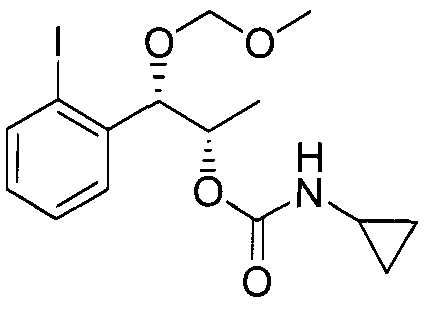
1 -(2-iodophenyl)- 1 -(methoxymethoxy)-propyl-2-N-cyclopropylcarbamate,
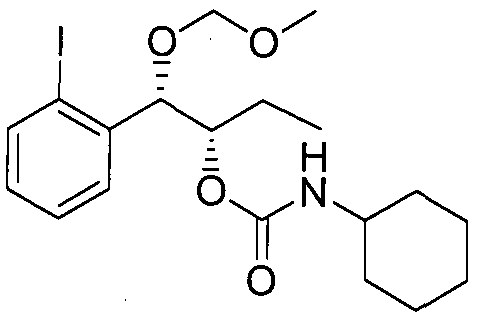
1 -(2-iodophenyl)- 1 -(methoxymethoxy)-propyl-2-N-cyclohexylcarbamate,
1 -(2-iodophenyl)- 1 -(methoxymethoxy)-propyl-2-N-benzylcarbamate,
l-(2-iodophenyl)-l-(methoxymethoxy)-propyl-2-N-bicyclo[2,2,l]heptanecarbamate
1 -(2-iodophenyl)- 1 -(methoxymethoxy)-butyl-2-carbamate,
1 -(2-iodophenyl)- 1 -(methoxymethoxy)-butyl-2-N-methylcarbamate,
1 -(2-iodophenyl)- 1 -(methoxymethoxy)-butyl-2-N-propyl carbamate,
1 -(2-iodophenyl)- 1 -(methoxymethoxy)-butyl-2-N-isopropyl carbamate,
1 -(2-iodophenyl)- 1 -(methoxymethoxy)-butyl-2-N-cyclopropylcarbamate, l-(2-iodophenyl)-l-(methoxymethoxy)-butyl-2-N-cyclohexylcarbamate,
1 -(2-iodophenyl)- 1 -(methoxymethoxy)-butyl-2-N-benzylcarbamate,
1 -(2-iodophenyl)-l -(methoxymethoxy)-butyl-2-N-bicyclo[2,2, 1 Jheptanecarbamate
1 -(2-iodophenyl)- 1 -(methoxymethoxy)-3-methyl-butyl-2-carbamate,
l-(2-iodophenyl)-l-(methoxymethoxy)-3-methyl-butyl-2-N-methylcarbamate,
1 -(2-iodophenyl)- 1 -(methoxymethoxy)-3 -methyl-butyl-2-N-propylcarbamate, l-(2-iodophenyl)-l-(methoxymethoxy)-3-methyl-butyl-2-N-isopropylcarbamate,
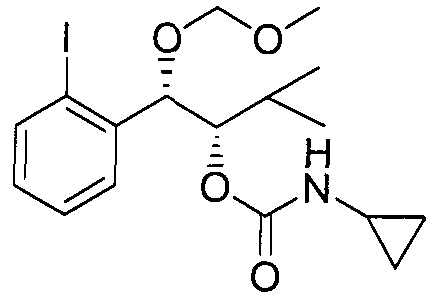
1 -(2-iodophenyl)- 1 -(methoxymethoxy)-3-methyl-butyl-2-N-cyclopropylcarbamate,
1 -(2-iodophenyl)- 1 -(methoxymethoxy)-3 -methyl-butyl-2-N-cyclohexyl carbamate,
1 -(2-iodophenyl)- 1 -(methoxymethoxy)-3-methyl-butyl-2-N-benzylcarbamate,
1 -(2-iodophenyl)- 1 -(methoxymethoxy)-3-mefhyl-butyl-2-N- bicyclo[2,2, 1 Jheptanecarbamate,
1 -(2-iodophenyl)- 1 -(methoxyinethoxy)-hexyl-2-carbamate,
1 -(2-iodophenyl)- 1 -(methoxymethoxy)-hexyl-2-N-methylcarbamate,
1 -(2-iodophenyl)- 1 -(methoxymethoxy)-hexyl-2-N-propyl carbamate,
1 -(2-iodophenyl)- 1 -(methoxymethoxy)-hexyl-2-N-isopropyl carbamate,
1 -(2-iodophenyl)- 1 -(methoxymethoxy)-hexyl-2-N-cyclopropylcarbamate,
1 -(2-iodophenyl)- 1 -(methoxymethoxy)-hexyl-2-N-cyclohexylcarbamate,
1 -(2-iodophenyl)- 1 -(methoxymethoxy)-hexyl-2-N-benzylcarbamate,
1 -(2-iodophenyl)- 1 -(methoxymethoxy)-hexyl-2-N-bicyclo[2,2, 1 Jheptanecarbamate
1 -(3-iodophenyl)-l -(methoxymethoxy)-propyl-2-carbamate,
1 -(3 -iodophenyl)- 1 -(methoxymethoxy)-butyl-2-carbamate,
1 -(3 -iodophenyl)- 1 -(methoxymethoxy)-3 -methyl -butyl-2-carbamate,
1 -(3 -iodophenyl)- 1 -(methoxymethoxy)-hexyl-2-carbamate,
1 -(2-chlorophenyl)-2-(methoxymethoxy)-propyl- 1 -carbamate,
1 -(2-chlorophenyl)-2-(methoxy)-propyl- 1 -carbamate,
1 -(2-fluorophenyl)-2-(methoxymethoxy)-propyl- 1 -carbamate,
1 -(2-fluorophenyl)-2-(methoxy)-propyl- 1 -carbamate
1 -(2-iodophenyl)-2-(methoxymethoxy)-propyl- 1 -carbamate,
l-(2-iodophenyl)-2-(methoxy)-propyl-l -carbamate and,
a racemate of the compound, an enantiomer of the compound, a diastereomer of the compound, a mixture of enantiomers of the compound, or a mixture of diastereomers of the compound.
In an embodiment, the phenyl alkyl carbamate compound is selected from the group consisting of:
l-(2-chlorophenyl)-(S)-l-carbamoyloxypropyl-(S)-2-carbamate,
l-(2-chlorophenyl)-(S)-l -carbamoyloxypropyl-(S)-2-N-methylcarbamate,
1 -(2-chlorophenyl)-(S)- 1 -carbamoyloxypropyl-(S)-2-N-propylcarbamate
1 -(2-chlorophenyl)-(S)- 1 -carbamoyloxybutyl-(S)-2-carbamate,
l-(2-chlorophenyl)-(S)-l-carbamoyloxy-3-methyl-butyl-(S)-2-carbamate,
1 -(2-chlorophenyl)-(S)-l -carbamoyloxyhexyl-(S)-2-carbamate,
1 -(2-iodophenyl)-(S)- 1 -carbamoyloxypropyl-(S)-2-carbamate,
1 -(2-iodophenyl)-(S)- 1 -carbamoyloxybutyl-(S)-2-carbamate,
l-(2-iodophenyl)-(S) [-carbamoyloxy-3-methyl-butyl-(S)-2-carbamate, l-(2-iodophenyl)-(S)- [-carbamoyloxyhexyl-(S)-2-carbamate,
l-(2-fluorophenyl)-(S I- 1 -carbamoyloxypropyl-(S)-2-carbamate,
l-(2-fluorophenyl)-(S I- 1 -carbamoyloxybutyl-(S)-2-carbamate,
l-(2-fluorophenyl)-(S -1 -carbamoyloxy-3 -methyl-butyl-(S)-2-carbamate, l-(2-fluorophenyl)-(S 1 -carbamoyloxyhexyl-(S)-2-carbamate,
1 -(2,4-dichlorophenyl |-(S)- 1 -carbamoyloxypropyl-(S)-2-carbamate,
1 -(2,4-dichlorophenyl |-(S)- 1 -carbamoyloxybutyl-(S)-2-carbamate,
1 -(2,4-dichlorophenyl l-(S)-l -carbamoyloxy-3 -methyl -butyl-2-carbamate, 1 -(2,4-dichlorophenyl l-(S)- 1 -carbamoyloxyhexyl-(S)-2-carbamate,
1 -(2,6-dichlorophenyl I-(S)- 1 -carbamoyloxypropyl-(S)-2-carbamate,
1 -(2,6-dichlorophenyl i-(S)- 1 -carbamoyloxybutyl-(S)-2-carbamate,
1 -(2,6-dichlorophenyl i-(S)-l -carbamoyloxy-3 -methyl -butyl-(S)-2-carbamate, 1 -(2,6-dichlorophenyl i-(S)- 1 -carbamoyloxyhexyl-(S)-2-carbamate,
1 -(2-chloro-6-fluoroph enyl)-(S)- 1 -carbamoyloxypropyl-(S)-2-carbamate
1 -(2-chlorophenyl)-(S )- 1 -(methoxy)-ethyl-2-carbamate,
l-(2-fluorophenyl)-(S - 1 -(methoxy)-ethyl-2-carbamate,
l-(2-iodophenyl)-(S)- ί -(methoxy)-ethyl-2-carbamate,
l-(2-iodophenyl)-(S)- i-(methoxy)-propyl-(S)-2-carbamate,
l-(2-iodophenyl)-(S)- .-(methoxy)-propyl-(S)-2-N-methylcarbamate,
l-(2-iodophenyl)-(S)- .-(methoxy)-propyl-(S)-2-N-propylcarbamate,
l-(2-iodophenyl)-(S)- .-(methoxy)-propyl-(S)-2-N-isopropylcarbamate, l-(2-iodophenyl)-(S)- .-(methoxy)-propyl-(S)-2-N-cyclopropylcarbamate, l-(2-iodophenyl)-(S)- -(methoxy)-propyl-(S)-2-N-cyclohexylcarbamate, l-(2-iodophenyl)-(S)- -(methoxy)-propyl-(S)-2-N-benzylcarbamate,
l-(2-iodophenyl)-(S)- -(methoxy)-propyl-(S)-2-N-bicyclo[2,2, 1 Jheptanecarbamate l-(2-iodophenyl)-(S)- -(methoxy)-butyl(S)~2-carbamate,
l-(2-iodophenyl)-(S)- -(methoxy)-butyl-(S)-2-N-methylcarbamate,
l-(2-iodophenyl)-(S)- -(methoxy)-butyl-(S)-2-N-propylcarbamate,
l -(2-iodophenyl)-(S)- -(methoxy)-butyl-(S)-2-N-isopropylcarbamate,
l-(2-iodophenyl)-(S)- -(methoxy)-butyl-(S)-2-N-cyclopropylcarbamate, l-(2-iodophenyl)-(S)- -(methoxy)-butyl-(S)-2-N-cyclohexylcarbamate, l-(2-iodophenyl)-(S)- -(methoxy)-butyl-(S)-2-N-benzylcarbamate,
l-(2-iodophenyl)-(S)- -(methoxy)-butyl-(S)-2-N-bicyclo[2,2, 1 Jheptanecarbamate, l-(2-iodophenyl)-(S)- -(methoxy)3-methyl-butyl-(S)-2-carbamate,
l-(2-iodophenyl)-(S)- -(methoxy)-3-methyl-butyl-(S)-2-N-methyl carbamate, l-(2-iodophenyl)-(S)- -(methoxy)-3-methyl-butyl-(S)-2-N-propylcarbamate, l-(2-iodophenyl)-(S)- -(methoxy)-3-methyl-butyl-(S)-2-N-isopropylcarbamate, l-(2-iodophenyl)-(S)- -(methoxy)-3-methyl-butyl-(S)-2-N-cyclopropylcarbamate, l -(2-iodophenyl)-(S)- -(methoxy)-3-methyl-butyl-(S)-2-N-cyclohexylcarbamate, l-(2-iodophenyl)-(S)- -(methoxy)-3-methyl-butyl-(S)-2-N-benzylcarbamate, l-(2-iodophenyl)-(S)- -(methoxy)-3-methyl-butyl-(S)-2-N- bicyclo[2,2, 1 J eptanecarbama1 e,
l-(2-iodophenyl)-(S)- -(methoxy)-hexyl-(S)-2-carbamate,
1 -(2-iodophenyl)-(S)- -(methoxy)-hexyl-(S)-2-N-methylcarbamate,
l-(2-iodoptienyl)-(S)- -(methoxy)-hexyl-(S)-2-N-propylcarbamate,
1 -(2-iodophenyl)-(S)- -(methoxy)-hexyl-(S)-2-N-isopropylcarbamate,
1 -(2-iodophenyl)-(S)- -(methoxy)-hexyl-(S)-2-N-cyclopropylcarbamate, l-(2-iodophenyl)-(S)- -(methoxy)-hexyl-(S)-2-N-cyclohexylcarbamate,
1 -(2-iodophenyl)-(S)- -(methoxy)-hexyl-(S)-2-N-benzylcarbamate,
l-(2-iodophenyl)-(S)- -(methoxy)-hexyl-(S)-2-N-bicyclo[2,2,l]heptanecarbamate, 1 -(3-iodophenyl)-(S)- -(methoxy)-propyl-(S)-2-carbamate,
l-(3-iodophenyl)-(S)- -(methoxy)-butyl-(S)-2-carbamate,
l-(3-iodophenyl)-(S)- -(methoxy)3-methyl-butyl-(S)-2-carbamate,
1 -(3 -iodophenyl)-(S)- -(methoxy)-hexyl-(S)-2-carbamate,
l-(2-fluorophenyl)-(S - 1 -(methoxy)-propyl-(S)-2-carbamate,
l-(2-fluorophenyl)-(S - 1 -(methoxy)-propyl-(S)-2-N-methyl carbamate,
1 -(2-fluorophenyl)-(S - 1 -(methoxy)-propyl-(S)-2-N-propyl carbamate,
l-(2-fluorophenyl)-(S - 1 -(methoxy)-propyl-(S)-2-N-isopropylcarbamate, l -(2-fluorophenyl)-(S -l-(methoxy)-propyl-(S)-2-N-cyclopropylcarbamate, l-(2-fluorophenyl)-(S - 1 -(methoxy)-propyl-(S)-2-N-cyclohexyl carbamate, l-(2-fluorophenyl)-(S - 1 -(methoxy)-propyl-(S)-2-N-benzylcarbamate,
1 -(2-fluorophenyl)-(S - 1 -(methoxy)-propyl-(S)-2-N-bicyclo[2,2, 1 Jheptanecarbamate l-(4-fluorophenyl)- (S - 1 -(methoxy)-proyl-(S)-2-carbamate,
1 -(4-fluorophenyl)-(S ■ 1 -(methoxy)-butyl-(S)-2-carbamate,
1 -(4-fluorophenyl)-(S ■ 1 -(methoxy)-3-methyl-butyl-(S)-2-carbamate,
1 -(4-fluorophenyl)-(S)- 1 -(methoxy)-hexyl-(S)-2-carbamate,
1 -(2-chlorophenyl)-(S)- 1 -(methoxy)-propyl-(S)-2-carbamate,
1 -(2-chlorophenyl)-(S)-l -(methoxy)-propyl-(S)-2-N-methylcarbamate,
1 -(2-chlorophenyl)-(S)- 1 -(methoxy)-propyl-(S)-2-N-propylcarbamate,
1 -(2-chlorophenyl)-(S)- 1 -(methoxy)-propyl-(S)-2-N-isopropyl carbamate,
1 -(2-chlorophenyl)-(S)- 1 -(methoxy)-propyl-(S)-2-N-cyclopropyl carbamate, l-(2-chlorophenyl)-(S)-l-(methoxy)-propyl-(S)-2-N-cyclohexyl carbamate,
1 -(2-chlorophenyl)-(S)- 1 -(methoxy)-propyl-(S)-2-N-benzylcarbamate,
1 -(2-chlorophenyl)-(S)- 1 -(methoxy)-propyl-(S)-2-N-bicyclo[2,2, 1 jheptanecarbamate 1 -(2-chlorophenyl)-(S)- 1 -(methoxy)-butyl-(S)-2-carbamate,
l-(2-chlorophenyl)-(S)-l-(methoxy)-3-methyl-butyl-(S)-2-carbamate,
1 -(2-chlorophenyl)-(S)- 1 -(methoxy)-hexyl-(S)-2-carbamate,
l-(2,3-dichlorophenyl)-(S)-l-(methoxy)-propyl-(S)-2-carbamate,
1 -(2,4-dichlorophenyl)-(S)- 1 -(methoxy)-propyl-(S)-2-carbamate,
1 -(2,4-dichlorophenyl)-(S)- 1 -(methoxy)-butyl-(S)-2-carbamate,
l-(2,4-dichlorophenyl)-(S)-l-(methoxy)-3 -methyl -butyl-(S)-2-carbamate,
1 -(2,4-dichlorophenyl)-(S)- 1 -(methoxy)-hexyl-(S)-2-carbamate,
1 -(2,6-dichlorophenyl)-(S)- 1 -(methoxy)-propyl-(S)-2-carbamate,
1 -(2,6-dichlorophenyl)-(S)- 1 -(methoxy)-butyl-(S)-2-carbamate,
l-(2,6-dichlorophenyl)-(S)-l-(methoxy)-3 -methyl -butyl-(S)-2-carbamate,
1 -(2,6-dichlorophenyl)-(S)- 1 -(methoxy)-hexyl-(S)-2-carbamate,
l-(2-chlorophenyl)-(S)-l-(methoxymethoxy)-ethyl-(S)-2-carbamate,
l-(2-fluorophenyl)-(S)-l-(methoxymethoxy)-ethyl-(S)-2-carbamate,
1 -(2-iodophenyl)-(S)- 1 -(methoxymethoxy)-ethyl-(S)-2-carbamate,
1 -(2-chlorophenyl)-(S)- 1 -(methoxymethoxy)-propyl-(S)-2-carbamate,
l-(2-chlorophenyl)-(S)-l -(methoxymethoxy)-propyl-(S)-2-N-methyl carbamate, 1 -(2-chlorophenyl)-(S)- 1 -(methoxymethoxy)-propyl-(S)-2-N-propylcarbamate, l-(2-chlorophenyl)-(S)-l-(methoxymethoxy)-propyl-(S)-2-N-isopropyl carbamate, 1 -(2-chlorophenyl)-(S)- 1 -(methoxymethoxy)-propyl-(S)-2-N-cyclopropyl carbamate, 1 -(2-chlorophenyl)-(S)- 1 -(methoxymethoxy)-propyl-(S)-2-N-cyclohexyl carbamate, 1 -(2-chlorophenyl)-(S)- 1 -(methoxymethoxy)-propyl-2-N-benzyl carbamate,
1 -(2-chlorophenyl)-(S)- 1 -(methoxymethoxy)-propyl-2-N- bicyclo[2,2, 1 Jheptanecarbamate
1 -(2-chlorophenyl)-(S)- 1 -(methoxymethoxy)-butyl-(S)-2-carbamate, 1 -(2-chlorophenyl)-(S)- 1 -(methoxymethoxy)-3 -methyl -butyl-(S)-2-carbamate, 1 -(2-chlorophenyl)-(S)- 1 -(methoxymethoxy)-hexyl-(S)-2-carbamate,
1 -(2,3-dichlorophenyl)-(S)- 1 -(methoxymethoxy)-propyl-(S)-2-carbamate,
1 -(2,4-dichIorophenyl)-(S)- 1 -(methoxymethoxy)-propyl-(S)-2-carbamate,
1 -(2,4-dichlorophenyl)-(S)- 1 -(methoxymethoxy)-butyl-(S)-2-carbamate, l -(2,4-dichlorophenyl)-(S)-l -(methoxymethoxy)-3-methyl-butyl-(S)-2-carbamate, 1 -(2,4-dichlorophenyl)-(S)- 1 -(methoxymethoxy)-hexyl-(S)-2-carbamate, l-(2,5-dichlorophenyl)-(S)-l-(methoxymethoxy)-propyl-(S)-2-carbamate,
1 -(2,6-dichlorophenyl)-(S)- 1 -(methoxymethoxy)-propyl-(S)-carbamate,
1 -(2,6-dichlorophenyl)-(S)- 1 -(methoxymethoxy)-butyl-(S)-2-carbamate, l-(2,6-dichlorophenyl)-(S)-l-(methoxymethoxy)-3 -methyl -butyl-(S)-2-carbamate, 1 -(2,6-dichlorophenyl)-(S)- 1 -(methoxymethoxy)-hexyl-(S)-2-carbamate,
1 -(2-fluorophenyl)-(S)- 1 -(methoxymethoxy)-propyl-(S)-2-carbamate,
1 -(2-fluorophenyl)-(S)- 1 -(methoxymethoxy)-propyl-(S)-2-N-methylcarbamate, 1 -(2-fluorophenyl)-(S)- 1 -(methoxymethoxy)-propyl-(S)-2-N-propylcarbamate, 1 -(2-fluorophenyl)-(S)- 1 -(methoxymethoxy)-propyl-(S)-2-N-isopropylcarbamate, 1 -(2-fluorophenyl)-(S)- 1 -(methoxymethoxy)-propyl-(S)-2-N-cyclopropylcarbamate, 1 -(2-fluorophenyl)-(S)- 1 -(methoxymethoxy)-propyl-(S)-2-N-cyclohexylcarbamate, l-(2-fluorophenyl)-(S)-l-(methoxymethoxy)-propyl-(S)-2-N-benzylcarbamate, 1 -(2-fluorophenyl)-(S)- 1 -(methoxymethoxy)-propyl-(S)-2-N- bicyclo[2,2, 1 Jheptanecarbamate
1 -(2-fluorophenyl)-(S)- 1 -(methoxymethoxy)-butyl-(S)-2-carbamate,
1 -(2-fluorophenyl)-(S)- 1 -(methoxymethoxy)-3 -methyl -butyl-(S)-2-carbamate, 1 -(2-fluorophenyl)-(S)- 1 -(methoxymethoxy)-hexyl-(S)-2-carbamate,
1 -(4-fluorophenyl)-(S)- 1 -(methoxymethoxy)-propyl-(S)-2-carbamate,
1 -(4-fluorophenyl)-(S)- 1 -(methoxymethoxy)-butyl-(S)-2-carbamate,
1 -(4-fluorophenyl)-(S)- 1 -(methoxymethoxy)-3 -methyl -butyl-(S)-2-carbamate, 1 -(4-fluorophenyl)-(S)- 1 -(methoxymethoxy)-hexyl-(S)-2-carbamate,
1 -(2,6-difluorophenyl)-(S)- 1 -(methoxymethoxy)-propyl-(S)-2-carbamate,
1 -(2-iodophenyl)-(S)- 1 -(methoxymethoxy)-propyl-(S)-2-carbamate,
1 -(2-iodophenyl)-(S)- 1 -(methoxymethoxy)-propyl-(S)-2-N-methyl carbamate, 1 -(2-iodophenyl)-(S)- 1 -(methoxymethoxy)-propyl-(S)-2-N-propylcarbamate,
l-(2-iodophenyl)-(S)- -(methoxymethoxy)-propyl-(S)-2-N-isopropylcarbamate, l-(2-iodophenyl)-(S)- -(methoxymethoxy)-propyl-(S)-2-N-cyclopropylcarbamate, l-(2-iodophenyl)-(S)- -(methoxymethoxy)-propyl-(S)-2-N-cyclohexylcarbamate, l-(2-iodophenyl)-(S)- -(methoxymethoxy)-propyl-(S)-2-N-benzylcarbamate, l-(2-iodophenyl)-(S)- -(methoxymethoxy)-propyl-2-N- bicyclo[2,2, 1 Jheptanecarbamai e
l-(2-iodophenyl)-(S)- -(methoxymethoxy)-butyl-(S)-2-carbamate,
l-(2-iodophenyl)-(S)- -(methoxymethoxy)-butyl-(S)-2-N-methylcarbamate, l-(2-iodophenyl)-(S)- -(methoxymethoxy)-butyl-(S)-2-N-propylcarbamate, l-(2-iodophenyl)-(S)- -(methoxymethoxy)-butyl-(S)-2-N-isopropylcarbamate, l-(2-iodophenyl)-(S)- -(methoxymethoxy)-butyl-(S)-2-N-cyclopropylcarbamate, l-(2-iodophenyl)-(S)- -(methoxymethoxy)-butyl-(S)-2-N-cyclohexylcarbamate, l-(2-iodophenyl)-(S)- -(methoxymethoxy)-butyl-(S)-2-N-benzylcarbamate, l-(2-iodophenyl)-(S)- -(methoxymethoxy)-butyl-(S)-2-N- bicyclo[2,2, 1 Jheptanecarbamai e
l-(2-iodophenyl)-(S)- -(methoxymethoxy)-3-methyl-butyl-(S)-2-carbamate, l-(2-iodophenyl)-(S)- -(methoxymethoxy)-3-methyl-butyl-(S)-2-N-methylcarbamate, l-(2-iodophenyl)-(S)- -(methoxymethoxy)-3-methyl-butyl-(S)-2-N-propylcarbamate, l-(2-iodophenyl)-(S)- -(methoxymethoxy)-3-methyl-butyl-(S)-2-N- isopropylcarbamate,
l-(2-iodophenyl)-(S)- -(methoxymethoxy)-3-methyl-butyl-(S)-2-N- cyclopropylcarbamate,
l-(2-iodophenyl)-(S)- -(methoxymethoxy)-3-methyl-butyl-(S)-2-N- cyclohexylcarbamate,
l-(2-iodophenyl)-(S)- -(methoxymethoxy)- ■3-methyl-butyl-(S)-2-N-benzylcarbamate, l-(2-iodophenyl)-(S)- -(methoxymethoxy)-•3-methyl-butyl-(S)-2-N- bicyclo[2,2,l]heptanecarbama e,
l-(2-iodophenyl)-(S)- -(methoxymethoxy)- hexyl-2-carbamate,
l-(2-iodophenyl)-(S)- -(methoxymethoxy)- hexyl-(S)-2-N-methylcarbamate, l-(2-iodophenyl)-(S)- -(methoxymethoxy)- hexyl-(S)-2-N-propylcarbamate, l-(2-iodophenyl)-(S)- -(methoxymethoxy)- hexyl-(S)-2-N-isopropylcarbamate, l-(2-iodophenyl)-(S)- -(methoxymethoxy)- hexyl-(S)-2-N-cyclopropylcarbamate, l-(2-iodophenyl)-(S)- -(methoxymethoxy)- hexyl-(S)-2-N-cyclohexylcarbamate,
1 -(2-iodophenyl)-(S)- 1 -(methoxymethoxy)-hexyl-(S)-2-N-benzylcarbamate, 1 -(2-iodophenyl)-(S)-l -(methoxymethoxy)-hexyl-(S)-2-N- bicyclo[2,2, 1 Jheptanecarbamate
l-(3-iodophenyl)-(S)-l-(methoxymethoxy)-propyl-(S)-2-carbamate, l-(3-iodophenyl)-(S)-l-(methoxymethoxy)-butyl-(S)-2-carbamate, l-(3-iodophenyl)-(S)-l -(methoxymethoxy)-3 -methyl -butyl-(S)-2-carbamate, 1 -(3-iodophenyl)-(S)- 1 -(methoxymethoxy)-hexyl-(S)-2-carbamate,
1 -(2-chlorophenyl)-(S)-2-(methoxymethoxy)-propyl-(S)- 1 -carbamate, 1 -(2-chlorophenyl)-(S)-2-(methoxy)-propyl-(S)- 1 -carbamate,
l-(2-fluorophenyl)-(S)-2-(methoxymethoxy)-propyl-(S)-l -carbamate, l-(2-fluorophenyl)-(S)-2-(methoxy)-propyl-(S)-l -carbamate
1 -(2-iodophenyl)-(S)-2-(methoxymethoxy)-propyl-(S)- 1 -carbamate, 1 -(2-iodophenyl)-(S)-2-(methoxy)-propyl-(S)- 1 -carbamate
1 -(2-chlorophenyl)-(R)- 1 -carbamoyloxypropyl-(R)-2-carbamate,
1 -(2-iodophenyl)-(R)- 1 -carbamoyloxypropyl-(R)-2-carbamate,
1 -(2-fluorophenyl)-(R)- 1 -carbamoyloxypropyl-(R)-2-carbamate,
l-(2,4-dichlorophenyl)-(R)-l-carbamoyloxypropyl-(R)-2-carbamate, 1 -(2,6-dichlorophenyl)-(R)- 1 -carbamoyloxypropyl-(R)-2-carbamate, 1 -(2,4-difluorophenyl)-(R)- 1 -carbamoyl oxypropyl(R)-2-carbamate
1 -(2,5-difluorophenyl)-(R)- 1 -carbamoyloxypropyl-(R)-2-carbamate
1 -(2,6-difluorophenyl)-(R)- 1 -carbamoyloxypropyl-(R)-2-carbamate
1 -(2-chloro-6-fluorophenyl)-(R)- 1 -carbamoyloxypropyl-(R)-2-carbamate 1 -(2-iodophenyl)-(R)- 1 -(methoxy)-propyl-(R)-2-carbamate,
1 -(2-iodophenyl)-(R)- 1 -(methoxy)-butyl(R)~2-carbamate,
1 -(2-iodophenyl)-(R)- 1 -(methoxy)3 -methyl -butyl-(R)-2-carbamate,
1 -(2-iodophenyl)-(R)- 1 -(methoxy)-hexyl-(R)-2-carbamate,
l -(3-iodophenyl)-(R)-l-(methoxy)-propyl-(R)-2-carbamate,
l-(3-iodophenyl)-(R)-l-(methoxy)-butyl-(R)-2-carbamate,
l-(3-iodophenyl)-(R)-l-(methoxy)3-methyl-butyl-(R)-2-carbamate,
1 -(3-iodophenyl)-(R)- 1 -(methoxy)-hexyl-(R)-2-carbamate,
1 -(2-fluorophenyl)-(R)-l -(methoxy)-propyl-(R)-2-carbamate,
l-(4-fluorophenyl)-(R)-l-(methoxy)-proyl-(R)-2-carbamate,
1 -(4-fluorophenyl)-(R)-l -(methoxy)-butyl-(R)-2-carbamate,
1 -(4-fluorophenyl)-(R) l -(methoxy)-3-methyl-butyl-(R)-2-carbamate,
1 -(4-fluorophenyl)-(R) l -(methoxy)-hexyl-(R)-2-carbamate,
l-(2-chlorophenyl)-(R)- 1 -(methoxy)-propyl-(R)-2-carbamate,
1 -(2-chlorophenyl)-(R)- 1 -(methoxy)-propyl-(R)-2-N-methylcarbamate,
1 -(2-chlorophenyl)-(R)- 1 -(methoxy)-propyl-(R)-2-N-propylcarbamate,
1 -(2-chlorophenyl)-(R)- l-(methoxy)-propyl-(R)-2-N-isopropylcarbamate, l-(2-chlorophenyl)-(R)- l -(methoxy)-propyl-(R)-2-N-cyclopropylcarbamate, 1 -(2-chlorophenyl)-(R)- l -(methoxy)-propyl-(R)-2-N-cyclohexylcarbamate, l-(2-chlorophenyl)-(R)- l-(methoxy)-propyl-(R)-2-N-benzylcarbamate,
1 -(2-chlorophenyl)-(R)- 1 -(methoxy)-propyl-(R)-2-N-bicyclo[2,2, 1 ]heptanecarbamate 1 -(2-chlorophenyl)-(R)- l -(methoxy)-butyl-(R)-2-carbamate,
1 -(2-chlorophenyl)-(R) l-(methoxy)-3-methyl-butyl-(R)-2-carbamate,
1 -(2-chlorophenyl)-(R)- l-(methoxy)-hexyl-(R)-2-carbamate,
1 -(2,3-dichlorophenyl) (R)- 1 -(methoxy)-propyl-(R)-2-carbamate,
1 -(2,4-dichlorophenyl)-' (R)- 1 -(methoxy)-propyl-(R)-2-carbamate,
1 -(2,4-dichlorophenyl) (R)- 1 -(methoxy)-butyl(R)~2-carbamate,
1 -(2,4-dichlorophenyl) (R)-l -(methoxy)-3 -methyl -butyl-(R)-2-carbamate,
1 -(2,4-dichlorophenyl)- (R)- 1 -(methoxy)-hexyl-(R)-2-carbamate,
1 -(2,6-dichlorophenyl)- (R)- 1 -(methoxy)-propyl-(R)-2-carbamate,
1 -(2,6-dichlorophenyl)- (R)- 1 -(methoxy)-butyl-(R)-2-carbamate,
1 -(2,6-dichlorophenyl)- (R)- 1 -(methoxy)-3 -methyl -butyl-(R)-2-carbamate,
1 -(2,6-dichlorophenyl)- (R)- 1 -(methoxy)-hexyl-(R)-2-carbamate,
l-(2-chlorophenyl)-(R)■ 1 -(methoxymethoxy)-ethyl-(R)-2-carbamate,
l-(2-fluorophenyl)-(R 1 -(methoxymethoxy)-ethyl-(R)-2-carbamate,
l-(2-iodophenyl)-(R)-l- -(methoxymethoxy)-ethyl-(R)-2-carbamate,
1 -(2-chlorophenyl)-(R)- l-(methoxymethoxy)-propyl-(R)-2-carbamate,
l-(2-chlorophenyl)-(R)- l-(methoxymethoxy)-propyl-(R)-2-N-methyl carbamate, 1 -(2-chlorophenyl)-(R)- l-(methoxymethoxy)-propyl-(R)-2-N-propylcarbamate, 1 -(2-chlorophenyl)-(R)- l -(methoxymethoxy)-propyl-(R)-2-N-isopropylcarbamate, l-(2-chlorophenyl)-(R)- l-(methoxymethoxy)-propyl-(R)-2-N-cyclopropylcarbamate, 1 -(2-chlorophenyl)-(R)- l-(methoxymethoxy)-propyl-(R)-2-N-cyclohexylcarbamate, l-(2-chlorophenyl)-(R)- l-(methoxymethoxy)-propyl-(R)-2-N-benzylcarbamate, l-(2-chlorophenyl)-(R)- l-(methoxymethoxy)-propyl-(R)-2-N-
bicyclo[2,2, 1 Jheptanecarbamate
l-(2-chlorophenyl)-(R)-l-(methoxymethoxy)-butyl-(R)-2-carbamate,
1 -(2-chlorophenyl)-(R)- 1 -(methoxymethoxy)-3-methyl-butyl-(R)-2-carbamate, 1 -(2-chlorophenyl)-(R)- 1 -(methoxymethoxy)-hexyl-(R)-2-carbamate,
1 -(2,3-dichlorophenyl)-(R)- 1 -(methoxymethoxy)-propyl-(R)-2-carbamate, 1 -(2,4-dichlorophenyl)-(R)- 1 -(methoxymethoxy)-propyl-(R)-2-carbamate, 1 -(2,4-dichlorophenyl)-(R)- 1 -(methoxymethoxy)-butyl-(R)-2-carbamate, l-(2,4-dichlorophenyl)-(R)-l -(methoxymethoxy)-3-methyl-butyl-(R)-2-carbamate, 1 -(2,4-dichlorophenyl)-(R)- 1 -(methoxymethoxy)-hexyl-(R)-2-carbamate, l-(2,5-dichlorophenyl)-(R)-l -(methoxymethoxy)-propyl-(R)-2-carbamate, l-(2,6-dichlorophenyl)-(R)-l-(methoxymethoxy)-propyl-(R)-carbamate,
1 -(2,6-dichlorophenyl)-(R)- 1 -(methoxymethoxy)-butyl-(R)-2-carbamate, l -(2,6-dichlorophenyl)-(R)-l-(methoxymethoxy)-3 -methyl -butyl-(R)-2-carbamate, 1 -(2,6-dichlorophenyl)-(R)- 1 -(methoxymethoxy)-hexyl-(R)-2-carbamate,
1 -(2-fluorophenyl)-(R)- 1 -(methoxymethoxy)-propyl-(R)-2-carbamate,
1 -(4-fluorophenyl)-(R)- 1 -(methoxymethoxy)-propyl-(R)-2-carbamate,
1 -(4-fluorophenyl)-(R)- 1 -(methoxymethoxy)-butyl-(R)-2-carbamate,
l-(4-fluorophenyl)-(R)-l-(methoxymethoxy)-3 -methyl -butyl-(R)-2-carbamate, 1 -(4-fluorophenyl)-(R)- 1 -(methoxymethoxy)-hexyl-(R)-2-carbamate,
1 -(2-iodophenyI)-(R)- 1 -(methoxymethoxy)-propyl-(R)-2-carbamate,
1 -(2-iodophenyl)-(R)- 1 -(methoxymethoxy)-butyl-(R)-2-carbamate,
l-(2-iodophenyl)-(R)-l-(methoxymethoxy)-3-methyl-butyl-(R)-2-carbamate, 1 -(2-iodophenyl)-(R)- 1 -(methoxymethoxy)-hexyl-(R)-2-carbamate,
l-(3-iodophenyl)-(R)-l-(methoxymethoxy)-propyl-(R)-2-carbamate,
1 -(3-iodophenyl)-(R)- 1 -(methoxymethoxy)-butyl-(R)-2-carbamate,
l-(3-iodophenyl)-(R)-l-(methoxymethoxy)-3-methyl-butyl-(R)-2-carbamate, 1 -(3-iodophenyl)-(R)- 1 -(methoxymethoxy)-hexyl-(R)-2-carbamate,
1 -(2-chlorophenyl)-(S)- 1 -carbamoyloxypropyl-(R)-2-carbamate,
1 -(2-chlorophenyl)-(R)- 1 -carbamoyloxypropyl-(S)-2-carbamate,
1 -(2-chlorophenyl)-(S)- 1 -(methoxy)-propyl-(R)-2-carbamate,
1 -(2-chlorophenyl)-(R)-l -(methoxy)-propyl-(S)-2-carbamate,
1 -(2-chlorophenyl)-(S)- 1 -(methoxymethoxy)-propyl-(R)-2-carbamate, and
1 -(2-chlorophenyl)-(R)- 1 -(methoxymethoxy)-propyl-(S)-2-carbamate.
Two substances in the form of regioisomers of a single carbamate of diol having halogen substituent at phenyl ring may be separated by flash column chromatography to obtain two kinds of single carbamate compounds.
Alternatively, the compound may be in the form of a pharmaceutically acceptable salt. The pharmaceutically acceptable salt may include an additional salt of acid or base, and its stereochemical isomer. For example, the compound may be in the form of an additional salt of an organic or inorganic acid. The salt may not be specially limited, and include any salts that maintain the activities of their parent compounds, with no undesirable effects, in the subject, when they are administered to the subject. Such salts may include inorganic and organic salts, such as salts of acetic acid, nitric acid, aspartic acid, sulfonic acid, sulfuric acid, maleic acid, glutamic acid, formic acid, succinic acid, phosphoric acid, phthalic acid, tannic acid, tartaric acid, hydrobromic acid, propionic acid, benzene sulfonic acid, benzoic acid, stearic acid, lactic acid, bicarbonic acid, bisulfuric acid, bitartaric acid, oxalic acid, butyric acid, calcium edetate, carbonic acid, chlorobezoic acid, citric acid, edetic acid, toluenesulfonic acid, fumaric acid, gluceptic acid, esilic acid, pamoic acid, gluconic acid, methyl nitric acid, malonic acid, hydrochloric acid, hydroiodic, hydroxynaphfholic acid, isethionic acid, lactobionic acid, mandelic acid, mucic acid, naphthylic acid, muconic acid, p- nitromethanesulfonic acid, hexamic acid, pantothenic acid, monohydrogen phosphoric acid, dihydrogen phosphoric acid, salicylic acid, sulfamic acid, sulfanilic acid, methane sulfonic acid, and the like. The additional salts of base may include salts of akali metal or alkaline earth metal, such as salts of ammonium, lithium, sodium, potassium, magnesium, calcium, and the like; salts having an organic base, such as benzathine, N-methyl-D- glucamine, hydrabamine, and the like; and salts having an amino acid such as arginine, lysine, and the like. In addition, these salts may be converted to a released form by treating with a proper base or acid.
The carbamate compound of the present invention may prepared by the following reaction formula.
Reaction Formula I: Synthesis of Diol- 1
trans olefin Diol
A diol compound used in the synthesis of the carbamate compound may be
synthesized by dihydroxylation of a trans-olefin compound. A diol compound having optical activity may be synthesized using a sharpless asymmetric dihydroxylation catalyst.
Reaction Formula II : Synthesis of Diol-2
Protected alcohol υ|0'
As indicated in the Reaction Formula II, the optically active substance of diol may also be synthesized using a reduction reagent after synthesizing a hydroxy-ketone compound using Haloro-Mandelic acid. In the Reaction Formula II, PG may be Trialkyl Silyl group(TMS, TES, TIPS, TBDMS, TBDPS), Ether group[MOM(Mothoxymethyl ether), MEM(2-Methoxyethoxymethyl ether), BOM(Benzyloxymethyl ether).
MTM(Methylthiomethyl ether), SEM(2-(Trimethylsilyl)ethoxymethyl ether), PMBM(p- Methoxybenzyl ether), THP(Tetrahydropyranyl ether), Allyl ether, Trityl ether, Ester group [Ac(acetate), Bz(Benzoate), Pv(Pivaloate), Cbz(Benzyl carbonate), BOC(t-Butyl carbonate), Fmoc(9-Fulorenylmethyl)carbaonate, Alloc(Allyl Carbonate),
Troc(Trichloroehtyl carbonate), or p-Methoxybenzoate, Methyl carbonate, and so on.
Reaction Formula III : Carbamation reaction- 1
As a highly selectivity form of regioisomer of single carbamate of diol having halogen substituent at phenyl ring.
Reaction Formula IV : Carbamation reaction-2
Two substances in the form of regioisomers of a single carbamate of diol having halogen substituent at phenyl ring may be separated by flash column chromatography to obtain two kinds of single carbamate compounds.
Reaction Formula V : Substitution reaction
R1 is a hydrogen or linear or branched C1-C4 alkyl group, for example, methyl group, ethyl group, isopropyl group, or butyl group,
A is selected from the group consisting of an allyl, a C1 -C 19 linear or branched alkyl group (such as a methyl, t-butyl, benzyl, p-methoxybezyl, 2- napthylmethyl,trityl group etc.), a C2-C8 alkoxy alky ether group (such as a methoxy methy(MOM), methoxyethoxymethyl(MEM), thertahydropyranyl(THP), benzyloxymethyl(BOM), methylthiomethyl(MTM), trimethylsilylethoxymethyl(SEM), ethoxyethyl(EE) group etc.),
and a carbamoyl derivative represented by
B is selected from the group consisting of an allyl, a Q-Cip linear or branched alkyl group (such as a methyl, t-butyl, benzyl, p-methoxybenzyl, 2- napthylmethyl, trityl group etc.), a C2-C8 alkoxy alky ether group (such as a methoxy methy(MOM),
methoxyethoxymethyl(MEM), thertahydropyranyl(THP), benzyloxymethyl(BOM), methylthiomethyl(MTM), trimethylsilylethoxymethyl(SEM), ethoxyethyl(EE) group etc.),
H and a carbamoyl derivative represented by O 5 and
R2 and R3 may be the same as or different from each other, and independently selected from the group consisting of hydrogen, a linear or branched lower alkyl group of Q- C4, for example Q-C3, a cycloalkyl group of C3-C8, for example C3-C7, and benzyl group, and more specifically, R and R may be the same as or different from each other, and independently selected from the group consisting of hydrogen, methyl group, propyl group, isopropyl group, cyclopropyl group, cyclohexyl group, bicycloheptane group, and benzyl group.
In an embodiment, when A is a carbamoyl group, B is an allyl, linear or branched C \ - C\9 alkyl group or a C2-C8 alkoxy alky ether group; when B is a carbamoyl group, A is an allyl, a linear or branched C1 -C19 alkyl group or a C2-C8 alkoxy alky ether group; or A and B are carbamoyl derivative at the same time.
In an embodiment of Chemical Formula 1, the C1-C19 linear or branched alkyl group is independently linear or branched Ci-C6 lower aliphatic alkyl such as methyl, ethyl, t-butyl and the like; a substituted or unsubstituted C3-Ci9 cycloaliphatic and substituted or unsubstituted C6-Ci 8 aromatic group such as benzyl, naphtyl, trityl and the like. The cycloaliphatic group and the aromatic group may be substituted with at least one selected from the group consisting of hydrogen, Ci-C6 lower alkyl and Ci-C6 alkoxy group.
The examples of Ci-C6 lower aliphatic alkyl include methyl, ethyl, propyl, t-butyl, pantyl, hexyl and the like. The examples of C6-Ci8 aromatic group is benzyl such as benzyl, methylbenzyl, methoxybenzyl and the like, naphtyl such as 2-naphtylmethyl, trityl group and the like.
A and B is indepedently C2-C8 alkoxy alky ether group such as such as a methoxy methy(MOM), methoxyethoxymethyl(MEM), thertahydropyranyl(THP), benzyloxymethyl(BOM), methylthiomethyl(MTM), trimethylsilylethoxymethyl(SEM), ethoxyethyl(EE) group and the like.
R2 and R3 may be independently selected from the group consisting of hydrogen, a linear or branched alkyl group of C1-C4, for example C1-C3 alkyl, a cycloalkyl group of C -C8, for example benzyl group, and more specifically, R2 and R3 may be selected from the group
consisting of hydrogen, methyl group, propyl group, isopropyl group, cyclopropyl group, cyclohexyl group, bicycloheptane group, and benzyl group.
Another embodiment provides a method of prevention and/or treatment of a an epilepsy or a epilepsy-related syndrome, comprising administering a pharmaceutically effective amount of a phenyl carbamate compound represented by Chemical Formula 1 ; a racemate, an enantiomer, a diastereomer, a mixture of enantiomers, or a mixture of diastereomers thereof; or a pharmaceutically acceptable salt thereof, to a subject in need of preventing and/or treating drug-resistant epilepsy or drug-resistant epilepsy-related symptom. The method can be applied for preventing and/or treating drug-resistant epilepsy or drug- resistant epilepsy-related symptom.
The method may further comprise a step of identifying the subject in need of preventing and/or treating an epilepsy or a epilepsy-related syndrom, prior to the step of administering. Another embodiment provides a phenyl carbamate compound represented by Chemical Formula 1 ; a racemate, an enantiomer, a diastereomer, a mixture of enantiomers, or a mixture of diastereomers thereof; or a pharmaceutically acceptable salt thereof, for use in the prevention and/or treatment of an epilepsy or a epilepsy-related syndrome.
Another embodiment provides a use of a phenyl carbamate compound represented by Chemical Formula 1 ; a racemate, an enantiomer, a diastereomer, a mixture of enantiomers, or a mixture of diastereomers thereof; or a pharmaceutically acceptable salt thereof for the manufacture of a pharmaceutical composition for preventing and/or treating an epilepsy or a epilepsy-related syndrome.
In an embodiment, the present invention relates to a therapeutic or preventive agent for epilepsy and epilepsy-related syndrome, preferable an intractable epilepsy and its related syndrome.
The characteristics of intractable epilepsy include 1) high occurrence of partial seizure followed by a generalized seizure (particularly temporal lobe epilepsy); 2) high occurrence of symptomatic epilepsy caused by an organic lesion in the brain; 3) long-term absence of treatment from the onset to consultation of a specialist and high occurrence of seizures; and 4) high occurrence of status epilepticus in the anamnesis. In other words, the temporal lobe is likely to be a portion of the brain responsible for intractable epilepsy. It is indicated that epilepsy becomes more intractable by changing of the nature thereof and evolving as acquired seizures are repeated.
Intractable epilepsy is categorized into three clinical types, i.e., (a) localization- related epilepsies and syndromes, (b) generalized epilepsies and syndromes, and (c) epilepsies and syndromes undetermined, whether focal or generalized.
Examples of (a) localization-related epilepsies and syndromes include temporal lobe
epilepsies, frontal lobe epilepsies, and multi-lobe epilepsies. Temporal lobe epilepsies and frontal lobe epilepsies are typical examples of intractable epilepsy. Multi-lobe epilepsies are considered to be caused by two or more lobes.
Examples of (b) generalized epilepsies and syndromes include myoclonic epilepsy. Examples of (c) epilepsies and syndromes undetermined, whether focal or generalized, include severe myoclonic epilepsy, which exhibits a variety of seizure types. In particular, tonic-clonic seizures frequently occur, to thereby often lead to status epilepticus. Thus, special treatment conducted by a specialist for epilepsy is strongly required (Masako WATANABE, et al., Igakuno Ayumi, 183(1): 103-108, 1997).
Seizures associated with intractable epilepsy are categorized into a variety of types, e.g., tonic seizures, tonic-clonic seizures, atypical absence seizures, atonic seizures, myoclonic seizures, clonic seizures, simple partial seizures, complex partial seizures, and secondary generalized seizures. Of these, for tonic and atonic seizures, attention must be paid to injuries resulting from falls.
In addition, complex partial seizures may cause a behavior-caused accident during disturbance of consciousness. In intractable epilepsies, "complex partial seizures" associated with temporal lobe epilepsies and frontal lobe epilepsies occur at relatively high frequency in adults. Although said seizures occur at low frequency in children, the seizures are also intractable as in the case of adults (Progress of Epileptology, No. 2, Haruo AKIMOTO and Toshio YAMAUCHI, Iwanami Gakujutsu Shuppan, 1991 , p 51 -85).
In the present description, the term "intractable epilepsy" refers to epilepsies or seizures associated therewith corresponding to the following four epilepsies or seizures associated therewith:
(1) epilepsies difficult to treat in which suppression of seizures associated therewith cannot be controlled through a conventional pharmaceutical treatment (Masako WATANABE, et al., Igaku-no Ayumi, 183(1): 103-108, 1997);
(2) epilepsies corresponding to the following (a) to (c): (a) localization-related epilepsies such as temporal lobe epilepsis and cortical epilepsis; (b) generalized epilepsies and myoclonic epilepsy; and (c) epilepsies and syndromes undetermined, whether focal or generalized, such as severe myoclonic epilepsy;
(3) seizures associated with the above-described intractable epilepsis including tonic seizures, tonic-clonic seizures, atypical absence seizures, atonic seizures, myoclonic seizures, clonic seizures, simple partial seizures, complex partial seizures, and secondary generalized seizures; and
(4) epilepsies such as epilepsies following brain surgery, traumatic epilepsies, and relapsed epilepsies following surgery for epilepsy.
The antiepileptic agent of the present invention is effective for the above four types
of intractable epilepsies. Of these, the antiepileptic agent of the present invention is particularly effective for localization-related epilepsies corresponding to (2) (a); seizures such as secondary generalized seizures, complex partial seizures and status epilepticus corresponding to (3) and status epilepticus; and epilepsies following brain surgery, traumatic epilepsies, and relapsed epilepsies following surgery for epilepsy corresponding to (4). The antiepileptic agent of the present invention has a possibly excellent effect to epilepsies such as localization-related epilepsies, temporal lobe epilepsies, and cortical epilepsies.
"Temporal lobe epilepsy," which is one type of intractable epilepsy, is an epilepsy having a seizure focus in the temporal lobe, and is categorized under symptomatic and localization-related epilepsies, which also include frontal lobe epilepsies, parietal lobe epilepsies, and occipital lobe epilepsies, based on the international classification of epilepsy.
The syndromes of temporal lobe epilepsy vary in accordance with a focus-localized site and type of seizure propagation, in that the temporal lobe has an anatomically complex structure including neocortex, allocortex, and paleocortex. Temporal lobe epilepsy, as previously defined as a psychomotor seizure, mostly causes complex partial seizures as clinically observed seizures, and also causes simple partial seizures, secondary generalized seizures, and combinations thereof.
Simple partial seizures include autonomic and mental symptoms and sensory symptoms such as olfaction, audition, or vision, sometimes concomitant with symptoms of experiences such as deja-vu and jamais-vu. Complex partial seizures often exhibit motion stopping followed by eating-function automatism, and are divided into amygdala- hippocampus seizures and lateral temporal lobe seizures according to localization. In the case of temporal lobe epilepsy, 70-80% of the seizures are hippocampus seizures, in which aura, motion stopping, lip automatism, and clouding of consciousness are successively developed to result in amnesia. When the focus is in the amygdala, there are caused autonomic symptoms such as dysphoria in the epigastrium; phobia; and olfactory hallucination. Lateral temporal lobe seizures include auditory illusion, hallucination, and a dreamy state, and disturbance of speech when the focus is in the dominant hemisphere. Temporal lobe epilepsy exhibits a long-term psychosis-like state in addition to other symptoms and recognition-and- memory disorder more frequently than do other epilepsies (Medical Dictionary, Nanzando). Treatment of temporal lobe epilepsy is carried out through pharmacotherapy employing a maximum dose of a combination of drugs, or through surgical treatment.
"Cortex epilepsy, which is one type of intractable epilepsy, is an epilepsy having a focus in the cerebral cortex, and is classified as symptomatic epilepsy belonging to localization-related (focal) epilepsies and syndromes in the international classification of epilepsy. In the international classification, seizures associated with cortex epilepsy are classified as simple partial seizures, which are partial seizures without reduction of
consciousness. Accordingly, an electroencephalogram taken during a seizure associated with cortex epilepsy (not always recorded on the scalp) exhibits localized contralateral electric discharge from the corresponding cortical field. The cortex epilepsy is classified as temporal lobe epilepsy, parietal lobe epilepsy, or occipital lobe epilepsy.
"Traumatic epilepsy," which is one type of intractable epilepsy, in a broad sense, is divided into two epilepsies, i.e., "early epilepsy" and "late epilepsy." "Early epilepsy" is caused through stimulation of the brain induced by convulsion within a week after suffering a trauma, and is not a true epilepsy. In contrast, "late epilepsy" is a true epilepsy that is caused one or more weeks after suffering a trauma. Most of the traumatic epilepsies are caused by formation of a focus at a traumatically damaged portion of the cortex, and they are considered to be typical examples of partial epilepsies.
"A secondary generalized seizure," which is one of the symptoms associated with intractable epilepsy, is one type of partial seizure, which exhibit a clinical syndrome and an electrocephalogram feature observed as excitation of neurons that shows initiation of a seizure in a limited portion of one cerebral hemisphere. The secondary generalized seizure is initiated as a simple partial seizure (without impairment of consciousness) or a complex partial seizure (with impairment of consciousness), and develops to general convulsion induced through secondary generalization. The main symptom thereof is convulsion such as a tonic-clonic seizure, a tonic seizure, or a clonic seizure.
"A complex partial seizure," which is one of the symptoms associated with intractable epilepsy, refers to a partial seizure with impairment of consciousness, and is similar to a seizure that has conventionally been called a psycho-motor seizure or a seizure associated with temporal lobe epilepsy. In the international classification draft (1981), the complex partial seizure is defined as a seizure with impairment of consciousness exhibiting an electrocephalogram during a seizure in which unilateral or bilateral electric discharge attributed to a focus in a diffuse or a temporal or front-temporal portion.
Clinically, an epileptic seizure results from a sudden and abnormal electrical discharge originating from a collection of interconnected neurons in the brain or elsewhere in the nervous system. Depending on the type of epilepsy involved, the resulting nerve cell activity may be manifested by a wide variety of clinical symptoms such as uncontrollable motor movements, changes in the patient's level of consciousness and the like. Epilepsy and epileptic seizures and syndromes may be classified in a variety of ways (See, The Treatment of Epilepsy, Principles & Practice, Third Edition, Elaine Wyllie, M.D. Editor, Lippincott Williams & Wilkins, 2001). However, as used herein the terms; "epilepsy", "epileptic seizures" and "epileptic syndromes" are meant to include all known types of epileptic seizures and syndromes including; partial seizures, including simple, complex and partial seizures evolving to generalized tonic-clonic convulsions and generalized seizures, both
convulsive and nonconvulsive and unclassified epileptic seizures.
Patients with epilepsy whose seizures do not successfully respond to antiepileptic drug (AED) therapy are considered to have drug-resistant epilepsy (DRE). This condition is also referred to as intractable, medically refractory, or pharmacoresistant epilepsy. The International League Against Epilepsy (ILAE) defines drug resistant epilepsy as a failure of adequate trials of two tolerated and appropriately chosen and used AED schedules (whether as monotherapies or in combination) to achieve sustained seizure freedom.
As used herein, the term "anti-epileptic drug(s)" or "AED(s)" generally encompasses pharmacological agents that reduce the frequency or likelihood of a seizure. There are many drug classes that comprise the set of antiepileptic drugs (AEDs), and many different mechanisms of action are represented. For example, some medications are believed to increase the seizure threshold, thereby making the brain less likely to initiate a seizure. Other medications retard the spread of neural bursting activity and tend to prevent the propagation or spread of seizure activity. Some AEDs, such as the Benzodiazepines, act via the GABA receptor and globally suppress neural activity. However, other AEDs may act by modulating a neuronal calcium channel, a neuronal potassium channel, a neuronal NMDA channel, a neuronal AMPA channel, a neuronal metabotropic type channel, a neuronal sodium channel, and/or a neuronal kainite channel. The phrase "Anti-epileptic drugs that block sodium channels", "sodium-channel-blocking AEDs" used herein refers to anti-epileptic drugs that block sodium channels. The sodium-channel-blocking AEDs can be selected from the group consisting of topiramate, carbamazepine, oxcarbazepine, phenytoin, lamotrigine, zonisamide, felbamate, ethosuximide, and valproate (valproic acid), as well as other existing or new AEDs which may be identified to block sodium channels in the future.
As used herein, the terms "subject" or "patient" are used herein interchangeably and as used herein, refer to a human being, who has been the object of treatment, observation or experiment.
The pharmaceutical composition may be formulated in various forms for oral or parenteral administration. For example, the pharmaceutical composition may be formulated in the oral administration form, such as a tablet, pill, soft or hard capsule, liquid, suspension, emulsion, syrup, granules, elixirs, and the like. In addition to the active ingredient, the oral administration form may further include pharmaceutically acceptable and conventional components, for example, a diluent such as lactose, dextrose, sucrose, mannitol, sorbitol, cellulose, glycine, and the like; a lubricant such as silica, talc, stearic acid, magnesium or calcium salt thereof, polyethyleneglycol, and the like. In the case that the oral administration form is a tablet, it may further include a binder such as magnesium aluminium silicate, starch paste, gelatin, tragacanth, methylcellulose, sodium carboxymethylcellulose,
polyvinylpirrolidine, and the like; and optionally include one or more additives selected from the group consisting of a disintegrant such as starch, agar, arginic acid or sodium salt thereof, an absorbent, a colorant, a flavoring, a sweetener, and the like. Alternatively, the pharmaceutical composition may also be formulated in a parenteral administration form, which can be administered by subcutaneous injection, intravenous injection, intramuscular injection, injection into thoracic cavity, and the like. In order to formulate the parenteral administration form, the pharmaceutical composition may be prepared as a solution or suspension wherein the active ingredient is dissolved in water together with a stabilizer and/or a buffering agent, and such solution or suspension formulation may be prepared as a dosage form in ample or vial.
The pharmaceutical composition may be sterilized, and/or include further additives such as a preservative, a stabilizer, a hydrating agent, an emulsification accelerator, a salt and/or buffering agent for osmoregulation, and the like, and/or further therapeutically effective ingredients. The pharmaceutical composition may be formulated by any conventional method for mixing, granulating, coating, and the like.
The pharmaceutical composition may be administered to a mammal including human, in the pharmaceutically effective amount of 0.01 to 750 mg/kg(body weight), preferably 0.1 to 500 mg/kg(body weight) per one day, based on the active ingredient. The pharmaceutically effective amount may refers to an amount capable of exhibiting a desired effect, i,e., an effect of treating and/or preventing epilepsy. The pharmaceutically effective amount may be administered through oral or parenteral pathway (e.g., an intravenous injection, an intramusclular injection, etc.), one or two or more times per one day.
The pharmaceutically effective amount and the administration pathway of the present pharmaceutical composition may be properly adjusted by a person skilled in the relevant field considering the conditions of the subject (patient), desired effects, and the like. The subject may be a mammal including human or cells and/or tissues obtained therefrom.
EXAMPLE
The present invention is further explained in more detail with reference to the following examples. These examples, however, should not be interpreted as limiting the scope of the present invention in any manner.
Preparation Example 1 : Synthesis of l-(2-chlorophenyl)-trans-l-propene
48ml of 2-chlorobenzenaldehyde (0.42mol) and 49.7ml of 3-pentanone (0.47mol) were dissolved in 600mL of hexane in flask, and then stirred with raising the temperature. 53.6ml of Boron trifluoride etherate (BF3OEt2, 0.42mol) was added to the resultant under reflux conditions. When the reaction was completed, water was added thereto. After layer separation, the obtained organic layer was washed twice with 1M sodium hydroxide solution (1M NaOH), and then the separated organic layer was washed with water. The separated organic layer was dehydrated with anhydrous magnesium sulfate (MgS04) and concentrated. The concentrated residue was purified by a silica gel column chromatography to produce the title compound (38g, yield 58%). Ή NMR(400MHz, CDC13) 51.94(d, J=4.8Hz, 3H), 6.24(m, 1H), 6.78(d, J=14Hz, 1H), 7.1 1~7.51(m, 4H)
Preparation Example 2: Synthesis of l-(2-chlorophenyI)-trans-l-butene
The substantially same method as described in Preparation Example 1 was conducted, except that 3-heptanone was used instead of 3-pentanone, to obtain the title compound (2.9g, yield 83%).
1H NMR(400MHz, CDC13) 51.14(d, J=7.6Hz, 3H), 2.29~2.33(m, 2H), 6.28(dt, J=16Hz, 6.4Hz, 1H), 6.78(d, J=15.6Hz, 1H), 7.13~7.54(m, 4H)
Preparation Example 3: Synthesis of l-(2-chlorophenyi)-3-methyl-trans-l- butene
The substantially same method as described in Preparation Example 1 was conducted, except that 2,6-dimethyl-heptan-4-one was used instead of 3-pentanone, to obtain the title compound (8.0g, yield 50-90%).
1H NMR(400MHz, CDC13) 51.14(d, J=6.8Hz, 6H), 2.25~2.57(m, 1H),
J=16Hz, 7.2Hz, 1H), 7.64(d, J=16Hz, 1H), 7.12~7.54(m, 4H)
Preparation Example 4: Synthesis of l-(2-chlorophenyl)-trans-l-hexene
The substantially same method as described in Preparation Example 1 was conducted, except that 6-undecanone was used instead of 3-pentanone, to obtain the title compound (lOg, yield 85%).
1H NMR(400MHz, CDC13) 50.96(t, J=7.2Hz, 3H), 1.33~1.56(m, 4H), 2.26~2.32(m, 4H), 6.24(dt, J=15.6Hz, 7Hz, 1H), 6.78(d, J=16Hz, 1H), 7.13~7.54(m, 4H)
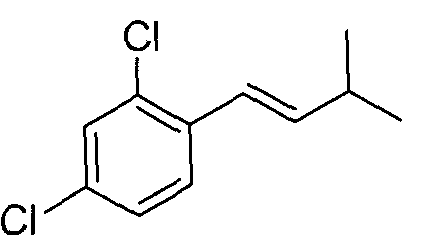
Preparation Example 5: Synthesis of l-(2,4-dichlorophenyl)-trans-l-propene
The substantially same method as described in Preparation Example 1 was conducted, except that 2,4-dichlorobenzenaldehyde was used instead of 2-chlorobenzenaldehyde, to obtain the title compound (2.4g, yield 57%).
1H NMR(400MHz, CDC13) 51.95(dd, J=6.8Hz, 1.6Hz, 3H), 6.24(m, 1H), 6.72(d, J=15.6Hz, 1H), 7.18-7.44(m, 3H)
Preparation Example 6: Synthesis of l-(2,4-dichlorophenyl)-trans-l-butene
The substantially same method as described in Preparation Example 5 was conducted, except that 3-heptanone was used instead of 3-pentanone, to obtain the title compound (2.1g, yield 90%).
Ή NMR(400MHz, CDC13) 51.14(d, J=7.6Hz, 3H), 2.20~2.33(m, 2H), 6.26(dt,
J=16Hz, 6.8Hz, 1H), 6.70(d, J=15.6Hz, 1H), 7.18~7.46(m, 3H)
Preparation Example 7: Synthesis of l-(2,6-dichlorophenyl)-3-methyI-trans-l- butene
The substantially same method as described in Preparation Example 5 was conducted, except that 2,6-dimethyl-heptan-4-one was used instead of 3-pentanone, to obtain the title compound (0.23g, yield 10-40%).
Ή NMR(400MHz, CDC13) 81.15(d, J=6.8Hz, 6H), 2.53~2.58(m, 1H), 6.19(dd, J=16.4Hz, 6.8Hz, 1H), 6.31(d, J=16.4Hz, 1H), 7.18~7.46(m, 3H)
Preparation Example 8: Synthesis of l-(2,4-dichlorophenyl)-trans-l-hexene
The substantially same method as described in Preparation Example 5 was conducted, except that 6-undecanone was used instead of 3-pentanone, to obtain the title compound (3.2g, yield 40-80%).
Ή NMR(400MHz, CDC13) 50.96(t, J=7.2Hz, 3H), 1.38~1.52(m, 4H), 2.25~2.31(m, 2H), 6.22(dt, J= 15.6Hz, 6.8Hz, 1H), 6.70(d, J=15.6Hz, 1H), 7.18~7.46(m, 3H)
Preparation Example 9: Synthesis of l-(2,6-dichlorophenyl)-trans-l-propene
The substantially same method as described in Preparation Example 1 was conducted, except that 2,6-dichlorobenzenaldehyde was used instead of 2-chlorobenzenaldehyde, to obtain the title compound (0.4g, yield 10-40%).
Ή NMR(400MHz, CDC13) 81.98(d, J=8Hz, 3H), 6.23-6.3 l(m, 1H), 6.40(d, J=16Hz, 1H), 7.05-7.32(m, 3H)
Preparation Example 10: Synthesis of l-(2,6-dichlorophenyl)-trans-l-butene
The substantially same method as described in Preparation Example 9 was conducted, except that 3-heptanone was used instead of 3-pentanone, to obtain the title compound (1.2g, yield 10-40%).
Ή NMR(400MHz, CDC13) 61.17(t, J=7.6Hz, 3H), 2.30~2.37(m, 2H), 6.29(dt, J=16.4Hz, 6Hz, 1H), 6.37(d, J=16.4Hz, 1H), 7.05~7.32(m, 3H)
Preparation Example 11: Synthesis of l-(2,6-dichlorophenyl)-3-methyl-trans-l- butene
The substantially same method as described in Preparation Example 9 was conducted, except that 2,6-dimethyl-heptan-4-one was used instead of 3-pentanone, to obtain the title compound (0.23g, yield 10-40%).
Ή NMPv(400MHz, CDC13) 51.15(d, J=6.8Hz, 6H), 2.53~2.58(m, 1H), 6.19(dd, J=16.4Hz, 6.8Hz, 1H), 6.31(d, J=16.4Hz, 1H), 7.05~7.32(m, 3H)
Preparation Example 12: Synthesis of l-(2,6-dichlorophenyl)-trans-l-hexene
The substantially same method as described in Preparation Example 9 was conducted, except that 6-undecanone was used instead of 3-pentanone, to obtain the title compound (0.2g, yield 10-40%).
1H NMR(400MHz, CDC13) 60.99(t, J=7.2Hz, 3H),1.14~1.59(m, 4H), 2.30~2.36(m, 2H), 6.24(dt, J=16Hz, 6.6Hz, 1H), 6.38(d, J=16.4Hz, 1H), 7.05~7.33(m, 3H)
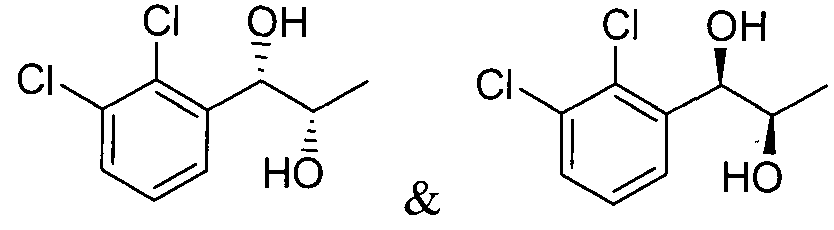
Preparation Example 13: Synthesis of l-(2,3-dichlorophenyl)-trans-l-propene
The substantially same method as described in Preparation Example 1 was conducted, except that 2,3-dichlorobenzenaldehyde was used instead of 2-chlorobenzenaldehyde, to obtain the title compound (0.2g, yield 10-40%).
Ή NMR(400MHz, CDC13) 51.94(d, J=4.8Hz, 3H), 6.24(m, 1H), 6.78(d, J=14Hz,
1H), 7.1 1~7.51(m, 3H)
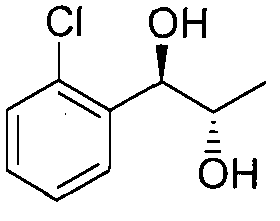
Preparation Example 14: Synthesis of l-(2-chlorophenyl)-(S,S)-l,2-propanediol
l-(2-chlorophenyl)-trans-l-propene(1.5g, Preparation Example 1) was dissolved in
30mL of the mixture of t-BuOH/H20 (1 : 1(V/V)). At 0 °C , AD-mix-a (Aldrich, U.S.A.) (13.7g) and methane sulfone amide (CH3S02NH2, 0.76g, 0.0080mol) were added thereto and stirred for overnight. When the reaction was completed, the obtained product was washed with an aqueous solution of sodium sulfite (Na2S03) and ethylacetate (EA). Then, the organic layer was dehydrated with anhydrous magnesium sulfate (MgS04), filtrated, and concentrated under reduced pressure. The concentrated residue was purified by a silica gel column chromatography to produce the title compound (1.65g, yield 90%).
Ή NMPv(400MHz, CDC13) 51.20(d, J=6.4Hz, 3H), 2.48(d, J=4.0Hz 1H), 2.92(d, J=4.4Hz, 1H), 3.93~3.97(m, 1H), 4.97(t, J=4.8Hz, 1H), 7.22~7.51(m, 4H)
13CNMR(100MHz,CDCl3) 618.8, 71.5, 74.4, 127.1, 128.1 , 128.9, 129.5, 132.6, 138.9
Preparation Example 15: Synthesis of l-(2-chlorophenyl)-(R,R)-l,2-propanediol
CI OH
l 6-(2-chVlorophenyl)-trans-l-propene (2.5g, Preparation Example 1) was dissolved in 50mL of the mixture of t-BuOH/H20 (1 : 1(V/V)). At 0°C , AD-mix-a (Aldrich, U.S.A.) (23.5g) and methane sulfone amide (CH3S02NH2, 1.27g, 0.013mol) were added thereto and stirred for overnight. When the reaction was completed, the obtained product was washed
with an aqueous solution of sodium sulfite (Na2S03) and ethylacetate (EA). Then, the organic layer was dehydrated with anhydrous magnesium sulfate (MgS04), filtrated, and concentrated under reduced pressure. The concentrated residue was purified by a silica gel column chromatography to produce the title compound (2.96g, yield 90%).
Ή NMR(400MHz, CDC13) 61.20(d, J=6.4Hz, 3H), 2.48(d, J=4.0Hz, 1H), 2.92(d,
J=4.4Hz, 1H), 3.93~3.97(m, 1H), 4.97(t, J=4.8Hz, 1H), 7.22~7.51(m, 4H)
Preparation Example 16: Synthesis of the mixture of l-(2-chlorophenyl)-(S,S)- 1,2-propanediol and l-(2-chlorophenyl)-(R,R)-l,2-propanediol
l-(2-chlorophenyl)-trans-l-propene(6.53g, Preparation Example 1) was dissolved in 45mL of the mixture of acetone/t-BuOH/H20(5: l : l V/V). At the room temperature, N- methylmorpholine-N-oxide (7.5 lg) and OsO4 (0.54g) were added thereto and stirred for 2-3 hours. When the reaction was completed, the obtained product was washed with water and methylenechloride (MC). Then, the organic layer was dehydrated with anhydrous magnesium sulfate (MgS04), filtrated, and concentrated under reduced pressure. The concentrated residue was purified by a silica gel column chromatography to produce the title compound (6.42g, yield 80%).
Ή NMR(400MHz, CDC13) 51.20(d, J=6.4Hz, 3H), 2.48(d, J=4.0Hz, 1H), 2.92(d, J=4.4Hz, 1H), 3.93~3.97(m, 1H), 4.97(t, J=4.8Hz, 1H), 7.22~7.51(m, 4H)
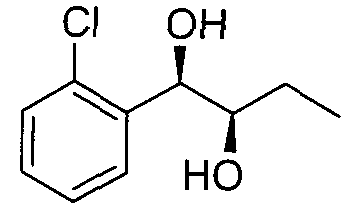
Preparation Example 17: Synthesis of l-(2-chlorophenyl)-(S,S)-l,2-butanedioI
The substantially same method as described in Preparation Example 14 was conducted, except that l-(2-chlorophenyl)-trans-l-butene(Preparation Example 2) was used instead of l-(2-chlorophenyl)-trans-l-propene(Preparation Example 1), to obtain the title compound (0.36g, yield 95%).
Ή NMR(400MHz, CDC13) 51.01(t, J=7.4Hz, 3H), 1.52~1.65(m, 2H), 2.01(d, J=4.4Hz, 1H), 2.74(d, J=5.2Hz, 1H), 3.69~3.75(m, 1H), 5.05(t, J=5.0Hz, 1H), 7.23~7.54(m,
4H)
Preparation Example 18: Synthesis of l-(2-chlorophenyl)-(R,R)-l,2-butanediol
The substantially same method as described in Preparation Example 15 was conducted, except that l-(2-chlorophenyl)-trans-l-butene(Preparation Example 2) was used instead of l-(2-chlorophenyl)-trans-l -propene(Preparation Example 1), to obtain the title compound (0.84g, yield 60-95%).
Ή NMR(400MHz, CDC13) 51.01(t, J=7.4Hz, 3H), 1.52~1.65(m, 2H), 2.01(d, J=4.4Hz, IH), 2.74(d, J=5.2Hz, IH), 3.69~3.75(m, IH), 5.05(t, J=5.0Hz, IH), 7.23~7.54(m, 4H)
Preparation Example 19: Synthesis of the mixture of l-(2-chlorophenyl)-(S,S)- 1,2-butanediol and l-(2-chlorophenyl)-(R,R)-l,2-butanediol
The substantially same method as described in Preparation Example 16 was conducted, except that l-(2-chlorophenyl)-trans-l-butene(Preparation Example 2) was used instead of l-(2-chlorophenyl)-trans-l-propene(Preparation Example 1), to obtain the title compound (5.1g, yield 60-90%).
Ή NMR(400MHz, CDC13) 61.01(t, J=7.4Hz, 3H), 1.52-1.65(m, 2H), 2.0 l(d, J=4.4Hz, IH), 2.74(d, J=5.2Hz, IH), 3.69~3.75(m, IH), 5.05(t, J=5.0Hz, IH), 7.23~7.54(m, 4H)
Preparation Example 20: Synthesis of l-(2-chlorophenyl)-3-methyl-(S,S)-l,2- butanediol
The substantially same method as described in Preparation Example 14 was
conducted, except that l-(2-chlorophenyl)-3 -methyl-trans- l-butene(Preparati on Example 3) was used instead of l-(2-chlorophenyl)-trans-l -propene(Preparation Example 1), to obtain the title compound (0.96g, yield 60-90%).
Ή NMR(400MHz, CDC13) 51.07(t, J=7.2Hz, 6H), 1.83~1.89(m, 1H), 1.92(d, J=5.6Hz, 1H), 2.69(d, J=6.4Hz, 1H), 3.53-3.56(m, 1H), 5.22~5.25(m, 1H), 7.23~7.55(m, 4H)
Preparation Example 21: Synthesis of l-(2-chlorophenyl)-3-methyl-(R,R)-l,2- butanediol
The substantially same method as described in Preparation Example 15 was conducted, except that l-(2-chlorophenyl)-3 -methyl-trans- l-butene(Preparation Example 3) was used instead of l-(2-chlorophenyl)-trans-l-propene(Preparation Example 1), to obtain the title compound (4.2g, yield 60-90%).
Ή NMR(400MHz, CDC13) 51.07(t, J=7.2Hz, 6H), 1.82~1.90(m, 1H), 1.93(d, J=5.6Hz, 1H), 2.79(d, J=6Hz, 1H), 3.53~3.57(m, 1H), 5.23~5.25(m, 1H), 7.23~7.54(m, 4H)
Preparation Example 22: Synthesis of the mixture of l-(2-chlorophenyl)-3- methyI-(S,S)-l,2-butanediol and l-(2-chlorophenyl)-3-methyl-(R,R)-l
>2-butanediol
The substantially same method as described in Preparation Example 16 was conducted, except that l-(2-chlorophenyl)-3 -methyl -trans- l-butene(Preparation Example 3) was used instead of l-(2-chlorophenyl)-trans-l-propene(Preparation Example 1), to obtain the title compound (0.8g, yield 60-90%).
Ή NMR(400MHz, CDC13) 51.07(t, J=7.2Hz, 6H), 1.83~1.90(m, 1H), 1.92(d, J=5.6Hz, 1H), 2.69(d, J=6.4Hz, 1H), 3.53~3.56(m, 1H), 5.22~5.25(m, 1H), 7.23~7.55(m, 4H)
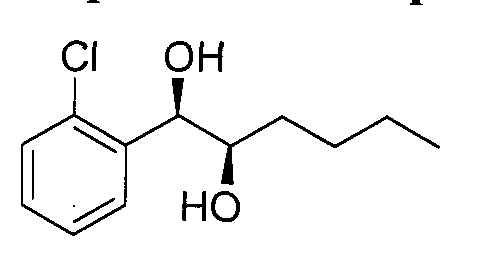
Preparation Example 23: Synthesis of l-(2-ch!orophenyl)-(S,S)-l,2-hexanediol
The substantially same method as described in Preparation Example 14 was conducted, except that l -(2-chlorophenyl)-trans-l -hexene(Preparation Example 4) was used instead of l -(2-chlorophenyl)-trans- l -propene(Preparation Example 1 ), to obtain the title compound (0.37g, yield 90%).
1H NMR(400MHz, CDC1
3) 60.90(t, J=7.2Hz, 3H), 1.35~1.65(m, 6H), 2.08(d, J=4.4Hz, 1 H), 2.71 (d, J=5.2Hz, 1H), 3.78-3.83(m, 1H), 5.04(t, J=5.0Hz, 1H), 7.23~7.53(m, 4H) Preparation Example 24: Synthesis of l-(2-chlorophenyI)-(R,R)-l,2-hexanediol
The substantially same method as described in Preparation Example 15 was conducted, except that T -(2-chlorophenyl)-trans-l -hexene(Preparation Example 4) was used instead of l -(2-chlorophenyl)-trans-l -propene(Preparation Example 1), to obtain the title compound (4.2g, yield 60-90%).
Ή NMR(400MHz, CDC13) 60.91 (t, J=6.6Hz, 3H), 1.35-1 .65(m, 6H), 2.08(d, J=4.8Hz, 1H), 2.70(d, J=5.2Hz, 1H), 3.80-3.83(m, 1H), 5.05(t, J=5.0Hz, 1H), 7.24~7.56(m, 4H) Preparation Example 25: Synthesis of the mixture of l-(2-chIorophenyl)-(S,S)-
1,2-hexanediol and l-(2-chlorophenyi)-(R,R)-l,2-hexanediol
The substantially same method as described in Preparation Example 16 was conducted, except that l -(2-chlorophenyl)-trans-l -hexene(Preparation Example 4) was used instead of l -(2-chlorophenyl)-trans-l -propene(Preparation Example 1 ), to obtain the title compound (7.9g, yield 60-90%).
1H NMR(400MHz, CDC13) 80.90(t, J=7.2Hz, 3H), 1.26~1.55(m, 6H), 2.08(d,
J=4.4Hz, 1H), 2.71 (d, J=5.6Hz, 1H), 3.78~3.84(m, 1H), 5.04(t, J=3.2Hz, 1H), 7.24~7.55(m, 4H)
Preparation Example 26: Synthesis of l-(2,4-dichlorophenyl)-(S,S)-l,2- propanediol
The substantially same method as described in Preparation Example 14 was conducted, except that l-(2,4-ichlorophenyl)-trans-l -propene(Preparation Example 5) was used instead of l-(2-chlorophenyl)-trans-l-propene(Preparation Example 1), to obtain the title compound (0.33g, yield 60-95%).
]H NMR(400MHz, CDC1
3) 61.22(d, J=6.4Hz, 3H), 2.10(d, J=4.4Hz, 1H), 2.71(d, J=4.8Hz, 1H), 3.90~3.95(m, 1H), 4.94(t, J=5.0Hz, 1H), 7.31(dd, J=2.0Hz, J=8.0Hz, 1H), 7.40(d, J=2.0Hz, 1H), 7.49(d, J=8.4Hz, 1H) Preparation Example 27: Synthesis of l-(2,4-dichlorophenyl)-(R,R)-l,2- propanediol
The substantially same method as described in Preparation Example 15 was conducted, except that l-(2,4-ichlorophenyl)-trans-l-propene(Preparation Example 5) was used instead of l-(2-chlorophenyl)-trans-l-propene(Preparation Example 1), to obtain the title compound (0.45g, yield 60-95%).
Ή NMR(400MHz, CDC13) 81.22(d, J=6.4Hz, 3H), 2.10(d, J=4.4Hz, 1H), 2.71(d, J=4.8Hz, 1H), 3.90~3.95(m, 1H), 4.94(t, J=5.0Hz, 1H), 7.31~7.49(m, 3H) Preparation Example 28: Synthesis of the mixture of l-(2,4-dichlorophenyl)-
(S,S)-l,2-propanediol and l-(2,4-dichlorophenyl)-(R,R)-l,2-propanediol
The substantially same method as described in Preparation Example 16 was conducted, except that l-(2,4-ichlorophenyl)-trans-l-propene(Preparation Example 5) was used instead of l-(2-chlorophenyl)-trans-l -propene(Preparation Example 1), to obtain the title compound (0.45g, yield 60-95%).
1H NMR(400MHz, CDC13) 51.22(d, J=6.4Hz, 3H), 2.10(d, J=4.4Hz, 1H), 2.7 l (d, J=4.8Hz, 1H), 3.90~3.95(m, lH), 4.94(t, J=5.0Hz, 1H), 7.31~7.49(m, 3H)
Preparation Example 29: Synthesis of l-(2,4-dich!orophenyl)-(S,S)-l,2- butanediol
The substantially same method as described in Preparation Example 14 was conducted, except that l-(2,4-dichlorophenyl)-trans-l-butene(Preparation Example 6) was used instead of l-(2-chlorophenyl)-trans-l-propene(Preparation Example 1), to obtain the title compound (0.32g, yield 90%).
Ή NMR(400MHz, CDC13) δ1.02(ΐ, J=7.4Hz, 3H), 1.54-1.6 l (m, 2H), 2.07(d, J=4.8Hz, 1H), 2.74(d, J=4.8Hz, 1H), 3.65~3.68(m, 1H), 5.01(t, J=5.0Hz, 1H), 7.31~7.49(m, 3H)
Preparation Example 30: Synthesis of l-(2,4-dichlorophenyl)-(R,R)-l,2- butanediol
The substantially same method as described in Preparation Example 15 was conducted, except that l-(2,4-dichlorophenyl)-trans-l-butene(Preparation Example 6) was used instead of l-(2-chlorophenyl)-trans-l-propene(Preparation Example 1), to obtain the title compound (0.43g, yield 60-90%).
Ή NMR(400MHz, CDC1
3) 51.02(t, J=7.4Hz, 3H), 1.54-1.6 l(m, 2H), 2.07(d, J=4.8Hz, 1H), 2.74(d, J=4.8Hz, 1H), 3.65~3.68(m, 1H), 5.01 (t, J=5.0Hz, 1H), 7.31-7.49(m, 3H)
Preparation Example 31: Synthesis of the mixture of l-(2,4-dichlorophenyl)- (S,S)-l,2-butanediol and l-(2,4-dichlorophenyl)-(R,R)-l,2-butanediol
The substantially same method as described in Preparation Example 16 was conducted, except that l -(2,4-dichlorophenyl)-trans-l-butene(Preparation Example 6) was used instead of l-(2-chlorophenyl)-trans-l-propene(Preparation Example 1), to obtain the title compound (0.33g, yield 60-90%).
1H NMR(400MHz, CDC13) 51.02(t, J=7.4Hz, 3H), 1.54~1.61(m, 2H), 2.07(d, J=4.8Hz, 1H), 2.74(d, J=4.8Hz, 1H), 3.65~3.68(m, 1H), 5.01(t, J=5.0Hz, 1H), 77.31~7.49(m, 3H)
Preparation Example 32: Synthesis of l-(2,4-dichlorophenyl)-3-methyl-(S,S)-l,2- butanediol
The substantially same method as described in Preparation Example 14 was conducted, except that l-(2,4-dichlorophenyl)-3 -methyl-trans- l-butene(Preparation Example 7) was used instead of l-(2-chlorophenyl)-trans-l-propene(Preparation Example 1), to obtain the title compound (0.25g, yield 60-95%).
1H NMR(400MHz, CDC13) 51.00(d, J=6.8Hz, 6H), 1.60~1.65(m, 1H), 2.35(d, J=4.0Hz, 1H), 3.12(d, J=8.4Hz, 1H), 4.13~4.18(m, 1H), 5.36(t, J=7.6Hz, 1H), 7.17~7.35(m, 3H)
Preparation Example 33: Synthesis of l-(2,4-dichlorophenyl)-3-methyl-(R,R)- 1,2-butanediol
The substantially same method as described in Preparation Example 15 was conducted, except that l-(2,4-dichlorophenyl)-3-methyl-trans-l-butene(Preparation Example
7) was used instead of l-(2-chlorophenyl)-trans-l -propene(Preparation Example 1), to obtain the title compound (0.36g, yield 60-95%).
]H NMR(400MHz, CDC13) 51.00(d, J=6.8Hz, 6H), 1.60~1.65(m, 1H), 2.35(d, J=4.0Hz, 1H), 3.12(d, J=8.4Hz, 1H), 4.13~4.18(m, 1H), 5.36(t, J=7.6Hz, 1H), 7.17~7.35(m, 3H)
Preparation Example 34: Synthesis of the mixture of l-(2,4-dichlorophenyl)-3- methyl- -l,2-butanediol and l-(2,4-dichIorophenyl)-3-methyl-(R,R)-l,2-butanediol
The substantially same method as described in Preparation Example 16 was conducted, except that l-(2,4-dichlorophenyl)-3-methyl-trans-l-butene(Preparation Example 7) was used instead of l -(2-chlorophenyl)-trans-l-propene(Preparation Example 1), to obtain the title compound (0.26g, yield 60-95%).
Ή NMR(400MHz, CDC13) 51.00(d, J=6.8Hz, 6H), 1.60~1.65(m, 1H), 2.35(d, J=4.0Hz, 1H), 3.12(d, J=8.4Hz, 1H), 4.13-4.18(m, 1H), 5.36(t, J=7.6Hz, 1H), 7.17~7.35(m, 3H)
Preparation Example 35: Synthesis of l-(2,4-dichlorophenyl)-(S,S)-l,2- hexanediol
The substantially same method as described in Preparation Example 14 was conducted, except that l-(2,4-dichlorophenyl)-trans-l-propene(Preparation Example 8) was used instead of l-(2-chlorophenyl)-trans-l-propene(Preparation Example 1), to obtain the title compound (l .lg, yield 60-90%).
Ή NMR(400MHz, CDC13) δ0.89~0.93(ηι, 3H), 1.30~1.39(m, 2H), 1.49~1.52(m, 2H), 1.56~1.62(m, 2H), 2.05(d, J=5.2Hz, 1H), 2.74(d, J=5.2Hz, 1H), 3.72~3.77(m, 1H), 4.98(t, J=4.8Hz, 1H), 7.28~7.50(m, 3H)
Preparation Example 36: Synthesis of l-(2,4-dichlorophenyl)-(R,R)-l,2-
hexanediol
The substantially same method as described in Preparation Example 15 was conducted, except that l-(2,4-dichlorophenyl)-trans-l-propene(Preparation Example 8) was used instead of l-(2-chlorophenyl)-trans-l-propene(Preparation Example 1), to obtain the title compound (1.2g, yield 60-95%).
Ή NMR(400MHz, CDC13) 60.89~0.93(m, 3H), 1.30~1.39(m, 2H), 1.49~1.52(m, 2H), 1.56~1.62(m, 2H), 2.05(d, J=5.2Hz, 1H), 2.74(d, J=5.2Hz, 1H), 3.72~3.77(m, 1H), 4.98(t, J=4.8Hz, 1H), 7.28~7.50(m, 3H)
Preparation Example 37: Synthesis of the mixture of l-(2,4-dich!orophenyl)- (S,S)-l,2-hexanediol and l-(2,4-dich!orophenyI)-(R,R)-l,2-hexanediol
The substantially same method as described in Preparation Example 16 was conducted, except that l -(2,4-dichlorophenyl)-trans-l-propene(Preparation Example 8) was used instead of l-(2-chlorophenyl)-trans-l-propene(Preparation Example 1), to obtain the title compound (0.67g, yield 60-95%).
Ή NMR(400MHz, CDC13) 60.89~0.93(m, 3H), 1.30~1.39(m, 2H), 1.49~1.52(m, 2H), 1.56~1.62(m, 2H), 2.05(d, J=5.2Hz, 1H), 2.74(d, J=5.2Hz, 1H), 3.72~3.77(m, 1H), 4.98(t, J=4.8Hz, 1H), 7.28~7.50(m, 3H)
Preparation Example 38: Synthesis of l-(2,6-dichlorophenyl)-(S,S)-l,2- propanediol
The substantially same method as described in Preparation Example 14 was conducted, except that l-(2,6-dichlorophenyl)-trans-l-propene(Preparation Example 9) was used instead of l-(2-chlorophenyl)-trans-l-propene(Preparation Example 1), to obtain the
title compound (0.9g, yield 60-90%).
l NMR(400MHz, CDC13) 61.10(d, J=6.4Hz, 3H), 2.72(d, J=2.4Hz, 1H), 3.10(d, J=8.4Hz, 1H), 4.47~4.54(m, 1H), 5.24(t, J=8.8Hz, 1H), 7.18~7.36(m, 3H)
Preparation Example 39: Synthesis of l-(2,6-dichlorophenyl)-(R,R)-l,2- propanediol
The substantially same method as described in Preparation Example 15 was conducted, except that l-(2,6-dichlorophenyl)-trans-l-propene(Preparation Example 9) was used instead of l-(2-chlorophenyl)-trans-l-propene(Preparation Example 1), to obtain the title compound (0.84g, yield 60-90%).
1H NMR(400MHz, CDC13) 51.10(d, J=6.4Hz, 3H), 2.72(d, J=2.4Hz, 1H), 3.10(d, J=8.4Hz, 1H), 4.47~4.54(m, 1H), 5.24(t, J=8.8Hz, 1H), 7.18~7.36(m, 3H)
Preparation Example 40: Synthesis of the mixture of l-(2,6-dichlorophenyl)-
(S,S)-l,2-propanediol and l-(2,6-dichlorophenyl)-(R,R)-l,2-propanediol
The substantially same method as described in Preparation Example 16 was conducted, except that l-(2,6-dichlorophenyl)-trans-l-propene(Preparation Example 9) was used instead of l-(2-chlorophenyl)-trans-l-propene(Preparation Example 1), to obtain the title compound (0.9 lg, yield 60-90%).
Ή NMPv(400MHz, CDC13) 51.10(d, J=6.4Hz, 3H), 2.72(d, J=2.4Hz, 1H), 3.10(d, J=8.4Hz, 1H), 4.47~4.54(m, 1H), 5.24(t, J=8.8Hz, 1H), 7.18~7.36(m, 3H)
Preparation Example 41: Synthesis of l-(2,6-dichlorophenyl)-(S,S)-l,2- butanediol
The substantially same method as described in Preparation Example 14 was conducted, except that l-(2,6-dichlorophenyl)-trans-l-butene(Preparation Example 10) was used instead of l -(2-chlorophenyl)-trans-l-propene(Preparation Example 1), to obtain the title compound (1.23g, yield 60-95%).
1H NMR(400MHz, CDC13) 50.97(t, J=7.6Hz, 3H), 1.26~1.53(m, 2H), 2.64(dd, J=0.8Hz, J-4.0Hz, 1H), 3.14(d, J=8.4Hz, 1H), 4.22~4.26(m, 1H), 5.26(t, J=8.4Hz, 1H), 7.17~7.35(m, 3H)
Preparation Example 42: Synthesis of l-(2,6-dichIorophenyl)-(R,R)-l,2- butanediol
The substantially same method as described in Preparation Example 15 was conducted, except that l-(2,6-dichlorophenyl)-trans-l-butene(Preparation Example 10) was used instead of l-(2-chlorophenyl)-trans-l-propene(Preparation Example 1), to obtain the title compound (0.96g, yield 60-95%).
Ή NMR(400MHz, CDC13) 50.97(t, J=7.6Hz, 3H), 1.26~1.53(m, 2H), 2.64(dd, J=0.8Hz, J=4.0Hz, 1H), 3.14(d, J=8.4Hz, 1H), 4.22~4.26(m, 1H), 5.26(t, J=8.4Hz, 1H), 7.17~7.35(m, 3H)
Preparation Example 43: Synthesis of the mixture of l-(2,6-dichlorophenyl)- (S,S)-l,2-butanediol and l-(2,6-dich!orophenyl)-(R,R)-l,2-butanediol
The substantially same method as described in Preparation Example 16 was conducted, except that l-(2,6-dichlorophenyl)-trans-l-butene(Preparation Example 10) was used instead of l-(2-chlorophenyl)-trans-l-propene(Preparation Example 1), to obtain the
title compound (0.86g, yield 60-95%).
Ή NMR(400MHz, CDC13) 60.97(t, J=7.6Hz, 3H), 1.26~1.53(m, 2H), 2.64(dd, J=0.8Hz, J=4.0Hz, 1H), 3.14(d, J=8.4Hz, 1H), 4.22~4.26(m, 1H), 5.26(t, J=8.4Hz, 1H), 7.17~7.35(m, 3H)
Preparation Example 44: Synthesis of l-(2,6-dichlorophenyl)-3-methyl-(S,S)-l,2- butanediol
The substantially same method as described in Preparation Example 14 was conducted, except that l-(2,6-dichlorophenyl)-3 -methyl-trans- 1 -butene(Preparation Example 1 1) was used instead of l-(2-chlorophenyl)-trans-l-propene(Preparation Example 1), to obtain the title compound (0.25g, yield 60-95%).
1H NMR(400MHz, CDC13) 51.00(d, J=6.8Hz, 6H), 1.60~1.65(m, 1H), 2.35(d, J=4.0Hz, 1H), 3.12(d, J=8.4Hz, 1H), 4.13~4.18(m, 1H), 5.36(t, J=7.6Hz, 1H), 7.17~7.35(m, 3H)
Preparation Example 45: Synthesis of l-(2,6-dichlorophenyl)-3-methyl-(R,R)- 1,2-butanediol
The substantially same method as described in Preparation Example 15 was conducted, except that l-(2,6-dichlorophenyl)-3-methyl-trans-l-butene(Preparation Example 11) was used instead of l-(2-chlorophenyl)-trans-l-propene(Preparation Example 1), to obtain the title compound (0.37g, yield 60-95%).
Ή NMR(400MHz, CDC13) 51.00(d, J=6.8Hz, 6H), 1.60~1.65(m, 1H), 2.35(d, J=4.0Hz, 1H), 3.12(d, J=8.4Hz, 1H), 4.13~4.18(m, 1H), 5.36(t, J=7.6Hz, 1H), 7.17~7.35(m, 3H)
Preparation Example 46: Synthesis of the mixture of l-(2,6-dichlorophenyl)-3- methyl-(S,S)-l,2-butanediol and l-(2,6-dichlorophenyl)-3-methyl-(R,R)-l,2-butanediol
The substantially same method as described in Preparation Example 16 was conducted, except that l -(2,6-dichlorophenyl)-3 -methyl-trans- l-butene(Preparation Example 1 1) was used instead of l-(2-chlorophenyl)-trans-l -propene(Preparation Example 1), to obtain the title compound (0.47g, yield 60-95%).
Ή NMR(400MHz, CDC13) 51.00(d, J=6.8Hz, 6H), 1.60~1.65(m, 1H), 2.35(d, J=4.0Hz, 1H), 3.12(d, J=8.4Hz, 1H), 4.13~4.18(m, 1H), 5.36(t, J=7.6Hz, 1H), 7.17~7.35(m, 3H)
Preparation Example 47: Synthesis of l-(2,6-dichlorophenyi)-(S,S)-l,2- hexanediol
The substantially same method as described in Preparation Example 14 was conducted, except that l-(2,6-dichlorophenyl)-trans-l-hexene(Preparation Example 12) was used instead of l-(2-chlorophenyl)-trans-l-propene(Preparation Example 1), to obtain the title compound (0.36g, yield 60-90%).
Ή NMR(400MHz, CDC13) 60.85(t, J=6.8Hz, 3H), 1.20-1.3 l(m, 4H), 1.45~1.53(m, 2H), 2.61~2.62(m, 1H), 3.12(d, J=8.4Hz, 1H), 4.28-4.33(m, 1H), 5.25(t, J=8.4Hz, 1H), 7.18~7.35(m, 3H)
Preparation Example 48: Synthesis of l-(2,6-dichlorophenyI)-(R,R)-l,2- hexanediol
The substantially same method as described in Preparation Example 15 was conducted, except that l-(2,6-dichlorophenyl)-trans-l-hexene(Preparation Example 12) was used instead of l-(2-chlorophenyl)-trans-l-propene(Preparation Example 1), to obtain the
title compound (0.58g, yield 60-90%).
Ή NMR(400MHz, CDC13) 80.85(t, J=6.8Hz, 3H), 1.20-1.3 l(m, 4H), 1.45~1.53(m, 2H), 2.61~2.62(m, 1H), 3.12(d, J=8.4Hz, 1H), 4.28~4.33(m, 1H), 5.25(t, J=8.4Hz, 1H), 7.18~7.35(m, 3H)
Preparation Example 49: Synthesis of the mixture of l-(2,6-dichlorophenyl)- (S,S)-l,2-hexanediol and l-(2,6-dichlorophenyI)-(R,R)-l,2-hexanediol
The substantially same method as described in Preparation Example 16 was conducted, except that l-(2,6-dichlorophenyl)-trans-l-hexene(Preparation Example 12) was used instead of l-(2-chlorophenyl)-trans-l-propene(Preparation Example 1), to obtain the title compound (0.62g, yield 60-90%).
1H NMR(400MHz, CDC13) 60.85(t, J=6.8Hz, 3H), 1.20-1.3 l(m, 4H), 1.45~1.53(m, 2H), 2.61~2.62(m, 1H), 3.12(d, J=8.4Hz, lH), 4.28~4.33(m, 1H), 5.25(t, J=8.4Hz, 1H), 7.18~7.35(m, 3H)
Preparation Example 50: Synthesis of methyl 2-(2-chlorophenyl)-(R)-2- hydroxyacetate
15g of (R)-2-chloromandelic acid was mixed with methanol (CH3OH, 150ml) and phosphorus chloride oxide (POCI3, 0.76ml) in a flask by stirring using a magnetic stirrer at the room temperature for 6 hours. When the reaction was completed, the obtained product was washed with an aqueous solution of sodium sulfite (Na2SC>3) and ethylacetate (EA). Then, the organic layer was dehydrated with anhydrous magnesium sulfate (MgS04), filtrated, and concentrated under reduced pressure. The concentrated residue was purified by a silica gel column chromatography to produce the title compound (15.64g, yield 95%).
Ή NMR(400MHz, CDCI3) δ 3.59(d, J=5.2, 1H), 3.79(t, J=6.0, 3H), 5.59(d, J=5.2, 1H), 7.28~7.43(m, 4H)
06
Preparation Example 51: Synthesis of 2-(2-chlorophenyl)-(R)-2-hydroxy-N- methox -N-methylacetamide
Ν,Ο-dimethylhydroxylamine hydrochloride (Ν,Ο-dimethylhydroxylamine.HCl, 15.2g) was dissolved in dichloromethane (DCM, 150ml), and cooled to 0 °C using an ice- bath. Then, 77.7ml of 2.0M trimethylaluminium in hexane was slowly added thereto in drop- wise manner for 30 minutes. Thereafter, the ice-bath was removed, and the obtained product was stirred at the room temperature for 2 hours. Methyl-2-(2-chlorophenyl)-(R)-2- hydroxyacetate(15.64g) dissolved in dichloromethane(DCM, 150ml) was added in drop-wise manner thereto at the room temperature for 30 minutes, and subjected to reflux for 12 hours. When the reaction was completed, the obtained product was cooled to 0 °C , and washed by a slow drop-wise addition of hydrochloric acid (HC1, 200ml). The obtained organic layer was washed with distilled water and brine, dehydrated with anhydrous magnesium sulfate (MgS04), filtrated, and concentrated under reduced pressure. The concentrated residue was purified by a silica gel column chromatography to produce the title compound (14.68g, yield 82%).
Ή NMR(400MHz, CDC13) 53.23(s, 3H), 3.28(s, 3H), 4.33(d, J=6.0Hz, 1H), 5.81(d, J=5.6Hz, 1H), 7.23~7.42(m, 4H)
Preparation Example 52: Synthesis of 2-(2-chlorophenyl)-N-methoxy-(R)-2- (methoxymethoxy)-N-methylacetamide
2-(2-chlorophenyl)-(R)-2-hydroxy-N-methoxy-N-methylacetamide (14.68g) obtained in Preparation Example 51 was dissolved in dichloromethane (DCM, 140ml), and cooled to 0 °C . Diisopropylethylamine (55.67ml) was slowly added thereto in drop-wise manner, and stirred for 10 minutes. Chloro methyl methyl ether (25.25ml) was slowly added thereto in drop- wise manner for 30 minutes. After 30 minutes, the ice-bath was removed and the
obtained product was stirred for 30 at room temperature. When the reaction was completed, the obtained product was cooled to 0 °C . And then, to the obtained product, 1M sodium hydroxide solution (1 M NaOH, 20ml) was added in drop-wise manner, and dichloromethane(DMC) was injected. Then the obtained product was washed with water. The obtained organic layer was dehydrated with anhydrous magnesium sulfate (MgS04), filtrated, and concentrated under reduced pressure. The concentrated residue was purified by a silica gel column chromatography to produce the title compound (15.57g, yield 89%).
Ή NMR(400MHz, CDC13) 63.19(s, 3H), 3.42(s, 3H), 3.47(s, 3H), 4.75(d, J=6.8, 1 H), 4.81 (d, J=6.8, 1H), 6.07(s, 1H), 7.27~7.58(m, 4H)
Preparation Example 53: Synthesis of l-(2-chlorophenyl)-(R)-l- (methoxymethoxy)propane-2-on
o'
CI
2 6-(2-chlorophenyl)-N-methoxy-(R)-2-(methoxymethoxy)-N- methylacetamide(15.57g) obtained in Preparation Example 52 was dissolved in tetrahydrofuran(THF, 150ml), and cooled to 0 °C . 3.0M methyl magnesium bromide (MeMgBr) solution in ether was added thereto in drop-wise manner for 30 minutes, and the obtained product was stirred for 1 hour at 0 °C . When the reaction was completed, di ethyl ether( 100ml) was added thereto. The obtained product was washed with 10%(w/v) potassium hydrogen sulfate (KHS04, 100ml) and then, washed again with brine. The obtained organic layer was dehydrated with anhydrous magnesium sulfate (MgS04), filtrated, and concentrated under reduced pressure. The concentrated residue was purified by a silica gel column chromatography to produce the title compound (11.83g, yield 90%).
1H NMR(400MHz, CDC13) 52.18(s, 3H), 3.39(s, 3H), 4.65(d, J=6.8, 1H), 4.74(d, J=6.8, 1H), 5.63(s, 1H), 7.30~7.45(m, 4H)
Preparation Example 54: Synthesis of l-(2-chlorophenyl)-(R)-l- (methoxymethoxy)-(S)-2-propanol
l-(2-chlorophenyl)-(R)-l -(methoxymethoxy)propane-2-on(l 1.83g) obtained in Preparation Example 53 was dissolved in toluene(HOml), and cooled to -40 °C . Sodium bis(2-methoxyethoxy)aluminumhydride solution (15.7ml) in toluene was slowly added thereto for 30 minutes, and then, the obtained product was stirred for 1 hour. When the reaction was completed, the obtained product was washed by slow drop-wise addition of sodium potassium tartrate (100ml). The obtained organic layer was dehydrated with anhydrous magnesium sulfate (MgS04), filtrated, and concentrated under reduced pressure. The concentrated residue was purified by a silica gel column chromatography to produce the title compound (10.38g, yield 87%).
Ή NMR(400MHz, CDC13) 61.13(d, J=6.4, 3H), 2.33(d, J=7.2, 1H), 3.44(s, 3H), 4.10~4.18(m, 1H), 4.61(d, J=6.4, 1H), 4.69(d, J=6.8, 1H), 5.14(d, J=3.6, 1H), 7.22~7.55(m, 4H)
Preparation Example 55: Synthesis of l-(2-chlorophenyl)-(R,S)-l,2- propanediol
1 -(2-chlorophenyl)-(R)-l -(methoxymethoxy)-(S)-2-propanol(l 0.38g) obtained in Preparation Example 54 was dissolved in methanol (CH3OH, 100ml), and then, cooled to 0 °C . 8M hydrochloric acid(HCl, 56.2ml) was slowly added in drop-wise manner to the obtained product, and then, the obtained product was warmed to the room temperature, and stirred for 15 hours. When the reaction was completed, the obtained product was cooled to 0°C . 5N sodium hydroxide (NaOH, 30ml) was slowly added thereto, and the obtained product was subjected to vacuum concentration. The obtained product was diluted with ethylacetate. The obtained organic layer was washed with distilled water, dehydrated with anhydrous magnesium sulfate (MgS04), filtrated, and concentrated under reduced pressure. The concentrated residue was purified by a silica gel column chromatography to produce the title compound (7.05g, yield 60-90%).
Ή NMR(400MHz, CDCl3) 5l .07(d, J=6.8, 3H), 2.0l (d, J=5.6, lH), 2.6l(s, lH), .27(m, lH), 5.24(d, J=3.6, lH), 7.22~7.64(m, 4H)
Preparation Example 56: Synthesis of l-(2-chlorophenyl)-(S,R)-l,2-propanediol
The substantially same method as described in Preparation Example 50-55 was conducted, except that (S)-2-chloromandelic acid was used instead of (R)-2-chloromandelic acid, to obtain the title compound (5.04g, yield 84%).
Ή NMR(400MHz, CDCI3) 5l .07(d, J=6.8, 3H), 2.00(d, J=5.6, lH), 2.54(d, J=3.6, lH), 4.22~4.26(m, lH), 5.25(t, J=3.2, lH), 7.22~7.65(m, 4H)
Preparation Example 57: Synthesis of l-(2,3-dichIorophenyl)-(S,S)-l,2- propanediol
The substantially same method as described in Preparation Example 14 was conducted, except that l-(2,3-dichlorophenyl)-trans-l-propene(Preparation Example 13) was used instead of l-(2-chlorophenyl)-trans-l-propene(Preparation Example 1), to obtain the title compound (0.9g, yield 60-90%).
Ή NMR(400MHz, CDC13) 51.10(d, J=6.4Hz, 3H), 2.72(d, J=2.4Hz, 1H), 3.10(d, J=8.4Hz, 1H), 4.47~4.54(m, 1H), 5.24(t, J=8.8Hz, 1H), 7.18- (m, 3H)
Preparation Example 58: Synthesis of l-(2,3-dichlorophenyl)-(R,R)-l,2- propanediol
The substantially same method as described in Preparation Example 15 was conducted, except that l-(2,3-dichlorophenyl)-trans-l-propene(Preparation Example 13) was used instead of l-(2-chlorophenyl)-trans-l-propene(Preparation Example 1), to obtain the
title compound (0.84g, yield 60-90%).
Ή NMR(400MHz, CDC13) 51.10(d, J=6.4Hz, 3H), 2.72(d, J=2.4Hz, 1H), 3.10(d, J=8.4Hz, 1H), 4.47~4.54(m, 1H), 5.24(t, J=8.8Hz, 1H), 7.18- (m, 3H) Preparation Example 59: Synthesis of the mixture of l-(2,3-dichlorophenyl)-
(S,S)-l,2-propanediol and l-(2,3-dichIorophenyl)-(R,R)-l,2-propanediol
The substantially same method as described in Preparation Example 16 was conducted, except that l-(2,3-dichlorophenyl)-trans-l-propene(Preparation Example 13) was used instead of l-(2-chlorophenyl)-trans-l -propene(Preparation Example 1), to obtain the title compound (0.9 lg, yield 60-90%).
Ή NMR(400MHz, CDCI
3) 51.10(d, J=6.4Hz, 3H), 2.72(d, J=2.4Hz, 1H), 3.10(d, J=8.4Hz, 1H), 4.47~4.54(m, 1H), 5.24(t, J=8.8Hz, 1H), 7.18~(m, 3H) Preparation Example 60: Synthesis of l-(2-fluorophenyl)-trans-l-propene
The substantially same method as described in Preparation Example 1 was conducted, except that 2-fluorobenzenaldehyde was used instead of 2-chlorobenzenealdehyde, to obtain the title compound (6.67g, yield 61%).
Ή NMPv(400MHz, CDC13) 61.94(d, J=6.8Hz, 3H), 6.30~6.38(m, 1H), 6.57(d, J=16Hz, 1H), 7.00~7.41(m, 4H)
Preparation Example 61: Synthesis of l-(2-fluorophenyl)-(S,S)-l,2-propanediol
The substantially same method as described in Preparation Example 14 was conducted, except that l-(2-fluorophenyl)-trans-l-propene (Preparation Example 60) was used instead of l-(2-chlorophenyl)-trans-l-propene (Preparation Example 1), to obtain the
title compound (6.46g, yield 78%).
Ή NMR(400MHz, CDC1
3) 51.15(d, J=6.4Hz, 3H), 2.43(d, J=3.6Hz, 1H), 2.69(d, J=4.8Hz, 1H), 3.90~3.98(m, 1H), 4.78(dd, J=4.4, 7.2Hz, 1H), 7.04~7.50(m, 4H) Preparation Example 62: Synthesis of l-(2-fluorophenyl)-(R,R)-l,2-propanediol
The substantially same method as described in Preparation Example 15 was conducted, except that l-(2-fluorophenyl)-trans-l-propene (Preparation Example 60) was used instead of l-(2-chlorophenyl)-trans-l-propene (Preparation Example 1), to obtain the title compound (3.29g, yield 79%).
Ή NMR(400MHz, CDC13) 5l .l5(d, J=6.4Hz, 3H), 2.43(d, J=3.6Hz, 1H), 2.69(d, J=4.8Hz, 1H), 3.90~3.98(m, 1H), 4.78(dd, J=4.4, 7.2Hz, 1H), 7.04~7.50(m, 4H)
Preparation Example 63: Synthesis of 2-iodobenzenealdehyde
In a flask, 2-iodobenzyl alcohol (4g, 17.09mmol) was dissolved in dichloromethane (MC, 85ml), and then, manganese oxide (Mn02, 14.86g, 170.92mmol) was added thereto. The obtained reaction product was stirred under the reflux condition. When the reaction was completed, the obtained reaction product was cooled to the room temperature, and then, filtrated and concentrated using celite, to obtain the title compound (3.6g, yield 91 %).
Ή NMR(400MHz, CDCl3)57.30~7.99(m, 4H), 10.10(s, 1H)
Preparation Example 64: Synthesis of l-(2-iodophenyl)-trans-l-propene
The substantially same method as described in Preparation Example 1 was conducted, except that 2-iodobenzenealdehyde (Preparation Example 63) was used instead of 2- chlorobenzenealdehyde, to obtain the title compound (3.4g, yield 65%).
Ή NMPv(400MHz, CDCl3)61.95(dd, J=6.8Hz, 1.6Hz, 3H), 6.09-6.18(m, 1H),
6.60(dd, J=l 5.66Hz, 1.8Hz, 1H), 6.89~7.84(m, 4H)
Preparation Example 65: Synthesis of l-(2-iodophenyl)-trans-l-butene
The substantially same method as described in Preparation Example 64 was conducted, except that 3-heptanone was used instead of 3-pentanone, to obtain the title compound (8.5g, yield 75%).
Ή NMR(400MHz, CDCl3)51.46(t, J=7.6Hz, 3H), 2.26~2.34(m, 2H), 6.17(dt, J=15.6Hz, 6.6Hz 1H), 6.57(d, J=15.6Hz, 1H), 6.89~7.85(m, 4H)
Preparation Example 66: Synthesis of l-(2-iodophenyl)-(S,S)-l,2-propanediol
The substantially same method as described in Preparation Example 14 was conducted, except that l-(2-iodophenyl)-trans-l-propene (Preparation Example 64) was used instead of l-(2-chlorophenyl)-trans-l-propene (Preparation Example 1), to obtain the title compound (3.4g, yield 88%).
Ή NMR(400MHz, CDCl3)51.27(d, J=6.4Hz, 3H), 2.26(br s, 1H), 2.74(br s, 1H), 3.99(t, J=6.0Hz, 1H), 4.81(d, J=4.0Hz, 1H), 7.01~7.87(m, 4H)
Preparation Example 67: Synthesis of l-(2-iodorophenyl)-(R,R)-l,2-propanediol
The substantially same method as described in Preparation Example 15 was conducted was conducted, except that l-(2-iodophenyl)-trans-l-propene (Preparation Example 64) was used instead of l-(2-chlorophenyl)-trans-l-propene (Preparation Example 1), to obtain the title compound (7.4g, yield 84%).
Ή NMR(400MHz, CDCl
3)61.26(d, J=6.4Hz, 3H), 2.35(br s, 1H), 2.85(br d, J=4.0Hz, 1H), 3.98(t, J=6.2Hz, 1H), 4.80(dd, J=5.0, 4.4Hz, 1H), 7.00~7.87(m, 4H)
Preparation Example 68: Synthesis of l-(2- iodophenyl)-(S,S)-l,2-butanediol
The substantially same method as described in Preparation Example 14 was conducted was conducted, except that l-(2-iodophenyl)-trans-l -butene (Preparation Example 65) was used instead of l-(2-chlorophenyl)-trans-l-propene (Preparation Example 1), to obtain the title compound (9.5g, yield 84%).
Ή NMR(400MHz, CDCl3)61.04(t, J=7.6Hz, 3H), 1.60-1.71 (m, 2H), 2.07(br s, IH), 2.74(br s, IH), 3.71~3.76(m, IH), 4.87(d, J=4.8Hz, IH), 7.01~7.87(m, 4H)
Preparation Example 69: Synthesis of l-(2- iodophenyl)-(R,R)-l,2-butanediol
The substantially same method as described in Preparation Example 15 was conducted, except that l-(2-iodophenyl)-trans-l-butene (Preparation Example 65) was used instead of l-(2-chlorophenyl)-trans-l-propene (Preparation Example 1), to obtain the title compound (1.9g, yield 70-90%).
1H NMR(400MHz, CDC13) 81.01(t, J=7.4Hz, 3H), 1.52-1.65(m, 2H), 2.01(d, J=4.4Hz, IH), 2.74(d, J=5.2Hz, IH), 3.69~3.75(m, IH), 5.05(t, J=5.0Hz, IH), 7.03~7.84(m, 4H)
Preparation Example 70: Synthesis of l-(2-iodophenyl)-3-methyl-trans-l-butene
The substantially same method as described in Preparation Example 3 was conducted, except that 2-iodobenzenaldehyde was used instead of 2-chlorobenzenaldehyde, to obtain the title compound (0.37g, yield 10-40%).
Ή NMR(400MHz, CDC13) 51.14(d, J=6.8Hz, 6H), 2.25~2.57(m, IH), 6.20(dd,
J=16Hz, 7.2Hz, IH), 7.64(d, J=16Hz, IH), 7.04-7.82(m, 4Η)
Preparation Example 71: Synthesis of l-(2-iodophenyl)-trans-l-hexene
The substantially same method as described in Preparation Example 4 was conducted, except that 2-iodobenzenaldehyde was used instead of 2-chlorobenzenaldehyde, to obtain the title compound (1.21g, yield 10-40%).
Ή NMR(400MHz, CDC13) 50.96(t, J=7.2Hz, 3H), 1.33~1.56(m, 4H), 2.26~2.32(m, 4H), 6.24(dt, J=l 5.6Hz, 7Hz, 1H), 6.78(d, J=16Hz, 1H), 7.12~7.51(m, 4H)
Preparation Example 72: Synthesis of l-(2-fluorophenyl)-trans-l-butene
The substantially same method as described in Preparation Example 2 was conducted, except that 2-fluorobenzenaldehyde was used instead of 2-chlorobenzenaldehyde, to obtain the title compound (0.72g, yield 10-40%).
Ή NMR(400MHz, CDC13) 51.14(d, J=7.6Hz, 3H), 2.29~2.33(m, 2H), 6.28(dt, J=16Hz, 6.4Hz, 1H), 6.78(d, J=15.6Hz, 1H), 7.15~7.55(m, 4H)
Preparation Example 73: Synthesis of l-(2-fluorophenyl)-3-methyl-trans-l- butene
The substantially same method as described in Preparation Example 3 was conducted, except that 2-fluorobenzenaldehyde was used instead of 2-chlorobenzenaldehyde, to obtain the title compound (1.31g, yield 10-40%).
Ή NMR(400MHz, CDC13) 61.14(d, J=6.8Hz, 6H), 2.25~2.57(m, 1H), 6.20(dd, J=16Hz, 7.2Hz, 1H), 7.64(d, J=16Hz, 1H), 7.1 l~7.55(m, 4H)
Preparation Example 74: Synthesis of l-(2-fluorophenyi)-trans-l-hexene
The substantially same method as described in Preparation Example 4 was conducted, except that 2-fluorobenzenaldehyde was used instead of 2-chlorobenzenaldehyde, to obtain the title compound (1.02g, yield 10-40%).
Ή NMR(400MHz, CDC13) 50.96(t, J=7.2Hz, 3H), 1.33~1.56(m, 4H), 2.26~2.32(m,
4H), 6.24(dt, J=15.6Hz, 7Hz, 1H), 6.78(d, J=16Hz, 1H), 7.14~7.52(m, 4H)
Pre aration Example 75: Synthesis of l-(3-iodophenyI)-trans-l-propene
The substantially same method as described in Preparation Example 64 was conducted, except that 3-iodobenzenaldehyde was used instead of 2-iodobenzenaldehyde, to obtain the title compound (1.22g, yield 10-40%).
Ή NMR(400MHz, CDCl3)51.95(dd, J=6.8Hz, 1.6Hz, 3H), 6.09-6.18(m, 1H), 6.60(dd, J=l 5.66Hz, 1.8Hz, 1H), 6.87~7.80(m, 4H)
Preparation Example 76: Synthesis of l-(3-iodophenyl)-trans-l-butene
The substantially same method as described in Preparation Example 65 was conducted, except that 3-iodobenzenaldehyde was used instead of 2-iodobenzenaldehyde, to obtain the title compound (1.12g, yield 10-40%).
Ή NMR(400MHz, CDCl3)61.46(t, J=7.6Hz, 3H), 2.26~2.34(m, 2H), 6.17(dt, J=l 5.6Hz, 6.6Hz 1H), 6.57(d, J=15.6Hz, 1H), 6.86-7.8 l(m, 4H)
Preparation Example 77: Synthesis of l-(3-iodophenyl)-3-methyl-trans-l-butene
The substantially same method as described in Preparation Example 70 was conducted, except that 3-iodobenzenaldehyde was used instead of 2-iodobenzenaldehyde, to
obtain the title compound (0.62g, yield 10-40%).
Ή NMR(400MHz, CDC1
3) 51.14(d, J=6.8Hz, 6H), 2.25~2.57(m, 1H), 6.20(dd, J=16Hz, 7.2Hz, 1H), 7.64(d, J=16Hz, 1H), 6.88~7.64(m, 4H) Preparation Example 78: Synthesis of l-(3-iodophenyl)-trans-l-hexene
The substantially same method as described in Preparation Example 71 was conducted, except that 3-iodobenzenaldehyde was used instead of 2-iodobenzenaldehyde, to obtain the title compound (0.42g, yield 10-40%).
Ή NMR(400MHz, CDC13) 80.96(t, J=7.2Hz, 3H), 1.33~1.56(m, 4H), 2.26~2.32(m,
4H), 6.24(dt, J=15.6Hz, 7Hz, 1H), 6.78(d, J=16Hz, 1H), 6.88~7.59(m, 4H) ample 79: Synthesis of l-(4-fluorophenyl)-trans-l-propene
The substantially same method as described in Preparation Example 60 was conducted, except that 4-fluorobenzenaldehyde was used instead of 2-fluorobenzenaldehyde, to obtain the title compound (0.29g, yield 10-40%).
Ή NMR(400MHz, CDC1
3) 51.94(d, J=6.8Hz, 3H), 6.30~6.38(m, 1H), 6.57(d, J=16Hz, 1H), 6.85-7.04(m, 4H) reparation Example 80: Synthesis of l-(4-fluorophenyl)-trans-l-butene
The substantially same method as described in Preparation Example 72 was conducted, except that 4-fluorobenzenaldehyde was used instead of 2-fluorobenzenaldehyde, to obtain the title compound ( 1.03g, yield 10-40%).
Ή NMR(400MHz, CDC13) 51.14(d, J=7.6Hz, 3H), 2.29~2.33(m, 2H), 6.28(dt, J=16Hz, 6.4Hz, 1H), 6.78(d, J=15.6Hz, 1H), 6.88.15~7.05(m, 4H)
Preparation Example 81: Synthesis of l-(4-fluorophenyI)-3-methyl-trans-l-
butene
The substantially same method as described in Preparation Example 73 was conducted, except that 4-fluorobenzenaldehyde was used instead of 2-fluorobenzenaldehyde, to obtain the title compound (1.41 g, yield 10-40%)
Ή NMR(400MHz, CDC13) 51.14(d, J=6.8Hz, 6H), 2.25~2.57(m, 1H), 6.20(dd, J=16Hz, 7.2Hz, 1H), 7.64(d, J=16Hz, 1H), 6.83~7.09(m, 4H)
Preparation Example 82: Synthesis of l-(4-fluorophenyI)-trans-l-hexene
The substantially same method as described in Preparation Example 74 was conducted, except that 4-fluorobenzenaldehyde was used instead of 2-fluorobenzenaldehyde, to obtain the title compound (0.43 g, yield 10-40%)
Ή NMR(400MHz, CDC13) 60.96(t, J=7.2Hz, 3H), 1.33~1.56(m, 4H), 2.26~2.32(m, 4H), 6.24(dt, J=15.6Hz, 7Hz, 1H), 6.78(d, J=16Hz, 1H), 6.84~7.07(m, 4H)
Preparation Example 83: Synthesis of l-(2- iodophenyl)-3-methyl-(S,S)-l,2- butanediol
The substantially same method as described in Preparation Example 14 was conducted, except that l-(2-iodophenyl)-3 -methyl -trans- l-butene(Preparation Example 70) was used instead of l-(2-chlorophenyl)-trans-l-propene(Preparation Example 1), to obtain the title compound (0.52g, yield 60-90%).
Ή NMR(400MHz, CDC13) 51.07(t, J=7.2Hz, 6H), 1.83-1.89(m, 1H), 1.92(d, J=5.6Hz, 1H), 2.69(d, J=6.4Hz, 1H), 3.53~3.56(m, 1H), 5.22~5.25(m, 1H), 7.04-7.85(m, 4H)
Preparation Example 84: Synthesis of l-(2- iodophenyl)-3-methyl-(R,R)-l,2-
butanediol
The substantially same method as described in Preparation Example 15 was conducted, except that l -(2-iodophenyl)-trans- l -butene(Preparation Example 65) was used instead of l -(2-chlorophenyl)-trans-l -propene(Preparation Example 1), to obtain the title compound (0.52g, yield 60-90%)
Ή NMR(400MHz, CDCl3)51.04(t, J=7.6Hz, 3H), 1.60~1.71 (m, 2H), 2.07(br s, 1H), 2.74(br s, 1H), 3.71-3.76(m, 1H), 4.87(d, J=4.8Hz, 1H), 7.01~7.87(m, 4H)
Preparation Example 85: Synthesis of l-(2- iodophenyl)-(S,S)-l,2-hexanediol
The substantially same method as described in Preparation Example 14 was conducted, except that l -(2-iodophenyl)-trans- l-hexene(Preparation Example 71) was used instead of l -(2-chlorophenyl)-trans-l -propene(Preparation Example 1 ), to obtain the title compound (1.21 g, yield 60-90%)
1H NMR(400MHz, CDC13) 50.90(t, J=7.2Hz, 3H), 1.35~1.65(m, 6H), 2.08(d, J=4.4Hz, lH), 2.71 (d, J=5.2Hz, 1H), 3.78-3.83(m, 1H), 5.04(t, J=5.0Hz, lH), 7.02~7.79(m, 4H)
Preparation Example 86: Synthesis of l-(2- iodophenyl)-(R,R)-l,2-hexanediol
The substantially same method as described in Preparation Example 15 was conducted, except that 1 -(2-iodophenyl)-trans- 1 -hexene(Preparation Example 71) was used instead of l-(2-chlorophenyl)-trans-l -propene(Preparation Example 1), to obtain the title compound (0.74g, yield 60-90%)
Ή NMR(400MHz, CDC1
3) 60.90(t, J=7.2Hz, 3H), 1.35~1.65(m, 6H), 2.08(d, J=4.4Hz, 1H), 2.71 (d, J=5.2Hz, 1H), 3.78-3.83(m, 1 H), 5.04(t, J=5.0Hz, 1H), 7.02~7.79(m, 4H)
Preparation Example 87: Synthesis of l-(3-iodophenyl)-(S,S)-l,2-propanediol
The substantially same method as described in Preparation Example 66 was conducted, except that l-(3-iodophenyl)-trans-l-propene (Preparation Example 75) was used instead of l -(2-iodophenyl)-trans-l-propene (Preparation Example 64), to obtain the title compound (2.03 g, yield 60-90%).
Ή NMR(400MHz, CDCl3)5l .27(d, J=6.4Hz, 3H), 2.26(br s, lH), 2.74(br s, lH), 3.99(t, J=6.0Hz, lH), 4.8 l(d, J=4.0Hz, lH), 6.98~7.50(m, 4H)
Preparation Example 88: Synthesis of l-(3-iodophenyl)-(R,R)-l,2-propanediol
The substantially same method as described in Preparation Example 67 was conducted, except that l-(3-iodophenyl)-trans-l-propene (Preparation Example 75) was used instead of l -(2-iodophenyl)-trans-l-propene (Preparation Example 64), to obtain the title compound (l .l2g, yield 60-90%).
Ή NMR(400MHz, CDCl3)5l .27(d, J=6.4Hz, 3H), 2.26(br s, lH), 2.74(br s, lH), 3.99(t, J=6.0Hz, lH), 4.8 l(d, J=4.0Hz, lH), 6.98~7.50(m, 4H)
Preparation Example 89: Synthesis of l-(3-iodophenyl)-(S,S)-l,2-butanediol
The substantially same method as described in Preparation Example 68 was conducted, except that l-(3-iodophenyl)-trans-l -butene (Preparation Example 76) was used instead of l-(2-iodophenyl)-trans-l-propene (Preparation Example 64), to obtain the title compound (2.03g, yield 60-90%).
Ή NMR(400MHz, CDCl
3)6l .04(t, J=7.6Hz, 3H), l .60~l .7l(m, 2H), 2.07(br s, lH), 2.74(br s, lH), 3.7l~3.76(m, lH), 4.87(d, J=4.8Hz, lH), 6.99~7.52(m, 4H)
Preparation Example 90: Synthesis of l-(3-iodophenyl)-(R,R)-l
?2-butanediol
The substantially same method as described in Preparation Example 84 was conducted, except that l-(3-iodophenyl)-trans-l -butene (Preparation Example 76) was used instead of l-(2-iodophenyl)-trans-l-propene (Preparation Example 64), to obtain the title compound (1.18g, yield 60-90%).
Ή NM (400MHz, CDCl3)51.04(t, J=7.6Hz, 3H), 1.60-1.71 (m, 2H), 2.07(br s, 1H), 2.74(br s, 1H), 3.71-3.76(m, 1H), 4.87(d, J=4.8Hz, 1H), 6.99~7.52(m, 4H)
Preparation Example 91: Synthesis of l-(3-iodophenyl)-3-methyl-(S,S)-l,2- butanediol
The substantially same method as described in Preparation Example 83 was conducted, except that l-(3-iodophenyl)-3-methyl-trans-l-butene(Preparation Example 77) was used instead of l-(2-iodophenyl)-3-methyl-trans-l-butene(Preparation Example 70), to obtain the title compound (0.5 lg, yield 60-90%).
1H NMR(400MHz, CDC13) 61.07(t, J=7.2Hz, 6H), 1.83~1.89(m, 1H), 1.92(d, J=5.6Hz, 1H), 2.69(d, J=6.4Hz, 1H), 3.53-3.56(m, 1H), 5.22~5.25(m, 1H), 6.92~7.50(m, 4H)
Preparation Example 92: Synthesis of l-(3-iodophenyl)-3-methyl-(R,R)-l,2- butanediol
The substantially same method as described in Preparation Example 90 was conducted, except that 1 -(3 -iodophenyl)-3 -methyl-trans- l-butene(Preparation Example 77) was used instead of l-(3-iodophenyl)-trans-l-butene (Preparation Example 76), to obtain the title compound (1.1 Og, yield 60-90%).
1H NMR(400MHz, CDC13) 61.07(t, J=7.2Hz, 6H), 1.83-1.89(m, 1H), 1.92(d,
J=5.6Hz, 1 H), 2.69(d, J=6.4Hz, 1 H), 3.53~3.56(m, 1 H), 5.22~5.25(m, 1H), 6.92~7.50(m, 4H)
Preparation Example 93: Synthesis of l-(3-iodophenyl)-(S,S)-l,2-hexanediol
The substantially same method as described in Preparation Example 85 was conducted, except that l -(3-iodophenyl)-trans-l -hexene(Preparation Example 78) was used instead of l -(2-iodophenyl)-trans-l -hexene(Preparation Example 71), to obtain the title compound (0.95g, yield 60-90%)
Ή NMR(400MHz, CDC13) 50.90(t, J=7.2Hz, 3H), 1.35~1.65(m, 6H), 2.08(d, J=4.4Hz, 1H), 2,71 (d, J=5.2Hz, 1H), 3.78-3.83 (m, 1H), 5.04(t, J=5.0Hz, 1H), 6.95~7.49(m, 4H)
Preparation Example 94: Synthesis of l-(3-iodophenyl)-(R,R)-l,2-hexanediol
The substantially same method as described in Preparation Example 86 was conducted, except that l -(3-iodophenyl)-trans-l -hexene(Preparation Example 78) was used instead of l -(2-iodophenyl)-trans-l -hexene(Preparation Example 71), to obtain the title compound (0.41 g, yield 60-90%)
1H NMR(400MHz, CDC13) 50.90(t, J=7.2Hz, 3H), 1.35~1.65(m, 6H), 2.08(d, J=4.4Hz, 1 H), 2.71 (d, J=5.2Hz, 1H), 3.78-3.83 (m, 1 H), 5.04(t, J=5.0Hz, 1H), 6.95~7.49(m, 4H)
Preparation Example 95: Synthesis of l-(4-fluorophenyl)-(S,S)-l,2-propanediol
The substantially same method as described in Preparation Example 87 was conducted, except that l -(4-fluorophenyl)-trans-l -propene (Preparation Example 79) was used instead of l-(3-iodophenyl)-trans-l -propene (Preparation Example 75), to obtain the
title compound (2.0 lg, yield 60-90%).
Ή NMR(400MHz, CDC13) 81.15(d, J=6.4Hz, 3H), 2.43(d, J=3.6Hz, 1H), 2.69(d, J=4.8Hz, 1H), 3.90~3.98(m, 1H), 4.78(dd, J=4.4, 7.2Hz, 1H), 6.85~7.04(m, 4H)
Preparation Example 96: Synthesis of l-(3-fluorophenyl)-(R,R)-l,2-propanediol
The substantially same method as described in Preparation Example 88 was conducted, except that l-(4-fluorophenyl)-trans-l-propene (Preparation Example 79) was used instead of l-(3-iodophenyl)-trans-l-propene (Preparation Example 75), to obtain the title compound ( 1.27g, yield 60-90%).
1H NMR(400MHz, CDC13) 61.15(d, J=6.4Hz, 3H), 2.43(d, J=3.6Hz, 1H), 2.69(d, J=4.8Hz, 1H), 3.90~3.98(m, 1H), 4.78(dd, J=4.4, 7.2Hz, 1H), 6.85~7.04(m, 4H)
Preparation Example 97: Synthesis of l-(4-fluorophenyl)-(S,S)-l,2-butanediol
The substantially same method as described in Preparation Example 89 was conducted, except that l-(4-fluorophenyl)-trans-l-butene (Preparation Example 80) was used instead of l-(3-iodophenyl)-trans-l-butene (Preparation Example 76), to obtain the title compound (0.43g, yield 60-90%).
1H NMR(400MHz, CDCl3)81.04(t, J=7.6Hz, 3H), 1.60~1.71(m, 2H), 2.07(br s, 1H), 2.74(br s, 1H), 3.71~3.76(m, 1H), 4.87(d, J=4.8Hz, 1H), 6.88~7.05(m, 4H)
Preparation Example 98: Synthesis of l-(3-fluorophenyl)-(R,R)-l,2-butanediol
The substantially same method as described in Preparation Example 90 was conducted, except that l-(4-fluorophenyl)-trans-l-butene (Preparation Example 80) was used instead of l-(3-iodophenyl)-trans-l-butene (Preparation Example 76), to obtain the title
compound ( 1.13g, yield 60-90%).
Ή NMR(400MHz, CDCl3)51.04(t, J=7.6Hz, 3H), 1.60~1.71(m, 2H), 2.07(br 2.74(br s, 1H), 3.71~3.76(m, 1H), 4.87(d, J=4.8Hz, 1H), 6.88~7.05(m, 4H)
Preparation Example 99: Synthesis of l-(4-fIuorophenyI)-3-methyI-(S,S)-l,2- butanediol
The substantially same method as described in Preparation Example 91 was conducted, except that l-(4-fluorophenyl)-3 -methyl -trans- l-butene(Preparation Example 81) was used instead of 1 -(3 -iodophenyl)-3 -methyl-trans- 1 -butene(Preparation Example 77), to obtain the title compound (0.71g, yield 60-90%).
Ή NMR(400MHz, CDC13) 51.07(t, J=7.2Hz, 6H), 1.83~1.89(m, 1H), 1.92(d, J=5.6Hz, 1H), 2.69(d, J=6.4Hz, 1H), 3.53-3.56(m, 1H), 5.22~5.25(m, 1H), 6.87~7.02(m, 4H)
Preparation Example 100: Synthesis of l-(3-fluorophenyi)-3-methyl-(R,R)-l,2- butanediol
The substantially same method as described in Preparation Example 92 was conducted, except that l-(4-fluorophenyl)-3-methyl-trans-l-butene(Preparation Example 81) was used instead of 1 -(3 -iodophenyl)-3 -methyl-trans- 1 -butene(Preparation Example 77), to obtain the title compound (1.21g, yield 60-90%).
1H NMR(400MHz, CDC13) 51.07(t, J=7.2Hz, 6H), 1.83~1.89(m, 1H), 1.92(d, J=5.6Hz, 1H), 2.69(d, J=6.4Hz, 1H), 3.53~3.56(m, 1H), 5.22~5.25(m, 1H), 6.87~7.02(m, 4H)
Preparation Example 101: Synthesis of l-(4-fluorophenyl)-(S,S)-l,2-hexanedioI
OH
The substantially same method as described in Preparation Example 93 was conducted, except that l-(4-fluorophenyl)-trans-l-hexene(Preparation Example 82) was used instead of l-(3-iodophenyl)-trans-l-hexene(Preparation Example 78), to obtain the title compound (1.13g, yield 60-90%)
Ή NMR(400MHz, CDC13) 50.90(t, J=7.2Hz, 3H), 1.35~1.65(m, 6H), 2.08(d, J=4.4Hz, 1H), 2.71(d, J=5.2Hz, 1H), 3.78~3.83(m, 1H), 5.04(t, J=5.0Hz, 1H), 6.88~7.09(m, 4H)
Preparation Example 102: Synthesis of l-(3-fluorophenyl)-(R,R)-l,2-hexanedioI
The substantially same method as described in Preparation Example 94 was conducted, except that l-(4-fluorophenyl)-trans-l-hexene(Preparation Example 82) was used instead of l-(3-iodophenyl)-trans-l-hexene(Preparation Example 78), to obtain the title compound (1.42g, yield 60-90%)
!H NMR(400MHz, CDC13) 50.90(t, J=7.2Hz, 3H), 1.35~1.65(m, 6H), 2.08(d, J=4.4Hz, 1H), 2.71 (d, J=5.2Hz, 1H), 3.78~3.83(m, 1H), 5.04(t, J=5.0Hz, 1H), 6.88~7.09(m, 4H)
Preparation Example 103: Synthesis of l-(2-chlorophenyl)-(S)-l-hydroxypropyl- (S)-2-ca
l-(2-chlorophenyl)-(S,S)-l,2-propanediol(2.33g) obtained in Preparation Example 14, tetrahydroiuran (THF, 12ml), and carbonyldiimidazole (CDI, 3.04g) were put into a flask and stirred at the room temperature. After approximately 3 hours, ammonia solution (NH4OH, 4ml) was added thereto. When the reaction was completed, the obtained product was washed with 1M HC1 solution and ethylacetate (EA). The separated organic layer was dehydrated with anhydrous magnesium sulfate (MgS04), filtrated, and concentrated under reduced pressure. The concentrated residue was purified by a silica gel column
chromatography, to obtain the title compound (1.40g, yield 49%).
M.P. 83-84 °C
Ή NMR(400MHz, CDC13) 51.24(d, J=6.4Hz, 3H), 2.91(d, J=4.8Hz, 1H), 4.68(br s, 2H), 5.06~5.09(m, 1H), 5.18~5.21(m, 1H), 7.23~7.55(m, 4H)
13C NMR(100MHz, CDC13) 516.4, 73.1 , 75.0, 127.0, 128.4, 129.1, 129.5, 132.7,
138.0, 156.6
Preparation Example 104: Synthesis of l-(2-chlorophenyl)-(R)-l- hydroxypropyl-(R)-2-carbamate
The substantially same method as described in Preparation Example 10303 was conducted, except that l-(2-chlorophenyl)-(R,R)-l ,2-propanediol obtained in Preparation Example 15 was used instead of l -(2-chlorophenyl)-(S,S)-l,2-propanediol, to obtain the title compound (1.74g, yield 50%).
M.P. 85-86 °C
1H NMR(400MHz, CDC13) 51.24(d, J=6.4Hz, 3H), 2.98(d, J=4.0Hz, 1H), 4.73 (br s, 2H), 5.04-5.10(m, 1H), 5.18~5.20(m, 1H), 7.24~7.55(m, 4H)
Preparation Example 105: Synthesis of l-(2-chlorophenyl)-l-hydroxypropyl-2- carbamate
The substantially same method as described in Preparation Example 103 was conducted, except that the mixture of l-(2-chlorophenyl)-(S,S)-l,2-propanediol and l-(2- chlorophenyl)-(R,R)-l,2-propanediol obtained in Preparation Example 16 was used instead of l-(2-chlorophenyl)-(S,S)-l ,2-propanediol, to obtain the title compound (0.41g, yield 38%).
Ή NMR(400MHz, CDC13) 61.14(d, J= 6.8Hz, 3H), 3.34(d, J= 3.2Hz, 1H), 5.06(brs, 2H), 5.09-5.15(m, 1H), 5.31(br t, J= 2.4Hz, 1H), 7.18~7.59(m, 4H)
Preparation Example 106: Synthesis of l-(2-chlorophenyl)-(R)-l- hydroxypropyl-(S)-2-carbamate
CI OH
T O
The substantially same method as described in Preparation Example 103 was conducted, except that l-(2-chlorophenyl)-(R,S)-l,2-propanediol obtained in Preparation Example 55 was used instead of l-(2-chlorophenyl)-(S,S)-l ,2-propanediol, to obtain the title compound (1.7g, yield 50%).
Ή NMR(400MHz, CDC13) 81.20(d, J=6.8, 3H), 2.68(s, 1H), 4.67(s, 2H), 5.16~5.22(m, 1H), 5.36(t, J=3.2, 1H), 7.23~7.61(m, 4H)
Preparation Example 107: Synthesis of l-(2-chlorophenyI)-(S)-l-hydroxypropyl-
(R)-2-carbamate
The substantially same method as described in Preparation Example 103 was conducted, except that l-(2-chlorophenyl)-(S,R)-l,2-propanediol obtained in Preparation Example 56 was used instead of l-(2-chlorophenyl)-(S,S)-l,2-propanediol, to obtain the title compound (1.74g, yield 50%).
Ή NMR(400MHz, CDC13) 51.20(d, 7=6.4, 3H), 2.83(d, 7=3.6, 1H), 4.78(s, 2H), 5.15~5.21(m, 1H), 5.36(t, 7=3.2, 1H), 7.23~7.63(m, 4H)
Preparation Example 108 : Synthesis of l-(2-chlorophenyl)-(S)-l-hydroxybutyl- (S)-2-carbamate
The substantially same method as described in Preparation Example 103 was conducted, except that l-(2-chlorophenyl)-(S,S)-l,2-butanediol obtained in Preparation
Example 17 was used instead of l-(2-chlorophenyl)-(S,S)-l,2-propanediol, to obtain the title compound (l .Og, yield 45%).
1H NMR(400MHz, CDC13) 60.96(t, J= 7.4Hz, 3H), 1.57~1.73(m, 2H), 3.01(d, J = 5.6Hz, 1H), 4.74(br s, 2H), 4.95(dt, J= 7.2, 8.8Hz, 1H), 5.23(t, J= 5.6Hz, 1H), 7.22~7.54(m, 4H)
Preparation Example 109 : Synthesis of l-(2-chlorophenyI)-(R)-l-hydroxybtyI- (R)-2-carbamate
The substantially same method as described in Preparation Example 103 was conducted, except that l-(2-chlorophenyl)-(R,R)-l,2-butanediol obtained in Preparation Example 18 was used instead of l-(2-chlorophenyl)-(S,S)-l ,2-propanediol, to obtain the title compound (1.5g, yield 25%).
1H NMPv(400MHz, CDC13) δ 0.94(t, J=7.4Hz, 3H), 1.53~1.73(m, 2H), 2.92(s, 1H), 4.78(br s, 2H), 4.91~4.96(m, 1H), 5.22(d, J=5.5Hz, 1H), 7.20~7.54(m, 4H)
Preparation Example 110 : Synthesis of l-(2-chlorophenyl)-l-hydroxybutyl-2- carbamate(8)
The substantially same method as described in Preparation Example 103 was conducted, except that l -(2-chlorophenyl)-l,2-butanediol obtained in Preparation Example 19 was used instead of l-(2-chlorophenyl)-(S,S)-l ,2-propanediol, to obtain the title compound (1.8g, yield 30%).
Ή NMR(400MHz, CDC13) δ 0.97(t, J=7Hz, 3H), 1.58~1.74(m, 2H), 2.94(d, J=6Hz, 1H), 4.69(br s, 2H), 4.94~4.99(m, 1H), 5.24(t, J=6Hz, 1H), 7.23~7.56(m, 4H)
Preparation Example 111: Synthesis of l-(2-chlorophenyl)-(S)-l-hydroxy-3- methyl-butyl-(S)-2-carbamate
The substantially same method as described in Preparation Example 103 was conducted, except that l-(2-chlorophenyl)-3-methyl-(S,S)- 1,2-butanediol obtained in
Preparation Example 20 was used instead of l-(2-chlorophenyl)-(S,S)-l,2-propanediol, to obtain the title compound (0.72g, yield 48%).
Ή NMR(400MHz, CDCI3) 61.01(d, J = 6.4Hz, 3H), 1.09(d, J= 6.8Hz, 3H), 2.06(m, 1H), 2.75(d, J = 6.8Hz, 1H), 4.58(br s, 2H), 4.85~4.88(m, 1H), 5.34~5.37(m, 1H),
7.22~7.33(m, 2H), 7.35~7.37(m, 1H), 7.51~7.53(m, 1H) Preparation Example 112: Synthesis of l-(2-chIorophenyl)-(R)-l-hydroxy-3- methyl-butyl-(R)-2-carbamate
The substantially same method as described in Preparation Example 103 was conducted, except that l-(2-chlorophenyl)-3-methyl-(R,R)- 1 ,2-butanediol obtained in Preparation Example 21 was used instead of l-(2-chlorophenyl)-(S,S)-l,2-propanediol, to obtain the title compound (0.56g, yield 43%).
1H NMR(400MHz, CDCI3) 8l .01(d, J= 6.8Hz, 3H), 1.09(d, J = 6.8Hz, 3H), 2.06(: 1H), 2.73(d, J= 6.8Hz, 1H), 4.57(br s, 2H), 4.85~4.88(m, 1H), 5.34~5.37(m, lH),
7.24~7.30(m, 2H), 7.35~7.37(m, 1H), 7.51~7.53(m, 1H)
Preparation Example 113 : Synthesis of l-(2-chlorophenyi)-l-hydroxy-3-methyl- butyl-2-carbamate
The substantially same method as described in Preparation Example 103 was conducted, except that l-(2-chlorophenyl)-3 -methyl- 1,2-butanediol obtained in Preparation
Example 22 was used instead of l-(2-chlorophenyl)-(S,S)-l,2-propanediol, to obtain the title
compound (1.5g, yield 23%).
Ή NMR(400MHz, CDC13) 61.00(d, J=6.4Hz, 3H), 1.09(d, J=6.4Hz, 3H), 2.08(m, 1H), 2.76(d, J=6.0Hz, 1H), 4.59(br s, 2H), 4.87(dd, J=7.2Hz, 4.4Hz, 1H), 5.36(t, J=4.6, 1H), 7.23~7.54(m, 4H)
Preparation Example 114: Synthesis of l-(2-chlorophenyI)-(S)-l-hydroxyhexyl- (S)-2-carbamate
The substantially same method as described in Preparation Example 103 was conducted, except that l-(2-chlorophenyl)-(S,S)-l,2-hexanediol obtained in Preparation Example 23 was used instead of l-(2-chlorophenyl)-(S,S)-l,2-propanediol, to obtain the title compound (0.24g, yield 49%).
1H NMR(400MHz, CDC13) δ0.88(ί, J= 7Hz, 3H), 1.33~1.42(m, 4H), 1.53~1.71(m, 2H), 2.89(d, J= 5.6Hz, 1H) 4.64(br s, 2H), 5.04(dt, J= 5.0, 9.0Hz, 1H), 5.20(t, J= 5.6Hz, 1H), 7.23~7.55(m, 4H)
Preparation Example 115: Synthesis of l-(2-chlorophenyl)-(R)-l-hydroxyhexyl- (R)-2-carbamate
The substantially same method as described in Preparation Example 103 was conducted, except that l-(2-chlorophenyl)-(R,R)-l,2-hexanediol obtained in Preparation Example 24 was used instead of l-(2-chlorophenyl)-(S,S)-l,2-propanediol, to obtain the title compound (2.2g, yield 44%).
1H NMR(400MHz, CDC13) 5 0.89(dd, J=5Hz, 3H), 1.28~1.43(m, 4H), 1.52~1.58(m, 1H), 1.65~1.72(m, 1H), 2.90(d, J=6Hz, 1H), 4.64(br s, 2H), 5.01~5.06(m, 1H), 5.22(t, J=6Hz, 1H), 7.22~7.56(m, 4H)
Preparation Example 116: Synthesis of l-(2-chlorophenyi)-l-hydroxyhexyl-2-
carbamate
The substantially same method as described in Preparation Example 103 was conducted, except that l-(2-chlorophenyl)-l,2-hexanediol obtained in Preparation Example 25 was used instead of l-(2-chlorophenyl)-(S,S)-l ,2-propanediol, to obtain the title compound (1.6g, yield 34%).
Ή NMR(400MHz, CDC13) δ 0.88(dd, J=5Hz, 3H), 1.31~1.43(m, 4H), 1.63~1.70(m, 1H), 1.52~1.60(m, 1H), 3.06(d, J=6Hz, 1H), 4.75(br s, 2H), 5.00~5.05(m, 1H), 5.21 (t, J=6Hz, 1H), 7.22~7.55(m, 4H)
Preparation Example 117: Synthesis of l-(2-chlorophenyl)-(S)-l-hydroxypropyl- (S)-2-meth Icarbamate
The substantially same method as described in Preparation Example 103 was conducted, except that methylamine was used instead of ammonia solution(NH OH), to obtain the title compound (1.6g, yield 51 %).
Ή NMR(400MHz, CDC13) 51.03~1.25(m, 3H), 2.76(s, 3H), 3.34(s, 1H), 4.80(br s 1H), 5.04(t, J=12.5Hz, 1H), 5.14(s, 1H), 7.20~7.53(m, 4H)
Preparation Example 118: Synthesis of l-(2-chlorophenyl)-(S)-l-hydroxypropyl- (S)-2-pro lcarbamate
The substantially same method as described in Preparation Example 103 was conducted, except that propylamine was used instead of ammonia solution(NH4OH), to obtain the title compound (0.79g, yield 25%).
Ή NMR(400MHz, CDC13) 60.90(t, J=6.8Hz, 3H), 1.20(d, J=5.96Hz, 3H), 1.49(dd, J=14.2Hz, 2H), 3.1 l(d, J=6.28Hz, 2H), 3.34(s, IH), 4.84(br s, IH), 5.05(t, J=5.88Hz, IH), 5.14(s, IH), 7.22~7.53(m, 4H)
Preparation Example 119: Synthesis of l-(2-chlorophenyl)-(S)-l-hydroxypropyl- (R)-2-iso ropylcarbamate
The substantially same method as described in Preparation Example 103 was conducted, except that isopropylamine was used instead of ammonia solution(NH40H), to obtain the title compound (1.5g, yield 41%).
Ή NMR(400MHz, CDCI3) 51.14(dd, J=6.5Hz, 6H), 1.19(d, J=6.4Hz, 3H), 3.21(s, IH), 3.73~3.82(m, IH), 4.59(br s, IH), 5.01~5.07(m, IH), 5.14(t, J=5.8Hz, IH), 7.20~7.53(m, 4H)
Preparation Example 120: Synthesis of l-(2-chlorophenyl)-(S)-l-hydroxypropyl- (R)-2-cyclo ropylcarbamate
The substantially same method as described in Preparation Example 103 was conducted, except that cyclopropylamine was used instead of ammonia solution(NH4OH), to obtain the title compound (2.2g, yield 43%).
Ή NMR(400MHz, CDC13) 60.50~0.56(m, 2H), 0.74(d, J=7.21Hz, 2H), 1.25(s, 3H), 2.56~2.61(m, IH), 3.72(s, IH), 4.98(br s, IH), 5.05~5.11(m, IH), 7.16(s, IH), 7.23~7.54(m, 4H)
Preparation Example 121: Synthesis of l-(2-chlorophenyl)-(S)-l-hydroxypropyl- (R)-2-cyclohexyl carbamate
The substantially same method as described in Preparation Example 103 was conducted, except that cyclohexylamine was used instead of ammonia solution(NH4OH), to obtain the title compound (l . lg, yield 26%).
Ή NMR(400MHz, CDC13) 51.06~1.40(m, 7H), 1.56~1.61(m, 2H), 1.69~1.71(m,
2H), 1.87~1.94(m, 2H), 3.19(d, J=4.32Hz, IH), 3.45(s, IH), 4.64(br s IH), 5.02~5.07(m, IH), 5.14(t, J=6.08Hz, IH) 7.20~7.53(m, 4H)
Preparation Example 122: Synthesis of l-(2-chlorophenyl)-(S)-l-hydroxypropyl- (S)-2-benzyl carbamate
The substantially same method as described in Preparation Example 103 was conducted, except that benzylamine was used instead of ammonia solution(NH4OH), to obtain the title compound (1.2g, yield 18%).
Ή NMR(400MHz, CDC13) δ 1.27(d, J=10Hz, 3H), 3.12(d, J=5Hz, IH), 4.37(d,
J=6Hz, 2H), 5.12~5.19(m, 3H), 7.15~7.56(m, 9H)
Preparation Example 123: Synthesis of l-(2-chIorophenyl)-(S)-l-hydroxypropyl- (S)-2-bic clo[2,2,l]heptanescarbamate
The substantially same method as described in Preparation Example 103 was conducted, except that 2-aminonorbornane was used instead of ammonia solution(NH OH), to obtain the title compound (1.7g, yield 32%).
1H NMR(400MHz, CDC13) 61.08~1.35(m, 9H), 1.65(br s, IH), 1.75~1.71(m, IH), 2.14~2.24(m, IH), 2.27~2.30(m, IH), 3.23~3.29(m, IH), 3.47~3.52(m, IH), 4.67(br s, IH),
5.01~5.09(m, 1H), 5.12~5.18(m, 1H), 7.22~7.55(m, 4H)
Preparation Example 124: Synthesis of l-(2-chIorophenyI)-(R)-l- ; ropyl-(R)-2-methylcarbamate
The substantially same method as described in Example 2 was conducted, except that methylamine was used instead of ammonia solution(NH4OH), to obtain the title compound (3.36g, yield 60%).
1H NMR(400MHz, CDC13) δ 1.20(d, J=6.8Hz, 3H), 2.80(d, J=4.8Hz, 3H), 3.20(d, J=4.4Hz, 1H), 4.75(br s, 1H), 5.03~5.09(m, 1H), 5.14~5.17(m, 1H), 7.22~7.55(m, 4H)
Preparation Example 125: Synthesis of l-(2-chlorophenyl)-(R)-l- hydroxypropyl-(R)-2-propylcarbamate
The substantially same method as described in Preparation Example 104 was conducted, except that propylamine was used instead of ammonia solution(NH4OH), to obtain the title compound (3.1 g, yield 53 %).
Ή NMR(400MHz, CDC13) 60.92(t, J=7.6Hz, 3H), 1.21(d, J=6.4Hz, 3H), 1.51(m, 2H), 3.09-3.14(m, 2H), 3.28(d, J=4.4Hz, 1H), 4.82(br s, 1H), 5.03~5.09(m, 1H), 5.14~5.17(m, 1H), 7.22~7.55(m. 4H)
Preparation Example 126: Synthesis of l-(2-chlorophi
hydroxypropyl-(R)-2-isopropylcarbamate
The substantially same method as described in Preparation Example 104 was conducted, except that isopropylamine was used instead of ammonia solution(NH4OH), to
obtain the title compound (0.16g, yield 27%).
Ή NMR(400MHz, CDC13) 50.88~1.16(m, 6H), 1.19~1.26(m, 3H), 3.34(s, I H), 3.71~3.78(m, IH), 4.62(br s, IH), 5.03(t, J=5.8Hz, IH), 5.13(d, J=4.9Hz, IH), 7.20~7.53(m, 4H)
Preparation Example 127: Synthesis of l-(2-chlorophenyI)-(R)-l- hydrox ropyl-(R)-2-cyclopropylcarbamate
The substantially same method as described in Preparation Example 104 was conducted, except that cyclopropyl amine was used instead of ammonia solution(NH4OH), to obtain the title compound (3.7g, yield 60%).
Ή NMR(400MHz, CDC13) 50.49~0.54(m, 2H), 0.74(d, J=7.2Hz, 2H), 1.22(s, 3H), 2.55~2.60(m, IH), 3.16(s, IH), 5.00(s, IH), 5.04-5.1 l(m, IH), 5.16(s, IH), 7.23~7.54(m, 4H)
Preparation Example 128: Synthesis of l-(2-chlorophenyl)-(R)-l- ixypropyl-(R)-2-cyc!ohexyl carbamate
The substantially same method as described in Preparation Example 104 was conducted, except that cyclohexylamine was used instead of ammonia solution(NH4OH), to obtain the title compound (1.9g, yield 28%).
Ή NMR(400MHz, CDC13) 61.05~1.38(m, 8H), 1.58~1.70(m, 3H), 1.85~1.95(m, 2H), 3.39~3.47(m, IH), 3.56(s, IH), 4.79(br s, IH), 5.01~5.07(m, IH), 5.14(t, J=5.2Hz, IH), 7.20~7.54(m, 4H)
Preparation Example 129: Synthesis of l-(2-chlorophenyl)-(R)-l- hydroxypropyI-(R)-2-benzylcarbamate
The substantially same method as described in Preparation Example 104 was conducted, except that benzylamine was used instead of ammonia solution(NH4OH), to obtain the title compound (0.52g, yield 19%).
1H NMR(400MHz, CDC13) 51.25(d, J=6Hz, 3H), 1.64(s, I H), 3.13(d, J=4.4Hz, IH),
4.37(d, J=5.6Hz, 2H), 5.12~5.19(m, 2H), 7.23~7.55(m, 9H)
Preparation Example 130: Synthesis of l-(2-chlorophenyl)-(R)-l- ixypropyl-(R)-2-bicyclo[2,2,l]heptanecarbamate
The substantially same method as described in Preparation Example 104 was conducted, except that 2-aminonorbornane was used instead of ammonia solution(NH4OH), to obtain the title compound (1.7g, yield 20~50%).
1H NMPv(400MHz, CDC13) 61.08~1.35(m, 9H), 1.65(br s, IH), 1.75~1.71(m, IH), 2.14~2.24(m, IH), 2.27~2.30(m, IH), 3.23~3.29(m, IH), 3.47~3.52(m, IH), 4.67(br s, IH), 5.01~5.09(m, IH), 5.12~5.18(m, IH), 7.22~7.55(m, 4H)
Preparation Example 131: Synthesis of l-(2-chlorophenyl)-l-hydroxypropyl-2- methylcarbamate
The substantially same method as described in Preparation Example 105 was conducted, except that methylamine was used instead of ammonia solution(NH4OH), to obtain the title compound (2.6g, yield 45%).
1H NMR(400MHz, CDC13) δ 1.21(d, J=6Hz, 3H), 2.81(d, J=5Hz, 3H), 3.14(d, J=4Hz, IH), 4.72(br s, IH), 5.07(dd, J=6Hz, IH), 5.16(t, J=6Hz, IH), 7.22~7.56(m, 4H)
Preparation Example 132: Synthesis of l-(2-chlorophenyi)-l-hydroxypropyl-2- propylcarbamate
The substantially same method as described in Preparation Example 105 was conducted, except that propylamine was used instead of ammonia solution(NH4OH), to obtain the title compound (l .Og, yield 17%).
Ή NMR(400MHz, CDC13) δ 0.92(t, J=7Hz, 3H), 1.21 (d, J=6Hz, 3H), 1.53(dd, J=7Hz, 2H), 3.13(dd, J=7Hz, 2H), 3.28(d, IH), 4.82(S, IH), 5.06(dd, J=7Hz, IH), 5.16(t, J=5Hz, IH), 7.21~7.56(m, 4H)
Preparation Example 133: Synthesis of l-(2-chlorophenyl)-l-hydroxypropyl-2- isopropylcarbamate
The substantially same method as described in Preparation Example 105 was conducted, except that isopropylamine was used instead of ammonia solution(NH4OH), to obtain the title compound (0.54g, yield 16%).
Ή NMR(400MHz, CDC13) 5 1.16(dd, J=6Hz, 6H), 1.21(d, J=6Hz, 3H), 3.23(d, J=6Hz, IH), 3.75-3.84(m, IH), 4.61(br s, IH), 5.06(t, J=6Hz, IH), 5.16(t, J=6Hz, IH), 7.22-7.56(m, 4H)
Preparation Example 134: Synthesis of l-(2-chlorophenyl)-l-hydroxypropyl-2- cyclopropylcarbamate
The substantially same method as described in Preparation Example 105 was conducted, except that cyclopropylamine was used instead of ammonia solution(NH4OH), to
obtain the title compound (1.Og, yield 17%).
Ή NMR(400MHz, CDC13) δ 0.50(t, J=6Hz, 2H), 0.77(t, J=3Hz, 2H), 1.12(d, J=7Hz, 3H), 2.53~2.59(m, IH), 3.22(d, J=4Hz, IH), 5.08(dd, J=6Hz, IH), 5.15(S, IH), 7.22~7.55(m, 4H)
Preparation Example 135: Synthesis of l-(2-chlorophenyI)-l-hydroxypropyl-2- cyclohexylcarbamate
The substantially same method as described in Preparation Example 105 was conducted, except that cyclohexylamine was used instead of ammonia solution(NH4OH), to obtain the title compound (2.2g, yield 33%).
Ή NMR(400MHz, CDC13) δ 1.07~1.17(m, 3H), 1.21(d, J=6Hz, 3H), 1.29~1.42(m, 3H), 1.72(dd, J=6Hz, 2H), 1.92(dd, J=6Hz, 2H), 3.26(d, J=4Hz, IH), 3.46(t, J=4Hz, IH), 4.68(d, J=6Hz, IH), 5.07(dd, J=6Hz, IH), 5.16(t, J=6Hz, IH), 7.22~7.55(m, 4H)
Preparation Example 136: Synthesis of l-(2-chlorophenyl)-l-hydroxypropyl-2- benzylcarbamate
The substantially same method as described in Preparation Example 105 was conducted, except that benzylamine was used instead of ammonia solution(NH4OH), to obtain the title compound (1.3g, yield 19%).
Ή NMR(400MHz, CDC13) δ 1.25(d, J=6Hz, 3H), 3.16(d, J=4Hz, IH), 4.36(d, J=6Hz, 2H), 5.14(dd, J=6Hz, 3H), 7.23~7.56(m, 9H), yield: 19%(1.3g)
Preparation Example 137: Synthesis of l-(2-chlorophenyl)-l-hydroxypropyl-2- bicyclo[2,2,l]heptanecarbamate
The substantially same method as described in Preparation Example 105 was conducted, except that 2-aminonorbornane was used instead of ammonia solution(NH4OH), to obtain the title compound (1.7g, yield 20-50%).
Ή NMR(400MHz, CDC13) 61.08~1.35(m, 9H), 1.65(br s, 1H), 1.75~1.71(m, 1H),
2.14~2.24(m, 1H), 2.27~2.30(m, 1H), 3.23~3.29(m, 1H), 3.47~3.52(m, 1H), 4.67(br s, 1H), 5.01~5.09(m, 1H), 5.12~5.18(m, 1H), 7.22~7.55(m, 4H)
Preparation Example 138: Synthesis of l-(2,4-dichlorophenyl)-(S)-l- hydroxypropyl-(S)-2-carbamate
The substantially same method as described in Preparation Example 103 was conducted, except that l-(2,4-dichlorophenyl)-(S,S)-l ,2-propanediol obtained in Preparation Example 26 was used instead of l-(2-chlorophenyl)-(S,S)-l ,2-propanediol, to obtain the title compound (0.14g, yield 34%).
1H NMPv(400MHz, CDC13) 6l .22(d, J= 6.4Hz, 3H), 4.16(br t, 1H) 4.96(br t, 3H), 5.07(t, J= 4.8Hz, 1H), 7.23~7.52(m, 3H)
Preparation Example 139 : Synthesis of l-(2,6-dichlorophenyl)-(S)-l- hydroxypropyl-(S)-2-carbamate
The substantially same method as described in Preparation Example 103 was conducted, except that l-(2,6-dichlorophenyl)-(S,S)-l,2-propanediol obtained in Preparation Example 38 was used instead of l-(2-chlorophenyl)-(S,S)-l,2-propanediol, to obtain the title compound (0.22g, yield 49%).
Ή NMR(400MHz, CDC13) 6l . l 5(d, J= 6.4Hz, 3H), 3.66(d, J= 9.2Hz, 1H), 4.73(br s, 2H), 5.43(t, J= 9.0Hz, 1H), 5.62~5.69(m, 1H), 7.18~7.22(m, 3H),
Preparation Example 140 : Synthesis of l-(2,3-dichlorophenyI)-(S)-l- hydroxypropyI-(S)-2-carbamate
The substantially same method as described in Preparation Example 103 was conducted, except that l-(2,3-dichlorophenyl)-(S,S)-l ,2-propanediol obtained in Preparation Example 57 was used instead of l -(2-chlorophenyl)-(S,S)-l ,2-propanediol, to obtain the title compound (0.2 lg, yield 20-60%).
Ή NMR(400MHz, CDC13) 6 l . l 5(d, J= 6.4Hz, 3H), 3.66(d, J= 9.2Hz, 1H), 4.73(br s, 2H), 5.43(t, J = 9.0Hz, 1H), 5.62~5.69(m, 1H), 7.18~7.22(m, 3H),
Preparation Example 141: Synthesis of l-(2,4-dichIorophenyl)-(S)-l- hydroxybutyl-(S)-2-carbamate
The substantially same method as described in Preparation Example 103 was conducted, except that l-(2,4-dichlorophenyl)-(S,S)-l ,2-butanediol obtained in Preparation Example 29 was used instead of l-(2-chlorophenyl)-(S,S)-l,2-propanediol, to obtain the title compound (0.23g, yield 52%).
1H NMR(400MHz, CDC13) 60.96(t, J= 7.4Hz, 3H), 1.58~1.74(m, 2H), 2.98(d, J = 5.6Hz, 1H) 4.68(br s, 2H), 5.59(dt, J= 5.2, 8.8Hz, 1H), 5.19(t, J= 5.4Hz, 1H), 7.30~7.50(m, 3H)
Preparation Example 142: Synthesis of l-(2,6-dich!orophenyl)-(S)-l- hydroxybutyl-(S)-2-carbamate
The substantially same method as described in Preparation Example 103 was conducted, except that l-(2,6-dichlorophenyl)-(S,S)-l ,2-butanediol obtained in Preparation Example 41 was used instead of l-(2-chlorophenyl)-(S,S)-l ,2-propanediol, to obtain the title compound (0.49g, yield 34%).
1H NMR(400MHz, CDC13) 60.92(t, J= 7.4Hz, 3H), 1.30~1.38(m, 1H), 1.57-1.64(m, 1H), 3.74(d, J = 9.2Hz, 1H), 4.80(br s, 2H), 5.40~5.50(m, 2H), 7.17~7.34(m, 3H)
Preparation Example 143: Synthesis of l-(2,4-dichlorophenyl)-(S)-l-hydroxy-3- methyl-butyl-(S)-2-carbamate
The substantially same method as described in Preparation Example 103 was conducted, except that l-(2,4-dichlorophenyl)-3-methyl-(S,S)-l,2-butanediol obtained in Preparation Example 32 was used instead of l-(2-chlorophenyl)-(S,S)-l ,2-propanediol, to obtain the title compound (0.13g, yield 20-60%).
Ή NMR(400MHz, CDC13) 61.00(t, J= 7.2Hz, 6H), 1.73-1.79(m, 1H), 3.67~3.69(: 1H), 4.85(br s, 2H), 5.40-5.43(m, 1H), 5.49~5.54(m, 1H), 7.30~7.50(m, 3H)
Preparation Example 144: Synthesis of l-(2,6-dichlorophenyl)-(S)-l-hydroxy-3- methyl-butyl-(S)-2-carbamate
The substantially same method as described in Preparation Example 103 was conducted, except that l-(2,6-dichlorophenyl)-3-methyl-(S,S)-l,2-butanediol obtained in Preparation Example 44 was used instead of l-(2-chlorophenyl)-(S,S)-l,2-propanediol, to obtain the title compound (0.12g, yield 20%).
Ή NMR(400MHz, CDC13) 6l .00(t, J = 7.2Hz, 6H), 1.73-1.79(m, 1H), 3.67~3.69(m, 1H), 4.85(br s, 2H), 5.40~5.43(m, 1H), 5.49-5.54(m, 1H), 7.16~7.33(m, 3H)
Preparation Example 145: Synthesis of l-(2,4-dichlorophenyl)-(S)-l- hydroxyhexyl-(S)-2-carbamate
The substantially same method as described in Preparation Example 103 was conducted, except that l-(2,4-dichlorophenyl)-(S,S)-l ,2-hexanediol obtained in Preparation Example 35 was used instead of l-(2-chlorophenyl)-(S,S)-l ,2-propanediol, to obtain the title compound (0.94g, yield 81 %).
1H NMR(400MHz, CDC13) 60.89(t, J = 3.6Hz, 3H), 1.28-1.42(m, 4H), 1.52~1.59(m, 1H), 1.64-1.71(m, 1H), 2.98(d, J = 5.6Hz, lH), 4.67(br s, 2H), 4.96~5.00(m, 1H), 5.17(t, J = 5.6Hz, 1H), 7.30~7.49(m 3H)
Preparation Example 146: Synthesis of l-(2,6-dichlorophenyl)-(S)-l- hydroxyhexyl-(S)-2-carbamate
The substantially same method as described in Preparation Example 103 was conducted, except that l-(2,6-dichlorophenyl)-(S,S)-l ,2-hexanediol obtained in Preparation Example 47 was used instead of l-(2-chlorophenyl)-(S,S)-l ,2-propanediol, to obtain the title compound (0.15g, yield 31%).
Ή NMR(400MHz, CDC13) 80.84(t, J = 7.0Hz, 3H), 1.20~1.35(m, 4H), 1.36~1.41(m, 1H), 1.59~1.63(m, 1H), 3.71(d, J = 10.0Hz, 1H), 4.74(br s, 2H), 5.40~5.44(m, 1H),
5.52~5.57(m, 1H), 7.17~7.35(m, 3H)
Preparation Example 147 : Synthesis of l-(2,4-dichlorophenyl)-(R)-l- hydroxypropyl-(R)-2-carbamate
The substantially same method as described in Preparation Example 103 was conducted, except that l-(2,4-dichlorophenyl)-(R,R)-l ,2-propanediol obtained in Preparation Example 27 was used instead of l-(2-chlorophenyl)-(S,S)-l ,2-propanediol, to obtain the title compound (0.14g, yield 20-60%).
1H NMR(400MHz, CDC13) 61.22(d, J= 6.4Hz, 3H), 4.16(br t, 1H) 4.96(br t, 3H), 5.07(t, J= 4.8Hz, 1H), 7.23~7.52(m, 3H)
Preparation Example 148 : Synthesis of l-(2,6-dichlorophenyl)-(R)-l- hydroxypropyl-(R)-2-carbamate
The substantially same method as described in Preparation Example 103 was conducted, except that l-(2,6-dichlorophenyl)-(R,R)-l,2-propanediol obtained in Preparation Example 39 was used instead of l-(2-chlorophenyl)-(S,S)-l ,2-propanediol, to obtain the title compound (0.2 lg, yield 20-60%).
Ή NMR(400MHz, CDC13) 61.15(d, J= 6.4Hz, 3H), 3.66(d, J= 9.2Hz, 1H), 4.73(br s, 2H), 5.43(t, J= 9.0Hz, 1H), 5.62~5.69(m, 1H), 7.18~7.22(m, 3H),
Preparation Example 149: Synthesis of l-(2,3-dichlorophenyi)-(R)-l- hydroxypropyl-(R)-2-carbamate
The substantially same method as described in Preparation Example 103 was conducted, except that l-(2,3-dichlorophenyl)-(R,R)-l,2-propanediol obtained in Preparation Example 58 was used instead of l -(2-chlorophenyl)-(S,S)-l,2-propanediol, to obtain the title compound (0.08g, yield 20-60%).
Ή NMR(400MHz, CDC13) 81.15(d, J = 6.4Hz, 3H), 3.66(d, J = 9.2Hz, 1H), 4.73(br s, 2H), 5.43(t, J= 9.0Hz, 1H), 5.62~5.69(m, 1H), 7.18~7.22(m, 3H),
Preparation Example 150 : Synthesis of l-(2,4-dichIorophenyl)-(R)-l- hydroxybutyl-(R)-2-carbamate
The substantially same method as described in Preparation Example 103 was conducted, except that l-(2,4-dichlorophenyl)-(R,R)-l ,2-butanediol obtained in Preparation Example 30 was used instead of l-(2-chlorophenyl)-(S,S)-l,2-propanediol, to obtain the title compound (0.23g, yield 20-60%).
Ή NMR(400MHz, CDC13) 60.96(t, J= 7.4Hz, 3H), 1.58~1.74(m, 2H), 2.98(d, J= 5.6Hz, 1H) 4.68(br s, 2H), 5.59(dt, J= 5.2, 8.8Hz, 1H), 5.19(t, J= 5.4Hz, 1H), 7.30~7.50(m, 3H)
Preparation Example 151 : Synthesis of l-(2,6-dich!orophenyl)-(R)-l- hydroxybutyl-(R)-2-carbamate
The substantially same method as described in Preparation Example 103 was conducted, except that l-(2,6-dichlorophenyl)-(R,R)-l ,2-butanediol obtained in Preparation Example 42 was used instead of l-(2-chlorophenyl)-(S,S)-l,2-propanediol, to obtain the title compound (0.49g, yield 20-60%).
Ή NMR(400MHz, CDCI3) 60.92(t, J= 7.4Hz, 3H),T .30~1.38(m, 1H), 1.57~1.64(m, 1H), 3.74(d, J = 9.2Hz, 1H), 4.80(br s, 2H), 5.40~5.50(m, 2H), 7.17~7.34(m, 3H)
Preparation Example 152 : Synthesis of l-(2,4-dichlorophenyl)-(R)-l-hydroxy-3- methyl-butyl-(R)-2-carbamate
CI OH
O^ H2
CI
The substantially same method as described in Preparation Example 103 was conducted, except that l-(2,4-dichlorophenyl)-3-methyl-(R,R)-l,2-butanediol obtained in Preparation Example 33 was used instead of l-(2-chlorophenyl)-(S,S)-l ,2-propanediol, to obtain the title compound (0.23g, yield 20-60%).
Ή NMR(400MHz, CDC13) 6l .00(t, J= 7.2Hz, 6H), 1.73~1.79(m, 1H), 3.67~3.69(m, 1H), 4.85(br s, 2H), 5.40~5.43(m, 1H), 5.49~5.54(m, 1H), 7.30~7.50(m, 3H)
Preparation Example 153 : Synthesis of l-(2,6-dichlorophenyl)-(R)-l-hydroxy-3- methyl-butyl-(R)-2-carbamate
The substantially same method as described in Preparation Example 103 was conducted, except that l-(2,6-dichlorophenyl)-3-methyl-(R,R)-l ,2-butanediol obtained in Preparation Example 45 was used instead of l -(2-chlorophenyl)-(S,S)-l ,2-propanediol, to obtain the title compound (0.14g, yield 20-60%).
]H NMR(400MHz, CDC13) 61.00(t, J= 7.2Hz, 6H), 1.73~1.79(m, 1H), 3.67~3.69(m, 1H), 4.85(br s, 2H), 5.40~5.43(m, 1H), 5.49~5.54(m, 1H), 7.16~7.33(m, 3H)
Preparation Example 154: Synthesis of l-(2,4-dichlorophenyl)-(R)-l- hydroxyhexyl-(R)-2-carbamate
The substantially same method as described in Preparation Example 103 was conducted, except that l-(2,4-dichlorophenyl)-(R,R)-l,2-hexanediol obtained in Preparation Example 36 was used instead of l-(2-chlorophenyl)-(S,S)-l ,2-propanediol, to obtain the title compound (0.84g, yield 20-60%).
Ή NMR(400MHz, CDC13) 60.89(t, J= 3.6Hz, 3H), 1.28~1.42(m, 4H), 1.52~1.59(m 1H), 1.64-1.71(m, 1H), 2.98(d, J= 5.6Hz, 1H), 4.67(br s, 2H), 4.96~5.00(m, 1H), 5.17(t, J = 5.6Hz, 1H), 7.30~7.49(m, 3H)
Preparation Example 155: Synthesis of l-(2,6-dichlorophenyI)-(R)-l- hydroxyhexyl-(R)-2-carbamate
The substantially same method as described in Preparation Example 103 was conducted, except that l -(2,6-dichlorophenyl)-(R,R)-l ,2-hexanediol obtained in Preparation Example 48 was used instead of l-(2-chlorophenyl)-(S,S)-l,2-propanediol, to obtain the title compound (0.15g, yield 20-60%).
Ή NMR(400MHz, CDC13) 60.84(t, J= 7.0Hz, 3H), 1.20~1.35(m, 4H), 1.36~1.41(m, 1H), 1.59-1 :63(m, 1H), 3.71(d, J= 10.0Hz, 1H), 4.74(br s, 2H), 5.40~5.44(m, 1H),
5.52~5.57(m, 1H), 7.17~7.35(m, 3H)
Preparation Example 156 : Synthesis of l-(2,4-dichlorophenyl)-l- hydroxypropyl-2-carbamate
The substantially same method as described in Preparation Example 103 was conducted, except that l -(2,4-dichlorophenyl)-l,2-propanediol obtained in Preparation Example 28 was used instead of l-(2-chlorophenyl)-(S,S)-l,2-propanediol, to obtain the title compound (0.14g, yield 20-60%).
Ή NMR(400MHz, CDC13) 61.22(d, J= 6.4Hz, 3H), 4.16(br t, 1H) 4.96(br t, 3H), 5.07(t, J= 4.8Hz, 1H), 7.23-7.52(m, 3H)
Preparation Example 157 : Synthesis of l-(2,6-dichlorophenyl)-l- hydroxypropyl-2-carbamate
The substantially same method as described in Preparation Example 103 was conducted, except that l-(2,6-dichlorophenyl)-l,2-propanediol obtained in Preparation Example 40 was used instead of l-(2-chlorophenyl)-(S,S)-l,2-propanediol, to obtain the title compound (0.19g, yield 20-60%).
Ή NMR(400MHz, CDC13) 6l .l 5(d, J= 6.4Hz, 3H), 3.66(d, J = 9.2Hz, 1H), 4.73(br s, 2H), 5.43(t, J = 9.0Hz, 1H), 5.62~5.69(m, 1H), 7.18-7.22(m, 3H)
Preparation Example 158 : Synthesis of l-(2,3-dichlorophenyl)-l- hydroxypropyl-2-carbamate
The substantially same method as described in Preparation Example 103 was conducted, except that l -(2,3-dichlorophenyl)-l,2-propanediol obtained in Preparation Example 59 was used instead of l-(2-chlorophenyl)-(S,S)-l ,2-propanediol, to obtain the title compound (0.2 lg, yield 20-60%).
Ή NMR(400MHz, CDC13) 5L 15(d, J = 6.4Hz, 3H), 3.66(d, J - 9.2Hz, 1H), 4.73(br s, 2H), 5.43(t, J= 9.0Hz, 1H), 5.62~5.69(m, 1H), 7.18~7.22(m, 3H),
Preparation Example 159: Synthesis of l-(2,4-dichlorophenyl)-l-hydroxybutyl- 2-carbamate
The substantially same method as described in Preparation Example 103 was conducted, except that l-(2,4-dichlorophenyl)-l ,2-butanediol obtained in Preparation
Example 31 was used instead of l-(2-chlorophenyl)-(S,S)-l,2-propanediol, to obtain the title compound (0.23g, yield 20-60%).
Ή NMR(400MHz, CDC13) 60.96(t, J= 7.4Ηζ, 3Η), 1.58~1.74(m, 2Η), 2.98(d, J = 5.6Ηζ, 1Η) 4.68(br s, 2H), 5.59(dt, J = 5.2, 8.8Hz, 1H), 5.19(t, J = 5.4Hz, 1H), 7.30~7.50(m, 3H)
Preparation Example 160: Synthesis of l-(2,6-dichlorophenyl)-l-hydroxybutyl- 2^carbamate
The substantially same method as described in Preparation Example 103 was conducted, except that l-(2,6-dichlorophenyl)-l ,2-butanediol obtained in Preparation
Example 43 was used instead of l-(2-chlorophenyl)-(S,S)-l,2-propanediol, to obtain the title compound (0.49g, yield 20-60%).
1H NMPv(400MHz, CDCI3) 60.92(t, J= 7.4Hz, 3H), 1.30~1.38(m, 1H), 1.57~1.64(m, 1H), 3.74(d, J= 9.2Hz, 1H), 4.80(br s, 2H), 5.40-5.50(m, 2H), 7.17~7.34(m, 3H)
Preparation Example 161: Synthesis of l-(2,4-dichlorophenyI)-l-hydroxy-3- methyl-butyl-2-carbamate
The substantially same method as described in Preparation Example 103 was conducted, except that l-(2,4-dichlorophenyl)-3 -methyl- 1 ,2-butanediol obtained in
Preparation Example 34 was used instead of 1 -(2-chlorophenyl)-(S,S)-l ,2-propanediol, to obtain the title compound (0.13g, yield 20-60%).
Ή NMR(400MHz, CDC1
3) 61.00(t, J= 7.2Hz, 6H), 1.73~1.79(m, 1H), 3.67~3.69(m, 1H), 4.85(br s, 2H), 5.40-5.43(m, 1H), 5.49~5.54(m, 1H), 7.30~7.50(m, 3H) Preparation Example 162: Synthesis of l-(2,6-dichlorophenyl)-l-hydroxy-3- methyl-butyl-2-carbamate
The substantially same method as described in Preparation Example 103 was conducted, except that 1 -(2, 6-dichlorophenyl)-3 -methyl- 1 ,2-butanediol obtained in
Preparation Example 46 was used instead of l-(2-chlorophenyl)-(S,S)-l,2-propanediol, to obtain the title compound (0.13g, yield 20-60%).
Ή NMR(400MHz, CDC13) 61.00(t, J = 7.2Hz, 6H), 1.73~1.79(m, 1H), 3.67~3.69(m, 1H), 4.85(br s, 2H), 5.40~5.43(m, 1H), 5.49~5.54(m, 1H), 7.16~7.33(m, 3H)
Preparation Example 163 : Synthesis of l-(2,4-dichlorophenyl)-l-hydroxyhexyl- 2-carbamate
The substantially same method as described in Preparation Example 103 was conducted, except that l-(2,4-dichlorophenyl)-l ,2-hexanediol obtained in Preparation
Example 37 was used instead of l-(2-chlorophenyl)-(S,S)-l,2-propanediol, to obtain the title compound (0.94g, yield 20-60%).
Ή NMPv(400MHz, CDC13) 80.89(t, J = 3.6Hz, 3H), 1.28~1.42(m, 4H), 1.52~1.59(m, 1H), 1.64-1.71(m, 1H), 2.98(d, J= 5.6Hz, 1H), 4.67(br s, 2H), 4.96-5.00(m, 1H), 5.17(t, J= 5.6Hz, 1H), 7.30~7.49(m, 3H) Preparation Example 164 : Synthesis of l-(2,6-dichlorophenyl)-l-hydroxyhexyl-
2-carbamate
The substantially same method as described in Preparation Example 103 was conducted, except that l-(2,6-dichlorophenyl)-l,2-hexanediol obtained in Preparation
Example 49 was used instead of l-(2-chlorophenyl)-(S,S)-l ,2-propanediol, to obtain the title compound (0.15g, yield 20-60%).
Ή NMR(400MHz, CDC13) 60.84(t, J= 7.0Hz, 3H), 1.20~1.35(m, 4H), 1.36~1.41(m, IH), 1.59~1.63(m, IH), 3.71(d, J= 10.0Hz, 1H), 4.74(br s, 2H), 5.40~5.44(m, 1H),
5.52~5.57(m, IH), 7.17~7.35(m, 3H)
Preparation Example 165 : Synthesis of l-(2-fluorophenyl)-(S)-l- hydroxypropyl-(S)-2-carbamate
The substantially same method as described in Preparation Example 103 was conducted, except that l -(2-fluorophenyl)-(S,S)-l,2-propanediol(12.23g) obtained in Preparation Example 61 was used instead of l-(2-chlorophenyl)-(S,S)-l,2-propanediol, to obtain the title compound (6.11 g, yield 40%).
Ή NMR(400MHz, CDC13) 51.19(d, J=5.2Hz, 3H), 2.93(d, J=4.4Hz, IH), 4.71(br s, 2H), 4.99~5.06(m, H), 7.04~7.48(m, 4H)
Preparation Example 166 : Synthesis of l-(2-fluorophenyf)-(R)-l- hydroxypropyl-(R)-2-carbamate
The substantially same method as described in Preparation Example 103 was conducted, except that l-(2-fluorophenyl)-(R,R)-l ,2-propanediol(6.26g) obtained in Preparation Example 62 was used instead of l-(2-chlorophenyl)-(S,S)-l,2-propanediol, to obtain the title compound (3.13g, yield 40%).
Ή NMR(400MHz, CDC13) 51.19(d, J=5.2Hz, 3H), 2.93(d, J=4.4Hz, IH), 4.71 (br s, 2H), 4.99~5.06(m, H), 7.04~7.48(m, 4H)
Preparation Example 167 : Synthesis of l-(2-iodophenyl)-(S)-l-hydroxypropyl- (S)-2-carbamate
The substantially same method as described in Preparation Example 103 was conducted, except that l-(2-iodophenyl)-(S,S)-l ,2-propanediol obtained in Preparation Example 66 was used instead of l -(2-chlorophenyl)-(S,S)-l,2-propanediol, to obtain the title compound (2.2g, yield 30-60%).
Ή NMR(400MHz, CDC13) 8l .27(d, J=6.4Hz, 3H), 3.09(br s, 1H), 4.83(br s, 2H), 5.00-5.10(m, 2H), 7.00~7.76(m, 4H)
Preparation Example 168 : Synthesis of l-(2-iodophenyI)-(R)-l-hydroxypropyl- (R)-2-carbamate
The substantially same method as described in Preparation Example 103 was conducted, except that l-(2-iodophenyl)-(R,R)-l,2-propanediol obtained in Preparation Example 67 was used instead of l-(2-chlorophenyl)-(S,S)-l,2-propanediol, to obtain the title compound (3.13g, yield 30-60%).
Ή NMR(400MHz, CDC13) 61.27(d, J=6.4Hz, 3H), 2.95(d, J=3.6Hz, 1H), 4.73(br s, 2H), 5.01-5. l l(m, 2H), 7.01~7.86(m, 4H)
Preparation Example 169 : Synthesis of l-(2-iodophenyl)-(S)-l-hydroxybutyl- (S)-2-carbamate
The substantially same method as described in Preparation Example 103 was conducted, except that l -(2-iodophenyl)~(S,S)-l ,2-butanediol obtained in Preparation Example 68 was used instead of l-(2-chlorophenyl)-(S,S)-l,2-propanediol, to obtain the title compound (3.6g, yield 30-60%).
1H NMR(400MHz, CDC13) 51.27(d, J=6.4Hz, 3H), 3.09(br s, 1H), 4.83(br s, 2H),
5.00-5.10(m, 2H), 7.00~7.76(m, 4H)
Preparation Example 170 : Synthesis of l-(2-chlorophenyl)-(S)-2
oxypropyl-(S)-l-carbamate
A regioisomer of monocarbamate was separated and purified by conducting the silica gel column chromatography as described in Preparation Example 103, to obtain the title compound (0.34g, yield 10%).
1H NMR(400MHz, CDC13) 8l .24(d, J= 6.8Hz, 3H), 2.13(d, J= 4.4Hz, 1H), 4.12~4.16(m, 1H), 4.85(br s, 2H), 5.98(d, J= 5.6Hz, 1H), 7.24~7.43(m, 4H)
Preparation Example 171 : Synthesis of l-(2-chlorophenyl)-(R)-2- hydroxypropyl-(R)-l-carbamate
A regioisomer of monocarbamate was separated and purified by conducting the silica gel column chromatography as described in Preparation Example 104, to obtain the title compound (0.77g, yield 16%).
Ή NMR(400MHz, CDC13) 6 l .24(d, J= 6.4Hz, 3H), 2.04(d, J= 4.8Hz, 1H), 4.1 1~4.18(m, 1H), 4.74(br s, 2H), 6.00(d, J= 5.6Hz, 1H), 7.24~7.43(m, 4H)
Preparation Example 172 : Synthesis of l-(2-chlorophenyl)-2-hydroxypropyl-l- carbamate
A regioisomer of monocarbamate was separated and purified by conducting the silica gel column chromatography as described in Preparation Example 105, to obtain the title
compound (0.16g, yield 10-30%).
Ή NMR(400MHz, CDC13) 51.24(d, J = 6.4Hz, 3H), 2.04(d, J
4.11~4.18(m, 1H), 4.74(br s, 2H), 6.00(d, J = 5.6Hz, 1H), 7.24~7.43(m, 4H)
Preparation Example 173 Synthesis of l-(2-chlorophenyl)-(S)-2 ;ypropyl-(S)-l-methylcarbamate
A regioisomer of monocarbamate was separated and purified by conducting the silica gel column chromatography as described in Preparation Example 117, to obtain the title compound (0.70g, yield 10-30%).
Ή NMR(400MHz, CDC13) 51.21(d, J=6.4Hz, 3H), 2.80(d, J=4.8Hz, 3H), 3.12(s, 1H), 4.09~4.16(m, 1H), 4.86(br s, 1H), 5.99(d, J= 6.0Hz, 1H), 7.23~7.40(m, 4H)
Preparation Example 174 : Synthesis of l-(2-chlorophenyl)-(R)-2- hydroxypropyl-(R)-l-methylcarbamate
A regioisomer of monocarbamate was separated and purified by conducting the silica gel column chromatography as described in Preparation Example 124, to obtain the title compound (0.69g, yield 10-30%).
Ή NMR(400MHz, CDC13) 81.21(d, J=6.4Hz, 3H), 2.80(d, J=4.8Hz, 3H), 3.12(s, 1H), 4.09~4.16(m, 1H), 4.86(br s, 1H), 5.99(d, J= 6.0Hz, 1H), 7.23~7.40(m, 4H)
Preparation Example 175 : Synthesis of l-(2-chlorophenyl)-2-hydroxypropyl-l- methylcarbamate
A regioisomer of monocarbamate was separated and purified by conducting the silica
gel column chromatography as described in Preparation Example 131, to obtain the title compound (0.73g, yield 10%).
Ή NMR(400MHz, CDC13) δ 1.22(d, J=6Hz, 3H), 2.15(d, J=4Hz, 1H), 2.81(d, J=5Hz, 3H), 4.12(dd, J=6Hz, 1H), 4.83(br s, 1H), 6.00(d, J=6Hz, 1H), 7.23~7.41(m, 4H)
Preparation Example 176 : Synthesis of l-(2-chlorophenyl)-(S)-2- hydroxypropyl-(S)-l-propylcarbamate
A regioisomer of monocarbamate was separated and purified by conducting the silica gel column chromatography as described in Preparation Example 118, to obtain the title compound (0.15g, yield 10-30%).
Ή NMR(400MHz, CDC13) δ 0.91(t, J=7Hz, 3H), 1.22(d, J=6Hz, 3H), 1.52(dd, J=7Hz, 2H), 2.23(d, J=4Hz, 1H), 3.09~3.21(m, 2H), 4.09~4.17(m, 1H), 4.93(s, 1H), 5.99(d, J=6Hz, 1H), 7.23-7.47(m, 4H)
Preparation Example 177 : Synthesis of l-(2-chlorophenyl)-(R)-2- hydroxypropyl-(R)-l-propylcarbamate
A regioisomer of monocarbamate was separated and purified by conducting the silica gel column chromatography as described in Preparation Example 125, to obtain the title compound (0.04g, yield 10-30%).
Ή NMR(400MHz, CDC13) δ 0.9 l(t, J=7Hz, 3H), 1.22(d, J=6Hz, 3H), 1.52(dd, J=7Hz, 2H), 2.23(d, J=4Hz, 1H), 3.09~3.21(m, 2H), 4.09~4.17(m, 1H), 4.93(s, 1H), 5.99(d, J=6Hz, 1H), 7.23~7.47(m, 4H)
Preparation Example 178 : Synthesis of l-(2-chlorophenyl)-2-hydroxypropyl-l- propylcarbamate
A regioisomer of monocarbamate was separated and purified by conducting the silica gel column chromatography as described in Preparation Example 132, to obtain the title compound (0.15g, yield 10%).
Ή NMR(400MHz, CDC13) δ 0.9 l(t, J=7Hz, 3H), 1.22(d, J=6Hz, 3H), 1.52(dd,
J=7Hz, 2H), 2.23(d, J=4Hz, 1H), 3.09~3.21(m, 2H), 4.09~4.17(m, 1H), 4.93(s, 1H), 5.99(d, J=6Hz, 1H), 7.23~7.47(m, 4H)
Preparation Example 179 : Synthesis of l-(2-chlorophenyl)-(S)-2- hydroxypropyl-(S)-l-isopropylcarbamate
A regioisomer of monocarbamate was separated and purified by conducting the silica gel column chromatography as described in Preparation Example 119, to obtain the title compound (0.42g, yield 28%).
Ή NMR(400MHz, CDC13) 51.10(d, J=6.0Hz, 3H), 1.15~1.19(m, 6H), 2.41(s, 1H),
3.76~4.08(m, 1H), 4.34(s, 1H), 4.83(br.s 1H), 5.95(d, J=5.3Hz, 1H), 7.19~7.39(m, 4H)
Preparation Example 180 : Synthesis of l-(2-chlorophenyl)-(R)-2- hydrox ropyl-(R)-l-isopropylcarbamate
A regioisomer of monocarbamate was separated and purified by conducting the silica gel column chromatography as described in Preparation Example 126, to obtain the title compound (0.5g, yield 10%).
1H NMR(400MHz, CDC13) 61.13(d, J=6Hz, 3H), 1.20(dd, J=9.2Hz, 6H), 2.23(s, 1H), 3.77-3.82(m, 1H), 4.10(s, 1H), 4.76(br s, 1H), 5.98(d, J=5.6Hz, 1H), 7.23~7.41(m, 4H)
Preparation Example 181 : Synthesis of l-(2-chlorophenyl)-2-hydroxypropyl-l- isopropylcarbamate
A regioisomer of monocarbamate was separated and purified by conducting the silica gel column chromatography as described in Preparation Example 133, to obtain the title compound (0.09g, yield 40%).
Ή NMR(400MHz, CDC13) δ 1.14(d, J=6Hz, 3H), 1.21(dd, J=6Hz, 6H), 2.16(d, J=5Hz, IH), 3.81 (t, J=6Hz, IH), 4.11(d, J=5Hz, IH), 4.73(br s, IH), 5.98(d, J=5Hz, IH), 7.24~741(m, 4H)
Preparation Example 182 : Synthesis of l-(2-chlorophenyi)-(S)-2- hydroxypropyl-(S)-l-cyclopropylcarbamate
A regioisomer of monocarbamate was separated and purified by conducting the silica gel column chromatography as described in Preparation Example 120, to obtain the title compound (0.53g, yield 10-30%).
Ή NMR(400MHz, CDC13) 60.53~0.60(m, 2H), 0.74(s, 2H), 1.21 (d, J=6.0Hz, 3H), 2.19(s, IH), 2.59(s, IH), 4.11~4.15(m, IH), 5.13(br s, IH), 5.99(d, J=5.20Hz, IH), 7.23~7.40(m, 4H)
Preparation Example 183 : Synthesis of l-(2-chlorophenyl)-(R)-2- hydroxypropyl-(R)-l-cyclopropylcarbamate
A regioisomer of monocarbamate was separated and purified by conducting the silica gel column chromatography as described in Preparation Example 127, to obtain the title
compound (0.58g, yield 10%).
Ή NMR(400MHz, CDC13) 50.53~0.60(m, 2H), 0.74(s, 2H), 1.21(d, J=6.0Hz, 3H), 2.19(s, 1H), 2.59(s, 1H), 4.11~4.15(m, 1H), 5.13(br s, 1H), 5.99(d, J=5.20Hz, 1H), 7.23~7.40(m, 4H)
Preparation Example 184 : Synthesis of l-(2-chlorophenyI)-2-hydroxypropyl-l- cyclopropylcarbamate
A regioisomer of monocarbamate was separated and purified by conducting the silica gel column chromatography as described in Preparation Example 134, to obtain the title compound (0.38 g, yield 14%).
1H NMR(400MHz, CDC13) δ 0.71(s, 2H), 1.19(d, J=6Hz, 3H), 2.45(S, 1H), 2.57(S, 1H), 4.08~4.12(m, 1H), 5.26(s, 1H), 5.97(d, J=4Hz, 1H), 7.22~7.54(m, 4H)
Preparation Example 185 : Synthesis of l-(2-chlorophenyI)-(S)-2- hydroxypropyl-(S)-l-cyclohexylcarbamate
A regioisomer of monocarbamate was separated and purified by conducting the silica gel column chromatography as described in Preparation Example 121, to obtain the title compound (0.24g, yield 10-30%).
Ή NMR(400MHz, CDC13) 51.10~1.39(m, 7H), 1.61(s, 3H), 1.71~1.74(m, 2H), 1.87(d, J=11.2Hz, 1H), 2.48(d, J=10.8Hz, 1H), 3.46(t, J=4Hz, 1H), 4.10~4.11(m, 1H), 4.80(br s 1H), 5.97(d, J=5.6Hz, 1H), 7.23~7.41(m, 4H)
Preparation Example 186 : Synthesis of l-(2-chlorophenyI)-(R)-2- hydroxypropyl-(R)-l-cyclohexylcarbamate
A regioisomer of monocarbamate was separated and purified by conducting the silica gel column cluomatography as described in Preparation Example 128, to obtain the title compound (0.35 g, yield 10%).
1H NMR(400MHz, CDC13) 61.10~1.39(m, 7H), 1.61(s, 3H), 1.71-1.74(m, 2H),
1.87(d, J=11.2Hz, IH), 2.48(d, J=10.8Hz, IH), 3.46(t, J=4Hz, IH), 4.10~4.11(m, IH), 4.80(br s IH), 5.97(d, J=5.6Hz, IH), 7.23~7.41(m, 4H)
Preparation Example 187 : Synthesis of l-(2-ch!orophenyI)-2-hydroxypropyI-l- cyclohexylcarbamate
A regioisomer of monocarbamate was separated and purified by conducting the silica gel column chromatography as described in Preparation Example 135, to obtain the title compound (0.26g, yield 10%).
Ή NMR(400MHz, CDC13) δ 1.12~1.19(m, 3H), 1.22(d, J=6Hz, 3H), 1.27~1.37(m,
IH), 1.71(t, J=6Hz, 2H), 1.86~1.88(m, IH), 1.97~2.00(m, IH), 2.18(d, J=4Hz, IH), 3.47(S, IH), 4.12(t, J=6Hz, IH), 4.78(S, IH), 5.97(d, J-6Hz, IH), 7.23~7.40(m, 4H)
Preparation Example 188 : Synthesis of l-(2-chlorophenyl)-(S)-2- hydroxypropyl-(S)-l-benzylcarbamate
A regioisomer of monocarbamate was separated and purified by conducting the silica gel column chromatography as described in Preparation Example 122, to obtain the title compound (0.19g, yield 10-30%).
Ή NMR(400MHz, CDC13) δ 1.23(d, J=6Hz, 3H), 2.16(d, J=4Hz, IH), 4.12(t, J=6Hz,
1H), 4.31~4.44(m, 2H), 5.22(br S, 1H), 6.04(d, J=6Hz, 1H), 7.27~7.42(m, 9H)
Preparation Example 189 : Synthesis of l-(2-ch!orophenyI)-(R)-2- hydroxypropyl-(R)-l-benzylcarbamate
A regioisomer of monocarbamate was separated and purified by conducting the silica gel column cliromatography as described in Preparation Example 129, to obtain the title compound (0.07g, yield 10-30%).
Ή NMR(400MHz, CDC13) δ 1.23(d, J=6Hz, 3H), 2.16(d, J=4Hz, 1H), 4.12(t, J=6Hz, 1H), 4.31~4.44(m, 2H), 5.22(br S, 1H), 6.04(d, J=6Hz, 1H), 7.27~7.42(m, 9H)
Preparation Example 190 : Synthesis of l-(2-chlorophenyl)-2-hydroxypropyl-l- benzylcarbamate
A regioisomer of monocarbamate was separated and purified by conducting the silica gel column chromatography as described in Preparation Example 136, to obtain the title compound (0.2 lg, yield 14%).
Ή NMR(400MHz, CDC13) δ 1.23(d, J=6Hz, 3H), 2.16(d, J=4Hz, 1H), 4.12(t, J=6Hz, 1H), 4.31~4.44(m, 2H), 5.22(br S, 1H), 6.04(d, J=6Hz, 1H), 7.27~7.42(m, 9H)
Preparation Example 191 : Synthesis of l-(2,4-dichlorophenyl)-(S)-2- hydroxypropyI-(S)-l-carbamate
A regioisomer of monocarbamate was separated and purified by conducting the silica gel column chromatography as described in Preparation Example 138, to obtain the title compound (0.05g, yield 10-30%).
Ή NMR(400MHz, CDC13) 61.13(d, J= 6.8Hz, 3H), 2.49(d, J= 4.0Hz, 1H), 4.66~4.74(m, 1H), 4.76(br s, 2H), 6.20(d, J= 8.8Hz, 1H), 7.30(d, J=8.4Hz, 1H), 7.39(d, J=2.0Hz, 2H), 7.50(dd, J=8.4Hz, 2.0Hz, 1H)
Preparation Example 192 : Synthesis of l-(2,6-dichIorophenyl)-(S)-2- hydroxypropyl-(S)-l-carbamate
A regioisomer of monocarbamate was separated and purified by conducting the silica gel column chromatography as described in Preparation Example 139, to obtain the title compound (0.07g, yield 24%).
Ή NMR(400MHz, CDC13) 61.13(d, J= 6.8Hz, 3H), 2.49(d, J= 4.0Hz, 1H), 4.66~4.74(m, 1H), 4.76(br s, 2H), 6.20(d, J= 8.8Hz, 1H), 7.25~7.40(m, 3H)
Preparation Example 193 : Synthesis of l-(2,3-dichlorophenyl)-(S)-2- hydroxypropyl-(S)-l-carbamate
A regioisomer of monocarbamate was separated and purified by conducting the silica gel column chromatography as described in Preparation Example 140, to obtain the title compound (0.08g, yield 10-30%).
Ή NMR(400MHz, CDC13) 61.15(d, J= 6.4Hz, 3H), 3.66(d, J= 9.2Hz, 1H), 4.73(br s, 2H), 5.43(t, J= 9.0Hz, 1H), 5.62~5.69(m, 1H), 7.18~7.22(m, 3H),
Preparation Example 194 : Synthesis of l-(2,4-dichlorophenyi)-(S)-2- hydroxybutyl-(S)-l-carbamate
A regioisomer of monocarbamate was separated and purified by conducting the silica gel column chromatography as described in Preparation Example 141 , to obtain the title compound (0.07g, yield 10-30%).
1H NMR(400MHz, CDC13) 60.77(t, J- 7.4Hz, 3H), 0.92~1.01 (m, 1H), 1.18~1.28(m,
1 H), 4.06~4.13(m, 1 H), 4.96(d, J= 6.0Hz, 1H), 5.91 (d, J= 8.8Hz, 1H), 6.4(br s, 2H), 7.30~7.50(m, 3H)
Preparation Example 195 : Synthesis of l-(2,6-dichlorophenyl)-(S)-2- hydroxybutyl-(S)-l-carbamate
A regioisomer of monocarbamate was separated and purified by conducting the silica gel column chromatography as described in Preparation Example 142, to obtain the title compound (0.1 l g, yield 29%).
Ή NMR(400MHz, CDC13) 60.77(t, J= 7.4Hz, 3H), 0.92~1.01(m, 1H), 1.18~1.28(m,
1H), 4.06~4.13(m, 1 H), 4.96(d, J=6.0Hz, 1H), 5.91 (d, J=8.8Hz, 1H), 6.4(br s, 2H),
7.25~7.40(m, 3H)
Preparation Example 196 : Synthesis of l-(2,4-dichlorophenyI)-(S)-2-hydroxy-3- methyl-butyl-(S)-l-carbamate
A regioisomer of monocarbamate was separated and purified by conducting the silica gel column chromatography as described in Preparation Example 143, to obtain the title compound (O.Olg, yield 10-30%).
'H NMR(400MHz, CDCI3) 6l .00(t, J= 7.2Hz, 6H), l .73~1.79(m, lH), 3.67~3.69(m, 1H), 4.96(d, J=6.0Hz, lH), 5.9l(d, J=8.8Hz, lH), 6.42(br s, 2H), 7.30~7.50(m, 3H)
Preparation Example 197 : Synthesis of l-(2,6-dichIorophenyf)-(S)-2-hydroxy-3- methyl-butyI-(S)-l-carbamate
A regioisomer of monocarbamate was separated and purified by conducting the silica gel column chromatography as described in Preparation Example 144, to obtain the title compound (0.03g, yield 10-30%).
Ή NMR(400MHz, CDC13) 5l .00(t, J = 7.2Hz, 6H), 1.73~1.79(m, 1H), 3.67~3.69(m, lH), 4.96(d, J=6.0Hz, 1H), 5.91(d, J=8.8Hz, 1H), 6.42(br s, 2H), 7.25~7.40(m, 3H)
Preparation Example 198 : Synthesis of l-(2,4-dichlorophenyl)-(S)-2- hydroxyhexyl-(S)-l-carbamate
A regioisomer of monocarbamate was separated and purified by conducting the silica gel column chromatography as described in Preparation Example 145, to obtain the title compound (0.2 l g, yield 10-30%).
Ή NMR(400MHz, CDC13) 60.85(t, J=7.2Hz, 3H), 1.18-1.33(m, 4H), 1.48-1.55(m, 2H), 2.35(d, J=4.4Hz, 1H), 4.45~4.50(m, 1H), 4.76(br s, 2H), 6.21(d, J=8.4Hz, 1H),
7.30~7.50(m, 3H)
Preparation Example 199 : Synthesis of l-(2,6-dichlorophenyl)-(S)-2- hydroxyhexyl-(S)-l-carbamate
O
CI Q^NH2
A regioisomer of monocarbamate was separated and purified by conducting the silica gel column chromatography as described in Preparation Example 146, to obtain the title compound (0.06g, yield 29%).
'H NMR(400MHz, CDC13) 80.85(t, J = 7.2Hz, 3H), 1.18~1.33(m, 4H), 1.48~1.55(m, 2H), 2.35(d, J = 4.4Hz, 1 H), 4.45~4.50(m, 1H), 4.76(br s, 2H), 6.2 l (d, J=8.4Hz, 1 H), 7.16~7.34(m, 3H)
Preparation Example 200 : Synthesis of l-(2,4-dichIorophenyI)-(R)-2- hydroxypropyl-(R)-l-carbamate
A regioisomer of monocarbamate was separated and purified by conducting the silica gel column chromatography as described in Preparation Example 147, to obtain the title compound (0.04g, yield 10-30%).
Ή NMR(400MHz, CDC13) 5 l . l 3(d, J=6.8Hz, 3H), 2.49(d, J=4.0Hz, 1H),
4.66~4.74(m, 1H), 4.76(br s, 2H), 6.20(d, J=8.8Hz, 1H), 7.30~7.50(m, 3H)
Preparation Example 201 : Synthesis of l-(2,6-dichlorophenyl)-(R)-2- hydroxypropyl-(R)-l-carbamate
A regioisomer of monocarbamate was separated and purified by conducting the silica gel column chromatography as described in Preparation Example 148, to obtain the title compound (0.09g, yield 10-30%).
Ή NMR(400MHz, CDC13) 61.13(d, J= 6.8Hz, 3H), 2.49(d, J= 4.0Hz, 1H),
4.66~4.74(m, 1H), 4.76(br s, 2H), 6.20(d, J = 8.8Hz, 1H), 7.25~7.40(m, 3H)
Preparation Example 202 : Synthesis of l-(2,3-dichlorophenyl)-(R)-2- hydroxypropyl-(R)-l-carbamate
2014/002006
A regioisomer of monocarbamate was separated and purified by conducting the silica gel column chromatography as described in Preparation Example 149, to obtain the title compound (0.25g, yield 10-30%).
Ή NM (400MHz, CDC13) 61.15(d, J = 6.4Hz, 3H), 3.66(d, J= 9.2Hz, 1H), 4.73(br s, 2H), 5.43(t, J= 9.0Hz, 1H), 5.62~5.69(m, 1H), 7.18~7.22(m, 3H),
Preparation Example 203 : Synthesis of l-(2,4-dichlorophenyl)-(R)-2- hydroxybutyI-(R)-l-carbamate
A regioisomer of monocarbamate was separated and purified by conducting the silica gel column chromatography as described in Preparation Example 150, to obtain the title compound (0.08g, yield 10-30%).
Ή NMR(400MHz, CDC13) 80.77(t, J= 7.4Hz, 3H), 0.92~1.01(m, 1H), 1.18~1.28(m, 1H), 4.06~4.13(m, lH), 4.96(d, J= 6.0Hz, 1H), 5.91(d, J= 8.8Hz, 1H), 6.4(br s, 2H), 7.30~7.50(m, 3H)
Preparation Example 204 : Synthesis of l-(2,6-dichlorophenyl)-(R)-2- hydroxybutyl-(R)-l-carbamate
A regioisomer of monocarbamate was separated and purified by conducting the silica gel column chromatography as described in Preparation Example 151, to obtain the title compound (0.09g, yield 10-30%). Ή NMR(400MHz, CDC13) 50.77(t, J= 7.4Hz, 3H), 0.92~1.01(m, 1H), 1.18-1.28(m, 1H), 4.06~4.13(m, 1H), 4.96(d, J= 6.0Hz, 1H), 5.91(d, J= 8.8Hz, 1H), 6.4(br s, 2H), 7.25~7.40(m, 3H)
Preparation Example 205 : Synthesis of l-(2,4-dichlorophenyl)-(R)-2-hydroxy-3- methyl-butyl-(R)-l-carbamate
A regioisomer of monocarbamate was separated and purified by conducting the silica gel column chromatography as described in Preparation Example 152, to obtain the title compound (0.01 g, yield 10-30%).
Ή NMR(400MHz, CDC13) 61.00(t, J= 7.2Hz, 6H), 1.73~1.79(m, 1H), 3.67~3.69(m, 1H), 4.96(d, J=6.0Hz, 1H), 5.91(d, J=8.8Hz, 1H), 6.42(br s, 2H), 7.30~7.50(m, 3H)
Preparation Example 206 : Synthesis of l-(2,6-dichlorophenyl)-(R)-2-hydroxy-3- methyl-butyl-(R)-l-carbamate
A regioisomer of monocarbamate was separated and purified by conducting the silica gel column chromatography as described in Preparation Example 153, to obtain the title compound (0.01 g, yield 10-30%).
Ή NMPv(400MHz, CDC13) 5l.00(t, J= 7.2Hz, 6H), 1.73-1.79(m, 1H), 3.67-3.69(m, 1H), 4.96(d, J=6.0Hz, 1H), 5.91(d, J=8.8Hz, 1H), 6.42(br s, 2H), 7.25~7.40(m, 3H)
Preparation Example 207 : Synthesis of l-(2,4-dichlorophenyl)-(R)-2- hydroxyhexyl-(R)-l-carbamate ,
A regioisomer of monocarbamate was separated and purified by conducting the silica gel column chromatography as described in Preparation Example 154, to obtain the title compound (0.2 lg, yield 10-30%).
1H NMR(400MHz, CDC13) 80.85(t, J=7.2Hz, 3H), 1.18~1.33(m, 4H), 1.48-1.55(m, 2H), 2.35(d, J=4.4Hz, 1H), 4.45~4.50(m, 1H), 4.76(br s, 2H), 6.21(d, J=8.4Hz, 1H), 7.30~7.50(m, 3H)
Preparation Example 208 : Synthesis of l-(2,6-dichlorophenyl)-(R)-2- hydroxyhexyl-(R)- 1-carbamate
A regioisomer of monocarbamate was separated and purified by conducting the silica gel column chromatography as described in Preparation Example 155, to obtain the title compound (0.12g, yield 10-30%).
Ή NMR(400MHz, CDC13) 60.85(t, J= 7.2Hz, 3H), 1.18~1.33(m, 4H), 1.48~1.55(m, 2H), 2.35(d, J= 4.4Hz, 1H), 4.45~4.50(m, 1H), 4.76(br s, 2H), 6.21(d, J= 8.4Hz, 1H), 7.16~7.34(m, 3H)
Preparation Example 209 : Synthesis of l-(2,4-dichlorophenyl)-2- hydroxypropyl-l-carbamate
A regioisomer of monocarbamate was separated and purified by conducting the silica gel column chromatography as described in Preparation Example 156, to obtain the title compound (0.05g, yield 10-30%).
Ή NMR(400MHz, CDC13) 61.13(d, J=6.8Hz, 3H), 2.49(d, J=4.0Hz, 1H),
4.66~4.74(m, 1H), 4.76(br s, 2H), 6.20(d, J=8.8Hz, 1H), 7.30~7.50(m, 3H)
Preparation Example 210 : Synthesis of l-(2,6-dichlorophenyl)-2- hydroxypropyl-l-carbamate
A regioisomer of monocarbamate was separated and purified by conducting the silica gel column chromatography as described in Preparation Example 157, to obtain the title compound (0.06g, yield 10-30%).
Ή NMR(400MHz, CDC13) 6l.l3(d, J= 6.8Hz, 3H), 2.49(d, J= 4.0Hz, 1H),
4.66~4.74(m, 1H), 4.76(br s, 2H), 6.20(d, J = 8.8Hz, 1H), 7.25~7.40(m, 3H)
Preparation Example 211 : Synthesis of l-(2,3-dichlorophenyI)-(R)-2- hydroxypropyl-(R)-l-carbamate
A regioisomer of monocarbamate was separated and purified by conducting the silica gel column chromatography as described in Preparation Example 158, to obtain the title compound (0.02g, yield 10-30%).
' H NMR(400MHZ, CDCI3) 6l . l 5(d, J = 6.4Hz, 3H), 3.66(d, J = 9.2Hz, 1H), 4.73(br s, 2H), 5.43(t, J= 9.0Hz, 1H), 5.62-5.69(m, 1H), 7.18~7.22(m, 3H),
Preparation Example 212 : Synthesis of l-(2,4-dichlorophenyI)-2-hydroxybutyl- ! -carb
A regioisomer of monocarbamate was separated and purified by conducting the silica gel column chromatography as described in Preparation Example 159, to obtain the title compound (0.07g, yield 10-30%).
Ή NMR(400MHz, CDC13) 60.77(t, J=7.4Hz, 3H), 0.92~1.01(m, 1H), 1.18~1.28(m, 1H), 4.06-4.13(m, 1H), 4.96(d, J=6.0Hz, 1H), 5.9 l(d, J=8.8Hz, 1H), 6.4(br s, 2H),
7.30~7.50(m, 3H)
Preparation Example 213 : Synthesis of l-(2,6-dichlorophenyl)-2- hydroxybutyl-l-carbamate
A regioisomer of monocarbamate was separated and purified by conducting the silica gel column chromatography as described in Preparation Example 160, to obtain the title compound (0.1 Og, yield 10-30%).
Ή NMR(400MHz, CDC13) 80.77(t, J = 7.4Hz, 3H), 0.92-1.01 (m, 1H), 1.18~1.28(m, 1H), 4.06-4.13(m, 1H), 4.96(d, J= 6.0Hz, 1H), 5.91(d, J= 8.8Hz, 1H), 6.4(br s, 2H), 7.25-7.40(m, 3H)
Preparation Example 214 : Synthesis of l-(2,4-dichlorophenyl)-2-hydroxy-3- methyl-butyl-l-carbamate
A regioisomer of monocarbamate was separated and purified by conducting the silica gel column chromatography as described in Preparation Example 161 , to obtain the title compound (0.04g, yield 10-30%).
Ή NMPv(400MHz, CDC13) 8l .00(t, J= 7.2Hz, 6H), 1.73~1.79(m, 1H), 3.67~3.69(m, 1H), 4.96(d, J=6.0Hz, 1H), 5.91(d, J=8.8Hz, 1H), 6.42(br s, 2H), 7.30~7.50(m, 3H)
Preparation Example 215 : Synthesis of l-(2,6-dichlorophenyl)-2-hydroxy-3- methyl-butyl-l-carbamate
A regioisomer of monocarbamate was separated and purified by conducting the silica gel column chromatography as described in Preparation Example 162, to obtain the title compound (O.Olg, yield 10-30%).
Ή NMR(400MHz, CDC13) 81.00(t, J= 7.2Hz, 6H), 1.73-1.79(m, 1H), 3.67~3.69(m, 1H), 4.96(d, J=6.0Hz, 1H), 5.91 (d, J=8.8Hz, 1H), 6.42(br s, 2H), 7.25~7.40(m, 3H)
Preparation Example 216 : Synthesis of l-(2,4-dichlorophenyl)-2-hydroxyhexyl- 1-carbamate
A regioisomer of monocarbamate was separated and purified by conducting the silica gel column chromatography as described in Preparation Example 163, to obtain the title compound (0.21g, yield 10-30%).
lH NMR(400MHz, CDC13) 50.85(t, J=7.2Hz, 3H), 1.18~1.33(m, 4H), 1.48~1.55(m, 2H), 2.35(d, J=4.4Hz, 1H), 4.45~4.50(m, 1H), 4.76(br s, 2H), 6.21(d, J=8.4Hz, 1H), 7.30~7.50(m, 3H)
Preparation Example 217 : Synthesis of l-(2,6-dichlorophenyl)-2-hydroxyhexyl- 1-carbamate
A regioisomer of monocarbamate was separated and purified by conducting the silica gel column chromatography as described in Preparation Example 164, to obtain the title compound (0.12g, yield 10-30%).
Ή NMR(400MHz, CDCI3) 60.85(t, J= 7.2Hz, 3H), 1.18~1.33(m, 4H), 1.48~1.55(m, 2H), 2.35(d, J= 4.4Hz, 1H), 4.45~4.50(m, 1H), 4.76(br s, 2H), 6.21(d, J= 8.4Hz, 1H), 7.16~7.34(m, 3H)
Preparation Example 218 : Synthesis of l-(2-iodophenyl)-(S)-l-hydroxy-3- methyl-butyI-(S)-2-carbamate
The substantially same method as described in Example 169 was conducted, except that l-(2-iodophenyl)-3-methyl-(S,S)-l ,2-butanediol(Preparation example 83) was used instead of l-(2-iodophenyl)-(S,S)-l,2-butanediol(Preparation Example 68), to obtain the title compound (1.92g, yield 20-50%).
Ή NMR(400MHz, CDC13) 50.97(d, J=6.4Hz, 6H), 2.36~2.52(m, 1H), 3.34(s, 1H), 4.80(br s 2H), 5.04(t, J=12.5Hz, 1H), 5.14(s, 1H), 7.01~7.63(m, 4H)
Preparation Example 219 : Synthesis of l-(2-iodophenyl)-(S)-l-hydroxyhexyl- (S)-2-carbamate
The substantially same method as described in Preparation Example 103 was conducted, except that l-(2-iodophenyl)-(S,S)-l,2-hexanediol obtained in Preparation Example 85 was used instead of l-(2-chlorophenyl)-(S,S)-l,2-propanediol, to obtain the title compound (1.68g, yield 30-60%).
rH NMR(400MHz, CDC13) 50.84(t, J= 7.0Hz, 3H), 1.20~1.35(m, 4H), 1.36-1.41 (m,
1H), 1.59~1.63(m, 1H), 3.71(d, J = 10.0Hz, 1H), 4.74(br s, 2H), 5.40~5.44(m, 1H), 5.52~5.57(m, 1H), 6.96~7.57(m, 4H)
Preparation Example 220: Synthesis of l-(2-iodophenyl)-(S)-l-hydroxypropyl- (S)-2-methylcarbamate
The substantially same method as described in Example 117 was conducted, except
that l-(2-iodophenyl)-(S,S)-l ,2-propandiol(Preparation example 66) was used instead of 1- (2-chlorophenyl)-(S,S)-l ,2-propandiol(Preparation example 14), to obtain the title compound (l .Olg, yield 20-50%).
Ή NMR(400MHz, CDC13) 51.03~1.25(m, 3H), 2.76(s, 3H), 3.34(s, 1H), 4.80(br s 1H), 5.04(t, J= 12.5Hz, 1H), 5.14(s, 1H), 7.01~7.63(m, 4H)
Preparation Example 221: Synthesis of l-(2-iodophenyI)-(S)-l-hydroxypropyI- (S)-2-propyIcarbamate
The substantially same method as described in Example 118 was conducted, except that l-(2-iodophenyl)-(S,S)-l,2-propandiol(Preparation example 66) was used instead of 1- (2-chlorophenyl)-(S,S)-l,2-propandiol(Preparation example 14), to obtain the title compound (0.72g, yield 20-50%).
Ή NMR(400MHz, CDC13) 60.90(t, J=6.8Hz, 3H), 1.20(d, J=5.96Hz, 3H), 1.49(dd, J=14.2Hz, 2H), 3.11 (d, J=6.28Hz, 2H), 3.34(s, 1H), 4.84(br s, 1H), 5.05(t, J=5.88Hz, 1H), 5.14(s, 1H), 7.02~7.63(m, 4H)
Preparation Example 222: Synthesis of l-(2-iodophenyi)-(S)-l-hydroxypropyI- (S)-2-isopropylcarbamate
The substantially same method as described in Example 119 was conducted, except that l-(2-iodophenyl)-(S,S)-l ,2-propandiol(Preparation example 66) was used instead of 1- (2-chlorophenyl)-(S,S)-l ,2-propandiol(Preparation example 14), to obtain the title compound (1.08g, yield 20-50%).
1H NMR(400MHz, CDC13) 51.14(dd, J=6.5Hz, 6H), 1.19(d, J=6.4Hz, 3H), 3.21(s, 1H), 3.73~3.82(m, 1H), 4.59(br s, 1H), 5.01~5.07(m, 1H), 5.14(t, J=5.8Hz, 1H), 7.01~7.65(m, 4H)
Preparation Example 223 : Synthesis of l-(2-iodophenyl)-(S)-l-hydroxypropyl- (S)-2-cyclopropylcarbamate
The substantially same method as described in Example 120 was conducted, except that l-(2-iodophenyl)-(S,S)-l,2-propandiol(Preparation example 66) was used instead of 1- (2-chlorophenyl)-(S,S)-l,2-propandiol(Preparation example 14), to obtain the title compound (1.02g, yield 20-50%).
Ή NMR(400MHz, CDC13) 50.50-0.56(m, 2H), 0.74(d, J=7.21Hz, 2H), 1.25(s, 3H), 2.56~2.61(m, 1H), 3.72(s, 1H), 4.98(br s, 1H), 5.05~5.11(m, 1H), 7.16(s, 1H), 7.03~7.64(m, 4H)
Preparation Example 224 : Synthesis of l-(2-iodophenyl)-(S)-l-hydroxypropyl- (S)-2-cyclohexyl carbamate
The substantially same method as described in Example 121 was conducted, except that l-(2-iodophenyl)-(S,S)-l,2-propandiol(Preparation example 66) was used instead of 1 - (2-chlorophenyl)-(S,S)-l,2-propandiol(Preparation example 14), to obtain the title compound (1.84g, yield 20-50%).
Ή NMR(400MHz, CDC13) δ1.06~1.40(η , 7H), 1.56-1.61(m, 2H), 1.69-1.71(m, 2H), 1.87~1.94(m, 2H), 3.19(d, J=4.32Hz, 1H), 3.45(s, 1H), 4.64(br s 1H), 5.02~5.07(m, 1H), 5.14(t, J=6.08Hz, 1H) 7.02~7.63(m, 4H)
Preparation Example 225 : Synthesis of l-(2-iodophenyl)-(S)-l-hydroxypropyl-
(S)-2-benzyl carbamate
The substantially same method as described in Example 122 was conducted, except that l-(2-iodophenyl)-(S,S)-l,2-propandiol(Preparation example 66) was used instead of 1- (2-chlorophenyl)-(S,S)-l,2-propandiol(Preparation example 14), to obtain the title compound (0.72g, yield 20-50%).
1H NMR(400MHz, CDC13) δ 1.27(d, J=10Hz, 3H), 3.12(d, J=5Hz, IH), 4.37(d, J=6Hz, 2H), 5.12~5.19(m, 3H), 7.05~7.66(m, 9H)
Preparation Example 226 : Synthesis of l-(2-chlorophenyl)-(S)-l- hydroxypropyl-(S)-2-bicyclo [2,2, 1] heptanescarbamate
The substantially same method as described in Example 123 was conducted, except that l-(2-iodophenyl)-(S,S)-l,2-propandiol(Preparation example 66) was used instead of 1- (2-chlorophenyl)-(S,S)-l,2-propandiol(Preparation example 14), to obtain the title compound (0.82g, yield 20-50%).
Ή NMR(400MHz, CDCI3) 51.08~1.35(m, 9H), 1.65(br s, IH), 1.75-1.71 (m, IH), 2.14~2.24(m, IH), 2.27~2.30(m, IH), 3.23~3.29(m, IH), 3.47-3.52(m, IH), 4.67(br s, IH), 5.01~5.09(m, IH), 5.12-5.18(m, IH), 7.02~7.65(m, 4H)
Preparation Example 227: Synthesis of l-(2-fluorophenyI)-(S)-l-hydroxypropyl- (S)-2-methylcarbamate
The substantially same method as described in Example 220 was conducted, except that l-(2-fluorophenyl)-(S,S)-l,2-propandiol(Preparation example 61) was used instead of 1- (2-iodophenyl)-(S,S)-l ,2-propandiol(Preparation example 66), to obtain the title compound (1.19g, yield 20-50%).
Ή NMR(400MHz, CDC13) 61.03~1.25(m, 3H), 2.76(s, 3H), 3.34(s, IH), 4.80(br s IH), 5.04(t, J=12.5Hz, IH), 5.14(s, IH), 6.90-7.50(m, 4H)
Preparation Example 228: Synthesis of l-(2-fluorophenyl)-(S)-l-hydroxypropyl- (S)-2-propylcarbamate
The substantially same method as described in Example 221 was conducted, except that l-(2-fluorophenyl)-(S,S)-l,2-propandiol(Preparation example 61) was used instead of 1- (2-iodophenyl)-(S,S)-l,2-propandiol(Preparation example 66), to obtain the title compound (0.86g, yield 20-50%).
Ή NMR(400MHz, CDC13) 50.90(t, J=6.8Hz, 3H), 1.20(d, J=5.96Hz, 3H), 1.49(dd, J=14.2Hz, 2H), 3.11(d, J=6.28Hz, 2H), 3.34(s, IH), 4.84(br s, IH), 5.05(t, J=5.88Hz, IH), 5.14(s, IH), 6.99~7.53(m, 4H)
Preparation Example 229: Synthesis of l-(2-fulorophenyl)-(S)-l-hydroxypropyl- (S)-2-isopropyIcarbamate
The substantially same method as described in Example 222 was conducted, except that l -(2-fluorophenyl)-(S,S)-l ,2-propandiol(Preparation example 61) was used instead of 1 - (2-iodophenyl)-(S,S)-l,2-propandiol(Preparation example 66), to obtain the title compound (0.48g, yield 20-50%).
1H NMR(400MHz, CDC13) 51.14(dd, J=6.5Hz, 6H), 1.19(d, J=6.4Hz, 3H), 3.21 (s, IH), 3.73-3.82(m, IH), 4.59(br s, IH), 5.01~5.07(m, IH), 5.14(t, J=5.8Hz, IH), 7.01~7.62(m, 4H)
Preparation Example 230 : Synthesis of l-(2-fluorophenyl)-(S)-l- hydroxypropyl-(S)-2-cyclopropylcarbamate
The substantially same method as described in Example 223 was conducted, except that l-(2-fluorophenyl)-(S,S)-l,2-propandiol(Preparation example 61) was used instead of 1- (2-iodophenyl)-(S,S)-l,2-propandiol(Preparation example 66), to obtain the title compound (0.39g, yield 20-50%)
1H NMR(400MHz, CDC13) 50.50~0.56(m, 2H), 0.74(d, J=7.21Hz, 2H), 1.25(s, 3H), 2.56~2.61(m, IH), 3.72(s, IH), 4.98(br s, IH), 5.05-5. l l(m, H), 7.16(s, IH), 7.01~7.65(m, 4H) Preparation Example 231 : Synthesis of l-(2-fluorophenyl)-(S)-l- hydroxypropyl-(S)-2-cyclohexyl carbamate
The substantially same method as described in Example 225 was conducted, except that l-(2-fluorophenyl)-(S,S)-l ,2-propandiol(Preparation example 61) was used instead of 1- (2-iodophenyl)-(S,S)-l ,2-propandiol(Preparation example 66), to obtain the title compound (0.54g, yield 20-50%)
Ή NMR(400MHz, CDC13) 51.06-1.40(m, 7H), 1.56~1.61(m, 2H), 1.69-1.71(m, 2H), 1.87~1.94(m, 2H), 3.19(d, J=4.32Hz, IH), 3.45(s, IH), 4.64(br s IH), 5.02~5.07(m, IH), 5.14(t, J=6.08Hz, IH) 7.00~7.65(m, 4H)
Preparation Example 232 : Synthesis of l-(2-fluorophenyi)-(S)-l- hydroxypropyi-(S)-2-benzyl carbamate
The substantially same method as described in Example 226 was conducted, except that l-(2-fluorophenyl)-(S,S)-l ,2-propandiol(Preparation example 61) was used instead of 1-
(2-iodophenyl)-(S,S)-l,2-propandiol(Preparation example 66), to obtain the title compound (0.39g, yield 20-50%)
1H NMR(400MHz, CDC13) δ 1.27(d, J=10Hz, 3H), 3.12(d, J=5Hz, IH), 4.37(d, J=6Hz, 2H), 5.12~5.19(m, 3H), 7.01~7.67(m, 9H)
Preparation Example 233 : Synthesis of l-(2-fluorophenyi)-(S)-l- hydroxypropyl-(S)-2-bicyclo[2,2,l]heptanescarbamate
The substantially same method as described in Example 227 was conducted, except that l-(2-fluorophenyl)-(S,S)-l,2-propandiol(Preparation example 61) was used instead of 1- (2-iodophenyl)-(S,S)-l,2-propandiol(Preparation example 66), to obtain the title compound (0.57g, yield 20-50%)
1H NMR(400MHz, CDC13) 61.08~1.35(m, 9H), 1.65(br s, IH), 1.75-1.71(m, IH), 2.14~2.24(m, IH), 2.27~2.30(m, IH), 3.23~3.29(m, IH), 3.47~3.52(m, IH), 4.67(br s, IH), 5.01~5.09(m, IH), 5.12~5.18(m, IH), 7.01~7.66(m, 4H)
Preparation Example 234: Synthesis of l-(2-iodophenyl)-(S)-l-hydroxybutyl-(S)- 2-methylcarbamate
The substantially same method as described in Example 117 was conducted, except that l-(2-iodophenyl)-(S,S)-l,2-butanediol(Preparation example 68) was used instead of l-(2- iodophenyl)-(S,S)-l ,2-propandiol(Preparation example 66), to obtain the title compound (1.81g, yield 20-50%).
1H NMR(400MHz, CDC13) 80.97(d, J=6.4Hz, 3H), 1.56(m, 2H), 2.76(s, 3H), 3.34(s, IH), 4.80(br s IH), 5.04(t, J=12.5Hz, IH), 5.14(s, IH), 7.01~7.63(m, 4H)
Preparation Example 235 : Synthesis of l-(2-iodophenyl)-(S)-l-hydroxybutyI-
(S)-2-propylcarbamate
The substantially same method as described in Example 118 was conducted, except that l-(2-iodophenyl)-(S,S)-l,2-butanediol(Preparation example 68) was used instead of l-(2- iodophenyl)-(S,S)-l,2-propandiol(Preparation example 66), to obtain the title compound (0.92g, yield 20-50%).
Ή NMR(400MHz, CDC13) 60.90(t, J=6.8Hz, 3H), 1.20(d, J=5.96Hz, 3H), 1.49(dd, J=14.2Hz, 2H), 1.57(m, 2H), 3.11(d, J=6.28Hz, 2H), 3.34(s, IH), 4.84(br s, IH), 5.05(t, J=5.88Hz, IH), 5.14(s, IH), 7.02~7.63(m, 4H)
Preparation Example 236: Synthesis of l-(2-iodophenyl)-(S)-l-hydroxybutyI-(S)- 2-isopropylcarbamate
The substantially same method as described in Example 119 was conducted, except that l-(2-iodophenyl)-(S,S)-l,2-butanediol(Preparation example 68) was used instead of l-(2- chlorophenyl)-(S,S)-l,2-propandiol(Preparation example 14), to obtain the title compound (1.28g, yield 20-50%).
Ή NMR(400MHz, CDC13) 50.96(t, J=6.8Hz, 3H), 1.14(dd, J=6.5Hz, 6H), 1.57(m, 2H), 3.21(s, IH), 3.73-3.82(m, IH), 4.59(br s, IH), 5.01~5.07(m, IH), 5.14(t, J=5.8Hz, IH), 7.01~7.65(m, 4H)
Preparation Example 237 : Synthesis of i-(2-iodophenyl)-(S)-l-hydroxybutyl- (S)-2-cyclopropylcarbamate
The substantially same method as described in Example 120 was conducted, except
that l-(2-iodophenyl)-(S,S)-l ,2-butanediol(Preparation example 68) was used instead of l-(2- chlorophenyl)-(S,S)-l,2-propandiol(Preparation example 14), to obtain the title compound (1.51g, yield 20-50%).
Ή NMR(400MHz, CDC13) 50.50~0.56(m, 2H), 0.74(d, J=7.21Hz, 2H), 0.96(t, J=6.8Hz, 3H), 1.25(m, 2H), 2.56~2.61 (m, 1H), 3.72(s, 1H), 4.98(br s, 1H), 5.05-5.1 l(m, 1H), 7.16(s, 1H), 6.96~7.57(m, 4H)
Preparation Example 238 : Synthesis of l-(2-iodophenyl)-(S)-l-hydroxybutyl- (S)-2-cyclohexyl carbamate
The substantially same method as described in Example 121 was conducted, except that l-(2-iodophenyl)-(S,S)-l,2-butanediol(Preparation example 68) was used instead of l-(2- chlorophenyl)-(S,S)-l ,2-propandiol(Preparation example 14), to obtain the title compound (1.92g, yield 20-50%).
Ή NMR(400MHz, CDC13) 50.96(t, J=6.8Hz, 3H), 1.06~1.40(m, 7H), 1.56-1.6 l(m, 2H), 1.69~1.71(m, 2H), 1.87-1.94(m, 2H), 3.19(d, J=4.32Hz, 1H), 3.45(s, 1H), 4.64(br s 1H), 5.02~5.07(m, 1H), 5.14(t, J=6.08Hz, 1H) 7.02~7.63(m, 4H)
Preparation Example 239 : Synthesis of l-(2-iodophenyI)-(S)-l-hydroxybutyl- (S)-2-benzyl carbamate
The substantially same method as described in Example 122 was conducted, except that l-(2-iodophenyI)-(S,S)-l,2-butanediol(Preparation example 68) was used instead of l-(2- chlorophenyl)-(S,S)-l,2-propandiol(Preparation example 14), to obtain the title compound (1.52g, yield 20-50%).
]H NMR(400MHz, CDC13) δ 0.96(t, J=6.8Hz, 3H), 1.55~1.62(m, 2H), 3.12(d, J=5Hz, 1H), 4.37(d, J=6Hz, 2H), 5.12-5.19(m, 3H), 7.05-7.66(m, 9H)
Preparation Example 240 : Synthesis of l-(2-chlorophenyl)-(S)-l-hydroxybutyl- (S)-2-bicycIo[2,2,l]heptanescarbamate
The substantially same method as described in Example 123 was conducted, except that l-(2-iodophenyl)-(S,S)-l ,2-butanediol(Preparation example 68) was used instead of l-(2- chlorophenyl)-(S,S)-l ,2-propandiol(Preparation example 14), to obtain the title compound (1.08g, yield 20-50%).
Ή NMR(400MHz, CDC13) 50.96(t, J=6.8Hz, 3H), 1.08~1.35(m, 6H), 1.55~1.62(m, 2H), 1.65(br s, 1H), 1.75-1.71(m, 1H), 2.14~2.24(m, 1H), 2.27~2.30(m, 1H), 3.23~3.29(m, 1H), 3.47~3.52(m, 1H), 4.67(br s, 1H), 5.01~5.09(m, 1H), 5.12~5.18(m, 1H), 7.02~7.65(m, 4H)
Preparation Example 241: Synthesis of l-(2-iodophenyl)-(S)-l-hydroxy-3- methyl-butyl-(S)-2-methylcarbamate
The substantially same method as described in Example 117 was conducted, except that l-(2-iodophenyl)-3-methyl-(S,S)-l ,2-butanediol(Preparation example 83) was used instead of l-(2-iodophenyl)-(S,S)-l ,2-propandiol(Preparation example 66), to obtain the title compound (1.92g, yield 20-50%).
1H NMR(400MHz, CDC13) 60.97(d, J=6.4Hz, 6H), 2.36~2.52(m, 1H), 2.76(s, 3H),
3.34(s, 1 H), 4.80(br s 1H), 5.04(t, J=12.5Hz, 1H), 5.14(s, 1H), 7.01~7.63(m, 4H)
Preparation Example 242 : Synthesis of l-(2-iodophenyl)-(S)-l-hydroxy-3- methyl-butyl-(S)-2-propylcarbamate
The substantially same method as described in Example 118 was conducted, except that l-(2-iodophenyl)-3-methyl-(S,S)-l,2-butanediol(Preparation example 83) was used instead of l-(2-iodophenyl)-(S,S)-l,2-propandiol(Preparation example 66), to obtain the title compound (1.82g, yield 20-50%).
1H NMR(400MHz, CDC13) 50.96(t, J=6.8Hz, 3H), 1.10(d, J=6.4Hz, 6H), 1.49(dd, J=14.2Hz, 2H), 2.38~2.42(m, 1H), 3.11 (d, J=6.28Hz, 2H), 3.34(s, 1H), 4.84(br s, 1H), 5.05(t, J=5.88Hz, 1H), 5.14(s, 1H), 7.02~7.63(m, 4H) Preparation Example 243: Synthesis of l-(2-iodophenyl)-(S)-l-hydroxy-3- methyl-butyl-(S)-2-isopropylcarbamate
The substantially same method as described in Example 119 was conducted, except that l-(2-iodophenyl)-3-methyl-(S,S)-l,2-butanediol(Preparation example 83) was used instead of l -(2-chlorophenyl)-(S,S)-l,2-propandiol(Preparation example 14), to obtain the title compound (1.77g, yield 20-50%).
lH NMR(400MHz, CDCI3) 81.01 (d, J=6.8Hz, 6H), 1.14(d, J=6.5Hz, 6H), 2.39~2.47(m, 1H), 3.90~3.98(m, 1H), 3.73~3.82(m, 1H), 4.59(br s, 1H), 5.01~5.07(m, 1H), 5.14(t, J=5.8Hz, 1H), 7.01~7.65(m, 4H)
Preparation Example 244 : Synthesis of l-(2-iodophenyl)-(S)-l-hydroxy-3- methyl-butyl-(S)-2-cyclopropylcarbamate
The substantially same method as described in Example 120 was conducted, except that l-(2-iodophenyl)-3-methyl-(S,S)-l,2-butanediol(Preparation example 83) was used
instead of l-(2-chlorophenyl)-(S,S)-l,2-propandiol(Preparation example 14), to obtain the title compound (1.81g, yield 20-50%).
1H NMR(400MHz, CDC13) δ0.50~0.56(ιη, 2H), 0.74(d, J=7.21Hz, 2H), 1.01(d, J=6.8Hz, 6H), 2.38~2.44(m, IH), 2.56~2.61 (m, IH), 3.72(s, I H), 4.98(br s, IH), 5.05-5.1 l(m, IH), 7.16(s, IH), 6.96~7.57(m, 4H)
Preparation Example 245 : Synthesis of l-(2-iodophenyl)-(S)-l-hydroxy-3- methyl-butyl-(S)-2-cyclohexyl carbamate
The substantially same method as described in Example 121 was conducted, except that l-(2-iodophenyl)-3-methyl-(S,S)-l ,2-butanediol(Preparation example 83) was used instead of l-(2-chlorophenyl)-(S,S)-l,2-propandiol(Preparation example 14), to obtain the title compound (1.29g, yield 20-50%).
1H NMR(400MHz, CDC13) 51.01(d, J=6.8Hz, 6H), l .l l~1.21(m, 4H), 1.47~1.49(m, 4H), 1.69~1.71(m, 2H), 2.38~2.44(m, IH), 3.19(d, J=4.32Hz, IH), 3.45(s, IH), 4.64(br s IH), 5.02~5.07(m, IH), 5.14(t, J=6.08Hz, IH) 7.02-7.63(m, 4H)
Preparation Example 246 : Synthesis of l-(2-iodophenyl)-(S)-l-hydroxy-3- methyI-butyl-(S)-2-benzyl carbamate
The substantially same method as described in Example 122 was conducted, except that l -(2-iodophenyl)-(S,S)-l,2-butanediol(Preparation example 68) was used instead of l-(2- chlorophenyl)-(S,S)-l ,2-propandiol(Preparation example 14), to obtain the title compound (1.91g, yield 20-50%).
Ή NMR(400MHz, CDC13) δ 1.10 (d, J=6.8Hz, 3H), 2.42(m, IH), 3.12(d, J=5Hz, IH), 4.37(d, J=6Hz, 2H), 5.12-5.19(m, 3H), 7.05~7.66(m, 9H)
Preparation Example 247 : Synthesis of l-(2-chlorophenyl)-(S)-l-hydroxy-3-
methyI- eptanescarbamate
The substantially same method as described in Example 123 was conducted, except that l-(2-iodophenyl)-(S,S)-l,2-butanediol(Preparation example 68) was used instead of l-(2- chlorophenyl)-(S,S)-l ,2-propandiol(Preparation example 14), to obtain the title compound (1.68g, yield 20-50%).
Ή NMR(400MHz, CDC13) 51.01(d, J=6.8Hz, 6H), 1.08~1.35(m, 6H), 1.55~1.62(m, 2H), 1.65(br s, 1H), 1.75~1.71(m, 1H), 2.14~2.24(m, 1H), 2.42(m, 1H), 2.27~2.30(m, 1H), 3.23~3.29(m, 1H), 3.47~3.52(m, 1H), 4.67(br s, 1H), 5.01~5.09(m, 1H), 5.12~5.18(m, 1H), 7.02~7.65(m, 4H)
Preparation Example 248: Synthesis of l-(2-iodophenyI)-(S)-l-hydroxyhexyI- (S)-2-methylcarbamate
The substantially same method as described in Example 117 was conducted, except that l-(2-iodophenyl)-(S,S)-l,2-hexanediol(Preparation example 85) was used instead of 1- (2-iodophenyl)-(S,S)-l,2-propandiol(Preparation example 66), to obtain the title compound (1.58g, yield 20-50%).
Ή NMR(400MHz, CDC13) 60.97(t, J=6.4Hz, 3H), 1.29~1.33(m, 4H), 1.53(m, 2H), 2.76(s, 3H), 3.34(s, 1H), 4.80(br s 1H), 5.04(t, J=12.5Hz, 1H), 5.14(s, 1H), 7.01~7.63(m, 4H)
Preparation Example 249 : Synthesis of l-(2-iodophenyl)-(S)-l-hydroxyhexyl- (S)-2-propylcarbamate
The substantially same method as described in Example 118 was conducted, except that l-(2-iodophenyl)-(S,S)-l ,2-hexanediol(Preparation example 85) was used instead of 1- (2-iodophenyl)-(S,S)-l,2-propandiol(Preparation example 66), to obtain the title compound (1.38g, yield 20-50%).
1H NMR(400MHz, CDC13) 60.96(t, J=6.8Hz, 3H), 0.97(t, J=6.4Hz, 3H), 1.29~1.33(m, 4H), 1.53(m, 2H), 1.55~1.60(m, 2H), 2.96(t, J= 6.0, 2H), 3.34(s, 1H), 4.84(br s, 1H), 5.05(t, J=5.88Hz, 1H), 5.14(s, 1H), 7.02~7.63(m, 4H)
Preparation Example 250: Synthesis of l-(2-iodophenyl)-(S)-l-hydroxyhexyl- (S)-2-isopropylcarbamate
The substantially same method as described in Example 119 was conducted, except that l-(2-iodophenyl)-(S,S)-l ,2-hexanediol(Preparation example 85) was used instead of 1- (2-chlorophenyl)-(S,S)-l,2-propandiol(Preparation example 14), to obtain the title compound (1.73g, yield 20-50%).
1H NMR(400MHz, CDC13) 50.97(t, J=6.4Hz, 3H), 1.14(d, J=6.5Hz, 6H), 1.29~1.33(m, 4H), 1.53(m, 2H), 3.90-3.98(m, 1H), 3.73-3.82(m, 1H), 4.59(br s, 1H), 5.01~5.07(m, 1H), 5.14(t, J=5.8Hz, 1H), 7.01~7.65(m, 4H)
Preparation Example 251 : Synthesis of l-(2-iodophenyi)-(S)-l-hydroxyhexyl- (S)-2-cyclopropylcarbamate
The substantially same method as described in Example 120 was conducted, except that l-(2-iodophenyl)-(S,S)-l ,2-hexanediol(Preparation example 85) was used instead of 1- (2-chlorophenyl)-(S,S)-l ,2-propandiol(Preparation example 14), to obtain the title compound (1.81g, yield 20-50%).
Ή NMR(400MHz, CDC13) 50.50~0.56(m, 2H), 0.74(d, J=7.21Hz, 2H), 0.97(t,
J=6.4Hz, 3H), 1.29~1.33(m, 4H), 1.53(m, 2H), 2.38~2.44(m, IH), 3.72(s, IH), 4.98(br s, IH), 5.05-5.1 l(m, IH), 7.16(s, IH), 6.96-7.57(m, 4H)
Preparation Example 252 : Synthesis of l-(2-iodophenyl)-(S)-l-hydroxyhexyl- (S)-2-cyclohexyl carbamate
The substantially same method as described in Example 121 was conducted, except that l-(2-iodophenyl)-(S,S)-l,2-hexanediol(Preparation example 85) was used instead of 1 - (2-chlorophenyl)-(S,S)-l ,2-propandiol(Preparation example 14), to obtain the title compound (1.79g, yield 20-50%).
Ή NMR(400MHz, CDC13) 50.97(t, J=6.4Hz, 3H), l . l l~1.21(m, 4H), 1.29~1.33(m, 4H), 1.47~1.49(m, 4H), 1.53(m, 2H), 1.69-1.71 (m, 2H), 3.19(d, J=4.32Hz, IH), 3.45(s, IH), 4.64(br s IH), 5.02~5.07(m, IH), 5.14(t, J=6.08Hz, IH) 7.02~7.63(m, 4H)
Preparation Example 253 : Synthesis of l-(2-iodophenyl)-(S)-l-hydroxyhexyl-
(S)-2-benzyl carbamate
The substantially same method as described in Example 122 was conducted, except that l-(2-iodophenyl)-(S,S)-l ,2-hexanediol(Preparation example 85) was used instead of 1- (2-chlorophenyl)-(S,S)-l,2-propandiol(Preparation example 14), to obtain the title compound (1.51g, yield 20-50%).
1H NMR(400MHz, CDC13) 60.97(t, J=6.4Hz, 3H), 1.29~1.33(m, 4H), 1.53(m, 2H), 3.12(d, J=5Hz, IH), 4.37(d, J=6Hz, 2H), 5.12~5.19(m, 3H), 7.05~7.66(m, 9H)
Preparation Example 254 : Synthesis of l-(2-chlorophenyl)-(S)-l-hydroxyhexyl- (S)-2-bicyclo[2,2,l]heptanescarbamate
The substantially same method as described in Example 123 was conducted, except that l-(2-iodophenyl)-(S,S)-l ,2-butanediol(Preparation example 68) was used instead of l-(2- chlorophenyl)-(S,S)-l ,2-propandiol(Preparation example 14), to obtain the title compound (1.68g, yield 20-50%).
Ή NMR(400MHz, CDC13) 80.97(t, J=6.4Hz, 3H), 1.08~1.35(m, 6H), 1.29~1.33(m, 4H), 1.53(m, 2H), 1.55~1.62(m, 2H), 1.65(br s, 1H), 1.75~1.71(m, 1H), 2.14~2.24(m, 1H), 2.27~2.30(m, 1H), 3.23~3.29(m, 1H), 3.47~3.52(m, 1H), 4.67(br s, 1H), 5.01~5.09(m, 1H), 5.12~5.18(m, 1H), 7.02~7.65(m, 4H)
Preparation Example 255 : Synthesis of l-(3-iodophenyl)-(S)-l-hydroxypropyl- (S)-2-carbamate
The substantially same method as described in Preparation Example 103 was conducted, except that l-(3-iodophenyl)-(S,S)-l ,2-butanediol obtained in Preparation Example 87 was used instead of l-(2-chlorophenyl)-(S,S)-l,2-propanediol, to obtain the title compound (2.04g, yield 30-60%).
Ή NMR(400MHz, CDC13) 60.96(t. J=7.4Hz, 3H), 1.53~1.73(m, 2H), 3.09(br s, 1H), 4.83(br s, 2H), 5.00-5.10(m, 2H), 6.96~7.57(m, 4H)
Preparation Example 256 : Synthesis of l-(3-iodophenyl)-(S)-l-hydroxybutyl- (S)-2-carbamate
The substantially same method as described in Preparation Example 103 was
conducted, except that l -(3-iodophenyl)-(S,S)-l,2-butanediol obtained in Preparation Example 89 was used instead of l-(2-chlorophenyl)-(S,S)-l ,2-propanediol, to obtain the title compound (1.49g, yield 30-60%).
Ή NMR(400MHz, CDC13) 60.96(t. J=7.4Hz, 3H), 1.53~1.73(m, 2H), 3.09(br s, 1H), 4.83(br s, 2H), 5.00-5.10(m, 2H), 6.92-7.51 (m, 4H)
Preparation Example 257 : Synthesis of l-(3-iodophenyi)-(S)-l-hydroxy-3- methyl-butyl-(S)-2-carb amate
The substantially same method as described in Preparation Example 103 was conducted, except that l-(3-iodophenyl)-3-methyl-(S,S)-l,2-butanediol obtained in Preparation Example 91 was used instead of l-(2-chlorophenyl)-(S,S)-l,2-propanediol, to obtain the title compound (1.82g, yield 30-60%).
1H NMPv(400MHz, CDC13) δ 6l .00(t, J = 7.2Hz, 6H), 1.73~1.79(m, 1H), 3.67~3.69(m, 1H), 4.85(br s, 2H), 5.40~5.43(m, 1H), 5.49~5.54(m, 1H), 6.97~7.53(m, 4H)
Preparation Example 258 : Synthesis of l-(3-iodophenyl)-(S)-l-hydroxyhexyyl- (S)-2-carb amate
The substantially same method as described in Preparation Example 103 was conducted, except that l-(3-iodophenyl)-(S,S)-l,2-hexanediol obtained in Preparation Example 93 was used instead of l -(2-chlorophenyl)-(S,S)-l,2-propanediol, to obtain the title compound (1.92g, yield 30-60%).
Ή NMR(400MHz, CDC13) 50.84(t, J = 7.0Hz, 3H), 1.20~1.35(m, 4H), 1.36~1.41(m, 1H), 1.59~1.63(m, 1H), 3.71 (d, J = 10.0Hz, 1H), 4.74(br s, 2H), 5.40~5.44(m, 1H), 5.52~5.57(m, 1H), 7.01~7.55(m, 4H)
Preparation Example 259 : Synthesis of l-(4-fluorophenyl)-(S)-l- hydroxypropyl-(S)-2-carbamate
The substantially same method as described in Preparation Example 103 was conducted, except that l-(4-fluorophenyl)-(S,S)-l ,2-propanediol obtained in Preparation Example 95 was used instead of l-(2-chlorophenyl)-(S,S)-l ,2-propanediol, to obtain the title compound (1.61g, yield 30-60%).
Ή NMR(400MHz, CDC13) 61.27(d, J=6.4Hz, 3H), 3.09(br s, 1 H), 4.83(br s, 2H), 5.00-5.10(m, 2H), 6.89~7.05(m, 4H)
Preparation Example 260 : Synthesis of l-(4-fluorophenyl)-(S)-l-hydroxybutyl- (S)-2-carbamate
The substantially same method as described in Preparation Example 103 was conducted, except that l-(4-fluorophenyl)-(S,S)-l,2-butanediol obtained in Preparation Example 97 was used instead of l-(2-chlorophenyl)-(S,S)-l,2-propanediol, to obtain the title compound (1.55g, yield 30-60%).
Ή NMR(400MHz, CDC13) 50.96(t. J=7.4Hz, 3H), 1.53-1.73(m, 2H), 3.09(br s, 1H), 4.83(br s, 2H), 5.00-5.10(m, 2H), 6.92-7.09(m, 4H)
Preparation Example 261 : Synthesis of l-(4-fluorophenyl)-(S)-l-hydroxy-3- methyl-butyl-(S)-2-carbamate
The substantially same method as described in Preparation Example 103 was conducted, except that l-(4-fluorophenyl)-3-methyl-(S,S)-l ,2-butanediol obtained in Preparation Example 99 was used instead of l-(2-chlorophenyl)-(S,S)-l,2-propanediol, to obtain the title compound (1.97g, yield 30-60%).
Ή NMR(400MHz, CDC13) δ 5l .00(t, J = 7.2Hz, 6H), 1.73~1.79(m, 1H),
3.67~3.69(m, 1H), 4.85(br s, 2H), 5.40~5.43(m, 1H), 5.49~5.54(m, 1H), 6.9 ~7.03(m, 4H)
Preparation Example 262 : Synthesis of l-(4-fluorophenyl)-(S)-l-hydroxyhexyyl- (S)-2-carbamate
The substantially same method as described in Preparation Example 103 was conducted, except that l-(4-fiuorophenyl)-(S,S)-l,2-hexanediol obtained in Preparation Example 101 was used instead of l-(2-chlorophenyl)-(S,S)-l,2-propanediol, to obtain the title compound (1.86g, yield 30-60%).
'H NMR(400MHz, CDCI3) 50.84(t, J = 7.0Hz, 3H), 1.20~1.35(m, 4H), 1.36-1.41 (m,
1H), 1.59~1.63(m, 1H), 3.71(d, J = 10.0Hz, 1H), 4.74(br s, 2H), 5.40~5.44(m, 1H), 5.52-5.57(m, 1H), 6.95~7.17(m, 4H)
Preparation Example 263 : Synthesis of l-(2-iodophenyl)-(R)-l-hydroxybutyl- (R)-2-carbamate
The substantially same method as described in Preparation Example 103 was conducted, except that l-(2-iodophenyl)-(R,R)-l,2-butanediol obtained in Preparation Example 69 was used instead of l -(2-chlorophenyl)-(S,S)-l,2-propanediol, to obtain the title compound (1.98g, yield 30-60%).
Ή NMR(400MHz, CDC13) 61.27(d, J=6.4Hz, 3H), 3.09(br s, 1H), 4.83(br s, 2H), 5.00-5.10(m, 2H), 7.00~7.76(m, 4H)
Preparation Example 264 : Synthesis of l-(2-iodophenyl)-(R)-l-hydroxy-3- methyl-butyl-(R)-2-carbamate
The substantially same method as described in Example 169 was conducted, except that l -(2-iodophenyl)-3-methyl-(R,R)- l ,2-butanediol(Preparation example 84) was used instead of l-(2-iodophenyl)-(S,S)-l ,2-butanediol(Preparation Example 68), to obtain the title compound (1.88g, yield 20-50%).
1H NMR(400MHz, CDC13) 50.97(d, J=6.4Hz, 6H), 2.36~2.52(m, 1H), 3.34(s, 1H), 4.80(br s 2H), 5.04(t, J=12.5Hz, 1H), 5.14(s, 1H), 7.01~7.63(m, 4H)
Preparation Example 265 : Synthesis of l-(2-iodophenyl)-(R)-l-hydroxyhexyl- (R)-2-ca
The substantially same method as described in Preparation Example 103 was conducted, except that l -(2-iodophenyl)-(R,R)-l ,2-hexanediol obtained in Preparation Example 86 was used instead of l -(2-chlorophenyl)-(S,S)-l ,2-propanediol, to obtain the title compound (1.68g, yield 30-60%).
1H NMR(400MHz, CDC13) 50.84(t, J= 7.0Hz, 3H), 1.20~1.35(m, 4H), 1.36~1.41 (m, 1H), 1.59~1.63(m, 1H), 3.71 (d, J = 10.0Hz, IH), 4.74(br s, 2H), 5.40~5.44(m, 1H), 5.52~5.57(m, 1H), 6.99~7.55(m, 4H)
Preparation Example 266 : Synthesis of l-(4-fluorophenyl)-(R)-l- hydroxypropyl-(R)-2-carbamate
The substantially same method as described in Preparation Example 103 was conducted, except that l-(4-fluorophenyl)-(R,R)-l,2-propanediol obtained in Preparation Example 96 was used instead of l -(2-chlorophenyl)-(S,S)-l ,2-propanediol, to obtain the title compound (1.49g, yield 30-60%).
Ή NMR(400MHz, CDC13) 51.27(d, J=6.4Hz, 3H), 3.09(br s, 1H), 4.83(br s, 2H), 5.00~5.10(m, 2H), 7.00~7.22(m, 4H)
Preparation Example 267 : Synthesis of l-(4-fluorophenyl)-(R)-l-hydroxybutyl- (R)-2-carbamate
The substantially same method as described in Preparation Example 103 was conducted, except that l-(4-fluorophenyl)-(R,R)-l ,2-butanediol obtained in Preparation Example 98 was used instead of l-(2-chlorophenyl)-(S,S)-l,2-propanediol, to obtain the title compound (2.25g, yield 30-60%).
Ή NMR(400MHz, CDC13) 50.96(t. J=7.4Hz, 3H), 1.53~1.73(m, 2H), 3.09(br s, 1H), 4.83(br s, 2H), 5.00-5.10(m, 2H), 6.92~7.20(m, 4H)
Preparation Example 268 : Synthesis of l-(4-fluorophenyi)-(R)-l-hydroxy-3- methyl-butyl-(R)-2-carbamate
The substantially same method as described in Preparation Example 103 was conducted, except that l-(4-fluorophenyl)-3-methyl-(R,R)-l ,2-butanediol obtained in Preparation Example 100 was used instead of l-(2-chlorophenyl)-(S,S)-l,2-propanediol, to obtain the title compound (1.74g, yield 30-60%).
1H NMR(400MHz, CDCI3) δ 5l .00(t, J = 7.2Hz, 6H), 1.73~1.79(m, 1H), .69(m, 1H), 4.85(br s, 2H), 5.40~5.43(m, 1H), 5.49~5.54(m, 1H), 6.92-7.20(m, 4H)
Preparation Example 269 : Synthesis of l-(4-fluorophenyl)-(R)-l- hydroxyhexyyl-(R)-2-carbamate
The substantially same method as described in Preparation Example 103 was conducted, except that l-(4-fluorophenyl)-(R,R)-l ,2-hexanediol obtained in Preparation Example 102 was used instead of l -(2-chlorophenyl)-(S,S)-l,2-propanediol, to obtain the title compound (1.59g, yield 30-60%).
Ή NMR(400MHz, CDC13) 50.84(t, J= 7.0Hz, 3H), 1.20~1.35(m, 4H), 1.36~1.41(m,
1H), 1.59~1.63(m, 1H), 3.71(d, J = 10.0Hz, 1H), 4.74(br s, 2H), 5.40~5.44(m, TH), 5.52~5.57(m, 1H), 6.95~7.21(m, 4H)
Preparation Example 270 : Synthesis of l-(3-iodophenyl)-(R)-l-hydroxypropyl- (R)-2-carbamate
The substantially same method as described in Preparation Example 103 was conducted, except that l-(3-iodophenyl)-(R,R)-l ,2-butanediol obtained in Preparation Example 88 was used instead of l -(2-chlorophenyl)-(S,S)-l ,2-propanediol, to obtain the title compound (1.54g, yield 30-60%).
Ή NMR(400MHz, CDC13) 50.96(t. J=7.4Hz, 3H), 1.53~1.73(m, 2H), 3.09(br s, 1H), 4.83(br s, 2H), 5.00-5.10(m, 2H), 6.96~7.57(m, 4H)
Preparation Example 271 : Synthesis of l-(3-iodophenyl)-(R)-l-hydroxybutyl- (R)-2-carbamate
The substantially same method as described in Preparation Example 103 was conducted, except that l-(3-iodophenyl)-(R,R)-l ,2-butanediol obtained in Preparation Example 90 was used instead of l-(2-chlorophenyl)-(S,S)-l,2-propanediol, to obtain the title compound (1.44g, yield 30-60%).
Ή NMR(400MHz, CDC13) 60.96(t. J=7.4Hz, 3H), 1.53~1.73(m, 2H), 3.09(br s, 1H), 4.83(br s, 2H), 5.00~5.10(m, 2H), 6.92~7.51(m, 4H)
Preparation Example 272 : Synthesis of l-(3-iodophenyl)-(R)-l-hydroxy-3- methyl-butyl-(R)-2-carbamate
The substantially same method as described in Preparation Example 103 was conducted, except that l-(3-iodophenyl)-3-methyl-(R,R)-l,2-butanediol obtained in Preparation Example 92 was used instead of l-(2-chlorophenyl)-(S,S)-l ,2-propanediol, to obtain the title compound (1.65g, yield 30-60%).
Ή NMR(400MHz, CDCI3) δ 6l .00(t, J = 7.2Hz, 6H), 1.73~1.79(m, 1H), 3.67~3.69(m, 1H), 4.85(br s, 2H), 5.40~5.43(m, 1H), 5.49~5.54(m, 1H), 6.97~7.53(m, 4H)
Preparation Example 273 : Synthesis of l-(3-iodophenyl)-(R)-l-hydroxyhexyyl- (R)-2-carbamate
The substantially same method as described in Preparation Example 103 was conducted, except that l-(3-iodophenyl)-(R,R)-l,2-hexanediol obtained in Preparation Example 94 was used instead of l-(2-chlorophenyl)-(S,S)-l ,2-propanediol, to obtain the title compound (1.71g, yield 30-60%).
Ή NMR(400MHz, CDCI3) 50.84(t, J=7.0Hz, 3H), 1.20~1.35(m, 4H), 1.36-1.4 l(m, 1H), 1.59-1.63(m, 1H), 3.71(d, J=10.0Hz, 1H), 4.74(br s, 2H), 5.40~5.44(m, 1H),
5.52~5.57(m, 1H), 7.01~7.55(m, 4H)
Preparation Example 274: Synthesis of l-(2,6-difluorophenyl)-trans-l-propene
The substantially same method as described in Preparation Example 1 was conducted, except that 2,6-difluorobenzenaldehyde was used instead of 2-chlorobenzenaldehyde, to obtain the title compound (3.4g, yield 52%).
1H NMR(400MHz, CDC13) 51.95(dd, J=6.8Hz, 1.6Hz, 3H), 6.24(m, 1H), 6.72(d, J=l 5.6Hz, 1H), 7.18~7.44(m, 3H)
Preparation Example 275: Synthesis of l-(2,6-difluorophenyl)-(S,S)-l,2- propanediol
The substantially same method as described in Preparation Example 14 was conducted, except that l -(2,6-difluorophenyl)-trans-l-propene(Preparation Example 275) was used instead of 1 -(2-chlorophenyl)-trans- 1 -propene(Preparation Example 1), to obtain the title compound (1.5g, yield 60-90%).
Ή NMR(400MHz, CDC13) 01.10(d, J=6.4Hz, 3H), 2.72(d, J=2.4Hz, 1 H), 3.10(d, J=8.4Hz, 1H), 4.47~4.54(m, 1H), 5.24(t, J=8.8Hz, 1 H), 7.18~7.36(m, 3H)
Preparation Example 276 '. Synthesis of l-(2,6-difluorophenyl)-(S)-l- hydroxypropyI-(S)-2-carbamate
The substantially same method as described in Preparation Example 103 was conducted, except that l -(2,6-difluorophenyl)-l,2-propanediol( Preparation Example 275)
was used instead of l -(2-chlorophenyl)-(S,S)-l,2-propanediol, to obtain the title compound (2.4g, yield 20-60%).
1H NMR(400MHz, CDC13) 5l .l 5(d, J = 6.4Hz, 3H), 3.66(d, J = 9.2Hz, 1H), 4.73(br s, 2H), 5.43(t, J= 9.0Hz, 1H), 5.62~5.69(m, 1H), 7.18~7.22(m, 3H),
Preparation Example 277: Synthesis of l-(2,5-dichlorophenyI)-trans-l-propene
The substantially same method as described in Preparation Example 1 was conducted, except that 2,5-dichlorobenzenaldehyde was used instead of 2-chlorobenzenaldehyde, to obtain the title compound (3.1g, yield 52%).
]H NMR(400MHz, CDC13) 51.95(dd, J=6.8Hz, 1.6Hz, 3H), 6.24(m, 1H), 6.72(d, J=15.6Hz, 1H), 7.09~7.25(m, 3H)
Preparation Example 278: Synthesis of l-(2,5-dichlorophenyl)-(S,S)-l,2- propanediol
The substantially same method as described in Preparation Example 14 was conducted, except that l-(2,5-dichlorophenyl)-trans-l-propene(Preparation Example 277) was used instead of l-(2-chlorophenyl)-trans-l-propene(Preparation Example 1), to obtain the title compound (1.9g, yield 60-90%).
Ή NMR(400MHz, CDC13) 81.10(d, J=6.4Hz, 3H), 2.72(d, J=2.4Hz, 1H), 3.10(d, J=8.4Hz, 1H), 4.47~4.54(m, 1H), 5.24(t, J=8.8Hz, 1H), 7.14~7.26(m, 3H)
Preparation Example 279 : Synthesis of l-(2,5-dichlorophenyl)-l- hydroxypropyl-2-carbamate
The substantially same method as described in Preparation Example 103 was conducted, except that l -(2,5-dichlorophenyl)-l ,2-propanediol(Preparation Example 278) was used instead of l -(2-chlorophenyl)-(S,S)-l ,2-propanediol, to obtain the title compound (2.29g, yield 20-60%).
1H NMR(400MHz, CDC13) 6l. l 5(d, J= 6.4Hz, 3H), 3.66(d, J=9.2Hz, 1H), 4.73(br s, 2H), 5.43(t, J= 9.0Hz, 1H), 5.62~5.69(m, 1H), 7.18~7.22(m, 3H)
Preparation Example 280: Synthesis of l-(2,5-dichlorophenyI)-(R,R)-l»2- propanediol
The substantially same method as described in Preparation Example 15 was conducted, except that l -(2,5-dichlorophenyl)-trans-l -propene(Preparation Example 277) was used instead of l-(2-chlorophenyl)-trans-l-propene(Preparation Example 1), to obtain the title compound (2.3g, yield 60-90%).
Ή NMR(400MHz, CDC13) 61.10(d, J=6.4Hz, 3H), 2.72(d, J=2.4Hz, 1H), 3.10(d, J=8.4Hz, 1 H), 4.47-4.54(m, 1H), 5.24(t, J=8.8Hz, 1 H), 7.14-7.26(m, 3H)
Preparation Example 281 : Synthesis of l-(2,5-dichlorophenyl)-(R)-l- hydroxypropyl-(R)-2-carbamate
The substantially same method as described in Preparation Example 103 was conducted, except that l -(2,5-dichlorophenyl)-l ,2-propanediol(Preparation Example 278)
was used instead of l-(2-chlorophenyl)-(S,S)-l ,2-propanediol, to obtain the title compound (2.25g, yield 20-60%).
Ή NMR(400MHz, CDC13) 6l .l5(d, J = 6.4Hz, 3H), 3.66(d, J=9.2Hz, 1H), 4.73(br s, 2H), 5.43(t, J= 9.0Hz, 1H), 5.62~5.69(m, 1H), 7.13~7.25(m, 3H)
Preparation Example 282 : Synthesis of l-(2-chlorophenyi)-l-(S)-l,2-ethanediol
The substantially same method as described in Preparation Example 14 was conducted, except that 2-chlorostyrene(Aldrich No.160679) was used instead of l-(2- chlorophenyl)-trans-l-propene(Preparation Example 1), to obtain the title compound (2.29g, yield 60-90%).
1H NMR(400MHz, CDC13) δ 2.72(d, J=2.4Hz, 1H), 3.10(d, J=8.4Hz, 1H), 4.47~4.54(m, 1H), 4.91(t, J=8.8Hz, 1H), 7.09~7.26(m, 4H) Preparation Example 283 : Synthesis of l-(2-chlorophenyl)-(S)-l-hydroxyethyl-
The substantially same method as described in Preparation Example 103 was conducted, except that l-(2-chlorophenyl)-l-(S)-l ,2-ethanediol(Preparation Example 282) was used instead of l-(2-chlorophenyl)-(S,S)-l,2-propanediol, to obtain the title compound (1.92g, yield 20-60%).
]H NMR(400MHz, CDC1
3) δ 1.72(br s, 1H), 4.26(dd, J=12.0, 7.8Hz, 1H), 4.39(dd, J=12.0, 2.7Hz, 1H), 4.41 (dd, J=7.8, 2.7Hz, 1H), 4.77(br 2H), 7.26~7.68(m, 4H) Preparation Example 284 : Synthesis of 2-iodostyrene
The substantially same method as described in Preparation Example 64 was conducted, except that 2-propanone was used instead of 3-pentanone, to obtain the title compound (2.1 g, yield 20-40%).
Ή NMR(400MHz, CDC13) 85.34(dd, J=10.8, 0.8Hz, 1H), 5.65(dd, J=17.2, 0.8Hz, 1H), 6.89~7.92(m, 5H)
Preparation Example 285 : Synthesis of l-(2-iodophenyl)-l-(S)-l,2-ethanediol
The substantially same method as described in Preparation Example 14 was conducted, except that 2-iodostyrene(Preparation Example 284) was used instead of l-(2- chlorophenyl)-trans-l-propene(Preparation Example 1), to obtain the title compound (2.52g, yield 60-90%).
Ή NMR(400MHz, CDC13) δ 2.07~2.13(m, 1H), 3.52~3.58(m, 1H), 3.89~3.94(m, 1H), 5.04~5.08(m, 1H), 7.01~7.85(m, 4H)
Preparation Example 286 : Synthesis of l-(2-iodophenyi)-(S)-l-hydroxyethyl-2- carbam
The substantially same method as described in Preparation Example 103 was conducted, except that l-(2-chlorophenyl)-l-(S)-l ,2-ethanediol(Preparation Example 282) was used instead of l -(2-chlorophenyl)-(S,S)-l,2-propanediol, to obtain the title compound (1.92g, yield 20-60%).
Ή NMR(400MHz, CDC13) δ 1.72(br s, 1H), 4.26(dd, J=12.0, 7.8Hz, 1H), 4.39(dd, J=12.0, 2.7Hz, 1H), 4.41(dd, J=7.8, 2.7Hz, 1H), 4.77(br 2H), 7.06~7.29(m, 4H)
Preparation Example 287 : Synthesis of 2-fluorostyrene
The substantially same method as described in Preparation Example 284 was conducted, except that 2-fluorobenzaldehyde(Aldrich No. F4807) was used instead of 2- iodobenzaldehyde(Praparation Example 63) to obtain the title compound (1.82g, yield 20-40%).
Ή NMR(400MHz, CDC13) 55.34(dd, J=10.8, 0.8Hz, 1H), 5.65(dd, J=17.2, 0.8Hz, 1H), 6.92-7.89(m, 5H)
Preparation Example 285 : Synthesis of l-(2-fluorophenyl)-l-(S)-l,2-ethanediol
The substantially same method as described in Preparation Example 14 was conducted, except that 2-fluorostyrene(Preparation Example 287) was used instead of l-(2- chlorophenyl)-trans-l-propene(Preparation Example 1), to obtain the title compound (2.32g, yield 60-90%).
Ή NMR(400MHz, CDC13) δ 2.07-2.13(m, 1H), 3.52~3.58(m, 1H), 3.89-3.94(m, 1H), 5.04~5.08(m, 1H), 6.90-7.17(m, 4H)
Preparation Example 286 : Synthesis of l-(2-fluorophenyI)-(S)-l-hydroxyethyl- 2-carbamate
The substantially same method as described in Preparation Example 103 was conducted, except that l-(2-fluorophenyl)-l-(S)-l,2-ethanediol(Preparation Example 285) was used instead of l -(2-chlorophenyl)-(S,S)-l,2-propanediol, to obtain the title compound (1.59g, yield 20-60%).
Ή NMR(400MHz, CDC13) δ 1.72(br s, 1H), 4.26(dd, J=12.0, 7.8Hz, 1H), 4.39(dd, J=12.0, 2.7Hz, 1H), 4.41(dd, J=7.8, 2.7Hz, 1H), 4.77(br 2H), 7.01-7.27(m, 4H)
Preparation Example 287 : Synthesis of l-(2-chloro-6-fluorophenyl)-trans-l- propene
The substantially same method as described in Preparation Example 1 was conducted, except that 2-chloro-6-fluorobenzaldehyde was used instead of 2-chlorobenzaldehyde, to obtain the title compound (2.7g, yield 40-80%).
Ή NMR(400MHz, CDC13) δ 1.65(d, J=7.2, 3H), 6.03-6. l l(m, 1H), 6.24(d, J=11.2, 1H), 6.97~7.23(m, 3H)
Preparation Example 288 : Synthesis of l-(2-chloro-6-fluorophenyl)-(S,S)-l,2- propanediol
The substantially same method as described in Preparation Example 14 was conducted, except that l-(2-chloro-6-fluorophenyl)-trans-l-propene(Preparation Example 287) was used instead of l-(2-chlorophenyl)-trans-l-propene(Preparation Example 1), to obtain the title compound (1.6g, yield 70-90%).
Ή NMR(400MHz, CDC13) δ 1.13(d, J=5.6, 3H), 2.78(s, 1H), 2.92(s, 1H), 4.17(s,
1H), 5.01(s, 1H) 6.03~6.11(m, 1H), 6.24(d, J=11.2, 1H), 6.97~7.23(m, 3H)
Preparation Example 289 : Synthesis of l-(2-chloro-6-fluorophenyl)-(R,R)-1.2- propanediol
The substantially same method as described in Preparation Example 15 was conducted, except that l-(2-chloro-6-fluorophenyl)-trans-l-propene(Preparation Example 287) was used instead of l-(2-chlorophenyl)-trans-l-propene(Preparation Example 1), to obtain the title compound (1.9g, yield 70-90%).
Preparation Example 290 : Synthesis of l-(2-chloro-6-fluorophenyl)-(S)-l- hydroxypropyl-(S)-2-carbamate
The substantially same method as described in Preparation Example 103 was conducted, except that l-(2-chloro-6-fluorophenyl)-(S,S)-l ,2-propanediol(Preparation Example 288) was used instead of l-(2-chlorophenyl)-(S,S)-l ,2-propanediol(Preparation Example 14), to obtain the title compound (0.8g, yield 30-60%).
Ή NMR(400MHz, DMSO) δ 0.99(d, J=6.4, 3H), 5.06(d, J=8.8, 1H), 5.14~5.18(m, 1H), 5.70(s, lH),6.46(brs, 2H), 7.19~7.40(m, 3H)
Preparation Example 291 : Synthesis of l-(2-chIoro-6-fluorophenyi)-(R)-l- hydroxypropyl-(R)-2-carbamate
The substantially same method as described in Preparation Example 103 was conducted, except that l-(2-chloro-6-fluorophenyl)-(R,R)-l,2-propanediol(Preparation Example 289) was used instead of l-(2-chlorophenyl)-(S,S)-l,2-propanediol(Preparation Example 14), to obtain the title compound (0.6g, yield 30~60%).
Preparation Example 292 : Synthesis of l-(2-fluorophenyl)-(S)-2- hydroxypropyl-(S)-l-carbamate
A regioisomer of monocarbamate was separated and purified by conducting the silica gel column chromatography as described in Preparation Example 165, to obtain the title compound (0.25g, yield 10-30%).
1H NMR(400MHz, CDC13) 61.12(d, J=6.8, 3H), 2.46(d, J=4.0, 1H), 4.61~4.70(m, 1H), 4.74(br s, 2H), 6.19(d, J = 8.8, 1H), 7.28~7.49(m, 4H).
Preparation Example 293 : Synthesis of l-(2-iodophenyl)-(S)-2-hydroxypropyl- (S)-l-carbamate
A regioisomer of monocarbamate was separated and purified by conducting the silica gel column chromatography as described in Preparation Example 167, to obtain the title compound (0.1.7g, yield 10-30%).
Ή NMR(400MHz, CDC13) 6l . l 5(d, J=6.8, 3H), 2.47(d, J=4.0, 1H), 4.76~4.82(m,
1H), 4.76(br s, 2H), 6.23(d, J= 8.8, 1H), 7.31~7.52(m, 4H).
1H NMR(400MHz, CDC13) 5l .28(d, J=8.4, 3H), 2.10(d, J=5.2, 1H), 4.12~4.16(m, 1H), 4.84(brs, 2H), 5.79(s, J=5.2, 1H), 7.0~7.39(m, 3H), 7.87(d, J=8.4, 1H)
Example scheme I : Synthesis of l-(n-halophenyi)-l-methoxymethoxyalkyl-2- alkylcarbamate Examples 1 to 123, 271 to 274, 276 to 278 and 282, 284 )
To a stirred solution of l-(n-halophenyl)-l-hydorxyalkyl-2-alkylcarbamate in
MC(Methylenechloloride) was added DIPEA(Diisopropylethylamine) at 0°C under N2
condition. The mixture was added MOM-Cl(MOMchloride) at 0 °C then slowly warm to R.T. When the reaction was completed, the obtained product was washed with H20 and MC. The separated organic layer was dehydrated with anhydrous MgS04(Magnesium sulfate), filtrated, and concentrated under reduced pressure. The concentrated residue was purified by a silicagel aolumn chromatography, to obtain title compound(Yield 40-60%)
Example scheme II : Synthesis of l-(n-haIophenyI)-l-methoxyalkyl-2- alkylcarbamate (Examples 124 to 246, 275, 279 to 281 and 283, 285)
1 -(n-halophenyl)- 1 -hydorxyalkyl-2-alkylcarbamate, THF(Tetrahydrofuran), Mel(Methyliodide) and £-BuOH(Potassium fert-butoxide) were put into a flask and stirred at the 0 °C . When the reaction was completed, the obtained product was washed with 1 M HC1 solution and EA(Ethylacetate). The separated organic layer was dehydrated with anhydrous MgS04(Magnesium sulfate), filtrated, and concentrated under reduced pressure. The concentrated residue was purified by a silicagel column chromatography, to obtain title compound(Yield 20-40%)
Example scheme III : Synthesis of l-(n-halophenyl)-l-carbamoyloxyalkyl-2- alkylcarbamate (Examples 247 to 270 and 286 to 295)
1 -(n-halophenyl)- 1-hydroxypropyl-l -carbamate, tetrahydrofuran (THF), and carbonyldiimidazole (CDI) were put into a flask and stirred at the room temperature. After
approximately 3 hours, ammonia solution (NH4OH) was added thereto. When the reaction was completed, the obtained product was washed with IM HCl solution and ethylacetate (EA). The separated organic layer was dehydrated with anhydrous MgS04(Magnesium sulfate), filtrated, and concentrated under reduced pressure. The concentrated residue was purified by a silica gel column chromatography, to obtain the title compound (yield 75~95%).
According to the above described methods, the compounds as defined in following Tables l and 2 were prepared.
(Table l) Carbamate derivetives (B is not a carbamoyl derivative)
I 2 Carbamoyl MOM Et Me S s
I 2 Carbamoyl MOM Et Propyl s s
I 2 Carbamoyl MOM Et Isopropyl s s
I 2 Carbamoyl MOM Et Cyclopropyl s s
I 2 Carbamoyl MOM Et Cyclohexyl s s
I 2 Carbamoyl MOM Et Benzyl s s
I 2 Carbamoyl MOM Et Bicycloheptyl s s
I 2 Carbamoyl MOM Isopropyl H s s
I 2 Carbamoyl MOM Isopropyl Me s s
I 2 Carbamoyl MOM Isopropyl Propyl s s
I 2 Carbamoyl MOM Isopropyl Isopropyl s s
I 2 Carbamoyl MOM Isopropyl Cyclopropyl s s
I 2 Carbamoyl MOM Isopropyl Cyclohexyl s s
I 2 Carbamoyl MOM Isopropyl Benzyl s s
I 2 Carbamoyl MOM Isopropyl Bicycloheptyl s s
I 2 Carbamoyl MOM Butyl H s s
I 2 Carbamoyl MOM Butyl Me s s
I 2 Carbamoyl MOM Butyl Propyl s s
I 2 Carbamoyl MOM Butyl Isopropyl s s
I 2 Carbamoyl MOM Butyl Cuclopropyl s s
I 2 Carbamoyl MOM Butyl Cyclohexyl s s
I 2 Carbamoyl MOM Butyl Benzyl s s
I 2 Carbamoyl MOM Butyl Bicycloheptyl s s
I 3 Carbamoyl MOM Me H s s
I 3 Carbamoyl MOM Et H s s
I 3 Carbamoyl MOM Isopropyl H s s
I 3 Carbamoyl MOM Butyl H s s
F 4 Carbamoyl MOM Me H s s
F 4 Carbamoyl MOM Et H s s
F 4 Carbamoyl MOM Isopropyl H s s
F 4 Carbamoyl MOM Butyl H s s I 2,4 Carbamoyl MOM Me H s s I 2,4 Carbamoyl MOM Et H s s I 2,4 Carbamoyl MOM Isopropyl H s s I 2,4 Carbamoyl MOM Butyl H s s I 2,6 Carbamoyl MOM Me H s s I 2,6 Carbamoyl MOM Et H s s I 2,6 Carbamoyl MOM Isopropyl H s s I 2,6 Carbamoyl MOM Butyl H s s I 2,3 Carbamoyl MOM Me H s s
CI 2 Carbamoyl MOM Me H R R
CI 2 Carbamoyl MOM Me H rac rac
CI 2 Carbamoyl MOM Me H R S
CI 2 Carbamoyl MOM Me H S R
CI 2 Carbamoyl MOM Et H R R
CI 2 Carbamoyl MOM Et H rac rac
CI 2 Carbamoyl MOM Isopropyl H R R
CI 2 Carbamoyl MOM Isopropyl H rac rac
CI 2 Carbamoyl MOM Butyl H R R
CI 2 Carbamoyl MOM Butyl H rac rac
CI 2 Carbamoyl MOM Me Me R R
CI 2 Carbamoyl MOM Me Propyl R R I 2 Carbamoyl MOM Me Isopropyl R R I 2 Carbamoyl MOM Me Cyclopropyl R R I 2 Carbamoyl MOM Me Cyclohexyl R R I 2 Carbamoyl MOM Me Benzyl R R I 2 Carbamoyl MOM Me Bicycloheptyl R R
F 2 Carbamoyl MOM Me H R R
F 4 Carbamoyl MOM Me H R R
F 4 Carbamoyl MOM Et H R R
F 4 Carbamoyl MOM Isopropyl H R R
F 4 Carbamoyl MOM Butyl H R R
I 2 Carbamoyl MOM Me H R R
I 2 Carbamoyl MOM Et H R R
I 2 Carbamoyl MOM Isopropyl H R R
I 2 Carbamoyl MOM Butyl H R R
I 3 Carbamoyl MOM Me H R R
I 3 Carbamoyl MOM Et H R R
I 3 Carbamoyl MOM Isopropyl H R R
I 3 Carbamoyl MOM Butyl H R R I 2 Carbamoyl MOM Me Me rac rac I 2 Carbamoyl MOM Me Propyl rac rac I 2 Carbamoyl MOM Me Isopropyl rac rac I 2 Carbamoyl MOM Me Cyclopropyl rac rac I 2 Carbamoyl MOM Me Cyclohexyl rac rac I 2 Carbamoyl MOM Me Benzyl rac rac I 2 Carbamoyl MOM Me Bicycloheptyl rac rac I 2,4 Carbamoyl MOM Me H R R I 2,6 Carbamoyl MOM Me H R R I 2,3 Carbamoyl MOM Me H R R
R2014/002006
CI 2,4 Carbamoyl MOM Et H R R
CI 2,6 Carbamoyl MOM Et H R R
CI 2,4 Carbamoyl MOM Isopropyl H R R
CI 2,6 Carbamoyl MOM Isopropyl H R R
CI 2,4 Carbamoyl MOM Butyl H R R.
CI 2,6 Carbamoyl MOM Butyl H R R
CI 2,4 Carbamoyl MOM Me H rac rac
CI 2,6 Carbamoyl MOM Me H rac rac
CI 2,3 Carbamoyl MOM Me H rac rac
CI 2,4 Carbamoyl MOM Et H rac rac
CI 2,6 Carbamoyl MOM Et H rac rac
CI 2,4 Carbamoyl MOM Isopropyl H rac rac
CI 2,6 Carbamoyl MOM Isopropyl H rac rac
CI 2,4 Carbamoyl MOM Butyl H rac rac I 2,6 Carbamoyl MOM Butyl H rac rac I 2 Carbamoyl Methyl Me H S S I 2 Carbamoyl Methyl Me Me s S I 2 Carbamoyl Methyl Me Propyl s s I 2 Carbamoyl Methyl Me Isopropyl s s I 2 Carbamoyl Methyl Me Cuclopropyl s s I 2 Carbamoyl Methyl Me Cyclohexyl s s I 2 Carbamoyl Methyl Me Benzyl s s I 2 Carbamoyl Methyl Me Bicycloheptyl s s I 2 Carbamoyl Methyl Et H s s I 2 Carbamoyl Methyl Isopropyl H s s I 2 Carbamoyl Methyl Butyl H s s
F 2 Carbamoyl Methyl Me H s s
F 2 Carbamoyl Methyl Me Me s s
F 2 Carbamoyl Methyl Me Propyl s s
F 2 Carbamoyl Methyl Me Isopropyl s s
F 2 Carbamoyl Methyl Me Cuclopropyl s s
F 2 Carbamoyl Methyl Me Cyclohexyl s s
F 2 Carbamoyl Methyl Me Benzyl s s
F 2 Carbamoyl Methyl Me Bicycloheptyl s s
I 2 Carbamoyl Methyl Me H s s
I 2 Carbamoyl Methyl Me Me s s
I 2 Carbamoyl Methyl Me Propyl s s
I 2 Carbamoyl Methyl Me Isopropyl s s
I 2 Carbamoyl Methyl Me Cuclopropyl s s
I 2 Carbamoyl Methyl Me Cyclohexyl s s
149 I 2 Carbamoyl Methyl Me Benzyl S s
150 I 2 Carbamoyl Methyl Me Bicycloheptyl s s
151 I 2 Carbamoyl Methyl Et H s s
152 I 2 Carbamoyl Methyl Et Me s s .
153 I 2 Carbamoyl Methyl Et Propyl s s
154 I 2 Carbamoyl Methyl Et Isopropyl s s
155 I 2 Carbamoyl Methyl Et Cyclopropyl s s
156 I 2 Carbamoyl Methyl Et Cyclohexyl s s
157 I 2 Carbamoyl Methyl Et Benzyl s s
158 I 2 Carbamoyl Methyl Et Bicycloheptyl s s
159 I 2 Carbamoyl Methyl Isopropyl H s s
160 I 2 Carbamoyl Methyl Isopropyl Me s s
161 I 2 Carbamoyl Methyl Isopropyl Propyl s s
162 I 2 Carbamoyl Methyl Isopropyl Isopropyl s s
163 I 2 Carbamoyl Methyl Isopropyl Cyclopropyl s s
164 I 2 Carbamoyl Methyl Isopropyl Cyclohexyl s s
165 I 2 Carbamoyl Methyl Isopropyl Benzyl s s
166 I 2 Carbamoyl Methyl Isopropyl Bicycloheptyl s s
167 I 2 Carbamoyl Methyl Butyl H s s
168 I 2 Carbamoyl Methyl Butyl Me s s
169 I 2 Carbamoyl Methyl Butyl Propyl s s
170 I 2 Carbamoyl Methyl Butyl Isopropyl s s
171 I 2 Carbamoyl Methyl Butyl Cuclopropyl s s
172 I 2 Carbamoyl Methyl Butyl Cyclohexyl s s
173 I 2 Carbamoyl Methyl Butyl Benzyl s s
174 I 2 Carbamoyl Methyl Butyl Bicycloheptyl s s
175 I 3 Carbamoyl Methyl Me H s s
176 I 3 Carbamoyl Methyl Et H s s
177 I 3 Carbamoyl Methyl Isopropyl H s s
178 I 3 Carbamoyl Methyl Butyl H s s
179 F 4 Carbamoyl Methyl Me H s s
180 F 4 Carbamoyl Methyl Et H s s
181 F 4 Carbamoyl Methyl Isopropyl H s s
182 F 4 Carbamoyl Methyl Butyl H s s
183 CI 2,4 Carbamoyl Methyl Me H s s
184 CI 2,4 Carbamoyl Methyl Et H s s
185 CI 2,4 Carbamoyl Methyl Isopropyl H s s
186 CI 2,4 Carbamoyl Methyl Butyl H s s
187 CI 2,6 Carbamoyl Methyl Me H s s
188 CI 2,6 Carbamoyl Methyl Et H
s s
189 CI 2,6 Carbamoyl Methyl Isopropyl H S S
190 CI 2,6 Carbamoyl Methyl Butyl H S S
191 CI 2,3 Carbamoyl Methyl Me H S S
192 CI 2 Carbamoyl Methyl Me H R R
193 CI 2 Carbamoyl Methyl Me H rac rac
1 4 CI 2 Carbamoyl Methyl Me H R S
195 CI 2 Carbamoyl Methyl Me H S R
196 CI 2 Carbamoyl Methyl Et H R R
197 CI 2 Carbamoyl Methyl Et H rac rac
198 CI 2 Carbamoyl Methyl Isopropyl H R R
199 CI 2 Carbamoyl Methyl Isopropyl H rac rac
200 CI 2 Carbamoyl Methyl Butyl H R R
201 CI 2 Carbamoyl Methyl Butyl H rac rac
202 CI 2 Carbamoyl Methyl Me Me R R
203 CI 2 Carbamoyl Methyl Me Propyl R R
204 CI 2 Carbamoyl Methyl Me Isopropyl R R
205 CI 2 Carbamoyl Methyl Me Cyclopropyl R R
206 CI 2 Carbamoyl Methyl Me Cyclohexyl R R
207 CI 2 Carbamoyl Methyl Me Benzyl R R
208 CI 2 Carbamoyl Methyl Me Bicycloheptyl R R
209 F 2 Carbamoyl Methyl Me H R R
210 F 4 Carbamoyl Methyl Me H R R
21 1 F 4 Carbamoyl Methyl Et H R R
212 F 4 Carbamoyl Methyl Isopropyl H R R
213 F 4 Carbamoyl Methyl Butyl H R R
214 I 2 Carbamoyl Methyl Me H R R
215 I 2 Carbamoyl Methyl Et H R R
216 I 2 Carbamoyl Methyl Isopropyl H R R
217 I 2 Carbamoyl Methyl Butyl H R R
218 I 3 Carbamoyl Methyl Me H R R
219 I 3 Carbamoyl Methyl Et H R R
220 I 3 Carbamoyl Methyl Isopropyl H R R
221 I 3 Carbamoyl Methyl Butyl H R R
222 CI 2 Carbamoyl Methyl Me Me rac rac
223 CI 2 Carbamoyl Methyl Me Propyl rac rac
224 CI 2 Carbamoyl Methyl Me Isopropyl rac rac
225 CI 2 Carbamoyl Methyl Me Cyclopropyl rac rac
226 CI 2 Carbamoyl Methyl Me Cyclohexyl rac rac
227 CI 2 Carbamoyl Methyl Me Benzyl rac rac
228 CI 2 Carbamoyl Methyl Me Bicycloheptyl rac rac
229 CI 2,4 Carbamoyl Methyl Me H R R
230 CI 2,6 Carbamoyl Methyl Me H R R
231 CI 2,3 Carbamoyl Methyl Me H R R
232 CI 2,4 Carbamoyl Methyl Et H R R
233 CI 2,6 Carbamoyl Methyl Et H R R
234 CI 2,4 Carbamoyl Methyl Isopropyl H R R
235 CI 2,6 Carbamoyl Methyl Isopropyl H R R
236 CI 2,4 Carbamoyl Methyl Butyl H R R
237 CI 2,6 Carbamoyl Methyl Butyl H R R
238 CI 2,4 Carbamoyl Methyl Me H rac rac
239 CI 2,6 Carbamoyl Methyl Me H rac rac
240 CI 2,3 Carbamoyl Methyl Me H rac rac
241 CI 2,4 Carbamoyl Methyl Et H rac rac
242 CI 2,6 Carbamoyl Methyl Et H rac rac
243 CI 2,4 Carbamoyl Methyl Isopropyl H rac rac
244 CI 2,6 Carbamoyl Methyl Isopropyl H rac rac
245 CI 2,4 Carbamoyl Methyl Butyl H rac rac
246 CI 2,6 Carbamoyl Methyl Butyl H rac rac
271 F 2,6 Carbamoyl MOM Me H S S
272 CI 2,5 Carbamoyl MOM Me H S S
273 CI 2,5 Carbamoyl MOM Me H R R
276 CI 2 Carbamoyl MOM H H S -
277 F 2 Carbamoyl MOM H H s -
278 I 2 Carbamoyl MOM H H s -
279 CI 2 Carbamoyl Methyl H H s -
280 F 2 Carbamoyl Methyl H H s -
281 I 2 Carbamoyl Methyl H H s -
(Table 2) Carbamate denvertives (B is a carbamoyl derivative)
Example 1: Synthesis of l-(2-chlorophenyl)-(S)-l-methoxymethoxypropyl-(S)-2- carbam
To a stirred solution of l-(2-chlorophenyl)-l-hydorxyalkyl-2-carbamate(Preparation
Example 103, 1.7g) in MC(Methylenechloloride) was added DIPEA(Diisopropylethylamine, 5eq, 5.1ml) at 0°C under N2 condition. The mixture was added MOM-Cl(MOMchloride, 5eq, 2.3ml) at 0°C then slowly warm to R.T. When the reaction was completed, the obtained product was washed with H20 and MC. The separated organic layer was dehydrated with anhydrous MgS04(Magnesium sulfate), filtrated, and concentrated under reduced pressure. The concentrated residue was purified by a silicagel aolumn chromatography, to obtain title compound.
Ή NMR(400MHz, CDC13) 61.37(d, J=6.8 Hz, 3H), 3.30(s, 3H), 4.71(d, J=6.8, 1H), 4.82~4.88(m, 1H), 5.45(s, 2H), 7.26~7.70(m, 4H)
According to the method described in Example 1 , the following compounds of Examples 2 to 123 were prepared:
Example 2: Synthesis of l-(2-chlorophenyl)-(S)-l-methoxymethoxypropyl-(S)-2- methylcarbamate
The substantially same method as described in Example 1 was conducted, except that 1 -(2-chlorophenyl)-(S)- 1 -hydroxypropyl-(S)-2-methylcarbamate(Preparation example 117) was used instead of l-(2-chlorophenyl)-(S)-l-hydroxypropyl-(S)-2-carbamate(Preparation example 103), to obtain the title compound (0.86g, yield 20-50%).
Ή NMR(400MHz, CDC13) 61.37(d, J=6.8 Hz, 3H), 2.58(s, 3H), 3.30(s, 3H), 4.71(d, J=6.8, 1H), 4.82~4.88(m, 1H), 5.45(s, 2H), 7.26~7.70(m, 4H)
Example 3: Synthesis of l-(2-chlorophenyl)-(S)-l-methoxymethoxypropyl-(S)-2- propylcarbamate
Ή NMR(400MHz, CDC13) 60.90(t, J=6.8 Hz, 3H), 1.37(d, J=6.8 Hz, 3H), 1.60(m, 2H),
3.18(t, J=7.1Hz, 2H), 3.30(s, 3H), 4.71(d, J=6.8, 1H), 4.82~4.88(m, 1H), 5.45(s, 2H), 7.26~7.70(m, 4H)
Example 4: Synthesis of l-(2-chlorophenyl)-(S)-l-methoxymethoxypropyI-(S)-2- isopropylcarbamate
Ή NMR(400MHz, CDC13) δ, 1.27(d, J=6.8 Hz, 6H), 1.37(d, J=6.8 Hz, 3H), 3.30(s, 3H), 4.17(m, 1H), 4.71 (d, J=6.8, 1H), 4.82~4.88(m, 1H), 5.45(s, 2H), 7.26~7.70(m, 4H)
Example 5: Synthesis of l-(2-chlorophenyl)-(S)-l-methoxymethoxypropyl-(S)-2- cyclopropylcarbamate
Ή NMR(400MHz, CDCI3) 50.57(m, 2H), 0.82(m, 2H), 1.37(d, J=6.8 Hz, 3H), 2.75(m, 1H), 3.30(s, 3H), 4.71(d, J=6.8, 1H), 4.82~4.88(m, 1H), 5.45(s, 2H), 7.26~7.70(m, 4H)
Example 6: Synthesis of l-(2-chlorophenyl)-(S)-l-methoxymethoxypropyl-(S)-2- cyclohexylcarbamate
Ή NMR(400MHz, CDCI3) 51.11-1.21 (m, 4H), 1.37(d, J=6.8 Hz, 3H), 1.47~1.49(m, 4H), 1.74(m, 2H), 3.30(s, 3H), 3.54(m, 1H), 4.71(d, J=6.8, 1H), 4.82~4.88(m, 1H), 5.45(s, 2H), 7.26~7.70(m, 4H)
Example 7: Synthesis of l-(2-chlorophenyl)-(S)-l-methoxymethoxypropyl-(S)-2- cyclohexylcarbamate
Ή NMR(400MHz, CDC13) 51.37(d, J=6.8 Hz, 3H), 3.30(s, 3H), 4.20(m, 2H), 4.71(d, J=6.8, 1H), 4.82~4.88(m, 1H), 5.45(s, 2H), 7.13~7.19(m, 4H), 7.37~7.88(m, 5H)
Example 8: Synthesis of l-(2-chlorophenyl)-(S)-l-methoxymethoxypropyl-(S)-2- bicyclo [2,2, 1 ] heptanescarbamate
1H NMR(400MHz, CDC13) 61.33~1.58(m, 9H), 1.75-1.88(m, 2H), 2.06~2.13(m, 2H), 3.30(s, 3H), 3.53(m, 1H), 4.71(d, J=6.8, 1H), 4.82~4.88(m, 1H), 5.45(s, 2H), 7.13~7.19(m, 4H), 7.37~7.88(m, 5H)
Example 9: Synthesis of l-(2-chlorophenyI)-(S)-l-methoxymethoxybutyl-(S)-2- carba
Ή NMR(400MHz, CDC13) 81.04(t, J=7.6Hz, 3H), 1.60~1.71(m, 2H), 3.30(s, 3H), 4.71(d, J-6.8, 1H), 4.73(br s, 2H), 4.82~4.88(m, 1H), 5.45(s, 2H), 7.26~7.70(m, 4H)
Example 10: Synthesis of l-(2-chlorophenyl)-(S)-l-methoxymethoxy-3-methyl- butyl-( -2-carbamate
Ή NMR(400MHz, CDC13) 51.07(t, J=7.6Hz, 6H), 1.83~1.89(m, 1H), 3.30(s, 3H), 4.71(d,
J=6.8, 1H), 4.73(br s, 2H), 4.82~4.88(m, 1H), 5.45(s, 2H), 7.26~7.70(m, 4H)
Example 11: Synthesis of l-(2-chlorophenyl)-(S)-l-methoxymethoxyhexyl-(S)-2- carbam
Ή NMR(400MHz, CDC13) 50.90(t, J=7.6Hz, 3H), 1.35~1.65(m, 6H), 3.30(s, 3H), 4.71(d, J=6.8, IH), 4.73(br s, 2H), 4.82~4.88(m, IH), 5.45(s, 2H), 7.26~7.70(m, 4H)
Example 12: Synthesis of l-(2-fluorophenyl)-(S)-l-methoxymethoxypropyl-(S)- 2-carba
Ή NMR(400MHz, CDC13) 61.37(d, J=6.8 Hz, 3H), 3.30(s, 3H), 4.71(d, J=6.8, IH), 4.82~4.88(m, IH), 5.45(s, 2H), 7.15~7.68(m, 4H)
Example 13: Synthesis of l-(2-fluorophenyl)-(S)-l-methoxymethoxypropyl-(S)- 2-methylcarbamate
Ή NMR(400MHz, CDC13) 51.37(d, J=6.8 Hz, 3H), 2.58(s, 3H), 3.30(s, 3H), 4.71(d, J=6.8, IH), 4.82~4.88(m, IH), 5.45(s, 2H), 7.15~7.68(m, 4H)
Example 14: Synthesis of l-(2-fluorophenyl)-(S)-l-methoxymethoxypropyl-(S)- -propylcarbamate
Ή NMR(400MHz, CDC1
3) 60.90(t, J=6.8 Hz, 3H), 1.37(d, J=6.8 Hz, 3H), 1.60(m, 2H), 3.18(t, J=7.1Hz, 2H), 3.30(s, 3H), 4.71(d, J=6.8, 1H), 4.82~4.88(m, 1H), 5.45(s, 2H), 7.15~7.68(m, 4H)
Example 15: Synthesis of l-(2-fluorophenyl)-(S)-l-methoxymethoxypropyl-(S)- 2-isopropylcarbamate
Ή NMR(400MHz, CDC13) δ, 1.27(d, J=6.8 Hz, 6H), 1.37(d, J=6.8 Hz, 3H), 3.30(s, 3H), 4.17(m, 1H), 4.71(d, J=6.8, 1H), 4.82~4.88(m, 1H), 5.45(s, 2H), 7.15~7.69(m, 4H)
Example 16: Synthesis of l-(2-fluorophenyl)-(S)-l-methoxymethoxypropyl-(S)- 2-cyclopropylcarbamate
Ή NMR(400MHz, CDC13) 60.57(m, 2H), 0.82(m, 2H), 1.37(d, J=6.8 Hz, 3H), 2.75(m, 1H), 3.30(s, 3H), 4.71(d, J=6.8, 1H), 4.82~4.88(m, 1H), 5.45(s, 2H), 7.16~7.70(m, 4H)
Example 17: Synthesis of l-(2-fluorophenyl)-(S)-l-methoxymethoxypropyl-(S)- 2-cyclohexylcarbamate
1H NMR(400MHz, CDC13) 51.11-1.21 (m, 4H), 1.37(d, J=6.8 Hz, 3H), 1.47~1.49(m, 4H), 1.74(m, 2H), 3.30(s, 3H), 3.54(m, 1H), 4.71(d, J=6.8, 1H), 4.82~4.88(m, 1H), 5.45(s, 2H), 7.15~7.66(m, 4H)
Example 18: Synthesis of l-(2-fluorophenyl)-(S)-l-methoxymethoxypropyl-(S)- 2-cycIohexylcarbamate
JH NMR(400MHz, CDC13) 51.37(d, J=6.8 Hz, 3H), 3.30(s, 3H), 4.20(m, 2H), 4.71(d, J=6.8, IH), 4.82~4.88(m, IH), 5.45(s, 2H), 7.15~7.68(m, 4H), 7.72~7.88(m, 5H)
Example 19 : Synthesis of l-(2fluorophenyl)-(S)-l-methoxymethoxypropyl-(S)-2- bicyclo[2,2,l]heptanescarbamate
Ή NMR(400MHz, CDC13) 51.33~1.58(m, 9H), 1.75~1.88(m, 2H), 2.06~2.13(m, 2H), 3.30(s, 3H), 3.53(m, IH), 4.71(d, J=6.8, IH), 4.82~4.88(m, IH), 5.45(s, 2H), 7.15~7.68(m, 4H), 7.37~7.88(m, 5H)
Example 20 : Synthesis of l-(2-iodophenyl)-(S)-l-methoxymethoxypropyl-(S)-2- carbamate
Ή NMR(400MHz, CDCI3) 51.37(d, J=6.8 Hz, 3H), 3.30(s, 3H), 4.71 (d, J=6.8, IH), 4.82~4.88(m, IH), 5.45(s, 2H), 7.13~7.88(m, 4H)
Example 21 : Synthesis of l-(2-iodophenyl)-(S)-l-methoxymethoxypropyl-(S)-2- methylcarbamate
Ή NMR(400MHz, CDC13) 51.37(d, J=6.8 Hz, 3H), 2.58(s, 3H), 3.30(s, 3H), 4.71(d, J=6.8,
IH), 4.82~4.88(m, IH), 5.45(s, 2H), 7.13~7.898(m, 4H)
Example 22 : Synthesis of l-(2-iodophenyl)-(S)-l-methoxymethoxypropyl-(S)-2- propylcarbamate
1H NMR(400MHz, CDC13) 50.90(t, J=6.8 Hz, 3H), 1.37(d, J=6.8 Hz, 3H), 1.60(m, 2H), 3.18(t, J=7.1Hz, 2H), 3.30(s, 3H), 4.71(d, J=6.8, IH), 4.82~4.88(m, IH), 5.45(s, 2H), 7.14~7.87(m, 4H)
Example 23 : Synthesis of l-(2-iodophenyl)-(S)-l-methoxymethoxypropyl-(S)-2- isopropylcarbamate
1H NMR(400MHz, CDC13) δ, 1.27(d, J=6.8 Hz, 6H), 1.37(d, J=6.8 Hz, 3H), 3.30(s, 3H), 4.17(m, IH), 4.71(d, J=6.8, IH), 4.82~4.88(m, IH), 5.45(s, 2H), 7.15~7.89(m, 4H)
Example 24 : Synthesis of l-(2-iodophenyl)-(S)-l-methoxymethoxypropyl-(S)-2- cyclopropylcarbamate
1H NMR(400MHz, CDC13) 50.57(m, 2H), 0.82(m, 2H), 1.37(d, J=6.8 Hz, 3H), 2.75(i 3.30(s, 3H), 4.71 (d, J=6.8, IH), 4.82~4.88(m, IH), 5.45(s, 2H), 7.16~7.87(m, 4H)
Example 25 : Synthesis of l-(2-iodophenyl)-(S)-l-methoxymethoxypropyl-(S)-2- cyclohexylcarbamate
Ή NMR(400MHz, CDC13) 51.11-1.21 (m, 4H), 1.37(d, J=6.8 Hz, 3H), 1.47~1.49(m, 4H), 1.74(m, 2H), 3.30(s, 3H), 3.54(m, IH), 4.71(d, J=6.8, IH), 4.82~4.88(m, IH), 5.45(s, 2H), 7.18~7.91(m, 4H)
Example 26 : Synthesis of l-(2-iodophenyl)-(S)-l-methoxymethoxypropyl-(S)-2- cyclohexylcarbamate
Ή NMR(400MHz, CDC13) 61.37(d, J=6.8 Hz, 3H), 3.30(s, 3H), 4.20(m, 2H), 4.71(d, J-6.8, IH), 4.82~4.88(m, IH), 5.45(s, 2H), 7.15~7.68(m, 4H), 7.72~7.88(m, 5H)
Example 27 : Synthesis of l-(2-iodophenyI)-(S)-l-methoxymethoxypropyl-(S)-2- bicyclo[2,2,l]heptanescarbamate
1H NMR(400MHz, CDC13) δ1.33~1.58(ηι, 9H), 1.75~1.88(m, 2H), 2.06~2.13(m, 2H), 3.30(s, 3H), 3.53(m, IH), 4.71 (d, J=6.8, IH), 4.82~4.88(m, IH), 5.45(s, 2H), 7.15~7.68(m, 4H), 7.37~7.88(m, 5H)
Example 28 : Synthesis of l-(2-iodophenyl)-(S)-l-methoxymethoxybutyl-(S)-2- carbamate
Ή NMR(400MHz, CDC1
3) 51.04(t, J=7.6Hz, 3H), 1.60~1.71(m, 2H), 3.30(s, 3H), 4.71(d, J=6.8, 1H), 4.82~4.88(m, 1H), 5.45(s, 2H), 7.26~7.70(m, 4H)
Example 29: Synthesis of l-(2-iodophenyl)-(S)-l-methoxymethoxybutyl-(S)-2- methylcarbamate
Ή NMR(400MHz, CDCI3) 51.04(t, J=7.6Hz, 3H), 1.60~1.71(m, 2H), 2.58(s, 3H), 3.30(s, 3H), 4.71(d, J=6.8, 1H), 4.82~4.88(m, 1H), 5.45(s, 2H), 7.13~7.88(m, 4H)
Example 30 : Synthesis of l-(2-iodophenyl)-(S)-l-methoxymethoxybutyl-(S)-2- propylc rbamate
Ή NMR(400MHz, CDC13) 60.90(t, J=6.8 Hz, 3H), 1.04(t, J=7-6Hz, 3H), 1.58-1.71(m, 4H), 3.18(t, J=7.1Hz, 2H), 3.30(s, 3H), 4.71(d, J=6.8, 1H), 4.82~4.88(m, 1H), 5.45(s, 2H), 7.14~7.89(m, 4H)
Example 31 : Synthesis of l-(2-iodophenyl)-(S)-l-methoxymethoxybutyl-(S)-2- isopropylcarbamate
Ή NMR(400MHz, CDC13) 51.04(t, J=7.6Hz, 3H), 1.27(d, J=6.8 Hz, 6H), 1.60-1.71 (m, 2H), 3.30(s, 3H), 4.17(m, 1H), 4.71(d, J=6.8, 1H), 4.82~4.88(m, 1H), 5.45(s, 2H), 7.15~7.90(m, 4H)
Example 32 : Synthesis of l-(2-iodophenyl)-(S)-l-methoxymethoxybutyl-(S)-2- cyclopropylcarbamate
Ή NMR(400MHz, CDC13) 60.57(m, 2Η), 0.82(m, 2H), 1.04(t, J=7.6Hz, 3H), 1.60~1.71(m, 2H), 2.75(m, IH), 3.30(s, 3H), 4.71(d, J=6.8, IH), 4.82~4.88(m, IH), 5.45(s, 2H), 7.16~7.90(m, 4H)
Example 33: Synthesis of l-(2-iodophenyl)-(S)-l-methoxymethoxybutyl-(S)-2- cyclohexylcarbamate
1H NMR(400MHz, CDC13) 81.04(t, J=7.6Hz, 3H), 1.11-1.21 (m, 4H), 1.47~1.49(m, 4H), 1.60-1.71(m, 2H), 1.74(m, 2H), 3.30(s, 3H), 3.54(m, IH), 4.71(d, J=6.8, IH), 4.82~4.88(m, IH), 5.45(s, 2H), 7.14~7.87(m, 4H)
Example 34 : Synthesis of l-(2-iodophenyl)-(S)-l-methoxymethoxybutyl-(S)-2- cyclohexylcarbamate
Ή NMR(400MHz, CDC13) 51.04(t, J=7.6Hz, 3H), 1.60~1.71(m, 2H), 3.30(s, 3H), 4.20(m, 2H), 4.71 (d, J=6.8, IH), 4.82~4.88(m, IH), 5.45(s, 2H), 7.14~7.19(m, 4H), 7.37~7.88(m, 5H)
Example 35 : Synthesis of l-(2-iodophenyl)-(S)-l-methoxymethoxybutyl-(S)-2- bicyclo[2,2,l]heptanescarbamate
!H NMR(400MHz, CDC1
3) 81.04(t, J=7.6Hz, 3H), 1.33~1.58(m, 6H), 1.60~1.71(m, 2H), 1.75-1.88(m, 2H), 2.06-2.13(m, 2H), 3.30(s, 3H), 3.53(m, IH), 4.71(d, J=6.8, IH), 4.82~4.88(m, IH), 5.45(s, 2H), 7.15~7.19(m, 4H), 7.37~7.88(m, 5H)
Example 36 : Synthesis of l-(2-iodophenyl)-(S)-l-methoxymethoxy-3-methyl- butyl-(S -2-carbamate
Ή NMR(400MHz, CDC13) 51.07(d, J=7.6Hz, 3H), 1.83~1.89(m, IH), 3.30(s, 3H), 4.71(d, J=6.8, IH), 4.82~4.88(m, IH), 5.45(s, 2H), 7.26~7.70(m, 4H)
Example 37 : Synthesis of l-(2-iodophenyl)-(S)-l-methoxymethoxy-3-methyl- butyl-(S -2-methylcarbamate
1H NMR(400MHz, CDC13) 51.04(d, J=7.6Hz, 6H), 1.60~1.71(m, IH), 2.58(s, 3H), 3.30(s, 3H), 4.7 l(d, J=6.8, IH), 4.82~4.88(m, IH), 5.45(s, 2H), 7.13~7.88(m, 4H)
Example 38 : Synthesis of l-(2-iodophenyl)-(S)-l-methoxymethoxy-3-methyl- butyI-(S -2-propylcarbamate
1H NMR(400MHz, CDC13) 50.90(t, J=6.8 Hz, 3H), 1.04(d, J=7.6Hz, 6H), 1.58~1.71(m, 5Η), 3.18(t, J=7.1Hz, 2H), 3.30(s, 3H), 4.71(d, J=6.8, IH), 4.82~4.88(m, IH), 5.45(s, 2H), 7.14~7.89(m, 4H)
Example 39 : Synthesis of l-(2-iodophenyl)-(S)-l-methoxymethoxy-3-methyl- butyl-(S)-2-isopropylcarbamate
Ή NMR(400MHz, CDC13) 51.04(t, J=7.6Hz, 6H), 1.27(d, J=6.8 Hz, 6H), 1.60~1.71(m, IH), 3.30(s, 3H), 4.17(m, IH), 4.71(d, J=6.8, IH), 4.82~4.88(m, IH), 5.45(s, 2H), 7.15~7.90(m, 4H)
Example 40 : Synthesis of l-(2-iodophenyl)-(S)-l-methoxymethoxy-3-methyl- butyl-(S -2-cyclopropylcarbamate
1H NMR(400MHz, CDC13) δ0.57(ηι, 2H), 0.82(m, 2H), 1.04(d, J=7.6Hz, 6H), 1.60~1.71(m, IH), 2.75(m, IH), 3.30(s, 3H), 4.71(d, J=6.8, IH), 4.82~4.88(m, IH), 5.45(s, 2H), 7.16~7.90(m, 4H)
Example 41 : Synthesis of l-(2-iodophenyl)-(S)-l-methoxymethoxy-3-methyl- butyl-(S -2-cyclohexylcarbamate
Ή NMR(400MHz, CDC13) 61.04(d, J=7.6Hz, 6H), 1.11-1.21 (m, 4H), 1.47~1.49(m, 4H), 1.74(m, 2H), 1.84~1.90(m, IH), 3.30(s, 3H), 3.54(m, IH), 4.71(d, J=6.8, IH), 4.82~4.88(m, IH), 5.45(s, 2H), 7.14~7.87(m, 4H)
Example 42 : Synthesis of l-(2-iodophenyl)-(S)-l-methoxymethoxy-3-methyl- butyl-(S)-2-cycIohexylcarbamate
Ή NMR(400MHz, CDCI3) 51.04(d, J=7.6Hz, 6H), 1.87~1.90(m, IH), 3.30(s, 3H), 4.20(m, 2H), 4.71(d, J=6.8, IH), 4.82~4.88(m, IH), 5.45(s, 2H), 7.14~7.19(m, 4H), 7.37~7.88(m, 5H)
Example 43 : Synthesis of l-(2-iodophenyl)-(S)-l-methoxymethoxy-3-methyl- butyl-(S -2-bicyclo[2,2,l]heptanescarbamate
Ή NMR(400MHz, CDC13) 51.04(d, J=7.6Hz, 6H), 1.33~1.58(m, 6H), 1.75~1.88(m, 2H), 1.88~1.93(m, IH), 2.06~2.13(m, 2H), 3.30(s, 3H), 3.53(m, IH), 4.7 l(d, J=6.8, IH), 4.82~4.88(m, IH), 5.45(s, 2H), 7.15~7.19(m, 4H), 7.37~7.88(m, 5H)
Example 44 : Synthesis of l-(2-iodophenyl)-(S)-l-methoxymethoxyhexyl-(S)-2- carba
XH NMR(400MHz, CDC13) 60.84(t, J=7.0Hz, 3H), 1.20~1.35(m, 4H), 1.36~1.41(m, IH), 1.59~1.63(m, IH), 3.30(s, 3H), 4.47(br s, 2H), 4.71(d, J=6.8, IH), 4.82~4.88(m, IH), 5.45(s, 2H), 7.26~7.70(m, 4H)
Example 45: Synthesis of l-(2-iodophenyl)-(S)-l-methoxymethoxyhexyl-(S)-2- methylcarbamate
Ή NMR(400MHz, CDC13) 50.89(t, J=7.2Hz, 3H), 1.20~1.35(m, 4H), 1.36~1.41(m, IH), 1.59~1.63(m, IH), 2.58(s, 3H), 3.30(s, 3H), 4.71(d, J=6.8, IH), 4.82~4.88(m, IH), 5.45(s, 2H), 7.13~7.88(m, 4H)
Example 46 : Synthesis of l-(2-iodophenyl)-(S)-l-methoxymethoxyhexyl-(S)-2-
propylc
1H NMR(400MHz, CDC13) 50.87(t, J=6.8Hz, 3H), 0.90(t, J=6.8Hz, 3H), 1.21~1.35(m, 4H), 1.36~1.40(m, IH), 1.58~1.62(m, IH), 3.18(t, J=7.1Hz, 2H), 3.30(s, 3H), 4.71(d, J-6.8, IH), 4.82~4.88(m, IH), 5.45(s, 2H), 7.14~7.89(m, 4H)
Example 47 : Synthesis of l-(2-iodophenyl)-(S)-l-methoxymethoxyhexyl-(S)-2- isopropylcarbamate
1H NMR(400MHz, CDC13) 60.84(t, J=7.6Hz, 3H), 1.22~1.35(m, 4H), 1.27(d, J=6.8 Hz, 6H), 1.36~1.40(m, IH), 1.58~1.62(m, IH), 3.30(s, 3H), 4.17(m, IH), 4.71(d, J=6.8, IH), 4.82~4.88(m, IH), 5.45(s, 2H), 7.15~7.90(m, 4H)
Example 48 : Synthesis of l-(2-iodophenyl)-(S)-l-methoxymethoxyhexyl-(S)-2- cyclopropylcarbamate
Ή NMR(400MHz, CDC13) 60.57(m, 2H), 0.82(m, 2H), 0.88(t, J=7.6Hz, 3H), 1.22~1.35(m, 4H), 1.36~1.40(m, IH), 1.58~1.62(m, IH), 2.75(m, IH), 3.30(s, 3H), 4.71(d, J-6.8, IH), 4.82~4.88(m, IH), 5.45(s, 2H), 7.16~7.90(m, 4H)
Example 49 : Synthesis of l-(2-iodophenyl)-(S)-l-methoxymethoxyhexyl-(S)-2- cyclohexylcarbamate
Ή NMR(400MHz, CDC13) 60.98(t, J=7.6Hz, 3H), 1.11-1.21 (m, 4H), 1.26~1.33(m, 4H), 1.47~1.49(m, 2H), 1.52~1.54(m, 2H), 1.74(m, 2H), 1.84~1.90(m, IH), 3.30(s, 3H), 3.54(m, IH), 4.71(d, J=6.8, IH), 4.82~4.88(m, IH), 5.45(s, 2H), 7.14~7.87(m, 4H)
Example 50 : Synthesis of l-(2-iodophenyl)-(S)-l-methoxymethoxyhexyl-(S)-2- cyclohexylcarbamate
Ή NMR(400MHz, CDC13) 80.94(t, J=7.6Hz, 3H), 1.26~1.33(m, 4H), 1.51~1.55(m, 2H), 3.30(s, 3H), 4.20(m, 2H), 4.71(d, J=6.8, IH), 4.82~4.88(m, IH), 5.45(s, 2H), 7.14~7.19(m, 4H), 7.37~7.88(m, 5H)
Example 51 : Synthesis of l-(2-iodophenyl)-(S)-l-methoxymethoxyhexyl-(S)-2- bicyclo [ ] heptanescarbamate
Ή NMR(400MHz, CDC13) 60.97(t, J=7.0Hz, 3H), 1.25~1.32(m, 4H), 1.33~1.58(m, 8H), 1.60~1.71(m, 2H), 1.75-1.88(m, 2H), 2.06~2.13(m, 2H), 3.30(s, 3H), 3.53(m, IH), 4.71(d, J=6.8, IH), 4.82~4.88(m, IH), 5.45(s, 2H), 7.15~7.19(m, 4H), 7.37~7.88(m, 5H)
Example 52: Synthesis of l-(3-iodophenyl)-(S)-l-methoxymethoxypropyl-(S)-2- carbamate
Ή NMR(400MHz, CDC13) 51.16(d, J=6.4Hz, 3H), 3.39(s, 3H), 4.54~4.63(m, 6H), 5.04-5.10(m, IH), 7.09~7.73(m, 4H)
Example 53: Synthesis of l-(3-iodophenyl)-(S)-l-methoxymethoxybutyl-(S)-2- carbam
Ή NMR(400MHz, CDC13) 51.04(t, J=7.6Hz, 3H), 1.60-1.71(m, 2H), 3.30(s, 3H), 4.71(d, J=6.8, IH), 4.73(br s, 2H), 4.82~4.88(m, IH), 5.45(s, 2H), 6.96~7.57(m, 4H)
Example 54: Synthesis of l-(3-iodophenyl)-(S)-l-methoxymethoxy-3-methyl- butyl-(S -2-carbamate
Ή NMR(400MHz, CDC13) 61.07(t, J=7.6Hz, 6H), 1.83~1.89(m, IH), 3.30(s, 3H), 4.71(d, J=6.8, IH), 4.73(br s, 2H), 4.82~4.88(m, IH), 5.45(s, 2H), 7.00-7.58(m, 4H)
Example 55: Synthesis of l-(3-iodophenyl)-(S)-l-methoxymethoxyhexyl-(S)-2- carbam
Ή NMR(400MHz, CDC13) 50.90(t, J=7.6Hz, 3H), 1.35-1.65(m, 6H), 3.30(s, 3H), 4.71(d, J=6.8, IH), 4.73(br s, 2H), 4.82~4.88(m, IH), 5.45(s, 2H), 7.01-7.59(m, 4H)
Example 56: Synthesis of l-(4-fluorophenyl)-(S)-l-methoxymethoxypropyl-(S)- 2-carbamate
Ή NMR(400MHz, CDC13) 51.37(d, J=6.8 Hz, 3H), 3.30(s, 3H), 4.71(d, J=6.8, 1H), 4.82~4.88(m, 1H), 5.45(s, 2H), 6.96-7.17(m, 4H)
Example 57 : Synthesis of l-(4-fluorophenyl)-(S)-l-methoxymethoxybutyl-(S)-2- carbamate
Ή NMR(400MHz, CDC13) 51.04(t, J=7.6Hz, 3H), 1.60-1.7 l(m, 2H), 3.30(s, 3H), 4.71(d, J=6.8, 1H), 4.73(br s, 2H), 4.82~4.88(m, 1H), 5.45(s, 2H), 6.90~7.20(m, 4H)
Example 58 : Synthesis of l-(4-fluorophenyl)-(S)-l-methoxymethoxy-3-methyl- butyl-( -2-carbamate
H NMR(400MHz, CDCI3) 51.07(t, J=7.6Hz, 6H), 1.83~1.89(m, 1H), 3.30(s, 3H), 4.71(d, J=6.8, 1H), 4.73(br s, 2H), 4.82~4.88(m, 1H), 5.45(s, 2H), 6.92-7.17(m, 4H)
Example 59 : Synthesis of l-(4-fluorophenyl)-(S)-l-methoxymethoxyhexyl-(S)-2- carbamate
1H NMR(400MHz, CDCI3) 60.90(t, J=7.6Hz, 3H), 1.35~1.65(m, 6H), 3.30(s, 3H), 4.71(d,
J=6.8, IH), 4.73(br s, 2H), 4.82~4.88(m, IH), 5.45(s, 2H), 6.96~7.19(m, 4H)
Example 60 : Synthesis of l-(2,4-dichlorophenyl)-(S)-l-methoxymethoxypropyl- (S)-2-carbamate
Ή NMR(400MHz, CDC13) 51.37(d, J=6.8Hz, 3H), 3.30(s, 3H), 4.71(d, J=6.8, IH), 4.82~4.88(m, IH), 5.45(s, 2H), 7.24~7.30(m, 2H), 7.73(d, J=l .5Hz, IH)
Example 61 : Synthesis of l-(2,4-dichlorophenyl)-(S)-l-methoxymethoxybutyl- (S)-2-carbamate
1H NMR(400MHz, CDC13) 61.04(t, J=7.6Hz, 3H), 1.60~1.71(m, 2H), 3.30(s, 3H), 4.71 (d, J=6.8, IH), 4.73(br s, 2H), 4.82~4.88(m, IH), 5.45(s, 2H), 7.24~7.30(m, 2H), 7.73(d, J=1.5Hz, IH)
Example 62 : Synthesis of l-(2,4-dichlorophenyl)-(S)-l-methoxymethoxy-3- methyl-butyl-(S)-2-carbamate
Ή NMR(400MHz, CDC13) 51.07(t, J=7.6Hz, 6H), 1.83-1.89(m, IH), 3.30(s, 3H), 4.71(d, J=6.8, IH), 4.73(br s, 2H), 4.82~4.88(m, IH), 5.45(s, 2H), 7.24~7.30(m, 2H), 7.73(d, J=1.5Hz, IH)
Example 63 : Synthesis of l-(2,4-dichlorophenyl)-(S)-l-methoxymethoxyhexyl- (S)-2-carbamate
Ή NMR(400MHz, CDC13) 60.90(t, J=7.6Hz, 3H), 1.35~1.65(m, 6H), 3.30(s, 3H), 4.71 (d, J=6.8, IH), 4.73(br s, 2H), 4.82~4.88(m, IH), 5.45(s, 2H), 7.24~7.30(m, 2H), 7.73(d, J=1.5Hz, IH)
Example 64: Synthesis of l-(2,6-dichlorophenyl)-(S)-l-methoxymethoxypropyl- (S)-2-carbamate
Ή NMR(400MHz, CDC13) 61.37(d, J=6.8Hz, 3H), 3.30(s, 3H), 4.71(d, J=6.8, IH), 4.82~4.88(m, IH), 5.45(s, 2H), 7.57~7.58(m, 3H)
Example 65 : Synthesis of l-(2,6-dichlorophenyl)-(S)-l-methoxymethoxybutyl- (S)-2-carbamate
1H NMR(400MHz, CDC13) 51.04(t, J-7.6Hz, 3H), 1.60~1.71(m, 2H), 3.30(s, 3H), 4.71(d, J=6.8, IH), 4.73(br s, 2H), 4.82~4.88(m, IH), 5.45(s, 2H), 7.54~7.57(m, 3H)
Example 66 : Synthesis of l-(2,6-dichlorophenyl)-(S)-l-methoxymethoxy-3- methyl-butyl-(S)-2-carbamate
1H NMR(400MHz, CDC13) 51.07(t, J=7.6Hz, 6H), 1.83~1.89(m, IH), 3.30(s, 3H), 4.71(d, J=6.8, IH), 4.73(br s, 2H), 4.82~4.88(m, IH), 5.45(s, 2H), 7.55~7.57(m, 3H)
Example 67 : Synthesis of l-(2,4-dichlorophenyl)-(S)-l-methoxymethoxyhexyI- (S)-2-car amate
H NMR(400MHz, CDC13) 50.90(t, J=7.6Hz, 3H), 1.35~1.65(m, 6H), 3.30(s, 3H), 4.71(d, J=6.8, IH), 4.73(br s, 2H), 4.82~4.88(ra, IH), 5.45(s, 2H), 7.54~7.59(m, 3H)
Example 68 : Synthesis of l-(2,3-dichlorophenyl)-(S)-l-methoxymethoxypropyl- (S)-2-carbamate
1H NMR(400MHz, CDC13) 51.37(d, J=6.8Hz, 3H), 3.30(s, 3H), 4.71(d, J=6.8, IH), 4.82~4.88(m, IH), 5.45(s, 2H),7.01~7.14(m, 3H)
Example 69: Synthesis of l-(2-chlorophenyl)-(R)-l-methoxymethoxypropyl-(R)- 2-carba
Ή NMR(400MHz, CDC13) 61.37(d, J=6.8 Hz, 3H), 3.30(s, 3H), 4.71(d, J=6.8, IH), 4.82~4.88(m, IH), 5.45(s, 2H), 7.26~7.70(m, 4H)
Example 70: Synthesis of l-(2-chlorophenyl)-l-methoxymethoxypropyl-2- carbam
1H NMR(400MHz, CDC1
3) 81.37(d, J=6.8 Hz, 3H), 3.30(s, 3H), 4.71(d, 7=6.8, 1H), 4.82~4.88(m, 1H), 5.45(s, 2H), 7.26~7.70(m, 4H)
Example 71: Synthesis of l-(2-chlorophenyl)-(R)-l-methoxymethoxypropyl-(S)- 2-carba
Ή NMR(400MHz, CDC13) 51.37(d, J=6.8 Hz, 3H), 3.30(s, 3H), 4.71(d, J=6.8, 1H), 4.82~4.88(m, 1H), 5.45(s, 2H), 7.26~7.70(m, 4H)
Example 72 : Synthesis of l-(2-chlorophenyl)-(S)-l-methoxymethoxypropyl-(R)- 2-carba
Ή NMR(400MHz, CDC13) 51.37(d, J=6.8 Hz, 3H), 3.30(s, 3H), 4.71(d, J=6.8, 1H), 4.82~4.88(m, 1H), 5.45(s, 2H), 7.26~7.70(m, 4H)
Example 73 : Synthesis of l-(2-chlorophenyl)-(R)-l-methoxymethoxybutyl-(R)- 2-carba
Ή NMR(400MHz, CDC13) δ1.04(ί, J=7.6Hz, 3H), 1.60~1.71(m, 2H), 3.30(s, 3H), 4.71(d, J=6.8, 1H), 4.73(br s, 2H), 4.82~4.88(m, 1H), 5.45(s, 2H), 7.26~7.70(m, 4H)
Example 74 : Synthesis of l-(2-chlorophenyl)-l-methoxymethoxybutyl-2- carbamate
Ή NMR(400MHz, CDC13) 51.04(t, J=7.6Hz, 3H), 1.60~1.71(m, 2H), 3.30(s, 3H), 4.71(d, J=6.8, IH), 4.73(br s, 2H), 4.82~4.88(m, IH), 5.45(s, 2H), 7.26~7.70(m, 4H)
Example 75 : Synthesis of l-(2-chlorophenyl)-(R)-l-methoxymethoxy-3-methyl- butyl-(R)-2-carbamate
Ή NMR(400MHz, CDC13) 51.04(t, J=7.6Hz, 3H), 1.60-1.7 l(m, 2H), 3.30(s, 3H), 4.7 l(d, J=6.8, IH), 4.73(br s, 2H), 4.82~4.88(m, IH), 5.45(s, 2H), 7.26~7.70(m, 4H)
Example 76 : Synthesis of l-(2-chlorophenyl)-l-methoxymethoxy-3-methyl- butyl-2-carbamate
Ή NMR(400MHz, CDC13) 51.07(t, J=7.6Hz, 6H), 1.83~1.89(m, IH), 3.30(s, 3H), 4.71(d, J=6.8, IH), 4.73(br s, 2H), 4.82~4.88(m, IH), 5.45(s, 2H), 7.26~7.70(m, 4H)
Example 77 : Synthesis of l-(2-chlorophenyl)-(R)-l-methoxymethoxyhexyl-(R)- 2-carbamate
Ή NMR(400MHz, CDC13) 50.90(t, J=7.6Hz, 3H), 1.35~1.65(m, 6H), 3.30(s, 3H), 4.71(d, J=6.8, IH), 4.73(br s, 2H), 4.82~4.88(m, IH), 5.45(s, 2H), 7.26~7.70(m, 4H)
Example 78 : Synthesis of l-(2-chlorophenyI)-l-methoxymethoxybj carbamate
Ή NMR(400MHz, CDC13) 60.90(t, J=7.6Hz, 3H), 1.35~1.65(m, 6H), 3.30(s, 3H), 4.71(d, J=6.8, IH), 4.73(br s, 2H), 4.82~4.88(m, IH), 5.45(s, 2H), 7.26~7.70(m, 4H)
Example 79 : Synthesis of l-(2-chlorophenyl)-(R)-l-methoxymethoxypropyl-(R)- 2-methylcarbamate
Ή NMR(400MHz, CDC13) 51.37(d, J=6.8 Hz, 3H), 2.58(s, 3H), 3.30(s, 3H), 4.71(d, J=6.8, IH), 4.82~4.88(m, IH), 5.45(s, 2H), 7.26~7.70(m, 4H)
Example 80 : Synthesis of l-(2-chlorophenyl)-(R)-l-methoxymethoxypropyl-(R)- 2-propylcarbamate
1H NMR(400MHz, CDC13) 50.90(t, J=6.8 Hz, 3H), 1.37(d, J=6.8 Hz, 3H), 1.60(m, 2H), 3.18(t, J=7.1Hz, 2H), 3.30(s, 3H), 4.71(d, J=6.8, IH), 4.82~4.88(m, IH), 5.45(s, 2H), 7.26~7.70(m, 4H)
Example 81 : Synthesis of l-(2-chlorophenyl)-(R)-l-methoxymethoxypropyl-(R)- 2-isopropylcarbamate
1H NMR(400MHz, CDC1
3) δ, 1.27(d, J=6.8 Hz, 6H), 1.37(d, J=6.8 Hz, 3H), 3.30(s, 3H), 4.17(m, 1H), 4.71(d, J=6.8, 1H), 4.82~4.88(m, 1H), 5.45(s, 2H), 7.26~7.70(m, 4H)
Example 82 : Synthesis of l-(2-chlorophenyl)-(R)-l-methoxymethoxypropyl-(R)- 2-cyclopropylcarbamate
1H NMR(400MHz, CDC13) δ0.57(η , 2H), 0.82(m, 2H), 1.37(d, J=6.8 Hz, 3H), 2.75(i
3.30(s, 3H), 4.71(d, J=6.8, 1H), 4.82~4.88(m, 1H), 5.45(s, 2H), 7.26~7.70(m, 4H)
Example 83 : Synthesis of l-(2-chlorophenyl)-(R)-l-methoxymethoxyp
2-cyclohexylcarbamate
1H NMR(400MHz, CDC13) 51.11-1.21 (m, 4H), 1.37(d, J=6.8 Hz, 3H), 1.47~1.49(m, 4H), 1.74(m, 2H), 3.30(s, 3H), 3.54(m, 1H), 4.71(d, J=6.8, lH), 4.82~4.88(m, 1H), 5.45(s, 2H), 7.26~7.70(m, 4H)
Example 84 : Synthesis of l-(2-chlorophenyl)-(R)-l-methoxymethoxypropyl-(R)- 2-cyclohexylcarbamate
1H NMR(400MHz, CDC13) 51.37(d, J=6.8 Hz, 3H), 3.30(s, 3H), 4.20(m, 2H), 4.71(d, J=6.8, 1H), 4.82~4.88(m, 1H), 5.45(s, 2H), 7.13~7.19(m, 4H), 7.37~7.88(m, 5H)
Example 85 : Synthesis of l-(2-chlorophenyl)-(R)-l-methoxymethoxypropyl-(R)- 2-bicy clo [2,2,1 ] heptanescarbamate
Ή NMR(400MHz, CDC13) 51.33~1.58(m, 9H), 1.75~1.88(m, 2H), 2.06~2.13(m, 2H), 3.30(s, 3H), 3.53(m, 1H), 4.71(d, J=6.8, 1H), 4.82~4.88(m, 1H), 5.45(s, 2H), 7.13~7.19(m, 4H), 7.37~7.88(m, 5H)
Example 86 : Synthesis of l-(2-fluorophenyI)-(R)-l-methoxymethoxypropyl-(R)- 2-carbam e
Ή NMR(400MHz, CDC13) 61.37(d, J=6.8 Hz, 3H), 3.30(s, 3H), 4.71(d, J=6.8, 1H), 4.82~4.88(m, 1H), 5.45(s, 2H), 7.15~7.68(m, 4H)
Example 87 : Synthesis of l-(4-fluorophenyl)-(R)-l-methoxymethoxypropyl-(R)- 2-carbamat
Ή NMR(400MHz, CDC13) 81.37(d, J=6.8 Hz, 3H), 3.30(s, 3H), 4.71(d, J=6.8, 1H), 4.82~4.88(m, 1H), 5.45(s, 2H), 6.96-7.17(m, 4H)
Example 88 : Synthesis of l-(4-fluorophenyl)-(R)-l-methoxymethoxybutyl-(R)- 2-carbamate
Ή NMR(400MHz, CDC13) 61.04(t, J=7.6Hz, 3H), 1.60~1.71 (m, 2H), 3.30(s, 3H), 4.71(d,
J=6.8, 1H), 4.73(br s, 2H), 4.82~4.88(m, 1H), 5.45(s, 2H), 6.90~7.20(m, 4H)
Example 89 : Synthesis of l-(4-fluorophenyI)-(R)-l-methoxymethoxy-3-methyl- butyl-(R)-2-carbamate
]H NMR(400MHz, CDC13) 51.07(t, J=7.6Hz, 6H), 1.83~1.89(m, IH), 3.30(s, 3H), 4.71(d, J=6.8, IH), 4.73(br s, 2H), 4.82~4.88(m, IH), 5.45(s, 2H), 6.92-7.17(m, 4H)
Example 90 : Synthesis of l-(4-fluorophenyl)-(R)-l-methoxymethoxyhexyl-(R)- 2-carbamate
Ή NMR(400MHz, CDC13) 50.90(t, J=7.6Hz, 3H), 1.35~1.65(m, 6H), 3.30(s, 3H), 4.71 (d, J=6.8, IH), 4.73(br s, 2H), 4.82~4.88(m, IH), 5.45(s, 2H), 6.96~7.19(m, 4H)
Example 91 : Synthesis of l-(2-iodophenyl)-(R)-l-methoxymethoxypropyl-(R)-2- carbam
Ή NMR(400MHz, CDC13) 51.37(d, J=6.8 Hz, 3H), 3.30(s, 3H), 4.71(d, J=6.8, IH), 4.82~4.88(m, IH), 5.45(s, 2H), 7.13~7.88(m, 4H)
Example 92 : Synthesis of l-(2-iodophenyl)-(R)-l-methoxymethoxybutyl-(R)-2- carbamate
Ή NMR(400MHz, CDC1
3) 61.04(t, J=7.6Hz, 3H), 1.60~1.71 (m, 2H), 3.30(s, 3H), 4.71(d, J=6.8, 1H), 4.82~4.88(m, 1H), 5.45(s, 2H), 7.26~7.70(m, 4H)
Example 93 : Synthesis of l-(2-iodophenyI)-(R)-l-methoxymethoxy-3-methyI- butyl-( -2-carbamate
Ή NMR(400MHz, CDC13) 51.07(d, J=7.6Hz, 3H), 1.83-1.89(m, 1H), 3.30(s, 3H), 4.71(d, J=6.8, 1H), 4.82~4.88(m, 1H), 5.45(s, 2H), 7.26~7.70(m, 4H)
Example 94 : Synthesis of l-(2-iodophenyl)-(R)-l-methoxymethoxyhexyI-(R)-2- carbam
Ή NMR(400MHz, CDC13) 50.84(t, J=7.0Hz, 3H), 1.20~1.35(m, 4H), 1.36-1.41 (m, 1H), 1.59~1.63(m, 1H), 3.30(s, 3H), 4.47(br s, 2H), 4.71(d, J=6.8, 1H), 4.82~4.88(m, 1H), 5.45(s, 2H), 7.26~7.70(m, 4H)
Example 95 : Synthesis of l-(3-iodophenyl)-(R)-l-methoxymethoxypropyl-(R)-2- carbam
Ή NMR(400MHz, CDC13) 51.16(d, J=6.4Hz, 3H), 3.39(s, 3H), 4.54~4.63(m, 6H), 5.04-5.10(m, 1H), 7.09~7.73(m, 4H)
Example 96 : Synthesis of l-(3-iodophenyl)-(R)-l-methoxymethoxybutyl-(R)-2- carbamate
Ή NMR(400MHz, CDC13) 61.04(t, J=7.6Hz, 3H), 1.60~1.71(m, 2H), 3.30(s, 3H), 4.71 (d, J=6.8, 1H), 4.82~4.88(m, 1H), 5.45(s, 2H), 7.26~7.70(m, 4H)
Example 97 : Synthesis of l-(3-iodophenyl)-(R)-l-methoxymethoxy-3-methyl- butyl-( -2-carbamate
Ή NMR(400MHz, CDC13) 61.07(d, J=7.6Hz, 3H), 1.83~1.89(m, 1H), 3.30(s, 3H), 4.71(d, J=6.8, 1H), 4.82~4.88(m, 1H), 5.45(s, 2H), 7.26~7.70(m, 4H)
Example 98 : Synthesis of l-(3-iodophenyl)-(R)-l-methoxymethoxyhexyl-(R)-2- carbamate
Ή NMR(400MHz, CDC13) 60.84(t, J=7.0Hz, 3H), 1.20~1.35(m, 4H), 1.36~1.41(m, 1H), 1.59~1.63(m, 1H), 3.30(s, 3H), 4.47(br s, 2H), 4.71(d, J=6.8, 1H), 4.82~4.88(m, 1H), 5.45(s, 2H), 7.26~7.70(m, 4H)
Example 99 : Synthesis of l-(2-chlorophenyl)-(R)-l-methoxymethoxypropyl-(R)- 2-methylcarbamate
1H NMR(400MHz, CDC13) 61.37(d, J=6.8 Hz, 3H), 2.58(s, 3H), 3.30(s, 3H), 4.71(d, J=6.8, 1H), 4.82~4.88(m, 1H), 5.45(s, 2H), 7.26~7.70(m, 4H)
Example 100 : Synthesis of l-(2-chlorophenyl)-(R)-l-methoxymethoxypropyl- (R)-2-propylcarbamate
Ή NMR(400MHz, CDC13) 60.90(t, J=6.8 Hz, 3H), 1.37(d, J=6.8 Hz, 3H), 1.60(m, 2H), 3.18(t, J=7.1Hz, 2H), 3.30(s, 3H), 4.71(d, J=6.8, IH), 4.82~4.88(m, IH), 5.45(s, 2H), 7.26~7.70(m, 4H)
Example 101 : Synthesis of l-(2-chlorophenyl)-(R)-l-methoxymethoxypropyl- (R)-2-isopropylcarbamate
Ή NMR(400MHz, CDC13) δ, 1.27(d, J=6.8 Hz, 6H), 1.37(d, J=6.8 Hz, 3H), 3.30(s, 3H), 4.17(m, IH), 4.71(d, J=6.8, IH), 4.82~4.88(m, IH), 5.45(s, 2H), 7.26~7.70(m, 4H)
Example 102 : Synthesis of l-(2-chlorophenyl)-(R)-l-methoxymethoxypropyl- (R)-2-cyclopropylcarbamate
Ή NMR(400MHz, CDC13) 60.57(m, 2H), 0.82(m, 2H), 1.37(d, J=6.8 Hz, 3H), 2.75(m, IH), 3.30(s, 3H), 4.71(d, J=6.8, IH), 4.82~4.88(m, IH), 5.45(s, 2H), 7.26~7.70(m, 4H)
Example 103 : Synthesis of l-(2-chlorophenyl)-(R)-l-methoxymethoxypropyl- (R)-2-cyclohexylcarbamate
Ή NMR(400MHz, CDC13) 61.11-1.21 (m, 4H), 1.37(d, J=6.8 Hz, 3H), 1.47~1.49(m, 4H), 1.74(m, 2H), 3.30(s, 3H), 3.54(m, IH), 4.71 (d, J=6.8, IH), 4.82~4.88(m, IH), 5.45(s, 2H), 7.26~7.70(m, 4H)
Example 104 : Synthesis of l-(2-chlorophenyl)-(R)-l-methoxymethoxypropyl- (R)-2-cyclohex lcarbamate
Ή NMR(400MHz, CDC13) 61.37(d, J=6.8 Hz, 3H), 3.30(s, 3H), 4.20(m, 2H), 4.71(d, J=6.8, IH), 4.82~4.88(m, IH), 5.45(s, 2H), 7.13~7.19(m, 4H), 7.37~7.88(m, 5H)
Example 105 : Synthesis of l-(2-chlorophenyl)-(R)-l-methoxymethoxypropyl- (R)-2-bicyclo[2,2,l]heptanescarbamate
Ή NMR(400MHz, CDC13) 51.33~1.58(m, 9H), 1.75~1.88(m, 2H), 2.06~2.13(m, 2H), 3.30(s, 3H), 3.53(m, IH), 4.71 (d, J=6.8, IH), 4.82~4.88(m, IH), 5.45(s, 2H), 7.13~7.19(m, 4H), 7.37~7.88(m, 5H)
Example 106 : Synthesis of l-(2,4-dichlorophenyl)-(R)-l- methoxymethoxypropyl-(R)-2-carbamate
Ή NMR(400MHz, CDC1
3) 61.37(d, J=6.8Hz, 3H), 3.30(s, 3H), 4.7 l(d, J=6.8, · IH), 4.82~4.88(m, IH), 5.45(s, 2H), 7.24~7.30(m, 2H), 7.73(d, J=1.5Hz, IH)
Example 107 : Synthesis of l-(2,6-dichlorophenyl)-(R)-l- methoxymethoxypropyl-(R)-2-carbamate
1H NMR(400MHz, CDC13) 61.37(d, J=6.8Hz, 3H), 3.30(s, 3H), 4.71(d, J=6.8, IH), 4.82~4.88(m, IH), 5.45(s, 2H), 7.57~7.58(m, 3H) Example 108 : Synthesis of l-(2,3-dichlorophenyI)-(R)-l- methoxymethoxypropyl-(R)-2-carbamate
1H NMR(400MHz, CDC13) 51.37(d, J=6.8Hz, 3H), 3.30(s, 3H), 4.71(d, J=6.8, IH), 4.82~4.88(m, IH), 5.45(s, 2H),7.01~7.14(m, 3H)
Example 109 : Synthesis of l-(2,4-dichlorophenyl)-(R)-l-methoxymethoxybutyl- (R)-2-c
1H NMR(400MHz, CDC13) 51.04(t, J=7.6Hz, 3H), 1.60~1.71(m, 2H), 3.30(s, 3H), 4.71 (d, J=6.8, IH), 4.73(br s, 2H), 4.82~4.88(m, IH), 5.45(s, 2H), 7.24~7.30(m, 2H), 7.73(d, J=1.5Hz, IH)
Example 110 : Synthesis of l-(2,6-dichlorophenyI)-(R)-l-methoxymethoxybutyl- (R)-2-carbamate
Ή NMR(400MHz, CDC13) 61.04(t, J=7.6Hz, 3H), 1.60~1.71(m, 2H), 3.30(s, 3H), 4.71 (d, J=6.8, IH), 4.73(br s, 2H), 4.82~4.88(m, IH), 5.45(s, 2H), 7.54~7.57(m, 3H)
Example 111 : Synthesis of l-(2,4-dichlorophenyl)-(R)-l-methoxymethoxy-3- methyl-butyl-(R)-2-carbamate
Ή NMR(400MHz, CDC13) 61.07(t, J=7.6Hz, 6H), 1.83~1.89(m, IH), 3.30(s, 3H), 4.71(d, J=6.8, IH), 4.73(br s, 2H), 4.82~4.88(m, IH), 5.45(s, 2H), 7.24~7.30(m, 2H), 7.73(d, J=1.5Hz, IH)
Example 112 : Synthesis of l-(2,6-dichlorophenyl)-(R)-l-methoxyniethoxy-3- methyl-butyl-(R)-2-carbamate
Ή NMR(400MHz, CDC13) 61.07(t, J=7.6Hz, 6H), 1.83~1.89(m, IH), 3.30(s, 3H), 4.71(d, J=6.8, IH), 4.73(br s, 2H), 4.82~4.88(m, IH), 5.45(s, 2H), 7.55~7.57(m, 3H)
Example 113 : Synthesis of l-(2,4-dichlorophenyl)-(R)-l-methoxymethoxyhexyl- (R)-2-c rbamate
Ή NMR(400MHz, CDC13) 60.90(t, J=7.6Hz, 3H), 1.35~1.65(m, 6H), 3.30(s, 3H), 4.71(d, J=6.8, IH), 4.73(br s, 2H), 4.82~4.88(m, IH), 5.45(s, 2H), 7.24~7.30(m, 2H), 7.73(d,
J=1.5Hz, IH)
Example 114 : Synthesis of l-(2,4-dichlorophenyI)-(R)-l-methoxymethoxyhexyl- (R)-2-carbamate
Ή NMR(400MHz, CDC13) 50.90(t, J=7.6Hz, 3H), 1.35~1.65(m, 6H), 3.30(s, 3H), 4.71(d, J=6.8, IH), 4.73(br s, 2H), 4.82~4.88(m, IH), 5.45(s, 2H), 7.54~7.59(m, 3H)
Example 115 : Synthesis of l-(2,4-dichlorophenyl)-l-methoxymethoxypropyl-2- carba
Ή NMR(400MHz, CDC13) 51.37(d, J=6.8Hz, 3H), 3.30(s, 3H), 4.71(d, J=6.8, IH), 4.82~4.88(m, IH), 5.45(s, 2H), 7.24~7.30(m, 2H), 7.73(d, J=1.5Hz, IH)
Example 116 : Synthesis of l-(2,6-dichlorophenyl)-l-methoxymethoxypropyl-2- carbam te
Ή NMR(400MHz, CDC13) 51.37(d, J=6.8Hz, 3H), 3.30(s, 3H), 4.71(d, J=6.8, IH), 4.82~4.88(m, IH), 5.45(s, 2H), 7.57~7.58(m, 3H)
Example 117 : Synthesis of l-(2,3-dichlorophenyl)-l-methoxymethoxypropyl-2- carbamate
Ή NMR(400MHz, CDC1
3) 61.37(d, J=6.8Hz, 3H), 3.30(s, 3H), 4.71 (d, JM5.8, 1H), 4.82~4.88(m, 1H), 5.45(s, 2H),7.01~7.14(m, 3H)
Example 118 : Synthesis of l-(2,4-dichlorophenyl)-l-methoxymethoxybutyl-2- carbamate
1H NMR(400MHz, CDC13) 61.04(t, J=7.6Hz, 3H), 1.60-1.71(m, 2H), 3.30(s, 3H), 4.71 (d, J=6.8, 1H), 4.73(br s, 2H), 4.82~4.88(m, 1H), 5.45(s, 2H), 7.24~7.30(m, 2H), 7.73(d, J=1.5Hz, 1H)
Example 119 : Synthesis of l-(2,6-dichlorophenyl)-l-methoxymethoxybutyl-2- carbam
1H NMR(400MHz, CDC13) 61.04(t, J=7.6Hz, 3H), 1.60~1.71(m, 2H), 3.30(s, 3H), 4.71 (d, J=6.8, 1H), 4.73(br s, 2H), 4.82~4.88(m, 1H), 5.45(s, 2H), 7.54~7.57(m, 3H)
Example 120 : Synthesis of l-(2,4-dichlorophenyl)-l-methoxymethoxy-3-methyl- butyl-2-carbamate
1H NMR(400MHz, CDC13) 51.07(t, J=7.6Hz, 6H), 1.83~1.89(m, 1H), 3.30(s, 3H), 4.71(d, J=6.8, 1H), 4.73(br s, 2H), 4.82~4.88(m, 1H), 5.45(s, 2H), 7.24~7.30(m, 2H), 7.73(d, J=1.5Hz, 1H)
Example 121 : Synthesis of l-(2,6-dichlorophenyl)-l-methoxymethoxy-3-methyl- butyl-2-carbamate
Ή NMR(400MHz, CDC13) δ1.07(ΐ, J=7.6Hz, 6H), 1.83~1.89(m, IH), 3.30(s, 3H), 4.71(d, J=6.8, IH), 4.73(br s, 2H), 4.82~4.88(m, IH), 5.45(s, 2H), 7.55~7.57(m, 3H)
Example 122 : Synthesis of l-(2,4-dichlorophenyl)-l-methoxymethoxyhexyl-2- carbamate
Ή NMR(400MHz, CDC13) 60.90(t, J=7.6Hz, 3H), 1.35~1.65(m, 6H), 3.30(s, 3H), 4.71(d, J=6.8, IH), 4.73(br s, 2H), 4.82~4.88(m, IH), 5.45(s, 2H), 7.24~7.30(m, 2H), 7.73(d, J= 1.5Hz, IH)
Example 123 : Synthesis of l-(2,4-dichlorophenyl)-l-methoxymethoxyhexyl-2- carbamate
Ή NMR(400MHz, CDC13) 80.90(t, J=7.6Hz, 3Η), 1.35~1.65(m, 6H), 3.30(s, 3H), 4.71(d, J=6.8, IH), 4.73(br s, 2H), 4.82~4.88(m, IH), 5.45(s, 2H), 7.54~7.59(m, 3H)
Example 124 : Synthesis of l-(2-chlorophenyl)-(S)-l-methoxypropyI-(S)-2- carbamate
1 -(2-chlorophenyl)- 1 -hydorxyalkyl-2-alkylcarbamate(Preparation Example 103,
0.5g), THF(Tetrahydrofuran), MeI(Methyliodide, 5eq, 0.5ml) and i-BuOH(Potassium tert- butoxide, 1.5eq, 0.26g) were put into a flask and stirred at the 0°C . When the reaction was completed, the obtained product was washed with 1M HC1 solution and EA(Ethylacetate). The separated organic layer was dehydrated with anhydrous MgS04(Magnesium sulfate), filtrated, and concentrated under reduced pressure. The concentrated residue was purified by a silicagel aolumn chromatography, to obtain title compound.
Ή NMR(400MHz, CDC13) 51.40(d, J=6.0Hz, 3H), 3.24(s, 3H), 4.7 l(d, J=6.4Hz, 1H), 4.80~4.85(m, 1H), 7.01(br s, 1H), 7.07~7.20(m, 4H)
According to the method described in Example 124, the following compounds of Examples 124 to 123246 were prepared:
Example 125 : Synthesis of l-(2-chlorophenyl)-(S)-l-methoxypropyl-(S)-2- methylcarbamate
Ή NMR(400MHz, CDC13) 61.40(d, J=6.0Hz, 3H), 2.74(s, 3H), 3.24(s, 3H), 4.71(d, J=6.4Hz, 1H), 4.80~4.85(m, 1H), 7.01(br s, 1H), 7.07~7.20(m, 4H)
Example 126 : Synthesis of l-(2-chlorophenyl)-(S)-l-methoxypropyl-(S)-2- propylcarbamate
Ή NMR(400MHz, CDC13) 80.96(t, J=6.4Hz, 3H), 1.40(d, J=6.0Hz, 3H), 1.55~1.60(m, 2H), 2.96(t, J=6.0Hz, 2H), 3.24(s, 3H), 4.71 (d, J=6.0Hz, 1H), 4.82~4.88(m, 1H), 6.76(br s, 2H), 7.07-7.2 l(m, 4H)
Example 127 : Synthesis of l-(2-chlorophenyl)-(S)-l-methoxypropyl-(S)-2- isopropylcarbamate
1H NMR(400MHz, CDC13) δ, 1.15(d, J=6.0Hz, 3H), 1.35(d, J=6.4Hz, 3H), 1.50(d, J=6.8Hz, 3H), 3.24(s, 3H), 3.75(br s, IH), 4.48(br s, IH), 4.50(d, J=4.8Hz, IH), 5.09~5.20(m, IH), 7.07~7.20(m, 4H)
Example 128 : Synthesis of l-(2-chlorophenyl)-(S)-l-methoxypropyl-(S)-2- cyclopropylcarbamate
Ή NMR(400MHz, CDC13) 80.30~0.34(m, 2H), 0.54~0.58(m, 2H), 1.30(d, J=6.8Hz, 3H), 2.55(m, IH), 3.24(s, 3H), 4.55(d, J=4.8Hz, IH), 4.90(br m, IH), 5.09~5.15(br s, IH), 7.06-7.2 l(m, 4H)
Example 129 : Synthesis of l-(2-chlorophenyl)-(S)-l-methoxypropyl-(S)-2- cyclohe
Ή NMR(400MHz, CDCI3) 51.11-1.21 (m, 4H), 1.37(d, J=6.8 Hz, 3H), 1.47~1.49(m, 4H), 1.74(m, 2H), 3.30(s, 3H), 3.54(m, IH), 4.71(d, J=6.8, IH), 4.82~4.88(m, IH), 5.45(s, 2H), 7.26~7.70(m, 4H)
Example 130 : Synthesis of l-(2-chlorophenyl)-(S)-l-methoxypropyl-(S)-2- cyclohexylcarbamate
Ή NMR(400MHz, CDC1
3) 51.40(d, J=6.8 Hz, 3H), 3.24(s, 3H), 4.20(m, 2H), 4.71(d, J=6.8, 1H), 4.82~4.88(m, 1H), 7.13~7.19(m, 4H), 7.32~7.46(m, 5H)
Example 131 : Synthesis of l-(2-chlorophenyl)-(S)-l-methoxypropyl-(S)-2- bicyclo[2,2,l]heptanescarbamate
Ή NMR(400MHz, CDC13) 51.40(d, J=6.4Hz, 3H), 1.44~1.50(m, 7H), 1.70~1.73(m, 1H), 2.03~2.07(m, 1H), 3.24(s, 3H), 3.50~3.55(m, 2H), 4.71(d, J=6.4Hz, 1H), 4.80~4.87(m, 1H), 7.07-7.19(m, 4H)
Example 132 : Synthesis of l-(2-chlorophenyl)-(S)-l-methoxybutyl-(S)-2- carbamate
Ή NMR(400MHz, CDC13) 61.04(t, J=7.6Hz, 3H), 1.60~1.71(m, 2H), 3.22(s, 3H), 4.71(d, J=6.8, 1H), 4.73(br s, 2H), 4.82~4.88(m, 1H), 7.26~7.70(m, 4H)
Example 133 : Synthesis of l-(2-chlorophenyl)-(S)-l-methoxy-3-methyl-butyl- (S)-2-carbamate
Ή NMR(400MHz, CDC13) 51.07(t, J=7.6Hz, 6H), 1.83~1.89(m, 1H), 3.26(s, 3H), 4.71(d, J=6.8, 1H), 4.73(br s, 2H), 4.82~4.88(m, 1H), 7.26~7.70(m, 4H)
Example 134 : Synthesis of l-(2-chlorophenyl)-(S)-l-methoxyhexyl-(S)-2- carbamate
Ή NMR(400MHz, CDC13) 60.90(t, J=7.6Hz, 3H), 1.35~1.65(m, 6H), 3.23(s, 3H), 4.71(d, J=6.8, IH), 4.73(br s, 2H), 4.82~4.88(m, IH), 7.26~7.70(m, 4H)
Example 135 : Synthesis of l-(2-fluorophenyl)-(S)-l-methoxypropyl-(S)-2- carbam
Ή NMR(400MHz, CDC13) 51.37(d, J=6.8 Hz, 3H), 3.23(s, 3H), 4.71(d, J=6.8, IH), 4.82~4.88(m, IH), 7.15~7.68(m, 4H)
Example 136 : Synthesis of l-(2-fluorophenyI)-(S)-l-methoxypropyl-(S)-2- methylcarbamate
Ή NMR(400MHz, CDC13) 61.37(d, J=6.8 Hz, 3H), 2.58(s, 3H), 3.24(s, 3H), 4.71(d, J=6.8, IH), 4.82~4.88(m, IH), 7.15~7.68(m, 4H)
Example 137 : Synthesis of l-(2-fluorophenyl)-(S)-l-methoxypropyI-(S)-2- propylc
Ή NMR(400MHz, CDC13) 60.90(t, J=6.8 Hz, 3H), 1.37(d, J=6.8 Hz, 3H), 1.60(m, 2H), 3.18(t, J=7.1Hz, 2H), 3.22(s, 3H), 4.71(d, J=6.8, IH), 4.82~4.88(m, IH), 7.15~7.68(m, 4H)
Example 138 : Synthesis of l-(2-fluorophenyl)-(S)-l-methoxypropyl-(S)-2- isoprop lcarbamate
Ή NMR(400MHz, CDC13) δ, 1.27(d, J=6.8 Hz, 6H), 1.37(d, J=6.8 Hz, 3H), 3.25(s, 3H), 4.17(m, IH), 4.71(d, J=6.8, IH), 4.82~4.88(m, IH), 7.15~7.69(m, 4H)
Example 139 : Synthesis of l-(2-fluorophenyl)-(S)-l-methoxypropyl-(S)-2- cyclopro lcarbamate
Ή NMR(400MHz, CDC13) 50.57(m, 2H), 0.82(m, 2H), 1.37(d, J=6.8 Hz, 3H), 2.75(m, IH), 3.24(s, 3H), 4.71(d, J=6.8, IH), 4.82~4.88(m, IH), 7.16~7.70(m, 4H)
Example 140 : Synthesis of l-(2-fluorophenyl)-(S)-l-methoxypropyl-(S)-2- cyclohexylcarbamate
Ή NMR(400MHz, CDC13) 61.11-1.21 (m, 4H), 1.37(d, J=6.8 Hz, 3H), 1.47~1.49(m, 4H), 1.74(m, 2H), 3.26(s, 3H), 3.54(m, IH), 4.71 (d, J=6.8, IH), 4.82~4.88(m, IH), 7.15~7.66(m, 4H)
Example 141 : Synthesis of l-(2-fluorophenyl)-(S)-l-methoxymethoxypropyl-(S)- -cyclohexylcarbamate
Ή NMR(400MHz, CDC1
3) 61.37(d, J=6.8 Hz, 3H), 3.24(s, 3H), 4.20(m, 2H), 4.71(d, J=6.8, 1H), 4.82~4.88(m, 1H), 7.15~7.68(m, 4H), 7.72~7.88(m, 5H)
Example 142 : Synthesis of l-(2fluorophenyl)-(S)-l-methoxypropyl-(S)-2- bicyclo [2,2, 1 ) heptanescarbamate
1H NMR(400MHz, CDC13) 51.33~1.58(m, 9H), 1.75-1.88(m, 2H), 2.06~2.13(m, 2H), 3.23(s, 3H), 3.53(m, 1H), 4.71(d, J=6.8, 1H), 4.82~4.88(m, 1H), 7.15~7.68(m, 4H), 7.37~7.88(m, 5H)
Example 143 : Synthesis of l-(2-iodophenyl)-(S)-l-methoxypropyl-(S)-2- carbam
Ή NMR(400MHz, CDC13) 51.37(d, J=6.8 Hz, 3H), 3.21(s, 3H), 4.71(d, J=6.8, 1H), 4.82~4.88(m, 1H), 7.13~7.88(m, 4H)
Example 144 : Synthesis of l-(2-iodophenyl)-(S)-l-methoxypropyl-(S)-2- methylcarb mate
1H NMR(400MHz, CDC13) 51.37(d, J=6.8 Hz, 3H), 2.58(s, 3H), 3.24(s, 3H), 4.71(d, J=6.8, 1H), 4.82~4.88(m, 1H), 7.13~7.898(m, 4H)
Example 145 : Synthesis of l-(2-iodophenyl)-(S)-l-methoxypropyl-(S)-2- propylcarbamate
!H NMR(400MHz, CDC13) 60.90(t, J=6.8 Hz, 3H), 1.37(d, J=6.8 Hz, 3H), 1.60(m, 2H), 3.18(t, J=7.1Hz, 2H), 3.24(s, 3H), 4.71(d, J=6.8, IH), 4.82~4.88(m, IH), 7.14~7.87(m, 4H)
Example 146 : Synthesis of l-(2-iodophenyl)-(S)-l-methoxypropyl-(S)-2- isoprop lcarbamate
Ή NMR(400MHz, CDC13) δ, 1.27(d, J=6.8 Hz, 6H), 1.37(d, J=6.8 Hz, 3H), 3.30(s, 3H), 4.17(m, IH), 4.71(d, J=6.8, IH), 4.82~4.88(m, IH), 5.45(s, 2H), 7.15~7.89(m, 4H)
Example 147 : Synthesis of l-(2-iodophenyl)-(S)-l-methoxypropyl-(S)-2- cyclopropylcarbamate
1H NMR(400MHz, CDC13) 50.57(m, 2H), 0.82(m, 2H), 1.37(d, J=6.8 Hz, 3H), 2.75(m, IH), 3.30(s, 3H), 4.71(d, J=6.8, IH), 4.82~4.88(m, IH), 5.45(s, 2H), 7.16~7.87(m, 4H)
Example 148 : Synthesis of l-(2-iodophenyl)-(S)-l-methoxypropyl-(S)-2- cyclohexylcarbamate
]H N R(400MHz, CDC13) 61.11-1.21 (m, 4H), 1.37(d, J=6.8 Hz, 3H), 1.47~1.49(m, 4H), 1.74(m, 2H), 3.30(s, 3H), 3.54(m, IH), 4.71(d, J=6.8, IH), 4.82~4.88(m, IH), 5.45(s, 2H), 7.18-7.9 l(m, 4H)
Example 149 : Synthesis of l-(2-iodophenyl)-(S)-l-methoxypropyl-(S)-2- cyclohexylcarbamate
*H NMR(400MHZ, CDC13) 81.37(d, J=6.8 Hz, 3H), 3.24(s, 3H), 4.20(m, 2H), 4.71(d, J=6.8, IH), 4.82~4.88(m, I H), 7.15~7.68(m, 4H), 7.72~7.88(m, 5H)
Example 150 : Synthesis of l-(2-iodophenyl)-(S)-l-methoxypropyI-(S)-2- bicyclo[2,2,l]heptanescarbamate
1H NMR(400MHz, CDC13) 51.33~1.58(m, 9H), 1.75~1.88(m, 2H), 2.06~2.13(m, 2H), 3.22(s, 3H), 3.53(m, IH), 4.71(d, J=6.8, IH), 4.82~4.88(m, IH), 7.15~7.68(m, 4H), 7.37~7.88(m, 5H)
Example 151 : Synthesis of l-(2-iodophenyl)-(S)-l-methoxybutyl-(S)-2- carbam e
Ή NMR(400MHz, CDC13) 51.04(t, J=7.6Hz, 3H), 1.60~1.71(m, 2H), 3.24(s, 3H), 4.71(d, J=6.8, IH), 4.82~4.88(m, IH), 7.26~7.70(m, 4H)
Example 152 : Synthesis of l-(2-iodophenyl)-(S)-l-methoxybutyl-(S)-2- methylcarbamate
1H NMR(400MHz, CDC13) 61.04(t, J=7.6Hz, 3H), 1.60~1.71(m, 2H), 2.58(s, 3H), 3.23(s, 3H), 4.71 (d, J=6.8, IH), 4.82~4.88(m, IH), 7.13~7.88(m, 4H)
Example 153 : Synthesis of l-(2-iodophenyl)-(S)-l-methoxybutyl-(S)-2- propylcarbamate
Ή NMR(400MHz, CDC13) 50.90(t, J=6.8 Hz, 3H), 1.04(t, J=7.6Hz, 3H), 1.58~1.71(m, 4H), 3.18(t, J-7.1HZ, 2H), 3.22(s, 3H), 4.71(d, J=6.8, IH), 4.82~4.88(m, IH), 7.14~7.89(m, 4H)
Example 154 : Synthesis of l-(2-iodophenyl)-(S)-l-methoxybutyl-(S)-2- isopropylcarbamate
1H NMR(400MHz, CDC13) 61.04(t, J=7.6Hz, 3H), 1.27(d, J=6.8 Hz, 6H), 1.60~1.71(m, 2H), 3.23(s, 3H), 4.17(m, IH), 4.71 (d, J=6.8, IH), 4.82~4.88(m, IH), 7.15~7.90(m, 4H)
Example 155 : Synthesis of l-(2-iodophenyl)-(S)-l-methoxybutyl-(S)-2- cyclopropylcarbamate
Ή NMR(400MHz, CDCI3) 50.57(m, 2H), 0.82(m, 2H), 1.04(t, J=7.6Hz, 3H), 1.60~1.71(m, 2H), 2.75(m, IH), 3.24(s, 3H), 4.71 (d, J=6.8, IH), 4.82~4.88(m, IH), 7.16~7.90(m, 4H)
Example 156 : Synthesis of l-(2-iodophenyI)-(S)-l-methoxybutyl-(S)-2- cyclohex lcarbamate
Ή NMR(400MHz, CDC13) 61.04(t, J=7.6Hz, 3H), 1.11-1.21 (m, 4H), 1.47~1.49(m, 4H), 1.60~1.71(m, 2H), 1.74(m, 2H), 3.23(s, 3H), 3.54(m, IH), 4.71(d, 7=6.8, IH), 4.82~4.88(m, IH), 7.14~7.87(m, 4H)
Example 157 : Synthesis of l-(2-iodophenyl)-(S)-l-methoxybutyl-(S)-2- cyclohexylcarbamate
Ή NMR(400MHz, CDC13) 51.04(t, J=7.6Hz, 3H), 1.60~1.71(m, 2H), 3.23(s, 3H), 4.20(m, 2H), 4.71(d, J=6.8, IH), 4.82-4.88(m, IH), 7.14-7.19(m, 4H), 7.37~7.88(m, 5H)
Example 158 : Synthesis of l-(2-iodophenyl)-(S)-l-methoxybutyl-(S)-2- bicyclo[2,2,l]heptanescarbamate
1H NMR(400MHz, CDC13) 81.04(t, J=7.6Hz, 3H), 1.33~1.58(m, 6H), 1.60~1.71(m, 2H), 1.75~1.88(m, 2H), 2.06~2.13(m, 2H), 3.24(s, 3H), 3.53(m, IH), 4.71(d, J=6.8, IH), 4.82~4.88(m, IH), 7.15~7.19(m, 4H), 7.37~7.88(m, 5H)
Example 159 : Synthesis of l-(2-iodophenyl)-(S)-l-methoxy-3-methyl-butyl-(S)- 2-carbamate
Ή NMR(400MHz, CDC13) 51.07(d, J=7.6Hz, 3H), 1.83~1.89(m, IH), 3.23(s, 3H), 4.71(d, J=6.8, IH), 4.82~4.88(m, IH), 7.26~7.70(m, 4H)
Example 160 : Synthesis of l-(2-iodophenyI)-(S)-l-methoxy-3-methyI-butyI-(S)- 2-methylcarbamate
Ή NMR(400MHz, CDC13) 51.04(d, J=7.6Hz, 6H), 1.6(M .71(m, IH), 2.58(s, 3H), 3.24(s, 3H), 4.71(d, J=6.8, IH), 4.82~4.88(m, IH), 7.13~7.88(m, 4H)
Example 161 : Synthesis of l-(2-iodophenyI)-(S)-l-methoxy-3-methyl-butyl-(S)- 2-propylcarbamate
Ή NMR(400MHz, CDC13) 60.90(t, J=6.8 Hz, 3H), 1.04(d, J=7.6Hz, 6H), 1.58~1.71(m, 5H), 3.18(t, J=7.1Hz, 2H), 3.23(s, 3H), 4.71(d, J=6.8, IH), 4.82~4.88(m, IH), 7.14~7.89(m, 4H)
Example 162 : Synthesis of l-(2-iodophenyl)-(S)-l-methoxy-3-methyl-butyl-(S)- 2-isopropylcarbamate
Ή NMR(400MHz, CDC13) 51.04(t, J=7.6Hz, 6H), 1.27(d, J=6.8 Hz, 6H), 1.60~1.71(m, IH), 3.24(s, 3H), 4.17(m, IH), 4.71 (d, J=6.8, IH), 4.82~4.88(m, IH), 7.15~7.90(m, 4H)
Example 163 : Synthesis of l-(2-iodophenyl)-(S)-l-methoxy-3-methyl-butyl-(S)- 2-cyclo ropylcarbamate
1H NMR(400MHz, CDC13) 60.57(m, 2H), 0.82(m, 2H), 1.04(d, J=7.6Hz, 6H), 1.60-1.71(m, IH), 2.75(m, IH), 3.24(s, 3H), 4.71(d, J=6.8, IH), 4.82-4.88(m, IH), 7.16~7.90(m, 4H)
Example 164 : Synthesis of l-(2-iodophenyl)-(S)-l-methoxy-3-methyl-butyl-(S)- 2-cyclohexylcarbamate
Ή NMR(400MHz, CDC13) 61.04(d, J=7.6Hz, 6H), 1.11-1.21 (m, 4H), 1.47-1.49(m, 4H), 1.74(m, 2H), 1.84-1.90(m, IH), 3.23(s, 3H), 3.54(m, IH), 4.71(d, J=6.8, IH), 4.82~4.88(m, IH), 7.14~7.87(m, 4H)
Example 165 : Synthesis of l-(2-iodophenyl)-(S)-l-methoxy-3-methyl-butyl-(S)- 2-cyclohexylcarbamate
Ή NMR(400MHz, CDC13) 1.04(d, J=7.6Hz, 6H), 1.87~1.90(m, IH), 3.24(s, 3H), 4.20(m, H), 4.71(d, J=6.8, IH), 4.82~4.88(m, IH), 7.14~7.19(m, 4H), 7.37~7.88(m, 5H)
Example 166 : Synthesis of l-(2-iodophenyl)-(S)-l-methoxy-3-methyl-butyl-(S)- -bicyclo[2,2,l]heptanescarbamate
Ή NMR(400MHz, CDC13) 51.04(d, J=7.6Hz, 6H), 1.33~1.58(m, 6H), 1.75~1.88(m, 2H), 1.88~1.93(m, 1H), 2.06~2.13(m, 2H), 3.22(s, 3H), 3.53(m, 1H), 4.71 (d, J=6.8, 1H), 4.82~4.88(m, 1H), 7.15-7.19(m, 4H), 7.37~7.88(m, 5H)
Example 167 : Synthesis of l-(2-iodophenyl)-(S)-l-methoxyhexyl-(S)-2- carbamate
1H NMR(400MHz, CDC13) 50.84(t, J=7.0Hz, 3H), 1.20~1.35(m, 4H), 1.36~1.41(m, 1H),1.59-1.63(m, 1H), 3.23(s, 3H), 4.47(br s, 2H), 4.71(d, J=6.8, 1H), 4.82~4.88(m, 1H), 7.26~7.70(m, 4H)
Example 168 : Synthesis of l-(2-iodophenyl)-(S)-l-methoxyhexyl-(S)-2- methylcarbamate
1H NMR(400MHz, CDC13) 80.89(t, J=7.2Hz, 3H), 1.20-1.35(m, 4H), 1.36-1.41(m, 1H), 1.59~1.63(m, 1H), 2.58(s, 3H), 3.23(s, 3H), 4.71(d, J=6.8, 1H), 4.82~4.88(m, 1H), 7.13-7.88(m, 4H)
Example 169 : Synthesis of l-(2-iodophenyl)-(S)-l-methoxyhexyl-(S)-2- propylcarbamate
1H NMR(400MHz, CDC1
3) 60.87(t, J=6.8Hz, 3H), 0.90(t, J=6.8Hz, 3H), 1.21~1.35(m, 4H), 1.36-1.40(m, IH), 1.58-1.62(m, IH), 3.18(t, J=7.1Hz, 2H), 3.24(s, 3H), 4.71 (d, J=6.8, IH), 4.82~4.88(m, IH), 7.14~7.89(m, 4H)
Example 170 : Synthesis of l-(2-iodophenyl)-(S)-l-methoxyhexyl-(S)-2- isoprop lcarbamate
Ή NMR(400MHz, CDC13) 50.84(t, J=7.6Hz, 3H), 1.22~1.35(m, 4H), 1.27(d, J=6.8 Hz, 6H), 1.36~1.40(m, IH), 1.58~1.62(m, IH), 3.23(s, 3H), 4.17(m, IH), 4.71(d, J=6.8, IH), 4.82~4.88(m, IH), 7.15~7.90(m, 4H)
Example 171 : Synthesis of l-(2-iodophenyl)-(S)-l-methoxyhexyl-(S)-2- cyclopropylcarbamate
Ή NMR(400MHz, CDC13) 50.57(m, 2H), 0.82(m, 2H), 0.88(t, J=7.6Hz, 3H), 1.22~1.35(m, 4H), 1.36~1.40(m, IH), 1.58~1.62(m, IH), 2.75(m, IH), 3.23(s, 3H), 4.71 (d, J=6.8, IH), 4.82~4.88(m, IH), 7.16~7.90(m, 4H)
Example 172 : Synthesis of l-(2-iodophenyl)-(S)-l-methoxyhexyl-(S)-2- cyclohexylcarbamate
1H NMR(400MHz, CDC13) 50.98(t, J=7.6Hz, 3H), 1.11-1.21 (m, 4H), 1.26~1.33(m, 4H), 1.47-1.49(m, 2H), 1.52~1.54(m, 2H), 1.74(m, 2H), 1.84-1.90(m, IH), 3.23(s, 3H), 3.54(m, IH), 4.71(d, J=6.8, IH), 4.82~4.88(m, IH), 7.14~7.87(m, 4H)
Example 173 : Synthesis of l-(2-iodophenyl)-(S)-l-methoxyhi cyclohe lcarbamate
Ή NMR(400MHz, CDC13) 60.94(t, J=7.6Hz, 3H), 1.26~1.33(m, 4H), 1.51~1.55(m, 2H), 3.23(s, 3H), 4.20(m, 2H), 4.71 (d, J=6.8, 1H), 4.82~4.88(m, 1H), 7.14~7.19(m, 4H), 7.37~7.88(m, 5H)
Example 174 : Synthesis of l-(2-iodophenyl)-(S)-l-methoxyhexyl-(S)-2- bicyclo[2,2,l]heptanescarbamate
1H NMR(400MHz, CDC13) 50.97(t, J=7.0Hz, 3H), 1.25~1.32(m, 4H), 1.33~1.58(m, 8H), 1.60~1.71(m, 2H), 1.75-1.88(m, 2H), 2.06~2.13(m, 2H), 3.24(s, 3H), 3.53(m, 1H), 4.71(d, J=6.8, 1H), 4.82~4.88(m, 1H), 7.15~7.19(m, 4H), 7.37~7.88(m, 5H)
Example 175 : Synthesis of l-(3-iodophenyl)-(S)-l-methoxypropyl-(S)-2- carbamate
Ή NMR(400MHz, CDC13) 61.16(d, J=6.4Hz, 3H), 3.24(s, 3H), 4.54~4.63(m, 4H), 5.04-5.10(m, 1H), 7.09~7.73(m, 4H)
Example 176 : Synthesis of l-(3-iodophenyl)-(S)-l-methoxybutyl-(S)-2- carbamate
1H NMR(400MHz, CDC13) 61.04(t, 7=7.6Hz, 3H), 1.60-1.71(m, 2H), 3.24(s, 3H), 4.71 (d, 7=6.8, 1H), 4.73(br s, 2H), 4.82~4.88(m, 1H), 6.96~7.57(m, 4H)
Example 177 : Synthesis of l-(3-iodophenyl)-(S)-l-methoxy-3-methyl-butyl-(S)- 2-carba
XH NMR(400MHz, CDC13) 61.07(t, J=7.6Hz, 6H), 1.83~1.89(m, 1H), 3.24(s, 3H), 4.71(d, J=6.8, 1H), 4.73(br s, 2H), 4.82~4.88(m, 1H), 7.00~7.58(m, 4H)
Example 178 : Synthesis of l-(3-iodophenyI)-(S)-l-methoxyhexyl-(S)-2- carbam
1H NMR(400MHz, CDC13) 50.90(t, 7=7.6Hz, 3H), 1.35~1.65(m, 6H), 3.23(s, 3H), 4.71(d, J=6.8, 1H), 4.73(br s, 2H), 4.82~4.88(m, 1H), 7.01~7.59(m, 4H)
Example 179 : Synthesis of l-(4-fluorophenyI)-(S)-l-methoxypropyl-(S)-2- carbamate
Ή NMR(400MHz, CDCI3) 61.37(d, J=6.8 Hz, 3H), 3.23(s, 3H), 4.71(d, 7=6.8, 1H), 4.82~4.88(m, 1H), 6.96-7.17(m, 4H)
Example 180 : Synthesis of l-(4-fluorophenyl)-(S)-l-methoxybutyl-(S)-2- carbamate
H NMR(400MHz, CDC13) 51.04(t, J=7.6Hz, 3H), 1.60-1.7 l(m, 2H), 3.24(s, 3H), 4.7 l(d, J=6.8, 1H), 4.73(br s, 2H), 4.82~4.88(m, 1H), 6.90~7.20(m, 4H)
Example 181 : Synthesis of l-(4-fluorophenyl)-(S)-l-methoxy-3-methyl-butyl- (S)-2-ca amate
Ή NMR(400MHz, CDC13) 61.07(t, J=7.6Hz, 6H), 1.83~1.89(m, 1H), 3.24(s, 3H), 4.71(d, J=6.8, 1H), 4.73(br s, 2H), 4.82-4.88(m, 1H), 6.92-7.17(m, 4H)
Example 182 : Synthesis of l-(4-fluorophenyl)-(S)-l-methoxyhexyl-(S)-2- carbamate
Ή NMR(400MHz, CDC13) 60.90(t, J=7.6Hz, 3H), 1.35~1.65(m, 6H), 3.23(s, 3H), 4.71(d, J=6.8, 1H), 4.73(br s, 2H), 4.82~4.88(m, 1H), 6.96~7.19(m, 4H)
Example 183 : Synthesis of l-(2,4-dichlorophenyl)-(S)-l-methoxypropyl-(S)-2- carbamate
1H NMR(400MHz, CDC13) 51.37(d, J=6.8Hz, 3H), 3.24(s, 3H), 4.71(d, J=6.8, 1H),
4.82~4.88(m, IH), 7.24~7.30(m, 2H), 7.73(d, J=1.5Hz, IH)
Example 184 : Synthesis of l-(2,4-dichlorophenyl)-(S)-l-methoxybutyI-(S)-2- carbamate
Ή NMR(400MHz, CDC13) 51.04(t, J=7.6Hz, 3H), 1.60-1.71(m, 2H), 3.24(s, 3H), 4.71(d, J=6.8, IH), 4.73(br s, 2H), 4.82~4.88(m, IH), 7.24~7.30(m, 2H), 7.73(d, J=1.5Hz, IH)
Example 185 : Synthesis of l-(2,4-dichlorophenyl)-(S)-l-methoxy-3-methyl- butyl-(S)-2-carbamate
Ή NMR(400MHz, CDC13) 51.07(t, J=7.6Hz, 6H), 1.83~1.89(m, IH), 3.24(s, 3H), 4.71(d, J=6.8, IH), 4.73(br s, 2H), 4.82~4.88(m, IH), 7.24~7.30(m, 2H), 7.73(d, J=1.5Hz, IH)
Example 186 : Synthesis of l-(2,4-dichIorophenyl)-(S)-l-methoxyhexyl-(S)-2- carbamate
1H NMR(400MHz, CDC13) 50.90(t, J=7.6Hz, 3H), 1.35~1.65(m, 6H), 3.24(s, 3H), 4.71(d, J=6.8, IH), 4.73(br s, 2H), 4.82~4.88(m, IH), 7.24~7.30(m, 2H), 7.73(d, J=1.5Hz, IH)
Example 187 : Synthesis of l-(2,6-dichlorophenyl)-(S)-l-methoxypropyl-(S)-2- carbamate
Ή NMR(400MHz, CDC13) 51.37(d, J=6.8Hz, 3H), 3.24(s, 3H), 4.71(d, .7=6.8, 1H), 4.82~4.88(m, 1H), 7.57~7.58(m, 3H)
Example 188 : Synthesis of l-(2,6-dichIorophenyl)-(S)-l-methoxybutyl-(S)-2- carbamate
Ή NMR(400MHz, CDC13) 51.04(t, J=7.6Hz, 3H), 1.60~1.71(m, 2H), 3.24(s, 3H), 4.71 (d, J=6.8, 1H), 4.73(br s, 2H), 4.82~4.88(m, 1H), 7.54~7.57(m, 3H)
Example 189 : Synthesis of l-(2,6-dichlorophenyl)-(S)-l-methoxy-3-methyl- butyl-(S -2-carbamate
Ή NMR(400MHz, CDC13) 51.07(t, J=7.6Hz, 6H), 1.83~1.89(m, 1H), 3.24(s, 3H), 4.71(d, J=6.8, 1H), 4.73(br s, 2H), 4.82~4.88(m, 1H), 7.55~7.57(m, 3H)
Example 190 : Synthesis of l-(2,4-dichlorophenyl)-(S)-l-methoxyhexyl-(S)-2- carbamate
Ή NMR(400MHz, CDC13) 50.90(t, J=7.6Hz, 3H), 1.35~1.65(m, 6H), 3.23(s, 3H), 4.71(d, J=6.8, 1H), 4.73(br s, 2H), 4.82~4.88(m, 1H), 7.54~7.59(m, 3H)
Example 191 : Synthesis of l-(2,3-dichlorophenyl)-(S)-l-methoxypropyl-(S)-2- carbamate
lH NMR(400MHz, CDC13) 61.37(d, J=6.8Hz, 3H), 3.24(s, 3H), 4.71(d, J=6.8, 1H), 4.82~4.88(m, 1H), 7.01-7.14(m, 3H)
Example 192: Synthesis of l-(2-chlorophenyl)-(R)-l-methoxypropyl-(R)-2- carbamate
lH NMR(400MHz, CDC13) 61.37(d, J=6.8 Hz, 3H), 3.24(s, 3H), 4.71(d, J=6.8, 1H), 4.82~4.88(m, 1H), 7.26~7.70(m, 4H)
Example 193 : Synthesis of l-(2-chlorophenyl)-l-methoxypropyl-2-carbamate
Ή NMR(400MHz, CDC13) 51.37(d, J=6.8 Hz, 3H), 3.24(s, 3H), 4.71(d, J=6.8, 1H), 4.82~4.88(m, 1H), 7.26~7.70(m, 4H)
Example 194 : Synthesis of l-(2-chIorophenyl)-(R)-l-methoxypropyl-(S)-2- carbamate
Ή NMR(400MHz, CDC13) 51.37(d, J=6.8 Hz, 3H), 3.24(s, 3H), 4.71(d, J=6.8, 1H), 4.82~4.88(m, 1H), 7.26~7.70(m, 4H)
Example 195 : Synthesis of l-(2-chlorophenyI)-(S)-l-methoxypropyl-(R)-2- carbamate
1H NMR(400MHz, CDC13) 51.37(d, J=6.8 Hz, 3H), 3.24(s, 3H), 4.71(d, J=6.8, 1H), 4.82~4.88(m, 1H), 7.26~7.70(m, 4H)
Example 196 : Synthesis of l-(2-chlorophenyl)-(R)-l-methoxybutyl-(R)-2- carbamate
Ή NMR(400MHz, CDC13) 51.04(t, J=7.6Hz, 3H), 1.60~1.71(m, 2H), 3.24(s, 3H), 4.71(d, J=6.8, 1H), 4.73(br s, 2H), 4.82~4.88(m, 1H), 7.26~7.70(m, 4H)
Example 197 : Synthesis of l-(2-chlorophenyI)-l-methoxybutyl-2-carbamate
1H NMR(400MHz, CDC13) 51.04(t, J=7.6Hz, 3H), 1.60~1.71(m, 2H), 3.23(s, 3H), 4.71(d, J=6.8, 1H), 4.73(br s, 2H), 4.82~4.88(m, 1H), 7.26~7.70(m, 4H)
Example 198 : Synthesis of l-(2-chlorophenyl)-(R)-l-methoxy-3-methyl-butyI- (R)-2-carbamate
Ή NMR(400MHz, CDC13) 51.04(t, J=7.6Hz, 3H), 1.60-1.71(m, 2H), 3.24(s, 3H), 4.71(d,
J=6.8, 1H), 4.73(br s, 2H), 4.82~4.88(m, 1H), 7.26~7.70(m, 4H)
Example 199 : Synthesis of l-(2-chlorophenyl)-l-methoxy-3-methyl-butyl-2- carbamate
Ή NMR(400MHz, CDC13) 51.07(t, J=7.6Hz, 6H), 1.83-1.89(m, 1H), 3.24(s, 3H), 4.71(d, J=6.8, 1H), 4.73(br s, 2H), 4.82~4.88(m, 1H), 7.26~7.70(m, 4H)
Example 200 : Synthesis of l-(2-chlorophenyl)-(R)-l-methoxyhexyl-(R)-2- carbamate
lH NMR(400MHz, CDC13) 80.90(t, J=7.6Hz, 3H), 1.35~1.65(m, 6H), 3.24(s, 3H), 4.71(d, J=6.8, 1H), 4.73(br s, 2H), 4.82~4.88(m, 1H), 7.26~7.70(m, 4H)
Example 201 : Synthesis of l-(2-chlorophenyl)-l-methoxyhexyl-2-carbamate
Ή NMR(400MHz, CDC13) 60.90(t, J-7.6Hz, 3H), 1.35~1.65(m, 6H), 3.24(s, 3H), 4.71 (d, J=6.8, 1H), 4.73(br s, 2H), 4.82~4.88(m, 1H), 7.26~7.70(m, 4H)
Example 202 : Synthesis of l-(2-chlorophenyl)-(R)-l-methoxypropyl-(R)-2- methylcarbamate
Ή NMR(400MHz, CDC1
3) 51.37(d, J=6.8 Hz, 3H), 2.58(s, 3H), 3.24(s, 3H), 4.71(d, J=6.8, IH), 4.82~4.88(m, IH), 7.26~7.70(m, 4H)
Example 203 : Synthesis of l-(2-chlorophenyl)-(R)-l-methoxypropyl-(R)-2- propylcarbamate
Ή NMR(400MHz, CDCI3) 50.90(t, J=6.8 Hz, 3H), 1.37(d, J=6.8 Hz, 3H), 1.60(m, 2H), 3.18(t, J=7.1Hz, 2H), 3.23(s, 3H), 4.71(d, J=6.8, IH), 4.82~4.88(m, IH), 7.26~7.70(m, 4H)
Example 204 : Synthesis of l-(2-chlorophenyl)-(R)-l-thoxypropyl-(R)-2- isopropylcarbamate
Ή NMR(400MHz, CDC13) δ, 1.27(d, J=6.8 Hz, 6H), 1.37(d, J=6.8 Hz, 3H), 3.23(s, 3H), 4.17(m, IH), 4.71(d, J=6.8, IH), 4.82~4.88(m, IHH), 7.26~7.70(m, 4H)
Example 205 : Synthesis of l-(2-chlorophenyl)-(R)-l-methoxypropyl-(R)-2- cyclopropylcarbamate
Ή NMR(400MHz, CDCI3) 50.57(m, 2H), 0.82(m, 2H), 1.37(d, J=6.8 Hz, 3H), 2.75(m, IH), 3.24(s, 3H), 4.71 (d, J=6.8, IH), 4.82~4.88(m, IH), 7.26~7.70(m, 4H)
Example 206 : Synthesis of l-(2-chlorophenyl)-(R)-l-methoxypropyl-(R)-2- cyclohexylcarbamate
Ή NMR(400MHz, CDC13) δΐ .11-1.21 (m, 4H), 1.37(d, J=6.8 Hz, 3Η), 1.47~1.49(m, 4Η), 1.74(m, 2Η), 3.24(s, 3Η), 3.54(m, IH), 4.71(d, J=6.8, IH), 4.82~4.88(m, IH), 7.26~7.70(m, 4H)
Example 207 : Synthesis of l-(2-chlorophenyl)-(R)-l-methoxypropyl-(R)-2- cyclohexylcarbamate
1H NMR(400MHz, CDCI3) 51.37(d, J=6.8 Hz, 3H), 3.24(s, 3H), 4.20(m, 2H), 4.71(d, J=6.8, IH), 4.82~4.88(m, IH), 7.13~7.19(m, 4H), 7.37~7.88(m, 5H)
Example 208 : Synthesis of l-(2-chlorophenyl)-(R)-l-methoxypropyl-(R)-2- bicyclo[2,2,l]heptanescarbamate
Ή NMR(400MHz, CDCI3) 51.33~1.58(m, 9H), 1.75~1.88(m, 2H), 2.06~2.13(m, 2H), 3.22(s, 3H), 3.53(m, IH), 4.71(d, J=6.8, IH), 4.82~4.88(m, IH), 7.13~7.19(m, 4H), 7.37~7.88(m, 5H)
Example 209 : Synthesis of l-(2-fluorophenyI)-(R)-l-methoxypropyl-(R)-2- carba
1H NMR(400MHz, CDCI
3) 51.37(d, J=6.8 Hz, 3H), 3.23(s, 3H), 4.71(d, J=6.8, IH), 4.82~4.88(m, IH), 7.15~7.68(m, 4H)
Example 210 : Synthesis of l-(4-fluorophenyl)-(R)-l-methoxypropyl-(R)-2- carbam
Ή NMR(400MHz, CDC13) 61.37(d, J=6.8 Hz, 3H), 3.23(s, 3H), 4.71(d, J=6.8, IH), 4.82~4.88(m, IH), 6.96-7.17(m, 4H)
Example 211 : Synthesis of l-(4-fluorophenyl)-(R)-l-methoxybutyl-(R)-2- carbam
Ή NMR(400MHz, CDCI3) 51.04(t, J=7.6Hz, 3H), 1.60~1.71(m, 2H), 3.24(s, 3H), 4.71(d, J=6.8, IH), 4.73(br s, 2H), 4.82-4.88(m, IH), 6.90~7.20(m, 4H)
Example 212 : Synthesis of l-(4-fluorophenyl)-(R)-l-methoxy-3-methyl-butyl- (R)-2-carbamate
Ή NMR(400MHz, CDCI3) 51.07(t, J=7.6Hz, 6H), 1.83~1.89(m, IH), 3.23(s, 3H), 4.71(d, J=6.8, IH), 4.73(br s, 2H), 4.82~4.88(m, IH), 6.92~7.17(m, 4H)
Example 213 : Synthesis of l-(4-fluorophenyl)-(R)-l-methoxyhexyl-(R)-2- carbamate
Ή NMR(400MHz, CDC13) 60.90(t, J=7.6Hz, 3H), 1.35~1.65(m, 6H), 3.23(s, 3H), 4.71(d, J=6.8, 1H), 4.73(br s, 2H), 4.82~4.88(m, 1H), 6.96~7.19(m, 4H)
Example 214 : Synthesis of l-(2-iodophenyl)-(R)-l-methoxypropyI-(R)-2- carbamate
Ή NMR(400MHz, CDC13) 51.37(d, J=6.8 Hz, 3H), 3.24(s, 3H), 4.71 (d, J=6.8, 1H), 4.82~4.88(m, 1H), 7.13~7.88(m, 4H)
Example 215 : Synthesis of l-(2-iodophenyl)-(R)-l-methoxybutyl-(R)-2- carba
Ή NMR(400MHz, CDC13) δ1.04(ΐ, J=7.6Hz, 3H), 1.60~1.71(m, 2H), 3.23(s, 3H), 4.7 l(d, J=6.8, 1H), 4.82~4.88(m, 1H), , 7.26~7.70(m, 4H)
Example 216 : Synthesis of l-(2-iodophenyl)-(R)-l-methoxy-3-methyl-butyl-(R)- 2-carba
Ή NMR(400MHz, CDC13) 81.07(d, J=7.6Hz, 3H), 1.83~1.89(m, 1H), 3.24(s, 3H), 4.71(d, J=6.8, 1H), 4.82~4.88(m, 1H), 7.26~7.70(m, 4H)
Example 217 : Synthesis of l-(2-iodophenyl)-(R)-l-methoxyhexyl-(R)-2- carba
Ή NMR(400MHz, CDC13) 50.84(t, J=7.0Hz, 3H), 1.20~1.35(m, 4H), 1.36~1.41(m, IH), 1.59~1.63(m, IH), 3.30(s, 3H), 4.47(br s, 2H), 4.71 (d, J=6.8, IH), 4.82~4.88(m, IH), 5.45(s, 2H), 7.26~7.70(m, 4H)
Example 218 : Synthesis of l-(3-iodophenyl)-(R)-l-methoxypropyl-(R)-2- carbam
Ή NMR(400MHz, CDC13) 51.16(d, J=6.4Hz, 3H), 3.23(s, 3H), 4.54~4.63(m, 4H), 5.04-5.10(m, IH), 7.09~7.73(m, 4H)
Example 219 : Synthesis of l-(3-iodophenyI)-(R)-l-methoxybutyl-(R)-2- carbam
1H NMR(400MHz, CDC13) 51.04(t, J=7.6Hz, 3H), 1.60~1.71(m, 2H), 3.24(s, 3H), 4.71(d, J=6.S, IH), 4.82~4.88(m, IH), 7.26~7.70(m, 4H)
Example 220 : Synthesis of l-(3-iodophenyl)-(R)-l-methoxy-3-methyl-butyl-(R)- 2-carba
Ή NMR(400MHz, CDC1
3) 61.07(d, J=7.6Hz, 3H), 1.83~1.89(m, 1H), 3.24(s, 3H), 4.7 l(d, J=6.8, 1H), 4.82~4.88(m, 1H), 7.26~7.70(m, 4H)
Example 221 : Synthesis of l-(3-iodophenyl)-(R)-l-methoxyhexyl-(R)-2- carbam
1H NMR(400MHz, CDC13) 80.84(t, J=7.0Hz, 3H), 1.20~1.35(m, 4H), 1.36~1.41(m, 1H), 1.59~1.63(m, 1H), 3.30(s, 3H), 4.47(br s, 2H), 4.71(d, J=6.8, 1H), 4.82~4.88(m, 1H), 7.26-7.70(m, 4H)
Example 222 : Synthesis of l-(2-chlorophenyl)-(R)-l-methoxypropyl-(R)-2- methylcarbamate
1H NMR(400MHz, CDCI3) 51.37(d, J=6.8 Hz, 3H), 2.58(s, 3H), 2.24(s, 3H), 4.7 l(d, J=6.8, 1H), 4.82~4.88(m, 1H), 7.26~7.70(m, 4H)
Example 223 : Synthesis of l-(2-chlorophenyl)-(R)-l-methoxypropyl-(R)-2- propylcarbamate
1H NMR(400MHz, CDC13) 60.90(t, J=6.8 Hz, 3H), 1.37(d, J=6.8 Hz, 3H), 1.60(m, 2H), 3.18(t, J=7.1Hz, 2H), 3.23(s, 3H), 4.71(d, J=6.8, 1H), 4.82~4.88(m, 1H), 7.26~7.70(m, 4H)
Example 224 : Synthesis of l-(2-chlorophenyl)-(R)-l-methoxypropyl-(R)-2- isopropylcarbamate
Ή NMR(400MHz, CDC13) δ, 1.27(d, J-6.8 Hz, 6H), 1.37(d, J=6.8 Hz, 3H), 3.24(s, 3H), 4.17(m, IH), 4.71(d, J=6.8, IH), 4.82~4.88(m, IH), 7.26~7.70(m, 4H)
Example 225 : Synthesis of l-(2-chlorophenyl)-(R)-l-methoxypropyl-(R)-2- cyclopropylcarbamate
Ή NMR(400MHz, CDCI3) 60.57(m, 2H), 0.82(m, 2H), 1.37(d, J=6.8 Hz, 3H), 2.75(m, IH), 3.24(s, 3H), 4.71(d, J=6.8, IH), 4.82~4.88(m, IH), 7.26~7.70(m, 4H)
Example 226 : Synthesis of l-(2-chlorophenyl)-(R)-l-methoxypropyl-(R)-2- cyclohexylcarbamate
Ή NMR(400MHz, CDC13) 61.11-1.21 (m, 4H), 1.37(d, J=6.8 Hz, 3H), 1.47~1.49(m, 4H), 1.74(m, 2H), 3.24(s, 3H), 3.54(m, IH), 4.71(d, J=6.8, IH), 4.82~4.88(m, IH), 7.26~7.70(m, 4H)
Example 227 : Synthesis of l-(2-chlorophenyl)-(R)-l-methoxypropyl-(R)-2- cyclohexylcarbamate
1H NMR(400MHz, CDC13) 61.37(d, J=6.8 Hz, 3H), 3.24(s, 3H), 4.20(m, 2H), 4.71(d, J=6.8, IH), 4.82~4.88(m, IH), 7.13~7.19(m, 4H), 7.37~7.88(m, 5H)
Example 228 : Synthesis of l-(2-chlorophenyl)-(R)-l-methoxypropyl-(R)-2- bicyclo[2,2,l]heptanescarbamate
Ή NMR(400MHz, CDCI3) 51.33~1.58(m, 9H), 1.75~1.88(m, 2H), 2.06-2.13 (m, 2H), 3.24(s, 3H), 3.53(m, IH), 4.71(d, J=6.8, IH), 4.82~4.88(m, IH), 7.13~7.19(m, 4H), 7.37~7.88(m, 5H)
Example 229 : Synthesis of l-(2,4-dichlorophenyl)-(R)-l-methoxypropyl-(R)-2- carbamate
Ή NMR(400MHz, CDCI3) 61.37(d, J=6.8Hz, 3H), 3.24(s, 3H), 4.71(d, J=6.8, IH), 4.82~4.88(m, IH), 7.24~7.30(m, 2H), 7.73(d, J=1.5Hz, IH)
Example 230 : Synthesis of l-(2,6-dichlorophenyl)-(R)-l-methoxypropyl-(R)-2- carbamate
Ή NMR(400MHZ, CDC13) 61.37(d, J=6.8Hz, 3H), 3.24(s, 3H), 4.71(d, J=6.8, IH), 4.82~4.88(m, IH), 7.57~7.58(m, 3H)
Example 231 : Synthesis of l-(2,3-dichlorophenyl)-(R)-l-methoxypropyl-(R)-2- carbamate
Ή NMR(400MHz, CDC13) 61.37(d, J=6.8Hz, 3H), 3.24(s, 3H), 4.71(d, J=6.8, IH), 4.82~4.88(m, IH), 7.01-7.14(m, 3H)
Example 232 : Synthesis of l-(2,4-dichlorophenyl)-(R)-l-methoxybutyl-(R)-2- carbamate
Ή NMR(400MHz, CDC13) 51.04(t, J=7.6Hz, 3H), 1.60~1.71(m, 2H), 3.24(s, 3H), 4.71(d, J=6.8, IH), 4.73(br s, 2H), 4.82~4.88(m, IH), 7.24~7.30(m, 2H), 7.73(d, J=1.5Hz, IH)
Example 233 : Synthesis of l-(2,6-dichlorophenyl)-(R)-l-methoxybutyl-(R)-2- carbamate
1H NMR(400MHz, CDC13) 61.04(t, J=7.6Hz, 3H), 1.60-1.71(m, 2H), 3.24(s, 3H), 4.71(d, J=6.8, IH), 4.73(br s, 2H), 4.82~4.88(m, IH), 7.54~7.57(m, 3H)
Example 234 : Synthesis of l-(2,4-dichlorophenyl)-(R)-l-methoxy-3-methyl- butyl-( -2-carbamate
Ή NMR(400MHz, CDCI3) 51.07(t, J=7.6Hz, 6H), 1.83~1.89(m, IH), 3.24(s, 3H), 4.71(d, J=6.8, IH), 4.73(br s, 2H), 4.82~4.88(m, IH), 7.24~7.30(m, 2H), 7.73(d, J=1.5Hz, IH)
Example 235 : Synthesis of l-(2,6-dichIorophenyl)-(R)-l-methoxy-3-methyl- butyl-(R)-2-carbamate
Ή NMR(400MHz, CDC13) 51.07(t, J=7.6Hz, 6H), 1.83~1.89(m, IH), 3.24(s, 3H), 4.71 (d, J=6.8, IH), 4.73(br s, 2H), 4.82~4.88(m, IH), 7.55~7.57(m, 3H)
Example 236 : Synthesis of l-(2,4-dichlorophenyl)-(R)-l-methoxyhexyl-(R)-2- carbamate
Ή NMR(400MHz, CDC13) 50.90(t, J=7.6Hz, 3H), 1.35~1.65(m, 6H), 3.24(s, 3H), 4.71(d, J=6.8, IH), 4.73(br s, 2H), 4.82~4.88(m, IH), 7.24~7.30(m, 2H), 7.73(d, J=1.5Hz, IH)
Example 237 : Synthesis of l-(2,4-dichlorophenyl)-(R)-l-methoxyhexyl-(R)-2- carbamate
Ή NMR(400MHz, CDC13) 50.90(t, J=7.6Hz, 3H), 1.35~1.65(m, 6H), 3.23(s, 3H), 4.71 (d, J=6.8, IH), 4.73(br s, 2H), 4.82~4.88(m, IH), 7.54~7.59(m, 3H)
Example 238 : Synthesis of l-(2,4-dichlorophenyl)-l-methoxypropyl-2- carbamate
1H NMR(400MHz, CDC13) 61.37(d, J=6.8Hz, 3H), 3.23(s, 3H), 4.71(d, 7=6.8, IH),
4.82~4.88(m, 1H), 7.24~7.30(m, 2H), 7.73(d, J=1.5Hz, 1H)
Example 239 : Synthesis of l-(2,6-dichlorophenyl)-l-methoxypropyl-2- carbamate
1H NMR(400MHz, CDC13) 51.37(d, J=6.8Hz, 3H), 3.24(s, 3H), 4.71(d, J=6.8, 1H), 4.82~4.88(m, 1H), 7.57~7.58(m, 3H)
Example 240 : Synthesis of l-(2,3-dichlorophenyl)-l-methoxypropyl-2- carbamate
1H NMR(400MHz, CDC13) 51.37(d, J=6.8Hz, 3H), 3.24(s, 3H), 4.71 (d, J=6.8, 1H), 4.82~4.88(m, 1H), 7.01-7.14(m, 3H)
Example 241 : Synthesis of l-(2,4-dichlorophenyl)-l-methoxybutyl-2-carbamate
1H NMR(400MHz, CDC13) 51.04(t, J=7.6Hz, 3H), 1.60~1.71 (m, 2H), 3.23(s, 3H), 4.7 l(d, J=6.8, IH), 4.73(br s, 2H), 4.82~4.88(m, 1H), 7.24~7.30(m, 2H), 7.73(d, J=1.5Hz, 1H)
Example 242 : Synthesis of l-(2,6-dichlorophenyl)-l-methoxybutyl-2-carbamate
1H NMR(400MHz, CDC13) 61.04(t, J=7.6Hz, 3H), 1.60~1.71(m, 2H), 3.24(s, 3H), 4.71(d,
J=6.8, 1H), 4.73(br s, 2H), 4.82~4.88(m, 1H), 7.54~7.57(m, 3H)
Example 243 : Synthesis of l-(2,4-dichlorophenyI)-l-methoxy-3-methyl-butyl-2- carba
Ή NMR(400MHz, CDCly) 51.07(t, J=7.6Hz, 6H), 1.83~1.89(m, 1H), 3.24(s, 3H), 4.71 (d, J=6.8, 1H), 4.73(br s, 2H), 4.82~4.88(m, 1H), 7.24~7.30(m, 2H), 7.73(d, J=1.5Hz, 1H)
Example 244 : Synthesis of l-(2,6-dichlorophenyl)-l-methoxy-3-methyl-butyl-2- carba
Ή NMR(400MHz, CDC13) 51.07(t, J=7.6Hz, 6H), 1.83-1.89(m, 1H), 3.24(s, 3H), 4.71(d, J=6.8, 1H), 4.73(br s, 2H), 4.82~4.88(m, 1H), 7.55~7.57(m, 3H)
Example 245 : Synthesis of l-(2,4-dichlorophenyl)-l-methoxyhexyl-2-carbamate
Ή NMR(400MHz, CDC13) 60.90(t, J=7.6Hz, 3H), 1.35~1.65(m, 6H), 3.24(s, 3H), 4.7 l(d, J=6.8, 1H), 4.73(br s, 2H), 4.82~4.88(m, 1H), 7.24~7.30(m, 2H), 7.73(d, J=1.5Hz, 1H)
Example 246 : Synthesis of l-(2,4-dichlorophenyl)-l-methoxyhexyl-2-carbamate
Ή NMR(400MHz, CDC13) 50.90(t, J=7.6Hz, 3H), 1.35~1.65(m, 6H), 3.24(s, 3H), 4.71(d,
J=6.8, 1H), 4.73(br s, 2H), 4.82~4.88(m, 1H), 7.54~7.59(m, 3H)
Example 247 : Synthesis of l-(2-chlorophenyI)-(S)-l-carbamoyloxypropyl-(S)-2- carba
l-(2-chlorophenyl)-l -hydroxypropyl-l -carbamate(Preparation Example 103, 8g), tetrahydrofuran (THF), and carbonyldiimidazole (CD I, 1.5eq, 9. lg) were put into a flask and stirred at the room temperature. After approximately 3 hours, ammonia solution (NH4OH, 3eq, 4.4ml) was added thereto. When the reaction was completed, the obtained product was washed with 1M HC1 solution and ethylacetate (EA). The separated organic layer was dehydrated with anhydrous MgS04(Magnesium sulfate), filtrated, and concentrated under reduced pressure. The concentrated residue was purified by a silica gel column chromatography, to obtain the title compound.
1H NMR(400MHz, OMSO-d6) 6l . l2(d, J = 6.4Hz, 3H), 4.97~5.03(m, 1H), 5.91(d, J = 5.2Hz, 1H), 6.31~6.92(m, 4H), 7.30~7.42(m, 4H)
According to the method described in Example 247, the following compounds of Examples 248 to 256 were prepared: Example 248 : Synthesis of l-(2-chlorophenyl)-(S)-l-carbamoyloxypropyl-(S)-2- methylcarbamate
Ή NMR(400MHz, CDC13) 51.40(d, J=6.0Hz, 3H), 2.74(s, 3H), 4.71(d, J=6.4Hz, 1H), 4.80~4.85(m, 1H), 6.30~6.90(br s, 3H), 7.28~7.43(m, 4H)
Example 249 : Synthesis of l-(2-chlorophenyl)-(S)-l-carbamoyloxypropyl-(S)-2-
W
propylcarbamate
Ή NMR(400MHz, CDC1 ) 50.96(t, J=6.4Hz, 3H), 1.40(d, J=6.0Hz, 3H), 1.55~1.60(m, 2H), 2.96(t, J=6.0Hz, 2H), 4.71(d, J=6.0Hz, IH), 4.82~4.88(m, IH), 6.76(br s, 3H), 7.07-7.2 l(m, 4H)
Example 250 : Synthesis of l-(2-chlorophenyl)-(R)-2-carbamoyloxypropyl-(R)- l-carbamate(2)
Ή NMR(400MHz, OMSO-d6) 61.12(d, J= 6.4Hz, 3H), 4.97~5.04(m, IH),
= 5.2Hz, IH), 6.25~6.83(m, 4H), 7.30~7.44(m, 4H)
Example 251 : Synthesis of l-(2-chlorophenyl)-2-carbamoyloxypropyl-l carbamate(3)
Ή NMR(400MHz, DMSO-G?6) 5l . l2(d, J = 6.4Hz, 3H), 4.97~5.03(m, IH), 5.91(d, J = 5.2Hz, IH), 6.3 l~6.92(m, 4H), 7.30~7.42(m, 4H)
Example 252 : Synthesis of l-(2-chlorophenyl)-(S)-l-carbamoyloxybutyl-(S)-2- carbamate
Ή NMR(400MHz, CDC13) 51.04(t, J=7.6Hz, 3H), 1.60~1.71(m, 2H), 4.71(d, J=6.8, IH), 4.73(br s, 2H), 5.82~5.88(m, IH), 7.26~7.70(m, 4H)
Example 253 : Synthesis of l-(2-chlorophenyl)-(S)-l-carbamoyloxy-3-methyl- butyl-( -2-carbamate
Ή NMR(400MHz, CDC13) 51.07(t, J=7.6Hz, 6H), 1.83~1.89(m, IH), 4.71(d, J=6.8, IH), 4.73(br s, 2H), 5.80~5.88(m, IH), 7.26~7.70(m, 4H)
Example 254 : Synthesis of l-(2-chlorophenyl)-(S)-l-carbamoyloxyhexyl-(S)-2- carba
Ή NMR(400MHz, CDC13) 50.90(t, J=7.6Hz, 3H), 1.35~1.65(m, 6H), 4.71(d, J=6.8, IH), 4.73(br s, 2H), 5.82-5.88(m, IH), 7.26~7.70(m, 4H)
Example 255 : Synthesis of l-(2-fluorophenyl)-(S)-l-carbamoyloxypropyl-(S)-2- carbam
Ή NMR(400MHz, DMSO-i/
6) 51.37(d, J=6.8 Hz, 3H), 4.71(d, J=6.8, IH), 5.82~5.88(m, IH), 7.15~7.68(m, 4H)
Example 256 : Synthesis of l-(2-fluorophenyl)-(S)-l-carbamoyloxybutyI-(S)-2- carba
Ή NMR(400MHz, CDC13) 51.02(t, J=7.2Hz, 3H), 1.60-1.7 l(m, 2H), 4.71(d, J=6.8Hz, IH), 4.73(br s, 2H), 5.82-5.88(m, IH), 6.09-7.17(m, 4H)
Example 257 : Synthesis of l-(2-fluorophenyI)-(S)-l-carbamoyloxy-3-methyI- butyl-(S -2-carbamate
1H MR(400MHz, CDCI3) 51.07(t, J=7.6Hz, 6H), 1.83~1.89(m, IH), 4.71(d, J=6.8Hz, IH), 4.73(br s, 2H), 5.80-5.88(m, IH), 6.10~7.20(m, 4H)
Example 258 : Synthesis of l-(2-fluorophenyI)-(S)-l-carbamoyloxyhexyl-(S)-2- carba
1H NMR(400MHz, CDC13) 80.90(t, J=7.6Hz, 3H), 1.35~1.65(m, 6H), 4.71(d, J=6.8Hz, IH), 4.73(br s, 2H), 5.82~5.88(m, IH), 7.16~7.69(m, 4H)
Example 259 : Synthesis of l-(2-iodophenyl)-(S)-l-carbamoyloxypropyl-(S)-2-
carba
Ή NMR(400MHz, DMSO-^) 51.37(d, J=6.8 Hz, 3H), 4.71(d, J=6.8Hz, 1H), 4.82~4.88(m, 1H), 7.13~7.88(m, 4H)
Example 260 : Synthesis of l-(2-iodophenyl)-(S)-l-carbamoyloxybutyI-(S)-2- carbam
Ή NMR(400MHz, CDC13) 51.02(t, J=7.2Hz, 3H), 1.60~1.71(m, 2H), 4.71(d, J=6.8Hz, 1H), 4.73(br s, 2H), 5.82-5.88(m, 1H), 6.96~7.57(m, 4H)
Example 261 : Synthesis of l-(2-iodophenyl)-(S)-l-carbamoyIoxy-3-methyl- butyl-(S -2-carbamate
1H NMR(400MHz, CDC13) 51.07(t, J=7.6Hz, 6H), 1.83~1.89(m, 1H), 4.71(d, J=6.8Hz, 1H), 4.73(br s, 2H), 5.80~5.88(m, 1H), 6.98~7.61 (m, 4H)
Example 262 : Synthesis of l-(2-iodophenyl)-(S)-l-carbamoyloxyhexyl-(S)-2- carbamate
Ή NMR(400MHz, CDC13) 50.90(t, J=7.6Hz, 3H), 1.35~1.65(m, 6H), 4.71(d, J=6.8Hz, 1H), 4.73(br s, 2H), 5.82~5.88(m, 1H), 6.95~7.61(m, 4H)
Example 263 : Synthesis of l-(2,4-dichlorophenyl)-(S)-l-carbamoyloxypropyl- (S)-2-carbamate
1H NMR(400MHz, DMSO-<¾ 51.37(d, J=6.8 Hz, 3H), 4.71(d, J=6.8Hz, 1H), 4.82~4.88(m, 1H), 7.07~7.21(m, 3H)
Example 264 : Synthesis of l-(2,4-dichlorophenyI)-(S)-l-carbamoyloxybutyl-(S)- 2-carba
1H NMR(400MHz, CDC13) 51.02(t, J=7.2Hz, 3H), 1.60~1.71(m, 2H), 4.71(d, J=6.8Hz, 1H), 4.73(br s, 2H), 5.82-5.88(m, 1H), 7.05~7.19(m, 3H)
Example 265 : Synthesis of l-(2,4-dichlorophenyl)-(S)-l-carbamoyloxy-3- methyl-butyl-(S)-2-carbamate
1H NMR(400MHz, CDC1
3) 51.07(t, J=7.6Hz, 6H), 1.83-1.89(m, 1H), 4.71(d, J=6.8Hz, 1H), 4.73(br s, 2H), 5.80-5.88(m, 1H), 7.02~7.17(m, 3H)
Example 266 : Synthesis of l-(2,4-dichlorophenyl)-(S)-l-carbamoyloxyhexyl-(S)- 2-carba
1H NMR(400MHz, CDC13) 80.90(t, J=7.6Hz, 3H), 1.35-1.65(m, 6H), 4.7 l(d, J=6.8Hz, 1H), 4.73(br s, 2H), 5.82~5.88(m, 1H), 7.08~7.22(m, 3H)
Example 267 : Synthesis of l-(2,6-dichlorophenyl)-(S)-l-carbamoyloxypropyl- (S)-2-carbamate
NMR(400MHz, DMSO-c¼) 61.37(d, J=6.8 Hz, 3H), 4.71 (d, J=6.8Hz, 1H), 4.82~4.88(m, 1H), 7.07-7. l l(m, 3H)
Example 268 : Synthesis of l-(2,6-dichlorophenyl)-(S)-l-carbamoyloxybutyl-(S)- 2-carba
Ή NMR(400MHz, CDC13) 51.02(t, J=7.2Hz, 3H), 1.60-1.71(m, 2H), 4.71(d, J=6.8Hz, 1H), 4.73(br s, 2H), 5.82-5.88(m, 1H), 7.05~7.10(m, 3H)
Example 269 : Synthesis of l-(2,6-dichlorophenyl)-(S)-l-carbamoyloxy-3- methyl-butyl-(S)-2-carbamate
Ή NMR(400MHz, CDC13) 61.07(t, J=7.6Hz, 6H), 1.83~1.89(m, 1H), 4.71(d, J=6.8Hz, 1H), 4.73(br s, 2H), 5.80~5.88(m, 1H), 7.02~7.08(m, 3H)
Example 270 : Synthesis of l-(2,6-dichlorophenyl)-(S)-l-carbamoyloxyhexyl-(S)- 2-carb
1H NMR(400MHz, CDC13) 60.90(t, J=7.6Hz, 3H), 1.35~1.65(m, 6H), 4.7 l(d, J=6.8Hz, 1H), 4.73(br s, 2H), 5.82~5.88(m, 1H), 7.05~7.12(m, 3H)
Example 271 : Synthesis of l-(2,6-difluorophenyl)-(S)-l- methoxymethoxypropyl-(S)-2-carbamate
Ή NMR(400MHz, CDC13) 51.37(d, J=6.8Hz, 3H), 3.30(s, 3H), 4.71(d, J=6.8, 1H), 4.82~4.88(m, 1H), 5.45(s, 2H), 6.67-7.15(m, 3H)
Example 272 : Synthesis of l-(2,5-dichlorophenyl)-(S)-l- methoxymethoxypropyl-(S)-2-carbamate
Ή NMR(400MHz, CDC13) 61.37(d, J=6.8Hz, 3H), 3.30(s, 3H), 4.71 (d, J=6.8, 1H),
4.82~4.88(m, 1H), 5.45(s, 2H), 7.13~7.26(m, 3H)
Example 273 : Synthesis of l-(2,5-dichlorophenyl)-(R)-l- methox ethoxypropyl-(R)-2-carbamate
Ή NMR(400MHz, CDC13) 51.37(d, J=6.8Hz, 3H), 3.30(s, 3H), 4.71(d, J=6.8, 1H), 4.82~4.88(m, 1H), 5.45(s, 2H), 7.13~7.26(m, 3H)
Example 274 : Synthesis of l-(2-chlorophenyl)-(S)-2-methoxymethoxypropyl- (S)-l-carbamate
Ή NMR(400MHz, CDC13) 61.21(d, J=6.8Hz, 3H), 3.24(s, 3H), 3.94~4.05(m, 1H), 5.45(s, 2H), 5.56(d, J=6.8Hz, 1H), 7.07~7.20(m, 4H)
Example 275 : Synthesis of l-(2-chlorophenyl)-(S)-2-methoxypropyl-(S)-l- carbamate
Ή NMR(400MHz, CDC13) 51.23(d, J=6.4Hz, 3H), 3.22(s, 3H), 3.99(m, 1H), 5.52(d, J=6.4Hz, 1H), 7.07~7.21(m, 4H)
Example 276 : Synthesis of l-(2-chlorophenyl)-(S)-l-methoxymethoxyethyl-2- carbamate
Ή NMR(400MHz, DMSO-<¾ 53.30(s, 3H), 4.7 l(d, J=6.8, IH), 4.82~4.88(m, IH), 5.45(s, 2H), 7.26~7.70(m, 4H)
Example 277 : Synthesis of l-(2-fluorophenyl)-(S)-l-methoxymethoxyethyl-2- carba
1H NMR(400MHz, CDC13) 3.30(s, 3H), 4.7 l(d, J=6.8, IH), 4.82~4.88(m, IH), 5.45(s, 2H), 7.26~7.70(m, 4H)
Example 278 : Synthesis of l-(2-iodophenyl)-(S)-l-methoxymethoxyethyl-2- carbamate
1H NMR(400MHz,
53.26(s, 3H), 3.94~4.09(m, IH), 4.47(d, J=6.8Hz, IH), 4.60(d, J=6.8Hz, IH), 4.97(m, IH), 6.55(br 2H), 7.07-7.87(m, 4H)
Example 279 : Synthesis of l-(2-chlorophenyl)-(S)-l-methoxyethyl-2-carbamate
1H NMR(400MHz, DMSO-c/
6) 53.27(s, 3H), 4.71 (d, J=6.8, IH), 4.82~4.88(m, IH), 6.47~6.63(br 2H), 7.26~7.70(m, 4H) ample 280 : Synthesis of l-(2-fluorophenyl)-(S)-l-methoxyethyl-2-carbamate
1H NMR(400MHz, DMSO-<¾ 53.29(s, 3H), 4.71(d, JM5.8, IH), 4.82~4.88(m, IH), 7.26~7.70(m, 4H)
Example 281 : Synthesis of l-(2-iodophenyl)-(S)-l-methoxyethyl-2-carbamate
H NMR(400MHz, DMSO-c¾ 53.28(s, 3H), 3.94~4.09(m, IH), 4.97(m, IH), 7.07~7.87(m, 4H)
Example 282 : Synthesis of l-(2-iodophenyl)-(S)-2-methoxymethoxypropyl-l- carbamate
Ή NMR(400MHz, CDC13) 61.31(d, J=9.6, 3H), 3.08(s, 3H), 4.15~4.20(m, IH), 4.33(d, J=6.8, IH), 4.56(d, 3=7.2, lH)4.79(brs, 2H), 5.88(d, J=4.0, IH), 6.98~7.02(m, IH), 7.33~7.42(m, 2H), 7.85(dd, J=7.80, 0.8, IH) Synthesis of l-(2-iodophenyl)-(S)-2-methoxypropyl-l-carbamate
Ή NMR(400MHz, CDC13) 6l .29(d, J=6.4, 3H), 3.29(s, 3H), 4.56(d, J=5.3, IH), 4.55(brs, 2H), 5.08-5.1 l(m, IH), 7.01~7.05(m, IH), 7.38~7.86(m, 3H)
Example 284 : Synthesis of l-(2-fluorophenyl)-(S)-2-methoxymethoxypropyl-l- carbam
Ή NMR(400MHz, CDC13) 51.19(d, J=6.4, 3H), 3.15(s, 3H), 4.03-4.18(m, IH), 4.49(d, J=6.8, IH), 4.61(d, J=7.2, IH), 4.81(s, 2H), 5.95(d, J=5.2, IH), 7.00~7.43(m, 4H)
Example 285 : Synthesis of l-(2-fluorophenyl)-(S)-2-methoxypropyl-(S)-l- carbamat
Ή NMR(400MHz, CDC13) 51.18(d, J=6.4, 3H), 3.30(s, 3H), 3.99(d, J=5.3, 1H), 4.65(brs, 2H), 4.89~5.01 (m, 1H), 7.01~7.05(m, 1H), 7.38~7.68(m, 3H)
Example 286 : Synthesis of l-(2-chloro-6-fluorophenyl)-(S)-l- carbamoyloxypropyl-(S)-2-carbamate
Ή NMR(400MHz, DMSO) 50.97(d, J=6.4, 3H), 5.28-5.3 l(m, 1H), 6.48(d, J=8.4, 1H), 6.48~6.77(br 4H), 7.23~7.45(m, 3H).
Example 287 : Synthesis of l-(2-chloro-6-fiuorophenyI)-(R)-l- carbamoyloxypropyl-(R)-2-carbamate
1H NMR(400MHz, CDC13) 51.17(d, J=6.4, 3H), 4.74(br s, 4H), 5.52~5.60(m, 1H), 6.29(d, J=8.4, 1H), 7.00~7.05(m, 1H), 7.22~7.23(m, 2H).
Example 288 : Synthesis of l-(2-iodophenyl)-(R)-l-carbamoyloxypropyl-(R)-2- carbamate
Ή NMR (400MHz, DMSO) 61.15(d, J=6.8, 3H), 4.96~5.00(m, IH), 5.72(d, J=4.4, IH), 6.43(br s, 2H), 6.57(br s, IH), 6.79(br s, IH), 7.04~7.12(m, IH), 7.33~7.49(m, 2H), 7.84(d, J=8.0, IH).
Example 289 : Synthesis of l-(2-fluorophenyl)-(R)-l-carbamoyloxypropyI-(R)-2- carbama
1H NMR(400MHz, DMSO) 51.06(d, J-6.4, 3H), 4.95-5.01(m, IH), 5.80(d, J=6.0, IH), 6.50(br s, 2H), 6.82(br s, 2H), 7.17~7.24(m, 2H), 7.34~7.37(m, 2H).
Example 290 : Synthesis of l-(2,6-dichlorophenyl)-(R)-l-carbamoyloxypropyl- (R)-2-carbama e
Ή NMR(400MHz, CDC13) 51.64(d, J=6.4, 3H), 4.59(br s, 2H), 4.86(br s, 2H), 4.97~5.02(m, IH), 6.02(d, J=8.0, IH), 7.31~7.35(m, IH), 7.41~7.44(m, 2H).
Example 291 : Synthesis of l-(2,4-difluorophenyl)-(R)-l-carbamoyloxypropyl- (R)-2-carbamate
Ή NMR(400MHz, CDC13) 61.18(d, J=6.4, 3H), 4.65(br s, 2H), 4.75(br s, 2H), 5.17~5.24(m, IH), 5.95(d, J=7.2, IH), 6.81~6.93(m, 2H), 7.36~7.42(m, IH).
Example 292 : Synthesis of l-(2,6-difluorophenyI)-(R)-l-carbamoyloxypropyl- (R)-2-carbamate
Ή NMR(400MHz, CDC13)51.16(d, J=6.8, 3H), 4.76(br s, 4H), 5.44~5.48(m, IH), 6.10(d, J=8.4, IH), 6.90~6.95(m, 2H), 7.28~7.35(m, 2H).
Example 293 : Synthesis of l-(2,5-difluorophenyl)-(R)-l-carbamoyloxypropyl- (R)-2-c
Ή NMR(400MHz, CDC13) 81.23(d, J=6.8, 3H), 4.64(br s, 2H), 4.77(br s, 2H), 5.15~5.22(m, IH), 5.97(d, J=6.4, IH), 6.98~7.07(m, 2H), 7.08~7.13(m, IH).
Example 294 : Synthesis of l-(2-chlorophenyl)-(S)-l-carbamoyloxypropyl-(R)-2- carbam
Ή NMR(400MHz, DMSO) 51.09(d, J=6.8, 3H), 4.95~5.01(m, 1H), 5.95(d, J=3.6, 1H), 6.53(br s, 2H), 6.86(br s, 2H), 7.32~7.42(m, 2H), 7.44~7.47(m, 2H).
Example 295 : Synthesis of l-(2-chlorophenyl)-(R)-l-carbamoyloxypropyl-(S)-2- carbama e
Ή NMR(400MHz, DMSO) 51.09(d, J=6.4, 3H), 4.95~5.01(m, 1H), 5.95(d, J=3.6, 1H), 6.47(br s, 2H), 6.82(br s, 2H), 7.32-7.41 (m, 2H), 7.44~7.47(m, 2H).
Example 296: Measurement of Anti-epilepsy activity using MES(Maximal ElectroShock)
In the MES test(Ref, G. Villetti et al. Neuropharmacology 40(2001) 866-878), An electrical stimulus(50mA, 60Hz, 0.2s in Mice or Rats) supplied by 1 1A Shocker(IITC Life Science Company) was delivered through corneal electrodes. All mice(or rats) assigned to any electroshock at peak time were treated with test sample which was dissolved in 30% PEG400 prepared by saline solvent applied to oral before the test, If mice stretching their hind limb in a straight line wasn't observed in the MES test, This results were shown that the test sample had an anti-epilepsy activity. Three doses of test sample were administered orally(p.o.) to over 18 mice(3 mice per dose) for evaluating the respective doses at which 50% of the animals are protected from seizure(ED5o). The value of ED50 is calculated by Litchfield and Wicoxon log-probit method which is a dose-response relationship. Then, the test results are shown as table 3.
[Statistical Analysis]
The obtained results are shown as mean±sem. The difference between the groups was statistically analyzed by ANOVA, and then, further examined by Dunnett's test or Bonferroni test. If p is less than 0.05, it was determined that the difference between the groups had statistical significance.
Table 3 : Measurement results of anti-epilepsy activity of compounds in Mice
284 90
a (33.3%) -
286 90 a (33.3%) -
289 56.2 2
290 30 a (33.3%) -
292 56 a (33.3%) -
294 90 a (66.6%) -
295 90 a (100%) - a: Injection amount(mg/kg)
Protection%= the percentage of effect compared to the vehicle only. Example 297 : Lithium-pilocarpine induced status epilepticus model
Prevention study
Male Sprague-Dawley rats (purchased from Orient Bio Inc. Korea) of body weight 200-23 Og were used for these studies and housed 4-5 rats per a cage for 4-5 days. On the day prior to status epilepsy (SE), rats received 127 mg/kg lithium chloride (Sigma, St. Louis, MO, U.S.A.) intraperitoneally (i.p.). Approximately 18-20 h following this treatment, the rats were given 43 mg kg pilocarpine (Sigma) intraperitoneally. An i.p. injection of 2 mg/kg methyl-scopolamine (Sigma) was administered 30 min prior to pilocarpine to block the effects of the muscarinic agonist on peripheral cholinergic receptors. The test drug was administered intraperitoneally (i.p.) in a volume of 2ul/g body weight. Pharmacological effects of all the test materials were evaluated to compare the test groups (n=6) with a control group (n=6). Control group was administrated vehicle, only. The peak time was determined by administration test material's random dose for 0.5, 1, 2, 4 hour. The time that the most protect was defined peak time and ED50 was determined by other dose administration at peak time. The animals were then transferred to observation cages and observed continuously for 90 min. The seizure activity was elicited in approximately 95% of control group. Protection was defined as a complete absence of seizure grade 4-5 based on Racine scale (Racine, 1972) over the 90-min observation period. The effective dose of compound necessary to protect against seizures to 50% of controls (i.e. ED50) was determined by log probit analysis using SPSS software program (SPSS Inc.). The obtained results are shown in following Table 4.
Intervention Study
Male Sprague-Dawley rats (purchased from Orient Bio Inc. Korea) of body weight 200-230g were used for these studies and housed 4-5 rats per a cage for 4-5 days. On the day
prior to SE, rats received 127 mg/kg lithium chloride (Sigma, St. Louis, MO, U.S.A.) intraperitoneally (i.p.). Approximately 18-20 h following this treatment, the rats were given 43 mg/kg pilocarpine (Sigma) intraperitoneally. An i.p. injection of 2 mg/kg methyl- scopolamine (Sigma) was administered 30 min prior to pilocarpine to block the effects of the muscarinic agonist on peripheral cholinergic receptors. The effects of compounds dissolved in 30% Poly Ethylene Glycol 400 (Acros Organics, Geel, Belgium) 20% Tween80 were studied at various times or 30min after the occurrence of the first motor seizure or SE onset. The drug was administered intraperitoneally in a volume of 2 ul/ g body weight. Pharmacological effects was evaluated to compare the test groups with a control group (n=8). Control group was administrated vehicle, only. The obtained results are shown in following Tables 5(Reference; Racine R.J. (1972). Modification of seizure activity by electrical stimulation: II Motor seizure. Electroenceph. Clin. Neurophysiol. 32: 281-294.)
(Table 4) Measurement results of Lithium-pilocarpine induced status epilepticus of compounds in the prevention test (Rats)
a: Injection amount (mg/kg),
Protection %= the percentage of prevention activity compared to the vehicle only, respectively.
(Table 5) Measurement results of Lithium-pilocarpine induced status epilepticus of compounds in the intervention test (Rats)
a: Injection amount (mg/kg),
%= the percentage of intervention activity compared to the vehicle only, respectively.