WO2014145051A1 - Heterocyclic compounds and uses thereof - Google Patents

Heterocyclic compounds and uses thereof Download PDF

Info

Publication number
WO2014145051A1
WO2014145051A1 PCT/US2014/029701 US2014029701W WO2014145051A1 WO 2014145051 A1 WO2014145051 A1 WO 2014145051A1 US 2014029701 W US2014029701 W US 2014029701W WO 2014145051 A1 WO2014145051 A1 WO 2014145051A1
Authority
WO
WIPO (PCT)
Prior art keywords
alkyl
optionally substituted
nhr
nhc
substituents
Prior art date
Legal status (The legal status is an assumption and is not a legal conclusion. Google has not performed a legal analysis and makes no representation as to the accuracy of the status listed.)
Ceased
Application number
PCT/US2014/029701
Other languages
French (fr)
Inventor
Jiazhong Zhang
John BUELL
Katrina Chan
Prabha N. Ibrahim
Jack Lin
Phuongly Pham
Songyuan Shi
Wayne Spevak
Guoxian Wu
Jeffrey Wu
Current Assignee (The listed assignees may be inaccurate. Google has not performed a legal analysis and makes no representation or warranty as to the accuracy of the list.)
Individual
Original Assignee
Individual
Priority date (The priority date is an assumption and is not a legal conclusion. Google has not performed a legal analysis and makes no representation as to the accuracy of the date listed.)
Filing date
Publication date
Family has litigation
First worldwide family litigation filed litigation Critical https://patents.darts-ip.com/?family=50439534&utm_source=google_patent&utm_medium=platform_link&utm_campaign=public_patent_search&patent=WO2014145051(A1) "Global patent litigation dataset” by Darts-ip is licensed under a Creative Commons Attribution 4.0 International License.
Priority to RU2015138570A priority Critical patent/RU2680100C9/en
Priority to CA2903293A priority patent/CA2903293C/en
Priority to CN201480012750.9A priority patent/CN105073747B/en
Priority to EP14715529.5A priority patent/EP2970265B1/en
Priority to MX2015012456A priority patent/MX376271B/en
Priority to AU2014233437A priority patent/AU2014233437B2/en
Priority to LTEP14715529.5T priority patent/LT2970265T/en
Priority to JP2016503200A priority patent/JP6325078B2/en
Priority to SG11201506687RA priority patent/SG11201506687RA/en
Priority to PL14715529T priority patent/PL2970265T3/en
Priority to NZ630875A priority patent/NZ630875A/en
Priority to BR112015021983-7A priority patent/BR112015021983B1/en
Priority to HRP20181392TT priority patent/HRP20181392T1/en
Application filed by Individual filed Critical Individual
Priority to RS20181136A priority patent/RS57733B1/en
Priority to SI201430861T priority patent/SI2970265T1/en
Priority to SM20180650T priority patent/SMT201800650T1/en
Priority to KR1020157027657A priority patent/KR102244719B1/en
Priority to DK14715529.5T priority patent/DK2970265T3/en
Priority to ES14715529T priority patent/ES2688575T3/en
Priority to HK16107871.1A priority patent/HK1219738B/en
Priority to US14/486,986 priority patent/US9718847B2/en
Publication of WO2014145051A1 publication Critical patent/WO2014145051A1/en
Priority to IL240836A priority patent/IL240836B/en
Priority to ZA2015/06434A priority patent/ZA201506434B/en
Priority to PH12015501996A priority patent/PH12015501996B1/en
Anticipated expiration legal-status Critical
Priority to US15/654,538 priority patent/US10519177B2/en
Priority to CY181101001T priority patent/CY1120703T1/en
Ceased legal-status Critical Current

Links

Classifications

    • CCHEMISTRY; METALLURGY
    • C07ORGANIC CHEMISTRY
    • C07DHETEROCYCLIC COMPOUNDS
    • C07D471/00Heterocyclic compounds containing nitrogen atoms as the only ring hetero atoms in the condensed system, at least one ring being a six-membered ring with one nitrogen atom, not provided for by groups C07D451/00 - C07D463/00
    • C07D471/02Heterocyclic compounds containing nitrogen atoms as the only ring hetero atoms in the condensed system, at least one ring being a six-membered ring with one nitrogen atom, not provided for by groups C07D451/00 - C07D463/00 in which the condensed system contains two hetero rings
    • C07D471/04Ortho-condensed systems
    • CCHEMISTRY; METALLURGY
    • C07ORGANIC CHEMISTRY
    • C07FACYCLIC, CARBOCYCLIC OR HETEROCYCLIC COMPOUNDS CONTAINING ELEMENTS OTHER THAN CARBON, HYDROGEN, HALOGEN, OXYGEN, NITROGEN, SULFUR, SELENIUM OR TELLURIUM
    • C07F9/00Compounds containing elements of Groups 5 or 15 of the Periodic Table
    • C07F9/02Phosphorus compounds
    • C07F9/547Heterocyclic compounds, e.g. containing phosphorus as a ring hetero atom
    • C07F9/6561Heterocyclic compounds, e.g. containing phosphorus as a ring hetero atom containing systems of two or more relevant hetero rings condensed among themselves or condensed with a common carbocyclic ring or ring system, with or without other non-condensed hetero rings
    • AHUMAN NECESSITIES
    • A61MEDICAL OR VETERINARY SCIENCE; HYGIENE
    • A61KPREPARATIONS FOR MEDICAL, DENTAL OR TOILETRY PURPOSES
    • A61K31/00Medicinal preparations containing organic active ingredients
    • A61K31/33Heterocyclic compounds
    • A61K31/395Heterocyclic compounds having nitrogen as a ring hetero atom, e.g. guanethidine or rifamycins
    • A61K31/41Heterocyclic compounds having nitrogen as a ring hetero atom, e.g. guanethidine or rifamycins having five-membered rings with two or more ring hetero atoms, at least one of which being nitrogen, e.g. tetrazole
    • A61K31/42Oxazoles
    • A61K31/422Oxazoles not condensed and containing further heterocyclic rings
    • AHUMAN NECESSITIES
    • A61MEDICAL OR VETERINARY SCIENCE; HYGIENE
    • A61KPREPARATIONS FOR MEDICAL, DENTAL OR TOILETRY PURPOSES
    • A61K31/00Medicinal preparations containing organic active ingredients
    • A61K31/33Heterocyclic compounds
    • A61K31/395Heterocyclic compounds having nitrogen as a ring hetero atom, e.g. guanethidine or rifamycins
    • A61K31/435Heterocyclic compounds having nitrogen as a ring hetero atom, e.g. guanethidine or rifamycins having six-membered rings with one nitrogen as the only ring hetero atom
    • A61K31/4353Heterocyclic compounds having nitrogen as a ring hetero atom, e.g. guanethidine or rifamycins having six-membered rings with one nitrogen as the only ring hetero atom ortho- or peri-condensed with heterocyclic ring systems
    • A61K31/437Heterocyclic compounds having nitrogen as a ring hetero atom, e.g. guanethidine or rifamycins having six-membered rings with one nitrogen as the only ring hetero atom ortho- or peri-condensed with heterocyclic ring systems the heterocyclic ring system containing a five-membered ring having nitrogen as a ring hetero atom, e.g. indolizine, beta-carboline
    • AHUMAN NECESSITIES
    • A61MEDICAL OR VETERINARY SCIENCE; HYGIENE
    • A61KPREPARATIONS FOR MEDICAL, DENTAL OR TOILETRY PURPOSES
    • A61K31/00Medicinal preparations containing organic active ingredients
    • A61K31/33Heterocyclic compounds
    • A61K31/395Heterocyclic compounds having nitrogen as a ring hetero atom, e.g. guanethidine or rifamycins
    • A61K31/435Heterocyclic compounds having nitrogen as a ring hetero atom, e.g. guanethidine or rifamycins having six-membered rings with one nitrogen as the only ring hetero atom
    • A61K31/44Non condensed pyridines; Hydrogenated derivatives thereof
    • A61K31/4427Non condensed pyridines; Hydrogenated derivatives thereof containing further heterocyclic ring systems
    • A61K31/444Non condensed pyridines; Hydrogenated derivatives thereof containing further heterocyclic ring systems containing a six-membered ring with nitrogen as a ring heteroatom, e.g. amrinone
    • AHUMAN NECESSITIES
    • A61MEDICAL OR VETERINARY SCIENCE; HYGIENE
    • A61KPREPARATIONS FOR MEDICAL, DENTAL OR TOILETRY PURPOSES
    • A61K31/00Medicinal preparations containing organic active ingredients
    • A61K31/33Heterocyclic compounds
    • A61K31/395Heterocyclic compounds having nitrogen as a ring hetero atom, e.g. guanethidine or rifamycins
    • A61K31/435Heterocyclic compounds having nitrogen as a ring hetero atom, e.g. guanethidine or rifamycins having six-membered rings with one nitrogen as the only ring hetero atom
    • A61K31/44Non condensed pyridines; Hydrogenated derivatives thereof
    • A61K31/445Non condensed piperidines, e.g. piperocaine
    • A61K31/4523Non condensed piperidines, e.g. piperocaine containing further heterocyclic ring systems
    • A61K31/4545Non condensed piperidines, e.g. piperocaine containing further heterocyclic ring systems containing a six-membered ring with nitrogen as a ring hetero atom, e.g. pipamperone, anabasine
    • AHUMAN NECESSITIES
    • A61MEDICAL OR VETERINARY SCIENCE; HYGIENE
    • A61KPREPARATIONS FOR MEDICAL, DENTAL OR TOILETRY PURPOSES
    • A61K31/00Medicinal preparations containing organic active ingredients
    • A61K31/33Heterocyclic compounds
    • A61K31/395Heterocyclic compounds having nitrogen as a ring hetero atom, e.g. guanethidine or rifamycins
    • A61K31/495Heterocyclic compounds having nitrogen as a ring hetero atom, e.g. guanethidine or rifamycins having six-membered rings with two or more nitrogen atoms as the only ring heteroatoms, e.g. piperazine or tetrazines
    • A61K31/4965Non-condensed pyrazines
    • A61K31/497Non-condensed pyrazines containing further heterocyclic rings
    • AHUMAN NECESSITIES
    • A61MEDICAL OR VETERINARY SCIENCE; HYGIENE
    • A61KPREPARATIONS FOR MEDICAL, DENTAL OR TOILETRY PURPOSES
    • A61K31/00Medicinal preparations containing organic active ingredients
    • A61K31/33Heterocyclic compounds
    • A61K31/395Heterocyclic compounds having nitrogen as a ring hetero atom, e.g. guanethidine or rifamycins
    • A61K31/495Heterocyclic compounds having nitrogen as a ring hetero atom, e.g. guanethidine or rifamycins having six-membered rings with two or more nitrogen atoms as the only ring heteroatoms, e.g. piperazine or tetrazines
    • A61K31/505Pyrimidines; Hydrogenated pyrimidines, e.g. trimethoprim
    • A61K31/506Pyrimidines; Hydrogenated pyrimidines, e.g. trimethoprim not condensed and containing further heterocyclic rings
    • AHUMAN NECESSITIES
    • A61MEDICAL OR VETERINARY SCIENCE; HYGIENE
    • A61KPREPARATIONS FOR MEDICAL, DENTAL OR TOILETRY PURPOSES
    • A61K31/00Medicinal preparations containing organic active ingredients
    • A61K31/66Phosphorus compounds
    • A61K31/675Phosphorus compounds having nitrogen as a ring hetero atom, e.g. pyridoxal phosphate
    • AHUMAN NECESSITIES
    • A61MEDICAL OR VETERINARY SCIENCE; HYGIENE
    • A61KPREPARATIONS FOR MEDICAL, DENTAL OR TOILETRY PURPOSES
    • A61K31/00Medicinal preparations containing organic active ingredients
    • A61K31/695Silicon compounds
    • AHUMAN NECESSITIES
    • A61MEDICAL OR VETERINARY SCIENCE; HYGIENE
    • A61PSPECIFIC THERAPEUTIC ACTIVITY OF CHEMICAL COMPOUNDS OR MEDICINAL PREPARATIONS
    • A61P11/00Drugs for disorders of the respiratory system
    • A61P11/06Antiasthmatics
    • AHUMAN NECESSITIES
    • A61MEDICAL OR VETERINARY SCIENCE; HYGIENE
    • A61PSPECIFIC THERAPEUTIC ACTIVITY OF CHEMICAL COMPOUNDS OR MEDICINAL PREPARATIONS
    • A61P25/00Drugs for disorders of the nervous system
    • A61P25/28Drugs for disorders of the nervous system for treating neurodegenerative disorders of the central nervous system, e.g. nootropic agents, cognition enhancers, drugs for treating Alzheimer's disease or other forms of dementia
    • AHUMAN NECESSITIES
    • A61MEDICAL OR VETERINARY SCIENCE; HYGIENE
    • A61PSPECIFIC THERAPEUTIC ACTIVITY OF CHEMICAL COMPOUNDS OR MEDICINAL PREPARATIONS
    • A61P29/00Non-central analgesic, antipyretic or antiinflammatory agents, e.g. antirheumatic agents; Non-steroidal antiinflammatory drugs [NSAID]
    • AHUMAN NECESSITIES
    • A61MEDICAL OR VETERINARY SCIENCE; HYGIENE
    • A61PSPECIFIC THERAPEUTIC ACTIVITY OF CHEMICAL COMPOUNDS OR MEDICINAL PREPARATIONS
    • A61P31/00Antiinfectives, i.e. antibiotics, antiseptics, chemotherapeutics
    • A61P31/12Antivirals
    • A61P31/14Antivirals for RNA viruses
    • A61P31/18Antivirals for RNA viruses for HIV
    • AHUMAN NECESSITIES
    • A61MEDICAL OR VETERINARY SCIENCE; HYGIENE
    • A61PSPECIFIC THERAPEUTIC ACTIVITY OF CHEMICAL COMPOUNDS OR MEDICINAL PREPARATIONS
    • A61P35/00Antineoplastic agents
    • AHUMAN NECESSITIES
    • A61MEDICAL OR VETERINARY SCIENCE; HYGIENE
    • A61PSPECIFIC THERAPEUTIC ACTIVITY OF CHEMICAL COMPOUNDS OR MEDICINAL PREPARATIONS
    • A61P37/00Drugs for immunological or allergic disorders
    • AHUMAN NECESSITIES
    • A61MEDICAL OR VETERINARY SCIENCE; HYGIENE
    • A61PSPECIFIC THERAPEUTIC ACTIVITY OF CHEMICAL COMPOUNDS OR MEDICINAL PREPARATIONS
    • A61P37/00Drugs for immunological or allergic disorders
    • A61P37/02Immunomodulators
    • AHUMAN NECESSITIES
    • A61MEDICAL OR VETERINARY SCIENCE; HYGIENE
    • A61PSPECIFIC THERAPEUTIC ACTIVITY OF CHEMICAL COMPOUNDS OR MEDICINAL PREPARATIONS
    • A61P9/00Drugs for disorders of the cardiovascular system
    • A61P9/10Drugs for disorders of the cardiovascular system for treating ischaemic or atherosclerotic diseases, e.g. antianginal drugs, coronary vasodilators, drugs for myocardial infarction, retinopathy, cerebrovascula insufficiency, renal arteriosclerosis
    • CCHEMISTRY; METALLURGY
    • C07ORGANIC CHEMISTRY
    • C07DHETEROCYCLIC COMPOUNDS
    • C07D413/00Heterocyclic compounds containing two or more hetero rings, at least one ring having nitrogen and oxygen atoms as the only ring hetero atoms
    • C07D413/02Heterocyclic compounds containing two or more hetero rings, at least one ring having nitrogen and oxygen atoms as the only ring hetero atoms containing two hetero rings
    • C07D413/04Heterocyclic compounds containing two or more hetero rings, at least one ring having nitrogen and oxygen atoms as the only ring hetero atoms containing two hetero rings directly linked by a ring-member-to-ring-member bond
    • CCHEMISTRY; METALLURGY
    • C07ORGANIC CHEMISTRY
    • C07DHETEROCYCLIC COMPOUNDS
    • C07D413/00Heterocyclic compounds containing two or more hetero rings, at least one ring having nitrogen and oxygen atoms as the only ring hetero atoms
    • C07D413/14Heterocyclic compounds containing two or more hetero rings, at least one ring having nitrogen and oxygen atoms as the only ring hetero atoms containing three or more hetero rings
    • CCHEMISTRY; METALLURGY
    • C07ORGANIC CHEMISTRY
    • C07FACYCLIC, CARBOCYCLIC OR HETEROCYCLIC COMPOUNDS CONTAINING ELEMENTS OTHER THAN CARBON, HYDROGEN, HALOGEN, OXYGEN, NITROGEN, SULFUR, SELENIUM OR TELLURIUM
    • C07F7/00Compounds containing elements of Groups 4 or 14 of the Periodic Table
    • C07F7/02Silicon compounds
    • C07F7/08Compounds having one or more C—Si linkages
    • C07F7/10Compounds having one or more C—Si linkages containing nitrogen having a Si-N linkage
    • YGENERAL TAGGING OF NEW TECHNOLOGICAL DEVELOPMENTS; GENERAL TAGGING OF CROSS-SECTIONAL TECHNOLOGIES SPANNING OVER SEVERAL SECTIONS OF THE IPC; TECHNICAL SUBJECTS COVERED BY FORMER USPC CROSS-REFERENCE ART COLLECTIONS [XRACs] AND DIGESTS
    • Y02TECHNOLOGIES OR APPLICATIONS FOR MITIGATION OR ADAPTATION AGAINST CLIMATE CHANGE
    • Y02ATECHNOLOGIES FOR ADAPTATION TO CLIMATE CHANGE
    • Y02A50/00TECHNOLOGIES FOR ADAPTATION TO CLIMATE CHANGE in human health protection, e.g. against extreme weather
    • Y02A50/30Against vector-borne diseases, e.g. mosquito-borne, fly-borne, tick-borne or waterborne diseases whose impact is exacerbated by climate change

Definitions

  • the present disclosure relates to bromodomain proteins and compounds which modulate bromodomains, and uses therefor.
  • Particular embodiments contemplate disease indications which are amenable to treatment by modulation of bromodomains by the compounds of the present disclosure.
  • the information provided is intended solely to assist the understanding of the reader. None of the information provided nor references cited is admitted to be prior art to the present disclosure. Each of the references cited is incorporated herein in its entirety and for any purpose.
  • the present disclosure provides a compound of formula (I):
  • Y 1 is CH or N
  • R 1 , R 2 , R 4 , R 6 and R 7 are each independently H, optionally substituted Ci_ 6 alkyl, optionally substituted Ci_6 alkenyl, optionally substituted Q_6 alkynyl, optionally substituted aryl, optionally substituted heteroaryl, optionally substituted cycloalkyl, optionally substituted cycloalkenyl, optionally substituted heterocycloalkyl, optionally substituted heterocycloalkylalkyl, optionally substituted cycloalkylalkyl, optionally substituted arylalkyl, optionally substituted heteroarylalkyl, optionally substituted heterocycloalkylalkyl, optionally substituted -Si(R c )(R c ) or R 13 selected from halogen, -CN, -OH, -NH 2 , -NO 2 , -C(0)OH, -C(S)OH, -C(0)NH 2 , -C(S)NH 2 ,
  • each R g is independently H, optionally substituted Ci_ 6 alkyl, optionally substituted Ci_ 6 alkenyl, optionally substituted Ci_ 6 alkynyl, optionally substituted aryl, optionally substituted heteroaryl, optionally substituted cycloalkyl, optionally substituted heterocycl
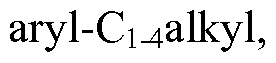
  • R 3 is H, halogen, -CN, optionally substituted Ci_ 6 alkyl, optionally substituted deuterated Ci_ 6 alkyl optionally substituted aryl, optionally substituted aryl-Ci_ 4 alkyl ; optionally substituted heteroaryl, optionally substituted optionally substituted C3_g cycloalkyl, optionally substituted C 3 _8 cycloalkenyl, optionally substituted C 3 _g optionally substituted C 2 _6 alkynyl, optionally substituted heterocycloalkyl, optionally substituted heterocycloalkyl-C ⁇ alkyl or R J selected from halogen, -CN, -OH, -NH 2 , -N0 2 , -C(0)OH, -C(S)OH, -C(0)NH 2 , -C(S)NH 2 , -S(0) 2 NH 2 ,
  • R 5 is an optionally substituted 5- or 6-membered heteroaryl having from 1 to 4 heteroatoms as ring members selected from O, N or S or an optionally substituted heterocycloalkyl;
  • ring A is aromatic, with the proviso that the compound is other than 3,5-dimethyl-4-(lH-pyrrolo[2,3-b]pyridin-5-yl)isoxazole; or R 3 and -L-R 1 are not simultaneously hydrogen
  • R 20 is halogen, Ci_ 4 alkyl, Ci_ 4 alkoxy, Ci_ 4 haloalkyl, Ci_ 4 haloalkoxy, -OH or CN.
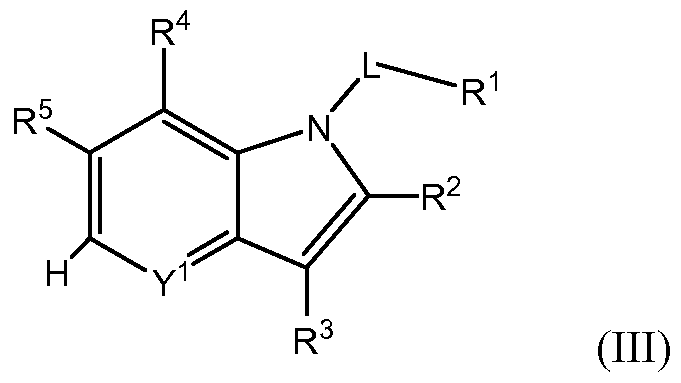
  • R 1 , R 2 , R 3 , R 4 , R 5 , Y 1 , Y 2 , Y 3 and L are as defined in any embodiments of formula (I).
  • the present disclosure provides a composition.
  • the composition includes a compound of any of formulas (I), ( ⁇ ), (II), (III), (IV), (V), (Va) or (Vb) or any of the formulas and subformulas as described herein, or a compound as recited in any of the claims and described herein, or a pharmaceutically acceptable salt, solvate, tautomer or isomers thereof, and a pharmaceutically acceptable excipient or carrier.
  • the present disclosure also provides a composition, which includes a compound as recited in the claims and described herein, a pharmaceutically acceptable excipient or carrier, and another therapeutic agent.
  • the present disclosure provides a method for modulating a bromodomain protein.
  • the method includes administering to a subject in need thereof a compound of any of formulas
  • the present disclosure provides a method for treating a subject suffering from or at risk of diseases or conditions mediated or modulated by a bromodomain protein.
  • the method includes administering to the subject an effective amount of a compound of any of formulas (I), ( ⁇ ),
  • Halogen or "halo” means all halogens, that is, chloro (CI), fluoro (F), bromo (Br), or iodo (I).
  • Thiol means the group -SH.
  • Heteroatom is meant to include oxygen (O), nitrogen (N), and sulfur (S).
  • oxo refers to an oxygen connected via a double bond to another atom, i.e. carbon.
  • alkyl by itself or as part of another substituent, means, unless otherwise stated, a straight or branched chain hydrocarbon, having the number of carbon atoms designated (i.e. ⁇ - means one to six carbons).
  • Representative alkyl groups include straight and branched chain alkyl groups having
  • alkyl groups include straight and branched chain alkyl groups having 1 , 2, 3, 4, 5, 6, 7 or 8 carbon atoms.
  • alkyl groups include methyl, ethyl, n-propyl, isopropyl, n-butyl, t-butyl, isobutyl, sec -butyl, n-pentyl, n-hexyl, n- heptyl, n-octyl, and the like.
  • alkyl alkoxy, alkylamino, alkylthio, alkylene, haloalkyl, arylalkyl, cycloalkylalkyl, heterocycloalkylalkyl, heteroarylalkyl
  • the alkyl moiety or portion thereof will have 12 or fewer main chain carbon atoms or 8 or fewer main chain carbon atoms or 6 or fewer main chain carbon atoms.
  • Ci_ 6 alkyl means a straight or branched hydrocarbon having 1 , 2, 3, 4, 5 or 6 carbon atoms and includes, but is not limited to, Ci_ 2 alkyl, Ci_4 alkyl, C 2 -6 alkyl,
  • Fluoro substituted alkyl denotes an alkyl group substituted with one or more fluoro atoms, such as perfluoroalkyl, where preferably the lower alkyl is substituted with 1 , 2, 3, 4 or 5 fluoro atoms, also 1 , 2, or 3 fluoro atoms. While it is understood that substitutions are attached at any available atom to produce a stable compound, when optionally substituted alkyl is an R group of a moiety such as -OR (e.g. alkoxy), -SR (e.g.
  • substitution of the alkyl R group is such that substitution of the alkyl carbon bound to any O, S, or N of the moiety (except where N is a heteroaryl ring atom) excludes substituents that would result in any O, S, or N of the substituent (except where N is a heteroaryl ring atom) being bound to the alkyl carbon bound to any O, S, or N of the moiety.
  • "deuterated Ci_ 6 alkyl” is meant to include partially deuterated or perdeuterated Ci_ 6 alkyl groups. Non-limiting examples include -CD 3 , CD 3 CH 2 -, CD 3 CD 2 -, -CD(CD 3 ) 2 , -CD(CH 3 ) 2 , and the like.
  • alkylene by itself or as part of another substituent means a linear or branched saturated divalent hydrocarbon moiety derived from an alkane having the number of carbon atoms indicated in the prefix.
  • Ci_6 means one to six carbons;
  • Ci_6 alkylene is meant to include methylene, ethylene, propylene, 2-methylpropylene, pentylene, hexylene and the like.
  • Ci_4 alkylene includes methylene -CH 2 -, ethylene -CH 2 CH 2 -, propylene -CH 2 CH 2 CH 2 -, and isopropylene
  • an alkyl (or alkylene) group will have from 1 to 24 carbon atoms, with those groups having 10 or fewer, 8 or fewer, or 6 or fewer carbon atoms being preferred in the present disclosure.
  • the alkylene moiety or portion thereof will have 12 or fewer main chain carbon atoms or 8 or fewer main chain carbon atoms, 6 or fewer main chain carbon atoms or 4 or fewer main chain carbon atoms.
  • alkenyl means a linear monovalent hydrocarbon radical or a branched monovalent hydrocarbon radical having the number of carbon atoms indicated in the prefix and containing at least one double bond.
  • C 2 -C 6 )alkenyl is meant to include ethenyl, propenyl, and the like.
  • alkynyl means a linear monovalent hydrocarbon radical or a branched monovalent hydrocarbon radical containing at least one triple bond and having the number of carbon atoms indicated in the prefix.
  • Examples of such unsaturated alkyl groups include vinyl, 2-propenyl, crotyl, 2-isopentenyl, 2-(butadienyl), 2,4-pentadienyl, 3-(l ,4-pentadienyl), ethynyl, 1 - and 3-propynyl, 3-butynyl, and the higher homologs and isomers.
  • the alkenyl or alkynyl moiety or portion thereof will have 12 or fewer main chain carbon atoms or 8 or fewer main chain carbon atoms, 6 or fewer main chain carbon atoms or 4 or fewer main chain carbon atoms.
  • alkenylene means a linear bivalent hydrocarbon radical moiety or a branched divalent hydrocarbon radical moiety having the number of carbon atoms indicated in the prefix and containing at least one double bond.
  • C 2 _6 means two to six carbons;
  • alkynylene means a linear bivalent hydrocarbon radical moiety or a branched divalent hydrocarbon radical moiety containing at least one triple bond and having the number of carbon atoms indicated in the prefix.
  • C 2 _6 means two to six carbons;
  • C 2 _6 alkynylene is meant to include, but is not limited to, -C ⁇ C-, -C ⁇ CCH 2 -, -CH 2 -C ⁇ CCH 2 -, -C ⁇ CCH(CH 3 )-, and the like.
  • the alkenylene moiety or portion thereof or the alkynylene moiety or portion thereof will have 12 or fewer main chain carbon atoms or 8 or fewer main chain carbon atoms or 6 or fewer main chain carbon atoms, or 4 or fewer main chain carbon atoms.
  • Cycloalkyl by itself or as part of another substituent, means saturated or unsaturated, non-aromatic monocyclic, bicyclic or tricyclic carbon ring systems having the number of carbon atoms indicated in the prefix or if unspecified having 3-10, also preferably 3-8, more preferably 3-6, ring members per ring, such as cyclopropyl, cyclobutyl, cyclopentyl, cyclohexyl, 1- cyclohexenyl, cycloheptyl, cyclooctyl, adamantyl, bicyclo[3.1.0]hexan-3-yl, spiro[3,3]heptan-2-yl, and the like, where one or two ring carbon atoms may optionally be replaced by a carbonyl.
  • Cycloalkyl means hydrocarbon rings having the indicated number of ring atoms (e.g. , C 3 _g cycloalkyl means three to eight ring carbon atoms).
  • Cycloalkyl or “carbocycle” means a mono-, bicyclic or polycyclic group such as, for example, bicyclo[2.2.1]heptane, bicyclo[2.2.2]octane, spiro[3,3]heptane, bicyclo[3.1.0]hexane, etc.
  • polycyclic refers herein to fused and non-fused alkyl cyclic structures.
  • Cycloalkyl or “carbocycle” may form a bridged ring or a spiro ring.
  • the cycloalkyl group may have one or more double or triple bond(s).
  • Cycloalkylene by itself or as part of another substituent, means a divalent saturated or unsaturated, non-aromatic monocyclic, bicyclic or tricyclic carbon ring systems having the number of carbon atoms indicated in the prefix or if unspecified having 3-10, also 3-8, more preferably 3-6, ring members per ring.
  • Cycloalkylene also means a divalent cycloalkyl moiety, where the cycloalkyl as defined above having 3-10, also 3-8, more preferably 3-6, ring members per ring.
  • cycloalkylene includes, e.g., 1,2-, 1,3-, or 1,4- cis or trans-cyclohexylene, 2 -methyl- 1 ,4-cyclohexylene, 2,2-dimethyl- l,4-cyclohexylene, and the like.
  • Cycloalkylalkyl means an -(alkylene)-cycloalkyl group where alkylene as defined herein has the indicated number of carbon atoms or if unspecified having six or fewer, preferably four or fewer main chain carbon atoms; and cycloalkyl is as defined herein has the indicated number of carbon atoms or if unspecified having 3-10, also 3-8, more preferably 3-6, ring members per ring.
  • C 3 _ 8 cycloalkyl-Ci_ 2 alkyl is meant to have 3 to 8 ring carbon atoms and 1 to 2 alkylene chain carbon atoms.
  • cycloalkylalkyl includes, e.g., cyclopropylmethylene, cyclobutylethylene, cyclobutylmethylene, and the like.
  • Cycloalkylalkenyl means an -(alkenylene)-cycloalkyl group where alkenylene as defined herein has the indicated number of carbon atoms or if unspecified having six or fewer, preferably four or fewer main chain carbon atoms; and cycloalkyl is as defined herein has the indicated number of carbon atoms or if unspecified having 3- 10, also 3-8, more preferably 3-6, ring members per ring.
  • 8cycloalkyl-C 2 _ 4 alkenyl is meant to have 3 to 8 ring carbon atoms and 2 to 4 alkenylene chain carbon atoms.
  • Exemplary cycloalkylalkenyl includes, e.g., 2-cyclopropylvinyl, 2-cyclopentylvinyl, and the like.
  • Cycloalkylalkynyl means an -(alkynylene)-cycloalkyl group where alkynylene as defined herein has the indicated number of carbon atoms or if unspecified having six or fewer, preferably four or fewer main chain carbon atoms; and cycloalkyl is as defined herein has the indicated number of carbon atoms or if unspecified having 3- 10, also 3-8, more preferably 3-6, ring members per ring.
  • 8cycloalkyl-C 2 - 4 alkynyl is meant to have 3 to 8 ring carbon atoms and 2 to 4 alkynylene chain carbon atoms.
  • Exemplary cycloalkylalkynyl includes, e.g., 2-cyclopropylethynyl, 2-cyclobutylethynyl, 2- cyclopentylethynyl and the like.
  • Cycloalkenyl by itself or as part of another substituent, means a non-aromatic monocyclic, bicyclic or tricyclic carbon ring system having the number of carbon atoms indicated in the prefix or if unspecified having 3- 10, also 3-8, more preferably 3-6, ring members per ring, which contains at least one carbon-carbon double bond.
  • exemplary cycloalkenyl includes, e.g., 1 -cyclohexenyl, 4-cyclohexenyl, 1 - cyclopentenyl, 2-cyclopentenyl and the like.
  • Cycloalkenylene by itself or as part of another substituent, means a divalent unsaturated, non- aromatic monocyclic, bicyclic or tricyclic carbon ring system having the number of carbon atoms indicated in the prefix or if unspecified having 3- 10, also 3-8, more preferably 3-6, ring members per ring.
  • Cycloalkenylene also means a divalent cycloalkenyl moiety, where the cycloalkenyl as defined herein having 3- 10, also 3-8, more preferably 3-6, ring members per ring.
  • Exemplary cycloalkenylene includes, e.g., cyclohexene- 1 ,4-diyl, 2-methyl-cyclohexene- 1 ,4-diyl, 3-methyl-cyclohexene- l ,4-diyl, 3,3-dimethyl- cyclohexene- 1 ,4-diyl, cyclohexene- 1 ,2-diyl, cyclohexene- l ,3-diyl, and the like.
  • Haloalkyl is meant to include alkyl substituted by one to seven halogen atoms. Haloalkyl includes monohaloalkyl and polyhaloalkyl.
  • Q-e haloalkyl is meant to include trifluoromethyl, difluoromethyl, fluoromethyl, 2,2,2-trifluoroethyl, 4-chlorobutyl, 3-bromopropyl, and the like.
  • Haloalkoxy means a -O-haloalkyl group, where haloalkyl is as defined herein, e. g., trifluoromethoxy, 2,2,2-trifluoroethoxy, difluoromethoxy, fluoromethoxy, and the like.
  • Alkoxy means a -O-alkyl group, where alkyl is as defined herein.
  • Cycloalkoxy means -O- cycloalkyl group, where cycloalkyl is as defined herein.
  • Fluoro substituted alkoxy denotes alkoxy in which the alkyl is substituted with one or more fluoro atoms, where preferably the alkoxy is substituted with 1, 2, 3, 4 or 5 fluoro atoms, also 1, 2, or 3 fluoro atoms.
  • substitutions on alkoxy are attached at any available atom to produce a stable compound
  • substitution of alkoxy is such that O, S, or N (except where N is a heteroaryl ring atom), are not bound to the alkyl carbon bound to the alkoxy O.
  • alkoxy is described as a substituent of another moiety, the alkoxy oxygen is not bound to a carbon atom that is bound to an O, S, or N of the other moiety (except where N is a heteroaryl ring atom), or to an alkene or alkyne carbon of the other moiety.
  • Amino or "amine” denotes the group -NH 2 .
  • Alkylamino means a -NH-alkyl group, where alkyl is as defined herein.
  • exemplary alkylamino groups include CH 3 NH-, ethylamino, and the like.
  • Dialkylamino means a -N(alkyl)(alkyl) group, where each alkyl is independently as defined herein.
  • Exemplary dialkylamino groups include dimethylamino, diethylamino, ethylmethylamino, and the like.
  • Cycloalkylamino denotes the group -NR dd R ee , where R dd and R ee combine with the nitrogen to form a 5-7 membered heterocycloalkyl ring, where the heterocycloalkyl may contain an additional heteroatom within the ring, such as O, N, or S, and may also be further substituted with alkyl.
  • cycloalkylamino refers to a -NH-cycloalkyl group, where cycloalkyl is as defined herein.
  • Alkylthio means -S-alkyl, where alkyl is as defined herein.
  • alkylthio groups include CH 3 S-, ethylthio, and the like.
  • thioalkoxy refers to a -O-alkylthio group, where the alkylthio group is as defined herein, e.g., thiomethoxy, thioethoxy, and the like.
  • Aryl by itself or as part of another substituent means a monocyclic, bicyclic or polycyclic polyunsaturated aromatic hydrocarbon radical containing 6 to 14 ring carbon atoms, which can be a single ring or multiple rings (up to three rings) which are fused together or linked covalently.
  • unsubstituted aryl groups include phenyl, 1 -naphthyl, 2-naphthyl and 4-biphenyl.
  • Exemplary aryl groups, such as phenyl or naphthyl may be optionally fused with a cycloalkyl of preferably 5-7, more preferably 5-6, ring members.
  • Arylene by itself or as part of another substituent, means a divalent monocyclic, bicyclic or polycyclic polyunsaturated aromatic hydrocarbon radical containing 6 to 14 ring carbon atoms, which can be a single ring or multiple rings (up to three rings) which are fused together or linked covalently.
  • Arylene can be a divalent radical of the aryl group, where the aryl is as defined herein.
  • exemplary arylene includes, e.g., phenylene, biphenylene, and the like.
  • Arylalkyl means -(alkylene)-aryl, where the alkylene group is as defined herein and has the indicated number of carbon atoms, or if unspecified having six or fewer main chain carbon atoms or four or fewer main chain carbon atoms; and aryl is as defined herein.
  • Examples of arylalkyl include benzyl, phenethyl, 1 -methylbenzyl, and the like.
  • Arylalkoxy means -0-(alkylene)-aryl, where the alkylene group is as defined herein and has the indicated number of carbon atoms, or if unspecified having six or fewer main chain carbon atoms or four or fewer main chain carbon atoms; and aryl is as defined herein. Examples of arylalkoxy include benzyloxy, phenethyloxy, and the like.
  • Aryloxy means -O-aryl, where the aryl group is as defined herein.
  • exemplary aryloxy includes, e.g., phenoxy.
  • Arylthio means -S-aryl, where the aryl group is as defined herein.
  • Exemplary arylthio includes, e.g., phenylthio.
  • Heteroaryl by itself or as part of another substituent means a monocyclic aromatic ring radical containing 5 or 6 ring atoms, or a bicyclic aromatic radical having 8 to 10 atoms, containing one or more, preferably 1 -4, more preferably 1 -3, even more preferably 1 -2, heteroatoms independently selected from the group consisting of O, S, and N. Heteroaryl is also intended to include oxidized S or N, such as sulfinyl, sulfonyl and N-oxide of a tertiary ring nitrogen. A carbon or nitrogen atom is the point of attachment of the heteroaryl ring structure such that a stable compound is produced.
  • heteroaryl groups include, but are not limited to, pyridinyl, pyridazinyl, pyrazinyl, indolizinyl, benzo[b]thienyl, quinazolinyl, purinyl, indolyl, quinolinyl, pyrimidinyl, pyrrolyl, pyrazolyl, oxazolyl, thiazolyl, thienyl, isoxazolyl, oxathiadiazolyl, isothiazolyl, tetrazolyl, imidazolyl, triazolyl, furanyl, benzofuryl, indolyl, triazinyl, quinoxalinyl, cinnolinyl, phthalaziniyl, benzotriazinyl, benzimidazolyl, benzopyrazolyl, benzotriazolyl, benzisoxazolyl, isobenzofuryl, isoind
  • Heteroarylene by itself or as part of another substituent, means a divalent monocyclic aromatic ring radical containing 5 or 6 ring atoms, or a divalent bicyclic aromatic radical having 8 to 10 atoms, containing one or more, preferably 1 -4, more preferably 1 -3, even more preferably 1 -2, heteroatoms independently selected from the group consisting of O, S, and N.
  • Heteroarylene can be a divalent radical of heteroaryl group, where the heteroaryl is as defined herein.
  • Exemplary heteroarylene includes, e.g., pyridine-2,5-diyl, pyrimidine-2,5-diyl, pyridazine-3,5-diyl, pyrazine-2,5-diyl, and the like.
  • Heteroarylalkyl means -(alkylene)-heteroaryl, where the alkylene group is as defined herein and has the indicated number of carbon atoms, or if unspecified having six or fewer main chain carbon atoms or four or fewer main chain carbon atoms; and heteroaryl is as defined herein.
  • Non-limiting examples of heteroarylalkyl include 2-pyridylmethyl, 4-pyridylmethyl, 2-thiazolylethyl, and the like.
  • Heterocycloalkyl by itself or as part of another substituent, means a saturated or unsaturated non-aromatic cycloalkyl group that contains from one to five ring heteroatoms selected from N, O, and S, wherein the nitrogen and sulfur atoms are optionally oxidized, and the nitrogen atom(s) are optionally quaternized, the remaining ring atoms being C, where one or two C atoms may optionally be replaced by a carbonyl.
  • the heterocycloalkyl can also be a heterocyclic alkyl ring fused with a cycloalkyl, an aryl or a heteroaryl ring.
  • Each heterocycle typically contains 1, 2, 3, 4 or 5, independently selected heteroatoms.
  • these groups contain 1, 2, 3, 4, 5, 6, 7, 8, 9 or 10 carbon atoms, 0, 1, 2, 3, 4 or 5 nitrogen atoms, 0, 1 or 2 sulfur atoms and 0, 1 or 2 oxygen atoms. More preferably, these groups contain 1, 2 or 3 nitrogen atoms, 0- 1 sulfur atoms and 0-1 oxygen atoms.
  • heterocycloalkyl groups include oxetanyl, azetidinyl, pyrrolidinyl, piperidinyl, imidazolidinyl, pyrazolidinyl, butyrolactam moiety, valerolactam moiety, imidazolidinone moiety, hydantoin, dioxolane moiety, phthalimide moiety, piperidine, 1 ,4-dioxane moiety, morpholinyl, thiomorpholinyl,
  • thiomorpholinyl-S-oxide thiomorpholinyl-S,S-oxide, piperazinyl, pyranyl, pyridine moiety, 3-pyrrolinyl, thiopyranyl, pyrone moiety, tetrahydrofuranyl, tetrahydrothiophenyl, quinuclidinyl, 1 -methylpyridin-2- one moiety, l-methyl-2-oxo-3-pyridyl, 1 -methyl-2-oxo-4-pyridyl, l-methyl-2-oxo-5-pyridyl, l-methyl-2- oxo-6-pyridyl, 1 ,3-dimethylpyridin-2-one-4-yl, 1 ,3-dimethylpyridin-2-one-5-yl, 1 -methylpyridin-2-one-4- yl, l-methylpyridin-2-one-5-yl, l-isopropyllpyr
  • heterocycloalkyl group can be attached to the remainder of the molecule through a ring carbon or a heteroatom.
  • heterocycloalkylene by itself or as part of another substituent, refers to a divalent heterocycloalkyl, where the heterocycloalkyl is as defined herein.
  • heterocycloalkylene examples include piperazine- 1 ,4-diyl, piperidine- 1,4-diyl, 1 ,2,3,6-tetrahydropyridine- 1 ,4-diyl, 1,2,3,6-tetrahydropyridine- 1 ,5-diyl, 2,3,6,7-tetrahydro- lH-azepine- 1 ,4-diyl, 2,3,6,7-tetrahydro- 1 H-azepine- 1 ,5-diyl, 2,5-dihydro- 1 H-pyrrole- 1 ,3-diyl, azabicyclo[3.2.1]octane-3,8-diyl, 3,8-diazabicyclo[3.2.1]octane-3,8-diyl, 8-azabicyclo[3.2.1]octane-3,8- diyl, 2-azabicyclo[2.2.2]oct
  • Heterocycle or “Heterocyclic” by itself or as part of another substituent, means a heteroaryl or heterocycloalkyl ring or moiety, where heteroaryl and heterocycloalkyl are as defined herein.
  • Heterocycloalkylene by itself or as part of another substituent, means a divalent
  • heterocycloalkyl where the heterocycloalkyl is as defined herein.
  • exemplary heterocycloalkyl includes, e.g., piperazine- 1 ,4-diyl, piperidine-l,4-diyl, l,2,3,6-tetrahydropyridine-l,4-diyl, 3- azabicyclo[3.2.1]octane-3,8-diyl, 3,8-diazabicyclo[3.2.1]octane-3,8-diyl, 8-azabicyclo[3.2.1]octane-3,8- diyl, 2-azabicyclo[2.2.2]octane-2,5-diyl, 2,5-diazabicyclo[2.2.2]octane-2,5-diyl, 2,3,6,7-tetrahydro-lH- azepine- 1 ,4-diyl, 2,3,6,7-tetrahydro-l
  • Heterocycloalkylalkyl means -(alkylene)-heterocycloalkyl, where the alkylene group is as defined herein and has the indicated number of carbon atoms, or if unspecified having six or fewer main chain carbon atoms or four or fewer main chain carbon atoms; and heterocycloalkyl is as defined herein.
  • Non- limiting examples of heterocycloalkylalkyl include 2-pyridylmethyl, 2-thiazolylethyl, pyrrolidin- 1 - ylmethyl, 2-piperidinylmethyl and the like.
  • alkyl, alkenyl, alkynyl, alkoxy, haloalkyl, haloalkoxy, cycloalkyl, cycloalkylalkyl, heterocycloalkyl, heterocycloalkylalkyl, heterocycloalkenyl, alkylene, alkenylene, or alkynlene include, but are not limited to, R', halogen, -OH, -NH 2 , -N0 2 , -CN, -C(0)OH, -C(S)OH, - B(OH) 2 , -Si(Me) 3 , -C(0)NH 2 , -C(S)NH 2 , -S(0) 2 NH 2 , -NHC(0)NH 2 , -NHC(S)NH 2 , -NHS(0) 2 NH 2 , -C(NH)NH 2 , -OR , -Si(R') 3 , -
  • R' , R" and R'" each independently refer to hydrogen, Ci_ 8 alkyl, heterocycloalkyl, aryl, heteroaryl, arylalkyl, heteroarylalkyl, aryl substituted with 1 -3 halogens, Crg alkoxy, haloalkyl, haloalkoxy or C g thioalkoxy groups, or unsubstituted aryl-Ci-4 alkyl groups.
  • R' and R" When R' and R" are attached to the same nitrogen atom, they can be combined with the nitrogen atom to form a 3-, 4-, 5-, 6-, or 7-membered ring.
  • -NR'R is meant to include 1 -pyrrolidinyl and 4-morpholinyl.
  • R', R" and R'" can be further substituted with R AL , halogen, -OH, -NH 2 , -N0 2 , -CN, -C(0)OH, -C(S)OH, -C(0)NH 2 , -C(S)NH 2 , -S(0) 2 NH 2 , -NHC(0)NH 2 , -NHC(S)NH 2 , -NHS(0) 2 NH 2 , -C(NH)NH 2 , -OR AL , -SR AL , -OC(0)R AL , -OC(S)R AL , -C(0)R AL , -C(S)R AL , -C(0)OR AL , -C(S)OR AL , -S(0)R AL , -S(0) 2 R AL , -C(0)NHR AL , -C(S)NHR AL , -C(0)NR AL R A2 , -C(S)NR AL R A2 ,
  • -NHS(0) 2 NR AL R A2 -NR AL S(0) 2 NR A2 R A3 , -NHR AL , and -NR AL R a2 in a number ranging from zero to (2n'+l), where n' is the total number of carbon atoms in such group.
  • R AL , R A2 and R ⁇ each independently refer to hydrogen, Ci_ 8 alkyl, heterocycloalkyl, aryl, heteroaryl, arylalkyl, heteroarylalkyl, aryl substituted with 1 - 3 halogens, Q-g alkoxy, haloalkyl, haloalkoxy or Q-g thioalkoxy groups, or unsubstituted aryl-Ci- 4 alkyl groups.
  • R AL , R A2 and R A3 can be further substituted with R BL , halogen, -OH, -NH 2 , -N0 2 , -CN, -C(0)OH, -C(S)OH, -C(0)NH 2 , -C(S)NH 2 , -S(0) 2 NH 2 , -NHC(0)NH 2 , -NHC(S)NH 2 , -NHS(0) 2 NH 2 , -C(NH)NH 2 , -OR BL , -SR BL , -OC(0)R B L , -OC(S)R B L , -C(0)R B L , -C(S)R BL , -C(0)OR B L , -C(S)OR BL , -C(S)OR BL , -S(0)R BL , -S(0) 2 R B L , -C(0)NHR B L , -C(S)NHR BL
  • R BL , R B2 and R B3 each independently refer to hydrogen, Ci_g alkyl, heterocycloalkyl, aryl, heteroaryl, arylalkyl, heteroarylalkyl, aryl substituted with 1 -3 halogens, d-g alkoxy, haloalkyl, haloalkoxy or Q-g thioalkoxy groups, or unsubstituted aryl-Ci-4 alkyl groups.
  • Substituents for the aryl and heteroaryl groups are varied and are generally selected from: R', halogen, -OH, -NH 2 , -N0 2 , -CN, -C(0)OH, -C(S)OH, -C(0)NH 2 , -C(S)NH 2 , -S(0) 2 NH 2 , -NHC(0)NH 2 , -NHC(S)NH 2 , -NHS(0) 2 NH 2 , -C(NH)NH 2 , -OR , -SR ' , -0C(0)R ' , -0C(S)R ' , -C(0)R ' , -C(S)R ' , -C(S)R ' ,
  • R', R" and R' are independently selected from hydrogen, haloalkyl, haloalkoxy, Ci_g alkyl, C 3 _6 cycloalkyl, cycloalkylalkyl, C 2 _g alkenyl, C 2 _g alkynyl, aryl, arylalkyl, heteroaryl, heteroarylalkyl, aryl-Ci- 4 alkyl, and aryloxy-Ci-4 alkyl.
  • R', R" and R'" can be further substituted with R al , halogen, -OH, -NH 2 , -N0 2 , -CN, -C(0)OH, -C(S)OH, -C(0)NH 2 , -C(S)NH 2 , -S(0) 2 NH 2 ,
  • R al , R a2 and R a3 are each independently selected from hydrogen, haloalkyl, haloalkoxy, Ci_ 8 alkyl, C 3 _ 6 cycloalkyl, cycloalkylalkyl, C 2 _ 8 alkenyl, C 2 _ 8 alkynyl, aryl, arylalkyl, heteroaryl, heteroarylalkyl, aryl-Ci-4 alkyl, or aryloxy-Ci-4 alkyl.
  • Other suitable substituents include each of the above aryl substituents attached to a ring atom by an alkylene tether of from 1-4 carbon atoms.
  • substituents When two substituents are present on adjacent atoms of a substituted aryl or a substituted heteroaryl ring, such substituents may optionally be replaced with a substituent of the formula - T-C(0)-(CH 2 ) q -U-, wherein T and U are independently -NH-, -0-, -CH 2 - or a single bond, and q is an integer of from 0 to 2.
  • substituents when two substituents are present on adjacent atoms of a substituted aryl or a substituted heteroaryl ring, such substituents may optionally be replaced with a substituent of the formula -A-(CH 2 ) r -B-, wherein A and B are independently -CH 2 -, -0-, -NH-, -S-, -S(O)-, -S(0) 2 -, -S(0) 2 NR'- or a single bond, and r is an integer of from 1 to 3.
  • One of the single bonds of the new ring so formed may optionally be replaced with a double bond.
  • substituents when two substituents are present on adjacent atoms of a substituted aryl or a substituted heteroaryl ring, such substituents may optionally be replaced with a substituent of the formula -(CH 2 ) s -X-(CH 2 ) r , where s and t are independently integers of from 0 to 3, and X is -0-, -NR'-, -S-, -S(O)-, -S(0) 2 -, or -S(0) 2 NR'-.
  • the substituent R' in -NR'- and -S(0) 2 NR'- is selected from hydrogen or unsubstituted Ci- 6 alkyl.
  • Protecting group refers to a grouping of atoms that when attached to a reactive group in a molecule masks, reduces or prevents that reactivity. Examples of protecting groups can be found in T.W. Greene and P.G. Wuts, PROTECTIVE GROUPS IN ORGANIC CHEMISTRY, (Wiley, 4th ed. 2006), Beaucage and Iyer, Tetrahedron 48:2223-23 1 1 (1992), and Harrison and Harrison et al, COMPENDIUM OF
  • Representative amino protecting groups include formyl, acetyl, trifluoroacetyl, benzyl, benzyloxycarbonyl (CBZ), tert- butoxycarbonyl (Boc), trimethyl silyl (TMS), 2-trimethylsilyl-ethanesulfonyl (SES), trityl and substituted trityl groups, allyloxycarbonyl, 9-fluorenylmethyloxycarbonyl (FMOC), nitro-veratryloxycarbonyl (NVOC), tri-isopropylsilyl (TIPS), phenylsulphonyl and the like (see also, Boyle, A.
  • composition refers to a formulation suitable for administration to an intended animal subject for therapeutic purposes that contains at least one pharmaceutically active compound and at least one pharmaceutically acceptable carrier or excipient.
  • pharmaceutically acceptable indicates that the indicated material does not have properties that would cause a reasonably prudent medical practitioner to avoid administration of the material to a patient, taking into consideration the disease or conditions to be treated and the respective route of administration. For example, it is commonly required that such a material be essentially sterile, e.g., for injectables.
  • “Pharmaceutically acceptable salt” refers to a salt which is acceptable for administration to a patient, such as a mammal (e.g., salts having acceptable mammalian safety for a given dosage regime).
  • Such salts can be derived from pharmaceutically acceptable inorganic or organic bases and from pharmaceutically-acceptable inorganic or organic acids, depending on the particular substituents found on the compounds described herein.
  • base addition salts can be obtained by contacting the neutral form of such compounds with a sufficient amount of the desired base, either neat or in a suitable inert solvent.
  • Salts derived from pharmaceutically acceptable inorganic bases include aluminum, ammonium, calcium, copper, ferric, ferrous, lithium, magnesium, manganic, manganous, potassium, sodium, zinc and the like.
  • Salts derived from pharmaceutically acceptable organic bases include salts of primary, secondary, tertiary and quaternary amines, including substituted amines, cyclic amines, naturally-occurring amines and the like, such as arginine, betaine, caffeine, choline, N, N'- dibenzylethylenediamine, diethylamine, 2- diethylaminoethanol, 2- dimethylaminoethanol, ethanolamine, ethylenediamine, N-ethylmorpholine, N- ethylpiperidine, glucamine, glucosamine, histidine, hydrabamine, isopropylamine, lysine,
  • salts derived from pharmaceutically acceptable acids include acetic, trifluoroacetic, propionic, ascorbic, benzenesulfonic, benzoic, camphosulfonic, citric,
  • ethanesulfonic fumaric, glycolic, gluconic, glucoronic, glutamic, hippuric, hydrobromic, hydrochloric, isethionic, lactic, lactobionic, maleic, malic, mandelic, methanesulfonic, mucic, naphthalenesulfonic, nicotinic, nitric, pamoic, pantothenic, phosphoric, succinic, sulfuric, hydroiodic, carbonic, tartaric, p- toluenesulfonic, pyruvic, aspartic, benzoic, anthranilic, mesylic, salicylic, p-hydroxybenzoic, phenylacetic, embonic (pamoic), ethanesulfonic, benzenesulfonic, 2-hydroxyethanesulfonic, sulfanilic, stearic, cyclohexylaminosulfonic, algenic, hydroxybuty
  • salts of amino acids such as arginate and the like, and salts of organic acids like glucuronic or galactunoric acids and the like (see, for example, Berge, S. M. et al, "Pharmaceutical Salts", J. Pharmaceutical Science, 1977, 66: 1-19).
  • Certain specific compounds of the present disclosure contain both basic and acidic functionalities that allow the compounds to be converted into either base or acid addition salts.
  • the neutral forms of the compounds may be regenerated by contacting the salt with a base or acid and isolating the parent compound in the conventional manner.
  • the parent form of the compound differs from the various salt forms in certain physical properties, such as solubility in polar solvents, but otherwise the salts are equivalent to the parent form of the compound for the purposes of the present disclosure.
  • the term "therapeutically effective” or “effective amount” indicates that a compound or amount of the compound when administered is sufficient or effective to prevent, alleviate, or ameliorate one or more symptoms of a disease, disorder or medical condition being treated, and/or to prolong the survival of the subject being treated.
  • the therapeutically effective amount will vary depending on the compound, the disease, disorder or condition and its severity and the age, weight, etc., of the mammal to be treated. In general, satisfactory results in subjects are indicated to be obtained at a daily dosage of from about 0.1 to about 10 g/kg subject body weight.
  • a daily dose ranges from about 0.10 to 10.0 mg/kg of body weight, from about 1.0 to 3.0 mg/kg of body weight, from about 3 to 10 mg/kg of body weight, from about 3 to 150 mg/kg of body weight, from about 3 to 100 mg/kg of body weight, from about 10 to 100 mg/kg of body weight, from about 10 to 150 mg/kg of body weight, or from about 150 to 1000 mg/kg of body weight.
  • the dosage can be conveniently administered, e.g., in divided doses up to four times a day or in sustained-release form.
  • Bromodomains are a family of ( ⁇ 1 10 amino acid) structurally and evolutionary conserved protein interaction modules that specifically recognize acetylated lysines present in substrate proteins, notably histones. Bromodomains exist as components of large multidomain nuclear proteins that are associated with chromatin remodeling, cell signaling and transcriptional control. There are a total of 61 human bromodomains found within 46 human proteins.
  • bromodomain-containing proteins with known functions include: (i) histone acetyltransferases (HATs), including CREBBP, GCN5, PCAF and TAFII250; (ii) methyltransferases such as ASH1L and MLL; (iii) components of chromatin- remodeling complexes such as Swi2/Snf2; and (iv) a number of transcriptional regulators (Florence et al. Front. Biosci. 2001, 6, D1008-1018).
  • HATs histone acetyltransferases
  • methyltransferases such as ASH1L and MLL
  • components of chromatin- remodeling complexes such as Swi2/Snf2
  • a number of transcriptional regulators Frlorence et al. Front. Biosci. 2001, 6, D1008-1018.
  • bromodomain mediated means any disease or other deleterious condition in which one or more of the bromodomain-containing proteins, such as BET proteins, such as BRD2, BRD3, BRD4 and/or BRDT, or a mutant thereof, are known to play a role.
  • another embodiment of the present disclosure relates to treating or lessening the severity of one or more diseases in which one or more of the bromodomain-containing proteins, such as BET proteins, such as BRD2, BRD3, BRD4, and/or BRDT, or a mutant thereof, are known to play a role.
  • Bromodomain mediated disease or condition includes a disease or condition for which bromodomain inhibition provides a therapeutic benefit, e.g.
  • bromodomain inhibitors including compounds described herein, provides a therapeutic benefit to the subject suffering from or at risk of the disease or condition.
  • the term "inhibiting bromodomain” or “bromodomain inhibitor” means a compound which inhibits the binding of a bromodomain with its cognate acetylated proteins, for example, the bromodomain inhibitor is a compound which inhibits the binding of a bromodomain to acetylated lysine residues.
  • the terms “synergistically effective” or “synergistic effect” indicate that two or more compounds that are therapeutically effective, when used in combination, provide improved therapeutic effects greater than the additive effect that would be expected based on the effect of each compound used by itself.
  • enzymes can be assayed based on their ability to act upon a detectable substrate.
  • a compound can be assayed based on its ability to bind to a particular target molecule or molecules.
  • ligand and “modulator” are used equivalently to refer to a compound that changes (i.e., increases or decreases) the activity of a target biomolecule, e.g., an protein such as a bromodomain.
  • a ligand or modulator will be a small molecule, where "small molecule refers to a compound with a molecular weight of 1500 Daltons or less, or preferably 1000 Daltons or less, 800 Daltons or less, or 600 Daltons or less.
  • an "improved ligand” is one that possesses better pharmacological and/or pharmacokinetic properties than a reference compound, where “better” can be defined by one skilled in the relevant art for a particular biological system or therapeutic use.
  • binding compound in connection with the interaction between a target and a potential binding compound indicates that the potential binding compound associates with the target to a statistically significant degree as compared to association with proteins generally (i.e., non-specific binding).
  • binding compound refers to a compound that has a statistically significant association with a target molecule.
  • a binding compound interacts with a specified target with a dissociation constant (K D ) of 1 mM or less, 1 ⁇ or less, 100 nM or less, 10 nM or less, or 1 nM or less.
  • the terms “greater affinity” and “selective” indicates that the compound binds more tightly than a reference compound, or than the same compound in a reference condition, i.e., with a lower dissociation constant.
  • the greater affinity is at least 2, 3, 4, 5, 8, 10, 50, 100, 200, 400, 500, 1000, or 10,000-fold greater affinity.
  • the term "synthesizing” and like terms means chemical synthesis from one or more precursor materials.
  • the term "lone pair” or “lone pair of electrons” refers to a pair of electrons in the outermost shell of an atom, in particular a nitrogen atom, that are not used in bonding.
  • the term “modulating” or “modulate” refers to an effect of altering a biological activity, especially a biological activity associated with a particular biomolecule such as a bromodomain protein.
  • an agonist or antagonist of a particular biomolecule modulates the activity of that biomolecule, e.g., an enzyme, by either increasing (e.g. agonist, activator), or decreasing (e.g. antagonist, inhibitor) the activity of the biomolecule, such as an enzyme.
  • Such activity is typically indicated in terms of an inhibitory concentration (IC 5 o) or excitation concentration (EC 5 o) of the compound for an inhibitor or activator, respectively, with respect to, for example, an enzyme.
  • Prodrugs means any compound which releases an active parent drug according to Formula I in vivo when such prodrug is administered to a mammalian subject.
  • Prodrugs of a compound of Formula I are prepared by modifying functional groups present in the compound of Formula I in such a way that the modifications may be cleaved in vivo to release the parent compound.
  • Prodrugs may be prepared by modifying functional groups present in the compounds in such a way that the modifications are cleaved, either in routine manipulation or in vivo, to the parent compounds.
  • Prodrugs include compounds of Formula I wherein a hydroxy, amino, carboxyl or sulfhydryl group in a compound of Formula I is bonded to any group that may be cleaved in vivo to regenerate the free hydroxyl, amino, or sulfhydryl group, respectively.
  • Examples of prodrugs include, but are not limited to esters (e.g. , acetate, formate, and benzoate derivatives), amides, guanidines, carbamates (e.g., ⁇ , ⁇ -dimethylaminocarbonyl) of hydroxy functional groups in compounds of Formula I, and the like. Preparation, selection, and use of prodrugs is discussed in T. Higuchi and V.
  • Tautomer means compounds produced by the phenomenon wherein a proton of one atom of a molecule shifts to another atom. See, Jerry March, Advanced Organic Chemistry: Reactions, Mechanisms and Structures, Fourth Edition, John Wiley & Sons, pages 69-74 (1992). The tautomers also refer to one of two or more structural isomers that exist in equilibrium and are readily converted from one isomeric form to another.
  • keto-enol tautomers such as acetone/propen-2-ol, imine-enamine tautomers and the like
  • ring-chain tautomers such as glucose/2,3,4,5, 6-pentahydroxy-hexanal and the like
  • tautomeric isomerism ('tautomerism') can occur.
  • the compounds described herein may have one or more tautomers and therefore include various isomers.
  • a person of ordinary skill in the art would recognize that other tautomeric ring atom arrangements are possible. All such isomeric forms of these compounds are expressly included in the present disclosure.
  • “Isomers” mean compounds having identical molecular formulae but differ in the nature or sequence of bonding of their atoms or in the arrangement of their atoms in space. Isomers that differ in the arrangement of their atoms in space are termed “stereoisomers”. "Stereoisomer” and “stereoisomers” refer to compounds that exist in different stereoisomeric forms if they possess one or more asymmetric centers or a double bond with asymmetric substitution and, therefore, can be produced as individual stereoisomers or as mixtures. Stereoisomers include enantiomers and diastereomers.
  • stereoisomers that are not mirror images of one another are termed “diastereomers” and those that are non-superimposable mirror images of each other are termed “enantiomers”.
  • enantiomers When a compound has an asymmetric center, for example, it is bonded to four different groups, a pair of enantiomers is possible.
  • An enantiomer can be characterized by the absolute configuration of its asymmetric center and is described by the R- and S- sequencing rules of Cahn and Prelog, or by the manner in which the molecule rotates the plane of polarized light and designated as dextrorotatory or levorotatory (i.e., as (+) or (-)-isomers respectively).
  • a chiral compound can exist as either individual enantiomer or as a mixture thereof.
  • a mixture containing equal proportions of the enantiomers is called a "racemic mixture".
  • the description is intended to include individual stereoisomers as well as mixtures.
  • the methods for the determination of stereochemistry and the separation of stereoisomers are well-known in the art (see discussion in Chapter 4 of ADVANCED ORGANIC CHEMISTRY, 6th edition J. March, John Wiley and Sons, New York, 2007).
  • Certain compounds of the present disclosure can exist in unsolvated forms as well as solvated forms, including hydrated forms.
  • “Hydrate” refers to a complex formed by combination of water molecules with molecules or ions of the solute.
  • Solvate refers to a complex formed by combination of solvent molecules with molecules or ions of the solute.
  • the solvent can be an organic compound, an inorganic compound, or a mixture of both. Solvate is meant to include hydrate.
  • Some examples of solvents include, but are not limited to, methanol, ⁇ , ⁇ -dimethylformamide, tetrahydrofuran, dimethylsulfoxide, and water.
  • the solvated forms are equivalent to unsolvated forms and are encompassed within the scope of the present disclosure.
  • Certain compounds of the present disclosure may exist in multiple crystalline or amorphous forms. In general, all physical forms are equivalent for the uses contemplated by the present disclosure and are intended to be within the scope of the present disclosure.
  • the term "contacting" means that the compound(s) are caused to be in sufficient proximity to a particular molecule, complex, cell, tissue, organism, or other specified material that potential binding interactions and/or chemical reaction between the compound and other specified material can occur.
  • the term "subject” refers to a living organism that is treated with compounds as described herein, including, but not limited to, any mammal, such as a human, other primates, sports animals, animals of commercial interest such as cattle, farm animals such as horses, or pets such as dogs and cats.
  • administering refers to oral administration, administration as a suppository, topical contact, intravenous, intraperitoneal, intramuscular, intralesional, intranasal or subcutaneous
  • a slow-release device e.g., a mini-osmotic pump
  • Parenteral administration is by any route, including parenteral and transmucosal (e.g., buccal, sublingual, palatal, gingival, nasal, vaginal, rectal, or transdermal).
  • Parenteral administration includes, e.g., intravenous, intramuscular, intra-arteriole, intradermal, subcutaneous, intraperitoneal, intraventricular, and intracranial.
  • Other modes of delivery include, but are not limited to, the use of liposomal formulations, intravenous infusion, transdermal patches, etc.
  • Solid form refers to a solid preparation (i.e. a preparation that is neither gas nor liquid) of a pharmaceutically active compound that is suitable for administration to an intended animal subject for therapeutic purposes.
  • the solid form includes any complex, such as a salt, co-crystal or an amorphous complex, as well as any polymorph of the compound.
  • the solid form may be substantially crystalline, semi-crystalline or substantially amorphous.
  • the solid form may be administered directly or used in the preparation of a suitable composition having improved pharmaceutical properties.
  • the solid form may be used in a formulation comprising at least one pharmaceutically acceptable carrier or excipient.
  • prevent refers to a method of partially or completely delaying or precluding the onset or recurrence of a disease, disorder or condition and/or one or more of its attendant symptoms or barring a subject from acquiring or reacquiring a disorder or condition or reducing a subject's risk of acquiring or reacquiring a disorder or condition or one or more of its attendant symptoms.
  • Pain or a "pain condition” can be acute and/or chronic pain, including, without limitation, arachnoiditis; arthritis (e.g. osteoarthritis, rheumatoid arthritis, ankylosing spondylitis, gout); back pain (e.g. sciatica, ruptured disc, spondylolisthesis, radiculopathy); burn pain; cancer pain; dysmenorrhea; headaches (e.g. migraine, cluster headaches, tension headaches); head and facial pain (e.g. cranial neuralgia, trigeminal neuralgia); hyperalgesia; hyperpathia; inflammatory pain (e.g.
  • irritable bowel syndrome pain associated with irritable bowel syndrome, inflammatory bowel disease, ulcerative colitis, Crohn's disease, cystitis, pain from bacterial, fungal or viral infection); keloid or scar tissue formation; labor or delivery pain; muscle pain (e.g. as a result of polymyositis, dermatomyositis, inclusion body myositis, repetitive stress injury (e.g. writer's cramp, carpal tunnel syndrome, tendonitis, tenosynovitis)); myofascial pain syndromes (e.g. fibromyalgia); neuropathic pain (e.g.
  • diabetic neuropathy causalgia, entrapment neuropathy, brachial plexus avulsion, occipital neuralgia, gout, reflex sympathetic dystrophy syndrome, phantom limb or post- amputation pain, postherpetic neuralgia, central pain syndrome, or nerve pain resulting from trauma (e.g. nerve injury); disease (e.g. diabetes, multiple sclerosis, Guillan-Barre Syndrome, myasthenia gravis, neurodegenerative diseases such as Parkinson's disease, Alzheimer's disease, amyotrophic lateral sclerosis, or cancer treatment); pain associated with skin disorders (e.g. shingles, herpes simplex, skin tumors, cysts, neurofibromatosis); sports injuries (e.g.
  • vascular disease or injury e.g. vasculitis, coronary artery disease, reperfusion injury (e.g. following ischemia, stroke, or myocardial infarcts)
  • other specific organ or tissue pain e.g. ocular pain, corneal pain, bone pain, heart pain, visceral pain (e.g. kidney, gallbladder, gastrointestinal), joint pain, dental pain, pelvic hypersensitivity, pelvic pain, renal colic, urinary incontinence
  • other disease associated pain e.g.
  • sickle cell anemia AIDS, herpes zoster, psoriasis, endometriosis, asthma, chronic obstructive pulmonary disease (COPD), silicosis, pulmonary sarcoidosis, esophagitis, heart burn, gastroesophageal reflux disorder, stomach and duodenal ulcers, functional dyspepsia, bone resorption disease, osteoporosis, cerebral malaria, bacterial meningitis); or pain due to graft v. host rejection or allograft rejections.
  • COPD chronic obstructive pulmonary disease
  • Unit dosage form refers to a composition intended for a single administration to treat a subject suffering from a disease or medical condition.
  • Each unit dosage form typically comprises each of the active ingredients of this disclosure plus pharmaceutically acceptable excipients.
  • Examples of unit dosage forms are individual tablets, individual capsules, bulk powders, liquid solutions, ointments, creams, eye drops, suppositories, emulsions or suspensions.
  • Treatment of the disease or condition may require periodic administration of unit dosage forms, for example: one unit dosage form two or more times a day, one with each meal, one every four hours or other interval, or only one per day.
  • oral unit dosage form indicates a unit dosage form designed to be taken orally.
  • the compounds of the present disclosure may also contain unnatural proportions of atomic isotopes at one or more of the atoms that constitute such compounds.
  • the compounds may be radiolabeled with radioactive isotopes, such as for example tritium ( 3 H), iodine- 125 ( 125 I), carbon- 14 ( 14 C), carbon- 11 ( U C) or fluorine- 18 ( 18 F). All isotopic variations of the compounds of the present disclosure, whether radioactive or not, are intended to be encompassed within the scope of the present disclosure.
  • deuterated as used herein alone or as part of a group, means substituted deuterium atoms.
  • D deuterium
  • deuterium When a particular position is designated as holding deuterium (stated as “D” or “deuterium”), it is understood that the abundance of deuterium at that position is substantially greater than the natural abundance of deuterium, which is 0.015% (i.e., at least 50.1% incorporation of deuterium).
  • deuterated analog as used herein alone or as part of a group, means substituted deuterium atoms in place of hydrogen.
  • the deuterated analog of the present disclosure may be a fully or partially deuterium substituted derivative.
  • the deuterium substituted compound of the present disclosure holds a fully or partially deuterium substituted alkyl, aryl or heteroaryl group.
  • the deuterium substituted compound of the present disclosure holds a fully or partially deuterium substituted alkyl group, e.g., -CD 3 , CD 2 CD 3 , -CD 2 CD 2 CD 3 (n-propyl-D7), -CD(CD 3 ) 2 (iso- propyl-D7), -CD 2 CD 2 CD 2 CD 3 (n-butyl-D9), -CD 2 -CD(CD 3 ) 2 (iso-butyl-D9) and the like.
  • a fully or partially deuterium substituted alkyl group e.g., -CD 3 , CD 2 CD 3 , -CD 2 CD 2 CD 3 (n-propyl-D7), -CD(CD 3 ) 2 (iso- propyl-D7), -CD 2 CD 2 CD 2 CD 3 (n-butyl-D9), -CD 2 -CD(CD 3 ) 2 (iso-butyl-D9) and the like.
  • the deuterium substituted compound of the present disclosure holds a fully or partially deuterium substituted aryl, such as phenyl, e.g., CeD 5 or a fully or partially deuterium substituted heteroaryl, e.g., pyrazoly-d 2 , thiazolyl-d 2 , pyridyl-d 3 , and the like.
  • aryl such as phenyl, e.g., CeD 5
  • heteroaryl e.g., pyrazoly-d 2 , thiazolyl-d 2 , pyridyl-d 3 , and the like.
  • isolated indicates that the sequence is separated from at least a portion of the amino acid and/or nucleic acid sequences with which it would normally be associated.
  • the term "purified" indicates that the subject molecule constitutes a significantly greater proportion of the biomolecules in a composition than the proportion observed in a prior composition, e.g., in a cell culture.
  • the greater proportion can be 2- fold, 5-fold, 10-fold, or more than 10-fold, with respect to the proportion found in the prior composition.
  • the disclosure also embraces isotopically-labeled compounds of the present disclosure which are identical to those recited herein, but for the fact that one or more atoms are replaced by an atom having an atomic mass or mass number different from the atomic mass or mass number usually found in nature.
  • isotopes examples include isotopes of hydrogen, carbon, nitrogen, oxygen, phosphorous, fluorine, and chlorine, such as, but not limited to 2 H (deuterium, D), 3 H (tritium), U C, 13 C, 14 C, 15 N, 18 F, 31 P, 32 P, 35 S, 36 C1, and 125 I. Unless otherwise stated, when a position is designated specifically as “H” or "hydrogen", the position is understood to have hydrogen at its natural abundance isotopic composition or its isotopes, such as deuterium (D) or tritium ( 3 H). Certain isotopically-labeled compounds of the present disclosure (e.g., those labeled with 3 H and 14 C) are useful in compound and/or substrate tissue distribution assays.
  • Tritiated (i.e., 3 H) and carbon- 14 (i.e., 14 C) and fluorine-18 ( 18 F) isotopes are useful for their ease of preparation and detectability. Further, substitution with heavier isotopes such as deuterium (i.e., 2 H) may afford certain therapeutic advantages resulting from greater metabolic stability (e.g., increased in vivo half-life or reduced dosage requirements) and hence may be preferred in some circumstances.
  • Isotopically labeled compounds of the present disclosure can generally be prepared by following procedures analogous to those disclosed in the Schemes and in the Examples herein below, by substituting an isotopically labeled reagent for a non- isotopically labeled reagent.
  • the present disclosure concerns compounds of Formulas (I), ( ⁇ ), (II), (III), (IV), (V), (Va) or (Vb), and all sub-generic formulae, compounds as recited in the claims, and compounds described herein that are modulators of bromodomains and the use of such compounds in the treatment of diseases or conditions.
  • Y 1 is CH or N
  • R 1 , R 2 and R 4 are each independently H, optionally substituted Ci_ 6 alkyl, optionally substituted Ci_6 alkenyl, optionally substituted Ci_6 alkynyl, optionally substituted aryl, optionally substituted heteroaryl, optionally substituted cycloalkyl, optionally substituted cycloalkenyl, optionally substituted heterocycloalkyl, optionally substituted heterocycloalkylalkyl, optionally substituted cycloalkylalkyl, optionally substituted arylalkyl, optionally substituted heteroarylalkyl, optionally substituted
  • each R s is independently H, optionally substituted Ci_ 6 alkyl, optionally substituted Q_6 alkenyl, optionally substituted Ci_6 alkynyl, optionally substituted aryl, optionally substituted heteroaryl, optionally substituted cycloalkyl, optionally substituted heterocycloalkyl, optionally substituted
  • each R 1 is independently Ci_ 6 alkyl, aryl, aryl-Ci_ 2 alkyl, C3_ 6 cycloalkyl, C3_ 6 cycloalkyl-Ci_ 4 alkyl, heteroaryl, heterocycloalkyl or hetero
  • R 3 is H, halogen, -CN, optionally substituted Ci_ 6 alkyl, optionally substituted deuterated Ci_ 6 alkyl, optionally substituted aryl, optionally substituted aryl-Ci_ 4 alkyl ; optionally substituted heteroaryl, optionally substituted optionally substituted C 3 _ 8 cycloalkyl, optionally substituted C 3 _8 cycloalkenyl, optionally substituted C 3 _ 8 cycloalkyl-Q ⁇ alkyl, optionally substituted C 2 _ 6 alkynyl, optionally substituted heterocycloalkyl, optionally substituted heterocycloalkyl-Ci_ 4 alkyl or R J selected from halogen, -CN, -OH, -NH 2 , -N0 2 , -C(0)OH, -C(S)OH, -C(0)NH 2 , -C(S)NH 2 , -S(0) 2 NH 2 ,
  • R 5 is an optionally substituted 5- or 6-membered heteroaryl having from 1 to 4 heteroatoms as ring members selected from O, N or S; or optionally substituted heterocycloalkyl;
  • R 5 is an optionally substituted 5- or 6-membered heteroaryl having from 1 to 4 heteroatoms as ring members selected from O, N or S. In another embodiment, R 5 is an optionally substituted heterocycloalkyl.
  • R 2 and/or R 3 are other than hydrogen.
  • R 2 and/or R 3 are other than hydrogen.
  • R 2 , R 3 and -L-R 1 are not simultaneously hydrogen.
  • R 3 and -L-R 1 are not simultaneously hydrogen.
  • R 3 is other than hydrogen and -L-R 1 is other than hydrogen. In other preferred embodiments, -L-R 1 is other than hydrogen. In some embodiments, when Y 1 and Y 2 are N and Y 3 is C, R 3 and -L-R 1 are not simultaneously hydrogen. In some
  • R 3 and -L-R 1 are not hydrogen.
  • R 2 is hydrogen
  • -L-R 1 is other than hydrogen
  • R 3 is other than hydrogen.
  • when L is a bond, R 3 and R 1 are not simultaneously hydrogen.
  • when L is a bond, R 3 and R 1 are not hydrogen.
  • when R 2 and R 4 are hydrogen, -L-R 1 substituent is not hydrogen.
  • when the -L-R 1 substituent is hydrogen, R 3 is a substituent other than hydrogen.
  • R 3 when R 3 is hydrogen, the -L-R 1 group is other than hydrogen. In some embodiments, when Y 1 and Y 2 are N and R 3 is H, then, R 1 is other than H or optionally substituted aryl or heteroaryl. In some embodiments, when Y 1 is N, Y 2 is N, L is -C(O)-, -S-, -CH(OH)- or -CH 2 - and R 3 is H, then, R 1 is other than optionally substituted aryl or heteroaryl.
  • R 5 is optionally substituted pyrazolyl, optionally substituted pyrdyl, optionally substituted thiophenyl, optionally substituted furanyl, optionally substituted pyrrolyl, optionally substituted imidazolyl or optionally substituted 4-morpholino and R 3 is H, then, R 1 is not optionally substituted aryl or heteroaryl.
  • R 3 is other than H or R.
  • R 3 is other than H or -S(0) 2 R k or -C(0)R k .
  • L is optionally substituted Ci_ 6 alkylene, optionally substituted deuterated Ci_ 6 alkylene optionally substituted -C(R 6 R 7 )-, -C(0)NR 9 -, -CH 2 N(R 9 )-, -S0 2 N(R 9 )-, -N(R 9 )C(0)N(R 9 )-, -N(R 9 )S0 2 -,
  • R 6 and R 7 are each independently H, D, halogen, -OH, Ci_ 6 alkyl, deuterated Ci_ 6 alkyl, C 2 _6- alkenyl, C 2 _ 6 alkynyl, aryl, aryl-Ci_4 alkyl, Ci_ 6 alkoxy, C 3 _ 6 cycloalkyl, C 3 _ 6 cycloalkyl-
  • R 2 and R 4 are H
  • R 3 is halogen, -CN, optionally substituted Ci_ 6 alkyl, optionally substituted deuterated Ci_ 6 alkyl, optionally substituted aryl, optionally substituted aryl-Ci_ 4 alkyl ; optionally substituted heteroaryl, optionally substituted optionally substituted C3_g cycloalkyl, optionally substituted C3_8 cycloalkenyl, optionally substituted C3_g optionally substituted C 2 _6 alkynyl, optionally substituted heterocycloalkyl, optionally substituted heterocycloalkyl-Ci_ 4 alkyl or R J selected from halogen, -CN, -OH, -NH 2 , -N0 2 , -C(0)OH, -C(S)OH, -C(0)NH 2 , -C(S)NH 2 , -S(0) 2 NH 2 ,
  • R 5 is an optionally substituted 5- or 6-membered heteroaryl having from 1 to 4 heteroatoms as ring members selected from O, N or S; or optionally substituted heterocycloalkyl;
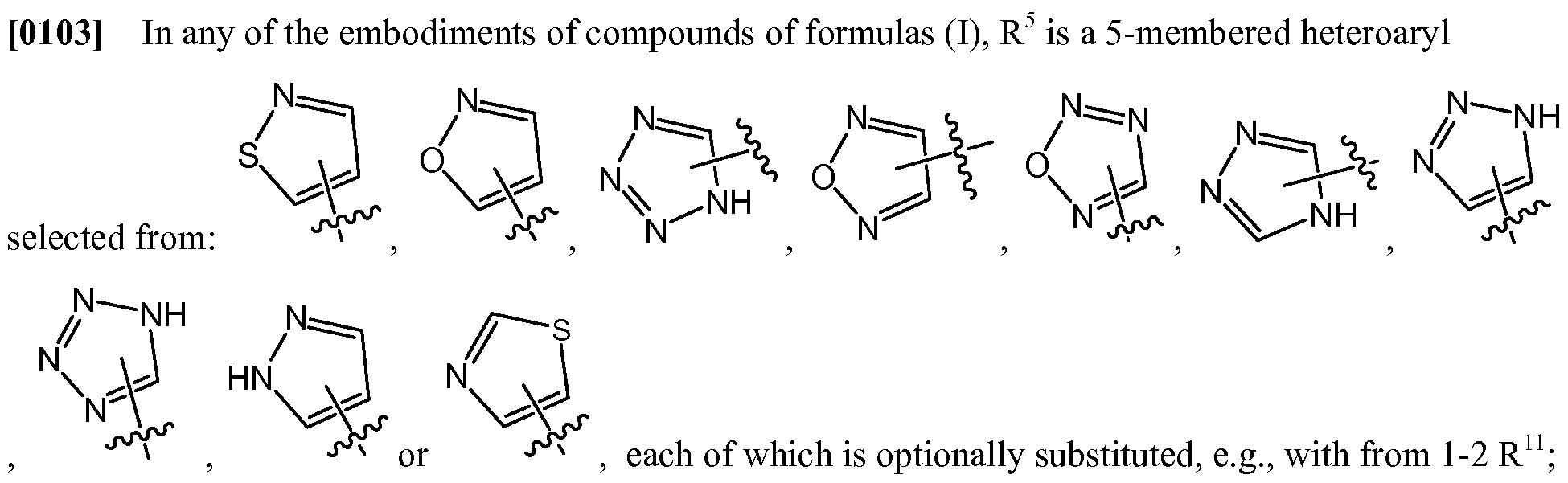
  • R 5 is an optionally substituted 5-membered heteroaryl.
  • R 5 is a heterocycloalkyl having having from 1-2 ring heteroatoms selected from O, N or S, wherein one or two of the ring carbon atoms are optionally replaced by -C(O)-, wherein the heterocycloalkyl is optionally substituted with 1 -2 members selected from C ⁇ alkyl, OH or NH 2 .
  • the compounds have molecular weights less than 600. In some preferred embodiments, the compounds have molecular weights less than 550. In other preferred embodiments, the compounds have molecular weights less than 500. In yet other preferred embodiments, the compounds have molecular weights less than 450. In still other preferred embodiments, the compounds have molecular weights less than 400. In other preferred embodiments, the compounds have molecular weights less than 300.
  • Y 1 is N. In other embodiments of compounds of formula (I), Y 1 is CH. In other embodiments of compounds of formula (I), Y 2 is C and Y 3 is N. In other embodiments of compounds of formula (I), Y 2 is N and Y 3 is C. In some preferred embodiments, Y 1 is N. In other preferred embodiments, Y 1 is N, Y 2 is N and Y 3 is C. In other preferred embodiments, Y 1 is N, Y 2 is C and Y 3 is N.
  • R 6 , R 7 , R a and R b are as defined in Formula (I) or any of the subgeneric formulas of formula (I) (e.g., formulas (II), (III), (IV) or (V)) or in any of the embodiments of compounds of formula (I) as described herein.
  • R 6 and R 7 are each independently H, halogen, -OH, Ci_ 6 alkyl, aryl, aryl-Ci_4 alkyl, Ci_ 6 alkoxy, C3_ 6 cycloalkyl, C3_ 6 cycloalkyl-Ci_ 4 alkyl, heterocycloalkyl, heterocycloalkyl-Ci ⁇ alkyl, heteroaryl, heteroarylalkyl, Ci_ 6 haloalkyl, Ci_ 6 haloalkoxy, -OR d , -NR d R d , - C(0)OR d , -OC(0)R d , -OC(0)OR d , -C(0)R d , -NHC(0)R d , -C(0)NR d R d , -S0 2 R d , -NHS0 2 R d or - S0 2 NR d R d ; or R 6 and R 7 taken together with the carbon
  • R d is as defined in Formula (I) or any of the subgeneric formulas of formula (I) (e.g., formulas (II), (III), (IV) or (V)) or in any of the embodiments of compounds of formula (I)) as described herein.
  • R b and R 1 taken together with the carbon atom to which they attach form an optionally substituted 3- to 6-membered carbocyclic ring or an optionally substituted 3- to 8-membered heterocyclic ring having from 1-2 heteroatoms as ring members selected from O, N or S, wherein the nitrogen or sulfur ring atoms can be optionally oxidized.
  • L is a bond.
  • L is -C(R 6 R 7 )-.
  • L is -C(0)NR 9 -, -CH 2 N(R 9 )-, -S0 2 N(R 9 )-, - N(R 9 )C(0)N(R 9 )-, -N(R 9 )S0 2 -, -N(R 9 )CH 2 -, -OCi_ 4 alkylene-, -Ci_ 4 alkylene-0-, -NR 9 C(0)- or - N(R 9 )S0 2 -, where R 9 is H, Ci_ 4 alkyl or All the other variables are as defined in Formula (I) or any of the subgeneric formulas of formula (I) (e.g., formulas (II), (III), (IV) or (V)) or in any of the embodiments of compounds of formula (I) as described herein.
  • L is a bond, -CD 2 -, Ci_ 6 alkylene, -C(O)-, -S(O)-, -S0 2 -, -0-, -S-, -P(0)(C 1 .
  • each R 8 is independently selected from Ci_ 6 alkyl, haloalkyl, haloalkoxy, R d , -OR d , -NR d R d , -C(0)OR d
  • R 8 is further substituted with 1-3 R 10 independently selected from Ci_ 6 alkyl, Ci_ 6 alkoxy, halogen, -OH, -CN, -NH 2 , C3_ 6 cycloalkyl, aryl, Ci_ 6 haloalkyl or Ci_ 6 haloalkoxy.
  • L is a bond, -CH 2 -, -CD 2 -, -C(O)-, -CiOd ⁇ alkyl)-, -CH d ⁇ alkyl)-, -C(C ⁇ alkyl) 2 -, -CH(OH)-, -CHF-, -S(O)-, -S0 2 -, -0-, -S-, -P(0)(C 1 .
  • R b and R 1 taken together with the carbon atom to which they attach form 3- to 6-membered carbocyclic ring selected from cyclopropane, cyclobutane, cyclopentane, cyclohexane, cyclopentene or cyclohexene, each of which is optionally substituted with from 1-3 R J ; or 1-3 R h ; or 1-3 R e groups.
  • R b and R 1 taken together with the carbon atom to which they attach form 4- to 8-membered heterocycloalkyl ring selected from oxetane, azetidine, pyrrolidine, tetrahydrofuran, tetrahydropyran, piperidine, piperaz
  • L is a bond, -CH 2 -, -CD 2 -, -C(O)-,
  • R 1 to R 5 and Y 1 to Y 3 are as defined in any of the embodiments of Formula (I) or any of the subgeneric formulas of formula (I) or in any of the embodiments of compounds of formula (I) as described herein.
  • R 1 to R 5 and Y 1 to Y 3 are as defined in any of the embodiments of Formula (I) or any of the subgeneric formulas of formula (I) or in any of the embodiments of compounds of formula (I) as described herein.
  • L is -CH 2 -, -CD 2 -, -C(O)-, -C(CH 3 ) 2 -, - CH(cyclopropyl)-, -S0 2 -, -CH(CH 2 CH 3 )-, -CH(Ph)-, -CH(CD 3 )-, -CH(pyridyl)-, -CH(pyridyl)(OH)-, - CH(2-pyridyl)-, -CH(2-pyridyl)(OH)-, or -CH(CD 2 OH)-, each of which is optionally substituted with from 1 -3 R J; or 1 -3 R h ; or 1-3 R e ; or 1 -3 R 10 ; or 1 -3 R s substituents.
  • L is CH 2 , -CH(CH 3 )-, -CH(CH 2 CH 3 )- or -CH(Ph)-.
  • All the other variables R 1 to R 5 and Y 1 to Y 3 are as defined in any of the embodiments of Formula (I) or any of the subgeneric formulas of formula (I) or in any of the embodiments of compounds of formula (I) as described herein.
  • L is -C(R 6 )(R 7 )-.
  • R 6 is Ci_ 6 alkyl or C3_ 6 cycloalkyl, each of which is optionally substituted with from 1 -2 independently selected R p groups.
  • L is -C(R 6 )(R 7 )-, wherein R 6 is H or D and R 7 is H, D, Ci_ 4 alkyl, deuterated Ci_ 4 alkyl, aryl or heteroaryl, wherein the alkyl, aryl or heteroaryl is optionally substituted with from (i) 1 -3 R h substituents; or (ii) 1 -3 R substituents; or (iii) 1 -3 R p substituents; or (iv) 1 -3 R 14 substituents; or (v) 1 -3 R 15 substituents; or (vi) 1 -3 R 16 substituents; or (vii) 1-3 R 17 substituents, wherein each of R h , R, R p , R 14 , R 15 , R 16 or R 17 substituent is further optionally substituted with from 1 -3 R 18 substituents.
  • L is -CH 2 -, -CD 2 -, -CH(R 7 )- or -CD(R 7 )-, wherein R 7 is defined herein.
  • All the other variables R 1 to R 5 and Y 1 to Y 3 are as defined in any of the embodiments of Formula (I) or any of the subgeneric formulas of formula (I) or in any of the embodiments of compounds of formula (I) as described herein.
  • the hydrogen atoms in L are optionally replaced by 1 to 12, or 1 to 8, or 1 to 6, or 1 to 3 or 1 , 2, 3, 4, 5, 6, 7, 8, 9, 10, 1 1 and 12 deuterium atoms with at least 52.5%, 60%, 70%, 75%, 80%, 90%, 95%, 99%, 99.5% or 99.9% deuterium incorporation for each deuterium.
  • each hydrogen atom in G is optionally replaced by a deuterium atom with at least 52.5%, 60%, 70%, 75%, 80%, 90%, 95%, 99%, 99.5% or 99.9% deuterium incorporation for each deuterium.
  • R 5 is an optionally substituted 5- membered heteroaryl having from 2 to 4 heteroatoms as ring members selected from O, N or S.
  • R 5 is optionally substituted with from 1 -2 R 11 groups independently selected from D, halogen, Ci_ 6 alkyl, Ci_ 4 haloalkyl, OH, NH 2 , Ci_ 4 haloalkoxy, CN or R p , wherein the hydrogen is optionally replaced with from 1 to 6 deuterium atoms.
  • R 11 is D, halogen, Ci_ 6 alkyl, Ci_ 4 haloalkoxy or CN, wherein the hydrogen is optionally replaced with from 1 to 6 deuterium atoms.
  • R 11 is Ci_ 6 alkyl or deuterated Ci_ 6 alkyl.
  • R 5 is optionally substituted with from 1 -2 R 12 members independently selected from D, halogen, CH 3 , CD 3 , -CF 3 , -CHF 2 , CH 2 F, CH 2 C1 or CN.
  • R 5 is 5-membered heteroaryl substituted with from 1 -2 methyl or CD 3 groups.
  • R 5 is 5-membered heteroaryl substituted with from two methyl or CD 3 groups. All the other variables R 1 to R 4 , Y 1 to Y 3 and L are as defined in any the embodiments of Formula (I) or any of the subgeneric formulas of formula (I) or in any of the embodiments of compounds of formula (I) as described herein.
  • R 5 is an optionally substituted 4-isoxazolyl, 2-isoxazo
  • R 5 is selected from: , each of which is optionally substituted with from 1-2 independently selected R 11 ; or 1 -2 independently selected R 12 groups; or 1 -2 members independently selected from Ci_4alkyl; or 1 -2 members independently selected from D, CH 3 or CD 3 ; or 2 members independently selected from CH 3 or CD 3 , wherein the wavy line indicates the
  • R 5 is 4-isoxazolyl, optionally substituted with from 1 -2 R 11 ; or 1 -2 R 12 groups.
  • R 5 is 4-isoxazolyl optionally substituted with 1 -2 members independently selected from D, CH 3 or CD 3 .
  • R 5 is 4- isoxazolyl substituted with 1 -2 members independently selected from D, CH 3 or CD 3 .
  • R 5 is 4-isoxazolyl substituted with 2 members independently selected from CH 3 or CD 3 .
  • R 5 is 3,5-dimethyl-4-isoxazolyl.
  • R 5 is lH-l,2,3-triazol-4-yl substituted with 1-2 members independently selected from CH 3 or CD 3 .
  • R 5 is lH-l,2,3-triazol-4-yl substituted with 2 members independently selected from CH 3 or CD 3 .
  • R 5 is 3,5-dimethyl-l,2,3-triazol-4-yl.
  • R 5 is lH-pyrazol-5-yl or 1H- pyrazol-4-yl, each is of which is substituted with 1-2 members independently selected from CH 3 or CD 3 .
  • R 5 is lH-pyrazol-5-yl or lH-pyrazol-4-yl, each is of which is substituted with 2 members independently selected from CH 3 or CD 3 .
  • R 5 is 2,4-dimethyl-pyrazol-3-yl. All the other variables R 1 to R 4 , Y 1 to Y 3 and L are as defined in any of the embodiments of Formula (I) or any of the subgeneric formulas of formula (I) or in any of the embodiments of compounds of formula (I) as described herein.
  • R 5 is an optionally substituted 6- membered heteroaryl having from 1 to 2 nitrogen atoms as ring members. In some embodiments, R 5 is optionally substituted with from 1-3 R 11 ; or 1-3 R 12 groups. In some embodiments, R 5 is optionally substituted with from 1-2 R 11 ; or 1-2 R 12 groups. All the other variables R 1 to R 4 , Y 1 to Y 3 and L are as defined in any of the embodiments of Formula (I) or any of the subgeneric formulas of formula (I) or in any of the embodiments of compounds of formula (I) as described herein.
  • R 5 is an optionally substituted 6- membered heteroaryl selected from 2-pyridyl, 3-pyridyl, 4-pyridyl, 2-pyrimidinyl, 4-pyrimidinyl, 5- pyrimidinyl, 2-pyrazinyl, 2-pyridazinyl or 3-pyridazinyl, each of which is optionally substituted with from 1-2 R 11 ; or 1-2 R 12 groups.
  • R 5 is 2-pyridyl, 3-pyridyl, 4-pyridyl, 2- pyrimidinyl, 4-pyrimidinyl or 5-pyrimidinyl, each of which is optionally substituted with from 1-2 R 11 ; or 1-2 R 12 groups. All the other variables R 1 to R 4 , Y 1 to Y 3 and L are as defined in any of the embodiments of Formula (I) or any of the subgeneric formulas of formula (I) or in any of the embodiments of compounds of formula (I) as described herein.
  • R 5 is an optionally substituted heterocycloalkyl.
  • R 5 is lH-pyridin-2-one-5-yl, lH-pyridin-2-one-4-yl or 1H- pyridin-2-one-6-yl, each of which is optionally substituted with from 1-2 R 11 ; or 1-2 R 12 groups.
  • R 5 is lH-pyridin-2-one-5-yl, lH-pyridin-2-one-4-yl or lH-pyridin-2-one-6-yl, each of which is optionally substituted with from 1-2 Ci_ 4 alkyl.
  • R 5 is lH-pyridin-2-one-5-yl, lH-pyridin-2-one-4-yl or lH-pyridin-2-one-6-yl, each of which is substituted with from 1-2 substituents independently selected from methyl, CD 3 , ethyl or isopropyl.
  • R 5 is lH-pyridin-2-one- 5-yl, lH-pyridin-2-one-4-yl or lH-pyridin-2-one-6-yl, each of which is substituted with from 2 substituents independently selected from CD 3 or CH 3 .
  • R 5 is l,3-dimethyl-pyridin-2- one-5-yl, l,3-dimethyl-pyridin-2-one-4-yl or l,3-dimethyl-pyridin-2-one-6-yl.
  • X 1 is -C(O)-.
  • cyclopropylcarbonyl 1 -piperazinyl, 4-methyl- 1 -piperazinyl, 1 -pyrrolidinyl, 1 - piperazinylcarbonyl, 1 - piperidinylcarbonyl, 1 -pyrrolidinylcarbonyl, dimethylamino, 2-(4-morpholinyl)ethoxy, 3- methoxypropoxy, acetamido, propanoyl, methylsofonylamino, methylsulfonyl, propanoylamino, dimethylcarbamoyl or ethoxycarbonylamino.
  • R s is halogen, Ci_ 6 alkyl, phenyl, perdeuterated phenyl, benzyl, cyclopropyl, cyclobutyl, cyclopentyl, cyclohexyl, cyclopropylmethyl, cyclobutylmethyl, cyclopentylmethyl, cyclohexylmethyl, 2-pyridyl, 3-pyridyl, 4-pyridyl, 2-thiazolyl, 4- thiazolyl, 5-thiazolyl, 3-pyrazolyl, 4-pyrazolyl, 2-pyrimidinyl, 4-pyrimidinyl, 5-pyrimidinyl, 2-oxazolyl, 5-oxazolyl, 4-oxazolyl, 2-thiophenyl, 3-thiophenyl, 1 -piperidinyl, 4-piperidinyl or 4-morpholinyl, 4- morpholinylcarbonyl, cyclopropylcarbonyl, 1 -piperaz
  • R s , R 1 or R h is each independently Ci_ 6 alkyl or Ci_ 4 alkoxy, each of which is optionally substituted with a member selected from Ci_ 6 alkyl, methoxy, phenyl, cyclopropyl, cyclobutyl, cyclopentyl, cyclohexyl, 2-pyridyl, 3- pyridyl, 4-pyridyl, 2-thiazolyl, 4-thiazolyl, 5-thiazolyl, 3-pyrazolyl, 4-pyrazolyl, 2-pyrimidinyl, 4- pyrimidinyl, 5-pyrimidinyl, 2-oxazolyl, 5-oxazolyl, 4-oxazolyl, 2-thiophenyl, 3-thiophenyl, 1-piperidinyl, 4-piperidinyl or 4-morpholinyl.
  • R p is selected from Ci_ 6 alkyl, -CN, -OCH 3 , - OCH 2 CH 3 , -0-CH(CH 3 ) 2 , -CI, -F, -CH 2 F, -CHF 2 , CF 3 , -OCF 3 , -OCHF 2 , -OCH 2 F, -NH-Ci_ 6 alkyl, -N(Ci_ 6 alkyl)( Ci_ 6 alkyl).
  • R 2 is H;
  • R 6 and R 7 are each independently H, D, d_ alkyl, aryl or heteroaryl, each of which is optionally substituted with 1-2 R s; or 1-2 R h ; or 1-2 R 1 ; or 1-2
  • R or 1-2 R groups; and R and R are as defined herein.
  • R is H; R and R are each independently H, D, Ci_ 4 alkyl, aryl or heteroaryl, each of which is optionally substituted with 1-2 R s; or 1-2 R h ; or 1-2 R ; ; or 1-2 R 11 or 1-2 R 12 groups; and R 1 and R 3 are as defined herein.
  • All the other variables Y 1 , Y 2 , Y 3 , R 4 , R 5 and L are as defined in any of the embodiments of formula (I) described herein.
  • R 1 , R 6 , R 7 , R 2 and R 3 are each independently selected from halogen, -CN, vinyl-X 1 , Ci-ealkyl-X 1 , C ⁇ alkoxy-X 1 , C 2 _ 6 alkynyl-X 1 , C 3 _ 6 cycloalkyl-X 1 , C ⁇ cycloalkenyl-X 1 -, C 3 _ 6 cycloalkyl-Ci_ 4 alkyl-X 1 , C 3 _ 6 cycloalkyl-C ⁇ alkynyl-X 1 , aryl-X 1 , aryl-Ci_ 4 alkyl-X 1 , heteroaryl-X 1 , alkyl-X 1 , heterocyclyl-X 1 , heterocyclyl-Ci_ 4 alkyl, -C(0)-R s , - C(0)NHR s , -C(0)NR s R
  • each R h is independently selected from halogen, -CN, Ci_ 6 alkyl, Ci_ 6 alkoxy, Q_6 haloalkyl, Ci_ 6 haloalkoxy, C 3 _ 6 cycloalkyl, C 3 _6 cycloalkyl-Ci_ 4 alkyl, aryl, heteroaryl, heteroaryl-Ci_ 4 alkyl, heterocyclyl or heterocyclyl-Ci_ 4 alkyl or R .
  • R , R , R , R or R is H.
  • R 2 is H;
  • R 6 and R 7 are each independently H, D, Ci_ 4 alkyl, aryl or heteroaryl, each of which is optionally substituted with 1-2 R s; or 1-2 R h ; or 1-2 R; or 1-2 R 11 or 1-2 R 12 groups; and
  • R 1 and R 3 are as defined herein. All the other variables Y 1 , Y 2 , Y 3 , R 4 , R 5 and L are as defined in any of the embodiments of formula (I) described herein.
  • R 1 , R 6 , R 7 , R 2 and R 3 are each independently selected from halogen, CN, vinyl, Ci_ 6 alkyl, Ci_ 6 alkoxy, C 2 _6 alkynyl, C 3 _g cycloalkyl, C 3 _6 cycloalkyl, C 3 _ 6 cycloalkenyl, C 3 _6 cycloalkyl-Ci_ 4 alkyl, C 3 _6 cycloalkyl-C 2 _ 4 alkynyl, aryl, heteroaryl, heteroaryl-Ci_ 4 alkyl, heterocycloalkyl, heterocycloalkyl-C ⁇ alkyl, -C(0)-R s , -C(0)NHR s , -C(0)NR s R s , - NHC(0)R s , -NHC(0)OR s , -NHC(0)NHR s ,
  • R 1 is C 3 _ 6 cycloalkyl, C 3 _ 6 cycloalkyl-Ci_ 4 alkyl, heterocycloalkyl or heterocycloalkyl-Ci ⁇ alkyl.
  • R 2 is H;
  • R 6 and R 7 are each independently H, D, Ci_ 4 alkyl, aryl or heteroaryl, each of which is optionally substituted with 1-2 R s ' or 1-2 R h ; or 1-2 R 1 ; or 1-2 R 11 or 1-2 R 12 groups; and
  • R 1 and R 3 are as defined herein. All the other variables Y 1 , Y 2 , Y 3 , R 4 , R 5 and L are as defined in any of the embodiments of formula (I) described herein.
  • R 1 , R 6 , R 7 , R 2 and R 3 are each independently selected from aryl, heteroaryl, C 2 _6 alkynyl, C 3 _ 6 cycloalkenyl, heterocycloalkyl, -C(0)-R s , -C(0)NHR s , - C(0)NR s R s , -C(0)OR s , -S0 2 NHR s or -S0 2 NR s R s , each of which is optionally substituted with from (i) 1-4 R h substituents; or (ii) 1-4 R 1 substituents; or (iii) 1-4 R p substituents; or (iv) 1-4 R 14 substituents selected from halogen, -CN, Ci_ 6 alkyl, Ci_ 6 alkoxy, Ci_ 6 haloalkyl, Ci_ 6 haloalkoxy, C 3 _ 6 cyclo
  • R 2 is H;
  • R 6 and R 7 are each independently H, D, Ci_4 alkyl, aryl or heteroaryl, each of which is optionally substituted with 1-2 R s; or 1-2 R h ; or 1-2 R; or 1-2 R 11 or 1-2 R 12 groups; and
  • R 1 and R 3 are as defined herein. All the other variables Y 1 , Y 2 , Y 3 , R 4 , R 5 and L are as defined in any of the embodiments of compounds of formula (I) as described herein.
  • R 1 , R 6 , R 7 , R 2 and R 3 are each independently selected from aryl, heteroaryl, C 2 _6 alkynyl, C 3 _ 6 cycloalkenyl or heterocycloalkyl, each of which is optionally substituted with (i) 1-4 R h substituents; or (ii) 1-4 R 1 substituents; or (iii) 1-4 R p substituents; or (iv) 1-4 R 14 substituents; or (v) 1-4 R 15 groups; or (vi) 1-4 R 16 substituents; or (vii) R 17 substituents.
  • R 2 is H;
  • R 6 and R 7 are each independently H, D, Ci_ 4 alkyl, aryl or heteroaryl, each of which is optionally substituted with 1-2 R s; or 1-2 R h ; or 1-2 R 1 ; or 1-2 R 11 or 1-2 R 12 groups; and
  • R 1 and R 3 are as defined herein. All the other variables All the other variables Y 1 , Y 2 , Y 3 , R 4 , R 5 and L are as defined in any of the embodiments of compounds of formula (I) as described herein.
  • R 1 , R 6 , R 7 , R 2 and R 3 are each independently selected from halogen, -CN, Ci_ 6 alkyl, Ci_ 6 alkoxy, 2-pyridyl, 3-pyridyl, 4-pyridyl, perdeuterated pyridyl, phenyl, perdeuterated phenyl, 1-pyrazolyl, 3- lH-pyrazolyl, 4- lH-pyrazolyl, vinyl, ethynyl, propynyl, 3- fluoropropynyl, cyclopropyl-ethynyl, cyclobutyl- ethynyl, cyclopentyl-ethynyl, cyclohexyl-ethynyl, 1 - cyclopentenyl-ethynyl, 2-thiazolyl, 4-thiazolyl, 5-thiazolyl, cyclopropy
  • the hydrogen atoms in R 1 , R 6 , R 7 , R 2 or R 3 are optionally replaced by 1 to 12, or 1 to 8, or 1 to 6, or 1 to 3 or 1 , 2, 3, 4, 5, 6, 7, 8, 9, 10, 1 1 and 12 deuterium atoms with at least 52.5%, 60%, 70%, 75%, 80%, 90%, 95%, 99%, 99.5% or 99.9% deuterium incorporation for each deuterium.
  • each hydrogen atom in R 1 , R 6 , R 7 , R 2 or R 3 is optionally replaced by a deuterium atom with at least 52.5%, 60%, 70%, 75%, 80%, 90%, 95%, 99%, 99.5% or 99.9% deuterium incorporation for each deuterium.
  • R 2 is H;
  • R 6 and R 7 are each independently H, D, Ci_4 alkyl, aryl or heteroaryl, each of which is optionally substituted with 1 -2 R s; or 1 -2 R h ; or 1 -2 R ; ; or 1 -2 R 11 or 1 -2 R 12 groups; and
  • R 1 and R 3 are as defined herein. All the other variables Y 1 , Y 2 , Y 3 , R 4 , R 5 and L are as defined in any of the embodiments of compounds of formula (I) as described herein.
  • R 1 , R 6 , R 7 , R 2 and R 3 are each independently selected from halogen, -CN, Ci_ 6 alkyl, Ci_ 6 alkoxy, 2-pyridyl, 3-pyridyl, 4-pyridyl, 2-methoxy-4-pyridyl, phenyl, 1 -pyrazolyl, 3- lH-pyrazolyl, 4- lH-pyrazolyl, l-methyl-4-pyrazolyl, l ,3-dimethyl-5-pyrazolyl, vinyl, ethynyl, propynyl, 3-fluoropropynyl, cyclopropyl-ethynyl, cyclobutyl- ethynyl, cyclopentyl-ethynyl, cyclohexyl-ethynyl, 1 -cyclopentenyl-ethynyl, 2-thiazo
  • R* is Ci_ 6 alkyl, C 3 _ 6 cycloalkyl, C 3 _ 6 cycloalkyl-Ci_ 2 alkyl, 4-morpholinyl, 1-pyrrolidinyl, 2- pyrrolidinyl, 3-pyrrolidinyl, 1 -azetidinyl, 2-azetidinyl, 3-azetidinyl, 2-oxatanyl, 3-oxatanyl, 2-oxo- l- pyrrolidinyl, 1 -piperidinyl, 2-piperidinyl, 3 -piperidinyl, 4-piperidinyl, piperazinyl, phenyl or benzyl, each of which is optionally substituted with 1-3 substituent
  • R 2 is H;
  • R 6 and R 7 are each independently H, D, Ci_4 alkyl, aryl or heteroaryl, each of which is optionally substituted with 1-2 R s; or 1- 2 R h ; or 1-2 R 1 ; or 1-2 R 11 or 1-2 R 12 groups; and
  • R 1 and R 3 are as defined herein. All the other variables Y 1 , Y 2 , Y 3 , R 4 , R 5 and L are as defined in any of the embodiments of compounds of formula (I) as described herein.
  • R 1 , R 6 , R 7 , R 2 and R 3 are each independently selected from 3-fluoropropynyl, 2-pyridyl, 3-pyridyl, 4-pyridyl, 2-methoxy-4-pyridyl, phenyl, 1- pyrazolyl, 3-lH-pyrazolyl, 4-lH-pyrazolyl, 1 -methyl-4-pyrazolyl, l,3-dimethyl-5-pyrazolyl, 4- morpholinyl, 3-isoxazolyl, 4-isoxazolyl, 5-isoxazolyl,2,5-dimethyl-4-isoxazolyl, 2-thiazolyl, 4-thiazolyl, 5-thiazolyl, 2-methyl-5-thiazolyl, 1 -isopropyl-pyrazol-4-yl, 1 -cyclohexenyl, 1 -cyclopentenyl, 1- cyclooctenyl
  • R* is Ci_ 6 alkyl, C 3 _ 6 cycloalkyl, C 3 _ 6 cycloalkyl-Ci_ 2 alkyl, 4-morpholinyl, 1- pyrrolidinyl, 2-pyrrolidinyl, 3-pyrrolidinyl, 1-azetidinyl, 2-azetidinyl, 3-azetidinyl, 2-oxatanyl, 3- oxatanyl, 2-oxo- 1 -pyrrolidinyl, 1 -piperidinyl, 2-piperidinyl, 3-piperidinyl, 4-piperidinyl, piperazinyl, phenyl or benzyl, each of which is optionally substituted with 1-3 substituents selected from -CH 3 , - OCH 3 , F, CI, CN, CF 3 , CHF 2 , CH 2 F, -OCF 3 , -N(CH 3 ) 2 , -NHCH 3
  • R 2 is H; R 6 and R 7 are each independently H, D, Ci_ 4 alkyl, aryl or heteroaryl, each of which is optionally substituted with 1-2 R s; or 1-2 R h ; or 1-2 R; or 1-2 R 11 or 1-2 R 12 groups; and R 1 and R 3 are as defined herein. All the other variables Y 1 , Y 2 , Y 3 , R 4 , R 5 and L are as defined in any of the embodiments of compounds of formula (I) as described herein.
  • R 1 , R 6 , R 7 , R 2 and R 3 are each independently H, CN, vinyl, Ci_ 6 alkyl, deuterated Ci_ 6 alkyl, perdeuterated Ci_ 6 alkyl, halogen, Ci_ 6 alkoxy, 2- cyclopropylethynyl, pyridyl, phenyl, benzyl, pyrazolyl, oxazolyl, thiozolyl, pyrimidinyl, pyrazinyl, pyridazinyl, cyclopropyl, cyclopropylmethyl, cyclopropylcarbonyl, cyclobutyl, cyclobutylmethyl, cyclopentyl, cyclopentylmethyl, cyclohexyl, cyclohexylmethyl, benzoyl, phenylcarbamoyl, piperidinyl, piperazinyl, morph
  • R 2 is H;
  • R 6 and R 7 are each independently H, D, Ci_4 alkyl, aryl or heteroaryl, each of which is optionally substituted with 1-2 R S; or 1-2 R ; or 1-2 R 1 ; or 1-2 R 11 or 1-2 R 12 groups; and
  • R 1 and R 3 are as defined herein. All the other variables Y 1 , Y 2 , Y 3 , R 4 , R 5 and L are as defined in any of the embodiments of compounds of formula (I) as described herein.
  • R 1 , R 6 , R 7 , R 2 and R 3 are each independently selected from CI, Br, phenyl, 4-fluorophenyl, 2-fluorophenyl, 3 -fluorophenyl, 2-pyridyl, 3-pyridyl, 4- pyridyl, l-cyclopropylcarbonyl- l,2,3,6-tetrahydropyridin-4-yl, 1-morpholinocarbonyl, 1,2,3,6- tetrahydropyridin-4-yl, l,2,3,6-tetrahydropyridin-5-yl, l,3-dimethyl-pyrazol-4-yl or l-(4- piperidinyl)pyrazol-4-yl, 3,4-dimethyl-lH-pyrazol-5-yl, l-(cyclopropylcarbonyl)-2,5-dihydro-pyrrol-3-
  • R 2 is H; R 6 and R 7 are each independently H, D, Ci_ 4 alkyl, aryl or heteroaryl, each of which is optionally substituted with 1-2 R S; or 1- 2 R H ; or 1-2 R 1 ; or 1-2 R 11 or 1-2 R 12 groups; and R 1 and R 3 are as defined herein. All the other variables Y 1 , Y 2 , Y 3 , R 4 , R 5 and L are as defined in any of the embodiments of compounds of formula (I) as described herein.
  • R 1 , R 6 , R 7 , R 2 and R 3 are each independently aryl optionally substituted with from: (i) 1-3 R H substituents; or two adjacent R H substituents on the aryl ring together with the atoms to which they are attached, form a 5- or 6-membered ring having from 0-2 additional heteroatoms selected from O, N or S and optionally substituted with from 1-3 R P substituents; or (ii) 1-3 R substituents; or (iii) 1-3 R P substituents; or (iv) 1-3 R 15 substituents; or (v) 1-3 R 15 or R 16 substituents; or (vi) 1-3 R 17 substituents, wherein each of R 1 , R 6 , R 7 , R 2 , R 3 , R H , R, R P , R 15 , R 16 or R 17 substituent is further optionally substituted with from 1-3 R 18 substituents independently selected from
  • R 1 , R 6 , R 7 , R 2 or R 3 is phenyl or perdeuterated phenyl (C 6 D 5 ), each of which is optionally substituted with from 1-3 R 15 or R 16 substituents; or 1-3 R 17 substituents, wherein R 15 , R 10 and R are each further optionally substituted with 1-3 R groups.
  • R , R , R , R or R 3 is phenyl optionally substituted with from 1-3 substituents independently selected from F, CI, CH 3 , - OCH 3 , CF 3 , CF 3 0-, -CFH 2 , -CF 2 H, CHF 2 0-, CH 2 FO-, -NHCH 3 , -N(CH 3 ) 2 , -CN, 4-morpholinyl, 4- morpholinylmethyl, 1 -piperidinyl, 4-methyl- 1 -piperazinyl, 1 -pyrrolidinyl, 1 -pyrrolidinylcarbonyl, 4- morpholinylcarbonyl, 1 -piperidinylcarbonyl, 4-methyl- 1 -piperazinylcarbonyl, 1 -pyrrolidinylcarbonyl, cyclopropyl, cyclopropylcarbonyl, 4-morpholinylethyl, CH 3 S0 2 , CH 3 S0 2
  • R 1 , R 6 , R 7 , R 2 or R 3 is 1-naphthyl, or 2-naphthyl, each of which is optionally substituted with from 1-3 R 15 or R 16 substituents; or 1-3 R 17 substituents, wherein R 15 , R 16 and R 17 are each further optionally substituted with 1-3 R 18 groups.
  • the hydrogen atoms in R 1 , R 6 , R 7 , R 2 or R 3 are optionally replaced by 1 to 12, or 1 to 8, or 1 to 6, or 1 to 3 or 1, 2, 3, 4, 5, 6, 7, 8, 9, 10, 1 1 and 12 deuterium atoms with at least 52.5%, 60%, 70%, 75%, 80%, 90%, 95%, 99%, 99.5% or 99.9% deuterium incorporation for each deuterium.
  • each hydrogen atom in R 1 , R 6 , R 7 , R 2 or R 3 is optionally replaced by a deuterium atom with at least 52.5%, 60%, 70%, 75%, 80%, 90%, 95%, 99%, 99.5% or 99.9% deuterium incorporation for each deuterium.
  • R 2 is H;
  • R 6 and R 7 are each independently H, D, Ci_ 4 alkyl, aryl or heteroaryl, each of which is optionally substituted with 1-2 R s; or 1-2 R h ; or 1-2 R ; ; or 1-2 R 11 or 1-2 R 12 groups; and
  • R 1 and R 3 are as defined herein. All the other variables Y 1 , Y 2 , Y 3 , R 4 , R 5 and L are as defined in any of the embodiments of compounds of formula (I) as described herein.
  • R 1 , R 6 , R 7 , R 2 and R 3 are each independently lH-4-benzotriazolyl, lH-5-benzotriazolyl, lH-4-benzimidazolyl, lH-5-benzimidazolyl, lH-4-indazolyl, lH-5-indazolyl, lH-6-indazolyl, lH-7-indazolyl, lH-4-indolyl, lH-5-indolyl, lH-6-indolyl, lH-7-indolyl, 2-oxo-6-indolinyl, 2-oxo-4-indolinyl, 2-oxo-5-indolinyl, 2-oxo-7-indolinyl, 1 ,2-benzoxazol-4-yl, 1,2- benzoxazol-5-yl, l,2-benzoxazol-6-yl, 1,2- benzoxazol-5-y
  • R 2 is H; R 6 and R 7 are each independently H, D, Ci_4 alkyl, aryl or heteroaryl, each of which is optionally substituted with 1-2 R S; or 1-2 R H ; or 1-2 R 1 ; or 1-2 R 11 or 1-2 R 12 groups; and R 1 and R 3 are as defined herein. All the other variables Y 1 , Y 2 , Y 3 , R 4 , R 5 and L are as defined in any of the embodiments of compounds of formula (I) as described herein.
  • R 1 , R 6 , R 7 , R 2 and R 3 are each independently a heteroaryl optionally substituted with from: (i) 1-3 R H substituents; or two adjacent R H substituents on the heteroaryl together with the atoms to which they are attached, form a 5- or 6-membered ring having from 0-2 additional heteroatoms selected from O, N or S and optionally substituted with from 1 -3 R P substituents; or (ii) 1-3 R substituents; or (iii) 1-3 R P substituents; or (iv) 1-3 R 14 substituents; or (v) 1-3 R 15 substituents; or (vi) 1-3 R 16 substituents; or (vii) 1-3 R 17 substituents, wherein each of R H , R, R P , R 14 , R 15 , R 16 or R 17 substituent is further optionally substituted with from 1-3 R 18 substituents independently selected from -CN, F,
  • R 1 , R 6 , R 7 , R 2 or R 3 is an optionally substituted 5- or 6-membered heteroaryl.
  • R 2 is H;
  • R 6 and R 7 are each independently H, D, Ci_4 alkyl, aryl or heteroaryl, each of which is optionally substituted with 1 -2 R s; or 1-2 R h ; or 1 -2 R; or 1 -2 R 11 or 1 -2 R 12 groups; and
  • R 1 and R 3 are as defined herein. All the other variables Y 1 , Y 2 , Y 3 , R 4 , R 5 and L are as defined in any of the embodiments of compounds of formula (I) as described herein.
  • R 1 , R 6 , R 7 , R 2 and R 3 are each independently 5-pyrimidinyl, 2-pyrimidinyl, 4-pyrimidinyl, 2-pyridyl, 3-pyridyl, 4-pyridyl, 2-pyrazinyl, 2-pyridazinyl, 3-pyridazinyl, 1 -pyrrolyl, 2-pyrrolyl, 3-pyrrolyl, 2-imidazolyl, 4-imidazolyl, 1 -pyrazolyl, 2-pyrazolyl, 3- pyrazolyl, 2-oxazolyl, 4-oxazolyl, 5-oxazolyl, 2-thiazolyl, 4-thiazolyl, 5-thiazolyl, 3-isoxazolyl, 4- isoxazolyl, 5-isoxazolyl, 3-isothiazolyl, 4-isothiazolyl, 5-isothiazolyl, 1 ,2,3-triazol-
  • R 2 is H;
  • R 6 and R 7 are each independently H, D, Ci_4 alkyl, aryl or heteroaryl, each of which is optionally substituted with 1 -2 R s; or 1-2 R h ; or 1 -2 R; or 1 -2 R 11 or 1 -2 R 12 groups; and
  • R 1 and R 3 are as defined herein. All the other variables Y 1 , Y 2 , Y 3 , R 4 , R 5 and L are as defined in any of the embodiments of compounds of formula (I) as described herein.
  • R 1 , R 6 , R 7 , R 2 and R 3 are each independently selected from 1 -benzotriazolyl, 1 -benzimidazolyl, lH-2-benzimidazolyl, 1-indazolyl, lH-3-indazolyl, 1 - indolyl, lH-2-indolyl, lH-3-indolyl, l ,2-benzoxazol-3-yl, l,3-benzoxazol-2-yl, l ,2-benzothiazol-3-yl, l ,3-benzothiazol-2-yl, 2-quinolinyl, 3-quinolinyl, 4-quinolinyl, 1 -isoquinolinyl, 3-isoquinolinyl, 4- isoquinolinyl, 3-cinnolinyl, 4-cinnolinyl, 2-quinazolinyl, 4-
  • R 2 is H;
  • R 6 and R 7 are each independently H, D, Ci_4 alkyl, aryl or heteroaryl, each of which is optionally substituted with 1-2 R s; or 1 - 2 R h ; or 1-2 R 1 ; or 1 -2 R 11 or 1 -2 R 12 groups; and
  • R 1 and R 3 are as defined herein. All the other variables Y 1 , Y 2 , Y 3 , R 4 , R 5 and L are as defined in any of the embodiments of compounds of formula (I) as described herein.
  • R 1 , R 6 , R 7 , R 2 and R 3 are each independently selected from:
  • each of R h , R 1 , R p , R 14 , R 15 , R 16 or R 17 substituent is further optionally substituted with from 1 -3 R 18 substituents independently selected from -CN, F, CI, I, -OCH 3 , Ci_ 6 alkyl, cyclopropyl, 1 -azetidinyl, 2-azetidinyl, 3-azetidinyl, 2-oxetanyl, 3-oxetanyl, -OH, -NH 2 , -NHCH 3 , - N(CH 3
  • R 2 is H;
  • R 6 and R 7 are each independently H, D, Ci_ 4 alkyl, aryl or heteroaryl, each of which is optionally substituted with 1-2 R s; or 1 - 2 R h ; or 1-2 R 1 ; or 1 -2 R 11 or 1 -2 R 12 groups; and
  • R 1 and R 3 are as defined herein. All the other variables Y 1 , Y 2 , Y 3 , R 4 , R 5 and L are as defined in any of the embodiments of compounds of formula (I) as described herein.
  • R 1 , R 6 , R 7 , R 2 and R 3 are each independently selected from:
  • each of R h , R, R p , R 14 , R 15 , R 16 or R 17 substituent is further optionally substituted with from 1 -3 R 18 substituents independently selected from -CN, F, CI, I, -OCH 3 , Ci_6alkyl, cyclopropyl, 1 -azetidinyl, 2-azetidinyl, 3-azetidinyl, 2- oxetanyl, 3-oxetanyl, -OH, -NH 2 , -NHCH 3 , -N(CH 3 ) 2 , -CH 2 F, -CHF 2 , CF 3
  • IS meant to include lH-pyrrolo[3,2-b]pyridin- l -yl, lH-pyrrolo[3,2-b]pyridin-2-yl, lH-pyrrolo[3,2-b]pyridin- 3-yl, lH-pyrrolo[3,2-b]pyridin-5-yl, lH-pyrrolo[3,2-b]pyridin-6-yl and lH-pyrrolo[3,2-b]pyridin-7-yl (i.e., substitutions can be at 1 , 2, 3, 5, 6, or 7 positions of the pyrrolo[3,2-b]pyridine ring).
  • R 2 is H; R 6 and R 7 are each independently H, D, C w alkyl, aryl or heteroaryl, each of which is optionally substituted with 1-2 R s; or 1-2 R h ; or 1-2 R; or 1-2 R 11 or 1-2 R 12 groups; and R 1 and R 3 are as defined herein. All the other variables Y 1 , Y 2 , Y 3 , R 4 , R 5 and L are as defined in any of the embodiments of compounds of formula (I) as described herein.
  • R 1 , R 6 , R 7 , R 2 and R 3 are each independently selected from:
  • R 1 , R 6 , R 7 , R 2 or R 3 group set forth above For example, meant to include 5H-pyrrolo[3,2-c]pyridazin-3-yl, 5H-pyrrolo[3,2-c]pyridazin-4-yl, 5H-pyrrolo[3,2-c]pyridazin-5- yl, 5H-pyrrolo[3,2-c]pyridazin-6-yl, 5H-pyrrolo[3,2-c]pyridazin-7-yl (i.e., substitutions can be at 3, 4, 5, 6, or 7 positions of the 5H-pyrrolo[3,2-c]pyridazine ring).
  • R 2 is H;
  • R 6 and R 7 are each independently H, D, Ci_4 alkyl, aryl or heteroaryl, each of which is optionally substituted with 1-2 R s or 1-2 R h ; or 1-2 R ; ; or 1-2 R 11 or 1-2 R 12 groups; and
  • R 1 and R 3 are as defined herein. All the other variables Y 1 , Y 2 , Y 3 , R 4 , R 5 and L are as defined in any of the embodiments of compounds of formula (I) as described herein.
  • R 1 , R 6 , R 7 , R 2 or R 3 is each independently selected from:
  • substitutions can be at 2, 4, 5, 6, or 7 positions of the 5H-pyrrolo[3,2-c]pyrimidine ring).
  • R 2 is H; R 6 and R 7 are each independently H, D, C w alkyl, aryl or heteroaryl, each of which is optionally substituted with 1 -2 R s; or 1-2 R h ; or 1 -2 R; or 1 -2 R 11 or 1 -2 R 12 groups; and R 1 and R 3 are as defined herein. All the other variables Y 1 , Y 2 , Y 3 , R 4 , R 5 and L are as defined in any of the embodiments of compounds of formula (I) as described herein. [0126] In some embodiments of compounds of formula (I), R 1 , R 6 , R 7 , R 2 and R 3 are each independently selected from:
  • eac h 0 f which is optionally substituted with from (i) 1 -3 R h substituents; or (ii) 1-3 R substituents; or (iii) 1-3 R p substituents; or (iv) 1-3 R 14 substituents; or (v) 1-3 R 15 substituents; or (vi) 1-3 R 16 substituents; or (vii) 1-3 R 17 substituents, wherein each of R h , R, R p , R 14 , R 15 , R 16 or R 17 substituent is further optionally substituted with from 1-3 R 18 substituents independently selected from -CN, F, CI, I, -OCH 3 , Ci_ 6 alkyl, cyclopropyl, 1-azetidinyl, 2-azetidinyl, 3-azetidinyl, 2- oxetanyl, 3-oxetanyl, -OH, -NH 2 , -NHCH 3 , -N(CH
  • substitutions can be at 2, 3, 5, 6, or 7 positions of the 5H-pyrrolo[2,3-b]pyrazine ring).
  • R 2 is H; R 6 and R 7 are each independently H, D, Ci_4 alkyl, aryl or heteroaryl, each of which is optionally substituted with 1-2 R S; or 1-2 R H ; or 1-2 R ; ; or 1-2 R 11 or 1-2 R 12 groups; and R 1 and R 3 are as defined herein. All the other variables Y 1 , Y 2 , Y 3 , R 4 , R 5 and L are as defined in any of the embodiments of compounds of formula (I) as described herein.
  • R 1 , R 6 , R 7 , R 2 or R 3 is each independently cycloalkyl or cycloalkenyl, each of which is optionally substituted with from: (i) 1-3 R H substituents; or (ii) 1-3 R 1 substituents; or (iii) 1-3 R P substituents; or (iv) 1-3 R 14 substituents; or (v) 1-3 R 15 substituents; or (vi) 1-3 R 16 substituents; or (vii) 1-3 R 17 substituents, wherein each of R H , R ; , R P , R 14 , R 15 , R 16 or R 17 substituent is further optionally substituted with from 1-3 R 18 substituents.
  • R 2 is H; R 6 and R 7 are each independently H, D, Ci_ 4 alkyl, aryl or heteroaryl, each of which is optionally substituted with 1-2 R S; or 1-2 R H ; or 1-2 R; or 1-2 R 11 or 1-2 R 12 groups; and R 1 and R 3 are as defined herein. All the other variables Y 1 , Y 2 , Y 3 , R 4 , R 5 and L are as defined in any of the embodiments of compounds of formula (I) as described herein.
  • R 1 , R 6 , R 7 , R 2 and R 3 are each independently cyclopropyl, cyclobutyl, cyclopentyl, cyclohexyl, cycloheptyl, cyclooctyl, 1 -cyclopentenyl, 3- cyclopentenyl, 4-cyclopentenyl, 1 -cyclohexenyl, 3-cyclohexenyl, 4-cyclohexenyl, 1-cyclohexenyl, 1 - octenyl, 1 ,4-cyclohexadienyl, l,4-cyclohexadien-3-yl or cyclooctatetraene, each of which is optionally substituted with from: (i) 1-3 R H substituents; or (ii) 1-3 R substituents; or (iii) 1-3 R P substituents; or (iv) 1-3 R 14 substituents
  • R , R , R , R and R are each independently cyclopentenyl, cyclohexenyl or cyclopropyl, each of which is optionally substituted with from (i) 1-3 R H substituents; or
  • R 2 is H; R 6 and R 7 are each independently H, D, Ci_ 4 alkyl, aryl or heteroaryl, each of which is optionally substituted with 1-2 R S; or 1-2 R H ; or 1-2 R; or 1-2 R 11 or 1-2 R 12 groups; and R 1 and R 3 are as defined herein. All the other variables Y 1 , Y 2 , Y 3 , R 4 , R 5 and L are as defined in any of the embodiments of compounds of formula (I) as described herein.
  • R 1 , R 6 , R 7 , R 2 and R 3 are each independently heterocycloalkyl, optionally substituted with from: (i) 1-3 R H substituents; or (ii) 1-3 R 1 substituents; or
  • R 2 is H; R 6 and R 7 are each independently H, D, Ci_4 alkyl, aryl or heteroaryl, each of which is optionally substituted with 1 - 2 R S; or 1-2 R H ; or 1-2 R ; ; or 1-2 R 11 or 1-2 R 12 groups; and R 1 and R 3 are as defined herein. All the other variables Y 1 , Y 2 , Y 3 , R 4 , R 5 and L are as defined in any of the embodiments of compounds of formula (I) as described herein.
  • R 1 , R 6 , R 7 , R 2 and R 3 are each independently 1 -aziridinyl, 2-aziridinyl, 1 - 1 -azetidinyl, 2-azetidinyl, 3-azetidinyl, 1-pyrrolidinyl, 2-pyrrolidinyl, 3- pyrrolidinyl, 2,3-dihydro-lH-pyrrol- l-yl, 2,3-dihydro-lH-pyrrol-2-yl, 2,3-dihydro-lH-pyrrol-3-yl, 2,3- dihydro- 1 H-pyrrol-4-yl, 2,3-dihydro- 1 H-pyrrol-5-yl, 2,5-dihydro- 1 H-pyrrol- 1 -yl, 2,5-dihydro- lH-pyrrol-
  • R 16 or R 17 substituent is further optionally substituted with from 1-3 R 18 substituents. In some instances,
  • R 1 , R 6 , R 7 , R 2 or R 3 is each independently 1-aziridinyl, 2-aziridinyl, 2,3-dihydro- lH-pyrrol-5-yl, 2,5- dihydro-lH-pyrrol-3-yl, 2,3-dihydro- lH-imidazol-4-yl, 2,3-dihydrofuran-4-yl, 2,3-dihydrofuran-5-yl, 2,3- dihydrofuran-4-yl, 2,3-dihydrofuran-5-yl, 2,5-dihydrofuran-3-yl, 2,3-dihydropyran-5-yl, 2,3- dihydropyran-6-yl, 3,6-dihydro-2H-pyran-4-yl, 3,6-dihydro-2H-pyran-5-yl, 1 ,2,3,6-tetrahydropyridin-4-yl or l,2,3,6-tetrahydr
  • R 16 or R 17 substituent is further optionally substituted with from 1-3 R 18 substituents. In other instances,
  • R 1 , R 6 , R 7 , R 2 and R 3 are each independently l,2,3,6-tetrahydropyridin-4-yl or 1,2,3,6-tetrahydropyridin-
  • R 1 is heterocycloalkyl optionally substituted with from: (i) 1-3 independently selected R h substituents; or (ii) 1-3 independently selected R 1 substituents; or (iii) 1-3 independently selected R p substituents; or (iv) 1-3 independently selected R 14 substituents; or (v) 1-3 independently selected R 15 substituents; or (vi) 1-3 independently selected R 16 substituents; or (vii) 1-3 independently selected R 17 substituents, wherein each of R h , R 1 , R p , R 14 , R 15 , R 16 or R 17 substituent is further optionally substituted with from 1-3 R 18 substituents.
  • R 1 is heterocycloalkyl optionally substituted with from: (i) 1-3 independently selected R h substituents; or (ii) 1-3 independently selected R 1 substituents; or (iii) 1-3 independently selected R p substituents; or (iv) 1-3 independently selected R 14 substituents; or (v) 1-3 independently
  • R 3 is heterocycloalkyl optionally substituted with from: (i) 1-3 independently selected R h substituents; or
  • R 2 is H;
  • R 6 and R 7 are each independently H, D, Ci_4 alkyl, aryl or heteroaryl, each of which is optionally substituted with 1-2 R s; or 1-2 R h ; or 1-2 R ; ; or 1-2 R 11 or 1-2 R 12
  • R 1 , R 6 , R 7 , R 2 and R 3 are each independently C2- 4 alkenyl or each of which is optionally substituted with from: each of which is optionally substituted with from (i) 1-3 R h substituents; or (ii) 1-3 R substituents; or (iii) 1-3 R p substituents; or (iv) 1-3 R 14 substituents; or (v) 1-3 R 15 substituents; or (vi) 1-3 R 16 substituents; or (vii) 1-3 R 17 substituents, wherein each of R h , R 1 , R p , R 14 , R 15 , R 16 or R 17 substituent is further optionally substituted with from 1-3 R 18 substituents.
  • R 2 is H;
  • R 6 and R 7 are each independently H, D, Ci_4 alkyl, aryl or heteroaryl, each of which is optionally substituted with 1-2 R s ' or 1-2 R h ; or 1-2 R 1 ; or 1-2 R 11 or 1-2 R 12 groups; and
  • R 1 and R 3 are as defined herein. All the other variables Y 1 , Y 2 , Y 3 , R 4 , R 5 and L are as defined in any of the embodiments of compounds of formula (I) as described herein.
  • R 1 , R 6 , R 7 , R 2 and R 3 are each independently vinyl, ethynyl, 1-propynyl, 3-fluoro-propynyl or cyclopropylethynyl, each of which is optionally substituted with from: from (i) 1-3 R h substituents; or (ii) 1-3 R 1 substituents; or (iii) 1-3 R p substituents; or (iv) 1-3 R 14 substituents; or (v) 1-3 R 15 substituents; or (vi) 1-3 R 16 substituents; or (vii) 1-3 R 17 substituents, wherein each of R h , R, R p , R 14 , R 15 , R 16 or R 17 substituent is further optionally substituted
  • R , R , R , R or R is each independently ethynyl, 1 - propynyl, 3-fluoro-propynyl or cyclopropylethynyl, each of which is optionally substituted with from: from (i) 1-3 R h substituents; or (ii) 1-3 R substituents; or (iii) 1-3 R p substituents; or (iv) 1-3 R 14 substituents; or (v) 1-3 R 15 substituents; or (vi) 1-3 R 16 substituents; or (vii) 1-3 R 17 substituents, wherein each of R h , R ; , R p , R 14 , R 15 , R 16 or R 17 substituent is further optionally substituted with from 1-3 R 18 substituents.
  • R 2 is H;
  • R 6 and R 7 are each independently H, D, Ci_4 alkyl, aryl or heteroaryl, each of which is optionally substituted with 1-2 R s; or 1-2 R h ; or 1-2 R ; ; or 1-2 R 11 or 1-2 R 12
  • R 1 , R 6 , R 7 , R 2 and R 3 are each independently halogen, Ci_ 6 alkyl, CN, -C ⁇ alkyl-R*, - ⁇ ( ⁇ )- ⁇ , -0(0) ⁇ , -0(0) ⁇ , - ⁇ ( ⁇ ) ⁇ , -0(0)0 ⁇ , - 00(0) ⁇ , -SOzR', -NHSOzR', -SOzNHR*, -SOzNR'R', wherein each R ⁇ is independently Ci_ 6 alkyl, C 3 .
  • R* is Ci_ 6 alkyl, C 3 _ 6 cycloalkyl, phenyl, 4-morpholinyl, 1 -piperidinyl, 3- piperidinyl, 4-piperidinyl, 1 -piperazinyl or 2-piperazinyl, wherein R* is further optionally substituted with from 1-3 R p group.
  • R 2 is H;
  • R 6 and R 7 are each independently H, D, Ci_4 alkyl, aryl or heteroaryl, each of which is optionally substituted with 1-2 R s ' or 1-2 R h ; or 1-2 R; or 1-2 R 11 or 1-
  • R 6 and R 7 substituents together with the atoms to which they are attached form a 5- or 6-membered ring having from 0-2 heteroatoms selected from N, O or S, wherein the ring is optionally substituted with from (i) 1-3 R h substituents; or (ii) 1-3 R 1 substituents; or (iii) 1-3 R p substituents; or (iv) 1-3 R 14 substituents; or (v) 1-3 R 15 substituents; or (vi) 1-3 R 16 substituents; or (vii) 1-3 R 17 substituents, wherein each of R h , R ; , R p , R 14 , R 15 , R 16 or R 17 substituent is further optionally substituted with from 1-3 R 18 substituents.
  • the 5- or 6- membered ring is selected from cyclopentane, cyclohexane, pyrrolidine, pyrrole, pyrazole, imidazole, oxazole, isoxazole, thiazole, isothiazole, tetrahydrofuran, tetrahydropyran, 1 ,4-dioxane, pyridine, pyrazine, piperidine, piperazine, pyrimidine or pyridazine ring system, each of which is optionally substituted with from 1-3 R 15 ; or 1-3 R 16 ; or 1-3 R 17 substituents wherein R 15 , R 16 or R 17 substituent is further optionally substituted with from 1-3 R 18 substituents.
  • All the other variables Y 1 , Y 2 , Y 3 , R 4 , R 5 and L are as defined in any of the embodiments of compounds of formula (I) as described herein.
  • R 1 is cycloalkyl or heterocycloalkyl, each of which is optionally substituted with from (i) 1-4 R h substituents; or (ii) 1-4 R substituents; or (iii) 1-4 R p substituents; or (iv) 1-4 R 14 substituents; or (v) 1-4 R 15 substituents; or (vi) 1-4 R 16 substituents; or (vii) 1-4 R 17 substituents, wherein each of R h , R, R p , R 14 , R 15 , R 16 or R 17 substituent is further optionally substituted with from 1-3 R 18 substituents.
  • R 1 is aryl or heteroaryl, each of which is optionally substituted with from (i) 1-4 R h substituents; or (ii) 1-4 R 1 substituents; or (iii) 1-4 R p substituents; or (iv) 1-4 R 14 substituents; or (v) 1-4 R 15 substituents; or (vi) 1-4 R 16 substituents; or (vii) 1- 4 R 17 substituents, wherein each of R h , R ; , R p , R 14 , R 15 , R 16 or R 17 substituent is further optionally substituted with from 1-3 R 18 substituents.
  • R 1 is H, halogen, phenyl, Ci_ 6 alkyl, 4- pyrazolyl, cyclopropyl, cyclobutyl, cyclopentyl, cyclohexyl, 1 , 1 -difluoro-4-cyclohexyl, 4,4- difluorocyclohexyl, 1 -fluorocyclohexyl, 1 ,4,4-trifluorocyclohexyl, 3,3-difluorocyclobutyl, cycloheptyl, cyclooctyl, 1 -piperidinyl, 4-piperidinyl, 1 -piperazinyl, 2-pyridyl, 3-pyridyl, 4-pyridyl, 3-pyridazinyl, 4- pyridazinyl 1-cyclohexenyl, 1 -pentenyl, 4-thiomorph
  • R 1 is a substituent other than hydrogen. All the other variables Y 1 , Y 2 , Y 3 , R 2 , R 3 , R 4 , R 5 , R 6 , R 7 and L are as defined in any of the embodiments of compounds of formula (I) as described herein. In some embodiments, when L is a bond, R 1 is other than hydrogen.
  • R 1 is cyclopropylidenemethyl, cyclobutylidenemethyl, cyclopentylidenemethyl, cyclohexylidenemethyl, (E)-cyclopent-2-en- 1 - ylidenemethyl, cyclopent-3-en-l-ylidenemethyl, cyclohex-2-en- 1 -ylidenemethyl, cyclohex-3-en-l- ylidenemethyl, each of which is optionally substituted with from (i) 1-2 R h substituents; or (ii) 1-4 R 1 substituents; or (iii) 1-2 R p substituents; or (iv) 1-2 R 14 substituents; or (v) 1-2 R 15 substituents; or (vi) 1-2 R 16 substituents; or (vii) 1-2 R 17 substituents, wherein each of R h , R ; , R p , R 14 , R 15 , R 16 or R 17 substituents, wherein
  • R 1 is oxetan-3- ylidenemethyl, tetrahydropyran-4-ylidenemethyl, tetrahydropyran-3 -ylidenemethyl, azetidin-3- ylidenemethyl, pyrrolidin-3 -ylidenemethyl, tetrahydrofuran-3 -ylidenemethyl, tetrahydrothiopyran-4- ylidenemethyl, tetrahydrothiopyran-3-ylidenemethyl, tetrahydrothiopyran-S-oxide-4-ylidenemethyl or tetrahydrothiopyran-S,S-oxide-4-ylidenemethyl, each of which is optionally substituted with from (i) 1-2 R h substituents; or (ii) 1-4 R 1 substituents; or (iii) 1-2 R p substituents; or (iv) 1-2 R 14 substituents; or (v) 1-
  • R 1 is H, halogen, deuterated Ci_ 6 alkyl, Ci_ 6 alkyl, aryl, aryl-Ci_ 4 alkyl, C3_6-cycloalkyl, C3_6-cycloalkylalkyl, heteroaryl, heteroarylalkyl, heterocycloalkyl, heterocycloalkylalkyl, C 2 - 6 alkenyl or C 2 - 6 alkynyl, each of which is optionally substituted with from 1-3 R J groups; or 1-3 R h groups, wherein two R J substituents when attached to adjacent atoms of aryl, heteroaryl, cycloalkyl or heterocycloalkyl ring are optionally taken together to form a 5- or 6-membered ring having from 0-2 heteroatoms selected from O, N or S, wherein the 5- or 6- membered ring is optionally substituted with from 1-3 R h groups;
  • two R h substituents when attached to adjacent atoms of aryl, heteroaryl, cycloalkyl or heterocycloalkyl ring are optionally taken together to form a 5- or 6-membered ring having from 0-2 heteroatoms selected from O, N or S, wherein the 5- or 6-membered ring is optionally substituted with from 1-3 members
  • R 1 is cyclcoalkyl, heterocycloalkyl, aryl or heteroaryl, each of which is optionally substituted with from 1-3 R h substituents; or 1-3 R 1 substituents; or 1-3 R p substituents; or 1-3 R 14 substituents; or 1-3 R 15 substituents; or 1-3 R 16 substituents; or 1-3 R 17 substituents, wherein each of R h , R, R p , R 14 , R 15 , R 16 or R 17 substituent is further optionally substituted with from 1-3 R 18 substituents.
  • R 2 is H, Ci_ 6 alkyl, aryl, C3_ 6 cycloalkyl, heteroaryl, heterocycloalkyl, each of which is optionally substituted with from 1-3 R J groups.
  • R 2 is H, phenyl, Ci_ 6 alkyl or C3_ 6 alkyl, each of which is optionally substituted with from (i) 1-3 R h substituents; or (ii) 1-3 R 1 substituents; or (iii) 1-3 R p substituents; or (iv) 1-3 R 14 substituents; or (v) 1-3 R 15 substituents; or (vi) 1-3 R 16 substituents; or (vii) 1-3 R 17 substituents, wherein each of R h , R 1 , R p , R 14 , R 15 , R 16 or R 17 substituent is further optionally substituted with from 1-3 R 18 substituents.
  • R 2 is H.
  • R 2 is H, halogen, Ci_ 4 haloalkyl, Ci_
  • R 2 is halogen, Ci_ 4 alkyl, d_ 4 haloalkoxy, -OH or CN.
  • R 2 is H, halogen, CH 3 , CD 3 , CH 3 0, CF 3 , CHF 2 , CH 2 F, CF 3 0, CHF 2 0 CH 2 FO, OH or CN.
  • R 2 is H. All the other variables Y 1 , Y 2 , Y 3 , R 1 , R 3 , R 4 , R 5 , R 6 , R 7 and L are as defined in any of the embodiments of compounds of formula (I) as described herein.
  • R 4 is H, halogen, Ci_ 6 alkyl, Ci_ 6 alkoxy, CN, Ci_ 4 haloalkyl, Ci_ 4 haloalkoxy, OH, CN, vinyl or ethynyl, each of which is optionally substituted with from 1-3 members independently selected from halogen, CH 3 0, CN, CF 3 , CHF 2 -, CH 2 F-, CF 3 0 CHF 2 0- or CH 2 FO-.
  • R 4 is H.
  • R 4 is H, halogen, Ci_ 4 alkyl, Ci_ 4 alkoxy, Ci_ 4 haloalkyl, Ci_ 4 haloalkoxy, -OH or CN. In other instances, R 4 is halogen, Ci_ 4 alkyl, Ci_ 4 alkoxy, Ci_ 4 haloalkyl, Ci_ 4 haloalkoxy, -OH or CN. In yet other instances, R 4 is H, halogen, CH 3 , CD 3 , CH 3 0, CF 3 , CHF 2 , CH 2 F, CF 3 0, CHF 2 0 CH 2 FO, OH or CN. All the other variables
  • Y , Y Y , R , R , R°, R' and L are as defined in any of the embodiments of compounds of formula (I) as described herein.
  • R 3 is H, halogen, CN, Ci_ 6 alkyl, deuterated Ci_ 6 alkyl, aryl-X 2 -, heteroaryl-X 2 -, heterocycloalkyl-X 2 , C 3 _ 6 cycloalkyl-X 2 -, alkynyl-X 2 -, d_ 6 haloalkyl or R J , X 2 is a bond, Ci_ 4 alkylene or -C(O)-, wherein R 3 is optionally substituted with from (i) 1- 3 R h substituents; or (ii) 1-3 R 1 substituents; or (iii) 1-3 R p substituents; or (iv) 1-3 R 14 substituents; or (v) 1-3 R 15 substituents; or (vi) 1-3 R 16 substituents; or (vii) 1-3 R 17 substituents, wherein each of R h , R 1 ,
  • R 3 is aryl, heteroaryl, heterocycloakyl or C 3 _ 6 alkynyl, each of which is optionally substituted with from (i) 1-3 R h substituents; or (ii) 1-3 R substituents; or (iii) 1-3 R p substituents; or (iv) 1-3 R 14 substituents; or (v) 1-3 R 15 substituents; or (vi) 1-3 R 16 substituents; or (vii) 1-3 R 17 substituents, wherein each of R h , R 1 , R p , R 14 , R 15 , R 16 or R 17 substituent is further optionally substituted with from 1-3 R 18 substituents; or two adjacent substituents on an aromatic ring are taken together with the atoms to whcih they attach form a 5- or 6-membered ring having from 0-2 heteroatoms selected from O, N or S.
  • X 2 is a bond, -C(O) or -CH 2 -.
  • R 3 is H, CN, CH 3 , CD 3 , phenyl, benzyl, 2-hydroxyethynyl, 2-hydroxymethylethynyl, 2-pyridyl, 3-pyridyl, 4-pyridyl, 2-pyridylmethyl, 3- pyridylmethyl, 4-pyridylmethyl, 2-pyridylcarbonyl, 3-pyridylcarbonyl, 4-pyridylcarbonyl, 5-pyrimidinyl, 4-pyrimidinyl, 3-thiophenyl, 2-thiophenyl, 5-oxazolyl, 2-oxazolyl, 4-oxazolyl, phenylsulfonyl, Ci_ 6 Sulfonyl, 1-pyrazolyl, 3-pyrazolyl, 4-pyrazolyl, 1-propynyl, carboxyl, 3-tetraf
  • R 3 is a substituent other than hydrogen.
  • R 3 is halogen, aryl, heteroaryl or C 2 _ 6 alkynyl, wherein aryl, heteroaryl or C 2 - 6 alkynyl is optionally substituted with from (i) 1-3 R h substituents; or (ii) 1-3 R 1 substituents; or (iii) 1-3 R p substituents; or (iv) 1-3 R 14 substituents; or (v) 1-3 R 15 substituents; or (vi) 1-3 R 16 substituents; or (vii) 1 - 3 R 17 substituents, wherein each of R h , R ; , R p , R 14 , R 15 , R 16 or R 17 substituent is further optionally substituted with from 1-3 R 18 substituents.
  • R 3 is H, halogen, -CN, -CD 3 , deuterated , Ci_ 6 alkyl, Ci_ 6 alkyl, aryl, aryl-Ci_ 4 alkyl heteroaryl, C 3 _ 8 cycloalkyl, C 3 _ 8 cycloalkenyl, C 3 _ 8 cycloalkyl-Ci_ 4 alkyl, C 2 _6 alkynyl, heterocycloalkyl, heterocycloalkyl-Ci_ 4 alkyl or R, wherein each R 3 is optionally substituted with from 1-3 R m groups independently selected from CN, -OH, -NH 2 , -NO 2 , -C(0)OH, -C(S)OH, -C(0)NH 2 , -C(S)NH 2 , -S(0) 2 NH 2 , -NHC(0)NH 2 , -NHC(S)NH 2 , -NHC(S)NH 2 , -NHC
  • each R n is independently selected from H, Ci_ 6 alkyl or aryl, arylalkyl, heteroaryl, heteroarylalkyl, heterocycloalkyl, heterocycloalkylalkyl, cycloalkyl or cycloalkylalkyl
  • R 3 is halogen, -CN, -CD 3 , deuterated Ci_ 6 alkyl, Ci_ 6 alkyl, aryl, aryl-Ci_ 4 alkyl heteroaryl, heteroaryl-Ci_ 4 alkyl, C 3 _ 8 cycloalkyl, C 3 _ 8 cycloalkenyl, C 3 _ 8 cycloalkyl-Ci_ 4 alkyl, C 2 _6 alkynyl, heterocycloalkyl, heterocycloalkyl-Ci_ 4 alkyl or R J , wherein each R 3 is optionally substituted with from 1-3 R° members independently selected from halogen, vinyl, Ci_ 6 alkyl, -OH, d_ 6 alkoxy, Ci_ 6 haloalkyl, Ci_ 6 haloalkoxy, -CN, -NH 2 , -NH(Ci_ 6 alkyl), -N(Ci_
  • R 3 is aryl, heteroaryl or C 2 _6 alkynyl, each of whcih is optionally substituted with from 1-3 independently selected R m ; or 1-3 independently selected R°. All the other variables Y 1 , Y 2 , Y 3 , R 1 , R 4 , R 2 , R 5 , R 6 , R 7 and L are as defined in any of the embodiments of compounds of formula (I) as described herein.
  • R 3 is halogen, phenyl, 4-pyridyl, 3- pyridyl, 5-pyrimidinyl, ethynyl, 2-hydroxymethylethynyl, 2-trimethylsilylethynyl, 5-oxazolyl, 2-oxazolyl, 4-oxazolyl, 2-pyrazinyl, 4-pyrazolyl, lH-4-pyrazolyl, l-methyl-2-oxo-3-pyridyl, 1 -methyl-2-oxo-4- pyridyl, l-methyl-2-oxo-5-pyridyl or 1 -methyl-2-oxo-6-pyridyl each of which is optionally substituted with from (i) 1-3 R h substituents; or (ii) 1-3 R substituents; or (iii) 1-3 R p substituents; or (iv) 1-3 R 14 substituents
  • R 3 is , wherein R 21 is
  • R h or R ; ; or R p ; or R 14 ; or R 15 ; or R 16 ; or R 17 ; or R 18 and wherein the wavy line indicates the point of attachment to the rest of the molecule, wherein each of R h , R 1 , R p , R 14 , R 15 , R 16 or R 17 substituent is further optionally substituted with from 1-3 R 18 substituents.
  • R 21 is H.
  • R 21 is -CH 3 , CD 3 , -CH 2 CH 3 , -CHF 2 , -CH 2 CF 3 , -CH 2 CH 2 F, isobutyl, 2-morpholinoethyl, 3- oxetanyl, -CH 2 CN, 2-cyanoethyl, benzyl, phenethyl, -CH 2 COOH, -CH 2 CH 2 COOH or t-butoxycarbonyl.
  • R 22 is Ci_ 4 alkyl optionally substituted with from 1-2 substituents independently selected from halogen, Ci_ 4 alkyl, Ci_ 4 alkoxy, Ci_ 4 haloalkyl, Ci_ 4 haloalkoxy, -OH or CN or a deuterated analog thereof.
  • R 22 is CH 3 or CD 3 .
  • R is or ' R 23 wherein R and R are each independently Ci_
  • R and R are CH 3 . In other embodiments, R and R are CD 3 . [0147] In some embodiments, the present disclosure provides a compound having formula ( ⁇ ):
  • R 20 is halogen, -OH or CN, or a deuterated
  • R 20 is halogen, Ci_ 2 alkyl, Ci_ 2 alkoxy, Ci_ 2 haloalkyl, Ci_ 2 haloalkoxy, -OH or CN.
  • R 20 is halogen, CH 3 , CD 3 , CH 3 0, CF 3 , CHF 2 , CH 2 F, OCF 3 , OCHF 2 , OCH 2 F, OH or CN.
  • R 20 , R 4 and R 2 are each independently halogen, Ci_ 4 alkyl, d ⁇ alkoxy, Ci_ 4 haloalkyl, Ci_ 4 haloalkoxy, -OH or CN, or a deuterated analog thereof.
  • the hydrogen atoms in R 1 , R 6 , R 7 , R 2 or R 3 are optionally replaced by 1 to 12, or 1 to 8, or 1 to 6, or 1 to 3 or 1, 2, 3, 4, 5, 6, 7, 8, 9, 10, 1 1 and 12 deuterium atoms with at least 52.5%, 60%, 70%, 75%, 80%, 90%, 95%, 99%, 99.5% or 99.9% deuterium incorporation for each deuterium.
  • each hydrogen atom in R 1 , R 6 , R 7 , R 2 or R 3 is optionally replaced by a deuterium atom with at least 52.5%, 60%, 70%, 75%, 80%, 90%, 95%, 99%, 99.5% or 99.9% deuterium incorporation for each deuterium.
  • compounds of formula (I) or ( ⁇ ) have subformula (II):
  • Y 1 is N.
  • R 4 is H.
  • R 2 is H.
  • R 5 is optionally substituted heteroaryl or optionally substituted heterocycloalkyl.
  • compounds of formula (I) or ( ⁇ ) have subformula (III):
  • Y 1 is N.
  • R 4 is H.
  • R 2 is H.
  • the variables and substituents R 1 , R 2 , R 3 , R 4 , R 5 , L and Y 1 are as defined in any of embodiments of compounds of formula (I) or any embodiment as described herein.
  • compounds of formula (I) or ( ⁇ ) have subformula (IV):
  • Y 1 is N.
  • Y 2 is N and Y 3 is C.
  • Y 2 is C and Y 3 is N.
  • R 4 is H.
  • R 2 is H.
  • compounds of formula (I) or ( ⁇ ) have subformula (V):
  • Y 1 is N.
  • R 4 is H.
  • R 2 is H.
  • the variables and substituents R 1 , R 2 , R 3 , R 4 , R 5 , R 6 , R 7 , and Y 1 are as defined in any of embodiments of compounds of formula (I) or any embodiment as described herein.
  • R 5 is 5- or 6- membered heteroaryl or heterocycloalkyl, each of which is substitued with from 1-2 members independently selected from Ci_ 4 haloalkyl or Ci_ 4 haloalkoxy or deuterated analogs.
  • R 5 is 5- or 6-membered heteroaryl or heterocycloalkyl, each of which is substitued with 2 members selected from Ci_ 4 alkyl or its deuterated analogs. In certain embodiments, R 5 is 5- or 6- membered heteroaryl or heterocycloalkyl, each of which is substitued with 2 members independently selected from CH 3 , CD 3 , CH 2 CH 3 or isopropyl. In certain embodiments, R 5 is 5- or 6-membered heteroaryl or heterocycloalkyl, each of which is substitued with 2 members independently selected from CH 3 or CD 3 . In certain embodiments, R 5 is 5- or 6-membered heteroaryl or heterocycloalkyl, each of which is substitued with 2 members selected from CH 3 or CD 3 .
  • compounds of formulas (I), ( ⁇ ) or (V) have subformulas (Va) or (Vb):
  • R 4 is H.
  • R 2 is H.
  • R ⁇ , R , R°, R', Y , Y A and Y are as defined in any of embodiments of compounds of formula (I) or any embodiment as described herein.
  • compounds of formulas (I), ( ⁇ ), (V) or (Va) have subformula (Va-1):
  • R and R are each independently Ci_ 2 alkyl or deuterated Ci_ 2 alkyl, each of which is optionally substituted with from 1-2 halogens.
  • the variables and substituents R 1 , R 3 , R 6 and R 7 are as defined in any of embodiments of compounds of formula (I) or any embodiment as described herein.
  • R 24 and R 25 are each independently methyl, ethyl, CD 3 or CD 2 CD 3 .
  • R 24 and R 25 are methyl, ethyl, CD 3 or CD 2 CD 3 .
  • R and R are CH 3 .
  • R and R are CD 3 .
  • R 6 and R 7 are each independently selected from H, D, Ci_ 4 alkyl, phenyl or 2- pyridyl, each of which is optionally substituted with from 1 -2 independently selected R 12; or 1 -2 independently selected R 13 or 1-2 independently selected R 18 groups; or 1-2 members independently selected from Ci_ 4 alkyl, CN or OH; or R 6 and R 7 are taken together with the carbon atom to which they attach form a 3- to 6-membered carbocyclic ring, which is optionally substitued with from 1-2 independently selected R 12; 1-2 independently selected R 13 or 1-2 independently selected R 18 groups.
  • the variables and substituents R 1 , R 3 , R 6 and R 7 are as defined in any of embodiments of compounds of formula (I) or any embodiment as described herein.
  • compounds of formulas (I), ( ⁇ ), (V) or (Va) have subformula (Va-2):
  • R 24 and R 25 are as defined in formula (Va-1).
  • the variables and substituents R 1 , R 3 , R 6 and R 7 are as defined in any of embodiments of compounds of formula (I) or any embodiment as described herein.
  • compounds of formulas (I), ( ⁇ ), (V) or (Va) have subformula (Va-3):
  • R and R are each independently H, D, Ci_ 4 alkyl or deuterated Ci_ 4 alkyl.
  • R is Q_
  • R 27 is H or In another embodiment, R 26 and R 27 are H. In another embodiment, R 26 and R 27 are methyl or CD 3 .
  • the variables and substituents R 1 , R 3 , R 6 and R 7 are as defined in any of embodiments of compounds of formula (I) or any embodiment as described herein.
  • the present disclosure provides any of the compounds set forth in Tables 1-30, or pharmaceutically acceptable salts, hydrates, solvates, tautomers or isomers thereof. In certain embodiments, the present disclosure provides the above selected compounds and pharmaceutically acceptable salts thereof. In certain embodiments, the present disclosure provides any of compounds P- 0001 to P-0106, P-0108 to P-0245, P-0250-0372, P-0373 to P-0420, P-0424, P-0427 to P-0438, P-0440 to P-0443, P-0448, and P-0451 to P-0622, and P-700 to P-814 as described herein or pharmaceutically acceptable salts, hydrates, solvates, tautomers or isomers thereof.
  • the present disclosure provides any of the compounds described in formulas (I), ( ⁇ ), (II), (III), (IV), (V), (Va), (Va- 1), (Va-2) or (Va-3), or any of the subformulas as described herein, any of the compounds described in the examples and any of the compounds described herein, or pharmaceutically acceptable salts, hydrates, solvates, tautomers or isomers thereof.
  • the present disclosure provides a compound selected from those set forth in Tables 27, 28, 29 and 30, or pharmaceutically acceptable salts, hydrates, solvates, tautomers or isomers thereof.
  • the present disclosure provides any of the compounds selected from those set forth in Tables 1-27, 28 and 29, for example, compounds P-0001 to P-0106, P-0108 to P-0245, P-
  • P-0622 e.g., compounds P-0001, P-0002, P-0003, P-0004, P-0005, P-0006, P-0007, P-0008, P-0009, P-
  • P-01 19 P-0120, P-0121, P-0122, P-0123, P-0125, P-0126, P-0127, P-0128, P-0129, P-0130, P-0131,
  • P-0251 P- -0252, P- -0253, P- -0254, P- -0255, P-0256, P- -0257, P- -0258, P- -0259, P- -0260, P- -0261, P- -0262,
  • P-031 1. P- -0312, P- -0313, P- -0314, P- -0315, P-0316, P- -0317, P- -0318, P- -0319, P- -0320, P- -0321, P- -0322,
  • the present disclosure provides any of the compounds selected from those set forth in Table 30, for example, compounds P-0700 to P-0822, e.g., compounds P-0700, P-0701, P- 0702, P-0703, P-0704, P-0705, P-0706, P-0707, P-0708, P-0709, P-0710, P-071 1 , P-0712, P-0713, P- 0714, P-0715, P-0716, P-0717, P-0718, P-0719, P-0720, P-0721 , P-0722, P-0723, P-0724, P-0725, P- 0726, P-0727, P-0728, P-0729, P-0730, P-0731 , P-0732, P-0733, P-0734, P-0735, P-0736, P-0737, P- 0738, P-0739, P-0740,
  • the present disclosure provides intermediates that are useful for the preparation of the compounds described in formulas (I), ( ⁇ ), (II), (III), (IV), (V), (Va), (Va- 1), (Va-2) or (Va-3), or any of the subformulas as described herein, any of the compounds described in the examples and any of the compounds described herein.
  • the present disclosure provides an intermediate compound of formula (VI):
  • R is halogen, tosyl, CH 3 S0 3 - or CF 3 S0 3 . In some embodiments, R is halogen. In one embodiment,
  • R 29 and R 30 are each independently Ci_ 2 alkyl or deuterated Ci_ 2 alkyl, each of which is optionally substituted with from 1 -2 halogens.
  • R 29 and R 30 are each independently methyl, ethyl, CD 3 or CD 2 CD 3 .
  • R 29 and R 30 are methyl, ethyl, CD 3 or CD 2 CD 3 .
  • R 29 and R 30 are methyl, ethyl, CD 3 or CD 2 CD 3 .
  • R 29 and R 30 are
  • L and R 1 are as defined in any embodiments of compounds of formula (I), or the subgeneric formulas of formula (I), or any embodiments as described herein.
  • L is a bond and R 1 is H.
  • L is - C(R 6 )(R 7 )-, where R 6 , R 7 and R 1 are as defined in any embodiments of compounds of formula (I), or the subgeneric formulas of formula (I), or any embodiments as described herein.
  • R 6 and R 7 are H, Ci_ 4 alkyl, eye loalkyl, aryl or heteroaryl, wherein the aliphatic or aromatic porton of R 6 and R 7 is optionally substituted with from 1-3 independently selected R h groups; or 1 -3 independently selected R 11 groups or 1 -3 independently selected R 12 groups; or 1 -3 independently selected R 13 groups.
  • R 6 is H and R 7 is C3_ 6 cycloalkyl, aryl or heteroaryl.
  • R 1 is Czt_g cycloalkyl, heterocycloalkyl, aryl or heteroaryl, each of which is optionally substituted.
  • R 1 is Czt_g cycloalkyl, heterocycloalkyl, aryl or heteroaryl, each of which is optionally substituted with from (i) 1 -3 R h substituents; or (ii) 1 -3 R substituents; or (iii) 1 -3 R p substituents; or (iv) 1 -3 R 14 substituents; or (v) 1 -3 R 15 substituents; or (vi) 1 -3 R 16 substituents; or (vii) 1 -3 R 17 substituents, wherein each of R h , R 1 , R p , R 14 , R 15 , R 16 or R 17 substituent is further optionally substituted with from 1 -3 R 18 substituents.
  • the present disclosure also includes prodrugs (generally pharmaceutically acceptable prodrugs), active metabolic derivatives (active metabolites), and their pharmaceutically acceptable salts.
  • Prodrugs are compounds or pharmaceutically acceptable salts thereof which, when metabolized under physiological conditions or when converted by solvolysis, yield the desired active compound.
  • Prodrugs include, without limitation, esters, amides, carbamates, carbonates, ureides, solvates, or hydrates of the active compound.
  • the prodrug is inactive, or less active than the active compound, but may provide one or more advantageous handling, administration, and/or metabolic properties.
  • some prodrugs are esters of the active compound; during metabolysis, the ester group is cleaved to yield the active drug.
  • Esters include, for example, esters of a carboxylic acid group, or S-acyl or O- acyl derivatives of thiol, alcohol, or phenol groups.
  • a common example is an alkyl ester of a carboxylic acid.
  • Prodrugs may also include variants wherein an -NH group of the compound has undergone acylation, such as the 1-position of the lH-pyrrolo[2,3-b]pyridine ring, or the nitrogen of the sulfonamide group of compounds as described herein, where cleavage of the acyl group provides the free -NH group of the active drug.
  • Some prodrugs are activated enzymatically to yield the active compound, or a compound may undergo further chemical reaction to yield the active compound.
  • Prodrugs may proceed from prodrug form to active form in a single step or may have one or more intermediate forms which may themselves have activity or may be inactive.
  • bioprecursor prodrugs can be conceptually divided into two non-exclusive categories, bioprecursor prodrugs and carrier prodrugs.
  • bioprecursor prodrugs are compounds that are inactive or have low activity compared to the corresponding active drug compound, that contain one or more protective groups and are converted to an active form by metabolism or solvolysis. Both the active drug form and any released metabolic products should have acceptably low toxicity.
  • the formation of active drug compound involves a metabolic process or reaction that is one of the following types:
  • Oxidative reactions are exemplified without limitation by reactions such as oxidation of alcohol, carbonyl, and acid functionalities, hydroxylation of aliphatic carbons, hydroxylation of alicyclic carbon atoms, oxidation of aromatic carbon atoms, oxidation of carbon-carbon double bonds, oxidation of nitrogen-containing functional groups, oxidation of silicon, phosphorus, arsenic, and sulfur, oxidative N-dealkylation, oxidative O- and S-dealkylation, oxidative deamination, as well as other oxidative reactions.
  • Reductive reactions are exemplified without limitation by reactions such as reduction of carbonyl functionalities, reduction of alcohol functionalities and carbon-carbon double bonds, reduction of nitrogen-containing functional groups, and other reduction reactions.
  • Reactions without change in the oxidation state are exemplified without limitation by reactions such as hydrolysis of esters and ethers, hydrolytic cleavage of carbon-nitrogen single bonds, hydrolytic cleavage of non-aromatic heterocycles, hydration and dehydration at multiple bonds, new atomic linkages resulting from dehydration reactions, hydrolytic dehalogenation, removal of hydrogen halide molecule, and other such reactions.
  • Carrier prodrugs are drug compounds that contain a transport moiety, e.g., that improves uptake and/or localized delivery to a site(s) of action.
  • a transport moiety e.g., that improves uptake and/or localized delivery to a site(s) of action.
  • the linkage between the drug moiety and the transport moiety is a covalent bond
  • the prodrug is inactive or less active than the drug compound
  • the prodrug and any release transport moiety are acceptably non-toxic.
  • the transport moiety is intended to enhance uptake
  • the release of the transport moiety should be rapid.
  • it is desirable to utilize a moiety that provides slow release e.g., certain polymers or other moieties, such as cyclodextrins. (See, e.g., Cheng et al., U.S. Patent Publ. No.
  • Such carrier prodrugs are often advantageous for orally administered drugs.
  • the transport moiety provides targeted delivery of the drug, for example the drug may be conjugated to an antibody or antibody fragment.
  • Carrier prodrugs can, for example, be used to improve one or more of the following properties: increased lipophilicity, increased duration of pharmacological effects, increased site-specificity, decreased toxicity and adverse reactions, and/or improvement in drug formulation (e.g., stability, water solubility, suppression of an undesirable organoleptic or physiochemical property).
  • lipophilicity can be increased by esterification of hydroxyl groups with lipophilic carboxylic acids, or of carboxylic acid groups with alcohols, e.g., aliphatic alcohols. Wermuth, supra.
  • Metabolites e.g., active metabolites
  • prodrugs as described above, e.g., bioprecursor prodrugs.
  • metabolites are pharmacologically active compounds or compounds that further metabolize to pharmacologically active compounds that are derivatives resulting from metabolic processes in the body of a subject.
  • active metabolites are such pharmacologically active derivative compounds.
  • the prodrug compound is generally inactive or of lower activity than the metabolic product.
  • the parent compound may be either an active compound or may be an inactive prodrug.
  • one or more alkoxy groups can be metabolized to hydroxyl groups while retaining pharmacologic activity and/or carboxyl groups can be esterified, e.g., glucuronidation.
  • carboxyl groups can be esterified, e.g., glucuronidation.
  • there can be more than one metabolite where an intermediate metabolite(s) is further metabolized to provide an active metabolite.
  • a derivative compound resulting from metabolic glucuronidation may be inactive or of low activity, and can be further metabolized to provide an active metabolite.
  • Metabolites of a compound may be identified using routine techniques known in the art, and their activities determined using tests such as those described herein. See, e.g., Bertolini et al., 1997, J. Med. Chem., 40:201 1-2016; Shan et al., 1997, JPharm Sci 86(7):756-757; Bagshawe, 1995, Drug Dev. Res., 34:220-230; Wermuth, supra.
  • stereoisomers i.e. having the same atomic connectivity of covalently bonded atoms yet differing in the spatial orientation of the atoms.
  • compounds may be optical stereoisomers, which contain one or more chiral centers, and therefore, may exist in two or more stereoisomeric forms (e.g.
  • stereoisomers include geometric isomers, such as cis- or trans- orientation of substituents on adjacent carbons of a double bond. All such single stereoisomers, racemates and mixtures thereof are intended to be within the scope of the present disclosure. Unless specified to the contrary, all such stereoisomeric forms are included within the formulae provided herein.
  • a chiral compound of the present disclosure is in a form that contains at least 80% of a single isomer (60% enantiomeric excess ("e.e.") or diastereomeric excess (“d.e.”)), or at least 85% (70% e.e. or d.e.), 90% (80% e.e. or d.e.), 95% (90% e.e. or d.e.), 97.5% (95% e.e. or d.e.), or 99% (98% e.e. or d.e.).
  • an optically pure compound having one chiral center is one that consists essentially of one of the two possible enantiomers (i.e., is enantiomerically pure), and an optically pure compound having more than one chiral center is one that is both diastereomerically pure and enantiomerically pure.
  • the compound is present in optically pure form, such optically pure form being prepared and/or isolated by methods known in the art (e.g. by recrystallization techniques, chiral synthetic techniques (including synthesis from optically pure starting materials), and chromatographic separation using a chiral column.
  • composition of a compound herein includes pharmaceutically acceptable salts of such compound.
  • compounds described herein and recited in any of the claims can be in the form of pharmaceutically acceptable salts, or can be formulated as pharmaceutically acceptable salts.
  • Contemplated pharmaceutically acceptable salt forms include, without limitation, mono, bis, tris, tetrakis, and so on.
  • Pharmaceutically acceptable salts are non-toxic in the amounts and concentrations at which they are administered. The preparation of such salts can facilitate the pharmacological use by altering the physical characteristics of a compound without preventing it from exerting its physiological effect.
  • Useful alterations in physical properties include lowering the melting point to facilitate transmucosal administration and increasing the solubility to facilitate administering higher concentrations of the drug.
  • a compound of the present disclosure may possess a sufficiently acidic, a sufficiently basic, or both functional groups, and accordingly can react with any of a number of inorganic or organic bases, and inorganic and organic acids, to form a pharmaceutically acceptable salt.
  • salts include acid addition salts such as those containing chloride, bromide, iodide, hydrochloride, acetate, phenylacetate, acrylate, ascorbate, aspartate, benzoate,
  • pharmaceutically acceptable salts also include basic addition salts such as those containing benzathine, chloroprocaine, choline, ethanolamine, diethanolamine, triethanolamine, t-butylamine, dicyclohexylamine,
  • L-histidine L-glycine
  • L-arginine L-arginine
  • salts can be prepared by standard techniques.
  • the free-base form of a compound can be dissolved in a suitable solvent, such as an aqueous or aqueous- alcohol solution containing the appropriate acid and then isolated by evaporating the solution.
  • a salt can be prepared by reacting the free base and acid in an organic solvent. If the particular compound is an acid, the desired pharmaceutically acceptable salt may be prepared by any suitable method, for example, treatment of the free acid with an appropriate inorganic or organic base.
  • the compounds and salts may exist in different crystal or polymorphic forms, or may be formulated as co- crystals, or may be in an amorphous form, or may be any combination thereof (e.g. partially crystalline, partially amorphous, or mixtures of polymorphs) all of which are intended to be within the scope of the present disclosure and specified formulae.
  • salts are formed by acid/base addition, i.e.
  • co-crystals are a new chemical species that is formed between neutral compounds, resulting in the compound and an additional molecular species in the same crystal structure.
  • compounds of the present disclosure are complexed with an acid or a base, including base addition salts such as ammonium, diethylamine, ethanolamine, ethylenediamine, diethanolamine, t-butylamine, piperazine, meglumine; acid addition salts, such as acetate, acetylsalicylate, besylate, camsylate, citrate, formate, fumarate, glutarate, hydrochlorate, maleate, mesylate, nitrate, oxalate, phosphate, succinate, sulfate, tartrate, thiocyanate and tosylate; and amino acids such as alanine, arginine, asparagine, aspartic acid, cysteine, glutamine, glutamic acid, glycine, histidine, isoleucine, leucine, lysine, methionine, phenylalanine, proline, serine, threonine, tryp
  • an amorphous complex is preferably formed rather than a crystalline material such as a typical salt or co-crystal.
  • the amorphous form of the complex is facilitated by additional processing, such as by spray-drying, mechanochemical methods such as roller compaction, or microwave irradiation of the parent compound mixed with the acid or base.
  • additional processing such as by spray-drying, mechanochemical methods such as roller compaction, or microwave irradiation of the parent compound mixed with the acid or base.
  • Such methods may also include addition of ionic and/or non-ionic polymer systems, including, but not limited to, hydroxypropyl methyl cellulose acetate succinate (HPMCAS) and methacrylic acid copolymer (e.g. Eudragit® LI 00-55), that further stabilize the amorphous nature of the complex.
  • HPMCAS hydroxypropyl methyl cellulose acetate succinate
  • methacrylic acid copolymer e.g. Eudragit® LI
  • amorphous complexes provide several advantages. For example, lowering of the melting temperature relative to the free base facilitates additional processing, such as hot melt extrusion, to further improve the biopharmaceutical properties of the compound. Also, the amorphous complex is readily friable, which provides improved compression for loading of the solid into capsule or tablet form.
  • the formulae are intended to cover hydrated or solvated as well as unhydrated or unsolvated forms of the identified structures.
  • the indicated compounds include both hydrated and non-hydrated forms.
  • Other examples of solvates include the structures in combination with a suitable solvent, such as isopropanol, ethanol, methanol, dimethyl sulfoxide, ethyl acetate, acetic acid, or ethanolamine.
  • the present disclosure provides pharmaceutical compositions
  • the present disclosure provides a pharmaceutical formulation
  • the present disclosure provides pharmaceutical composition comprising/including a compound having any of formulas (I), ( ⁇ ), (II), (III), (IV), (V), (Va) or (Vb), and any of the subgeneric formulas as described herein, a compound as described herein and a pharmaceutically acceptable carrier, excipient and/or diluents.
  • the methods and compounds will typically be used in therapy for human subjects. However, they may also be used to treat similar or identical indications in other animal subjects.
  • Compounds described herein can be administered by different routes, including injection (i.e. parenteral, including intravenous, intraperitoneal, subcutaneous, and intramuscular), oral, transdermal, transmucosal, rectal, or inhalant. Such dosage forms should allow the compound to reach target cells. Other factors are well known in the art, and include considerations such as toxicity and dosage forms that retard the compound or composition from exerting its effects. Techniques and formulations generally may be found in Remington: The Science and Practice of Pharmacy, 21 st edition, Lippincott, Williams and Wilkins, Philadelphia, PA, 2005 (hereby incorporated by reference herein).
  • compositions will comprise pharmaceutically acceptable carriers or excipients, such as fillers, binders, disintegrants, glidants, lubricants, complexing agents, solubihzers, and surfactants, which may be chosen to facilitate administration of the compound by a particular route.
  • carriers include calcium carbonate, calcium phosphate, various sugars such as lactose, glucose, or sucrose, types of starch, cellulose derivatives, gelatin, lipids, liposomes, nanoparticles, and the like.
  • Carriers also include physiologically compatible liquids as solvents or for suspensions, including, for example, sterile solutions of water for injection (WFI), saline solution, dextrose solution, Hank's solution, Ringer's solution, vegetable oils, mineral oils, animal oils, polyethylene glycols, liquid paraffin, and the like.
  • WFI water for injection
  • Excipients may also include, for example, colloidal silicon dioxide, silica gel, talc, magnesium silicate, calcium silicate, sodium aluminosilicate, magnesium trisilicate, powdered cellulose, macrocrystalline cellulose, carboxymethyl cellulose, cross-linked sodium carboxymethylcellulose, sodium benzoate, calcium carbonate, magnesium carbonate, stearic acid, aluminum stearate, calcium stearate, magnesium stearate, zinc stearate, sodium stearyl fumarate, syloid, stearowet C, magnesium oxide, starch, sodium starch glycolate, glyceryl monostearate, glyceryl dibehenate, glyceryl
  • palmitostearate hydrogenated vegetable oil, hydrogenated cotton seed oil, castor seed oil mineral oil, polyethylene glycol (e.g. PEG 4000-8000), polyoxyethylene glycol, poloxamers, povidone, crospovidone, croscarmellose sodium, alginic acid, casein, methacrylic acid divinylbenzene copolymer, sodium docusate, cyclodextrins (e.g. 2-hydroxypropyl-.delta.-cyclodextrin), polysorbates (e.g.
  • polysorbate 80 cetrimide
  • TPGS d-alpha-tocopheryl polyethylene glycol 1000 succinate
  • magnesium lauryl sulfate sodium lauryl sulfate
  • polyethylene glycol ethers di-fatty acid ester of polyethylene glycols
  • a polyoxyalkylene sorbitan fatty acid ester e.g., polyoxyethylene sorbitan ester Tween ®
  • polyoxyethylene sorbitan fatty acid esters sorbitan fatty acid ester, e.g.
  • a fatty acid such as oleic, stearic or palmitic acid
  • mannitol xylitol
  • sorbitol maltose
  • lactose
  • compositions may be presented in unit dose forms containing a predetermined amount of active ingredient per unit dose.
  • a unit may contain, for example, 0.5 mg to 1 g, preferably 1 mg to 700 mg, more preferably 5 mg to 100 mg of a compound of the present disclosure (as a free-base, solvate (including hydrate) or salt, in any form), depending on the condition being treated, the route of administration, and the age, weight and condition of the patient.
  • Preferred unit dosage formulations are those containing a daily dose, weekly dose, monthly dose, a sub-dose or an appropriate fraction thereof, of an active ingredient.
  • such pharmaceutical formulations may be prepared by any of the methods well known in the pharmacy art.
  • compositions may be adapted for administration by any appropriate route, for example by the oral (including capsules, tablets, liquid-filled capsules, disintegrating tablets, immediate, delayed and controlled release tablets, oral strips, solutions, syrups, buccal and sublingual), rectal, nasal, inhalation, topical (including transdermal), vaginal or parenteral (including subcutaneous, intramuscular, intravenous or intradermal) route.
  • Such formulations may be prepared by any method known in the art of pharmacy, for example by bringing into association the active ingredient with the carrier(s), excipient(s) or diluent.
  • the carrier, excipient or diluent employed in the pharmaceutical formulation is "non-toxic,” meaning that it/they is/are deemed safe for consumption in the amount delivered in the pharmaceutical composition, and "inert” meaning that it/they does/do not appreciably react with or result in an undesired effect on the therapeutic activity of the active ingredient.
  • oral administration may be used.
  • Pharmaceutical preparations for oral use can be formulated into conventional oral dosage forms such as discreet units capsules, tablets, and liquid preparations such as syrups, elixirs, and concentrated drops.
  • Compounds described herein may be combined with solid excipients, optionally grinding a resulting mixture, and processing the mixture of granules, after adding suitable auxiliaries, if desired, to obtain, for example, tablets, coated tablets, hard capsules, soft capsules, solutions (e.g. aqueous, alcoholic, or oily solutions) and the like.
  • Suitable excipients are, in particular, fillers such as sugars, including lactose, glucose, sucrose, mannitol, or sorbitol; cellulose preparations, for example, corn starch, wheat starch, rice starch, potato starch, gelatin, gum tragacanth, methyl cellulose, hydroxypropylmethyl-cellulose, sodium carboxymethylcellulose (CMC), and/or polyvinylpyrrolidone (PVP: povidone); oily excipients, including vegetable and animal oils, such as sunflower oil, olive oil, or cod-liver oil.
  • the oral dosage formulations may also contain disintegrating agents, such as the cross-linked polyvinylpyrrolidone, agar, or alginic acid, or a salt thereof such as sodium alginate; a lubricant, such as talc or magnesium stearate; a plasticizer, such as glycerol or sorbitol; a sweetening such as sucrose, fructose, lactose, or aspartame; a natural or artificial flavoring agent, such as peppermint, oil of wintergreen, or cherry flavoring; or dye-stuffs or pigments, which may be used for identification or characterization of different doses or combinations, such as unit dosages. Also provided are dragee cores with suitable coatings.
  • concentrated sugar solutions may be used, which may optionally contain, for example, gum arabic, talc, poly-vinylpyrrolidone, carbopol gel, polyethylene glycol, and/or titanium dioxide, lacquer solutions, and suitable organic solvents or solvent mixtures.
  • Oral fluids such as solutions, syrups and elixirs can be prepared in dosage unit form so that a given quantity contains a predetermined amount of the compound.
  • compositions that can be used orally include push- fit capsules made of gelatin (“gelcaps”), as well as soft, sealed capsules made of gelatin, and a plasticizer, such as glycerol or sorbitol.
  • the push- fit capsules can contain the active ingredients in admixture with filler such as lactose, binders such as starches, and/or lubricants such as talc or magnesium stearate and, optionally, stabilizers.
  • the active compounds may be dissolved or suspended in suitable liquids, such as fatty oils, liquid paraffin, or liquid polyethylene glycols.
  • injection parenteral administration
  • parenteral administration may be used, e.g., intramuscular, intravenous, intraperitoneal, and/or subcutaneous.
  • Compounds described herein for injection may be formulated in sterile liquid solutions, preferably in physiologically compatible buffers or solutions, such as saline solution, Hank's solution, or Ringer's solution.
  • Dispersions may also be prepared in nonaqueous solutions, such as glycerol, propylene glycol, ethanol, liquid polyethylene glycols, triacetin, and vegetable oils.
  • Solutions may also contain a preservative, such as methylparaben, propylparaben, chlorobutanol, phenol, sorbic acid, thimerosal, and the like.
  • a preservative such as methylparaben, propylparaben, chlorobutanol, phenol, sorbic acid, thimerosal, and the like.
  • the compounds may be formulated in solid form, including, for example, lyophilized forms, and redissolved or suspended prior to use.
  • the formulations may be presented in unit-dose or multi-dose containers, for example sealed ampoules and vials, and may be stored in a freeze-dried (lyophilized) condition requiring only the addition of the sterile liquid carrier, for example water for injection, immediately prior to use.
  • transmucosal, topical or transdermal administration may be used.
  • penetrants appropriate to the barrier to be permeated are used.
  • penetrants are generally known in the art, and include, for example, for transmucosal administration, bile salts and fusidic acid derivatives.
  • detergents may be used to facilitate permeation.
  • Transmucosal administration for example, may be through nasal sprays or suppositories (rectal or vaginal).
  • Compositions of compounds described herein for topical administration may be formulated as oils, creams, lotions, ointments, and the like by choice of appropriate carriers known in the art. Suitable carriers include vegetable or mineral oils, white petrolatum (white soft paraffin), branched chain fats or oils, animal fats and high molecular weight alcohol (greater than C 12 ).
  • Suitable carriers include vegetable or mineral oils, white petrolatum (white soft paraffin), branched chain fats or oils, animal fats and high molecular
  • carriers are selected such that the active ingredient is soluble.
  • Emulsifiers, stabilizers, humectants and antioxidants may also be included as well as agents imparting color or fragrance, if desired.
  • Creams for topical application are preferably formulated from a mixture of mineral oil, self- emulsifying beeswax and water in which mixture the active ingredient, dissolved in a small amount of solvent (e.g., an oil), is admixed.
  • administration by transdermal means may comprise a transdermal patch or dressing such as a bandage impregnated with an active ingredient and optionally one or more carriers or diluents known in the art. To be administered in the form of a transdermal delivery system, the dosage administration will be continuous rather than intermittent throughout the dosage regimen.
  • compounds are administered as inhalants.
  • Compounds described herein may be formulated as dry powder or a suitable solution, suspension, or aerosol.
  • Powders and solutions may be formulated with suitable additives known in the art.
  • powders may include a suitable powder base such as lactose or starch, and solutions may comprise propylene glycol, sterile water, ethanol, sodium chloride and other additives, such as acid, alkali and buffer salts.
  • Such solutions or suspensions may be administered by inhaling via spray, pump, atomizer, or nebulizer, and the like.
  • the compounds described herein may also be used in combination with other inhaled therapies, for example corticosteroids such as fluticasone proprionate, beclomethasone dipropionate, triamcinolone acetonide, budesonide, and mometasone furoate; beta agonists such as albuterol, salmeterol, and formoterol;
  • corticosteroids such as fluticasone proprionate, beclomethasone dipropionate, triamcinolone acetonide, budesonide, and mometasone furoate
  • beta agonists such as albuterol, salmeterol, and formoterol
  • anticholinergic agents such as ipratroprium bromide or tiotropium; vasodilators such as treprostinal and iloprost; enzymes such as DNAase; therapeutic proteins; immunoglobulin antibodies; an oligonucleotide, such as single or double stranded DNA or RNA, siRNA; antibiotics such as tobramycin; muscarinic receptor antagonists; leukotriene antagonists; cytokine antagonists; protease inhibitors; cromolyn sodium; nedocril sodium; and sodium cromoglycate.
  • the amounts of various compounds to be administered can be determined by standard procedures taking into account factors such as the compound activity (in vitro, e.g. the compound IC 50 vs. target, or in vivo activity in animal efficacy models), pharmacokinetic results in animal models (e.g. biological half- life or bioavailability), the age, size, and weight of the subject, and the disorder associated with the subject. The importance of these and other factors are well known to those of ordinary skill in the art. Generally, a dose will be in the range of about 0.01 to 50 mg/kg, also about 0.1 to 20 mg/kg of the subject being treated. Multiple doses may be used.
  • the compounds described herein may also be used in combination with other therapies for treating the same disease.
  • Such combination use includes administration of the compounds and one or more other therapeutics at different times, or co-administration of the compound and one or more other therapies.
  • dosage may be modified for one or more of the compounds of the present disclosure or other therapeutics used in combination, e.g., reduction in the amount dosed relative to a compound or therapy used alone, by methods well known to those of ordinary skill in the art.
  • use in combination includes use with other therapies, drugs, medical procedures etc., where the other therapy or procedure may be administered at different times (e.g. within a short time, such as within hours (e.g.
  • Use in combination also includes use with a therapy or medical procedure that is administered once or infrequently, such as surgery, along with a compound described herein administered within a short time or longer time before or after the other therapy or procedure.
  • the present disclosure provides for delivery of a compound described herein and one or more other drug therapeutics delivered by a different route of administration or by the same route of administration.
  • the use in combination for any route of administration includes delivery of a compound described herein and one or more other drug therapeutics delivered by the same route of administration together in any formulation, including formulations where the two compounds are chemically linked in such a way that they maintain their therapeutic activity when administered.
  • the other drug therapy may be co-administered with a compound described herein.
  • Use in combination by co-administration includes administration of co-formulations or formulations of chemically joined compounds, or administration of two or more compounds in separate formulations within a short time of each other (e.g. within an hour, 2 hours, 3 hours, up to 24 hours), administered by the same or different routes.
  • Co-administration of separate formulations includes co-administration by delivery via one device, for example the same inhalant device, the same syringe, etc., or administration from separate devices within a short time of each other.
  • Co-formulations of a compound described herein and one or more additional drug therapies delivered by the same route includes preparation of the materials together such that they can be administered by one device, including the separate compounds combined in one formulation, or compounds that are modified such that they are chemically joined, yet still maintain their biological activity.
  • Such chemically joined compounds may have a linkage that is substantially maintained in vivo, or the linkage may break down in vivo, separating the two active components.
  • the compounds of formulas (I), ( ⁇ ), (II), (III), (IV), (V), (Va) or (Vb), or any of the subformulas or compounds as described herein are useful for treating disorders related to one or more proteins involved in epigenetic regulation, such as proteins containing acetyl-lysine recognition motifs, i.e., bromodomains (e.g., BET proteins, such as BRD2, BRD3, BRD4, and/or BRDT), and e.g., diseases related to abnormal expression of bromodomains, including cell proliferative disorders, cancers, chronic autoimmune, inflammatory conditions, among others.
  • proteins involved in epigenetic regulation such as proteins containing acetyl-lysine recognition motifs, i.e., bromodomains (e.g., BET proteins, such as BRD2, BRD3, BRD4, and/or BRDT), and e.g., diseases related to abnormal expression of bromodomains, including cell prolifer
  • bromodomain inhibitors are useful in the treatment of systemic or tissue inflammation, inflammatory responses to infection or hypoxia, cellular activation and proliferation, lipid metabolism, fibrosis and in the prevention and treatment of viral infections.
  • Bromodomain inhibitors such as compounds of formulas (I), ( ⁇ ), (II), (III), (IV), (V), (Va) or (Vb), or any of the subformulas or compounds as described herein are useful in the prevention and treatment of chronic autoimmune and inflammatory conditions such as rheumatoid arthritis, osteoarthritis, acute gout, psoriasis, systemic lupus erythematosus, multiple sclerosis, inflammatory bowel disease (Crohn's disease and Ulcerative colitis), asthma, chronic obstructive airways disease, pneumonitis, myocarditis, pericarditis, myositis, eczema, dermatitis, alopecia, vitiligo, bullous skin diseases, nephritis, vasculitis, atherosclerosis, Alzheimer's disease, depression, retinitis, uveitis, scleritis, hepatitis, pan
  • Bromodomain inhibitors such as compounds of formulas (I), ( ⁇ ), (II), (III), (IV), (V), (Va) or (Vb), or any of the subformulas or compounds as described herein are useful in the prevention and treatment of acute inflammatory conditions, including, but not limiting to, such as acute gout, giant cell arteritis, nephritis including lupus nephritis, vasculitis with organ involvement such as
  • vasculitis including giant cell arteritis, Wegener's granulomatosis, Polyarteritis nodosa, Behcet's disease, Kawasaki disease, Takayasu's Arteritis, vasculitis with organ involvement and acute rejection of transplanted organs.
  • Bromodomain inhibitors such as compounds of formulas (I), ( ⁇ ), (II), (III), (IV), (V), (Va) or
  • Vb or any of the subformulas or compounds as described herein are useful in the prevention and treatment of autoimmune and inflammatory diseases or conditions which involve inflammatory responses to infections with bacteria, viruses, such as herpes virus, human papilloma virus, adenovirus and poxvirus and other DNA viruses; fungi, parasites or their toxins, such as sepsis, sepsis syndrome, septic shock, endotoxaemia, systemic inflammatory response syndrome (SIRS), multi-organ dysfunction syndrome, toxic shock syndrome, acute lung injury, ARDS (adult respiratory distress syndrome), acute renal failure, fulminant hepatitis, burns, acute pancreatitis, post-surgical syndromes, sarcoidosis, Herxheimer reactions, encephalitis, myelitis, meningitis, malaria and SIRS associated with viral infections such as influenza, herpes zoster, herpes simplex and coronavirus.
  • viruses such as herpes virus, human papilloma virus,
  • Bromodomain inhibitors such as compounds of formulas (I), ( ⁇ ), (II), (III), (IV), (V), (Va) or (Vb), or any of the subformulas or compounds as described herein are useful in the prevention and treatment of diseases or conditions associated with ischemia-reperfusion injury, including, but not limiting to, myocardial infarction, cerebro-vascular ischemia (stroke), acute coronary syndromes, renal reperfusion injury, organ transplantation, coronary artery bypass grafting, cardio-pulmonary bypass procedures, pulmonary, renal, hepatic, gastro-intestinal or peripheral limb embolism.
  • myocardial infarction cerebro-vascular ischemia (stroke)
  • stroke cerebro-vascular ischemia
  • renal reperfusion injury organ transplantation
  • coronary artery bypass grafting cardio-pulmonary bypass procedures
  • pulmonary, renal, hepatic gastro-intestinal or peripheral limb embolism.
  • Bromodomain inhibitors such as compounds of formulas (I), ( ⁇ ), (II), (III), (IV), (V), (Va) or (Vb), or any of the subformulas or compounds as described herein are useful in the prevention and treatment of hypercholesterolemia, atherosclerosis and Alzheimer's disease.
  • Bromodomain inhibitors such as compounds of formulas (I), ( ⁇ ), (II), (III), (IV), (V), (Va) or (Vb), or any of the subformulas or compounds as described herein are useful in the prevention and treatment of cancers including, but not limiting to, hematological, epithelial including lung, breast and colon carcinomas, midline carcinomas, mesenchymal, hepatic, renal, neurological tumors, adrenal cancer, acinic cell carcinoma, acoustic neuroma, acral lentiginous melanoma, acrospiroma, acute eosinophilic leukemia, acute erythroid leukemia, acute lymphoblastic leukemia, acute megakaryoblastic leukemia, acute monocytic leukemia, acute promyelocytic leukemia, adenocarcinoma, adenoid cystic carcinoma, adenoma, adenomatoid odontogenic tumor,
  • a number of different assays for bromodomain activity can be utilized for assaying for active modulators and/or determining specificity of a modulator for a particular bromodomain or group.
  • assays for bromodomain activity can be utilized for assaying for active modulators and/or determining specificity of a modulator for a particular bromodomain or group.
  • one of ordinary skill in the art will know of other assays that can be utilized and can modify an assay for a particular application.
  • compounds of formulas (I), ( ⁇ ), (II), (III), (IV), (V), (Va) or (Vb), or any of the subformulas, or a compound set forth in Tables 1-30 or compounds as disclosed herein are active in an assay measuring bromodomain protein activity.
  • a compound of formulas (I), ( ⁇ ), (II), (III), (IV), (V), (Va) or (Vb), or any of the subformulas or a compound as described herein has an IC 50 of less than 10,000 nM, 1,000 nM, less than 500 nM, less than 100 nM, less than 50 nM, less than 20 nM, less than 10 nM, less than 5 nM, or less than 1 nM as determined in a generally accepted bromodomain activity assay or a bromodomain activity assay as described herein.
  • the assay for measuring bromodomain activity includes an assay (e.g., biochemical or cell- bases assays) such as described in Example 57 or an assay known in the art.
  • compounds of formulas (I), ( ⁇ ), (II), (III), (IV), (V), (Va) or (Vb), or any of the subformulas as described herein or a compound sets forth in Tables 1-27, or a compound as described herein are active in an assay measuring bromodomain activity.
  • a compound as described herein has an IC 50 of less than 10,000 nM, 1,000 nM, less than 500 nM, less than 100 nM, less than 50 nM, less than 20 nM, less than 10 nM, less than 5 nM, or less than 1 nM as determined in a generally accepted bromodomain activity assay.
  • a compound as described herein has an IC 50 of less than 100 nM, less than 10 nM, or less than 1 nM in a bromodomain activity assay.
  • the present disclosure provides a method for modulating or inhibiting a bromodomain protein
  • the method includes administering to a subject an effective amount of a compound of any of formulas (I), ( ⁇ ), (II), (III), (IV), (V), (Va) or (Vb), and any of the subgeneric formulas as described herein, or a compound set forth in Tables 1-30, or a compound as described herein, or pharmaceutically acceptable salts, hydrates, solvates, tautomers or isomers thereof, or a composition comprising a compound of any of the formulas as described herein, thereby, modulating or inhibiting the bromodomain.
  • the method includes contacting a cell in vivo or in vitro with a compound of formulas (I), ( ⁇ ), (II), (III), (IV), (V), (Va) or (Vb), or any of the subformulas as described herein, or a compound set forth in Tables 1 -27, or a compound as disclosed herein, or pharmaceutically acceptable salts, hydrates, solvates, tautomers or isomers thereof, or a composition comprising a compound of any of the formulas as described herein.
  • the present disclosure provides a method for treating a subject suffering from or at risk of a bromodomain mediated diseases or conditions, wherein inhibition of bromodomain plays a role or provides a benefit.
  • the method includes administering to the subject an effective amount of a compound of any of formulas (I), ( ⁇ ), (II), (III), (IV), (V), (Va) or (Vb), or a compound disclosed in the Examples, a compound set forth in Tables 1-30, or a compound as described herein, or pharmaceutically acceptable salts, hydrates, solvates, tautomers or isomers thereof, or a composition comprising a compound of any of the formulas as described herein.
  • the method involves administering to the subject an effective amount of any one or more compound(s) as described herein in combination with one or more other therapies or therapeutic agents for the disease or condition. In some embodiments, the method involves administering to the subject an effective amount of any one or more compound(s) as described herein in combination with one or more other therapeutic agents for the disease or condition.
  • the present disclosure provides a method of suppressing undesired proliferation of tumor cells mediated by bromodomain.
  • the method includes contacting tumor cells with an effective amount of a compound of any of formulas (I), ( ⁇ ), (II), (III), (IV), (V), (Va) or (Vb), or any of the subformulas as described herein, or any compound as described herein, or pharmaceutically acceptable salts, hydrates, solvates, tautomers or isomers thereof, or a composition comprising a compound as described herein.
  • the tumor cells are mediated by BET protein, BRD4 protein or a mutant thereof.
  • the present disclosure provides a method of treating a patient, where inhibition of bromodomain (e.g., BET protein or BRD4 protein) provides a benefit.
  • the method includes administering to the patient in need thereof an effective amount of a compound of any of formulas (I), ( ⁇ ), (II), (III), (IV), (V), (Va) or (Vb), or any of the subformulas as described herein, or any compound as described herein, or pharmaceutically acceptable salts, hydrates, solvates, tautomers or isomers thereof, or a composition comprising a compound as described herein.
  • the diseases or conditions treatable with the compounds of the present disclosure include, but are not limited to, a cancer, e.g., hematological, epithelial including lung, breast and colon carcinomas, midline carcinomas, mesenchymal, hepatic, renal, neurological tumors, adrenal cancer, acinic cell carcinoma, acoustic neuroma, acral lentiginous melanoma, acrospiroma, acute eosinophilic leukemia, acute erythroid leukemia, acute lymphoblastic leukemia, acute megakaryoblastic leukemia, acute monocytic leukemia, acute promyelocytic leukemia, adenocarcinoma, adenoid cystic carcinoma, adenoma, adenomatoid odontogenic tumor, adenosquamous carcinoma, adipose tissue neoplasm, adrenocortical carcinoma, adult T-cell leukin, adenocar
  • the cancer treatable with the compounds of the present disclosure is selected from adenocarcinoma, adult T-cell leukemia/lymphoma, bladder cancer, blastoma, bone cancer, breast cancer, brain cancer, carcinoma, myeloid sarcoma, cervical cancer, colorectal cancer, esophageal cancer, gastrointestinal cancer, glioblastoma multiforme, glioma, gallbladder cancer, gastric cancer, head and neck cancer, Hodgkin's lymphoma, non-Hodgkin's lymphoma, intestinal cancer, kidney cancer, laryngeal cancer, leukemia, lung cancer, lymphoma, liver cancer, small cell lung cancer, non-small cell lung cancer, mesothelioma, multiple myeloma, ocular cancer, optic nerve tumor, oral cancer, ovarian cancer, pituitary tumor, primary central nervous system lymphoma, prostate cancer, pancreatic cancer, pharyngeal cancer, renal cell carcinoma,
  • the cancers or tumors treatable with the compounds of the present disclosure include benign soft tissue tumors, bone tumors, brain and spinal tumors, eyelid and orbital tumors, granuloma, lipoma, meningioma, multiple endocrine neoplasia, nasal polyps, pituitary tumors, prolactinoma, pseudotumor cerebri, seborrheic keratoses, stomach polyps, thyroid nodules, cystic neoplasms of the pancreas, hemangiomas, vocal cord nodules, polyps, and cysts, Castleman disease, chronic pilonidal disease, dermatofibroma, pilar cyst, pyogenic granuloma, and juvenile polyposis syndrome.
  • the present disclosure provides methods for treating an autoimmune and inflammatory disease or condition in a subject by administration of an effective amount of a compound of formulas (I), ( ⁇ ), (II), (III), (IV), (V), (Va) or (Vb), or a compound as described herein.
  • the diseases or conditions treatable with the compounds of the present disclosure include, but are not limited to, inflammatory pelvic disease, urethritis, skin sunburn, sinusitis, pneumonitis, encephalitis, meningitis, myocarditis, nephritis, osteomyelitis, myositis, hepatitis, gastritis, enteritis, dermatitis, gingivitis, appendicitis, pancreatitis, cholecystitis, agammaglobulinemia, psoriasis, allergy, Crohn's disease, irritable bowel syndrome, ulcerative colitis, Sjogren's disease, tissue graft rejection, hyperacute rejection of transplanted organs, asthma, allergic rhinitis, chronic obstructive pulmonary disease (COPD), autoimmune polyglandular disease (also known as autoimmune polyglandular syndrome), autoimmune alopecia, pernicious anemia, glomerulonephritis, dermatom
  • the present disclosure provides methods for treating a subject suffering or at risk of chronic autoimmune and inflammatory conditions by administering to the subject in need thereof an effective amount of a compound of formulas (I), ( ⁇ ), (II), (III), (IV), (V), (Va) or (Vb), or a compound as described herein.
  • the chronic autoimmune and inflammatory conditions treatable with the compounds of the present disclosure include, but are not limited to, rheumatoid arthritis, osteoarthritis, acute gout, psoriasis, systemic lupus erythematosus, multiple sclerosis, inflammatory bowel disease (Crohn's disease and Ulcerative colitis), asthma, chronic obstructive airways disease, pneumonitis, myocarditis, pericarditis, myositis, eczema, dermatitis, alopecia, vitiligo, bullous skin diseases, nephritis, vasculitis, atherosclerosis, Alzheimer's disease, depression, retinitis, uveitis, scleritis, hepatitis, pancreatitis, primary biliary cirrhosis, sclerosing cholangitis, Addison's disease, hypophysitis, thyroiditis, type I diabetes and acute rejection
  • the disease or condition is sepsis, burns, pancreatitis, major trauma, hemorrhage or ischemia.
  • the disease or condition treatable with the compounds of the present disclosure includes sepsis, sepsis syndrome, septic shock or endotoxaemia.
  • the disease or condition treatable with the compounds of the present disclosure includes acute or chronic pancreatitis.
  • the disease or condition treatable with the compounds of the present disclosure includes burns.
  • the present disclosure provides methods for treating a subject suffering or at risk of acute inflammatory conditions by administering to the subject in need thereof an effective amount of a compound of formulas (I), ( ⁇ ), (II), (III), (IV), (V), (Va) or (Vb), or a compound as described herein.
  • the acute inflammatory conditions include, but are not limited to, acute gout, giant cell arteritis, nephritis including lupus nephritis, vasculitis with organ involvement such as glomerulonephritis, vasculitis including giant cell arteritis, Wegener's granulomatosis, Polyarteritis nodosa, Behcet's disease, Kawasaki disease, Takayasu's Arteritis, vasculitis with organ involvement and acute rejection of transplanted organs.
  • the present disclosure provides methods for treating a subject suffering or at risk of autoimmune and inflammatory diseases or conditions by administering to the subject in need thereof an effective amount of a compound of formulas (I), ( ⁇ ), (II), (III), (IV), (V), (Va) or (Vb), or a compound as described herein.
  • the autoimmune and inflammatory diseases or conditions treatable with the compounds of the present disclosure which involve inflammatory responses to infections with bacteria, viruses, such as herpes virus, human papilloma virus, adenovirus and poxvirus and other DNA viruses; fungi, parasites or their toxins, such as sepsis, sepsis syndrome, septic shock, endotoxaemia, systemic inflammatory response syndrome (SIRS), multi-organ dysfunction syndrome, toxic shock syndrome, acute lung injury, ARDS (adult respiratory distress syndrome), acute renal failure, fulminant hepatitis, burns, acute pancreatitis, post-surgical syndromes, sarcoidosis, Herxheimer reactions, encephalitis, myelitis, meningitis, malaria and SIRS associated with viral infections such as influenza, herpes zoster, herpes simplex and coronavirus.
  • viruses such as herpes virus, human papilloma virus, adenovirus and poxvirus and other DNA viruses
  • the present disclosure provides methods for treating a subject suffering or at risk of ischemia-reperfusion injury by administering to the subject in need thereof an effective amount of a compound of formulas (I), ( ⁇ ), (II), (III), (IV), (V), (Va) or (Vb), or a compound as described herein.
  • the ischemia-reperfusion injury includes, but is not limited to, myocardial infarction, cerebro-vascular ischemia (stroke), acute coronary syndromes, renal reperfusion injury, organ transplantation, coronary artery bypass grafting, cardio-pulmonary bypass procedures, pulmonary, renal, hepatic, gastro-intestinal and peripheral limb embolism.
  • the present disclosure provides methods for treating a subject suffering or at risk of hypercholesterolemia, atherosclerosis or Alzheimer's disease by administering to the subject in need thereof an effective amount of a compound of formulas (I), ( ⁇ ), (II), (III), (IV), (V), (Va) or (Vb), or a compound as described herein.
  • the present disclosure provides methods for treating any bromodomain mediated disease or condition, including any bromodomain mutant mediated disease or condition in an animal subject in need thereof, wherein the method involves administering to the subject an effective amount of any one or more compound(s) as described herein. In certain embodiments, the method involves administering to the subject an effective amount of any one or more compound(s) as described herein in combination with one or more other therapies for the disease or condition.
  • compositions comprising a compound as described herein is a bromodomain inhibitor and has an IC 5 o of less than 500 nM, less than 100 nM, less than 50 nM, less than 20 nM, less than 10 nM, less than 5 nM, or less than 1 nM as determined in a generally accepted bromodomain activity assay.
  • a compound as described herein will have an IC 5 o of less than 500 nM, less than 100 nM, less than 50 nM, less than 20 nM, less than 10 nM, less than 5 nM, or less than 1 nM with respect to bromodomain, e.g., BET protein, BRD2, BRD3 or BRD4 protein.
  • a compound as described herein will selectively inhibit one or more bromodomain relative to one or more other proteins.
  • the present disclosure provides a method for inhibiting a bromodomain or mutant bromodomain.
  • the method includes contacting a compound of any of formulas (I), ( ⁇ ), (II), or any of the subformulas as described herein, or a compound as described herein, or a composition comprising a compound as described herein, or pharmaceutically acceptable salts, hydrates, solvates, tautomers or isomers thereof with a cell or a bromodomain protein in vitro or in vivo.
  • the present disclosure provides use of a compound of any of formulas (I), ( ⁇ ), (II), (III), (IV), (V), (Va) or (Vb), or any of the subformulas as described herein, or a compound as described herein, or a composition comprising a compound as described herein, or pharmaceutically acceptable salts, hydrates, solvates, tautomers or isomers thereof in the manufacture of a medicament for the treatment of a disease or condition as described herein.
  • the present disclosure provides a compound of any of formulas (I), ( ⁇ ), (II), (III), (IV), (V), (Va) or (Vb), or any of the subformulas as described herein, or a compound as described herein, or a composition comprising a compound as described herein, or pharmaceutically acceptable salts, hydrates, solvates, tautomers or isomers thereof for use in treating a disease or condition as described herein.
  • Bromodomain modulators may be usefully combined with another pharmacologically active compound, or with two or more other pharmacologically active compounds, particularly in the treatment of cancer and other diseases and indications described herein.
  • the composition includes any one or more compound(s) as described herein along with one or more compounds that are therapeutically effective for the same disease indication, wherein the compounds have a synergistic effect on the disease indication.
  • the composition includes any one or more compound(s) as described herein effective in treating a cancer and one or more other compounds that are effective in treating the same cancer, further wherein the compounds are synergistically effective in treating the cancer.
  • the present disclosure provides methods for treating a bromodomain or mutant bromodomain mediated disease or condition in an animal subject in need thereof, wherein the method involves administering to the subject an effective amount of any one or more compound(s) as described herein, or one or more compounds of any of formulas (I), ( ⁇ ), (II), (III), (IV), (V), (Va) or (Vb), or any of the subformulas as described herein, or pharmaceutically acceptable salts, solvates, tautomers or isomers thereof, or a composition comprising a compound as described herein in combination with one or more other therapeutic agent as described herein.
  • the present disclosure provides methods for treating bromodomain or mutant bromodomain mediated disease or condition in an animal subject in need thereof, wherein the method involves administering to the subject an effective amount of any one or more compound(s) as described herein, or one or more compounds of any of formulas (I), ( ⁇ ), (II), (III), (IV), (V), (Va) or (Vb), or any of the subformulas as described herein, or pharmaceutically acceptable salts, solvates, tautomers or isomers thereof, or a composition comprising a compound as described herein in combination with one or more other therapies for the disease or condition.
  • the present disclosure provides a composition, e.g., a pharmaceutical composition comprising a compound of any of formulas (I), ( ⁇ ), (II), (III), (IV), (V), (Va) or (Vb), or a compound disclosed in the Examples, a compound set forth in Tables 1-30, or a compound as described herein, or pharmaceutically acceptable salts, hydrates, solvates, tautomers or isomers thereof and one or more other therapeutic agents.
  • a composition e.g., a pharmaceutical composition comprising a compound of any of formulas (I), ( ⁇ ), (II), (III), (IV), (V), (Va) or (Vb), or a compound disclosed in the Examples, a compound set forth in Tables 1-30, or a compound as described herein, or pharmaceutically acceptable salts, hydrates, solvates, tautomers or isomers thereof and one or more other therapeutic agents.
  • the one or more other therapeutic agents are selected from an alkylating agent, including, but not limiting to, adozelesin, altretamine, bendamustine, bizelesin, busulfan, carboplatin, carboquone, carmofur, carmustine, chlorambucil, cisplatin,
  • an alkylating agent including, but not limiting to, adozelesin, altretamine, bendamustine, bizelesin, busulfan, carboplatin, carboquone, carmofur, carmustine, chlorambucil, cisplatin,
  • cyclophosphamide dacarbazine, estramustine, etoglucid, fotemustine, hepsulfam, ifosfamide, improsulfan, irofulven, lomustine, mannosulfan, mechlorethamine, melphalan, mitobronitol, nedaplatin, nimustine, oxaliplatin, piposulfan, prednimustine, procarbazine, ranimustine, satraplatin, semustine, streptozocin, temozolomide, thiotepa, treosulfan, triaziquone, triethylenemelamine, triplatin tetranitrate, trofosphamide, and uramustine; an antibiotic, including, but not limiting to, aclarubicin, amrubicin, bleomycin, dactinomycin, daunorubicin, doxorubicin, elsa
  • a targeted signal transduction inhibitor including, but not limiting to bortezomib,
  • geldanamycin, and rapamycin a biological response modifier, including, but not limiting to, imiquimod, interferon-a, and interleukin-2; and other chemotherapeutics, including, but not limiting to 3-AP (3- amino-2-carboxyaldehyde thiosemicarbazone), altrasentan, aminoglutethimide, anagrelide, asparaginase, bryostatin- 1 , cilengitide, elesclomol, eribulin mesylate (E7389), ixabepilone, lonidamine, masoprocol, mitoguanazone, oblimersen, sulindac, testolactone, tiazofurin, mTOR inhibitors (e.g. sirolimus, temsirolimus, everolimus, deforolimus), PI3K inhibitors (e.g. BEZ235, GDC-0941, XL147, XL
  • Cdk4 inhibitors e.g. PD-332991
  • Akt inhibitors e.g. Akt inhibitors
  • Hsp90 inhibitors e.g. geldanamycin, radicicol, tanespimycin
  • farnesyltransferase inhibitors e.g. tipifarnib
  • Aromatase inhibitors anastrozole letrozole exemestane.
  • the method of treating a cancer involves administering to the subject an effective amount of a composition including any one or more compound(s) of Formulae (I),
  • chemotherapeutic agent selected from capecitabine, 5- fluorouracil, carboplatin, dacarbazine, gefitinib, oxaliplatin, paclitaxel, SN-38, temozolomide, vinblastine, bevacizumab, cetuximab, interferon-a, interleukin-2, or erlotinib.
  • the chemotherapeutic agent is a Mek inhibitor.
  • Mek inhibitors include, but are not limited to, AS703026, AZD6244 (Selumetinib), AZD8330, BIX 02188, CI-1040 (PD184352), GSK1 120212 (JTP- 74057), PD0325901, PD318088, PD98059, RDEA1 19(BAY 869766), TAK-733 and U0126-EtOH.
  • the chemotherapeutic agent is a tyrosine kinase inhibitor.
  • Exemplary tyrosine kinase inhibitors include, but are not limited to, AEE788, AG-1478 (Tyrphostin AG-1478), AG-490, Apatinib (YN968D1), AV-412, AV-951(Tivozanib), Axitinib, AZD8931, BIBF1120 (Vargatef), BIBW2992 (Afatinib), BMS794833, BMS-599626, Brivanib (BMS-540215), Brivanib alaninate(BMS- 582664), Cediranib (AZD2171), Chrysophanic acid (Chrysophanol), Crenolanib (CP-868569), CUDC- 101, CYC 1 16, Dovitinib Dilactic acid (TKI258 Dilactic acid), E7080, Erlotinib Hydrochloride (Tarceva, CP-358774, OSI-774, NSC-718781), For
  • the agent is an EGFR inhibitor.
  • EGFR inhibitors include, but are not limited to, AEE-788, AP-261 13, BIBW-2992 (Tovok), CI- 1033, GW-572016, Iressa, LY2874455, RO-5323441, Tarceva (Erlotinib, OSI-774), CUDC-101 and WZ4002.
  • the therapeutic agent for combination is a c-Fms and/or c-Kit inhibitor as described in US Patent Application Publication Nos. 2009/0076046 and 201 1/01 12127, which are incorporated herein by reference in their entirety and for all purposes.
  • the method of treating a cancer involves administering to the subject an effective amount of a composition including any one or more compound(s) as described herein in combination with a chemotherapeutic agent selected from capecitabine, 5-fluorouracil, carboplatin, dacarbazine, gefitinib, oxaliplatin, paclitaxel, SN-38, temozolomide, vinblastine, bevacizumab, cetuximab, interferon-a, interleukin-2, or erlotinib.
  • a chemotherapeutic agent selected from capecitabine, 5-fluorouracil, carboplatin, dacarbazine, gefitinib, oxaliplatin, paclitaxel, SN-38, temozolomide, vinblastine, bevacizumab, cetuximab, interferon-a, interleukin-2, or erlotinib.
  • bromodomain modulator particularly a compound of any of (I), ( ⁇ ), (II), (III), (IV), (V), (Va) or (Vb), or any of the subformulas as described herein, or a compound described herein, or pharmaceutically acceptable salts, solvates, tautomer or isomers thereof, may be administered simultaneously, sequentially or separately in combination with one or more agents as described above.
  • the present disclosure provides methods for treating a disease or condition mediated by bromodomain, including any mutations thereof, by administering to a subject an effective amount of a composition as described herein, which includes any one or more compound(s) as described herein in combination with one or more other therapeutic agents as described herein.
  • the present disclosure provides methods for treating a disease or condition mediated by bromodomain protein or mutant bromodomain protein, including any mutations thereof, by administering to a subject an effective amount of a composition as described herein, which includes any one or more compound(s) as described herein in combination with one or more other suitable therapies for treating the disease or condition.
  • compositions are provided that include a therapeutically effective amount of any one or more compound(s) as described herein and at least one pharmaceutically acceptable carrier, excipient, and/or diluent, including combinations of any two or more compounds as described herein.
  • the composition can further include a plurality of different pharmacologically active compounds, which can include a plurality of compounds as described herein.
  • the composition can include any one or more compound(s) as described herein along with one or more compounds that are therapeutically effective for the same disease indication.
  • the composition includes any one or more compound(s) as described herein along with one or more compounds that are therapeutically effective for the same disease indication, wherein the compounds have a synergistic effect on the disease indication.
  • the composition includes any one or more compound(s) as described herein effective in treating a cancer and one or more other compounds that are effective in treating the same cancer, further wherein the compounds are synergistically effective in treating the cancer.
  • the compounds can be administered simultaneously or sequentially.
  • the present disclosure provides methods for treating a disease or condition mediated by bromodomain or mutant bromodomain protein, by administering to the subject an effective amount of a composition including any one or more compound(s) as described herein in combination with one or more other suitable therapies as described herein for treating the disease.
  • the present disclosure provides methods for treating a cancer mediated by bromodomain or mutant bromodomain by administering to the subject an effective amount of a composition including any one or more compound(s) as described herein.
  • the present disclosure provides methods for treating a cancer mediated by bromodomain by administering to the subject an effective amount of a composition including any one or more compound(s) as described herein in combination with one or more suitable anticancer therapies, such as one or more chemotherapeutic drugs or agents as described herein.
  • the present disclosure provides a method of treating a cancer as described herein in a subject in need thereof by administering to the subject an effective amount of a compound or a composition including any one or more compound(s) as described herein, in combination with one or more other therapies or medical procedures effective in treating the cancer.
  • Other therapies or medical procedures include suitable anticancer therapy (e.g. drug therapy, vaccine therapy, gene therapy, photodynamic therapy) or medical procedure (e.g. surgery, radiation treatment, hyperthermia heating, bone marrow or stem cell transplant).
  • the one or more suitable anticancer therapies or medical procedures is selected from treatment with a chemotherapeutic agent (e.g. chemotherapeutic drug), radiation treatment (e.g. x-ray, ⁇ -ray, or electron, proton, neutron, or a particle beam),
  • hyperthermia heating e.g. microwave, ultrasound, radiofrequency ablation
  • Vaccine therapy e.g. AFP gene hepatocellular carcinoma vaccine, AFP adenoviral vector vaccine, AG-858, allogeneic GM-CSF- secretion breast cancer vaccine, dendritic cell peptide vaccines
  • gene therapy e.g. Ad5CMV-p53 vector, adenovector encoding MDA7, adenovirus 5-tumor necrosis factor alpha
  • photodynamic therapy e.g. aminolevulinic acid, motexafin lutetium
  • oncolytic viral or bacterial therapy surgery, or bone marrow and stem cell transplantation.
  • the present disclosure provides a method of treating a cancer in a subject in need thereof by administering to the subject an effective amount of a compound as described herein and applying a radiation treatment as described herein either separately or simultaneously.
  • the present disclosure provides a method for treating a cancer in a subject in need thereof by administering an effective amount of a compound as described herein to the subject followed by a radiation treatment (e.g. x-ray, ⁇ -ray, or electron, proton, neutron, or a particle beam).
  • a radiation treatment e.g. x-ray, ⁇ -ray, or electron, proton, neutron, or a particle beam.
  • the present disclosure provides a method for treating a cancer in a subject in need thereof by applying a radiation treatment (e.g.
  • the present disclosure provides a method for treating a cancer in a subject in need thereof by administering a compound as described herein and a radiation therapy (e.g. x-ray, ⁇ -ray, or electron, proton, neutron, or a particle beam) to the subject simultaneously.
  • a radiation therapy e.g. x-ray, ⁇ -ray, or electron, proton, neutron, or a particle beam
  • kits or containers that include a compound of any of formulas (I), ( ⁇ ), (II), (III), (IV), (V), (Va) or (Vb), or any of the subformulas as described herein, or a pharmaceutically acceptable salt thereof, a compound as described herein or a composition thereof as described herein.
  • the compound or composition is packaged, e.g., in a vial, bottle, flask, which may be further packaged, e.g., within a box, envelope, or bag; the compound or composition is approved by the U.S.
  • kits or container disclosed herein may include written instructions for use and/or other indication that the compound or composition is suitable or approved for administration to a mammal, e.g., a human, for a bromodomain-mediated disease or condition; and the compound or composition may be packaged in unit dose or single dose form, e.g., single dose pills, capsules, or the like.
  • Step 1 Preparation of (2-chlorophenyl)-[5-(3,5-dimethylisoxazol-4-yl)-lH-pyrrolo[2,3- b]pyridin-3-yl] methanol P-0019 and 4-[3-[(2-chlorophenyl)-methoxy-methyl]-lH-pyrrolo[2,3- b]pyridin-5-yl]-3,5-dimethyl-isoxazole P-0020: To 3,5-dimethyl-4-(lH-pyrrolo[2,3-b]pyridin-5- yl)isoxazole (P-0246, 0.08 g, 0.35 mmol) in methanol (10 mL) were added 2-chlorobenzaldehyde (0.07 g, 0.5 mmol) and potassium hydroxide (0.3 g, 0.01 mol).
  • Step 1- Preparation of [5-(3,5-dimethylisoxazol-4-yl)-lH-pyrrolo[2,3-b]pyridin-3-yl]-(3- pyridyl)methanol 2: To 3,5-dimethyl-4-(lH-pyrrolo[2,3-b]pyridin-5-yl)isoxazole (P-0246), 0.6 g, 2.81 mmol) in methanol (20 mL) were added pyridine-3-carbaldehyde (0.31 g, 2.87 mmol) and potassium hydroxide (0.3 g, 0.01 mol). The reaction was stirred at room temperature overnight.
  • Step 2 Preparation of 3,5-dimethyl-4-[3-(3-pyridylmethyl)-lH-pyrrolo[2,3-b]pyridin-5- yl]isoxazole P-0003 and [5-(3,5-dimethylisoxazol-4-yl)-lH-pyrrolo[2,3-b]pyridin-3-yl]-(3- pyridyl)methanone (P-0004): To [5-(3,5-dimethylisoxazol-4-yl)- lH-pyrrolo[2,3-b]pyridin-3-yl]-(3- pyridyl)methanol (2, 180 mg, 0.56 mmol) in dichloroethane (20 mL) were added triethylsilane (1.5 ml, 9.39 mmol) and trifluoroacetic acid (0.8 ml, 8.07 mmol).
  • Step 1 Preparation of [5-(3,5-dimethylisoxazol-4-yl)-lH-pyrrolo[2,3-b]pyridin-3-yl]-(3- pyridyl)methanol 3: To 3,5-dimethyl-4-(lH-pyrrolo[2,3-b]pyridin-5-yl)isoxazole (P-0246, 0.6 g, 2.81 mmol) in methanol (20 mL) were added pyridine-3-carbaldehyde (0.31 g, 2.87 mmol) and potassium hydroxide (0.3 g, 0.01 mol). The reaction was stirred at room temperature overnight.
  • Step 2 Preparation of [5-(3,5-dimethylisoxazol-4-yl)-lH-pyrrolo[2,3-b]pyridin-3-yl]-(3- pyridyl)methanone P-0004.
  • P-0136 (3 ,3 ,3 -trifluoropropylsulfonyl)pyrrolo [3 ,2- 490.1 b]pyridin-6-yl]-3,5-dimethyl-isoxazole F 4- [3 -( 1 -allylpyrazol-4-yl)- 1 -propylsulfonyl-
  • Step 1- Preparation of 4-[3-[methoxy(tetrahydrothiopyran-4-yl)methyl]-lH-pyrrolo[2,3- b]pyridin-5-yl]-3,5-dimethyl-isoxazole 5: To 3,5-dimethyl-4-(lH-pyrrolo[2,3-b]pyridin-5-yl)isoxazole (P-0246, 0.2 g, 0.94 mmol) in methanol (10 mL) were added tetrahydrothiopyran-4-carbaldehyde (0.15 g, 1.13 mmol) and potassium hydroxide (0.3 g, 0.01 mol). The reaction was stirred at room temperature overnight.
  • Step 2 Preparation of 4-[[5-(3,5-dimethylisoxazol-4-yl)-lH-pyrrolo[2,3-b]pyridin-3-yl]- methoxy-methyl]thiane 1,1-dioxide P-0089 and 4-[[5-(3,5-dimethylisoxazol-4-yl)-lH-pyrrolo[2,3- b]pyridin-3-yl]-methoxy-methyl]thiane 1-oxide (6): To 4-[3-[methoxy(tetrahydrothiopyran-4- yl)methyl]- l H-pyrrolo[2,3-b]pyridin-5-yl]-3,5-dimethyl-isoxazole (5, 0.1 g, 0.28 mmol) in methylene chloride (10 ml) was added 3-chlorobenzenecarboperoxoic acid (77%, 0.1 g, 0.45 mmol) at
  • Step 1 Preparation of [5-(3,5-dimethylisoxazol-4-yl)-l-methyl-pyrrolo[2,3-b]pyridin-3- yl]-norbornan-2-yl-methanol 8: To a solution of 4-(3-iodo-l-methyl-pyrrolo[2,3-b]pyridin-5-yl)-3,5- dimethyl-isoxazole (7, 0.4 g, 1.13 mmol) in tetrahydrofuran (5 ml) at -50 °C under nitrogen was added 2M isopropylmagnesium chloride (0.64 ml) slowly. The reaction was allowed to warm to 5 °C in 70 minutes.
  • Step 2 Preparation of 3,5-dimethyl-4-[l-methyl-3-(norbornan-2-ylmethyl)pyrrolo[2,3- b]pyridin-5-yl]isoxazole P-0100: To [5-(3,5-dimethylisoxazol-4-yl)-l-methyl-pyrrolo[2,3-b]pyridin-3- yl]-norbornan-2-yl-methanol (8, 172.8 mg, 0.49 mmol) in dichloroethane (20 mL), under nitrogen, were added triethylsilane (1 ml, 6.26 mmol) and trifluoroacetic acid (0.5 ml, 5.04 mmol).
  • Step 1 Preparation of l-(4,4-difluorocyclohexyl)-l-[5-(3,5-dimethylisoxazol-4-yl)-l- methyl-pyrrolo[2,3-b]pyridin-3-yl]pentan-l-ol P-0108: To (4,4-difluorocyclohexyl)-[5-(3,5- dimethylisoxazol-4-yl)-l-methyl-pyrrolo[2,3-b]pyridin-3-yl]methanone (9, 0.2 g, 0.54 mmol) in THF (10 mL) under an atmosphere of nitrogen at -78 °C, was added 1.6M butyllithium in THF (0.37 ml).
  • Step 2 Preparation of 4-[3-[l-(4,4-difluorocyclohexyl)pentyl]-l-methyl-pyrrolo[2,3- b]pyridin-5-yl]-3,5-dimethyl-isoxazole P-0109: To l-(4,4-difluorocyclohexyl)-l-[5-(3,5- dimethylisoxazol-4-yl)-l-methyl-pyrrolo[2,3-b]pyridin-3-yl]pentan-l-ol (P-0108, 80 mg, 0.19 mmol) in dichloroethane (15 mL), under air, were added triethylsilane (1 ml, 6.26 mmol) and trifluoroacetic acid (0.7 ml, 7.06 mmol).

Landscapes

  • Health & Medical Sciences (AREA)
  • Chemical & Material Sciences (AREA)
  • Organic Chemistry (AREA)
  • Life Sciences & Earth Sciences (AREA)
  • General Health & Medical Sciences (AREA)
  • Medicinal Chemistry (AREA)
  • Veterinary Medicine (AREA)
  • Public Health (AREA)
  • Animal Behavior & Ethology (AREA)
  • Pharmacology & Pharmacy (AREA)
  • Epidemiology (AREA)
  • General Chemical & Material Sciences (AREA)
  • Chemical Kinetics & Catalysis (AREA)
  • Nuclear Medicine, Radiotherapy & Molecular Imaging (AREA)
  • Bioinformatics & Cheminformatics (AREA)
  • Engineering & Computer Science (AREA)
  • Immunology (AREA)
  • Molecular Biology (AREA)
  • Virology (AREA)
  • Pulmonology (AREA)
  • Neurology (AREA)
  • Neurosurgery (AREA)
  • Biomedical Technology (AREA)
  • Biochemistry (AREA)
  • Communicable Diseases (AREA)
  • Hospice & Palliative Care (AREA)
  • Psychiatry (AREA)
  • AIDS & HIV (AREA)
  • Rheumatology (AREA)
  • Oncology (AREA)
  • Pain & Pain Management (AREA)
  • Tropical Medicine & Parasitology (AREA)
  • Urology & Nephrology (AREA)
  • Vascular Medicine (AREA)
  • Cardiology (AREA)
  • Heart & Thoracic Surgery (AREA)
  • Pharmaceuticals Containing Other Organic And Inorganic Compounds (AREA)
  • Plural Heterocyclic Compounds (AREA)
  • Nitrogen Condensed Heterocyclic Rings (AREA)
  • Medicines That Contain Protein Lipid Enzymes And Other Medicines (AREA)

Abstract

Heterocyclic compounds of formula (I), methods for their preparation, pharmaceutical compositions containing such a compound and their therapeutic uses.

Description

HETEROCYCLIC COMPOUNDS AND USES THEREOF
CROSS-REFERENCE TO RELATED APPLICATIONS
[0001] This application claims the benefit under of 35 U.S.C. § 1 19(e) of United States Provisional Applications 61/798,856, filed on March 15, 2013, and 61/872,347, filed on August 30, 2013, both of which are incorporated by reference.
FIELD
[0002] The present disclosure relates to bromodomain proteins and compounds which modulate bromodomains, and uses therefor. Particular embodiments contemplate disease indications which are amenable to treatment by modulation of bromodomains by the compounds of the present disclosure. The information provided is intended solely to assist the understanding of the reader. None of the information provided nor references cited is admitted to be prior art to the present disclosure. Each of the references cited is incorporated herein in its entirety and for any purpose.
SUMMARY
[0003] In one aspect, the present disclosure provides a compound of formula (I):
Figure imgf000002_0001
or a pharmaceutically acceptable salt, a solvate, a tautomer, an isomer, or a deuterated analog thereof, wherein:
(i) Y2 is N and Y3 is C; or
(ii) Y2 is C and Y3 is N;
Y1 is CH or N;
L is a bond, optionally substituted Ci_6alkylene, optionally substituted deuterated Ci_6alkylene, -C(R6R7)-, -C(0)NR9-, -CH2N(R9)-, -S02N(R9)-, -N(R9)C(0)N(R9)-, -N(R9)S02-, -N(R9)CH2-, -OCi_ 4alkylene-, -C^alkylene-O-, -NR9C(0)-, -N(R9)S02-, -C(O)-, -S(O)-, -S02-, -0-, -S-, -P(0)(Ra)-, optionally substituted C2_6alkenylene, optionally substituted -CH=C(Rb)- or optionally substituted -Si(Rc)(Rc); or R6 and R7 taken together with the carbon atom to which they attach form an optionally substituted 3- to 6-membered ring having from 0-2 heteroatoms selected from O, N or S or an oxo; Ra is optionally substituted Ci_6alkyl, optionally substituted aryl or optionally substituted heteroaryl; Rb is H or Ci_6alkyl; or Rb and R1 taken together with the carbon atom to which they attach form an optionally substituted 3- to 6-membered carbocyclic ring or an optionally substituted 4- to 8-membered heterocyclic ring having from 1-2 heteroatoms as ring members selected from O, N or S, wherein the nitrogen or sulfur ring atoms can be optionally oxidized; each Rc is independently Ci_6alkyl or Ci_6alkoxy; R9 is H, Ci_4alkyl
Figure imgf000003_0001
R1, R2, R4, R6 and R7 are each independently H, optionally substituted Ci_6alkyl, optionally substituted Ci_6 alkenyl, optionally substituted Q_6 alkynyl, optionally substituted aryl, optionally substituted heteroaryl, optionally substituted cycloalkyl, optionally substituted cycloalkenyl, optionally substituted heterocycloalkyl, optionally substituted heterocycloalkylalkyl, optionally substituted cycloalkylalkyl, optionally substituted arylalkyl, optionally substituted heteroarylalkyl, optionally substituted heterocycloalkylalkyl, optionally substituted -Si(Rc)(Rc) or R13 selected from halogen, -CN, -OH, -NH2, -NO2, -C(0)OH, -C(S)OH, -C(0)NH2, -C(S)NH2, -S(0)2NH2, -NHC(0)NH2, -NHC(S)NH2, -NHS(0)2NH2, -C(NH)NH2, -CH=C(RS)(RS), -ORs, -SRS, -OC(0)Rs, -OC(S)Rs, -P(=0)HRs, -P(=0)RsRs, -PH(=0)ORs, -P(=0)(ORs)2, -OP(=0)(ORs)2, -C(0)H, -0(CO)ORs, -C(0)Rs, -C(S)RS, -C(0)ORs, -C(S)ORs, -S(0)Rs, -S(0)2Rs, -C(0)NHRs, -C(S)NHRS, -C(0)NRsRs, -C(S)NRSRS, -S(0)2NHRs, -S(0)2NRsRs, -C(NH)NHRS, -C(NH)NRSRS, -NHC(0)Rs, -NHC(S)RS, -NRsC(0)Rs, -NRSC(S)RS, -NHS(0)2Rs, -NRgS(0)2Rs, -NHC(0)NHRg, -NHC(S)NHRg, -NRgC(0)NH2, -NRgC(S)NH2,
-NRgC(0)NHRg, -NRgC(S)NHRg, -NHC(0)NRgRg, -NHC(S)NRgRg, -NRgC(0)NRgRg, -NRgC(S)NRgRg, -NHS(0)2NHRg, -NRgS(0)2NH2, -NRgS(0)2NHRg, -NHS(0)2NRgRg, -NRgS(0)2NRgRg, -NHRg or -NRgRg, wherein each Rg is independently H, optionally substituted Ci_6alkyl, optionally substituted Ci_6 alkenyl, optionally substituted Ci_6 alkynyl, optionally substituted aryl, optionally substituted heteroaryl, optionally substituted cycloalkyl, optionally substituted heterocycloalkyl, optionally substituted heterocycloalkylalkyl, optionally substituted cycloalkylalkyl, optionally substituted arylalkyl, optionally substituted heteroarylalkyl or optionally substituted heterocycloalkylalkyl; or two Rg groups when attached to the same carbon or nitrogen atom are taken together to form a 3- to 6-membered carbocyclic ring or 3- to 8-membered heterocyclic ring having from 1-2 heteroatoms as ring members selected from O, N or S, wherein the nitrogen or sulfur ring atoms are optionally oxidized; wherein the aliphatic or aromatic portion of Rg is optionally substituted with from 1 -3 Rh substituents independently selected from halogen, -CN, -OH, -NH2, -N02, -CH=C(R)(R;), -C(0)OH, -C(S)OH, -C(0)NH2, -C(S)NH2, -B(OH)2, - Si(R;)3, -S(0)2NH2, -NHC(0)NH2, -NHC(S)NH2, -NHS(0)2NH2, -C(NH)NH2, -OR;, -SR;, -OC(0)R, -OC(S)R, -P(=0)HR, -P(=0)RR;, -PH(=0)OR;, -P(=0)(OR;)2, -OP(=0)(OR;)2, -C(0)H, -0(CO)OR, -C(0)R;, -C(S)R;, -C(0)OR;, -C(S)OR, -S(0)R, -S(0)2R, -C(0)NHR;, -C(S)NHR;, -C(0)NRR;, -C(S)NRR, -S(0)2NHR;, -S(0)2NR;R, -C(NH)NHR, -C(NH)NR;R, -NHC(0)R;, -NHC(S)R;,
-NRtCO)^, -NRtCS)^, -NHS(0)2R;, -NR;S(0)2R, -NHC(0)NHR, -NHC(S)NHR;, -NRC(0)NH2, -Ν^Ο(8)ΝΗ2, -NRC(0)NHR, -Ν^Ο(8)ΝΗ^, -ΝΗΟ(0)Ν^^, -NHC^NR^, -Ν^Ο(0)Ν^^, -NRiC(S)NRiRi, -NHS(0)2NHR;, -NR;S(0)2NH2, -NRS(0)2NHR;, -NHSCO^NR^, -NR^O^NR^, R, -NHR1 or -NRR1, wherein each R1 is independently Ci_6alkyl, aryl, aryl-Ci_2alkyl, C3_6cycloalkyl, C3_ 6cycloalkyl-Ci_4alkyl, heteroaryl,
Figure imgf000004_0001
heterocycloalkyl or heterocycloalkyl-Ci^alkyl, wherein each R is further optionally substituted with from 1 -3 Rp groups independently selected from halogen, CN, -OH, -NH2, -N(R )(R ), -N02, -C(0)OH, - C(0)NH2, -S(0)2NH2, -NHC(0)NH2,
-C(NH)NH2, -P(=0)HR , -P(=0)R R , -PH(=0)OR , -P(=0)(OR )2, -OP(=0)(OR )2, -OC(0)R , -OC(S)R , -C(0)R , -C(S)R , -C(0)OR , -S(0)2R , -C(0)NHR , d_6alkyl, Ci_6alkoxy, halogen, Ci_6 haloalkyl or Ci_6 haloalkoxy, wherein R is Ci_6alkyl;
R3 is H, halogen, -CN, optionally substituted Ci_6alkyl, optionally substituted deuterated Ci_6alkyl optionally substituted aryl, optionally substituted aryl-Ci_4alkyl; optionally substituted heteroaryl, optionally substituted
Figure imgf000004_0002
optionally substituted C3_g cycloalkyl, optionally substituted C3_8 cycloalkenyl, optionally substituted C3_g
Figure imgf000004_0003
optionally substituted C2_6 alkynyl, optionally substituted heterocycloalkyl, optionally substituted heterocycloalkyl-C^alkyl or RJ selected from halogen, -CN, -OH, -NH2, -N02, -C(0)OH, -C(S)OH, -C(0)NH2, -C(S)NH2, -S(0)2NH2,
-NHC(0)NH2, -NHC(S)NH2, -NHS(0)2NH2, -C(NH)NH2, -CH=C(Rk)(Rk), -ORk, -SRk, -OC(0)Rk, -OC(S)Rk, -P(=0)HRk, -P(=0)RkRk, -PH(=0)ORk, -P(=0)(ORk)2, -OP(=0)(ORk)2, -C(0)H, -0(CO)ORk, -C(0)Rk, -C(S)Rk, -C(0)ORk, -C(S)ORk, -S(0)Rk, -S(0)2Rk, -C(0)NHRk, -C(S)NHRk, -C(0)NRkRk, -C(S)NRkRk, -S(0)2NHRk, -S(0)2NRkRk, -C(NH)NHRk, -C(NH)NRkRk, -NHC(0)Rk, -NHC(S)Rk, -NRkC(0)Rk, -NRkC(S)Rk, -NHS(0)2Rk, -NRkS(0)2Rk, -NHC(0)NHRk, -NHC(S)NHRk, -NRkC(0)NH2, -NRkC(S)NH2, -NRkC(0)NHRk, -NRkC(S)NHRk, -NHC(0)NRkRk, -NHC(S)NRkRk, -NRkC(0)NRkRk, -NRkC(S)NRkRk, -NHS(0)2NHRk, -NRkS(0)2NH2, -NRkS(0)2NHRk, -NHS(0)2NRkRk, -NRkS(0)2NRkRk, -NHRk or -NRkRk; or two Rk groups when attached to the same carbon or nitrogen atom are taken together to form a 3- to 6-membered carbocyclic ring or 3- to 8-membered heterocyclic ring having from 1 -2 heteroatoms as ring members selected from O, N or S, wherein the nitrogen or sulfur ring atoms are optionally oxidized; wherein each Rk is independently H, Ci_6alkyl or aryl, arylalkyl, heteroaryl, heteroarylalkyl, heterocycloalkyl, heterocycloalkylalkyl, cycloalkyl or cycloalkylalkyl, wherein Rk is optionally substituted with from 1 -3 Rh;
R5 is an optionally substituted 5- or 6-membered heteroaryl having from 1 to 4 heteroatoms as ring members selected from O, N or S or an optionally substituted heterocycloalkyl; and
===== is a single bond or a double bond, optionally, ring A is aromatic, with the proviso that the compound is other than 3,5-dimethyl-4-(lH-pyrrolo[2,3-b]pyridin-5-yl)isoxazole; or R3 and -L-R1 are not simultaneously hydrogen
[0004] In another aspect, the present disclosure provides a compound having formula (Γ):
Figure imgf000005_0001
or a pharmaceutically acceptable salt, a solvate, a tautomer, an isomer, or a deuterated analog thereof, wherein: R20 is halogen, Ci_4alkyl, Ci_4alkoxy, Ci_4haloalkyl, Ci_4haloalkoxy, -OH or CN. Variables R1, R2, R3, R4, R5, Y1, Y2, Y3 and L are as defined in any embodiments of formula (I).
[0005] In another aspect, the present disclosure provides a composition. The composition includes a compound of any of formulas (I), (Γ), (II), (III), (IV), (V), (Va) or (Vb) or any of the formulas and subformulas as described herein, or a compound as recited in any of the claims and described herein, or a pharmaceutically acceptable salt, solvate, tautomer or isomers thereof, and a pharmaceutically acceptable excipient or carrier. The present disclosure also provides a composition, which includes a compound as recited in the claims and described herein, a pharmaceutically acceptable excipient or carrier, and another therapeutic agent.
[0006] In another aspect, the present disclosure provides a method for modulating a bromodomain protein. The method includes administering to a subject in need thereof a compound of any of formulas
(I) , (Γ) (II), (III), (IV), (V), (Va) or (Vb), or any of the formulas and subformulas as described herein, or a compound as recited in any of the claims and described herein, or a pharmaceutically acceptable salt, solvate, tautomer or isomers thereof, or a pharmaceutical composition as described herein.
[0007] In still another aspect, the present disclosure provides a method for treating a subject suffering from or at risk of diseases or conditions mediated or modulated by a bromodomain protein. The method includes administering to the subject an effective amount of a compound of any of formulas (I), (Γ),
(II) ,(III), (IV), (V), (Va) or (Vb), or any of the subformulas, or a compound as recited in any of the claims and described herein, or a pharmaceutically acceptable salt, solvate, tautomer or isomer thereof, or a composition comprising or including a compound of any of formulas (I), (Γ), (II),(III), (IV), (V), (Va) or (Vb) or any of the subformulas described herein, or a compound as recited in any of the claims or described herein, or a pharmaceutically acceptable salt, solvate, tautomer or isomer thereof. DETAILED DESCRIPTION
I. Definitions
[0008] As used herein the following definitions apply unless clearly indicated otherwise:
[0009] It is noted here that as used in this specification and the appended claims, the singular forms "a," "an," and "the" include plural reference unless the context clearly dictates otherwise.
[0010] "Halogen" or "halo" means all halogens, that is, chloro (CI), fluoro (F), bromo (Br), or iodo (I).
[0011] "Hydroxyl" or "hydroxy" means the group -OH.
[0012] "Thiol" means the group -SH.
[0013] "Heteroatom" is meant to include oxygen (O), nitrogen (N), and sulfur (S). The term "oxo" refers to an oxygen connected via a double bond to another atom, i.e. carbon.
[0014] The term "alkyl", by itself or as part of another substituent, means, unless otherwise stated, a straight or branched chain hydrocarbon, having the number of carbon atoms designated (i.e. \- means one to six carbons). Representative alkyl groups include straight and branched chain alkyl groups having
1 , 2, 3, 4, 5, 6, 7, 8, 9, 10, 1 1 or 12 carbon atoms. Further representative alkyl groups include straight and branched chain alkyl groups having 1 , 2, 3, 4, 5, 6, 7 or 8 carbon atoms. Examples of alkyl groups include methyl, ethyl, n-propyl, isopropyl, n-butyl, t-butyl, isobutyl, sec -butyl, n-pentyl, n-hexyl, n- heptyl, n-octyl, and the like. For each of the definitions herein (e.g., alkyl, alkoxy, alkylamino, alkylthio, alkylene, haloalkyl, arylalkyl, cycloalkylalkyl, heterocycloalkylalkyl, heteroarylalkyl), when a prefix is not included to indicate the number of carbon atoms in an alkyl portion, the alkyl moiety or portion thereof will have 12 or fewer main chain carbon atoms or 8 or fewer main chain carbon atoms or 6 or fewer main chain carbon atoms. For example, Ci_6 alkyl means a straight or branched hydrocarbon having 1 , 2, 3, 4, 5 or 6 carbon atoms and includes, but is not limited to, Ci_2 alkyl, Ci_4 alkyl, C2-6 alkyl,
C2-4 alkyl, d_6 alkyl, C2-8 alkyl, Ci_7 alkyl, C2-7 alkyl and C3.6 alkyl. "Fluoro substituted alkyl" denotes an alkyl group substituted with one or more fluoro atoms, such as perfluoroalkyl, where preferably the lower alkyl is substituted with 1 , 2, 3, 4 or 5 fluoro atoms, also 1 , 2, or 3 fluoro atoms. While it is understood that substitutions are attached at any available atom to produce a stable compound, when optionally substituted alkyl is an R group of a moiety such as -OR (e.g. alkoxy), -SR (e.g. thioalkyl), -NHR (e.g. alkylamino), -C(0)NHR, and the like, substitution of the alkyl R group is such that substitution of the alkyl carbon bound to any O, S, or N of the moiety (except where N is a heteroaryl ring atom) excludes substituents that would result in any O, S, or N of the substituent (except where N is a heteroaryl ring atom) being bound to the alkyl carbon bound to any O, S, or N of the moiety. As used herein, "deuterated Ci_6alkyl" is meant to include partially deuterated or perdeuterated Ci_6alkyl groups. Non-limiting examples include -CD3, CD3CH2-, CD3CD2-, -CD(CD3)2, -CD(CH3)2, and the like.
[0015] The term "alkylene" by itself or as part of another substituent means a linear or branched saturated divalent hydrocarbon moiety derived from an alkane having the number of carbon atoms indicated in the prefix. For example, Ci_6 means one to six carbons; Ci_6 alkylene is meant to include methylene, ethylene, propylene, 2-methylpropylene, pentylene, hexylene and the like. Ci_4 alkylene includes methylene -CH2-, ethylene -CH2CH2-, propylene -CH2CH2CH2-, and isopropylene
-CH(CH3)CH2- , -CH2CH(CH3)-, -CH2-(CH2)2CH2-, -CH2-CH(CH3)CH2-, -CH2-C(CH3)2-,
-CH2-CH2CH(CH3)- . Typically, an alkyl (or alkylene) group will have from 1 to 24 carbon atoms, with those groups having 10 or fewer, 8 or fewer, or 6 or fewer carbon atoms being preferred in the present disclosure. When a prefix is not included to indicate the number of carbon atoms in an alkylene portion, the alkylene moiety or portion thereof will have 12 or fewer main chain carbon atoms or 8 or fewer main chain carbon atoms, 6 or fewer main chain carbon atoms or 4 or fewer main chain carbon atoms.
[0016] The term "alkenyl" means a linear monovalent hydrocarbon radical or a branched monovalent hydrocarbon radical having the number of carbon atoms indicated in the prefix and containing at least one double bond. For example, C2-C6)alkenyl is meant to include ethenyl, propenyl, and the like. Similarly, the term "alkynyl" means a linear monovalent hydrocarbon radical or a branched monovalent hydrocarbon radical containing at least one triple bond and having the number of carbon atoms indicated in the prefix. Examples of such unsaturated alkyl groups include vinyl, 2-propenyl, crotyl, 2-isopentenyl, 2-(butadienyl), 2,4-pentadienyl, 3-(l ,4-pentadienyl), ethynyl, 1 - and 3-propynyl, 3-butynyl, and the higher homologs and isomers. When a prefix is not included to indicate the number of carbon atoms in an alkenyl or alkynyl portion, the alkenyl or alkynyl moiety or portion thereof will have 12 or fewer main chain carbon atoms or 8 or fewer main chain carbon atoms, 6 or fewer main chain carbon atoms or 4 or fewer main chain carbon atoms.
[0017] The term "alkenylene" means a linear bivalent hydrocarbon radical moiety or a branched divalent hydrocarbon radical moiety having the number of carbon atoms indicated in the prefix and containing at least one double bond. For example, i.e., C2_6 means two to six carbons; C2_6 alkenylene is meant to include, but is not limited to, -CH=CH-, -CH2-CH=CH-, -CH2-CH=C(CH3)-, -CH=CH- CH=CH-, and the like). Similarly, the term "alkynylene" means a linear bivalent hydrocarbon radical moiety or a branched divalent hydrocarbon radical moiety containing at least one triple bond and having the number of carbon atoms indicated in the prefix. For example, (C2_6 means two to six carbons; C2_6 alkynylene is meant to include, but is not limited to, -C≡C-, -C≡CCH2-, -CH2-C≡CCH2-, -C≡CCH(CH3)-, and the like. When a prefix is not included to indicate the number of carbon atoms in an alkenylene or alkynylene portion, the alkenylene moiety or portion thereof or the alkynylene moiety or portion thereof will have 12 or fewer main chain carbon atoms or 8 or fewer main chain carbon atoms or 6 or fewer main chain carbon atoms, or 4 or fewer main chain carbon atoms.
[0018] "Cycloalkyl", "Carbocyclic" or "Carbocycle" by itself or as part of another substituent, means saturated or unsaturated, non-aromatic monocyclic, bicyclic or tricyclic carbon ring systems having the number of carbon atoms indicated in the prefix or if unspecified having 3-10, also preferably 3-8, more preferably 3-6, ring members per ring, such as cyclopropyl, cyclobutyl, cyclopentyl, cyclohexyl, 1- cyclohexenyl, cycloheptyl, cyclooctyl, adamantyl, bicyclo[3.1.0]hexan-3-yl, spiro[3,3]heptan-2-yl, and the like, where one or two ring carbon atoms may optionally be replaced by a carbonyl. Cycloalkyl means hydrocarbon rings having the indicated number of ring atoms (e.g. , C3_g cycloalkyl means three to eight ring carbon atoms). "Cycloalkyl" or "carbocycle" means a mono-, bicyclic or polycyclic group such as, for example, bicyclo[2.2.1]heptane, bicyclo[2.2.2]octane, spiro[3,3]heptane, bicyclo[3.1.0]hexane, etc. When used in connection with cycloalkyl substituents, the term "polycyclic" refers herein to fused and non-fused alkyl cyclic structures. "Cycloalkyl" or "carbocycle" may form a bridged ring or a spiro ring. The cycloalkyl group may have one or more double or triple bond(s).
[0019] "Cycloalkylene" by itself or as part of another substituent, means a divalent saturated or unsaturated, non-aromatic monocyclic, bicyclic or tricyclic carbon ring systems having the number of carbon atoms indicated in the prefix or if unspecified having 3-10, also 3-8, more preferably 3-6, ring members per ring. "Cycloalkylene" also means a divalent cycloalkyl moiety, where the cycloalkyl as defined above having 3-10, also 3-8, more preferably 3-6, ring members per ring. Exemplary
cycloalkylene includes, e.g., 1,2-, 1,3-, or 1,4- cis or trans-cyclohexylene, 2 -methyl- 1 ,4-cyclohexylene, 2,2-dimethyl- l,4-cyclohexylene, and the like.
[0020] "Cycloalkylalkyl" means an -(alkylene)-cycloalkyl group where alkylene as defined herein has the indicated number of carbon atoms or if unspecified having six or fewer, preferably four or fewer main chain carbon atoms; and cycloalkyl is as defined herein has the indicated number of carbon atoms or if unspecified having 3-10, also 3-8, more preferably 3-6, ring members per ring. C3_8cycloalkyl-Ci_2alkyl is meant to have 3 to 8 ring carbon atoms and 1 to 2 alkylene chain carbon atoms. Exemplary
cycloalkylalkyl includes, e.g., cyclopropylmethylene, cyclobutylethylene, cyclobutylmethylene, and the like.
[0021] "Cycloalkylalkenyl" means an -(alkenylene)-cycloalkyl group where alkenylene as defined herein has the indicated number of carbon atoms or if unspecified having six or fewer, preferably four or fewer main chain carbon atoms; and cycloalkyl is as defined herein has the indicated number of carbon atoms or if unspecified having 3- 10, also 3-8, more preferably 3-6, ring members per ring. C3_
8cycloalkyl-C2_4alkenyl is meant to have 3 to 8 ring carbon atoms and 2 to 4 alkenylene chain carbon atoms. Exemplary cycloalkylalkenyl includes, e.g., 2-cyclopropylvinyl, 2-cyclopentylvinyl, and the like.
[0022] "Cycloalkylalkynyl" means an -(alkynylene)-cycloalkyl group where alkynylene as defined herein has the indicated number of carbon atoms or if unspecified having six or fewer, preferably four or fewer main chain carbon atoms; and cycloalkyl is as defined herein has the indicated number of carbon atoms or if unspecified having 3- 10, also 3-8, more preferably 3-6, ring members per ring. C3_
8cycloalkyl-C2-4alkynyl is meant to have 3 to 8 ring carbon atoms and 2 to 4 alkynylene chain carbon atoms. Exemplary cycloalkylalkynyl includes, e.g., 2-cyclopropylethynyl, 2-cyclobutylethynyl, 2- cyclopentylethynyl and the like.
[0023] "Cycloalkenyl" by itself or as part of another substituent, means a non-aromatic monocyclic, bicyclic or tricyclic carbon ring system having the number of carbon atoms indicated in the prefix or if unspecified having 3- 10, also 3-8, more preferably 3-6, ring members per ring, which contains at least one carbon-carbon double bond. Exemplary cycloalkenyl includes, e.g., 1 -cyclohexenyl, 4-cyclohexenyl, 1 - cyclopentenyl, 2-cyclopentenyl and the like.
[0024] "Cycloalkenylene" by itself or as part of another substituent, means a divalent unsaturated, non- aromatic monocyclic, bicyclic or tricyclic carbon ring system having the number of carbon atoms indicated in the prefix or if unspecified having 3- 10, also 3-8, more preferably 3-6, ring members per ring. "Cycloalkenylene" also means a divalent cycloalkenyl moiety, where the cycloalkenyl as defined herein having 3- 10, also 3-8, more preferably 3-6, ring members per ring. Exemplary cycloalkenylene includes, e.g., cyclohexene- 1 ,4-diyl, 2-methyl-cyclohexene- 1 ,4-diyl, 3-methyl-cyclohexene- l ,4-diyl, 3,3-dimethyl- cyclohexene- 1 ,4-diyl, cyclohexene- 1 ,2-diyl, cyclohexene- l ,3-diyl, and the like.
[0025] "Haloalkyl," is meant to include alkyl substituted by one to seven halogen atoms. Haloalkyl includes monohaloalkyl and polyhaloalkyl. For example, the term "Q-e haloalkyl" is meant to include trifluoromethyl, difluoromethyl, fluoromethyl, 2,2,2-trifluoroethyl, 4-chlorobutyl, 3-bromopropyl, and the like.
[0026] "Haloalkoxy" means a -O-haloalkyl group, where haloalkyl is as defined herein, e. g., trifluoromethoxy, 2,2,2-trifluoroethoxy, difluoromethoxy, fluoromethoxy, and the like.
[0027] "Alkoxy" means a -O-alkyl group, where alkyl is as defined herein. "Cycloalkoxy" means -O- cycloalkyl group, where cycloalkyl is as defined herein. "Fluoro substituted alkoxy" denotes alkoxy in which the alkyl is substituted with one or more fluoro atoms, where preferably the alkoxy is substituted with 1, 2, 3, 4 or 5 fluoro atoms, also 1, 2, or 3 fluoro atoms. While it is understood that substitutions on alkoxy are attached at any available atom to produce a stable compound, substitution of alkoxy is such that O, S, or N (except where N is a heteroaryl ring atom), are not bound to the alkyl carbon bound to the alkoxy O. Further, where alkoxy is described as a substituent of another moiety, the alkoxy oxygen is not bound to a carbon atom that is bound to an O, S, or N of the other moiety (except where N is a heteroaryl ring atom), or to an alkene or alkyne carbon of the other moiety.
[0028] "Amino" or "amine" denotes the group -NH2.
[0029] "Alkylamino" means a -NH-alkyl group, where alkyl is as defined herein. Exemplary alkylamino groups include CH3NH-, ethylamino, and the like.
[0030] "Dialkylamino" means a -N(alkyl)(alkyl) group, where each alkyl is independently as defined herein. Exemplary dialkylamino groups include dimethylamino, diethylamino, ethylmethylamino, and the like.
[0031] "Cycloalkylamino" denotes the group -NRddRee, where Rdd and Ree combine with the nitrogen to form a 5-7 membered heterocycloalkyl ring, where the heterocycloalkyl may contain an additional heteroatom within the ring, such as O, N, or S, and may also be further substituted with alkyl.
Alternatively, "cycloalkylamino" refers to a -NH-cycloalkyl group, where cycloalkyl is as defined herein.
[0032] "Alkylthio" means -S-alkyl, where alkyl is as defined herein. Exemplary alkylthio groups include CH3S-, ethylthio, and the like. The term "thioalkoxy" refers to a -O-alkylthio group, where the alkylthio group is as defined herein, e.g., thiomethoxy, thioethoxy, and the like.
[0033] "Aryl" by itself or as part of another substituent means a monocyclic, bicyclic or polycyclic polyunsaturated aromatic hydrocarbon radical containing 6 to 14 ring carbon atoms, which can be a single ring or multiple rings (up to three rings) which are fused together or linked covalently. Non-limiting examples of unsubstituted aryl groups include phenyl, 1 -naphthyl, 2-naphthyl and 4-biphenyl. Exemplary aryl groups, such as phenyl or naphthyl, may be optionally fused with a cycloalkyl of preferably 5-7, more preferably 5-6, ring members.
[0034] "Arylene" by itself or as part of another substituent, means a divalent monocyclic, bicyclic or polycyclic polyunsaturated aromatic hydrocarbon radical containing 6 to 14 ring carbon atoms, which can be a single ring or multiple rings (up to three rings) which are fused together or linked covalently.
Arylene can be a divalent radical of the aryl group, where the aryl is as defined herein. Exemplary arylene includes, e.g., phenylene, biphenylene, and the like. [0035] "Arylalkyl" means -(alkylene)-aryl, where the alkylene group is as defined herein and has the indicated number of carbon atoms, or if unspecified having six or fewer main chain carbon atoms or four or fewer main chain carbon atoms; and aryl is as defined herein. Examples of arylalkyl include benzyl, phenethyl, 1 -methylbenzyl, and the like.
[0036] "Arylalkoxy" means -0-(alkylene)-aryl, where the alkylene group is as defined herein and has the indicated number of carbon atoms, or if unspecified having six or fewer main chain carbon atoms or four or fewer main chain carbon atoms; and aryl is as defined herein. Examples of arylalkoxy include benzyloxy, phenethyloxy, and the like.
[0037] "Aryloxy" means -O-aryl, where the aryl group is as defined herein. Exemplary aryloxy includes, e.g., phenoxy.
[0038] "Arylthio" means -S-aryl, where the aryl group is as defined herein. Exemplary arylthio includes, e.g., phenylthio.
[0039] "Heteroaryl" by itself or as part of another substituent means a monocyclic aromatic ring radical containing 5 or 6 ring atoms, or a bicyclic aromatic radical having 8 to 10 atoms, containing one or more, preferably 1 -4, more preferably 1 -3, even more preferably 1 -2, heteroatoms independently selected from the group consisting of O, S, and N. Heteroaryl is also intended to include oxidized S or N, such as sulfinyl, sulfonyl and N-oxide of a tertiary ring nitrogen. A carbon or nitrogen atom is the point of attachment of the heteroaryl ring structure such that a stable compound is produced. Examples of heteroaryl groups include, but are not limited to, pyridinyl, pyridazinyl, pyrazinyl, indolizinyl, benzo[b]thienyl, quinazolinyl, purinyl, indolyl, quinolinyl, pyrimidinyl, pyrrolyl, pyrazolyl, oxazolyl, thiazolyl, thienyl, isoxazolyl, oxathiadiazolyl, isothiazolyl, tetrazolyl, imidazolyl, triazolyl, furanyl, benzofuryl, indolyl, triazinyl, quinoxalinyl, cinnolinyl, phthalaziniyl, benzotriazinyl, benzimidazolyl, benzopyrazolyl, benzotriazolyl, benzisoxazolyl, isobenzofuryl, isoindolyl, indolizinyl, benzotriazinyl, thienopyridinyl, thienopyrimidinyl, pyrazolopyrimidinyl, imidazopyridinyl, benzothiazolyl, benzothienyl, quinolyl, isoquinolyl, indazolyl, pteridinyl and thiadiazolyl. "Nitrogen containing heteroaryl" means heteroaryl wherein any of the heteroatoms is N. As used herein, "heterocyclic aromatic ring" is meant to be a heteroaryl ring.
[0040] "Heteroarylene" by itself or as part of another substituent, means a divalent monocyclic aromatic ring radical containing 5 or 6 ring atoms, or a divalent bicyclic aromatic radical having 8 to 10 atoms, containing one or more, preferably 1 -4, more preferably 1 -3, even more preferably 1 -2, heteroatoms independently selected from the group consisting of O, S, and N. Heteroarylene can be a divalent radical of heteroaryl group, where the heteroaryl is as defined herein. Exemplary heteroarylene includes, e.g., pyridine-2,5-diyl, pyrimidine-2,5-diyl, pyridazine-3,5-diyl, pyrazine-2,5-diyl, and the like.
[0041] "Heteroarylalkyl" means -(alkylene)-heteroaryl, where the alkylene group is as defined herein and has the indicated number of carbon atoms, or if unspecified having six or fewer main chain carbon atoms or four or fewer main chain carbon atoms; and heteroaryl is as defined herein. Non-limiting examples of heteroarylalkyl include 2-pyridylmethyl, 4-pyridylmethyl, 2-thiazolylethyl, and the like.
[0042] "Heterocycloalkyl" by itself or as part of another substituent, means a saturated or unsaturated non-aromatic cycloalkyl group that contains from one to five ring heteroatoms selected from N, O, and S, wherein the nitrogen and sulfur atoms are optionally oxidized, and the nitrogen atom(s) are optionally quaternized, the remaining ring atoms being C, where one or two C atoms may optionally be replaced by a carbonyl. The heterocycloalkyl may be a monocyclic, a bicyclic or a polycyclic ring system of 3 to 12, preferably 4 to 10 ring atoms, more preferably 5 to 8 ring atoms in which one to five ring atoms are heteroatoms selected from -N=, -N-, -0-, -S-, -S(O)-, or -S(0)2- and further wherein one or two ring atoms are optionally replaced by a -C(O)- group. The heterocycloalkyl can also be a heterocyclic alkyl ring fused with a cycloalkyl, an aryl or a heteroaryl ring. When multiple rings are present, they can be fused together or linked covalently. Each heterocycle typically contains 1, 2, 3, 4 or 5, independently selected heteroatoms. Preferably, these groups contain 1, 2, 3, 4, 5, 6, 7, 8, 9 or 10 carbon atoms, 0, 1, 2, 3, 4 or 5 nitrogen atoms, 0, 1 or 2 sulfur atoms and 0, 1 or 2 oxygen atoms. More preferably, these groups contain 1, 2 or 3 nitrogen atoms, 0- 1 sulfur atoms and 0-1 oxygen atoms. Non limiting examples of heterocycloalkyl groups include oxetanyl, azetidinyl, pyrrolidinyl, piperidinyl, imidazolidinyl, pyrazolidinyl, butyrolactam moiety, valerolactam moiety, imidazolidinone moiety, hydantoin, dioxolane moiety, phthalimide moiety, piperidine, 1 ,4-dioxane moiety, morpholinyl, thiomorpholinyl,
thiomorpholinyl-S-oxide, thiomorpholinyl-S,S-oxide, piperazinyl, pyranyl, pyridine moiety, 3-pyrrolinyl, thiopyranyl, pyrone moiety, tetrahydrofuranyl, tetrahydrothiophenyl, quinuclidinyl, 1 -methylpyridin-2- one moiety, l-methyl-2-oxo-3-pyridyl, 1 -methyl-2-oxo-4-pyridyl, l-methyl-2-oxo-5-pyridyl, l-methyl-2- oxo-6-pyridyl, 1 ,3-dimethylpyridin-2-one-4-yl, 1 ,3-dimethylpyridin-2-one-5-yl, 1 -methylpyridin-2-one-4- yl, l-methylpyridin-2-one-5-yl, l-isopropyllpyridin-2-one-5-yl, 3-methyl-lH-pyridin-2-one-5-yl, 2- pyridone-5-yl, and the like. A heterocycloalkyl group can be attached to the remainder of the molecule through a ring carbon or a heteroatom. As used herein, the term "heterocycloalkylene" by itself or as part of another substituent, refers to a divalent heterocycloalkyl, where the heterocycloalkyl is as defined herein. Non- limiting examples of heterocycloalkylene include piperazine- 1 ,4-diyl, piperidine- 1,4-diyl, 1 ,2,3,6-tetrahydropyridine- 1 ,4-diyl, 1,2,3,6-tetrahydropyridine- 1 ,5-diyl, 2,3,6,7-tetrahydro- lH-azepine- 1 ,4-diyl, 2,3,6,7-tetrahydro- 1 H-azepine- 1 ,5-diyl, 2,5-dihydro- 1 H-pyrrole- 1 ,3-diyl, azabicyclo[3.2.1]octane-3,8-diyl, 3,8-diazabicyclo[3.2.1]octane-3,8-diyl, 8-azabicyclo[3.2.1]octane-3,8- diyl, 2-azabicyclo[2.2.2]octane-2,5-diyl, 2,5-diazabicyclo[2.2.2]octane-2,5-diyl, 3-oxomorpholin-2-yl, 3- oxomorpholin-4-yl, 3-oxomorpholin-5-yl, 3-oxomorpholin-6-yl, 2-oxopiperazin-3-yl, 2-oxopiperazin-4- yl, 2-oxopiperazin-5-yl, 2-oxopiperazin-6-yl, 2-oxopiperazin-7-yl, piperazin- 1 -oxide-2-yl,
piperazin-l-oxide-3-yl, piperazin- l-oxide-4-yl, pyridine-2-one-3-yl, pyridine-2-one-4-yl, pyridine-2-one- 5-yl, pyridine-2-one-6-yl, pyridine-2-one-7-yl, piperidinyl, morpholinyl, piperazinyl, isoxazolinyl, pyrazolinyl, imidazolinyl, pyrazol-5-one-3-yl, pyrazol-5-one-4-yl, pyrrolidine-2,5-dione-l-yl, pyrrolidine-2,5-dione-3-yl, pyrrolidine-2,5-dione-4-yl, imidazolidine-2,4-dione- 1 -yl, imidazolidine-2,4- dione-3-yl, imidazolidine-2,4-dione-5-yl, pyrrolidinyl, tetrahydroquinolinyl, decahydroquinolinyl, tetrahydrobenzooxazepinyl, dihydrodibenzooxepinyl, and the like.
[0043] "Heterocycle" or "Heterocyclic" by itself or as part of another substituent, means a heteroaryl or heterocycloalkyl ring or moiety, where heteroaryl and heterocycloalkyl are as defined herein.
[0044] "Heterocycloalkylene" by itself or as part of another substituent, means a divalent
heterocycloalkyl, where the heterocycloalkyl is as defined herein. Exemplary heterocycloalkyl includes, e.g., piperazine- 1 ,4-diyl, piperidine-l,4-diyl, l,2,3,6-tetrahydropyridine-l,4-diyl, 3- azabicyclo[3.2.1]octane-3,8-diyl, 3,8-diazabicyclo[3.2.1]octane-3,8-diyl, 8-azabicyclo[3.2.1]octane-3,8- diyl, 2-azabicyclo[2.2.2]octane-2,5-diyl, 2,5-diazabicyclo[2.2.2]octane-2,5-diyl, 2,3,6,7-tetrahydro-lH- azepine- 1 ,4-diyl, 2,3,6,7-tetrahydro-lH-azepine-l,5-diyl, 2,5-dihydro-lH-pyrrole-l,3-diyl and the like.
[0045] "Heterocycloalkylalkyl" means -(alkylene)-heterocycloalkyl, where the alkylene group is as defined herein and has the indicated number of carbon atoms, or if unspecified having six or fewer main chain carbon atoms or four or fewer main chain carbon atoms; and heterocycloalkyl is as defined herein. Non- limiting examples of heterocycloalkylalkyl include 2-pyridylmethyl, 2-thiazolylethyl, pyrrolidin- 1 - ylmethyl, 2-piperidinylmethyl and the like.
[0046] The substituents for alkyl, alkenyl, alkynyl, alkoxy, haloalkyl, haloalkoxy, cycloalkyl, cycloalkylalkyl, heterocycloalkyl, heterocycloalkylalkyl, heterocycloalkenyl, alkylene, alkenylene, or alkynlene include, but are not limited to, R', halogen, -OH, -NH2, -N02, -CN, -C(0)OH, -C(S)OH, - B(OH)2, -Si(Me)3, -C(0)NH2, -C(S)NH2, -S(0)2NH2, -NHC(0)NH2, -NHC(S)NH2, -NHS(0)2NH2, -C(NH)NH2, -OR , -Si(R')3, -SR , -OC(0)R , -OC(S)R , -C(0)R , -C(S)R , -C(0)OR , -C(S)OR , -S(0)R , -S(0)2R , -C(0)NHR', -C(S)NHR', -C(0)NR'R", -C(S)NR'R", -S(0)2NHR', -S(0)2NR'R", -C(NH)NHR', -C(NH)NR'R", -NHC(0)R', -NHC(S)R', -NR"C(0)R', -NR'C(S)R", -NHS(0)2R', -NR'S(0)2R", -NHC(0)NHR , -NHC(S)NHR', -NR'C(0)NH2, -NR'C(S)NH2, -NR'C(0)NHR", -NR'C(S)NHR", -NHC(0)NR'R", -NHC(S)NR'R", -NR'C(0)NR"R ", -NR C(S)NR R , -NHS(0)2NHR', -NR'S(0)2NH2, -NR'S(0)2NHR", -NHS(0)2NR'R", -NR'S(0)2NR"R " ', -NHR', and -NR'R" in a number ranging from zero to (2m'+l), where m' is the total number of carbon atoms in such group. R' , R" and R'" each independently refer to hydrogen, Ci_8 alkyl, heterocycloalkyl, aryl, heteroaryl, arylalkyl, heteroarylalkyl, aryl substituted with 1 -3 halogens, Crg alkoxy, haloalkyl, haloalkoxy or C g thioalkoxy groups, or unsubstituted aryl-Ci-4 alkyl groups. When R' and R" are attached to the same nitrogen atom, they can be combined with the nitrogen atom to form a 3-, 4-, 5-, 6-, or 7-membered ring. For example, -NR'R" is meant to include 1 -pyrrolidinyl and 4-morpholinyl. R', R" and R'" can be further substituted with RAL, halogen, -OH, -NH2, -N02, -CN, -C(0)OH, -C(S)OH, -C(0)NH2, -C(S)NH2, -S(0)2NH2, -NHC(0)NH2, -NHC(S)NH2, -NHS(0)2NH2, -C(NH)NH2, -ORAL, -SRAL, -OC(0)RAL, -OC(S)RAL, -C(0)RAL, -C(S)RAL, -C(0)ORAL, -C(S)ORAL, -S(0)RAL, -S(0)2RAL, -C(0)NHRAL, -C(S)NHRAL, -C(0)NRALRA2, -C(S)NRALRA2, -S(0)2NHRAL, -S(0)2NRALRA2, -C(NH)NHRAL, -C(NH)NRALRA2, -NHC(0)RAL, -NHC(S)RAL, -NRA2C(0)RAL, -NRALC(S)RA2, -NHS(0)2RAL, -NRAL S(0)2RA2, -NHC(0)NHRAL, -NHC(S)NHRAL, -NRALC(0)NH2, -NRALC(S)NH2, -NRALC(0)NHRA2, -NRALC(S)NHRA2, -NHC(0)NRALRA2, -NHC(S)NRALRA2,
-NRALC(0)NRA2RA3, -NRA3C(S)NRALRA2, -NHS(0)2NHRAL, -NRAL S(0)2NH2, -NRAL S(0)2NHRA2,
-NHS(0)2NRALRA2, -NRAL S(0)2NRA2RA3, -NHRAL, and -NRALRa2 in a number ranging from zero to (2n'+l), where n' is the total number of carbon atoms in such group. RAL, RA2 and R^ each independently refer to hydrogen, Ci_8 alkyl, heterocycloalkyl, aryl, heteroaryl, arylalkyl, heteroarylalkyl, aryl substituted with 1 - 3 halogens, Q-g alkoxy, haloalkyl, haloalkoxy or Q-g thioalkoxy groups, or unsubstituted aryl-Ci-4 alkyl groups. RAL, RA2 and RA3 can be further substituted with RBL, halogen, -OH, -NH2, -N02, -CN, -C(0)OH, -C(S)OH, -C(0)NH2, -C(S)NH2, -S(0)2NH2, -NHC(0)NH2, -NHC(S)NH2, -NHS(0)2NH2, -C(NH)NH2, -ORBL, -SRBL, -OC(0)RB L, -OC(S)RB L, -C(0)RB L, -C(S)RBL, -C(0)ORB L, -C(S)ORBL, -S(0)RBL, -S(0)2RB L, -C(0)NHRB L, -C(S)NHRBL, -C(0)NRBLRB2, -C(S)NRB LRB2, -S(0)2NHRBL, -S(0)2NRBLRB2, -C(NH)NHRBL, -C(NH)NRB LRB2, -NHC(0)RB L, -NHC(S)RB L, -NRB2C(0)RBL, -NRBLC(S)RB2, -NHS(0)2RB L, -NRB L S(0)2RB2, -NHC(0)NHRB L, -NHC(S)NHRB L, -NRB LC(0)NH2, -NRB LC(S)NH2, -NRBLC(0)NHRB2, -NRBLC(S)NHRB2, -NHC(0)NRB LRB2, -NHC(S)NRBLRB2, -NRBLC(0)NRB2RB3, -NRB3C(S)NRBLRB2, -NHS(0)2NHRB L, -NRBL S(0)2NH2, -NRBL S(0)2NHRB2, -NHS(0)2NRBLRB2, -NRBL S(0)2NRB2RB3, -NHRB L, and -NRBLRB2 in a number ranging from zero to (2p'+l), where p' is the total number of carbon atoms in such group. RBL, RB2 and RB3 each independently refer to hydrogen, Ci_g alkyl, heterocycloalkyl, aryl, heteroaryl, arylalkyl, heteroarylalkyl, aryl substituted with 1 -3 halogens, d-g alkoxy, haloalkyl, haloalkoxy or Q-g thioalkoxy groups, or unsubstituted aryl-Ci-4 alkyl groups.
[0047] Substituents for the aryl and heteroaryl groups are varied and are generally selected from: R', halogen, -OH, -NH2, -N02, -CN, -C(0)OH, -C(S)OH, -C(0)NH2, -C(S)NH2, -S(0)2NH2, -NHC(0)NH2, -NHC(S)NH2, -NHS(0)2NH2, -C(NH)NH2, -OR , -SR', -0C(0)R', -0C(S)R', -C(0)R', -C(S)R',
-C(0)OR', -C(S)0R', -S(0)R', -S(0)2R', -C(0)NHR', -C(S)NHR', -C(0)NR'R", -C(S)NR'R", -S(0)2NHR', -S(0)2NR'R", -C(NH)NHR', -C(NH)NR'R", -NHC(0)R', -NHC(S)R', -NR"C(0)R', -NR'C(S)R", -NHS(0)2R', -NR'S(0)2R", -NHC(0)NHR', -NHC(S)NHR', -NR'C(0)NH2, -NR'C(S)NH2, -NR'C(0)NHR", -NR'C(S)NHR", -NHC(0)NR'R", -NHC(S)NR'R", -NR'C(0)NR "R ",
-NR"'C(S)NR'R", -NHS(0)2NHR', -NR'S(0)2NH2, -NR'S(0)2NHR", -NHS(0)2NR'R",
-NR'S(0)2NR"R ", -NHR , -NR'R", -N3, perfluoro(Ci-C4)alkoxy, and erfluoro(Ci-C4)alkyl, in a number ranging from zero to the total number of open valences on the aromatic ring system; and where R', R" and R'" are independently selected from hydrogen, haloalkyl, haloalkoxy, Ci_g alkyl, C3_6 cycloalkyl, cycloalkylalkyl, C2_g alkenyl, C2_g alkynyl, aryl, arylalkyl, heteroaryl, heteroarylalkyl, aryl-Ci-4 alkyl, and aryloxy-Ci-4 alkyl. Other suitable substituents include each of the above aryl substituents attached to a ring atom by an alkylene tether of from 1-4 carbon atoms. R', R" and R'" can be further substituted with Ral, halogen, -OH, -NH2, -N02, -CN, -C(0)OH, -C(S)OH, -C(0)NH2, -C(S)NH2, -S(0)2NH2,
-NHC(0)NH2, -NHC(S)NH2, -NHS(0)2NH2, -C(NH)NH2, -ORal, -SRal, -OC(0)Ral, -OC(S)Ral, -C(0)Ral, -C(S)Ral, -C(0)ORal, -C(S)ORal, -S(0)Ral, -S(0)2Ral, -C(0)NHRal, -C(S)NHRal,
-C(0)NRalRa2, -C(S)NRalRa2, -S(0)2NHRal, -S(0)2NRalRa2, -C(NH)NHRal, -C(NH)NRalRa2,
-NHC(0)Ral, -NHC(S)Ral, -NRa2C(0)Ral, -NRalC(S)Ra2, -NHS(0)2Ral, -NRalS(0)2Ra2, -NHC(0)NHRal, -NHC(S)NHRal, -NRalC(0)NH2, -NRalC(S)NH2, -NRalC(0)NHRa2, -NRalC(S)NHRa2, -NHC(0)NRalRa2, -NHC(S)NRalRa2, -NRalC(0)NRa2Ra3, -NRa3C(S)NRalRa2, -NHS(0)2NHRal, -NRalS(0)2NH2,
-NRalS(0)2NHRa2, -NHS(0)2NRalRa2, -NRalS(0)2NRa2Ra3, -NHRal,-NRalRa2, -N3, perfluoro(C
C4)alkoxy, and perfluoro(Ci-C4)alkyl, in a number ranging from zero to the total number of open valences on the aromatic ring system; and where Ral, Ra2 and Ra3 are each independently selected from hydrogen, haloalkyl, haloalkoxy, Ci_8 alkyl, C3_6 cycloalkyl, cycloalkylalkyl, C2_8 alkenyl, C2_8 alkynyl, aryl, arylalkyl, heteroaryl, heteroarylalkyl, aryl-Ci-4 alkyl, or aryloxy-Ci-4 alkyl. Other suitable substituents include each of the above aryl substituents attached to a ring atom by an alkylene tether of from 1-4 carbon atoms.
[0048] When two substituents are present on adjacent atoms of a substituted aryl or a substituted heteroaryl ring, such substituents may optionally be replaced with a substituent of the formula - T-C(0)-(CH2)q-U-, wherein T and U are independently -NH-, -0-, -CH2- or a single bond, and q is an integer of from 0 to 2. Alternatively, when two substituents are present on adjacent atoms of a substituted aryl or a substituted heteroaryl ring, such substituents may optionally be replaced with a substituent of the formula -A-(CH2)r-B-, wherein A and B are independently -CH2-, -0-, -NH-, -S-, -S(O)-, -S(0)2-, -S(0)2NR'- or a single bond, and r is an integer of from 1 to 3. One of the single bonds of the new ring so formed may optionally be replaced with a double bond. Alternatively, when two substituents are present on adjacent atoms of a substituted aryl or a substituted heteroaryl ring, such substituents may optionally be replaced with a substituent of the formula -(CH2)s-X-(CH2)r, where s and t are independently integers of from 0 to 3, and X is -0-, -NR'-, -S-, -S(O)-, -S(0)2-, or -S(0)2NR'-. The substituent R' in -NR'- and -S(0)2NR'- is selected from hydrogen or unsubstituted Ci-6 alkyl.
[0049] "Protecting group" refers to a grouping of atoms that when attached to a reactive group in a molecule masks, reduces or prevents that reactivity. Examples of protecting groups can be found in T.W. Greene and P.G. Wuts, PROTECTIVE GROUPS IN ORGANIC CHEMISTRY, (Wiley, 4th ed. 2006), Beaucage and Iyer, Tetrahedron 48:2223-23 1 1 (1992), and Harrison and Harrison et al, COMPENDIUM OF
SYNTHETIC ORGANIC METHODS, Vols. 1 -8 (John Wiley and Sons. 1971 - 1996). Representative amino protecting groups include formyl, acetyl, trifluoroacetyl, benzyl, benzyloxycarbonyl (CBZ), tert- butoxycarbonyl (Boc), trimethyl silyl (TMS), 2-trimethylsilyl-ethanesulfonyl (SES), trityl and substituted trityl groups, allyloxycarbonyl, 9-fluorenylmethyloxycarbonyl (FMOC), nitro-veratryloxycarbonyl (NVOC), tri-isopropylsilyl (TIPS), phenylsulphonyl and the like (see also, Boyle, A. L. (Editor), carbamates, amides, N-sulfonyl derivatives, groups of formula -C(0)OR, wherein R is, for example, methyl, ethyl, t-butyl, benzyl, phenylethyl, CH2=CHCH2-, and the like, groups of the formula -C(0)R', wherein R' is, for example, methyl, phenyl, trifluoromethyl, and the like, groups of the formula -S02R", wherein R" is, for example, tolyl, phenyl, trifluoromethyl, 2,2,5,7,8-pentamethylchroman-6-yl, 2,3,6- trimethyl-4-methoxyphenyl, and the like, and silanyl containing groups, such as
2-trimethylsilylethoxymethyl, t-butyldimethylsilyl, triisopropylsilyl, and the like, CURRENT PROTOCOLS IN NUCLEIC ACID CHEMISTRY, John Wiley and Sons, New York, Volume 1 , 2000).
[0050] "Optional" or "Optionally" as used throughout the specification means that the subsequently described event or circumstance may or may not occur, and that the description includes instances where the event or circumstance occurs and instances in which it does not. For example, the phrase "the aromatic group is optionally substituted with one or two alkyl substituents" means that the alkyl may but need not be present, and the description includes situations where the aromatic group is substituted with an alkyl group and situations where the aromatic group is not substituted with the alkyl group.
[0051] As used herein, the term "composition" refers to a formulation suitable for administration to an intended animal subject for therapeutic purposes that contains at least one pharmaceutically active compound and at least one pharmaceutically acceptable carrier or excipient.
[0052] The term "pharmaceutically acceptable" indicates that the indicated material does not have properties that would cause a reasonably prudent medical practitioner to avoid administration of the material to a patient, taking into consideration the disease or conditions to be treated and the respective route of administration. For example, it is commonly required that such a material be essentially sterile, e.g., for injectables. [0053] "Pharmaceutically acceptable salt" refers to a salt which is acceptable for administration to a patient, such as a mammal (e.g., salts having acceptable mammalian safety for a given dosage regime). Such salts can be derived from pharmaceutically acceptable inorganic or organic bases and from pharmaceutically-acceptable inorganic or organic acids, depending on the particular substituents found on the compounds described herein. When compounds of the present disclosure contain relatively acidic functionalities, base addition salts can be obtained by contacting the neutral form of such compounds with a sufficient amount of the desired base, either neat or in a suitable inert solvent. Salts derived from pharmaceutically acceptable inorganic bases include aluminum, ammonium, calcium, copper, ferric, ferrous, lithium, magnesium, manganic, manganous, potassium, sodium, zinc and the like. Salts derived from pharmaceutically acceptable organic bases include salts of primary, secondary, tertiary and quaternary amines, including substituted amines, cyclic amines, naturally-occurring amines and the like, such as arginine, betaine, caffeine, choline, N, N'- dibenzylethylenediamine, diethylamine, 2- diethylaminoethanol, 2- dimethylaminoethanol, ethanolamine, ethylenediamine, N-ethylmorpholine, N- ethylpiperidine, glucamine, glucosamine, histidine, hydrabamine, isopropylamine, lysine,
methylglucamine, morpholine, piperazine, piperidine, polyamine resins, procaine, purines, theobromine, triethylamine, trimethylamine, tripropylamine, tromethamine, N,N'-dibenzylethylenediamine, chloroprocaine, choline, diethanolamine, meglumine (N-methyl-glucamine) and the like. When compounds of the present disclosure contain relatively basic functionalities, acid addition salts can be obtained by contacting the neutral form of such compounds with a sufficient amount of the desired acid, either neat or in a suitable inert solvent. Salts derived from pharmaceutically acceptable acids include acetic, trifluoroacetic, propionic, ascorbic, benzenesulfonic, benzoic, camphosulfonic, citric,
ethanesulfonic, fumaric, glycolic, gluconic, glucoronic, glutamic, hippuric, hydrobromic, hydrochloric, isethionic, lactic, lactobionic, maleic, malic, mandelic, methanesulfonic, mucic, naphthalenesulfonic, nicotinic, nitric, pamoic, pantothenic, phosphoric, succinic, sulfuric, hydroiodic, carbonic, tartaric, p- toluenesulfonic, pyruvic, aspartic, benzoic, anthranilic, mesylic, salicylic, p-hydroxybenzoic, phenylacetic, embonic (pamoic), ethanesulfonic, benzenesulfonic, 2-hydroxyethanesulfonic, sulfanilic, stearic, cyclohexylaminosulfonic, algenic, hydroxybutyric, galactaric and galacturonic acid and the like.
[0054] Also included are salts of amino acids such as arginate and the like, and salts of organic acids like glucuronic or galactunoric acids and the like (see, for example, Berge, S. M. et al, "Pharmaceutical Salts", J. Pharmaceutical Science, 1977, 66: 1-19). Certain specific compounds of the present disclosure contain both basic and acidic functionalities that allow the compounds to be converted into either base or acid addition salts. [0055] The neutral forms of the compounds may be regenerated by contacting the salt with a base or acid and isolating the parent compound in the conventional manner. The parent form of the compound differs from the various salt forms in certain physical properties, such as solubility in polar solvents, but otherwise the salts are equivalent to the parent form of the compound for the purposes of the present disclosure.
[0056] In the present context, the term "therapeutically effective" or "effective amount" indicates that a compound or amount of the compound when administered is sufficient or effective to prevent, alleviate, or ameliorate one or more symptoms of a disease, disorder or medical condition being treated, and/or to prolong the survival of the subject being treated. The therapeutically effective amount will vary depending on the compound, the disease, disorder or condition and its severity and the age, weight, etc., of the mammal to be treated. In general, satisfactory results in subjects are indicated to be obtained at a daily dosage of from about 0.1 to about 10 g/kg subject body weight. In some embodiments, a daily dose ranges from about 0.10 to 10.0 mg/kg of body weight, from about 1.0 to 3.0 mg/kg of body weight, from about 3 to 10 mg/kg of body weight, from about 3 to 150 mg/kg of body weight, from about 3 to 100 mg/kg of body weight, from about 10 to 100 mg/kg of body weight, from about 10 to 150 mg/kg of body weight, or from about 150 to 1000 mg/kg of body weight. The dosage can be conveniently administered, e.g., in divided doses up to four times a day or in sustained-release form.
[0057] Bromodomains are a family of (~ 1 10 amino acid) structurally and evolutionary conserved protein interaction modules that specifically recognize acetylated lysines present in substrate proteins, notably histones. Bromodomains exist as components of large multidomain nuclear proteins that are associated with chromatin remodeling, cell signaling and transcriptional control. There are a total of 61 human bromodomains found within 46 human proteins. Examples of bromodomain-containing proteins with known functions include: (i) histone acetyltransferases (HATs), including CREBBP, GCN5, PCAF and TAFII250; (ii) methyltransferases such as ASH1L and MLL; (iii) components of chromatin- remodeling complexes such as Swi2/Snf2; and (iv) a number of transcriptional regulators (Florence et al. Front. Biosci. 2001, 6, D1008-1018).
[0058] As used herein, the terms "bromodomain mediated", "BET-mediated", "BRD2-mediated", "BRD3-mediated", "BRD4-mediated", and/or "BRDT-mediated" disorders or conditions means any disease or other deleterious condition in which one or more of the bromodomain-containing proteins, such as BET proteins, such as BRD2, BRD3, BRD4 and/or BRDT, or a mutant thereof, are known to play a role. Accordingly, another embodiment of the present disclosure relates to treating or lessening the severity of one or more diseases in which one or more of the bromodomain-containing proteins, such as BET proteins, such as BRD2, BRD3, BRD4, and/or BRDT, or a mutant thereof, are known to play a role. For example, a disease or condition in which the biological function of bromodomain affects the development and/or course of the disease or condition, and/or in which modulation of bromodomain alters the development, course, and/or symptoms. Bromodomain mediated disease or condition includes a disease or condition for which bromodomain inhibition provides a therapeutic benefit, e.g. wherein treatment with bromodomain inhibitors, including compounds described herein, provides a therapeutic benefit to the subject suffering from or at risk of the disease or condition. The term "inhibiting bromodomain" or "bromodomain inhibitor" means a compound which inhibits the binding of a bromodomain with its cognate acetylated proteins, for example, the bromodomain inhibitor is a compound which inhibits the binding of a bromodomain to acetylated lysine residues.
[0059] In the present context, the terms "synergistically effective" or "synergistic effect" indicate that two or more compounds that are therapeutically effective, when used in combination, provide improved therapeutic effects greater than the additive effect that would be expected based on the effect of each compound used by itself.
[0060] By "assaying" is meant the creation of experimental conditions and the gathering of data regarding a particular result of the exposure to specific experimental conditions. For example, enzymes can be assayed based on their ability to act upon a detectable substrate. A compound can be assayed based on its ability to bind to a particular target molecule or molecules.
[0061] As used herein, the terms "ligand" and "modulator" are used equivalently to refer to a compound that changes (i.e., increases or decreases) the activity of a target biomolecule, e.g., an protein such as a bromodomain. Generally a ligand or modulator will be a small molecule, where "small molecule refers to a compound with a molecular weight of 1500 Daltons or less, or preferably 1000 Daltons or less, 800 Daltons or less, or 600 Daltons or less. Thus, an "improved ligand" is one that possesses better pharmacological and/or pharmacokinetic properties than a reference compound, where "better" can be defined by one skilled in the relevant art for a particular biological system or therapeutic use.
[0062] The term "binds" in connection with the interaction between a target and a potential binding compound indicates that the potential binding compound associates with the target to a statistically significant degree as compared to association with proteins generally (i.e., non-specific binding). Thus, the term "binding compound" refers to a compound that has a statistically significant association with a target molecule. Preferably a binding compound interacts with a specified target with a dissociation constant (KD) of 1 mM or less, 1 μΜ or less, 100 nM or less, 10 nM or less, or 1 nM or less.
[0063] In the context of compounds binding to a target, the terms "greater affinity" and "selective" indicates that the compound binds more tightly than a reference compound, or than the same compound in a reference condition, i.e., with a lower dissociation constant. In some embodiments, the greater affinity is at least 2, 3, 4, 5, 8, 10, 50, 100, 200, 400, 500, 1000, or 10,000-fold greater affinity.
[0064] As used herein in connection with compounds of the present disclosure, the term "synthesizing" and like terms means chemical synthesis from one or more precursor materials.
[0065] As used herein, the term "lone pair" or "lone pair of electrons" refers to a pair of electrons in the outermost shell of an atom, in particular a nitrogen atom, that are not used in bonding.
[0066] As used herein, the term "modulating" or "modulate" refers to an effect of altering a biological activity, especially a biological activity associated with a particular biomolecule such as a bromodomain protein. For example, an agonist or antagonist of a particular biomolecule modulates the activity of that biomolecule, e.g., an enzyme, by either increasing (e.g. agonist, activator), or decreasing (e.g. antagonist, inhibitor) the activity of the biomolecule, such as an enzyme. Such activity is typically indicated in terms of an inhibitory concentration (IC5o) or excitation concentration (EC5o) of the compound for an inhibitor or activator, respectively, with respect to, for example, an enzyme.
[0067] "Prodrugs" means any compound which releases an active parent drug according to Formula I in vivo when such prodrug is administered to a mammalian subject. Prodrugs of a compound of Formula I are prepared by modifying functional groups present in the compound of Formula I in such a way that the modifications may be cleaved in vivo to release the parent compound. Prodrugs may be prepared by modifying functional groups present in the compounds in such a way that the modifications are cleaved, either in routine manipulation or in vivo, to the parent compounds. Prodrugs include compounds of Formula I wherein a hydroxy, amino, carboxyl or sulfhydryl group in a compound of Formula I is bonded to any group that may be cleaved in vivo to regenerate the free hydroxyl, amino, or sulfhydryl group, respectively. Examples of prodrugs include, but are not limited to esters (e.g. , acetate, formate, and benzoate derivatives), amides, guanidines, carbamates (e.g., Ν,Ν-dimethylaminocarbonyl) of hydroxy functional groups in compounds of Formula I, and the like. Preparation, selection, and use of prodrugs is discussed in T. Higuchi and V. Stella, "Pro-drugs as Novel Delivery Systems," Vol. 14 of the A.C.S. Symposium Series; "Design of Prodrugs", ed. H. Bundgaard, Elsevier, 1985; and in Bioreversible Carriers in Drug Design, ed. Edward B. Roche, American Pharmaceutical Association and Pergamon Press, 1987, each of which are hereby incorporated by reference in their entirety.
[0068] "Tautomer" means compounds produced by the phenomenon wherein a proton of one atom of a molecule shifts to another atom. See, Jerry March, Advanced Organic Chemistry: Reactions, Mechanisms and Structures, Fourth Edition, John Wiley & Sons, pages 69-74 (1992). The tautomers also refer to one of two or more structural isomers that exist in equilibrium and are readily converted from one isomeric form to another. Examples of include keto-enol tautomers, such as acetone/propen-2-ol, imine-enamine tautomers and the like, ring-chain tautomers, such as glucose/2,3,4,5, 6-pentahydroxy-hexanal and the like, the tautomeric forms of heteroaryl groups containing a -N=C(H)-NH- ring atom arrangement, such as pyrazoles, imidazoles, benzimidazoles, triazoles, and tetrazoles. Where the compound contains, for example, a keto or oxime group or an aromatic moiety, tautomeric isomerism ('tautomerism') can occur. The compounds described herein may have one or more tautomers and therefore include various isomers. A person of ordinary skill in the art would recognize that other tautomeric ring atom arrangements are possible. All such isomeric forms of these compounds are expressly included in the present disclosure.
[0069] "Isomers" mean compounds having identical molecular formulae but differ in the nature or sequence of bonding of their atoms or in the arrangement of their atoms in space. Isomers that differ in the arrangement of their atoms in space are termed "stereoisomers". "Stereoisomer" and "stereoisomers" refer to compounds that exist in different stereoisomeric forms if they possess one or more asymmetric centers or a double bond with asymmetric substitution and, therefore, can be produced as individual stereoisomers or as mixtures. Stereoisomers include enantiomers and diastereomers. Stereoisomers that are not mirror images of one another are termed "diastereomers" and those that are non-superimposable mirror images of each other are termed "enantiomers". When a compound has an asymmetric center, for example, it is bonded to four different groups, a pair of enantiomers is possible. An enantiomer can be characterized by the absolute configuration of its asymmetric center and is described by the R- and S- sequencing rules of Cahn and Prelog, or by the manner in which the molecule rotates the plane of polarized light and designated as dextrorotatory or levorotatory (i.e., as (+) or (-)-isomers respectively). A chiral compound can exist as either individual enantiomer or as a mixture thereof. A mixture containing equal proportions of the enantiomers is called a "racemic mixture". Unless otherwise indicated, the description is intended to include individual stereoisomers as well as mixtures. The methods for the determination of stereochemistry and the separation of stereoisomers are well-known in the art (see discussion in Chapter 4 of ADVANCED ORGANIC CHEMISTRY, 6th edition J. March, John Wiley and Sons, New York, 2007).
[0070] Certain compounds of the present disclosure can exist in unsolvated forms as well as solvated forms, including hydrated forms. "Hydrate" refers to a complex formed by combination of water molecules with molecules or ions of the solute. "Solvate" refers to a complex formed by combination of solvent molecules with molecules or ions of the solute. The solvent can be an organic compound, an inorganic compound, or a mixture of both. Solvate is meant to include hydrate. Some examples of solvents include, but are not limited to, methanol, Ν,Ν-dimethylformamide, tetrahydrofuran, dimethylsulfoxide, and water. In general, the solvated forms are equivalent to unsolvated forms and are encompassed within the scope of the present disclosure. Certain compounds of the present disclosure may exist in multiple crystalline or amorphous forms. In general, all physical forms are equivalent for the uses contemplated by the present disclosure and are intended to be within the scope of the present disclosure.
[0071] In the context of the use, testing, or screening of compounds that are or may be modulators, the term "contacting" means that the compound(s) are caused to be in sufficient proximity to a particular molecule, complex, cell, tissue, organism, or other specified material that potential binding interactions and/or chemical reaction between the compound and other specified material can occur.
[0072] As used herein, the term "subject" refers to a living organism that is treated with compounds as described herein, including, but not limited to, any mammal, such as a human, other primates, sports animals, animals of commercial interest such as cattle, farm animals such as horses, or pets such as dogs and cats.
[0073] The term "administering" refers to oral administration, administration as a suppository, topical contact, intravenous, intraperitoneal, intramuscular, intralesional, intranasal or subcutaneous
administration, or the implantation of a slow-release device e.g., a mini-osmotic pump, to a subject.
Administration is by any route, including parenteral and transmucosal (e.g., buccal, sublingual, palatal, gingival, nasal, vaginal, rectal, or transdermal). Parenteral administration includes, e.g., intravenous, intramuscular, intra-arteriole, intradermal, subcutaneous, intraperitoneal, intraventricular, and intracranial. Other modes of delivery include, but are not limited to, the use of liposomal formulations, intravenous infusion, transdermal patches, etc.
[0074] "Solid form" refers to a solid preparation (i.e. a preparation that is neither gas nor liquid) of a pharmaceutically active compound that is suitable for administration to an intended animal subject for therapeutic purposes. The solid form includes any complex, such as a salt, co-crystal or an amorphous complex, as well as any polymorph of the compound. The solid form may be substantially crystalline, semi-crystalline or substantially amorphous. The solid form may be administered directly or used in the preparation of a suitable composition having improved pharmaceutical properties. For example, the solid form may be used in a formulation comprising at least one pharmaceutically acceptable carrier or excipient.
[0075] The terms "prevent", "preventing", "prevention" and grammatical variations thereof as used herein, refers to a method of partially or completely delaying or precluding the onset or recurrence of a disease, disorder or condition and/or one or more of its attendant symptoms or barring a subject from acquiring or reacquiring a disorder or condition or reducing a subject's risk of acquiring or reacquiring a disorder or condition or one or more of its attendant symptoms.
[0076] "Pain" or a "pain condition" can be acute and/or chronic pain, including, without limitation, arachnoiditis; arthritis (e.g. osteoarthritis, rheumatoid arthritis, ankylosing spondylitis, gout); back pain (e.g. sciatica, ruptured disc, spondylolisthesis, radiculopathy); burn pain; cancer pain; dysmenorrhea; headaches (e.g. migraine, cluster headaches, tension headaches); head and facial pain (e.g. cranial neuralgia, trigeminal neuralgia); hyperalgesia; hyperpathia; inflammatory pain (e.g. pain associated with irritable bowel syndrome, inflammatory bowel disease, ulcerative colitis, Crohn's disease, cystitis, pain from bacterial, fungal or viral infection); keloid or scar tissue formation; labor or delivery pain; muscle pain (e.g. as a result of polymyositis, dermatomyositis, inclusion body myositis, repetitive stress injury (e.g. writer's cramp, carpal tunnel syndrome, tendonitis, tenosynovitis)); myofascial pain syndromes (e.g. fibromyalgia); neuropathic pain (e.g. diabetic neuropathy, causalgia, entrapment neuropathy, brachial plexus avulsion, occipital neuralgia, gout, reflex sympathetic dystrophy syndrome, phantom limb or post- amputation pain, postherpetic neuralgia, central pain syndrome, or nerve pain resulting from trauma (e.g. nerve injury); disease (e.g. diabetes, multiple sclerosis, Guillan-Barre Syndrome, myasthenia gravis, neurodegenerative diseases such as Parkinson's disease, Alzheimer's disease, amyotrophic lateral sclerosis, or cancer treatment); pain associated with skin disorders (e.g. shingles, herpes simplex, skin tumors, cysts, neurofibromatosis); sports injuries (e.g. cuts, sprains, strains, bruises, dislocations, fractures, spinal cord, head); spinal stenosis; surgical pain; tactile allodynia; temporomandibular disorders; vascular disease or injury (e.g. vasculitis, coronary artery disease, reperfusion injury (e.g. following ischemia, stroke, or myocardial infarcts)); other specific organ or tissue pain (e.g. ocular pain, corneal pain, bone pain, heart pain, visceral pain (e.g. kidney, gallbladder, gastrointestinal), joint pain, dental pain, pelvic hypersensitivity, pelvic pain, renal colic, urinary incontinence); other disease associated pain (e.g. sickle cell anemia, AIDS, herpes zoster, psoriasis, endometriosis, asthma, chronic obstructive pulmonary disease (COPD), silicosis, pulmonary sarcoidosis, esophagitis, heart burn, gastroesophageal reflux disorder, stomach and duodenal ulcers, functional dyspepsia, bone resorption disease, osteoporosis, cerebral malaria, bacterial meningitis); or pain due to graft v. host rejection or allograft rejections.
[0077] "Unit dosage form" refers to a composition intended for a single administration to treat a subject suffering from a disease or medical condition. Each unit dosage form typically comprises each of the active ingredients of this disclosure plus pharmaceutically acceptable excipients. Examples of unit dosage forms are individual tablets, individual capsules, bulk powders, liquid solutions, ointments, creams, eye drops, suppositories, emulsions or suspensions. Treatment of the disease or condition may require periodic administration of unit dosage forms, for example: one unit dosage form two or more times a day, one with each meal, one every four hours or other interval, or only one per day. The expression "oral unit dosage form" indicates a unit dosage form designed to be taken orally.
[0078] The compounds of the present disclosure may also contain unnatural proportions of atomic isotopes at one or more of the atoms that constitute such compounds. For example, the compounds may be radiolabeled with radioactive isotopes, such as for example tritium (3H), iodine- 125 (125I), carbon- 14 (14C), carbon- 11 (UC) or fluorine- 18 (18F). All isotopic variations of the compounds of the present disclosure, whether radioactive or not, are intended to be encompassed within the scope of the present disclosure.
[0079] The term "deuterated" as used herein alone or as part of a group, means substituted deuterium atoms. When a particular position is designated as holding deuterium (stated as "D" or "deuterium"), it is understood that the abundance of deuterium at that position is substantially greater than the natural abundance of deuterium, which is 0.015% (i.e., at least 50.1% incorporation of deuterium).
[0080] The term "deuterated analog" as used herein alone or as part of a group, means substituted deuterium atoms in place of hydrogen. The deuterated analog of the present disclosure may be a fully or partially deuterium substituted derivative. Preferably the deuterium substituted compound of the present disclosure holds a fully or partially deuterium substituted alkyl, aryl or heteroaryl group. In one embodiment, the deuterium substituted compound of the present disclosure holds a fully or partially deuterium substituted alkyl group, e.g., -CD3, CD2CD3, -CD2CD2CD3 (n-propyl-D7), -CD(CD3)2 (iso- propyl-D7), -CD2CD2CD2CD3 (n-butyl-D9), -CD2-CD(CD3)2 (iso-butyl-D9) and the like. In another embodiment, the deuterium substituted compound of the present disclosure holds a fully or partially deuterium substituted aryl, such as phenyl, e.g., CeD5 or a fully or partially deuterium substituted heteroaryl, e.g., pyrazoly-d2, thiazolyl-d2, pyridyl-d3, and the like.
[0081] As used herein in connection with amino acid or nucleic acid sequence, the term "isolate" indicates that the sequence is separated from at least a portion of the amino acid and/or nucleic acid sequences with which it would normally be associated.
[0082] In connection with amino acid or nucleic sequences, the term "purified" indicates that the subject molecule constitutes a significantly greater proportion of the biomolecules in a composition than the proportion observed in a prior composition, e.g., in a cell culture. The greater proportion can be 2- fold, 5-fold, 10-fold, or more than 10-fold, with respect to the proportion found in the prior composition. [0083] The disclosure also embraces isotopically-labeled compounds of the present disclosure which are identical to those recited herein, but for the fact that one or more atoms are replaced by an atom having an atomic mass or mass number different from the atomic mass or mass number usually found in nature. Examples of isotopes that can be incorporated into compounds of the present disclosure include isotopes of hydrogen, carbon, nitrogen, oxygen, phosphorous, fluorine, and chlorine, such as, but not limited to 2H (deuterium, D), 3H (tritium), UC, 13C, 14C, 15N, 18F, 31P, 32P, 35S, 36C1, and 125I. Unless otherwise stated, when a position is designated specifically as "H" or "hydrogen", the position is understood to have hydrogen at its natural abundance isotopic composition or its isotopes, such as deuterium (D) or tritium (3H). Certain isotopically-labeled compounds of the present disclosure (e.g., those labeled with 3H and 14C) are useful in compound and/or substrate tissue distribution assays.
Tritiated (i.e., 3H) and carbon- 14 (i.e., 14C) and fluorine-18 (18F) isotopes are useful for their ease of preparation and detectability. Further, substitution with heavier isotopes such as deuterium (i.e., 2H) may afford certain therapeutic advantages resulting from greater metabolic stability (e.g., increased in vivo half-life or reduced dosage requirements) and hence may be preferred in some circumstances.
Isotopically labeled compounds of the present disclosure can generally be prepared by following procedures analogous to those disclosed in the Schemes and in the Examples herein below, by substituting an isotopically labeled reagent for a non- isotopically labeled reagent.
II. General
[0084] The present disclosure concerns compounds of Formulas (I), (Γ), (II), (III), (IV), (V), (Va) or (Vb), and all sub-generic formulae, compounds as recited in the claims, and compounds described herein that are modulators of bromodomains and the use of such compounds in the treatment of diseases or conditions.
III. Compounds
[0085] In one aspect, the present disclosure provides compounds of formula (I):
Figure imgf000025_0001
or a pharmaceutically acceptable salt, a prodrug, solvate, a tautomer, an isomer or a deuterated analog thereof; wherein the variables R1, R2, R3, R4, R5, L, Y1, Y2, Y3 and symbol are as defined in the Summary. In some embodiments of compounds of formula (I), the symbol ===== is a single bond or a double bond to maintain the 5-member ring A being aromatic. In one embodiment of the compounds of formula (I), the symbol == represents a single bond.
[0086] In some embodiments of compounds of formula (I),
(i) Y2 is N and Y3 is C; or
(ii) Y2 is C and Y3 is N;
Y1 is CH or N;
L is a bond, optionally substituted Ci_6alkylene, optionally substituted deuterated Ci_6alkylene optionally substituted -C(R6R7)-, -C(0)NR9-, -CH2N(R9)-, -S02N(R9)-, -N(R9)C(0)N(R9)-, -N(R9)S02-, -N(R9)CH2-, -OCi_4alkylene-, -Ci_4alkylene-0-, -NR9C(0)-, -N(R5)S02-, -C(0)-, -S(O)-, -S02-, -0-, -S-, -P(0)(Ra)-, optionally substituted C2_6alkenylene, optionally substituted -CH=C(Rb)- or -Si(Rc)(Rc), wherein R6 and R7 are each independently H, D, halogen, -OH, Ci_6alkyl, deuterated Ci_6alkyl, C2_6- alkenyl, C2_6alkynyl, aryl, aryl-Ci_4 alkyl, Ci_6alkoxy, C3_6cycloalkyl, C3_6cycloalkyl-Ci^alkyl, heterocycloalkyl, heterocycloalkyl-Ci_4alkyl, heteroaryl, heteroarylalkyl, Ci_6haloalkyl, Ci_6haloalkoxy, R, -ORd, -NRdRd, -C(0)ORd, -OC(0)Rd, -OC(0)ORd, -C(0)Rd, -NHC(0)Rd, -C(0)NRdRd, -S02Rd, - NHS02Rd or -S02NRdRd; or R6 and R7 taken together with the carbon atom to which they attach form an optionally substituted 3- to 6-membered ring having from 0-2 heteroatoms selected from O, N or S or an oxo; wherein at each occurrence, R6 or R7 is further optionally substituted with from 1-3 independently selected Rh members; wherein the aliphatic or aromatic portion of L is optionally substituted with from 1 - 3 Re substituents independently selected from Ci_6alkyl, Ci_6alkoxy, halogen, -OH, -CN, -NH2, vinyl, ethynyl, C3_6cycloalkyl, aryl, CLghaloalkyl, d_6haloalkoxy, -C(0)ORf, -OC(0)Rf, -OC(0)ORf, -C(0)Rf, -NHC(0)Rf, -C(0)NRfRf, -S02Rf, -NHS02Rf or -S02NRfRf; R9 is H, Ci_4alkyl or C^haloalkyl; Ra is optionally substituted Ci_6alkyl, optionally substituted aryl or optionally substituted heteroaryl; each Rd is independently selected from H, Ci_6alkyl, C3_6cycloalkyl,
Figure imgf000026_0001
or aryl, each of which is optionally substituted; each Rf is independently H or Ci_6alkyl; Rb is H or Ci_6alkyl; or Rb and R1 taken together with the carbon atom to which they attach form an optionally substituted 3- to 6-membered carbocyclic ring or an optionally substituted 4- to 8-membered heterocyclic ring having from 1-2 heteroatoms as ring members selected from O, N or S, wherein the nitrogen or sulfur ring atoms can be optionally oxidized; each Rc is independently Ci_6alkyl or Ci_6alkoxy;
R1, R2 and R4 are each independently H, optionally substituted Ci_6alkyl, optionally substituted Ci_6 alkenyl, optionally substituted Ci_6 alkynyl, optionally substituted aryl, optionally substituted heteroaryl, optionally substituted cycloalkyl, optionally substituted cycloalkenyl, optionally substituted heterocycloalkyl, optionally substituted heterocycloalkylalkyl, optionally substituted cycloalkylalkyl, optionally substituted arylalkyl, optionally substituted heteroarylalkyl, optionally substituted
heterocycloalkylalkyl or R13, wherein R13 is selected from halogen, -CN, -OH, -NH2, -N02, -C(0)OH, -C(S)OH, -C(0)NH2, -C(S)NH2, -S(0)2NH2, -NHC(0)NH2, -NHC(S)NH2, -NHS(0)2NH2, -C(NH)NH2, -CH=C(RS)(RS), -ORs, -SRS, -OC(0)Rs, -OC(S)Rs, -P(=0)HRg, -P(=0)RsRs, -PH(=0)ORs,
-P(=0)(ORs)2, -OP(=0)(ORs)2, -C(0)H, -0(CO)ORs, -C(0)Rs, -C(S)RS, -C(0)ORs, -C(S)ORs, -S(0)Rs, -S(0)2Rs, -C(0)NHRs, -C(S)NHRS, -C(0)NRsRs, -C(S)NRSRS, -S(0)2NHRs, -S(0)2NRsRs,
-C(NH)NHRS, -C(NH)NRSRS, -NHC(0)Rs, -NHC(S)RS, -NRsC(0)Rs, -NRSC(S)RS, -NHS(0)2Rs, -NRsS(0)2Rs, -NHC(0)NHRs, -NHC(S)NHRS, -NRsC(0)NH2, -NRSC(S)NH2, -NRsC(0)NHRs,
-NRSC(S)NHRS, -NHC(0)NRsRs, -NHC(S)NRSRS, -NRsC(0)NRsRs, -NRSC(S)NRSRS, -NHS(0)2NHRs, -NRsS(0)2NH2, -NRsS(0)2NHRs, -NHS(0)2NRsRs, -NRsS(0)2NRsRs, -NHRS or -NRSRS, wherein each Rs is independently H, optionally substituted Ci_6alkyl, optionally substituted Q_6 alkenyl, optionally substituted Ci_6 alkynyl, optionally substituted aryl, optionally substituted heteroaryl, optionally substituted cycloalkyl, optionally substituted heterocycloalkyl, optionally substituted
heterocycloalkylalkyl, optionally substituted cycloalkylalkyl, optionally substituted arylalkyl, optionally substituted heteroarylalkyl or optionally substituted heterocycloalkylalkyl; or two Rs groups when attached to the same carbon or nitrogen atom are taken together to form a 3- to 6-membered carbocyclic ring or 3- to 8-membered heterocyclic ring having from 1-2 heteroatoms as ring members selected from O, N or S, wherein the nitrogen or sulfur ring atoms are optionally oxidized; wherein the aliphatic or aromatic portion of Rs is optionally substituted with from 1 -3 Rh substituents independently selected from halogen, -CN, -OH, -NH2, -N02, -CH=C(R)(R;), -C(0)OH, -C(S)OH, -C(0)NH2, -C(S)NH2, -B(OH)2, - Si(R;)3, -S(0)2NH2, -NHC(0)NH2, -NHC(S)NH2, -NHS(0)2NH2, -C(NH)NH2, -OR, -SR;, -OC(0)R;, -OC(S)R, -P(=0)HR, -P(=0)RR;, -PH(=0)OR;, -P(=0)(OR;)2, -OP(=0)(OR;)2, -C(0)H, -0(CO)OR, -C(0)R;, -C(S)R;, -C(0)OR;, -C(S)OR, -S(0)R, -S(0)2R, -C(0)NHR;, -C(S)NHR;, -C(0)NRR;, -C(S)NRR, -S(0)2NHR;, -S(0)2NR;R, -C(NH)NHR, -C(NH)NR;R, -NHC(0)R;, -NHC(S)R;,
-NRtCO)^, -NRtCS)^, -NHS(0)2R;, -NR;S(0)2R, -NHC(0)NHR, -NHC(S)NHR;, -NRC(0)NH2, -Ν^Ο(8)ΝΗ2, -NRC(0)NHR, -Ν^Ο(8)ΝΗ^, -ΝΗΟ(0)Ν^, -ΝΗΟ(8)Ν^^, -Ν^Ο(0)Ν^^, -Ν^Ο(8)Ν^^, -NHS(0)2NHR;, -NR;S(0)2NH2, -NRS(0)2NHR;, -ΝΗ8(0)2Ν^^, -Ν^8(0)2Ν^^, R, -NHR1 or -NRR1, wherein each R1 is independently Ci_6alkyl, aryl, aryl-Ci_2alkyl, C3_6cycloalkyl, C3_ 6cycloalkyl-Ci_4alkyl, heteroaryl,
Figure imgf000027_0001
heterocycloalkyl or heterocycloalkyl-Ci^alkyl, wherein each R is further optionally substituted with from 1 -3 Rp groups independently selected from halogen, CN, -OH, -NH 2, -N(R )(R ), -N02, -C(0)OH, - C(0)NH2, -S(0)2NH2, -NHC(0)NH2,
-C(NH)NH2, -P(=0)HR , -P(=0)R R , -PH(=0)OR , -P(=0)(OR )2, -OP(=0)(OR )2, -OC(0)R , -OC(S)R , -C(0)R , -C(S)R , -C(0)OR , -S(0)2R , -C(0)NHR , d_6alkyl, Ci_6alkoxy, halogen, Ci_6 haloalkyl or Ci_6 haloalkoxy, wherein R is Ci_6alkyl;
R3 is H, halogen, -CN, optionally substituted Ci_6alkyl, optionally substituted deuterated Ci_6alkyl, optionally substituted aryl, optionally substituted aryl-Ci_4alkyl; optionally substituted heteroaryl, optionally substituted
Figure imgf000027_0002
optionally substituted C3_8 cycloalkyl, optionally substituted C3_8 cycloalkenyl, optionally substituted C3_8 cycloalkyl-Q^alkyl, optionally substituted C2_6 alkynyl, optionally substituted heterocycloalkyl, optionally substituted heterocycloalkyl-Ci_4alkyl or RJ selected from halogen, -CN, -OH, -NH2, -N02, -C(0)OH, -C(S)OH, -C(0)NH2, -C(S)NH2, -S(0)2NH2,
-NHC(0)NH2, -NHC(S)NH2, -NHS(0)2NH2, -C(NH)NH2, -CH=C(Rk)(Rk), -ORk, -SRk, -OC(0)Rk, -OC(S)Rk, -P(=0)HRk, -P(=0)RkRk, -PH(=0)ORk, -P(=0)(ORk)2, -OP(=0)(ORk)2, -C(0)H, -0(CO)ORk, -C(0)Rk, -C(S)Rk, -C(0)ORk, -C(S)ORk, -S(0)Rk, -S(0)2Rk, -C(0)NHRk, -C(S)NHRk, -C(0)NRkRk, -C(S)NRkRk, -S(0)2NHRk, -S(0)2NRkRk, -C(NH)NHRk, -C(NH)NRkRk, -NHC(0)Rk, -NHC(S)Rk, -NRkC(0)Rk, -NRkC(S)Rk, -NHS(0)2Rk, -NRkS(0)2Rk, -NHC(0)NHRk, -NHC(S)NHRk, -NRkC(0)NH2, -NRkC(S)NH2, -NRkC(0)NHRk, -NRkC(S)NHRk, -NHC(0)NRkRk, -NHC(S)NRkRk, -NRkC(0)NRkRk, -NRkC(S)NRkRk, -NHS(0)2NHRk, -NRkS(0)2NH2, -NRkS(0)2NHRk, -NHS(0)2NRkRk, -NRkS(0)2NRkRk, -NHRk or -NRkRk; or two Rk groups when attached to the same carbon or nitrogen atom are taken together to form a 3- to 6-membered carbocyclic ring or 3- to 8-membered heterocyclic ring having from 1-2 heteroatoms as ring members selected from O, N or S, wherein the nitrogen or sulfur ring atoms are optionally oxidized; wherein each Rk is independently H, Ci_6alkyl or aryl, arylalkyl, heteroaryl, heteroarylalkyl, heterocycloalkyl, heterocycloalkylalkyl, cycloalkyl or cycloalkylalkyl, wherein the aliphatic or aromatic portion of Rk is optionally substituted with from 1-3 Rh;
R5 is an optionally substituted 5- or 6-membered heteroaryl having from 1 to 4 heteroatoms as ring members selected from O, N or S; or optionally substituted heterocycloalkyl; and
is a single bond or a double bond to maintain the 5-member ring A being aromatic, with the proviso that the compound is other than 3,5-dimethyl-4-(lH-pyrrolo[2,3-b]pyridin-5-yl)isoxazole. In certain embodiments, when Y3 is N, Y3 and L do not form a nitrogen-nitrogen bond, for example, the bond between Y3 and L is other than a nitrogen-nitrogen bond. In some embodiments, R5 is an optionally substituted 5- or 6-membered heteroaryl having from 1 to 4 heteroatoms as ring members selected from O, N or S. In another embodiment, R5 is an optionally substituted heterocycloalkyl.
[0087] In some embodiments of compounds of formula (I), or any subformulas of formula (I) or any embodiments as described herein, R2 and/or R3 are other than hydrogen. In some embodiments, when L is -C(O)- or -CH2-, R2 and/or R3 are other than hydrogen. In one embodiment, R2 is other than hydrogen. In another embodiment, R3 is other than hydrogen. In yet another embodiment, R2 and R3 are other than hydrogen. In another embodiment, R2 is hydrogen and R3 is other than hydrogen. In some embodiments, R2, R3 and -L-R1 are not simultaneously hydrogen. In some embodiments, R3 and -L-R1 are not simultaneously hydrogen. In some preferred embodiments, R3 is other than hydrogen and -L-R1 is other than hydrogen. In other preferred embodiments, -L-R1 is other than hydrogen. In some embodiments, when Y1 and Y2 are N and Y3 is C, R3 and -L-R1 are not simultaneously hydrogen. In some
embodiments, when Y1 and Y2 are N and Y3 is C, R3 and -L-R1 are not hydrogen. In another embodiment, R2 is hydrogen, -L-R1 is other than hydrogen and R3 is other than hydrogen. In some embodiments, when L is a bond, R3 and R1 are not simultaneously hydrogen. In some embodiments, when L is a bond, R3 and R1 are not hydrogen. In some embodiments, when R2 and R4 are hydrogen, -L-R1 substituent is not hydrogen. In other embodiments, when R2 and R4 are hydrogen, R3 is not hydrogen. In other embodiments, when the -L-R1 substituent is hydrogen, R3 is a substituent other than hydrogen. In other embodiments, when R3 is hydrogen, the -L-R1 group is other than hydrogen. In some embodiments, when Y1 and Y2 are N and R3 is H, then, R1 is other than H or optionally substituted aryl or heteroaryl. In some embodiments, when Y1 is N, Y2 is N, L is -C(O)-, -S-, -CH(OH)- or -CH2- and R3 is H, then, R1 is other than optionally substituted aryl or heteroaryl. In some embodiments, when Y1 and Y2 are N, R5 is optionally substituted pyrazolyl, optionally substituted pyrdyl, optionally substituted thiophenyl, optionally substituted furanyl, optionally substituted pyrrolyl, optionally substituted imidazolyl or optionally substituted 4-morpholino and R3 is H, then, R1 is not optionally substituted aryl or heteroaryl. In some embodiments, when Y1 is CH, Y2 is N and Y3 is C, then, R3 is other than H or R. In some embodiments, when Y1 is CH, Y2 is N and Y3 is C, then, R3 is other than H or -S(0)2Rk or -C(0)Rk.
[0088] In some embodiments of compounds of formula (I),
(i) Y1 is N; Y2 is N and Y3 is CH; or
(ii) Y1 is N; Y2 is C and Y3 is N;
L is optionally substituted Ci_6alkylene, optionally substituted deuterated Ci_6alkylene optionally substituted -C(R6R7)-, -C(0)NR9-, -CH2N(R9)-, -S02N(R9)-, -N(R9)C(0)N(R9)-, -N(R9)S02-,
-N(R9)CH2-, -OC^alkylene-, -C^alkylene-O-, -NR9C(0)-, -N(R5)S02-, -C(O)-, -S(O)-, -S02-, -0-, -S-, -P(0)(Ra)-, optionally substituted C2_6alkenylene, optionally substituted -CH=C(Rb)- or -Si(Rc)(Rc), wherein R6 and R7 are each independently H, D, halogen, -OH, Ci_6alkyl, deuterated Ci_6alkyl, C2_6- alkenyl, C2_6alkynyl, aryl, aryl-Ci_4 alkyl, Ci_6alkoxy, C3_6cycloalkyl, C3_6cycloalkyl-Ci^alkyl, heterocycloalkyl, heterocycloalkyl-Ci_4alkyl, heteroaryl, heteroarylalkyl, Ci_6haloalkyl, Ci_6haloalkoxy, R, -ORd, -NRdRd, -C(0)ORd, -OC(0)Rd, -OC(0)ORd, -C(0)Rd, -NHC(0)Rd, -C(0)NRdRd, -S02Rd, - NHS02Rd or -S02NRdRd; or R6 and R7 taken together with the carbon atom to which they attach form an optionally substituted 3- to 6-membered ring having from 0-2 heteroatoms selected from O, N or S or an oxo; wherein at each occurrence, R6 or R7 is further optionally substituted with from 1-3 independently selected Rh members; wherein the aliphatic or aromatic portion of L is optionally substituted with from 1 - 3 Re substituents independently selected from Ci_6alkyl, Ci_6alkoxy, halogen, -OH, -CN, -NH2, vinyl, ethynyl, C3-6cycloalkyl, aryl, Ci_6haloalkyl, Ci_6haloalkoxy, -C(0)ORf, -OC(0)Rf, -OC(0)ORf, -C(0)Rf, -NHC(0)Rf, -C(0)NRfRf, -S02Rf, -NHS02Rf or -S02NRfRf; R9 is H, Ci_4alkyl or C^haloalkyl; Ra is optionally substituted Ci_6alkyl, optionally substituted aryl or optionally substituted heteroaryl; each Rd is independently selected from H, Ci_6alkyl, C3_6cycloalkyl,
Figure imgf000030_0001
or aryl, each of which is optionally substituted; each Rf is independently H or Ci_6alkyl; Rb is H or Ci_6alkyl; or Rb and R1 taken together with the carbon atom to which they attach form an optionally substituted 3- to 6-membered carbocyclic ring or an optionally substituted 4- to 8-membered heterocyclic ring having from 1-2 heteroatoms as ring members selected from O, N or S, wherein the nitrogen or sulfur ring atoms can be optionally oxidized; each Rc is independently Ci_6alkyl or Ci_6alkoxy;
R2 and R4 are H;
R3 is halogen, -CN, optionally substituted Ci_6alkyl, optionally substituted deuterated Ci_6alkyl, optionally substituted aryl, optionally substituted aryl-Ci_4alkyl; optionally substituted heteroaryl, optionally substituted
Figure imgf000030_0002
optionally substituted C3_g cycloalkyl, optionally substituted C3_8 cycloalkenyl, optionally substituted C3_g
Figure imgf000030_0003
optionally substituted C2_6 alkynyl, optionally substituted heterocycloalkyl, optionally substituted heterocycloalkyl-Ci_4alkyl or RJ selected from halogen, -CN, -OH, -NH2, -N02, -C(0)OH, -C(S)OH, -C(0)NH2, -C(S)NH2, -S(0)2NH2,
-NHC(0)NH2, -NHC(S)NH2, -NHS(0)2NH2, -C(NH)NH2, -CH=C(Rk)(Rk), -ORk, -SRk, -OC(0)Rk, -OC(S)Rk, -P(=0)HRk, -P(=0)RkRk, -PH(=0)ORk, -P(=0)(ORk)2, -OP(=0)(ORk)2, -C(0)H, -0(CO)ORk, -C(0)Rk, -C(S)Rk, -C(0)ORk, -C(S)ORk, -S(0)Rk, -S(0)2Rk, -C(0)NHRk, -C(S)NHRk, -C(0)NRkRk, -C(S)NRkRk, -S(0)2NHRk, -S(0)2NRkRk, -C(NH)NHRk, -C(NH)NRkRk, -NHC(0)Rk, -NHC(S)Rk, -NRkC(0)Rk, -NRkC(S)Rk, -NHS(0)2Rk, -NRkS(0)2Rk, -NHC(0)NHRk, -NHC(S)NHRk, -NRkC(0)NH2, -NRkC(S)NH2, -NRkC(0)NHRk, -NRkC(S)NHRk, -NHC(0)NRkRk, -NHC(S)NRkRk, -NRkC(0)NRkRk, -NRkC(S)NRkRk, -NHS(0)2NHRk, -NRkS(0)2NH2, -NRkS(0)2NHRk, -NHS(0)2NRkRk, -NRkS(0)2NRkRk, -NHRk or -NRkRk; or two Rk groups when attached to the same carbon or nitrogen atom are taken together to form a 3- to 6-membered carbocyclic ring or 3- to 8-membered heterocyclic ring having from 1-2 heteroatoms as ring members selected from O, N or S, wherein the nitrogen or sulfur ring atoms are optionally oxidized; wherein each Rk is independently H, Ci_6alkyl or aryl, arylalkyl, heteroaryl, heteroarylalkyl, heterocycloalkyl, heterocycloalkylalkyl, cycloalkyl or cycloalkylalkyl, wherein the aliphatic or aromatic portion of Rk is optionally substituted with from 1-3 Rh;
R5 is an optionally substituted 5- or 6-membered heteroaryl having from 1 to 4 heteroatoms as ring members selected from O, N or S; or optionally substituted heterocycloalkyl; and
is a single bond or a double bond to maintain the 5-member ring A being aromatic, with the proviso that the compound is other than 3,5-dimethyl-4-(lH-pyrrolo[2,3-b]pyridin-5-yl)isoxazole; or R3 and -L-R1 are not simultaneously hydrogen. In some preferred embodiments, R5 is an optionally substituted 5-membered heteroaryl. In other embodiments, R5 is a heterocycloalkyl having having from 1-2 ring heteroatoms selected from O, N or S, wherein one or two of the ring carbon atoms are optionally replaced by -C(O)-, wherein the heterocycloalkyl is optionally substituted with 1 -2 members selected from C^alkyl, OH or NH2. [0089] In some embodiments of compounds of formula (I), the compounds have molecular weights less than 600. In some preferred embodiments, the compounds have molecular weights less than 550. In other preferred embodiments, the compounds have molecular weights less than 500. In yet other preferred embodiments, the compounds have molecular weights less than 450. In still other preferred embodiments, the compounds have molecular weights less than 400. In other preferred embodiments, the compounds have molecular weights less than 300.
[0090] In some embodiments of compounds of formula (I), Y1 is N. In other embodiments of compounds of formula (I), Y1 is CH. In other embodiments of compounds of formula (I), Y2 is C and Y3 is N. In other embodiments of compounds of formula (I), Y2 is N and Y3 is C. In some preferred embodiments, Y1 is N. In other preferred embodiments, Y1 is N, Y2 is N and Y3 is C. In other preferred embodiments, Y1 is N, Y2 is C and Y3 is N. All the other variables are as defined in Formula (I) or any of the subgeneric formulas of formula (I) (e.g., formulas (II), (III), (IV) or (V)) or in any of the embodiments of compounds of formula (I) as described herein.
[0091] In some embodiments of compounds of formula (I), L is a bond, Ci_6alkylene, deuterated C salkylene, -C(R6R7)-, -C(O)-, -S(O)-, -S02-, -0-, -S-, -P(0)(Ra)-, C2-6alkenylene, -CH=C(Rb)- or - Si(Rc)(Rc). The substituents R6, R7, Ra and Rb are as defined in Formula (I) or any of the subgeneric formulas of formula (I) (e.g., formulas (II), (III), (IV) or (V)) or in any of the embodiments of compounds of formula (I) as described herein. In some instances, R6 and R7 are each independently H, halogen, -OH, Ci_6alkyl, aryl, aryl-Ci_4 alkyl, Ci_6alkoxy, C3_6cycloalkyl, C3_6cycloalkyl-Ci_4alkyl, heterocycloalkyl, heterocycloalkyl-Ci^alkyl, heteroaryl, heteroarylalkyl, Ci_6haloalkyl, Ci_6haloalkoxy, -ORd, -NRdRd, - C(0)ORd, -OC(0)Rd, -OC(0)ORd, -C(0)Rd, -NHC(0)Rd, -C(0)NRdRd, -S02Rd, -NHS02Rd or - S02NRdRd; or R6 and R7 taken together with the carbon atom to which they attach form a 3- to 6- membered ring having from 0-2 heteroatoms selected from O, N or S. Rd is as defined in Formula (I) or any of the subgeneric formulas of formula (I) (e.g., formulas (II), (III), (IV) or (V)) or in any of the embodiments of compounds of formula (I)) as described herein. In other instances, Rb and R1 taken together with the carbon atom to which they attach form an optionally substituted 3- to 6-membered carbocyclic ring or an optionally substituted 3- to 8-membered heterocyclic ring having from 1-2 heteroatoms as ring members selected from O, N or S, wherein the nitrogen or sulfur ring atoms can be optionally oxidized. In one instance, L is a bond. In another instance, L is -C(R6R7)-. All the other variables are as defined in Formula (I) or any of the subgeneric formulas of formula (I) (e.g., formulas (II), (III), (IV) or (V)) or in any of the embodiments of compounds of formula (I) as described herein.
[0092] In some embodiments of compounds of formula (I), L is -C(0)NR9-, -CH2N(R9)-, -S02N(R9)-, - N(R9)C(0)N(R9)-, -N(R9)S02-, -N(R9)CH2-, -OCi_4alkylene-, -Ci_4alkylene-0-, -NR9C(0)- or - N(R9)S02-, where R9 is H, Ci_4alkyl or
Figure imgf000032_0001
All the other variables are as defined in Formula (I) or any of the subgeneric formulas of formula (I) (e.g., formulas (II), (III), (IV) or (V)) or in any of the embodiments of compounds of formula (I) as described herein.
[0093] In some embodiments of compounds of formula (I), L is a bond, -CD2-, Ci_6alkylene, -C(R6R7)-, -C(O)-, -S(O)-, -SO2-, -0-, -S-, -P(0)(Ra)-, C2-6alkenylene, -CH=C(Rb)- or -Si(Rc)(Rc), wherein R6, R7, Ra, Rb and Rc are as defined in any of the embodiments of Formula (I) or any of the subgeneric formulas of formula (I) or in any of the embodiments of compounds of formula (I) as described herein.
[0094] In some embodiments of compounds of formula (I), L is a bond, -CD2-, Ci_6alkylene, -C(O)-, -S(O)-, -S02-, -0-, -S-, -P(0)(C1.6alkyl)-, -P(0)(aryl)-, -CH(OH)-, -CHF-, -CF2-, -CH(C^alkyl)-, -C(OCi_6alkyl)-, -C(Ci_6alkyl)2-, -CH(C3-6cycloalkyl)-, -CH(haloalkyl)-, -C(C3-6cycloalkyl)2-, C2_ salkenylene, -CH(R8)-, -C(Ci_6alkyl)(R8)-, -CHCH=C(Rb)- or -Si(Rc)(Rc), each R8 is independently selected from Ci_6alkyl, haloalkyl, haloalkoxy, Rd, -ORd, -NRdRd, -C(0)ORd, -OC(0)Rd, -OC(0)ORd, -C(0)Rd, -NHC(0)Rd, -C(0)NRdRd, -S02Rd, -NHS02Rd or -S02NRdRd; wherein the aliphatic or aromatic portion of L is optionally further substituted with from 1-3 Re substituents. In some instances, R8 is further substituted with 1-3 R10 independently selected from Ci_6alkyl, Ci_6alkoxy, halogen, -OH, -CN, -NH2, C3_6cycloalkyl, aryl, Ci_6haloalkyl or Ci_6haloalkoxy. In certain embodiments, L is a bond, -CH2-, -CD2-, -C(O)-, -CiOd^alkyl)-, -CH d^alkyl)-, -C(C^alkyl)2-, -CH(OH)-, -CHF-, -S(O)-, -S02-, -0-, -S-, -P(0)(C1.6alkyl)-, -P(0)(C6H5)-, -CH(C3-6cycloalkyl)-, -C(C3-6cycloalkyl)2-, -C(OH)(C^alkyl)-, -CH(COOH)-, -CH(CONRb)-, -Si(Ci_6alkyl)2- or -CH(CD2OH)-, each of which is optionally substituted with from 1-3 Re groups. All the other variables are as defined in any of the embodiments of Formula (I) or any of the subgeneric formulas of formula (I) or in any of the embodiments of compounds of formula (I) as described herein.
[0095] In some embodiments of compounds of formula (I), L is -CH=C(Rb)-, wherein Rb and R1 taken together with the carbon atom to which they attach form 3- to 6-membered carbocyclic ring selected from cyclopropane, cyclobutane, cyclopentane, cyclohexane, cyclopentene or cyclohexene, each of which is optionally substituted with from 1-3 RJ; or 1-3 Rh; or 1-3 Re groups. In some embodiments,
-CH=C(Rb)(R1) is cyclopropylidenemethyl, cyclobutylidenemethyl, cyclopentylidenemethyl,
cyclohexylidenemethyl, (E)-cyclopent-2-en- 1 -ylidenemethyl, cyclopent-3-en- 1 -ylidenemethyl, cyclohex- 2-en- 1 -ylidenemethyl, cyclohex-3-en-l -ylidenemethyl, each of which is optionally substituted with from 1-3 R; or 1-3 Rh; or 1-3 Re groups.
[0096] In some embodiments of compounds of formula (I), L is -CH=C(Rb)-, wherein Rb and R1 taken together with the carbon atom to which they attach form 4- to 8-membered heterocycloalkyl ring selected from oxetane, azetidine, pyrrolidine, tetrahydrofuran, tetrahydropyran, piperidine, piperazine, tetrahydrothiopyran, tetrahydrothiopyran-S-oxide or tetrahydrothiopyran-S,S-oxide, each of which is optionally substituted with from 1-3 RJ; or 1-3 Rh; or 1-3 Re groups. In some embodiments,
-CH=C(Rb)(R1) is oxetan-3-ylidenemethyl, tetrahydropyran-4-ylidenemethyl, tetrahydropyran-3- ylidenemethyl, azetidin-3 -ylidenemethyl, pyrrolidin-3 -ylidenemethyl, tetrahydrofuran-3 -ylidenemethyl, tetrahydrothiopyran-4-ylidenemethyl, tetrahydrothiopyran-3-ylidenemethyl, tetrahydrothiopyran-S-oxide- 4-ylidenemethyl or tetrahydrothiopyran-S,S-oxide-4-ylidenemethyl, each of which is optionally substituted with from 1-3 R; or 1-3 Rh groups.
[0097] In some embodiments of compounds of formula (I), L is a bond, -CH2-, -CD2-, -C(O)-,
-CH(OH)-, -CH(OCH3)-, -C(CH3)2-, -CH(cyclopropyl)-, -C(cyclopropyl)2-, -CH(cyclobutyl)-,
-CH(cyclopentyl)-, -CH(cyclohexyl)-, -CH(-CH=CH2)-, -CH(-C≡CH)-, -C(Ci_6alkyl)(OH)-, -CH(butyl)-, -CH(butyl)(OH)-, -CH(propyl)-, -CH(CH3)-, -CHF-, -S(O)-, -S02-, -0-, -S-, -P(0)(CH3)-, -P(0)(C6H5)-, -CH(C3.6cycloalkyl)-, -C(C3.6cycloalkyl)2-, -CCOHXCLgalkyl)-, -CH(COOH)-, -CH(CONRb)-, -Si(d_ 6alkyl)2- or -CH(CD2OH)-, -CH(C(0)OEt)-, -CH(CH2F)-, -CH(CH2OH)-, -CH(CH2CN)-, -CH(COOH)-, -CH(CONH-cyclopropyl)-, -Si(i-propyl)2-, -CH(CH2CH3)-, -CH(Ph)-, -CH(CD3)-, -CH(pyridyl)-, - CH(pyridyl)(OH)-, -CH(2-pyridyl)-, -CH(2-pyridyl)(OH)-, or -CH(CD2OH)-, each of which is optionally substituted with from 1-3 Rj; or 1-3 Rh; or 1-3 Re; or 1-3 R10; or 1-3 Rs substituents. All the other variables R1 to R5 and Y1 to Y3 are as defined in any of the embodiments of Formula (I) or any of the subgeneric formulas of formula (I) or in any of the embodiments of compounds of formula (I) as described herein.
[0098] In some embodiments of compounds of formula (I), L is -CH2-, -CD2-, -C(O)-, -CH(OH)-, - CH(OCH3)-, -C(CH3)2-, -CH(cyclopropyl)-, -C(cyclopropyl)2-, -CH(cyclobutyl)-, -CH(cyclopentyl)-, - CH(cyclohexyl)-, -CH(-CH=CH2)-, -CH(-C≡CH)-, -C(Ci_6alkyl)(OH)-, -CH(butyl)-, -CH(butyl)(OH)-, - CH(propyl)-, -CH(CH3)-, -CHF-, -S(O)-, -S02-, -0-, -S-, -P(0)(CH3)-, -P(0)(C6H5)-, -CH(C3.
6cycloalkyl)-, -C(C3.6cycloalkyl)2-, -CCOHXCLgalkyl)-, -CH(COOH)-, -CH(CONRb)-, -SiCCLgalkyl or - CH(CD2OH)-, -CH(C(0)OEt)-, -CH(CH2F)-, -CH(CH2OH)-, -CH(CH2CN)-, -CH(COOH)-, -CH(CONH- cyclopropyl)-, -Si(i-propyl)2-, -CH(CH2CH3)-, -CH(Ph)-, -CH(CD3)-, -CH(pyridyl)-, -CH(pyridyl)(OH)-, -CH(2-pyridyl)-, -CH(2-pyridyl)(OH)-, or -CH(CD2OH)-, each of which is optionally substituted with from 1-3 Rj; or 1-3 Rh; or 1-3 Re; or 1-3 R10; or 1-3 Rs substituents. All the other variables R1 to R5 and Y1 to Y3 are as defined in any of the embodiments of Formula (I) or any of the subgeneric formulas of formula (I) or in any of the embodiments of compounds of formula (I) as described herein.
[0099] In some embodiments of compounds of formula (I), L is -CH2-, -CD2-, -C(O)-, -C(CH3)2-, - CH(cyclopropyl)-, -S02-, -CH(CH2CH3)-, -CH(Ph)-, -CH(CD3)-, -CH(pyridyl)-, -CH(pyridyl)(OH)-, - CH(2-pyridyl)-, -CH(2-pyridyl)(OH)-, or -CH(CD2OH)-, each of which is optionally substituted with from 1 -3 RJ; or 1 -3 Rh; or 1-3 Re; or 1 -3 R10; or 1 -3 Rs substituents. In some preferred embodiments, L is CH2, -CH(CH3)-, -CH(CH2CH3)- or -CH(Ph)-. All the other variables R1 to R5 and Y1 to Y3 are as defined in any of the embodiments of Formula (I) or any of the subgeneric formulas of formula (I) or in any of the embodiments of compounds of formula (I) as described herein.
[0100] In some embodiments of compounds of formula (I), sub-generic formulas and any embodiments as described herein, L is -C(R6)(R7)-. In certain instances, R6 is Ci_6alkyl or C3_6cycloalkyl, each of which is optionally substituted with from 1 -2 independently selected Rp groups. In some preferred
embodiments, L is -C(R6)(R7)-, wherein R6 is H or D and R7 is H, D, Ci_4alkyl, deuterated Ci_4alkyl, aryl or heteroaryl, wherein the alkyl, aryl or heteroaryl is optionally substituted with from (i) 1 -3 Rh substituents; or (ii) 1 -3 R substituents; or (iii) 1 -3 Rp substituents; or (iv) 1 -3 R14 substituents; or (v) 1 -3 R15 substituents; or (vi) 1 -3 R16 substituents; or (vii) 1-3 R17 substituents, wherein each of Rh, R, Rp, R14, R15, R16 or R17 substituent is further optionally substituted with from 1 -3 R18 substituents. In other preferred embodiments, L is -CH2-, -CD2-, -CH(R7)- or -CD(R7)-, wherein R7 is defined herein. All the other variables R1 to R5 and Y1 to Y3 are as defined in any of the embodiments of Formula (I) or any of the subgeneric formulas of formula (I) or in any of the embodiments of compounds of formula (I) as described herein.
[0101] In any of the embodiments of compounds of formulas (I), or any of the subgeneric formulas of formula (I) (e.g., formulas (II), (III), (IV) or (V)) or in any of the embodiments of compounds of formula (I) as described herein, the hydrogen atoms in L are optionally replaced by 1 to 12, or 1 to 8, or 1 to 6, or 1 to 3 or 1 , 2, 3, 4, 5, 6, 7, 8, 9, 10, 1 1 and 12 deuterium atoms with at least 52.5%, 60%, 70%, 75%, 80%, 90%, 95%, 99%, 99.5% or 99.9% deuterium incorporation for each deuterium. In certain embodiments, each hydrogen atom in G is optionally replaced by a deuterium atom with at least 52.5%, 60%, 70%, 75%, 80%, 90%, 95%, 99%, 99.5% or 99.9% deuterium incorporation for each deuterium.
[0102] In any of the embodiments of compounds of formulas (I), R5 is an optionally substituted 5- membered heteroaryl having from 2 to 4 heteroatoms as ring members selected from O, N or S. In some instances, R5 is optionally substituted with from 1 -2 R11 groups independently selected from D, halogen, Ci_6alkyl, Ci_4haloalkyl, OH, NH2, Ci_4haloalkoxy, CN or Rp, wherein the hydrogen is optionally replaced with from 1 to 6 deuterium atoms. In some instances, R11 is D, halogen, Ci_6alkyl,
Figure imgf000034_0001
Ci_ 4haloalkoxy or CN, wherein the hydrogen is optionally replaced with from 1 to 6 deuterium atoms. In certain instances, R11 is Ci_6alkyl or deuterated Ci_6alkyl. In some instances, R5 is optionally substituted with from 1 -2 R12 members independently selected from D, halogen, CH3, CD3, -CF3, -CHF2, CH2F, CH2C1 or CN. In some preferred embodiments, R5 is 5-membered heteroaryl substituted with from 1 -2 methyl or CD3 groups. In other preferred embodiments, R5 is 5-membered heteroaryl substituted with from two methyl or CD3 groups. All the other variables R1 to R4, Y1 to Y3 and L are as defined in any the embodiments of Formula (I) or any of the subgeneric formulas of formula (I) or in any of the embodiments of compounds of formula (I) as described herein.
Figure imgf000035_0001
or 1 -2 R groups, wherein the wavy line indicates the point of attachment to the rest of molecule.
Figure imgf000035_0002
, each of which is optionally substituted, e.g., with from 1 -2 R11; or 1-2 R12 groups, wherein the wavy line indicates the point of attachment to the rest of molecule. In some embodiments, R5 is an optionally substituted 4-isoxazolyl, 2-isoxazo
Figure imgf000035_0003
Figure imgf000036_0001
which is optionally substituted with from 1 -2 R11; or 1-2 R12 groups, wherein the wavy line indicates the
Figure imgf000036_0002
, wherein the wavy line indicates the point of attachment to the rest of molecule. In
embodiments, R5 is selected from:
Figure imgf000036_0003
, each of which is optionally substituted with from 1-2 independently selected R11; or 1 -2 independently selected R12 groups; or 1 -2 members independently selected from Ci_4alkyl; or 1 -2 members independently selected from D, CH3 or CD3; or 2 members independently selected from CH3 or CD3, wherein the wavy line indicates the
Figure imgf000036_0004
substituted with from 1 -2 members independently selected from
Figure imgf000036_0005
or 1-2 members independently selected from D, CH3 or CD3; or 2 members independently selected from CH3 or CD3, wherein the wavy line indicates the point of attachment to the rest of molecule. In one embodiment, R5 is 4-isoxazolyl, optionally substituted with from 1 -2 R11; or 1 -2 R12 groups. In one instance, R5 is 4-isoxazolyl optionally substituted with 1 -2 members independently selected from D, CH3 or CD3. In another instance, R5 is 4- isoxazolyl substituted with 1 -2 members independently selected from D, CH3 or CD3. In another instance, R5 is 4-isoxazolyl substituted with 2 members independently selected from CH3 or CD3. In another instance, R5 is 3,5-dimethyl-4-isoxazolyl. In one embodiment, R5 is lH-l,2,3-triazol-4-yl substituted with 1-2 members independently selected from CH3 or CD3. In another embodiment, R5 is lH-l,2,3-triazol-4-yl substituted with 2 members independently selected from CH3 or CD3. In another embodiment, R5 is 3,5-dimethyl-l,2,3-triazol-4-yl. In some embodiments, R5 is lH-pyrazol-5-yl or 1H- pyrazol-4-yl, each is of which is substituted with 1-2 members independently selected from CH3 or CD3. In other embodiments, R5 is lH-pyrazol-5-yl or lH-pyrazol-4-yl, each is of which is substituted with 2 members independently selected from CH3 or CD3. In one embodiment, R5 is 2,4-dimethyl-pyrazol-3-yl. All the other variables R1 to R4, Y1 to Y3 and L are as defined in any of the embodiments of Formula (I) or any of the subgeneric formulas of formula (I) or in any of the embodiments of compounds of formula (I) as described herein.
[0104] In any of the embodiments of compounds of formulas (I), R5 is an optionally substituted 6- membered heteroaryl having from 1 to 2 nitrogen atoms as ring members. In some embodiments, R5 is optionally substituted with from 1-3 R11; or 1-3 R12 groups. In some embodiments, R5 is optionally substituted with from 1-2 R11; or 1-2 R12 groups. All the other variables R1 to R4, Y1 to Y3 and L are as defined in any of the embodiments of Formula (I) or any of the subgeneric formulas of formula (I) or in any of the embodiments of compounds of formula (I) as described herein.
[0105] In any of the embodiments of compounds of formulas (I), R5 is an optionally substituted 6- membered heteroaryl selected from 2-pyridyl, 3-pyridyl, 4-pyridyl, 2-pyrimidinyl, 4-pyrimidinyl, 5- pyrimidinyl, 2-pyrazinyl, 2-pyridazinyl or 3-pyridazinyl, each of which is optionally substituted with from 1-2 R11; or 1-2 R12 groups. In some embodiments, R5 is 2-pyridyl, 3-pyridyl, 4-pyridyl, 2- pyrimidinyl, 4-pyrimidinyl or 5-pyrimidinyl, each of which is optionally substituted with from 1-2 R11; or 1-2 R12 groups. All the other variables R1 to R4, Y1 to Y3 and L are as defined in any of the embodiments of Formula (I) or any of the subgeneric formulas of formula (I) or in any of the embodiments of compounds of formula (I) as described herein.
[0106] In any of the embodiments of compounds of formulas (I), R5 is an optionally substituted heterocycloalkyl. In some embodiments, R5 is lH-pyridin-2-one-5-yl, lH-pyridin-2-one-4-yl or 1H- pyridin-2-one-6-yl, each of which is optionally substituted with from 1-2 R11; or 1-2 R12 groups. In certain instances, R5 is lH-pyridin-2-one-5-yl, lH-pyridin-2-one-4-yl or lH-pyridin-2-one-6-yl, each of which is optionally substituted with from 1-2 Ci_4alkyl. In some instances, R5 is lH-pyridin-2-one-5-yl, lH-pyridin-2-one-4-yl or lH-pyridin-2-one-6-yl, each of which is substituted with from 1-2 substituents independently selected from methyl, CD3, ethyl or isopropyl. In some instances, R5 is lH-pyridin-2-one- 5-yl, lH-pyridin-2-one-4-yl or lH-pyridin-2-one-6-yl, each of which is substituted with from 2 substituents independently selected from CD3 or CH3. In certain instances, R5 is l,3-dimethyl-pyridin-2- one-5-yl, l,3-dimethyl-pyridin-2-one-4-yl or l,3-dimethyl-pyridin-2-one-6-yl.
[0107] In some embodiments of compounds of formula (I), R1, R6, R7, R2 and R3 are each independently selected from Ci_6alkyl, deuterated Ci_6alkyl, Ci_6alkoxy, C2-6alkenyl-X1-, C2-6alkynyl-X1-, -X^aryl, aryl- Ci_4alkyl-X1-, heteroaryl-X1-, heteroaryl-Ci_4 alkyl-X1-, C^cycloalkyl-X1-, C^cycloalkyl-X1-, C3_ ecycloalkenyl-X1-,
Figure imgf000038_0001
heterocyclyl-X1-, heterocyclyl-Ci_4alkyl-X1-, CH2=CH- X1, Cs-ecycloalkyl-C^alkenyl-X1, C^cycloalkyl-C^alkynyl-X1, halogen, -CN, -OH, -NH2, -N02, -C(0)OH, -C(S)OH, -C(0)NH2, -C(S)NH2, -S(0)2NH2, -NHC(0)NH2, -NHC(S)NH2, -NHS(0)2NH2, -C(NH)NH2, -CH=C(RS)(RS), -ORs, -SRS, -OC(0)Rs, -OC(S)Rs, -P(=0)HRs, -P(=0)RsRs, -PH(=0)ORs, -P(=0)(ORs)2, -OP(=0)(ORs)2, -C(0)H, -0(CO)ORs, -C(0)Rs, -C(S)RS, -C(0)ORs, -C(S)ORs, -S(0)Rs, -S(0)2Rs, -C(0)NHRg, -C(S)NHRg, -C(0)NRgRg, -C(S)NRgRg, -S(0)2NHRg, -S(0)2NRgRg,
-C(NH)NHRg, -C(NH)NRgRg, -NHC(0)Rg, -NHC(S)Rg, -NRgC(0)Rg, -NRgC(S)Rg, -NHS(0)2Rg, -NRgS(0)2Rg, -NHC(0)NHRg, -NHC(S)NHRg, -NRgC(0)NH2, -NRgC(S)NH2, -NRgC(0)NHRg, -NRgC(S)NHRg, -NHC(0)NRgRg, -NHC(S)NRgRg, -NRgC(0)NRgRg, -NRgC(S)NRgRg, -NHS(0)2NHRg, -NRgS(0)2NH2, -NRgS(0)2NHRg, -NHS(0)2NRgRg, -NRgS(0)2NRgRg, -NHRg or -NRgRg, wherein each Rg is independently H, Ci_6alkyl, Ci_6 alkenyl, d_6 alkynyl, aryl, heteroaryl, cycloalkyl, heterocycloalkyl, heterocycloalkylalkyl, cycloalkylalkyl, arylalkyl, heteroarylalkyl or heterocycloalkylalkyl; or two Rg groups when attached to the same carbon or nitrogen atom are taken together to form a 3- to 6-membered carbocyclic ring or 3- to 8-membered heterocyclic ring having from 1-2 heteroatoms as ring members selected from O, N or S, wherein the nitrogen or sulfur ring atoms are optionally oxidized; wherein each Rg is further optionally substituted with 1-3 Rr substituents independently selected from Ci_6alkyl, -OCH3, -OCH2CH3, -0-CH(CH3)2, -CI, -F, -CH2F, -CHF2, CF3, -OCF3, -OCHF2 or -OCH2F; wherein X1 is a bond or -C(O)- and wherein the aliphatic or aromatic portion of R1, R6, R7, R2 or R3 is optionally substituted with from 1-5 Rh substituents independently selected from halogen, -CN, -OH, -NH2, -N02, - CH=C(Ri)(Ri), -C(0)OH, -C(S)OH, -C(0)NH2, -C(S)NH2, -S(0)2NH2, -NHC(0)NH2, -NHC(S)NH2, -NHS(0)2NH2, -C(NH)NH2, -OR, -SR, -OC(0)R, -OC(S)R;, -P(=0)HR;, -P(=0)R;R, -PH(=0)OR, - P(=0)(OR;)2, -OP(=0)(OR;)2, -C(0)H, -0(CO)OR, -C(0)R, -C(S)R;, -C(0)OR;, -C(S)OR;, -S(0)R, -S(0)2R;, -C(0)NHR;, -C(S)NHR, -C(0)NR;R, -C(S)NRiRi, -S(0)2NHR;, -SCO^NR^/, -C(NH)NHR;, -C(NH)NRiRi, -NHC(0)R, -NHC(S)R;, -NR;C(0)R, -NRC(S)R;, -NHS(0)2R, -NRS(0)2R;,
-NHC(0)NHR, -NHC(S)NHRi, -NRC(0)NH2, -NRC(S)NH2, -NRiC(0)NHRi, -NRiC(S)NHRi,
-NHC(0)NRiRi, -NHC(S)NRiRi, -NRiC(0)NRiRi, -NRC(S)NRR, -ΝΗ8(0)2ΝΗ^, -NRS(0)2NH2, -NR^CO^NHR, -NHS(0)2NRR, -NRS(0)2NRR, R;, -NHR' or -NR'R, wherein each R is
independently Ci_6alkyl, aryl, aryl-Ci_2alkyl, C3_6cycloalkyl,
Figure imgf000038_0002
heteroaryl, heteroaryl-Ci_4alkyl, heterocycloalkyl or heterocycloalkyl-Ci_4alkyl, wherein each R is further optionally substituted with from 1 -3 Rp groups independently selected from halogen, CN, -OH, -NH 2, -N(R )(R ), - N02, -C(0)OH, - C(0)NH2, -S(0)2NH2, -NHC(0)NH2, -C(NH)NH2, -P(=0)HR , -P(=0)R R , - PH(=0)OR , -P(=0)(OR )2, -OP(=0)(OR )2, -OC(0)R , -OC(S)R , -C(0)R , -C(S)R , -C(0)OR , -S(0)2R , -C(0)NHR , Ci_6alkyl, Ci_6alkoxy, halogen, Ci_6 haloalkyl or Ci_6 haloalkoxy, wherein R is Ci_ 6alkyl; In some instances, X1 is a bond. In other instances, X1 is -C(O)-. In some instances, Rh is CN, -CH3, -OCH3, -OCH2CH3, -0-CH(CH3)2, -CI, -F, -CH2F, -CHF2, CF3, -OCF3, -OCHF2 or -OCH2F, - P(=0)CH3, -P(=0)(CH3)2, -PH(=0)0(Cwalkyl), -P(=0)(OC1.4alkyl)2, -OP(=0)(OCwalkyl)2, C^alkyl, phenyl, perdeuterated phenyl, benzyl, cyclopropyl, cyclobutyl, cyclopentyl, cyclohexyl,
cyclopropylmethyl, cyclobutylmethyl, cyclopentylmethyl, cyclohexylmethyl, 2-pyridyl, 3-pyridyl, 4- pyridyl, 2-thiazolyl, 4-thiazolyl, 5-thiazolyl, 3-pyrazolyl, 4-pyrazolyl, 2-pyrimidinyl, 4-pyrimidinyl, 5- pyrimidinyl, 2-oxazolyl, 5-oxazolyl, 4-oxazolyl, 2-thiophenyl, 3-thiophenyl, 1 -piperidinyl, 4-piperidinyl or 4-morpholinyl, 4-morpholinylcarbonyl, cyclopropylcarbonyl, 1 -piperazinyl, 4-methyl- 1 -piperazinyl, 1 - pyrrolidinyl, 1 - piperazinylcarbonyl, 1 -piperidinylcarbonyl, 1 -pyrrolidinylcarbonyl, dimethylamino, 2-(4- morpholinyl)ethoxy, 3-methoxypropoxy, dimethylcarbamoyl, acetamido, propanoyl, thiomorpholino, 1 , pyrrolidinyl, methylsofonylamino, methylsulfonyl, propanoylamino, 1 -cyclopentenyl, 1 -cyclohexenyl, 1 ,2,3,6-tetrahydropyridin-4-yl, 1 ,2,3,6-tetrahydropyridin-5-yl, 2,5-dihydro- lH-pyrrol-3-yl, 2,5-dihydro- pyrrol- l -yl, each of which is optionally substituted with 1 -3 Rs groups independently selected from OH, NH2, CN, -CH3, -OCH3, -OCH2CH3, -0-CH(CH3)2, -CI, -F, -CH2F, -CHF2, CF3, -OCF3, -OCHF2, - OCH2F, Ci_6alkyl, 4-morpholinyl, 4-morpholinylcarbonyl, cyclopropyl, cyclopropylmethyl,
cyclopropylcarbonyl, 1 -piperazinyl, 4-methyl- 1 -piperazinyl, 1 -pyrrolidinyl, 1 - piperazinylcarbonyl, 1 - piperidinylcarbonyl, 1 -pyrrolidinylcarbonyl, dimethylamino, 2-(4-morpholinyl)ethoxy, 3- methoxypropoxy, acetamido, propanoyl, methylsofonylamino, methylsulfonyl, propanoylamino, dimethylcarbamoyl or ethoxycarbonylamino. In other instances, Rs is halogen, Ci_6alkyl, phenyl, perdeuterated phenyl, benzyl, cyclopropyl, cyclobutyl, cyclopentyl, cyclohexyl, cyclopropylmethyl, cyclobutylmethyl, cyclopentylmethyl, cyclohexylmethyl, 2-pyridyl, 3-pyridyl, 4-pyridyl, 2-thiazolyl, 4- thiazolyl, 5-thiazolyl, 3-pyrazolyl, 4-pyrazolyl, 2-pyrimidinyl, 4-pyrimidinyl, 5-pyrimidinyl, 2-oxazolyl, 5-oxazolyl, 4-oxazolyl, 2-thiophenyl, 3-thiophenyl, 1 -piperidinyl, 4-piperidinyl or 4-morpholinyl, 4- morpholinylcarbonyl, cyclopropylcarbonyl, 1 -piperazinyl, 4-methyl- 1 -piperazinyl, 1 -pyrrolidinyl, 1 - piperazinylcarbonyl, 1 -piperidinylcarbonyl, 1 -pyrrolidinylcarbonyl, dimethylamino, 2-(4- morpholinyl)ethoxy, 3-methoxypropoxy, dimethylcarbamoyl, acetamido, propanoyl, 4-thiomorpholino, 4- thiomorpholino-S,S-oxide, 1 -pyrrolidinyl, methylsulfonylamino, methylsulfonyl, propanoylamino, 1 - cyclopentenyl, 1 -cyclohexenyl, l ,2,3,6-tetrahydropyridin-4-yl, l ,2,3,6-tetrahydropyridin-5-yl, 2,5- dihydro- lH-pyrrol-3-yl, 2,5-dihydro-pyrrol- l -yl, 2-norbornyl, each of which is optionally substituted with 1 -3 Rs groups; or two adjacent Rh groups on an aromatic ring are taken together to form a 5- or 6- membered ring having from 0-2 heteroatoms as ring members selected from O, N or S wherein the 5- or 6-membered ring is optionally substituted with from 1-2 Rs groups.. In other instances, Rs, R1 or Rh is each independently Ci_6alkyl or Ci_4alkoxy, each of which is optionally substituted with a member selected from Ci_6alkyl, methoxy, phenyl, cyclopropyl, cyclobutyl, cyclopentyl, cyclohexyl, 2-pyridyl, 3- pyridyl, 4-pyridyl, 2-thiazolyl, 4-thiazolyl, 5-thiazolyl, 3-pyrazolyl, 4-pyrazolyl, 2-pyrimidinyl, 4- pyrimidinyl, 5-pyrimidinyl, 2-oxazolyl, 5-oxazolyl, 4-oxazolyl, 2-thiophenyl, 3-thiophenyl, 1-piperidinyl, 4-piperidinyl or 4-morpholinyl. In yet other instances, Rp is selected from Ci_6alkyl, -CN, -OCH3, - OCH2CH3, -0-CH(CH3)2, -CI, -F, -CH2F, -CHF2, CF3, -OCF3, -OCHF2, -OCH2F, -NH-Ci_6alkyl, -N(Ci_ 6alkyl)( Ci_6alkyl). In some preferred embodiments, R2 is H; R6 and R7 are each independently H, D, d_ alkyl, aryl or heteroaryl, each of which is optionally substituted with 1-2 Rs; or 1-2 Rh; or 1-2 R1; or 1-2
R or 1-2 R groups; and R and R are as defined herein. In some embodiments, R is H; R and R are each independently H, D, Ci_4 alkyl, aryl or heteroaryl, each of which is optionally substituted with 1-2 Rs; or 1-2 Rh; or 1-2 R;; or 1-2 R11 or 1-2 R12 groups; and R1 and R3 are as defined herein.All the other variables Y1, Y2, Y3, R4, R5 and L are as defined in any of the embodiments of formula (I) described herein.
[0108] In some embodiments of compounds of formula (I), R1, R6, R7, R2 and R3 are each independently selected from halogen, -CN, vinyl-X1, Ci-ealkyl-X1, C^alkoxy-X1, C2_6 alkynyl-X1, C3_6 cycloalkyl-X1, C^cycloalkenyl-X1-, C3_6 cycloalkyl-Ci_4alkyl-X1, C3_6 cycloalkyl-C^alkynyl-X1, aryl-X1, aryl-Ci_ 4alkyl-X1, heteroaryl-X1,
Figure imgf000040_0001
alkyl-X1, heterocyclyl-X1, heterocyclyl-Ci_4alkyl, -C(0)-Rs, - C(0)NHRs, -C(0)NRsRs, -NHC(0)Rs, -NHC(0)ORs, -NHC(0)NHRs, -NHC(0)NRsRs, -NRSRS, -NHRS, -C(0)ORs, -OC(0)Rs, -S02Rs, -NHS02Rs, -NHS02NHRs, -NHS02NRsRs, -S02NHRs or -S02NRsRs, wherein at each occurrence R1, R6, R7, R2 or R3 is optionally substituted with from 1-4 Rh members. In some instances, each Rh is independently selected from halogen, -CN, Ci_6alkyl, Ci_6alkoxy, Q_6 haloalkyl, Ci_6 haloalkoxy, C3_6cycloalkyl, C3_6 cycloalkyl-Ci_4alkyl, aryl,
Figure imgf000040_0002
heteroaryl, heteroaryl-Ci_4 alkyl, heterocyclyl or heterocyclyl-Ci_4alkyl or R . In one instance, R , R , R , R or R is H. In other instances, two adjacent Rh substituents on an aromatic ring are taken together to form a 5 or 6-membered ring having from 0-2 heteroatoms selected from O, N or S. In some embodiments, R2 is H; R6 and R7 are each independently H, D, Ci_4 alkyl, aryl or heteroaryl, each of which is optionally substituted with 1-2 Rs; or 1-2 Rh; or 1-2 R; or 1-2 R11 or 1-2 R12 groups; and R1 and R3 are as defined herein. All the other variables Y1, Y2, Y3, R4, R5 and L are as defined in any of the embodiments of formula (I) described herein.
[0109] In some embodiments of compounds of formula (I), R1, R6, R7, R2 and R3 are each independently selected from halogen, CN, vinyl, Ci_6alkyl, Ci_6alkoxy, C2_6 alkynyl, C3_g cycloalkyl, C3_6 cycloalkyl, C3_ 6cycloalkenyl, C3_6 cycloalkyl-Ci_4alkyl, C3_6 cycloalkyl-C2_4alkynyl, aryl,
Figure imgf000040_0003
heteroaryl, heteroaryl-Ci_4 alkyl, heterocycloalkyl, heterocycloalkyl-C^alkyl, -C(0)-Rs, -C(0)NHRs, -C(0)NRsRs, - NHC(0)Rs, -NHC(0)ORs, -NHC(0)NHRs, -NHC(0)NRsRs, -NRSRS, -NHRS, -C(0)ORs, -OC(0)Rs, - S02Rs, -NHS02Rs, -NHS02NHRs, -NHS02NRsRs, -S02NHRs or -S02NRsRs, each of which is optionally independently substituted with from 1-4 Rh substituents; or optionally independently substituted with from 1-4 R1 substituents; or optionally independently substituted with from 1-4 Rp substituents; or optionally substituted with from 1-4 R14 substituents selected from halogen, -CN, Ci_6alkyl, Ci_6alkoxy, Ci_6 haloalkyl, Ci_6 haloalkoxy, C3_6cycloalkyl,
Figure imgf000041_0001
heterocycloalkyl-Ci_4alkyl, -C(O)- Rc, -C(0)NHRc, -C(0)NRR, -NHC(0)R;, -P(=0)HR;, -P(=0)RR, -PH(=0)OR;, -P(=0)(OR;)2,
-OP(=0)(OR;)2, -NHC(0)OR;, -NHC(0)NHR, -NRR, -NHR', -C(0)OR, -OC(0)R, -OC(0)NHR;, -S02R, -NHS02R, -S02NHR or -SOzNR^/; or optionally independently substituted with from 1-4 R15 substituents selected from Ci_6alkyl, -OH, -CN, -N02, -NH2, -NHCH3, -N(CH3)2, -OCH3, -OCH2CH3, -O- CH(CH3)2, -CI, -F, -CH2F, -CHF2, CF3, -OCF3, -OCHF2, -OCH2F, 4-morpholinyl, cyclopropyl, cyclopropoxy, cyclopropylmethyl, 1 -pyrrolidinyl, 1 -pyrrolidinylcarbonyl, 1 -piperidinylcarbonyl, acetyl, methoxycarbonyl, acetamido, dimethylcarbamoyl, methylcarbamoyl, methylsulfonyl or
methylsulfonylamino. In some instances, R1 is C3_6cycloalkyl, C3_6cycloalkyl-Ci_4alkyl, heterocycloalkyl or heterocycloalkyl-Ci^alkyl. In some embodiments, R2 is H; R6 and R7 are each independently H, D, Ci_ 4 alkyl, aryl or heteroaryl, each of which is optionally substituted with 1-2 Rs' or 1-2 Rh; or 1-2 R1; or 1-2 R11 or 1-2 R12 groups; and R1 and R3 are as defined herein. All the other variables Y1, Y2, Y3, R4, R5 and L are as defined in any of the embodiments of formula (I) described herein.
[0110] In some embodiments of compounds of formula (I), R1, R6, R7, R2 and R3 are each independently selected from aryl, heteroaryl, C2_6 alkynyl, C3_6cycloalkenyl, heterocycloalkyl, -C(0)-Rs, -C(0)NHRs, - C(0)NRsRs, -C(0)ORs, -S02NHRs or -S02NRsRs, each of which is optionally substituted with from (i) 1-4 Rh substituents; or (ii) 1-4 R1 substituents; or (iii) 1-4 Rp substituents; or (iv) 1-4 R14 substituents selected from halogen, -CN, Ci_6alkyl, Ci_6alkoxy, Ci_6 haloalkyl, Ci_6 haloalkoxy, C3_6cycloalkyl, C3_ 6cycloalkyl-Ci_4alkyl, heterocycloalkyl-Ci_4alkyl, -C(0)-R, -C(0)NHR;, -C(0)NRcR, -NHC(0)R;, - NHC(0)OR;, -NHC(0)NHR, -NRR, -NHR', -C(0)OR, -P(=0)HR;, -Ρ(=0^¾;, -PH(=0)OR;, - P(=0)(OR;)2, -OP(=0)(OR;)2, -OC(0)R;, -OC(0)NHR;, -S02R, -NHS02R;, -S02NHR; or -SOzNR^; or (v) 1-4 R15 groups; or (vi) 1-4 R16 substituents independently selected from Ci_6alkyl, -OH, -CN, -N02, - NH2, -NHCH3, -N(CH3)2, -OCH3, -OCH2CH3, -0-CH(CH3)2, -CI, -F, -CH2F, -CHF2, CF3, -OCF3, - OCHF2, -OCH2F, 4-morpholinyl, thiomorpholino, 1 -piperidinyl, cyclopropyl, 1 -cyanocyclopropyl, cyclopropoxy, cyclopropylmethyl, 1 -pyrrolidinyl, 1 -piperazinyl, 1 -piperazinylcarbonyl, 1 - pyrrolidinylcarbonyl, 1 -piperidinylcarbonyl, acetyl, methoxycarbonyl, acetamido, dimethylcarbamoyl, methylcarbamoyl, methylsulfonyl, methylsulfonylamino, -Q^alkyl-R*, -C(0)-Rt, -C(0)NHRt, - C(0)NRtRt, -NHCCO)^, -Ρ(=0)Η^, -Ρ(=0)^^, -ΡΗ(=0)0^, -Ρ(=0)(0^)2, -ΟΡ(=0)(0^)2, -CCO)©^, -OCCO)^, -SOzR', -NHSOzR', -SOzNHR1, -SOzNR'R', wherein each R¾ is independently Ci_6alkyl, C3_ 6cycloalkyl, phenyl or heterocycloalkyl, wherein R* is further optionally substituted with from 1 -3 Rp, R or Rs group; or (vii) 1-4 R17 substituents selected from F, CI, I, -CH3, -OCH3, OCH2CH3, -0-CH(CH3)2, - OH, -CN, -N02, -NH2, -NHCH3, -N(CH3)2, -CH2F, -CHF2, CF3, -OCF3, -OCHF2, -OCH2F, cyclopropyl, cyclopropylmethyl, 1 -cyanocyclopropyl, 1 -carboxycyclopropyl, cyclobutyl, cyclopentyl, cyclohexyl, - P(0)(OH)2, -PH(=0)-C1.6alkyl, -P(=0)(C1.6alkyl)2, -PH(=0)0(C1.6alkyl), -P(=0)(OC1.6alkyl)2, - OP(=0)(OCi_6alkyl)2, -NHS02-Ci_6alkyl, -S02NH-Ci_6alkyl, -NHC(0)-Ci_6alkyl, -C(0)NH-Ci_6alkyl, - NH-C(0)-NH2, -NHC(0)NH-Ci_6alkyl, NHC(0)0-Ci_6alkyl, -C(0)-Ci_6alkyl, -C(0)0-Ci_6alkyl, -COOH, -CH2COOH, -CF2COOH, -OC(0)-Ci_6alkyl, -NHS02CH3, NH2C(0)-, CH3NHC(0)-, NH2S02-, CH3S02-, (CH3)2NC(0)-, CH3C(0)NH-, CH3S02NH-, benzyl, benzyl-C(O), (C^alkyl)OC(O)-, cyclopropyl-C(O)-, cyclopropylethyl-C(O)-, cyclobutyl-C(O)-, cyclobutylmethyl-C(O)-, Ph-NH-C(O)-, 4-morpholinyl, 4- morpholinylmethyl, 4-morpholinylethyl, thiomorpholino, 4-thiomorpholinyl-C(0)-, 4-morpholinyl-C(0)-, 1-piperidinyl, l-piperidinyl-C(O)-, p-CH3-Ph-S02NH-, Ph-S02NH-, propyl-S02NH-, cyclopropyl- S02NH-, cyclobutyl- S02NH-, butylS02NH-, ethoxycarbonyl-NH-, methoxycarbonyl-NH-, cyclopropoxy, cyclopropylmethyl, 1 -pyrrolidinyl, 1 -piperazinyl, 1 -piperazmylcarbonyl, 4-methyl- 1 -piperazmylcarbonyl, 1 -pyrrolidinylcarbonyl, 1 -piperidinylcarbonyl, acetyl, methoxycarbonyl, acetamido, dimethylcarbamoyl, methylcarbamoyl, ethoxycarbonylamino, 4-pyrazolyl, l,2,3,4-tetrazol-5-yl, 1 -azetidinyl, 2-azetidinyl, 3- azetidinyl, 2-oxetanyl, 3-oxetanyl, 1 -morpholinylethyl, 3-methoxypropoxy, 2-(4-morpholinyl)ethoxy, 4- morpholinylmethylcarbonyl or 4-morpholinylethylcarbonyl, wherein at each occurrence, R17 is further optionally substituted with from 1-3 substituents independently selected from -CN, F, CI, I, -OCH3, d_ 6alkyl, cyclopropyl, 1 -azetidinyl, 2-azetidinyl, 3-azetidinyl, 2-oxetanyl, 3-oxetanyl, -OH, -NH2, -NHCH3, -N(CH3)2, -CH2F, -CHF2, CF3, -OCF3, -OCHF2, -OCH2F, CH3C(0)-, -COOH, CH3C(0)0-, CH3OC(0)-, CH3NHC(0)-, CH3C(0)NH-, (CH3)2NC(0)-, (CH3)2NS(0)2-,(CH3)2S(0)2NH- or CH3S02. In some embodiments, R2 is H; R6 and R7 are each independently H, D, Ci_4 alkyl, aryl or heteroaryl, each of which is optionally substituted with 1-2 Rs; or 1-2 Rh; or 1-2 R; or 1-2 R11 or 1-2 R12 groups; and R1 and R3 are as defined herein. All the other variables Y1, Y2, Y3, R4, R5 and L are as defined in any of the embodiments of compounds of formula (I) as described herein.
[0111] In some embodiments of compounds of formula (I), R1, R6, R7, R2 and R3 are each independently selected from aryl, heteroaryl, C2_6 alkynyl, C3_6cycloalkenyl or heterocycloalkyl, each of which is optionally substituted with (i) 1-4 Rh substituents; or (ii) 1-4 R1 substituents; or (iii) 1-4 Rp substituents; or (iv) 1-4 R14 substituents; or (v) 1-4 R15 groups; or (vi) 1-4 R16 substituents; or (vii) R17 substituents. In some preferred embodiments, R2 is H; R6 and R7 are each independently H, D, Ci_4 alkyl, aryl or heteroaryl, each of which is optionally substituted with 1-2 Rs; or 1-2 Rh; or 1-2 R1; or 1-2 R11 or 1-2 R12 groups; and R1 and R3 are as defined herein. All the other variables All the other variables Y1, Y2, Y3, R4, R5 and L are as defined in any of the embodiments of compounds of formula (I) as described herein. [0112] In some embodiments of compounds of formula (I), R1, R6, R7, R2 and R3 are each independently selected from halogen, -CN, Ci_6alkyl, Ci_6alkoxy, 2-pyridyl, 3-pyridyl, 4-pyridyl, perdeuterated pyridyl, phenyl, perdeuterated phenyl, 1-pyrazolyl, 3- lH-pyrazolyl, 4- lH-pyrazolyl, vinyl, ethynyl, propynyl, 3- fluoropropynyl, cyclopropyl-ethynyl, cyclobutyl- ethynyl, cyclopentyl-ethynyl, cyclohexyl-ethynyl, 1 - cyclopentenyl-ethynyl, 2-thiazolyl, 4-thiazolyl, 5-thiazolyl, cyclopropyl, cyclobutyl, cyclopentyl, cyclohexyl, cyclopropylmethyl, cyclobutylmethyl, cyclopentylmethyl, cyclohexylmethyl, 1 -piperazinyl, 1 -piperidinyl, morpholinyl, l ,2,5,6-tetrahydropyridin-4-yl, l ,2,5,6-tetrahydropyridin-3-yl, 2,3-dihydro-
1.4- benzodioxin-5-yl, l ,3-benzodioxol-4-yl, l ,3-benzodioxol-5-yl, indanyl, 1 ,2-benzoxazolyl, 1 ,3- benzoxazolyl, 1 -cyclohexenyl, 1 -cyclopentenyl, 1 -cyclooctenyl, 2-pyrimidinyl, 4-pyrimidinyl, 5- pyrimidinyl, 2-pyrazinyl, 3-pyridazinyl, 4-pyridazinyl, 5,6-dihydro-2H-pyran-4-yl, 5,6-dihydro-2H- pyran-3-yl, 1-pyrrolyl, 2-pyrrolyl, 3-pyrrolyl, 2-imidazolyl, 4-imidazolyl, 1 -pyrazolyl, 2-pyrazolyl, 3- pyrazolyl, 2-oxazolyl, 4-oxazolyl, 5-oxazolyl, 3-isoxazolyl, 4-isoxazolyl, 5-isoxazolyl, 3-isothiazolyl, 4- isothiazolyl, 5-isothiazolyl, 1 ,2,3-triazol- l -yl, l ,2,3-triazol-2-yl, l ,2,3-triazol-3-yl, l ,2,3-triazol-4-yl, l ,2,3-triazol-5-yl, 1 ,2,4-triazol- l -yl, l ,2,4-triazol-2-yl, l ,2,4-triazol-3-yl, l ,2,4-triazol-4-yl, 1 ,2,4-triazol- 5-yl, l -oxa-2,3-diazol-4-yl, l -oxa-2,3-diazol-5-yl, l -oxa-2,4-diazol-3-yl, l -oxa-2,4-diazol-5-yl, 1 -oxa-
2.5- diazol-3-yl, l -oxa-2,5-diazol-4-yl, l -thia-2,3-diazol-4-yl, l -thia-2,3-diazol-5-yl, l -thia-2,4-diazol-3- yl, l -thia-2,4-diazol-5-yl, l-thia-2,5-diazol-3-yl, l -thia-2,5-diazol-4-yl, 1 -tetrazolyl, 3-tetrazolyl, 1H-5- tetrazolyl, 3H-5-tetrazolyl, 2-furanyl, 3-furanyl, 2-thiophenyl or 3-thiophenyl, each of which is optionally substituted with from (i) 1 -4 Rh substituents; or (ii) 1 -4 R substituents; or (iii) 1 -4 Rp substituents; or (iv) 1 -4 R14 substituents; or (v) 1 -4 R15 groups; or (vi) 1 -4 R16 substituents; or (vii) R17 substituents. In certain embodiments, the hydrogen atoms in R1, R6, R7, R2 or R3 are optionally replaced by 1 to 12, or 1 to 8, or 1 to 6, or 1 to 3 or 1 , 2, 3, 4, 5, 6, 7, 8, 9, 10, 1 1 and 12 deuterium atoms with at least 52.5%, 60%, 70%, 75%, 80%, 90%, 95%, 99%, 99.5% or 99.9% deuterium incorporation for each deuterium. In certain embodiments, each hydrogen atom in R1, R6, R7, R2 or R3 is optionally replaced by a deuterium atom with at least 52.5%, 60%, 70%, 75%, 80%, 90%, 95%, 99%, 99.5% or 99.9% deuterium incorporation for each deuterium. In some embodiments, R2 is H; R6 and R7 are each independently H, D, Ci_4 alkyl, aryl or heteroaryl, each of which is optionally substituted with 1 -2 Rs; or 1 -2 Rh; or 1 -2 R;; or 1 -2 R11 or 1 -2 R12 groups; and R1 and R3 are as defined herein. All the other variables Y1, Y2, Y3, R4, R5 and L are as defined in any of the embodiments of compounds of formula (I) as described herein.
[0113] In some embodiments of compounds of formula (I), R1, R6, R7, R2 and R3 are each independently selected from halogen, -CN, Ci_6alkyl, Ci_6alkoxy, 2-pyridyl, 3-pyridyl, 4-pyridyl, 2-methoxy-4-pyridyl, phenyl, 1 -pyrazolyl, 3- lH-pyrazolyl, 4- lH-pyrazolyl, l-methyl-4-pyrazolyl, l ,3-dimethyl-5-pyrazolyl, vinyl, ethynyl, propynyl, 3-fluoropropynyl, cyclopropyl-ethynyl, cyclobutyl- ethynyl, cyclopentyl-ethynyl, cyclohexyl-ethynyl, 1 -cyclopentenyl-ethynyl, 2-thiazolyl, 4-thiazolyl, 5-thiazolyl, cyclopropyl, cyclobutyl, cyclopentyl, cyclohexyl, cyclopropylmethyl, cyclobutylmethyl, cyclopentylmethyl, cyclohexylmethyl, 2-cyclopropylethyl, 2-cyclobutylethyl, 1 -methyl- 1 -cyclopropyl, 1 -cyclopropylethyl, 1 - methyl- 1 -cyclobutyl, 1 -cyclobutylethyl, methoxymethoxy, 4-morpholinylmethoxy, 1 -piperidinylmethoxy,
4.4- difluoropiperidinyl, 4-ethoxycarbonyl- l-piperazinyl, 1 -piperazinyl, 1 -piperidinyl, 4-morpholinyl, 1 ,2,3,6-tetrahydropyridin-4-yl, 1 ,2,3,6-tetrahydropyridin-5-yl, 1 -cyclopropylcarbonyl-2,3,6- trihydropyridin-4-yl, 2,2,6,6-tetramethyl- 1 ,5-dihydropyridin-4-yl, 2,2,6,6-tetramethyl- 1 ,5-dihydropyridin- 3-yl, 1 -cyclopropylcarbonyl-2,3,6-trihydropyridin-5-yl, 1 -methylsulfonyl-2,3,6-trihydropyridin-4-yl, 1- methylsulfonyl-2,3,6-trihydropyridin-5-yl, 1 -(4-morpholinylcarbonyl)-2,3,6-trihydropyridin-4-yl, 1 -(4- morpholinylcarbonyl)-2,3,6-trihydropyridin-5-yl, 1 -t-butoxycarbonyl-2,3,6-trihydropyridin-4-yl, 1 -t- butoxycarbonyl-2,3,6-trihydropyridin-5-yl, 2,3-dihydro- l,4-benzodioxin-5-yl, l,3-benzodioxol-4-yl, 1,3- benzodioxol-5-yl, indanyl, 1 ,2-benzoxazolyl, 1,3-benzoxazolyl, 1 -cyclohexenyl, 1 -cyclopentenyl, 1- cyclooctenyl, 2-pyrimidinyl, 4-pyrimidinyl, 5-pyrimidinyl, 2-cyclopropyl-5-pyrimidinyl, 2-cyclopropyl- pyrimidin-5-yl, 2-pyrazinyl, 3-pyridazinyl, 4-pyridazinyl, 5,6-dihydro-2H-pyran-4-yl, 5,6-dihydro-2H- pyran-3-yl, 1-pyrrolyl, 2-pyrrolyl, 3-pyrrolyl, 2-imidazolyl, 4-imidazolyl, 1-pyrazolyl, 2-pyrazolyl, 3- pyrazolyl, 2-oxazolyl, 4-oxazolyl, 5-oxazolyl, 3-isoxazolyl, 4-isoxazolyl, 5-isoxazolyl, 3-isothiazolyl, 4- isothiazolyl, 5-isothiazolyl, 1,2,3-triazol-l-yl, l,2,3-triazol-2-yl, l,2,3-triazol-3-yl, l,2,3-triazol-4-yl, l,2,3-triazol-5-yl, 1 ,2,4-triazol- 1 -yl, 1 ,2,4-triazol-2-yl, l,2,4-triazol-3-yl, 1 ,2,4-triazol-4-yl, 1 ,2,4-triazol- 5-yl, l-oxa-2,3-diazol-4-yl, l-oxa-2,3-diazol-5-yl, l-oxa-2,4-diazol-3-yl, l-oxa-2,4-diazol-5-yl, 1-oxa-
2.5- diazol-3-yl, l-oxa-2,5-diazol-4-yl, l-thia-2,3-diazol-4-yl, l-thia-2,3-diazol-5-yl, l-thia-2,4-diazol-3- yl, l-thia-2,4-diazol-5-yl, l-thia-2,5-diazol-3-yl, l-thia-2,5-diazol-4-yl, 1 -tetrazolyl, 3-tetrazolyl, 1H-5- tetrazolyl, 3H-5-tetrazolyl, 2-furanyl, 3-furanyl, 2-thiophenyl, 3-thiophenyl, 3-chloro-5-thiophenyl or 1- cyclopropylcarbonyl-piperidin-4-yl, each of which is optionally substituted with from 1-4 R15 or R16 substituents; or 1-4 R17 substituents, wherein at each occurrence, R17 is further optionally substituted with from 1-3 R18 substituents selected from CN, F, CI, I, -OCH3, Ci_6alkyl, cyclopropyl, -OH, -NH2, -NHCH3, -N(CH3)2, -CH2F, -CHF2, CF3, -OCF3, -OCHF2, -OCH2F, CH3C(0)-, CH3C(0)0-, CH3OC(0)-,
CH3NHC(0)-, CH3C(0)NH-, (CH3)2NC(0)-, (CH3)2NS(0)2-,(CH3)2S(0)2NH- or CH3S02-. In some instances, R* is Ci_6alkyl, C3_6cycloalkyl, C3_6cycloalkyl-Ci_2alkyl, 4-morpholinyl, 1-pyrrolidinyl, 2- pyrrolidinyl, 3-pyrrolidinyl, 1 -azetidinyl, 2-azetidinyl, 3-azetidinyl, 2-oxatanyl, 3-oxatanyl, 2-oxo- l- pyrrolidinyl, 1 -piperidinyl, 2-piperidinyl, 3 -piperidinyl, 4-piperidinyl, piperazinyl, phenyl or benzyl, each of which is optionally substituted with 1-3 substituents selected from -CH3, -OCH3, F, CI, CN, CF3, CHF2, CH2F, -OCF3, -N(CH3)2, -NHCH3. In some embodiments, R2 is H; R6 and R7 are each independently H, D, Ci_4 alkyl, aryl or heteroaryl, each of which is optionally substituted with 1-2 Rs; or 1- 2 Rh; or 1-2 R1; or 1-2 R11 or 1-2 R12 groups; and R1 and R3 are as defined herein. All the other variables Y1, Y2, Y3, R4, R5 and L are as defined in any of the embodiments of compounds of formula (I) as described herein. [0114] In some embodiments of compounds of formula (I), R1, R6, R7, R2 and R3 are each independently selected from 3-fluoropropynyl, 2-pyridyl, 3-pyridyl, 4-pyridyl, 2-methoxy-4-pyridyl, phenyl, 1- pyrazolyl, 3-lH-pyrazolyl, 4-lH-pyrazolyl, 1 -methyl-4-pyrazolyl, l,3-dimethyl-5-pyrazolyl, 4- morpholinyl, 3-isoxazolyl, 4-isoxazolyl, 5-isoxazolyl,2,5-dimethyl-4-isoxazolyl, 2-thiazolyl, 4-thiazolyl, 5-thiazolyl, 2-methyl-5-thiazolyl, 1 -isopropyl-pyrazol-4-yl, 1 -cyclohexenyl, 1 -cyclopentenyl, 1- cyclooctenyl, l,2,3,6-tetrahydropyridin-4-yl, l,2,3,6-tetrahydropyridin-5-yl, cyclopropyl, 2,5-dihydro-lH- pyrrol-3-yl, 2,5-dihydro-lH-pyrrol-2-yl or 2,5-dihydropyrrol- l-yl, each of which is optionally substituted with from 1-4 R or R substituents; or 1-4 R substituents, wherein at each occurrence, R is further optionally substituted with from 1-3 R18 substituents selected from CN, F, CI, I, -OCH3, Ci_6alkyl, cyclopropyl, -OH, -NH2, -NHCH3, -N(CH3)2, -CH2F, -CHF2, CF3, -OCF3, -OCHF2, -OCH2F, CH3C(0)-, CH3C(0)0-, CH3OC(0)-, CH3NHC(0)-, CH3C(0)NH-, (CH3)2NC(0)-, (CH3)2NS(0)2-,(CH3)2S(0)2NH- or CH3S02-. In some instances, R* is Ci_6alkyl, C3_6cycloalkyl, C3_6cycloalkyl-Ci_2alkyl, 4-morpholinyl, 1- pyrrolidinyl, 2-pyrrolidinyl, 3-pyrrolidinyl, 1-azetidinyl, 2-azetidinyl, 3-azetidinyl, 2-oxatanyl, 3- oxatanyl, 2-oxo- 1 -pyrrolidinyl, 1 -piperidinyl, 2-piperidinyl, 3-piperidinyl, 4-piperidinyl, piperazinyl, phenyl or benzyl, each of which is optionally substituted with 1-3 substituents selected from -CH3, - OCH3, F, CI, CN, CF3, CHF2, CH2F, -OCF3, -N(CH3)2, -NHCH3. In some embodiments, R2 is H; R6 and R7 are each independently H, D, Ci_4 alkyl, aryl or heteroaryl, each of which is optionally substituted with 1-2 Rs; or 1-2 Rh; or 1-2 R; or 1-2 R11 or 1-2 R12 groups; and R1 and R3 are as defined herein. All the other variables Y1, Y2, Y3, R4, R5 and L are as defined in any of the embodiments of compounds of formula (I) as described herein.
[0115] In some embodiments of compounds of formula (I), R1, R6, R7, R2 and R3 are each independently H, CN, vinyl, Ci_6alkyl, deuterated Ci_6alkyl, perdeuterated Ci_6alkyl, halogen, Ci_6alkoxy, 2- cyclopropylethynyl, pyridyl, phenyl, benzyl, pyrazolyl, oxazolyl, thiozolyl, pyrimidinyl, pyrazinyl, pyridazinyl, cyclopropyl, cyclopropylmethyl, cyclopropylcarbonyl, cyclobutyl, cyclobutylmethyl, cyclopentyl, cyclopentylmethyl, cyclohexyl, cyclohexylmethyl, benzoyl, phenylcarbamoyl, piperidinyl, piperazinyl, morpholinyl, cyclopentenyl, cyclohexenyl, l,2,3,6-tetrahydropyridin-4-yl, 2,3-dihydro-l,4- benzodioxin-5-yl, l,3-benzodioxol-4-yl, l,3-benzodioxol-5-yl, indanyl, 1 ,2-benzoxazolyl, 1,3- benzoxazolyl, each of which is optionally substituted with from 1 -4 members independently selected from halogen, -CH3, CD3, -OCH3, CN, CF3, CF30-, -CF2H, CHF20-, -N(CH3)2, -NHCH3, CH3CONH-, NH2C(0)-, CH3NHC(0)-, (CH3)2NC(0)-, cyclopropyl, 1 -cyanocyclopropyl, CH3S02NH-, cyclopropyl- S02NH-, butyl- S02NH-, p-CH3C6H4S02NH-, NH2S02-, CH3NHS02-, (CH3)2NS02-, 4-morpholinyl, piperidinyl, 4-methyl- 1 -piperazinyl, cyclopropylcarbonyl, cyclobutylcarbonyl, cyclopentylcarbonyl, cyclohexylcarbonyl, 4-morpholinylcarbonyl, piperdinylcarbonyl, piperazinylcarbonyl, t-butoxycarbonyl or 2-(4-morpholinyl)-ethyl. In some embodiments, R2 is H; R6 and R7 are each independently H, D, Ci_4 alkyl, aryl or heteroaryl, each of which is optionally substituted with 1-2 RS; or 1-2 R ; or 1-2 R1; or 1-2 R11 or 1-2 R12 groups; and R1 and R3 are as defined herein. All the other variables Y1, Y2, Y3, R4, R5 and L are as defined in any of the embodiments of compounds of formula (I) as described herein.
[0116] In some embodiments of compounds of formula (I), R1, R6, R7, R2 and R3 are each independently selected from CI, Br, phenyl, 4-fluorophenyl, 2-fluorophenyl, 3 -fluorophenyl, 2-pyridyl, 3-pyridyl, 4- pyridyl, l-cyclopropylcarbonyl- l,2,3,6-tetrahydropyridin-4-yl, 1-morpholinocarbonyl, 1,2,3,6- tetrahydropyridin-4-yl, l,2,3,6-tetrahydropyridin-5-yl, l,3-dimethyl-pyrazol-4-yl or l-(4- piperidinyl)pyrazol-4-yl, 3,4-dimethyl-lH-pyrazol-5-yl, l-(cyclopropylcarbonyl)-2,5-dihydro-pyrrol-3-yl,
3- fluoro-propynyl, 3,5-dimethyl-isoxazol-4-yl, 5-thiazolyl, each of which is optionally substituted with from 1-3 R19 substituents independently selected from F, CI, -CH3,-Et, propyl, isopropyl, 2-methylpropyl, CD3, -OCH3, CN, CH2F, -CF2H, CF3, CF30-, CHF20-, CH2FO-, NH2, -N(CH3)2, -NHCH3, CH3CONH-, NH2C(0)-, CH3NHC(0)-, (CH3)2NC(0)-, -PH(=0)(Cwalkyl), -P(=0)(C1.4alkyl)2, -PH=0)CH3, - P(=0)(CH3)2, cyclopropyl, 1 -cyanocyclopropyl, 4-morpholinyl, 4-morpholinylmethyl, 4-thiomorpholinyl,
4- morpholinylcarbonyl, 4-thiomorpholinylcarbonyl, 4-morpholinylmethylcarbonyl, 4- thiomorpholinylmethylcarbonyl, cyclopropylcarbonyl, cyclobuylcarbonyl, cyclopentylcarbonyl, cyclohexylcarbonyl, 4-piperidinyl, 4-piperidinylcarbonyl, 1 -piperidinylcarbonyl, 1 -piperazinylcarbonyl, t- butoxycarbonyl, 2-(4-morpholinyl)-ethyl, 2-(4-morpholinyl)-ethoxy, 1 ,2-dihydroxyethylcarbonyl, 3- methoxypropoxy, 1 -pyrrolidinyl, PhS02NH-, Ci_4alkyl-S02NH-, cyclopropyl- S02NH-, p- CH3C6H4S02NH-, NH2S02-, Ci_4alkyl-NHS02-, (Ci_4alkyl)2NS02-, Ci_4alkyl-NHC(0)-, Ci_4alkyl-C(0)-, Ci_4alkyl-S02-, 4-morpholinyl-Ci_4alkoxy, or 1 -pyrrolidinylcarbonyl, each of which is optionally substituted with from 1-2 Ci_4alkyl groups. In some embodiments, R2 is H; R6 and R7 are each independently H, D, Ci_4 alkyl, aryl or heteroaryl, each of which is optionally substituted with 1-2 RS; or 1- 2 RH; or 1-2 R1; or 1-2 R11 or 1-2 R12 groups; and R1 and R3 are as defined herein. All the other variables Y1, Y2, Y3, R4, R5 and L are as defined in any of the embodiments of compounds of formula (I) as described herein.
[0117] In some embodiments of compounds of formula (I), R1, R6, R7, R2 and R3 are each independently aryl optionally substituted with from: (i) 1-3 RH substituents; or two adjacent RH substituents on the aryl ring together with the atoms to which they are attached, form a 5- or 6-membered ring having from 0-2 additional heteroatoms selected from O, N or S and optionally substituted with from 1-3 RP substituents; or (ii) 1-3 R substituents; or (iii) 1-3 RP substituents; or (iv) 1-3 R15 substituents; or (v) 1-3 R15 or R16 substituents; or (vi) 1-3 R17 substituents, wherein each of R1, R6, R7, R2, R3, RH, R, RP, R15, R16 or R17 substituent is further optionally substituted with from 1-3 R18 substituents independently selected from - CN, F, CI, I, -OCH3, Ci_6alkyl, cyclopropyl, 1 -azetidinyl, 2-azetidinyl, 3-azetidinyl, 2-oxetanyl, 3- oxetanyl, -OH, -NH2, -NHCH3, -N(CH3)2, -CH2F, -CHF2, CF3, -OCF3, -OCHF2, -OCH2F, CH3C(0)-, CH3C(0)0-, CH3OC(0)-, CH3NHC(0)-, CH3C(0)NH-, (CH3)2NC(0)-, (CH3)2NS(0)2-,(CH3)2S(0)2NH- or CH3S02. In some instances, R1, R6, R7, R2 or R3 is phenyl or perdeuterated phenyl (C6D5), each of which is optionally substituted with from 1-3 R15 or R16 substituents; or 1-3 R17 substituents, wherein R15, R10 and R are each further optionally substituted with 1-3 R groups. In other instances, R , R , R , R or R3 is phenyl optionally substituted with from 1-3 substituents independently selected from F, CI, CH3, - OCH3, CF3, CF30-, -CFH2, -CF2H, CHF20-, CH2FO-, -NHCH3, -N(CH3)2, -CN, 4-morpholinyl, 4- morpholinylmethyl, 1 -piperidinyl, 4-methyl- 1 -piperazinyl, 1 -pyrrolidinyl, 1 -pyrrolidinylcarbonyl, 4- morpholinylcarbonyl, 1 -piperidinylcarbonyl, 4-methyl- 1 -piperazinylcarbonyl, 1 -pyrrolidinylcarbonyl, cyclopropyl, cyclopropylcarbonyl, 4-morpholinylethyl, CH3S02, CH3S02NH-, CH3C(0)-, 4- morpholinylmethylcarbonyl, 1 ,2-dihydroxypropanoyl, (CH3)2NC(0)- or methoxycarbonylamino, each of which is optionally substituted with 1-2 groups independently selected from Ci_6alkyl, Ci_4alkoxy, 4- morpholinyl or 4-morpholinylmethyl. In other instances, R1, R6, R7, R2 or R3 is 1-naphthyl, or 2-naphthyl, each of which is optionally substituted with from 1-3 R15 or R16 substituents; or 1-3 R17 substituents, wherein R15, R16 and R17 are each further optionally substituted with 1-3 R18 groups. In certain embodiments, the hydrogen atoms in R1, R6, R7, R2 or R3 are optionally replaced by 1 to 12, or 1 to 8, or 1 to 6, or 1 to 3 or 1, 2, 3, 4, 5, 6, 7, 8, 9, 10, 1 1 and 12 deuterium atoms with at least 52.5%, 60%, 70%, 75%, 80%, 90%, 95%, 99%, 99.5% or 99.9% deuterium incorporation for each deuterium. In certain embodiments, each hydrogen atom in R1, R6, R7, R2 or R3 is optionally replaced by a deuterium atom with at least 52.5%, 60%, 70%, 75%, 80%, 90%, 95%, 99%, 99.5% or 99.9% deuterium incorporation for each deuterium. In some embodiments, R2 is H; R6 and R7 are each independently H, D, Ci_4 alkyl, aryl or heteroaryl, each of which is optionally substituted with 1-2 Rs; or 1-2 Rh; or 1-2 R;; or 1-2 R11 or 1-2 R12 groups; and R1 and R3 are as defined herein. All the other variables Y1, Y2, Y3, R4, R5 and L are as defined in any of the embodiments of compounds of formula (I) as described herein.
[0118] In some embodiments of compounds of formula (I), R1, R6, R7, R2 and R3 are each independently lH-4-benzotriazolyl, lH-5-benzotriazolyl, lH-4-benzimidazolyl, lH-5-benzimidazolyl, lH-4-indazolyl, lH-5-indazolyl, lH-6-indazolyl, lH-7-indazolyl, lH-4-indolyl, lH-5-indolyl, lH-6-indolyl, lH-7-indolyl, 2-oxo-6-indolinyl, 2-oxo-4-indolinyl, 2-oxo-5-indolinyl, 2-oxo-7-indolinyl, 1 ,2-benzoxazol-4-yl, 1,2- benzoxazol-5-yl, l,2-benzoxazol-6-yl, l,2-benzoxazol-7-yl, l,3-benzoxazol-4-yl, l,3-benzoxazol-5-yl, l,3-benzoxazol-6-yl, l,3-benzoxazol-7-yl, 1 ,2-benzothiazol-4-yl, l,2-benzothiazol-5-yl, 1 ,2-benzothiazol- 6-yl, 1 ,2-benzothiazol-7-yl, 5-quinolinyl, 6-quinolinyl, 7-quinolinyl, 8-quinolinyl, 5-isoquinolinyl, 6- isoquinolinyl, 7-isoquinolinyl, 8-isoquinolinyl, 5-cinnolinyl, 6-cinnolinyl, 7-cinnolinyl, 8-cinnolinyl, 5- quinazolinyl, 6-quinazolinyl, 7-quinazolinyl, 8-quinazolinyl, 5-quinoxalinyl, 6-quinoxalinyl, 7- quinoxalinyl, 8-quinoxalinyl, 4-indanyl, 5-indanyl, 5-tetralinyl, 6-tetralinyl, l,3-dihydroisobenzofuran-4- yl, l,3-dihydroisobenzofuran-5-yl, 2,3-dihydrobenzofuran-4-yl, 2,3-dihydrobenzofuran-5-yl, 2,3- dihydrobenzofuran-6-yl, 2,3-dihydrobenzofuran-7-yl, l,3-dihydroisobenzothiophen-4-yl, 1,3- dihydroisobenzothiophen-5-yl, 2,3-dihydrobenzothiophen-4-yl, 2,3-dihydrobenzothiophen-5-yl, 2,3- dihydrobenzothiophen-6-yl, 2,3-dihydrobenzothiophen-7-yl, 4-indolinyl, 5-indolinyl, 6-indolinyl, 7- indolinyl, 5-isochromanyl, 6-isochromanyl, 7-isochromanyl, 8-isochromanyl, 5-chromanyl, 6-chromanyl, 7-chromanyl, 8-chromanyl, 2,3-dihydro-l,3-benzothiazo-4-yl, 2,3-dihydro-l,3-benzothiazo-5-yl, 2,3- dihydro- 1 ,3-benzothiazo-6-yl, 2,3-dihydro- 1 ,3-benzothiazo-7-yl, 2,3-dihydro- 1 ,2-benzothiazo-4-yl, 2,3- dihydro- 1 ,2-benzothiazo-5-yl, 2,3-dihydro- 1 ,2-benzothiazo-6-yl, 2,3-dihydro- 1 ,2-benzothiazo-7-yl, 2,3- dihydro- 1,3 -benzoxazol-4-yl, 2,3-dihydro- l,3-benzoxazol-5-yl, 2,3-dihydro- l,3-benzoxazol-6-yl, 2,3- dihydro- 1 ,3-benzoxazol-7-yl, 2,3-dihydro- 1 ,2-benzoxazol-4-yl, 2,3-dihydro- 1 ,2-benzoxazol-5-yl, 2,3- dihydro- 1 ,2-benzoxazol-6-yl, 2,3-dihydro- l,2-benzoxazol-7-yl, 4-benzofuranyl, 5-benzofuranyl, 6- benzofuranyl, 7-benzofuranyl, 4-benzo[b]thiophenyl, 5-benzo[b]thiophenyl, 6-benzo[b]thiophenyl, 7- benzo[b]thiophenyl, 4-benzo[c]thiophenyl, 5-benzo[c]thiophenyl 2,3-dihydro- l,4-benzodioxin-5-yl, 1,3- benzodioxol-4-yl, l,3-benzodioxol-5-yl, indanyl, 1 ,2-benzoxazol-4-yl, l,2-benzoxazol-5-yl, 1,2- benzoxazol-6-yl, l,2-benzoxazol-7-yl, l,3-benzoxazol-4-yl, l,3-benzoxazol-5-yl, l,3-benzoxazol-6-yl or l,3-benzoxazol-7-yl, each of which is optionally substituted with from: (i) 1-3 RH substituents; or (ii) 1-3 R1 substituents; or (iii) 1-3 RP substituents; or (iv) 1-3 R14 substituents; or (v) 1-3 R15 substituents; or (vi) 1-3 R16 substituents; or (vii) 1-3 R17 substituents, wherein each of RH, R;, RP, R14, R15, R16 or R17 substituent is further optionally substituted with from 1-3 R18 substituents independently selected from -CN, F, CI, I, -OCH3, Ci_6alkyl, cyclopropyl, 1 -azetidinyl, 2-azetidinyl, 3-azetidinyl, 2-oxetanyl, 3- oxetanyl, -OH, -NH2, -NHCH3, -PH(=0)CH3, -P(=0)(CH3)2, -PH(=0)OCH3, -P(=0)(OCH3)2, - OP(=0)(OCH3)2, -N(CH3)2, -CH2F, -CHF2, CF3, -OCF3, -OCHF2, -OCH2F, CH3C(0)-, CH3C(0)0-, CH3OC(0)-, CH3NHC(0)-, CH3C(0)NH-, (CH3)2NC(0)-, (CH3)2NS(0)2-,(CH3)2S(0)2NH- or CH3S02. In some embodiments, R2 is H; R6 and R7 are each independently H, D, Ci_4 alkyl, aryl or heteroaryl, each of which is optionally substituted with 1-2 RS; or 1-2 RH; or 1-2 R1; or 1-2 R11 or 1-2 R12 groups; and R1 and R3 are as defined herein. All the other variables Y1, Y2, Y3, R4, R5 and L are as defined in any of the embodiments of compounds of formula (I) as described herein.
[0119] In some embodiments of compounds of formula (I), R1, R6, R7, R2 and R3 are each independently a heteroaryl optionally substituted with from: (i) 1-3 RH substituents; or two adjacent RH substituents on the heteroaryl together with the atoms to which they are attached, form a 5- or 6-membered ring having from 0-2 additional heteroatoms selected from O, N or S and optionally substituted with from 1 -3 RP substituents; or (ii) 1-3 R substituents; or (iii) 1-3 RP substituents; or (iv) 1-3 R14 substituents; or (v) 1-3 R15 substituents; or (vi) 1-3 R16 substituents; or (vii) 1-3 R17 substituents, wherein each of RH, R, RP, R14, R15, R16 or R17 substituent is further optionally substituted with from 1-3 R18 substituents independently selected from -CN, F, CI, I, -OCH3, Ci_6alkyl, cyclopropyl, 1 -azetidinyl, 2-azetidinyl, 3-azetidinyl, 2- oxetanyl, 3-oxetanyl, -OH, -NH2, -NHCH3, -N(CH3)2, -PH(=0)CH3, -P(=0)(CH3)2, -PH(=0)OCH3, - P(=0)(OCH3)2, -OP(=0)(OCH3)2, -CH2F, -CHF2, CF3, -OCF3, -OCHF2, -OCH2F, CH3C(0)-, CH3C(0)0-, CH3OC(0)-, CH3NHC(0)-, CH3C(0)NH-, (CH3)2NC(0)-, (CH3)2NS(0)2-,(CH3)2S(0)2NH- or CH3S02. In some instances, R1, R6, R7, R2 or R3 is an optionally substituted 5- or 6-membered heteroaryl. In some embodiments, R2 is H; R6 and R7 are each independently H, D, Ci_4 alkyl, aryl or heteroaryl, each of which is optionally substituted with 1 -2 Rs; or 1-2 Rh; or 1 -2 R; or 1 -2 R11 or 1 -2 R12 groups; and R1 and R3 are as defined herein. All the other variables Y1, Y2, Y3, R4, R5 and L are as defined in any of the embodiments of compounds of formula (I) as described herein.
[0120] In some embodiments of compounds of formula (I), R1, R6, R7, R2 and R3 are each independently 5-pyrimidinyl, 2-pyrimidinyl, 4-pyrimidinyl, 2-pyridyl, 3-pyridyl, 4-pyridyl, 2-pyrazinyl, 2-pyridazinyl, 3-pyridazinyl, 1 -pyrrolyl, 2-pyrrolyl, 3-pyrrolyl, 2-imidazolyl, 4-imidazolyl, 1 -pyrazolyl, 2-pyrazolyl, 3- pyrazolyl, 2-oxazolyl, 4-oxazolyl, 5-oxazolyl, 2-thiazolyl, 4-thiazolyl, 5-thiazolyl, 3-isoxazolyl, 4- isoxazolyl, 5-isoxazolyl, 3-isothiazolyl, 4-isothiazolyl, 5-isothiazolyl, 1 ,2,3-triazol- l -yl, l ,2,3-triazol-2-yl, l ,2,3-triazol-3-yl, l ,2,3-triazol-4-yl, l ,2,3-triazol-5-yl, 1 ,2,4-triazol- 1 -yl, 1 ,2,4-triazol-2-yl, 1 ,2,4-triazol- 3-yl, 1 ,2,4-triazol-4-yl, l ,2,4-triazol-5-yl, l -oxa-2,3-diazol-4-yl, l -oxa-2,3-diazol-5-yl, l -oxa-2,4-diazol- 3-yl, l -oxa-2,4-diazol-5-yl, l -oxa-2,5-diazol-3-yl, l -oxa-2,5-diazol-4-yl, l -thia-2,3-diazol-4-yl, 1-thia- 2,3-diazol-5-yl, l -thia-2,4-diazol-3-yl, l-thia-2,4-diazol-5-yl, l -thia-2,5-diazol-3-yl, l -thia-2,5-diazol-4- yl, 1 -tetrazolyl, 3-tetrazolyl, lH-5-tetrazolyl, 3H-5-tetrazolyl, 2-furanyl, 3-furanyl, 2-thiophenyl or 3- thiophenyl, each of which is optionally substituted with from: (i) 1 -3 Rh substituents; or (ii) 1 -3 R1 substituents; or (iii) 1-3 Rp substituents; or (iv) 1 -3 R14 substituents; or (v) 1 -3 R15 substituents; or (vi) 1 -3 R16 substituents; or (vii) 1 -3 R17 substituents, wherein each of Rh, R;, Rp, R14, R15, R16 or R17 substituent is further optionally substituted with from 1 -3 R18 substituents independently selected from -CN, F, CI, I, -OCH3, Ci_6alkyl, cyclopropyl, 1 -azetidinyl, 2-azetidinyl, 3-azetidinyl, 2-oxetanyl, 3-oxetanyl, -OH, - NH2, -NHCH3, -N(CH3)2, -CH2F, -CHF2, CF3, -PH(=0)CH3, -P(=0)(CH3)2, -PH(=0)OCH3, - P(=0)(OCH3)2, -OP(=0)(OCH3)2, -OCF3, -OCHF2, -OCH2F, CH3C(0)-, CH3C(0)0-, CH3OC(0)-, CH3NHC(0)-, CH3C(0)NH-, (CH3)2NC(0)-, (CH3)2NS(0)2-,(CH3)2S(0)2NH- or CH3S02. In some embodiments, R2 is H; R6 and R7 are each independently H, D, Ci_4 alkyl, aryl or heteroaryl, each of which is optionally substituted with 1 -2 Rs; or 1-2 Rh; or 1 -2 R; or 1 -2 R11 or 1 -2 R12 groups; and R1 and R3 are as defined herein. All the other variables Y1, Y2, Y3, R4, R5 and L are as defined in any of the embodiments of compounds of formula (I) as described herein.
[0121] In some embodiments of compounds of formula (I), R1, R6, R7, R2 and R3 are each independently selected from 1 -benzotriazolyl, 1 -benzimidazolyl, lH-2-benzimidazolyl, 1-indazolyl, lH-3-indazolyl, 1 - indolyl, lH-2-indolyl, lH-3-indolyl, l ,2-benzoxazol-3-yl, l,3-benzoxazol-2-yl, l ,2-benzothiazol-3-yl, l ,3-benzothiazol-2-yl, 2-quinolinyl, 3-quinolinyl, 4-quinolinyl, 1 -isoquinolinyl, 3-isoquinolinyl, 4- isoquinolinyl, 3-cinnolinyl, 4-cinnolinyl, 2-quinazolinyl, 4-quinazolinyl, 2-quinoxalinyl, 2-benzofuranyl, 3-benzofuranyl, 2-benzo[b]thiophenyl, 3-benzo[b]thiophenyl or l -benzo[c]thiophenyl each of which is optionally substituted with from: (i) 1 -3 Rh substituents; or (ii) 1 -3 R1 substituents; or (iii) 1 -3 Rp substituents; or (iv) 1 -3 R14 substituents; or (v) 1 -3 R15 substituents; or (vi) 1 -3 R16 substituents; or (vii) 1 - 3 R17 substituents, wherein each of Rh, R1, Rp, R14, R15, R16 or R17 substituent is further optionally substituted with from 1 -3 R18 substituents. In some embodiments, R2 is H; R6 and R7 are each independently H, D, Ci_4 alkyl, aryl or heteroaryl, each of which is optionally substituted with 1-2 Rs; or 1 - 2 Rh; or 1-2 R1; or 1 -2 R11 or 1 -2 R12 groups; and R1 and R3 are as defined herein. All the other variables Y1, Y2, Y3, R4, R5 and L are as defined in any of the embodiments of compounds of formula (I) as described herein.
[0122] In some embodiments of compounds of formula (I), R1, R6, R7, R2 and R3 are each independently selected from:
Figure imgf000050_0001
Figure imgf000050_0002
each ofwhich i;
optionally substituted with from (i) 1 -3 Rh substituents; or (ii) 1 -3 R1 substituents; or (iii) 1 -3 Rp substituents; or (iv) 1 -3 R14 substituents; or (v) 1 -3 R15 substituents; or (vi) 1 -3 R16 substituents; or (vii) 1 - 3 R17 substituents, wherein each of Rh, R1, Rp, R14, R15, R16 or R17 substituent is further optionally substituted with from 1 -3 R18 substituents independently selected from -CN, F, CI, I, -OCH3, Ci_6alkyl, cyclopropyl, 1 -azetidinyl, 2-azetidinyl, 3-azetidinyl, 2-oxetanyl, 3-oxetanyl, -OH, -NH2, -NHCH3, - N(CH3)2, -CH2F, -PH(=0)CH3, -P(=0)(CH3)2, -PH(=0)(OC1.6alkyl), -P(=0)(OC1.6alkyl)2, -OP(=0)( OQ. 6alkyl)2, -CHF2, CF3, -OCF3, -OCHF2, -OCH2F, CH3C(0)-, CH3C(0)0-, CH3OC(0)-, CH3NHC(0)-, CH3C(0)NH-, (CH3)2NC(0)-, (CH3)2NS(0)2-,(CH3)2S(0)2NH- or CH3S02, where the wavy line indicates the point of attachment to the rest of the molecule. The notation i means R1, R6, R7, R2 or R3 can be attached to the re of the R1, R6, R7, R2 and R3 group set
forth above. For
Figure imgf000050_0003
izinyl, 2-indolizinyl, 3-indolizinyl, 4- indolizinyl, 5-indolizinyl, 6-indolizinyl, 7-indolizinyl, and 8-indolizinyl (i.e., substitutions can be at 1 , 2, 3, 5, 6, 7 or 8 positions of the indolizine ring). In some embodiments, R2 is H; R6 and R7 are each independently H, D, Ci_4 alkyl, aryl or heteroaryl, each of which is optionally substituted with 1-2 Rs; or 1 - 2 Rh; or 1-2 R1; or 1 -2 R11 or 1 -2 R12 groups; and R1 and R3 are as defined herein. All the other variables Y1, Y2, Y3, R4, R5 and L are as defined in any of the embodiments of compounds of formula (I) as described herein.
[0123] In some embodiments of compounds of formula (I), R1, R6, R7, R2 and R3 are each independently selected from:
Figure imgf000051_0001
or (ii) 1 -3 R substituents; or (iii) 1 -3 Rp substituents; or (iv) 1 -3 R14 substituents; or (v) 1 -3 R15 substituents; or (vi) 1 -3 R16 substituents; or (vii) 1 -3 R17 substituents, wherein each of Rh, R, Rp, R14, R15, R16 or R17 substituent is further optionally substituted with from 1 -3 R18 substituents independently selected from -CN, F, CI, I, -OCH3, Ci_6alkyl, cyclopropyl, 1 -azetidinyl, 2-azetidinyl, 3-azetidinyl, 2- oxetanyl, 3-oxetanyl, -OH, -NH2, -NHCH3, -N(CH3)2, -CH2F, -CHF2, CF3, -OCF3, -OCHF2, -OCH2F, CH3C(0)-, CH3C(0)0-, -PH(=0)CH3, -P(=0)(CH3)2, -PH(=0)(OC1.6alkyl), -P(=0)(OC1.6alkyl)2, - OP(=0)( OCi_6alkyl)2, CH3OC(0)-, CH3NHC(0)-, CH3C(0)NH-, (CH3)2NC(0)-, (CH3)2NS(0)2- ,(CH3)2S(0)2NH- or CH3S02, where the wavy line indicates the point of attachment to the rest of the molecule. The notation i means R1, R6, R7, R2 or R3 can be attached to the rest of the molecule at any
of the available positions of the R1, R6, R7, R2 or R3 group set forth above. For example,
Figure imgf000051_0002
IS meant to include lH-pyrrolo[3,2-b]pyridin- l -yl, lH-pyrrolo[3,2-b]pyridin-2-yl, lH-pyrrolo[3,2-b]pyridin- 3-yl, lH-pyrrolo[3,2-b]pyridin-5-yl, lH-pyrrolo[3,2-b]pyridin-6-yl and lH-pyrrolo[3,2-b]pyridin-7-yl (i.e., substitutions can be at 1 , 2, 3, 5, 6, or 7 positions of the pyrrolo[3,2-b]pyridine ring). In some embodiments, R2 is H; R6 and R7 are each independently H, D, Cw alkyl, aryl or heteroaryl, each of which is optionally substituted with 1-2 Rs; or 1-2 Rh; or 1-2 R; or 1-2 R11 or 1-2 R12 groups; and R1 and R3 are as defined herein. All the other variables Y1, Y2, Y3, R4, R5 and L are as defined in any of the embodiments of compounds of formula (I) as described herein.
[0124] In some embodiments of compounds of formula (I), R1, R6, R7, R2 and R3 are each independently selected from:
Figure imgf000052_0001
substituents; or (ii) 1-3 R substituents; or (iii) 1-3 Rp substituents; or (iv) 1-3 R14 substituents; or (v) 1-3 R15 substituents; or (vi) 1-3 R16 substituents; or (vii) 1-3 R17 substituents, wherein each of Rh, R, Rp, R14, R15, R16 or R17 substituent is further optionally substituted with from 1-3 R18 substituents independently selected from -CN, F, CI, I, -OCH3, Ci_6alkyl, cyclopropyl, 1-azetidinyl, 2-azetidinyl, 3-azetidinyl, 2- oxetanyl, 3-oxetanyl, -PH(=0)CH3, -P(=0)(CH3)2,
Figure imgf000052_0002
-P(=0)(OC1.6alkyl)2, -OP(=0)( OCi_6alkyl)2, -OH, -NH2, -NHCH3, -N(CH3)2, -CH2F, -CHF2, CF3, -OCF3, -OCHF2, -OCH2F, CH3C(0)-, CH3C(0)0-, CH3OC(0)-, CH3NHC(0)-, CH3C(0)NH-, (CH3)2NC(0)-, (CH3)2NS(0)2-,(CH3)2S(0)2NH- or CH3S02, where the wavy line indicates the point of attachment to the rest of the molecule. The notation \ means R1, R6, R7, R2 or R3 can be attached to the rest of the molecule at any of the available
positions of the R1, R6, R7, R2 or R3 group set forth above. For example,
Figure imgf000052_0003
meant to include 5H-pyrrolo[3,2-c]pyridazin-3-yl, 5H-pyrrolo[3,2-c]pyridazin-4-yl, 5H-pyrrolo[3,2-c]pyridazin-5- yl, 5H-pyrrolo[3,2-c]pyridazin-6-yl, 5H-pyrrolo[3,2-c]pyridazin-7-yl (i.e., substitutions can be at 3, 4, 5, 6, or 7 positions of the 5H-pyrrolo[3,2-c]pyridazine ring). In some embodiments, R2 is H; R6 and R7 are each independently H, D, Ci_4 alkyl, aryl or heteroaryl, each of which is optionally substituted with 1-2 Rs or 1-2 Rh; or 1-2 R;; or 1-2 R11 or 1-2 R12 groups; and R1 and R3 are as defined herein. All the other variables Y1, Y2, Y3, R4, R5 and L are as defined in any of the embodiments of compounds of formula (I) as described herein.
[0125] In some embodiments of compounds of formula (I), R1, R6, R7, R2 or R3 is each independently selected from:
Figure imgf000053_0001
Figure imgf000053_0002
"IT N X. S 'N , each of which is optionally substituted with from (i) 1 -3 Rh substituents; or (ii) 1 -3 R substituents; or (iii) 1 -3 Rp substituents; or (iv) 1 -3 R14 substituents; or (v) 1 -3 R15 substituents; or (vi) 1 -3 R16 substituents; or (vii) 1 -3 R17 substituents, wherein each of Rh, R, Rp, R14, R15, R16 or R17 substituent is further optionally substituted with from 1 -3 R18 substituents independently selected from -CN, F, CI, I, -OCH3, Ci_6alkyl, cyclopropyl, 1 -azetidinyl, 2-azetidinyl, 3-azetidinyl, 2- oxetanyl, 3-oxetanyl, -OH, -NH2, -NHCH3, -N(CH3)2, -CH2F, -CHF2, CF3, -OCF3, -OCHF2, -OCH2F, CH3C(0)-, CH3C(0)0-,-PH(=0)CH3, -P(=0)(CH3)2, -PH(=0)(OC1.6alkyl), -P(=0)(OC1.6alkyl)2, - OP(=0)( CH3OC(0)-, CH3NHC(0)-, CH3C(0)NH-, (CH3)2NC(0)-, (CH3)2NS(0)2- ,(CH3)2S(0)2NH- or CH3S02, where the wavy line indicates the point of attachment to the rest of the molecule. The notation \ means R1, R6, R7, R2 or R3 can be attached to the rest of the molecule at any
Figure imgf000053_0003
meant to include 5H-pyrrolo[3,2-c]pyrimidin-2-yl, 5H-pyrrolo[3,2-c]pyrimidin-4-yl, 5H-pyrrolo[3,2- c]pyrimidin-5-yl, 5H-pyrrolo[3,2-c]pyrimidin-6-yl and 5H-pyrrolo[3,2-c]pyrimidin-7-yl (i.e., substitutions can be at 2, 4, 5, 6, or 7 positions of the 5H-pyrrolo[3,2-c]pyrimidine ring). In some embodiments, R2 is H; R6 and R7 are each independently H, D, Cw alkyl, aryl or heteroaryl, each of which is optionally substituted with 1 -2 Rs; or 1-2 Rh; or 1 -2 R; or 1 -2 R11 or 1 -2 R12 groups; and R1 and R3 are as defined herein. All the other variables Y1, Y2, Y3, R4, R5 and L are as defined in any of the embodiments of compounds of formula (I) as described herein. [0126] In some embodiments of compounds of formula (I), R1, R6, R7, R2 and R3 are each independently selected from:
Figure imgf000054_0001
Figure imgf000054_0002
each 0f which is optionally substituted with from (i) 1 -3 Rh substituents; or (ii) 1-3 R substituents; or (iii) 1-3 Rp substituents; or (iv) 1-3 R14 substituents; or (v) 1-3 R15 substituents; or (vi) 1-3 R16 substituents; or (vii) 1-3 R17 substituents, wherein each of Rh, R, Rp, R14, R15, R16 or R17 substituent is further optionally substituted with from 1-3 R18 substituents independently selected from -CN, F, CI, I, -OCH3, Ci_6alkyl, cyclopropyl, 1-azetidinyl, 2-azetidinyl, 3-azetidinyl, 2- oxetanyl, 3-oxetanyl, -OH, -NH2, -NHCH3, -N(CH3)2, -CH2F, -CHF2, CF3, -OCF3, -OCHF2, -OCH2F, CH3C(0)-, -PH(=0)CH3, -P(=0)(CH3)2, -PH(=0)(OC1.6alkyl), -P(=0)(OC1.6alkyl)2, -OP(=0)( OQ. 6alkyl)2, CH3C(0)0-, CH3OC(0)-, CH3NHC(0)-, CH3C(0)NH-, (CH3)2NC(0)-, (CH3)2NS(0)2- ,(CH3)2S(0)2NH- or CH3S02, where the wavy line indicates the point of attachment to the rest of the molecule. The notation i means R1, R6, R7, R2 or R3 can be attached to the rest of the molecule at any
of the available positions of the R
Figure imgf000054_0003
is meant to include 5H-pyrrolo[2,3-b]pyrazin-2-yl, 5H-pyrrolo[2,3-b]pyrazin-3-yl, 5H-pyrrolo[2,3- b]pyrazin-5-yl, 5H-pyrrolo[2,3-b]pyrazin-6-yl, 5H-pyrrolo[2,3-b]pyrazin-7-yl, (i.e., substitutions can be at 2, 3, 5, 6, or 7 positions of the 5H-pyrrolo[2,3-b]pyrazine ring). In some embodiments, R2 is H; R6 and R7 are each independently H, D, Ci_4 alkyl, aryl or heteroaryl, each of which is optionally substituted with 1-2 RS; or 1-2 RH; or 1-2 R;; or 1-2 R11 or 1-2 R12 groups; and R1 and R3 are as defined herein. All the other variables Y1, Y2, Y3, R4, R5 and L are as defined in any of the embodiments of compounds of formula (I) as described herein.
[0127] In some embodiments of compounds of formula (I), R1, R6, R7, R2 or R3 is each independently cycloalkyl or cycloalkenyl, each of which is optionally substituted with from: (i) 1-3 RH substituents; or (ii) 1-3 R1 substituents; or (iii) 1-3 RP substituents; or (iv) 1-3 R14 substituents; or (v) 1-3 R15 substituents; or (vi) 1-3 R16 substituents; or (vii) 1-3 R17 substituents, wherein each of RH, R;, RP, R14, R15, R16 or R17 substituent is further optionally substituted with from 1-3 R18 substituents. In some embodiments, R2 is H; R6 and R7 are each independently H, D, Ci_4 alkyl, aryl or heteroaryl, each of which is optionally substituted with 1-2 RS; or 1-2 RH; or 1-2 R; or 1-2 R11 or 1-2 R12 groups; and R1 and R3 are as defined herein. All the other variables Y1, Y2, Y3, R4, R5 and L are as defined in any of the embodiments of compounds of formula (I) as described herein.
[0128] In some embodiments of compounds of formula (I), R1, R6, R7, R2 and R3 are each independently cyclopropyl, cyclobutyl, cyclopentyl, cyclohexyl, cycloheptyl, cyclooctyl, 1 -cyclopentenyl, 3- cyclopentenyl, 4-cyclopentenyl, 1 -cyclohexenyl, 3-cyclohexenyl, 4-cyclohexenyl, 1-cyclohexenyl, 1 - octenyl, 1 ,4-cyclohexadienyl, l,4-cyclohexadien-3-yl or cyclooctatetraene, each of which is optionally substituted with from: (i) 1-3 RH substituents; or (ii) 1-3 R substituents; or (iii) 1-3 RP substituents; or (iv) 1-3 R14 substituents; or (v) 1-3 R15 substituents; or (vi) 1-3 R16 substituents; or (vii) 1-3 R17 substituents, wherein each of RH, R1, RP, R14, R15, R16 or R17 substituent is further optionally substituted with from 1-3
18 1 6 7 2 3
R substituents. In some instances, R , R , R , R and R are each independently cyclopentenyl, cyclohexenyl or cyclopropyl, each of which is optionally substituted with from (i) 1-3 RH substituents; or
(ii) 1-3 R1 substituents; or (iii) 1-3 RP substituents; or (iv) 1-3 R14 substituents; or (v) 1-3 R15 substituents; or (vi) 1-3 R16 substituents; or (vii) 1-3 R17 substituents, wherein each of RH, R;, RP, R14, R15, R16 or R17 substituent is further optionally substituted with from 1-3 R18 substituents. In some embodiments, R2 is H; R6 and R7 are each independently H, D, Ci_4 alkyl, aryl or heteroaryl, each of which is optionally substituted with 1-2 RS; or 1-2 RH; or 1-2 R; or 1-2 R11 or 1-2 R12 groups; and R1 and R3 are as defined herein. All the other variables Y1, Y2, Y3, R4, R5 and L are as defined in any of the embodiments of compounds of formula (I) as described herein.
[0129] In some embodiments of compounds of formula (I), R1, R6, R7, R2 and R3 are each independently heterocycloalkyl, optionally substituted with from: (i) 1-3 RH substituents; or (ii) 1-3 R1 substituents; or
(iii) 1-3 RP substituents; or (iv) 1-3 R14 substituents; or (v) 1-3 R15 substituents; or (vi) 1-3 R16 substituents; or (vii) 1-3 R17 substituents, wherein each of RH, R1, RP, R14, R15, R16 or R17 substituent is further optionally substituted with from 1-3 R18 substituents. In some embodiments, R2 is H; R6 and R7 are each independently H, D, Ci_4 alkyl, aryl or heteroaryl, each of which is optionally substituted with 1 - 2 RS; or 1-2 RH; or 1-2 R;; or 1-2 R11 or 1-2 R12 groups; and R1 and R3 are as defined herein. All the other variables Y1, Y2, Y3, R4, R5 and L are as defined in any of the embodiments of compounds of formula (I) as described herein.
[0130] In some embodiments of compounds of formula (I), R1, R6, R7, R2 and R3 are each independently 1 -aziridinyl, 2-aziridinyl, 1 - 1 -azetidinyl, 2-azetidinyl, 3-azetidinyl, 1-pyrrolidinyl, 2-pyrrolidinyl, 3- pyrrolidinyl, 2,3-dihydro-lH-pyrrol- l-yl, 2,3-dihydro-lH-pyrrol-2-yl, 2,3-dihydro-lH-pyrrol-3-yl, 2,3- dihydro- 1 H-pyrrol-4-yl, 2,3-dihydro- 1 H-pyrrol-5-yl, 2,5-dihydro- 1 H-pyrrol- 1 -yl, 2,5-dihydro- lH-pyrrol-
2-yl, 2,5-dihydro-lH-pyrrol-3-yl, 2,3 -dihydro- lH-imidazol- l-yl, 2,3 -dihydro- lH-imidazol-2-yl, 2,3- dihydro-lH-imidazol-4-yl, 2,3-dihydrothiazol-2-yl, 2,3-dihydrothiazol-4-yl, 2,3-dihydrothiazol-5-yl, 2,3- dihydrofuran-2-yl, 2,3-dihydrofuran-3-yl, 2,3-dihydrofuran-4-yl, 2,3-dihydrofuran-5-yl, 2,5-dihydrofuran-
2-yl, 2,5-dihydrofuran-3-yl, 2,3-dihydropyran-2-yl, 2,3-dihydropyran-3-yl, 2,3-dihydropyran-4-yl, 2,3- dihydropyran-5-yl, 2,3-dihydropyran-6-yl, 3,6-dihydro-2H-pyran-2-yl, 3,6-dihydro-2H-pyran-3-yl, 3,6- dihydro-2H-pyran-4-yl, 3,6-dihydro-2H-pyran-5-yl, 3,6-dihydro-2H-pyran-6-yl, 1 -piperidinyl, 2- piperidinyl, 3 -piperidinyl, 4-piperidinyl, 1 -piperazinyl, 2-piperazinyl, 2-morpholinyl, 3-morpholinyl, 4- morpholinyl, 1 ,2,3,6-tetrahydropyridin- 1 -yl, 1 ,2,3,6-tetrahydropyridin- 1 -yl, 1 ,2,3,6-tetrahydropyridin-2- yl, l,2,3,6-tetrahydropyridin-3-yl, l,2,3,6-tetrahydropyridin-4-yl, l,2,3,6-tetrahydropyridin-5-yl, or l,2,3,6-tetrahydropyridin-6-yl, each of which is optionally substituted with from: (i) 1-3 Rh substituents; or (ii) 1-3 R1 substituents; or (iii) 1-3 Rp substituents; or (iv) 1-3 R14 substituents; or (v) 1-3 R15 substituents; or (vi) 1-3 R16 substituents; or (vii) 1-3 R17 substituents, wherein each of Rh, R, Rp, R14, R15,
R16 or R17 substituent is further optionally substituted with from 1-3 R18 substituents. In some instances,
R1, R6, R7, R2 or R3 is each independently 1-aziridinyl, 2-aziridinyl, 2,3-dihydro- lH-pyrrol-5-yl, 2,5- dihydro-lH-pyrrol-3-yl, 2,3-dihydro- lH-imidazol-4-yl, 2,3-dihydrofuran-4-yl, 2,3-dihydrofuran-5-yl, 2,3- dihydrofuran-4-yl, 2,3-dihydrofuran-5-yl, 2,5-dihydrofuran-3-yl, 2,3-dihydropyran-5-yl, 2,3- dihydropyran-6-yl, 3,6-dihydro-2H-pyran-4-yl, 3,6-dihydro-2H-pyran-5-yl, 1 ,2,3,6-tetrahydropyridin-4-yl or l,2,3,6-tetrahydropyridin-5-yl, each of which is optionally substituted with from (i) 1-3 Rh substituents; or (ii) 1-3 R substituents; or (iii) 1-3 Rp substituents; or (iv) 1-3 R14 substituents; or (v) 1-3 R15 substituents; or (vi) 1-3 R16 substituents; or (vii) 1-3 R17 substituents, wherein each of Rh, R, Rp, R14, R15,
R16 or R17 substituent is further optionally substituted with from 1-3 R18 substituents. In other instances,
R1, R6, R7, R2 and R3 are each independently l,2,3,6-tetrahydropyridin-4-yl or 1,2,3,6-tetrahydropyridin-
5-yl, 2,5-dihydro- 1 H-pyrrol- 1-yl, 2,5-dihydro- lH-pyrrol-2-yl or 2,5-dihydro- lH-pyrrol-3-yl, each of which is optionally substituted with from (i) 1-3 Rh substituents; or (ii) 1-3 R substituents; or (iii) 1-3 Rp substituents; or (iv) 1-3 R14 substituents; or (v) 1-3 R15 substituents; or (vi) 1-3 R16 substituents; or (vii) 1-
3 R17 substituents, wherein each of Rh, R1, Rp, R14, R15, R16 or R17 substituent is further optionally substituted with from 1-3 R18 substituents. In one embodiment, R1 is heterocycloalkyl optionally substituted with from: (i) 1-3 independently selected Rh substituents; or (ii) 1-3 independently selected R1 substituents; or (iii) 1-3 independently selected Rp substituents; or (iv) 1-3 independently selected R14 substituents; or (v) 1-3 independently selected R15 substituents; or (vi) 1-3 independently selected R16 substituents; or (vii) 1-3 independently selected R17 substituents, wherein each of Rh, R1, Rp, R14, R15, R16 or R17 substituent is further optionally substituted with from 1-3 R18 substituents. In another embodiemnt,
R3 is heterocycloalkyl optionally substituted with from: (i) 1-3 independently selected Rh substituents; or
(ii) 1-3 independently selected R1 substituents; or (iii) 1-3 independently selected Rp substituents; or (iv) 1-3 independently selected R14 substituents; or (v) 1-3 independently selected R15 substituents; or (vi) 1-3 independently selected R16 substituents; or (vii) 1-3 independently selected R17 substituents, wherein each of R;, RP, R14, R15, R16 or R17 substituent is further optionally substituted with from 1-3 R18
substituents. In some embodiments, R2 is H; R6 and R7 are each independently H, D, Ci_4 alkyl, aryl or heteroaryl, each of which is optionally substituted with 1-2 Rs; or 1-2 Rh; or 1-2 R;; or 1-2 R11 or 1-2 R12
1 3 1 2 3 4 5
groups; and R and R are as defined herein. All the other variables Y , Y , Y , R , R and L are as defined in any of the embodiments of compounds of formula (I) as described herein.
[0131] In some embodiments of compounds of formula (I), R1, R6, R7, R2 and R3 are each independently C2-4alkenyl or each of which is optionally substituted with from: each of which is optionally substituted with from (i) 1-3 Rh substituents; or (ii) 1-3 R substituents; or (iii) 1-3 Rp substituents; or (iv) 1-3 R14 substituents; or (v) 1-3 R15 substituents; or (vi) 1-3 R16 substituents; or (vii) 1-3 R17 substituents, wherein each of Rh, R1, Rp, R14, R15, R16 or R17 substituent is further optionally substituted with from 1-3 R18 substituents. In some embodiments, R2 is H; R6 and R7 are each independently H, D, Ci_4 alkyl, aryl or heteroaryl, each of which is optionally substituted with 1-2 Rs' or 1-2 Rh; or 1-2 R1; or 1-2 R11 or 1-2 R12 groups; and R1 and R3 are as defined herein. All the other variables Y1, Y2, Y3, R4, R5 and L are as defined in any of the embodiments of compounds of formula (I) as described herein.
[0132] In some embodiments of compounds of formula (I), R1, R6, R7, R2 and R3 are each independently vinyl, ethynyl, 1-propynyl, 3-fluoro-propynyl or cyclopropylethynyl, each of which is optionally substituted with from: from (i) 1-3 Rh substituents; or (ii) 1-3 R1 substituents; or (iii) 1-3 Rp substituents; or (iv) 1-3 R14 substituents; or (v) 1-3 R15 substituents; or (vi) 1-3 R16 substituents; or (vii) 1-3 R17 substituents, wherein each of Rh, R, Rp, R14, R15, R16 or R17 substituent is further optionally substituted
IS 1 6 7 2 3
with from 1-3 R substituents. In some instances, R , R , R , R or R is each independently ethynyl, 1 - propynyl, 3-fluoro-propynyl or cyclopropylethynyl, each of which is optionally substituted with from: from (i) 1-3 Rh substituents; or (ii) 1-3 R substituents; or (iii) 1-3 Rp substituents; or (iv) 1-3 R14 substituents; or (v) 1-3 R15 substituents; or (vi) 1-3 R16 substituents; or (vii) 1-3 R17 substituents, wherein each of Rh, R;, Rp, R14, R15, R16 or R17 substituent is further optionally substituted with from 1-3 R18 substituents. In some embodiments, R2 is H; R6 and R7 are each independently H, D, Ci_4 alkyl, aryl or heteroaryl, each of which is optionally substituted with 1-2 Rs; or 1-2 Rh; or 1-2 R;; or 1-2 R11 or 1-2 R12
1 3 1 2 3 4 5
groups; and R and R are as defined herein. All the other variables Y , Y , Y , R , R and L are as defined in any of the embodiments of compounds of formula (I) as described herein.
[0133] In some embodiments of compounds of formula (I), R1, R6, R7, R2 and R3 are each independently halogen, Ci_6alkyl, CN, -C^alkyl-R*, -Ο(Ο)-^, -0(0)ΝΗ^, -0(0)Ν^, -ΝΗΟ(Ο)^, -0(0)0^, - 00(0)^, -SOzR', -NHSOzR', -SOzNHR*, -SOzNR'R', wherein each R< is independently Ci_6alkyl, C3. 6cycloalkyl, phenyl or heterocycloalkyl, wherein Rk is further optionally substituted with from 1 -3 Rp groups. In some instances, R* is Ci_6alkyl, C3_6cycloalkyl, phenyl, 4-morpholinyl, 1 -piperidinyl, 3- piperidinyl, 4-piperidinyl, 1 -piperazinyl or 2-piperazinyl, wherein R* is further optionally substituted with from 1-3 Rp group. In some embodiments, R2 is H; R6 and R7 are each independently H, D, Ci_4 alkyl, aryl or heteroaryl, each of which is optionally substituted with 1-2 Rs' or 1-2 Rh; or 1-2 R; or 1-2 R11 or 1-
12 1 3 1 2 3 4 5
2 R groups; and R and R are as defined herein. All the other variables Y , Y , Y , R , R and L are as defined in any of the embodiments of compounds of formula (I) as described herein.
[0134] In some embodiments of compounds of formula (I), R6 and R7 substituents together with the atoms to which they are attached form a 5- or 6-membered ring having from 0-2 heteroatoms selected from N, O or S, wherein the ring is optionally substituted with from (i) 1-3 Rh substituents; or (ii) 1-3 R1 substituents; or (iii) 1-3 Rp substituents; or (iv) 1-3 R14 substituents; or (v) 1-3 R15 substituents; or (vi) 1-3 R16 substituents; or (vii) 1-3 R17 substituents, wherein each of Rh, R;, Rp, R14, R15, R16 or R17 substituent is further optionally substituted with from 1-3 R18 substituents. In certain embodiments, the 5- or 6- membered ring is selected from cyclopentane, cyclohexane, pyrrolidine, pyrrole, pyrazole, imidazole, oxazole, isoxazole, thiazole, isothiazole, tetrahydrofuran, tetrahydropyran, 1 ,4-dioxane, pyridine, pyrazine, piperidine, piperazine, pyrimidine or pyridazine ring system, each of which is optionally substituted with from 1-3 R15; or 1-3 R16; or 1-3 R17 substituents wherein R15, R16 or R17 substituent is further optionally substituted with from 1-3 R18 substituents. All the other variables Y1, Y2, Y3, R4, R5 and L are as defined in any of the embodiments of compounds of formula (I) as described herein.
[0135] In any of the embodiments of compounds of formulas (I), R1 is cycloalkyl or heterocycloalkyl, each of which is optionally substituted with from (i) 1-4 Rh substituents; or (ii) 1-4 R substituents; or (iii) 1-4 Rp substituents; or (iv) 1-4 R14 substituents; or (v) 1-4 R15 substituents; or (vi) 1-4 R16 substituents; or (vii) 1-4 R17 substituents, wherein each of Rh, R, Rp, R14, R15, R16 or R17 substituent is further optionally substituted with from 1-3 R18 substituents.
[0136] In any of the embodiments of compounds of formulas (I), R1 is aryl or heteroaryl, each of which is optionally substituted with from (i) 1-4 Rh substituents; or (ii) 1-4 R1 substituents; or (iii) 1-4 Rp substituents; or (iv) 1-4 R14 substituents; or (v) 1-4 R15 substituents; or (vi) 1-4 R16 substituents; or (vii) 1- 4 R17 substituents, wherein each of Rh, R;, Rp, R14, R15, R16 or R17 substituent is further optionally substituted with from 1-3 R18 substituents.
[0137] In any of the embodiments of compounds of formulas (I), R1 is H, halogen, phenyl, Ci_6alkyl, 4- pyrazolyl, cyclopropyl, cyclobutyl, cyclopentyl, cyclohexyl, 1 , 1 -difluoro-4-cyclohexyl, 4,4- difluorocyclohexyl, 1 -fluorocyclohexyl, 1 ,4,4-trifluorocyclohexyl, 3,3-difluorocyclobutyl, cycloheptyl, cyclooctyl, 1 -piperidinyl, 4-piperidinyl, 1 -piperazinyl, 2-pyridyl, 3-pyridyl, 4-pyridyl, 3-pyridazinyl, 4- pyridazinyl 1-cyclohexenyl, 1 -pentenyl, 4-thiomorpholinyl, 1 , 1 -dioxothian-4-yl, 1,1-dioxothiomorpholin-
4- yl, morpholinyl, 2-norbomyl, bicyclo[4.1.0]heptan-3-yl, spiro[5,2]octan-3-yl, spiro[3,3]heptan-2-yl, tetrahydropyran-4-yl, tetrahydropyran-2-yl, tetrahydropyran-3-yl, 4-methyltetrahydropyran-4-yl, tetrahydrofuran-3-yl, oxetan-2-yl, each of which is optionally substituted with from (i) 1-4 Rh substituents; or (ii) 1-4 R1 substituents; or (iii) 1-4 Rp substituents; or (iv) 1-4 R14 substituents; or (v) 1-4 R15 substituents; or (vi) 1-4 R16 substituents; or (vii) 1-4 R17 substituents, wherein each of Rh, R, Rp, R14, R15, R16 or R17 substituent is further optionally substituted with from 1-3 R18 substituents; or two adjacent Rh substituents on aryl or heteroaryl ring taken together with the atoms to which they are attached, form a
5- or 6-membered ring having from 0-2 additional heteroatoms selected from O, N or S and optionally substituted with from 1-3 Rp; or 1-3 Rs substituents. In some embodiments, R1 is a substituent other than hydrogen. All the other variables Y1, Y2, Y3, R2, R3, R4, R5, R6, R7 and L are as defined in any of the embodiments of compounds of formula (I) as described herein. In some embodiments, when L is a bond, R1 is other than hydrogen.
[0138] In any of the embodiments of compounds of formulas (I), R1 is -CH=C(RS)(RS), wherein the two Rs groups taken together with the carbon atom to which they attach form a 4- to 6-membered ring having from 0-2 heteroatoms as ring members selected from N, O or S, wherein the N or S atoms are optionally oxidized; a ring carbon atom is optionally replaced with a -C(O)- group and the 4- to 6- membered ring is optionally substituted with from (i) 1-4 Rh substituents; or (ii) 1-4 R1 substituents; or (iii) 1-4 Rp substituents; or (iv) 1-4 R14 substituents; or (v) 1-4 R15 substituents; or (vi) 1-4 R16 substituents; or (vii) 1- 4 R17 substituents, wherein each of Rh, R;, Rp, R14, R15, R16 or R17 substituent is further optionally substituted with from 1-3 R18 substituents. In some embodiments, R1 is cyclopropylidenemethyl, cyclobutylidenemethyl, cyclopentylidenemethyl, cyclohexylidenemethyl, (E)-cyclopent-2-en- 1 - ylidenemethyl, cyclopent-3-en-l-ylidenemethyl, cyclohex-2-en- 1 -ylidenemethyl, cyclohex-3-en-l- ylidenemethyl, each of which is optionally substituted with from (i) 1-2 Rh substituents; or (ii) 1-4 R1 substituents; or (iii) 1-2 Rp substituents; or (iv) 1-2 R14 substituents; or (v) 1-2 R15 substituents; or (vi) 1-2 R16 substituents; or (vii) 1-2 R17 substituents, wherein each of Rh, R;, Rp, R14, R15, R16 or R17 substituent is further optionally substituted with from 1-3 R18 substituents. In other embodiments, R1 is oxetan-3- ylidenemethyl, tetrahydropyran-4-ylidenemethyl, tetrahydropyran-3 -ylidenemethyl, azetidin-3- ylidenemethyl, pyrrolidin-3 -ylidenemethyl, tetrahydrofuran-3 -ylidenemethyl, tetrahydrothiopyran-4- ylidenemethyl, tetrahydrothiopyran-3-ylidenemethyl, tetrahydrothiopyran-S-oxide-4-ylidenemethyl or tetrahydrothiopyran-S,S-oxide-4-ylidenemethyl, each of which is optionally substituted with from (i) 1-2 Rh substituents; or (ii) 1-4 R1 substituents; or (iii) 1-2 Rp substituents; or (iv) 1-2 R14 substituents; or (v) 1- 2 R15 substituents; or (vi) 1-2 R16 substituents; or (vii) 1-2 R17 substituents, wherein each of Rh, R1, Rp, R14, R15, R16 or R17 substituent is further optionally substituted with from 1-3 R18 substituents. All the other variables Y1, Y2, Y3, R2, R3, R4, R5, R6, R7 and L are as defined in any of the embodiments of compounds of formula (I) as described herein
[0139] In any of the embodiments of compounds of formulas (I), R1 is H, halogen, deuterated Ci_6alkyl, Ci_6alkyl, aryl, aryl-Ci_4alkyl, C3_6-cycloalkyl, C3_6-cycloalkylalkyl, heteroaryl, heteroarylalkyl, heterocycloalkyl, heterocycloalkylalkyl, C2-6alkenyl or C2-6alkynyl, each of which is optionally substituted with from 1-3 RJ groups; or 1-3 Rh groups, wherein two RJ substituents when attached to adjacent atoms of aryl, heteroaryl, cycloalkyl or heterocycloalkyl ring are optionally taken together to form a 5- or 6-membered ring having from 0-2 heteroatoms selected from O, N or S, wherein the 5- or 6- membered ring is optionally substituted with from 1-3 Rh groups; or two RJ groups when attached to the same carbon or nitrogen atom are optionally taken together to form a 3- to 6-membered carbocyclic ring or 3- to 8-membered heterocyclic ring having from 1-2 heteroatoms as ring members selected from O, N or S, wherein the nitrogen or sulfur ring atoms are optionally oxidized. In some embodiments, two Rh substituents when attached to adjacent atoms of aryl, heteroaryl, cycloalkyl or heterocycloalkyl ring are optionally taken together to form a 5- or 6-membered ring having from 0-2 heteroatoms selected from O, N or S, wherein the 5- or 6-membered ring is optionally substituted with from 1-3 members
independently selected from halogen, Ci_6alkyl, -OH, Ci_6alkoxy, Ci_6haloalkyl, Ci_6haloalkoxy, -CN, - NH2, -NH(Ci_6alkyl) or -N(Ci_6alkyl)2; or two Rh groups when attached to the same carbon or nitrogen atom are optionally taken together to form a 3- to 6-membered carbocyclic ring or 3- to 8-membered heterocyclic ring having from 1 -2 heteroatoms as ring members selected from O, N or S, wherein the nitrogen or sulfur ring atoms are optionally oxidized. In some preferred embodiments, R1 is cyclcoalkyl, heterocycloalkyl, aryl or heteroaryl, each of which is optionally substituted with from 1-3 Rh substituents; or 1-3 R1 substituents; or 1-3 Rp substituents; or 1-3 R14 substituents; or 1-3 R15 substituents; or 1-3 R16 substituents; or 1-3 R17 substituents, wherein each of Rh, R, Rp, R14, R15, R16 or R17 substituent is further optionally substituted with from 1-3 R18 substituents.
[0140] In any of the embodiments of compounds of formulas (I), R2 is H, Ci_6alkyl, aryl, C3_6cycloalkyl, heteroaryl, heterocycloalkyl, each of which is optionally substituted with from 1-3 RJ groups. In some embodiments, R2 is H, phenyl, Ci_6alkyl or C3_6alkyl, each of which is optionally substituted with from (i) 1-3 Rh substituents; or (ii) 1-3 R1 substituents; or (iii) 1-3 Rp substituents; or (iv) 1-3 R14 substituents; or (v) 1-3 R15 substituents; or (vi) 1-3 R16 substituents; or (vii) 1-3 R17 substituents, wherein each of Rh, R1, Rp, R14, R15, R16 or R17 substituent is further optionally substituted with from 1-3 R18 substituents. In one instance, R2 is H. In some instances, R2 is H, halogen,
Figure imgf000060_0001
Ci_4haloalkyl, Ci_
4haloalkoxy, -OH or CN. In other instances, R2 is halogen, Ci_4alkyl,
Figure imgf000060_0002
d_ 4haloalkoxy, -OH or CN. In yet other instances, R2 is H, halogen, CH3, CD3, CH30, CF3, CHF2, CH2F, CF30, CHF20 CH2FO, OH or CN. In one preferred embodiment, R2 is H. All the other variables Y1, Y2, Y3, R1, R3, R4, R5, R6, R7 and L are as defined in any of the embodiments of compounds of formula (I) as described herein.
[0141] In any of the embodiments of compounds of formulas (I), R4 is H, halogen, Ci_6alkyl, Ci_6 alkoxy, CN, Ci_4haloalkyl, Ci_4haloalkoxy, OH, CN, vinyl or ethynyl, each of which is optionally substituted with from 1-3 members independently selected from halogen,
Figure imgf000061_0001
CH30, CN, CF3, CHF2-, CH2F-, CF30 CHF20- or CH2FO-. In one embodiment, R4 is H. In some instances, R4 is H, halogen, Ci_4alkyl, Ci_4alkoxy, Ci_4haloalkyl, Ci_4haloalkoxy, -OH or CN. In other instances, R4 is halogen, Ci_4alkyl, Ci_4alkoxy, Ci_4haloalkyl, Ci_4haloalkoxy, -OH or CN. In yet other instances, R4 is H, halogen, CH3, CD3, CH30, CF3, CHF2, CH2F, CF30, CHF20 CH2FO, OH or CN. All the other variables
1 2 3 1 3 2 5 6 7
Y , Y Y , R , R , R , R , R°, R' and L are as defined in any of the embodiments of compounds of formula (I) as described herein.
[0142] In any of the embodiments of compounds of formulas (I), R3 is H, halogen, CN, Ci_6alkyl, deuterated Ci_6alkyl, aryl-X 2 -, heteroaryl-X 2 -, heterocycloalkyl-X 2 , C3_6cycloalkyl-X 2 -, alkynyl-X 2 -, d_ 6haloalkyl or RJ, X2 is a bond, Ci_4alkylene or -C(O)-, wherein R3 is optionally substituted with from (i) 1- 3 Rh substituents; or (ii) 1-3 R1 substituents; or (iii) 1-3 Rp substituents; or (iv) 1-3 R14 substituents; or (v) 1-3 R15 substituents; or (vi) 1-3 R16 substituents; or (vii) 1-3 R17 substituents, wherein each of Rh, R1, Rp, R14, R15, R16 or R17 substituent is further optionally substituted with from 1-3 R18 substituents. In some embodiments, R3 is aryl, heteroaryl, heterocycloakyl or C3_6alkynyl, each of which is optionally substituted with from (i) 1-3 Rh substituents; or (ii) 1-3 R substituents; or (iii) 1-3 Rp substituents; or (iv) 1-3 R14 substituents; or (v) 1-3 R15 substituents; or (vi) 1-3 R16 substituents; or (vii) 1-3 R17 substituents, wherein each of Rh, R1, Rp, R14, R15, R16 or R17 substituent is further optionally substituted with from 1-3 R18 substituents; or two adjacent substituents on an aromatic ring are taken together with the atoms to whcih they attach form a 5- or 6-membered ring having from 0-2 heteroatoms selected from O, N or S. In some instances, X2 is a bond, -C(O) or -CH2-. In certain embodiments, R3 is H, CN, CH3, CD3, phenyl, benzyl, 2-hydroxyethynyl, 2-hydroxymethylethynyl, 2-pyridyl, 3-pyridyl, 4-pyridyl, 2-pyridylmethyl, 3- pyridylmethyl, 4-pyridylmethyl, 2-pyridylcarbonyl, 3-pyridylcarbonyl, 4-pyridylcarbonyl, 5-pyrimidinyl, 4-pyrimidinyl, 3-thiophenyl, 2-thiophenyl, 5-oxazolyl, 2-oxazolyl, 4-oxazolyl, phenylsulfonyl, Ci_ 6Sulfonyl, 1-pyrazolyl, 3-pyrazolyl, 4-pyrazolyl, 1-propynyl, carboxyl, 3-tetrafuranyl, cyclopropyl, cyclopropylmethyl, cyclobutyl, cyclobutylmethyl, cyclopentyl, cyclopentylmethyl, cyclohexylmethyl, cyclohexyl, 4-tetrafuranyl, 2-oxetanyl, 2-azetidinyl, 3-azetidinyl, 3-oxetanyl, -CF3, -CF2H, -CHF2 or CH2CF3, (i) 1-3 Rh substituents; or (ii) 1-3 R; substituents; or (iii) 1-3 Rp substituents; or (iv) 1-3 R14 substituents; or (v) 1-3 R15 substituents; or (vi) 1-3 R16 substituents; or (vii) 1-3 R17 substituents, wherein each of Rh, R;, RP, R14, R15, R16 or R17 substituent is further optionally substituted with from 1-3 R18 substituents. In some embodiments, R3 is a substituent other than hydrogen. In some preferred embodiments, R3 is halogen, aryl, heteroaryl or C2_6alkynyl, wherein aryl, heteroaryl or C2-6alkynyl is optionally substituted with from (i) 1-3 Rh substituents; or (ii) 1-3 R1 substituents; or (iii) 1-3 Rp substituents; or (iv) 1-3 R14 substituents; or (v) 1-3 R15 substituents; or (vi) 1-3 R16 substituents; or (vii) 1 - 3 R17 substituents, wherein each of Rh, R;, Rp, R14, R15, R16 or R17 substituent is further optionally substituted with from 1-3 R18 substituents. All the other variables Y1, Y2, Y3, R1, R4, R2, R5, R6, R7 and L are as defined in any of the embodiments of compounds of formula (I) as described herein.
[0143] In any of the embodiments of compounds of formulas (I), R3 is H, halogen, -CN, -CD3, deuterated , Ci_6alkyl, Ci_6alkyl, aryl, aryl-Ci_4alkyl heteroaryl,
Figure imgf000062_0001
C3_8 cycloalkyl, C3_8 cycloalkenyl, C3_8 cycloalkyl-Ci_4alkyl, C2_6 alkynyl, heterocycloalkyl, heterocycloalkyl-Ci_4alkyl or R, wherein each R3 is optionally substituted with from 1-3 Rm groups independently selected from CN, -OH, -NH2, -NO2, -C(0)OH, -C(S)OH, -C(0)NH2, -C(S)NH2, -S(0)2NH2, -NHC(0)NH2, -NHC(S)NH2, -NHS(0)2NH2, -C(NH)NH2, -CH=C(Rn)(Rn), -ORn, -SRn, -OC(0)Rn, -OC(S)Rn, -P(=0)HRn, -P(=0)RnRn, -PH(=0)ORn, -P(=0)(ORn)2, -OP(=0)(ORn)2, -C(0)H, -0(CO)ORn, -C(0)Rn, -C(S)Rn, -C(0)ORn, -C(S)ORn, -S(0)Rn, -S(0)2Rn, -C(0)NHRn, -C(S)NHRn, -C(0)NRnRn, -C(S)NRnRn, -S(0)2NHRn, -S(0)2NRnRn, -C(NH)NHRn, -C(NH)NRnRn, -NHC(0)Rn, -NHC(S)Rn, -NRnC(0)Rn, -NRnC(S)Rn, -NHS(0)2Rn, -NRnS(0)2Rn, -NHC(0)NHRn, -NHC(S)NHRn, -NRnC(0)NH2, -NRnC(S)NH2,
-NRnC(0)NHRn, -NRnC(S)NHRn, -NHC(0)NRnRn, -NHC(S)NRnRn, -NRnC(0)NRnRn, -NRnC(S)NRnRn, -NHS(0)2NHRn, -NRnS(0)2NH2, -NRnS(0)2NHRn, -NHS(0)2NRnRn, -NRnS(0)2NRnRn, -NHRn, Rn or -NRnRn, wherein each Rn is independently selected from H, Ci_6alkyl or aryl, arylalkyl, heteroaryl, heteroarylalkyl, heterocycloalkyl, heterocycloalkylalkyl, cycloalkyl or cycloalkylalkyl; or two Rn groups when attached to the same carbon or nitrogen atom are taken together to form a 3- to 6-membered carbocyclic ring or 3- to 8-membered heterocyclic ring having from 1-2 heteroatoms as ring members selected from O, N or S, wherein the nitrogen or sulfur ring atoms are optionally oxidized, wherein the aliphatic or aromatic portion of Rn is further optionally substituted with from 1-3 Rh. In any of the embodiments of compounds of formulas (I), R3 is halogen, -CN, -CD3, deuterated Ci_6alkyl, Ci_6alkyl, aryl, aryl-Ci_4alkyl heteroaryl, heteroaryl-Ci_4alkyl, C3_8 cycloalkyl, C3_8 cycloalkenyl, C3_8 cycloalkyl-Ci_ 4alkyl, C2_6 alkynyl, heterocycloalkyl, heterocycloalkyl-Ci_4alkyl or RJ, wherein each R3 is optionally substituted with from 1-3 R° members independently selected from halogen, vinyl, Ci_6alkyl, -OH, d_ 6alkoxy, Ci_6haloalkyl, Ci_6haloalkoxy, -CN, -NH2, -NH(Ci_6alkyl), -N(Ci_6alkyl)2, C3_6cycloalkyl, heterocycloalkyl, aryl, heteroaryl, wherein each R° is further independently optionally substituted with from 1-3 Rh. In any of the embodiments of compounds of formulas (I), R3 is aryl, heteroaryl or C2_6 alkynyl, each of whcih is optionally substituted with from 1-3 independently selected Rm; or 1-3 independently selected R°. All the other variables Y1, Y2, Y3, R1, R4, R2, R5, R6, R7 and L are as defined in any of the embodiments of compounds of formula (I) as described herein.
[0144] In any of the embodiments of compounds of formulas (I), R3 is halogen, phenyl, 4-pyridyl, 3- pyridyl, 5-pyrimidinyl, ethynyl, 2-hydroxymethylethynyl, 2-trimethylsilylethynyl, 5-oxazolyl, 2-oxazolyl, 4-oxazolyl, 2-pyrazinyl, 4-pyrazolyl, lH-4-pyrazolyl, l-methyl-2-oxo-3-pyridyl, 1 -methyl-2-oxo-4- pyridyl, l-methyl-2-oxo-5-pyridyl or 1 -methyl-2-oxo-6-pyridyl each of which is optionally substituted with from (i) 1-3 Rh substituents; or (ii) 1-3 R substituents; or (iii) 1-3 Rp substituents; or (iv) 1-3 R14 substituents; or (v) 1-3 R15 substituents; or (vi) 1-3 R16 substituents; or (vii) 1-3 R17 substituents, wherein each of Rh, R;, Rp, R14, R15, R16 or R17 substituent is further optionally substituted with from 1-3 R18 substituents.
[0145] In any of the embodiments of compounds of formulas (I), R3 is
Figure imgf000063_0001
, wherein R21 is
Rh; or R;; or Rp; or R14; or R15; or R16; or R17; or R18 and wherein the wavy line indicates the point of attachment to the rest of the molecule, wherein each of Rh, R1, Rp, R14, R15, R16 or R17 substituent is further optionally substituted with from 1-3 R18 substituents. In one embodiment, R21 is H. In some
embodiments, R21 is -CH3, CD3, -CH2CH3, -CHF2, -CH2CF3, -CH2CH2F, isobutyl, 2-morpholinoethyl, 3- oxetanyl, -CH2CN, 2-cyanoethyl, benzyl, phenethyl, -CH2COOH, -CH2CH2COOH or t-butoxycarbonyl.
or
Figure imgf000063_0002
, wherein R22 is Ci_4alkyl optionally substituted with from 1-2 substituents independently selected from halogen, Ci_4alkyl, Ci_4alkoxy, Ci_4haloalkyl, Ci_4haloalkoxy, -OH or CN or a deuterated analog thereof. In some embodiments, R22 is CH3 or CD3. In some embodiments of compound of
formula (I) or (Γ), R is
Figure imgf000063_0003
or ' R23 wherein R and R are each independently Ci_
4alkyl optionally substituted with from 1-2 substituents independently selected from halogen, Ci_4alkyl, Ci_4alkoxy, Ci_4haloalkyl, Ci_4haloalkoxy, -OH or CN or a deuterated analog thereof. In some
00 0 ^ oo o ^
embodiments, R and R are CH3. In other embodiments, R and R are CD3. [0147] In some embodiments, the present disclosure provides a compound having formula (Γ):
Figure imgf000064_0001
or a pharmaceutically acceptable salt, a solvate, a tautomer, an isomer, or a deuterated analog thereof, wherein R20 is halogen,
Figure imgf000064_0002
-OH or CN, or a deuterated
1 2 3 4 5 1 2 3
analog thereof. Other variables R , R R R R Y , Y YJ and L are as defined in any embodiments of formula (I). In some instances, R20 is halogen, Ci_2alkyl, Ci_2alkoxy, Ci_2haloalkyl, Ci_2haloalkoxy, -OH or CN. In other instances, R20 is halogen, CH3, CD3, CH30, CF3, CHF2, CH2F, OCF3, OCHF2, OCH2F, OH or CN. In some instances, R20, R4 and R2 are each independently halogen, Ci_4alkyl, d^alkoxy, Ci_ 4haloalkyl, Ci_4haloalkoxy, -OH or CN, or a deuterated analog thereof.
[0148] In any of the embodiments of compounds of formulas (I) or (Γ), the hydrogen atoms in R1, R6, R7, R2 or R3 are optionally replaced by 1 to 12, or 1 to 8, or 1 to 6, or 1 to 3 or 1, 2, 3, 4, 5, 6, 7, 8, 9, 10, 1 1 and 12 deuterium atoms with at least 52.5%, 60%, 70%, 75%, 80%, 90%, 95%, 99%, 99.5% or 99.9% deuterium incorporation for each deuterium. In certain embodiments, each hydrogen atom in R1, R6, R7, R2 or R3 is optionally replaced by a deuterium atom with at least 52.5%, 60%, 70%, 75%, 80%, 90%, 95%, 99%, 99.5% or 99.9% deuterium incorporation for each deuterium.
Subformulae of Formulas (I) or (Γ)
[0149] In some embodiments, compounds of formula (I) or (Γ) have subformula (II):
Figure imgf000064_0003
In one embodiment, Y1 is N. In another embodiment, R4 is H. In another embodiment, R2 is H. In some embodiments, R5 is optionally substituted heteroaryl or optionally substituted heterocycloalkyl. The variables and substituents R1, R2, R3, R4, R5, L and Y1 are as defined in any of embodiments of compounds of formula (I) or any embodiment as described herein.
[0150] In some embodiments, compounds of formula (I) or (Γ) have subformula (III):
Figure imgf000065_0001
In one embodiment, Y1 is N. In another embodiment, R4 is H. In another embodiment, R2 is H. The variables and substituents R1, R2, R3, R4, R5, L and Y1 are as defined in any of embodiments of compounds of formula (I) or any embodiment as described herein.
[0151] In some embodiments, compounds of formula (I) or (Γ) have subformula (IV):
Figure imgf000065_0002
In one embodiment, Y1 is N. In another embodiment, Y2 is N and Y3 is C. In yet another embodiment, Y2 is C and Y3 is N. In another embodiment, R4 is H. In another embodiment, R2 is H. The variables and substituents R , R , R , R , R , R , R , Y , Y and Y are as defined in any of embodiments of compounds of formula (I) or any embodiment as described herein.
[0152] In some embodiments, compounds of formula (I) or (Γ) have subformula (V):
Figure imgf000065_0003
In one embodiment, Y1 is N. In another embodiment, R4 is H. In another embodiment, R2 is H. The variables and substituents R1, R2, R3, R4, R5, R6, R7, and Y1 are as defined in any of embodiments of compounds of formula (I) or any embodiment as described herein. In some embodiments, R5 is 5- or 6- membered heteroaryl or heterocycloalkyl, each of which is substitued with from 1-2 members independently selected from
Figure imgf000066_0001
Ci_4haloalkyl or Ci_4 haloalkoxy or deuterated analogs. In some embodiments, R5 is 5- or 6-membered heteroaryl or heterocycloalkyl, each of which is substitued with 2 members selected from Ci_4alkyl or its deuterated analogs. In certain embodiments, R5 is 5- or 6- membered heteroaryl or heterocycloalkyl, each of which is substitued with 2 members independently selected from CH3, CD3, CH2CH3 or isopropyl. In certain embodiments, R5 is 5- or 6-membered heteroaryl or heterocycloalkyl, each of which is substitued with 2 members independently selected from CH3 or CD3. In certain embodiments, R5 is 5- or 6-membered heteroaryl or heterocycloalkyl, each of which is substitued with 2 members selected from CH3 or CD3.
[0153] In some embodiments, compounds of formulas (I), (Γ) or (V) have subformulas (Va) or (Vb):
Figure imgf000066_0002
(Va) (Vb) In one embodiment, R4 is H. In another embodiment, R2 is H. The variables and substituents R1, R2, R3,
4 5 6 7 1 2 3
R^, R , R°, R', Y , YA and Y are as defined in any of embodiments of compounds of formula (I) or any embodiment as described herein.
[0154] In some embodiments, compounds of formulas (I), (Γ), (V) or (Va) have subformula (Va-1):
Figure imgf000066_0003
R and R are each independently Ci_2alkyl or deuterated Ci_2alkyl, each of which is optionally substituted with from 1-2 halogens. The variables and substituents R1, R3, R6 and R7 are as defined in any of embodiments of compounds of formula (I) or any embodiment as described herein. In some instances, R24 and R25 are each independently methyl, ethyl, CD3 or CD2CD3. In certain instances, R24 and R25 are methyl, ethyl, CD3 or CD2CD3. In other instances, R and R are CH3. In one instance, R and R are CD3. In some embodiments, R6 and R7 are each independently selected from H, D, Ci_4alkyl, phenyl or 2- pyridyl, each of which is optionally substituted with from 1 -2 independently selected R12; or 1 -2 independently selected R13 or 1-2 independently selected R18 groups; or 1-2 members independently selected from Ci_4alkyl, CN or OH; or R6 and R7 are taken together with the carbon atom to which they attach form a 3- to 6-membered carbocyclic ring, which is optionally substitued with from 1-2 independently selected R12; 1-2 independently selected R13 or 1-2 independently selected R18 groups. The variables and substituents R1, R3, R6 and R7 are as defined in any of embodiments of compounds of formula (I) or any embodiment as described herein.
[0155] In some embodiments, compounds of formulas (I), (Γ), (V) or (Va) have subformula (Va-2):
Figure imgf000067_0001
R24 and R25 are as defined in formula (Va-1). The variables and substituents R1, R3, R6 and R7 are as defined in any of embodiments of compounds of formula (I) or any embodiment as described herein.
[0156] In some embodiments, compounds of formulas (I), (Γ), (V) or (Va) have subformula (Va-3):
Figure imgf000067_0002
R and R are each independently H, D, Ci_4alkyl or deuterated Ci_4alkyl. In one embodiment, R is Q_
4alkyl and R 27 is H or
Figure imgf000067_0003
In another embodiment, R 26 and R 27 are H. In another embodiment, R 26 and R27 are methyl or CD3. The variables and substituents R1, R3, R6 and R7 are as defined in any of embodiments of compounds of formula (I) or any embodiment as described herein.
[0157] In some embodiments, the present disclosure provides any of the compounds set forth in Tables 1-30, or pharmaceutically acceptable salts, hydrates, solvates, tautomers or isomers thereof. In certain embodiments, the present disclosure provides the above selected compounds and pharmaceutically acceptable salts thereof. In certain embodiments, the present disclosure provides any of compounds P- 0001 to P-0106, P-0108 to P-0245, P-0250-0372, P-0373 to P-0420, P-0424, P-0427 to P-0438, P-0440 to P-0443, P-0448, and P-0451 to P-0622, and P-700 to P-814 as described herein or pharmaceutically acceptable salts, hydrates, solvates, tautomers or isomers thereof. In certain embodiments, the present disclosure provides any of the compounds described in formulas (I), (Γ), (II), (III), (IV), (V), (Va), (Va- 1), (Va-2) or (Va-3), or any of the subformulas as described herein, any of the compounds described in the examples and any of the compounds described herein, or pharmaceutically acceptable salts, hydrates, solvates, tautomers or isomers thereof.
[0158] In some embodiments, the present disclosure provides a compound selected from those set forth in Tables 27, 28, 29 and 30, or pharmaceutically acceptable salts, hydrates, solvates, tautomers or isomers thereof.
[0159] In some embodiments, the present disclosure provides any of the compounds selected from those set forth in Tables 1-27, 28 and 29, for example, compounds P-0001 to P-0106, P-0108 to P-0245, P-
0250-0372, and P-0373 to P-0420, P-0424, P-0427 to P-0438, P-0440 to P-0443, P-0448, and P-0451 to
P-0622, e.g., compounds P-0001, P-0002, P-0003, P-0004, P-0005, P-0006, P-0007, P-0008, P-0009, P-
0010, P-001 1, P-0012, P-0013, P-0014, P-0015, P-0016, P-0017, P-0018, P-0019, P-0020, P-0021, P-
0022, P-0023, P-0024, P-0025, P-0026, P-0027, P-0028, P-0029, P-0030, P-0031, P-0032, P-0033, P-
0034, P-0035, P-0036, P-0037, P-0038, P-0039, P-0040, P-0041, P-0042, P-0043, P-0044, P-0045, P-
0046, P-0047, P-0048, P-0049, P-0050, P-0051, P-0052, P-0053, P-0054, P-0055, P-0056, P-0057, P-
0058, P-0059, P-0060, P-0061, P-0062, P-0063, P-0064, P-0065, P-0066, P-0067, P-0068, P-0069, P-
0070, P-0071, P-0072, P-0073, P-0074, P-0075, P-0076, P-0077, P-0078, P-0079, P-0080, P-0081, P-
0082, P-0083, P-0084, P-0085, P-0086, P-0087, P-0088, P-0089, P-0090, P-0091, P-0092, P-0093,
P-0094, P-0095, P-0096, P-0097, P-0098, P-0099, P-0100, P-0101, P-0102, P-0103, P-0104, P-0105,
P-0106, P-0108, P-0109, P-01 10, P-01 1 1, P-01 12, P-0113, P-01 14, P-01 15, P-0116, P-01 17, P-01 18,
P-01 19, P-0120, P-0121, P-0122, P-0123, P-0125, P-0126, P-0127, P-0128, P-0129, P-0130, P-0131,
P-0132, P-0134, P-0135, P-0136, P-0137, P-0138, P-0139, P-0140, P-0141, P-0142, P-0143, P-0144,
P-0145, P-0146, P-0147, P-0148, P-0149, P-0150, P-0151, P-0152, P-0153, P-0154, P-0156, P-0157,
P-0158, P-0159, P-0160, P-0161, P-0163, P-0164, P-0165, P-0167, P-0168, P-0169, P-0170, P-0171,
P-0172, P-0173, P-0174, P-0175, P-0176, P-0179, P-0180, P-0181, P-0182, P-0183, P-0185, P-0186,
P-0187, P-0188, P-0189, P-0190, P-0191, P-0192, P-0193, P-0194, P-0195, P-0196, P-0197, P-0198,
P-0199, P-0200, P-0201, P-0202, P-0203, P-0204, P-0205, P-0206, P-0207, P-0208, P-0209, P-0210,
P-021 1, P-0212, P-0213, P-0214, P-0215, P-0216, P-0217, P-0218, P-0219, P-0220, P-0221, P-0222,
P-0223, P-0224, P-0225, P-0226, P-0227, P-0228, P-0229, P-0230, P-0231, P-0232, P-0233, P-0234, P-0235, P- -0236, P- -0237, P- -0238, P- -0239, P-0240, P- -0241, P- -0242, P- -0243, P- -0244, P- -0245, P- -0250,
P-0251. P- -0252, P- -0253, P- -0254, P- -0255, P-0256, P- -0257, P- -0258, P- -0259, P- -0260, P- -0261, P- -0262,
P-0263, P- -0264, P- -0265, P- -0266, P- -0267, P-0268, P- -0269, P- -0270, P- -0271, P- -0272, P- -0273, P- -0274,
P-0275, P- -0276, P- -0277, P- -0278, P- -0279, P-0280, P- -0281, P- -0282, P- -0283, P- -0284, P- -0285, P- -0286,
P-0287, P- -0288, P- -0289, P- -0290, P- -0291, P-0292, P- -0293, P- -0294, P- -0295, P- -0296, P- -0297, P- -0298,
P-0299, P- -0300, P- -0301, P- -0302, P- -0303, P-0304, P- -0305, P- -0306, P- -0307, P- -0308, P- -0309, P- -0310,
P-031 1. P- -0312, P- -0313, P- -0314, P- -0315, P-0316, P- -0317, P- -0318, P- -0319, P- -0320, P- -0321, P- -0322,
P-0323, P- -0324, P- -0325, P- -0326, P- -0327, P-0328, P- -0329, P- -0330, P- -0331, P- -0332, P- -0333, P- -0334,
P-0335, P- -0336, P- -0337, P- -0338, P- -0339, P-0340, P- -0341, P- -0342, P- -0343, P- -0344, P- -0345, P- -0346, P-
0347, P-0348, P-0349, P- -0350, P-0351, P-0352, P- -0353, P- -0354, P- -0355, P- -0356, P-0357, P-0358,
P-0359, P-0360, P-0361, P-0362, P-0363, P-0364, P-0365, P-0366, P-0367, P-0368, P-0369, P-0370, :
0371, P-0372, P-0373, P- -0374, P-0375, P-0376, P- -0377, P- -0378, P- -0378, P- -0379, P-0381, P-0382, P-
0383, P-0384, P-0385, P- -0386, P-0387, P-0388, P- -0389, P- -0390, P- -0391, P- -0392, P-0393, P-0394, P-
0395, P-0396, P-0397, P- -0399, P-0400, P-0401, P- -0402, P- -0403, P- -0404, P- -0405, P-0406, P-0407, P-
0408, P-0409, P-0410, P- -041 1, P-0412, P-0413, P- -0414, P- -0415, P- -0416, P- -0417, P-0418, P-0419, P-
0420, P-0424, P-0427, P- -0428, P-0429, P-0430, P- -0431, P- -0432, P- -0433, P- -0434, P-0435, P-0436, P-
0437, P-0438, P-0440, P- -0441, P-0442, P-0443, P- -0448, P- -0451, P- -0452, P- -0453, P-0454, P-0455, P-
0456, P-0457, P-0458, P- -0459, P-0460, P-0461, P- -0462, P- -0463, P- -0464, P- -0465, P-0466, P-0467, P-
0468, P-0469, P-0470, P- -0471, P-0472, P-0473, P- -0474, P- -0475, P- -0476, P- -0477, P-0478, P-0479, P-
0480, P-0481, P-0482, P- -0483, P-0484, P-0485, P- -0486, P- -0487, P- -0488, P- -0489, P-0490, P-0491, P-
0492, P-0493, P-0494, P- -0495, P-0496, P-0497, P- -0498, P- -0499, P- -0500, P- -0501, P-0502, P-0503, P-
0504, P-0505, P-0506, P- -0507, P-0508, P-0509, P- -0510, P- -051 1, P- -0512, P- -0513, P-0514, P-0515, P-
0516, P-0517, P-0518, P- -0519, P-0520, P-0521, P- -0522, P- -0523, P- -0524, P- -0525, P-0526, P-0527, P-
0528, P-0529, P-0530, P- -0531, P-0532, P-0533, P- -0534, P- -0535, P- -0536, P- -0537, P-0538, P-0539, P-
0540, P-0541, P-0542, P- -0543, P-0544, P-0545, P- -0546, P- -0547, P- -0548, P- -0549, P-0550, P-0551, P-
0552, P-0553, P-0554, P- -0555, P-0556, P-0557, P- -0558, P- -0559, P- -0560, P- -0561, P-0562, P-0563, P-
0564, P-0565, P-0566, P- -0567, P-0568, P-0569, P- -0570, P- -0571, P- -0572, P- -0573, P-0574, P-0575, P-
0576, P-0577, P-0578, P- -0579, P-0580, P-0581, P- -0582, P- -0583, P- -0584, P- -0585, P-0586, P-0587, P-
0588, P-0589, P-0590, P- -0591, P-0592, P-0593, P- -0594, P- -0595, P- -0596, P- -0597, P-0598, P-0599, P-
0600, P-0601, P-0602, P- -0603, P-0604, P-0605, P- -0606, P- -0607, P- -0608, P- -0609, P-0610, P-061 1, P-
0612, P-0613, P-0614, P- -0615, P-0616, P-0617, P- -0618, P- -0619, P- -0620, P- -0621 or P-0622, or pharmaceutically acceptable salts, hydrates, solvates, tautomers or isomers thereof.
[0160] In some embodiments, the present disclosure provides any of the compounds selected from those set forth in Table 30, for example, compounds P-0700 to P-0822, e.g., compounds P-0700, P-0701, P- 0702, P-0703, P-0704, P-0705, P-0706, P-0707, P-0708, P-0709, P-0710, P-071 1 , P-0712, P-0713, P- 0714, P-0715, P-0716, P-0717, P-0718, P-0719, P-0720, P-0721 , P-0722, P-0723, P-0724, P-0725, P- 0726, P-0727, P-0728, P-0729, P-0730, P-0731 , P-0732, P-0733, P-0734, P-0735, P-0736, P-0737, P- 0738, P-0739, P-0740, P-0741 , P-0742, P-0743, P-0744, P-0745, P-0746, P-0747, P-0748, P-0749, P- 0750, P-0751 , P-0752, P-0753, P-0754, P-0755, P-0756, P-0757, P-0758, P-0759, P-0760, P-0761 , P- 0762, P-0763, P-0764, P-0765, P-0766, P-0767, P-0768, P-0769, P-0770, P-0771 , P-0772, P-0773, P- 0774, P-0775, P-0776, P-0777, P-0778, P-0779, P-0780, P-0781 , P-0782, P-0783, P-0784, P-0785, P- 0786, P-0787, P-0788, P-0789, P-0790, P-0791 , P-0792, P-0793, P-0794, P-0795, P-0796, P-0797, P- 0798, P-0799, P-0800, P-0801 , P-0802, P-0803, P-0804, P-0805, P-0806, P-807, P-0808, P-0809, P-0810, P-081 1, P-0812, P-0813, P-0814, P-0815, P-0816, P-0817, P-0818, P-0819, P-0820, P-0821 or P-0822, or pharmaceutically acceptable salts, hydrates, solvates, tautomers or isomers thereof.
Intermediates
[0161] In another aspect, the present disclosure provides intermediates that are useful for the preparation of the compounds described in formulas (I), (Γ), (II), (III), (IV), (V), (Va), (Va- 1), (Va-2) or (Va-3), or any of the subformulas as described herein, any of the compounds described in the examples and any of the compounds described herein. In some embodiments, the present disclosure provides an intermediate compound of formula (VI):
Figure imgf000070_0001
R is halogen, tosyl, CH3S03- or CF3S03. In some embodiments, R is halogen. In one embodiment,
Figure imgf000070_0002
Ci_4alkoxy, Ci_4haloalkyl or Ci_4 haloalkoxy. In some embodiments, R29 and R30 are each independently Ci_2alkyl or deuterated Ci_2alkyl, each of which is optionally substituted with from 1 -2 halogens. In certain embodiments, R29 and R30 are each independently methyl, ethyl, CD3 or CD2CD3. In some embodiments, R29 and R30 are methyl, ethyl, CD3 or CD2CD3. In some embodiments, R29 and R30 are
29 30 29 30 methyl or CD3. In one embodiment, R and R are methyl. In another embodiment, R and R are CD3. L and R1 are as defined in any embodiments of compounds of formula (I), or the subgeneric formulas of formula (I), or any embodiments as described herein. In some embodiments of compounds of formula (VI), L is a bond and R1 is H. In other embodiments of compounds of formula (VI), L is - C(R6)(R7)-, where R6, R7 and R1 are as defined in any embodiments of compounds of formula (I), or the subgeneric formulas of formula (I), or any embodiments as described herein. In certain instances, R6 and R7 are H, Ci_4alkyl, eye loalkyl, aryl or heteroaryl, wherein the aliphatic or aromatic porton of R6 and R7 is optionally substituted with from 1-3 independently selected Rh groups; or 1 -3 independently selected R11 groups or 1 -3 independently selected R12 groups; or 1 -3 independently selected R13 groups. In certain instances, R6 is H and R7 is
Figure imgf000071_0001
C3_6cycloalkyl, aryl or heteroaryl. In some instances, R1 is Czt_g cycloalkyl, heterocycloalkyl, aryl or heteroaryl, each of which is optionally substituted. In certain instances, R1 is Czt_g cycloalkyl, heterocycloalkyl, aryl or heteroaryl, each of which is optionally substituted with from (i) 1 -3 Rh substituents; or (ii) 1 -3 R substituents; or (iii) 1 -3 Rp substituents; or (iv) 1 -3 R14 substituents; or (v) 1 -3 R15 substituents; or (vi) 1 -3 R16 substituents; or (vii) 1 -3 R17 substituents, wherein each of Rh, R1, Rp, R14, R15, R16 or R17 substituent is further optionally substituted with from 1 -3 R18 substituents.
Organic Synthetic Techniques
[0162] A wide array of organic synthetic techniques exist in the art to facilitate the construction of potential modulators. Many of these organic synthetic methods are described in detail in standard reference sources utilized by those skilled in the art. One example of such a reference is March, 1994, Advanced Organic Chemistry; Reactions, Mechanisms and Structure, New York, McGraw Hill. Thus, the techniques useful to synthesize a potential modulator of bromodomain function are readily available to those skilled in the art of organic chemical synthesis.
Alternative Compound Forms or Derivatives
[0163] Compounds contemplated herein are described with reference to both generic formulae and specific compounds. In addition, compounds disclosed herein may exist in a number of different forms or derivatives, all within the scope of the present disclosure. Alternative forms or derivatives, include, for example, (a) prodrugs, and active metabolites (b) tautomers, isomers (including stereoisomers and regioisomers), and racemic mixtures (c) pharmaceutically acceptable salts and (d) solid forms, including different crystal forms, polymorphic or amorphous solids, including hydrates and solvates thereof, and other forms. (a) Prodrugs and Metabolites
[0164] In addition to the present formulae and compounds described herein, the present disclosure also includes prodrugs (generally pharmaceutically acceptable prodrugs), active metabolic derivatives (active metabolites), and their pharmaceutically acceptable salts.
[0165] Prodrugs are compounds or pharmaceutically acceptable salts thereof which, when metabolized under physiological conditions or when converted by solvolysis, yield the desired active compound. Prodrugs include, without limitation, esters, amides, carbamates, carbonates, ureides, solvates, or hydrates of the active compound. Typically, the prodrug is inactive, or less active than the active compound, but may provide one or more advantageous handling, administration, and/or metabolic properties. For example, some prodrugs are esters of the active compound; during metabolysis, the ester group is cleaved to yield the active drug. Esters include, for example, esters of a carboxylic acid group, or S-acyl or O- acyl derivatives of thiol, alcohol, or phenol groups. In this context, a common example is an alkyl ester of a carboxylic acid. Prodrugs may also include variants wherein an -NH group of the compound has undergone acylation, such as the 1-position of the lH-pyrrolo[2,3-b]pyridine ring, or the nitrogen of the sulfonamide group of compounds as described herein, where cleavage of the acyl group provides the free -NH group of the active drug. Some prodrugs are activated enzymatically to yield the active compound, or a compound may undergo further chemical reaction to yield the active compound. Prodrugs may proceed from prodrug form to active form in a single step or may have one or more intermediate forms which may themselves have activity or may be inactive.
[0166] As described in The Practice of Medicinal Chemistry, Ch. 31-32 (Ed. Wermuth, Academic Press, San Diego, CA, 2001), prodrugs can be conceptually divided into two non-exclusive categories, bioprecursor prodrugs and carrier prodrugs. Generally, bioprecursor prodrugs are compounds that are inactive or have low activity compared to the corresponding active drug compound, that contain one or more protective groups and are converted to an active form by metabolism or solvolysis. Both the active drug form and any released metabolic products should have acceptably low toxicity. Typically, the formation of active drug compound involves a metabolic process or reaction that is one of the following types:
[0167] Oxidative reactions: Oxidative reactions are exemplified without limitation by reactions such as oxidation of alcohol, carbonyl, and acid functionalities, hydroxylation of aliphatic carbons, hydroxylation of alicyclic carbon atoms, oxidation of aromatic carbon atoms, oxidation of carbon-carbon double bonds, oxidation of nitrogen-containing functional groups, oxidation of silicon, phosphorus, arsenic, and sulfur, oxidative N-dealkylation, oxidative O- and S-dealkylation, oxidative deamination, as well as other oxidative reactions.
[0168] Reductive reactions: Reductive reactions are exemplified without limitation by reactions such as reduction of carbonyl functionalities, reduction of alcohol functionalities and carbon-carbon double bonds, reduction of nitrogen-containing functional groups, and other reduction reactions.
[0169] Reactions without change in the oxidation state: Reactions without change in the state of oxidation are exemplified without limitation by reactions such as hydrolysis of esters and ethers, hydrolytic cleavage of carbon-nitrogen single bonds, hydrolytic cleavage of non-aromatic heterocycles, hydration and dehydration at multiple bonds, new atomic linkages resulting from dehydration reactions, hydrolytic dehalogenation, removal of hydrogen halide molecule, and other such reactions.
[0170] Carrier prodrugs are drug compounds that contain a transport moiety, e.g., that improves uptake and/or localized delivery to a site(s) of action. Desirably for such a carrier prodrug, the linkage between the drug moiety and the transport moiety is a covalent bond, the prodrug is inactive or less active than the drug compound, the prodrug and any release transport moiety are acceptably non-toxic. For prodrugs where the transport moiety is intended to enhance uptake, typically the release of the transport moiety should be rapid. In other cases, it is desirable to utilize a moiety that provides slow release, e.g., certain polymers or other moieties, such as cyclodextrins. (See, e.g., Cheng et al., U.S. Patent Publ. No.
20040077595, App. No. 10/656,838, incorporated herein by reference.) Such carrier prodrugs are often advantageous for orally administered drugs. In some instances, the transport moiety provides targeted delivery of the drug, for example the drug may be conjugated to an antibody or antibody fragment.
Carrier prodrugs can, for example, be used to improve one or more of the following properties: increased lipophilicity, increased duration of pharmacological effects, increased site-specificity, decreased toxicity and adverse reactions, and/or improvement in drug formulation (e.g., stability, water solubility, suppression of an undesirable organoleptic or physiochemical property). For example, lipophilicity can be increased by esterification of hydroxyl groups with lipophilic carboxylic acids, or of carboxylic acid groups with alcohols, e.g., aliphatic alcohols. Wermuth, supra.
[0171] Metabolites, e.g., active metabolites, overlap with prodrugs as described above, e.g., bioprecursor prodrugs. Thus, such metabolites are pharmacologically active compounds or compounds that further metabolize to pharmacologically active compounds that are derivatives resulting from metabolic processes in the body of a subject. Of these, active metabolites are such pharmacologically active derivative compounds. For prodrugs, the prodrug compound is generally inactive or of lower activity than the metabolic product. For active metabolites, the parent compound may be either an active compound or may be an inactive prodrug. For example, in some compounds, one or more alkoxy groups can be metabolized to hydroxyl groups while retaining pharmacologic activity and/or carboxyl groups can be esterified, e.g., glucuronidation. In some cases, there can be more than one metabolite, where an intermediate metabolite(s) is further metabolized to provide an active metabolite. For example, in some cases a derivative compound resulting from metabolic glucuronidation may be inactive or of low activity, and can be further metabolized to provide an active metabolite.
[0172] Metabolites of a compound may be identified using routine techniques known in the art, and their activities determined using tests such as those described herein. See, e.g., Bertolini et al., 1997, J. Med. Chem., 40:201 1-2016; Shan et al., 1997, JPharm Sci 86(7):756-757; Bagshawe, 1995, Drug Dev. Res., 34:220-230; Wermuth, supra.
(b) Tautomers, Stereoisomers, and Regioisomers
[0173] It is understood that some compounds may exhibit tautomerism. In such cases, the formulae provided herein expressly depict only one of the possible tautomeric forms. It is therefore to be understood that the formulae provided herein are intended to represent any tautomeric form of the depicted compounds and are not to be limited merely to the specific tautomeric form depicted by the drawings of the formulae.
[0174] Likewise, some of the compounds according to the present disclosure may exist as
stereoisomers, i.e. having the same atomic connectivity of covalently bonded atoms yet differing in the spatial orientation of the atoms. For example, compounds may be optical stereoisomers, which contain one or more chiral centers, and therefore, may exist in two or more stereoisomeric forms (e.g.
enantiomers or diastereomers). Thus, such compounds may be present as single stereoisomers (i.e., essentially free of other stereoisomers), racemates, and/or mixtures of enantiomers and/or diastereomers. As another example, stereoisomers include geometric isomers, such as cis- or trans- orientation of substituents on adjacent carbons of a double bond. All such single stereoisomers, racemates and mixtures thereof are intended to be within the scope of the present disclosure. Unless specified to the contrary, all such stereoisomeric forms are included within the formulae provided herein.
[0175] In some embodiments, a chiral compound of the present disclosure is in a form that contains at least 80% of a single isomer (60% enantiomeric excess ("e.e.") or diastereomeric excess ("d.e.")), or at least 85% (70% e.e. or d.e.), 90% (80% e.e. or d.e.), 95% (90% e.e. or d.e.), 97.5% (95% e.e. or d.e.), or 99% (98% e.e. or d.e.). As generally understood by those skilled in the art, an optically pure compound having one chiral center is one that consists essentially of one of the two possible enantiomers (i.e., is enantiomerically pure), and an optically pure compound having more than one chiral center is one that is both diastereomerically pure and enantiomerically pure. In some embodiments, the compound is present in optically pure form, such optically pure form being prepared and/or isolated by methods known in the art (e.g. by recrystallization techniques, chiral synthetic techniques (including synthesis from optically pure starting materials), and chromatographic separation using a chiral column.
(c) Pharmaceutically acceptable salts
[0176] Unless specified to the contrary, specification of a compound herein includes pharmaceutically acceptable salts of such compound. Thus, compounds described herein and recited in any of the claims can be in the form of pharmaceutically acceptable salts, or can be formulated as pharmaceutically acceptable salts. Contemplated pharmaceutically acceptable salt forms include, without limitation, mono, bis, tris, tetrakis, and so on. Pharmaceutically acceptable salts are non-toxic in the amounts and concentrations at which they are administered. The preparation of such salts can facilitate the pharmacological use by altering the physical characteristics of a compound without preventing it from exerting its physiological effect. Useful alterations in physical properties include lowering the melting point to facilitate transmucosal administration and increasing the solubility to facilitate administering higher concentrations of the drug. A compound of the present disclosure may possess a sufficiently acidic, a sufficiently basic, or both functional groups, and accordingly can react with any of a number of inorganic or organic bases, and inorganic and organic acids, to form a pharmaceutically acceptable salt.
[0177] Pharmaceutically acceptable salts include acid addition salts such as those containing chloride, bromide, iodide, hydrochloride, acetate, phenylacetate, acrylate, ascorbate, aspartate, benzoate,
2- phenoxybenzoate, 2-acetoxybenzoate, dinitrobenzoate, hydroxybenzoate, methoxybenzoate, methylbenzoate, bicarbonate, butyne-1,4 dioate, hexyne-l,6-dioate, caproate, caprylate, chlorobenzoate, cinnamate, citrate, decanoate, formate, fumarate, glycolate, gluconate, glucarate, glucuronate, glucoses- phosphate, glutamate, heptanoate, hexanoate, isethionate, isobutyrate, gamma-hydroxybutyrate, phenylbutyrate, lactate, malate, maleate, hydroxymaleate, methylmaleate, malonate, mandelate, nicotinate, nitrate, isonicotinate, octanoate, oleate, oxalate, pamoate, phosphate, monohydrogenphosphate, dihydrogenphosphate, orthophosphate, metaphosphate, pyrophosphate, 2-phosphoglycerate,
3- phosphoglycerate, phthalate, propionate, phenylpropionate, propiolate, pyruvate, quinate, salicylate, 4- aminosalicylate, sebacate, stearate, suberate, succinate, sulfate, pyrosulfate, bisulfate, sulfite, bisulfite, sulfamate, sulfonate, benzenesulfonate (i.e. besylate), ethanesulfonate (i.e. esylate), ethane- 1,2- disulfonate, 2-hydroxyethanesulfonate (i.e. isethionate), methanesulfonate (i.e. mesylate), naphthalene- 1 - sulfonate, naphthalene-2-sulfonate (i.e. napsylate), propanesulfonate, / toluenesulfonate (i.e. tosylate), xylenesulfonates, cyclohexylsulfamate, tartrate, and trifluoroacetate. These pharmaceutically acceptable acid addition salts can be prepared using the appropriate corresponding acid. [0178] When acidic functional groups, such as carboxylic acid or phenol are present, pharmaceutically acceptable salts also include basic addition salts such as those containing benzathine, chloroprocaine, choline, ethanolamine, diethanolamine, triethanolamine, t-butylamine, dicyclohexylamine,
ethylenediamine, Ν,Ν'-dibenzylethylenediamine, meglumine, hydroxyethylpyrrolidine, piperidine, morpholine, piperazine, procaine, aluminum, calcium, copper, iron, lithium, magnesium, manganese, potassium, sodium, zinc, ammonium, and mono-, di-, or tri-alkylamines (e.g. diethylamine), or salts derived from amino acids such as L-histidine, L-glycine, L-lysine, and L-arginine. For example, see Remington's Pharmaceutical Sciences , 19th ed., Mack Publishing Co., Easton, PA, Vol. 2, p. 1457, 1995. These pharmaceutically acceptable base addition salts can be prepared using the appropriate
corresponding base.
[0179] Pharmaceutically acceptable salts can be prepared by standard techniques. For example, the free-base form of a compound can be dissolved in a suitable solvent, such as an aqueous or aqueous- alcohol solution containing the appropriate acid and then isolated by evaporating the solution. In another example, a salt can be prepared by reacting the free base and acid in an organic solvent. If the particular compound is an acid, the desired pharmaceutically acceptable salt may be prepared by any suitable method, for example, treatment of the free acid with an appropriate inorganic or organic base.
(d) Other compound forms
[0180] In the case of agents that are solids, it is understood by those skilled in the art that the compounds and salts may exist in different crystal or polymorphic forms, or may be formulated as co- crystals, or may be in an amorphous form, or may be any combination thereof (e.g. partially crystalline, partially amorphous, or mixtures of polymorphs) all of which are intended to be within the scope of the present disclosure and specified formulae. Whereas salts are formed by acid/base addition, i.e. a free base or free acid of the compound of interest forms an acid/base reaction with a corresponding addition base or addition acid, respectively, resulting in an ionic charge interaction, co-crystals are a new chemical species that is formed between neutral compounds, resulting in the compound and an additional molecular species in the same crystal structure.
[0181] In some instances, compounds of the present disclosure are complexed with an acid or a base, including base addition salts such as ammonium, diethylamine, ethanolamine, ethylenediamine, diethanolamine, t-butylamine, piperazine, meglumine; acid addition salts, such as acetate, acetylsalicylate, besylate, camsylate, citrate, formate, fumarate, glutarate, hydrochlorate, maleate, mesylate, nitrate, oxalate, phosphate, succinate, sulfate, tartrate, thiocyanate and tosylate; and amino acids such as alanine, arginine, asparagine, aspartic acid, cysteine, glutamine, glutamic acid, glycine, histidine, isoleucine, leucine, lysine, methionine, phenylalanine, proline, serine, threonine, tryptophan, tyrosine or valine. In combining the compound of the present disclosure with the acid or base, an amorphous complex is preferably formed rather than a crystalline material such as a typical salt or co-crystal. In some instances, the amorphous form of the complex is facilitated by additional processing, such as by spray-drying, mechanochemical methods such as roller compaction, or microwave irradiation of the parent compound mixed with the acid or base. Such methods may also include addition of ionic and/or non-ionic polymer systems, including, but not limited to, hydroxypropyl methyl cellulose acetate succinate (HPMCAS) and methacrylic acid copolymer (e.g. Eudragit® LI 00-55), that further stabilize the amorphous nature of the complex. Such amorphous complexes provide several advantages. For example, lowering of the melting temperature relative to the free base facilitates additional processing, such as hot melt extrusion, to further improve the biopharmaceutical properties of the compound. Also, the amorphous complex is readily friable, which provides improved compression for loading of the solid into capsule or tablet form.
[0182] Additionally, the formulae are intended to cover hydrated or solvated as well as unhydrated or unsolvated forms of the identified structures. For example, the indicated compounds include both hydrated and non-hydrated forms. Other examples of solvates include the structures in combination with a suitable solvent, such as isopropanol, ethanol, methanol, dimethyl sulfoxide, ethyl acetate, acetic acid, or ethanolamine.
IV. Formulations and Administration
[0183] In another aspect, the present disclosure provides pharmaceutical compositions
comprising/including a pharmaceutically acceptable carrier, excipient and/or diluent and a compound of the present disclosure described herein or a pharmaceutically acceptable salt or solvate thereof. In an exemplary embodiment, the present disclosure provides a pharmaceutical formulation
comprising/including a compound as described herein. In some embodiments, the present disclosure provides pharmaceutical composition comprising/including a compound having any of formulas (I), (Γ), (II), (III), (IV), (V), (Va) or (Vb), and any of the subgeneric formulas as described herein, a compound as described herein and a pharmaceutically acceptable carrier, excipient and/or diluents.
[0184] The methods and compounds will typically be used in therapy for human subjects. However, they may also be used to treat similar or identical indications in other animal subjects. Compounds described herein can be administered by different routes, including injection (i.e. parenteral, including intravenous, intraperitoneal, subcutaneous, and intramuscular), oral, transdermal, transmucosal, rectal, or inhalant. Such dosage forms should allow the compound to reach target cells. Other factors are well known in the art, and include considerations such as toxicity and dosage forms that retard the compound or composition from exerting its effects. Techniques and formulations generally may be found in Remington: The Science and Practice of Pharmacy, 21st edition, Lippincott, Williams and Wilkins, Philadelphia, PA, 2005 (hereby incorporated by reference herein).
[0185] In some embodiments, compositions will comprise pharmaceutically acceptable carriers or excipients, such as fillers, binders, disintegrants, glidants, lubricants, complexing agents, solubihzers, and surfactants, which may be chosen to facilitate administration of the compound by a particular route. Examples of carriers include calcium carbonate, calcium phosphate, various sugars such as lactose, glucose, or sucrose, types of starch, cellulose derivatives, gelatin, lipids, liposomes, nanoparticles, and the like. Carriers also include physiologically compatible liquids as solvents or for suspensions, including, for example, sterile solutions of water for injection (WFI), saline solution, dextrose solution, Hank's solution, Ringer's solution, vegetable oils, mineral oils, animal oils, polyethylene glycols, liquid paraffin, and the like. Excipients may also include, for example, colloidal silicon dioxide, silica gel, talc, magnesium silicate, calcium silicate, sodium aluminosilicate, magnesium trisilicate, powdered cellulose, macrocrystalline cellulose, carboxymethyl cellulose, cross-linked sodium carboxymethylcellulose, sodium benzoate, calcium carbonate, magnesium carbonate, stearic acid, aluminum stearate, calcium stearate, magnesium stearate, zinc stearate, sodium stearyl fumarate, syloid, stearowet C, magnesium oxide, starch, sodium starch glycolate, glyceryl monostearate, glyceryl dibehenate, glyceryl
palmitostearate, hydrogenated vegetable oil, hydrogenated cotton seed oil, castor seed oil mineral oil, polyethylene glycol (e.g. PEG 4000-8000), polyoxyethylene glycol, poloxamers, povidone, crospovidone, croscarmellose sodium, alginic acid, casein, methacrylic acid divinylbenzene copolymer, sodium docusate, cyclodextrins (e.g. 2-hydroxypropyl-.delta.-cyclodextrin), polysorbates (e.g. polysorbate 80), cetrimide, TPGS (d-alpha-tocopheryl polyethylene glycol 1000 succinate), magnesium lauryl sulfate, sodium lauryl sulfate, polyethylene glycol ethers, di-fatty acid ester of polyethylene glycols, or a polyoxyalkylene sorbitan fatty acid ester (e.g., polyoxyethylene sorbitan ester Tween®), polyoxyethylene sorbitan fatty acid esters, sorbitan fatty acid ester, e.g. a sorbitan fatty acid ester from a fatty acid such as oleic, stearic or palmitic acid, mannitol, xylitol, sorbitol, maltose, lactose, lactose monohydrate or lactose spray dried, sucrose, fructose, calcium phosphate, dibasic calcium phosphate, tribasic calcium phosphate, calcium sulfate, dextrates, dextran, dextrin, dextrose, cellulose acetate, maltodextrin, simethicone, polydextrosem, chitosan, gelatin, HPMC (hydroxypropyl methyl celluloses), HPC (hydroxypropyl cellulose), hydroxyethyl cellulose, and the like.
[0186] Pharmaceutical formulations may be presented in unit dose forms containing a predetermined amount of active ingredient per unit dose. Such a unit may contain, for example, 0.5 mg to 1 g, preferably 1 mg to 700 mg, more preferably 5 mg to 100 mg of a compound of the present disclosure (as a free-base, solvate (including hydrate) or salt, in any form), depending on the condition being treated, the route of administration, and the age, weight and condition of the patient. Preferred unit dosage formulations are those containing a daily dose, weekly dose, monthly dose, a sub-dose or an appropriate fraction thereof, of an active ingredient. Furthermore, such pharmaceutical formulations may be prepared by any of the methods well known in the pharmacy art.
[0187] Pharmaceutical formulations may be adapted for administration by any appropriate route, for example by the oral (including capsules, tablets, liquid-filled capsules, disintegrating tablets, immediate, delayed and controlled release tablets, oral strips, solutions, syrups, buccal and sublingual), rectal, nasal, inhalation, topical (including transdermal), vaginal or parenteral (including subcutaneous, intramuscular, intravenous or intradermal) route. Such formulations may be prepared by any method known in the art of pharmacy, for example by bringing into association the active ingredient with the carrier(s), excipient(s) or diluent. Generally, the carrier, excipient or diluent employed in the pharmaceutical formulation is "non-toxic," meaning that it/they is/are deemed safe for consumption in the amount delivered in the pharmaceutical composition, and "inert" meaning that it/they does/do not appreciably react with or result in an undesired effect on the therapeutic activity of the active ingredient.
[0188] In some embodiments, oral administration may be used. Pharmaceutical preparations for oral use can be formulated into conventional oral dosage forms such as discreet units capsules, tablets, and liquid preparations such as syrups, elixirs, and concentrated drops. Compounds described herein may be combined with solid excipients, optionally grinding a resulting mixture, and processing the mixture of granules, after adding suitable auxiliaries, if desired, to obtain, for example, tablets, coated tablets, hard capsules, soft capsules, solutions (e.g. aqueous, alcoholic, or oily solutions) and the like. Suitable excipients are, in particular, fillers such as sugars, including lactose, glucose, sucrose, mannitol, or sorbitol; cellulose preparations, for example, corn starch, wheat starch, rice starch, potato starch, gelatin, gum tragacanth, methyl cellulose, hydroxypropylmethyl-cellulose, sodium carboxymethylcellulose (CMC), and/or polyvinylpyrrolidone (PVP: povidone); oily excipients, including vegetable and animal oils, such as sunflower oil, olive oil, or cod-liver oil. The oral dosage formulations may also contain disintegrating agents, such as the cross-linked polyvinylpyrrolidone, agar, or alginic acid, or a salt thereof such as sodium alginate; a lubricant, such as talc or magnesium stearate; a plasticizer, such as glycerol or sorbitol; a sweetening such as sucrose, fructose, lactose, or aspartame; a natural or artificial flavoring agent, such as peppermint, oil of wintergreen, or cherry flavoring; or dye-stuffs or pigments, which may be used for identification or characterization of different doses or combinations, such as unit dosages. Also provided are dragee cores with suitable coatings. For this purpose, concentrated sugar solutions may be used, which may optionally contain, for example, gum arabic, talc, poly-vinylpyrrolidone, carbopol gel, polyethylene glycol, and/or titanium dioxide, lacquer solutions, and suitable organic solvents or solvent mixtures. Oral fluids such as solutions, syrups and elixirs can be prepared in dosage unit form so that a given quantity contains a predetermined amount of the compound.
[0189] Pharmaceutical preparations that can be used orally include push- fit capsules made of gelatin ("gelcaps"), as well as soft, sealed capsules made of gelatin, and a plasticizer, such as glycerol or sorbitol. The push- fit capsules can contain the active ingredients in admixture with filler such as lactose, binders such as starches, and/or lubricants such as talc or magnesium stearate and, optionally, stabilizers. In soft capsules, the active compounds may be dissolved or suspended in suitable liquids, such as fatty oils, liquid paraffin, or liquid polyethylene glycols.
[0190] In some embodiments, injection (parenteral administration) may be used, e.g., intramuscular, intravenous, intraperitoneal, and/or subcutaneous. Compounds described herein for injection may be formulated in sterile liquid solutions, preferably in physiologically compatible buffers or solutions, such as saline solution, Hank's solution, or Ringer's solution. Dispersions may also be prepared in nonaqueous solutions, such as glycerol, propylene glycol, ethanol, liquid polyethylene glycols, triacetin, and vegetable oils. Solutions may also contain a preservative, such as methylparaben, propylparaben, chlorobutanol, phenol, sorbic acid, thimerosal, and the like. In addition, the compounds may be formulated in solid form, including, for example, lyophilized forms, and redissolved or suspended prior to use. The formulations may be presented in unit-dose or multi-dose containers, for example sealed ampoules and vials, and may be stored in a freeze-dried (lyophilized) condition requiring only the addition of the sterile liquid carrier, for example water for injection, immediately prior to use.
[0191] In some embodiments, transmucosal, topical or transdermal administration may be used. In such formulations of compounds described herein, penetrants appropriate to the barrier to be permeated are used. Such penetrants are generally known in the art, and include, for example, for transmucosal administration, bile salts and fusidic acid derivatives. In addition, detergents may be used to facilitate permeation. Transmucosal administration, for example, may be through nasal sprays or suppositories (rectal or vaginal). Compositions of compounds described herein for topical administration may be formulated as oils, creams, lotions, ointments, and the like by choice of appropriate carriers known in the art. Suitable carriers include vegetable or mineral oils, white petrolatum (white soft paraffin), branched chain fats or oils, animal fats and high molecular weight alcohol (greater than C12). In some
embodiments, carriers are selected such that the active ingredient is soluble. Emulsifiers, stabilizers, humectants and antioxidants may also be included as well as agents imparting color or fragrance, if desired. Creams for topical application are preferably formulated from a mixture of mineral oil, self- emulsifying beeswax and water in which mixture the active ingredient, dissolved in a small amount of solvent (e.g., an oil), is admixed. Additionally, administration by transdermal means may comprise a transdermal patch or dressing such as a bandage impregnated with an active ingredient and optionally one or more carriers or diluents known in the art. To be administered in the form of a transdermal delivery system, the dosage administration will be continuous rather than intermittent throughout the dosage regimen.
[0192] In some embodiments, compounds are administered as inhalants. Compounds described herein may be formulated as dry powder or a suitable solution, suspension, or aerosol. Powders and solutions may be formulated with suitable additives known in the art. For example, powders may include a suitable powder base such as lactose or starch, and solutions may comprise propylene glycol, sterile water, ethanol, sodium chloride and other additives, such as acid, alkali and buffer salts. Such solutions or suspensions may be administered by inhaling via spray, pump, atomizer, or nebulizer, and the like. The compounds described herein may also be used in combination with other inhaled therapies, for example corticosteroids such as fluticasone proprionate, beclomethasone dipropionate, triamcinolone acetonide, budesonide, and mometasone furoate; beta agonists such as albuterol, salmeterol, and formoterol;
anticholinergic agents such as ipratroprium bromide or tiotropium; vasodilators such as treprostinal and iloprost; enzymes such as DNAase; therapeutic proteins; immunoglobulin antibodies; an oligonucleotide, such as single or double stranded DNA or RNA, siRNA; antibiotics such as tobramycin; muscarinic receptor antagonists; leukotriene antagonists; cytokine antagonists; protease inhibitors; cromolyn sodium; nedocril sodium; and sodium cromoglycate.
[0193] The amounts of various compounds to be administered can be determined by standard procedures taking into account factors such as the compound activity (in vitro, e.g. the compound IC50 vs. target, or in vivo activity in animal efficacy models), pharmacokinetic results in animal models (e.g. biological half- life or bioavailability), the age, size, and weight of the subject, and the disorder associated with the subject. The importance of these and other factors are well known to those of ordinary skill in the art. Generally, a dose will be in the range of about 0.01 to 50 mg/kg, also about 0.1 to 20 mg/kg of the subject being treated. Multiple doses may be used.
[0194] The compounds described herein may also be used in combination with other therapies for treating the same disease. Such combination use includes administration of the compounds and one or more other therapeutics at different times, or co-administration of the compound and one or more other therapies. In some embodiments, dosage may be modified for one or more of the compounds of the present disclosure or other therapeutics used in combination, e.g., reduction in the amount dosed relative to a compound or therapy used alone, by methods well known to those of ordinary skill in the art. [0195] It is understood that use in combination includes use with other therapies, drugs, medical procedures etc., where the other therapy or procedure may be administered at different times (e.g. within a short time, such as within hours (e.g. 1, 2, 3, 4-24 hours), or within a longer time (e.g. 1-2 days, 2-4 days, 4-7 days, 1 -4 weeks)) than a compound described herein, or at the same time as a compound described herein. Use in combination also includes use with a therapy or medical procedure that is administered once or infrequently, such as surgery, along with a compound described herein administered within a short time or longer time before or after the other therapy or procedure. In some embodiments, the present disclosure provides for delivery of a compound described herein and one or more other drug therapeutics delivered by a different route of administration or by the same route of administration. The use in combination for any route of administration includes delivery of a compound described herein and one or more other drug therapeutics delivered by the same route of administration together in any formulation, including formulations where the two compounds are chemically linked in such a way that they maintain their therapeutic activity when administered. In one aspect, the other drug therapy may be co-administered with a compound described herein. Use in combination by co-administration includes administration of co-formulations or formulations of chemically joined compounds, or administration of two or more compounds in separate formulations within a short time of each other (e.g. within an hour, 2 hours, 3 hours, up to 24 hours), administered by the same or different routes. Co-administration of separate formulations includes co-administration by delivery via one device, for example the same inhalant device, the same syringe, etc., or administration from separate devices within a short time of each other. Co-formulations of a compound described herein and one or more additional drug therapies delivered by the same route includes preparation of the materials together such that they can be administered by one device, including the separate compounds combined in one formulation, or compounds that are modified such that they are chemically joined, yet still maintain their biological activity. Such chemically joined compounds may have a linkage that is substantially maintained in vivo, or the linkage may break down in vivo, separating the two active components.
V. Disease indications and modulations of bromodomains
Exemplary Diseases Associated with Bromodomains
[0196] Members of the BET (Bromodomain and Extra Terminal) family of bromodomain proteins (BRD2, BRD3, BRD4 and BRDT) have been associated with a variety of disorders including
neurological diseases, autoimmune and inflammatory diseases, metabolic diseases (Muller et al. Expert Rev. Mol. Med. 201 1, Sep 13; 13:e29; Prinjha et al. Trends Pharmacol. Sci. 2012, 33, 146-153; Belkina et al. J. Immunol. 2013, 190, 3670-3678; and Belkina et al. Nature Rev. Cancer 2012, 12, 465-477) and cancers (Alsarraj et al. InternationalJournal of Breast Cancer 2012, 1-7; Barbieri et al. Briefings in Functional Genomics 2013, 1-12; Blobel et al. Cancer Cell 201 1, 20, 287-288; Dang Cell 2012, 149, 22- 35). In addition, some viruses make use of these proteins to tether their genomes to the host cells chromatin, as part of the process of viral replication (You et al Cell, 2004 1 17, 349-60).
[0197] The compounds of formulas (I), (Γ), (II), (III), (IV), (V), (Va) or (Vb), or any of the subformulas or compounds as described herein are useful for treating disorders related to one or more proteins involved in epigenetic regulation, such as proteins containing acetyl-lysine recognition motifs, i.e., bromodomains (e.g., BET proteins, such as BRD2, BRD3, BRD4, and/or BRDT), and e.g., diseases related to abnormal expression of bromodomains, including cell proliferative disorders, cancers, chronic autoimmune, inflammatory conditions, among others.
[0198] The presence of bromodomains has been associated with a number of different types of cancers, and other diseases and conditions, as described below. Bromodomain inhibitors are useful in the treatment of systemic or tissue inflammation, inflammatory responses to infection or hypoxia, cellular activation and proliferation, lipid metabolism, fibrosis and in the prevention and treatment of viral infections.
[0199] Bromodomain inhibitors such as compounds of formulas (I), (Γ), (II), (III), (IV), (V), (Va) or (Vb), or any of the subformulas or compounds as described herein are useful in the prevention and treatment of chronic autoimmune and inflammatory conditions such as rheumatoid arthritis, osteoarthritis, acute gout, psoriasis, systemic lupus erythematosus, multiple sclerosis, inflammatory bowel disease (Crohn's disease and Ulcerative colitis), asthma, chronic obstructive airways disease, pneumonitis, myocarditis, pericarditis, myositis, eczema, dermatitis, alopecia, vitiligo, bullous skin diseases, nephritis, vasculitis, atherosclerosis, Alzheimer's disease, depression, retinitis, uveitis, scleritis, hepatitis, pancreatitis, primary biliary cirrhosis, sclerosing cholangitis, Addison's disease, hypophysitis, thyroiditis, type I diabetes and acute rejection of transplanted organs.
[0200] Bromodomain inhibitors such as compounds of formulas (I), (Γ), (II), (III), (IV), (V), (Va) or (Vb), or any of the subformulas or compounds as described herein are useful in the prevention and treatment of acute inflammatory conditions, including, but not limiting to, such as acute gout, giant cell arteritis, nephritis including lupus nephritis, vasculitis with organ involvement such as
glomerulonephritis, vasculitis including giant cell arteritis, Wegener's granulomatosis, Polyarteritis nodosa, Behcet's disease, Kawasaki disease, Takayasu's Arteritis, vasculitis with organ involvement and acute rejection of transplanted organs.
[0201] Bromodomain inhibitors such as compounds of formulas (I), (Γ), (II), (III), (IV), (V), (Va) or
(Vb), or any of the subformulas or compounds as described herein are useful in the prevention and treatment of autoimmune and inflammatory diseases or conditions which involve inflammatory responses to infections with bacteria, viruses, such as herpes virus, human papilloma virus, adenovirus and poxvirus and other DNA viruses; fungi, parasites or their toxins, such as sepsis, sepsis syndrome, septic shock, endotoxaemia, systemic inflammatory response syndrome (SIRS), multi-organ dysfunction syndrome, toxic shock syndrome, acute lung injury, ARDS (adult respiratory distress syndrome), acute renal failure, fulminant hepatitis, burns, acute pancreatitis, post-surgical syndromes, sarcoidosis, Herxheimer reactions, encephalitis, myelitis, meningitis, malaria and SIRS associated with viral infections such as influenza, herpes zoster, herpes simplex and coronavirus.
[0202] Bromodomain inhibitors such as compounds of formulas (I), (Γ), (II), (III), (IV), (V), (Va) or (Vb), or any of the subformulas or compounds as described herein are useful in the prevention and treatment of diseases or conditions associated with ischemia-reperfusion injury, including, but not limiting to, myocardial infarction, cerebro-vascular ischemia (stroke), acute coronary syndromes, renal reperfusion injury, organ transplantation, coronary artery bypass grafting, cardio-pulmonary bypass procedures, pulmonary, renal, hepatic, gastro-intestinal or peripheral limb embolism.
[0203] Bromodomain inhibitors such as compounds of formulas (I), (Γ), (II), (III), (IV), (V), (Va) or (Vb), or any of the subformulas or compounds as described herein are useful in the prevention and treatment of hypercholesterolemia, atherosclerosis and Alzheimer's disease.
[0204] Bromodomain inhibitors such as compounds of formulas (I), (Γ), (II), (III), (IV), (V), (Va) or (Vb), or any of the subformulas or compounds as described herein are useful in the prevention and treatment of cancers including, but not limiting to, hematological, epithelial including lung, breast and colon carcinomas, midline carcinomas, mesenchymal, hepatic, renal, neurological tumors, adrenal cancer, acinic cell carcinoma, acoustic neuroma, acral lentiginous melanoma, acrospiroma, acute eosinophilic leukemia, acute erythroid leukemia, acute lymphoblastic leukemia, acute megakaryoblastic leukemia, acute monocytic leukemia, acute promyelocytic leukemia, adenocarcinoma, adenoid cystic carcinoma, adenoma, adenomatoid odontogenic tumor, adenosquamous carcinoma, adipose tissue neoplasm, adrenocortical carcinoma, adult T-cell leukemia/lymphoma, aggressive NK-cell leukemia, AIDS-related lymphoma, alveolar rhabdomyosarcoma, alveolar soft part sarcoma, ameloblastic fibroma, anaplastic large cell lymphoma, anaplastic thyroid cancer, angioimmunoblastic T-cell lymphoma, angiomyolipoma, angiosarcoma, astrocytoma, atypical teratoid rhabdoid tumor, B-cell chronic lymphocytic leukemia, B- cell prolymphocytic leukemia, B-cell lymphoma, basal cell carcinoma, biliary tract cancer, bladder cancer, blastoma, bone cancer, Brenner tumor, Brown tumor, Burkitt's lymphoma, breast cancer, brain cancer, carcinoma, carcinoma in situ, carcinosarcoma, cartilage tumor, cementoma, myeloid sarcoma, chondroma, chordoma, choriocarcinoma, choroid plexus papilloma, clear-cell sarcoma of the kidney, craniopharyngioma, cutaneous T-cell lymphoma, cervical cancer, colorectal cancer, Degos disease, desmoplastic small round cell tumor, diffuse large B-cell lymphoma, dysembryoplastic neuroepithelial tumor, dysgerminoma, embryonal carcinoma, endocrine gland neoplasm, endodermal sinus tumor, enteropathy-associated T-cell lymphoma, esophageal cancer, fetus in fetu, fibroma, fibrosarcoma, follicular lymphoma, follicular thyroid cancer, ganglioneuroma, gastrointestinal cancer, germ cell tumor, gestational choriocarcinoma, giant cell fibroblastoma, giant cell tumor of the bone, glial tumor, glioblastoma multiforme, glioma, gliomatosis cerebri, glucagonoma, gonadoblastoma, granulosa cell tumor, gynandroblastoma, gallbladder cancer, gastric cancer, hairy cell leukemia, hemangioblastoma, head and neck cancer, hemangiopericytoma, hematological malignancy, hepatoblastoma, hepatosplenic T-cell lymphoma, Hodgkin's lymphoma, non-Hodgkin's lymphoma, invasive lobular carcinoma, intestinal cancer, kidney cancer, laryngeal cancer, lentigo maligna, lethal midline carcinoma, leukemia, leydig cell tumor, liposarcoma, lung cancer, lymphangioma, lymphangiosarcoma, lymphoepithelioma, lymphoma, acute lymphocytic leukemia, acute myelogenous leukemia, chronic lymphocytic leukemia, liver cancer, small cell lung cancer, non-small cell lung cancer, MALT lymphoma, malignant fibrous histiocytoma, malignant peripheral nerve sheath tumor, malignant triton tumor, mantle cell lymphoma, marginal zone B-cell lymphoma, mast cell leukemia, mediastinal germ cell tumor, medullary carcinoma of the breast, medullary thyroid cancer, medulloblastoma, melanoma, meningioma, merkel cell cancer, mesothelioma, metastatic urothelial carcinoma, mixed Mullerian tumor, mucinous tumor, multiple myeloma, muscle tissue neoplasm, mycosis fungoides, myxoid liposarcoma, myxoma, myxosarcoma, nasopharyngeal carcinoma, neurinoma, neuroblastoma, neurofibroma, neuroma, nodular melanoma, ocular cancer, oligoastrocytoma, oligodendroglioma, oncocytoma, optic nerve sheath meningioma, optic nerve tumor, oral cancer, osteosarcoma, ovarian cancer, Pancoast tumor, papillary thyroid cancer, paraganglioma, pinealoblastoma, pineocytoma, pituicytoma, pituitary adenoma, pituitary tumor, plasmacytoma, polyembryoma, precursor T-lymphoblastic lymphoma, primary central nervous system lymphoma, primary effusion lymphoma, primary peritoneal cancer, prostate cancer, pancreatic cancer, pharyngeal cancer, pseudomyxoma peritonei, renal cell carcinoma, renal medullary carcinoma, retinoblastoma, rhabdomyoma, rhabdomyosarcoma, Richter's transformation, rectal cancer, sarcoma, Schwannomatosis, seminoma, Sertoli cell tumor, sex cord-gonadal stromal tumor, signet ring cell carcinoma, skin cancer, small blue round cell tumors, small cell carcinoma, soft tissue sarcoma, somatostatinoma, soot wart, spinal tumor, splenic marginal zone lymphoma, squamous cell carcinoma, synovial sarcoma, Sezary's disease, small intestine cancer, squamous carcinoma, stomach cancer, T-cell lymphoma, testicular cancer, thecoma, thyroid cancer, transitional cell carcinoma, throat cancer, urachal cancer, urogenital cancer, urothelial carcinoma, uveal melanoma, uterine cancer, verrucous carcinoma, visual pathway glioma, vulvar cancer, vaginal cancer, Waldenstrom's macroglobulinemia, Warthin's tumor, and Wilms' tumor. Bromodomain Activity Assays
[0205] A number of different assays for bromodomain activity can be utilized for assaying for active modulators and/or determining specificity of a modulator for a particular bromodomain or group. In addition to the assay mentioned in the Examples below, one of ordinary skill in the art will know of other assays that can be utilized and can modify an assay for a particular application.
[0206] In certain embodiments, compounds of formulas (I), (Γ), (II), (III), (IV), (V), (Va) or (Vb), or any of the subformulas, or a compound set forth in Tables 1-30 or compounds as disclosed herein are active in an assay measuring bromodomain protein activity. In some embodiments, a compound of formulas (I), (Γ), (II), (III), (IV), (V), (Va) or (Vb), or any of the subformulas or a compound as described herein has an IC50 of less than 10,000 nM, 1,000 nM, less than 500 nM, less than 100 nM, less than 50 nM, less than 20 nM, less than 10 nM, less than 5 nM, or less than 1 nM as determined in a generally accepted bromodomain activity assay or a bromodomain activity assay as described herein. In some embodiments, the assay for measuring bromodomain activity includes an assay (e.g., biochemical or cell- bases assays) such as described in Example 57 or an assay known in the art.
[0207] In some embodiments, compounds of formulas (I), (Γ), (II), (III), (IV), (V), (Va) or (Vb), or any of the subformulas as described herein or a compound sets forth in Tables 1-27, or a compound as described herein are active in an assay measuring bromodomain activity. In some embodiments a compound as described herein has an IC50 of less than 10,000 nM, 1,000 nM, less than 500 nM, less than 100 nM, less than 50 nM, less than 20 nM, less than 10 nM, less than 5 nM, or less than 1 nM as determined in a generally accepted bromodomain activity assay. In some embodiments, a compound as described herein has an IC50 of less than 100 nM, less than 10 nM, or less than 1 nM in a bromodomain activity assay.
Modulation of bromodomain
[0208] In another aspect, the present disclosure provides a method for modulating or inhibiting a bromodomain protein The method includes administering to a subject an effective amount of a compound of any of formulas (I), (Γ), (II), (III), (IV), (V), (Va) or (Vb), and any of the subgeneric formulas as described herein, or a compound set forth in Tables 1-30, or a compound as described herein, or pharmaceutically acceptable salts, hydrates, solvates, tautomers or isomers thereof, or a composition comprising a compound of any of the formulas as described herein, thereby, modulating or inhibiting the bromodomain. In some embodiments, the method includes contacting a cell in vivo or in vitro with a compound of formulas (I), (Γ), (II), (III), (IV), (V), (Va) or (Vb), or any of the subformulas as described herein, or a compound set forth in Tables 1 -27, or a compound as disclosed herein, or pharmaceutically acceptable salts, hydrates, solvates, tautomers or isomers thereof, or a composition comprising a compound of any of the formulas as described herein.
VI. Methods for Treating Conditions Mediated by Bromodomain
[0209] In another aspect, the present disclosure provides a method for treating a subject suffering from or at risk of a bromodomain mediated diseases or conditions, wherein inhibition of bromodomain plays a role or provides a benefit. The method includes administering to the subject an effective amount of a compound of any of formulas (I), (Γ), (II), (III), (IV), (V), (Va) or (Vb), or a compound disclosed in the Examples, a compound set forth in Tables 1-30, or a compound as described herein, or pharmaceutically acceptable salts, hydrates, solvates, tautomers or isomers thereof, or a composition comprising a compound of any of the formulas as described herein. In certain embodiments, the method involves administering to the subject an effective amount of any one or more compound(s) as described herein in combination with one or more other therapies or therapeutic agents for the disease or condition. In some embodiments, the method involves administering to the subject an effective amount of any one or more compound(s) as described herein in combination with one or more other therapeutic agents for the disease or condition.
[0210] In some embodiments, the present disclosure provides a method of suppressing undesired proliferation of tumor cells mediated by bromodomain. The method includes contacting tumor cells with an effective amount of a compound of any of formulas (I), (Γ), (II), (III), (IV), (V), (Va) or (Vb), or any of the subformulas as described herein, or any compound as described herein, or pharmaceutically acceptable salts, hydrates, solvates, tautomers or isomers thereof, or a composition comprising a compound as described herein. In some instances, the tumor cells are mediated by BET protein, BRD4 protein or a mutant thereof.
[0211] In certain embodiments, the present disclosure provides a method of treating a patient, where inhibition of bromodomain (e.g., BET protein or BRD4 protein) provides a benefit. The method includes administering to the patient in need thereof an effective amount of a compound of any of formulas (I), (Γ), (II), (III), (IV), (V), (Va) or (Vb), or any of the subformulas as described herein, or any compound as described herein, or pharmaceutically acceptable salts, hydrates, solvates, tautomers or isomers thereof, or a composition comprising a compound as described herein.
[0212] In some embodiments, the diseases or conditions treatable with the compounds of the present disclosure include, but are not limited to, a cancer, e.g., hematological, epithelial including lung, breast and colon carcinomas, midline carcinomas, mesenchymal, hepatic, renal, neurological tumors, adrenal cancer, acinic cell carcinoma, acoustic neuroma, acral lentiginous melanoma, acrospiroma, acute eosinophilic leukemia, acute erythroid leukemia, acute lymphoblastic leukemia, acute megakaryoblastic leukemia, acute monocytic leukemia, acute promyelocytic leukemia, adenocarcinoma, adenoid cystic carcinoma, adenoma, adenomatoid odontogenic tumor, adenosquamous carcinoma, adipose tissue neoplasm, adrenocortical carcinoma, adult T-cell leukemia/lymphoma, aggressive NK-cell leukemia, AIDS-related lymphoma, alveolar rhabdomyosarcoma, alveolar soft part sarcoma, ameloblastic fibroma, anaplastic large cell lymphoma, anaplastic thyroid cancer, angioimmunoblastic T-cell lymphoma, angiomyolipoma, angiosarcoma, astrocytoma, atypical teratoid rhabdoid tumor, B-cell chronic lymphocytic leukemia, B-cell prolymphocytic leukemia, B-cell lymphoma, basal cell carcinoma, biliary tract cancer, bladder cancer, blastoma, bone cancer, Brenner tumor, Brown tumor, Burkitt's lymphoma, breast cancer, brain cancer, carcinoma, carcinoma in situ, carcinosarcoma, cartilage tumor, cementoma, myeloid sarcoma, chondroma, chordoma, choriocarcinoma, choroid plexus papilloma, clear-cell sarcoma of the kidney, craniopharyngioma, cutaneous T-cell lymphoma, cervical cancer, colorectal cancer, Degos disease, desmoplastic small round cell tumor, diffuse large B-cell lymphoma, dysembryoplastic neuroepithelial tumor, dysgerminoma, embryonal carcinoma, endocrine gland neoplasm, endodermal sinus tumor, enteropathy-associated T-cell lymphoma, esophageal cancer, fetus in fetu, fibroma, fibrosarcoma, follicular lymphoma, follicular thyroid cancer, ganglioneuroma, gastrointestinal cancer, germ cell tumor, gestational choriocarcinoma, giant cell fibroblastoma, giant cell tumor of the bone, glial tumor, glioblastoma multiforme, glioma, gliomatosis cerebri, glucagonoma, gonadoblastoma, granulosa cell tumor, gynandroblastoma, gallbladder cancer, gastric cancer, hairy cell leukemia, hemangioblastoma, head and neck cancer, hemangiopericytoma, hematological malignancy, hepatoblastoma, hepatosplenic T-cell lymphoma, Hodgkin's lymphoma, non-Hodgkin's lymphoma, invasive lobular carcinoma, intestinal cancer, kidney cancer, laryngeal cancer, lentigo maligna, lethal midline carcinoma, leukemia, leydig cell tumor, liposarcoma, lung cancer, lymphangioma, lymphangiosarcoma, lymphoepithelioma, lymphoma, acute lymphocytic leukemia, acute myelogenous leukemia, chronic lymphocytic leukemia, liver cancer, small cell lung cancer, non-small cell lung cancer, MALT lymphoma, malignant fibrous histiocytoma, malignant peripheral nerve sheath tumor, malignant triton tumor, mantle cell lymphoma, marginal zone B-cell lymphoma, mast cell leukemia, mediastinal germ cell tumor, medullary carcinoma of the breast, medullary thyroid cancer, medulloblastoma, melanoma, meningioma, merkel cell cancer, mesothelioma, metastatic urothelial carcinoma, mixed Mullerian tumor, mucinous tumor, multiple myeloma, muscle tissue neoplasm, mycosis fungoides, myxoid liposarcoma, myxoma, myxosarcoma, nasopharyngeal carcinoma, neurinoma, neuroblastoma, neurofibroma, neuroma, nodular melanoma, ocular cancer, oligoastrocytoma, oligodendroglioma, oncocytoma, optic nerve sheath meningioma, optic nerve tumor, oral cancer, osteosarcoma, ovarian cancer, Pancoast tumor, papillary thyroid cancer, paraganglioma, pinealoblastoma, pineocytoma, pituicytoma, pituitary adenoma, pituitary tumor, plasmacytoma, polyembryoma, precursor T-lymphoblastic lymphoma, primary central nervous system lymphoma, primary effusion lymphoma, primary peritoneal cancer, prostate cancer, pancreatic cancer, pharyngeal cancer, pseudomyxoma peritonei, renal cell carcinoma, renal medullary carcinoma, retinoblastoma, rhabdomyoma, rhabdomyosarcoma, Richter's transformation, rectal cancer, sarcoma, Schwannomatosis, seminoma, Sertoli cell tumor, sex cord-gonadal stromal tumor, signet ring cell carcinoma, skin cancer, small blue round cell tumors, small cell carcinoma, soft tissue sarcoma, somatostatinoma, soot wart, spinal tumor, splenic marginal zone lymphoma, squamous cell carcinoma, synovial sarcoma, Sezary's disease, small intestine cancer, squamous carcinoma, stomach cancer, T-cell lymphoma, testicular cancer, thecoma, thyroid cancer, transitional cell carcinoma, throat cancer, urachal cancer, urogenital cancer, urothelial carcinoma, uveal melanoma, uterine cancer, verrucous carcinoma, visual pathway glioma, vulvar cancer, vaginal cancer, Waldenstrom's macroglobulinemia, Warthin's tumor, and Wilms' tumor. In certain embodiments, the cancer treatable with the compounds of the present disclosure is selected from adenocarcinoma, adult T-cell leukemia/lymphoma, bladder cancer, blastoma, bone cancer, breast cancer, brain cancer, carcinoma, myeloid sarcoma, cervical cancer, colorectal cancer, esophageal cancer, gastrointestinal cancer, glioblastoma multiforme, glioma, gallbladder cancer, gastric cancer, head and neck cancer, Hodgkin's lymphoma, non-Hodgkin's lymphoma, intestinal cancer, kidney cancer, laryngeal cancer, leukemia, lung cancer, lymphoma, liver cancer, small cell lung cancer, non-small cell lung cancer, mesothelioma, multiple myeloma, ocular cancer, optic nerve tumor, oral cancer, ovarian cancer, pituitary tumor, primary central nervous system lymphoma, prostate cancer, pancreatic cancer, pharyngeal cancer, renal cell carcinoma, rectal cancer, sarcoma, skin cancer, spinal tumor, small intestine cancer, stomach cancer, T-cell lymphoma, testicular cancer, thyroid cancer, throat cancer, urogenital cancer, urothelial carcinoma, uterine cancer, vaginal cancer, or Wilms' tumor. In other embodiments, the cancers or tumors treatable with the compounds of the present disclosure include benign soft tissue tumors, bone tumors, brain and spinal tumors, eyelid and orbital tumors, granuloma, lipoma, meningioma, multiple endocrine neoplasia, nasal polyps, pituitary tumors, prolactinoma, pseudotumor cerebri, seborrheic keratoses, stomach polyps, thyroid nodules, cystic neoplasms of the pancreas, hemangiomas, vocal cord nodules, polyps, and cysts, Castleman disease, chronic pilonidal disease, dermatofibroma, pilar cyst, pyogenic granuloma, and juvenile polyposis syndrome.
[0213] In some embodiments, the present disclosure provides methods for treating an autoimmune and inflammatory disease or condition in a subject by administration of an effective amount of a compound of formulas (I), (Γ), (II), (III), (IV), (V), (Va) or (Vb), or a compound as described herein. The diseases or conditions treatable with the compounds of the present disclosure include, but are not limited to, inflammatory pelvic disease, urethritis, skin sunburn, sinusitis, pneumonitis, encephalitis, meningitis, myocarditis, nephritis, osteomyelitis, myositis, hepatitis, gastritis, enteritis, dermatitis, gingivitis, appendicitis, pancreatitis, cholecystitis, agammaglobulinemia, psoriasis, allergy, Crohn's disease, irritable bowel syndrome, ulcerative colitis, Sjogren's disease, tissue graft rejection, hyperacute rejection of transplanted organs, asthma, allergic rhinitis, chronic obstructive pulmonary disease (COPD), autoimmune polyglandular disease (also known as autoimmune polyglandular syndrome), autoimmune alopecia, pernicious anemia, glomerulonephritis, dermatomyositis, multiple sclerosis, scleroderma, vasculitis, autoimmune hemolytic and thrombocytopenic states, Goodpasture's syndrome, atherosclerosis, Addison's disease, Parkinson's disease, Alzheimer's disease, Type I diabetes, septic shock, systemic lupus erythematosus (SLE), rheumatoid arthritis, psoriatic arthritis, juvenile arthritis, osteoarthritis, chronic idiopathic thrombocytopenic purpura, Waldenstrom macroglobulinemia, myasthenia gravis, Hashimoto's thyroiditis, atopic dermatitis, degenerative joint disease, vitiligo, autoimmune hypopituitarism, Guillain- Barre syndrome, Behcet's disease, scleroderma, mycosis fungoides, acute inflammatory responses (such as acute respiratory distress syndrome and ischemia/reperfusion injury), and Graves' disease. In certain embodiments, the diseases and conditions treatable with the compounds of the present disclosure include systemic or tissue inflammation, inflammatory responses to infection or hypoxia, cellular activation and proliferation, lipid metabolism, fibrosis and viral infections.
[0214] In some embodiments, the present disclosure provides methods for treating a subject suffering or at risk of chronic autoimmune and inflammatory conditions by administering to the subject in need thereof an effective amount of a compound of formulas (I), (Γ), (II), (III), (IV), (V), (Va) or (Vb), or a compound as described herein. The chronic autoimmune and inflammatory conditions treatable with the compounds of the present disclosure include, but are not limited to, rheumatoid arthritis, osteoarthritis, acute gout, psoriasis, systemic lupus erythematosus, multiple sclerosis, inflammatory bowel disease (Crohn's disease and Ulcerative colitis), asthma, chronic obstructive airways disease, pneumonitis, myocarditis, pericarditis, myositis, eczema, dermatitis, alopecia, vitiligo, bullous skin diseases, nephritis, vasculitis, atherosclerosis, Alzheimer's disease, depression, retinitis, uveitis, scleritis, hepatitis, pancreatitis, primary biliary cirrhosis, sclerosing cholangitis, Addison's disease, hypophysitis, thyroiditis, type I diabetes and acute rejection of transplanted organs. In one embodiment, the disease or condition is sepsis, burns, pancreatitis, major trauma, hemorrhage or ischemia. In another embodiment, the disease or condition treatable with the compounds of the present disclosure includes sepsis, sepsis syndrome, septic shock or endotoxaemia. In another embodiment, the disease or condition treatable with the compounds of the present disclosure includes acute or chronic pancreatitis. In another embodiment, the disease or condition treatable with the compounds of the present disclosure includes burns.
[0215] In some embodiments, the present disclosure provides methods for treating a subject suffering or at risk of acute inflammatory conditions by administering to the subject in need thereof an effective amount of a compound of formulas (I), (Γ), (II), (III), (IV), (V), (Va) or (Vb), or a compound as described herein. The acute inflammatory conditions, include, but are not limited to, acute gout, giant cell arteritis, nephritis including lupus nephritis, vasculitis with organ involvement such as glomerulonephritis, vasculitis including giant cell arteritis, Wegener's granulomatosis, Polyarteritis nodosa, Behcet's disease, Kawasaki disease, Takayasu's Arteritis, vasculitis with organ involvement and acute rejection of transplanted organs.
[0216] In some embodiments, the present disclosure provides methods for treating a subject suffering or at risk of autoimmune and inflammatory diseases or conditions by administering to the subject in need thereof an effective amount of a compound of formulas (I), (Γ), (II), (III), (IV), (V), (Va) or (Vb), or a compound as described herein. The autoimmune and inflammatory diseases or conditions treatable with the compounds of the present disclosure which involve inflammatory responses to infections with bacteria, viruses, such as herpes virus, human papilloma virus, adenovirus and poxvirus and other DNA viruses; fungi, parasites or their toxins, such as sepsis, sepsis syndrome, septic shock, endotoxaemia, systemic inflammatory response syndrome (SIRS), multi-organ dysfunction syndrome, toxic shock syndrome, acute lung injury, ARDS (adult respiratory distress syndrome), acute renal failure, fulminant hepatitis, burns, acute pancreatitis, post-surgical syndromes, sarcoidosis, Herxheimer reactions, encephalitis, myelitis, meningitis, malaria and SIRS associated with viral infections such as influenza, herpes zoster, herpes simplex and coronavirus.
[0217] In some embodiments, the present disclosure provides methods for treating a subject suffering or at risk of ischemia-reperfusion injury by administering to the subject in need thereof an effective amount of a compound of formulas (I), (Γ), (II), (III), (IV), (V), (Va) or (Vb), or a compound as described herein. The ischemia-reperfusion injury, includes, but is not limited to, myocardial infarction, cerebro-vascular ischemia (stroke), acute coronary syndromes, renal reperfusion injury, organ transplantation, coronary artery bypass grafting, cardio-pulmonary bypass procedures, pulmonary, renal, hepatic, gastro-intestinal and peripheral limb embolism.
[0218] In some embodiments, the present disclosure provides methods for treating a subject suffering or at risk of hypercholesterolemia, atherosclerosis or Alzheimer's disease by administering to the subject in need thereof an effective amount of a compound of formulas (I), (Γ), (II), (III), (IV), (V), (Va) or (Vb), or a compound as described herein.
[0219] In some embodiments, the present disclosure provides methods for treating any bromodomain mediated disease or condition, including any bromodomain mutant mediated disease or condition in an animal subject in need thereof, wherein the method involves administering to the subject an effective amount of any one or more compound(s) as described herein. In certain embodiments, the method involves administering to the subject an effective amount of any one or more compound(s) as described herein in combination with one or more other therapies for the disease or condition.
[0220] In some embodiments, a compound of any of formulas (I), (Γ), (II), (III), (IV), (V), (Va) or (Vb), or any of the subformulas as described herein, or a compound as described herein, or
pharmaceutically acceptable salts, hydrates, solvates, tautomers or isomers thereof, or a composition comprising a compound as described herein is a bromodomain inhibitor and has an IC5o of less than 500 nM, less than 100 nM, less than 50 nM, less than 20 nM, less than 10 nM, less than 5 nM, or less than 1 nM as determined in a generally accepted bromodomain activity assay. In some embodiments, a compound as described herein will have an IC5o of less than 500 nM, less than 100 nM, less than 50 nM, less than 20 nM, less than 10 nM, less than 5 nM, or less than 1 nM with respect to bromodomain, e.g., BET protein, BRD2, BRD3 or BRD4 protein. In some embodiments, a compound as described herein will selectively inhibit one or more bromodomain relative to one or more other proteins.
[0221] In some embodiments, the present disclosure provides a method for inhibiting a bromodomain or mutant bromodomain. The method includes contacting a compound of any of formulas (I), (Γ), (II), or any of the subformulas as described herein, or a compound as described herein, or a composition comprising a compound as described herein, or pharmaceutically acceptable salts, hydrates, solvates, tautomers or isomers thereof with a cell or a bromodomain protein in vitro or in vivo.
[0222] In certain embodiments, the present disclosure provides use of a compound of any of formulas (I), (Γ), (II), (III), (IV), (V), (Va) or (Vb), or any of the subformulas as described herein, or a compound as described herein, or a composition comprising a compound as described herein, or pharmaceutically acceptable salts, hydrates, solvates, tautomers or isomers thereof in the manufacture of a medicament for the treatment of a disease or condition as described herein. In other embodiments, the present disclosure provides a compound of any of formulas (I), (Γ), (II), (III), (IV), (V), (Va) or (Vb), or any of the subformulas as described herein, or a compound as described herein, or a composition comprising a compound as described herein, or pharmaceutically acceptable salts, hydrates, solvates, tautomers or isomers thereof for use in treating a disease or condition as described herein.
Combination Therapy
[0223] Bromodomain modulators may be usefully combined with another pharmacologically active compound, or with two or more other pharmacologically active compounds, particularly in the treatment of cancer and other diseases and indications described herein. In one embodiment, the composition includes any one or more compound(s) as described herein along with one or more compounds that are therapeutically effective for the same disease indication, wherein the compounds have a synergistic effect on the disease indication. In one embodiment, the composition includes any one or more compound(s) as described herein effective in treating a cancer and one or more other compounds that are effective in treating the same cancer, further wherein the compounds are synergistically effective in treating the cancer.
[0224] In some embodiments, the present disclosure provides methods for treating a bromodomain or mutant bromodomain mediated disease or condition in an animal subject in need thereof, wherein the method involves administering to the subject an effective amount of any one or more compound(s) as described herein, or one or more compounds of any of formulas (I), (Γ), (II), (III), (IV), (V), (Va) or (Vb), or any of the subformulas as described herein, or pharmaceutically acceptable salts, solvates, tautomers or isomers thereof, or a composition comprising a compound as described herein in combination with one or more other therapeutic agent as described herein. In certain embodiments, the present disclosure provides methods for treating bromodomain or mutant bromodomain mediated disease or condition in an animal subject in need thereof, wherein the method involves administering to the subject an effective amount of any one or more compound(s) as described herein, or one or more compounds of any of formulas (I), (Γ), (II), (III), (IV), (V), (Va) or (Vb), or any of the subformulas as described herein, or pharmaceutically acceptable salts, solvates, tautomers or isomers thereof, or a composition comprising a compound as described herein in combination with one or more other therapies for the disease or condition.
[0225] In some embodiments, the present disclosure provides a composition, e.g., a pharmaceutical composition comprising a compound of any of formulas (I), (Γ), (II), (III), (IV), (V), (Va) or (Vb), or a compound disclosed in the Examples, a compound set forth in Tables 1-30, or a compound as described herein, or pharmaceutically acceptable salts, hydrates, solvates, tautomers or isomers thereof and one or more other therapeutic agents. In some embodiments, the one or more other therapeutic agents are selected from an alkylating agent, including, but not limiting to, adozelesin, altretamine, bendamustine, bizelesin, busulfan, carboplatin, carboquone, carmofur, carmustine, chlorambucil, cisplatin,
cyclophosphamide, dacarbazine, estramustine, etoglucid, fotemustine, hepsulfam, ifosfamide, improsulfan, irofulven, lomustine, mannosulfan, mechlorethamine, melphalan, mitobronitol, nedaplatin, nimustine, oxaliplatin, piposulfan, prednimustine, procarbazine, ranimustine, satraplatin, semustine, streptozocin, temozolomide, thiotepa, treosulfan, triaziquone, triethylenemelamine, triplatin tetranitrate, trofosphamide, and uramustine; an antibiotic, including, but not limiting to, aclarubicin, amrubicin, bleomycin, dactinomycin, daunorubicin, doxorubicin, elsamitrucin, epirubicin, idarubicin, menogaril, mitomycin, neocarzinostatin, pentostatin, pirarubicin, plicamycin, valrubicin, and zorubicin; an antimetabolite, including, but not limiting to, aminopterin, azacitidine, azathioprine, capecitabine, cladribine, clofarabine, cytarabine, decitabine, floxuridine, fludarabine, 5-fluorouracil, gemcitabine, hydroxyurea, mercaptopurine, methotrexate, nelarabine, pemetrexed, raltitrexed, tegafur-uracil, thioguanine, trimethoprim, trimetrexate, and vidarabine; an immunotherapy, an antibody therapy, including, but not limiting to, alemtuzumab, bevacizumab, cetuximab, galiximab, gemtuzumab, panitumumab, pertuzumab, rituximab, brentuximab, tositumomab, trastuzumab, 90 Y ibritumomab tiuxetan, ipilimumab, tremelimumab and anti-CTLA-4 antibodies; a hormone or hormone antagonist, including, but not limiting to, anastrozole, androgens, buserelin, diethylstilbestrol, exemestane, flutamide, fulvestrant, goserelin, idoxifene, letrozole, leuprolide, magestrol, raloxifene, tamoxifen, and toremifene; a taxane, including, but not limiting to, DJ-927, docetaxel, TPI 287, larotaxel, ortataxel, paclitaxel, DHA- paclitaxel, and tesetaxel; a retinoid, including, but not limiting to, alitretinoin, bexarotene, fenretinide, isotretinoin, and tretinoin; an alkaloid, including, but not limiting to, demecolcine, homoharringtonine, vinblastine, vincristine, vindesine, vinflunine, and vinorelbine; an antiangiogenic agent, including, but not limiting to, AE-941 (GW786034, Neovastat), ABT-510, 2-methoxyestradiol, lenalidomide, and thalidomide; a topoisomerase inhibitor, including, but not limiting to, amsacrine, belotecan, edotecarin, etoposide, etoposide phosphate, exatecan, irinotecan (also active metabolite SN-38 (7-ethyl- 10-hydroxy- camptothecin)), lucanthone, mitoxantrone, pixantrone, rubitecan, teniposide, topotecan, and 9- aminocamptothecin; a kinase inhibitor, including, but not liming to, axitinib (AG 013736), dasatinib
(BMS 354825), erlotinib, gefitinib, flavopiridol, imatinib mesylate, lapatinib, motesanib diphosphate
(AMG 706), nilotinib (AMN107), seliciclib, sorafenib, sunitinib malate, AEE-788, BMS-599626, UCN-
01 (7-hydroxystaurosporine), vemurafenib, dabrafenib, selumetinib, LGX818, BGB-283, PLX3397 and vatalanib; a targeted signal transduction inhibitor including, but not limiting to bortezomib,
geldanamycin, and rapamycin; a biological response modifier, including, but not limiting to, imiquimod, interferon-a, and interleukin-2; and other chemotherapeutics, including, but not limiting to 3-AP (3- amino-2-carboxyaldehyde thiosemicarbazone), altrasentan, aminoglutethimide, anagrelide, asparaginase, bryostatin- 1 , cilengitide, elesclomol, eribulin mesylate (E7389), ixabepilone, lonidamine, masoprocol, mitoguanazone, oblimersen, sulindac, testolactone, tiazofurin, mTOR inhibitors (e.g. sirolimus, temsirolimus, everolimus, deforolimus), PI3K inhibitors (e.g. BEZ235, GDC-0941, XL147, XL765),
Cdk4 inhibitors (e.g. PD-332991), Akt inhibitors, Hsp90 inhibitors (e.g. geldanamycin, radicicol, tanespimycin), farnesyltransferase inhibitors (e.g. tipifarnib), and Aromatase inhibitors (anastrozole letrozole exemestane). In one embodiment, the method of treating a cancer involves administering to the subject an effective amount of a composition including any one or more compound(s) of Formulae (I),
(Γ), (II), (III), (IV), (V), (Va) or (Vb), or any of the subformulas as described herein or a compound as described herein in combination with a chemotherapeutic agent selected from capecitabine, 5- fluorouracil, carboplatin, dacarbazine, gefitinib, oxaliplatin, paclitaxel, SN-38, temozolomide, vinblastine, bevacizumab, cetuximab, interferon-a, interleukin-2, or erlotinib. In another embodiment, the chemotherapeutic agent is a Mek inhibitor. Exemplary Mek inhibitors include, but are not limited to, AS703026, AZD6244 (Selumetinib), AZD8330, BIX 02188, CI-1040 (PD184352), GSK1 120212 (JTP- 74057), PD0325901, PD318088, PD98059, RDEA1 19(BAY 869766), TAK-733 and U0126-EtOH. In another embodiment, the chemotherapeutic agent is a tyrosine kinase inhibitor. Exemplary tyrosine kinase inhibitors include, but are not limited to, AEE788, AG-1478 (Tyrphostin AG-1478), AG-490, Apatinib (YN968D1), AV-412, AV-951(Tivozanib), Axitinib, AZD8931, BIBF1120 (Vargatef), BIBW2992 (Afatinib), BMS794833, BMS-599626, Brivanib (BMS-540215), Brivanib alaninate(BMS- 582664), Cediranib (AZD2171), Chrysophanic acid (Chrysophanol), Crenolanib (CP-868569), CUDC- 101, CYC 1 16, Dovitinib Dilactic acid (TKI258 Dilactic acid), E7080, Erlotinib Hydrochloride (Tarceva, CP-358774, OSI-774, NSC-718781), Foretinib (GSK1363089, XL880), Gefitinib (ZD-1839 or Iressa), Imatinib (Gleevec), Imatinib Mesylate, ΚΪ8751, KRN 633, Lapatinib (Tykerb), Linifanib (ABT-869), Masitinib (Masivet, AB 1010), MGCD-265, Motesanib (AMG-706), MP-470, Mubritinib(TAK 165), Neratinib (HKI-272), NVP-BHG712, OSI-420 (Desmethyl Erlotinib,CP-473420), OSI-930, Pazopanib HC1, PD-153035 HC1, PD173074, Pelitinib (EKB-569), PF299804, Ponatinib (AP24534), PP121, RAF265 (CHIR-265), Raf265 derivative, Regorafenib (BAY 73-4506), Sorafenib Tosylate (Nexavar), Sunitinib Malate (Sutent), Telatinib (BAY 57-9352), TSU-68 (SU6668), Vandetanib (Zactima), Vatalanib dihydrochloride (PTK787), WZ3146, WZ4002, WZ8040, XL- 184 free base (Cabozantinib), XL647, EGFR siRNA, FLT4 siRNA, KDR siRNA, Antidiabetic agents such as metformin, PPAR agonists (rosiglitazone, pioglitazone, bezafibrate, ciprofibrate, clofibrate, gemfibrozil, fenofibrate, indeglitazar), and DPP4 inhibitors (sitagliptin, vildagliptin, saxagliptin, dutogliptin, gemigliptin, alogliptin). In another embodiment, the agent is an EGFR inhibitor. Exemplary EGFR inhibitors include, but are not limited to, AEE-788, AP-261 13, BIBW-2992 (Tovok), CI- 1033, GW-572016, Iressa, LY2874455, RO-5323441, Tarceva (Erlotinib, OSI-774), CUDC-101 and WZ4002. In another embodiment, the therapeutic agent for combination is a c-Fms and/or c-Kit inhibitor as described in US Patent Application Publication Nos. 2009/0076046 and 201 1/01 12127, which are incorporated herein by reference in their entirety and for all purposes. In one embodiment, the method of treating a cancer involves administering to the subject an effective amount of a composition including any one or more compound(s) as described herein in combination with a chemotherapeutic agent selected from capecitabine, 5-fluorouracil, carboplatin, dacarbazine, gefitinib, oxaliplatin, paclitaxel, SN-38, temozolomide, vinblastine, bevacizumab, cetuximab, interferon-a, interleukin-2, or erlotinib. In some embodiments, bromodomain modulator, particularly a compound of any of (I), (Γ), (II), (III), (IV), (V), (Va) or (Vb), or any of the subformulas as described herein, or a compound described herein, or pharmaceutically acceptable salts, solvates, tautomer or isomers thereof, may be administered simultaneously, sequentially or separately in combination with one or more agents as described above.
[0226] In some embodiments, the present disclosure provides methods for treating a disease or condition mediated by bromodomain, including any mutations thereof, by administering to a subject an effective amount of a composition as described herein, which includes any one or more compound(s) as described herein in combination with one or more other therapeutic agents as described herein. In other embodiments, the present disclosure provides methods for treating a disease or condition mediated by bromodomain protein or mutant bromodomain protein, including any mutations thereof, by administering to a subject an effective amount of a composition as described herein, which includes any one or more compound(s) as described herein in combination with one or more other suitable therapies for treating the disease or condition.
[0227] In some embodiments, compositions are provided that include a therapeutically effective amount of any one or more compound(s) as described herein and at least one pharmaceutically acceptable carrier, excipient, and/or diluent, including combinations of any two or more compounds as described herein. The composition can further include a plurality of different pharmacologically active compounds, which can include a plurality of compounds as described herein. In certain embodiments, the composition can include any one or more compound(s) as described herein along with one or more compounds that are therapeutically effective for the same disease indication. In one aspect, the composition includes any one or more compound(s) as described herein along with one or more compounds that are therapeutically effective for the same disease indication, wherein the compounds have a synergistic effect on the disease indication. In one embodiment, the composition includes any one or more compound(s) as described herein effective in treating a cancer and one or more other compounds that are effective in treating the same cancer, further wherein the compounds are synergistically effective in treating the cancer. The compounds can be administered simultaneously or sequentially.
[0228] In one embodiment, the present disclosure provides methods for treating a disease or condition mediated by bromodomain or mutant bromodomain protein, by administering to the subject an effective amount of a composition including any one or more compound(s) as described herein in combination with one or more other suitable therapies as described herein for treating the disease. In one embodiment, the present disclosure provides methods for treating a cancer mediated by bromodomain or mutant bromodomain by administering to the subject an effective amount of a composition including any one or more compound(s) as described herein. In one embodiment, the present disclosure provides methods for treating a cancer mediated by bromodomain by administering to the subject an effective amount of a composition including any one or more compound(s) as described herein in combination with one or more suitable anticancer therapies, such as one or more chemotherapeutic drugs or agents as described herein.
[0229] In some embodiments, the present disclosure provides a method of treating a cancer as described herein in a subject in need thereof by administering to the subject an effective amount of a compound or a composition including any one or more compound(s) as described herein, in combination with one or more other therapies or medical procedures effective in treating the cancer. Other therapies or medical procedures include suitable anticancer therapy (e.g. drug therapy, vaccine therapy, gene therapy, photodynamic therapy) or medical procedure (e.g. surgery, radiation treatment, hyperthermia heating, bone marrow or stem cell transplant). In one embodiment, the one or more suitable anticancer therapies or medical procedures is selected from treatment with a chemotherapeutic agent (e.g. chemotherapeutic drug), radiation treatment (e.g. x-ray, γ-ray, or electron, proton, neutron, or a particle beam),
hyperthermia heating (e.g. microwave, ultrasound, radiofrequency ablation), Vaccine therapy (e.g. AFP gene hepatocellular carcinoma vaccine, AFP adenoviral vector vaccine, AG-858, allogeneic GM-CSF- secretion breast cancer vaccine, dendritic cell peptide vaccines), gene therapy (e.g. Ad5CMV-p53 vector, adenovector encoding MDA7, adenovirus 5-tumor necrosis factor alpha), photodynamic therapy (e.g. aminolevulinic acid, motexafin lutetium), oncolytic viral or bacterial therapy, surgery, or bone marrow and stem cell transplantation. In certain embodiments, the present disclosure provides a method of treating a cancer in a subject in need thereof by administering to the subject an effective amount of a compound as described herein and applying a radiation treatment as described herein either separately or simultaneously. In one embodiment, the present disclosure provides a method for treating a cancer in a subject in need thereof by administering an effective amount of a compound as described herein to the subject followed by a radiation treatment (e.g. x-ray, γ-ray, or electron, proton, neutron, or a particle beam). In another embodiment, the present disclosure provides a method for treating a cancer in a subject in need thereof by applying a radiation treatment (e.g. x-ray, γ-ray, or electron, proton, neutron, or a particle beam) to the subject followed by administering an effective amount of a compound as described herein to the subject. In yet another embodiment, the present disclosure provides a method for treating a cancer in a subject in need thereof by administering a compound as described herein and a radiation therapy (e.g. x-ray, γ-ray, or electron, proton, neutron, or a particle beam) to the subject simultaneously.
[0230] In another aspect, the present disclosure provides kits or containers that include a compound of any of formulas (I), (Γ), (II), (III), (IV), (V), (Va) or (Vb), or any of the subformulas as described herein, or a pharmaceutically acceptable salt thereof, a compound as described herein or a composition thereof as described herein. In some embodiments, the compound or composition is packaged, e.g., in a vial, bottle, flask, which may be further packaged, e.g., within a box, envelope, or bag; the compound or composition is approved by the U.S. Food and Drug Administration or similar regulatory agency for administration to a mammal, e.g., a human; the compound or composition is approved for administration to a mammal, e.g., a human, for a bromodomain protein mediated disease or condition; the kit or container disclosed herein may include written instructions for use and/or other indication that the compound or composition is suitable or approved for administration to a mammal, e.g., a human, for a bromodomain-mediated disease or condition; and the compound or composition may be packaged in unit dose or single dose form, e.g., single dose pills, capsules, or the like.
VII. Examples
[0231] The following examples are offered to illustrate, but not to limit the present disclosure.
[0232] Compounds within the scope of this disclosurecan be synthesized as described below, using a variety of reactions known to the skilled artisan. One skilled in the art will also recognize that alternative methods may be employed to synthesize the target compounds of the present disclosure, and that the approaches described within the body of this document are not exhaustive, but do provide broadly applicable and practical routes to compounds of interest. In some examples, the mass spectrometry result indicated for a compound may have more than one value due to the isotope distribution of an atom in the molecule, such as a compound having a bromo or chloro substituent.
[0233] Certain molecules claimed in this patent can exist in different enantiomeric and diastereomeric forms or one or more hydrogen atoms of the molecules can be replaced by one or more deuterium atoms including perdeuterated analogs, all such variants of these compounds are claimed. Further, it should be noted that the term "deuterated analog" refers to compounds where at least one hydrogen atom has been replaced by a deuterium atom.
[0234] Those skilled in the art will also recognize that during standard work up procedures in organic chemistry, acids and bases are frequently used. Salts of the parent compounds are sometimes produced, if they possess the necessary intrinsic acidity or basicity, during the experimental procedures described within this patent.
Example 1
Figure imgf000098_0001
1
P-0246 [0235] Step 1 - Preparation of 3,5-dimethyl-4-(lH-pyrrolo[3,2-b]pyridin-6-yl)isoxazole (P-0246):
To 6-bromo-2-methyl-lH-pyrrolo[3,2-b]pyridine (1, 2.12 g, 10.76 mmol) in tetrahydrofuran (120 ml), under nitrogen, were added l,r-bis(diphenylphosphino)ferrocene-palladium(II)dichloride
dichloromethane (0.1 g, 0.12 mmol), 3,5-Dimethyl-isoxazol-4-yl boronic acid (1.9 g, 13.48 mmol), and 1M potassium carbonate in water (60 ml). The reaction was heated at 85 °C for 3 days. The reaction was poured into water, and extracted with ethyl acetate. The organic layer was washed with brine, dried over sodium sulfate, and filtered. The filtrate was concentrated, and purified with silica gel column chromatography eluting with 2% to 15% methanol in methylene chloride to give product (P-0246, 1.2 g, 52.3%). MS (ESI) [M+H+]+ = 214.2.
Table 1. The following compounds were prepared as depicted in example 1 , using the appropriate starting materials.
Figure imgf000099_0001
4-(lH-indol-5-yl)-3,5-
P-0002 212.9
dimethyl-isoxazole
H
3,5-dimethyl-4-(lH- rN H
P-0018 pyrrolo[3,2-b]pyridin-6- 214.0
yl)isoxazole
4-(2-ethyl- lH-pyrrolo[2,3-
P-0035 b]pyridin-5-yl)-3,5-dimethyl- 242.0
isoxazole
Example 2
Figure imgf000100_0001
[0236] Step 1 - Preparation of (2-chlorophenyl)-[5-(3,5-dimethylisoxazol-4-yl)-lH-pyrrolo[2,3- b]pyridin-3-yl] methanol P-0019 and 4-[3-[(2-chlorophenyl)-methoxy-methyl]-lH-pyrrolo[2,3- b]pyridin-5-yl]-3,5-dimethyl-isoxazole P-0020: To 3,5-dimethyl-4-(lH-pyrrolo[2,3-b]pyridin-5- yl)isoxazole (P-0246, 0.08 g, 0.35 mmol) in methanol (10 mL) were added 2-chlorobenzaldehyde (0.07 g, 0.5 mmol) and potassium hydroxide (0.3 g, 0.01 mol). The reaction was stirred at room temperature overnight. The reaction was poured into water, extracted with ethyl acetate. The organic layer was washed with brine, and the organic layer was dried over sodium sulfate, concentrated, and purified with silica gel column chromatography eluting with 2% to 20% methanol in methylene chloride to give product (P- 0019, 0.090 g, 72.3%), MS (ESI) [M+H+]+ = 354.1 ; and product (P-0020, 4.4 mg, 4.4%), MS (ESI) [M+H+]+ = 367.8.
Table 2. The following compounds were prepared as depicted in example 2, using the appropriate starting materials.
Figure imgf000101_0001
Figure imgf000102_0001
[5-(3,5-dimethylisoxazol-4-yl)-lH- pyrrolo[2,3-b]pyridin-3-yl]-(5-
P-0025 368.9 fluoro-6-methoxy-3- N" hj
pyridyl)methanol
(4,4-difluorocyclohexyl)-[5-(3,5-
P-0030 dimethylisoxazol-4-yl)- 1 H- 362.2 pyrrolo[2,3-b]pyridin-3-yl]methanol
[5-(3,5-dimethylisoxazol-4-yl)-lH-
P-0039 pyrrolo [2,3 -b]pyridin-3 -yl] - [3 - i S
H 404.3 (trifluoromethoxy)phenyl]methanol
[2-(difluoromethoxy)phenyl]- [5-
P-0040 (3,5-dimethylisoxazol-4-yl)- 1H- 386.1
Figure imgf000103_0001
pyrrolo[2,3-b]pyridin-3-yl]methanol
(2,2-difluoro- 1 ,3-benzodioxol-4-yl)-
P-0041 [5-(3,5-dimethylisoxazol-4-yl)-lH-
Figure imgf000103_0002
400.3 pyrrolo[2,3-b]pyridin-3-yl]methanol (2-chlorophenyl)-[5-(3,5-
P-0042 dimethylisoxazol-4-yl)-2-ethyl- 1 H- 382.1 pyrrolo[2,3-b]pyridin-3-yl]methanol
Figure imgf000104_0001
[5-(3,5-dimethylisoxazol-4-yl)-2- ethyl- 1 H-pyrrolo [2,3 -b]pyridin-3 -
P-0043 H 432.3 yl]-[3-
(trifluoromethoxy)phenyl]methanol
(4,4-difluorocyclohexyl)-[5-(3,5-
P-0044 dimethylisoxazol-4-yl)-2-ethyl- 1 H- 390.4
Figure imgf000104_0002
pyrrolo[2,3-b]pyridin-3-yl]methanol
4-[3-[(4,4-difluorocyclohexyl)- methoxy-methyl] -2-ethyl- 1 H-
P-0045 403.9 pyrrolo [2,3 -b]pyridin-5-yl] -3 ,5- dimethyl-isoxazole
H
4- [3 - [cyclopropyl(methoxy)methyl] -
P-0069 1 H-pyrrolo [3 ,2-b]pyridin-6-yl] -3 ,5- 298.0 dimethyl-isoxazole
Figure imgf000105_0001
[0237] Step 1- Preparation of [5-(3,5-dimethylisoxazol-4-yl)-lH-pyrrolo[2,3-b]pyridin-3-yl]-(3- pyridyl)methanol 2: To 3,5-dimethyl-4-(lH-pyrrolo[2,3-b]pyridin-5-yl)isoxazole (P-0246), 0.6 g, 2.81 mmol) in methanol (20 mL) were added pyridine-3-carbaldehyde (0.31 g, 2.87 mmol) and potassium hydroxide (0.3 g, 0.01 mol). The reaction was stirred at room temperature overnight. The reaction was poured into water, extracted with ethyl acetate. The organic layer was washed with brine, and the organic layer was dried over sodium sulfate, concentrated, and purified with silica gel column chromatography eluting with 2% to 20% methanol in methylene chloride to give product (2, 0.35 g, 38.8%).
[0238] Step 2 - Preparation of 3,5-dimethyl-4-[3-(3-pyridylmethyl)-lH-pyrrolo[2,3-b]pyridin-5- yl]isoxazole P-0003 and [5-(3,5-dimethylisoxazol-4-yl)-lH-pyrrolo[2,3-b]pyridin-3-yl]-(3- pyridyl)methanone (P-0004): To [5-(3,5-dimethylisoxazol-4-yl)- lH-pyrrolo[2,3-b]pyridin-3-yl]-(3- pyridyl)methanol (2, 180 mg, 0.56 mmol) in dichloroethane (20 mL) were added triethylsilane (1.5 ml, 9.39 mmol) and trifluoroacetic acid (0.8 ml, 8.07 mmol). The reaction was stirred at 80 °C for 4 hours under air. The reaction was poured into aqueous potassium carbonate, and extracted with ethyl acetate. The organic layer was washed with brine, dried over sodium sulfate, and filtered. The filtrate was concentrated, and purified with silica gel column chromatography eluting with 2% to 20% methanol in methylene chloride to give product as a mixture, which was then further purified with prep-HPLC to give product (P-0003, 1.5 mg, 0.76%), MS (ESI) [M+H+]+ = 305.3; and product (P-0004, 64 mg, 36%), MS (ESI) [M+H+]+ = 318.8.
Table 3. The following compounds were prepared as depicted in example 3, using the appropriate starting materials. No. name Compound MH(+)
3,5-dimethyl-4-[2-methyl-3-(3-
P-0005 pyridylmethyl)- 1 H-pyrrolo [2,3- 319.0 b]pyridin-5-yl]isoxazole
4-[2-(4-fluorophenyl)-3-(3-
P-0007 pyridylmethyl)- 1 H-pyrrolo [2,3 - 399.3 b]pyridin-5-yl]-3,5-dimethyl-isoxazole
3,5-dimethyl-4-[3-[[4-
P-0015 (trifluoromethyl)phenyl]methyl] - 1 H- 371.9 pyrrolo[2,3-b]pyridin-5-yl]isoxazole
[5-(3,5-dimethylisoxazol-4-yl)-lH-
P-0016 pyrrolo[2,3-b]pyridin-3-yl]-[4- ^^^^^^^ 385.8
(trifluoromethyl)phenyl]methanone
4- [3 - [(2-chlorophenyl)methyl]- 1 H-
P-0026 pyrrolo[2,3-b]pyridin-5-yl]-3,5-dimethyl- 338.1
H
isoxazole 4- [3 - [(2-chloro-6-fluoro-phenyl)methyl]-
P-0027 lH-pyrrolo[2,3-b]pyridin-5-yl]-3,5- 356.1
Figure imgf000107_0001
dimethyl-isoxazole
4-[3-[(5-fluoro-2-methoxy-3-
P-0028 pyridyl)methyl] - 1 H-pyrrolo [2,3 - °ι ζΧ ° 353.3
H
b]pyridin-5-yl]-3,5-dimethyl-isoxazole
4-[3-(4,4-difluorocyclohexen- 1 -yl)- 1H-
P-0029 pyrrolo[2,3-b]pyridin-5-yl]-3,5-dimethyl- 329.8 isoxazole
H
4- [3 - [(4,4-difluorocyclohexyl)methyl] -
P-0034 lH-pyrrolo[2,3-b]pyridin-5-yl]-3,5- 346.3 dimethyl-isoxazole
4-[3-[[2-
(difluoromethoxy)phenyl]methyl] - 1 H-
P-0047 370.2 pyrrolo[2,3-b]pyridin-5-yl]-3,5-dimethyl- isoxazole
Figure imgf000108_0001
Figure imgf000109_0001
Figure imgf000109_0002
P-0246 3 P-0004
[0239] Step 1 - Preparation of [5-(3,5-dimethylisoxazol-4-yl)-lH-pyrrolo[2,3-b]pyridin-3-yl]-(3- pyridyl)methanol 3: To 3,5-dimethyl-4-(lH-pyrrolo[2,3-b]pyridin-5-yl)isoxazole (P-0246, 0.6 g, 2.81 mmol) in methanol (20 mL) were added pyridine-3-carbaldehyde (0.31 g, 2.87 mmol) and potassium hydroxide (0.3 g, 0.01 mol). The reaction was stirred at room temperature overnight. The reaction was poured into water, extracted with ethyl acetate. The organic layer was washed with brine, and the organic layer was dried over sodium sulfate, concentrated, and purified with silica gel column chromatography eluting with 2% to 20% methanol in methylene chloride to give product around (3, 0.35 g, 38.8%)
Step 2 - Preparation of [5-(3,5-dimethylisoxazol-4-yl)-lH-pyrrolo[2,3-b]pyridin-3-yl]-(3- pyridyl)methanone P-0004.
[0240] To [5-(3,5-dimethylisoxazol-4-yl)-lH-pyrrolo[2,3-b]pyridin-3-yl]-(3-pyridyl)methanol (3, 0.15 g, 0.47 mmol) in dichloromethane (10 mL) was added Dess-Martin periodinane (0.24 g, 0.56 mmol). The reaction was stirred at room temperature for 20 minutes. The reaction was concentrated, and purified with silica gel column chromatography eluting with 2% to 25% methanol in methylene chloride to give crude product, which was then further purified with prep-HPLC to give (P-0004, 2.2 mg, 1.5%). MS(ESI) [M+H+]+ = 318.8. Table 4. The following compounds were prepared as depicted in example 4, using the appropriate starting materials.
Figure imgf000110_0002
Example 5
Figure imgf000110_0001
P-0018 P-0032
[0241] Preparation of 4-[l-(4-methoxyphenyl)sulfonylpyrrolo[3,2-b]pyridin-6-yl]-3,5-dimethyl- isoxazole P-0032: To 3,5-dimethyl-4-(lH-pyrrolo[3,2-b]pyridin-6-yl)isoxazole (P-0018, 0.06 g, 0.28 mmol) in tetrahydrofuran ("THF") (10 mL) were added sodium hydride (60% in mineral oil, 0.02 g, 0.5 mmol). 10 minutes later, 4-methoxybenzenesulfonyl chloride (0.1 g, 0.48 mmol) was added to the reaction. The reaction was stirred at room temperature for 1 hour. The reaction was poured into water, extracted with ethyl acetate. The organic layer was washed with brine, and the organic layer was dried over sodium sulfate, concentrated, and purified with silica gel column chromatography eluting with 20% to 100% ethyl acetate in hexane to give product (P-0032, 0.09 g, 83.4%). MS (ESI) [M+H+]+ = 383.9. Table 5. The following compounds were prepared as depicted in example 5, using the appropriate starting materials.
Figure imgf000111_0001
Figure imgf000112_0001
Figure imgf000113_0001
4-[3-[(4,4-difluorocyclohexyl)-methoxy-
P-0078 methyl]- 1 -ethylsulfonyl-pyrrolo[2,3- 467.9 b]pyridin-5-yl]-3,5-dimethyl-isoxazole
Figure imgf000114_0001
4-[l-(benzenesulfonyl)-3-iodo-pyrrolo[2,3-
P-0087 480.0 b]pyridin-5-yl]-3,5-dimethyl-isoxazole
4-[l-(benzenesulfonyl)-3-(2-
P-0102 cyclopropylpyrimidin-5-yl)pyrrolo [3,2- 471.9 b]pyridin-6-yl]-3,5-dimethyl-isoxazole
Figure imgf000114_0002
4-[l-cyclopentylsulfonyl-3-(2-
P-0103 cyclopropylpyrimidin-5-yl)pyrrolo[3,2- 464.3 b]pyridin-6-yl]-3,5-dimethyl-isoxazole
4-[l-(benzenesulfonyl)-3-(2-
P-0104 methoxypyrimidin-5-yl)pyrrolo[3,2- 461.9 b]pyridin-6-yl]-3,5-dimethyl-isoxazole
4-[l-cyclopentylsulfonyl-3-(2-
P-0105 methoxypyrimidin-5-yl)pyrrolo[3,2- 454.0 b]pyridin-6-yl]-3,5-dimethyl-isoxazole
3,5-dimethyl-4-[3-(l -methylpyrazol-4-yl)- 1 -
P-01 1 1 propylsulfonyl-pyrrolo [3 ,2-b]pyridin-6- 399.8 yl]isoxazole 4- [1 -cyclopentylsulfonyl-3 -(1-methylpyrazol-
P-01 12 4-yl)pyrrolo [3 ,2-b]pyridin-6-yl] -3 ,5- 425.9 dimethyl-isoxazole
4- [ 1 -(2-fluorophenyl)sulfonyl-3 -( 1 -
P-0121 methylpyrazol-4-yl)pyrrolo[3,2-b]pyridin-6- 452.2 yl]-3,5-dimethyl-isoxazole
4- [ 1 -(3 -fluorophenyl)sulfonyl-3 -( 1 -
P-0122 methylpyrazol-4-yl)pyrrolo[3,2-b]pyridin-6- 452.2 yl]-3,5-dimethyl-isoxazole
4- [ 1 -(4-fluorophenyl)sulfonyl-3 -( 1 -
P-0123 methylpyrazol-4-yl)pyrrolo[3,2-b]pyridin-6- 452.2 yl]-3,5-dimethyl-isoxazole
4-[l-(benzenesulfonyl)-3-(l-ethylpyrazol-4-
P-0124 yl)pyrrolo[3,2-b]pyridin-6-yl]-3,5-dimethyl- 448.0 isoxazole
4-[3-(l -ethylpyrazol-4-yl)- 1 -(2-
P-0125 fluorophenyl)sulfonyl-pyrrolo[3,2-b]pyridin- 466.0
6-yl]-3,5-dimethyl-isoxazole
4-[3-( 1 -allylpyrazol-4-yl)- 1 -
P-0126 (benzenesulfonyl)pyrrolo[3,2-b]pyridin-6-yl]- 460.4
3,5-dimethyl-isoxazole
Figure imgf000115_0001
4- [3-(l -allylpyrazol-4-yl)- 1 - (2-
P-0127 fluorophenyl)sulfonyl-pyrrolo[3,2-b]pyridin- 478.3
6-yl]-3,5-dimethyl-isoxazole 4-[3-( 1 -allylpyrazol-4-yl)- 1 -
P-0128 cyclopentylsulfonyl-pyrrolo[3,2-b]pyridin-6- 452.4 yl]-3,5-dimethyl-isoxazole
4-[3-(l-allylpyrazol-4-yl)-l-(3,3,3-
P-0129 trifluoropropylsulfonyl)pyrrolo [3 ,2-b]pyridin- 480.3
6-yl]-3,5-dimethyl-isoxazole
4- [3- [ 1 -(difluoromethyl)pyrazol-4-yl] - 1 -(2-
P-0132 fluorophenyl)sulfonyl-pyrrolo [3 ,2-b]pyridin- 487.9
6-yl]-3,5-dimethyl-isoxazole
4-[l-cyclopentylsulfonyl-3-[l-
P-0133 (difluoromethyl)pyrazol-4-yl]pyrrolo [3 ,2- 462.1 b]pyridin-6-yl]-3,5-dimethyl-isoxazole
4-[l-cyclobutylsulfonyl-3-[l-
P-0134 (difluoromethyl)pyrazol-4-yl]pyrrolo [3,2- 448.0 b]pyridin-6-yl]-3,5-dimethyl-isoxazole
4- [3 - [ 1 -(difluoromethyl)pyrazol-4-yl] - 1 -
P-0135 propylsulfonyl-pyrrolo [3 ,2-b]pyridin-6-yl] - 436.2
3,5-dimethyl-isoxazole
Figure imgf000116_0001
4- [3 - [ 1 -(difluoromethyl)pyrazol-4-yl] - 1 -
P-0136 (3 ,3 ,3 -trifluoropropylsulfonyl)pyrrolo [3 ,2- 490.1 b]pyridin-6-yl]-3,5-dimethyl-isoxazole F 4- [3 -( 1 -allylpyrazol-4-yl)- 1 -propylsulfonyl-
P-0137 pyrrolo[3,2-b]pyridin-6-yl]-3,5-dimethyl- 426.3 isoxazole
4-[3-(l -allylpyrazol-4-yl)- 1 -sec-
P-0138 butylsulfonyl-pyrrolo[3,2-b]pyridin-6-yl]-3,5- 440.4 dimethyl-isoxazole
Figure imgf000117_0001
4-[3-( 1 -allylpyrazol-4-yl)- 1 -
P-0139 cyclopropylsulfonyl-pyrrolo[3,2-b]pyridin-6- 423.9 yl]-3,5-dimethyl-isoxazole
4-[3-( 1 -allylpyrazol-4-yl)- 1 -
P-0140 (cyclopropylmethylsulfonyl)pyrrolo [3,2- 438.2 b]pyridin-6-yl]-3,5-dimethyl-isoxazole
Figure imgf000117_0002
4-[ l -cyclopentylsulfonyl-3-[l -(2,2,2-
P-0149 trifluoroethyl)pyrazol-4-yl]pyrrolo[3,2- 494.0 b]pyridin-6-yl]-3,5-dimethyl-isoxazole
3,5-dimethyl-4-[l -propylsulfonyl-3-[l -(2,2,2-
P-0150 trifluoroethyl)pyrazol-4-yl]pyrrolo[3,2- 468.2 b]pyridin-6-yl]isoxazole
Figure imgf000117_0003
4-[l -cyclopentylsulfonyl-3-[l -(2-
P-0151 methoxyethyl)pyrazol-4-yl]pyrrolo [3 ,2- 469.9 b]pyridin-6-yl]-3,5-dimethyl-isoxazole o-
4- [3 - [ 1 -(2-methoxyethyl)pyrazol-4-yl] - 1 -
P-0152 propylsulfonyl-pyrrolo [3 ,2-b]pyridin-6-yl] - 444.0
3,5-dimethyl-isoxazole
Figure imgf000117_0004
4-[l -cyclopentylsulfonyl-3-(l -
P-0153 tetrahydrofuran-3 -ylpyrazol-4-yl)pyrrolo [3 ,2- 482.0
b]pyridin-6-yl]-3,5-dimethyl-isoxazole
3,5-dimethyl-4-[l -propylsulfonyl-3-(l -
P-0154 tetrahydrofuran-3 -ylpyrazol-4-yl)pyrrolo [3 ,2- 456.3
b]pyridin-6-yl]isoxazole
Figure imgf000118_0001
4-[l-(benzenesulfonyl)-3-(l-methylpyrazol-4-
P-0230 433.3
yl)indol-6-yl]-3,5-dimethyl-isoxazole
4- [ 1 -cyclopentylsulfonyl-3 -( 1 -methylpyrazol-
P-0231 425.2
4-yl)indol-6-yl]-3,5-dimethyl-isoxazole
Example 6
Figure imgf000118_0002
P-0246 P-0064
Preparation of 4-[3-[cyclopropyl-(4-fluorophenyl)methyl]-lH-pyrrolo[2,3-b]pyridin-5-yl]-3,5- dimethyl-isoxazole P-0064
[0242] To cyclopropyl-(4-fluorophenyl)methanol (0.33 g, 1.99 mmol) in methylene chloride ( 10.0 mL) were added 3,5-dimethyl-4-(lH-pyrrolo[2,3-b]pyridin-5-yl)isoxazole (P-0246, 0.3 g, 1.41 mmol) and trifluoroacetic acid (2 g, 17.54 mmol). The reaction was stirred at room temperature overnight. The reaction was poured into aqueous potassium carbonate, extracted by ethyl acetate. The organic layer was washed with brine, dried over anhydrous sodium sulfate, and filtered. The filtrate was concentrated, and purified with silica gel column chromatography eluting with 20% to 100% ethyl acetate in hexane to crude product, which was then further purified by prep-HPLC to give product (P-0064, 5.3 mg, 1.0%) as a white solid. MS (ESI) [M+H+]+ = 362.4. Table 6. The following compounds were prepared as depicted in example 6, using the appropriate starting materials.
Figure imgf000119_0002
Example 7
Figure imgf000119_0001
P-0018 P-0072
Preparation of 4-(3-iodo-lH-pyrrolo[3,2-b]pyridin-6-yl)-3,5-dimethyl-isoxazole P-0072
[0243] To 3,5-dimethyl-4-(lH-pyrrolo[3,2-b]pyridin-6-yl)isoxazole (P-0018, 1 g, 4.69 mmol) in dichloromethane (50 mL) was N-iodosuccinimide (1.1 1 g, 4.92 mmol) at room temperature. The reaction was stirred at room temperature for 4 hours. The reaction was poured into aqueous potassium carbonate, and extracted with ethyl acetate. The organic layer was washed with brine, dried over sodium sulfate, and filtered. The filtrate was concentrated, and purified with silica gel column chromatography eluting with 20% to 100% ethyl acetate in hexane to give product (P-0072, 0.9 g, 56.6%). MS (ESI) [M+H+]+ = 339.6.
Table 7. The following compounds were prepared as depicted in example 7, using the appropriate starting materials. Cmpd # name Structure MH(+)
4-(3 -iodo- 1 H-pyrrolo [2,3 -
P-0086 b]pyridin-5-yl)-3,5-dimethyl- 340.0 isoxazole
Example 8
Figure imgf000120_0001
Preparation of 4-[l-(benzenesulfonyl)-3-(3-pyridyl)pyrrolo[3,2-b]pyridin-6-yl]-3,5-dimethyl-isoxazole P- 0084 and 3,5-dimethyl-4-[3-(3-pyridyl)-lH-pyrrolo[3,2-b]pyridin-6-yl]isoxazole P-0083.
[0244] To 4-[l-(benzenesulfonyl)-3-iodo-pyrrolo[3,2-b]pyridin-6-yl]-3,5-dimethyl-isoxazole (P-0076, 0.05 g, 0.09 mmol) in acetonitrile (4 ml), under nitrogen, were added 3-pyridylboronic acid (0.03 g, 0.24 mmol), [l,r-bis(diphenylphosphino)ferrocene]dichloropalladium(II) (0.02 g, 0.03 mmol), and 1M potassium carbonate in water (1.3 ml). The reaction was heated under microwave at 160 °C for 10 minutes. The reaction was poured into water, and extracted with ethyl acetate. The organic layer was washed with brine, dried over sodium sulfate, and filtered. The filtrate was concentrated, and purified with silica gel column chromatography eluting with 2% to 15% methanol in methylene chloride to give crude product, which was then further purified by prep-HPLC to give product (P-0084, 2.0 mg, 4.9%), MS(ESI) [M+H+]+ = 431.1 ; and product (P-0083, 3.8 mg, 12.1%), MS (ESI) [M+H+]+ = 290.8.
Table 8. The following compounds were prepared as depicted in example 8, using the appropriate starting materials.
Figure imgf000120_0002
Figure imgf000121_0001
4-[l -(benzenesulfonyl)-3-(l - 4
tetrahydropyran-2-ylpyrazol-4-
P-0168 504.3 yl)pyrrolo[3,2-b]pyridin-6-yl]-3,5- dimethyl-isoxazole
4-[l -(benzenesulfonyl)-3-(2- methylthiazol-4-yl)pyrrolo [3 ,2-
P-0191 450.9 b]pyridin-6-yl]-3,5-dimethyl- isoxazole
3,5-dimethyl-4-[l -(l -phenylethyl)-3-
P-0199 ( 1 H-pyrazol-4-yl)pyrrolo [3 ,2- 383.9 b]pyridin-6-yl]isoxazole NH
4-[3-( 1 -ethylpyrazol-4-yl)- 1 -(1 -
P-0200 phenylethyl)pyrrolo[3,2-b]pyridin-6- 412.3 yl]-3,5-dimethyl-isoxazole
4-[3-( 1 -allylpyrazol-4-yl)- 1 -(1 -
P-0201 phenylethyl)pyrrolo[3,2-b]pyridin-6- 424.0 yl]-3,5-dimethyl-isoxazole
3,5-dimethyl-4-[l -(l -phenylethyl)-3- [ 1 -(2,2,2-trifluoroethyl)pyrazol-4-
P-0202 465.9 yl]pyrrolo[3,2-b]pyridin-6- yl]isoxazole
4-[3-[l -(2-methoxyethyl)pyrazol-4- yl]- 1 -(1 -phenylethyl)pyrrolo[3,2-
P-0203 442.1 b]pyridin-6-yl]-3,5-dimethyl- isoxazole
3,5-dimethyl-4-[l -(l -phenylethyl)-3- ( 1 -tetrahydrofuran-3 -ylpyrazol-4-
P-0204 454.0 yl)pyrrolo[3,2-b]pyridin-6- yl]isoxazole 4-[3-(l ,3-dimethylpyrazol-4-yl)- 1 - (1 -phenylethy^pyrroloP^-
P-0205 412.0 blpyridin^-yll-SjS-dimethyl- isoxazole
4- [3 -( 1 -cyclopropylpyrazol-4-yl)- 1 - (1 -phenylethy^pyrroloP^-
P-0216 424.0 blpyridin^-yll-SjS-dimethyl- isoxazole
4-[l-[dideuterio-(4,4- difluorocyclohexyl)methyl] -3 - [ 1 -
P-0219 (difluoromethyl)pyrazol-4- 464.0 yl]pyrrolo [3 ,2-b]pyridin-6-yl] -3 ,5- dimethyl-isoxazole
4- [3 -( 1 -cyclopropylpyrazol-4-yl)- 1 -
[dideuterio-(4,4-
P-0220 difluorocyclohexyl)methyl]pyrrolo[3 454.0
,2-b]pyridin-6-yl]-3,5-dimethyl- isoxazole
4-[l-[dideuterio-(4,4- difluorocyclohexyl)methyl] -3 - [ 1 -
P-0221 (2,2,2-trifluoroethyl)pyrazol-4- 496.0 yl]pyrrolo [3 ,2-b]pyridin-6-yl] -3 ,5- dimethyl-isoxazole
4- [3 - [ 1 -(difluoromethyl)pyrazol-4- yl]-l-[(l-
P-0235 fluorocyclohexyl)methyl]pyrrolo [3,2 444.2
-b]pyridin-6-yl]-3,5-dimethyl- isoxazole
4- [3 -( 1 -cyclopropylpyrazol-4-yl)- 1 -
[(i-
P-0236 fluorocyclohexyl)methyl]pyrrolo [3,2 434.0
-b]pyridin-6-yl]-3,5-dimethyl- isoxazole
Figure imgf000124_0001
yl]-3,5-dimethyl-isoxazole
Example 9
Figure imgf000124_0002
Preparation of 4-[3-(l-ethylpyrazol-4-yl)-lH-pyrrolo[3,2-b]pyridin-6-yl]-3,5-dimethyl-isoxazole 4.
[0245] To 4-(3-iodo-lH-pyrrolo[3,2-b]pyridin-6-yl)-3,5-dimethyl-isoxazole (P-0072, 0.8 g, 2.36 mmol) in acetonitrile (12 ml), under nitrogen, were added l-ethyl-4-(4,4,5,5-tetramethyl-l,3,2-dioxaborolan-2- yl)pyrazole (0.6 g, 2.7 mmol), [l, -bis(diphenylphosphino)ferrocene]dichloropalladium(II) (0.1 g, 0.131 mmol), and 1M potassium carbonate in water (5 ml). The reaction was heated under microwave at 170 °C for 10 minutes. The reaction was poured into water, and extracted with ethyl acetate. The organic layer was washed with brine, dried over sodium sulfate, and filtered. The filtrate was concentrated, and purified with silica gel column chromatography eluting with 2% to 15% methanol in methylene chloride to give product (4, 0.066 g, 9.1%). Example 10
Figure imgf000125_0001
P-0073 P-0080
Preparation of 4-[3-[(4,4-difluorocyclohexyl)-methoxy-methyl]-l-(trideuteriomethyl)pyrrolo[2,3- b] pyridin-5-yl] -3,5-dimethyl-isoxazole P-0080
[0246] To 4-[3-[(4,4-difluorocyclohexyl)-methoxy-methyl]-lH-pyrrolo[2,3-b]pyridin-5-yl]-3,5- dimethyl-isoxazole (P-0073, 0.03 g, 0.08 mmol) in THF (8 mL) were added sodium hydride (60% in mineral oil, 4 mg, 0.1 mmol). 10 minutes later, trideuterio(iodo)methane (0.01 g, 0.08 mmol) was added to the reaction. The reaction was stirred at room temperature overnight. The reaction was poured into water, extracted with ethyl acetate. The organic layer was washed with brine, and the organic layer was dried over sodium sulfate, concentrated, and purified with silica gel column chromatography eluting with 20% to 100% ethyl acetate in hexane to give product, which was further purified by prep-HPLC to obtain product (P-0080, 15 mg, 8.9%). MS (ESI) [M+H+]+ = 393.4.
Table 9. The following compounds were prepared as depicted in example 10, using the appropriate starting materials.
Figure imgf000125_0002
3,5-dimethyl-4-(3- phenylsulfanyl- 1 -
P-0180 391.9
tetrahydrofuran-3 -yl-pyrrolo [2,3 - b]pyridin-5-yl)isoxazole
3,5-dimethyl-4-(3- phenylsulfanyl- 1 -
P-0182 405.9
terrahydropyran-4-yl-pyrrolo [2,3 - b]pyridin-5-yl)isoxazole
Example 11
Figure imgf000126_0001
P-0080 P-0079
Preparation of 4- [3- [(4,4-difluorocyclohexyl)methyl] -l-(trideuteriomethyl)pyrrolo [2,3-b] pyridin-5- yl]-3,5-dimethyl-isoxazole P-0079
[0247] To 4-[3-[(4,4-difluorocyclohexyl)-methoxy-methyl]-l-(trideuteriomethyl)pyrrolo[2,3-b]pyridm^ 5-yl]-3,5-dimethyl-isoxazole (P-0080, 15 mg, 0.04 mmol in dichloroethane (10 mL), under nitrogen, were added triethylsilane (1 ml, 6.26 mmol) and trifluoroacetic acid (0.5 ml, 5.04 mmol). The reaction was stirred at 80 °C for 4 hours. The reaction was poured into aqueous potassium carbonate, extracted with ethyl acetate. The organic layer was washed with brine, and the organic layer was dried over sodium sulfate, concentrated, to give crude product, which was then further purified with prep-HPLC to give product (P-0079, 5 mg, 36.1%). MS (ESI) [M+H+]+ = 363.4.
Table 10. The following compounds were prepared as depicted in example 1 1, using the appropriate starting materials.
Figure imgf000126_0002
4-[[l-(benzenesulfonyl)-5- (3,5-dimethylisoxazol-4-
P-0096 499.9
yl)pyrrolo [2,3 -b]pyridin-3 - yl]methyl]thiane 1 , 1 -dioxide
4-[[l-(benzenesulfonyl)-5- (3,5-dimethylisoxazol-4-
P-0097 yl)pyrrolo [2,3 -b]pyridin-3 - 497.9
yl]methylene]thiane 1,1- dioxide
benzyl 4-[[5-(3,5- dimethylisoxazol-4-yl)- 1 - (trideuteriomethyl)pyrrolo [2,3-
P-0092
b]pyridin-3- > 462·5
yl]methyl]piperidine- 1 - carboxylate
Exam le 12
Figure imgf000127_0001
P-0076 P-0081 P-0082
Preparation of l-(benzenesulfonyl)-6-(3,5-dimethylisoxazol-4-yl)pyrrolo[3,2-b]pyridine-3- carbonitrile P-0081 and 6-(3,5-dimethylisoxazol-4-yl)-lH-pyrrolo[3,2-b]pyridine-3-carbonitrile P- 0082
[0248] To 4-[l-(benzenesulfonyl)-3-iodo-pyrrolo[3,2-b]pyridin-6-yl]-3,5-dimethyl-isoxazole (P-0076, 105 mg, 0.22 mmol) were added Tris(dibenzylideneacetone)dipalladium (0) (5 mg, 0.005 mmol), 1,1'- Bis(diphenylphosphino)ferrocene (5 mg, 0.01 mmol), Zinc (5 mg, 0.076 mmol), Zinc cyanide (30 mg, 0.255 mmol), and N,N-Dimethylacetamide (10 ml). The reaction mixture filled with nitrogen. The reaction was heated to 120 °C overnight. The reaction was poured into aqueous potassium carbonate, and extracted with ethyl acetate. The organic layer was washed with brine, dried over sodium sulfate, and filtered. The filtrate was concentrated, and purified with silica gel column chromatography eluting with 20% to 100% ethyl acetate in hexane to give product (P-0081, 0.0199 g, 24.0%), MS (ESI) [M+H+]+ = 379.0; and product (P-0082, 17.5 mg, 33.5%), MS (ESI) [M+H+]+ = 239.0. Exam le 13
Figure imgf000128_0001
P-0246 6
5 P-0089
[0249] Step 1- Preparation of 4-[3-[methoxy(tetrahydrothiopyran-4-yl)methyl]-lH-pyrrolo[2,3- b]pyridin-5-yl]-3,5-dimethyl-isoxazole 5: To 3,5-dimethyl-4-(lH-pyrrolo[2,3-b]pyridin-5-yl)isoxazole (P-0246, 0.2 g, 0.94 mmol) in methanol (10 mL) were added tetrahydrothiopyran-4-carbaldehyde (0.15 g, 1.13 mmol) and potassium hydroxide (0.3 g, 0.01 mol). The reaction was stirred at room temperature overnight. The reaction was worked up by pouring into water, and extracted with ethyl acetate and in brine. The organic layer was dried over anhydrous sodium sulfate, and filtered. The filtrate was concentrated and purified with silica gel column chromatography eluting with 5% to 100% ethyl acetate in hexane to give product (5, 0.1 g, 30%).
[0250] Step 2 - Preparation of 4-[[5-(3,5-dimethylisoxazol-4-yl)-lH-pyrrolo[2,3-b]pyridin-3-yl]- methoxy-methyl]thiane 1,1-dioxide P-0089 and 4-[[5-(3,5-dimethylisoxazol-4-yl)-lH-pyrrolo[2,3- b]pyridin-3-yl]-methoxy-methyl]thiane 1-oxide (6): To 4-[3-[methoxy(tetrahydrothiopyran-4- yl)methyl]- l H-pyrrolo[2,3-b]pyridin-5-yl]-3,5-dimethyl-isoxazole (5, 0.1 g, 0.28 mmol) in methylene chloride (10 ml) was added 3-chlorobenzenecarboperoxoic acid (77%, 0.1 g, 0.45 mmol) at room temperature. The reaction was stirred at room temperature for 4 hours. The reaction was concentrated, poured into aqueous potassium carbonate, and extracted with ethyl acetate and in brine. The organic layer was dried over anhydrous sodium sulfate, and filtered. The filtrate was concentrated and purified with silica gel column chromatography eluting with 5% to 100% ethyl acetate in hexane to give product (P- 0089, 16 mg, 14.7%), MS (ESI) [M+H+]+ = 390.2; and product (6, 20 mg, 19.1%).
Exam le 14
Figure imgf000128_0002
Preparation of [l-(benzenesulfonyl)-5-(3,5-dimethylisoxazol-4-yl)pyrrolo[2,3-b]pyridin-3-yl]- tetrahydrothiopyran-4-yl-methanol P-0090 and [6-(3,5-dimethylisoxazol-4-yl)-lH-pyrrolo[3,2- b]pyridin-3-yl]-tetrahydrothiopyran-4-yl-methanone P-0091
[0251] To a solution of 4-[l-(benzenesulfonyl)-3-iodo-pyrrolo[2,3-b]pyridin-5-yl]-3,5-dimethyl- isoxazole (P-0087, 0.7 g, 1.46 mmol) in tetrahydrofuran (8.0 mL) at -50 °C under nitrogen was added 2M isopropylmagnesium chloride (0.8 ml) slowly. The reaction was allowed to warm to 5 °C in 70 minutes. Then, the reaction was cooled to -45 °C, followed by adding tetrahydrothiopyran-4-carbaldehyde (0.21 g, 1.61 mmol). The reaction was allowed to warm to room temperature overnight. The reaction was poured into water, and extracted with ethyl acetate. The organic layer was washed with brine, dried over sodium sulfate, and filtered. The filtrate was concentrated, and purified with silica gel column chromatography eluting with 20% to 100% ethyl acetate in hexane to give product (P-0090, 0.33 g, 46.7%), MS (ESI) [M+H+]+ = 483.9; and product (P-0091, 3.5 mg, 0.5%), MS (ESI) [M+H+]+ = 341.8.
Table 11. The following compounds were prepared as depicted in example 14, using the appropriate starting materials.
Figure imgf000129_0002
Figure imgf000129_0001
Preparation of - [l-(benzenesulfonyl)-5-(3,5-dimethylisoxazol-4-yl)pyrrolo[2,3-b]pyridin-3-yl]-(l,l- dioxothian-4-yl)methanol P-0094
[0252] To [l-(benzenesulfonyl)-5-(3,5-dimethylisoxazol-4-yl)pyrrolo[2,3-b]pyridin-3-yl]- tetrahydrothiopyran-4-yl-methanol (P-0090, 0.32 g, 0.66 mmol) in methylene chloride (20 ml) was added 3-chlorobenzenecarboperoxoic acid (77%, 0.3 g, 1.32 mmol) at -40 °C. The reaction was allowed to warm to room temperature for overnight. The reaction was concentrated, poured into aqueous potassium carbonate, and extracted with ethyl acetate and in brine. The organic layer was dried over anhydrous sodium sulfate, and filtered. The filtrate was concentrated and purified with silica gel column chromatography eluting with 5% to 100% ethyl acetate in hexane to give product (P-0094, 0.270 g, 79.4%). MS (ESI) [M+H+]+ = 515.9.
Table 12. The following compounds were prepared as depicted in example 15, using the appropriate starting materials.
Figure imgf000130_0001
Example 16
Figure imgf000131_0001
P-0094 P-0095
Preparation of - 4-[[l-(benzenesulfonyl)-5-(3,5-dimethylisoxazol-4-yl)pyrrolo[2,3-b]pyridin-3-yl]- fluoro-methyl]thiane 1,1-dioxide P-0095
[0253] To a solution of [l-(benzenesulfonyl)-5-(3,5-dimethylisoxazol-4-yl)pyrrolo[2,3-b]pyridin-3-yl]- (l, l-dioxothian-4-yl)methanol (P-0094, 0.07 g, 0.14 mmol) in dichloromethane (10 mL) was added 2- methoxy-N-(2-methoxyethyl)-N-(trifluoro-l{4}-sulfanyl)ethanamine (0.08 ml, 0.45 mmol) at -50 °C. The reaction was allowed to room temperature for 1 hour. The reaction was poured into aqueous potassium carbonate, and extracted with ethyl acetate. The organic layer was washed with brine, dried over sodium sulfate, and filtered. The filtrate was concentrated, and purified with silica gel column chromatography eluting with 2% to 20% methanol in methylene chloride to give product (P-0095, 0.05 g, 71.2%). MS (ESI) [M+H+]+ = 517.9.
Table 13. The following compounds were prepared as depicted in example 16, using the appropriate starting materials.
Figure imgf000131_0002
Example 17
Figure imgf000132_0001
7 8 P-0100
[0254] Step 1 - Preparation of [5-(3,5-dimethylisoxazol-4-yl)-l-methyl-pyrrolo[2,3-b]pyridin-3- yl]-norbornan-2-yl-methanol 8: To a solution of 4-(3-iodo-l-methyl-pyrrolo[2,3-b]pyridin-5-yl)-3,5- dimethyl-isoxazole (7, 0.4 g, 1.13 mmol) in tetrahydrofuran (5 ml) at -50 °C under nitrogen was added 2M isopropylmagnesium chloride (0.64 ml) slowly. The reaction was allowed to warm to 5 °C in 70 minutes. Then, the reaction was cooled to -45 °C, followed by adding norbornane-2-carbaldehyde (0.1 1 g, 0.91 mmol). The reaction was allowed to warm to room temperature for 1 hour. The reaction was poured into water, and extracted with ethyl acetate. The organic layer was washed with brine, dried over sodium sulfate, and filtered. The filtrate was concentrated, and purified with silica gel column chromatography eluting with 20% to 100% ethyl acetate in hexane to give product (8, 0.172 g, 43.4%)
[0255] Step 2 - Preparation of 3,5-dimethyl-4-[l-methyl-3-(norbornan-2-ylmethyl)pyrrolo[2,3- b]pyridin-5-yl]isoxazole P-0100: To [5-(3,5-dimethylisoxazol-4-yl)-l-methyl-pyrrolo[2,3-b]pyridin-3- yl]-norbornan-2-yl-methanol (8, 172.8 mg, 0.49 mmol) in dichloroethane (20 mL), under nitrogen, were added triethylsilane (1 ml, 6.26 mmol) and trifluoroacetic acid (0.5 ml, 5.04 mmol). The reaction was stirred at room temperature overnight. The reaction was poured into aqueous potassium carbonate, extracted with ethyl acetate. The organic layer was washed with brine, and the organic layer was dried over sodium sulfate, concentrated, to give crude product, which was then further purified with prep- HPLC to give pure product (P-0100, 2.4 mg, 1.4%) as a white solid. MS (ESI) [M+H+]+ = 336.4.
Example 18
Figure imgf000132_0002
P-0096 P-0098
Preparation of 4-[ [5-(3,5-dimethylisoxazol-4-yl)-lH-pyrrolo [2,3-b] pyridin-3-yl] methyl] thiane 1,1- dioxide P-0098 [0256] To 4-[[l-(benzenesulfonyl)-5-(3,5-dimethylisoxazol-4-yl)pyrrolo[2,3-b]pyridin-3- yl]methyl]thiane 1,1 -dioxide (P-0096, 0.05 g, 0.1 mmol) in methanol (10 ml) was added potassium hydroxide (0.33 g, 5.94 mmol) at room temperature. The reaction was stirred at temperature overnight. The reaction was poured into water, and extracted with ethyl acetate. The organic layer was washed with brine, dried over sodium sulfate, and filtered. The filtrate was concentrated and purified with silica gel column chromatography eluting with 20% to 100% ethyl acetate in hexane to give product (P-0098, 6.9 mg, 19.2%). MS (ESI) [M+H+]+ = 360.4.
Table 14. The following compounds were prepared as depicted in example 18, using the appropriate starting materials.
Figure imgf000133_0002
Figure imgf000133_0001
[0257] Step 1 - Preparation of l-(4,4-difluorocyclohexyl)-l-[5-(3,5-dimethylisoxazol-4-yl)-l- methyl-pyrrolo[2,3-b]pyridin-3-yl]pentan-l-ol P-0108: To (4,4-difluorocyclohexyl)-[5-(3,5- dimethylisoxazol-4-yl)-l-methyl-pyrrolo[2,3-b]pyridin-3-yl]methanone (9, 0.2 g, 0.54 mmol) in THF (10 mL) under an atmosphere of nitrogen at -78 °C, was added 1.6M butyllithium in THF (0.37 ml). The reaction was stirred at -78 °C for 1 hour. The reaction was poured into water, extracted with ethyl acetate. The organic layer was washed with brine, and the organic layer was dried over sodium sulfate, concentrated, and purified with silica gel column chromatography eluting with 20% to 100% ethyl acetate in hexane to give product (P-0108, 0.15 g, 64.9%). MS (ESI) [M+H+]+ = 432.0.
[0258] Step 2 - Preparation of 4-[3-[l-(4,4-difluorocyclohexyl)pentyl]-l-methyl-pyrrolo[2,3- b]pyridin-5-yl]-3,5-dimethyl-isoxazole P-0109: To l-(4,4-difluorocyclohexyl)-l-[5-(3,5- dimethylisoxazol-4-yl)-l-methyl-pyrrolo[2,3-b]pyridin-3-yl]pentan-l-ol (P-0108, 80 mg, 0.19 mmol) in dichloroethane (15 mL), under air, were added triethylsilane (1 ml, 6.26 mmol) and trifluoroacetic acid (0.7 ml, 7.06 mmol). The reaction was stirred at 80 °C for 4 hours. The reaction was poured into aqueous potassium carbonate, and extracted with ethyl acetate. The organic layer was washed with brine, dried over sodium sulfate, and filtered. The filtrate was concentrated, and purified with silica gel column chromatography eluting with 20% to 100% ethyl acetate in hexane to give product (P-0109, 0.0323 g, 41.9%).
Table 15. The following compounds were prepared as depicted in example 19, using the appropriate starting materials.
Figure imgf000134_0002
Figure imgf000134_0001
P-0246 P-0141
Preparation of 4-[3-(3-fluorophenyl)sulfanyl-lH-pyrrolo[2,3-b]pyridin-5-yl]-3,5-dimethyl-isoxazole P-0141
[0259] To 3,5-dimethyl-4-(lH-pyrrolo[2,3-b]pyridin-5-yl)isoxazole (P-0246, 0.3 g, 1.41 mmol) in dimethylformamide ("DMF") (5 ml), under nitrogen, was added sodium hydride (60% in mineral oil, 0.2 g, 5 mmol) at room temperature. After 10 minutes, l-fluoro-3-[(3-fluorophenyl)disulfanyl]benzene (0.4 ml, 1.43 mmol) was added. The reaction was stirred overnight. The reaction was poured into water, and extracted with ethyl acetate. The organic layer was washed with brine, dried over sodium sulfate, and filtered. The filtrate was concentrated, and purified with silica gel column chromatography eluting with 20% to 100% ethyl acetate in hexane to give product (P-0141, 0.21 g, 44.0%). MS (ESI) [M+H+]+ = 339.8. Table 16. The following compounds were prepared as depicted in example 20, using the appropriate starting materials.
Figure imgf000135_0002
Exam le 21
Figure imgf000135_0001
-U141 P-0142 P-0143
Preparation of 4-[3-(3-fluorophenyl)sulfinyl-lH-pyrrolo[2,3-b]pyridin-5-yl]-3,5-dimethyl-isoxazole P-0142 and 4-[3-(3-fluorophenyl)sulfonyl-lH-pyrrolo[2,3-b]pyridin-5-yl]-3,5-dimethyl-isoxazole P- 0143
[0260] To 4-[3-(3-fluorophenyl)sulfanyl-lH-pyrrolo[2,3-b]pyridin-5-yl]-3,5-dimethyl-isoxazole (P- 0141, 0.1 1 g, 0.32 mmol) in methylene chloride (5 ml), at -30 °C, was added 3- chlorobenzenecarboperoxoic acid (77%, 0.12 ml, 0.49 mmol). The reaction was allowed to warm to room temperature in 1 hour. The reaction mixture was purified directly with silica gel column chromatography eluting with 20% to 100% ethyl acetate in hexane to give product (P-0142, 10.3 mg, 8.9%), MS (ESI) [M+H+]+ = 356.1 ; and product (P-0143, 31.4 mg, 26.1%), MS (ESI) [M+H+]+ = 371.9.
Table 17. The following compounds were prepared as depicted in example 21, using the appropriate starting materials.
Figure imgf000135_0003
Example 22
Figure imgf000136_0001
Preparation of - 3-[l-(benzenesulfonyl)-6-(3,5-dimethylisoxazol-4-yl)pyrrolo[3,2-b]pyridin-3- yl]prop-2-yn-l-ol P-0155
[0261] To 4-[l-(benzenesulfonyl)-3-iodo-pyrrolo[3,2-b]pyridin-6-yl]-3,5-dimethyl-isoxazole (P-0076, 200 mg, 0.42 mmol) in diethylamine (8 ml) were added propargyl alcohol (0.21 ml, 3.57 mmol), copper(I) iodide (10 mg, 0.05 mmol), palladium(II) acetate (10 mg, 0.04 mmol), and triphenylphosphine (25 mg, 0.1 mmol). The reaction mixture was filled with nitrogen, and heated to 60 °C for 3 hours. The reaction was poured into water, and extracted with ethyl acetate. The organic layer was washed with brine, dried over sodium sulfate, and filtered. The filtrate was concentrated, and purified with silica gel column chromatography eluting with 20% to 100% ethyl acetate in hexane to give product (P-0155, 80 mg, 47.1%). MS (ESI) [M+H+]+ = 408.4.
Table 18. The following compounds were prepared as depicted in example 22, using the appropriate starting materials.
Figure imgf000136_0003
Example 23
Figure imgf000136_0002
Preparation of 3-[l-(benzenesulfonyl)-6-(3,5-dimethylisoxazol-4-yl)pyrrolo[3,2-b]pyridin-3-yl]prop- 2-yn-l-ol P-0157
[0262] To a solution of 3-[l-(benzenesulfonyl)-6-(3,5-dimethylisoxazol-4-yl)pyrrolo[3,2-b]pyridin-3- yl]prop-2-yn-l-ol (P-0155, 0.06 g, 0.15 mmol) in dichloromethane (10 mL) was added 2-methoxy-N-(2- methoxyethyl)-N-(trifluoro-l{4}-sulfanyl)ethanamine (0.06 ml, 0.31 mmol) at -50 °C. The reaction was allowed to warm to room temperature for 1 hour. The reaction was poured into aqueous potassium carbonate, and extracted with ethyl acetate. The organic layer was washed with brine, dried over sodium sulfate, and filtered. The filtrate was concentrated, and purified with silica gel column chromatography eluting with 10% to 100% ethyl acetate in hexane, and then further purified with prep-HPLC to give product (P-0157, 1.3 mg, 2.2%). MS (ESI) [M+H+]+ = 410.2.
Table 19. The following compounds were prepared as depicted in example 23, using the appropriate starting materials.
Figure imgf000137_0002
Example 24
Figure imgf000137_0001
P-0018
P-0159
Preparation of 3,5-dimethyl-4-[l-(l-phenylethyl)pyrrolo[3,2-b]pyridin-6-yl]isoxazole P-0159
[0263] To 3,5-dimethyl-4-(lH-pyrrolo[3,2-b]pyridin-6-yl)isoxazole (P-0018, 0.05 g, 0.23 mmol) in DMF (5 ml), was added sodium hydride (60%, 0.01 g, 0.27 mmol) at room temperature. After 10 minutes, 1 -chloroethylbenzene (0.1 1 ml, 0.71 mmol) was added. The reaction was stirred at room temperature for 2 hours. The reaction was poured into water, and extracted with ethyl acetate. The organic layer was washed with brine, dried over sodium sulfate, and filtered. The filtrate was concentrated, and purified with silica gel column chromatography eluting with 20% to 100% ethyl acetate in hexane to give product (P-0159, 16.2 mg, 21.8%). MS (ESI) [M+H+]+ = 318.3. Table 20. The following compounds were prepared as depicted in example 24, using the appropriate starting materials.
Figure imgf000138_0001
4- [3 - [ 1 -(difluoromethyl)pyrazol-4-yl]- 1 - [(2-
P-0176 fluorophenyl)methyl]pyrrolo[3,2-b]pyridin-6- 438.0 yl]-3,5-dimethyl-isoxazole
F
4- [3- [ 1 -(difluoromethyl)pyrazol-4-yl] - 1 -( 1 -
P-0177 phenylethyl)pyrrolo [3 ,2-b]pyridin-6-yl] -3 ,5- 434.7 dimethyl-isoxazole
F
ethyl 2-[6-(3,5-dimethylisoxazol-4-yl)-3-(l-
P-0186 methylpyrazol-4-yl)pyrrolo[3,2-b]pyridin- 1 - 456.8 yl]-2-phenyl-acetate
3,5-dimethyl-4-[3-(l -methylpyrazol-4-yl)- 1 - [[2-
P-0188 452.4
(trifluoromethyl)phenyl]methyl]pyrrolo [3,2- b]pyridin-6-yl]isoxazole
4-[l-[(2,6-dichlorophenyl)methyl]-3-(l-
P-0189 methylpyrazol-4-yl)pyrrolo[3,2-b]pyridin-6- 453.3 yl]-3,5-dimethyl-isoxazole
4- [ 1 - [(2-chloro-5-fluoro-phenyl)methyl] -3 -( 1 -
P-0190 methylpyrazol-4-yl)pyrrolo[3,2-b]pyridin-6- 436.8 yl]-3,5-dimethyl-isoxazole 4- [ 1 - [(2-chlorophenyl)methyl] -3 -( 1 -
P-0193 methylpyrazol-4-yl)pyrrolo[3,2-b]pyridin-6- 418.2 yl]-3,5-dimethyl-isoxazole
3,5-dimethyl-4-[3-(l -methylpyrazol-4-yl)- 1 - [[2-
P-0194 468.3
(trifluoromethoxy)phenyl]methyl]pyrrolo [3 ,2- b]pyridin-6-yl]isoxazole
3,5-dimethyl-4-[3-(l -methylpyrazol-4-yl)- 1 - J* rQ
P-0198 (2-pyridylmethyl)pyrrolo[3,2-b]pyridin-6- 385.0 yl]isoxazole
3,5-dimethyl-4-[3-(l -methylpyrazol-4-yl)- 1 - »*/ vO
P-0217 [l-(2-pyridyl)ethyl]pyrrolo[3,2-b]pyridin-6- 399.3 yl]isoxazole
4-[3-iodo-l-(l-phenylethyl)pyrrolo[3,2-
P-0224 444.0 b]pyridin-6-yl]-3,5-dimethyl-isoxazole 1
[6-(3,5-dimethylisoxazol-4-yl)-3-iodo-
P-0130 496.0 pyrrolo[3,2-b]pyridin- 1 -yl]-triisopropyl-silane 1
3,5-dimethyl-4-[3-(l -methylpyrazol-4-yl)- 1 -
P-0170 [(2-methylthiazol-4-yl)methyl]pyrrolo[3,2- 405.2 b]pyridin-6-yl]isoxazole 3,5-dimethyl-4-[3-(l -methylpyrazol-4-yl)- 1 -
P-0195 (3 -pyridylmethyl)pyrrolo [3 ,2-b]pyridin-6- 385.2 yl]isoxazole
3,5-dimethyl-4-[3-(l -methylpyrazol-4-yl)- 1 -
P-0222 [(I S)- 1 -phenylethyljpyrrolo [3 ,2-b]pyridin-6- 398.1 yl]isoxazole
3,5-dimethyl-4-[3-(l -methylpyrazol-4-yl)- 1 -
P-0223 [( 1 R)- 1 -phenylethyljpyrrolo [3 ,2-b]pyridin-6- 398.1 yl]isoxazole
4- [ 1 - [(2-fluorophenyl)methyl] -3 -( 1 -
P-0226 methylpyrazol-4-yl)indol-6-yl]-3,5-dimethyl- 401.2 isoxazole
4- [ 1 - [(2-chlorophenyl)methyl] -3 -( 1 -
P-0227 methylpyrazol-4-yl)indol-6-yl]-3,5-dimethyl- 417.1 isoxazole
3,5-dimethyl-4-[3-(l -methylpyrazol-4-yl)- 1 -
P-0228 [[2-(trifluoromethyl)phenyl]methyl]indol-6- 451.3 yl]isoxazole
4-[l-[(2,6-difluorophenyl)methyl]-3-(l-
P-0229 methylpyrazol-4-yl)indol-6-yl]-3,5-dimethyl- 419.2 isoxazole 3,5-dimethyl-4-[3-(l -methylpyrazol-4-yl)- 1 -
P-0232 397.0
(l-phenylethyl)indol-6-yl]isoxazole
Example 25
Figure imgf000142_0001
P-0186 P-0218
Preparation of l,l-dideuterio-2-[6-(3,5-dimethylisoxazol-4-yl)-3-(l-methylpyrazol-4-yl)pyrrolo[3,2- b]pyridin-l-yl]-2-phenyl-ethanol P-0218
[0264] To ethyl 2-[6-(3,5-dimethylisoxazol-4-yl)-3-(l-methylpyrazol-4-yl)pyrrolo[3,2-b]pyridin-l-yl]- 2-phenyl-acetate (P-0186, 0.2 g, 0.44 mmol), at room temperature, was added lithium
tetradeuterioalumanuide (0.07 g, 1.67 mmol). The reaction was stirred for 2 hours and then sodium sulfate decahydrate was added. After stirring at room temperature for 40 minutes, the reaction was filtered, concentrated, and purified by silica gel column chromatography eluting with 20% to 100% ethyl acetate in hexane to give product. (P-0218, 0.17 g, 93%) MS (ESI) [M+H+]+ = 415.9.
Figure imgf000142_0002
P-0087
10 P-0165
[0265] Step 1 - Preparation of 4-[l-(benzenesulfonyl)-3-[methyl(phenyl)phosphoryl]pyrrolo[2,3- b] pyridin-5-yl] -3,5-dimethyl-isoxazole 10: To 4- [ 1 -(benzenesulfonyl)-3 -iodo-pyrrolo [2,3 -b]pyridin-5- yl]-3,5-dimethyl-isoxazole (P-0087, 0.16 g, 0.33 mmol) in tetrahydrofuran (5 mL) at -40 °C under nitrogen was added 2M isopropylmagnesium chloride (0.2 ml) slowly. The reaction was allowed to warm to 5 °C in 50 minutes. Then, the reaction was cooled to at -40 °C, followed by adding [chloro(methyl)phosphoryl]benzene (0.1 g, 0.57 mmol). The reaction was allowed to warm to room temperature overnight. The reaction was poured into water, and extracted with ethyl acetate. The organic layer was washed with brine, dried over sodium sulfate, and filtered. The filtrate was concentrated, and purified with silica gel column chromatography eluting with 20% to 100% ethyl acetate in hexane to give product (10, 0.040 g, 24.4%).
[0266] Step 2 - 3,5-dimethyl-4-[3-[methyl(phenyl)phosphoryl]-lH-pyrrolo[2,3-b]pyridin-5- yl]isoxazole P-0165: To 4-[l-(benzenesulfonyl)-3-[methyl(phenyl)phosphoryl]pyrrolo[2,3-b]pyridin-5- yl]-3,5-dimethyl-isoxazole (10, 0.03 g, 0.06 mmol) in methanol (5 mL) were added potassium hydroxide (100 mg, 1.78 mmol). The reaction was stirred at room temperature overnight. The reaction was concentrated, and purified with silica gel column chromatography eluting with 1% to 15% methanol in methylene chloride to give product (P-0165, 8.0 mg, 37.3%). MS (ESI) [M+H+]+ = 351.8.
Table 21. The following compounds were prepared as depicted in example 26, using the appropriate starting materials.
Figure imgf000143_0002
Example 27
Figure imgf000143_0001
P-0076 P-0169
Preparation of l-(benzenesulfonyl)-5-(3,5-dimethylisoxazol-4-yl)pyrrolo[2,3-b]pyridine-3- carboxylic acid P-0169
[0267] To 4-[l-(benzenesulfonyl)-3-iodo-pyrrolo[2,3-b]pyridin-5-yl]-3,5-dimethyl-isoxazole (P-0076, 0.24 g, 0.5 mmol) in THF (5 ml), under nitrogen at - 40 °C, was added 2M chloro(isopropyl)magnesium in THF (0.28 ml) . The reaction was allowed to warm to 5 °C in 50 minutes. The reaction was cooled to - 40 °C, followed by adding a big piece of dry ice. The reaction was allowed to warm to room temperature for 1 hour. The reaction was poured into water, acidified with IN HCl to pH around 7, and extracted with ethyl acetate. The organic layer was washed with brine, dried over sodium sulfate, and filtered. The filtrate was concentrated, and washed with ethyl acetate and hexane to give product (P-0169, 0.070 g, 35.2%). MS (ESI) [M+H+]+ = 397.8.
Figure imgf000144_0001
P-0076 1 1 P-0174 P-0175
[0268] Step 1 - Preparation of benzyl (E)-3-[l-(benzenesulfonyl)-6-(3,5-dimethylisoxazol-4- yl)pyrrolo[3,2-b]pyridin-3-yl]prop-2-enoate 11: To 4-[l-(benzenesulfonyl)-3-iodo-pyrrolo[3,2- b]pyridin-6-yl]-3,5-dimethyl-isoxazole (P-0076, 0.4 g, 0.83 mmol) in toluene (15 ml), under nitrogen, were added silver carbonate (0.14 g, 0.51 mmol), palladium (II) acetate (0.02 g, 0.09 mmol), and benzyl prop-2-enoate (0.3 g, 1.85 mmol). The reaction was allowed to warm to 85 °C overnight. The reaction was poured into water, acidified with IN HC1 to pH around 7, and extracted with ethyl acetate. The organic layer was washed with brine, dried over sodium sulfate, and filtered. The filtrate was
concentrated, and washed with ethyl acetate and hexane to give product (11, 0.30 g, 70.0%). MS (ESI) [M+H+]+ = 514.0.
Step 2 - Preparation of 3-[l-(benzenesulfonyl)-6-(3,5-dimethylisoxazol-4-yl)pyrrolo[3,2-b]pyridin-3- yl]propanoic acid P-0174 and 3-[l-(benzenesulfonyl)-6-(3,5-dimethylisoxazol-4-yl)-2,3- dihydropyrrolo[3,2-b]pyridin-3-yl]propanoic acid P-0175
[0269] To benzyl (E)-3-[l-(benzenesulfonyl)-6-(3,5-dimethylisoxazol-4-yl)pyrrolo[3,2-b]pyridin-3- yl]prop-2-enoate (11, 0.15 g, 0.29 mmol)in THF (25 mL) was added 20% Pd(OH)2 on carbon around 100 mg. The reaction was stirred under hydrogen at room temperature for 15 minutes. The reaction was filtered, concentrated, and purified with silica gel column chromatography eluting with 2% to 20% methanol in methylene chloride to give a mixture of products, which were then further purified with prep- HPLC to give pure product (P-0174, 12.5 mg, 10.1%), MS (ESI) [M+H+]+ = 425.9; and product (P- 0175, 2.5 mg, 2.0%). MS (ESI) [M+H+]+ = 428.3.
Example 29
Figure imgf000144_0002
Preparation of 3,5-dimethyl-4-[l-(l-methylpyrazol-4-yl)-3-phenylsulfanyl-pyrrolo[2,3-b]pyridin-5- yl]isoxazole P-0184
[0270] To 3,5-dimethyl-4-(3-phenylsulfanyl-lH-pyrrolo[2,3-b]pyridin-5-yl)isoxazole (P-0144, 0.5 g, 1.56 mmol) in toluene (10 ml), were added 4-bromo- 1 -methyl-pyrazole (0.33 g, 2.05 mmol), copper(I) iodide (0.1 g, 0.53 mmol), N,N'-dimethylethylenediamine (0.05 ml, 0.45 mmol), and potassium phosphate tribasic (0.31 ml, 3.77 mmol). The reaction was stirred at 120 °C under nitrogen overnight. The reaction was poured into aqueous potassium carbonate, and extracted with ethyl acetate. The organic layer was washed with brine, dried over sodium sulfate, and filtered. The filtrate was concentrated, and purified with silica gel column chromatography eluting with 2% to 20% methanol in methylene chloride to give crude product, which was then further purified with prep-HPLC to give pure product (P-0184, 20 mg, 3.2%). MS (ESI) [M+H+]+ = 401.9.
Example 30
Figure imgf000145_0001
Preparation of 2-[6-(3,5-dimethylisoxazol-4-yl)-3-(l-methylpyrazol-4-yl)pyrrolo[3,2-b]pyridin-l-yl]- 2-phenyl-ethanol P-0192
[0271] To ethyl 2-[6-(3,5-dimethylisoxazol-4-yl)-3-(l-methylpyrazol-4-yl)pyrrolo[3,2-b]pyridin-l-yl]- 2-phenyl-acetate (P-0186, 0.36 g, 0.079 mmol) in THF ( 50.0 mL), at - 30 °C, was added 1M solution of lithium aluminum hydride in THF (0.79 ml). The reaction was allowed to warm to 10 °C in 2 hours. To the reaction, was added sodium sulfate decahydrate. After stirring at room temperature for 40 minutes, the reaction was filtered, concentrated, and purified with silica gel column chromatography eluting with 20% to 100% ethyl acetate in hexane to give product (P-0192, 0.20 g, 61.2%). MS (ESI) [M+H+]+ = 414.3. Example 31
Figure imgf000146_0001
Preparation of 3-cyclopentyl-3-[6-(3,5-dimethylisoxazol-4-yl)-3-(l-methylpyrazol-4-yl)pyrrolo[3,2- b]pyridin-l-yl]propanenitrile P-0197
[0272] To 3,5-dimethyl-4-[3-(l-methylpyrazol-4-yl)- lH-pyrrolo[3,2-b]pyridin-6-yl]isoxazole (12, 0.08 g, 0.27 mmol) in dimethylsulfoxide ("DMSO") (2 ml), were added (E)-3-cyclopentylprop-2-enenitrile (0.1 g, 0.83 mmol) and potassium carbonate (0.1 g, 0.72 mmol). The reaction was stirred at room temperature over 10 days. The reaction was poured into water, and extracted with ethyl acetate. The organic layer was washed with brine, dried over sodium sulfate, and filtered. The filtrate was concentrated, and purified with silica gel column chromatography eluting with 2% to 15% methanol in methylene chloride give crude product, which was then further purified with prep-HPLC to give product (P-0197, 20.4 mg, 18.1%). MS (ESI) [M+H+]+ = 415.4.
Table 22. The following compound was prepared as depicted in example 31, using the appropriate starting materials.
Figure imgf000146_0002
Ex
Figure imgf000147_0001
[0273] Step 1 - Preparation of 2-[6-(3,5-dimethylisoxazol-4-yl)-3-(l-methylpyrazol-4- yl)pyrrolo[3,2-b]pyridin-l-yl]-2-phenyl-acetic acid P-0206: To ethyl 2-[6-(3,5-dimethylisoxazol-4-yl)-
3- (l-methylpyrazol-4-yl)pyrrolo[3,2-b]pyridin-l-yl]-2-phenyl-acetate (P-0186, 0.2 g, 0.44 mmol) in THF (4.0 ml) was added 1 M potassium carbonate in water (2 ml). The reaction was stirred at 70 °C overnight. The reaction was then heated in a microwave at 140 °C for 25 minutes. The reaction was poured into water, adjusting pH to 4 with 1 M HCl, extracted with ethyl acetate. The organic layer was washed with brine, and the organic layer was dried over sodium sulfate, concentrated, and purified with silica gel column chromatography eluting with 2% to 20% methanol in methylene chloride to give product (P- 0206, 120 mg, 63.9%). MS (ESI) {M+H+]+ = 427.9.
[0274] Step 2 - Preparation of N-cyclopropyl-2-[6-(3,5-dimethylisoxazol-4-yl)-3-(l-methylpyrazol-
4- yl)pyrrolo[3,2-b]pyridin-l-yl]-2-phenyl-acetamide P-0207: To 2-[6-(3,5-dimethylisoxazol-4-yl)-3- (l-methylpyrazol-4-yl)pyrrolo[3,2-b]pyridin-l-yl]-2-phenyl-acetic acid (P-0206, 0.05 g, 0.4 mmol) in dimethylacetamide (5 ml) was added PYBOP (Bromo-tris-pyrrolidino phosphoniumhexafluorophosphate) (0.12 g, 0.23 mmol). The reaction was stirred at room temperature for 40 minutes, followed by adding cyclopropanamine (0.03 g, 0.052 mmol) and N,N-diisopropylethylamine (0.13 ml, 0.77 mmol). The reaction was stirred at room temperature for 2 hours. The reaction was poured into water, extracted with ethyl acetate. The organic layer was washed with brine, and the organic layer was dried over sodium sulfate, concentrated, and purified with silica gel column chromatography eluting with 2% to 20% methanol in methylene chloride to give product (P-0207, 0.040 g, 73.3%). MS (ESI) [M+H+]+ = 467.0.
Example 33
Figure imgf000147_0002
Preparation of 4,4-difluorocyclohexyl)-[6-(3,5-dimethylisoxazol-4-yl)-3-(l-methylpyrazol-4- yl)pyrrolo[3,2-b]pyridin-l-yl]methanone P-0208
[0275] To 3,5-dimethyl-4-[3-(l-methylpyrazol-4-yl)-lH-pyrrolo[3,2-b]pyridin-6-yl]isoxazole (12, 0.4 g, 1.36 mmol) in THF (15 ml), was added sodium hydride (60% in mineral oil, 0.12 g, 3 mmol) at room temperature. After 10 minutes, 4,4-difluorocyclohexanecarbonyl chloride (0.33 g, 1.81 mmol) was added. The reaction was stirred at room temperature overnight. The reaction was poured into water, and extracted with ethyl acetate. The organic layer was washed with brine, dried over sodium sulfate, and filtered. The filtrate was concentrated, and purified with silica gel column chromatography eluting with 2% to 15% methanol in methylene chloride give product (P-0208, 560 mg, 93.5%). MS (ESI) [M+H+]+ = 440.3.
Example 34
Figure imgf000148_0001
13 14 P-0209
[0276] Step 1 - Preparation of (4,4-difluorocyclohexyl)methyl 4-nitrobenzenesulfonate 14:
To (l-fluorocyclohexyl)methanol (13, 0.3 g, 2.27 mmol) in methylene chloride (15 mL) were added triethylamine (0.42 ml, 3 mmol), and 4-nitrobenzenesulfonyl chloride (0.49 g, 2.2 mmol). The reaction was stirred at room temperature overnight. The reaction was poured into water, and extracted with ethyl acetate. The organic layer was washed with brine, dried over sodium sulfate, and filtered. The filtrate was concentrated, and purified with silica gel column chromatography eluting with 10% to 100% ethyl acetate in hexane to give product (14, 0.45 g, 67.2%).
[0277] Step 2 - Preparation of 4-[l-[(4,4-difluorocyclohexyl)methyl]-3-(l-methylpyrazol-4- yl)pyrrolo[3,2-b]pyridin-6-yl]-3,5-dimethyl-isoxazole P-0209: To 3,5-dimethyl-4-[3-(l-methylpyrazol- 4-yl)- lH-pyrrolo[3,2-b]pyridin-6-yl]isoxazole (14, 0.04 g, 0.14 mmol) in DMF (3 ml), was added sodium hydride (60% in mineral oil, 0.01 g, 0.25 mmol) at room temperature. After 10 minutes, (4,4- difluorocyclohexyl)methyl 4-nitrobenzenesulfonate (0.05 g, 0.16 mmol) was added. The reaction was stirred at room temperature for 4 hours. The reaction was poured into water, and extracted with ethyl acetate. The organic layer was washed with brine, dried over sodium sulfate, and filtered. The filtrate was concentrated, and purified with silica gel column chromatography eluting with 2% to 15% methanol in methylene chloride give crude product, which was then further purified with prep-HPLC to give pure product (P-0209, 19.1 mg, 32.9%). MS (ESI) [M+H+]+ = 426.4.
Table 23. The following compounds were prepared as depicted in example 34, using the appropriate starting materials.
Figure imgf000149_0002
Figure imgf000149_0001
Preparation of 4-[l-[(4,4-difluorocyclohexyl)methyl]-3-[l-(difluoromethyl)pyrazol-4-yl]pyrrolo[3,2- b] py ridin-6-yl] -3 ,5-dimethyl-isoxazole P-0210
[0278] In three 10 mL of microwave tubes, 4-[l-[(4,4-difluorocyclohexyl)methyl]-3-iodo-pyrrolo[3,2- b]pyridin-6-yl]-3,5-dimethyl-isoxazole (15, 0.47 g, 1 mmol) in acetonitrile (15 ml) was added by 4-[l- [(4,4-difluorocyclohexyl)methyl]-3-iodo-pyrrolo[3,2-b]pyridin-6-yl]-3,5-dimethyl-isoxazole (0.47 g, 1 mmol), 1M potassium carbonate in water (7.2 ml) , and [1,1 '- bis(diphenylphosphino)ferrocene]dichloropalladium(II) (0.08 g, 0.1 mmol) . The reaction mixture was heated by microwave to 120 °C for 30 minutes. The reaction mixture was diluted with water and extracted with ethyl acetate. The organic layer was washed with water and brine. The organic layer was separated and then dried over MgS04. After filtration, the volatiles were removed under vacuum. The crude material was purified by silica gel chromatography ethyl acetate/hexane (0-50% gradient) to give product (P-0210, 260 mg, 57%) MS (ESI) [M+H+]+= 462.1.
Exa
Figure imgf000150_0001
[0279] Step 1 - Preparation of (l-fluorocyclohexyl)methyl trifluoromethanesulfonate 17: To (1- fluorocyclohexyl)methanol (16, 0.34 g, 2.57 mmol) in methylene chloride (15 mL) was added triethylamine (0.47 ml, 3.4 mmol). The reaction was cooled to -30 °C, followed by adding
trifluoromethylsulfonyl trifluoromethanesulfonate (0.8 g, 2.84 mmol) slowly. The reaction was allowed to warm to room temperature in 1 hour. The reaction was poured into water, and extracted with ethyl acetate. The organic layer was washed with brine, dried over sodium sulfate, and filtered. The filtrate was concentrated to give crude product (17, 0.66 g, 97.1%), that was used directly in the next Step without further purification.
[0280] Step 2 - Preparation of 4-[l-[(l-fluorocyclohexyl)methyl]-3-(l-methylpyrazol-4- yl)pyrrolo[3,2-b]pyridin-6-yl]-3,5-dimethyl-isoxazole P-0212: To 3,5-dimethyl-4-[3-(l-methylpyrazol- 4-yl)- lH-pyrrolo[3,2-b]pyridin-6-yl]isoxazole (0.1 g, 0.34 mmol) in DMF (5 ml), was added cesium carbonate (0.05 ml, 0.61 mmol) at room temperature. After 10 minutes, (l-fluorocyclohexyl)methyl trifluoromethanesulfonate (17, 0.14 g, 0.53 mmol) was added. The reaction was stirred at 90 °C overnight. The reaction was poured into water, extracted with ethyl acetate. The organic layer was washed with brine, and the organic layer was dried over sodium sulfate, concentrated, and purified with silica gel column chromatography eluting with 2% to 20% methanol in methylene chloride to give product (P- 0212, 60 mg, 43.2%). MS (ESI) [M+H+]+ = 408.0.
Table 24. The following compounds were prepared as depicted in example 35, using the appropriate starting materials.
Figure imgf000151_0002
Example 36
Figure imgf000151_0001
P-0224 18 P-0215
[0281] Step 1 - Preparation of 3,5-dimethyl-4-[l-(l-phenylethyl)-3-[2-tetrahydropyran-2-yl-5- (trifluoromethyl)pyrazol-3-yl]pyrrolo[3,2-b]pyridin-6-yl]isoxazole 18: To 4-[3-iodo-l-(l- phenylethyl)pyrrolo[3,2-b]pyridin-6-yl]-3,5-dimethyl-isoxazole (P-0224, 0.06 g, 0.13 mmol) in acetonitrile (3.0 ml), were added [2-tetrahydropyran-2-yl-5-(trifluoromethyl)pyrazol-3-yl]boronic acid (0.05 g, 0.2 mmol), [l, r-bis(diphenylphosphino)ferrocene]dichloropalladium(II) (0.02 g, 0.03 mmol), and 1M potassium carbonate in water (1.2 ml). The reaction was micro-waved at 160 °C for 30 minutes. The reaction was poured into water, extracted with ethyl acetate. The organic layer was washed with brine, and the organic layer was dried over sodium sulfate, concentrated, and purified with silica gel column chromatography eluting with 2% to 20% methanol in methylene chloride to give crude product (18, 60 mg, 85.6%). [0282] Step 2 - Preparation of 3,5-dimethyl-4-[l-(l-phenylethyl)-3-[3-(trifluoromethyl)-lH- pyrazol-5-yl] pyrrolo [3,2-b] pyridin-6-yl] isoxazole P-0215 : To 3 ,5-dimethyl-4- [ 1 -( 1 -phenylethyl)-3 - [2- tetrahydropyran-2-yl-5-(trifluoromethyl)pyrazol-3-yl]pyrrolo[3,2-b]pyridin-6-yl]isoxazole (18, 0.05 g, 0.09 mmol) in dioxane (6.0 ml), was added 3 mL of concentrated HC1. The reaction was stirred at room temperature for 40 minutes. The reaction was poured into aqueous potassium carbonate, pH around 9, extracted with ethyl acetate. The organic layer was washed with brine, and the organic layer was dried over sodium sulfate, concentrated, and purified with silica gel column chromatography eluting with 2% to 20% methanol in methylene chloride to give product (P-0215, 4.8 mg, 17.6%). MS (ESI) {M+H+]+ =
452.2.
Example 37
Figure imgf000152_0001
19 P-01 13
Preparation of 4- [3- [ [l-(benzenesulfonyl)-4-piperidyl] methyl] -1-methyl-pyrrolo [2,3-b] pyridin-5-yl] - 3,5-dimethyl-isoxazole P-0113
[0283] To a solution of 3,5-dimethyl-4-[l-methyl-3-(4-piperidylmethyl)pyrrolo[2,3-b]pyridin-5- yl]isoxazole (19, 100 mg, 0.31 mmol) in pyridine (2 ml) was added benzenesulfonyl chloride (54.44 mg, 0.31 mmol) slowly. The reaction was allowed to run at room temperature overnight. The reaction was poured into water, and extracted with ethyl acetate. The organic layer was washed with brine, dried over sodium sulfate, and filtered. The filtrate was concentrated, and purified with silica gel column chromatography eluting with 20% to 100% ethyl acetate in hexane to give product (P-0113, 1 1.4mg, 8.0%). MS (ESI) [M+H+]+ = 464.4.
Table 25. The following compounds were prepared as depicted in example 37, using the appropriate starting materials. Cmpd name Structure MH(+)
4-[[5-(3,5- dimethylisoxazol-4-yl)- 1 - methyl-pyrrolo[2,3-
P-01 14 444.2 b]pyridin-3-yl]methyl]-N- phenyl-piperidine- 1 - carboxamide
[4-[[5-(3,5- dimethylisoxazol-4-yl)- 1 - methyl-pyrrolo[2,3-
P-01 15 429.2 b]pyridin-3-yl]methyl]- 1 - piperidyl]-phenyl- methanone
4-[3-[(l-ethylsulfonyl-4- piperidyl)methyl]- 1 -
P-01 16 methyl-pyrrolo [2,3- 416.9 b]pyridin-5-yl]-3,5- dimethyl-isoxazole
4-[[5-(3,5- dimethylisoxazol-4-yl)- 1 - methyl-pyrrolo[2,3-
P-01 17 395.9 b]pyridin-3-yl]methyl]-N- ethyl-piperidine- 1 - carboxamide
4-[3-[(l- cyclopentylsulfonyl-4- piperidyl)methyl]- 1 -
P-01 19 456.9 methyl-pyrrolo [2,3- b]pyridin-5-yl]-3,5- dimethyl-isoxazole l-[4-[[5-(3,5- dimethylisoxazol-4-yl)- 1 -
P-0120 methyl-pyrrolo[2,3- 367.1
b]pyridin-3-yl]methyl]- 1 - piperidyl] ethanone
l-[4-[[5-(3,5- dimethylisoxazol-4-yl)- 1 - methyl-pyrrolo[2,3-
P-0106 420.9
b]pyridin-3-yl]methyl]- 1 - piperidyl] -2,2,2-trifluoro- ethanone
Figure imgf000154_0001
Preparation of 4-[3-iodo-l-(l-phenylethyl)-2-(trifluoromethyl)pyrrolo[3,2-b]pyridin-6-yl]-3,5- dimethyl-isoxazole P-0245
[0284] To 4-[3-iodo- l-(l-phenylethyl)pyrrolo[3,2-b]pyridin-6-yl]-3,5-dimethyl-isoxazole (P-0224, 100 mg, 0.23 mmol) and zinc trifluoromethanesulfinate (149.58 mg, 0.45 mmol) was added DMSO (1 ml) followed by water (0.4 ml).The reaction was cooled in an ice bath and tert-butyl hydroperoxide (0.095 ml, 0.75 mmol) was added dropwise (1 min addition time). The reaction was removed from the ice bath and allowed to warm to room temperature and then placed in an oil bath at 50 °C and allowed to stir overnight. After overnight, a second addition of zinc trifluoromethanesulfinate (140 mg, 0.42 mmol) followed by the addition of tert-butyl hydroperoxide (0.095 ml, 0.75 mmol) was performed at room temperature. The reaction was placed in an oil bath at 50 °C for an additional 12 hours. The reaction was extracted with saturated sodium bicarbonate and ethyl acetate. The organic layer was separated and the aqueous layer was extracted 3 more times with 10 mL portions of ethyl acetate. The organic layers were combined and the volatiles were removed by rotary evaporation to provide the crude product that was purified by flash chromatography (5-60% ethyl acetate in hexanes). Fractions containing desired product were all impure, so they were combined and the desired product was purified by reverse phase HPLC. This provided 6 mg of desired product P-0245 as an off-white solid after lyophilization. MS (ESI)
[M+H+]+ = 512.1
Table 26. The following compounds were prepared as depicted in example 38, using the appropriate starting materials.
Figure imgf000155_0002
Exam le 39
Figure imgf000155_0001
P-0241 P-0242 P-0243 P-0244
[0285] Step 1 - Preparation of 4-[[3-[l-(difluoromethyl)pyrazol-4-yl]-6-(3,5-dimethylisoxazol-4- yl)pyrrolo[3,2-b]pyridin-l-yl]methyl]-4-fluoro-cyclohexanone P-0242: To 4-[3-[l- (difluoromethyl)pyrazol-4-yl]-l-[(8-fluoro- l,4-dioxaspiro[4.5]decan-8-yl)methyl]pyrrolo[3,2-b]pyridin- 6-yl]-3,5-dimethyl-isoxazole (P-0241, 0.38 g, 0.76 mmol) in THF (15 ml) was added 5 mL of 4N HC1. The reaction was stirred at 40 °C for 5 hours. The reaction was poured into aqueous potassium carbonate, and extracted with ethyl acetate. The organic layer was washed with brine, dried over sodium sulfate, and filtered. The filtrate was concentrated, and purified by silica gel column chromatography eluting with 2% to 15% methanol in methylene chloride to give product (P-0242, 300 mg, 86.5%). MS (ESI) [M+H+]+ = 458.2.
[0286] Step 2 - Preparation of 4-[3-[l-(difluoromethyl)pyrazol-4-yl]-l-[(l,4,4- trifluorocyclohexyl)methyl]pyrrolo[3,2-b]pyridin-6-yl]-3,5-dimethyl-isoxazole P-0243 and 4-[l- [(l,4-difluorocyclohex-3-en-l-yl)methyl]-3-(l-methylpyrazol-4-yl)pyrrolo[3,2-b]pyridin-6-yl]-3,5- dimethyl-isoxazole P-0244: To 4-[[3-[l-(difluoromethyl)pyrazol-4-yl]-6-(3,5-dimethylisoxazol-4- yl)pyrrolo[3,2-b]pyridin-l-yl]methyl]-4-fluoro-cyclohexanone (P-0242, 0.13 g, 0.28 mmol) in dichloromethane (10 ml), cooled to -78 °C, was added N-ethyl-N-(trifluoro-l{4}-sulfanyl)ethanamine (0.3 g, 1.86 mmol). The reaction was allowed to warm to room temperature overnight. The reaction was poured into water, and extracted with ethyl acetate. The organic layer was washed with brine, dried over sodium sulfate, and filtered. The filtrate was concentrated, and purified with silica gel column chromatography eluting with 20% to 100% ethyl acetate in hexane to give product (P-0243, 10 mg, 7.3%), MS (ESI) [M+H+]+ = 480.0; and product (P-0244, 5.1 mg, 3.9%), [M+H+]+ = 460.2.
[0287] Compounds listed in Table 27 below, e.g., compounds P-0001 to P-0106 and P-0108 to P-0245 were prepared according to the protocols set forth in Examples 1 to 39. The lH NMR and mass spectroscopy data were consistent with the structures of the compounds.
Table 27
Compound
P-0001 3,5-dimethyl-4-(2 -phenyl- lH-pyrrolo[2,3-b]pyridin-5-yl)isoxazole
P-0002 4-(lH-indol-5-yl)-3,5-dimethyl-isoxazole
3 ,5-dimethyl-4- [3 -(3 -pyridylmethyl)- 1 H-pyrrolo [2,3 -b]pyridin-5-
P-0003
yl]isoxazole
[5-(3,5-dimethylisoxazol-4-yl)-lH-pyrrolo[2,3-b]pyridin-3-yl]-(3-
P-0004
pyridyl)methanone
3 ,5-dimethy 1-4- [2-methyl-3 -(3 -pyridylmethyl)- 1 H-pyrrolo [2,3 -
P-0005
b]pyridin-5-yl]isoxazole
[5-(3,5-dimethylisoxazol-4-yl)-2-methyl-lH-pyrrolo[2,3-b]pyridin-3-
P-0006
yl] - (3 -pyridyl)methanone
4- [2-(4-fluorophenyl)-3-(3-pyridylmethyl)-lH-pyrrolo[2,3-b]pyridin-
P-0007
5- yl]-3,5-dimethyl-isoxazole
[5-(3,5-dimethylisoxazol-4-yl)-2-(4-fluorophenyl)-lH-pyrrolo[2,3-
P-0008
b]pyridin- 3 -yl] - (3 -pyridyl)methanone
[5-(3,5-dimethylisoxazol-4-yl)-2-methyl-lH-pyrrolo[2,3-b]pyridin-3-
P-0009
y 1] - (3 -pyridy l)methano 1
P-0010 3,5-dimethyl-4-[3-(2-pyrrolidin-l-ylethyl)- lH-indol-5-yl]isoxazole
4- [3 - [(5-fluoro-2-methoxy-3 -pyridyl)-methoxy-methyl] - 1 H-
P-001 1
pyrrolo[2,3-b]pyridin-5-yl]-3,5-dimethyl-isoxazole
[5-(3,5-dimethylisoxazol-4-yl)-lH-pyrrolo[2,3-b]pyridin-3-yl]-[6-
P-0012
(2,2,2-trifluoroethoxy)-3-pyridyl]methanol
4- [3 - [methoxy- [6-(trifluoromethyl)-3 -pyridyl]methyl] - 1 H-pyrrolo [2,3 -
P-0013
b]pyridin-5-yl]-3,5-dimethyl-isoxazole
4- [3 - [(2-chloro-6-fluoro-phenyl)-methoxy-methyl]- 1 H-pyrrolo [2,3 -
P-0014
b]pyridin-5-yl]-3,5-dimethyl-isoxazole
3,5-dimethyl-4-[3-[[4-(trifluoromethyl)phenyl]methyl]-lH-
P-0015
pyrrolo[2,3-b]pyridin-5-yl]isoxazole
[5-(3,5-dimethylisoxazol-4-yl)-lH-pyrrolo[2,3-b]pyridin-3-yl]-[4-
P-0016
(trifluoromethyl)phenyl]methanone
P-0017 3,5-dimethyl-4-(2 -methyl- lH-pyrrolo[2,3-b]pyridin-5-yl)isoxazole P-0018 3,5-dimethyl-4-(lH-pyrrolo[3,2-b]pyridin-6-yl)isoxazole
(2-chlorophenyl)-[5-(3,5-dimethylisoxazol-4-yl)-lH-pyrrolo[2,3-
P-0019
b]pyridin-3-yl]methanol
4- [3 - [(2-chlorophenyl)-methoxy-methyl] - 1 H-pyrrolo [2,3 -b]pyridin-5-
P-0020
yl]-3,5-dimethyl-isoxazole
(2-chloro-6-fluoro-phenyl)-[5-(3,5-dimethylisoxazol-4-yl)-lH-
P-0021
pyrrolo[2,3-b]pyridin-3-yl]methanol
[5-(3,5-dimethylisoxazol-4-yl)-lH-pyrrolo[2,3-b]pyridin-3-yl]-(5-
P-0022
fluoro-2-methoxy-3-pyridyl)methanol
[5-(3,5-dimethylisoxazol-4-yl)-lH-pyrrolo[2,3-b]pyridin-3-yl]-[6-
P-0023
(trifluoromethyl)-3-pyridyl]methanol
l-[5-(3,5-dimethylisoxazol-4-yl)-lH-pyrrolo[2,3-b]pyridin-3-yl]-4,4-
P-0024
difluoro-cyclohexanol
[5-(3,5-dimethylisoxazol-4-yl)-lH-pyrrolo[2,3-b]pyridin-3-yl]-(5-
P-0025
fluoro-6-methoxy-3-pyridyl)methanol
4- [3 - [(2-chlorophenyl)methyl]- 1 H-pyrrolo [2,3 -b]pyridin-5-yl] -3 ,5-
P-0026
dimethyl-isoxazole
4-[3-[(2-chloro-6-fluoro-phenyl)methyl]- lH-pyrrolo[2,3-b]pyridin-5-
P-0027
yl]-3,5-dimethyl-isoxazole
4- [3 - [(5-fluoro-2-methoxy-3 -pyridyl)methyl] - 1 H-pyrrolo [2,3 -
P-0028
b]pyridin-5-yl]-3,5-dimethyl-isoxazole
4-[3-(4,4-difluorocyclohexen- l-yl)-lH-pyrrolo[2,3-b]pyridin-5-yl]-
P-0029
3,5-dimethyl-isoxazole
(4,4-difluorocyclohexyl)-[5-(3,5-dimethylisoxazol-4-yl)-lH-
P-0030
P3TTolo[2,3-b]p3oidin-3-yl]methanol
(4,4-difluorocyclohexyl)-[5-(3,5-dimethylisoxazol-4-yl)-lH-
P-0031
pyrrolo [2,3 -b]pyridin-3 -yljmethanone
4- [ 1 -(4-methoxyphenyl)sulfonylpyrrolo [3 ,2-b]pyridin-6-yl] -3 ,5-
P-0032
dimethyl-isoxazole
4- [ 1 -(4-isopropoxyphenyl)sulfonylpyrrolo [3 ,2-b]pyridin-6-yl] -3 ,5-
P-0033
dimethyl-isoxazole
4- [3 - [(4,4-difluorocyclohexyl)methyl]- 1 H-pyrrolo [2,3 -b]pyridin-5-yl] -
P-0034
3,5-dimethyl-isoxazole
P-0035 4-(2-ethyl- lH-pyrrolo[2,3-b]pyridin-5-yl)-3,5-dimethyl-isoxazole
P-0036 4-(l-butylsulfonylpyrrolo[3,2-b]pyridin-6-yl)-3,5-dimethyl-isoxazole
4-(l-cyclopentylsulfonylpyrrolo[3,2-b]pyridin-6-yl)-3,5-dimethyl-
P-0037
isoxazole
4-[l-(benzenesulfonyl)pyrrolo[3,2-b]pyridin-6-yl]-3,5-dimethyl-
P-0038
isoxazole
[5-(3,5-dimethylisoxazol-4-yl)-lH-pyrrolo[2,3-b]pyridin-3-yl]-[3-
P-0039
(trifluoromethoxy)phenyl]methanol
[2-(difluoromethoxy)phenyl]-[5-(3,5-dimethylisoxazol-4-yl)-lH-
P-0040
P3TTolo[2,3-b]p3oidin-3-yl]methanol
(2,2-difluoro-l,3-benzodioxol-4-yl)-[5-(3,5-dimethylisoxazol-4-yl)-
P-0041
lH-p3TTolo[2,3-b]pyridin-3-yl]methanol
(2-chlorophenyl)-[5-(3,5-dimethylisoxazol-4-yl)-2-ethyl-lH-
P-0042
P3TTolo[2,3-b]p3oidin-3-yl]methanol
[5-(3,5-dimethylisoxazol-4-yl)-2-ethyl-lH-pyrrolo[2,3-b]pyridin-3-
P-0043
yl] - [3 -(trifluoromethoxy)phenyl]methanol (4,4-difluorocyclohexyl)-[5-(3,5-dimethylisoxazol-4-yl)-2-ethyl-lH-
P-0044
pyrrolo[2,3-b]pyridin-3-yl]methanol
4-[3-[(4,4-difluorocyclohexyl)-methoxy-methyl]-2-ethyl-lH-
P-0045
pyrrolo[2,3-b]pyridin-5-yl]-3,5-dimethyl-isoxazole
3 ,5-dimethyl-4- [3 - [[3 -(trifluoromethoxy)phenyl]methyl] - 1 H-
P-0046
pyrrolo[2,3-b]pyridin-5-yl]isoxazole
4- [3 - [ [2-(difluoromethoxy)phenyl]methyl] - 1 H-pyrrolo [2,3 -b]pyridin-
P-0047
5- yl]-3,5-dimethyl-isoxazole
4- [3 - [(2,2-difluoro- 1 ,3 -benzodioxol-4-yl)methyl] - 1 H-pyrrolo [2,3 -
P-0048
b]pyridin-5-yl]-3,5-dimethyl-isoxazole
4-[3-[(2-chlorophenyl)methyl]-2-ethyl-lH-pyrrolo[2,3-b]pyridin-5-yl]-
P-0049
3,5-dimethyl-isoxazole
4- [2-ethy 1-3- [[3 -(trifluoromethoxy)phenyl]methyl] - 1 H-pyrrolo [2,3 -
P-0050
b]pyridin-5-yl]-3,5-dimethyl-isoxazole
4-[3-[(4,4-difluorocyclohexyl)methyl]-2-ethyl-lH-pyrrolo[2,3-
P-0051
b]pyridin-5-yl]-3,5-dimethyl-isoxazole
4-[l-(4-fluorophenyl)sulfonylpyrrolo[3,2-b]pyridin-6-yl]-3,5-
P-0052
dimethyl-isoxazole
4-[l-(4-chlorophenyl)sulfonylpyrrolo[3,2-b]pyridin-6-yl]-3,5-
P-0053
dimethyl-isoxazole
4- [ 1 - [ 1 -(difluoromethyl)pyrazol-4-yl]sulfonylpyrrolo [3 ,2-b]pyridin-6-
P-0054
yl]-3,5-dimethyl-isoxazole
3,5-dimethyl-4-[l-(2-thienylsulfonyl)pyrrolo[3,2-b]pyridin-6-
P-0055
yl]isoxazole
4-[l-(3-fluorophenyl)sulfonylpyrrolo[3,2-b]pyridin-6-yl]-3,5-
P-0056
dimethyl-isoxazole
4-[l-(3-chlorophenyl)sulfonylpyrrolo[3,2-b]pyridin-6-yl]-3,5-
P-0057
dimethyl-isoxazole
4- [ 1 - [ 1 -(difluoromethyl)-3 -methyl-pyrazol-4-yl] sulfonylpyrrolo [3 ,2-
P-0058
b]pyridin-6-yl]-3,5-dimethyl-isoxazole
3 ,5-dimethyl-4- [ 1 - [(4-methyl-2-thienyl)sulfonyl]pyrrolo [3 ,2-
P-0059
b]pyridin-6-yl]isoxazole
4-[l-(2-fluorophenyl)sulfonylpyrrolo[3,2-b]pyridin-6-yl]-3,5-
P-0060
dimethyl-isoxazole
4- [ 1 - [3 -(difluoromethoxy)phenyl] sulfonylpyrrolo [3 ,2-b]pyridin-6-yl] -
P-0061
3,5-dimethyl-isoxazole
3 ,5-dimethyl-4- [ 1 - [(5-methyl-2-thienyl)sulfonyl]pyrrolo [3 ,2-
P-0062
b]pyridin-6-yl]isoxazole
4- [3 - [ 1 -(4-fluorophenyl)- 1 -methyl-ethyl] - 1 H-pyrrolo [2,3 -b]pyridin-5-
P-0063
yl]-3,5-dimethyl-isoxazole
4- [3 - [cyclopropyl-(4-fluorophenyl)methyl]- 1 H-pyrrolo [2,3 -b]pyridin-
P-0064
5- yl]-3,5-dimethyl-isoxazole
4-[l-(2-methox φhenyl)sulfonylpyrrolo[3,2-b]pyridin-6-yl]-3,5-
P-0065
dimethyl-isoxazole
4-(l-cyclohexylsulfonylpyrrolo[3,2-b]pyridin-6-yl)-3,5-dimethyl-
P-0066
isoxazole
3,5-dimethyl-4-[l-(l-piperidylsulfonyl)pyrrolo[3,2-b]pyridin-6-
P-0067
yl]isoxazole
3,5-dimethyl-4-(l-pyrrolidin- l-ylsulfonylpyrrolo[3,2-b]pyridin-6-
P-0068
yl)isoxazole 4- [3 - [cyclopropyl(methoxy)methyl] - 1 H-pyrrolo [3 ,2-b]pyridin-6-yl] -
P-0069
3,5-dimethyl-isoxazole
4-[3-(cyclopropylmethyl)-lH-pyrrolo[3,2-b]pyridin-6-yl]-3,5-
P-0070
dimethyl-isoxazole
4-[l-cyclohexylsulfonyl-3-[cyclopropyl(methoxy)methyl]pyrrolo[3,2-
P-0071
b]pyridin-6-yl]-3,5-dimethyl-isoxazole
P-0072 4-(3-iodo-lH-pyrrolo[3,2-b]pyridin-6-yl)-3,5-dimethyl-isoxazole
4- [3 - [(4,4-difluorocyclohexyl)-methoxy-methyl] - 1 H-pyrrolo [2,3 -
P-0073
b]pyridin-5-yl]-3,5-dimethyl-isoxazole
4- [3 -(cyclopropylmethyl)- 1 -(3 ,3 ,3 -trifluoropropylsulfonyl)pyrrolo [3 ,2-
P-0074
b]pyridin-6-yl]-3,5-dimethyl-isoxazole
4- [ 1 -cyclohexylsulfonyl-3 -(cyclopropylmethyl)pyrrolo [3 ,2-b]pyridin-
P-0075
6-yl]-3,5-dimethyl-isoxazole
4- [ 1 -(benzenesulfonyl)-3 -iodo-pyrrolo [3 ,2-b]pyridin-6-yl] -3 ,5-
P-0076
dimethyl-isoxazole
4-[l-(benzenesulfonyl)-3-phenyl-pyrrolo[3,2-b]pyridin-6-yl]-3,5-
P-0077
dimethyl-isoxazole
4- [3 - [(4,4-difluorocyclohexyl)-methoxy-methyl] - 1 -ethylsulfonyl-
P-0078
pyrrolo[2,3-b]pyridin-5-yl]-3,5-dimethyl-isoxazole
4-[3-[(4,4-difluorocyclohexyl)methyl]- 1 -
P-0079
(trideuteriomethyl)pyrrolo[2,3-b]p3Tidin-5-yl]-3,5-dimethyl-isoxazole
4-[3-[(4,4-difluorocyclohexyl)-methoxy-methyl]- 1 -
P-0080
(trideuteriomethyl)pyrrolo[2,3-b]p3Tidin-5-yl]-3,5-dimethyl-isoxazole l-(benzenesulfonyl)-6-(3,5-dimethylisoxazol-4-yl)pyrrolo[3,2-
P-0081
b]pyridine-3-carbonitrile
6-(3,5-dimethylisoxazol-4-yl)-lH-pyrrolo[3,2-b]pyridine-3-
P-0082
carbonitrile
P-0083 3 ,5-dimethyl-4- [3 -(3 -pyridyl)- 1 H-pyrrolo [3 ,2-b]pyridin-6-yl]isoxazole
4-[l-(benzenesulfonyl)-3-(3-pyridyl)pyrrolo[3,2-b]pyridin-6-yl]-3,5-
P-0084
dimethyl-isoxazole
4- [3 - [dicyclopropyl-(4-fluorophenyl)methyl]- 1 H-pyrrolo [2,3 -
P-0085
b]p3oidin-5-yl]-3,5-dimethyl-isoxazole
P-0086 4-(3-iodo-lH-pyrrolo[2,3-b]pyridin-5-yl)-3,5-dimethyl-isoxazole
4- [ 1 -(benzenesulfonyl)-3 -iodo-pyrrolo [2,3 -b]pyridin-5-yl] -3 ,5-
P-0087
dimethyl-isoxazole
4- [3 -iodo- 1 -(trideuteriomethyl)pyrrolo[2,3 -b]pyridin-5-yl] -3 ,5-
P-0088
dimethyl-isoxazole
4-[[5-(3,5-dimethylisoxazol-4-yl)-lH-pyrrolo[2,3-b]pyridin-3-yl]-
P-0089
methoxy-methyljthiane 1 , 1 -dioxide
[l-(benzenesulfonyl)-5-(3,5-dimethylisoxazol-4-yl)pyrrolo[2,3-
P-0090
b]pyridin-3-yl]-tetrahydrothiopyran-4-yl-methanol
[5-(3 ,5-dimethylisoxazol-4-yl)- 1 H-pyrrolo [2,3 -b]pyridin-3 -yl] -
P-0091
tetrahydrothiopyran-4-yl-methanone
benzyl 4-[[5-(3,5-dimethylisoxazol-4-yl)-l-
P-0092 (trideuteriomethyl)pyrrolo[2,3-b]pyridin-3-yl]methyl]piperidine- 1 - carboxylate
4-[[5-(3,5-dimethylisoxazol-4-yl)-lH-pyrrolo[2,3-b]pyridin-3-
P-0093
yl]methylene]thiane 1 -oxide [l -(benzenesulfonyl)-5-(3,5-dimethylisoxazol-4-yl)pyiTolo[2,3-
P-0094
b]pyridin-3-yl]-(l , 1 -dioxothian-4-yl)methanol
4-[[l -(benzenesulfonyl)-5-(3,5-dimethylisoxazol-4-yl)pyrrolo[2,3-
P-0095
b]pyridin-3-yl]-fluoro-methyl]thiane 1 , 1 -dioxide
4-[[l -(benzenesulfonyl)-5-(3,5-dimethylisoxazol-4-yl)pyrrolo[2,3-
P-0096
b]pyridin-3-yl]methyllthiane 1 , 1 -dioxide
4-[[l -(benzenesulfonyl)-5-(3,5-dimethylisoxazol-4-yl)pyrrolo[2,3-
P-0097
b]pyridin-3-yl]methylene]thiane 1 , 1 -dioxide
4-[[5-(3,5-dimethylisoxazol-4-yl)-lH-pyrrolo[2,3-b]pyridin-3-
P-0098
yl]methyl]thiane 1 , 1 -dioxide
4-[[5-(3,5-dimethylisoxazol-4-yl)-lH-pyrrolo[2,3-b]pyridin-3-
P-0099
yl]methylene]thiane 1 , 1 -dioxide
3,5-dimethyl-4-[l -methyl-3-(norboman-2-ylmethyl)pyrrolo[2,3-
P-0100
b]pyridin-5-yl]isoxazole
(4,4-difluorocyclohexyl)-[5-(3,5-dimethylisoxazol-4-yl)- l -methyl-
P-0101
pyrrolo[2,3-b]pyridin-3-yl]methanol
4-[l -(benzenesulfonyl)-3-(2-cyclopropylpyrimidin-5-yl)pyrrolo[3,2-
P-0102
b]pyridin-6-yl]-3,5-dimethyl- isoxazole
4-[l -cyclopentylsulfonyl-3-(2-cyclopropylpyrimidin-5-yl)pyrrolo[3,2-
P-0103
b]pyridin- 6-y 1] - 3 , 5 -dimethyl- isoxazole
4-[l -(benzenesulfonyl)-3-(2-methoxypyrimidin-5-yl)pyrrolo[3,2-
P-0104
b]pyridin-6-yl]-3,5-dimethyl-isoxazole
4-[l -cyclopentylsulfonyl-3-(2-methoxypyrimidin-5-yl)pyrrolo[3,2-
P-0105
b]p3oidin-6-yl]-3,5-dimethyl- isoxazole
l-[4-[[5-(3,5-dimethylisoxazol-4-yl)- l -methyl-pyrrolo[2,3-b]pyridin-
P-0106
3-yl]methyl]- 1 -piperidyl]-2,2,2-trifluoro-ethanone
1 -(4,4-difluorocyclohexyl)- 1 -[5-(3,5-dimethylisoxazol-4-yl)- 1 -methyl-
P-0108
P3TTolo[2,3-b]p3oidin-3-yl]pentan- l -ol
4- [3 - [ 1 -(4,4-difluorocyclohexyl)pentyl] - 1 -methyl-pyrrolo [2,3-
P-0109
b]p3oidin-5-yl]-3,5-dimethyl- isoxazole
4-[l -(benzenesulfonyl)-3-( l -methylpyrazol-4-yl)pyrrolo[3,2-
P-01 10
b]p3oidin-6-yl] -3 ,5 -dimethy 1-isoxazole
3,5-dimethyl-4-[3-(l -methylpyrazol-4-yl)- l -propylsulfonyl-
P-01 1 1
P3TTolo[3,2-b]p3Tidin-6-yl]isoxazole
4-[l -cyclopentylsulfonyl-3-(l -methylp3Tazol-4-yl)pynOlo[3,2-
P-01 12
b]pyridin-6-yl]-3,5-dimethyl- isoxazole
4-[3-[[l -(benzenesulfonyl)-4-piperidyl]methyl]- 1 -methyl-pyrrolo[2,3-
P-01 13
b]p3oidin-5-yl]-3,5-dimethyl- isoxazole
4-[[5-(3,5-dimethylisoxazol-4-yl)- l -methyl-p3TTolo[2,3-b]pyridin-3-
P-01 14
yl]methyl]-N-phenyl-piperidine- 1 -carboxamide
[4-[[5-(3,5-dimethylisoxazol-4-yl)- l -methyl-pyrrolo[2,3-b]pyridin-3-
P-01 15
yl]methyl]- 1 -piperidyl]-phenyl-methanone
4-[3-[(l -ethylsulfonyl-4-piperidyl)methyl]- l -methyl-pyrrolo[2,3-
P-01 16
b]p3oidin-5-yl]-3,5-dimethyl-isoxazole
4-[[5-(3,5-dimethylisoxazol-4-yl)- l -methyl-pyrrolo[2,3-b]pyridin-3-
P-01 17
yl]methyl]-N-ethyl-piperidine- 1 -carboxamide
4- [3 - [ 1 -(4,4-difluorocyclohexyl)propyl] - 1 -methyl-pyrrolo[2,3 -
P-01 18
b]p3oidin-5-yl]-3,5-dimethyl- isoxazole
4-[3-[(l -cyclopentylsulfonyl-4-piperidyl)methyl]- 1 -methyl-
P-01 19
P3TTolo[2,3-b]p3oidin-5-yl]-3,5-dimethyl-isoxazole 1 -[4-[[5-(3,5-dimethylisoxazol-4-yl)- 1 -methyl-pyrrolo[2,3-b]pyridin-
P-0120
3-yl]methyl]- 1 -piperidyl]ethanone
4-[l-(2-fluorophenyl)sulfonyl-3-(l-methylpyrazol-4-yl)pyrrolo[3,2-
P-0121
b]pyridin-6-yl]-3,5-dimethyl-isoxazole
4-[l-(3-fluorophenyl)sulfonyl-3-(l-methylpyrazol-4-yl)pyrrolo[3,2-
P-0122
b]pyridin-6-yl]-3,5-dimethyl-isoxazole
4-[l -(4-fluorophenyl)sulfonyl-3-(l -methylpyrazol-4-yl)pyrrolo[3,2-
P-0123
b]pyridin-6-yl]-3,5-dimethyl-isoxazole
4-[l-(benzenesulfonyl)-3-(l-ethylpyi-azol-4-yl)pyrrolo[3,2-b]pyridin-
P-0124
6-yl]-3,5-dimethyl-isoxazole
4-[3-(l-ethylpyrazol-4-yl)- l-(2-fluorophenyl)sulfonyl-pyrrolo[3,2-
P-0125
b]pyridin-6-yl]-3,5-dimethyl-isoxazole
4-[3-(l -allylpyrazol-4-yl)- 1 -(benzenesulfonyl)pyrrolo[3,2-b]pyridin-6-
P-0126
yl]-3,5-dimethyl-isoxazole
4-[3-(l-allylpyrazol-4-yl)- l-(2-fluorophenyl)sulfonyl-pyrrolo[3,2-
P-0127
b]pyridin-6-yl]-3,5-dimethyl-isoxazole
4-[3-(l-allylpyrazol-4-yl)- l-cyclopentylsulfonyl-pyrrolo[3,2-
P-0128
b]pyridin-6-yl]-3,5-dimethyl-isoxazole
4- [3 -( 1 -ally lpyrazol-4-yl)- 1 -(3 ,3 ,3 -trifluoropropylsulfonyl)pyrrolo [3 ,2-
P-0129
b]pyridin-6-yl]-3,5-dimethyl-isoxazole
[6-(3,5-dimethylisoxazol-4-yl)-3-iodo-pyrrolo[3,2-b]pyridin-l-yl]-
P-0130
triisopropyl-silane
4-[l-(benzenesulfonyl)-3-[l-(difluoromethyl)pyrazol-4-yl]pyrrolo[3,2-
P-0131
b]pyridin-6-yl]-3,5-dimethyl-isoxazole
4-[3-[ 1 -(difluoromethyl)pyrazol-4-yl]- 1 -(2-fluorophenyl)sulfonyl-
P-0132
pyi olo[3,2-b]pyridin-6-yl]-3,5-dimethyl-isoxazole
4-[l -cyclopentylsulfonyl-3-[l-(difluoi methyl)pyrazol-4-
P-0133
yl]pynOlo[3,2-b]p3Tidin-6-yl]-3,5-dimethyl-isoxazole
4-[l-cyclobutylsulfonyl-3-[l-(difluoiOmethyl)pyrazol-4-
P-0134
yl]pyrrolo[3,2-b]p3Tidin-6-yl]-3,5-dimethyl-isoxazole
4- [3 - [ 1 -(difluoromethyl)pyrazol-4-yl]- 1 -propylsulfonyl-pyrrolo [3,2-
P-0135
b]p3oidin-6-yl]-3,5-dimethyl-isoxazole
4- [3 - [ 1 -(difluoromethyl)pyrazol-4-yl]- 1 - (3 ,3 ,3 -
P-0136 trifluoropropylsulfonyl)pyrrolo[3,2-b]pyridin-6-yl]-3,5-dimethyl- isoxazole
4-[3-(l -allylpyrazol-4-yl)-l-piOpylsulfonyl-pyrrolo[3,2-b]pyiidin-6-
P-0137
yl]-3,5-dimethyl-isoxazole
4- [3 -( 1 -ally lpyrazol-4-yl)- 1 -sec-butylsulfonyl-pyrrolo [3 ,2-b]pyiidin-6-
P-0138
yl]-3,5-dimethyl-isoxazole
4- [3 -( 1 -allylpyrazol-4-yl)- 1 -cyclopropylsulfonyl-pyrrolo [3 ,2-
P-0139
b]p3oidin-6-yl]-3,5-dimethyl-isoxazole
4-[3-(l-allylpyrazol-4-yl)-l-(cyclopropylmethylsulfonyl)pyrrolo[3,2-
P-0140
b]p3Tidin-6-yl]-3,5-dimethyl-isoxazole
4-[3-(3-fluorophenyl)sulfanyl-lH-pyrrolo[2,3-b]pyridin-5-yl]-3,5-
P-0141
dimethyl-isoxazole
4-[3-(3-fluorophenyl)sulfinyl- lH-pyrrolo[2,3-b]pyridin-5-yl]-3,5-
P-0142
dimethyl-isoxazole
4- [3 -(3-fluorophenyl)sulfonyl- 1 H-pyi olo [2,3 -b]pyridin-5-yl] -3 ,5 -
P-0143
dimethyl-isoxazole
3,5-dimethyl-4-(3-phenylsulfanyl-lH-pyrrolo[2,3-b]pyridin-5-
P-0144
yl)isoxazole 4-[3-(benzenesulfonyl)- lH-pyrrolo[2,3-b]pyridin-5-yl]-3,5-dimethyl-
P-0145
isoxazole
4-[l-(benzenesulfonyl)-3-[l-(2,2,2-trifluoroethyl)pyrazol-4-
P-0146
yl]pyrrolo[3,2-b]pyridin-6-yl]-3,5-dimethyl-isoxazole
4-[l-(benzenesulfonyl)-3-[l-(2-methoxyethyl)pyrazol-4-
P-0147
yl]pyrrolo[3,2-b]pyridin-6-yl]-3,5-dimethyl-isoxazole
4-[l-(benzenesulfonyl)-3-(l-tetrahydrofuran-3-ylpyrazol-4-
P-0148
yl)pyrrolo[3,2-b]pyridin-6-yl]-3,5-dimethyl-isoxazole
4-[l-cyclopentylsulfonyl-3-[l-(2,2,2-trifluoroethyl)pyrazol-4-
P-0149
yl]pyrrolo[3,2-b]pyridin-6-yl]-3,5-dimethyl-isoxazole
3 ,5-dimethyl-4- [ 1 -propylsulfonyl-3 - [ 1 -(2,2,2-trifluoroethyl)pyrazol-4-
P-0150
yl]pyrrolo [3 ,2-b]pyridin-6-yl]isoxazole
4- [ 1 -cyclopentylsulfonyl-3 - [ 1 -(2-methoxyethyl)pyrazol-4-
P-0151
yl]pyrrolo[3,2-b]pyridin-6-yl]-3,5-dimethyl-isoxazole
4- [3 - [ 1 -(2-methoxyethyl)pyrazol-4-yl] - 1 -propylsulfonyl-pyrrolo [3 ,2-
P-0152
b]pyridin-6-yl]-3,5-dimethyl-isoxazole
4- [ 1 -cyclopentylsulfonyl-3 -( 1 -tetrahydrofuran-3 -ylpyrazol-4-
P-0153
yl)pyrrolo[3,2-b]pyridin-6-yl]-3,5-dimethyl-isoxazole
3 ,5-dimethyl-4- [ 1 -propylsulfonyl-3 -( 1 -terrahydrofuran-3 -ylpyrazol-4-
P-0154
yl)pyrrolo[3,2-b]pyridin-6-yl]isoxazole
3-[l-(benzenesulfonyl)-6-(3,5-dimethylisoxazol-4-yl)pyrrolo[3,2-
P-0155
b]p3oidin-3-yl]prop-2-3Ti- 1 -ol
3 - [ 1 -cyclopentylsulfonyl-6-(3 ,5-dimethylisoxazol-4-yl)pyrrolo [3 ,2-
P-0156
b]pyridin-3-yl]prop-2-yn- 1 -ol
4-[l -(benzenesulfonyl)-3-(3-fluoroprop- 1 -ynyl)pyrrolo[3,2-b]pyridin-
P-0157
6-yl]-3,5-dimethyl-isoxazole
4- [1 -cyclopentylsulfonyl-3 -(3 -fluoroprop- 1 -ynyl)pyrrolo[3,2-
P-0158
b]p3oidin-6-yl]-3,5-dimethyl-isoxazole
P-0159 3,5-dimethyl-4-[l-(l-phenylethyl)pyrrolo[3,2-b]pyridin-6-yl]isoxazole
4-[3-(l-allylpyrazol-4-yl)-l-benzyl-pyrrolo[3,2-b]pyridin-6-yl]-3,5-
P-0160
dimethyl-isoxazole
3,5-dimethyl-4-[3-(l -methylpyrazol-4-yl)- 1 -(1 -
P-0161
phenylethyl)p3TTolo[3,2-b]p3Tidin-6-yl]isoxazole
P-0162 4-(l-benzylpyrrolo[3,2-b]pyridin-6-yl)-3,5-dimethyl-isoxazole
4-[l-(benzenesulfonyl)-3-(lH-pyrazol-4-yl)pyrrolo[3,2-b]pyridin-6-
P-0163
yl]-3,5-dimethyl-isoxazole
4- [ 1 -(benzenesulfonyl)-3 -(3 -methyl- 1 H-pyrazol-5-yl)pyrrolo [3 ,2-
P-0164
b]p3oidin-6-yl]-3,5-dimethyl-isoxazole
3 ,5-dimethyl-4- [3 - [methyl(phenyl)phosphoryl] - 1 H-pyrrolo [2,3-
P-0165
b]pyridin-5-yl]isoxazole
4-(3-diphenylphosphoryl-lH-pyrrolo[2,3-b]pyridin-5-yl)-3,5-
P-0166
dimethyl-isoxazole
4-[l-cyclopentylsulfonyl-3-(lH-pyrazol-4-yl)pyrrolo[3,2-b]pyridin-6-
P-0167
yl]-3,5-dimethyl-isoxazole
4- [ 1 -(benzenesulfonyl)-3 -( 1 -tetrahydropyran-2-ylpyrazol-4-
P-0168
yl)pyrrolo[3,2-b]p3Tidin-6-yl]-3,5-dimethyl-isoxazole
l-(benzenesulfonyl)-6-(3,5-dimethylisoxazol-4-yl)pyrrolo[3,2-
P-0169
b]p3oidine-3-carboxylic acid 3,5-dimethyl-4-[3-(l -methylpyrazol-4-yl)- 1 -[(2-methylthiazol-4-
P-0170
yl)methyl]pyrrolo[3,2-b]pyridin-6-yl]isoxazole
3,5-dimethyl-4-[3-(l -methylpyrazol-4-yl)- 1 -(thiazol-4-
P-0171
ylmethyl)pyrrolo[3,2-b]pyridin-6-yl]isoxazole
4- [ 1 - [(2-fluorophenyl)methyl]-3 -( 1 -methylpyrazol-4-yl)pyrrolo [3,2-
P-0172
b]pyridin-6-yl]-3,5-dimethyl-isoxazole
4- [ 1 - [(2,6-difluorophenyl)methyl] -3 -( 1 -methylpyrazol-4-
P-0173
yl)pyrrolo[3,2-b]pyridin-6-yl]-3,5-dimethyl-isoxazole
3-[l-(benzenesulfonyl)-6-(3,5-dimethylisoxazol-4-yl)pyrrolo[3,2-
P-0174
b]pyridin-3-yi]propanoic acid
3-[l-(benzenesulfonyl)-6-(3,5-dimethylisoxazol-4-yl)-2,3-
P-0175
dihydropyrrolo [3 ,2-b]pyridin-3 -yl]propanoic acid
4- [3 - [ 1 -(difluoromethyl)pyrazol-4-yl]- 1 - [(2-
P-0176 fluorophenyl)methyl]pyrrolo [3 ,2-b]pyridin-6-yl] -3 ,5-dimethyl- isoxazole
4-[3-[l -(difluoromethyl)pyrazol-4-yl]- 1 -(1 -phenylethyl)pyrrolo[3,2-
P-0177
b]pyridin-6-yl]-3,5-dimethyl-isoxazole
3,5-dimethyl-4-[l-(oxetan-3-yl)-3-phenylsulfanyl-pyrrolo[2,3-
P-0178
blpyridin-5-yl]isoxazole
4- [3 -(benzenesulfonyl)- 1 -(oxetan-3 -yl)pyrrolo [2,3 -b]pyridin-5-yl] -
P-0179
3,5-dimethyl-isoxazole
3 ,5-dimethyl-4-(3 -phenylsulfanyl- 1 -tetrahydroi iran-3 -yl-pyrrolo [2,3 -
P-0180
b]pyridin-5-yl)isoxazole
4- [3 -(benzenesulfonyl)- 1 -tetrahydrofuran-3 -yl-pyrrolo [2,3 -b]pyridin-
P-0181
5- yl]-3,5-dimethyl-isoxazole
3,5-dimethyl-4-(3-phenylsulfanyl-l-tetrahydropyran-4-yl-pyrrolo[2,3-
P-0182
b]pyridin-5-yl)isoxazole
4- [3 -(benzenesulfonyl)- 1 -tetrahydropyran-4-yl-pyrrolo [2,3 -b]pyridin-
P-0183
5- yl]-3,5-dimethyl-isoxazole
3,5-dimethyl-4-[l-(l-methylpyrazol-4-yl)-3-phenylsulfanyl-
P-0184
P3TTolo[2,3-b]p3oidin-5-yl]isoxazole
4- [3 -(benzenesulfonyl)- 1 -( 1 -methylpyrazol-4-yl)pyrrolo [2,3 -
P-0185
b]p3oidin-5-yl]-3,5-dimethyl-isoxazole
ethyl 2-[6-(3,5-dimethylisoxazol-4-yl)-3-(l-methylpyrazol-4-
P-0186
yl)p3TTolo[3,2-b]pyridin- 1 -yl]-2-phenyl-acetate
4-[l-(2-fluoro- l-phenyl-ethyl)-3-(l-methylpyrazol-4-yl)pyrrolo[3,2-
P-0187
b]p3oidin-6-yl]-3,5-dimethyl-isoxazole
3,5-dimethyl-4-[3-(l -methylpyrazol-4-yl)- 1 -[[2-
P-0188
(trifluoromethyl)phenyl]methyl]p3TTolo[3,2-b]pyridin-6-yl]isoxazole
4- [ 1 - [(2,6-dichlorophenyl)methyl]-3 -( 1 -methylpyrazol-4-
P-0189
yl)pyrrolo[3,2-b]p3Tidin-6-yl]-3,5-dimethyl-isoxazole
4-[l-[(2-chloro-5-fluoro-phenyl)methyl]-3-(l-methylpyrazol-4-
P-0190
yl)pyrrolo[3,2-b]p3Tidin-6-yl]-3,5-dimethyl-isoxazole
4-[l-(benzenesulfonyl)-3-(2-methylthiazol-4-yl)pyrrolo[3,2-b]pyridin-
P-0191
6-yl]-3,5-dimethyl-isoxazole
2-[6-(3,5-dimethylisoxazol-4-yl)-3-(l-methylpyrazol-4-yl)pyrrolo[3,2-
P-0192
b]p o din- 1 -yl]-2-phenyl-ethanol
4- [ 1 - [(2-chlorophenyl)methyl]-3 -( 1 -methylpyrazol-4-yl)pyrrolo [3,2-
P-0193
b]p3oidin-6-yl]-3,5-dimethyl-isoxazole
3,5-dimethyl-4-[3-(l -methylpyrazol-4-yl)- 1 -[[2-
P-0194
(trifluoromethoxy)phenyl]methyl]p3TTolo[3,2-b]p3Tidin-6-yl]isoxazole 3 ,5 -dimethyl-4- [3 -( 1 -methylpyrazol-4-yl)- 1 -(3 -
P-0195
pyridylmethyl)pyiTolo[3,2-b]pyridin-6-yl]isoxazole
3-cyclopentyl-3-[6-(3,5-dimethylisoxazol-4-yl)pytTolo[3,2-b]pyridin-
P-0196
1 -yljpropanenitrile
3-cyclopentyl-3-[6-(3,5-dimethylisoxazol-4-yl)-3-(l-methylpyrazol-4-
P-0197
yl)pyrrolo[3,2-b]pyridin- 1 -yljpropanenitrile
3,5-dimethyl-4-[3-(l -methylpyrazol-4-yl)- 1 -(2-
P-0198
pyridylmethyl)pyrrolo[3,2-b]pyridin-6-yl]isoxazole
3,5-dimethyl-4-[l-(l-phenylethyl)-3-(lH-pyrazol-4-yl)pyrrolo[3,2-
P-0199
b]pyridin-6-yl]isoxazole
4-[3-(l -ethylpyrazol-4-yl)- 1 -(1 -phenylethyl)pyi olo[3,2-b]pyridin-6-
P-0200
yl]-3,5-dimethyl-isoxazole
4-[3-(l -allylpyrazol-4-yl)- 1 -(1 -phenylethyl)pyrrolo[3,2-b]pyridin-6-
P-0201
yl]-3,5-dimethyl-isoxazole
3,5-dimethyl-4-[l-(l-phenylethyl)-3-[l-(2,2,2-trifluoroethyl)pyrazol-
P-0202
4-yl]pyrrolo[3,2-b]pyridin-6-yl]isoxazole
4- [3 - [ 1 -(2-methoxyethyl)pyrazol-4-yl] - 1 -( 1 -phenylethyl)pyrrolo [3,2-
P-0203
b]pyridin-6-yl]-3,5-dimethyl- isoxazole
3 ,5-dimethyl-4- [ 1 -( 1 -phenylethyl)-3-(l -tetrahydrofuran-3-ylpyrazol-4-
P-0204
yl)pyrrolo [3 ,2-b]pyridin-6-y 1] isoxazole
4-[3-(l,3-dimethylpyi-azol-4-yl)-l -(l-phenylethyl)pyrrolo[3,2-
P-0205
b]p3oidin-6-yl]-3,5-dimethyl-isoxazole
2-[6-(3,5-dimethylisoxazol-4-yl)-3-(l-methylpyrazol-4-yl)pyrrolo[3,2-
P-0206
b]p o din- 1 -yl]-2-phenyl-acetic acid
N-cyclopropyl-2-[6-(3,5-dimethylisoxazol-4-yl)-3-(l-methylpyrazol-
P-0207
4-yl)p3TTolo[3,2-blpyridin- 1 -yl]-2-phenyl-acetamide
(4,4-difluorocyclohexyl)-[6-(3,5-dimethylisoxazol-4-yl)-3-(l-
P-0208
methylp3Tazol-4-yl)pyrrolo[3,2-b]p3oidin- 1 -yl]methanone
4-[l-[(4,4-difluorocyclohexyl)methyl]-3-(l-methylpyrazol-4-
P-0209
yl)pyrrolo[3,2-b]pyridin-6-yl]-3,5-dimethyl- isoxazole
4-[l -[(4,4-difluorocyclohexyl)methyl]-3-[l -(difluoromethyl)pyrazol-4-
P-0210
yl]pyrrolo[3,2-b]pyi-idin-6-yl]-3,5-dimethyl- isoxazole
4-[l-[dideuterio-(4,4-difluorocyclohexyl)methyl]-3-(l -methylpyrazol-
P-021 1
4-yl)pyrrolo[3,2-b]pyridin-6-yl]-3,5-dimethyl-isoxazole
4- [ 1 - [( 1 -fluorocyclohexy l)methyl] -3 -( 1 -methylpyrazol-4-
P-0212
yl)pyrrolo[3,2-b]pyridin-6-yl]-3,5-dimethyl- isoxazole
4- [ 1 - [(3 ,3 -difluorocyclobutyl)methyl] -3 -( 1 -methylpyrazol-4-
P-0213
yl)pyrrolo[3,2-b]pyridin-6-yl]-3,5-dimethyl- isoxazole
4-[l-[dideuterio-(3,3-difluorocyclobutyl)methyl]-3-(l-methylpyrazol-
P-0214
4-yl)pyrrolo[3,2-blpyridin-6-yl]-3,5-dimethyl-isoxazole
3 ,5 -dimethyl-4- [ 1 - ( 1 -pheny lethy 1)- 3 - [3 - (trifluoromethy 1)- 1 H-pyrazol-
P-0215
5 -yl]pyrrolo [3 ,2-b]pyridin-6-yl]isoxazole
4- [3 -( 1 -cyclopropylpyrazol-4-yl)- 1 -( 1 -phenylethyl)pyrrolo [3 ,2-
P-0216
b]p3oidin-6-yl]-3,5-dimethyl- isoxazole
3,5-dimethyl-4-[3-(l -methylpyrazol-4-yl)- 1 -[1 -(2-
P-0217
P3aidyl)ethyl]p3TTolo[3,2-b]p3Tidin-6-yl]isoxazole
1 , 1 -dideuterio-2-[6-(3,5-dimethylisoxazol-4-yl)-3-(l -methylpyrazol-4-
P-0218
yl)pyrrolo[3,2-b]pyridin- 1 -yl]-2-phenyl-ethanol
4- [ 1 - [dideuterio-(4,4-difluorocyclohexyl)methyl] -3 - [ 1 -
P-0219 (difluoromethyl)pyrazol-4-yl]pyrrolo[3,2-b]pyridin-6-yl]-3,5- dimethyl-isoxazole 4-[3-(l -cyclopropylpyrazol-4-yl)- 1 -[dideuterio-(4,4-
P-0220 difluorocyclohexyl)methyl]pyrrolo [3 ,2-b]pyridin-6-yl] -3 ,5-dimethyl- isoxazole
4-[l-[dideuterio-(4,4-difluorocyclohexyl)methyl]-3-[l -(2,2,2-
P-0221 trifluoroethyl)pyrazol-4-yl]pyrrolo[3,2-b]pyridin-6-yl]-3,5-dimethyl- isoxazole
3,5-dimethyl-4-[3-(l-methylpyrazol-4-yl)-l-[(l S)-l-
P-0222
phenylethyl]pyrrolo[3,2-b]pyridin-6-yl]isoxazole
3,5-dimethyl-4-[3-(l -methylpyrazol-4-yl)- 1-[(1R)-1-
P-0223
phenylethyl]pyrrolo[3,2-b]pyridin-6-yl]isoxazole
4-[3-iodo- 1 -(1 -phenylethyl)pyrrolo[3,2-b]pyridin-6-yl]-3,5-dimethyl-
P-0224
isoxazole
4-[3-iodo-2-(trifluoromethyl)-lH-pyrrolo[3,2-b]pyridin-6-yl]-3,5-
P-0225
dimethyl-isoxazole
4- [ 1 - [(2-fluorophenyl)methyl]-3 -( 1 -methylpyrazol-4-yl)indol-6-yl] -
P-0226
3,5-dimethyl-isoxazole
4- [ 1 - [(2-chlorophenyl)methyl]-3 -( 1 -methylpyrazol-4-yl)indol-6-yl] -
P-0227
3,5-dimethyl-isoxazole
3,5-dimethyl-4-[3-(l -methylpyrazol-4-yl)- 1 -[[2-
P-0228
(trifluoromethyl)phenyl]methyl]indol-6-yl]isoxazole
4- [ 1 - [(2,6-difluorophenyl)methyl] -3 -( 1 -methylpyrazol-4-yl)indol-6-
P-0229
yl]-3,5-dimethyl-isoxazole
4-[l-(benzenesulfonyl)-3-(l-methylp3Tazol-4-yl)indol-6-yl]-3,5-
P-0230
dimethyl-isoxazole
4-[l-cyclopentylsulfonyl-3-(l-methylpyrazol-4-yl)indol-6-yl]-3,5-
P-0231
dimethyl-isoxazole
3,5-dimethyl-4-[3-(l -methylpyrazol-4-yl)- 1 -(1 -phenylethyl)indol-6-
P-0232
yl]isoxazole
4-[l -(2,2-dideuterio-2-fluoro- 1 -phenyl-ethyl)-3-(l -methylpyrazol-4-
P-0233
yl)pyrrolo[3,2-b]pyridin-6-yl]-3,5-dimethyl-isoxazole
4-[l-[(l-fluorocyclohexyl)methyl]-3-iodo-pyrrolo[3,2-b]pyridin-6-yl]-
P-0234
3,5-dimethyl-isoxazole
4- [3 - [ 1 -(difluoromethyl)pyrazol-4-yl]- 1 - [( 1 -
P-0235 fluorocyclohexyl)methyl]pyrrolo [3 ,2-b]pyridin-6-yl] -3 ,5-dimethyl- isoxazole
4- [3 -( 1 -cyclopropylpyrazol-4-yl)- 1 - [( 1 -
P-0236 fluorocyclohexyl)methyl]pyrrolo [3 ,2-b]pyridin-6-yl] -3 ,5-dimethyl- isoxazole
4-[l-[(l-fluorocyclohexyl)methyl]-3-[l-(2,2,2-trifluoroethyl)pyrazol-
P-0237
4-yl]pyrrolo[3,2-b]pyridin-6-yl]-3,5-dimethyl-isoxazole
4- [ 1 - [( 1 -fluorocyclohexyl)methyl] -3 - [ 1 -(2-methoxyethyl)pyrazol-4-
P-0238
yl]pyrrolo[3,2-b]p3Tidin-6-yl]-3,5-dimethyl-isoxazole
4-[l-[(l-fluorocyclohexyl)methyl]-3-(lH-pyrazol-4-yl)pyrrolo[3,2-
P-0239
b]p3oidin-6-yl]-3,5-dimethyl-isoxazole
4-[l-[(8-fluoro- l,4-dioxaspiro[4.5]decan-8-yl)methyl]-3-iodo-
P-0240
pyrrolo[3,2-blpyridin-6-yll-3,5-dimethyl-isoxazole
4-[3-[l-(difluoromethyl)pyrazol-4-yl]- l-[(8-fluoro-l,4-
P-0241 dioxaspiro[4.5]decan-8-yl)methyl]pyrrolo[3,2-b]pyridin-6-yl]-3,5- dimethyl-isoxazole
4-[[3-[l-(difluoromethyl)pyrazol-4-yl]-6-(3,5-dimethylisoxazol-4-
P-0242
yl)pyrrolo[3,2-b]p3Tidin- 1 -yl]methyl]-4-fluoro-cyclohexanone 4-[3-[l-(difluoromethyl)pyrazol-4-yl]-l-[(l,4,4-
P-0243 trifluorocyclohexyl)methyl]pyrrolo [3 ,2-b]pyridin-6-yl] -3 ,5-dimethyl- isoxazole
4- [ 1 - [( 1 ,4-difluorocyclohex-3 -en- 1 -yl)methyl] -3 - [ 1 -
P-0244 (difluoromethyl)pyrazol-4-yl]pyrrolo [3 ,2-b]pyridin-6-yl] -3 ,5- dimethyl-isoxazole
4-[3-iodo- 1 -(1 -phenylethyl)-2-(trifluoromethyl)pyrrolo[3,2-b]pyridin-
P-0245
6-yl]-3,5-dimethyl-isoxazole
P-0246 3,5-dimethyl-4-(lH-pyrrolo[2,3-b]pyridin-5-yl)isoxazole
[0288] Compounds listed in Table 28 below, e.g., compounds P-0250 to P-0372 were prepared according to the protocols set forth in Examples 1 to 39 or Examples 40 to 56. The lH NMR and mass spectroscopy data were consistent with the structures of the compounds.
Table 28
Figure imgf000166_0001
Figure imgf000167_0001
Figure imgf000168_0001
3,5-dimethyl-4-[l-(l-phenylethyl)-3-
P-0267 (3-pyridyl)pyrrolo[3,2-b]pyridin-6- 395.2 yl]isoxazole
4-[3-(2-cyclopropyl-4-pyridyl)- 1 -(1 -
P-0268 phenylethyl)pyrrolo [3 ,2-b]pyridin-6- 435.4 yl]-3,5-dimethyl-isoxazole
4- [3 -(4-chlorophenyl)- 1 -( 1 -
P-0269 phenylethyl)pyrrolo [3 ,2-b]pyridin-6- 428.2 yl]-3,5-dimethyl-isoxazole
CI
5-[6-(3,5-dimethylisoxazol-4-yl)- 1 -( 1 -
P-0270 phenylethyl)pyrrolo [3 ,2-b]pyridin-3 - 41 1.1 yl]pyridin-2-ol
4- [3 -(6-methoxy-3 -pyridyl)- 1 -( 1 -
P-0271 phenylethyl)pyrrolo [3 ,2-b]pyridin-6- 425.2 yl]-3,5-dimethyl-isoxazole
Figure imgf000169_0001
3 ,5-dimethyl-4- [3 -(6-methyl-3 -
P-0272 pyridyl)- 1 -(1 -phenylethyl)pyrrolo[3,2- 409.3 b]pyridin-6-yl]isoxazole
4-[6-(3,5-dimethylisoxazol-4-yl)- 1 -( 1 -
P-0273 phenylethyl)pyrrolo [3 ,2-b]pyridin-3 - 438.1 yljbenzoic acid 5-[6-(3,5-dimethylisoxazol-4-yl)- 1 -( 1 -
P-0274 phenylethyl)pyrrolo [3 ,2-b]pyridin-3 - 425.2 yl]- 1 -methyl-pyridin-2-one
4-[3-(2-methoxypyrimidin-5-yl)- 1 -(1 -
P-0275 phenylethyl)pyrrolo [3 ,2-b]pyridin-6- 426.1 yl]-3,5-dimethyl-isoxazole
Figure imgf000170_0001
5-[6-(3,5-dimethylisoxazol-4-yl)- 1 -( 1 -
P-0276 phenylethyl)pyrrolo [3 ,2-b]pyridin-3 - 410.2 yl]pyridin-2-amine
N H2
5-[6-(3,5-dimethylisoxazol-4-yl)- 1 -( 1 -
P-0277 phenylethyl)pyrrolo [3 ,2-b]pyridin-3 - 41 1.1 yl]pyrimidin-2-amine
Figure imgf000170_0002
4-[3-(2-cyclopropylpyrimidin-5-yl)- 1 -
P-0278 ( 1 -phenylethyl)pyrrolo [3 ,2-b]pyridin- 436.3
6-yl]-3,5-dimethyl-isoxazole
5-[6-(3,5-dimethylisoxazol-4-yl)- 1 -( 1 -
P-0279 phenylethyl)pyrrolo [3 ,2-b]pyridin-3 - 41 1.1 yl]pyrazin-2-amine
N H2
3-[3-bromo-6-(3,5-dimethylisoxazol-4-
P-0280 yl)pyrrolo[3,2-b]pyridin- l-yl]-3- 412.9 cyclopentyl-propanenitrile
Br 4-[3-bromo-l -[(4,4-
P-0281 difluorocyclohexyl)methyl]pyrrolo [3 ,2- 423.9 b]pyridin-6-yl]-3,5-dimethyl-isoxazole
Br
4-[l-[(4,4-
P-0282 difluorocyclohexyl)methyl]pyrrolo [3 ,2- 346.1 b]pyridin-6-yl]-3,5-dimethyl-isoxazole
4-[l-[(4,4-
P-0283 difluorocyclohexyl)methyl]pyrrolo [3 ,2- 331.9 b]pyridin-6-yl]-5-methyl-isoxazole
5-[l-[(4,4-
P-0284 difluorocyclohexyl)methyl]pyrrolo [3 ,2- 343.9 b]pyridin-6-yl]pyridin-2-ol
1 - [(4,4-difluorocyclohexyl)methyl] -6-
P-0285 (3,5-dimethyl-lH-pyrazol-4- 345.2 yl)pyrrolo[3,2-b]pyridine
1 - [(4,4-difluorocyclohexyl)methyl] -6-
P-0286 (6-methylpyridazin-4-yl)pyrrolo [3 ,2- 342.9 b]pyridine
4-[3-(3,5-dimethyl-lH-pyrazol-4-yl)-l-
P-0287 ( 1 -phenylethyl)pyrrolo [3 ,2-b]pyridin- 412.3
6-yl]-3,5-dimethyl-isoxazole
H
Figure imgf000172_0001
4- [ 1 - [(4,4-difluorocyclohexyl)methyl] - 3 - [ 1 -(oxetan-3 -yl)pyrazol-4-
P-0295 468.0 yl]pyrrolo [3 ,2-b]pyridin-6-yl] -3 ,5- dimethyl-isoxazole
4-[2-[4-[l-[(4,4- difluorocyclohexyl)methyl]-6-(3,5-
P-0296 dimethylisoxazol-4-yl)pyrrolo[3,2- 525.1 b]pyridin-3-yl]pyrazol- 1 - yl] ethyljmorpholine
4- [ 1 - [(4,4-difluorocyclohexyl)methyl] -
P-0297 3-(l-isobutylpyrazol-4-yl)pyrrolo[3,2- 468.1 b]pyridin-6-yl]-3,5-dimethyl-isoxazole
3-[4-[l-[(4,4- difluorocyclohexyl)methyl]-6-(3,5-
P-0298 dimethylisoxazol-4-yl)pyrrolo[3,2- 465.0 b]pyridin-3-yl]pyrazol- 1 - yl]propanenitrile
4-[3-(l-benzylpyrazol-4-yl)-l-[(4,4-
P-0299 difluorocyclohexyl)methyl]pyrrolo [3 ,2- 502.1 b]pyridin-6-yl]-3,5-dimethyl-isoxazole
3,5-dimethyl-4-[l-(l-phenylethyl)-3-
P-0300 (1 ,3,5-trimethylpyrazol-4- 426.4 yl)pyrrolo[3,2-b]pyridin-6-yl]isoxazole
3,5-dimethyl-4-[3-oxazol-5-yl-l-(l-
P-0301 phenylethyl)pyrrolo[3,2-b]pyridin-6- 385.2 yl]isoxazole
Figure imgf000173_0001
Figure imgf000174_0001
3 -cyclopropyl- 3 - [6-(3 , 5 - dimethylisoxazol-4-yl)-3-iodo-
P-0309 432.8 pyrrolo[3,2-b]pyridin- 1 - yl]propanenitrile
l
1 - [(4,4-difluorocyclohexyl)methyl] -6- (3,5-dimethyltriazol-4-yl)-3-(l-
P-0310 425.9 methylpyrazol-4-yl)pyrrolo[3,2- b]pyridine
1 - [(4,4-difluorocyclohexyl)methyl] -6- (3,5-dimethyltriazol-4-yl)-3-[l-(2,2,2-
P-031 1 494.0 trifluoroethyl)pyrazol-4-yl]pyrrolo[3,2- b]pyridine
1 - [(4,4-difluorocyclohexyl)methyl] -6-
P-0312 (6-methoxy-3-pyridyl)pyrrolo[3,2- 359.1 b]pyridine
1 - [(4,4-difluorocyclohexyl)methyl] -6-
P-0313 (6-methyl-3 -pyridyl)pyrrolo [3 ,2- 341.9 b]pyridine
3 - [3 - [ 1 -(difluoromethyl)pyrazol-4-yl] - 6-(3,5-dimethylisoxazol-4-
P-0314 467.1 yl)pyrrolo[3,2-b]pyridin- l-yl]-3- tetrahydropyran-4-yl-propanenitrile
F
3 -cyclopropyl- 3 - [6-(3 , 5 - dimethylisoxazol-4-yl)-3-[l-(2,2,2-
P-0315 455.3 trifluoroethyl)pyrazol-4-yl]pyrrolo [3 ,2- b]pyridin- 1 -yljpropanenitrile
Figure imgf000176_0001
Figure imgf000177_0001
Figure imgf000178_0001
Figure imgf000179_0001
Figure imgf000180_0001
Figure imgf000181_0001
Figure imgf000182_0001
Figure imgf000183_0001
Figure imgf000184_0001
Example 40:
Figure imgf000184_0002
[0289] Step 1 - Synthesis of ethyl 1,4,4-trifluorocyclohexanecarboxylate (21): To the solution of ethyl 4,4-difluorocyclohexanecarboxylate (5.00 g, 26 mmol) in tetrahydrofuran (50 ml) chilled to -78°C under nitrogen gas was added slowly a solution of 2M lithium diisopropylamide in tetrahydrofuran (19.5 ml, 1.5 eq). After stirring at -78°C for one hour, a solution of N-fluorobenzenesulfonimide (9.84 g, 31.2 mmol) in tetrahydrofuran (30 mL) was added slowly to the reaction. The mixture was allowed to stir and reach room temperature and then continued for 15 hours. The mixture was quenched slowly with saturated ammonium chloride then extracted with ethyl acetate which was washed with water and brine. The organic layer was dried over sodium sulfate, filtered and concentrated down. The crude material was purified by flash chromatography eluting with 0-5% ethyl acetate in hexane to provide product as a clear oil (21, 3.89 g, 64.1%).
[0290] Step 2 - Preparation of (l,4,4-trifluorocyclohexyl)methanol (22): To an ice cold solution of ethyl 1,4,4-trifluorocyclohexanecarboxylate (21, 3.89 g, 16.66 mmol) in tetrahydrofuran (80 ml) was added slowly the solution of 1M lithium aluminum hydride (18.32 ml, 1.1 eq) in tetrahydrofuran. The mixture was stirred at 0 C for two hours then quenched sequentially with 0.600 mL water, 1.33 mL 10% aqueous sodium hydroxide, and 0.900 mL water. The mixture was diluted with ethyl acetate and dried over magnesium sulfate, filtered and concentrated down. The residue was purified by flash
chromatography eluting with 10% ethyl acetate in hexane. The sample was triturated with hexane to provide product as a white solid (22, 1.67 g, 59.6%).
[0291] Step 3 - Preparation of (l,4,4-trifluorocyclohexyl)methyl trifluoromethanesulfonate (3):
To an ice cold solution of (l,4,4-trifluorocyclohexyl)methanol (22, 1.51 g, 9 mmol) and triethylamine (1.5 mL, 10.8 mmol, 1.2 eq) in dichloromethane (45 ml) was added slowly the solution of trifluoromethane sulfonic anhydride (1.62 ml, 9.9 mmol, 1.1 eq) in 10 mL dichloromethane. The mixture was stirred at 0°C for three hours then quenched with water. The mixture was extracted with ethyl acetate which was washed with water, saturated sodium bicarbonate and brine. The organic layer was dried over sodium sulfate, filtered and concentrated down to provide product as a pale solid which was used without further purification. (23, 2.55 g, 94.4%).
Example 41:
Figure imgf000185_0001
[0292] Step 1 - Synthesis of 6-bromo-l-[(l,4,4-trifluorocyclohexyl)methyl] pyrrolo [3, 2-b] pyridine
24: To a mixture of 6-bromo-lH-pyrrolo[3,2-b]pyridine (0.985 g, 5 mmol, 1 eq) in N,N- dimethylformamide (25ml) was added cesium carbonate (1.79 g, 5.5 mmol, 1.1 eq), followed by (1,4,4- trifluorocyclohexyl)methyl trifluoromethanesulfonate (1.50 g, 5 mmol, 1 eq). The mixture was stirred at 70 C for five hours. The mixture was quenched with water, and extracted with ethyl acetate which was washed with water and brine. The organic layer was dried over sodium sulfate, filtered and concentrated down. The sample was purified by flash chromatography eluting with 40% ethyl acetate in hexane, then triturated with hexanes to provide 1.63 g (93.9%) of product as a solid (24, 1.63 g, 93.9%), MS (ESI) [M+H+]+ = 347.0, 349.0.
[0293] Step 2 - Preparation of 6-(3,5-dimethyltriazol-4-yl)-l-[(l,4,4-trifluorocyclohexyl)methyl] pyrrolo [3 ,2-b] pyridine (25): A mixture of 6-bromo- l-[(l,4,4-trifluorocyclohexyl)methyl]pyrrolo[3,2- b]pyridine (24, 833 mg, 2.4 mmol, 1 eq), l,4-dimethyl-5-(4,4,5,5-tetramethyl-l,3,2-dioxaborolan-2-yl) triazole (803 mg, 3.6 mmol, 1.5 eq), [l,l'-bis(diphenylphosphino) ferrocene] dichloropalladium(II) (351 mg, 0.48 mmol, 0.2 eq) in acetonitrile (24 ml) was purged with nitrogen gas then 2.88 mL of 2.5M aqueous potassium carbonate (3eq) was added. The resulting mixture was irradiated in a microwave vessel at 140°C for one hour. The resulting mixture was cooled & filtered through a pad of celite. The filtrate was concentrated down and purified by flash chromatography eluting with 80-100% ethylacetate in dichloromethane. The purified sample was triturated with 5% dichloromethane/hexane to provide product (25, 436 mg, 50%), MS (ESI) [M+H+]+ = 364.2.
[0294] Step 3 - Preparation of 6-(3,5-dimethyltriazol-4-yl)-3-iodo-l-[(l,4,4-trifluoro cyclohexyl) methyl] pyrrolo [3 ,2-b] pyridine 26: To an ice cold mixture of 6-(3,5-dimethyltriazol-4-yl)-l -[(1,4,4- trifluorocyclohexyl) methyl] pyrrolo [3 ,2-b]pyridine (25, 436 mg, 1.2 mmol, 1 eq) in acetonitrile (12 ml) was added N-iodosuccinimide (0.13 ml, 1.32 mmol, 1.1 eq) . The mixture was stirred to reach room temperature for 15 hours then cooled and quenched with IN aqueous potassium carbonate. The mixture was extracted with ethyl acetate which was washed with water followed by brine. The organic layer was dried over sodium sulfate, filtered and concentrated down. The sample was purified by flash
chromatography eluting with 30-50% ethyl acetate in hexane to yield product (26, 166.2 mg, 28.3%) MS (ESI) [M+H+]+ = 490.1.
[0295] Step 4 - Preparation of methyl 4-[6-(3,5-dimethyltriazol-4-yl)-l-[(l,4,4- trifluorocyclohexyl)methyl]pyrrolo [3,2-b]pyridin-3-yl]benzoate (27): A mixture of 6-(3,5- dimethyltriazol-4-yl)-3-iodo-l-[(l,4,4-trifluorocyclohexyl)methyl] pyrrolo [3, 2-b]pyridine (26, 166 mg, 0.34 mmol, 1 eq), methyl 4-(4,4,5,5-tetramethyl-l,3,2-dioxaborolan-2-yl) benzoate (133.68 mg, 0.51 mmol, 1.5 eq) and [l,l'-bis(diphenylphosphino) ferrocene]dichloropalladium(II) (24 mg, 0.034 mmol, 0.1 eq) in acetonitrile (5 ml) was purged with nitrogen gas then 0.48 mL of 2.5M aqueous potassium carbonate (3eq) was added. The resulting mixture was irradiated in a microwave vessel at 100°C for 30 minutes. The resulting mixture was cooled & filtered through a pad of celite, concentrated down and purified by flash chromatography eluting with 30-40% ethyl acetate in dichloromethane to provide product (27, 88 mg, 52%) MS (ESI) [M+H+]+ = 498.5.
[0296] Step 5 - Preparation of 4-[6-(3,5-dimethyltriazol-4-yl)-l-[(l,4,4-trifluorocyclohexyl) methyl]pyrrolo[3,2-b]pyridin-3-yl]benzoic acid (P-0373): To a mixture of methyl 4-[6-(3,5- dimethyltriazol-4-yl)- 1 -[(1 ,4,4-trifluorocyclohexyl) methyl]pyrrolo[3,2-b]pyridin-3-yl]benzoate (27, 88 mg, 0.18 mmol, 1 eq) in tetrahydrofuran (4 ml) was added 4.18M lithium hydroxide (0.2 ml, 4 eq). The mixture was stirred at 50°C for 15 hours, followed by cooling and acidifying with IN hydrochloric acid. The mixture was extracted with ethyl acetate which was washed with water, followed by brine. The organic layer was dried over sodium sulfate, filtered and concentrated down. The crude sample was purified by reversed phase chromatography (CI 8) to provide the product as a light yellow solid (P-0373, 55 mg, 63.3%) MS (ESI) [M+H+]+ = 484.0.
Example 42:
Figure imgf000187_0001
25 29
[0297] Step 1- Synthesis of 3-bromo-6-(3,5-dimethyltriazol-4-yl)-l-[(l,4,4- trifluorocyclohexyl)methyl]pyrrolo[3,2-b]pyridine (29): To an ice cold mixture of 6-(3,5- dimethyltriazol-4-yl)-l-[(l,4,4-trifluorocyclohexyl) methyl]pyrrolo[3,2-b]pyridine (25, 211 mg, 0.58 mmol) in N,N-dimethylformamide (6 ml) was added a solution of N-bromosuccinimide (1 14 mg, 0.64 mmol) in Ν,Ν-dimethylformamide (lmL) . The mixture was stirred at 0°C for 3hrs then quenched with IN potassium carbonate. The mixture was extracted with ethyl acetate which was washed with water, followed by brine. The organic layer was dried over sodium sulfate, filtered and concentrated. The crude product was triturated with 5% ethyl acetate in hexane to yield solid product (29, 179 mg, 69.6%). MS (ESI) [M+H+]+ = 442.2.
Example 43: Preparation of 6-(3,5-dimethyltriazol-4-yl)-l-[(l,4,4-trifluorocyclohexyl)methyl]-3-[l- (2,2,2-trifluoroethyl)pyrazol-4-yl]pyrrolo[3,2-b]pyridine (P-0372)
Figure imgf000188_0001
[0298] Step 1- Synthesis of 6-(3,5-dimethyltriazol-4-yl)-l-[(l,4,4-trifluorocyclohexyl)methyl]-3-[l- (2,2,2-trifluoroethyl)pyrazol-4-yl]pyrrolo[3,2-b]pyridine (P-0372): A mixture of 3-bromo-6-(3,5- dimethyltriazol-4-yl)-l-[(l,4,4-trifluorocyclohexyl)methyl]pyrrolo[3,2-b]pyridine (29, 63 mg, 0.142 mmol), 4-(4,4,5,5-tetramethyl-l,3,2-dioxaborolan-2-yl)-l-(2,2,2-trifluoroethyl)pyrazole (90 mg, 0.33 mmol) and [l ,l'-bis(diphenylphosphino) ferrocene] dichloropalladium(II) (16 mg, 0.021 mmol) in acetonitrile (2 ml) was purged with nitrogen gas then 0.43 mL of 1M aqueous degassed potassium carbonate was added. The resulting mixture was irradiated in a microwave vessel at 140°C for 25 minutes. The resulting mixture was cooled & filtered through a pad of celite, concentrated down and purified by flash chromatography eluting with 50-90% ethyl acetate in hexane to provide product (P-0372, 33 mg, 45%) MS (ESI) [M+H+]+ = 512.3.
Example 44:
Figure imgf000188_0002
[0299] Step 1- Synthesis of methyl 4-[l-[(4,4-difluorocyclohexyl)methyl]-6-(3,5-dimethylisoxazol- 4-yl)pyrrolo[3,2-b]pyridin-3-yl]benzoate (P-0330): To a 10 mL of microwave tube was added 4-[l- [(4,4-difluorocyclohexyl)methyl]-3-iodo-pyrrolo[3,2-b]pyridin-6-yl]-3,5-dimethyl-isoxazole (15, 0.15 g, 0.32 mmol), acetonitrile (4 ml), methyl 4-(4,4,5,5-tetramethyl-l,3,2-dioxaborolan-2-yl)benzoate (0.13 g, 0.5 mmol), 1M potassium carbonate in water (2 ml), and [l, l'-bis(diphenylphosphino)
ferrocene] dichloropalladium(II) (0.02 g, 0.03 mmol). The resulting mixture was irradiated in a microwave vessel at 140 °C for 30 minutes. The reaction mixture was diluted with IN aqueous HCl water and extracted with ethyl acetate. The organic layer was washed with water and brine, dried over magnesium sulfate, filtered and concentrated. The crude material was purified flash chromatography eluting with 0- 100% ethyl acetate in hexane to provide product as a light tan solid (P-0330, 65 mg, 43%). MS (ESI) [M+H+]+ = 480.1.
[0300] Step 2- Synthesis of 4-[l-[(4,4-difluorocyclohexyl)methyl]-6-(3,5-dimethylisoxazol-4- yl)pyrrolo[3,2-b]pyridin-3-yl]benzoic acid (P-0324): In a scew-cap vial was added a solution of methyl 4-[l-[(4,4-difluorocyclohexyl)methyl]-6-(3,5-dimethylisoxazol-4-yl)pyrrolo[3,2-b]pyridin-3-yl]benzoate (P-0330, 50 mg, 0.1 mmol) in THF (8 ml) followed by 1M aqueous sodium hydroxide (3 ml). The mixture was heated and stirred at 75°C for overnight. The reaction mixture was extracted with IN aqueous HCl and ethyl acetate. The organic layer was washed with water and brine, dried over magnesium sulfate, filtered and concentrated. The volatiles were removed under vacuum. The crude material was purified by flash chromatography eluting with 0 - 15% methanol in dichloromethane to provide product as an off-white solid (P-0324, 32 mg, 66%). MS (ESI) [M+H+]+ = 466.4.
Example 45A:
Figure imgf000189_0001
[0301] Step 1- Preparation phenyl(2-pyridyl)methanol (32): To phenyl(2-pyridyl)methanone (31, 5.1 g, 27.84 mmol) in methanol (100 ml), was added sodium borohydride (1.16 g, 30.62 mmol) keeping the temperature below 0 °C. The reaction was allowed to warm to room temperature overnight. The reaction was concentrated, following by adding 1 N HCl to dissolve the crude product. The crude product was poured into aqueous potassium carbonate, and extracted with ethyl acetate. The organic layer was washed with brine, dried over sodium sulfate, and filtered. The filtrate was concentrated give product (32 4.9 g, 95.0%).
[0302] Step 2 - Preparation [phenyl(2-pyridyl)methyl] methanesulfonate 33: To phenyl(2- pyridyl)methanol (32, 1 g, 5.4 mmol) in methylene chloride (20 ml) was added triethylamine (1.13 ml, 8.1 mmol) and methanesulfonyl chloride (0.4 ml, 5.94 mmol) at 0 °C. The reaction was allowed to warm to room temperature for 2 hours. The reaction was poured into water, and extracted with ethyl acetate. The organic layer was washed with brine, dried over sodium sulfate, and filtered. The filtrate was concentrated to give crude product (33, 1.3 g, 91.5%) that was used in the next step directly.
[0303] Step 3 - Preparation of 2-[bromo(phenyl)methyl]pyridine 34: To [phenyl(2-pyridyl)methyl] methanesulfonate (33, 1.3 g, 4.94 mmol) in DMF (25 ml) was added bromolithium (1.4 g, 16.12 mmol). The reaction was stirred at room temperature overnight. The reaction was poured into water, and extracted with ethyl acetate. The organic layer was washed with brine, dried over sodium sulfate, and filtered. The filtrate was concentrated to give crude product (34, 1.2 g, 98%) that was used directly in the next step without further purification.
[0304] Step 4 - Preparation of 4-[3-iodo-l-[phenyl(2-pyridyl)methyl]pyrrolo[3,2-b]pyridin-6-yl]- 3,5-dimethyl-isoxazole (35): To 4-(3-iodo-lH-pyrrolo[3,2-b]pyridin-6-yl)-3,5-dimethyl-isoxazole (P- 0072, 0.54 g, 1.59 mmol) in THF (20 ml), was added cesium carbonate (1.2 g, 3.68 mmol) at room temperature. After 10 minutes, 2-[bromo(phenyl)methyl]pyridine (34, 0.7 g, 2.82 mmol) was added. The reaction was stirred at 65 °C for 5 hours. The reaction was poured into water, extracted with ethyl acetate. The organic layer was washed with brine, and the organic layer was dried over sodium sulfate, filtered, concentrated, and purified with silica gel column chromatography eluting with 10- 100% ethyl acetate in hexane to give product (35, 0.5 g, 62%).
[0305] Step 5 - Preparation of methyl 4-[6-(3,5-dimethylisoxazol-4-yl)-l-[phenyl(2- pyridyl)methyl]pyrrolo[3,2-b]pyridin-3-yl]benzoate (P-0610): To 4-[3-iodo- l-[phenyl(2- pyridyl)methyl]pyrrolo[3,2-b]pyridin-6-yl]-3,5-dimethyl-isoxazole (35, 0.45 g, 0.89 mmol) in THF (25 ml) were added [l,r-bis(diphenylphosphino)ferrocene]dichloropalladium(II) (0.05 g, 0.07 mmol), methyl 4-(4,4,5,5-tetramethyl-l ,3,2-dioxaborolan-2-yl)benzoate (0.38 g, 1.45 mmol), and 1M potassium carbonate in water (10 ml). The reaction was heated to 70 °C for 50 minutes. The reaction was poured into water, and extracted with ethyl acetate. The organic layer was washed with brine, dried over sodium sulfate, and filtered. The filtrate was concentrated, and purified by flash chromatography eluting with 20 - 100% ethyl acetate in hexane to give product (P-0610, 0.32 g, 70%).
[0306] Step 6 - Preparation of 4-[6-(3,5-dimethylisoxazol-4-yl)-l-[phenyl(2- pyridyl)methyl]pyrrolo[3,2-b]pyridin-3-yl]benzoic acid (P-0611): To methyl 4-[6-(3,5- dimethylisoxazol-4-yl)- 1 -[phenyl(2-pyridyl)methyl]pyrrolo[3,2-b]pyridin-3-yl]benzoate (P-0610. 0.32 g, 0.62 mmol) in THF (10 ml) was added 2M lithium hydroxide (5 ml). The reaction mixture was stirred at 50 °C overnight. The reaction was poured into water, acidified to a pH of about 6 with IN of HC1 (10 mL), and extracted with ethyl acetate. The organic layer was washed with brine, and the organic layer was dried over sodium sulfate, filtered, concentrated, and washed with ethyl acetate and hexane to give product (P-0611, 280 mg, 90%). MS (ESI) [M+H+]+ = 501.0.
Example 45B: Preparation of [2-[4-[l-[(4,4-difluorocyclohexyl)methyl]-6-(3,5-dimethylisoxazol-4- yl)pyrrolo [3,2-b] pyridin-3-yl] phenyl] acetyl] oxysodium (38)
Figure imgf000191_0001
[0307] Step 1 - Synthesis of [2-[4-[l-[(4,4-difluorocyclohexyl)methyl]-6-(3,5-dimethylisoxazol-4- yl)pyrrolo[3,2-b]pyridin-3-yl]phenyl]acetyl]oxysodium (38) To a solution of 2-[4-[l-[(4,4- difluorocyclohexyl)methyl]-6-(3,5-dimethylisoxazol-4-yl)pyrrolo[3,2-b]pyridin-3-yl]phenyl]acetic acid (P-0413, 0.25 g, 0.52 mmol) in acetone (15 mL) was added 1.8M aqueous sodium hydroxide (0.29 ml). The reaction mixture was concentrated to a solid and dried overnight in a vacuum oven to give product (38, 261 mg, 100%). LCMS (ESI) [M+H+]+ = 480.5.
Example 46: Preparation of 5-[l-[(4,4-difluorocyclohexyl)methyl]-3-[l-(2,2,2-trifluoroethyl)pyrazol- 4-yl]pyrrolo[3,2-b]pyridin-6-yl]-l,3-dimethyl-pyridin-2-one (P-0541)
Figure imgf000191_0002
[0308] Step 1 - Synthesis of 6-bromo-l-[(4,4-difluorocyclohexyl)methyl]pyrrolo[3,2-b]pyridine 40:
To a round bottom flask was added 6-bromo-lH-pyrrolo[3,2-b]pyridine (1.78 g, 9.03 mmol) in dimethylformamide (20 ml). Then, sodium hydride (60%, 0.51 g, 12.65 mmol) was added and the mixture was stirred at room temperature for 1 hour. Then (4,4-difluorocyclohexyl)methyl 4-nitrobenzenesulfonate (14, 3.61 g, 10.71 mmol) was added and stirred overnight. The reaction mixture was partitioned between ethyl acetate, washed with brine, and dried over sodium sulfate. After removal of drying agent and solvent, the residue was purified by column chromatography (0-50% ethyl acetate/hexane). The desired fractions were combined and concentrated under reduced pressure to afford product as a white/yellow solid (40, 2.38 g, 80%). MS (ESI) [M+H+]+ = 328.7/330.7.
[0309] Step 2 - Synthesis of 6-bromo-l-[(4,4-difluorocyclohexyl)methyl]-3-iodo-pyrrolo[3,2- b]pyridine 41: To 6-bromo-l-[(4,4-difluorocyclohexyl)methyl]pyrrolo[3,2-b]pyridine (40, 1 g, 3.04 mmol) in dimethylformamide (20 ml) was added N-iodosuccinimide (0.75 g, 3.34 mmol) as a dimethylformamide solution and allowed to stir overnight at room temperature. The reaction mixture was partitioned between ethyl acetate and water, washed with brine, and dried under sodium sulfate. After removal of drying agent and solvent, the residue was purified by flash chromatography. Desired fractions were concentrated and the product was triturated with ethyl acetate to afford product as a yellow/tan solid (41, 1.35 g, 97.7%). MS (ESI) [M+H+]+ = 453.2/455.2.
[0310] Step 3 - Synthesis of 6-bromo-l-[(4,4-difluorocyclohexyl)methyl]-3-[l-(2,2,2- trifluoroethyl)pyrazol-4-yl]pyrrolo[3,2-b]pyridine 42: To 6-bromo-l-[(4,4- difluorocyclohexyl)methyl]-3-iodo-pyrrolo[3,2-b]pyridine (41, 1 g, 2.2 mmol), 4-(4,4,5,5-tetramethyl- l,3,2-dioxaborolan-2-yl)-l-(2,2,2-trifluoroethyl)pyrazole (0.64 g, 2.31 mmol) and
tetrakis(triphenylphosphine)palladium(0) (0.22 g, 0.19 mmol) in 1,4 dioxane (20 ml) was added 1M aqueous potassium carbonate (4.5 ml). The reaction was allowed to stir at 60°C for 5 hours. The reaction mixture was partitioned between ethyl acetate and water, washed with brine, and dried over sodium sulfate. After removal of drying agent and solvent, the residue was purified by flash chromatography (0- 30% ethyl acetate in hexane). Desired fractions were collected and concentrated to afford product as a yellow solid (42, 392 mg, 37.4%) MS (ESI) [M+H+]+ = 478.9.
[0311] Step 4 - Preparation of l-[(4,4-difluorocyclohexyl)methyl]-6-(4,4,5,5-tetramethyl-l,3,2- dioxaborolan-2-yl)-3-[l-(2,2,2-trifluoroethyl)pyrazol-4-yl]pyrrolo[3,2-b]pyridine 43: To 6-bromo-l- [(4,4-difluorocyclohexyl)methyl]-3-[l-(2,2,2-trifluoroethyl)pyrazol-4-yl]pyrrolo[3,2-b]pyridine (42, 0.39 g, 0.82 mmol), 4,4,5,5-tetramethyl-2-(4,4,5,5-tetramethyl-l,3,2-dioxaborolan-2-yl)-l,3,2-dioxaborolane (250.28 mg, 0.99 mmol), [l,r-bis(diphenylphosphino)ferrocene]dichloropalladium(II) (0.13 g, 0.16 mmol) was added potassium acetate (1.64 mmol) in dimethylformamide (10 ml). The reaction was allowed to stir at 90°C overnight. The reaction mixture was neutralized with IN HCl, partitioned between ethyl acetate and water, washed with brine, and dried over sodium sulfate. After removal of drying agent and solvent, the residue was purified by flash chromatography (0-70% ethyl acetate in hexane). The desired fractions were combined and concentrated to provide product as a solid (43, 80 mg, 18.6%) LCMS (ESI) [M(boronic acid)+H+]+ = 443.3.
[0312] Step 5 - Preparation of 5-[l-[(4,4-difluorocyclohexyl)methyl]-3-[l-(2,2,2- trifluoroethyl)pyrazol-4-yl]pyrrolo[3,2-b]pyridin-6-yl]-l,3-dimethyl-pyridin-2-one (P-0541): A microwave vial was charged with l-[(4,4-difluorocyclohexyl)methyl]-6-(4,4,5,5-tetramethyl- 1,3,2- dioxaborolan-2-yl)-3-[l-(2,2,2-trifluoroethyl)pyrazol-4-yl]pyrrolo[3,2-b]pyridine (43, 50 mg, 0.1 mmol), 5-iodo-l,3-dimethyl-pyridin-2-one (45, 0.03 g, 0.1 1 mmol), [1, 1'- bis(diphenylphosphino)ferrocene]dichloropalladium(II) (8.07 mg, 0.01 mmol) and 1M aqueous potassium carbonate (0.29 ml) in acetonitrile (3 ml). The reaction was allowed to stir at 120°C for 15 minutes. The reaction mixture was neutralized with IN HCl, partitioned between ethyl acetate and water, washed with brine, and dried over sodium sulfate. After removal of drying agent and solvent, and the residue was purified by flash chromatography (0- 10% methanol in dichloromethane) followed by RP- HPLC (20-70% acetonitrile in water, 0.1% formic acid ) to provide product after lyophilization as a light yellowish/white solid (P-0541, 18 mg, 36.3%) MS (ESI) [M+H+]+ = 520.4.
[0313] Preparation 5-iodo-l,3-dimethyl-pyridin-2-one 25:
Figure imgf000193_0001
44 45
[0314] In round bottom flask charged with 5-iodo-3-methyl- lH-pyridin-2-one (44, 65 mg, 0.28 mmol), potassium carbonate (0.06 g, 0.41 mmol), and iodomethane (0.03 ml, 0.41 mmol) was added acetonitrile (3 ml). The reaction was allowed to stir overnight at room temperature. The reaction was concentrated under reduced pressure and diluted with dichloromethane/methanol. Potassium carbonate was removed by filtration, and the filtrate was concentrated to afford desired product 45 as a white solid. This material was used without further purification. Example 47:
Figure imgf000194_0001
[0315] Step 1 - Preparation of ethyl 6-[3-[(4,4-difluorocyclohexyl)methyl]-5-(3,5- dimethylisoxazol-4-yl)pyrrolo [2,3-b] pyridin-l-yl] pyridine-3-carboxylate (P-0429) : To 4- [3 - [(4,4- difluorocyclohexyl)methyl]-lH-pyrrolo[2,3-b]pyridin-5-yl]-3,5-dimethyl-isoxazole (P-0034, 0.35 g, 1.01 mmol) in NMP (3 ml) was added ethyl 6-chloropyridine-3-carboxylate (0.23 g, 1.22 mmol) followed by cesium carbonate (0.6 g, 1.84 mmol). The reaction was heated at 140 °C in a microwave reactor for 40 minutes. The reaction was poured into water, and extracted with ethyl acetate. The organic layer was washed with brine, dried over sodium sulfate, and filtered. The filtrate was concentrated and purified by silica gel flash chromatography eluting with 20- 100% ethyl acetate in hexane to give product (P-0429, 0.27 g, 53.9%) MS (ESI) [M+H+]+ = 495.0.
[0316] Step 2 - Preparation of 6-[3-[(4,4-difluorocyclohexyl)methyl]-5-(3,5-dimethylisoxazol-4- yl)pyrrolo[2,3-b]pyridin-l-yl]pyridine-3-carboxylic acid (P-0430): To ethyl 6-[3-[(4,4- difluorocyclohexyl)methyl]-5-(3,5-dimethylisoxazol-4-yl)pyrrolo[2,3-b]pyridin- l-yl]pyridine-3- carboxylate (P-0429), 0.23 g, 0.47 mmol) in THF (10 ml) was added aqueous lithium hydroxide (10 ml, 1060.62 mmol). The reaction mixture was allowed to stir at 80 °C for 5 hours. The reaction was poured into water and extracted with ethyl acetate. The organic layer was washed with brine and the organic layer was dried over sodium sulfate, concentrated, and washed with ethyl acetate and hexane to give product (P-0430, 138 mg, 63.5%) MS (ESI) [M+H+]+ = 466.9. [0317] Step 3 - Preparation of 6-[3-[(4,4-difluorocyclohexyl)methyl]-5-(3,5-dimethylisoxazol-4- yl)pyrrolo[2,3-b]pyridin-l-yl]-N-methyl-pyridine-3-carboxamide (P-0532): To 6-[3-[(4,4- difluorocyclohexyl)methy 1] - 5 -(3 , 5- dm
carboxylic acid (P-0430, 0.06 g, 0.13 mmol) in dimethylacetamide ("DMA") (2 mL) was added PYBOP (0.1 g, 0.2 mmol). The reaction was allowed to stir at room temperature for 40 minutes, followed by the addition of 2M methanamine in THF (0.1 ml) and N,N-diisopropylethylamine (0.03 ml, 0.2 mmol). The reaction was allowed to stir at room temperature for 3 hours. The reaction was poured into water, and extracted with ethyl acetate. The organic layer was washed with brine, dried over sodium sulfate, and filtered. The filtrate was concentrated, and purified by flash silica gel column chromatography eluting with 20-100% ethyl acetate in hexane to give product (P-0532, 36.3 mg, 58.9%) MS (ESI) [M+H+]+ = 480.1.
Example 48:
Figure imgf000195_0001
[0318] Preparation of methyl 4-[3-[(4,4-difluorocyclohexyl)methyl]-5-(3,5-dimethylisoxazol-4- yl)pyrrolo[2,3-b]pyridin-l-yl]benzoate (P-0544): To 4-[3-[(4,4-difluorocyclohexyl)methyl]-lH- pyrrolo[2,3-b]pyridin-5-yl]-3,5-dimethyl-isoxazole (P-0034, 0.08 g, 0.23 mmol) in DMSO (3 ml), was added methyl 4-fluorobenzoate (0.05 g, 0.32 mmol), and dibenzo-18-crown-6 (0.08 g, 0.23 mmol). The reaction was allowed to stir at 160 °C for 1 hour and 40 minutes in a microwave reactor, at 150 °C for two days, and then at 175 °C for an additional 2 hours. The reaction was poured into water and extracted with ethyl acetate. The organic layer was washed with brine, dried over sodium sulfate, and filtered. The filtrate was concentrated and purified by silica gel flash chromatography eluting with 20- 100% ethyl acetate in hexane to give product which contained some starting material. The product was obtained by RP-HPLC (P-0544, 4.6 mg, 4%) MS (ESI) [M+H+]+ = 480.0. Example 49:
Figure imgf000196_0001
[0319] Step 1 - Preparation of 4-[3-iodo-l-[(lS)-l-(2-pyridyl)ethyl]pyrrolo[3,2-b]pyridin-6-yl]- 3,5-dimethyl-isoxazole (46): To 4-(3-iodo-lH-pyrrolo[3,2-b]pyridin-6-yl)-3,5-dimethyl-isoxazole (P- 0072, 0.92 g, 2.71 mmol) in THF (20 ml) was added (lR)-l-(2-pyridyl)ethanol (0.38 g, 3.09 mmol) and triphenylphosphine (0.8 ml, 3.65 mmol). The reaction was cooled to 0 °C, followed by the dropwise addition of diisopropylazodicarboxylate (0.47 ml, 2.38 mmol) over a period of 15 minutes. After 1 hour at 0 °C, the reaction was removed from the cooling bath and allowed to stir for an additional hour while warming to room temperature. The reaction was concentrated and purified by silica gel flash
chromatography eluting with 20-100% ethyl acetate in hexane to give product (46, 0.91 g, 75.5%).
[0320] Step 2 - Preparation of methyl 4-[6-(3,5-dimethylisoxazol-4-yl)-l-[(lS)-l-(2- pyridyl)ethyl]pyrrolo[3,2-b]pyridin-3-yl]benzoate (P-0509): To 4-[3-iodo-l-[(l S)- l-(2- pyridyl)ethyl]pyrrolo[3,2-b]pyridin-6-yl]-3,5-dimethyl-isoxazole (46, 0.5 g, 1.13 mmol) in THF (16 ml) was added methyl 4-(4,4,5,5-tetramethyl-l,3,2-dioxaborolan-2-yl)benzoate (0.38 g, 1.46 mmol), [1,1'- bis(diphenylphosphino)ferrocene]dichloropalladium(II) (0.05 g, 0.07 mmol), and 1M aqueous potassium carbonate (8 ml). The reaction was allowed to stir for 2 hours at 70 °C. The reaction was poured into water and extracted with ethyl acetate. The organic layer was washed with brine, dried over sodium sulfate, and filtered. The filtrate was concentrated and purified by silica gel flash chromatography eluting with 20-100% ethyl acetate in hexane to give product (P-0509, 0.37 g, 72.7%) MS (ESI) [M+FT ] =
453.3.
[0321] Step 3 - Preparation of 4-[6-(3,5-dimethylisoxazol-4-yl)-l-[(lS)-l-(2- pyridyl)ethyl]pyrrolo[3,2-b]pyridin-3-yl]benzoic acid (P-0511): To methyl 4-[6-(3,5- dimethylisoxazol-4-yl)-l-[(l S)-l-(2-pyridyl)ethyl]pyrrolo[3,2-b]pyridin-3-yl]benzoate (P-0509, 0.32 g, 0.71 mmol) in THF ( ml) was added 2M aqueous lithium hydroxide (3 ml). The reaction mixture was allowed to stir at 60 °C overnight. The reaction was poured into water, acidified to an approximate pH of 6 with IN aqueous HC1 (6 mL) and extracted with ethyl acetate. The organic layer was washed with brine, dried over sodium sulfate, concentrated, and washed with ethyl acetate and hexane to give product (P-0511, 261.1 mg, 84.2%) MS (ESI) [M+H+]+ = 438.9.
Example 50:
Figure imgf000197_0001
[0322] Step 1 - Preparation of 4-[3-iodo-l-[l,2,2,2-tetradeuterio-l-(2,3,4,5,6- pentadeuteriophenyl)ethyl]pyrrolo[3,2-b]pyridin-6-yl]-3,5-dimethyl-isoxazole (47): To a round bottom flask charged with l,2,2,2-tetradeuterio-l-(2,3,4,5,6-pentadeuteriophenyl)ethanol (0.18 g, 1.37 mmol), 4-(3-iodo- lH-pyrrolo[3,2-b]pyridin-6-yl)-3,5-dimethyl-isoxazole (P-0072, 0.52 g, 1.53 mmol), and triphenylphosphine (0.58 g, 2.19 mmol) was added THF (10 ml) and the reaction mixture was cooled to between -20°C and - 10°C in a dry ice/acetone bath. Then, diethylazodicarboxylate (1 ml, 2.19 mmol) in toluene was added dropwise. The reaction mixture was allowed to stir while maintaining a temperature between -20°C and - 10°C for 6 hours and then allowed to warm to room temperature. The reaction was allowed to stir at room temperature for another 1 hr. The reaction was concentrated and purified by silica gel flash chromatography eluting with 0-40% ethyl acetate in hexane. The pure fractions were combined and concentrated under reduced pressure to provide product as a slightly yellowish solid (47, 152 mg, 24.5%) MS (ESI) [M+H+]+ = 453.1.
[0323] Step 2 - Preparation of 3,5-dimethyl-4-[l-[l,2,2,2-tetradeuterio-l-(2,3,4,5,6- pentadeuteriophenyl)ethyl]-3-[l-(2,2,2-trifluoroethyl)pyrazol-4-yl]pyrrolo[3,2-b]pyridin-6- yl]isoxazole (P-0606): To a 10 mL microwave vial charged with 4-[3-iodo- l-[l,2,2,2-tetradeuterio-l- (2,3,4,5, 6-pentadeuteriophenyl)ethyl]pyrrolo[3,2-b]pyridin-6-yl]-3,5-dimethyl-isoxazole (47, 0.06 g, 0.12 mmol) in acetonitrile (6 ml) was added 4-(4,4,5,5-tetramethyl-l,3,2-dioxaborolan-2-yl)- l -(2,2,2- trifluoroethyl)pyrazole (0.04 g, 0.16 mmol), 1M aqueous potassium carbonate in water (3 ml), and [Ι, Γ- bis(diphenylphosphino)ferrocene]dichloropalladium(II) (0.01 g, 0.01 mmol). The reaction mixture was heated at 75 °C for 5 hrs. The reaction mixture was diluted with water and extracted with ethyl acetate. The organic layer was washed with water, brine, dried over magnesium sulfate, filtered and the volatiles were removed under reduced pressure. The product was purified by silica gel flash chromatography eluting with 20- 100% ethyl acetate in hexane. Fractions that contained product were combined and further purified by RP-HPLC to provide pure product after lyophilization (P-0606, 23 mg, 39.2%) MS (ESI) [M+H+]+ = 474.9.
Example 51:
Figure imgf000198_0001
[0324] Step 1 - Preparation of l,l,l,3,3,5,5,5-octadeuteriopentane-2,4-dione (48): A reaction flask was charged with pentane-2,4-dione (10 mL, 97.19 mmol), potassium carbonate (1 gram, 7.24 mmol) and deuterium oxide (50 mL). The reaction flask was sealed and allowed to stir at 120 °C for 3 days. The reaction mixture was extracted with dichloromethane (2xl50mL) and the combined organic layers were dried over sodium sulfate. The dichloromethane was removed under reduced pressure (-150 mbar) to provide brown liquid. This material was subjected to the above procedure a second time to provide a brown liquid (48, 1 1.4 g, 108%) that was used without further purification.
[0325] Step 2 - Preparation of 4-deuterio-3,5-bis(trideuteriomethyl)isoxazole (49): In a microwave vial charged with 1, 1,1, 3,3,5, 5,5-octadeuteriopentane-2,4-dione (48, 1500 mg, 14 mmol) and MeOH-d4 (10 mL) was added Hydroxylamine-D3 DC1 (1200 mg, 16.3 mmol) and Trifluoroacetic acid-D (1 mL). The reaction mixture was heated to 90°C in an oil bath for 2 hrs. The reaction mixture was diluted with water and extracted with dichloromethane. The organic layer was washed with aqueous sodium bicarbonate, followed by brine and then dried over sodium sulfate. The volatiles were removed under reduced pressure to provide product as a brown oil (49, 1.5g, 104%) that was used without further purification. [0326] Step 3 - Preparation of 4-bromo-3,5-bis(trideuteriomethyl)isoxazole (50): To a solution of 4-deuterio-3,5-bis(trideuteriomethyl)isoxazole (49, 0.25 g, 2.4 mmol) in N,N-dimethylformamide (5 mL) was added N-bromosuccinimide (0.64 g, 3.6 mmol). The reaction was allowed to stir at 60 °C for 4 hours. The reaction mixture was poured into aqueous potassium carbonate and extracted with dichloromethane. The organic layer was washed with water and brine and then dried over sodium sulfate. The volatiles were removed under reduced pressure to provide the product as a yellow liquid (50, 0.43 g, 98.4%) MS (ESI) [M+H+]+ = 182.2 and 184.2.
[0327] Step 4 - Preparation of 4-[l-[(4,4-difluorocyclohexyl)methyl]-3-[l-(2,2,2- trifluoroethyl)pyrazol-4-yl]pyrrolo[3,2-b]pyridin-6-yl]-3,5-bis(trideuteriomethyl)isoxazole (P- 0615): In a 10 mL microwave vial charged with 4-bromo-3,5-bis(trideuteriomethyl)isoxazole (50, 0.1 g, 0.54 mmol) and acetonitrile (4 mL) was added l-[(4,4-difluorocyclohexyl)methyl]-6-(4,4,5,5-tetramethyl- l,3,2-dioxaborolan-2-yl)-3-[l-(2,2,2-trifluoroethyl)pyrazol-4-yl]pyrrolo[3,2-b]pyridine (43, 0.09 g, 0.17 mmol), 1M aqueous potassium carbonate (2 mL) and [1,1'- bis(diphenylphosphino)ferrocene]dichloropalladium(II) (0.04 g, 0.05 mmol). The reaction mixture was allowed to stir at 100 °C for 90 min. The reaction mixture was diluted with water and extracted with ethyl acetate. The organic layer was washed with water followed by brine. The organic layer was dried over magnesium sulfate and filtered. The volatiles were removed from the filtrate under reduced pressure and the resulting crude material was purified by RP-HPLC to give the product as a white solid after lyophilization (P-0615, 7 mg, 8%) MS (ESI) [M+H+]+ = 500.3.
Example 52:
Figure imgf000199_0001
[0328] Step 1 - Preparation of [l-[(4,4-difluorocyclohexyl)methyl]-6-(3,5-dimethylisoxazol-4- yl)pyrrolo[3,2-b]pyridin-3-yl]boronic acid 31: In a vial, to a solution of 4-[l-[(4,4- difluorocyclohexyl)methyl]-3-iodo-pyrrolo[3,2-b]pyridin-6-yl]-3,5-dimethyl-isoxazole (15, 0.65 g, 1.38 mmol) in 15 mL of THF at -78 °C under nitrogen was added 2M chloro(isopropyl)magnesium (1.06 ml, 2.12 mmol) . The reaction was allowed to warm to 5 °C over 2-3 hrs. Then, the reaction was cooled to -78 °C , followed by the addition of 4,4,5, 5-tetramethyl-l,3,2-dioxaborolane (0.35 g, 2.76 mmol) in THF (1.0 mL). The reaction mixture was slowly warmed to room temperature over 2-3 hours. The reaction mixture was quenched with methanol. The volatiles were removed under reduced pressure. The crude was purified by silica gel flash chromatography eluting with 0-70% ethyl acetate in hexane followed by 0- 20% methanol in dichloromethane to provide product as a slightly yellowish solid (51, 173 mg, 32.2%) MS (ESI) [M+H+]+ = 390.1.
[0329] Step 2 - Preparation of 4-[l-[(4,4-difluorocyclohexyl)methyl]-3-[4-
(difluoromethyl)phenyl]pyrrolo[3,2-b]pyridin-6-yl]-3,5-dimethyl-isoxazole (P-0608): In a 10 mL vial charged with [l-[(4,4-difluorocyclohexyl)methyl]-6-(3,5-dimethylisoxazol-4-yl)pyrrolo[3,2-b]pyridin-3- yl]boronic acid (51, 0.05 g, 0.13 mmol) and acetonitrile (4 ml) was added l-bromo-4- (difluoromethyl)benzene (0.05 g, 0.24 mmol), 1M aqueous potassium carbonate (2 ml), and [1, 1'- bis(diphenylphosphino)ferrocene]dichloropalladium(II) (0.01 g, 0.01 mmol). The reaction mixture was heated at 140 °C in a microwave reactor for 30 min. The reaction mixture was diluted with water and extracted with ethyl acetate. The organic layer was washed with water and brine. Then, the organic layer was dried over magnesium sulfate and the drying agent removed by filtration. The volatiles were removed from the filtrate under reduced pressure and the crude material was purified by silica gel flash chromatography eluting with 0-50% ethyl acetate in hexane to provide product as a tan solid (P-0608, 18 mg, 28.6%) MS (ESI) [M+H+]+ = 472.0.
Example 53:
Figure imgf000200_0001
[0330] Step 1 - Preparation of l-[(4,4-difluorocyclohexyl)methyl]-6-(3,5-dimethyl-lH-pyrazol-4- yl)-3-[l-(2,2,2-trifluoroethyl)pyrazol-4-yl]pyrrolo[3,2-b]pyridine (P-0440): To 6-bromo-l-[(4,4- difluorocyclohexyl)methyl]-3-[l-(2,2,2-trifluoroethyl)pyrazol-4-yl]pyrrolo[3,2-b]pyridine (42, 0.06 g, 0.12 mmol) in acetonitrile (3 ml) was added tert-butyl 3,5-dimethyl-4-(4,4,5,5-tetramethyl-l,3,2- dioxaborolan-2-yl)pyrazole- 1 -carboxylate (0.08 g, 0.25 mmol), [1, 1'- bis(diphenylphosphino)ferrocene]dichloropalladium(II) (0.02 g, 0.13 mmol), and 1M aqueous potassium carbonate (1.2 ml). The reaction was heated under at 140 °C for 40 minutes in a microwave reactor. The reaction was poured into water, and extracted with ethyl acetate. The organic layer was washed with brine, dried over sodium sulfate, and filtered. The filtrate was concentrated, and purified by silica gel flash chromatography eluting with 20- 100% ethyl acetate in hexane, and then further purified with RP- HPLC to give product (P-0440, 25.5 mg, 44.9%) MS (ESI) [M+H+]+ = 493.3.
Figure imgf000201_0001
54 P-0459
[0331] Step 1 - Preparation of dideuterio-(4,4-difluorocyclohexyl)methanol 52: To 4,4- difluorocyclohexanecarboxylic acid (2.45 g, 14.93 mmol) in THF (160 ml) was added lithium aluminum deuteride (0.8 g, 19.06 mmol) at room temperature. The reaction was stirred at room temperature overnight. To the reaction mixture was added sodium sulfate decahydrate (~10 g). After 2 hours, the reaction was filtered and the resulting solid was washed with ethyl acetate. The combined filtrates were concentrated under reduced pressure to give product (52, 2.0 g, 88.1%)
[0332] Step 2 - Preparation of [dideuterio-(4,4-difluorocyclohexyl)methyl] 4- nitrobenzenesulfonate (53): To dideuterio-(4,4-difluorocyclohexyl)methanol (52, 1 g, 6.57 mmol) in methylene chloride (25mL) were added triethylamine (4 ml, 28.7 mmol), and 4-nitrobenzenesulfonyl chloride (1.66 g, 7.49 mmol). The reaction was stirred at room temperature overnight. The reaction was poured into water and extracted with ethyl acetate. The organic layer was washed with brine, dried over sodium sulfate, and filtered. The filtrate was concentrated and purified by silica gel flash chromatography eluting with 10-100% ethyl acetate in hexane to give pure product (53, 1.0 g, 45.1%)
[0333] Step 3 - Preparation of 4-[l-[dideuterio-(4,4-difluorocyclohexyl)methyl]-3-iodo- pyrrolo [3,2-b] pyridin-6-yl] -3,5-dimethyl-isoxazole (54) : To 4-(3 -iodo- 1 H-pyrrolo [3 ,2-b]pyridin-6-yl)- 3,5-dimethyl-isoxazole (P-0072, 0.35 g, 1.03 mmol) in DMF (10 ml), was added sodium hydride (60%, 49.54 mg, 1.24 mmol) at room temperature. After 10 minutes, [dideuterio-(4,4- difluorocyclohexyl)methyl] 4-nitrobenzenesulfonate (53, 0.42 g, 1.24 mmol) was added. The reaction was allowed to stir at room temperature for 4 hours. The reaction did not go to completion, so additional [dideuterio-(4,4-difluorocyclohexyl)methyl] 4-nitrobenzenesulfonate (33, 0.6 g, 1.8 mmol) was added and the reaction was allowed to stir overnight. The reaction was poured into water and extracted with ethyl acetate. The organic layer was washed with brine, dried over sodium sulfate, filtered, concentrated, and purified by silica gel flash chromatography eluting with 2-20% methanol in methylene chloride to give crude product, which was then further purified with RP-HPLC to give pure product (54, 200 mg, 40.9%)
[0334] Step 4 - Preparation of l-[dideuterio-(4,4-difluorocyclohexyl)methyl]-6-(3,5- dimethylisoxazol-4-yl)pyrrolo[3,2-b]pyridine-3-carboxylic acid (P-0459): To 4-[l-[dideuterio-(4,4- difluorocyclohexyl)methyl]-3-iodo-pyrrolo[3,2-b]pyridin-6-yl]-3,5-dimethyl-isoxazole (54, 0.21 g, 0.43 mmol) in THF (5 mL) under an atmosphere of nitrogen and cooled to -40 °C, was added 2M i-PrMgCl in THF (0.3 ml). The reaction was allowed to warm to 5 °C in 1 hour. Then, the reaction was cooled to -40 °C, followed by the addition of carbon dioxide (dry ice, 0.5 g, 1 1.36 mmol). The reaction was allowed to warm to room temperature in 1 hour. The reaction was poured into water, acidified to pH around 6, and extracted with ethyl acetate. The organic layer was washed with brine, dried over sodium sulfate, filtered, concentrated and purified by silica gel flash chromatography eluting 20- 100% ethyl acetate in hexane to give product (P-0459, 0.060 g, 35.2%) MS (ESI) [M+H+]+ = 392.1.
Example 55:
Figure imgf000202_0001
P-0545
[0335] Step 1 - Preparation of (5-bromo-lH-pyrrolo[2,3-b]pyridin-3-yl)-bis(2-pyridyl)methanol (55): To 5-bromo-lH-pyrrolo[2,3-b]pyridine (1.15 g, 5.84 mmol) in DMSO (3 ml) was added bis(2- pyridyl)methanone (1.37 g, 7.44 mmol) and potassium hydroxide (1.2 g, 21.39 mmol). The reaction was allowed to stir at room temperature over 3 days. The reaction was poured into water and extracted with ethyl acetate. The organic layer was washed with brine, dried over sodium sulfate, and filtered to give product (55, 1.95 g, 87.6%).
[0336] Step 2 - Preparation of (5-(3,5-dimethylisoxazol-4-yl)-lH-pyrrolo[2,3-b]pyridin-3- yl)di(pyridin-2-yl)methanol (P-0545): To (5-bromo-lH-pyrrolo[2,3-b]pyridin-3-yl)-bis(2- pyridyl)methanol (55, 0.78 g, 2.05 mmol) in tetrahydrofuran (50 ml) was added [1, 1'- bis(diphenylphosphino)ferrocene]dichloropalladium(II) (0.1 g, 0.13 mmol), 3,5-dimethyl-4-(4,4,5,5- tetramethyl-l,3,2-dioxaborolan-2-yl)isoxazole (0.55 g, 2.46 mmol), and 1M aqueous potassium carbonate (25 ml). The reaction was heated and stirred at 70 °C for 1 hour. The reaction was poured into water and extracted with ethyl acetate. The organic layer was washed with brine, dried over sodium sulfate, and filtered. The filtrate was concentrated and purified by silica gel flash chromatography eluting 2- 15% methanol in dichloromethane to give product (P-0545, 0.3 g, 36.9%) MS (ESI) [M+H+]+ = 397.8.
Example 56:
Figure imgf000203_0001
P-0547 P-0548
[0337] Step 1 - Preparation of 2-(2-pyridyl)propan-2-ol (56): To a solution of ethyl pyridine-2- carboxylate (5 g, 33.08 mmol) in THF ( 50 ml) cooled to -78 °C was added 1.6M methyllithium in ether (50 ml) slowly. After 3 hours, the reaction mixture was allowed to warm to room temperature for 10 minutes. The reaction was poured into water and extracted with ethyl acetate. The organic layer was washed with brine, dried over sodium sulfate and concentrated to give crude product (56, 4.0 g, 88.2%) which was used in the next step without further purification.
[0338] Step 2 - Preparation of 4-[3-iodo-l-[l-methyl-l-(2-pyridyl)ethyl]pyrrolo[3,2-b]pyridin-6- yl]-3,5-dimethyl-isoxazole (57): To 4-(3-iodo-lH-pyrrolo[3,2-b]pyridin-6-yl)-3,5-dimethyl-isoxazole (P- 0072, 1.26 g, 3.73 mmol) in THF (20 ml) was added 2-(2-pyridyl)propan-2-ol (56) (0.91 g, 6.63 mmol) and phenoxy(diphenyl)phosphane (1.89 g, 6.77 mmol). The reaction was cooled with an ice water bath, followed by the addition of 2.3M ethyl (NE)-N-ethoxycarbonyliminocarbamate in toluene (2.94 ml) dropwise over 15 minutes. After 1 hour, the reaction was removed from the ice bath and allowed to warm to room temperature for 1 hour. The reaction was heated to 65 °C for 2 hours. The reaction was poured into water and extracted with ethyl acetate. The organic layer was washed with brine, dried over sodium sulfate, and filtered. The filtrate was concentrated, and purified by silica gel flash chromatography eluting with 20- 100% ethyl acetate in hexane to give impure product that was used without further purification (57, 0.6 g, -35%).
[0339] Step 3 - Preparation of methyl 4-[6-(3,5-dimethylisoxazol-4-yl)-l-[l-methyl-l-(2- pyridyl)ethyl]pyrrolo[3,2-b]pyridin-3-yl]benzoate (P-0547): To 4-[3-iodo- 1-[1 -methyl- 1 (2- pyridyl)ethyl]pyrrolo[3,2-b]pyridin-6-yl]-3,5-dimethyl-isoxazole (57, 0.5 g, 1.09 mmol) in THF (80 ml) was added methyl 4-(4,4,5,5-tetramethyl-l,3,2-dioxaborolan-2-yl)benzoate (0.38 g, 1.43 mmol), [1,1'- bis(diphenylphosphino)ferrocene]dichloropalladium(II) (0.1 g, 0.13 mmol), and 1M aqueous potassium carbonate in water (40 ml). The reaction was allowed to stir for 2 hours at 70 °C. The reaction was poured into water and extracted with ethyl acetate. The organic layer was washed with brine, dried over sodium sulfate, and filtered. The filtrate was concentrated and purified by silica gel flash chromatography eluting 20-100% ethyl acetate in hexane to give product (P-0547, 0.05 g, 9.8%) MS (ESI) [M+H+]+ = 466.9.
[0340] Step 4 - Preparation of 4-[6-(3,5-dimethylisoxazol-4-yl)-l-[l-methyl-l-(2- pyridyl)ethyl]pyrrolo[3,2-b]pyridin-3-yl]benzoic acid (P-0548): To methyl 4-[6-(3,5- dimethylisoxazol-4-yl)- 1 - [1 -methyl- 1 -(2-pyridyl)ethyl]pyrrolo[3,2-b]pyridin-3-yl]benzoate (P-0547) (0.04 g, 0.09 mmol) in THF (5 ml) was added 2M aqueous lithium hydroxide (2 ml). The reaction mixture was allowed to stir at 60 °C overnight. The reaction was poured into water, acidified to around pH 6 with IN aqueous HC1 (~4 mL) and extracted with ethyl acetate. The organic layer was washed with brine, dried over sodium sulfate, concentrated and then purified by RP-HPLC to give product (P-0548, 3.6 mg, 92.3%) MS (ESI) [M+H+]+ = 452.9.
[0341] Compounds listed in Table 29 below, e.g., compounds P-0373 to P-0420, P-0424, P-0427 to P- 0443, P-0448, and P-0451 to P-0622 were prepared according to the protocols set forth in Examples 1 to 56. The lH NMR and mass spectroscopy data were consistent with the structures of the compounds Table 29
Figure imgf000205_0001
Figure imgf000206_0001
Figure imgf000207_0001
4- [ 1 - [(4,4-difluorocyclohexyl)methyl] -
P-0390 3 -(6-methoxy-3 -pyridyl)pyrrolo[3 ,2- 453.1 b]pyridin-6-yl]-3,5-dimethyl-isoxazole
4- [ 1 - [(4,4-difluorocyclohexyl)methyl] - 3-(2-methoxypyrimidin-5-
P-0391 454.3 yl)pyrrolo[3,2-b]pyridin-6-yl]-3,5- dimethyl-isoxazole
P
4- [ 1 - [(4,4-difluorocyclohexyl)methyl] -
P-0392 3-( 1 H-pyrazol-4-yl)pyrrolo [3 ,2- 412.3 b]pyridin-6-yl]-3,5-dimethyl-isoxazole
Figure imgf000208_0001
3 - [ 1 - [(4,4-difluorocyclohexyl)methyl] -
6-(3,5-dimethylisoxazol-4-
P-0393 466.3 yl)pyrrolo[3,2-b]pyridin-3-yl]benzoic
acid
O H
4- [ 1 - [(4,4-difluorocyclohexyl)methyl] - 3-(l,5-dimethylpyrazol-4-
P-0394 440.2 yl)pyrrolo[3,2-b]pyridin-6-yl]-3,5- dimethyl-isoxazole
4- [ 1 - [(4,4-difluorocyclohexyl)methyl] - 3-(l,3-dimethylpyrazol-4-
P-0395 440.2 yl)pyrrolo[3,2-b]pyridin-6-yl]-3,5- dimethyl-isoxazole
Figure imgf000209_0001
Figure imgf000210_0001
Figure imgf000211_0001
Figure imgf000212_0001
Figure imgf000213_0001
Figure imgf000214_0001
Figure imgf000215_0001
Figure imgf000216_0001
4-[6-(3,5-dimethylisoxazol-4-yl)-l-[(l-
P-0457 fluorocyclohexyl)methyl]pyrrolo [3 ,2- 429.4 b]pyridin-3-yl]benzonitrile
4-[6-(3,5-dimethylisoxazol-4-yl)- l-
P-0458 [(1A4- 465.3 trifluorocyclohexyl)methyl]pyrrolo [3 ,2- b]pyridin-3 -yljbenzonitrile
l-[dideuterio-(4,4- difluorocyclohexyl)methyl]-6-(3,5-
P-0459 392.1 dimethylisoxazol-4-yl)pyrrolo[3,2- b]pyridine-3-carboxylic acid
4- [ 1 - [( 1 -fluorocyclohexyl)methyl] -3 -
[4-(lH-tetrazol-5-
P-0460 472.3 yl)phenyl]pyrrolo [3 ,2-b]pyridin-6-yl] - 3,5-dimethyl-isoxazole
3,5-dimethyl-4-[3-[4-(lH-tetrazol-5- yl)phenyl]-l-[(l,4,4-
P-0461 508.3 trifluorocyclohexyl)methyl]pyrrolo [3 ,2- b]pyridin-6-yl]isoxazole
3 - [ 1 - [(4,4-difluorocyclohexyl)methyl] -
6-(3,5-dimethylisoxazol-4-
P-0462 413.9 yl)pyrrolo[3,2-b]pyridin-3-yl]prop-2- ynoic acid
HO^O 4- [ 1 - [( 1 -fluorocyclohexyl)methyl] -3 -
P-0463 (6-methyl-3 -pyridyl)pyrrolo [3 ,2- 419.2 b]pyridin-6-yl]-3,5-dimethyl-isoxazole
4- [ 1 - [( 1 -fluorocyclohexyl)methyl] -3 -
P-0464 (2-methoxypyrimidin-5-yl)pyrrolo[3,2- 436.3 b]pyridin-6-yl]-3,5-dimethyl-isoxazole
P
4-[6-(3,5-dimethylisoxazol-4-yl)-l-[(l-
P-0465 fluorocyclohexyl)methyl]pyrrolo [3 ,2- 461.5 b]pyridin-3 -yl] -N-methyl-benzamide
Figure imgf000218_0001
4-[6-(3,5-dimethylisoxazol-4-yl)-l-[(l-
P-0466 fluorocyclohexyl)methyl]pyrrolo [3 ,2- 447.4 b]pyridin-3-yl]benzamide
5-[6-(3,5-dimethylisoxazol-4-yl)-l-[(l-
P-0467 fluorocyclohexyl)methyl]pyrrolo [3 ,2- 466.3 b]pyridin-3-yl]-2-fluoro-benzoic acid
4-[6-(3,5-dimethylisoxazol-4-yl)-l-[(l-
P-0468 fluorocyclohexyl)methyl]pyrrolo [3 ,2- 466.3 b]pyridin-3-yl]-3-fluoro-benzoic acid 4-[6-(3,5-dimethylisoxazol-4-yl)-l-[(l-
P-0469 fluorocyclohexyl)methyl]pyrrolo [3 ,2- 466.3 b]pyridin-3-yl]-2-fluoro-benzoic acid
4- [ 1 - [( 1 -fluorocyclohexyl)methyl] -3 -
P-0470 (6-methoxy-3-pyridyl)pyrrolo[3,2- 435.4 b]pyridin-6-yl]-3,5-dimethyl-isoxazole
5-[6-(3,5-dimethylisoxazol-4-yl)-l-[(l-
P-0471 fluorocyclohexyl)methyl]pyrrolo [3 ,2- 435.4 b]pyridin-3-yl]- 1 -methyl-pyridin-2-one
Figure imgf000219_0001
5-[6-(3,5-dimethylisoxazol-4-yl)-l-[(l-
P-0472 fluorocyclohexyl)methyl]pyrrolo [3 ,2- 421.3 b]pyridin-3 -yl]pyrazin-2-amine
Figure imgf000219_0002
5-[6-(3,5-dimethylisoxazol-4-yl)-l-[(l-
P-0473 fluorocyclohexyl)methyl]pyrrolo [3 ,2- 421.3 b]pyridin-3-yl]pyrimidin-2-amine
N H2
4-[3-(2-cyclopropylpyrimidin-5-yl)- 1 -
P-0474 [(i- 446.5 fluorocyclohexyl)methyl]pyrrolo [3 ,2- b]pyridin-6-yl]-3,5-dimethyl-isoxazole
Figure imgf000220_0001
Figure imgf000221_0001
Figure imgf000222_0001
Figure imgf000223_0001
Figure imgf000224_0001
X) 4-[6-(3,5-dimethylisoxazol-4-yl)-l-[(l-
P-0506 fluorocyclohexyl)methyl]pyrrolo [3 ,2- 462.4 b]pyridin-3-yl]-2-methyl-benzoic acid
l-[4-[l-[(4,4- difluorocyclohexyl)methyl]-6-(3,5-
P-0507 dimethylisoxazol-4-yl)pyrrolo[3,2- 487.3 b]pyridin-3- yl]phenyl]cyclopropanecarbonitrile
methyl 4-[6-(3,5-dimethylisoxazol-4- yl)-l-[(lR)- l-(2-
P-0508 453.0 pyridyl)ethyl]pyrrolo[3,2-b]pyridin-3- yl]benzoate
methyl 4-[6-(3,5-dimethylisoxazol-4- yl)-l-[(l S)-l-(2-
P-0509 453.3 pyridyl)ethyl]pyrrolo [3 ,2-b]pyridin-3 - yljbenzoate
4-[6-(3,5-dimethylisoxazol-4-yl)- l-
P-0510 [(1R)- 1 -(2-pyridyl)ethyl]pyrrolo[3,2- 439.0 b]pyridin-3-yl]benzoic acid
4-[6-(3,5-dimethylisoxazol-4-yl)- l-
P-051 1 [(1 S)-1 -(2-pyridyl)ethyl]pyrrolo [3 ,2- 438.9 b]pyridin-3-yl]benzoic acid
Figure imgf000226_0001
Figure imgf000227_0001
Figure imgf000228_0001
Figure imgf000229_0001
Figure imgf000230_0001
Figure imgf000231_0001
4-[6-(3,5-dimethylisoxazol-4-yl)-l-[l-
P-0548 methyl- 1 -(2-pyridyl)ethyl]pyrrolo[3,2- 452.9 b]pyridin-3-yl]benzoic acid
4- [ 1 -(cyclopentylmethyl)-3 -iodo-
P-0549 pyrrolo[3,2-b]pyridin-6-yl]-3,5- 422.1 dimethyl-isoxazole
1
methyl 4- [ 1 -(cyclopentylmethyl)-6-
P-0550 (3 ,5-dimethylisoxazol-4-yl)pyrrolo [3,2- 430.0 b]pyridin-3-yl]benzoate
4-[l-(cyclopentylmethyl)-3-[l-(2,2,2-
P-0551 trifluoroethyl)pyrazol-4-yl]pyrrolo[3,2- 444.3 b]pyridin-6-yl]-3,5-dimethyl-isoxazole
F
4-[l-(cyclopentylmethyl)-6-(3,5-
P-0552 dimethylisoxazol-4-yl)pyrrolo[3,2- 416.2 b]pyridin-3-yl]benzoic acid
Figure imgf000232_0001
4-[l-(cyclohexylmethyl)-3-[l-(2,2,2-
P-0553 trifluoroethyl)pyrazol-4-yl]pyrrolo[3,2- 458.0 b]pyridin-6-yl]-3,5-dimethyl-isoxazole
F
Figure imgf000233_0001
Figure imgf000234_0001
Figure imgf000235_0001
4-[3-iodo-l-[(l S)-l-(2-
P-0572 pyridyl)ethyl]pyrrolo[3,2-b]pyridin-6- 445.0 yl]-3,5-dimethyl-isoxazole
1
4-[6-(3,5-dimethylisoxazol-4-yl)- l-
P-0573 [(1 S)-1 -(2-pyridyl)ethyl]pyrrolo [3 ,2- 419.9 b]pyridin-3 -yljbenzonitrile
Figure imgf000236_0001
methyl 4-[l-[bis(2-pyridyl)methyl]-6-
P-0574 (3 ,5-dimethylisoxazol-4-yl)pyrrolo [3,2- 516.0 b]pyridin-3-yl]benzoate
4- [ 1 - [bis(2-pyridyl)methyl] -3 -iodo-
P-0575 pyrrolo[3,2-b]pyridin-6-yl]-3,5- 508.2 dimethyl-isoxazole
4-[l-[bis(2-pyridyl)methyl]-6-(3,5-
P-0576 dimethylisoxazol-4-yl)pyrrolo[3,2- 502.4 b]pyridin-3-yl]benzoic acid
4-[l-(cyclooctylmethyl)-3-iodo-
P-0577 pyrrolo[3,2-b]pyridin-6-yl]-3,5- 463.9 dimethyl-isoxazole
1 methyl 4-[l-(cyclooctylmethyl)-6-(3,5-
P-0578 dimethylisoxazol-4-yl)pyrrolo[3,2- 472.0 b]pyridin-3-yl]benzoate
4-[l-(cyclooctylmethyl)-6-(3,5-
P-0579 dimethylisoxazol-4-yl)pyrrolo[3,2- 458.0 b]pyridin-3-yl]benzoic acid
Figure imgf000237_0001
4-[3-iodo- l-(spiro[2.5]octan-6-
P-0580 ylmethyl)pyrrolo[3,2-b]pyridin-6-yl]- 461.9
3,5-dimethyl-isoxazole
1
methyl 4-[6-(3,5-dimethylisoxazol-4- yl) - 1 - (spiro [2.5] octan- 6-
P-0581 470.0 ylmethyl)pyrrolo [3 ,2-b]pyridin-3 - yl]benzoate
4-[6-(3,5-dimethylisoxazol-4-yl)- l-
(spiro [2.5] octan- 6-
P-0582 455.9 ylmethyl)pyrrolo [3 ,2-b]pyridin-3 - yljbenzoic acid
4-[6-(3,5-dimethylisoxazol-4-yl)- l-
P-0583 [(1R)- 1 -phenylethyl]pyrrolo[3,2- 437.9 b]pyridin-3-yl]benzoic acid
HO^°
Figure imgf000238_0001
2-[4-[l-(cyclohexylmethyl)-6-(3,5-
P-0590 dimethylisoxazol-4-yl)pyrrolo[3,2- 444.0 b]pyridin-3-yl]phenyl] acetic acid
2- [4- [ 1 -(cyclopentylmethyl)-6-(3 ,5-
P-0591 dimethylisoxazol-4-yl)pyrrolo[3,2- 429.2 b]pyridin-3-yl]phenyl] acetic acid
Figure imgf000239_0001
4-[l-[bis(2-pyridyl)methyl]-6-(3,5-
P-0592 dimethylisoxazol-4-yl)pyrrolo[3,2- 482.9 b]pyridin-3 -yljbenzonitrile
4-[l-[bis(2-pyridyl)methyl]-3-(l-
P-0593 methylpyrazol-4-yl)pyrrolo[3,2- 462.0 b]pyridin-6-yl]-3,5-dimethyl-isoxazole
5-[l-[(4,4-difluorocyclohexyl)methyl]-
6-(3,5-dimethylisoxazol-4-
P-0594 448.4 yl)pyrrolo[3,2-b]pyridin-3-yl]pyridine- 2-carbonitrile
5-[6-(3,5-dimethylisoxazol-4-yl)- l-
P-0595 [(1 S)-1 -(2-pyridyl)ethyl]pyrrolo [3 ,2- 420.9 b]pyridin-3-yl]pyridine-2-carbonitrile
Figure imgf000240_0001
methyl 4-[6-(3,5-dimethylisoxazol-4- yl)-l-(spiro[3.3]heptan-6-
P-0602 456.3 ylmethyl)pyrrolo [3 ,2-b]pyridin-3 - yljbenzoate
4-[6-(3,5-dimethylisoxazol-4-yl)- l-
(spiro [3.3 ]heptan-6-
P-0603 441.9 ylmethyl)pyrrolo [3 ,2-b]pyridin-3 - yljbenzoic acid
4- [ 1 - [(4,4-difluorocyclohexyl)methyl] -
P-0604 3-(p-tolyl)pyrrolo[3,2-b]pyridin-6-yl]- 436.0
3,5-dimethyl-isoxazole
methyl 4-[6-(3,5-dimethylisoxazol-4- yl)- 1 - [ 1 ,2,2,2-tetradeuterio- 1 -
P-0605 (2,3,4,5,6- 460.9 pentadeuteriophenyl)ethyl]pyrrolo [3 ,2- b]pyridin-3-yl]benzoate
3,5-dimethyl-4-[l-[l,2,2,2- tetradeuterio- 1 -(2,3,4,5,6-
P-0606 pentadeuteriophenyl)ethyl]-3-[l -(2,2,2- 474.9 trifluoroethyl)pyrazol-4-yl]pyrrolo[3,2- b]pyridin-6-yl]isoxazole
F
4-[6-(3,5-dimethylisoxazol-4-yl)- l- [l,2,2,2-tetradeuterio- l-(2,3,4,5,6-
P-0607 446.8 pentadeuteriophenyl)ethyl]pyrrolo [3,2- b]pyridin-3-yl]benzoic acid 4- [ 1 - [(4,4-difluorocyclohexyl)methyl] - 3-[4-
P-0608 472.0
(difluoromethyl)phenyl]pyrrolo [3 ,2- b]pyridin-6-yl]-3,5-dimethyl-isoxazole
methyl 4-[1-(3- bicyclo[3.1.0]hexanylmethyl)-6-(3,5-
P-0609 442.3 dimethylisoxazol-4-yl)pyrrolo[3,2- b]pyridin-3-yl]benzoate
methyl 4-[6-(3,5-dimethylisoxazol-4- yl)-l-[phenyl(2-
P-0610 515.1 pyridyl)methyl]pyrrolo[3,2-b]pyridin- 3-yl]benzoate
4-[6-(3,5-dimethylisoxazol-4-yl)- l-
P-061 1 [phenyl(2-pyridyl)methyl]pyrrolo [3 ,2- 501.0 b]pyridin-3-yl]benzoic acid
tert-butyl 4-[l-[(4,4- difluorocyclohexyl)methyl]-6-(l,5-
P-0612 548.0 dimethyl-6-oxo-3-pyridyl)pyrrolo[3,2- b]pyridin-3-yl]benzoate
4- [ 1 - [(4,4-difluorocyclohexyl)methyl] - 6-(l,5-dimethyl-6-oxo-3-
P-0613 492.0 pyridyl)pyrrolo [3 ,2-b]pyridin-3 - yljbenzoic acid
Figure imgf000243_0001
Figure imgf000244_0001
* MS(ESI) [M-HT observed.
[0342] Compounds listed in Table 30 below, e.g., compounds P-0700 to P-0822 are prepared according to the protocols set forth in Examples 1 to 56. The lH NMR and mass spectroscopy data are consistent with the structures of the compounds
Table 30
Figure imgf000245_0001
Figure imgf000246_0001
Figure imgf000247_0001
Figure imgf000248_0001
Figure imgf000249_0001
Figure imgf000250_0001
Figure imgf000251_0001
Figure imgf000252_0001
Figure imgf000253_0001
Figure imgf000254_0001
Figure imgf000255_0001
Figure imgf000256_0001
Figure imgf000257_0001
Figure imgf000258_0001
Figure imgf000259_0001
Figure imgf000260_0001
4-[l-[(R)-cyclohexyl(2- pyridyl)methyl] - 6- (3 ,5 - dimethylisoxazol-4-yl)pyrrolo[3,2- b]pyridin-3-yl]benzoic acid
P-0816
4-[l-[(R)-cyclohexyl(2- pyridyl)methyl] -3 -(p-tolyl)pyrrolo [3 ,2- b]pyridin-6-yl]-3,5-dimethyl-isoxazole
P-0817
4-[l-[(S)-cyclohexyl(2- pyridyl)methyl] -3 -(p-tolyl)pyrrolo [3 ,2- b]pyridin-6-yl]-3,5-dimethyl-isoxazole
P-0818
4-[l-[(S)-cyclopentyl(2- pyridyl)methyl] - 6- (3 ,5 - dimethylisoxazol-4-yl)pyrrolo[3,2- b]pyridin-3-yl]benzoic acid
P-0819
4-[l-[(R)-cyclopentyl(2- pyridyl)methyl] - 6- (3 ,5 - dimethylisoxazol-4-yl)pyrrolo[3,2- b]pyridin-3-yl]benzoic acid
P-0820
4- [ 1 - [(R)-cyclopentyl(2- pyridyl)methyl] -3 -(p-tolyl)pyrrolo [3 ,2- b]pyridin-6-yl]-3,5-dimethyl-isoxazole
P-0821 4-[l-[(S)-cyclopentyl(2- pyridyl)methyl] -3 -(p-tolyl)pyrrolo [3 ,2- b]pyridin-6-yl]-3,5-dimethyl-isoxazole
Example 57: Compound Properties
[0343] While the inhibitory activity of the compounds on any bromodomain and mutants thereof is important to their activity in treating of disease, the compounds described herein show favorable properties that provide advantages as a pharmaceutical as well.
[0344] The compounds described herein are useful for treating disorders related to bromodomain proteins and mutants thereof.
Alphas creen binding assay
[0345] Binding of compounds of formula (I) with bromodomain 2, 3 4 was assessed using Alphascreen binding assay. The inhibition of the interaction between bromodomain and its acetylated target protein (Filippakopoulos P et al. 2012) was measured quantitatively using recombinant BRD proteins, an acetylated Histone 4 peptide and AlphaScreen™ technology. In absence of inhibition the BRD protein bound to AlphaScreen™ nickel chelate acceptor beads can interact with the acetylated Histone 4 peptide which is immobilized by the AlphaScreen™ Streptavidin coated beads. This interaction brings donor and acceptor beads in proximity. The close proximity allows the singlet oxygen produced by laser excitation of the donor beads to reach the acceptor beads and generate a luminescence signal. BRD inhibitors result in a decrease in the proximity signal through an inhibition of the BRD - acetylated peptide interaction.
[0346] Recombinant human bromodomains containing the N-terminal bromodomain (BRD2-BD 1 (71- 194), BRD3-BD1 (24- 144) and BRD4-BD1 (44-164)) or dual bromodomains (BRD4-BD12 (1-477), BRD4-BD12 (1-472)) were prepared and purified as described in protein expression and purification session. The peptide is human Histone H4i_2iK5AcK8AcK12AcK16Ac-Biotin (Anaspec CA, USA).
[0347] Protocol for BRD2, BRD3 and BRD4 assay: All components are prepared in buffer composed of 50 mM HEPES pH 7.5, 100 mM NaCl, 0.01% bovine serum albumin ("BSA"), 0.01% Triton X- 100, 2 mM dithiothreitol ("DTT"). 7
Figure imgf000262_0001
of Bromodomain protein and 7 of peptide are added to wells containing Ι μΕ of various concentrations of test compounds of formula (I) or DMSO vehicle in an Alphaplate (PerkinElmer GA, USA) and incubated for 1 hour at room temperature. 4 μΕ donor and acceptor bead mixture is then added with final concentrations of 7.5 μg/ml. 30 minutes after bead addition, Alpha signal is read on the Envision spectrometer (λΕχ 680 nm, λΕηι 520-620 nm). Final concentrations of bromodomain proteins and peptide are as shown below.
Figure imgf000263_0001
[0348] All data was normalized to the mean of 16 high and 16 low control wells on each plate. A four parameter curve fit of the following formula was then applied:
Y=a+(b-a)/(l+(x/c)Ad)
Where 'a' is the minimum, 'b' is the maximum, 'c' is the pIC50 and 'd' is the Hill slope. Protein Expression and Purification
[0349] Recombinant human bromodomains containing the N-terminal bromodomain (BRD2-BD 1 (71 - 194), BRD3-BD 1 (24- 144) and BRD4-BD 1 (44- 164)) or dual bromodomains (BRD4-BD 12 (1-477), BRD4-BD 12 (1-472)) were expressed in E. coli cells (in a modified pET vector) with an N-terminal six- His tag and purified using a combination of both IMAC (Ni-affinity) and size exclusion chromatography steps.
[0350] Recombinant BRD proteins were expressed using the E. coli strain BL21 -CodonPlus (DE3) (Agilent Technologies CA, USA). Cells were grown in Terrific Broth (TB) media to an OD600 of 1.2 at 37 °C at which temperature was reduced to 25 °C, protein was induced with 1.0 mM ispropyl-B-D- thiogalactopyranoside ("IPTG") for 12- 18 hours and harvested by centrifugation at 8000 x g for 20 minutes. Cells were re-suspended in 0.1M K2P04 pH 8.0, 250 mM NaCl, 10% Glycerol, 0.75% NP-40, 25 mM Imidazole, 5 mM beta-mercaptoethanol ("BME") with 0.2 mg/ml Lysosyme, 2.0 mM
phenylmethanesulfonyl fluoride ("PMSF"), 25μg/ml DNAse I, incubated on ice for 30 minutes and lyzed with a cell disruptor (MicroFluidics MA, USA). The lysate was clarified by centrifugation at 20,000 x g for 2 hours. The protein was captured with Ni-NTA resin (Life Technologies, USA). Contaminating proteins were washed off with 25 mM Tris-HCl pH 8.3, 250 mM NaCl, 12% Glycerol and 50 mM Imidazole. Following 3x wash steps, protein was eluted step wise using a 50 mM HEPES pH 7.5, 500 mM NaCl and 400 mM Imidazole. The protein was further purified using Gel Filtration column 26/600 Superdex 200 (GE Biosciences NJ, USA) in 50 mM HEPES pH 7.5, 250 mM NaCl. The protein was aliquoted and flash- frozen in liquid Nitrogen.
Oncology Cell growth assay
[0351] Published bromodomain inhibitors JQ 1 and iBET 151 have shown activity in variety of cancer cells such leukemia and lymphoma, multiple myeloma cells, NUT midline carcinoma and glioblastoma cells (Dawson MA et al. 201 1 ; Delmore JE 201 1 ; Chen Z et al. 2013; Filippakopoulos P et al. 2010; Mertz JA et al. 201 1 ; Ott CJ et al. 2012). In this study, we test compounds in different cancer cell lines. MV-4- 1 1 and MOLM- 13 are AML cell lines harboring a MLL-AF4 and MLL-AF9 translocation, respectively. MM. I S is a multiple myeloma cell line. SK-N-AS, IMR-32 and SK-N-BE(2) are neuroblastoma cell lines. IMR-32 and SK-N-BE(2) cell lines harbor MYCN amplifications.
[0352] MV-4- 1 1 , MM.1 S, IMR-32, SK-N-AS and SK-N-BE(2) were obtained from ATCC (IL, USA) and MOLM- 13 were purchased from DSMZ(Braunschweig, German). Cells are cultured as recommended by their sources. For growth inhibition studies 3000 cells are seeded in wells of a 96-well plate in 75
Figure imgf000264_0001
of culture media. After several hours, growth media containing compounds of formula (I) are added to the wells. Compound at a maximal concentration of 5 mM was serially diluted 1 :3 for a total of 8 point titration with DMSO as a control. A 1 μΕ aliquot of each dilution point is added to 249
Figure imgf000264_0002
growth media and 75 is added to each well containing cells, providing 10μΜ compound at the maximum
concentration point. The final concentration of DMSO in all wells is 0.2%. Cells are incubated for 72 hours, and 25 μΐ^ of CellTiter Glo Reagent (Promega GA, USA) is added to each well. Plates are shaken for approximately 10 minutes and chemiluminescent signal is read on Tecan microplate reader. The measured luminescence correlates directly with cell number.
[0353] All data is normalized to the mean of eight DMSO high control wells on each plate. A four parameter curve fit of the following formula was then applied:
Y=a+(b-a)/(l+(x/c)Ad)
Where 'a' is the minimum, 'b' is the maximum, 'c' is the pIC50 and 'd' is the Hill slope.
These data demonstrate that the bromodomain inhibitors tested in the above assays inhibit cell growth in oncology cell lines.
Myc reporter assay
[0354] In MV-4- 1 1 cells, BRD2, BRD3 and BRD4 bind to the promoter region of MYC and regulate its transcription (Dawson MA et al. 201 1). The literature bromodomain inhibitor iBET 151 could disrupt BRD4 recruitment to the MYC promoter and subsequently downregulate c-myc transcription (Dawson
MA et al. 201 1). Myc protein is a transcription factor that heterodimerizes with an obligatory partner Max and regulates the transcription of genes important for cell proliferation, differentiation, and apoptosis. This Myc reporter assay is used to monitor the inhibitory effect of compound of formula (I) on Myc dependent gene expression. Effective compounds could have potential therapeutic effects in Myc-driven tumors.
[0355] The MV-4- 1 1 Myc reporter cell line is established by infecting MV-4- 1 1 with VSV-g pseudotyped lentivirus expressing the firefly luciferase gene under the control of a minimal (m) CMV promoter and tandem repeats of the E-box transcriptional response element (TRE) (Qiagen IL, USA) and selecting cells in 2^g/ml Puromycin.
[0356] The MV-4- 1 1 Myc reporter cell line is maintained in Iscove's Modified Dulbecco's Medium containing 10% FBS, 1% PenStep and 2.5 μg/ml Puromycin. Cells are incubated at 37°C in a humidified atmosphere with 5% C02. 25,000 cells are seeded in 96-well plate in 50 of culture media. After several hours, growth media containing 2X compounds are added to the wells. Compound at a maximal concentration of 5 mM is serially diluted 1 :3 for a total of 8 point titration. A 1 μΐ aliquot of each dilution point is added to 249μ1 growth media and 50μ1 is added to each well containing cells, providing 10 μΜ compound at the maximum concentration point. DMSO treated cells serve as a high control and 10μΜ JQ 1 treated cells serve as a low control. Cells are incubated for a further 24 hours and 25 μΐ^ of CellTiter- Fluo Reagent (Promega GA, USA) is added to each well. Plates are shaken for approximately 2 minutes and incubated at 37°C for 0.5 hour. Fluorescence signal is read in a Tecan Plate reader
Figure imgf000265_0001
nm, nm). 25 μΐ, of One-Glo Reagent (Promega GA, USA) is then added to the plates.
Chemiluminescent signal is read on Tecan plate reader. Values from the wells with no cells are subtracted from all samples for background correction. The background corrected fluorescence correlates directly with cell number, and luminescence correlates directly with Myc reporter activity.
[0357] All data is normalized to the mean of 8 high control and 4 low control wells on each plate. A four parameter curve fit of the following formula was then applied:
Y=a+(b-a)/(l+(x/c)Ad)
Where 'a' is the minimum, 'b' is the maximum, 'c' is the pIC50 and 'd' is the Hill slope.
[0358] It is understood that the results of these assays may vary as assay conditions are varied.
Inhibition levels determined under the conditions described herein represent a relative activity for the compounds tested under the specific conditions employed. The cell based assays are likely to show variability due to the complexity of the system and the sensitivity thereof to any changes in the assay conditions. As such, some level of inhibition in the cell based assays is indicative of the compounds having some inhibitory activity for those cells, whereas lack of inhibition below the threshold of the highest concentration tested does not necessarily indicate that the compound has no inhibitory activity on the cells, only that under the conditions tested, no inhibition is observed. In some instances, the compounds were not tested in all of the assays, or assay results were not valid.
[0359] The following table provides data indicating the BRD4 biochemical inhibitory activity and MV- 4-1 1 cell growth inhibitory activity for exemplary compounds as described herein. In the table below, activity in the bromodomain assays is provided as follows: +++ = IC < 1 μΜ; ++ = 1 μΜ < IC < 10 μΜ; + = 10 μΜ < IC < 200 μΜ
Figure imgf000266_0001
P-0034 +++ +++
P-0035 ++ ++
P-0036 +++ ++
P-0037 +++ +++
P-0038 +++ +++
P-0039 +++ ++
P-0040 +++ +++
P-0041 +++ ++
P-0042 +++ +++
P-0043 +++ ++
P-0044 +++ +++
P-0045 +++ +++
P-0046 ++ ++
P-0047 +++ ++
P-0048 +++ ++
P-0049 +++ ++
P-0050 +
P-0051 +++
P-0052 ++ ++
P-0053 ++ ++
P-0054 ++ ++
P-0055 ++ ++
P-0056 ++ ++
P-0057 ++ +++
P-0058 ++ ++
P-0059 ++ ++
P-0060 +++ ++
P-0061 ++ ++
P-0062 +++ ++
P-0063 +++ +++
P-0064 +++ +++
P-0065 ++
P-0066 +++ +++
P-0067 +++
P-0068 ++
P-0069 ++
P-0070 ++
P-0071 +++ ++
P-0072 ++
P-0073 +++ +++
P-0074 ++
P-0075 +++ ++
P-0076 +++ +++
P-0077 +++ ++
P-0078 +++ ++ P-0079 +++ ++
P-0080 +++ +++
P-0081 +++
P-0082 ++
P-0083 ++ ++
P-0084 +++ +++
P-0085 +++ ++
P-0086 ++
P-0087 ++
P-0088 ++
P-0089 +++ ++
P-0090 +++ ++
P-0091 +++ ++
P-0092 +++ ++
P-0093 ++ ++
P-0094 ++
P-0095 ++
P-0096 ++
P-0097 ++ ++
P-0098 +++ ++
P-0099 ++ ++
P-0100 ++ ++
P-0101 +++ +++
P-0102 ++ ++
P-0103 +++ ++
P-0104 +++ ++
P-0105 +++ ++
P-0106 +++ +++
P-0108 +++ +++
P-0109 +++ ++
P-01 10 +++ +++
P-01 1 1 +++ +++
P-01 12 +++ +++
P-01 13 +++ ++
P-01 14 +++ +++
P-01 15 +++ +++
P-01 16 +++ ++
P-01 17 +++ +++
P-01 18 +++ +++
P-01 19 ++ ++
P-0120 +++ ++
P-0121 +++ +++
P-0122 +++ +++
P-0123 +++ +++
P-0124 +++ +++ P-0125 +++ +++
P-0126 +++ +++
P-0127 +++ +++
P-0128 +++ +++
P-0129 +++ +++
P-0130 ++
P-0131 +++ +++
P-0132 +++ +++
P-0133 +++ +++
P-0134 +++ +++
P-0135 +++ +++
P-0136 +++ ++
P-0137 +++ +++
P-0138 +++ +++
P-0139 +++ +++
P-0140 +++ +++
P-0141 +++ ++
P-0142 +++ ++
P-0143 +++ +++
P-0144 +++ ++
P-0145 +++
P-0146 +++
P-0147 +++
P-0148 +++
P-0149 +++
P-0150 +++
P-0151 +++
P-0152 +++
P-0153 +++
P-0154 +++
P-0155 +++
P-0156 +++
P-0157 +++
P-0158 +++
P-0159 +++
P-0160 +++
P-0161 +++
P-0162 +++
P-0163 +++
P-0164 +++
P-0165 +++
P-0166 +++
P-0167 +++
P-0168 +++
P-0169 +++ P-0170 +++ +++
P-0171 +++ +++
P-0172 +++ +++
P-0173 +++ +++
P-0174 ++ ++
P-0175 ++
P-0176 +++ +++
P-0177 +++ +++
P-0178 ++ ++
P-0179 ++ ++
P-0180 ++ ++
P-0181 ++ +++
P-0182 ++ +++
P-0183 ++ +++
P-0184 +++ +++
P-0185 +++ +++
P-0186 +++ +++
P-0187 +++ +++
P-0188 +++ +++
P-0189 +++ +++
P-0190 +++ +++
P-0191 ++ +++
P-0192 +++ +++
P-0193 +++ +++
P-0194 +++ +++
P-0195 +++ +++
P-0196 +++ +++
P-0197 +++ +++
P-0198 +++ +++
P-0199 +++ +++
P-0200 +++ +++
P-0201 +++ +++
P-0202 +++ +++
P-0203 +++ +++
P-0204 +++ +++
P-0205 +++ +++
P-0206 +++ ++
P-0207 +++ +++
P-0208 +++ ++
P-0209 +++ +++
P-0210 +++ +++
P-021 1 +++ +++
P-0212 +++ +++
P-0213 +++ +++
P-0214 +++ +++ P-0215 +++
P-0216 +++
P-0217 +++
P-0218 +++
P-0219 +++
P-0220 +++
P-0221 +++
P-0222 +++
P-0223 +++
P-0224 +++ +++
P-0250 +++ +++
P-0251 +++ +++
P-0252 +++ +++
P-0253 +++ +++
P-0254 +++ +++
P-0255 +++ +++
P-0256 +++ +++
P-0257 +++ +++ +++
P-0258 +++ +++
P-0259 +++ +++
P-0260 +++ +++
P-0261 +++ +++
P-0262 +++ +++ +++
P-0263 +++
P-0264 ++ +++
P-0265 +++ +++
P-0266 +++ +++
P-0267 +++ +++
P-0268 +++ +++
P-0269 +++ ++
P-0270 +++ +++
P-0271 +++ +++
P-0272 +++ +++
P-0273 +++ +++
P-0274 +++ +++
P-0275 +++ +++
P-0276 +++ +++
P-0277 +++ +++
P-0278 +++ +++
P-0279 +++ +++
P-0280 +++ +++
P-0281 +++ +++
P-0282 ++ +++
P-0283 ++ ++ ++
P-0284 +++ ++ ++ P-0285 ++ + ++
P-0286 +++ +
P-0287 +++ +++ +++
P-0288 +++ +++ +++
P-0289 +++ +++ +++
P-0290 +++ +++ +++
P-0291 +++ + ++
P-0292 + ++
P-0293 + + +
P-0294 + +++ ++
P-0295 +++ +++ +++
P-0296 +++ +++ +++
P-0297 +++ +++ +++
P-0298 +++ +++ +++
P-0299 +++ +++ +++
P-0300 +++ +++ +++
P-0301 +++ +++ +++
P-0302 +++ +++ +++
P-0303 +++ +++ +++
P-0304 +++ +++ +++
P-0305 +++ +++ +++
P-0306 +++ +++ +++
P-0307 +++ +++ ++
P-0308 +++ +++ +++
P-0309 +++ +++ +++
P-0310 +++ +++ +++
P-031 1 +++ ++ +++
P-0312 ++ + +
P-0313 + +++ +
P-0314 +++ +++ +++
P-0315 +++ +++ +++
P-0316 +++ +++ +++
P-0317 +++ +++ +++
P-0318 +++ +++ +++
P-0319 +++ +++ +++
P-0320 +++ +++ +++
P-0321 +++ ++ +++
P-0322 + + ++
P-0323 + +++ +
P-0324 +++ +++ +++
P-0325 +++ +++ +++
P-0326 +++ +++ +++
P-0327 +++ +++ +++
P-0328 +++ +++ ++
P-0329 +++ +++ ++ P-0330 +++
P-0331 +++
P-0332 +++
P-0333 +++
P-0334
P-0335
P-0336
P-0337
P-0338
P-0339
P-0340
P-0341
P-0342
P-0343
P-0344
P-0345
P-0346
P-0347
P-0348
P-0349
P-0350
P-0351
P-0352
P-0353
P-0354
P-0355
P-0356
P-0357
P-0358 +
P-0359 +
P-0360 ++ +
P-0361
P-0362
P-0363
P-0364
P-0365
P-0366
P-0367
P-0368
P-0369 +++
P-0370 +++
P-0371 +++
P-0372 +++
P-0373
P-0374 ++ + P-0375 +++
P-0376 +++
P-0377 +++
P-0378 +++
P-0379 +++
P-0380 +++
P-0381 +++
P-0382 +++
P-0383 +++
P-0384 +++
P-0385 +++
P-0386 +
P-0387 +++
P-0388 +++
P-0389 +++
P-0390 +++
P-0391 +++
P-0392 +++
P-0393 +++
P-0394 +++
P-0395 +++
P-0396 +++
P-0397 +++
P-0398 +++
P-0399 +++
P-0400 +++
P-0401 +++
P-0402 +++
P-0403 +++
P-0404 +++
P-0405 +++
P-0406 +++
P-0407 +++
P-0408 +++
P-0409 +++
P-0410 +++
P-041 1 +++
P-0412 +++
P-0413 +++
P-0414 +++
P-0415 +++
P-0416 +++
P-0417 +++
P-0418 +++
P-0419 +++ P-0420 +++ +
P-0424 +++ +++
P-0427 +++ +++
P-0428 +++ ++
P-0429 +++ ++
P-0430 +++ +++
P-0431 +++ +++
P-0432 +++ +++
P-0433 +++ +++
P-0434 +++ +++
P-0435 +++ +++
P-0436 +++ +++
P-0437 +++ +++
P-0438 +++ +++
P-0440 +++ +++
P-0441 +++ ++
P-0442 +++ +++
P-0443 +++ ++
P-0448 +++ +++
P-0451 ++ +
P-0452 +++ ++
P-0453 +++ +++
P-0454 +++ +++
P-0455 +++ +++
P-0456 +++ +++
P-0457 +++ +++
P-0458 +++ +++
P-0459 +++ ++
P-0460 +++ +++
P-0461 +++ +++
P-0462 +++ ++
P-0463 +++ +++
P-0464 +++ +++
P-0465 +++ +++
P-0466 +++ +++
P-0467 +++ +++
P-0468 +++ +++
P-0469 +++ +++
P-0470 +++ +++
P-0471 +++ +++
P-0472 +++ +++
P-0473 +++ +++
P-0474 +++ +++
P-0475 +++ +++
P-0476 +++ +++ P-0477 ++
P-0478 +++
P-0479 +++
P-0480 ++
P-0481 +++
P-0482 +
P-0483 +++
P-0484 +++
P-0485 +++
P-0486 +++
P-0487 +++
P-0488 +++
P-0489 +++
P-0490 +++
P-0491 +++
P-0492 +++
P-0493 +++
P-0494 +++
P-0495 +++
P-0496 +++
P-0497 +++
P-0498 +++
P-0499 +++
P-0500 +++
P-0501 +++
P-0502 +++
P-0503 +++
P-0504 +++
P-0505 +++
P-0506 +++
P-0507 +++
P-0508 +++
P-0509 +++
P-0510 +++
P-051 1 +++
P-0512 +++
P-0513 +++
P-0514 +++
P-0515 +++
P-0516 +++
P-0517 ++ ++
P-0518 ++ +
P-0519 +++ +++
P-0520 +++ +++
P-0521 +++ +++ P-0522 +++
P-0523 +++
P-0524 +++
P-0525 +++
P-0526 +++
P-0527 +++
P-0528 +++
P-0529 +++
P-0530 +++
P-0531 +++
P-0532 +++
P-0533 +++
P-0534 ++
P-0535 +++
P-0536 +++
P-0537 +++
P-0538 +++
P-0539 +++
P-0540 +++
P-0541 +++
P-0542 +++
P-0543 +++
P-0544 ++
P-0545 +++
P-0546 +++
P-0547 +++
P-0548 +++
P-0549 +++
P-0550 ++
P-0551 +++
P-0552 +++
P-0553 +++
P-0554 +++
P-0555 +++
P-0556 +++
P-0557 +++
P-0558 +++
P-0559 +++
P-0560 +++
P-0561 +++
P-0562 +++
P-0563 +++
P-0564 +++
P-0565 +++
P-0566 ++ P-0567 +++
P-0568 +++
P-0569 +++
P-0570 +++
P-0571 +++
P-0572 +++
P-0573 +++
P-0574 +++
P-0575 +++
P-0576 +++
P-0577 +++
P-0578 ++
P-0579 +++
P-0580 +++
P-0581 ++
P-0582 +++
P-0583 +++
P-0584 +++
P-0585 ++
P-0586 +++
P-0587 +++
P-0588 +++
P-0589 +++
P-0590 +++
P-0591 +++
P-0592 +++
P-0593 +++
P-0594 +++
P-0595 +++
P-0596 +++
P-0597 +++
P-0598 +++
P-0599 +++
P-0600 +++
P-0601 +++
P-0602 +++
P-0603 +++
P-0604 +++
P-0605 +++
P-0606 +++
P-0607 +++
P-0608 +++ [0360] Compounds P-0001 to P-0106, P-0108 to P-0246 and P-0250-0372, e.g., compounds P-0001, P- 0002, P-0003, P-0004, P-0005, P-0006, P-0007, P-0008, P-0009, P-0010, P-0011, P-0012, P-0013, P- 0014, P-0015, P-0016, P-0017, P-0018, P-0019, P-0020, P-0021, P-0022, P-0023, P-0024, P-0025, P- 0026, P-0027, P-0028, P-0029, P-0030, P-0031, P-0032, P-0033, P-0034, P-0035, P-0036, P-0037, P-0038, P-0039, P-0040, P-0041, P-0042, P-0043, P-0044, P-0045, P-0046, P-0047, P-0048, P-0049, P- 0050, P-0051, P-0052, P-0053, P-0054, P-0055, P-0056, P-0057, P-0058, P-0059, P-0060, P-0061, P-0062, P-0063, P-0064, P-0065, P-0066, P-0067, P-0068, P-0069, P-0070, P-0071, P-0072, P-0073, P-0074, P-0075, P-0076, P-0077, P-0078, P-0079, P-0080, P-0081, P-0082, P-0083, P-0084, P-0085, P- 0086, P-0087, P-0088, P-0089, P-0090, P-0091, P-0092, P-0093, P-0094, P-0095, P-0096, P-0097,
P-0098, P- -0099, P- -0100, P- -0101, P- -0102, P- -0103, P- -0104, P- -0105, P- -0106, P-0108, P-0109, P-01 10,
P-01 1 1, P- -01 12, P- -0113, P- -01 14, P- -01 15, P- -01 16, P- -0117, P- -01 18, P- -01 19, P-0120, P-0121, P-0122,
P-0123, P- -0125, P- -0126, P- -0127, P- -0128, P- -0129, P- -0130, P- -0131, P- -0132, P-0134, P-0135, P-0136,
P-0137, P- -0138, P- -0139, P- -0140, P- -0141, P- -0142, P- -0143, P- -0144, P- -0145, P-0146, P-0147, P-0148,
P-0149, P- -0150, P- -0151, P- -0152, P- -0153, P- -0154, P- -0156, P- -0157, P- -0158, P-0159, P-0160, P-0161,
P-0163, P- -0164, P- -0165, P- -0167, P- -0168, P- -0169, P- -0170, P- -0171, P- -0172, P-0173, P-0174, P-0175,
P-0176, P- -0179, P- -0180, P- -0181, P- -0182, P- -0183, P- -0185, P- -0186, P- -0187, P-0188, P-0189, P-0190,
P-0191, P- -0192, P- -0193, P- -0194, P- -0195, P- -0196, P- -0197, P- -0198, P- -0199, P-0200, P-0201, P-0202,
P-0203, P- -0204, P- -0205, P- -0206, P- -0207, P- -0208, P- -0209, P- -0210, P- -021 1, P-0212, P-0213, P-0214,
P-0215, P- -0216, P- -0217, P- -0218, P- -0219, P- -0220, P- -0221, P- -0222, P- -0223, P-0224, P-0225, P-0226,
P-0227, P- -0228, P- -0229, P- -0230, P- -0231, P- -0232, P- -0233, P- -0234, P- -0235, P-0236, P-0237, P-0238,
P-0239, P- -0240, P- -0241, P- -0242, P- -0243, P- -0244, P- -0245, P- -0246, P- -0250, P-0251, P-0252, P-0253,
P-0254, P- -0255, P- -0256, P- -0257, P- -0258, P- -0259, P- -0260, P- -0261, P- -0262, P-0263, P-0264, P-0265,
P-0266, P- -0267, P- -0268, P- -0269, P- -0270, P- -0271, P- -0272, P- -0273, P- -0274, P-0275, P-0276, P-0277,
P-0278, P- -0279, P- -0280, P- -0281, P- -0282, P- -0283, P- -0284, P- -0285, P- -0286, P-0287, P-0288, P-0289,
P-0290, P- -0291, P- -0292, P- -0293, P- -0294, P- -0295, P- -0296, P- -0297, P- -0298, P-0299, P-0300, P-0301,
P-0302, P- -0303, P- -0304, P- -0305, P- -0306, P- -0307, P- -0308, P- -0309, P- -0310, P-031 1, P-0312, P-0313,
P-0314, P- -0315, P- -0316, P- -0317, P- -0318, P- -0319, P- -0320, P- -0321, P- -0322, P-0323, P-0324, P-0325,
P-0326, P- -0327, P- -0328, P- -0329, P- -0330, P- -0331, P- -0332, P- -0333, P- -0334, P-0335, P-0336, P-0337,
P-0338, P- -0339, P- -0340, P- -0341, P- -0342, P- -0343, P- -0344, P- -0345, P- -0346, P-0347, P-0348, P-0349,
P-0350, P- -0351, P- -0352, P- -0353, P- -0354, P- -0355, P- -0356, P- -0357, P- -0358, P-0359, P-0360, P-0361,
P-0362, P- -0363, P- -0364, P- -0365, P- -0366, P- -0367, P- -0368, P- -0369, P- -0370, P-0371 or P-0372 had IC50 of less than 10 μΜ in at least one of the bromodomain cell assays described above in Example 57.
[0361] Compounds P-0373 to P-0420, P-0424, P-0427 to P-0438, P-0440 to P-0443, P-0448, and P- 0451 to P-0622, e.g., compounds P-0373, P-0374, P-0375, P-0376, P-0377, P-0378, P-0378, P-0379, P- 0381, P-0382, P-0383, P- -0384, P- -0385, P-0386, P- -0387, P-0388, P- -0389, P- -0390, P- -0391, P-■0392, P-
0393, P-0394, P- 0395, P- -0396, P- -0397, P- 0399, P- -0400, P- 0401, P- -0402, P- -0403, P- -0404, P- 0405, P-
0406, P-0407, P- 0408, P- -0409, P- -0410, P- ■041 1, P- -0412, P- 0413, P- -0414, P- -0415, P- -0416, P- 0417, P-
0418, P-0419, P- 0420, P- -0424, P- -0427, P- 0428, P- -0429, P- 0430, P- -0431, P- -0432, P- -0433, P- ■0434, P-
0435, P-0436, P- 0437, P- -0438, P- -0440, P- ■0441, P- -0442, P- 0443, P- -0448, P- -0451, P- -0452, P- 0453, P-
0454, P-0455, P- 0456, P- -0457, P- -0458, P- 0459, P- -0460, P- 0461, P- -0462, P- -0463, P- -0464, P- 0465, P-
0466, P-0467, P- 0468, P- -0469, P- -0470, P- 0471, P- -0472, P- 0473, P- -0474, P- -0475, P- -0476, P- 0477, P-
0478, P-0479, P- 0480, P- -0481, P- -0482, P- 0483, P- -0484, P- 0485, P- -0486, P- -0487, P- -0488, P- 0489, P-
0490, P-0491, P- ■0492, P- -0493, P- -0494, P- 0495, P- -0496, P- 0497, P- -0498, P- -0499, P- -0500, P- 0501. P-
0502, P-0503, P- ■0504, P- -0505, P- -0506, P- 0507, P- -0508, P- 0509, P- -0510, P- -0511, P- -0512, P- 0513, P-
0514, P-0515, P- 0516, P- -0517, P- -0518, P- 0519, P- -0520, P- ■0521, P- -0522, P- -0523, P- -0524, P- 0525, P-
0526, P-0527, P- 0528, P- -0529, P- -0530, P- 0531, P- -0532, P- 0533, P- -0534, P- -0535, P- -0536, P- 0537, P-
0538, P-0539, P- 0540, P- -0541, P- -0542, P- 0543, P- -0544, P- 0545, P- -0546, P- -0547, P- -0548, P- 0549, P-
0550, P-0551, P- ■0552, P- -0553, P- -0554, P- 0555, P- -0556, P- 0557, P- -0558, P- -0559, P- -0560, P- 0561, P-
0562, P-0563, P- ■0564, P- -0565, P- -0566, P- 0567, P- -0568, P- 0569, P- -0570, P- -0571, P- -0572, P- 0573, P-
0574, P-0575, P- 0576, P- -0577, P- -0578, P- 0579, P- -0580, P- 0581, P- -0582, P- -0583, P- -0584, P- 0585, P-
0586, P-0587, P- 0588, P- -0589, P- -0590, P- 0591, P- -0592, P- 0593, P- -0594, P- -0595, P- -0596, P- 0597, P-
0598, P-0599, P- 0600, P- -0601, P- -0602, P- 0603, P- -0604, P- 0605, P- -0606, P- -0607, P- -0608, P- 0609, P-
0610, P-061 1, P- ■0612, P- -0613, P- -0614, P- 0615, P- -0616, P- 0617, P- -0618, P- -0619, P- -0620, P- ■0621 or P-
0622 had IC50 of less than 10 μΜ in at least one of the bromodomain cell assays described above in Example 57.
[0362] Compounds P-0700 to P-0822, e.g., compounds P-0700, P-0701, P-0702, P-0703, P-0704, P- 0705, P-0706, P-0707, P-0708, P-0709, P-0710, P-071 1, P-0712, P-0713, P-0714, P-0715, P-0716, P- 0717, P-0718, P-0719, P-0720, P-0721, P-0722, P-0723, P-0724, P-0725, P-0726, P-0727, P-0728, P- 0729, P-0730, P-0731, P-0732, P-0733, P-0734, P-0735, P-0736, P-0737, P-0738, P-0739, P-0740, P- 0741, P-0742, P-0743, P-0744, P-0745, P-0746, P-0747, P-0748, P-0749, P-0750, P-0751, P-0752, P- 0753, P-0754, P-0755, P-0756, P-0757, P-0758, P-0759, P-0760, P-0761, P-0762, P-0763, P-0764, P- 0765, P-0766, P-0767, P-0768, P-0769, P-0770, P-0771, P-0772, P-0773, P-0774, P-0775, P-0776, P- 0777, P-0778, P-0779, P-0780, P-0781, P-0782, P-0783, P-0784, P-0785, P-0786, P-0787, P-0788, P- 0789, P-0790, P-0791, P-0792, P-0793, P-0794, P-0795, P-0796, P-0797, P-0798, P-0799, P-0800, P- 0801, P-0802, P-0803, P-0804, P-0805, P-0806, P-807, P-0808, P-0809, P-0810, P-081 1, P-0812, P-0813 P-0814, P-0815, P-0816, P-0817, P-0818, P-0819, P-0820, P-0821 or P-0822 have IC50 of less than 10 μΜ in at least one of the bromodomain cell assays described above in Example 57.
[0363] All patents, patent applications and other references cited in the specification are indicative of the level of skill of those skilled in the art to which the present disclosure pertains, and are incorporated by reference in their entireties, including any tables and figures, to the same extent as if each reference had been incorporated by reference in its entirety individually.
[0364] One skilled in the art would readily appreciate that the present disclosure is well adapted to obtain the ends and advantages mentioned, as well as those inherent therein. The methods, variances, and compositions described herein as presently representative of preferred embodiments are exemplary and are not intended as limitations on the scope of the present disclosure. Changes therein and other uses will occur to those skilled in the art, which are encompassed within the spirit of the present disclosure, are defined by the scope of the claims.
[0365] While this disclosure has been made with reference to specific embodiments, it is apparent that other embodiments and variations of the present disclosure may be devised by others skilled in the art without departing from the true spirit and scope of the present disclosure.
[0366] In addition, where features or aspects of the present disclosure are described in terms of Markush groups or other grouping of alternatives, those skilled in the art will recognize that the present disclosure is also thereby described in terms of any individual member or subgroup of members of the Markush group or other group.
[0367] Also, unless indicated to the contrary, where various numerical values are provided for embodiments, additional embodiments are described by taking any two different values as the endpoints of a range. Such ranges are also within the scope of the present disclosure.

Claims

WHAT IS CLAIMED IS:
1. A compound of Formula I:
Figure imgf000282_0001
or a pharmaceutically acceptable salt, a prodrug, solvate, a tautomer, an isomer or a deuterated analog thereof,
wherein:
(i) Y2 is N and Y3 is C; or
(ii) Y2 is C and Y3 is N;
Y1 is CH or N;
L is a bond, optionally substituted Ci_6alkylene, optionally substituted deuterated Ci_6alkylene, - C(R6R7)-, -C(0)NR9-, -CH2N(R9)-, -S02N(R9)-, -N(R9)C(0)N(R9)-, -N(R9)S02-, -N(R9)CH2-, -OCi_ 4alkylene-, -Ci_4alkylene-0-, -NR9C(0)-, -N(R9)S02-, -C(O)-, -S(O)-, -S02-, -0-, -S-, -P(0)(Ra)-, optionally substituted C2_6alkenylene, optionally substituted -CH=C(Rb)- or optionally substituted - Si(Rc)(Rc); or R6 and R7 taken together with the carbon atom to which they attach form an optionally substituted 3- to 6-membered ring having from 0-2 heteroatoms selected from O, N or S or an oxo; Ra is optionally substituted Ci_6alkyl, optionally substituted aryl or optionally substituted heteroaryl; Rb is H or Ci_6alkyl; or Rb and R1 taken together with the carbon atom to which they attach form an optionally substituted 3- to 6-membered carbocyclic ring or an optionally substituted 4- to 8-membered heterocyclic ring having from 1-2 heteroatoms as ring members selected from O, N or S, wherein the nitrogen or sulfur ring atoms can be optionally oxidized; each Rc is independently Ci_6alkyl or Ci_6alkoxy; R9 is H, Ci_4alkyl
Figure imgf000282_0002
R1, R2, R4, R6 and R7 are each independently H, D, optionally substituted Ci_6alkyl, optionally substituted Ci_6 alkenyl, optionally substituted Q_6 alkynyl, optionally substituted aryl, optionally substituted heteroaryl, optionally substituted cycloalkyl, optionally substituted cycloalkenyl, optionally substituted heterocycloalkyl, optionally substituted heterocycloalkylalkyl, optionally substituted cycloalkylalkyl, optionally substituted arylalkyl, optionally substituted heteroarylalkyl, optionally substituted heterocycloalkylalkyl, optionally substituted -Si(Rc)(Rc) or R13 selected from halogen, -CN, - OH, -NH2, -N02, -C(0)OH, -C(S)OH, -C(0)NH2, -C(S)NH2, -S(0)2NH2, -NHC(0)NH2, -NHC(S)NH2, -NHS(0)2NH2, -C(NH)NH2, -CH=C(R8)(R8), -OR8, -SR8, -OC(0)R8, -OC(S)R8, -P(=0)HR8, -P(=0)R8R8, -PH(=0)OR8, -P(=0)(OR8)2, -OP(=0)(OR8)2, -C(0)H, -0(CO)OR8, -C(0)R8, -C(S)R8, -C(0)OR8, -C(S)ORs, -S(0)Rs, -S(0)2Rs, -C(0)NHRg, -C(S)NHRg, -C(0)NRgRg, -C(S)NRgRg, -S(0)2NHRg, -S(0)2NRgRg, -C(NH)NHRg, -C(NH)NRgRg, -NHC(0)Rg, -NHC(S)Rg, -NRgC(0)Rg, -NRgC(S)Rg, -NHS(0)2Rg, -NRgS(0)2Rg, -NHC(0)NHRg, -NHC(S)NHRg, -NRgC(0)NH2, -NRgC(S)NH2,
-NRgC(0)NHRg, -NRgC(S)NHRg, -NHC(0)NRgRg, -NHC(S)NRgRg, -NRgC(0)NRgRg, -NRgC(S)NRgRg, -NHS(0)2NHRg, -NRgS(0)2NH2, -NRgS(0)2NHRg, -NHS(0)2NRgRg, -NRgS(0)2NRgRg, -NHRg or -NRgRg, wherein each Rg is independently H, optionally substituted Ci_6alkyl, optionally substituted Q_6 alkenyl, optionally substituted Ci_6 alkynyl, optionally substituted aryl, optionally substituted heteroaryl, optionally substituted cycloalkyl, optionally substituted heterocycloalkyl, optionally substituted heterocycloalkylalkyl, optionally substituted cycloalkylalkyl, optionally substituted arylalkyl, optionally substituted heteroarylalkyl or optionally substituted heterocycloalkylalkyl; or two Rg groups when attached to the same carbon or nitrogen atom are taken together to form a 3- to 6-membered carbocyclic ring or 3- to 8-membered heterocyclic ring having from 1 -2 heteroatoms as ring members selected from O, N or S, wherein the nitrogen or sulfur ring atoms are optionally oxidized; wherein the aliphatic or aromatic portion of Rg is optionally substituted with from 1 -3 Rh substituents independently selected from halogen, -CN, -OH, -NH2, -N02, -CH=C(R)(R;), -C(0)OH, -C(S)OH, -C(0)NH2, -C(S)NH2, -S(0)2NH2, -NHC(0)NH2, -NHC(S)NH2, -NHS(0)2NH2, -C(NH)NH2, -OR, -SR;, -OC(0)R;, -OC(S)R;, -P(=0)HR, -P(=0)R;R, -PH(=0)OR, -P(=0)(OR;)2, -OP(=0)(OR;)2, -C(0)H, -0(CO)OR, -C(0)R, -C(S)R;, -C(0)OR;, -C(S)OR;, -S(0)R;, -S(0)2R, -C(0)NHR, -C(S)NHR;, -C(0)NRR;, -C(S)NRR, -S(0)2NHR;, -S(0)2NR;R, -C(NH)NHR, -0(ΝΗ)Ν^^, -NHC(0)R;, -NHC(S)R;, -NR;C(0)R, -NRC(S)R;,
-NHS(0)2R;, -NR;S(0)2R, -NHC(0)NHR, -NHC(S)NHR;, -NRC(0)NH2, -NRC(S)NH2,
-NRt^NHR, -NRC(S)NHR, -ΝΗΟ(0)Ν^^, -NHC^NR^, -Ν^Ο(0)Ν^^, -Ν^Ο(8)Ν^^, -ΝΗ8(0)2ΝΗ^, -Ν^8(0)2ΝΗ2, -NRSCO^NHR^ -NHS(0)2NRR, -Ν^8(0)2Ν^^, R;, -NHR' or -NRR;, wherein each R is independently Ci_6alkyl, aryl, aryl-Ci_2alkyl, C3_6cycloalkyl, C3_6cycloalkyl-Ci^alkyl, heteroaryl, heteroaryl-Ci_4alkyl, heterocycloalkyl or heterocycloalkyl-Ci_4alkyl, wherein each R1 is further optionally substituted with from 1 -3 Rp groups independently selected from halogen, CN, -OH, -NH 2, - N(R )(R ), -N02, -C(0)OH, - C(0)NH2, -S(0)2NH2, -NHC(0)NH2, -C(NH)NH2, -P(=0)HR , - P(=0)R R , -PH(=0)OR , -P(=0)(OR )2, -OP(=0)(OR )2, -OC(0)R , -OC(S)R , -C(0)R , -C(S)R , -C(0)OR , -S(0)2R , -C(0)NHR , Ci_6alkyl, Ci_6alkoxy, halogen, Ci_6 haloalkyl or Ci_6 haloalkoxy, wherein R is Ci_6alkyl;
R3 is H, halogen, -CN, optionally substituted Ci_6alkyl, optionally substituted deuterated Q_ 6alkyl,optionally substituted aryl, optionally substituted
Figure imgf000283_0001
optionally substituted heteroaryl, optionally substituted
Figure imgf000283_0002
optionally substituted C3_g cycloalkyl, optionally substituted C3_8 cycloalkenyl, optionally substituted C3_g
Figure imgf000283_0003
optionally substituted C2_6 alkynyl, optionally substituted heterocycloalkyl, optionally substituted heterocycloalkyl-Ci_4alkyl or RJ selected from halogen, -CN, -OH, -NH2, -N02, -C(0)OH, -C(S)OH, -C(0)NH2, -C(S)NH2, -S(0)2NH2, -NHC(0)NH2, -NHC(S)NH2, -NHS(0)2NH2, -C(NH)NH2, -CH=C(Rk)(Rk), -ORk, -SRk, -OC(0)Rk, -OC(S)Rk, -P(=0)HRk, -P(=0)RkRk, -PH(=0)ORk, -P(=0)(ORk)2, -OP(=0)(ORk)2, -C(0)H, -0(CO)ORk, -C(0)Rk, -C(S)Rk, -C(0)ORk, -C(S)ORk, -S(0)Rk, -S(0)2Rk, -C(0)NHRk, -C(S)NHRk, -C(0)NRkRk, -C(S)NRkRk -S(0)2NHRk, -S(0)2NRkRk, -C(NH)NHRk, -C(NH)NRkRk, -NHC(0)Rk, -NHC(S)Rk, -NRkC(0)Rk, -NRkC(S)Rk, -NHS(0)2Rk, -NRkS(0)2Rk, -NHC(0)NHRk, -NHC(S)NHRk, -NRkC(0)NH2, -NRkC(S)NH2, -NRkC(0)NHRk, -NRkC(S)NHRk, -NHC(0)NRkRk -NHC(S)NRkRk, -NRkC(0)NRkRk -NRkC(S)NRkRk, -NHS(0)2NHRk, -NRkS(0)2NH2, -NRkS (0)2NHRk -NHS(0)2NRkRk, -NRkS (0)2NRkRk -NHRk or -NRkRk; or two Rk groups when attached to the same carbon or nitrogen atom are taken together to form a 3- to 6-membered carbocyclic ring or 3- to 8-membered heterocyclic ring having from 1-2 heteroatoms as ring members selected from O, N or S, wherein the nitrogen or sulfur ring atoms are optionally oxidized; wherein each Rk is independently H, Ci_6alkyl or aryl, arylalkyl, heteroaryl, heteroarylalkyl, heterocycloalkyl, heterocycloalkylalkyl, cycloalkyl or cycloalkylalkyl, wherein Rk is optionally substituted with from 1 -3 Rh;
R5 is an optionally substituted 5- or 6-membered heteroaryl having from 1 to 4 heteroatoms as ring members selected from O, N or S; or an optionally substituted heterocycloalkyl; and
gle bond or a double bond to maintain ring A being aromatic, with the proviso that the compound is other than 3,5-dimethyl-4-(lH-pyrrolo[2,3-b]pyridin-5-yl)isoxazole; or R3 and -L-R1 are not simultaneously hydrogen.
2. The compound of claim 1, wherein -L-R and R are other than hydrogen.
3. The compound of claim 1, having formula (II):
(Π)
4. The compound of :
Figure imgf000284_0001
(III)
5. The compound of claim 1, having formula (IV):
The compound of
7. The compound of
(Va)
8. The compound of any of claims 1-6, wherein Y1 is N.
9. The compound of any of claims 1-6 wherein Y1 is CH.
10. The compound of any of claims 1, 5 or 8-9, wherein Y2 is C and Y3 is N.
11. The compound of any of claims 1, 5 or 8-9, wherein Y2 is N and Y3 is C.
12. The compound of any of claims 1-11, wherein R3 is halogen, -CN, optionally substituted Ci_6alkyl, optionally substituted aryl, optionally substituted
Figure imgf000285_0001
optionally substituted heteroaryl, optionally substituted heteroaryl-Ci_4alkyl, optionally substituted C3_8 cycloalkyl, optionally substituted C3_8 cycloalkenyl, optionally substituted C3_8
Figure imgf000285_0002
optionally substituted C2_6 alkynyl, optionally substituted heterocycloalkyl, optionally substituted heterocycloalkyl-Ci_4alkyl or R.
13. The compound of any of claims 1-12, wherein R3 is halogen, -CN, -CD3, deuterated Q_ 6alkyl, Ci_6alkyl, aryl, aryl-Ci_4alkyl; heteroaryl, heteroaryl-Ci_4alkyl, C3_8 cycloalkyl, C3_8 cycloalkenyl, C3_8 cycloalkyl-Ci_4alkyl, C2-6 alkynyl, heterocycloalkyl,
Figure imgf000285_0003
or RJ, wherein each R is optionally substituted with from 1 -3 Rm groups independently selected from CN, -OH, -NH2, -NO2, -C(0)OH, -C(S)OH, -C(0)NH2, -C(S)NH2, -S(0)2NH2, -NHC(0)NH2, -NHC(S)NH2, -NHS(0)2NH2, -C(NH)NH2, -B(OH)2, -Si(Rn)3, -CH=C(Rn)(Rn), -ORn, -SRn, -OC(0)Rn, -OC(S)Rn, -P(=0)HRn, - P(=0)RnRn, -PH(=0)ORn, -P(=0)(ORn)2, -OP(=0)(ORn)2, -C(0)H, -0(CO)ORn, -C(0)Rn, -C(S)Rn, -C(0)ORn, -C(S)ORn, -S(0)Rn, -S(0)2Rn, -C(0)NHRn, -C(S)NHRn, -C(0)NRnRn, -C(S)NRnRn,
-S(0)2NHRn, -S(0)2NRnRn, -C(NH)NHRn, -C(NH)NRnRn, -NHC(0)Rn, -NHC(S)Rn, -NRnC(0)Rn, -NRnC(S)Rn, -NHS(0)2Rn, -NRnS(0)2Rn, -NHC(0)NHRn, -NHC(S)NHRn, -NRnC(0)NH2, -NRnC(S)NH2, -NRnC(0)NHRn, -NRnC(S)NHRn, -NHC(0)NRnRn, -NHC(S)NRnRn, -NRnC(0)NRnRn, -NRnC(S)NRnRn, -NHS(0)2NHRn, -NRnS(0)2NH2, -NRnS(0)2NHRn, -NHS(0)2NRnRn, -NRnS(0)2NRnRn, -NHRn, Rn or -NRnRn, wherein each Rn is independently selected from H, Ci_6alkyl or aryl, arylalkyl, heteroaryl, heteroarylalkyl, heterocycloalkyl, heterocycloalkylalkyl, cycloalkyl or cycloalkylalkyl; or two Rn groups when attached to the same carbon or nitrogen atom are taken together to form a 3- to 6-membered carbocyclic ring or 3- to 8-membered heterocyclic ring having from 1-2 heteroatoms as ring members selected from O, N or S, wherein the nitrogen or sulfur ring atoms are optionally oxidized, wherein the aliphatic or aromatic portion of Rn is further optionally substituted with from 1-3 Rh.
14. The compound of any of claims 1-13, wherein R3 is halogen, -CN, -CD3, deuterated Q_ 6alkyl, Ci_6alkyl, aryl, aryl-Ci_4alkyl; heteroaryl, heteroaryl-Ci_4alkyl, C3_g cycloalkyl, C3_g cycloalkenyl, C3_8 cycloalkyl-Ci_4alkyl, C2_6 alkynyl, heterocycloalkyl,
Figure imgf000286_0001
or RJ, wherein each R3 is optionally substituted with from 1-3 R° members independently selected from halogen, vinyl, Ci_6alkyl, -OH, d.6alkoxy, CLghaloalkyl, C!_6haloalkoxy, -CN, -NH2, -NHCCLgalkyl),
Figure imgf000286_0002
C3_6cycloalkyl, heterocycloalkyl, aryl, heteroaryl, wherein each R° is further independently optionally substituted with from 1-3 Rh.
15. The compound of any of claims 1-14, wherein R3 is aryl, heteroaryl or C2_6 alkynyl, each of whcih is optionally substituted with from 1-3 independently selected Rm; or 1-3 independently selected R°.
16. The compound of any of claims 1-4 and 8-15, wherein L is a bond, -CD2-, Ci_6alkylene, - C(R6R7)-, -C(O)-, -S(O)-, -S02-, -0-, -S-, -P(0)(Ra)-, C2_6alkenylene, -CH=C(Rb)- or -Si(Rc)(Rc), wherein:
R6 and R7 are each independently H, halogen, -OH, Ci_6alkyl, deuterated Ci_6alkyl, aryl, alkyl, Ci_6alkoxy, C3_6cycloalkyl, C3_6cycloalkyl-Ci_4alkyl, heterocycloalkyl, heterocycloalkyl-Ci_ 4alkyl, heteroaryl, heteroarylalkyl, Ci_6haloalkyl, Ci_6haloalkoxy, -ORd, -NRdRd, -C(0)ORd, -OC(0)Rd, - OC(0)ORd, -C(0)Rd, -NHC(0)Rd, -C(0)NRdRd, -S02Rd, -NHS02Rd or -S02NRdRd; or R6 and R7 taken together with the carbon atom to which they attach form a 3- to 6-membered ring having from 0-2 heteroatoms selected from O, N or S; each Rd is independently selected from H, Ci_6alkyl, C3_6cycloalkyl,
Figure imgf000287_0001
or aryl, each of which is optionally substituted; and
Rb and R1 taken together with the carbon atom to which they attach form a 3- to 6- membered carbocyclic ring or 4- to 8-membered heterocyclic ring having from 1-2 heteroatoms as ring members selected from O, N or S, wherein the nitrogen or sulfur ring atoms can be optionally oxidized.
17. The compound of claim 16, wherein L is -CD2-, Ci_6alkylene, -C(R6R7)-, -C(O)-, -S(O)-, -SO2-, -0-, -S-, -P(0)(Ra)-, C2_6alkenylene, -CH=C(Rb)- or -Si(Rc)(Rc).
18. The compound of any of claims 1-4 and 8-15, wherein L is a bond, -CD2-, Ci_6alkylene, - C(O)-, -S(O)-, -SO2-, -0-, -S-, -P(0)(C1.6alkyl)-, -P(0)(aryl)-, -CH(OH)-, -CHF-, -CF2-, -CHCC^alkyl)-, -C(OCi_6alkyl)-, -C(Ci_6alkyl)2-, -CH(C3-6cycloalkyl)-, -CH(haloalkyl)-, -C(C3-6cycloalkyl)2-, C2_ salkenylene, -CH(R8)-, -C(Ci_6alkyl)(R8)-, -CHCH=C(Rb)- or -Si(Rc)(Rc), wherein:
Rb and R1 taken together with the carbon atom to which they attach form an optionally substituted 3 to 6-membered cycloalkane or cycloalkene ring or an optionally substituted 4- to 8- membered heterocyclic ring having from 1-2 heteroatoms as ring members selected from O, N or S, wherein the nitrogen or sulfur ring atoms can be optionally oxidized;
each R8 is independently selected from Ci_6alkyl, haloalkyl, haloalkoxy, Rd, -ORd, -NRdRd, - C(0)ORd, -OC(0)Rd, -OC(0)ORd, -C(0)Rd, -NHC(0)Rd, -C(0)NRdRd, -S02Rd, -NHS02Rd or - S02NRdRd; wherein the aliphatic or aromatic portion of L is optionally further substituted with from 1 -3 Re substituents independently selected from Ci_6alkyl, Ci_6alkoxy, halogen, -OH, -CN, -NH2, C3_ 6cycloalkyl, aryl, Ci_6haloalkyl or Ci_6haloalkoxy.
19. The compound of claim 1-18, wherein L is -CD2-, Ci_6alkylene, -C(O)-, -S(O)-, -S02-, - 0-, -S-, -P(0)(Ci_6alkyl)-, -P(0)(aryl)-, -CH(OH)-, -CHF-, -CF2-, -CH(Ci_6alkyl)-, -C(OCi_6alkyl)-, - C(Ci_6alkyl)2-, -CH(C3_6cycloalkyl)-, -CH(haloalkyl)-, -C(C3_6cycloalkyl)2-, C2_6alkenylene, -CH(R8)-, - C(Ci_6alkyl)(R8)-, -CHCH=C(Rb)- or -Si(Rc)(Rc); and each R8 is independently selected from Ci_6alkyl, haloalkyl, haloalkoxy, Rd, -0Rd, -NRdRd, -C(0)ORd, -OC(0)Rd, -OC(0)ORd, -C(0)Rd, -NHC(0)Rd, - C(0)NRdRd, -S02Rd, -NHS02Rd or -S02NRdRd.
20. The compound of any of claims 1-4 and 8-15, wherein L is a bond, -CH2-, -CD2-, -C(O)-, -C(OCi_6alkyl)-, -CH(Ci_6alkyl)-, -C(Ci_6alkyl)2-, -CH(OH)-, -CHF-, -S(O)-, -S02-, -0-, -S-, -P(0)(Ci_ salkyl)-, -P(0)(C6H5)-, -CH(C3_6cycloalkyl)-, -C(C3_6cycloalkyl)2-, -C(OH)(Ci_6alkyl)-, -CH(COOH)-, - CH(CONRb)-, -Si(Ci_6alkyl)2- or -CH(CD2OH)-, each of which is optionally substituted with from 1-3 Re groups independently selected from Ci_6alkyl, Ci_6alkoxy, halogen, -OH, -CN, -NH2, C3_6cycloalkyl, aryl, Ci_6haloalkyl or Ci_6haloalkoxy.
21. The compound of claim 1-20, L is -CH2-, -CD , -C(O)-, -CCOCLgalkyl)-, -CH(d_6alkyl)- , -C(C^alkyl)2-, -CH(OH)-, -CHF-, -S(O)-, -S02-, -0-, -S-, -P(0)(C1.6alkyl)-, -P(0)(C6H5)-, -CH(C3_ 6cycloalkyl)-, -C(C3_6cycloalkyl)2-, -CCOHXCLgalkyl)-, -CH(COOH)-, -CH(CONRb)-, -SiCCLgalkyl or - CH(CD2OH)-, each of which is optionally substituted with from 1 -3 Re groups independently selected from Ci_6alkyl, Ci_6alkoxy, halogen, -OH, -CN, -NH2, C3_6cycloalkyl, aryl, Ci_6haloalkyl or Ci_
6haloalkoxy.
22. The compound of any of claims 1-16, wherein R6 and R7 are each independently H, D, halogen, -OH, Ci_6alkyl, deuterated Ci_6alkyl, C2_6alkenyl, C2_6alkynyl, aryl, aryl-Ci_4 alkyl, Ci_6alkoxy, C3_ 6cycloalkyl, C3_6cycloalkyl-Ci_4alkyl, heterocycloalkyl, heterocycloalkyl-Ci_4alkyl, heteroaryl, heteroarylalkyl, Ci_6haloalkyl, Ci_6haloalkoxy, R, -ORd, -NRdRd, -C(0)ORd, -OC(0)Rd, -OC(0)ORd, - C(0)Rd, -NHC(0)Rd, -C(0)NRdRd, -S02Rd, -NHS02Rd or -S02NRdRd, wherein at each occurrence, R6 or R7 is further optionally substituted with from 1 -3 independently selected Rh members; wherein the aliphatic or aromatic portion of L is optionally substituted with from 1 -3 Re substituents independently selected from Ci_6alkyl, Ci_6alkoxy, halogen, -OH, -CN, -NH2, vinyl, ethynyl, C3_6cycloalkyl, aryl, Ci_ shaloalkyl, Ci_6haloalkoxy, -C(0)ORf, -OC(0)Rf, -OC(0)ORf, -C(0)Rf, -NHC(0)Rf, -C(0)NRfRf, - S02Rf, -NHS02Rf or -S02NRfRf; R9 is H, Ci_4alkyl or C^haloalkyl; each Rd is independently selected from H, Ci_6alkyl, C3_6cycloalkyl,
Figure imgf000288_0001
or aryl, each of which is optionally substituted; each Rf is independently H or Ci_6alkyl.
23. The compound of any of claims 1-22, wherein R5 is an optionally substituted 5- or 6- membered heteroaryl having from 2 to 4 heteroatoms as ring members selected from O, N or S; or an optionally substituted heterocycloalkyl.
The compound of any of claims 1-23, wherein R5 is selected from:
Figure imgf000288_0002
groups independently selected from D, halogen, Ci_6alkyl, Ci_4haloalkyl, Ci_4haloalkoxy or CN; or 1-2 R " members independently selected from D, halogen, CH3, CD3, -CF3, -CHF2, CH2F, CH2C1 or CN, wherein the wavy line indicates the point of attachment to the rest of molecule.
The compound of any of claims 1-24, wherein R5 is optionally substituted 4-isoxazolyl.
26. The compound of any of claims 1-23, wherein R5 is an optionally substituted 6- membered heteroaryl having from 1 to 2 nitrogen atoms as ring members.
27. The compound of any of claims 1-26, wherein R1 is H, halogen, deuterated Ci_6alkyl, Q_ 6alkyl, aryl, aryl-Ci_4alkyl, C3_g-cycloalkyl, C3_6-cycloalkylalkyl, heteroaryl, heteroarylalkyl,
heterocycloalkyl, heterocycloalkylalkyl, C2-6alkenyl or C2-6alkynyl, each of which is optionally substituted with from 1 -3 RJ groups, wherein two RJ substituents when attached to adjacent atoms of aryl, heteroaryl, cycloalkyl or heterocycloalkyl ring are optionally taken together to form a 5- or 6-membered ring having from 0-2 heteroatoms selected from O, N or S, wherein the 5- or 6-membered ring is optionally substituted with from 1 -3 Rh groups; or two RJ groups when attached to the same carbon or nitrogen atom are optionally taken together to form a 3- to 6-membered carbocyclic ring or 3- to 8- membered heterocyclic ring having from 1 -2 heteroatoms as ring members selected from O, N or S, wherein the nitrogen or sulfur ring atoms are optionally oxidized.
28. The compound of any of claims 1-27, R1 is halogen, deuterated Ci_6alkyl, Ci_6alkyl, aryl,
Figure imgf000289_0001
C3_g-cycloalkyl, C3_6-cycloalkylalkyl, heteroaryl, heteroarylalkyl, heterocycloalkyl, heterocycloalkylalkyl, C2-6alkenyl or C2-6alkynyl, each of which is optionally substituted with from 1 -3 R groups, wherein two RJ substituents when attached to adjacent atoms of aryl, heteroaryl, cycloalkyl or heterocycloalkyl ring are optionally taken together to form a 5- or 6-membered ring having from 0-2 heteroatoms selected from O, N or S, wherein the 5- or 6-membered ring is optionally substituted with from 1 -3 Rh groups; or two RJ groups when attached to the same carbon or nitrogen atom are optionally taken together to form a 3- to 6-membered carbocyclic ring or 3- to 8-membered heterocyclic ring having from 1 -2 heteroatoms as ring members selected from O, N or S, wherein the nitrogen or sulfur ring atoms are optionally oxidized.
29. The compound of any of claims 1-27, wherein R1 is H, halogen, deuterated Ci_6alkyl, Ci_6alkyl, aryl, aryl-Ci_4alkyl, C3_g-cycloalkyl, C3_6-cycloalkylalkyl, heteroaryl, heteroarylalkyl, heterocycloalkyl, heterocycloalkylalkyl, C2-6alkenyl or C2-6alkynyl, each of which is optionally substituted with from 1 -3 Rh groups, wherein two Rh substituents when attached to adjacent atoms of aryl, heteroaryl, cycloalkyl or heterocycloalkyl ring are optionally taken together to form a 5- or 6-membered ring having from 0-2 heteroatoms selected from O, N or S, wherein the 5- or 6-membered ring is optionally substituted with from 1 -3 members independently selected from halogen, Ci_6alkyl, -OH, Ci_ 6alkoxy, Ci_6haloalkyl, Ci_6haloalkoxy, -CN, -NH2, -NH(Ci_6alkyl) or -N(Ci_6alkyl)2; or two Rh groups when attached to the same carbon or nitrogen atom are optionally taken together to form a 3- to 6- membered carbocyclic ring or 3- to 8-membered heterocyclic ring having from 1-2 heteroatoms as ring members selected from O, N or S, wherein the nitrogen or sulfur ring atoms are optionally oxidized.
30. The compound of any of claims 1-29, wherein R1 is aryl, heteroaryl, cycloalkyl or heterocycloalkyl, each of which is optionally substituted with from 1 -3 independently selected Rh groups, wherein two Rh substituents when attached to adjacent atoms of aryl, heteroaryl, cycloalkyl or heterocycloalkyl ring are optionally taken together with teh atoms to which they attach form a 5- or 6- membered ring having from 0-2 heteroatoms selected from O, N or S, wherein the 5- or 6-membered ring is optionally substituted with from 1-3 members independently selected from halogen, Ci_6alkyl, -OH, Ci_ 6alkoxy, Ci_6haloalkyl, Ci_6haloalkoxy, -CN, -NH2, -NH(Ci_6alkyl) or -N(Ci_6alkyl)2; or two Rh groups when attached to the same carbon or nitrogen atom are optionally taken together to form a 3- to 6- membered carbocyclic ring or 3- to 8-membered heterocyclic ring having from 1-2 heteroatoms as ring members selected from O, N or S, wherein the nitrogen or sulfur ring atoms are optionally oxidized.
31. The compound of any of claims 1-30, wherein R2 is H, halogen, Ci_4alkyl, Ci_4alkoxy, Ci_ 4haloalkyl, Ci_4haloalkoxy, -OH or CN.
32. The compound of any of claims 1-31, wherein R4 is H, halogen, Ci_6alkyl, Ci_6 alkoxy, CN,
Figure imgf000290_0001
OH, CN, vinyl or ethynyl.
33. The compound of any claims 1-32, wherein R2 and R4 are H.
34. A pharmaceutical composition comprising a compound of any of claims 1-33 and a pharmaceutical acceptable excipient or carrier.
35. A pharmaceutical composition comprising a compound of any of claims 1-33 and another therapeutic agent.
36. A method for modulating bromodomain, said method comprising: administering to a subject a compound of any of claims 1-33 or a composition of claim 34 or 35.
37. A method for modulating bromodomain, said method comprising: contacting a cell with a compound of any of claims 1-33 or a composition of claim 34 or 35.
38. A method for treating a subject suffering or at risk of a disease or condition mediated by a bromodomain, said method comprising:
administering to the subject in need thereof an effective amount of a compound of any of claims 1-33 or a composition of claim 34 or 35.
39. The method of claim 38, wherein the disease or condition is selected from a cancer, an autoimmune, an inflammatory condition or a combination thereof.
40. The method of any claims 36-39, wherein the bromodomain is a member in the BET family.
PCT/US2014/029701 2013-03-15 2014-03-14 Heterocyclic compounds and uses thereof Ceased WO2014145051A1 (en)

Priority Applications (26)

Application Number Priority Date Filing Date Title
SI201430861T SI2970265T1 (en) 2013-03-15 2014-03-14 Heterocyclic compounds and uses thereof
RS20181136A RS57733B1 (en) 2013-03-15 2014-03-14 HETEROCYCLIC UNITS AND THEIR USES
CN201480012750.9A CN105073747B (en) 2013-03-15 2014-03-14 Heterocyclic compounds and their applications
EP14715529.5A EP2970265B1 (en) 2013-03-15 2014-03-14 Heterocyclic compounds and uses thereof
MX2015012456A MX376271B (en) 2013-03-15 2014-03-14 HETEROCYCLIC COMPOUNDS AND THEIR USES.
AU2014233437A AU2014233437B2 (en) 2013-03-15 2014-03-14 Heterocyclic compounds and uses thereof
LTEP14715529.5T LT2970265T (en) 2013-03-15 2014-03-14 Heterocyclic compounds and uses thereof
JP2016503200A JP6325078B2 (en) 2013-03-15 2014-03-14 Heterocyclic compounds and uses thereof
SG11201506687RA SG11201506687RA (en) 2013-03-15 2014-03-14 Heterocyclic compounds and uses thereof
PL14715529T PL2970265T3 (en) 2013-03-15 2014-03-14 Heterocyclic compounds and uses thereof
NZ630875A NZ630875A (en) 2013-03-15 2014-03-14 Heterocyclic compounds and uses thereof
BR112015021983-7A BR112015021983B1 (en) 2013-03-15 2014-03-14 Heterocyclic compounds, pharmaceutical compositions comprising them and uses thereof
HRP20181392TT HRP20181392T1 (en) 2013-03-15 2014-03-14 HETEROCYCLIC COMPOUNDS AND THEIR USE
RU2015138570A RU2680100C9 (en) 2013-03-15 2014-03-14 Heterocyclic compounds and uses thereof
SM20180650T SMT201800650T1 (en) 2013-03-15 2014-03-14 Heterocyclic compounds and uses thereof
HK16107871.1A HK1219738B (en) 2013-03-15 2014-03-14 Heterocyclic compounds and uses thereof
CA2903293A CA2903293C (en) 2013-03-15 2014-03-14 Heterocyclic compounds and uses thereof
KR1020157027657A KR102244719B1 (en) 2013-03-15 2014-03-14 Heterocyclic compounds and uses thereof
DK14715529.5T DK2970265T3 (en) 2013-03-15 2014-03-14 HETEROCYCLIC COMPOUNDS AND APPLICATIONS THEREOF
ES14715529T ES2688575T3 (en) 2013-03-15 2014-03-14 Heterocyclic compounds and their uses
US14/486,986 US9718847B2 (en) 2013-03-15 2014-09-15 Heterocyclic compounds and uses thereof
IL240836A IL240836B (en) 2013-03-15 2015-08-26 Heterocyclic compounds and uses thereof
ZA2015/06434A ZA201506434B (en) 2013-03-15 2015-09-02 Heterocyclic compounds and uses thereof
PH12015501996A PH12015501996B1 (en) 2013-03-15 2015-09-08 Heterocyclic compounds and uses thereof
US15/654,538 US10519177B2 (en) 2013-03-15 2017-07-19 Heterocyclic compounds and uses thereof
CY181101001T CY1120703T1 (en) 2013-03-15 2018-09-28 HETEROCYCLE COMPOUNDS AND THEIR USES

Applications Claiming Priority (4)

Application Number Priority Date Filing Date Title
US201361798856P 2013-03-15 2013-03-15
US61/798,856 2013-03-15
US201361872347P 2013-08-30 2013-08-30
US61/872,347 2013-08-30

Related Child Applications (1)

Application Number Title Priority Date Filing Date
US14/486,986 Continuation US9718847B2 (en) 2013-03-15 2014-09-15 Heterocyclic compounds and uses thereof

Publications (1)

Publication Number Publication Date
WO2014145051A1 true WO2014145051A1 (en) 2014-09-18

Family

ID=50439534

Family Applications (1)

Application Number Title Priority Date Filing Date
PCT/US2014/029701 Ceased WO2014145051A1 (en) 2013-03-15 2014-03-14 Heterocyclic compounds and uses thereof

Country Status (31)

Country Link
US (2) US9718847B2 (en)
EP (1) EP2970265B1 (en)
JP (1) JP6325078B2 (en)
KR (1) KR102244719B1 (en)
CN (1) CN105073747B (en)
AU (1) AU2014233437B2 (en)
BR (1) BR112015021983B1 (en)
CA (1) CA2903293C (en)
CL (1) CL2015002565A1 (en)
CY (1) CY1120703T1 (en)
DK (1) DK2970265T3 (en)
ES (1) ES2688575T3 (en)
HR (1) HRP20181392T1 (en)
HU (1) HUE039380T2 (en)
IL (1) IL240836B (en)
LT (1) LT2970265T (en)
MX (1) MX376271B (en)
NZ (1) NZ630875A (en)
PE (1) PE20151997A1 (en)
PH (1) PH12015501996B1 (en)
PL (1) PL2970265T3 (en)
PT (1) PT2970265T (en)
RS (1) RS57733B1 (en)
RU (1) RU2680100C9 (en)
SG (1) SG11201506687RA (en)
SI (1) SI2970265T1 (en)
SM (1) SMT201800650T1 (en)
TW (1) TWI634111B (en)
UY (1) UY35485A (en)
WO (1) WO2014145051A1 (en)
ZA (1) ZA201506434B (en)

Cited By (50)

* Cited by examiner, † Cited by third party
Publication number Priority date Publication date Assignee Title
US9227985B2 (en) 2013-03-15 2016-01-05 Incyte Corporation Tricyclic heterocycles as bet protein inhibitors
US9290514B2 (en) 2013-07-08 2016-03-22 Incyte Holdings Corporation Tricyclic heterocycles as BET protein inhibitors
US9309246B2 (en) 2013-12-19 2016-04-12 Incyte Corporation Tricyclic heterocycles as BET protein inhibitors
US9315501B2 (en) 2013-11-26 2016-04-19 Incyte Corporation Bicyclic heterocycles as BET protein inhibitors
WO2016063080A1 (en) * 2014-10-24 2016-04-28 Orca Pharmaceuticals Limited Indazole and indole derivatives as inhibitors of retinoic acid relates orphan receptor gamma (ror gamma) for the treatment of immune-related diseases
JP2016521757A (en) * 2013-06-19 2016-07-25 中国科学院上海薬物研究所 Five-membered heterocyclic condensed pyridine-based compound, and preparation method and use thereof
US9399640B2 (en) 2013-11-26 2016-07-26 Incyte Corporation Substituted pyrrolo[2,3-c]pyridines and pyrazolo[3,4-c]pyridines as BET protein inhibitors
WO2016146755A1 (en) 2015-03-19 2016-09-22 Glaxosmithkline Intellectual Property Development Limited Covalent conjugates of bet inhibitors and alpha amino acid esters
US9527864B2 (en) 2014-09-15 2016-12-27 Incyte Corporation Tricyclic heterocycles as BET protein inhibitors
US9540368B2 (en) 2014-04-23 2017-01-10 Incyte Corporation 1H-pyrrolo[2,3-c]pyridin-7(6H)-ones and pyrazolo[3,4-c]pyridin-7(6H)-ones as inhibitors of BET proteins
US9540347B2 (en) 2015-05-29 2017-01-10 Incyte Corporation Pyridineamine compounds useful as Pim kinase inhibitors
US9550765B2 (en) 2013-01-15 2017-01-24 Incyte Holdings Corporation Thiazolecarboxamides and pyridinecarboxamide compounds useful as Pim kinase inhibitors
WO2017053243A1 (en) * 2015-09-21 2017-03-30 Plexxikon Inc. Heterocyclic compounds and uses thereof
US9676750B2 (en) 2013-01-14 2017-06-13 Incyte Corporation Bicyclic aromatic carboxamide compounds useful as pim kinase inhibitors
US9822124B2 (en) 2014-07-14 2017-11-21 Incyte Corporation Bicyclic heteroaromatic carboxamide compounds useful as Pim kinase inhibitors
JP2017538721A (en) * 2014-12-17 2017-12-28 ゼニス・エピジェネティクス・リミテッドZenith Epigenetics Ltd. Bromodomain inhibitors
US9862705B2 (en) 2015-09-09 2018-01-09 Incyte Corporation Salts of a pim kinase inhibitor
CN107635558A (en) * 2015-04-15 2018-01-26 赛尔基因昆蒂赛尔研究公司 Bu Luomo domain inhibitor
US9890162B2 (en) 2014-07-14 2018-02-13 Incyte Corporation Bicyclic aromatic carboxamide compounds useful as pim kinase inhibitors
US9920032B2 (en) 2015-10-02 2018-03-20 Incyte Corporation Heterocyclic compounds useful as pim kinase inhibitors
EP3305786A2 (en) 2018-01-22 2018-04-11 Bayer CropScience Aktiengesellschaft Condensed bicyclic heterocycle derivatives as pesticides
US10000507B2 (en) 2013-08-23 2018-06-19 Incyte Corporation Furo- and thieno-pyridine carboxamide compounds useful as pim kinase inhibitors
JP2018520170A (en) * 2015-07-09 2018-07-26 ヤンセン ファーマシューティカ エヌ.ベー. Substituted 4-azaindoles and their use as GLUN2B receptor modulators
WO2018175311A1 (en) * 2017-03-20 2018-09-27 Plexxikon Inc. Crystalline forms of 4-(1-(1,1-di(pyridin-2-yl)ethyl)-6-(3,5-dimethylisoxazol-4-yl)-1h- pyrrolo[3,2-b]pyridin-3-yl)benzoic acid that inhibits bromodomain
US10189832B2 (en) 2016-06-20 2019-01-29 Incyte Corporation Crystalline solid forms of a BET inhibitor
WO2019075243A1 (en) * 2017-10-13 2019-04-18 Plexxikon Inc. Solid forms of a compound for modulating kinases
US10329305B2 (en) 2015-10-29 2019-06-25 Incyte Corporation Amorphous solid form of a BET protein inhibitor
US10442786B2 (en) 2015-03-19 2019-10-15 Glaxosmithkline Intellectual Property Development Limited Benzimidazole derivatives as bromodomain inhibitors
US10501438B2 (en) 2015-08-11 2019-12-10 Neomed Institute Aryl-substituted dihydroquinolinones, their preparation and their use as pharmaceuticals
US10501459B2 (en) 2015-10-21 2019-12-10 Neomed Institute Substituted imidazo[1,2-a]pyridines as bromodomain inhibitors
US10519151B2 (en) 2016-01-28 2019-12-31 Neomed Institute Substituted [1,2,4]triazolo[4,3-A]pyridines, their preparation and their use as pharmaceuticals
US10596161B2 (en) 2017-12-08 2020-03-24 Incyte Corporation Low dose combination therapy for treatment of myeloproliferative neoplasms
EP3674300A1 (en) * 2013-06-21 2020-07-01 Zenith Epigenetics Ltd. Novel bicyclic bromodomain inhibitors
US10703740B2 (en) 2015-08-12 2020-07-07 Neomed Institute Substituted benzimidazoles, their preparation and their use as pharmaceuticals
WO2020144695A1 (en) * 2019-01-09 2020-07-16 Yeda Research And Development Co. Ltd. Modulators of pin1 activity and uses thereof
WO2020210366A1 (en) * 2019-04-09 2020-10-15 Plexxikon Inc. Condensed azines for ep300 or cbp modulation and indications therefor
US10836742B2 (en) 2015-08-11 2020-11-17 Neomed Institute N-substituted bicyclic lactams, their preparation and their use as pharmaceuticals
US11161846B2 (en) 2019-06-14 2021-11-02 Janssen Pharmaceutica Nv Substituted pyrazolo[4,3-b]pyridines and their use as GluN2B receptor modulators
US11207298B2 (en) 2016-10-06 2021-12-28 Janssen Pharmaceutica Nv Substituted 1H-imidazo[4,5-b]pyridin-2(3H)-ones and their use as GLUN2B receptor modulators
US11214563B2 (en) 2019-06-14 2022-01-04 Janssen Pharmaceutica Nv Substituted pyrazolo-pyrazines and their use as GluN2B receptor modulators
WO2022013225A1 (en) 2020-07-13 2022-01-20 Precirix N.V. Antibody fragment against folr1
EP3825314A4 (en) * 2018-07-19 2022-04-06 Medshine Discovery Inc. AZAINDOLE DERIVATIVE AND ITS USE AS AN FGFR AND C-MET INHIBITOR
US11447503B2 (en) 2019-06-14 2022-09-20 Janssen Pharmaceutica Nv Pyridine carbamates and their use as GLUN2B receptor modulators
US11459336B2 (en) 2019-06-14 2022-10-04 Janssen Pharmaceutica Nv Pyrazine carbamates and their use as GluN2B receptor modulators
US11530210B2 (en) 2019-06-14 2022-12-20 Janssen Pharmaceutica Nv Substituted heteroaromatic pyrazolo-pyridines and their use as GLUN2B receptor modulators
US11618750B2 (en) 2019-06-14 2023-04-04 Janssen Pharmaceutica Nv Substituted pyrazolo-pyridine amides and their use as GluN2B receptor modulators
WO2023203135A1 (en) 2022-04-22 2023-10-26 Precirix N.V. Improved radiolabelled antibody
WO2023213801A1 (en) 2022-05-02 2023-11-09 Precirix N.V. Pre-targeting
US11833155B2 (en) 2020-06-03 2023-12-05 Incyte Corporation Combination therapy for treatment of myeloproliferative neoplasms
US12172997B2 (en) 2019-06-14 2024-12-24 Janssen Pharmaceutica Nv Substituted pyrazolo-pyridine amides and their use as GluN2B receptor modulators

Families Citing this family (58)

* Cited by examiner, † Cited by third party
Publication number Priority date Publication date Assignee Title
WO2008063888A2 (en) 2006-11-22 2008-05-29 Plexxikon, Inc. Compounds modulating c-fms and/or c-kit activity and uses therefor
JP2010533729A (en) 2007-07-17 2010-10-28 プレキシコン,インコーポレーテッド Compounds and methods for kinase regulation, and adaptations therefor
WO2009143018A2 (en) 2008-05-19 2009-11-26 Plexxikon, Inc. Compounds and methods for kinase modulation, and indications therefor
US8673928B2 (en) 2009-11-18 2014-03-18 Plexxikon Inc. Compounds and methods for kinase modulation, and indications therefor
CN102753549A (en) 2009-12-23 2012-10-24 普莱希科公司 Compounds and methods for kinase modulation, and indications therefor
TWI619713B (en) 2010-04-21 2018-04-01 普雷辛肯公司 Compounds and methods for kinase regulation and their indications
KR101911972B1 (en) 2011-02-07 2018-10-25 플렉시콘 인코퍼레이티드 Compounds and methods for kinase modulation, and indications therefor
AU2012255275B2 (en) 2011-05-17 2016-01-28 Plexxikon Inc. Kinase modulation and indications therefor
US9358235B2 (en) 2012-03-19 2016-06-07 Plexxikon Inc. Kinase modulation, and indications therefor
MX2015002887A (en) 2012-09-06 2015-07-06 Plexxikon Inc Compounds and methods for kinase modulation, and indications therefor.
EP2935248B1 (en) 2012-12-21 2018-02-28 Plexxikon Inc. Compounds and methods for kinase modulation, and indications therefor
SG11201506687RA (en) 2013-03-15 2015-09-29 Plexxikon Inc Heterocyclic compounds and uses thereof
US20140303121A1 (en) 2013-03-15 2014-10-09 Plexxikon Inc. Heterocyclic compounds and uses thereof
EP3004060B1 (en) 2013-05-30 2019-11-27 Plexxikon Inc. Compounds for kinase modulation, and indications therefor
EP3010918B1 (en) 2013-06-21 2018-08-15 Zenith Epigenetics Ltd. Novel substituted bicyclic compounds as bromodomain inhibitors
JP6542212B2 (en) 2013-07-31 2019-07-10 ゼニス・エピジェネティクス・リミテッドZenith Epigenetics Ltd. Novel quinazolinones as bromodomain inhibitors
WO2015134536A1 (en) 2014-03-04 2015-09-11 Plexxikon Inc. Compounds and methods for kinase modulation, and indications therefor
CA2961356C (en) 2014-09-15 2023-03-07 Plexxikon Inc. Heterocyclic compounds and their uses in modulating bromodomain and for treating diseases or conditions relevant thereto
EP3227281A4 (en) 2014-12-01 2018-05-30 Zenith Epigenetics Ltd. Substituted pyridinones as bromodomain inhibitors
HK1246273B (en) 2014-12-01 2019-12-06 恒翼生物医药(上海)股份有限公司 Substituted pyridines as bromodomain inhibitors
EP3230277B1 (en) 2014-12-11 2019-09-18 Zenith Epigenetics Ltd. Substituted heterocycles as bromodomain inhibitors
US10160755B2 (en) 2015-04-08 2018-12-25 Plexxikon Inc. Compounds and methods for kinase modulation, and indications therefor
DK3292123T3 (en) 2015-05-06 2020-08-17 Plexxikon Inc FIXED FORMS OF A COMPOUND MODULATING CHINESE
CA2984899C (en) 2015-05-06 2021-06-15 Plexxikon Inc. Synthesis of 1 h-pyrrolo[2,3-b]pyridin derivatives that modulate kinases
CA2986735A1 (en) 2015-05-22 2016-12-01 Plexxikon Inc. Solid forms of a compound for modulating kinases
US10829484B2 (en) 2015-07-28 2020-11-10 Plexxikon Inc. Compounds and methods for kinase modulation, and indications therefor
RU2018123825A (en) 2015-12-07 2020-01-15 Плексксикон Инк. COMPOUNDS AND METHODS FOR MODULATION OF KINASES, AND INDICATIONS FOR THIS
ES2916874T3 (en) 2015-12-17 2022-07-06 Incyte Corp N-phenyl-pyridine-2-carboxamide derivatives and their use as modulators of the PD-1/PD-L1 protein/protein interaction
WO2017161045A1 (en) 2016-03-16 2017-09-21 Plexxikon Inc. Compounds and methods for kinase modulation and indications therefore
TW201815766A (en) 2016-09-22 2018-05-01 美商普雷辛肯公司 Compounds and methods for IDO and TDO modulation and indications thereof
WO2018119286A1 (en) 2016-12-22 2018-06-28 Incyte Corporation Bicyclic heteroaromatic compounds as immunomodulators
AU2017382870B2 (en) * 2016-12-22 2022-03-24 Incyte Corporation Benzooxazole derivatives as immunomodulators
US10703757B2 (en) 2016-12-23 2020-07-07 Plexxikon Inc. Compounds and methods for CDK8 modulation and indications therefor
CN108314680A (en) * 2017-01-16 2018-07-24 凯惠科技发展(上海)有限公司 One kind containing aromatic compound, preparation method, pharmaceutical composition and application
US10428067B2 (en) 2017-06-07 2019-10-01 Plexxikon Inc. Compounds and methods for kinase modulation
CN109111427B (en) * 2017-06-22 2023-06-02 中国科学院广州生物医药与健康研究院 A kind of indole compound and its application
BR112019028235B1 (en) 2017-07-25 2024-04-30 Plexxikon, Inc. COMPOSITIONS AND THEIR PREPARATION METHODS
WO2019084462A1 (en) 2017-10-27 2019-05-02 Plexxikon Inc. Formulations of a compound modulating kinases
WO2019094772A1 (en) * 2017-11-10 2019-05-16 The Regents Of The University Of Michigan Ash1l degraders and methods of treatment therewith
AU2019239952A1 (en) 2018-03-20 2020-10-08 Plexxikon Inc. Compounds and methods for IDO and TDO modulation, and indications therefor
CR20200520A (en) 2018-03-30 2021-03-09 Incyte Corp Heterocyclic compounds as immunomodulators
WO2019217821A1 (en) 2018-05-11 2019-11-14 Incyte Corporation Tetrahydro-imidazo[4,5-c]pyridine derivatives as pd-l1 immunomodulators
CN110015985B (en) * 2019-05-16 2022-05-13 河南师范大学 2- (alpha-deuterium-alpha-hydroxy-alpha-aryl/alkyl) aza-aromatic hydrocarbon compound and preparation method and application thereof
CN112174945B (en) * 2019-07-02 2022-06-07 四川大学 Indazole compound with anticancer effect and preparation method and application thereof
WO2021067217A1 (en) 2019-09-30 2021-04-08 Incyte Corporation Pyrido[3,2-d]pyrimidine compounds as immunomodulators
US12509444B2 (en) 2019-12-06 2025-12-30 Plexxikon Inc. Compounds and methods for CD73 modulation and indications therefor
KR102270026B1 (en) * 2020-01-31 2021-06-28 현대약품 주식회사 Quality evaluation method of (3S)-3-(4-(3-(1,4-dioxaspiro[4,5]dec-7-en-8-yl)benzyloxy)phenyl)hex-4-ynoic acid
US11807626B2 (en) 2020-04-23 2023-11-07 Opna Bio SA Compounds and methods for CD73 modulation and indications therefor
CN115605460A (en) 2020-04-29 2023-01-13 普莱希科公司(Us) Synthesis of heterocyclic compounds
EP4199926A1 (en) 2020-08-21 2023-06-28 Plexxikon Inc. Combinational drug anticancer therapies
US11866434B2 (en) 2020-11-06 2024-01-09 Incyte Corporation Process for making a PD-1/PD-L1 inhibitor and salts and crystalline forms thereof
US11780836B2 (en) 2020-11-06 2023-10-10 Incyte Corporation Process of preparing a PD-1/PD-L1 inhibitor
CN113402515B (en) * 2021-05-12 2022-05-27 四川大学华西医院 Indole compound and preparation method and application thereof
AU2022271550B2 (en) * 2021-05-14 2026-03-12 Wuhan Ll Science And Technology Development Co., Ltd. Acid addition salt of rock inhibitor, and crystal form, composition and pharmaceutical use thereof
CN114773174B (en) * 2022-04-29 2024-05-28 常州大学 Synthesis method of α-deuterated carbonyl compounds
CN114984011A (en) * 2022-07-11 2022-09-02 中南大学湘雅二医院 Application of pyrrolopyridine compound in preparation of medicine for treating lupus
CN116925018B (en) * 2023-07-19 2025-02-07 宁夏大学 Rhein-piperazine-furanone hybrid and its preparation method and application
CN119219631B (en) * 2024-12-04 2025-04-18 山东大学 A BET protein bromodomain BD1 selective covalent inhibitor and its preparation method and application

Citations (25)

* Cited by examiner, † Cited by third party
Publication number Priority date Publication date Assignee Title
US5317103A (en) * 1991-01-15 1994-05-31 Merck Sharp & Dohme Limited Indole-substituted five-membered heteroaromatic compounds as 5-HT1 agonists
US5998438A (en) * 1996-11-26 1999-12-07 Allelix Biopharmaceuticals, Inc. 5-cyclo indole compounds
US6358992B1 (en) * 1998-11-25 2002-03-19 Cell Pathways, Inc. Method of inhibiting neoplastic cells with indole derivatives
WO2003082869A1 (en) * 2002-03-28 2003-10-09 Eisai Co., Ltd. Azaindoles as inhibitors of c-jun n-terminal kinases
US20040009983A1 (en) * 1999-12-24 2004-01-15 Cox Paul J. Azaindoles
WO2004014851A2 (en) * 2002-08-09 2004-02-19 Merck & Co., Inc. Tyrosine kinase inhibitors
US20040077595A1 (en) 2002-09-06 2004-04-22 Insert Therapeutics, Inc. Cyclodextrin-based polymers for therapeutics delivery
US20040092569A1 (en) * 2000-12-21 2004-05-13 Demaine Derek Anthony Indole derivatives
WO2004078756A2 (en) * 2003-03-06 2004-09-16 Eisai Co., Ltd. Jnk inhibitors
US20060030583A1 (en) * 2004-07-27 2006-02-09 Sgx Pharmaceuticals, Inc. Pyrrolo-pyridine kinase modulators
US20080171772A1 (en) * 2007-01-11 2008-07-17 Beard Richard L 6-substituted indole-3-carboxylic acid amide compounds having sphingosine-1-phosphate (s1p) receptor antagonist biological activity
WO2008110508A1 (en) * 2007-03-09 2008-09-18 Glaxo Group Limited Pyrrolo-pyridine derivatives for the treatment of disorders associated with inappropriate ikk1 activity
US20080249110A1 (en) * 2003-05-27 2008-10-09 Roger Bonnert Novel Substituted 3-Sulfur Indoles
WO2008155000A1 (en) * 2007-06-21 2008-12-24 Merck Patent Gmbh 6-(pyrrolopyridinyl)-pyrimidine-2-yl-amine derivatives
US20090047246A1 (en) * 2007-02-12 2009-02-19 Intermune, Inc. Novel inhibitors of hepatitis c virus replication
US20090076046A1 (en) 2006-11-22 2009-03-19 Plexxikon Inc Compounds modulating c-fms and/or c-kit activity and uses therefor
US20090221608A1 (en) * 2007-08-01 2009-09-03 Pfizer Inc. Pyrazole compounds
EP2119703A1 (en) * 2007-01-15 2009-11-18 Santen Pharmaceutical Co., Ltd Novel indole derivative having inhibitory activity on i b kinase
US20090325970A1 (en) * 2008-06-30 2009-12-31 Allergan, Inc. Aza-indoles and related compounds having sphingosine-1-phosphate (s1p) receptor antagonist biological activity
US20110046370A1 (en) * 2009-08-20 2011-02-24 Korea Institute Of Science And Technology 1,3,6-substituted indole derivatives having inhibitory activity for protein kinase
US20110112127A1 (en) 2009-11-06 2011-05-12 Plexxikon, Inc. Compounds and methods for kinase modulation, and indications therefor
US7956082B2 (en) * 2005-07-22 2011-06-07 Shionogi & Co., Ltd Indole derivative having PGD2 receptor antagonist activity
US20110218198A1 (en) * 2008-07-03 2011-09-08 Merck Patent Gesellschaft Pyrrolopyridinylpyrimidin-2-ylamine derivatives
US20110281888A1 (en) * 2010-05-14 2011-11-17 OSI Pharmaceuticals, LLC Fused Bicyclic Kinase Inhibitors
WO2012104007A2 (en) * 2011-02-01 2012-08-09 Merck Patent Gmbh 7-azaindole derivatives

Family Cites Families (88)

* Cited by examiner, † Cited by third party
Publication number Priority date Publication date Assignee Title
ES2221213T3 (en) 1997-10-20 2004-12-16 F. Hoffmann-La Roche Ag BICYCLE KINASA INHIBITORS.
US6281356B1 (en) 1999-12-22 2001-08-28 Hoffmann-La Roche Inc. Substituted pyrroles
US20040110785A1 (en) * 2001-02-02 2004-06-10 Tao Wang Composition and antiviral activity of substituted azaindoleoxoacetic piperazine derivatives
EP1314733A1 (en) 2001-11-22 2003-05-28 Aventis Pharma Deutschland GmbH Indole-2-carboxamides as factor Xa inhibitors
US20040171062A1 (en) 2002-02-28 2004-09-02 Plexxikon, Inc. Methods for the design of molecular scaffolds and ligands
AU2003272548A1 (en) 2002-09-16 2004-04-30 Plexxikon, Inc. Crystal structure of pim-1 kinase
US20050048573A1 (en) 2003-02-03 2005-03-03 Plexxikon, Inc. PDE5A crystal structure and uses
US20040167188A1 (en) 2003-02-14 2004-08-26 Zhili Xin Protein-tyrosine phosphatase inhibitors and uses thereof
WO2004078923A2 (en) 2003-02-28 2004-09-16 Plexxikon, Inc. Pyk2 crystal structure and uses
US20050079548A1 (en) 2003-07-07 2005-04-14 Plexxikon, Inc. Ligand development using PDE4B crystal structures
EP1648867B1 (en) 2003-07-17 2013-09-04 Plexxikon Inc. Ppar active compounds
US7348338B2 (en) 2003-07-17 2008-03-25 Plexxikon, Inc. PPAR active compounds
US20050164300A1 (en) 2003-09-15 2005-07-28 Plexxikon, Inc. Molecular scaffolds for kinase ligand development
CA2550361C (en) 2003-12-19 2014-04-29 Prabha Ibrahim Compounds and methods for development of ret modulators
US7517970B2 (en) 2003-12-19 2009-04-14 Plexxikon, Inc. Nucleic acids encoding kinase and phosphatase enzymes, expression vectors and cells containing same
US20070066641A1 (en) 2003-12-19 2007-03-22 Prabha Ibrahim Compounds and methods for development of RET modulators
WO2006078287A2 (en) 2004-05-06 2006-07-27 Plexxikon, Inc. Pde4b inhibitors and uses therefor
CA2570817A1 (en) 2004-06-17 2006-01-26 Plexxikon, Inc. Azaindoles modulating c-kit activity and uses therefor
US7498342B2 (en) 2004-06-17 2009-03-03 Plexxikon, Inc. Compounds modulating c-kit activity
US7605168B2 (en) 2004-09-03 2009-10-20 Plexxikon, Inc. PDE4B inhibitors
EP1819673A2 (en) 2004-11-30 2007-08-22 Plexxikon, Inc. Indole derivatives for use as ppar active compounds
WO2006060535A2 (en) 2004-11-30 2006-06-08 Plexxikon, Inc. Indole derivatives for use as ppar active compounds
US20060160135A1 (en) 2004-12-08 2006-07-20 Weiru Wang SF-1 and LRH-1 modulator development
US20060183758A1 (en) * 2005-02-17 2006-08-17 Cb Research And Development, Inc. Method for synthesis of AZA-annelated pyrroles, thiophenes, and furans
AU2006272951A1 (en) 2005-05-17 2007-02-01 Plexxikon, Inc. Pyrrol (2,3-b) pyridine derivatives protein kinase inhibitors
CN102206216B (en) 2005-06-22 2014-11-12 普莱希科公司 Pyrrolo[2,3-B] pyridine derivatives as protein kinase inhibitors
KR20080042170A (en) 2005-09-07 2008-05-14 플렉시콘, 인코퍼레이티드 PPC active compound
AU2006287528A1 (en) 2005-09-07 2007-03-15 Plexxikon, Inc. 1 , 4 and 1 , 5-disubstituted indole derivatives for use as PPAR active compounds
RU2419618C2 (en) 2005-09-07 2011-05-27 Плекссикон, Инк. Compounds, active towards ppar (peroxisome proliferator-activated receptor)
CA2637531A1 (en) 2006-02-17 2007-08-30 Memory Pharmaceuticals Corporation Compounds having 5-ht6 receptor affinity
CA2667453A1 (en) * 2006-10-23 2008-05-02 Sgx Pharmaceuticals, Inc. Triazolo-pyridazine protein kinase modulators
WO2008079909A1 (en) 2006-12-21 2008-07-03 Plexxikon, Inc. Pyrrolo [2,3-b] pyridines as kinase modulators
PE20081581A1 (en) 2006-12-21 2008-11-12 Plexxikon Inc PIRROLO [2,3-b] PYRIDINES COMPOUNDS AS KINASE MODULATORS
AU2007336811A1 (en) 2006-12-21 2008-07-03 Plexxikon, Inc. Compounds and methods for kinase modulation, and indications therefor
RU2009137190A (en) 2007-03-08 2011-04-20 Плексксикон, Инк. (Us) PPAR ACTIVITY COMPOUNDS
PE20090159A1 (en) 2007-03-08 2009-02-21 Plexxikon Inc INDOL-PROPIONIC ACID DERIVED COMPOUNDS AS PPARs MODULATORS
JP2010533729A (en) 2007-07-17 2010-10-28 プレキシコン,インコーポレーテッド Compounds and methods for kinase regulation, and adaptations therefor
PE20091846A1 (en) 2008-05-19 2009-12-16 Plexxikon Inc PIRROLO [2,3-d] -PYRIMIDINE DERIVATIVES AS KINE MODULATORS
WO2009143018A2 (en) 2008-05-19 2009-11-26 Plexxikon, Inc. Compounds and methods for kinase modulation, and indications therefor
WO2009155052A1 (en) 2008-05-28 2009-12-23 Wyeth 3-substituted-1h-pyrrolo[2,3-b]pyridine and 3-substituted-1h-pyrrolo[3,2-b]pyridine compounds, their use as mtor kinase and pi3 kinase inhibitors, and their syntheses
US8110576B2 (en) 2008-06-10 2012-02-07 Plexxikon Inc. Substituted pyrrolo[2,3b]pyrazines and methods for treatment of raf protein kinase-mediated indications
US8119637B2 (en) 2008-06-10 2012-02-21 Plexxikon Inc. Substituted pyrrolo[2,3-b]pyrazines and methods for kinase modulation, and indications therefor
AR072008A1 (en) 2008-06-13 2010-07-28 Merck & Co Inc HETEROBICICLIC COMPOUNDS AS QUINASA P38 INHIBITION AGENTS
CA2744563A1 (en) 2008-12-12 2010-06-17 Ariad Pharmaceuticals, Inc. Azaindole derivatives as kinase inhibitors
SG10201402977WA (en) 2009-03-11 2014-09-26 Plexxikon Inc Pyrolo [2, 3-b] pyridine derivatives for the inhibition of raf kinases
AU2010224184A1 (en) 2009-03-11 2011-09-29 Plexxikon, Inc. Pyrrolo [2, 3-b] pyridine derivatives for the inhibition of Raf kinases
WO2010111527A1 (en) 2009-03-26 2010-09-30 Plexxikon, Inc. Pyrazolo [ 3, 4 -b] pyridines as kinase inhibitors and their medical use
KR101739994B1 (en) 2009-04-03 2017-05-25 에프. 호프만-라 로슈 아게 Propane-1-sulfonic acid {3-[5-(4-chloro-phenyl)-1h-pyrrolo[2,3-b]pyridine-3-carbonyl]-2,4-difluoro-phenyl}-amide compositions and uses thereof
CA2761009A1 (en) 2009-05-04 2010-11-11 Plexxikon, Inc. Compounds and methods for inhibition of renin, and indications therefor
TW201041888A (en) 2009-05-06 2010-12-01 Plexxikon Inc Compounds and methods for kinase modulation, and indications therefor
US8673928B2 (en) 2009-11-18 2014-03-18 Plexxikon Inc. Compounds and methods for kinase modulation, and indications therefor
CN102753549A (en) 2009-12-23 2012-10-24 普莱希科公司 Compounds and methods for kinase modulation, and indications therefor
TWI619713B (en) 2010-04-21 2018-04-01 普雷辛肯公司 Compounds and methods for kinase regulation and their indications
US8642606B2 (en) 2010-09-29 2014-02-04 Plexxikon Inc. ZAP-70 active compounds
US9000175B2 (en) 2010-11-26 2015-04-07 Lupin Limited Bicyclic GPR119 modulators
KR101911972B1 (en) 2011-02-07 2018-10-25 플렉시콘 인코퍼레이티드 Compounds and methods for kinase modulation, and indications therefor
TWI558702B (en) 2011-02-21 2016-11-21 普雷辛肯公司 Solid forms of a pharmaceutically active substance
AU2012255275B2 (en) 2011-05-17 2016-01-28 Plexxikon Inc. Kinase modulation and indications therefor
CA2852627C (en) 2011-10-25 2016-01-26 Shionogi & Co., Ltd. Heterocyclic derivative having pgd2 receptor antagonist activity
WO2013078254A1 (en) 2011-11-22 2013-05-30 Array Biopharma Inc. Bicyclic heteroaryl derivatives as kinase inhibitors
FR2984325A1 (en) 2011-12-14 2013-06-21 Sanofi Sa PYRAZOLOPYRIDINE DERIVATIVES, PROCESS FOR PREPARING THEM AND THEIR THERAPEUTIC APPLICATION
US20130158066A1 (en) 2011-12-20 2013-06-20 Hoffmann-La Roche Inc. 4-azaindole inhibitors of crac
US9358235B2 (en) 2012-03-19 2016-06-07 Plexxikon Inc. Kinase modulation, and indications therefor
US9150570B2 (en) 2012-05-31 2015-10-06 Plexxikon Inc. Synthesis of heterocyclic compounds
MX2015002887A (en) 2012-09-06 2015-07-06 Plexxikon Inc Compounds and methods for kinase modulation, and indications therefor.
EP2935248B1 (en) 2012-12-21 2018-02-28 Plexxikon Inc. Compounds and methods for kinase modulation, and indications therefor
US9321764B2 (en) * 2013-03-12 2016-04-26 Abbvie Inc. Dihydro-pyrrolopyridinone inhibitors
US20140303121A1 (en) * 2013-03-15 2014-10-09 Plexxikon Inc. Heterocyclic compounds and uses thereof
SG11201506687RA (en) 2013-03-15 2015-09-29 Plexxikon Inc Heterocyclic compounds and uses thereof
EP3004060B1 (en) 2013-05-30 2019-11-27 Plexxikon Inc. Compounds for kinase modulation, and indications therefor
CA2915838C (en) 2013-06-21 2023-04-18 Zenith Epigenetics Corp. Bicyclic bromodomain inhibitors
EP3010918B1 (en) 2013-06-21 2018-08-15 Zenith Epigenetics Ltd. Novel substituted bicyclic compounds as bromodomain inhibitors
WO2015134536A1 (en) 2014-03-04 2015-09-11 Plexxikon Inc. Compounds and methods for kinase modulation, and indications therefor
CA2961356C (en) 2014-09-15 2023-03-07 Plexxikon Inc. Heterocyclic compounds and their uses in modulating bromodomain and for treating diseases or conditions relevant thereto
US10160755B2 (en) 2015-04-08 2018-12-25 Plexxikon Inc. Compounds and methods for kinase modulation, and indications therefor
CA2984899C (en) 2015-05-06 2021-06-15 Plexxikon Inc. Synthesis of 1 h-pyrrolo[2,3-b]pyridin derivatives that modulate kinases
DK3292123T3 (en) 2015-05-06 2020-08-17 Plexxikon Inc FIXED FORMS OF A COMPOUND MODULATING CHINESE
CA2986735A1 (en) 2015-05-22 2016-12-01 Plexxikon Inc. Solid forms of a compound for modulating kinases
CN107801378A (en) 2015-05-22 2018-03-13 普莱希科公司 PLX‑8394 or PLX‑7904 for the treatment of BRAF‑V600-related diseases
US10829484B2 (en) 2015-07-28 2020-11-10 Plexxikon Inc. Compounds and methods for kinase modulation, and indications therefor
CN108137585B (en) 2015-09-21 2021-10-22 普莱希科公司 Heterocyclic compounds and their applications
RU2018123825A (en) 2015-12-07 2020-01-15 Плексксикон Инк. COMPOUNDS AND METHODS FOR MODULATION OF KINASES, AND INDICATIONS FOR THIS
WO2017161045A1 (en) 2016-03-16 2017-09-21 Plexxikon Inc. Compounds and methods for kinase modulation and indications therefore
TW201815766A (en) 2016-09-22 2018-05-01 美商普雷辛肯公司 Compounds and methods for IDO and TDO modulation and indications thereof
US10703757B2 (en) 2016-12-23 2020-07-07 Plexxikon Inc. Compounds and methods for CDK8 modulation and indications therefor
JP2020511467A (en) 2017-03-20 2020-04-16 プレキシコン インコーポレーテッドPlexxikon Inc. 4- (1- (1,1-di (pyridin-2-yl) ethyl) -6- (3,5-dimethylisoxazol-4-yl) -1H-pyrrolo [3,2- that inhibits the bromodomain b] Pyridin-3-yl) benzoic acid crystalline form
JP7675519B2 (en) 2017-10-13 2025-05-13 オプナ バイオ ソシエテ アノニム Solid forms of compounds for modulating kinases - Patents.com
WO2019084462A1 (en) 2017-10-27 2019-05-02 Plexxikon Inc. Formulations of a compound modulating kinases

Patent Citations (25)

* Cited by examiner, † Cited by third party
Publication number Priority date Publication date Assignee Title
US5317103A (en) * 1991-01-15 1994-05-31 Merck Sharp & Dohme Limited Indole-substituted five-membered heteroaromatic compounds as 5-HT1 agonists
US5998438A (en) * 1996-11-26 1999-12-07 Allelix Biopharmaceuticals, Inc. 5-cyclo indole compounds
US6358992B1 (en) * 1998-11-25 2002-03-19 Cell Pathways, Inc. Method of inhibiting neoplastic cells with indole derivatives
US20040009983A1 (en) * 1999-12-24 2004-01-15 Cox Paul J. Azaindoles
US20040092569A1 (en) * 2000-12-21 2004-05-13 Demaine Derek Anthony Indole derivatives
WO2003082869A1 (en) * 2002-03-28 2003-10-09 Eisai Co., Ltd. Azaindoles as inhibitors of c-jun n-terminal kinases
WO2004014851A2 (en) * 2002-08-09 2004-02-19 Merck & Co., Inc. Tyrosine kinase inhibitors
US20040077595A1 (en) 2002-09-06 2004-04-22 Insert Therapeutics, Inc. Cyclodextrin-based polymers for therapeutics delivery
WO2004078756A2 (en) * 2003-03-06 2004-09-16 Eisai Co., Ltd. Jnk inhibitors
US20080249110A1 (en) * 2003-05-27 2008-10-09 Roger Bonnert Novel Substituted 3-Sulfur Indoles
US20060030583A1 (en) * 2004-07-27 2006-02-09 Sgx Pharmaceuticals, Inc. Pyrrolo-pyridine kinase modulators
US7956082B2 (en) * 2005-07-22 2011-06-07 Shionogi & Co., Ltd Indole derivative having PGD2 receptor antagonist activity
US20090076046A1 (en) 2006-11-22 2009-03-19 Plexxikon Inc Compounds modulating c-fms and/or c-kit activity and uses therefor
US20080171772A1 (en) * 2007-01-11 2008-07-17 Beard Richard L 6-substituted indole-3-carboxylic acid amide compounds having sphingosine-1-phosphate (s1p) receptor antagonist biological activity
EP2119703A1 (en) * 2007-01-15 2009-11-18 Santen Pharmaceutical Co., Ltd Novel indole derivative having inhibitory activity on i b kinase
US20090047246A1 (en) * 2007-02-12 2009-02-19 Intermune, Inc. Novel inhibitors of hepatitis c virus replication
WO2008110508A1 (en) * 2007-03-09 2008-09-18 Glaxo Group Limited Pyrrolo-pyridine derivatives for the treatment of disorders associated with inappropriate ikk1 activity
WO2008155000A1 (en) * 2007-06-21 2008-12-24 Merck Patent Gmbh 6-(pyrrolopyridinyl)-pyrimidine-2-yl-amine derivatives
US20090221608A1 (en) * 2007-08-01 2009-09-03 Pfizer Inc. Pyrazole compounds
US20090325970A1 (en) * 2008-06-30 2009-12-31 Allergan, Inc. Aza-indoles and related compounds having sphingosine-1-phosphate (s1p) receptor antagonist biological activity
US20110218198A1 (en) * 2008-07-03 2011-09-08 Merck Patent Gesellschaft Pyrrolopyridinylpyrimidin-2-ylamine derivatives
US20110046370A1 (en) * 2009-08-20 2011-02-24 Korea Institute Of Science And Technology 1,3,6-substituted indole derivatives having inhibitory activity for protein kinase
US20110112127A1 (en) 2009-11-06 2011-05-12 Plexxikon, Inc. Compounds and methods for kinase modulation, and indications therefor
US20110281888A1 (en) * 2010-05-14 2011-11-17 OSI Pharmaceuticals, LLC Fused Bicyclic Kinase Inhibitors
WO2012104007A2 (en) * 2011-02-01 2012-08-09 Merck Patent Gmbh 7-azaindole derivatives

Non-Patent Citations (36)

* Cited by examiner, † Cited by third party
Title
"Bioreversible Carriers in Drug Design", 1987, AMERICAN PHARMACEUTICAL ASSOCIATION AND PERGAMON PRESS
"CURRENT PROTOCOLS IN NUCLEIC ACID CHEMISTRY", vol. 1, 2000, JOHN WILEY AND SONS
"Design of Prodrugs", 1985, ELSEVIER
"Remington: The Science and Practise of Pharmacy", 2005, WILLIAMS AND WILKINS, PHILADELPHIA
"Remington's Pharmaceutical Sciences", vol. 2, 1995, MACK PUBLISHING CO., pages: 1457
"The Practice of Medicinal Chemistry", 2001, ACADEMIC PRESS
ALSARRAJ ET AL., INTERNATIONAL JOURNAL OF BREAST CANCER, 2012, pages 1 - 7
BAGSHAWE, DRUG DEV. RES., vol. 34, 1995, pages 220 - 230
BARBIERI ET AL., BRIEFINGS IN FUNCTIONAL GENOMICS, 2013, pages 1 - 12
BEAUCAGE; IYER, TETRAHEDRON, vol. 48, 1992, pages 2223 - 2311
BELKINA ET AL., J. IMMUNOL., vol. 190, 2013, pages 3670 - 3678
BELKINA ET AL., NATURE REV. CANCER, vol. 12, 2012, pages 465 - 477
BERGE, S. M. ET AL.: "Pharmaceutical Salts", J. PHARMACEUTICAL SCIENCE, vol. 66, 1977, pages 1 - 19
BERTOLINI ET AL., J. MED. CHEM., vol. 40, 1997, pages 2011 - 2016
BLOBEL ET AL., CANCEL CELL, vol. 20, 2011, pages 287 - 288
BOBKO ET AL.: "Synthesis of 2,5-disubstituted-3-cyanoindoles", TETRAHEDRON LETT., vol. 53, no. 2, 3 November 2011 (2011-11-03), pages 200 - 202, XP028393253, ISSN: 0040-4039, [retrieved on 20111109], DOI: 10.1016/J.TETLET.2011.11.009 *
CHEM. PHARM. BULL., vol. 44, no. 10, 1996, pages 1831 - 1839 *
DANG, CELL, vol. 149, 2012, pages 22 - 35
DATABASE REAXYS [online] Elsevier Information Systems GmbH, Frankfurt/Main (DE); XP002725967, Database accession no. 7647302, 7665443 (XRNs) *
DATABASE REAXYS [online] Elsevier Information Systems GmbH, Frankfurt/Main (DE); XP002725968, Database accession no. 8234793, 8235134 (XRNs) *
FLORENCE ET AL., FRONT. BIOSCI., vol. 6, 2001, pages D1008 - 1018
FURDAS ET AL,: "Inhibition of bromodomain-mediated protein-protein interactions as a novel therapeutic strategy", MEDCHEMCOMM, vol. 3, no. 2, 1 January 2012 (2012-01-01), pages 123, XP055121865, ISSN: 2040-2503, DOI: 10.1039/c1md00201e *
HARRISON; HARRISON ET AL.: "COMPENDIUM OF SYNTHETIC ORGANIC METHODS", vol. 1-8, JOHN WILEY AND SONS, pages: 1971
HAY ET AL.: "The design and synthesis of 5- and 6-isoxazolylbenzimidazoles as selective inhibitors of the BET bromodomains", MEDCHEMCOMM, vol. 4, no. 1, 13 August 2012 (2012-08-13), pages 140 - 144, XP055061875, ISSN: 2040-2503, DOI: 10.1039/c2md20189e *
HEWINGS ET AL.: "3,5-Dimethylisoxazoles Act As Acetyl-lysine-mimetic Bromodomain Ligands", J. MED. CHEM., vol. 54, no. 19, 13 October 2011 (2011-10-13), pages 6761 - 6770, XP002689396, ISSN: 0022-2623, [retrieved on 20110906], DOI: 10.1021/JM200640V *
J. MARCH: "ADVANCED ORGANIC CHEMISTRY", 2007, JOHN WILEY AND SONS
JERRY MARCH: "Advanced Organic Chemistry: Reactions, Mechanisms and Structures", 1992, JOHN WILEY & SONS, pages: 69 - 74
MIRGUET ET AL.: "From ApoA1 upregulation to BET family bromodomain inhibition: Discovery of I-BET151", BIOORG. MED. CHEM. LETT., vol. 22, no. 8, 1 April 2012 (2012-04-01), pages 2963 - 2967, XP055062906, ISSN: 0960-894X, DOI: 10.1016/j.bmcl.2012.01.125 *
MULLER ET AL., EXPERT REV. MOL. MED., vol. 13, 13 September 2011 (2011-09-13), pages E29
PRINJHA ET AL., TRENDS PHARMACOL. SCI., vol. 33, 2012, pages 146 - 153
SCRIBNER ET AL.: "Synthesis and biological activity of anticoccidial agents: 2,3-diarylindoles", BIOORG. MED. CHEM. LETT., vol. 19, no. 5, 1 March 2009 (2009-03-01), pages 1517 - 1521, XP025994309, ISSN: 0960-894X, [retrieved on 20090109], DOI: 10.1016/J.BMCL.2009.01.001 *
SHAN ET AL., JPHARM SCI, vol. 86, no. 7, 1997, pages 756 - 757
T. HIGUCHI; V. STELLA: "Pro-drugs as Novel Delivery Systems", vol. 14, A.C.S. SYMPOSIUM SERIES
T.W. GREENE; P.G. WUTS: "PROTECTIVE GROUPS IN ORGANIC CHEMISTRY", 2006, WILEY
YOU ET AL., CELL, vol. 117, 2004, pages 349 - 60
ZEITSCHRIFT FÜR NATURFORSCHUNG - SECTION B JOURNAL OF CHEMICAL SCIENCES, vol. 53, no. 10, 1998, pages 1216 - 1222 *

Cited By (129)

* Cited by examiner, † Cited by third party
Publication number Priority date Publication date Assignee Title
US9676750B2 (en) 2013-01-14 2017-06-13 Incyte Corporation Bicyclic aromatic carboxamide compounds useful as pim kinase inhibitors
US10828290B2 (en) 2013-01-15 2020-11-10 Incyte Corporation Thiazolecarboxamides and pyridinecarboxamide compounds useful as pim kinase inhibitors
US9849120B2 (en) 2013-01-15 2017-12-26 Incyte Holdings Corporation Thiazolecarboxamides and pyridinecarboxamide compounds useful as Pim kinase inhibitors
US10517858B2 (en) 2013-01-15 2019-12-31 Incyte Holdings Corporation Thiazolecarboxamides and pyridinecarboxamide compounds useful as PIM kinase inhibitors
US11229631B2 (en) 2013-01-15 2022-01-25 Incyte Corporation Thiazolecarboxamides and pyridinecarboxamide compounds useful as Pim kinase inhibitors
US10265307B2 (en) 2013-01-15 2019-04-23 Incyte Corporation Thiazolecarboxamides and pyridinecarboxamide compounds useful as Pim kinase inhibitors
US9550765B2 (en) 2013-01-15 2017-01-24 Incyte Holdings Corporation Thiazolecarboxamides and pyridinecarboxamide compounds useful as Pim kinase inhibitors
US10919912B2 (en) 2013-03-15 2021-02-16 Incyte Holdings Corporation Tricyclic heterocycles as BET protein inhibitors
US11498926B2 (en) 2013-03-15 2022-11-15 Incyte Corporation Tricyclic heterocycles as BET protein inhibitors
US9938294B2 (en) 2013-03-15 2018-04-10 Incyte Corporation Tricyclic heterocycles as BET protein inhibitors
US9227985B2 (en) 2013-03-15 2016-01-05 Incyte Corporation Tricyclic heterocycles as bet protein inhibitors
US10464947B2 (en) 2013-03-15 2019-11-05 Incyte Holdings Corporation Tricyclic heterocycles as BET protein inhibitors
US9624241B2 (en) 2013-03-15 2017-04-18 Incyte Corporation Tricyclic heterocycles as BET protein inhibitors
EP3012259A4 (en) * 2013-06-19 2016-11-23 Shanghai Inst Materia Medica FIVE-CHAIN HETEROCYCLIC PYRIDINE COMPOUNDS AND METHODS FOR THEIR PREPARATION AND USE
US9988381B2 (en) 2013-06-19 2018-06-05 Shanghai Institute Of Materia Medica, Chinese Academy Of Sciences Five-member-heterocycle fused pyridine compounds, method of producing the same, and use thereof
JP2016521757A (en) * 2013-06-19 2016-07-25 中国科学院上海薬物研究所 Five-membered heterocyclic condensed pyridine-based compound, and preparation method and use thereof
EP3674300A1 (en) * 2013-06-21 2020-07-01 Zenith Epigenetics Ltd. Novel bicyclic bromodomain inhibitors
US9290514B2 (en) 2013-07-08 2016-03-22 Incyte Holdings Corporation Tricyclic heterocycles as BET protein inhibitors
US9533997B2 (en) 2013-07-08 2017-01-03 Incyte Holdings Corporation Tricyclic heterocycles as BET protein inhibitors
US9850257B2 (en) 2013-07-08 2017-12-26 Incyte Corporation Tricyclic heterocycles as BET protein inhibitors
US10000507B2 (en) 2013-08-23 2018-06-19 Incyte Corporation Furo- and thieno-pyridine carboxamide compounds useful as pim kinase inhibitors
US9918990B2 (en) 2013-11-26 2018-03-20 Incyte Corporation Substituted pyrrolo[2,3-c]pyridines and pyrazolo[3,4-c]pyridines as BET protein inhibitors
US9315501B2 (en) 2013-11-26 2016-04-19 Incyte Corporation Bicyclic heterocycles as BET protein inhibitors
US9737516B2 (en) 2013-11-26 2017-08-22 Incyte Corporation Bicyclic heterocycles as bet protein inhibitors
US9399640B2 (en) 2013-11-26 2016-07-26 Incyte Corporation Substituted pyrrolo[2,3-c]pyridines and pyrazolo[3,4-c]pyridines as BET protein inhibitors
US9777003B2 (en) 2013-12-19 2017-10-03 Incyte Corporation Tricyclic heterocycles as bet protein inhibitors
US11091484B2 (en) 2013-12-19 2021-08-17 Incyte Corporation Tricyclic heterocycles as BET protein inhibitors
US9309246B2 (en) 2013-12-19 2016-04-12 Incyte Corporation Tricyclic heterocycles as BET protein inhibitors
US10442803B2 (en) 2013-12-19 2019-10-15 Incyte Corporation Tricyclic heterocycles as bet protein inhibitors
US9540368B2 (en) 2014-04-23 2017-01-10 Incyte Corporation 1H-pyrrolo[2,3-c]pyridin-7(6H)-ones and pyrazolo[3,4-c]pyridin-7(6H)-ones as inhibitors of BET proteins
US12227502B2 (en) 2014-04-23 2025-02-18 Incyte Corporation 1H-pyrrolo[2,3-c]pyridin-7(6H)-ones and pyrazolo[3,4-c] pyridin-7(6H)-ones as inhibitors of BET proteins
US10472358B2 (en) 2014-04-23 2019-11-12 Incyte Corporation 1H-pyrrolo[2,3-c]pyridin-7(6H)-ones and pyrazolo[3,4-c]pyridin-7(6H)-ones as inhibitors of BET proteins
US9957268B2 (en) 2014-04-23 2018-05-01 Incyte Corporation 1H-pyrrolo[2,3,c]pyridin-7(6H)-ones and pyrazolo[3,4-c]pyridin-7(6H)-ones as inhibitors of BET proteins
US11702416B2 (en) 2014-04-23 2023-07-18 Incyte Corporation 1H-pyrrolo[2,3-c]pyridin-7(6H)-ones and pyrazolo[3,4-c]pyridin-7(6H)-ones as inhibitors of BET proteins
US11059821B2 (en) 2014-04-23 2021-07-13 Incyte Corporation 1H-pyrrolo[2,3-c]pyridin-7(6H)-ones and pyrazolo[3,4-c]pyridin-7(6H)-ones as inhibitors of BET proteins
US10781209B2 (en) 2014-04-23 2020-09-22 Incyte Corporation 1H-pyrrolo[2,3-c]pyridin-7(6H)-ones and pyrazolo[3,4-c]pyridin-7(6H)-ones as inhibitors of BET proteins
US9822124B2 (en) 2014-07-14 2017-11-21 Incyte Corporation Bicyclic heteroaromatic carboxamide compounds useful as Pim kinase inhibitors
US9890162B2 (en) 2014-07-14 2018-02-13 Incyte Corporation Bicyclic aromatic carboxamide compounds useful as pim kinase inhibitors
US9834565B2 (en) 2014-09-15 2017-12-05 Incyte Corporation Tricyclic heterocycles as bet protein inhibitors
US10618910B2 (en) 2014-09-15 2020-04-14 Incyte Corporation Tricyclic heterocycles as BET protein inhibitors
US9527864B2 (en) 2014-09-15 2016-12-27 Incyte Corporation Tricyclic heterocycles as BET protein inhibitors
US10227359B2 (en) 2014-09-15 2019-03-12 Incyte Corporation Tricyclic heterocycles as bet protein inhibitors
US10383850B2 (en) 2014-10-24 2019-08-20 Orca Pharmaceuticals Limited Indazole and indole derivatives as inhibitors of retinoic acid related orphan receptor gamma (ROR gamma) for the treatment of immune-related diseases
WO2016063080A1 (en) * 2014-10-24 2016-04-28 Orca Pharmaceuticals Limited Indazole and indole derivatives as inhibitors of retinoic acid relates orphan receptor gamma (ror gamma) for the treatment of immune-related diseases
JP2017538721A (en) * 2014-12-17 2017-12-28 ゼニス・エピジェネティクス・リミテッドZenith Epigenetics Ltd. Bromodomain inhibitors
US11053212B2 (en) 2015-03-19 2021-07-06 Glaxosmithkline Intellectual Property Development Limited Benzimidazole derivatives as bromodomain inhibitors
WO2016146755A1 (en) 2015-03-19 2016-09-22 Glaxosmithkline Intellectual Property Development Limited Covalent conjugates of bet inhibitors and alpha amino acid esters
US10442786B2 (en) 2015-03-19 2019-10-15 Glaxosmithkline Intellectual Property Development Limited Benzimidazole derivatives as bromodomain inhibitors
AU2016249273B2 (en) * 2015-04-15 2020-07-09 Celgene Quanticel Research, Inc. Bromodomain inhibitor
US10807982B2 (en) 2015-04-15 2020-10-20 Celgene Quanticel Research, Inc. Bromodomain inhibitors
US20180134710A1 (en) * 2015-04-15 2018-05-17 Celgene Quanticel Research, Inc. Bromodomain inhibitors
JP2018511626A (en) * 2015-04-15 2018-04-26 セルジーン クオンティセル リサーチ,インク. Bromodomain inhibitor
CN107635558A (en) * 2015-04-15 2018-01-26 赛尔基因昆蒂赛尔研究公司 Bu Luomo domain inhibitor
US10494371B2 (en) * 2015-04-15 2019-12-03 Celgene Quanticel Research, Inc. Bromodomain inhibitors
US9540347B2 (en) 2015-05-29 2017-01-10 Incyte Corporation Pyridineamine compounds useful as Pim kinase inhibitors
US9802918B2 (en) 2015-05-29 2017-10-31 Incyte Corporation Pyridineamine compounds useful as Pim kinase inhibitors
JP7369743B2 (en) 2015-07-09 2023-10-26 ヤンセン ファーマシューティカ エヌ.ベー. Substituted 4-azaindoles and their use as GLUN2B receptor modulators
JP2021193099A (en) * 2015-07-09 2021-12-23 ヤンセン ファーマシューティカ エヌ.ベー. Substituted 4-azaindoles and their use as glun2b receptor modulators
JP2018520170A (en) * 2015-07-09 2018-07-26 ヤンセン ファーマシューティカ エヌ.ベー. Substituted 4-azaindoles and their use as GLUN2B receptor modulators
US10501438B2 (en) 2015-08-11 2019-12-10 Neomed Institute Aryl-substituted dihydroquinolinones, their preparation and their use as pharmaceuticals
US10836742B2 (en) 2015-08-11 2020-11-17 Neomed Institute N-substituted bicyclic lactams, their preparation and their use as pharmaceuticals
US11365186B2 (en) 2015-08-12 2022-06-21 Epigenetix, Inc. Substituted benzimidazoles, their preparation and their use as pharmaceuticals
US11981657B2 (en) 2015-08-12 2024-05-14 Epigenetix, Inc. Substituted benzimidazoles, their preparation and their use as pharmaceuticals
US10703740B2 (en) 2015-08-12 2020-07-07 Neomed Institute Substituted benzimidazoles, their preparation and their use as pharmaceuticals
US11505540B2 (en) 2015-09-09 2022-11-22 Incyte Corporation Salts of a Pim kinase inhibitor
US11066387B2 (en) 2015-09-09 2021-07-20 Incyte Corporation Salts of a Pim kinase inhibitor
US10336728B2 (en) 2015-09-09 2019-07-02 Incyte Corporation Salts of a Pim kinase inhibitor
US9862705B2 (en) 2015-09-09 2018-01-09 Incyte Corporation Salts of a pim kinase inhibitor
US12043614B2 (en) 2015-09-09 2024-07-23 Incyte Corporation Salts of a Pim kinase inhibitor
CN108137585A (en) * 2015-09-21 2018-06-08 普莱希科公司 Heterocyclic compounds and their applications
JP7086251B2 (en) 2015-09-21 2022-06-17 プレキシコン インコーポレーテッド Heterocyclic compounds and their use
US12116365B2 (en) 2015-09-21 2024-10-15 Opna Bio SA Heterocyclic compounds and uses thereof
JP2018527398A (en) * 2015-09-21 2018-09-20 プレキシコン インコーポレーテッドPlexxikon Inc. Heterocyclic compounds and their use
US10647716B2 (en) 2015-09-21 2020-05-12 Plexxikon Inc. Heterocyclic compounds and uses thereof
EP4071149A2 (en) 2015-09-21 2022-10-12 Opna Immuno Oncology, SA Heterocyclic compounds and uses thereof
AU2016328619B2 (en) * 2015-09-21 2020-07-16 Opna Bio SA Heterocyclic compounds and uses thereof
US9975894B2 (en) 2015-09-21 2018-05-22 Plexxikon Inc. Heterocyclic compounds and uses thereof
CN113754656A (en) * 2015-09-21 2021-12-07 普莱希科公司 Heterocyclic compounds and their use
JP2021105028A (en) * 2015-09-21 2021-07-26 プレキシコン インコーポレーテッドPlexxikon Inc. Hetero cyclic compound, and use thereof
US10899761B2 (en) 2015-09-21 2021-01-26 Plexxikon Inc. Heterocyclic compounds and uses thereof
WO2017053243A1 (en) * 2015-09-21 2017-03-30 Plexxikon Inc. Heterocyclic compounds and uses thereof
RU2744897C2 (en) * 2015-09-21 2021-03-16 Плексксикон Инк. Heterocyclic compounds and their application
EP4071149A3 (en) * 2015-09-21 2023-01-25 Opna Immuno Oncology, SA Heterocyclic compounds and uses thereof
US10370374B2 (en) 2015-09-21 2019-08-06 Plexxikon Inc. Heterocyclic compounds and uses thereof
TWI732785B (en) * 2015-09-21 2021-07-11 美商普雷辛肯公司 Heterocyclic compounds and uses thereof
US9771363B2 (en) 2015-09-21 2017-09-26 Plexxikon Inc. Heterocyclic compounds and uses thereof
US10450296B2 (en) 2015-10-02 2019-10-22 Incyte Corporation Heterocyclic compounds useful as Pim kinase inhibitors
US11053215B2 (en) 2015-10-02 2021-07-06 Incyte Corporation Heterocyclic compounds useful as Pim kinase inhibitors
US9920032B2 (en) 2015-10-02 2018-03-20 Incyte Corporation Heterocyclic compounds useful as pim kinase inhibitors
US10501459B2 (en) 2015-10-21 2019-12-10 Neomed Institute Substituted imidazo[1,2-a]pyridines as bromodomain inhibitors
US10858372B2 (en) 2015-10-29 2020-12-08 Incyte Corporation Amorphous solid form of a BET protein inhibitor
US10329305B2 (en) 2015-10-29 2019-06-25 Incyte Corporation Amorphous solid form of a BET protein inhibitor
US10519151B2 (en) 2016-01-28 2019-12-31 Neomed Institute Substituted [1,2,4]triazolo[4,3-A]pyridines, their preparation and their use as pharmaceuticals
US10626114B2 (en) 2016-06-20 2020-04-21 Incyte Corporation Crystalline solid forms of a BET inhibitor
US11377446B2 (en) 2016-06-20 2022-07-05 Incyte Corporation Crystalline solid forms of a BET inhibitor
US12459943B2 (en) 2016-06-20 2025-11-04 Incyte Corporation Crystalline solid forms of a BET inhibitor
US10189832B2 (en) 2016-06-20 2019-01-29 Incyte Corporation Crystalline solid forms of a BET inhibitor
US12030882B2 (en) 2016-06-20 2024-07-09 Incyte Corporation Crystalline solid forms of a bet inhibitor
US11091480B2 (en) 2016-06-20 2021-08-17 Incyte Corporation Crystalline solid forms of a BET inhibitor
US11207298B2 (en) 2016-10-06 2021-12-28 Janssen Pharmaceutica Nv Substituted 1H-imidazo[4,5-b]pyridin-2(3H)-ones and their use as GLUN2B receptor modulators
US11759455B2 (en) 2016-10-06 2023-09-19 Janssen Pharmaceutica Nv Substituted 1H-imidazo[4,5-b]pyridin-2(3H)-ones and their use as GLUN2B receptor modulators
WO2018175311A1 (en) * 2017-03-20 2018-09-27 Plexxikon Inc. Crystalline forms of 4-(1-(1,1-di(pyridin-2-yl)ethyl)-6-(3,5-dimethylisoxazol-4-yl)-1h- pyrrolo[3,2-b]pyridin-3-yl)benzoic acid that inhibits bromodomain
US10577366B2 (en) 2017-03-20 2020-03-03 Plexxikon Inc. Crystalline forms of a compound that inhibits bromodomain
WO2019075243A1 (en) * 2017-10-13 2019-04-18 Plexxikon Inc. Solid forms of a compound for modulating kinases
US20190161484A1 (en) * 2017-10-13 2019-05-30 Plexxikon Inc. Solid forms of a compound for modulating kinases
AU2018348241B2 (en) * 2017-10-13 2023-01-12 Opna Bio SA Solid forms of a compound for modulating kinases
US10717735B2 (en) 2017-10-13 2020-07-21 Plexxikon Inc. Solid forms of a compound for modulating kinases
US10596161B2 (en) 2017-12-08 2020-03-24 Incyte Corporation Low dose combination therapy for treatment of myeloproliferative neoplasms
US11278541B2 (en) 2017-12-08 2022-03-22 Incyte Corporation Low dose combination therapy for treatment of myeloproliferative neoplasms
EP3305786A2 (en) 2018-01-22 2018-04-11 Bayer CropScience Aktiengesellschaft Condensed bicyclic heterocycle derivatives as pesticides
EP3825314A4 (en) * 2018-07-19 2022-04-06 Medshine Discovery Inc. AZAINDOLE DERIVATIVE AND ITS USE AS AN FGFR AND C-MET INHIBITOR
US12312347B2 (en) 2018-07-19 2025-05-27 Wuxi Life Fountain Biotech Co., Ltd Azaindole derivative and use thereof as FGFR and C-Met inhibitor
WO2020144695A1 (en) * 2019-01-09 2020-07-16 Yeda Research And Development Co. Ltd. Modulators of pin1 activity and uses thereof
AU2020271836B2 (en) * 2019-04-09 2025-11-13 Opna Bio SA Condensed azines for EP300 or CBP modulation and indications therefor
WO2020210366A1 (en) * 2019-04-09 2020-10-15 Plexxikon Inc. Condensed azines for ep300 or cbp modulation and indications therefor
US11446287B2 (en) 2019-04-09 2022-09-20 Opna Immuno-Oncology Sa Compounds and methods for EP300 or CBP modulation and indications therefor
US11447503B2 (en) 2019-06-14 2022-09-20 Janssen Pharmaceutica Nv Pyridine carbamates and their use as GLUN2B receptor modulators
US11530210B2 (en) 2019-06-14 2022-12-20 Janssen Pharmaceutica Nv Substituted heteroaromatic pyrazolo-pyridines and their use as GLUN2B receptor modulators
US11993587B2 (en) 2019-06-14 2024-05-28 Janssen Pharmaceutica Nv Substituted pyrazolo-pyrazines and their use as GluN2B receptor modulators
US11161846B2 (en) 2019-06-14 2021-11-02 Janssen Pharmaceutica Nv Substituted pyrazolo[4,3-b]pyridines and their use as GluN2B receptor modulators
US12172997B2 (en) 2019-06-14 2024-12-24 Janssen Pharmaceutica Nv Substituted pyrazolo-pyridine amides and their use as GluN2B receptor modulators
US11459336B2 (en) 2019-06-14 2022-10-04 Janssen Pharmaceutica Nv Pyrazine carbamates and their use as GluN2B receptor modulators
US11618750B2 (en) 2019-06-14 2023-04-04 Janssen Pharmaceutica Nv Substituted pyrazolo-pyridine amides and their use as GluN2B receptor modulators
US11214563B2 (en) 2019-06-14 2022-01-04 Janssen Pharmaceutica Nv Substituted pyrazolo-pyrazines and their use as GluN2B receptor modulators
US11833155B2 (en) 2020-06-03 2023-12-05 Incyte Corporation Combination therapy for treatment of myeloproliferative neoplasms
US12440495B2 (en) 2020-06-03 2025-10-14 Incyte Corporation Combination therapy for treatment of myeloproliferative neoplasms
WO2022013225A1 (en) 2020-07-13 2022-01-20 Precirix N.V. Antibody fragment against folr1
WO2023203135A1 (en) 2022-04-22 2023-10-26 Precirix N.V. Improved radiolabelled antibody
WO2023213801A1 (en) 2022-05-02 2023-11-09 Precirix N.V. Pre-targeting

Also Published As

Publication number Publication date
KR102244719B1 (en) 2021-04-26
HK1219738A1 (en) 2017-04-13
IL240836B (en) 2018-08-30
AU2014233437B2 (en) 2018-07-26
ES2688575T3 (en) 2018-11-05
UY35485A (en) 2014-09-30
BR112015021983A8 (en) 2019-12-03
NZ630875A (en) 2017-12-22
BR112015021983A2 (en) 2017-07-18
CN105073747A (en) 2015-11-18
US20170320899A1 (en) 2017-11-09
PL2970265T3 (en) 2018-11-30
MX376271B (en) 2025-03-07
EP2970265A1 (en) 2016-01-20
KR20150128839A (en) 2015-11-18
RU2680100C9 (en) 2019-04-18
DK2970265T3 (en) 2018-10-01
HUE039380T2 (en) 2018-12-28
BR112015021983B1 (en) 2022-03-03
TW201446754A (en) 2014-12-16
ZA201506434B (en) 2019-09-25
JP6325078B2 (en) 2018-05-16
MX2015012456A (en) 2016-02-03
CA2903293C (en) 2020-10-13
SI2970265T1 (en) 2018-10-30
PH12015501996B1 (en) 2020-01-24
TWI634111B (en) 2018-09-01
PT2970265T (en) 2018-10-23
JP2016514695A (en) 2016-05-23
PH12015501996A1 (en) 2016-01-11
PE20151997A1 (en) 2016-01-13
CL2015002565A1 (en) 2016-05-27
US10519177B2 (en) 2019-12-31
SG11201506687RA (en) 2015-09-29
EP2970265B1 (en) 2018-08-08
US9718847B2 (en) 2017-08-01
IL240836A0 (en) 2015-10-29
SMT201800650T1 (en) 2019-01-11
RU2015138570A (en) 2017-04-24
RU2680100C2 (en) 2019-02-15
CY1120703T1 (en) 2019-12-11
US20150133400A1 (en) 2015-05-14
HRP20181392T1 (en) 2018-10-19
RS57733B1 (en) 2018-12-31
CA2903293A1 (en) 2014-09-18
LT2970265T (en) 2018-09-25
CN105073747B (en) 2017-06-06
AU2014233437A1 (en) 2015-09-17

Similar Documents

Publication Publication Date Title
US10519177B2 (en) Heterocyclic compounds and uses thereof
US10501460B2 (en) Heterocyclic compounds and uses thereof
AU2015318233B2 (en) Heterocyclic compounds and uses thereof
DK2935248T3 (en) RELATIONS AND PROCEDURE FOR CHINESE MODULATION AND INDICATIONS THEREOF
EP2892534B1 (en) Compounds and methods for kinase modulation, and indications therefor
HK1219738B (en) Heterocyclic compounds and uses thereof
HK1213877B (en) Compounds and methods for kinase modulation, and indications therefor

Legal Events

Date Code Title Description
WWE Wipo information: entry into national phase

Ref document number: 201480012750.9

Country of ref document: CN

121 Ep: the epo has been informed by wipo that ep was designated in this application

Ref document number: 14715529

Country of ref document: EP

Kind code of ref document: A1

WWE Wipo information: entry into national phase

Ref document number: 240836

Country of ref document: IL

ENP Entry into the national phase

Ref document number: 2903293

Country of ref document: CA

WWE Wipo information: entry into national phase

Ref document number: 12015501996

Country of ref document: PH

ENP Entry into the national phase

Ref document number: 2016503200

Country of ref document: JP

Kind code of ref document: A

WWE Wipo information: entry into national phase

Ref document number: 001943-2015

Country of ref document: PE

Ref document number: MX/A/2015/012456

Country of ref document: MX

NENP Non-entry into the national phase

Ref country code: DE

ENP Entry into the national phase

Ref document number: 2014233437

Country of ref document: AU

Date of ref document: 20140314

Kind code of ref document: A

WWE Wipo information: entry into national phase

Ref document number: 15231286

Country of ref document: CO

ENP Entry into the national phase

Ref document number: 20157027657

Country of ref document: KR

Kind code of ref document: A

WWE Wipo information: entry into national phase

Ref document number: IDP00201506280

Country of ref document: ID

WWE Wipo information: entry into national phase

Ref document number: 2014715529

Country of ref document: EP

ENP Entry into the national phase

Ref document number: 2015138570

Country of ref document: RU

Kind code of ref document: A

REG Reference to national code

Ref country code: BR

Ref legal event code: B01A

Ref document number: 112015021983

Country of ref document: BR

ENP Entry into the national phase

Ref document number: 112015021983

Country of ref document: BR

Kind code of ref document: A2

Effective date: 20150908