WO2014151409A1 - Organic compounds - Google Patents

Organic compounds Download PDF

Info

Publication number
WO2014151409A1
WO2014151409A1 PCT/US2014/025666 US2014025666W WO2014151409A1 WO 2014151409 A1 WO2014151409 A1 WO 2014151409A1 US 2014025666 W US2014025666 W US 2014025666W WO 2014151409 A1 WO2014151409 A1 WO 2014151409A1
Authority
WO
WIPO (PCT)
Prior art keywords
alkyl
free
salt form
halogen
phenyl
Prior art date
Legal status (The legal status is an assumption and is not a legal conclusion. Google has not performed a legal analysis and makes no representation as to the accuracy of the status listed.)
Ceased
Application number
PCT/US2014/025666
Other languages
French (fr)
Inventor
Peng Li
Hailin Zheng
Jun Zhao
Lawrence Wennogle
Current Assignee (The listed assignees may be inaccurate. Google has not performed a legal analysis and makes no representation or warranty as to the accuracy of the list.)
Intra Cellular Therapies Inc
Original Assignee
Intra Cellular Therapies Inc
Priority date (The priority date is an assumption and is not a legal conclusion. Google has not performed a legal analysis and makes no representation as to the accuracy of the date listed.)
Filing date
Publication date
Priority to AU2014234990A priority Critical patent/AU2014234990B2/en
Priority to JP2016501936A priority patent/JP6437519B2/en
Priority to HK16108653.3A priority patent/HK1220688B/en
Priority to CA2906640A priority patent/CA2906640C/en
Priority to RU2015143672A priority patent/RU2679142C2/en
Priority to DK14768690.1T priority patent/DK2970279T3/en
Priority to EP14768690.1A priority patent/EP2970279B1/en
Priority to PL14768690T priority patent/PL2970279T3/en
Priority to BR112015023592-1A priority patent/BR112015023592B1/en
Application filed by Intra Cellular Therapies Inc filed Critical Intra Cellular Therapies Inc
Priority to KR1020157029692A priority patent/KR102240326B1/en
Priority to MX2015013042A priority patent/MX378194B/en
Priority to US14/777,446 priority patent/US9598426B2/en
Priority to ES14768690T priority patent/ES2836129T3/en
Priority to CN201480026736.4A priority patent/CN105377846B/en
Publication of WO2014151409A1 publication Critical patent/WO2014151409A1/en
Priority to IL241573A priority patent/IL241573B/en
Anticipated expiration legal-status Critical
Ceased legal-status Critical Current

Links

Classifications

    • AHUMAN NECESSITIES
    • A61MEDICAL OR VETERINARY SCIENCE; HYGIENE
    • A61KPREPARATIONS FOR MEDICAL, DENTAL OR TOILETRY PURPOSES
    • A61K31/00Medicinal preparations containing organic active ingredients
    • A61K31/33Heterocyclic compounds
    • A61K31/395Heterocyclic compounds having nitrogen as a ring hetero atom, e.g. guanethidine or rifamycins
    • A61K31/495Heterocyclic compounds having nitrogen as a ring hetero atom, e.g. guanethidine or rifamycins having six-membered rings with two or more nitrogen atoms as the only ring heteroatoms, e.g. piperazine or tetrazines
    • A61K31/505Pyrimidines; Hydrogenated pyrimidines, e.g. trimethoprim
    • A61K31/519Pyrimidines; Hydrogenated pyrimidines, e.g. trimethoprim ortho- or peri-condensed with heterocyclic rings
    • AHUMAN NECESSITIES
    • A61MEDICAL OR VETERINARY SCIENCE; HYGIENE
    • A61KPREPARATIONS FOR MEDICAL, DENTAL OR TOILETRY PURPOSES
    • A61K31/00Medicinal preparations containing organic active ingredients
    • A61K31/557Eicosanoids, e.g. leukotrienes or prostaglandins
    • A61K31/5575Eicosanoids, e.g. leukotrienes or prostaglandins having a cyclopentane, e.g. prostaglandin E2, prostaglandin F2-alpha
    • AHUMAN NECESSITIES
    • A61MEDICAL OR VETERINARY SCIENCE; HYGIENE
    • A61KPREPARATIONS FOR MEDICAL, DENTAL OR TOILETRY PURPOSES
    • A61K31/00Medicinal preparations containing organic active ingredients
    • A61K31/56Compounds containing cyclopenta[a]hydrophenanthrene ring systems; Derivatives thereof, e.g. steroids
    • A61K31/57Compounds containing cyclopenta[a]hydrophenanthrene ring systems; Derivatives thereof, e.g. steroids substituted in position 17 beta by a chain of two carbon atoms, e.g. pregnane or progesterone
    • AHUMAN NECESSITIES
    • A61MEDICAL OR VETERINARY SCIENCE; HYGIENE
    • A61KPREPARATIONS FOR MEDICAL, DENTAL OR TOILETRY PURPOSES
    • A61K45/00Medicinal preparations containing active ingredients not provided for in groups A61K31/00 - A61K41/00
    • A61K45/06Mixtures of active ingredients without chemical characterisation, e.g. antiphlogistics and cardiaca
    • AHUMAN NECESSITIES
    • A61MEDICAL OR VETERINARY SCIENCE; HYGIENE
    • A61PSPECIFIC THERAPEUTIC ACTIVITY OF CHEMICAL COMPOUNDS OR MEDICINAL PREPARATIONS
    • A61P11/00Drugs for disorders of the respiratory system
    • AHUMAN NECESSITIES
    • A61MEDICAL OR VETERINARY SCIENCE; HYGIENE
    • A61PSPECIFIC THERAPEUTIC ACTIVITY OF CHEMICAL COMPOUNDS OR MEDICINAL PREPARATIONS
    • A61P15/00Drugs for genital or sexual disorders; Contraceptives
    • AHUMAN NECESSITIES
    • A61MEDICAL OR VETERINARY SCIENCE; HYGIENE
    • A61PSPECIFIC THERAPEUTIC ACTIVITY OF CHEMICAL COMPOUNDS OR MEDICINAL PREPARATIONS
    • A61P25/00Drugs for disorders of the nervous system
    • AHUMAN NECESSITIES
    • A61MEDICAL OR VETERINARY SCIENCE; HYGIENE
    • A61PSPECIFIC THERAPEUTIC ACTIVITY OF CHEMICAL COMPOUNDS OR MEDICINAL PREPARATIONS
    • A61P25/00Drugs for disorders of the nervous system
    • A61P25/14Drugs for disorders of the nervous system for treating abnormal movements, e.g. chorea, dyskinesia
    • A61P25/16Anti-Parkinson drugs
    • AHUMAN NECESSITIES
    • A61MEDICAL OR VETERINARY SCIENCE; HYGIENE
    • A61PSPECIFIC THERAPEUTIC ACTIVITY OF CHEMICAL COMPOUNDS OR MEDICINAL PREPARATIONS
    • A61P25/00Drugs for disorders of the nervous system
    • A61P25/18Antipsychotics, i.e. neuroleptics; Drugs for mania or schizophrenia
    • AHUMAN NECESSITIES
    • A61MEDICAL OR VETERINARY SCIENCE; HYGIENE
    • A61PSPECIFIC THERAPEUTIC ACTIVITY OF CHEMICAL COMPOUNDS OR MEDICINAL PREPARATIONS
    • A61P25/00Drugs for disorders of the nervous system
    • A61P25/26Psychostimulants, e.g. nicotine, cocaine
    • AHUMAN NECESSITIES
    • A61MEDICAL OR VETERINARY SCIENCE; HYGIENE
    • A61PSPECIFIC THERAPEUTIC ACTIVITY OF CHEMICAL COMPOUNDS OR MEDICINAL PREPARATIONS
    • A61P25/00Drugs for disorders of the nervous system
    • A61P25/28Drugs for disorders of the nervous system for treating neurodegenerative disorders of the central nervous system, e.g. nootropic agents, cognition enhancers, drugs for treating Alzheimer's disease or other forms of dementia
    • AHUMAN NECESSITIES
    • A61MEDICAL OR VETERINARY SCIENCE; HYGIENE
    • A61PSPECIFIC THERAPEUTIC ACTIVITY OF CHEMICAL COMPOUNDS OR MEDICINAL PREPARATIONS
    • A61P25/00Drugs for disorders of the nervous system
    • A61P25/30Drugs for disorders of the nervous system for treating abuse or dependence
    • AHUMAN NECESSITIES
    • A61MEDICAL OR VETERINARY SCIENCE; HYGIENE
    • A61PSPECIFIC THERAPEUTIC ACTIVITY OF CHEMICAL COMPOUNDS OR MEDICINAL PREPARATIONS
    • A61P27/00Drugs for disorders of the senses
    • AHUMAN NECESSITIES
    • A61MEDICAL OR VETERINARY SCIENCE; HYGIENE
    • A61PSPECIFIC THERAPEUTIC ACTIVITY OF CHEMICAL COMPOUNDS OR MEDICINAL PREPARATIONS
    • A61P27/00Drugs for disorders of the senses
    • A61P27/02Ophthalmic agents
    • A61P27/06Antiglaucoma agents or miotics
    • AHUMAN NECESSITIES
    • A61MEDICAL OR VETERINARY SCIENCE; HYGIENE
    • A61PSPECIFIC THERAPEUTIC ACTIVITY OF CHEMICAL COMPOUNDS OR MEDICINAL PREPARATIONS
    • A61P43/00Drugs for specific purposes, not provided for in groups A61P1/00-A61P41/00
    • AHUMAN NECESSITIES
    • A61MEDICAL OR VETERINARY SCIENCE; HYGIENE
    • A61PSPECIFIC THERAPEUTIC ACTIVITY OF CHEMICAL COMPOUNDS OR MEDICINAL PREPARATIONS
    • A61P5/00Drugs for disorders of the endocrine system
    • AHUMAN NECESSITIES
    • A61MEDICAL OR VETERINARY SCIENCE; HYGIENE
    • A61PSPECIFIC THERAPEUTIC ACTIVITY OF CHEMICAL COMPOUNDS OR MEDICINAL PREPARATIONS
    • A61P5/00Drugs for disorders of the endocrine system
    • A61P5/24Drugs for disorders of the endocrine system of the sex hormones
    • CCHEMISTRY; METALLURGY
    • C07ORGANIC CHEMISTRY
    • C07DHETEROCYCLIC COMPOUNDS
    • C07D471/00Heterocyclic compounds containing nitrogen atoms as the only ring hetero atoms in the condensed system, at least one ring being a six-membered ring with one nitrogen atom, not provided for by groups C07D451/00 - C07D463/00
    • C07D471/02Heterocyclic compounds containing nitrogen atoms as the only ring hetero atoms in the condensed system, at least one ring being a six-membered ring with one nitrogen atom, not provided for by groups C07D451/00 - C07D463/00 in which the condensed system contains two hetero rings
    • C07D471/04Ortho-condensed systems
    • CCHEMISTRY; METALLURGY
    • C07ORGANIC CHEMISTRY
    • C07DHETEROCYCLIC COMPOUNDS
    • C07D487/00Heterocyclic compounds containing nitrogen atoms as the only ring hetero atoms in the condensed system, not provided for by groups C07D451/00 - C07D477/00
    • C07D487/12Heterocyclic compounds containing nitrogen atoms as the only ring hetero atoms in the condensed system, not provided for by groups C07D451/00 - C07D477/00 in which the condensed system contains three hetero rings
    • C07D487/14Ortho-condensed systems

Definitions

  • the present invention relates to PDE1 inhibitory compounds of Formula I as described below, processes for their production, their use as pharmaceuticals and pharmaceutical compositions comprising them. These compounds are useful e.g., in the treatment of diseases involving disorders of the dopamine Dl receptor intracellular pathway, such as, among others, Parkinson's disease, depression, narcolepsy, psychosis, damage to cognitive function, e.g., in schizophrenia, or disorders that may be ameliorated through enhanced progesterone-signaling pathway, e.g., female sexual dysfunction.
  • diseases involving disorders of the dopamine Dl receptor intracellular pathway such as, among others, Parkinson's disease, depression, narcolepsy, psychosis, damage to cognitive function, e.g., in schizophrenia, or disorders that may be ameliorated through enhanced progesterone-signaling pathway, e.g., female sexual dysfunction.
  • PDEs phosphodiesterases
  • CaM- PDEs Ca 2+ -calmodulin-dependent phosphodiesterases
  • PDEIA is expressed in the brain with high levels in the CA1 to CA3 layers of the hippocampus and cerebellum and at a low level in the striatum.
  • PDE1B is predominately expressed in the striatum, dentate gyrus, olfactory tract and in the prefrontal cortex co localized with the dopamine Dl receptor. Its expression generally correlates with brain regions having high levels of dopaminergic innervation.
  • PDE1B is primarily expressed in the central nervous system, it is present in neutrophils. PDE1C is more ubiquitously expressed in the brain and is expressed in the heart and vascular smooth muscle.
  • Cyclic nucleotide phosphodiesterases decrease intracellular cAMP and cGMP signaling by hydrolyzing these cyclic nucleotides to their respective inactive 5 '-monophosphates (5 'AMP and 5'GMP).
  • CaM-PDEs play a critical role in mediating signal transduction in brain cells, particularly within an area of the brain known as the basal ganglia or striatum.
  • NMDA-type glutamate receptor activation and/or dopamine D2 receptor activation result in increased intracellular calcium concentrations, leading to activation of effectors such as calmodulin- dependent kinase II (CaMKII) and calcineurin and to activation of CaM-PDEs, resulting in reduced cAMP and cGMP.
  • CaMKII calmodulin- dependent kinase II
  • CaMKII calmodulin- dependent kinase II
  • CaM-PDEs calcineurin
  • Dopamine Dl receptor activation leads to activation of adenylate cyclases, resulting in increased cAMP. This cyclic nucleotide in turn activates protein kinase A (PKA; cAMP-dependent protein kinase).
  • PKA protein kinase A
  • cGMP protein kinase G
  • PKG and PKA phosphorylate downstream signal transduction pathway elements such as DARPP-32 (dopamine and cAMP-regulated phosphoprotein) and cAMP responsive element binding protein (CREB).
  • DARPP-32 diopamine and cAMP-regulated phosphoprotein
  • CREB cAMP responsive element binding protein
  • Phosphorylated DARPP-32 in turn inhibits the activity of protein phosphates- 1 (PP-1), thereby increasing the state of phosphorylation of substrate proteins such as progesterone receptor (PR), leading to induction of physiologic responses.
  • PP-1 protein phosphates- 1
  • PR progesterone receptor
  • Dl receptor signaling is disrupted in schizophrenia, contributing to cognitive impairment in the disease.
  • the role of cAMP and cGMP in cognitive function has been well established in animal studies. Studies in rodents also have suggested that inducing cAMP and cGMP synthesis through activation of dopamine Dl or progesterone receptor enhances progesterone signaling associated with various physiological responses, including the lordosis response associated with receptivity to mating in some rodents. See Mani, et al, Science (2000) 287: 1053, the contents of which are incorporated herein by reference.
  • CaM-PDEs can therefore affect dopamine -regulated and other
  • intracellular signaling pathways in the basal ganglia including but not limited to nitric oxide, noradrenergic, neurotensin, CCK, VIP, serotonin, glutamate (e.g., NMDA receptor, AMPA receptor), GABA, acetylcholine, adenosine (e.g., A2A receptor), cannabinoid receptor, natriuretic peptide (e.g., ANP, BNP, CNP), DARPP- 32, and endorphin intracellular signaling pathways.
  • nitric oxide e.g., noradrenergic, neurotensin, CCK, VIP, serotonin
  • glutamate e.g., NMDA receptor, AMPA receptor
  • GABA e.g., NMDA receptor, AMPA receptor
  • acetylcholine e.g., adenosine (e.g., A2A receptor)
  • cannabinoid receptor e.g.,
  • PDE phosphodiesterase
  • PDE1 phosphodiesterase 1
  • functions in brain tissue as a regulator of locomotor activity and learning and memory functions in brain tissue as a regulator of locomotor activity and learning and memory.
  • PDE1 is a therapeutic target for regulation of intracellular signaling pathways, preferably in the nervous system, including but not limited to a dopamine Dl receptor, dopamine D2 receptor, nitric oxide, noradrenergic,
  • neurotensin CCK, VIP, serotonin, glutamate (e.g., NMD A receptor, AMP A receptor), GAB A, acetylcholine, adenosine (e.g., A2A receptor), cannabinoid receptor, natriuretic peptide (e.g., ANP, BNP, CNP), endorphin intracellular signaling pathway and progesterone signaling pathway.
  • glutamate e.g., NMD A receptor, AMP A receptor
  • GAB A acetylcholine
  • adenosine e.g., A2A receptor
  • cannabinoid receptor natriuretic peptide
  • endorphin intracellular signaling pathway e.g., ANP, BNP, CNP
  • endorphin intracellular signaling pathway e.g., endorphin intracellular signaling pathway and progesterone signaling pathway.
  • inhibition of PDEIB should act to potentiate the effect of a
  • PDE1 inhibitors are therefore potentially useful in diseases characterized by reduced dopamine Dl receptor signaling activity, such as Parkinson's disease, restless leg syndrome, depression, narcolepsy and cognitive impairment such as cognitive impairment associated with schizophrenia.
  • PDE1 inhibitors are also useful in diseases that may be alleviated by the enhancement of progesterone-signaling such as female sexual dysfunction.
  • Pvi is H or Ci_4 alkyl (e.g., methyl or ethyl);
  • R 2 and R 3 are independently H or Ci_ 6 alkyl (e.g., methyl or ethyl);
  • R4 is H or Ci_4 alkyl (e.g., methyl or ethyl);
  • R6 and R 7 are independently H or aryl (e.g., phenyl) optionally substituted with one or more groups independently selected from Ci_6 alkyl (e.g., methyl or ethyl) and halogen (e.g., F or CI), for example unsubstituted phenyl or phenyl substituted with one or more halogen (e.g., F) or phenyl substituted with one or more Ci_ 6 alkyl and one or more halogen or phenyl substituted with one Ci_ 6 alkyl and one halogen, for example 4- fluorophenyl or 3,4-difluorophenyl or 4-fluoro-3-methylphenyl; and
  • n 1, 2, 3, or 4
  • the compound of Formula I as described above is a compound of Formula I(i):
  • Ri is H or Ci_4 alkyl (e.g., methyl or ethyl);
  • R 2 and R 3 are independently H or Ci_ 6 alkyl (e.g., methyl or ethyl);
  • R4 is H or Ci_4 alkyl (e.g., methyl or ethyl);
  • Re and R 7 are independently H or aryl (e.g., phenyl) optionally substituted with one or more groups independently selected from Ci_6 alkyl (e.g., methyl or ethyl) and halogen (e.g., F or CI), for example unsubstituted phenyl or phenyl substituted with one or more halogen (e.g., F) or phenyl substituted with one or more Ci_ 6 alkyl and one or more halogen or phenyl substituted with one Ci_ 6 alkyl and one halogen, for example 4- fluorophenyl or 3,4-difluorophenyl or 4-fluoro-3-methylphenyl; and
  • n 1, 2, 3, or 4
  • the compound of Formula I as described above is a compound of Formula I(ii):
  • Ri is H or Ci_4 alkyl (e.g., methyl or ethyl);
  • R 2 and R 3 are independently H or Ci_ 6 alkyl (e.g., methyl or ethyl);
  • R4 is H or Ci_4 alkyl (e.g., methyl or ethyl);
  • Re and R 7 are independently H or aryl (e.g., phenyl) optionally substituted with one or more groups independently selected from Ci_6 alkyl (e.g., methyl or ethyl) and halogen (e.g., F or CI), for example unsubstituted phenyl or phenyl substituted with one or more halogen (e.g., F) or phenyl substituted with one or more Ci_ 6 alkyl and one or more halogen or phenyl substituted with one Ci_ 6 alkyl and one halogen, for example 4- fluorophenyl or 3,4-difluorophenyl or 4-
  • the invention further provides compounds of Formula I, I(i), and I(ii) as follows:
  • Ci_ 5 alkyl e.g., methyl or ethyl
  • Ci_ 4 alkyl e.g., methyl
  • R 5 is aryl substituted with one or more Ci_ 6 -hydroxy alkyl (e.g., Ci_ 4 -hydroxyalkyl, e.g., 1- hydroxyethyl);
  • R 5 is aryl substituted with one or more Ci_ 4 -hydroxy alkyl (e.g., 1 -hydroxy ethyl);
  • R 5 is aryl substituted with one Ci_ 6 -hydroxyalkyl (e.g., Ci_ 4 -hydroxyalkyl, e.g., 1- hydroxyethyl);
  • R 5 is aryl substituted with one Ci_ 4 -hydroxyalkyl (e.g., 1-hydroxyethyl);
  • R 5 is phenyl substituted with one Ci_ 4 -hydroxyalkyl (e.g., 1 -hydroxy ethyl);
  • R ⁇ and R 7 are independently H or aryl (e.g., phenyl) substituted with one or more groups independently selected from Ci_ 6 alkyl (e.g., Ci_ 4 alkyl, e.g., methyl or ethyl) and halogen (e.g., F or CI), for example phenyl substituted with one or more (e.g., two) halogen (e.g., F) or phenyl substituted with one or more Ci_ 6 alkyl (e.g., Ci_ 4 alkyl, e.g., methyl) and one or more halogen (e.g., F) or phenyl substituted with one Ci_ 6 alkyl (e.g., Ci_ 4 alkyl, e.g., methyl) and one halogen (e.g., F), for example 4-fluorophenyl or 3,4-
  • any of Formulae I, I(i), I(ii), or 1.1-1.41 wherein R 7 is H and 5 is aryl (e.g., phenyl) substituted with one or more groups independently selected from Ci_ 6 alkyl (e.g., Ci_ 4 alkyl, e.g., methyl) and halogen (e.g., F or CI), for example 5 is phenyl substituted with one or more (e.g., two) halogen (e.g., F) or phenyl substituted with one Ci_ 6 alkyl (e.g., Ci_ 4 alkyl, e.g., methyl) and one halogen (e.g., F), for example wherein 5 is 4-fluorophenyl or 3,4-difluorophenyl or 4-fluoro-3- methylphenyl; Formulae I, I(i), I(ii), or 1.1-1.41, wherein R 7 is H and R 6 is aryl (e.
  • R 7 is H and 5 is aryl (e.g., phenyl) substituted with one or more Ci_ 6 alkyl (e.g., Ci_ 4 alkyl, e.g., methyl) and one or more halogen (e.g., F);
  • Ci_ 6 alkyl e.g., Ci_ 4 alkyl, e.g., methyl
  • halogen e.g., F
  • R 7 is H and 5 is aryl (e.g., phenyl) substituted with one or more Ci_ 4 alkyl (e.g., methyl) and one or more halogen (e.g., F);
  • R 7 is H and 5 is aryl (e.g., phenyl) substituted with one Ci_ 6 alkyl (e.g., Ci_ 4 alkyl, e.g., methyl) and one halogen (e.g., F);
  • Ci_ 6 alkyl e.g., Ci_ 4 alkyl, e.g., methyl
  • halogen e.g., F
  • Ci_ 6 alkyl e.g., Ci_ 4 alkyl, e.g., methyl
  • halogen e.g., F
  • R 2 and R 3 are independently Ci_ 4 alkyl (e.g., methyl);
  • phosphodiesterase-mediated e.g., PDE 1 -mediated hydrolysis of cGMP, e.g., with an IC 50 of less than 1 ⁇ , preferably less than 500 nm, more preferably less than 50 nM, still more preferably less than 10 nM, most preferably less than or equal to 5 nM in an immobilized- metal affinity particle reagent PDE assay, for example, as described in Example 5,
  • Alkyl as used herein is a saturated or unsaturated hydrocarbon
  • Hydrocarbon moiety preferably having one to six carbon atoms, preferably having one to four carbon atoms, which may be linear or branched, and is mono-, di- or tri- substituted with hydroxy.
  • Haloalkyl as used herein is a saturated hydrocarbon moiety
  • halogens may be the same (e.g., dichloromethyl) or different (e.g., chlorofluoromethyl) .
  • Aryl as used herein is a mono or bicyclic aromatic hydrocarbon, preferably phenyl, which may be optionally substituted, e.g., optionally substituted with one or more groups independently selected from Ci_6 alkyl (e.g., methyl), halogen (e.g., CI or F), Ci_ 6 -haloalkyl (e.g., trifluoromethyl), hydroxy, and carboxy.
  • aryl in addition to being substituted with the groups disclosed herein, is further substituted with an aryl or a heteroaryl to form, e.g., biphenyl or pyridylphenyl.
  • Heteroaryl as used herein is an aromatic moiety wherein one or more of the atoms making up the aromatic ring is sulfur or nitrogen rather than carbon, e.g., pyridyl or thiadiazolyl, which may be optionally substituted, e.g., optionally substituted with one or more groups independently selected from Ci_ 6 alkyl (e.g., methyl), halogen (e.g., CI or F), Ci_6-haloalkyl (e.g., trifluoromethyl), hydroxy, and carboxy.
  • Ci_ 6 alkyl e.g., methyl
  • halogen e.g., CI or F
  • Ci_6-haloalkyl e.g., trifluoromethyl
  • Halogen as used herein is F, CI, Br, or I.
  • I(ii), e.g., any of Formulae 1.1-1.73 may exist in free or salt form, e.g., as acid addition salts.
  • language such as "Compounds of the Invention” is to be understood as embracing the compounds in any form, for example free or acid addition salt form, or where the compounds contain acidic substituents, in base addition salt form.
  • the Compounds of the Invention are intended for use as pharmaceuticals, therefore pharmaceutically acceptable salts are preferred. Salts which are unsuitable for pharmaceutical uses may be useful, for example, for the isolation or purification of free Compounds of the Invention or their pharmaceutically acceptable salts, are therefore also included.
  • Compounds of the Invention may in some cases also exist in prodrug form.
  • a prodrug form is compound which converts in the body to a Compound of the Invention.
  • these substituents may form physiologically hydrolysable and acceptable esters.
  • physiologically hydrolysable and acceptable ester means esters of Compounds of the Invention which are hydrolysable under physiological conditions to yield acids (in the case of Compounds of the Invention which have hydroxy substituents) or alcohols (in the case of Compounds of the Invention which have carboxy substituents) which are themselves physiologically tolerable at doses to be administered.
  • the Compound of the Invention contains a hydroxy group, for example, Compound-OH
  • the acyl ester prodrug of such compound i.e., Compound-0-C(0)-Ci_ 4 alkyl
  • the acid ester prodrug of such compound i.e., Compound-C(0)0-Ci_ 4 alkyl
  • the term thus embraces conventional pharmaceutical prodrug forms.
  • the invention also provides methods of making the Compounds of the
  • Parkinson's disease Tourette's Syndrome, autism, fragile X syndrome, ADHD, restless leg syndrome, depression, cognitive impairment, e.g., cognitive impairment of schizophrenia, narcolepsy and diseases that may be alleviated by the enhancement of progesterone-signaling such as female sexual dysfunction or a disease or disorder such as psychosis or glaucoma).
  • progesterone-signaling such as female sexual dysfunction or a disease or disorder such as psychosis or glaucoma.
  • the invention further provides a
  • composition comprising a Compound of the Invention, in free, pharmaceutically acceptable salt, or prodrug form, in admixture with a
  • the Compounds of the Invention and their pharmaceutically acceptable salts may be made using the methods as described and exemplified herein and by methods similar thereto and by methods known in the chemical art. Such methods include, but are not limited to, those described below. If not commercially available, starting materials for these processes may be made by procedures, which are selected from the chemical art using techniques which are similar or analogous to the synthesis of known compounds. Various starting materials, intermediates and/or Compounds of the Invention may be prepared using methods described or similarly described in WO 2006/133261, WO 2009/075784, WO 2010/065148, WO
  • the Compounds of the Invention include their enantiomers, diastereoisomers and racemates, as well as their polymorphs, hydrates, solvates and complexes.
  • Some individual compounds within the scope of this invention may contain double bonds. Representations of double bonds in this invention are meant to include both the E and the Z isomer of the double bond.
  • some compounds within the scope of this invention may contain one or more asymmetric centers. This invention includes the use of any of the optically pure stereoisomers as well as any combination of stereoisomers.
  • the Compounds of the Invention encompass their stable and unstable isotopes.
  • Stable isotopes are nonradioactive isotopes which contain one additional neutron compared to the abundant nuclides of the same species (i.e., element). It is expected that the activity of compounds comprising such isotopes would be retained, and such compound would also have utility for measuring pharmacokinetics of the non-isotopic analogs.
  • the hydrogen atom at a certain position on the Compounds of the Invention may be replaced with deuterium (a stable isotope which is non-radioactive). Examples of known stable isotopes include, but not limited to, deuterium, 13 C, 15 N, 18 O.
  • unstable isotopes which are radioactive isotopes which contain additional neutrons compared
  • isotope of the compound of the invention is the n C isotope.
  • radio isotopes are useful for radio-imaging and/or pharmacokinetic studies of the compounds of the invention. Methods of making isotopes of PDE1 inhibitors disclosed in WO 2011/043816, the contents of which are incorporated by reference in their entirety, may be used for making the isotopes of the compounds of the current invention. [0020] Melting points are uncorrected and (dec) indicates decomposition.
  • NMR data is in the delta values of major diagnostic protons, given in parts per million (ppm) relative to tetramethylsilane (TMS) as an internal standard. Conventional abbreviations for signal shape are used. Coupling constants (J) are given in Hz. For mass spectra (MS), the lowest mass major ion is reported for molecules where isotope splitting results in multiple mass spectral peaks. Solvent mixture compositions are given as volume percentages or volume ratios. In cases where the NMR spectra are complex, only diagnostic signals are reported.
  • BOP benzotriazole-l-yl-oxy-tris-(dimethylamino)-phosphonium hexafluorophosphate
  • DIPEA diisopropylethylamine
  • LiHMDS lithium bis(trimethylsilyl)amide
  • NBS N-bromosuccinimide
  • NCS N-chlorosuccinimide
  • NMP N-methyl-2-pyrrolidone
  • NaHC03 sodium bicarbonate
  • NH 4 OH ammonium hydroxide
  • POCI 3 phosphorous oxychloride
  • TFA trifluoroacetic acid
  • TFMSA trifluoromethanesulfonic acid
  • THF tetrahydrofuran
  • intermediate compounds of formula lib can be synthesized by reacting a compound of formula Ila with malonic acid and acetic anhydride in acetic acid with heating, e.g., to about 90°C for about 3 hours, and then cooled:
  • Intermediate lie can be prepared by for example reacting intermediate lib with for example a chlorinating compound such as POCI 3 , sometimes with small amounts of water and heat, e.g., heating to about 80°C for about 4 hours, and then cooled:
  • a chlorinating compound such as POCI 3
  • Intermediate lid may be formed by reacting intermediate lie with for example P'-L in a solvent such as DMF and a base such as K 2 C0 3 , sodium bicarbonate, cesium carbonate, sodium hydroxide, triethylamine,
  • P 1 is a protective group [e.g., /?-methoxybenzyl group (PMB) or
  • L is a leaving group such as a halogen, mesylate, or tosylate.
  • P 1 is
  • Intermediate He may be prepared by reacting intermediate Hd with hydrazine or hydrazine hydrate in a solvent such as methanol and with heating, e.g. refluxed for about 4 hours, and then cooled:
  • Intermediate IVa may be formed by for example reacting intermediate
  • Ri is as defined previously for any of Formulae I, I(i), I(ii), or 1 . 1 -1 .73, e.g., such as a methyl group.
  • Intermediate IVb may be formed by reacting intermediate IVa with for example F J -X in a solvent such as DMF with a base such as K 2 CO 3 at room temperature (Reaction 1):
  • F is for example benzyl substituted with a halogen such as 4-bromobenzyl and X is a halogen (e.g., Br).
  • Intermediate IVc may be synthesized from intermediate IVb by removing the protective group P 1 with an appropriate method. For example, if P 1 is a PMB group, then it can be removed with CAN or TFA/TFMSA at room temperature (Reaction 2):
  • the compound may be deprotected by using acid such as hydrochloric acid or TFA.
  • Intermediate IVd can be prepared by reacting intermediate IVc with for example a chlorinating compound such as POCI 3 and optionally with heating, e.g., reflux for about 2 days or more, or heated at 150 ⁇ 200°C for about 5-10 minutes in a sealed vial with a microwave instrument and then cooled (Reaction 3):
  • a chlorinating compound such as POCI 3
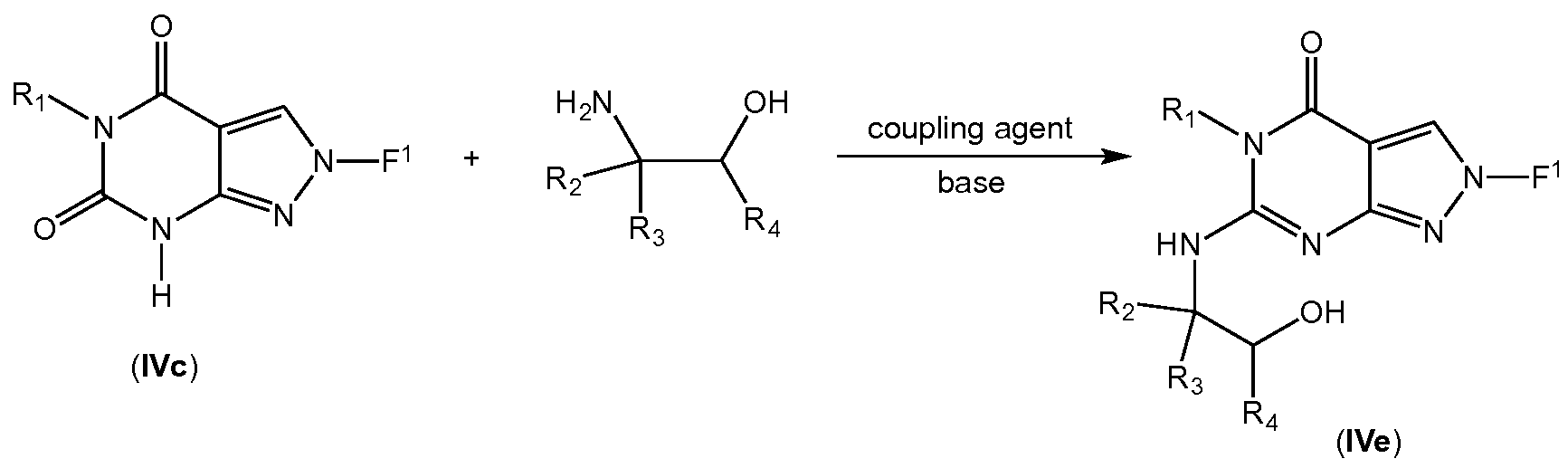
  • Intermediate IVe can be formed by reacting intermediate IVd with an amino alcohol under basic condition in a solvent such as DMF or NMP and heated then cooled (Reaction 4A): — F
  • R l s R 2 , R3, and R 4 are as defined previously for any of Formulae I, I(i), I(ii), or 1.1-1.73.
  • intermediate IVe can be synthesized directly from intermediate IVe by reacting with an amino alcohol and a coupling reagent such as BOP in the presence of a base such as DBU (Reaction 4B):
  • R l s R 2 , R3, and R 4 are as defined previously for any of Formulae I, I(i), I(ii), or 1.1-1.73.
  • Intermediate IVf may be formed by reacting a compound of IVe with, for example, a dehydrating/halogenating agent such as SOCl 2 in a solvent such as CH 2 C1 2 at room temperature or heated at 35 °C for several hours, and then cooled
  • Intermediate IVg may be formed by reacting intermediate IVf with, for example, catalysts such as a copper salt and 2,2,6, 6-tetramethylheptane-3,5-dione and a base such as cesium carbonate in a solvent such as NMP with heat for several hours (Reaction 6):
  • catalysts such as a copper salt and 2,2,6, 6-tetramethylheptane-3,5-dione and a base such as cesium carbonate in a solvent such as NMP with heat for several hours
  • F 2 is a diaryl ether.
  • Intermediate IVh may be formed by reacting intermediate IVg with, for example, TFA and TFMSA in a solvent such as CH 2 CI 2 at room temperature (Reaction 7):
  • Intermediate IVi may be formed by reacting intermediate IVh with
  • R 5 and n are as defined previously for any of Formulae I, I(i), I(ii), or 1.1- 1.73 and L is a leaving group such as a halogen (e.g., Br).
  • a halogen e.g., Br
  • Intermediate IVj wherein X is halogen may be formed by reacting intermediate IVi with, for example, a halogenating agent such as
  • Compounds of the Invention may be formed by reacting intermediate
  • intermediate Ilf may be prepared by reacting intermediate lie with hydrazine or hydrazine hydrate in a solvent such as methoxyethanol and refluxed for about 30 minutes and then cooled:
  • Intermediate Va can be synthesized by reacting a compound of formula He with for example an aryl isothiocyanate or isocyanate in a solvent such as DMF and heated at 110° C for about 2 days and then cooled:
  • Intermediate Vb may be formed by removing the protective group P 1 with an appropriate method. For example, if P 1 is a PMB group, then it can be removed with A1C1 3 or TFA/TFMSA at room temperature. Intermediate Vb may also be prepared directly from a compound of Ilf using the similar methods, but the yields are relatively low.
  • Intermediate Vc can be prepared by for example reacting intermediate
  • reaction 11 a chlorinating compound such as POCI 3 .
  • the reaction may be carried out at atmospheric pressure and refluxed for about 2 days or heated at 150 ⁇ 200°C for about 10 minutes in a sealed vial with a microwave instrument and then cooled (Reaction 11):
  • Intermediate Vd can be prepared by reacting intermediate Vc with an amino alcohol under basic condition in a solvent such as DMF. The reaction may be heated overnight and then cooled (Reaction 12):
  • R l s R 2 , R3, R4, and R 6 are as defined previously for any of Formulae I, I(i), I(ii), or 1.1-1.73.
  • Intermediate Ve can be formed by reacting intermediate Vd with for example a dehydrating agent such as SOCl 2 in a solvent such as CH 2 C1 2 at room temperature overnight or heated at 35° C for about 4 hours, and then cooled
  • Compounds of the Invention may be formed by reacting intermediate
  • R 5 is as defined previously for any of Formulae I, I(i), I(ii), or 1.1-1.73 and L is a leaving group such as a halogen, mesylate, or tosylate.
  • the Compounds of the Invention are useful in the treatment of diseases characterized by disruption of or damage to cAMP and cGMP mediated pathways, e.g., as a result of increased expression of PDEl or decreased expression of cAMP and cGMP due to inhibition or reduced levels of inducers of cyclic nucleotide synthesis, such as dopamine and nitric oxide (NO).
  • inducers of cyclic nucleotide synthesis such as dopamine and nitric oxide (NO).
  • the invention provides methods of treatment of any one or more of the following conditions:
  • Neurodegenerative diseases including Parkinson's disease, restless leg, tremors, dyskinesias, Huntington's disease, Alzheimer's disease, and drug-induced movement disorders;
  • Circulatory and cardiovascular disorders including cerebrovascular disease, stroke, congestive heart disease, hypertension, pulmonary hypertension, e.g., pulmonary arterial hypertension, and sexual dysfunction, including cardiovascular diseases and related disorders as described in International Application No.
  • Respiratory and inflammatory disorders including asthma, chronic obstructive pulmonary disease, and allergic rhinitis, as well as autoimmune and inflammatory diseases;
  • a disease or disorder such as psychosis, glaucoma, or elevated intraocular pressure
  • Traumatic brain injury Any disease or condition characterized by low levels of cAMP and/or cGMP (or inhibition of cAMP and/or cGMP signaling pathways) in cells expressing PDEl; and/or
  • a Compound of the Invention comprising administering an effective amount of a Compound of the Invention, e.g., a compound according to any of Formulae I, I(i), I(ii), or 1.1-1.73, in free or pharmaceutically acceptable salt or prodrug form, to a human or animal patient in need thereof.
  • the invention provides methods of treatment or prophylaxis for narcolepsy.
  • PDEl Inhibitors may be used as a sole therapeutic agent, but may also be used in combination or for coadministration with other active agents.
  • the invention further comprises a method of treating narcolepsy comprising administering simultaneously, sequentially, or contemporaneously therapeutically effective amounts of
  • a PDEl Inhibitor e.g., a compound according to any of Formulae I, I(i), I(ii) or
  • a compound to promote wakefulness or regulate sleep e.g., selected from (a) central nervous system stimulants-amphetamines and amphetamine like compounds, e.g., methylphenidate, dextroamphetamine, methamphetamine, and pemoline; (b) modafinil, (c) antidepressants, e.g., tricyclics (including imipramine, desipramine, clomipramine, and protriptyline) and selective serotonin reuptake inhibitors (including fluoxetine and sertraline); and/or (d) gamma hydroxybutyrate (GHB),
  • central nervous system stimulants-amphetamines and amphetamine like compounds e.g., methylphenidate, dextroamphetamine, methamphetamine, and pemoline
  • modafinil e.g., methylphenidate, dextroamphetamine, methamphetamine, and pe
  • the invention further provides methods of treatment or prophylaxis of a condition which may be alleviated by the enhancement of the progesterone signaling comprising administering an effective amount of a Compound of the Invention, e.g., a compound according to any of Formulae I, I(i), I(ii), or 1.1-1.73, in free or pharmaceutically acceptable salt or prodrug form, to a human or animal patient in need thereof.
  • a Compound of the Invention e.g., a compound according to any of Formulae I, I(i), I(ii), or 1.1-1.73, in free or pharmaceutically acceptable salt or prodrug form
  • Diseases or conditions that may be ameliorated by enhancement of progesterone signaling include, but are not limited to, female sexual dysfunction, secondary amenorrhea (e.g., exercise amenorrhoea, anovulation, menopause, menopausal symptoms, hypothyroidism), pre-menstrual syndrome, premature labor, infertility, for example infertility due to repeated miscarriage, irregular menstrual cycles, abnormal uterine bleeding, osteoporosis, autoimmmune disease, multiple sclerosis, prostate enlargement, prostate cancer, and hypothyroidism.
  • secondary amenorrhea e.g., exercise amenorrhoea, anovulation, menopause, menopausal symptoms, hypothyroidism
  • pre-menstrual syndrome e.g., premature labor
  • infertility for example infertility due to repeated miscarriage, irregular menstrual cycles, abnormal uterine bleeding, osteoporosis, autoimmmune disease,
  • the PDE1 inhibitors may be used to encourage egg implantation through effects on the lining of uterus, and to help maintain pregnancy in women who are prone to miscarriage due to immune response to pregnancy or low progesterone function.
  • the novel PDE1 inhibitors e.g., as described herein, may also be useful to enhance the effectiveness of hormone replacement therapy, e.g., administered in combination with
  • estrogen/estradiol/estriol and/or progesterone/progestins in postmenopausal women and estrogen-induced endometrial hyperplasia and carcinoma.
  • the methods of the invention are also useful for animal breeding, for example to induce sexual receptivity and/or estrus in a nonhuman female mammal to be bred.
  • PDE1 Inhibitors may be used in the foregoing methods of treatment or prophylaxis as a sole therapeutic agent, but may also be used in combination or for co-administration with other active agents, for example in conjunction with hormone replacement therapy.
  • the invention further comprises a method of treating disorders that may be ameliorated by enhancement of progesterone signaling comprising administering simultaneously, sequentially, or contemporaneously therapeutically effective amounts of
  • a PDE1 Inhibitor e.g., a compound according to any of Formulae I, I(i), I(ii), or 1.1-1.73, and
  • a hormone e.g., selected from estrogen and estrogen analogues (e.g., estradiol, estriol, estradiol esters) and progesterone and progesterone analogues (e.g., progestins)
  • estrogen and estrogen analogues e.g., estradiol, estriol, estradiol esters
  • progesterone and progesterone analogues e.g., progestins
  • the invention also provides a method for enhancing or potentiating dopamine Dl intracellular signaling activity in a cell or tissue comprising contacting said cell or tissue with an amount of a Compound of the Invention, e.g., a compound according to any of Formulae I, I(i), I(ii), or 1.1-1.73, in free or pharmaceutically acceptable salt or prodrug form, sufficient to inhibit PDE1 activity.
  • a Compound of the Invention e.g., a compound according to any of Formulae I, I(i), I(ii), or 1.1-1.73, in free or pharmaceutically acceptable salt or prodrug form, sufficient to inhibit PDE1 activity.
  • the invention also provides a method for treating a PDE1 -related disorder, a dopamine Dl receptor intracellular signaling pathway disorder, or disorders that may be alleviated by the enhancement of the progesterone signaling pathway in a patient in need thereof comprising administering to the patient an effective amount of a Compound of the Invention, e.g., a compound according to any of Formulae I, I(i), I(ii), or 1.1-1.73, in free or pharmaceutically acceptable salt or prodrug form, that inhibits PDE1, wherein PDE1 activity modulates phosphorylation of DARPP-32 and/or the GluRl AMPA receptor.
  • a Compound of the Invention e.g., a compound according to any of Formulae I, I(i), I(ii), or 1.1-1.73, in free or pharmaceutically acceptable salt or prodrug form, that inhibits PDE1, wherein PDE1 activity modulates phosphorylation of DARPP-32 and/or the GluRl AMPA receptor
  • the invention also provides a method for the treatment for glaucoma or elevated intraocular pressure comprising topical administration of a therapeutically effective amount of a PDE1 Inhibitor of the Invention, e.g., a compound according to any of Formulae I, I(i), I(ii), or 1.1-1.73, in free or pharmaceutically acceptable salt form, in an ophthalmically compatible carrier to the eye of a patient in need thereof.
  • treatment may alternatively include a systemic therapy.
  • Systemic therapy includes treatment that can directly reach the bloodstream, or oral methods of administration, for example.
  • the invention further provides a pharmaceutical composition for topical ophthalmic use comprising a PDE1 inhibitor; for example an ophthalmic solution, suspension, cream or ointment comprising a PDE1 Inhibitor of the
  • Invention e.g., a compound according to any of Formulae I, I(i), I(ii) or 1.1-1.73, in free or ophthalmologically acceptable salt form, in combination or association with an ophthalmologically acceptable diluent or carrier.
  • the PDE1 inhibitor may be administered sequentially or simultaneously with a second drug useful for treatment of glaucoma or elevated intraocular pressure.
  • the therapeutically effective amount of each agent may be below the amount needed for activity as monotherapy.
  • a subthreshold amount i.e., an amount below the level necessary for efficacy as monotherapy
  • an advantage of administering different agents with different mechanisms of action and different side effect profiles may be to reduce the dosage and side effects of either or both agents, as well as to enhance or potentiate their activity as monotherapy.
  • the invention thus provides the method of treatment of a condition selected from glaucoma and elevated intraocular pressure comprising administering to a patient in need thereof an effective amount, e.g., a subthreshold amount, of an agent known to lower intraocular pressure concomitantly, simultaneously or sequentially with an effective amount, e.g., a subthreshold amount, of a PDE1 Inhibitor of the Invention, e.g., a compound according to any of Formulae I, I(i), I(ii) or 1.1-1.73, in free or pharmaceutically acceptable salt form, such that amount of the agent known to lower intraocular pressure and the amount of the PDE1 inhibitor in combination are effective to treat the condition.
  • an effective amount e.g., a subthreshold amount
  • an agent known to lower intraocular pressure concomitantly, simultaneously or sequentially with an effective amount, e.g., a subthreshold amount, of a PDE1 Inhibitor of
  • one or both of the agents are administered topically to the eye.
  • the invention provides a method of reducing the side effects of treatment of glaucoma or elevated intraocular pressure by administering a reduced dose of an agent known to lower intraocular pressure concomitantly, simultaneously or sequentially with an effective amount of a PDE1 inhibitor.
  • methods other than topical administration, such as systemic therapeutic administration may also be utilized.
  • PDE1 inhibitor may, for example, be selected from the existing drugs comprise typically of instillation of a prostaglandin, pilocarpine, epinephrine, or topical beta- blocker treatment, e.g. with timolol, as well as systemically administered inhibitors of carbonic anhydrase, e.g. acetazolamide.
  • Cholinesterase inhibitors such as
  • physostigmine and echothiopate may also be employed and have an effect similar to that of pilocarpine.
  • Drugs currently used to treat glaucoma thus include, e.g.,
  • Prostaglandin analogs such as latanoprost (Xalatan), bimatoprost (Lumigan) and travoprost (Travatan), which increase uveoscleral outflow of aqueous humor.
  • Bimatoprost also increases trabecular outflow.
  • Topical beta-adrenergic receptor antagonists such as timolol, levobunolol (Betagan), and betaxolol, which decrease aqueous humor production by the ciliary body.
  • Alpha 2 -adrenergic agonists such as brimonidine (Alphagan), which work by a dual mechanism, decreasing aqueous production and increasing uveo-scleral outflow.
  • Miotic agents parasympathomimetics
  • pilocarpine work by contraction of the ciliary muscle, tightening the trabecular meshwork and allowing increased outflow of the aqueous humour.
  • Physostigmine is also used to treat glaucoma and delayed gastric emptying.
  • the invention provides pharmaceutical compositions comprising a PDE1 Inhibitor of the Invention, e.g., a compound according to any of Formulae I, I(i), I(ii), or 1.1-1.73, in free or pharmaceutically acceptable salt form, and an agent selected from (i) the prostanoids, unoprostone, latanoprost, travoprost, or bimatoprost; (ii) an alpha adrenergic agonist such as brimonidine, apraclonidine, or dipivefrin and (iii) a muscarinic agonist, such as pilocarpine, in combination or association with a pharmaceutically acceptable diluent or carrier.
  • the invention provides ophthalmic formulations comprising a PDE-1 Inhibitor of the Invention, e.g., a compound according to any of Formulae I, I(i), I(ii), or 1.1-1.73, together with bimatoprost, abrimonidine, brimonidine, timolol, or combinations thereof, in free or ophthamalogically acceptable salt form, in combination or association with an ophthamologically acceptable diluent or carrier.
  • a PDE-1 Inhibitor of the Invention e.g., a compound according to any of Formulae I, I(i), I(ii), or 1.1-1.73, together with bimatoprost, abrimonidine, brimonidine, timolol, or combinations thereof, in free or ophthamalogically acceptable salt form, in combination or association with an ophthamologically acceptable diluent or carrier.
  • a person of ordinary skill in the art can select an appropriate selective receptor sub
  • alpha adrenergic agonist one can select an agonist selective for an alpha 1 adrenergic receptor, or an agonist selective for an alpha 2 adrenergic receptor such as brimonidine, for example.
  • a beta-adrenergic receptor antagonist one can select an antagonist selective for either ⁇ , or ⁇ 2 , or ⁇ 3 ⁇ depending on the appropriate therapeutic application.
  • a muscarinic agonist selective for a particular receptor subtype such as Mi-M 5 .
  • the PDE1 inhibitor may be administered in the form of an ophthalmic composition, which includes an ophthalmic solution, cream or ointment.
  • the ophthalmic composition may additionally include an intraocular-pressure lowering agent.
  • the PDE1 Inhibitors disclosed may be combined with a subthreshold amount of an intraocular pressure-lowering agent which may be a bimatoprost ophthalmic solution, a brimonidine tartrate ophthalmic solution, or brimonidine tartrate/timolol maleate ophthalmic solution.
  • PDE1 inhibitors are useful to treat psychosis, for example, any conditions characterized by psychotic symptoms such as hallucinations, paranoid or playful delusions, or disorganized speech and thinking, e.g.,
  • PDE1 inhibitors primarily act to enhance signaling at the dopamine Dl receptor. By enhancing Dl receptor signaling, PDE1 inhibitors can increase NMD A receptor function in various brain regions, for example in nucleus accumbens neurons and in the prefrontal cortex. This
  • enhancement of function may be seen for example in NMDA receptors containing the NR2B subunit, and may occur e.g., via activation of the Src and protein kinase A family of kinases.
  • the invention provides a new method for the treatment of psychosis, e.g., schizophrenia, schizoaffective disorder, schizophreniform disorder, psychotic disorder, delusional disorder, and mania, such as in acute manic episodes and bipolar disorder, comprising administering a therapeutically effective amount of a phosphodiesterase- 1 (PDE1) Inhibitor of the Invention, e.g., a compound according to any of Formulae I, I(i), I(ii), or 1.1-1.73, in free or pharmaceutically acceptable salt form, to a patient in need thereof.
  • PDE1 phosphodiesterase- 1
  • PDE 1 Inhibitors may be used in the foregoing methods of treatment prophylaxis as a sole therapeutic agent, but may also be used in combination or for co-administration with other active agents.
  • the invention further comprises a method of treating psychosis, e.g., schizophrenia, schizoaffective disorder, schizophreniform disorder, psychotic disorder, delusional disorder, or mania, comprising administering simultaneously, sequentially, or contemporaneously therapeutically effective amounts of: (i) a PDEl Inhibitor of the invention, in free or pharmaceutically acceptable salt form; and
  • Typical antipsychotics e.g.,
  • Butyrophenones e.g. Haloperidol (Haldol, Serenace), Droperidol (Droleptan);
  • Phenothiazines e.g., Chlorpromazine (Thorazine, Largactil), Fluphenazine (Prolixin), Perphenazine (Trilafon),
  • Prochlorperazine Compazine
  • Thioridazine Mellaril, Melleril
  • Trifluoperazine Stelazine
  • Mesoridazine Mesoridazine
  • Thioxanthenes e.g., Chlorprothixene, Flupenthixol (Depixol, Fluanxol), Thiothixene (Navane), Zuclopenthixol (Clopixol, Acuphase);
  • Atypical antipsychotics e.g.,
  • Clozapine (Clozaril), Olanzapine (Zyprexa), Risperidone
  • the Compounds of the Invention are particularly useful for the treatment or prophylaxis of schizophrenia.
  • Compounds of the Invention are particularly useful for the treatment of Parkinson's disease, schizophrenia, narcolepsy, glaucoma and female sexual dysfunction.
  • the invention provides a method of lengthening or enhancing growth of the eyelashes by administering an effective amount of a prostaglandin analogue, e.g., bimatoprost, concomitantly, simultaneously or sequentially with an effective amount of a PDEl inhibitor of the Invention, in free or pharmaceutically acceptable salt form, to the eye of a patient in need thereof.
  • a prostaglandin analogue e.g., bimatoprost
  • the invention provides a method for the treatment or prophylaxis of traumatic brain injury comprising administering a therapeutically effective amount of a PDE1 Inhibitor of the Invention, e.g., a compound according to any of Formulae I, I(i), I(ii), or 1.1-1.73, in free or pharmaceutically acceptable salt form, to a patient in need thereof.
  • Traumatic brain injury encompasses primary injury as well as secondary injury, including both focal and diffuse brain injuries.
  • Secondary injuries are multiple, parallel, interacting and interdependent cascades of biological reactions arising from discrete subcellular processes (e.g., toxicity due to reactive oxygen species, overstimulation of glutamate receptors, excessive influx of calcium and inflammatory upregulation) which are caused or exacerbated by the inflammatory response and progress after the initial (primary) injury.
  • discrete subcellular processes e.g., toxicity due to reactive oxygen species, overstimulation of glutamate receptors, excessive influx of calcium and inflammatory upregulation
  • the present invention also provides
  • a Compound of the Invention e.g., a compound according to any of Formulae I, I(i), I(ii), or 1.1-1.73, as hereinbefore described, in free or pharmaceutically acceptable salt form for example for use in any method or in the treatment of any disease or condition as hereinbefore set forth,
  • the invention provides use of a Compound of the Invention, e.g., a compound according to any of Formulae I, I(i), I(ii), or 1.1-1.73, as
  • any one or more of the following diseases Parkinson's disease, restless leg, tremors, dyskinesias, Huntington's disease, Alzheimer's disease, and/or drug-induced movement disorders; depression, attention deficit disorder, attention deficit hyperactivity disorder, bipolar illness, anxiety, sleep disorder, narcolepsy, cognitive impairment, e.g., cognitive impairment of schizophrenia, dementia, Tourette's syndrome, autism, fragile X syndrome, psychostimulant withdrawal, and/or drug addiction; cerebrovascular disease, stroke, congestive heart disease, hypertension, pulmonary hypertension, e.g., pulmonary arterial hypertension, and/or sexual dysfunction; asthma, chronic obstructive pulmonary disease, and/or allergic rhinitis, as well as autoimmune and inflammatory diseases; and/or female sexual dysfunction, exercise amenorrhoea, anovulation, menopause, menopausal symptoms,
  • hypothyroidism pre -menstrual syndrome, premature labor, infertility, irregular menstrual cycles, abnormal uterine bleeding, osteoporosis, multiple sclerosis, prostate enlargement, prostate cancer, hypothyroidism, and/or estrogen-induced endometrial hyperplasia and/or carcinoma; and/or any disease or condition characterized by low levels of cAMP and/or cGMP (or inhibition of cAMP and/or cGMP signaling pathways) in cells expressing PDE1, and/or by reduced dopamine Dl receptor signaling activity; and/or any disease or condition that may be ameliorated by the enhancement of progesterone signaling.
  • the invention also provides use of a Compound of the Invention, in free or pharmaceutically acceptable salt form, (the manufacture of a medicament) for the treatment or prophylactic treatment of any one or more of:
  • psychosis for example, any conditions characterized by psychotic symptoms such as hallucinations, paranoid or playful delusions, or disorganized speech and thinking, e.g., schizophrenia, schizoaffective disorder, schizophreniform disorder, psychotic disorder, delusional disorder, and mania, such as in acute manic episodes and bipolar disorder,
  • Invention encompasses any and all of the compounds disclosed herewith, e.g., compounds according to any of Formulae I, I(i), I(ii) or 1.1-1.73, as hereinbefore described, in free or salt form.
  • the words “treatment” and “treating” are to be understood accordingly as embracing prophylaxis and treatment or amelioration of symptoms of disease as well as treatment of the cause of the disease.
  • the invention provides a method for the treatment of the disease or disorder disclosed herein.
  • the invention provides a method for the prophylaxis of a disease or disorder as disclosed herein.
  • the word "effective amount” is intended to encompass a therapeutically effective amount to treat a specific disease or disorder.
  • pulmonary hypertension is intended to encompass pulmonary arterial hypertension.
  • patient includes human or non-human (i.e., animal) patient.
  • the invention encompasses both human and nonhuman. In another embodiment, the invention encompasses nonhuman. In other embodiment, the term encompasses human.
  • Compounds of the Invention are in particular useful for the treatment of Parkinson's disease, narcolepsy and female sexual dysfunction.
  • Compounds of the Invention potentiate the activity of Dl agonists, such as dopamine, they may be simultaneously, sequentially, or contemporaneously administered with conventional dopaminergic medications, such as levodopa and levodopa adjuncts (carbidopa, COMT inhibitors, MAO-B inhibitors), dopamine agonists, and
  • novel PDE1 inhibitors e.g., as described herein, may also be
  • progesterone/progestins to enhance the effectiveness of hormone replacement therapy or treatment of estrogen-induced endometrial hyperplasia or carcinoma.
  • Dosages employed in practicing the present invention will of course vary depending, e.g. on the particular disease or condition to be treated, the particular Compound of the Invention used, the mode of administration, and the therapy desired.
  • Compounds of the Invention may be administered by any suitable route, including orally, parenterally, transdermally, or by inhalation, but are preferably administered orally. In general, satisfactory results, e.g. for the treatment of diseases as
  • an indicated daily dosage for oral administration will accordingly be in the range of from about 0.75 to 150 mg, conveniently administered once, or in divided doses 2 to 4 times, daily or in sustained release form.
  • Unit dosage forms for oral administration thus for example may comprise from about 0.2 to 75 or 150 mg, e.g. from about 0.2 or 2.0 to 50, 75 or 100 mg of a Compound of the Invention, together with a
  • compositions comprising Compounds of the Invention may be prepared using conventional diluents or excipients and techniques known in the galenic art.
  • oral dosage forms may include tablets, capsules, solutions, suspensions and the like.
  • TFA 500 mL is slowly added into a suspension of 2-(4- bromobenzyl)-7-(4-methoxybenzyl)-5-methyl-2H-pyrazolo[3,4-d]pyrimidine- 4,6(5H,7H)-dione (226 g, 496 mmol) in methylene chloride (320 mL), and then TFMSA (160 mL is added slowly. The reaction mixture is stirred at room
  • TFA 600 mL is added into a suspension of 2-(4-phenoxybenzyl)-7,8- dihydro-5,7,7-trimethyl-[2H]-imidazo-[l,2-a]pyrazolo[4,3-e]pyrimidin-4(5H)-one (103 g, 257 mmol) in methylene chloride (210 mL) to give a tan solution, and then TFMSA (168 mL) is added. The reaction mixture is stirred at room temperature until the starting material disappears. The mixture is poured into cold water (3 L).
  • NaBH 4 (18 mg, 0.48 mmol) is slowly added to a solution of 7,8- dihydro-2-(4-acetylbenzyl)-3-(4-fluorophenylamino)-5,7,7-trimethyl-[2H]-imidazo- [l,2-a]pyrazolo[4,3-e]pyrimidin-4(5H)-one (22 mg, 0.048 mmol) in methanol (1 mL) at -20 °C. The reaction mixture is stirred at -10 °C for 3 h, and then quenched with water (0.5 mL).
  • Phosphodiesterase 1 is a calcium/calmodulin dependent phosphodiesterase enzyme that converts cyclic guanosine monophosphate (cGMP) to 5'-guanosine monophosphate (5'-GMP).
  • PDEl can also convert a modified cGMP substrate, such as the fluorescent molecule cGMP-fluorescein, to the corresponding GMP-fluorescein.
  • the generation of GMP-fluorescein from cGMP-fluorescein can be quantitated, using, for example, the IMAP (Molecular Devices, Sunnyvale, CA) immobilized-metal affinity particle reagent.
  • the IMAP reagent binds with high affinity to the free 5 '- phosphate that is found in GMP-fluorescein and not in cGMP-fluorescein.
  • the resulting GMP-fluorescein - IMAP complex is large relative to cGMP-fluorescein.
  • Small fluorophores that are bound up in a large, slowly tumbling, complex can be distinguished from unbound fluorophores, because the photons emitted as they fluoresce retain the same polarity as the photons used to excite the fluorescence.
  • the following phosphodiesterase enzymes may be used: 3',5'-cyclic- nucleotide-specific bovine brain phosphodiesterase (Sigma, St. Louis, MO) and recombinant full length human PDEl A and PDE1B (r-hPDElA and r-hPDElB, respectively) which may be produced e.g., in HEK or SF9 cells by one skilled in the art.
  • the PDEl enzyme is reconstituted with 50% glycerol to 2.5 U/ml. One unit of enzyme will hydrolyze 1.0 ⁇ of 3',5'-cAMP to 5'-AMP per min at pH 7.5 at 30°C.
  • reaction buffer (30 ⁇ CaCl 2 , 10 U/ml of calmodulin (Sigma P2277), lOmM Tris-HCl pH 7.2, lOmM MgCl 2 , 0.1% BSA, 0.05% NaN 3 ) to yield a final concentration of 1.25mU/ml.
  • 99 ⁇ of diluted enzyme solution is added into each well in a flat bottom 96-well polystyrene plate to which 1 ⁇ of test compound dissolved in 100% DMSO is added.
  • the test compounds are mixed and pre-incubated with the enzyme for 10 min at room temperature.
  • the FL-GMP conversion reaction is initiated by combining 4 parts enzyme and inhibitor mix with 1 part substrate solution (0.225 ⁇ ) in a 384-well microtiter plate. The reaction is incubated in dark at room temperature for 15 min. The reaction is halted by addition of 60 ⁇ of binding reagent (1 :400 dilution of IMAP beads in binding buffer supplemented with 1 : 1800 dilution of antifoam) to each well of the 384-well plate. The plate is incubated at room temperature for 1 hour to allow IMAP binding to proceed to completion, and then placed in an Envision multimode microplate reader (PerkinElmer, Shelton, CT) to measure the fluorescence polarization (Amp).
  • Envision multimode microplate reader PerkinElmer, Shelton, CT
  • IC 50 values are determined by measuring enzyme activity in the presence of 8 to 16 concentrations of compound ranging from 0.0037 nM to 80,000 nM and then plotting drug concentration versus AmP, which allows IC 50 values to be estimated using nonlinear regression software (XLFit; IDBS, Cambridge, MA).
  • Compounds of the Invention may be selected and tested in an assay as described or similarly described herein for PDE1 inhibitory activity.
  • Exemplified Compounds of the Invention e.g., compounds of Examples 1, 2, 3, and 4 have IC 50 values of less than or equal to 5 nm. K; values for Exemplified
  • the candidate compounds may be evaluated in a Novel Object Recognition (NOR) assay.
  • NOR Novel Object Recognition
  • This assay protocol is described in detail in Ennaceur et al, Behav. Brain Res. (1988) 31 :47-59 and Prickaerts et al, Eur. J. Pharmacol. (1997) 337: 125- 136, the contents of each of which are incorporated by reference in their entirety.
  • the rats are introduced to a chamber at time Tl and allowed to interrogate two identical "familiar objects" for six minutes. Twenty-four hours later, they are re-introduced to this chamber, where one of the familiar objects has been replaced with a novel object.
  • the "discrimination index” a measure of the time spent in close proximity to the novel over the familiar object, may then be measured. Since rodents will forget the original experiment at Tl within 4 hours, this test with a 24h interval is a measure of strong cognitive enhancement.
  • This assay protocol can be modified in order to evaluate different phases of memory.
  • the rats may be dosed with the candidate compound two hours before Tl and tested 24h later without additional dosing. This is a test of the acquisition process.
  • administration at various other times after the Tl test may be done to understand the compound's effectiveness in memory consolidation and recall. Specifically, these dosing times represent acquisition (Tl - 2h), early consolidation (Tl + 0.1 h), late consolidation (Tl + 3h), and retrieval (T2 - 2h).
  • Example 1 Using the protocol described above or similarly described above, the compound of Example 1 is shown to have a minimal effective dose of 0.1 mg/kg PO when administering to a rat 2 hours before Tl .
  • the compounds of the invention may be tested in a reversal of catalepsy model in which motor freezing, or catalepsy, is induced by potent dopamine D2 receptor antagonists such as haloperidol or risperidone.
  • the method uses the "bar grip test", in which the front paws of the mouse are placed so as to grip a 3mm-diameter, suspended wooden bar. A “step down latency” is measured by recording the time until the mouse removes its paws from the wooden bar to the floor surface.
  • Catalepsy is a freezing of the musculature that prevents the mouse from moving off the bar. Reduction in the catalepsy induced in this model will indicate that the compound will have a beneficial effect both in schizophrenia where extrapyramidal side effects are frequent and in Parkinson's disease.
  • mice A total of seventeen (17) eight week-old, male C57BL/6 mice (Jackson Laboratories) are used in a typical experiment testing the effect of the compound of Example 1.
  • a catalepsy score is recorded for each mouse at 2, 3, 4, and 6 hours after administration of drugs.
  • the chamber used for measuring catalepsy is comprised of a Plexiglas cage outfitted with a 3mm-diameter wooden bar fixed horizontally 4 cm above the floor of cage. For each test session, both forepaws of the mouse are placed on the bar while the hind paws are on the Plexiglas floor. The latency until the mouse steps both paws down from the bar to the floor surface (i.e., step down latency) is recorded up to 120 sec. If the mouse steps off immediately (less than 10 sec after placement), another attempt is made up to a maximum of 10 attempts. If none of the 10 attempts are beyond 10 sec, the longest duration recorded is used as the catalepsy score.
  • the initial cataleptic duration (>10sec) is recorded during the 120 sec testing time.
  • Mean step down latency is calculated for each treatment group.
  • the effect of the compound of Example 1 on step down latency after haloperidol treatment is statistically evaluated by comparing group differences by analysis of variance (ANOVA, F 5i l6 ) followed by application of Newman-Keuls post-hoc multiple comparison tests at each time point across all doses tested.
  • Example 1 By using the protocol described or similarly described in this example, the compound of Example 1 is shown to be active in a catalepsy model with a minimal effective dose of 0.1 mg/Kg.
  • the compound of Example 1 is shown to have a Ti /2 of 171 minutes
  • the compound of Example 3 is shown to have a Ti /2 of 78 minutes
  • the compound of Example 4 is shown to have a Ti /2 of 67 minutes.

Landscapes

  • Health & Medical Sciences (AREA)
  • Chemical & Material Sciences (AREA)
  • Organic Chemistry (AREA)
  • General Health & Medical Sciences (AREA)
  • Veterinary Medicine (AREA)
  • Medicinal Chemistry (AREA)
  • Public Health (AREA)
  • Pharmacology & Pharmacy (AREA)
  • Life Sciences & Earth Sciences (AREA)
  • Animal Behavior & Ethology (AREA)
  • Bioinformatics & Cheminformatics (AREA)
  • Engineering & Computer Science (AREA)
  • General Chemical & Material Sciences (AREA)
  • Nuclear Medicine, Radiotherapy & Molecular Imaging (AREA)
  • Chemical Kinetics & Catalysis (AREA)
  • Neurosurgery (AREA)
  • Biomedical Technology (AREA)
  • Neurology (AREA)
  • Epidemiology (AREA)
  • Psychiatry (AREA)
  • Endocrinology (AREA)
  • Ophthalmology & Optometry (AREA)
  • Diabetes (AREA)
  • Addiction (AREA)
  • Psychology (AREA)
  • Hospice & Palliative Care (AREA)
  • Reproductive Health (AREA)
  • Pulmonology (AREA)
  • Pharmaceuticals Containing Other Organic And Inorganic Compounds (AREA)
  • Nitrogen Condensed Heterocyclic Rings (AREA)
  • Acyclic And Carbocyclic Compounds In Medicinal Compositions (AREA)
  • Dermatology (AREA)

Abstract

Provided are PDE 1 inhibitors of Formula I, processes for their production, their pharmaceuticals, and pharmaceutical compositions comprising them.

Description

ORGANIC COMPOUNDS
[0001] This application claims priority to U.S. Provisional Application No.
61/788,551, filed on March 15, 2013, the contents of which are hereby incorporated by reference.
TECHNICAL FIELD
[0002] The present invention relates to PDE1 inhibitory compounds of Formula I as described below, processes for their production, their use as pharmaceuticals and pharmaceutical compositions comprising them. These compounds are useful e.g., in the treatment of diseases involving disorders of the dopamine Dl receptor intracellular pathway, such as, among others, Parkinson's disease, depression, narcolepsy, psychosis, damage to cognitive function, e.g., in schizophrenia, or disorders that may be ameliorated through enhanced progesterone-signaling pathway, e.g., female sexual dysfunction.
BACKGROUND OF THE INVENTION
[0003] Eleven families of phosphodiesterases (PDEs) have been identified but only PDEs in Family I, the Ca2+-calmodulin-dependent phosphodiesterases (CaM- PDEs), have been shown to mediate both the calcium and cyclic nucleotide (e.g. cAMP and cGMP) signaling pathways. The three known CaM-PDE genes, PDEIA, PDE1B, and PDE1C, are all expressed in human central nervous system tissue.
PDEIA is expressed in the brain with high levels in the CA1 to CA3 layers of the hippocampus and cerebellum and at a low level in the striatum. PDE1B is predominately expressed in the striatum, dentate gyrus, olfactory tract and in the prefrontal cortex co localized with the dopamine Dl receptor. Its expression generally correlates with brain regions having high levels of dopaminergic innervation.
Although PDE1B is primarily expressed in the central nervous system, it is present in neutrophils. PDE1C is more ubiquitously expressed in the brain and is expressed in the heart and vascular smooth muscle.
[0004] Cyclic nucleotide phosphodiesterases decrease intracellular cAMP and cGMP signaling by hydrolyzing these cyclic nucleotides to their respective inactive 5 '-monophosphates (5 'AMP and 5'GMP). CaM-PDEs play a critical role in mediating signal transduction in brain cells, particularly within an area of the brain known as the basal ganglia or striatum. For example, NMDA-type glutamate receptor activation and/or dopamine D2 receptor activation result in increased intracellular calcium concentrations, leading to activation of effectors such as calmodulin- dependent kinase II (CaMKII) and calcineurin and to activation of CaM-PDEs, resulting in reduced cAMP and cGMP. Dopamine Dl receptor activation, on the other hand, leads to activation of adenylate cyclases, resulting in increased cAMP. This cyclic nucleotide in turn activates protein kinase A (PKA; cAMP-dependent protein kinase). Production of cGMP is known to occur in tissues involved in cognitive function through various stimulations such as nitric oxide production induced by high intra-cellular calcium levels and to subsequently activate protein kinase G (PKG; cGMP-dependent protein kinase). PKG and PKA phosphorylate downstream signal transduction pathway elements such as DARPP-32 (dopamine and cAMP-regulated phosphoprotein) and cAMP responsive element binding protein (CREB). Phosphorylated DARPP-32 in turn inhibits the activity of protein phosphates- 1 (PP-1), thereby increasing the state of phosphorylation of substrate proteins such as progesterone receptor (PR), leading to induction of physiologic responses. Dl receptor signaling is disrupted in schizophrenia, contributing to cognitive impairment in the disease. The role of cAMP and cGMP in cognitive function has been well established in animal studies. Studies in rodents also have suggested that inducing cAMP and cGMP synthesis through activation of dopamine Dl or progesterone receptor enhances progesterone signaling associated with various physiological responses, including the lordosis response associated with receptivity to mating in some rodents. See Mani, et al, Science (2000) 287: 1053, the contents of which are incorporated herein by reference.
[0005] CaM-PDEs can therefore affect dopamine -regulated and other
intracellular signaling pathways in the basal ganglia (striatum), including but not limited to nitric oxide, noradrenergic, neurotensin, CCK, VIP, serotonin, glutamate (e.g., NMDA receptor, AMPA receptor), GABA, acetylcholine, adenosine (e.g., A2A receptor), cannabinoid receptor, natriuretic peptide (e.g., ANP, BNP, CNP), DARPP- 32, and endorphin intracellular signaling pathways.
[0006] Phosphodiesterase (PDE) activity, in particular, phosphodiesterase 1 (PDE1) activity, functions in brain tissue as a regulator of locomotor activity and learning and memory. PDE1 is a therapeutic target for regulation of intracellular signaling pathways, preferably in the nervous system, including but not limited to a dopamine Dl receptor, dopamine D2 receptor, nitric oxide, noradrenergic,
neurotensin, CCK, VIP, serotonin, glutamate (e.g., NMD A receptor, AMP A receptor), GAB A, acetylcholine, adenosine (e.g., A2A receptor), cannabinoid receptor, natriuretic peptide (e.g., ANP, BNP, CNP), endorphin intracellular signaling pathway and progesterone signaling pathway. For example, inhibition of PDEIB should act to potentiate the effect of a dopamine Dl agonist by protecting cGMP and cAMP from degradation, and should similarly inhibit dopamine D2 receptor signaling pathways, by inhibiting PDE1 activity that is a consequence of D2 receptor-mediated increases in intra-cellular calcium. Chronic elevation in intracellular calcium levels is linked to cell death in numerous disorders, particularly in neurodegenerative diseases such as Alzheimer's, Parkinson's and Huntington's Diseases and in disorders of the circulatory system leading to stroke and myocardial infarction. PDE1 inhibitors are therefore potentially useful in diseases characterized by reduced dopamine Dl receptor signaling activity, such as Parkinson's disease, restless leg syndrome, depression, narcolepsy and cognitive impairment such as cognitive impairment associated with schizophrenia. PDE1 inhibitors are also useful in diseases that may be alleviated by the enhancement of progesterone-signaling such as female sexual dysfunction.
[0007] There is thus a need for compounds that selectively inhibit PDE1 activity.
SUMMARY OF THE INVENTION
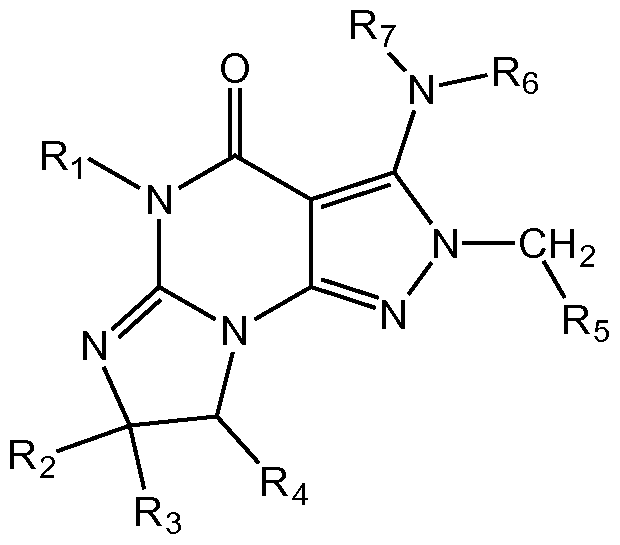
[0008] The invention provides a compound of Formula I:
Figure imgf000004_0001
Formula I
wherein
(i) Pvi is H or Ci_4 alkyl (e.g., methyl or ethyl); (ii) R2 and R3 are independently H or Ci_6 alkyl (e.g., methyl or ethyl);
(iii) R4 is H or Ci_4 alkyl (e.g., methyl or ethyl);
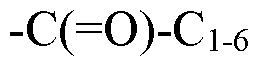
(iv) R5 is aryl (e.g., phenyl) optionally substituted with one or more groups independently selected from
Figure imgf000005_0001
alkyl (e.g., -C(=0)-CH3) and Ci_6-hydroxyalkyl (e.g., 1 -hydroxy ethyl);
(v) R6 and R7 are independently H or aryl (e.g., phenyl) optionally substituted with one or more groups independently selected from Ci_6 alkyl (e.g., methyl or ethyl) and halogen (e.g., F or CI), for example unsubstituted phenyl or phenyl substituted with one or more halogen (e.g., F) or phenyl substituted with one or more Ci_6 alkyl and one or more halogen or phenyl substituted with one Ci_6 alkyl and one halogen, for example 4- fluorophenyl or 3,4-difluorophenyl or 4-fluoro-3-methylphenyl; and
(vi) n is 1, 2, 3, or 4,
in free or salt form.
[0009] In one embodiment, the compound of Formula I as described above, is a compound of Formula I(i):
Figure imgf000005_0002
Formula I(i)
wherein
(i) Ri is H or Ci_4 alkyl (e.g., methyl or ethyl);
(ϋ) R2 and R3 are independently H or Ci_6 alkyl (e.g., methyl or ethyl);
(iii) R4 is H or Ci_4 alkyl (e.g., methyl or ethyl); (iv) R5 is aryl (e.g., phenyl) optionally substituted with one or more groups independently selected from
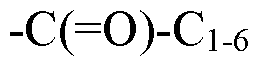
Figure imgf000006_0001
alkyl (e.g., -C(=0)-CH3) and Ci_6-hydroxyalkyl (e.g., 1 -hydroxy ethyl);
(v) Re and R7 are independently H or aryl (e.g., phenyl) optionally substituted with one or more groups independently selected from Ci_6 alkyl (e.g., methyl or ethyl) and halogen (e.g., F or CI), for example unsubstituted phenyl or phenyl substituted with one or more halogen (e.g., F) or phenyl substituted with one or more Ci_6 alkyl and one or more halogen or phenyl substituted with one Ci_6 alkyl and one halogen, for example 4- fluorophenyl or 3,4-difluorophenyl or 4-fluoro-3-methylphenyl; and
(vi) n is 1, 2, 3, or 4,
in free or salt form.
[0010] In another embodiment, the compound of Formula I as described above, is a compound of Formula I(ii):
Figure imgf000006_0002
Formula I(ii)
wherein
(i) Ri is H or Ci_4 alkyl (e.g., methyl or ethyl);
(ii) R2 and R3 are independently H or Ci_6 alkyl (e.g., methyl or ethyl);
(iii) R4 is H or Ci_4 alkyl (e.g., methyl or ethyl);
(iv) R5 is aryl (e.g., phenyl) optionally substituted with one or more groups independently selected from
Figure imgf000006_0003
alkyl (e.g., -C(=0)-CH3) and Ci_6-hydroxyalkyl (e.g., 1 -hydroxy ethyl); and (v) Re and R7 are independently H or aryl (e.g., phenyl) optionally substituted with one or more groups independently selected from Ci_6 alkyl (e.g., methyl or ethyl) and halogen (e.g., F or CI), for example unsubstituted phenyl or phenyl substituted with one or more halogen (e.g., F) or phenyl substituted with one or more Ci_6 alkyl and one or more halogen or phenyl substituted with one Ci_6 alkyl and one halogen, for example 4- fluorophenyl or 3,4-difluorophenyl or 4-fluoro-3-methylphenyl, in free or salt form.
[0011] The invention further provides compounds of Formula I, I(i), and I(ii) as follows:
1.1 Formula I or I(i), wherein n is 1 , 2, or 3;
1.2 Formula I or I(i), wherein n is 1 or 2;
1.3 Formula I, wherein n is 1 ;
1.4 Any of Formulae I, I(i), I(ii), or 1.1-1.3, wherein Ri is H or Ci_3 alkyl (e.g., methyl);
1.5 Any of Formulae I, I(i), I(ii), or 1.1-1.3, wherein Ri is H;
1.6 Any of Formulae I, I(i), I(ii), or 1.1-1.3, wherein Ri is Ci_4 alkyl;
1.7 Any of Formulae I, I(i), I(ii), or 1.1-1.3, wherein Ri is methyl;
1.8 Any of Formulae I, I(i), I(ii), or 1.1-1.7, wherein R2 and R3 are
independently H or Ci_5 alkyl (e.g., methyl or ethyl);
1.9 Any of Formulae I, I(i), I(ii), or 1.1-1.7, wherein R2 and R3 are
independently H or Ci_4 alkyl (e.g., methyl);
1.10 Any of Formulae I, I(i), I(ii), or 1.1-1.7, wherein R2 and R3 are both Ci_ 6 alkyl (e.g., Ci_4 alkyl, e.g., methyl);
1.11 Any of Formulae I, I(i), I(ii), or 1.1-1.7, wherein R2 and R3 are both Ci_ 4 alkyl (e.g., methyl);
1.12 Any of Formulae I, I(i), I(ii), or 1.1-1.7, wherein R2 and R3 are both methyl;
1.13 Any of Formulae I, I(i), I(ii), or 1.1-1.12, wherein R4 is H or Ci_3 alkyl (e.g., methyl or ethyl);
1.14 Any of Formulae I, I(i), I(ii), or 1.1 - 1.12, wherein R4 is H; Any of Formulae I, I(i), I(ii) or 1.1-1.14, wherein R5 is aryl (e.g., phenyl) substituted with one or more groups independently selected from -C(=0)-Ci_6 alkyl (e.g., -C(=0)-Ci_4 alkyl, e.g., -C(=0)-CH3) and Ci_6-hydroxyalkyl (e.g., Ci_4-hydroxy alkyl, e.g., 1 -hydroxy ethyl), for example substituted with one
Figure imgf000008_0001
alkyl (e.g., -C(=0)-Ci_4 alkyl, e.g., -C(=0)-CH3) or one Ci_6-hydroxy alkyl (e.g., Ci_4- hydroxyalkyl, e.g., 1 -hydroxy ethyl);
Any of Formulae I, I(i), I(ii), or 1.1-1.14, wherein R5 is aryl (e.g., phenyl) substituted with one or more groups independently selected from -C(=0)-Ci_4 alkyl (e.g., -C(=0)-CH3) and Ci_4-hydroxyalkyl (e.g., 1 -hydroxy ethyl), for example substituted with one -C(=0)-Ci_4 alkyl (e.g., -C(=0)-CH3) or one Ci_4-hydroxyalkyl (e.g., 1 -hydroxy ethyl); Any of Formulae I, I(i), I(ii), or 1.1-1.14, wherein R5 is phenyl optionally substituted with one or more groups independently selected from -C(=0)-Ci_6 alkyl (e.g., -C(=0)-Ci_4 alkyl, e.g., -C(=0)-CH3) and Ci_6-hydroxyalkyl (e.g., Ci_4-hydroxy alkyl, e.g., 1 -hydroxy ethyl);
Any of Formulae I, I(i), I(ii), or 1.1-1.14, wherein R5 is phenyl substituted with one or more groups independently selected from -C(=0)-Ci_6 alkyl (e.g., -C(=0)-Ci_4 alkyl, e.g., -C(=0)-CH3) and Ci_6- hydroxyalkyl (e.g., Ci_4-hydroxyalkyl, e.g., 1 -hydroxy ethyl), for example substituted with one
Figure imgf000008_0002
alkyl (e.g., -C(=0)-Ci_4 alkyl, e.g., -C(=0)-CH3) or one Ci_6-hydroxy alkyl (e.g., Ci_4- hydroxyalkyl, e.g., 1 -hydroxy ethyl), for example wherein R5 is 4- acetylphenyl or 4-(l -hydroxy ethyl)phenyl;
Any of Formulae I, I(i), I(ii), or 1.1-1.14, wherein R5 is phenyl substituted with one or more groups independently selected from -C(=0)-Ci_4 alkyl (e.g., -C(=0)-CH3) and Ci_4-hydroxyalkyl (e.g., 1- hydroxyethyl), for example substituted with one -C(=0)-Ci_4 alkyl (e.g., -C(=0)-CH3) or one Ci_4-hydroxyalkyl (e.g., 1 -hydroxy ethyl), for example wherein R5 is 4-acetylphenyl or 4-(l-hydroxyethyl)phenyl; Any of Formulae I, I(i), I(ii), or 1.1-1.14, wherein R5 is aryl substituted with one or more
Figure imgf000008_0003
alkyl (e.g., -C(=0)-Ci_4 alkyl, e.g., -C(=0)-CH3); Any of Formulae I, I(i), I(ii), or 1.1 - 1.14, wherein R5 is aryl substituted with one or more -C(=0)-Ci_4 alkyl (e.g., -C(=0)-CH3);
Any of Formulae I, I(i), I(ii), or 1.1-1.14, wherein R5 is aryl substituted with one -C(=0)-Ci_6 alkyl (e.g., -C(=0)-Ci_4 alkyl, e.g., -C(=0)-CH3); Any of Formulae I, I(i), I(ii), or 1.1-1.14, wherein R5 is aryl substituted with one -C(=0)-Ci_4 alkyl (e.g., -C(=0)-CH3);
Any of Formulae I, I(i), I(ii), or 1.1-1.14, wherein R5 is aryl substituted with one -C(=0)-CH3;
Any of Formulae I, I(i), I(ii), or 1.1-1.14, wherein R5 is aryl substituted with one or more Ci_6-hydroxy alkyl (e.g., Ci_4-hydroxyalkyl, e.g., 1- hydroxyethyl);
Any of Formulae I, I(i), I(ii), or 1.1-1.14, wherein R5 is aryl substituted with one or more Ci_4-hydroxy alkyl (e.g., 1 -hydroxy ethyl);
Any of Formulae I, I(i), I(ii), or 1.1-1.14, wherein R5 is aryl substituted with one Ci_6-hydroxyalkyl (e.g., Ci_4-hydroxyalkyl, e.g., 1- hydroxyethyl);
Any of Formulae I, I(i), I(ii), or 1.1-1.14, wherein R5 is aryl substituted with one Ci_4-hydroxyalkyl (e.g., 1-hydroxyethyl);
Any of Formulae I, I(i), I(ii), or 1.1-1.14, wherein R5 is aryl substituted with one 1-hydroxyethyl;
Any of Formulae I, I(i), I(ii), or 1.1-1.14, wherein R5 is phenyl substituted with one or more
Figure imgf000009_0001
alkyl (e.g., -C(=0)-Ci_4 alkyl, e.g., -C(=0)-CH3);
Any of Formulae I, I(i), I(ii), or 1.1-1.14, wherein R5 is phenyl substituted with one or more -C(=0)-Ci_4 alkyl (e.g., -C(=0)-CH3); Any of Formulae I, I(i), I(ii), or 1.1-1.14, wherein R5 is phenyl substituted with one
Figure imgf000009_0002
alkyl (e.g., -C(=0)-Ci_4 alkyl, e.g., -C(=0)-CH3);
Any of Formulae I, I(i), I(ii), or 1.1-1.14, wherein R5 is phenyl substituted with one -C(=0)-Ci_4 alkyl (e.g., -C(=0)-CH3);
Any of Formulae I, I(i), I(ii), or 1.1-1.14, wherein R5 is phenyl substituted with one -C(=0)-CH3;
Any of Formulae I, I(i), I(ii), or 1.1-1.14, wherein R5 is 4-acetylphenyl; Any of Formulae I, I(i), I(ii), or 1.1-1.14, wherein R5 is phenyl substituted with one or more Ci_6-hydroxyalkyl (e.g., Ci_4- hydroxyalkyl, e.g., 1 -hydroxy ethyl);
Any of Formulae I, I(i), I(ii), or 1.1-1.14, wherein R5 is phenyl substituted with one or more Ci_4-hydroxyalkyl (e.g., 1 -hydroxy ethyl); Any of Formulae I, I(i), I(ii), or 1.1 - 1.14, wherein R5 is phenyl substituted with one Ci_6-hydroxyalkyl (e.g., Ci_4-hydroxyalkyl, e.g., 1- hydroxyethyl);
Any of Formulae I, I(i), I(ii), or 1.1-1.14, wherein R5 is phenyl substituted with one Ci_4-hydroxyalkyl (e.g., 1 -hydroxy ethyl);
Any of Formulae I, I(i), I(ii) or 1.1-1.14, wherein R5 is phenyl substituted with one 1 -hydroxy ethyl;
Any of Formulae I, I(i), I(ii) or 1.1-1.14, wherein R5 is 4-(l- hydroxyethyl)phenyl;
Any of Formulae I, I(i), I(ii) or 1.1-1.41 , wherein R^ and R7 are independently H or aryl (e.g., phenyl) substituted with one or more groups independently selected from Ci_6 alkyl (e.g., Ci_4 alkyl, e.g., methyl or ethyl) and halogen (e.g., F or CI), for example phenyl substituted with one or more (e.g., two) halogen (e.g., F) or phenyl substituted with one or more Ci_6 alkyl (e.g., Ci_4 alkyl, e.g., methyl) and one or more halogen (e.g., F) or phenyl substituted with one Ci_6 alkyl (e.g., Ci_4 alkyl, e.g., methyl) and one halogen (e.g., F), for example 4-fluorophenyl or 3,4-difluorophenyl or 4-fluoro-3- methylphenyl;
Any of Formulae I, I(i), I(ii), or 1.1-1.41 , wherein R7 is H and 5 is aryl (e.g., phenyl) substituted with one or more groups independently selected from Ci_6 alkyl (e.g., Ci_4 alkyl, e.g., methyl) and halogen (e.g., F or CI), for example 5 is phenyl substituted with one or more (e.g., two) halogen (e.g., F) or phenyl substituted with one Ci_6 alkyl (e.g., Ci_4 alkyl, e.g., methyl) and one halogen (e.g., F), for example wherein 5 is 4-fluorophenyl or 3,4-difluorophenyl or 4-fluoro-3- methylphenyl; Formulae I, I(i), I(ii), or 1.1-1.41, wherein R7 is H and R6 is aryl (e.g., phenyl) substituted with one or more groups independently selected from Ci_4 alkyl (e.g., methyl) and halogen (e.g., F), for example ¾ is phenyl substituted with one or more (e.g., two) halogen (e.g., F) or phenyl substituted with one Ci_4 alkyl (e.g., methyl) and one halogen (e.g., F), for example wherein 5 is 4-fluorophenyl or 3,4- difluorophenyl or 4-fluoro-3-methylphenyl;
Any of Formulae I, I(i), I(ii), or 1.1-1.41, wherein R7 is H and 5 is aryl (e.g., phenyl) substituted with one or more halogen (e.g., F);
Any of Formulae I, I(i), I(ii), or 1.1-1.41, wherein R7 is H and 5 is aryl (e.g., phenyl) substituted with two halogens (e.g., F);
Any of Formulae I, I(i), I(ii), or 1.1-1.41, wherein R7 is H and 5 is aryl (e.g., phenyl) substituted with one halogen (e.g., F);
Any of Formulae I, I(i), I(ii), or 1.1-1.41, wherein R7 is H and 5 is aryl (e.g., phenyl) substituted with two F;
Any of Formulae I, I(i), I(ii), or 1.1-1.41, wherein R7 is H and 5 is aryl (e.g., phenyl) substituted with one F;
Any of Formulae I, I(i), I(ii), or 1.1-1.41, wherein R7 is H and 5 is aryl (e.g., phenyl) substituted with one or more Ci_6 alkyl (e.g., Ci_4 alkyl, e.g., methyl) and one or more halogen (e.g., F);
Any of Formulae I, I(i), I(ii), or 1.1 - 1.41 , wherein R7 is H and 5 is aryl (e.g., phenyl) substituted with one or more Ci_4 alkyl (e.g., methyl) and one or more halogen (e.g., F);
Any of Formulae I, I(i), I(ii), or 1.1-1.41, wherein R7 is H and 5 is aryl (e.g., phenyl) substituted with one Ci_6 alkyl (e.g., Ci_4 alkyl, e.g., methyl) and one halogen (e.g., F);
Any of Formulae I, I(i), I(ii), or 1.1-1.41, wherein R7 is H and 5 is aryl (e.g., phenyl) substituted with one Ci_4 alkyl (e.g., methyl) and one halogen (e.g., F);
Any of Formulae I, I(i), I(ii), or 1.1-1.41, wherein R7 is H and 5 is aryl (e.g., phenyl) substituted with one methyl and one F;
Any of Formulae I, I(i), I(ii), or 1.1-1.41, wherein R7 is H and 5 is phenyl substituted with one or more halogen (e.g., F); Any of Formulae I, I(i), I(ii), or 1.1-1.41 , wherein R7 is H and R6 is phenyl substituted with two halogens (e.g., F);
Any of Formulae I, I(i), I(ii), or 1.1-1.41 , wherein R7 is H and ¾ is phenyl substituted with one halogen (e.g., F);
Any of Formulae I, I(i), I(ii), or 1.1 - 1.41 , wherein R6 is phenyl substituted with two F;
Any of Formulae I, I(i), I(ii), or 1.1-1.41 , wherein R7 is H and ¾ is phenyl substituted with one F;
Any of Formulae I, I(i), I(ii), or 1.1-1.41 , wherein R7 is H and ¾ is 3 ,4-difluorophenyl;
Any of Formulae I, I(i), I(ii), or 1.1-1.41 , wherein R7 is H and ¾ is 4- fluorophenyl;
Any of Formulae I, I(i), I(ii), or 1.1-1.41 , wherein R7 is H and ¾ is phenyl substituted with one or more Ci_6 alkyl (e.g., Ci_4 alkyl, e.g., methyl) and one or more halogen (e.g., F);
Any of Formulae I, I(i), I(ii), or 1.1-1.41 , wherein R7 is H and ¾ is phenyl substituted with one or more Ci_4 alkyl (e.g., methyl) and one or more halogen (e.g., F);
Any of Formulae I, I(i), I(ii), or 1.1-1.41 , wherein R7 is H and ¾ is phenyl substituted with one Ci_6 alkyl (e.g., Ci_4 alkyl, e.g., methyl) and one halogen (e.g., F);
Any of Formula I, I(i), I(ii), or 1.1-1.41 , wherein R7 is H and ¾ is phenyl substituted with one Ci_4 alkyl (e.g., methyl) and one halogen (e-g., F);
Any of Formulae I, I(i), I(ii), or 1.1-1.41 , wherein R7 is H and ¾ is phenyl substituted with one methyl and one F;
Any of Formulae I, I(i), I(ii), or 1.1-1.41 , wherein R7 is H and ¾ is 4- fluoro-3 -methylphenyl;
Any of Formulae I, I(i), or I(ii), wherein Ri is Ci_4 alkyl (e.g., methyl); R2 and R3 are independently Ci_6 alkyl (e.g., Ci_4 alkyl, e.g., methyl); R4 is H; R5 is aryl (e.g., phenyl) substituted with one or more groups independently selected from
Figure imgf000012_0001
alkyl (e.g., -C(=0)-Ci_4 alkyl, e.g., -C(=0)-CH3) and Ci_6-hydroxy alkyl (e.g., Ci_4-hydroxyalkyl, e.g., 1 -hydroxy ethyl), for example R5 is aryl (e.g., phenyl) substituted with one -C(=0)-Ci_6 alkyl (e.g., -C(=0)-Ci_4 alkyl, e.g., -C(=0)-CH3) or one Ci_6-hydroxy alkyl (e.g., Ci_4-hydroxyalkyl, e.g., 1-hydroxyethyl), for example wherein R5 is 4-acetylphenyl or 4-(l- hydroxyethyl)phenyl; 5 is aryl (e.g., phenyl) substituted with one or more groups independently selected from Ci_6 alkyl (e.g., Ci_4 alkyl, e.g., methyl) and halogen (e.g., F), for example phenyl substituted with one or more (e.g., two) halogen (e.g., F) or phenyl substituted with one or more Ci_6 alkyl (e.g., Ci_4 alkyl, e.g., methyl) and one or more halogen (e.g., F) or phenyl substituted with one Ci_6 alkyl (e.g., Ci_4 alkyl, e.g., methyl) and one halogen (e.g., F), for example wherein 5 is 4-fluorophenyl or 3,4-difluorophenyl or 4-fluoro-3-methylphenyl; and R7 is H;
Formula I(ii), wherein Ri is Ci_4 alkyl (e.g., methyl); R2 and R3 are independently Ci_6 alkyl (e.g., Ci_4 alkyl, e.g., methyl); R4 is H; R5 is aryl (e.g., phenyl) substituted with one or more groups independently selected from -C(=0)-Ci_6 alkyl (e.g., -C(=0)-Ci_4 alkyl, e.g., -C(=0)- CH3) and Ci_6-hydroxyalkyl (e.g., Ci_4-hydroxyalkyl, e.g., 1- hydroxyethyl), for example R5 is aryl (e.g., phenyl) substituted with one -C(=0)-Ci_6 alkyl (e.g., -C(=0)-Ci_4 alkyl, e.g., -C(=0)-CH3) or one Ci_6-hydroxy alkyl (e.g., Ci_4-hydroxyalkyl, e.g., 1-hydroxyethyl), for example wherein R5 is 4-acetylphenyl or 4-(l- hydroxyethyl)phenyl; 5 is aryl (e.g., phenyl) substituted with one or more groups independently selected from Ci_6 alkyl (e.g., Ci_4 alkyl, e.g., methyl) and halogen (e.g., F), for example phenyl substituted with one or more (e.g., two) halogen (e.g., F) or phenyl substituted with one or more Ci_6 alkyl (e.g., Ci_4 alkyl, e.g., methyl) and one or more halogen (e.g., F) or phenyl substituted with one Ci_6 alkyl (e.g., Ci_4 alkyl, e.g., methyl) and one halogen (e.g., F), for example wherein 5 is 4-fluorophenyl or 3,4-difluorophenyl or 4-fluoro-3-methylphenyl; and R7 is H;
Formula 1.69, wherein R2 and R3 are independently Ci_4 alkyl (e.g., methyl); R5 is aryl (e.g., phenyl) substituted with one or more groups independently selected from -C(=0)-Ci_4 alkyl (e.g., -C(=0)-CH3) and Ci_4-hydroxyalkyl (e.g., 1-hydroxyethyl), for example R5 is aryl (e.g., phenyl) substituted with one -C(=0)-C1-4 alkyl (e.g., -C(=0)-CH3) or one Ci_4-hydroxy alkyl (e.g., 1-hydroxyethyl), for example wherein R5 is 4-acetylphenyl or 4-(l -hydroxy ethyl)phenyl; R6 is aryl (e.g., phenyl) substituted with one or more groups independently selected from Ci_4 alkyl (e.g., methyl) and halogen (e.g., F), for example phenyl substituted with one or more (e.g., two) halogen (e.g., F) or phenyl substituted with one or more Ci_4 alkyl (e.g., methyl) and one or more halogen (e.g., F) or phenyl substituted with one Ci_4 alkyl (e.g., methyl) and one halogen (e.g., F), for example wherein is 4- fluorophenyl or 3,4-difluorophenyl or 4-fluoro-3-methylphenyl; and R7 is H;
Any of the preceding Formulae, wherein R5 is aryl (e.g., phenyl) substituted only in the 4-position with
Figure imgf000014_0001
alkyl (e.g., -C(=0)- Ci_4 alkyl, e.g., -C(=0)-CH3) or Ci_6-hydroxyalkyl (e.g., C1-4- hydroxyalkyl, e.g., 1-hydroxyethyl), for example wherein R5 is 4- acetylphenyl or 4-(l-hydroxyethyl)phenyl);
Any of the preceding Formulae, wherein the compound is selected from:
Figure imgf000014_0002
Figure imgf000015_0001
1.73 Any of the preceding Formulae wherein the compounds inhibit
phosphodiesterase-mediated (e.g., PDE 1 -mediated) hydrolysis of cGMP, e.g., with an IC50 of less than 1 μΜ, preferably less than 500 nm, more preferably less than 50 nM, still more preferably less than 10 nM, most preferably less than or equal to 5 nM in an immobilized- metal affinity particle reagent PDE assay, for example, as described in Example 5,
in free or salt form.
[0012] If not otherwise specified or clear from context, the following terms herein have the following meanings:
(a) "Alkyl" as used herein is a saturated or unsaturated hydrocarbon
moiety, preferably saturated, preferably having one to six carbon atoms, preferably having one to four carbon atoms, which may be linear or branched, and may be optionally mono-, di- or tri- substituted, e.g., with halogen (e.g., CI or F) or carboxy.
(b) "Hydroxyalkyl" as used herein is a saturated hydrocarbon moiety, preferably having one to six carbon atoms, preferably having one to four carbon atoms, which may be linear or branched, and is mono-, di- or tri- substituted with hydroxy.
(c) "Haloalkyl" as used herein is a saturated hydrocarbon moiety,
preferably having one to six carbon atoms, preferably having one to four carbon atoms, which may be linear or branched, and is mono-, di- or tri- substituted with halogen. For di- or tri- substituted haloalkyl, the halogens may be the same (e.g., dichloromethyl) or different (e.g., chlorofluoromethyl) . (d) "Aryl" as used herein is a mono or bicyclic aromatic hydrocarbon, preferably phenyl, which may be optionally substituted, e.g., optionally substituted with one or more groups independently selected from Ci_6 alkyl (e.g., methyl), halogen (e.g., CI or F), Ci_6-haloalkyl (e.g., trifluoromethyl), hydroxy, and carboxy. In some embodiments, aryl, in addition to being substituted with the groups disclosed herein, is further substituted with an aryl or a heteroaryl to form, e.g., biphenyl or pyridylphenyl.
(e) "Heteroaryl" as used herein is an aromatic moiety wherein one or more of the atoms making up the aromatic ring is sulfur or nitrogen rather than carbon, e.g., pyridyl or thiadiazolyl, which may be optionally substituted, e.g., optionally substituted with one or more groups independently selected from Ci_6 alkyl (e.g., methyl), halogen (e.g., CI or F), Ci_6-haloalkyl (e.g., trifluoromethyl), hydroxy, and carboxy.
(f) "Hydroxy" as used herein is -OH.
(g) "Carboxy" as used herein is -COOH.
(h) "Halogen" as used herein is F, CI, Br, or I.
[0013] Compounds of the Invention, e.g., compounds of Formulae I, I(i), or
I(ii), e.g., any of Formulae 1.1-1.73, may exist in free or salt form, e.g., as acid addition salts. In this specification unless otherwise indicated, language such as "Compounds of the Invention" is to be understood as embracing the compounds in any form, for example free or acid addition salt form, or where the compounds contain acidic substituents, in base addition salt form. The Compounds of the Invention are intended for use as pharmaceuticals, therefore pharmaceutically acceptable salts are preferred. Salts which are unsuitable for pharmaceutical uses may be useful, for example, for the isolation or purification of free Compounds of the Invention or their pharmaceutically acceptable salts, are therefore also included.
[0014] Compounds of the Invention may in some cases also exist in prodrug form. A prodrug form is compound which converts in the body to a Compound of the Invention. For example when the Compounds of the Invention contain hydroxy or carboxy substituents, these substituents may form physiologically hydrolysable and acceptable esters. As used herein, "physiologically hydrolysable and acceptable ester" means esters of Compounds of the Invention which are hydrolysable under physiological conditions to yield acids (in the case of Compounds of the Invention which have hydroxy substituents) or alcohols (in the case of Compounds of the Invention which have carboxy substituents) which are themselves physiologically tolerable at doses to be administered. Therefore, wherein the Compound of the Invention contains a hydroxy group, for example, Compound-OH, the acyl ester prodrug of such compound, i.e., Compound-0-C(0)-Ci_4alkyl, can hydrolyze in the body to form physiologically hydrolysable alcohol (Compound-OH) on the one hand and acid on the other (e.g., HOC(0)-Ci_4alkyl). Alternatively, wherein the Compound of the Invention contains a carboxylic acid, for example, Compound-C(0)OH, the acid ester prodrug of such compound, i.e., Compound-C(0)0-Ci_4alkyl, can hydrolyze to form Compound-C(0)OH and HO-Ci_4alkyl. As will be appreciated the term thus embraces conventional pharmaceutical prodrug forms.
[0015] The invention also provides methods of making the Compounds of the
Invention and methods of using the Compounds of the Invention for treatment of diseases and disorders as set forth below (especially treatment of diseases
characterized by reduced dopamine Dl receptor signaling activity, such as
Parkinson's disease, Tourette's Syndrome, autism, fragile X syndrome, ADHD, restless leg syndrome, depression, cognitive impairment, e.g., cognitive impairment of schizophrenia, narcolepsy and diseases that may be alleviated by the enhancement of progesterone-signaling such as female sexual dysfunction or a disease or disorder such as psychosis or glaucoma). This list is not intended to be exhaustive and may include other diseases and disorders as set forth below.
[0016] In another embodiment, the invention further provides a
pharmaceutical composition comprising a Compound of the Invention, in free, pharmaceutically acceptable salt, or prodrug form, in admixture with a
pharmaceutically acceptable diluent or carrier.
DETAILED DESCRIPTION OF THE INVENTION
Methods of Making Compounds of the Invention
[0017] The Compounds of the Invention and their pharmaceutically acceptable salts may be made using the methods as described and exemplified herein and by methods similar thereto and by methods known in the chemical art. Such methods include, but are not limited to, those described below. If not commercially available, starting materials for these processes may be made by procedures, which are selected from the chemical art using techniques which are similar or analogous to the synthesis of known compounds. Various starting materials, intermediates and/or Compounds of the Invention may be prepared using methods described or similarly described in WO 2006/133261, WO 2009/075784, WO 2010/065148, WO
2010/065149, and/or WO 2010/065151. All references cited herein are hereby incorporated by reference in their entirety.
[0018] The Compounds of the Invention include their enantiomers, diastereoisomers and racemates, as well as their polymorphs, hydrates, solvates and complexes. Some individual compounds within the scope of this invention may contain double bonds. Representations of double bonds in this invention are meant to include both the E and the Z isomer of the double bond. In addition, some compounds within the scope of this invention may contain one or more asymmetric centers. This invention includes the use of any of the optically pure stereoisomers as well as any combination of stereoisomers.
[0019] It is also intended that the Compounds of the Invention encompass their stable and unstable isotopes. Stable isotopes are nonradioactive isotopes which contain one additional neutron compared to the abundant nuclides of the same species (i.e., element). It is expected that the activity of compounds comprising such isotopes would be retained, and such compound would also have utility for measuring pharmacokinetics of the non-isotopic analogs. For example, the hydrogen atom at a certain position on the Compounds of the Invention may be replaced with deuterium (a stable isotope which is non-radioactive). Examples of known stable isotopes include, but not limited to, deuterium, 13 C, 15 N, 18 O. Alternatively, unstable isotopes, which are radioactive isotopes which contain additional neutrons compared
123 131 125 1 1 to the abundant nuclides of the same species (i.e., element), e.g., I, I, I, C, 18F, may replace the corresponding abundant species of I, C, and F. Another example of useful isotope of the compound of the invention is the nC isotope. These radio isotopes are useful for radio-imaging and/or pharmacokinetic studies of the compounds of the invention. Methods of making isotopes of PDE1 inhibitors disclosed in WO 2011/043816, the contents of which are incorporated by reference in their entirety, may be used for making the isotopes of the compounds of the current invention. [0020] Melting points are uncorrected and (dec) indicates decomposition.
Temperatures are given in degrees Celsius (°C); unless otherwise stated, operations are carried out at room or ambient temperature, that is, at a temperature in the range of 18-25 °C. Chromatography means flash chromatography on silica gel; thin layer chromatography (TLC) is carried out on silica gel plates. NMR data is in the delta values of major diagnostic protons, given in parts per million (ppm) relative to tetramethylsilane (TMS) as an internal standard. Conventional abbreviations for signal shape are used. Coupling constants (J) are given in Hz. For mass spectra (MS), the lowest mass major ion is reported for molecules where isotope splitting results in multiple mass spectral peaks. Solvent mixture compositions are given as volume percentages or volume ratios. In cases where the NMR spectra are complex, only diagnostic signals are reported.
[0021] Terms and abbreviations:
BOP = benzotriazole-l-yl-oxy-tris-(dimethylamino)-phosphonium hexafluorophosphate
BOC = tert-butyloxycarbonyl,
CAN = ammonium cerium (IV) nitrate,
DBU = l ,8-diazabicyclo[5.4.0]undec-7-ene
DIPEA = diisopropylethylamine,
DMF = N,N-dimethylformamide,
DMSO = dimethyl sulfoxide,
Et20 = diethyl ether,
EtOAc = ethyl acetate,
equiv. = equivalent(s),
h = hour(s),
HPLC =high performance liquid chromatography,
LDA = lithium diisopropylamide,
LiHMDS = lithium bis(trimethylsilyl)amide,
MeOH = methanol,
NBS = N-bromosuccinimide,
NCS = N-chlorosuccinimide,
NMP = N-methyl-2-pyrrolidone,
NaHC03 = sodium bicarbonate, NH4OH = ammonium hydroxide,
Pd2(dba)3 = tris[dibenzylideneacetone]dipalladium(0)
PMB = p-methoxybenzyl,
POCI3 = phosphorous oxychloride,
SOCl2 = thionyl chloride,
TFA = trifluoroacetic acid,
TFMSA = trifluoromethanesulfonic acid, and
THF = tetrahydrofuran.
[0022] The synthetic methods in this invention are illustrated below. The significances for the R groups are as set forth above for any of Formulae I, I(i), I(ii), or 1.1-1.73 unless otherwise indicated.
[0023] In an aspect of the invention, intermediate compounds of formula lib can be synthesized by reacting a compound of formula Ila with malonic acid and acetic anhydride in acetic acid with heating, e.g., to about 90°C for about 3 hours, and then cooled:
Figure imgf000020_0001
(Ila) ("b> wherein Ri is H or Ci_4 alkyl, e.g., methyl.
[0024] Intermediate lie can be prepared by for example reacting intermediate lib with for example a chlorinating compound such as POCI3, sometimes with small amounts of water and heat, e.g., heating to about 80°C for about 4 hours, and then cooled:
Figure imgf000020_0002
(Mb) (Me)
[0025] Intermediate lid may be formed by reacting intermediate lie with for example P'-L in a solvent such as DMF and a base such as K2C03, sodium bicarbonate, cesium carbonate, sodium hydroxide, triethylamine,
diisopropylethylamine or the like at room temperature or with heating:
Figure imgf000021_0001
(lid)
wherein P1 is a protective group [e.g., /?-methoxybenzyl group (PMB) or
BOC]; L is a leaving group such as a halogen, mesylate, or tosylate. Preferably, P1 is
PMB and the base is potassium carbonate.
[0026] Intermediate He may be prepared by reacting intermediate Hd with hydrazine or hydrazine hydrate in a solvent such as methanol and with heating, e.g. refluxed for about 4 hours, and then cooled:
Figure imgf000021_0002
(lid) (Me)
[0027] Intermediate IVa may be formed by for example reacting intermediate
He with POCl3 and DMF:
Figure imgf000021_0003
(Me) (IVa)
wherein Ri is as defined previously for any of Formulae I, I(i), I(ii), or 1 . 1 -1 .73, e.g., such as a methyl group.
[0028] Intermediate IVb may be formed by reacting intermediate IVa with for example FJ-X in a solvent such as DMF with a base such as K2CO3 at room temperature (Reaction 1):
Figure imgf000022_0001
(IVa) (IVb)
wherein F is for example benzyl substituted with a halogen such as 4-bromobenzyl and X is a halogen (e.g., Br).
[0029] Intermediate IVc may be synthesized from intermediate IVb by removing the protective group P1 with an appropriate method. For example, if P1 is a PMB group, then it can be removed with CAN or TFA/TFMSA at room temperature (Reaction 2):
Figure imgf000022_0002
(IVb) (IVc)
wherein if P1 is BOC, the compound may be deprotected by using acid such as hydrochloric acid or TFA.
[0030] Intermediate IVd can be prepared by reacting intermediate IVc with for example a chlorinating compound such as POCI3 and optionally with heating, e.g., reflux for about 2 days or more, or heated at 150~200°C for about 5-10 minutes in a sealed vial with a microwave instrument and then cooled (Reaction 3):
Figure imgf000022_0003
(IVd)
(IVc)
[0031] Intermediate IVe can be formed by reacting intermediate IVd with an amino alcohol under basic condition in a solvent such as DMF or NMP and heated then cooled (Reaction 4A): — F
Figure imgf000023_0001
(IVe)
wherein Rl s R2, R3, and R4 are as defined previously for any of Formulae I, I(i), I(ii), or 1.1-1.73.
[0032] Alternatively, intermediate IVe can be synthesized directly from intermediate IVe by reacting with an amino alcohol and a coupling reagent such as BOP in the presence of a base such as DBU (Reaction 4B):
Figure imgf000023_0002
wherein Rl s R2, R3, and R4 are as defined previously for any of Formulae I, I(i), I(ii), or 1.1-1.73.
[0033] Intermediate IVf may be formed by reacting a compound of IVe with, for example, a dehydrating/halogenating agent such as SOCl2 in a solvent such as CH2C12 at room temperature or heated at 35 °C for several hours, and then cooled
(Reaction 5):
Figure imgf000023_0003
(IVf)
[0034] Intermediate IVg may be formed by reacting intermediate IVf with, for example, catalysts such as a copper salt and 2,2,6, 6-tetramethylheptane-3,5-dione and a base such as cesium carbonate in a solvent such as NMP with heat for several hours (Reaction 6):
Figure imgf000024_0001
(IVf) (IVg)
wherein, F2 is a diaryl ether.
[0035] Intermediate IVh may be formed by reacting intermediate IVg with, for example, TFA and TFMSA in a solvent such as CH2CI2 at room temperature (Reaction 7):
Figure imgf000024_0002
(IVg) (IVh)
[0036] Intermediate IVi may be formed by reacting intermediate IVh with
Pv5-(CH2)n ~L in the presence of a base, for example K2CO3, in a solvent such as DMF at room temperature (Reaction 8):
Figure imgf000024_0003
(IVh) (IVi)
wherein R5 and n are as defined previously for any of Formulae I, I(i), I(ii), or 1.1- 1.73 and L is a leaving group such as a halogen (e.g., Br).
[0037] Intermediate IVj wherein X is halogen (e.g., CI) may be formed by reacting intermediate IVi with, for example, a halogenating agent such as
hexachloroethane, NCS, NBS, I2 and a base such as LiHMDS in a solvent such as THF at low temperature (Reaction 9):
Figure imgf000025_0001
(IVi) (IVj)
[0038] Compounds of the Invention may be formed by reacting intermediate
IVj wherein X is halogen (e.g., CI) with NHR6R7 and a catalyst with heating
(Reaction 10):
Figure imgf000025_0002
(ivj) Formula I
wherein 5 and R7 are as defined previously for any of Formulae I, I(i), I(ii), or 1.1 - 1.73.
[0039] In another aspect of the invention, intermediate Ilf may be prepared by reacting intermediate lie with hydrazine or hydrazine hydrate in a solvent such as methoxyethanol and refluxed for about 30 minutes and then cooled:
Figure imgf000025_0003
(lie) (Ilf)
[0040] Intermediate Va can be synthesized by reacting a compound of formula He with for example an aryl isothiocyanate or isocyanate in a solvent such as DMF and heated at 110° C for about 2 days and then cooled:
Figure imgf000025_0004
(Va) wherein is as defined previously for any of Formulae I, I(i), I(ii), or 1.1-1.73.
[0041] Intermediate Vb may be formed by removing the protective group P1 with an appropriate method. For example, if P1 is a PMB group, then it can be removed with A1C13 or TFA/TFMSA at room temperature. Intermediate Vb may also be prepared directly from a compound of Ilf using the similar methods, but the yields are relatively low.
Figure imgf000026_0001
(Ilf) (Vb)
[0042] Intermediate Vc can be prepared by for example reacting intermediate
Vb with for example a chlorinating compound such as POCI3. The reaction may be carried out at atmospheric pressure and refluxed for about 2 days or heated at 150~200°C for about 10 minutes in a sealed vial with a microwave instrument and then cooled (Reaction 11):
Figure imgf000026_0002
(Vb) (Vc)
[0043] Intermediate Vd can be prepared by reacting intermediate Vc with an amino alcohol under basic condition in a solvent such as DMF. The reaction may be heated overnight and then cooled (Reaction 12):
Figure imgf000027_0001
R4
(Vd)
wherein Rl s R2, R3, R4, and R6 are as defined previously for any of Formulae I, I(i), I(ii), or 1.1-1.73.
[0044] Intermediate Ve can be formed by reacting intermediate Vd with for example a dehydrating agent such as SOCl2 in a solvent such as CH2C12 at room temperature overnight or heated at 35° C for about 4 hours, and then cooled
(Reaction 13):
Figure imgf000027_0002
[0045] Compounds of the Invention may be formed by reacting intermediate
Ve with for example R5-(CH2)n _L in a solvent such as DMF and a base such as K2CO3 at room temperature or with heating (Reaction 14):
Figure imgf000027_0003
(Ve)
Compounds of Formula I
wherein R5 is as defined previously for any of Formulae I, I(i), I(ii), or 1.1-1.73 and L is a leaving group such as a halogen, mesylate, or tosylate.
Methods of using Compounds of the Invention
[0046] The Compounds of the Invention are useful in the treatment of diseases characterized by disruption of or damage to cAMP and cGMP mediated pathways, e.g., as a result of increased expression of PDEl or decreased expression of cAMP and cGMP due to inhibition or reduced levels of inducers of cyclic nucleotide synthesis, such as dopamine and nitric oxide (NO). By preventing the degradation of cAMP and cGMP by PDEl, thereby increasing intracellular levels of cAMP and cGMP, the Compounds of the Invention potentiate the activity of cyclic nucleotide synthesis inducers.
[0047] The invention provides methods of treatment of any one or more of the following conditions:
(i) Neurodegenerative diseases, including Parkinson's disease, restless leg, tremors, dyskinesias, Huntington's disease, Alzheimer's disease, and drug-induced movement disorders;
(ii) Mental disorders, including depression, attention deficit disorder, attention deficit hyperactivity disorder, bipolar illness, anxiety, sleep disorders, e.g., narcolepsy, cognitive impairment, e.g., cognitive impairment of schizophrenia, dementia, Tourette's syndrome, autism, fragile X syndrome, psychostimulant withdrawal, and drug addiction;
(iii) Circulatory and cardiovascular disorders, including cerebrovascular disease, stroke, congestive heart disease, hypertension, pulmonary hypertension, e.g., pulmonary arterial hypertension, and sexual dysfunction, including cardiovascular diseases and related disorders as described in International Application No.
PCT/US2014/ 16741, the contents of which are incorporated herein by reference;
(iv) Respiratory and inflammatory disorders, including asthma, chronic obstructive pulmonary disease, and allergic rhinitis, as well as autoimmune and inflammatory diseases;
(v) Diseases that may be alleviated by the enhancement of progesterone-signaling such as female sexual dysfunction;
(vi) A disease or disorder such as psychosis, glaucoma, or elevated intraocular pressure;
(vii) Traumatic brain injury; (viii) Any disease or condition characterized by low levels of cAMP and/or cGMP (or inhibition of cAMP and/or cGMP signaling pathways) in cells expressing PDEl; and/or
(ix) Any disease or condition characterized by reduced dopamine Dl receptor signaling activity,
comprising administering an effective amount of a Compound of the Invention, e.g., a compound according to any of Formulae I, I(i), I(ii), or 1.1-1.73, in free or pharmaceutically acceptable salt or prodrug form, to a human or animal patient in need thereof.
[0048] In an especially preferred embodiment, the invention provides methods of treatment or prophylaxis for narcolepsy. In this embodiment, PDEl Inhibitors may be used as a sole therapeutic agent, but may also be used in combination or for coadministration with other active agents. Thus, the invention further comprises a method of treating narcolepsy comprising administering simultaneously, sequentially, or contemporaneously therapeutically effective amounts of
(i) a PDEl Inhibitor, e.g., a compound according to any of Formulae I, I(i), I(ii) or
1.1-1.73, and
(ii) a compound to promote wakefulness or regulate sleep, e.g., selected from (a) central nervous system stimulants-amphetamines and amphetamine like compounds, e.g., methylphenidate, dextroamphetamine, methamphetamine, and pemoline; (b) modafinil, (c) antidepressants, e.g., tricyclics (including imipramine, desipramine, clomipramine, and protriptyline) and selective serotonin reuptake inhibitors (including fluoxetine and sertraline); and/or (d) gamma hydroxybutyrate (GHB),
in free or pharmaceutically acceptable salt or prodrug form, to a human or animal patient in need thereof.
[0049] In another embodiment, the invention further provides methods of treatment or prophylaxis of a condition which may be alleviated by the enhancement of the progesterone signaling comprising administering an effective amount of a Compound of the Invention, e.g., a compound according to any of Formulae I, I(i), I(ii), or 1.1-1.73, in free or pharmaceutically acceptable salt or prodrug form, to a human or animal patient in need thereof. Diseases or conditions that may be ameliorated by enhancement of progesterone signaling include, but are not limited to, female sexual dysfunction, secondary amenorrhea (e.g., exercise amenorrhoea, anovulation, menopause, menopausal symptoms, hypothyroidism), pre-menstrual syndrome, premature labor, infertility, for example infertility due to repeated miscarriage, irregular menstrual cycles, abnormal uterine bleeding, osteoporosis, autoimmmune disease, multiple sclerosis, prostate enlargement, prostate cancer, and hypothyroidism. For example, by enhancing progesterone signaling, the PDE1 inhibitors may be used to encourage egg implantation through effects on the lining of uterus, and to help maintain pregnancy in women who are prone to miscarriage due to immune response to pregnancy or low progesterone function. The novel PDE1 inhibitors, e.g., as described herein, may also be useful to enhance the effectiveness of hormone replacement therapy, e.g., administered in combination with
estrogen/estradiol/estriol and/or progesterone/progestins in postmenopausal women, and estrogen-induced endometrial hyperplasia and carcinoma. The methods of the invention are also useful for animal breeding, for example to induce sexual receptivity and/or estrus in a nonhuman female mammal to be bred.
[0050] In this embodiment, PDE1 Inhibitors may be used in the foregoing methods of treatment or prophylaxis as a sole therapeutic agent, but may also be used in combination or for co-administration with other active agents, for example in conjunction with hormone replacement therapy. Thus, the invention further comprises a method of treating disorders that may be ameliorated by enhancement of progesterone signaling comprising administering simultaneously, sequentially, or contemporaneously therapeutically effective amounts of
(i) a PDE1 Inhibitor, e.g., a compound according to any of Formulae I, I(i), I(ii), or 1.1-1.73, and
(ii) a hormone, e.g., selected from estrogen and estrogen analogues (e.g., estradiol, estriol, estradiol esters) and progesterone and progesterone analogues (e.g., progestins)
in free or pharmaceutically acceptable salt or prodrug form, to a human or animal patient in need thereof.
[0051] The invention also provides a method for enhancing or potentiating dopamine Dl intracellular signaling activity in a cell or tissue comprising contacting said cell or tissue with an amount of a Compound of the Invention, e.g., a compound according to any of Formulae I, I(i), I(ii), or 1.1-1.73, in free or pharmaceutically acceptable salt or prodrug form, sufficient to inhibit PDE1 activity.
[0052] The invention also provides a method for treating a PDE1 -related disorder, a dopamine Dl receptor intracellular signaling pathway disorder, or disorders that may be alleviated by the enhancement of the progesterone signaling pathway in a patient in need thereof comprising administering to the patient an effective amount of a Compound of the Invention, e.g., a compound according to any of Formulae I, I(i), I(ii), or 1.1-1.73, in free or pharmaceutically acceptable salt or prodrug form, that inhibits PDE1, wherein PDE1 activity modulates phosphorylation of DARPP-32 and/or the GluRl AMPA receptor.
[0053] In another aspect, the invention also provides a method for the treatment for glaucoma or elevated intraocular pressure comprising topical administration of a therapeutically effective amount of a PDE1 Inhibitor of the Invention, e.g., a compound according to any of Formulae I, I(i), I(ii), or 1.1-1.73, in free or pharmaceutically acceptable salt form, in an ophthalmically compatible carrier to the eye of a patient in need thereof. However, treatment may alternatively include a systemic therapy. Systemic therapy includes treatment that can directly reach the bloodstream, or oral methods of administration, for example.
[0054] The invention further provides a pharmaceutical composition for topical ophthalmic use comprising a PDE1 inhibitor; for example an ophthalmic solution, suspension, cream or ointment comprising a PDE1 Inhibitor of the
Invention, e.g., a compound according to any of Formulae I, I(i), I(ii) or 1.1-1.73, in free or ophthalmologically acceptable salt form, in combination or association with an ophthalmologically acceptable diluent or carrier.
[0055] Optionally, the PDE1 inhibitor may be administered sequentially or simultaneously with a second drug useful for treatment of glaucoma or elevated intraocular pressure. Where two active agents are administered, the therapeutically effective amount of each agent may be below the amount needed for activity as monotherapy. Accordingly, a subthreshold amount (i.e., an amount below the level necessary for efficacy as monotherapy) may be considered therapeutically effective and may also be referred alternatively as an effective amount. Indeed, an advantage of administering different agents with different mechanisms of action and different side effect profiles may be to reduce the dosage and side effects of either or both agents, as well as to enhance or potentiate their activity as monotherapy. [0056] The invention thus provides the method of treatment of a condition selected from glaucoma and elevated intraocular pressure comprising administering to a patient in need thereof an effective amount, e.g., a subthreshold amount, of an agent known to lower intraocular pressure concomitantly, simultaneously or sequentially with an effective amount, e.g., a subthreshold amount, of a PDE1 Inhibitor of the Invention, e.g., a compound according to any of Formulae I, I(i), I(ii) or 1.1-1.73, in free or pharmaceutically acceptable salt form, such that amount of the agent known to lower intraocular pressure and the amount of the PDE1 inhibitor in combination are effective to treat the condition.
[0057] In one embodiment, one or both of the agents are administered topically to the eye. Thus the invention provides a method of reducing the side effects of treatment of glaucoma or elevated intraocular pressure by administering a reduced dose of an agent known to lower intraocular pressure concomitantly, simultaneously or sequentially with an effective amount of a PDE1 inhibitor. However, methods other than topical administration, such as systemic therapeutic administration, may also be utilized.
[0058] The optional additional agent or agents for use in combination with a
PDE1 inhibitor may, for example, be selected from the existing drugs comprise typically of instillation of a prostaglandin, pilocarpine, epinephrine, or topical beta- blocker treatment, e.g. with timolol, as well as systemically administered inhibitors of carbonic anhydrase, e.g. acetazolamide. Cholinesterase inhibitors such as
physostigmine and echothiopate may also be employed and have an effect similar to that of pilocarpine. Drugs currently used to treat glaucoma thus include, e.g.,
1. Prostaglandin analogs such as latanoprost (Xalatan), bimatoprost (Lumigan) and travoprost (Travatan), which increase uveoscleral outflow of aqueous humor. Bimatoprost also increases trabecular outflow.
2. Topical beta-adrenergic receptor antagonists such as timolol, levobunolol (Betagan), and betaxolol, which decrease aqueous humor production by the ciliary body.
3. Alpha2-adrenergic agonists such as brimonidine (Alphagan), which work by a dual mechanism, decreasing aqueous production and increasing uveo-scleral outflow.
4. Less-selective sympathomimetics like epinephrine and dipivefrin (Propine) increase outflow of aqueous humor through trabecular meshwork and possibly through uveoscleral outflow pathway, probably by a beta2-agonist action.
5. Miotic agents (parasympathomimetics) like pilocarpine work by contraction of the ciliary muscle, tightening the trabecular meshwork and allowing increased outflow of the aqueous humour.
6. Carbonic anhydrase inhibitors like dorzolamide (Trusopt), brinzolamide (Azopt), acetazolamide (Diamox) lower secretion of aqueous humor by inhibiting carbonic anhydrase in the ciliary body.
7. Physostigmine is also used to treat glaucoma and delayed gastric emptying.
[0059] For example, the invention provides pharmaceutical compositions comprising a PDE1 Inhibitor of the Invention, e.g., a compound according to any of Formulae I, I(i), I(ii), or 1.1-1.73, in free or pharmaceutically acceptable salt form, and an agent selected from (i) the prostanoids, unoprostone, latanoprost, travoprost, or bimatoprost; (ii) an alpha adrenergic agonist such as brimonidine, apraclonidine, or dipivefrin and (iii) a muscarinic agonist, such as pilocarpine, in combination or association with a pharmaceutically acceptable diluent or carrier. For example, the invention provides ophthalmic formulations comprising a PDE-1 Inhibitor of the Invention, e.g., a compound according to any of Formulae I, I(i), I(ii), or 1.1-1.73, together with bimatoprost, abrimonidine, brimonidine, timolol, or combinations thereof, in free or ophthamalogically acceptable salt form, in combination or association with an ophthamologically acceptable diluent or carrier. In addition to selecting a combination, however, a person of ordinary skill in the art can select an appropriate selective receptor subtype agonist or antagonist. For example, for alpha adrenergic agonist, one can select an agonist selective for an alpha 1 adrenergic receptor, or an agonist selective for an alpha2 adrenergic receptor such as brimonidine, for example. For a beta-adrenergic receptor antagonist, one can select an antagonist selective for either βι, or β2, or β depending on the appropriate therapeutic application. One can also select a muscarinic agonist selective for a particular receptor subtype such as Mi-M5.
[0060] The PDE1 inhibitor may be administered in the form of an ophthalmic composition, which includes an ophthalmic solution, cream or ointment. The ophthalmic composition may additionally include an intraocular-pressure lowering agent. [0061] In yet another example, the PDE1 Inhibitors disclosed may be combined with a subthreshold amount of an intraocular pressure-lowering agent which may be a bimatoprost ophthalmic solution, a brimonidine tartrate ophthalmic solution, or brimonidine tartrate/timolol maleate ophthalmic solution.
[0062] In addition to the above-mentioned methods, it has also been surprisingly discovered that PDE1 inhibitors are useful to treat psychosis, for example, any conditions characterized by psychotic symptoms such as hallucinations, paranoid or bizarre delusions, or disorganized speech and thinking, e.g.,
schizophrenia, schizoaffective disorder, schizophreniform disorder, psychotic disorder, delusional disorder, and mania, such as in acute manic episodes and bipolar disorder. Without intending to be bound by any theory, it is believed that typical and atypical antipsychotic drugs such as clozapine primarily have their antagonistic activity at the dopamine D2 receptor. PDE1 inhibitors, however, primarily act to enhance signaling at the dopamine Dl receptor. By enhancing Dl receptor signaling, PDE1 inhibitors can increase NMD A receptor function in various brain regions, for example in nucleus accumbens neurons and in the prefrontal cortex. This
enhancement of function may be seen for example in NMDA receptors containing the NR2B subunit, and may occur e.g., via activation of the Src and protein kinase A family of kinases.
[0063] Therefore, the invention provides a new method for the treatment of psychosis, e.g., schizophrenia, schizoaffective disorder, schizophreniform disorder, psychotic disorder, delusional disorder, and mania, such as in acute manic episodes and bipolar disorder, comprising administering a therapeutically effective amount of a phosphodiesterase- 1 (PDE1) Inhibitor of the Invention, e.g., a compound according to any of Formulae I, I(i), I(ii), or 1.1-1.73, in free or pharmaceutically acceptable salt form, to a patient in need thereof.
[0064] PDE 1 Inhibitors may be used in the foregoing methods of treatment prophylaxis as a sole therapeutic agent, but may also be used in combination or for co-administration with other active agents. Thus, the invention further comprises a method of treating psychosis, e.g., schizophrenia, schizoaffective disorder, schizophreniform disorder, psychotic disorder, delusional disorder, or mania, comprising administering simultaneously, sequentially, or contemporaneously therapeutically effective amounts of: (i) a PDEl Inhibitor of the invention, in free or pharmaceutically acceptable salt form; and
(ii) an antipsychotic, e.g.,
Typical antipsychotics, e.g.,
Butyrophenones, e.g. Haloperidol (Haldol, Serenace), Droperidol (Droleptan);
Phenothiazines, e.g., Chlorpromazine (Thorazine, Largactil), Fluphenazine (Prolixin), Perphenazine (Trilafon),
Prochlorperazine (Compazine), Thioridazine (Mellaril, Melleril), Trifluoperazine (Stelazine), Mesoridazine,
Periciazine, Promazine, Triflupromazine (Vesprin),
Levomepromazine (Nozinan), Promethazine (Phenergan), Pimozide (Orap);
Thioxanthenes, e.g., Chlorprothixene, Flupenthixol (Depixol, Fluanxol), Thiothixene (Navane), Zuclopenthixol (Clopixol, Acuphase);
Atypical antipsychotics, e.g.,
Clozapine (Clozaril), Olanzapine (Zyprexa), Risperidone
(Risperdal), Quetiapine (Seroquel), Ziprasidone (Geodon), Amisulpride (Solian), Paliperidone (Invega), Aripiprazole (Abilify), Bifeprunox; norclozapine,
in free or pharmaceutically acceptable salt form, to a patient in need thereof.
[0065] In a particular embodiment, the Compounds of the Invention are particularly useful for the treatment or prophylaxis of schizophrenia.
[0066] Compounds of the Invention, in free or pharmaceutically acceptable salt form, are particularly useful for the treatment of Parkinson's disease, schizophrenia, narcolepsy, glaucoma and female sexual dysfunction.
[0067] In still another aspect, the invention provides a method of lengthening or enhancing growth of the eyelashes by administering an effective amount of a prostaglandin analogue, e.g., bimatoprost, concomitantly, simultaneously or sequentially with an effective amount of a PDEl inhibitor of the Invention, in free or pharmaceutically acceptable salt form, to the eye of a patient in need thereof. [0068] In yet another aspect, the invention provides a method for the treatment or prophylaxis of traumatic brain injury comprising administering a therapeutically effective amount of a PDE1 Inhibitor of the Invention, e.g., a compound according to any of Formulae I, I(i), I(ii), or 1.1-1.73, in free or pharmaceutically acceptable salt form, to a patient in need thereof. Traumatic brain injury (TBI) encompasses primary injury as well as secondary injury, including both focal and diffuse brain injuries. Secondary injuries are multiple, parallel, interacting and interdependent cascades of biological reactions arising from discrete subcellular processes (e.g., toxicity due to reactive oxygen species, overstimulation of glutamate receptors, excessive influx of calcium and inflammatory upregulation) which are caused or exacerbated by the inflammatory response and progress after the initial (primary) injury.
[0069] The present invention also provides
(i) a Compound of the Invention, e.g., a compound according to any of Formulae I, I(i), I(ii), or 1.1-1.73, as hereinbefore described, in free or pharmaceutically acceptable salt form for example for use in any method or in the treatment of any disease or condition as hereinbefore set forth,
(ii) the use of a Compound of the Invention, e.g., a compound according to any of Formulae I, I(i), I(ii) or 1.1-1.73, as
hereinbefore described, in free or pharmaceutically acceptable salt form, (in the manufacture of a medicament) for treating any disease or condition as hereinbefore set forth,
(iii) a pharmaceutical composition comprising a Compound of the
Invention, e.g., a compound according to any of Formulae I, I(i), I(ii), or 1.1-1.73, as hereinbefore described, in free or
pharmaceutically acceptable salt form, in combination or association with a pharmaceutically acceptable diluent or carrier, and
(iv) a pharmaceutical composition comprising a Compound of the
Invention, e.g., a compound according to any of Formulae I, I(i), I(ii), or 1.1-1.73, as hereinbefore described, in free or
pharmaceutically acceptable salt form, in combination or association with a pharmaceutically acceptable diluent or carrier for use in the treatment of any disease or condition as hereinbefore set forth.
[0070] Therefore, the invention provides use of a Compound of the Invention, e.g., a compound according to any of Formulae I, I(i), I(ii), or 1.1-1.73, as
hereinbefore described, in free or pharmaceutically acceptable salt form, or a
Compound of the Invention in a pharmaceutical composition form (in the
manufacture of a medicament) for the treatment or prophylactic treatment of any one or more of the following diseases: Parkinson's disease, restless leg, tremors, dyskinesias, Huntington's disease, Alzheimer's disease, and/or drug-induced movement disorders; depression, attention deficit disorder, attention deficit hyperactivity disorder, bipolar illness, anxiety, sleep disorder, narcolepsy, cognitive impairment, e.g., cognitive impairment of schizophrenia, dementia, Tourette's syndrome, autism, fragile X syndrome, psychostimulant withdrawal, and/or drug addiction; cerebrovascular disease, stroke, congestive heart disease, hypertension, pulmonary hypertension, e.g., pulmonary arterial hypertension, and/or sexual dysfunction; asthma, chronic obstructive pulmonary disease, and/or allergic rhinitis, as well as autoimmune and inflammatory diseases; and/or female sexual dysfunction, exercise amenorrhoea, anovulation, menopause, menopausal symptoms,
hypothyroidism, pre -menstrual syndrome, premature labor, infertility, irregular menstrual cycles, abnormal uterine bleeding, osteoporosis, multiple sclerosis, prostate enlargement, prostate cancer, hypothyroidism, and/or estrogen-induced endometrial hyperplasia and/or carcinoma; and/or any disease or condition characterized by low levels of cAMP and/or cGMP (or inhibition of cAMP and/or cGMP signaling pathways) in cells expressing PDE1, and/or by reduced dopamine Dl receptor signaling activity; and/or any disease or condition that may be ameliorated by the enhancement of progesterone signaling.
[0071] The invention also provides use of a Compound of the Invention, in free or pharmaceutically acceptable salt form, (the manufacture of a medicament) for the treatment or prophylactic treatment of any one or more of:
a) glaucoma, elevated intraocular pressure,
b) psychosis, for example, any conditions characterized by psychotic symptoms such as hallucinations, paranoid or bizarre delusions, or disorganized speech and thinking, e.g., schizophrenia, schizoaffective disorder, schizophreniform disorder, psychotic disorder, delusional disorder, and mania, such as in acute manic episodes and bipolar disorder,
c) traumatic brain injury, and/or
d) central and peripheral degenerative disorders particularly those with inflammatory components.
[0072] The phrase "Compounds of the Invention" or "PDE1 Inhibitor of the
Invention" encompasses any and all of the compounds disclosed herewith, e.g., compounds according to any of Formulae I, I(i), I(ii) or 1.1-1.73, as hereinbefore described, in free or salt form.
[0073] The words "treatment" and "treating" are to be understood accordingly as embracing prophylaxis and treatment or amelioration of symptoms of disease as well as treatment of the cause of the disease. In one embodiment, the invention provides a method for the treatment of the disease or disorder disclosed herein. In another embodiment, the invention provides a method for the prophylaxis of a disease or disorder as disclosed herein.
[0074] For methods of treatment, the word "effective amount" is intended to encompass a therapeutically effective amount to treat a specific disease or disorder.
[0075] The term "pulmonary hypertension" is intended to encompass pulmonary arterial hypertension.
[0076] The term "patient" includes human or non-human (i.e., animal) patient.
In one embodiment, the invention encompasses both human and nonhuman. In another embodiment, the invention encompasses nonhuman. In other embodiment, the term encompasses human.
[0077] The term "comprising" as used in this disclosure is intended to be open-ended and does not exclude additional, unrecited elements or method steps.
[0078] Compounds of the Invention are in particular useful for the treatment of Parkinson's disease, narcolepsy and female sexual dysfunction.
[0079] Compounds of the Invention, in free or pharmaceutically acceptable salt form, may be used as a sole therapeutic agent, but may also be used in
combination or for co-administration with other active agents. For example, as Compounds of the Invention potentiate the activity of Dl agonists, such as dopamine, they may be simultaneously, sequentially, or contemporaneously administered with conventional dopaminergic medications, such as levodopa and levodopa adjuncts (carbidopa, COMT inhibitors, MAO-B inhibitors), dopamine agonists, and
anticholinergics, e.g., in the treatment of a patient having Parkinson's disease. In addition, the novel PDE1 inhibitors, e.g., as described herein, may also be
administered in combination with estrogen/estradiol/estriol and/or
progesterone/progestins to enhance the effectiveness of hormone replacement therapy or treatment of estrogen-induced endometrial hyperplasia or carcinoma.
[0080] Dosages employed in practicing the present invention will of course vary depending, e.g. on the particular disease or condition to be treated, the particular Compound of the Invention used, the mode of administration, and the therapy desired. Compounds of the Invention may be administered by any suitable route, including orally, parenterally, transdermally, or by inhalation, but are preferably administered orally. In general, satisfactory results, e.g. for the treatment of diseases as
hereinbefore set forth are indicated to be obtained on oral administration at dosages of the order from about 0.01 to 2.0 mg/kg. In larger mammals, for example humans, an indicated daily dosage for oral administration will accordingly be in the range of from about 0.75 to 150 mg, conveniently administered once, or in divided doses 2 to 4 times, daily or in sustained release form. Unit dosage forms for oral administration thus for example may comprise from about 0.2 to 75 or 150 mg, e.g. from about 0.2 or 2.0 to 50, 75 or 100 mg of a Compound of the Invention, together with a
pharmaceutically acceptable diluent or carrier therefor.
[0081] Pharmaceutical compositions comprising Compounds of the Invention may be prepared using conventional diluents or excipients and techniques known in the galenic art. Thus oral dosage forms may include tablets, capsules, solutions, suspensions and the like.
EXAMPLES
The synthetic methods for various Compounds of the Invention are illustrated below. The intermediates of Compounds of the Invention as well as other Compounds of the Invention (e.g., compounds of Formula 1.73) and their salts may be made using the methods as similarly described below and/or by methods similar to those generally described in the detailed description and by methods known in the chemical art. Example 1
7,8-Dihydro-2-(4-acetylbenzyl)-3-(4-fluorophenylamino)-5,7,7-trimethyl-[2H]- imidazo- [ 1 ,2-a] pyr azolo [4,3-
Figure imgf000040_0001
(a) 2-(4-Bromobenzyl)-7-(4-methoxybenzyl)-5-methyl-2H-pyrazolo[3,4- d] pyrimidine-4,6(5H,7H)-dione
[0082] A suspension of 7-(4-methoxybenzyl)-5-methyl-2H-pyrazolo[3,4- d]pyrimidine-4,6(5H,7H)-dione (161 g, 562 mmol), l-bromo-4- (bromomethyl)benzene (157 g, 628 mmol) and K2CO3 (93.2 g, 674 mmol) in DMF (800 mL) is stirred at room temperature until the reaction is complete. The reaction mixture is poured into water (5 L). After filtration, the filter cake is washed with water and ethanol successively, and then dried under vacuum to give 226g of product (yield: 88%). MS (ESI) m/z 455.1 [M+H]+.
(b) 2-(4-Bromobenzyl)-5-methyl-2H-pyrazolo[3,4-d]pyrimidine-4,6(5H,7H)-dione
[0083] TFA (500 mL) is slowly added into a suspension of 2-(4- bromobenzyl)-7-(4-methoxybenzyl)-5-methyl-2H-pyrazolo[3,4-d]pyrimidine- 4,6(5H,7H)-dione (226 g, 496 mmol) in methylene chloride (320 mL), and then TFMSA (160 mL) is added slowly. The reaction mixture is stirred at room
temperature overnight. Solvents are removed under reduced pressure. The obtained residue is treated with water (4 L) and ethyl acetate (2 L), stirred at room temperature for 30 min, and then filtered. The filter cake is thoroughly washed with water to remove residual acids, followed by washing with ethyl acetate. The obtained white solids are dried in a heated oven to give 159 g of product (yield: 96%>). MS (ESI) m/z 335.0 [M+H]+.
(c) 6-Chloro-5-methyl-2-(4-bromobenzyl)-2H-pyrazolo[3,4-d]pyrimidin-4(5H)- one
[0084] 2-(4-Bromobenzyl)-5-methyl-2H-pyrazolo[3,4-d]pyrimidine- 4,6(5H,7H)-dione (159 g, 475 mmol) is suspended in POCl3 (300 mL), and then slowly heated to reflux. After the mixture is refluxed for 60h, POCI3 is removed under reduced pressure. The obtained residue is dissolved in methylene chloride (5 L), cooled to 0 °C, and then adjusted to pH 8-9 with saturated sodium bicarbonate. After filtration, the obtained solids are washed with water twice, and then dried under vacuum to give 157 g of product (yield: 94%). MS (ESI) m/z 353.0 [M+H]+.
(d) 6-(l-Hydroxy-2-methylpropan-2-ylamino)-5-methyl-2-(4-bromobenzyl)-2H- pyrazolo[3,4-d]pyrimidin-4(5H)-one
[0085] A mixture of 6-chloro-5-methyl-2-(4-bromobenzyl)-2H-pyrazolo[3,4- d]pyrimidin-4(5H)-one (157 g, 444mmol) and 2-amino-2-methylpropan-l-ol (236 g, 2.65 mol) in NMP (1.3 L) is heated at 120-125 °C for 2 h, and then poured into cold water. After filtration, the filter cake is washed with water twice, and then dried under vacuum to give 134 g of product (yield: 74%). MS (ESI) m/z 406.1 [M+H]+.
(e) 2-(4-Bromobenzyl)-7,8-dihydro-5,7,7-trimethyl- [2H] -imidazo- [1 ,2- a] pyr azolo [4,3-e] pyrimidin-4(5H)-one
[0086] Thionyl chloride (67 mL, 922 mmol) is added dropwise to a solution of
6-(l-hydroxy-2-methylpropan-2-ylamino)-5-methyl-2-(4-bromobenzyl)-2H- pyrazolo[3,4-d]pyrimidin-4(5H)-one (134 g, 330 mmol) in DMF (800 mL). The reaction mixture is stirred at room temperature until the reaction is complete. The mixture is poured into cold water, and then adjusted to pH 8-9 with ammonium hydroxide aqueous solution. After filtration, the obtained solids are washed with water, and then dried under vacuum to give 118 g of product (yield: 92%>). MS (ESI) 388.1 [M+H]+.
(f) 2-(4-Phenoxybenzyl)-7,8-dihydr o-5,7,7-trimethyl- [2H] -imidazo- [ 1 ,2- a] pyr azolo [4,3-e] pyrimidin-4(5H)-one
[0087] 2-(4-Bromobenzyl)-7,8-dihydro-5,7,7-trimethyl-[2H]-imidazo-[l,2- a]pyrazolo[4,3-e]pyrimidin-4(5H)-one (118 g, 304 mmol) is added into a suspension of phenol (57 g, 606 mmol) and cesium carbonate (200 g, 614 mmol) in NMP (900 mL), followed by 2,2,6,6-tetramethylheptane-3,5-dione (7 mL, 33.5 mmol) and CuCl (15 g, 152 mmol). The reaction mixture is heated at 120 °C under argon atmosphere for 10 h. After the completion of the reaction, the mixture is diluted with water (4 L), and then extracted with ethyl acetate. The combined organic phase is evaporated to dryness. The obtained crude product is purified by silica gel column chromatography to give 103 g of product (yield: 84%). MS (ESI) m/z 402.2 [M+H]+. (g) 7,8-Dihydro-5,7,7-trimethyl- [2H] -imidazo- [1 ,2-a] pyrazolo [4,3-e] pyrimidin- 4(5H)-one
[0088] TFA (600 mL) is added into a suspension of 2-(4-phenoxybenzyl)-7,8- dihydro-5,7,7-trimethyl-[2H]-imidazo-[l,2-a]pyrazolo[4,3-e]pyrimidin-4(5H)-one (103 g, 257 mmol) in methylene chloride (210 mL) to give a tan solution, and then TFMSA (168 mL) is added. The reaction mixture is stirred at room temperature until the starting material disappears. The mixture is poured into cold water (3 L). After filtration, the filter cake is washed with water twice, and then basified with ammonium hydroxide aqueous solution, followed by adding ethyl acetate with stirring. The precipitated solids are filtered, washed successively with water three times, ethyl acetate twice and methanol once, and then dried under vacuum to give 45 g of product (yield: 80%). MS (ESI) m/z 220.2 [M+H]+.
(h) 7,8-Dihydro-2-(4-acetylbenzyl)-5,7,7-trimethyl- [2H] -imidazo- [1 ,2- a] pyrazolo [4,3-e] pyrimidin-4(5H)-one
[0089] A suspension of 7,8-dihydro-5,7,7-trimethyl-[2H]-imidazo-[l,2- a]pyrazolo[4,3-e]pyrimidin-4(5H)-one (438 mg, 2.0 mmol), l-(4- (bromomethyl)phenyl)ethanone (520 mg, 2.4 mmol) and K2CO3 (828 mg, 6.0 mmol) in DMF (18 mL) is stirred at room temperature over a weekend. Solvent is removed under reduced pressure. The obtained residue is purified on a basic alumina oxide column to give 634 mg of product (yield: 90%). MS (ESI) m/z 352.2 [M+H]+.
(i) 7,8-Dihydr o-2-(4-acetylbenzyl)-3-chloro-5,7,7-trimethyl- [2H] -imidazo- [ 1 ,2- a] pyrazolo [4,3-e] pyrimidin-4(5H)-one
[0090] 1.0M LiHMDS (2.5 mL, 2.5 mmol) in THF is added dropwise into a solution of 7,8-dihydro-2-(4-acetylbenzyl)-5,7,7-trimethyl-[2H]-imidazo-[l,2- a]pyrazolo[4,3-e]pyrimidin-4(5H)-one (580 mg, 1.65 mmol) and hexachloroethane (782 mg, 3.32 mmol) in methylene chloride (8 mL) at -20 °C. The reaction mixture is stirred at -20 °C for 30 min, and then quenched with acetic acid (60 ί). Solvents are removed under reduced pressure and the obtained residue is purified on a basic alumina oxide column to give 273 mg of product (yield: 43%). MS (ESI) m/z 386.2 [M+H]+.
(j) 7,8-Dihydro-2-(4-acetylbenzyl)-3-(4-fluorophenylamino)-5,7,7-trimethyl-[2H]- imidazo- [ 1 ,2-a] pyrazolo [4,3-e] pyrimidin-4(5H)-one [0091] 7,8-Dihydro-2-(4-acetylbenzyl)-3-chloro-5,7,7-trimethyl-[2H]- imidazo-[l,2-a]pyrazolo[4,3-e]pyrimidin-4(5H)-one (150 mg, 0.389 mmol), 4- fluorobenzenamine (41 μΐ^, 0.428 mmol) and potassium carbonate (107 mg, 0.775 mmol) in tert-amyl alcohol (1.3 mL) are degassed with argon and then Xantphos (9.0 mg, 0.016 mmol) and Pd2(dba)3 (7.13 mg, 0.0078 mmol) are added. The suspension is degassed again, and then heated to 110 °C. The reaction mixture is stirred at 110 °C under argon for 24 h. After routine workup, the crude mixture is purified with a semi-preparative HPLC to give 107 mg of the final product as a formate salt (HPLC purity: 96%; yield: 54%). 1H NMR (500 MHz, Chloroform-d) δ 8.20 (s, 1H), 7.84 (d, J= 8.3 Hz, 2H), 7.06 - 7.00 (m, 3H), 6.99 - 6.92 (m, 2H), 6.92 - 6.86 (m, 2H), 4.91 (s, 2H), 3.77 (s, 2H), 3.37 (s, 3H), 2.57 (s, 3H), 1.48 (s, 6H). MS (ESI) m/z 461.2 [M+H]+.
Example 2
7,8-Dihydro-2-(4-(l-hydroxyethyl)benzyl)-3-(4-fluorophenylamino)-5,7,7- trimethyl- [2H] -imidazo- [1 ,2-a] pyrazolo [4,3-e] pyrimidin-4(5H)-one
Figure imgf000043_0001
[0092] NaBH4 (18 mg, 0.48 mmol) is slowly added to a solution of 7,8- dihydro-2-(4-acetylbenzyl)-3-(4-fluorophenylamino)-5,7,7-trimethyl-[2H]-imidazo- [l,2-a]pyrazolo[4,3-e]pyrimidin-4(5H)-one (22 mg, 0.048 mmol) in methanol (1 mL) at -20 °C. The reaction mixture is stirred at -10 °C for 3 h, and then quenched with water (0.5 mL). After filtration, the obtained crude product is purified by a semi- preparative HPLC to give 20 mg of pure product as a formate salt (HPLC purity: 98%; yield: 82%). 1H NMR (400 MHz, DMSO-d6) δ 8.64 (s, 1H), 8.15 (s, 1H), 7.24 (d, J= 8.1 Hz, 2H), 7.05 (d, J= 8.2 Hz, 2H), 7.03 - 6.94 (m, 2H), 6.82 - 6.73 (m, 2H), 5.13 (s, 2H), 4.66 (q, J= 6.5 Hz, 1H), 3.58 (s, 2H), 3.17 (s, 1H), 3.08 (s, 3H), 1.34 - 1.19 (m, 9H). MS (ESI) m/z 463.2 [M+H]+ Example 3
7,8-Dihydro-2-(4-acetylbenzyl)-3-(3,4-difluorophenylamino)-5,7,7-trimethyl- [2H] -imidazo- [ 1 ,2-a] pyrazolo [4,3-e] pyrimidin-4(5H)-one
Figure imgf000044_0001
[0093] The synthesis method is analogous to example 1 wherein 3,4- difluorobenzenamine is added in step (j) instead of 4-fluorobenzenamine. Final product is obtained as a formate salt (HPLC purity: 99%). 1H NMR (500 MHz, DMSO-d6) δ 8.86 (s, 1H), 8.15 (s, 1H), 7.88 (d, J= 8.3 Hz, 2H), 7.32 - 7.12 (m, 3H), 6.72 (ddd, J= 12.8, 6.9, 2.7 Hz, 1H), 6.57 (m, 1H), 5.28 (s, 2H), 3.58 (s, 2H), 3.10 (s, 3H), 2.53 (s, 3H), 1.26 (s, 6H). MS (ESI) m/z 479.2 [M+H]+
Example 4
7,8-Dihydro-2-(4-acetylbenzyl)-3-(4-fluoro-3-methylphenylamino)-5,7,7- trimethyl- [2H] -imidazo- [1 ,2-a] pyrazolo [4,3-e] pyrimidin-4(5H)-one
Figure imgf000044_0002
[0094] The synthesis method is analogous to example 1 wherein 4-fluoro-3- methylbenzenamine is added in step (j) instead of 4-fluorobenzenamine. Final product is obtained as a formate salt (HPLC purity: 98%). 1H NMR (500 MHz, Chloroform-d) δ 8.15 (s, 1H), 7.84 (d, J= 8.3 Hz, 2H), 7.04 (d, J= 8.3 Hz, 2H), 6.96 - 6.85 (m, 2H), 6.79 - 6.66 (m, 2H), 4.89 (s, 2H), 3.75 (s, 2H), 3.40 (s, 3H), 2.57 (s, 3H), 2.11 (d, J= 1.8 Hz, 3H), 1.47 (s, 6H). MS (ESI) m/z 475.2 [M+H]+ Example 5
Measurement of PDEl inhibition in vitro using IMAP Phosphodiesterase Assay Kit
[0095] Phosphodiesterase 1 (PDEl) is a calcium/calmodulin dependent phosphodiesterase enzyme that converts cyclic guanosine monophosphate (cGMP) to 5'-guanosine monophosphate (5'-GMP). PDEl can also convert a modified cGMP substrate, such as the fluorescent molecule cGMP-fluorescein, to the corresponding GMP-fluorescein. The generation of GMP-fluorescein from cGMP-fluorescein can be quantitated, using, for example, the IMAP (Molecular Devices, Sunnyvale, CA) immobilized-metal affinity particle reagent.
[0096] Briefly, the IMAP reagent binds with high affinity to the free 5 '- phosphate that is found in GMP-fluorescein and not in cGMP-fluorescein. The resulting GMP-fluorescein - IMAP complex is large relative to cGMP-fluorescein. Small fluorophores that are bound up in a large, slowly tumbling, complex can be distinguished from unbound fluorophores, because the photons emitted as they fluoresce retain the same polarity as the photons used to excite the fluorescence.
[0097] In the phosphodiesterase assay, cGMP-fluorescein, which cannot be bound to IMAP, and therefore retains little fluorescence polarization, is converted to GMP-fluorescein, which, when bound to IMAP, yields a large increase in
fluorescence polarization (Amp). Inhibition of phosphodiesterase, therefore, is detected as a decrease in Amp.
[0098] Enzyme assay
Materials: All chemicals are available from Sigma- Aldrich (St. Louis, MO) except for IMAP reagents (reaction buffer, binding buffer, FL-GMP and IMAP beads), which are available from Molecular Devices (Sunnyvale, CA).
Assay: The following phosphodiesterase enzymes may be used: 3',5'-cyclic- nucleotide-specific bovine brain phosphodiesterase (Sigma, St. Louis, MO) and recombinant full length human PDEl A and PDE1B (r-hPDElA and r-hPDElB, respectively) which may be produced e.g., in HEK or SF9 cells by one skilled in the art. The PDEl enzyme is reconstituted with 50% glycerol to 2.5 U/ml. One unit of enzyme will hydrolyze 1.0 μιηοΐε of 3',5'-cAMP to 5'-AMP per min at pH 7.5 at 30°C. One part enzyme is added to 1999 parts reaction buffer (30 μΜ CaCl2, 10 U/ml of calmodulin (Sigma P2277), lOmM Tris-HCl pH 7.2, lOmM MgCl2, 0.1% BSA, 0.05% NaN3) to yield a final concentration of 1.25mU/ml. 99 μΐ of diluted enzyme solution is added into each well in a flat bottom 96-well polystyrene plate to which 1 μΐ of test compound dissolved in 100% DMSO is added. The test compounds are mixed and pre-incubated with the enzyme for 10 min at room temperature.
[0099] The FL-GMP conversion reaction is initiated by combining 4 parts enzyme and inhibitor mix with 1 part substrate solution (0.225 μΜ) in a 384-well microtiter plate. The reaction is incubated in dark at room temperature for 15 min. The reaction is halted by addition of 60 μΐ of binding reagent (1 :400 dilution of IMAP beads in binding buffer supplemented with 1 : 1800 dilution of antifoam) to each well of the 384-well plate. The plate is incubated at room temperature for 1 hour to allow IMAP binding to proceed to completion, and then placed in an Envision multimode microplate reader (PerkinElmer, Shelton, CT) to measure the fluorescence polarization (Amp).
[00100] A decrease in GMP concentration, measured as decreased Amp, is indicative of inhibition of PDE activity. IC50 values are determined by measuring enzyme activity in the presence of 8 to 16 concentrations of compound ranging from 0.0037 nM to 80,000 nM and then plotting drug concentration versus AmP, which allows IC50 values to be estimated using nonlinear regression software (XLFit; IDBS, Cambridge, MA).
[00101] The Compounds of the Invention may be selected and tested in an assay as described or similarly described herein for PDE1 inhibitory activity.
Exemplified Compounds of the Invention (e.g., compounds of Examples 1, 2, 3, and 4) have IC50 values of less than or equal to 5 nm. K; values for Exemplified
Compounds of the Invention are as shown in Table 1 below.
Table 1
Figure imgf000046_0001
Example 6
Novel Object Recognition Assay
[00102] To measure the cognition-enhancing effects of the compounds of the invention, the candidate compounds may be evaluated in a Novel Object Recognition (NOR) assay. This assay protocol is described in detail in Ennaceur et al, Behav. Brain Res. (1988) 31 :47-59 and Prickaerts et al, Eur. J. Pharmacol. (1997) 337: 125- 136, the contents of each of which are incorporated by reference in their entirety. In this protocol, the rats are introduced to a chamber at time Tl and allowed to interrogate two identical "familiar objects" for six minutes. Twenty-four hours later, they are re-introduced to this chamber, where one of the familiar objects has been replaced with a novel object. The "discrimination index", a measure of the time spent in close proximity to the novel over the familiar object, may then be measured. Since rodents will forget the original experiment at Tl within 4 hours, this test with a 24h interval is a measure of strong cognitive enhancement.
[00103] This assay protocol can be modified in order to evaluate different phases of memory. There are three general phases of memory, namely, acquisition, consolidation and retrieval. In this modified protocol, the rats may be dosed with the candidate compound two hours before Tl and tested 24h later without additional dosing. This is a test of the acquisition process. In addition, administration at various other times after the Tl test may be done to understand the compound's effectiveness in memory consolidation and recall. Specifically, these dosing times represent acquisition (Tl - 2h), early consolidation (Tl + 0.1 h), late consolidation (Tl + 3h), and retrieval (T2 - 2h).
[00104] Using the protocol described above or similarly described above, the compound of Example 1 is shown to have a minimal effective dose of 0.1 mg/kg PO when administering to a rat 2 hours before Tl .
Example 7
PDE1 Inhibitor Effect on Sexual Response in Female Rats
[00105] The effect of PDE1 inhibitors on Lordosis Response in female rats may be measured as described in Mani, et al, Science (2000) 287: 1053, the contents of which are incorporated herein by reference. Ovariectomized and cannulated wild- type rats are primed with 2 g estrogen followed 24 hours later by
intracerebro ventricular (icv) injection of progesterone (2 g), PDE1 Inhibitors of the Invention (0.1 mg, 1.0 mg or 2.5 mg) or sesame oil vehicle (control). The rats may be tested for lordosis response in the presence of male rats. Lordosis response is quantified by the lordosis quotient (LQ = number of lordosis/ 10 mounts x 100). Example 8
Haloperidol Induced Catalepsy Model
[00106] To evaluate the potential beneficial effects to motor defects present in schizophrenics treated with typical and atypical antipsychotic agents and in
Parkinson's disease patients, the compounds of the invention may be tested in a reversal of catalepsy model in which motor freezing, or catalepsy, is induced by potent dopamine D2 receptor antagonists such as haloperidol or risperidone. The method uses the "bar grip test", in which the front paws of the mouse are placed so as to grip a 3mm-diameter, suspended wooden bar. A "step down latency" is measured by recording the time until the mouse removes its paws from the wooden bar to the floor surface. Catalepsy is a freezing of the musculature that prevents the mouse from moving off the bar. Reduction in the catalepsy induced in this model will indicate that the compound will have a beneficial effect both in schizophrenia where extrapyramidal side effects are frequent and in Parkinson's disease.
[00107] A total of seventeen (17) eight week-old, male C57BL/6 mice (Jackson Laboratories) are used in a typical experiment testing the effect of the compound of Example 1. Mice are divided into six (6) groups (N=2 for vehicle group; N=3 mice/drug-treated group), receiving the following treatments: Vehicle alone, haloperidol alone (3 mg/Kg PO), Compound of Example 1 alone (0.3 mg/Kg PO), haloperidol (3 mg/Kg PO) + Compound of Example 1 (0.1 mg/Kg PO), haloperidol (3 mg/Kg PO) + Compound of Example 1 (0.3 mg/Kg PO), or haloperidol (3 mg/Kg PO) + Compound of Example 1 (1 mg/Kg PO). A catalepsy score is recorded for each mouse at 2, 3, 4, and 6 hours after administration of drugs. The chamber used for measuring catalepsy is comprised of a Plexiglas cage outfitted with a 3mm-diameter wooden bar fixed horizontally 4 cm above the floor of cage. For each test session, both forepaws of the mouse are placed on the bar while the hind paws are on the Plexiglas floor. The latency until the mouse steps both paws down from the bar to the floor surface (i.e., step down latency) is recorded up to 120 sec. If the mouse steps off immediately (less than 10 sec after placement), another attempt is made up to a maximum of 10 attempts. If none of the 10 attempts are beyond 10 sec, the longest duration recorded is used as the catalepsy score. Otherwise, the initial cataleptic duration (>10sec) is recorded during the 120 sec testing time. Mean step down latency is calculated for each treatment group. The effect of the compound of Example 1 on step down latency after haloperidol treatment is statistically evaluated by comparing group differences by analysis of variance (ANOVA, F5i l6) followed by application of Newman-Keuls post-hoc multiple comparison tests at each time point across all doses tested.
[00108] By using the protocol described or similarly described in this example, the compound of Example 1 is shown to be active in a catalepsy model with a minimal effective dose of 0.1 mg/Kg.
Example 9
Measurement of Metabolism Rates in Human Liver Microsomes
Stability Protocol
[00109] Pooled human liver microsomes (final protein concentration 0.5mg/ml) are incubated with test compound (final concentration 1 μΜ) in the presence of a NADPH regenerating system. The final buffer composition is: ImM EDTA, 100 mM potassium phosphate pH 7.5. The reactions are initiated by addition of the cofactor NADPH, and terminated after a 0, 15, 30, 45 and 60 minute incubation at 37° C by addition of cold acetonitrile containing the internal analysis standard. After centrifuging at 4000 rpm for 20 minutes at 4 °C, the supernatant are transferred for analysis using HPLC/MS/MS to measure the disappearance of the test compound. The percentage of the test compound remaining over time is calculated relative to the zero time point. The intrinsic clearance rates were calculated based on percentage of compound remaining at the 15-60 min. time points.
[00110] By using the protocol described or similarly described in this example, the compound of Example 1 is shown to have a Ti/2 of 171 minutes, the compound of Example 3 is shown to have a Ti/2 of 78 minutes, and the compound of Example 4 is shown to have a Ti/2 of 67 minutes.

Claims

CLAIMS What is claimed is:
1. A compound of Formula I :
Figure imgf000050_0001
Formula I
wherein
(i) Ri is H or Ci_4 alkyl (e.g., methyl or ethyl);
(ii) R2 and R3 are independently H or Ci_6 alkyl (e.g., methyl or ethyl);
(iii) R4 is H or Ci_4 alkyl (e.g., methyl or ethyl);
(iv) R5 is aryl (e.g., phenyl) optionally substituted with one or more groups independently selected from
Figure imgf000050_0002
alkyl (e.g., -C(=0)-CH3) and Ci_6-hydroxyalkyl (e.g., 1 -hydroxy ethyl);
(v) 5 and R7 are independently H or aryl (e.g., phenyl) optionally substituted with one or more groups independently selected from Ci_6 alkyl (e.g., methyl or ethyl) and halogen (e.g., F or CI), for example unsubstituted phenyl or phenyl substituted with one or more halogen (e.g., F) or phenyl substituted with one or more Ci_6 alkyl and one or more halogen or phenyl substituted with one Ci_6 alkyl and one halogen, for example 4- fluorophenyl or 3,4-difluorophenyl or 4-fluoro-3-methylphenyl; and
(vi) n is 1, 2, 3, or 4,
in free or salt form.
2. The compound according to claim 1, wherein the compound is a compound of Formula I(i):
Figure imgf000051_0001
Formula I(i)
wherein
(i) Ri is H or Ci_4 alkyl (e.g., methyl or ethyl);
(ii) R2 and R3 are independently H or Ci_6 alkyl (e.g., methyl or ethyl);
(iii) R4 is H or Ci_4 alkyl (e.g., methyl or ethyl);
(iv) R5 is aryl (e.g., phenyl) optionally substituted with one or more groups independently selected from
Figure imgf000051_0002
alkyl (e.g., -C(=0)-CH3) and Ci_6-hydroxyalkyl (e.g., 1 -hydroxy ethyl);
(v) 5 and R7 are independently H or aryl (e.g., phenyl) optionally substituted with one or more groups independently selected from Ci_6 alkyl (e.g., methyl or ethyl) and halogen (e.g., F or CI), for example unsubstituted phenyl or phenyl substituted with one or more halogen (e.g., F) or phenyl substituted with one or more Ci_6 alkyl and one or more halogen or phenyl substituted with one Ci_6 alkyl and one halogen, for example 4- fluorophenyl or 3,4-difluorophenyl or 4-fluoro-3-methylphenyl; and
(vi) n is 1, 2, 3, or 4,
in free or salt form.
3. The compound according to claim 1 or 2, wherein the compound is a compound of Formula I(ii):
Figure imgf000052_0001
Formula I(ii)
wherein
(i) Ri is H or Ci_4 alkyl (e.g., methyl or ethyl);
(ii) R2 and R3 are independently H or Ci_6 alkyl (e.g., methyl or ethyl);
(iii) R4 is H or Ci_4 alkyl (e.g., methyl or ethyl);
(iv) R5 is aryl (e.g., phenyl) optionally substituted with one or more groups independently selected from
Figure imgf000052_0002
alkyl (e.g., -C(=0)-CH3) and Ci_6-hydroxyalkyl (e.g., 1 -hydroxy ethyl); and
(v) 5 and R7 are independently H or aryl (e.g., phenyl) optionally substituted with one or more groups independently selected from Ci_6 alkyl (e.g., methyl or ethyl) and halogen (e.g., F or CI), for example unsubstituted phenyl or phenyl substituted with one or more halogen (e.g., F) or phenyl substituted with one or more Ci_6 alkyl and one or more halogen or phenyl substituted with one Ci_6 alkyl and one halogen, for example 4- fluorophenyl or 3,4-difluorophenyl or 4-fluoro-3-methylphenyl, in free or salt form.
4. The compound according to any of claims 1-3, wherein
(i) Ri is Ci_4 alkyl (e.g., methyl);
(ii) R2 and R3 are independently Ci_6 alkyl (e.g., methyl);
(iii) R4 is H;
(iv) R5 is aryl (e.g., phenyl) substituted with one or more groups independently selected from
Figure imgf000052_0003
alkyl (e.g., -C(=0)- CH3) and Ci_6-hydroxyalkyl (e.g., 1-hydroxyethyl); (v) Re is aryl (e.g., phenyl) substituted with one or more groups independently selected from Ci_6 alkyl (e.g., methyl) and halogen (e.g., F or CI), for example phenyl substituted with one or more halogen (e.g., F) or phenyl substituted with one or more Ci_6 alkyl and one or more halogen or phenyl substituted with one Ci_6 alkyl and one halogen, for example 4- fluorophenyl or 3,4-difluorophenyl or 4-fluoro-3-methylphenyl; and
(vi) R7 is H,
in free or salt form.
5. The compound according to any of claims 1-4, wherein the compound is selected fro
Figure imgf000053_0001
in free or salt form.
6. A pharmaceutical composition comprising a compound according to any of claims 1-5, in free or pharmaceutically acceptable salt form, in admixture with a pharmaceutically acceptable diluent or carrier.
7. A method of treating any of the following conditions: Parkinson's disease, restless leg, tremors, dyskinesias, Huntington's disease, Alzheimer's disease, drug- induced movement disorders, depression, attention deficit disorder, attention deficit hyperactivity disorder, bipolar illness, anxiety, sleep disorder, narcolepsy, cognitive impairment, e.g., cognitive impairment of schizophrenia, dementia, Tourette's syndrome, autism, fragile X syndrome, psychostimulant withdrawal, drug addiction, cerebrovascular disease, stroke, congestive heart disease, hypertension, pulmonary hypertension, sexual dysfunction, asthma, chronic obstructive pulmonary disease, allergic rhinitis, autoimmune diseases,
inflammatory diseases, female sexual dysfunction, exercise amenorrhoea, anovulation, menopause, menopausal symptoms, hypothyroidism, pre-menstrual syndrome, premature labor, infertility, irregular menstrual cycles, abnormal uterine bleeding, osteoporosis, multiple sclerosis, prostate enlargement, prostate cancer, hypothyroidism, estrogen-induced endometrial hyperplasia or carcinoma, glaucoma, elevated intraocular pressure, psychosis, e.g., schizophrenia, schizoaffective disorder, schizophreniform disorder, psychotic disorder, delusional disorder, and mania, such as in acute manic episodes and bipolar disorder, traumatic brain injury, and/or any disease or condition characterized by low levels of cAMP and/or cGMP (or inhibition of cAMP and/or cGMP signaling pathways) in cells expressing PDE1, and/or by reduced dopamine Dl receptor signaling activity, and/or any disease or condition that may be ameliorated by the enhancement of progesterone signaling, comprising administering an effective amount of a compound according to any of claims 1-5, in free or pharmaceutically acceptable salt form, or a pharmaceutical composition according to claim 6, to a patient in need thereof.
8. The method of claim 7, wherein the condition is Parkinson's disease.
9. The method of claim 7, wherein the condition is cognitive impairment.
10. The method of claim 7, wherein the condition is cognitive impairment of
schizophrenia.
11. The method of claim 7, wherein the condition is narcolepsy.
12. The method of claim 11 further comprising administering one or more compounds selected from central nervous system stimulants, modafmil, antidepressants, and gamma hydroxybutyrate, to a patient in need thereof.
13. The method of claim 7, wherein the condition is female sexual dysfunction.
14. The method of claim 13, further comprising administering one or more
compounds selected from estradiol, estriol, estradiol esters, progesterone and progestins, to a patient in need thereof.
15. A method for the treatment of glaucoma or elevated intraocular pressure
comprising topical administration of an effective amount of a compound according to any of claims 1-5, in free or pharmaceutically acceptable salt form, in an ophthalmically compatible carrier to the eye of a patient in need thereof.
16. A method for the treatment of traumatic brain injury comprising administering an effective amount of a compound according to any of claims 1-5, in free or pharmaceutically acceptable salt form, to a patient in need thereof.
17. A method for lengthening or enhancing growth of the eyelashes comprising
administering an effective amount of a prostaglandin analogue, e.g., bimatoprost, concomitantly, simultaneously or sequentially with an effective amount of a compound according to any of claims 1-5, in free or pharmaceutically acceptable salt form.
18. Use of a compound according to any of claims 1-5, in free or pharmaceutically acceptable salt form, or a pharmaceutical composition according to claim 6 (in the manufacture of a medicament) for the treatment or prophylactic treatment of any of the conditions of claims 7-17.
19. Use of a prostaglandin analogue, e.g., bimatoprost, concomitantly, simultaneously or sequentially with an effective amount of a compound according to any of claims 1-5, in free or pharmaceutically acceptable salt form, for lengthening or enhancing growth of the eyelashes.
20. A pharmaceutical composition comprising a compound according to any of claims 1-5, in free or pharmaceutically acceptable salt form, in combination or association with a pharmaceutically acceptable diluent or carrier for use (in the manufacture of a medicament) for the treatment or prophylactic treatment of any of the conditions of claims 7-17.
21. A pharmaceutical composition comprising a compound according to any of claims 1-5, in free or pharmaceutically acceptable salt form, for use as a medicament.
22. The compound according to any of claims 1-4, wherein the compound is
Figure imgf000056_0001
in free or salt form.
23. The compound according to any of claims 1-4, wherein the compound is
Figure imgf000056_0002
in free or salt form.
24. The compound according to any of claims 1-4, wherein the compound is
Figure imgf000057_0001
in free or salt form.
25. The compound according to any of claims 1-4, wherein the compound is
Figure imgf000057_0002
in free or salt form.
26. A pharmaceutical composition comprising a compound according to any of claims 22-25, in free or pharmaceutically acceptable salt form, in admixture with a pharmaceutically acceptable diluent or carrier.
27. A method of treating any of the conditions of claims 7-17 comprising
administering an effective amount of a compound according to any of claims 22- 25, in free or pharmaceutically acceptable salt form, or a pharmaceutical composition according to claim 26, to a patient in need thereof.
28. Use of a compound according to any of claims 22-25, in free or pharmaceutically acceptable salt form, or a pharmaceutical composition according to claim 26 (in the manufacture of a medicament) for the treatment or prophylactic treatment of any of the conditions of claims 7-17.
29. A pharmaceutical composition comprising a compound according to any of claims 22-25, in free or pharmaceutically acceptable salt form, in combination or association with a pharmaceutically acceptable diluent or carrier for use (in the manufacture of a medicament) for the treatment or prophylactic treatment of any of the conditions of claims 7-17.
30. A pharmaceutical composition comprising a compound according to any of claims 22-25, in free or pharmaceutically acceptable salt form, for use as a medicament.
PCT/US2014/025666 2013-03-15 2014-03-13 Organic compounds Ceased WO2014151409A1 (en)

Priority Applications (15)

Application Number Priority Date Filing Date Title
BR112015023592-1A BR112015023592B1 (en) 2013-03-15 2014-03-13 PDE1-INHIBITOR ORGANIC COMPOUNDS, PHARMACEUTICAL COMPOSITION INCLUDING THEM AND THERAPEUTIC USE OF SAID COMPOUNDS AND SAID COMPOSITION
HK16108653.3A HK1220688B (en) 2013-03-15 2014-03-13 Organic compounds
KR1020157029692A KR102240326B1 (en) 2013-03-15 2014-03-13 Organic compounds
RU2015143672A RU2679142C2 (en) 2013-03-15 2014-03-13 Organic compounds
DK14768690.1T DK2970279T3 (en) 2013-03-15 2014-03-13 ORGANIC COMPOUNDS
EP14768690.1A EP2970279B1 (en) 2013-03-15 2014-03-13 Organic compounds
PL14768690T PL2970279T3 (en) 2013-03-15 2014-03-13 Organic compounds
AU2014234990A AU2014234990B2 (en) 2013-03-15 2014-03-13 Organic compounds
CA2906640A CA2906640C (en) 2013-03-15 2014-03-13 Substituted imidazo-[1,2-a]pyrazolo[4.3-e]pyrimidin-4[5h]-one compounds and pharmaceutical compositions and use therof as pde1 inhibitors
JP2016501936A JP6437519B2 (en) 2013-03-15 2014-03-13 Organic compounds
MX2015013042A MX378194B (en) 2013-03-15 2014-03-13 Organic compounds
US14/777,446 US9598426B2 (en) 2013-03-15 2014-03-13 Organic compounds
ES14768690T ES2836129T3 (en) 2013-03-15 2014-03-13 Organic compounds
CN201480026736.4A CN105377846B (en) 2013-03-15 2014-03-13 Organic compound
IL241573A IL241573B (en) 2013-03-15 2015-09-10 Derivatives of substituted [2h]imidazo-[1,2-a]pyrazolo[4,3-e]pyrimidin-4(5h)-one, pharmaceutical composition comprising them and their use as medicaments

Applications Claiming Priority (2)

Application Number Priority Date Filing Date Title
US201361788551P 2013-03-15 2013-03-15
US61/788,551 2013-03-15

Publications (1)

Publication Number Publication Date
WO2014151409A1 true WO2014151409A1 (en) 2014-09-25

Family

ID=51529966

Family Applications (1)

Application Number Title Priority Date Filing Date
PCT/US2014/025666 Ceased WO2014151409A1 (en) 2013-03-15 2014-03-13 Organic compounds

Country Status (17)

Country Link
US (4) US9598426B2 (en)
EP (1) EP2970279B1 (en)
JP (2) JP6437519B2 (en)
KR (1) KR102240326B1 (en)
CN (1) CN105377846B (en)
AR (1) AR095347A1 (en)
AU (1) AU2014234990B2 (en)
CA (1) CA2906640C (en)
DK (1) DK2970279T3 (en)
ES (1) ES2836129T3 (en)
IL (1) IL241573B (en)
MX (1) MX378194B (en)
PL (1) PL2970279T3 (en)
RU (1) RU2679142C2 (en)
TW (1) TWI659032B (en)
UY (1) UY35467A (en)
WO (1) WO2014151409A1 (en)

Cited By (28)

* Cited by examiner, † Cited by third party
Publication number Priority date Publication date Assignee Title
US9403836B2 (en) 2007-12-06 2016-08-02 Intra-Cellular Therapies, Inc. Organic compounds
US9468637B2 (en) 2009-05-13 2016-10-18 Intra-Cellular Therapies, Inc. Organic compounds
WO2016170064A1 (en) * 2015-04-22 2016-10-27 H. Lundbeck A/S Imidazotriazinones as pde1 inhibitors
US9556186B2 (en) 2013-03-15 2017-01-31 Intra-Cellular Therapies, Inc. Organic compounds
US9624230B2 (en) 2005-06-06 2017-04-18 Intra-Cellular Therapies, Inc. Organic compounds
US9763948B2 (en) 2010-05-31 2017-09-19 Intra-Cellular Therapies, Inc. PDE1 inhibitory compounds and methods
US9801882B2 (en) 2013-02-17 2017-10-31 Intra-Cellular Therapies, Inc. Phosphodiesterase-1 inhibitors and their use in treatment of cardiovascular diseases
US9849132B2 (en) 2014-01-08 2017-12-26 Intra-Cellular Therapies, Inc. Products and pharmaceutical compositions
EP3193878A4 (en) * 2014-09-17 2018-03-21 Intra-Cellular Therapies, Inc. Compounds and methods
US10011606B2 (en) 2015-04-30 2018-07-03 H. Lundbeck A/S Imidazopyrazinones as PDE1 inhibitors
US10105349B2 (en) 2014-12-06 2018-10-23 Intra-Cellular Therapies, Inc. Organic compounds
EP3395806A1 (en) * 2017-04-24 2018-10-31 IGM Group B.V. Simple oxidative functionalization of alkyl aryl ketones
US10131671B2 (en) 2014-08-07 2018-11-20 Intra-Cellular Therapies, Inc. Organic compounds
US10150771B2 (en) 2014-10-10 2018-12-11 H. Lundbeck A/S Triazolopyrazinones as PDE1 inhibitors
JP2019510039A (en) * 2016-03-28 2019-04-11 イントラ−セルラー・セラピーズ・インコーポレイテッドIntra−Cellular Therapies, Inc. Novel compositions and methods
US10285992B2 (en) 2014-08-07 2019-05-14 Intra-Cellular Therapies, Inc. Combinations of PDE1 inhibitors and NEP inhibitors and associated methods
US10300064B2 (en) 2014-12-06 2019-05-28 Intra-Cellular Therapies, Inc. Organic compounds
US10538525B2 (en) 2016-04-12 2020-01-21 H. Lundbeck A/S 1,5-dihydro-4H-pyrazolo[3,4-d]pyrimidin-4-ones and 1,5-dihydro-4H-pyrazolo[4,3-c]pyridin-4-ones as PDE1 inhibitors
US10633382B2 (en) 2016-10-18 2020-04-28 H. Lundbeck A/S Imidazopyrazinones, pyrazolopyrimidinones and pyrazolopyridinones as PDE1 inhibitors
WO2020210614A1 (en) 2019-04-12 2020-10-15 Intra-Cellular Therapies, Inc. Organic compounds
US10905688B2 (en) 2016-10-28 2021-02-02 H. Lundbeck A/S Combinations comprising substituted imidazo[1,5-α]pyrazinones as PDE1 inhibitors
US10912773B2 (en) 2016-10-28 2021-02-09 H. Lundbeck A/S Combinations comprising substituted imidazo[1,5-a]pyrazinones as PDE1 inhibitors
US11291666B2 (en) 2016-09-12 2022-04-05 Intra-Cellular Therapies, Inc. Uses
US11759465B2 (en) 2018-01-31 2023-09-19 Intra-Cellular Therapies, Inc. Uses
EP4284806A4 (en) * 2021-01-27 2025-02-26 Intra-Cellular Therapies, Inc. SALT CRYSTALS
EP4520399A2 (en) 2018-05-25 2025-03-12 Intra-Cellular Therapies, Inc. Organic compounds
US12364695B2 (en) 2020-06-02 2025-07-22 Intra-Cellular Therapies, Inc. Methods of treating inflammatory disease
US12410175B2 (en) 2019-09-03 2025-09-09 Intra-Cellular Therapies, Inc. Compounds

Families Citing this family (9)

* Cited by examiner, † Cited by third party
Publication number Priority date Publication date Assignee Title
TW201206937A (en) 2010-05-31 2012-02-16 Intra Cellular Therapies Inc Organic compounds
EP2717877B1 (en) 2011-06-10 2017-11-08 Intra-Cellular Therapies, Inc. Organic compounds
US9545406B2 (en) 2013-03-15 2017-01-17 Intra-Cellular Therapies, Inc. Method of treating a CNS injury with a PDE1 inhibitor
JP2022502501A (en) 2018-09-25 2022-01-11 イントラ−セルラー・セラピーズ・インコーポレイテッドIntra−Cellular Therapies, Inc. New use
US12396992B2 (en) 2019-01-07 2025-08-26 Intra-Cellular Therapies, Inc. Organic compounds
US11628171B2 (en) 2019-03-13 2023-04-18 Children's Medical Center Corporation Method for treating brain or nerve injury
AU2020343329C1 (en) 2019-09-03 2026-02-12 Intra-Cellular Therapies, Inc. Methods of treatment
MX2024010993A (en) * 2022-03-11 2024-09-17 Intra Cellular Therapies Inc Organic compounds.
WO2025091037A1 (en) * 2023-10-26 2025-05-01 Intra-Cellular Therapies, Inc. Organic compounds

Citations (8)

* Cited by examiner, † Cited by third party
Publication number Priority date Publication date Assignee Title
WO2006133261A2 (en) 2005-06-06 2006-12-14 Intra-Cellular Therapies, Inc. Organic compounds
WO2009075784A1 (en) 2007-12-06 2009-06-18 Intra-Cellular Therapies, Inc. Organic compounds
WO2010065148A1 (en) 2008-12-06 2010-06-10 Intra-Cellular Therapies, Inc. Organic compounds
WO2010065149A1 (en) 2008-12-06 2010-06-10 Intra-Cellular Therapies, Inc. Organic compounds
WO2010065151A1 (en) 2008-12-06 2010-06-10 Intra-Cellular Therapies, Inc. Organic compounds
WO2011043816A1 (en) 2009-10-08 2011-04-14 Intra-Cellular Therapies, Inc. Phosphodiesterase 1-targeting tracers and methods
US20120053190A1 (en) 2009-05-13 2012-03-01 Fienberg Allen A Organic compounds
WO2012171016A1 (en) 2011-06-10 2012-12-13 Intra-Cellular Therapies, Inc. Organic compounds

Family Cites Families (64)

* Cited by examiner, † Cited by third party
Publication number Priority date Publication date Assignee Title
JPS6032638B2 (en) 1976-09-01 1985-07-29 武田薬品工業株式会社 3-Aminopyrazolo[3,4-d]pyrimidine derivative
EP0077372A1 (en) 1981-04-22 1983-04-27 Byk Gulden Lomberg Chemische Fabrik GmbH NEW DERIVATIVES OF PYRAZOLO(3,4-d)PYRIMIDINE, PREPARATION METHOD THEREOF AND REMEDY CONTAINING THEM
US4469868A (en) 1982-05-24 1984-09-04 Warner-Lambert Company Alkylimidazo[1,2-c]pyrazolo[3,4-e]pyrimidines
US4666908A (en) 1985-04-05 1987-05-19 Warner-Lambert Company 5-Substituted pyrazolo[4,3-d]pyrimidine-7-ones and methods of use
KR920004437B1 (en) 1989-09-12 1992-06-05 삼성전자 주식회사 How to manage customers in cash register
ZA914727B (en) 1990-06-21 1992-03-25 Schering Corp Polycyclic guanine derivatives
US5202328A (en) 1991-03-06 1993-04-13 Merck & Co., Inc. Substituted fused pyrimidinones
US5294612A (en) 1992-03-30 1994-03-15 Sterling Winthrop Inc. 6-heterocyclyl pyrazolo [3,4-d]pyrimidin-4-ones and compositions and method of use thereof
WO1994019351A1 (en) 1993-02-26 1994-09-01 Schering Corporation 2-benzyl-polycyclic guanine derivatives and process for preparing them
GB9304919D0 (en) 1993-03-10 1993-04-28 Celltech Ltd Chemical compounds
GB9315017D0 (en) 1993-07-20 1993-09-01 Glaxo Lab Sa Chemical compounds
GB9523675D0 (en) 1995-11-20 1996-01-24 Celltech Therapeutics Ltd Chemical compounds
US5824683A (en) 1995-11-28 1998-10-20 Schering Corporation 2'- 4'-halo- 1,1'-biphenyl!-4-yl!methyl!-5'-methyl-spiro cyclopentane-1,7' (8'H)- 3H! imidazo 2,1-b!purin!-4' (5'H)-ones
GB9526245D0 (en) 1995-12-21 1996-02-21 Celltech Therapeutics Ltd Chemical compounds
GB9622363D0 (en) 1996-10-28 1997-01-08 Celltech Therapeutics Ltd Chemical compounds
US6057329A (en) 1996-12-23 2000-05-02 Celltech Therapeutics Limited Fused polycyclic 2-aminopyrimidine derivatives
SE9701398D0 (en) 1997-04-15 1997-04-15 Astra Pharma Prod Novel compounds
IT1291372B1 (en) 1997-05-21 1999-01-07 Schering Plough S P A USE OF HETEROCYCLIC ANALOGS OF 1,2,4-TRIAZOLE (1,5-C) PYRIMIDINS FOR THE PREPARATION OF MEDICATIONS USEFUL FOR THE TREATMENT OF DISEASES
US6013621A (en) 1997-10-17 2000-01-11 The Rockfeller University Method of treating psychosis and/or hyperactivity
GB9722520D0 (en) 1997-10-24 1997-12-24 Pfizer Ltd Compounds
DE69943144D1 (en) 1998-03-31 2011-03-03 Kyowa Hakko Kirin Co Ltd NITROGEN-CONTAINING HETEROCYCLIC COMPOUNDS
US6133273A (en) 1998-05-08 2000-10-17 American Home Products Corporation Pyrazolopyrimidine-2,4-dione sulfonamides
GB9907658D0 (en) 1999-04-06 1999-05-26 Zeneca Ltd Chemical compounds
WO2001000214A1 (en) 1999-06-30 2001-01-04 Merck & Co., Inc. Src kinase inhibitor compounds
AU5636900A (en) 1999-06-30 2001-01-31 Merck & Co., Inc. Src kinase inhibitor compounds
DE19931206A1 (en) 1999-07-07 2001-01-11 Stief Christian Relaxing, or increasing cyclic adenosine monophosphate concentration in smooth muscular tissue, e.g. by administration of cAMP phosphodiesterase inhibitors, dipyridamole or sildenafil
DE60023926T2 (en) 1999-09-10 2006-07-20 Merck & Co., Inc. TYROSINE KINASE INHIBITORS
JP2003510325A (en) 1999-09-30 2003-03-18 ニューロジェン・コーポレーション Certain alkylenediamine-substituted pyrazolo [1,5-a] -1,5-pyrimidines and pyrazolo [1,5-a] -1,3,5-triazines
TWI265925B (en) 1999-10-11 2006-11-11 Pfizer Pyrazolo[4,3-d]pyrimidin-7-ones useful in inhibiting type 5 cyclic guanosine 3',5'-monophosphate phosphodiesterases(cGMP PDE5), process and intermediates for their preparation, their uses and composition comprising them
AP2002002455A0 (en) 1999-10-11 2002-06-30 Pfizer 5-(2-substituted-5-heterocyclylsulphonylpyrid-3-yl)-dIhydropyrazolo[4,3-D] pyrimidin-7-ones as phosphodiesterase inhibitors.
IL139073A0 (en) 1999-10-21 2001-11-25 Pfizer Treatment of neuropathy
MY125533A (en) 1999-12-06 2006-08-30 Bristol Myers Squibb Co Heterocyclic dihydropyrimidine compounds
GB0004890D0 (en) 2000-03-01 2000-04-19 Astrazeneca Uk Ltd Chemical compounds
JP2004500425A (en) 2000-04-19 2004-01-08 リリー アイコス リミテッド ライアビリティ カンパニー Use of cyclic GMP-specific phosphodiesterase inhibitors for the treatment of Parkinson's disease
US6693099B2 (en) 2000-10-17 2004-02-17 The Procter & Gamble Company Substituted piperazine compounds optionally containing a quinolyl moiety for treating multidrug resistance
EP1372656B1 (en) 2001-03-16 2005-06-22 Pfizer Limited Pyrazolo[4,3-d]pyrimidinone compounds as cgmp pde inhibitors
WO2002088079A2 (en) 2001-05-01 2002-11-07 Bristol-Myers Squibb Company Dual inhibitors of pde 7 and pde 4
SE0102315D0 (en) 2001-06-28 2001-06-28 Astrazeneca Ab Compounds
WO2003020724A1 (en) 2001-08-28 2003-03-13 Schering Corporation Polycyclic guanine phosphodiesterase v inhibitors
EP1575916B1 (en) 2001-08-31 2013-05-22 The Rockefeller University Phosphodiesterase activity and regulation of phosphodiesterase 1-b-mediated signaling in brain
CA2465893A1 (en) 2001-11-09 2003-05-22 Schering Corporation Polycyclic guanine derivative phosphodiesterase v inhibitors
AU2003219770B2 (en) 2002-02-15 2008-10-09 Merckle Gmbh Conjugates of biologically active compounds, methods for their preparation and use, formulation and pharmaceutical applications thereof
IL163575A0 (en) 2002-02-21 2005-12-18 Univ Rockefeller Compositions and method for regulation of calcium-dependent signalling in brain
CN1668759A (en) * 2002-05-17 2005-09-14 协和发酵工业株式会社 Search method for substances with antidiabetic effect
GB0230045D0 (en) 2002-12-23 2003-01-29 Glaxo Group Ltd Compounds
EP1613747A1 (en) 2003-03-31 2006-01-11 Pfizer Products Inc. Crystal structure of 3 ,5 -cyclic nucleotide phosphodiesterase 1b (pde1b) and uses thereof
MXPA05010373A (en) 2003-04-01 2005-12-05 Applied Research Systems Inhibitors of phosphodiesterases in infertility.
US20050113379A1 (en) 2003-09-05 2005-05-26 Ping Ge Heteroaryl fused pyridines, pyrazines and pyrimidines as CRF1 receptor ligands
EP1919287A4 (en) 2005-08-23 2010-04-28 Intra Cellular Therapies Inc ORGANIC COMPOUNDS FOR TREATING A REDUCED DOPAMINE RECEPTOR ACTIVITY SIGNAL
JP5453086B2 (en) * 2006-06-06 2014-03-26 イントラ−セルラー・セラピーズ・インコーポレイテッド Organic compounds
US20070286890A1 (en) 2006-06-07 2007-12-13 John Garnett Walt Eyelash applicator and method
JP2010509399A (en) 2006-11-13 2010-03-25 イントラ−セルラー・セラピーズ・インコーポレイテッド Organic compounds
US9006258B2 (en) 2006-12-05 2015-04-14 Intra-Cellular Therapies, Inc. Method of treating female sexual dysfunction with a PDE1 inhibitor
ES2588238T3 (en) 2007-12-06 2016-10-31 Intra-Cellular Therapies, Inc. Derivatives of pyrazolopyrimidin-4,6-dione and its use as a pharmaceutical product
AU2009322904A1 (en) 2008-12-06 2010-06-10 Intra-Cellular Therapies, Inc. Organic compounds
WO2010065147A1 (en) 2008-12-06 2010-06-10 Intra-Cellular Therapies, Inc. Organic compounds
KR20110098732A (en) 2008-12-06 2011-09-01 인트라-셀룰라 써래피스, 인코퍼레이티드. Organic compounds
JP2012518685A (en) 2009-02-25 2012-08-16 イントラ−セルラー・セラピーズ・インコーポレイテッド PDE1 inhibitor for eye disorders
TW201206937A (en) 2010-05-31 2012-02-16 Intra Cellular Therapies Inc Organic compounds
WO2011153135A1 (en) 2010-05-31 2011-12-08 Intra-Cellular Therapies, Inc. Organic compounds
US9434730B2 (en) 2010-05-31 2016-09-06 Intra-Cellular Therapies, Inc. PDE1 inhibitor compounds
US9763948B2 (en) * 2010-05-31 2017-09-19 Intra-Cellular Therapies, Inc. PDE1 inhibitory compounds and methods
AR091507A1 (en) 2012-06-21 2015-02-11 Intra Cellular Therapies Inc SALTS OF (6aR, 9aS) -5.6a, 7,8,9,9a-HEXAHYDRO-5-METHYL-3- (PHENYLAMINE) -2 - ((4- (6-FLUOROPIRIDIN-2-IL) PHENYL) METAL ) -CICLOPENT [4,5] IMIDAZO [1,2-a] PIRAZOLO [4,3-e] PYRIMIDIN-4 (2H) -ONA
CA2906640C (en) 2013-03-15 2021-07-20 Intra-Cellular Therapies, Inc. Substituted imidazo-[1,2-a]pyrazolo[4.3-e]pyrimidin-4[5h]-one compounds and pharmaceutical compositions and use therof as pde1 inhibitors

Patent Citations (11)

* Cited by examiner, † Cited by third party
Publication number Priority date Publication date Assignee Title
WO2006133261A2 (en) 2005-06-06 2006-12-14 Intra-Cellular Therapies, Inc. Organic compounds
US20080188492A1 (en) 2005-06-06 2008-08-07 Intra-Cellular Therapies, Inc Organic Compounds
WO2009075784A1 (en) 2007-12-06 2009-06-18 Intra-Cellular Therapies, Inc. Organic compounds
US20120238589A1 (en) * 2007-12-06 2012-09-20 Peng Li Organic compounds
WO2010065148A1 (en) 2008-12-06 2010-06-10 Intra-Cellular Therapies, Inc. Organic compounds
WO2010065149A1 (en) 2008-12-06 2010-06-10 Intra-Cellular Therapies, Inc. Organic compounds
WO2010065151A1 (en) 2008-12-06 2010-06-10 Intra-Cellular Therapies, Inc. Organic compounds
US20120071450A1 (en) * 2008-12-06 2012-03-22 Peng Li Organic compounds
US20120053190A1 (en) 2009-05-13 2012-03-01 Fienberg Allen A Organic compounds
WO2011043816A1 (en) 2009-10-08 2011-04-14 Intra-Cellular Therapies, Inc. Phosphodiesterase 1-targeting tracers and methods
WO2012171016A1 (en) 2011-06-10 2012-12-13 Intra-Cellular Therapies, Inc. Organic compounds

Non-Patent Citations (3)

* Cited by examiner, † Cited by third party
Title
ENNACEUR ET AL., BEHAV. BRAIN RES., vol. 31, 1988, pages 47 - 59
MANI ET AL., SCIENCE, vol. 287, 2000, pages 1053
PRICKAERTS ET AL., EUR. J. PHARMACOL., vol. 337, 1997, pages 125 - 136

Cited By (47)

* Cited by examiner, † Cited by third party
Publication number Priority date Publication date Assignee Title
US9624230B2 (en) 2005-06-06 2017-04-18 Intra-Cellular Therapies, Inc. Organic compounds
US9403836B2 (en) 2007-12-06 2016-08-02 Intra-Cellular Therapies, Inc. Organic compounds
US10010553B2 (en) 2009-05-13 2018-07-03 Intra-Cellular Therapies, Inc. Organic compounds
US10238660B2 (en) 2009-05-13 2019-03-26 Intra-Cellular Therapies, Inc. Organic compounds
US9468637B2 (en) 2009-05-13 2016-10-18 Intra-Cellular Therapies, Inc. Organic compounds
US9763948B2 (en) 2010-05-31 2017-09-19 Intra-Cellular Therapies, Inc. PDE1 inhibitory compounds and methods
US9801882B2 (en) 2013-02-17 2017-10-31 Intra-Cellular Therapies, Inc. Phosphodiesterase-1 inhibitors and their use in treatment of cardiovascular diseases
US10398698B2 (en) 2013-02-17 2019-09-03 Intra-Cellular Therapies, Inc. Uses
US9556186B2 (en) 2013-03-15 2017-01-31 Intra-Cellular Therapies, Inc. Organic compounds
US9849132B2 (en) 2014-01-08 2017-12-26 Intra-Cellular Therapies, Inc. Products and pharmaceutical compositions
US11166956B2 (en) 2014-08-07 2021-11-09 Intra-Cellular Therapies, Inc. Combinations of PDE1 inhibitors and NEP inhibitors
US10285992B2 (en) 2014-08-07 2019-05-14 Intra-Cellular Therapies, Inc. Combinations of PDE1 inhibitors and NEP inhibitors and associated methods
US10131671B2 (en) 2014-08-07 2018-11-20 Intra-Cellular Therapies, Inc. Organic compounds
EP3193878A4 (en) * 2014-09-17 2018-03-21 Intra-Cellular Therapies, Inc. Compounds and methods
AU2015317527B2 (en) * 2014-09-17 2020-08-20 Intra-Cellular Therapies, Inc. Compounds and methods
US10150774B2 (en) 2014-09-17 2018-12-11 Intra-Cellular Therapies, Inc. Compounds and methods
US10150771B2 (en) 2014-10-10 2018-12-11 H. Lundbeck A/S Triazolopyrazinones as PDE1 inhibitors
US10300064B2 (en) 2014-12-06 2019-05-28 Intra-Cellular Therapies, Inc. Organic compounds
US10105349B2 (en) 2014-12-06 2018-10-23 Intra-Cellular Therapies, Inc. Organic compounds
US10543194B2 (en) 2014-12-06 2020-01-28 Intra-Cellular Therapies, Inc. Organic compounds
JP2018513184A (en) * 2015-04-22 2018-05-24 ハー・ルンドベック・アクチエゼルスカベット Imidazotriazinone as a PDE1 inhibitor
WO2016170064A1 (en) * 2015-04-22 2016-10-27 H. Lundbeck A/S Imidazotriazinones as pde1 inhibitors
CN107531713A (en) * 2015-04-22 2018-01-02 H.隆德贝克有限公司 Imidazolotriazinones as PDE1 inhibitors
CN107531713B (en) * 2015-04-22 2019-07-19 H.隆德贝克有限公司 Imidazotriazinones as PDE1 Inhibitors
US11472810B2 (en) 2015-04-30 2022-10-18 H. Lundbeck A/S Imidazopyrazinones as PDE1 inhibitors
US10011606B2 (en) 2015-04-30 2018-07-03 H. Lundbeck A/S Imidazopyrazinones as PDE1 inhibitors
US10858362B2 (en) 2015-04-30 2020-12-08 H. Lundbeck A/S Imidazopyrazinones as PDE1 inhibitors
JP2019510039A (en) * 2016-03-28 2019-04-11 イントラ−セルラー・セラピーズ・インコーポレイテッドIntra−Cellular Therapies, Inc. Novel compositions and methods
EP3436083A4 (en) * 2016-03-28 2019-11-27 Intra-Cellular Therapies, Inc. NEW COMPOSITIONS AND METHODS
US10682354B2 (en) 2016-03-28 2020-06-16 Intra-Cellular Therapies, Inc. Compositions and methods
US11104680B2 (en) 2016-04-12 2021-08-31 H. Lundbeck A/S 1,5-dihydro-4H-pyrazolo[3,4-d]pyrimidin-4-ones and 1,5-dihydro-4H-pyrazolo[4,3-c]pyridin-4-ones as PDE1 inhibitors
US10538525B2 (en) 2016-04-12 2020-01-21 H. Lundbeck A/S 1,5-dihydro-4H-pyrazolo[3,4-d]pyrimidin-4-ones and 1,5-dihydro-4H-pyrazolo[4,3-c]pyridin-4-ones as PDE1 inhibitors
US11291666B2 (en) 2016-09-12 2022-04-05 Intra-Cellular Therapies, Inc. Uses
US10633382B2 (en) 2016-10-18 2020-04-28 H. Lundbeck A/S Imidazopyrazinones, pyrazolopyrimidinones and pyrazolopyridinones as PDE1 inhibitors
US10905688B2 (en) 2016-10-28 2021-02-02 H. Lundbeck A/S Combinations comprising substituted imidazo[1,5-α]pyrazinones as PDE1 inhibitors
US10912773B2 (en) 2016-10-28 2021-02-09 H. Lundbeck A/S Combinations comprising substituted imidazo[1,5-a]pyrazinones as PDE1 inhibitors
WO2018197324A1 (en) * 2017-04-24 2018-11-01 Igm Group B.V. Simple oxidative functionalization of alkyl aryl ketones
US11203580B2 (en) 2017-04-24 2021-12-21 Igm Group B.V. Simple oxidative functionalized of alkyl aryl ketones
EP3395806A1 (en) * 2017-04-24 2018-10-31 IGM Group B.V. Simple oxidative functionalization of alkyl aryl ketones
US11759465B2 (en) 2018-01-31 2023-09-19 Intra-Cellular Therapies, Inc. Uses
US11839614B2 (en) 2018-01-31 2023-12-12 Intra-Cellular Therapies, Inc. Methods for treating or mitigating cardiotoxicity characterized by inhibition of adenosine A2 signaling and/or adenosine A2 receptor expression
US12605384B2 (en) 2018-01-31 2026-04-21 Intra-Cellular Therapies, Inc. Uses
EP4520399A2 (en) 2018-05-25 2025-03-12 Intra-Cellular Therapies, Inc. Organic compounds
WO2020210614A1 (en) 2019-04-12 2020-10-15 Intra-Cellular Therapies, Inc. Organic compounds
US12410175B2 (en) 2019-09-03 2025-09-09 Intra-Cellular Therapies, Inc. Compounds
US12364695B2 (en) 2020-06-02 2025-07-22 Intra-Cellular Therapies, Inc. Methods of treating inflammatory disease
EP4284806A4 (en) * 2021-01-27 2025-02-26 Intra-Cellular Therapies, Inc. SALT CRYSTALS

Also Published As

Publication number Publication date
US20170231994A1 (en) 2017-08-17
AU2014234990B2 (en) 2017-11-16
BR112015023592A2 (en) 2017-07-18
TW201443057A (en) 2014-11-16
IL241573B (en) 2020-04-30
US9073936B2 (en) 2015-07-07
RU2679142C2 (en) 2019-02-06
CN105377846A (en) 2016-03-02
JP2016512842A (en) 2016-05-09
JP2018197261A (en) 2018-12-13
US20160031895A1 (en) 2016-02-04
KR102240326B1 (en) 2021-04-13
AU2014234990A1 (en) 2015-11-12
TWI659032B (en) 2019-05-11
CN105377846B (en) 2018-03-20
EP2970279A4 (en) 2016-08-31
US9556186B2 (en) 2017-01-31
AR095347A1 (en) 2015-10-07
ES2836129T3 (en) 2021-06-24
MX2015013042A (en) 2016-05-05
UY35467A (en) 2014-10-31
US20140275131A1 (en) 2014-09-18
EP2970279B1 (en) 2020-09-16
EP2970279A1 (en) 2016-01-20
HK1220688A1 (en) 2017-05-12
PL2970279T3 (en) 2021-05-31
RU2015143672A (en) 2017-04-27
CA2906640C (en) 2021-07-20
KR20150131320A (en) 2015-11-24
CA2906640A1 (en) 2014-09-25
US9598426B2 (en) 2017-03-21
JP6638036B2 (en) 2020-01-29
MX378194B (en) 2025-03-10
JP6437519B2 (en) 2018-12-12
DK2970279T3 (en) 2020-11-30
US20160039835A1 (en) 2016-02-11

Similar Documents

Publication Publication Date Title
EP2970279B1 (en) Organic compounds
EP2717877B1 (en) Organic compounds
EP2576550B1 (en) Organic compounds
EP2367429B1 (en) Organic compounds
EP2358723B1 (en) 4,5,7,8-tetrahydro-2H-imidazo[1,2-a]pyrrolo[3,4-e]pyrimidine compounds as PDE1 inhibitors
EP2358204B1 (en) 4,5,7,8-tetrahydro-4-oxo-2H-imidazo[1,2-a]pyrrolo[3,4-e]pyrimidine compounds as PDE1 inhibitors.
WO2011153138A1 (en) Organic compounds
HK1220688B (en) Organic compounds
BR112015023592B1 (en) PDE1-INHIBITOR ORGANIC COMPOUNDS, PHARMACEUTICAL COMPOSITION INCLUDING THEM AND THERAPEUTIC USE OF SAID COMPOUNDS AND SAID COMPOSITION

Legal Events

Date Code Title Description
121 Ep: the epo has been informed by wipo that ep was designated in this application

Ref document number: 14768690

Country of ref document: EP

Kind code of ref document: A1

WWE Wipo information: entry into national phase

Ref document number: 241573

Country of ref document: IL

ENP Entry into the national phase

Ref document number: 2906640

Country of ref document: CA

Ref document number: 2016501936

Country of ref document: JP

Kind code of ref document: A

WWE Wipo information: entry into national phase

Ref document number: MX/A/2015/013042

Country of ref document: MX

NENP Non-entry into the national phase

Ref country code: DE

WWE Wipo information: entry into national phase

Ref document number: 14777446

Country of ref document: US

WWE Wipo information: entry into national phase

Ref document number: 2014768690

Country of ref document: EP

ENP Entry into the national phase

Ref document number: 2015143672

Country of ref document: RU

Kind code of ref document: A

Ref document number: 20157029692

Country of ref document: KR

Kind code of ref document: A

ENP Entry into the national phase

Ref document number: 2014234990

Country of ref document: AU

Date of ref document: 20140313

Kind code of ref document: A

REG Reference to national code

Ref country code: BR

Ref legal event code: B01A

Ref document number: 112015023592

Country of ref document: BR

ENP Entry into the national phase

Ref document number: 112015023592

Country of ref document: BR

Kind code of ref document: A2

Effective date: 20150915