WO2014165827A1 - Ppar agonists - Google Patents

Ppar agonists Download PDF

Info

Publication number
WO2014165827A1
WO2014165827A1 PCT/US2014/033088 US2014033088W WO2014165827A1 WO 2014165827 A1 WO2014165827 A1 WO 2014165827A1 US 2014033088 W US2014033088 W US 2014033088W WO 2014165827 A1 WO2014165827 A1 WO 2014165827A1
Authority
WO
WIPO (PCT)
Prior art keywords
methyl
phenoxy
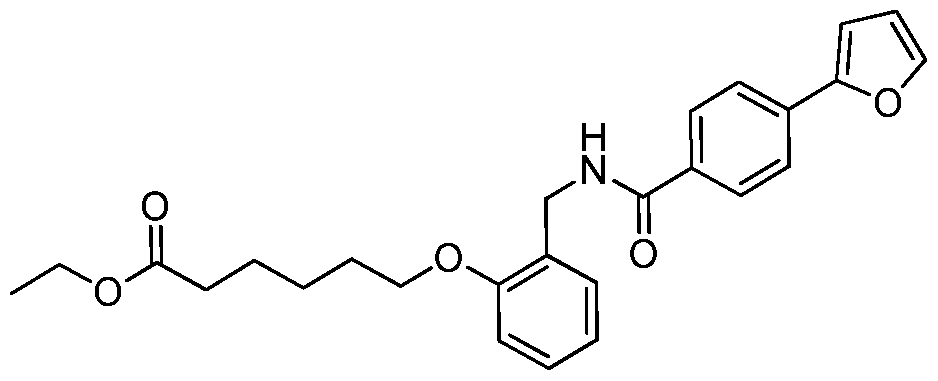
hexanoic acid
furan
benzamido
Prior art date
Legal status (The legal status is an assumption and is not a legal conclusion. Google has not performed a legal analysis and makes no representation as to the accuracy of the status listed.)
Ceased
Application number
PCT/US2014/033088
Other languages
French (fr)
Inventor
Ronald Evans
Thomas J. Baiga
Mark G. Bock
Michael Downes
Emi Kanakubo EMBLER
Weiwei FAN
John F.W. Keana
Arthur F. Kluge
Joseph P. Noel
Mike A. PATANE
Current Assignee (The listed assignees may be inaccurate. Google has not performed a legal analysis and makes no representation or warranty as to the accuracy of the list.)
Salk Institute for Biological Studies
Mitobridge Inc
Original Assignee
Salk Institute for Biological Studies
Mitokyne Inc
Priority date (The priority date is an assumption and is not a legal conclusion. Google has not performed a legal analysis and makes no representation as to the accuracy of the date listed.)
Filing date
Publication date
Application filed by Salk Institute for Biological Studies, Mitokyne Inc filed Critical Salk Institute for Biological Studies
Priority to EP14778531.5A priority Critical patent/EP2981522A4/en
Priority to AU2014247953A priority patent/AU2014247953A1/en
Priority to JP2016506672A priority patent/JP2016520552A/en
Priority to CA2908695A priority patent/CA2908695A1/en
Publication of WO2014165827A1 publication Critical patent/WO2014165827A1/en
Priority to US14/874,008 priority patent/US9938234B2/en
Anticipated expiration legal-status Critical
Priority to US15/897,796 priority patent/US10550071B2/en
Priority to US16/715,711 priority patent/US11420934B2/en
Ceased legal-status Critical Current

Links

Classifications

    • CCHEMISTRY; METALLURGY
    • C07ORGANIC CHEMISTRY
    • C07CACYCLIC OR CARBOCYCLIC COMPOUNDS
    • C07C233/00Carboxylic acid amides
    • C07C233/64Carboxylic acid amides having carbon atoms of carboxamide groups bound to carbon atoms of six-membered aromatic rings
    • C07C233/81Carboxylic acid amides having carbon atoms of carboxamide groups bound to carbon atoms of six-membered aromatic rings having the nitrogen atom of at least one of the carboxamide groups bound to a carbon atom of a hydrocarbon radical substituted by carboxyl groups
    • C07C233/82Carboxylic acid amides having carbon atoms of carboxamide groups bound to carbon atoms of six-membered aromatic rings having the nitrogen atom of at least one of the carboxamide groups bound to a carbon atom of a hydrocarbon radical substituted by carboxyl groups with the substituted hydrocarbon radical bound to the nitrogen atom of the carboxamide group by an acyclic carbon atom
    • C07C233/87Carboxylic acid amides having carbon atoms of carboxamide groups bound to carbon atoms of six-membered aromatic rings having the nitrogen atom of at least one of the carboxamide groups bound to a carbon atom of a hydrocarbon radical substituted by carboxyl groups with the substituted hydrocarbon radical bound to the nitrogen atom of the carboxamide group by an acyclic carbon atom of a carbon skeleton containing six-membered aromatic rings
    • AHUMAN NECESSITIES
    • A61MEDICAL OR VETERINARY SCIENCE; HYGIENE
    • A61KPREPARATIONS FOR MEDICAL, DENTAL OR TOILETRY PURPOSES
    • A61K31/00Medicinal preparations containing organic active ingredients
    • A61K31/16Amides, e.g. hydroxamic acids
    • A61K31/164Amides, e.g. hydroxamic acids of a carboxylic acid with an aminoalcohol, e.g. ceramides
    • AHUMAN NECESSITIES
    • A61MEDICAL OR VETERINARY SCIENCE; HYGIENE
    • A61KPREPARATIONS FOR MEDICAL, DENTAL OR TOILETRY PURPOSES
    • A61K31/00Medicinal preparations containing organic active ingredients
    • A61K31/33Heterocyclic compounds
    • A61K31/335Heterocyclic compounds having oxygen as the only ring hetero atom, e.g. fungichromin
    • A61K31/34Heterocyclic compounds having oxygen as the only ring hetero atom, e.g. fungichromin having five-membered rings with one oxygen as the only ring hetero atom, e.g. isosorbide
    • A61K31/341Heterocyclic compounds having oxygen as the only ring hetero atom, e.g. fungichromin having five-membered rings with one oxygen as the only ring hetero atom, e.g. isosorbide not condensed with another ring, e.g. ranitidine, furosemide, bufetolol, muscarine
    • AHUMAN NECESSITIES
    • A61MEDICAL OR VETERINARY SCIENCE; HYGIENE
    • A61KPREPARATIONS FOR MEDICAL, DENTAL OR TOILETRY PURPOSES
    • A61K31/00Medicinal preparations containing organic active ingredients
    • A61K31/33Heterocyclic compounds
    • A61K31/38Heterocyclic compounds having sulfur as a ring hetero atom
    • A61K31/381Heterocyclic compounds having sulfur as a ring hetero atom having five-membered rings
    • AHUMAN NECESSITIES
    • A61MEDICAL OR VETERINARY SCIENCE; HYGIENE
    • A61KPREPARATIONS FOR MEDICAL, DENTAL OR TOILETRY PURPOSES
    • A61K31/00Medicinal preparations containing organic active ingredients
    • A61K31/33Heterocyclic compounds
    • A61K31/395Heterocyclic compounds having nitrogen as a ring hetero atom, e.g. guanethidine or rifamycins
    • A61K31/40Heterocyclic compounds having nitrogen as a ring hetero atom, e.g. guanethidine or rifamycins having five-membered rings with one nitrogen as the only ring hetero atom, e.g. sulpiride, succinimide, tolmetin, buflomedil
    • A61K31/4025Heterocyclic compounds having nitrogen as a ring hetero atom, e.g. guanethidine or rifamycins having five-membered rings with one nitrogen as the only ring hetero atom, e.g. sulpiride, succinimide, tolmetin, buflomedil not condensed and containing further heterocyclic rings, e.g. cromakalim
    • AHUMAN NECESSITIES
    • A61MEDICAL OR VETERINARY SCIENCE; HYGIENE
    • A61KPREPARATIONS FOR MEDICAL, DENTAL OR TOILETRY PURPOSES
    • A61K31/00Medicinal preparations containing organic active ingredients
    • A61K31/33Heterocyclic compounds
    • A61K31/395Heterocyclic compounds having nitrogen as a ring hetero atom, e.g. guanethidine or rifamycins
    • A61K31/41Heterocyclic compounds having nitrogen as a ring hetero atom, e.g. guanethidine or rifamycins having five-membered rings with two or more ring hetero atoms, at least one of which being nitrogen, e.g. tetrazole
    • A61K31/41641,3-Diazoles
    • A61K31/41781,3-Diazoles not condensed 1,3-diazoles and containing further heterocyclic rings, e.g. pilocarpine, nitrofurantoin
    • AHUMAN NECESSITIES
    • A61MEDICAL OR VETERINARY SCIENCE; HYGIENE
    • A61KPREPARATIONS FOR MEDICAL, DENTAL OR TOILETRY PURPOSES
    • A61K31/00Medicinal preparations containing organic active ingredients
    • A61K31/33Heterocyclic compounds
    • A61K31/395Heterocyclic compounds having nitrogen as a ring hetero atom, e.g. guanethidine or rifamycins
    • A61K31/41Heterocyclic compounds having nitrogen as a ring hetero atom, e.g. guanethidine or rifamycins having five-membered rings with two or more ring hetero atoms, at least one of which being nitrogen, e.g. tetrazole
    • A61K31/42Oxazoles
    • A61K31/422Oxazoles not condensed and containing further heterocyclic rings
    • AHUMAN NECESSITIES
    • A61MEDICAL OR VETERINARY SCIENCE; HYGIENE
    • A61KPREPARATIONS FOR MEDICAL, DENTAL OR TOILETRY PURPOSES
    • A61K31/00Medicinal preparations containing organic active ingredients
    • A61K31/33Heterocyclic compounds
    • A61K31/395Heterocyclic compounds having nitrogen as a ring hetero atom, e.g. guanethidine or rifamycins
    • A61K31/41Heterocyclic compounds having nitrogen as a ring hetero atom, e.g. guanethidine or rifamycins having five-membered rings with two or more ring hetero atoms, at least one of which being nitrogen, e.g. tetrazole
    • A61K31/425Thiazoles
    • A61K31/427Thiazoles not condensed and containing further heterocyclic rings
    • AHUMAN NECESSITIES
    • A61MEDICAL OR VETERINARY SCIENCE; HYGIENE
    • A61KPREPARATIONS FOR MEDICAL, DENTAL OR TOILETRY PURPOSES
    • A61K31/00Medicinal preparations containing organic active ingredients
    • A61K31/33Heterocyclic compounds
    • A61K31/395Heterocyclic compounds having nitrogen as a ring hetero atom, e.g. guanethidine or rifamycins
    • A61K31/435Heterocyclic compounds having nitrogen as a ring hetero atom, e.g. guanethidine or rifamycins having six-membered rings with one nitrogen as the only ring hetero atom
    • A61K31/44Non condensed pyridines; Hydrogenated derivatives thereof
    • AHUMAN NECESSITIES
    • A61MEDICAL OR VETERINARY SCIENCE; HYGIENE
    • A61KPREPARATIONS FOR MEDICAL, DENTAL OR TOILETRY PURPOSES
    • A61K31/00Medicinal preparations containing organic active ingredients
    • A61K31/33Heterocyclic compounds
    • A61K31/395Heterocyclic compounds having nitrogen as a ring hetero atom, e.g. guanethidine or rifamycins
    • A61K31/535Heterocyclic compounds having nitrogen as a ring hetero atom, e.g. guanethidine or rifamycins having six-membered rings with at least one nitrogen and one oxygen as the ring hetero atoms, e.g. 1,2-oxazines
    • A61K31/53751,4-Oxazines, e.g. morpholine
    • A61K31/53771,4-Oxazines, e.g. morpholine not condensed and containing further heterocyclic rings, e.g. timolol
    • AHUMAN NECESSITIES
    • A61MEDICAL OR VETERINARY SCIENCE; HYGIENE
    • A61PSPECIFIC THERAPEUTIC ACTIVITY OF CHEMICAL COMPOUNDS OR MEDICINAL PREPARATIONS
    • A61P1/00Drugs for disorders of the alimentary tract or the digestive system
    • A61P1/04Drugs for disorders of the alimentary tract or the digestive system for ulcers, gastritis or reflux esophagitis, e.g. antacids, inhibitors of acid secretion, mucosal protectants
    • AHUMAN NECESSITIES
    • A61MEDICAL OR VETERINARY SCIENCE; HYGIENE
    • A61PSPECIFIC THERAPEUTIC ACTIVITY OF CHEMICAL COMPOUNDS OR MEDICINAL PREPARATIONS
    • A61P1/00Drugs for disorders of the alimentary tract or the digestive system
    • A61P1/16Drugs for disorders of the alimentary tract or the digestive system for liver or gallbladder disorders, e.g. hepatoprotective agents, cholagogues, litholytics
    • AHUMAN NECESSITIES
    • A61MEDICAL OR VETERINARY SCIENCE; HYGIENE
    • A61PSPECIFIC THERAPEUTIC ACTIVITY OF CHEMICAL COMPOUNDS OR MEDICINAL PREPARATIONS
    • A61P1/00Drugs for disorders of the alimentary tract or the digestive system
    • A61P1/18Drugs for disorders of the alimentary tract or the digestive system for pancreatic disorders, e.g. pancreatic enzymes
    • AHUMAN NECESSITIES
    • A61MEDICAL OR VETERINARY SCIENCE; HYGIENE
    • A61PSPECIFIC THERAPEUTIC ACTIVITY OF CHEMICAL COMPOUNDS OR MEDICINAL PREPARATIONS
    • A61P11/00Drugs for disorders of the respiratory system
    • A61P11/06Antiasthmatics
    • AHUMAN NECESSITIES
    • A61MEDICAL OR VETERINARY SCIENCE; HYGIENE
    • A61PSPECIFIC THERAPEUTIC ACTIVITY OF CHEMICAL COMPOUNDS OR MEDICINAL PREPARATIONS
    • A61P13/00Drugs for disorders of the urinary system
    • A61P13/08Drugs for disorders of the urinary system of the prostate
    • AHUMAN NECESSITIES
    • A61MEDICAL OR VETERINARY SCIENCE; HYGIENE
    • A61PSPECIFIC THERAPEUTIC ACTIVITY OF CHEMICAL COMPOUNDS OR MEDICINAL PREPARATIONS
    • A61P15/00Drugs for genital or sexual disorders; Contraceptives
    • A61P15/18Feminine contraceptives
    • AHUMAN NECESSITIES
    • A61MEDICAL OR VETERINARY SCIENCE; HYGIENE
    • A61PSPECIFIC THERAPEUTIC ACTIVITY OF CHEMICAL COMPOUNDS OR MEDICINAL PREPARATIONS
    • A61P17/00Drugs for dermatological disorders
    • A61P17/06Antipsoriatics
    • AHUMAN NECESSITIES
    • A61MEDICAL OR VETERINARY SCIENCE; HYGIENE
    • A61PSPECIFIC THERAPEUTIC ACTIVITY OF CHEMICAL COMPOUNDS OR MEDICINAL PREPARATIONS
    • A61P19/00Drugs for skeletal disorders
    • A61P19/02Drugs for skeletal disorders for joint disorders, e.g. arthritis, arthrosis
    • AHUMAN NECESSITIES
    • A61MEDICAL OR VETERINARY SCIENCE; HYGIENE
    • A61PSPECIFIC THERAPEUTIC ACTIVITY OF CHEMICAL COMPOUNDS OR MEDICINAL PREPARATIONS
    • A61P21/00Drugs for disorders of the muscular or neuromuscular system
    • AHUMAN NECESSITIES
    • A61MEDICAL OR VETERINARY SCIENCE; HYGIENE
    • A61PSPECIFIC THERAPEUTIC ACTIVITY OF CHEMICAL COMPOUNDS OR MEDICINAL PREPARATIONS
    • A61P21/00Drugs for disorders of the muscular or neuromuscular system
    • A61P21/02Muscle relaxants, e.g. for tetanus or cramps
    • AHUMAN NECESSITIES
    • A61MEDICAL OR VETERINARY SCIENCE; HYGIENE
    • A61PSPECIFIC THERAPEUTIC ACTIVITY OF CHEMICAL COMPOUNDS OR MEDICINAL PREPARATIONS
    • A61P25/00Drugs for disorders of the nervous system
    • AHUMAN NECESSITIES
    • A61MEDICAL OR VETERINARY SCIENCE; HYGIENE
    • A61PSPECIFIC THERAPEUTIC ACTIVITY OF CHEMICAL COMPOUNDS OR MEDICINAL PREPARATIONS
    • A61P25/00Drugs for disorders of the nervous system
    • A61P25/28Drugs for disorders of the nervous system for treating neurodegenerative disorders of the central nervous system, e.g. nootropic agents, cognition enhancers, drugs for treating Alzheimer's disease or other forms of dementia
    • AHUMAN NECESSITIES
    • A61MEDICAL OR VETERINARY SCIENCE; HYGIENE
    • A61PSPECIFIC THERAPEUTIC ACTIVITY OF CHEMICAL COMPOUNDS OR MEDICINAL PREPARATIONS
    • A61P27/00Drugs for disorders of the senses
    • A61P27/02Ophthalmic agents
    • AHUMAN NECESSITIES
    • A61MEDICAL OR VETERINARY SCIENCE; HYGIENE
    • A61PSPECIFIC THERAPEUTIC ACTIVITY OF CHEMICAL COMPOUNDS OR MEDICINAL PREPARATIONS
    • A61P3/00Drugs for disorders of the metabolism
    • AHUMAN NECESSITIES
    • A61MEDICAL OR VETERINARY SCIENCE; HYGIENE
    • A61PSPECIFIC THERAPEUTIC ACTIVITY OF CHEMICAL COMPOUNDS OR MEDICINAL PREPARATIONS
    • A61P3/00Drugs for disorders of the metabolism
    • A61P3/04Anorexiants; Antiobesity agents
    • AHUMAN NECESSITIES
    • A61MEDICAL OR VETERINARY SCIENCE; HYGIENE
    • A61PSPECIFIC THERAPEUTIC ACTIVITY OF CHEMICAL COMPOUNDS OR MEDICINAL PREPARATIONS
    • A61P3/00Drugs for disorders of the metabolism
    • A61P3/06Antihyperlipidemics
    • AHUMAN NECESSITIES
    • A61MEDICAL OR VETERINARY SCIENCE; HYGIENE
    • A61PSPECIFIC THERAPEUTIC ACTIVITY OF CHEMICAL COMPOUNDS OR MEDICINAL PREPARATIONS
    • A61P3/00Drugs for disorders of the metabolism
    • A61P3/08Drugs for disorders of the metabolism for glucose homeostasis
    • A61P3/10Drugs for disorders of the metabolism for glucose homeostasis for hyperglycaemia, e.g. antidiabetics
    • AHUMAN NECESSITIES
    • A61MEDICAL OR VETERINARY SCIENCE; HYGIENE
    • A61PSPECIFIC THERAPEUTIC ACTIVITY OF CHEMICAL COMPOUNDS OR MEDICINAL PREPARATIONS
    • A61P35/00Antineoplastic agents
    • AHUMAN NECESSITIES
    • A61MEDICAL OR VETERINARY SCIENCE; HYGIENE
    • A61PSPECIFIC THERAPEUTIC ACTIVITY OF CHEMICAL COMPOUNDS OR MEDICINAL PREPARATIONS
    • A61P9/00Drugs for disorders of the cardiovascular system
    • AHUMAN NECESSITIES
    • A61MEDICAL OR VETERINARY SCIENCE; HYGIENE
    • A61PSPECIFIC THERAPEUTIC ACTIVITY OF CHEMICAL COMPOUNDS OR MEDICINAL PREPARATIONS
    • A61P9/00Drugs for disorders of the cardiovascular system
    • A61P9/10Drugs for disorders of the cardiovascular system for treating ischaemic or atherosclerotic diseases, e.g. antianginal drugs, coronary vasodilators, drugs for myocardial infarction, retinopathy, cerebrovascula insufficiency, renal arteriosclerosis
    • AHUMAN NECESSITIES
    • A61MEDICAL OR VETERINARY SCIENCE; HYGIENE
    • A61PSPECIFIC THERAPEUTIC ACTIVITY OF CHEMICAL COMPOUNDS OR MEDICINAL PREPARATIONS
    • A61P9/00Drugs for disorders of the cardiovascular system
    • A61P9/14Vasoprotectives; Antihaemorrhoidals; Drugs for varicose therapy; Capillary stabilisers
    • CCHEMISTRY; METALLURGY
    • C07ORGANIC CHEMISTRY
    • C07CACYCLIC OR CARBOCYCLIC COMPOUNDS
    • C07C233/00Carboxylic acid amides
    • C07C233/64Carboxylic acid amides having carbon atoms of carboxamide groups bound to carbon atoms of six-membered aromatic rings
    • C07C233/67Carboxylic acid amides having carbon atoms of carboxamide groups bound to carbon atoms of six-membered aromatic rings having the nitrogen atom of at least one of the carboxamide groups bound to a carbon atom of a hydrocarbon radical substituted by singly-bound oxygen atoms
    • C07C233/68Carboxylic acid amides having carbon atoms of carboxamide groups bound to carbon atoms of six-membered aromatic rings having the nitrogen atom of at least one of the carboxamide groups bound to a carbon atom of a hydrocarbon radical substituted by singly-bound oxygen atoms with the substituted hydrocarbon radical bound to the nitrogen atom of the carboxamide group by an acyclic carbon atom
    • C07C233/73Carboxylic acid amides having carbon atoms of carboxamide groups bound to carbon atoms of six-membered aromatic rings having the nitrogen atom of at least one of the carboxamide groups bound to a carbon atom of a hydrocarbon radical substituted by singly-bound oxygen atoms with the substituted hydrocarbon radical bound to the nitrogen atom of the carboxamide group by an acyclic carbon atom of a carbon skeleton containing six-membered aromatic rings
    • CCHEMISTRY; METALLURGY
    • C07ORGANIC CHEMISTRY
    • C07CACYCLIC OR CARBOCYCLIC COMPOUNDS
    • C07C235/00Carboxylic acid amides, the carbon skeleton of the acid part being further substituted by oxygen atoms
    • C07C235/42Carboxylic acid amides, the carbon skeleton of the acid part being further substituted by oxygen atoms having carbon atoms of carboxamide groups bound to carbon atoms of six-membered aromatic rings and singly-bound oxygen atoms bound to the same carbon skeleton
    • CCHEMISTRY; METALLURGY
    • C07ORGANIC CHEMISTRY
    • C07CACYCLIC OR CARBOCYCLIC COMPOUNDS
    • C07C235/00Carboxylic acid amides, the carbon skeleton of the acid part being further substituted by oxygen atoms
    • C07C235/42Carboxylic acid amides, the carbon skeleton of the acid part being further substituted by oxygen atoms having carbon atoms of carboxamide groups bound to carbon atoms of six-membered aromatic rings and singly-bound oxygen atoms bound to the same carbon skeleton
    • C07C235/44Carboxylic acid amides, the carbon skeleton of the acid part being further substituted by oxygen atoms having carbon atoms of carboxamide groups bound to carbon atoms of six-membered aromatic rings and singly-bound oxygen atoms bound to the same carbon skeleton with carbon atoms of carboxamide groups and singly-bound oxygen atoms bound to carbon atoms of the same non-condensed six-membered aromatic ring
    • C07C235/48Carboxylic acid amides, the carbon skeleton of the acid part being further substituted by oxygen atoms having carbon atoms of carboxamide groups bound to carbon atoms of six-membered aromatic rings and singly-bound oxygen atoms bound to the same carbon skeleton with carbon atoms of carboxamide groups and singly-bound oxygen atoms bound to carbon atoms of the same non-condensed six-membered aromatic ring having the nitrogen atom of at least one of the carboxamide groups bound to an acyclic carbon atom of a hydrocarbon radical substituted by singly-bound oxygen atoms
    • CCHEMISTRY; METALLURGY
    • C07ORGANIC CHEMISTRY
    • C07CACYCLIC OR CARBOCYCLIC COMPOUNDS
    • C07C235/00Carboxylic acid amides, the carbon skeleton of the acid part being further substituted by oxygen atoms
    • C07C235/70Carboxylic acid amides, the carbon skeleton of the acid part being further substituted by oxygen atoms having carbon atoms of carboxamide groups and doubly-bound oxygen atoms bound to the same carbon skeleton
    • C07C235/84Carboxylic acid amides, the carbon skeleton of the acid part being further substituted by oxygen atoms having carbon atoms of carboxamide groups and doubly-bound oxygen atoms bound to the same carbon skeleton with the carbon atom of at least one of the carboxamide groups bound to a carbon atom of a six-membered aromatic ring
    • CCHEMISTRY; METALLURGY
    • C07ORGANIC CHEMISTRY
    • C07CACYCLIC OR CARBOCYCLIC COMPOUNDS
    • C07C237/00Carboxylic acid amides, the carbon skeleton of the acid part being further substituted by amino groups
    • C07C237/02Carboxylic acid amides, the carbon skeleton of the acid part being further substituted by amino groups having the carbon atoms of the carboxamide groups bound to acyclic carbon atoms of the carbon skeleton
    • C07C237/22Carboxylic acid amides, the carbon skeleton of the acid part being further substituted by amino groups having the carbon atoms of the carboxamide groups bound to acyclic carbon atoms of the carbon skeleton having nitrogen atoms of amino groups bound to the carbon skeleton of the acid part, further acylated
    • CCHEMISTRY; METALLURGY
    • C07ORGANIC CHEMISTRY
    • C07CACYCLIC OR CARBOCYCLIC COMPOUNDS
    • C07C237/00Carboxylic acid amides, the carbon skeleton of the acid part being further substituted by amino groups
    • C07C237/28Carboxylic acid amides, the carbon skeleton of the acid part being further substituted by amino groups having the carbon atom of at least one of the carboxamide groups bound to a carbon atom of a non-condensed six-membered aromatic ring of the carbon skeleton
    • C07C237/32Carboxylic acid amides, the carbon skeleton of the acid part being further substituted by amino groups having the carbon atom of at least one of the carboxamide groups bound to a carbon atom of a non-condensed six-membered aromatic ring of the carbon skeleton having the nitrogen atom of the carboxamide group bound to an acyclic carbon atom of a hydrocarbon radical substituted by oxygen atoms
    • CCHEMISTRY; METALLURGY
    • C07ORGANIC CHEMISTRY
    • C07CACYCLIC OR CARBOCYCLIC COMPOUNDS
    • C07C237/00Carboxylic acid amides, the carbon skeleton of the acid part being further substituted by amino groups
    • C07C237/48Carboxylic acid amides, the carbon skeleton of the acid part being further substituted by amino groups having the carbon atom of at least one of the carboxamide groups bound to a carbon atom of a six-membered aromatic ring being part of a condensed ring system of the same carbon skeleton
    • CCHEMISTRY; METALLURGY
    • C07ORGANIC CHEMISTRY
    • C07CACYCLIC OR CARBOCYCLIC COMPOUNDS
    • C07C255/00Carboxylic acid nitriles
    • C07C255/49Carboxylic acid nitriles having cyano groups bound to carbon atoms of six-membered aromatic rings of a carbon skeleton
    • C07C255/57Carboxylic acid nitriles having cyano groups bound to carbon atoms of six-membered aromatic rings of a carbon skeleton containing cyano groups and carboxyl groups, other than cyano groups, bound to the carbon skeleton
    • CCHEMISTRY; METALLURGY
    • C07ORGANIC CHEMISTRY
    • C07CACYCLIC OR CARBOCYCLIC COMPOUNDS
    • C07C259/00Compounds containing carboxyl groups, an oxygen atom of a carboxyl group being replaced by a nitrogen atom, this nitrogen atom being further bound to an oxygen atom and not being part of nitro or nitroso groups
    • C07C259/04Compounds containing carboxyl groups, an oxygen atom of a carboxyl group being replaced by a nitrogen atom, this nitrogen atom being further bound to an oxygen atom and not being part of nitro or nitroso groups without replacement of the other oxygen atom of the carboxyl group, e.g. hydroxamic acids
    • C07C259/06Compounds containing carboxyl groups, an oxygen atom of a carboxyl group being replaced by a nitrogen atom, this nitrogen atom being further bound to an oxygen atom and not being part of nitro or nitroso groups without replacement of the other oxygen atom of the carboxyl group, e.g. hydroxamic acids having carbon atoms of hydroxamic groups bound to hydrogen atoms or to acyclic carbon atoms
    • CCHEMISTRY; METALLURGY
    • C07ORGANIC CHEMISTRY
    • C07CACYCLIC OR CARBOCYCLIC COMPOUNDS
    • C07C317/00Sulfones; Sulfoxides
    • C07C317/44Sulfones; Sulfoxides having sulfone or sulfoxide groups and carboxyl groups bound to the same carbon skeleton
    • CCHEMISTRY; METALLURGY
    • C07ORGANIC CHEMISTRY
    • C07DHETEROCYCLIC COMPOUNDS
    • C07D207/00Heterocyclic compounds containing five-membered rings not condensed with other rings, with one nitrogen atom as the only ring hetero atom
    • C07D207/02Heterocyclic compounds containing five-membered rings not condensed with other rings, with one nitrogen atom as the only ring hetero atom with only hydrogen or carbon atoms directly attached to the ring nitrogen atom
    • C07D207/04Heterocyclic compounds containing five-membered rings not condensed with other rings, with one nitrogen atom as the only ring hetero atom with only hydrogen or carbon atoms directly attached to the ring nitrogen atom having no double bonds between ring members or between ring members and non-ring members
    • CCHEMISTRY; METALLURGY
    • C07ORGANIC CHEMISTRY
    • C07DHETEROCYCLIC COMPOUNDS
    • C07D209/00Heterocyclic compounds containing five-membered rings, condensed with other rings, with one nitrogen atom as the only ring hetero atom
    • C07D209/02Heterocyclic compounds containing five-membered rings, condensed with other rings, with one nitrogen atom as the only ring hetero atom condensed with one carbocyclic ring
    • C07D209/04Indoles; Hydrogenated indoles
    • C07D209/30Indoles; Hydrogenated indoles with hetero atoms or with carbon atoms having three bonds to hetero atoms with at the most one bond to halogen, directly attached to carbon atoms of the hetero ring
    • C07D209/32Oxygen atoms
    • C07D209/34Oxygen atoms in position 2
    • CCHEMISTRY; METALLURGY
    • C07ORGANIC CHEMISTRY
    • C07DHETEROCYCLIC COMPOUNDS
    • C07D213/00Heterocyclic compounds containing six-membered rings, not condensed with other rings, with one nitrogen atom as the only ring hetero atom and three or more double bonds between ring members or between ring members and non-ring members
    • C07D213/02Heterocyclic compounds containing six-membered rings, not condensed with other rings, with one nitrogen atom as the only ring hetero atom and three or more double bonds between ring members or between ring members and non-ring members having three double bonds between ring members or between ring members and non-ring members
    • C07D213/04Heterocyclic compounds containing six-membered rings, not condensed with other rings, with one nitrogen atom as the only ring hetero atom and three or more double bonds between ring members or between ring members and non-ring members having three double bonds between ring members or between ring members and non-ring members having no bond between the ring nitrogen atom and a non-ring member or having only hydrogen or carbon atoms directly attached to the ring nitrogen atom
    • C07D213/24Heterocyclic compounds containing six-membered rings, not condensed with other rings, with one nitrogen atom as the only ring hetero atom and three or more double bonds between ring members or between ring members and non-ring members having three double bonds between ring members or between ring members and non-ring members having no bond between the ring nitrogen atom and a non-ring member or having only hydrogen or carbon atoms directly attached to the ring nitrogen atom with substituted hydrocarbon radicals attached to ring carbon atoms
    • C07D213/54Radicals substituted by carbon atoms having three bonds to hetero atoms with at the most one bond to halogen, e.g. ester or nitrile radicals
    • C07D213/56Amides
    • CCHEMISTRY; METALLURGY
    • C07ORGANIC CHEMISTRY
    • C07DHETEROCYCLIC COMPOUNDS
    • C07D231/00Heterocyclic compounds containing 1,2-diazole or hydrogenated 1,2-diazole rings
    • C07D231/02Heterocyclic compounds containing 1,2-diazole or hydrogenated 1,2-diazole rings not condensed with other rings
    • C07D231/10Heterocyclic compounds containing 1,2-diazole or hydrogenated 1,2-diazole rings not condensed with other rings having two or three double bonds between ring members or between ring members and non-ring members
    • C07D231/12Heterocyclic compounds containing 1,2-diazole or hydrogenated 1,2-diazole rings not condensed with other rings having two or three double bonds between ring members or between ring members and non-ring members with only hydrogen atoms, hydrocarbon or substituted hydrocarbon radicals, directly attached to ring carbon atoms
    • CCHEMISTRY; METALLURGY
    • C07ORGANIC CHEMISTRY
    • C07DHETEROCYCLIC COMPOUNDS
    • C07D271/00Heterocyclic compounds containing five-membered rings having two nitrogen atoms and one oxygen atom as the only ring hetero atoms
    • C07D271/12Heterocyclic compounds containing five-membered rings having two nitrogen atoms and one oxygen atom as the only ring hetero atoms condensed with carbocyclic rings or ring systems
    • CCHEMISTRY; METALLURGY
    • C07ORGANIC CHEMISTRY
    • C07DHETEROCYCLIC COMPOUNDS
    • C07D295/00Heterocyclic compounds containing polymethylene-imine rings with at least five ring members, 3-azabicyclo [3.2.2] nonane, piperazine, morpholine or thiomorpholine rings, having only hydrogen atoms directly attached to the ring carbon atoms
    • C07D295/04Heterocyclic compounds containing polymethylene-imine rings with at least five ring members, 3-azabicyclo [3.2.2] nonane, piperazine, morpholine or thiomorpholine rings, having only hydrogen atoms directly attached to the ring carbon atoms with substituted hydrocarbon radicals attached to ring nitrogen atoms
    • C07D295/12Heterocyclic compounds containing polymethylene-imine rings with at least five ring members, 3-azabicyclo [3.2.2] nonane, piperazine, morpholine or thiomorpholine rings, having only hydrogen atoms directly attached to the ring carbon atoms with substituted hydrocarbon radicals attached to ring nitrogen atoms substituted by singly or doubly bound nitrogen atoms
    • C07D295/125Heterocyclic compounds containing polymethylene-imine rings with at least five ring members, 3-azabicyclo [3.2.2] nonane, piperazine, morpholine or thiomorpholine rings, having only hydrogen atoms directly attached to the ring carbon atoms with substituted hydrocarbon radicals attached to ring nitrogen atoms substituted by singly or doubly bound nitrogen atoms with the ring nitrogen atoms and the substituent nitrogen atoms attached to the same carbon chain, which is not interrupted by carbocyclic rings
    • C07D295/13Heterocyclic compounds containing polymethylene-imine rings with at least five ring members, 3-azabicyclo [3.2.2] nonane, piperazine, morpholine or thiomorpholine rings, having only hydrogen atoms directly attached to the ring carbon atoms with substituted hydrocarbon radicals attached to ring nitrogen atoms substituted by singly or doubly bound nitrogen atoms with the ring nitrogen atoms and the substituent nitrogen atoms attached to the same carbon chain, which is not interrupted by carbocyclic rings to an acyclic saturated chain
    • CCHEMISTRY; METALLURGY
    • C07ORGANIC CHEMISTRY
    • C07DHETEROCYCLIC COMPOUNDS
    • C07D305/00Heterocyclic compounds containing four-membered rings having one oxygen atom as the only ring hetero atoms
    • C07D305/02Heterocyclic compounds containing four-membered rings having one oxygen atom as the only ring hetero atoms not condensed with other rings
    • C07D305/04Heterocyclic compounds containing four-membered rings having one oxygen atom as the only ring hetero atoms not condensed with other rings having no double bonds between ring members or between ring members and non-ring members
    • C07D305/06Heterocyclic compounds containing four-membered rings having one oxygen atom as the only ring hetero atoms not condensed with other rings having no double bonds between ring members or between ring members and non-ring members with only hydrogen atoms, hydrocarbon or substituted hydrocarbon radicals, directly attached to the ring atoms
    • CCHEMISTRY; METALLURGY
    • C07ORGANIC CHEMISTRY
    • C07DHETEROCYCLIC COMPOUNDS
    • C07D307/00Heterocyclic compounds containing five-membered rings having one oxygen atom as the only ring hetero atom
    • C07D307/02Heterocyclic compounds containing five-membered rings having one oxygen atom as the only ring hetero atom not condensed with other rings
    • C07D307/34Heterocyclic compounds containing five-membered rings having one oxygen atom as the only ring hetero atom not condensed with other rings having two or three double bonds between ring members or between ring members and non-ring members
    • C07D307/38Heterocyclic compounds containing five-membered rings having one oxygen atom as the only ring hetero atom not condensed with other rings having two or three double bonds between ring members or between ring members and non-ring members with substituted hydrocarbon radicals attached to ring carbon atoms
    • C07D307/54Radicals substituted by carbon atoms having three bonds to hetero atoms with at the most one bond to halogen, e.g. ester or nitrile radicals
    • CCHEMISTRY; METALLURGY
    • C07ORGANIC CHEMISTRY
    • C07DHETEROCYCLIC COMPOUNDS
    • C07D307/00Heterocyclic compounds containing five-membered rings having one oxygen atom as the only ring hetero atom
    • C07D307/77Heterocyclic compounds containing five-membered rings having one oxygen atom as the only ring hetero atom ortho- or peri-condensed with carbocyclic rings or ring systems
    • C07D307/78Benzo [b] furans; Hydrogenated benzo [b] furans
    • C07D307/82Benzo [b] furans; Hydrogenated benzo [b] furans with hetero atoms or with carbon atoms having three bonds to hetero atoms with at the most one bond to halogen, e.g. ester or nitrile radicals, directly attached to carbon atoms of the hetero ring
    • C07D307/83Oxygen atoms
    • CCHEMISTRY; METALLURGY
    • C07ORGANIC CHEMISTRY
    • C07DHETEROCYCLIC COMPOUNDS
    • C07D309/00Heterocyclic compounds containing six-membered rings having one oxygen atom as the only ring hetero atom, not condensed with other rings
    • C07D309/02Heterocyclic compounds containing six-membered rings having one oxygen atom as the only ring hetero atom, not condensed with other rings having no double bonds between ring members or between ring members and non-ring members
    • C07D309/04Heterocyclic compounds containing six-membered rings having one oxygen atom as the only ring hetero atom, not condensed with other rings having no double bonds between ring members or between ring members and non-ring members with only hydrogen atoms, hydrocarbon or substituted hydrocarbon radicals, directly attached to ring carbon atoms
    • C07D309/06Radicals substituted by oxygen atoms
    • CCHEMISTRY; METALLURGY
    • C07ORGANIC CHEMISTRY
    • C07DHETEROCYCLIC COMPOUNDS
    • C07D333/00Heterocyclic compounds containing five-membered rings having one sulfur atom as the only ring hetero atom
    • C07D333/02Heterocyclic compounds containing five-membered rings having one sulfur atom as the only ring hetero atom not condensed with other rings
    • C07D333/04Heterocyclic compounds containing five-membered rings having one sulfur atom as the only ring hetero atom not condensed with other rings not substituted on the ring sulphur atom
    • C07D333/06Heterocyclic compounds containing five-membered rings having one sulfur atom as the only ring hetero atom not condensed with other rings not substituted on the ring sulphur atom with only hydrogen atoms, hydrocarbon or substituted hydrocarbon radicals, directly attached to the ring carbon atoms
    • C07D333/24Radicals substituted by carbon atoms having three bonds to hetero atoms with at the most one bond to halogen, e.g. ester or nitrile radicals
    • CCHEMISTRY; METALLURGY
    • C07ORGANIC CHEMISTRY
    • C07DHETEROCYCLIC COMPOUNDS
    • C07D405/00Heterocyclic compounds containing both one or more hetero rings having oxygen atoms as the only ring hetero atoms, and one or more rings having nitrogen as the only ring hetero atom
    • C07D405/02Heterocyclic compounds containing both one or more hetero rings having oxygen atoms as the only ring hetero atoms, and one or more rings having nitrogen as the only ring hetero atom containing two hetero rings
    • C07D405/04Heterocyclic compounds containing both one or more hetero rings having oxygen atoms as the only ring hetero atoms, and one or more rings having nitrogen as the only ring hetero atom containing two hetero rings directly linked by a ring-member-to-ring-member bond
    • CCHEMISTRY; METALLURGY
    • C07ORGANIC CHEMISTRY
    • C07DHETEROCYCLIC COMPOUNDS
    • C07D405/00Heterocyclic compounds containing both one or more hetero rings having oxygen atoms as the only ring hetero atoms, and one or more rings having nitrogen as the only ring hetero atom
    • C07D405/02Heterocyclic compounds containing both one or more hetero rings having oxygen atoms as the only ring hetero atoms, and one or more rings having nitrogen as the only ring hetero atom containing two hetero rings
    • C07D405/10Heterocyclic compounds containing both one or more hetero rings having oxygen atoms as the only ring hetero atoms, and one or more rings having nitrogen as the only ring hetero atom containing two hetero rings linked by a carbon chain containing aromatic rings
    • CCHEMISTRY; METALLURGY
    • C07ORGANIC CHEMISTRY
    • C07DHETEROCYCLIC COMPOUNDS
    • C07D405/00Heterocyclic compounds containing both one or more hetero rings having oxygen atoms as the only ring hetero atoms, and one or more rings having nitrogen as the only ring hetero atom
    • C07D405/02Heterocyclic compounds containing both one or more hetero rings having oxygen atoms as the only ring hetero atoms, and one or more rings having nitrogen as the only ring hetero atom containing two hetero rings
    • C07D405/12Heterocyclic compounds containing both one or more hetero rings having oxygen atoms as the only ring hetero atoms, and one or more rings having nitrogen as the only ring hetero atom containing two hetero rings linked by a chain containing hetero atoms as chain links
    • CCHEMISTRY; METALLURGY
    • C07ORGANIC CHEMISTRY
    • C07DHETEROCYCLIC COMPOUNDS
    • C07D407/00Heterocyclic compounds containing two or more hetero rings, at least one ring having oxygen atoms as the only ring hetero atoms, not provided for by group C07D405/00
    • C07D407/02Heterocyclic compounds containing two or more hetero rings, at least one ring having oxygen atoms as the only ring hetero atoms, not provided for by group C07D405/00 containing two hetero rings
    • C07D407/12Heterocyclic compounds containing two or more hetero rings, at least one ring having oxygen atoms as the only ring hetero atoms, not provided for by group C07D405/00 containing two hetero rings linked by a chain containing hetero atoms as chain links
    • CCHEMISTRY; METALLURGY
    • C07ORGANIC CHEMISTRY
    • C07DHETEROCYCLIC COMPOUNDS
    • C07D413/00Heterocyclic compounds containing two or more hetero rings, at least one ring having nitrogen and oxygen atoms as the only ring hetero atoms
    • C07D413/02Heterocyclic compounds containing two or more hetero rings, at least one ring having nitrogen and oxygen atoms as the only ring hetero atoms containing two hetero rings
    • C07D413/04Heterocyclic compounds containing two or more hetero rings, at least one ring having nitrogen and oxygen atoms as the only ring hetero atoms containing two hetero rings directly linked by a ring-member-to-ring-member bond
    • CCHEMISTRY; METALLURGY
    • C07ORGANIC CHEMISTRY
    • C07DHETEROCYCLIC COMPOUNDS
    • C07D413/00Heterocyclic compounds containing two or more hetero rings, at least one ring having nitrogen and oxygen atoms as the only ring hetero atoms
    • C07D413/02Heterocyclic compounds containing two or more hetero rings, at least one ring having nitrogen and oxygen atoms as the only ring hetero atoms containing two hetero rings
    • C07D413/10Heterocyclic compounds containing two or more hetero rings, at least one ring having nitrogen and oxygen atoms as the only ring hetero atoms containing two hetero rings linked by a carbon chain containing aromatic rings
    • CCHEMISTRY; METALLURGY
    • C07ORGANIC CHEMISTRY
    • C07DHETEROCYCLIC COMPOUNDS
    • C07D413/00Heterocyclic compounds containing two or more hetero rings, at least one ring having nitrogen and oxygen atoms as the only ring hetero atoms
    • C07D413/02Heterocyclic compounds containing two or more hetero rings, at least one ring having nitrogen and oxygen atoms as the only ring hetero atoms containing two hetero rings
    • C07D413/12Heterocyclic compounds containing two or more hetero rings, at least one ring having nitrogen and oxygen atoms as the only ring hetero atoms containing two hetero rings linked by a chain containing hetero atoms as chain links
    • CCHEMISTRY; METALLURGY
    • C07ORGANIC CHEMISTRY
    • C07DHETEROCYCLIC COMPOUNDS
    • C07D417/00Heterocyclic compounds containing two or more hetero rings, at least one ring having nitrogen and sulfur atoms as the only ring hetero atoms, not provided for by group C07D415/00
    • C07D417/02Heterocyclic compounds containing two or more hetero rings, at least one ring having nitrogen and sulfur atoms as the only ring hetero atoms, not provided for by group C07D415/00 containing two hetero rings
    • C07D417/04Heterocyclic compounds containing two or more hetero rings, at least one ring having nitrogen and sulfur atoms as the only ring hetero atoms, not provided for by group C07D415/00 containing two hetero rings directly linked by a ring-member-to-ring-member bond
    • CCHEMISTRY; METALLURGY
    • C07ORGANIC CHEMISTRY
    • C07DHETEROCYCLIC COMPOUNDS
    • C07D417/00Heterocyclic compounds containing two or more hetero rings, at least one ring having nitrogen and sulfur atoms as the only ring hetero atoms, not provided for by group C07D415/00
    • C07D417/02Heterocyclic compounds containing two or more hetero rings, at least one ring having nitrogen and sulfur atoms as the only ring hetero atoms, not provided for by group C07D415/00 containing two hetero rings
    • C07D417/10Heterocyclic compounds containing two or more hetero rings, at least one ring having nitrogen and sulfur atoms as the only ring hetero atoms, not provided for by group C07D415/00 containing two hetero rings linked by a carbon chain containing aromatic rings
    • CCHEMISTRY; METALLURGY
    • C07ORGANIC CHEMISTRY
    • C07DHETEROCYCLIC COMPOUNDS
    • C07D417/00Heterocyclic compounds containing two or more hetero rings, at least one ring having nitrogen and sulfur atoms as the only ring hetero atoms, not provided for by group C07D415/00
    • C07D417/02Heterocyclic compounds containing two or more hetero rings, at least one ring having nitrogen and sulfur atoms as the only ring hetero atoms, not provided for by group C07D415/00 containing two hetero rings
    • C07D417/12Heterocyclic compounds containing two or more hetero rings, at least one ring having nitrogen and sulfur atoms as the only ring hetero atoms, not provided for by group C07D415/00 containing two hetero rings linked by a chain containing hetero atoms as chain links
    • CCHEMISTRY; METALLURGY
    • C07ORGANIC CHEMISTRY
    • C07CACYCLIC OR CARBOCYCLIC COMPOUNDS
    • C07C2601/00Systems containing only non-condensed rings
    • C07C2601/02Systems containing only non-condensed rings with a three-membered ring

Definitions

  • This application concerns agonists of peroxisome proliferator-activated receptors (PPAR), particularly PPAR delta (PPAR8), and methods for their use, such as to treat or prevent one or more PPAR5- related diseases.
  • PPAR peroxisome proliferator-activated receptors
  • PPAR delta PPAR8
  • Skeletal muscle is a mechanically and energetically active organ, supporting vital processes such as respiration and locomotion, and is a major site of glucose and lipid metabolism. Therefore, maintaining proper muscle mass and function is critical. Muscle incurs damage due to a variety of insults such as use, disuse, aging and pathology. While skeletal muscle does not undergo rapid turn-over under normal conditions, upon being damaged, it is capable of executing a robust regenerative response through mobilization of its resident progenitor cells, the satellite cells (Moss FP, Leblond CP, Anat Rec 170:421-436 (1970); Schultz E, Gibson MC, Champion T, J Exp Zool 206(3):451-6 (1978); Snow MH, Cell Tissue Res
  • satellite cells comprise less than 5% of total nuclei on a myofiber; nevertheless, based on their proliferation kinetics and capacity, this is sufficient to regenerate an entire muscle (Schmalbruch H, Hellhammer U, Anat Rec 189: 169-176 (1977); Kelly AM, Dev Bio 65(1): 1-10 (1978); Gibson MC, Schultz E , Anat Rec 202(3):329-337 (1982); Bischoff R in Myology, Vol 1, eds Engel AG, Franzini- Armstrong C (McGraw-Hill, Inc., New York), (1994); Zammit PS et al., Exp Cell Res 281 :39-49 (2002)).
  • the subsequent regenerative phase is characterized by mobilization of satellite cells, whereby the progenitor cells proliferate, differentiate and fuse to each other or to the existing fibers to regenerate the muscle (Zammit PS in Skeletal muscle repair and regeneration, eds Schiaffino S, Partridge T (Springer, Dordrecht (2008)). Finally, the contractile proteins are reassembled and function is restored during the remodeling phase.
  • compositions comprising such compounds that are useful for increasing PPAR activity, partaicularly PPAR5 activity. Also disclosed are methods of using the disclosed compositions for treating or preventing PPAR5 related diseases ⁇ e.g., muscular diseases, demyelinating disease, vascular disease, and metabolic diseases).
  • PPAR5 related diseases e.g., muscular diseases, demyelinating disease, vascular disease, and metabolic diseases.
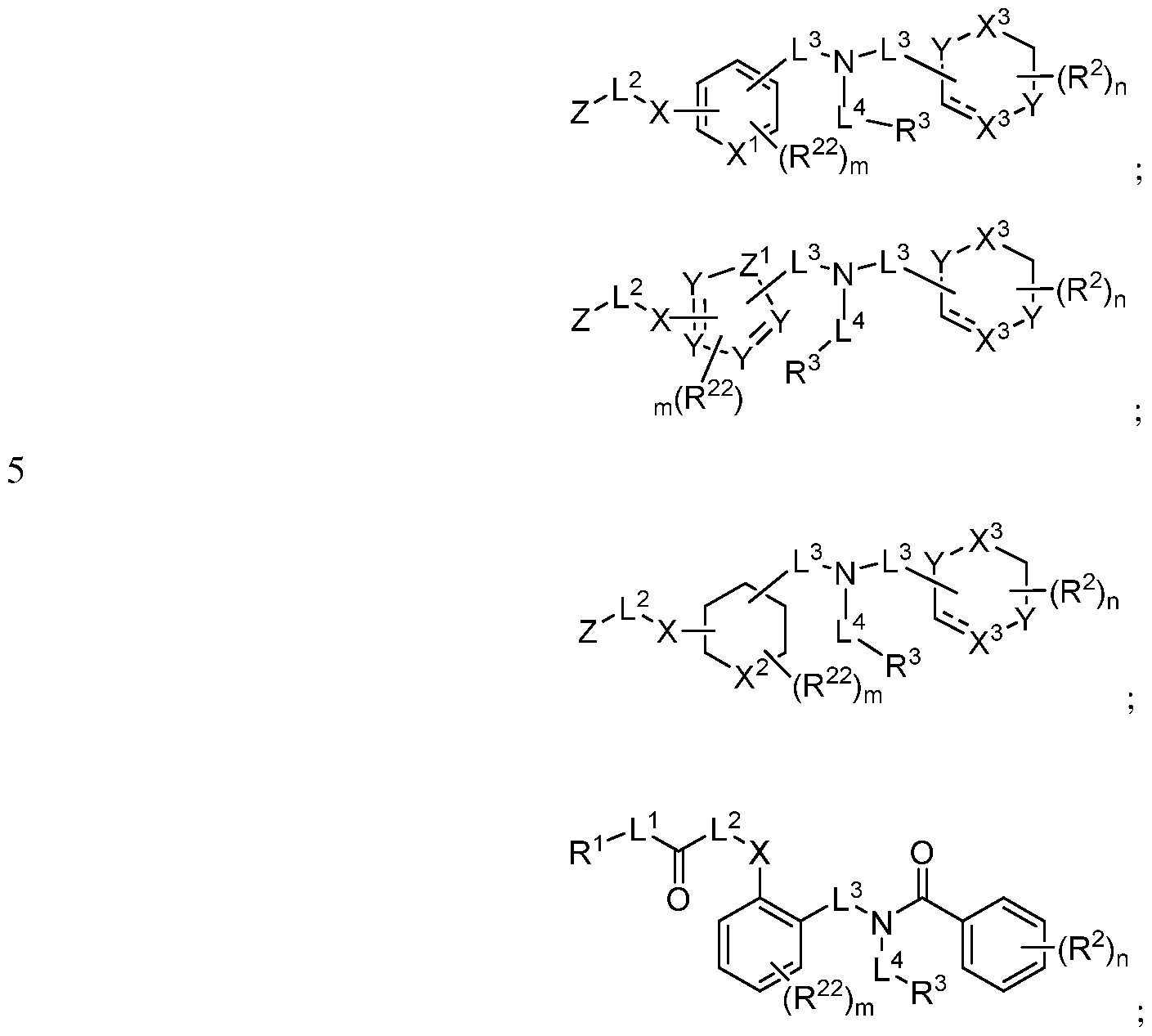
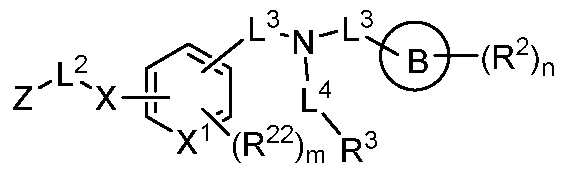
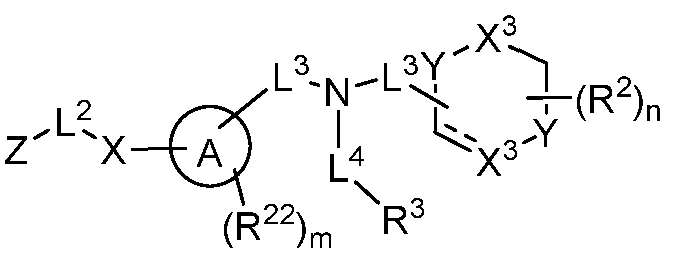
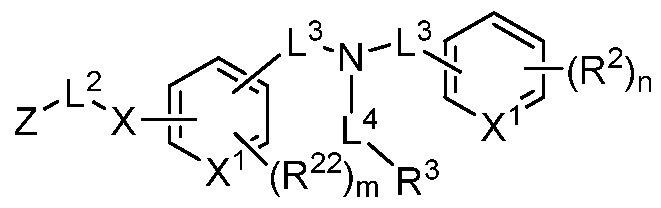
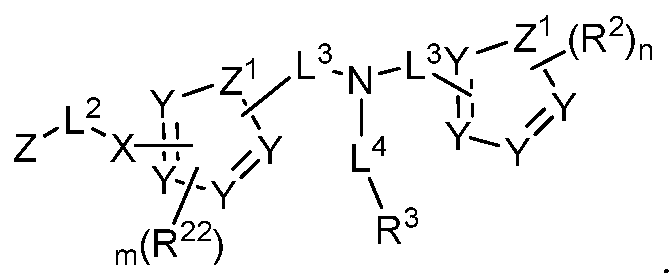
  • ring A may be selected from a cycloalkylene, heterocycloalkylene, arylene or heteroarylene
  • ring B is selected from an aryl, heteroaryl, cycloalkyl, heterocycloalkyl, cycloalkylene, heterocycloalkylene, arylene or heteroarylene
  • each R 2 independently is selected from deuterium, halogen, aryl, heteroaryl, aliphatic, heteroaliphatic, eye lo aliphatic, NO 2 , OH, amino, amide, aminosulfonyl, carboxyl, carboxyl ester, alkylsulfonyl, SO 3 H, or acyl
  • each R 22 independently is selected from deuterium, halogen, aryl, heteroaryl, aliphatic, heteroaliphatic, eye lo aliphatic, NO 2 , OH, amino, amide, aminosulfonyl, carboxyl, carboxyl ester, alkylsulfonyl,
  • R 3 is selected from -OH, -OR 3A , -NR 3A R 3B , -C(0)R 3A , -S(0) 2 R 3A , -C(0)OR 3A , -S(0) 2 NR 3A R 3B , -C(0)NR 3A R 3B , aliphatic, hetero aliphatic, cycloalkyl, heterocycloalkyl, aryl, heteroaryl, or R 3 can be joined with an atom of ring B to form a fused ring system or may be joined with an atom of L 3 to form a heterocyclic ring system; and R 3A , R 3B , are each independently hydrogen or aliphatic, alkyl.
  • R 2 is not 4-bromo or 4- benzo[ifl [l,3]dioxole; if L 5 is -CH 2 CH 2 N(L 4 R 3 )C(0)NH- X is S, and L 4 R 3 is an unbranched aliphatic or alkyl chain, then L 4 R 3 is a Ci-C 6 unbranched aliphatic or alkyl chain; if L 5 is -CH 2 CH 2 N(L 4 R 3 )C(0)NH- X is S, and L 4 is an unbranched aliphatic or alkyl chain, then R 3 is not a cyclohexyl; if L 5 is - CH 2 N(L 4 R 3 )C(0)-, L 4 R 3 is isopropyl, ring A
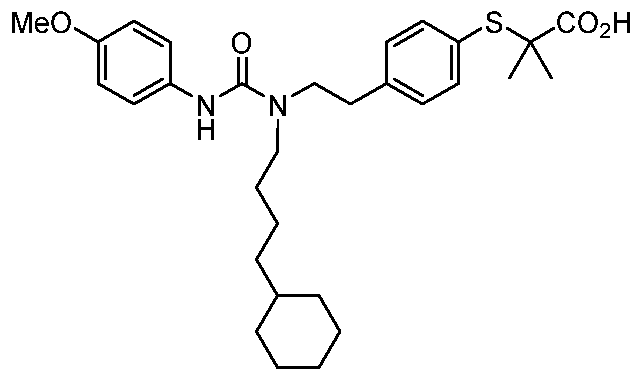
  • compounds according to this formula are not selected from: 4-[( ⁇ 4-methyl-2-[4-(trifluoromethyl)phenyl]-l,3-thiazol-5- yl ⁇ methyl)sulfanyl] -2-methylphenoxy ⁇ acetic acid; ⁇ 4-[( ⁇ 2-[3-fluoro-4-(trifluoromethyl)phenyl] -4-methyl- l,3-thiazol-5-yl ⁇ methyl)sulfanyl]-2-methylphenoxy ⁇ acetic acid; 2-((4-(2-(3-(2,4-difluorophenyl)-l- heptylureido)ethyl)phenyl)thio)-2-methylpropanoic acid; 2-((4-(2-(3-cyclohexyl-l-(4- cyclohexylbutyl)ureido)ethyl)phenyl)thio)-2-methylpropanoic acid; (S)-2
  • ring A is selected from a C3- Cscycloalkylene, C 2 -C 8 heterocycloalkylene, C6-Cioarylene or Ci-Cioheteroarylene, with particular examples having ring A being selected from phenyl, pyridine, cyclopentane, cyclohexane, pyrazole, thiophene or isothiazole.
  • ring B is selected from C3-Cscycloalkylene, C 2 -C8heterocycloalkylene, C6-Cioarylene or Ci-Cioheteroarylene.
  • ring B is selected from phenyl, pyridine, thiophene, thiazole, pyrazole, oxazole, isoxazole, benzo[b]furan, indazole, piperidine, cyclohexane, piperidin-2-one, piperazine-2,5-dione or quinazolin-4(3H)-one.
  • Certain disclosed compounds include carboxyl biostere functionalities, such as ; where X 7 , Y 7 , and Z 7 each independently is selected from N, CH 2 or CO; X 8 is selected from O, S or NMe; and X 9 is selected from O, N, NH, S, CH or CH 2 .
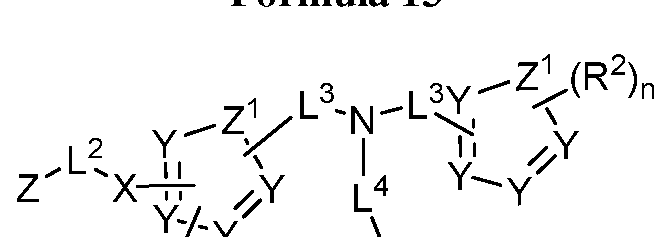
  • X 1 is selected from carbon, nitrogen, or N-oxide; wherein X 1 is selected from carbon, nitrogen, or N-oxide.; wherein Z 1 is selected from carbon, oxygen, sulfur, or NR 30 , and each Y independently is selected from carbon or nitrogen;
  • Z 1 is selected from carbon, oxygen, sulfur, or NR 30 , and each Y independently is selected from carbon or nitrogen;
  • X 2 is selected from a bond, carbon, oxygen, sulfur, or NR 30 ;
  • each X 3 independently is selected from nitrogen, carbon, NR 30 , or oxo, and each Y independently selected from carbon or NR 30 ;
  • R 3 may be selected from aliphatic, alkyl, heteroalkyl, cycloalkyl, heterocycloalkyl, aryl or heteroaryl; L 2 , L 3 and L 4 each independently is a bond or alkylene; L 4 R 3 is isopropyl; R 2 is furan-2-yl or furan-3-yl; L 2 may be selected
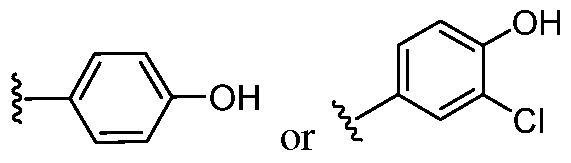
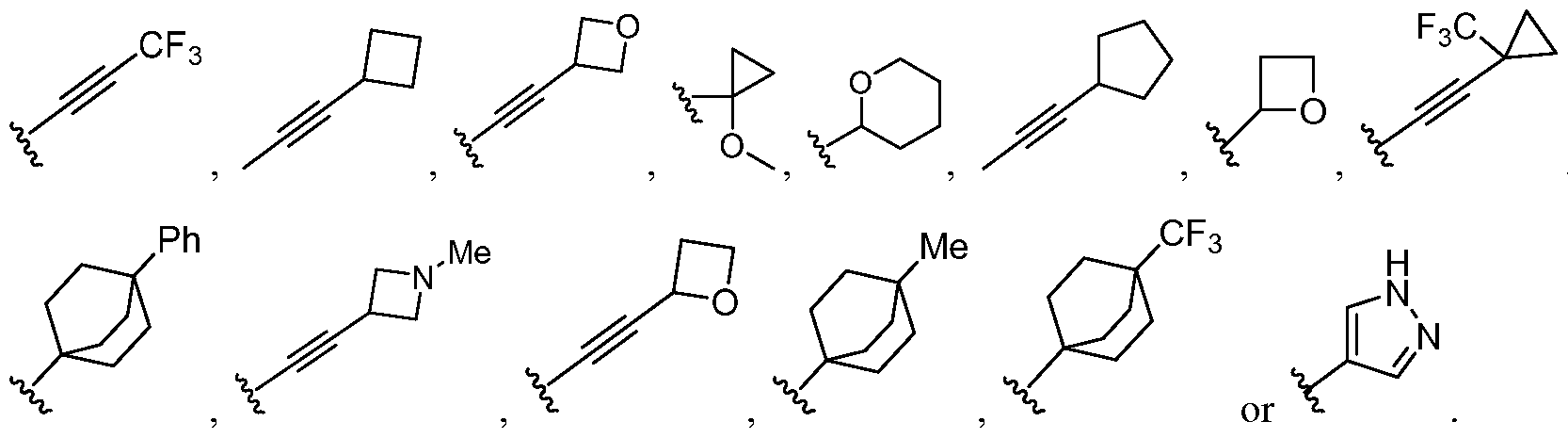
  • R is selected from
  • R 2 is selected from CI, F, I, Br, alkyloxy, haloalkyloxy, cycloalkyloxy, cyano, haloalkyl, CD3, OCD3, aliphatic, alkyl, alkenyl, alkynyl, amino, heterocyclic, aryl, cycloaliphatic or heteroaryl, particularly Br, F, methyl, trifluoromethyl, cyano, methoxy, cyclopropyl or azetidine; R 2 is selected from CI, F, I, Br, alkyloxy, haloalkyloxy, cycloalkyloxy, cyano, haloalkyl, CD 3 , OCD 3 , aliphatic, alkyl, alkenyl, alkynyl, amino, heterocyclic, aryl, cycloaliphatic or heteroaryl; n is from 2 to 4; two adjacent R 2 groups may form a fused ring system with ring B, with particular compounds having
  • compositions also are disclosed. Particular embodiments comprise a
  • a method of activating PPAR8 also is disclosed.
  • the method comprises contacting a PPAR8 protein with an effective amount of one or more disclosed compounds, or a pharmaceutical composition comprising one or more disclosed compounds, thereby activating the PPAR8 protein.
  • the PPAR8 protein may be present in a subject, and contacting comprises administering the one or more compounds to the subject.
  • Activating the PPAR8 protein within the subject may increase or maintain muscle mass or muscle tone in the subject.
  • Another embodiment comprises treating a PPAR8-related disease or condition in a subject by administering to the subject in need thereof a therapeutically effective amount of one or more disclosed compounds, or a pharmaceutical composition comprising the compound(s).
  • the PPAR8-related disease is a vascular disease; a muscular disease, such as a muscular dystrophy disease, with particular examples including Duchenne muscular dystrophy, Becker muscular dystrophy, limb-girdle muscular dystrophy, congenital muscular dystrophy, facioscapulohumeral muscular dystrophy, myotonic muscular dystrophy, oculopharyngeal muscular dystrophy, distal muscular dystrophy, or Emery-Dreifuss muscular dystrophydemyelinating disease; a demyelinating disease, such as multiple sclerosis, Charcot- Marie-Tooth disease, Pelizaeus-Merzbacher disease, encephalomyelitis, neuromyelitis optica,
  • a muscular dystrophy disease such as a muscular dystrophy disease, with particular examples including Duchenne muscular dystrophy, Becker muscular dystrophy, limb-girdle muscular dystrophy, congenital muscular dystrophy, facioscapulohumeral muscular dystrophy,
  • adrenoleukodystrophy or Guillian-Barre syndrome
  • a muscle structure disorder such as Bethlem myopathy, central core disease, congenital fiber type disproportion, distal muscular dystrophy (MD), Duchenne & Becker MD, Emery-Dreifuss MD, facioscapulohumeral MD, hyaline body myopathy, limb-girdle MD, a muscle sodium channel disorder, myotonic chondrodystrophy, myotonic dystrophy, myotubular myopathy, nemaline body disease, oculopharyngeal MD, or stress urinary incontinence; a neuronal activation disorder, such as amyotrophic lateral sclerosis, Charcot-Marie-Tooth disease, Guillain-Barre syndrome, Lambert- Eaton syndrome, multiple sclerosis, myasthenia gravis, nerve lesion, peripheral neuropathy, spinal muscular atrophy, tardy ulnar nerve palsy, or toxic myoneural disorder;
  • the subject is a sedentary or immobilized subject.
  • the subject may be an exercising subject.
  • administering may comprise intraarticular, intravenous, intramuscular, intratumoral, intradermal, intraperitoneal, subcutaneous, oral, topical, intrathecal, inhalational, transdermal, rectal administration, or any combination thereof.
  • the one or more compounds are administered to the subject at an effective dose, such as a dose of from greater than 0 mg/kg, such as from about 1 mg/kg to about 20 mg/kg, or from about 2 mg/kg to about 10 mg/kg, with certain embodiments being administered at a dose of from about 2 mg/kg to about 5 mg/kg.
  • FIGS. 1 A and IB are bar graphs showing removery of damaged muscle fibers after injury.
  • FIGS. 1C-1F show VP16-PPAR8 transgenic animals exhibit accelerated muscle regeneration after acute injury. All error bars are SEM.
  • FIG. 1C provides two images of transverse sections of TA of WT and TG animals, with damaged fibers stained by Evans Blue dye 5 days after the injury.
  • FIG. 1H illustrates the average number of regenerating fibers per field.
  • FIGS. 2A-E illustrate that PPAR8 activation promotes a temporal shift in gene expression profile of the regenerative process. *P ⁇ 0.05. All error bars are SEM.
  • FIG. 2B shows the relative expression of regeneration markers in TG.
  • FIG. 2E is a bar graph showing the Myh8 mRNA level 5 days post injury (n>5).
  • FIGS. 3A-3G illustrate that PPAR8 regulates FGFla to promote micro-vascularization. *P ⁇ 0.05;
  • FIG. 3 A provides immunofluorescence staining for CD31 on transverse sections of uninjured TA from WT and TG animals.
  • FIG. 3D provides a Western blot for FGF1.
  • FIG. 3G provides luciferase reporter assays of FGFla promoter co-transfected with PPAR8 with or without the ligand, GW501516.
  • FIG. 4A-4E illustrate that the skeletal muscle specific activation of PPAR8 increases the quiescent satellite cell pool. All error bars are SEM. *P ⁇ 0.05; **P ⁇ 0.01.
  • FIG. 4A provides digital images of isolated myofibers from lateral gastrocnemius of 8-week-old nestin reporter mice with or without VP16-PPAR8 transgene.
  • FIG. 4B is a bar graph showing quantification of GFP+ satellite cells per unit length of myofiber
  • FIG. 4D is a bar graph showing VP16 mRNA levels in whole TA or satellite cells (SC) from WT and TG.
  • FIG. 4E is a bar graph showing PPAR5 mRNA levels in whole TA or satellite cells (SC) from WT and TG.
  • FIGS. 5A-5E illustrate that acute pharmacological activation of PPAR8 confers regenerative advantage. *P ⁇ 0.05; **P ⁇ 0.01 ; ***P ⁇ 0.001. All error bars are S EM.
  • FIG. 5B provides digital images of transverse TA sections showing Evans Blue dye uptake 5 days after the injury.
  • FIGS. 6A-6E show VP16-PPAR8 transgenic animals exhibit accelerated muscle regeneration after the acute injury. All error bars are SEM.
  • FIG. 6A shows werum creatine kinase levels in wildtpe and VP16-PPAR8 transgenic animals.
  • FIG. 6B shows transverse sections of TA of WT and TG animals. Staining of damaged fibers by Evans Blue dye 5 days after the injury.
  • FIG. 7 A shows transverse sections of TA of WT and TG animals. Staining of damaged fibers by
  • FIG. 7C shows post injury temporal gene expression profiles of inflammatory markers TNFa.
  • FIG. 7D shows induction of VEGFa in TA muscle, as measured by Western Blot, in TG animals.
  • FIG. 7E shows quantification of TNFa Western Blot.
  • FIG. 8 A provides up-regulated Notch pathway components in TG animals by microarray analysis
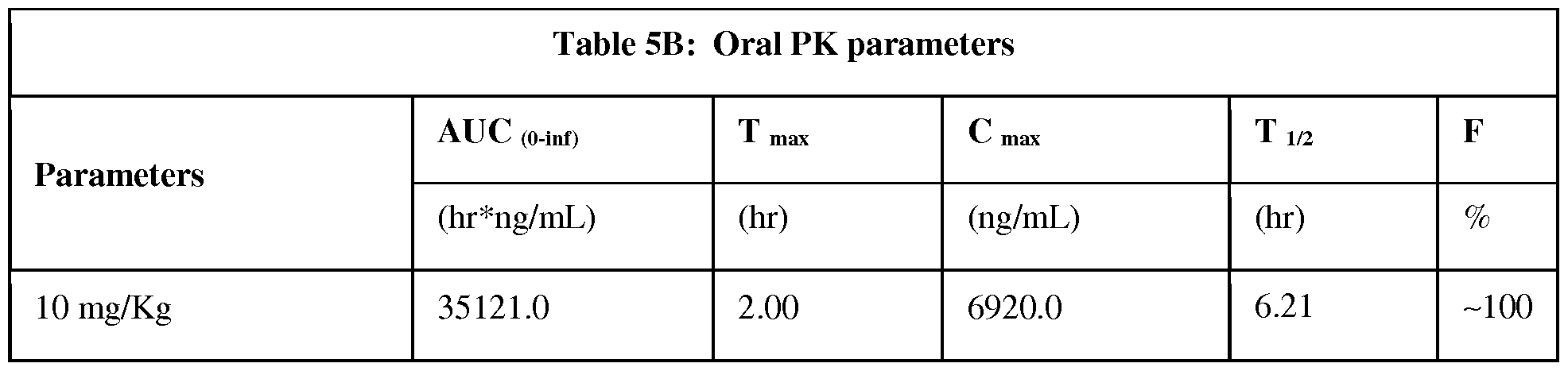
  • FIGS. 9A-9E are graphs showing pharmacokinetic data for several compounds at 3 mg kg i.v. or 10 mg/kg p.o. DETAILED DESCRIPTION
  • exemplary substituent groups can include those listed below:
  • R', R", R'", and R" each independently refer to hydrogen, aliphatic, heteroaliphatic, cycloaliphatic, heterocycloaliphatic, or aryl groups.
  • R', R", R'", and R" can independently refer to aliphatic, alkyl, alkenyl, alkynyl, cycloalkyl, cycloalkenyl, cycloalkynyl, heteroalkyl, hetero alkenyl, heteroalkynyl, heterocycloalkyl, heterocycloalkenyl, or heterocycloalkynyl groups.
  • a compound includes more than one R', R", R'", or R" group, for example, each of the R', R", R'", or R” groups can be independently selected relative to the remaining R', R", R'", and R"” group(s).
  • R' and R" when R' and R" are attached to the same atom, such as a nitrogen atom, they can be combined to form a cyclic structure, such as a 4-, 5-, 6-, or 7-membered heterocyclic ring.
  • Substituents for aryl and heteroaryl groups may be selected from, for example: -OR', -NR'R", -SR', halogen, -SiR'R"R"', -OC(0)R', -C(0)R', -C0 2 R', -CONR'R", -OC(0)NR'R", -NR"C(0)R',
  • R', R", R'", and R" can independently refer to alkyl, alkenyl, alkynyl, cycloalkyl, cycloalkenyl, cycloalkynyl, heteroalkyl, heteroalkenyl, heteroalkynyl, heterocycloalkyl, heterocycloalkenyl, or heterocycloalkynyl groups.
  • R', R', or R" groups can be independently selected relative to the remaining R', R", R'", and R"” group(s).
  • Two or more substituents may optionally be joined to form aryl, heteroaryl, cycloaliphatic, or heterocycloaliphatic groups.
  • Such ring-forming substituents are typically, though not necessarily, attached to a cyclic base structure.
  • the ring-forming substituents are attached to adjacent members of the base structure.
  • two ring-forming substituents can attached to adjacent atoms of a cyclic base structure to create a fused ring structure.
  • the ring-forming substituents can be attached to a single atom of the base structure to create a spirocyclic structure.
  • the ring-forming substituents are attached to non-adjacent atoms of the base structur
  • structures depicted herein are also meant to include all stereochemical forms of the structure; such asthe R and S configurations for each asymmetric center and/or the m and p configurations for each biaryl ring system. Therefore, single stereochemical isomers, as well as enantiomeric, diastereomeric, and atropisomeric mixtures of the present compounds are within the scope of the disclosure.
  • structures depicted herein are also meant to include compounds which differ only in the presence of one or more isotopically enriched atoms.
  • compounds having the present structures except for the replacement of a hydrogen by a deuterium or tritium, or the replacement of a carbon by 13 C- or 14 C -enriched carbon, are within the scope of this disclosure.
  • the compounds of the present disclosure may also contain unnatural proportions of atomic isotopes at one or more of atoms that constitute such compounds.
  • the compounds may be radiolabeled with radioactive isotopes, such as, for example, tritium ( 3 H), iodine-125 ( 125 I) or carbon-14 ( 14 C). All isotopic variations of the compounds of the present disclosure, whether radioactive or not, are encompassed within the scope of the present disclosure.
  • alkyl means, unless otherwise stated, a straight (i.e., unbranched) or branched chain, or combination thereof, which may be fully saturated, mono- or polyunsaturated and can include di- and multivalent moieties, having the number of carbon atoms designated (for example,Ci-Cio includes alkyl groups comprising one to ten carbons).
  • saturated alkyl groups include, but are not limited to, groups such as methyl, ethyl, n-propyl, isopropyl, n-butyl, t-butyl, isobutyl, sec -butyl, (cyclohexyl)methyl, homologs and isomers of, for example, n-pentyl, n-hexyl, n-heptyl, n-octyl, and the like.
  • An unsaturated alkyl group is one having at least one double bond or at least one triple bond.
  • unsaturated alkyl groups include, but are not limited to, vinyl, 2-propenyl, crotyl, 2-isopentenyl, 2-(butadienyl), 2,4- pentadienyl, 3-(l,4-pentadienyl), ethynyl, 1- and 3-propynyl, 3-butynyl, and the higher homologs and isomers.
  • An "alkoxy” group is an alkyl group attached to the remainder of the molecule via an oxygen linker.
  • aliphatic refers to a hydrocarbon-based compound, or a moiety thereof, and can include alkanes, alkenes, alkynes, including cyclic versions thereof, (such as cycloalkyl, cycloalkenyl and cycloalkynyl) and further including straight- and/or branched-chain arrangements, and all stereo and positional isomers as well. Unless expressly stated otherwise, an aliphatic group contains at least one carbon atom.
  • alkenyl refers to straight chain or branched hydrocarbyl groups having from 2 to 10 carbon atoms, and in some embodiments 2 to 8 carbon atoms, and having at least 1 double bond. Such groups are exemplified, for example, bi- vinyl, allyl, and but-3-en-l-yl. Included within this term are the cis and trans isomers or mixtures of these isomers, unless otherwise specified.
  • alkenylene refers to a divalent moiety derived from an alkenyl.
  • Alkynyl by itself or as part of another substituent, refers to straight chain or branched hydrocarbyl groups having from 2 to 10 carbon atoms, and in some embodiments 2 to 8 carbon atoms, and having at least 1 site of triple bond unsaturation. Such groups are exemplified, for example, by ethynyl, 1-propynyl and 2- propynyl.
  • alkynylene refers to a divalent moiety derived from an alkynyl.
  • heteroaliphatic refers to an aliphatic compound or group having at least one heteroatom. For example, in some embodiments, one or more carbon atoms has been replaced with an atom having at least one lone pair of electrons.
  • Heteroaliphatic compounds or groups may be branched or unbranched, cyclic or acyclic, and can include "heterocycle,” “heterocyclyl,” “heterocycloaliphatic,” or “heterocyclic” groups.
  • heteroalkyl by itself or in combination with another term, means, unless otherwise stated, a stable straight or branched chain, or combinations thereof, consisting of at least one carbon atom and at least one heteroatom selected from the group consisting of O, N, P, Si, and S, and wherein the nitrogen and sulfur atoms may optionally be oxidized, and the nitrogen heteroatom may optionally be quaternized.
  • the heteroatom(s) O, N, P, S, and Si may be placed at any interior position of the heteroalkyl group or at the position at which the alkyl group is attached to the remainder of the molecule. Examples include, but are not limited to: -CH 2 -CH 2 -0-CH 3 , -CH 2 -CH 2 -NH-CH 3 , -CH 2 -CH 2 -N(CH 3 )-CH 3 ,
  • -CH 2 -CH N-OCH 3
  • -CH CH-N(CH 3 )-CH 3
  • -0-CH 3 -0-CH 2 -CH 3
  • -CN -CN
  • heteroalkylene by itself or as part of another substituent, means, unless otherwise stated, at least a divalent moiety derived from heteroalkyl, as exemplified, but not limited by, -CH 2 -CH 2 -S-CH 2 -CH 2 - and -CH 2 -S-CH 2 -CH 2 -NH-CH 2 -.
  • heteroatoms can also occupy either or both of the chain termini (e.g., alkyleneoxy, alkylenedioxy, alkyleneamino,
  • heteroalkyl groups include those groups that are attached to the remainder of the molecule through a heteroatom, such as -C(0)R', -C(0)NR', -NR'R", -OR', -SR', and/or -S0 2 R'.
  • heteroalkyl is recited, followed by recitations of specific heteroalkyl groups, such as -NR'R” or the like, it will be understood that the terms heteroalkyl and -NR'R" are not redundant or mutually exclusive. Rather, the specific heteroalkyl groups are recited to add clarity. Thus, the term “heteroalkyl” should not be interpreted herein as excluding specific heteroalkyl groups, such as -NR'R” or the like.
  • cycloalkyl and heterocycloalkyl by themselves or in combination with other terms, mean, unless otherwise stated, cyclic versions of “alkyl” and “heteroalkyl,” respectively. Additionally, for heterocycloalkyl, a heteroatom can occupy the position at which the heterocycle is attached to the remainder of the molecule. Examples of cycloalkyl include, but are not limited to, cyclopropyl, cyclobutyl, cyclopentyl, cyclohexyl, 1-cyclohexenyl, 3-cyclohexenyl, cycloheptyl, and the like.
  • heterocycloalkyl examples include, but are not limited to, l-(l,2,5,6-tetrahydropyridyl), 1-piperidinyl, 2-piperidinyl, 3- piperidinyl, 4-morpholinyl, 3-morpholinyl, tetrahydrofuran-2-yl, tetrahydrofuran-3-yl, tetrahydrothien-2-yl, tetrahydrothien-3-yl, 1-piperazinyl, 2-piperazinyl, and the like.
  • heterocycloalkylene alone or as part of another substituent, means at least a divalent moiety derived from a cycloalkyl and heterocycloalkyl, respectively.
  • halo or halogen
  • haloalkyl by themselves or as part of another substituent, mean, unless otherwise stated, a fluorine, chlorine, bromine, or iodine atom.
  • terms such as “haloalkyl” are meant to include monohaloalkyl and polyhaloalkyl.
  • halo(Ci-C4)alkyl includes, but is not limited to, fluoromethyl, difluoromethyl, trifluoromethyl, 2,2,2-trifluoroethyl, 4-chlorobutyl, 3- bromopropyl, and the like.
  • amino refers to a chemical functional group -N ⁇ R 11 where R 1 and R 11 are independently hydrogen, aliphatic, alkyl, heteroalkyl, haloalkyl, aliphatic, heteroaliphatic, aryl (such as phenyl or benzyl), heteroaryl, or other functionality.
  • R 1 and R 11 are independently hydrogen, aliphatic, alkyl, heteroalkyl, haloalkyl, aliphatic, heteroaliphatic, aryl (such as phenyl or benzyl), heteroaryl, or other functionality.
  • a "primary amino” group is -NH 2 .
  • aminocarbonyl refers to a chemical functional group -C(0)-amino, where amino is as defined herein.
  • a primary aminocarbonyl is -CONH 2 .
  • cyano refers to the chemical functional group -CN.
  • carboxyl refers to the chemical functional group -CO 2 H.
  • carboxyl ester refers to the chemical functional group -CO 2 where R is aliphatic, alkyl, heteroalkyl, haloalkyl, aliphatic, heteroaliphatic, aryl (such as phenyl or benzyl), heteroaryl, or other functionality.
  • aminosulfonyl refers to a chemical function group -S0 2 -amino, where amino is as defined herein.
  • a primary aminosulfonyl is -SO 2 NH 2 .
  • acyl means, unless otherwise stated, -C(0)R where R is a aliphatic, alkyl, cycloalkyl, heteroalkyl, heterocycloalkyl, aryl, or heteroaryl.
  • aryl means, unless otherwise stated, a polyunsaturated, aromatic, hydrocarbon substituent, which can be a single ring or multiple rings (e.g., from 1 to 5, typically 1 to 3, rings) that are fused together (i.e., a fused ring aryl) or linked covalently.
  • a fused ring aryl refers to multiple rings fused together wherein at least one of the fused rings is an aryl ring.
  • heteroaryl refers to aryl groups (or rings) that contain at least one heteroatom, typically N, O, and S.
  • heteroatoms such as the nitrogen and sulfur atoms
  • heteroatom(s) are optionally oxidized
  • the nitrogen atom(s) are optionally quaternized.
  • heteroaryl includes fused ring heteroaryl groups (e.g., multiple rings fused together wherein at least one of the fused rings is a he tero aromatic ring).
  • a 5,6-fused ring heteroaryl refers to two rings fused together, wherein one ring has 5 members and the other ring has 6 members, and wherein at least one ring is a heteroaryl ring.
  • a 6,6-fused ring heteroaryl refers to two rings fused together, wherein one ring has 6 members and the other ring has 6 members, and wherein at least one ring is a heteroaryl ring.
  • a 6,5-fused ring heteroaryl refers to two rings fused together, wherein one ring has 6 members and the other ring has 5 members, and wherein at least one ring is a heteroaryl ring.
  • a heteroaryl group can be attached to the remainder of a molecule through a carbon or heteroatom.
  • Non-limiting examples of aryl and heteroaryl groups include phenyl, 1-naphthyl, 2-naphthyl, 4-biphenyl, 1-pyrrolyl, 2- pyrrolyl, 3-pyrrolyl, 3-pyrazolyl, 2-imidazolyl, 4-imidazolyl, pyrazinyl, 2-oxazolyl, 4-oxazolyl, 2-phenyl-4- oxazolyl, 5-oxazolyl, 3-isoxazolyl, 4-isoxazolyl, 5-isoxazolyl, 2-thiazolyl, 4-thiazolyl, 5-thiazolyl, 2-furyl, 3- furyl, 2-thienyl, 3-thienyl, 2-pyridyl, 3-pyridyl, 4-pyridyl, 2-pyrimidyl, 4-pyrimidyl, 5-benzothiazolyl, purinyl, 2-benzimidazolyl, 5-indolyl, 1-isoquino
  • heteroarylene alone or as part of another substituent, mean at least a divalent moiety derived from an aryl and heteroaryl, respectively.
  • aryl when used in combination with other terms (e.g., aryloxy, arylthioxy, arylalkyl) includes both aryl and heteroaryl rings as defined above.
  • arylalkyl is meant to include those moieties in which an aryl group is attached to an aliphatic or alkyl group (e.g., benzyl, phenethyl, pyridylmethyl and the like) including those aliphitc or alkyl groups in which a carbon atom (e.g., a methylene group) has been replaced by, for example, an oxygen atom (e.g., phenoxymethyl, 2- pyridyloxymethyl, 3-(l-naphthyloxy)propyl, and the like).
  • an oxygen atom e.g., phenoxymethyl, 2- pyridyloxymethyl, 3-(l-naphthyloxy)propyl, and the like.
  • oxo means an oxygen that is double bonded to a carbon atom.
  • alkylsulfonyl means a moiety having the formula -S(0 2 )- ', where R' is an aliphatic, alkyl group as defined above. R' may have a specified number of carbons (e.g., "C 1 -C4 alkylsulfonyl").
  • carboxyl bioisosteric or “carboxyl bioisostere” refer to a group with similar physical or chemical properties to a carboxyl groupthat produce broadly similar biological properties, but which may reduce toxicity or modify the activity of the compound, and may alter the metabolism of the compound.
  • Z are each independently selected from N, CH 2 or CO; 3 ⁇ 4 where X is selected from O, S or
  • pharmaceutically acceptable salts is meant to include salts of active compounds which are prepared with relatively nontoxic acids or bases, depending on the particular substituents found on the compounds described herein.
  • base addition salts can be obtained by contacting the neutral form of such compounds with a sufficient amount of the desired base, either neat or in a suitable solvent.
  • pharmaceutically acceptable base addition salts include, by way of example and without limitation, sodium salts, potassium salts, calcium salts, ammonium salts, organic amino salts, or magnesium salts, or a similar salt.
  • acid addition salts can be obtained by contacting the neutral form of such compounds with a sufficient amount of the desired acid, either neat or in a suitable inert solvent.
  • pharmaceutically acceptable acid addition salts include those derived from inorganic acids like hydrochloric, hydrobromic, nitric, carbonic, monohydrogencarbonic, phosphoric, monohydrogenphosphoric, dihydrogenphosphoric, sulfuric, monohydrogensulfuric, hydriodic, or phosphorous acids and the like, as well as the salts derived from relatively nontoxic organic acids like acetic, propionic, isobutyric, maleic, malonic, benzoic, succinic, suberic, fumaric, lactic, mandelic, phthalic, benzenesulfonic, p-tolylsulfonic, citric, tartaric, methanesulfonic, and the like.
  • salts of amino acids such as arginate and the like
  • salts of organic acids like glucuronic or galactunoric acids and the like
  • Certain specific compounds of the present disclosure contain both basic and acidic functionalities that allow the compounds to be converted into either base or acid addition salts.
  • the compounds provided herein can exist as salts with pharmaceutically acceptable acids.
  • the present disclosure includes such salts.
  • examples of such salts include hydrohalides, such as hydrochlorides and hydrobromides, sulfates, methanesulfonates, nitrates, maleates, acetates, citrates, fumarates, tartrates (eg (+)-tartrates, (-)-tartrates or mixtures thereof including racemic mixtures, succinates, benzoates and salts with amino acids such as glutamic acid.
  • hydrohalides such as hydrochlorides and hydrobromides
  • sulfates, methanesulfonates nitrates
  • maleates eg (+)-tartrates, (-)-tartrates or mixtures thereof including racemic mixtures
  • tartrates eg (+)-tartrates, (-)-tartrates or mixtures thereof including racemic mixtures
  • succinates benzoates and salts with
  • the neutral forms of the compounds are in some examples regenerated by contacting the salt with a base or acid and isolating the parent compound in the conventional manner.
  • the parent form of the compound may differ from the various salt forms in certain physical properties, such as solubility in polar solvents.
  • the present disclosure includes compounds in a prodrug form.
  • Prodrugs of the compounds described herein are those compounds that readily undergo chemical changes under physiological conditions to provide the compounds herein.
  • prodrugs can be converted to the compounds of the present disclosure by chemical or biochemical methods in an ex vivo environment. For example, prodrugs can be slowly converted to the compounds of the present disclosure when placed in a transdermal patch reservoir with a suitable enzyme or chemical reagent.
  • Certain compounds provided herein can exist in unsolvated forms as well as solvated forms, including hydrated forms. In general, the solvated forms are equivalent to unsolvated forms and are encompassed within the scope of the present disclosure. Certain compounds provided herein can exist in multiple crystalline or amorphous forms. In general, all physical forms are equivalent for the uses contemplated by the present disclosure and are intended to be within the scope of the present disclosure.
  • the terms “administer,” “administering,” “administration,” and the like, as used herein, refer to methods that may be used to enable delivery of compositions to the desired site of biological action.
  • intraarticular in the joints
  • intravenous intramuscular
  • intratumoral intradermal
  • intraperitoneal subcutaneous
  • subcutaneous orally
  • intrathecally inhalationally
  • transdermally rectally
  • Administration techniques that can be employed with the agents and methods described herein are found in e.g., Goodman and Oilman, The Pharmacological Basis of Therapeutics, current ed.; Pergamon; and Remington's, Pharmaceutical Sciences (current edition), Mack Publishing Co., Easton, Pa.
  • the terms “co-administration,” “administered in combination with,” and their grammatical equivalents, are meant to encompass administration of two or more therapeutic agents to a single subject, and are intended to include treatment regimens in which the agents are administered by the same or different route of administration or at the same or different times.
  • the one or more compounds described herein will be co-administered with other agents.
  • These terms encompass administration of two or more agents to the subject so that both agents and/or their metabolites are present in the subject at the same time. They include simultaneous administration in separate compositions, administration at different times in separate compositions, and/or administration in a composition in which both agents are present.
  • the compounds described herein and the other agent(s) are administered in a single composition.
  • the compounds described herein and the other agent(s) are admixed in the composition.
  • an active agent such as one or more compounds provided herein alone, in combination, or potentially in combination with other therapeutic agent(s)
  • therapeutically effective amount refers to the amount of an active agent (such as one or more compounds provided herein alone, in combination, or potentially in combination with other therapeutic agent(s)) sufficient to induce a desired biological result. That result may be amelioration or alleviation of the signs, symptoms, or causes of a disease, or any other desired alteration of a biological system.
  • therapeutically effective amount is used herein to denote any amount of a therapeutic that causes an improvement in a disease condition. The amount can vary with the condition being treated, the stage of advancement of the condition, and the type and concentration of formulation applied. Appropriate amounts in any given instance will be readily apparent to those of ordinary skill in the art or capable of determination by routine experimentation.
  • treatment means eradication or amelioration of the underlying disorder being treated. Also, a therapeutic benefit is achieved with eradication or amelioration of one or more of the physiological symptoms associated with the underlying disorder, such that an improvement is observed in the subject, notwithstanding that the subject may still be afflicted with the underlying disorder.
  • prevent include preventing additional symptoms, preventing the underlying metabolic causes of symptoms, inhibiting the disease or condition, e.g., arresting the development of the disease or condition and are intended to include prophylaxis.
  • the terms further include achieving a prophylactic benefit.
  • the compositions are optionally administered to a subject at risk of developing a particular disease, to a subject reporting one or more of the physiological symptoms of a disease, or to a subject at risk of reoccurrence of the disease.
  • Preventing the disease can result in the delay or prevention of development of one or more clinical symptoms of the disease by administration of a protective composition prior to the induction of the disease; suppressing the disease, that is, causing the clinical symptoms of the disease not to develop by administration of a protective composition after the inductive event but prior to the clinical appearance or reappearance of the disease.
  • “Inhibiting” the disease refers to arresting the development of clinical symptoms by administration of a protective composition after their initial appearance; preventing re-occurring of the disease and/or relieving the disease, that is, causing the regression of clinical symptoms by administration of a protective composition after their initial appearance.
  • subject refers to a vertebrate, such as a mammal, for example a human.
  • Mammals include, but are not limited to, murines, simians, humans, farm animals, sport animals, and pets. Tissues, cells and their progeny of a biological entity obtained in vitro or cultured in vitro are also encompassed.
  • the subject administered one or more of the compounds provided herein is a sedentary (such as one with no or irregular physical activity, for example one who sits or remains inactive for most of the day with little or no exercise) or immobilized subject (such as a subject confined to a wheelchair, hospital bed, and the like, or one who has a body part in a cast, such as a leg or arm).
  • the subject administered one or more of the compounds provided herein is an ambulatory or exercised subject, such as a subject in rehab potentially after surgery, or aged or obese subjects.
  • exercise can include low impact exercise, spanning from once or twice per day. Examples of low impact exercise can include swimming and light to moderate resistance training.
  • “Pharmaceutically acceptable excipient” and “pharmaceutically acceptable carrier” refer to a substance that aids the formulation and/or administration of an active agent to and/or absorption by a subject and can be included in the compositions of the present disclosure without causing a significant adverse toxicological effect on the subject.
  • pharmaceutically acceptable excipients include water, NaCl, normal saline solutions, lactated Ringer' s, normal sucrose, normal glucose, binders, fillers, disintegrants, lubricants, coatings, sweeteners, flavors, salt solutions (such as Ringer's solution), alcohols, oils, gelatins, carbohydrates such as lactose, amylose or starch, fatty acid esters,
  • preparations can be sterilized and, if desired, mixed with auxiliary agents such as lubricants, preservatives, stabilizers, wetting agents, emulsifiers, salts for influencing osmotic pressure, buffers, coloring, and/or aromatic substances and the like that do not deleteriously react with or interfere with the activity of the compounds provided herein.
  • auxiliary agents such as lubricants, preservatives, stabilizers, wetting agents, emulsifiers, salts for influencing osmotic pressure, buffers, coloring, and/or aromatic substances and the like that do not deleteriously react with or interfere with the activity of the compounds provided herein.
  • auxiliary agents such as lubricants, preservatives, stabilizers, wetting agents, emulsifiers, salts for influencing osmotic pressure, buffers, coloring, and/or aromatic substances and the like that do not deleteriously react with or interfere with the activity of the compounds provided herein.
  • auxiliary agents such as
  • PPAR8 peroxisome proliferator-activated receptor delta
  • PPAR8 a member of a subfamily of nuclear hormone receptors. Ligands of PPAR8 can promote myoblast proliferation after injury, such as injury to skeletal muscle.
  • PPAR8 (OMIM 600409) sequences are publically available, for example from GenBank® sequence database (e.g., accession numbers NP_001165289.1 (human, protein) NP_035275 (mouse, protein), NM_001171818 (human, nucleic acid) and NM_011145 (mouse, nucleic acid)).
  • ring A is selected from a cycloalkylene, heterocycloalkylene, arylene or heteroarylene.
  • the L 5 group and the X-L 2 -Z group typically are positioned ortho or para to each other.
  • the L 5 group and the X-L 2 -Z are not positioned meta to each other unless L 5 forms a fused ring system
  • Ring B is selected from aryl, heteroaryl, cycloalkyl, heterocycloalkyl, cycloalkylene, heterocycloalkylene, arylene or heteroarylene.
  • exemplary ring B embodiments are illustrated below:
  • ring B is selected from
  • Each R 2 independently is selected from deuterium, halogen, aryl, heteroaryl, aliphatic,
  • R 2 may be halogen selected from CI, F, I, Br; heteroaliphatic selected from alkyloxy (e.g., 0(CH 2 )o- 5 CH 3 ), haloalkyloxy (e.g., 0(CH 2 )o- 5 CF 3 , 0(CH 2 )o- 5 CHF 2 ), cycloalkyloxy (e.g., O- cyclopropyl, O-cyclobutyl, O-cyclopentyl, O-cyclohexyl), cyano, haloalkyl (e.g., CF 3 ), CD 3 , OCD 3 ;
  • heteroaliphatic selected from alkyloxy (e.g., 0(CH 2 )o- 5 CH 3 ), haloalkyloxy (e.g., 0(CH 2 )o- 5 CF 3 , 0(CH 2 )o- 5 CHF 2 ), cycloalkyloxy (e.g
  • aliphatic selected from alkyl, alkenyl, alkynyl; amino selected from N(R 30 ) 2 wherein each R 30 may be selected from hydrogen, aliphatic, aryl, or cycloaliphatic; heterocyclic selected from piperidinyl, piperazinyl, pyrrolidinyl, 4H-pyranyl, 4H-furanyl, 4H-thiophene, 4H-thiopyranyl, azetidinyl, oxetanyl, piperidinone, 4H- pyranone, 4H-furanone, 4H-pyrrolidone, 4H-thiopyranone, 4H-thiophenone, and any such groups comprising one or more sites of unsaturation; aryl selected from phenyl, naphthalene, anthracene, or phenanthracene; cycloaliphatic selected from cyclopropane, cyclobutane, cyclopentane,
  • At least two R 2 groups are present and adjacent to each other and join together to form a fused ring system with ring B.
  • each R 2 can be selected to form a fused heterocylic, cyclicaliphatic, heteroaryl, or aryl ring system.
  • Exemplary R 2 groups are provided below:
  • n is from 0 to 5;
  • n is from 0 to 4; each R independently is selected from deuterium, halogen, aryl, heteroaryl, aliphatic,
  • R 22 may be halogen selected from CI, Fl, I, Br;
  • hetero aliphatic selected from alkyloxy (e.g., 0( ⁇ 2) ⁇ -5 ⁇ 3 ⁇ 4), haloalkyloxy (e.g., 0(CH2)o-sCF3, 0(03 ⁇ 4) ⁇ - 5 CHF 2 ), cycloalkyloxy (e.g., O-cyclopropyl, O-cyclobutyl, O-cyclopentyl, O-cyclohexyl), cyano, haloalkyl (e.g., CF3), CD3, OCD3; aliphatic, selected from alkyl, alkenyl, alkynyl; amino selected from N(R 1 R 11 )2 wherein each R 30 may be selected from hydrogen, aliphatic, aryl, or cycloaliphatic; heterocyclic selected from piperidinyl, piperazinyl, pyrrolidinyl, 4H-pyranyl, 4H-furanyl, 4H-thiophene, 4H-thiopyrany
  • X is O, NR , sulfonyl, or S, where R is selected from H or aliphatic, aryl, or cycloaliphatic.
  • L 5 is selected from a bond, aliphatic, heteroaliphatic, arylene, heteroarylene, cycloalkylene, or hetero cyclo alky lene.
  • Exemplary L 5 groups are illustrated below:
  • Each L 2 is selected from a bond, aliphatic, heteroaliphatic, arylene, heteroarylene, cycloalkylene, heterocycloalkylene or -CR ⁇ R 24 -, wherein R 23 and R 24 each independently is selected from H, deuterium, halogen, aliphatic, alkyl, -C(0)OR 25 or -C(0)NR 25 R 26 , wherein R 25 and R 26 each independently is hydrogen or aliphatic, alkyl.
  • Exemplary L 2 groups are provided below. In any of the embodiments disclosed herein for L 2 , the L 2 group can be halogenated. In some embodiments, the L 2 group may be fluorinated.
  • Z is selected from R ⁇ CfO)- or a carboxyl bioisostere, wherein L 1 is a bond or -NR 30 -, and R 1 is hydrogen, aliphatic, -OR 1A , -NR 1A R 1B , -C(0)R 1A , -S(0) 2 R 1A , -C(0)OR 1A , -S(0) 2 NR 1A R 1B or -C(0)NR 1A R 1B , wherein R 1A , R 1B each independently is hydrogen or aliphatic, typically aliphatic, alkyl.
  • Z is a carboxyl bioisostere, and in certain embodiments, Z is selected
  • X , Y , and Z each independently is selected from N, CE or CO; X is selected from O, S or NMe; and X 9 is selected from O, N, NH, S, CH or CH 2 .
  • Z is selected from
  • the compound has a Formula 1 , wherein:
  • R 2 is not 4-bromo or 4-benzo[cf] [l,3]dioxole;
  • L 5 is -CH 2 CH 2 N(L 4 R 3 )C(0)NH-
  • X is S
  • L 4 R 3 is an unbranched aliphatic or alkyl chain
  • L 4 R 3 is a C 1 -C6 unbranched aliphatic or alkyl chain
  • R 3 is not a cyclohexyl
  • L 5 is -CH 2 N(L 4 R 3 )C(0)-, L 4 R 3 is isopropyl, ring A and ring B are both phenyl, and n is 1 then the -XL 2 Z moiety is ortho or para to L 5 , or L 5 forms a fused ring with ring A.
  • compounds of Formula 1 are not any of the following compounds:
  • disclosed compounds can have a Formula 2 and/or Formula 3, illustrated
  • rings A and B, X, L 2 , Z, R 2 , R 22 , m and n are as recited above;
  • L 3 can be selected from a bond, aliphatic, -C(O)-, alkylC(O)-, -C(0)alkyl-, or sulfonyl;
  • L 4 can be selected from a bond, aliphatic, heteroaliphatic, arylene, heteroarylene, cycloalkylene,
  • R 3 can be selected from -OH, -OR 3A , -NR 3A R 3B , -C(0)R 3A , -S(0) 2 R 3A , -C(0)OR 3A , -S(0) 2 NR 3A R 3B , or -C(0)NR 3A R 3B , aliphatic, heteroaliphatic, cycloalkyl, heterocycloalkyl, aryl, heteroaryl, or R 3 can be joined with an atom of ring B to form a fused ring system or may be joined with an atom of L 3 to form a heterocyclic ring system; R 3A , R 3B , each independently is hydrogen or aliphatic, typically alkyl. Also with reference to Formulas 2 and/or 3, the -L 3 N(L 4 R 3 )L 3 - group may have any of the following formulas, which may be incorporated in any of the general formulas provided herein.
  • each R and R independently may be selected from hydrogen, aliphatic, heteroaliphatic, or any one of R 31 and R 32 may be joined with R 3 to form a ring, such as a four-, five-, six-, or seven-membered ring system, which may be saturated or unsaturated, or may be joined with an atom of ring B to form a fused ring system, such as a 5-6 fused ring system, a 6-6 fused ring system, or a 6-5 fused ring system; and each p independently is 0, 1, 2, 3, 4, or 5.
  • disclosed compounds may have a Formula 4 or Formula 5, illustrated below.
  • X, L 2 , Z, L 3 , ring B, ring A, R 2 , R 22 , m and n are as provided above.
  • X 1 can be selected from carbon, nitrogen, or N-oxide.
  • disclosed compounds may have a Formula 6 or Formula 7, illustrated below.
  • X, L 2 , Z, L 3 , ring B, ring A, R 2 , R 22 , m and n are as provided above;
  • Z 1 may be selected from carbon, oxygen, sulfur, or NR 30 ; and each Y independently is carbon or nitrogen.
  • disclosed compounds may have a Formula 8, illustrated below.
  • X, L 2 , Z, L 3 , ring B, ring A, R 2 , R 22 , m and n are as provided above;
  • X 2 may be a bond, carbon, oxygen, sulfur, or NR 30 .
  • disclosed compounds may have a Formula 9, illustrated below.
  • X, L 2 , Z, L 3 , ring B, ring A, R 2 , R 22 , m and n are as provided above; each X 3 independently may be nitrogen, carbon, NR 30 , or oxo; each Y independently may be carbon or NR 30 .
  • disclosed compounds may have any one of Formulas 10-18, illustrated below.
  • rings A and B are both phenyl, leading to compounds having Formula 19:
  • R 1A is hydrogen, aliphatic, or alkyl.
  • R 2 is halogen
  • R 3 is aliphatic, alkyl, heteroalkyl, cycloalkyl, heterocycloalkyl, aryl or heteroaryl.
  • L 1 is a bond or -NR 30 - and L 2 , L 3 and L 4 are independently a bond or alkylene.
  • rings A and B are six-membered rings, R 1 is -OR 1A and R 2 is para to the amide, leading to compounds with Formula 21 :
  • R 1A is hydrogen, aliphatic, or alkyl
  • R 2 is halogen, aryl or heteroaryl
  • R 3 is aliphatic, alkyl, heteroalkyl, cycloalkyl, heterocycloalkyl, aryl, heteroaryl, -OR 3A , -NR 3A R 3B , -C(0)OR 3A , -S(0) 2 NR 3A R 3B , or -C(0)NR 3A R 3B
  • R 3A and R 3B are independently hydrogen, aliphatic or alkyl.
  • L 1 is a bond or -NR 30 -
  • L 2 , L 3 and L 4 are independently a bond, alkylene, heteroalkylene, cycloalkylene, hetero cycloalkylene or -CR 9 R 10 -.
  • Q, W, Y, and Z are bonded by a single or double bond such that the resulting ring is aromatic.
  • Q, W, Y, and Z are
  • R 22 is selected from D, F, CI, aliphatic or alkyl, -CD 3 , -CF 3 , - OH, -OCH3, -OCD3 or -OCF3.
  • Ai, A 2 , A 3 , and At are bonded by a single or double bond such that the resulting ring is aromatic.
  • Ai, A 2 , A3, and At are independently selected from -CR 27 or N.
  • R 27 is selected from H, D, F, CI, aliphatic or alkyl, -CD 3 , -CF 3 , -OH, -OCH3, -OCD3 or -OCF3.
  • R 1A may be hydrogen or aliphatic, typically alkyl. In some embodiments, R 1A is C1-C20 (e.g., Ci-Ce) aliphatic or alkyl. In some embodiments, R 1A is C 1 -C 10 aliphatic or alkyl. In some embodiments, R 1A is C 2 aliphatic or alkyl.
  • R 3 may be aliphatic, alkyl, cycloalkyl, heterocycloalkyl, aryl or heteroaryl.
  • R 3 may be C 1 -C 20 (e.g. , Ci-Ce) aliphatic or alkyl, C3-C8 (e.g., C5-C7) cykloalkyl, 3 to 8-membered (e.g., 3 to 6-membered) heterocycloalkyl, C5-C 10 (e.g., Cs-Ce) aryl, or 5 to 10-membered (e.g., 5 to 6-membered) heteroaryl.
  • C 1 -C 20 e.g. , Ci-Ce
  • C3-C8 e.g., C5-C7
  • Cykloalkyl 3 to 8-membered (e.g., 3 to 6-membered) heterocycloalkyl
  • C5-C 10 e.g., Cs
  • R 3 is linear or branched C1-C20 (e.g., Ci-Ce) aliphatic or alkyl. In some embodiments, R 3 is linear aliphatic or alkyl. In other embodiments, R 3 is branched aliphatic or alkyl. In some embodiments, R 3 is C 1 -C5 aliphatic or alkyl. In other embodiments, R 3 is C 4 aliphatic or alkyl. In other embodiments, R 3 is C 3 aliphatic or alkyl. In some embodiments, R 3 is branched C 1 -C5 aliphatic or alkyl. In other embodiments, R 3 is branched C 4 aliphatic or alkyl. In other embodiments, R 3 is branched C 3 aliphatic or alkyl.
  • R 3 may be C3-C8 (e.g., C5-C7) cycloalkyl. In some embodiments, R 3 is 3- to 5-membered (i.e. C3-C5) cycloalkyl. In some embodiments, R 3 is 3-membered (i.e. C3) cycloalkyl. In some embodiments, R 3 is 5- membered (i.e. C5) cycloalkyl.
  • R 3 is 3- to 8-membered (e.g., 3- to 6-membered) heterocycloalkyl. In some embodiments, R 3 is 5- to 6-membered heterocycloalkyl. In some embodiments, R 3 is 5-membered heterocycloalkyl. In other embodiments, R 3 is 6-membered heterocycloalkyl.
  • R 3 may be C5-C10 (e.g., Cs-Ce) aryl or 5- to 10-membered (e.g., 5- to 6-membered) heteroaryl.
  • R 3 is 5- to 6-membered aryl.
  • R 3 is 5-membered aryl.
  • R 3 is 6-membered aryl.
  • R 3 is phenyl.
  • R 3 is 5- to 6-membered heteroaryl.
  • R 3 is 5-membered heteroaryl.
  • R 3 is 6-membered heteroaryl.
  • L 1 , L 2 , L 3 and L 4 may be the same or different and may each independently be a bond, -NR 30 -,
  • L 1 , L 2 , L 3 and L 4 are independently a bond, -C(0)0- -OC(O) -, -C(O)-, -C(0)NH-, -NH-, - NHC(O)-, -0-, -S-, alkylene, heteroalkylene, cycloalkylene, heterocykloalkylene, arylene, or heteroarylene.
  • L 2 , L 3 and L 4 may be independently a bond or C1-C20 (e.g., Ci-Ce) alkylene.
  • L 2 is C 1 -C5 alkylene.
  • L 2 is C5 alkylene.
  • L 2 is linear C5 alkylene.
  • L 2 is branched C5 alkylene.
  • L 3 and L 4 may be independently a bond or C1-C20 (e.g., Ci-Ce) alkylene.
  • L 3 and L 4 are independently a bond or C1-C5 alkylene.
  • L 3 is a bond or C 1 -C5 alkylene.
  • L 3 is methylene.
  • L 4 is a bond or Ci- C5 alkylene.
  • L 4 is methylene, ethylene or propylene.
  • L 4 is methylene.
  • L 4 is ethylene.
  • L 4 is propylene.
  • the compound is selected from:
  • Disclosed compounds can be prepared to the carboxylic acid or hydroxamic acid at L 1 respectively, as exemplified below and as will be understood by a person of ordinary skill in the art of organic synthesis.
  • an additional step would be performed.
  • An exemplary synthesis may include the following 1 st reaction step:
  • An alkylation reaction is performed where a hydroxyaryl or hydroxyheteroaryl moiety is reacted with an alkylating agent.
  • the ring atoms are CR A or N; and R A is selected from H, D, F, CI, lower aliphatic or alkyl, -CD 3 , - CF3, -OH, -OCH3, -OCD3 or -OCF3.
  • a suitable exemplary alkylating agent is an alkyl bromide Ri-O- L 1 (CO)L 2 -Br.
  • the reactants are combined in the presence of a molar excess of a carbonate base (e.g.
  • M Na, K or Cs).
  • the reaction is carried out in a polar aprotic solvent with a boiling point >100 °C such as DMF, DMA or DME. Typical reaction concentrations are 0.1 to 1.0M.
  • Reactants are heated to >100 °C, under ambient or elevated pressure, such as with microwave assisted organic synthesis (MAOS), for a period of time ranging from minutes to hours until both reactants are consumed.
  • exemplary aldehydes include:
  • Exemplary linkers include:
  • R 1 is aliphatic, typically alkyl.
  • R 1A is aliphatic, typically alkyl.
  • the distance between the bromide and the carbonyl carbon is 4-8 carbon-carbon bond lengths. Isolation, purification and characterization of the product aldehyde would be consistent with that typically practiced by one of ordinary skill in the art.
  • the 2 nd reaction step is generally characterized as a reductive animation reaction of an aldehyde and primary amine, such as R 3 -L 4 -NH 2 , where the reducing nucleophile is L 3 .
  • L 3 can be -H, -D, -CH 3 , aliphatic, typically alkyl, and more typically lower alkyl.
  • R 3 and L 4 functionalities include:
  • Solvents typically are chlorinated hydrocarbons, such as CH2CI2, CHCI3, or 1,2-dichloroethane. Reaction temperature and reaction time vary depending on the reaction temperature selected. As described above, MAOS versions of reductive animation exist.
  • the 3 rd reaction step is generally characterized as a secondary amine acylation reaction.
  • exemplary acylating reagents include 4-bromobenzoyl or 4-bromoheteroaryoyl compounds.
  • X typically is a leaving group, such as F, CI, OTf, or similar favorable leaving group.
  • Ai, A2, A3, and A4 are bonded by a single or double bond such that the resulting ring is aromatic;
  • Ai, A 2 , A 3 , and A4 are independently selected from -CR 12 or N;
  • R 12 is selected from H, D, F, CI, lower alkyl, - CD 3 , -CF 3 , -OH, -OCH3, -OCD3 or -OCF3.
  • Representative examples include:
  • Typical reagent conditions include using a base, typically a non-nucleophillic base, or a hindered base having attenuated nucleophilicity, in excess molar amounts.
  • Hindered amine bases such as Hunig' s base (N,N-diisopropylethylamine), would be a suitable choice, as will be recognized by a person of ordinary skill in the art.
  • Solvents typically are chlorinated hydrocarbons, such as CH2CI2, CHCI3, or 1,2- dichloroethane. Reaction temperature and reaction time vary depending on the reaction temperature selected. As described above, MAOS versions of secondary amine acylation exist.
  • the 4* reaction step is generally characterized as a biaryl, aryl-heteroaryl or heteroaryl-heteroaryl coupling reaction mediated catalytically by a transition metal or transition metal complex.
  • the coupling reaction could be the Suzuki-Miyaura cross-coupling where X is boronate -B(OH)2, M is palladium, L is triphenylphosphine (PPI13), and n is 4.
  • Pd(PPli3)4 as the catalyst, the cross-coupling reaction would be carried out in the presence of a base, such as a Na, K or Cs carbonate, in a ternary solvent system of DME, EtOH and Water.
  • R 2 may be any aryl, aryl, heteroaryl, heteroaryl boronic acid, boronate ester or potassium trifluroboronate salt in this cross-coupling example.
  • Exemplary R 2 moieties include:
  • Reaction temperature and reaction time vary depending on the reaction temperature selected. As described above, MAOS versions of cross-coupling reactions exist.
  • the final step of this exemplary reaction sequence is saponification of R 1 where L 1 is a bond, thereby converting the carboxylic ester to the carboxylic acid. Where L 1 is nitrogen, R 1 is deprotected to the hydroxamic acid according to methods known to those of ordinary in the art.
  • This reaction step is as follows:
  • the base is a hydroxide salt, such as Li, Na, K or Cs hydroxide.
  • Suitable solvents include, but are not limited to, water, THF, alcohols, such as methanol, ethanol, propanol or isopropanol, DMF, DMSO, or any combination thereof. Reaction temperature and reaction time vary depending on the reaction temperature selected. As described above, MAOS versions of saponification reactions exist.
  • Additional formulation of these compounds include converting the carboxylic acid or hydroxamic acid versions to their complimentary pharmaceutically relevant salts.
  • the various methods for salt formation are known to a person of ordinary skill in the art. An exemplary scheme is provided below.
  • compositions that include one or more compounds provided herein (such as 1, 2, 3, 4 or 5 of such compounds), and typically at least one additional substance, such as an excipient, a known therapeutic other than those of the present disclosure, and combinations thereof.
  • the disclosed PPAR agonists can be used in combination with other agents known to have beneficial, additive or synergistic activity with the disclosed PPAR agonists.
  • disclosed compounds can be administered alone or in combination with: one or more other PPAR agonists, such as a thiazolidinedione, including rosiglitazone, pioglitazone, troglitazone, and combinations thereof, or a sulfonylurea agent or a pharmaceutically acceptable salt thereof, such as tolbutamide, tolazamide, glipizide, carbutamide, glisoxepide, glisentide, glibomuride, glibenclamide, gliquidone glimepiride, gliclazide and the pharmaceutically acceptable salts of these compounds, or muraglitazar, farglitazar, naveglitazar, netoglitazone, rivoglitazone, K-l l l, GW-677954, (-)-Halofenate, acid, arachidonic acid, clofbrate, gemfibrozil, fenofibrate, ciprofib
  • one or more disclosed PPAR agonists can be used in combination with other agents for treating liquid, solid and/or metastatic tumors.
  • chemotherapeutic agents include agents that interfere with DNA replication, mitosis and chromosomal segregation, agents that disrupt the synthesis and fidelity of polynucleotide precursors, alkylating agents, antimetabolites, cytotoxic antibiotics, vinca alkaloids, tyrosine kinase inhibitors, metalloproteinase and COX-2 inhibitors, cyclophosphamide, cisplatin, docetaxel, paclitaxel, erlotinib, irinotecan, , gemcitabine and cisplatin.
  • chemotherapeutic agents that can be used in combination with the disclosed compounds include alkylating agents, such as nitrogen mustards (for example, chlorambucil, chlormethine, cyclophosphamide, ifosfamide, and melphalan), nitrosoureas (for example, carmustine, fotemustine, lomustine, and streptozocin), platinum compounds (for example, carboplatin, cisplatin, oxaliplatin, and BBR3464), busulfan, dacarbazine, mechlorethamine, procarbazine, temozolomide, thiotepa, and uramustine; folic acid (for example, methotrexate, pemetrexed, and raltitrexed), purine (for example, cladribine, clofarabine, fludarabine, mercaptopurine, and tioguanine), pyrimidine (for example, capecitabine),
  • the disclosed compounds are used in combination with a biologic for treating cancer (e.g., an antibody, such as a humanized antibody, which can be polyclonal, monoclonal, or chimeric, for example alemtuzumab, bevacizumab, cetuximab, gemtuzumab, rituximab, panitumumab, pertuzumab, or trastuzumab).
  • a biologic for treating cancer e.g., an antibody, such as a humanized antibody, which can be polyclonal, monoclonal, or chimeric, for example alemtuzumab, bevacizumab, cetuximab, gemtuzumab, rituximab, panitumumab, pertuzumab, or trastuzumab).
  • a biologic for treating cancer e.g., an antibody, such as a humanized antibody, which can be polyclonal, monoclonal, or chimeric
  • Orally effective hypoglycemic active ingredients that can be used in combination with one or more of the disclosed compounds include, for example, sulfonylureas, biguanides, meglitinides,
  • oxadiazolidinediones thiazolidinediones
  • glucosidase inhibitors glucagon antagonists
  • GLP-1 agonists GLP-1 agonists
  • DPP-IV inhibitors potassium channel openers
  • insulin sensitizers inhibitors of liver enzymes involved in the stimulation of gluconeogenesis and/or glycogenolysis
  • modulators of glucose uptake compounds which alter lipid metabolism and lead to a change in the blood lipid composition, compounds which reduce food intake, and active ingredients which act on the ATP-dependent potassium channel of the beta cells.
  • disclosed compounds are administered in combination with substances which influence hepatic glucose production such as, for example, glycogen phosphorylase inhibitors;
  • a biguanide such as, for example, metformin
  • a DPPIV inhibitor such as (l-cyclopentyl-3-methyl-l-oxo-2-pentanammonium chloride), P-31/98, LAF237 (l-[2-[3-hydroxyadamant-l-ylamino)acetyl]pyrrolidine-2-(S)-carbonitrile), TS021 ((2S, 4S)-4- fluoro-1 -[[(2 -hydroxy- l,l-dimethylethyl)amino]-acetyl]pyrrolidine-2- carbonitrile monobenzenesulfonate); administered in combination with an a-glucosidase inhibitor such as, for example, miglitol or acarbose; administered in combination with a bile acid reabsorption inhibitor; administered in combination with a polymeric bile acid adsorbent, such as, for example, cholesty
  • a mixed PPAR alpha/gamma agonist such as, for example, Tesaglitazar, (S)-3-(4-[2-(4- methanesulfonyloxyphenyl)ethoxy]phenyl)-2-ethoxypropionic acid), or (N-[(4-methoxyphenoxy)carbonyl]- N-[[4-[2-(5-methyl-2-phenyl-4-oxazolyl)et- hoxy]phenyl]methyl]glycine); administered in combination with a fibrate such as, for example, fenofibrate, gemfibrozil, clofibrate, bezafibrate; administered in combination with nicotinic acid or niacin; administered in combination with a CETP inhibitor, such as torcetrapib; administered in combination with an ACAT inhibitor; administered in combination with an MTP inhibitor such as, for example, implitapide
  • disclosed compounds may be administered in combination with
  • dexamphetamine, amphetamine, mazindole or phentermine and administered in combination with medicaments having an anti-inflammatory effect.
  • compositions that include a prophylactically or therapeutically effective amount of one or more disclosed compounds (such as 1, 2, 3, 4 or 5 disclosed compounds) in admixture with at least one pharmaceutically acceptable material, such as an excipient.
  • Disclosed pharmaceutical compositions include a detectable amount of the PPAR agonist, such as greater than 0% to less than 100%, such as from 5% to 99%, or from about 50% to about 99%, or from 25% to about 99% by weight of the PPAR agonist of the present disclosure.
  • compositions can be administered in any suitable dosage form, such as tablets, pills, capsules, powders, granules, sterile solutions or suspensions, metered aerosol or liquid sprays, drops, ampoules, auto-injector devices or suppositories.
  • the compositions are intended for any suitable administration route, including oral, parenteral, intranasal, sublingual, rectal, transdermal, inhalation or insufflation.
  • the compositions may be formulated by methods known by those of ordinary skill in the art, such as described in Remington's Pharmaceutical Sciences (15th ed., Mack Publishing Company, Easton, Pennsylvania, 1980).
  • compositions can be administered for therapeutic or prophylactic treatments.
  • compositions are administered to a subject suffering from a disease (e.g., a PPAR8 related disease) in a "therapeutically effective dose.” Amounts effective for this use can depend upon the severity of the disease and the general state of the subject's health. Single or multiple administrations of the compositions can be administered depending on the dosage and frequency as required and tolerated by the subject. Also, the composition, shape, and type of dosage forms may vary depending on their use. For example, a dosage form used for acute treatment of a disease or disorder may contain larger amounts of the active ingredient than a dosage form used in the chronic treatment of the same disease or disorder.
  • a parenteral dosage form may contain smaller amounts of the active ingredient than an oral dosage form.
  • Oral dosage forms include, but are not limited to, tablets (including without limitation scored or coated tablets), pills, granules, lozenges, caplets, capsules, chewable tablets, powder packets, cachets, troches, wafers, aerosol sprays, mucosal patches, or liquids, such as syrups, elixirs, solutions or suspensions in an aqueous liquid, for example water or saline, a non-aqueous liquid, an oil-in- water emulsion, or a water- in-oil emulsion.
  • Typical oral dosage forms may be prepared by combining the pharmaceutically acceptable PPAR agonist, potentially in a a liquid, solid, granule or gelatin for and/or in a salt form, in admixture with at least one excipient including, but are not limited to, surface stabilizers, dispersion aids, binders, filling agents, lubricating agents, glidants, suspending agents, sweeteners, flavoring agents, preservatives, buffers, wetting agents, disintegrants, effervescent agents, humectants, controlled release agents, absorption accelerators, absorbents, plasticizers, lactose, sucrose, mannitol, sorbitol, calcium phosphates, corn starch, potato starch, cellulose, hydroxy propyl methyl cellulose, microcrystalline cellulose, gelatin, acacia, sodium alginate, alginic acid, tragacanth, guar gum, gelatin, colloidal silicon dioxide, talc, magnesium ste
  • Disintegrants facilitate producing tablets that disintegrate when exposed to an aqueous environment.
  • Disintegrant used varies based upon the type of formulation and mode of administration, and is readily determined by a person of ordinary skill in the art.
  • Typical pharmaceutical compositions comprise from about 0.5 to about 15 weight percent of disintegrant, such as from about 1 to about 5 weight percent of disintegrant.
  • Disintegrants include, but are not limited to, agar-agar, alginic acid, guar gum, calcium carbonate, microcrystalline cellulose, croscarmellose sodium, carboxymethylcellulose calcium, methylcellulose, crospovidone, polacrilin potassium, sodium starch glycolate, potato or tapioca starch, other starches, pre-gelatinized starch, clays, other algins, other celluloses, gums, and mixtures thereof.
  • Exemplary lubricants include, but are not limited to, calcium stearate, magnesium stearate, mineral oil, light mineral oil, glycerin, sorbitol, mannitol, polyethylene glycol, other glycols, stearic acid, sodium lauryl sulfate, talc, hydrogenated vegetable oil (e.g., peanut oil, cottonseed oil, sunflower oil, sesame oil, olive oil, corn oil, and soybean oil), sodium benzoate, sodium stearylfumarate, zinc stearate, ethyl oleate, ethyl laureate, agar, syloid silica gel, synthetic silica, and mixtures thereof.
  • Lubricants typically are used in an amount of less than about 1 weight percent of the pharmaceutical compositions.
  • Disclosed PPAR agonists, and related forms, such as salts, can be administered as controlled- or delayed-release formulations.
  • Controlled-release pharmaceutical products have a common goal of improving drug therapy over that achieved by their non-controlled release counterparts.
  • These dosage forms can be used to provide slow or controlled-release of one or more active ingredients using, for example, alginic acid, aliphatic polyesters, bentonite, cellulose acetate, phthalate, carnuba wax, chitosan, ethylcellulose, guar gum, microcrystalline wax, paraffin, polymethacrylates, povidone, xanthan gum, yellow wax, carbomers, hydroxypropylcellulose, and hydroxypropylmethylcellulose.
  • compositions can also include large, slowly metabolized macromolecules such as proteins, polysaccharides, such as chitosan, polylactic acids, polyglycolic acids and copolymers (such as latex functionalized sepharose(TM), agarose, cellulose, and the like), polymeric amino acids, amino acid copolymers, and lipid aggregates (such as oil droplets or liposomes). Additionally, these carriers can function as immunostimulating agents (i.e., adjuvants).
  • compositions provided herein can be made into aerosol formulations (e.g., they can be "nebulized") to be administered via inhalation.
  • Aerosol formulations can be placed into pressurized acceptable propellants, such as dichlorodifluoromethane, propane, nitrogen, and the like.
  • Suitable formulations for rectal administration include, for example, suppositories.
  • exemplary suppositories include a suppository base, such as natural or synthetic triglycerides or paraffin hydrocarbons.
  • Gelatin rectal capsules include a combination of the compound of choice with a base, including, for example, liquid triglycerides, polyethylene glycols, and paraffin hydrocarbons.
  • Topical dosage forms include, but are not limited to, creams, lotions, ointments, gels, shampoos, sprays, aerosols, solutions, emulsions, and other forms know to a person of ordinary skill in the art.
  • Suitable formulations include, without limitation, solutions, suspensions, emulsions, creams, ointments, powders, liniments, and salves.
  • Transdermal and mucosal dosage forms can include, but are not limited to, ophthalmic solutions, patches, sprays, aerosols, creams, lotions, suppositories, ointments, gels, solutions, emulsions, or suspensions.
  • Dosage forms suitable for treating mucosal tissues within the oral cavity can be formulated as mouthwashes, as oral gels, or as buccal patches.
  • the disclosed PPAR agonists can be formulated for parenteral administration, such as, for example, by intraarticular (in the joints), intravenous, intraarterial, intramuscular, intratumoral, intradermal, intraperitoneal, and subcutaneous routes.
  • parenteral dosage forms include, but are not limited to, solutions ready for injection, dry products ready to be dissolved or suspended in a pharmaceutically acceptable vehicle for injection, suspensions ready for injection, and emulsions.
  • controlled- release parenteral dosage forms can be prepared.
  • Suitable materials for such administration include sterile water; saline solution; glucose solution; aqueous vehicles, such as sodium chloride Injection, Ringer's Injection, Dextrose Injection, Dextrose, Sodium Chloride Injection, Lactated Ringer's Injection; ethyl alcohol, polyethylene glycol, and propylene glycol; non-aqueous vehicles such as, but not limited to, corn oil, cottonseed oil, peanut oil, sesame oil, ethyl oleate, isopropyl myristate, and benzyl benzoate; aqueous and non-aqueous, isotonic sterile injection solutions, which can contain antioxidants, buffers, bacteriostats, and solutes that render the formulation isotonic with the blood of the intended recipient; and aqueous and non-aqueous sterile suspensions that can include suspending agents, solubilizers, thickening agents, stabilizers, and preservatives.
  • compositions can be administered, for example, by intravenous infusion, orally, topically, intraperitoneally, intravesically or intrathecally.
  • parenteral administration, oral administration, and/or intravenous administration are the methods of administration.
  • the formulations of compounds can be presented in unit-dose or multi- dose sealed containers, such as ampules and vials.
  • the pharmaceutical preparation can be in unit dosage form. In such form the preparation is subdivided into unit doses containing appropriate quantities of the active component.
  • the unit dosage form can be a packaged preparation, the package containing discrete quantities of preparation, such as packaged tablets, capsules, and powders in vials or ampoules. Also, the unit dosage form can be a capsule, tablet, cachet, or lozenge itself, or it can be the appropriate number of any of these in packaged form.
  • the combined administrations contemplate coadministration, using separate formulations or a single pharmaceutical formulation, and consecutive administration in either order, wherein, in some embodiments, there is a time period while both (or all) active agents simultaneously exert their biological activities.
  • the particular mode of administration and the dosage regimen will be selected by the attending clinician, taking into account the particulars of the case (e.g. the subject, the disease, the disease state involved, the particular treatment, and whether the treatment is prophylactic).
  • Treatment can involve daily or multi-daily or less than daily (such as weekly or monthly etc.) doses over a period of a few days to months, or even years.
  • a therapeutically effective amount of one or more compounds disclosed herein can be administered in a single dose, twice daily, weekly, or in several doses, for example daily such as two, three or four times daily, or during a course of treatment.
  • the disclosed PPAR agonists may be administered substantially continuously too, such as by using a transdermal delivery system.
  • treatment involves once daily dose or twice daily dose.
  • a person of ordinary skill in the art would immediately recognize appropriate and/or equivalent doses looking at dosages of approved compositions for treating a PPAR8 related disease using the disclosed PPAR agonists for guidance.
  • compositions that include one or more compounds disclosed herein can be formulated in unit dosage form, suitable for individual administration of precise dosages.
  • a unit dosage contains from about 1 mg to about 50 g of one or more compounds disclosed herein, such as about 10 mg to about 10 g, about 100 mg to about 10 g, about 100 mg to about 7 g, about 200 mg to about 10 g, or about 200 mg to about 5 g.
  • a therapeutically effective amount of one or more compounds disclosed herein is from about 0.01 mg/kg to about 500 mg/kg, for example, about 0.5 mg kg to about 500 mg/kg, about 1 mg/kg to about 100 mg/kg, or about 1 mg/kg to about 50 mg/kg.
  • a therapeutically effective amount of one or more compounds disclosed herein is from about 1 mg/kg to about 20 mg/kg, such as about 2 mg/kg to about 5 mg/kg. In some embodiments, about 3 mg/kg or 10 mg/kg can be used. V. Methods
  • Such methods can include contacting a PPAR5 protein with an effective amount of a compound or composition provided herein, thereby activating PPAR5.
  • the contacting is performed in vitro.
  • the contacting is performed within a subject, such as a human subject, for example by administering a PPAR agonist disclosed herein to the subject.
  • the compound or composition is administered ton a healthy subject.
  • the subject is a sedentary or immobilized subject.
  • the subject is an exercising subject, such as one who exercises for at least 20 minutes, at least 30 mintues, at least 45 mintures, or at least 60 minutes, at least 2, at least 3, or at least 4 days per week.
  • a healthy subject is also an exercising subject.
  • contacting a PPAR5 protein in vitro or in vivo with an effective amount of one or more compounds or compositions provided herein increases PPAR8 activity by at least 10%, at least 20%, at least 30%, at least 40%, at least 50%, at least 60%, at least 70%, at least 80%, at least 90%, at least 95%, at least 100%, at least 200%, at least 300%, at least 400%, or even at least 500%, for example as compared to an amount of PPAR5 activity in the absence of the compound/composition.
  • PPAR8 activity are known, and specific examples are provided herein ⁇ e.g., measuring expression of PPAR8 at the protein or nucleic acid level, measuring Beta oxidation levels, creatine kinase levels, pentose phosphate shunt in liver, blood glucose levels and methods provided in Wang et ah, PLos Biol. 2(10):e294, 2004 and Lee et al, PNAS 103:3444-9, 2006).
  • the subject recovers from acute injury following administration of the PPAR agonist.
  • activating PPAR5 within the subject by administration of a PPAR agonist disclosed herein (or composition containing the PPAR agonist) increases or maintains muscle mass or muscle tone (such as a skeletal or cardiac muscle) in the subject (such as in a healthy subject or a sedentary subject).
  • a PPAR agonist disclosed herein or composition containing the PPAR agonist
  • increases or maintains muscle mass or muscle tone such as a skeletal or cardiac muscle
  • activating PPAR5 within the subject can increase muscle mass, muscle tone, or both, in the subject.
  • administering an effective amount of one or more PPAR agonist compounds or compositions provided herein increases muscle mass, muscle tone, or both, by at least 10%, at least 20%, at least 30%, at least 40%, at least 50%, at least 60%, at least 70%, at least 80%, at least 90%, at least 95%, at least 100%, at least 200%, at least 300%, at least 400%, or even at least 500%, for example as compared to an amount of PPAR5 activity in the absence of the compound/composition.
  • Methods of measuring muscle mass and muscle tone are known, and specific examples are provided herein (e.g., see methods provided in WO 2009/086526).
  • activating PPAR5 within the subject maintains muscle mass, muscle tone, or both, in the subject.
  • administering an effective amount of one or more PPAR agonist compounds or compositions provided herein maintains muscle mass, muscle tone, or both, such that the amount of muscle mass, muscle tone or both, does not change by more than 1 %, for example no more than 2%, no more than 3%, no more than 4%, no more than 5%, no more than 6%, no more than 7%, no more than 8%, no more than 9%, no more than 10%, or no more than 15%, for example as compared to an amount of muscle mass, muscle tone, or both in the absence of the compound/composition.
  • Methods of measuring muscle mass and muscle tone are known, and specific examples are provided herein (e.g., see methods provided in WO 2009/086526).
  • the disclosed PPAR agonists and compositions containing such can be used to increase or maintain muscle mass or muscle tone (or both) in a subject.
  • the disclosed PPAR agonists and compositions containing such can be used to increase or maintain muscle mass or muscle tone (or both) in a subject following an injury, following a period of immobilization (for example confinement to a bed or wheelchair) or immobilization of a body part (for example immobilization of an appendage or joint due to a broken bone, joint replacement, tendon tear, surgery, and the like), which events can result in a loss of muscle mass and/or muscle tone.
  • the method includes administering to the subject a therapeutically effective amount of one or more compounds provided herein.
  • the subject is a sedentary or immobilized subject.
  • the subject is an exercising subject.
  • the methods can include administering to the subject a therapeutically effective amount of one or more compounds or compositions provided herein.
  • the PPAR5-related disease is a vascular disease (such as a cardiovascular disease or any disease that would benefir from increasing vascularization in tissues exhibiting impaired or inadequate blood flow).
  • the PPAR5- related disease is a muscular disease, such as a muscular dystrophy.
  • muscular dystrophy examples include but are not limited to Duchenne muscular dystrophy, Becker muscular dystrophy, limb-girdle muscular dystrophy, congenital muscular dystrophy, facioscapulohumeral muscular dystrophy, myotonic muscular dystrophy, oculopharyngeal muscular dystrophy, distal muscular dystrophy, and Emery-Dreifuss muscular dystrophy.
  • the PPAR5-related disease or condition is a demyelinating disease, such as multiple sclerosis, Charcot-Marie-Tooth disease, Pelizaeus-Merzbacher disease, encephalomyelitis, neuromyelitis optica, adrenoleukodystrophy, or Guillian-Barre syndrome.
  • the PPAR5-related disease is a metabolic disease. Examples of metabolic diseases include but are not limited to obesity, hypertriglyceridemia, hyperlipidemia,
  • hypoalphalipoproteinemia hypercholesterolemia
  • dyslipidemia dyslipidemia
  • Syndrome X Type II diabetes mellitus
  • PPAR5-related diseases that can be treated or prevented with the disclosed PPAR agonists (or compositions containing such compound), include but are not limited to one or more of the following diseases: (1) a muscle structure disorder, such as Bethlem myopathy, central core disease, congenital fiber type disproportion, distal muscular dystrophy (MD), Duchenne & Becker MD, Emery-Dreifuss MD, facioscapulohumeral MD, hyaline body myopathy, limb-girdle MD, a muscle sodium channel disorders, myotonic chondrodystrophy, myotonic dystrophy, myotubular myopathy, nemaline body disease, oculopharyngeal MD, and stress urinary incontinence; (2) a neuronal activation disorder, such as amyotrophic lateral sclerosis, Charcot-Marie-Tooth disease, Guillain-Barre syndrome, Lambert-Eaton syndrome, multiple sclerosis, myasthenia gravis, nerve lesion
  • Skeletal muscle relies on the resident progenitor cells, the satellite cells, for postnatal growth and regeneration. Therefore, maintaining an adequate number and proper function of satellite cells is critical for muscle to appropriately response to damage. While endurance exercise promotes adaptive responses in the muscle, including an increase in the satellite cell number, it is not known whether transcriptionally directed "endurance exercise training" has similar effects.
  • mice harboring constitutively active PPAR5 in skeletal muscle displayed an accelerated regenerative process in muscle after an acute injury. Gene expression analyses showed earlier resolution of the inflammatory response and induction of myogenic markers, indicating that PPAR5 activation induces a temporal shift in the regenerative process.
  • peroxisome proliferator activated receptor ⁇ induces a fiber type switch toward a more oxidative phenotype, altering both metabolic and functional output of the muscle (Wang et al., PLoS Biol 2(10):e294. Erratum in: PLoS Biol. 2005 Jan;3(l):e61 (2004); Luquet et al, FASEB J
  • PPAR8-mediated muscle remodeling translates into real physical endurance, and protection against diet-induced obesity and symptoms of metabolic disorders that ensue (Wang et al, PLoS Biol 2(10):e294. Erratum in: PLoS Biol. 2005 Jan;3(l):e61 (2004); Wang et al, Cell 113:159-170 (2003)).
  • pharmacological activation of PPAR8 and exercise training synergistically enhance oxidative fibers and running endurance (Narkar VA et al, Cell 134(3):405-415
  • VP16-PPAR8 mice Wang et al, Cell 113:159-170 (2003) were bred to CB6F1 strain (Jackson Laboratories) and used as heterozygotes in experiments. The non-transgenic littermates served as controls. All experiments were performed when animals were 8 weeks of age.
  • Nestin-GFP mice (Mumblee et al, J Comp Neurol 469(3):311-324 (2004)) were kindly provided by Dr. Fred Gage at the Salk Institute for Biological Studies.
  • TA muscles were injured according to previously published methods with a few modifications (Brack et al, Science 317(5839):807-810 (2007)).
  • a stainless steel lg weight (Mettler-Toledo) equilibrated to the temperature of dry ice was placed directly on the exposed TA for 10 seconds. Following the thermal injury, incision was closed using VetBond (3M). All injury procedures were performed on the left leg, and the right leg was used as control.
  • Paraffin embedded tissue blocks were sectioned at 7 ⁇ thick on Leica Jung 2500 Microtome. Sections were stained with hematoxylin and counter stained with 1 % eosin. Slides were dried and mounted with Entellan mounting media (EMS). Three random non -overlapping fields were photographed for analysis. Regenerating fiber number was measured by counting the number of discernible muscle fibers with centralized myonuclei (Ge et al, Am J Physiol Cell Physiol 297(6):C1434-1444 (2009)). Regenerating fiber cross sectional area (CSA) was measured using Image J software.
  • EMS Entellan mounting media
  • BrdU 50 mg/kg body weight of BrdU (Sigma) was injected intraperitoneally as solution of 10 mg/mL BrdU in saline. TA muscles were harvested at 7 days after injury and processed for paraffin sections as described above. BrdU incorporation was visualized using the BrdU Labeling and Detection Kit I (Roche) and BrdU+ nuclei were counted and represented as a proportion of total nuclei in a field.
  • cDNAs were diluted 1/40 with ddt O and used as templates in RT-QPCR reactions with SYBRGreenER qPCR SuperMix detection system (Invitrogen). Samples were prepared in technical triplicates and relative mRNA levels were calculated by using the standard curve methodology and normalized against GAPDH mRNA levels in the same samples.
  • Either whole or partial gastrocnemius muscle was digested in 2% collagenase I (Sigma) in DMEM with 10% FBS for 60 minutes at 37 °C. Muscle tissue was further mechanically digested by triturating with fire polished wide bore Pasteur pipet. Liberated fibers were washed in two changes of PBS with 10%FBS and finally mounted on glass slides with Vectashield mounting media (Vector Labs).
  • Satellite cells were harvested from TA of 8 weeks old animals according to published protocols with some modifications (Day et al. (2007) Nestin-GFP reporter expression defines the quiescent state of skeletal muscle satellite cells.
  • Digested tissues were filtered through 40 micron cell strainer and washed with equal volume of DMEM with 20% horse serum. Cells were spun down at lOOOg for 10 minutes and resuspended in sorting buffer (DMEM with 10% FBS). Cells were separated from larger debris by
  • Freeze burn injury was used to elicit the regenerative program, which has been shown to model the standard course of regenerative response, including satellite cell activation (Karpati and Molnar. "Muscle fibre regeneration in human skeletal muscle diseases.” In: Schiaffino S, Partridge T (eds). Skeletal muscle repair and regeneration. Springer, Dordrecht, 2008). Additionally, since the injury is directly applied to the surface of the muscle, it is highly localized and reproducible.
  • both WT and TG animals showed similar degrees of degeneration defined as necrosing fibers surrounded by infiltrating monocytes (FIG. 1G).
  • arrows, FIG. 1G By day 5 after the injury, obvious differences begin to emerge.
  • small regenerating fibers were visible but necrosing fibers and monocytes were still prevalent at the site of the injury (arrowheads, FIG. 1G). While in the TG animals, the injury site harbors orderly arrangement of small regenerating fibers.
  • Skeletal muscle regeneration is an intricately orchestrated process involving a variety of cell types.
  • immune cells both neutrophils and macrophages
  • are necessary for the proper progression of regenerative process (Zacks et al, Muscle Nerve 5 : 152-161 (1982); Grounds et al, Cell Tissue Res 250:563-569 (1987); Teixeira et al, Muscle Nerve 28(4):449-459 (2003); Summan et al, Am J Physiol Regul Integr Comp Physiol 290:R1488-R1495 (2006); Contreras-Shannon et al.
  • Relative expressions of regeneration markers reveal down-regulation of early makers (inflammatory genes) and up-regulation of regenerative/remodeling genes (myogenic, vascularization, ECM genes) in TG animals 3 days post injury (FIG. 2B).
  • PPAR8 activation appears to control a network of genes involved directly in myogenesis and also in remodeling and repair processes after the injury.
  • Underlying phasic progression of the regenerative program is a temporally coordinated gene expression of a variety of contributing processes (30).
  • expression of CD68 (inflammation) and MyoD (myogenesis) were measured by Q-PCR at several time points over 7 days after injury (FIGS. 2C and 2D).
  • TG animals showed rapid induction of CD68 whose expressions peaked sooner and were subsequently down regulated earlier than in the WT animals.
  • inflammatory markers studied here peaked at similar levels between the two genotypes, which indicates that TG animals do not completely suppress their inflammatory responses.
  • TG animals respond and resolve their inflammatory responses more efficiently, which is consistent with the accelerated restoration of muscle morphology observed.
  • TG animals also show higher expression of perinatal myosin heavy chain gene, Myh8, at 7 days post injury, indicating more efficient reassembly of the contractile properties (FIG. 2E).
  • PPAR8 activation leads to a temporal shift in the expression patterns of regenerative markers, which together with the histology data, shows a role of PPAR8 in increasing regenerative efficiency.
  • PPAR5 directs neo-vascularization via regulation of FGF1
  • This example describes adaptive responses bestowed by PPAR8 activation in the muscle which may contribute to the observed beneficial effects on regeneration.
  • Increased vasculature is one of the hallmarks of oxidative myofibers, which facilitates introduction of immune cells and also supports increased number of satellite cells.
  • TG animals show increased expression of FGF1 in TA muscle (FIG. 3D).
  • TG animals Upon injury, TG animals maintain high expression of FGF1 expression (FIG. 3D).
  • Immunostaining transverse sections of uninjured TA from WT and TG animals revealed 36% increase in the number of CD31+ capillaries per field by PPAR8 activation (FIGS. 3A-C).
  • TG animals show increased expression of CD31, which is indicative of increased vascularity (FIG. 3E-F).
  • FGF1 has been shown to be expressed in regenerating fibers in chronic disease models and has been implicated in myogenesis and regeneration (Oliver, Growth Factors. 1992;7(2):97-106, 1992; Saito, 2000, Muscle Nerve. 23(4):490-7) and to increase microvasculature in adipocytes and PPAR8 directly regulates expression of FGF1 a isoform (Jonker, et al., Nature. 485(7398):391-4, 2012). Therefore, increased vascularity may contribute to the accelerated regenerative process observed in VP16-PPAR8 animals.
  • One of the first events following the injury is the proliferation of muscle resident progenitors, the satellite cells. This example describes results showing that the regenerative advantage observed in TG animals could be due to altered satellite cell homeostasis.
  • Nestin expression was used as a marker of satellite cells, and nestin-GFP;VP16-PPAR8 double transgenic animals were used to genetically label quiescent satellite cells(SCs) in vivo (Mignone et al, J
  • Satellite cell activity was measured as myoblast proliferation elicited by the freeze burn injury in vivo.
  • BrdU was intraperitoneally injected at 12 hrs, 24 hrs and 2 days after the injury and the muscles were harvested 7 days after the injury to calculate the ratio of BrdU+ to total nuclei.
  • TG animals showed 40-60% increase in the number of BrdU+ proliferating cells at all three injection times (FIG. 4C). Therefore, PPAR8 induced increase in the number of quiescent satellite cells yields higher number of fusion competent myoblasts, leading to the enhancement of regenerative capacity of the muscle.
  • PPAR8 pharmacological activation of PPAR8 can modulate regenerative process after injury
  • C57BL6J mice were treated with GW501516 (Sundai Chemicals, China) orally at 5 mg kg for 4 days prior to and 5 days after the thermal injury to the TA.
  • PPAR8 activation expedites skeletal muscle regeneration following an acute thermal injury.
  • VP16- PPAR8 transgenic animals showed increased satellite cell proliferation at the early phase of the regenerative process, which subsequently translated into increased CSA and the number of nascent regenerating fibers.
  • muscle specific over expression of PPAR8 seems to increase the resident satellite cell pool.
  • Increased satellite cell population on a muscle fiber seems to contribute to the accelerated resolution of the injury.
  • PPAR8 activation seems to promote rapid emergence of nascent fibers after the injury. There being no evidence of hyperplasia at 21 days after the injury when the regenerative process is essentially complete, it is concluded that the additional nascent fibers efficiently fuse with each other to restore mature fibers (Karpati G, Molnar MJ in Skeletal muscle repair and regeneration, eds Schiaffino S, Partridge T (Springer, Dordrecht), (2008)).
  • GW501516 While enhancement in regenerative capacity was observed in both genetic and pharmacological models, the inherent differences in the experimental parameters is acknowledged.
  • Orally administered GW501516 was delivered systemically, presumably activating PPAR8 in a variety of organs and cell types in the animal. However, in VP16- PPAR8 animals, activation of the PPAR8 receptors is limited to the mature muscle fibers. Additionally, genetic background of the animals may affect the efficiency of regeneration after an injury (Grounds and McGeachie, Cell Tissue Res 255(2):385-391 (1989); Roberts et al., JAnat 191 :585-594 (1997)). Extramuscular effects of PPAR8 agonist administration may require further investigation when considering clinical use of GW501516 to augment muscle injury treatment.
  • PPAR8 not only controls running endurance and metabolic parameters in the muscle, but also its regenerative program. PPAR8 activation affects multiple facets of the regenerative program, exerting comprehensive but transient effects to expedite the progress.
  • PPAR8 may be pharmacologically targeted to enhance the regenerative capacity of the muscle after injury and possibly other degenerative conditions where satellite cell function is compromised.
  • PPAR8 activation can be used to treat other degenerative conditions such as aging induced satellite cell dysfunction and ensuing sarcopenia.
  • CV-1 cells were grown in DMEM+10 charcoal stripped FCS. Cells were seeded into 384-well plates the day before transfection to give a confluency of 50-80% at transfection. A total of 0.8 g DNA containing 0.64 micrograms pCMX-PPARDelta LBD, 0.1 micrograms pCMX.beta.Gal, 0.08 micrograms pGLMH2004 reporter and 0.02 micrograms pCMX empty vector was transfected per well using FuGene transfection reagent according to the manufacturer's instructions (Roche). Cells were allowed to express protein for 48 h followed by addition of compound.
  • Plasmids Human PPAR8 was used to PCR amplify the PPAR8 LBD.
  • the amplified cDNA ligand binding domain (LBD) of PPAR8 isoform was (PPAR8 amino acid 128 to C-terminus) and fused to the DNA binding domain (DBD) of the yeast transcription factor GAL4 by subcloning fragments in frame into the vector pCMX GAL (Sadowski et al. (1992), Gene 118, 137) generating the plasmids pCMX-PPARDelta LBD. Ensuing fusions were verified by sequencing.
  • the pCMXMH2004 luciferase reporter contains multiple copies of the GAL4 DNA response element under a minimal eukaryotic promoter (Hollenberg and Evans, 1988).
  • pCMX Gal was generated.
  • Compounds All compounds were dissolved in DMSO and diluted 1 : 1000 upon addition to the cells. Compounds were tested in quadruple in concentrations ranging from 0.001 to 100 ⁇ . Cells were treated with compound for 24 h followed by luciferase assay. Each compound was tested in at least two separate experiments.
  • Luciferase assay Medium including test compound was aspirated and washed with PBS. 50 ⁇ 1 PBS including 1 mM Mg++ and Ca++ were then added to each well. The luciferase assay was performed using the LucLite kit according to the manufacturer's instructions (Packard Instruments). Light emission was quantified by counting on a Perkin Elmer Envision reader. To measure 3-galactosidase activity 25 ⁇ supernatant from each transfection lysate was transferred to a new 384 microplate. Beta-galactosidase assays were performed in the microwell plates using a kit from Promega and read in a Perkin Elmer Envision reader. The beta-galactosidase data were used to normalize (transfection efficiency, cell growth etc.) the luciferase data.
  • the activity of a compound is calculated as fold induction compared to an untreated sample. For each compound the efficacy (maximal activity) is given as a relative activity compared to GW501516, a PPAR8 agonist.
  • the EC50 is the concentration giving 50% of maximal observed activity. EC 50 values were calculated via non-linear regression using GraphPad PRISM (GraphPad Software, San Diego, Calif.).
  • reaction mixtures were combined and transferred to a 2L separatory funnel. Vial contents were washed with ethyl acetate (EtOAc), and a total EtOAc layer of about 800 mL was added. To this was added 800 mL of 1.0 N NaOH solution, and the two layers were vigorously shaken and mixed and then separated. The NaOH aqueous layer was back-extracted 3 x 250 mL with EtOAc, and all the organic layers were combined (about 750 mL) and washed with 800 mL of 1.0 M citric acid solution.
  • EtOAc ethyl acetate
  • phenoxy)hexanoate Reactions were carried out in a Biotage Initiator 60 Microwave Reactor, employing the 20mL process-scale reactor vials. Twelve (12) identical reactions at the 10 mmol scale were setup in parallel and processed in serial, as follows:
  • reaction mixtures were combined and transferred to a 2L separatory funnel. Vial contents were washed with ethyl acetate (EtOAc), and a total EtOAc layer of about 1 L was added. To this was added 800 mL of saturated NaHC0 3 solution, and the two layers were vigorously shaken and mixed and then separated, this extraction was performed an additional 2 times (3 x 800 mL in total). The organic EtOAc layer was then washed with brine (1 x 800 mL).
  • EtOAc ethyl acetate
  • reaction mixtures were combined and transferred to a 2L separatory funnel. Vial contents were washed with ethyl acetate (EtOAc), and a total EtOAc layer of about 1 L was added. To this was added 800 mL of saturated NaHCC solution, and the two layers were vigorously shaken and mixed and then separated, this extraction was performed one additional time (2 x 800 mL in total). The organic EtOAc layer was then washed with brine (2 x 800 mL).
  • EtOAc ethyl acetate
  • the crude reaction mixtures were individually opens and poured out onto a 800 mL sintered filtration funnel (medium porosity) fitted with a 2L side arm Erlenmeyer flask attached to house vacuum.
  • the funnel was charged with a 2-3" bed of flash grade silica gel (Silicycle, 60 A, 40-63 ⁇ , F60 silica gel).
  • a second layer about 1-2" of diatomaceous earth filter aid (Celite 545) was packed on top of the silica gel, to produce a binary dry column vacuum chromatography (DCVC) system.
  • a typical CV was about 100 mL, and each reaction mixture was eluted with 1CV of chromatography grade THF.
  • the crude reaction mixtures were individually opens and poured out onto a 800 mL sintered filtration funnel (medium porosity) fitted with a 2L side arm Erlenmeyer flask attached to house vacuum.
  • the funnel was charged with a 2-3" bed of flash grade silica gel (Silicycle, 60 A, 40-63 ⁇ , F60 silica gel).
  • a second layer about 1-2" of diatomaceous earth filter aid (Celite 545) was packed on top of the silica gel, to produce a binary dry column vacuum chromatography system.
  • the dry column was acid washed (acidified with either 1M citric acid or IN HC1) with 2 x 1L of acid solution.
  • phenoxy)hexanoate (0.400 g, 0.81 mmol), 2-furan boronic acid (0.1 13 g, 0.98 mmol) and Na2CC>3 (1.32 g, 12.45 mmol) were dissolved in DME (1.5 mL) and EtOH (1.5 mL) at rt under nitrogen atmosphere. The solution was degassed by purging argon gas at rt for 10 min. Pd(PPli 3 )3 (28.2 mg, 0.024 mmol) was added to the above solution at rt under nitrogen. The resulting mixture was heated at 90°C for 4 h.
  • reaction mixture Upon completion of the reaction (TLC), the reaction mixture was cooled to rt and diluted with cold water, before extracting with ethyl acetate (50mL x 3). The combined organic extract was washed with brine, dried over dried over anhydrous NaiSCu and concentrated under reduced pressure. The residue obtained (0.4 g) was used in the next step without further purification.
  • phenoxy)hexanoate (0.400 g, 0.93 mmol) was dissolved in THF (2 mL)-waler (1 mL) mixture at rt. Lithium hydroxide monohydrate (0.195 g, 4.6 mmol) was added to the above solution and the reaction mixture was stirred at rt for 18 h. Upon completion of the reaction (TLC), the reaction mixture was concentrated under reduced pressure and the residue obtained was diluted with water. The aqueous solution was acidified with
  • Example 1(b) ((isopropylamino)methyl)phenoxy)hexanoate (0.500 g, 1.6 mmol) of Example 1(b) and 4-iV, V-dimethyl amino benzoic acid (0.26 g, 1.57 mmol) following the procedure of Example-6.
  • Example 1(b) The title compound (0.070 g) was prepared from methyl 6-(2-((isopropylamino) methyl)phenoxy) hexanoate (0.50 g, 1.62 mmol) of Example 1(b) and 4-cyanobenzoic acid (0.263 g, 1.79 mmol) following the procedure of Example-6 to afford the product.
  • Example 6 The title compound (0.150 g) was prepared from methyl 6-(2-((isopropylamino)methyl) phenoxy)hexanoate (0.50 g, 1.62 mmol) of Example 1(b) and 4-acetyl benzoic acid (0.32 g, 1.95 mmol) using the procedure of Example-6.
  • Example 14 Synthesis of 6-(2-((4-(Cyclopropylethynyl)-N- isopropylbenzamido)methyl)phenoxy)hexanoic acid a) Synthesis of ethyl 6-(2-((4-(cyclopropylethynyl)-N-isopropylbenzamido)methyl) phenoxy)hexanoate.

Landscapes

  • Chemical & Material Sciences (AREA)
  • Organic Chemistry (AREA)
  • Health & Medical Sciences (AREA)
  • Life Sciences & Earth Sciences (AREA)
  • Veterinary Medicine (AREA)
  • Public Health (AREA)
  • General Health & Medical Sciences (AREA)
  • Medicinal Chemistry (AREA)
  • Animal Behavior & Ethology (AREA)
  • Pharmacology & Pharmacy (AREA)
  • Engineering & Computer Science (AREA)
  • Bioinformatics & Cheminformatics (AREA)
  • Epidemiology (AREA)
  • General Chemical & Material Sciences (AREA)
  • Chemical Kinetics & Catalysis (AREA)
  • Nuclear Medicine, Radiotherapy & Molecular Imaging (AREA)
  • Diabetes (AREA)
  • Neurology (AREA)
  • Hematology (AREA)
  • Obesity (AREA)
  • Cardiology (AREA)
  • Heart & Thoracic Surgery (AREA)
  • Physical Education & Sports Medicine (AREA)
  • Orthopedic Medicine & Surgery (AREA)
  • Neurosurgery (AREA)
  • Biomedical Technology (AREA)
  • Pulmonology (AREA)
  • Vascular Medicine (AREA)
  • Endocrinology (AREA)
  • Urology & Nephrology (AREA)
  • Dermatology (AREA)
  • Gynecology & Obstetrics (AREA)
  • Child & Adolescent Psychology (AREA)
  • Rheumatology (AREA)
  • Psychiatry (AREA)
  • Pain & Pain Management (AREA)
  • Ophthalmology & Optometry (AREA)
  • Hospice & Palliative Care (AREA)
  • Gastroenterology & Hepatology (AREA)
  • Immunology (AREA)

Abstract

Provided herein are compounds and compositions useful in increasing PPARδ activity. The compounds and compositions provided herein are useful for the treatment of PPARδ related diseases (e.g., muscular diseases, vascular disease, demyelinating disease, and metabolic diseases).

Description

PPAR AGONISTS
CROSS REFERENCE TO RELATED APPLICATIONS
This application claims the benefit of the earlier filing dates of U.S. Provisional Application No. 61/809,182, filed on April 5, 2013, and U.S. Provisional Application No. 61/812,434, filed on April 16,
2013. The contents of both these prior provisional applications are incorporated herein by reference in their entirety.
FIELD
This application concerns agonists of peroxisome proliferator-activated receptors (PPAR), particularly PPAR delta (PPAR8), and methods for their use, such as to treat or prevent one or more PPAR5- related diseases.
ACKNOWLEDGMENT OF GOVERNMENT SUPPORT
This invention was made with government support under DK057978-32 awarded by the National
Institutes of Health. The United States government has certain rights in the invention.
JOINT RESEARCH AGREEMENT
The Salk Institute for Biological Studies and Mitokyne (Boston, MA) are parties to a joint research agreement for the purposes of performing experimental, developmental, or research work in the field of the claimed invention.
BACKGROUND
Skeletal muscle is a mechanically and energetically active organ, supporting vital processes such as respiration and locomotion, and is a major site of glucose and lipid metabolism. Therefore, maintaining proper muscle mass and function is critical. Muscle incurs damage due to a variety of insults such as use, disuse, aging and pathology. While skeletal muscle does not undergo rapid turn-over under normal conditions, upon being damaged, it is capable of executing a robust regenerative response through mobilization of its resident progenitor cells, the satellite cells (Moss FP, Leblond CP, Anat Rec 170:421-436 (1970); Schultz E, Gibson MC, Champion T, J Exp Zool 206(3):451-6 (1978); Snow MH, Cell Tissue Res
186(3):535-40 (1978)). The self-renewal and differentiation capacity of the satellite cells have alluded to the archetypic "sternness," but their fate seems largely committed (Sinanan ACM, Buxton PG, Lewis MP, Bio Cell 98:203-214 (2006); Beauchamp JR et al., J Cell Biol 151 : 1221-1234 (2000); Starkey JD et al., J Histochem Cytochem 59(l):33-46 (2011)). In an adult, satellite cells comprise less than 5% of total nuclei on a myofiber; nevertheless, based on their proliferation kinetics and capacity, this is sufficient to regenerate an entire muscle (Schmalbruch H, Hellhammer U, Anat Rec 189: 169-176 (1977); Kelly AM, Dev Bio 65(1): 1-10 (1978); Gibson MC, Schultz E , Anat Rec 202(3):329-337 (1982); Bischoff R in Myology, Vol 1, eds Engel AG, Franzini- Armstrong C (McGraw-Hill, Inc., New York), (1994); Zammit PS et al., Exp Cell Res 281 :39-49 (2002)).
Upon injury, skeletal muscle responds to damage in three distinct but overlapping phases:
degeneration, regeneration and finally remodeling (Charge SBP, Rudnicki MA, Physiol Rev 84:209-238 (2004)). Immediately following the injury, inflammatory cells are recruited to the injury site to promote degeneration of the damaged tissue through necrosis and phagocytosis (Tidball JG, Am J Physiol Regul Integr Comp Physio 288:R345-353 (2005); McLennan IS, J Anat 188: 17-28 (1996); Pimorady-Esfahani A, Grounds MD, McMenamin PG, Muscle Nerve 20: 158-166 (1997); Vierck J et al., Cell Bio Int 24:263-272 (2000); Arnold L et al., J Exp Med 204(5): 1057-1069 (2007)). The subsequent regenerative phase is characterized by mobilization of satellite cells, whereby the progenitor cells proliferate, differentiate and fuse to each other or to the existing fibers to regenerate the muscle (Zammit PS in Skeletal muscle repair and regeneration, eds Schiaffino S, Partridge T (Springer, Dordrecht (2008)). Finally, the contractile proteins are reassembled and function is restored during the remodeling phase. SUMMARY
Provided herein, inter alia, are compounds and compositions comprising such compounds that are useful for increasing PPAR activity, partaicularly PPAR5 activity. Also disclosed are methods of using the disclosed compositions for treating or preventing PPAR5 related diseases {e.g., muscular diseases, demyelinating disease, vascular disease, and metabolic diseases).
Certain disclosed embodiments a formula
Figure imgf000003_0001
With reference to this formula, ring A may be selected from a cycloalkylene, heterocycloalkylene, arylene or heteroarylene; ring B is selected from an aryl, heteroaryl, cycloalkyl, heterocycloalkyl, cycloalkylene, heterocycloalkylene, arylene or heteroarylene; each R2 independently is selected from deuterium, halogen, aryl, heteroaryl, aliphatic, heteroaliphatic, eye lo aliphatic, NO2, OH, amino, amide, aminosulfonyl, carboxyl, carboxyl ester, alkylsulfonyl, SO3H, or acyl; each R22 independently is selected from deuterium, halogen, aryl, heteroaryl, aliphatic, heteroaliphatic, eye lo aliphatic, NO2, OH, amino, amide, aminosulfonyl, carboxyl, carboxyl ester, alkylsulfonyl, SO3H, or acyl; n is from 0 to 5; m is from 0 to 4; X is O, NR30, sulfonyl, or S; R30 is selected from H or aliphatic, aryl, or cycloaliphatic; L5 is selected from a bond, aliphatic, heteroaliphatic, arylene, heteroarylene, cycloalkylene, heterocycloalkylene or -L3N(L4R3)L3-; L2 is selected from a bond, aliphatic, heteroaliphatic, arylene, heteroarylene, cycloalkylene, heterocycloalkylene or -CR23R24-; R23 and R24 are each independently selected from H, deuterium, halogen, aliphatic, alkyl, - C(0)OR25 or -C(0)N R25R26; R25 and R26 are each independently hydrogen or aliphatic, alkyl; Z is selected from R^CiO)- or a carboxyl bioisostere; L1 is a bond or -NR30-; R1 is hydrogen, aliphatic, -OR1A, - NR R , -C(0)R1A, -S(0)2R , -C(0)OR1A, -S(0)2NR1AR1B or -C(0)NR1AR1B; R , R are each independently hydrogen or aliphatic, alkyl; L3 is selected from a bond, aliphatic, -C(O)-, alkylC(O)-, aliphaticC(O)-, -C(0)aliphatic, -C(0)alkyl-, or sulfonyl; L4 is selected from a bond, aliphatic,
hetero aliphatic, arylene, heteroarylene, cycloalkylene, heterocycloalkylene or -CR23RM-; R3 is selected from -OH, -OR3A, -NR3AR3B, -C(0)R3A, -S(0)2R3A, -C(0)OR3A, -S(0)2NR3AR3B, -C(0)NR3AR3B, aliphatic, hetero aliphatic, cycloalkyl, heterocycloalkyl, aryl, heteroaryl, or R3 can be joined with an atom of ring B to form a fused ring system or may be joined with an atom of L3 to form a heterocyclic ring system; and R3A, R3B, are each independently hydrogen or aliphatic, alkyl. In certain disclosed embodiment, if L5 is - CH2N(L4R3)C(0)-, L4R3 is n-propyl or isopropyl, ring A is phenyl, and n is 1 then R2 is not 4-bromo or 4- benzo[ifl [l,3]dioxole; if L5 is -CH2CH2N(L4R3)C(0)NH- X is S, and L4R3 is an unbranched aliphatic or alkyl chain, then L4R3 is a Ci-C6 unbranched aliphatic or alkyl chain; if L5 is -CH2CH2N(L4R3)C(0)NH- X is S, and L4 is an unbranched aliphatic or alkyl chain, then R3 is not a cyclohexyl; if L5 is - CH2N(L4R3)C(0)-, L4R3 is isopropyl, ring A and ring B are both phenyl, and n is 1 then the -XL2Z moiety is ortho or para to L5, or L5 forms a fused ring with ring A. Furthermore, compounds according to this formula are not selected from: 4-[({4-methyl-2-[4-(trifluoromethyl)phenyl]-l,3-thiazol-5- yl }methyl)sulfanyl] -2-methylphenoxy } acetic acid; { 4-[( { 2-[3-fluoro-4-(trifluoromethyl)phenyl] -4-methyl- l,3-thiazol-5-yl}methyl)sulfanyl]-2-methylphenoxy} acetic acid; 2-((4-(2-(3-(2,4-difluorophenyl)-l- heptylureido)ethyl)phenyl)thio)-2-methylpropanoic acid; 2-((4-(2-(3-cyclohexyl-l-(4- cyclohexylbutyl)ureido)ethyl)phenyl)thio)-2-methylpropanoic acid; (S)-2-((2- (methoxycarbonyl)phenyl)arnino)-3-(4-(2-(5-methyl-2-phenyloxazol-4-yl)ethoxy)phenyl)propanoic acid; 2- ((4-(2-(l-(4-cyclohexylbutyl)-3-(4-methoxyphenyl)ureido)ethyl)phenyl)thio)-2-methylpropanoic acid; 2-((4- (2-(l-(4-cyclohexylbutyl)-3-(3-methoxyphenyl)ureido)ethyl)phenyl)thio)-2-methylpropanoic acid; ethyl 6- (2-((4-bromo-N-propylbenzamido)methyl)phenoxy)hexanoate; ethyl 6-(4-((4-bromo-N- propylbenzamido)methyl)phenoxy)hexanoate; ethyl 6-(2-((4-(benzo[J] [l,3]dioxol-5-yl)-N- propylbenzamido)methyl)phenoxy)hexanoate; ethyl 6-(4-((4-(benzo[J] [l,3]dioxol-5-yl)-N- propylbenzamido)methyl)phenoxy)hexanoate; 6-(2-((4-(benzo[J] [l,3]dioxol-5-yl)-N- propylbenzamido)methyl)phenoxy)hexanoic acid; 6-(4-((4-(benzo[cf] [1 ,3]dioxol-5-yl)-N- propylbenzamido)methyl)phenoxy)hexanoic acid; ethyl 6-(2-((4-(benzo[cf] [l ,3]dioxol-5-yl)-N- isopropylbenzamido)methyl)phenoxy)hexanoate; ethyl 6-(4-((4-(benzo[cf] [l,3]dioxol-5-yl)-N- isopropylbenzamido)methyl)phenoxy)hexanoate; 6-(2-((4-(benzo[J] [l,3]dioxol-5-yl)-N- isopropylbenzamido)methyl)phenoxy)hexanoic acid; or 6-(4-((4-(benzo[cf] [l,3]dioxol-5-yl)-N- isopropylbenzamido)methyl)phenoxy)hexanoic acid. In certain embodiments, ring A is selected from a C3- Cscycloalkylene, C2-C8heterocycloalkylene, C6-Cioarylene or Ci-Cioheteroarylene, with particular examples having ring A being selected from phenyl, pyridine, cyclopentane, cyclohexane, pyrazole, thiophene or isothiazole. In certain embodiments, ring B is selected from C3-Cscycloalkylene, C2-C8heterocycloalkylene, C6-Cioarylene or Ci-Cioheteroarylene. In particular examples, ring B is selected from phenyl, pyridine, thiophene, thiazole, pyrazole, oxazole, isoxazole, benzo[b]furan, indazole, piperidine, cyclohexane, piperidin-2-one, piperazine-2,5-dione or quinazolin-4(3H)-one.
Certain disclosed compounds include carboxyl biostere functionalities, such as
Figure imgf000005_0001
Figure imgf000005_0002
; where X7, Y7, and Z7 each independently is selected from N, CH2 or CO; X8 is selected from O, S or NMe; and X9 is selected from O, N, NH, S, CH or CH2.
More particular embodiments concern compounds having one more of the following formulas:
Figure imgf000005_0003
Figure imgf000005_0004
wherein X1 is selected from carbon, nitrogen, or N-oxide;
Figure imgf000005_0005
wherein X1 is selected from carbon, nitrogen, or N-oxide.;
Figure imgf000005_0006
wherein Z1 is selected from carbon, oxygen, sulfur, or NR30, and each Y independently is selected from carbon or nitrogen;
Figure imgf000006_0001
wherein Z1 is selected from carbon, oxygen, sulfur, or NR30, and each Y independently is selected from carbon or nitrogen;
Figure imgf000006_0002
wherein X2 is selected from a bond, carbon, oxygen, sulfur, or NR30;
Figure imgf000006_0003
wherein each X3 independently is selected from nitrogen, carbon, NR30, or oxo, and each Y independently selected from carbon or NR30;
Figure imgf000006_0004
Figure imgf000006_0005
Figure imgf000007_0001
Figure imgf000007_0002
or
Figure imgf000007_0003
With reference to any of the prior compound formulas, in certain embodiments: R3 may be selected from aliphatic, alkyl, heteroalkyl, cycloalkyl, heterocycloalkyl, aryl or heteroaryl; L2, L3 and L4 each independently is a bond or alkylene; L4R3 is isopropyl; R2 is furan-2-yl or furan-3-yl; L2 may be selected
Figure imgf000007_0004
Figure imgf000008_0001
, or halogenated, versions thereof, particularly fluorinated compounds; R is selected from
CI, F, I, Br, alkyloxy, haloalkyloxy, cycloalkyloxy, cyano, haloalkyl, CD3, OCD3, aliphatic, alkyl, alkenyl, alkynyl, amino, heterocyclic, aryl, cycloaliphatic or heteroaryl, particularly Br, F, methyl, trifluoromethyl, cyano, methoxy, cyclopropyl or azetidine; R2 is selected from CI, F, I, Br, alkyloxy, haloalkyloxy, cycloalkyloxy, cyano, haloalkyl, CD3, OCD3, aliphatic, alkyl, alkenyl, alkynyl, amino, heterocyclic, aryl, cycloaliphatic or heteroaryl; n is from 2 to 4; two adjacent R2 groups may form a fused ring system with ring B, with particular compounds having R2 selected from bromo, fluoro, methyl, trifluoromethyl, methoxy, trifluoromethoxy, dimethylamino, acetyl, methanesulfonyl, cyano, cyclopropoxy, phenyl, furan-2-yl, furan- 3-yl, thiophen-2-yl, thiophen-3-yl, 2-methoxyphenyl, 3-methoxyphenyl, 4-methoxyphenyl, 2-fluorophenyl,
3- fluorophenyl, 4-fluorophenyl, 2-trifluoromethylphenyl, 3-trifluoromethylphenyl, 4-trifluoromethylphenyl,
4- n-butylphenyl, 4-n-propylphenyl, 2-methylphenyl, 3-methylphenyl, 4-methylphenyl, 4-ethylphenyl, 2- ethylphenyl, 2,3-dimethylphenyl, 2,5-dimethylphenyl, 3,5-dimethylphenyl, 3-pyridyl, 4-pyridyl, naphthalen-
Figure imgf000008_0002
Pharmaceutical compositions also are disclosed. Particular embodiments comprise a
pharmaceutically acceptable excipient and one or more disclosed compounds.
A method of activating PPAR8 also is disclosed. For certain embodiments, the method comprises contacting a PPAR8 protein with an effective amount of one or more disclosed compounds, or a pharmaceutical composition comprising one or more disclosed compounds, thereby activating the PPAR8 protein. The PPAR8 protein may be present in a subject, and contacting comprises administering the one or more compounds to the subject. Activating the PPAR8 protein within the subject may increase or maintain muscle mass or muscle tone in the subject. Another embodiment comprises treating a PPAR8-related disease or condition in a subject by administering to the subject in need thereof a therapeutically effective amount of one or more disclosed compounds, or a pharmaceutical composition comprising the compound(s). In certain embodiments, the PPAR8-related disease is a vascular disease; a muscular disease, such as a muscular dystrophy disease, with particular examples including Duchenne muscular dystrophy, Becker muscular dystrophy, limb-girdle muscular dystrophy, congenital muscular dystrophy, facioscapulohumeral muscular dystrophy, myotonic muscular dystrophy, oculopharyngeal muscular dystrophy, distal muscular dystrophy, or Emery-Dreifuss muscular dystrophydemyelinating disease; a demyelinating disease, such as multiple sclerosis, Charcot- Marie-Tooth disease, Pelizaeus-Merzbacher disease, encephalomyelitis, neuromyelitis optica,
adrenoleukodystrophy, or Guillian-Barre syndrome; a muscle structure disorder, such as Bethlem myopathy, central core disease, congenital fiber type disproportion, distal muscular dystrophy (MD), Duchenne & Becker MD, Emery-Dreifuss MD, facioscapulohumeral MD, hyaline body myopathy, limb-girdle MD, a muscle sodium channel disorder, myotonic chondrodystrophy, myotonic dystrophy, myotubular myopathy, nemaline body disease, oculopharyngeal MD, or stress urinary incontinence; a neuronal activation disorder, such as amyotrophic lateral sclerosis, Charcot-Marie-Tooth disease, Guillain-Barre syndrome, Lambert- Eaton syndrome, multiple sclerosis, myasthenia gravis, nerve lesion, peripheral neuropathy, spinal muscular atrophy, tardy ulnar nerve palsy, or toxic myoneural disorder; a muscle fatigue disorder, such as chronic fatigue syndrome, diabetes type I or II, glycogen storage disease, fibromyalgia, Friedreich' s ataxia, intermittent claudication, lipid storage myopathy, MELAS, mucopolysaccharidosis, Pompe disease, or thyrotoxic myopathy; the muscle mass disorder is cachexia, cartilage degeneration, cerebral palsy, compartment syndrome, critical illness myopathy, inclusion body myositis, muscular atrophy (disuse), sarcopenia, steroid myopathy, or systemic lupus erythematosus; a mitochondrial disease, such as Alpers's Disease, CPEO-Chronic progressive external ophthalmoplegia, Kearns-Sayra Syndrome (KSS), Leber Hereditary Optic Neuropathy (LHON), MELAS -Mitochondrial myopathy, encephalomyopathy, lactic acidosis, and stroke-like episodes, MERRF-Myoclonic epilepsy and ragged-red fiber disease, NARP- neurogenic muscle weakness, ataxia, and retinitis pigmentosa, or Pearson Syndrome; a beta oxidation disease, such as systemic carnitine transporter, carnitine palmitoyltransferase ( CPT ) II deficiency, very long-chain acyl-CoA dehydrogenase (LCHAD or VLCAD) deficiency, trifunctional enzyme deficiency, medium-chain acyl-CoA dehydrogenase (MCAD) deficiency, short-chain acyl-CoA dehydrogenase (SCAD) deficiency or riboflavin-responsive disorders of β -oxidation (RR -MADD); a metabolic disease, such as hyperlipidemia, dyslipidemia, hyperchlolesterolemia, hypertriglyceridemia, HDL hypocholesterolemia, LDL hypercholesterolemia and/or HLD non-cholesterolemia, VLDL hyperproteinemia, dyslipoproteinemia, apolipoprotein A-I hypoproteinemia, atherosclerosis, disease of arterial sclerosis, disease of cardiovascular systems, cerebrovascular disease, peripheral circulatory disease, metabolic syndrome, syndrome X, obesity, diabetes, type I or type II, hyperglycemia, insulin resistance, impaired glucose tolerance, hyperinsulinism, diabetic complication, cardiac insufficiency, cardiac infarction, cardiomyopathy, hypertension, Nonalcoholic fatty liver disease (NAFLD), Nonalcoholic steatohepatitis (NASH), thrombus, Alzheimer disease, neurodegenerative disease, demyelinating disease, multiple sclerosis, adrenal leukodystrophy, dermatitis, psoriasis, acne, skin aging, trichosis, inflammation, arthritis, asthma, hypersensitive intestine syndrome, ulcerative colitis, Crohn's disease, or pancreatitis; a cancer, such as a cancer of the colon, large intestine, skin, breast, prostate, ovary, or lung; a vascular disease, such as peripheral vascular insufficiency, peripheral vascular disease, intermittent claudication, peripheral vascular disease (PVD), peripheral artery disease (PAD), peripheral artery occlusive disease (PAOD), or peripheral obliterative arteriopathy; an ocular vascular disease, such as age-related macular degeneration (AMD), stargardt disease, hypertensive retinopathy, diabetic retinopathy, retinopathy, macular degeneration, retinal haemorrhage, or glaucoma; or a muscular eye disease, such as strabismus, progressive external ophthalmoplegia, esotropia, exotropia, a disorder of refraction and accommodation, hypermetropia, myopia, astigmatism, anisometropia, presbyopia, disorders of accommodation, or internal ophthalmoplegia.
For certain disclosed method embodiments, the subject is a sedentary or immobilized subject. In other embodiments, the subject may be an exercising subject.
For disclosed embodiments, administering may comprise intraarticular, intravenous, intramuscular, intratumoral, intradermal, intraperitoneal, subcutaneous, oral, topical, intrathecal, inhalational, transdermal, rectal administration, or any combination thereof. The one or more compounds are administered to the subject at an effective dose, such as a dose of from greater than 0 mg/kg, such as from about 1 mg/kg to about 20 mg/kg, or from about 2 mg/kg to about 10 mg/kg, with certain embodiments being administered at a dose of from about 2 mg/kg to about 5 mg/kg.
The foregoing and other objects andfeatures of the disclosure will become more apparent from the following detailed description, which proceeds with reference to the accompanying figures.
BRIEF DESCRIPTION OF THE DRAWINGS
FIGS. 1 A and IB are bar graphs showing removery of damaged muscle fibers after injury.
FIGS. 1C-1F show VP16-PPAR8 transgenic animals exhibit accelerated muscle regeneration after acute injury. All error bars are SEM.
FIG. 1C provides two images of transverse sections of TA of WT and TG animals, with damaged fibers stained by Evans Blue dye 5 days after the injury.
FIG. ID provides the proportion of stained area over the total cross-sectional area (CSA) of TA (n=5; **P<0.01).
FIG. IE provides quantification of Evans Blue stain at 12 hours after injury (n=3).
FIG. IF provides quantification of Evans Blue stain at 36 hours after injury (n=3).
FIGS. 1G-1J illustrate VP16-PPAR8 transgenic animals that exhibit accelerated muscle regeneration after acute injury. All error bars are SEM. *P<0.05; **P<0.01; ***P<0.001; n.s.=not significant.
FIG. 1G provides H&E stained transverse sections of injured transversus abdominus muscle (TA) from wildtype (WT) and transgenic (TG) animals. Representative images are from 3, 5 and 7 days after injury. Arrows = regenerating fibers with centralized nuclei. Arrowheads = hollowed remains of basal lamina. Asterisks = uninjured fibers.
FIG. 1H illustrates the average number of regenerating fibers per field.
FIG. II illustrates the average CSA of regenerating myofiber (n=5 for day 5; n=l l for day 7). FIG. 1J illustrates the average CSA of regenerating myofiber, 21 days after injury (n=5).
FIGS. 2A-E illustrate that PPAR8 activation promotes a temporal shift in gene expression profile of the regenerative process. *P<0.05. All error bars are SEM.
FIG. 2A providesa GO classification of injury specific upregulated genes in TG (n=3).
FIG. 2B shows the relative expression of regeneration markers in TG.
FIG. 2Cis a graph of relative expression versus days post injury, illustrating post injury temporal gene expression profiles of inflammatory marker CD68, measured by QPCR (n=5).
FIG. 2D is a graph of relative expression versus days post injury, illustrating post injury temporal gene expression profiles of a myogenic marker MyoD by Q-PCR (n=5).
FIG. 2E is a bar graph showing the Myh8 mRNA level 5 days post injury (n>5).
FIGS. 3A-3G illustrate that PPAR8 regulates FGFla to promote micro-vascularization. *P<0.05;
**P<0.01. All error bars are SEM.
FIG. 3 A provides immunofluorescence staining for CD31 on transverse sections of uninjured TA from WT and TG animals.
FIG. 3B provides quantification of CD31 positive capillary number (n=4).
FIG. 3C illustrates the FGFla mRNA level in TA of WT and TG by QPCR (n=5).
FIG. 3D provides a Western blot for FGF1.
FIG. 3E provides immunofluorescence staining for CD31 positive capillaries on transverse sections of TA, 5 days after the injury (n=3).
FIG. 3F provides quantification for CD31 positive capillaries on transverse sections of TA, 5 days after the injury (n=3).
FIG. 3G provides luciferase reporter assays of FGFla promoter co-transfected with PPAR8 with or without the ligand, GW501516.
FIG. 4A-4E illustrate that the skeletal muscle specific activation of PPAR8 increases the quiescent satellite cell pool. All error bars are SEM. *P<0.05; **P<0.01.
FIG. 4A provides digital images of isolated myofibers from lateral gastrocnemius of 8-week-old nestin reporter mice with or without VP16-PPAR8 transgene.
FIG. 4B is a bar graph showing quantification of GFP+ satellite cells per unit length of myofiber
(n=3).
FIG. 4C is a bar graph showing the proportion of BrdU positive nuclei at 0.5, 1 and 2 days after injury (n=5).
FIG. 4D is a bar graph showing VP16 mRNA levels in whole TA or satellite cells (SC) from WT and TG. FIG. 4E is a bar graph showing PPAR5 mRNA levels in whole TA or satellite cells (SC) from WT and TG.
FIGS. 5A-5E illustrate that acute pharmacological activation of PPAR8 confers regenerative advantage. *P<0.05; **P<0.01 ; ***P<0.001. All error bars are S EM.
FIG. 5 A is a series of bar graphs showing PPAR8 target gene expression in TA after 9 day treatment with either vehicle or GW501516 (n=6).
FIG. 5B provides digital images of transverse TA sections showing Evans Blue dye uptake 5 days after the injury.
FIG. 5C is a bar graph showing the proportions of stained area (n=5) in the images of FIG. 5B. FIG. 5D is a bar graph showing the percentage of BrdU positive nuclei 2 days after injury (n=4).
FIG. 5E is a series of bar graphs showing TNFa and F480 levels 3 days after injury measured by QPCR (n=6).
FIGS. 6A-6E show VP16-PPAR8 transgenic animals exhibit accelerated muscle regeneration after the acute injury. All error bars are SEM.
FIG. 6A shows werum creatine kinase levels in wildtpe and VP16-PPAR8 transgenic animals.
FIG. 6B shows transverse sections of TA of WT and TG animals. Staining of damaged fibers by Evans Blue dye 5 days after the injury.
FIG. 6C shows proportion of stained area over the total CSA of TA (n=5; **P<0.01) .
FIG. 6D and 6E show quantification of Evans Blue stain at 12 and 36 hours after injury (n=3). FIG. 7 A shows transverse sections of TA of WT and TG animals. Staining of damaged fibers by
Evans Blue 3 days after the injury.
FIG. 7B shows Injury dependent induction of PPAR8 by QPCR (n=5).
FIG. 7C shows post injury temporal gene expression profiles of inflammatory markers TNFa. FIG. 7D shows induction of VEGFa in TA muscle, as measured by Western Blot, in TG animals. FIG. 7E shows quantification of TNFa Western Blot.
FIG. 8 A provides up-regulated Notch pathway components in TG animals by microarray analysis
(n=3).
FIG. 8B provides graphs of QPCR for gene expression of Notch pathway components in 2 months old WT or TG animals (n=5).
FIG. 8C provides graphs of QPCR for gene expression of Notch pathway components in 9 days treatment with GW501516 (n=6).
FIG. 8D provides graphs of QPCR for gene expression of Notch pathway components in 12 months old WT or TG animals (n=3).
FIGS. 9A-9E are graphs showing pharmacokinetic data for several compounds at 3 mg kg i.v. or 10 mg/kg p.o. DETAILED DESCRIPTION
I. Terms
The following explanations of terms and methods are provided to better describe the present disclosure and to guide those of ordinary skill in the art in the practice of the present disclosure. The singular forms "a," "an," and "the" refer to one or more than one, unless the context clearly dictates otherwise. For example, the term "comprising a PPAR5 agonist" includes single or plural PPAR5 agonists and is considered equivalent to the phrase "comprising at least one PPAR5 agonist." The term "or" refers to a single element of stated alternative elements or a combination of two or more elements, unless the context clearly indicates otherwise. As used herein, "comprises" means "includes." Thus, "comprising A or B," means "including A, B, or A and B," without excluding additional elements. Dates of GenBank® Accession Nos. referred to herein are the sequences available at least as early as April 4, 2014. All references, including patents and patent applications, and GenBank® Accession numbers cited herein, are incorporated by reference.
Unless explained otherwise, all technical and scientific terms used herein have the same meaning as commonly understood to one of ordinary skill in the art to which this disclosure belongs. Although methods and materials similar or equivalent to those described herein can be used in the practice or testing of the present disclosure, suitable methods and materials are described below. The materials, methods, and examples are illustrative only and not intended to be limiting.
The abbreviations used herein have their conventional meaning within the chemical and biological arts. The chemical structures and formulae set forth herein are constructed according to the standard rules of chemical valency known in the chemical arts.
All groups stated herein are understood to include both substituted and unsubstituted forms unless specifically stated otherwise, or context indicates otherwise. "Substituted" means that one or more hydrogen atoms of the specified group or moiety is each, independently of one another, replaced with the same or a different non-hydrogen substituent.
In some embodiments, exemplary substituent groups can include those listed below:
Substituents for aliphatic, heteroaliphatic, cycloaliphatic and/or heterocycloaliphatic moieties can be one or more of a variety of groups selected from, but not limited to, -OR', oxo, =NR', =N-OR', -NR'R", -SR', halogen, -SiR'R"R"', -OC(0)R', -C(0)R', -C02R', -CONR'R", -OC(0)NR'R", -NR"C(0)R',
-NR'-C(0)NR"R'", -NR"C(0)2R', -NR-C(NR'R"R'")=NR"", -NR-C(NR'R")=NR'", -S(0)R', -S(0)2R',
-S(0)2NR'R", -NRS02R', -CN, and -N02 in a number ranging from zero to (2m'+l) or (2m'-l), where m' is the total number of carbon atoms in such moiety. R', R", R'", and R"" each independently refer to hydrogen, aliphatic, heteroaliphatic, cycloaliphatic, heterocycloaliphatic, or aryl groups. In some embodiments, R', R", R'", and R"" can independently refer to aliphatic, alkyl, alkenyl, alkynyl, cycloalkyl, cycloalkenyl, cycloalkynyl, heteroalkyl, hetero alkenyl, heteroalkynyl, heterocycloalkyl, heterocycloalkenyl, or heterocycloalkynyl groups. When a compound includes more than one R', R", R'", or R"" group, for example, each of the R', R", R'", or R"" groups can be independently selected relative to the remaining R', R", R'", and R"" group(s). In some embodiments, when R' and R" are attached to the same atom, such as a nitrogen atom, they can be combined to form a cyclic structure, such as a 4-, 5-, 6-, or 7-membered heterocyclic ring.
Substituents for aryl and heteroaryl groups may be selected from, for example: -OR', -NR'R", -SR', halogen, -SiR'R"R"', -OC(0)R', -C(0)R', -C02R', -CONR'R", -OC(0)NR'R", -NR"C(0)R',
-NR'-C(0)NR"R'", -NR"C(0)2R', -NR-C(NR'R"R'")=NR"", -NR-C(NR'R")=NR'", -S(0)R', -S(0)2R', -S(0)2NR'R", -NRS02R', -CN, -N02, -R', -N3, -CH(Ph)2, fluoro(Ci-C4)alkoxy, and fluoro(Ci-C4)alkyl, in a number ranging from zero to the total number of open valences on the aromatic ring system; and where R', R", R'", and R"" are independently refer to hydrogen, aliphatic, heteroaliphatic, cycloaliphatic,
heterocycloaliphatic, or aryl groups. In some embodiments, R', R", R'", and R"" can independently refer to alkyl, alkenyl, alkynyl, cycloalkyl, cycloalkenyl, cycloalkynyl, heteroalkyl, heteroalkenyl, heteroalkynyl, heterocycloalkyl, heterocycloalkenyl, or heterocycloalkynyl groups. When a compound includes more than one R', R", R'", or R"" group, for example, each of the R', R", R'", or R"" groups can be independently selected relative to the remaining R', R", R'", and R"" group(s).
Two or more substituents may optionally be joined to form aryl, heteroaryl, cycloaliphatic, or heterocycloaliphatic groups. Such ring-forming substituents are typically, though not necessarily, attached to a cyclic base structure. In some embodiments, the ring-forming substituents are attached to adjacent members of the base structure. For example, two ring-forming substituents can attached to adjacent atoms of a cyclic base structure to create a fused ring structure. In other embodiments, the ring-forming substituents can be attached to a single atom of the base structure to create a spirocyclic structure. In yet another embodiment, the ring-forming substituents are attached to non-adjacent atoms of the base structur
Unless otherwise stated, structures depicted herein are also meant to include all stereochemical forms of the structure; such asthe R and S configurations for each asymmetric center and/or the m and p configurations for each biaryl ring system. Therefore, single stereochemical isomers, as well as enantiomeric, diastereomeric, and atropisomeric mixtures of the present compounds are within the scope of the disclosure.
Unless otherwise stated, structures depicted herein are also meant to include compounds which differ only in the presence of one or more isotopically enriched atoms. For example, compounds having the present structures except for the replacement of a hydrogen by a deuterium or tritium, or the replacement of a carbon by 13C- or 14C -enriched carbon, are within the scope of this disclosure.
The compounds of the present disclosure may also contain unnatural proportions of atomic isotopes at one or more of atoms that constitute such compounds. For example, the compounds may be radiolabeled with radioactive isotopes, such as, for example, tritium (3H), iodine-125 (125I) or carbon-14 (14C). All isotopic variations of the compounds of the present disclosure, whether radioactive or not, are encompassed within the scope of the present disclosure.
The terms "a," "an," or "a(n)," when used in reference to a group of substituents herein, mean at least one. The symbol " ^υ"*-^ " denotes the point of attachment of a chemical moiety to the remainder of a molecule or chemical formula.
The term "alkyl," means, unless otherwise stated, a straight (i.e., unbranched) or branched chain, or combination thereof, which may be fully saturated, mono- or polyunsaturated and can include di- and multivalent moieties, having the number of carbon atoms designated (for example,Ci-Cio includes alkyl groups comprising one to ten carbons). Examples of saturated alkyl groups include, but are not limited to, groups such as methyl, ethyl, n-propyl, isopropyl, n-butyl, t-butyl, isobutyl, sec -butyl, (cyclohexyl)methyl, homologs and isomers of, for example, n-pentyl, n-hexyl, n-heptyl, n-octyl, and the like. An unsaturated alkyl group is one having at least one double bond or at least one triple bond. Examples of unsaturated alkyl groups include, but are not limited to, vinyl, 2-propenyl, crotyl, 2-isopentenyl, 2-(butadienyl), 2,4- pentadienyl, 3-(l,4-pentadienyl), ethynyl, 1- and 3-propynyl, 3-butynyl, and the higher homologs and isomers. An "alkoxy" group is an alkyl group attached to the remainder of the molecule via an oxygen linker.
The term "aliphatic" refers to a hydrocarbon-based compound, or a moiety thereof, and can include alkanes, alkenes, alkynes, including cyclic versions thereof, (such as cycloalkyl, cycloalkenyl and cycloalkynyl) and further including straight- and/or branched-chain arrangements, and all stereo and positional isomers as well. Unless expressly stated otherwise, an aliphatic group contains at least one carbon atom.
"Alkenyl" refers to straight chain or branched hydrocarbyl groups having from 2 to 10 carbon atoms, and in some embodiments 2 to 8 carbon atoms, and having at least 1 double bond. Such groups are exemplified, for example, bi- vinyl, allyl, and but-3-en-l-yl. Included within this term are the cis and trans isomers or mixtures of these isomers, unless otherwise specified. The term "alkenylene" refers to a divalent moiety derived from an alkenyl.
"Alkynyl," by itself or as part of another substituent, refers to straight chain or branched hydrocarbyl groups having from 2 to 10 carbon atoms, and in some embodiments 2 to 8 carbon atoms, and having at least 1 site of triple bond unsaturation. Such groups are exemplified, for example, by ethynyl, 1-propynyl and 2- propynyl. The term "alkynylene" refers to a divalent moiety derived from an alkynyl.
The term "heteroaliphatic" refers to an aliphatic compound or group having at least one heteroatom. For example, in some embodiments, one or more carbon atoms has been replaced with an atom having at least one lone pair of electrons. Heteroaliphatic compounds or groups may be branched or unbranched, cyclic or acyclic, and can include "heterocycle," "heterocyclyl," "heterocycloaliphatic," or "heterocyclic" groups.
The term "heteroalkyl," by itself or in combination with another term, means, unless otherwise stated, a stable straight or branched chain, or combinations thereof, consisting of at least one carbon atom and at least one heteroatom selected from the group consisting of O, N, P, Si, and S, and wherein the nitrogen and sulfur atoms may optionally be oxidized, and the nitrogen heteroatom may optionally be quaternized. The heteroatom(s) O, N, P, S, and Si may be placed at any interior position of the heteroalkyl group or at the position at which the alkyl group is attached to the remainder of the molecule. Examples include, but are not limited to: -CH2-CH2-0-CH3, -CH2-CH2-NH-CH3, -CH2-CH2-N(CH3)-CH3,
-CH2-S-CH2-CH3, -CH2-CH2, -S(0)-CH3, -CH2-CH2-S(0)2-CH3, -CH=CH-0-CH3, -Si(CH3)3,
-CH2-CH=N-OCH3, -CH=CH-N(CH3)-CH3, -0-CH3, -0-CH2-CH3, and -CN. Up to two heteroatoms may be consecutive, such as, for example, -CH2-NH-OCH3.
Similarly, the term "heteroalkylene," by itself or as part of another substituent, means, unless otherwise stated, at least a divalent moiety derived from heteroalkyl, as exemplified, but not limited by, -CH2-CH2-S-CH2-CH2- and -CH2-S-CH2-CH2-NH-CH2-. For heteroalkylene groups, heteroatoms can also occupy either or both of the chain termini (e.g., alkyleneoxy, alkylenedioxy, alkyleneamino,
alkylenediamino, and the like). As described above, heteroalkyl groups, as used herein, include those groups that are attached to the remainder of the molecule through a heteroatom, such as -C(0)R', -C(0)NR', -NR'R", -OR', -SR', and/or -S02R'. Where "heteroalkyl" is recited, followed by recitations of specific heteroalkyl groups, such as -NR'R" or the like, it will be understood that the terms heteroalkyl and -NR'R" are not redundant or mutually exclusive. Rather, the specific heteroalkyl groups are recited to add clarity. Thus, the term "heteroalkyl" should not be interpreted herein as excluding specific heteroalkyl groups, such as -NR'R" or the like.
The terms "cycloalkyl" and "heterocycloalkyl," by themselves or in combination with other terms, mean, unless otherwise stated, cyclic versions of "alkyl" and "heteroalkyl," respectively. Additionally, for heterocycloalkyl, a heteroatom can occupy the position at which the heterocycle is attached to the remainder of the molecule. Examples of cycloalkyl include, but are not limited to, cyclopropyl, cyclobutyl, cyclopentyl, cyclohexyl, 1-cyclohexenyl, 3-cyclohexenyl, cycloheptyl, and the like. Examples of heterocycloalkyl include, but are not limited to, l-(l,2,5,6-tetrahydropyridyl), 1-piperidinyl, 2-piperidinyl, 3- piperidinyl, 4-morpholinyl, 3-morpholinyl, tetrahydrofuran-2-yl, tetrahydrofuran-3-yl, tetrahydrothien-2-yl, tetrahydrothien-3-yl, 1-piperazinyl, 2-piperazinyl, and the like. A "cycloalkylene" and a
"heterocycloalkylene," alone or as part of another substituent, means at least a divalent moiety derived from a cycloalkyl and heterocycloalkyl, respectively.
The terms "halo" or "halogen," by themselves or as part of another substituent, mean, unless otherwise stated, a fluorine, chlorine, bromine, or iodine atom. Additionally, terms such as "haloalkyl" are meant to include monohaloalkyl and polyhaloalkyl. For example, the term "halo(Ci-C4)alkyl" includes, but is not limited to, fluoromethyl, difluoromethyl, trifluoromethyl, 2,2,2-trifluoroethyl, 4-chlorobutyl, 3- bromopropyl, and the like.
The term "amino," refers to a chemical functional group -N^^R11 where R1 and R11 are independently hydrogen, aliphatic, alkyl, heteroalkyl, haloalkyl, aliphatic, heteroaliphatic, aryl (such as phenyl or benzyl), heteroaryl, or other functionality. A "primary amino" group is -NH2. The term
"aminocarbonyl" refers to a chemical functional group -C(0)-amino, where amino is as defined herein. A primary aminocarbonyl is -CONH2.
The term "cyano" refers to the chemical functional group -CN. The term "carboxyl," "carboxylic acid" or "carboxy" refers to the chemical functional group -CO2H. The term "carboxyl ester," "carboxylic acid ester," or "carboxy ester" refers to the chemical functional group -CO2 where R is aliphatic, alkyl, heteroalkyl, haloalkyl, aliphatic, heteroaliphatic, aryl (such as phenyl or benzyl), heteroaryl, or other functionality.
The term "aminosulfonyl" refers to a chemical function group -S02-amino, where amino is as defined herein. A primary aminosulfonyl is -SO2NH2.
The term "acyl" means, unless otherwise stated, -C(0)R where R is a aliphatic, alkyl, cycloalkyl, heteroalkyl, heterocycloalkyl, aryl, or heteroaryl.
The term "aryl" means, unless otherwise stated, a polyunsaturated, aromatic, hydrocarbon substituent, which can be a single ring or multiple rings (e.g., from 1 to 5, typically 1 to 3, rings) that are fused together (i.e., a fused ring aryl) or linked covalently. A fused ring aryl refers to multiple rings fused together wherein at least one of the fused rings is an aryl ring. The term "heteroaryl" refers to aryl groups (or rings) that contain at least one heteroatom, typically N, O, and S. For certain embodiments, heteroatoms, such as the nitrogen and sulfur atoms, are optionally oxidized, and the nitrogen atom(s) are optionally quaternized. Thus, the term "heteroaryl" includes fused ring heteroaryl groups (e.g., multiple rings fused together wherein at least one of the fused rings is a he tero aromatic ring). A 5,6-fused ring heteroaryl refers to two rings fused together, wherein one ring has 5 members and the other ring has 6 members, and wherein at least one ring is a heteroaryl ring. Likewise, a 6,6-fused ring heteroaryl refers to two rings fused together, wherein one ring has 6 members and the other ring has 6 members, and wherein at least one ring is a heteroaryl ring. And a 6,5-fused ring heteroaryl refers to two rings fused together, wherein one ring has 6 members and the other ring has 5 members, and wherein at least one ring is a heteroaryl ring. A heteroaryl group can be attached to the remainder of a molecule through a carbon or heteroatom. Non-limiting examples of aryl and heteroaryl groups include phenyl, 1-naphthyl, 2-naphthyl, 4-biphenyl, 1-pyrrolyl, 2- pyrrolyl, 3-pyrrolyl, 3-pyrazolyl, 2-imidazolyl, 4-imidazolyl, pyrazinyl, 2-oxazolyl, 4-oxazolyl, 2-phenyl-4- oxazolyl, 5-oxazolyl, 3-isoxazolyl, 4-isoxazolyl, 5-isoxazolyl, 2-thiazolyl, 4-thiazolyl, 5-thiazolyl, 2-furyl, 3- furyl, 2-thienyl, 3-thienyl, 2-pyridyl, 3-pyridyl, 4-pyridyl, 2-pyrimidyl, 4-pyrimidyl, 5-benzothiazolyl, purinyl, 2-benzimidazolyl, 5-indolyl, 1-isoquinolyl, 5-isoquinolyl, 2-quinoxalinyl, 5-quinoxalinyl, 4- benzoxadiazolyle, 5-benzoxodiazole, benzofuran, benzofuranone, benzothiophene, indole, indoline, indolinone 3-quinolyl, and 6-quinolyl. Substituents for each of the above noted aryl and heteroaryl ring systems are selected from the group of acceptable substituents described below. "Arylene" and a
"heteroarylene," alone or as part of another substituent, mean at least a divalent moiety derived from an aryl and heteroaryl, respectively.
For brevity, the term "aryl" when used in combination with other terms (e.g., aryloxy, arylthioxy, arylalkyl) includes both aryl and heteroaryl rings as defined above. Thus, the term "arylalkyl" is meant to include those moieties in which an aryl group is attached to an aliphatic or alkyl group (e.g., benzyl, phenethyl, pyridylmethyl and the like) including those aliphitc or alkyl groups in which a carbon atom (e.g., a methylene group) has been replaced by, for example, an oxygen atom (e.g., phenoxymethyl, 2- pyridyloxymethyl, 3-(l-naphthyloxy)propyl, and the like).
The term "oxo," as used herein, means an oxygen that is double bonded to a carbon atom.
The term "alkylsulfonyl," as used herein, means a moiety having the formula -S(02)- ', where R' is an aliphatic, alkyl group as defined above. R' may have a specified number of carbons (e.g., "C1-C4 alkylsulfonyl").
The terms "carboxyl bioisosteric," or "carboxyl bioisostere" refer to a group with similar physical or chemical properties to a carboxyl groupthat produce broadly similar biological properties, but which may reduce toxicity or modify the activity of the compound, and may alter the metabolism of the compound.
>J' M 5 /J. N v , ,
Figure imgf000018_0001
H 0r ° H where X7, Y7, and
X8-N
Z are each independently selected from N, CH2 or CO; ¾ where X is selected from O, S or
NMe; ° H where X9 is selected from O, N, S, CH or CH2;
Figure imgf000018_0002
Additional carboxyl bioisosteric groups contemplated by the present disclosure include
Figure imgf000018_0003
Figure imgf000018_0004
The term "pharmaceutically acceptable salts" is meant to include salts of active compounds which are prepared with relatively nontoxic acids or bases, depending on the particular substituents found on the compounds described herein. When compounds of the present disclosure contain relatively acidic functionalities, base addition salts can be obtained by contacting the neutral form of such compounds with a sufficient amount of the desired base, either neat or in a suitable solvent. Examples of pharmaceutically acceptable base addition salts include, by way of example and without limitation, sodium salts, potassium salts, calcium salts, ammonium salts, organic amino salts, or magnesium salts, or a similar salt. When compounds of the present disclosure contain relatively basic functionalities, acid addition salts can be obtained by contacting the neutral form of such compounds with a sufficient amount of the desired acid, either neat or in a suitable inert solvent. Examples of pharmaceutically acceptable acid addition salts include those derived from inorganic acids like hydrochloric, hydrobromic, nitric, carbonic, monohydrogencarbonic, phosphoric, monohydrogenphosphoric, dihydrogenphosphoric, sulfuric, monohydrogensulfuric, hydriodic, or phosphorous acids and the like, as well as the salts derived from relatively nontoxic organic acids like acetic, propionic, isobutyric, maleic, malonic, benzoic, succinic, suberic, fumaric, lactic, mandelic, phthalic, benzenesulfonic, p-tolylsulfonic, citric, tartaric, methanesulfonic, and the like. Also included are salts of amino acids, such as arginate and the like, and salts of organic acids, like glucuronic or galactunoric acids and the like (see, for example, Berge et al, "Pharmaceutical Salts," Journal of Pharmaceutical Science, 1977, 66, 1-19). Certain specific compounds of the present disclosure contain both basic and acidic functionalities that allow the compounds to be converted into either base or acid addition salts.
Thus, the compounds provided herein can exist as salts with pharmaceutically acceptable acids. The present disclosure includes such salts. Examples of such salts include hydrohalides, such as hydrochlorides and hydrobromides, sulfates, methanesulfonates, nitrates, maleates, acetates, citrates, fumarates, tartrates (eg (+)-tartrates, (-)-tartrates or mixtures thereof including racemic mixtures, succinates, benzoates and salts with amino acids such as glutamic acid. These salts may be prepared by methods known to those of ordinary skill in the art.
The neutral forms of the compounds are in some examples regenerated by contacting the salt with a base or acid and isolating the parent compound in the conventional manner. The parent form of the compound may differ from the various salt forms in certain physical properties, such as solubility in polar solvents.
In addition to salt forms, the present disclosure includes compounds in a prodrug form. Prodrugs of the compounds described herein are those compounds that readily undergo chemical changes under physiological conditions to provide the compounds herein. Additionally, prodrugs can be converted to the compounds of the present disclosure by chemical or biochemical methods in an ex vivo environment. For example, prodrugs can be slowly converted to the compounds of the present disclosure when placed in a transdermal patch reservoir with a suitable enzyme or chemical reagent.
Certain compounds provided herein can exist in unsolvated forms as well as solvated forms, including hydrated forms. In general, the solvated forms are equivalent to unsolvated forms and are encompassed within the scope of the present disclosure. Certain compounds provided herein can exist in multiple crystalline or amorphous forms. In general, all physical forms are equivalent for the uses contemplated by the present disclosure and are intended to be within the scope of the present disclosure. The terms "administer," "administering," "administration," and the like, as used herein, refer to methods that may be used to enable delivery of compositions to the desired site of biological action. These methods include, but are not limited to, intraarticular (in the joints), intravenous, intramuscular, intratumoral, intradermal, intraperitoneal, subcutaneous, orally, topically, intrathecally, inhalationally, transdermally, rectally, and the like. Administration techniques that can be employed with the agents and methods described herein are found in e.g., Goodman and Oilman, The Pharmacological Basis of Therapeutics, current ed.; Pergamon; and Remington's, Pharmaceutical Sciences (current edition), Mack Publishing Co., Easton, Pa.
As used herein, the terms "co-administration," "administered in combination with," and their grammatical equivalents, are meant to encompass administration of two or more therapeutic agents to a single subject, and are intended to include treatment regimens in which the agents are administered by the same or different route of administration or at the same or different times. In some embodiments the one or more compounds described herein will be co-administered with other agents. These terms encompass administration of two or more agents to the subject so that both agents and/or their metabolites are present in the subject at the same time. They include simultaneous administration in separate compositions, administration at different times in separate compositions, and/or administration in a composition in which both agents are present. Thus, in some embodiments, the compounds described herein and the other agent(s) are administered in a single composition. In some embodiments, the compounds described herein and the other agent(s) are admixed in the composition.
The term "effective amount" or "therapeutically effective amount" refers to the amount of an active agent (such as one or more compounds provided herein alone, in combination, or potentially in combination with other therapeutic agent(s)) sufficient to induce a desired biological result. That result may be amelioration or alleviation of the signs, symptoms, or causes of a disease, or any other desired alteration of a biological system. The term "therapeutically effective amount" is used herein to denote any amount of a therapeutic that causes an improvement in a disease condition. The amount can vary with the condition being treated, the stage of advancement of the condition, and the type and concentration of formulation applied. Appropriate amounts in any given instance will be readily apparent to those of ordinary skill in the art or capable of determination by routine experimentation.
As used herein, "treatment" or "treating," or "palliating" or "ameliorating" are used interchangeably. Therapeutic benefit means eradication or amelioration of the underlying disorder being treated. Also, a therapeutic benefit is achieved with eradication or amelioration of one or more of the physiological symptoms associated with the underlying disorder, such that an improvement is observed in the subject, notwithstanding that the subject may still be afflicted with the underlying disorder.
The terms "prevent," "preventing" or "prevention," and other grammatical equivalents as used herein, include preventing additional symptoms, preventing the underlying metabolic causes of symptoms, inhibiting the disease or condition, e.g., arresting the development of the disease or condition and are intended to include prophylaxis. The terms further include achieving a prophylactic benefit. For prophylactic benefit, the compositions are optionally administered to a subject at risk of developing a particular disease, to a subject reporting one or more of the physiological symptoms of a disease, or to a subject at risk of reoccurrence of the disease. Preventing the disease can result in the delay or prevention of development of one or more clinical symptoms of the disease by administration of a protective composition prior to the induction of the disease; suppressing the disease, that is, causing the clinical symptoms of the disease not to develop by administration of a protective composition after the inductive event but prior to the clinical appearance or reappearance of the disease.
"Inhibiting" the disease refers to arresting the development of clinical symptoms by administration of a protective composition after their initial appearance; preventing re-occurring of the disease and/or relieving the disease, that is, causing the regression of clinical symptoms by administration of a protective composition after their initial appearance.
The terms "subject," "individual," or "patient," are used interchangeably. These terms refer to a vertebrate, such as a mammal, for example a human. Mammals include, but are not limited to, murines, simians, humans, farm animals, sport animals, and pets. Tissues, cells and their progeny of a biological entity obtained in vitro or cultured in vitro are also encompassed. In some embodiments, the subject administered one or more of the compounds provided herein is a sedentary (such as one with no or irregular physical activity, for example one who sits or remains inactive for most of the day with little or no exercise) or immobilized subject (such as a subject confined to a wheelchair, hospital bed, and the like, or one who has a body part in a cast, such as a leg or arm). In other embodiments, the subject administered one or more of the compounds provided herein is an ambulatory or exercised subject, such as a subject in rehab potentially after surgery, or aged or obese subjects. In some embodiments, exercise can include low impact exercise, spanning from once or twice per day. Examples of low impact exercise can include swimming and light to moderate resistance training.
"Pharmaceutically acceptable excipient" and "pharmaceutically acceptable carrier" refer to a substance that aids the formulation and/or administration of an active agent to and/or absorption by a subject and can be included in the compositions of the present disclosure without causing a significant adverse toxicological effect on the subject. Non-limiting examples of pharmaceutically acceptable excipients include water, NaCl, normal saline solutions, lactated Ringer' s, normal sucrose, normal glucose, binders, fillers, disintegrants, lubricants, coatings, sweeteners, flavors, salt solutions (such as Ringer's solution), alcohols, oils, gelatins, carbohydrates such as lactose, amylose or starch, fatty acid esters,
hydroxymethycellulose, polyvinyl pyrrolidine, and colors, and the like. Such preparations can be sterilized and, if desired, mixed with auxiliary agents such as lubricants, preservatives, stabilizers, wetting agents, emulsifiers, salts for influencing osmotic pressure, buffers, coloring, and/or aromatic substances and the like that do not deleteriously react with or interfere with the activity of the compounds provided herein. One of ordinary skill in the art will recognize that other pharmaceutical excipients are suitable for use with disclosed compounds. The term "preparation" is intended to include formulations of an active compound with another material, such as an encapsulating material as a carrier to provide a capsule. Similarly, cachets and lozenges are included. Tablets, powders, capsules, pills, cachets, and lozenges can be used as solid dosage forms suitable for oral administration.
The term "peroxisome proliferator-activated receptor delta (PPAR8)" refers to the PPAR8 protein (or its coding or gene sequence), a member of a subfamily of nuclear hormone receptors. Ligands of PPAR8 can promote myoblast proliferation after injury, such as injury to skeletal muscle. PPAR8 (OMIM 600409) sequences are publically available, for example from GenBank® sequence database (e.g., accession numbers NP_001165289.1 (human, protein) NP_035275 (mouse, protein), NM_001171818 (human, nucleic acid) and NM_011145 (mouse, nucleic acid)).
II. Compounds
Disclosed herein are embodiments general Formula 1
Figure imgf000022_0001
Formula 1
With reference to Formula 1, ring A is selected from a cycloalkylene, heterocycloalkylene, arylene or heteroarylene. Further with respect to ring A, in certain embodiments when ring A is phenyl, the L5 group and the X-L2-Z group typically are positioned ortho or para to each other. In further embodiments wherein ring A is phenyl, the L5 group and the X-L2-Z are not positioned meta to each other unless L5 forms a fused ring system
Figure imgf000022_0002
Figure imgf000023_0001
Ring B is selected from aryl, heteroaryl, cycloalkyl, heterocycloalkyl, cycloalkylene, heterocycloalkylene, arylene or heteroarylene. Exemplary ring B embodiments are illustrated below:
Figure imgf000023_0002
In an independent embodiment, ring B is selected from
Figure imgf000024_0001
Each R2 independently is selected from deuterium, halogen, aryl, heteroaryl, aliphatic,
hetero aliphatic, cycloaliphatic, NO2, OH, amino, amide, aminosulfonyl, carboxyl, carboxyl ester, alkylsulfonyl, SO3H, or acyl.
In some embodiments R2 may be halogen selected from CI, F, I, Br; heteroaliphatic selected from alkyloxy (e.g., 0(CH2)o-5CH3), haloalkyloxy (e.g., 0(CH2)o-5CF3, 0(CH2)o-5CHF2), cycloalkyloxy (e.g., O- cyclopropyl, O-cyclobutyl, O-cyclopentyl, O-cyclohexyl), cyano, haloalkyl (e.g., CF3), CD3, OCD3;
aliphatic, selected from alkyl, alkenyl, alkynyl; amino selected from N(R30)2 wherein each R30 may be selected from hydrogen, aliphatic, aryl, or cycloaliphatic; heterocyclic selected from piperidinyl, piperazinyl, pyrrolidinyl, 4H-pyranyl, 4H-furanyl, 4H-thiophene, 4H-thiopyranyl, azetidinyl, oxetanyl, piperidinone, 4H- pyranone, 4H-furanone, 4H-pyrrolidone, 4H-thiopyranone, 4H-thiophenone, and any such groups comprising one or more sites of unsaturation; aryl selected from phenyl, naphthalene, anthracene, or phenanthracene; cycloaliphatic selected from cyclopropane, cyclobutane, cyclopentane, cyclohexane, cycloheptane, bicyclononane, bicycloheptane, and any such groups comprising one or more sites of unsaturation; heteroaryl selected from pyridinyl, furanyl, thiophene, pyrrole, oxazole, isoxazole, oxadiazole, thiazole, isothiazole, thiodiazole, diazole, triazole, or tetrazole. In some embodiments, at least two R2 groups are present and adjacent to each other and join together to form a fused ring system with ring B. In such embodiments, each R2 can be selected to form a fused heterocylic, cyclicaliphatic, heteroaryl, or aryl ring system. Exemplary R2 groups are provided below:
Figure imgf000025_0001
With continued reference to Formula 1 : n is from 0 to 5;
m is from 0 to 4; each R independently is selected from deuterium, halogen, aryl, heteroaryl, aliphatic,
hetero aliphatic, cycloaliphatic, NO2, OH, amino, amide, aminosulfonyl, carboxyl, carboxyl ester, alkylsulfonyl, SO3H, or acyl. In some embodiments R22 may be halogen selected from CI, Fl, I, Br;
hetero aliphatic selected from alkyloxy (e.g., 0(ΟΗ2)ο-5θ¾), haloalkyloxy (e.g., 0(CH2)o-sCF3, 0(0¾)ο- 5CHF2), cycloalkyloxy (e.g., O-cyclopropyl, O-cyclobutyl, O-cyclopentyl, O-cyclohexyl), cyano, haloalkyl (e.g., CF3), CD3, OCD3; aliphatic, selected from alkyl, alkenyl, alkynyl; amino selected from N(R1R11)2 wherein each R30 may be selected from hydrogen, aliphatic, aryl, or cycloaliphatic; heterocyclic selected from piperidinyl, piperazinyl, pyrrolidinyl, 4H-pyranyl, 4H-furanyl, 4H-thiophene, 4H-thiopyranyl, azetidinyl, oxetanyl, piperidinone, 4H-pyranone, 4H-furanone, 4H-pyrrolidone, 4H-thiopyranone, 4H- thiophenone, and any such groups comprising one or more sites of unsaturation; aryl selected from phenyl, naphthalene, anthracene, or phenanthracene; cycloaliphatic selected from cyclopropane, cyclobutane, cyclopentane, cyclohexane, cycloheptane, bicyclononane, bicycloheptane, and any such groups comprising one or more sites of unsaturation; heteroaryl, selected from pyridinyl, furanyl, thiophene, pyrrole, oxazole, isoxazole, oxadiazole, thiazole, isothiazole, thiodiazole, diazole, triazole, or tetrazole. Exemplary R22 groups are provided below:
Figure imgf000026_0001
X is O, NR , sulfonyl, or S, where R is selected from H or aliphatic, aryl, or cycloaliphatic.
L5 is selected from a bond, aliphatic, heteroaliphatic, arylene, heteroarylene, cycloalkylene, or hetero cyclo alky lene. Exemplary L5 groups are illustrated below:
Figure imgf000027_0001
-26-
Figure imgf000028_0001
Each L2 is selected from a bond, aliphatic, heteroaliphatic, arylene, heteroarylene, cycloalkylene, heterocycloalkylene or -CR^R24-, wherein R23 and R24 each independently is selected from H, deuterium, halogen, aliphatic, alkyl, -C(0)OR25 or -C(0)NR25R26, wherein R25 and R26 each independently is hydrogen or aliphatic, alkyl. Exemplary L2 groups are provided below. In any of the embodiments disclosed herein for L2, the L2 group can be halogenated. In some embodiments, the L2 group may be fluorinated.
Figure imgf000029_0001
Figure imgf000029_0002
Z is selected from R^CfO)- or a carboxyl bioisostere, wherein L1 is a bond or -NR30-, and R1 is hydrogen, aliphatic, -OR1A, -NR1AR1B, -C(0)R1A, -S(0)2R1A, -C(0)OR1A, -S(0)2NR1AR1B or -C(0)NR1AR1B, wherein R1A, R1B each independently is hydrogen or aliphatic, typically aliphatic, alkyl.
In some embodiments, Z is a carboxyl bioisostere, and in certain embodiments, Z is selected
Figure imgf000029_0003
, where X , Y , and Z each independently is selected from N, CE or CO; X is selected from O, S or NMe; and X9 is selected from O, N, NH, S, CH or CH2.
In an independent embodiment, Z is selected from
Figure imgf000030_0001
Figure imgf000030_0002
In certain embodiments the compound has a Formula 1 , wherein:
if L5 is -CH2N(L4R3)C(0)-, L4R3 is n-propyl or isopropyl, ring A is phenyl, and n is 1 then R2 is not 4-bromo or 4-benzo[cf] [l,3]dioxole;
if L5 is -CH2CH2N(L4R3)C(0)NH-, X is S, and L4R3 is an unbranched aliphatic or alkyl chain, then
L4R3 is a C1-C6 unbranched aliphatic or alkyl chain;
if L5 is -CH2CH2N(L4R3)C(0)NH-, X is S, and L4 is an unbranched aliphatic or alkyl chain, then R3 is not a cyclohexyl;
if L5 is -CH2N(L4R3)C(0)-, L4R3 is isopropyl, ring A and ring B are both phenyl, and n is 1 then the -XL2Z moiety is ortho or para to L5, or L5 forms a fused ring with ring A.
In particular disclosed embodiments, compounds of Formula 1 are not any of the following compounds:
4-[({4-methyl-2-[4-(trifluoromethyl)phenyl]-l ,3-thiazol-5-yl}methyl)sulfanyl]-2-methylphenoxy} acetic acid (also known as "GW501516," "GW-501,516," or "GW1516," or GSK-516), having a structure:
Figure imgf000030_0003
{ 4- [( { 2- [3-fluoro-4-(trifluoromethyl)phenyl] -4-methyl- 1 ,3 -thiazol-5- Yl } methyl)sulf anyl] -2- methylphenoxy} acetic acid (also known as "GW 0742), having a structure:
Figure imgf000030_0004
2-((4-(2-(3-(2,4-difluorophenyl)- 1 -heptylureido)ethyl)phenyl)thio)-2-methylpropanoic acid (also known GW9578), having a structure:
Figure imgf000031_0001
2-((4-(2-(3-cyclohexyl- 1 -(4-cyclohexylbutyl)ureido)ethyl)phenyl)thio)-2-methylpropanoic acid (also known as GW7647), having a structure:
Figure imgf000031_0002
(lS')-2-((2-(methoxycarbonyl)phenyl)amino)-3-(4-(2-(5-methyl-2-phenyloxazol-4- yl)ethoxy)phenyl)propanoic acid (also known as GW7845), having a structure:
Figure imgf000031_0003
2-((4-(2-(l-(4-cyclohexylbutyl)-3-(4-methoxyphenyl)ureido)ethyl)phenyl)thio)-2-methylpropanoic acid, having a structure:
Figure imgf000031_0004
2-((4-(2-(l-(4-cyclohexylbutyl)-3-(3-methoxyphenyl)ureido)ethyl)phenyl)thio)-2-methylpropanoic acid, having a structure:
Figure imgf000031_0005
2-((4-(2-(l-(4-cyclohexylbutyl)-3-(2-methoxyphenyl)ureido)ethyl)phenyl)thio)-2-methylpropanoic acid, having a structure:
Figure imgf000032_0001
ethyl 6-(2-((4-bromo-ALpropylbenzamido)methyl)phenoxy)hexanoate, having a structure
ethyl 6-(4-((4-bromo-ALpropylben g a structure ethyl 6-(2-((4-(benzo[cf] [l,3]dioxo xy)hexanoate, having a structure ethyl 6-(4-((4-(benzo[cf] [l,3]dioxo xy)hexanoate, having a structure
Figure imgf000032_0002
6-(2-((4-(benzo[ifl [l,3]dioxol-5-yl)- V-propylbenzamido)methyl)phenoxy)hexanoic acid, having a structure
Figure imgf000033_0001
6-(4-((4-(benzo[^[13]dioxol-5-yl)-A?-propylbenzamido)methyl)phenoxy)hexanoic acid, having a structure
Figure imgf000033_0002
ethyl 6-(2-((4-(benzo[^[13]dioxol-5-yl)-A? sopropylbenzamido)methyl)phenoxy)hexanoate, having a structure
Figure imgf000033_0003
ethyl 6-(4-((4-(benzo[^[13]dioxol-5-yl)-A?-isopropylbenzamido)methyl)phenoxy)hexanoate, having a structure
Figure imgf000033_0004
6-(2-((4-(benzo[ifl[l,3]dioxol-5-yl)- V-isopropylbenzamido)methyl)phenoxy)hexanoic acid, having a structure
Figure imgf000033_0005
6-(4-((4-(benzo[ifl[l,3]dioxol-5-yl)- V-isopropylbenzamido)methyl)phenoxy)hexanoic acid, having a structure
Figure imgf000034_0001
In some embodiments, disclosed compounds can have a Formula 2 and/or Formula 3, illustrated
Figure imgf000034_0002
Formula 3
With reference to either one of Formula 2 and/or Formula 3, rings A and B, X, L2, Z, R2, R22, m and n are as recited above; L3 can be selected from a bond, aliphatic, -C(O)-, alkylC(O)-, -C(0)alkyl-, or sulfonyl; L4 can be selected from a bond, aliphatic, heteroaliphatic, arylene, heteroarylene, cycloalkylene,
heterocycloalkylene or -CR^R24-; R3 can be selected from -OH, -OR3A, -NR3AR3B, -C(0)R3A, -S(0)2R3A, -C(0)OR3A, -S(0)2NR3AR3B, or -C(0)NR3AR3B, aliphatic, heteroaliphatic, cycloalkyl, heterocycloalkyl, aryl, heteroaryl, or R3 can be joined with an atom of ring B to form a fused ring system or may be joined with an atom of L3 to form a heterocyclic ring system; R3A, R3B, each independently is hydrogen or aliphatic, typically alkyl. Also with reference to Formulas 2 and/or 3, the -L3N(L4R3)L3- group may have any of the following formulas, which may be incorporated in any of the general formulas provided herein.
Figure imgf000034_0003
With reference to these embodiments, each R and R independently may be selected from hydrogen, aliphatic, heteroaliphatic, or any one of R31 and R32 may be joined with R3 to form a ring, such as a four-, five-, six-, or seven-membered ring system, which may be saturated or unsaturated, or may be joined with an atom of ring B to form a fused ring system, such as a 5-6 fused ring system, a 6-6 fused ring system, or a 6-5 fused ring system; and each p independently is 0, 1, 2, 3, 4, or 5.
In some embodiments, disclosed compounds may have a Formula 4 or Formula 5, illustrated below.
Figure imgf000035_0001
Formula 4
Figure imgf000035_0002
Formula 5
With reference to either one of Formulas 4 or 5, X, L2, Z, L3, ring B, ring A, R2, R22, m and n are as provided above. X1 can be selected from carbon, nitrogen, or N-oxide.
In some embodiments, disclosed compounds may have a Formula 6 or Formula 7, illustrated below.
Figure imgf000035_0003
Formula 6
Figure imgf000035_0004
Formula 7
With reference to either one of Formulas 6 or 7, X, L2, Z, L3, ring B, ring A, R2, R22, m and n are as provided above; Z1 may be selected from carbon, oxygen, sulfur, or NR30; and each Y independently is carbon or nitrogen.
In some embodiments, disclosed compounds may have a Formula 8, illustrated below.
Figure imgf000035_0005
Formula 8
With reference to Formula 8, X, L2, Z, L3, ring B, ring A, R2, R22, m and n are as provided above; X2 may be a bond, carbon, oxygen, sulfur, or NR30.
In some embodiments, disclosed compounds may have a Formula 9, illustrated below.
Figure imgf000036_0001
Formula 9
With reference to Formula 9, X, L2, Z, L3, ring B, ring A, R2, R22, m and n are as provided above; each X3 independently may be nitrogen, carbon, NR30, or oxo; each Y independently may be carbon or NR30.
In yet other embodiments, disclosed compounds may have any one of Formulas 10-18, illustrated below.
Figure imgf000036_0002
Formula 12
Figure imgf000036_0003
Formula 13
Figure imgf000036_0004
Formula 14
Figure imgf000036_0005
Formula 15
Figure imgf000037_0001
Figure imgf000037_0002
Formula 18
In some embodiments, rings A and B are both phenyl, leading to compounds having Formula 19:
Figure imgf000037_0003
Formula 19
In certain embodiments, , illustrated below.
Figure imgf000037_0004
Formula 20
In certain particular embodiments of the any of the Formulas provided above, R1A is hydrogen, aliphatic, or alkyl. R2 is halogen, R3 is aliphatic, alkyl, heteroalkyl, cycloalkyl, heterocycloalkyl, aryl or heteroaryl. L1 is a bond or -NR30- and L2, L3 and L4 are independently a bond or alkylene.
In some examples of compounds, rings A and B are six-membered rings, R1 is -OR1A and R2 is para to the amide, leading to compounds with Formula 21 :
Figure imgf000037_0005
Formula 21 With respect to Formula 21, R1A is hydrogen, aliphatic, or alkyl, R2 is halogen, aryl or heteroaryl, R3 is aliphatic, alkyl, heteroalkyl, cycloalkyl, heterocycloalkyl, aryl, heteroaryl, -OR3A, -NR3AR3B, -C(0)OR3A, -S(0)2NR3AR3B, or -C(0)NR3AR3B. R3A and R3B are independently hydrogen, aliphatic or alkyl. L1 is a bond or -NR30-, and L2, L3 and L4 are independently a bond, alkylene, heteroalkylene, cycloalkylene, hetero cycloalkylene or -CR9R10-. R9 and R10 are independently hydrogen, D, F, aliphatic, alkyl or -C(0)R7, wherein R7 may be hydrogen, halogen, =0 (oxo), -CF3, -CN, -CC13, -COOH, -CH2COOH, -CONH2, -OH, -SH, -SO2CI, -SO3H, -SO2NH2, -NO2, -NH2, -NHNH2, -NHC(0)NHNH2, -OR7A. Q, W, Y, and Z are bonded by a single or double bond such that the resulting ring is aromatic. Q, W, Y, and Z are
independently selected from CH, -CR22 or N. R22 is selected from D, F, CI, aliphatic or alkyl, -CD3, -CF3, - OH, -OCH3, -OCD3 or -OCF3. Ai, A2, A3, and At are bonded by a single or double bond such that the resulting ring is aromatic. Ai, A2, A3, and At are independently selected from -CR27 or N. R27 is selected from H, D, F, CI, aliphatic or alkyl, -CD3, -CF3, -OH, -OCH3, -OCD3 or -OCF3.
R1A may be hydrogen or aliphatic, typically alkyl. In some embodiments, R1A is C1-C20 (e.g., Ci-Ce) aliphatic or alkyl. In some embodiments, R1A is C1-C10 aliphatic or alkyl. In some embodiments, R1A is C2 aliphatic or alkyl.
R3 may be aliphatic, alkyl, cycloalkyl, heterocycloalkyl, aryl or heteroaryl. R3 may be C1-C20 (e.g. , Ci-Ce) aliphatic or alkyl, C3-C8 (e.g., C5-C7) cykloalkyl, 3 to 8-membered (e.g., 3 to 6-membered) heterocycloalkyl, C5-C10 (e.g., Cs-Ce) aryl, or 5 to 10-membered (e.g., 5 to 6-membered) heteroaryl. In some embodiments, R3 is linear or branched C1-C20 (e.g., Ci-Ce) aliphatic or alkyl. In some embodiments, R3 is linear aliphatic or alkyl. In other embodiments, R3 is branched aliphatic or alkyl. In some embodiments, R3 is C1-C5 aliphatic or alkyl. In other embodiments, R3 is C4 aliphatic or alkyl. In other embodiments, R3 is C3 aliphatic or alkyl. In some embodiments, R3 is branched C1-C5 aliphatic or alkyl. In other embodiments, R3 is branched C4 aliphatic or alkyl. In other embodiments, R3 is branched C3 aliphatic or alkyl.
R3 may be C3-C8 (e.g., C5-C7) cycloalkyl. In some embodiments, R3 is 3- to 5-membered (i.e. C3-C5) cycloalkyl. In some embodiments, R3 is 3-membered (i.e. C3) cycloalkyl. In some embodiments, R3 is 5- membered (i.e. C5) cycloalkyl.
In other embodiments, R3 is 3- to 8-membered (e.g., 3- to 6-membered) heterocycloalkyl. In some embodiments, R3 is 5- to 6-membered heterocycloalkyl. In some embodiments, R3 is 5-membered heterocycloalkyl. In other embodiments, R3 is 6-membered heterocycloalkyl.
R3 may be C5-C10 (e.g., Cs-Ce) aryl or 5- to 10-membered (e.g., 5- to 6-membered) heteroaryl. In some embodiments, R3 is 5- to 6-membered aryl. In some embodiments, R3 is 5-membered aryl. In other embodiments, R3 is 6-membered aryl. Thus, in some embodiments, R3 is phenyl. In some embodiments, R3 is 5- to 6-membered heteroaryl. In some embodiments, R3 is 5-membered heteroaryl. In other
embodiments, R3 is 6-membered heteroaryl.
L1, L2, L3 and L4 may be the same or different and may each independently be a bond, -NR30-,
-S(O)-, -S(0)2NH- -NHS(0)2- -C(0)0- -OC(O) -, -C(O)-, -C(0)NH- -NH-, -NHC(O)-, -0-, -S-, alkylene, heteroalkylene, cycloalkylene, heterocycloalkylene, arylene, or heteroarylene. In some embodiments, L1, L2, L3 and L4 are independently a bond, -C(0)0- -OC(O) -, -C(O)-, -C(0)NH-, -NH-, - NHC(O)-, -0-, -S-, alkylene, heteroalkylene, cycloalkylene, heterocykloalkylene, arylene, or heteroarylene.
As described above, L2, L3 and L4 may be independently a bond or C1-C20 (e.g., Ci-Ce) alkylene. In some embodiments, L2 is C1-C5 alkylene. In other embodiments, L2 is C5 alkylene. In some embodiments, L2 is linear C5 alkylene. In other embodiments, L2 is branched C5 alkylene.
As described above, L3 and L4 may be independently a bond or C1-C20 (e.g., Ci-Ce) alkylene. Thus, in some embodiments, L3 and L4 are independently a bond or C1-C5 alkylene. In some embodiments, L3 is a bond or C1-C5 alkylene. In some embodiments, L3 is methylene. In other embodiments, L4 is a bond or Ci- C5 alkylene. In some embodiments, L4 is methylene, ethylene or propylene. In some embodiments, L4 is methylene. In other embodiments, L4 is ethylene. In other embodiments, L4 is propylene.
Figure imgf000039_0001
Figure imgf000040_0001
Figure imgf000041_0001
-40-
Figure imgf000042_0001
Figure imgf000043_0001
Figure imgf000044_0001
Figure imgf000045_0001
-44-
Figure imgf000046_0001
Figure imgf000047_0001
Figure imgf000048_0001
-47-
Figure imgf000049_0001
-48-
Figure imgf000050_0001
Figure imgf000051_0001
274
Figure imgf000052_0001
In some embodiments, the compound is selected from:
6-(2-((N-isopropyl-[l,l'-biphenyl]-4-carboxamido)methyl)phenoxy)hexanoic acid;
ethyl 6-(2-(l-(4-bromo-N-cyclopropylbenzamido)-2-(tert-butylamino)-2-oxoethyl)phenoxy)hexanoate; ethyl 6-(2-(2-(tert-butylamino)-l-(N-cyclopropyl-[l,l'-biphenyl]-4-carboxamido)-2- oxoethyl)phenoxy)hexanoate;
ethyl 6-(2-(2-amino-l -(N-cyclopropyl-[ 1 , 1 '-biphenyl] -4-carboxamido)-2-oxoethyl)phenoxy)hexanoate; 6-(2-(2-amino- 1 -(N-cyclopropyl-[ 1 , 1 '-biphenyl] -4-carboxamido)-2-oxoethyl)phenoxy)hexanoic acid; 6-(2-(2-(tert-butylamino)- 1 -(N-cyclopropyl- [1,1 '-biphenyl] -4-carboxamido)-2- oxoethyl)phenoxy)hexanoic acid;
6-(2-((N-cyclopropyl-[ 1 , 1 '-biphenyl] -4-carboxamido)methyl)phenoxy)hexanoic acid;
N-(2-amino- 1 -(2-((6-(hydroxyamino)-6-oxohexyl)oxy)phenyl)-2-oxoethyl)-N-cyclopropyl- [ 1 , Γ- biphenyl] -4-carboxamide;
6-(2-((N-cyclopropyl-4-(pyridin-4-yl)benzamido)methyl)phenoxy)hexanoic acid;
6-(2-((N-cyclopropyl-4-(pyridin-3-yl)benzamido)methyl)phenoxy)hexanoic acid;
6-(2-((N-cyclopropyl-4-(lH-pyrazol-4-yl)benzamido)methyl)phenoxy)hexanoic acid;
6-(2-((N-cyclopropyl-4-(furan-2-yl)benzamido)methyl)phenoxy)hexanoic acid;
6-(2-((N-cyclopropyl-4-(furan-3-yl)benzamido)methyl)phenoxy)hexanoic acid;
6-(2-((N-cyclopropyl-4-(thiophen-2-yl)benzamido)methyl)phenoxy)hexanoic acid;
6-(2-((N-cyclopropyl-4-(thiophen-3-yl)benzamido)methyl)phenoxy)hexanoic acid;
6-(2-((N-benzyl-[l,r-biphenyl]-4-carboxamido)methyl)phenoxy)hexanoic acid;
6-(2-((N-benzyl-4-(pyridin-3-yl)benzamido)methyl)phenoxy)hexanoic acid;
6-(2-((N-benzyl-4-(pyridin-4-yl)benzamido)methyl)phenoxy)hexanoic acid;
6-(2-((N-benzyl-4-(lH-pyrazol-4-yl)benzamido)methyl)phenoxy)hexanoic acid;
6-(2-((N-benzyl-4-(thiophen-2-yl)benzamido)methyl)phenoxy)hexanoic acid;
6-(2-((N-benzyl-4-(furan-3-yl)benzamido)methyl)phenoxy)hexanoic acid;
6-(2-((N-benzyl-4-(furan-2-yl)benzamido)methyl)phenoxy)hexanoic acid;
6-(2-((N-benzyl-4-(thiophen-3-yl)benzamido)methyl)phenoxy)hexanoic acid;
N-benzyl-N-(2-((6-(hydroxyamino)-6-oxohexyl)oxy)benzyl)-4-(pyridin-4-yl)benzamide;
N-benzyl-N-(2-((6-(hydroxyamino)-6-oxohexyl)oxy)benzyl)-[l,l'-biphenyl]-4-carboxamide;
N-benzyl-N-(2-((6-(hydroxyamino)-6-oxohexyl)oxy)benzyl)-4-(pyridin-3-yl)benzamide;
N-benzyl-N-(2-((6-(hydroxyamino)-6-oxohexyl)oxy)benzyl)-4-(lH-pyrazol-4-yl)benzamide;
N-benzyl-N-(2-((6-(hydroxyamino)-6-oxohexyl)oxy)benzyl)-4-(thiophen-2-yl)benzamide;
N-benzyl-4-(furan-2-yl)-N-(2-((6-(hydroxyamino)-6-oxohexyl)oxy)benzyl)benzamide;
N-benzyl-4-(furan-3-yl)-N-(2-((6-(hydroxyamino)-6-oxohexyl)oxy)benzyl)benzamide;
6-(2-((N-(sec-butyl)-[l,l'-biphenyl]-4-carboxamido)methyl)phenoxy)hexanoic acid;
N-benzyl-N-(2-((6-(hydroxyamino)-6-oxohexyl)oxy)benzyl)-4-(thiophen-3-yl)benzamide;
6-(2-((N-(sec-butyl)-4-(pyridin-3-yl)benzamido)methyl)phenoxy)hexanoic acid;
6-(2-((N-(sec-butyl)-4-(pyridin-4-yl)benzamido)methyl)phenoxy)hexanoic acid; -(2-((N-(sec-butyl)-4-(lH-pyrazol-4-yl)benzamido)methyl)phenoxy)hexanoic acid;
-(2-((N-(sec-butyl)-4-(furan-2-yl)benzamido)methyl)phenoxy)hexanoic acid;
-(2-((N-(sec-butyl)-4-(furan-3-yl)benzamido)methyl)phenoxy)hexanoic acid;
-(2-((N-(sec-butyl)-4-(thiophen-2-yl)benzamido)methyl)phenoxy)hexanoic acid;
-(2-((N-(sec-butyl)-4-(thiophen-3-yl)benzamido)methyl)phenoxy)hexanoic acid;
-(2-((4-bromo-N-(sec-butyl)benzamido)methyl)phenoxy)hexanoic acid;
-(2-((N-(3-moφholinopropyl)-4-(pyridin-3-yl)benzamido)methyl)phenoxy)hexanoic acid;
-(2-((N-(3-moφholinopropyl)-4-(pyridin-4-yl)benzamido)methyl)phenoxy)hexanoic acid;
-(2-((N-(3-morpholinopropyl)-[l ,l'-biphenyl]-4-carboxamido)methyl)phenoxy)hexanoic acid;
-(2-((N-(3-morpholinopropyl)-4-(lH-pyrazol-4-yl)benzamido)methyl)phenoxy)hexanoic acid;
-(2-((4-(furan-3-yl)-N-(3-morpholinopropyl)benzamido)methyl)phenoxy)hexanoic acid;
-(2-((N-(3-morpholinopropyl)-4-(lH-pyrazol-4-yl)benzamido)methyl)phenoxy)hexanoic acid;
-(2-((4-(furan-2-yl)-N-(3-morpholinopropyl)benzamido)methyl)phenoxy)hexanoic acid;
-(2-((N-(2-(pyridin-2-yl)ethyl)-[ 1 , 1 '-biphenyl] -4-carboxamido)methyl)phenoxy)hexanoic acid;
-(2-((N-(3-morpholinopropyl)-4-(thiophen-3-yl)benzamido)methyl)phenoxy)hexanoic acid;
-(2-((N-(3-morpholinopropyl)-4-(thiophen-2-yl)benzamido)methyl)phenoxy)hexanoic acid;
-(2-((N-(2-(pyridin-2-yl)ethyl)-4-(pyridin-3-yl)benzamido)methyl)phenoxy)hexanoic acid;
-(2-((N-(2-(pyridin-2-yl)ethyl)-4-(pyridin-4-yl)benzamido)methyl)phenoxy)hexanoic acid;
-(2-((4-(lH^yrazol-4-yl)-N-(2-(pyridin-2-yl)ethyl)benzamido)methyl)phenoxy)hexanoic acid;
-(2-((4-(furan-3-yl)-N-(2-(pyridin-2-yl)ethyl)benzamido)methyl)phenoxy)hexanoic acid;
-(2-((N-(2-(pyridin-2-yl)ethyl)-4-(thiophen-2-yl)benzamido)methyl)phenoxy)hexanoic acid;
-(2-((4-(furan-2-yl)-N-(2-(pyridin-2-yl)ethyl)benzamido)methyl)phenoxy)hexanoic acid;
-(2-((N-(2-(pyridin-2-yl)ethyl)-4-(thiophen-3-yl)benzamido)methyl)phenoxy)hexanoic acid;
-(2-((N-isopropyl-4-(pyridin-4-yl)benzamido)methyl)phenoxy)hexanoic acid;
-(2-((N-isopropyl-4-(lH-pyrazol-4-yl)benzamido)methyl)phenoxy)hexanoic acid;
-(2-((4-(furan-2-yl)-N-isopropylbenzamido)methyl)phenoxy)hexanoic acid;
-(2-((N-isopropyl-4-(pyridin-3-yl)benzamido)methyl)phenoxy)hexanoic acid;
-(2-((N-isopropyl-4-(thiophen-3-yl)benzamido)methyl)phenoxy)hexanoic acid;
-(2-((4-(furan-3-yl)-N-isopropylbenzamido)methyl)phenoxy)hexanoic acid;
-(2-((N-cyclopentyl-4-(pyridin-3-yl)benzamido)methyl)phenoxy)hexanoic acid;
-(2-((N-cyclopentyl- [1,1 '-biphenyl] -4-carboxamido)methyl)phenoxy)hexanoic acid;
-(2-((N-isopropyl-4-(thiophen-2-yl)benzamido)methyl)phenoxy)hexanoic acid;
-(2-((N-cyclopentyl-4-(lH-pyrazol-4-yl)benzamido)methyl)phenoxy)hexanoic acid;
-(2-((N-cyclopentyl-4-(pyridin-4-yl)benzamido)methyl)phenoxy)hexanoic acid;
-(2-((N-cyclopentyl-4-(furan-3-yl)benzamido)methyl)phenoxy)hexanoic acid;
-(2-((N-cyclopentyl-4-(thiophen-3-yl)benzamido)methyl)phenoxy)hexanoic acid;
-(2-((N-cyclopentyl-4-(furan-2-yl)benzamido)methyl)phenoxy)hexanoic acid;
-(2-((N-cyclopropyl-4-(naphthalen-2-yl)benzamido)methyl)phenoxy)hexanoic acid
-(2-((N-cyclopropyl-4-(naphthalen- 1 -yl)benzamido)methyl)phenoxy)hexanoic acid
-(2-((N-cyclopropyl-2'-methyl-[l,l'-biphenyl]-4-carboxamido)methyl)phenoxy)hexanoic acid;
-(2-((N-cyclopropyl-3'-methyl-[l,l'-biphenyl]-4-carboxamido)methyl)phenoxy)hexanoic acid;
-(2-((N-cyclopropyl-2'-methoxy-[l ,l'-biphenyl]-4-carboxamido)methyl)phenoxy)hexanoic acid;
-(2-((N-cyclopropyl-4'-methoxy-[l ,l'-biphenyl]-4-carboxamido)methyl)phenoxy)hexanoic acid;
-(2-((N-cyclopropyl-3'-methoxy-[l ,l'-biphenyl]-4-carboxamido)methyl)phenoxy)hexanoic acid;
-(2-((N-cyclopropyl-4'-methyl-[l,l'-biphenyl]-4-carboxamido)methyl)phenoxy)hexanoic acid;
-(2-((N-cyclopropyl-2'-fluoro- [1 , 1 '-biphenyl] -4-carboxamido)methyl)phenoxy)hexanoic acid;
-(2-((N-cyclopropyl-3'-fluoro-[l,r-biphenyl]-4-carboxamido)methyl)phenoxy)hexanoic acid;
-(2-((N-cyclopropyl-4'-fluoro-[l,r-biphenyl]-4-carboxamido)methyl)phenoxy)hexanoic acid;
-(2-((N-cyclopropyl-4'-ethyl- [1,1 '-biphenyl] -4-carboxamido)methyl)phenoxy)hexanoic acid;
-(2-((N-cyclopropyl-2',3'-dimethyl-[ 1 , 1 '-biphenyl] -4-carboxamido)methyl)phenoxy)hexanoic acid;-(2-((N-cyclopropyl-2'-ethyl-[l,l'-biphenyl]-4-carboxamido)methyl)phenoxy)hexanoic acid;
-(2-((N-cyclopropyl-2',5'-dimethyl- [1 , 1 '-biphenyl] -4-carboxamido)methyl)phenoxy)hexanoic acid;-(2-((N-cyclopropyl-2',6'-dimethyl-[ 1 , 1 '-biphenyl] -4-carboxamido)methyl)phenoxy)hexanoic acid;-(2-((N-cyclopropyl-3',5'-dimethyl-[ 1 , 1 '-biphenyl] -4-carboxamido)methyl)phenoxy)hexanoic acid;-(2-((N-cyclopropyl-3'-(trifluoromethyl)-[l,r-biphenyl]-4-carboxamido)methyl)phenoxy)hexanoic acid;-(2-((N-cyclopropyl-2'-(trifluoromethyl)-[l,r-biphenyl]-4-carboxamido)methyl)phenoxy)hexanoic acid; 6-(2-((N-cyclopropyl-4'-(trifluoromethyl)-[l ,l'-biphenyl]-4-carboxamido)methyl)phenoxy)hexanoic acid; 6-(2-((N-cyclopropyl- [ 1 , Γ: 2', 1 "-terphenyl] -4-carboxamido)methyl)phenoxy)hexanoic acid;
6-(2-((N-cyclopropyl-4'-propyl-[l,l'-biphenyl]-4-carboxamido)methyl)phenoxy)hexanoic acid;
6-(2-((4'-butyl-N-cyclopropyl-[l ,l'-biphenyl]-4-carboxamido)methyl)phenoxy)hexanoic acid;
6-(2-((N-sec-butyl-4-(furan-2-yl)benzamido)methyl)phenoxy)hexanoic acid;
6-(2-((N-isopropylbiphenyl-4-ylcarboxamido)methyl)phenoxy)hexanoic acid;
6-(2-(2-(4-(furan-2-yl)phenyl)thiazol-5-yl)phenoxy)hexanoic acid;
6-(2-(cyclopropyl(4-(furan-2-yl)benzyl)carbamoyl)phenoxy)hexanoic acid;
6-(2-((N-cyclopropyl-2-oxoindoline-5-carboxamido)methyl)phenoxy)hexanoic acid;
6-(2-((N-cyclopropyl-2-oxo-2,3-dihydrobenzofuran-5-carboxamido)methyl)phenoxy)hexanoic acid; 6-(2-((N-cyclopropylbenzo[c][l,2,5]oxadiazole-5-carboxamido)methyl)phenoxy)hexanoic acid;
6-(2-((N-cyclopropyl-5-(furan-2-yl)thiazole-2-carboxamido)methyl)phenoxy)hexanoic acid;
6-(2-((N-cyclopropyl-[2,3'-bifuran]-5'-carboxamido)methyl)phenoxy)hexanoic acid;
6-((4-((N-cyclopropyl-4-(furan-2-yl)benzamido)methyl)thiophen-3-yl)oxy)hexanoic acid;
N-(2-((5-(lH-tetrazol-5-yl)pentyl)oxy)benzyl)-N-cyclopropyl-4-(furan-2-yl)benzamide;
6-(2-((N-cyclopropyl-4-(furan-2-yl)benzamido)methyl)phenoxy)hex-3-ynoic acid;
6-(2-((N-cyclopropyl-4-(furan-2-yl)benzamido)methyl)phenoxy)hex-4-ynoic acid;
(Z)-6-(2-((N-cyclopropyl-4-(furan-2-yl)benzamido)methyl)phenoxy)hex-3-enoic acid;
(E)-6-(2-((N-cyclopropyl-4-(furan-2-yl)benzamido)methyl)phenoxy)hex-4-enoic acid;
(E)-6-(2-((N-cyclopropyl-4-(furan-2-yl)benzamido)methyl)phenoxy)hex-2-enoic acid;
(Z)-6-(2-((N-cyclopropyl-4-(furan-2-yl)benzamido)methyl)phenoxy)hex-4-enoic acid;
(Z)-6-(2-((N-cyclopropyl-4-(furan-2-yl)benzamido)methyl)phenoxy)hex-2-enoic acid;
(E)-6-(2-((N-cyclopropyl-4-(furan-2-yl)benzamido)methyl)phenoxy)hex-3-enoic acid;
6-(2-((N-isopropyl- [1,1 '-biphenyl] -4-carboxamido)methyl)phenoxy)hexanoic acid;
ethyl 6-(2-(l-(4-bromo-N-cyclopropylbenzamido)-2-(tert-butylamino)-2-oxoethyl)phenoxy)hexanoate; ethyl 6-(2-(2-(tert-butylamino)-l-(N-cyclopropyl-[l,l'-biphenyl]-4-carboxamido)-2- oxoethyl)phenoxy)hexanoate;
ethyl 6-(2-(2-amino-l -(N-cyclopropyl-[ 1 , 1 '-biphenyl] -4-carboxamido)-2-oxoethyl)phenoxy)hexanoate; 6-(2-(2-amino- 1 -(N-cyclopropyl-[ 1 , 1 '-biphenyl] -4-carboxamido)-2-oxoethyl)phenoxy)hexanoic acid; 6-(2-(2-(tert-butylamino)- 1 -(N-cyclopropyl- [1,1 '-biphenyl] -4-carboxamido)-2-oxoethyl)phenoxy)hexanoic acid;
6-(2-((N-cyclopropyl-[l , 1 '-biphenyl] -4-carboxamido)methyl)phenoxy)hexanoic acid;
N-(2-amino-l-(2-((6-(hydroxyamino)-6-oxohexyl)oxy)phenyl)-2-oxoethyl)-N-cyclopropyl-[l,l'-biphenyl]-
4-carboxamide;
6-(2-((N-cyclopropyl-4-(pyridin-4-yl)benzamido)methyl)phenoxy)hexanoic acid;
6-(2-((N-cyclopropyl-4-(pyridin-3-yl)benzamido)methyl)phenoxy)hexanoic acid;
6-(2-((N-cyclopropyl-4-(lH-pyrazol-4-yl)benzamido)methyl)phenoxy)hexanoic acid;
6-(2-((N-cyclopropyl-4-(furan-2-yl)benzamido)methyl)phenoxy)hexanoic acid;
6-(2-((N-cyclopropyl-4-(furan-3-yl)benzamido)methyl)phenoxy)hexanoic acid;
6-(2-((N-cyclopropyl-4-(thiophen-2-yl)benzamido)methyl)phenoxy)hexanoic acid;
6-(2-((N-cyclopropyl-4-(thiophen-3-yl)benzamido)methyl)phenoxy)hexanoic acid;
6-(2-((N-benzyl-[l,l'-biphenyl]-4-carboxamido)methyl)phenoxy)hexanoic acid;
6-(2-((N-benzyl-4-(pyridin-3-yl)benzamido)methyl)phenoxy)hexanoic acid;
6-(2-((N-benzyl-4-(pyridin-4-yl)benzamido)methyl)phenoxy)hexanoic acid;
6-(2-((N-benzyl-4-(lH-pyrazol-4-yl)benzamido)methyl)phenoxy)hexanoic acid;
6-(2-((N-benzyl-4-(thiophen-2-yl)benzamido)methyl)phenoxy)hexanoic acid;
6-(2-((N-benzyl-4-(furan-3-yl)benzamido)methyl)phenoxy)hexanoic acid;
6-(2-((N-benzyl-4-(furan-2-yl)benzamido)methyl)phenoxy)hexanoic acid;
6-(2-((N-benzyl-4-(thiophen-3-yl)benzamido)methyl)phenoxy)hexanoic acid;
N-benzyl-N-(2-((6-(hydroxyamino)-6-oxohexyl)oxy)benzyl)-4-(pyridin-4-yl)benzamide;
N-benzyl-N-(2-((6-(hydroxyamino)-6-oxohexyl)oxy)benzyl)-[l,l'-biphenyl] -4-carboxamide;
N-benzyl-N-(2-((6-(hydroxyarnino)-6-oxohexyl)oxy)benzyl)-4-(pyridin-3-yl)benzarnide;
N-benzyl-N-(2-((6-(hydroxyarnino)-6-oxohexyl)oxy)benzyl)-4-(lH-pyrazol-4-yl)benzamide;
N-benzyl-N-(2-((6-(hydroxyamino)-6-oxohexyl)oxy)benzyl)-4-(thiophen-2-yl)benzamide;
N-benzyl-4-(furan-2-yl)-N-(2-((6-(hydroxyamino)-6-oxohexyl)oxy)benzyl)benzamide;
N-benzyl-4-(furan-3-yl)-N-(2-((6-(hydroxyamino)-6-oxohexyl)oxy)benzyl)benzamide; 6-(2-((N-(sec-butyl)-[l ,l'-biphenyl]-4-carboxamido)methyl)phenoxy)hexanoic acid; N-benzyl-N-(2-((6-(hydroxyamino)-6-oxohexyl)oxy)benzyl)-4-(thiophen-3-yl)benzamide;
6-(2-((N-(sec-butyl)-4-(pyridin-3-yl)benzamido)methyl)phenoxy)hexanoic acid;
6-(2-((N-(sec-butyl)-4-(pyridin-4-yl)benzamido)methyl)phenoxy)hexanoic acid;
6-(2-((N-(sec-butyl)-4-(lH-pyrazol-4-yl)benzamido)methyl)phenoxy)hexanoic acid;
6-(2-((N-(sec-butyl)-4-(furan-2-yl)benzamido)methyl)phenoxy)hexanoic acid;
6-(2-((N-(sec-butyl)-4-(furan-3-yl)benzamido)methyl)phenoxy)hexanoic acid;
6-(2-((N-(sec-butyl)-4-(thiophen-2-yl)benzamido)methyl)phenoxy)hexanoic acid;
6-(2-((N-(sec-butyl)-4-(thiophen-3-yl)benzamido)methyl)phenoxy)hexanoic acid;
6-(2-((4-bromo-N-(sec-butyl)benzamido)methyl)phenoxy)hexanoic acid;
6-(2-((N-(3-moφholinopropyl)-4-(pyridin-3-yl)benzamido)methyl)phenoxy)hexanoic acid;
6-(2-((N-(3-moφholinopropyl)-4-(pyridin-4-yl)benzamido)methyl)phenoxy)hexanoic acid;
6-(2-((N-(3-morpholinopropyl)-[l ,l'-biphenyl]-4-carboxamido)methyl)phenoxy)hexanoic acid; 6-(2-((N-(3-morpholinopropyl)-4-(lH-pyrazol-4-yl)benzamido)methyl)phenoxy)hexanoic acid; 6-(2-((4-(furan-3-yl)-N-(3-morpholinopropyl)benzamido)methyl)phenoxy)hexanoic acid;
6-(2-((N-(3-morpholinopropyl)-4-(lH-pyrazol-4-yl)benzamido)methyl)phenoxy)hexanoic acid; 6-(2-((4-(furan-2-yl)-N-(3-morpholinopropyl)benzamido)methyl)phenoxy)hexanoic acid;
6-(2-((N-(2-(pyridin-2-yl)ethyl)-[ 1 , 1 '-biphenyl] -4-carboxamido)methyl)phenoxy)hexanoic acid; 6-(2-((N-(3-morpholinopropyl)-4-(thiophen-3-yl)benzamido)methyl)phenoxy)hexanoic acid;
6-(2-((N-(3-morpholinopropyl)-4-(thiophen-2-yl)benzamido)methyl)phenoxy)hexanoic acid;
6-(2-((N-(2-(pyridin-2-yl)ethyl)-4-(pyridin-3-yl)benzamido)methyl)phenoxy)hexanoic acid;
6-(2-((N-(2-(pyridin-2-yl)ethyl)-4-(pyridin-4-yl)benzamido)methyl)phenoxy)hexanoic acid;
6-(2-((4-(lH^yrazol-4-yl)-N-(2-(pyridin-2-yl)ethyl)benzamido)methyl)phenoxy)hexanoic acid; 6-(2-((4-(furan-3-yl)-N-(2-(pyridin-2-yl)ethyl)benzamido)methyl)phenoxy)hexanoic acid;
6-(2-((N-(2-(pyridin-2-yl)ethyl)-4-(thiophen-2-yl)benzamido)methyl)phenoxy)hexanoic acid; 6-(2-((4-(furan-2-yl)-N-(2-(pyridin-2-yl)ethyl)benzamido)methyl)phenoxy)hexanoic acid;
6-(2-((N-(2-(pyridin-2-yl)ethyl)-4-(thiophen-3-yl)benzamido)methyl)phenoxy)hexanoic acid; 6-(2-((N-isopropyl- [1,1 '-biphenyl] -4-carboxamido)methyl)phenoxy)hexanoic acid;
6-(2-((N-isopropyl-4-(pyridin-4-yl)benzamido)methyl)phenoxy)hexanoic acid;
6-(2-((N-isopropyl-4-(lH-pyrazol-4-yl)benzamido)methyl)phenoxy)hexanoic acid;
6-(2-((4-(furan-2-yl)-N-isopropylbenzamido)methyl)phenoxy)hexanoic acid;
6-(2-((N-isopropyl-4-(pyridin-3-yl)benzamido)methyl)phenoxy)hexanoic acid;
6-(2-((N-isopropyl-4-(thiophen-3-yl)benzamido)methyl)phenoxy)hexanoic acid;
6-(2-((4-(furan-3-yl)-N-isopropylbenzamido)methyl)phenoxy)hexanoic acid;
6-(2-((N-cyclopentyl-4-(pyridin-3-yl)benzamido)methyl)phenoxy)hexanoic acid;
6-(2-((N-cyclopentyl- [1,1 '-biphenyl] -4-carboxamido)methyl)phenoxy)hexanoic acid;
6-(2-((N-isopropyl-4-(thiophen-2-yl)benzamido)methyl)phenoxy)hexanoic acid;
6-(2-((N-cyclopentyl-4-(lH-pyrazol-4-yl)benzamido)methyl)phenoxy)hexanoic acid;
6-(2-((N-cyclopentyl-4-(pyridin-4-yl)benzamido)methyl)phenoxy)hexanoic acid;
6-(2-((N-cyclopentyl-4-(furan-3-yl)benzamido)methyl)phenoxy)hexanoic acid;
6-(2-((N-cyclopentyl-4-(thiophen-3-yl)benzamido)methyl)phenoxy)hexanoic acid;
6-(2-((N-cyclopentyl-4-(furan-2-yl)benzamido)methyl)phenoxy)hexanoic acid;
6-(2-((N-cyclopropyl-4-(naphthalen-2-yl)benzamido)methyl)phenoxy)hexanoic acid
6-(2-((N-cyclopropyl-4-(naphthalen-l-yl)benzamido)methyl)phenoxy)hexanoic acid
6-(2-((N-cyclopropyl-2'-methyl-[l,l'-biphenyl]-4-carboxamido)methyl)phenoxy)hexanoic acid; 6-(2-((N-cyclopropyl-3'-methyl-[l,l'-biphenyl]-4-carboxamido)methyl)phenoxy)hexanoic acid; 6-(2-((N-cyclopropyl-2'-methoxy-[l,l'-biphenyl]-4-carboxamido)methyl)phenoxy)hexanoic acid; 6-(2-((N-cyclopropyl-4'-methoxy-[l,l'-biphenyl]-4-carboxamido)methyl)phenoxy)hexanoic acid; 6-(2-((N-cyclopropyl-3'-methoxy-[l,l'-biphenyl]-4-carboxamido)methyl)phenoxy)hexanoic acid; 6-(2-((N-cyclopropyl-4'-methyl-[l,l'-biphenyl]-4-carboxamido)methyl)phenoxy)hexanoic acid; 6-(2-((N-cyclopropyl-2'-fluoro- [1 , 1 '-biphenyl] -4-carboxamido)methyl)phenoxy)hexanoic acid; 6-(2-((N-cyclopropyl-3'-fluoro- [1 , 1 '-biphenyl] -4-carboxamido)methyl)phenoxy)hexanoic acid; 6-(2-((N-cyclopropyl-4'-fluoro-[l,r-biphenyl]-4-carboxamido)methyl)phenoxy)hexanoic acid; 6-(2-((N-cyclopropyl-4'-ethyl- [1,1 '-biphenyl] -4-carboxamido)methyl)phenoxy)hexanoic acid; 6-(2-((N-cyclopropyl-2',3'-dimethyl-[ 1 , 1 '-biphenyl] -4-carboxamido)methyl)phenoxy)hexanoic acid; 6-(2-((N-cyclopropyl-2'-ethyl- [1,1 '-biphenyl] -4-carboxamido)methyl)phenoxy)hexanoic acid; 6-(2-((N-cyclopropyl-2',5'-dimethyl-[ 1 , 1 '-biphenyl] -4-carboxamido)methyl)phenoxy)hexanoic acid;
6-(2-((N-cyclopropyl-2',6'-dimethyl-[ 1 , 1 '-biphenyl] -4-carboxamido)methyl)phenoxy)hexanoic acid;
6-(2-((N-cyclopropyl-3',5'-dimethyl-[ 1 , 1 '-biphenyl] -4-carboxamido)methyl)phenoxy)hexanoic acid;
6-(2-((N-cyclopropyl-3'-(trifluoromethyl)-[l ,l'-biphenyl]-4-carboxamido)methyl)phenoxy)hexanoic acid; 6-(2-((N-cyclopropyl-2'-(trifluoromethyl)-[l ,1 '-biphenyl] -4-carboxamido)methyl)phenoxy)hexanoic acid; 6-(2-((N-cyclopropyl-4'-(trifluoromethyl)-[l ,l'-biphenyl]-4-carboxamido)methyl)phenoxy)hexanoic acid; 6-(2-((N-cyclopropyl- [ 1 , Γ: 2', 1 "-terphenyl] -4-carboxamido)methyl)phenoxy)hexanoic acid;
6-(2-((N-cyclopropyl-4'-propyl-[l,r-biphenyl]-4-carboxamido)methyl)phenoxy)hexanoic acid;
6-(2-((4'-butyl-N-cyclopropyl-[l,r-biphenyl]-4-carboxamido)methyl)phenoxy)hexanoic acid;
6-(2-((N-sec-butyl-4-(furan-2-yl)benzamido)methyl)phenoxy)hexanoic acid;
6-(2-((N-isopropylbiphenyl-4-ylcarboxamido)methyl)phenoxy)hexanoic acid;
6-(2-(2-(4-(furan-2-yl)phenyl)thiazol-5-yl)phenoxy)hexanoic acid;
6-(2-(cyclopropyl(4-(furan-2-yl)benzyl)carbamoyl)phenoxy)hexanoic acid;
6-(2-((N-cyclopropyl-2-oxoindoline-5-carboxamido)methyl)phenoxy)hexanoic acid;
6-(2-((N-cyclopropylbenzo[c][l,2,5]oxadiazole-5-carboxamido)methyl)phenoxy)hexanoic acid;
6-((4-((N-cyclopropyl-4-(furan-2-yl)benzamido)methyl)thiophen-3-yl)oxy)hexanoic acid;
N-(2-((5-(lH-tetrazol-5-yl)pentyl)oxy)benzyl)-N-cyclopropyl-4-(furan-2-yl)benzamide;
6-(2-((N-cyclopropyl-4-(furan-2-yl)benzamido)methyl)phenoxy)hex-3-ynoic acid;
6-(2-((N-cyclopropyl-4-(furan-2-yl)benzamido)methyl)phenoxy)hex-4-ynoic acid;
(Z)-6-(2-((N-cyclopropyl-4-(furan-2-yl)benzamido)methyl)phenoxy)hex-3-enoic acid;
(E)-6-(2-((N-cyclopropyl-4-(furan-2-yl)benzamido)methyl)phenoxy)hex-4-enoic acid;
(E)-6-(2-((N-cyclopropyl-4-(furan-2-yl)benzamido)methyl)phenoxy)hex-2-enoic acid;
(Z)-6-(2-((N-cyclopropyl-4-(furan-2-yl)benzamido)methyl)phenoxy)hex-4-enoic acid;
(Z)-6-(2-((N-cyclopropyl-4-(furan-2-yl)benzamido)methyl)phenoxy)hex-2-enoic acid;
(E)-6-(2-((N-cyclopropyl-4-(furan-2-yl)benzamido)methyl)phenoxy)hex-3-enoic acid;
N-cyclopropyl-N-(2-((5-(2,4-dioxothiazolidin-5-yl)pentyl)oxy)benzyl)-4-(furan-2-yl)benzamide;
N-cyclopropyl-N-(2-((5-(2,4-dioxooxazolidin-5-yl)pentyl)oxy)benzyl)-4-(furan-2-yl)benzamide;
N-cyclopropyl-4-(furan-2-yl)-N-(2-((5-(3-hydroxy-l -methyl- lH-pyrazol-5-yl)pentyl)oxy)benzyl)benzamide; N-cyclopropyl-4-(furan-2-yl)-N-(2-((5-(3-hydroxyisothiazol-5-yl)pentyl)oxy)benzyl)benzamide;
N-cyclopropyl-4-(furan-2-yl)-N-(2-((5-(3-hydroxyisoxazol-5-yl)pentyl)oxy)benzyl)benzamide;
N-cyclopropyl-N-(2-((5-(2,5-dioxo-2,5-dihydro-lH-imidazol-4-yl)pentyl)oxy)benzyl)-4-(furan-2- yl)benzamide;
N-cyclopropyl-N-(2-((5-(2,5-dioxo-2,5-dihydro-lH-pyrrol-3-yl)pentyl)oxy)benzyl)-4-(furan-2- yl)benzamide;
N-cyclopropyl-4-(furan-2-yl)-N-(2-((5-(6-hydroxy-4-oxo-4H-l,3-dioxin-2-yl)pentyl)oxy)benzyl)benzamide; 6-(2-((4-cyclopropoxy-N-isopropylbenzamido)methyl)phenoxy)hexanoic acid;
6-(2-((N-isopropyl-4-methylbenzamido)methyl)phenoxy)hexanoic acid;
6-(2-((4-(cyclopentylethynyl)-N-isopropylbenzamido)methyl)phenoxy)hexanoic acid;
6-(2-((N-isopropyl-4-((l-methylazetidin-3-yl)ethynyl)benzamido)methyl)phenoxy)hexanoic acid;
6-(2-((4-chloro-N-isopropylbenzamido)methyl)phenoxy)hexanoic acid;
6-(2-((N-isopropyl-4-methoxybenzamido)methyl)phenoxy)hexanoic acid;
6-(2-((4-(dimethylamino)-N-isopropylbenzamido)methyl)phenoxy)hexanoic acid;
6-(2-((N-isopropyl-4-(trifluoromethoxy)benzamido)methyl)phenoxy)hexanoic acid;
6-(2-((4-acetyl-N-isopropylbenzamido)methyl)phenoxy)hexanoic acid;
6-(2-((N-isopropyl-4-(methylsulfonyl)benzamido)methyl)phenoxy)hexanoic acid;
6-(2-((3'-(furan-3-yl)-N-isopropyl-[l,r-biphenyl]-4-carboxamido)methyl)phenoxy)hexanoic acid;
6-(2-((4-fluoro-N-isopropylbenzamido)methyl)phenoxy)hexanoic acid;
6-(2-((N-isopropyl-4-(4-methoxytetrahydro-2H-pyran-4-yl)benzamido)methyl)phenoxy)hexanoic acid; 6-(2-((N-isopropyl-4-(3 -trifluoroprop-l-yn-l-yl)benzamido)methyl)phenoxy)hexanoic acid;
6-(2-((N-isopropyl-4-(oxetan-3-ylethynyl)benzamido)methyl)phenoxy)hexanoic acid;
6-(2-((4-(cyclobutylethynyl)-N-isopropylbenzamido)methyl)phenoxy)hexanoic acid;
6-(2-((N-isopropyl-4-(l-(trifluoromethyl)cyclopropyl)benzamido)methyl)phenoxy)hexanoic acid;
6-(2-((N-isopropyl-4-( 1 -methoxycyclopropyl)benzamido)methyl)phenoxy)hexanoic acid;
6-(2-((N-isopropyl-4-(tetrahydro-2H-pyran-2-yl)benzamido)methyl)phenoxy)hexanoic acid;
6-(2-((N-isopropyl-4-(4-methylbicyclo[2.2.2]octan-l-yl)benzamido)methyl)phenoxy)hexanoic acid;
6-(2-((N-isopropyl-4-(6-oxo- 1 ,6-dihydropyridin-2-yl)benzamido)methyl)phenoxy)hexanoic acid; 6-(2-((N-isopropyl-4-(oxetan-2-ylethynyl)benzamido)methyl)phenoxy)hexanoic acid;
6-(2-((N-isopropyl-4-(4-(trifluoromemyl)bicyclo[2.2.2]octan-l-yl)benzamido)methyl)phenoxy)hexanoic acid;
6-(2-((N-isopropyl-4-(4-phenylbicyclo[2.2.2]octan-l-yl)benzamido)methyl)phenoxy)hexanoic acid 6-(2-((4-cyano-N-isopropylbenzamido)methyl)phenoxy)hexanoic acid;
6-(2-((N-isopropyl-4-(oxetan-2-yl)benzamido)methyl)phenoxy)hexanoic acid;
6-(2-((N-isopropyl-4-(pyrrolidin- 1 -yl)benzamido)methyl)phenoxy)hexanoic acid;
6-(2-((5-(furan-2-yl)-N-isopropylpicolinamido)methyl)phenoxy)hexanoic acid;
6-(2-((2-(furan-2-yl)-N-isopropylthiazole-5-carboxamido)methyl)phenoxy)hexanoic acid;
6-(2-((4-(furan-2-yl)-N-isopropyl-2,5-dioxopiperazine-l-carboxamido)methyl)phenoxy)hexanoic acid; 6-(2-(((4-(furan-2-yl)-N-isopropylphenyl)sulfonamido)methyl)phenoxy)hexanoic acid;
6-(2-(2-((4-(furan-2-yl)phenyl)(isopropyl)amino)-2-oxoethyl)phenoxy)hexanoic acid;
6-(2-((6-(furan-2-yl)-N-isopropylnicotinamido)methyl)phenoxy)hexanoic acid;
6-(2-((4-(furan-2-yl)benzyl)(isopropyl)carbamoyl)phenoxy)hexanoic acid;
6-(2-((2-(furan-2-yl)-N-isopropyloxazole-5-carboxamido)methyl)phenoxy)hexanoic acid;
6-(2-(3-((4-(furan-2-yl)phenyl)(isopropyl)amino)-3-oxopropyl)phenoxy)hexanoic acid;
6-(2-((2-fluoro-4-(furan-2-yl)-N-isopropylbenzamido)methyl)phenoxy)hexanoic acid;
6-(2-((3-fluoro-4-(furan-2-yl)-N-isopropylbenzamido)methyl)phenoxy)hexanoic acid;
6-(2-((l-(furan-2-yl)-N-isopropylpiperidine-4-carboxamido)methyl)phenoxy)hexanoic acid;
6-(2-((5-(furan-2-yl)-N-isopropylisoxazole-3-carboxamido)methyl)phenoxy)hexanoic acid;
6-(2-((4-(furan-2-yl)-N-isopropylcyclohexane- 1 -carboxamido)methyl)phenoxy)hexanoic acid;
6-(2-(((6-(furan-2-yl)-lH-indazol-3-yl)(isopropyl)amino)methyl)phenoxy)hexanoic acid;
6-(2-((5-(furan-2-yl)-N-isopropylthiazole-2-carboxamido)methyl)phenoxy)hexanoic acid;
6-(2-((N-isopropyl-2-methylbenzofuran-6-carboxamido)methyl)phenoxy)hexanoic acid;
6-(2-((N-isopropyl-2-methylbenzofuran-5-carboxamido)methyl)phenoxy)hexanoic acid;
6-(2-((7-(furan-2-yl)-4-oxoquinazolin-3(4H)-yl)methyl)phenoxy)hexanoic acid;
6-(2-((l-(furan-2-yl)-N-isopropyl-2-oxopiperidine-4-carboxamido)methyl)phenoxy)hexanoic acid; 6-(2-((5-(furan-2-yl)-N-isopropyl-lH-pyrazole-3-carboxamido)methyl)phenoxy)hexanoic acid;
6-(2-((5-(furan-2-yl)-N-isopropyl-l -methyl- lH-pyrazole-3-carboxamido)methyl)phenoxy)hexanoic acid; 6-(2-((5-(furan-2-yl)-N-isopropyl-3,6-dioxopiperazine-2-carboxamido)methyl)phenoxy)hexanoic acid; 6-(2-((4-(furan-2-yl)-N-isopropylpiperidine-l-carboxamido)methyl)phenoxy)hexanoic acid;
6-(2-((4-(furan-2-yl)-N-methylbenzamido)methyl)phenoxy)hexanoic acid;
6-(2-((4-(furan-2-yl)-N-(2,2,2-trifluoroethyl)benzamido)methyl)phenoxy)hexanoic acid;
6-(2-((4-(furan-2-yl)-N-(2-methoxyethyl)benzamido)methyl)phenoxy)hexanoic acid;
6-(2-((4-(furan-2-yl)benzamido)methyl)phenoxy)hexanoic acid;
6-(2-((4-(furan-2-yl)-N-(oxetan-3-yl)benzamido)methyl)phenoxy)hexanoic acid;
6-(2-((2-(4-(furan-2-yl)phenyl)-5-methyl-lH-imidazol-l-yl)methyl)phenoxy)hexanoic acid;
6-(2-((N-(2-cyanopropan-2-yl)-4-(furan-2-yl)benzamido)methyl)phenoxy)hexanoic acid;
6-(2-((2-(4-(furan-2-yl)phenyl)-4-methyl-lH-imidazol-l-yl)methyl)phenoxy)hexanoic acid;
6-(2-(2-(4-(furan-2-yl)phenyl)-l -methyl- lH-imidazol-5-yl)phenoxy)hexanoic acid;
6-(2-((6-(furan-2-yl)-3-methyl-l-oxo-3,4-dihydroisoquinolin-2(lH)-yl)methyl)phenoxy)hexanoic acid; 6-(2-((4-(furan-2-yl)-N-hydroxybenzamido)methyl)phenoxy)hexanoic acid;
6-(2-((3-(4-(furan-2-yl)phenyl)-5-methylisoxazol-4-yl)methyl)phenoxy)hexanoic acid;
6-(2-((4-(furan-2-yl)-N-methoxybenzamido)methyl)phenoxy)hexanoic acid;
6-(2-((N-(cyclopropylmethyl)-4-(furan-2-yl)benzamido)methyl)phenoxy)hexanoic acid;
6-(2-((N-(l-cyclopropylethyl)-4-(furan-2-yl)benzamido)methyl)phenoxy)hexanoic acid;
6-(2-(l-(4-(furan-2-yl)benzoyl)pyrrolidin-2-yl)phenoxy)hexanoic acid;
6-(2-(l-(4-(furan-2-yl)benzoyl)azetidin-2-yl)phenoxy)hexanoic acid;
6-(2-(l-(4-(furan-2-yl)benzoyl)piperidin-2-yl)phenoxy)hexanoic acid;
6-(4-bromo-2-((4-(furan-2-yl)-N-isopropylbenzamido)methyl)phenoxy)hexanoic acid;
6-(2-((4-(furan-2-yl)-N-isopropylbenzamido)methyl)-4-methylphenoxy)hexanoic acid;
6-(4-fluoro-2-((4-(furan-2-yl)-N-isopropylbenzamido)methyl)phenoxy)hexanoic acid;
6-(4-cyano-2-((4-(furan-2-yl)-N-isopropylbenzamido)methyl)phenoxy)hexanoic acid;
6-(2-((4-(furan-2-yl)-N-isopropylbenzamido)methyl)-4-methoxyphenoxy)hexanoic acid;
6-((3-((4-(furan-2-yl)-N-isopropylbenzamido)methyl)pyridin-2-yl)oxy)hexanoic acid;
6-((2-((4-(furan-2-yl)-N-isopropylbenzamido)methyl)pyridin-3-yl)oxy)hexanoic acid; 6-((3-((4-(furan-2-yl)-N-isopropylbenzamido)methyl)pyridin-4-yl)oxy)hexanoic acid;
6-((4-((4-(furan-2-yl)-N-isopropylbenzamido)methyl)- l -methyl- lH-pyrazol-3-yl)oxy)hexanoic acid;
6-((4-((4-(furan-2-yl)-N-isopropylbenzamido)methyl)pyridin-3-yl)oxy)hexanoic acid;
6-((2-(4-(furan-2-yl)benzoyl)-l,2,3,4-tetrahydroisoquinolin-8-yl)oxy)hexanoic acid;
6-((4-((4-(furan-2-yl)-N-isopropylbenzamido)methyl)isothiazol-3-yl)oxy)hexanoic acid;
6-((2-((4-(furan-2-yl)-N-isopropylbenzamido)methyl)cyclopentyl)oxy)hexanoic acid;
6-(4-cyclopropyl-2-((4-(furan-2-yl)-N-isopropylbenzamido)methyl)phenoxy)hexanoic acid;
6-((2-((4-(furan-2-yl)-N-isopropylbenzamido)methyl)cyclohexyl)oxy)hexanoic acid;
6-(4-(azetidin- 1 -yl)-2-((4-(furan-2-yl)-N-isopropylbenzamido)methyl)phenoxy)hexanoic acid;
6- (2-((4-(furan-2-yl)-N-isopropylbenzamido)methyl)-4-(trifluoromethyl)phenoxy)hexanoic acid;
N-(2-(4-(2H-tetrazol-5-yl)butoxy)benzyl)-4-(furan-2-yl)-N-isopropylbenzamide;
7- (2-((4-(furan-2-yl)-N-isopropylbenzamido)methyl)phenoxy)heptanoic acid;
2-(3-(2-((4-(furan-2-yl)-N-isopropylbenzamido)methyl)phenoxy)propoxy)acetic acid;
5-(2-(2-((4-(furan-2-yl)-N-isopropylbenzamido)methyl)phenoxy)ethyl)isoxazole-3-carboxylic acid;
2-(5-((2-((4-(furan-2-yl)-N-isopropylbenzamido)methyl)phenoxy)methyl)isoxazol-3-yl)acetic acid;
2- (4-(2-((4-(furan-2-yl)-N-isopropylbenzamido)methyl)phenoxy)cyclohexyl)acetic acid;
5- (2-((4-(furan-2-yl)-N-isopropylbenzamido)methyl)phenoxy)pentanoic acid;
3- (2-(2-((4-(furan-2-yl)-N-isopropylbenzamido)methyl)phenoxy)ethoxy)propanoic acid;
3-(2-(2-((4-(furan-2-yl)-N-isopropylbenzamido)methyl)phenoxy)acetamido)propanoic acid;
3-(4-((2-((4-(furan-2-yl)-N-isopropylbenzamido)methyl)phenoxy)methyl)thiazol-2-yl)propanoic acid; 3-(2-(2-((4-(furan-2-yl)-N-isopropylbenzamido)methyl)phenoxy)ethyl)cyclobutane-l-carboxylic acid; 3-((2-(2-((4-(furan-2-yl)-N-isopropylbenzamido)methyl)phenoxy)ethyl)amino)-3-oxopropanoic acid;
3- (3-(2-((4-(furan-2-yl)-N-isopropylbenzamido)methyl)phenoxy)azetidin- 1 -yl)propanoic acid;
6- (2-((4-(furan-2-yl)-N-isopropylbenzamido)methyl)phenoxy)heptanoic acid;
2-(3-((2-((4-(furan-2-yl)-N-isopropylbenzamido)methyl)phenoxy)methyl)azetidin-l-yl)acetic acid;
2-(4-((2-((4-(furan-2-yl)-N-isopropylbenzamido)methyl)phenoxy)methyl)thiazol-2-yl)acetic acid;
2-((3-(2-((4-(furan-2-yl)-N-isopropylbenzamido)methyl)phenoxy)propyl)thio)acetic acid;
2-((3-(2-((4-(furan-2-yl)-N-isopropylbenzamido)methyl)phenoxy)cyclopentyl)oxy)acetic acid;
l-(2-(2-((4-(furan-2-yl)-N-isopropylbenzamido)methyl)phenoxy)acetyl)pyrrolidine-3-carboxylic acid; l-(2-(2-((4-(furan-2-yl)-N-isopropylbenzamido)methyl)phenoxy)ethyl)pyrrolidine-3-carboxylic acid; (E)-6-(2-((4-(furan-2-yl)-N-isopropylbenzamido)methyl)phenoxy)-4-methylhex-4-enoic acid;
(S)-4-((2-((4-(furan-2-yl)-N-isopropylbenzamido)methyl)phenyl)sulfonyl)-2,3-dihydro-lH-indene-2- carboxylic acid;
4- (furan-2-yl)-N-(2-(4-(5-hydroxy-l,3,4-oxadiazol-2-yl)butoxy)benzyl)-N-isopropylbenzamide;
1- (2-(2-((4-(furan-2-yl)-N-isopropylbenzamido)methyl)phenoxy)ethyl)azetidine-3-carboxylic acid;
2- (4-((2-((4-(furan-2-yl)-N-isopropylbenzamido)methyl)phenoxy)methyl)-lH-l,2,3-triazol- l-yl)acetic acid;
3- (3-(2-((4-(furan-2-yl)-N-isopropylbenzamido)methyl)phenoxy)piperidin-l-yl)propanoic acid;
6-(2-((4-(cyclopropylethynyl)-N-isopropylbenzamido)methyl)phenoxy)hexanoic acid;
6-(2-(l -(4-(furan-2-yl)benzyl)-5-methyl-lH-imidazol-2-yl)phenoxy)hexanoic acid
6-(2-((4-(4-(furan-2-yl)phenyl)-5-methylisoxazol-3-yl)methyl)phenoxy)hexanoic acid
6-(2-((N-benzyl-4-(furan-2-yl)benzamido)methyl)phenoxy)hexanoic acid;
6-(2-((4-(cyclopropylethynyl)-N-methylbenzamido)methyl)phenoxy)hexanoic acid;
6-(2-((N-memyl-4-(3 -trifluoroprop-l -yn-l-yl)benzamido)methyl)phenoxy)hexanoic acid;
6-(2-((4-cyclopropoxy-N-methylbenzamido)methyl)phenoxy)hexanoic acid;
6-(2-((5-(furan-2-yl)-N-methylpicolinamido)methyl)phenoxy)hexanoic acid;
6-(2-((5-(furan-2-yl)-N-methylthiazole-2-carboxamido)methyl)phenoxy)hexanoic acid;
3-(2-(2-((4-(furan-2-yl)-N-methylbenzamido)methyl)phenoxy)ethoxy)propanoic acid;
N-(2-(4-(2H-tetrazol-5-yl)butoxy)benzyl)-4-(furan-2-yl)-N-methylbenzamide;
6-(2-((4-(furan-2-yl)-N-methylbenzamido)methyl)phenoxy)heptanoic acid;
6-((3-((4-(furan-2-yl)-N-methylbenzamido)methyl)pyridin-2-yl)oxy)hexanoic acid;
6-((3-((6-(furan-2-yl)-N-methylnicotinamido)methyl)pyridin-2-yl)oxy)hexanoic acid;
6-(4-fluoro-2-((4-(furan-2-yl)-N-methylbenzamido)methyl)phenoxy)hexanoic acid;
6-(2-((4-(furan-2-yl)-N-methylbenzamido)methyl)-4-methoxyphenoxy)hexanoic acid;
6-(2-((4-(furan-2-yl)-N-methylbenzamido)methyl)-4-methylphenoxy)hexanoic acid;
6-(2-((6-(cyclopropylethynyl)-N-isopropylnicotinamido)methyl)phenoxy)hexanoic acid;
6-(2-((6-(cyclopropylethynyl)-N-methylnicotinamido)methyl)phenoxy)hexanoic acid; 6-(2-((N-(but-2-yn- 1 -yl)-6-(furan-2-yl)nicotinamido)methyl)phenoxy)hexanoic acid;
6-(2-((6-fluoro-N-isopropylnicotinamido)methyl)phenoxy)hexanoic acid;
6-(2-((6-fluoro-N-(furan-2-ylmemyl)nicotinamido)methyl)phenoxy)hexanoic acid;
6-(2-((N-benzyl-6-fluoronicotinamido)methyl)phenoxy)hexanoic acid;
6-(2-(2-(4-(furan-2-yl)phenyl)pyrrolidine- 1 -carbonyl)phenoxy)hexanoic acid
6-(2-((N-isopropyl- [1,1 '-biphenyl] -4-carboxamido)methyl)phenoxy)hexanoic acid;
6-(2-((N-(sec-butyl)-4-(furan-2-yl)benzamido)methyl)phenoxy)hexanoic acid;
6-(2-((N-isopropyl-4-(thiophen-2-yl)benzamido)methyl)phenoxy)hexanoic acid;
sodium 6-(2-((N-cyclopropyl-4-(furan-2-yl)benzamido)methyl)phenoxy)hexanoate;
2-(2-methyl-4-(((4-methyl-2-(4-(trifluoromethyl)phenyl)thiazol-5-yl)methyl)thio)phenoxy)acetic acid; (E)-6-(2-((4-(furan-2-yl)-N'-hydroxy-N-isopropylbenzimidamido)methyl)phenoxy)hexanoic acid;
6-(2-((4-((fluoromethyl)thio)-N-isopropylbenzamido)methyl)phenoxy)hexanoic acid;
6-(2-((4-((difluoromethyl)thio)-N-isopropylbenzamido)methyl)phenoxy)hexanoic acid;
6-(2-((4-fluoro-5-(furan-2-yl)-N-isopropyl-lH-pyrazole-3-carboxamido)methyl)phenoxy)hexanoic acid; 6-(2-((5-(cyclopropylethynyl)-N-isopropyl-lH-pyrazole-3-carboxamido)methyl)phenoxy)hexanoic acid; (R)-6-(2-((5-(furan-2-yl)-N-isopropyl-lH-pyrazole-3-carboxamido)methyl)phenoxy)heptanoic acid;
6-(2-((3-(4-(furan-2-yl)phenyl)-5-methyl-4H-l,2,4-triazol-4-yl)methyl)phenoxy)hexanoic acid;
6-(2-((5-(4-(furan-2-yl)phenyl)-3-methyl-lH-l,2,4-triazol-l-yl)methyl)phenoxy)hexanoic acid;
6-(2-((2-(5-(furan-2-yl)pyridin-2-yl)-4-methyl-lH-imidazol-l-yl)methyl)phenoxy)hexanoic acid;
6-(2-((2-(5-(furan-2-yl)pyridin-2-yl)-5 -methyl- lH-imidazol-l-yl)methyl)phenoxy)hexanoic acid;
6-(2-((2-(4-(furan-2-yl)phenyl)-5-methyl-lH-imidazol-l-yl)methyl)phenoxy)hexanoic acid;
6-(2-((2-(4-(furan-2-yl)phenyl)-4-methyl-lH-imidazol-l-yl)methyl)phenoxy)hexanoic acid;
6-(2-(5-(4-(furan-2-yl)phenyl)-l -methyl- lH-imidazol-2-yl)phenoxy)hexanoic acid;
6-(2-((4-(furan-2-yl)benzyl)(isopropyl)carbamoyl)phenoxy)hexanoic acid;
6-(2-(2-((4-(furan-2-yl)phenyl)(isopropyl)amino)-2-oxoethyl)phenoxy)hexanoic acid;
6-(2-(2-(4-(furan-2-yl)phenyl)piperidine- 1 -carbonyl)phenoxy)hexanoic acid
6-(2-(2-(4-(furan-2-yl)phenyl)azetidine- 1 -carbonyl)phenoxy)hexanoic acid
6-(2-((3-(4-(furan-2-yl)benzoyl)isoxazol-4-yl)methyl)phenoxy)hexanoic acid
6-((4-((4-(furan-2-yl)-N-isopropylbenzamido)methyl)pyrrolidin-3-yl)oxy)hexanoic acid
6-((4-((4-(furan-2-yl)-N-isopropylbenzamido)methyl)morpholin-3-yl)oxy)hexanoic acid
6-(2-(l-(4-(furan-2-yl)benzyl)-4-methyl-lH-imidazol-2-yl)phenoxy)hexanoic acid
III. Method of Making the Compounds
Disclosed compounds can be prepared to the carboxylic acid or hydroxamic acid at L1 respectively, as exemplified below and as will be understood by a person of ordinary skill in the art of organic synthesis. For the preparation of the corresponding salts, an additional step would be performed. An exemplary synthesis may include the following 1st reaction step:
Figure imgf000059_0001
An alkylation reaction, specifically an etherification reaction, is performed where a hydroxyaryl or hydroxyheteroaryl moiety is reacted with an alkylating agent. For the hydroxyaryl or hydroxyheteroaryl moiety, the ring atoms are CRA or N; and RA is selected from H, D, F, CI, lower aliphatic or alkyl, -CD3, - CF3, -OH, -OCH3, -OCD3 or -OCF3. A suitable exemplary alkylating agent is an alkyl bromide Ri-O- L1(CO)L2-Br. The reactants are combined in the presence of a molar excess of a carbonate base (e.g. M = Na, K or Cs). The reaction is carried out in a polar aprotic solvent with a boiling point >100 °C such as DMF, DMA or DME. Typical reaction concentrations are 0.1 to 1.0M. Reactants are heated to >100 °C, under ambient or elevated pressure, such as with microwave assisted organic synthesis (MAOS), for a period of time ranging from minutes to hours until both reactants are consumed. Exemplary aldehydes include:
Figure imgf000060_0001
Exemplary linkers include:
Figure imgf000060_0002
where m and n independently are selected from a range of 1-6 and R1 (referred to herein as R1A) is aliphatic, typically alkyl. Generally the distance between the bromide and the carbonyl carbon is 4-8 carbon-carbon bond lengths. Isolation, purification and characterization of the product aldehyde would be consistent with that typically practiced by one of ordinary skill in the art.
An exemplary 2nd step of the reaction process is provided below:
Figure imgf000060_0003
The 2nd reaction step is generally characterized as a reductive animation reaction of an aldehyde and primary amine, such as R3-L4-NH2, where the reducing nucleophile is L3. L3 can be -H, -D, -CH3, aliphatic, typically alkyl, and more typically lower alkyl. The reaction conditions are performed so that
monoalkylation is the major product and over alkylation to the tertiary amine is suppressed. Reducing agents and co-solvent reaction additives are numerous, but readily known to those of ordinary skill in the art. Some exemplary primary amines comprising R3 and L4 functionalities include:
Figure imgf000061_0001
Solvents typically are chlorinated hydrocarbons, such as CH2CI2, CHCI3, or 1,2-dichloroethane. Reaction temperature and reaction time vary depending on the reaction temperature selected. As described above, MAOS versions of reductive animation exist.
The 3rd reaction step is generally characterized as a secondary amine acylation reaction. Exemplary acylating reagents include 4-bromobenzoyl or 4-bromoheteroaryoyl compounds. X typically is a leaving group, such as F, CI, OTf, or similar favorable leaving group.
Figure imgf000061_0002
Ai, A2, A3, and A4 are bonded by a single or double bond such that the resulting ring is aromatic; Ai, A2, A3, and A4 are independently selected from -CR12 or N; R12 is selected from H, D, F, CI, lower alkyl, - CD3, -CF3, -OH, -OCH3, -OCD3 or -OCF3. Representative examples include:
Figure imgf000061_0003
Typical reagent conditions include using a base, typically a non-nucleophillic base, or a hindered base having attenuated nucleophilicity, in excess molar amounts. Hindered amine bases, such as Hunig' s base (N,N-diisopropylethylamine), would be a suitable choice, as will be recognized by a person of ordinary skill in the art. Solvents typically are chlorinated hydrocarbons, such as CH2CI2, CHCI3, or 1,2- dichloroethane. Reaction temperature and reaction time vary depending on the reaction temperature selected. As described above, MAOS versions of secondary amine acylation exist.
The 4* reaction step is generally characterized as a biaryl, aryl-heteroaryl or heteroaryl-heteroaryl coupling reaction mediated catalytically by a transition metal or transition metal complex.
Figure imgf000062_0001
Numerous coupling reactions are known to those of ordinary skill in the art. In this embodiment, the coupling reaction could be the Suzuki-Miyaura cross-coupling where X is boronate -B(OH)2, M is palladium, L is triphenylphosphine (PPI13), and n is 4. With Pd(PPli3)4 as the catalyst, the cross-coupling reaction would be carried out in the presence of a base, such as a Na, K or Cs carbonate, in a ternary solvent system of DME, EtOH and Water. R2 may be any aryl, aryl, heteroaryl, heteroaryl boronic acid, boronate ester or potassium trifluroboronate salt in this cross-coupling example. Exemplary R2 moieties include:
Figure imgf000062_0002
Reaction temperature and reaction time vary depending on the reaction temperature selected. As described above, MAOS versions of cross-coupling reactions exist.
The final step of this exemplary reaction sequence is saponification of R1 where L1 is a bond, thereby converting the carboxylic ester to the carboxylic acid. Where L1 is nitrogen, R1 is deprotected to the hydroxamic acid according to methods known to those of ordinary in the art. This reaction step is as follows:
Figure imgf000062_0003
Typically the base is a hydroxide salt, such as Li, Na, K or Cs hydroxide. Suitable solvents include, but are not limited to, water, THF, alcohols, such as methanol, ethanol, propanol or isopropanol, DMF, DMSO, or any combination thereof. Reaction temperature and reaction time vary depending on the reaction temperature selected. As described above, MAOS versions of saponification reactions exist.
Additional formulation of these compounds include converting the carboxylic acid or hydroxamic acid versions to their complimentary pharmaceutically relevant salts. The various methods for salt formation are known to a person of ordinary skill in the art. An exemplary scheme is provided below.
Figure imgf000063_0001
IV. Pharmaceutical Compositions and Administration
A. Additional Therapeutic Agents
Pharmaceutical compositions are disclosed that include one or more compounds provided herein (such as 1, 2, 3, 4 or 5 of such compounds), and typically at least one additional substance, such as an excipient, a known therapeutic other than those of the present disclosure, and combinations thereof. In some embodiments, the disclosed PPAR agonists can be used in combination with other agents known to have beneficial, additive or synergistic activity with the disclosed PPAR agonists. For example, disclosed compounds can be administered alone or in combination with: one or more other PPAR agonists, such as a thiazolidinedione, including rosiglitazone, pioglitazone, troglitazone, and combinations thereof, or a sulfonylurea agent or a pharmaceutically acceptable salt thereof, such as tolbutamide, tolazamide, glipizide, carbutamide, glisoxepide, glisentide, glibomuride, glibenclamide, gliquidone glimepiride, gliclazide and the pharmaceutically acceptable salts of these compounds, or muraglitazar, farglitazar, naveglitazar, netoglitazone, rivoglitazone, K-l l l, GW-677954, (-)-Halofenate, acid, arachidonic acid, clofbrate, gemfibrozil, fenofibrate, ciprofibrate, bezafibrate, lovastatin, pravastatin, simvastatin, mevastatin, fluvastatin, indomethacin, fenoprofen, ibuprofen, and the pharmaceutically acceptable salts of these compounds; further pharmacologically active substances which having favorable effects on metabolic disturbances or disorders frequently associated therewith, such as RXR agonists for treating metabolic and cardiovascular diseases medicaments, which lower blood glucose; antidiabetics, such as insulins and insulin derivatives, including Lantus, Apidra, and other fast-acting insulins, and GLP-1 receptor modulators; active ingredients for treating dyslipidemias; anti-atherosclerotic medicaments; anti-obesity agents; antiinflammatory active ingredients; active ingredients for treating malignant tumors; anti-thrombotic active ingredients; active ingredients for treating high blood pressure; active ingredients for treating heart failure, and combintaions thereof.
Where cancer is being treated, one or more disclosed PPAR agonists can be used in combination with other agents for treating liquid, solid and/or metastatic tumors. Exemplary chemotherapeutic agents include agents that interfere with DNA replication, mitosis and chromosomal segregation, agents that disrupt the synthesis and fidelity of polynucleotide precursors, alkylating agents, antimetabolites, cytotoxic antibiotics, vinca alkaloids, tyrosine kinase inhibitors, metalloproteinase and COX-2 inhibitors, cyclophosphamide, cisplatin, docetaxel, paclitaxel, erlotinib, irinotecan, , gemcitabine and cisplatin. Other particular examples of chemotherapeutic agents that can be used in combination with the disclosed compounds include alkylating agents, such as nitrogen mustards (for example, chlorambucil, chlormethine, cyclophosphamide, ifosfamide, and melphalan), nitrosoureas (for example, carmustine, fotemustine, lomustine, and streptozocin), platinum compounds (for example, carboplatin, cisplatin, oxaliplatin, and BBR3464), busulfan, dacarbazine, mechlorethamine, procarbazine, temozolomide, thiotepa, and uramustine; folic acid (for example, methotrexate, pemetrexed, and raltitrexed), purine (for example, cladribine, clofarabine, fludarabine, mercaptopurine, and tioguanine), pyrimidine (for example, capecitabine), cytarabine, fluorouracil, and gemcitabine; plant alkaloids, such as podophyllum (for example, etoposide, and teniposide); microtubule binding agents (such as paclitaxel, docetaxel, vinblastine, vindesine, vinorelbine (navelbine) vincristine, the epothilones, colchicine, dolastatin 15, nocodazole, podophyllotoxin, rhizoxin, and derivatives and analogs thereof), DNA intercalators or cross-linkers (such as cisplatin, carboplatin, oxaliplatin, mitomycins, such as mitomycin C, bleomycin, chlorambucil, cyclophosphamide, and derivatives and analogs thereof), DNA synthesis inhibitors (such as methotrexate, 5-fluoro-5'-deoxyuridine, 5- fluorouracil and analogs thereof); anthracycline family members (for example, daunorubicin, doxorubicin, epirubicin, idarubicin, mitoxantrone, and valrubicin); antimetabolites, such as cytotoxic/antitumor antibiotics, bleomycin, rifampicin, hydroxyurea, and mitomycin; topoisomerase inhibitors, such as topotecan and irinotecan; photosensitizers, such as aminolevulinic acid, methyl aminolevulinate, porfimer sodium, and verteporfin, enzymes, enzyme inhibitors (such as camptothecin, etoposide, formestane, trichostatin and derivatives and analogs thereof), kinase inhibitors (such as imatinib, gefitinib, and erolitinib), gene regulators (such as raloxifene, 5-azacytidine, 5-aza-2'-deoxycytidine, tamoxifen, 4- hydroxytamoxifen, mifepristone and derivatives and analogs thereof); and other agents , such as alitretinoin, altretamine, amsacrine, anagrelide, arsenic trioxide, asparaginase, axitinib, bexarotene, bevacizumab, bortezomib, celecoxib, denileukin diftitox, estramustine, hydroxycarbamide, lapatinib, pazopanib, pentostatin, masoprocol, mitotane, pegaspargase, tamoxifen, sorafenib, sunitinib, vemurafinib, vandetanib, and tretinoin. In one example, the disclosed compounds are used in combination with a biologic for treating cancer (e.g., an antibody, such as a humanized antibody, which can be polyclonal, monoclonal, or chimeric, for example alemtuzumab, bevacizumab, cetuximab, gemtuzumab, rituximab, panitumumab, pertuzumab, or trastuzumab).
Orally effective hypoglycemic active ingredients that can be used in combination with one or more of the disclosed compounds include, for example, sulfonylureas, biguanides, meglitinides,
oxadiazolidinediones, thiazolidinediones, glucosidase inhibitors, glucagon antagonists, GLP-1 agonists, DPP-IV inhibitors, potassium channel openers, insulin sensitizers, inhibitors of liver enzymes involved in the stimulation of gluconeogenesis and/or glycogenolysis, modulators of glucose uptake, compounds which alter lipid metabolism and lead to a change in the blood lipid composition, compounds which reduce food intake, and active ingredients which act on the ATP-dependent potassium channel of the beta cells.
In certain embodiments, disclosed compounds are administered in combination with substances which influence hepatic glucose production such as, for example, glycogen phosphorylase inhibitors;
administered in combination with a biguanide such as, for example, metformin; administered in combination with a DPPIV inhibitor, such as (l-cyclopentyl-3-methyl-l-oxo-2-pentanammonium chloride), P-31/98, LAF237 (l-[2-[3-hydroxyadamant-l-ylamino)acetyl]pyrrolidine-2-(S)-carbonitrile), TS021 ((2S, 4S)-4- fluoro-1 -[[(2 -hydroxy- l,l-dimethylethyl)amino]-acetyl]pyrrolidine-2- carbonitrile monobenzenesulfonate); administered in combination with an a-glucosidase inhibitor such as, for example, miglitol or acarbose; administered in combination with a bile acid reabsorption inhibitor; administered in combination with a polymeric bile acid adsorbent, such as, for example, cholestyramine or colesevelam; administered in combination with a cholesterol absorption inhibitor, such as ezetimibe, tiqueside, or pamaqueside;
administered in combination with an LDL receptor inducer; administered in combination with a mixed PPAR alpha/gamma agonist such as, for example, Tesaglitazar, (S)-3-(4-[2-(4- methanesulfonyloxyphenyl)ethoxy]phenyl)-2-ethoxypropionic acid), or (N-[(4-methoxyphenoxy)carbonyl]- N-[[4-[2-(5-methyl-2-phenyl-4-oxazolyl)et- hoxy]phenyl]methyl]glycine); administered in combination with a fibrate such as, for example, fenofibrate, gemfibrozil, clofibrate, bezafibrate; administered in combination with nicotinic acid or niacin; administered in combination with a CETP inhibitor, such as torcetrapib; administered in combination with an ACAT inhibitor; administered in combination with an MTP inhibitor such as, for example, implitapide; administered in combination with an antioxidant; administered in combination with a lipoprotein lipase inhibitor; administered in combination with an ATP citrate lyase inhibitor; administered in combination with a squalene synthetase inhibitor; administered in combination with fenfluramine or dexfenfluramine; administered in combination with sibutramine; administered in combination with leptin.
In one embodiment, disclosed compounds may be administered in combination with
dexamphetamine, amphetamine, mazindole or phentermine; and administered in combination with medicaments having an anti-inflammatory effect.
B. Excipients and Dosage Forms
The present disclosure provides pharmaceutical compositions that include a prophylactically or therapeutically effective amount of one or more disclosed compounds (such as 1, 2, 3, 4 or 5 disclosed compounds) in admixture with at least one pharmaceutically acceptable material, such as an excipient. Disclosed pharmaceutical compositions include a detectable amount of the PPAR agonist, such as greater than 0% to less than 100%, such as from 5% to 99%, or from about 50% to about 99%, or from 25% to about 99% by weight of the PPAR agonist of the present disclosure.
Disclosed compositions can be administered in any suitable dosage form, such as tablets, pills, capsules, powders, granules, sterile solutions or suspensions, metered aerosol or liquid sprays, drops, ampoules, auto-injector devices or suppositories. The compositions are intended for any suitable administration route, including oral, parenteral, intranasal, sublingual, rectal, transdermal, inhalation or insufflation. The compositions may be formulated by methods known by those of ordinary skill in the art, such as described in Remington's Pharmaceutical Sciences (15th ed., Mack Publishing Company, Easton, Pennsylvania, 1980).
The compositions can be administered for therapeutic or prophylactic treatments. In therapeutic applications, compositions are administered to a subject suffering from a disease (e.g., a PPAR8 related disease) in a "therapeutically effective dose." Amounts effective for this use can depend upon the severity of the disease and the general state of the subject's health. Single or multiple administrations of the compositions can be administered depending on the dosage and frequency as required and tolerated by the subject. Also, the composition, shape, and type of dosage forms may vary depending on their use. For example, a dosage form used for acute treatment of a disease or disorder may contain larger amounts of the active ingredient than a dosage form used in the chronic treatment of the same disease or disorder.
Similarly, a parenteral dosage form may contain smaller amounts of the active ingredient than an oral dosage form.
Oral dosage forms include, but are not limited to, tablets (including without limitation scored or coated tablets), pills, granules, lozenges, caplets, capsules, chewable tablets, powder packets, cachets, troches, wafers, aerosol sprays, mucosal patches, or liquids, such as syrups, elixirs, solutions or suspensions in an aqueous liquid, for example water or saline, a non-aqueous liquid, an oil-in- water emulsion, or a water- in-oil emulsion. Typical oral dosage forms may be prepared by combining the pharmaceutically acceptable PPAR agonist, potentially in a a liquid, solid, granule or gelatin for and/or in a salt form, in admixture with at least one excipient including, but are not limited to, surface stabilizers, dispersion aids, binders, filling agents, lubricating agents, glidants, suspending agents, sweeteners, flavoring agents, preservatives, buffers, wetting agents, disintegrants, effervescent agents, humectants, controlled release agents, absorption accelerators, absorbents, plasticizers, lactose, sucrose, mannitol, sorbitol, calcium phosphates, corn starch, potato starch, cellulose, hydroxy propyl methyl cellulose, microcrystalline cellulose, gelatin, acacia, sodium alginate, alginic acid, tragacanth, guar gum, gelatin, colloidal silicon dioxide, talc, magnesium stearate, stearic acid, colorants, diluents, talc, calcium carbonate, kaslin, maltodextrin, polymethacrylates, moistening agents, preservatives, dyes, and any combination thereof.
Disintegrants facilitate producing tablets that disintegrate when exposed to an aqueous environment.
The amount of disintegrant used varies based upon the type of formulation and mode of administration, and is readily determined by a person of ordinary skill in the art. Typical pharmaceutical compositions comprise from about 0.5 to about 15 weight percent of disintegrant, such as from about 1 to about 5 weight percent of disintegrant. Disintegrants include, but are not limited to, agar-agar, alginic acid, guar gum, calcium carbonate, microcrystalline cellulose, croscarmellose sodium, carboxymethylcellulose calcium, methylcellulose, crospovidone, polacrilin potassium, sodium starch glycolate, potato or tapioca starch, other starches, pre-gelatinized starch, clays, other algins, other celluloses, gums, and mixtures thereof. Exemplary lubricants include, but are not limited to, calcium stearate, magnesium stearate, mineral oil, light mineral oil, glycerin, sorbitol, mannitol, polyethylene glycol, other glycols, stearic acid, sodium lauryl sulfate, talc, hydrogenated vegetable oil (e.g., peanut oil, cottonseed oil, sunflower oil, sesame oil, olive oil, corn oil, and soybean oil), sodium benzoate, sodium stearylfumarate, zinc stearate, ethyl oleate, ethyl laureate, agar, syloid silica gel, synthetic silica, and mixtures thereof. Lubricants typically are used in an amount of less than about 1 weight percent of the pharmaceutical compositions.
Disclosed PPAR agonists, and related forms, such as salts, can be administered as controlled- or delayed-release formulations. Controlled-release pharmaceutical products have a common goal of improving drug therapy over that achieved by their non-controlled release counterparts. These dosage forms can be used to provide slow or controlled-release of one or more active ingredients using, for example, alginic acid, aliphatic polyesters, bentonite, cellulose acetate, phthalate, carnuba wax, chitosan, ethylcellulose, guar gum, microcrystalline wax, paraffin, polymethacrylates, povidone, xanthan gum, yellow wax, carbomers, hydroxypropylcellulose, and hydroxypropylmethylcellulose.
Pharmaceutical compositions can also include large, slowly metabolized macromolecules such as proteins, polysaccharides, such as chitosan, polylactic acids, polyglycolic acids and copolymers (such as latex functionalized sepharose(TM), agarose, cellulose, and the like), polymeric amino acids, amino acid copolymers, and lipid aggregates (such as oil droplets or liposomes). Additionally, these carriers can function as immunostimulating agents (i.e., adjuvants).
The compositions provided herein, alone or in combination with other suitable components, can be made into aerosol formulations (e.g., they can be "nebulized") to be administered via inhalation. Aerosol formulations can be placed into pressurized acceptable propellants, such as dichlorodifluoromethane, propane, nitrogen, and the like.
Suitable formulations for rectal administration include, for example, suppositories. Exemplary suppositories include a suppository base, such as natural or synthetic triglycerides or paraffin hydrocarbons. Gelatin rectal capsules include a combination of the compound of choice with a base, including, for example, liquid triglycerides, polyethylene glycols, and paraffin hydrocarbons.
Topical dosage forms include, but are not limited to, creams, lotions, ointments, gels, shampoos, sprays, aerosols, solutions, emulsions, and other forms know to a person of ordinary skill in the art. Suitable formulations include, without limitation, solutions, suspensions, emulsions, creams, ointments, powders, liniments, and salves.
Transdermal and mucosal dosage forms can include, but are not limited to, ophthalmic solutions, patches, sprays, aerosols, creams, lotions, suppositories, ointments, gels, solutions, emulsions, or suspensions. Dosage forms suitable for treating mucosal tissues within the oral cavity can be formulated as mouthwashes, as oral gels, or as buccal patches.
The disclosed PPAR agonists can be formulated for parenteral administration, such as, for example, by intraarticular (in the joints), intravenous, intraarterial, intramuscular, intratumoral, intradermal, intraperitoneal, and subcutaneous routes. Examples of parenteral dosage forms include, but are not limited to, solutions ready for injection, dry products ready to be dissolved or suspended in a pharmaceutically acceptable vehicle for injection, suspensions ready for injection, and emulsions. In addition, controlled- release parenteral dosage forms can be prepared. Suitable materials for such administration include sterile water; saline solution; glucose solution; aqueous vehicles, such as sodium chloride Injection, Ringer's Injection, Dextrose Injection, Dextrose, Sodium Chloride Injection, Lactated Ringer's Injection; ethyl alcohol, polyethylene glycol, and propylene glycol; non-aqueous vehicles such as, but not limited to, corn oil, cottonseed oil, peanut oil, sesame oil, ethyl oleate, isopropyl myristate, and benzyl benzoate; aqueous and non-aqueous, isotonic sterile injection solutions, which can contain antioxidants, buffers, bacteriostats, and solutes that render the formulation isotonic with the blood of the intended recipient; and aqueous and non-aqueous sterile suspensions that can include suspending agents, solubilizers, thickening agents, stabilizers, and preservatives. In the practice of this disclosure, compositions can be administered, for example, by intravenous infusion, orally, topically, intraperitoneally, intravesically or intrathecally. In an independent embodiment, parenteral administration, oral administration, and/or intravenous administration are the methods of administration. The formulations of compounds can be presented in unit-dose or multi- dose sealed containers, such as ampules and vials.
The pharmaceutical preparation can be in unit dosage form. In such form the preparation is subdivided into unit doses containing appropriate quantities of the active component. The unit dosage form can be a packaged preparation, the package containing discrete quantities of preparation, such as packaged tablets, capsules, and powders in vials or ampoules. Also, the unit dosage form can be a capsule, tablet, cachet, or lozenge itself, or it can be the appropriate number of any of these in packaged form.
The combined administrations contemplate coadministration, using separate formulations or a single pharmaceutical formulation, and consecutive administration in either order, wherein, in some embodiments, there is a time period while both (or all) active agents simultaneously exert their biological activities.
The particular mode of administration and the dosage regimen will be selected by the attending clinician, taking into account the particulars of the case (e.g. the subject, the disease, the disease state involved, the particular treatment, and whether the treatment is prophylactic). Treatment can involve daily or multi-daily or less than daily (such as weekly or monthly etc.) doses over a period of a few days to months, or even years. For example, a therapeutically effective amount of one or more compounds disclosed herein can be administered in a single dose, twice daily, weekly, or in several doses, for example daily such as two, three or four times daily, or during a course of treatment. The disclosed PPAR agonists may be administered substantially continuously too, such as by using a transdermal delivery system. In a particular non-limiting example, treatment involves once daily dose or twice daily dose. However, a person of ordinary skill in the art would immediately recognize appropriate and/or equivalent doses looking at dosages of approved compositions for treating a PPAR8 related disease using the disclosed PPAR agonists for guidance.
The pharmaceutical compositions that include one or more compounds disclosed herein can be formulated in unit dosage form, suitable for individual administration of precise dosages. In one non- limiting example, a unit dosage contains from about 1 mg to about 50 g of one or more compounds disclosed herein, such as about 10 mg to about 10 g, about 100 mg to about 10 g, about 100 mg to about 7 g, about 200 mg to about 10 g, or about 200 mg to about 5 g. In other examples, a therapeutically effective amount of one or more compounds disclosed herein is from about 0.01 mg/kg to about 500 mg/kg, for example, about 0.5 mg kg to about 500 mg/kg, about 1 mg/kg to about 100 mg/kg, or about 1 mg/kg to about 50 mg/kg. In other examples, a therapeutically effective amount of one or more compounds disclosed herein is from about 1 mg/kg to about 20 mg/kg, such as about 2 mg/kg to about 5 mg/kg. In some embodiments, about 3 mg/kg or 10 mg/kg can be used. V. Methods
Provided herein are methods of activating PPAR5.
Such methods can include contacting a PPAR5 protein with an effective amount of a compound or composition provided herein, thereby activating PPAR5. In some embodiments, the contacting is performed in vitro. In other embodiments, the contacting is performed within a subject, such as a human subject, for example by administering a PPAR agonist disclosed herein to the subject. In some embodiments, the compound or composition is administered ton a healthy subject. In some embodiments, the subject is a sedentary or immobilized subject. In other embodiments, the subject is an exercising subject, such as one who exercises for at least 20 minutes, at least 30 mintues, at least 45 mintures, or at least 60 minutes, at least 2, at least 3, or at least 4 days per week. In some embodiments, a healthy subject is also an exercising subject.
In some examples, contacting a PPAR5 protein in vitro or in vivo with an effective amount of one or more compounds or compositions provided herein, increases PPAR8 activity by at least 10%, at least 20%, at least 30%, at least 40%, at least 50%, at least 60%, at least 70%, at least 80%, at least 90%, at least 95%, at least 100%, at least 200%, at least 300%, at least 400%, or even at least 500%, for example as compared to an amount of PPAR5 activity in the absence of the compound/composition. Methods of measuring
PPAR8 activity are known, and specific examples are provided herein {e.g., measuring expression of PPAR8 at the protein or nucleic acid level, measuring Beta oxidation levels, creatine kinase levels, pentose phosphate shunt in liver, blood glucose levels and methods provided in Wang et ah, PLos Biol. 2(10):e294, 2004 and Lee et al, PNAS 103:3444-9, 2006).
In some embodiments, the subject recovers from acute injury following administration of the PPAR agonist.
In some embodiments, activating PPAR5 within the subject by administration of a PPAR agonist disclosed herein (or composition containing the PPAR agonist) increases or maintains muscle mass or muscle tone (such as a skeletal or cardiac muscle) in the subject (such as in a healthy subject or a sedentary subject). For example, activating PPAR5 within the subject can increase muscle mass, muscle tone, or both, in the subject. In some examples, administering an effective amount of one or more PPAR agonist compounds or compositions provided herein increases muscle mass, muscle tone, or both, by at least 10%, at least 20%, at least 30%, at least 40%, at least 50%, at least 60%, at least 70%, at least 80%, at least 90%, at least 95%, at least 100%, at least 200%, at least 300%, at least 400%, or even at least 500%, for example as compared to an amount of PPAR5 activity in the absence of the compound/composition. Methods of measuring muscle mass and muscle tone are known, and specific examples are provided herein (e.g., see methods provided in WO 2009/086526).
In other embodiments, activating PPAR5 within the subject (such as a healthy subject or a sedentary subject) maintains muscle mass, muscle tone, or both, in the subject. In some examples, administering an effective amount of one or more PPAR agonist compounds or compositions provided herein maintains muscle mass, muscle tone, or both, such that the amount of muscle mass, muscle tone or both, does not change by more than 1 %, for example no more than 2%, no more than 3%, no more than 4%, no more than 5%, no more than 6%, no more than 7%, no more than 8%, no more than 9%, no more than 10%, or no more than 15%, for example as compared to an amount of muscle mass, muscle tone, or both in the absence of the compound/composition. Methods of measuring muscle mass and muscle tone are known, and specific examples are provided herein (e.g., see methods provided in WO 2009/086526).
Thus, the disclosed PPAR agonists and compositions containing such can be used to increase or maintain muscle mass or muscle tone (or both) in a subject. For example, the disclosed PPAR agonists and compositions containing such can be used to increase or maintain muscle mass or muscle tone (or both) in a subject following an injury, following a period of immobilization (for example confinement to a bed or wheelchair) or immobilization of a body part (for example immobilization of an appendage or joint due to a broken bone, joint replacement, tendon tear, surgery, and the like), which events can result in a loss of muscle mass and/or muscle tone. The method includes administering to the subject a therapeutically effective amount of one or more compounds provided herein. In some embodiments, the subject is a sedentary or immobilized subject. In other embodiments, the subject is an exercising subject.
Methods of treating or preventing a PPAR5-related disease or condition in a subject in need thereof are provided. The methods can include administering to the subject a therapeutically effective amount of one or more compounds or compositions provided herein. In some embodiments, the PPAR5-related disease is a vascular disease (such as a cardiovascular disease or any disease that would benefir from increasing vascularization in tissues exhibiting impaired or inadequate blood flow). In other embodiments, the PPAR5- related disease is a muscular disease, such as a muscular dystrophy. Examples of muscular dystrophy include but are not limited to Duchenne muscular dystrophy, Becker muscular dystrophy, limb-girdle muscular dystrophy, congenital muscular dystrophy, facioscapulohumeral muscular dystrophy, myotonic muscular dystrophy, oculopharyngeal muscular dystrophy, distal muscular dystrophy, and Emery-Dreifuss muscular dystrophy. In some embodiments, the PPAR5-related disease or condition is a demyelinating disease, such as multiple sclerosis, Charcot-Marie-Tooth disease, Pelizaeus-Merzbacher disease, encephalomyelitis, neuromyelitis optica, adrenoleukodystrophy, or Guillian-Barre syndrome. In some embodiments, the PPAR5-related disease is a metabolic disease. Examples of metabolic diseases include but are not limited to obesity, hypertriglyceridemia, hyperlipidemia,
hypoalphalipoproteinemia, hypercholesterolemia, dyslipidemia, Syndrome X, and Type II diabetes mellitus.
Other PPAR5-related diseases that can be treated or prevented with the disclosed PPAR agonists (or compositions containing such compound), include but are not limited to one or more of the following diseases: (1) a muscle structure disorder, such as Bethlem myopathy, central core disease, congenital fiber type disproportion, distal muscular dystrophy (MD), Duchenne & Becker MD, Emery-Dreifuss MD, facioscapulohumeral MD, hyaline body myopathy, limb-girdle MD, a muscle sodium channel disorders, myotonic chondrodystrophy, myotonic dystrophy, myotubular myopathy, nemaline body disease, oculopharyngeal MD, and stress urinary incontinence; (2) a neuronal activation disorder, such as amyotrophic lateral sclerosis, Charcot-Marie-Tooth disease, Guillain-Barre syndrome, Lambert-Eaton syndrome, multiple sclerosis, myasthenia gravis, nerve lesion, peripheral neuropathy, spinal muscular atrophy, tardy ulnar nerve palsy, toxic myoneural disorder, (3) a muscle fatigue disorder such as chronic fatigue syndrome, diabetes (type I or II), glycogen storage disease, fibromyalgia, Friedreich's ataxia, intermittent claudication, lipid storage myopathy, MELAS, mucopolysaccharidosis, Pompe disease, thyrotoxic myopathy, (4) a muscle mass disorder such as, cachexia, cartilage degeneration, cerebral palsy, compartment syndrome, critical illness myopathy, inclusion body myositis, muscular atrophy (disuse), sarcopenia, steroid myopathy, and systemic lupus erythematosus, (5) a mitochondrial disease such as, Alpers's Disease, CPEO-Chronic progressive external ophthalmoplegia , Kearns-Sayra Syndrome (KSS), Leber Hereditary Optic Neuropathy (LHON), MELAS -Mitochondrial myopathy, encephalomyopathy, lactic acidosis, and stroke-like episodes, MERRF-Myoclonic epilepsy and ragged-red fiber disease, NARP- neurogenic muscle weakness, ataxia, and retinitis pigmentosa, and Pearson Syndrome, (6) a beta oxidation disease such as, systemic carnitine transporter, carnitine palmitoyltransferase (CPT) II deficiency, very long- chain acyl- CoA dehydrogenase (LCHAD or VLCAD) deficiency, trifunctional enzyme deficiency, medium - chain acyl - CoA dehydrogenase (MCAD) deficiency, short - chain acyl- CoA dehydrogenase (SCAD) deficiency, riboflavin - responsive disorders of β-oxidation (RR -MADD), (7) a metabolic disease such as, hyperlipidemia, dyslipidemia, hyperchlolesterolemia, hypertriglyceridemia, HDL hypocholesterolemia, LDL hypercholesterolemia and/or HLD non-cholesterolemia, VLDL hyperproteinemia, dyslipoproteinemia, apolipoprotein A-I hypoproteinemia, atherosclerosis, disease of arterial sclerosis, disease of cardiovascular systems, cerebrovascular disease, peripheral circulatory disease, metabolic syndrome, syndrome X, obesity, diabetes (type I or II), hyperglycemia, insulin resistance, impaired glucose tolerance, hyperinsulinism, diabetic complication, cardiac insufficiency, cardiac infarction, cardiomyopathy, hypertension, nonalcoholic fatty liver disease (NAFLD), nonalcoholic steatohepatitis (NASH), thrombus, Alzheimer disease, neurodegenerative disease, demyelinating disease, multiple sclerosis, adrenal leukodystrophy, dermatitis, psoriasis, acne, skin aging, trichosis, inflammation, arthritis, asthma, hypersensitive intestine syndrome, ulcerative colitis, Crohn's disease, and pancreatitis, (8) a cancer such as, cancer of the colon, large intestine, skin, breast, prostate, ovary, or lung; (9) a vascular disease such as peripheral vascular insufficiency, peripheral vascular disease, intermittent claudication, peripheral vascular disease (PVD), peripheral artery disease (PAD), peripheral artery occlusive disease (PAOD), and peripheral obliterative arteriopathy; (10) an ocular vascular disease such as, age-related macular degeneration (AMD), stargardt disease, hypertensive retinopathy, diabetic retinopathy, retinopathy , macular degeneration, retinal haemorrhage, or glaucoma; or (11) a muscular eye disease such as, strabismus (crossed eye/wandering eye/walleye ophthalmoparesis), progressive external ophthalmoplegia, esotropia, exotropia, a disorder of refraction and accommodation, hypermetropia, myopia, astigmatism, anisometropia, presbyopia, a disorders of accommodation, or internal ophthalmoplegia. Thus, in some examples, the subject treated has or is at risk for developing one or more of these dieases.
VI. Working Examples
Skeletal muscle relies on the resident progenitor cells, the satellite cells, for postnatal growth and regeneration. Therefore, maintaining an adequate number and proper function of satellite cells is critical for muscle to appropriately response to damage. While endurance exercise promotes adaptive responses in the muscle, including an increase in the satellite cell number, it is not known whether transcriptionally directed "endurance exercise training" has similar effects. Here it is shown that mice harboring constitutively active PPAR5 in skeletal muscle displayed an accelerated regenerative process in muscle after an acute injury. Gene expression analyses showed earlier resolution of the inflammatory response and induction of myogenic markers, indicating that PPAR5 activation induces a temporal shift in the regenerative process. Notably, a significant increase in the number of satellite cells was found in mice with constitutively active PPAR5 expressed in skeletal muscle, consistent with the observed increase in proliferating cell number after the injury. PPAR8 activation induced the expression of FGF1, which is known to be involved in muscle development and regeneration. In particular, PPAR8 up-regulates FGFla isoform, which may be responsible for supporting cell proliferation and reestablishment of vasculature to augment the regenerative process. Furthermore, the restoration of fiber integrity was improved in wild-type mice after acute treatment with the PPAR8 synthetic ligand, GW501516. Collectively, these findings allude to the therapeutic potential of PPAR5, to accelerate the recovery from acute muscle injury.
Activation of peroxisome proliferator activated receptor δ (PPAR8) induces a fiber type switch toward a more oxidative phenotype, altering both metabolic and functional output of the muscle (Wang et al., PLoS Biol 2(10):e294. Erratum in: PLoS Biol. 2005 Jan;3(l):e61 (2004); Luquet et al, FASEB J
17(15):2299-2301 (2003)). Specifically, PPAR8-mediated muscle remodeling translates into supernatural physical endurance, and protection against diet-induced obesity and symptoms of metabolic disorders that ensue (Wang et al, PLoS Biol 2(10):e294. Erratum in: PLoS Biol. 2005 Jan;3(l):e61 (2004); Wang et al, Cell 113:159-170 (2003)). Furthermore, pharmacological activation of PPAR8 and exercise training synergistically enhance oxidative fibers and running endurance (Narkar VA et al, Cell 134(3):405-415
(2008)). Exercise confers a myriad of healthful benefits to the body, including improvement of atrophic and disease conditions (Nicastro et al, Braz J Med Biol Res 44(11):1070-9 (2011); Markert et al, Muscle Nerve 43(4):464-78 (2011)). Recently, endurance exercise alone has been shown to improve ageing induced decrease in satellite cell number and their myogenic capacity (Shefer et al, PLoS One 5(10):el3307 (2010)).
It is demonstrated herein that both genetic and pharmacological activation of PPAR8 promote muscle regeneration in an acute thermal injury mouse model. PPAR8 activation during regeneration expedites resolution of inflammatory response and restoration of contractile proteins. Interestingly, acute pharmacological activation of PPAR8 by oral administration of a synthetic ligand, GW501516, is sufficient to confer similar benefits during muscle regeneration after an acute injury. Based on these observations, a novel role of PPAR8 during adult muscle regeneration and its use as a therapeutic target to enhance regenerative efficiency of skeletal muscle is provided.
EXAMPLE 1
Experimental Procedures
A. Animals
VP16-PPAR8 mice (Wang et al, Cell 113:159-170 (2003)) were bred to CB6F1 strain (Jackson Laboratories) and used as heterozygotes in experiments. The non-transgenic littermates served as controls. All experiments were performed when animals were 8 weeks of age. Nestin-GFP mice (Mignone et al, J Comp Neurol 469(3):311-324 (2004)) were kindly provided by Dr. Fred Gage at the Salk Institute for Biological Studies.
B. Freeze burn injury
TA muscles were injured according to previously published methods with a few modifications (Brack et al, Science 317(5839):807-810 (2007)). A stainless steel lg weight (Mettler-Toledo) equilibrated to the temperature of dry ice was placed directly on the exposed TA for 10 seconds. Following the thermal injury, incision was closed using VetBond (3M). All injury procedures were performed on the left leg, and the right leg was used as control.
C. Histology
Animals were perfused with 15 mL of ice-cold PBS followed immediately by 20 mL of 10% saline buffered formalin. TA muscles were excised and immersed in 4% paraformaldehyde for at least 48 hours at 4 °C. Tissues were dehydrated in series of solutions with increasing percentage of ethanol. Dehydrated tissues were cleared in xylene and allowed for paraffin to permeate over night at 60 °C. Tissues were then embedded in plastic molds.
Paraffin embedded tissue blocks were sectioned at 7 μιη thick on Leica Jung 2500 Microtome. Sections were stained with hematoxylin and counter stained with 1 % eosin. Slides were dried and mounted with Entellan mounting media (EMS). Three random non -overlapping fields were photographed for analysis. Regenerating fiber number was measured by counting the number of discernible muscle fibers with centralized myonuclei (Ge et al, Am J Physiol Cell Physiol 297(6):C1434-1444 (2009)). Regenerating fiber cross sectional area (CSA) was measured using Image J software.
D. Evans Blue dye staining
Injured animals were injected with Evans Blue dye according published protocol (Hamer et al, J
Anat 200(Pt l):69-79 (2002)). Sterile 1 % w/v Evans Blue dye in PBS was intraperitoneally injected at 1 % volume relative to the body mass of an animal. 7 hours after the injection, injured TA muscles were harvested and snap-frozen by isopentane quenching in liquid nitrogen. Frozen sections were cut in ΙΟμιη thickness, fixed in ice-cold acetone, dipped in xylene and mounted with DPX. Proportion of the stained area over the total area was measured using ImageJ software.
E. BrdU Labeling
50 mg/kg body weight of BrdU (Sigma) was injected intraperitoneally as solution of 10 mg/mL BrdU in saline. TA muscles were harvested at 7 days after injury and processed for paraffin sections as described above. BrdU incorporation was visualized using the BrdU Labeling and Detection Kit I (Roche) and BrdU+ nuclei were counted and represented as a proportion of total nuclei in a field.
F. RT-QPCR
Whole or partial tissues were homogenized by Polytron probe homogenizer in Trizol reagent (Invitrogen). Total RNA was extracted from the homogenates according to the manufacturer's protocol. 1 μg of DNase-treated total RNA was reverse transcribed using Superscript II Reverse Transcriptase
(Invitrogen) according to the manufacturer's instructions. cDNAs were diluted 1/40 with ddt O and used as templates in RT-QPCR reactions with SYBRGreenER qPCR SuperMix detection system (Invitrogen). Samples were prepared in technical triplicates and relative mRNA levels were calculated by using the standard curve methodology and normalized against GAPDH mRNA levels in the same samples.
G. Myofiber Isolation
Either whole or partial gastrocnemius muscle was digested in 2% collagenase I (Sigma) in DMEM with 10% FBS for 60 minutes at 37 °C. Muscle tissue was further mechanically digested by triturating with fire polished wide bore Pasteur pipet. Liberated fibers were washed in two changes of PBS with 10%FBS and finally mounted on glass slides with Vectashield mounting media (Vector Labs).
H. Isolation of satellite cells
Satellite cells were harvested from TA of 8 weeks old animals according to published protocols with some modifications (Day et al. (2007) Nestin-GFP reporter expression defines the quiescent state of skeletal muscle satellite cells. Dev Biol 304(l):246-259). Muscles were removed and washed briefly in DMEM on ice. They were then minced to fine slurry with razor blade on 60mm culture dish over ice. Minced muscles were transferred to one well of a 6-well plate containing 5 ml of 450KPU/ml pronase in DMEM. The tissues were digested at 37°C/5 CO2 for 60 minutes. After digestion, tissues were vigorously triturated 20 times through 10ml serological pipet. Digested tissues were filtered through 40 micron cell strainer and washed with equal volume of DMEM with 20% horse serum. Cells were spun down at lOOOg for 10 minutes and resuspended in sorting buffer (DMEM with 10% FBS). Cells were separated from larger debris by
20%/60% Percoll gradient (Yablonka-Reuveni Z et al. (1987) Isolation and clonal analysis of satellite cells from chicken pectoralis muscle. Dev Bio 119: 252-259). GFP positive cells were sorted on BD FACSAria Π sorter. EXAMPLE 2
Muscle specific activation of PPAR5 confers regenerative advantage
While it has been shown that the majority of the metabolic genes are down regulated in this model, PPAR8 expression was induced over 2 fold at 2 days after the injury (Warren et al. (2007) Mechanisms of skeletal muscle injury and repair revealed by gene expression studies in mouse models. J Physiol. 582.2: 825-841, FIG. 1 A). This injury dependent up-regulation of PPAR8 strongly suggested a possible role for PPAR8 during the early part of the regenerative process.
Freeze burn injury was used to elicit the regenerative program, which has been shown to model the standard course of regenerative response, including satellite cell activation (Karpati and Molnar. "Muscle fibre regeneration in human skeletal muscle diseases." In: Schiaffino S, Partridge T (eds). Skeletal muscle repair and regeneration. Springer, Dordrecht, 2008). Additionally, since the injury is directly applied to the surface of the muscle, it is highly localized and reproducible.
Using Evans Blue dye uptake as a marker of myofiber damage, fiber integrity was histologically assessed. The freeze burn injury does not incapacitate the animals and the damaged fibers restore original cross sectional area by 21 days after the injury (FIG. IB).
By comparing the proportion of stained fibers within the cross sectional area (CSA) of the injured muscle 5 days after the injury, the degree of existing damage was quantified. At 5 days after the injury, VP16-PPAR8 (TG) animals show significantly less dye uptake, thus increased fiber intactness, over the wildtype (WT) animals (FIG> 1C). While 14% of the total CSA shows dye uptake, only 5% of the total CSA of TG muscle show dye uptake (n=8 WT; n=5 TG; p=0.001) (FIG. ID). At 12 and 36 hours after the injury, however, both WT and TG animals showed similar proportions of stained area (50.6% and 47.4% (p=0.67), and 38.5% and 43.3% (p=0.23), respectively) (FIGS. IE and IF). Similar level of dye uptake shortly after the injury shows that both WT and TG animals initially sustain similar degree of damage from the injury and suggests that PPAR8 activation does not confer protection from damage. Instead, the reduction in Evans Blue dye uptake observed 5 days after the injury suggests that the muscle specific PPAR8 activation promotes restoration of fiber integrity after the injury. The morphological hallmarks of regenerating fibers was determined for a detailed analysis of the process. H&E stained transverse sections through the injured area were examined at 3, 5 and 7 days post injury. At 3 days after the injury, both WT and TG animals showed similar degrees of degeneration defined as necrosing fibers surrounded by infiltrating monocytes (FIG. 1G). No regenerating fibers, characterized by small, round shape and centralized nuclei, were discernible at this time point in WT animals, but a notable few were seen in TG animals (arrows, FIG. 1G). By day 5 after the injury, obvious differences begin to emerge. In WT animals, small regenerating fibers were visible but necrosing fibers and monocytes were still prevalent at the site of the injury (arrowheads, FIG. 1G). While in the TG animals, the injury site harbors orderly arrangement of small regenerating fibers. Quantification of regenerating fiber number and CSA reveals that by 5 days post injury, TG animals show significant regenerative advantage over their WT counterparts. Both CSA of the regenerating fibers and the number of regenerating fibers were significantly greater for TG animals at 43.5% (n=5 or 6; p<0.03) and 33.0% (n=l l or 12; p<0.001), respectively (FIGS. IB and 1C). By day 7 post injury, the damage site appears architecturally similar between WT and TG animals, where both show a field of immature regenerating fibers without the infiltrating immune cells . However, quantification of the regenerating fibers revealed a regenerative advantage of the TG animals in the number of nascent regenerating fibers (FIG. 1H). At 21 days after the injury, both WT and TG animals have restored their fiber size and number to that of the uninjured level (FIG. 1J). These data demonstrate that the muscle specific activation of PPAR8 sufficiently bestows regenerative advantage, most prominently observed in the early stages of the regenerative process.
EXAMPLE 3
PPAR8 activation leads to temporal shift, thus increased efficiency,
of the regenerative process
Skeletal muscle regeneration is an intricately orchestrated process involving a variety of cell types. For example, immune cells, both neutrophils and macrophages, are necessary for the proper progression of regenerative process (Zacks et al, Muscle Nerve 5 : 152-161 (1982); Grounds et al, Cell Tissue Res 250:563-569 (1987); Teixeira et al, Muscle Nerve 28(4):449-459 (2003); Summan et al, Am J Physiol Regul Integr Comp Physiol 290:R1488-R1495 (2006); Contreras-Shannon et al. , Am J Physiol Cell Physiol 292:C953-967 (2007); Segawa et al, Exp Cell Res 314(17):3232-3244 (2008)). Additionally, various cytokines are necessary to promote chemotaxis of monocytes and also to directly regulate the activities of myogenic cells (Warren et al, Am J Physiol Cell Physiol 286(5):C1031 -1036 (2004); Yahiaoui et al, J Physiol 586:3991-4004 (2008); Chazaud et al, JCB 163(5): 1133-1143 (2003)). Therefore, the temporal expression profiles of genes associated with various aspects of the regenerative process was determined.
Global, injury specific gene expression changes, were identified in VP16-PPAR8 animals by microarray. Comparing the gene expression profiles of injured TG to WT 3 days post-injury, 3257 genes that changed expression pattern, of those, 1375 of them were down regulated and 1882 were up regulated. Interestingly, genes involved in myogenesis and remodeling were robustly up-regulated by PPAR8 activation while those involved in inflammatory response were down regulated in injured TG muscles (FIG. 2A). Additionally, genes involved in developmental processes, angiogenesis and anti-apoptotic processes emerged from the analysis (FIG. 2A). Relative expressions of regeneration markers reveal down-regulation of early makers (inflammatory genes) and up-regulation of regenerative/remodeling genes (myogenic, vascularization, ECM genes) in TG animals 3 days post injury (FIG. 2B). Collectively, PPAR8 activation appears to control a network of genes involved directly in myogenesis and also in remodeling and repair processes after the injury.
Underlying phasic progression of the regenerative program is a temporally coordinated gene expression of a variety of contributing processes (30). In order to validate and temporally expand the microarray data, expression of CD68 (inflammation) and MyoD (myogenesis) were measured by Q-PCR at several time points over 7 days after injury (FIGS. 2C and 2D). A temporal shift in the expression patterns of regenerative markers for TG animals compared to their WT littermates was observed. TG animals showed rapid induction of CD68 whose expressions peaked sooner and were subsequently down regulated earlier than in the WT animals. Interestingly, inflammatory markers studied here peaked at similar levels between the two genotypes, which indicates that TG animals do not completely suppress their inflammatory responses. Instead, it appears that the TG animals respond and resolve their inflammatory responses more efficiently, which is consistent with the accelerated restoration of muscle morphology observed. TG animals also show higher expression of perinatal myosin heavy chain gene, Myh8, at 7 days post injury, indicating more efficient reassembly of the contractile properties (FIG. 2E). PPAR8 activation leads to a temporal shift in the expression patterns of regenerative markers, which together with the histology data, shows a role of PPAR8 in increasing regenerative efficiency.
EXAMPLE 4
PPAR5 directs neo-vascularization via regulation of FGF1
This example describes adaptive responses bestowed by PPAR8 activation in the muscle which may contribute to the observed beneficial effects on regeneration.
Increased vasculature is one of the hallmarks of oxidative myofibers, which facilitates introduction of immune cells and also supports increased number of satellite cells. TG animals show increased expression of FGF1 in TA muscle (FIG. 3D). Upon injury, TG animals maintain high expression of FGF1 expression (FIG. 3D). Immunostaining transverse sections of uninjured TA from WT and TG animals revealed 36% increase in the number of CD31+ capillaries per field by PPAR8 activation (FIGS. 3A-C). Furthermore, after the injury, TG animals show increased expression of CD31, which is indicative of increased vascularity (FIG. 3E-F). The induction of FGFla upon activation of PPAR delta with the GW1516 ligand was confirmed using a luciferase reporter assay (FIG. 3G). FGF1 has been shown to be expressed in regenerating fibers in chronic disease models and has been implicated in myogenesis and regeneration (Oliver, Growth Factors. 1992;7(2):97-106, 1992; Saito, 2000, Muscle Nerve. 23(4):490-7) and to increase microvasculature in adipocytes and PPAR8 directly regulates expression of FGF1 a isoform (Jonker, et al., Nature. 485(7398):391-4, 2012). Therefore, increased vascularity may contribute to the accelerated regenerative process observed in VP16-PPAR8 animals.
EXAMPLE 5
PPAR5 activation positively regulates quiescent satellite cell number
One of the first events following the injury is the proliferation of muscle resident progenitors, the satellite cells. This example describes results showing that the regenerative advantage observed in TG animals could be due to altered satellite cell homeostasis.
Nestin expression was used as a marker of satellite cells, and nestin-GFP;VP16-PPAR8 double transgenic animals were used to genetically label quiescent satellite cells(SCs) in vivo (Mignone et al, J
Comp Neurol 469(3):311-324 (2004); Day et al, Dev Biol 304(l):246-259 (2007)). Gastrocnemius muscles were enzymatically digested to liberate individual fibers, then mounted for quantification (FIG. 4A). While double transgenic animals averaged 1.01 SCs per mm of fiber length, GFP+ animals only had 0.15 SCs per mm, a 6.48 fold higher SC content on VP16- PPAR8 muscle fiber (FIG.4B).
Satellite cell activity was measured as myoblast proliferation elicited by the freeze burn injury in vivo. After the freeze burn injury, BrdU was intraperitoneally injected at 12 hrs, 24 hrs and 2 days after the injury and the muscles were harvested 7 days after the injury to calculate the ratio of BrdU+ to total nuclei. TG animals showed 40-60% increase in the number of BrdU+ proliferating cells at all three injection times (FIG. 4C). Therefore, PPAR8 induced increase in the number of quiescent satellite cells yields higher number of fusion competent myoblasts, leading to the enhancement of regenerative capacity of the muscle.
EXAMPLE 6
Acute pharmacological activation of PPAR8 confers regenerative advantage
Pharmacological activation of PPAR8 has been shown to induce PPAR8 target genes in fast-twitch hind limb muscles (Narkar et al, Cell 134(3):405-415 (2008)). To demonstrate that an acute
pharmacological activation of PPAR8 can modulate regenerative process after injury, C57BL6J mice were treated with GW501516 (Sundai Chemicals, China) orally at 5 mg kg for 4 days prior to and 5 days after the thermal injury to the TA.
Up-regulation of known PPAR8 target genes (PDK4, CPTlb, and catalase) was confirmed by QPCR, attesting to the successful delivery and activity of the PPAR8 ligand in the muscle (FIG. 5A). While vehicle treated animals showed dye uptake in 7.6% of the cross sectional area (CSA), merely 4.9% of the muscle CSA was stained in the ligand treated animals (FIGS. 5B and 5C). Therefore, the drug treated animals showed 34.7% reduction in the proportion of stained area 5 days after the injury, demonstrating that pharmacological activation of PPAR8 enables accelerated restoration of myofiber integrity after the injury.
Moreover, BrdU injection at 48 hours after the injury revealed that PPAR8 activation promotes myoblast proliferation after the injury (FIG. 5D). However, an increase in the number of quiescent satellite cells was not observed after 9 days or 4 weeks of ligand treatment. Since satellite cells do not undergo rapid turnover, length of ligand treatment may have been too short. Nonetheless, GW501516 treatment promoted myoblast proliferation in vivo after the injury, which may contribute to the accelerated regeneration after the injury.
The expression of inflammatory marker genes at 3 days after the injury was measured by QPCR.
While the initial inflammatory responses are similarly generated with or without the PPAR8 ligand treatment at 12 hours after the injury, by 3 days after the injury, the expressions of inflammatory marker genes were significantly reduced by the PPAR8 agonist treatment (FIG. 5E). This result is consistent with the known role of PPAR8 as an anti-inflammatory, and also corroborates the data discussed earlier with the genetic over-expression of activated PPAR8 during muscle regeneration.
In summary, PPAR8 activation expedites skeletal muscle regeneration following an acute thermal injury. VP16- PPAR8 transgenic animals showed increased satellite cell proliferation at the early phase of the regenerative process, which subsequently translated into increased CSA and the number of nascent regenerating fibers. Most interestingly, muscle specific over expression of PPAR8 seems to increase the resident satellite cell pool. Increased satellite cell population on a muscle fiber seems to contribute to the accelerated resolution of the injury. These findings unveil a novel role for PPAR8 in the maintenance of skeletal muscle; as a potential therapeutic target for accelerated restoration of muscle mass after an acute injury and other atrophic conditions.
Notably, PPAR8 activation seems to promote rapid emergence of nascent fibers after the injury. There being no evidence of hyperplasia at 21 days after the injury when the regenerative process is essentially complete, it is concluded that the additional nascent fibers efficiently fuse with each other to restore mature fibers (Karpati G, Molnar MJ in Skeletal muscle repair and regeneration, eds Schiaffino S, Partridge T (Springer, Dordrecht), (2008)). While IGF-1 and myostatin seem to rely on fiber hypertrophy to augment regenerative progress, PPAR8 seems to employ a unique way to promote regeneration (Menetrey et al, J Bone Joiny Surg Br 82(1): 131-7 (2000); Wagner et al, Ann Neurol 52(6): 832-6 (2002); Bogdanovich et al, Nature 420(6914):418-21 (2002)). Underlying this difference may be the increased number of quiescent satellite cells. Higher number of progenitor cells leads to the increase in post injury proliferating cells and consequent increase in the number of nascent fibers. While various growth factors and chemokines, including IGF-1 and myostatin, have been shown to enhance proliferation of satellite cells and promote regeneration, it is unclear whether any of them positively regulate the number of quiescent satellite cells (Husmann I et al, Cytokine Growth Factor Rev 7(3):249-258 (1996); McCroskery S et al, J Cell Biol 162(6): 1135-1147 (2003); Musaro A et al, Nat Genet 27:195-200 (2001); Amthor H et al, PNAS
106(18):7479-84 (2009)). The findings shown herein indicate a novel role of PPAR8 as a positive regulator of satellite cell pool. Interestingly, since rapid cell proliferation was not observed under normal conditions, PPAR8 mediated satellite cell expansion is transient and tightly regulated, most likely elicited by external stimuli, such as signals for postnatal growth and injury. In an adult muscle, satellite cell number is finite, diminishing detrimentally in disease state and aging. It is of great therapeutic benefit if PPAR8 activation can bestow infinite abundance of satellite cell population throughout the life of an organism.
While enhancement in regenerative capacity was observed in both genetic and pharmacological models, the inherent differences in the experimental parameters is acknowledged. Orally administered GW501516 was delivered systemically, presumably activating PPAR8 in a variety of organs and cell types in the animal. However, in VP16- PPAR8 animals, activation of the PPAR8 receptors is limited to the mature muscle fibers. Additionally, genetic background of the animals may affect the efficiency of regeneration after an injury (Grounds and McGeachie, Cell Tissue Res 255(2):385-391 (1989); Roberts et al., JAnat 191 :585-594 (1997)). Extramuscular effects of PPAR8 agonist administration may require further investigation when considering clinical use of GW501516 to augment muscle injury treatment.
Recently, pharmacological activation of PPAR8 has been shown to improve sarcolemmal integrity in mdx mice (Miura et al, Hum mol Genet 18(23):4640-4649 (2009)).
The results herein expand previous understandings of the role of PPAR8 in muscle physiology. It is shown herein that PPAR8 not only controls running endurance and metabolic parameters in the muscle, but also its regenerative program. PPAR8 activation affects multiple facets of the regenerative program, exerting comprehensive but transient effects to expedite the progress. In view of these findings, PPAR8 may be pharmacologically targeted to enhance the regenerative capacity of the muscle after injury and possibly other degenerative conditions where satellite cell function is compromised. For example, PPAR8 activation can be used to treat other degenerative conditions such as aging induced satellite cell dysfunction and ensuing sarcopenia.
EXAMPLE 7
PPAR6 activity screen
Cell Culture and Transfection: CV-1 cells were grown in DMEM+10 charcoal stripped FCS. Cells were seeded into 384-well plates the day before transfection to give a confluency of 50-80% at transfection. A total of 0.8 g DNA containing 0.64 micrograms pCMX-PPARDelta LBD, 0.1 micrograms pCMX.beta.Gal, 0.08 micrograms pGLMH2004 reporter and 0.02 micrograms pCMX empty vector was transfected per well using FuGene transfection reagent according to the manufacturer's instructions (Roche). Cells were allowed to express protein for 48 h followed by addition of compound.
Plasmids: Human PPAR8 was used to PCR amplify the PPAR8 LBD. The amplified cDNA ligand binding domain (LBD) of PPAR8 isoform was (PPAR8 amino acid 128 to C-terminus) and fused to the DNA binding domain (DBD) of the yeast transcription factor GAL4 by subcloning fragments in frame into the vector pCMX GAL (Sadowski et al. (1992), Gene 118, 137) generating the plasmids pCMX-PPARDelta LBD. Ensuing fusions were verified by sequencing. The pCMXMH2004 luciferase reporter contains multiple copies of the GAL4 DNA response element under a minimal eukaryotic promoter (Hollenberg and Evans, 1988). pCMX Gal was generated. Compounds: All compounds were dissolved in DMSO and diluted 1 : 1000 upon addition to the cells. Compounds were tested in quadruple in concentrations ranging from 0.001 to 100 μΜ. Cells were treated with compound for 24 h followed by luciferase assay. Each compound was tested in at least two separate experiments.
Luciferase assay: Medium including test compound was aspirated and washed with PBS. 50μ1 PBS including 1 mM Mg++ and Ca++ were then added to each well. The luciferase assay was performed using the LucLite kit according to the manufacturer's instructions (Packard Instruments). Light emission was quantified by counting on a Perkin Elmer Envision reader. To measure 3-galactosidase activity 25 μΐ supernatant from each transfection lysate was transferred to a new 384 microplate. Beta-galactosidase assays were performed in the microwell plates using a kit from Promega and read in a Perkin Elmer Envision reader. The beta-galactosidase data were used to normalize (transfection efficiency, cell growth etc.) the luciferase data.
Statistical Methods: The activity of a compound is calculated as fold induction compared to an untreated sample. For each compound the efficacy (maximal activity) is given as a relative activity compared to GW501516, a PPAR8 agonist. The EC50 is the concentration giving 50% of maximal observed activity. EC 50 values were calculated via non-linear regression using GraphPad PRISM (GraphPad Software, San Diego, Calif.).
EXAMPLE 8
Synthetic Preparation of Compound Embodiments
Abreviations
rt room temperature
EDCI HCl 1 -ethyl-3-(3-dimethylaminopropyl)carbodiimide hydrochloride
HBTU O-benzotriazole-Ν,Ν,Ν' ,Ν' -tetramethyluronium hexafluorophosphate
HOBt 1 -hydro xybenzotriazole
Figure imgf000081_0001
Reaction Step 1 - Aryl Etherification
Material Source Mol. Wt. Density Equiv mmol Amount
Ethyl-bromo-hexanoate Sigma-Aldrich 223.12 1.258 1.0 10.0 1.77 mL
Salicylaldehyde Sigma-Aldrich 122.12 1.166 1.0 10.0 1.05 mL Cesium carbonate Sigma-Aldrich 325.82 - 1.2 12.0 3.91g
DMA (solvent) Sigma-Aldrich - - - - 17.18 mL
Ethyl 6-(2-formyl-phenoxy)hexanoate Product 264.32 - (1 -0) (10.0) (2.64 g)
Reactions were carried out in a Biotage Initiator 60 Microwave Reactor, employing the 20mL process-scale reactor vials. Thirteen (13) identical reactions at the 10 mmol scale were setup in parallel and processed in serial, as follows:
All three (3) reagents and reaction solvent were added to the MW vial in the following sequence; (1) ethyl-bromo-hexanoate (1.77 mL), (2) salicylaldehyde (1.05 mL), (3) cesium carbonate (CS2CO3) (3.91 g) and (4) reaction solvent DMA (17.18 mL). Care was taken to dispense the N-N-dimethylacetamide (DMA) solvent in such a manner so as to wash down the vial walls of reactant or solid base. To each vial was added a magnetic stir bar and fitted with a crimp seal cap and adapter collar. The reactions were than process in the MW Reactor for 10 minutes (at temperature) at 140 °C with mixing. Following standard ramp up, fixed hold time at temperature and cool down, samples were kept sealed at ambient temperature until the entire lot was processed.
The reaction mixtures were combined and transferred to a 2L separatory funnel. Vial contents were washed with ethyl acetate (EtOAc), and a total EtOAc layer of about 800 mL was added. To this was added 800 mL of 1.0 N NaOH solution, and the two layers were vigorously shaken and mixed and then separated. The NaOH aqueous layer was back-extracted 3 x 250 mL with EtOAc, and all the organic layers were combined (about 750 mL) and washed with 800 mL of 1.0 M citric acid solution. The citric acid layer was again back extracted with EtOAc (3 x 250 mL), and the organic layers were again combined (about 1.5 L) and washed (3 x 500 mL) with brine (saturated NaCl), dried over sodium sulfate (Na2SO t) and concentrated to dryness in vacuo. Silica gel TLC (3: 1 Hexanes-EtOAc) Rf = 0.34 (product), Rf = 0.45, 0.25 (trace impurities). Theoretical yield = 13 x 2.64 g or 34.32 g (130 mmol). Isolation and Observed yield = 33.30 g, (33.30 g/34.32 g x 100) = 97%. NMR (¾, 13C, COSY) and LCMS (ESI+/-) conform to structure.
Figure imgf000082_0001
Reaction Step 2 - Reductive Amination
Material Source Mol. Wt. Density Equiv. mmol Amount
Ethyl 6-(2-formyl- Reactionl 264.32 - 1.0 10.0 2.6557 g phenoxy)hexanoate Product
Cyclopropylamine Sigma-Aldrich 57.09 0.814 1.1 11.0 769μΕ
Acetic acid, gl. Sigma-Aldrich 60.04 1.04 6.6 66.0 3.81 mL
NaBH(OAc)3 Sigma-Aldrich 211.94 - 2.2 22.0 4.67 g
DCE (solvent) Sigma-Aldrich - - - - 10.0 mL
Ethyl 6-(2-((cyclo- Product 304.42 - (1 -0) (10.0) (3.04 g) propylamino)methyl)
phenoxy)hexanoate Reactions were carried out in a Biotage Initiator 60 Microwave Reactor, employing the 20mL process-scale reactor vials. Twelve (12) identical reactions at the 10 mmol scale were setup in parallel and processed in serial, as follows:
All four (4) reagents and reaction solvent were added to the MW vial in the following sequence; (1)
Ethyl 6-(2-formylphenoxy)hexanoate (about 2.66 g), (2) cyclopropylamine (769 μΕ), (3) acetic acid (AcOH) (3.81 mL) and 50% of the reaction solvent 1,2-dichloroethane (DCE), (4) sodium triacetoxyborohydride (4.67 g) and (5) the remaining 5 mL portion of DCE. Care was taken to dispense the DCE solvent in such a manner so as to wash down the vial walls of reactant or solid reducing agent. To each vial was added a magnetic stir bar and fitted with a crimp seal cap and adapter collar. The reactions were than process in the MW Reactor for 10 minutes (at temperature) at 120 °C with mixing. Following standard ramp up, fixed hold time at temperature and cool down, samples were kept sealed at ambient temperature until the entire lot was processed.
The reaction mixtures were combined and transferred to a 2L separatory funnel. Vial contents were washed with ethyl acetate (EtOAc), and a total EtOAc layer of about 1 L was added. To this was added 800 mL of saturated NaHC03 solution, and the two layers were vigorously shaken and mixed and then separated, this extraction was performed an additional 2 times (3 x 800 mL in total). The organic EtOAc layer was then washed with brine (1 x 800 mL). The combined bicarb and brine aqueous layers were then back- extracted 1 x 200 mL with EtOAc, and all the organic layers were combined (about 1.4 L) and dried over sodium sulfate (Na2SO t) and concentrated to dryness in vacuo.
Observed crude yield = 36.21 g of crude product. Three (3) spots by silica gel TLC (95:5 DCM- MeOH), Rf = 0.17 (product), Rf = 0.22 (tertiary amine by-product), Rf = 0.08 (unk). Purified by silica gel chromatography, Biotage SP4, 65i column with samplet cartridge. A total of 3-columns were run, about 12 g of crude loaded into the samplet in MeOH and dried in vacuo. Elution program was as follows: 1 CV @ 99% DCM-1 % MeOH, then 10 CV @ gradient 99→90% DCM and 1→10% MeOH, and 2 CV @ 90%
DCM-10% MeOH. Fractions were combined, concentrated and dried under vacuum. Theoretical yield = 12 x 3.04 g or 36.53 g (120 mmol). Isolation and Observed yield = 29.28 g, (29.28 g/36.53 g x 100) = 80.2%. NMR (¾, 13
Figure imgf000083_0001
Reaction Step 3 - Aryl amide formation
Figure imgf000084_0001
Reactions were carried out in a Biotage Initiator 60 Microwave Reactor, employing the 20mL process-scale reactor vials. Twenty (20) identical reactions at the 4.42 mmol scale were setup in parallel and processed in serial, as follows:
All three (3) reagents and reaction solvent were added to the MW vial in the following sequence; (1) Ethyl 6-(2-((cyclo-propylamino)methyl) phenoxy)hexanoate (about 1.35 g), (2) 4-bromobenzoyl chloride (4- BrBzCl)(1.067 g), (3) DIEA (933 μΐ,), (3.81 mL) and 50% of the reaction solvent 1 ,2-dichloroethane (DCE), and (4) the remaining 7.5 mL portion of DCE. Care was taken to dispense the DCE solvent in such a manner so as to wash down the vial walls of solid 4-BrBzCl. To each vial was added a magnetic stir bar and fitted with a crimp seal cap and adapter collar. The reactions were than process in the MW Reactor for 10 minutes (at temperature) at 75 °C with mixing. Following standard ramp up, fixed hold time at temperature and cool down, samples were kept sealed at ambient temperature until the entire lot was processed.
The reaction mixtures were combined and transferred to a 2L separatory funnel. Vial contents were washed with ethyl acetate (EtOAc), and a total EtOAc layer of about 1 L was added. To this was added 800 mL of saturated NaHCC solution, and the two layers were vigorously shaken and mixed and then separated, this extraction was performed one additional time (2 x 800 mL in total). The organic EtOAc layer was then washed with brine (2 x 800 mL). The combined bicarb and brine aqueous layers were then back-extracted 1 x 200 mL with EtOAc, and all the organic layers were combined (about 1.4 L) and dried over sodium sulfate (Na2SO t) and concentrated to dryness in vacuo.
Observed crude yield = 45.3 g of crude product which was an oily semi-solid. Three (3) spots by silica gel TLC (2: 1 Hexanes-EtOAc), Rf = 0.42 (product), Rf = 0.50, 0.17 (by-products). Purified by silica gel chromatography, Biotage SP4, 65i column with samplet cartridge. A total of 4-columns were run, about 11 g of crude loaded into the samplet in MeOH and dried in vacuo. Elution program was as follows: 1 CV @ 92% Hex-8% EtOAc, then 10 CV @ gradient 92→34% DCM and 8→66% EtOAc, and 2 CV @ 34% Hex-66% EtOAc. Fractions were combined, concentrated and dried under vacuum. Theoretical yield = 20 x 2.16 g or 43.2 g (88.4 mmol). Isolation and Observed yield = 23.02 g, (23.02 g/43.2 g x 100) = 53.3% (yields ranging from 50-80% have been obtained depending on the batch of 4-BrBzCl and the degree to which this reaction is carried out under anhydrous conditions). NMR (¾ 13C, COSY) and LCMS (ESI+/-) conform to structure.
Figure imgf000085_0001
Reaction Step 4 - Suzuki coupling
Figure imgf000085_0002
Reactions were carried out in a Biotage Initiator 60 Microwave Reactor, employing the 20 mL proc ess-scale reactor vials. Eleven (1 1) identical reactions at the 4.09 mmol scale were setup in parallel and processed in serial, as follows:
All four (4) reagents and reaction co-solvents were added to the MW vial in the following sequence; (1) Ethyl 6-(2-((4-bromo-N-cyclopropylbenzamido)methyl)phenoxy) hexanoate (about 2 g), (2) Furan-2- boronic acid (572 mg), (3) Pd(PPh3) 4 (141.8 mg), (4) 2.0 M sodium carbonate solution (6.135 mL), followed by the co-solvents 95% EtOH and DME (1,2-dimethoxyethane). Care was taken to dispense the DME solvent in such a manner so as to wash down the vial walls of solid catalyst. To each vial was added a magnetic stir bar and fitted with a crimp seal cap and adapter collar. The reactions were than process in the MW Reactor for 10 minutes (at temperature) at 140 °C with mixing. Following standard ramp up, fixed hold time at temperature and cool down, samples were kept sealed at ambient temperature until the entire lot was processed. Note, depending on the age of the tetrakis Pd catalyst (fresh when red, darkens to brown with age) the microwave reaction temperature may need to be increased and the reaction time lengthened. It has been observed that a trace side product increases with reaction temp/time and corresponds to the saponified ester, which is the next and final synthetic step. This ester hydrolysis should be expected given the excess base in the presence of water and ethanol as co-solvents. Therefore the ethyl ester is not isolate.
The crude reaction mixtures were individually opens and poured out onto a 800 mL sintered filtration funnel (medium porosity) fitted with a 2L side arm Erlenmeyer flask attached to house vacuum. The funnel was charged with a 2-3" bed of flash grade silica gel (Silicycle, 60 A, 40-63 μιη, F60 silica gel). A second layer (about 1-2") of diatomaceous earth filter aid (Celite 545) was packed on top of the silica gel, to produce a binary dry column vacuum chromatography (DCVC) system. A typical CV was about 100 mL, and each reaction mixture was eluted with 1CV of chromatography grade THF. The column was washed with 4CV of THF until no reaction product(s) were visible by TLC. The THF mixture was concentrated to produce about 25 g of viscous oil isolated, that was then taken directly onto the next step. Theoretical yield = 11 x 1.95 g or 21.45 g (45.0 mmol). NMR (¾, 13C, COSY) and LCMS (ESI+/-) conform to structure.
Figure imgf000086_0001
Reaction Step 5 - Saponification
Figure imgf000086_0002
Reactions were carried out in a Biotage Initiator 60 Microwave Reactor, employing the 20 mL process-scale reactor vials. Twenty-two (22) identical reactions at the 2.045 mmol scale were setup in parallel and processed in serial, as follows:
All two (2) reagents and reaction co-solvents were added to the MW vial in the following sequence;
(1) crude ethyl 6-(2-((N-cyclopropyl-4-(furan-2-yl)benzamido) methyl)phenoxy) hexanoate was dissolved to a volume of 33 mL, 15 mL per reaction vial, and (2) LiOH (hydrate) as a 2 M solution in water, 5 mL per reaction vial. To each vial was added a magnetic stir bar and fitted with a crimp seal cap and adapter collar. The reactions were than process in the MW Reactor for 10 minutes (at temperature) at 150 °C with mixing. Following standard ramp up, fixed hold time at temperature and cool down, samples were kept sealed at ambient temperature until the entire lot was processed.
The crude reaction mixtures were individually opens and poured out onto a 800 mL sintered filtration funnel (medium porosity) fitted with a 2L side arm Erlenmeyer flask attached to house vacuum. The funnel was charged with a 2-3" bed of flash grade silica gel (Silicycle, 60 A, 40-63 μιη, F60 silica gel). A second layer (about 1-2") of diatomaceous earth filter aid (Celite 545) was packed on top of the silica gel, to produce a binary dry column vacuum chromatography system. The dry column was acid washed (acidified with either 1M citric acid or IN HC1) with 2 x 1L of acid solution. A typical CV was about 100 mL, and each reaction mixture was eluted with 1 CV of 1 : 1 DCM-THF. The column was washed with 4 CV of 1 :1 DCM-THF until no reaction product(s) were visible by TLC. The DCM-THF mixture was concentrated to produce about 21 g of viscous oil. This crude product exhibited impurities with Rf values close to that of the desired material. Flash chromatography used four (4) Biotage 65i columns on Biotage SP4, loading about 5 g crude. Theoretical yield = 22 x 915.2 mg or 20.13 g (45.0 mmol). Isolation and Observed yield = 11.54 g, (11.54 g/20.13 g x 100) = 57.3%. NMR (¾, 13C, COSY) and LCMS (ESI+/-) conform to structure.
Figure imgf000087_0001
Step 6 - Salt formation
Figure imgf000087_0002
NaOH Sigma- 40.00 1.1 28.36 1.135 g
Aldrich
THF (solvent) Sigma- 75 mL
Aldrich
H2O (co-solvent) Sigma- 25 mL
Aldrich
Sodium 6-(2-((N-cyclopropyl-4- Product 469.50 (1 -0) (25.78) (12.10 g) (furan-2-yl)benzamido)
methyl)phenoxy) hexanoate
6-(2-((N-cyclopropyl-4-(furan-2-yl)benzamido) methyl)phenoxy)hexanoic acid was dissolved in 75 mL of THF and cooled to 0 °C. NaOH (1.135 g) was dissolved in 25 mL water, and added dropwise to the stirring THF solution. After the addition was complete the reaction color was very dark (grayish-balck), the ice bath was removed and the reaction as allowed to warm to room temperature and continue to stir an additional 2 hours. The crude reaction mixture was then concentrated and the water was azeotroped away by charging the flask with about 100 mL portions of MeCN (20 times). The solution salt still was not crashing out or precipitating, so the crude salt was places on high vacuum overnight. A white crystalline solid appeared, and was triturated with fresh portions of MeCN, filtered and dried overnight once again to yield a 10.0 g portion (excluding additional material for secondary crystallization from the mother liquor).
Theoretical yield = 12.1 g (25.78 mmol). Observed yield = 10.0 g, (10.0 g/12.1 g χ 100) = 82.6%. NMR (¾, 13C, COSY) and LCMS (ESI+/-) conform to structure.
TABLE 1
Figure imgf000088_0001
Figure imgf000089_0001
Figure imgf000090_0001
Figure imgf000091_0001
Figure imgf000092_0001
Figure imgf000093_0001
Figure imgf000094_0001
Figure imgf000095_0001
Figure imgf000096_0001
Figure imgf000097_0001
Figure imgf000098_0001
Figure imgf000099_0001
Figure imgf000100_0001
Figure imgf000101_0001
Example 1: Synthesis of 6-(2-((6-(Furan-2-yl)-N-isopropylnicotinamido)methyl)phenoxy)hexanoic acid
Figure imgf000101_0002
a) Synthesis of ethyl 6-(2-formylphenoxy)hexanoate
Figure imgf000101_0003
A solution of salicylaldehyde (5.0 g, 40.9 mmol) in DMF (50 mL) was treated with potassium carbonate (8.48 g, 61 mmol) and ethyl-6-bromo hexanoate (10.96 g, 49.4 mmol) at rt under nitrogen atmosphere. The resulting reaction mixture was heated at 80°C with constant stirring for 3 h. The reaction mixture was cooled to rt and filtered and washed with ethyl acetate. The filtrate was concentrated under reduced pressure and residue obtained was diluted with cold water (50 mL), before extracting with ethyl acetate (200 mL). The organic layer was washed with brine, dried over anhydrous NaiSCu and concentrated under reduced pressure. The residue obtained was purified by silica gel column chromatography (elution, 10% EtOAc-hexanes) to afford the title compound (10.01 g, 93.4% yield). LCMS (m/z): 265.5 (M+l)+.
b) Synthesis of ethyl 6-(2-((isopropylamino)methyl)phenoxy)hexanoate
Figure imgf000102_0001
In a 100-mL round bottom flask, isopropyl amine (2.70 g, 45.7 mmol) and ethyl 6-(2- formylphenoxy)hexanoate (10 g, 37.8 mmol) were dissolved in 1 ,2-dichloroethane (50 mL) at rt. AcOH (14.8 mL) was added carefully to the above mixture (exothermic) followed by portion wise addition of sodium triacetoxyborohydride (17.8 g, 83.9 mmol) at rt. The reaction mixture was stirred at rt under nitrogen atmosphere for 4 h. The reaction mixture was quenched by adding saturated sodium carbonate solution, and was extracted with ethyl acetate. The ethyl acetate extract was washed with brine and dried over anhydrous Na2SO t. The solution was concentrated under reduced pressure to give title compound (1 1.1 g, 94%).
LCMS (m/z): 308.5 (M+l)+.
c) Synthesis of et l)phenoxy) hexanoate
Figure imgf000102_0002
In a 50-mL round bottom flask, EDCI HC1 (0.746 g, 3.89 mmol) and DIPEA (1.3 mL, 7.46 mmol) were added to a solution of ethyl 6-(2-((isopropylamino)methyl)phenoxy)hexanoate (1.0 g, 3.25 mmol), 6- chloronicotinic acid (0.612 g, 3.9 mmol) and HOBt (0.598 g, 3.9 mmol) in dimethylformamide (10 mL) at rt under nitrogen atmosphere. The reaction mixture was stirred at rt for 16 h under nitrogen atmosphere. The reaction mixture was concentrated under reduced pressure and residue obtained was purified by silica gel column chromatography (eluting with 10% EtOAc-hexanes) to furnish the title compound (1.2 g, 75.4%). LCMS (m/z): 469.1 (M+Na)+.
d) Synthesis of ethyl 6-(2-((6-(furan-2-yl)-N-isopropylnicotinamido)methyl)phenoxy) hexanoate
Figure imgf000103_0001
In a 25-mL round bottom flask, a stirred solution of ethyl 6-(2-((6-chloro-N- sopropylnicotinamido)methyl)phenoxy)hexanoate (1.2 g, 2.69 mmol), furan-2-ylboronic acid (0.328 g, 2.93 mmol) and Na2CC>3 (0.647 g, 6.10 mmol) in DME-water (9: 1, 10 mL) was degassed by purging argon gas at rt. Pd(dppf)Cl2'DCM (0.099 g, 0.121 mmol) was added to the above mixture under nitrogen atmosphere at rt. The resulting mixture was refluxed for 4 h under nitrogen atmosphere. The reaction mixture was cooled to room temperature and filtered through a celite bed and washed with ethyl acetate. The combined filtrate was concentrated under reduced pressure. The residue obtained was purified by silica gel column chromatography (gradient elution with 10-25% EtOAc-hexanes) to afford title compound (609 mg 47.3%). LCMS (m/z) : 479 (M+l)+.
e) Synthesis of 6-(2-((6-(furan-2-yl)-N-isopropylnicotinamido)methyl)phenoxy) hexanoic acid
Figure imgf000103_0002
In 25-mL round bottom flask, ethyl 6-(2-((6-(furan-2-yl)-N- isopropylnicotinamido)methyl)phenoxy)hexanoate (0.601 g, 1.25 mmol) was dissolved in THE (4 mL)- water (2 niL)-methanol (1 mL) at room temperature. Lithium, hydroxide monohydrate (0.131 g, 3.14 mmol) was added to the solution at and reaction mixture was stirred at rt for 3 h. The reaction mixture was concentrated under reduced pressure and residue obtained was dissolved in water and washed with diethyl ether. The aqueous phase was then acidified (HC1) and extracted with ethyl acetate (30 mL X 3). The combined extract was washed with brine, dried over anhydrous Na2SC>4 and concentrated under reduced pressure. The residue obtained was purified by silica gel column chromatography to give title compound (0.502 g, 89.2%). ¾ NMR (400 MHz, DMSO-d6, 60°C): δ 1 1.78 (s, 1H), 8.61 (s, 1H), 7.89 (d, J = 8.0 Hz, 1H), 7.84 (s, 1H), 7.74 (d, J = 8.0 Hz, 1H), 7.27 (d, J = 7.2 Hz, 1H), 7.20 (t, J = 8.0 Hz, 1H), 7.15 (d, J = 3.6 Hz, 1H), 7.00 - 6.88 (m, 2H), 6.73 - 6.60 (m, 1H), 4.54 (s, 2H), 4.18 (s, 1H), 3.98 (d, J = 6.6 Hz, 2H), 2.23 (t, J = 7.2 Hz, 2H), 1.76 (br, 2H), 1.60-1.53 (m, 2H), 1.46 (br, 2H), 1.14 (d, J = 6.4 Hz, 6H). LC-MS (m/z) : 473.1 (M+Na) +. HPLC: 96.1 %. (230 nm).
Example 2: Synthesis of 6-(2-((5-(Furan-2-yl)-N-isopropylpicolinamido)methyl)phenoxy)hexanoic acid a) Synthesis of et phenoxy)hexanoate
Figure imgf000104_0001
In 50-mL round bottom flask, EDCI HCl (0.521 g, 2.7 mmol) and triethyl amine (0.76 mL, 5.6 mmol) were sequentially added to a solution of ethyl 6-(2-((isopropylamino)methyl)phenoxy)hexanoate (0.7 g, 2.2 mmol), 5-bromopicolinic acid (0.505 g, 2.5 mmol) and HOBt (0.418 g, 3.09 mmol) in
dimethylformamide (7 mL) at rt under nitrogen atmosphere. The resulting reaction mixture was stirred at for 16 h at room temperature under nitrogen atmosphere. The reaction mixture was concentrated under reduced pressure and residue obtained was purified by silica gel column chromatography and eluting with 15% EtOAc-hexanes gave title compound (0.506 g, 46.9%). LCMS (m/¾: 491 (M+l)+.
b) Synthesis of ethyl 6-(2-((5-(furan-2-yl)-N-isopropylpicolinamido)methyl)
phenoxy)hexanoate
Figure imgf000104_0002
In a 50-mL round bottom flask, a stirred suspension of ethyl 6-(2-((5-bromo-/V- isopropylpicolinamido)methyl)phenoxy)hexanoate (0.500 g, 1 02 mmol), furan-2-yl boronic acid (0.125 g, 1.12 mmol) and Na2CC>3 (0.27 g, 2.55 mmol) in DME-water (9:1, 10 mL) was degassed by purging argon gas at rt. Pd(dppf)Ci2'DCM (0.041 mg, 0.05 mmol) was added to the above solution under nitrogen atmosphere. The resulting reaction mixture was refluxed for 4 h under nitrogen atmosphere. The reaction mixture was cooled to room temperature, filtered, and washed with ethyl acetate. The combined filtrate was concentrated under reduced pressure and residue obtained was purified by silica column chromatography (gradient elution, 10% to 25% EtOAc-hexanes) to afford title compound (0.230 g 48.7% yield). LCMS (m/z) : 501.3 (M+Na)+.
c) Synthesis of 6-(2-((5-(furan-2-yl)-N-isopropylpicolinamido)methyl)phenoxy)hexanoic acid
Figure imgf000105_0001
In a 25-mL round bottom flask, ethyl 6-(2-((5-(furan-2-yl)-iV- isopropylpicolinamido)methyl)phenoxy)hexanoate (0.22 g, 0.4 mmoi) was dissolved in THF (4 mL)-H O (2 mL)-MeOH (\ mL) at room temperature. Lithium hydroxide monohydrate (0.048 g, 1.1 mmoi) was added to the solution and resulting mixture was stirred at rt for 3h. The reaction mixture was concentrated under reduced pressure and residue obtained was dissolved in water and washed with diethyl ether. The aqueous phase was then acidified (HC1) and extracted with ethyl acetate (30 mL X 3). The combined extract was washed with brine, dried over anhydrous Na2SC>4 and concentrated under reduced pressure. The residue obtained was purified by silica gel column chromatography (elution with 50% EtOAc-hexanes) to give title compound (0.068 g, 32.8%). ¾ NMR (400 MHz, DMSO-d6, 90°C): δ 12.17 - 11.50 (br s, 1H), 8.91 (s, 1H), 8.12 (s, 1H), 7.81 (s, 1H), 7.60 (d, 7 = 8.0 Hz, 1H), 7.30 (d, 7 = 7.2 Hz, 1H), 7.18 (t, 7 = 7.2 Hz, 1H), 7.15 - 7.06 (m, 1H), 6.93-6.89 (m, 2H), 6.72 - 6.55 (m, 1H), 4.63 (s, 2H), 4.25 (br, 1H), 4.02 (br s, 2H), 2.25 (t, 7 = 7.2 Hz, 2H), 1.78 (br, 2H), 1.63-.60 (m, 2H), 1.57 - 1.42 (m, 2H), 1.13 (br s, 6H). LCMS (m/¾: 473.1 (M+Na)+. HPLC = 97.49 % (210 nm).
Example 3: Synthesis of 6-(2-((3-(Furan-2-yl)-N-isopropylbenzamido)methyl)phenoxy)hexanoic acid
Figure imgf000105_0002
a) Synthesis of ethyl 6-(2-((3-bromo-N-isopropylbenzamido)methyl)phenoxy)hexanoate
Figure imgf000105_0003
In a 50-mL round bottom flask, a stirred solution of ethyl 6-(2- ((isopropylamino)methyl)phenoxy)hexanoate of example 1(0.500 g, 1.62 mmoi) in DMF (5 mL), was treated sequentially with 3-bromo benzoic acid (0.360 g, 1.79 mmoi), EDCI HCl (0.618 g, 3.24 mmoi), HOBt (0.440 g, 3.24 mmoi), and triethylamine (0.68 mL, 4.8 mmoi) at rt under nitrogen atmosphere. The reaction mixture was stirred at rt for 4 h under nitrogen atmosphere. Upon completion of the reaction (TLC), the reaction mixture quenched with cold water and extracted with ethyl acetate (50 mL x 3). The combined organic extract was washed with brine, dried over anhydrous and concentrated under reduced pressure. The residue obtained was purified by silica gel column chromatography (gradient elution, 10-20% EtOAc-hexanes) to afford the title compound as clear oil (406 mg, 53.5%). LCMS (m/z): 491.9 (M+Na) +
b) Synthesis of methyl 6-(2-((3-(furan-2-yl)-N-isopropylbenzamido)methyl)phenoxy) hexanoate
Figure imgf000106_0001
In a resealable reaction tube, ethyl 6-(2-((3-bromo-N-isopropylbenzamido)methyl)
phenoxy)hexanoate (0.400 g, 0.81 mmol), 2-furan boronic acid (0.1 13 g, 0.98 mmol) and Na2CC>3 (1.32 g, 12.45 mmol) were dissolved in DME (1.5 mL) and EtOH (1.5 mL) at rt under nitrogen atmosphere. The solution was degassed by purging argon gas at rt for 10 min. Pd(PPli3)3 (28.2 mg, 0.024 mmol) was added to the above solution at rt under nitrogen. The resulting mixture was heated at 90°C for 4 h. Upon completion of the reaction (TLC), the reaction mixture was cooled to rt and diluted with cold water, before extracting with ethyl acetate (50mL x 3). The combined organic extract was washed with brine, dried over dried over anhydrous NaiSCu and concentrated under reduced pressure. The residue obtained (0.4 g) was used in the next step without further purification.
c) Synthesis of 6-(2-((3-(furan-2-yl)-N-isopropylbenzamido)methyl)phenoxy)hexanoic acid)
Figure imgf000106_0002
In a 25-mL round bottom flask, methyl 6-(2-((3-(furan-2-yl)-ALisopropylbenzamido)
methyl)phenoxy)hexanoate (0.40 g, 0.83 mmol) was dissolved in THE (10 mL)-water (3 mL)-ethanol (3 mL) mixture at rt. Lithium hydroxide monohydrate (0.105 g, 2.51 mmol) was added to the above solution and the reaction mixture was stirred at 50°C for 4 h. Upon completion of the reaction (TLC), the reaction mixture was concentrated under reduced pressure. The residue obtained was diluted with cold water and acidified with HC1 (2N), before extracting with ethyl acetate (50 mL x 3). The combined organic extract was washed with brine, dried over anhydrous NaiSCu and concentrated under reduced pressure to afford title compound (180 mg, 47.8%) as off-white solid. ¾ NMR (400 MHz, DMSO-d6, 60°C): δ 11.82 (s, 1H), 7.75-7.69 (m, 3H), 7.48 (br, 1H), 7.31-7.27 (m, 3H) 7.21(t, J = 7.6 Hz, 1H), 6.96 (t, J = 7.2 Hz, 2H), 6.66 - 6.54 (br, 1H), 4.53 (s, 2H), 4.25 - 3.89 (m, 1H), 2.26 - 2.21 (m, 2H), 1.75 (br, 2H), 1.65 - 1.36 (m, 4H),
1.20 - 1.02 (br s, 6H). LCMS (m/z): 450.4 (M+l)+. HPLC: 6.65% (210 nm).
Example 4: Synthesis of 6-(2-(( -isopropyl-4-methylbenzamido)methyl)phenoxy)hexanoic acid
Figure imgf000107_0001
a) Synthesis of ethyl 6-(2-((N-isopropyl-4-methylbenzamido)methyl)phenoxy)hexanoate
Figure imgf000107_0002
In a 25-mL round bottom flask, a stirred solution of ethyl 6-(2- ((isopropylamino)methyl)phenoxy)hexanoate (0.51 g, 1.66 mmol) of example 1(b) in DMF (5 mL), was treated sequentially with 4-methylbenzoic acid (0.221 g, 1.54 mmol), HBTU (1.84 g, 4.86 mmol) and triethylamine (0.818 g, 8.10 mmol) at rt under nitrogen atmosphere. The reaction mixture was stirred at rt for 18 h. Upon completion of the reaction (TLC), the reaction mixture was diluted with cold water and extracted with ethyl acetate (25 mL x 2). The combined organic layer was washed with brine, dried over anhydrous Na2S04 and concentrated under reduced pressure. The residue obtained was purified by silica gel column chromatography (elution 15% EtOAc-hexanes) to give title compound (0.450 g, 65%) as a clear oil. LCMS (m/z): 426.3 (M+l)+.
b) Synthesis of 6-(2- -isopropyl-4-methylbenzamido)methyl)phenoxy)hexanoic acid
Figure imgf000107_0003
In a 25-mL round bottom flask, ethyl 6-(2-((N-isopropyl-4- ethylbenzamido)methyl)phenoxy)hexanoate (0.400 g, 0.94 mmol) was dissolved in THE (2 mL)- water (1 mL) mixture at rt. Lithium hydroxide monohydrate (0.197 g, 4.7 mmol) was added to the above solution and the reaction mixture was stirred at rt for 18 h. Upon completion of the reaction (TLC), the reaction mixture was concentrated under reduced pressure and the residue obtained was diluted with water. The aqueous solution was acidified with 2N HC1 and extracted with ethyl acetate (10 mL x 2). The combined organic extract was washed with brine, dried over anhydrous Na2SC¼ and concentrated under reduced pressure. The crude product was washed with diethyl ether and n-pentane, solvent decanted and residue dried under reduced pressure to afford the title product (0.258 g, 69%) as clear oil. ¾ NMR (400 MHz, DMSO-d6, 60°C) δ 11.81 (s, 1H), 7.40 - 7.12 (m, 6H), 7.07 - 6.82 (m, 2H), 4.51 (s, 2H), 4.13 (br, 1H), 4.01 (br t, 7 = 6.0 Hz, 2H), 2.34 (s, 3H), 2.24 (t, 7 = 7.2 Hz, 2H), 1.78-1.74 (m, 2H), 1.63-1.57 (m, 2H), 1.49 - 1.47(m, 2H), 1.08 (d, 7 = 6.4 Hz, 6H). LCMS (m/z): 398.1 (M+l)+. HPLC: 96.8 % (210 nm).
Example 5: Synthesis of 6-(2-((4-fluoro-N-isopropylbenzamido)methyl)phenoxy)hexanoic acid
a) Synthesis of et phenoxy)hexanoate
Figure imgf000108_0001
In a 25-mL round bottom flask, a stirred solution of ethyl 6-(2- ((isopropylamino)methyl)phenoxy)hexanoate of example 1(b) (0.500 g, 1.62 mmol) in DMF (7 mL), was treated sequentially with 4-fluorobenzoic acid (0.272 g, 1.94 mmol), EDCI HCl (0.370 g, 1.94 mmol), HOBt (0.261 g, 1.94 mmol) and diisopropylethylamine (0.313 g, 2.43 mmol) at rt under nitrogen atmosphere. The reaction mixture was stirred at rt for 18 h under nitrogen atmosphere. Upon completion of the reaction (TLC), the reaction mixture was diluted with cold water and extracted with ethyl acetate (25 mL x 2). The combined organic extract was washed with brine, dried over anhydrous Na2SC¼ and concentrated under reduced pressure. The residue obtained was purified by silica gel column chromatography (elution, 15% EtOAc-hexanes) to give the title compound (0.41 g, 58.8%) as clear oil. LCMS (m/z): 430.0 (M+l)+.
b) Synthesis of 6-(2-( -fluoro-N-isopropylbenzamido)methyl)phenoxy)hexanoic acid
Figure imgf000108_0002
In a 25-mL round bottom flask, ethyl 6-(2-((4-fluoro-N-isopropylbenzamido)methyl)
phenoxy)hexanoate (0.400 g, 0.93 mmol) was dissolved in THF (2 mL)-waler (1 mL) mixture at rt. Lithium hydroxide monohydrate (0.195 g, 4.6 mmol) was added to the above solution and the reaction mixture was stirred at rt for 18 h. Upon completion of the reaction (TLC), the reaction mixture was concentrated under reduced pressure and the residue obtained was diluted with water. The aqueous solution was acidified with
2N HC1 and extracted with ethyl acetate (10 mL x 2). The combined organic extract was washed with brine, dried over anhydrous
Figure imgf000108_0003
and concentrated under reduced pressure. The residue obtained was purified by silica gel column chromatography (elution 30% EtOAc-hexanes) to give the title compound (0.110 g,
29.4%) as clear oil. ¾ NMR (400 MHz, DMSO-d6, 60°C): δ 12.08 (br s, 1H), 7.49 (br, 2H), 7.26 - 7.18 (m, 4H), 6.96 - 6.91 (m, 2H), 4.50 (s, 2H), 4.10 (s, 1H), 4.00 (d, J = 6.4 Hz, 2H), 2.24 (t, J = 7.2 Hz, 2H), 1.86 - 1.68 (m, 2H), 1.62 - 1.58 (m, 2H), 1.51 - 1.48 (m, 2H) 1.09 (d, J = 6.4 Hz, 6H). LCMS (m/z): 402.1 (M+l)+. HPLC : 95.32 % (210 nm).
Example 6: Synthesis of 6-(2-((N-isopropyl-4-(trifluoromethoxy)benzamido)methyl)phenoxy)hexanoic acid
Figure imgf000109_0001
a) Synthesis of ethyl 6-(2-((N-isopropyl-4-(trifluoromethoxy)benzamido)
phenoxy)hexanoate
Figure imgf000109_0002
In a 50-mL round bottom flask, a stirred solution of methyl 6-(2- ((isopropylamino)methyl)phenoxy)hexanoate of example 1(b) (0.50 g, 1.63 mmol) in DCM (9 mL)-DMF (1 mL), was treated with 4-trifluoromethoxybenzoic acid (0.32 g, 1.55 mmol), HBTU (1.7 g, 4.65 mmol) and triethylamine (0.7 mL, 5.0 mmol) at rt under nitrogen atmosphere. The reaction mixture was stirred at rt for 3 h under nitrogen atmosphere. Upon completion of the reaction (TLC), the reaction mixture quenched with water and extracted with ethyl acetate (50 mL x 3). The combined organic extract was washed with brine, dried over anhydrous
Figure imgf000109_0003
and concentrated under reduced pressure. The residue obtained was purified by silica gel column chromatography (gradient elution, 10-20% EtOAc-hexanes) to afford the title compound (0.312 g, 38.6%) as a clear oil. LCMS (m/z): 496 (M+l)+.
b) Synthesis of 6-(2-((N-isopropyl-4-(trifluoromethoxy)benzamido)methyl)phenoxy) hexanoic acid
Figure imgf000109_0004
In a 25-mL round bottom flask, ethyl 6-(2-((iV-isopropyl-4-(trifluoromethoxy)benzamido) methyl)phenoxy)hexanoate (0.250 g, 0.50 mmol) was dissolved in THE (10 mL), water (5 mL) and EtOH (5 mL) mixture at rt. Lithium hydroxide monohydrate (0.636 mg, 1.51 mmol) was added to the above solution and the reaction mixture was stirred at rt for 18 h. Upon completion of the reaction (TLC), the reaction mixture was concentrated under reduced pressure and the residue obtained was diluted with water. The aqueous solution was acidified with IN HC1 and extracted with ethyl acetate (50 mL x 3). The combined organic extract was washed with brine, dried over anhydrous and concentrated under reduced pressure. The residue obtained was purified by silica gel column chromatography (elution 30% EtOAc- hexanes) to give the title compound (0.230 g, 97.5%) as clear oil. ¾ NMR (400 MHz, DMSO-d6, 60°C): δ 11.9 (br, 1H), 7.56 (m, 2H), 7.44 - 7.35 (m, 2H), 7.28 - 7.15 (m, 2H), 7.00 - 6.88 (m, 2H), 4.52 (s, 2H), 4.21 - 4.04 (m, 1H), 4.00 (t, J = 6.4 Hz, 2H), 2.24 (t, J = 12 Hz, 2H), 1.78-1.75 (m, 2H), 1.63-1.58 (m, 2H), 1.53-1.42 (m, 2H), 1.11 (d, J = 6.4 Hz, 6H). LCMS (m/z): 466.6 (M-l)+. HPLC : 97.89 % (210 nm).
Example 7: Synthesis of 6-(2-((4-(dimethylamino)-N-isopropylbenzamido)methyl)phenoxy)hexanoic acid
Figure imgf000110_0001
The title compound (0.306 g) was prepared from methyl 6-(2-
((isopropylamino)methyl)phenoxy)hexanoate (0.500 g, 1.6 mmol) of Example 1(b) and 4-iV, V-dimethyl amino benzoic acid (0.26 g, 1.57 mmol) following the procedure of Example-6. ¾ NMR (400 MHz, DMSO-de, 60°C): δ 7.32 - 7.25 (m, 2H), 7.24 - 7.14 (m, 2H), 7.00 - 6.87 (m, 2H), 6.71 (d, J = 8.8 Hz, 2H), 4.51 (s, 2H), 4.25-4.21 (m, 1H), 4.02 (t, J = 6.3 Hz, 2H), 2.94 (s, 6H), 2.23 (t, 7 = 7.2 Hz, 2H), 1.78 - 1.73 (m, 2H), 1.62 - 1.56 (m, 2H), 1.53 - 1.42 (m, 2H), 1.09 (d, J = 6.4 Hz, 6H). LCMS (m/z): 427.25 (M+l)+. HPLC : 96.81 % (210 nm).
Example 8: Synthesis of 6-(2-((4-Cyano-N-isopropylbenzamido)methyl)phenoxy)hexanoic acid
Figure imgf000110_0002
The title compound (0.070 g) was prepared from methyl 6-(2-((isopropylamino) methyl)phenoxy) hexanoate (0.50 g, 1.62 mmol) of Example 1(b) and 4-cyanobenzoic acid (0.263 g, 1.79 mmol) following the procedure of Example-6 to afford the product. ¾ NMR (400 MHz, DMSO-d6, 90°C) δ 12.0 (br s, 1H), 7.97 (d, J = 7.6 Hz, 2H), 7.77 (br, 0.8H), 7.69 (d, J = 7.6 Hz, 2H), 7.49 (br, 0.9H), 7.24-1.18 (m, 3H), 6.99 - 6.91 (m, 3H), 4.55 (s, 2H), 4.42-4.32 (br, 1H), 4.03 (br, 2H), 3.84 (br, 2H), 2.24 (br, 2.8H), 1.79 (br, 2H), 1.65- 1.41 (br, 6H), 1.33 - 1.17 (br, 3.5H), 1.04 (d, J = 6 Hz, 6H). (NMR peaks were broad due to presence of rotamers). LCMS (m/z): 431.2 (M+Na)+. HPLC= 99.17% (210 nm).
Example 9: Synthesis of 6-(2-((N-isopropyl-4-methoxybenzamido)methyl)phenoxy)hexanoic acid
The title compound (0.235 g) was prepared from methyl 6-(2-((isopropylamino)
methyl)phenoxy)hexanoate (0.500 g, 1.62 mmol) of Example 1(b) and 4-methoxybenzoic acid (0.271 g, 1.8 mmol) following the procedure of Example-6. ¾ NMR (400 MHz, DMSO-d6, 60°C) δ 11.81 (s, 1H), 7.42 - 7.34 (m, 2H), 7.26 - 7.15 (m, 2H), 6.99-6.91 (m, , 4H), 4.51 (s, 2H), 4.17-4.14 (m, 1H), 4.01 (t, J = 6.0 Hz, 2H), 3.80 (s, 3H), 2.24 (t, 7 = 7.2 Hz, 2H), 1.78-1.74 (m, 2H), 1.64-1.56 (m, 2H), 1.51-1.45 (m, 2H), 1.09 (d, 7 = 6.4 Hz, 6H). LCMS (m/¾: 431.2 (M+Na)+. HPLC : 97.61 % (210 nm).
Example 10: Synthesis of 6-(2-(( -chloro-N-isopropylbenzamido)methyl)phenoxy)hexanoic acid
Figure imgf000111_0002
The title compound (0.275 g) was prepared from methyl 6-(2-((isopropylamino)methyl) phenoxy)hexanoate (0.500 g, 1.62 mmol) of example 1(b) and 4-chlorobenzoic acid (0.28 g, 1.8 mmol) following the procedure of Example-6. ¾ NMR (400 MHz, DMSO-d6, 60°C): δ 7.47 - 7.45 (m, 4H), 7.24 - 7.18 (m, 2H), 6.96 - 6.91 (m, 2H), 4.50 (s, 2H), 4.18-3.95 (m, 3H), 2.24 (t, 7 = 7.2 Hz, 2H), 1.77-1.72 (m, 2H), 1.64 - 1.47 (m, 4H), 1.09 (d, 7 = 6.4 Hz, 6H). LCMS (m/z): 440.2 (M+Na)+. HPLC : 97.5 % (210 nm). Example 11: Synthesis of 6-(2-((4-acetyl-N-isopropylbenzamido)methyl)phenoxy)hexanoic acid
Figure imgf000111_0003
The title compound (0.150 g) was prepared from methyl 6-(2-((isopropylamino)methyl) phenoxy)hexanoate (0.50 g, 1.62 mmol) of Example 1(b) and 4-acetyl benzoic acid (0.32 g, 1.95 mmol) using the procedure of Example-6. ¾ NMR (400 MHz, DMSO-d6, 60°C): δ 11.84 (s, 1H), 8.07-7.95 (br, 2H), 7.56 (br, 2H), 7.30 - 7.18 (m, 2H), 6.95 (t, 7 = 7.2 Hz, 2H), 4.53 (br s, 2H), 4.01 (br, 3H), 2.60 (s, 3H), 2.24 (t, 7 = 7.2 Hz, 2H), 1.78-1.75 (m, 2H), 1.62-.158 (m, 2H), 1.51-1.46 (m, 2H), 1.01 (br s, 6H). LCMS (m/z): 426.2 (M+l)+. HPLC = 95.21 % (210 nm).
Example 12: Synthesis of 6-(2-((N-isopropyl-4-(methylsulfonyl)benzamido)methyl)phenoxy)hexanoic acid
Figure imgf000112_0001
The title compound (0.130 g) was prepared from methyl 6-(2- ((isopropylamino)methyl)phenoxy)hexanoate (0.5 g, 1.62 mmol) of example 1(b) and 4-methane sulfonyl benzoic acid (0.39 g, 1.95 mmol) following the procedure of Example-6. ¾ NMR (400 MHz, DMSO-d6, 60°C): δ 12.03 (br s, 1H), 7.94 (br, 2H), 7.63 (br, 2H), 7.23 (d, J = 7.2 Hz, 1H), 7.17 (t, J = 7.6 Hz, 1H), 6.91 (t, J = 7.2 Hz, 2H), 4.54 (br, 2H), 4.01 (br, 3H), 3.18 (s, 3H), 2.21 (t, J = 7.3 Hz, 2H), 1.72 (br, 2H), 1.62- 1.59 (m, 2H), 1.48 (br, 2H), 1.08 (br s, 6H). LCMS (m/¾: 462.2 (M+l)+. HPLC: 98.89 (210 nm).
Example 13: Synthesis of 6-(2-((N-isopropyl-4-(pyrrolidin-l-yl)benzamido)methyl)phenoxy)hexanoic acid
Figure imgf000112_0002
a) Synthesis of eth -(2-((4-bromo-N-isopropylbenzamido)methyl)phenoxy)hexanoate
Figure imgf000112_0003
In a 25-mL round bottom flask, a stirred solution of ethyl 6-(2- ((isopropylamino)methyl)phenoxy)hexanoate (0.76 g, 2.48 mmol) of example 1(b) in DMF (2 mL), was treated sequentially with 4-bromo benzoic acid (0.500 g, 2.48 mmol), HBTU (2.81 g, 7.44 mmol) and triethylamine (0.78 g, 7.44 mmol) at rt under nitrogen atmosphere. The reaction mixture was stirred at rt for 3 h. Upon completion of the reaction (TLC), the reaction mixture was diluted with cold water and extracted with ethyl acetate (25 mL x 2). The combined organic layer was washed with brine, dried over anhydrous Na2S04 and concentrated under reduced pressure. The residue obtained was purified by silica gel column chromatography (elution 15% EtOAc-hexanes) to give title compound (0.660 g, 54.3%) as a clear oil. LCMS (m/z): 490.1 (M+l)+. b) Synthesis of ethyl 6-(2-((N-isopropyl-4-(pyrrolidin-l-yl)benzamido)methyl) phenoxy)hexanoate
- I l l -
Figure imgf000113_0001
In a resealable reaction tube, the solution of ethyl 6-(2-((4-bromo-N-isopropylbenzamido) methyl)phenoxy)hexanoate (0.40 g, 0.81 mmol) in toluene (40 mL), was treated sequentially with pyrrolidine hydrochloride (0.115 g, 1.06 mmol), rac-BINAP (0.101 g, 0.16 mmol) and Cs2C03 (1.32 g, 4.05 mmol) at rt under nitrogen atmosphere. The mixture was degassed by purging with argon gas and thereafter treated with Pd2(dba)3 (0.134 mg, 0.14 mmol) under atmosphere. The resulting reaction mixture was heated at 70°C for 12 h. Upon completion of the reaction (TLC), the reaction mixture was cooled to rt and diluted with cold water before extracting with ethyl acetate (100 mL x 3). The combined organic extract was washed with brine and concentrated under reduced pressure. The residue obtained was purified by silica gel column chromatography (gradient elution, 10-20% EtOAc-hexanes) to afford title compound (308 mg, 79.2%). LCMS (m/z): 481.1 (M+l)+.
c) Synthesis of 6-(2-((N-isopropyl-4-(pyrrolidin-l-yl)benzamido)methyl)phenoxy) hexanoic acid
Figure imgf000113_0002
In a 25-mL round bottom flask, ethyl 6-(2-((iV-isopropyl-4-(pyrrolidin- l- yl)benzamido)methyl)phenoxy)hexanoate (0.30 g, 0.62 mmol) was dissolved in THF (10 mL)-water (3 mL)- EtOH (3 mL) mixture at rt. Lithi m hydroxide monohydrate (78.7 mg, 1.87 mmol) was added to the above solution and the reaction mixture was stirred at rt for 12 h. Upon completion of the reaction (TLC), the reaction mixture was concentrated under reduced pressure and the residue obtained was diluted with water. The aqueous solution was acidified with IN HC1 and extracted with ethyl acetate (50 mL x 3). The combined organic extract was washed with brine, dried over anhydrous
Figure imgf000113_0003
and concentrated under reduced pressure. The residue obtained was purified by silica gel column chromatography (elution 5% MeOH-CHCL) to give the title compound (120 mg, 42.5%) as off-white solid. ¾ NMR (400 MHz, DMSO- d6, 90°C): δ 7.28 (d, J = 8.0 Hz, 2H), 7.25 - 7.15 (m, 2H), 7.01 - 6.87 (m, 2H), 6.54 (d, J = 8.0 Hz, 2H), 4.51 (s, 2H), 4.26-4.18 (m, 1H), 4.02 (t, J = 6.0 Hz, 2H), 3.32 - 3.22 (m, 4H), 2.24 (t, 7 = 7.2 Hz, 2H), 2.03 - 1.92 (m, 4H), 1.78-1.74 (m, 2H), 1.62-1.58 (m, 2H), 1.53 - 1.42 (m, 2H), 1.09 (d, J = 6.4 Hz, 6H). LCMS (m/z): 453.4 (M+l)+. HPLC: 97.99 % (210 nm).
Example 14: Synthesis of 6-(2-((4-(Cyclopropylethynyl)-N- isopropylbenzamido)methyl)phenoxy)hexanoic acid a) Synthesis of ethyl 6-(2-((4-(cyclopropylethynyl)-N-isopropylbenzamido)methyl) phenoxy)hexanoate.
Figure imgf000114_0001
In a resealable tube, ethyl 6-(2-((4-bromo-iV-isopropylbenzamido)methyl)phenoxy) hexanoate from example-13(a) (0.40 g, 0.86 mmol), cyclopropyl acetylene (0.534 g, 8.03 mmol) Cul (0.015 g, 0.08mmol), were dissolved in dry DMF (ImL) at rt under nitrogen atmosphere. The solution was degassed and treated with PdCl2(PPh3)2 (28.5 mg, 0.04 mmol) and triethyl amine (0.24 mL, 2.4 mmol) under argon atmosphere. The resulting mixture was heated at 60°C for 24 h. Upon completion of the reaction (TLC), the reaction mixture was cooled to room temperature, diluted with cold water and extracted with EtOAc (3 x 50mL). The combined organic extract was washed with brine and concentrated under reduced pressure. The residue obtained was purified by silica gel column chromatography and gradient elution with 10-20% EtOAc- hexanes gave the title compound (316 mg, 77.5%). LCMS (m/z): 476.3 (M+l)+.
b) Synthesis of 6-(2-((4-(cyclopropylethynyl)-N-isopropylbenzamido)methyl)phenoxy) hexanoic acid
Figure imgf000114_0002
In a 25-ml round bottom flask, ethyl 6-(2-((4-(cyclopropylethynyl)-N- isopropylbenzamido)methyl)phenoxy)hexanoate (0.250 g, 0.52 mmol) was dissolved in TIIF (10 niL), water (3 mL) and ethanol (3 mL) mixture at rt. Lithium hydroxide monohydrate (0.066 mg, 1.57 mmol) was added to the above solution and the reaction mixture was stirred at rt for 12h. Upon completion of the reaction (TLC), the reaction mixture was concentrated under reduced pressure and the residue obtained was diluted with water and acidified with IN HC1 and extracted with ethyl acetate (50 mL x 3). The combined organic layer was washed with brine, dried over anhydrous NaiSCu and concentrated under reduced pressure. The residue obtained was purified by preparative HPLC to give the title compound (170 mg, 72.21 %). ¾ NMR (400 MHz, DMSO-de, 60°C): δ 11.88 (br s, 1H),7.38 - 7.34 (m, 4H), 7.27 - 7.15 (m, 2H), 6.99 - 6.87 (m, 2H), 4.50 (s, 2H), 4.15 - 4.03 (m, 1H), 4.00 (t, J = 6.4 Hz, 2H), 2.24 (t, J = 12 Hz, 2H), 1.76-1.74 (m, 2H), 1.66 - 1.41 (m, 4H), 1.08 (d, J = 6.4 Hz, 6H), 0.93-0.86 (m, 2H), 0.81 - 0.69 (m, 2H). LCMS (m/z): 448.1 (M+l)+. HPLC : 99.49% (210 nm). Example 15: Synthesis of 6-(2-((4-Cyclopropoxy-N-isopropylbenzamido)methyl)phenoxy)hexanoic acid
Figure imgf000115_0001
a) Synthesis of methyl 4-cyclopropoxyb
Figure imgf000115_0002
In a resealable reaction tube, methyl 4-hydroxybenzoate (2.0 g, 13.14 mmol) and
bromocyclopropane (5.26 g, 43.47 mmol) were dissolved in dry DMF (lOmL) at rt under nitrogen atmosphere. K2CO3 (6.0 g, 43.47 mmol) was added to the above solution and resulting reaction mixture was heated in microwave at 140°C for 2 h. Upon completion of reaction (TLC), the reaction mixture was cooled to rt and diluted with water, before extracting diethyl ether (3 x 100 mL). The combined organic extract was washed with brine and concentrated under reduced pressure. The residue obtained was purified by silica gel column chromatography (eluting with 0-10% EtOAc/hexanes) to afford title compound (520 mg). LCMS (m/z): 192.9 (M+l) +.
b) Synthesis of 4-cyclopropoxybenzoic acid
Figure imgf000115_0003
The stirred solution of methyl 4-cyclopropoxybenzoate (0.40 g, 2.08 mmol) in THF (10 mL)-MeOH (2 mL) was treated with IN NaOH (10 mL) at rt. The reaction mixture was stirred at rt until completion of the reaction (TLC). The reaction mixture was concentrated under reduced pressure; residue obtained was acidified with IN HC1 and extracted with EtOAc (50 mL x 3). The combined organic extract washed with brine and concentrated under reduced pressure to afford title compound which was used in next step without any further purifications (178 mg, crude).
c) Synthesis of ethyl 6-(2-((4-cyclopropoxy-N-isopropylbenzamido)methyl)phenoxy) hexanoate
Figure imgf000115_0004
In a 50-mL round bottom flask, a stirred solution of ethyl 6-(2-((isopropylamino)methyl) phenoxy)hexanoate (0.27 g, 0.87 mmol) from example 1(b) in DMF (5 mL) was treated sequentially with 4- cyclopropoxybenzoic acid (0.150 g, 0.87 mmol), EDCI HC1 (0.336 g, 1.75 mmol), HOBt (0.239 g, 1.82 mmol), and triethylamine (0.88 mL, 2.64 mmol) at rt under nitrogen atmosphere. The reaction mixture was stirred at rt for 12 h. Upon completion of the reaction (TLC), the reaction mixture was diluted with cold water and extracted with ethyl acetate (50 mL x 3). The combined organic extract was washed with brine, dried over anhydrous
Figure imgf000116_0001
and concentrated under reduced pressure. The residue obtained was purified by silica gel column chromatography (elution 20% EtOAc-hexanes) to afford the title compound (130 mg, 31.7%) as clear oil. LCMS (m/¾: 468.2 (M+l)+.
c) Synthesis of 6-(2-((4-cyclopropoxy-N-isopropylbenzamido)methyl)phenoxy)hexanoic acid
Figure imgf000116_0002
In a 25-mL round bottom flask, methyl 6-(2-((4-cyclopropoxy-N- isopropylbenzamido)methyl)phenoxy)hexanoate (0.10 g, 0.21 mmol) was dissolved in THE (3 niLVwater (1 mL)-EtOH (I mL) mixture at rt. Lithium hydroxide monohydrate (0.027 g, 0.63 mmol) was added to the above solution and the reaction mixture was stirred at ri for 12 h. Upon completion of the reaction (TLC), the reaction mixture was concentrated under reduced pressure and the residue obtained was diluted with water. The aqueous solution was acidified with 2N HC1 and extracted with ethyl acetate (10 mL x 2). The combined organic extract was washed with brine, dried over anhydrous
Figure imgf000116_0003
and concentrated under reduced pressure. The residue obtained was purified by preparative HPLC to give the title compound (56 mg, 60.6%) as off white solid. ¾ NMR (400 MHz, DMSO-d6, 60°C) δ 7.42 - 7.32 (m, 2H), 7.26 - 7.14 (m, 2H), 7.12 - 7.03 (m, 2H), 7.03 - 6.85 (m, 2H), 4.51 (s, 2H), 4.21 - 4.13 (m, 1H), 4.01 (t, J = 6.0 Hz, 2H), 3.88-3.86 (m, 1H), 2.24 (t, 7 = 7.2 Hz, 2H), 1.79-1.74 (m, 2H), 1.62-1.58 (m, 2H), 1.49-1.45 (m, 2H), 1.09 (d, J = 6.4 Hz, 6H), 0.87 - 0.75 (m, 2H), 0.71 - 0.62 (m, 2H). LCMS (m/¾): 440.2 (M+l)+. HPLC = 98.85% (210 nm).
Example 16: Synthesis of N-(2-(4-(2i/-Tetrazol-5-yl)butoxy)benzyl)-4-(furan-2-yl)-N- isopropylbenzamide
Figure imgf000116_0004
a) Synthesis of 2-((isopropylamino)methyl)phenol
Figure imgf000117_0001
Isopropyl amine (2.65 g, 44.8 mmol) and salicylaldehyde (5.0 g, 40.9 mmol) were dissolved in 1 ,2- dichloroethane (50 mL) at rt. AcOH (16 mL) was added slowly to the above solution (exothermic). Sodium triacetoxyborohydride (19.0 g, 89.6 mmol) was added in portions to the mixture and resulting reaction mixture was stirred at rt for 4h under nitrogen atmosphere. The reaction mixture was quenched by adding saturated sodium carbonate solution, and extracted with ethyl acetate. The ethyl acetate extract was washed with brine and dried over anhydrous NaiSCu and concentrated under reduced pressure to afford the title compound (6.70 g, 88.7%). LCMS (m/z): 349.9 (M+l)+.
b) Synthesis of 4-bromo-N-(2-hydroxybenzyl)-N-isopropylbenzamide
Figure imgf000117_0002
In 100-mL round bottom flask, EDCI HC1 (9.0 g, 47 mmol) and DIPEA (17 mL, 97.6 mmol) were added sequentially to a solution of 2-((isopropylamino)methyl)phenol (6.50 g, 39.3 mmol), 4-bromobenzoic acid (9.50 g, 47.3 mmol) and HOBt (7.20 g, 53.3 mmol) in dimethylformamide (65 mL) at rt under nitrogen atmosphere. The resulting reaction mixture was stirred at rt for 16 h under nitrogen atmosphere. The mixture was concentrated under reduced pressure and residue obtained was purified by silica gel column chromatography (elution 10% EtOAc-hexanes) to give title compound (6.08 g, 46.1 %). LCMS (m/z): 336.1 (M+l)+.
c) Synthesis of 4-(furan-2-yl)-N-(2-hydroxybenzyl)-N-isopropylbenzamide
Figure imgf000117_0003
In a 50-mL round bottom flask, a stirred suspension of 4-bromo-iV-(2-hydroxybenzyl)-iV- isopropylbenzamide (0.70 g, 2 mmol), furan-2-boronic acid (0.269 g, 2.4 mmol) and NaiCC (0.533 g, 5 mmol) in DME (9 mLl-water (1 mL) was degassed with argon gas. Pd(dppf)Ci2'DCM (0.082 g, 0.1 mmol) was added to the above mixture at rt under nitrogen atmosphere. The resulting reaction mixture was refluxed for 4 h under nitrogen atmosphere. The reaction mixture was cooled to rt, filtered and residue washed with ethyl acetate. The combined filtrate was concentrated under reduced pressure. The residue obtained was purified by silica gel column chromatography (gradient elution 10-20 % EtOAc-hexanes) to afford title compound (512 mg, 76.4%). LCMS (m/z): 336.1 (M+l)+.
d) Synthesis of N-(2-(4-cyanobutoxy)benzyl)-4-(furan-2-yl)-N-isopropylbenzamide
Figure imgf000118_0001
In 25-mL round bottom flask, a solution of 4-(furan-2-yl)-N-(2-hydroxybenzyl)-N- isopropylbenzamide (0.50 g, 1.49 mmol) in DMF (7.5 mL) was treated with potassium carbonate (0.308 g, 2.2 mmol) and 5-bromopentane nitrile (0.289 g, 1.7 mmol) at rt under nitrogen atmosphere. The reaction mixture was heated at 80°C for 3 h. Upon completion of the reaction (TLC), the reaction mixture was cooled to rt, filtered and washed with EtOAc. The combined filtrate was concentrated under reduced pressure. The residue obtained was diluted water (50 mL) and extracted with EtOAc (200 mL).The organic layer was washed with brine, dried over anhydrous NaiSCu and concentrated under reduced pressure. The residue obtained was purified by silica gel column chromatography (elution 10% EtOAc-hexanes) to give title compound (0.599 g, 96.7%). LCMS (m/z): 417.1 (M+l)+.
e) Synthesis of N-(2-(4-(2/ -tetrazol-5-yl)butoxy)benzyl)-4-(furan-2-yl)-N-isopropyl benzamide
Figure imgf000118_0002
In a 25-mL resealable reaction tube, a solution of iV-(2-(4-cyanobutoxy)benzyl)-4-(furan-2-yl)-iV- isopropylbenzamide (0.50 g, 1.2 mmol) in DMF (7.5 mL) was treated with NaN3 (0.39 g, 6.0 mmol) and triethylamine hydrochloride (0.494 g, 3.58 mmol) at rt under nitrogen atmosphere. The reaction mixture was stirred 135°C for 24h. Upon completion of the reaction (TLC), the reaction mixture was cooled to rt and neutralized with saturated Na2C03, before extracting with EtOAc (25 mL X 3). The combined organic extract was washed with water, brine, dried over anhydrous Na2S04 and concentrated under reduced pressure. The residue obtained was purified by preparative HPLC to give the title compound (120 mg, 21.8%). ¾ NMR (400 MHz, DMSO-d6, 60°C): δ 7.76-7.72 (m, 3H), 7.47 (d, J = 7.6 Hz, 2H), 7.31 - 7.15 (m, 2H), 7.00-6.92 (m, 3H), 6.61 (br, 1H), 4.52 (s, 2H), 4.09 (d, J = 37.6 Hz, 3H), 2.95 (t, 7 = 7.2 Hz, 2H), 2.00 - 1.71 (m, 4H), 1.09 (d, J = 6.4 Hz, 6H). LCMS (m/z): 482.1 (M+Na)+. HPLC: 99.3% (210 nm). Example 17: 5-(2-((4-(Furan-2-yl)-N-isopropylbenzamido)methyl)phenoxy)pentanoic acid
Figure imgf000119_0001
a) Synthesis of ethyl 5-(2-((4-(furan-2-yl)-N-isopropylbenzamido)methyl)phi pentanoate
Figure imgf000119_0002
In a 25-mL round bottom flask, a stirred solution of 4-(furan-2-yl)-N-(2-hydroxybenzyl)-N- isopropylbenzamide (0.30 g, 0.895 mmol) of example 16(c) in DMF (5 mL) was treated with potassium carbonate (0.148 g, 1.09 mmol) and ethyl 5-bromopentanoate (0.205 g, 0.985 mmol) at rt under nitrogen atmosphere. The reaction mixture was heated at 90°C for 18 h under nitrogen atmosphere. Upon completion of the reaction (TLC), the reaction mixture was cooled at rt, diluted with cold water and extracted with ethyl acetate (10 mL x 2). The combined organic extract was washed with water, brine, dried over anhydrous Na2S04 and concentrated under reduced pressure. The residue obtained was purified by silica gel column chromatography (elution 30% EtOAc-hexanes) to give title compound (0.31 g, 74.8%) as clear oil. LCMS (m/z): 464.3 (M+l)+.
b) Synthesis of 5-(2-((4-(furan-2-yl)-N-isopropylbenzamido)methyl)phenoxy)pentanoic acid
Figure imgf000119_0003
In a 25-mL round bottom flask, ethyl 5-(2-((4-(furan-2-yl)-N-isopropylbenzamido)
methyl)phenoxy)pentanoate (0.30 g, 0.64 mmol) was dissolved in TIIF (3 inLi-water (3 mL) at rt. Lithium hydroxide monohydrate (0.135 g, 3.23 mmol) was added to the above solution and She reaction mixture was stirred at rt for 1 8 h. Upon completion of the reaction (TLC), the reaction mixture was concentrated under reduced pressure and the residue obtained was diluted with water. The aqueous solution was acidified with 2N HC1 and extracted with ethyl acetate (10 mL x 2). The combined organic extract was washed with brine, dried over anhydrous Na2SC¼ and concentrated under reduced pressure. The residue obtained was purified by preparative HPLC to give the title compound (0.1 11 g, 39.4%) as sticky liquid. ¾ NMR (400 MHz, DMSO-de, 60°C): δ 11.87 (s, 1H), 7.83 - 7.74 (m, 3H), 7.51 (d, 7 = 7.6 Hz, 2H), 7.33 - 7.20 (m, 2H), 7.06 - 6.93 (m, 3H), 6.65 (dd, J = 3.2, 1.6 Hz, 1H), 4.58 (s, 2H), 4.19 (br, 1H), 4.06 (t, J = 6.0 Hz, 2H), 2.35 (t, J = 6.8 Hz, 2H), 1.92 - 1.65 (m, 4H), 1.15 (d, J = 6.4 Hz, 6H). LCMS (m/z): 436.5 (M+l)+. HPLC: 98.85% (210nm).
Example 18: 7-(2-((4-(Furan-2-yl)-N-isopropylbenzamido)methyl)phenoxy)heptanoic acid
Figure imgf000120_0001
a) Synthesis of ethyl 7-(2-((4-(furan-2-yl)-N-isopropylbenzamido)methyl)phi heptanoate
Figure imgf000120_0002
In a 25-mL round bottom flask, a stirred solution of 4-(furan-2-yl)-iV-(2-hydroxybenzyl)-N- isopropylbenzamide (0.450 g, 1.34 mmol) of example 16(c) in DMF (5 mL) at rt under reduced pressure. Potassium carbonate (0.222 g, 1.60 mmol) and ethyl 7-bromoheptanoate (0.35 g, 1.67 mmol) were added at the above solution at rt under nitrogen atmosphere. The reaction mixture was heated at 90°C for 4h. Upon completion of the reaction (TLC), the reaction mixture was cooled to rt, diluted with cold water and extracted with ethyl acetate (30 mL x 2). The combined organic extract was washed with brine, dried over anhydrous NaiSCu and concentrated under reduced pressure. The residue obtained was purified by silica gel column chromatography (elution 10% EtOAc-hexanes) to give title compound (0.39 g, 63%) as clear oil. LCMS (m/z): 492.1 (M+l)+.
b) Synthesis of 7-(2-((4-(furan-2-yl)-N-isopropylbenzamido)methyl)phenoxy)heptanoic acid
Figure imgf000120_0003
In a 25-mL round bottom flask, methyl 7-(2-((4-(furan-2-yl)-ALisopropylbenzamido)
methyl)phenoxy)heptanoate (0.39 g, 0.79 mmol) was dissolved in THF (3 mL)-water (3 mL) at rt. Lithium hydroxide nionohvdraie (0.266 g, 6.35 mmol) was added to the above solution and She reaction mixture was stirred at rt for 18 h. Upon completion of the reaction (TLC), the reaction mixture was concentrated under reduced pressure and the residue obtained was diluted with water. The aqueous solution was washed with diethyl ether (25 mL) and acidified with IN HC1. The solid precipitated was filtered, washed with n-pentane and dried under reduced pressure to give the title compound (0.209 g, 57.1 %). ¾ NMR (400 MHz, DMSO- d6, 60°C) δ 7.81-7.67 (m, 3H), 7.46 (d, 7 = 7.6 Hz, 2H), 7.26 (d, 7 = 7.2 Hz, 1H), 7.20 (t, 7 = 7.2 Hz, 1H), 7.05 - 6.86 (m, 3H), 6.61 (dd, 7 = 3.2, 1.6 Hz, 1H), 4.53 (s, 2H), 4.16 (br, 1H), 4.01 (t, 7 = 6.3 Hz, 2H), 2.21 (t, 7 = 7.2 Hz, 2H), 1.80 - 1.72 (m, 2H), 1.56 - 1.51 (m, 2H), 1.49 - 1.30 (m, 4H), 1.11 (d, 7 = 6.4 Hz, 6H). LCMS (m/z): 486.2 (M+Na)+. HPLC : 96.32% (210 nm).
Example 19: 3-(2-(2-((4-(Fura -2-yl)-N-isopropylbenzamido)methyl)phenoxy)ethoxy)propanoic acid
Figure imgf000121_0001
a) Synthesis of ethyl 3-(2-(benzyloxy)ethoxy)propanoate
Figure imgf000121_0002
In a 250-mL round bottom flask, a stirred solution of 2-(benzyloxy)ethanol (9.0 g, 59.1 mmol) in of anhydrous THF (100 mL), was treated with ethyl propenoate (5.62 g, 49.2 mmol) and sodium metal (0.0013 g, 0.591 mmol) at rt under nitrogen atmosphere. The reaction mixture was stirred at rt for 18 h . Upon completion of the reaction (TLC), the reaction mixture quenched with cold water and extracted with ethyl acetate (250 mL x 2). The combined organic extract was washed with brine, dried over anhydrous
Figure imgf000121_0003
and concentrated under reduced pressure. The residue obtained was purified by silica gel column chromatography and eluting with 10% EtOAc-hexanes gave title compound (2.51 g, 16.8%) as a clear oil. LCMS (m/z): 253.1 (M+l)+.
b) Synthesis of ethyl 3-(2-hydroxyethoxy)propanoate
Figure imgf000121_0004
In a 100-mL round bottom flask, a stirred solution of ethyl 3-(2-(benzyloxy) ethoxy)propanoate (2.0 g ,7.93 mmol) in 20 mL of EtOAc, was treated with palladium on carbon (10 wt%, activated carbon support, 0.50 g) under nitrogen atmosphere. The stirred reaction mixture was hydrogenated (balloon pressure) at rt for 4 h. Upon completion of the reaction (TLC), the reaction mixture was filtered over celite bed and washed with ethyl acetate (25 mL x 2). The combined filtrate was concentrated under reduced pressure to give title compound as clear oil. The crude product was taken to next step without any purification. (1.203 g). LCMS (ESI, m/z): 163.0 (M+l)+.
c) Synthesis of ethyl 3-(2-bromoethoxy)propanoate
Figure imgf000122_0001
In a 25-mL round bottom flask, a stirred solution of ethyl 3-(2-hydroxyethoxy)propanoate (0.20 g, 1.23 mmol) in of dry THF (5 mL) was treated sequentially with triphenylphosphine (0.386 g, 1.47 mmol) and carbon tetrabromide (0.614 g, 1.85 mmol) at rt under nitrogen atmosphere. The reaction mixture was stirred at rt for 3 h. Upon completion of the reaction (TLC), the reaction mixture quenched with cold water and extracted with ethyl acetate (10 mL x 2). The combined organic extract was washed with brine, dried over anhydrous and concentrated under reduced pressure. The residue obtained was purified by silica gel column chromatography (elution 10% EtOAc-hexanes) to afford the title product as clear oil. (0.150 g, 54.1 %). LCMS (m/¾: 226.9 (M+2)+.
d) Synthesis of ethyl 3-(2-(2-((4-(furan-2-yl)-N-isopropylbenzamido)methyl)phenoxy) ethoxy)propanoate
Figure imgf000122_0002
In a 25-mL round bottom flask, a stirred solution of 4-(furan-2-yl)-iV-(2-hydroxybenzyl)-iV- isopropylbenzamide (0.50 g, 1.49 mmol) of Example 16c in DMF (5 mL) was treated with potassium carbonate (0.247 g, 1.78 mmol) and ethyl 3-(2-bromoethoxy)propanoate (0.369 g, 1.63 mmol) at rt under nitrogen atmosphere. The reaction mixture was heated at 90°C for 18h. Upon completion of the reaction (TLC), the reaction mass cooled to rt, diluted with cold water and extracted with ethyl acetate (10 mL x 2). The combined organic extract was washed with water, brine, dried over anhydrous Na2SC¼ and concentrated under reduced pressure. The residue obtained was purified by silica gel column chromatography (elution 30% EtOAc-hexanes) to afford the title compound (0.421 g, 59%) as a clear oil. LCMS (m/z): 480 (M+l)+.
c) Synthesis of 3-(2-(2-((4-(furan-2-yl)-N-isopropylbenzamido)methyl)phenoxy)ethoxy) propanoic acid
Figure imgf000122_0003
In a 25-mL round bottom flask, ethyl 3-(2-(2-((4-(furan-2-yl)-N- isopropylbenzamido)methyl)phenoxy)ethoxy)propanoate (0.40 g, 0.83 mmol) was dissolved in THF (4 mL)- waier (4 mL) at rt. Lithium hydroxide monohydrate (0.174 g, 4.1 mmol) was added to the above solution and the reaction mixture was stirred at rt for 18 h. Upon completion of the reaction (TLC), the reaction mixture was concentrated under reduced pressure and the residue obtained was diluted with water. The aqueous solution was acidified with 2.V HC1 and extracted with ethyl acetate (10 mL x 2). The combined organic extract was washed with brine, dried over anhydrous Na2SC>4 and concentrated under reduced pressure. The residue obtained was purified by preparative HPLC to give the title compound (0.099 g, 26.5%) as pale yellow solid. ¾ NMR (400 MHz, DMSO-d6, 60°C): δ 7.80-7.78 (m, 3H), 7.52 (d, J = 8.0 Hz, 2H), 7.36 - 7.18 (m, 2H), 7.08 - 6.93 (m, 3H), 6.65 (t, J = 2.4 Hz, 1H), 4.59 (s, 2H), 4.16 (br, 3H), 3.74 (m, 4H), 2.28 (t, J = 7.2 Hz, 2H), 1.14 (d, J = 6.4 Hz, 6H). LCMS (m/z): 452.3 (M+l)+. HPLC : 96.88% (210 nm).
Example 20: 2-(3-(2-((4-(Furan-2-yl)-N-isopropylbenzamido)methyl)phenoxy)propoxy)acetic acid
Figure imgf000123_0001
a) Synthesis of ethyl 2-(3-hydroxypropoxy) acetate
Figure imgf000123_0002
In a 50-mL round bottom flask, a stirred solution of ethyl 3-diazo-2-oxo proponoate (1.08 ml, 7.77 mmol) was treated with catalytic amount of rhodium diacetate (0.02 g) under nitrogen atmosphere. The reaction mixture was cooled to 0°C and propane-l ,3-diol (10 mL) was added drop wise at the same temperature. The reaction mixture was stirred at rt for 3 days. Upon completion of the reaction (TLC), the reaction mixture quenched with water and extracted with ethyl acetate (100 mL x 2). The combined organic extract was washed with brine, dried over anhydrous
Figure imgf000123_0003
and concentrated under reduced pressure. The residue obtained was purified by silica gel column chromatography and eluting with 50% EtOAc-hexanes afforded the title product (1.10 g, 88 %) as clear oil. LCMS (m/z): 163.2 (M+l)+.
b) Synthesis of ethyl 2-(3-bromopropoxy) acetate
Figure imgf000123_0004
In a 50-mL round bottom flask, a stirred solution of ethyl 2-(3-hydroxypropoxy)acetate (1.0 g, 6.17 mmol) in THF (20 mL) was treated with PPI13 (1.93 g, 7.40 mmol) and CBr4 (3.0 g, 9.25 mmol) at rt under nitrogen atmosphere. The reaction mixture was stirred at rt for 3h under nitrogen atmosphere. Upon completion of the reaction (TLC), the reaction mixture was quenched with cold water and extracted with ethyl acetate (100 mL x 2). The combined organic extract was washed with brine, dried over anhydrous Na2S04 and concentrated under reduced pressure. The residue obtained was purified by silica gel column chromatography (elution with 10% EtOAc-hexanes) to afford the title product as clear oil (0.688 g, 50%). LCMS (m/z): 224 (M+l)+.
c) S Synthesis of ethyl 2-(3-(2-((4-(furan-2-yl)-N-isopropylbenzamido)methyl)phenoxy) propoxy)acetate
Figure imgf000124_0001
A solution of 4-(furan-2-yl)-N-(2-hydroxybenzyl)-ALisopropylbenzamide (0.30 g, 0.88 mmol) of example 16c in DMF (5 mL) was treated with potassium carbonate (0.183 g, 1.3 mmol) and ethyl 2-(3- bromopropoxy)acetate (0.22 g, 0.98 mmol) at rt under nitrogen atmosphere. The reaction mixture was heated at 80°C for 3h. Upon completion of the reaction (TLC), the reaction mixture was filtered and washed with EtOAc. The combined filtrate was concentrated under reduced pressure. The residue obtained was diluted with cold water (50 mL) and extracted with EtOAc (200 mL). The organic extract was washed with brine, dried over anhydrous
Figure imgf000124_0002
and concentrated under reduced pressure. The residue obtained was purified by silica gel column chromatography (elution 30% EtOAc-hexanes) to give the title compound (0.295 g, 70%). LCMS (m/z): 480.3 (M+l)+.
d) Synthesis of 2-(3-(2-((4-(furan-2-yl)-N-isopropylbenzamido)methyl)phenoxy)propoxy) acetic acid
Figure imgf000124_0003
In a 50-mL round bottom flask, ethyl 2-(3-(2-((4-(furan-2-yl)-ALisopropylbenzarnido)
methyl)phenoxy)propoxy) acetate (0.47 g, 0.98 mmol) was dissolved in THF (5 mL)-water (3 mL) at rt. Lithium hydroxide monohydrate (0.206 g, 4.9 mmol) was added to the above solution and the reaction mixture was stirred at rt for 18 h. Upon completion of the reaction (TLC), the reaction mixture was concentrated under reduced pressure and the residue obtained was diluted with cold water and washed with diethyl ether. The aqueous solution was acidified with 2N HCl and extracted with ethyl acetate (20 mL x 3). The combined organic extract was washed with brine, dried over anhydrous NaiSCu and concentrated under reduced pressure. The residue obtained was purified by silica gel column chromatography (elution 100% EtOAc) to give the title compound (0.205 g, 46.4 %). ¾ NMR (400 MHz, DMSO-d6, 60°C) δ 12.2 (br s, 1H), 7.75-7.73 (m, 3H), 7.48 (d, J = 8.0 Hz, 2H), 6.99 - 6.95 (m, 3H), 6.61 - 6.60 (m, 1H), 4.53 (s, 2H), 4.12 - 4.08 (m, 3H), 4.0 (s, 2H), 3.68 3. 61 (m, 2H), 2.05 - 1.94 (m, 2H), l . l(m, J = 6.4 Hz, 6H). LCMS (m/z): 452.2 (M+l)+. HPLC = 96.27% (21 Onm).
Example 21: 6-(2-((4-(Furan-2-yl)-N-(2-methoxyethyl)benzamido)methyl)phenoxy)hexanoic acid
Figure imgf000125_0001
a) Synthesis of 4-(furan-2-yl)benzoic acid
Figure imgf000125_0002
In a 100-mL resealable reaction tube, 4-iodobenzoic acid (10.0 g, 40.03 mmol) and furan-2- ylboronic acid (8.95 g, 80.06 mmol) were dissolved in degassed DMF (250 mL) and water (50 mL) at rt under nitrogen atmosphere. Pd(PPli3)4 (4.65 g, 3.99 mmol), K2CO3 (16.6 g, 120.09 mmol) were sequentially added to the above solution under nitrogen atmosphere. The resulting mixture was degassed by purging argon gas for 15 min, and reaction mixture was heated to 90°C until completion of the reaction (TLC). The reaction mixture was cooled to rt, diluted with cold water and washed with ethyl acetate (3 x 30 mLl.The aqueous layer was separated and acidified to pH 3 with concentrated HC1, before extracting with EtOAc (100 mL x 2). The combined extract was washed with brine and concentrated under reduced pressure to get title compound (6.92 g, 92%) as light yellow solid. LCMS (m/¾: 187 (M-l)+.
b) Synthesis of ethyl 6-(2-(((2-methoxyethyl) amino) methyl)phenoxy)hexanoate
Figure imgf000125_0003
In a 100-mL round bottom flask, 2-methoxyethanamine (0.62 g, 8.3 mmol) was added to solution of ethyl 6-(2-formylphenoxy)hexanoate (2.0 g, 7.5 mmol) of example 1(a) in 1,2-dichloroethane (30 mL) at rt under nitrogen atmosphere. AcOH (3 mL) was added dropwise to the above solution at rt (exothermic). The reaction mixture was stirred at rt for 2 h under nitrogen atmosphere. Sodium borohydride (0.54 g, 14.6 mmol) was added in portions to the above reaction mixture at rt under nitrogen atmosphere. The reaction mixture was stirred at rt for further 1 h under nitrogen atmosphere. The reaction mixture was quenched by addition of saturated sodium carbonate solution and extracted with dichloromethane. The dichloromethane layer was washed with brine and dried over anhydrous Na2SC>4. The solution was concentrated under reduced pressure to give the title compound (2.58 g) which was used in the next step without further purification. LCMS (m/z): 324.2 (M+l)+.
c) Synthesis of ethyl 6-(2-((4-(furan-2-yl)-N-(2-methoxyethyl)benzamido)methyl) phenoxy)hexanoate
Figure imgf000126_0001
In a 50-mL round bottom flask, a stirred solution of ethyl 6-(2-(((2- methoxyethyl)amino)methyl)phenoxy)hexanoate (0.50 g, 1.47 mmol) in DMF (10 mL) was treated sequentially with 4-(furan-2-yl)benzoic acid (0.304 g, 1.62 mmol) EDCI HC1 (0.330 g, 1.56 mmol) Et3N (0.3 mL, 2.15 mmol) and HOBt (0.231 g, 1.7 mmol) at rt under nitrogen atmosphere. The reaction mixture was stirred at rt for 16 h under nitrogen atmosphere. Upon completion of the reaction (TLC), the reaction mixture was diluted with cold water and extracted with ethyl acetate (50 mL x 3). The combined organic extract was washed with brine, dried over anhydrous Na2S04 and concentrated under reduced pressure. The residue obtained was purified by silica gel column chromatography (elution 50% EtOAc-hexanes) to afford the title compound (0.646 g, 89.2%) as clear oil. LCMS (m/¾: 494.3 (M+l)+.
d) Synthesis of 6-(2-((4-(furan-2-yl)-N-(2-methoxyethyl)benzamido)methyl)phenoxy) hexanoic acid
Figure imgf000126_0002
In a 25-mL round bottom flask, ethyl 6-(2-((4-(furan-2-yl)-N-(2-methoxyethyl)
benzamido)methyl)phenoxy)hexanoate (0.50 g, 1.01 mmol) was dissolved in THE (5 mL)-water (3 mL) at rt. Lithium hydroxide monohydrate (0.212 g, 5.0 mmol) was added to the above solution and the reaction mixture was stirred at rt for 12 h. Upon completion of the reaction (TLC), the reaction mixture was concentrated under reduced pressure and the residue obtained was diluted with water. The aqueous solution washed with diethyl ether and acidified with 2N HC1. The solid precipitated was filtered, washed with n- pentane and dried under reduced pressure to give title compound (0.179 g, 38.13 %). ¾ NMR (400 MHz, DMSO-de, 60°C): δ 12.06 - 1 1.32 (br, 1H), 7.81 - 7.67 (m, 3H), 7.45 (d, 7 = 8.0 Hz, 2H), 7.27-7.23 (m, 2H), 7.06 - 6.89 (m, 3H), 6.60 (dd, J = 3.6, 2.0 Hz, 1H), 4.63 (br s, 2H), 3.98 (br, 2H), 3.46 (s, 3H), 2.21 (t, J = 7.2 Hz, 2H), 1.71 (br , 2H), 1.56 (m, 2H), 1.42 (br, 2H). LCMS (m/¾: 466.1 (M+l)+. HPLC: 97.81 % (210 nm).
Example 22: 6-((3-((4-(Furan-2-yl)-N-isopropylbenzamido)methyl)pyridin-2-yl)oxy)hexanoic acid
Figure imgf000127_0001
a) Synthesis of ethyl 6-((3-formylpyridin-2-yl)oxy)hexanoate
Figure imgf000127_0002
In a 50-mL round bottom flask, a stirred solution of 2-hydroxynicotinaldehyde (1.5 g, 12.19 mmol) in DMF (30 mL), was treated with potassium carbonate (5.0 g, 36.58 mmol) and ethyl 6-bromohexanoate (2.99 g, 13.41 mmol) at rt under nitrogen atmosphere. The reaction mixture was stirred at rt for 4 h. Upon completion of the reaction (TLC), the reaction mixture was diluted with cold water and extracted with ethyl acetate (50 mL x 2). The combined organic extract was washed with brine, dried over anhydrous NaiSCu and concentrated under reduced pressure. The residue obtained was purified by silica gel column chromatography (elution 10% EtOAc-hexanes) to give title compound (0.297 g, 9.2%) as the clear oil. ¾
NMR (300 MHz, CDCL): δ 10.38 (s, 1H), 8.36 - 8.34 (m, lH), 8.09 (dd, J =7.5, 2.1 Hz, 1H), 7.00 - 6.96 (m, 1H), 4.44 (t, J= 13.2, 6.6 Hz, 2H), 4.17 - 4.08 (m, 2H), 2.35 (t, J= 13.2, 7.2 Hz, 2H), 1.90 - 1.85 (m, 2H ) 1.77 - 1.65 (m, 2H), 1.56 -1.46 (m, 2H), 1.24 (t, J = 7.2 Hz, 3H). LCMS (m/z): Desired mass peak not observed.
b) Synthesis of ethyl 6-((3-((isopropylamino)methyl)pyridin-2-yl)oxy)hexanoate
Figure imgf000127_0003
In a 50-mL round bottom flask, a stirred solution of ethyl 6-((3-formylpyridin-2-yl)oxy)hexanoate (300 mg, 1.13 mmol) in ethanol (10 mL) was treated with isopropyl amine (200 mg, 3.39 mmol) and acetic acid (0.3 mL) at rt under nitrogen atmosphere. The mixture stirred at rt for 6 h under nitrogen atmosphere. Sodium borohydride (85.4 mg, 2.26 mmol) was added to the above reaction mixture at rt under nitrogen atmosphere. The resulting mixture was stirred for further 3 h at rt. Upon completion of the reaction (TLC) the reaction mixture was quenched with saturated NaHC03 and extracted with ethyl acetate (50 mL x 2). The combined organic extract was washed with water, brine, dried over anhydrous Na2SC¼. The solution was concentrated under reduced pressure to afford the title compound (310 mg) as yellow oil. The product was used directly in the next step without any further purification. LCMS (m/z): 309.2 (M+l)+.
c) Synthesis of ethyl 6-((3-((4-(furan-2-yl)-N-isopropylbenzamido)methyl)pyridin-2- yl)oxy)hexanoate
Figure imgf000128_0001
In a 25-mL round bottom flask, a stirred solution of ethyl 6-((3-((isopropylamino)methyl)pyridin-2- yl)oxy)hexanoate (0.301 g, 0.974 mmol) in DMF (10 mL) was treated with 4-(furan-2-yl)benzoic acid (0.210 g, 1.07 mmol), EDCI HCl (0.372 g, 1.94 mmol), HOBt (0.264 g, 1.94 mmol) and triethylamine (0.412 g, 4.07 mmol) at rt under nitrogen atmosphere. The reaction mixture was stirred at rt for 2 days. Upon completion of the reaction (TLC), the reaction mixture diluted with cold water and extracted with ethyl acetate (25 mL x 2). The combined organic extract was washed with brine, dried over anhydrous Na2S04 and concentrated under reduced pressure. The residue obtained was purified by silica gel column chromatography (elution 30% EtOAc-hexanes) to give title compound (0.251 g, 53.9%) as off-white solid. LCMS (m/z): 479.2 (M+l)+.
d) Synthesis of 6-((3-((4-(furan-2-yl)-N-isopropylbenzamido)methyl)pyridin-2- yl)oxy)hexanoic acid
Figure imgf000128_0002
In a 25-mL round bottom flask, ethyl 6-((3-((4-(furan-2-yl)-N-isopropylbenzamido) methyl)pyridin- 2-yl)oxy)hexanoate (250 mg, 0.523 mmol) was dissolved in TIIF (10 mL)-water (10 mL) mixture at rt. Lithium hydroxide monohydrate (109 mg, 2.63 mmol) was added to the above solution and the reaction mixture was stirred at rt for 18 h. Upon completion of the reaction (TLC), the reaction mixture was concentrated under reduced pressure. The residue obtained was diluted with cold water and acidified with 2N HC1, before extracting with ethyl acetate (10 mL x 2). The combined organic extract was washed with brine, dried over anhydrous Na2S04 and concentrated under reduced pressure. The residue obtained was purified by silica gel column chromatography (elution, 50% EtOAc-hexanes) to give title compound (129 mg, 55%) a pale yellow gummy liquid. ¾ NMR (400 MHz, DMSO-d6, 60°C) δ 12.02 (s, IH), 8.08 - 7.96 (m, IH), 7.80 (br, 2H), 7.60 - 7.50 (m, 3H), 7.06 (br, IH), 6.98 (dd, J = 7.2, 5.2 Hz, IH), 6.69 - 6.57 (m, IH), 4.44 (s, 2H), 4.33 (m, 2H), 4.05 (br, IH), 2.25 (br s, 2H), 1.79-1.76 (m, 2H), 1.60-1.55 (m, 2H), 1.49- 1.45 (m, 2H), 1.08 (br s, 6H). LCMS (m/z): 451.2 (M+l)+. HPLC : 96.87 % (210 nm).
Example 23: 6-(2-((4-(Furan-2-yl)-N-isopropylphenylsulfonamido)methyl)phenoxy)hexanoic acid
Figure imgf000129_0001
a) Synthesis of ethyl 6-(2-((4-bromo-N-isopropylphenylsulfonamido)methyl)ph( hexanoate
Figure imgf000129_0002
In a 25-mL round bottom flask, a stirred solution of ethyl 6-(2-
((isopropylamino)methyl)phenoxy)hexanoate (500 mg, 1.62 mmol) in pyridine (10 mL) was treated with 4- bromobenzene-l-sulfonyl chloride (496 mg, 1.95 mmol) at rt under nitrogen atmosphere. The reaction mixture was stirred at rt for 12 h. Upon completion of the reaction (TLC) the reaction mixture was quenched with cold water and extracted with ethyl acetate (25 mL x 2). The combined organic extract was washed with brine, dried over anhydrous Na2SC¼ and concentrated under reduced pressure. The residue obtained was purified by silica gel (60-120 mesh) column chromatography (elution 20% EtOAc-hexanes) to give title compound (301 mg, 35%) as yellow oil. LCMS (m/z): 547.9 (M+Na)+.
b) Synthesis of ethyl 6-(2-((4-(furan-2-yl)-N- isopropylphenylsulfonamido)methyl)phenoxy) hexanoate
Figure imgf000129_0003
In a 50-mL resealable reaction tube, ethyl 6-(2-((4-bromo-iV-isopropylphenylsulfonamido)methyl) phenoxy)hexanoate (300 mg, 0.57 mmol) was dissolved in degassed solvent mixture of DME (7 mL), water (7 mL) and ethanol (2 mL) at rt under nitrogen atmosphere. Pd(PPli3)4 (19.7 mg, 0.017 mmol), furan-2- ylboronic acid (127 mg, 1.14 mmol) and Na2C03 (181 mg, 1.71 mmol) were sequentially added to the above solution under nitrogen atmosphere. The resulting mixture was degassed by purging argon gas for 15 min. The reaction mixture was heated to 90°C and stirred at same temperature until completion of the reaction (TLC). The reaction mixture was cooled to rt, diluted with cold water and extracted with ethyl acetate (30 mL x 3). The combined EtOAc extract was washed with brine and concentrated under reduced pressure. The residue obtained was purified by silica gel column chromatography (elution 30% EtOAc-hexanes) to afford the title product (278 mg, 95%) as clear oil. LCMS (m/z): 514.3 (M+l)+.
c) Synthesis of 6-(2-((4-(furan-2-yl)-N-isopropylphenylsulfonamido)methyl)phenoxy) hexanoic acid
Figure imgf000130_0001
In a 25-mL round bottom flask, ethyl 6-(2-((4-(furan-2-yl)-iV-isopropylphenyl
sulfonamido)methyl)phenoxy)hexanoate (270 mg, 0.526 mmol) was dissolved in THF (10 mL), water (10 mL) and ethanol (2 mL) mixture at rt. Lithium hydroxide monohydrate (122 mg, 2.92 mmol) was added to the above solution and the reaction mixture was stirred at rt for 12 h. Upon completion of the reaction
(TLC), the reaction mixture was concentrated under reduced pressure and residue obtained was diluted with cold water. The aqueous solution was acidified with 2N HC1 and extracted with ethyl acetate (10 mL x 2). The combined organic extract was washed with brine, dried over anhydrous NaiSCu and concentrated under reduced pressure. The residue obtained was washed with n-pentane to afford the title compound (186 mg,
70.1%) as off white solid. ¾ NMR (300 MHz, DMSO-d6, 60°C): δ 11.98 (s, 1H), 8.10 - 7.73 (m, 5H), 7.55 - 7.32 (m, 1H), 7.32 - 7.10 (m, 2H), 7.01 - 6.84 (m, 2H), 6.66 (dd, J = 3.6, 1.8 Hz, 1H), 4.33 (s, 2H), 4.12- 4.05 (m, 1H), 3.97 (t, 7 = 6.4 Hz, 2H), 2.19 (t, 7 = 7.2 Hz, 2H), 1.74-1.70 (m, 2H), 1.53-1.51 (m, 2H), 1.43- 1.41 (m, 2H), 0.83 (d, 7 = 6.6 Hz, 6H). LCMS (m/¾: 508.5 (M+l)+. HPLC: 94.32 % (210 nm).
Example 24: 6-(2-((4-(Furan-2-yl)benzamido)methyl)phenoxy)hexanoic acid
Figure imgf000130_0002
a) Synthesis of (£')-methyl 6-(2-((hydroxyimino) methyl) phenoxy) hexanoate
H
Figure imgf000130_0003
In a 100-mL round bottom flask, a stirred solution of ethyl 6-(2-formylphenoxy)hexanoate (2.0 g, 7.5 mmol) in water (40 mL), was treated aqueous hydroxyl amine (1.25 g, 37.8 mmol) at rt. The resulting mixture was heated at 100°C for 30 min to give an off white suspension. The suspension was allowed to cool to ambient temperature and then further cooled in an ice -bath. The solid formed was filtered, washed with water and dried under reduced pressure to afford the title compound (1.81 g, 86.8%) as white solid. ¾-
NMR (300MHz, DMSO-d6): £11.18 (s, 1H), 8.27(s, 1H), 7.65 - 7.59 (m, 1H), 7.35 - 7.29 (m, 1H), 7.04- 7.00 (d, 7 = 8.1 Hz, 1H), 6.94-6.89 (t, 7 =7.8 Hz, 1H), 4.06-3.96 (m, 4H), 2.31-2.27 (t, 7 =14.4 Hz, 2H), 1.76-1.67 (m, 2H), 1.62-1.52(m, 2H), 1.46-1.38 (m, 2H), 1.17 (t, 7=7.2 Hz, 3H). LCMS (m/¾: 279.3 (M+l)+. b) Synthesis of ethyl 6-(2-(aminomethyl)phenoxy)hexanoate
Figure imgf000131_0001
In a 100-mL round bottom flask, a stirred solution of (.E -methyl 6-(2- ((hydroxyimino)methyl)phenoxy)hexanoate (1.30 g, 4.6 mmol) in ethanol (20 mL) was treated with 10% palladium on activated carbon (0.30 g) at rt under nitrogen atmosphere. The resulting suspension was hydrogenated (balloon) at rt for 12 h Upon completion of the reaction (TLC), reaction mixture was filtered over a celite bed and filtrated was concentrated under reduced pressure to afford the title compound (1.10 g, 89.43%) as clear oil. LCMS (m/z): 266.3 (M+l)+.
c) Synthesis of ethyl 6-(2-((4-(furan-2-yl)benzamido)methyl)phenoxy)hexanoate
Figure imgf000131_0002
In a 50-mL round bottom flask, EDCTHC1 (0.25 g, 1.3 mmol) and triethylamine (2.0 mL, 1.6 mmol) were sequentially to a solution of methyl 6-(2-(amino methyl)phenoxy)hexanoate (0.3 g, l . lmmol), 4- (furan-2-yl)benzoic acid (0.21 g, 1.1 mmol) and HOBt (0.180 g, 1.3 mmol) in dimethylformamide (10 mL) at rt under nitrogen atmosphere. The reaction mixture was stirred at rt for 16 h under nitrogen atmosphere. The reaction mixture was concentrated under reduced pressure. The residue obtained was purified by silica gel (60-120 mesh) column chromatography (elution 50% EtOAc-hexanes) to give the title compound (0.243 g, 50.7%). LCMS (m/z): 458.2 (M+Na)+
d) Synthesis of 6-(2-((4-(furan-2-yl)benzamido)methyl)phenoxy)hexanoic acid
Figure imgf000131_0003
A solution of ethyl 6-(2-((4-(furan-2-yl) benzamido)methyl)phenoxy)hexanoate (0.25 g, 0.57 mmol) in THE (10 mL) and water (5 mL) was treated with lithium hydroxide monohydrate (0.241 g, 5.7 mmol) at rt. The reaction mixture was stirred at rt for 12h. Upon completion of reaction (TLC), the reaction mixture was concentrated under reduced pressure and residue obtained was diluted with water. The aqueous solution was washed with diethyl ether and acidified with LV HQ, when solid precipitated. The solid was filtered, washed with water, n-pentane and dried under reduced pressure to afford the title compound (0.099 g,
42.7%). ¾ NMR (300 MHz, DMSO-d6, 60°C): δ 1 1.99 (s, 1H), 8.83 (t, J = 5.8 Hz, 1H), 8.03 - 7.87 (m, 2H), 7.86 - 7.71 (m, 3H), 7.24 - 7.11 (m, 2H), 7.09 (d, 7 = 3.4 Hz, 1H), 6.96 (d, 7 = 8.1 Hz, 1H), 6.87 (t, 7 = 7.4 Hz, 1H), 6.63 (dd, 7 = 3.4, 1.8 Hz, 1H), 4.45 (d, 7 = 5.8 Hz, 2H), 3.99 (t, 7 = 6.2 Hz, 2H), 2.21 (t, 7 = 7.1 Hz, 2H), 1.76-1.71 (m, 2H), 1.57-1.44 (m, 4H). LCMS (m/z): 430.1 (M+Na)+. HPLC : 95.46% (210 nm). Example 25: 6-(4-Bromo-2-((4-(furan-2-yl)-N-isopropylbenzamido)methyl)phenoxy)hexanoic acid
Figure imgf000132_0001
a) Synthesis of ethyl 6-(4-bro -2-formylphenoxy)hexanoate
Figure imgf000132_0002
In a 50-mL round bottom flask, a stirred solution of substituted 5-bromo-2-hydroxybenzaldehyde (5.0 g, 24.8 mmol) in DMF (30 mL), was treated with potassium carbonate (10.26g, 74.4 mmol) and ethyl 6- bromohexanoate (6.6g, 29.8 mmol) at rt under nitrogen atmosphere. The reaction mixture was heated at
90°C for 4 h. Upon completion of the reaction (TLC) the reaction mixture was cooled to rt, diluted with cold water and extracted ethyl acetate (250 mL x 2). The combined organic extract was washed with brine and dried over anhydrous NaiSO t. The solution was concentrated under reduced pressure to give the title compound (7.97 g, 94%) as yellow oil. LCMS (m/z): 343.2 (M+l)+.
b) Synthesis of ethyl 6-(2-(aminomethyl)-4-bromophenoxy)hexanoate
Figure imgf000132_0003
In a 100-mL round bottom flask, a stirred solution of substituted ethyl 6-(4-bromo-2- formylphenoxy)hexanoate (2.0 g, 5.84 mmol) in 1 ,2-dichloroethane (50 mL), was treated with
isopropylamine (0.37g, 6.26 mmol) and acetic acid (2.5 g, 41.6 mmol) at rt. The mixture was stirred at rt for 30 min and treated with NaBH(OAc)3 (2.70 g, 12.73 mmol)at rt under nitrogen atmosphere. The reaction mixture was stirred at rt for 3 h. Upon completion of the reaction (TLC) the reaction mixture was quenched with saturated NaHC03 and extracted with ethyl acetate (50 mL x 2). The combined organic extract was washed with water, brine and dried over anhydrous NaiSO t. The solution was concentrated under reduced pressure to afford the title compound (1.52 g) as yellow oil, which was used in the next step without further purification. LCMS (m/z): 386.1 (M+l)+. c) Synthesis of ethyl 6-(4-bromo-2-((4-(furan-2-yl)-N-isopropylbenzamido)methyl) phenoxy)hexanoate
Figure imgf000133_0001
In a 25-mL round bottom flask, a stirred solution of 6-(4-bromo-2- ((isopropylamino)methyl)phenoxy)hexanoate (500 mg, 1.29 mmol) in DMF (15 mL), was treated sequentially with 4-(furan-2-yl)benzoic acid (267 mg, 1.42 mmol), EDCI HCl (492 mg, 2.58 mmol), HOBt (350 mg, 2.58 mmol) and triethylamine (546 mg, 5.6 mmol) at rt under nitrogen atmosphere. The reaction mixture was stirred at rt for 18 h under nitrogen atmosphere. Upon completion of the reaction (TLC), the reaction mixture was diluted with cold water and extracted with ethyl acetate (25 mL x 2). The combined organic extract was washed with water, brine, dried over anhydrous Na2SC¼ and concentrated under reduced pressure. The residue obtained was purified by silica gel column chromatography (elution 15% EtOAc- hexanes) to give the title compound (681 mg, 94.7 %) as clear oil. LCMS (m/z): 557.2 (M+l)+.
d) Synthesis of 6-(4-bromo-2-((4-(furan-2-yl)-N-isopropylbenzamido)methyl)phenoxy) hexanoic acid
Figure imgf000133_0002
In a 25-mL round bottom flask, a stirred solution ethyl 6-(4-bromo-2-((4-(furan-2-yl)-/V- isopropylbenzamido)methyl)phenoxy)hexanoate (500 mg, 0.899 mmol) was dissolved in THE (10 mL)- water (10 mL)-EtOH (2 mL) at rt. Lithium hydroxide monohydrate (188 mg, 4.48 mmol) was added to the above solution and the reaction mixture was stirred at rt for 5 h. Upon completion of the reaction (TLC), the reaction mixture was concentrated under reduced pressure and the residue obtained was diluted with water. The aqueous solution was acidified with 2/Y HCl and extracted with ethyl acetate (10 mL x 2). The combined organic extract was washed with brine, dried over anhydrous
Figure imgf000133_0003
and concentrated under reduced pressure. The residue obtained was washed repeatedly with w-pentane to give the title compound
(349 mg, 73.7 %) as clear oil. ¾ NMR (400 MHz, DMSO-d6, 60°C): δ 1 1.80 (s, 1H), 7.81 - 7.75 (m, 3H), 7.44 (d, 7 = 7.6 Hz, 2H), 7.37 (dd, 7 = 8.8, 2.4 Hz, 1H), 7.31 (s, 1H), 7.00 (d, 7 = 3.2 Hz, 1H), 6.95 (d, 7 = 8.8 Hz, 1H), 6.66 - 6.58 (m, 1H), 4.51 (s, 2H), 4.17 (br„ 1H), 4.02 (t, 7 = 6.4 Hz, 2H), 3.62 (d, 7 = 6.4 Hz, 2H), 2.24 (t, 7 = 7.3 Hz, 2H), 1.79 - 1.75 (m, 4H), 1.61 - 1.58 (m, 2H), 1.52 - 1.40 (m, 2H), 1.1 1 (d, 7 = 6.4 Hz, 6H). LCMS (m/z): 527.9 (M+l)+. HPLC: 95.01 % (210 nm).
Example 26: 6-(4-Fluoro-2-((4-(furan-2-yl)-N-isopropylbenzamido)methyl)phenoxy)hexanoic acid
Figure imgf000134_0001
The title compound (190 mg) was prepared starting from 5- fluoro-2-hydroxybenzaldehyde (1.0 g, 7.14 mmol) using the procedure of Example-25. ¾ NMR (400 MHz, DMSO-d6, 60°C): δ 7.77-7.74 (m, 3H), 7.48 (d, 7 = 7.6 Hz, 2H), 7.01-6.99 (m, 4H), 6.61 (dd, 7 = 3.2, 1.6 Hz, 1H), 4.52 (s, 2H), 4.15 (br, 1H), 4.00 (t, 7 = 6.4 Hz, 2H), 2.24 (t, 7 = 7.2 Hz, 2H), 1.81 - 1.70 (m, 2H), 1.62-1.58 (m, 2H), 1.49-1.47 (m, 2H), 1.11 (d, 7 = 6.6 Hz, 6H). LCMS (m/z): 468.2 (M+l)+. HPLC: 96.75 % (210 nm).
Example 27: 6-(2-((4-(Furan-2-yl)-N-isopropylbenzamido)methyl)-4-methylphenoxy)hexanoic acid
Figure imgf000134_0002
The title compound (350 mg) was prepared from 2-hydroxy-5-methylbenzaldehyde (2.5 g, 18.38 mmol) using the procedure of Example-25. ¾ NMR (400 MHz, DMSO-d6, 60°C): δ 1 1.79 (s, 1H), 7.79 - 7.69 (m, 3H), 7.46 (d, 7 = 7.6 Hz, 2H), 7.08 - 6.94 (m, 3H), 6.84 (d, 7 = 8.0 Hz, 1H), 6.61 (dd, 7 = 3.2, 1.6 Hz, 1H), 4.50 (s, 2H), 4.15 (br, 1H), 3.96 (t, 7 = 6.4 Hz, 2H), 2.25 (m, 5H), 1.78-1.70 (br, 2H), 1.60- 1.55 (m, 2H), 1.47-1.42 (m, 2H), 1.11 (d, 7 = 6.4 Hz, 6H). LCMS (m/z): 464.3 (M+l)+. HPLC: 97.47 % (210 nm). Example 28: 6-(2-((4-(Furan-2-yl)-N-isopropylbenzamido)methyl)-4-methoxyphenoxy)hexanoic acid
Figure imgf000134_0003
a) Synthesis of 2-hydroxy-5-methoxybenzaldehyde
Figure imgf000134_0004
In a 250-mL round bottom flask, a stirred solution of 2,5-dimethoxybenzaldehyde (5.0 g, 30.02 mmol) was dissolved in DCM (50 mL). Aluminum chloride (18.2 g, 136.8 mmol) was added to the above solution at rt under nitrogen atmosphere. The reaction mixture was stirred at rt for 12 h. Upon completion of the reaction (TLC), the reaction mixture was diluted with cold water and extracted with DCM (100 mL x 2). The combined organic extract was washed with brine and concentrated under reduced pressure to get title compound (4.51 g, 98%) as yellow oil. LCMS (m/¾: 152.1 (M+l)+.
b) Synthesis of 6-(2-((4-(furan-2-yl)-N-isopropylbenzamido)methyl)-4-methoxyphenoxy) hexanoic acid
Figure imgf000135_0001
The title compound (230 mg) was prepared from 2-hydroxy-5-methoxybenzaldehyde (2.5 g, 16.44 mmol) using the procedure of Example-25. ¾ NMR (400 MHz, DMSO-d6, 60°C): δ 11.81 (s, 1H), 7.75 (d, J = 6.4 Hz, 3H), 7.45 (d, J = 1.6 Hz, 2H), 6.99 (d, J = 3.2 Hz, 1H), 6.89 (d, 7 = 8.8 Hz, 1H), 6.82 - 6.72 (m, 2H), 6.61 (m, 1H), 4.51 (s, 2H), 4.14 (br, 1H), 3.94 (t, J = 6.1 Hz, 2H), 3.72 (s, 3H), 2.23 (t, J = 7.2 Hz, 2H), 1.73 (br, 2H), 1.60 - 1.57 (m, 2H), 1.50 - 1.38 (m, 2H), 1.11 (d, J = 6.4 Hz, 6H). LCMS (m/z): 480.5 (M+l)+. HPLC: 95.33 % (210 nm).
Example 29: 6-(4-Cyano-2-((4-(furan-2-yl)-N-isopropylbenzamido)methyl)phenoxy)hexanoic acid
Figure imgf000135_0002
a) Synthesis of ethyl 6-(4-cyano-2-((4-(furan-2-yl)-N-isopropylbenzamido)methyl) phenoxy)hexanoate
Figure imgf000135_0003
In a 50-mL resealable reaction tube, ethyl 6-(4-bromo-2-((4-(furan-2-yl)-N- isopropylbenzamido)methyl)phenoxy)hexanoate (500 mg, 0.879 mmol) from example 25c was dissolved in degassed DMA (15 mL) at rt under nitrogen atmosphere. Pd2(dba)3 (21.0 mg, 0.023 mmol), Zn powder (0.126 g, 0.002 mmol) and dppf (14.9 mg, 0.027 mmol) and Zn(CN)2 (62.6 mg, 0.51 mmol) were sequentially added to the above solution under nitrogen atmosphere. The resulting mixture was degassed by purging argon gas for 15 min. The reaction mixture was heated to 100°C and stirred at same temperature until completion of the reaction (TLC). The reaction mixture was cooled to rt, diluted with cold water and extracted with ethyl acetate (3 x 30 mL). The combined organic extract was washed with brine and concentrated under reduced pressure. The residue obtained was purified by silica gel column chromatography (gradient elution, 10-15% EtOAc-hexanes) to afford the title compound (361 mg, 81.8%) pale yellow solid. LCMS (m/z): 503.2 (M+l)+.
b) Synthesis of 6-(4-cyano-2-((4-(furan-2-yl)-N-isopropylbenzamido)methyl)phenoxy) hexanoic acid
Figure imgf000136_0001
In a 25-mL round bottom flask, ethyl 6-(4-cyano-2-((4-(furan-2-yl)-iV- isopropylbenzamido)methyl)phenoxy)hexanoate (0.30 g, 0.597 mmol) was dissolved in THE (4 inLi-water (4 niL) mixture at rt. Lithium hydroxide monohydrate (0.125 g, 2.988 mmol) was added to the above solution and the reaction mixture was stirred at rt for 18 h. Upon completion of the reaction (TLC), the reaction mixture was concentrated under reduced pressure; residue obtained was diluted with water and acidified with 2N HC1. The aqueous solution was extracted with ethyl acetate (10 mL x 2). The combined organic extract was washed with brine, dried over anhydrous Na2S04 and concentrated under reduced pressure. The residue obtained was washed with n-pentane and dried under reduced pressure to give the title compound (0.150 g, 53 %) as pale yellow solid. ¾ NMR (400 MHz, DMSO-d6, 60°C) δ 11.80 (s, 1H),
7.77-7.75 (m, 3H), 7.70 (dd, 7 = 8.4, 2.0 Hz, 1H), 7.55 (d, 7 = 2.0 Hz, 1H), 7.51 (d, 7 = 7.6 Hz, 2H), 7.17 (d, 7 = 8.8 Hz, 1H), 7.00 (d, 7 = 3.2 Hz, 1H), 6.62 (dd, 7 = 3.6, 1.6 Hz, 1H), 4.52 (s, 2H), 4.14 (t, 7 = 6.4 Hz, 2H), 2.24 (t, 7 = 7.2 Hz, 2H), 1.81 - 178 (m, 2H), 1.62 - 159 (m, 2H), 1.50 - 1.47 (m, 2H), 1.12 (d, 7 = 6.4 Hz, 6H). LCMS (m/z): 475.2 (M+l)+. HPLC: 95.98 % (210 nm).
Example 30: 6-(2-((4-(furan-2-yl)-N-(2,2,2-trifluoroethyl)benzamido)methyl)phenoxy)hexanoic acid
Figure imgf000136_0002
a) Synthesis of ethyl 6-(2-(((2,2,2-trifluoroethyl)amino)methyl)phenoxy)hexanoate
Figure imgf000136_0003
To a stirred solution of ethyl 6-(2-formylphenoxy)hexanoate (0.50 g, 1.89 mmol) in 1,2- dichloroethane (50 mL), 2,2,2-trifluoroethanamine (0.21 g, 2.12 mmol) and acetic acid (0.85 g, 124.74 mmol) were added at rt under nitrogen atmosphere. The mixture was stirred at rt for 30 min and treated with NaBH(OAc)3 (0.9 g, 12.47 mmol) under nitrogen atmosphere. The reaction mixture was stirred at rt for 3h. Upon completion of the reaction (TLC), the reaction mixture was quenched with saturated NaHC03 and extracted with ethyl acetate (50 mL x 2). The combined organic extract was washed with water, brine, dried over anhydrous NaiSO t.The solution was concentrated under reduced pressure to give the title compound (0.61g), which was used in the next step without further purification. LCMS (m/z): 348.3 (M+l)+.
b) Synthesis of ethyl 6-(2-((4-(furan-2-yl)-N-(2,2,2-trifluoroethyl)benzamido)methyl) phenoxy)hexanoate
Figure imgf000137_0001
In a 50-mL round bottom flask, a stirred solution ethyl 6-(2-(((2,2,2-trifluoroethyl)
amino)methyl)phenoxy)hexanoate (0.55 g, 1.58 mmol) in DCM (30 mL) was treated with 4-(furan-2- yl)benzoyl chloride (0.3 g, 1.4 mmol) [prepared by reaction of 4-(furan-2-yl)benzoic acid (0.3 g) and thionyl chloride (2 mL) at rtfor 12h] and Et3N (0.431 mL, 3.17 mmol) at rt under nitrogen atmosphere. The reaction mixture was stirred at rt for 2 h under nitrogen atmosphere. Upon completion of the reaction (TLC), the reaction mixture was diluted with cold water (10 mL) and extracted with DCM (30 mL X 2). The combined organic extract was washed with aqueous NaHC03, brine and dried over anhydrous NaiSO t. The solution was concentrated under reduced pressure and residue obtained was purified by silica gel column chromatography (elution 50 % EtOAc-hexanes) to give title compound (0.351 g, 42.9%). LCMS (m/z): 540.2 (M+Na)+.
c) Synthesis of 6-(2-((4-(furan-2-yl)-N-(2,2,2-trifluoroethyl)benzamido)methyl)phenoxy) hexanoic acid
Figure imgf000137_0002
A stirred solution of ethyl 6-(2-((4-(furan-2-yl)-/Y-(2,2,2-trifluoroethyl)benzamido)
methyl)phenoxy)hexanoate (0.10 g, 0.193 mmol) in THF (5 mL), EtOH (3 mL) and water (2 mL) was treated with lithium hydroxide monohydrate (0.04 g, 0.96 mmol) at rt. The mixture was stirred at 90°C for 3 h. Upon completion of the reaction (TLC), the solvent was removed under reduced pressure. The residue obtained was washed with EtOAc and n-pentane. The residue was dissolved in water and the solution acidified with 2 N HC1. The aqueous solution was extracted with EtOAc (25 mL x 3). The combined organic extract was dried over anhydrous Na2S04, and concentrated under reduced pressure to give the title compound (0.025 g, 62.8%). ¾ NMR (400 MHz, DMSO-d6, 80°C): δ 7.75 (d, J = 8.0 Hz, 3H), 7.46 (d, J = 8.0 Hz, 2H), 7.26 (t, J = 7.6 Hz, 1H), 7.08 (d, J = 7.2 Hz, 1H), 7.02 - 6.87 (m, 3H), 6.60 (dd, J = 3.2, 1.6 Hz, 1H), 4.68 (s, 2H), 4.18 (q, J = 9.6 Hz, 2H), 3.95 (t, J = 6.4 Hz, 2H), 2.01 (br t, J = 7.2 Hz, 2H), 1.69 - 1.65 (m, 2H), 1.56 - 1.50 (m, 2H), 1.39 - 1.34 (m, 2H). LCMS (m/z): 540.2 (M+l)+. HPLC: 95.11 % (210 nm). Example 31: 6-(2-((4-(furan-2- -N-methylbenzamido)methyl)phenoxy)hexanoic acid
Figure imgf000138_0001
a) Synthesis of ethyl 6-(2-((methylamino)methyl)phenoxy)hexanoate
Figure imgf000138_0002
In a 50-mL round bottom flask, a solution of methyl amine hydrochloride (0.515 g, 7.62 mmol) in MeOH (15 mL) was treated with Et3N (1.03 mL, 7.5 mmol) at rt. The mixture was stirred at rt for 15 min and treated with a solution ethyl 6-(2-formylphenoxy)hexanoate (0.5 g, 1.89 mmol) in MeOH (15 mL) at rt under nitrogen atmosphere. The resulting mixture was stirred at rt for lh. The mixture was cooled to 0°C and NaBH4 (0.037 g, 0.99 mmol) was added in portions at rt. The reaction mixture was stirred at rt for lh. Upon completion of the reaction (TLC), the reaction mixture was concentrated under reduced pressure. The residue obtained was diluted with cold water and extracted with EtOAc (30 mL x2). The combined organic extract was washed with brine and dried over anhydrous NaiSO t. The solution was concentrated under reduced pressure to afford the title compound (0.408 g), which was used in the next step without further purification. LCMS (m/z): 280.1 (M+l)+.
b) Synthesis of ethyl 6-(2-((4-(furan-2-yl)-N-methylbenzamido)methyl)phenoxy) hexanoate
Figure imgf000138_0003
In a 50-mL round bottom flask, a stirred solution of ethyl 6-(2-
((methylamino)methyl)phenoxy)hexanoate (0.4 g, 1.43 mmol) and 4-(furan-2-yl)benzoic acid (0.323 g, 1.72 mmol) in DMF (20 mL) was treated with EDCI HCl (0.546 g, 2.86 mmol), HOBt (0.388 g, 2.86 mmol) and
Et3N (0.778 mL, 5.72 mol) at rt under nitrogen atmosphere. The reaction mixture was stirred at rt for 12 h under nitrogen atmosphere. Upon completion of reaction (TLC), the reaction mixture was diluted with cold water, and extracted with EtOAc (30 mL x 2). The combined organic extract was washed with saturated NaHCC>3, brine and dried over anhydrous Na2SC>4. The solution was concentrated under reduced pressure and residue obtained was purified by silica gel column chromatography (elution, 20 % EtOAc -hexanes) to yield the title compound (0.399 g, 62.1 %). LCMS (m/z): 472.1 (M+Na)+.
c) Synthesis of 6-(2-((4-(furan-2-yl)-N-methylbenzamido)methyl)phenoxy)hexanoic acid
Figure imgf000139_0001
To a stirred solution of ethyl 6-(2-((4-(furan-2-yl)-iV-methylbenzamido)methyl)phenoxy) hexanoate (0.200 g, 0.44 mmol) in THF (10 mL), EtOH (8 mL) and water (5 mL), was treated with lithium hydroxide monohydrate (0.092 g, 2.20 mmol) at rt. The mixture was stirred at 90°C for 3 h. Upon completion of reaction (TLC), the reaction mixture was concentrated under reduced pressure. The residue was washed with EtOAc, diluted with cold water and acidified with 2N HCl. The aqueous layer was extracted with EtOAc (25 mL x 3). The combined organic extract was washed with brine and dried over anhydrous Na2SO t. The solution was concentrated under reduced pressure to give the title compound (0.110 g, 59.5 %). ¾ NMR (400 MHz, DMSO-de, 60°C): δ 11.76 (s, 1H), 7.79 - 7.68 (m, 3H), 7.47 (d, 7 = 8.0 Hz, 2H), 7.26 (t, 7 = 7.6 Hz, 1H), 7.19 (d, 7 = 7.2 Hz, 1H), 7.04 - 6.93 (m, 3H), 6.60 (br, 1H), 4.58 (br s, 2H), 3.98 (br, 2H), 2.90 (s, 3H), 2.20 (t, 7 = 7.2 Hz, 2H), 1.72 - 1.63 (m, 2H), 1.62 - 1.51 (m, 2H), 1.48 - 1.29 (m, 2H). LCMS (m/z): 422.0 (M+l)+. HPLC: 96.89 % (210 nm).
Example 9
Pharmacokinetics
In this example, the PK profile of several PPAR8 agonists disclosed herein in male CD-I mice or
Wistar rats was determined. Similar methods can be used to analyze other compounds provided herein.
Compounds 12 and 176 were dissolved in 2% dimethylacetamide (DMA) and 20% 2- hydroxypropyl-beta-cyclodextrin (ΗΡβΟϋ) q.s.. Compound 245 and GW501516 were dissolved in 5% ethanol and 5% solutol in purified water q.s. (quantity sufficient ie made up to a final volume of 100% with water). All compounds were separately administered to CD-I mice at 3 mg kg iv or 10 mg kg po.
GW501516 was administered to Wistar rats at 3 mg kg (i.v.) or 10 mg/kg (p.o.).
The concentration of the compound in plasma was determined, as illustrated in FIGS. 9A-9E.
Experimental parameters for compound 12 are provided in Tables 2A and 2B, with in vitro parameters and data provided in Table 2C.
Figure imgf000139_0002
(hr-1) (hr) (hr*ng/mL) (ng/mL) (L kg) (L kg) (mL/hr/kg) (hr)
3 mg/Kg 3.85 0.18 256.5 1938.2 3.03 1.58 11696.3 0.12
Figure imgf000140_0001
Figure imgf000140_0002
Experimental parameters for compound 176 are provided in Tables 3A and 3B, with in vitro parameters and data provided in Table 3C.
Table 3A: Intravenous PK parameters
Beta
Parameters Kel Tl/2 AUC (0-inf) Co Vz Vss CI MRT
(hr-1) (hr) (hr*ng/mL) (ng/mL) (L kg) (L kg) (mL/hr/kg) (hr)
3 mg/Kg 0.41 1.68 1134.7 7056.5 6.42 1.64 2643.8 0.47
Figure imgf000141_0001
Figure imgf000141_0002
Experimental in vitro parameters and data for compound 237 are provided in Table 4.
Figure imgf000141_0003
Experimental parameters for compound GW501516 adminsitered to male Wistar rats are provided in Tables 5A and 5B, with in vitro parameters and data provided in Table 5C. Table 5A: Intravenous PK parameters
Beta
Kel Tl/2 AUC (O-inf) Co Vz Vss CI MRT
Parameters
(hr- 1) (hr) (hr*ng/mL) (ng/mL) (L/kg) (L kg) (mL/hr/kg) (hr)
3 mg Kg 0.09 8.07 9960.0 5277.8 3.58 1.99 305.9 4.30
Figure imgf000142_0001
Figure imgf000142_0002
Experimental parameters for compound GW501516 adminsitered to CD-I mice are provided in Tables 6A and 6B, with in vitro parameters and data provided in Table 6C.
Table 6A: Intravenous PK parameters
Beta
Kel Tl/2 AUC (0-inf) CO Vz Vss CI MRT
Parameters
(hr- 1) (hr) (hr*ng/mL) (ng/mL) (L/kg) (L/kg) (mL/hr/kg) (hr)
3 mg/Kg 0.11 6.44 11319.1 5560.5 2.46 1.71 265.0 4.96
Figure imgf000143_0001
Figure imgf000143_0002
Example 10
The following examples provide physical and in vitro data for various different exemplary compounds.
Nuclear Hormone Receptor (NHR) Assays
Cell Handling: PathHunter NHR cell lines were expanded from freezer stocks according to standard procedures. Cells were seeded in a total volume of 20 μΐ^ into white walled, 384-well microplates and incubated at 37 °C for the appropriate time prior to testing. Assay media contained charcoal-dextran filtered serum to reduce the level of hormones present.
Agonist Format: For agonist determination, cells were incubated with sample to induce response.
Intermediate dilution of sample stocks was performed to generate 5X sample in assay buffer. 5 μΐ^ of 5X sample was added to cells and incubated at 37 °C or room temperature for 3-16 hours. Final assay vehicle concentration was 1 %.
Antagonist Format: For antagonist determination, cells were pre-incubated with antagonist followed by agonist challenge at the ECso concentration. Intermediate dilution of sample stocks was performed to generate 5X sample in assay buffer. 5 μΐ^ of 5X sample was added to cells and incubated at 37 °C or room temperature for 60 minutes. Vehicle concentration was 1 %. 5 μΐ^ of 6X ECso agonist in assay buffer was added to the cells and incubated at 37 °C or room temperature for 3-16 hours.
Signal Detection: Assay signal was generated through a single addition of 12.5 or 15 μΕ (50% v/v) of PathHunter Detection reagent cocktail, followed by a one hour incubation at room temperature. Microplates were read following signal generation with a PerkinElmer EnvisionTM instrument for chemiluminescent signal detection.
Data Analysis: Compound activity was analyzed using CBIS data analysis suite (Chemlnnovation, CA). For agonist mode assays, percentage activity was calculated using the following formula:
% Activity =100% x (mean RLU of test sample— mean RLU of vehicle control) / (mean MAX control ligand— mean RLU of vehicle control).
For antagonist mode assays, percentage inhibition was calculated using the following formula:
% Inhibition =100% x (1— (mean RLU of test sample— mean RLU of vehicle control) / (mean RLU of
ECso control— mean RLU of vehicle control)).
Note that for select assays, the ligand response produces a decrease in receptor activity (inverse agonist with a constitutively active target). For those assays inverse agonist activity was calculated using the following formula:
% Inverse Agonist Activity =100% x ((mean RLU of vehicle control— mean RLU of test sample) / (mean RLU of vehicle control— mean RLU of MAX control)).
Figure imgf000144_0001
Figure imgf000145_0001
Figure imgf000145_0002
Figure imgf000146_0001
Figure imgf000146_0002
Figure imgf000146_0003
Figure imgf000147_0001
Figure imgf000147_0002
Figure imgf000147_0003
Figure imgf000148_0001
Figure imgf000148_0002
While the disclosure has been described and illustrated with reference to certain embodiments thereof, those having ordinary skill in the art will appreciate that various changes, modifications, and substitutions can be made therein without departing from the spirit and scope of the present disclosure. For example, effective dosages other than the dosages as set forth herein may be applicable as a consequence of variations in the responsiveness of the mammal being treated for PPAR5-realated disease(s). Likewise, the specific pharmacological responses observed may vary according to and depending on the particular active compound selected or whether there are present pharmaceutical carriers, as well as the type of formulation and mode of administration employed, and such expected variations or differences in the results are contemplated in accordance with the objects and practices of the present disclosure. Accordingly, the disclosure is not to be limited as by the appended claims.
The features disclosed in this description and/or in the claims may both separately and in any combination thereof be material for realizing the disclosure in diverse forms thereof.
In view of the many possible embodiments to which the principles of the disclosure may be applied, it should be recognized that the illustrated embodiments are only examples of the invention and should not be taken as limiting the scope of the invention. Rather, the scope of the disclosure is defined by the following claims. We therefore claim as our invention all that comes within the scope and spirit of these claims.

Claims

We claim:
1. A compound having a formula
Figure imgf000149_0001
wherein:
ring A is selected from a cycloalkylene, heterocycloalkylene, arylene or heteroarylene;
ring B is selected from an aryl, heteroaryl, cycloalkyl, heterocycloalkyl, cycloalkylene, heterocycloalkylene, arylene or heteroarylene;
each R2 independently is selected from deuterium, halogen, aryl, heteroaryl, aliphatic, heteroaliphatic, cycloaliphatic, NO2, OH, amino, amide, aminosulfonyl, carboxyl, carboxyl ester, alkylsulfonyl, SO3H, or acyl;
each R22 independently is selected from deuterium, halogen, aryl, heteroaryl, aliphatic, heteroaliphatic, cycloaliphatic, NO2, OH, amino, amide, aminosulfonyl, carboxyl, carboxyl ester, alkylsulfonyl, SO3H, or acyl;
n is from 0 to 5;
m is from 0 to 4;
X is O, NR30, sulfonyl, or S;
R30 is selected from H or aliphatic, aryl, or cycloaliphatic;
L5 is selected from a bond, aliphatic, heteroaliphatic, arylene, heteroarylene, cycloalkylene, heterocycloalkylene or -L3N(L4R3)L3-;
L2 is selected from a bond, aliphatic, heteroaliphatic, arylene, heteroarylene, cycloalkylene, heterocycloalkylene or -CR^R24-;
R23 and R24 are each independently selected from H, deuterium, halogen, aliphatic, alkyl, -C(0)OR or -C(0)NR25R26;
R25 and R26 are each independently hydrogen, aliphatic or alkyl;
Z is selected from R^CfO)- or a carboxyl bioisostere;
L1 is a bond or -NR30-;
R1 is hydrogen, aliphatic, -OR1A, -NR1AR1B, -C(0)R1A, -S(0)2R1A, -C(0)OR1A, -S(0)2NR1AR1B or - C(0)NR1AR1B;
R1A, R1B are each independently hydrogen, aliphatic or alkyl;
L3 is selected from a bond, aliphatic, -C(O)-, alkylC(O)-, -C(0)alkyl-, or sulfonyl;
L4 is selected from a bond, aliphatic, heteroaliphatic, arylene, heteroarylene, cycloalkylene, heterocycloalkylene or -CR^R24-; R3 is selected from -OH, -OR3A, -NR3AR3B, -C(0)R3A, -S(0)2R3A, -C(0)OR3A, -S(0)2NR3AR3B, - C(0)NR3AR3B, aliphatic, heteroaliphatic, cycloalkyl, heterocycloalkyl, aryl, heteroaryl, or R3 can be joined with an atom of ring B to form a fused ring system or may be joined with an atom of L3 to form a heterocyclic ring system;
R3A, R3B, are each independently hydroge, aliphatic or alkyl; with the provisos that
if L5 is -CH2N(L4R3)C(0)-, L4R3 is n-propyl or isopropyl, ring A is phenyl, and n is 1 then R2 is not
4-bromo or 4-benzo[d] [l,3]dioxole;
if L5 is -CH2CH2N(L4R3)C(0)NH-, X is S, and L4R3 is an unbranched aliphatic or alkyl chain, then
L4R3 is a C1-C6 unbranched aliphatic or alkyl chain;
if L5 is -CH2CH2N(L4R3)C(0)NH- X is S, and L4 is an unbranched aliphatic or alkyl chain, then R3 is not a cyclohexyl;
if L5 is -CH2N(L4R3)C(0)-, L4R3 is isopropyl, ring A and ring B are both phenyl, and n is 1 then the -XL2Z moiety is ortho or para to L5, or L5 forms a fused ring with ring A; and
with the provisos that the compound is not selected from
4-[({4-methyl-2-[4-(trifluoromethyl)phenyl]-l,3-thiazol-5-yl}methyl)sulfanyl]-2- methylphenoxy} acetic acid;
{4 ({2 3-Fluoro-4-(Trifluoromethyl)phenyl]-4-Methyl-l,3-Thiazol-5-Yl}methyl)sulfanyl]-2- Methylphenoxy} acetic acid;
2-((4-(2-(3-(2,4-difluorophenyl)- 1 -heptylureido)ethyl)phenyl)thio)-2-methylpropanoic acid;
2-((4-(2-(3-cyclohexyl- 1 -(4-cyclohexylbutyl)ureido)ethyl)phenyl)thio)-2-methylpropanoic acid;
(S)-2-((2-(methoxycarbonyl)phenyl)amino)-3-(4-(2-(5-methyl-2-phenyloxazol-4- yl)ethoxy)phenyl)propanoic acid;
2-((4-(2-(l-(4-cyclohexylbutyl)-3-(4-methoxyphenyl)ureido)ethyl)phenyl)thio)-2-methylpropanoic acid;
2-((4-(2-(l-(4-cyclohexylbutyl)-3-(3-methoxyphenyl)ureido)ethyl)phenyl)thio)-2-methylpropanoic acid;
ethyl 6-(2-((4-bromo-N-propylbenzamido)methyl)phenoxy)hexanoate;
ethyl 6-(4-((4-bromo-N-propylbenzamido)methyl)phenoxy)hexanoate;
ethyl 6-(2-((4-(benzo[d] [l,3]dioxol-5-yl)-N-propylbenzamido)methyl)phenoxy)hexanoate;
ethyl 6-(4-((4-(benzo[d] [l,3]dioxol-5-yl)-N-propylbenzamido)methyl)phenoxy)hexanoate;
6-(2-((4-(benzo[d] [l,3]dioxol-5-yl)-N-propylbenzamido)methyl)phenoxy)hexanoic acid;
6-(4-((4-(benzo[d] [l,3]dioxol-5-yl)-N-propylbenzamido)methyl)phenoxy)hexanoic acid;
ethyl 6-(2-((4-(benzo[d] [l,3]dioxol-5-yl)-N-isopropylbenzarnido)methyl)phenoxy)hexanoate; ethyl 6-(4-((4-(benzo[d] [l,3]dioxol-5-yl)-N-isopropylbenzarnido)methyl)phenoxy)hexanoate; 6-(2-((4-(benzo[d] [l,3]dioxol-5-yl)-N-isopropylbenzamido)methyl)phenoxy)hexanoic acid; or 6-(4-((4-(benzo[d] [l,3]dioxol-5-yl)-N-isopropylbenzamido)methyl)phenoxy)hexanoic acid.
2. The compound of claim 1, wherein ring A is selected from a Cs-Cscycloalkylene, C2- Csheterocycloalkylene, C6-Cioarylene or Ci-Cioheteroarylene.
3. The compound of claim 1, wherein ring A is selected from phenyl, pyridine, cyclopentane, cyclohexane, pyrazole, thiophene or isothiazole.
4. The compound of claim 1, wherein ring B is selected from Cs-Cscycloalkylene, C2- Csheterocycloalkylene, C6-Cioarylene or Ci-Cioheteroarylene. 5. The compound of claim 1, wherein ring B is selected from phenyl, pyridine, thiophene, thiazole, pyrazole, oxazole, isoxazole, benzo[b]furan, indazole, piperidine, cyclohexane, piperidin-2-one, piperazine-2,5-dione or quinazolin-4(3H)-one.
The compound of claim 1, wherein the carboxyl bioisostere is selected from
Figure imgf000151_0001
,
Figure imgf000151_0002
X7, Y7, and Z7 are each independently selected from N, CH2 or CO;
X8 is selected from O, S or NMe; and
X9 is selected from O, N, NH, S, CH or CH2.
The compound of claim 1, wherein the compound has a formula
Figure imgf000151_0003
8. The compound of claim 1 wherein the compound has a formula
Figure imgf000151_0004
The compound of claim 1, wherein the compound has a formula
Figure imgf000152_0001
X1 is selected from carbon, nitrogen, or N-oxide
10. The compound of claim 1, wherein the compound has a formula
Figure imgf000152_0002
X1 is selected from carbon, nitrogen, or N-oxide.
11. The compound of claim 1, wherein the compound has a formula
Figure imgf000152_0003
Z1 is selected from carbon, oxygen, sulfur, or NR30; and
each Y independently is selected from carbon or nitrogen.
12. The compound of claim 1, wherein the compound has a formula
Figure imgf000152_0004
Z1 is selected from carbon, oxygen, sulfur, or NR30; and
each Y independently is selected from carbon or nitrogen.
13. The compound of claim 1, wherein the compound has a formula
Figure imgf000152_0005
X2 is selected from a bond, carbon, oxygen, sulfur, or NR30.
14. The compound of claim 1, wherein the compound has a formula
Figure imgf000153_0001
each X3 independently is selected from nitrogen, carbon, NR30, or oxo; and each Y independently is selected from carbon or NR30.
The compound of claim 1, wherein the compound has a formula
Figure imgf000153_0002
The compound of claim 1, wherein the compound has a formula
Figure imgf000153_0003
17. The compound of claim 1, wherein the compound has a formula
Figure imgf000153_0004
The compound of claim 1, wherein the compound has a formula
Figure imgf000153_0005
The compound of claim 1, wherein the compound has a formula
Figure imgf000153_0006
20. The compound of claim 1, wherein the compound has a formula
Figure imgf000154_0001
The compound of claim 1, wherein the compound has a formula
Figure imgf000154_0002
The compound of claim 1, wherein the compound has a formula
Figure imgf000154_0003
The compound of claim 1, wherein the compound has a formula
Figure imgf000154_0004
24. The compound of claim 1, wherein the compound has a formula
Figure imgf000154_0005
25. The compound of claim 1, wherein the compound has a formula
Figure imgf000154_0006
26. The compound of any one of claims 1-25, wherein R3 is selected from aliphatic or alkyl, heteroalkyl, cycloalkyl, heterocycloalkyl, aryl or heteroaryl.
27. The compound of any one of claims 1-25, wherein L2, L3 and L4 are each independently selected from a bond or alkylene.
28. The compound of any one of claims 1-25, wherein L4R3 is isopropyl.
29. The compound of any one of claims 1-25, wherein R2 is furan-2-yl or furan-3-yl.
Figure imgf000155_0001
31. The compound of claim 30 wherein L2 is halogenated.
32. The compound of claim 30 wherein L2 is fluorinated.
33. The compound of any one of claims 1-25, wherein R22 is selected from CI, F, I, Br, alkyloxy, haloalkyloxy, cycloalkyloxy, cyano, haloalkyl, CD3, OCD3, aliphatic, alkyl, alkenyl, alkynyl, amino, heterocyclic, aryl, eye lo aliphatic or heteroaryl.
34. The compound of claim 33, wherein R22 is selected from Br, F, methyl, trifluoromethyl, cyano, methoxy, cyclopropyl or azetidine.
35. The compound of any one of claims 1-25, wherein R2 is selected from CI, F, I, Br, alkyloxy, haloalkyloxy, cycloalkyloxy, cyano, haloalkyl, CD3, OCD3, aliphatic, alkyl, alkenyl, alkynyl; amino, heterocyclic, aryl, cycloaliphatic or heteroaryl.
36. The compound of any one of claims 1-25, wherein n is from 2 to 4, and two adjacent R2 groups form a fused ring system with ring B.
37. The compound of any one of claims 1-25, wherein R2 is selected from bromo, fluoro, methyl, trifluoromethyl, methoxy, trifluoromethoxy, dimethylamino, acetyl, methanesulfonyl, cyano, cyclopropoxy, phenyl, furan-2-yl, furan-3-yl, thiophen-2-yl, thiophen-3-yl, 2-methoxyphenyl, 3- methoxyphenyl, 4-methoxyphenyl, 2-fluorophenyl, 3 -fluorophenyl, 4-fluorophenyl, 2- trifluoromethylphenyl, 3-trifluoromethylphenyl, 4-trifluoromethylphenyl, 4-n-butylphenyl, 4-n- propylphenyl, 2-methylphenyl, 3-methylphenyl, 4-methylphenyl, 4-ethylphenyl, 2-ethylphenyl, 2,3- dimethylphenyl, 2,5-dimethylphenyl, 3,5-dimethylphenyl, 3-pyridyl, 4-pyridyl, naphthalen-l-yl, naphthalen- '-biphenyl)-2-yl, pyrrolidin-l-yl, 3-(furan-3-yl)phenyl,
Figure imgf000156_0001
Figure imgf000156_0002
38. The compound of claim 1, wherein the compound is selected from
6-(2-((N-isopropyl- [1,1 '-biphenyl] -4-carboxamido)methyl)phenoxy)hexanoic acid;
ethyl 6-(2-(l-(4-bromo-N-cyclopropylbenzamido)-2-(tert-butylamino)-2-oxoethyl)phenoxy)hexanoate; ethyl 6-(2-(2-(tert-butylamino)-l-(N-cyclopropyl-[l,l'-biphenyl]-4-carboxamido)-2- oxoethyl)phenoxy)hexanoate;
ethyl 6-(2-(2-amino-l -(N-cyclopropyl-[ 1 , 1 '-biphenyl] -4-carboxamido)-2-oxoethyl)phenoxy)hexanoate; 6-(2-(2-amino- 1 -(N-cyclopropyl-[ 1 , 1 '-biphenyl] -4-carboxamido)-2-oxoethyl)phenoxy)hexanoic acid;
6-(2-(2-(tert-butylamino)- 1 -(N-cyclopropyl- [1,1 '-biphenyl] -4-carboxamido)-2- oxoethyl)phenoxy)hexanoic acid;
6-(2-((N-cyclopropyl-[ 1 , 1 '-biphenyl] -4-carboxamido)methyl)phenoxy)hexanoic acid;
N-(2-amino- 1 -(2-((6-(hydroxyamino)-6-oxohexyl)oxy)phenyl)-2-oxoethyl)-N-cyclopropyl- [ 1 , Γ- biphenyl] -4-carboxamide;
6-(2-((N-cyclopropyl-4-(pyridin-4-yl)benzamido)methyl)phenoxy)hexanoic acid;
6-(2-((N-cyclopropyl-4-(pyridin-3-yl)benzamido)methyl)phenoxy)hexanoic acid;
6-(2-((N-cyclopropyl-4-(lH-pyrazol-4-yl)benzamido)methyl)phenoxy)hexanoic acid;
6-(2-((N-cyclopropyl-4-(furan-2-yl)benzamido)methyl)phenoxy)hexanoic acid;
6-(2-((N-cyclopropyl-4-(furan-3-yl)benzamido)methyl)phenoxy)hexanoic acid;
6-(2-((N-cyclopropyl-4-(thiophen-2-yl)benzamido)methyl)phenoxy)hexanoic acid;
6-(2-((N-cyclopropyl-4-(thiophen-3-yl)benzamido)methyl)phenoxy)hexanoic acid; 6-(2-((N-benzyl-[l ,l'-biphenyl]-4-carboxamido)methyl)phenoxy)hexanoic acid; 6-(2-((N-benzyl-4-(pyridin-3-yl)benzamido)methyl)phenoxy)hexanoic acid;
6-(2-((N-benzyl-4-(pyridin-4-yl)benzamido)methyl)phenoxy)hexanoic acid;
6-(2-((N-benzyl-4-(lH-pyrazol-4-yl)benzamido)methyl)phenoxy)hexanoic acid;
6-(2-((N-benzyl-4-(thiophen-2-yl)benzamido)methyl)phenoxy)hexanoic acid;
6-(2-((N-benzyl-4-(furan-3-yl)benzamido)methyl)phenoxy)hexanoic acid;
6-(2-((N-benzyl-4-(furan-2-yl)benzamido)methyl)phenoxy)hexanoic acid;
6-(2-((N-benzyl-4-(thiophen-3-yl)benzamido)methyl)phenoxy)hexanoic acid;
N-benzyl-N-(2-((6-(hydroxyamino)-6-oxohexyl)oxy)benzyl)-4-(pyridin-4-yl)benzamide; N-benzyl-N-(2-((6-(hydroxyamino)-6-oxohexyl)oxy)benzyl)-[l,l'-biphenyl]-4-carboxamide; N-benzyl-N-(2-((6-(hydroxyamino)-6-oxohexyl)oxy)benzyl)-4-(pyridin-3-yl)benzamide; N-benzyl-N-(2-((6-(hydroxyamino)-6-oxohexyl)oxy)benzyl)-4-(lH-pyrazol-4-yl)benzamide; N-benzyl-N-(2-((6-(hydroxyamino)-6-oxohexyl)oxy)benzyl)-4-(thiophen-2-yl)benzamide; N-benzyl-4-(furan-2-yl)-N-(2-((6-(hydroxyamino)-6-oxohexyl)oxy)benzyl)benzamide;
N-benzyl-4-(furan-3-yl)-N-(2-((6-(hydroxyamino)-6-oxohexyl)oxy)benzyl)benzamide;
6-(2-((N-(sec-butyl)-[l,l'-biphenyl]-4-carboxamido)methyl)phenoxy)hexanoic acid;
N-benzyl-N-(2-((6-(hydroxyamino)-6-oxohexyl)oxy)benzyl)-4-(thiophen-3-yl)benzamide; 6-(2-((N-(sec-butyl)-4-(pyridin-3-yl)benzamido)methyl)phenoxy)hexanoic acid;
6-(2-((N-(sec-butyl)-4-(pyridin-4-yl)benzamido)methyl)phenoxy)hexanoic acid;
6-(2-((N-(sec-butyl)-4-(lH-pyrazol-4-yl)benzamido)methyl)phenoxy)hexanoic acid;
6-(2-((N-(sec-butyl)-4-(furan-2-yl)benzamido)methyl)phenoxy)hexanoic acid;
6-(2-((N-(sec-butyl)-4-(furan-3-yl)benzamido)methyl)phenoxy)hexanoic acid;
6-(2-((N-(sec-butyl)-4-(thiophen-2-yl)benzamido)methyl)phenoxy)hexanoic acid;
6-(2-((N-(sec-butyl)-4-(thiophen-3-yl)benzamido)methyl)phenoxy)hexanoic acid;
6-(2-((4-bromo-N-(sec-butyl)benzamido)methyl)phenoxy)hexanoic acid;
6-(2-((N-(3-moφholinopropyl)-4-(pyridin-3-yl)benzamido)methyl)phenoxy)hexanoic acid; 6-(2-((N-(3-moφholinopropyl)-4-(pyridin-4-yl)benzamido)methyl)phenoxy)hexanoic acid; 6-(2-((N-(3-morpholinopropyl)-[l ,l'-biphenyl]-4-carboxamido)methyl)phenoxy)hexanoic acid; 6-(2-((N-(3-morpholinopropyl)-4-(lH-pyrazol-4-yl)benzamido)methyl)phenoxy)hexanoic acid; 6-(2-((4-(furan-3-yl)-N-(3-morpholinopropyl)benzamido)methyl)phenoxy)hexanoic acid; 6-(2-((N-(3-morpholinopropyl)-4-(lH-pyrazol-4-yl)benzamido)methyl)phenoxy)hexanoic acid; 6-(2-((4-(furan-2-yl)-N-(3-morpholinopropyl)benzamido)methyl)phenoxy)hexanoic acid; 6-(2-((N-(2-(pyridin-2-yl)ethyl)-[ 1 , 1 '-biphenyl] -4-carboxamido)methyl)phenoxy)hexanoic acid; 6-(2-((N-(3-morpholinopropyl)-4-(thiophen-3-yl)benzamido)methyl)phenoxy)hexanoic acid; 6-(2-((N-(3-morpholinopropyl)-4-(thiophen-2-yl)benzamido)methyl)phenoxy)hexanoic acid; 6-(2-((N-(2-(pyridin-2-yl)ethyl)-4-(pyridin-3-yl)benzamido)methyl)phenoxy)hexanoic acid; 6-(2-((N-(2-(pyridin-2-yl)ethyl)-4-(pyridin-4-yl)benzamido)methyl)phenoxy)hexanoic acid; -(2-((4-(lH-pyrazol-4-yl)-N-(2-(pyridin-2-yl)ethyl)benzamido)methyl)phenoxy)hexanoic acid;
-(2-((4-(furan-3-yl)-N-(2-(pyridin-2-yl)emyl)benzamido)methyl)phenoxy)hexanoic acid;
-(2-((N-(2-(pyridin-2-yl)ethyl)-4-(thiophen-2-yl)benzamido)methyl)phenoxy)hexanoic acid;
-(2-((4-(furan-2-yl)-N-(2-(pyridin-2-yl)ethyl)benzamido)methyl)phenoxy)hexanoic acid;
-(2-((N-(2-(pyridin-2-yl)ethyl)-4-(thiophen-3-yl)benzamido)methyl)phenoxy)hexanoic acid;
-(2-((N-isopropyl-4-(pyridin-4-yl)benzamido)methyl)phenoxy)hexanoic acid;
-(2-((N-isopropyl-4-(lH-pyrazol-4-yl)benzamido)methyl)phenoxy)hexanoic acid;
-(2-((4-(furan-2-yl)-N-isopropylbenzamido)methyl)phenoxy)hexanoic acid;
-(2-((N-isopropyl-4-(pyridin-3-yl)benzamido)methyl)phenoxy)hexanoic acid;
-(2-((N-isopropyl-4-(thiophen-3-yl)benzamido)methyl)phenoxy)hexanoic acid;
-(2-((4-(furan-3-yl)-N-isopropylbenzamido)methyl)phenoxy)hexanoic acid;
-(2-((N-cyclopentyl-4-(pyridin-3-yl)benzamido)methyl)phenoxy)hexanoic acid;
-(2-((N-cyclopentyl- [1,1 '-biphenyl] -4-carboxamido)methyl)phenoxy)hexanoic acid;
-(2-((N-isopropyl-4-(thiophen-2-yl)benzamido)methyl)phenoxy)hexanoic acid;
-(2-((N-cyclopentyl-4-(lH-pyrazol-4-yl)benzamido)methyl)phenoxy)hexanoic acid;
-(2-((N-cyclopentyl-4-(pyridin-4-yl)benzamido)methyl)phenoxy)hexanoic acid;
-(2-((N-cyclopentyl-4-(furan-3-yl)benzamido)methyl)phenoxy)hexanoic acid;
-(2-((N-cyclopentyl-4-(thiophen-3-yl)benzamido)methyl)phenoxy)hexanoic acid;
-(2-((N-cyclopentyl-4-(furan-2-yl)benzamido)methyl)phenoxy)hexanoic acid;
-(2-((N-cyclopropyl-4-(naphthalen-2-yl)benzamido)methyl)phenoxy)hexanoic acid
-(2-((N-cyclopropyl-4-(naphthalen-l-yl)benzamido)methyl)phenoxy)hexanoic acid
-(2-((N-cyclopropyl-2'-methyl-[l,l'-biphenyl]-4-carboxamido)methyl)phenoxy)hexanoic acid;
-(2-((N-cyclopropyl-3'-methyl-[l,l'-biphenyl]-4-carboxamido)methyl)phenoxy)hexanoic acid;
-(2-((N-cyclopropyl-2'-methoxy-[l ,l'-biphenyl]-4-carboxamido)methyl)phenoxy)hexanoic acid;
-(2-((N-cyclopropyl-4'-methoxy-[l ,l'-biphenyl]-4-carboxamido)methyl)phenoxy)hexanoic acid;
-(2-((N-cyclopropyl-3'-methoxy-[l ,l'-biphenyl]-4-carboxamido)methyl)phenoxy)hexanoic acid;
-(2-((N-cyclopropyl-4'-methyl-[l,l'-biphenyl]-4-carboxamido)methyl)phenoxy)hexanoic acid;
-(2-((N-cyclopropyl-2'-fluoro-[l,l'-biphenyl]-4-carboxamido)methyl)phenoxy)hexanoic acid;
-(2-((N-cyclopropyl-3'-fluoro-[l,l'-biphenyl]-4-carboxamido)methyl)phenoxy)hexanoic acid;
-(2-((N-cyclopropyl-4'-fluoro-[l,l'-biphenyl]-4-carboxamido)methyl)phenoxy)hexanoic acid;
-(2-((N-cyclopropyl-4'-ethyl- [1,1 '-biphenyl] -4-carboxamido)methyl)phenoxy)hexanoic acid;
-(2-((N-cyclopropyl-2',3'-dimethyl-[ 1 , 1 '-biphenyl] -4-carboxamido)methyl)phenoxy)hexanoic acid;-(2-((N-cyclopropyl-2'-ethyl- [1,1 '-biphenyl] -4-carboxamido)methyl)phenoxy)hexanoic acid;
-(2-((N-cyclopropyl-2',5'-dimethyl-[ 1 , 1 '-biphenyl] -4-carboxamido)methyl)phenoxy)hexanoic acid;-(2-((N-cyclopropyl-2',6'-dimethyl-[ 1 , 1 '-biphenyl] -4-carboxamido)methyl)phenoxy)hexanoic acid;-(2-((N-cyclopropyl-3',5'-dimethyl-[ 1 , 1 '-biphenyl] -4-carboxamido)methyl)phenoxy)hexanoic acid;-(2-((N-cyclopropyl-3'-(trifluoromethyl)-[l,r-biphenyl]-4-carboxamido)methyl)phenoxy)hexanoic acid; 6-(2-((N-cyclopropyl-2'-(trifluoromethyl)-[l ,l'-biphenyl]-4-carboxamido)methyl)phenoxy)hexanoic acid; 6-(2-((N-cyclopropyl-4'-(trifluoromethyl)-[l ,l'-biphenyl]-4-carboxamido)methyl)phenoxy)hexanoic acid; 6-(2-((N-cyclopropyl- [ 1 , Γ: 2', 1 "-terphenyl] -4-carboxamido)methyl)phenoxy)hexanoic acid;
6-(2-((N-cyclopropyl-4'-propyl-[l ,l'-biphenyl]-4-carboxamido)methyl)phenoxy)hexanoic acid;
6-(2-((4'-butyl-N-cyclopropyl-[l ,l'-biphenyl]-4-carboxamido)methyl)phenoxy)hexanoic acid;
6-(2-((N-sec-butyl-4-(furan-2-yl)benzamido)methyl)phenoxy)hexanoic acid;
6-(2-((N-isopropylbiphenyl-4-ylcarboxamido)methyl)phenoxy)hexanoic acid;
6-(2-(2-(4-(furan-2-yl)phenyl)thiazol-5-yl)phenoxy)hexanoic acid;
6-(2-(cyclopropyl(4-(furan-2-yl)benzyl)carbamoyl)phenoxy)hexanoic acid;
6-(2-((N-cyclopropyl-2-oxoindoline-5-carboxamido)methyl)phenoxy)hexanoic acid;
6-(2-((N-cyclopropyl-2-oxo-2,3-dihydrobenzofuran-5-carboxamido)methyl)phenoxy)hexanoic acid; 6-(2-((N-cyclopropylbenzo[c][l,2,5]oxadiazole-5-carboxamido)methyl)phenoxy)hexanoic acid;
6-(2-((N-cyclopropyl-5-(furan-2-yl)thiazole-2-carboxamido)methyl)phenoxy)hexanoic acid;
6-(2-((N-cyclopropyl-[2,3'-bifuran]-5'-carboxamido)methyl)phenoxy)hexanoic acid;
6-((4-((N-cyclopropyl-4-(furan-2-yl)benzamido)methyl)thiophen-3-yl)oxy)hexanoic acid;
N-(2-((5-(lH-tetrazol-5-yl)pentyl)oxy)benzyl)-N-cyclopropyl-4-(furan-2-yl)benzamide;
6-(2-((N-cyclopropyl-4-(furan-2-yl)benzamido)methyl)phenoxy)hex-3-ynoic acid;
6-(2-((N-cyclopropyl-4-(furan-2-yl)benzamido)methyl)phenoxy)hex-4-ynoic acid;
(Z)-6-(2-((N-cyclopropyl-4-(furan-2-yl)benzamido)methyl)phenoxy)hex-3-enoic acid;
(E)-6-(2-((N-cyclopropyl-4-(furan-2-yl)benzamido)methyl)phenoxy)hex-4-enoic acid;
(E)-6-(2-((N-cyclopropyl-4-(furan-2-yl)benzamido)methyl)phenoxy)hex-2-enoic acid;
(Z)-6-(2-((N-cyclopropyl-4-(furan-2-yl)benzamido)methyl)phenoxy)hex-4-enoic acid;
(Z)-6-(2-((N-cyclopropyl-4-(furan-2-yl)benzamido)methyl)phenoxy)hex-2-enoic acid;
(E)-6-(2-((N-cyclopropyl-4-(furan-2-yl)benzamido)methyl)phenoxy)hex-3-enoic acid;
6-(2-((N-isopropyl- [1,1 '-biphenyl] -4-carboxamido)methyl)phenoxy)hexanoic acid;
ethyl 6-(2-(l-(4-bromo-N-cyclopropylbenzamido)-2-(tert-butylamino)-2-oxoethyl)phenoxy)hexanoate; ethyl 6-(2-(2-(tert-butylamino)-l-(N-cyclopropyl-[l,l'-biphenyl]-4-carboxamido)-2- oxoethyl)phenoxy)hexanoate;
ethyl 6-(2-(2-amino-l -(N-cyclopropyl-[ 1 , 1 '-biphenyl] -4-carboxamido)-2-oxoethyl)phenoxy)hexanoate; 6-(2-(2-amino- 1 -(N-cyclopropyl-[ 1 , 1 '-biphenyl] -4-carboxamido)-2-oxoethyl)phenoxy)hexanoic acid; 6-(2-(2-(tert-butylamino)- 1 -(N-cyclopropyl- [1,1 '-biphenyl] -4-carboxamido)-2-oxoethyl)phenoxy)hexanoic acid;
6-(2-((N-cyclopropyl-[ 1 , 1 '-biphenyl] -4-carboxamido)methyl)phenoxy)hexanoic acid;
N-(2-amino-l-(2-((6-(hydroxyamino)-6-oxohexyl)oxy)phenyl)-2-oxoethyl)-N-cyclopropyl-[l,l'-biphenyl]-
4-carboxamide;
6-(2-((N-cyclopropyl-4-(pyridin-4-yl)benzamido)methyl)phenoxy)hexanoic acid;
6-(2-((N-cyclopropyl-4-(pyridin-3-yl)benzamido)methyl)phenoxy)hexanoic acid; 6-(2-((N-cyclopropyl-4-(lH-pyrazol-4-yl)benzamido)methyl)phenoxy)hexanoic acid;
6-(2-((N-cyclopropyl-4-(furan-2-yl)benzamido)methyl)phenoxy)hexanoic acid;
6-(2-((N-cyclopropyl-4-(furan-3-yl)benzamido)methyl)phenoxy)hexanoic acid;
6-(2-((N-cyclopropyl-4-(thiophen-2-yl)benzamido)methyl)phenoxy)hexanoic acid;
6-(2-((N-cyclopropyl-4-(thiophen-3-yl)benzamido)methyl)phenoxy)hexanoic acid;
6-(2-((N-benzyl-[l,l'-biphenyl]-4-carboxamido)methyl)phenoxy)hexanoic acid;
6-(2-((N-benzyl-4-(pyridin-3-yl)benzamido)methyl)phenoxy)hexanoic acid;
6-(2-((N-benzyl-4-(pyridin-4-yl)benzamido)methyl)phenoxy)hexanoic acid;
6-(2-((N-benzyl-4-(lH-pyrazol-4-yl)benzamido)methyl)phenoxy)hexanoic acid;
6-(2-((N-benzyl-4-(thiophen-2-yl)benzamido)methyl)phenoxy)hexanoic acid;
6-(2-((N-benzyl-4-(furan-3-yl)benzamido)methyl)phenoxy)hexanoic acid;
6-(2-((N-benzyl-4-(furan-2-yl)benzamido)methyl)phenoxy)hexanoic acid;
6-(2-((N-benzyl-4-(thiophen-3-yl)benzamido)methyl)phenoxy)hexanoic acid;
N-benzyl-N-(2-((6-(hydroxyamino)-6-oxohexyl)oxy)benzyl)-4-(pyridin-4-yl)benzamide; N-benzyl-N-(2-((6-(hydroxyamino)-6-oxohexyl)oxy)benzyl)-[l,l'-biphenyl]-4-carboxamide; N-benzyl-N-(2-((6-(hydroxyamino)-6-oxohexyl)oxy)benzyl)-4-(pyridin-3-yl)benzamide; N-benzyl-N-(2-((6-(hydroxyamino)-6-oxohexyl)oxy)benzyl)-4-(lH-pyrazol-4-yl)benzamide; N-benzyl-N-(2-((6-(hydroxyamino)-6-oxohexyl)oxy)benzyl)-4-(thiophen-2-yl)benzamide; N-benzyl-4-(furan-2-yl)-N-(2-((6-(hydroxyamino)-6-oxohexyl)oxy)benzyl)benzamide;
N-benzyl-4-(furan-3-yl)-N-(2-((6-(hydroxyamino)-6-oxohexyl)oxy)benzyl)benzamide;
6-(2-((N-(sec-butyl)-[l,l'-biphenyl]-4-carboxamido)methyl)phenoxy)hexanoic acid;
N-benzyl-N-(2-((6-(hydroxyamino)-6-oxohexyl)oxy)benzyl)-4-(thiophen-3-yl)benzamide; 6-(2-((N-(sec-butyl)-4-(pyridin-3-yl)benzamido)methyl)phenoxy)hexanoic acid;
6-(2-((N-(sec-butyl)-4-(pyridin-4-yl)benzamido)methyl)phenoxy)hexanoic acid;
6-(2-((N-(sec-butyl)-4-(lH-pyrazol-4-yl)benzamido)methyl)phenoxy)hexanoic acid;
6-(2-((N-(sec-butyl)-4-(furan-2-yl)benzamido)methyl)phenoxy)hexanoic acid;
6-(2-((N-(sec-butyl)-4-(furan-3-yl)benzamido)methyl)phenoxy)hexanoic acid;
6-(2-((N-(sec-butyl)-4-(thiophen-2-yl)benzamido)methyl)phenoxy)hexanoic acid;
6-(2-((N-(sec-butyl)-4-(thiophen-3-yl)benzamido)methyl)phenoxy)hexanoic acid;
6-(2-((4-bromo-N-(sec-butyl)benzamido)methyl)phenoxy)hexanoic acid;
6-(2-((N-(3-moφholinopropyl)-4-(pyridin-3-yl)benzamido)methyl)phenoxy)hexanoic acid; 6-(2-((N-(3-moφholinopropyl)-4-(pyridin-4-yl)benzamido)methyl)phenoxy)hexanoic acid; 6-(2-((N-(3-morpholinopropyl)-[l ,l'-biphenyl]-4-carboxamido)methyl)phenoxy)hexanoic acid; 6-(2-((N-(3-morpholinopropyl)-4-(lH-pyrazol-4-yl)benzamido)methyl)phenoxy)hexanoic acid; 6-(2-((4-(furan-3-yl)-N-(3-morpholinopropyl)benzamido)methyl)phenoxy)hexanoic acid; 6-(2-((N-(3-morpholinopropyl)-4-(lH-pyrazol-4-yl)benzamido)methyl)phenoxy)hexanoic acid; 6-(2-((4-(furan-2-yl)-N-(3-morpholinopropyl)benzamido)methyl)phenoxy)hexanoic acid; -(2-((N-(2-(pyridin-2-yl)ethyl)-[ 1 , 1 '-biphenyl] -4-carboxamido)methyl)phenoxy)hexanoic acid;-(2-((N-(3-morpholinopropyl)-4-(thiophen-3-yl)benzamido)methyl)phenoxy)hexanoic acid;-(2-((N-(3-morpholinopropyl)-4-(thiophen-2-yl)benzamido)methyl)phenoxy)hexanoic acid;-(2-((N-(2-(pyridin-2-yl)ethyl)-4-(pyridin-3-yl)benzamido)methyl)phenoxy)hexanoic acid;-(2-((N-(2-(pyridin-2-yl)ethyl)-4-(pyridin-4-yl)benzamido)methyl)phenoxy)hexanoic acid;-(2-((4-(lH-pyrazol-4-yl)-N-(2-(pyridin-2-yl)ethyl)benzamido)methyl)phenoxy)hexanoic acid;-(2-((4-(furan-3-yl)-N-(2-(pyridin-2-yl)ethyl)benzamido)methyl)phenoxy)hexanoic acid;
-(2-((N-(2-(pyridin-2-yl)ethyl)-4-(thiophen-2-yl)benzamido)methyl)phenoxy)hexanoic acid;-(2-((4-(furan-2-yl)-N-(2-(pyridin-2-yl)ethyl)benzamido)methyl)phenoxy)hexanoic acid;
-(2-((N-(2-(pyridin-2-yl)ethyl)-4-(thiophen-3-yl)benzamido)methyl)phenoxy)hexanoic acid;-(2-((N-isopropyl- [1,1 '-biphenyl] -4-carboxamido)methyl)phenoxy)hexanoic acid;
-(2-((N-isopropyl-4-(pyridin-4-yl)benzamido)methyl)phenoxy)hexanoic acid;
-(2-((N-isopropyl-4-(lH-pyrazol-4-yl)benzamido)methyl)phenoxy)hexanoic acid;
-(2-((4-(furan-2-yl)-N-isopropylbenzamido)methyl)phenoxy)hexanoic acid;
-(2-((N-isopropyl-4-(pyridin-3-yl)benzamido)methyl)phenoxy)hexanoic acid;
-(2-((N-isopropyl-4-(thiophen-3-yl)benzamido)methyl)phenoxy)hexanoic acid;
-(2-((4-(furan-3-yl)-N-isopropylbenzamido)methyl)phenoxy)hexanoic acid;
-(2-((N-cyclopentyl-4-(pyridin-3-yl)benzamido)methyl)phenoxy)hexanoic acid;
-(2-((N-cyclopentyl- [1,1 '-biphenyl] -4-carboxamido)methyl)phenoxy)hexanoic acid;
-(2-((N-isopropyl-4-(thiophen-2-yl)benzamido)methyl)phenoxy)hexanoic acid;
-(2-((N-cyclopentyl-4-(lH-pyrazol-4-yl)benzamido)methyl)phenoxy)hexanoic acid;
-(2-((N-cyclopentyl-4-(pyridin-4-yl)benzamido)methyl)phenoxy)hexanoic acid;
-(2-((N-cyclopentyl-4-(furan-3-yl)benzamido)methyl)phenoxy)hexanoic acid;
-(2-((N-cyclopentyl-4-(thiophen-3-yl)benzamido)methyl)phenoxy)hexanoic acid;
-(2-((N-cyclopentyl-4-(furan-2-yl)benzamido)methyl)phenoxy)hexanoic acid;
-(2-((N-cyclopropyl-4-(naphthalen-2-yl)benzamido)methyl)phenoxy)hexanoic acid
-(2-((N-cyclopropyl-4-(naphthalen-l-yl)benzamido)methyl)phenoxy)hexanoic acid
-(2-((N-cyclopropyl-2'-methyl-[l,l'-biphenyl]-4-carboxamido)methyl)phenoxy)hexanoic acid;-(2-((N-cyclopropyl-3'-methyl-[l,l'-biphenyl]-4-carboxamido)methyl)phenoxy)hexanoic acid;-(2-((N-cyclopropyl-2'-methoxy-[l,l'-biphenyl]-4-carboxamido)methyl)phenoxy)hexanoic acid;-(2-((N-cyclopropyl-4'-methoxy-[l,l'-biphenyl]-4-carboxamido)methyl)phenoxy)hexanoic acid;-(2-((N-cyclopropyl-3'-methoxy-[l,l'-biphenyl]-4-carboxamido)methyl)phenoxy)hexanoic acid;-(2-((N-cyclopropyl-4'-methyl-[l,l'-biphenyl]-4-carboxamido)methyl)phenoxy)hexanoic acid;-(2-((N-cyclopropyl-2'-fluoro-[l,r-biphenyl]-4-carboxamido)methyl)phenoxy)hexanoic acid;-(2-((N-cyclopropyl-3'-fluoro-[l,r-biphenyl]-4-carboxamido)methyl)phenoxy)hexanoic acid;-(2-((N-cyclopropyl-4'-fluoro-[l,r-biphenyl]-4-carboxamido)methyl)phenoxy)hexanoic acid;-(2-((N-cyclopropyl-4'-ethyl- [1,1 '-biphenyl] -4-carboxamido)methyl)phenoxy)hexanoic acid; 6-(2-((N-cyclopropyl-2',3'-dimethyl-[ 1 , 1 '-biphenyl] -4-carboxamido)methyl)phenoxy)hexanoic acid;
6-(2-((N-cyclopropyl-2'-ethyl- [1,1 '-biphenyl] -4-carboxamido)methyl)phenoxy)hexanoic acid;
6-(2-((N-cyclopropyl-2',5'-dimethyl-[ 1 , 1 '-biphenyl] -4-carboxamido)methyl)phenoxy)hexanoic acid;
6-(2-((N-cyclopropyl-2',6'-dimethyl-[ 1 , 1 '-biphenyl] -4-carboxamido)methyl)phenoxy)hexanoic acid;
6-(2-((N-cyclopropyl-3',5'-dimethyl-[ 1 , 1 '-biphenyl] -4-carboxamido)methyl)phenoxy)hexanoic acid;
6-(2-((N-cyclopropyl-3'-(trifluoromethyl)-[l ,l'-biphenyl]-4-carboxamido)methyl)phenoxy)hexanoic acid; 6-(2-((N-cyclopropyl-2'-(trifluoromethyl)-[l ,l'-biphenyl]-4-carboxamido)methyl)phenoxy)hexanoic acid; 6-(2-((N-cyclopropyl-4'-(trifluoromethyl)-[l ,l'-biphenyl]-4-carboxamido)methyl)phenoxy)hexanoic acid; 6-(2-((N-cyclopropyl- [ 1 , Γ: 2', 1 "-terphenyl] -4-carboxamido)methyl)phenoxy)hexanoic acid;
6-(2-((N-cyclopropyl-4'-propyl-[l,r-biphenyl]-4-carboxamido)methyl)phenoxy)hexanoic acid;
6-(2-((4'-butyl-N-cyclopropyl-[l,r-biphenyl]-4-carboxamido)methyl)phenoxy)hexanoic acid;
6-(2-((N-sec-butyl-4-(furan-2-yl)benzamido)methyl)phenoxy)hexanoic acid;
6-(2-((N-isopropylbiphenyl-4-ylcarboxamido)methyl)phenoxy)hexanoic acid;
6-(2-(2-(4-(furan-2-yl)phenyl)thiazol-5-yl)phenoxy)hexanoic acid;
6-(2-(cyclopropyl(4-(furan-2-yl)benzyl)carbamoyl)phenoxy)hexanoic acid;
6-(2-((N-cyclopropyl-2-oxoindoline-5-carboxamido)methyl)phenoxy)hexanoic acid;
6-(2-((N-cyclopropylbenzo[c][l,2,5]oxadiazole-5-carboxamido)methyl)phenoxy)hexanoic acid;
6-((4-((N-cyclopropyl-4-(furan-2-yl)benzamido)methyl)thiophen-3-yl)oxy)hexanoic acid;
N-(2-((5-(lH-tetrazol-5-yl)pentyl)oxy)benzyl)-N-cyclopropyl-4-(furan-2-yl)benzamide;
6-(2-((N-cyclopropyl-4-(furan-2-yl)benzamido)methyl)phenoxy)hex-3-ynoic acid;
6-(2-((N-cyclopropyl-4-(furan-2-yl)benzamido)methyl)phenoxy)hex-4-ynoic acid;
(Z)-6-(2-((N-cyclopropyl-4-(furan-2-yl)benzamido)methyl)phenoxy)hex-3-enoic acid;
(E)-6-(2-((N-cyclopropyl-4-(furan-2-yl)benzamido)methyl)phenoxy)hex-4-enoic acid;
(E)-6-(2-((N-cyclopropyl-4-(furan-2-yl)benzamido)methyl)phenoxy)hex-2-enoic acid;
(Z)-6-(2-((N-cyclopropyl-4-(furan-2-yl)benzamido)methyl)phenoxy)hex-4-enoic acid;
(Z)-6-(2-((N-cyclopropyl-4-(furan-2-yl)benzamido)methyl)phenoxy)hex-2-enoic acid;
(E)-6-(2-((N-cyclopropyl-4-(furan-2-yl)benzamido)methyl)phenoxy)hex-3-enoic acid;
N-cyclopropyl-N-(2-((5-(2,4-dioxothiazolidin-5-yl)pentyl)oxy)benzyl)-4-(furan-2-yl)benzamide;
N-cyclopropyl-N-(2-((5-(2,4-dioxooxazolidin-5-yl)pentyl)oxy)benzyl)-4-(furan-2-yl)benzamide;
N-cyclopropyl-4-(furan-2-yl)-N-(2-((5-(3-hydroxy-l -methyl- lH-pyrazol-5-yl)pentyl)oxy)benzyl)benzamide; N-cyclopropyl-4-(furan-2-yl)-N-(2-((5-(3-hydroxyisothiazol-5-yl)pentyl)oxy)benzyl)benzamide;
N-cyclopropyl-4-(furan-2-yl)-N-(2-((5-(3-hydroxyisoxazol-5-yl)pentyl)oxy)benzyl)benzamide;
N-cyclopropyl-N-(2-((5-(2,5-dioxo-2,5-dihydro-lH-imidazol-4-yl)pentyl)oxy)benzyl)-4-(furan-2- yl)benzamide;
N-cyclopropyl-N-(2-((5-(2,5-dioxo-2,5-dihydro-lH-pyrrol-3-yl)pentyl)oxy)benzyl)-4-(furan-2- yl)benzamide;
N-cyclopropyl-4-(furan-2-yl)-N-(2-((5-(6-hydroxy-4-oxo-4H-l,3-dioxin-2-yl)pentyl)oxy)benzyl)benzamide; 6-(2-((4-cyclopropoxy-N-isopropylbenzamido)methyl)phenoxy)hexanoic acid;
6-(2-((N-isopropyl-4-methylbenzamido)methyl)phenoxy)hexanoic acid;
6-(2-((4-(cyclopentylethynyl)-N-isopropylbenzamido)methyl)phenoxy)hexanoic acid;
6-(2-((N-isopropyl-4-((l-methylazetidin-3-yl)ethynyl)benzamido)methyl)phenoxy)hexanoic acid; 6-(2-((4-chloro-N-isopropylbenzamido)methyl)phenoxy)hexanoic acid;
6-(2-((N-isopropyl-4-methoxybenzamido)methyl)phenoxy)hexanoic acid;
6-(2-((4-(dimethylamino)-N-isopropylbenzamido)methyl)phenoxy)hexanoic acid;
6-(2-((N-isopropyl-4-(trifluoromethoxy)benzamido)methyl)phenoxy)hexanoic acid;
6-(2-((4-acetyl-N-isopropylbenzamido)methyl)phenoxy)hexanoic acid;
6-(2-((N-isopropyl-4-(methylsulfonyl)benzamido)methyl)phenoxy)hexanoic acid;
6-(2-((3'-(furan-3-yl)-N-isopropyl-[l ,l'-biphenyl]-4-carboxamido)methyl)phenoxy)hexanoic acid; 6-(2-((4-fluoro-N-isopropylbenzamido)methyl)phenoxy)hexanoic acid;
6-(2-((N-isopropyl-4-(4-methoxytetrahydro-2H-pyran-4-yl)benzamido)methyl)phenoxy)hexanoic acid; 6-(2-((N-isopropyl-4-(3 -trifluoroprop-l-yn-l-yl)benzamido)methyl)phenoxy)hexanoic acid;
6-(2-((N-isopropyl-4-(oxetan-3-ylethynyl)benzamido)methyl)phenoxy)hexanoic acid;
6-(2-((4-(cyclobutylethynyl)-N-isopropylbenzamido)methyl)phenoxy)hexanoic acid;
6-(2-((N-isopropyl-4-( 1 -(trifluoromethyl)cyclopropyl)benzamido)methyl)phenoxy)hexanoic acid; 6-(2-((N-isopropyl-4-( 1 -methoxycyclopropyl)benzamido)methyl)phenoxy)hexanoic acid;
6-(2-((N-isopropyl-4-(tetrahydro-2H-pyran-2-yl)benzamido)methyl)phenoxy)hexanoic acid;
6-(2-((N-isopropyl-4-(4-methylbicyclo[2.2.2]octan-l-yl)benzamido)methyl)phenoxy)hexanoic acid; 6-(2-((N-isopropyl-4-(6-oxo- 1 ,6-dihydropyridin-2-yl)benzamido)methyl)phenoxy)hexanoic acid; 6-(2-((N-isopropyl-4-(oxetan-2-ylethynyl)benzamido)methyl)phenoxy)hexanoic acid;
6-(2-((N-isopropyl-4-(4-(trifluoromethyl)bicyclo[2.2.2]octan-l-yl)benzamido)methyl)phenoxy)hexanoic acid;
6-(2-((N-isopropyl-4-(4-phenylbicyclo[2.2.2]octan-l-yl)benzamido)methyl)phenoxy)hexanoic acid 6-(2-((4-cyano-N-isopropylbenzamido)methyl)phenoxy)hexanoic acid;
6-(2-((N-isopropyl-4-(oxetan-2-yl)benzamido)methyl)phenoxy)hexanoic acid;
6-(2-((N-isopropyl-4-(pyrrolidin- 1 -yl)benzamido)methyl)phenoxy)hexanoic acid;
6-(2-((5-(furan-2-yl)-N-isopropylpicolinamido)methyl)phenoxy)hexanoic acid;
6-(2-((2-(furan-2-yl)-N-isopropylthiazole-5-carboxamido)methyl)phenoxy)hexanoic acid;
6-(2-((4-(furan-2-yl)-N-isopropyl-2,5-dioxopiperazine-l-carboxamido)methyl)phenoxy)hexanoic acid; 6-(2-(((4-(furan-2-yl)-N-isopropylphenyl)sulfonamido)methyl)phenoxy)hexanoic acid;
6-(2-(2-((4-(furan-2-yl)phenyl)(isopropyl)amino)-2-oxoethyl)phenoxy)hexanoic acid;
6-(2-((6-(furan-2-yl)-N-isopropylnicotinamido)methyl)phenoxy)hexanoic acid;
6-(2-((4-(furan-2-yl)benzyl)(isopropyl)carbamoyl)phenoxy)hexanoic acid;
6-(2-((2-(furan-2-yl)-N-isopropyloxazole-5-carboxamido)methyl)phenoxy)hexanoic acid;
6-(2-(3-((4-(furan-2-yl)phenyl)(isopropyl)amino)-3-oxopropyl)phenoxy)hexanoic acid; -(2-((2-fluoro-4-(furan-2-yl)-N-isopropylbenzamido)methyl)phenoxy)hexanoic acid;
-(2-((3-fluoro-4-(furan-2-yl)-N-isopropylbenzamido)methyl)phenoxy)hexanoic acid;
-(2-((l-(furan-2-yl)-N-isopropylpiperidine-4-carboxamido)methyl)phenoxy)hexanoic acid;
-(2-((5-(furan-2-yl)-N-isopropylisoxazole-3-carboxamido)methyl)phenoxy)hexanoic acid;
-(2-((4-(furan-2-yl)-N-isopropylcyclohexane- 1 -carboxamido)methyl)phenoxy)hexanoic acid;
-(2-(((6-(furan-2-yl)-lH-indazol-3-yl)(isopropyl)amino)methyl)phenoxy)hexanoic acid;
-(2-((5-(furan-2-yl)-N-isopropylthiazole-2-carboxamido)methyl)phenoxy)hexanoic acid;
-(2-((N-isopropyl-2-methylbenzofuran-6-carboxamido)methyl)phenoxy)hexanoic acid;
-(2-((N-isopropyl-2-methylbenzofuran-5-carboxamido)methyl)phenoxy)hexanoic acid;
-(2-((7-(furan-2-yl)-4-oxoquinazolin-3(4H)-yl)methyl)phenoxy)hexanoic acid;
-(2-((l-(furan-2-yl)-N-isopropyl-2-oxopiperidine-4-carboxamido)methyl)phenoxy)hexanoic acid;-(2-((5-(furan-2-yl)-N-isopropyl-lH-pyrazole-3-carboxamido)methyl)phenoxy)hexanoic acid;
-(2-((5-(furan-2-yl)-N-isopropyl-l -methyl- lH-pyrazole-3-carboxamido)methyl)phenoxy)hexanoic acid;-(2-((5-(furan-2-yl)-N-isopropyl-3,6-dioxopiperazine-2-carboxamido)methyl)phenoxy)hexanoic acid;-(2-((4-(furan-2-yl)-N-isopropylpiperidine-l-carboxamido)methyl)phenoxy)hexanoic acid;
-(2-((4-(furan-2-yl)-N-methylbenzamido)methyl)phenoxy)hexanoic acid;
-(2-((4-(furan-2-yl)-N-(2,2,2-trifluoroethyl)benzamido)methyl)phenoxy)hexanoic acid;
-(2-((4-(furan-2-yl)-N-(2-methoxyethyl)benzamido)methyl)phenoxy)hexanoic acid;
-(2-((4-(furan-2-yl)benzamido)methyl)phenoxy)hexanoic acid;
-(2-((4-(furan-2-yl)-N-(oxetan-3-yl)benzamido)methyl)phenoxy)hexanoic acid;
-(2-((2-(4-(furan-2-yl)phenyl)-5-methyl-lH-imidazol-l-yl)methyl)phenoxy)hexanoic acid;
-(2-((N-(2-cyanopropan-2-yl)-4-(furan-2-yl)benzamido)methyl)phenoxy)hexanoic acid;
-(2-((2-(4-(furan-2-yl)phenyl)-4-methyl-lH-imidazol-l-yl)methyl)phenoxy)hexanoic acid;
-(2-(2-(4-(furan-2-yl)phenyl)-l -methyl- lH-imidazol-5-yl)phenoxy)hexanoic acid;
-(2-((6-(furan-2-yl)-3-methyl-l-oxo-3,4-dihydroisoquinolin-2(lH)-yl)methyl)phenoxy)hexanoic acid;-(2-((4-(furan-2-yl)-N-hydroxybenzamido)methyl)phenoxy)hexanoic acid;
-(2-((3-(4-(furan-2-yl)phenyl)-5-methylisoxazol-4-yl)methyl)phenoxy)hexanoic acid;
-(2-((4-(furan-2-yl)-N-methoxybenzamido)methyl)phenoxy)hexanoic acid;
-(2-((N-(cyclopropylmethyl)-4-(furan-2-yl)benzamido)methyl)phenoxy)hexanoic acid;
-(2-((N-(l-cyclopropylethyl)-4-(furan-2-yl)benzamido)methyl)phenoxy)hexanoic acid;
-(2-(l-(4-(furan-2-yl)benzoyl)pyrrolidin-2-yl)phenoxy)hexanoic acid;
-(2-(l-(4-(furan-2-yl)benzoyl)azetidin-2-yl)phenoxy)hexanoic acid;
-(2-(l-(4-(furan-2-yl)benzoyl)piperidin-2-yl)phenoxy)hexanoic acid;
-(4-bromo-2-((4-(furan-2-yl)-N-isopropylbenzamido)methyl)phenoxy)hexanoic acid;
-(2-((4-(furan-2-yl)-N-isopropylbenzamido)methyl)-4-methylphenoxy)hexanoic acid;
-(4-fluoro-2-((4-(furan-2-yl)-N-isopropylbenzamido)methyl)phenoxy)hexanoic acid;
-(4-cyano-2-((4-(furan-2-yl)-N-isopropylbenzamido)methyl)phenoxy)hexanoic acid; 6-(2-((4-(furan-2-yl)-N-isopropylbenzamido)methyl)-4-methoxyphenoxy)hexanoic acid;
6-((3-((4-(furan-2-yl)-N-isopropylbenzamido)methyl)pyridin-2-yl)oxy)hexanoic acid;
6-((2-((4-(furan-2-yl)-N-isopropylbenzamido)methyl)pyridin-3-yl)oxy)hexanoic acid;
6-((3-((4-(furan-2-yl)-N-isopropylbenzamido)methyl)pyridin-4-yl)oxy)hexanoic acid;
6-((4-((4-(furan-2-yl)-N-isopropylbenzamido)methyl)-l -methyl- lH-pyrazol-3-yl)oxy)hexanoic acid; 6-((4-((4-(furan-2-yl)-N-isopropylbenzamido)methyl)pyridin-3-yl)oxy)hexanoic acid;
6-((2-(4-(furan-2-yl)benzoyl)-l,2,3,4-tetrahydroisoquinolin-8-yl)oxy)hexanoic acid;
6-((4-((4-(furan-2-yl)-N-isopropylbenzamido)methyl)isothiazol-3-yl)oxy)hexanoic acid;
6-((2-((4-(furan-2-yl)-N-isopropylbenzamido)methyl)cyclopentyl)oxy)hexanoic acid;
6-(4-cyclopropyl-2-((4-(furan-2-yl)-N-isopropylbenzamido)methyl)phenoxy)hexanoic acid;
6-((2-((4-(furan-2-yl)-N-isopropylbenzamido)methyl)cyclohexyl)oxy)hexanoic acid;
6-(4-(azetidin- 1 -yl)-2-((4-(furan-2-yl)-N-isopropylbenzamido)methyl)phenoxy)hexanoic acid;
6- (2-((4-(furan-2-yl)-N-isopropylbenzamido)methyl)-4-(trifluoromethyl)phenoxy)hexanoic acid; N-(2-(4-(2H-tetrazol-5-yl)butoxy)benzyl)-4-(furan-2-yl)-N-isopropylbenzamide;
7- (2-((4-(furan-2-yl)-N-isopropylbenzamido)methyl)phenoxy)heptanoic acid;
2-(3-(2-((4-(furan-2-yl)-N-isopropylbenzamido)methyl)phenoxy)propoxy)acetic acid;
5-(2-(2-((4-(furan-2-yl)-N-isopropylbenzamido)methyl)phenoxy)ethyl)isoxazole-3-carboxylic acid; 2-(5-((2-((4-(furan-2-yl)-N-isopropylbenzamido)methyl)phenoxy)methyl)isoxazol-3-yl)acetic acid;
2- (4-(2-((4-(furan-2-yl)-N-isopropylbenzamido)methyl)phenoxy)cyclohexyl)acetic acid;
5- (2-((4-(furan-2-yl)-N-isopropylbenzamido)methyl)phenoxy)pentanoic acid;
3- (2-(2-((4-(furan-2-yl)-N-isopropylbenzamido)methyl)phenoxy)ethoxy)propanoic acid;
3-(2-(2-((4-(furan-2-yl)-N-isopropylbenzamido)methyl)phenoxy)acetamido)propanoic acid;
3-(4-((2-((4-(furan-2-yl)-N-isopropylbenzamido)methyl)phenoxy)methyl)thiazol-2-yl)propanoic acid; 3-(2-(2-((4-(furan-2-yl)-N-isopropylbenzamido)methyl)phenoxy)ethyl)cyclobutane-l-carboxylic acid; 3-((2-(2-((4-(furan-2-yl)-N-isopropylbenzamido)methyl)phenoxy)ethyl)amino)-3-oxopropanoic acid;
3- (3-(2-((4-(furan-2-yl)-N-isopropylbenzamido)methyl)phenoxy)azetidin- 1 -yl)propanoic acid;
6- (2-((4-(furan-2-yl)-N-isopropylbenzamido)methyl)phenoxy)heptanoic acid;
2-(3-((2-((4-(furan-2-yl)-N-isopropylbenzamido)methyl)phenoxy)methyl)azetidin-l-yl)acetic acid; 2-(4-((2-((4-(furan-2-yl)-N-isopropylbenzamido)methyl)phenoxy)methyl)thiazol-2-yl)acetic acid; 2-((3-(2-((4-(furan-2-yl)-N-isopropylbenzamido)methyl)phenoxy)propyl)thio)acetic acid;
2-((3-(2-((4-(furan-2-yl)-N-isopropylbenzamido)methyl)phenoxy)cyclopentyl)oxy)acetic acid;
l-(2-(2-((4-(furan-2-yl)-N-isopropylbenzamido)methyl)phenoxy)acetyl)pyrrolidine-3-carboxylic acid; l-(2-(2-((4-(furan-2-yl)-N-isopropylbenzamido)methyl)phenoxy)ethyl)pyrrolidine-3-carboxylic acid; (E)-6-(2-((4-(furan-2-yl)-N-isopropylbenzamido)methyl)phenoxy)-4-methylhex-4-enoic acid;
(S)-4-((2-((4-(furan-2-yl)-N-isopropylbenzamido)methyl)phenyl)sulfonyl)-2,3-dihydro-lH-indene-2- carboxylic acid;
4- (furan-2-yl)-N-(2-(4-(5-hydroxy-l,3,4-oxadiazol-2-yl)butoxy)benzyl)-N-isopropylbenzamide; 1- (2-(2-((4-(furan-2-yl)-N-isopropylbenzamido)methyl)phenoxy)ethyl)azetidine-3-carboxylic acid;
2- (4-((2-((4-(furan-2-yl)-N-isopropylbenzamido)methyl)phenoxy)methyl)-lH-l,2 -triazol-l-yl)acetic acid;
3- (3-(2-((4-(furan-2-yl)-N-isopropylbenzamido)methyl)phenoxy)piperidin-l-yl)propanoic acid;
6-(2-((4-(cyclopropylethynyl)-N-isopropylbenzamido)methyl)phenoxy)hexanoic acid;
6-(2-(l-(4-(furan-2-yl)benzyl)-5-methyl-lH-imidazol-2-yl)phenoxy)hexanoic acid
6-(2-((4-(4-(furan-2-yl)phenyl)-5-methylisoxazol-3-yl)methyl)phenoxy)hexanoic acid
6-(2-((N-benzyl-4-(furan-2-yl)benzamido)methyl)phenoxy)hexanoic acid;
6-(2-((4-(cyclopropylethynyl)-N-methylbenzamido)methyl)phenoxy)hexanoic acid;
6-(2-((N-methyl-4-(3 -trifluoroprop-l-yn-l-yl)benzamido)methyl)phenoxy)hexanoic acid;
6-(2-((4-cyclopropoxy-N-methylbenzamido)methyl)phenoxy)hexanoic acid;
6-(2-((5-(furan-2-yl)-N-methylpicolinamido)methyl)phenoxy)hexanoic acid;
6-(2-((5-(furan-2-yl)-N-methylthiazole-2-carboxamido)methyl)phenoxy)hexanoic acid;
3-(2-(2-((4-(furan-2-yl)-N-methylbenzamido)methyl)phenoxy)ethoxy)propanoic acid;
N-(2-(4-(2H-tetrazol-5-yl)butoxy)benzyl)-4-(furan-2-yl)-N-methylbenzamide;
6-(2-((4-(furan-2-yl)-N-methylbenzamido)methyl)phenoxy)heptanoic acid;
6-((3-((4-(furan-2-yl)-N-methylbenzamido)methyl)pyridin-2-yl)oxy)hexanoic acid;
6-((3-((6-(furan-2-yl)-N-methylnicotinamido)methyl)pyridin-2-yl)oxy)hexanoic acid;
6-(4-fluoro-2-((4-(furan-2-yl)-N-methylbenzamido)methyl)phenoxy)hexanoic acid;
6-(2-((4-(furan-2-yl)-N-methylbenzamido)methyl)-4-methoxyphenoxy)hexanoic acid;
6-(2-((4-(furan-2-yl)-N-methylbenzamido)methyl)-4-methylphenoxy)hexanoic acid;
6-(2-((6-(cyclopropylethynyl)-N-isopropylnicotinamido)methyl)phenoxy)hexanoic acid;
6-(2-((6-(cyclopropylethynyl)-N-methylnicotinamido)methyl)phenoxy)hexanoic acid;
6-(2-((N-(but-2-yn- 1 -yl)-6-(furan-2-yl)nicotinamido)methyl)phenoxy)hexanoic acid;
6-(2-((6-fluoro-N-isopropylnicotinamido)methyl)phenoxy)hexanoic acid;
6-(2-((6-fluoro-N-(furan-2-ylmethyl)nicotinamido)methyl)phenoxy)hexanoic acid;
6-(2-((N-benzyl-6-fluoronicotinamido)methyl)phenoxy)hexanoic acid;
6-(2-(2-(4-(furan-2-yl)phenyl)pyrrolidine- 1 -carbonyl)phenoxy)hexanoic acid
6-(2-((N-isopropyl- [1,1 '-biphenyl] -4-carboxamido)methyl)phenoxy)hexanoic acid;
6-(2-((N-(sec-butyl)-4-(furan-2-yl)benzamido)methyl)phenoxy)hexanoic acid;
6-(2-((N-isopropyl-4-(thiophen-2-yl)benzamido)methyl)phenoxy)hexanoic acid;
sodium 6-(2-((N-cyclopropyl-4-(furan-2-yl)benzamido)methyl)phenoxy)hexanoate;
2-(2-memyl-4-(((4-memyl-2-(4-(trifluoromethyl)phenyl)thiazol-5-yl)methyl)thio)phenoxy)acetic acid; (E)-6-(2-((4-(furan-2-yl)-N'-hydroxy-N-isopropylbenzimidamido)methyl)phenoxy)hexanoic acid;
6-(2-((4-((fluoromethyl)thio)-N-isopropylbenzamido)methyl)phenoxy)hexanoic acid;
6-(2-((4-((difluoromethyl)thio)-N-isopropylbenzamido)methyl)phenoxy)hexanoic acid;
6-(2-((4-fluoro-5-(furan-2-yl)-N-isopropyl-lH-pyrazole-3-carboxamido)methyl)phenoxy)hexanoic acid; 6-(2-((5-(cyclopropylethynyl)-N-isopropyl-lH-pyrazole-3-carboxamido)methyl)phenoxy)hexanoic acid; (R)-6-(2-((5-(furan-2-yl)-N-isopropyl-lH-pyrazole-3-carboxamido)methyl)phenoxy)heptanoic acid;
6-(2-((3-(4-(furan-2-yl)phenyl)-5-memyl-4H-l,2,4-triazol-4-yl)methyl)phenoxy)hexanoic acid;
6-(2-((5-(4-(furan-2-yl)phenyl)-3-memyl-lH-l,2,4-triazol-l-yl)methyl)phenoxy)hexanoic acid;
6-(2-((2-(5-(furan-2-yl)pyridin-2-yl)-4-methyl-lH-imidazol-l-yl)methyl)phenoxy)hexanoic acid;
6-(2-((2-(5-(furan-2-yl)pyridin-2-yl)-5 -methyl- lH-imidazol-l-yl)methyl)phenoxy)hexanoic acid;
6-(2-((2-(4-(furan-2-yl)phenyl)-5-methyl-lH-imidazol-l-yl)methyl)phenoxy)hexanoic acid;
6-(2-((2-(4-(furan-2-yl)phenyl)-4-methyl-lH-imidazol-l-yl)methyl)phenoxy)hexanoic acid;
6-(2-(5-(4-(furan-2-yl)phenyl)-l -methyl- lH-imidazol-2-yl)phenoxy)hexanoic acid;
6-(2-((4-(furan-2-yl)benzyl)(isopropyl)carbamoyl)phenoxy)hexanoic acid;
6-(2-(2-((4-(furan-2-yl)phenyl)(isopropyl)amino)-2-oxoethyl)phenoxy)hexanoic acid;
6-(2-(2-(4-(furan-2-yl)phenyl)piperidine- 1 -carbonyl)phenoxy)hexanoic acid
6-(2-(2-(4-(furan-2-yl)phenyl)azetidine- 1 -carbonyl)phenoxy)hexanoic acid
6-(2-((3-(4-(furan-2-yl)benzoyl)isoxazol-4-yl)methyl)phenoxy)hexanoic acid
6-((4-((4-(furan-2-yl)-N-isopropylbenzamido)methyl)pyrrolidin-3-yl)oxy)hexanoic acid
6-((4-((4-(furan-2-yl)-N-isopropylbenzamido)methyl)morpholin-3-yl)oxy)hexanoic acid
6-(2-(l-(4-(furan-2-yl)benzyl)-4-methyl-lH-imidazol-2-yl)phenoxy)hexanoic acid
39. A pharmaceutical composition comprising a pharmaceutically acceptable excipient and a compound of any one of claims 1 to 38.
40. A method of activating PPAR8, comprising contacting a PPAR8 protein with an effective amount of one or more compounds of any one of claims 1 to 38, or the pharmaceutical composition of claim 39, thereby activating the PPAR8 protein.
41. The method of claim 40, wherein the PPAR8 protein is present in a subject, and contacting comprises administering the one or more compounds to the subject.
42. The method of claim 41, wherein activating the PPAR8 protein within the subject increases or maintains muscle mass or muscle tone in the subject.
43. A method of treating a PPAR8 related disease or condition in a subject, comprising administering to the subject in need thereof a therapeutically effective amount of one or more compounds of any one of claims 1 to 38, or the pharmaceutical composition of claim 39.
44. A method of increasing or maintaining muscle mass or muscle tone in a subject, comprising: administering to the subject a therapeutically effective amount of one or more compounds of any one of claims 1 to 38, or the pharmaceutical composition of claim 39.
45. The method of claim 43, wherein the PPAR8 related disease is a vascular disease, muscular disease, demyelinating disease, or a metabolic disease.
46. The method of claim 45, wherein the muscular disease is a muscular dystrophy disease.
47. The method of claim 46, wherein the muscular dystrophy disease is Duchenne muscular dystrophy, Becker muscular dystrophy, limb-girdle muscular dystrophy, congenital muscular dystrophy, facioscapulohumeral muscular dystrophy, myotonic muscular dystrophy, oculopharyngeal muscular dystrophy, distal muscular dystrophy, or Emery-Dreifuss muscular dystrophy.
48. The method of claim 45, wherein the demyelinating disease is multiple sclerosis, Charcot- Marie-Tooth disease, Pelizaeus-Merzbacher disease, encephalomyelitis, neuromyelitis optica,
adrenoleukodys trophy, or Guillian-Barre syndrome.
49. The method of claim 45, wherein the metabolic disease is obesity, hypertriglyceridemia, hyperlipidemia, hypoalphalipoproteinemia, hypercholesterolemia, dyslipidemia, Syndrome X, or Type II diabetes mellitus. 50. The method of claim 43, wherein the PPAR8 related disease is a muscle structure disorder, a neuronal activation disorder, a muscle fatigue disorder, a muscle mass disorder, a mitochondrial disease, a beta oxidation disease, a metabolic disease, a cancer, a vascular disease, an ocular vascular disease, or a muscular eye disease. 51. The method of claim 50, wherein:
the muscle structure disorder is selected from Bethlem myopathy, central core disease, congenital fiber type disproportion, distal muscular dystrophy (MD), Duchenne & Becker MD, Emery-Dreifuss MD, facioscapulohumeral MD, hyaline body myopathy, limb-girdle MD, a muscle sodium channel disorders, myotonic chondrodystrophy, myotonic dystrophy, myotubular myopathy, nemaline body disease, oculopharyngeal MD, or stress urinary incontinence;
the neuronal activation disorder is selected from amyotrophic lateral sclerosis, Charcot-Marie-Tooth disease, Guillain-Barre syndrome, Lambert-Eaton syndrome, multiple sclerosis, myasthenia gravis, nerve lesion, peripheral neuropathy, spinal muscular atrophy, tardy ulnar nerve palsy, or toxic myoneural disorder; the muscle fatigue disorder is selected from chronic fatigue syndrome, diabetes (type I or II), glycogen storage disease, fibromyalgia, Friedreich's ataxia, intermittent claudication, lipid storage myopathy, MELAS, mucopolysaccharidosis, Pompe disease, or thyrotoxic myopathy; the muscle mass disorder is cachexia, cartilage degeneration, cerebral palsy, compartment syndrome, critical illness myopathy, inclusion body myositis, muscular atrophy (disuse), sarcopenia, steroid myopathy, or systemic lupus erythematosus;
the mitochondrial disease is selected from Alpers's Disease, CPEO-Chronic progressive external ophthalmoplegia, Kearns-Sayra Syndrome (KSS), Leber Hereditary Optic Neuropathy (LHON), MELAS- Mitochondrial myopathy, encephalomyopathy, lactic acidosis, and stroke-like episodes, MERRF-Myoclonic epilepsy and ragged-red fiber disease, NARP-neurogenic muscle weakness, ataxia, and retinitis pigmentosa, or Pearson Syndrome;
the beta oxidation disease is selected from systemic carnitine transporter, carnitine
palmitoyltransferase ( CPT ) II deficiency, very long-chain acyl-CoA dehydrogenase (LCHAD or VLCAD) deficiency, trifunctional enzyme deficiency, medium-chain acyl-CoA dehydrogenase (MCAD) deficiency, short-chain acyl-CoA dehydrogenase (SCAD) deficiency or riboflavin-responsive disorders of β -oxidation (RR -MADD);
the metabolic disease is selected from hyperlipidemia, dyslipidemia, hyperchlolesterolemia, hypertriglyceridemia, HDL hypocholesterolemia, LDL hypercholesterolemia and/or HLD non- cholesterolemia, VLDL hyperproteinemia, dyslipoproteinemia, apolipoprotein A-I hypoproteinemia, atherosclerosis, disease of arterial sclerosis, disease of cardiovascular systems, cerebrovascular disease, peripheral circulatory disease, metabolic syndrome, syndrome X, obesity, diabetes (type I or II), hyperglycemia, insulin resistance, impaired glucose tolerance, hyperinsulinism, diabetic complication, cardiac insufficiency, cardiac infarction, cardiomyopathy, hypertension, Non-alcoholic fatty liver disease (NAFLD), Nonalcoholic steatohepatitis (NASH), thrombus, Alzheimer disease, neurodegenerative disease, demyelinating disease, multiple sclerosis, adrenal leukodystrophy, dermatitis, psoriasis, acne, skin aging, trichosis, inflammation, arthritis, asthma, hypersensitive intestine syndrome, ulcerative colitis, Crohn's disease, or pancreatitis; the cancer is a cancer of the colon, large intestine, skin, breast, prostate, ovary, or lung;
the vascular disease is selected from peripheral vascular insufficiency, peripheral vascular disease, intermittent claudication, peripheral vascular disease (PVD), peripheral artery disease (PAD), peripheral artery occlusive disease (PAOD), or peripheral obliterative arteriopathy;
the ocular vascular disease is selected from age-related macular degeneration (AMD), stargardt disease, hypertensive retinopathy, diabetic retinopathy, retinopathy , macular degeneration, retinal haemorrhage, or glaucoma; and
the muscular eye disease is selected from strabismus, progressive external ophthalmoplegia, esotropia, exotropia, a disorder of refraction and accommodation, hypermetropia, myopia, astigmatism, anisometropia, presbyopia, a disorders of accommodation, or internal ophthalmoplegia. 52. The method of any of claims 41-51, wherein the subject is a sedentary or immobilized subject.
53. The method of any of claims 41-51, wherein the subject is an exercising subject.
54. The method of any of claims 41-53, wherein administering comprises intraarticular, intravenous, intramuscular, intratumoral, intradermal, intraperitoneal, subcutaneous, oral, topical, intrathecal, inhalational, transdermal, or rectal administration.
55. The method of any of claims 41-53, wherein the one or more compounds are administered to the subject at a dose of about 1 mg kg to about 10 mg kg.
PCT/US2014/033088 2013-04-05 2014-04-04 Ppar agonists Ceased WO2014165827A1 (en)

Priority Applications (7)

Application Number Priority Date Filing Date Title
EP14778531.5A EP2981522A4 (en) 2013-04-05 2014-04-04 ANTAGONISTS OF PPAR
AU2014247953A AU2014247953A1 (en) 2013-04-05 2014-04-04 PPAR agonists
JP2016506672A JP2016520552A (en) 2013-04-05 2014-04-04 PPAR agonist
CA2908695A CA2908695A1 (en) 2013-04-05 2014-04-04 Ppar agonists
US14/874,008 US9938234B2 (en) 2013-04-05 2015-10-02 PPAR agonists
US15/897,796 US10550071B2 (en) 2013-04-05 2018-02-15 PPAR agonists
US16/715,711 US11420934B2 (en) 2013-04-05 2019-12-16 PPAR agonists

Applications Claiming Priority (4)

Application Number Priority Date Filing Date Title
US201361809182P 2013-04-05 2013-04-05
US61/809,182 2013-04-05
US201361812434P 2013-04-16 2013-04-16
US61/812,434 2013-04-16

Related Child Applications (1)

Application Number Title Priority Date Filing Date
US14/874,008 Continuation-In-Part US9938234B2 (en) 2013-04-05 2015-10-02 PPAR agonists

Publications (1)

Publication Number Publication Date
WO2014165827A1 true WO2014165827A1 (en) 2014-10-09

Family

ID=51659243

Family Applications (1)

Application Number Title Priority Date Filing Date
PCT/US2014/033088 Ceased WO2014165827A1 (en) 2013-04-05 2014-04-04 Ppar agonists

Country Status (6)

Country Link
US (3) US9938234B2 (en)
EP (1) EP2981522A4 (en)
JP (1) JP2016520552A (en)
AU (1) AU2014247953A1 (en)
CA (1) CA2908695A1 (en)
WO (1) WO2014165827A1 (en)

Cited By (21)

* Cited by examiner, † Cited by third party
Publication number Priority date Publication date Assignee Title
WO2016057656A1 (en) * 2014-10-08 2016-04-14 Mitobridge, Inc. Ppar-delta agonists for use for treating mitochondrial, vascular, muscular, and demyelinating diseases
WO2016057658A1 (en) * 2014-10-08 2016-04-14 Mitobridge, Inc. Ppar agonists, compounds, pharmaceutical compositions, and methods of use thereof
WO2016057660A1 (en) * 2014-10-08 2016-04-14 Mitobridge, Inc. Ppar agonists, compounds, pharmaceutical compositions, and methods of use thereof
USRE46117E1 (en) 1999-12-22 2016-08-23 Teva Pharmaceuticals International Gmbh Modulators of dopamine neurotransmission
WO2016197009A1 (en) 2015-06-05 2016-12-08 Vertex Pharmaceuticals Incorporated Triazoles for the treatment of demyelinating diseases
WO2017062468A1 (en) * 2015-10-07 2017-04-13 Mitobridge, Inc. Ppar agonists, compounds, pharmaceutical compositions, and methods of use thereof
WO2017180818A1 (en) * 2016-04-13 2017-10-19 Mitobridge, Inc. Ppar agonists, compounds, pharmaceutical compositions, and methods of use thereof
US9975886B1 (en) 2017-01-23 2018-05-22 Cadent Therapeutics, Inc. Potassium channel modulators
WO2018106641A1 (en) 2016-12-06 2018-06-14 Vertex Pharmaceuticals Incorporated Pyrazoles for the treatment of demyelinating diseases
WO2018106646A1 (en) 2016-12-06 2018-06-14 Vertex Pharmaceuticals Incorporated Aminotriazoles for the treatment of demyelinating diseases
WO2018106643A1 (en) 2016-12-06 2018-06-14 Vertex Pharmaceuticals Incorporated Heterocyclic azoles for the treatment of demyelinating diseases
WO2018111734A1 (en) 2016-12-15 2018-06-21 Merck Sharp & Dohme Corp. Hydroxy isoxazole compounds useful as gpr120 agonists
US10035819B2 (en) 2014-10-08 2018-07-31 The Salk Institute For Biological Studies PPAR agonists and methods of use thereof
US10774064B2 (en) 2016-06-02 2020-09-15 Cadent Therapeutics, Inc. Potassium channel modulators
CN113195494A (en) * 2018-12-04 2021-07-30 美蒂斯制药公司 Synergistic composition comprising non-racemic proportions of R-2- (substituted sulfonyl) -hexahydro-pyrrolo [1,2-a ] pyrazin-6 (2H) -one and S-2- (substituted sulfonyl) -hexahydro-pyrrolo [1,2-a ] pyrazin-6 (2H) -one
RU2753607C2 (en) * 2016-10-05 2021-08-18 Митобридж, Инк. Methods for treatment of acute kidney injury
EA039771B1 (en) * 2016-06-20 2022-03-11 Митобридж, Инк. Ppar agonists, compounds, pharmaceutical compositions and methods of use thereof
WO2022256540A1 (en) 2021-06-02 2022-12-08 Astellas Pharma Inc. Methods of use of ppar agonist compounds and pharmaceutical compositions thereof
US11931365B2 (en) 2022-01-25 2024-03-19 Reneo Pharmaceuticals, Inc. Use of PPAR-delta agonists in the treatment of disease
US11993586B2 (en) 2018-10-22 2024-05-28 Novartis Ag Crystalline forms of potassium channel modulators
EP4385508A1 (en) * 2022-12-16 2024-06-19 Centre de Coopération Internationale en Recherche Agronomique pour le Développement (CIRAD) Furan fatty acids for enhancing muscle mass

Families Citing this family (7)

* Cited by examiner, † Cited by third party
Publication number Priority date Publication date Assignee Title
PT3052485T (en) 2013-10-04 2021-10-22 Infinity Pharmaceuticals Inc HETEROCYCLIC COMPOUNDS AND THEIR USES
MX382033B (en) 2014-03-19 2025-03-13 Infinity Pharmaceuticals Inc HETEROCYCLIC COMPOUNDS FOR USE IN THE TREATMENT OF PI3K-GAMMA-MEDIATED DISORDERS.
WO2017048702A1 (en) 2015-09-14 2017-03-23 Infinity Pharmaceuticals, Inc. Solid forms of isoquinolinone derivatives, process of making, compositions comprising, and methods of using the same
WO2017210677A1 (en) * 2016-06-03 2017-12-07 University Of Pittsburgh - Of The Commonwealth System Of Higher Education USE OF PEROXISOME PROLIFERATOR-ACTIVATED RECEPTOR GAMMA COACTIVATOR 1-ALPHA (PGC1α) AGONISTS TO IMPROVE EX VIVO EXPANSION OF TUMOR INFILTRATING LYMPHOCYTES (TILS)
WO2018093839A1 (en) 2016-11-15 2018-05-24 University Of Pittsburgh - Of The Commonwealth System Of Higher Education Therapy for mitochondrial fatty acid beta-oxidation and transport disorders
CR20210175A (en) 2018-09-18 2021-06-01 Nikang Therapeutics Inc Fused tricyclic ring derivatives as src homology-2 phosphatase inhibitors
KR102820286B1 (en) * 2022-08-31 2025-06-16 단국대학교 천안캠퍼스 산학협력단 Furyl thiazole compound and composition for preventing or treating sarcopenia comprising the same as an active ingredient

Citations (5)

* Cited by examiner, † Cited by third party
Publication number Priority date Publication date Assignee Title
WO2000050391A1 (en) * 1999-02-26 2000-08-31 Merck & Co., Inc. Novel sulfonamide compounds and uses thereof
EP1553075A1 (en) * 2002-10-03 2005-07-13 Ono Pharmaceutical Co., Ltd. Lpa receptor antagonists
WO2006027135A1 (en) * 2004-09-06 2006-03-16 F. Hoffmann-La Roche Ag 4-aminomethyl benzamidine derivatives and their use as factor viiia inhibitors
WO2007110237A2 (en) * 2006-03-28 2007-10-04 Novartis Ag Amide derivatives and their application for the treatment of g protein related diseases
AU2007252020B2 (en) * 2006-05-18 2012-05-31 Merck Patent Gmbh 1,5-diphenylpyrazoles II as HSP90 inhibitors

Family Cites Families (8)

* Cited by examiner, † Cited by third party
Publication number Priority date Publication date Assignee Title
US4228281A (en) * 1977-09-23 1980-10-14 Ciba-Geigy Corporation Dicarboxylic acids containing triazine rings
GB9511694D0 (en) * 1995-06-09 1995-08-02 Fujisawa Pharmaceutical Co Benzamide derivatives
JP2004520397A (en) * 2001-02-15 2004-07-08 ファイザー・プロダクツ・インク Proliferative activator receptor (PPAR) compounds
MXPA06003357A (en) * 2003-09-26 2006-06-08 Japan Tobacco Inc Method of inhibiting remnant lipoprotein production.
CA2597148A1 (en) * 2005-02-15 2007-03-15 F. Hoffmann-La Roche Ag Amide derivatives as ppar activators
CN101466687B (en) * 2006-04-18 2012-04-11 日本化学医药株式会社 Activator of peroxisome proliferator-activated receptor delta
CA2710764A1 (en) 2007-12-28 2009-07-09 The Salk Institute For Biological Studies Methods for enhancing muscle performance and tone
WO2011142381A1 (en) * 2010-05-11 2011-11-17 Fujita Takashi Benzo- or pyrido-imidazole derivative

Patent Citations (5)

* Cited by examiner, † Cited by third party
Publication number Priority date Publication date Assignee Title
WO2000050391A1 (en) * 1999-02-26 2000-08-31 Merck & Co., Inc. Novel sulfonamide compounds and uses thereof
EP1553075A1 (en) * 2002-10-03 2005-07-13 Ono Pharmaceutical Co., Ltd. Lpa receptor antagonists
WO2006027135A1 (en) * 2004-09-06 2006-03-16 F. Hoffmann-La Roche Ag 4-aminomethyl benzamidine derivatives and their use as factor viiia inhibitors
WO2007110237A2 (en) * 2006-03-28 2007-10-04 Novartis Ag Amide derivatives and their application for the treatment of g protein related diseases
AU2007252020B2 (en) * 2006-05-18 2012-05-31 Merck Patent Gmbh 1,5-diphenylpyrazoles II as HSP90 inhibitors

Non-Patent Citations (10)

* Cited by examiner, † Cited by third party
Title
BRÄUER S. ET AL.: "Evolutionary Chemistry Approach toward Finding Novel Inhibitors of the Type 2 Diabetes Target Glucose-6-phosphate Translocase", J. COMB. CHEM., vol. 7, 2005, pages 218 - 226, XP002474315 *
CHEMICAL ABSTRACTS, Columbus, Ohio, US; abstract no. 290316-00-6 *
CHEMICAL ABSTRACTS, Columbus, Ohio, US; abstract no. 312958-87-5 *
CHEMICAL ABSTRACTS, Columbus, Ohio, US; abstract no. 679791-51-6 *
CHEMICAL ABSTRACTS, Columbus, Ohio, US; abstract no. 879541-98-7 *
CHEMICAL ABSTRACTS, Columbus, Ohio, US; abstract no. 951029-50-8 *
CHEMICAL ABSTRACTS, Columbus, Ohio, US; abstract no. 958399-05-8 *
DATABASE REGISTRY [online] 19 October 2000 (2000-10-19), "BENZENEACETIC ACID, .ALPHA.-[[(1,1-DIMETHYLETHOXY)CARBONYL][(4-METHYLPHENYL)SULFONYL]AMINO]-2-[[(1,1-DIMETHYLETHOXY)CARBONYL]OXY]-5-(1,1-DIMETHYLETHYL)-, BUTYL ESTER (CA INDEX NAME)", XP055287053, accession no. STN Database accession no. 312958-87-5 *
MITACHI K. ET AL.: "Synthesis and structure-activity relationship of disubstituted benzamides as a novel class of antimalarial agents", BIOORGANIC & MEDICINAL CHEMISTRY LETTERS, vol. 22, 2012, pages 4536 - 4539, XP028504396 *
See also references of EP2981522A4 *

Cited By (61)

* Cited by examiner, † Cited by third party
Publication number Priority date Publication date Assignee Title
USRE46117E1 (en) 1999-12-22 2016-08-23 Teva Pharmaceuticals International Gmbh Modulators of dopamine neurotransmission
US10188627B2 (en) 2014-10-08 2019-01-29 Mitobridge, Inc. PPAR agonists, compounds, pharmaceutical compositions, and methods of use thereof
WO2016057656A1 (en) * 2014-10-08 2016-04-14 Mitobridge, Inc. Ppar-delta agonists for use for treating mitochondrial, vascular, muscular, and demyelinating diseases
WO2016057658A1 (en) * 2014-10-08 2016-04-14 Mitobridge, Inc. Ppar agonists, compounds, pharmaceutical compositions, and methods of use thereof
WO2016057660A1 (en) * 2014-10-08 2016-04-14 Mitobridge, Inc. Ppar agonists, compounds, pharmaceutical compositions, and methods of use thereof
US10035819B2 (en) 2014-10-08 2018-07-31 The Salk Institute For Biological Studies PPAR agonists and methods of use thereof
US11130779B2 (en) 2014-10-08 2021-09-28 The Salk Institute For Biological Studies PPAR agonists and methods of use thereof
US10550149B2 (en) 2014-10-08 2020-02-04 Salk Institute For Biological Studies PPAR agonists and methods of use thereof
WO2016197009A1 (en) 2015-06-05 2016-12-08 Vertex Pharmaceuticals Incorporated Triazoles for the treatment of demyelinating diseases
AU2016333963B2 (en) * 2015-10-07 2021-01-07 The Salk Institute For Biological Studies PPAR agonists, compounds, pharmaceutical compositions, and methods of use thereof
EP3795566A1 (en) * 2015-10-07 2021-03-24 Mitobridge, Inc. Ppar agonists, compounds, pharmaceutical compositions, and methods of use thereof
JP2018534355A (en) * 2015-10-07 2018-11-22 ミトブリッジ,インコーポレーテッド PPAR agonist, compound, pharmaceutical composition and method of use thereof
KR102667385B1 (en) 2015-10-07 2024-05-21 미토브리지, 인크. PPAR agonists, compounds, pharmaceutical compositions, and methods of use thereof
KR102667386B1 (en) 2015-10-07 2024-05-21 미토브리지, 인크. Ppar agonists, compounds, pharmaceutical compositions, and methods of use therof
US11578052B2 (en) 2015-10-07 2023-02-14 Mitobridge, Inc. PPAR agonists, compounds, pharmaceutical compositions, and methods of use thereof
AU2020281069B2 (en) * 2015-10-07 2022-10-27 The Salk Institute For Biological Studies PPAR agonists, compounds, pharmaceutical compositions, and methods of use thereof
KR20210126150A (en) * 2015-10-07 2021-10-19 미토브리지, 인크. Ppar agonists, compounds, pharmaceutical compositions, and methods of use therof
TWI742479B (en) * 2015-10-07 2021-10-11 美商米突倍基公司 Ppar agonists, compounds, pharmaceutical compositions, and methods of use thereof
WO2017062468A1 (en) * 2015-10-07 2017-04-13 Mitobridge, Inc. Ppar agonists, compounds, pharmaceutical compositions, and methods of use thereof
CN108349904B (en) * 2015-10-07 2021-08-31 米托布里奇公司 PPAR agonists, compounds, pharmaceutical compositions and methods of use
CN113024467A (en) * 2015-10-07 2021-06-25 米托布里奇公司 PPAR agonists, compounds, pharmaceutical compositions, and methods of use thereof
US10399958B2 (en) 2015-10-07 2019-09-03 Mitobridge, Inc. PPAR agonists, compounds, pharmaceutical compositions, and methods of use thereof
US10479775B1 (en) 2015-10-07 2019-11-19 Mitobridge, Inc. PPAR agonists, compounds, pharmaceutical compositions, and methods of use thereof
KR20180095797A (en) * 2015-10-07 2018-08-28 미토브리지, 인크. PPAR agonists, compounds, pharmaceutical compositions, and methods of use thereof
JP2020075939A (en) * 2015-10-07 2020-05-21 ミトブリッジ,インコーポレーテッド PPAR agonists, compounds, pharmaceutical compositions, and methods of use thereof
CN113004205A (en) * 2015-10-07 2021-06-22 米托布里奇公司 PPAR agonists, compounds, pharmaceutical compositions, and methods of use thereof
IL275392A (en) * 2015-10-07 2020-07-30 Salk Inst Biological Studies Agonists, compounds, pharmaceuticals and methods of using them ppar,
TWI730408B (en) * 2015-10-07 2021-06-11 美商米突倍基公司 Ppar agonists, compounds, pharmaceutical compositions, and methods of use thereof
TWI730006B (en) * 2015-10-07 2021-06-11 美商米突倍基公司 Ppar agonists, compounds, pharmaceutical compositions, and methods of use thereof
AU2019283837B2 (en) * 2015-10-07 2020-12-24 The Salk Institute For Biological Studies Ppar agonists, compounds, pharmaceutical compositions, and methods of use thereof
CN108349904A (en) * 2015-10-07 2018-07-31 米托布里奇公司 PPAR agonists, compounds, pharmaceutical compositions and methods of use thereof
EP3770146A1 (en) * 2015-10-07 2021-01-27 Mitobridge, Inc. Ppar agonists, compounds, pharmaceutical compositions, and methods of use thereof
US10906885B2 (en) 2015-10-07 2021-02-02 Mitobridge, Inc. PPAR agonists, compounds, pharmaceutical compositions, and methods of use thereof
EA037371B1 (en) * 2015-10-07 2021-03-19 Митобридж, Инк. Ppar agonists, compounds, pharmaceutical compositions, and methods of use thereof
AU2016333963C1 (en) * 2015-10-07 2021-05-27 The Salk Institute For Biological Studies PPAR agonists, compounds, pharmaceutical compositions, and methods of use thereof
KR20180133435A (en) * 2016-04-13 2018-12-14 미토브리지, 인크. PPAR agonists, compounds, pharmaceutical compositions, and methods of use thereof
WO2017180818A1 (en) * 2016-04-13 2017-10-19 Mitobridge, Inc. Ppar agonists, compounds, pharmaceutical compositions, and methods of use thereof
JP2019511527A (en) * 2016-04-13 2019-04-25 ミトブリッジ,インコーポレーテッド PPAR agonists, compounds, pharmaceutical compositions and methods of use thereof
CN109071459B (en) * 2016-04-13 2022-08-16 米托布里奇公司 PPAR agonists, compounds, pharmaceutical compositions, and methods of use thereof
RU2746602C2 (en) * 2016-04-13 2021-04-16 Митобридж, Инк. Ppar agonists, compounds, pharmaceutical compositions and methods of their application
KR102430906B1 (en) * 2016-04-13 2022-08-10 미토브리지, 인크. PPAR agonists, compounds, pharmaceutical compositions, and methods of use thereof
US11358954B2 (en) 2016-04-13 2022-06-14 Mitobridge, Inc. PPAR agonists, compounds, pharmaceutical compositions, and methods of use thereof
CN109071459A (en) * 2016-04-13 2018-12-21 米托布里奇公司 PPAR agonists, compounds, pharmaceutical compositions and methods of their use
US10774064B2 (en) 2016-06-02 2020-09-15 Cadent Therapeutics, Inc. Potassium channel modulators
EA039771B1 (en) * 2016-06-20 2022-03-11 Митобридж, Инк. Ppar agonists, compounds, pharmaceutical compositions and methods of use thereof
EA039833B1 (en) * 2016-06-20 2022-03-17 Митобридж, Инк. Ppar agonists, compounds, pharmaceutical compositions and methods of use thereof
RU2753607C2 (en) * 2016-10-05 2021-08-18 Митобридж, Инк. Methods for treatment of acute kidney injury
WO2018106643A1 (en) 2016-12-06 2018-06-14 Vertex Pharmaceuticals Incorporated Heterocyclic azoles for the treatment of demyelinating diseases
WO2018106646A1 (en) 2016-12-06 2018-06-14 Vertex Pharmaceuticals Incorporated Aminotriazoles for the treatment of demyelinating diseases
WO2018106641A1 (en) 2016-12-06 2018-06-14 Vertex Pharmaceuticals Incorporated Pyrazoles for the treatment of demyelinating diseases
WO2018111734A1 (en) 2016-12-15 2018-06-21 Merck Sharp & Dohme Corp. Hydroxy isoxazole compounds useful as gpr120 agonists
US10864211B2 (en) 2016-12-15 2020-12-15 Merck Sharp & Dohme Corp. Hydroxy isoxazole compounds useful as GPR120 agonists
US9975886B1 (en) 2017-01-23 2018-05-22 Cadent Therapeutics, Inc. Potassium channel modulators
US10351553B2 (en) 2017-01-23 2019-07-16 Cadent Therapeutics, Inc. Potassium channel modulators
US10717728B2 (en) 2017-01-23 2020-07-21 Cadent Therapeutics, Inc. Potassium channel modulators
US11993586B2 (en) 2018-10-22 2024-05-28 Novartis Ag Crystalline forms of potassium channel modulators
CN113195494A (en) * 2018-12-04 2021-07-30 美蒂斯制药公司 Synergistic composition comprising non-racemic proportions of R-2- (substituted sulfonyl) -hexahydro-pyrrolo [1,2-a ] pyrazin-6 (2H) -one and S-2- (substituted sulfonyl) -hexahydro-pyrrolo [1,2-a ] pyrazin-6 (2H) -one
WO2022256540A1 (en) 2021-06-02 2022-12-08 Astellas Pharma Inc. Methods of use of ppar agonist compounds and pharmaceutical compositions thereof
US11931365B2 (en) 2022-01-25 2024-03-19 Reneo Pharmaceuticals, Inc. Use of PPAR-delta agonists in the treatment of disease
EP4385508A1 (en) * 2022-12-16 2024-06-19 Centre de Coopération Internationale en Recherche Agronomique pour le Développement (CIRAD) Furan fatty acids for enhancing muscle mass
WO2024126642A1 (en) * 2022-12-16 2024-06-20 Centre De Cooperation Internationale En Recherche Agronomique Pour Le Developpement (Cirad) Furan fatty acids for enhancing muscle mass

Also Published As

Publication number Publication date
AU2014247953A1 (en) 2015-11-12
US9938234B2 (en) 2018-04-10
US11420934B2 (en) 2022-08-23
US20200190019A1 (en) 2020-06-18
EP2981522A1 (en) 2016-02-10
CA2908695A1 (en) 2014-10-09
JP2016520552A (en) 2016-07-14
US20160023991A1 (en) 2016-01-28
EP2981522A4 (en) 2016-08-31
US10550071B2 (en) 2020-02-04
US20180170857A1 (en) 2018-06-21

Similar Documents

Publication Publication Date Title
US11420934B2 (en) PPAR agonists
US11130779B2 (en) PPAR agonists and methods of use thereof
AU2018272359B2 (en) Lactam compound as FXR receptor agonist
JP6323860B2 (en) A medicine for treating influenza characterized by combining a cap-dependent endonuclease inhibitor and an anti-influenza drug
JP6238908B2 (en) LSD1 selective inhibitor having lysine structure
DK1957461T3 (en) Bisamidhæmmere the hedgehog-signalling
CA2788782A1 (en) Phenylalanine derivatives and their use as non-peptide glp-1 receptor modulators
AU2017361253A1 (en) MAGL inhibitors
KR20090008217A (en) Nitrogen-containing heterocyclic derivatives and drugs containing these as active ingredients
BRPI0918268A2 (en) kinase inhibitors and methods for using them
WO2014003153A1 (en) Substituted amide compound
JP7813730B2 (en) Thyromimetic agents
CN117295724A (en) LPA receptor antagonists and their uses
JP2017536346A (en) Inhibitors of low molecular weight protein tyrosine phosphatases and uses thereof
TW201722919A (en) PPAR agonists, compounds, pharmaceutical compositions, and methods of use thereof
WO2016109501A1 (en) Amide compounds as tryptophan hydroxylase inhibitors
CA3037151A1 (en) Hepatitis b core protein modulators
EP3442948A1 (en) Ppar agonists, compounds, pharmaceutical compositions, and methods of use thereof
CA2913913A1 (en) Dihydropyridinone mgat2 inhibitors
TWI911592B (en) Protease inhibitors for treating or preventing coronavirus infection
US10188627B2 (en) PPAR agonists, compounds, pharmaceutical compositions, and methods of use thereof
WO2007042668A1 (en) Derivatives of 1-amino-isoquinoline, preparation method thereof and use of same in therapeutics in the treatment of a dysfunction associated with mch receptor 1
KR101919642B1 (en) Piperazine derivatives, methods for preparing same, and uses thereof in the treatment of insulin resistance
ES2965684T3 (en) 6-Hydroxy-8-oxatricyclo[3.2.1.02,4]octane-2-carboxamide derivatives to induce chondrogenesis for the treatment of joint damage
JP2006347942A (en) β-amyloid production inhibitor

Legal Events

Date Code Title Description
121 Ep: the epo has been informed by wipo that ep was designated in this application

Ref document number: 14778531

Country of ref document: EP

Kind code of ref document: A1

ENP Entry into the national phase

Ref document number: 2016506672

Country of ref document: JP

Kind code of ref document: A

ENP Entry into the national phase

Ref document number: 2908695

Country of ref document: CA

NENP Non-entry into the national phase

Ref country code: DE

REEP Request for entry into the european phase

Ref document number: 2014778531

Country of ref document: EP

WWE Wipo information: entry into national phase

Ref document number: 2014778531

Country of ref document: EP

ENP Entry into the national phase

Ref document number: 2014247953

Country of ref document: AU

Date of ref document: 20140404

Kind code of ref document: A