WO2014171370A1 - 貴金属及びレニウム抽出剤、並びにこの抽出剤を用いた貴金属及びレニウム抽出方法 - Google Patents
貴金属及びレニウム抽出剤、並びにこの抽出剤を用いた貴金属及びレニウム抽出方法 Download PDFInfo
- Publication number
- WO2014171370A1 WO2014171370A1 PCT/JP2014/060211 JP2014060211W WO2014171370A1 WO 2014171370 A1 WO2014171370 A1 WO 2014171370A1 JP 2014060211 W JP2014060211 W JP 2014060211W WO 2014171370 A1 WO2014171370 A1 WO 2014171370A1
- Authority
- WO
- WIPO (PCT)
- Prior art keywords
- acidic solution
- extraction
- noble metal
- extractant
- precious metals
- Prior art date
- Legal status (The legal status is an assumption and is not a legal conclusion. Google has not performed a legal analysis and makes no representation as to the accuracy of the status listed.)
- Ceased
Links
- HMFCNOSAXCXHGV-UHFFFAOYSA-N CCCCC(CC)CN(CC(CC)CCCC)C(CNCC(O)=O)=O Chemical compound CCCCC(CC)CN(CC(CC)CCCC)C(CNCC(O)=O)=O HMFCNOSAXCXHGV-UHFFFAOYSA-N 0.000 description 1
Images

Classifications
-
- C—CHEMISTRY; METALLURGY
- C22—METALLURGY; FERROUS OR NON-FERROUS ALLOYS; TREATMENT OF ALLOYS OR NON-FERROUS METALS
- C22B—PRODUCTION AND REFINING OF METALS; PRETREATMENT OF RAW MATERIALS
- C22B11/00—Obtaining noble metals
- C22B11/04—Obtaining noble metals by wet processes
-
- C—CHEMISTRY; METALLURGY
- C07—ORGANIC CHEMISTRY
- C07C—ACYCLIC OR CARBOCYCLIC COMPOUNDS
- C07C237/00—Carboxylic acid amides, the carbon skeleton of the acid part being further substituted by amino groups
- C07C237/02—Carboxylic acid amides, the carbon skeleton of the acid part being further substituted by amino groups having the carbon atoms of the carboxamide groups bound to acyclic carbon atoms of the carbon skeleton
- C07C237/04—Carboxylic acid amides, the carbon skeleton of the acid part being further substituted by amino groups having the carbon atoms of the carboxamide groups bound to acyclic carbon atoms of the carbon skeleton the carbon skeleton being acyclic and saturated
- C07C237/06—Carboxylic acid amides, the carbon skeleton of the acid part being further substituted by amino groups having the carbon atoms of the carboxamide groups bound to acyclic carbon atoms of the carbon skeleton the carbon skeleton being acyclic and saturated having the nitrogen atoms of the carboxamide groups bound to hydrogen atoms or to acyclic carbon atoms
-
- C—CHEMISTRY; METALLURGY
- C22—METALLURGY; FERROUS OR NON-FERROUS ALLOYS; TREATMENT OF ALLOYS OR NON-FERROUS METALS
- C22B—PRODUCTION AND REFINING OF METALS; PRETREATMENT OF RAW MATERIALS
- C22B3/00—Extraction of metal compounds from ores or concentrates by wet processes
- C22B3/20—Treatment or purification of solutions, e.g. obtained by leaching
-
- C—CHEMISTRY; METALLURGY
- C22—METALLURGY; FERROUS OR NON-FERROUS ALLOYS; TREATMENT OF ALLOYS OR NON-FERROUS METALS
- C22B—PRODUCTION AND REFINING OF METALS; PRETREATMENT OF RAW MATERIALS
- C22B3/00—Extraction of metal compounds from ores or concentrates by wet processes
- C22B3/20—Treatment or purification of solutions, e.g. obtained by leaching
- C22B3/26—Treatment or purification of solutions, e.g. obtained by leaching by liquid-liquid extraction using organic compounds
- C22B3/32—Carboxylic acids
-
- C—CHEMISTRY; METALLURGY
- C22—METALLURGY; FERROUS OR NON-FERROUS ALLOYS; TREATMENT OF ALLOYS OR NON-FERROUS METALS
- C22B—PRODUCTION AND REFINING OF METALS; PRETREATMENT OF RAW MATERIALS
- C22B61/00—Obtaining metals not elsewhere provided for in this subclass
-
- Y—GENERAL TAGGING OF NEW TECHNOLOGICAL DEVELOPMENTS; GENERAL TAGGING OF CROSS-SECTIONAL TECHNOLOGIES SPANNING OVER SEVERAL SECTIONS OF THE IPC; TECHNICAL SUBJECTS COVERED BY FORMER USPC CROSS-REFERENCE ART COLLECTIONS [XRACs] AND DIGESTS
- Y02—TECHNOLOGIES OR APPLICATIONS FOR MITIGATION OR ADAPTATION AGAINST CLIMATE CHANGE
- Y02P—CLIMATE CHANGE MITIGATION TECHNOLOGIES IN THE PRODUCTION OR PROCESSING OF GOODS
- Y02P10/00—Technologies related to metal processing
- Y02P10/20—Recycling
Definitions
- the present invention relates to a noble metal and rhenium extractant, and a noble metal and rhenium extraction method using the extractant.
- Gold, silver and platinum group elements are known as valuable precious metals and are used not only as jewelry and currency but also in various applications in industry.
- the platinum group element means platinum, palladium, rhodium, ruthenium, iridium, osmium and the like.
- rhenium which is also an industrially valuable metal, is one of the rare and expensive metals.
- gold is used for bonding wires for semiconductor integrated circuits and contact materials for electronic substrates.
- Silver is used in photographic films and conductive pastes.
- Platinum, palladium, and rhodium are used in catalysts, electrode materials, temperature sensors, medical devices, and electronic materials.
- rhenium is used as a thermocouple or a catalyst.
- non-semiconductor These gold, silver, platinum group elements, and rhenium (hereinafter collectively referred to as “noble metals” in the present invention) are rare and expensive, and therefore collect used products and defective products in the manufacturing process. And recycled.
- a method for recycling precious metals there are a dry method in which a precious metal is put into a high-temperature furnace and melted and separated, and a wet method in which it is dissolved in an acid or the like and separated by a method such as neutralization, solvent extraction, crystallization, or electrolysis.
- the dry method has an advantage that high productivity suitable for carrying out a large amount of treatment at a time and the labor of separation can be omitted, but the recovery rate of precious metal, that is, loss becomes a problem.
- the wet method has an advantage that the loss of the noble metal is small and can be recovered.
- the recoverer adopts either the dry method or the wet method, or combines both, taking into account the advantages of both.
- Patent Document 1 discloses a method for recovering a high purity platinum group metal from a raw material containing the platinum group metal. Specifically, platinum group elements are sequentially separated and recovered according to the following procedure. According to the method described in Patent Document 1, 99.95% pure Pd metal can be recovered in a 99% yield. (1) The smelting residue is dissolved and dissolved (chlorination) with hydrochloric acid and hydrogen peroxide to obtain 3 L of chlorination liquid (A). The amount of hydrochloric acid added is adjusted so that the free hydrochloric acid concentration of this solution is 4 mol / L or more.
- chlorination liquid A The platinum group element-containing liquid (chlorination liquid A) is mixed with 1 L of DBC (dibutyl carbitol) for 30 minutes to extract gold.
- DBC dibutyl carbitol
- caustic soda to the gold extraction residue and neutralize until the free hydrochloric acid concentration is 2 mol / L.
- 3 L of this neutralized solution Al extraction residual solution
- 3 L of DHS dihexyl sulfide
- the content of impurities is usually higher than the content of noble metals, and only precious metals are removed from solutions containing a large amount of impurities. Need to be separated.
- the noble metal is isolate
- a gold extract is prepared from the chlorination solution using the first extraction solvent (DBC: dibutyl carbitol) (the above step (2)), and the gold extraction residue is used.
- a palladium extract is prepared using a second extraction solvent (DHS: dihexyl sulfide) (step (3) above).
- DHC dibutyl carbitol
- DHS dihexyl sulfide
- An object of the present invention is to provide an extractant that can extract a noble metal from an acidic solution containing the noble metal at an early stage and with high efficiency, and a noble metal extraction method using the extractant.
- the present inventors have provided a noble metal extractant comprising an amide derivative represented by the following general formula (I), thereby providing a solution containing a large amount of impurities. From this, it was found that a plurality of types of precious metals could be collected at once, and the present invention was completed. Specifically, the present invention provides the following.
- the present invention is a noble metal extractant comprising an amide derivative represented by the following general formula (I).
- R 1 and R 2 each represent the same or different alkyl group.
- the alkyl group may be linear or branched.
- R 3 represents a hydrogen atom or an alkyl group.
- R 4 represents a hydrogen atom, Or, any group other than an amino group bonded to the ⁇ -carbon as an amino acid is shown.
- the present invention provides the noble metal extraction according to (1), wherein the amide derivative is any one or more of a glycinamide derivative, a histidine amide derivative, a lysine amide derivative, an aspartic acid amide derivative and a normal-methylglycine derivative. It is an agent.
- this invention is a noble metal extraction method which attaches
- this invention attaches
- the acidic solution contains at least one of manganese, nickel and / or cobalt in addition to the noble metal, and the acidic solution is adjusted to a pH of 2.5 or lower.
- the present invention uses the noble metal extraction method according to any one of (3) to (5), and then extracts the noble metal from the acidic solution more than the acidic solution.
- This is a palladium separation method in which back extraction is performed by mixing a second acidic solution having a low pH, and then the extraction agent and the second acidic solution are separated to separate palladium from other noble metals. .
- the present invention uses the noble metal extraction method according to any one of (3) to (5), and then extracts the noble metal from the acidic solution more than the acidic solution.
- a rhenium separation method in which back extraction is performed by mixing a second acidic solution having a low pH, and then the extraction agent and the second acidic solution are separated to separate rhenium from other noble metals. .
- this invention is described in (1) or (2), adjusting the pH of the acidic solution containing at least 1 or more of platinum, osmium, iridium, palladium other than rhodium to 2.5 or less.
- This is a rhodium separation method in which the rhodium and other metals are separated by solvent extraction with a noble metal extractant.
- this invention attaches
- a plurality of types of precious metals can be collected at once from an acidic solution containing a large amount of impurities.
- the steps (2) and (3) described in Patent Document 1 can be combined at a time.
- the precious metal is extracted from the acidic solution only once and the volume of the extract can be greatly reduced, so that a compact facility is required, and the precious metal can be quickly and highly efficiently from the acidic solution containing the precious metal. Can be extracted.
- FIG. 1 is a diagram showing a 1 H-NMR spectrum of a glycinamide derivative synthesized in an example.
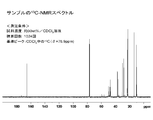
- FIG. It is a figure which shows the 13 C-NMR spectrum of the glycinamide derivative synthesize
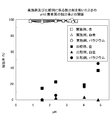
- money, platinum, and palladium are extracted from the acidic solution containing a noble metal using the noble metal extractant of an Example is shown.
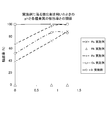
- osmium, rhodium, iridium, ruthenium, and rhenium are extracted from an acidic solution containing osmium, rhodium, iridium, ruthenium, and rhenium using the noble metal extractant of the examples are shown.
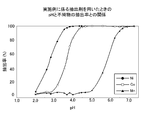
- the result when an impurity is extracted from the acidic solution containing an impurity using the noble metal extractant of an example is shown.
- rhenium is not classified as a noble metal.
- the extractant and the extraction method of the present invention can also extract rhenium, so that it can be handled in the same manner as a noble metal in a narrow sense as described above.
- the noble metal extractant of the present invention comprises an amide derivative represented by the following general formula (I).
- the substituents R 1 and R 2 each represent the same or different alkyl group.
- the alkyl group may be linear or branched.
- R 3 represents a hydrogen atom or an alkyl group.
- R 4 represents a hydrogen atom or an arbitrary group other than an amino group bonded to the ⁇ -carbon as an amino acid.
- the lipophilicity can be increased and used as an extractant.
- the amide derivative is one or more of a glycinamide derivative, a histidine amide derivative, a lysine amide derivative, an aspartic acid amide derivative and a normal-methylglycine derivative.
- the amide derivative is a glycinamide derivative
- the above glycinamide derivative can be synthesized by the following method. First, 2-halogenated acetyl halide is added to an alkylamine having a structure represented by NHR 1 R 2 (R 1 and R 2 are the same as the above substituents R 1 and R 2 ), and an amine is obtained by nucleophilic substitution reaction. Is substituted with 2-halogenated acetyl to give 2-halogenated (N, N-di) alkylacetamide.
- the 2-halogenated (N, N-di) alkylacetamide is added to glycine or an N-alkylglycine derivative, and one of the hydrogen atoms of the glycine or N-alkylglycine derivative is replaced with (N, Substitution with an N-di) alkylacetamide group.
- a glycine alkylamide derivative can be synthesized by these two-step reactions.
- Replacing glycine with histidine, lysine, and aspartic acid can synthesize histidine amide derivatives, lysine amide derivatives, and aspartic acid amide derivatives. From the constant, it is considered to be within the range of the results using the glycine derivative and the histidine amide derivative.
- this acidic aqueous solution is added to the organic solution of the extractant and mixed while adjusting the acidic aqueous solution containing the target noble metal ion. Thereby, the target noble metal ion can be selectively extracted into the organic phase.
- the organic solvent after extraction of the noble metal ions is separated, and by adding a reverse extraction starting solution adjusted to a pH lower than that of the acidic aqueous solution and stirring, the target noble metal ions are extracted and separated into the organic solvent. Furthermore, the target noble metal ion can be recovered in the aqueous solution by back extracting the target noble metal ion from the organic solvent.
- the back extraction solution for example, an aqueous solution in which nitric acid, hydrochloric acid, or sulfuric acid is diluted is preferably used.
- the target noble metal ion can also be concentrated by changing suitably the ratio of an organic phase and an aqueous phase.
- the organic solvent may be any solvent as long as the extractant and the metal extraction species are dissolved, for example, a chlorinated solvent such as chloroform and dichloromethane, an aromatic hydrocarbon such as benzene, toluene, and xylene, Examples thereof include aliphatic hydrocarbons such as hexane. These organic solvents may be used alone or in combination, and alcohols such as 1-octanol may be mixed.
- a chlorinated solvent such as chloroform and dichloromethane
- an aromatic hydrocarbon such as benzene, toluene, and xylene
- aliphatic hydrocarbons such as hexane.
- the concentration of the extractant can be set as appropriate depending on the type and concentration of the noble metal.
- the stirring time and the extraction temperature are appropriately set according to the conditions of the acidic aqueous solution of the noble metal ion and the organic solution of the extractant because the equilibrium time varies depending on the type and concentration of the noble metal and the amount of the extractant to be added. Good.
- the pH of the acidic aqueous solution containing metal ions can also be adjusted as appropriate depending on the type of noble metal.
- any amino derivative may be used as the extractant as long as it is the above amino derivative.
- pH it can use for extraction in the wide range ranging from the strongly acidic area
- impurities are contained in an acidic aqueous solution containing a noble metal, it is preferable to add an organic solution of an extractant while adjusting the pH so that impurities are hardly extracted.
- the impurity contains manganese, it can be subjected to extraction in a wide range from the above strongly acidic region having a pH of about 0.8 to a weakly acidic region having a pH of 3.5 or more.
- the pH is preferably 3.0 or less, and more preferably 2.5 or less.
- the impurity contains nickel, the pH is preferably 2.5 or less, and more preferably 2.0 or less.
- the lower limit of the pH is not particularly limited, it is considered that when a high concentration of acid is mixed, the back extraction of the noble metal proceeds, and in general, the extraction agent that is an organic substance is accelerated by the acid.
- the pH during extraction is preferably about 1 or more, more preferably 1.5 or more.
- platinum, palladium, osmium, etc. among the platinum group elements show good extraction behavior in the above pH range of 1 to 1.5, but rhodium does not extract specific behavior. Show.
- platinum group components other than rhodium can be extracted from the acidic solution containing the platinum group components in the pH range and separated from rhodium.
- rhenium, osmium, iridium, and ruthenium extracted in the extractant for example, when back extraction is performed using a 3M hydrochloric acid solution, 56% of the extracted rhenium and 73% of iridium are back extracted. Ruthenium and osmium are hardly back-extracted at less than 1%. Using this property, iridium can be effectively separated from osmium and ruthenium.
- back extraction is performed by mixing a second acidic solution having a pH lower than that of the original acidic solution, and then separating the extractant from the acidic solution, thereby extracting palladium.
- gold can be recovered, for example, by electrolytically collecting a back extract.
- Platinum can be recovered by adding a reducing agent such as hydrazine.
- Silver can be recovered by blowing a gas such as sulfur dioxide and reducing it.
- D2EHAG a glycinamide derivative represented by the following general formula (I), that is, N- [N, N-bis (2-ethylhexyl) aminocarbonyl into which two 2-ethylhexyl groups are introduced Methyl] glycine (N- [N,
- D2EHAG was synthesized as follows. First, as shown in the following reaction formula (II), 23.1 g (0.1 mol) of commercially available di (2-ethylhexyl) amine and 10.1 g (0.1 mol) of triethylamine were separated into chloroform. Then, 13.5 g (0.12 mol) of 2-chloroacetyl chloride was added dropwise, then washed once with 1 mol / l hydrochloric acid, then with ion-exchanged water, and the chloroform phase was separated. did. Next, an appropriate amount (about 10 to 20 g) of anhydrous sodium sulfate was added and dehydrated, followed by filtration to obtain 29.1 g of a yellow liquid.
- reaction formula (II) 23.1 g (0.1 mol) of commercially available di (2-ethylhexyl) amine and 10.1 g (0.1 mol) of triethylamine were separated into chloroform. Then,
- reaction formula (III) methanol is added to and dissolved in 8.0 g (0.2 mol) of sodium hydroxide, and the solution in which 15.01 g (0.2 mol) of glycine is further added is stirred. Then, 12.72 g (0.04 mol) of the above CDEHAA was slowly added dropwise and stirred. After completion of the stirring, the solvent in the reaction solution was distilled off, and chloroform was added to the residue to dissolve it. The solution was acidified by adding 1 mol / l sulfuric acid, washed with ion-exchanged water, and the chloroform phase was separated. An appropriate amount of anhydrous magnesium sulfate was added to the chloroform phase for dehydration and filtration.
- the solvent was removed again under reduced pressure to obtain 12.5 g of a yellow paste.
- the yield based on the above CDEHAA amount was 87%.
- the structure of the yellow paste was identified by NMR and elemental analysis, it was confirmed that it had a D2EHAG structure as shown in FIGS.
- the noble metal extractant of an Example was obtained through said process.
- DODGAA DODGAA synthesis was performed as follows. First, as shown in the following reaction formula (VI), 4.2 g of diglycolic anhydride was placed in a round bottom flask and suspended in 40 ml of dichloromethane. Thereafter, 7 g of dioctylamine (purity 98%) was dissolved in 10 ml of dichloromethane and slowly added with a dropping funnel. While stirring at room temperature, it was confirmed that diglycolic anhydride reacted and the solution became transparent, and the reaction was terminated.
- reaction formula (VI) 4.2 g of diglycolic anhydride was placed in a round bottom flask and suspended in 40 ml of dichloromethane. Thereafter, 7 g of dioctylamine (purity 98%) was dissolved in 10 ml of dichloromethane and slowly added with a dropping funnel. While stirring at room temperature, it was confirmed that diglycolic anhydride reacted and the solution became transparent, and the reaction was terminate
- the solution was washed with water to remove water-soluble impurities. Then, sodium sulfate was added as a dehydrating agent to the solution after washing with water. The solution was filtered with suction, and then the solvent was evaporated. And after recrystallizing (three times) using hexane, it vacuum-dried. The yield of the obtained substance was 9.57 g, and the yield based on the above diglycolic anhydride was 94.3%. And when the structure of the obtained substance was identified by NMR and elemental analysis, it was confirmed that it was DODGAA having a purity of 99% or more.
- ICP-AES induction plasma emission spectroscopic analyzer
- the organic phase was back extracted with 1 mol / l hydrochloric acid. Then, the gold concentration, platinum concentration, and palladium concentration in the back extraction phase were measured using ICP-AES.
- white squares indicate the gold extraction rate when using the example extractant
- white triangles indicate the platinum extraction rate when using the example extractant
- Open circles indicate the extraction rate of palladium when the extractant of the example is used.
- the black squares indicate the gold extraction rate when the comparative extractant is used
- the black triangles indicate the platinum extraction rate when the comparative extractant is used.
- the circles indicate the extraction rate of palladium when the comparative extractant is used.
- the extraction rate of gold, platinum or palladium exceeds 95% even in a strongly acidic region having a pH of about 1.0.
- white squares indicate the extraction rate of osmium when the extractant of the example is used, and white triangles indicate the extraction rate of rhodium when the extractant of the example is used, Open circles indicate the iridium extraction rate when the extractant of the example is used. Further, “x” indicates the extraction rate of ruthenium when using the extractant of the example, and “+” indicates the extraction rate of rhenium when the extractant of the example is used.
- Rhenium, iridium and ruthenium have an extraction rate of about 40 to 70% around pH 0, but when the pH exceeds 1, an extraction rate of over 80% can be obtained and can be used without any industrial problems.
- osmium had an extraction rate of 95% or more even in a strongly acidic state near pH 0. Therefore, especially when you want to separate rhenium, iridium, and ruthenium from a solution containing impurities such as nickel and cobalt, the pH is extracted between 1 and 2, thereby improving the separation efficiency from impurities while maintaining a high extraction rate. Can be increased.
- Impurities were extracted using the noble metal extractant of the example.
- Several types of sulfuric acid acid solutions containing nickel, cobalt, and manganese, each containing 1 ⁇ 10 ⁇ 4 mol / l and pH adjusted to 2.5-7.5, and 0.01 mol / l valuable metal extractant with the same volume The normal decane solution containing was added to a test tube, placed in a thermostatic chamber at 25 ° C., and shaken for 24 hours. At this time, the pH of the sulfuric acid solution was adjusted using sulfuric acid, ammonium sulfate and ammonia having a concentration of 0.1 mol / l.
- the aqueous phase was fractionated and the cobalt concentration and manganese concentration were measured using an induction plasma emission spectroscopic analyzer (ICP-AES).
- ICP-AES induction plasma emission spectroscopic analyzer
- the organic phase was back extracted with 1 mol / l sulfuric acid.
- the nickel concentration, cobalt concentration and manganese concentration in the back extraction phase were measured using ICP-AES. From these measurement results, the extraction rates of nickel, cobalt, and manganese were defined by the amount in the organic phase / (the amount in the organic phase + the amount in the aqueous phase).
- the results when using the valuable metal extractant of the example are shown in FIG.
- 5 is the pH of the sulfuric acid acidic solution
- the vertical axis is the extraction rate (unit:%) of nickel, cobalt, or manganese.
- circles indicate nickel extraction rates
- squares indicate cobalt extraction rates
- triangles indicate manganese extraction rates.
- the noble metal extractant of the example When the noble metal extractant of the example is used, manganese is not extracted from a strongly acidic region having a pH of about 0.8 to a weakly acidic region having a pH of 3.5 or more. Further, cobalt is not extracted at pH 3.0 or lower, and more preferably 2.5 or lower. And nickel is not extracted at pH 2.5 or less, and it is more preferable in it being 2.0 or less.
- this extraction characteristic for example, from a high-concentration acid solution in which scraps of electronic materials are dissolved, noble metals can be directly extracted, separated and recovered, and then manganese, cobalt, and nickel can be recovered from the extraction residue. Therefore, the precious metal can be recovered very efficiently.
Landscapes
- Chemical & Material Sciences (AREA)
- Engineering & Computer Science (AREA)
- Organic Chemistry (AREA)
- Mechanical Engineering (AREA)
- Manufacturing & Machinery (AREA)
- Materials Engineering (AREA)
- Metallurgy (AREA)
- Geology (AREA)
- Geochemistry & Mineralogy (AREA)
- General Life Sciences & Earth Sciences (AREA)
- Life Sciences & Earth Sciences (AREA)
- Environmental & Geological Engineering (AREA)
- Manufacture And Refinement Of Metals (AREA)
- Organic Low-Molecular-Weight Compounds And Preparation Thereof (AREA)
Abstract
Description
(1)製錬残渣を塩酸と過酸化水素で塩化溶解(クロリネーション)し、クロリネーション液(A)3Lを得る。この溶液のフリー塩酸濃度が4mol/L以上になるように塩酸の添加量を調整する。
(2)上記白金族元素含有液(クロリネーション液A)をDBC(ジブチルカルビトール)1Lと30分間混合して、金を抽出する。
(3)金抽出残液に苛性ソーダを添加して、フリー塩酸濃度が2mol/Lになるまで中和する。この中和液(Au抽出残液)3LとDHS(ジヘキシルスルフィド)3Lを3時間混合して、パラジウム(Pd)を抽出する。
(4)上記工程(3)で得たPd含有DHSを塩酸3L(濃度1mol/L)で洗浄した後、アンモニアと塩化アンモニウムの水溶液3L(NH3濃度:3mol/L,NH4Cl濃度:1mol/L)を加えてPdを逆抽出する。このPdを逆抽出した水溶液にpH1未満になるまで塩酸を加え、Pdイエローを回収する。このPdイエローをアンモニア水で溶解し、この溶解液にヒドラジンを加えて還元する。
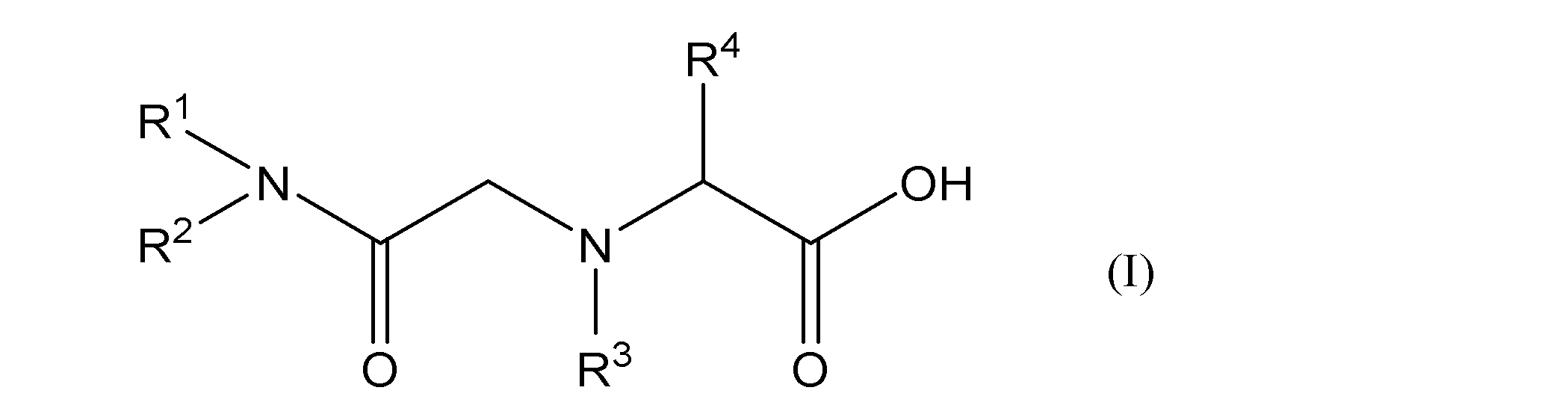
本発明の貴金属抽出剤は、下記一般式(I)で表されるアミド誘導体からなる。

上記方法によって合成した抽出剤を用いて貴金属イオンを抽出するには、目的の貴金属イオンを含む酸性水溶液を調整しながら、この酸性水溶液を、上記抽出剤の有機溶液に加えて混合する。これによって、有機相に目的の貴金属イオンを選択的に抽出することができる。
貴金属を含有する酸性水溶液から、貴金属を効率的に抽出する際、上記のアミノ誘導体であれば、いずれのアミノ誘導体を抽出剤としてもよい。
抽出剤となるアミド誘導体の一例として、下記一般式(I)で表されるグリシンアミド誘導体、すなわち、2つの2-エチルヘキシル基を導入したN-[N,N-ビス(2-エチルヘキシル)アミノカルボニルメチル]グリシン(N-[N,N-Bis(2-ethylhexyl)aminocarbonylmethyl]glycine)(あるいはN,N-ジ(2-エチルヘキシル)アセトアミド-2-グリシン(N,N-di(2-ethylhexyl)acetamide-2-glycine)ともいい、以下「D2EHAG」という。)を合成した。
次に、無水硫酸ナトリウムを適量(約10~20g)加え、脱水した後、ろ過し、黄色液体29.1gを得た。この黄色液体(反応生成物)の構造を、核磁気共鳴分析装置(NMR)を用いて同定したところ、上記黄色液体は、2-クロロ-N,N-ジ(2-エチルヘキシル)アセトアミド(以下「CDEHAA」という。)の構造であることが確認された。なお、CDEHAAの収率は、原料であるジ(2-エチルヘキシル)アミンに対して90%であった。

このクロロホルム相に無水硫酸マグネシウム適量を加え脱水し、ろ過した。再び溶媒を減圧除去し、12.5gの黄色糊状体を得た。上記のCDEHAA量を基準とした収率は87%であった。黄色糊状体の構造をNMR及び元素分析により同定したところ、図1及び図2に示すように、D2EHAGの構造を持つことが確認された。上記の工程を経て、実施例の貴金属抽出剤を得た。

比較例として、N,N-ジオクチル-3-オキサペンタン-1,5-アミド酸(以下、「DODGAA」という。)を用いた。

実施例(D2EHAG)及び比較例(DODGAA)に係る抽出剤を用いて、貴金属の抽出分離を行った。
代表的な貴金属として、金と白金、パラジウムをそれぞれ1×10⁻⁴mol/l含み、pHを0.8~10.3に調整した数種類の塩酸酸性溶液を元液とし、それと同体積の0.01mol/lの貴金属抽出剤を含むノルマルドデカン溶液を試験管に加えて25℃恒温庫内に入れ、24時間振とうした。このとき、塩酸溶液のpHは、濃度0.1mol/lの塩酸や濃度1mol/lの水酸化ナトリウム溶液を用いて調整した。
オスミウム、ロジウム、イリジウム、ルテニウム、レニウムをそれぞれ1×10⁻⁴mol/l含み、pHを0~1.2に調整した数種類の塩酸酸性溶液を元液としたこと以外は、上記〔金、白金、パラジウムの抽出分離〕で説明した手法と同様の手法にて、実施例に係る貴金属抽出剤(D2EHAG)による溶媒抽出及び有機相の逆抽出を行った。そして、逆抽出相中の各種金属濃度を、ICP-AESを用いて測定した。
実施例の貴金属抽出剤を用いて、不純物の抽出を行った。
ニッケルとコバルトとマンガンをそれぞれ1×10⁻⁴mol/l含み、pHを2.5~7.5に調整した数種類の硫酸酸性溶液と、それと同体積の0.01mol/lの有価金属抽出剤を含むノルマルドデカン溶液を試験管に加えて25℃恒温庫内に入れ、24時間振とうした。このとき、硫酸溶液のpHは、濃度0.1mol/lの硫酸、硫酸アンモニウム及びアンモニアを用いて調整した。
Claims (9)
- 下記一般式(I)で表されるアミド誘導体からなる、貴金属抽出剤。

- 前記アミド誘導体がグリシンアミド誘導体、ヒスチジンアミド誘導体、リジンアミド誘導体、アスパラギン酸アミド誘導体及びノルマル-メチルグリシン誘導体のいずれか1以上である、請求項1に記載の貴金属抽出剤。
- 貴金属を含有する酸性溶液を、請求項1又は2に記載の貴金属抽出剤による溶媒抽出に付し、前記酸性溶液から前記貴金属を抽出する貴金属抽出方法。
- 前記酸性溶液のpHを3.5以下に調整しながら前記酸性溶液を前記溶媒抽出に付す、請求項1から3のいずれかに記載の貴金属抽出方法。
- 前記酸性溶液は、前記貴金属のほか、マンガン、ニッケル及び/又はコバルトの少なくとも一以上を含み、
前記酸性溶液のpHを2.5以下に調整しながら前記酸性溶液を前記溶媒抽出に付す、請求項1から3のいずれかに記載の貴金属抽出方法。 - 請求項3から5のいずれかに記載の貴金属抽出方法を使用した後、前記酸性溶液から前記貴金属を抽出した前記抽出剤に対し、前記酸性溶液よりもpHが低い第2酸性溶液を混合することで逆抽出を行い、その後、前記抽出剤と前記第2酸性溶液とを分離することで、パラジウムと他の貴金属とを分離する、パラジウム分離方法。
- 請求項3から5のいずれかに記載の貴金属抽出方法を使用した後、前記酸性溶液から前記貴金属を抽出した前記抽出剤に対し、前記酸性溶液よりもpHが低い第2酸性溶液を混合することで逆抽出を行い、その後、前記抽出剤と前記第2酸性溶液とを分離することで、レニウムと他の貴金属とを分離する、レニウム分離方法。
- ロジウムのほか、白金、オスミウム、イリジウム、パラジウムの少なくとも一以上を含む酸性溶液のpHを2.5以下に調整しながら、請求項1又は2に記載の貴金属抽出剤による溶媒抽出に付し、前記ロジウムと他の金属とを分離する、ロジウム分離方法。
- イリジウムのほか、オスミウム、ルテニウムの少なくとも一以上を含む酸性溶液を、請求項1又は2に記載の貴金属抽出剤による溶媒抽出に付し、次いで、前記酸性溶液のpHを1.5以下に調整した第2酸性溶液を混合することで逆抽出を行い、その後、前記抽出剤と前記第2酸性溶液とを分離することで、イリジウムをオスミウム、ルテニウムから分離する、イリジウム分離方法。
Priority Applications (6)
| Application Number | Priority Date | Filing Date | Title |
|---|---|---|---|
| CA2903182A CA2903182C (en) | 2013-04-15 | 2014-04-08 | Extraction agent for precious metals and rhenium, and extraction method for precious metals and rhenium using same |
| US14/779,908 US9435006B2 (en) | 2013-04-15 | 2014-04-08 | Extraction agent for precious metals and rhenium, and extraction method for precious metals and rhenium using same |
| CN201480019608.7A CN105074023B (zh) | 2013-04-15 | 2014-04-08 | 贵金属及铼提取剂、以及使用该提取剂的贵金属及铼的提取方法 |
| AU2014254972A AU2014254972C1 (en) | 2013-04-15 | 2014-04-08 | Extraction agent for precious metals and rhenium, and extraction method for precious metals and rhenium using same |
| EP14785986.2A EP2960349B1 (en) | 2013-04-15 | 2014-04-08 | Extraction agent for precious metals and rhenium, and extraction method for precious metals and rhenium using same |
| PH12015501867A PH12015501867B1 (en) | 2013-04-15 | 2015-08-25 | Extraction agent for precious metals and rhenium, and extraction method for precious metals and rhenium using same |
Applications Claiming Priority (4)
| Application Number | Priority Date | Filing Date | Title |
|---|---|---|---|
| JP2013085000 | 2013-04-15 | ||
| JP2013-085000 | 2013-04-15 | ||
| JP2014-079153 | 2014-04-08 | ||
| JP2014079153A JP5676797B2 (ja) | 2013-04-15 | 2014-04-08 | 金属抽出剤、金属抽出方法、パラジウム分離方法、レニウム分離方法、ロジウム分離方法及びイリジウム分離方法 |
Publications (1)
| Publication Number | Publication Date |
|---|---|
| WO2014171370A1 true WO2014171370A1 (ja) | 2014-10-23 |
Family
ID=51731313
Family Applications (1)
| Application Number | Title | Priority Date | Filing Date |
|---|---|---|---|
| PCT/JP2014/060211 Ceased WO2014171370A1 (ja) | 2013-04-15 | 2014-04-08 | 貴金属及びレニウム抽出剤、並びにこの抽出剤を用いた貴金属及びレニウム抽出方法 |
Country Status (7)
| Country | Link |
|---|---|
| US (1) | US9435006B2 (ja) |
| JP (1) | JP5676797B2 (ja) |
| CN (1) | CN105074023B (ja) |
| AU (1) | AU2014254972C1 (ja) |
| CA (1) | CA2903182C (ja) |
| PH (1) | PH12015501867B1 (ja) |
| WO (1) | WO2014171370A1 (ja) |
Families Citing this family (9)
| Publication number | Priority date | Publication date | Assignee | Title |
|---|---|---|---|---|
| CN104524808B (zh) * | 2014-12-29 | 2016-06-08 | 东南大学 | 3-硫戊二酰胺类萃取剂及其在萃取钯上的应用 |
| JP6614654B2 (ja) * | 2015-11-25 | 2019-12-04 | 国立研究開発法人日本原子力研究開発機構 | ニトリロ酢酸ジアセトアミド化合物、抽出剤、及び抽出方法 |
| CN108531746B (zh) * | 2017-03-02 | 2020-07-14 | 厦门稀土材料研究所 | 一种贵金属分离用萃取剂和应用该萃取剂萃取分离贵金属的方法 |
| CN109082544B (zh) * | 2017-06-14 | 2021-05-18 | 厦门稀土材料研究所 | 一种含有有效官能团的萃取剂和吸附剂及其在钍金属萃取分离中的应用 |
| JP7524790B2 (ja) * | 2020-02-25 | 2024-07-30 | 住友金属鉱山株式会社 | 貴金属元素の分析方法およびその分離方法 |
| CN115677528B (zh) * | 2022-11-03 | 2025-02-25 | 厦门稀土材料研究所 | 一种分离铼和锝的方法 |
| CN117987644B (zh) * | 2024-02-18 | 2026-03-20 | 中国标准化研究院 | 一种萃取剂及其在复杂基体中萃取金属的应用 |
| CN118479980B (zh) * | 2024-07-11 | 2024-10-18 | 长春黄金研究院有限公司 | 可降解-环保萃取剂及其分离工业废水中钼、钨、锰、铼的方法 |
| CN119707996B (zh) * | 2025-02-24 | 2025-07-22 | 长春黄金研究院有限公司 | 萃取剂及其分离工业废水中铼的方法 |
Citations (6)
| Publication number | Priority date | Publication date | Assignee | Title |
|---|---|---|---|---|
| JPH07286221A (ja) * | 1994-04-15 | 1995-10-31 | Sumitomo Metal Mining Co Ltd | 非鉄金属製錬工程からのレニウムの回収方法 |
| JP2001098335A (ja) * | 1999-08-05 | 2001-04-10 | Anglo American Platinum Corp Ltd | 白金族金属の分離 |
| JP2012012371A (ja) * | 2010-07-05 | 2012-01-19 | Shin-Etsu Chemical Co Ltd | 希土類金属抽出剤の合成方法 |
| JP2012167367A (ja) | 2011-01-28 | 2012-09-06 | Mitsubishi Materials Corp | 白金族金属の回収方法 |
| JP2013032563A (ja) * | 2011-08-01 | 2013-02-14 | Univ Of Miyazaki | 金属の選択的抽出剤 |
| WO2013069562A1 (ja) * | 2011-11-09 | 2013-05-16 | 国立大学法人九州大学 | 有価金属抽出剤及びこの抽出剤を用いた有価金属抽出方法 |
Family Cites Families (2)
| Publication number | Priority date | Publication date | Assignee | Title |
|---|---|---|---|---|
| US5326760A (en) * | 1992-06-29 | 1994-07-05 | Glaxo, Inc. | Aminobutanoic acid compounds having metalloprotease inhibiting properties |
| CN102703711B (zh) * | 2012-06-28 | 2013-12-18 | 株洲凯特高新材料有限公司 | 一种从含铼废液中提取铼的方法 |
-
2014
- 2014-04-08 AU AU2014254972A patent/AU2014254972C1/en active Active
- 2014-04-08 CN CN201480019608.7A patent/CN105074023B/zh active Active
- 2014-04-08 WO PCT/JP2014/060211 patent/WO2014171370A1/ja not_active Ceased
- 2014-04-08 US US14/779,908 patent/US9435006B2/en active Active
- 2014-04-08 CA CA2903182A patent/CA2903182C/en active Active
- 2014-04-08 JP JP2014079153A patent/JP5676797B2/ja active Active
-
2015
- 2015-08-25 PH PH12015501867A patent/PH12015501867B1/en unknown
Patent Citations (6)
| Publication number | Priority date | Publication date | Assignee | Title |
|---|---|---|---|---|
| JPH07286221A (ja) * | 1994-04-15 | 1995-10-31 | Sumitomo Metal Mining Co Ltd | 非鉄金属製錬工程からのレニウムの回収方法 |
| JP2001098335A (ja) * | 1999-08-05 | 2001-04-10 | Anglo American Platinum Corp Ltd | 白金族金属の分離 |
| JP2012012371A (ja) * | 2010-07-05 | 2012-01-19 | Shin-Etsu Chemical Co Ltd | 希土類金属抽出剤の合成方法 |
| JP2012167367A (ja) | 2011-01-28 | 2012-09-06 | Mitsubishi Materials Corp | 白金族金属の回収方法 |
| JP2013032563A (ja) * | 2011-08-01 | 2013-02-14 | Univ Of Miyazaki | 金属の選択的抽出剤 |
| WO2013069562A1 (ja) * | 2011-11-09 | 2013-05-16 | 国立大学法人九州大学 | 有価金属抽出剤及びこの抽出剤を用いた有価金属抽出方法 |
Also Published As
| Publication number | Publication date |
|---|---|
| US9435006B2 (en) | 2016-09-06 |
| CA2903182C (en) | 2016-10-04 |
| PH12015501867A1 (en) | 2015-12-07 |
| AU2014254972B2 (en) | 2015-10-22 |
| AU2014254972C1 (en) | 2016-02-04 |
| PH12015501867B1 (en) | 2015-12-07 |
| CN105074023A (zh) | 2015-11-18 |
| JP2014224312A (ja) | 2014-12-04 |
| US20160047012A1 (en) | 2016-02-18 |
| CA2903182A1 (en) | 2014-10-23 |
| CN105074023B (zh) | 2016-09-14 |
| JP5676797B2 (ja) | 2015-02-25 |
Similar Documents
| Publication | Publication Date | Title |
|---|---|---|
| JP5676797B2 (ja) | 金属抽出剤、金属抽出方法、パラジウム分離方法、レニウム分離方法、ロジウム分離方法及びイリジウム分離方法 | |
| CA2837834C (en) | Scandium extraction method | |
| JP6556685B2 (ja) | 白金抽出剤、白金の抽出方法、及び白金の回収方法 | |
| CN104583426B (zh) | 镓提取剂以及镓提取方法 | |
| JP5420033B1 (ja) | インジウム抽出剤およびこの抽出剤を用いたインジウム抽出方法 | |
| EP2960349B1 (en) | Extraction agent for precious metals and rhenium, and extraction method for precious metals and rhenium using same | |
| CN104995319B (zh) | 有价金属萃取方法 | |
| JP5940688B1 (ja) | ジルコニウム抽出剤及びジルコニウム抽出方法 | |
| JP5442080B2 (ja) | 有価金属分離方法 |
Legal Events
| Date | Code | Title | Description |
|---|---|---|---|
| WWE | Wipo information: entry into national phase |
Ref document number: 201480019608.7 Country of ref document: CN |
|
| 121 | Ep: the epo has been informed by wipo that ep was designated in this application |
Ref document number: 14785986 Country of ref document: EP Kind code of ref document: A1 |
|
| ENP | Entry into the national phase |
Ref document number: 2903182 Country of ref document: CA |
|
| REEP | Request for entry into the european phase |
Ref document number: 2014785986 Country of ref document: EP |
|
| WWE | Wipo information: entry into national phase |
Ref document number: 2014785986 Country of ref document: EP |
|
| WWE | Wipo information: entry into national phase |
Ref document number: 2014254972 Country of ref document: AU |
|
| WWE | Wipo information: entry into national phase |
Ref document number: 14779908 Country of ref document: US |
|
| NENP | Non-entry into the national phase |
Ref country code: DE |
|
| WWE | Wipo information: entry into national phase |
Ref document number: IDP00201507356 Country of ref document: ID |