WO2014181779A1 - 移動局、基地局、移動通信システム、送信制御方法及び受信制御方法 - Google Patents
移動局、基地局、移動通信システム、送信制御方法及び受信制御方法 Download PDFInfo
- Publication number
- WO2014181779A1 WO2014181779A1 PCT/JP2014/062191 JP2014062191W WO2014181779A1 WO 2014181779 A1 WO2014181779 A1 WO 2014181779A1 JP 2014062191 W JP2014062191 W JP 2014062191W WO 2014181779 A1 WO2014181779 A1 WO 2014181779A1
- Authority
- WO
- WIPO (PCT)
- Prior art keywords
- mobile station
- base station
- transmitted
- quality information
- csi
- Prior art date
- Legal status (The legal status is an assumption and is not a legal conclusion. Google has not performed a legal analysis and makes no representation as to the accuracy of the status listed.)
- Ceased
Links
Images




Classifications
-
- H—ELECTRICITY
- H04—ELECTRIC COMMUNICATION TECHNIQUE
- H04W—WIRELESS COMMUNICATION NETWORKS
- H04W52/00—Power management, e.g. Transmission Power Control [TPC] or power classes
- H04W52/02—Power saving arrangements
- H04W52/0209—Power saving arrangements in terminal devices
- H04W52/0212—Power saving arrangements in terminal devices managed by the network, e.g. network or access point is leader and terminal is follower
- H04W52/0216—Power saving arrangements in terminal devices managed by the network, e.g. network or access point is leader and terminal is follower using a pre-established activity schedule, e.g. traffic indication frame
-
- H—ELECTRICITY
- H04—ELECTRIC COMMUNICATION TECHNIQUE
- H04L—TRANSMISSION OF DIGITAL INFORMATION, e.g. TELEGRAPHIC COMMUNICATION
- H04L1/00—Arrangements for detecting or preventing errors in the information received
- H04L1/0001—Systems modifying transmission characteristics according to link quality, e.g. power backoff
- H04L1/0023—Systems modifying transmission characteristics according to link quality, e.g. power backoff characterised by the signalling
- H04L1/0027—Scheduling of signalling, e.g. occurrence thereof
-
- H—ELECTRICITY
- H04—ELECTRIC COMMUNICATION TECHNIQUE
- H04W—WIRELESS COMMUNICATION NETWORKS
- H04W24/00—Supervisory, monitoring or testing arrangements
- H04W24/10—Scheduling measurement reports ; Arrangements for measurement reports
-
- H—ELECTRICITY
- H04—ELECTRIC COMMUNICATION TECHNIQUE
- H04W—WIRELESS COMMUNICATION NETWORKS
- H04W72/00—Local resource management
- H04W72/20—Control channels or signalling for resource management
- H04W72/21—Control channels or signalling for resource management in the uplink direction of a wireless link, i.e. towards the network
-
- H—ELECTRICITY
- H04—ELECTRIC COMMUNICATION TECHNIQUE
- H04W—WIRELESS COMMUNICATION NETWORKS
- H04W72/00—Local resource management
- H04W72/50—Allocation or scheduling criteria for wireless resources
- H04W72/54—Allocation or scheduling criteria for wireless resources based on quality criteria
-
- H—ELECTRICITY
- H04—ELECTRIC COMMUNICATION TECHNIQUE
- H04W—WIRELESS COMMUNICATION NETWORKS
- H04W76/00—Connection management
- H04W76/20—Manipulation of established connections
- H04W76/28—Discontinuous transmission [DTX]; Discontinuous reception [DRX]
-
- H—ELECTRICITY
- H04—ELECTRIC COMMUNICATION TECHNIQUE
- H04W—WIRELESS COMMUNICATION NETWORKS
- H04W52/00—Power management, e.g. Transmission Power Control [TPC] or power classes
- H04W52/04—Transmission power control [TPC]
- H04W52/18—TPC being performed according to specific parameters
- H04W52/24—TPC being performed according to specific parameters using SIR [Signal to Interference Ratio] or other wireless path parameters
- H04W52/241—TPC being performed according to specific parameters using SIR [Signal to Interference Ratio] or other wireless path parameters taking into account channel quality metrics, e.g. SIR, SNR, CIR or Eb/lo
-
- Y—GENERAL TAGGING OF NEW TECHNOLOGICAL DEVELOPMENTS; GENERAL TAGGING OF CROSS-SECTIONAL TECHNOLOGIES SPANNING OVER SEVERAL SECTIONS OF THE IPC; TECHNICAL SUBJECTS COVERED BY FORMER USPC CROSS-REFERENCE ART COLLECTIONS [XRACs] AND DIGESTS
- Y02—TECHNOLOGIES OR APPLICATIONS FOR MITIGATION OR ADAPTATION AGAINST CLIMATE CHANGE
- Y02D—CLIMATE CHANGE MITIGATION TECHNOLOGIES IN INFORMATION AND COMMUNICATION TECHNOLOGIES [ICT], I.E. INFORMATION AND COMMUNICATION TECHNOLOGIES AIMING AT THE REDUCTION OF THEIR OWN ENERGY USE
- Y02D30/00—Reducing energy consumption in communication networks
- Y02D30/70—Reducing energy consumption in communication networks in wireless communication networks
Definitions
- the present invention relates to a mobile station and a base station in a mobile communication system such as LTE, and particularly relates to a technique for controlling signal transmission / reception between a mobile station and a base station in a mobile communication system to which DRX control is applied. Is.
- the base station DRX Discontinuous Reception control for intermittently receiving a downlink control channel (PDCCH: Physical Downlink Control Channel) transmitted from (eNB) only for a specific period is adopted (for example, Non-Patent Document 1). reference).
- the mobile station is managed as either the Active state or the Inactive state based on the RRC Connected of the mobile station that has transitioned to the DRX state by the DRX control.
- the mobile station that has transitioned to the Active state monitors the PDCCH and transmits CSI (Channel State Information: channel state information) / SRS (Sounding Reference Signal: reference signal for uplink channel quality measurement) to the base station (“CSI”). / SRS reporting ”).
- the CSI includes channel quality information (CQI), precoding matrix index (PMI), rank index (RI), and the like.
- CQI channel quality information
- PMI precoding matrix index
- RI rank index
- the time in the Active state is also referred to as Active Time.
- one of the triggers for the mobile station to transition to the inactive state is when drx-InactivityTimer has expired.
- Another example of a transition to another inactive state is when a mobile station receives a DRX command MAC Control Element (hereinafter, DRX command MAC CE) transmitted by a base station (the mobile station receives a DRX command MAC CE). Then, drx-InactivityTimer is forcibly stopped).
- DRX command MAC CE DRX command MAC Control Element
- drx-InactivityTimer is forcibly stopped).
- SR scheduling request
- the process related to CSI / SRS in the above-described conventional DRX control has the following problems.
- the mobile station in the active state if the Active Time is suddenly extended, the mobile station cannot transmit CSI / SRS (CSI or SRS), or if the Active Time ends suddenly, the CSI / SRS transmission can be stopped. There is a problem of not being.
- the base station since the base station may or may not transmit CSI / SRS from the mobile station as described above, there is a problem that a processing load is required to cope with both cases. .
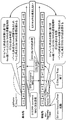
- an example of this event will be specifically described with reference to FIGS. 1A and 1B.
- FIG. 1A is a diagram illustrating operations of a mobile station and a base station in DRX control. Note that “n” (“n ⁇ 3” to “n + 9”) in FIGS. 1A and 1B is a subframe (subframe: 1 ms).
- the drx-InactivityTimer is activated in the mobile station (S11).
- the base station transmits a DRX command MAC CE to the target mobile station in order to transition the DRX state of the mobile station to the inactive state (S12).
- the mobile station that has received the DRX command MAC CE stops the active drx-InactivityTimer and ends the Active Time (S13).
- the mobile station since the Active Time suddenly ended in response to reception of the DRX command MAC CE in the mobile station, there is a possibility that the CSI / SRS transmission cannot be stopped immediately. Therefore, the mobile station transmits CSI / SRS to the base station (S14). On the other hand, the base station is unclear whether the mobile station that transmitted the DRX command MAC CE in step S12 has stopped the CSI / SRS transmission process. That is, there is a problem in that a mismatch (mismatch) occurs because the base station and the mobile station cannot specify the operation of the CSI / SRS process different from the operation expected for the CSI / SRS process.
- mismatch mismatch
- the base station determines the link quality of the mobile station. In this estimation process, noise, interference, and the like are decoded and the quality is estimated based on these, so that the estimation accuracy is lowered.
- the uplink (UL) transmitted from the other mobile station There is an effect that it collides with the signal and causes interference.
- the state of the mobile station after the elapse of 4 ms is estimated based on the state of the mobile station at each time point (subframe (TTI)) and information (whether it is the active state or the like).
- a process of determining whether or not to transmit CSI / SRS after 4 ms has elapsed (referred to as n-4approach) is disclosed (for example, see Non-Patent Document 2). In this case, even if an event that changes the state of the mobile station at the subframe “n” time point occurs from the subframe “n-4” time point to the subframe “n” where 4 ms elapses, the subframe “n-4” time point occurs.
- Whether or not CSI / SRS is transmitted at subframe “n” is controlled based on the determination at the time.
- n-4approach when the estimated state (estimated state) of the mobile station after elapse of 4 ms (ie, subframe “n”) at the subframe “n-4” time point is the Active state, the subframe “n” At this point, the mobile station performs CSI / SRS transmission processing, and the base station performs reception processing.
- the mobile station CSI / SRS transmission processing is not performed, and the base station does not perform reception processing.
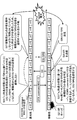
- FIG. 1B is a diagram illustrating operations of a mobile station and a base station in DRX control when n-4approach is applied.
- the mobile station transmits CSI / SRS after 4 ms (subframe “n + 2”) based on the estimated state after 4 ms at the time of subframe “n-2”. It is determined whether or not to perform processing (S11a).
- S11a perform processing
- the mobile station since the mobile station can estimate that the state after 4 ms at the time of subframe “n-2” is the Active Time, that is, the Active state, the mobile station transmits CSI / SRS at the time of subframe “n + 2”. To be controlled. Similarly, the base station determines whether or not to perform CSI / SRS transmission processing after 4 ms (subframe “n + 2”) based on the estimated state after 4 ms at the time of subframe “n ⁇ 2” (S11b). In the example of FIG.
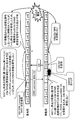
- FIGS. 2A and 2B are diagrams illustrating operations of a mobile station and a base station when SR is triggered in DRX control to which n-4approach is applied.
- FIG. 2A shows an operation when a CSI / SRS transmission (reception) determination process by n-4approach is performed after SR is triggered in the mobile station.
- the SR is transmitted from the mobile station to the base station after a predetermined time elapses after the SR is triggered in the mobile station.
- SR is triggered in the mobile station (S21).
- the base station transmits a DRX command MAC CE to the target mobile station in order to transition the DRX state of the mobile station to the inactive state (S22).
- the mobile station determines whether or not to perform CSI / SRS transmission processing 4 ms later (subframe “n + 4”) based on the state at the time of subframe “n” (S23). .
- the mobile station terminates the Active Time because it has received the DRX command MAC CE at the subframe “n” time point, but the SR is triggered at the subframe “n-3” time point (before the n-4approach determination process). Since it is scheduled to transition to the Active state after SR transmission, control is performed to perform CSI / SRS transmission processing.
- the base station determines whether or not to perform CSI / SRS reception processing after 4 ms (subframe “n + 4”) based on the state at the subframe “n” time point (S24).
- the base station since the base station transmits the DRX command MAC CE at the time of subframe “n”, it is determined that the state of the mobile station is not in the Active state, and the CSI / from the mobile station at time of subframe “n + 4”. It is controlled not to expect transmission of SRS.
- SR based on the trigger in step S21 is transmitted from the mobile station to the base station (S25).
- a mobile station transmits CSI / SRS to a base station based on the determination process of step S23 (S26).
- the base station is controlled not to expect transmission of CSI / SRS from the mobile station based on the determination process in step S24, but receives the SR at the time of subframe “n + 2”. It is unclear whether or not transmission of / SRS should be expected. That is, the mobile station and the base station may be different from operations expected for the CSI / SRS transmission / reception processing, or the operation of the CSI / SRS reporting processing cannot be specified, so that a mismatch may occur.
- FIG. 2B shows an operation when SR is triggered in the mobile station after the CSI / SRS transmission (reception) determination process by n-4approach is performed.
- the mobile station determines whether or not to perform a CSI / SRS transmission process 4 ms later (subframe “n + 4”) based on the state at the subframe “n” time point (S32). .
- the mobile station since the mobile station receives the DRX command MAC CE at the time of subframe “n”, the mobile station performs control so as to terminate the Active Time and not perform the CSI / SRS transmission process.
- SR is triggered in the mobile station (S34), and SR is transmitted (S35). Therefore, at the time when the determination process by n-4approach is performed (subframe “n”), it is not possible to detect that the transition to the Active state based on the SR transmission is scheduled, and thus the CSI / SRS is not transmitted from the mobile station. (S36).
- the operation of the base station is the same as in FIG. 2A. For this reason, the same problem as in FIG. 2A may occur.
- the present invention has been made in view of the above points.
- operations of a mobile station that transmits CSI / SRS as quality information and a base station that expects CSI / SRS are described.
- the purpose is to avoid the occurrence of inconsistencies.
- a mobile station of the present invention is a mobile station that communicates with a base station, and is based on a state of the mobile station that indicates whether or not the mobile station is in an active state in intermittent reception control.
- the mobile station of the present invention is a mobile station that communicates with a base station, and shows radio quality when a predetermined time elapses based on the state of the mobile station that indicates whether it is in an active state in intermittent reception control.
- the base station of the present invention is a base station that communicates with a mobile station, and is based on the state of the mobile station that indicates whether or not it is in an active state in intermittent reception control.
- the control unit may be configured to control so as not to expect the first quality information transmitted from the mobile station after receiving the Scheduling Request.
- a mobile station that transmits CSI / SRS as quality information and CSI / It is possible to avoid occurrence of inconsistency in operation of the base station that expects SRS.
- FIG. 1 is a configuration diagram of a mobile communication system in an embodiment of the present invention. It is a function block diagram of the mobile station UE in embodiment of this invention. It is a function block diagram of the base station eNB in embodiment of this invention.
- embodiments of the present invention will be described with reference to the drawings.
- the embodiment described below is only an example, and the embodiment to which the present invention is applied is not limited to the following embodiment.
- LTE is used as an example of a mobile communication system, but the present invention is not limited to LTE and can be applied.
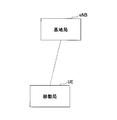
- FIG. 3 is a configuration diagram of the mobile communication system according to the embodiment of the present invention.
- the mobile communication system according to the embodiment of the present invention is an LTE communication system, and includes a base station eNB and a mobile station UE.
- the base station eNB transmits PDCCH, PDSCH, P-HICH (Physical HARQ Indicator Channel) and the like to the mobile station UE.
- PDCCH Physical Downlink Control Channel
- PDSCH Physical Downlink Control Channel
- P-HICH Physical HARQ Indicator Channel
- the mobile station UE transmits PUSCH (Physical Uplink Shared Channel), PUCCH, and PRACH (Physical Random Access Channel) to the base station eNB.
- PUSCH Physical Uplink Shared Channel
- PUCCH Physical Uplink Control Channel
- PRACH Physical Random Access Channel
- the base station eNB transmits downlink information (for example, downlink user data) to the mobile station UE via the DL-SCH mapped to the PDSCH, and the mobile station UE Uplink information (for example, uplink user data) is transmitted to the eNB via the UL-SCH mapped to the PUSCH.
- downlink information for example, downlink user data
- Uplink information for example, uplink user data
- the mobile station UE transmits control information such as “Scheduling Request (SR)” defined in 3GPP to the base station eNB.
- SR Service Request
- FIG. 4 is a functional configuration diagram of the mobile station UE in the embodiment of the present invention.
- the mobile station UE includes a DRX state management unit 11, a CSI / SRS resource management unit 12, a DL signal reception unit 13, and a UL signal transmission unit 14.
- FIG. 4 shows only functional units that are particularly relevant to the present invention in the mobile station UE, and has at least a function (not shown) for performing an operation in conformity with the LTE scheme.
- the DRX state management unit 11 manages whether or not the mobile station UE is in the DRX (intermittent reception) state in the DRX control. Further, the DRX state management unit 11 manages the RRC Connected of the mobile station UE that has transitioned to the DRX state as an Active (active) state or an Inactive state.
- the DRX state management unit 11 manages the mobile station UE as an active state in the following cases (1) to (4).
- drx-InactivityTimer When one of On duration Timer, drx-InactivityTimer, drx-RetransmissionTimer, or mac-contentionResolutionTimer is activated (2) When sending Scheduling Request (SR) (3) For UL HARQ retransmission (4) When Random Access Response is received and then PDCCH instructing new transmission is not received Further, the DRX state management unit 11 starts from the current time (for example, subframe “n”) in the DRX state.
- CSI or SRS (CSI / SRS), which is quality information indicating radio quality, is transmitted when a predetermined time has elapsed (subframe “n + 4”). Is determined based on n-4approach determination processing.
- the n-4approach determination process whether or not the mobile station UE is in the active state (active state determination) is determined based on the determination indices (1) to (4).
- the above (2) includes the case where the SR is actually transmitted and the case where the SR is triggered (the SR is triggered after the SR is triggered). Are sent).
- the determination index used for the active state determination in the n-4approach determination process in the second embodiment to be described later excludes the above (2).
- the CSI / SRS resource management unit 12 allocates CSI / SRS transmission resources from PUCCH resources.
- the DL signal receiving unit 13 receives a DRX command MAC CE or the like transmitted via the DL-SCH by the base station eNB. Then, the DL signal reception unit 13 outputs the received DRX command MAC CE to the DRX state management unit 11.
- the UL signal transmission unit 14 transmits SR, CSI / SRS, and the like to the base station eNB via PUCCH.
- the DL signal receiving unit 13 and the UL signal transmitting unit 14 perform transmission / reception processing of control data (C-plane data) and user data (U-Plane data) other than the above.
- FIG. 5 is a functional configuration diagram of the base station eNB in the embodiment of the present invention.
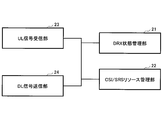
- the base station eNB includes a DRX state management unit 21, a CSI / SRS resource management unit 22, a UL signal reception unit 23, and a DL signal transmission unit 24.
- FIG. 5 shows only functional units that are particularly relevant to the present invention in the base station eNB, and has at least a function (not shown) for performing an operation based on the LTE scheme.
- the DRX state management unit 21 manages whether or not the mobile station UE under the base station eNB is in the DRX state in the DRX control. Specifically, the DRX state management unit 21 activates the destination mobile station UE based on transmission of the DRX command MAC CE that causes the mobile station UE to transition to the inactive state, reception of the SR transmitted from the mobile station UE, or the like. Managed as / Inactive state.
- the DRX state management unit 11 determines whether or not to expect CSI / SRS transmission from the mobile station UE, that is, whether or not to attempt CSI / SRS reception processing based on n-4approach determination processing. .
- the CSI / SRS resource management unit 22 allocates CSI / SRS reception resources from PUCCH resources.
- the UL signal receiving unit 23 receives SR, CSI / SRS and the like transmitted via the PUCCH by the mobile station UE.
- the DL signal transmission unit 24 transmits DRX command MAC CE or the like to the base station eNB via DL-SCH.
- the DL signal transmission unit 24 includes a scheduler function.
- the UL signal receiving unit 23 and the DL signal transmitting unit 24 perform transmission / reception processing of control data and user data other than those described above.
- the mobile station UE Controls to transmit CSI / SRS. That is, the mobile station UE transmits CSI / SRS when SR is transmitted regardless of the determination result by n-4approach.
- the base station eNB After receiving the SR from the mobile station UE, the base station eNB performs control such that “the CSI / SRS is always expected (reception processing is attempted)” from the mobile station UE.
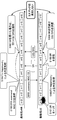
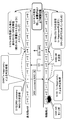
- FIG. 6A shows control contents when SR is triggered before the determination process by n-4approach is performed in the mobile station UE.
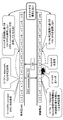
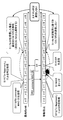
- FIG. 6B shows control contents when SR is triggered after the determination process by n-4approach in the mobile station UE is performed.
- SR is first triggered in the mobile station UE (S101).
- the DRX state management unit 21 of the base station eNB generates a DRX command MAC CE in order to transition the DRX state of the mobile station UE to the inactive state, and the generated DRX command MAC CE is transmitted via the DL signal transmission unit 24.
- the target mobile station UE S102
- the DRX state management unit 11 determines n-4approach to determine whether to perform CSI / SRS transmission with subframe “n + 4” based on the state (Active / Inactive state) at the time of subframe “n”. Processing is performed (S103). Specifically, the DRX state management unit 11 terminates the Active Time because the DRX command MAC CE is received at the subframe “n” time point, but the SRX at the subframe “n-3” time point (before the n-4approach determination process). Is determined to be “transmit CSI / SRS”. Note that the n-4approach determination process by the DRX state management unit 11 is executed in each subframe.
- the DRX state management unit 21 of the base station eNB performs n-4approach determination processing (S104). Specifically, since the DRX state management unit 21 has transmitted the DRX command MAC CE in step S102, the DRX state management unit 21 determines that the state of the mobile station UE is not the active state, and receives the subframe “n + 4” from the mobile station UE. It is determined that “CSI / SRS is not expected”.
- the UL signal transmission unit 14 of the mobile station UE transmits the SR based on the trigger in Step S101 to the base station eNB (S105), and notifies the DRX state management unit 11 that the SR transmission processing has been executed.
- the UL signal receiving unit 23 of the base station eNB receives the SR transmitted from the mobile station UE, and notifies the DRX state management unit 21 that the SR has been received.
- the CSI / SRS management unit 12 of the mobile station UE controls the CSI / SRS resource management unit 12 based on the result of the determination performed in step S103 (“transmit CSI / SRS”), and CSI / SRS Is transmitted to the base station eNB (S106).
- the DRX state management unit 21 of the base station eNB determines that “CSI / SRS is not expected” from the mobile station UE in step S104. However, when the SR is received in advance, “CSI after SR reception is always performed”. The CSI / SRS resource management unit 22 is controlled to “/ SRS is expected” (S107).
- the DRX state management unit 21 of the base station eNB When SR is triggered after n-4approach determination (FIG. 6B)> 6B, the DRX state management unit 21 of the base station eNB generates a DRX command MAC CE and transmits the generated DRX command MAC CE to the target mobile station UE via the DL signal transmission unit 24 (S111). .
- the DRX state management unit 11 performs n-4approach determination processing (S112). Specifically, the DRX state management unit 11 determines that “CSI / SRS is not transmitted” at the time of subframe “n + 4” because it is not in the Active state due to reception of the DRX command MAC CE at time of subframe “n”.
- the DRX state management unit 21 of the base station eNB performs n-4approach determination processing (S113). Specifically, since the DRX state management unit 21 transmits the DRX command MAC CE in step S101, the DRX state management unit 21 determines that the state of the mobile station UE is not the Active state, and receives the subframe “n + 4” from the mobile station UE. It is determined that “CSI / SRS is not expected”.
- SR is triggered in the mobile station UE (S114), and SR based on the trigger is transmitted to the base station eNB by the UL signal transmission unit 14 (S115).
- the UL signal transmission unit 14 notifies the DRX state management unit 11 that the SR transmission processing has been executed.
- the UL signal receiving unit 23 of the base station eNB receives the SR transmitted from the mobile station UE, and notifies the DRX state management unit 21 that the SR has been received.
- the DRX state management unit 11 of the mobile station UE is determined to “not transmit CSI / SRS” in step S112, but since SR is transmitted in step S115, “transmit CSI / SRS”.
- the CSI / SRS resource management unit 12 is controlled (S116).
- the DRX state management unit 21 of the base station eNB determines that “CSI / SRS is not expected” from the mobile station UE in step S113, but when SR is received in advance, “CSI after SR reception is always performed”.
- the CSI / SRS resource management unit 22 is controlled so as to “/ SRS is expected” (S117).
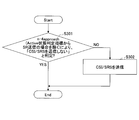
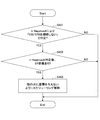
- FIG. 7 is a flowchart showing the processing procedure per subframe, and will be described as processing at the time of subframe “n + 4”, for example.
- the DRX state management unit 11 of the mobile station UE determines whether or not the determination result by n-4approach performed at the subframe “n” time point is “no CSI / SRS is transmitted” at the subframe “n + 4” time point. (S201).
- step S201 when it is determined that “CSI / SRS is not transmitted” at the time of subframe “n + 4” (YES in step S201), the subframe “n” from the subframe “n” where the n-4approach determination process is performed is performed. In the meantime, it is determined whether or not SR transmission has been performed (S202).
- the DRX state management unit 11 controls the CSI / SRS resource management unit 12 and transmits the CSI / SRS to the base station eNB (S203).
- the CSI / SRS is not transmitted.
- the SR when the SR is transmitted from the mobile station UE (by the base station eNB) regardless of the timing (order) of the SR trigger and the n-4approach determination process.
- the mobile station UE When the SR is received), the mobile station UE performs CSI / SRS transmission, and the base station eNB is controlled to expect CSI / SRS transmission from the mobile station UE. Therefore, it is possible to avoid occurrence of mismatch in the CSI / SRS processing of the mobile station UE and the base station eNB.
- the mobile station UE Controls not to transmit CSI / SRS.
- the determination indices used for determining the active state of the mobile station UE in the n-4approach determination process by the mobile station UE in order to realize the control in the second embodiment the above (2) (“when SR is transmitted” ).
- FIG. 8A shows control contents when SR is triggered before the determination process by n-4approach in the mobile station UE is performed.
- FIG. 8B shows control contents when SR is triggered after the determination process by n-4approach in the mobile station UE is performed.
- 8A and 8B the same processes as those shown in FIGS. 6A and 6B are assigned the same step numbers, and detailed descriptions thereof are omitted.
- the DRX state management unit 11 of the mobile station UE performs n-4approach determination processing with subframe “n” (S103a).
- the determination index used for the active state determination of the mobile station UE in n-4approach “when SR is transmitted (including the state until SR is triggered and SR is transmitted” ) ”(Above (2)) is excluded.
- the DRX state management unit 11 is triggered by SR in step S101.
- “when SR is transmitted SR is triggered and SR is transmitted. "Including the state up to the time)” is excluded, so it is determined that "CSI / SRS is not transmitted”.
- the CSI / SRS management unit 12 of the mobile station UE controls the CSI / SRS resource management unit 12 based on the result of the determination made in step S103a (“CSI / SRS is not transmitted”), and CSI / SRS Is not transmitted (S106a).
- the DRX state management unit 21 of the base station eNB controls the CSI / SRS resource management unit 22 so as to “not expect CSI / SRS”, which is a determination result of normal n-4approach (S107a).
- the DRX state management unit 11 of the mobile station UE uses subframe “n” to determine the n-4approach determination process (when the SR is transmitted (when SR is triggered, SR is transmitted). (Including the state up to) is excluded) (S112a). Specifically, the DRX state management unit 11 determines that “CSI / SRS is not transmitted” at the time of subframe “n + 4” because the DRX command MAC CE is not in the Active state due to reception of the DRX command MAC CE at the time of subframe “n”.
- the DRX state management unit 11 of the mobile station UE uses the CSI / SRS resource management unit so as to “not transmit CSI / SRS” based on the result of “not transmitting CSI / SRS” determined in step S112a. 12 is controlled (S116a).
- the DRX state management unit 21 of the base station eNB controls the CSI / SRS resource management unit 22 so as to “not expect CSI / SRS”, which is a determination result by the normal n-4approach (S117a).
- FIG. 9 is a flowchart showing the processing procedure per subframe, and will be described as processing at the time of subframe “n + 4”, for example.
- the DRX state management unit 11 of the mobile station UE performs n-4approach determination processing (when SR is transmitted (when SR is triggered (SR is triggered, SR is transmitted) from the determination index of Active state performed at the time of subframe “n”. It is determined whether or not the result of “excluding”) is “not transmitting CSI / SRS” at the time of subframe “n + 4” (S301).
- the DRX state management unit 11 Controls the CSI / SRS resource management unit 12 and transmits CSI / SRS to the base station eNB (S302).
- the third embodiment even when the base station eNB receives SR after the determination that “CSI / SRS is not expected” from the mobile station UE by the n-4approach determination process in the base station eNB, Control is performed so as not to attempt (ignore) reception of the first CSI / SRS transmitted from the mobile station UE after SR reception.
- the first CSI / SRS transmitted from the mobile station UE after SR reception is the CSI that has reached the base station eNB for the first time or until a predetermined time (for example, 20 ms) elapses after the base station eNB receives SR. / SRS.
- control that does not attempt (ignore) reception of CSI / SRS refers to, for example, when the CSI / SRS from the mobile station UE reaches the base station eNB, In order not to affect the UE, it is a control to perform scheduling such as not allocating resources to other mobile stations UE. For example, UL resources are allocated so that the UL resources used for UL transmission of other mobile stations UE do not collide with the UL resources (temporal and frequency) used for CSI / SRS transmission by the mobile station UE. . On the other hand, it is arbitrary whether the mobile station UE transmits CSI / SRS after SR transmission.
- FIG. 10A shows control contents when SR is triggered before the determination process by n-4approach in the mobile station UE is performed.
- FIG. 10B shows control contents when SR is triggered after the determination process by n-4approach in the mobile station UE is performed.
- 10A and 10B the same steps as those shown in FIGS. 6A and 6B are assigned the same step numbers, and detailed descriptions thereof are omitted.
- the CSI / SRS management unit 12 of the mobile station UE controls the CSI / SRS resource management unit 12 based on the result of the determination performed in step S103a (“transmit CSI / SRS”), / SRS is transmitted to the base station eNB (S106b). Note that, as described above, control of CSI / SRS transmission processing (whether or not to transmit) when SR transmission or SR triggering is performed is arbitrary.
- the DRX state management unit 21 of the base station eNB determines that “CSI / SRS is not expected” from the mobile station UE in step S104, and has received the SR, the DRX state management unit 21 transmits the SR after receiving the SR.
- the CSI / SRS resource management unit 22 is controlled so as to perform scheduling so as not to affect other mobile stations UE, ignoring the first CSI / SRS (S107b).
- a mismatch related to the CSI / SRS processing between the mobile station UE and the base station eNB occurs, but control can be performed so that other mobile stations UE are not affected by scheduling control related to CSI / SRS by the base station eNB.
- the DRX state management unit 11 of the mobile station UE uses the CSI / SRS resource so as to “not transmit CSI / SRS” based on the result of “not transmit CSI / SRS” determined in step S112.
- the management unit 12 is controlled (S116b).
- the DRX state management unit 21 of the base station eNB determines that “CSI / SRS is not expected” from the mobile station UE in Step S113 and has received the SR, it is transmitted from the mobile station UE after receiving the SR.
- the CSI / SRS resource management unit 22 is controlled to ignore the first CSI / SRS (S117b).
- the DRX state management unit 11 controls the CSI / SRS resource management unit 22 so as to expect the next CSI / SRS from the mobile station UE (second time or after a predetermined time has elapsed).
- FIG. 11 is a flowchart showing the processing procedure per subframe, and will be described as processing at the time of subframe “n + 4”, for example.
- the DRX state management unit 21 of the base station eNB determines whether the determination result by n-4approach performed at the subframe “n” time point is “not expecting CSI / SRS” from the mobile station UE at the subframe “n + 4” time point. It is determined whether or not (S401).
- step S401 if it is determined that “CSI / SRS is not expected” at the time of subframe “n + 4” (YES in step S401), the subframe “n” from the subframe “n” where the n-4approach determination process is performed is performed. In the meantime, it is determined whether or not SR has been received (S402).
- the DRX state management unit 21 controls the CSI / SRS resource management unit 22, and after receiving the SR, the mobile station UE The first CSI / SRS transmitted from is ignored, and scheduling is performed so as not to affect other mobile stations UE (S403).
- the DRX state management unit 21 causes the CSI / SRS resource management unit 12 to perform control based on the determination result by n-4approach.
- the base station eNB receives the SR.
- the base station eNB receives the SR.
- the control content of the mobile station UE since the influence of the occurrence of mismatch can be suppressed by changing the control content by the base station eNB, for example, the control content of the mobile station UE generally having more units or models than the base station eNB is changed. It is easier to implement than
- DRX command MAC CE which is the trigger of the mobile station UE (FIGS. 6A, B, FIG. 8A, B, FIG. 10A, B) shows the CSI / SRS even when, for example, Active Time is suddenly extended Mismatch may occur due to failure to transmit.
- this invention is applicable not only when Active Time is abruptly terminated, but also when it is extended, and it is possible to avoid a mismatch in processing related to CSI / SRS between the mobile station UE and the base station eNB.
- Scheduling Request transmitted from the mobile station UE to the base station eNB is an example of a control signal, and the present invention can be applied even when a control signal other than Scheduling Request is transmitted. .
- the mobile station UE and the base station eNB have been described using functional block diagrams, but each of such devices may be realized by hardware, software, or a combination thereof.
- Software that operates according to the present invention includes random access memory (RAM), flash memory, read-only memory (ROM), It may be stored in any appropriate storage medium such as EPROM, EEPROM, register, hard disk (HDD), removable disk, CD-ROM, database, server, and the like.
- eNB base station UE mobile station 11 DRX state management unit 12 CSI / SRS resource management unit 13 DL signal reception unit 14 UL signal transmission unit 21 DRX state management unit 22 CSI / SRS resource management unit 23 UL signal reception unit 24 DL signal transmission unit
Landscapes
- Engineering & Computer Science (AREA)
- Computer Networks & Wireless Communication (AREA)
- Signal Processing (AREA)
- Quality & Reliability (AREA)
- Mobile Radio Communication Systems (AREA)
Abstract
Description
図3は、本発明の実施形態における移動通信システムの構成図である。図3に示されるように、本発明の実施形態における移動通信システムは、LTE方式の通信システムであり、基地局eNBと、移動局UEとを有する。
<移動局UE>
図4は、本発明の実施形態における移動局UEの機能構成図である。図4に示すように、移動局UEは、DRX状態管理部11、CSI/SRSリソース管理部12、DL信号受信部13及びUL信号送信部14を有する。なお、図4は、移動局UEにおいて本発明に特に関連する機能部のみを示すものであり、少なくともLTE方式に準拠した動作を行うための図示しない機能も有するものである。
(2)Scheduling Request(SR)を送信した場合
(3)UL HARQ再送のためのUL grantが割り当てられる場合
(4)Random Access Responseを受信し、その後、新規送信を指示するPDCCHを受信していない場合
さらに、DRX状態管理部11は、DRX状態において、現時点(例えばsubframe「n」)から所定の時間経過時(subframe「n+4」)に無線品質を示す品質情報であるCSI又はSRS(CSI/SRS)を送信するか否かを、n-4approachの判定処理に基づき決定する。なお、n-4approachの判定処理において、当該移動局UEがActive状態であるか否か(Active状態判定)は、上記(1)~(4)の判定指標に基づき判定される。なお、n-4approachの判定処理での当該移動局UEのActive状態判定において、上記(2)には、実際にSRを送信した場合と、SRがトリガされた場合(SRがトリガされてからSRが送信されるまで)とが含まれる。但し、後述する第2の実施形態におけるn-4approachの判定処理のActive状態判定に用いられる判定指標は、上記(2)を除外したものである。
図5は、本発明の実施形態における基地局eNBの機能構成図である。図5に示すように、基地局eNBは、DRX状態管理部21、CSI/SRSリソース管理部22、UL信号受信部23及びDL信号送信部24を有する。なお、図5は、基地局eNBにおいて本発明に特に関連する機能部のみを示すものであり、少なくともLTE方式に準拠した動作を行うための図示しない機能も有するものである。
本発明の実施形態では、3つのDRX制御におけるCSI/SRSに関する制御方法を提案する。以下、3つの制御方法をそれぞれ、第1~第3の実施形態として説明する。
第1の実施形態では、移動局UEにおけるn-4approachの判定処理により「CSI/SRSを送信しない」と判定された場合であっても、その判定処理後SRが送信された場合、移動局UEはCSI/SRSを送信するように制御する。すなわち、移動局UEは、n-4approachによる判定結果によらず、SRが送信された場合、CSI/SRSを送信する。一方、基地局eNBは、移動局UEからのSRを受信した後に当該移動局UEからの「CSI/SRSを常に期待する(受信処理を試みる)」ように制御する。
図6Aにおいて、まず移動局UEにおいてSRがトリガされる(S101)。
図6Bにおいて、基地局eNBのDRX状態管理部21は、DRX command MAC CEを生成し、生成したDRX command MAC CEを、DL信号送信部24を介して対象の移動局UEに送信する(S111)。
次に、図7に示すフローチャート図に基づき、第1の実施形態における移動局UEの処理手順例を説明する。なお、図7は、1subframe当たりの処理手順を示したフローチャート図であり、例えばsubframe「n+4」時点における処理として説明する。
第2の実施形態では、移動局UEにおけるn-4approachの判定処理により「CSI/SRSを送信しない」と判定された後、移動局UEからSRが送信された場合であっても、移動局UEはCSI/SRSを送信しないように制御する。第2の実施形態における制御を実現するため、移動局UEによるn-4approachの判定処理における当該移動局UEのActive状態判定に用いられる判定指標のうち上記(2)(「SRを送信した場合」)を除外する。一方、基地局eNBは、n-4approachの判定処理により移動局UEからの「CSI/SRSを期待しない」と判定された後、移動局UEからのSRを受信した場合であっても、「CSI/SRSを期待しない(受信処理を試みない)」ように制御する。
図8Aにおいて、subframe「n」で移動局UEのDRX状態管理部11は、n-4approachの判定処理を行う(S103a)。ここで、第2の実施形態では、n-4approachにおける当該移動局UEのActive状態判定に用いられる判定指標から「SRを送信した場合(SRをトリガし、SRが送信されるまでの状態を含む)」(上記(2))が除外される。具体的には、DRX状態管理部11は、ステップS101においてSRがトリガされているが、n-4approachにおけるActive状態判定の判定指標から「SRを送信した場合(SRをトリガし、SRが送信されるまでの状態を含む)」が除外されているため、「CSI/SRSを送信しない」と判定する。
図8Bにおいて、subframe「n」で移動局UEのDRX状態管理部11は、n-4approachの判定処理(Active状態の判定指標から「SRを送信した場合(SRをトリガし、SRが送信されるまでの状態を含む)」を除外)を行う(S112a)。具体的には、DRX状態管理部11は、subframe「n」時点でのDRX command MAC CEの受信によりActive状態ではないため、subframe「n+4」時点で「CSI/SRSを送信しない」と判定する。
次に、図9に示すフローチャート図に基づき、第2の実施形態における移動局UEの処理手順例を説明する。なお、図9は、1subframe当たりの処理手順を示したフローチャート図であり、例えばsubframe「n+4」時点における処理として説明する。
第3の実施形態では、基地局eNBにおけるn-4approachの判定処理により移動局UEからの「CSI/SRSを期待しない」との判定後、SRを受信した場合であっても、基地局eNBはSR受信後に当該移動局UEから送信される最初のCSI/SRSに対する受信を試みない(無視する)ように制御する。ここで、SR受信後に移動局UEから送信される最初のCSI/SRSとは、基地局eNBがSR受信後、初回又は所定の時間(例えば20ms)が経過するまでに基地局eNBに到達したCSI/SRSである。また、第3の実施形態における「CSI/SRSに対する受信を試みない(無視する)制御」とは、例えば、当該移動局UEからのCSI/SRSが基地局eNBに到達した場合、他の移動局UEに影響を与えないようにするため、他の移動局UEにリソースを割り当てない等のスケジューリングを行う制御である。例えば、当該移動局UEがCSI/SRSの送信に用いる(時間的、周波数的)ULリソースに対して、他移動局UEのUL送信に用いるULリソースが衝突しないように、ULリソースの割り当てを行う。一方、移動局UEは、SR送信後のCSI/SRSを送信するか否かは任意である。
図10Aにおいて、移動局UEのCSI/SRS管理部12は、ステップS103aにおいて行われた判定の結果(「CSI/SRSを送信する」)に基づき、CSI/SRSリソース管理部12を制御し、CSI/SRSを基地局eNBに送信する(S106b)。なお、上述したように、SRの送信又はSRのトリガが行われた場合のCSI/SRSの送信処理の制御(送信するか否か)は任意である。
図10Bにおいて、移動局UEのDRX状態管理部11は、ステップS112において判定された「CSI/SRSを送信しない」との結果に基づき、「CSI/SRSを送信しない」ように、CSI/SRSリソース管理部12を制御する(S116b)。
次に、図11に示すフローチャート図に基づき、第3の実施形態における基地局eNBの処理手順例を説明する。なお、図11は、1subframe当たりの処理手順を示したフローチャート図であり、例えばsubframe「n+4」時点における処理として説明する。
UE 移動局
11 DRX状態管理部
12 CSI/SRSリソース管理部
13 DL信号受信部
14 UL信号送信部
21 DRX状態管理部
22 CSI/SRSリソース管理部
23 UL信号受信部
24 DL信号送信部
Claims (10)
- 基地局と通信する移動局であって、
間欠受信制御におけるアクティブ状態であるか否かを示す当該移動局の状態に基づき、所定の時間経過時に無線品質を示す品質情報を前記基地局に送信するか否かを判定する手段と、
前記判定により前記品質情報を送信しないと判定された場合であっても、前記所定の時間経過前にScheduling Requestが前記基地局に送信された場合、前記所定の時間経過時に前記品質情報を送信する手段とを有する移動局。 - 基地局と通信する移動局であって、
間欠受信制御におけるアクティブ状態であるか否かを示す当該移動局の状態に基づき、所定の時間経過時に無線品質を示す品質情報を前記基地局に送信するか否かを判定する手段と、
前記判定による判定結果に基づき、前記品質情報の送信を制御する手段とを有し、
前記判定により前記品質情報を送信しないと判定された場合、当該移動局からScheduling Requestが送信される場合であっても、前記品質情報を送信しない移動局。 - 移動局と通信する基地局であって、
間欠受信制御におけるアクティブ状態であるか否かを示す前記移動局の状態に基づき、所定の時間経過時に前記移動局から送信される無線品質を示す品質情報を期待するか否かを判定する手段と、
前記判定により前記品質情報を期待しないと判定された後、前記所定の時間経過前に前記移動局からのScheduling Requestを受信した場合、前記Scheduling Requestの受信後に前記移動局から送信される最初の品質情報を期待しないように制御する制御手段とを有する基地局。 - 前記制御手段は、
前記判定により前記品質情報を期待しないと判定された後、前記所定の時間経過前に前記移動局からのScheduling Requestを受信した場合、前記Scheduling Requestの受信後に前記移動局から送信される最初の品質情報に対する処理における上りリンクの送信が他の移動局の上りリンクの送信と衝突しないようにスケジューリングを行う請求項3記載の基地局。 - 前記最初の品質情報は、前記Scheduling Requestの受信後、所定時間内に前記移動局から送信される品質情報である請求項3又は4記載の基地局。
- 移動局と、該移動局と通信する基地局とを有する移動通信システムであって、
前記移動局は、
間欠受信制御におけるアクティブ状態であるか否かを示す当該移動局の状態に基づき、所定の時間経過時に無線品質を示す品質情報を前記基地局に送信するか否かを判定する手段と、
前記判定により前記品質情報を送信しないと判定された場合であっても、前記所定の時間経過前にScheduling Requestが前記基地局に送信された場合、前記所定の時間経過時に前記品質情報を送信する手段とを有し、
前記基地局は、
前記所定の時間経過前に前記移動局からのScheduling Requestを受信した場合、前記所定の時間経過時に前記移動局から送信される前記品質情報を期待する手段を有する移動通信システム。 - 移動局と、該移動局と通信する基地局とを有する移動通信システムであって、
前記移動局は、
間欠受信制御におけるアクティブ状態であるか否かを示す当該移動局の状態に基づき、所定の時間経過時に無線品質を示す品質情報を前記基地局に送信するか否かを判定する手段と、
当該移動局における前記判定による判定結果に基づき、前記品質情報の送信を制御する手段とを有し、
前記基地局は、
前記状態に基づき、前記所定の時間経過時に前記移動局から送信される前記品質情報を期待するか否かを判定する手段と、
当該基地局における前記判定による判定結果に基づき、前記品質情報を期待するか否かを制御する手段とを有し、
前記判定により前記品質情報を送信しないと判定された場合、当該移動局からScheduling Requestが送信される場合であっても、前記品質情報を送信しないとされる移動通信システム。 - 無線品質を示す品質情報を基地局に送信する移動局が行う送信制御方法であって、
間欠受信制御におけるアクティブ状態であるか否かを示す当該移動局の状態に基づき、所定の時間経過時に前記品質情報を前記基地局に送信するか否かを判定するステップと、
前記判定により前記品質情報を送信しないと判定された場合であっても、前記所定の時間経過前にScheduling Requestが前記基地局に送信された場合、前記所定の時間経過時に前記品質情報を送信するステップとを有する送信制御方法。 - 無線品質を示す品質情報を基地局に送信する移動局が行う送信制御方法であって、
間欠受信制御におけるアクティブ状態であるか否かを示す当該移動局の状態に基づき、所定の時間経過時に前記品質情報を前記基地局に送信するか否かを判定するステップと、
前記判定による判定結果に基づき、前記品質情報の送信を制御するステップとを有し、
前記判定により前記品質情報を送信しないと判定された場合、前記移動局からScheduling Requestが送信される場合であっても、前記品質情報を送信しないとされる送信制御方法。 - 移動局から送信される無線品質を示す品質情報を受信する基地局が行う受信制御方法であって、
間欠受信制御におけるアクティブ状態であるか否かを示す前記移動局の状態に基づき、所定の時間経過時に前記移動局から送信される前記品質情報を期待するか否かを判定するステップと、
前記判定により前記品質情報を期待しないと判定された後、前記所定の時間経過前に前記移動局からのScheduling Requestを受信した場合、前記Scheduling Requestの受信後に前記移動局から送信される最初の品質情報を期待しないように制御するステップとを有する受信制御方法。
Priority Applications (4)
| Application Number | Priority Date | Filing Date | Title |
|---|---|---|---|
| CN201480025713.1A CN105191439A (zh) | 2013-05-09 | 2014-05-02 | 移动台、基站、移动通信系统、发送控制方法以及接收控制方法 |
| RU2015147872A RU2644148C2 (ru) | 2013-05-09 | 2014-05-02 | Мобильная станция, базовая станция, система мобильной связи, способ управления передачей и способ управления приемом |
| US14/889,345 US9750033B2 (en) | 2013-05-09 | 2014-05-02 | Mobile station, base station, mobile communication system, transmission control method, and reception control method |
| EP14795351.7A EP2996407A4 (en) | 2013-05-09 | 2014-05-02 | MOBILE STATION, BASE STATION, MOBILE COMMUNICATION METHOD, TRANSMISSION CONTROL METHOD AND RECEPTION CONTROL METHOD |
Applications Claiming Priority (2)
| Application Number | Priority Date | Filing Date | Title |
|---|---|---|---|
| JP2013-099326 | 2013-05-09 | ||
| JP2013099326A JP6227277B2 (ja) | 2013-05-09 | 2013-05-09 | 移動局、及び送信制御方法 |
Publications (1)
| Publication Number | Publication Date |
|---|---|
| WO2014181779A1 true WO2014181779A1 (ja) | 2014-11-13 |
Family
ID=51867259
Family Applications (1)
| Application Number | Title | Priority Date | Filing Date |
|---|---|---|---|
| PCT/JP2014/062191 Ceased WO2014181779A1 (ja) | 2013-05-09 | 2014-05-02 | 移動局、基地局、移動通信システム、送信制御方法及び受信制御方法 |
Country Status (6)
| Country | Link |
|---|---|
| US (1) | US9750033B2 (ja) |
| EP (1) | EP2996407A4 (ja) |
| JP (1) | JP6227277B2 (ja) |
| CN (1) | CN105191439A (ja) |
| RU (1) | RU2644148C2 (ja) |
| WO (1) | WO2014181779A1 (ja) |
Families Citing this family (6)
| Publication number | Priority date | Publication date | Assignee | Title |
|---|---|---|---|---|
| RU2724320C1 (ru) * | 2016-11-02 | 2020-06-22 | Телефонактиеболагет Лм Эрикссон (Пабл) | Управление воздействием переключения srs на передачи по каналу восходящей линии связи |
| US10743319B2 (en) * | 2017-05-01 | 2020-08-11 | Qualcomm Incorporated | Method of base station beam refinement |
| WO2019191954A1 (zh) * | 2018-04-04 | 2019-10-10 | Oppo广东移动通信有限公司 | 传输信息的方法和终端设备 |
| US12294437B2 (en) | 2018-07-02 | 2025-05-06 | Huawei Technologies Co., Ltd. | System and method for link recovery with discontinuous reception |
| WO2020049736A1 (ja) * | 2018-09-07 | 2020-03-12 | 株式会社Nttドコモ | ユーザ端末及び無線通信方法 |
| US11190949B2 (en) * | 2019-11-22 | 2021-11-30 | Charter Communications Operating, Llc | Methods and apparatus for monitoring contested spectrum and/or responding to the detection of an incumbent user |
Family Cites Families (8)
| Publication number | Priority date | Publication date | Assignee | Title |
|---|---|---|---|---|
| CA2408423C (en) * | 2001-10-17 | 2013-12-24 | Nec Corporation | Mobile communication system, communication control method, base station and mobile station to be used in the same |
| RU2414105C2 (ru) * | 2005-06-14 | 2011-03-10 | Нтт Досомо, Инк. | Мобильная станция, базовая станция и способ осуществления связи |
| EP2120476A4 (en) * | 2007-03-01 | 2014-01-01 | Ntt Docomo Inc | BASIC STATION EQUIPMENT AND COMMUNICATION CONTROL METHOD |
| US8606336B2 (en) * | 2008-03-20 | 2013-12-10 | Blackberry Limited | System and method for uplink timing synchronization in conjunction with discontinuous reception |
| WO2010126842A1 (en) * | 2009-04-27 | 2010-11-04 | Interdigital Patent Holdings, Inc. | Reference signals for positioning measurements |
| CN102257859B (zh) * | 2011-06-01 | 2013-08-07 | 华为技术有限公司 | 混合非连续接收方法及基站和用户设备 |
| JP6096775B2 (ja) * | 2011-08-12 | 2017-03-15 | テレフオンアクチーボラゲット エルエム エリクソン(パブル) | 不連続受信(drx)と共に構成されるユーザ機器のアクティブ時間ステータスに基づくアップリンク制御シグナリングを送信すべきかの決定 |
| CN103988455B (zh) * | 2011-10-12 | 2017-08-25 | 三星电子株式会社 | 移动通信系统中用于发送反向控制信号的方法和设备 |
-
2013
- 2013-05-09 JP JP2013099326A patent/JP6227277B2/ja active Active
-
2014
- 2014-05-02 CN CN201480025713.1A patent/CN105191439A/zh active Pending
- 2014-05-02 EP EP14795351.7A patent/EP2996407A4/en not_active Withdrawn
- 2014-05-02 WO PCT/JP2014/062191 patent/WO2014181779A1/ja not_active Ceased
- 2014-05-02 RU RU2015147872A patent/RU2644148C2/ru active
- 2014-05-02 US US14/889,345 patent/US9750033B2/en active Active
Non-Patent Citations (7)
| Title |
|---|
| ERICSSON ET AL.: "Periodic CSI and SRS at DRX state change", R2-123863, 3GPP, 7 August 2012 (2012-08-07), XP050665721 * |
| SAMSUNG: "Clarification on Active time and CSI/ SRS activity", R2-115032, 3GPP, 2 October 2011 (2011-10-02), pages 1 - 4, XP050540673 * |
| SAMSUNG: "Discussion on Active time and CSI/SRS activity", R2-115031, 3GPP, 2 October 2011 (2011-10-02), XP050540672 * |
| SAMSUNG: "Discussion on DRX cycle and CSI/SRS transmission", R2-124082, 3GPP, 7 August 2012 (2012-08-07), XP050665786 * |
| SAMSUNG: "Inconsistent CQI/SRS notes", R2-115025, 3GPP, 2 October 2011 (2011-10-02), pages 1 - 4, XP050540666 * |
| SAMSUNG: "Other issues on unexpected extension or end of Active Time", R2-115033, 3GPP, 2 October 2011 (2011-10-02), pages 1 - 3, XP050540674 * |
| See also references of EP2996407A4 * |
Also Published As
| Publication number | Publication date |
|---|---|
| US9750033B2 (en) | 2017-08-29 |
| RU2015147872A (ru) | 2017-06-15 |
| CN105191439A (zh) | 2015-12-23 |
| JP2014220683A (ja) | 2014-11-20 |
| EP2996407A1 (en) | 2016-03-16 |
| RU2644148C2 (ru) | 2018-02-08 |
| EP2996407A4 (en) | 2016-08-24 |
| JP6227277B2 (ja) | 2017-11-08 |
| US20160119934A1 (en) | 2016-04-28 |
Similar Documents
| Publication | Publication Date | Title |
|---|---|---|
| US11910470B2 (en) | DRX handling in LTE license assisted access operation | |
| US11336417B2 (en) | Controlling UE behavior for CSI/SRS reporting during DRX | |
| US10129905B2 (en) | Conditional uplink radio resource utilization in a cellular network | |
| US8750224B2 (en) | Preconfigured short scheduling request cycle | |
| JP6227277B2 (ja) | 移動局、及び送信制御方法 | |
| CN108141823A (zh) | 一种用户设备、网络节点、方法和计算机程序产品 | |
| US10455602B2 (en) | Control of channel reference signal transmission in a cellular network | |
| HK1238842B (zh) | 一种蜂窝网络中无线电传送方法、装置、节点及介质 |
Legal Events
| Date | Code | Title | Description |
|---|---|---|---|
| WWE | Wipo information: entry into national phase |
Ref document number: 201480025713.1 Country of ref document: CN |
|
| 121 | Ep: the epo has been informed by wipo that ep was designated in this application |
Ref document number: 14795351 Country of ref document: EP Kind code of ref document: A1 |
|
| WWE | Wipo information: entry into national phase |
Ref document number: 14889345 Country of ref document: US |
|
| NENP | Non-entry into the national phase |
Ref country code: DE |
|
| WWE | Wipo information: entry into national phase |
Ref document number: 2014795351 Country of ref document: EP |
|
| ENP | Entry into the national phase |
Ref document number: 2015147872 Country of ref document: RU Kind code of ref document: A |