WO2014203661A1 - ヘマタイトの製造方法、並びにそのヘマタイト - Google Patents
ヘマタイトの製造方法、並びにそのヘマタイト Download PDFInfo
- Publication number
- WO2014203661A1 WO2014203661A1 PCT/JP2014/062989 JP2014062989W WO2014203661A1 WO 2014203661 A1 WO2014203661 A1 WO 2014203661A1 JP 2014062989 W JP2014062989 W JP 2014062989W WO 2014203661 A1 WO2014203661 A1 WO 2014203661A1
- Authority
- WO
- WIPO (PCT)
- Prior art keywords
- magnesium
- calcium
- hematite
- solution
- nickel
- Prior art date
- Legal status (The legal status is an assumption and is not a legal conclusion. Google has not performed a legal analysis and makes no representation as to the accuracy of the status listed.)
- Ceased
Links
Images
Classifications
-
- C—CHEMISTRY; METALLURGY
- C01—INORGANIC CHEMISTRY
- C01G—COMPOUNDS CONTAINING METALS NOT COVERED BY SUBCLASSES C01D OR C01F
- C01G49/00—Compounds of iron
- C01G49/02—Oxides; Hydroxides
- C01G49/06—Ferric oxide [Fe2O3]
-
- C—CHEMISTRY; METALLURGY
- C01—INORGANIC CHEMISTRY
- C01B—NON-METALLIC ELEMENTS; COMPOUNDS THEREOF; METALLOIDS OR COMPOUNDS THEREOF NOT COVERED BY SUBCLASS C01C
- C01B17/00—Sulfur; Compounds thereof
- C01B17/48—Sulfur dioxide; Sulfurous acid
- C01B17/50—Preparation of sulfur dioxide
- C01B17/501—Preparation of sulfur dioxide by reduction of sulfur compounds
-
- C—CHEMISTRY; METALLURGY
- C01—INORGANIC CHEMISTRY
- C01B—NON-METALLIC ELEMENTS; COMPOUNDS THEREOF; METALLOIDS OR COMPOUNDS THEREOF NOT COVERED BY SUBCLASS C01C
- C01B17/00—Sulfur; Compounds thereof
- C01B17/96—Methods for the preparation of sulfates in general
-
- C—CHEMISTRY; METALLURGY
- C01—INORGANIC CHEMISTRY
- C01F—COMPOUNDS OF THE METALS BERYLLIUM, MAGNESIUM, ALUMINIUM, CALCIUM, STRONTIUM, BARIUM, RADIUM, THORIUM, OR OF THE RARE-EARTH METALS
- C01F11/00—Compounds of calcium, strontium, or barium
-
- C—CHEMISTRY; METALLURGY
- C01—INORGANIC CHEMISTRY
- C01F—COMPOUNDS OF THE METALS BERYLLIUM, MAGNESIUM, ALUMINIUM, CALCIUM, STRONTIUM, BARIUM, RADIUM, THORIUM, OR OF THE RARE-EARTH METALS
- C01F11/00—Compounds of calcium, strontium, or barium
- C01F11/46—Sulfates
-
- C—CHEMISTRY; METALLURGY
- C01—INORGANIC CHEMISTRY
- C01F—COMPOUNDS OF THE METALS BERYLLIUM, MAGNESIUM, ALUMINIUM, CALCIUM, STRONTIUM, BARIUM, RADIUM, THORIUM, OR OF THE RARE-EARTH METALS
- C01F11/00—Compounds of calcium, strontium, or barium
- C01F11/46—Sulfates
- C01F11/468—Purification of calcium sulfates
-
- C—CHEMISTRY; METALLURGY
- C01—INORGANIC CHEMISTRY
- C01F—COMPOUNDS OF THE METALS BERYLLIUM, MAGNESIUM, ALUMINIUM, CALCIUM, STRONTIUM, BARIUM, RADIUM, THORIUM, OR OF THE RARE-EARTH METALS
- C01F5/00—Compounds of magnesium
- C01F5/02—Magnesia
- C01F5/06—Magnesia by thermal decomposition of magnesium compounds
- C01F5/12—Magnesia by thermal decomposition of magnesium compounds by thermal decomposition of magnesium sulfate, with or without reduction
-
- C—CHEMISTRY; METALLURGY
- C01—INORGANIC CHEMISTRY
- C01F—COMPOUNDS OF THE METALS BERYLLIUM, MAGNESIUM, ALUMINIUM, CALCIUM, STRONTIUM, BARIUM, RADIUM, THORIUM, OR OF THE RARE-EARTH METALS
- C01F5/00—Compounds of magnesium
- C01F5/40—Magnesium sulfates
-
- C—CHEMISTRY; METALLURGY
- C02—TREATMENT OF WATER, WASTE WATER, SEWAGE, OR SLUDGE
- C02F—TREATMENT OF WATER, WASTE WATER, SEWAGE, OR SLUDGE
- C02F1/00—Treatment of water, waste water, or sewage
- C02F1/52—Treatment of water, waste water, or sewage by flocculation or precipitation of suspended impurities
- C02F1/5236—Treatment of water, waste water, or sewage by flocculation or precipitation of suspended impurities using inorganic agents
-
- C—CHEMISTRY; METALLURGY
- C02—TREATMENT OF WATER, WASTE WATER, SEWAGE, OR SLUDGE
- C02F—TREATMENT OF WATER, WASTE WATER, SEWAGE, OR SLUDGE
- C02F1/00—Treatment of water, waste water, or sewage
- C02F1/66—Treatment of water, waste water, or sewage by neutralisation; pH adjustment
-
- C—CHEMISTRY; METALLURGY
- C22—METALLURGY; FERROUS OR NON-FERROUS ALLOYS; TREATMENT OF ALLOYS OR NON-FERROUS METALS
- C22B—PRODUCTION AND REFINING OF METALS; PRETREATMENT OF RAW MATERIALS
- C22B23/00—Obtaining nickel or cobalt
- C22B23/04—Obtaining nickel or cobalt by wet processes
- C22B23/0407—Leaching processes
- C22B23/0415—Leaching processes with acids or salt solutions except ammonium salts solutions
- C22B23/043—Sulfurated acids or salts thereof
-
- C—CHEMISTRY; METALLURGY
- C22—METALLURGY; FERROUS OR NON-FERROUS ALLOYS; TREATMENT OF ALLOYS OR NON-FERROUS METALS
- C22B—PRODUCTION AND REFINING OF METALS; PRETREATMENT OF RAW MATERIALS
- C22B23/00—Obtaining nickel or cobalt
- C22B23/04—Obtaining nickel or cobalt by wet processes
- C22B23/0453—Treatment or purification of solutions, e.g. obtained by leaching
- C22B23/0461—Treatment or purification of solutions, e.g. obtained by leaching by chemical methods
-
- C—CHEMISTRY; METALLURGY
- C01—INORGANIC CHEMISTRY
- C01P—INDEXING SCHEME RELATING TO STRUCTURAL AND PHYSICAL ASPECTS OF SOLID INORGANIC COMPOUNDS
- C01P2002/00—Crystal-structural characteristics
- C01P2002/70—Crystal-structural characteristics defined by measured X-ray, neutron or electron diffraction data
- C01P2002/72—Crystal-structural characteristics defined by measured X-ray, neutron or electron diffraction data by d-values or two theta-values, e.g. as X-ray diagram
-
- C—CHEMISTRY; METALLURGY
- C01—INORGANIC CHEMISTRY
- C01P—INDEXING SCHEME RELATING TO STRUCTURAL AND PHYSICAL ASPECTS OF SOLID INORGANIC COMPOUNDS
- C01P2004/00—Particle morphology
- C01P2004/01—Particle morphology depicted by an image
- C01P2004/02—Particle morphology depicted by an image obtained by optical microscopy
-
- C—CHEMISTRY; METALLURGY
- C02—TREATMENT OF WATER, WASTE WATER, SEWAGE, OR SLUDGE
- C02F—TREATMENT OF WATER, WASTE WATER, SEWAGE, OR SLUDGE
- C02F2101/00—Nature of the contaminant
- C02F2101/10—Inorganic compounds
- C02F2101/20—Heavy metals or heavy metal compounds
- C02F2101/206—Manganese or manganese compounds
-
- Y—GENERAL TAGGING OF NEW TECHNOLOGICAL DEVELOPMENTS; GENERAL TAGGING OF CROSS-SECTIONAL TECHNOLOGIES SPANNING OVER SEVERAL SECTIONS OF THE IPC; TECHNICAL SUBJECTS COVERED BY FORMER USPC CROSS-REFERENCE ART COLLECTIONS [XRACs] AND DIGESTS
- Y02—TECHNOLOGIES OR APPLICATIONS FOR MITIGATION OR ADAPTATION AGAINST CLIMATE CHANGE
- Y02P—CLIMATE CHANGE MITIGATION TECHNOLOGIES IN THE PRODUCTION OR PROCESSING OF GOODS
- Y02P10/00—Technologies related to metal processing
- Y02P10/20—Recycling
-
- Y—GENERAL TAGGING OF NEW TECHNOLOGICAL DEVELOPMENTS; GENERAL TAGGING OF CROSS-SECTIONAL TECHNOLOGIES SPANNING OVER SEVERAL SECTIONS OF THE IPC; TECHNICAL SUBJECTS COVERED BY FORMER USPC CROSS-REFERENCE ART COLLECTIONS [XRACs] AND DIGESTS
- Y02—TECHNOLOGIES OR APPLICATIONS FOR MITIGATION OR ADAPTATION AGAINST CLIMATE CHANGE
- Y02W—CLIMATE CHANGE MITIGATION TECHNOLOGIES RELATED TO WASTEWATER TREATMENT OR WASTE MANAGEMENT
- Y02W10/00—Technologies for wastewater treatment
- Y02W10/30—Wastewater or sewage treatment systems using renewable energies
- Y02W10/37—Wastewater or sewage treatment systems using renewable energies using solar energy
Definitions
- the present invention relates to a method for producing hematite, which produces hematite having a low sulfur grade that can be used, for example, as an ironmaking raw material, from a leaching residue produced when nickel oxide ore is leached under pressure, and the hematite.
- Nickel oxide ore contains various components such as iron, cobalt and manganese in addition to nickel.
- a method called dry smelting in which the oxide ore is put into a furnace together with a reducing agent and roasted has been frequently used.
- Nickel and cobalt leached in the HPAL process are solid-liquid separated from the slurry while neutralizing the remaining free acid by adding a neutralizing agent as described in Patent Document 1, for example, and then neutralized.
- An agent is added to separate impurities.
- a sulfiding agent is added to the leached nickel or cobalt and recovered as an intermediate raw material sulfide, and separated from unrecovered impurity components such as aluminum, manganese, and magnesium remaining in the liquid after sulfidation.
- the post-sulfurization solution containing these impurity components is neutralized by adding a neutralizing agent, and becomes a waste water starch composed of the impurity components.
- the resulting waste starch is either mixed with leaching residue or individually piled on a tailing dam for processing.
- the leaching residue is mainly composed of iron, and particularly in the case of the above-described HPAL process, it is in the form of iron oxide (Fe 2 O 3 ) called hematite. Since hematite is also a kind of iron ore, it is preferable to use the leaching residue of the HPAL process as a raw material for iron making in order to effectively use resources and reduce the amount of waste.
- Patent Document 2 there is a method described in Patent Document 2 as one of methods for recovering magnesium from a solution sent to wastewater treatment.
- Patent Document 2 provides a magnesium sulfate source in a solution state obtained from a part of a process related to leaching of a metal-containing ore or concentrate, which is a process for recovering magnesium oxide from a source of magnesium sulfate.
- a process including a process to perform is proposed.
- Patent Document 3 discloses a leaching method for recovering nickel and cobalt from laterite ore, and separates the laterite ore into a low magnesium-containing ore fraction and a high magnesium-containing ore fraction by selective mining or post-fractionation.
- the quality of magnesium contained by the mineral type, mining location, and season usually fluctuates and is not stable. Therefore, if magnesium is insufficient, it is conceivable to use a calcium-based neutralizing agent that can be supplied stably and inexpensively, such as conventional slaked lime and limestone. However, in such a case, as in the conventional method described above, calcium is also brought into the process and circulated in the process system. Even if magnesium is recovered from the wastewater, a part of calcium behaves the same as magnesium and becomes contaminated, so that magnesium cannot be used for purposes other than the neutralizing agent.
- Patent Document 4 As a method for separating magnesium and calcium in a solution, for example, there is a method shown in Patent Document 4.
- magnesium hydroxide is recovered from waste liquid containing a large amount of magnesium sulfate, which is discarded and discharged in a flue gas desulfurization plant using magnesium hydroxide as a desulfurizing agent, and flue gas desulfurization is performed. It is recycled to the process and contributes to recycling and environmental purification.
- ammonia is added to flue gas desulfurization wastewater containing magnesium sulfate to form and precipitate magnesium hydroxide, and then lime milk is added to the solution to produce calcium sulfate and ammonia, and the ammonia is circulated in the process. It is to let you.
- the magnesium hydroxide obtained in this way can be slurried with the final waste liquid of this process and circulated to the desulfurization plant to achieve complete circulation of the desulfurization plant wastewater and eliminate wastewater disposal / discharge. It becomes.
- the obtained calcium sulfate can improve the advantage of external sales by providing a washing step to improve the purity.
- magnesium hydroxide or magnesium oxide is produced from the magnesium component contained in nickel oxide ore as described above and used as a neutralizing agent, it is more expensive than limestone or slaked lime in terms of cost. Inevitable, it is impractical to cover everything with a water-soluble neutralizer. Furthermore, there may be an influence of a calcium component or the like contained in the ore or a miscellaneous material that is simultaneously processed.
- Patent Document 5 discloses a method of adjusting magnesium oxide from a metal sulfate solution containing magnesium sulfate and calcium.
- metals other than magnesium are precipitated as hydroxides, separated into solid and liquid, and the separated solution is concentrated so that the specific gravity is in the range of 1.35 to 1.5 to separate calcium sulfate.
- magnesium sulfate is recovered from a later solution and thermally decomposed to recover magnesium oxide.
- JP-A-2005-350766 Special table 2009-520661 JP 2005-523996 A JP 2000-93739 A Japanese Patent Publication No.57-500021 JP 2011-206757 A
- the present invention has been proposed in view of such circumstances, and a method for producing hematite that can produce hematite having a low sulfur grade that can be used as an ironmaking raw material in the HPAL process of nickel oxide ore.
- the purpose is to provide.
- magnesium oxide produced through the following steps (1) to (5) has a low purity and a high purity form.
- the present inventors have found that hematite having a low sulfur quality can be separated and recovered by performing neutralization treatment by using this magnesium oxide as a neutralizing agent added to the leaching slurry obtained by the HPAL process of nickel oxide ore, and the present invention. was completed.
- the pH is adjusted by adding the first neutralizing agent to the slurry obtained by adding sulfuric acid to the nickel oxide ore and leaching nickel and cobalt into the sulfuric acid solution under high temperature and high pressure.
- a method for producing hematite which is prepared by separating and recovering the slurry into a leachate containing nickel and cobalt and a leach residue that is hematite, wherein the following (1) to ( It is characterized by using magnesium oxide produced through the step 5).
- (1) A second neutralizing agent is added to the leachate to separate impurities, and a sulfurizing agent is added to the resulting neutralized solution to obtain a sulfide of nickel and cobalt. Separation process to separate.
- a third neutralizing agent is added to the liquid after sulfidation, and the effluent waste water from which aluminum and manganese are separated from the liquid after sulfidation is concentrated, and calcium contained in the effluent effluent is precipitated as calcium sulfate and separated. To separate calcium.
- a magnesium crystallization step in which the solution obtained through the calcium separation step is further concentrated, and magnesium contained in the solution is precipitated as magnesium sulfate and separated.
- a roasting step in which magnesium sulfate separated in the magnesium crystallization step is roasted together with a reducing agent to obtain magnesium oxide and sulfurous acid gas.
- the second invention of the present invention is the above-mentioned first invention, wherein the concentration end point of the calcium separation step of (2) is the time when the specific gravity of the solution after concentration reaches 1.25 g / cm 3. It is characterized by doing.
- the third invention of the present invention is that in the first or second invention, the concentration of the solution in the calcium separation step (2) and the magnesium crystallization step (3) is performed by natural drying.
- the discharge wastewater has a pH of 7.0 to 8 by adding the third neutralizing agent to the sulfidized liquid. .5, and then a filtrate obtained by solid-liquid separation.
- the fifth invention of the present invention is any one of the first to fourth inventions, wherein, in the roasting step (4), any one of coke, coal, charcoal, bamboo charcoal, and waste activated carbon is used as a reducing agent. One or more types are used.
- the sulfurous acid gas generated in the roasting step (4) is converted into sulfuric acid, and the resulting sulfuric acid is converted into the nickel. It is characterized by being repeated as sulfuric acid used for leaching of oxide ore under high temperature and high pressure.
- a seventh invention of the present invention is the solvent according to any one of the first to sixth inventions, wherein water is added to the magnesium sulfate crystal obtained in the magnesium crystallization step (3) and dissolved. It is characterized by repeating the concentration of the solution again in the magnesium crystallization step.
- an eighth invention of the present invention is a hematite produced by the above-described method for producing hematite, wherein the sulfur grade and the calcium grade are each less than 1% by weight and used as an iron-making raw material.
- high-purity magnesium oxide having a low impurity grade is produced, and this magnesium oxide is applied to neutralization of a leach slurry obtained by a hydrometallurgical process using a nickel oxide ore HPAL process. Therefore, the quality of sulfur and calcium in the leaching residue generated in the HPAL process can be reduced, and the hematite that is the leaching residue can be used as an iron-making raw material. This can contribute to effective use as a resource and reduction in the amount of residue generated.
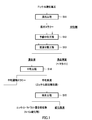
- FIG. 1 is a process diagram of a hydrometallurgical process of nickel oxide ore by the HPAL method.
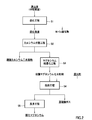
- FIG. 2 is a process diagram showing a flow of a manufacturing method of magnesium oxide.
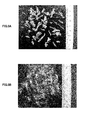
- FIG. 3A is a photograph showing the crystalline state of magnesium sulfate formed by concentration treatment by natural drying (sun drying), and
- FIG. 3B is magnesium sulfate formed by concentration treatment by external heating. It is a photograph which shows the crystal state of.
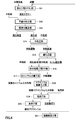
- FIG. 4 is a process diagram showing a flow of a method for producing magnesium oxide based on a nickel oxide ore hydrometallurgical method.
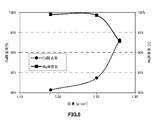
- FIG. 5 is a graph showing the calcium removal rate with respect to the specific gravity of the solution and the proportion of magnesium present in the solution.
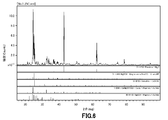
- FIG. 6 is a graph showing the XRD analysis result of the crystal when the carbon addition amount is 0.025 mol.
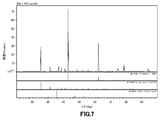
- FIG. 7 is a graph showing the XRD analysis results of the crystal when the carbon addition amount is 0.05 mol.
- the method for producing hematite separates a leach residue obtained by leaching a nickel oxide ore in a hydrometallurgical process of nickel oxide ore using a high temperature high pressure leaching method (HPAL method). It is to be collected. Specifically, to the leaching slurry obtained by adding sulfuric acid to nickel oxide ore and leaching nickel and cobalt into sulfuric acid solution under high temperature and high pressure, the neutralizing agent is added to adjust the pH, and the leaching slurry is This is a method of separating and recovering a leachate containing nickel and cobalt and a leach residue that is hematite.
- HPAL method high temperature high pressure leaching method
- a neutralizing agent neutralizing agent for neutralizing treatment, second neutralizing agent
- a neutralizing agent for neutralizing treatment second neutralizing agent
- a sulfidizing step of separating the post-sulfurized liquid
- Treatment neutralizer, third neutralizer effluent wastewater from which aluminum and manganese are separated from the sulfidized solution is concentrated, and calcium contained in the effluent effluent is precipitated as calcium sulfate and separated.
- a separation step (3) a magnesium crystallization step of further concentrating the solution obtained through the calcium separation step, and precipitating and separating magnesium contained in the solution as magnesium sulfate, and (4) separation in the magnesium crystallization step. Shi Roasted together with a reducing agent to magnesium sulfate, and roasting to obtain a magnesium oxide and sulfur dioxide, (5) a cleaning step of cleaning the magnesium oxide obtained in the roasting step, the magnesium oxide obtained through the use.
- This magnesium oxide production method concentrates and separates the discharged wastewater containing magnesium and calcium in two stages as described above. That is, calcium is first precipitated and separated as salt crystals in the form of calcium sulfate dihydrate, and then magnesium is precipitated and separated as salt crystals in the form of magnesium sulfate heptahydrate.
- the obtained magnesium sulfate heptahydrate crystals are roasted together with a reducing agent such as coke or charcoal to form magnesium oxide, and further washed to obtain high-purity magnesium oxide.
- the high-purity magnesium oxide having a low impurity quality thus obtained is (preliminarily) neutralized with respect to the leaching slurry obtained by the HPAL process of nickel oxide ore. Used as a processing neutralizer.
- the quality of impurities such as sulfur and calcium in the leaching residue generated in the HPAL process can be reduced, and hematite which is a high purity leaching residue can be produced.
- magnesium oxide which has the process of (1) thru
- magnesium oxide is produced for a leachate obtained by a hydrometallurgical method using an HPAL process using nickel oxide ore as a raw material, and a neutralizing agent for pre-neutralization treatment for the leach slurry obtained by the HPAL process
- a neutralizer sulfuric acid, etc. used in the process can be used repeatedly.
- the method for producing hematite according to the present embodiment is based on the leaching slurry obtained by leaching the nickel oxide ore in the hydrometallurgy process of nickel oxide ore using the HPAL method. After the preliminary neutralization treatment, the leaching slurry is subjected to solid-liquid separation to separate and recover the hematite as the leaching residue.
- FIG. 1 shows a process chart of a hydrometallurgical process of nickel oxide ore by the HPAL method.
- a leaching step S11 in which sulfuric acid is added to a nickel oxide ore slurry and leached under high temperature and high pressure, and a neutralizing agent is added to the obtained leached slurry.
- Nickel oxide ores include so-called laterite ores such as limonite ore and saprolite ore.
- Laterite ore usually has a nickel content of 0.8 to 2.5% by weight and is contained as a hydroxide or siliceous clay (magnesium silicate) mineral.
- the iron content is 10 to 50% by weight and is mainly in the form of trivalent hydroxide (goethite), but partly divalent iron is contained in the siliceous clay.
- an oxidized ore containing valuable metals such as nickel, cobalt, manganese, copper, and the like, for example, a manganese nodule existing in the deep sea bottom is used.
- the pH of the leaching slurry obtained in the leaching step S11 is adjusted to a predetermined range.
- excess sulfuric acid is added from the viewpoint of improving the leaching rate. Therefore, the obtained leaching slurry contains free sulfuric acid (excess sulfuric acid not involved in the leaching reaction), and its pH is very low. Therefore, in the preliminary neutralization step S12, the pH of the leaching slurry is adjusted to a predetermined range, and the free sulfuric acid contained in the leaching slurry is neutralized.
- the pH value adjusted by adding a neutralizing agent is preferably about 2.0 to 6.0.
- pH is lower than 2.0, the cost for making the equipment in solid-liquid separation process S13 acid-resistant is needed.
- the pH is higher than 6.0, nickel leached in the leachate (slurry) may remain as a residue during the washing process (precipitate), and the washing efficiency may be reduced.
- an appropriate set value may be selected from the pH range described above depending on the operation status of the leaching process in the leaching step S11 and the pH of the washing water used in the solid-liquid separation step S13.
- a calcium-based neutralizer such as a calcium carbonate slurry or a calcium hydroxide slurry
- a calcium-based neutralizer such as a calcium carbonate slurry or a calcium hydroxide slurry
- calcium sulfate (gypsum) itself produced by this neutralization process coexists in the leaching residue as a starch, so sulfur and calcium contained in the leaching residue hematite The quality of will become high.
- the load on the environment increases with the discharge of SO 2 gas, and it also causes the quality of steel to deteriorate. Therefore, it is not preferable as a raw material for iron making.
- an oxidation described later is used as a neutralizer (neutralizer for preliminary neutralization process, first neutralizer) added to the leaching slurry. It is characterized by using magnesium oxide obtained by a method for producing magnesium.
- the magnesium oxide is obtained by using a post-sulfurization solution (sulfuric acid solution) containing magnesium and calcium obtained through the sulfurization step S15 of the nickel oxide ore HPAL process as a raw material. It is obtained by concentrating and separating in stages. Therefore, the magnesium oxide has a low purity of impurities such as calcium and has a high purity. Therefore, by using this as a neutralizing agent in the neutralization treatment in the preliminary neutralization step S12, hematite having a low impurity quality can be produced, and can be effectively used as an iron-making raw material.
- a post-sulfurization solution sulfuric acid solution
- the magnesium oxide has a low purity of impurities such as calcium and has a high purity. Therefore, by using this as a neutralizing agent in the neutralization treatment in the preliminary neutralization step S12, hematite having a low impurity quality can be produced, and can be effectively used as an iron-making raw material.
- Solid-liquid separation process In the solid-liquid separation step S13, while leaching slurry after neutralizing free sulfuric acid in the preliminary neutralization step S12 is washed in multiple stages, a leachate containing nickel and cobalt (crude nickel sulfate aqueous solution), a leach residue that is hematite, Separate and collect.
- the solid-liquid separation processing is performed by the solid-liquid separation equipment such as a thickener using the flocculant supplied from the flocculant supply equipment. Specifically, the leaching slurry is first diluted with a cleaning liquid, and then the leaching residue in the slurry is concentrated as a thickener sediment. Thereby, the nickel content adhering to the leaching residue can be reduced according to the degree of dilution.
- solid-liquid separation tank S13 it is preferable to use solid-liquid separation tanks such as thickeners connected in multiple stages and perform solid-liquid separation while washing the leach slurry in multiple stages.
- a continuous countercurrent cleaning method CCD method in which the cleaning liquid is brought into contact with the leaching slurry in countercurrent can be used.
- hematite can be obtained by performing solid-liquid separation in the solid-liquid separation step S13 and separating and recovering the leach residue, which is hematite, from the leach slurry.
- the hematite thus obtained was obtained by using high-purity magnesium oxide with low impurity quality as a neutralizing agent in the neutralization treatment in the preliminary neutralization step S12 as described above. Therefore, impurities such as sulfur and calcium are low in quality and can be effectively used as an iron-making raw material.
- the neutralization step S14 the pH of the leachate (crude nickel sulfate aqueous solution) separated in the solid-liquid separation step S13 is adjusted, the neutralized starch containing the impurity element is separated, and the neutralization finish containing nickel and cobalt is separated. Obtain a liquid.
- the pH becomes 4.0 or less, preferably 3.0 to 3.5, more preferably 3.1 to 3.2 while suppressing the oxidation of the separated leachate.
- neutralizing agents such as magnesium oxide and calcium carbonate (neutralizing agent for neutralization treatment, second neutralizing agent) are added, and neutralized starch slurry containing trivalent iron as an impurity and neutralized
- the final solution is a nickel recovery mother liquor.
- a sulfidizing agent such as hydrogen sulfide gas is blown into the nickel recovery mother liquor to stabilize the nickel concentration at a low level and sulfide containing nickel and cobalt with a small amount of impurity components (nickel / cobalt mixed sulfide).
- a poor liquid after sulfidation.
- zinc when zinc is contained in the mother liquor for nickel recovery, zinc can be selectively separated as sulfide prior to separation of nickel and cobalt as sulfide.
- the nickel / cobalt mixed sulfide slurry is subjected to sedimentation using a sedimentation apparatus such as thickener to separate and recover the nickel / cobalt mixed sulfide from the bottom of the thickener, and the aqueous solution component overflows. And recovered as a solution after sulfidation.
- This post-sulfurized solution is a sulfuric acid solution containing magnesium, calcium and the like remaining without being sulfided.
- a magnesium oxide production method described later is applied to obtain high-purity magnesium oxide from the post-sulfurization solution.
- the post-sulfurization solution obtained in the HPAL process of nickel oxide ore is used for the production of magnesium oxide, and the produced magnesium oxide is added to the leaching slurry for pre-neutralization.
- the neutralizer can be used repeatedly. Thereby, the usage-amount of a novel neutralizing agent can be reduced remarkably, and it becomes possible to perform an efficient smelting operation.
- FIG. 2 is a process diagram of the method for producing magnesium oxide.
- the sulfidation step S1 is a neutralization agent (neutralizing agent for neutralization treatment, second neutralization treatment) for a leachate produced by leaching nickel oxide ore under high temperature and high pressure in a hydrometallurgical process using nickel oxide ore using the HPAL method.
- a sulfiding agent is added to the neutralized final solution obtained by adding (2) neutralizing agent) to produce a sulfide of nickel and cobalt and a solution after sulfiding.
- this sulfurization step S1 is the same as the description in the HPAL process described above (description of the sulfurization step S15), the description is omitted here. That is, this magnesium oxide production method uses as a raw material a post-sulfurized solution obtained by a hydrometallurgical process using nickel oxide ore using the HPAL method.
- the post-sulfurization solution obtained through the sulfiding treatment in the sulfiding step S1 is a sulfuric acid solution containing aluminum, manganese, magnesium, calcium, etc., and has a pH of about 1.0 to 3.0.
- a neutralizing agent (a neutralizing agent for wastewater treatment, a third neutralizing agent) is added to the obtained post-sulfurization solution, and aluminum and manganese are removed from the post-sulfurization solution.
- the separated discharge wastewater is concentrated, and calcium contained in the discharge wastewater is precipitated as calcium sulfate and separated.
- This calcium separation step S2 is a step of performing concentration separation of the first stage.
- the sulfuric acid solution to be concentrated is a sulfuric acid solution containing magnesium and calcium.
- impurity elements such as aluminum and manganese obtained through the sulfidation step S1 in the nickel oxide ore wet smelting process are used.
- a neutralizing agent for wastewater treatment is added to the post-sulfurized solution to adjust the pH of the post-sulfurized solution to 7.0 to 8.5.
- Treatment and solid-liquid separation of the generated starch such as aluminum and manganese yields a drainage wastewater as a filtrate.
- the solubility of calcium sulfate dihydrate is smaller than the solubility of magnesium sulfate heptahydrate, and in the concentration process, calcium sulfate dihydrate becomes magnesium sulfate heptahydrate. It uses the preferential precipitation. Thereby, calcium contained in the sulfuric acid solution is selectively separated.
- the size of the calcium sulfate crystals to be precipitated is not particularly limited and is not generally determined, but may be appropriately selected based on the degree of separation of impurities coexisting with the productivity of concentration by conducting a test in advance.
- the method for concentrating the sulfuric acid solution is not particularly limited as long as it allows water in the sulfuric acid solution to evaporate to precipitate calcium crystals, and various methods can be used.
- the method etc. which are heated from the outside using the oil and electric power etc. which were generally performed are mentioned.
- the discharged wastewater (sulfuric acid solution) to be concentrated is put in a container and left outdoors and dried in the sun.
- Various methods such as a method of recovering crystals grown by dropping a sulfuric acid solution onto a branch frame constructed of bamboo or vinyl can be used.
- the concentration treatment suitable for calcium separation in the calcium separation step S2 is preferably performed within a range where precipitation of calcium sulfate dihydrate is observed and precipitation of magnesium sulfate heptahydrate is not observed as much as possible.
- the range can be specified by various methods such as a method of analyzing the components of the solution, a method of observing the difference in appearance with the naked eye, or a method of measuring the specific gravity.
- the method of determining the degree of concentration treatment by measuring the specific gravity that is, the end point of the concentration treatment
- calcium can be effectively separated and removed by a simple method.
- the concentration of the sulfuric acid solution is gradually concentrated by natural drying
- the present inventor has a case where the specific gravity of the solution is lighter than that range from the range of 1.1 to 1.3 g / cm 3. It has been found that crystallization of magnesium sulfate gradually begins when crystallization of calcium sulfate occurs, and when the concentration progresses and the specific gravity becomes larger than that range.
- the specific gravity of the sulfuric acid solution is measured, and the time when the specific gravity is in the range of about 1.1 to 1.3 g / cm 3 is determined as the end point of the concentration treatment according to the quality.
- the end point of the concentration treatment is the time point when it is about 1.25 g / cm 3 .
- the solid-liquid separation between the crystallized calcium sulfate crystals and the solution can be performed using a filter filtration device, a centrifugal separation device, or the like.
- a filter filtration device a centrifugal separation device, or the like.
- Magnesium crystallization step S3 In the magnesium crystallization step S3, the solution obtained through the calcium separation step S2 of (2) is further concentrated, and the magnesium in the solution is precipitated as magnesium sulfate heptahydrate crystals. Take out.
- This magnesium crystallization step S3 is a step of performing concentration separation in the second stage.
- concentration method in the magnesium crystallization step S3 various methods can be used in the same manner as the concentration method in the calcium separation step S2 of (2) described above, and natural energy using natural energy such as solar heat, geothermal heat, or wind is used. It is particularly preferable to use a method of concentrating by drying (sun drying). Or these concentration methods can also be combined.
- a sulfuric acid solution (post-sulfurization solution) generated in a hydrometallurgical process of nickel oxide ore contains about 10 to 20 g / L of magnesium, compared to seawater containing only about 1.3 g / L of magnesium. And can concentrate magnesium much more efficiently.
- the water is gradually evaporated, so that it is possible to finely manage the state of the solution being evaporated. Furthermore, since the deposited salt crystals also grow coarsely, it is possible to prevent impurities that are not subject to recovery, such as aluminum, from entering the gaps between the magnesium sulfate crystal grains, and high purity crystals with few impurities Can be obtained.
- FIG. 3 (A) is a photograph showing the crystal state when magnesium sulfate crystals are precipitated by allowing the solution to stand in the room and naturally dry (dry in the sun) in the magnesium crystallization step S3 to concentrate the solution. is there.
- FIG. 3B is a photograph showing a crystal state when water is evaporated in a water bath heated to 80 ° C. by external power and concentrated to precipitate magnesium sulfate crystals.
- the magnesium sulfate crystals are precipitated by natural drying, the solution is crystallized by evaporating moisture by external heating. It can be seen that much larger crystals can be formed.
- magnesium sulfate composed of coarse crystal grains can be efficiently precipitated and collected by concentrating the solution at a low drying rate using natural drying or the like to precipitate crystals. it can.
- the calcium component adhering to the crystal surface and the calcium component co-precipitated and contained in the magnesium crystal can be reduced.
- coarse crystals can be formed in this way, it is possible to suppress the crystals from scattering and becoming a recovery loss during the reduction roasting in the next roasting step S4.
- magnesium sulfate crystals are precipitated as a nucleus, and coarser crystals can be efficiently obtained.
- the end point of the concentration treatment in the magnesium crystallization step S3 can be arbitrarily determined.
- solid-liquid separation between the crystallized magnesium sulfate crystals and the solution can be performed using a filter filtration device, a centrifugal separator, or the like, as in the calcium separation step S2.
- the drying speed is about the same as that of natural drying, the evaporation may be promoted by heating, but there is a possibility that it is extremely inefficient as compared with natural drying.
- a method of natural drying after concentration to some extent using a water bath or the like may be used in order to shorten the drying time.
- a method of spraying a solution on a solid substance and promoting crystal precipitation on the surface of the solid substance may be used as has been done in the past in a dripping salt field.
- the operation of adding water to the magnesium sulfate crystal obtained by concentration and dissolving it again, and then precipitating the magnesium sulfate crystal again may be performed one or more times. Thereby, a magnesium sulfate crystal with much less impurities can be deposited.
- roasting step S4 the magnesium sulfate obtained in the magnesium crystallization step S3 of (3) is roasted together with a reducing agent to obtain magnesium oxide and sulfurous acid gas.
- coke can be used as shown in the reaction formula (i), and other carbon-based reducing agents such as coal, charcoal, bamboo charcoal, and waste activated carbon can be used. it can. Propane gas, LPG gas, or the like may be used as a reducing agent.
- charcoal and bamboo charcoal are renewable energies and are particularly excellent in terms of environment.
- the equivalent of the reducing agent may be selected by conducting a test in advance. For example, in the case of coke, 1 equivalent is slightly insufficient, and it is desirable to add about 2 equivalents.
- the conditions for the reduction roasting treatment are not particularly limited, and may be appropriately selected according to the amount of magnesium, the type of reducing agent, the equipment used, and the like.
- the amount of reducing agent added is 0.5 mol / mol or more, which is 2 equivalents to magnesium, and the reaction temperature is maintained at about 950 to 1100 ° C.
- the time is preferably about 1 to 5 hours.
- the magnesium oxide obtained in the roasting step S4 of (4) is cleaned.
- generated by roasting process S4 can be used for the use of the neutralizing agent for the pre-neutralization process mentioned later even if it is as it is, the purity of magnesium oxide is further raised by giving a washing process in this way. be able to.
- Water can be used for the cleaning process in the cleaning step S5.
- the solubility of magnesium oxide in water is 0.0086 g / 100 ml at 20 ° C. Therefore, a substance having a solubility higher than the solubility of magnesium oxide in water can be separated from the washing with water in this washing step S5, and the purity of magnesium oxide can be improved.
- the solubility of anhydrous calcium sulfate in water at 20 ° C. is 0.24 g / 100 ml, which is much higher than the solubility of magnesium oxide at 20 ° C.
- calcium that could not be separated by the two-stage concentration process of the calcium separation process S2 of (2) and the magnesium crystallization process S3 of (3) can be separated by the washing process in this washing process S5. This makes it possible to obtain magnesium oxide with even higher purity.
- magnesium oxide As described above, in this method for producing magnesium oxide, first, calcium is precipitated and separated as calcium sulfate crystals from the sulfuric acid solution containing magnesium and calcium, and then magnesium is separated from the solution from which calcium has been separated and removed. Concentration treatment is performed in two stages of precipitation as magnesium sulfate crystals and separation. The obtained magnesium sulfate heptahydrate crystals are roasted together with a reducing agent to obtain magnesium oxide, and the magnesium oxide is washed to obtain high-purity magnesium oxide.
- high-purity magnesium oxide having a low impurity quality such as calcium can be efficiently produced by a simple operation from a solution containing magnesium and calcium such as discharged waste water.
- the hematite which concerns on this Embodiment, it uses as a neutralizing agent of the preliminary
- the quality of impurities such as sulfur and calcium in the leaching residue generated in the HPAL process can be reduced, and hematite which is a high-purity leaching residue can be produced.
- the amount of residue generated in the HPAL process can be effectively reduced.
- the high-purity magnesium oxide having a low impurity quality produced as described above can be used not only as a neutralizing agent for pre-neutralization treatment of the leaching slurry, but also, for example, refractory bricks constituting an electric furnace or the like. It can also be suitably used for alloy materials and the like.
- Magnesium oxide production based on nickel oxide ore hydrometallurgical process a post-sulfurized solution obtained by a hydrometallurgical process using nickel oxide ore using the HPAL method is used as a raw material. More specifically, a neutralizing agent containing calcium and / or magnesium is added to a leachate containing nickel obtained by leaching nickel oxide ore by a high-temperature high-pressure leaching method (HPAL method) to separate impurities. Then, a solution after adding a sulfiding agent to precipitate and separate a mixed sulfide of nickel and cobalt (post-sulfurized solution) is used as a raw material.
- HPAL method high-temperature high-pressure leaching method
- FIG. 4 shows the flow of manufacturing magnesium oxide by the above-described manufacturing method using the post-sulfurization solution obtained by separating nickel-cobalt mixed sulfide by the hydrometallurgy method of nickel oxide ore using the HPAL method. It is the process figure shown more clearly. 4 corresponds to the process diagram shown in FIG. 2.
- the post-sulfurization solution obtained in the sulfidation step S15 in the HPAL process of nickel oxide ore is a sulfuric acid solution containing impurities such as metals and heavy metals such as iron and aluminum in addition to magnesium and calcium. It is.
- this post-sulfurized solution is used as a raw material for the production method of magnesium oxide, it is preferable to remove impurities contained in the sulfuric acid solution as much as possible. Therefore, prior to producing magnesium oxide using the post-sulfurization solution obtained in the sulfurization step S15, a waste water treatment step S16 for removing these impurities is performed prior to producing magnesium oxide using the post-sulfurization solution obtained in the sulfurization step S15.
- the wastewater treatment (neutralization treatment) in the wastewater treatment step S16 constitutes a part of the treatment in the calcium separation step S2 described with reference to FIG. 2, and the wastewater treatment step S16 and the calcium separation step in FIG. S17 corresponds to the calcium separation step S2 in FIG.
- Wastewater treatment process Specifically, in this waste water treatment step S16, a neutralizing agent (third neutralizing agent) for waste water treatment is added to the post-sulfurized liquid (waste water treatment starting liquid) obtained through the sulfurization step S15. The pH is adjusted to form a neutralized starch containing impurities such as iron, aluminum and heavy metals. As a result, impurities can be removed from the sulfuric acid solution, the quality of impurities in the crystals formed in the subsequent production of magnesium oxide can be reduced, and high-purity magnesium oxide can be produced.
- a neutralizing agent third neutralizing agent for waste water treatment is added to the post-sulfurized liquid (waste water treatment starting liquid) obtained through the sulfurization step S15.
- the pH is adjusted to form a neutralized starch containing impurities such as iron, aluminum and heavy metals.
- impurities can be removed from the sulfuric acid solution, the quality of impurities in the crystals formed in the subsequent production of magnesium oxide can be reduced, and high-purity magnesium oxide can
- a neutralizing agent is added to the post-sulfurized solution to separate aluminum at a relatively low pH, and then another neutralizing agent is added. Oxidation neutralization treatment is performed to separate manganese as starch. Subsequently, the pH is adjusted to 7.0 to 8.5 by further adding a neutralizing agent to the waste water after separating manganese, and the neutralized starch and the waste water treatment final liquid (discharged waste liquid) are separated into solid and liquid. To do.
- Magnesium oxide manufacturing process That is, a sulfuric acid solution (discharged wastewater) containing magnesium and calcium is concentrated, and calcium separation step S17 for separating and separating calcium as calcium sulfate, and the resulting solution is further concentrated, and magnesium is precipitated as magnesium sulfate.
- the magnesium crystallization step S18 to be separated, the separated magnesium sulfate crystals are roasted together with the reducing agent, the roasting step S19 to obtain magnesium oxide and sulfurous acid gas, and the roasted magnesium oxide is washed.
- a cleaning step S20 is performed.
- each process is the same as that of the above, detailed description is abbreviate
- magnesium oxide can be produced efficiently and with high purity from the post-sulfurization solution obtained in the sulfiding step S15 in the nickel oxide ore hydrometallurgical method by this magnesium oxide production method. .
- magnesium oxide is produced from the post-sulfurization solution obtained by the hydrometallurgical process of nickel oxide ore using the HPAL method, and used as a neutralizing agent for pre-neutralization treatment for the leached slurry.
- a leach residue (hematite) with low quality of sulfur and calcium can be produced, and the amount of residue that has been piled up by land reclamation can be reduced.
- magnesium dissolved by the preliminary neutralization treatment is circulated again to the waste water treatment step S16 through the sulfurization step S15 in the HPAL process, it can be repeatedly used as a neutralizing agent by recrystallization. Thereby, the new usage-amount of a neutralizing agent can also be reduced and efficient operation can be performed also in terms of operation cost.
- the sulfurous acid gas obtained through the roasting step S19 is collected to produce sulfuric acid. It does not specifically limit as a manufacturing method of a sulfuric acid, It can carry out using a well-known method.
- the sulfuric acid produced is used in the leaching step S11 of the above-described nickel oxide ore wet smelting method. Can be used again.
- the amount of sulfuric acid newly prepared can be reduced, and the operation cost can be reduced to enable more efficient operation.
- the amount of waste can be reduced, and the burden on the environment can be greatly reduced.
- Example 1 ⁇ Production of high purity magnesium oxide> (Calcium sulfate separation and magnesium sulfate crystallization) 300 ml of an aqueous solution prepared by dissolving calcium sulfate dihydrate and magnesium sulfate heptahydrate in pure water and adjusting the magnesium concentration to 25 g / L and the calcium concentration to 0.5 g / L was prepared. This solution was divided into three equal parts as samples 1 to 3 in a 200 ml beaker.
- FIG. 5 is a graph showing the calcium removal rate with respect to the specific gravity of the solution and the magnesium existing ratio in the solution. From the graph of FIG. 5, when the specific gravity of the solution is in the range of 1.15 to 1.30 g / cm 3 , particularly when it is about 1.25 g / cm 3 , the concentration treatment for calcium separation is performed. It can be seen that by completing the process, calcium crystals can be effectively precipitated and separated while increasing the amount of magnesium remaining in the solution.
- FIG. 6 shows the XRD analysis result of the crystal when the carbon addition amount is 0.025 mol
- FIG. 7 shows the XRD analysis result of the crystal when the carbon addition amount is 0.05 mol.
- magnesium sulfate crystals obtained by heating to 80 ° C. using a water bath and then maintaining the temperature at 30 ° C. were added with carbon equivalent to 2 equivalents, otherwise, the crystals were obtained by natural drying. Roasted in the same way. As a result, the quality of the obtained magnesium oxide was 55 wt% magnesium and 8 wt% calcium.
- the magnesium grade in the magnesium oxide was 55% by weight, which was the same as before washing.
- the product of roasted magnesium sulfate obtained by natural drying was greatly reduced from 5% before washing to 0.66% after washing.
- the thing which roasted magnesium sulfate obtained by the temperature rising with a water bath fell from 8% before washing to 1.06% after washing.
- Example 2 ⁇ Manufacture of magnesium oxide from post-sulfurization solution in HPAL process> A nickel oxide ore having a nickel grade of 1% and an iron grade of 46 to 48% is mixed by adding 275 Kg (275 [Kg / ore-t]) of a 64 wt% sulfuric acid solution per ton of ore, and a concentration of 30 to 40 It adjusted so that it might become a slurry of a weight%.
- the mixed slurry was charged into a pressurizing apparatus, heated to 240 to 250 ° C. with stirring, and held for 3 hours, and nickel in the ore was leached to form a leached slurry.
- pure water was added to the obtained leaching slurry so that the volume thereof was the same as the volume of the slurry before leaching.
- the pH of the obtained leachate is adjusted to precipitate impurities to obtain a neutralized solution, and a sulfurizing agent is added to the neutralized solution to separate nickel and cobalt as sulfides.
- the analytical values of the wastewater after sulfidation are 2.9 g / L for manganese, 7.8 g / L for magnesium, 2.9 g / L for aluminum, 0.4 g / L for iron, and the pH of the wastewater is 2.5. was.
- the sulphided wastewater was charged into the reaction vessel, and while maintaining the temperature at 60 ° C. with stirring, slaked lime slurry was added as a neutralizing agent to adjust the pH to 4.5 to neutralize the aluminum component.
- slaked lime slurry was added as a neutralizing agent to adjust the pH to 4.5 to neutralize the aluminum component.
- magnesium oxide was produced from the obtained post-neutralized solution (discharged wastewater) using the same natural drying (sun drying) method as in Example 1. Specifically, while heating the discharged wastewater, it was concentrated to a specific gravity of about 1.25 g / cm 3 to precipitate calcium as calcium sulfate dihydrate crystals, and filtered to collect a magnesium-rich filtrate. . Further, the filtrate was allowed to stand for about 1 month under the same weather conditions as in Example 1 and then naturally dried to precipitate the magnesium content in the solution as crystals.
- a magnesium salt crystal is put into a crucible, and an amount corresponding to 2 equivalents of the required reaction amount is added to the crucible using pure graphite as a reducing agent, and air is blown at 2.5 liters per minute to 1000 ° C. After raising the temperature, the mixture was kept for 1 hour and gradually cooled to obtain magnesium oxide.
- a nickel oxide ore of nickel grade 1% and iron grade 46-48% is mixed with 275 kg of a sulfuric acid solution of 64 wt% per ton of ore so that a slurry of 30 to 40 wt% in concentration is obtained.
- the slurry was charged into a pressure device, heated to 240 to 250 ° C., held for 3 hours, and nickel in the ore was leached to form a leached slurry.
- the pure water was added so that the volume of a leaching slurry might become the same as the slurry before leaching.
- Table 3 shows the analysis results of the grades (% by weight) of iron, sulfur and calcium of the leaching residue (a) thus obtained.
- the leaching residue (a) obtained has a sulfur and calcium grade of less than 0.1% by weight, indicating that a leaching residue having a very low impurity grade was obtained.
- the grade of iron in the leaching residue was 75% by weight when converted to the ratio of hematite (Fe 2 O 3 ), and a leaching residue with very high hematite quality was obtained.
- the amount of the leaching residue was reduced to 94% with respect to the amount of the comparative example described later as 100%, and the place required for landfill could be saved.
- magnesium oxide is produced from the leaching solution of nickel oxide ore, and it is used as a neutralizing agent for the pre-neutralization treatment for the leaching slurry. It was found that hematite that can be effectively used as an iron-making raw material can be produced with a low impurity grade of calcium. It was also found that by using the method of repeating magnesium oxide produced as described above as a neutralizing agent, the amount of new neutralizing agent used can be reduced and the amount of residue generated can be reduced.
- Example 1 A nickel oxide ore having the same nickel grade 1% and iron grade 46-48% as in Example 2 was mixed with 275 kg of a sulfuric acid solution of 64 wt% per ton of ore and mixed with a slurry having a concentration of 30-40 wt%. Then, the slurry was charged into a pressure device, heated to 240 to 250 ° C., held for 3 hours, and nickel in the ore was leached to form a leached slurry. And the pure water was added so that the volume of a leaching slurry might become the same as the slurry before leaching.
- Slaked lime was added as a neutralizing agent to the leaching slurry to neutralize the free sulfuric acid remaining in the leaching slurry. After neutralization, it was separated into solid and liquid using Nutsche and filter paper, and separated into leachate and leach residue (hematite).
- Table 3 shows the analysis results of the quality (weight%) of iron, sulfur and calcium of the leaching residue (b) obtained in this way.
- the obtained leaching residue (b) has a sulfur and calcium grade exceeding 1% by weight and becomes a leaching residue having a very high impurity grade, which is not suitable as a steelmaking raw material. Met.
- Example 3 In the roasting step of Example 1, the magnesium sulfate heptahydrate crystals obtained by separating from the solution obtained in the same manner as in Example 1 were divided into two and put into two crucibles, respectively. To these crucibles, charcoal having the composition shown in Table 4 below as a reducing agent was added so as to be 0.025 mol and 0.05 mol, respectively, and 1000 ° C. while blowing air at 2.5 liters per minute. After the temperature was raised, the mixture was kept for 1 hour and gradually cooled. The amount of charcoal added was an amount corresponding to 1 equivalent and 2 equivalents of the required reaction amount, respectively.
- each crystal was taken out from the crucible and analyzed for morphology using an X-ray diffraction (XRD) apparatus.
- XRD X-ray diffraction
Landscapes
- Chemical & Material Sciences (AREA)
- Organic Chemistry (AREA)
- Inorganic Chemistry (AREA)
- Engineering & Computer Science (AREA)
- Life Sciences & Earth Sciences (AREA)
- Geology (AREA)
- Manufacturing & Machinery (AREA)
- Materials Engineering (AREA)
- Mechanical Engineering (AREA)
- Metallurgy (AREA)
- Environmental & Geological Engineering (AREA)
- Water Supply & Treatment (AREA)
- Hydrology & Water Resources (AREA)
- Chemical Kinetics & Catalysis (AREA)
- General Chemical & Material Sciences (AREA)
- Physics & Mathematics (AREA)
- Thermal Sciences (AREA)
- Manufacture And Refinement Of Metals (AREA)
- Compounds Of Iron (AREA)
- Inorganic Compounds Of Heavy Metals (AREA)
- Compounds Of Alkaline-Earth Elements, Aluminum Or Rare-Earth Metals (AREA)
Abstract
Description
(1)上記浸出液に第2の中和剤を添加して不純物を分離し、得られた中和後液に硫化剤を添加してニッケル及びコバルトの硫化物を得た後に、硫化後液を分離する硫化工程。
(2)上記硫化後液に第3の中和剤を添加し、該硫化後液からアルミニウム及びマンガンを分離した放流排水を濃縮し、該放流排水に含まれるカルシウムを硫酸カルシウムとして析出させて分離するカルシウム分離工程。
(3)上記カルシウム分離工程を経て得られた溶液をさらに濃縮し、溶液に含まれるマグネシウムを硫酸マグネシウムとして析出させて分離するマグネシウム結晶化工程。
(4)上記マグネシウム結晶化工程で分離した硫酸マグネシウムを還元剤と共に焙焼し、酸化マグネシウムと亜硫酸ガスを得る焙焼工程。
(5)上記焙焼工程で得られた酸化マグネシウムを洗浄する洗浄工程。
1.概要
2.ヘマタイトの製造方法について(ニッケル酸化鉱石のHPALプロセス)
3.酸化マグネシウムの製造方法について
(1)硫化工程(ニッケル酸化鉱石のHPALプロセスの硫化工程)
(2)カルシウム分離工程
(3)マグネシウム結晶化工程
(4)焙焼工程
(5)洗浄工程
4.ニッケル酸化鉱石の湿式製錬方法に基づく酸化マグネシウムの製造
4-1.排水処理工程
4-2.酸化マグネシウムの製造プロセス
4-3.硫酸製造工程
5.実施例
本実施の形態に係るヘマタイトの製造方法は、高温高圧浸出法(HPAL法)を用いたニッケル酸化鉱石の湿式製錬プロセスにおいて、ニッケル酸化鉱石に対して浸出処理を施して得られる浸出残渣を分離回収するものである。具体的には、ニッケル酸化鉱石に硫酸を加えて高温高圧下でニッケル及びコバルトを硫酸溶液に浸出させて得られた浸出スラリーに、中和剤を添加してpHを調整し、その浸出スラリーをニッケル及びコバルトを含有する浸出液とヘマタイトである浸出残渣とに分離して回収する方法である。
先ず、本実施の形態に係るヘマタイトの製造方法について、より詳細に説明する。
ここで、図1に、ニッケル酸化鉱石のHPAL法による湿式製錬プロセスの工程図を示す。図1に示すように、ニッケル酸化鉱石の湿式製錬プロセスは、ニッケル酸化鉱石のスラリーに硫酸を添加して高温高圧下で浸出する浸出工程S11と、得られた浸出スラリーに中和剤を添加して遊離酸を中和する予備中和工程S12と、中和処理後の浸出スラリーを多段洗浄しながら、ニッケル及びコバルトと共に不純物元素を含む浸出液と浸出残渣(ヘマタイト)とを分離回収する固液分離工程S13と、得られた浸出液のpHを調整し不純物元素を含む中和澱物を分離してニッケル及びコバルトを含む中和終液を得る中和工程S14と、中和終液に対し硫化処理を施してニッケル及びコバルトを含む混合硫化物を形成する硫化工程S15とを有する。
浸出工程S11では、高温加圧容器(オートクレーブ)等を用いて、ニッケル酸化鉱石のスラリーに硫酸を添加して220~280℃の温度下で撹拌処理して、浸出残渣と浸出液からなる浸出スラリーを形成する。
予備中和工程S12では、浸出工程S11にて得られた浸出スラリーのpHを所定範囲に調整する。上述した高圧酸浸出法による浸出処理を行う浸出工程S11では、浸出率を向上させる観点から過剰の硫酸を加えるようにしている。そのため、得られた浸出スラリーには遊離硫酸(浸出反応に関与しなかった余剰の硫酸)が含まれており、そのpHは非常に低い。このことから、予備中和工程S12では、浸出スラリーのpHを所定の範囲に調整し、浸出スラリーに含まれる遊離硫酸を中和する。これにより、次工程の固液分離工程S13における多段洗浄時に効率よく洗浄が行われるようにすることができ、固液分離設備の簡素化にも寄与する。また、遊離硫酸を中和することによって、得られる浸出残渣(ヘマタイト)の真密度を高めて高密度の浸出残渣を安定的に産出することができる。
固液分離工程S13では、予備中和工程S12にて遊離硫酸を中和した後の浸出スラリーを多段洗浄しながら、ニッケル及びコバルトを含む浸出液(粗硫酸ニッケル水溶液)と、ヘマタイトである浸出残渣とに分離して回収する。
中和工程S14では、固液分離工程S13にて分離された浸出液(粗硫酸ニッケル水溶液)のpHを調整し、不純物元素を含む中和澱物を分離して、ニッケル及びコバルトを含む中和終液を得る。
硫化工程S15では、ニッケル回収用母液に硫化水素ガス等の硫化剤を吹きこみ、不純物成分の少ないニッケル及びコバルトを含む硫化物(ニッケル・コバルト混合硫化物)と、ニッケル濃度を低い水準で安定させた貧液(硫化後液)とを形成する。なお、ニッケル回収用母液中に亜鉛が含まれる場合には、ニッケル及びコバルトを硫化物として分離するに先立って、亜鉛を硫化物として選択的に分離することができる。
では次に、上述したヘマタイトの製造方法における予備中和処理用の中和剤(第1の中和剤)として使用する酸化マグネシウムについて、その製造方法を工程毎により詳細に説明する。図2は、この酸化マグネシウムの製造方法の工程図である。
硫化工程S1は、ニッケル酸化鉱石のHPAL法を用いた湿式製錬プロセスにおいて、ニッケル酸化鉱石を高温高圧下で浸出して生成した浸出液に対して中和剤(中和処理用中和剤、第2の中和剤)を添加して得られた中和終液に対して、硫化剤を添加してニッケル及びコバルトの硫化物と硫化後液とを生成させる工程である。
カルシウム分離工程S2では、得られた硫化後液に中和剤(排水処理用中和剤、第3の中和剤)を添加してその硫化後液からアルミニウム及びマンガンを分離した放流排水を濃縮し、その放流排水に含まれるカルシウムを硫酸カルシウムとして析出させて分離する。このカルシウム分離工程S2が、1段階目の濃縮分離を行う工程となる。
マグネシウム結晶化工程S3では、(2)のカルシウム分離工程S2を経て得られた溶液をさらに濃縮し、溶液中のマグネシウムを硫酸マグネシウム七水和物の結晶として析出させて取り出す。このマグネシウム結晶化工程S3が、2段階目の濃縮分離を行う工程となる。
焙焼工程S4では、(3)のマグネシウム結晶化工程S3で得られた硫酸マグネシウムを還元剤と共に焙焼し、酸化マグネシウムと亜硫酸ガスを得る。
MgSO4・7H2O+1/2C
→ MgO+SO2+1/2CO2+7H2O (i)
洗浄工程S5では、(4)の焙焼工程S4で得られた酸化マグネシウムを洗浄する。焙焼工程S4により生成した酸化マグネシウムは、そのままでも後述する予備中和処理用の中和剤の用途に使用することができるが、このように洗浄処理を施すことによって酸化マグネシウムの純度をさらに高めることができる。
さて、上述したように、酸化マグネシウムの製造方法においては、ニッケル酸化鉱石のHPAL法を用いた湿式製錬プロセスにて得られる硫化後液を原料とする。より具体的には、ニッケル酸化鉱石を高温高圧浸出法(HPAL法)により浸出して得られたニッケルを含む浸出液に、カルシウム及び/又はマグネシウムを含有する中和剤を添加して不純物を分離し、次いで硫化剤を添加してニッケル及びコバルトの混合硫化物を析出させ分離した後の溶液(硫化後液)を原料として用いる。
具体的に、この排水処理工程S16では、硫化工程S15を経て得られた硫化後液(排水処理始液)に対して排水処理用の中和剤(第3の中和剤)を添加してpHを調整し、鉄やアルミニウム、重金属等の不純物を含む中和澱物を形成する。これにより、硫酸溶液から不純物を除去することができ、続いて行われる酸化マグネシウムの製造において形成される結晶中における不純物品位を低下させ、純度の高い酸化マグネシウムを製造することを可能にする。
すなわち、マグネシウムとカルシウムとを含有する硫酸溶液(放流排水)を濃縮し、カルシウムを硫酸カルシウムとして析出させて分離するカルシウム分離工程S17と、得られた溶液をさらに濃縮し、マグネシウムを硫酸マグネシウムとして析出させて分離するマグネシウム結晶化工程S18と、分離した硫酸マグネシウムの結晶を還元剤と共に焙焼し、酸化マグネシウムと亜硫酸ガスを得る焙焼工程S19と、焙焼して得られた酸化マグネシウムを洗浄する洗浄工程S20とを行う。なお、各工程は、上記と同様であるので、詳細な説明は省略する。
さて、上述した酸化マグネシウムの製造方法では、その焙焼工程S19において、上記反応式(i)に示したように硫酸マグネシウムを還元焙焼することによって、酸化マグネシウムが得られるとともに亜硫酸ガス(SO2)が発生する。発生した亜硫酸ガスは、そのままでは大気に放出できない。一方で、亜硫酸ガスは、硫酸の原料になるため有効に利用することが可能となる。そこで、発生した亜硫酸ガスを捕集することによって硫酸に転化させる硫酸製造工程S21を行うことができる。
以下に、本発明についての実施例を説明するが、本発明は下記の実施例に限定されるものではない。
[実施例1]
<高純度酸化マグネシウムの製造>
(硫酸カルシウム分離と硫酸マグネシウム結晶化)
純水に硫酸カルシウム二水和物と硫酸マグネシウム七水和物とを溶解し、マグネシウム濃度が25g/L、カルシウム濃度が0.5g/Lになるよう調整した水溶液を300ml作製した。この溶液を容量200mlのビーカーに試料1~3として3等分した。


次に、上述した自然乾燥によって溶液から分離して得られた硫酸マグネシウム七水和物の結晶を2つに分け、2つの坩堝にそれぞれ投入した。これらの坩堝に、還元剤としてのカーボン(純黒鉛:C=100%)を、それぞれ、0.025mol、0.05mol添加し、空気を毎分2.5リットルで吹き込みながら1000℃に昇温した後に1時間保持して徐冷した。なお、カーボンの添加量は、それぞれ、反応必要量の1当量、2当量に相当する量とした。
次に、上述した自然乾燥並びにウォーターバスによる昇温で得られたそれぞれの硫酸マグネシウムに、還元剤を2当量添加する条件で焙焼することによって得られた酸化マグネシウムをそれぞれ10gずつ用意し、それぞれを200mlのビーカーに入れた。続いて、そのビーカーに120mlの純水を注いで攪拌し、次に静置して浸漬させ、その後上澄みを排出することによって浮上した未反応還元剤や反応後の灰を分離した。そして、濾紙と濾瓶を用いて固液分離して酸化マグネシウムを製造した。得られた酸化マグネシウムの結晶を乾燥させてICPにより分析した。
<HPALプロセスにおける硫化後液からの酸化マグネシウムの製造>
ニッケル品位1%、鉄品位46~48%のニッケル酸化鉱石に、64重量%の硫酸溶液を、鉱石1トン当たり275Kg(275[Kg/ore-t])添加して混合し、濃度30~40重量%のスラリーとなるように調整した。
次に、ニッケル品位1%、鉄品位46~48%のニッケル酸化鉱石に、64重量%の硫酸溶液を、鉱石1トン当たり275Kg添加して混合し、濃度30~40重量%のスラリーとなるように調整し、このスラリーを加圧装置に装入して、240~250℃に昇温後、3時間保持し、鉱石中のニッケルを浸出させて浸出スラリーを形成した。そして、浸出スラリーの体積が浸出前のスラリーと同じになるように純水を添加した。
実施例2と同じニッケル品位1%、鉄品位46~48%のニッケル酸化鉱石に、64重量%の硫酸溶液を、鉱石1トン当たり275Kg添加して混合し、濃度30~40重量%のスラリーとなるように調整し、このスラリーを加圧装置に装入して、240~250℃に昇温後、3時間保持し、鉱石中のニッケルを浸出させて浸出スラリーを形成した。そして、浸出スラリーの体積が浸出前のスラリーと同じになるように純水を添加した。

実施例1の焙焼工程において、実施例1と同様にして得た溶液から分離して得られた硫酸マグネシウム七水和物の結晶を2つに分け、2つの坩堝にそれぞれ投入した。これらの坩堝に、還元剤として下記表4に示す組成の木炭を、それぞれ炭分で、0.025mol、0.05molになるように添加し、空気を毎分2.5リットルで吹き込みながら1000℃に昇温した後に1時間保持して徐冷した。なお、木炭の添加量は、それぞれ、反応必要量の1当量、2当量に相当する量とした。

Claims (8)
- ニッケル酸化鉱石に硫酸を加え、高温高圧下でニッケル及びコバルトを硫酸溶液に浸出させて得られたスラリーに第1の中和剤を添加してpHを調整し、該スラリーをニッケル及びコバルトを含有する浸出液とヘマタイトである浸出残渣とに分離して回収するヘマタイトの製造方法であって、
上記第1の中和剤として、以下の(1)乃至(5)の工程を経て製造された酸化マグネシウムを使用することを特徴とするヘマタイトの製造方法。
(1)上記浸出液に第2の中和剤を添加して不純物を分離し、得られた中和後液に硫化剤を添加してニッケル及びコバルトの硫化物を得た後に、硫化後液を分離する硫化工程。
(2)上記硫化後液に第3の中和剤を添加し、該硫化後液からアルミニウム及びマンガンを分離した放流排水を濃縮し、該放流排水に含まれるカルシウムを硫酸カルシウムとして析出させて分離するカルシウム分離工程。
(3)上記カルシウム分離工程を経て得られた溶液をさらに濃縮し、溶液に含まれるマグネシウムを硫酸マグネシウムとして析出させて分離するマグネシウム結晶化工程。
(4)上記マグネシウム結晶化工程で分離した硫酸マグネシウムを還元剤と共に焙焼し、酸化マグネシウムと亜硫酸ガスを得る焙焼工程。
(5)上記焙焼工程で得られた酸化マグネシウムを洗浄する洗浄工程。 - 上記(2)のカルシウム分離工程の濃縮の終点を、濃縮後の溶液の比重が1.25g/cm3になった時点とすることを特徴とする請求項1記載のヘマタイトの製造方法。
- 上記(2)のカルシウム分離工程及び上記(3)のマグネシウム結晶化工程における溶液の濃縮を自然乾燥によって行うことを特徴とする請求項1記載のヘマタイトの製造方法。
- 上記放流排水は、上記硫化後液に上記第3の中和剤を添加してpH7.0~8.5に調整し、次いで固液分離して得られた濾液であることを特徴とする請求項1記載のヘマタイトの製造方法。
- 上記(4)の焙焼工程では、還元剤としてコークス、石炭、木炭、竹炭、廃活性炭のいずれか1種類以上を用いることを特徴とする請求項1記載のヘマタイトの製造方法。
- 上記(4)の焙焼工程にて発生した亜硫酸ガスを硫酸に転化し、得られた硫酸を上記ニッケル酸化鉱石の高温高圧下での浸出に用いる硫酸として繰り返すことを特徴とする請求項1記載のヘマタイトの製造方法。
- 上記(3)のマグネシウム結晶化工程にて得られた硫酸マグネシウムの結晶に水を加えて溶解し、その溶解液を再びマグネシウム結晶化工程にて濃縮することを繰り返すことを特徴とする請求項1記載のヘマタイトの製造方法。
- 上記請求項1に記載のヘマタイトの製造方法によって製造され、硫黄品位、カルシウム品位がそれぞれ1重量%未満であり、製鉄原料として用いられることを特徴とするヘマタイト。
Priority Applications (6)
| Application Number | Priority Date | Filing Date | Title |
|---|---|---|---|
| US14/898,710 US9938158B2 (en) | 2013-06-17 | 2014-05-15 | Hematite manufacturing process and hematite manufactured by same |
| CA2915798A CA2915798C (en) | 2013-06-17 | 2014-05-15 | Hematite manufacturing process and hematite manufactured by same |
| AU2014282527A AU2014282527B2 (en) | 2013-06-17 | 2014-05-15 | Hematite manufacturing method and hematite manufactured by same |
| CN201480034148.5A CN105392739B (zh) | 2013-06-17 | 2014-05-15 | 赤铁矿的制造方法及该赤铁矿 |
| EP14814192.2A EP3012226A4 (en) | 2013-06-17 | 2014-05-15 | Hematite manufacturing method and hematite manufactured by same |
| PH12015502771A PH12015502771A1 (en) | 2013-06-17 | 2015-12-11 | Hematite manufacturing method and hematite manufactured by same |
Applications Claiming Priority (2)
| Application Number | Priority Date | Filing Date | Title |
|---|---|---|---|
| JP2013-126805 | 2013-06-17 | ||
| JP2013126805A JP5880488B2 (ja) | 2013-06-17 | 2013-06-17 | ヘマタイトの製造方法、並びにそのヘマタイト |
Publications (1)
| Publication Number | Publication Date |
|---|---|
| WO2014203661A1 true WO2014203661A1 (ja) | 2014-12-24 |
Family
ID=52104403
Family Applications (1)
| Application Number | Title | Priority Date | Filing Date |
|---|---|---|---|
| PCT/JP2014/062989 Ceased WO2014203661A1 (ja) | 2013-06-17 | 2014-05-15 | ヘマタイトの製造方法、並びにそのヘマタイト |
Country Status (8)
| Country | Link |
|---|---|
| US (1) | US9938158B2 (ja) |
| EP (1) | EP3012226A4 (ja) |
| JP (1) | JP5880488B2 (ja) |
| CN (1) | CN105392739B (ja) |
| AU (1) | AU2014282527B2 (ja) |
| CA (1) | CA2915798C (ja) |
| PH (1) | PH12015502771A1 (ja) |
| WO (1) | WO2014203661A1 (ja) |
Cited By (1)
| Publication number | Priority date | Publication date | Assignee | Title |
|---|---|---|---|---|
| JP2019000834A (ja) * | 2017-06-20 | 2019-01-10 | 住友金属鉱山株式会社 | ニッケル高圧浸出残渣の固液分離方法 |
Families Citing this family (17)
| Publication number | Priority date | Publication date | Assignee | Title |
|---|---|---|---|---|
| US9656876B1 (en) * | 2015-11-03 | 2017-05-23 | Certainteed Gypsum, Inc. | Method for reducing elemental sulfur in gypsum products |
| JP6589685B2 (ja) * | 2016-02-23 | 2019-10-16 | 住友金属鉱山株式会社 | 硫化反応槽の管理設備と、前記管理設備を備えるHPAL技術を用いた低品位Ni鉱の製錬方法 |
| CN106810069B (zh) * | 2016-12-20 | 2020-06-30 | 浙江工商大学 | 一种湿法冶炼渣玻璃化配方及玻璃化无害化处理工艺 |
| CN108793091A (zh) * | 2018-07-03 | 2018-11-13 | 贵州大学 | 一种制备阻燃性塑料建材联产硫酸的工艺 |
| CN109354252A (zh) * | 2018-11-27 | 2019-02-19 | 来宾华锡冶炼有限公司 | 一种硫酸污水的处理方法 |
| JP6750698B2 (ja) * | 2019-02-25 | 2020-09-02 | 住友金属鉱山株式会社 | ニッケル高圧浸出残渣の固液分離方法 |
| CN111910074A (zh) * | 2019-05-10 | 2020-11-10 | 刘慧南 | 一种镍矿提取镍钴的方法 |
| CN110255592A (zh) * | 2019-07-25 | 2019-09-20 | 山东创蓝垚石环保技术有限公司 | 一种用废硫酸处理脱硫镁渣生产硫酸镁和氧化镁的工艺及其应用 |
| CN110451680B (zh) * | 2019-07-27 | 2022-06-14 | 济源豫光有色冶金设计研究院有限公司 | 一种有色冶炼污酸的处理方法 |
| CN112322909B (zh) * | 2020-10-11 | 2022-11-08 | 四川顺应动力电池材料有限公司 | 一种用硫酸浸出法提取红土镍矿有价金属元素及酸碱再生循环的方法 |
| CN112575189B (zh) * | 2020-11-20 | 2023-01-24 | 金川集团股份有限公司 | 一种高铬高镁铂族金属选矿精矿强化浸出液的处理方法 |
| CN114314619A (zh) * | 2021-08-23 | 2022-04-12 | 广西大学 | 一种利用镍铁渣为原料制备高纯硫酸镁的方法 |
| CN114317946A (zh) * | 2021-12-31 | 2022-04-12 | 金川镍钴研究设计院有限责任公司 | 一种低品位高镁含镍矿的处理工艺 |
| JP2023111361A (ja) * | 2022-01-31 | 2023-08-10 | 住友金属鉱山株式会社 | ニッケル酸化鉱石の製錬方法 |
| JP7273269B1 (ja) | 2022-07-28 | 2023-05-15 | 住友金属鉱山株式会社 | ニッケル酸化鉱石の湿式製錬方法 |
| KR102630333B1 (ko) * | 2023-02-06 | 2024-01-30 | 한국지질자원연구원 | 폐내화재로부터 친환경 습식제련응용공정을 통한 고순도 산화마그네슘 제조방법 및 이를 통해 제조된 산화마그네슘 |
| CN117222760B (zh) * | 2023-07-31 | 2026-04-21 | 青美邦新能源材料有限公司 | 一种红土镍矿浸出液除铁铝铬后的渣相处理系统 |
Citations (11)
| Publication number | Priority date | Publication date | Assignee | Title |
|---|---|---|---|---|
| JPS50110901A (ja) * | 1973-10-04 | 1975-09-01 | ||
| JPS57500021A (ja) | 1980-01-31 | 1982-01-07 | ||
| JPS6197135A (ja) * | 1984-10-16 | 1986-05-15 | Sumitomo Metal Ind Ltd | フェライト用酸化鉄の製造方法 |
| JPH06279881A (ja) * | 1993-03-26 | 1994-10-04 | Nisshin Steel Co Ltd | 珪酸苦土ニッケル鉱石の処理方法 |
| JP2000093739A (ja) | 1998-09-22 | 2000-04-04 | Techno Toriito:Kk | 硫酸マグネシウム排液の処理法 |
| JP2005523996A (ja) | 2002-04-29 | 2005-08-11 | クニ・テクノロジー・ピーティーワイ・リミテッド | ラテライトニッケル鉱石のための大気圧浸出方法 |
| JP2005350766A (ja) | 2004-05-13 | 2005-12-22 | Sumitomo Metal Mining Co Ltd | ニッケル酸化鉱石の湿式製錬方法 |
| JP2009102742A (ja) * | 2004-03-31 | 2009-05-14 | Taiheiyo Kinzoku Kk | ニッケルまたはコバルトの浸出方法及び回収方法 |
| JP2009520661A (ja) | 2005-12-22 | 2009-05-28 | ビーエイチピー・ビリトン・エスエスエム・ディベロプメント・ピーティーワイ・エルティーディー | 酸化マグネシウムの回収 |
| JP2010095788A (ja) * | 2008-09-19 | 2010-04-30 | Sumitomo Metal Mining Co Ltd | ニッケル酸化鉱石の湿式製錬方法 |
| JP2011206757A (ja) | 2010-03-10 | 2011-10-20 | Sumitomo Metal Mining Co Ltd | アルミニウム、マグネシウムおよびマンガンを含む排水の排水処理方法 |
Family Cites Families (16)
| Publication number | Priority date | Publication date | Assignee | Title |
|---|---|---|---|---|
| US3055734A (en) * | 1956-10-05 | 1962-09-25 | Edmund S Pomykala | Process for separating sea salts |
| US3099528A (en) * | 1962-01-10 | 1963-07-30 | Standard Magnesium Corp Inc | Recovery of values from natural lake and sea brines |
| US4225573A (en) * | 1979-01-12 | 1980-09-30 | Idemitsu Kosan Company Limited | Process for reductive calcining of magnesium sulfate |
| US4541868A (en) * | 1983-07-22 | 1985-09-17 | California Nickel Corporation | Recovery of nickel and cobalt by controlled sulfuric acid leaching |
| US4697744A (en) * | 1984-10-16 | 1987-10-06 | Sumitomo Metal Industries, Ltd. | Process for the production of iron oxide fine powder |
| JPS61205628A (ja) * | 1985-03-11 | 1986-09-11 | Sumitomo Metal Ind Ltd | フエライト原料用酸化鉄 |
| JP4464398B2 (ja) * | 2004-03-31 | 2010-05-19 | 大平洋金属株式会社 | ニッケルまたはコバルトの回収方法 |
| JP2008528421A (ja) * | 2005-02-01 | 2008-07-31 | ビーエイチピー・ビリトン・エスエスエム・テクノロジー・ピーティーワイ・リミテッド | 酸化マグネシウムの製造プロセス |
| GT200600062A (es) * | 2005-02-14 | 2006-09-07 | Proceso para la lixiviación de acido mejorada de minerales de laterita | |
| JP5060033B2 (ja) * | 2005-09-15 | 2012-10-31 | 大平洋金属株式会社 | ニッケルまたはコバルトの回収方法 |
| AU2008201762A1 (en) * | 2007-04-23 | 2008-11-06 | Carr, Howard William Dr | A process for the efficient recovery of valuable salts from Post Solar Salt Brines |
| JP5359392B2 (ja) * | 2009-03-09 | 2013-12-04 | 住友金属鉱山株式会社 | 排水からのマンガンの除去方法 |
| JP5516534B2 (ja) * | 2011-08-22 | 2014-06-11 | 住友金属鉱山株式会社 | ニッケル回収ロスの低減方法、ニッケル酸化鉱石の湿式製錬方法、並びに硫化処理システム |
| JP5447595B2 (ja) | 2011-12-20 | 2014-03-19 | 住友金属鉱山株式会社 | ニッケル酸化鉱石の湿式製錬における操業方法 |
| JP5644900B1 (ja) | 2013-06-14 | 2014-12-24 | 住友金属鉱山株式会社 | 排水処理方法 |
| JP5440823B1 (ja) | 2013-09-18 | 2014-03-12 | 住友金属鉱山株式会社 | 製鉄用ヘマタイトの製造方法 |
-
2013
- 2013-06-17 JP JP2013126805A patent/JP5880488B2/ja active Active
-
2014
- 2014-05-15 CN CN201480034148.5A patent/CN105392739B/zh active Active
- 2014-05-15 WO PCT/JP2014/062989 patent/WO2014203661A1/ja not_active Ceased
- 2014-05-15 US US14/898,710 patent/US9938158B2/en not_active Expired - Fee Related
- 2014-05-15 AU AU2014282527A patent/AU2014282527B2/en not_active Ceased
- 2014-05-15 EP EP14814192.2A patent/EP3012226A4/en not_active Withdrawn
- 2014-05-15 CA CA2915798A patent/CA2915798C/en not_active Expired - Fee Related
-
2015
- 2015-12-11 PH PH12015502771A patent/PH12015502771A1/en unknown
Patent Citations (11)
| Publication number | Priority date | Publication date | Assignee | Title |
|---|---|---|---|---|
| JPS50110901A (ja) * | 1973-10-04 | 1975-09-01 | ||
| JPS57500021A (ja) | 1980-01-31 | 1982-01-07 | ||
| JPS6197135A (ja) * | 1984-10-16 | 1986-05-15 | Sumitomo Metal Ind Ltd | フェライト用酸化鉄の製造方法 |
| JPH06279881A (ja) * | 1993-03-26 | 1994-10-04 | Nisshin Steel Co Ltd | 珪酸苦土ニッケル鉱石の処理方法 |
| JP2000093739A (ja) | 1998-09-22 | 2000-04-04 | Techno Toriito:Kk | 硫酸マグネシウム排液の処理法 |
| JP2005523996A (ja) | 2002-04-29 | 2005-08-11 | クニ・テクノロジー・ピーティーワイ・リミテッド | ラテライトニッケル鉱石のための大気圧浸出方法 |
| JP2009102742A (ja) * | 2004-03-31 | 2009-05-14 | Taiheiyo Kinzoku Kk | ニッケルまたはコバルトの浸出方法及び回収方法 |
| JP2005350766A (ja) | 2004-05-13 | 2005-12-22 | Sumitomo Metal Mining Co Ltd | ニッケル酸化鉱石の湿式製錬方法 |
| JP2009520661A (ja) | 2005-12-22 | 2009-05-28 | ビーエイチピー・ビリトン・エスエスエム・ディベロプメント・ピーティーワイ・エルティーディー | 酸化マグネシウムの回収 |
| JP2010095788A (ja) * | 2008-09-19 | 2010-04-30 | Sumitomo Metal Mining Co Ltd | ニッケル酸化鉱石の湿式製錬方法 |
| JP2011206757A (ja) | 2010-03-10 | 2011-10-20 | Sumitomo Metal Mining Co Ltd | アルミニウム、マグネシウムおよびマンガンを含む排水の排水処理方法 |
Non-Patent Citations (1)
| Title |
|---|
| See also references of EP3012226A4 |
Cited By (1)
| Publication number | Priority date | Publication date | Assignee | Title |
|---|---|---|---|---|
| JP2019000834A (ja) * | 2017-06-20 | 2019-01-10 | 住友金属鉱山株式会社 | ニッケル高圧浸出残渣の固液分離方法 |
Also Published As
| Publication number | Publication date |
|---|---|
| CA2915798C (en) | 2016-08-09 |
| JP2015000835A (ja) | 2015-01-05 |
| PH12015502771B1 (en) | 2016-03-21 |
| AU2014282527B2 (en) | 2016-01-28 |
| EP3012226A1 (en) | 2016-04-27 |
| US9938158B2 (en) | 2018-04-10 |
| CA2915798A1 (en) | 2014-12-24 |
| EP3012226A4 (en) | 2017-04-26 |
| JP5880488B2 (ja) | 2016-03-09 |
| CN105392739B (zh) | 2017-06-16 |
| PH12015502771A1 (en) | 2016-03-21 |
| US20160137524A1 (en) | 2016-05-19 |
| CN105392739A (zh) | 2016-03-09 |
Similar Documents
| Publication | Publication Date | Title |
|---|---|---|
| JP5880488B2 (ja) | ヘマタイトの製造方法、並びにそのヘマタイト | |
| JP5644900B1 (ja) | 排水処理方法 | |
| JP5447595B2 (ja) | ニッケル酸化鉱石の湿式製錬における操業方法 | |
| AU2015224243B2 (en) | Method for producing hematite for iron production | |
| JP5617877B2 (ja) | ニッケル酸化鉱製錬における排水処理方法 | |
| US20160289084A1 (en) | Method for producing hematite for ironmaking |
Legal Events
| Date | Code | Title | Description |
|---|---|---|---|
| WWE | Wipo information: entry into national phase |
Ref document number: 201480034148.5 Country of ref document: CN |
|
| 121 | Ep: the epo has been informed by wipo that ep was designated in this application |
Ref document number: 14814192 Country of ref document: EP Kind code of ref document: A1 |
|
| DPE2 | Request for preliminary examination filed before expiration of 19th month from priority date (pct application filed from 20040101) | ||
| WWE | Wipo information: entry into national phase |
Ref document number: 12015502771 Country of ref document: PH |
|
| WWE | Wipo information: entry into national phase |
Ref document number: 14898710 Country of ref document: US Ref document number: 2014282527 Country of ref document: AU |
|
| ENP | Entry into the national phase |
Ref document number: 2915798 Country of ref document: CA |
|
| NENP | Non-entry into the national phase |
Ref country code: DE |
|
| WWE | Wipo information: entry into national phase |
Ref document number: 2014814192 Country of ref document: EP |
|
| WWE | Wipo information: entry into national phase |
Ref document number: IDP00201600264 Country of ref document: ID |