WO2014208750A1 - 圧縮機油、圧縮機油の製造方法、水素の圧縮方法、発電方法及び水素の供給方法 - Google Patents
圧縮機油、圧縮機油の製造方法、水素の圧縮方法、発電方法及び水素の供給方法 Download PDFInfo
- Publication number
- WO2014208750A1 WO2014208750A1 PCT/JP2014/067262 JP2014067262W WO2014208750A1 WO 2014208750 A1 WO2014208750 A1 WO 2014208750A1 JP 2014067262 W JP2014067262 W JP 2014067262W WO 2014208750 A1 WO2014208750 A1 WO 2014208750A1
- Authority
- WO
- WIPO (PCT)
- Prior art keywords
- compressor
- compressor oil
- less
- mass
- oil
- Prior art date
- Legal status (The legal status is an assumption and is not a legal conclusion. Google has not performed a legal analysis and makes no representation as to the accuracy of the status listed.)
- Ceased
Links
Images


Classifications
-
- C—CHEMISTRY; METALLURGY
- C10—PETROLEUM, GAS OR COKE INDUSTRIES; TECHNICAL GASES CONTAINING CARBON MONOXIDE; FUELS; LUBRICANTS; PEAT
- C10M—LUBRICATING COMPOSITIONS; USE OF CHEMICAL SUBSTANCES EITHER ALONE OR AS LUBRICATING INGREDIENTS IN A LUBRICATING COMPOSITION
- C10M107/00—Lubricating compositions characterised by the base-material being a macromolecular compound
- C10M107/02—Hydrocarbon polymers; Hydrocarbon polymers modified by oxidation
-
- C—CHEMISTRY; METALLURGY
- C01—INORGANIC CHEMISTRY
- C01B—NON-METALLIC ELEMENTS; COMPOUNDS THEREOF; METALLOIDS OR COMPOUNDS THEREOF NOT COVERED BY SUBCLASS C01C
- C01B3/00—Hydrogen; Gaseous mixtures containing hydrogen; Separation of hydrogen from mixtures containing it; Purification of hydrogen; Reversible storage of hydrogen
- C01B3/02—Production of hydrogen; Production of gaseous mixtures containing hydrogen
-
- C—CHEMISTRY; METALLURGY
- C10—PETROLEUM, GAS OR COKE INDUSTRIES; TECHNICAL GASES CONTAINING CARBON MONOXIDE; FUELS; LUBRICANTS; PEAT
- C10M—LUBRICATING COMPOSITIONS; USE OF CHEMICAL SUBSTANCES EITHER ALONE OR AS LUBRICATING INGREDIENTS IN A LUBRICATING COMPOSITION
- C10M107/00—Lubricating compositions characterised by the base-material being a macromolecular compound
- C10M107/02—Hydrocarbon polymers; Hydrocarbon polymers modified by oxidation
- C10M107/10—Hydrocarbon polymers; Hydrocarbon polymers modified by oxidation containing aliphatic monomer having more than 4 carbon atoms
-
- C—CHEMISTRY; METALLURGY
- C10—PETROLEUM, GAS OR COKE INDUSTRIES; TECHNICAL GASES CONTAINING CARBON MONOXIDE; FUELS; LUBRICANTS; PEAT
- C10M—LUBRICATING COMPOSITIONS; USE OF CHEMICAL SUBSTANCES EITHER ALONE OR AS LUBRICATING INGREDIENTS IN A LUBRICATING COMPOSITION
- C10M129/00—Lubricating compositions characterised by the additive being an organic non-macromolecular compound containing oxygen
- C10M129/02—Lubricating compositions characterised by the additive being an organic non-macromolecular compound containing oxygen having a carbon chain of less than 30 atoms
- C10M129/26—Carboxylic acids; Salts thereof
- C10M129/28—Carboxylic acids; Salts thereof having carboxyl groups bound to acyclic or cycloaliphatic carbon atoms
- C10M129/38—Carboxylic acids; Salts thereof having carboxyl groups bound to acyclic or cycloaliphatic carbon atoms having 8 or more carbon atoms
- C10M129/40—Carboxylic acids; Salts thereof having carboxyl groups bound to acyclic or cycloaliphatic carbon atoms having 8 or more carbon atoms monocarboxylic
-
- C—CHEMISTRY; METALLURGY
- C10—PETROLEUM, GAS OR COKE INDUSTRIES; TECHNICAL GASES CONTAINING CARBON MONOXIDE; FUELS; LUBRICANTS; PEAT
- C10M—LUBRICATING COMPOSITIONS; USE OF CHEMICAL SUBSTANCES EITHER ALONE OR AS LUBRICATING INGREDIENTS IN A LUBRICATING COMPOSITION
- C10M169/00—Lubricating compositions characterised by containing as components a mixture of at least two types of ingredient selected from base-materials, thickeners or additives, covered by the preceding groups, each of these compounds being essential
- C10M169/04—Mixtures of base-materials and additives
-
- C—CHEMISTRY; METALLURGY
- C10—PETROLEUM, GAS OR COKE INDUSTRIES; TECHNICAL GASES CONTAINING CARBON MONOXIDE; FUELS; LUBRICANTS; PEAT
- C10M—LUBRICATING COMPOSITIONS; USE OF CHEMICAL SUBSTANCES EITHER ALONE OR AS LUBRICATING INGREDIENTS IN A LUBRICATING COMPOSITION
- C10M2205/00—Organic macromolecular hydrocarbon compounds or fractions, whether or not modified by oxidation as ingredients in lubricant compositions
- C10M2205/02—Organic macromolecular hydrocarbon compounds or fractions, whether or not modified by oxidation as ingredients in lubricant compositions containing acyclic monomers
- C10M2205/028—Organic macromolecular hydrocarbon compounds or fractions, whether or not modified by oxidation as ingredients in lubricant compositions containing acyclic monomers containing aliphatic monomers having more than four carbon atoms
- C10M2205/0285—Organic macromolecular hydrocarbon compounds or fractions, whether or not modified by oxidation as ingredients in lubricant compositions containing acyclic monomers containing aliphatic monomers having more than four carbon atoms used as base material
-
- C—CHEMISTRY; METALLURGY
- C10—PETROLEUM, GAS OR COKE INDUSTRIES; TECHNICAL GASES CONTAINING CARBON MONOXIDE; FUELS; LUBRICANTS; PEAT
- C10M—LUBRICATING COMPOSITIONS; USE OF CHEMICAL SUBSTANCES EITHER ALONE OR AS LUBRICATING INGREDIENTS IN A LUBRICATING COMPOSITION
- C10M2207/00—Organic non-macromolecular hydrocarbon compounds containing hydrogen, carbon and oxygen as ingredients in lubricant compositions
- C10M2207/10—Carboxylix acids; Neutral salts thereof
- C10M2207/12—Carboxylix acids; Neutral salts thereof having carboxyl groups bound to acyclic or cycloaliphatic carbon atoms
- C10M2207/125—Carboxylix acids; Neutral salts thereof having carboxyl groups bound to acyclic or cycloaliphatic carbon atoms having hydrocarbon chains of eight up to twenty-nine carbon atoms, i.e. fatty acids
-
- C—CHEMISTRY; METALLURGY
- C10—PETROLEUM, GAS OR COKE INDUSTRIES; TECHNICAL GASES CONTAINING CARBON MONOXIDE; FUELS; LUBRICANTS; PEAT
- C10M—LUBRICATING COMPOSITIONS; USE OF CHEMICAL SUBSTANCES EITHER ALONE OR AS LUBRICATING INGREDIENTS IN A LUBRICATING COMPOSITION
- C10M2229/00—Organic macromolecular compounds containing atoms of elements not provided for in groups C10M2205/00, C10M2209/00, C10M2213/00, C10M2217/00, C10M2221/00 or C10M2225/00 as ingredients in lubricant compositions
- C10M2229/04—Siloxanes with specific structure
- C10M2229/041—Siloxanes with specific structure containing aliphatic substituents
-
- C—CHEMISTRY; METALLURGY
- C10—PETROLEUM, GAS OR COKE INDUSTRIES; TECHNICAL GASES CONTAINING CARBON MONOXIDE; FUELS; LUBRICANTS; PEAT
- C10N—INDEXING SCHEME ASSOCIATED WITH SUBCLASS C10M RELATING TO LUBRICATING COMPOSITIONS
- C10N2030/00—Specified physical or chemical properties which is improved by the additive characterising the lubricating composition, e.g. multifunctional additives
- C10N2030/06—Oiliness; Film-strength; Anti-wear; Resistance to extreme pressure
-
- C—CHEMISTRY; METALLURGY
- C10—PETROLEUM, GAS OR COKE INDUSTRIES; TECHNICAL GASES CONTAINING CARBON MONOXIDE; FUELS; LUBRICANTS; PEAT
- C10N—INDEXING SCHEME ASSOCIATED WITH SUBCLASS C10M RELATING TO LUBRICATING COMPOSITIONS
- C10N2040/00—Specified use or application for which the lubricating composition is intended
- C10N2040/30—Refrigerators lubricants or compressors lubricants
Definitions
- the present invention relates to a compressor oil used for lubricating a gas compressor that compresses a gas, a method for producing the compressor oil, a hydrogen compression method using the compressor oil, a power generation method, and a hydrogen supply method.
- compressor oil for preventing gas leakage is used in the compressor.
- the compressor oil is also required to maintain lubricity of the bearing portion and the like.
- compressor oils those obtained by blending various additives with a base oil such as mineral oil are known (see, for example, Patent Documents 1 to 3).
- an object of the present invention is to provide a compressor oil capable of sufficiently preventing contamination of a gas to be compressed, a method for producing the compressor oil, a method for compressing hydrogen using the compressor oil, a power generation method, and a method for supplying hydrogen. It is to provide.
- a compressor that compresses hydrogen easily wears due to hydrogen embrittlement and the like, and the compressor oil used in such a compressor requires high lubricity.
- conventional compressor oils are not always sufficient in terms of lubricity, and there is still room for improvement as they can be put to practical use.
- another object of the present invention is to sufficiently prevent contamination of the gas to be compressed and to have high lubricity, a compressor oil, a method for producing the compressor oil, and hydrogen compression using the compressor oil.
- a method, a power generation method, and a hydrogen supply method are provided.
- the present invention contains a hydrocarbon oil having a sulfur content of 0.1% by mass or less and an aromatic content of 1% by mass or less, and the content of hydrocarbons having 10 or less carbon atoms is 100 based on the total amount of compressor oil.
- a compressor oil having a mass ppm or less is provided.
- the present inventors determine the content of hydrocarbons having 10 or less carbon atoms as the compressor oil. It has been found that by setting the amount to 100 mass ppm or less on the basis of the total amount, the gas to be compressed can be sufficiently prevented from being contaminated, and the present invention has been completed.
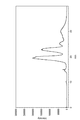
- FIG. 1 an example of the result of gas chromatography analysis of a conventional compressed base oil is shown in FIG. As shown in FIG. 1, when the compressor oil is analyzed by gas chromatography, for example, a peak derived from the hydrocarbon oil as the main component is detected at a retention time of about 20 to 30 minutes.
- the inventors of the present invention have a very weak peak derived from a hydrocarbon having 10 or less carbon atoms, which is detected in the vicinity of a retention time of 10 minutes in FIG. 1, affecting the contamination of the gas compressed in the compressor. I found out.
- the presence or absence of a weak peak as detected at a holding time of about 10 minutes in FIG. 1 and the strength were not considered.
- the compressor oil may further contain an oily agent composed of an oxygen-containing organic compound.
- the hydrocarbon oil content may be 90 to 99.995% by mass and the oily agent content may be 0.005 to 10% by mass based on the total amount of compressor oil.
- the oxygen-containing organic compound may contain a fatty acid having 14 to 22 carbon atoms or a branched fatty acid having 14 to 22 carbon atoms.
- Compressor oil is suitably used for a compressor that compresses hydrogen.
- the present invention also relates to a method for producing a compressor oil, comprising a hydrocarbon oil having a sulfur content of 0.1% by mass or less and an aromatic content of 1% by mass or less, and having 10 or less carbon atoms.
- a method for producing a compressor oil wherein the above-described compressor oil is obtained through a step of removing hydrocarbons having 10 or less carbon atoms so that the hydrocarbon content of the above becomes 100 mass ppm or less based on the total amount of the compressor oil. .
- the present invention also provides a method for compressing hydrogen, comprising a step of compressing hydrogen by a compressor having the above compressor oil.
- the present invention also provides a power generation method using a fuel cell, the method including a step of using hydrogen compressed by a compressor including the compressor oil as fuel for the fuel cell.
- the present invention also provides a method for supplying hydrogen, comprising a step of supplying hydrogen compressed by a compressor including the compressor oil to a fuel cell vehicle.
- contamination of the compressed gas can be sufficiently prevented. Moreover, according to the compressor oil of this invention, contamination of the gas to compress can fully be prevented, and high lubricity can be achieved.
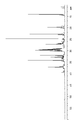
- FIG. 3 is a diagram showing the results of gas chromatography analysis of poly ⁇ -olefin itself (untreated) used in the examples. It is a figure which shows the result of the gas chromatography analysis of the test oil 1-1 in an Example. 3 is a 13 C-NMR chart of isostearic acid A used in Examples. 3 is a 13 C-NMR chart of isostearic acid B used in Examples.
- the compressor oil according to the embodiment of the present invention contains a hydrocarbon oil having a sulfur content of 0.1% by mass or less and an aromatic content of 1% by mass or less, based on the total amount of the compressor oil, and having 10 or less carbon atoms.
- the hydrocarbon content is 100 mass ppm or less based on the total amount of compressor oil.
- the sulfur content of the hydrocarbon oil is 0.1 mass% (1000 mass ppm) or less, preferably 10 mass ppm or less, more preferably, based on the total amount of the hydrocarbon oil, from the viewpoint of sufficiently preventing contamination of the compressed gas. Is 1 ppm by mass or less.
- the sulfur content in the present invention means a value measured by an ultraviolet fluorescence method defined in JIS K2541-6: 2003 “Crude oil and petroleum products—Sulfur content test method”.
- the aromatic content of the hydrocarbon oil is 0.1% by mass or less, preferably 0.01% by mass or less, based on the total amount of the hydrocarbon oil, from the viewpoint of sufficiently preventing contamination of the compressed gas. .
- the aromatic content as used in the present invention means a value measured in accordance with the fluorescent indicator adsorption method of JIS K2536-1: 2003 “Petroleum product-component test method”.
- the hydrocarbon oil in the present embodiment is not particularly limited as long as the sulfur content and aromatic content satisfy the above conditions.
- mineral oil base oil, wax decomposition base oil, synthetic base oil, or these Two or more kinds of mixed oils can be mentioned.
- Preferable synthetic base oils include poly ⁇ -olefins or hydrides thereof.
- Use waxes such as olefin oligomers, slack waxes, FT waxes, and isomerized base oils, those containing aromatic and / or unsaturated compounds, for example, hydrogenated fractions obtained by distilling terpene oil or crude oil You can also
- the hydrocarbon oil in this embodiment preferably has the following properties.
- the kinematic viscosity of the hydrocarbon oil is not particularly limited.
- the kinematic viscosity at 40 ° C. of the hydrocarbon oil is preferably 10 to 800 mm 2 / s, 15 to 500 mm 2 / s, more preferably 20 to 300 mm 2 / s, 30 to 200 mm 2 / s, still more preferably 50 to 90 mm. 2 / s.
- the kinematic viscosity at 100 ° C. of the hydrocarbon oil is preferably 2 to 60 mm 2 / s, 3 to 50 mm 2 / s, more preferably 4 to 35 mm 2 / s, 5 to 25 mm 2 / s, still more preferably 8 to 15 mm. 2 / s.
- the viscosity index of the hydrocarbon oil is preferably 120 to 160, more preferably 130 to 155.
- the kinematic viscosity and viscosity index at 40 ° C. and 100 ° C. in the present invention mean values measured in accordance with JIS K2283: 2000 “Crude oil and petroleum products—Kinematic viscosity test method and viscosity index calculation method”, respectively.
- the distillation range of hydrocarbon oil is the first boiling point of the gas chromatography distillation test specified in JIS K2254: 1998 “Petroleum products-Distillation test method” in order to prevent light hydrocarbons from being mixed into the compressed gas.
- it it is preferable that it is 250 degreeC or more, and it is more preferable that it is 300 degreeC or more. Moreover, it is preferable that it is 350 degreeC or more as a 1% distillation point, and 400 degreeC or more is the most preferable. It is also preferable to reduce a trace amount of light hydrocarbons that are not detected as initial boiling points in the gas chromatography distillation test. Therefore, when manufacturing hydrocarbon oil, it is preferable to pass through the distillation process accompanied by careful flushing, for example.
- the content of the hydrocarbon oil is preferably 90 to 99.995% by mass, more preferably 95 to 99.99% by mass, and still more preferably 98 to 99.9% by mass, based on the total amount of the compressor oil. is there.
- the sulfur content of the compressor oil is preferably 0.1% by mass (1000 ppm by mass) or less, more preferably 10 ppm by mass or less, and further preferably 1 ppm by mass or less.
- the metal element content of the compressor oil is preferably 100 ppm by mass or less, more preferably 10 ppm by mass or less, from the viewpoint of sufficiently preventing contamination of the gas to be compressed.
- the metal element content in the present invention can be measured by, for example, inductively coupled plasma (ICP) emission spectroscopy, and the sample pretreatment is a solvent dilution method defined in JPI-5S-38-92. Etc. can be used.
- the compressor oil according to the present embodiment is a base oil and / or an additive (hereinafter referred to as “hydrocarbon oil”) having a sulfur content of 0.1% by mass or less and an aromatic content of 1% by mass or less. In some cases, it may be referred to as “other components”.
- the additive include oily agents, antioxidants, rust inhibitors, corrosion inhibitors, pour point depressants, extreme pressure agents, metal deactivators, and detergent / dispersants.
- the content of the additive is preferably 0.005 to 10% by mass, more preferably 0.01 to 5% by mass, and further preferably 0.1 to 2% by mass, based on the total amount of the compressor oil. Particularly preferably, the content is 0.2 to 1% by mass.
- oil agent examples include an oil agent made of an oxygen-containing organic compound.
- oxygen-containing organic compounds include monovalent carboxylic acids represented by fatty acids, polyvalent carboxylic acids, monohydric alcohols, polyhydric alcohols, esters, and partial ester compounds of polyhydric alcohols.
- fatty acid, polyhydric alcohol, and partial ester compounds of polyhydric alcohol are preferred because of their high adsorption ability and low corrosivity.
- fatty acid a fatty acid having 14 to 22 carbon atoms is preferable, and a branched fatty acid having 14 to 22 carbon atoms is more preferable.
- the number of carbon atoms of the fatty acid is particularly preferably 16-20.
- Saturated fatty acids are also preferred. Examples of fatty acids include oleic acid, isostearic acid, lauric acid, and stearic acid. Of these, isostearic acid is most preferred.
- branched fatty acids in 13 C-NMR analysis (broadband complete decoupling), the integrated value (peak area) of the peak intensity in the region where the chemical shift is 40 ppm or more is the sum of the integrated values (peak area) of the peak intensity of all carbons.
- a branched fatty acid that is preferably 15% or less, more preferably 10% or less, still more preferably 1% or less, and particularly preferably 0.5% or less can be used.
- the reason why such a fatty acid is preferable is that a region having a chemical shift of 40 ppm or more is caused by a methine group and carbon adjacent to the methine group, and therefore the branched fatty acid having an appropriate degree of branching is preferable. ing.
- the proportion of fatty acids in the oxygen-containing organic compound is preferably 60 to 100% by mass, more preferably 85 to 100% by mass, and still more preferably 95 to 100% by mass, based on the total amount of the oxygen-containing organic compound. .
- the content of the oily agent contained in the compressor is 0.005 to 10% by mass, preferably 0.01 to 5% by mass, more preferably 0.1 to 2% by mass, based on the total amount of the compressor oil. %, More preferably 0.2 to 1% by mass.
- the compressor oil further contains an antifoaming agent in addition to the above additives for defoaming in the compressor and defoaming in a removal step (details will be described later) for removing hydrocarbons having 10 or less carbon atoms.
- an antifoaming agent examples include acrylate antifoaming agents such as polyacrylate, siloxane antifoaming agents such as alkylpolysiloxane, and fluorosilicone antifoaming agents. Among these, a siloxane type antifoaming agent is preferable.
- the content of the antifoaming agent is preferably 100 mass ppm or less, and preferably 1 mass ppm or more and 20 mass ppm or less, based on the total amount of the compressor oil.
- an antifoaming agent concentrate is prepared by dissolving an antifoaming agent in a highly soluble solvent such as kerosene, and the antifoaming agent concentrate is added to a hydrocarbon oil or
- An antifoam concentrate is prepared by dissolving the antifoam using an apparatus having a homogenizing ability, and this antifoam concentrate is added to the hydrocarbon oil or the remainder of the composition containing the hydrocarbon oil and the additive.
- dimethylpolysiloxane having a viscosity at 25 ° C. of preferably 10,000 mPa ⁇ s or less, more preferably 5,000 mPa ⁇ s or less as an antifoaming agent from the viewpoint of facilitating ensuring dispersibility. Is used. Moreover, it is preferable that the 25 degreeC viscosity of the said dimethylpolysiloxane is 1000 mPa * s or more.
- the content of hydrocarbons having 10 or less carbon atoms in the compressor oil is 100 mass ppm or less, preferably 50 mass ppm or less, more preferably 20 mass ppm or less, based on the total amount of the compressor oil. 15 mass ppm or less is more preferable, and 10 mass ppm or less is particularly preferable.
- the content of hydrocarbons having 10 or less carbon atoms in compressor oil is a peak derived from hydrocarbons having 10 or less carbon atoms in the gas chromatographic analysis defined in JIS K2254: 1998 “Petroleum products-distillation test method”. Calculated from intensity.
- the compressor oil which concerns on this embodiment can be manufactured with the manufacturing method provided with the following processes, for example.
- a hydrocarbon oil having a sulfur content of 0.1% by mass or less and an aromatic content of 1% by mass or less is prepared.
- this hydrocarbon oil what adjusted the sulfur content to 0.1 mass% or less and the aromatic content to 1 mass% or less by hydrorefining, for example can be used.
- a composition containing a hydrocarbon oil in which the sulfur content prepared in the (a) preparation step is 0.1% by mass or less and the aromatic content is 1% by mass or less is prepared.
- a composition consisting only of a hydrocarbon oil having a sulfur content of 0.1% by mass or less and an aromatic content of 1% by mass or less may be prepared. You may prepare the composition containing a component and an antifoamer.
- the removal step from the composition containing a hydrocarbon oil having a sulfur content of 0.1% by mass or less and an aromatic content of 1% by mass or less prepared in the (b) preparation step,
- the hydrocarbon having 10 or less carbon atoms is removed so that the content of hydrocarbon having 10 or less carbon atoms is 100 ppm by mass or less based on the total amount of compressor oil.
- Specific examples of the removal method include a method of stirring with heating, a method of bubbling with an inert gas gas, a method of applying ultrasonic waves, vacuum degassing, and a method of combining two or more of these.
- At least one selected from a method of bubbling with an inert gas, a method of applying ultrasonic waves, and a method of finishing by vacuum degassing may be performed.
- the removal step may be performed at the manufacturing site, and in that case, the transport container including the lorry is managed by careful flushing or the like. It is also effective to perform the removing step in an apparatus that consumes compressed gas or in an accompanying tank.
- the removal process is performed from the viewpoint of minimizing the load on the apparatus that eventually consumes the compressed gas.
- the heating temperature is preferably 60 to 150 ° C, more preferably 80 to 120 ° C, and still more preferably 85 to 105 ° C.
- stirring conditions are 200 rpm or more, It is more preferable that it is 300 rpm or more, It is still more preferable that it is 400 rpm or more.
- the time for heating and stirring under such conditions is preferably 1 to 24 hours, more preferably 2 to 12 hours, and even more preferably 4 to 6 hours.
- bubbling with an inert gas for example, nitrogen gas or argon gas is used.
- the flow rate of the inert gas is preferably 1 L / h to 500 L / h, more preferably 10 L / h to 200 L / h, and 20 L / h to 100 L / h with respect to 1 L of the composition. Is more preferable.
- the bubbling time under such conditions is preferably 1 to 72 hours, more preferably 2 to 48 hours, and still more preferably 5 to 24 hours.
- the method of bubbling with an inert gas is preferably used in combination with the method of heating and stirring.
- Compressor oil according to the present embodiment is obtained after the end of the (c) removal step.
- a compressor oil is obtained by adding a part or all of the other components to the composition obtained in the (c) removal step. Also good. Further, by adding a part of the hydrocarbon oil having a sulfur content of 0.1% by mass or less and an aromatic content of 1% by mass or less to the composition obtained in the (c) removal step, a compressor oil is obtained.
- the structure of the compressor using the compressor oil according to the present embodiment is not particularly limited, but a preferable compressor is a positive displacement compressor.
- the gas to be compressed in the compressor using the compressor oil according to the present embodiment is not particularly limited, but hydrogen gas is preferable, high purity hydrogen gas of 99.9% or more is more preferable, and 99.97%.
- the above high purity hydrogen gas is particularly suitable.
- 0.5 MPa or more is suitable, 5 MPa or more is more suitable, 35 MPa or more, Furthermore, 70 MPa or more is preferable. Particularly preferred.
- the upper limit is preferably 200 MPa or less.
- the compressor oil according to the present embodiment is suitably used for a hydrogen compression method including a step of compressing hydrogen by the above-described compressor. Further, the compressor oil according to the present embodiment is suitably used for a power generation method using a fuel cell. More specifically, the compressor oil according to the present embodiment is suitably used in a power generation method including a step of using hydrogen compressed by the above-described compressor as fuel for a fuel cell. The compressor oil according to the present embodiment is suitably used in a hydrogen supply method including a step of supplying hydrogen compressed by the compressor to a fuel cell vehicle.
- Example oil 1-1 to 1-8 Poly ⁇ -olefin (decene derivative, kinematic viscosity at 40 ° C. 63 mm 2 / s, kinematic viscosity at 100 ° C. 9.6 mm 2 / s, viscosity index 134, sulfur content 1 mass ppm or less, aromatic content 1 mass ppm The following is added to 500 g of dimethylpolysiloxane containing no solvent (25 ° C. viscosity: 3,000 mPa ⁇ s) 1.5 mg (3 mass ppm based on the total amount of compressor oil), and the stirring temperature and stirring shown in Table 1 are added.
- Compressor oils (sample oils 1-1 to 1-8) were prepared according to the time and N 2 bubbling time. N 2 bubbling was performed at a nitrogen gas flow rate of 50 L / h with respect to 1 L of compressor oil. Regarding the N 2 bubbling time in the table, “ ⁇ ” means that N 2 bubbling is not performed. For test oils 1-6 and 1-7, 0.5% by mass of isostearic acid was blended based on the total amount of compressor oil.
- the content of hydrocarbons having 10 or less carbon atoms was measured by gas chromatography analysis defined in JIS K2254: 1998 “Petroleum Products—Distillation Test Method”. Specifically, GC-2010 manufactured by Shimadzu Corporation was used, UA1HT (5 m ⁇ 0.5 mm ⁇ ⁇ 0.1 ⁇ m) as a column, helium (15 mL / min) as a carrier gas, and FID as a detector. Using. The measurement was performed under the conditions of a detection temperature of 400 ° C., an oven temperature of 40 ° C. to 380 ° C.
- FIG. 2 shows the results of gas chromatographic analysis of the poly ⁇ -olefin itself (untreated) used to prepare the compressor oil.
- the content of hydrocarbons having 10 or less carbon atoms in the poly ⁇ -olefin itself (untreated) used for preparing the compressor oil was 26 ppm by mass.
- FIG. 3 shows the results of gas chromatography analysis of the test oil 1-1.
- test oils 2-1 to 2-7 compressor oils shown in Table 2 were prepared using the following hydrocarbon oils, oiliness agents, and antifoaming agents. Table 2 shows the blending conditions (stirring temperature and time) for each sample oil.
- 13 C-NMR was measured by the following method.
- Apparatus name Varian-NMR system 500, resonance frequency: 125.76 MHz, solvent: deuterated chloroform, measurement temperature: room temperature (25 ° C.), repetition time: 2 sec, integration number: 1024 times, probe: diameter 5 mm (The measurement method used broadband complete decoupling.)
- a 13 C-NMR chart of isostearic acid A is shown in FIG. 4, and a 13 C-NMR chart of isostearic acid B is shown in FIG.
- the ratio of the integrated value (peak area) of the peak intensity showing a chemical shift of 40 ppm or more to the total integrated value (peak area) of the peak intensity of all carbon is 16.8% for isostearic acid A and 0.8% for stearic acid B. 1%.
- the content of hydrocarbons having 10 or less carbon atoms can be evaluated from the peak intensity derived from hydrocarbons having 10 or less carbon atoms by gas chromatography analysis specified in JIS K2254: 1998 “Petroleum products-Distillation test method”. Calculated.
- Shell 4-ball test Based on ASTM D4172, it evaluated by measuring the wear scar diameter of the steel ball in room temperature (oil temperature) at the rotation speed of 1200 rpm, the load of 30 kgf, and the test time of 1 hr.
Landscapes
- Chemical & Material Sciences (AREA)
- Organic Chemistry (AREA)
- Chemical Kinetics & Catalysis (AREA)
- General Chemical & Material Sciences (AREA)
- Oil, Petroleum & Natural Gas (AREA)
- Engineering & Computer Science (AREA)
- Combustion & Propulsion (AREA)
- Inorganic Chemistry (AREA)
- Lubricants (AREA)
- Production Of Liquid Hydrocarbon Mixture For Refining Petroleum (AREA)
Abstract
本発明は、硫黄分が0.1質量%以下かつ芳香族含有量が1質量%以下である炭化水素油を含有し、炭素数10以下の炭化水素の含有量が、圧縮機油全量基準で100質量ppm以下である、圧縮機油を提供する。
Description
本発明は、気体を圧縮するガス圧縮機の潤滑に用いられる圧縮機油、圧縮機油の製造方法、並びに該圧縮機油を用いた水素の圧縮方法、発電方法及び水素の供給方法に関する。
コンプレッサー(ガス圧縮機)での高効率運転のためには、圧縮される気体の漏れを防止することが有効である。そこで、コンプレッサーでは、気体の漏れを防止するための圧縮機油が用いられる。圧縮機油には、気体の漏れ防止の他に、軸受け部分などの潤滑性を維持することも求められている。圧縮機油としては、鉱油などの基油に様々な添加剤を配合したものが知られている(例えば、特許文献1~3参照)。
ところで、例えば、燃料電池用の水素を圧縮する圧縮機の場合、非常に高純度の水素を圧縮するため、特定の元素による汚染を抑制することが重要である。しかし、上記従来の圧縮機油を用いると、圧縮機油中の基油、添加剤に含まれる特定の成分が、圧縮される気体を汚染するおそれがある。
そこで、本発明の目的は、圧縮する気体の汚染を十分に防止することができる圧縮機油、圧縮機油の製造方法、並びに該圧縮機油を用いた水素の圧縮方法、発電方法及び水素の供給方法を提供することにある。
また、特に水素を圧縮する圧縮機は水素脆性などに起因して摩耗しやすく、かかる圧縮機に用いられる圧縮機油には高い潤滑性が必要とされる。しかし、従来の圧縮機油は潤滑性の点でも必ずしも十分ではなく、実用に供し得るものとしては未だ改善の余地がある。
そこで、本発明の他の目的は、圧縮する気体の汚染を十分に防止することができ、かつ、高い潤滑性を有する圧縮機油、圧縮機油の製造方法、並びに該圧縮機油を用いた水素の圧縮方法、発電方法及び水素の供給方法を提供することにある。
本発明は、硫黄分が0.1質量%以下かつ芳香族含有量が1質量%以下である炭化水素油を含有し、炭素数10以下の炭化水素の含有量が、圧縮機油全量基準で100質量ppm以下である、圧縮機油を提供する。
本発明者らは、硫黄分が0.1質量%以下かつ芳香族含有量が1質量%以下である炭化水素油を含有する圧縮機油において、炭素数10以下の炭化水素の含有量を圧縮機油全量基準で100質量ppm以下とすることによって、圧縮する気体の汚染を十分に防止することができることを見出し、本発明を完成させた。より具体的に説明するために、従来の圧縮基油をガスクロマトグラフィー分析した結果の一例を図1に示す。図1に示すように、圧縮機油をガスクロマトグラフィー分析した場合、例えば保持時間20~30分付近に主成分である炭化水素油に由来するピークが検出される。一方で、本発明者らは、図1の保持時間10分付近に検出される、炭素数10以下の炭化水素に由来する非常に微弱なピークが、圧縮機において圧縮する気体の汚染に影響することを見出した。なお、従来の圧縮機油においては、図1の保持時間10分付近に検出されるような微弱なピークの有無や強度について考慮されていなかった。
圧縮機油は、含酸素有機化合物からなる油性剤を更に含有していてもよい。この場合、圧縮機油全量基準で、前記炭化水素油の含有量が90~99.995質量%であり、前記油性剤の含有量が0.005~10質量%であってもよい。
含酸素有機化合物は、炭素数14~22の脂肪酸を含んでいてもよく、炭素数14~22の分岐脂肪酸を含んでいてもよい。
圧縮機油は、水素を圧縮する圧縮機に好適に用いられる。
また、本発明は、圧縮機油の製造方法であって、硫黄分が0.1質量%以下かつ芳香族含有量が1質量%以下である炭化水素油を含有する組成物から、炭素数10以下の炭化水素の含有量が圧縮機油全量基準で100質量ppm以下となるように、炭素数10以下の炭化水素を除去する工程を経て、上記の圧縮機油を得る、圧縮機油の製造方法を提供する。
また、本発明は、上記の圧縮機油を備える圧縮機によって水素を圧縮する工程を備える、水素の圧縮方法を提供する。
また、本発明は、燃料電池による発電方法であって、燃料電池の燃料として、上記の圧縮機油を備える圧縮機によって圧縮された水素を用いる工程を備える、発電方法を提供する。
また、本発明は、上記の圧縮機油を備える圧縮機によって圧縮された水素を燃料電池自動車に供給する工程を備える、水素の供給方法を提供する。
本発明の圧縮機油によれば、圧縮する気体の汚染を十分に防止することができる。また、本発明の圧縮機油によれば、圧縮する気体の汚染を十分に防止することができ、かつ、高い潤滑性を達成することができる。
以下、本発明の好適な実施形態について詳細に説明する。
本発明の実施形態に係る圧縮機油は、圧縮機油全量基準で、硫黄分が0.1質量%以下かつ芳香族含有量が1質量%以下である炭化水素油を含有し、炭素数10以下の炭化水素の含有量が、圧縮機油全量基準で100質量ppm以下である。
炭化水素油の硫黄分は、圧縮する気体の汚染を十分に防止する観点から、炭化水素油全量を基準として、0.1質量%(1000質量ppm)以下、好ましくは10質量ppm以下、より好ましくは1質量ppm以下である。本発明における硫黄分とは、JIS K2541-6:2003「原油及び石油製品-硫黄分試験方法」で規定される紫外蛍光法によって測定された値を意味する。
炭化水素油の芳香族含有量は、圧縮する気体の汚染を十分に防止する観点から、炭化水素油全量を基準として、0.1質量%以下であり、好ましくは0.01質量%以下である。本発明でいう芳香族含有量とは、JIS K2536-1:2003「石油製品-成分試験方法」の蛍光指示薬吸着法に準拠して測定された値を意味する。
本実施形態における炭化水素油は、硫黄分及び芳香族含有量が上記の条件を満たす限りにおいて特に制限されず、例えば、鉱油系基油、ワックス分解系基油、合成系基油、あるいはこれらの2種以上の混合油を挙げることができる。好ましい合成系基油としては、ポリα-オレフィン又はその水素化物を挙げることができる。オレフィンオリゴマー、スラックワックス、FTワックスなどのワックス類およびこれを異性化した基油、芳香族及び/又は不飽和化合物を含むもの、例えばテルペン油や原油を蒸留した留分を水素化したものを用いることもできる。
本実施形態における炭化水素油は、以下の性状を有することが好ましい。
炭化水素油の動粘度は特に限定されない。炭化水素油の40℃における動粘度は、好ましくは10~800mm2/s、15~500mm2/s、より好ましくは20~300mm2/s、30~200mm2/s、更に好ましくは50~90mm2/sである。炭化水素油の100℃における動粘度は、好ましくは2~60mm2/s、3~50mm2/s、より好ましくは4~35mm2/s、5~25mm2/s、更に好ましくは8~15mm2/sである。炭化水素油の動粘度がこの範囲であると、摺動部での摩耗を低減でき、かつ、攪拌抵抗を低くすることができるためエネルギー消費を抑えられる。
炭化水素油の粘度指数は、好ましくは120~160であり、より好ましくは130~155である。
本発明における40℃及び100℃における動粘度並びに粘度指数は、それぞれJIS K2283:2000「原油及び石油製品-動粘度試験方法及び粘度指数算出方法」に準拠して測定される値を意味する。
炭化水素油の蒸留範囲は、圧縮機されるガス中への軽質炭化水素の混入を防ぐために、JIS K2254:1998「石油製品-蒸留試験方法」で規定されるガスクロマトグラフィー蒸留試験の初留点として、250℃以上であることが好ましく、300℃以上であることがより好ましい。また、1%留出点として、350℃以上であることが好ましく、400℃以上が最も好ましい。ガスクロマトグラフィー蒸留試験では初留点として検出されない微量の軽質炭化水素についても、低減することが好ましい。したがって、炭化水素油を製造する際には、例えば入念なフラッシングを伴う蒸留工程を経ることが好ましい。
炭化水素油の含有量は、圧縮機油全量基準で、好ましくは90~99.995質量%であり、より好ましくは95~99.99質量%であり、更に好ましくは98~99.9質量%である。
圧縮機油の硫黄分は、好ましくは0.1質量%(1000質量ppm)以下であり、より好ましくは10質量ppm以下であり、更に好ましくは1質量ppm以下である。
圧縮機油の金属元素含有量は、圧縮する気体の汚染を十分に防止する観点から、好ましくは100質量ppm以下であり、より好ましくは10質量ppm以下である。本発明における金属元素含有量は、例えば、誘導結合プラズマ(ICP)発光分光などより測定することができ、その試料の前処理としては、JPI-5S-38-92にて規定される溶剤希釈法などを利用することができる。
本実施形態に係る圧縮機油は、必要に応じて、硫黄分が0.1質量%以下かつ芳香族含有量が1質量%以下である炭化水素油以外の基油及び/又は添加剤(以下、場合により「他の成分」という。)を更に含有してもよい。添加剤としては、油性剤、酸化防止剤、さび止め剤、腐食防止剤、流動点降下剤、極圧剤、金属不活性剤、清浄分散剤などが例示される。添加剤の含有量は、圧縮機油全量基準で、好ましくは0.005~10質量%であり、より好ましくは0.01~5質量%であり、更に好ましくは0.1~2質量%であり、特に好ましくは0.2~1質量%である。
油性剤としては、例えば含酸素有機化合物からなる油性剤が挙げられる。かかる含酸素有機化合物としては、例えば脂肪酸に代表される1価カルボン酸、多価カルボン酸、1価アルコール、多価アルコール、エステル、多価アルコールの部分エステル化合物が挙げられる。これらの中でも、吸着能力が高く、腐食性が低いことから、脂肪酸、多価アルコール及び多価アルコールの部分エステル化合物が好ましい。
脂肪酸としては、炭素数14~22の脂肪酸が好ましく、炭素数14~22の分岐脂肪酸がより好ましい。脂肪酸の炭素数は、16~20であることが特に好ましい。また、飽和脂肪酸が好ましい。脂肪酸としては、オレイン酸、イソステアリン酸、ラウリン酸、ステアリン酸が例示される。その中でも、イソステアリン酸が最も好ましい。分岐脂肪酸の中でも、13C-NMR分析(広帯域完全デカップリング)において、化学シフト40ppm以上の領域におけるピーク強度の積分値(ピーク面積)が、全炭素のピーク強度の積分値(ピーク面積)の合計に対して、好ましくは15%以下、より好ましくは10%以下、更に好ましくは1%以下、特に好ましくは0.5%以下となる分岐脂肪酸を用いることができる。このような脂肪酸が好ましい理由としては、化学シフト40ppm以上の領域はメチン基及びメチン基に隣接する炭素に起因することから、分岐の程度が適切な分岐脂肪酸が好ましいため、と発明者は予想している。
含酸素有機化合物に占める脂肪酸の割合は、含酸素有機化合物全量基準で、好ましくは60~100質量%であり、より好ましくは85~100質量%であり、更に好ましくは95~100質量%である。
圧縮機に含有される油性剤の含有量は、圧縮機油全量基準で、0.005~10質量%であり、好ましくは0.01~5質量%であり、より好ましくは0.1~2質量%であり、更に好ましくは0.2~1質量%である。
圧縮機油は、圧縮機内での消泡及び炭素数10以下の炭化水素を除去する除去工程(詳細は後述する)での消泡のため、上記の添加剤以外に消泡剤を更に含有することが好ましい。消泡剤としては、例えば、ポリアクリレート等のアクリレート系消泡剤、アルキルポリシロキサン等のシロキサン系消泡剤、フルオロシリコーン系消泡剤が挙げられる。この中でも、シロキサン系消泡剤が好ましい。消泡剤の含有量は、圧縮機油全量基準で、100質量ppm以下であることが好ましく、1質量ppm以上20質量ppm以下であることが好ましい。
消泡剤の添加方法としては、(i)灯油などの溶解性の高い溶剤に消泡剤を溶解させて消泡剤濃縮液を調製し、この消泡剤濃縮液を、炭化水素油、又は炭化水素油及び添加剤を含有する組成物に添加する方法や、(ii)少量の炭化水素油、又は炭化水素油及び添加剤を含有する組成物の一部に、市販のミキサー又はこれ以上のホモジナイズ能力を有する機器を用いて消泡剤を溶解させて消泡剤濃縮液を調製し、この消泡剤濃縮液を、炭化水素油、又は炭化水素油及び添加剤を含有する組成物の残部に添加する方法が挙げられるが、(ii)の方法がより好ましい。(ii)の方法では、分散性を確保しやすくする観点から、消泡剤として、25℃の粘度が好ましくは1万mPa・s以下、より好ましくは5千mPa・s以下であるジメチルポリシロキサンを用いる。また、当該ジメチルポリシロキサンの25℃の粘度は、1千mPa・s以上であることが好ましい。
圧縮機油中の炭素数10以下の炭化水素の含有量は、圧縮機油全量基準で、100質量ppm以下であり、50質量ppm以下がであることが好ましく、20質量ppm以下であることがより好ましく、15質量ppm以下であることが更に好ましく、10質量ppm以下であることが特に好ましい。圧縮機油中の炭素数10以下の炭化水素の含有量は、JIS K2254:1998「石油製品-蒸留試験方法」で規定されるガスクロマトグラフィー分析にて、炭素数10以下の炭化水素に由来するピーク強度から算出される。
本実施形態に係る圧縮機油は、例えば以下の工程を備える製造方法により製造することができる。
(a)硫黄分が0.1質量%以下かつ芳香族含有量が1質量%以下である炭化水素油を準備する準備工程。
(b)準備工程で準備した炭化水素油を含有する組成物を調製する調製工程。
(c)上記調製工程で調製した上記炭化水素油を含有する組成物から、炭素数10以下の炭化水素の含有量が圧縮機油全量基準で100質量ppm以下となるように、炭素数10以下の炭化水素を除去する除去工程。
(a)硫黄分が0.1質量%以下かつ芳香族含有量が1質量%以下である炭化水素油を準備する準備工程。
(b)準備工程で準備した炭化水素油を含有する組成物を調製する調製工程。
(c)上記調製工程で調製した上記炭化水素油を含有する組成物から、炭素数10以下の炭化水素の含有量が圧縮機油全量基準で100質量ppm以下となるように、炭素数10以下の炭化水素を除去する除去工程。
まず、(a)準備工程では、硫黄分が0.1質量%以下かつ芳香族含有量が1質量%以下である炭化水素油を準備する。かかる炭化水素油としては、例えば水素化精製により、硫黄分が0.1質量%以下かつ芳香族含有量が1質量%以下に調整されたものを用いることができる。
次に、(b)調製工程では、(a)準備工程で準備した硫黄分が0.1質量%以下かつ芳香族含有量が1質量%以下である炭化水素油を含有する組成物を調製する。かかる組成物として、硫黄分が0.1質量%以下かつ芳香族含有量が1質量%以下である炭化水素油のみからなる組成物を調製してもよく、当該炭化水素油に加えて他の成分や消泡剤を含有する組成物を調製してもよい。
次に、(c)除去工程では、(b)調製工程で調製した、硫黄分が0.1質量%以下かつ芳香族含有量が1質量%以下である炭化水素油を含有する組成物から、炭素数10以下の炭化水素の含有量が圧縮機油全量基準で100質量ppm以下となるように、炭素数10以下の炭化水素を除去する。具体的な除去方法としては、加熱撹拌する方法、不活性ガスガスによりバブリングする方法、超音波を加える方法、真空脱気及びこれらの2種以上を組み合わせた方法などが例示される。また、二酸化炭素、乾燥空気などによりバブリングした後に、不活性ガスによりバブリングする方法、超音波を加える方法及び真空脱気により仕上げる方法から選ばれる少なくとも一種類を行ってもよい。また、(b)調製工程において組成物を調製するための撹拌と同時に、ガスバブリングによる除去工程を行ってもよい。除去工程は、製造場所で行ってもよく、その場合にはローリーを含む輸送容器に対しても入念なフラッシングなどによる管理がなされる。また、圧縮ガスを消費する装置内又は付帯タンク内で除去工程を行うことも有効である。
いずれの除去方法を用いるにせよ留意すべきことは、除去工程後の炭素数10以下の炭化水素の含有量(圧縮機油全量基準で100質量ppm以下)が従来考慮されていなかったレベルであり、圧縮機油の原材料以外にも輸送容器等の中の極微量残留物などに起因する可能性が排除できない点である。したがって、除去工程は、最終的に圧縮ガスを消費する装置への負荷を最低限にする見地から行われる。
加熱撹拌する方法では、加熱温度は、60~150℃であることが好ましく、80~120℃であることがより好ましく、85~105℃であることが更に好ましい。また、撹拌条件は、200rpm以上であることが好ましく、300rpm以上であることがより好ましく、400rpm以上あることが更に好ましい。このような条件で加熱撹拌する時間は、1~24時間であることが好ましく、2~12時間であることがより好ましく、4~6時間であることが更に好ましい。
不活性ガスによるバブリングでは、例えば窒素ガス、アルゴンガスが用いられる。不活性ガスの流量は、組成物1Lに対して1L/h~500L/hであることが好ましく、10L/h~200L/hであることがより好ましく、20L/h~100L/hであることが更に好ましい。このような条件でバブリングする時間は、1~72時間であることが好ましく、2~48時間であることがより好ましく、5~24時間であることが更に好ましい。不活性ガスによりバブリングする方法は、上記加熱撹拌する方法と組み合わせて用いられることが好ましい。
本実施形態に係る圧縮機油は、(c)除去工程の終了後に得られる。または、本実施形態に係る圧縮機油が他の成分を含有する場合、他の成分の一部又は全部を、(c)除去工程で得られた組成物に添加することにより、圧縮機油を得てもよい。また、硫黄分が0.1質量%以下かつ芳香族含有量が1質量%以下である炭化水素油の一部を、(c)除去工程で得られた組成物に添加することにより、圧縮機油を得てもよい。すなわち、本実施形態に係る圧縮機油の製造方法は、(c)除去工程の後に、硫黄分が0.1質量%以下かつ芳香族含有量が1質量%以下である炭化水素油の一部、硫黄分が0.1質量%以下かつ芳香族含有量が1質量%以下である炭化水素油以外の基油、及び添加剤から選ばれる少なくとも一つを、(c)除去工程で得られた組成物に添加する添加工程を更に備えていてもよい。
本実施形態に係る圧縮機油を用いる圧縮機の構造は特に制限されないが、好ましい圧縮機としては容積式圧縮機が挙げられる。
本実施形態に係る圧縮機油を用いる圧縮機において圧縮する気体としては、特に制限されないが、水素ガスが好適であり、99.9%以上の高純度水素ガスがより好適であり、99.97%以上の高純度水素ガスが特に好適である。
本実施形態に係る圧縮機油を用いる圧縮機において圧縮する気体の圧力としては、特に制限されないが、0.5MPa以上が好適であり、5MPa以上がより好適であり、35MPa以上、さらには70MPa以上が特に好適である。上限は、200MPa以下が好ましい。
本実施形態に係る圧縮機油は、上記の圧縮機によって水素を圧縮する工程を備える、水素の圧縮方法に好適に用いられる。また、本実施形態に係る圧縮機油は、燃料電池による発電方法に好適に用いられる。より具体的には、本実施形態に係る圧縮機油は、燃料電池の燃料として、上記の圧縮機によって圧縮された水素を用いる工程を備える発電方法に好適に用いられる。また、本実施形態に係る圧縮機油は、上記の圧縮機によって圧縮された水素を燃料電池自動車に供給する工程を備える水素の供給方法に好適に用いられる。
以下、実施例によって本発明をより具体的に説明するが、本発明は以下の実施例に限定されるものではない。
[供試油1-1~1-8]
ポリα-オレフィン(デセン誘導体で、40℃動粘度が63mm2/s、100℃動粘度が9.6mm2/s、粘度指数が134、硫黄分1質量ppm以下、芳香族含有量1質量ppm以下)500gに対して、溶剤を含まないジメチルポリシロキサン(25℃粘度:3千mPa・s)1.5mg(圧縮機油全量基準で3質量ppm)を添加し、表1に示す撹拌温度、撹拌時間、N2バブリング時間に従って、圧縮機油(供試油1-1~1-8)を調製した。N2バブリングは、圧縮機油1Lに対して50L/hの窒素ガス流量で実施した。表中のN2バブリング時間について、「-」はN2バブリングを実施していないことを意味する。供試油1-6,1-7については、イソステアリン酸を圧縮機油全量基準で0.5質量%配合した。
ポリα-オレフィン(デセン誘導体で、40℃動粘度が63mm2/s、100℃動粘度が9.6mm2/s、粘度指数が134、硫黄分1質量ppm以下、芳香族含有量1質量ppm以下)500gに対して、溶剤を含まないジメチルポリシロキサン(25℃粘度:3千mPa・s)1.5mg(圧縮機油全量基準で3質量ppm)を添加し、表1に示す撹拌温度、撹拌時間、N2バブリング時間に従って、圧縮機油(供試油1-1~1-8)を調製した。N2バブリングは、圧縮機油1Lに対して50L/hの窒素ガス流量で実施した。表中のN2バブリング時間について、「-」はN2バブリングを実施していないことを意味する。供試油1-6,1-7については、イソステアリン酸を圧縮機油全量基準で0.5質量%配合した。
得られた圧縮機油について、JIS K2254:1998「石油製品-蒸留試験方法」にて規定されるガスクロマトグラフィー分析にて、炭素数10以下の炭化水素の含有量を測定した。具体的には、(株)島津製作所製GC-2010を用い、また、カラムとしてUA1HT(5m×0.5mmφ×0.1μm)、キャリアガスとしてヘリウム(15mL/分)、検出器としてFIDをそれぞれ用いた。また、検出温度400℃、オーブン温度40℃~380℃(6分)、温度変化速度10℃/分、インジェクション容量0.5μL、二硫化炭素溶液(約1%)の条件で測定した。結果を表1に示す。図2には、圧縮機油の調製に用いたポリα-オレフィン自体(未処理)のガスクロマトグラフィー分析の結果を示す。圧縮機油の調製に用いたポリα-オレフィン自体(未処理)における炭素数10以下の炭化水素の含有量は26質量ppmであった。図3には、供試油1-1のガスクロマトグラフィー分析の結果を示す。

供試油1-1~1-8を水素コンプレッサーに用いた場合に、水素が汚染されないことを確認した。中でも、供試油1-1~1-7を水素コンプレッサーに用いた場合に、水素の汚染防止が特に好適になされることを確認した。
[供試油2-1~2-7]
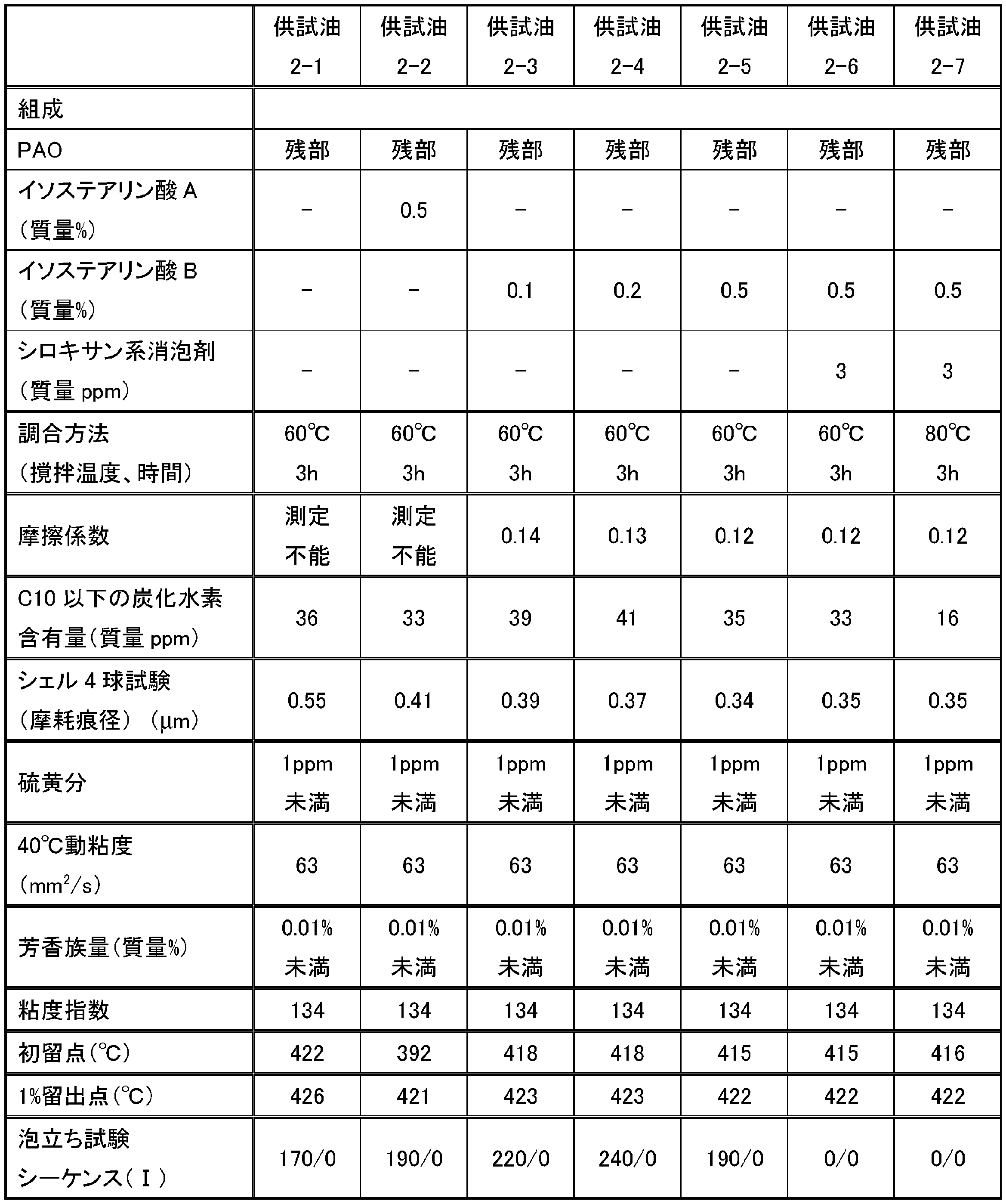
供試油2-1~2-7においては、それぞれ以下に示す炭化水素油、油性剤及び消泡剤を用いて、表2に示す圧縮機油を調製した。表2には、各供試油における調合条件(撹拌の温度、時間)を併せて示す。
供試油2-1~2-7においては、それぞれ以下に示す炭化水素油、油性剤及び消泡剤を用いて、表2に示す圧縮機油を調製した。表2には、各供試油における調合条件(撹拌の温度、時間)を併せて示す。
(炭化水素油)
PAO:デセン誘導体で、40℃動粘度が63mm2/s、100℃動粘度が9.6mm2/s、粘度指数が134のポリα-オレフィン
(油性剤)
イソステアリン酸A:日産化学工業(株)製品
イソステアリン酸B:クローダジャパン(株) Prisorine 3503
(消泡剤)
シロキサン系消泡剤:25℃の動粘度が3000mm2/sのジメチルポリシロキサン
PAO:デセン誘導体で、40℃動粘度が63mm2/s、100℃動粘度が9.6mm2/s、粘度指数が134のポリα-オレフィン
(油性剤)
イソステアリン酸A:日産化学工業(株)製品
イソステアリン酸B:クローダジャパン(株) Prisorine 3503
(消泡剤)
シロキサン系消泡剤:25℃の動粘度が3000mm2/sのジメチルポリシロキサン
なお、イソステアリン酸A及びイソステアリン酸Bについては、以下の方法で13C-NMRを測定した。
装置名:Varian-NMR system 500、共鳴周波数:125.76MHz、溶媒:重クロロホルム、測定温度:室温(25℃)、繰返時間:2sec、積算回数:1024回、プローブ:直径5mm
(測定法は、広帯域完全デカップリングを使用した。)
装置名:Varian-NMR system 500、共鳴周波数:125.76MHz、溶媒:重クロロホルム、測定温度:室温(25℃)、繰返時間:2sec、積算回数:1024回、プローブ:直径5mm
(測定法は、広帯域完全デカップリングを使用した。)
イソステアリン酸Aの13C-NMRチャートを図4に、イソステアリン酸Bの13C-NMRチャートを図5に、それぞれ示す。全炭素のピーク強度の積分値(ピーク面積)の合計に対する40ppm以上の化学シフトを示すピーク強度の積分値(ピーク面積)の比は、イソステアリン酸Aが16.8%、ステアリン酸Bが0.1%であった。
次に、供試油2-1~2-7の圧縮機油について、以下に示すように、摩擦係数の評価、炭素数10以下の炭化水素含有量の評価、泡立ち試験及びシェル4球試験を実施した。結果を表2に示す。
(摩擦係数の評価)
摩擦係数の評価は、「曽田範宗 航空研究所報告(No.279、1943)」に規定される方法に準拠して行った。
摩擦係数の評価は、「曽田範宗 航空研究所報告(No.279、1943)」に規定される方法に準拠して行った。
(炭素数10以下の炭化水素含有量の評価)
炭素数10以下の炭化水素含有量の評価は、JIS K2254:1998「石油製品-蒸留試験方法」にて規定されるガスクロマトグラフィー分析にて、炭素数10以下の炭化水素に由来するピーク強度から算出した。
炭素数10以下の炭化水素含有量の評価は、JIS K2254:1998「石油製品-蒸留試験方法」にて規定されるガスクロマトグラフィー分析にて、炭素数10以下の炭化水素に由来するピーク強度から算出した。
(泡立ち試験)
JIS K2518:2003「石油製品-潤滑油-泡立ち試験方法」にて規定されるシーケンスI(試験温度:24℃)にて実施した。
JIS K2518:2003「石油製品-潤滑油-泡立ち試験方法」にて規定されるシーケンスI(試験温度:24℃)にて実施した。
(シェル4球試験)
ASTM D4172に準拠し、回転数1200rpm、荷重30kgf、試験時間1hrにて、室温(油温)における鋼球の摩耗痕径を測定することにより評価した。
ASTM D4172に準拠し、回転数1200rpm、荷重30kgf、試験時間1hrにて、室温(油温)における鋼球の摩耗痕径を測定することにより評価した。
Claims (9)
- 硫黄分が0.1質量%以下かつ芳香族含有量が1質量%以下である炭化水素油を含有し、
炭素数10以下の炭化水素の含有量が、圧縮機油全量基準で100質量ppm以下である、圧縮機油。 - 含酸素有機化合物からなる油性剤を更に含有し、
圧縮機油全量基準で、前記炭化水素油の含有量が90~99.995質量%であり、前記油性剤の含有量が0.005~10質量%である、請求項1に記載の圧縮機油。 - 前記含酸素有機化合物が炭素数14~22の脂肪酸を含む、請求項2に記載の圧縮機油。
- 前記含酸素有機化合物が炭素数14~22の分岐脂肪酸を含む、請求項2又は3に記載の圧縮機油。
- 請求項1~4のいずれか一項に記載の圧縮機油の水素を圧縮する圧縮機への使用。
- 圧縮機油の製造方法であって、
硫黄分が0.1質量%以下かつ芳香族含有量が1質量%以下である炭化水素油を含有する組成物から、炭素数10以下の炭化水素の含有量が圧縮機油全量基準で100質量ppm以下となるように、前記炭素数10以下の炭化水素を除去する工程を経て、請求項1~4のいずれか一項に記載の圧縮機油を得る、圧縮機油の製造方法。 - 請求項1~4のいずれか一項に記載の圧縮機油を備える圧縮機によって水素を圧縮する工程を備える、水素の圧縮方法。
- 燃料電池による発電方法であって、
前記燃料電池の燃料として、請求項1~4のいずれか一項に記載の圧縮機油を備える圧縮機によって圧縮された水素を用いる工程を備える、発電方法。 - 請求項1~4のいずれか一項に記載の圧縮機油を備える圧縮機によって圧縮された水素を燃料電池自動車に供給する工程を備える、水素の供給方法。
Priority Applications (3)
| Application Number | Priority Date | Filing Date | Title |
|---|---|---|---|
| EP14818210.8A EP3015536A4 (en) | 2013-06-28 | 2014-06-27 | COMPRESSOR OIL, METHOD FOR PRODUCING THE COMPRESSOR OIL, METHOD FOR COMPRESSING HYDROGEN, METHOD FOR GENERATING ELECTRICAL ENERGY AND METHOD FOR SUPPLYING HYDROGEN |
| US14/899,905 US20160145523A1 (en) | 2013-06-28 | 2014-06-27 | Compressor oil, method for producing compressor oil, method for compressing hydrogen, method for generating electric power, and method for supplying hydrogen |
| CN201480037142.3A CN105378042A (zh) | 2013-06-28 | 2014-06-27 | 压缩机油、压缩机油的制造方法、氢的压缩方法、发电方法以及氢的供给方法 |
Applications Claiming Priority (4)
| Application Number | Priority Date | Filing Date | Title |
|---|---|---|---|
| JP2013-137127 | 2013-06-28 | ||
| JP2013137127 | 2013-06-28 | ||
| JP2014058639A JP6152356B2 (ja) | 2014-03-20 | 2014-03-20 | 圧縮機油、圧縮機油の製造方法、水素の圧縮方法、発電方法及び水素の供給方法 |
| JP2014-058639 | 2014-03-20 |
Publications (1)
| Publication Number | Publication Date |
|---|---|
| WO2014208750A1 true WO2014208750A1 (ja) | 2014-12-31 |
Family
ID=52142073
Family Applications (1)
| Application Number | Title | Priority Date | Filing Date |
|---|---|---|---|
| PCT/JP2014/067262 Ceased WO2014208750A1 (ja) | 2013-06-28 | 2014-06-27 | 圧縮機油、圧縮機油の製造方法、水素の圧縮方法、発電方法及び水素の供給方法 |
Country Status (4)
| Country | Link |
|---|---|
| US (1) | US20160145523A1 (ja) |
| EP (1) | EP3015536A4 (ja) |
| CN (1) | CN105378042A (ja) |
| WO (1) | WO2014208750A1 (ja) |
Cited By (1)
| Publication number | Priority date | Publication date | Assignee | Title |
|---|---|---|---|---|
| JP2015028160A (ja) * | 2013-06-28 | 2015-02-12 | Jx日鉱日石エネルギー株式会社 | 圧縮機油 |
Families Citing this family (1)
| Publication number | Priority date | Publication date | Assignee | Title |
|---|---|---|---|---|
| EP4431738A1 (de) | 2023-03-17 | 2024-09-18 | Maximator Gmbh | Wasserstoffspeicher mit flüssigkolben |
Citations (6)
| Publication number | Priority date | Publication date | Assignee | Title |
|---|---|---|---|---|
| JPS62158794A (ja) * | 1986-01-08 | 1987-07-14 | Nippon Mining Co Ltd | 鉱油系フロン圧縮機用潤滑油 |
| JPH0362894A (ja) * | 1989-07-31 | 1991-03-18 | Tonen Corp | 空気圧縮機用潤滑油組成物 |
| JPH11335684A (ja) | 1998-05-25 | 1999-12-07 | Nippon Mitsubishi Oil Corp | 回転ガス圧縮機用潤滑油組成物 |
| JP2005239897A (ja) | 2004-02-26 | 2005-09-08 | Nippon Oil Corp | 潤滑油組成物 |
| JP2008179679A (ja) | 2007-01-23 | 2008-08-07 | Idemitsu Kosan Co Ltd | 回転ガス圧縮機用潤滑油組成物およびこれを充填した回転ガス圧縮機 |
| JP2008544058A (ja) * | 2005-06-23 | 2008-12-04 | シエル・インターナシヨネイル・リサーチ・マーチヤツピイ・ベー・ウイ | 潤滑油組成物 |
Family Cites Families (12)
| Publication number | Priority date | Publication date | Assignee | Title |
|---|---|---|---|---|
| ATE126826T1 (de) * | 1989-09-25 | 1995-09-15 | Gaetano Russo | Verfahren zur entgiftung von öl. |
| WO2005085399A1 (ja) * | 2004-03-04 | 2005-09-15 | Nippon Oil Corporation | 冷凍機油 |
| US7592497B2 (en) * | 2006-03-24 | 2009-09-22 | Exxonmobil Chemical Patents Inc. | Low viscosity polyalphapolefin based on 1-decene and 1-dodecene |
| EP2423298A1 (en) * | 2006-07-06 | 2012-02-29 | Nippon Oil Corporation | Compressor oil composition |
| JP2008013677A (ja) * | 2006-07-06 | 2008-01-24 | Nippon Oil Corp | 冷凍機油 |
| US8648021B2 (en) * | 2008-10-07 | 2014-02-11 | Jx Nippon Oil & Energy Corporation | Lubricant base oil and a process for producing the same, and lubricating oil composition |
| CN101538501A (zh) * | 2009-02-25 | 2009-09-23 | 上海海联润滑材料科技有限公司 | 复合合成空气压缩机油 |
| CN102051254B (zh) * | 2010-12-23 | 2013-03-20 | 陈怀君 | 复合型氮氢气压缩机专用润滑油 |
| CN102104162A (zh) * | 2010-12-29 | 2011-06-22 | 上海新奥九环车用能源股份有限公司 | 车用氢燃料的冷却加注方法 |
| CN202026127U (zh) * | 2011-03-11 | 2011-11-02 | 上海攀业氢能源科技有限公司 | 一种现场制氢一体化燃料电池备用电源系统 |
| JP5839546B2 (ja) * | 2011-06-30 | 2016-01-06 | 株式会社神戸製鋼所 | 水素ステーション |
| CN102911765B (zh) * | 2012-10-25 | 2015-07-15 | 中国石油化工股份有限公司 | 一种用于酸性反应性气体压缩机润滑的组合物及其制备方法 |
-
2014
- 2014-06-27 EP EP14818210.8A patent/EP3015536A4/en not_active Withdrawn
- 2014-06-27 US US14/899,905 patent/US20160145523A1/en not_active Abandoned
- 2014-06-27 CN CN201480037142.3A patent/CN105378042A/zh active Pending
- 2014-06-27 WO PCT/JP2014/067262 patent/WO2014208750A1/ja not_active Ceased
Patent Citations (6)
| Publication number | Priority date | Publication date | Assignee | Title |
|---|---|---|---|---|
| JPS62158794A (ja) * | 1986-01-08 | 1987-07-14 | Nippon Mining Co Ltd | 鉱油系フロン圧縮機用潤滑油 |
| JPH0362894A (ja) * | 1989-07-31 | 1991-03-18 | Tonen Corp | 空気圧縮機用潤滑油組成物 |
| JPH11335684A (ja) | 1998-05-25 | 1999-12-07 | Nippon Mitsubishi Oil Corp | 回転ガス圧縮機用潤滑油組成物 |
| JP2005239897A (ja) | 2004-02-26 | 2005-09-08 | Nippon Oil Corp | 潤滑油組成物 |
| JP2008544058A (ja) * | 2005-06-23 | 2008-12-04 | シエル・インターナシヨネイル・リサーチ・マーチヤツピイ・ベー・ウイ | 潤滑油組成物 |
| JP2008179679A (ja) | 2007-01-23 | 2008-08-07 | Idemitsu Kosan Co Ltd | 回転ガス圧縮機用潤滑油組成物およびこれを充填した回転ガス圧縮機 |
Non-Patent Citations (1)
| Title |
|---|
| See also references of EP3015536A4 * |
Cited By (1)
| Publication number | Priority date | Publication date | Assignee | Title |
|---|---|---|---|---|
| JP2015028160A (ja) * | 2013-06-28 | 2015-02-12 | Jx日鉱日石エネルギー株式会社 | 圧縮機油 |
Also Published As
| Publication number | Publication date |
|---|---|
| EP3015536A4 (en) | 2016-05-25 |
| US20160145523A1 (en) | 2016-05-26 |
| CN105378042A (zh) | 2016-03-02 |
| EP3015536A1 (en) | 2016-05-04 |
Similar Documents
| Publication | Publication Date | Title |
|---|---|---|
| Gulzar et al. | Improving the AW/EP ability of chemically modified palm oil by adding CuO and MoS2 nanoparticles | |
| US7871967B2 (en) | Diester-based lubricants and methods of making same | |
| JP5363565B2 (ja) | ギアオイル組成物、その製造方法及び使用方法 | |
| JP5631702B2 (ja) | 潤滑油基油 | |
| CA2838272C (en) | Turbine oil comprising a di -or tri-ester component | |
| US11214749B2 (en) | Lubricating oil composition and method of producing the same | |
| JP2012518702A (ja) | 耐摩擦/耐摩耗性添加剤としてイオン液体を使用することにより、配合潤滑油の摩擦/摩耗を減じる方法 | |
| CN102782104B (zh) | 油剂组合物及极微量油剂供给式切削/磨削加工方法 | |
| MX2007009453A (es) | Fluidos lubricantes con caracteristicas de baja traccion. | |
| JP2013023596A (ja) | 二相潤滑油組成物 | |
| US20130029893A1 (en) | Process for Preparing a Turbine Oil Comprising an Ester Component | |
| WO2014208750A1 (ja) | 圧縮機油、圧縮機油の製造方法、水素の圧縮方法、発電方法及び水素の供給方法 | |
| JP6152356B2 (ja) | 圧縮機油、圧縮機油の製造方法、水素の圧縮方法、発電方法及び水素の供給方法 | |
| JP6087860B2 (ja) | 潤滑油組成物 | |
| JP6207432B2 (ja) | 潤滑油組成物 | |
| JP6152366B2 (ja) | 圧縮機油 | |
| Gul et al. | Enhancing AW/EP tribological characteristics of biolubricant synthesized from chemically modified cotton methyl-esters by using nanoparticle as additives | |
| Bhowmik et al. | Analyzing the effect of isopropylation on regular and high oleic soybean oils: a lubrication behavior perspective | |
| JP2010215767A (ja) | グリース基油 | |
| US20120028863A1 (en) | Application-specific finished lubricant compositions comprising a bio-derived ester component and methods of making same | |
| dos Santos et al. | Effect of fuel contamination on tribological properties of flex-fuel engines lubricating oils | |
| Kumar et al. | Type of base oils used in lubricant formulation and their application scenarios | |
| KR20080014789A (ko) | 질화 붕소를 포함하는 고온 생물학적 윤활제 조성물 | |
| EP3967739B1 (en) | Use of isosorbide diester as a deposit control agent | |
| Kasar et al. | Additives for lubricants |
Legal Events
| Date | Code | Title | Description |
|---|---|---|---|
| 121 | Ep: the epo has been informed by wipo that ep was designated in this application |
Ref document number: 14818210 Country of ref document: EP Kind code of ref document: A1 |
|
| WWE | Wipo information: entry into national phase |
Ref document number: 14899905 Country of ref document: US |
|
| NENP | Non-entry into the national phase |
Ref country code: DE |
|
| REEP | Request for entry into the european phase |
Ref document number: 2014818210 Country of ref document: EP |
|
| WWE | Wipo information: entry into national phase |
Ref document number: 2014818210 Country of ref document: EP |