WO2015027465A1 - 资源分配方法、装置及系统 - Google Patents
资源分配方法、装置及系统 Download PDFInfo
- Publication number
- WO2015027465A1 WO2015027465A1 PCT/CN2013/082670 CN2013082670W WO2015027465A1 WO 2015027465 A1 WO2015027465 A1 WO 2015027465A1 CN 2013082670 W CN2013082670 W CN 2013082670W WO 2015027465 A1 WO2015027465 A1 WO 2015027465A1
- Authority
- WO
- WIPO (PCT)
- Prior art keywords
- resource
- resources
- proxy unit
- proxy
- unit
- Prior art date
- Legal status (The legal status is an assumption and is not a legal conclusion. Google has not performed a legal analysis and makes no representation as to the accuracy of the status listed.)
- Ceased
Links
Classifications
-
- H—ELECTRICITY
- H04—ELECTRIC COMMUNICATION TECHNIQUE
- H04W—WIRELESS COMMUNICATION NETWORKS
- H04W72/00—Local resource management
- H04W72/12—Wireless traffic scheduling
- H04W72/121—Wireless traffic scheduling for groups of terminals or users
-
- H—ELECTRICITY
- H04—ELECTRIC COMMUNICATION TECHNIQUE
- H04W—WIRELESS COMMUNICATION NETWORKS
- H04W72/00—Local resource management
- H04W72/04—Wireless resource allocation
-
- H—ELECTRICITY
- H04—ELECTRIC COMMUNICATION TECHNIQUE
- H04W—WIRELESS COMMUNICATION NETWORKS
- H04W72/00—Local resource management
- H04W72/20—Control channels or signalling for resource management
- H04W72/29—Control channels or signalling for resource management between an access point and the access point controlling device
-
- H—ELECTRICITY
- H04—ELECTRIC COMMUNICATION TECHNIQUE
- H04W—WIRELESS COMMUNICATION NETWORKS
- H04W72/00—Local resource management
- H04W72/50—Allocation or scheduling criteria for wireless resources
- H04W72/56—Allocation or scheduling criteria for wireless resources based on priority criteria
-
- H—ELECTRICITY
- H04—ELECTRIC COMMUNICATION TECHNIQUE
- H04W—WIRELESS COMMUNICATION NETWORKS
- H04W72/00—Local resource management
- H04W72/12—Wireless traffic scheduling
Definitions
- the present invention relates to the field of communications technologies, and in particular, to a resource allocation method, apparatus, and system. Background technique
- Embodiments of the present invention provide a resource allocation method, apparatus, and system, which are easily extended to meet resource allocation requirements of different communication standards or protocol versions.
- an embodiment of the present invention provides a resource allocation apparatus, including: a channel proxy unit and a plurality of user equipment UE proxy units, where
- the plurality of UE proxy units are configured to separately determine a resource set to be applied for multiple UEs, and apply for authorization to the channel proxy unit respectively for the determined resource set to be applied;
- the channel proxy unit is configured to coordinate an authorization request between the multiple UE proxy units, and transmit authorization resource information to each UE proxy unit according to the coordination result, where the authorization resource information indicates that the authorized resource information is received. a resource that the UE proxy unit is authorized in its determined set of resources to apply for;
- Each UE proxy unit is further configured to select a resource to be allocated to the corresponding UE among the authorized resources displayed by the received grant resource information.
- the channel proxy unit is pre-configured with a conflict resolution policy, and the channel proxy unit is specifically configured to:
- the channel proxy unit determines the authorization of the conflicting resource according to the preset conflict resolution policy
- the conflicting resource is a resource that exists in any two or more resource sets in the resource set to be applied determined by the multiple UE proxy units.
- the conflict resolution policy includes one or a combination of the following policies:
- each UE proxy unit is further configured to determine a priority of the corresponding UE on each resource in the resource set to be applied, and The determined priority information is transmitted to the channel proxy unit.
- the method further includes:
- a resource optimization unit configured to determine whether there is an unsatisfactory UE proxy unit in the multiple UE proxy units when the multiple UEs are not allocated to a new resource, and the idle resource is greater than the first threshold, and when there is an unsatisfactory When the UE proxy unit releases the resources that the unsatisfactory UE proxy unit has allocated.
- the dissatisfied UE proxy unit includes:
- the UE agent unit that has obtained the authorized resource that does not meet the demand;
- the UE agent unit that has obtained the authorized resource within the second threshold.
- the authorized resource information is an authorized resource set
- the authorized resource is The set is a subset of the set of resources to be applied determined by the UE proxy unit receiving the set of authorized resources.
- each UE proxy unit is further configured to use the channel The agent unit feeds back the resource usage.
- an embodiment of the present invention provides a resource allocation method, where a resource allocation apparatus allocates resources for a plurality of user equipments, the resource allocation apparatus includes a channel proxy unit and a plurality of UE proxy units, and the method includes:
- the channel proxy unit coordinates an authorization request between the plurality of UE proxy units, according to the association And transmitting, to each UE proxy unit, the authorization resource information, where the authorization resource information indicates a resource that is authorized by the UE proxy unit that receives the authorized resource information in the determined resource set to be applied;
- Each UE proxy unit selects a resource to be allocated to the corresponding UE among the authorized resources displayed by the received grant resource information.
- the channel proxy unit coordinates an authorization request between the multiple UE proxy units, and transmits the authorized resource information to each UE proxy unit according to the coordination result, including:
- the channel proxy unit determines the authorization of the conflicting resource according to the preset conflict resolution policy, where the conflicting resource exists The resource in any two or more resource sets in the set of resources to be applied determined by the plurality of UE proxy units.
- the conflict resolution policy includes one or a combination of the following policies:
- the channel proxy unit coordinates an authorization request between the multiple UE proxy units, and according to the coordination result, each UE is used.
- the agent unit transmits the authorized resource information it also includes:
- Each UE proxy unit determines a priority of the corresponding UE on each resource in the set of resources to be applied, and transmits the determined priority information to the channel proxy unit.
- the method further includes:
- the dissatisfied UE proxy unit includes:
- the UE agent unit that has obtained the authorized resource that does not meet the demand;
- the UE agent unit that has obtained the authorized resource within the second threshold.
- the authorized resource information is an authorized resource set, where the authorized resource set is a subset of the resource set to be applied determined by the UE proxy unit that receives the authorized resource set.
- the authorized resource information received by each UE proxy unit And selecting, by the displayed authorized resources, the resource allocation to the corresponding UE, further comprising: the each UE proxy unit feeding back the resource usage situation to the channel proxy unit.
- an embodiment of the present invention provides a resource allocation system, including:
- the resource allocation apparatus is used to allocate resources to the multiple UEs.
- an embodiment of the present invention provides a computer program product, including a computer readable medium, the computer readable medium comprising a set of program code for performing any one of the second aspect or the second aspect of the present invention. The method described for the implementation.
- the resource allocation method, device and system provided by the embodiments of the present invention process resource allocation of multiple UEs independently of each other by multiple UE proxy units, thereby improving the efficiency of resource allocation and making the real-time requirement of resource allocation better. Satisfy.
- a channel proxy unit is set to coordinate conflicts between multiple UE proxy units. In this way, each UE proxy unit needs to apply for authorization to the channel proxy unit in the form of a resource set, and the channel proxy unit coordinates the authorization requests, and sends the authorization information according to the coordination result, and informs each UE proxy unit of its Which resources in the requested resource set are authorized for use, so that each UE proxy unit can select a resource to be allocated to the UE among the authorized resources.
- FIG. 1 is a schematic structural diagram of a resource allocation apparatus according to an embodiment of the present invention
- FIG. 2 is a schematic diagram of a scenario of a conflicting resource according to an embodiment of the present invention
- FIG. 4 is a schematic flowchart of a resource allocation method according to an embodiment of the present invention
- FIG. 5 is a flowchart of another resource allocation method according to an embodiment of the present invention
- FIG. 6 is a schematic diagram of priorities of two UE frequency selection schedulings
- FIG. 7 is a flowchart of still another resource allocation method according to an embodiment of the present invention.
- FIG. 8 is a schematic structural diagram of still another resource allocation apparatus according to an embodiment of the present invention
- FIG. 9 is a flowchart of still another resource allocation method according to an embodiment of the present invention.
- FIG. 10 is a flowchart of still another resource allocation method according to an embodiment of the present invention
- FIG. 11 is a flowchart of still another resource allocation method according to an embodiment of the present invention
- FIG. 13 is a flowchart of still another resource allocation method according to an embodiment of the present invention
- FIG. 14 is a signaling flowchart of still another resource allocation method according to an embodiment of the present invention
- FIG. 15 is a schematic structural diagram of Embodiment 1 of a UE proxy unit according to the present invention.
- FIG. 16 is a schematic structural diagram of Embodiment 2 of a UE proxy unit according to the present invention.
- Embodiment 17 is a schematic structural diagram of Embodiment 1 of a channel proxy unit according to the present invention.
- Embodiment 1 of a resource allocation apparatus is a schematic structural diagram of Embodiment 1 of a resource allocation apparatus according to the present invention.
- FIG. 19 is a schematic structural diagram of a resource allocation system according to an embodiment of the present invention.
- the technical solutions in the embodiments of the present invention are clearly and completely described in the following with reference to the accompanying drawings in the embodiments of the present invention.
- the embodiments are a part of the embodiments of the invention, and not all of the embodiments. All other embodiments obtained by a person of ordinary skill in the art based on the embodiments of the present invention without creative efforts are within the scope of the present invention.
- the present application proposes a new resource allocation architecture, which implements resource allocation based on a competition mechanism.
- the architecture sets a plurality of functional units that are independent of each other, and is configured to process resource requests of multiple user equipments (User Equipments, UEs for short) independently of each other, and separately set a functional unit for processing resource requests of multiple UEs.
- UEs User Equipments
- the policies of each functional unit in the architecture can be modified or extended as needed to flexibly support multiple wireless technologies and meet the needs of different protocol versions.
- a functional unit for processing a resource request of a UE is referred to as a UE proxy unit or a UE proxy entity, and a function list for handling conflicts between resource requests of multiple UEs
- the element is called a channel proxy unit or a channel proxy entity.
- the present application does not limit these functional units by the name, and those skilled in the art may also use other names for naming, which are all within the scope of the present disclosure.
- a unit, a subunit, and an entity in various embodiments of the present invention refer to a functional entity or a logical entity. It can be in the form of software, and its functions are implemented by the processor executing the program code; it can also be in the form of hardware, and the invention does not impose any limitation.
- FIG. 1 is a schematic structural diagram of a resource allocation apparatus according to an embodiment of the present invention.
- the apparatus 100 includes a channel proxy unit 110 and a plurality of UE proxy units, wherein a plurality of UE proxy units 121-12n are used to respectively determine a resource set to be applied for multiple UEs, and respectively determine the resources.
- the resource set to be applied for is applied to the channel proxy unit 110 for authorization; the channel proxy unit 110 is configured to coordinate an authorization request between the multiple UE proxy units 121-12n, and transmit the authorized resource information to each UE proxy unit according to the coordination result,
- the authorization resource information displays resources that are authorized by the UE proxy unit that receives the authorized resource information in the determined resource set to be applied; each UE proxy unit is further used to display the authorized resource information received by the UE.
- the resource selected in the authorized resource is allocated to the corresponding UE.
- multiple UE proxy units can process resource allocation of multiple UEs independently of each other, thereby increasing the efficiency of resource allocation, so that the real-time requirement of resource allocation is better satisfied.
- a channel proxy unit is set to coordinate collisions between a plurality of UE proxy units.
- each UE proxy unit needs to apply for authorization to the channel proxy unit in the form of a resource set, and the channel proxy unit coordinates these authorization requests, that is, coordinates resource conflicts in these authorization requests, according to the coordination result.
- the authorization information is sent, and each UE proxy unit is notified of which resources in the requested resource set are authorized to use, so that each UE proxy unit can select a resource to be allocated to the UE among the authorized resources.
- the above architecture can flexibly extend the UE proxy unit and the channel proxy unit to support resource allocation requirements of different communication standards or protocol versions. Through simulation, it is found that after using this architecture for resource allocation, the frequency selection gain is greatly improved. There will be in the following examples Simulation data will not be described in detail here.
- each UE proxy unit may perform Repeat it multiple times until the following conditions are over:
- the resource allocation device in this embodiment may be located on the access network side, for example, on a base station, a base station controller (BSC), or a radio network controller (Radio Network Controller, RNC for short).
- Base stations in various communication systems such as an evolved base station (e-Node B in LTE) in LTE, and a base station (Base Station, which is a Global System for Mobile communication (GSM) base station, for example, a global mobile communication system (GSM) Abbreviation: BS), 3G network, such as the base station Node B in the Universal Mobile Telecommunications System (UMTS), or the wireless in the World Interoperability for Microwave Access (WiMAX) network.
- GSM Global System for Mobile communication
- UMTS Universal Mobile Telecommunications System
- WiMAX World Interoperability for Microwave Access
- the foregoing authorized resource information may be a set of authorized resources, where the set of authorized resources is a subset of the set of resources to be applied determined by the UE proxy unit that receives the set of authorized resources; or may be indication information indicating the UE proxy unit that receives the authorization information Determine which resources in the set of resources to be applied are authorized. This application does not impose any restrictions on this.
- each UE proxy unit may also feed back the resource usage to the channel proxy unit 110, that is, each UE proxy unit is used to feed back the resource usage to the channel proxy unit 110.
- the UE proxy unit selects which resources are allocated to the corresponding UE, so that the channel proxy unit can know the usage of the resources it collects, so that the channel proxy resources update the set of resources to be applied.
- the channel proxy unit 110 is primarily responsible for handling resource application collisions between the UE proxy units 121-12n. Therefore, the channel proxy unit 110 can preset a conflict resolution policy, so that the channel proxy unit 110 can solve each problem according to a preset conflict resolution policy.
- Resource request conflicts between channel proxy units Of course, if there is no conflict between resource requests between the respective UE proxy units, the channel proxy unit 110 may authorize all resources requested by each UE proxy unit. which is:
- the channel proxy unit 110 authorizes all the resource sets to be applied determined by each UE proxy unit.
- the authorization resource information transmitted by the channel proxy unit 110 indicates that all resources in the resource set to be applied determined by the UE proxy unit receiving the authorization resource information are all authorized.
- the authorization information may be an indication information, such as an indication bit, when a certain value (for example, 0 or 1) is taken, representing all the resources in the resource set to be applied determined by the UE proxy unit receiving the indication information. is authorized.
- the channel proxy unit 110 determines the authorization of the conflicting resources according to the preset conflict resolution policy.
- the conflict resource is a resource that exists in any two or more resource sets in the resource set to be applied determined by the multiple UE proxy units.
- the above conflict resolution strategy may include one or a combination of the following strategies:
- each UE proxy unit is further configured to determine a priority of the corresponding UE on each resource in the set of resources to be applied, and transmit the priority to the channel proxy unit 110. The priority information determined.
- FIG. 2 is a schematic diagram of a scenario of a resource with conflicts.
- the two UE proxy units respectively correspond to the first UE and the second UE, and the identifier of the second UE in FIG.
- the resource is the resource that the first UE has obtained, which is referred to as resource A
- the resource identified as B is the resource that the second UE has obtained, which is referred to as resource B.
- the two UE proxy units apply for the resource between resource A and resource B at the same time.
- the figure is identified as R, which is simply referred to as resource R.
- a possible implementation manner is that the channel proxy unit can allocate all the resources R, allocate the part of the resource R close to the resource A to the first UE, and allocate the part of the resource R close to the resource B to the first part.
- another A possible implementation manner is that the channel proxy unit allocates the resource R to the higher priority party according to the priority of the first UE and the second UE on each resource R.
- the second conflicting resource scenario is that the first UE has obtained a part of the resource, and the second UE does not obtain the resource, and the two UE proxy units simultaneously apply for the resource near the resource that the first UE has obtained.
- the conflict resolution policy may be Authorize conflicting resources to the highest priority UE.
- the scenario of the third type of conflicting resource is that the first UE and the second UE do not obtain resources, and the two UE proxy units simultaneously apply for one resource.
- the conflict resolution policy may be used to grant the conflicting resource to the UE with the highest priority.
- a resource that has been allocated to a UE usually does not fall back.
- the UE confirms that the resource is used the part of the resource belongs to the UE.
- the fragmentation of resource allocation may be reduced in the following manner.
- FIG. 3 is a schematic structural diagram of another resource allocation apparatus according to an embodiment of the present invention.
- the resource allocation apparatus of this embodiment may further include: a resource optimization unit 130, based on the apparatus shown in FIG.
- the resource optimization unit 130 is configured to determine whether there is an unsatisfactory UE proxy unit in the UE proxy unit 121-12n when the multiple UEs are not allocated to the new resource and the idle resource is greater than the first threshold, and when there is When the UE proxy unit is dissatisfied, the resources that the unsatisfactory UE proxy unit has allocated are released.
- the process of requesting authorization by the UE proxy unit 121-12n, authorization by the channel proxy unit 110, and confirmation of the use of resources by the UE proxy unit 121-12n may be referred to as an iterative process, and none of the above multiple UEs are allocated to a new one.
- the case of resources refers to the situation where no new resources are allocated in one iteration. There is no new resource allocation in the iteration. The iteration has converged. Even if it is iterated again, the result is the same. If there are enough free resources at this time, there are more resource fragments.
- some unsatisfied resources that the UE proxy unit has allocated may be released, so that these UE proxy units re-participate in resource competition in the next iteration. In this way, the UEs corresponding to these UE agents may get better resources during the next iteration.
- there are usually two cases for example, one case is that the UE proxy unit does not obtain a new authorized resource, and the other case is an authorized resource obtained by the UE proxy unit. Cannot be used by the UE, but not allocated to the UE, ie the UE does not use the authorized resources.
- the unsatisfactory UE proxy unit includes: The UE agent unit that has obtained the authorized resource does not satisfy the requirement, and/or the UE agent unit that has obtained the authorized resource within the second threshold.
- the authorized resources that have been obtained refer to all authorized resources obtained before this and this iteration.
- the authorized resource does not meet the requirement, that is, the UE proxy unit does not obtain sufficient authorization resources.
- the authorization resource obtained by the UE proxy unit is insufficient for the UE to complete an access, or is insufficient for the UE to complete a call.
- the content of the authorized resource that does not meet the requirements can be adjusted according to the actual scenario, which is not limited by the embodiment of the present invention.
- the authorized resource is within the second threshold, which means that the number of authorized resources obtained by the UE proxy unit is small, wherein the second threshold may be a percentage of the authorized resource to the system bandwidth, or may be the percentage of the authorized resource to the idle resource.
- the second threshold may be a percentage of the authorized resource to the system bandwidth, or may be the percentage of the authorized resource to the idle resource.
- FIG. 4 is a flowchart of a resource allocation method according to an embodiment of the present invention.
- the method in this embodiment is used by a resource allocation apparatus to allocate resources for multiple UEs, where the resource allocation apparatus includes a channel proxy unit and multiple UE proxy units.
- the resource allocation method in this embodiment may include:
- Step 401 The multiple UE proxy units respectively determine a set of resources to be applied for multiple UEs, and apply for authorization to the channel proxy unit for the determined resource set to be applied respectively.
- Step 402 The channel proxy unit coordinates an authorization request between the multiple UE proxy units, and transmits authorization resource information to each UE proxy unit according to the coordination result, where the authorized resource information displays the UE proxy that receives the authorized resource information.
- Step 403 Each UE proxy unit selects a resource to be allocated to the corresponding UE among the authorized resources displayed by the received authorization resource information.
- multiple UE proxy units can process resource allocation of multiple UEs independently of each other, thereby increasing the efficiency of resource allocation, so that the real-time requirement of resource allocation is better satisfied.
- a channel proxy unit is set to coordinate collisions between multiple UE proxy units.
- each UE proxy unit needs to apply for authorization to the channel proxy unit in the form of a resource set, and the channel proxy unit coordinates these authorization requests, that is, coordinates resource conflicts in these authorization requests, according to the coordination result.
- Sending authorization information informing each UE proxy unit which resources in the requested resource set are authorized to use, so that each UE proxy unit can select among the authorized resources. Resources are allocated to the UE.
- the above architecture can flexibly extend the UE proxy unit and the channel proxy unit to support resource allocation requirements of different communication standards or protocol versions. Through simulation, it is found that after this architecture is used for resource allocation, the frequency selection gain is greatly improved. There will be simulation data in the following embodiments, which will not be described in detail herein.
- each The UE proxy unit can perform multiple iterations until the following conditions are completed:
- the foregoing authorized resource information may be a set of authorized resources, where the set of authorized resources is a subset of the set of resources to be applied determined by the UE proxy unit that receives the set of authorized resources; or may be indication information indicating the UE proxy unit that receives the authorization information Determine which resources in the set of resources to be applied are authorized. This application does not impose any restrictions on this.
- each UE proxy unit may also feed back the resource usage to the channel proxy unit 110, that is, each UE proxy unit is used to feed back the resource usage to the channel proxy unit 110.
- the UE proxy unit selects which resources are allocated to the corresponding UE, so that the channel proxy unit can know the usage of the resources it collects, so that the channel proxy resources update the set of resources to be applied.
- the step 402 may specifically include:
- the channel proxy unit determines the authorization of the conflicting resource according to the preset conflict resolution policy, where the conflicting resource exists The resource in any two or more resource sets in the set of resources to be applied determined by the plurality of UE proxy units.
- the conflict resolution policy may include one or a combination of the following strategies:
- a resource that has been allocated to a UE usually does not fall back.
- the UE confirms that the resource is used the part of the resource belongs to the UE.
- a large number of resource fragments may appear.
- the following process may be used to reduce fragmentation of resource allocation.
- FIG. 5 is a flowchart of another resource allocation method according to an embodiment of the present invention.
- the method in this embodiment adds a UE proxy unit to a channel proxy unit to transmit priority information based on the method shown in FIG. Steps, and related steps for resource fragment optimization.
- the method in this embodiment may include:
- Step 501 A plurality of UE proxy units respectively determine, for a plurality of UEs, a set of resources to be applied, and apply for authorization to the channel proxy unit respectively for the determined resource set to be applied.
- Step 502 Each UE proxy unit determines a priority of the corresponding UE on each resource in the set of resources to be applied, and transmits the determined priority information to the channel proxy unit.
- Step 501 and step 502 are not strictly in sequence.
- Each UE proxy unit may first determine the priority of the corresponding UE on each resource, and then determine the resource set to be applied, and then prioritize the resources in the resource set. The level is transmitted to the channel proxy unit, and may be transmitted separately or together with the requested resource set; each UE proxy unit may also first determine the set of application resources, and then determine the priority of the corresponding UE on each resource in the set. Then, the priority of the resources in the resource set is transmitted to the channel proxy unit, and may be transmitted separately or together with the requested resource set.
- the UE proxy unit may carry the priority information in the message requesting the grant to the channel proxy unit. Specifically, each UE proxy unit determines a priority of the corresponding UE on all resources; determines a resource set, and then reports the priority of each resource in the resource set to the channel proxy unit.
- Step 503 The channel proxy unit coordinates an authorization request between the multiple UE proxy units, and transmits authorization resource information to each UE proxy unit according to the coordination result, where the authorization resource information displays the UE proxy that receives the authorized resource information.
- Step 504 Each UE proxy unit selects a resource to be allocated to the corresponding UE among the authorized resources displayed by the received authorization resource information.
- Step 505 When none of the multiple UEs is allocated to a new resource, and the idle resource is greater than the first threshold, determining whether there are unsatisfactory UE proxy units in the multiple UE proxy units, and when there is dissatisfaction When the UE is a proxy unit, the resource that has been allocated by the unsatisfactory UE proxy unit is released.
- the dissatisfied UE proxy unit includes:
- the UE agent unit that has obtained the authorized resource does not satisfy the demand, and/or the UE agent unit that has obtained the authorized resource within the second threshold.
- the authorized resources that have been obtained refer to all authorized resources obtained before this and this iteration.
- the authorized resource does not meet the requirement, which means that the UE proxy unit does not obtain sufficient authorization resources.
- the UE proxy unit obtains insufficient authorization resources to enable the UE to complete an access, or is insufficient for the UE to complete a call.
- the content of the authorized resource that is not satisfied may be adjusted according to the actual scenario, which is not limited by the embodiment of the present invention.
- the authorized resource is within the second threshold, which means that the number of authorized resources obtained by the UE proxy unit is small, wherein the second threshold may be a percentage of the authorized resource to the system bandwidth, or may be the percentage of the authorized resource to the idle resource. The embodiment of the present invention does not limit this.
- the resource allocation method and apparatus provided by the foregoing embodiments may be used not only for uplink resource allocation but also for downlink resource allocation. And can be used in various communication systems, for example, Long-Term Evolution (LTE), World Interoperability for Microwave Access (WiMAX), Universal Mobile Communication System (Universal) Mobile Telecommunications System, Jane: UMTS), etc.
- LTE Long-Term Evolution
- WiMAX World Interoperability for Microwave Access
- Universal Mobile Communication System Universal Mobile Communication System
- Jane UMTS
- the uplink resource allocation algorithm of LTE needs to consider the following constraints:
- the uplink resource allocation algorithm must guarantee real-time requirements.
- the maximum transmit power of the uplink user determines the number of resource blocks (Resource Blocks, RBs) that the resource allocation algorithm allocates to the user.
- the R8 protocol of LTE adopts the signal-carrier frequency division multiple access (SC-FDMA) technology.
- SC-FDMA signal-carrier frequency division multiple access
- the R10 protocol of LTE adopts Carrier Aggregation (CA) technology.
- CA Carrier Aggregation
- RBG resource block group
- W ⁇ X 33 ⁇ 4 X 5 '.
- the following is an example of the uplink resource allocation in LTE R8 and the resource allocation in LTE R10.
- resource allocation is performed according to the constraint that each user in the LTE R8 protocol can obtain a continuous uplink resource.
- the method is specifically implemented as follows: :
- the UE proxy unit may apply on any idle resource, that is, any number of RBs or RGB may be determined as a set of resources to be applied; The UE proxy unit selects the resource set allocated to the UE as a RB resource or a RBG resource.
- the UE proxy unit determines that the resource set of the application is an RB resource or an RBG that is continuous with the obtained RB resource, that is, both sides of the obtained resource may be applied for And being able to join the obtained resource as a continuous RB resource or RBG; in step 403, the UE proxy unit selects an RB resource or an RBG resource that is continuous with the obtained RB resource, that is, may be obtained.
- the two ends of the resource are respectively selected by two RB or RBG resources, or one RB or RBG resource is selected at one end, so that the newly selected RB or RBG resource is connected to the obtained resource as a continuous RB resource.
- resource allocation is performed according to the constraint that each user in the LTE R10 protocol can obtain a continuous RB resource or two consecutive RBG resources, and the resource allocation method shown in FIG. 4 is combined.
- the method is specifically implemented as follows:
- the UE proxy unit may apply on any idle resource, that is, any number of RBs or RGB may be determined as a set of resources to be applied;
- the UE proxy unit selects a resource set allocated to the UE as a RB resource, or one or two RBG resources.
- Scenario 2 If the UE currently obtains a RB resource, the UE proxy unit determines that the resource set of the application is an RB resource or an RBG resource that is consecutive to the obtained RB resource; and the UE proxy unit selects the resource set allocated to the UE as An RB resource or an RBG resource that is continuous with the obtained RB resource.
- the UE proxy unit determines that the resource set of the application is an RBG resource that is continuous with any one of the two RBG resources that have been obtained;
- the resource set for the UE is the two segments that have been obtained Any RBG resource in the RBG resource is a continuous RBG resource.
- Scenario 4 If the UE currently obtains a RBG resource, the UE proxy unit determines that the resource set of the application is at least one RBG resource, or the resource set of the application is a RB resource that is consecutive to the obtained RBG resource; The UE proxy unit selects a resource set allocated to the UE as a RBG resource, or is an RB resource that is continuous with the obtained RBG resource.
- the priority of the UE is calculated according to a channel quality indication (CQI) of a user equipment (UE). Therefore, the UE with the highest priority is selected, and resources are allocated for it. If the allocation fails, the UE is skipped.
- CQI channel quality indication
- QoS quality of service
- BSR buffer status report
- power headroom etc. of the selected UE.
- the information calculates the number N of the largest resource blocks (RBs) that the UE needs to allocate; finds the best subband with the largest number of RBs N in the remaining frequency bands for the selected UE, and determines the RB resources and modulation of the UE. Modulation and coding scheme (MCS).
- MCS Modulation and coding scheme
- FIG. 6 is a schematic diagram of priority of frequency scheduling of two UEs. As shown in FIG.
- user A has a higher average priority
- user B has a higher priority.
- the average priority is lower, but due to the frequency selection feature, User B has a higher priority on a resource than User A.
- User A can support allocation of 50 RBs
- User B is an edge user, and can only use 10 RBs.
- user A is selected first, and the scheduling algorithm allocates all 50 RBs to user A, and user B cannot obtain any resources. This resource allocation method also reduces the frequency selection gain of User A and User B.
- the resource allocation method of the present invention is adopted.
- two RBG resources can be allocated to the UE, so that the performance gain in the LTE R10 network cannot be realized;
- the UE proxy unit determines the resource set of the corresponding UE to be applied for The priority on each resource, and the determined priority information is transmitted to the channel proxy unit, and the channel proxy unit allocates according to the user priority on each resource, so that the frequency selection gain of the user can be improved.
- Cellular network Cellular same network, cellular grid, 19 cell sites, each site 3 Layout, wrapped sectors
- the number of users is uniformly distributed throughout the network, and each user has 10 UE (User number) (User dropped uniformly in entire cell, lOUEs per sector)
- Antenna configuration ( Antenna for macro base station, 2 receive antennas, cross polarization: X configuration) For UE, 1 transmit antenna
- the uplink CQI measurement period updates the CQI of each PRB for each UE every 20 minutes (Uplink CQI (Every 20ms update uplink CQI for every Measurement Period) UE on every PRB) Based on the above parameter settings, the simulation results obtained are shown in the following table. .
- FIG. 7 is a flowchart of still another resource allocation method according to an embodiment of the present invention.
- the method in this embodiment is used by a resource allocation apparatus to allocate downlink resources for multiple UEs, where the resource allocation apparatus includes a channel proxy unit and multiple UEs. Agent unit.
- the resource allocation method in this embodiment may include:
- Step 701 The multiple UE proxy units respectively determine a downlink resource set to be applied for multiple UEs, and apply for authorization to the channel proxy unit for the determined downlink resource set to be applied.
- Step 702 The channel proxy unit coordinates an authorization request between the multiple UE proxy units, and transmits authorization resource information to each UE proxy unit according to the coordination result, where the authorized resource information is displayed.
- Step 703 Each UE proxy unit selects a downlink resource to be allocated to the corresponding UE among the authorized downlink resources displayed by the received authorization resource information.
- multiple UE proxy units can process multiple independent of each other.
- the downlink resource allocation of the UE increases the efficiency of downlink resource allocation, so that the real-time requirement of resource allocation is better satisfied.
- the channel proxy unit is set to coordinate collisions between multiple UE proxy units.
- each UE proxy unit needs to apply for authorization to the channel proxy unit in the form of a resource set, and the channel proxy unit coordinates these authorization requests, that is, coordinates resource conflicts in these authorization requests, according to the coordination result.
- the authorization information is sent, and each UE proxy unit is notified of which resources in the requested resource set are authorized to use, so that each UE proxy unit can select a resource to be allocated to the UE among the authorized resources.
- the above architecture can flexibly extend the UE proxy unit and the channel proxy unit to support resource allocation requirements of different communication standards or protocol versions. Through simulation, it is found that after this architecture is used for resource allocation, the frequency selection gain is greatly improved.
- the method for allocating the downlink resource is similar to the method for allocating the uplink resource, that is, the resource allocation method provided by the embodiment of the present invention can be used for the allocation of the uplink resource or the allocation of the downlink resource.
- the channel corresponding to the channel proxy unit may be a physical uplink shared channel (Physical Uplink Shared Channel, PUSCH for short).
- each UE proxy unit in the foregoing embodiment may be a separately set processor, or may be implemented in one processor of the base station, or may be stored in the memory of the base station in the form of program code.
- the function of the above UE proxy unit is called and executed by a certain processor of the base station.
- the implementation of the channel proxy unit and the resource optimization unit is the same as that of the UE proxy unit, and details are not described herein again.
- the processor described herein may be a Central Processing Unit (CPU), or an Application Specific Integrated Circuit (ASIC), or one or more integrated systems configured to implement embodiments of the present invention. Circuit.
- the UE processing unit and the channel proxy unit may be implemented by different processors, and interaction between the UE processing unit and the channel proxy unit may be implemented by interaction between processors;
- the device is implemented, and the interaction between the UE processing unit and the channel proxy unit is implemented by interaction between different processes of the processor.
- each UE proxy unit may be implemented by the same processor or by different processors. The embodiment of the invention does not impose any limitation.
- FIG. 8 is a schematic structural diagram of still another resource allocation apparatus according to an embodiment of the present invention.
- the resource allocation apparatus includes a processor 801 and an interface circuit 802.
- the memory 803 and the bus 804 are also shown.
- the processor 801, the interface circuit 802, and the memory 803 are connected and completed by the bus 804. Communication.
- the bus 804 can be an Industry Standard Architecture (ISA) bus, a Peripheral Component (PCI) bus, or an Extended Industry Standard Architecture (EISA) bus. Wait.
- ISA Industry Standard Architecture
- PCI Peripheral Component
- EISA Extended Industry Standard Architecture
- the bus 804 can be divided into an address bus, a data bus, a control bus, and the like. For ease of representation, only one thick line is shown in Figure 8, but it does not mean that there is only one bus or one type of bus.
- Memory 803 is for storing executable program code, the program code including computer operating instructions.
- the memory 803 may include a high speed RAM memory and may also include a non-volatile memory such as at least one disk memory.
- the processor 801 may be a central processing unit (CPU), or an application specific integrated circuit (ASIC), or one or more configured to implement the embodiments of the present invention. integrated circuit.
- CPU central processing unit
- ASIC application specific integrated circuit
- the processor 801 is used to:
- the resource is allocated to the corresponding UE among the authorized resources displayed by the authorized resource information.
- the processor 801 is specifically configured to: when there is a conflicting resource between the resource sets to be applied by the multiple UEs, determine, according to a preset conflict resolution policy, the authorization of the conflicting resource, where the conflicting resource exists Any two or more of the resource sets of the plurality of UEs to be applied for The resources in the source collection.
- the conflict resolution policy includes one or a combination of the following strategies:
- the processor 801 is further configured to: prior to coordinating the authorization request between the multiple UEs, determine a priority of the UE on each resource in the resource set to be applied.
- the processor 801 is further configured to: when the multiple UEs are not authorized resources, and the idle resources are greater than the first threshold, release the authorized resources obtained by the at least one of the multiple UEs.
- the UE that is released with the authorized resource includes: the UE whose authorized resource does not meet the requirement, and/or the UE whose authorized resource is within the second threshold.
- the authorized resource information is a set of authorized resources, and the set of authorized resources is a subset of the set of resources to be applied for the UE.
- the processor 801 After selecting the resource to be allocated to the corresponding UE among the authorized resources, the processor 801 is further configured to determine the resource usage.
- the processor 803 may be referred to as multiple processors, and the interaction between the UE processing unit and the channel proxy unit may be implemented by interaction between the processors; or may be a processor and processed by different processes of the processor. The interaction between the UE processing unit and the channel proxy unit is implemented.
- FIG. 9 is a flowchart of still another resource allocation method according to an embodiment of the present invention.
- the execution entity of this embodiment is a UE proxy unit.
- the resource allocation method in this embodiment may include:
- Step 901 The UE proxy unit sends a resource allocation request to the channel proxy unit, where the resource allocation request includes the applied resource set, and the resource set includes at least one resource.
- the resource may be an RB, or may be an RBG.
- the resource set of the application may be represented in various forms, for example, in the form of a resource tag, that is, a list including all resources for allocation, in which the requested resource is marked as an application, for example, marked as 1 Other resources that are not applied are marked as not applied, for example, marked as 0; or, a list of resources to be applied only may be included.
- a resource tag that is, a list including all resources for allocation, in which the requested resource is marked as an application, for example, marked as 1
- Other resources that are not applied are marked as not applied, for example, marked as 0; or, a list of resources to be applied only may be included.
- the UE proxy unit may apply for all available resources, that is, may apply for any unassigned RB or RBG;
- the UE corresponding to the unit has obtained a resource before.
- the UE proxy unit may apply for resources that are consecutive to the obtained resource, that is, may apply for both sides of the obtained resource and can be connected to the obtained resource.
- RB or RBG of a contiguous resource and according to the constraint of the LTE R10 protocol, each UE can obtain a continuous RB resource or can obtain two consecutive RBG resources, and the UE proxy unit can apply for more flexible resources.
- the UE may obtain a continuous RB resource, or may be a contiguous RBG resource for the contiguous resource with the obtained resource, and simultaneously Applying for the unassigned RBG resource of the location; if the UE corresponding to the UE proxy unit has obtained two RBG resources before, the UE proxy unit may apply for the obtained two RBG resources. Any RBG resource with continuous RBG resources.
- the requested resource may also be selected according to requirements of other algorithms, such as an interference coordination algorithm.
- the resource application may be selected only on a partial resource subset.
- the UE proxy unit may send the resource allocation request to the channel proxy unit, and may further carry the UE proxy unit to calculate a user priority on each resource that is applied according to the sub-band CQI of the resource, so that the The channel proxy unit allocates resources based on the user priority on each of the resources.
- the average priority of the user in the entire frequency band is calculated according to the CQI of the full band, and the frequency resource is allocated to the user according to the average priority of the user. Therefore, the resource allocation method provided by the embodiment of the present invention can enable the user to Get a higher frequency gain.
- Step 902 The UE proxy unit receives a resource usage permission sent by the channel proxy unit, where the resource usage permission carries resource information allocated by the channel proxy unit to the UE proxy unit.
- the channel proxy unit after receiving the resource allocation request sent by the UE proxy unit, the channel proxy unit performs allocation according to the resource set applied in the resource allocation request, and when a certain resource has multiple UE proxy units simultaneously applied, The channel proxy unit is responsible for processing resource application conflicts between the respective UE proxy units. Specifically, one way to handle resource application conflicts is to allocate the resources to the priority relatives according to user priorities on each resource. A higher UE proxy unit.
- the channel proxy unit may send the resource usage permission to the UE proxy unit, where the resource usage permission may carry the channel proxy unit as the UE proxy Resource information assigned by the unit.
- Step 903 The UE proxy unit selects at least one segment of resources according to resource information allocated by the channel proxy unit for the UE proxy unit, where each resource includes one resource or multiple consecutive resources.
- the resources allocated to the UE proxy unit included in the resource usage license are generally the
- a subset of the set of resources requested by the UE proxy unit which may be a plurality of non-contiguous RBs or RBGs, from which the UE proxy unit may select at least one segment of resources required.
- Step 904 The UE proxy unit sends the resource usage result feedback information to the channel proxy unit, where the feedback information carries at least one segment of resources used by the UE proxy unit according to the resource information.
- step 904 at least one resource used by the UE proxy unit carried in the feedback information, that is, at least one segment of the resource selected in step 903 is fed back.
- the UE proxy unit may still need more resources.
- the UE proxy unit may perform step 901 to step 904 again to perform resource application again.
- the process of resource allocation by the above loop iteration may be terminated until any of the following situations occur: all resources are allocated, or all UE proxy units no longer apply for resources, or perform resource allocation process The number of times exceeds the preset value, or the resource allocation process does not implement any resource allocation.
- the UE proxy unit determines the resource set of the application, and the resource set of the application is carried in the resource allocation request and sent to the channel proxy unit, and receives the resource usage permission that is sent by the channel proxy unit and includes the allocated resource information, and And selecting at least one resource in the allocated resources, so that the UE corresponding to the UE proxy unit obtains the resource that meets the LTE R8 or LTE R10 constraint condition, and then sends the resource usage result feedback information to the channel proxy unit, thereby implementing resource allocation; Since the resource usage permission received by the UE proxy unit including the allocated resource information is allocated by the channel proxy unit according to the user priority on each resource, the frequency selection gain of the user can be improved.
- FIG. 10 is a flowchart of still another resource allocation method according to an embodiment of the present invention.
- the method in this embodiment is sent to a channel proxy unit by a proxy unit on the basis of the embodiment shown in FIG.
- the process of the UE proxy unit calculating the user priority on each resource applied for is added, and the optimization step added after the resource allocation is completed is also performed to prevent excessive resource fragmentation.
- the execution subject of this embodiment is a UE proxy unit.
- the method in this embodiment may include:
- Step 1001 The UE proxy unit calculates a user priority on each resource that is applied according to the sub-band CQI of the resource, and carries the user priority information on each resource that is applied in the resource allocation request.
- Step 1002 The UE proxy unit sends a resource allocation request to the channel proxy unit, where the resource allocation request includes the requested resource set, and the resource set includes at least one resource.
- Step 1003 The UE proxy unit receives a resource usage permission sent by the channel proxy unit, where the resource usage permission carries resource information allocated by the channel proxy unit to the UE proxy unit.
- Step 1004 The UE proxy unit selects at least one segment of resources according to resource information allocated by the channel proxy unit for the UE proxy unit, and each segment includes one resource or multiple consecutive resources.
- the UE proxy unit may find the best resource to use within the scope of the resource usage permission.
- the resource usage permission sent by the channel proxy unit may be more resources.
- the UE proxy unit may determine an optimal resource according to a corresponding algorithm, and select the optimal resource; for single-carrier frequency division multiple access (Signal-Carrier Frequency) Division Multiple Access (SC-FDMA) technology UE, the UE can only use a period of resources, and the channel proxy unit may send multiple resources to the user.
- the user agent finds the best resource for use.
- step 1004 may include the following two methods:
- the UE proxy unit selects at least one RB resource in the resource allocated by the channel proxy unit for the UE proxy unit according to the required number of RB resources, so that the UE proxy unit obtains a RB resource.
- the RB resource includes one RB resource or multiple consecutive RB resources.
- the UE proxy unit may select a RB resource, if the UE corresponding to the UE proxy unit has previously obtained If a resource is obtained, the UE proxy unit may select two RB resources at two ends of the obtained resource, or select one RB resource at one end, so that the newly selected RB resource and the obtained resource are connected as consecutive segments.
- RB resources This method is applicable to the communication system of LTE R8 or LTE R10.
- the UE proxy unit selects at least one RBG resource in the resource allocated by the channel proxy unit for the UE proxy unit according to the required number of RBG resources, so that the UE proxy unit obtains one or two RBGs.
- the RBG resource includes one RBG resource or multiple consecutive RBG resources.
- the UE proxy unit may select one or two RBG resources; if the UE corresponding to the UE proxy unit is currently If a RBG resource is obtained, the UE proxy unit may select two RBG resources respectively at the two ends of the obtained resource, or select one RBG resource at one end, so that the newly selected RBG resource and the obtained resource are consecutively connected.
- the RBG resource of the RBG resource, and the RBG resource may be selected at any position; if the UE corresponding to the UE proxy unit has obtained two RBG resources, the UE proxy unit may be in any RGB resource that has been obtained. The RGB resources are selected at both ends, so that the UE corresponding to the UE proxy unit obtains two consecutive RBG resources.
- Step 1005 The UE proxy unit sends resource usage result feedback information to the channel proxy unit, where the feedback information carries at least one segment of resources used by the UE proxy unit according to the resource information.
- step 1001 may be performed again to perform the resource request again.
- the process of resource allocation does not fall back.
- the resources that have been allocated to the UE proxy unit belong to the UE corresponding to the UE proxy unit.
- the resource allocation method in this embodiment may further include:
- Step 1006 If the number of resources allocated by the UE proxy unit is less than a preset value, the UE proxy unit releases the allocated resources.
- the triggering condition of the foregoing optimization step of preventing excessive resource fragmentation may be: when the execution of step 1005 ends, the UE proxy unit does not obtain enough resources, gp, the UE proxy unit is The number of resources obtained in the resource allocation process is less than the expected value; and the resource obtained by the UE proxy unit is smaller than the first preset value; and the number of available resources is greater than the second preset value, SP, There are more resources to be allocated.
- the first preset value and the second preset value may be pre-configured on the network side.
- the UE proxy unit After the UE proxy unit releases the allocated resources, it can apply on all available resources in the process of the next resource allocation, so that the UE proxy unit may obtain better resources in the next resource allocation process.
- the UE proxy unit calculates the user priority on each resource that is applied according to the sub-band CQI of the resource, and carries the user priority information on each resource that is applied in the resource allocation request.
- the conflicting resource is allocated to the UE proxy unit with a relatively high priority of the user of the resource, so that the resource allocation is more reasonable, and the frequency selection gain obtained by the user is higher;
- the resource optimization policy of the resources released by the allocated amount of resources that are less than the preset value by the UE proxy unit avoids excessive resource fragmentation and improves resource allocation efficiency.
- FIG. 11 is a flowchart of still another resource allocation method according to an embodiment of the present invention. This embodiment is directed to a flow of resource allocation in the communication system of the LTE R8.
- the execution entity of this embodiment is a UE proxy unit.
- the method of this embodiment before the step 901 of the embodiment shown in FIG. 9 or the step 1002 of the embodiment shown in FIG. 10, may further include:
- Step 1101 The UE proxy unit determines a current resource allocation state, where the resource allocation state includes: an unallocated resource, or an RB resource has been obtained.
- Step 1102 The UE proxy unit determines the resource set of the application according to the current resource allocation status.
- step 1102 may specifically include:
- the UE proxy unit determines that the requested resource set is at least one RB resource, or at least one RBG resource;
- the UE proxy unit determines that the resource set of the application is an RB resource or an RBG resource that is consecutive to the obtained RB resource.
- the UE proxy unit selects at least one segment of resources according to the resource information allocated by the channel proxy unit to the UE proxy unit, which may specifically include: If the current resource allocation status is an unallocated resource, the UE proxy unit selects one RB resource or one or two RBG resources according to resource information allocated by the channel proxy unit for the UE proxy unit;
- the UE proxy unit selects the RB resource that is continuous with the obtained RB resource according to the resource information allocated by the channel proxy unit for the UE proxy unit. Or RBG resources.
- the current resource allocation status of the UE corresponding to the UE proxy unit is determined, and the application is determined according to the current resource allocation status.
- FIG. 12 is a flowchart of still another resource allocation method according to an embodiment of the present invention. This embodiment is directed to a flow of resource allocation in the communication system of the LTE R10.
- the execution entity of this embodiment is a UE proxy unit.
- the method of this embodiment before the step 901 of the embodiment shown in FIG. 9 or the step 1002 of the embodiment shown in FIG. 10, may further include:
- Step 1201 The UE proxy unit determines a current resource allocation state, where the resource allocation state includes: an unallocated resource, a RB resource has been obtained, two RBG resources have been obtained, or a RBG resource has been obtained.
- Step 1202 The UE proxy unit determines, according to the current resource allocation status, the resource set of the application.
- step 1202 may specifically include:
- the UE proxy unit determines that the requested resource set is at least one RB resource, or at least one RBG resource;
- the UE proxy unit determines that the resource set of the application is an RB resource or an RBG resource that is consecutive to the obtained RB resource;
- the UE proxy unit determines that the resource set of the application is an RBG resource that is continuous with any one of the obtained two RBG resources; If the current resource allocation status is that a RBG resource has been obtained, the UE proxy unit determines that the resource set of the application is at least one RBG resource, or the resource set of the application is the obtained RBG resource. Continuous RB resources.
- the UE proxy unit selects at least one segment of resources according to the resource information allocated by the channel proxy unit for the UE proxy unit, which may specifically include:
- the UE proxy unit determines that the requested resource set is a RB resource, or one or two RBG resources;
- the UE proxy unit determines that the resource set of the application is an RB resource or an RBG resource that is consecutive to the obtained RB resource;
- the UE proxy unit determines that the resource set of the application is an RBG resource that is continuous with any one of the obtained two RBG resources;
- the UE proxy unit determines that the resource set of the application is a RBG resource, or the resource set of the application is continuous with the obtained RBG resource.
- RB resources
- the current resource allocation status of the UE corresponding to the UE proxy unit is determined, and the application is determined according to the current resource allocation status.
- FIG. 13 is a flowchart of still another resource allocation method according to an embodiment of the present invention.
- the execution subject of the embodiment is a channel proxy unit.
- This embodiment describes how a channel proxy unit allocates resources for a UE proxy unit, as shown in FIG. 13 .
- the resource allocation method of the present embodiment may include: Step 1301: A channel proxy unit receives a resource allocation request sent by at least two UE proxy units, where the resource allocation request includes a requested resource set, where the resource set includes At least one resource.
- the resource is a resource block RB or an RB group RBG.
- the resource allocation request may further carry the UE proxy unit to apply User priority information on each resource requested.
- the user priority information on each resource may be calculated by the UE proxy unit according to the subband CQI of the resource.
- Step 1302 If at least one conflicting resource exists in the resource set requested by the at least two UE proxy units, the channel proxy unit uses a resource conflict solution decision for each conflicting resource to perform resource allocation.
- the resource conflict resolution policy may be: assigning the conflicting resource to a UE with a relatively high user priority in the UE competing for the resource; or, according to the resource continuity principle, allocating the conflicting resource to the competition
- the resources that have been obtained in the UE of the resource and the conflicting resource can be connected as a UE of one segment.
- Step 1303 The channel proxy unit sends a resource usage permission to the UE proxy unit, where the resource usage permission carries resource information allocated for the UE proxy unit.
- the channel proxy unit may send a resource usage permission to the UE proxy unit after completing conflict resolution of all conflicting resources.
- the resource license may be in various forms, for example, in the form of a resource tag, that is, a list including all resources for allocation, in which the resources allowed by the UE proxy unit are marked as available, for example, marked as 1, other resources not assigned to the UE proxy unit are marked as unavailable, for example marked as 0.
- Step 1304 The channel proxy unit receives the resource usage result feedback information sent by the UE proxy unit, where the feedback information carries at least one resource that the UE proxy unit uses according to the resource information, the at least one resource. Includes one resource or multiple consecutive resources.
- the UE proxy unit may select at least one segment of the required resource, and therefore, the user agent needs to allocate the resource after the selection.
- the result feedback information is sent to the channel proxy unit.
- the resource allocation request sent by at least two UE proxy units is received by the channel proxy unit; resource allocation is performed by using a resource conflict resolution policy for each conflicting resource, thereby realizing resource allocation, and then sending the resource usage permission Giving a corresponding UE proxy unit, and receiving resource usage result feedback information sent by the UE proxy unit, thereby completing resource allocation; since the channel proxy unit allocates a conflict resolution policy for each conflicting resource, each conflict may be considered The user priority of the resource, which can increase the user's frequency selection gain.
- the channel proxy unit in step 1302 is for each conflict.
- Resources use resource conflict resolution strategies for resource allocation, which can include:
- the channel proxy unit allocates the resource to the UE proxy unit with the highest user priority
- the channel proxy unit allocates the resource to the allocated UE of the at least two UE proxy units of the resource and the conflicting resource consecutive UE proxy unit.
- the channel proxy unit in step 1302 uses the resource conflict resolution policy for resource allocation in each of the conflicting resources, and may further include:
- the allocated resource in the first UE proxy unit is not continuous with the conflicting resource
- the allocated resources in the second UE proxy unit are consecutive to the conflicting resource, and the channel proxy unit allocates the resource to the second UE proxy unit.
- the channel proxy unit in step 1302 uses a resource conflict resolution policy for resource allocation for each conflicting resource, and may further include:
- the channel proxy unit allocates the resources to the first UE proxy unit.
- the foregoing two possible implementation manners are as follows:
- the first UE proxy unit and the second UE proxy unit both apply for the same resource, and the resource is continuous with the allocated resources in the second UE proxy unit.
- the resources allocated in the first UE proxy unit are not consecutive, and the user priority of the first UE proxy unit is higher than the second UE proxy unit.
- the resource conflict resolution policy of the channel proxy unit is more important, for example, for resource continuity, and therefore the resource is allocated to the second UE proxy unit.
- the resource conflict resolution policy of the channel proxy unit is, for example, more important for the user priority of the resource, and thus the resource is allocated to the first UE proxy unit. Which method is specifically adopted can be determined according to the actual needs of the communication network.
- FIG. 2 is a schematic diagram of a conflicting resource special scenario.
- the first UE proxy unit corresponds to The UE is the user A
- the UE corresponding to the second UE proxy unit is the user B.
- the resource identified as A in FIG. 6 is the resource that has been obtained by user A, which is referred to as resource A
- the resource identified as B is obtained by user B.
- the resource, abbreviated as the resource B, the first UE proxy unit and the second UE proxy unit simultaneously apply for the resource between the resource A and the resource B
- the identifier is R, which is simply referred to as the resource R.
- the channel proxy unit can allocate all the resources R, allocate the part of the resource R close to the resource A to the first user agent, and allocate the part of the resource R close to the resource B to the part. Second user agent.
- FIG. 14 is a signaling flowchart of still another resource allocation method according to an embodiment of the present invention. This embodiment describes how a UE proxy unit and a channel proxy unit interact to complete resource allocation. As shown in FIG. 14, the method in this embodiment may include:
- Step 1401 The UE proxy unit calculates a user priority on each resource that is applied according to the sub-band CQI of the resource, and carries the user priority information on each resource that is applied in the resource allocation request.
- Step 1402 The UE proxy unit determines a current resource allocation status.
- Step 1403 The UE proxy unit determines the resource set of the application according to the current resource allocation status.
- Steps 1402 and 1403 may also be performed before step 1401, or step 1401, step 1402, and step 1403 may be performed in sequence.
- step 1402 For the specific resource allocation status in step 1402, and the specific operation of step 1403, reference may be made to the foregoing third embodiment and the description of the fourth embodiment.
- Step 1404 The UE proxy unit sends a resource allocation request to the channel proxy unit, where the resource allocation request includes the applied resource set, and the resource set includes at least one resource.
- Step 1405 If at least one conflicting resource exists in the resource set requested by the at least two UE proxy units, the channel proxy unit uses the resource conflict resolution policy for resource allocation for each conflicting resource.
- Step 1406 The channel proxy unit sends a resource usage permission to the UE proxy unit, where the resource usage permission carries resource information allocated for the UE proxy unit.
- Step 1407 The UE proxy unit selects at least one segment of resources according to resource information allocated by the channel proxy unit for the UE proxy unit, and each segment includes one resource or multiple consecutive resources.
- Step 1408 The UE proxy unit sends the resource usage result feedback information to the channel proxy unit, where the feedback information carries at least one segment of resources used by the UE proxy unit according to the resource information.
- Step 1409 If the number of resources allocated by the UE proxy unit is less than a preset value, the UE proxy unit releases the allocated resources.
- Step 1409 is an optional step set to avoid excessive resource fragmentation.
- the UE proxy unit calculates the user priority on each resource applied according to the sub-band CQI of the resource, and carries the user priority information on each resource applied to the resource.
- the conflict resolution policy is allocated for each conflicting resource, and the user priority of each conflicting resource may be considered, thereby making the resource allocation more reasonable.
- the frequency optimization gain of the resource obtained by the user is increased by the UE proxy unit, and the resource optimization strategy of the resource released by the allocated resource with less than the preset value is avoided, thereby avoiding excessive resource fragmentation and improving resource allocation efficiency;
- the proxy unit and the channel proxy unit cooperate with each other to perform a resource allocation method, and the UE proxy unit determines the current resource allocation status of the user before performing resource application, and determines different application resource sets and determines different uses according to different states.
- Resources, making resource allocation methods applicable to both LTE R8 and L TE R10 requires resource allocation and is easy to extend other requirements based on other versions of the communication protocol.
- the apparatus 1500 of this embodiment may include: a requesting module 11, a license receiving module 12, a resource selecting module 13, and a feedback module 14, wherein
- the requesting module 11 may be configured to send a resource allocation request to the channel proxy unit, where the resource allocation request includes a resource set of the application, where the resource set includes at least one resource;
- the license receiving module 12 may be configured to receive a resource usage permission sent by the channel proxy unit, where the resource usage permission carries resource information allocated by the channel proxy unit to the UE proxy unit;
- the resource selection module 13 may be configured to select at least one segment of resources according to the resource information allocated by the channel proxy unit for the UE proxy unit, where each resource includes one resource or multiple consecutive resources;
- the feedback module 14 can be configured to send a resource usage result feedback letter to the channel proxy unit.
- the feedback information carries at least one segment of resources used by the UE proxy unit according to the resource information.
- the device in this embodiment may be used to implement the technical solution described in the method embodiment shown in FIG. 1 , and has a corresponding function module, and the implementation principle thereof is similar, and details are not described herein again.
- the requesting module sends a resource allocation request to the channel proxy unit
- the license receiving module receives the resource usage permission that is sent by the channel proxy unit and includes the allocated resource information, and selects the allocated resource by using the resource selection module.
- the UE corresponding to the UE proxy unit obtains the resource that meets the LTE R8 or LTE R10 constraint condition, and then sends the resource usage result feedback information to the channel proxy unit through the feedback module, thereby realizing the resource allocation;
- the received resource usage permission is allocated by the channel proxy unit according to the user priority on each resource, so that the user's frequency selection gain can be improved.
- FIG. 16 is a schematic structural diagram of Embodiment 2 of a UE proxy unit according to the present invention.
- the apparatus 1600 of this embodiment may further include: a priority calculation module 15 according to the apparatus shown in FIG.
- the calculating module 15 may be configured to calculate a user priority on each resource applied according to the sub-band CQI of the resource before sending the resource allocation request to the channel proxy unit, and prioritize users on each resource requested Level information is carried in the resource allocation request.
- the resource may be an RB or an RBG.
- resource selection module 13 may be specifically configured to:
- the UE proxy unit selects at least one RB resource in the resource allocated by the channel proxy unit for the UE proxy unit according to the required number of RB resources, so that the UE proxy unit obtains a RB resource, the RB resource
- the resource includes one RB resource or multiple consecutive RB resources; or
- the UE proxy unit selects at least one RBG resource in the resource allocated by the channel proxy unit for the UE proxy unit according to the required number of RBG resources, so that the UE proxy unit obtains one or two RBG resources.
- the RBG resource includes one RBG resource or multiple consecutive RBG resources.
- apparatus of this embodiment may further include:
- the resource release module 16 may be configured to: after sending the resource usage result feedback information to the channel proxy unit, if the number of allocated resources is less than a preset value, the UE proxy unit releases the allocated resource.
- the apparatus of this embodiment may further include: a first state determining module 17 and a first application resource determining module 18, where
- the first state determining module 17 may be configured to determine a current resource allocation state before the resource allocation request is sent to the channel proxy unit, where the resource allocation state includes: an unallocated resource, or an RB resource has been obtained;
- the first application resource determining module 18 may be configured to determine a resource set of the application according to the current resource allocation status.
- the first application resource determining module 18 may specifically be used to:
- the resource set of the application is at least one RB resource, or at least one RBG resource;
- the resource set of the application is an RB resource or an RBG resource that is consecutive to the obtained RB resource.
- the resource selection module 13 may include: a first selection unit 131, where the first selection unit 131 may be specifically configured to:
- the current resource allocation status is an unallocated resource, selecting a RB resource, or one or two RBG resources, according to resource information allocated by the channel proxy unit for the UE proxy unit;
- the RB resource or the RBG resource that is consecutive to the obtained RB resource is selected according to the resource information allocated by the channel proxy unit to the UE proxy unit.
- the first state determining module 17 and the first application resource determining module 18 and the resource selecting module 13 described above include the setting of the first selecting unit 131, and the user agent module of the embodiment can be applied to the communication system of the LTE R8.
- the apparatus of this embodiment may further include: a second state determining module 19 and a second application resource determining module 1010, where
- the second state determining module 19 may be configured to determine a current resource allocation state before sending the resource allocation request to the channel proxy unit, where the resource allocation state includes: an unallocated resource, a RB resource has been obtained, and two RBGs have been obtained. The resource or the RBG resource is obtained.
- the second application resource determining module 1010 is configured to determine the resource set of the application according to the current resource allocation status. Further, the second application resource determining module 1010 may be specifically configured to: if the current resource allocation status is an unallocated resource, determine that the resource set of the application is at least one RB resource, or at least one RBG resource;
- the resource set of the application is an RB resource or an RBG resource that is consecutive to the obtained RB resource
- the resource set of the application is an RBG resource that is continuous with any one of the obtained two RBG resources
- the UE proxy unit determines that the resource set of the application is at least one RBG resource, or the resource set of the application is the obtained RBG resource. Continuous RB resources.
- the resource selection module 13 may include: a second selection unit 132, where the second selection unit 132 may be specifically configured to:
- the current resource allocation status is an unallocated resource, determining that the resource set of the application is a RB resource, or one or two RBG resources;
- the resource set of the application is an RB resource or an RBG resource that is consecutive to the obtained RB resource
- the resource set of the application is an RBG resource that is continuous with any one of the obtained two RBG resources
- the resource set of the application is determined to be a RBG resource, or the resource set of the application is an RB resource that is consecutive to the obtained RBG resource.
- the foregoing first state determining module 19 and the first application resource determining module 1010 and the resource selecting module 13 include the setting of the second selecting unit 132, so that the user agent module of the embodiment can be applied to the communication system of the LTE R10.
- the UE proxy unit in this embodiment may be used to implement the technical solution described in any one of the method embodiments in FIG. 10 to FIG. 12 and the technical solution corresponding to the UE proxy unit in FIG. 14 , and the implementation principle and the technical effect are similar. I won't go into details here.
- FIG. 17 is a schematic structural diagram of Embodiment 1 of a channel proxy unit according to the present invention, as shown in FIG.
- the apparatus 1700 of this embodiment may include: a request receiving module 21, a resource allocation module 22, a license sending module 23, and a feedback receiving module 24, where
- the request receiving module 21 may be configured to receive a resource allocation request that is sent by the at least two UE proxy units, where the resource allocation request includes the requested resource set, where the resource set includes at least one resource;
- the resource allocation module 22 may be configured to: if there is at least one conflicting resource in the resource set requested by the at least two UE proxy units, use a resource conflict resolution policy for resource allocation for each conflicting resource;
- the permission sending module 23 may be configured to send a resource usage permission to the UE proxy unit, where the resource usage permission carries resource information allocated for the UE proxy unit;
- the feedback receiving module 24 may be configured to receive the resource usage result feedback information sent by the UE proxy unit, where the feedback information carries at least one segment of resources used by the UE proxy unit according to the resource information, and the at least one resource Includes one resource or multiple consecutive resources.
- the resource may be an RB or an RBG.
- the channel proxy unit of this embodiment may be used to implement the technical solution described in the method embodiment shown in FIG. 13 and the technical solution corresponding to the channel proxy unit in FIG. 14 , and have corresponding functional modules, and the implementation principle thereof is similar. No longer.
- the device of the embodiment receives the resource allocation request sent by the at least two UE proxy units by using the request receiving module, and allocates resources by using the resource conflict resolution policy for each conflicting resource by using the resource allocation module, thereby realizing resource allocation.
- the resource allocation request sent by the at least two UE proxy units received by the request receiving module 21 may further carry the user priority information of the UE proxy unit on each resource that is requested.
- resource allocation module 22 may be specifically configured to:
- the channel proxy unit allocates the resource to the UE proxy unit with the highest user priority; or For any conflicting resource, the channel proxy unit allocates the resource to the UE proxy unit in which at least two UE proxy units requesting the resource are allocated and the conflicting resource is consecutive.
- resource allocation module 22 can also be used to:
- the allocated resource in the first UE proxy unit is not continuous with the conflicting resource
- the allocated resources in the second UE proxy unit are consecutive to the conflicting resource, and the channel proxy unit allocates the resource to the second UE proxy unit.
- the resource allocation module 22 can also be used to:
- the channel proxy unit allocates the resources to the first UE proxy unit.
- FIG. 18 is a schematic structural diagram of Embodiment 1 of a resource allocation apparatus according to the present invention.
- the resource allocation apparatus may be set on a base station, or may be a base station itself.
- the resource allocation apparatus 1800 of this embodiment may include: a UE proxy unit according to any embodiment of the present invention and a channel proxy unit according to any embodiment of the present invention.
- FIG. 19 is a schematic structural diagram of a resource allocation system according to an embodiment of the present invention. As shown in FIG. 19, the system in this embodiment includes: multiple UEs, and a resource allocation apparatus according to any embodiment of the present invention, where Allocating resources for the multiple UEs.
Landscapes
- Engineering & Computer Science (AREA)
- Computer Networks & Wireless Communication (AREA)
- Signal Processing (AREA)
- Mobile Radio Communication Systems (AREA)
Abstract
Description
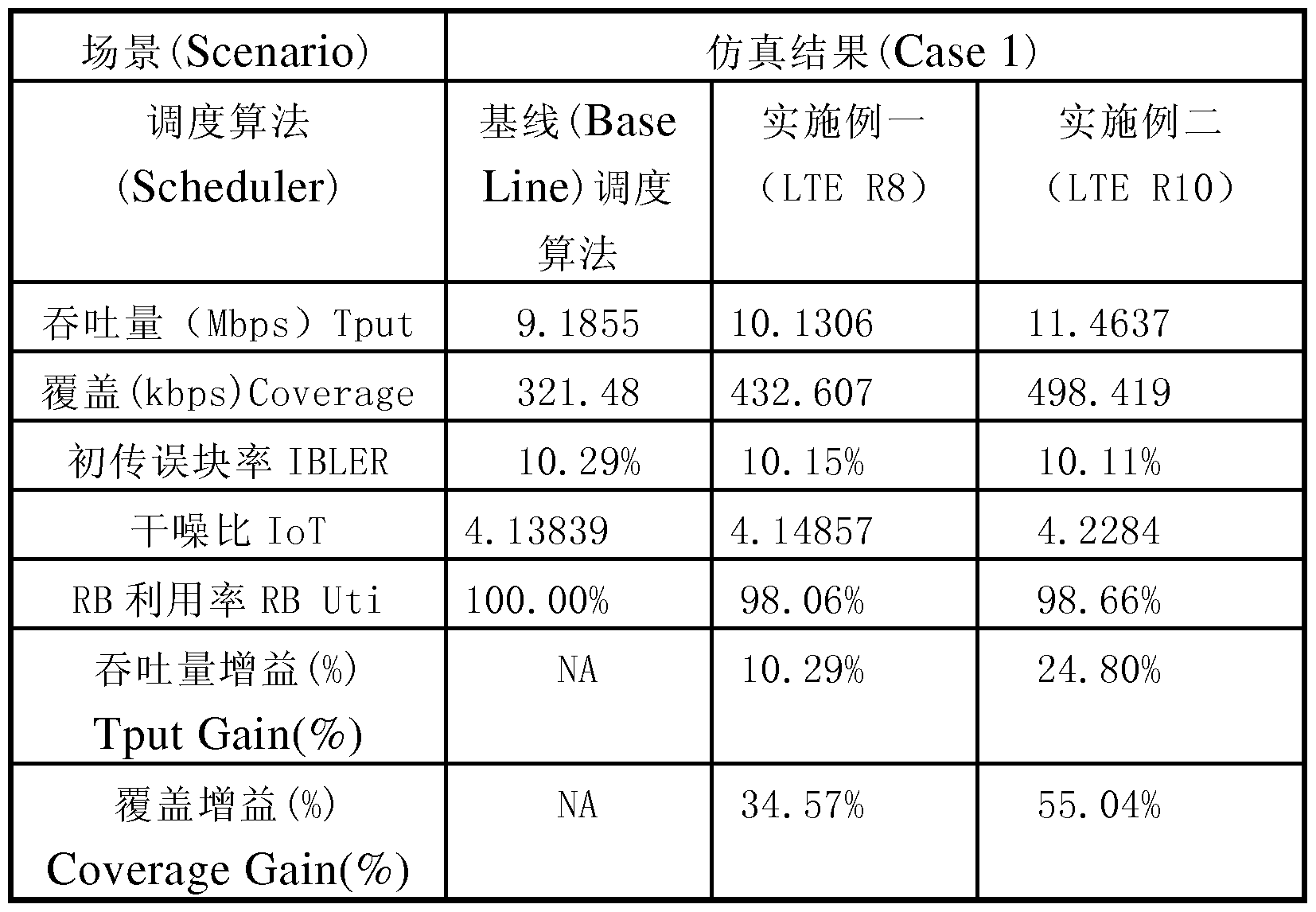
Claims
Priority Applications (5)
| Application Number | Priority Date | Filing Date | Title |
|---|---|---|---|
| JP2016537069A JP6271019B2 (ja) | 2013-08-30 | 2013-08-30 | リソース割当て方法、装置及びシステム |
| CN201380001184.7A CN103718633B (zh) | 2013-08-30 | 2013-08-30 | 资源分配方法、装置及系统 |
| EP13892109.3A EP3030030B1 (en) | 2013-08-30 | 2013-08-30 | Resource allocation method, device and system |
| PCT/CN2013/082670 WO2015027465A1 (zh) | 2013-08-30 | 2013-08-30 | 资源分配方法、装置及系统 |
| US15/056,621 US9794953B2 (en) | 2013-08-30 | 2016-02-29 | Resource allocation method, apparatus, and system, including a channel proxy unit and plurality of UE proxy units |
Applications Claiming Priority (1)
| Application Number | Priority Date | Filing Date | Title |
|---|---|---|---|
| PCT/CN2013/082670 WO2015027465A1 (zh) | 2013-08-30 | 2013-08-30 | 资源分配方法、装置及系统 |
Related Child Applications (1)
| Application Number | Title | Priority Date | Filing Date |
|---|---|---|---|
| US15/056,621 Continuation US9794953B2 (en) | 2013-08-30 | 2016-02-29 | Resource allocation method, apparatus, and system, including a channel proxy unit and plurality of UE proxy units |
Publications (1)
| Publication Number | Publication Date |
|---|---|
| WO2015027465A1 true WO2015027465A1 (zh) | 2015-03-05 |
Family
ID=50409516
Family Applications (1)
| Application Number | Title | Priority Date | Filing Date |
|---|---|---|---|
| PCT/CN2013/082670 Ceased WO2015027465A1 (zh) | 2013-08-30 | 2013-08-30 | 资源分配方法、装置及系统 |
Country Status (5)
| Country | Link |
|---|---|
| US (1) | US9794953B2 (zh) |
| EP (1) | EP3030030B1 (zh) |
| JP (1) | JP6271019B2 (zh) |
| CN (1) | CN103718633B (zh) |
| WO (1) | WO2015027465A1 (zh) |
Cited By (3)
| Publication number | Priority date | Publication date | Assignee | Title |
|---|---|---|---|---|
| JP2018101883A (ja) * | 2016-12-20 | 2018-06-28 | ヤマハ株式会社 | 管理装置、情報処理装置および通信システム |
| CN111132343A (zh) * | 2017-11-09 | 2020-05-08 | Oppo广东移动通信有限公司 | 上行控制信道资源确定方法、终端和网络侧设备 |
| CN116245344A (zh) * | 2023-05-11 | 2023-06-09 | 成都愚创科技有限公司 | 一种基于大数据的科研资源管理方法、系统及可读介质 |
Families Citing this family (9)
| Publication number | Priority date | Publication date | Assignee | Title |
|---|---|---|---|---|
| EP3322246B1 (en) | 2015-08-04 | 2021-02-17 | Huawei Technologies Co., Ltd. | Method and apparatus for controlling scheduling message |
| US10091132B2 (en) * | 2016-01-29 | 2018-10-02 | Raytheon Company | Systems and methods for resource contention resolution |
| WO2017173665A1 (zh) * | 2016-04-08 | 2017-10-12 | 华为技术有限公司 | 一种通信资源协调方法及装置 |
| CN105930693B (zh) * | 2016-04-29 | 2019-04-09 | 新华三技术有限公司 | 一种软件授权的方法和装置 |
| WO2018028139A1 (zh) * | 2016-08-12 | 2018-02-15 | 中兴通讯股份有限公司 | 一种信息发送方法、发送设备及计算机存储介质 |
| US11219001B2 (en) | 2016-11-09 | 2022-01-04 | Panasonic Intellectual Property Corporation Of America | Terminal, base station, and communication method |
| CN116744459A (zh) * | 2017-10-02 | 2023-09-12 | 财团法人资讯工业策进会 | 用于移动通信系统的基站及用户装置 |
| US12295046B2 (en) | 2019-10-14 | 2025-05-06 | Samsung Electronics Co., Ltd. | Method and UE for handling resource allocation in wireless communication system |
| CN117858262B (zh) * | 2024-03-07 | 2024-05-14 | 成都爱瑞无线科技有限公司 | 基站资源调度优化方法、装置、基站、设备、介质及产品 |
Citations (4)
| Publication number | Priority date | Publication date | Assignee | Title |
|---|---|---|---|---|
| US6243396B1 (en) * | 1995-08-15 | 2001-06-05 | Broadcom Eireann Research Limited | Communications network management system |
| CN101084680A (zh) * | 2004-10-28 | 2007-12-05 | 意大利电信股份公司 | 在电信服务和/或网络管理平台中管理资源的方法、相应平台及其计算机程序产品 |
| CN101365160A (zh) * | 2007-08-06 | 2009-02-11 | 联想(北京)有限公司 | 无线广播通信融合网络资源管理系统及方法 |
| CN102546236A (zh) * | 2011-12-16 | 2012-07-04 | 华为技术有限公司 | 中央协调器切换处理方法以及协调器 |
Family Cites Families (14)
| Publication number | Priority date | Publication date | Assignee | Title |
|---|---|---|---|---|
| CA2075022C (en) * | 1991-11-01 | 1997-04-22 | Noach Amitay | Communications resource assignment in a wireless telecommunications system |
| US6418148B1 (en) * | 1995-10-05 | 2002-07-09 | Lucent Technologies Inc. | Burst-level resource allocation in cellular systems |
| US7068607B2 (en) * | 2000-08-31 | 2006-06-27 | Telefonktiebolaget Lm Ericsson (Publ) | Bandwidth broker for cellular radio access networks |
| US20020194498A1 (en) * | 2001-05-30 | 2002-12-19 | Palm, Inc. | Mobile communication system for location aware services |
| US20040029591A1 (en) * | 2002-08-07 | 2004-02-12 | Nortel Networks Limited | Method and apparatus for accommodating high bandwidth traffic on a wireless network |
| US7349338B2 (en) * | 2003-04-15 | 2008-03-25 | Lucent Technologies Inc | Scheduler and method for scheduling transmissions in a communication network |
| US20050060410A1 (en) * | 2003-09-11 | 2005-03-17 | Nokia Corporation | System and method for proxy-based redirection of resource requests |
| JP4640787B2 (ja) * | 2004-06-28 | 2011-03-02 | 株式会社エヌ・ティ・ティ・ドコモ | 送信局及び移動通信システム、並びに無線リソース割当方法 |
| US8838795B2 (en) * | 2004-12-03 | 2014-09-16 | At&T Intellectual Property I, L.P. | System, method, apparatus, and product for resource sharing |
| US20100069074A1 (en) * | 2008-09-12 | 2010-03-18 | Lucent Technologies Inc. | Wireless-resource broker |
| JP5676468B2 (ja) * | 2008-12-23 | 2015-02-25 | コーニンクレッカ フィリップス エヌ ヴェ | 柔軟な無線ネットワークにおけるチャネル予約 |
| EP2391939A1 (en) * | 2009-02-02 | 2011-12-07 | Consilience International LLC | Resource processing using an intermediary for context-based customization of interaction deliverables |
| EP2599345B1 (en) * | 2010-07-26 | 2017-09-06 | Seven Networks, LLC | Distributed implementation of dynamic wireless traffic policy |
| US9084223B2 (en) * | 2010-09-30 | 2015-07-14 | Samsung Electronics Co., Ltd. | Method and apparatus for providing multi-media broadcast multicast services data to user equipment over relay nodes |
-
2013
- 2013-08-30 WO PCT/CN2013/082670 patent/WO2015027465A1/zh not_active Ceased
- 2013-08-30 JP JP2016537069A patent/JP6271019B2/ja active Active
- 2013-08-30 EP EP13892109.3A patent/EP3030030B1/en not_active Not-in-force
- 2013-08-30 CN CN201380001184.7A patent/CN103718633B/zh active Active
-
2016
- 2016-02-29 US US15/056,621 patent/US9794953B2/en not_active Expired - Fee Related
Patent Citations (4)
| Publication number | Priority date | Publication date | Assignee | Title |
|---|---|---|---|---|
| US6243396B1 (en) * | 1995-08-15 | 2001-06-05 | Broadcom Eireann Research Limited | Communications network management system |
| CN101084680A (zh) * | 2004-10-28 | 2007-12-05 | 意大利电信股份公司 | 在电信服务和/或网络管理平台中管理资源的方法、相应平台及其计算机程序产品 |
| CN101365160A (zh) * | 2007-08-06 | 2009-02-11 | 联想(北京)有限公司 | 无线广播通信融合网络资源管理系统及方法 |
| CN102546236A (zh) * | 2011-12-16 | 2012-07-04 | 华为技术有限公司 | 中央协调器切换处理方法以及协调器 |
Non-Patent Citations (1)
| Title |
|---|
| See also references of EP3030030A4 * |
Cited By (4)
| Publication number | Priority date | Publication date | Assignee | Title |
|---|---|---|---|---|
| JP2018101883A (ja) * | 2016-12-20 | 2018-06-28 | ヤマハ株式会社 | 管理装置、情報処理装置および通信システム |
| CN111132343A (zh) * | 2017-11-09 | 2020-05-08 | Oppo广东移动通信有限公司 | 上行控制信道资源确定方法、终端和网络侧设备 |
| US11627559B2 (en) | 2017-11-09 | 2023-04-11 | Guangdong Oppo Mobile Telecommunications Corp., Ltd. | Uplink control channel resource determination method, terminal, and network side device |
| CN116245344A (zh) * | 2023-05-11 | 2023-06-09 | 成都愚创科技有限公司 | 一种基于大数据的科研资源管理方法、系统及可读介质 |
Also Published As
| Publication number | Publication date |
|---|---|
| JP2016529832A (ja) | 2016-09-23 |
| EP3030030A4 (en) | 2016-07-20 |
| US9794953B2 (en) | 2017-10-17 |
| EP3030030B1 (en) | 2017-09-27 |
| JP6271019B2 (ja) | 2018-01-31 |
| CN103718633B (zh) | 2017-11-17 |
| EP3030030A1 (en) | 2016-06-08 |
| US20160183278A1 (en) | 2016-06-23 |
| CN103718633A (zh) | 2014-04-09 |
Similar Documents
| Publication | Publication Date | Title |
|---|---|---|
| WO2015027465A1 (zh) | 资源分配方法、装置及系统 | |
| CN110149712B (zh) | 一种用于上行授权的方法及装置 | |
| JP6383433B2 (ja) | バッファ状態報告(bsr)のトリガー方法及び装置 | |
| EP4005298B1 (en) | Apparatus and method for power control in wireless communication system | |
| KR101104506B1 (ko) | Comp 운영을 위한 기지국 | |
| CN114762432B (zh) | 用于配置具有同时的模式1和模式2传输的双模侧链路逻辑信道的方法和装置 | |
| JP2016521071A5 (zh) | ||
| KR20180077270A (ko) | 피드백을 송수신하는 방법 및 장치 | |
| CN113519197A (zh) | 上行链路控制信息抢占 | |
| US20160278111A1 (en) | Service scheduling method and device | |
| JP2024503078A (ja) | マルチスロット物理アップリンク共有チャネルでの単一トランスポートブロック送信のための衝突処理、アップリンク制御情報の多重化及び反復 | |
| TWI602447B (zh) | 回報緩衝區狀態報告的裝置及方法 | |
| KR101920295B1 (ko) | 자원 할당 및 서비스 송신 방법 및 장치 | |
| CN108322939B (zh) | 支持多种物理层方法的无线通信系统的方法和设备 | |
| WO2017166319A1 (zh) | 上行数据传输的方法和设备 | |
| CN111148225B (zh) | 资源调度方法、装置及设备 | |
| US9967010B2 (en) | Data transmission method and apparatus | |
| WO2018082467A1 (zh) | 一种调度方法、终端及基站 | |
| US12568496B2 (en) | User equipment and base station for managing repetition-based uplink grants in NR | |
| WO2020151350A1 (zh) | 一种资源预留方法及相关设备 | |
| CN110999462B (zh) | 用于车辆到车辆通信的两种模式共存的方法和装置 | |
| CN111918328A (zh) | 一种用户设备资源调度方法及装置 | |
| CN102651909B (zh) | 上行控制信息复用时的资源分配方法和装置 | |
| CN110637493B (zh) | 用于传输数据的方法和设备 | |
| CN107528814A (zh) | 一种实体管理方法、快速控制媒介访问控制实体及系统 |
Legal Events
| Date | Code | Title | Description |
|---|---|---|---|
| 121 | Ep: the epo has been informed by wipo that ep was designated in this application |
Ref document number: 13892109 Country of ref document: EP Kind code of ref document: A1 |
|
| ENP | Entry into the national phase |
Ref document number: 2016537069 Country of ref document: JP Kind code of ref document: A |
|
| NENP | Non-entry into the national phase |
Ref country code: DE |
|
| REEP | Request for entry into the european phase |
Ref document number: 2013892109 Country of ref document: EP |
|
| WWE | Wipo information: entry into national phase |
Ref document number: 2013892109 Country of ref document: EP |