WO2015041183A1 - 移動通信システム、移動局、呼制御装置及び移動通信方法 - Google Patents
移動通信システム、移動局、呼制御装置及び移動通信方法 Download PDFInfo
- Publication number
- WO2015041183A1 WO2015041183A1 PCT/JP2014/074300 JP2014074300W WO2015041183A1 WO 2015041183 A1 WO2015041183 A1 WO 2015041183A1 JP 2014074300 W JP2014074300 W JP 2014074300W WO 2015041183 A1 WO2015041183 A1 WO 2015041183A1
- Authority
- WO
- WIPO (PCT)
- Prior art keywords
- emergency call
- prefix
- call
- emergency
- transmission
- Prior art date
- Legal status (The legal status is an assumption and is not a legal conclusion. Google has not performed a legal analysis and makes no representation as to the accuracy of the status listed.)
- Ceased
Links
Images






Classifications
-
- H—ELECTRICITY
- H04—ELECTRIC COMMUNICATION TECHNIQUE
- H04W—WIRELESS COMMUNICATION NETWORKS
- H04W4/00—Services specially adapted for wireless communication networks; Facilities therefor
- H04W4/18—Information format or content conversion, e.g. adaptation by the network of the transmitted or received information for the purpose of wireless delivery to users or terminals
-
- H—ELECTRICITY
- H04—ELECTRIC COMMUNICATION TECHNIQUE
- H04M—TELEPHONIC COMMUNICATION
- H04M3/00—Automatic or semi-automatic exchanges
- H04M3/42—Systems providing special services or facilities to subscribers
- H04M3/50—Centralised arrangements for answering calls; Centralised arrangements for recording messages for absent or busy subscribers ; Centralised arrangements for recording messages
- H04M3/51—Centralised call answering arrangements requiring operator intervention, e.g. call or contact centers for telemarketing
- H04M3/5116—Centralised call answering arrangements requiring operator intervention, e.g. call or contact centers for telemarketing for emergency applications
-
- H—ELECTRICITY
- H04—ELECTRIC COMMUNICATION TECHNIQUE
- H04W—WIRELESS COMMUNICATION NETWORKS
- H04W4/00—Services specially adapted for wireless communication networks; Facilities therefor
- H04W4/90—Services for handling of emergency or hazardous situations, e.g. earthquake and tsunami warning systems [ETWS]
-
- H—ELECTRICITY
- H04—ELECTRIC COMMUNICATION TECHNIQUE
- H04M—TELEPHONIC COMMUNICATION
- H04M2242/00—Special services or facilities
- H04M2242/04—Special services or facilities for emergency applications
Definitions
- the present invention relates to a mobile communication system, a mobile station, a call control device, and a mobile communication method for handling an emergency call to the police or fire department.
- the 3rd Generation Generation Partnership Project (3GPP) stipulates that, in the case of 3G, the mobile station (UE) uses an Emergency Setup message when it sends an emergency call to the police, fire department, emergency, etc. Patent Document 1).
- the Emergency Setup message does not stipulate the information element (IE) that indicates the telephone number (calling number) of the callee, but Emergency ate Category (for example, fire fighting, Emergency) is selected, and an Emergency Setup message including the Emergency Category is transmitted from the mobile station to the MSC (Mobile Services Switching Center, call control device).
- IE information element
- MSC Mobile Services Switching Center, call control device
- PSAP Public Safety Answering Point Businesses are obliged to be able to choose whether or not (see, for example, http://www.soumu.go.jp/main_sosiki/joho_tsusin/d_syohi/telecom_perinfo_guideline_intro.html).
- the caller sends the caller number information (for example, 184119) in which the prefix (for example, 184 in Japan) added to the caller number indicating whether or not to notify the caller of the caller's phone number to the mobile station. May be entered against.
- the call number information with such a prefix cannot be notified to the call control device using the Emergency Setup message (or INVITE message).
- the mobile station notifies the call control device of the transmission number information and regulates the notification of the caller telephone number to the callee by treating it as a general call instead of an emergency call.
- the conventional emergency call processing method described above has the following problems.
- it is handled as a general call regardless of an emergency call. Therefore, even when an access restriction that allows only an emergency call is activated, the access restriction cannot be broken, There is a problem that priority control for the target cannot be applied.
- the present invention has been made in view of such a situation, and even when a prefix indicating the handling of an emergency call is added, the emergency call is transmitted in the same manner as a normal emergency call to which the prefix is not added. It is an object of the present invention to provide a mobile communication system, a mobile station, a call control device, and a mobile communication method that can achieve access control breakthrough and application of priority control to the emergency call.
- a first feature of the present invention is a mobile communication system including a mobile station and a call control device for controlling connection of an emergency call generated by the mobile station, wherein the mobile station handles the emergency call.
- a transmission number information acquisition unit that acquires transmission number information including a prefix indicating a transmission number and a transmission number that is a destination telephone number, and the transmission number information acquired by the transmission number information acquisition unit
- the emergency call by an emergency call transmission signal including a prefix / transmission number separation unit that separates the number, the prefix separated by the prefix / transmission number separation unit, and an emergency call type associated with the transmission number
- An emergency call transmission unit for transmitting the call to the call control device, and the call control device transmits the emergency call by the emergency call transmission signal from the mobile station.
- the prefix included in the emergency call transmission signal and the prefix / call type specifying unit specifying the emergency call type, and the prefix specified by the prefix / call type specifying unit Emergency call control for determining handling of the emergency call and connecting the emergency call to an emergency call response point corresponding to the emergency call type based on the emergency call type specified by the prefix / call type specifying unit It is a summary to provide a part.
- a second feature of the present invention is a mobile station that generates an emergency call, and obtains transmission number information including a prefix indicating the handling of the emergency call and a transmission number that is a destination telephone number.
- An information acquisition unit, a prefix / transmission number separation unit that separates the transmission number information acquired by the transmission number information acquisition unit into the prefix and the transmission number, and the prefix / transmission number separation unit An emergency call transmission unit configured to transmit the emergency call by an emergency call transmission signal including a prefix and an emergency call type associated with the transmission number to a call control device that controls connection of the emergency call. The gist.
- a call control apparatus for controlling connection of an emergency call generated by a mobile station, wherein a prefix indicating the handling of the emergency call and a destination telephone number are transmitted from the mobile station.
- An emergency call receiving unit that receives the emergency call by an emergency call transmission signal including an emergency call type associated with a certain transmission number, a prefix that is included in the emergency call transmission signal, and a prefix that specifies the emergency call type / Call type specifying unit and handling of the emergency call based on the prefix specified by the prefix / call type specifying unit, and based on the emergency call type specified by the prefix / call type specifying unit
- an emergency call control unit for connecting the emergency call to an emergency call response point corresponding to the emergency call type.
- a fourth feature of the present invention is a mobile communication method by a mobile station and a call control device that controls connection of an emergency call generated by the mobile station, wherein the mobile station handles the emergency call.
- a call number information including a prefix to indicate and a call number that is a telephone number of a call destination, and the mobile station separates the acquired call number information into the prefix and the call number;
- the mobile station transmitting the emergency call by an emergency call transmission signal including the separated prefix and the emergency call type associated with the calling number to the call control device; and the call control device, Receiving the emergency call by the emergency call transmission signal from the mobile station; and the call control device includes the prefix included in the emergency call transmission signal and the A step of identifying an emergency call type, and the call control device determines handling of the emergency call based on the identified prefix, and an emergency corresponding to the emergency call type based on the identified emergency call type And connecting the emergency call to a call answering point.
- a fifth feature of the present invention is a mobile communication system including a mobile station and a call control device for controlling connection of an emergency call generated by the mobile station, wherein the mobile station handles the emergency call.
- a transmission number information acquisition unit that acquires transmission number information that includes a prefix indicating a transmission number and a transmission number that is a destination telephone number, the prefix acquired by the transmission number information acquisition unit, and the transmission number
- An emergency call transmitter for transmitting the emergency call by an emergency call transmission signal to the call control device, and the call control device receives the emergency call by the emergency call transmission signal from the mobile station
- a prefix / transmission number identification unit that identifies the prefix and the transmission number included in the emergency call transmission signal, and the prefix / transmission number identification unit.
- the emergency call handling is determined based on the determined prefix, and the emergency call is sent to the emergency call response point corresponding to the calling number based on the calling number specified by the prefix / calling number specifying unit.
- an emergency call control unit for connecting to the network.
- a sixth feature of the present invention is a mobile communication method by a mobile station and a call control device that controls connection of an emergency call generated by the mobile station, wherein the mobile station handles the emergency call.
- the emergency call by the emergency call transmission signal including the prefix and the call number that includes the prefix that is indicated and the call number that is the destination telephone number; Is transmitted to the call control device, the call control device receives the emergency call by the emergency call transmission signal from the mobile station, and the call control device is included in the emergency call transmission signal.
- Boss was based on the calling number, and summarized in that comprises the step of connecting the emergency call to the emergency call answering point corresponding to the calling number.
- FIG. 1 is an overall schematic configuration diagram of a mobile communication system 10 according to the first embodiment of the present invention.
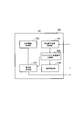
- FIG. 2 is a functional block configuration diagram of the UE 100 according to the first embodiment of the present invention.
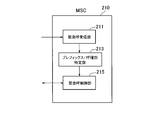
- FIG. 3 is a functional block configuration diagram of the MSC 210 according to the first embodiment of the present invention.
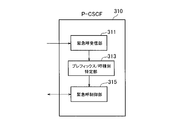
- FIG. 4 is a functional block configuration diagram of the P-CSCF 310 according to the first embodiment of the present invention.
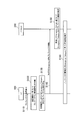
- FIG. 5 is a diagram showing an emergency call transmission sequence in the case of the 3G system (circuit switching domain) according to the first embodiment of the present invention.
- FIG. 6 is a diagram showing an emergency call transmission sequence in the LTE scheme (VoLTE) according to the first embodiment of the present invention.
- FIG. 1 is an overall schematic configuration diagram of a mobile communication system 10 according to the first embodiment of the present invention.
- FIG. 2 is a functional block configuration diagram of the UE 100 according to the first embodiment of the present invention.
- FIG. 3 is a functional block configuration diagram of
- FIG. 7 is a diagram showing an operation flow of the UE 100 according to the first embodiment of the present invention.
- FIG. 8 is a diagram showing an example of prefix setting information held by the setting information holding unit 105 according to the first embodiment of the present invention.
- FIG. 9 is a functional block configuration diagram of the UE 100 according to the second embodiment of the present invention.
- FIG. 10 is a functional block configuration diagram of the MSC 210 according to the second embodiment of the present invention.
- FIG. 11 is a functional block configuration diagram of the P-CSCF 310 according to the second embodiment of the present invention.
- FIG. 12 is a diagram showing an emergency call transmission sequence in the case of the 3G system (circuit switching domain) according to the second embodiment of the present invention.
- FIG. 13 is a diagram showing an emergency call transmission sequence in the LTE scheme (VoLTE) according to the second embodiment of the present invention.
- VoLTE LTE scheme
- FIG. 1 is an overall schematic configuration diagram of a mobile communication system 10 according to the first embodiment of the present invention.
- a mobile communication system 10 includes a mobile station 100 (hereinafter referred to as UE 100), an IP-Connectivity Access Network 200 (hereinafter referred to as IP-CAN 200), a Mobile services Switching Center 210 (hereinafter referred to as MSC 210), and an IP Multimedia. core network Subsystem 300 (hereinafter, IMS300) and the like.
- UE 100 mobile station 100
- IP-CAN 200 IP-Connectivity Access Network 200
- MSC 210 Mobile services Switching Center 210
- IMS300 IP Multimedia. core network Subsystem 300
- UE100 can be connected to IP-CAN200 via 3G wireless base station (NB) or LTE wireless base station (eNB) and provides communication services via IMS300 (IP multimedia subsystem) Is possible.
- NB 3G wireless base station
- eNB LTE wireless base station
- IMS300 IP multimedia subsystem
- IP-CAN200 is an access network according to the Internet Protocol (IP). Specifically, the IP-CAN 200 is a network that provides a Session Initiation Protocol (SIP) and audio media transport function, and corresponds to an LTE / Evolved Packet Core (EPC) network in this embodiment.
- IP Internet Protocol
- SIP Session Initiation Protocol
- EPC Evolved Packet Core
- IP-CAN200 includes Mobility Management Entity (MME), Serving Gateway (SGW), Packet Data Network Gateway (PGW), and Policy and Charging Rules Function (PCRF).
- MME Mobility Management Entity
- SGW Serving Gateway
- PGW Packet Data Network Gateway
- PCRF Policy and Charging Rules Function
- the MME is an exchange that accommodates eNB and provides mobility control and bearer control functions.
- the SGW is a visited packet switch that accommodates a 3GPP (LTE) access system.
- the PGW is a connection point with the IMS platform, and is a packet switch that performs IP address assignment and packet transfer to the SGW.
- the PGW performs QoS control, bearer setting control, and the like in cooperation with the PCRF.
- the PCRF executes quality control of user data transfer (QoS) control and control for charging.
- QoS quality control of user data transfer
- MSC210 is a 3G system circuit switching domain switch, and controls and processes voice communication calls.
- IMS300 is a multimedia subsystem according to the Internet protocol. Proxy-Call-Session Function 310 (P-CSCF310), Serving-Call Session Function (S-CSCF) and Interrogating-Session ControlCSFunction (I- CSCF).
- P-CSCF310 Proxy-Call-Session Function 310
- S-CSCF Serving-Call Session Function
- I- CSCF Interrogating-Session ControlCSFunction
- PSAP400 Public Safety Answering Point 400
- PSAP400 is an emergency call response point to which an emergency call transmitted by UE 100 is connected, and an entity is an exchange that accepts an emergency call.
- the PSAP 400 is provided according to the type of emergency call. For example, a switchboard that accepts emergency calls related to fire and ambulance, and a switchboard that accepts emergency calls related to police.
- P-CSCF, S-CSCF, and I-CSCF are SIP relay servers and execute SIP message transfer and so on.
- P-CSCF is a SIP relay server located at the connection point with EPC.
- P-CSCF is linked with EPC (PCRF) to activate QoS control and It plays a role of grasping the state.
- the MSC 210 and the P-CSCF 310 constitute a call control device that controls connection of an emergency call generated by the UE 100.
- FIG. 2 is a functional block configuration diagram of UE 100.
- the UE 100 includes a transmission number information acquisition unit 101, a prefix / transmission number separation unit 103, a setting information holding unit 105, an emergency call transmission unit 107, and a general call transmission unit 109.
- the transmission number information acquisition unit 101 acquires transmission number information including the telephone number of the transmission destination input by the user of the UE 100. Specifically, the transmission number information acquisition unit 101 acquires transmission number information including a prefix indicating handling of a call to be transmitted and a transmission number that is a telephone number of a transmission destination. In particular, in the present embodiment, the transmission number information acquisition unit 101 includes transmission number information including a prefix (for example, 184 or 186) indicating the handling of an emergency call to the police or fire department, and a transmission number (for example, 119). To get.
- a prefix for example, 184 or 186
- a transmission number for example, 119
- the prefix is not particularly limited as long as it indicates the handling of the emergency call.
- the prefix is an emergency call response point that is a destination telephone number of the emergency call, that is, the telephone number of the UE 100. This indicates whether to notify the PSAP400.
- the prefix / transmission number separation unit 103 separates the transmission number information acquired by the transmission number information acquisition unit 101 into a prefix and a transmission number. Specifically, the prefix / transmission number separation unit 103 converts the transmission number information (for example, 184119) into the prefix (184) and the transmission number (119) based on the prefix setting information held by the setting information holding unit 105. And to separate. Note that the prefix / transmission number separation unit 103 may acquire the setting information from the devices constituting the IP-CAN 200 or the IMS 300 at the time of transmission instead of the prefix setting information held by the setting information holding unit 105. Good.
- the setting information holding unit 105 holds prefix setting information.
- the prefix notifies whether or not to notify the caller telephone number of the emergency call, that is, the telephone number of the UE 100 to the PSAP 400 that is the emergency call response point that is the call destination. Is shown.
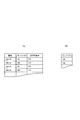
- FIG. 8A and 8B show examples of prefix setting information held by the setting information holding unit 105.
- the setting information shown in FIG. 8A is composed of elements of transmission number information (number), prefix, and emergency call number.
- the prefix / transmission number separator 103 determines whether or not the entire transmission number information matches the setting information, and if a match is found, separates the prefix and the emergency call number.
- the setting information shown in FIG. 8 (b) is composed of only prefix elements.
- the prefix / transmission number separation unit 103 determines whether the first three digits of the transmission number information match the setting information based on the number of digits (3 digits) of the prefix. If there is a match, the remaining number of digits excluding the first three digits is separated as an emergency call number.
- the emergency call transmission unit 107 executes an emergency call transmission process generated by the UE 100. Specifically, the emergency call transmission unit 107 transmits an emergency call using an Emergency Setup message (emergency call transmission signal) defined in 3GPP.
- an Emergency Setup message (emergency call transmission signal) defined in 3GPP.
- the emergency call transmission unit 107 selects the Emergency Category associated with the transmission number based on the transmission number separated by the prefix / transmission number separation unit 103.
- the emergency call transmission unit 107 transmits an emergency call based on Emergency Setup including the prefix separated by the prefix / transmission number separation unit 103 and the selected Emergency Category (emergency call type) to the MSC 210.
- the prefix included in Emergency ⁇ ⁇ Setup may be the prefix itself (for example, 184) or information indicating the meaning of the prefix (for example, caller telephone number non-notification).
- the general call transmission unit 109 executes a process for transmitting a general call other than the emergency call generated by the UE 100.
- the general call transmission unit 109 executes a transmission process similar to that of a general call for an emergency call whose prefix / transmission number separation unit 103 cannot identify a prefix.
- FIG. 3 is a functional block configuration diagram of the MSC 210.
- the MSC 210 includes an emergency call receiving unit 211, a prefix / call type specifying unit 213, and an emergency call control unit 215.
- the emergency call receiving unit 211 receives an emergency call from the UE 100 using Emergency Setup.
- the emergency call receiving unit 211 notifies the prefix / call type identifying unit 213 of the information element included in the received Emergency Setup.
- the prefix / call type identification unit 213 identifies a prefix (for example, 184) and Emergency category (for example, fire fighting, emergency) included in the Emergency Setup notified from the emergency call receiving unit 211.
- the emergency call control unit 215 determines the handling of the emergency call received from the UE 100 based on the prefix specified by the prefix / call type specifying unit 213. Further, the emergency call control unit 215 connects the emergency call to the PSAP 400 corresponding to the Emergency-Category based on the Emergency-Category specified by the prefix / call type specifying unit 213.
- the emergency call control unit 215 notifies the PSAP400 of the caller telephone number when the prefix indicates that the caller telephone number (UE100 telephone number) is rejected to the PSAP400 (in the case of 184). Connect the emergency call to the PSAP400.
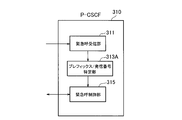
- FIG. 4 is a functional block configuration diagram of the P-CSCF 310.
- the P-CSCF 310 includes an emergency call receiving unit 311, a prefix / call type specifying unit 313, and an emergency call control unit 315.
- the MSC 210 described above performs emergency call processing via the circuit switching domain when the UE 100 is attached to a 3G wireless access network, while the P-CSCF310 is attached to the LTE wireless access network. Execute emergency call processing by VoLTE when the UE 100 is attached to a 3G wireless access network. Execute emergency call processing by VoLTE when the UE 100 is attached to a 3G wireless access network. Execute emergency call processing by VoLTE when the UE 100 is attached to a 3G wireless access network, while the P-CSCF310 is attached to the LTE wireless access network. Execute emergency call processing by VoLTE when
- the emergency call receiving unit 311, the prefix / call type specifying unit 313, and the emergency call control unit 315 correspond to the emergency call receiving unit 211, the prefix / call type specifying unit 213, and the emergency call control unit 215 of the MSC 210, respectively.
- the emergency call processing by VoLTE it is the same as the emergency call processing via the circuit switching domain except that the INVITE message of Session Initiation Protocol (SIP) is used instead of EmergencyESetup message.
- SIP Session Initiation Protocol
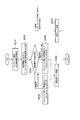
- FIG. 5 shows an emergency call transmission sequence in the 3G system (circuit switching domain).
- the user of UE 100 inputs transmission number information constituted by a prefix (for example, 184 or 186) and a transmission number (for example, 119) to UE 100 (S10).
- a prefix for example, 184 or 186
- a transmission number for example, 119
- the UE 100 separates the input transmission number information into the prefix and the transmission number based on the prefix setting information (see FIGS. 8A and 8B) (S20).
- the UE 100 identifies Emergency Category associated with the separated calling number and information on the separated prefix (prefix information) (S30).
- the prefix information may be the prefix itself (for example, 184), or information indicating the meaning of the prefix (for example, caller telephone number non-notification).
- UE 100 transmits Emergency Setup including the specified Emergency Category and prefix information to MSC 210 (S40). Based on the received Emergency Setup, the MSC 210 identifies the Emergency Category and prefix information included in the Emergency Setup (S50).
- MSC 210 executes emergency call processing with UE 100 based on the identified Emergency Category and prefix information (S60).
- FIG. 6 shows an emergency call transmission sequence in the LTE system (VoLTE).
- the emergency call transmission sequence in the case of the LTE system (VoLTE) is substantially the same as that of the 3G system described above.
- the main difference from the 3G system is that the INVITE message is used instead of the Emergency Setup message.
- the UE 100 transmits INVITE including EmergencyEURN and prefix information to the MSC 210 (S140).
- Emergency URN corresponds to Emergency Category and can indicate the type of emergency call.
- FIG. 7 shows an operation flow of UE 100.
- the UE 100 acquires transmission number information composed of the prefix and transmission number input by the user (S210), and based on the prefix setting information (see FIGS. 8A and 8B).
- the acquired transmission number information is separated into a prefix and a transmission number (S220).
- UE 100 determines the system of the calling number based on the separated prefix and the calling number (S230).
- the UE 100 If it is an emergency call and there is a prefix, the UE 100 generates Emergency Setup as an emergency call with a prefix (S240). On the other hand, if it is an emergency call and there is no prefix, the UE 100 generates EmergencyESetup as an emergency call without a prefix (S250). The UE 100 executes outgoing call as an emergency call by transmitting the generated Emergency Setup to the MSC 210 (S260).
- the UE 100 transmits as a general call without using Emergency Setup (S270).
- General calls other than emergency calls include emergency calls whose prefix cannot be identified.
- INVITE is used instead of EmergencyESetup.
- the UE 100 separates the acquired transmission number information into a prefix and a transmission number, and includes Emergency Setup (including Emergency Prefix and Emergency Category associated with the transmission number). Or INVITE) is transmitted to MSC 210 (or P-CSCF 310).
- Emergency Setup including Emergency Prefix and Emergency Category associated with the transmission number.
- INVITE is transmitted to MSC 210 (or P-CSCF 310).
- the MSC210 determines the handling of emergency calls (for example, the source phone number is not notified) based on the prefix included in Emergency Setup (or INVITE), and the PSAP400 corresponding to Emergency Category Connect the call.
- the UE 100 separates the transmission number information into a prefix and a transmission number based on the prefix setting information held by the setting information holding unit 105. For this reason, since processing based on the prefix setting information set in advance in the UE 100 is possible, quick and reliable separation is possible.
- the emergency call is made without notifying the caller telephone number to the PSAP400. Connect the call to PSAP400. For this reason, even in the case of an emergency call, the emergency call can be processed in accordance with the guidelines for protecting personal information.
- the information included in the Emergency Setup (INVITE) message is different from the first embodiment described above.
- the prefix and Emergency Category are included in Emergency Setup.
- the Emergency Setup includes the transmission number itself, which is the telephone number of the destination, instead of the Emergency Category.
- FIG. 9 is a functional block configuration diagram of the UE 100 according to the present embodiment. As illustrated in FIG. 9, the UE 100 according to the present embodiment does not include the prefix / transmission number separation unit 103.
- the setting information holding unit 105 corresponds not to the setting information as shown in FIGS. 8A and 8B but to the calling number information (for example, 184110) and the emergency call destination (PSAP).
- the emergency call transmission unit 107 transmits an emergency call by Emergency Setup including the prefix acquired by the transmission number information acquisition unit 101 and the transmission number to the MSC 210 (in the case of 3G system). Further, the emergency call transmission unit 107 transmits an emergency call by INVITE including the prefix acquired by the transmission number information acquisition unit 101 and the transmission number to the P-CSCF 310 (in the case of LTE system).
- FIG. 10 is a functional block configuration diagram of the MSC 210 according to the present embodiment.
- the MSC 210 according to the present embodiment includes a prefix / transmission number specifying unit 213A instead of the prefix / call type specifying unit 213.
- the prefix / transmission number identification unit 213A identifies the prefix and the transmission number included in Emergency Setup (emergency call transmission signal).
- the emergency call control unit 215 determines the handling of the emergency call based on the prefix specified by the prefix / calling number specifying unit 213A, and the calling number based on the calling number specified by the prefix / calling number specifying unit 213A Connect an emergency call to the PSAP400 corresponding to.
- FIG. 11 is a functional block configuration diagram of the P-CSCF 310 according to the present embodiment.
- the P-CSCF 310 according to the present embodiment includes a prefix / calling number specifying unit 313A instead of the prefix / call type specifying unit 313.
- the prefix / transmission number identification unit 313A identifies the prefix and the transmission number included in the INVITE (emergency call transmission signal).
- the emergency call control unit 315 determines the handling of the emergency call based on the prefix specified by the prefix / calling number specifying unit 313A, and based on the calling number specified by the prefix / calling number specifying unit 313A, Connect the emergency call to the PSAP400 corresponding to the calling number.
- FIG. 12 shows an emergency call transmission sequence in the case of the 3G system (circuit switching domain).
- the UE 100 determines the Emergency Category (fire fighting, emergency) identified based on the setting information in which the calling number information (for example, 184119) and the emergency call destination (PSAP) are associated with each other.
- Emergency Setup including transmission number information (for example, 184119) constituted by the prefix and the transmission number is transmitted to the MSC 210 (S320).
- the MSC 210 identifies Emergency Category and prefix information included in the Emergency Setup based on the received Emergency Setup (S330), and executes an emergency call process with the UE 100 based on the identified Emergency Category and prefix information (S340). ).
- FIG. 13 shows an emergency call transmission sequence in the LTE system (VoLTE).
- the emergency call transmission sequence in the case of the LTE system (VoLTE) is substantially the same as that of the 3G system described above.
- the main difference from the 3G system is that the INVITE message is used instead of the Emergency Setup message.
- UE 100 transmits, to MSC 210, INVITE that includes Emergency URN, and transmission number information that includes a prefix and a transmission number (S420).
- the following sequence is the same as MSC210.
- a prefix indicating whether or not to notify an emergency call source telephone number, that is, a UE 100 telephone number, to the emergency call response point PSAP400 that is a destination is shown.
- the prefix indicates the handling of the emergency call
- the prefix is not limited to the notification of the caller telephone number.
- the present invention is applied to a prefix (186) indicating that the source telephone number is surely notified, a subaddress such as #xxx set after a prefix telephone number such as # 31 # in a terminal such as Android, and Postfix. May be.
- the present invention may be applied to an emergency call using a specific number that can be used only by a specific user, although it is not generally recognized as an emergency call, such as Government Emergency Telecommunications Service (GETS) in the United States.
- GETS Government Emergency Telecommunications Service
- a first feature of the present invention is a mobile communication system 10 (mobile communication system) including a UE 100 (mobile station) and a call control device (for example, MSC 210) that controls connection of an emergency call generated by the mobile station.
- the mobile station obtains transmission number information including a prefix indicating the handling of the emergency call and a transmission number that is a destination telephone number (transmission number information acquisition unit).
- a prefix / transmission number separation unit 103 prefix / transmission number separation unit that separates the transmission number information acquired by the transmission number information acquisition unit into the prefix and the transmission number, and the prefix / transmission number separation.
- the emergency call by the emergency call transmission signal including the prefix separated by the unit and the emergency call type associated with the transmission number
- An emergency call transmission unit 107 (emergency call transmission unit) for transmitting to the device, and the call control device receives an emergency call by the emergency call transmission signal from the mobile station 211 (emergency call reception unit)
- a prefix / call type specifying unit 213 (prefix / call type specifying unit) for specifying the prefix and the emergency call type included in the emergency call transmission signal, and the prefix / call type specifying unit
- the handling of the emergency call is determined based on the prefix, and the emergency call is sent to an emergency call response point corresponding to the emergency call type based on the emergency call type specified by the prefix / call type specifying unit.
- the gist is to include an emergency call control unit 215 (emergency call control unit) to be connected.
- the information processing apparatus includes a setting information holding unit 105 (setting information holding unit) that holds the setting information of the prefix, and the prefix / calling number separation unit is stored in the setting information holding unit.
- the calling number information may be separated into the prefix and the calling number based on prefix setting information.
- the prefix indicates whether or not to notify the emergency call response point of the emergency call source telephone number
- the emergency call control unit is configured to transmit the emergency call source number. Connect the emergency call to the emergency call answering point without notifying the emergency call answering point of the caller telephone number if the prefix indicates that notification of the number to the emergency call answering point is rejected May be.
- a second feature of the present invention is a mobile station that generates an emergency call, and obtains transmission number information including a prefix indicating the handling of the emergency call and a transmission number that is a destination telephone number.
- An information acquisition unit, a prefix / transmission number separation unit that separates the transmission number information acquired by the transmission number information acquisition unit into the prefix and the transmission number, and the prefix / transmission number separation unit An emergency call transmission unit configured to transmit the emergency call by an emergency call transmission signal including a prefix and an emergency call type associated with the transmission number to a call control device that controls connection of the emergency call. The gist.
- a call control apparatus for controlling connection of an emergency call generated by a mobile station, wherein a prefix indicating the handling of the emergency call and a destination telephone number are transmitted from the mobile station.
- An emergency call receiving unit that receives the emergency call by an emergency call transmission signal including an emergency call type associated with a certain transmission number, a prefix that is included in the emergency call transmission signal, and a prefix that specifies the emergency call type / Call type specifying unit and handling of the emergency call based on the prefix specified by the prefix / call type specifying unit, and based on the emergency call type specified by the prefix / call type specifying unit
- an emergency call control unit for connecting the emergency call to an emergency call response point corresponding to the emergency call type.
- a fourth feature of the present invention is a mobile communication method by a mobile station and a call control device that controls connection of an emergency call generated by the mobile station, wherein the mobile station handles the emergency call.
- a call number information including a prefix to indicate and a call number that is a telephone number of a call destination, and the mobile station separates the acquired call number information into the prefix and the call number;
- the mobile station transmitting the emergency call by an emergency call transmission signal including the separated prefix and the emergency call type associated with the calling number to the call control device; and the call control device, Receiving the emergency call by the emergency call transmission signal from the mobile station; and the call control device includes the prefix included in the emergency call transmission signal and the A step of identifying an emergency call type, and the call control device determines handling of the emergency call based on the identified prefix, and an emergency corresponding to the emergency call type based on the identified emergency call type And connecting the emergency call to a call answering point.
- a fifth feature of the present invention is a mobile communication system that includes a mobile station and a call control device (for example, MSC210) that controls connection of an emergency call generated by the mobile station, wherein the mobile station includes: A transmission number information acquisition unit for acquiring transmission number information including a prefix indicating the handling of the emergency call and a transmission number which is a telephone number of a transmission destination; the prefix acquired by the transmission number information acquisition unit; An emergency call transmission unit for transmitting the emergency call by an emergency call transmission signal including a transmission number to the call control device, and the call control device receives the emergency call by the emergency call transmission signal from the mobile station An emergency call receiving unit, and a prefix / calling number specifying unit 213A for specifying the prefix and the calling number included in the emergency call transmission signal (prefix / calling number special feature) Determining the handling of the emergency call based on the prefix specified by the prefix / calling number specifying unit, and based on the calling number specified by the prefix / calling number specifying unit, The g
- a sixth feature of the present invention is a mobile communication method by a mobile station and a call control device that controls connection of an emergency call generated by the mobile station, wherein the mobile station handles the emergency call.
- the emergency call by the emergency call transmission signal including the prefix and the call number that includes the prefix that is indicated and the call number that is the destination telephone number; Is transmitted to the call control device, the call control device receives the emergency call by the emergency call transmission signal from the mobile station, and the call control device is included in the emergency call transmission signal.
- Boss was based on the calling number, and summarized in that comprises the step of connecting the emergency call to the emergency call answering point corresponding to the calling number.
- the emergency call breaks through the access restriction of the emergency call and the priority to the emergency call is the same as a normal emergency call without the prefix added. It is possible to provide a mobile communication system, a mobile station, a call control device, and a mobile communication method that can realize application of control.
Landscapes
- Engineering & Computer Science (AREA)
- Signal Processing (AREA)
- Business, Economics & Management (AREA)
- Computer Networks & Wireless Communication (AREA)
- Emergency Management (AREA)
- Marketing (AREA)
- Health & Medical Sciences (AREA)
- Environmental & Geological Engineering (AREA)
- Public Health (AREA)
- Mobile Radio Communication Systems (AREA)
- Telephonic Communication Services (AREA)
Abstract
緊急呼の取扱いを示すプレフィックスが付加される場合でも、当該プレフィックスが付加されない通常の緊急呼と同様に、当該緊急呼のアクセス規制の突破や当該緊急呼への優先制御の適用を実現し得る移動通信システム、移動局、呼制御装置及び移動通信方法を提供する。UE100は、取得した発信番号情報をプレフィックスと発信番号とに分離し、プレフィックスと、発信番号と対応付けられたEmergency Categoryとを含むEmergency SetupをMSC210に送信する。MSC210は、Emergency Setupに含まれるプレフィックスに基づいて緊急呼の取扱い(例えば、発信元電話番号非通知)を決定するとともに、Emergency Categoryに対応するPSAP400に当該緊急呼を接続する。
Description
本発明は、警察や消防などへの緊急呼を取り扱う移動通信システム、移動局、呼制御装置及び移動通信方法に関する。
3rd Generation Partnership Project(3GPP)では、3G方式の場合、移動局(UE)が警察、消防及び救急などへの緊急呼を発信する場合、Emergency Setupメッセージを用いることが規定されている(例えば、非特許文献1参照)。
Emergency Setupメッセージには、発信先の電話番号(発信番号)を示す情報要素(IE)は規定されておらず、当該発信番号(たとえば、119番)と対応付けられたEmergency Category(例えば、消防、救急)が選択され、当該Emergency Categoryを含むEmergency Setupメッセージが、移動局からMSC(Mobile services Switching Center、呼制御装置)に送信される。なお、このような緊急呼の処理方法は、Emergency Setupメッセージの代わりにSession Initiation Protocol(SIP)のINVITEメッセージが利用されるものの、Long Term Evolution(LTE)方式の場合も同様である。
また、このような緊急呼に関しても、個人情報保護の観点から、緊急呼の発信者が、発信元電話番号を発信先、つまり、Public Safety Answering Point(PSAP、緊急呼応答ポイント)に通知するか否かを選択できるようにすることが事業者に義務付けられている(例えば、http://www.soumu.go.jp/main_sosiki/joho_tsusin/d_syohi/telecom_perinfo_guideline_intro.html参照)。
このため、発信者は、発信元電話番号を発信先に通知するか否かを示すプレフィックス(例えば、日本の場合、184)が発信番号に付加された発信番号情報(例えば、184119)を移動局に対して入力する場合がある。上述したように、このようなプレフィックスが付加された発信番号情報をEmergency Setupメッセージ(またはINVITEメッセージ)を用いて呼制御装置に通知することはできないため、このような発信番号情報が入力された場合には、移動局は、緊急呼ではなく一般呼として扱うことによって、当該発信番号情報を呼制御装置に通知し、発信元電話番号を発信先への通知を規制している。
3GPP TS 24.008 V8.16.0 Subclause 9.3.8 Emergency setup, 3rd Generation Partnership Project; Technical Specification Group Core Network and Terminals; Mobile radio interface Layer 3 specification;Core network protocols; Stage 3 (Release 11)、3GPP、2012年3月
しかしながら、上述した従来の緊急呼の処理方法には、次のような問題があった。すなわち、移動通信システム内において、緊急呼にも拘わらず一般呼として取り扱われるため、緊急呼のみ許可されるようなアクセス規制が発動されていた場合でも、当該アクセス規制を突破できなかったり、緊急呼を対象とした優先制御が適用できなかったりする問題点がある。
そこで、本発明は、このような状況に鑑みてなされたものであり、緊急呼の取扱いを示すプレフィックスが付加される場合でも、当該プレフィックスが付加されない通常の緊急呼と同様に、当該緊急呼のアクセス規制の突破や当該緊急呼への優先制御の適用を実現し得る移動通信システム、移動局、呼制御装置及び移動通信方法の提供を目的とする。
本発明の第1の特徴は、移動局と、前記移動局によって生起された緊急呼の接続を制御する呼制御装置とを含む移動通信システムであって、前記移動局は、前記緊急呼の取扱いを示すプレフィックスと、発信先の電話番号である発信番号とを含む発信番号情報を取得する発信番号情報取得部と、前記発信番号情報取得部によって取得された前記発信番号情報を前記プレフィックスと前記発信番号とに分離するプレフィックス/発信番号分離部と、前記プレフィックス/発信番号分離部によって分離された前記プレフィックスと、前記発信番号と対応付けられた緊急呼種別とを含む緊急呼発信信号による前記緊急呼を前記呼制御装置に発信する緊急呼発信部とを備え、前記呼制御装置は、前記移動局から前記緊急呼発信信号による前記緊急呼を受信する緊急呼受信部と、前記緊急呼発信信号に含まれる前記プレフィックス及び前記緊急呼種別を特定するプレフィックス/呼種別特定部と、前記プレフィックス/呼種別特定部によって特定された前記プレフィックスに基づいて前記緊急呼の取扱いを決定するとともに、前記プレフィックス/呼種別特定部によって特定された前記緊急呼種別に基づいて、前記緊急呼種別に対応する緊急呼応答ポイントに前記緊急呼を接続する緊急呼制御部とを備えることを要旨とする。
本発明の第2の特徴は、緊急呼を生起する移動局であって、前記緊急呼の取扱いを示すプレフィックスと、発信先の電話番号である発信番号とを含む発信番号情報を取得する発信番号情報取得部と、前記発信番号情報取得部によって取得された前記発信番号情報を前記プレフィックスと前記発信番号とに分離するプレフィックス/発信番号分離部と、前記プレフィックス/発信番号分離部によって分離された前記プレフィックスと、前記発信番号と対応付けられた緊急呼種別とを含む緊急呼発信信号による前記緊急呼を、前記緊急呼の接続を制御する呼制御装置に発信する緊急呼発信部とを備えることを要旨とする。
本発明の第3の特徴は、移動局によって生起された緊急呼の接続を制御する呼制御装置であって、前記移動局から、記緊急呼の取扱いを示すプレフィックスと、発信先の電話番号である発信番号と対応付けられた緊急呼種別とを含む緊急呼発信信号による前記緊急呼を受信する緊急呼受信部と、前記緊急呼発信信号に含まれる前記プレフィックス及び前記緊急呼種別を特定するプレフィックス/呼種別特定部と、前記プレフィックス/呼種別特定部によって特定された前記プレフィックスに基づいて前記緊急呼の取扱いを決定するとともに、前記プレフィックス/呼種別特定部によって特定された前記緊急呼種別に基づいて、前記緊急呼種別に対応する緊急呼応答ポイントに前記緊急呼を接続する緊急呼制御部とを備えることを要旨とする。
本発明の第4の特徴は、移動局と、前記移動局によって生起された緊急呼の接続を制御する呼制御装置とによる移動通信方法であって、前記移動局が、前記緊急呼の取扱いを示すプレフィックスと、発信先の電話番号である発信番号とを含む発信番号情報を取得するステップと、前記移動局が、取得した前記発信番号情報を前記プレフィックスと前記発信番号とに分離するステップと、前記移動局が、分離した前記プレフィックスと、前記発信番号と対応付けられた緊急呼種別とを含む緊急呼発信信号による前記緊急呼を前記呼制御装置に発信するステップと、前記呼制御装置が、前記移動局から前記緊急呼発信信号による前記緊急呼を受信するステップと、前記呼制御装置が、前記緊急呼発信信号に含まれる前記プレフィックス及び前記緊急呼種別を特定するステップと、前記呼制御装置が、特定した前記プレフィックスに基づいて前記緊急呼の取扱いを決定するとともに、特定した前記緊急呼種別に基づいて、前記緊急呼種別に対応する緊急呼応答ポイントに前記緊急呼を接続するステップとを備えることを要旨とする。
本発明の第5の特徴は、移動局と、前記移動局によって生起された緊急呼の接続を制御する呼制御装置とを含む移動通信システムであって、前記移動局は、前記緊急呼の取扱いを示すプレフィックスと、発信先の電話番号である発信番号とを含む発信番号情報を取得する発信番号情報取得部と、前記発信番号情報取得部によって取得された前記プレフィックスと、前記発信番号とを含む緊急呼発信信号による前記緊急呼を前記呼制御装置に発信する緊急呼発信部とを備え、前記呼制御装置は、前記移動局から前記緊急呼発信信号による前記緊急呼を受信する緊急呼受信部と、前記緊急呼発信信号に含まれる前記プレフィックス及び前記発信番号を特定するプレフィックス/発信番号特定部と、前記プレフィックス/発信番号特定部によって特定された前記プレフィックスに基づいて前記緊急呼の取扱いを決定するとともに、前記プレフィックス/発信番号特定部によって特定された前記発信番号に基づいて、前記発信番号に対応する緊急呼応答ポイントに前記緊急呼を接続する緊急呼制御部とを備えることを要旨とする。
本発明の第6の特徴は、移動局と、前記移動局によって生起された緊急呼の接続を制御する呼制御装置とによる移動通信方法であって、前記移動局が、前記緊急呼の取扱いを示すプレフィックスと、発信先の電話番号である発信番号とを含む発信番号情報を取得するステップと、前記移動局が、取得した前記プレフィックスと、前記発信番号とを含む緊急呼発信信号による前記緊急呼を前記呼制御装置に発信するステップと、前記呼制御装置が、前記移動局から前記緊急呼発信信号による前記緊急呼を受信するステップと、前記呼制御装置が、前記緊急呼発信信号に含まれる前記プレフィックス及び前記発信番号を特定するステップと、前記呼制御装置が、特定した前記プレフィックスに基づいて前記緊急呼の取扱いを決定するとともに、特定した前記発信番号に基づいて、前記発信番号に対応する緊急呼応答ポイントに前記緊急呼を接続するステップとを備えることを要旨とする。
次に、本発明の実施形態について説明する。なお、以下の図面の記載において、同一または類似の部分には、同一または類似の符号を付している。ただし、図面は模式的なものであり、各寸法の比率などは現実のものとは異なることに留意すべきである。
したがって、具体的な寸法などは以下の説明を参酌して判断すべきものである。また、図面相互間においても互いの寸法の関係や比率が異なる部分が含まれていることは勿論である。
[第1実施形態]
(1)移動通信システムの全体概略構成
図1は、本発明の第1実施形態に係る移動通信システム10の全体概略構成図である。図1に示すように、移動通信システム10は、移動局100(以下、UE100)、IP-Connectivity Access Network 200(以下、IP-CAN200)、Mobile services Switching Center 210(以下、MSC210)、及びIP Multimedia core network Subsystem 300(以下、IMS300)及びによって構成される。
(1)移動通信システムの全体概略構成
図1は、本発明の第1実施形態に係る移動通信システム10の全体概略構成図である。図1に示すように、移動通信システム10は、移動局100(以下、UE100)、IP-Connectivity Access Network 200(以下、IP-CAN200)、Mobile services Switching Center 210(以下、MSC210)、及びIP Multimedia core network Subsystem 300(以下、IMS300)及びによって構成される。
UE100は、3G方式の無線基地局(NB)またはLTE方式の無線基地局(eNB)を介して、IP-CAN200に接続可能であり、IMS300(IPマルチメディアサブシステム)を介した通信サービスを提供可能である。
IP-CAN200は、インターネットプロトコル(IP)に従ったアクセスネットワークである。具体的には、IP-CAN200は、Session Initiation Protocol(SIP)及び音声メディアのトランスポート機能を提供するネットワークであり、本実施形態では、LTE/Evolved Packet Core(EPC)ネットワークに相当する。
IP-CAN200は、Mobility Management Entity(MME)、Serving Gateway(SGW)、Packet Data Network Gateway(PGW)及びPolicy and Charging Rules Function(PCRF)を含む。
MMEは、eNBを収容し、モビリティ制御やベアラ制御機能などを提供する交換機である。SGWは、3GPP(LTE)のアクセスシステムを収容する在圏パケット交換機である。PGWは、IMS基盤との接続点であり、IPアドレスの割当てやSGWへのパケット転送などを行うパケット交換機である。また、PGWは、PCRFと連携し、QoS制御やベアラ設定制御などを実行する。PCRFは、ユーザデータ転送のQuality of Service(QoS)制御及び課金のための制御を実行する。
MSC210は、3G方式における回線交換ドメインの交換機であり、音声通信呼の制御や処理を実行する。
IMS300は、インターネットプロトコルに従ったマルチメディアサブシステムであり、Proxy-Call Session Control Function 310(以下、P-CSCF310)、Serving-Call Session Control Function(S-CSCF)及びInterrogating-Session Control Function(I-CSCF)を含む。IMS300には、他網(固定電話網など)が接続される。また、他網には、Public Safety Answering Point 400(以下、PSAP400)が接続される。
PSAP400は、UE100によって発信された緊急呼の接続先となる緊急呼応答ポイントであり、実体は緊急呼を受け付ける交換台である。PSAP400は、緊急呼の種別に応じて設けられている。例えば、消防(Fire)及び救急(Ambulance)に関する緊急呼を受け付ける交換台や、警察(Police)に関する緊急呼を受け付ける交換台などが挙げられる。
P-CSCF、S-CSCF及びI-CSCFは、SIP中継サーバであり、SIPメッセージの転送などを実行する。特に、P-CSCFは、EPCとの接続点に配置されるSIP中継サーバであり、SIPメッセージの転送だけでなく、EPC(PCRF)と連携し、QoS制御を起動したり、IP-CANベアラの状態を把握したりする役割を担う。
本実施形態では、MSC210及びP-CSCF310は、UE100によって生起された緊急呼の接続を制御する呼制御装置を構成する。
(2)移動通信システムの機能ブロック構成
次に、本実施形態に係る移動通信システム10の機能ブロック構成について説明する。具体的には、UE100、MSC210及びP-CSCF310の機能ブロック構成について説明する。
次に、本実施形態に係る移動通信システム10の機能ブロック構成について説明する。具体的には、UE100、MSC210及びP-CSCF310の機能ブロック構成について説明する。
(2.1)UE100
図2は、UE100の機能ブロック構成図である。UE100は、発信番号情報取得部101、プレフィックス/発信番号分離部103、設定情報保持部105、緊急呼発信部107及び一般呼発信部109を備える。
図2は、UE100の機能ブロック構成図である。UE100は、発信番号情報取得部101、プレフィックス/発信番号分離部103、設定情報保持部105、緊急呼発信部107及び一般呼発信部109を備える。
発信番号情報取得部101は、UE100のユーザによって入力された発信先の電話番号を含む発信番号情報を取得する。具体的には、発信番号情報取得部101は、発信される呼の取扱いを示すプレフィックスと、発信先の電話番号である発信番号とを含む発信番号情報を取得する。特に、本実施形態では、発信番号情報取得部101は、警察や消防などへの緊急呼の取扱いを示すプレフィックス(例えば、184や186)と、発信番号(例えば、119)とを含む発信番号情報を取得する。
プレフィックスは、当該緊急呼の取扱いを示すものであれば、特に限定されないが、本実施形態では、緊急呼の発信元電話番号、つまり、UE100の電話番号を発信先である緊急呼応答ポイントであるPSAP400に通知するか否かを示すものである。
プレフィックス/発信番号分離部103は、発信番号情報取得部101によって取得された発信番号情報をプレフィックスと発信番号とに分離する。具体的には、プレフィックス/発信番号分離部103は、設定情報保持部105によって保持されたプレフィックスの設定情報に基づいて、発信番号情報(例えば、184119)をプレフィックス(184)と発信番号(119)とに分離する。なお、プレフィックス/発信番号分離部103は、設定情報保持部105によって保持されたプレフィックスの設定情報ではなく、IP-CAN200またはIMS300を構成する装置から当該設定情報を、発信に際して取得するようにしてもよい。
設定情報保持部105は、プレフィックスの設定情報を保持する。本実施形態では、上述したように、本実施形態では、プレフィックスは、緊急呼の発信元電話番号、つまり、UE100の電話番号を発信先である緊急呼応答ポイントであるPSAP400に通知するか否かを示すものである。
図8(a)及び(b)は、設定情報保持部105によって保持されるプレフィックスの設定情報の例を示す。図8(a)に示す設定情報は、発信番号情報(番号)と、プレフィックスと、緊急呼番号との要素によって構成される。このような設定情報が用いられる場合、プレフィックス/発信番号分離部103は、発信番号情報全体で設定情報とマッチするか否かを判定し、マッチした場合、プレフィックスと緊急呼番号に分離する。
また、図8(b)に示す設定情報は、プレフィックスのみの要素で構成される。このような設定情報が用いられる場合、プレフィックス/発信番号分離部103は、プレフィックスの桁数(3桁)に基づいて、発信番号情報のうち、最初の3桁の情報が設定情報とマッチするか否かを判定し、マッチした場合、最初の3桁を除く残りの桁数の番号を緊急呼番号として分離する。
緊急呼発信部107は、UE100によって生起された緊急呼の発信処理を実行する。具体的には、緊急呼発信部107は、3GPPにおいて規定されるEmergency Setupメッセージ(緊急呼発信信号)を用いて緊急呼を発信する。
より具体的には、緊急呼発信部107は、プレフィックス/発信番号分離部103によって分離された発信番号に基づいて、当該発信番号と対応付けられたEmergency Categoryを選択する。緊急呼発信部107は、プレフィックス/発信番号分離部103によって分離されたプレフィックスと、選択したEmergency Category(緊急呼種別)とを含むEmergency Setupによる緊急呼をMSC210に発信する。なお、Emergency Setupに含まれるプレフィックスは、プレフィックス自体(例えば、184)でもよいし、プレフィックスの意味を示す情報(例えば、発信元電話番号非通知)であってもよい。
一般呼発信部109は、UE100によって生起された緊急呼以外の一般呼の発信処理を実行する。特に、一般呼発信部109は、プレフィックス/発信番号分離部103によってプレフィックスを識別できない緊急呼についても、一般呼と同様の発信処理を実行する。
(2.2)MSC210
図3は、MSC210の機能ブロック構成図である。MSC210は、緊急呼受信部211、プレフィックス/呼種別特定部213及び緊急呼制御部215を備える。
図3は、MSC210の機能ブロック構成図である。MSC210は、緊急呼受信部211、プレフィックス/呼種別特定部213及び緊急呼制御部215を備える。
緊急呼受信部211は、UE100からEmergency Setupによる緊急呼を受信する。緊急呼受信部211は、受信したEmergency Setupに含まれる情報要素をプレフィックス/呼種別特定部213に通知する。
プレフィックス/呼種別特定部213は、緊急呼受信部211から通知されたEmergency Setupに含まれるプレフィックス(例えば、184)及びEmergency Category(例えば、消防、救急)を特定する。
緊急呼制御部215は、プレフィックス/呼種別特定部213によって特定されたプレフィックスに基づいてUE100から受信した緊急呼の取扱いを決定する。また、緊急呼制御部215は、プレフィックス/呼種別特定部213によって特定されたEmergency Categoryに基づいて、Emergency Categoryに対応するPSAP400に緊急呼を接続する。
特に、緊急呼制御部215は、発信元電話番号(UE100の電話番号)のPSAP400への通知を拒否することをプレフィックスが示している場合(184の場合)、PSAP400に発信元電話番号を通知せずに緊急呼をPSAP400に接続する。
(2.3)P-CSCF310
図4は、P-CSCF310の機能ブロック構成図である。P-CSCF310は、緊急呼受信部311、プレフィックス/呼種別特定部313及び緊急呼制御部315を備える。
図4は、P-CSCF310の機能ブロック構成図である。P-CSCF310は、緊急呼受信部311、プレフィックス/呼種別特定部313及び緊急呼制御部315を備える。
上述したMSC210は、UE100が3G方式の無線アクセスネットワークにアタッチしている場合における回線交換ドメイン経由での緊急呼の処理を実行するが、P-CSCF310は、UE100がLTE方式の無線アクセスネットワークにアタッチしている場合におけるVoLTEによる緊急呼の処理を実行する。
緊急呼受信部311、プレフィックス/呼種別特定部313及び緊急呼制御部315は、MSC210の緊急呼受信部211、プレフィックス/呼種別特定部213及び緊急呼制御部215にそれぞれ対応する。また、VoLTEによる緊急呼の処理の場合、Emergency Setupメッセージに代えて、Session Initiation Protocol(SIP)のINVITEメッセージが用いられる点を除いて回線交換ドメイン経由での緊急呼の処理と同様であるため、各機能ブロックの詳細な説明は省略する。
(3)移動通信システムの動作
次に、移動通信システム10の動作について説明する。具体的には、緊急呼発信シーケンス及びUE100の動作フローについて説明する。
次に、移動通信システム10の動作について説明する。具体的には、緊急呼発信シーケンス及びUE100の動作フローについて説明する。
(3.1)緊急呼発信シーケンス
(3.1.1)3G方式の場合
図5は、3G方式(回線交換ドメイン)の場合における緊急呼の発信シーケンスを示す。図5に示すように、UE100のユーザは、プレフィックス(例えば、184または186)と、発信番号(例えば、119)とによって構成される発信番号情報をUE100に入力する(S10)。
(3.1.1)3G方式の場合
図5は、3G方式(回線交換ドメイン)の場合における緊急呼の発信シーケンスを示す。図5に示すように、UE100のユーザは、プレフィックス(例えば、184または186)と、発信番号(例えば、119)とによって構成される発信番号情報をUE100に入力する(S10)。
UE100は、プレフィックスの設定情報(図8(a)及び(b)参照)に基づいて、入力された発信番号情報をプレフィックスと発信番号とに分離する(S20)。UE100は、分離された発信番号と対応付けられているEmergency Category、及び分離されたプレフィックスの情報(プレフィックス情報)を特定する(S30)。なお、上述したように、プレフィックス情報は、プレフィックス自体(例えば、184)でもよいし、プレフィックスの意味を示す情報(例えば、発信元電話番号非通知)であってもよい。
UE100は、特定したEmergency Category及びプレフィックス情報を含むEmergency SetupをMSC210に送信する(S40)。MSC210は、受信したEmergency Setupに基づいて、Emergency Setupに含まれるEmergency Category及びプレフィックス情報を特定する(S50)。
MSC210は、特定したEmergency Category及びプレフィックス情報に基づいて、UE100と緊急呼の処理を実行する(S60)。
(3.1.2)LTE方式の場合
図6は、LTE方式(VoLTE)の場合における緊急呼の発信シーケンスを示す。LTE方式(VoLTE)の場合における緊急呼の発信シーケンスも、上述した3G方式の場合と概ね同様である。
図6は、LTE方式(VoLTE)の場合における緊急呼の発信シーケンスを示す。LTE方式(VoLTE)の場合における緊急呼の発信シーケンスも、上述した3G方式の場合と概ね同様である。
3G方式と異なる主な部分は、Emergency Setupメッセージに代えて、INVITEメッセージが用いられることである。UE100は、Emergency URN及びプレフィックス情報を含むINVITEをMSC210に送信する(S140)。Emergency URNは、Emergency Categoryと対応するものであり、緊急呼の種別を示すことができる。
他のシーケンスについては、3G方式と同様であるため、説明を省略する。
(3.2)UE100の動作フロー
図7は、UE100の動作フローを示す。図7に示すように、UE100は、ユーザが入力したプレフィックス及び発信番号によって構成される発信番号情報を取得(S210)し、プレフィックスの設定情報(図8(a)及び(b)参照)に基づいて、取得した発信番号情報をプレフィックスと発信番号とに分離する(S220)。
図7は、UE100の動作フローを示す。図7に示すように、UE100は、ユーザが入力したプレフィックス及び発信番号によって構成される発信番号情報を取得(S210)し、プレフィックスの設定情報(図8(a)及び(b)参照)に基づいて、取得した発信番号情報をプレフィックスと発信番号とに分離する(S220)。
UE100は、分離したプレフィックスと発信番号とに基づいて、発信番号の体系を判定する(S230)。
緊急呼であり、プレフィックスが有りの場合、UE100は、プレフィックス有りの緊急呼としてEmergency Setupを生成する(S240)。一方、緊急呼であり、プレフィックスが無しの場合、UE100は、プレフィックス無しの緊急呼としてEmergency Setupを生成する(S250)。UE100は、生成したEmergency SetupをMSC210に送信することによって、緊急呼としての発信を実行する(S260)。
また、緊急呼以外の一般呼の場合、UE100は、Emergency Setupを用いず、一般呼として発信する(S270)。緊急呼以外の一般呼には、プレフィックスを識別できない緊急呼も含まれる。なお、LTE方式の場合は、Emergency Setupに代えてINVITEが用いられる。
(4)作用・効果
移動通信システム10によれば、UE100は、取得した発信番号情報をプレフィックスと発信番号とに分離し、プレフィックスと、発信番号と対応付けられたEmergency Categoryとを含むEmergency Setup(またはINVITE)をMSC210(またはP-CSCF310)に送信する。
移動通信システム10によれば、UE100は、取得した発信番号情報をプレフィックスと発信番号とに分離し、プレフィックスと、発信番号と対応付けられたEmergency Categoryとを含むEmergency Setup(またはINVITE)をMSC210(またはP-CSCF310)に送信する。
MSC210(またはP-CSCF310)は、Emergency Setup(またはINVITE)に含まれるプレフィックスに基づいて緊急呼の取扱い(例えば、発信元電話番号非通知)を決定するとともに、Emergency Categoryに対応するPSAP400に当該緊急呼を接続する。
このため、緊急呼の発信番号にプレフィックスが付加されている場合でも、一般呼ではなく、緊急呼として取り扱うことができ、当該プレフィックスが付加されない通常の緊急呼と同様に、当該緊急呼のアクセス規制の突破や当該緊急呼への優先制御の適用を実現し得る。
本実施形態では、UE100は、設定情報保持部105によって保持されたプレフィックスの設定情報に基づいて、発信番号情報をプレフィックスと発信番号とに分離する。このため、UE100に事前に設定されたプレフィックスの設定情報に基づいた処理が可能となるため、迅速かつ確実な分離が可能となる。
本実施形態では、MSC210(及びP-CSCF310)は、発信元電話番号のPSAP400への通知を拒否することをプレフィックス(184)が示している場合、PSAP400に発信元電話番号を通知せずに緊急呼をPSAP400に接続する。このため、緊急呼の場合でも、個人情報保護のガイドラインに沿った緊急呼の処理が可能となる。
[第2実施形態]
次に、本発明の第2実施形態について説明する。本実施形態では、Emergency Setup(INVITE)メッセージに含まれる情報が、上述した第1実施形態と異なる。上述した第1実施形態では、Emergency Setupにプレフィックス及びEmergency Categoryが含まれていたが、本実施形態では、Emergency Setupに、Emergency Categoryではなく、発信先の電話番号である発信番号自体が含まれる。以下、上述した第1実施形態と異なる部分について主に説明する。
次に、本発明の第2実施形態について説明する。本実施形態では、Emergency Setup(INVITE)メッセージに含まれる情報が、上述した第1実施形態と異なる。上述した第1実施形態では、Emergency Setupにプレフィックス及びEmergency Categoryが含まれていたが、本実施形態では、Emergency Setupに、Emergency Categoryではなく、発信先の電話番号である発信番号自体が含まれる。以下、上述した第1実施形態と異なる部分について主に説明する。
(1)移動通信システムの機能ブロック構成
次に、本実施形態に係る移動通信システム10の機能ブロック構成について説明する。具体的には、UE100、MSC210及びP-CSCF310の機能ブロック構成について説明する。
次に、本実施形態に係る移動通信システム10の機能ブロック構成について説明する。具体的には、UE100、MSC210及びP-CSCF310の機能ブロック構成について説明する。
(1.1)UE100
図9は、本実施形態に係るUE100の機能ブロック構成図である。図9に示すように、本実施形態に係るUE100は、プレフィックス/発信番号分離部103を備えていない。
図9は、本実施形態に係るUE100の機能ブロック構成図である。図9に示すように、本実施形態に係るUE100は、プレフィックス/発信番号分離部103を備えていない。
このため、設定情報保持部105は、図8(a)及び(b)に示したような設定情報ではなく、発信番号情報(例えば、184110)と、緊急呼の発信先(PSAP)とが対応付けられた設定情報(例えば、184110=Police)を保持する。
緊急呼発信部107は、発信番号情報取得部101によって取得されたプレフィックスと、発信番号とを含むEmergency Setupによる緊急呼をMSC210に発信する(3G方式の場合)。また、緊急呼発信部107は、発信番号情報取得部101によって取得されたプレフィックスと、発信番号とを含むINVITEによる緊急呼をP-CSCF310に発信する(LTE方式の場合)。
(1.2)MSC210
図10は、本実施形態に係るMSC210の機能ブロック構成図である。本実施形態に係るMSC210は、プレフィックス/呼種別特定部213に代えて、プレフィックス/発信番号特定部213Aを備える。プレフィックス/発信番号特定部213Aは、Emergency Setup(緊急呼発信信号)に含まれるプレフィックス及び発信番号を特定する。
図10は、本実施形態に係るMSC210の機能ブロック構成図である。本実施形態に係るMSC210は、プレフィックス/呼種別特定部213に代えて、プレフィックス/発信番号特定部213Aを備える。プレフィックス/発信番号特定部213Aは、Emergency Setup(緊急呼発信信号)に含まれるプレフィックス及び発信番号を特定する。
緊急呼制御部215は、プレフィックス/発信番号特定部213Aによって特定されたプレフィックスに基づいて緊急呼の取扱いを決定するとともに、プレフィックス/発信番号特定部213Aによって特定された発信番号に基づいて、発信番号に対応するPSAP400に緊急呼を接続する。
(1.3)P-CSCF310
図11は、本実施形態に係るP-CSCF310の機能ブロック構成図である。本実施形態に係るP-CSCF310は、プレフィックス/呼種別特定部313に代えて、プレフィックス/発信番号特定部313Aを備える。プレフィックス/発信番号特定部313Aは、INVITE(緊急呼発信信号)に含まれるプレフィックス及び発信番号を特定する。
図11は、本実施形態に係るP-CSCF310の機能ブロック構成図である。本実施形態に係るP-CSCF310は、プレフィックス/呼種別特定部313に代えて、プレフィックス/発信番号特定部313Aを備える。プレフィックス/発信番号特定部313Aは、INVITE(緊急呼発信信号)に含まれるプレフィックス及び発信番号を特定する。
また、緊急呼制御部315は、プレフィックス/発信番号特定部313Aによって特定されたプレフィックスに基づいて緊急呼の取扱いを決定するとともに、プレフィックス/発信番号特定部313Aによって特定された発信番号に基づいて、発信番号に対応するPSAP400に緊急呼を接続する。
(2)移動通信システムの動作
次に、本実施形態に係る移動通信システム10の動作について説明する。具体的には、緊急呼発信シーケンスについて説明する。以下、上述した第1実施形態に係る緊急呼発信シーケンス(図5及び図6参照)と異なる部分について主に説明する。
次に、本実施形態に係る移動通信システム10の動作について説明する。具体的には、緊急呼発信シーケンスについて説明する。以下、上述した第1実施形態に係る緊急呼発信シーケンス(図5及び図6参照)と異なる部分について主に説明する。
(2.1)3G方式の場合
図12は、3G方式(回線交換ドメイン)の場合における緊急呼の発信シーケンスを示す。図12に示すように、UE100は、発信番号情報(例えば、184119)と、緊急呼の発信先(PSAP)とが対応付けられた設定情報に基づいて特定したEmergency Category(消防、救急)、及びプレフィックスと発信番号とによって構成される発信番号情報(例えば、184119)を含むEmergency SetupをMSC210に送信する(S320)。
図12は、3G方式(回線交換ドメイン)の場合における緊急呼の発信シーケンスを示す。図12に示すように、UE100は、発信番号情報(例えば、184119)と、緊急呼の発信先(PSAP)とが対応付けられた設定情報に基づいて特定したEmergency Category(消防、救急)、及びプレフィックスと発信番号とによって構成される発信番号情報(例えば、184119)を含むEmergency SetupをMSC210に送信する(S320)。
MSC210は、受信したEmergency Setupに基づいて、Emergency Setupに含まれるEmergency Category及びプレフィックス情報を特定(S330)し、特定したEmergency Category及びプレフィックス情報に基づいて、UE100と緊急呼の処理を実行する(S340)。
(2.2)LTE方式の場合
図13は、LTE方式(VoLTE)の場合における緊急呼の発信シーケンスを示す。LTE方式(VoLTE)の場合における緊急呼の発信シーケンスも、上述した3G方式の場合と概ね同様である。
図13は、LTE方式(VoLTE)の場合における緊急呼の発信シーケンスを示す。LTE方式(VoLTE)の場合における緊急呼の発信シーケンスも、上述した3G方式の場合と概ね同様である。
3G方式と異なる主な部分は、Emergency Setupメッセージに代えて、INVITEメッセージが用いられることである。具体的には、UE100は、Emergency URN、及びプレフィックスと発信番号とによって構成される発信番号情報を含むINVITEをMSC210に送信する(S420)。以下のシーケンスは、MSC210と同様である。
(3)作用・効果
本実施形態に係る移動通信システム10によれば、第1実施形態と同様に、緊急呼の発信番号にプレフィックスが付加されている場合でも、一般呼ではなく、緊急呼として取り扱うことができ、当該プレフィックスが付加されない通常の緊急呼と同様に、当該緊急呼のアクセス規制の突破や当該緊急呼への優先制御の適用を実現し得る。
本実施形態に係る移動通信システム10によれば、第1実施形態と同様に、緊急呼の発信番号にプレフィックスが付加されている場合でも、一般呼ではなく、緊急呼として取り扱うことができ、当該プレフィックスが付加されない通常の緊急呼と同様に、当該緊急呼のアクセス規制の突破や当該緊急呼への優先制御の適用を実現し得る。
[その他の実施形態]
上述したように、本発明の第1及び第2実施形態を通じて本発明の内容を開示したが、この開示の一部をなす論述及び図面は、本発明を限定するものであると理解すべきではない。この開示から当業者には様々な代替実施の形態が明らかとなろう。
上述したように、本発明の第1及び第2実施形態を通じて本発明の内容を開示したが、この開示の一部をなす論述及び図面は、本発明を限定するものであると理解すべきではない。この開示から当業者には様々な代替実施の形態が明らかとなろう。
例えば、上述した本発明の第1実施形態では、緊急呼の発信元電話番号、つまり、UE100の電話番号を発信先である緊急呼応答ポイントであるPSAP400に通知するか否かを示すプレフィックスを例として説明したが、プレフィックスは、当該緊急呼の取扱いを示すものであれば、発信元電話番号の通知に限定されない。例えば、発信元電話番号を確実に通知することを示すプレフィックス(186)や、Androidなどの端末における#31#といったPrefix電話番号のあとに設定する#xxxといったサブアドレス、Postfixにも本発明を適用してもよい。また、米国におけるGovernment Emergency Telecommunications Service(GETS)など、一般には緊急呼として認識されていないが、特定のユーザのみ利用できる特定の番号を用いた緊急呼にも本発明を適用してもよい。
なお、本発明は、次のように表現されてもよい。本発明の第1の特徴は、UE100(移動局)と、前記移動局によって生起された緊急呼の接続を制御する呼制御装置(例えば、MSC210)とを含む移動通信システム10(移動通信システム)であって、前記移動局は、前記緊急呼の取扱いを示すプレフィックスと、発信先の電話番号である発信番号とを含む発信番号情報を取得する発信番号情報取得部101(発信番号情報取得部)と、前記発信番号情報取得部によって取得された前記発信番号情報を前記プレフィックスと前記発信番号とに分離するプレフィックス/発信番号分離部103(プレフィックス/発信番号分離部)と、前記プレフィックス/発信番号分離部によって分離された前記プレフィックスと、前記発信番号と対応付けられた緊急呼種別とを含む緊急呼発信信号による前記緊急呼を前記呼制御装置に発信する緊急呼発信部107(緊急呼発信部)とを備え、前記呼制御装置は、前記移動局から前記緊急呼発信信号による前記緊急呼を受信する緊急呼受信部211(緊急呼受信部)と、前記緊急呼発信信号に含まれる前記プレフィックス及び前記緊急呼種別を特定するプレフィックス/呼種別特定部213(プレフィックス/呼種別特定部)と、前記プレフィックス/呼種別特定部によって特定された前記プレフィックスに基づいて前記緊急呼の取扱いを決定するとともに、前記プレフィックス/呼種別特定部によって特定された前記緊急呼種別に基づいて、前記緊急呼種別に対応する緊急呼応答ポイントに前記緊急呼を接続する緊急呼制御部215(緊急呼制御部)とを備えることを要旨とする。
本発明の第1の特徴において、前記プレフィックスの設定情報を保持する設定情報保持部105(設定情報保持部)を備え、前記プレフィックス/発信番号分離部は、前記設定情報保持部によって保持された前記プレフィックスの設定情報に基づいて、前記発信番号情報を前記プレフィックスと前記発信番号とに分離してもよい。
本発明の第1の特徴において、前記プレフィックスは、前記緊急呼の発信元電話番号を前記緊急呼応答ポイントに通知するか否かを示すものであり、前記緊急呼制御部は、前記発信元電話番号の前記緊急呼応答ポイントへの通知を拒否することを前記プレフィックスが示している場合、前記緊急呼応答ポイントに前記発信元電話番号を通知せずに前記緊急呼を前記緊急呼応答ポイントに接続してもよい。
本発明の第2の特徴は、緊急呼を生起する移動局であって、前記緊急呼の取扱いを示すプレフィックスと、発信先の電話番号である発信番号とを含む発信番号情報を取得する発信番号情報取得部と、前記発信番号情報取得部によって取得された前記発信番号情報を前記プレフィックスと前記発信番号とに分離するプレフィックス/発信番号分離部と、前記プレフィックス/発信番号分離部によって分離された前記プレフィックスと、前記発信番号と対応付けられた緊急呼種別とを含む緊急呼発信信号による前記緊急呼を、前記緊急呼の接続を制御する呼制御装置に発信する緊急呼発信部とを備えることを要旨とする。
本発明の第3の特徴は、移動局によって生起された緊急呼の接続を制御する呼制御装置であって、前記移動局から、記緊急呼の取扱いを示すプレフィックスと、発信先の電話番号である発信番号と対応付けられた緊急呼種別とを含む緊急呼発信信号による前記緊急呼を受信する緊急呼受信部と、前記緊急呼発信信号に含まれる前記プレフィックス及び前記緊急呼種別を特定するプレフィックス/呼種別特定部と、前記プレフィックス/呼種別特定部によって特定された前記プレフィックスに基づいて前記緊急呼の取扱いを決定するとともに、前記プレフィックス/呼種別特定部によって特定された前記緊急呼種別に基づいて、前記緊急呼種別に対応する緊急呼応答ポイントに前記緊急呼を接続する緊急呼制御部とを備えることを要旨とする。
本発明の第4の特徴は、移動局と、前記移動局によって生起された緊急呼の接続を制御する呼制御装置とによる移動通信方法であって、前記移動局が、前記緊急呼の取扱いを示すプレフィックスと、発信先の電話番号である発信番号とを含む発信番号情報を取得するステップと、前記移動局が、取得した前記発信番号情報を前記プレフィックスと前記発信番号とに分離するステップと、前記移動局が、分離した前記プレフィックスと、前記発信番号と対応付けられた緊急呼種別とを含む緊急呼発信信号による前記緊急呼を前記呼制御装置に発信するステップと、前記呼制御装置が、前記移動局から前記緊急呼発信信号による前記緊急呼を受信するステップと、前記呼制御装置が、前記緊急呼発信信号に含まれる前記プレフィックス及び前記緊急呼種別を特定するステップと、前記呼制御装置が、特定した前記プレフィックスに基づいて前記緊急呼の取扱いを決定するとともに、特定した前記緊急呼種別に基づいて、前記緊急呼種別に対応する緊急呼応答ポイントに前記緊急呼を接続するステップとを備えることを要旨とする。
本発明の第5の特徴は、移動局と、前記移動局によって生起された緊急呼の接続を制御する呼制御装置(例えば、MSC210)とを含む移動通信システムであって、前記移動局は、前記緊急呼の取扱いを示すプレフィックスと、発信先の電話番号である発信番号とを含む発信番号情報を取得する発信番号情報取得部と、前記発信番号情報取得部によって取得された前記プレフィックスと、前記発信番号とを含む緊急呼発信信号による前記緊急呼を前記呼制御装置に発信する緊急呼発信部とを備え、前記呼制御装置は、前記移動局から前記緊急呼発信信号による前記緊急呼を受信する緊急呼受信部と、前記緊急呼発信信号に含まれる前記プレフィックス及び前記発信番号を特定するプレフィックス/発信番号特定部213A(プレフィックス/発信番号特定部)と、前記プレフィックス/発信番号特定部によって特定された前記プレフィックスに基づいて前記緊急呼の取扱いを決定するとともに、前記プレフィックス/発信番号特定部によって特定された前記発信番号に基づいて、前記発信番号に対応する緊急呼応答ポイントに前記緊急呼を接続する緊急呼制御部とを備えることを要旨とする。
本発明の第6の特徴は、移動局と、前記移動局によって生起された緊急呼の接続を制御する呼制御装置とによる移動通信方法であって、前記移動局が、前記緊急呼の取扱いを示すプレフィックスと、発信先の電話番号である発信番号とを含む発信番号情報を取得するステップと、前記移動局が、取得した前記プレフィックスと、前記発信番号とを含む緊急呼発信信号による前記緊急呼を前記呼制御装置に発信するステップと、前記呼制御装置が、前記移動局から前記緊急呼発信信号による前記緊急呼を受信するステップと、前記呼制御装置が、前記緊急呼発信信号に含まれる前記プレフィックス及び前記発信番号を特定するステップと、前記呼制御装置が、特定した前記プレフィックスに基づいて前記緊急呼の取扱いを決定するとともに、特定した前記発信番号に基づいて、前記発信番号に対応する緊急呼応答ポイントに前記緊急呼を接続するステップとを備えることを要旨とする。
このように、本発明は、ここでは記載していない様々な実施の形態などを含むことは勿論である。したがって、本発明の技術的範囲は、上述の説明から妥当な請求の範囲に係る発明特定事項によってのみ定められるものである。
なお、日本国特許出願第2013-192643号(2013年9月18日出願)の全内容が、参照により、本願明細書に組み込まれている。
本発明の特徴によれば、緊急呼の取扱いを示すプレフィックスが付加される場合でも、当該プレフィックスが付加されない通常の緊急呼と同様に、当該緊急呼のアクセス規制の突破や当該緊急呼への優先制御の適用を実現し得る移動通信システム、移動局、呼制御装置及び移動通信方法を提供することができる。
10…移動通信システム
100…UE
101…発信番号情報取得部
103…プレフィックス/発信番号分離部
105…設定情報保持部
107…緊急呼発信部
109…一般呼発信部
200…IP-CAN
210…MSC
211…緊急呼受信部
213…プレフィックス/呼種別特定部
213A…プレフィックス/発信番号特定部
215…緊急呼制御部
300…IMS
310…P-CSCF
311…緊急呼受信部
313…プレフィックス/呼種別特定部
313A…プレフィックス/発信番号特定部
315…緊急呼制御部
400…PSAP
100…UE
101…発信番号情報取得部
103…プレフィックス/発信番号分離部
105…設定情報保持部
107…緊急呼発信部
109…一般呼発信部
200…IP-CAN
210…MSC
211…緊急呼受信部
213…プレフィックス/呼種別特定部
213A…プレフィックス/発信番号特定部
215…緊急呼制御部
300…IMS
310…P-CSCF
311…緊急呼受信部
313…プレフィックス/呼種別特定部
313A…プレフィックス/発信番号特定部
315…緊急呼制御部
400…PSAP
Claims (8)
- 移動局と、前記移動局によって生起された緊急呼の接続を制御する呼制御装置とを含む移動通信システムであって、
前記移動局は、
前記緊急呼の取扱いを示すプレフィックスと、発信先の電話番号である発信番号とを含む発信番号情報を取得する発信番号情報取得部と、
前記発信番号情報取得部によって取得された前記発信番号情報を前記プレフィックスと前記発信番号とに分離するプレフィックス/発信番号分離部と、
前記プレフィックス/発信番号分離部によって分離された前記プレフィックスと、前記発信番号と対応付けられた緊急呼種別とを含む緊急呼発信信号による前記緊急呼を前記呼制御装置に発信する緊急呼発信部と
を備え、
前記呼制御装置は、
前記移動局から前記緊急呼発信信号による前記緊急呼を受信する緊急呼受信部と、
前記緊急呼発信信号に含まれる前記プレフィックス及び前記緊急呼種別を特定するプレフィックス/呼種別特定部と、
前記プレフィックス/呼種別特定部によって特定された前記プレフィックスに基づいて前記緊急呼の取扱いを決定するとともに、前記プレフィックス/呼種別特定部によって特定された前記緊急呼種別に基づいて、前記緊急呼種別に対応する緊急呼応答ポイントに前記緊急呼を接続する緊急呼制御部と
を備える移動通信システム。 - 前記プレフィックスの設定情報を保持する設定情報保持部を備え、
前記プレフィックス/発信番号分離部は、前記設定情報保持部によって保持された前記プレフィックスの設定情報に基づいて、前記発信番号情報を前記プレフィックスと前記発信番号とに分離する請求項1に記載の移動通信システム。 - 前記プレフィックスは、前記緊急呼の発信元電話番号を前記緊急呼応答ポイントに通知するか否かを示すものであり、
前記緊急呼制御部は、前記発信元電話番号の前記緊急呼応答ポイントへの通知を拒否することを前記プレフィックスが示している場合、前記緊急呼応答ポイントに前記発信元電話番号を通知せずに前記緊急呼を前記緊急呼応答ポイントに接続する請求項1に記載の移動通信システム。 - 緊急呼を生起する移動局であって、
前記緊急呼の取扱いを示すプレフィックスと、発信先の電話番号である発信番号とを含む発信番号情報を取得する発信番号情報取得部と、
前記発信番号情報取得部によって取得された前記発信番号情報を前記プレフィックスと前記発信番号とに分離するプレフィックス/発信番号分離部と、
前記プレフィックス/発信番号分離部によって分離された前記プレフィックスと、前記発信番号と対応付けられた緊急呼種別とを含む緊急呼発信信号による前記緊急呼を、前記緊急呼の接続を制御する呼制御装置に発信する緊急呼発信部と
を備える移動局。 - 移動局によって生起された緊急呼の接続を制御する呼制御装置であって、
前記移動局から、記緊急呼の取扱いを示すプレフィックスと、発信先の電話番号である発信番号と対応付けられた緊急呼種別とを含む緊急呼発信信号による前記緊急呼を受信する緊急呼受信部と、
前記緊急呼発信信号に含まれる前記プレフィックス及び前記緊急呼種別を特定するプレフィックス/呼種別特定部と、
前記プレフィックス/呼種別特定部によって特定された前記プレフィックスに基づいて前記緊急呼の取扱いを決定するとともに、前記プレフィックス/呼種別特定部によって特定された前記緊急呼種別に基づいて、前記緊急呼種別に対応する緊急呼応答ポイントに前記緊急呼を接続する緊急呼制御部と
を備える呼制御装置。 - 移動局と、前記移動局によって生起された緊急呼の接続を制御する呼制御装置とによる移動通信方法であって、
前記移動局が、前記緊急呼の取扱いを示すプレフィックスと、発信先の電話番号である発信番号とを含む発信番号情報を取得するステップと、
前記移動局が、取得した前記発信番号情報を前記プレフィックスと前記発信番号とに分離するステップと、
前記移動局が、分離した前記プレフィックスと、前記発信番号と対応付けられた緊急呼種別とを含む緊急呼発信信号による前記緊急呼を前記呼制御装置に発信するステップと、
前記呼制御装置が、前記移動局から前記緊急呼発信信号による前記緊急呼を受信するステップと、
前記呼制御装置が、前記緊急呼発信信号に含まれる前記プレフィックス及び前記緊急呼種別を特定するステップと、
前記呼制御装置が、特定した前記プレフィックスに基づいて前記緊急呼の取扱いを決定するとともに、特定した前記緊急呼種別に基づいて、前記緊急呼種別に対応する緊急呼応答ポイントに前記緊急呼を接続するステップと
を備える移動通信方法。 - 移動局と、前記移動局によって生起された緊急呼の接続を制御する呼制御装置とを含む移動通信システムであって、
前記移動局は、
前記緊急呼の取扱いを示すプレフィックスと、発信先の電話番号である発信番号とを含む発信番号情報を取得する発信番号情報取得部と、
前記発信番号情報取得部によって取得された前記プレフィックスと、前記発信番号とを含む緊急呼発信信号による前記緊急呼を前記呼制御装置に発信する緊急呼発信部と
を備え、
前記呼制御装置は、
前記移動局から前記緊急呼発信信号による前記緊急呼を受信する緊急呼受信部と、
前記緊急呼発信信号に含まれる前記プレフィックス及び前記発信番号を特定するプレフィックス/発信番号特定部と、
前記プレフィックス/発信番号特定部によって特定された前記プレフィックスに基づいて前記緊急呼の取扱いを決定するとともに、前記プレフィックス/発信番号特定部によって特定された前記発信番号に基づいて、前記発信番号に対応する緊急呼応答ポイントに前記緊急呼を接続する緊急呼制御部と
を備える移動通信システム。 - 移動局と、前記移動局によって生起された緊急呼の接続を制御する呼制御装置とによる移動通信方法であって、
前記移動局が、前記緊急呼の取扱いを示すプレフィックスと、発信先の電話番号である発信番号とを含む発信番号情報を取得するステップと、
前記移動局が、取得した前記プレフィックスと、前記発信番号とを含む緊急呼発信信号による前記緊急呼を前記呼制御装置に発信するステップと、
前記呼制御装置が、前記移動局から前記緊急呼発信信号による前記緊急呼を受信するステップと、
前記呼制御装置が、前記緊急呼発信信号に含まれる前記プレフィックス及び前記発信番号を特定するステップと、
前記呼制御装置が、特定した前記プレフィックスに基づいて前記緊急呼の取扱いを決定するとともに、特定した前記発信番号に基づいて、前記発信番号に対応する緊急呼応答ポイントに前記緊急呼を接続するステップと
を備える移動通信方法。
Priority Applications (2)
| Application Number | Priority Date | Filing Date | Title |
|---|---|---|---|
| US15/022,470 US9538354B2 (en) | 2013-09-18 | 2014-09-12 | Mobile communication system, mobile station, call control device, and mobile communication method |
| EP14845593.4A EP3048782B1 (en) | 2013-09-18 | 2014-09-12 | Mobile communication system, mobile station and mobile communication method |
Applications Claiming Priority (2)
| Application Number | Priority Date | Filing Date | Title |
|---|---|---|---|
| JP2013192643A JP6190223B2 (ja) | 2013-09-18 | 2013-09-18 | 移動通信システム、移動局、呼制御装置及び移動通信方法 |
| JP2013-192643 | 2013-09-18 |
Publications (1)
| Publication Number | Publication Date |
|---|---|
| WO2015041183A1 true WO2015041183A1 (ja) | 2015-03-26 |
Family
ID=52688833
Family Applications (1)
| Application Number | Title | Priority Date | Filing Date |
|---|---|---|---|
| PCT/JP2014/074300 Ceased WO2015041183A1 (ja) | 2013-09-18 | 2014-09-12 | 移動通信システム、移動局、呼制御装置及び移動通信方法 |
Country Status (4)
| Country | Link |
|---|---|
| US (1) | US9538354B2 (ja) |
| EP (1) | EP3048782B1 (ja) |
| JP (1) | JP6190223B2 (ja) |
| WO (1) | WO2015041183A1 (ja) |
Families Citing this family (8)
| Publication number | Priority date | Publication date | Assignee | Title |
|---|---|---|---|---|
| US9894504B2 (en) * | 2015-11-30 | 2018-02-13 | Verizon Patent And Licensing Inc. | Emergency call support for VoLTE roaming within S8 home routing architecture |
| US9807580B1 (en) * | 2016-06-01 | 2017-10-31 | T-Mobile Usa, Inc. | Emergency call handling within IP multimedia system (IMS) networks |
| RS59582B1 (sr) * | 2017-03-22 | 2019-12-31 | Deutsche Telekom Ag | Postupak za unapređeno rukovanje hitnim pozivom sa komutacijom paketa unutar telekomunikacione mreže i/ili za poboljšano rukovanje informacijama o lokalnoj službi za hitne slučajeve pomoću korisničke opreme, sistema, korisničke opreme i programa |
| CN107728514A (zh) * | 2017-09-26 | 2018-02-23 | 安徽特旺网络科技有限公司 | 一种智能楼宇安防监控系统 |
| JP2019087933A (ja) * | 2017-11-09 | 2019-06-06 | オンキヨー株式会社 | 電話機 |
| JP6990157B2 (ja) * | 2018-09-04 | 2022-01-12 | 株式会社Nttドコモ | 通信制御装置 |
| CN109348062B (zh) * | 2018-11-15 | 2021-03-16 | Oppo广东移动通信有限公司 | 紧急呼叫实现方法、电子装置及计算机可读存储介质 |
| CN113766656B (zh) * | 2020-06-04 | 2024-07-09 | 普天信息技术有限公司 | 一种宽窄带呼叫方法、装置和电子设备 |
Citations (4)
| Publication number | Priority date | Publication date | Assignee | Title |
|---|---|---|---|---|
| JP2001127913A (ja) * | 1999-10-26 | 2001-05-11 | Sanyo Electric Co Ltd | 移動通信端末 |
| JP2008048123A (ja) * | 2006-08-15 | 2008-02-28 | Nec Engineering Ltd | 構内電子交換機及びその制御方法 |
| JP2009544200A (ja) * | 2006-09-07 | 2009-12-10 | 華為技術有限公司 | ネットワークにアクセスする方法、システムおよびデバイス |
| US20130143514A1 (en) * | 2008-04-07 | 2013-06-06 | Telefonaktiebolaget L M Ericsson (Publ) | Method and system of psap call back of in subscriber |
Family Cites Families (11)
| Publication number | Priority date | Publication date | Assignee | Title |
|---|---|---|---|---|
| US6990472B2 (en) * | 2000-10-23 | 2006-01-24 | Starpound Corporation | Telecommunications initiated data fulfillment system |
| DE102006061521A1 (de) * | 2006-12-20 | 2008-06-26 | Deutsche Telekom Ag | Notruflokalisierung für IP-basierte Telefonie |
| US20080159181A1 (en) * | 2006-12-30 | 2008-07-03 | David Toms Anderson | CID-Based and Group-ID Oriented Call-Gating, Information Processing, Message Pre-Emption and Response-Multiplexing for SmartPhones, TADs and Networks |
| US8537805B2 (en) * | 2007-03-26 | 2013-09-17 | Digifonica (International) Limited | Emergency assistance calling for voice over IP communications systems |
| WO2009071338A1 (de) * | 2007-12-06 | 2009-06-11 | Continental Teves Ag & Co. Ohg | Verfahren und system zum absetzen eines notrufs |
| JP5140406B2 (ja) * | 2007-12-13 | 2013-02-06 | 株式会社エヌ・ティ・ティ・ドコモ | 通信システム、通信制御装置及び通信方法 |
| US8798603B2 (en) * | 2008-07-14 | 2014-08-05 | Centurylink Intellectual Property Llc | System and method for providing emergency call forwarding services |
| EP2761849B1 (en) * | 2011-09-29 | 2019-03-20 | Samsung Electronics Co., Ltd. | Method for providing in-vehicle notification service, machine-readable storage medium, head unit device, and mobile device |
| WO2013160465A2 (en) * | 2012-04-27 | 2013-10-31 | Telefonaktiebolaget L M Ericsson (Publ) | Enhanced emergency service calls |
| US8918086B2 (en) * | 2012-11-29 | 2014-12-23 | Maqsood A. Thange | Telecommunications addressing system and method |
| US9084102B1 (en) * | 2013-08-26 | 2015-07-14 | Sprint Communications Company L.P. | Contention-free handoff of emergency telephone calls in a wireless network |
-
2013
- 2013-09-18 JP JP2013192643A patent/JP6190223B2/ja active Active
-
2014
- 2014-09-12 US US15/022,470 patent/US9538354B2/en active Active
- 2014-09-12 WO PCT/JP2014/074300 patent/WO2015041183A1/ja not_active Ceased
- 2014-09-12 EP EP14845593.4A patent/EP3048782B1/en active Active
Patent Citations (4)
| Publication number | Priority date | Publication date | Assignee | Title |
|---|---|---|---|---|
| JP2001127913A (ja) * | 1999-10-26 | 2001-05-11 | Sanyo Electric Co Ltd | 移動通信端末 |
| JP2008048123A (ja) * | 2006-08-15 | 2008-02-28 | Nec Engineering Ltd | 構内電子交換機及びその制御方法 |
| JP2009544200A (ja) * | 2006-09-07 | 2009-12-10 | 華為技術有限公司 | ネットワークにアクセスする方法、システムおよびデバイス |
| US20130143514A1 (en) * | 2008-04-07 | 2013-06-06 | Telefonaktiebolaget L M Ericsson (Publ) | Method and system of psap call back of in subscriber |
Non-Patent Citations (1)
| Title |
|---|
| 3GPP, 3GPP TS 24.008 V8.16.0 SUBCLAUSE 9.3.8 EMERGENCY SETUP, March 2012 (2012-03-01) |
Also Published As
| Publication number | Publication date |
|---|---|
| JP2015061147A (ja) | 2015-03-30 |
| JP6190223B2 (ja) | 2017-08-30 |
| US20160227391A1 (en) | 2016-08-04 |
| US9538354B2 (en) | 2017-01-03 |
| EP3048782A4 (en) | 2017-04-26 |
| EP3048782B1 (en) | 2018-08-29 |
| EP3048782A1 (en) | 2016-07-27 |
Similar Documents
| Publication | Publication Date | Title |
|---|---|---|
| JP6190223B2 (ja) | 移動通信システム、移動局、呼制御装置及び移動通信方法 | |
| US9294618B2 (en) | Call-back to a UE that has made an emergency call via a visited IMS network | |
| CA2818466C (en) | System, apparatus and method to enable mobile stations to identify calls based on predetermined values set in a call header | |
| JP5681772B1 (ja) | Ipマルチメディアサブシステム、プロキシセッション制御装置及び通信制御方法 | |
| JP5356331B2 (ja) | 移動通信方法及び優先度制御ノード | |
| CN102714873A (zh) | 移动通信方法、呼叫控制节点、优先级控制节点以及移动管理节点 | |
| US20140370834A1 (en) | Disable of supplementary service on emergency in ims network | |
| US8335485B2 (en) | Call routing | |
| US9596342B2 (en) | Mobile station and mobile communication method | |
| JP5559846B2 (ja) | 移動通信システム、呼制御装置、移動局及び移動通信方法 | |
| EP2173085B1 (en) | A method for realizing user decision user busy forwarding | |
| CN101102614B (zh) | Ims集中控制业务中实现用户决定用户忙前转的方法 | |
| CN101102615A (zh) | 一种ip多媒体子系统集中控制业务终呼的实现方法 | |
| EP3085046B1 (en) | Session initiation handling | |
| US9497679B2 (en) | Mobile station and mobile communication method | |
| CN107005826A (zh) | Sip控制装置、移动通信系统以及紧急呼叫控制方法 | |
| KR20150095441A (ko) | 음성 통화 서비스 시스템 및 방법 | |
| US11711403B2 (en) | Multiple namespaces support in priority call in IMS network | |
| JP2016178484A (ja) | ネットワーク装置、基地局、通信システム、ベアラ確立方法、通信方法及びプログラム | |
| KR20170076401A (ko) | 스마트폰 착신 전환 제공 시스템 및 그 방법 |
Legal Events
| Date | Code | Title | Description |
|---|---|---|---|
| 121 | Ep: the epo has been informed by wipo that ep was designated in this application |
Ref document number: 14845593 Country of ref document: EP Kind code of ref document: A1 |
|
| WWE | Wipo information: entry into national phase |
Ref document number: 15022470 Country of ref document: US |
|
| NENP | Non-entry into the national phase |
Ref country code: DE |
|
| REEP | Request for entry into the european phase |
Ref document number: 2014845593 Country of ref document: EP |
|
| WWE | Wipo information: entry into national phase |
Ref document number: 2014845593 Country of ref document: EP |