WO2015050180A1 - 粘膜ワクチン組成物 - Google Patents
粘膜ワクチン組成物 Download PDFInfo
- Publication number
- WO2015050180A1 WO2015050180A1 PCT/JP2014/076349 JP2014076349W WO2015050180A1 WO 2015050180 A1 WO2015050180 A1 WO 2015050180A1 JP 2014076349 W JP2014076349 W JP 2014076349W WO 2015050180 A1 WO2015050180 A1 WO 2015050180A1
- Authority
- WO
- WIPO (PCT)
- Prior art keywords
- mucosa
- vaccine composition
- antigen
- mucosal
- mouse
- Prior art date
- Legal status (The legal status is an assumption and is not a legal conclusion. Google has not performed a legal analysis and makes no representation as to the accuracy of the status listed.)
- Ceased
Links
Images











Classifications
-
- A—HUMAN NECESSITIES
- A61—MEDICAL OR VETERINARY SCIENCE; HYGIENE
- A61K—PREPARATIONS FOR MEDICAL, DENTAL OR TOILETRY PURPOSES
- A61K39/00—Medicinal preparations containing antigens or antibodies
- A61K39/385—Haptens or antigens, bound to carriers
-
- A—HUMAN NECESSITIES
- A61—MEDICAL OR VETERINARY SCIENCE; HYGIENE
- A61K—PREPARATIONS FOR MEDICAL, DENTAL OR TOILETRY PURPOSES
- A61K39/00—Medicinal preparations containing antigens or antibodies
- A61K39/02—Bacterial antigens
- A61K39/04—Mycobacterium, e.g. Mycobacterium tuberculosis
-
- A—HUMAN NECESSITIES
- A61—MEDICAL OR VETERINARY SCIENCE; HYGIENE
- A61K—PREPARATIONS FOR MEDICAL, DENTAL OR TOILETRY PURPOSES
- A61K39/00—Medicinal preparations containing antigens or antibodies
- A61K39/02—Bacterial antigens
- A61K39/08—Clostridium, e.g. Clostridium tetani
-
- A—HUMAN NECESSITIES
- A61—MEDICAL OR VETERINARY SCIENCE; HYGIENE
- A61K—PREPARATIONS FOR MEDICAL, DENTAL OR TOILETRY PURPOSES
- A61K39/00—Medicinal preparations containing antigens or antibodies
- A61K39/02—Bacterial antigens
- A61K39/09—Lactobacillales, e.g. aerococcus, enterococcus, lactobacillus, lactococcus, streptococcus
- A61K39/092—Streptococcus
-
- A—HUMAN NECESSITIES
- A61—MEDICAL OR VETERINARY SCIENCE; HYGIENE
- A61K—PREPARATIONS FOR MEDICAL, DENTAL OR TOILETRY PURPOSES
- A61K39/00—Medicinal preparations containing antigens or antibodies
- A61K39/12—Viral antigens
-
- A—HUMAN NECESSITIES
- A61—MEDICAL OR VETERINARY SCIENCE; HYGIENE
- A61K—PREPARATIONS FOR MEDICAL, DENTAL OR TOILETRY PURPOSES
- A61K39/00—Medicinal preparations containing antigens or antibodies
- A61K39/12—Viral antigens
- A61K39/125—Picornaviridae, e.g. calicivirus
- A61K39/13—Poliovirus
-
- A—HUMAN NECESSITIES
- A61—MEDICAL OR VETERINARY SCIENCE; HYGIENE
- A61K—PREPARATIONS FOR MEDICAL, DENTAL OR TOILETRY PURPOSES
- A61K39/00—Medicinal preparations containing antigens or antibodies
- A61K39/12—Viral antigens
- A61K39/145—Orthomyxoviridae, e.g. influenza virus
-
- A—HUMAN NECESSITIES
- A61—MEDICAL OR VETERINARY SCIENCE; HYGIENE
- A61K—PREPARATIONS FOR MEDICAL, DENTAL OR TOILETRY PURPOSES
- A61K39/00—Medicinal preparations containing antigens or antibodies
- A61K39/12—Viral antigens
- A61K39/15—Reoviridae, e.g. calf diarrhea virus
-
- A—HUMAN NECESSITIES
- A61—MEDICAL OR VETERINARY SCIENCE; HYGIENE
- A61K—PREPARATIONS FOR MEDICAL, DENTAL OR TOILETRY PURPOSES
- A61K39/00—Medicinal preparations containing antigens or antibodies
- A61K39/12—Viral antigens
- A61K39/155—Paramyxoviridae, e.g. parainfluenza virus
-
- A—HUMAN NECESSITIES
- A61—MEDICAL OR VETERINARY SCIENCE; HYGIENE
- A61K—PREPARATIONS FOR MEDICAL, DENTAL OR TOILETRY PURPOSES
- A61K39/00—Medicinal preparations containing antigens or antibodies
- A61K39/12—Viral antigens
- A61K39/155—Paramyxoviridae, e.g. parainfluenza virus
- A61K39/165—Mumps or measles virus
-
- A—HUMAN NECESSITIES
- A61—MEDICAL OR VETERINARY SCIENCE; HYGIENE
- A61K—PREPARATIONS FOR MEDICAL, DENTAL OR TOILETRY PURPOSES
- A61K39/00—Medicinal preparations containing antigens or antibodies
- A61K39/12—Viral antigens
- A61K39/20—Rubella virus
-
- A—HUMAN NECESSITIES
- A61—MEDICAL OR VETERINARY SCIENCE; HYGIENE
- A61K—PREPARATIONS FOR MEDICAL, DENTAL OR TOILETRY PURPOSES
- A61K39/00—Medicinal preparations containing antigens or antibodies
- A61K39/12—Viral antigens
- A61K39/205—Rhabdoviridae, e.g. rabies virus
-
- A—HUMAN NECESSITIES
- A61—MEDICAL OR VETERINARY SCIENCE; HYGIENE
- A61K—PREPARATIONS FOR MEDICAL, DENTAL OR TOILETRY PURPOSES
- A61K39/00—Medicinal preparations containing antigens or antibodies
- A61K39/12—Viral antigens
- A61K39/245—Herpetoviridae, e.g. herpes simplex virus
- A61K39/25—Varicella-zoster virus
-
- A—HUMAN NECESSITIES
- A61—MEDICAL OR VETERINARY SCIENCE; HYGIENE
- A61K—PREPARATIONS FOR MEDICAL, DENTAL OR TOILETRY PURPOSES
- A61K39/00—Medicinal preparations containing antigens or antibodies
- A61K39/12—Viral antigens
- A61K39/29—Hepatitis virus
-
- A—HUMAN NECESSITIES
- A61—MEDICAL OR VETERINARY SCIENCE; HYGIENE
- A61K—PREPARATIONS FOR MEDICAL, DENTAL OR TOILETRY PURPOSES
- A61K39/00—Medicinal preparations containing antigens or antibodies
- A61K39/12—Viral antigens
- A61K39/29—Hepatitis virus
- A61K39/292—Serum hepatitis virus, hepatitis B virus, e.g. Australia antigen
-
- A—HUMAN NECESSITIES
- A61—MEDICAL OR VETERINARY SCIENCE; HYGIENE
- A61K—PREPARATIONS FOR MEDICAL, DENTAL OR TOILETRY PURPOSES
- A61K9/00—Medicinal preparations characterised by special physical form
- A61K9/0012—Galenical forms characterised by the site of application
- A61K9/0053—Mouth and digestive tract, i.e. intraoral and peroral administration
- A61K9/006—Oral mucosa, e.g. mucoadhesive forms, sublingual droplets; Buccal patches or films; Buccal sprays
-
- A—HUMAN NECESSITIES
- A61—MEDICAL OR VETERINARY SCIENCE; HYGIENE
- A61P—SPECIFIC THERAPEUTIC ACTIVITY OF CHEMICAL COMPOUNDS OR MEDICINAL PREPARATIONS
- A61P31/00—Antiinfectives, i.e. antibiotics, antiseptics, chemotherapeutics
-
- A—HUMAN NECESSITIES
- A61—MEDICAL OR VETERINARY SCIENCE; HYGIENE
- A61P—SPECIFIC THERAPEUTIC ACTIVITY OF CHEMICAL COMPOUNDS OR MEDICINAL PREPARATIONS
- A61P31/00—Antiinfectives, i.e. antibiotics, antiseptics, chemotherapeutics
- A61P31/04—Antibacterial agents
-
- A—HUMAN NECESSITIES
- A61—MEDICAL OR VETERINARY SCIENCE; HYGIENE
- A61P—SPECIFIC THERAPEUTIC ACTIVITY OF CHEMICAL COMPOUNDS OR MEDICINAL PREPARATIONS
- A61P31/00—Antiinfectives, i.e. antibiotics, antiseptics, chemotherapeutics
- A61P31/12—Antivirals
-
- A—HUMAN NECESSITIES
- A61—MEDICAL OR VETERINARY SCIENCE; HYGIENE
- A61P—SPECIFIC THERAPEUTIC ACTIVITY OF CHEMICAL COMPOUNDS OR MEDICINAL PREPARATIONS
- A61P31/00—Antiinfectives, i.e. antibiotics, antiseptics, chemotherapeutics
- A61P31/12—Antivirals
- A61P31/14—Antivirals for RNA viruses
- A61P31/16—Antivirals for RNA viruses for influenza or rhinoviruses
-
- A—HUMAN NECESSITIES
- A61—MEDICAL OR VETERINARY SCIENCE; HYGIENE
- A61P—SPECIFIC THERAPEUTIC ACTIVITY OF CHEMICAL COMPOUNDS OR MEDICINAL PREPARATIONS
- A61P35/00—Antineoplastic agents
-
- A—HUMAN NECESSITIES
- A61—MEDICAL OR VETERINARY SCIENCE; HYGIENE
- A61P—SPECIFIC THERAPEUTIC ACTIVITY OF CHEMICAL COMPOUNDS OR MEDICINAL PREPARATIONS
- A61P37/00—Drugs for immunological or allergic disorders
- A61P37/02—Immunomodulators
- A61P37/04—Immunostimulants
-
- C—CHEMISTRY; METALLURGY
- C12—BIOCHEMISTRY; BEER; SPIRITS; WINE; VINEGAR; MICROBIOLOGY; ENZYMOLOGY; MUTATION OR GENETIC ENGINEERING
- C12N—MICROORGANISMS OR ENZYMES; COMPOSITIONS THEREOF; PROPAGATING, PRESERVING, OR MAINTAINING MICROORGANISMS; MUTATION OR GENETIC ENGINEERING; CULTURE MEDIA
- C12N7/00—Viruses; Bacteriophages; Compositions thereof; Preparation or purification thereof
-
- A—HUMAN NECESSITIES
- A61—MEDICAL OR VETERINARY SCIENCE; HYGIENE
- A61K—PREPARATIONS FOR MEDICAL, DENTAL OR TOILETRY PURPOSES
- A61K39/00—Medicinal preparations containing antigens or antibodies
- A61K2039/54—Medicinal preparations containing antigens or antibodies characterised by the route of administration
- A61K2039/541—Mucosal route
-
- A—HUMAN NECESSITIES
- A61—MEDICAL OR VETERINARY SCIENCE; HYGIENE
- A61K—PREPARATIONS FOR MEDICAL, DENTAL OR TOILETRY PURPOSES
- A61K39/00—Medicinal preparations containing antigens or antibodies
- A61K2039/555—Medicinal preparations containing antigens or antibodies characterised by a specific combination antigen/adjuvant
- A61K2039/55511—Organic adjuvants
- A61K2039/55572—Lipopolysaccharides; Lipid A; Monophosphoryl lipid A
-
- A—HUMAN NECESSITIES
- A61—MEDICAL OR VETERINARY SCIENCE; HYGIENE
- A61K—PREPARATIONS FOR MEDICAL, DENTAL OR TOILETRY PURPOSES
- A61K39/00—Medicinal preparations containing antigens or antibodies
- A61K2039/57—Medicinal preparations containing antigens or antibodies characterised by the type of response, e.g. Th1, Th2
- A61K2039/575—Medicinal preparations containing antigens or antibodies characterised by the type of response, e.g. Th1, Th2 humoral response
-
- C—CHEMISTRY; METALLURGY
- C12—BIOCHEMISTRY; BEER; SPIRITS; WINE; VINEGAR; MICROBIOLOGY; ENZYMOLOGY; MUTATION OR GENETIC ENGINEERING
- C12N—MICROORGANISMS OR ENZYMES; COMPOSITIONS THEREOF; PROPAGATING, PRESERVING, OR MAINTAINING MICROORGANISMS; MUTATION OR GENETIC ENGINEERING; CULTURE MEDIA
- C12N2710/00—MICROORGANISMS OR ENZYMES; COMPOSITIONS THEREOF; PROPAGATING, PRESERVING, OR MAINTAINING MICROORGANISMS; MUTATION OR GENETIC ENGINEERING; CULTURE MEDIA dsDNA viruses
- C12N2710/00011—Details
- C12N2710/16011—Herpesviridae
- C12N2710/16711—Varicellovirus, e.g. human herpesvirus 3, Varicella Zoster, pseudorabies
- C12N2710/16734—Use of virus or viral component as vaccine, e.g. live-attenuated or inactivated virus, VLP, viral protein
-
- C—CHEMISTRY; METALLURGY
- C12—BIOCHEMISTRY; BEER; SPIRITS; WINE; VINEGAR; MICROBIOLOGY; ENZYMOLOGY; MUTATION OR GENETIC ENGINEERING
- C12N—MICROORGANISMS OR ENZYMES; COMPOSITIONS THEREOF; PROPAGATING, PRESERVING, OR MAINTAINING MICROORGANISMS; MUTATION OR GENETIC ENGINEERING; CULTURE MEDIA
- C12N2710/00—MICROORGANISMS OR ENZYMES; COMPOSITIONS THEREOF; PROPAGATING, PRESERVING, OR MAINTAINING MICROORGANISMS; MUTATION OR GENETIC ENGINEERING; CULTURE MEDIA dsDNA viruses
- C12N2710/00011—Details
- C12N2710/20011—Papillomaviridae
- C12N2710/20034—Use of virus or viral component as vaccine, e.g. live-attenuated or inactivated virus, VLP, viral protein
-
- C—CHEMISTRY; METALLURGY
- C12—BIOCHEMISTRY; BEER; SPIRITS; WINE; VINEGAR; MICROBIOLOGY; ENZYMOLOGY; MUTATION OR GENETIC ENGINEERING
- C12N—MICROORGANISMS OR ENZYMES; COMPOSITIONS THEREOF; PROPAGATING, PRESERVING, OR MAINTAINING MICROORGANISMS; MUTATION OR GENETIC ENGINEERING; CULTURE MEDIA
- C12N2720/00—MICROORGANISMS OR ENZYMES; COMPOSITIONS THEREOF; PROPAGATING, PRESERVING, OR MAINTAINING MICROORGANISMS; MUTATION OR GENETIC ENGINEERING; CULTURE MEDIA dsRNA viruses
- C12N2720/00011—Details
- C12N2720/12011—Reoviridae
- C12N2720/12311—Rotavirus, e.g. rotavirus A
- C12N2720/12334—Use of virus or viral component as vaccine, e.g. live-attenuated or inactivated virus, VLP, viral protein
-
- C—CHEMISTRY; METALLURGY
- C12—BIOCHEMISTRY; BEER; SPIRITS; WINE; VINEGAR; MICROBIOLOGY; ENZYMOLOGY; MUTATION OR GENETIC ENGINEERING
- C12N—MICROORGANISMS OR ENZYMES; COMPOSITIONS THEREOF; PROPAGATING, PRESERVING, OR MAINTAINING MICROORGANISMS; MUTATION OR GENETIC ENGINEERING; CULTURE MEDIA
- C12N2730/00—Reverse transcribing DNA viruses
- C12N2730/00011—Details
- C12N2730/10011—Hepadnaviridae
- C12N2730/10111—Orthohepadnavirus, e.g. hepatitis B virus
- C12N2730/10134—Use of virus or viral component as vaccine, e.g. live-attenuated or inactivated virus, VLP, viral protein
-
- C—CHEMISTRY; METALLURGY
- C12—BIOCHEMISTRY; BEER; SPIRITS; WINE; VINEGAR; MICROBIOLOGY; ENZYMOLOGY; MUTATION OR GENETIC ENGINEERING
- C12N—MICROORGANISMS OR ENZYMES; COMPOSITIONS THEREOF; PROPAGATING, PRESERVING, OR MAINTAINING MICROORGANISMS; MUTATION OR GENETIC ENGINEERING; CULTURE MEDIA
- C12N2760/00—MICROORGANISMS OR ENZYMES; COMPOSITIONS THEREOF; PROPAGATING, PRESERVING, OR MAINTAINING MICROORGANISMS; MUTATION OR GENETIC ENGINEERING; CULTURE MEDIA ssRNA viruses negative-sense
- C12N2760/00011—Details
- C12N2760/16011—Orthomyxoviridae
- C12N2760/16034—Use of virus or viral component as vaccine, e.g. live-attenuated or inactivated virus, VLP, viral protein
-
- C—CHEMISTRY; METALLURGY
- C12—BIOCHEMISTRY; BEER; SPIRITS; WINE; VINEGAR; MICROBIOLOGY; ENZYMOLOGY; MUTATION OR GENETIC ENGINEERING
- C12N—MICROORGANISMS OR ENZYMES; COMPOSITIONS THEREOF; PROPAGATING, PRESERVING, OR MAINTAINING MICROORGANISMS; MUTATION OR GENETIC ENGINEERING; CULTURE MEDIA
- C12N2760/00—MICROORGANISMS OR ENZYMES; COMPOSITIONS THEREOF; PROPAGATING, PRESERVING, OR MAINTAINING MICROORGANISMS; MUTATION OR GENETIC ENGINEERING; CULTURE MEDIA ssRNA viruses negative-sense
- C12N2760/00011—Details
- C12N2760/16011—Orthomyxoviridae
- C12N2760/16111—Influenzavirus A, i.e. influenza A virus
- C12N2760/16134—Use of virus or viral component as vaccine, e.g. live-attenuated or inactivated virus, VLP, viral protein
-
- C—CHEMISTRY; METALLURGY
- C12—BIOCHEMISTRY; BEER; SPIRITS; WINE; VINEGAR; MICROBIOLOGY; ENZYMOLOGY; MUTATION OR GENETIC ENGINEERING
- C12N—MICROORGANISMS OR ENZYMES; COMPOSITIONS THEREOF; PROPAGATING, PRESERVING, OR MAINTAINING MICROORGANISMS; MUTATION OR GENETIC ENGINEERING; CULTURE MEDIA
- C12N2760/00—MICROORGANISMS OR ENZYMES; COMPOSITIONS THEREOF; PROPAGATING, PRESERVING, OR MAINTAINING MICROORGANISMS; MUTATION OR GENETIC ENGINEERING; CULTURE MEDIA ssRNA viruses negative-sense
- C12N2760/00011—Details
- C12N2760/16011—Orthomyxoviridae
- C12N2760/16211—Influenzavirus B, i.e. influenza B virus
- C12N2760/16234—Use of virus or viral component as vaccine, e.g. live-attenuated or inactivated virus, VLP, viral protein
-
- C—CHEMISTRY; METALLURGY
- C12—BIOCHEMISTRY; BEER; SPIRITS; WINE; VINEGAR; MICROBIOLOGY; ENZYMOLOGY; MUTATION OR GENETIC ENGINEERING
- C12N—MICROORGANISMS OR ENZYMES; COMPOSITIONS THEREOF; PROPAGATING, PRESERVING, OR MAINTAINING MICROORGANISMS; MUTATION OR GENETIC ENGINEERING; CULTURE MEDIA
- C12N2760/00—MICROORGANISMS OR ENZYMES; COMPOSITIONS THEREOF; PROPAGATING, PRESERVING, OR MAINTAINING MICROORGANISMS; MUTATION OR GENETIC ENGINEERING; CULTURE MEDIA ssRNA viruses negative-sense
- C12N2760/00011—Details
- C12N2760/18011—Paramyxoviridae
- C12N2760/18411—Morbillivirus, e.g. Measles virus, canine distemper
- C12N2760/18434—Use of virus or viral component as vaccine, e.g. live-attenuated or inactivated virus, VLP, viral protein
-
- C—CHEMISTRY; METALLURGY
- C12—BIOCHEMISTRY; BEER; SPIRITS; WINE; VINEGAR; MICROBIOLOGY; ENZYMOLOGY; MUTATION OR GENETIC ENGINEERING
- C12N—MICROORGANISMS OR ENZYMES; COMPOSITIONS THEREOF; PROPAGATING, PRESERVING, OR MAINTAINING MICROORGANISMS; MUTATION OR GENETIC ENGINEERING; CULTURE MEDIA
- C12N2760/00—MICROORGANISMS OR ENZYMES; COMPOSITIONS THEREOF; PROPAGATING, PRESERVING, OR MAINTAINING MICROORGANISMS; MUTATION OR GENETIC ENGINEERING; CULTURE MEDIA ssRNA viruses negative-sense
- C12N2760/00011—Details
- C12N2760/18011—Paramyxoviridae
- C12N2760/18711—Rubulavirus, e.g. mumps virus, parainfluenza 2,4
- C12N2760/18734—Use of virus or viral component as vaccine, e.g. live-attenuated or inactivated virus, VLP, viral protein
-
- C—CHEMISTRY; METALLURGY
- C12—BIOCHEMISTRY; BEER; SPIRITS; WINE; VINEGAR; MICROBIOLOGY; ENZYMOLOGY; MUTATION OR GENETIC ENGINEERING
- C12N—MICROORGANISMS OR ENZYMES; COMPOSITIONS THEREOF; PROPAGATING, PRESERVING, OR MAINTAINING MICROORGANISMS; MUTATION OR GENETIC ENGINEERING; CULTURE MEDIA
- C12N2760/00—MICROORGANISMS OR ENZYMES; COMPOSITIONS THEREOF; PROPAGATING, PRESERVING, OR MAINTAINING MICROORGANISMS; MUTATION OR GENETIC ENGINEERING; CULTURE MEDIA ssRNA viruses negative-sense
- C12N2760/00011—Details
- C12N2760/20011—Rhabdoviridae
- C12N2760/20111—Lyssavirus, e.g. rabies virus
- C12N2760/20134—Use of virus or viral component as vaccine, e.g. live-attenuated or inactivated virus, VLP, viral protein
-
- C—CHEMISTRY; METALLURGY
- C12—BIOCHEMISTRY; BEER; SPIRITS; WINE; VINEGAR; MICROBIOLOGY; ENZYMOLOGY; MUTATION OR GENETIC ENGINEERING
- C12N—MICROORGANISMS OR ENZYMES; COMPOSITIONS THEREOF; PROPAGATING, PRESERVING, OR MAINTAINING MICROORGANISMS; MUTATION OR GENETIC ENGINEERING; CULTURE MEDIA
- C12N2770/00—MICROORGANISMS OR ENZYMES; COMPOSITIONS THEREOF; PROPAGATING, PRESERVING, OR MAINTAINING MICROORGANISMS; MUTATION OR GENETIC ENGINEERING; CULTURE MEDIA ssRNA viruses positive-sense
- C12N2770/00011—Details
- C12N2770/24011—Flaviviridae
- C12N2770/24111—Flavivirus, e.g. yellow fever virus, dengue, JEV
- C12N2770/24134—Use of virus or viral component as vaccine, e.g. live-attenuated or inactivated virus, VLP, viral protein
-
- C—CHEMISTRY; METALLURGY
- C12—BIOCHEMISTRY; BEER; SPIRITS; WINE; VINEGAR; MICROBIOLOGY; ENZYMOLOGY; MUTATION OR GENETIC ENGINEERING
- C12N—MICROORGANISMS OR ENZYMES; COMPOSITIONS THEREOF; PROPAGATING, PRESERVING, OR MAINTAINING MICROORGANISMS; MUTATION OR GENETIC ENGINEERING; CULTURE MEDIA
- C12N2770/00—MICROORGANISMS OR ENZYMES; COMPOSITIONS THEREOF; PROPAGATING, PRESERVING, OR MAINTAINING MICROORGANISMS; MUTATION OR GENETIC ENGINEERING; CULTURE MEDIA ssRNA viruses positive-sense
- C12N2770/00011—Details
- C12N2770/32011—Picornaviridae
- C12N2770/32411—Hepatovirus, i.e. hepatitis A virus
- C12N2770/32434—Use of virus or viral component as vaccine, e.g. live-attenuated or inactivated virus, VLP, viral protein
-
- C—CHEMISTRY; METALLURGY
- C12—BIOCHEMISTRY; BEER; SPIRITS; WINE; VINEGAR; MICROBIOLOGY; ENZYMOLOGY; MUTATION OR GENETIC ENGINEERING
- C12N—MICROORGANISMS OR ENZYMES; COMPOSITIONS THEREOF; PROPAGATING, PRESERVING, OR MAINTAINING MICROORGANISMS; MUTATION OR GENETIC ENGINEERING; CULTURE MEDIA
- C12N2770/00—MICROORGANISMS OR ENZYMES; COMPOSITIONS THEREOF; PROPAGATING, PRESERVING, OR MAINTAINING MICROORGANISMS; MUTATION OR GENETIC ENGINEERING; CULTURE MEDIA ssRNA viruses positive-sense
- C12N2770/00011—Details
- C12N2770/32011—Picornaviridae
- C12N2770/32611—Poliovirus
- C12N2770/32634—Use of virus or viral component as vaccine, e.g. live-attenuated or inactivated virus, VLP, viral protein
-
- C—CHEMISTRY; METALLURGY
- C12—BIOCHEMISTRY; BEER; SPIRITS; WINE; VINEGAR; MICROBIOLOGY; ENZYMOLOGY; MUTATION OR GENETIC ENGINEERING
- C12N—MICROORGANISMS OR ENZYMES; COMPOSITIONS THEREOF; PROPAGATING, PRESERVING, OR MAINTAINING MICROORGANISMS; MUTATION OR GENETIC ENGINEERING; CULTURE MEDIA
- C12N2770/00—MICROORGANISMS OR ENZYMES; COMPOSITIONS THEREOF; PROPAGATING, PRESERVING, OR MAINTAINING MICROORGANISMS; MUTATION OR GENETIC ENGINEERING; CULTURE MEDIA ssRNA viruses positive-sense
- C12N2770/00011—Details
- C12N2770/36011—Togaviridae
- C12N2770/36211—Rubivirus, e.g. rubella virus
- C12N2770/36234—Use of virus or viral component as vaccine, e.g. live-attenuated or inactivated virus, VLP, viral protein
Definitions
- the present invention is useful as a preventive or therapeutic agent for infectious diseases and cancers and is used in the oral mucosa, ocular mucosa, ear mucosa, genital mucosa, pharyngeal mucosa, bronchial mucosa, lung mucosa, gastric mucosa, intestinal mucosa, or rectal mucosa.
- the present invention relates to a mucosal vaccine composition that can be administered.
- the present invention relates to a mucosal vaccine composition that can induce a systemic immune response and a mucosal immune response safely and effectively by administering a specific lipopolysaccharide as an adjuvant to the mucosal surface together with an antigen. .
- Injectable vaccine induces blood (systemic) immune response (IgG antibody production), but does not induce mucosal immune response (IgA antibody production) and prevents pathogen growth after infection
- IgG antibody production systemic immune response
- IgA antibody production mucosal immune response
- the mucosal administration type vaccine can induce not only systemic immunity (production of IgG antibody) but also mucosal immunity (production of IgA antibody).
- This IgA antibody is characterized in that it does not distinguish the pathogen type of the target disease very strictly, and can cope with changes in the epidemic type of the pathogen that changes from year to year, and is effective in preventing pandemics. It is thought that there is.
- nasal vaccines are in the limelight because the administration of antigens to the gastrointestinal mucosa is easily affected by gastric acid and proteolytic enzymes, and it is difficult to prevent these, One reason is that administration of antigens to the nasal mucosa does not have these effects.
- NALT antigen recognition tissue
- Patent Document 1 proposes an immunogenic composition comprising one or more antigens and a Toll-like receptor (TLR) agonist in an oral (for example, sublingual administration) composition, and an influenza antigen is used as an adjuvant as an antigen.
- TLR4 agonist is disclosed.
- the TLR4 agonist in the immunogenic composition proposed in Patent Document 1 has a weak effect in terms of induction of immunity, and can induce stronger immunity, and a safe adjuvant is required.
- Patent Document 2 proposes a lipopolysaccharide (LPS) derived from Pantoea, which is safer than conventional LPS and describes that an immune reaction is enhanced when administered simultaneously with an antigen. ing.
- LPS lipopolysaccharide
- Patent Document 2 there is no clear mention or exemplification for use in acquired immunity, nor is there any mention of an optimal adjuvant / antigen ratio.
- Patent Document 2 does not explicitly mention the use of Pantoea-derived LPS as a mucosal vaccine.
- Patent Document 3 proposes a vaccine containing a combination of poly (I: C) and zymosan as an inactivating antigen of a pathogen and an immunostimulating agent (adjuvant), and Pantoea agglomerans (Pantea) as an adjuvant.
- poly (I: C) and zymosan as an inactivating antigen of a pathogen and an immunostimulating agent (adjuvant)
- Pantoea agglomerans Pantoea agglomerans
- An example of using an influenza virus as a pathogen using lipopolysaccharide (LPS) derived from agglomerans) is described.
- LPS lipopolysaccharide
- Pantoea agglomerans an example of a vaccine using lipopolysaccharide (LPS) derived from Pantoea agglomerans described in Patent Document 3 is administered to the nasal mucosa and administered to a specific mucosa such as an oral mucosa
- the present invention is safe, useful as a preventive or therapeutic agent for infectious diseases and cancer, and can effectively induce systemic immune response and mucosal immune response. It is an object of the present invention to provide a mucosal vaccine composition that can be administered to the ear mucosa, genital mucosa, pharyngeal mucosa, airway mucosa, bronchial mucosa, lung mucosa, gastric mucosa, intestinal mucosa, or rectal mucosa.
- the oral mucosa As a result of intensive studies to solve the above problems, the present inventors have found that the oral mucosa, ocular mucosa, ear mucosa, genital mucosa, pharyngeal mucosa, bronchial mucosa, lung mucosa, gastric mucosa, intestinal mucosa, or upon administration to the rectal mucosa, Serratia, Leclercia, Rahnella, Acidicaldus, Acidiphilium, Acidisphaera, Acidocella, Acidomonas, Asaia, Belnapia, Craurococcus, Gluconacetobacter, Gluconobacter, Kozakia, Leahibacter, Muricoccus, Neoasaia, Oleomonas, Paracraurococcus, Rhodopila, Roseococcus, Rubr tepida, Saccharibacter, Stella, Swaminathania, Teichococcus, Zavarzini
- the present invention is selected from the group consisting of human or animal oral mucosa, ocular mucosa, otic mucosa, genital mucosa, airway mucosa, bronchial mucosa, lung mucosa, gastric mucosa, intestinal mucosa and rectal mucosa.
- a mucosal vaccine composition to be administered to at least one mucosa wherein at least one antigen and an immunostimulatory agent are Serratia, Leclercia, Rahnella, Acididus, Acidiphyllium, Acidisphaera, Acidocella, Acidamonas, Aidamonas, Craurococcus, Gluconacetobacter, Gluconobacter, Kozakia, Leahibacter, Muricoccus, Neoasaia, Oleomonas Paracraurococcus, select Rhodopila, Roseococcus, Rubritepida, Saccharibacter, Stella, Swaminathania, Teichococcus, Zavarzinia, Pseudomonas, Achromobacter, Bacillus, Methanoculleus, Methanosarcina, Clostridium, Micrococcus, Flavobacterium, Pantoea, Acetobacter, Zymomonas, Xanthomonas, and, from the group consist
- the mucosal vaccine composition of the present invention is a liquid, a spray, a semi-solid preparation, or a solid preparation, and the semi-solid preparation and the solid preparation are preferably dissolved by body fluid and / or body temperature.
- the mucosal vaccine composition of the present invention is preferably a solid preparation that dissolves with body fluids and / or body temperature.
- the mucosal vaccine composition of the present invention is preferably used for inducing humoral immunity.
- the antigen in the mucosal vaccine composition of the present invention is preferably an infectious disease-derived antigen or a cancer antigen.
- the mucosal vaccine composition of the present invention contains at least one antigen.
- the antigen used in the present invention is preferably an infectious disease-derived antigen or a cancer antigen.
- infectious disease-derived antigens it is desirable to use the present invention because it is necessary to form antibodies in advance by vaccine administration for the purpose of disease prevention.
- the mucosal vaccine composition of the present invention is suitable for activating humoral immunity.
- the infectious disease-derived antigen is not particularly limited as long as it is an infectious pathogen or an antigen derived from an infectious pathogen.
- the disease affected by the infectious pathogen is not particularly limited, and for example, adenovirus, herpes virus (for example, HSV-I, HSV-II, CMV, or VZV), poxvirus (for example, pressure ulcer or vaccinia, or Orthopoxviruses such as infectious molluscum), picornaviruses (eg rhinovirus or enterovirus), orthomyxoviruses (eg influenza virus), paramyxoviruses (eg parainfluenza virus, mumps virus, measles) Human papilloma viruses such as viruses, respiratory syncytial virus (RSV), coronavirus (eg, SARS), papovavirus (eg, those that cause genital warts, vulgaris, or plantar cost) ), Hepadnawi Viral diseases such as diseases (eg, hepatitis B virus), flaviviruses (eg, hepatitis C virus or dengue virus) or retroviruses (eg,
- the infectious disease-derived antigen is preferably at least one selected from the group consisting of an influenza virus-derived antigen, a human papilloma virus-derived antigen, and a pneumococcal antigen, and among them, an influenza virus-derived antigen.
- the influenza virus is an RNA envelope virus having a particle size of about 100 nm in diameter belonging to the Orthomyxoviridae family, and is classified into A, B and C types based on the antigenicity of the internal protein.
- the influenza virus comprises a core of ribonucleic acid (RNA) associated with an internal nucleocapsid or nucleoprotein surrounded by a viral envelope having a lipid bilayer structure, and an external glycoprotein.
- RNA ribonucleic acid
- the inner layer of the virus envelope is mainly composed of matrix proteins, and the outer layer is mostly composed of host-derived lipid substances.
- the influenza virus RNA has a segmental structure.
- the influenza pandemic around the world is caused by influenza A virus, which has two envelope glycoproteins, hemagglutinin (HA) and neuraminidase (NA), and is antigenic.
- HA hemagglutinin
- NA neuraminidase
- type A and type B influenza virus-derived antigens are preferably used as the infectious disease-derived antigens.
- influenza virus-derived antigen is not particularly limited as long as it is at least a part of the various components constituting the influenza virus, and the purified virus particles are organic solvents so that the lipid envelope is solubilized. / Subvirions degraded with surfactants or other reagents, or viral subunits including HA and NA, or whole virus particles. From the viewpoint of immunogenicity, HA or whole virus particles are preferable. The virus whole particles are more preferably inactivated by formalin or the like.
- the preparation method of the said influenza virus antigen is not specifically limited, A well-known method can be used without limitation.
- a method of preparing an antigen from a purified virus stock solution by infecting a chicken egg or the like with a virus strain isolated from an influenza-infected animal or an influenza patient and culturing by a conventional method.
- a virus-derived antigen prepared in cultured cells by genetic engineering may be used.
- the antigen may be contained in an effective amount.
- it is contained in the mucosal vaccine composition of the present invention in a range of 0.01 to 10,000 ⁇ g per dose. It is preferable. If it is less than 0.01 ⁇ g, the function as a preventive or therapeutic agent for infectious diseases and cancer may be insufficient, and if it exceeds 10,000 ⁇ g, there may be a problem regarding safety.
- the more preferable lower limit of the antigen content is 0.1 ⁇ g, and the more preferable upper limit is 5000 ⁇ g.
- “antigen mass” refers to the mass of an antigen protein contained in an antigen in a vaccine composition, unless otherwise specified. Therefore, when the antigen is a biological substance such as a virus, it means the mass of the total protein contained in the antigen.
- the mucosal vaccine composition of the present invention contains an immunostimulatory agent.
- the immunostimulatory agent include a Toll-like receptor 4 (TLR4) agonist.
- TLR4 Toll-like receptor 4
- a specific lipopolysaccharide or a derivative or salt thereof is used as the Toll-like receptor 4 (TLR4) agonist.
- the “lipopolysaccharide” referred to in the present specification can be a derivative thereof as long as it has the properties in addition to the lipopolysaccharide itself.
- the salt referred to herein may be any organic or inorganic acid, but is preferably a pharmaceutically acceptable salt.
- LPS lipopolysaccharide
- the LPS is a complex compound composed of lipids and sugars existing in the outer membrane surrounding the peptidoglycan of Gram-negative bacterial cell walls such as Escherichia coli, Salmonella and Bordetella pertussis, and is known as an active ingredient of O antigen and endotoxin [ Edited by JM Güsen and JM Ghuysen and R. hackenbeck, “New Comprehensive Biochemistry”, Volume 27, Bacterial Cell Wall ( Bacterial Cell Wall), page 18, Elsevia, 1994].
- the basic structure of the LPS is composed of lipid A having a specific lipid, an oligosaccharide called an R core covalently bound thereto, and an O-specific polysaccharide (“Nikkei Biotechnology Latest Dictionary”, page 431). Nikkei McGraw-Hill, 1985).
- the structure of the O-specific polysaccharide is the most diverse among the constituent components, is specific to the bacterial species, and exhibits activity as a so-called O antigen. In general, it is characterized by a repeating structure of oligosaccharides composed of several monosaccharides, but those composed of the same monosaccharide or those not having a repeating structure are also known.
- the mucosal vaccine composition of the present invention contains a lipopolysaccharide derived from a specific gram-negative bacterium or a salt thereof as the immunostimulatory agent. These are contained in many foods and herbal medicines, and safety to the living body is ensured. It is also possible to use extracts derived from these fungi or modified forms thereof as they are.
- bacteria derived from the lipopolysaccharide used in the immunostimulant include Serratia (Pantoea bacterium species / bread, meat, milk, resident bacteria), Leclercia (Pantoea bacterium species / general food (soil fungus)) ), Rahnella (Pantoea genus / resident bacteria), Acidicaldus (acetic bacterium / fermented food production), Acidiphyllium (acetic bacterium / fermented food production), Acidisphaera (acetic bacterium / fermented food production), Acidocella (acetic bacterium) / Fermented food production), Acidomonas (acetic acid bacteria / fermented food production), Asia (acetic acid bacteria / fermented food production), Belnapia (acetic acid bacteria / fermented food production), Craurococcus (acetic acid bacteria / fermented food production), Gluconac tobacter (acetic acid bacteria / fermented food production), Glucona
- Serratia Leclercia, Rahnella, Acidicaldus, Acidiphilium, Acidisphaera, Acidocella, Acidomonas, Asaia, Belnapia, Craurococcus, Gluconacetobacter, Gluconobacter, Kozakia, Leahibacter, Muricoccus, Neoasaia, Oleomonas, Paracraurococcus, Rhodopila, Roseococcus, Rubritepida, Saccharibacter, Stella , Swamithania, Teichococcus, Zavarzinia, Pantoea, Acetobacter Zymomonas, Xanthomonas, and, at least one selected from the group consisting of Enterobacter preferred.
- the gram-negative bacterium is at least one selected from the group consisting of Pantoea, Acetobacter, Zymomonas, Xanthomonas, and Enterobacter.
- Pantoea-derived lipopolysaccharide is currently used as a health food and can be said to be more effective when administered orally. It is also possible to use the extract derived from these bacteria or a modified product thereof as it is.
- TLR4 agonist examples include derivatives of the specific lipopolysaccharide, such as lipid A or monophosphoryl lipid A from which the polysaccharide moiety has been removed, 3-deacylated MPL, and the like. Or a salt.
- the lipid A from which the polysaccharide part of the lipopolysaccharide is removed may be an isolate derived from the specific gram-negative bacterium, or synthesized so as to have the same structure as the isolate derived from the gram-negative bacterium. You may use what you did.
- monophosphoryl lipid (MPL) or a salt subjected to dephosphorylation is also preferably used.
- the monophosphoryl lipid referred to in the present specification can be a derivative thereof as long as it has the properties in addition to the monophosphoryl lipid itself.
- 3-de-acylated monophosphoryl lipid (3D-MPL) which has already been used as an immunostimulating agent in medical applications, or a deacylated product proposed in US Patent Application Publication No. 2010/0310602.
- Synthetic glucopyranosyl lipid is not preferable from the viewpoint of safety to living bodies.
- the monophosphoryl lipid those derived from Salmonella having safety and precedent use are also preferably used.
- Pantoea agglomerans (LPS) derived from Pantoea agglomerans is more preferably used.
- the pantoea agglomerans-derived LPS is preferably a pantoea agglomerans-derived LPS having a molecular weight of 5000 ⁇ 3000, preferably 5000 ⁇ 2000, measured by SDS-PAGE using a protein marker.
- the molecular weight here is measured by the position of the stained band by SDS-PAGE method using a protein marker, which will be described in detail later.
- Pantoea agglomerans-derived LPS preferably used in the present invention is a lipopolysaccharide characterized in that the O-antigen portion is a repeating structure of rhamnose and glucose.
- the LPS derived from Pantoea agglomerans can be produced by culturing Pantoea agglomerans by a conventional method, collecting the cells from the medium, and purifying the collected cells by a known method.
- the molecular weight of the Pantoea agglomerans-derived LPS can be measured by the following method. That is, the molecular weight of pantoea agglomerans-derived LPS prepared as a blend, or pantoea agglomerans-derived LPS extracted and purified from a vaccine composition by an appropriate method can be measured by the following method. Pantoair agglomerans-derived LPS was dissolved in distilled water to prepare a solution having a concentration of 1 mg / mL, and the solution and Sample buffer solution 2ME + (manufactured by WAKO) were mixed in equal amounts and immersed in a boiling water bath for 5 minutes. Immediately after that, immerse in ice water and quench.
- Pantoair agglomerans-derived LPS was dissolved in distilled water to prepare a solution having a concentration of 1 mg / mL, and the solution and Sample buffer solution 2ME + (manufactured by WAKO) were mixed in equal amounts and immersed in a boiling water
- a running buffer (manufactured by Atto) is filled into a slab gel electrophoresis tank (manufactured by Marisol), 20% polyacrylamide gel is fixed to the electrophoresis tank, 10 ⁇ L of sample is placed in the sample groove, and the voltage is 100 V for at least 1 hour. Continue the run until the dye elutes from the gel. After completion of the electrophoresis, silver staining is performed at room temperature using a silver staining kit 161-0443 (manufactured by Bio-Rad) to confirm the behavior.
- the mass of the above-mentioned immunostimulant content is a ratio to the mass of the vaccine antigen of the mucosal vaccine composition of the present invention (total mass of immunostimulant / total mass of antigen).
- a more preferable lower limit of the ratio is 0.01, and a more preferable upper limit is 100.
- the mucosal vaccine composition of the present invention can be used as long as it contains a lipopolysaccharide derived from a specific gram-negative bacterium or a salt thereof as the above-described immunostimulant.
- a combination of agents may be used.
- the mucosal vaccine composition of the present invention is necessary or necessary by adding other components (for example, phosphate buffer solution, etc.) to the above-described antigen and immunostimulant as necessary, and stirring and mixing by a known method. Depending on the above, it can be prepared by heating, cooling or non-heat drying by a known method. Moreover, it is possible to prepare a liquid agent, a semi-solid agent, a solid preparation, and a spray by using the mucosal vaccine composition of the present invention. In addition to the above-described materials, an excipient, a binder, and a fragrance are optionally added. , Flavoring agents, sweeteners, colorants, preservatives, antioxidants, stabilizers, surfactants, and the like may be used as appropriate. These materials are not particularly limited, and conventionally known materials can be used.
- the mucosal vaccine composition of the present invention is preferably a liquid, a spray, a semi-solid preparation, or a solid preparation.
- the mucosal vaccine composition of the present invention when it is a liquid, a spray, a semisolid or a solid, it can be suitably administered to the mucosal surface of humans or animals.
- the mucosal vaccine composition of the present invention since it is administered to the mucosal surface of humans or animals, it is preferable that the semi-solid preparation and the solid preparation are dissolved by body fluid and / or body temperature. More preferably, the mucosal vaccine composition of the present invention preferably has a low water content during storage from the viewpoint of ensuring the stability of the antigen.
- low water content means that the water content is preferably 20% by weight or less, more preferably 10% by weight or less, based on the total weight of the mucosal vaccine composition of the present invention.
- the “moisture content” referred to here is determined according to the 16th revised Japanese Pharmacopoeia, General Test Method, Loss on Drying Method, and First Method. That is, it is determined from the weight reduction rate when the test piece of the mucosal vaccine composition of the present invention is heated at 105 ° C. for 3 hours.
- a material that dissolves by body fluid and / or body temperature as the material of the mucosal vaccine composition of the present invention.
- a material that dissolves by body fluid and / or body temperature for example, it is preferable to select a highly water-soluble pantoea agglomerans-derived LPS as an immunostimulating agent, and as an excipient, a polymer having physical properties that dissolves with body fluids and / or body temperature is selected. It is preferable to do.
- the solid preparation includes tablets, coated tablets, powders, granules, granules, disintegrating tablets, patches, quick-dissolving tablets, and film preparations, which are solid forms to be administered to the mucosal surface. If it does not specifically limit.
- the solid preparation is preferably a film preparation, a disintegrating tablet or an instant dissolving tablet.
- the said semi-solid preparation is a jelly agent, an ointment, a cream agent, or a syrup agent.
- the mucosal vaccine composition of the present invention comprises the oral mucosa of humans or animals (mammals, birds, etc.), ocular mucosa, ear mucosa, genital mucosa, pharyngeal mucosa, bronchial mucosa, lung mucosa, gastric mucosa, intestinal mucosa, Alternatively, it is administered to at least one mucosa selected from the group consisting of rectal mucosa, preferably administered to the oral mucosa.
- Oral mucosa, ocular mucosa, otic mucosa, genital mucosa, pharyngeal mucosa, bronchial mucosa, lung mucosa, gastric mucosa, intestinal mucosa, or rectal mucosa is generally difficult to activate immunity
- the mucosal vaccine composition of the present invention is considered, since the specific immunostimulant described above is used in combination with at least one kind of antigen, the oral mucosa, ocular mucosa, ear mucosa, genital mucosa, pharyngeal mucosa
- Administration to the respiratory tract mucosa, bronchial mucosa, lung mucosa, gastric mucosa, intestinal mucosa, or rectal mucosa can effectively induce systemic immune response and mucosal immune response.
- the oral mucosa as the administration route, it is not affected by gastric acid or proteolytic enzymes as in the case of administering the antigen to the gastrointestinal mucosa, and the antigen is administered to the nasal mucosa.
- gastric acid or proteolytic enzymes as in the case of administering the antigen to the gastrointestinal mucosa
- the antigen is administered to the nasal mucosa.
- there is no possibility of serious side effects such as acute encephalopathy administration is easy even for the elderly and infants, and stable effects due to physical factors such as runny nose are not hindered.
- the method for administering the mucosal vaccine composition of the present invention is as described above.
- the dose is determined in consideration of the animal species, the subject's age, sex, weight, etc.
- HA used as an antigen
- usually 0.1 ⁇ g to 50 ⁇ g is usually once or twice or more.
- the administration is preferably performed a plurality of times. In this case, administration is preferably performed with an interval of 1 to 4 weeks.
- the mucosal vaccine composition of the present invention uses the above-mentioned specific immunostimulant in combination with at least one kind of antigen, so that the oral mucosa, ocular mucosa, ear mucosa, genital mucosa, pharyngeal mucosa, airway mucosa, bronchial mucosa Administration to pulmonary mucosa, gastric mucosa, intestinal mucosa, or rectal mucosa can induce humoral immunity, such as systemic immune response and mucosal immune response, safely and effectively.
- FIG. 3 is a graph showing the results of influenza HA (type B) -specific IgA titers in mouse nasal lavage fluid of Example 1 and Comparative Examples 1 to 5.
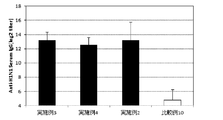
- FIG. 2 is a graph showing the results of IgG HA titers specific to influenza HA (type B) in mouse serum of Example 1 and Comparative Examples 1 to 5.
- FIG. 6 is a graph showing the results of influenza HA (H1N1) -specific IgA titers in mouse nasal cavity washing fluids of Example 2 and Comparative Examples 6 to 10.
- FIG. FIG. 4 is a graph showing the results of IgG titers specific to influenza HA (H1N1) in mouse serum of Example 2 and Comparative Examples 6 to 10.
- Example 1 2.25 ⁇ L (445 ⁇ g / mL) of influenza vaccine antigen-containing solution (B / Wisconsin / 1/2010, manufactured by Osaka University Microbial Disease Research Society) and 5 ⁇ L (2 mg / mL) of Pantoea agglomerans-derived lipopolysaccharide (manufactured by Nacalai Tesque) ) And a phosphate buffer solution (manufactured by Nacalai Tesque) was added to prepare 300 ⁇ L of a mucosal vaccine composition. After anesthetizing six mice (female 8-week-old BALB / C mice, Japan SLC), 30 ⁇ L of the vaccine composition prepared under the tongue of each mouse was administered.
- mice were anesthetized again, and 30 ⁇ L of the vaccine composition prepared under the tongue of each mouse was administered.
- mouse serum and nasal lavage fluid were collected, and serum influenza HA (type B) -specific IgG titer and influenza HA (type B) -specific IgA titer in nasal lavage fluid were measured.
- serum influenza HA type B
- influenza HA type B
- Comparative Examples 1 to 5 instead of Pantoea agglomerans-derived lipopolysaccharide, Comparative Example 1 uses Escherichia coli-derived lipopolysaccharide (manufactured by WAKO), Comparative Example 2 uses Salmonella typhimurium-derived lipopolysaccharide (manufactured by WAKO), and Comparative Example 3
- a mucosal vaccine composition was prepared in the same manner as in Example 1 except that glucopyranosyl lipid (MPLAs, manufactured by InvivoGen) was used, and imiquimod (manufactured by InvivoGen) was used in Comparative Example 4, and shown in Table 1. The test was carried out in the same procedure as in Example 1 at different doses. In Comparative Example 5, only a phosphate buffer (manufactured by Nacalai Tesque) was administered to mice without adding a vaccine antigen or adjuvant.
- MPLAs glucopyranosyl lipid
- imiquimod manufactured by In
- Example 2 1.25 ⁇ L (801 ⁇ g / mL) of influenza vaccine antigen-containing solution (A / California / 07/2009 (H1N1), manufactured by Osaka University Microbial Disease Research Society) and 5 ⁇ L of Pantoea agglomerans-derived lipopolysaccharide (manufactured by Nacalai Tesque) 2 mg / mL), a phosphate buffer solution (manufactured by Nacalai Tesque) was added to prepare 300 ⁇ L of a mucosal vaccine composition.
- influenza vaccine antigen-containing solution A / California / 07/2009 (H1N1), manufactured by Osaka University Microbial Disease Research Society
- Pantoea agglomerans-derived lipopolysaccharide manufactured by Nacalai Tesque
- a phosphate buffer solution manufactured by Nacalai Tesque
- mice Female 8-week-old BALB / C mice, Japan SLC
- 30 ⁇ L of the mucosal vaccine composition prepared under the tongue of each mouse was administered.
- the mice were anesthetized again, and 30 ⁇ L of the mucosal vaccine composition prepared under the tongue of each mouse was administered.
- mouse serum and nasal lavage fluid were collected, and serum influenza HA (H1N1) specific IgG titer and influenza HA (H1N1) specific IgA titer in nasal lavage fluid were measured by ELISA. Measurement was performed by the method. A detailed measurement method will be described later.
- Comparative Examples 6 to 10 instead of Pantoea agglomerans-derived lipopolysaccharide, in Comparative Example 6, Escherichia coli-derived lipopolysaccharide (manufactured by WAKO) was used, in Comparative Example 7, Salmonella typhimurium-derived lipopolysaccharide (manufactured by WAKO) was used, and in Comparative Example 8 A mucosal vaccine composition was prepared in the same manner as in Example 2 except that glucopyranosyl lipid (MPLAs, manufactured by InvivoGen) was used, and imiquimod (manufactured by InvivoGen) was used in Comparative Example 9, and shown in Table 2. The test was carried out in the same procedure as in Example 2 with different doses. In Comparative Example 10, only a phosphate buffer (manufactured by Nacalai Tesque) was administered to mice without adding a vaccine antigen or adjuvant.
- MPLAs glucopyranosyl lipid
- Example 1 A sample containing the same antigen and immunostimulant as the administration sample of Example 1 and the same (antigen / immunostimulator) as in Example 1 was prepared, and its safety was evaluated. That is, 225 ⁇ L (445 ⁇ g / mL) of influenza vaccine antigen-containing solution (B / Wisconsin / 1/2010, manufactured by Osaka University Microbial Disease Research Society) and 500 ⁇ L (2 mg / mL) of Pantoea agglomerans-derived lipopolysaccharide (manufactured by Nacalai Tesque) ) And a phosphate buffer solution (manufactured by Nacalai Tesque) was added to prepare a 1000 ⁇ L vaccine composition.
- influenza vaccine antigen-containing solution B / Wisconsin / 1/2010, manufactured by Osaka University Microbial Disease Research Society
- 500 ⁇ L 2 mg / mL
- Pantoea agglomerans-derived lipopolysaccharide manufactured by Nacalai Tesque
- mice Female 8-week-old BALB / C mice, Japan SLC
- 100 ⁇ L of the vaccine composition prepared subcutaneously in each mouse was administered.
- the mice were followed up for 72 hours after the administration, and the survival rate was observed.
- Influenza vaccine antigen-containing solution (A / California / 07/2009 (H1N1), Osaka University Microbial Disease Research Society) 2.5 ⁇ L (801 ⁇ g / mL), Pantoea agglomerans-derived lipopolysaccharide (manufactured by Nacalai Tesque) solution 10 ⁇ L ( 2 mg / mL) and 45 mg of hydroxypropylcellulose (HPC-SSL Nippon Soda Co., Ltd.) as a base material were added, and a phosphate buffer (Nacalai Tesque) was added and mixed uniformly to give 500 mg.
- HPC-SSL Nippon Soda Co., Ltd. hydroxypropylcellulose
- Example 4 Thereafter, 25 mg each was dispensed, and in Example 3, freeze-dried to make an instant-dissolved tablet. In Example 4, it was dried under reduced pressure to give a film preparation.
- Six mice female 8-week-old BALB / C mice, Nippon SLC Co., Ltd. were anesthetized and then immediately dissolved tablets or film preparations were administered under the tongue of each mouse. One week after the administration, the mice were anesthetized again, and immediately dissolved tablets or film preparations prepared under the tongue of each mouse were administered.
- mice serum and nasal lavage fluid were collected, and serum influenza HA (H1N1) specific IgG titer and influenza HA (H1N1) specific IgA titer in nasal lavage fluid were measured by ELISA. Measurement was performed by the method. A detailed measurement method will be described later. Table 4 also shows the results of Example 2 and Comparative Example 10.
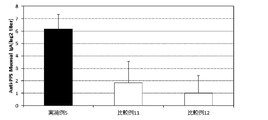
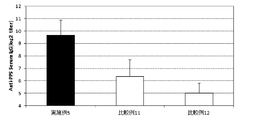
- Example 5 A pneumococcal capsular polysaccharide-containing solution (Pneumovax NP, manufactured by MSD Co., Ltd.) 87 ⁇ L (1150 ⁇ g / mL) and Pantoea agglomerans-derived lipopolysaccharide (manufactured by Nacalai Tesque) solution 2.5 ⁇ L (2 mg / mL) An acid buffer solution (manufactured by Nacalai Tesque) was added to prepare 100 ⁇ L of a mucosal vaccine composition. After anesthetizing 4 mice (female 8-week-old BALB / C mice, Japan SLC), 20 ⁇ L of the mucosal vaccine composition prepared under the tongue of each mouse was administered.
- Pneumovax NP manufactured by MSD Co., Ltd.
- Pantoea agglomerans-derived lipopolysaccharide manufactured by Nacalai Tesque
- mice were anesthetized again, and 20 ⁇ L of the mucosal vaccine composition prepared under the tongue of each mouse was administered.
- mouse serum and nasal lavage fluid were collected and serum pneumococcal capsular polysaccharide-specific IgG titer and pneumococcal capsular polysaccharide-specific IgA titer in nasal lavage fluid were measured.
- serum pneumococcal capsular polysaccharide-specific IgG titer and pneumococcal capsular polysaccharide-specific IgA titer in nasal lavage fluid were measured.
- ELISA A detailed measurement method will be described later.
- Comparative Examples 11 and 12 a mucosal vaccine composition was prepared in the same manner as in Example 5 except that glucopyranosyl lipid (MPLAs, manufactured by InvivoGen) was used instead of Pantoea agglomerans-derived lipopolysaccharide. Table 5 The test was carried out in the same procedure as in Example 5 at the dosages shown in FIG. In Comparative Example 12, only a phosphate buffer (manufactured by Nacalai Tesque) was administered to mice without adding vaccine antigen or adjuvant.
- MPLAs glucopyranosyl lipid
- Pantoea agglomerans-derived lipopolysaccharide Pantoea agglomerans-derived lipopolysaccharide. Table 5 The test was carried out in the same procedure as in Example 5 at the dosages shown in FIG. In Comparative Example 12, only a phosphate buffer (manufactured by Nacalai Tesque) was administered to mice without adding vaccine antigen or adjuvant.
- Example 6 An HPV16 recombinant protein-containing solution (HPV16, manufactured by PROSPEC) 61 ⁇ L (820 ⁇ g / mL) and Pantoea agglomerans-derived lipopolysaccharide (manufactured by Nacalai Tesque) 2.5 ⁇ L (2 mg / mL) were added to a phosphate buffer (Nacalai). 100 ⁇ L of a mucosal vaccine composition was prepared by adding Tesque). After anesthetizing 4 mice (female 8-week-old BALB / C mice, Japan SLC), 20 ⁇ L of the mucosal vaccine composition prepared under the tongue of each mouse was administered.
- mice were anesthetized again, and 20 ⁇ L of the mucosal vaccine composition prepared under the tongue of each mouse was administered.
- mouse serum and nasal lavage fluid were collected, and HPV16-specific IgG titer in serum and HPV16-specific IgA titer in nasal lavage fluid were measured by ELISA. A detailed measurement method will be described later.
- Comparative Examples 13 and 14 a mucosal vaccine composition was prepared in the same manner as in Example 6 except that glucopyranosyl lipid (MPLAs, manufactured by InvivoGen) was used instead of Pantoea agglomerans-derived lipopolysaccharide. Table 6 The test was carried out in the same procedure as in Example 6 with the doses shown in FIG. In Comparative Example 14, only a phosphate buffer (manufactured by Nacalai Tesque) was administered to mice without adding vaccine antigen or adjuvant.
- MPLAs glucopyranosyl lipid
- Pantoea agglomerans-derived lipopolysaccharide Pantoea agglomerans-derived lipopolysaccharide. Table 6 The test was carried out in the same procedure as in Example 6 with the doses shown in FIG. In Comparative Example 14, only a phosphate buffer (manufactured by Nacalai Tesque) was administered to mice without adding vaccine antigen or adjuvant.
- Example 7 Pneumococcal capsular polysaccharide-containing solution (Pneumovax NP, manufactured by MSD Co., Ltd.) 174 ⁇ L (1150 ⁇ g / mL) and Pantoea agglomerans-derived lipopolysaccharide (manufactured by Nacalai Tesque) solution 5 ⁇ L (2 mg / mL) as a base material Hydroxypropylcellulose (HPC-SSL, Nippon Soda Co., Ltd.) (22.5 mg) was added, and phosphate buffer (Nacalai Tesque) was added and mixed uniformly to make 250 mg.
- Pneumococcal capsular polysaccharide-containing solution Pneumovax NP, manufactured by MSD Co., Ltd.
- Pantoea agglomerans-derived lipopolysaccharide manufactured by Nacalai Tesque
- Example 7 Thereafter, 25 mg each was dispensed, and in Example 7, it was freeze-dried to form an instant-dissolved tablet. In Example 8, it was dried under reduced pressure to obtain a film preparation.
- mice female 8-week-old BALB / C mice, Nippon SLC
- mice were anesthetized and then immediately dissolved tablets or film preparations prepared under the tongue of each mouse were administered.
- the mice were anesthetized again, and immediately dissolved tablets or film preparations prepared under the tongue of each mouse were administered.
- mice serum and nasal lavage fluid were collected, and Pneumovax NP-specific IgG titer in serum and Pneumovax NP-specific IgA titer in nasal lavage fluid were measured by ELISA. . A detailed measurement method will be described later. Table 7 also shows the results of Example 5 and Comparative Example 12.
- HPV16 recombinant protein-containing solution HPV16, manufactured by PROSPEC
- HPV16 HPV16, manufactured by PROSPEC
- 122 ⁇ L 820 ⁇ g / mL
- Pantoea agglomerans-derived lipopolysaccharide manufactured by Nacalai Tesque
- HPC- 22.5 mg of SSL Nippon Soda Co., Ltd. hydroxypropylcellulose
- phosphate buffer Nacalai Tesque
- mice female 8-week-old BALB / C mice, Nippon SLC
- mice Male 8-week-old BALB / C mice, Nippon SLC
- mice were anesthetized again, and immediately dissolved tablets or film preparations prepared under the tongue of each mouse were administered.
- mice serum and nasal lavage fluid were collected, and HPV16-specific IgG titer in serum and HPV16-specific IgA titer in nasal lavage fluid were measured by ELISA. A detailed measurement method will be described later.
- Table 8 also shows the results of Example 6 and Comparative Example 14.
- Example 11 1000 ⁇ L of a live attenuated rotavirus-containing solution (Rotatech internal use, MSD), 5 ⁇ L (2 mg / mL) of Pantoea agglomerans-derived lipopolysaccharide (Nacalai Tesque) solution, and hydroxypropylcellulose (HPC-SSL) as a substrate Nippon Soda Co., Ltd.) 22.5 mg was added to make 1005 ⁇ L. Thereafter, 100 ⁇ L each was dispensed and freeze-dried to prepare a quick-dissolving tablet.
- a live attenuated rotavirus-containing solution Rostatech internal use, MSD
- 5 ⁇ L (2 mg / mL) of Pantoea agglomerans-derived lipopolysaccharide (Nacalai Tesque) solution and hydroxypropylcellulose (HPC-SSL) as a substrate Nippon Soda Co., Ltd.
- mice Female 8-week-old BALB / C mouse, Nippon SLC Co., Ltd.
- the immediately dissolved tablet prepared under the tongue of each mouse is administered.
- the mice are anesthetized again, and immediately dissolved tablets prepared under the tongue of each mouse are administered.
- mouse serum and nasal lavage fluid were collected, and the attenuated live rotavirus-specific IgG titer in serum and the attenuated live rotavirus-specific IgA titer in nasal lavage fluid were measured by ELISA. Measure.
- Example 12 Inactivated poliovirus-containing solution (Imovac polio subcutaneous injection, manufactured by Sanofi), Example 13 inactivated hepatitis A virus-containing solution (Aimgen, manufactured by Chemical and Serum Therapy Research Institute), Example 14 In inactivated Japanese encephalitis virus-containing solution (Ensevac subcutaneous injection, manufactured by Chemo-Serum Therapy Laboratories), in Example 15, live attenuated mumps virus-containing solution (Otafukukaze live vaccine, manufactured by Kitasato Daiichi Sankyo Vaccine) In Example 16, a live attenuated measles virus-containing solution (measles live vaccine, manufactured by Kitasato Daiichi Sankyo Vaccine), and in Example 17, a live attenuated rubella virus-containing solution (dried attenuated live rubella vaccine, manufactured by Kitasato Daiichi Sankyo Vaccine Co., Ltd.) ), Tetanus
- Example 23 300 ⁇ L of raw BCG-containing solution (Dry BCG vaccine, manufactured by Nippon BCG Co., Ltd.), 5 ⁇ L (2 mg / mL) of Pantoea agglomerans-derived lipopolysaccharide (manufactured by Nacalai Tesque), and hydroxypropylcellulose (HPC-SSL Japan) as a base material 22.5 mg of Soda Co., Ltd.) was added to make 305 ⁇ L. Thereafter, 30 ⁇ L each was dispensed and freeze-dried to prepare an immediately soluble tablet.
- mice Female 8-week-old BALB / C mouse, Nippon SLC Co., Ltd.
- the immediately dissolved tablet prepared under the tongue of each mouse is administered.
- the mice are anesthetized again, and immediately dissolved tablets prepared under the tongue of each mouse are administered.
- mouse serum and nasal lavage fluid are collected, and serum BCG-specific IgG titer and live attenuated BCG-specific IgA titer in nasal lavage fluid are measured by ELISA. .
- Example 24 Inactivated rabies virus-containing solution (tissue culture inactivated rabies vaccine, manufactured by Chemical and Serum Therapy Laboratories) 2000 ⁇ L, Pantoea agglomerans-derived lipopolysaccharide (manufactured by Nacalai Tesque) solution 5 ⁇ L (2 mg / mL), and as a substrate Hydroxypropylcellulose (HPC-SSL, Nippon Soda Co., Ltd.) 22.5 mg was added to make 2005 ⁇ L. Thereafter, 200 ⁇ L each was dispensed and freeze-dried to prepare an immediately soluble tablet.
- tissue culture inactivated rabies vaccine manufactured by Chemical and Serum Therapy Laboratories
- Pantoea agglomerans-derived lipopolysaccharide manufactured by Nacalai Tesque
- HPC-SSL Hydroxypropylcellulose
- mice Female 8-week-old BALB / C mouse, Nippon SLC Co., Ltd.
- the immediately dissolved tablet prepared under the tongue of each mouse is administered.
- the mice are anesthetized again, and immediately dissolved tablets prepared under the tongue of each mouse are administered.
- mouse serum and nasal lavage fluid were collected, and serum inactivated rabies virus specific IgG titer and inactivated rabies virus specific IgA titer in nasal lavage fluid were measured by ELISA. Measure.
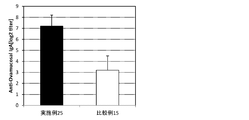
- Ovalbumin (Sigma Aldrich Japan) 100 ⁇ L (1000 ⁇ g / mL), Pantoea agglomerans-derived lipopolysaccharide (manufactured by Nacalai Tesque) 5 ⁇ L (2 mg / mL), phosphate buffer (manufactured by Nacalai Tesque)
- Ovalbumin (Sigma Aldrich Japan) 100 ⁇ L (1000 ⁇ g / mL)
- Pantoea agglomerans-derived lipopolysaccharide manufactured by Nacalai Tesque
- phosphate buffer manufactured by Nacalai Tesque
- 200 ⁇ L of mucosal vaccine composition was prepared. After anesthetizing six mice (female 8-week-old BALB / C mice, Japan SLC), 20 ⁇ L of the vaccine composition prepared under the tongue of each mouse was administered. One week after the administration, the mice were anesthetized again, and each mouse was similarly administered sublingually.
- mice serum and mucosal samples were collected and serum Ovalbumin-specific IgG titers and nasal lavage fluid, saliva, alveolar lavage fluid, vaginal lavage fluid, fecal extract Ovalbumin Specific IgA titer was measured by ELISA. A detailed measurement method will be described later.
- Example 15 A phosphate buffer solution (manufactured by Nacalai Tesque) was added to 100 ⁇ L (1000 ⁇ g / mL) of Ovalbumin (OVA) (Sigma Aldrich Japan) to prepare a 300 ⁇ L mucosal vaccine composition. Subsequent operations and evaluation are the same as in Example 25.
- Ovalbumin Ovalbumin
- Ovalbumin (Sigma Aldrich Japan) 100 ⁇ L (1000 ⁇ g / mL), Pantoea agglomerans-derived lipopolysaccharide (manufactured by Nacalai Tesque) 5 ⁇ L (2 mg / mL), phosphate buffer (manufactured by Nacalai Tesque)
- 500 ⁇ L of mucosal vaccine composition was prepared. After anesthetizing six mice (female 8-week-old BALB / C mice, SLC Japan), 50 ⁇ L of the vaccine composition prepared on the bronchi of each mouse was sprayed using a liquid sprayer (manufactured by Pencentury). .
- mice were anesthetized again, and each mouse was similarly administered to the lungs.
- mouse serum and mucosal samples were collected and serum Ovalbumin-specific IgG titers and nasal lavage fluid, saliva, alveolar lavage fluid, vaginal lavage fluid, fecal extract Ovalbumin Specific IgA titer was measured by ELISA. A detailed measurement method will be described later.
- Example 16 A phosphate buffer solution (manufactured by Nacalai Tesque) was added to 100 ⁇ L (1000 ⁇ g / mL) of Ovalbumin (OVA) (Sigma Aldrich Japan) to prepare a 500 ⁇ L mucosal vaccine composition. Subsequent operations and evaluation are the same as in Example 26.
- Ovalbumin Ovalbumin
- Ovalbumin (Sigma Aldrich Japan) 100 ⁇ L (1000 ⁇ g / mL), Pantoea agglomerans-derived lipopolysaccharide (manufactured by Nacalai Tesque) 5 ⁇ L (2 mg / mL), phosphate buffer (manufactured by Nacalai Tesque)
- Ovalbumin (Sigma Aldrich Japan) 100 ⁇ L (1000 ⁇ g / mL)
- Pantoea agglomerans-derived lipopolysaccharide manufactured by Nacalai Tesque
- phosphate buffer manufactured by Nacalai Tesque
- mice were anesthetized again, and each mouse was similarly administered to the vagina.
- mouse serum and mucous membrane samples were collected, and Ovalbumin specific IgG titer in serum and Ovalbumin specific IgA titer in fecal extract were measured by ELISA method. Went. A detailed measurement method will be described later.
- Example 17 A phosphate buffer solution (manufactured by Nacalai Tesque) was added to 100 ⁇ L (1000 ⁇ g / mL) of Ovalbumin (OVA) (Sigma Aldrich Japan) to prepare a 200 ⁇ L mucosal vaccine composition. Subsequent operations and evaluation are the same as in Example 27.
- Ovalbumin Ovalbumin
- Ovalbumin (Sigma Aldrich Japan) 100 ⁇ L (1000 ⁇ g / mL), Pantoea agglomerans-derived lipopolysaccharide (manufactured by Nacalai Tesque) 5 ⁇ L (2 mg / mL), phosphate buffer (manufactured by Nacalai Tesque)
- 500 ⁇ L of mucosal vaccine composition was prepared. After anesthetizing 6 mice (female 8-week-old BALB / C mouse, Japan SLC), 50 ⁇ L of the vaccine composition prepared in the rectum of each mouse was administered using a 1 mL syringe and a mouse sonde (Fuchigami instrument). .
- mice were anesthetized again, and each mouse was similarly administered to the rectum.
- mouse serum and mucous membrane samples were collected, and Ovalbumin specific IgG titer in serum and Ovalbumin specific IgA titer in fecal extract were measured by ELISA method. Went. A detailed measurement method will be described later.
- Example 18 A phosphate buffer solution (manufactured by Nacalai Tesque) was added to 100 ⁇ L (1000 ⁇ g / mL) of Ovalbumin (OVA) (Sigma Aldrich Japan) to prepare a 500 ⁇ L mucosal vaccine composition. Subsequent operations and evaluation are the same as in Example 28.
- Ovalbumin Ovalbumin
- mice immunization experiment The administration was performed twice at an interval of one week for 8-week-old females and BALB / c mice. One week after the final administration, mouse blood and nasal wash were collected. The blood was centrifuged at 3000 G for 10 minutes at 4 ° C., and 300 ⁇ L of phosphate buffer (Nacalai Tesque) was added to 20 ⁇ L of the supernatant to obtain a serum sample.
- phosphate buffer Nacalai Tesque
- the nasal wash was cut into the lower airway of BALB / c mice, 200 ⁇ L phosphate buffer (manufactured by Nacalai Tesque) was poured into it, and the sample that came out of the nasal cavity was collected and used as a nasal wash solution sample.
- phosphate buffer manufactured by Nacalai Tesque
- 500 ⁇ L of 12 ⁇ g / mL carbamylcholine chloride was administered to the abdominal cavity of mice to promote saliva production, and then 20 ⁇ L of saliva was collected.
- the alveolar lavage fluid is cut into the lower airway of BALB / c mice, 500 ⁇ L of phosphate buffer solution (manufactured by Nacalai Tesque) is poured into the lungs, the phosphate buffer solution that has emerged is collected, and alveolar lavage fluid sample and did.
- the vaginal wash was prepared by pouring 150 ⁇ L of phosphate buffer (Nacalai Tesque) into the vagina of BALB / c mice and pipetting 10 times to obtain a vaginal wash sample.
- the fecal extract was added with 100 ⁇ L of phosphate buffer (manufactured by Nacalai Tesque) per 10 mg of collected feces, and vortexed for 10 minutes.
- washing solution Tween20-containing PBS (hereinafter referred to as a washing solution) prepared in advance, and 200 ⁇ L of blocking solution (blocking ace, DS Pharma Biomedical) diluted to 4 g / 400 mL with purified water was added. Left at room temperature for hours. Thereafter, the wells were washed three times with a washing solution.
- blocking solution blocking ace, DS Pharma Biomedical
- reagent diluent a solution obtained by diluting a blocking agent (Block Ace, manufactured by DS Pharma Biomedical) to 0.4 g / 100 mL with a phosphate buffer (manufactured by Nacalai Tesque) (hereinafter referred to as reagent diluent), 1
- a blocking agent Block Ace, manufactured by DS Pharma Biomedical
- a phosphate buffer manufactured by Nacalai Tesque
- Method for measuring antigen-specific IgA titer in washing fluid in mouse mucosa sample Basically, it is the same as the method for measuring antigen-specific IgG titer, but the measurement samples are various mucosal samples, and instead of HRP-labeled anti-mouse IgG antibody, HRP-labeled anti-mouse IgA antibody (Goat-anti-mouse IgA) ⁇ HRP (manufactured by BETHYL) was used. All other operations are the same.
- antigen-specific IgG and IgA were produced at high levels by using lipopolysaccharide.
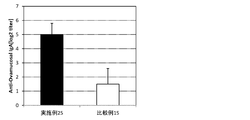
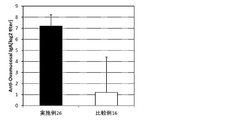
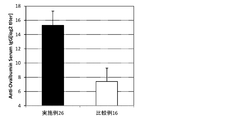
- some antigen-specific IgG was produced, but the production amount of antigen-specific IgA was low. From these results, it was found that lipopolysaccharide or a salt thereof as an immunostimulating agent is effective for inducing mucosal immunity under the tongue. As shown in FIGS. 1 to 4 and 6 to 15, according to Examples and Comparative Examples, antigen-specific IgG and IgA were produced at high levels by using lipopolysaccharide. On the other hand, in other comparative examples, some antigen-specific IgG was produced, but the production amount of antigen-specific IgA was low. From these results, it was found that lipopolysaccharide or a salt thereof as an immunostimulating agent is effective for inducing mucosal immunity under the tongue. As shown in FIGS.
- pantoea agglomerans-derived lipopolysaccharide-containing vaccine composition a comparison of Pantoea agglomerans-derived lipopolysaccharide-containing vaccine composition, Escherichia coli-derived lipopolysaccharide-containing vaccine composition, and Salmonella typhimurium-derived lipopolysaccharide-containing vaccine composition by injection immunization was performed. As a result, it was confirmed that the pantoea agglomerans-derived lipopolysaccharide-containing vaccine composition was highly safe. Therefore, it was found that the pantoea agglomerans-derived lipopolysaccharide-containing vaccine composition is excellent in consideration of both the mucosal administration immunity induction effect and the administration composition safety.
- the mucosal vaccine composition of the present invention uses the above-mentioned specific immunostimulant in combination with at least one kind of antigen, so that the oral mucosa, ocular mucosa, ear mucosa, genital mucosa, pharyngeal mucosa, airway mucosa, bronchial mucosa Even when administered to the pulmonary mucosa, gastric mucosa, intestinal mucosa, or rectal mucosa, a systemic immune response and mucosal immune response can be induced safely and effectively.
Landscapes
- Health & Medical Sciences (AREA)
- Life Sciences & Earth Sciences (AREA)
- Virology (AREA)
- Chemical & Material Sciences (AREA)
- General Health & Medical Sciences (AREA)
- Medicinal Chemistry (AREA)
- Pharmacology & Pharmacy (AREA)
- Animal Behavior & Ethology (AREA)
- Public Health (AREA)
- Veterinary Medicine (AREA)
- Immunology (AREA)
- Epidemiology (AREA)
- Microbiology (AREA)
- Mycology (AREA)
- Communicable Diseases (AREA)
- Organic Chemistry (AREA)
- Pulmonology (AREA)
- General Chemical & Material Sciences (AREA)
- Chemical Kinetics & Catalysis (AREA)
- Nuclear Medicine, Radiotherapy & Molecular Imaging (AREA)
- Oncology (AREA)
- Engineering & Computer Science (AREA)
- Bioinformatics & Cheminformatics (AREA)
- Wood Science & Technology (AREA)
- Zoology (AREA)
- Genetics & Genomics (AREA)
- Nutrition Science (AREA)
- Physiology (AREA)
- Biotechnology (AREA)
- Biomedical Technology (AREA)
- Biochemistry (AREA)
- General Engineering & Computer Science (AREA)
- Tropical Medicine & Parasitology (AREA)
- Molecular Biology (AREA)
- Medicines Containing Antibodies Or Antigens For Use As Internal Diagnostic Agents (AREA)
- Medicinal Preparation (AREA)
Abstract
Description
そこで、近年、粘膜からのワクチン接種に注目が集まっており、なかでも、インフルエンザウイルスを抗原として用いた粘膜投与(経鼻投与)型ワクチンの開発が脚光を浴びている。
また、経鼻投与型ワクチンが脚光を浴びているのは、消化管粘膜への抗原の投与では胃酸の影響やタンパク分解酵素の影響を受けやすく、これらを防ぐことが困難であるのに対し、経鼻粘膜への抗原の投与ではこれらの影響がないことがその理由の1つとして挙げられる。更に、鼻腔粘膜上にはNALTと呼ばれる抗原認識組織があり、免疫応答に効果的であることも理由の1つである。
しかしながら、鼻腔粘膜への抗原の投与は、効果は高いが急性脳症等の重篤な副作用の可能性も高く、また老人や乳児等では経鼻投与自体が煩雑で難しく、更に鼻水等の身体的要因により安定した効果が得られない問題点があった。
しかし、実際に開発が成功したものは、元々胃酸での安定性が高い生弱毒化ポリオウイルスワクチンや生弱毒化ロタウイルスワクチンであった。
特許文献1には、経口(例えば、舌下投与)組成物中に1以上の抗原及びToll様受容体(TLR)アゴニストを含む免疫原性組成物が提案され、抗原としてインフルエンザ抗原が、アジュバントとしてTLR4アゴニストが、それぞれ開示されている。
しかしながら、特許文献1に提案された免疫原性組成物におけるTLR4アゴニストは、免疫誘導の点で効果が弱く、より強い免疫を誘導でき、かつ、安全なアジュバントが求められていた。
しかしながら、特許文献2には、獲得免疫への使用については明確な言及や例示がなく、また、最適なアジュバント/抗原の比率についての言及もなされていない。更に、特許文献2には、パントエア菌由来LPSの粘膜ワクチンとしての使用についての明確な言及もされていない。
しかしながら、特許文献3に記載のパントエア・アグロメランス(Pantoea agglomerans)に由来するリポポリサッカライド(LPS)使用ワクチンの例は、鼻粘膜に投与するものであり、口腔内粘膜等の特定の粘膜への投与については教示されていない。一般に、投与部位が異なれば効果的なアジュバントが異なることは技術常識である。よって、この特許文献3に記載のパントエア・アグロメランス(Pantoea agglomerans)に由来するリポポリサッカライド(LPS)使用ワクチンの例から、口腔内粘膜、眼粘膜、耳粘膜、生殖器粘膜、咽頭粘膜、気道粘膜、気管支粘膜、肺粘膜、胃粘膜、腸管粘膜、又は直腸粘膜でパントエア・アグロメランス(Pantoea agglomerans)に由来するリポポリサッカライド(LPS)が効果を奏するか否かは不明であった。
また、本発明の粘膜ワクチン組成物は、体液及び/又は体温によって溶解する固形製剤であることが好ましい。
また、本願発明の粘膜ワクチン組成物は、液性免疫を誘導するために用いられるものであることが好ましい。
また、本願発明の粘膜ワクチン組成物における抗原は、感染症由来抗原又は癌抗原であることが好ましい。
以下、本発明を詳細に説明する。
本発明で使用する抗原としては、感染症由来抗原又は癌抗原であることが好ましい。
感染症由来抗原では、疾患の予防を目的とし、ワクチン投与によりあらかじめ抗体を形成させておく必要があるため、本発明を利用することが望ましいといえる。本発明の粘膜ワクチン組成物は、液性免疫を活性化させることに適している。
該感染症由来抗原としては、感染性病原体及び感染性病原体由来の抗原であれば特に限定されない。
上記感染性病原体から罹る疾患としては特に限定されず、例えば、アデノウイルス、ヘルペスウイルス(例えば、HSV-I、HSV-II、CMV、又は、VZV)、ポックスウイルス(例えば、痘瘡若しくはワクシニア、又は、伝染性軟属腫などのオルトポックスウイルス)、ピコルナウイルス(例えば、ライノウイルス又はエンテロウイルス)、オルソミクソウイルス(例えば、インフルエンザウイルス)、パラミクソウイルス(例えば、パラインフルエンザウイルス、おたふく風邪ウイルス、はしかウイルス、呼吸器合胞体ウイルス(RSV))、コロナウイルス(例えば、SARS)、パポバウイルス(例えば、生殖器疣、尋常性胱贅、又は、足底疣費を引き起こすものなどのヒト乳頭腫(パピローマ)ウイルス)、ヘパドナウイルス(例えば、肝炎Bウイルス)、フラビウイルス(例えば、肝炎Cウイルス又はデングウイルス)、又は、レトロウイルス(例えば、HIVなどのレンチウイルス)などのウイルス感染から罹る疾患などのウイルス疾患、エシェリキア属、エンテロバクター、サルモネラ、ブドウ球菌、赤痢菌、リステリア、アエロバクター、ヘリコバクター、クレブシエラ、プロテウス、シュードモナス、連鎖球菌、クラミジア、マイコプラズマ、肺炎球菌、ナイセリア、クロストリジウム、バシラス、コリネバクテリウム、マイコバクテリウム、カンピロバクター、ビブリオ、セラチア、プロビデンシア、クロモバクテリウム、ブルセラ、エルシニア、ヘモフィルス、又は、ボルデテラなどの細菌感染から罹る疾患などの細菌疾患、クラミジア、カンジダ症、アスペルギルス症、ヒストプラスマ症、クリプトコックス髄膜炎をはじめとするがこれに限定されるものではない真菌疾患、マラリア、ニューモシスティスカリニ肺炎、レーシュマニア症、クリプトスポリジウム症、トキソプラズマ症、及び、トリパノソーマ感染等が挙げられる。
ここで、上記インフルエンザウイルスとは、オルソミクソウイルス科に属する直径約100nmの粒子サイズを有するRNAエンベロープウイルスであり、内部タンパクの抗原性に基づいて、A、B及びC型に分けられる。上記インフルエンザウイルスは、脂質二重層構造を有するウイルスエンベロープに取り囲まれた内部ヌクレオキャプシド又は核タンパク質と会合したリボ核酸(RNA)のコアと、外部糖タンパク質からなる。上記ウイルスエンベロープの内層は、主としてマトリックスタンパク質で構成され、外層は大部分が宿主由来脂質物質で構成される。また、上記インフルエンザウイルスのRNAは、分節構造をとる。なお、世界中で大流行するインフルエンザは、A型インフルエンザウイルスによるものであり、このA型インフルエンザウイルスは、ヘマグルチニン(HA)及びノイラミニダーゼ(NA)の2種類のエンベロープ糖タンパク質を有し、抗原性の違いによってHAでは16種、NAでは9種の亜型に区別されている。
本発明においては、上記感染症由来抗原としては、A型及びB型インフルエンザウイルス由来抗原が好適に用いられる。なお、上述したA型及びB型インフルエンザウイルスの亜型としては特に限定されず、これまで単離された亜型であっても将来単離される亜型であってもよい。
上記インフルエンザウイルス抗原の調製方法は、特に限定されるものではなく、公知の方法が限定なく使用できる。例えば、インフルエンザ感染動物又はインフルエンザの患者から単離されたウイルス株をニワトリ卵等に感染させて常法により培養し、精製したウイルス原液から抗原を調製する方法が挙げられる。また、遺伝子工学的に培養細胞中で調製したウイルス由来の抗原を用いてもよい。
本明細書にいう「抗原の質量」は、特記する場合を除き、ワクチン組成物中の抗原に含まれる抗原タンパク質の質量のことである。したがって、抗原が、ウイルス等生体由来物質である場合は、その抗原に含まれる全タンパク質の質量を意味する。
上記免疫賦活化剤としては、トール様受容体4(TLR4)アゴニストが挙げられ、本発明では、該トール様受容体4(TLR4)アゴニストとして、特定のリポポリサッカライド又はその誘導体若しくは塩が用いられる。
なお、本明細書にいう「リポポリサッカライド」は、リポポリサッカライドそれ自体のほか、その性質を有する限りその誘導体であることができる。本明細書にいう塩とは、任意の有機酸または無機酸であってよいが、好ましくは薬学的に許容される塩である。
上記LPSは、大腸菌、サルモネラ菌、百日咳菌等のグラム陰性細菌細胞壁のペプチドグリカンを囲む外膜に存在している脂質および糖からなる複合化合物であり、O抗原及びエンドトキシンの活性成分として知られている[ジェー・エム・ギューセン及びアール・ハッケンベック(J.M.Ghuysen and R.Hakenbeck)編、「ニュー・コンプリヘンシブ・バイオケミストリー(New Comprehensive Biochemistry)」、第27巻、バクテリアル・セル・ウオール(Bacterial Cell Wall)、第18ページ、エルセヴィア(Elsevea)、1994年]。
上記LPSの基本構造は、特異な脂質を有するリピドA、それに共有結合したRコアと呼ばれるオリゴ糖、さらにO特異多糖の3成分よりなっている(「日経バイオテクノロジー最新用語辞典」、第431ページ、日経マグロウヒル社、1985年)。
なかでも、Serratia、Leclercia、Rahnella、Acidicaldus、Acidiphilium、Acidisphaera、Acidocella、Acidomonas、Asaia、Belnapia、Craurococcus、Gluconacetobacter、Gluconobacter、Kozakia、Leahibacter、Muricoccus、Neoasaia、Oleomonas、Paracraurococcus、Rhodopila、Roseococcus、Rubritepida、Saccharibacter、Stella、Swaminathania、Teichococcus、Zavarzinia、Pantoea、Acetobacter、Zymomonas、Xanthomonas、及び、Enterobacterからなる群より選択される少なくとも1種が好ましい。
より好ましくは、上記グラム陰性菌としては、Pantoea、Acetobacter、Zymomonas、Xanthomonas、及び、Enterobacterからなる群より選択される少なくとも1種である。特にPantoea由来リポポリサッカライドは、現在健康食品として用いられており、特に経口的に投与する際により有効であるといえる。これらの菌由来の抽出物又はその改変体をそのまま用いることも可能である。
上記リポポリサッカライドの多糖部分を除去したリピドAとしては、上記特定のグラム陰性菌由来の単離物であればよく、あるいはこれらのグラム陰性菌由来の単離物と同じ構造になるように合成した物を用いてもよい。
また、上記リピドAの改変体としては、脱リン酸化を行ったモノホスホリルリピッド(MPL)又は塩も好適に用いられる。なお、本明細書にいうモノホスホリルリピッドは、モノホスホリルリピッドそれ自体のほか、その性質を有する限りその誘導体であることができる。特に既に医療用途で免疫賦活化剤として実績がある3-脱-アシル化物モノホスホリルリピッド(3D-MPL)、又は、米国特許出願公開第2010/0310602号明細書で提案されている脱アシル化されていない合成Glucopyranosyl lipidが生体への安全性の観点から好ましい。
また、上記モノホスホリルリピッドとしては、安全性及び使用前例のあるサルモネラ菌由来のものも好適に用いられる。
本発明でも好ましく用いられるパントエア・アグロメランス由来LPSは、O-抗原部分がラムノースとグルコースとの繰返し構造であることを特徴とするリポポリサッカライドである。
すなわち、配合物として用意したパントエア・アグロメランス由来LPS、あるいはワクチン組成物から適当な方法で抽出精製したパントエア・アグロメランス由来LPSについて、以下の方法で分子量を測定できる。
パントエア・アグロメランス由来LPSを蒸留水に溶解して1mg/mLの濃度の溶液を調製し、その溶液と、Sample buffer solution 2ME+(WAKO社製)を等量混合し、5分間沸騰水浴中に浸し、その後直ちに氷水中に浸して急冷する。
ランニングバッファー(アトー社製)をスラブゲル電気泳動槽(マリソル社製)に満たし、20%ポリアクリルアミドゲルを泳動槽に固定し、サンプル溝に10μLずつ検体を入れ、電圧を100Vにて少なくとも1時間、色素がゲルより溶出するまで泳動を継続する。泳動終了後に、銀染色キット161-0443(バイオラッド社製)により室温で銀染色を行い、挙動を確認する。
また、本発明の粘膜ワクチン組成物を用いて、液剤、半固形剤、固形製剤、噴霧剤を調製することが可能であり、上述した材料以外に、所望により、賦形剤、結合剤、香料、矯味剤、甘味剤、着色剤、防腐剤、抗酸化剤、安定化剤、界面活性剤等を適宜使用してもよい。
これらの材料としては特に限定されず、従来公知のものが使用できる。
また、本発明の粘膜ワクチン組成物は、ヒト又は動物の粘膜表面に投与されるものであるので、上記半固形製剤及び固形製剤は、体液及び/又は体温によって溶解するものであることが好ましい。
更に好ましくは、本発明の粘膜ワクチン組成物は、抗原の安定性確保の観点から保存時に水分含量が少ないことが好ましいので、保存時には乾燥状態であり、粘膜表面投与後に体液及び/又は体温によって溶解する固形製剤であるものが好ましい。ここにいう「水分含量が少ない」とは、本発明の粘膜ワクチン組成物の全重量中、含水率が好ましくは20重量%以下、より好ましくは10重量%以下であることを意味する。
また、ここにいう「含水率」は、第十六改正日本薬局方、一般試験法、乾燥減量法、第一法に従い求める。すなわち、本発明の粘膜ワクチン組成物の試験片を105℃3時間の条件で加熱したときの、重量の減少割合により求める。
このような固形製剤の特性とするためには、本発明の粘膜ワクチン組成物の材料として、体液及び/又は体温によって溶解する材料を選択することが好ましい。このような材料として、例えば、免疫賦活化剤としては、水溶性の高いパントエア・アグロメランス由来LPSを選択することが好ましく、賦形剤としては、体液及び/又は体温によって溶解する物性のポリマーを選択することが好ましい。このような固形製剤とすることで、特別のデバイスの必要性なく、口腔内に簡単に投与することができる。
また、上記半固形製剤は、ゼリー剤、軟膏剤、クリーム剤、又はシロップ剤であることが好ましい。
インフルエンザワクチン抗原含有溶液(B/Wisconsin/1/2010、阪大微生物病研究会製)2.25μL(445μg/mL)と、Pantoea agglomerans由来リポポリサッカライド(ナカライテスク社製)溶液5μL(2mg/mL)とに、リン酸緩衝液(ナカライテスク社製)を加えて300μLの粘膜ワクチン組成物を調製した。
マウス(メス8週齢BALB/Cマウス、日本エスエルシー社)6匹に麻酔後、それぞれのマウスの舌下に調製したワクチン組成物を30μL投与した。当該投与から1週間後、再度マウスに麻酔をかけ、それぞれのマウスの舌下に調製したワクチン組成物を30μL投与した。2度目の投与から更に1週間後に、マウスの血清及び鼻腔洗浄液を採取し、血清中インフルエンザHA(B型)特異的IgG力価及び鼻腔洗浄液中インフルエンザHA(B型)特異的IgA力価の測定をELISA法により測定を行った。なお、詳細な測定方法は後述する。
Pantoea agglomerans由来リポポリサッカライドの代わりに、比較例1ではEscherichia coli由来リポポリサッカライド(WAKO社製)を用い、比較例2ではSalmonella typhimurium由来リポポリサッカライド(WAKO社製)を用い、比較例3ではグルコピラノシルリピッド(MPLAs、InvivoGen社製)を用い、比較例4ではイミキモド(InvivoGen社製)を用いた以外は、実施例1と同様にして粘膜ワクチン組成物を調製し、表1に示した投与量で実施例1と同じ手順で試験を行った。比較例5ではワクチン抗原やアジュバントを加えずに、リン酸緩衝液(ナカライテスク社製)のみをマウスに投与した。

インフルエンザワクチン抗原含有溶液(A/California/07/2009(H1N1)、阪大微生物病研究会製)1.25μL(801μg/mL)と、Pantoea agglomerans由来リポポリサッカライド(ナカライテスク社製)溶液5μL(2mg/mL)とに、リン酸緩衝液(ナカライテスク社製)を加えて300μLの粘膜ワクチン組成物を調製した。
マウス(メス8週齢BALB/Cマウス、日本エスエルシー社)6匹に麻酔後、それぞれのマウスの舌下に調製した粘膜ワクチン組成物を30μL投与した。当該投与から1週間後、再度マウスに麻酔をかけ、それぞれのマウスの舌下に調製した粘膜ワクチン組成物を30μL投与した。2度目の投与から更に1週間後に、マウスの血清及び鼻腔洗浄液を採取し、血清中インフルエンザHA(H1N1)特異的IgG力価及び鼻腔洗浄液中インフルエンザHA(H1N1)特異的IgA力価の測定をELISA法により測定を行った。なお、詳細な測定方法は後述する。
Pantoea agglomerans由来リポポリサッカライドの代わりに、比較例6ではEscherichia coli由来リポポリサッカライド(WAKO社製)を用い、比較例7ではSalmonella typhimurium由来リポポリサッカライド(WAKO社製)を用い、比較例8ではグルコピラノシルリピッド(MPLAs、InvivoGen社製)を用い、比較例9ではイミキモド(InvivoGen社製)を用いた以外は、実施例2と同様にして粘膜ワクチン組成物を調製し、表2に示した投与量で実施例2と同じ手順で試験を行った。比較例10ではワクチン抗原やアジュバントを加えずに、リン酸緩衝液(ナカライテスク社製)のみをマウスに投与した。

実施例1投与サンプルと同じ抗原および免疫賦活化剤を含み、実施例1と同じ(抗原/免疫賦活化剤)であるサンプルを調製し、その安全性を評価した。すなわち、インフルエンザワクチン抗原含有溶液(B/Wisconsin/1/2010、阪大微生物病研究会製)225μL(445μg/mL)と、Pantoea agglomerans由来リポポリサッカライド(ナカライテスク社製)溶液500μL(2mg/mL)とに、リン酸緩衝液(ナカライテスク社製)を加えて1000μLのワクチン組成物を調製した。
マウス(メス8週齢BALB/Cマウス、日本エスエルシー社)8匹に麻酔後、それぞれのマウスの皮下に調製したワクチン組成物を100μL投与した。当該投与から72時間までマウスを経過観察し、その生存率を観察した。
Pantoea agglomerans由来リポポリサッカライドの代わりに、参考比較例1ではEscherichia coli由来リポポリサッカライド(WAKO社製)を用い、参考比較例2ではSalmonella typhimurium由来リポポリサッカライド(WAKO社製)を用いた以外は、参考例1と同様にしてワクチン組成物を調製し、表3に示した投与量で参考例1と同じ手順で試験を行った。

インフルエンザワクチン抗原含有溶液(A/California/07/2009(H1N1)、阪大微生物病研究会製)2.5μL(801μg/mL)と、Pantoea agglomerans由来リポポリサッカライド(ナカライテスク社製)溶液10μL(2mg/mL)と、基材としてヒドロキシプロピルセルロース(HPC-SSL 日本曹達社製)45mgを加え、リン酸緩衝液(ナカライテスク社製)を加えて均一に混合し、500mgとした。その後25mgずつ分注し、実施例3では凍結乾燥を行い即溶錠とし、実施例4では減圧乾燥してフィルム製剤とした。
マウス(メス8週齢BALB/Cマウス、日本エスエルシー社)6匹に麻酔後、それぞれのマウスの舌下に調製した即溶錠又はフィルム製剤を投与した。当該投与から1週間後、再度マウスに麻酔をかけ、それぞれのマウスの舌下に調製した即溶錠又はフィルム製剤を投与した。2度目の投与から更に1週間後に、マウスの血清及び鼻腔洗浄液を採取し、血清中インフルエンザHA(H1N1)特異的IgG力価及び鼻腔洗浄液中インフルエンザHA(H1N1)特異的IgA力価の測定をELISA法により測定を行った。なお、詳細な測定方法は後述する。表4では、実施例2及び比較例10の結果も示した。

肺炎球菌莢膜ポリサッカライド含有溶液(Pneumovax NP、MSD株式会社製)87μL(1150μg/mL)と、Pantoea agglomerans由来リポポリサッカライド(ナカライテスク社製)溶液2.5μL(2mg/mL)とに、リン酸緩衝液(ナカライテスク社製)を加えて100μLの粘膜ワクチン組成物を調製した。
マウス(メス8週齢BALB/Cマウス、日本エスエルシー社)4匹に麻酔後、それぞれのマウスの舌下に調製した粘膜ワクチン組成物を20μL投与した。当該投与から1週間後、再度マウスに麻酔をかけ、それぞれのマウスの舌下に調製した粘膜ワクチン組成物を20μL投与した。2度目の投与から更に1週間後に、マウスの血清及び鼻腔洗浄液を採取し、血清中肺炎球菌莢膜ポリサッカライド特異的IgG力価及び鼻腔洗浄液中肺炎球菌莢膜ポリサッカライド特異的IgA力価の測定をELISA法により測定を行った。なお、詳細な測定方法は後述する。
比較例11では、Pantoea agglomerans由来リポポリサッカライドの代わりに、グルコピラノシルリピッド(MPLAs、InvivoGen社製)を用いた以外は、実施例5と同様にして粘膜ワクチン組成物を調製し、表5に示した投与量で実施例5と同じ手順で試験を行った。比較例12ではワクチン抗原やアジュバントを加えずに、リン酸緩衝液(ナカライテスク社製)のみをマウスに投与した。

HPV16組み換えタンパク質含有溶液(HPV16、PROSPEC社製)61μL(820μg/mL)と、Pantoea agglomerans由来リポポリサッカライド(ナカライテスク社製)溶液2.5μL(2mg/mL)とに、リン酸緩衝液(ナカライテスク社製)を加えて100μLの粘膜ワクチン組成物を調製した。
マウス(メス8週齢BALB/Cマウス、日本エスエルシー社)4匹に麻酔後、それぞれのマウスの舌下に調製した粘膜ワクチン組成物を20μL投与した。当該投与から1週間後、再度マウスに麻酔をかけ、それぞれのマウスの舌下に調製した粘膜ワクチン組成物を20μL投与した。2度目の投与から更に1週間後に、マウスの血清及び鼻腔洗浄液を採取し、血清中HPV16特異的IgG力価及び鼻腔洗浄液中HPV16特異的IgA力価の測定をELISA法により測定を行った。なお、詳細な測定方法は後述する。
比較例13では、Pantoea agglomerans由来リポポリサッカライドの代わりに、グルコピラノシルリピッド(MPLAs、InvivoGen社製)を用いた以外は、実施例6と同様にして粘膜ワクチン組成物を調製し、表6に示した投与量で実施例6と同じ手順で試験を行った。比較例14ではワクチン抗原やアジュバントを加えずに、リン酸緩衝液(ナカライテスク社製)のみをマウスに投与した。

肺炎球菌莢膜ポリサッカライド含有溶液(Pneumovax NP、MSD株式会社製)174μL(1150μg/mL)と、Pantoea agglomerans由来リポポリサッカライド(ナカライテスク社製)溶液5μL(2mg/mL)とに、基材としてヒドロキシプロピルセルロース(HPC-SSL 日本曹達社製)22.5mgを加え、リン酸緩衝液(ナカライテスク社製)を加えて均一に混合し、250mgとした。その後25mgずつ分注し、実施例7では凍結乾燥を行い即溶錠とし、実施例8では減圧乾燥してフィルム製剤とした。
マウス(メス8週齢BALB/Cマウス、日本エスエルシー社)4匹に麻酔後、それぞれのマウスの舌下に調製した即溶錠又はフィルム製剤を投与した。当該投与から1週間後、再度マウスに麻酔をかけ、それぞれのマウスの舌下に調製した即溶錠又はフィルム製剤を投与した。2度目の投与から更に1週間後に、マウスの血清及び鼻腔洗浄液を採取し、血清中Pneumovax NP特異的IgG力価及び鼻腔洗浄液中Pneumovax NP特異的IgA力価の測定をELISA法により測定を行った。なお、詳細な測定方法は後述する。表7では、実施例5及び比較例12の結果も示した。
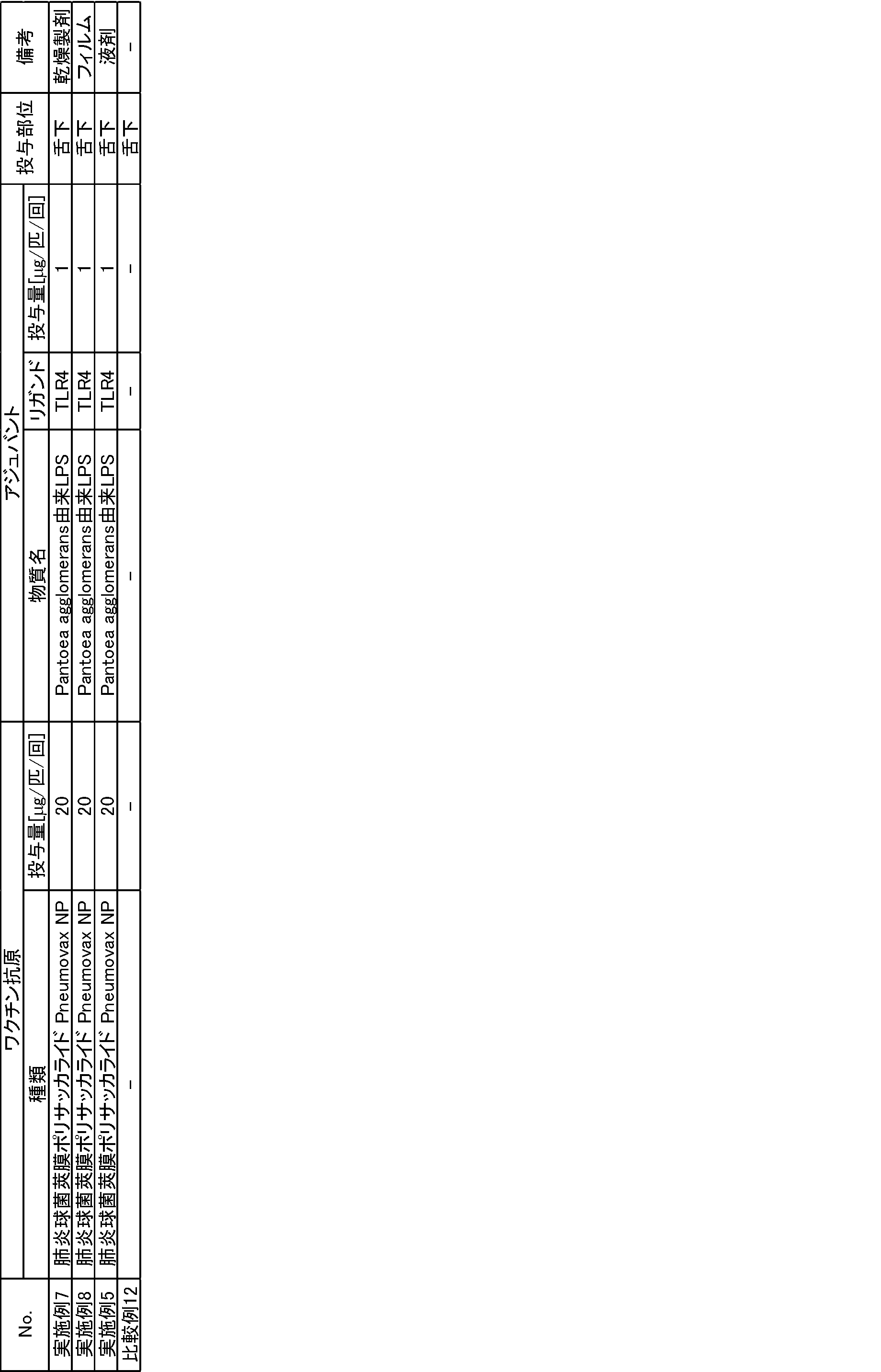
HPV16組み換えタンパク質含有溶液(HPV16、PROSPEC社製)122μL(820μg/mL)と、Pantoea agglomerans由来リポポリサッカライド(ナカライテスク社製)溶液5μL(2mg/mL)と、基材としてヒドロキシプロピルセルロース(HPC-SSL 日本曹達社製)22.5mgを加え、リン酸緩衝液(ナカライテスク社製)を加えて均一に混合し、250mgとした。その後25mgずつ分注し、実施例9では凍結乾燥を行い即溶錠とし、実施例10では減圧乾燥してフィルム製剤とした。
マウス(メス8週齢BALB/Cマウス、日本エスエルシー社)4匹に麻酔後、それぞれのマウスの舌下に調製した即溶錠又はフィルム製剤を投与した。当該投与から1週間後、再度マウスに麻酔をかけ、それぞれのマウスの舌下に調製した即溶錠又はフィルム製剤を投与した。2度目の投与から更に1週間後に、マウスの血清及び鼻腔洗浄液を採取し、血清中HPV16特異的IgG力価及び鼻腔洗浄液中HPV16特異的IgA力価の測定をELISA法により測定を行った。なお、詳細な測定方法は後述する。表8では、実施例6及び比較例14の結果も示した。

弱毒生ロタウイルス含有溶液(ロタテック内用液、MSD社製)1000μLと、Pantoea agglomerans由来リポポリサッカライド(ナカライテスク社製)溶液5μL(2mg/mL)と、基材としてヒドロキシプロピルセルロース(HPC-SSL 日本曹達社製)22.5mgを加えて1005μLとした。その後100μLずつ分注し、凍結乾燥を行い即溶錠を調製した。
マウス(メス8週齢BALB/Cマウス、日本エスエルシー社)4匹に麻酔後、それぞれのマウスの舌下に調製した即溶錠を投与する。当該投与から1週間後、再度マウスに麻酔をかけ、それぞれのマウスの舌下に調製した即溶錠を投与する。2度目の投与から更に1週間後に、マウスの血清及び鼻腔洗浄液を採取し、血清中弱毒生ロタウイルス特異的IgG力価及び鼻腔洗浄液中弱毒生ロタウイルス特異的IgA力価の測定をELISA法により測定を行う。
実施例12では不活化ポリオウイルス含有溶液(イモバックスポリオ皮下注、サノフィ社製)、実施例13では不活化A型肝炎ウイルス含有溶液(エイムゲン、化学及血清療法研究所社製)、実施例14では不活化日本脳炎ウイルス含有溶液(エンセバック皮下注用、化学及血清療法研究所社製)、実施例15では弱毒生ムンプスウイルス含有溶液(おたふくかぜ生ワクチン、北里第一三共ワクチン社製)、実施例16では弱毒生麻疹ウイルス含有溶液(はしか生ワクチン、北里第一三共ワクチン社製)、実施例17では弱毒生風疹ウイルス含有溶液(乾燥弱毒生風しんワクチン、北里第一三共ワクチン社製)、実施例18では破傷風トキソイド結合インフルエンザ菌b型多糖含有溶液(アクトヒブ、サノフィ社製)、実施例19では組換えHBs抗原タンパク質含有溶液(ビームゲン、化学及血清療法研究所社製)、実施例20では弱毒生黄熱ウイルス含有溶液(黄熱ワクチン、サノフィ社製)、実施例21では破傷風トキソイド含有溶液(破傷風トキソイド、デンカ生研社製)、実施例22では弱毒生水痘ウイルス含有溶液(乾燥弱毒生水痘ワクチン、阪大微生物病研究会社製)を用い、実施例11と同様に即溶錠を調製した。また実施例12と同様の手法で免疫実験を行う。
生BCG含有溶液(乾燥BCGワクチン、日本ビーシージー製造社製)300μLと、Pantoea agglomerans由来リポポリサッカライド(ナカライテスク社製)溶液5μL(2mg/mL)と、基材としてヒドロキシプロピルセルロース(HPC-SSL 日本曹達社製)22.5mgを加えて305μLとした。その後30μLずつ分注し、凍結乾燥を行い即溶錠を調製した。
マウス(メス8週齢BALB/Cマウス、日本エスエルシー社)4匹に麻酔後、それぞれのマウスの舌下に調製した即溶錠を投与する。当該投与から1週間後、再度マウスに麻酔をかけ、それぞれのマウスの舌下に調製した即溶錠を投与する。2度目の投与から更に1週間後に、マウスの血清及び鼻腔洗浄液を採取し、血清中生BCG特異的IgG力価及び鼻腔洗浄液中弱毒生BCG特異的IgA力価の測定をELISA法により測定を行う。
不活化狂犬病ウイルス含有溶液(組織培養不活化狂犬病ワクチン、化学及血清療法研究所社製)2000μLと、Pantoea agglomerans由来リポポリサッカライド(ナカライテスク社製)溶液5μL(2mg/mL)と、基材としてヒドロキシプロピルセルロース(HPC-SSL 日本曹達社製)22.5mgを加えて2005μLとした。その後200μLずつ分注し、凍結乾燥を行い即溶錠を調製した。
マウス(メス8週齢BALB/Cマウス、日本エスエルシー社)4匹に麻酔後、それぞれのマウスの舌下に調製した即溶錠を投与する。当該投与から1週間後、再度マウスに麻酔をかけ、それぞれのマウスの舌下に調製した即溶錠を投与する。2度目の投与から更に1週間後に、マウスの血清及び鼻腔洗浄液を採取し、血清中不活化狂犬病ウイルス特異的IgG力価及び鼻腔洗浄液中不活化狂犬病ウイルス特異的IgA力価の測定をELISA法により測定を行う。

Ovalbumin(OVA)(シグマアルドリッチジャパン)100μL(1000μg/mL)と、Pantoea agglomerans由来リポポリサッカライド(ナカライテスク社製)溶液5μL(2mg/mL)とに、リン酸緩衝液(ナカライテスク社製)を加えて200μLの粘膜ワクチン組成物を調製した。
マウス(メス8週齢BALB/Cマウス、日本エスエルシー社)6匹に麻酔後、それぞれのマウスの舌下に調製したワクチン組成物を20μL投与した。当該投与から1週間後、再度マウスに麻酔をかけ、それぞれのマウスに同様に舌下に投与した。2度目の投与から更に1週間後に、マウスの血清及び粘膜サンプルを採取し、血清中Ovalbumin特異的IgG力価及び鼻腔洗浄液中、唾液中、肺胞洗浄液中、膣洗浄液中、糞便抽出物中Ovalbumin特異的IgA力価の測定をELISA法により測定を行った。なお、詳細な測定方法は後述する。
Ovalbumin(OVA)(シグマアルドリッチジャパン)100μL(1000μg/mL)に、リン酸緩衝液(ナカライテスク社製)を加えて300μLの粘膜ワクチン組成物を調製した。その後の操作および評価は実施例25と同様である。

Ovalbumin(OVA)(シグマアルドリッチジャパン)100μL(1000μg/mL)と、Pantoea agglomerans由来リポポリサッカライド(ナカライテスク社製)溶液5μL(2mg/mL)とに、リン酸緩衝液(ナカライテスク社製)を加えて500μLの粘膜ワクチン組成物を調製した。
マウス(メス8週齢BALB/Cマウス、日本エスエルシー社)6匹に麻酔後、液体用噴霧器(ペンセンチュリー社製)を用い、それぞれのマウスの気管支に調製したワクチン組成物を50μL噴霧投与した。当該投与から1週間後、再度マウスに麻酔をかけ、それぞれのマウスに同様に肺に投与した。2度目の投与から更に1週間後に、マウスの血清及び粘膜サンプルを採取し、血清中Ovalbumin特異的IgG力価及び鼻腔洗浄液中、唾液中、肺胞洗浄液中、膣洗浄液中、糞便抽出物中Ovalbumin特異的IgA力価の測定をELISA法により測定を行った。なお、詳細な測定方法は後述する。
Ovalbumin(OVA)(シグマアルドリッチジャパン)100μL(1000μg/mL)に、リン酸緩衝液(ナカライテスク社製)を加えて500μLの粘膜ワクチン組成物を調製した。その後の操作および評価は実施例26と同様である。

Ovalbumin(OVA)(シグマアルドリッチジャパン)100μL(1000μg/mL)と、Pantoea agglomerans由来リポポリサッカライド(ナカライテスク社製)溶液5μL(2mg/mL)とに、リン酸緩衝液(ナカライテスク社製)を加えて200μLの粘膜ワクチン組成物を調製した。
マウス(メス8週齢BALB/Cマウス、日本エスエルシー社)6匹に麻酔後、それぞれのマウスの膣に調製したワクチン組成物をピペットを用いて20μL投与した。当該投与から1週間後、再度マウスに麻酔をかけ、それぞれのマウスに同様に膣に投与した。2度目の投与から更に1週間後に、マウスの血清及び粘膜サンプルを採取し、血清中Ovalbumin特異的IgG力価及び膣洗浄液中、糞便抽出物中Ovalbumin特異的IgA力価の測定をELISA法により測定を行った。なお、詳細な測定方法は後述する。
Ovalbumin(OVA)(シグマアルドリッチジャパン)100μL(1000μg/mL)に、リン酸緩衝液(ナカライテスク社製)を加えて200μLの粘膜ワクチン組成物を調製した。その後の操作および評価は実施例27と同様である。

Ovalbumin(OVA)(シグマアルドリッチジャパン)100μL(1000μg/mL)と、Pantoea agglomerans由来リポポリサッカライド(ナカライテスク社製)溶液5μL(2mg/mL)とに、リン酸緩衝液(ナカライテスク社製)を加えて500μLの粘膜ワクチン組成物を調製した。
マウス(メス8週齢BALB/Cマウス、日本エスエルシー社)6匹に麻酔後、1mLシリンジ及びマウス用ゾンデ(フチガミ器械)を用い、それぞれのマウスの直腸に調製したワクチン組成物を50μL投与した。当該投与から1週間後、再度マウスに麻酔をかけ、それぞれのマウスに同様に直腸に投与した。2度目の投与から更に1週間後に、マウスの血清及び粘膜サンプルを採取し、血清中Ovalbumin特異的IgG力価及び膣洗浄液中、糞便抽出物中Ovalbumin特異的IgA力価の測定をELISA法により測定を行った。なお、詳細な測定方法は後述する。
Ovalbumin(OVA)(シグマアルドリッチジャパン)100μL(1000μg/mL)に、リン酸緩衝液(ナカライテスク社製)を加えて500μLの粘膜ワクチン組成物を調製した。その後の操作および評価は実施例28と同様である。

8週齢、メス、BALB/cマウスについて2回、一週間間隔にて投与を行った。最終投与より一週間後、マウス血液及び鼻腔洗浄液を採取した。血液は4℃下3000Gで10分間遠心し、上清20μLにリン酸緩衝液(ナカライテスク社製)300μLを加えて血清サンプルとした。各種粘膜サンプルの採取方法は以下の通り。鼻腔洗浄液は、BALB/cマウスの気道下部に切れ込みを入れ、200μLのリン酸緩衝液(ナカライテスク社製)を流し込み鼻腔に出てきたサンプルを回収し、鼻腔洗浄液サンプルとした。唾液はマウスの腹腔に12μg/mLの塩化カルバミルコリンを500μL投与し、唾液産生を促進させたのち、唾液を20μL採取した。肺胞洗浄液は、BALB/cマウスの気道下部に切れ込みを入れ、500μLのリン酸緩衝液(ナカライテスク社製)を肺に流し込み、出てきたリン酸緩衝液を回収し、肺胞洗浄液サンプルとした。膣洗浄液は、BALB/cマウスの膣に150μLのリン酸緩衝液(ナカライテスク社製)を流し込み、10回ピペッティングしたものを膣洗浄液サンプルとした。糞便抽出液は、回収した糞便10mgあたり100μLのリン酸緩衝液(ナカライテスク社製)を加え、10分間ボルテックスを行った。その後4℃下3000Gで10分間遠心し、上清液を糞便抽出液サンプルとした。
マウス血清中の免疫抗原特異的IgG力価を測定することにより、全身性免疫応答を評価した。また、マウス粘膜サンプル中の免疫抗原特異的IgA力価を測定することにより、粘膜免疫応答を評価した。それぞれの評価法に関しては次に示す。
また、それぞれの評価結果を図1~4、6~33に示した。
ELISA用96ウェルプレートに炭酸緩衝液にて希釈した各抗原(例えばB/Wisconsin/1/2010(B)特異的IgG抗体価を測定する時にはB/Wisconsin/1/2010(B)インフルエンザHA抗原溶液)(2.5μg/mL)を100μLずつ添加し、一晩放置した。
予め準備したTween20含有PBS(以下洗浄液)で3回ウェルを洗浄し、ブロッキング剤(Block Ace、DSファーマバイオメディカル社製)を精製水で4g/400mLに希釈したブロッキング溶液を200μLずつ添加し、2時間室温で放置した。その後、洗浄液で3回ウェルを洗浄した。
ブロッキング剤(Block Ace、DSファーマバイオメディカル社製)をリン酸緩衝液(ナカライテスク社製)で0.4g/100mLに希釈した溶液(以下試薬希釈液)を用いて、前述の血清サンプルを1/2倍ずつ15回段階希釈し、その溶液をそれぞれ50μLずつ添加し、2時間室温で放置した。
その後、洗浄液で3回ウェルを洗浄し、試薬希釈液でHRP標識抗マウスIgG抗体(Goat-anti-mouse IgG Fc HRP、BETHYL社製)を10000倍に希釈したものを、100μLずつ添加し、1時間室温で放置した。
その後、洗浄液で3回ウェルを洗浄し、TMB溶液(ELISA POD TMBキット、ナカライテスク社製)を100μLずつ加えた。ここに1M硫酸溶液を100μLずつ加え、当該96ウェルプレートをマイクロプレートリーダー(168-11135CAM、バイオラッド社製)で450nmの吸光度を測定した。段階希釈時の吸光度を基に、その吸光度が0.1を切らない最大の希釈倍率をマウス血清中IgG力価とし、その値をLog2の値で求めた。
基本的には抗原特異的IgG力価測定方法と同様であるが、測定サンプルは各種粘膜サンプルであり、またHRP標識抗マウスIgG抗体の代わりにHRP標識抗マウスIgA抗体(Goat-anti-mouse IgA α HRP、BETHYL社製)を用いた。それ以外の操作はすべて同様である。
B型ワクチンと各種LPSが含まれた参考例1及び参考比較例1、2に係るワクチン組成物のサンプルを、BALB/cマウスの皮下に100μL注射投与した。その後経過観察として、24時間ごとにマウスの状態をチェックし、その生死を観察した。72時間後まで観察し、その生存率を算出した。結果を図5に示した。この評価結果を、粘膜ワクチン組成物におけるLPSの安全性の結果として採用する。
また、図5に示したように、注射免疫によりPantoea agglomerans由来リポポリサッカライド含有ワクチン組成物、Escherichia coli由来リポポリサッカライド含有ワクチン組成物、及び、Salmonella typhimurium由来リポポリサッカライド含有ワクチン組成物の比較を行ったところ、Pantoea agglomerans由来リポポリサッカライド含有ワクチン組成物の安全性が高いことが確認できた。
よって、粘膜投与免疫誘導効果と投与組成物安全性の両方を考慮すると、Pantoea agglomerans由来リポポリサッカライド含有ワクチン組成物が優れることが見出された。
Claims (5)
- ヒト又は動物の口腔内粘膜、眼粘膜、耳粘膜、生殖器粘膜、咽頭粘膜、気道粘膜、気管支粘膜、肺粘膜、胃粘膜、腸管粘膜及び直腸粘膜からなる群より選択される少なくとも1種の粘膜に投与される粘膜ワクチン組成物であって、
少なくとも一種類の抗原と、免疫賦活化剤として、Serratia、Leclercia、Rahnella、Acidicaldus、Acidiphilium、Acidisphaera、Acidocella、Acidomonas、Asaia、Belnapia、Craurococcus、Gluconacetobacter、Gluconobacter、Kozakia、Leahibacter、Muricoccus、Neoasaia、Oleomonas、Paracraurococcus、Rhodopila、Roseococcus、Rubritepida、Saccharibacter、Stella、Swaminathania、Teichococcus、Zavarzinia、Pseudomonas、Achromobacter、Bacillus、Methanoculleus、Methanosarcina、Clostridium、Micrococcus、Flavobacterium、Pantoea、Acetobacter、Zymomonas、Xanthomonas、及び、Enterobacterからなる群より選択される少なくとも1種のグラム陰性細菌由来のリポポリサッカライド又はその塩を含む
ことを特徴とする粘膜ワクチン組成物。 - 液剤、噴霧剤、半固形製剤、又は、固形製剤であり、
前記半固形製剤及び固形製剤は、体液及び/又は体温によって溶解する請求項1記載の粘膜ワクチン組成物。 - 体液及び/又は体温によって溶解する固形製剤である請求項2記載の粘膜ワクチン組成物。
- 液性免疫を誘導するために用いられる請求項1、2又は3記載の粘膜ワクチン組成物。
- 抗原が、感染症由来抗原又は癌抗原である請求項1、2、3又は4記載の粘膜ワクチン組成物。
Priority Applications (10)
| Application Number | Priority Date | Filing Date | Title |
|---|---|---|---|
| US14/917,084 US10092642B2 (en) | 2013-10-03 | 2014-10-02 | Mucosal vaccine composition |
| AU2014330337A AU2014330337A1 (en) | 2013-10-03 | 2014-10-02 | Mucosal vaccine composition |
| CA2923040A CA2923040A1 (en) | 2013-10-03 | 2014-10-02 | Mucosal vaccine composition |
| CN201480050379.5A CN105530958A (zh) | 2013-10-03 | 2014-10-02 | 粘膜疫苗组合物 |
| EP14850476.4A EP3053595B1 (en) | 2013-10-03 | 2014-10-02 | Mucosal vaccine composition |
| BR112016006245A BR112016006245A2 (pt) | 2013-10-03 | 2014-10-02 | composição de vacina de mucosa |
| RU2016109368A RU2016109368A (ru) | 2013-10-03 | 2014-10-02 | Мукозальная вакцинная композиция |
| KR1020167006134A KR20160058773A (ko) | 2013-10-03 | 2014-10-02 | 점막 백신 조성물 |
| HK16107144.2A HK1219054A1 (zh) | 2013-10-03 | 2014-10-02 | 粘膜疫苗组合物 |
| MX2016003321A MX2016003321A (es) | 2013-10-03 | 2014-10-02 | Composicion de vacuna para mucosa. |
Applications Claiming Priority (2)
| Application Number | Priority Date | Filing Date | Title |
|---|---|---|---|
| JP2013208663 | 2013-10-03 | ||
| JP2013-208663 | 2013-10-03 |
Publications (1)
| Publication Number | Publication Date |
|---|---|
| WO2015050180A1 true WO2015050180A1 (ja) | 2015-04-09 |
Family
ID=52778767
Family Applications (1)
| Application Number | Title | Priority Date | Filing Date |
|---|---|---|---|
| PCT/JP2014/076349 Ceased WO2015050180A1 (ja) | 2013-10-03 | 2014-10-02 | 粘膜ワクチン組成物 |
Country Status (13)
| Country | Link |
|---|---|
| US (1) | US10092642B2 (ja) |
| EP (1) | EP3053595B1 (ja) |
| JP (1) | JP6494232B2 (ja) |
| KR (1) | KR20160058773A (ja) |
| CN (1) | CN105530958A (ja) |
| AU (1) | AU2014330337A1 (ja) |
| BR (1) | BR112016006245A2 (ja) |
| CA (1) | CA2923040A1 (ja) |
| HK (1) | HK1219054A1 (ja) |
| MX (1) | MX2016003321A (ja) |
| RU (1) | RU2016109368A (ja) |
| TW (1) | TW201601751A (ja) |
| WO (1) | WO2015050180A1 (ja) |
Cited By (2)
| Publication number | Priority date | Publication date | Assignee | Title |
|---|---|---|---|---|
| CN107530413A (zh) * | 2015-05-01 | 2018-01-02 | 日东电工株式会社 | 变态反应疫苗组合物 |
| US10420837B2 (en) * | 2014-10-02 | 2019-09-24 | Nitto Denko Corporation | Vaccine pharmaceutical composition for transdermal administration |
Families Citing this family (2)
| Publication number | Priority date | Publication date | Assignee | Title |
|---|---|---|---|---|
| RU2016109150A (ru) * | 2013-10-03 | 2017-11-10 | Нитто Денко Корпорейшн | Мукозальная вакцинная композиция |
| JPWO2019189088A1 (ja) * | 2018-03-27 | 2021-03-25 | 国立大学法人 東京大学 | アジュバントおよび該アジュバントを含むワクチン |
Citations (10)
| Publication number | Priority date | Publication date | Assignee | Title |
|---|---|---|---|---|
| JPH0443533B2 (ja) | 1986-09-05 | 1992-07-16 | Nat House Ind | |
| WO1996023002A1 (en) * | 1995-01-27 | 1996-08-01 | Taiho Pharmaceutical Co., Ltd. | Low-molecular-weight lipopolysaccharide |
| JPH08245702A (ja) * | 1995-03-13 | 1996-09-24 | Denichi Mizuno | 高分子量リポポリサッカライド |
| WO2007068907A2 (en) * | 2005-12-13 | 2007-06-21 | Glaxosmithkline Biologicals Sa | Vaccine compositions comprising a saponin adjuvant |
| WO2009065415A1 (en) * | 2007-11-21 | 2009-05-28 | Roskilde Universitet | Polypeptides comprising an ice-binding activity |
| JP2009242367A (ja) | 2008-03-31 | 2009-10-22 | Research Foundation For Microbial Diseases Of Osaka Univ | 混合免疫賦活剤を含む新規ワクチン |
| US20100310602A1 (en) | 2009-06-05 | 2010-12-09 | Infectious Disease Research Institute | Synthetic glucopyranosyl lipid adjuvants |
| JP2012082156A (ja) * | 2010-10-09 | 2012-04-26 | Bio Medical Research Group:Kk | 免疫活性化剤及び免疫活性化剤配合物 |
| WO2013006569A2 (en) * | 2011-07-01 | 2013-01-10 | The Regents Of The University Of California | Herpes virus vaccine and methods of use |
| JP2013527218A (ja) | 2010-06-03 | 2013-06-27 | グラクソスミスクライン バイオロジカルズ ソシエテ アノニム | 抗原およびToll様受容体アゴニストを含有する経口ワクチン |
Family Cites Families (13)
| Publication number | Priority date | Publication date | Assignee | Title |
|---|---|---|---|---|
| US6010719A (en) * | 1997-09-16 | 2000-01-04 | Universiteit Gent | Freeze-dried disintegrating tablets |
| US20050152919A1 (en) * | 2003-09-15 | 2005-07-14 | Id Biomedical Corporation Of Quebec | Measles subunit vaccine |
| JP5650780B2 (ja) * | 2012-04-04 | 2015-01-07 | 日東電工株式会社 | ワクチン組成物 |
| EP2762157A1 (en) | 2013-02-05 | 2014-08-06 | Nitto Denko Corporation | Vaccine composition for transdermal or mucosal administration |
| IN2014CH00396A (ja) | 2013-02-05 | 2015-04-03 | Nitto Denko Corp | |
| RU2687026C2 (ru) | 2013-02-05 | 2019-05-06 | Нитто Денко Корпорейшн | Вакцинная композиция против злокачественной опухоли на основе пептида wt1 для мукозального введения |
| CN103961697A (zh) | 2013-02-05 | 2014-08-06 | 日东电工株式会社 | 粘膜给予用疫苗组合物 |
| CN103961700A (zh) | 2013-02-05 | 2014-08-06 | 日东电工株式会社 | 粘膜给予用疫苗组合物 |
| WO2015050181A1 (ja) | 2013-10-03 | 2015-04-09 | 日東電工株式会社 | 注射ワクチン組成物 |
| RU2016109150A (ru) | 2013-10-03 | 2017-11-10 | Нитто Денко Корпорейшн | Мукозальная вакцинная композиция |
| JP2015091791A (ja) | 2013-10-03 | 2015-05-14 | 日東電工株式会社 | インフルエンザワクチン乾燥製剤、及び、インフルエンザワクチン乾燥製剤の製造方法 |
| US10071155B2 (en) | 2013-10-03 | 2018-09-11 | Nitto Denko Corporation | Nasal mucosal vaccine composition |
| GB201505585D0 (en) | 2015-03-31 | 2015-05-13 | Immatics Biotechnologies Gmbh | Novel peptides and combination of peptides and scaffolds for use in immunotherapy against renal cell carinoma (RCC) and other cancers |
-
2014
- 2014-10-02 CN CN201480050379.5A patent/CN105530958A/zh active Pending
- 2014-10-02 EP EP14850476.4A patent/EP3053595B1/en active Active
- 2014-10-02 RU RU2016109368A patent/RU2016109368A/ru not_active Application Discontinuation
- 2014-10-02 AU AU2014330337A patent/AU2014330337A1/en not_active Abandoned
- 2014-10-02 US US14/917,084 patent/US10092642B2/en active Active
- 2014-10-02 BR BR112016006245A patent/BR112016006245A2/pt active Search and Examination
- 2014-10-02 CA CA2923040A patent/CA2923040A1/en not_active Abandoned
- 2014-10-02 TW TW103134468A patent/TW201601751A/zh unknown
- 2014-10-02 HK HK16107144.2A patent/HK1219054A1/zh unknown
- 2014-10-02 WO PCT/JP2014/076349 patent/WO2015050180A1/ja not_active Ceased
- 2014-10-02 KR KR1020167006134A patent/KR20160058773A/ko not_active Withdrawn
- 2014-10-02 JP JP2014204022A patent/JP6494232B2/ja not_active Expired - Fee Related
- 2014-10-02 MX MX2016003321A patent/MX2016003321A/es unknown
Patent Citations (10)
| Publication number | Priority date | Publication date | Assignee | Title |
|---|---|---|---|---|
| JPH0443533B2 (ja) | 1986-09-05 | 1992-07-16 | Nat House Ind | |
| WO1996023002A1 (en) * | 1995-01-27 | 1996-08-01 | Taiho Pharmaceutical Co., Ltd. | Low-molecular-weight lipopolysaccharide |
| JPH08245702A (ja) * | 1995-03-13 | 1996-09-24 | Denichi Mizuno | 高分子量リポポリサッカライド |
| WO2007068907A2 (en) * | 2005-12-13 | 2007-06-21 | Glaxosmithkline Biologicals Sa | Vaccine compositions comprising a saponin adjuvant |
| WO2009065415A1 (en) * | 2007-11-21 | 2009-05-28 | Roskilde Universitet | Polypeptides comprising an ice-binding activity |
| JP2009242367A (ja) | 2008-03-31 | 2009-10-22 | Research Foundation For Microbial Diseases Of Osaka Univ | 混合免疫賦活剤を含む新規ワクチン |
| US20100310602A1 (en) | 2009-06-05 | 2010-12-09 | Infectious Disease Research Institute | Synthetic glucopyranosyl lipid adjuvants |
| JP2013527218A (ja) | 2010-06-03 | 2013-06-27 | グラクソスミスクライン バイオロジカルズ ソシエテ アノニム | 抗原およびToll様受容体アゴニストを含有する経口ワクチン |
| JP2012082156A (ja) * | 2010-10-09 | 2012-04-26 | Bio Medical Research Group:Kk | 免疫活性化剤及び免疫活性化剤配合物 |
| WO2013006569A2 (en) * | 2011-07-01 | 2013-01-10 | The Regents Of The University Of California | Herpes virus vaccine and methods of use |
Non-Patent Citations (6)
| Title |
|---|
| "Bacterial Cell Wall", vol. 27, 1994, ELSEVIER, article "New Comprehensive Biochemistry", pages: 18 |
| "Loss on Drying Test, General Tests, The Japanese Pharmacopoeia" |
| "Modulation of Mucosal Immune Response by Bacterial Lipopolysaccharide in Nasal Vaccination Models", JOURNAL OF DENTAL HEALTH, vol. 62, no. 2, 2012, pages 263, XP008183249 * |
| "Mucosal adjuvanticity of bacterial lipopolysaccharide in compared with cholera toxin", PROCEEDINGS OF THE JAPANESE SOCIETY FOR IMMUNOLOGY, vol. 41, 2012, pages 89, XP008183421 * |
| "Nikkei Biotechnology Up-to-date Glossary", 1985, NIKKEI MACGRAW-HILL, pages: 431 |
| See also references of EP3053595A4 * |
Cited By (2)
| Publication number | Priority date | Publication date | Assignee | Title |
|---|---|---|---|---|
| US10420837B2 (en) * | 2014-10-02 | 2019-09-24 | Nitto Denko Corporation | Vaccine pharmaceutical composition for transdermal administration |
| CN107530413A (zh) * | 2015-05-01 | 2018-01-02 | 日东电工株式会社 | 变态反应疫苗组合物 |
Also Published As
| Publication number | Publication date |
|---|---|
| CA2923040A1 (en) | 2015-04-09 |
| AU2014330337A1 (en) | 2016-03-17 |
| BR112016006245A2 (pt) | 2017-08-01 |
| RU2016109368A3 (ja) | 2018-07-12 |
| JP6494232B2 (ja) | 2019-04-03 |
| CN105530958A (zh) | 2016-04-27 |
| US20160193327A1 (en) | 2016-07-07 |
| EP3053595B1 (en) | 2020-09-16 |
| JP2015091792A (ja) | 2015-05-14 |
| EP3053595A1 (en) | 2016-08-10 |
| TW201601751A (zh) | 2016-01-16 |
| MX2016003321A (es) | 2016-08-12 |
| HK1219054A1 (zh) | 2017-03-24 |
| KR20160058773A (ko) | 2016-05-25 |
| US10092642B2 (en) | 2018-10-09 |
| RU2016109368A (ru) | 2017-11-10 |
| EP3053595A4 (en) | 2017-04-19 |
Similar Documents
| Publication | Publication Date | Title |
|---|---|---|
| JP6378380B2 (ja) | ワクチン組成物 | |
| JP6494233B2 (ja) | 粘膜ワクチン組成物 | |
| JP6494232B2 (ja) | 粘膜ワクチン組成物 | |
| US9962439B2 (en) | Injectable vaccine composition | |
| US10071155B2 (en) | Nasal mucosal vaccine composition | |
| WO2016052698A1 (ja) | 経皮投与用ワクチン医薬組成物 | |
| JP2016147816A (ja) | 粘膜投与用ワクチン組成物 |
Legal Events
| Date | Code | Title | Description |
|---|---|---|---|
| WWE | Wipo information: entry into national phase |
Ref document number: 201480050379.5 Country of ref document: CN |
|
| 121 | Ep: the epo has been informed by wipo that ep was designated in this application |
Ref document number: 14850476 Country of ref document: EP Kind code of ref document: A1 |
|
| ENP | Entry into the national phase |
Ref document number: 2923040 Country of ref document: CA |
|
| REEP | Request for entry into the european phase |
Ref document number: 2014850476 Country of ref document: EP |
|
| WWE | Wipo information: entry into national phase |
Ref document number: 2014850476 Country of ref document: EP |
|
| WWE | Wipo information: entry into national phase |
Ref document number: 14917084 Country of ref document: US |
|
| ENP | Entry into the national phase |
Ref document number: 20167006134 Country of ref document: KR Kind code of ref document: A |
|
| WWE | Wipo information: entry into national phase |
Ref document number: IDP00201601709 Country of ref document: ID Ref document number: MX/A/2016/003321 Country of ref document: MX |
|
| ENP | Entry into the national phase |
Ref document number: 2014330337 Country of ref document: AU Date of ref document: 20141002 Kind code of ref document: A |
|
| NENP | Non-entry into the national phase |
Ref country code: DE |
|
| REG | Reference to national code |
Ref country code: BR Ref legal event code: B01A Ref document number: 112016006245 Country of ref document: BR |
|
| ENP | Entry into the national phase |
Ref document number: 2016109368 Country of ref document: RU Kind code of ref document: A |
|
| ENP | Entry into the national phase |
Ref document number: 112016006245 Country of ref document: BR Kind code of ref document: A2 Effective date: 20160322 |