WO2015050181A1 - 注射ワクチン組成物 - Google Patents
注射ワクチン組成物 Download PDFInfo
- Publication number
- WO2015050181A1 WO2015050181A1 PCT/JP2014/076351 JP2014076351W WO2015050181A1 WO 2015050181 A1 WO2015050181 A1 WO 2015050181A1 JP 2014076351 W JP2014076351 W JP 2014076351W WO 2015050181 A1 WO2015050181 A1 WO 2015050181A1
- Authority
- WO
- WIPO (PCT)
- Prior art keywords
- antigen
- vaccine composition
- peptide
- derived
- gene
- Prior art date
- Legal status (The legal status is an assumption and is not a legal conclusion. Google has not performed a legal analysis and makes no representation as to the accuracy of the status listed.)
- Ceased
Links
Images








Classifications
-
- A—HUMAN NECESSITIES
- A61—MEDICAL OR VETERINARY SCIENCE; HYGIENE
- A61K—PREPARATIONS FOR MEDICAL, DENTAL OR TOILETRY PURPOSES
- A61K39/00—Medicinal preparations containing antigens or antibodies
- A61K39/12—Viral antigens
- A61K39/145—Orthomyxoviridae, e.g. influenza virus
-
- A—HUMAN NECESSITIES
- A61—MEDICAL OR VETERINARY SCIENCE; HYGIENE
- A61K—PREPARATIONS FOR MEDICAL, DENTAL OR TOILETRY PURPOSES
- A61K39/00—Medicinal preparations containing antigens or antibodies
- A61K39/39—Medicinal preparations containing antigens or antibodies characterised by the immunostimulating additives, e.g. chemical adjuvants
-
- A—HUMAN NECESSITIES
- A61—MEDICAL OR VETERINARY SCIENCE; HYGIENE
- A61K—PREPARATIONS FOR MEDICAL, DENTAL OR TOILETRY PURPOSES
- A61K39/00—Medicinal preparations containing antigens or antibodies
-
- A—HUMAN NECESSITIES
- A61—MEDICAL OR VETERINARY SCIENCE; HYGIENE
- A61K—PREPARATIONS FOR MEDICAL, DENTAL OR TOILETRY PURPOSES
- A61K39/00—Medicinal preparations containing antigens or antibodies
- A61K39/0005—Vertebrate antigens
- A61K39/0011—Cancer antigens
-
- A—HUMAN NECESSITIES
- A61—MEDICAL OR VETERINARY SCIENCE; HYGIENE
- A61K—PREPARATIONS FOR MEDICAL, DENTAL OR TOILETRY PURPOSES
- A61K9/00—Medicinal preparations characterised by special physical form
- A61K9/0012—Galenical forms characterised by the site of application
- A61K9/0019—Injectable compositions; Intramuscular, intravenous, arterial, subcutaneous administration; Compositions to be administered through the skin in an invasive manner
-
- A—HUMAN NECESSITIES
- A61—MEDICAL OR VETERINARY SCIENCE; HYGIENE
- A61P—SPECIFIC THERAPEUTIC ACTIVITY OF CHEMICAL COMPOUNDS OR MEDICINAL PREPARATIONS
- A61P31/00—Antiinfectives, i.e. antibiotics, antiseptics, chemotherapeutics
- A61P31/12—Antivirals
- A61P31/14—Antivirals for RNA viruses
- A61P31/16—Antivirals for RNA viruses for influenza or rhinoviruses
-
- A—HUMAN NECESSITIES
- A61—MEDICAL OR VETERINARY SCIENCE; HYGIENE
- A61P—SPECIFIC THERAPEUTIC ACTIVITY OF CHEMICAL COMPOUNDS OR MEDICINAL PREPARATIONS
- A61P35/00—Antineoplastic agents
- A61P35/04—Antineoplastic agents specific for metastasis
-
- A—HUMAN NECESSITIES
- A61—MEDICAL OR VETERINARY SCIENCE; HYGIENE
- A61P—SPECIFIC THERAPEUTIC ACTIVITY OF CHEMICAL COMPOUNDS OR MEDICINAL PREPARATIONS
- A61P37/00—Drugs for immunological or allergic disorders
- A61P37/02—Immunomodulators
- A61P37/04—Immunostimulants
-
- A—HUMAN NECESSITIES
- A61—MEDICAL OR VETERINARY SCIENCE; HYGIENE
- A61P—SPECIFIC THERAPEUTIC ACTIVITY OF CHEMICAL COMPOUNDS OR MEDICINAL PREPARATIONS
- A61P43/00—Drugs for specific purposes, not provided for in groups A61P1/00-A61P41/00
-
- A—HUMAN NECESSITIES
- A61—MEDICAL OR VETERINARY SCIENCE; HYGIENE
- A61K—PREPARATIONS FOR MEDICAL, DENTAL OR TOILETRY PURPOSES
- A61K39/00—Medicinal preparations containing antigens or antibodies
- A61K2039/55—Medicinal preparations containing antigens or antibodies characterised by the host/recipient, e.g. newborn with maternal antibodies
- A61K2039/552—Veterinary vaccine
-
- A—HUMAN NECESSITIES
- A61—MEDICAL OR VETERINARY SCIENCE; HYGIENE
- A61K—PREPARATIONS FOR MEDICAL, DENTAL OR TOILETRY PURPOSES
- A61K39/00—Medicinal preparations containing antigens or antibodies
- A61K2039/555—Medicinal preparations containing antigens or antibodies characterised by a specific combination antigen/adjuvant
- A61K2039/55511—Organic adjuvants
- A61K2039/55572—Lipopolysaccharides; Lipid A; Monophosphoryl lipid A
-
- A—HUMAN NECESSITIES
- A61—MEDICAL OR VETERINARY SCIENCE; HYGIENE
- A61K—PREPARATIONS FOR MEDICAL, DENTAL OR TOILETRY PURPOSES
- A61K2121/00—Preparations for use in therapy
Definitions
- the present invention relates to an injectable vaccine composition useful as a preventive or therapeutic agent for cancer or infectious diseases.
- the present invention relates to an injectable vaccine composition that can induce a systemic immune response safely and effectively by administering a specific lipopolysaccharide as an adjuvant with an antigen.
- Patent Document 1 proposes a lipopolysaccharide (LPS) derived from Pantoea, which is safer than conventional LPS and describes that an immune response is enhanced when administered simultaneously with an antigen. ing.
- LPS lipopolysaccharide
- Patent Document 1 does not clearly mention or exemplify use for acquired immunity, nor does it mention an optimal adjuvant / antigen ratio.
- Patent Document 2 proposes a vaccine containing a combination of poly (I: C) and zymosan as an inactivating antigen of a pathogen and an immunostimulating agent (adjuvant), and Pantoea agglomerans as an adjuvant.
- poly (I: C) and zymosan as an inactivating antigen of a pathogen and an immunostimulating agent (adjuvant)
- Pantoea agglomerans an adjuvant.
- An example of using an influenza virus as a pathogen using lipopolysaccharide (LPS) derived from (Pantea agglomerans) is described.
- LPS lipopolysaccharide
- the example of a vaccine using lipopolysaccharide (LPS) derived from Pantoea agglomerans described in Patent Document 2 is administered to the nasal mucosa, and does not teach injection administration.
- it is common technical knowledge that the effective adjuvant varies depending on the administration site.
- LPS lipopolysaccharide
- the present invention aims to provide an injectable vaccine composition that is safe, useful as an agent for preventing or treating cancer or infectious diseases, and capable of effectively inducing a systemic immune response. .
- the present invention is an injectable vaccine composition to be administered to humans or animals by injection, wherein at least one antigen and an immunostimulatory agent include Serratia, Leclercia, Rahnella, Acididulus, Acidiphaera, Acidocella, Acidomonas , Asaia, Belnapia, Curarococcus, Gluconacetobacter, Gluconobacter, Kozakia, Leahibacter, Muricoccus, NeoasiacoleoRoid, Pararococcus, Rocococcus, Racococcus aminathania, Teichococcus, Zavarzinia, Pseudomonas, Achromobacter, Bacillus, Methanoculleus, Methanosarcina, Clostridium, Micrococcus, Flavobacterium, Pantoea, Acetobacter, Zymomonas, Xanthomonas, and lipoic from at least one Gram-negative bacterium selected from the group consisting
- the mass ratio of the immunostimulatory agent to the antigen is preferably 0.002 to 50.
- the injectable vaccine composition of the present invention is preferably used for inducing humoral immunity.
- the antigen is preferably an infectious disease-derived antigen or a cancer antigen.
- the injection vaccine composition of the present invention contains at least one kind of antigen and an immunostimulant.
- the mass ratio between the immunostimulator and the antigen is preferably 0.002 to 50. If it is less than 0.002, sufficient immunity may not be induced, and if it exceeds 50, a safety problem of the injection vaccine composition of the present invention may occur.
- the more preferable lower limit of the mass ratio of the immunostimulatory agent and the antigen is 0.01, and the more preferable upper limit is 10. When the mass ratio between the immunostimulator and the antigen is within this range, immunity with sufficient strength can be induced while ensuring safety.
- mass of antigen refers to the mass of an antigen protein or peptide contained in an antigen in a vaccine, unless otherwise specified. Therefore, when the antigen is a biological substance such as a virus, it means the mass of the total protein contained in the antigen.
- the antigen used in the present invention may be an infectious disease-derived antigen, and the infectious disease-derived antigen is not particularly limited as long as it is an infectious pathogen or an antigen derived from an infectious pathogen.
- the disease affected by the infectious pathogen is not particularly limited, and for example, adenovirus, herpes virus (for example, HSV-I, HSV-II, CMV, or VZV), poxvirus (for example, pressure ulcer or vaccinia, or Orthopoxviruses such as infectious molluscum), picornaviruses (eg rhinovirus or enterovirus), orthomyxoviruses (eg influenza virus), paramyxoviruses (eg parainfluenza virus, mumps virus, measles) Human papilloma viruses such as viruses, respiratory syncytial virus (RSV), coronavirus (eg, SARS), papovavirus (eg, those that cause genital warts, vulgaris, or plantar cost) ), Hepad
- the infectious disease-derived antigen is preferably at least one selected from the group consisting of an influenza virus-derived antigen, a human papilloma virus-derived antigen, and a pneumococcal antigen, and among them, an influenza virus-derived antigen.
- the influenza virus is an RNA envelope virus having a particle size of about 100 nm in diameter belonging to the Orthomyxoviridae family, and is classified into A, B and C types based on the antigenicity of the internal protein.
- the influenza virus comprises a core of ribonucleic acid (RNA) associated with an internal nucleocapsid or nucleoprotein surrounded by a viral envelope having a lipid bilayer structure, and an external glycoprotein.
- RNA ribonucleic acid
- the inner layer of the virus envelope is mainly composed of matrix proteins, and the outer layer is mostly composed of host-derived lipid substances.
- the influenza virus RNA has a segmental structure.
- the influenza pandemic around the world is caused by influenza A virus, which has two envelope glycoproteins, hemagglutinin (HA) and neuraminidase (NA), and is antigenic.
- HA hemagglutinin
- NA neuraminidase
- type A and type B influenza virus-derived antigens are preferably used as the infectious disease-derived antigens.
- influenza virus-derived antigen is not particularly limited as long as it is at least a part of the various components constituting the influenza virus, and the purified virus particles are organic solvents so that the lipid envelope is solubilized. / Subvirions degraded with surfactants or other reagents, or viral subunits including HA and NA, or whole virus particles. From the viewpoint of immunogenicity, HA or whole virus particles are preferable. The virus whole particles are more preferably inactivated by formalin or the like.
- the preparation method of the said influenza virus antigen is not specifically limited, A well-known method can be used without limitation.
- a method of preparing an antigen from a purified virus stock solution by infecting a chicken egg or the like with a virus strain isolated from an influenza-infected animal or an influenza patient and culturing by a conventional method.
- a virus-derived antigen prepared in cultured cells by genetic engineering may be used.
- the antigen used in the present invention may be a cancer antigen.
- cancer antigens include cancer antigen peptides, cancer antigen proteins, cancer cell lysates, extracts and the like as long as they are products based on the genes listed below.
- cancer as used herein means an abnormal expression of an oncogene, for example, a cancer with overexpression, for example, a hematopoietic tumor or a solid cancer.
- oncogene examples include survivin gene, GPC3 gene, HER2 / neu gene, MAGE3 gene, MAGE A1 gene, MAGE A3 / A6 gene, MAGE A4 gene, MAGE12 gene, proteinase-3 gene, AFP gene, CA-125 Gene, CD44 gene, CEA gene, c-Kit gene, c-met gene, c-myc gene, L-myc gene, COX2 gene, CyclinD1 gene, Cytokeratin-7 gene, Cytokeratin-19 gene, Cytokeratin-20 gene, E2F1 Gene, E2F3 gene, EGFR gene, Gli1 gene, hCG ⁇ gene, HIF-1 ⁇ gene, HnRNP A2 / B1 gene, hTERT gene, MDM gene, MD -1 gene, MMP-2 gene, MMP-9 gene, Muc-1 gene, Muc-4 gene, Muc-7 gene, NSE gene, ProGRP gene, PSA gene, RCAS1 gene, SCC gene, thyl
- Cancers with abnormal expression of survivin gene include, but are not limited to, malignant lymphoma, bladder cancer, lung cancer, colon cancer and the like.
- Cancers with abnormal expression of GPC3 gene include, but are not limited to, liver cancer, bile duct cancer, gastric cancer and the like.
- Cancers with abnormal expression of the HER2 / neu gene include, but are not limited to, breast cancer, stomach cancer, ovarian cancer, uterine cancer, bladder cancer, non-small cell lung cancer, prostate cancer and the like.
- Cancers with abnormal expression of the MAGE3 gene include, but are not limited to, melanoma, lung cancer, head and neck cancer, bladder cancer, gastric cancer, esophageal cancer, and liver cancer.
- Cancers with abnormal proteinase-3 gene expression include, but are not limited to, acute myeloid leukemia and pancreatic cancer.
- the virus-derived gene is regarded as an oncogene. Examples thereof include, but are not limited to, a peptide IPEP87 peptide derived from hepatitis C virus (HCV) protein, an HBVenv peptide that is a peptide derived from hepatitis B virus (HBV) protein, and the like.
- the cancer antigen is survivin 2B peptide and / or modified survivin 2B peptide, IPEP87 peptide and / or modified IPEP87 peptide, HBVenv peptide and / or modified HBVenv peptide, HER2 / neu_E75 peptide and / or modified HER2 / neu_E75 peptide GPC3 peptide and / or modified GPC3 peptide, HER2 / neu_A24 peptide and / or modified HER2 / neu_A24 peptide, MAGE3_A24 peptide and / or modified MAGE3_A24 peptide, PR1 peptide and / or modified PR1 peptide, HER2 / neu_A02 peptide and / or modified HER2 / Neu_A02 peptide, MAGE3_A02 peptide and / or modified MAGE3_A02 peptide And it is selected from the group consisting of MUC1 peptide,
- modified XX peptide (XX is the name of an arbitrary peptide) means a peptide in which all or a part of the amino acids of the XX peptide are modified by substitution or modification.
- the modified XX peptide includes, for example, (A) a peptide consisting of an amino acid sequence in which one to several, for example 1, 2, 3, 4, or 5 amino acids are substituted, deleted or added in the amino acid sequence of the XX peptide; b) In the amino acid sequence of the XX peptide, all or part of amino acids, for example, one or more, for example 1, 2, 3, 4, 5, 6, 7, 8, 9 Or the peptide which consists of an amino acid sequence in which 10 amino acids are modified is included.
- modified XX peptide examples include, but are not limited to, alkylation such as acetylation and methylation, glycosylation, hydroxylation, carboxylation, aldehyde formation, phosphorylation, sulfonylation, and the like.
- the modified XX peptide may include a combination of one or more amino acid substitutions, deletions or additions and one or more amino acid modifications.
- survivin 2B peptide refers to a peptide derived from the oncogene product survivin consisting of the sequence Ala Tyr Ala Cys Asn Thr Ser Thr Leu (SEQ ID NO: 1).
- GPC3 peptide means a peptide derived from the oncogene product GPC3 consisting of the sequence Glu Tyr Ile Leu Ser Leu Glu Glu Leu (SEQ ID NO: 2).
- HER2 / neu_A24 peptide refers to an oncogene product HER2 / neu-derived HLA-A24-restricted peptide consisting of the sequence Thr Tyr Leu Pro Thr Asn Ala Ser Leu (SEQ ID NO: 3). means.
- MAGE3_A24 peptide means an HLA-A24-restricted peptide derived from the oncogene product MAGE3, which consists of the sequence Ile Met Pro Lys Ala Gly Leu Leu Ile (SEQ ID NO: 4).
- IPEP87 peptide means a peptide derived from the hepatitis C virus (HCV) protein consisting of the sequence Asp Leu Met Gly Tyr Ile Pro Ala Val (SEQ ID NO: 5).
- PR1 peptide means a peptide derived from the oncogene product proteinase-3 consisting of the sequence Val Leu Gln Glu Leu Asn Val Thr Val (SEQ ID NO: 6).
- HER2 / neu_A02 peptide refers to the HLA-A02 restricted peptide derived from the oncogene product HER2 / neu, consisting of the sequence Lys Val Phe Gly Ser Leu Ala Phe Val (SEQ ID NO: 7). means.
- MAGE3_A02 peptide means an HLA-A02-restricted peptide derived from the oncogene product MAGE3, which consists of the sequence Lys Val Ala Glu Ile Val His Phe Leu (SEQ ID NO: 8).
- HBVenv peptide refers to a peptide derived from the hepatitis B virus (HBV) protein consisting of the sequence Trp Leu Ser Leu Leu Val Pro Phe Val (SEQ ID NO: 9).
- HER2 / neu E75 peptide is derived from the product of the oncogene HER2 / neu (HER2 protein) consisting of the sequence Lys Ile Phe Gly Ser Leu Ala Phe Leu (SEQ ID NO: 10). Means peptide.
- MUC1 peptide consists of the sequence Ser Thr Ala Pro Pro Val His Asn Val (SEQ ID NO: 11) and is derived from MUC1 protein, a glycoprotein that is highly expressed on many cancer cells. Means a peptide.
- the antigen may be contained in an effective amount.
- the antigen is contained in a range of 0.01 to 10,000 ⁇ g per dose. Preferably it is. If it is less than 0.01 ⁇ g, the function as a preventive or therapeutic agent for cancer or infectious disease may be insufficient, and if it exceeds 10,000 ⁇ g, it may cause a problem with respect to safety.
- the more preferable lower limit of the antigen content is 0.1 ⁇ g, and the more preferable upper limit is 5000 ⁇ g.
- the injection vaccine composition of the present invention contains an immunostimulant.
- the immunostimulatory agent include a Toll-like receptor 4 (TLR4) agonist.
- TLR4 Toll-like receptor 4
- a specific lipopolysaccharide or a derivative or salt thereof is used as the Toll-like receptor 4 (TLR4) agonist.
- the “lipopolysaccharide” referred to in the present specification can be a derivative thereof as long as it has the properties in addition to the lipopolysaccharide itself.
- the salt referred to herein may be any organic or inorganic acid, but is preferably a pharmaceutically acceptable salt.
- LPS lipopolysaccharide
- the LPS is a complex compound composed of lipids and sugars existing in the outer membrane surrounding the peptidoglycan of Gram-negative bacterial cell walls such as Escherichia coli, Salmonella, Bordetella pertussis, etc., and is known as an active ingredient of O antigen and endotoxin [ Edited by JM Güsen and JM Ghuysen and R. hackenbeck, “New Comprehensive Biochemistry”, Volume 27, Bacterial Cell Wall ( Bacterial Cell Wall), page 18, Elsevia, 1994].
- the basic structure of the LPS is composed of lipid A having a specific lipid, an oligosaccharide called an R core covalently bound thereto, and an O-specific polysaccharide (“Nikkei Biotechnology Latest Dictionary”, page 431). Nikkei McGraw-Hill, 1985).
- the structure of the O-specific polysaccharide is the most diverse among the constituent components, is specific to the bacterial species, and exhibits activity as a so-called O antigen. In general, it is characterized by a repeating structure of oligosaccharides composed of several monosaccharides, but those composed of the same monosaccharide or those not having a repeating structure are also known.
- the injection vaccine composition of the present invention contains a lipopolysaccharide derived from a specific gram-negative bacterium or a salt thereof as the immunostimulator. These are contained in many foods and herbal medicines, and safety to the living body is ensured. It is also possible to use extracts derived from these fungi or modified forms thereof as they are.
- bacteria derived from the lipopolysaccharide used in the immunostimulant include Serratia (Pantoea bacterium species / bread, meat, milk, resident bacteria), Leclercia (Pantoea bacterium species / general food (soil fungus)) ), Rahnella (Pantoea genus / resident bacteria), Acidicaldus (acetic bacterium / fermented food production), Acidiphyllium (acetic bacterium / fermented food production), Acidisphaera (acetic bacterium / fermented food production), Acidocella (acetic bacterium) / Fermented food production), Acidomonas (acetic acid bacteria / fermented food production), Asia (acetic acid bacteria / fermented food production), Belnapia (acetic acid bacteria / fermented food production), Craurococcus (acetic acid bacteria / fermented food production), Gluconac tobacter (acetic acid bacteria / fermented food production), Glucona
- Serratia Leclercia, Rahnella, Acidicaldus, Acidiphilium, Acidisphaera, Acidocella, Acidomonas, Asaia, Belnapia, Craurococcus, Gluconacetobacter, Gluconobacter, Kozakia, Leahibacter, Muricoccus, Neoasaia, Oleomonas, Paracraurococcus, Rhodopila, Roseococcus, Rubritepida, Saccharibacter, Stella , Swamithania, Teichococcus, Zavarzinia, Pantoea, Acetobacter Zymomonas, Xanthomonas, and, at least one selected from the group consisting of Enterobacter preferred.
- the gram-negative bacterium is at least one selected from the group consisting of Pantoea, Acetobacter, Zymomonas, Xanthomonas, and Enterobacter.
- Pantoea-derived lipopolysaccharide is currently used as a health food and can be said to be more effective when administered orally. It is also possible to use the extract derived from these bacteria or a modified product thereof as it is.
- TLR4 agonist examples include derivatives of the specific lipopolysaccharide, such as lipid A or monophosphoryl lipid A from which the polysaccharide moiety has been removed, 3-deacylated MPL, and the like. Or a salt.
- the lipid A from which the polysaccharide part of the lipopolysaccharide is removed may be an isolate derived from the specific gram-negative bacterium, or synthesized so as to have the same structure as the isolate derived from the gram-negative bacterium. You may use what you did.
- monophosphoryl lipid (MPL) or a salt subjected to dephosphorylation is also preferably used.
- the monophosphoryl lipid referred to in the present specification can be a derivative thereof as long as it has the properties in addition to the monophosphoryl lipid itself.
- 3-de-acylated monophosphoryl lipid (3D-MPL) which has already been used as an immunostimulating agent in medical applications, or a deacylated product proposed in US Patent Application Publication No. 2010/0310602.
- Synthetic glucopyranosyl lipid is not preferable from the viewpoint of safety to living bodies.
- the monophosphoryl lipid those derived from Salmonella having safety and precedent use are also preferably used.
- Pantoea agglomerans (LPS) derived from Pantoea agglomerans is more preferably used.
- the pantoea agglomerans-derived LPS is preferably a pantoea agglomerans-derived LPS having a molecular weight of 5000 ⁇ 3000, preferably 5000 ⁇ 2000, measured by SDS-PAGE using a protein marker.
- the molecular weight here is measured by the position of the stained band by SDS-PAGE method using a protein marker, which will be described in detail later.
- Pantoea agglomerans-derived LPS preferably used in the present invention is a lipopolysaccharide characterized in that the O-antigen portion is a repeating structure of rhamnose and glucose.
- the LPS derived from Pantoea agglomerans can be produced by culturing Pantoea agglomerans by a conventional method, collecting the cells from the medium, and purifying the collected cells by a known method.
- the molecular weight of the Pantoea agglomerans-derived LPS can be measured by the following method. That is, the molecular weight of pantoea agglomerans-derived LPS prepared as a blend, or pantoea agglomerans-derived LPS extracted and purified from a vaccine composition by an appropriate method can be measured by the following method. Pantoair agglomerans-derived LPS was dissolved in distilled water to prepare a solution having a concentration of 1 mg / mL, and the solution and Sample buffer solution 2ME + (manufactured by WAKO) were mixed in equal amounts and immersed in a boiling water bath for 5 minutes. Immediately after that, immerse in ice water and quench.
- Pantoair agglomerans-derived LPS was dissolved in distilled water to prepare a solution having a concentration of 1 mg / mL, and the solution and Sample buffer solution 2ME + (manufactured by WAKO) were mixed in equal amounts and immersed in a boiling water
- a running buffer (manufactured by Atto) is filled into a slab gel electrophoresis tank (manufactured by Marisol), 20% polyacrylamide gel is fixed to the electrophoresis tank, 10 ⁇ L of sample is placed in the sample groove, and the voltage is 100 V for at least 1 hour. Continue the run until the dye elutes from the gel. After completion of the electrophoresis, silver staining is performed at room temperature using a silver staining kit 161-0443 (manufactured by Bio-Rad) to confirm the behavior.
- the ratio of the mass of the immunostimulant to the mass of the vaccine antigen is, for example, in the range of 0.002 to 50 It is preferable that it is contained. If it is less than 0.002, sufficient function as a preventive or therapeutic agent for cancer or infectious disease may not be obtained, and if it exceeds 50, there may be a problem regarding safety.
- a more preferable lower limit of the ratio is 0.01, and a more preferable upper limit is 10.
- the injection vaccine composition of the present invention can be used as long as it contains a lipopolysaccharide derived from a specific gram-negative bacterium or a salt thereof as the above-described immunostimulant.
- a combination of agents may be used.
- the injection vaccine composition of the present invention is necessary by adding other components (for example, a phosphate buffer solution, etc.) to the above-described antigen and immunostimulant as necessary, and stirring and mixing by a known method. Depending on the method, it can be prepared by a known method, followed by further heating, cooling, or drying without heating. In addition, the injection vaccine composition of the present invention can be used to prepare a semi-solid preparation or solid preparation to be used by dissolving, emulsifying, or suspending by adding a solution, an emulsion, or a liquid. In addition to the materials described above, antiseptics, antioxidants, stabilizers, surfactants and the like may be appropriately used as desired. These materials are not particularly limited, and conventionally known materials can be used.
- the injection vaccine composition of the present invention is preferably a semi-solid preparation or a solid preparation used by dissolving or suspending a liquid, an emulsion, or a liquid.
- the injection vaccine composition of the present invention is a liquid preparation, an emulsion preparation, or the above-mentioned solid preparation used by adding, dissolving, emulsifying, or suspending a liquid. It can be suitably administered.
- the injectable vaccine composition of the present invention is administered by injection to humans or animals (mammals, birds, etc.).
- the administration method of the injection vaccine composition of the present invention is not particularly limited, but it is preferably administered by any one of intradermal injection, subcutaneous injection and intramuscular injection.
- the injectable vaccine composition of the present invention uses the above-mentioned specific immunostimulator together with at least one kind of antigen, so that effective systemic immune response, for example, humoral immunity, cellular immunity, by injection administration Can be induced.
- effective systemic immune response for example, humoral immunity, cellular immunity
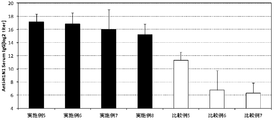
- FIG. 2 is a graph showing the results of IgG HA titers specific to influenza HA (type B) in mouse serum of Examples 1 to 4 and Comparative Examples 1 to 4.
- FIG. 6 is a graph showing the results of influenza HA (H1N1) specific IgG titers in mouse serum of Examples 5 to 8 and Comparative Examples 5 to 7.
- FIG. 2 is a graph showing the results of pneumococcal specific IgG titers in mouse serum of Example 9 and Comparative Examples 8 to 10.
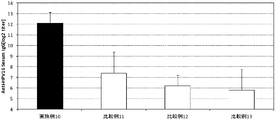
- 2 is a graph showing the results of HPV16 recombinant protein-specific IgG titer in mouse serum of Example 10 and Comparative Examples 11-13.
- Examples 1 to 4 Each administration group was prepared for 10 animals.
- Influenza vaccine antigen-containing solution (B / Wisconsin / 1/2010, manufactured by Osaka University Microbial Disease Research Association) (445 ⁇ g / mL) and Pantoea agglomerans-derived lipopolysaccharide (manufactured by Innate Immunity Applied Technology Co., Ltd.) solution (5 mg / mL)
- the amount of each group in Table 1 was adjusted, and a phosphate buffer solution (manufactured by Nacalai Tesque) was added to prepare a 1000 ⁇ L vaccine composition.
- Example 1 For example, in Example 1, 22.5 ⁇ L of influenza vaccine antigen-containing solution was added, 20 ⁇ L of Pantoea agglomerans-derived lipopolysaccharide solution was added, and then phosphate buffer was added to make a total volume of 1000 ⁇ L. Other examples and comparative examples were also appropriately diluted and prepared so as to have a content corresponding to the dose. In Comparative Example 4, only a phosphate buffer (manufactured by Nacalai Tesque) was added to the mouse without adding a vaccine antigen or an adjuvant. Administered.
- phosphate buffer manufactured by Nacalai Tesque
- mice Female 8-week-old BALB / C mice, Nippon SLC Co., Ltd.
- 100 ⁇ L of the vaccine composition prepared subcutaneously in each mouse was administered by injection.
- the mice were anesthetized again, and 100 ⁇ L of the prepared vaccine composition was subcutaneously administered to each mouse.
- mouse serum was collected, and the serum influenza HA (type B) -specific IgG titer was measured by ELISA. A detailed measurement method will be described later.
- the administration of the adjuvant amount of 100 ⁇ g (Comparative Example 1) showed deterioration of hairiness and weight loss in mice 24 hours after the first administration, and was euthanized, so the subsequent antibody titer was not measured.
- Adjuvant is a substance that stimulates immunity, and it is clear that immunity is easily obtained as the added amount increases.
- administration of an excessive amount has a safety problem
- administration of 100 ⁇ g in mice is a comparative example. I have not done it since 1. A detailed measurement method will be described later.
- Example 5 to 8 Comparative Examples 5 to 7 Basically, Examples 1 to 4 except that the influenza vaccine antigen-containing solution was changed from B / Wisconsin / 1/2010 to A / California / 07/2009 (H1N1, manufactured by Osaka University Microbial Disease Research Society) (801 ⁇ g / mL).
- a vaccine composition corresponding to Table 2 was prepared by an operation according to Comparative Examples 1 to 4. For example, in Example 5, 12.5 ⁇ L of influenza vaccine antigen-containing solution and 20 ⁇ L of Pantoea agglomerans-derived lipopolysaccharide solution were added, and then a phosphate buffer was added to make a total volume of 1000 ⁇ L.
- mice Female 8-week-old BALB / C mice, Japan SLC
- 100 ⁇ L of the vaccine composition prepared in each mouse was subcutaneously administered.
- the mice were anesthetized again, and 100 ⁇ L of the prepared vaccine composition was subcutaneously administered to each mouse.
- mouse serum was collected, and the serum influenza HA (H1N1) -specific IgG titer was measured by ELISA. A detailed measurement method will be described later.
- Example 9 Streptococcus pneumoniae capsular polysaccharide-containing solution (Pneumovax NP, manufactured by MSD Co., Ltd.) (1150 ⁇ g / mL), and in Example 9, Pantoea agglomerans-derived lipopolysaccharide (manufactured by Innate Immunity Applied Technology) (5 mg / mL),
- MPLAs glucopyranosyl lipids
- a phosphate buffer manufactured by Nacalai Tesque
- Example 9 For example, in Example 9, 8.7 ⁇ L of pneumococcal capsular polysaccharide-containing solution and 2 ⁇ L of Pantoea agglomerans-derived lipopolysaccharide solution were added, and then a phosphate buffer was added to make a total volume of 1000 ⁇ L.
- a pneumococcal capsular polysaccharide-containing solution was administered to mice
- a phosphate buffer manufactured by Nacalai Tesque
- mice were anesthetized again, and 100 ⁇ L of the prepared vaccine composition was subcutaneously administered to each mouse.
- mouse serum was collected, and the pneumococcal specific IgG titer in the serum was measured by ELISA. A detailed measurement method will be described later.
- Example 10 Comparative Examples 11 to 13
- HPV16 recombinant protein-containing solution HPV16, manufactured by PROSPEC
- PROSPEC PROSPEC
- Pantoea agglomerans-derived lipopolysaccharide manufactured by Innate Immunity Applied Technology Co., Ltd.
- MPLAs pyranosyl lipid
- a phosphate buffer manufactured by Nacalai Tesque
- Example 10 For example, in Example 10, 12.2 ⁇ L of HPV16 recombinant protein-containing solution and 2 ⁇ L of Pantoea agglomerans-derived lipopolysaccharide solution were added, and then a phosphate buffer was added to make a total volume of 1000 ⁇ L.
- Comparative Example 12 only HPV16 recombinant protein-containing solution was administered to mice, and in Comparative Example 13, only phosphate buffer (manufactured by Nacalai Tesque) was administered to mice. After anesthetizing 6 mice (female 8-week-old BALB / C mice, Japan SLC), 100 ⁇ L of the vaccine composition prepared in each mouse was subcutaneously administered.
- mice were anesthetized again, and 100 ⁇ L of the prepared vaccine composition was subcutaneously administered to each mouse.
- mouse serum was collected, and the HPV16 recombinant protein-specific IgG titer in the serum was measured by ELISA. A detailed measurement method will be described later.
- Example 11 to 13 200 ⁇ L of a live attenuated rotavirus-containing solution (Rotatech internal use solution, MSD) and Pantoea agglomerans-derived lipopolysaccharide (Nacalai Tesque) solution were 50 ⁇ L (2 mg / mL) in Example 11, 5 ⁇ L in Example 12, In Example 13, 0.5 ⁇ L, in Comparative Example 14, 5 ⁇ L of glucopyranosyl lipid (MPLAs, manufactured by InvivoGen) solution (2 mg / mL) was added, and phosphate buffer (manufactured by Nacalai Tesque) was added, and 1000 ⁇ L was added.
- a vaccine composition was prepared.
- mice Female 8-week-old BALB / C mice, Japan SLC
- 100 ⁇ L of the vaccine composition prepared subcutaneously in each mouse is administered.
- the mice are anesthetized again and 100 ⁇ L of the vaccine composition prepared subcutaneously in each mouse is administered.
- mouse serum is collected and the antigen-specific IgG titer in the serum is measured by ELISA.
- Example 14 to 52 Comparative Examples 15 to 27
- inactivated poliovirus-containing solution Imovac polio subcutaneous injection, manufactured by Sanofi
- Examples 17 to 19 and Comparative Example 16 inactivated hepatitis A virus-containing solution (Aimgen, Chemical In Examples 20 to 22 and Comparative Example 17, inactivated Japanese encephalitis virus-containing solution (Ensebach subcutaneous injection, manufactured by Chemical and Serum Therapy Institute)
- Comparative Examples 18 is a live attenuated mumps virus-containing solution (Otafukukaze Live Vaccine, Kitasato Daiichi Sankyo Vaccine)
- Examples 26 to 28, and Comparative Example 19 is a live attenuated measles virus-containing solution (live measles vaccine, Kitasato Daiichi Sankyo) Vaccine)
- Examples 29 to 31 and Comparative Example 20 containing live attenuated rubella virus-containing solution Dry attenuated live
- Examples 47 to 49 and Comparative Example 26 Using a raw BCG-containing solution (dry BCG vaccine, manufactured by Nippon BCG Co., Ltd.), Examples 50 to 52 and Comparative Example 27 were inactivated rabies Examples 11 to 13 and Comparative Example 14 except that a dose of each group shown in Table 5 was used, using a solution containing a solution (tissue culture inactivated rabies vaccine, manufactured by Chemical and Serum Therapy Research Institute). A vaccine composition was prepared. In addition, immunization experiments are performed in the same manner as in Examples 11 to 13 and Comparative Example 14.
- mice immunization experiment The administration was performed twice at an interval of one week for 8-week-old females and BALB / c mice. One week after the final administration, mouse blood and nasal wash were collected. The blood was centrifuged at 3000 G for 10 minutes at 4 ° C., and 300 ⁇ L of phosphate buffer (Nacalai Tesque) was added to 20 ⁇ L of the supernatant to obtain a serum sample. Systemic immune responses were evaluated by measuring antigen-specific IgG titers and the like in mouse serum. The evaluation method is as follows. The respective evaluation results are shown in FIGS.
- washing solution Tween20-containing PBS (hereinafter referred to as a washing solution) prepared in advance, and 200 ⁇ L of blocking solution (blocking ace, DS Pharma Biomedical) diluted to 4 g / 400 mL with purified water was added. Left at room temperature for hours. Thereafter, the wells were washed three times with a washing solution.
- blocking solution blocking ace, DS Pharma Biomedical
- reagent diluent a solution obtained by diluting a blocking agent (Block Ace, manufactured by DS Pharma Biomedical) to 0.4 g / 100 mL with a phosphate buffer (manufactured by Nacalai Tesque) (hereinafter referred to as reagent diluent), 1
- a blocking agent Block Ace, manufactured by DS Pharma Biomedical
- a phosphate buffer manufactured by Nacalai Tesque
- Example 53 Comparative Examples 28 to 29
- An emulsion injection was blended and prepared so as to have the dosage shown in Table 6 below. That is, after weighing a required amount of HER2 / neu_E75 peptide (chemically synthesized product), a necessary amount of Pantoea agglomerans-derived lipopolysaccharide (manufactured by Innate Immunity Applied Technology Co., Ltd.) solution (2 mg / mL) was added, and physiological saline ( Otsuka Pharmaceutical) and Montanide ISA51VG (Freund Sangyo) were added at a liquid volume ratio of 1: 1, and then mixed with a homogenizer to prepare an emulsion injection.
- physiological saline Otsuka Pharmaceutical
- Montanide ISA51VG Montanide ISA51VG
- Each administration group was for 10 animals, and 1000 ⁇ L was prepared.
- 1 mg of HER2 / neu_E75 peptide was weighed, 50 ⁇ L of Pantoea agglomerans-derived lipopolysaccharide solution (2 mg / mL) was added, and then physiological saline (Otsuka Pharmaceutical) 475 ⁇ L and Montanide ISA51VG (Freund Sangyo) 475 ⁇ L were added.
- physiological saline Oleuka Pharmaceutical
- Montanide ISA51VG Montanide ISA51VG
- Comparative Example 28 1 mg of HER2 / neu_E75 peptide was weighed, 500 ⁇ L of physiological saline (Otsuka Pharmaceutical) and 500 ⁇ L of Montanide ISA51VG (Freund Sangyo) were added, and mixed with a homogenizer to prepare an emulsion injection.
- 500 ⁇ L of physiological saline (Otsuka Pharmaceutical) and 500 ⁇ L of Montanide ISA51VG (Freund Sangyo) were added and mixed with a homogenizer to prepare an emulsion injection.
- These administration samples were administered to mice (genetically modified mice capable of evaluating induction of cellular immunity by HLA-A * 0201 type MHC-restricted peptide).
- the induction level of antigen-specific cellular immunity was evaluated by the ELISPOT method.
- the specific experimental procedure is in accordance with the operating procedure manual of the ELISPOT kit (R & D Systems). Specifically, the spleen was removed after 6 days from the administration and a spleen cell suspension was prepared. Spleen cells (3 ⁇ 10 6 cells / well) and antigenic peptide (100 ⁇ M) are put together with a culture solution into wells of an ELISPOT plate on which an anti-mouse IFN- ⁇ antibody is immobilized, and the culture conditions are 37 ° C. and 5% CO 2 . And the number of IFN- ⁇ producing cell spots was evaluated.
- Example 54 and Comparative Example 30 In Example 54 and Comparative Example 30, survivin 2B (immune evaluation mouse: BALB / c mouse), in Example 55 and Comparative Example 31, GPC3 (immune evaluation mouse: BALB / c mouse), Example 56, Comparative Example 32 In HER2 / neu_A24 (immune evaluation mouse: BALB / c mouse), Example 57 and Comparative Example 33 in MAGE3_A24 (immune evaluation mouse: BALB / c mouse), in Example 58 and Comparative Example 34 in IPEP87 (for immune evaluation) Mouse: genetically modified mouse capable of evaluating induction of cellular immunity by HLA-A * 0201 type MHC restricted peptide), PR1 in Example 59 and Comparative Example 35 (mouse for immunity evaluation: HLA-A * 0201 type MHC restricted Genetically modified mice capable of evaluating cellular immunity induction by peptides), HE in Example 60 and Comparative Example 36 R2 / neu_A02 (mouse for
- Example 53 Using.
- Example 53 the same experimental procedures as in Example 53 and Comparative Examples 28 and 29, the doses shown in Table 7 were formulated and prepared, and immunization experiments were conducted. That is, each emulsion injection was administered subcutaneously, and immunity was confirmed by ELISPOT 6 days after administration.
- influenza HA-specific IgG which is humoral immunity
- the production amount of influenza HA-specific IgG was low.
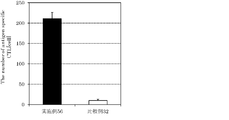
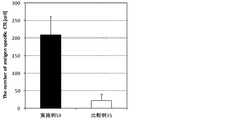
- FIGS. 5 to 15 it can be seen that in the examples, the immune response specific to the antigen peptide is increased, and cellular immunity is efficiently induced. In the comparative example, there was not much immune response. From these results, it was found that the combination of an antigen and a lipopolysaccharide derived from a specific gram-negative bacterium as an immunostimulator or a salt thereof is effective for safe and effective induction of systemic immunity. .
- the injection vaccine composition of the present invention can induce a systemic immune response effectively because the specific immunostimulant described above is used in combination with at least one kind of antigen.
Landscapes
- Health & Medical Sciences (AREA)
- Life Sciences & Earth Sciences (AREA)
- Chemical & Material Sciences (AREA)
- Animal Behavior & Ethology (AREA)
- Veterinary Medicine (AREA)
- Public Health (AREA)
- Medicinal Chemistry (AREA)
- General Health & Medical Sciences (AREA)
- Pharmacology & Pharmacy (AREA)
- Immunology (AREA)
- Epidemiology (AREA)
- Microbiology (AREA)
- Mycology (AREA)
- General Chemical & Material Sciences (AREA)
- Chemical Kinetics & Catalysis (AREA)
- Virology (AREA)
- Oncology (AREA)
- Nuclear Medicine, Radiotherapy & Molecular Imaging (AREA)
- Organic Chemistry (AREA)
- Dermatology (AREA)
- Pulmonology (AREA)
- Engineering & Computer Science (AREA)
- Bioinformatics & Cheminformatics (AREA)
- Communicable Diseases (AREA)
- Molecular Biology (AREA)
- Medicines Containing Antibodies Or Antigens For Use As Internal Diagnostic Agents (AREA)
- Micro-Organisms Or Cultivation Processes Thereof (AREA)
- Pharmaceuticals Containing Other Organic And Inorganic Compounds (AREA)
- Peptides Or Proteins (AREA)
Abstract
Description
現行のワクチン製剤、例えば、日本で用いられている一般的なインフルエンザワクチン製剤では、アジュバントは含有されておらず、その効果が充分ではないとされ、ワクチン製剤を接種したもののインフルエンザ感染後に重篤化してしまう例も存在している。
また、ヒトパピローマウイルスワクチンにおいて、モノホスホリルリピッドをアジュバントとして含有させた製品も存在する。しかしながら、このモノホスホリルリピッドは安全性を高めるためにサルモネラ菌由来リポポリサッカライドの糖鎖部分を除去したものであり、アジュバントとしての効果は弱められているのが実情であった。
そのため、比較的安全性の高い菌種由来のリポポリサッカライドを利用し、高い安全性及び免疫賦活化作用を両立できるアジュバントが切望されていた。
しかしながら、特許文献1には、獲得免疫への使用については明確な言及や例示がなく、また、最適なアジュバント/抗原の比率についての言及もなされていない。
しかしながら、特許文献2に記載のパントエア・アグロメランス(Pantoea agglomerans)に由来するリポポリサッカライド(LPS)使用ワクチンの例は、鼻粘膜に投与するものであり、注射投与については教示されていない。一般に、投与部位が異なれば効果的なアジュバントが異なることは技術常識である。よって、この特許文献2に記載のパントエア・アグロメランス(Pantoea agglomerans)に由来するリポポリサッカライド(LPS)使用ワクチンの例から、注射投与でパントエア・アグロメランス(Pantoea agglomerans)に由来するリポポリサッカライド(LPS)が効果を奏するか否かは不明であった。
また、本発明の注射ワクチン組成物は、液性免疫を誘導するために用いられるものであることが好ましい。
また、本発明の注射ワクチン組成物において、抗原が、感染症由来抗原又は癌抗原であることが好ましい。
以下、本発明を詳細に説明する。
本発明の注射ワクチン組成物において、上記免疫賦活化剤と上記抗原との質量比(免疫賦活化剤の総質量/抗原の総質量)が、0.002~50であることが好ましい。0.002未満であると、充分な強さの免疫が誘導されないことがあり、50を超えると、本発明の注射ワクチン組成物の安全性上の問題が生じることがある。上記免疫賦活化剤と上記抗原との質量比のより好ましい下限は0.01、より好ましい上限は10である。上記免疫賦活化剤と上記抗原との質量比がこの範囲にあることで、安全性を確保しつつ、充分な強さの免疫が誘導できる。
本明細書にいう「抗原の質量」は、特記する場合を除き、ワクチン中の抗原に含まれる抗原タンパク質あるいはペプチドの質量のことである。したがって、抗原が、ウイルス等生体由来物質である場合は、その抗原に含まれる全タンパク質の質量を意味する。
上記感染性病原体から罹る疾患としては特に限定されず、例えば、アデノウイルス、ヘルペスウイルス(例えば、HSV-I、HSV-II、CMV、又は、VZV)、ポックスウイルス(例えば、痘瘡若しくはワクシニア、又は、伝染性軟属腫などのオルトポックスウイルス)、ピコルナウイルス(例えば、ライノウイルス又はエンテロウイルス)、オルソミクソウイルス(例えば、インフルエンザウイルス)、パラミクソウイルス(例えば、パラインフルエンザウイルス、おたふく風邪ウイルス、はしかウイルス、呼吸器合胞体ウイルス(RSV))、コロナウイルス(例えば、SARS)、パポバウイルス(例えば、生殖器疣、尋常性胱贅、又は、足底疣費を引き起こすものなどのヒト乳頭腫(パピローマ)ウイルス)、ヘパドナウイルス(例えば、肝炎Bウイルス)、フラビウイルス(例えば、肝炎Cウイルス又はデングウイルス)、又は、レトロウイルス(例えば、HIVなどのレンチウイルス)などのウイルス感染から罹る疾患などのウイルス疾患、エシェリキア属、エンテロバクター、サルモネラ、ブドウ球菌、赤痢菌、リステリア、アエロバクター、ヘリコバクター、クレブシエラ、プロテウス、シュードモナス、連鎖球菌、クラミジア、マイコプラズマ、肺炎球菌、ナイセリア、クロストリジウム、バシラス、コリネバクテリウム、マイコバクテリウム、カンピロバクター、ビブリオ、セラチア、プロビデンシア、クロモバクテリウム、ブルセラ、エルシニア、ヘモフィルス、又は、ボルデテラなどの細菌感染から罹る疾患などの細菌疾患、クラミジア、カンジダ症、アスペルギルス症、ヒストプラスマ症、クリプトコックス髄膜炎をはじめとするがこれに限定されるものではない真菌疾患、マラリア、ニューモシスティスカリニ肺炎、レーシュマニア症、クリプトスポリジウム症、トキソプラズマ症、及び、トリパノソーマ感染等が挙げられる。
ここで、上記インフルエンザウイルスとは、オルソミクソウイルス科に属する直径約100nmの粒子サイズを有するRNAエンベロープウイルスであり、内部タンパクの抗原性に基づいて、A、B及びC型に分けられる。上記インフルエンザウイルスは、脂質二重層構造を有するウイルスエンベロープに取り囲まれた内部ヌクレオキャプシド又は核タンパク質と会合したリボ核酸(RNA)のコアと、外部糖タンパク質からなる。上記ウイルスエンベロープの内層は、主としてマトリックスタンパク質で構成され、外層は大部分が宿主由来脂質物質で構成される。また、上記インフルエンザウイルスのRNAは、分節構造をとる。なお、世界中で大流行するインフルエンザは、A型インフルエンザウイルスによるものであり、このA型インフルエンザウイルスは、ヘマグルチニン(HA)及びノイラミニダーゼ(NA)の2種類のエンベロープ糖タンパク質を有し、抗原性の違いによってHAでは16種、NAでは9種の亜型に区別されている。
本発明においては、上記感染症由来抗原としては、A型及びB型インフルエンザウイルス由来抗原が好適に用いられる。なお、上述したA型及びB型インフルエンザウイルスの亜型としては特に限定されず、これまで単離された亜型であっても将来単離される亜型であってもよい。
上記インフルエンザウイルス抗原の調製方法は、特に限定されるものではなく、公知の方法が限定なく使用できる。例えば、インフルエンザ感染動物又はインフルエンザの患者から単離されたウイルス株をニワトリ卵等に感染させて常法により培養し、精製したウイルス原液から抗原を調製する方法が挙げられる。また、遺伝子工学的に培養細胞中で調製したウイルス由来の抗原を用いてもよい。
上記癌遺伝子としては、例えば、サバイビン遺伝子、GPC3遺伝子、HER2/neu遺伝子、MAGE3遺伝子、MAGE A1遺伝子、MAGE A3/A6遺伝子、MAGE A4遺伝子、MAGE12遺伝子、プロテイナーゼ-3遺伝子、AFP遺伝子、CA-125遺伝子、CD44遺伝子、CEA遺伝子、c-Kit遺伝子、c-met遺伝子、c-myc遺伝子、L-myc遺伝子、COX2遺伝子、CyclinD1遺伝子、Cytokeratin-7遺伝子、Cytokeratin-19遺伝子、Cytokeratin-20遺伝子、E2F1遺伝子、E2F3遺伝子、EGFR遺伝子、Gli1遺伝子、hCGβ遺伝子、HIF-1α遺伝子、HnRNP A2/B1遺伝子、hTERT遺伝子、MDM遺伝子、MDR-1遺伝子、MMP-2遺伝子、MMP-9遺伝子、Muc-1遺伝子、Muc-4遺伝子、Muc-7遺伝子、NSE遺伝子、ProGRP遺伝子、PSA遺伝子、RCAS1遺伝子、SCC遺伝子、サイモグロブリン遺伝子、VEGF-A遺伝子、VEGF-A遺伝子等が挙げられる。サバイビン遺伝子の異常な発現を伴う癌には、悪性リンパ腫、膀胱癌、肺癌、大腸癌等が含まれるが、これらに限定されない。GPC3遺伝子の異常な発現を伴う癌には、肝癌、胆管癌、胃癌等が含まれるが、これらに限定されない。HER2/neu遺伝子の異常な発現を伴う癌には、乳癌、胃癌、卵巣癌、子宮癌、膀胱癌、非小細胞肺癌、前立腺癌等が含まれるが、これらに限定されない。MAGE3遺伝子の異常な発現を伴う癌には、メラノーマ、肺癌、頭頚部癌、膀胱癌、胃癌、食道癌、肝臓癌が含まれるが、これらに限定されない。プロテイナーゼ-3遺伝子の異常な発現を伴う癌には、急性骨髄性白血病、膵臓癌が含まれるが、これらに限定されない。またウイルスが原因となって引き起こされる癌については、そのウイルス由来の遺伝子をがん遺伝子としてみなす。例えばC型肝炎ウイルス(HCV)タンパク質由来のペプチドIPEP87ペプチド、B型肝炎ウイルス(HBV)タンパク質由来のペプチドであるHBVenvペプチドなどが挙げられるがこれらに限定されない。
上記改変XXペプチドには、例えば、
(a)XXペプチドのアミノ酸配列において、1個から数個、例えば1個、2個、3個、4個又は5個のアミノ酸が置換、欠失又は付加されたアミノ酸配列からなるペプチド;及び
(b)XXペプチドのアミノ酸配列において、全部又は一部のアミノ酸、例えば1個又は複数個、例えば1個、2個、3個、4個、5個、6個、7個、8個、9個又は10個のアミノ酸が修飾されたアミノ酸配列からなるペプチド
が含まれる。
上記改変XXペプチドが有し得るアミノ酸の「修飾」としては、これらに限定されないが、例えば、アセチル化、メチル化などのアルキル化、グリコシル化、ヒドロキシル化、カルボキシル化、アルデヒド化、リン酸化、スルホニル化、ホルミル化、ミリストイル化やパルミトイル化やステアロイル化のような脂肪鎖付加修飾、オクタノイル化、エステル化、アミド化、脱アミド化、シスチン修飾やグルタチオン修飾やチオグリコール酸修飾のようなジスルフィド結合形成修飾、糖化、ユビキチン化、スクシンイミド形成、グルタミル化、プレニル化等が挙げられる。
上記改変XXペプチドは、1個以上のアミノ酸の置換、欠失又は付加と、1個以上のアミノ酸の修飾とを組み合わせて含むものであってもよい。
上記免疫賦活化剤としては、トール様受容体4(TLR4)アゴニストが挙げられ、本発明では、該トール様受容体4(TLR4)アゴニストとして、特定のリポポリサッカライド又はその誘導体若しくは塩が用いられる。
なお、本明細書にいう「リポポリサッカライド」は、リポポリサッカライドそれ自体のほか、その性質を有する限りその誘導体であることができる。本明細書にいう塩とは、任意の有機酸または無機酸であってよいが、好ましくは薬学的に許容される塩である。
上記LPSは、大腸菌、サルモネラ菌、百日咳菌等のグラム陰性細菌細胞壁のペプチドグリカンを囲む外膜に存在している脂質及び糖からなる複合化合物であり、O抗原及びエンドトキシンの活性成分として知られている[ジェー・エム・ギューセン及びアール・ハッケンベック(J.M.Ghuysen and R.Hakenbeck)編、「ニュー・コンプリヘンシブ・バイオケミストリー(New Comprehensive Biochemistry)」、第27巻、バクテリアル・セル・ウオール(Bacterial Cell Wall)、第18ページ、エルセヴィア(Elsevea)、1994年]。
上記LPSの基本構造は、特異な脂質を有するリピドA、それに共有結合したRコアと呼ばれるオリゴ糖、さらにO特異多糖の3成分よりなっている(「日経バイオテクノロジー最新用語辞典」、第431ページ、日経マグロウヒル社、1985年)。
なかでも、Serratia、Leclercia、Rahnella、Acidicaldus、Acidiphilium、Acidisphaera、Acidocella、Acidomonas、Asaia、Belnapia、Craurococcus、Gluconacetobacter、Gluconobacter、Kozakia、Leahibacter、Muricoccus、Neoasaia、Oleomonas、Paracraurococcus、Rhodopila、Roseococcus、Rubritepida、Saccharibacter、Stella、Swaminathania、Teichococcus、Zavarzinia、Pantoea、Acetobacter、Zymomonas、Xanthomonas、及び、Enterobacterからなる群より選択される少なくとも1種が好ましい。
より好ましくは、上記グラム陰性菌としては、Pantoea、Acetobacter、Zymomonas、Xanthomonas、及び、Enterobacterからなる群より選択される少なくとも1種である。特にPantoea由来リポポリサッカライドは、現在健康食品として用いられており、特に経口的に投与する際により有効であるといえる。これらの菌由来の抽出物又はその改変体をそのまま用いることも可能である。
上記リポポリサッカライドの多糖部分を除去したリピドAとしては、上記特定のグラム陰性菌由来の単離物であればよく、あるいはこれらのグラム陰性菌由来の単離物と同じ構造になるように合成した物を用いてもよい。
また、上記リピドAの改変体としては、脱リン酸化を行ったモノホスホリルリピッド(MPL)又は塩も好適に用いられる。なお、本明細書にいうモノホスホリルリピッドは、モノホスホリルリピッドそれ自体のほか、その性質を有する限りその誘導体であることができる。特に既に医療用途で免疫賦活化剤として実績がある3-脱-アシル化物モノホスホリルリピッド(3D-MPL)、又は、米国特許出願公開第2010/0310602号明細書で提案されている脱アシル化されていない合成Glucopyranosyl lipidが生体への安全性の観点から好ましい。
また、上記モノホスホリルリピッドとしては、安全性及び使用前例のあるサルモネラ菌由来のものも好適に用いられる。
本発明でも好ましく用いられるパントエア・アグロメランス由来LPSは、O-抗原部分がラムノースとグルコースとの繰返し構造であることを特徴とするリポポリサッカライドである。
すなわち、配合物として用意したパントエア・アグロメランス由来LPS、あるいはワクチン組成物から適当な方法で抽出精製したパントエア・アグロメランス由来LPSについて、以下の方法で分子量を測定できる。
パントエア・アグロメランス由来LPSを蒸留水に溶解して1mg/mLの濃度の溶液を調製し、その溶液と、Sample buffer solution 2ME+(WAKO社製)を等量混合し、5分間沸騰水浴中に浸し、その後直ちに氷水中に浸して急冷する。
ランニングバッファー(アトー社製)をスラブゲル電気泳動槽(マリソル社製)に満たし、20%ポリアクリルアミドゲルを泳動槽に固定し、サンプル溝に10μLずつ検体を入れ、電圧を100Vにて少なくとも1時間、色素がゲルより溶出するまで泳動を継続する。泳動終了後に、銀染色キット161-0443(バイオラッド社製)により室温で銀染色を行い、挙動を確認する。
また、本発明の注射ワクチン組成物を用いて、液剤、エマルジョン剤、又は、液体を添加して溶解、乳化、あるいは懸濁させて使用する半固形製剤若しくは固形製剤を調製することが可能であり、上述した材料以外に、所望により、防腐剤、抗酸化剤、安定化剤、界面活性剤等を適宜使用してもよい。
これらの材料としては特に限定されず、従来公知のものが使用できる。
本発明の注射ワクチン組成物の投与方法としては特に限定されないが、皮内注射、皮下注射、筋肉注射のいずれかの方法により投与されることが好ましい。
各投与群は10匹分として調製した。
インフルエンザワクチン抗原含有溶液(B/Wisconsin/1/2010、阪大微生物病研究会製)(445μg/mL)と、Pantoea agglomerans由来リポポリサッカライド(自然免疫応用技研社製)溶液(5mg/mL)を、表1の各群の投与量となるように調製し、リン酸緩衝液(ナカライテスク社製)を加えて1000μLのワクチン組成物を調製した。例えば、実施例1ではインフルエンザワクチン抗原含有溶液を22.5μL加え、Pantoea agglomerans由来リポポリサッカライド溶液を20μL加えたのちにリン酸緩衝液を加えて総量1000μLとした。その他の実施例、比較例も適宜希釈し投与量に相当する含量となるように調製し、比較例4ではワクチン抗原やアジュバントを加えずに、リン酸緩衝液(ナカライテスク社製)のみをマウスに投与した。
マウス(メス8週齢BALB/Cマウス、日本エスエルシー社)6匹に麻酔後、それぞれのマウスの皮下に調製したワクチン組成物を100μL注射投与した。当該投与から1週間後、再度マウスに麻酔をかけ、それぞれのマウスに調製したワクチン組成物を100μL皮下投与した。2度目の投与から更に1週間後に、マウスの血清を採取し、血清中インフルエンザHA(B型)特異的IgG力価をELISA法により測定を行った。なお、詳細な測定方法は後述する。
ここで、アジュバント量100μgの投与(比較例1)は、一回目の投与24時間後にマウスの毛並の悪化、体重減少が見られ、安楽死処分したため、後の抗体価の測定は行っていない。アジュバントは、免疫を賦活させる物質であり、添加量が多いほど免疫が得られやすいことは明白であるが、過剰量を投与することは安全上の問題があり、マウスにおける100μgの投与は比較例1以降行っていない。
なお、詳細な測定方法は後述する。

インフルエンザワクチン抗原含有溶液をB/Wisconsin/1/2010からA/California/07/2009(H1N1、阪大微生物病研究会製)(801μg/mL)に変更した以外は基本的に実施例1~4、比較例1~4に準ずる操作で表2に相当するワクチン組成物を調製した。例えば実施例5ではインフルエンザワクチン抗原含有溶液を12.5μLとPantoea agglomerans由来リポポリサッカライド溶液を20μL加えたのちにリン酸緩衝液を加えて総量1000μLとした。
マウス(メス8週齢BALB/Cマウス、日本エスエルシー社)6匹に麻酔後、それぞれのマウスに調製したワクチン組成物を100μL皮下投与した。当該投与から1週間後、再度マウスに麻酔をかけ、それぞれのマウスに調製したワクチン組成物を100μL皮下投与した。2度目の投与から更に1週間後に、マウスの血清を採取し、血清中インフルエンザHA(H1N1)特異的IgG力価をELISA法により測定を行った。なお、詳細な測定方法は後述する。

肺炎球菌莢膜ポリサッカライド含有溶液(Pneumovax NP、MSD株式会社製)(1150μg/mL)と、実施例9ではPantoea agglomerans由来リポポリサッカライド(自然免疫応用技研社製)溶液(5mg/mL)を、比較例8ではグルコピラノシルリピッド(MPLAs、InvivoGen社製)を用い、表3の各群の投与量となるように調製し、リン酸緩衝液(ナカライテスク社製)を加えて1000μLのワクチン組成物を調製した。例えば、実施例9では肺炎球菌莢膜ポリサッカライド含有溶液を8.7μLとPantoea agglomerans由来リポポリサッカライド溶液を2μL加えたのちにリン酸緩衝液を加えて総量1000μLとした。比較例9では肺炎球菌莢膜ポリサッカライド含有溶液のみを、比較例10ではリン酸緩衝液(ナカライテスク社製)のみをマウスに投与した。
マウス(メス8週齢BALB/Cマウス、日本エスエルシー社)6匹に麻酔後、それぞれのマウスに調製したワクチン組成物を100μL皮下投与した。当該投与から1週間後、再度マウスに麻酔をかけ、それぞれのマウスに調製したワクチン組成物を100μL皮下投与した。2度目の投与から更に1週間後に、マウスの血清を採取し、血清中肺炎球菌特異的IgG力価をELISA法により測定を行った。なお、詳細な測定方法は後述する。

HPV16組み換えタンパク質含有溶液(HPV16、PROSPEC社製)(820μg/mL)と、実施例10ではPantoea agglomerans由来リポポリサッカライド(自然免疫応用技研社製)溶液(5mg/mL)を、比較例11ではグルコピラノシルリピッド(MPLAs、InvivoGen社製)を用い、表4の各群の投与量となるように調製し、リン酸緩衝液(ナカライテスク社製)を加えて1000μLのワクチン組成物を調製した。例えば実施例10ではHPV16組み換えタンパク質含有溶液を12.2μLとPantoea agglomerans由来リポポリサッカライド溶液を2μL加えたのちにリン酸緩衝液を加えて総量1000μLとした。比較例12ではHPV16組み換えタンパク質含有溶液のみを、比較例13ではリン酸緩衝液(ナカライテスク社製)のみをマウスに投与した。
マウス(メス8週齢BALB/Cマウス、日本エスエルシー社)6匹に麻酔後、それぞれのマウスに調製したワクチン組成物を100μL皮下投与した。当該投与から1週間後、再度マウスに麻酔をかけ、それぞれのマウスに調製したワクチン組成物を100μL皮下投与した。2度目の投与から更に1週間後に、マウスの血清を採取し、血清中HPV16組み換えタンパク質特異的IgG力価をELISA法により測定を行った。なお、詳細な測定方法は後述する。

弱毒生ロタウイルス含有溶液(ロタテック内用液、MSD社製)200μLと、Pantoea agglomerans由来リポポリサッカライド(ナカライテスク社製)溶液を実施例11では50μL(2mg/mL)、実施例12では5μL、実施例13では0.5μL、比較例14ではグルコピラノシルリピッド(MPLAs、InvivoGen社製)溶液(2mg/mL)を5μL添加し、リン酸緩衝液(ナカライテスク社製)を加えて1000μLのワクチン組成物を調製した。
マウス(メス8週齢BALB/Cマウス、日本エスエルシー社)6匹に麻酔後、それぞれのマウスの皮下に調製したワクチン組成物を100μL投与する。当該投与から1週間後、再度マウスに麻酔をかけ、それぞれのマウスの皮下に調製したワクチン組成物100μLを投与する。2度目の投与から更に1週間後に、マウスの血清を採取し、血清中抗原特異的IgG力価の測定をELISA法により行う。
実施例14~16、比較例15では不活化ポリオウイルス含有溶液(イモバックスポリオ皮下注、サノフィ社製)、実施例17~19、比較例16では不活化A型肝炎ウイルス含有溶液(エイムゲン、化学及血清療法研究所社製)、実施例20~22、比較例17では不活化日本脳炎ウイルス含有溶液(エンセバック皮下注用、化学及血清療法研究所社製)、実施例23~25、比較例18では弱毒生ムンプスウイルス含有溶液(おたふくかぜ生ワクチン、北里第一三共ワクチン社製)、実施例26~28、比較例19では弱毒生麻疹ウイルス含有溶液(はしか生ワクチン、北里第一三共ワクチン社製)、実施例29~31、比較例20では弱毒生風疹ウイルス含有溶液(乾燥弱毒生風しんワクチン、北里第一三共ワクチン社製)、実施例32~34、比較例21では破傷風トキソイド結合インフルエンザ菌b型多糖含有溶液(アクトヒブ、サノフィ社製)、実施例35~37、比較例22では組換えHBs抗原タンパク質含有溶液(ビームゲン、化学及血清療法研究所社製)、実施例38~40、比較例23では弱毒生黄熱ウイルス含有溶液(黄熱ワクチン、サノフィ社製)、実施例41~43、比較例24では破傷風トキソイド含有溶液(破傷風トキソイド、デンカ生研社製)、実施例44~46、比較例25では弱毒生水痘ウイルス含有溶液(乾燥弱毒生水痘ワクチン、阪大微生物病研究会社製)を用い、実施例47~49、比較例26では生BCG含有溶液(乾燥BCGワクチン、日本ビーシージー製造社製)を用い、実施例50~52、比較例27では不活化狂犬病ウイルス含有溶液(組織培養不活化狂犬病ワクチン、化学及血清療法研究所社製)を用い、表5の各群の投与量となるようにした以外は、実施例11~13、比較例14と同様にワクチン組成物を調製した。また実施例11~13、比較例14と同様の手法で免疫実験を行う。

8週齢、メス、BALB/cマウスについて2回、一週間間隔にて投与を行った。最終投与より一週間後、マウス血液及び鼻腔洗浄液を採取した。血液は4℃下3000Gで10分間遠心し、上清20μLにリン酸緩衝液(ナカライテスク社製)300μLを加えて血清サンプルとした。
マウス血清中の抗原特異的IgG力価等を測定することにより、全身性免疫応答を評価した。評価法に関しては次に示す。
また、それぞれの評価結果を図1~4に示した。
ELISA用96ウェルプレートに炭酸緩衝液にて希釈した各抗原(例えば肺炎球菌莢膜ポリサッカライド特異的IgG抗体価を測定する時には肺炎球菌莢膜ポリサッカライド抗原溶液)(2.5μg/mL)を100μLずつ添加し、一晩放置した。
予め準備したTween20含有PBS(以下洗浄液)で3回ウェルを洗浄し、ブロッキング剤(Block Ace、DSファーマバイオメディカル社製)を精製水で4g/400mLに希釈したブロッキング溶液を200μLずつ添加し、2時間室温で放置した。その後、洗浄液で3回ウェルを洗浄した。
ブロッキング剤(Block Ace、DSファーマバイオメディカル社製)をリン酸緩衝液(ナカライテスク社製)で0.4g/100mLに希釈した溶液(以下試薬希釈液)を用いて、前述の血清サンプルを1/2倍ずつ15回段階希釈し、その溶液をそれぞれ50μLずつ添加し、2時間室温で放置した。
その後、洗浄液で3回ウェルを洗浄し、試薬希釈液でHRP標識抗マウスIgG抗体(Goat-anti-mouse IgG Fc HRP、BETHYL社製)を10000倍に希釈したものを、100μLずつ添加し、1時間室温で放置した。
その後、洗浄液で3回ウェルを洗浄し、TMB溶液(ELISA POD TMBキット、ナカライテスク社製)を100μLずつ加えた。ここに1M硫酸溶液を100μLずつ加え、当該96ウェルプレートをマイクロプレートリーダー(168-11135CAM、バイオラッド社製)で450nmの吸光度を測定した。段階希釈時の吸光度を基に、その吸光度が0.1を切らない最大の希釈倍率をマウス血清中IgG力価とし、その値をLog2の値で求めた。
下記表6の投与量となるようにエマルジョン注射剤を配合、調製した。すなわち、必要量のHER2/neu_E75ペプチド(化学合成品)を秤量した後、必要量のPantoea agglomerans由来リポポリサッカライド(自然免疫応用技研社製)溶液(2mg/mL)を加え、さらに生理食塩水(大塚製薬)とMontanide ISA51VG(フロイント産業)を1:1の液量比で加えた後、ホモジナイザーにて混和してエマルジョン注射剤を調製した。各投与群は10匹分として、1000μL分を調製した。
例えば、実施例53ではHER2/neu_E75ペプチドを1mg秤量し、Pantoea agglomerans由来リポポリサッカライド溶液(2mg/mL)を50μL加えたのちに生理食塩水(大塚製薬)475μLとMontanide ISA51VG(フロイント産業)475μLを加え、ホモジナイザーにて混和してエマルジョン注射剤を調製した。比較例28ではHER2/neu_E75ペプチドを1mg秤量し、生理食塩水(大塚製薬)500μLとMontanide ISA51VG(フロイント産業)500μLを加え、ホモジナイザーにて混和してエマルジョン注射剤を調製した。比較例29では生理食塩水(大塚製薬)500μLとMontanide ISA51VG(フロイント産業)500μLを加え、ホモジナイザーにて混和してエマルジョン注射剤を調製した。
これら投与サンプルをマウス(HLA-A*0201型MHC拘束性ペプチドによる細胞性免疫誘導を評価可能な遺伝子改変マウス)に投与した。マウス6匹に麻酔後、それぞれのマウスの皮下に調製したエマルジョン注射剤を100μL注射投与した、投与回数は1回である。抗原特異的な細胞性免疫の誘導レベルをELISPOT法にて評価した。具体的な実験操作はELISPOTキット(R&Dシステムズ社)の操作手順書に準ずるが、詳細には、投与から6日間経過後に脾臓を摘出し脾細胞懸濁液を調製した。抗マウスIFN-γ抗体を固定化したELISPOTプレートのウェルに、脾細胞(3×10⁶cells/well)と抗原ペプチド(100μM)とを培養液とともに入れ、37℃、5%CO2の培養条件にて20時間、共培養し、IFN-γ産生細胞スポット数を評価した。

実施例54、比較例30ではサバイビン2B(免疫評価用マウス:BALB/cマウス)、実施例55、比較例31ではGPC3(免疫評価用マウス:BALB/cマウス)、実施例56、比較例32ではHER2/neu_A24(免疫評価用マウス:BALB/cマウス)、実施例57、比較例33ではMAGE3_A24(免疫評価用マウス:BALB/cマウス)、実施例58、比較例34ではIPEP87(免疫評価用マウス:HLA-A*0201型MHC拘束性ペプチドによる細胞性免疫誘導を評価可能な遺伝子改変マウス)、実施例59、比較例35ではPR1(免疫評価用マウス:HLA-A*0201型MHC拘束性ペプチドによる細胞性免疫誘導を評価可能な遺伝子改変マウス)、実施例60、比較例36ではHER2/neu_A02(免疫評価用マウス:HLA-A*0201型MHC拘束性ペプチドによる細胞性免疫誘導を評価可能な遺伝子改変マウス)、実施例61、比較例37ではMAGE3_A02(免疫評価用マウス:HLA-A*0201型MHC拘束性ペプチドによる細胞性免疫誘導を評価可能な遺伝子改変マウス)、実施例62、比較例38ではHBVenv(免疫評価用マウス:HLA-A*0201型MHC拘束性ペプチドによる細胞性免疫誘導を評価可能な遺伝子改変マウス)、実施例63、比較例39ではMUC1(免疫評価用マウス:HLA-A*0201型MHC拘束性ペプチドによる細胞性免疫誘導を評価可能な遺伝子改変マウス)を用いた。実施例53及び比較例28、29と同様の実験操作により、表7の投与量となるように配合、調製し、免疫実験を行った。すなわち各エマルジョン注射剤を皮下投与し、投与6日後にELISPOT法により免疫を確認した。

これらの結果から、抗原と免疫賦活化剤としての特定のグラム陰性細菌由来のリポポリサッカライド又はその塩との併用が、安全で、効果的な全身免疫誘導に有効であることが見出された。
Claims (4)
- ヒト又は動物に注射投与される注射ワクチン組成物であって、
少なくとも一種類の抗原と、免疫賦活化剤として、Serratia、Leclercia、Rahnella、Acidicaldus、Acidiphilium、Acidisphaera、Acidocella、Acidomonas、Asaia、Belnapia、Craurococcus、Gluconacetobacter、Gluconobacter、Kozakia、Leahibacter、Muricoccus、Neoasaia、Oleomonas、Paracraurococcus、Rhodopila、Roseococcus、Rubritepida、Saccharibacter、Stella、Swaminathania、Teichococcus、Zavarzinia、Pseudomonas、Achromobacter、Bacillus、Methanoculleus、Methanosarcina、Clostridium、Micrococcus、Flavobacterium、Pantoea、Acetobacter、Zymomonas、Xanthomonas、及び、Enterobacterからなる群より選択される少なくとも1種のグラム陰性細菌由来のリポポリサッカライド又はその塩を含む
ことを特徴とする注射ワクチン組成物。 - 免疫賦活化剤と抗原との質量比(免疫賦活化剤の総質量/抗原の総質量)が、0.002~50である請求項1記載の注射ワクチン組成物。
- 液性免疫を誘導するために用いられる請求項1又は2記載の注射ワクチン組成物。
- 抗原が、感染症由来抗原又は癌抗原である請求項1、2又は3記載の注射ワクチン組成物。
Priority Applications (6)
| Application Number | Priority Date | Filing Date | Title |
|---|---|---|---|
| EP14850351.9A EP3053591A4 (en) | 2013-10-03 | 2014-10-02 | Injectable vaccine composition |
| CN201480050567.8A CN105530953A (zh) | 2013-10-03 | 2014-10-02 | 注射疫苗组合物 |
| KR1020167006131A KR20160067087A (ko) | 2013-10-03 | 2014-10-02 | 주사 백신 조성물 |
| US14/916,807 US9962439B2 (en) | 2013-10-03 | 2014-10-02 | Injectable vaccine composition |
| RU2016109363A RU2016109363A (ru) | 2013-10-03 | 2014-10-02 | Инъекционная вакцинная композиция |
| CA2923030A CA2923030A1 (en) | 2013-10-03 | 2014-10-02 | Injectable vaccine composition |
Applications Claiming Priority (2)
| Application Number | Priority Date | Filing Date | Title |
|---|---|---|---|
| JP2013-208662 | 2013-10-03 | ||
| JP2013208662 | 2013-10-03 |
Publications (1)
| Publication Number | Publication Date |
|---|---|
| WO2015050181A1 true WO2015050181A1 (ja) | 2015-04-09 |
Family
ID=52778768
Family Applications (1)
| Application Number | Title | Priority Date | Filing Date |
|---|---|---|---|
| PCT/JP2014/076351 Ceased WO2015050181A1 (ja) | 2013-10-03 | 2014-10-02 | 注射ワクチン組成物 |
Country Status (9)
| Country | Link |
|---|---|
| US (1) | US9962439B2 (ja) |
| EP (1) | EP3053591A4 (ja) |
| JP (1) | JP2015091794A (ja) |
| KR (1) | KR20160067087A (ja) |
| CN (1) | CN105530953A (ja) |
| CA (1) | CA2923030A1 (ja) |
| RU (1) | RU2016109363A (ja) |
| TW (1) | TW201601750A (ja) |
| WO (1) | WO2015050181A1 (ja) |
Cited By (2)
| Publication number | Priority date | Publication date | Assignee | Title |
|---|---|---|---|---|
| CN107530413A (zh) * | 2015-05-01 | 2018-01-02 | 日东电工株式会社 | 变态反应疫苗组合物 |
| US10420837B2 (en) * | 2014-10-02 | 2019-09-24 | Nitto Denko Corporation | Vaccine pharmaceutical composition for transdermal administration |
Families Citing this family (4)
| Publication number | Priority date | Publication date | Assignee | Title |
|---|---|---|---|---|
| CN105530958A (zh) | 2013-10-03 | 2016-04-27 | 日东电工株式会社 | 粘膜疫苗组合物 |
| RU2016109150A (ru) * | 2013-10-03 | 2017-11-10 | Нитто Денко Корпорейшн | Мукозальная вакцинная композиция |
| CN110974948A (zh) * | 2019-12-18 | 2020-04-10 | 天津农学院 | 一种水生拉恩菌灭活疫苗和应用 |
| US11852287B2 (en) | 2021-11-08 | 2023-12-26 | Advanced Design Mfg Llc | Bracket assembly |
Citations (10)
| Publication number | Priority date | Publication date | Assignee | Title |
|---|---|---|---|---|
| JPH0443533B2 (ja) | 1986-09-05 | 1992-07-16 | Nat House Ind | |
| WO1996023002A1 (en) * | 1995-01-27 | 1996-08-01 | Taiho Pharmaceutical Co., Ltd. | Low-molecular-weight lipopolysaccharide |
| JPH08245702A (ja) * | 1995-03-13 | 1996-09-24 | Denichi Mizuno | 高分子量リポポリサッカライド |
| JP2000103745A (ja) * | 1998-09-21 | 2000-04-11 | Allergy Therapeutics Ltd | 処方物 |
| WO2006094756A2 (en) * | 2005-03-03 | 2006-09-14 | Glaxosmithkline Biologicals S.A. | Varicella zoster virus vaccine |
| WO2007068907A2 (en) * | 2005-12-13 | 2007-06-21 | Glaxosmithkline Biologicals Sa | Vaccine compositions comprising a saponin adjuvant |
| WO2009065415A1 (en) * | 2007-11-21 | 2009-05-28 | Roskilde Universitet | Polypeptides comprising an ice-binding activity |
| JP2009242367A (ja) | 2008-03-31 | 2009-10-22 | Research Foundation For Microbial Diseases Of Osaka Univ | 混合免疫賦活剤を含む新規ワクチン |
| US20100310602A1 (en) | 2009-06-05 | 2010-12-09 | Infectious Disease Research Institute | Synthetic glucopyranosyl lipid adjuvants |
| JP2012082156A (ja) * | 2010-10-09 | 2012-04-26 | Bio Medical Research Group:Kk | 免疫活性化剤及び免疫活性化剤配合物 |
Family Cites Families (6)
| Publication number | Priority date | Publication date | Assignee | Title |
|---|---|---|---|---|
| CA2706622C (en) * | 2002-08-27 | 2015-11-03 | Hiroshi Terada | Lps activation of phagocytic activity |
| US20050152919A1 (en) * | 2003-09-15 | 2005-07-14 | Id Biomedical Corporation Of Quebec | Measles subunit vaccine |
| GB0525321D0 (en) * | 2005-12-13 | 2006-01-18 | Glaxosmithkline Biolog Sa | Novel compositions |
| AU2010298191A1 (en) * | 2009-09-24 | 2012-04-19 | Therapro Technologies, Inc. | Lipopolysaccharide isolated from Pyrularia tissue and/or Pyrularia-associated bacteria and uses thereof |
| EP2726097A4 (en) | 2011-07-01 | 2015-03-11 | Univ California | HERPES VIRUS VACCINE AND METHOD OF USE |
| CN103255075B (zh) * | 2012-07-09 | 2015-12-02 | 西安交通大学 | 一种产胞外多糖的菠萝泛菌及其多糖的提取和应用 |
-
2014
- 2014-10-02 WO PCT/JP2014/076351 patent/WO2015050181A1/ja not_active Ceased
- 2014-10-02 KR KR1020167006131A patent/KR20160067087A/ko not_active Withdrawn
- 2014-10-02 TW TW103134467A patent/TW201601750A/zh unknown
- 2014-10-02 US US14/916,807 patent/US9962439B2/en not_active Expired - Fee Related
- 2014-10-02 CA CA2923030A patent/CA2923030A1/en not_active Abandoned
- 2014-10-02 EP EP14850351.9A patent/EP3053591A4/en not_active Withdrawn
- 2014-10-02 JP JP2014204024A patent/JP2015091794A/ja active Pending
- 2014-10-02 RU RU2016109363A patent/RU2016109363A/ru not_active Application Discontinuation
- 2014-10-02 CN CN201480050567.8A patent/CN105530953A/zh active Pending
Patent Citations (10)
| Publication number | Priority date | Publication date | Assignee | Title |
|---|---|---|---|---|
| JPH0443533B2 (ja) | 1986-09-05 | 1992-07-16 | Nat House Ind | |
| WO1996023002A1 (en) * | 1995-01-27 | 1996-08-01 | Taiho Pharmaceutical Co., Ltd. | Low-molecular-weight lipopolysaccharide |
| JPH08245702A (ja) * | 1995-03-13 | 1996-09-24 | Denichi Mizuno | 高分子量リポポリサッカライド |
| JP2000103745A (ja) * | 1998-09-21 | 2000-04-11 | Allergy Therapeutics Ltd | 処方物 |
| WO2006094756A2 (en) * | 2005-03-03 | 2006-09-14 | Glaxosmithkline Biologicals S.A. | Varicella zoster virus vaccine |
| WO2007068907A2 (en) * | 2005-12-13 | 2007-06-21 | Glaxosmithkline Biologicals Sa | Vaccine compositions comprising a saponin adjuvant |
| WO2009065415A1 (en) * | 2007-11-21 | 2009-05-28 | Roskilde Universitet | Polypeptides comprising an ice-binding activity |
| JP2009242367A (ja) | 2008-03-31 | 2009-10-22 | Research Foundation For Microbial Diseases Of Osaka Univ | 混合免疫賦活剤を含む新規ワクチン |
| US20100310602A1 (en) | 2009-06-05 | 2010-12-09 | Infectious Disease Research Institute | Synthetic glucopyranosyl lipid adjuvants |
| JP2012082156A (ja) * | 2010-10-09 | 2012-04-26 | Bio Medical Research Group:Kk | 免疫活性化剤及び免疫活性化剤配合物 |
Non-Patent Citations (4)
| Title |
|---|
| "Bacterial Cell Wall", vol. 27, 1994, ELSEVIER, article "New Comprehensive Biochemistry", pages: 18 |
| "Nikkei Biotechnology Up-to-date Glossary", 1985, NIKKEI MACGRAW-HILL, pages: 431 |
| NURMINEN.M.: "THE ROLE OF THE O ANTIGEN IN ADJUVANT ACTIVITY OF LIPOPOLYSACCHARIDE", FEMS MICROBIOLOGY LETTERS, vol. 83, no. 1, 1991, pages 51 - 54, XP023916430 * |
| See also references of EP3053591A4 |
Cited By (2)
| Publication number | Priority date | Publication date | Assignee | Title |
|---|---|---|---|---|
| US10420837B2 (en) * | 2014-10-02 | 2019-09-24 | Nitto Denko Corporation | Vaccine pharmaceutical composition for transdermal administration |
| CN107530413A (zh) * | 2015-05-01 | 2018-01-02 | 日东电工株式会社 | 变态反应疫苗组合物 |
Also Published As
| Publication number | Publication date |
|---|---|
| US20160287697A1 (en) | 2016-10-06 |
| CA2923030A1 (en) | 2015-04-09 |
| CN105530953A (zh) | 2016-04-27 |
| EP3053591A1 (en) | 2016-08-10 |
| RU2016109363A3 (ja) | 2018-07-12 |
| US9962439B2 (en) | 2018-05-08 |
| RU2016109363A (ru) | 2017-11-10 |
| EP3053591A4 (en) | 2017-04-19 |
| KR20160067087A (ko) | 2016-06-13 |
| JP2015091794A (ja) | 2015-05-14 |
| TW201601750A (zh) | 2016-01-16 |
Similar Documents
| Publication | Publication Date | Title |
|---|---|---|
| CN107961374B (zh) | 疫苗组合物 | |
| WO2015050181A1 (ja) | 注射ワクチン組成物 | |
| JP6494233B2 (ja) | 粘膜ワクチン組成物 | |
| WO2015050178A1 (ja) | 鼻粘膜ワクチン組成物 | |
| JP6494232B2 (ja) | 粘膜ワクチン組成物 |
Legal Events
| Date | Code | Title | Description |
|---|---|---|---|
| WWE | Wipo information: entry into national phase |
Ref document number: 201480050567.8 Country of ref document: CN |
|
| 121 | Ep: the epo has been informed by wipo that ep was designated in this application |
Ref document number: 14850351 Country of ref document: EP Kind code of ref document: A1 |
|
| ENP | Entry into the national phase |
Ref document number: 2923030 Country of ref document: CA |
|
| REEP | Request for entry into the european phase |
Ref document number: 2014850351 Country of ref document: EP |
|
| WWE | Wipo information: entry into national phase |
Ref document number: 14916807 Country of ref document: US Ref document number: 2014850351 Country of ref document: EP |
|
| ENP | Entry into the national phase |
Ref document number: 20167006131 Country of ref document: KR Kind code of ref document: A |
|
| REG | Reference to national code |
Ref country code: BR Ref legal event code: B01A Ref document number: 112016005196 Country of ref document: BR |
|
| NENP | Non-entry into the national phase |
Ref country code: DE |
|
| ENP | Entry into the national phase |
Ref document number: 2016109363 Country of ref document: RU Kind code of ref document: A |
|
| ENP | Entry into the national phase |
Ref document number: 112016005196 Country of ref document: BR Kind code of ref document: A2 Effective date: 20160309 |