WO2015054555A1 - Deubiquitinase inhibitors and methods for use of the same - Google Patents
Deubiquitinase inhibitors and methods for use of the same Download PDFInfo
- Publication number
- WO2015054555A1 WO2015054555A1 PCT/US2014/059997 US2014059997W WO2015054555A1 WO 2015054555 A1 WO2015054555 A1 WO 2015054555A1 US 2014059997 W US2014059997 W US 2014059997W WO 2015054555 A1 WO2015054555 A1 WO 2015054555A1
- Authority
- WO
- WIPO (PCT)
- Prior art keywords
- compound
- cell
- virus
- cells
- dub
- Prior art date
- Legal status (The legal status is an assumption and is not a legal conclusion. Google has not performed a legal analysis and makes no representation as to the accuracy of the status listed.)
- Ceased
Links
Classifications
-
- C—CHEMISTRY; METALLURGY
- C07—ORGANIC CHEMISTRY
- C07D—HETEROCYCLIC COMPOUNDS
- C07D471/00—Heterocyclic compounds containing nitrogen atoms as the only ring hetero atoms in the condensed system, at least one ring being a six-membered ring with one nitrogen atom, not provided for by groups C07D451/00 - C07D463/00
- C07D471/02—Heterocyclic compounds containing nitrogen atoms as the only ring hetero atoms in the condensed system, at least one ring being a six-membered ring with one nitrogen atom, not provided for by groups C07D451/00 - C07D463/00 in which the condensed system contains two hetero rings
- C07D471/04—Ortho-condensed systems
-
- A—HUMAN NECESSITIES
- A61—MEDICAL OR VETERINARY SCIENCE; HYGIENE
- A61P—SPECIFIC THERAPEUTIC ACTIVITY OF CHEMICAL COMPOUNDS OR MEDICINAL PREPARATIONS
- A61P1/00—Drugs for disorders of the alimentary tract or the digestive system
- A61P1/04—Drugs for disorders of the alimentary tract or the digestive system for ulcers, gastritis or reflux esophagitis, e.g. antacids, inhibitors of acid secretion, mucosal protectants
-
- A—HUMAN NECESSITIES
- A61—MEDICAL OR VETERINARY SCIENCE; HYGIENE
- A61P—SPECIFIC THERAPEUTIC ACTIVITY OF CHEMICAL COMPOUNDS OR MEDICINAL PREPARATIONS
- A61P1/00—Drugs for disorders of the alimentary tract or the digestive system
- A61P1/16—Drugs for disorders of the alimentary tract or the digestive system for liver or gallbladder disorders, e.g. hepatoprotective agents, cholagogues, litholytics
-
- A—HUMAN NECESSITIES
- A61—MEDICAL OR VETERINARY SCIENCE; HYGIENE
- A61P—SPECIFIC THERAPEUTIC ACTIVITY OF CHEMICAL COMPOUNDS OR MEDICINAL PREPARATIONS
- A61P11/00—Drugs for disorders of the respiratory system
-
- A—HUMAN NECESSITIES
- A61—MEDICAL OR VETERINARY SCIENCE; HYGIENE
- A61P—SPECIFIC THERAPEUTIC ACTIVITY OF CHEMICAL COMPOUNDS OR MEDICINAL PREPARATIONS
- A61P17/00—Drugs for dermatological disorders
-
- A—HUMAN NECESSITIES
- A61—MEDICAL OR VETERINARY SCIENCE; HYGIENE
- A61P—SPECIFIC THERAPEUTIC ACTIVITY OF CHEMICAL COMPOUNDS OR MEDICINAL PREPARATIONS
- A61P25/00—Drugs for disorders of the nervous system
-
- A—HUMAN NECESSITIES
- A61—MEDICAL OR VETERINARY SCIENCE; HYGIENE
- A61P—SPECIFIC THERAPEUTIC ACTIVITY OF CHEMICAL COMPOUNDS OR MEDICINAL PREPARATIONS
- A61P25/00—Drugs for disorders of the nervous system
- A61P25/04—Centrally acting analgesics, e.g. opioids
-
- A—HUMAN NECESSITIES
- A61—MEDICAL OR VETERINARY SCIENCE; HYGIENE
- A61P—SPECIFIC THERAPEUTIC ACTIVITY OF CHEMICAL COMPOUNDS OR MEDICINAL PREPARATIONS
- A61P29/00—Non-central analgesic, antipyretic or antiinflammatory agents, e.g. antirheumatic agents; Non-steroidal antiinflammatory drugs [NSAID]
-
- A—HUMAN NECESSITIES
- A61—MEDICAL OR VETERINARY SCIENCE; HYGIENE
- A61P—SPECIFIC THERAPEUTIC ACTIVITY OF CHEMICAL COMPOUNDS OR MEDICINAL PREPARATIONS
- A61P31/00—Antiinfectives, i.e. antibiotics, antiseptics, chemotherapeutics
-
- A—HUMAN NECESSITIES
- A61—MEDICAL OR VETERINARY SCIENCE; HYGIENE
- A61P—SPECIFIC THERAPEUTIC ACTIVITY OF CHEMICAL COMPOUNDS OR MEDICINAL PREPARATIONS
- A61P31/00—Antiinfectives, i.e. antibiotics, antiseptics, chemotherapeutics
- A61P31/04—Antibacterial agents
-
- A—HUMAN NECESSITIES
- A61—MEDICAL OR VETERINARY SCIENCE; HYGIENE
- A61P—SPECIFIC THERAPEUTIC ACTIVITY OF CHEMICAL COMPOUNDS OR MEDICINAL PREPARATIONS
- A61P31/00—Antiinfectives, i.e. antibiotics, antiseptics, chemotherapeutics
- A61P31/10—Antimycotics
-
- A—HUMAN NECESSITIES
- A61—MEDICAL OR VETERINARY SCIENCE; HYGIENE
- A61P—SPECIFIC THERAPEUTIC ACTIVITY OF CHEMICAL COMPOUNDS OR MEDICINAL PREPARATIONS
- A61P31/00—Antiinfectives, i.e. antibiotics, antiseptics, chemotherapeutics
- A61P31/12—Antivirals
-
- A—HUMAN NECESSITIES
- A61—MEDICAL OR VETERINARY SCIENCE; HYGIENE
- A61P—SPECIFIC THERAPEUTIC ACTIVITY OF CHEMICAL COMPOUNDS OR MEDICINAL PREPARATIONS
- A61P31/00—Antiinfectives, i.e. antibiotics, antiseptics, chemotherapeutics
- A61P31/12—Antivirals
- A61P31/14—Antivirals for RNA viruses
-
- A—HUMAN NECESSITIES
- A61—MEDICAL OR VETERINARY SCIENCE; HYGIENE
- A61P—SPECIFIC THERAPEUTIC ACTIVITY OF CHEMICAL COMPOUNDS OR MEDICINAL PREPARATIONS
- A61P31/00—Antiinfectives, i.e. antibiotics, antiseptics, chemotherapeutics
- A61P31/12—Antivirals
- A61P31/20—Antivirals for DNA viruses
-
- A—HUMAN NECESSITIES
- A61—MEDICAL OR VETERINARY SCIENCE; HYGIENE
- A61P—SPECIFIC THERAPEUTIC ACTIVITY OF CHEMICAL COMPOUNDS OR MEDICINAL PREPARATIONS
- A61P31/00—Antiinfectives, i.e. antibiotics, antiseptics, chemotherapeutics
- A61P31/12—Antivirals
- A61P31/20—Antivirals for DNA viruses
- A61P31/22—Antivirals for DNA viruses for herpes viruses
-
- A—HUMAN NECESSITIES
- A61—MEDICAL OR VETERINARY SCIENCE; HYGIENE
- A61P—SPECIFIC THERAPEUTIC ACTIVITY OF CHEMICAL COMPOUNDS OR MEDICINAL PREPARATIONS
- A61P33/00—Antiparasitic agents
-
- A—HUMAN NECESSITIES
- A61—MEDICAL OR VETERINARY SCIENCE; HYGIENE
- A61P—SPECIFIC THERAPEUTIC ACTIVITY OF CHEMICAL COMPOUNDS OR MEDICINAL PREPARATIONS
- A61P33/00—Antiparasitic agents
- A61P33/02—Antiprotozoals, e.g. for leishmaniasis, trichomoniasis, toxoplasmosis
-
- A—HUMAN NECESSITIES
- A61—MEDICAL OR VETERINARY SCIENCE; HYGIENE
- A61P—SPECIFIC THERAPEUTIC ACTIVITY OF CHEMICAL COMPOUNDS OR MEDICINAL PREPARATIONS
- A61P33/00—Antiparasitic agents
- A61P33/02—Antiprotozoals, e.g. for leishmaniasis, trichomoniasis, toxoplasmosis
- A61P33/06—Antimalarials
-
- A—HUMAN NECESSITIES
- A61—MEDICAL OR VETERINARY SCIENCE; HYGIENE
- A61P—SPECIFIC THERAPEUTIC ACTIVITY OF CHEMICAL COMPOUNDS OR MEDICINAL PREPARATIONS
- A61P35/00—Antineoplastic agents
-
- A—HUMAN NECESSITIES
- A61—MEDICAL OR VETERINARY SCIENCE; HYGIENE
- A61P—SPECIFIC THERAPEUTIC ACTIVITY OF CHEMICAL COMPOUNDS OR MEDICINAL PREPARATIONS
- A61P35/00—Antineoplastic agents
- A61P35/02—Antineoplastic agents specific for leukemia
-
- A—HUMAN NECESSITIES
- A61—MEDICAL OR VETERINARY SCIENCE; HYGIENE
- A61P—SPECIFIC THERAPEUTIC ACTIVITY OF CHEMICAL COMPOUNDS OR MEDICINAL PREPARATIONS
- A61P43/00—Drugs for specific purposes, not provided for in groups A61P1/00-A61P41/00
-
- A—HUMAN NECESSITIES
- A61—MEDICAL OR VETERINARY SCIENCE; HYGIENE
- A61P—SPECIFIC THERAPEUTIC ACTIVITY OF CHEMICAL COMPOUNDS OR MEDICINAL PREPARATIONS
- A61P9/00—Drugs for disorders of the cardiovascular system
-
- C—CHEMISTRY; METALLURGY
- C07—ORGANIC CHEMISTRY
- C07D—HETEROCYCLIC COMPOUNDS
- C07D213/00—Heterocyclic compounds containing six-membered rings, not condensed with other rings, with one nitrogen atom as the only ring hetero atom and three or more double bonds between ring members or between ring members and non-ring members
- C07D213/02—Heterocyclic compounds containing six-membered rings, not condensed with other rings, with one nitrogen atom as the only ring hetero atom and three or more double bonds between ring members or between ring members and non-ring members having three double bonds between ring members or between ring members and non-ring members
- C07D213/04—Heterocyclic compounds containing six-membered rings, not condensed with other rings, with one nitrogen atom as the only ring hetero atom and three or more double bonds between ring members or between ring members and non-ring members having three double bonds between ring members or between ring members and non-ring members having no bond between the ring nitrogen atom and a non-ring member or having only hydrogen or carbon atoms directly attached to the ring nitrogen atom
- C07D213/24—Heterocyclic compounds containing six-membered rings, not condensed with other rings, with one nitrogen atom as the only ring hetero atom and three or more double bonds between ring members or between ring members and non-ring members having three double bonds between ring members or between ring members and non-ring members having no bond between the ring nitrogen atom and a non-ring member or having only hydrogen or carbon atoms directly attached to the ring nitrogen atom with substituted hydrocarbon radicals attached to ring carbon atoms
- C07D213/54—Radicals substituted by carbon atoms having three bonds to hetero atoms with at the most one bond to halogen, e.g. ester or nitrile radicals
- C07D213/57—Nitriles
-
- C—CHEMISTRY; METALLURGY
- C07—ORGANIC CHEMISTRY
- C07D—HETEROCYCLIC COMPOUNDS
- C07D213/00—Heterocyclic compounds containing six-membered rings, not condensed with other rings, with one nitrogen atom as the only ring hetero atom and three or more double bonds between ring members or between ring members and non-ring members
- C07D213/02—Heterocyclic compounds containing six-membered rings, not condensed with other rings, with one nitrogen atom as the only ring hetero atom and three or more double bonds between ring members or between ring members and non-ring members having three double bonds between ring members or between ring members and non-ring members
- C07D213/04—Heterocyclic compounds containing six-membered rings, not condensed with other rings, with one nitrogen atom as the only ring hetero atom and three or more double bonds between ring members or between ring members and non-ring members having three double bonds between ring members or between ring members and non-ring members having no bond between the ring nitrogen atom and a non-ring member or having only hydrogen or carbon atoms directly attached to the ring nitrogen atom
- C07D213/60—Heterocyclic compounds containing six-membered rings, not condensed with other rings, with one nitrogen atom as the only ring hetero atom and three or more double bonds between ring members or between ring members and non-ring members having three double bonds between ring members or between ring members and non-ring members having no bond between the ring nitrogen atom and a non-ring member or having only hydrogen or carbon atoms directly attached to the ring nitrogen atom with hetero atoms or with carbon atoms having three bonds to hetero atoms with at the most one bond to halogen, e.g. ester or nitrile radicals, directly attached to ring carbon atoms
- C07D213/61—Halogen atoms or nitro radicals
-
- C—CHEMISTRY; METALLURGY
- C07—ORGANIC CHEMISTRY
- C07D—HETEROCYCLIC COMPOUNDS
- C07D215/00—Heterocyclic compounds containing quinoline or hydrogenated quinoline ring systems
- C07D215/02—Heterocyclic compounds containing quinoline or hydrogenated quinoline ring systems having no bond between the ring nitrogen atom and a non-ring member or having only hydrogen atoms or carbon atoms directly attached to the ring nitrogen atom
- C07D215/12—Heterocyclic compounds containing quinoline or hydrogenated quinoline ring systems having no bond between the ring nitrogen atom and a non-ring member or having only hydrogen atoms or carbon atoms directly attached to the ring nitrogen atom with substituted hydrocarbon radicals attached to ring carbon atoms
-
- C—CHEMISTRY; METALLURGY
- C07—ORGANIC CHEMISTRY
- C07D—HETEROCYCLIC COMPOUNDS
- C07D215/00—Heterocyclic compounds containing quinoline or hydrogenated quinoline ring systems
- C07D215/02—Heterocyclic compounds containing quinoline or hydrogenated quinoline ring systems having no bond between the ring nitrogen atom and a non-ring member or having only hydrogen atoms or carbon atoms directly attached to the ring nitrogen atom
- C07D215/12—Heterocyclic compounds containing quinoline or hydrogenated quinoline ring systems having no bond between the ring nitrogen atom and a non-ring member or having only hydrogen atoms or carbon atoms directly attached to the ring nitrogen atom with substituted hydrocarbon radicals attached to ring carbon atoms
- C07D215/14—Radicals substituted by oxygen atoms
-
- C—CHEMISTRY; METALLURGY
- C07—ORGANIC CHEMISTRY
- C07D—HETEROCYCLIC COMPOUNDS
- C07D215/00—Heterocyclic compounds containing quinoline or hydrogenated quinoline ring systems
- C07D215/02—Heterocyclic compounds containing quinoline or hydrogenated quinoline ring systems having no bond between the ring nitrogen atom and a non-ring member or having only hydrogen atoms or carbon atoms directly attached to the ring nitrogen atom
- C07D215/16—Heterocyclic compounds containing quinoline or hydrogenated quinoline ring systems having no bond between the ring nitrogen atom and a non-ring member or having only hydrogen atoms or carbon atoms directly attached to the ring nitrogen atom with hetero atoms or with carbon atoms having three bonds to hetero atoms with at the most one bond to halogen, e.g. ester or nitrile radicals, directly attached to ring carbon atoms
- C07D215/18—Halogen atoms or nitro radicals
-
- C—CHEMISTRY; METALLURGY
- C07—ORGANIC CHEMISTRY
- C07D—HETEROCYCLIC COMPOUNDS
- C07D215/00—Heterocyclic compounds containing quinoline or hydrogenated quinoline ring systems
- C07D215/02—Heterocyclic compounds containing quinoline or hydrogenated quinoline ring systems having no bond between the ring nitrogen atom and a non-ring member or having only hydrogen atoms or carbon atoms directly attached to the ring nitrogen atom
- C07D215/16—Heterocyclic compounds containing quinoline or hydrogenated quinoline ring systems having no bond between the ring nitrogen atom and a non-ring member or having only hydrogen atoms or carbon atoms directly attached to the ring nitrogen atom with hetero atoms or with carbon atoms having three bonds to hetero atoms with at the most one bond to halogen, e.g. ester or nitrile radicals, directly attached to ring carbon atoms
- C07D215/20—Oxygen atoms
- C07D215/24—Oxygen atoms attached in position 8
- C07D215/26—Alcohols; Ethers thereof
Definitions
- ubiquitination cascade are differentially expressed or activated in several diseases, and may therefore be appropriate therapeutic targets.
- DUB deubiquitinating enzymes
- the human genome codes for nearly 100 proteins with putative DUB activity which can be broadly divided into two main sub-groups: ubiquitin C-terminal hydrolase (UCH) and the ubiquitin-specific proteases (USP).
- UCH ubiquitin C-terminal hydrolase
- USPs comprise the largest subclass of DUBs in humans, while only 4 known UCH DUBs have been described.
- DUBs primarily serve to counterbalance ubiquitin-protein conjugation and also facilitate the cleavage of ubiquitin from its precursors and unanchored polyubiquitin chains.
- DUBs regulate and maintain the homeostasis of free ubiquitin pools in the cell.
- DUBs have been reported to regulate deubiquitination of histones, DNA damage repair, cellular proliferation (USP2) and cytokine signaling (DUB-A).
- DUBs such as USP14, Uch37 and RPN11 have been shown to associate with the regulatory sub-unit of the proteasome (19S) and edit polyubiquitin chains on proteasome substrates.
- a compound as disclosed herein can inhibit, e.g., Usp9x or Usp5. Further disclosed herein are methods of treating a pathogenic infection and methods of treating a condition due to a pathogenic infection. Also disclosed herein are methods of inhibiting proliferation, decreasing survival of a cell, or suppressing tumor metastases. Further disclosed herein are methods of treating a neurodegenerative disorder or symptoms of a neurodegenerative disorder. Also disclosed herein are methods of treating symptoms of a genetic disorder. [0005] Thus, provided herein is a compound having a formula (I):
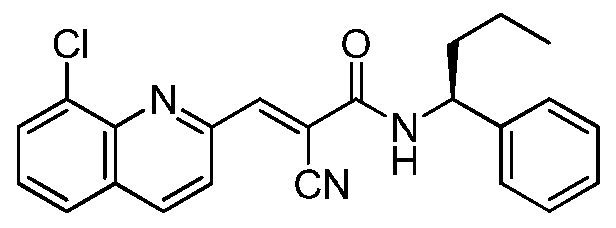
- R 1 and R 3 are halo or hydrogen and R 2 is hydrogen, with the proviso that at least one of R 1 and R 3 is halo, or R 1 and R 2 together form an aryl or heteroaryl ring, and R 3 is halo or hydrogen;
- R 4 is C 2 -C 6 alkyl or Ci-C 6 alkylenearyl; and (a) one of R 5 and R 5 is hydrogen and the other substituted alkoxy, or (b) each of R 5 and R 5 is substituted alkoxy, or (c) when R 1 and R 2 together form a substituted aryl or optionally substituted heteroaryl ring, then R 5 and R 5 can each be hydrogen; or a salt or solvate thereof.
- R 1 and R 2 together form a nitrogen-containing optionally substituted heteroaryl.
- the compound of formula (I) has a structure .
- R 4 is propyl or isopentyl.
- R 5 is hydrogen and R 5 is a heterocyclyl substituted alkoxy. In some cases, R 5 is -Oalkylene-heterocyclyl. In various cases, R 5 is hydrogen and R 5 is a heterocyclyl substituted alkoxy. R 5 can be -Oalkylene-heterocyclyl. In various cases, the heterocyclyl is morpholinyl, sulfoxymorpholinyl, pyrrolidinyl, piperazinyl, or piperidinyl. i some cases, the heterocyclyl is morpholinyl. In various cases, R 5 or R 5 is -0(CH 2 ) m N(Me)(CH 2 ) 2 NMe 2 ;
- R 1 and R 3 are each halo. In some cases, R 1 and R 3 are the same. In various cases, R 1 and R 3 are different. In some cases, at least one of R 1 and R 3 is chloro. In various cases, each of R 1 and R 3 is chloro. In some cases, at least one of R 1 and R 3 is fluoro. In some cases, each of R 1 and R 3 is fluoro.
- the compound of formula (I) can have a structure
- compositions comprising a compound as described herein and a pharmaceutically acceptable excipient.
- the pharmaceutical composition can be formulated for oral, topical, intravenous, subcutaneous, intramuscular, intrathecal, ophthalmic, or inhalational route of administration.
- methods of inhibiting proliferation in a cell comprising contacting the cell with the compound or composition as disclosed herein.
- the cell can be a cancer cell, e.g., a virus-induced cancer cell, a Kaposi's sarcoma cell, a nasopharyngeal carcinoma (EBV) cell, a chronic myelogenous leukemia (CML) cell, a melanoma cell, an acute lymphocytic leukemia cell, a chronic lymphocytic leukemia cell, an acute myelogenous leukemia cell, a B-cell lymphoma cell, a mantle cell lymphoma cell, a multiple myeloma cell, a plasma cell dyscrasia, a cancer cell, e.g., a virus-induced cancer cell, a Kaposi's sarcoma cell, a nasopharyngeal carcinoma (EBV) cell, a chronic myelogenous leukemia (CML) cell, a melanoma cell, an acute lymphocytic leukemia cell, a chronic lymphoc
- the cell can be a lung cancer cell, a breast cancer cell, a prostate cancer cell, a pancreatic cancer cell, a melanoma cell, a solid tumor cell, or a colon cancer cell.
- the compound can inhibit a DUB, e.g., a UCH catalytic domain of a DUB.
- the DUB can be Usp9x.
- the DUB can be Usp5.
- Also provided are methods of inhibiting a pathogen infection comprising contacting a pathogen or a cell infected with a pathogen with the compound or composition as disclosed herein. Additionally provided are methods of treating a condition arising from a pathogen infection comprising contacting the pathogen or a cell infected by the pathogen with the compound or composition as disclosed herein.
- the condition can be gastroenteritis, encephalitis, a respiratory tract infection, SARS, virus-induced cancer, rabies, a hemorrhagic fever, Rift valley fever, listeriosis, or toxoplasmosis.
- the condition is meningitis, myocarditis, hepatitis, bacterimia, or a skin infection.
- the pathogen can be a virus, bacterium, fungus, or parasite.
- the virus can be a calicivirus, a norovirus, a sapovirus, a picornavirus, a Togavirus, a Bunyavirus, a Rhabdovirus, a herpes virus, an adenovirus, an arterivirus, a coronavirus, a flavivirus, a paramyxovirus, a papillomavirus, a virus encoding for an ovarian tumor (OTU)-like protease, a baculovirus, or a nairovirus.
- the virus can be a polyoma virus or a retrovirus.
- the virus is selected from the group consisting of encephalomyocarditis virus (EMCV), Sindbis virus (Si V), La Crosse virus (LaCV), Norwalk virus, Epstein-Barr (EBV), herpesvirus, Dengue virus, and papillomavirus.
- the virus can be cytomegalovirus, BK virus, hepatitis C virus, or HIV.
- the bacterium can be Chlamydia, Escherichia, Salmonella, Yersinia, Burkholderia, Haemophilus, Listeria, or Mycobacterium. In some cases, the bacterium is Staphylococcus aureus.
- the bacterium is methicillin-resistent Staph aureus (MRSA).
- MRSA methicillin-resistent Staph aureus
- the parasite or fungus can be Plasmodium falciparum, Toxoplasma gondii, Entamoeba histolytica, Giardia lamblia,
- Figure 1 shows that G9 rapidly inactivates Usp9x in tumor cells.
- MM1.ST myeloma cells (left) and PCL cells from a patient donor (right) were treated with G9 for the time indicated before cell lysates were assessed for Usp9x activity and Mcl-1 levels.
- PARP was also measured in MM1.ST cells as a marker of the activation of caspases and apoptosis.
- Figure 2 shows effect of G9 on MM1.S tumor growth and on animal weight at 2.5, 5, and 10 mg/kg doses.
- Figure. 3 shows effect of G9 on MM1.S tumor growth and on animal weight at 5, 10, 15, and 20 mg/kg doses.
- FIG 4 shows the tumor volumes (top) and extracted tumors from control and treated mice (bottom) from the animal study shown in figure 3 are illustrated.
- Figure 5 shows Usp9x activity from protein extracts of control vs. G9 treated tumors.
- Figure 6 shows the effect of G9 on A375 melanoma tumor growth and animal weight.
- FIG. 7 shows CD34+ cells from normal and myeloma cell lines treated with G9.
- Figures 8 and 9 show antiviral activity in a variety of viruses and macrophages for G9, compared to vehicle (DMSO), prior compound WP1130 and compound VM030.
- FIG 10 shows G9 inhibits Usp9x and Usp5 in myeloma (MM1.S) cells at various concentrations.
- Protein ubiquitination is a precisely controlled process that requires the participation of several enzymes that modify lysine residues on target proteins with monomeric or polymeric chains of ubiquitin (Ub).
- the ubiquitin pathway enzymes are mediators of eukaryotic cell cycle timing, protein destruction and signal transduction. Recent studies suggest that Ub regulation is also critical at various stages of the prokaryotic and viral life cycle and within the eukaryotic host cells as well. Therefore, disruption or inhibition of specific Ub regulatory enzymes may also have anti-microbial activity.
- DUBs appear to represent appropriate therapeutic targets.
- USP2 and USP9x were shown to inhibit tumor cell growth by promoting cyclin Dl and MCL-1 degradation, respectively suggesting silencing of specific DUBs in tumor cells may be a safe and effective therapy in oncogene-addicted or drug-resistant cells.
- Other studies firmly establish a role for DUBs in a broad spectrum of diseases including cancer, viral and bacterial pathogenesis as well as
- DUB modulatory activity e.g., UCH-L1 and USP7, SARS protease.
- Usp5 regulates unanchored poly-ubiquitin (Ub) chains, p53 transcriptional activity and double-strand DNA repair. Knockdown and overexpression studies show that Usp5 regulates p53 (and p73) levels and alters cell growth and cell cycle distribution associated with p21 induction. Usp5 also regulates the intrinsic apoptotic pathway by modulating p53 -dependent FAS expression. Usp5 inhibition can provide an alternate approach in recovery of diminished p53 (or p73) function in melanoma and can add to the targeted therapies already used in the treatment of melanoma.
- a DUB methods of inhibiting a DUB, methods of inhibiting a UCH catalytic domain, methods of inhibiting Usp9x, methods of inhibiting Usp5, methods of inhibiting or preventing a pathogenic infection, methods of inhibiting survival or proliferation of a cell, methods of treating a neurodegenerative disorder, methods of treating one or more symptoms of a neurodegenerative disorder, methods of treating one or more symptoms of a genetic disorder, and compounds that can inhibit a DUB.
- the DUB is contacted with a compound, e.g., of formula (I) or salt thereof
- R 1 and R 3 are each independently halo or hydrogen with the proviso that at least one of R 1 and R 3 is not hydrogen,
- R 2 is hydrogen, or R 1 and R 2 together form a substituted aryl or an optionally substituted heteroaryl ring,
- R 4 is C2-C 6 alkyl or Ci-Cealkylenearyl
- R 5 and R 5 is hydrogen and the other substituted alkoxy, or each of R 5 and R 5 is substituted alkoxyl, or when R 1 and R 2 together form an optionally substituted heteraryl ring or substituted aryl ring, R 5 and R 5 can alternatively each be hydrogen;
- the compound has a structure of .
- R and R are each halo, e.g., selected from chloro, bromo, iodo, and fluoro.
- R 4 is propyl, isopentyl, or phenethyl.
- R 5 is alkoxy substituted with a heterocyclyl, e.g., -Oalkyleneheterocyclyl.
- the heterocyclyl is morpholinyl, sulfoxymorpholinyl, pyrrolidinyl, piperazinyl, or piperidinyl.
- the heterocyclyl is a morpholinyl group, i various cases, R 5 is
- DRBs Deubiquitinases
- Deubiquitinating enzymes i.e., deubiquitinases or DUBs
- DUBs are typically a cysteine protease and may be classified into subgroups as ubiquitin-specific proteases (USP) and ubiquitin C-terminal hydrolases (UCH).
- USP ubiquitin-specific proteases
- UCH ubiquitin C-terminal hydrolases
- DUBs include, for instance, USP5, USP6, USP4, USP8, USP 13, USP2, USP 11, USP14, USP7, USP9X, USP10, USP1, USP12, USP 16, USP 15, USP 17, USP 19, USP20, USP3, USP9Y, USP 18, USP21, USP22, USP33, USP29, USP25, USP36, USP32, USP26, USP24, USP42, USP46, USP37, USP28, USP47, USP38, USP44, USP50, USP35, USP30, Mername-AA088peptidase, Mername-AA091 peptidase, USP45, USP51, USP34, USP48, USP40, USP31, Mername-AA129peptidase, USP49, USP17-like peptidase, USP54, USP53, USP39, UCH-L1, UCH-L3, UCH-
- the DUB inhibited by a compound as disclosed herein is Usp9x. In various cases, the DUB inhibited by a compound as disclosed herein is Usp5.
- Other DUBs contemplated include autophagin (ATG), ovarian tumor (OTU) domain proteins, Josephin-domain (JD) or Machado- Joseph disease (MJD) proteins, ubiquitin-like protein-specific protease (ULP), and JAMM (Jabl/MPN domain-associated metalloisopeptidase) domain proteins.
- R 1 and R 3 are each independently hydrogen or halo with the proviso that at least one of R 1 and R 3 is not hydrogen,
- R 2 is hydrogen, or R 1 and R 2 together form a substituted aryl or an optionally substituted heteroaryl ring,
- R 4 is C2-C 6 alkyl or Ci-Cealkylenearyl
- R 5 and R 5 is hydrogen and the other substituted alkoxy, or each of R 5 and R 5 is substituted alkoxyl, or when R 1 and R 2 together form an optionally substituted heteraryl ring or substituted aryl ring, R 5 and R 5 can alternatively each be hydrogen;
- R 1 and R 2 form a heteroaryl ring
- the heteroaryl ring is substituted.
- the heteroaryl ring is substituted with one or more of OH, halo, cyano, and nitro.
- R 1 and R 2 form a substituted aryl ring
- the aryl ring is substituted with one or more of OH, halo, cyano, and nitro.
- R 1 and R 3 are each halo, e.g., selected from chloro, bromo, iodo, and fluoro.
- R 4 is phenethyl.
- R 4 is propyl or isopentyl.
- R 5 is hydrogen and R 5 is substituted alkoxy, e.g., alkoxy substituted with a heterocyclyl, e.g., -Oalkyleneheterocyclyl.
- R 5 is hydrogen and R 5 is alkoxy substituted with a heterocyclyl, e.g., -Oalkyleneheterocyclyl.
- the heterocyclyl is morpholinyl, sulfoxymorpholinyl, pyrrolidinyl, piperazinyl, or piperidinyl.
- the heterocyclyl is a morpholinyl group.
- R 5 or R 5 is
- alkyl refers to a saturated or unsaturated straight or branched chain hydrocarbon group including, but not limited to, methyl, ethyl, n-propyl, isopropyl, n-butyl, isobutyl, tert-butyl, pentyl, isopentyl, n-hexyl, and the like. Alkyls of one to six carbon atoms are also contemplated.
- alkyl includes "bridged alkyl,” i.e., a bicyclic or polycyclic hydrocarbon group, for example, norbornyl, adamantyl, bicyclo[2.2.2]octyl, bicyclo[2.2.1]heptyl, bicyclo[3.2.1]octyl, or decahydronaphthyl.
- Alkyl groups optionally can be substituted, for example, with one or more of hydroxy (OH), halide, thiol (SH), aryl, heteroaryl, cycloalkyl, heterocyclyl, and amino.
- cycloalkyl refers to a cyclic hydrocarbon group, e.g., cyclopropyl, cyclobutyl, cyclohexyl, and cyclopentyl.
- Heterocyclyl is defined similarly as cycloalkyl, except the ring contains one to three heteroatoms independently selected from the group consisting of oxygen, nitrogen, and sulfur.
- Nonlimiting examples of heterocyclyl groups include piperdine,
- Heterocycloalkyl groups optionally can be further N-substituted with alkyl, hydroxyalkyl, alkylenearyl, or
- aryl refers to a monocyclic or polycyclic aromatic group, preferably a monocyclic or bicyclic aromatic group, e.g., phenyl or naphthyl. Unless otherwise indicated, an aryl group can be unsubstituted or substituted with one or more, and in particular one to four groups independently selected from, for example, halo, alkyl, alkenyl, OCF 3 , N0 2 , CN, NC, OH, alkoxy, amino, CO 2 H, C0 2 alkyl, aryl, and heteroaryl.
- aryl groups include, but are not limited to, phenyl, naphthyl, tetrahydronaphthyl, chlorophenyl, methylphenyl, methoxyphenyl, trifluoromethylphenyl, nitrophenyl, 2,4-methoxychlorophenyl, and the like.
- heteroaryl refers to a monocyclic or bicyclic ring system containing one or two aromatic rings and containing at least one nitrogen, oxygen, or sulfur atom in an aromatic ring.
- the ring can be fused or spiro to another ring system (a saturated, unsaturated or aromatic ring).
- a heteroaryl group can be unsubstituted or substituted with one or more, and in particular one to four, substituents selected from, for example, halo, alkyl, alkenyl, OCF3, NO 2 , CN, NC, OH, alkoxy, amino, CO 2 H, C0 2 alkyl, aryl, and heteroaryl.
- the heteroaryl group is substituted with one or more of alkyl and alkoxy groups.
- heteroaryl groups include, but are not limited to, thienyl, furyl, pyridyl, oxazolyl, quinolyl, thiophenyl, isoquinolyl, indolyl, triazinyl, triazolyl, isothiazolyl, isoxazolyl, pyrollyl, imidazolyl, benzothiazolyl, pyrazinyl, pyrimidinyl, thiazolyl, and thiadiazolyl.
- alkoxy refers to straight or branched chain alkyl group covalently bonded to the parent molecule through an— O— linkage.
- alkoxy groups include, but are not limited to, methoxy, ethoxy, propoxy, isopropoxy, butoxy, n-butoxy, sec-butoxy, t-butoxy and the like.
- the salts, e.g., pharmaceutically acceptable salts, of the disclosed therapeutics may be prepared by reacting the appropriate base or acid with a stoichiometric equivalent of the therapeutic.
- Acids commonly employed to form pharmaceutically acceptable salts include inorganic acids such as hydrogen bisulfide, hydrochloric acid, hydrobromic acid, hydroiodic acid, sulfuric acid and phosphoric acid, as well as organic acids such as para-toluenesulfonic acid, salicylic acid, tartaric acid, bitartaric acid, ascorbic acid, maleic acid, besylic acid, fumaric acid, gluconic acid, glucuronic acid, formic acid, glutamic acid, methanesulfonic acid, ethanesulfonic acid, benzenesulfonic acid, lactic acid, oxalic acid, para-bromophenylsulfonic acid, carbonic acid, succinic acid, citric acid, benzoic acid and acetic acid, as well as related inorganic and organic acids.
- Such pharmaceutically acceptable salts thus include sulfate, pyrosulfate, bisulfate, sulfite, bisulfite
- pyrophosphate chloride, bromide, iodide, acetate, propionate, decanoate, caprylate, acrylate, formate, isobutyrate, caprate, heptanoate, propiolate, oxalate, malonate, succinate, suberate, sebacate, fumarate, maleate, butyne-l,4-dioate, hexyne-l,6-dioate, benzoate, chlorobenzoate, methylbenzoate, dinitrobenzoate, hydroxybenzoate, methoxybenzoate, phthalate, terephthalate, sulfonate, xylene sulfonate, phenylacetate, phenylpropionate, phenylbutyrate, citrate, lactate, O- hydroxybutyrate, glycolate, maleate, tartrate, methanesulfonate, propanesulfonate, naphthalene- 1
- pharmaceutically acceptable acid addition salts include those formed with mineral acids such as hydrochloric acid and hydrobromic acid, and especially those formed with organic acids such as maleic acid.
- Pharmaceutically acceptable base addition salts may be formed with metals or amines, such as alkali and alkaline earth metals or organic amines.
- Pharmaceutically acceptable salts of compounds may also be prepared with a pharmaceutically acceptable cation. Suitable
- pharmaceutically acceptable cations are well known to those skilled in the art and include alkaline, alkaline earth, ammonium and quaternary ammonium cations. Carbonates or hydrogen carbonates are also possible. Examples of metals used as cations are sodium, potassium, magnesium, ammonium, calcium, or ferric, and the like. Examples of suitable amines include isopropylamine, trimethylamine, histidine, ⁇ , ⁇ '-dibenzylethylenediamine, chloroprocaine, choline, diethanolamine, dicyclohexylamine, ethylenediamine, N-methylglucamine, and procaine.
- Methods disclosed herein include methods of treating a disorder, such as a disorder associated with DUB activity or a disorder affected by modulation of DUB activity, or use of a compound disclosed herein in the preparation of a medicament to treat a disorder associated with DUB activity and/or affected by modulation of DUB activity.
- a disorder such as a disorder associated with DUB activity or a disorder affected by modulation of DUB activity
- Futher contemplated are methods of treatment wherein a UCH catalytic domain is inhibited.
- Specific disorders contemplated include pathogenic infections, cancer, developmental and neurodegenerative disorders, Riddle syndrome, Parkinson's disease, Alzheimer's Disease, and genetic disorders requiring or modulated by DUBs, e.g. Fanconi anemia.
- methods that further include identifying a subject having a disorder affected by modulation of activity of a DUB and administering to the subject a compound as disclosed herein.
- the methods provided herein are prophylactic methods, and a compound or composition as disclosed herein is administered prior to onset of a disorder.
- the method further comprises identifying a subject at risk of contracting a disorder associated with DUB activity and/or affected by DUB modulation (e.g., a virus, bacterium, and/or parasite as disclosed herein), and administering an effective amount of a compound as disclosed herein.
- a disorder associated with DUB activity and/or affected by DUB modulation e.g., a virus, bacterium, and/or parasite as disclosed herein
- methods of inihibiting proliferation of a cell comprising contacting the cell with an effective amount of a compound as disclosed herein to inhibit proliferation, i some cases, the cell is a cancer cell.
- Cancer cells contemplated are described elsewhere herein, i various cases, the compound inhibits a DUB endogenous to the cell and inhibits proliferation, hi some cases, provided herein are methods of inhibiting Usp9x. In various cases, provided herein are methods of inhibiting Usp5.
- kits for treating neuropathic or inflammatory pain comprising contacting a cell with a compound disclosed herein in an amount sufficient to reduce or alleviate the pain, or to inhibit Usp5 in the cell.
- the contacting comprises administering the compound to a subject suffering from neuropathic or inflammatory pain.
- the methods disclosed herein further comprises administering a second therapeutic agent.
- the second therapeutic agent can be administered at the same time as the compound as disclosed herein, or at a different time (e.g., separated by a time period of about 1 hour to about 12 hours).
- Contemplated second agents include, e.g., an antiviral, antiparasitic, antibacterial, anticancer agent, agent that treats one or more symptoms of a genetic disorder, and/or an agent that treats a neurodegenerative disorder.
- Cancer is a disease of the genome characterized by a diverse mutational landscape and genomic alterations that give rise to mutations that lead to abnormal cell transduction cascades.
- Signal transduction cascades relay growth signals from the cell membrane into the nucleus to initiate transcriptional responses or post-translational protein modifications. Dysregulation of signal transduction cascades in cancer ultimately results in increased cell survival and abnormal cell proliferation.
- Signal transduction cascades can be regulated by phosphorylation that controls protein function, and ubiquitination that regulates protein turnover and degradation.
- Phosphorylation or kinase signaling cascades and the proteasome are major targets in cancer therapy.
- the anticancer activity of kinase and proteasome inhibitors arise from the disruption of multiple signaling pathways that support the growth, proliferation, and survival of malignant cells.
- B cell cancers such as multiple myeloma (MM), mantle cell lymphoma (MCL) and chronic myeloid leukemia
- proteasome inhibitors such as botezomib, carfilzomib
- immunomodulatory drugs thalidomide, lenalidomide, pomalidomide
- Btk inhibitors of kinase signal transduction cascades involved in B cell signaling
- Ubiquitin/ proteasome-mediated protein degradation is one of the major mechanisms used by cells for protein turnover or degradation. It involves two successive steps: 1) the attachment of ubiquitin 76 amino acid polypeptide, to a protein substrate mediated by the ubiquitin activating, conjugating and ligating enzymes E1,E2, and E3 , and 2) the degradation of the tagged or poly- ubiquitinylated protein by the 26s proteasome complex or lysosome. (Oncogene (2012) 31, 2373- 2388 and Acta Pharmacol Sin 2007 Sep; 28 (9): 1325-1330)
- Ubiquitylation is a reversible process where ubiquitin can be removed from
- ubiquitinylated proteins by an enzymatic reaction catalyzed by deubiquitinases (DUB).
- Deubiquitinating enzymes are known to have important roles in the regulation of protein stability, proofreading of protein ubiquitination, recycling of ubiquitin and, maintaining free ubiquitin concentrations. DUBs can enhance protein stability by preventing protein degradation.
- DUBs Consistent with the role of ubiquitination and DUBs in protein turnover and stability, dysregulation in the activity and expression of these enzymes have been linked to cancer development and progression. Due to their role in stabilizing the expression of oncogenic or tumor suppressor proteins, DUBs have been a focus of attention as drug targets or as diagnostic and prognostic biomarkers in oncology research. Several mutated DUBs have been found to act as oncogenes or tumor suppressors, and changes in the expression levels of DUBs were found in several hematologic and malignant solid tumors (lung, pancreas, prostate, colon, thyroid and breast). (Annu Rev Biochem. 2009;78:363-97)
- the DUB Usp9x has recently received considerable attention as potential therapeutic target in several B cell malignancies (MM, MCL, chronic myeloid leukemia) based on the ability of Usp9x to associate and stabilize the expression of the oncogenic protein Myeloid cell leukemia- 1 (Mcl-l).
- Mcl-l Myeloid cell leukemia- 1
- the Mcl-l protein is known to promote tumor growth and survival by inhibiting apoptotic or cell death pathways. Mcl-l is overexpressed in MM, MCL and chronic myeloid leukemia.
- Mcl-l gene was found to be amplified in 10.9% of cancers across multiple tissue types including breast, lung, skin (melanoma), neural tissue and sarcoma. (Nature. 2010 Feb 18;463(7283):899-905)
- Mcl-l protein expression levels correlate with resistance to chemotherapy, disease relapse and poor survival.
- high expression levels of Usp9x were also found in MCL and MM which may be an underlying mechanism of increased Mcl-l stability in these diseases.
- knocking down Usp9x expression in MM and MCL cells reduced Mcl- 1 levels, reduced MM cell survival and blocked cell proliferation.
- a DUB inhibitor WPl 130 selectively targets Usp9x, Uspl4, Usp5 and UCH37.
- WP l 130 decreased Mcl-l levels, increased expression of tumor suppressor p53, increased cell death (apoptosis) and blocked cell proliferation in MM and MCL cell lines and patient samples.
- the compound had poor solubility and pharmacokinetic properties, and was not further developed for clinical applications.
- G9 Two compounds, G9 and 067, were identified that had reduced toxicity and improved solubility, potency, as highly specific Usp9x inhibitors. G9 also inhibited the DUB Usp24 that interacts with Usp9x and Mcl-l and also functions in promoting Mcl-l stability in MM and MCL cells.
- the methods and compounds disclosed herein are useful in treating cancer, e.g., preventing, inhibiting and/or ameliorating a cancer or symptom of cancer.
- the method of treating the cancer comprises inhibiting of a DUB, e.g., a DUB involved in survival or proliferation of the cancer.
- cancers contemplated include, but are not limited to, chronic myelogenous leukemia (CML), melanoma, acute lymphocytic leukemia, chronic lymphocytic leukemia, acute myelogenous leukemia, B-cell lymphoma, mantle cell lymphoma, multiple myeloma, plasma cell dyscrasia, myeloproliferative disorders, glioblastoma, Kaposi's sarcoma, and nasopharyngeal carcinoma (EBV).
- CML chronic myelogenous leukemia
- melanoma acute lymphocytic leukemia
- chronic lymphocytic leukemia acute myelogenous leukemia
- B-cell lymphoma mantle cell lymphoma
- multiple myeloma multiple myeloma
- plasma cell dyscrasia myeloproliferative disorders
- glioblastoma Kaposi's sarcoma
- the methods and compounds disclosed herein are useful in treating pathogenic infections, e.g., preventing, inhibiting and/or ameliorating a pathogenic infection or symptom of a pathogenic infection. In some cases, the methods and compounds disclosed herein are useful in treating a condition due to a pathogenic infection.
- Intentional contamination of the food and water supplies represents a major threat to the health and health-related services in the US population as a whole and to our armed forces serving throughout the world.
- Many of the category B water- and food-borne pathogens have specific properties, e.g. low infectious dose, high stability, that make them attractive candidates for this type of bioterrorism.
- methods or agents that provide protection or prophylaxis against these defined pathogens are urgently needed.
- agents that provide protection against a wide spectrum of threats would be desirable.
- the compounds disclosed herein have broad activity against multiple pathogens.
- G9 is a potent inhibitor of diverse category A and B pathogens, and related family members, e.g., murine norovirus, Tulane virus, Listeria monocytogenes and Toxoplasma gondii infection as well as Norwalk virus replication.
- it also has antiviral activity against Sindbis virus and La Crosse virus.
- the compounds disclosed herein inhibit a deubiquitinase and this action results in accumulation of ubiquitinated proteins in the cytoplasmic and aggresomal compartment of the cell. This can establish an inhospitable environment for pathogen infection or replication within the target cell.
- these compounds are used as an antimicrobial inhibitor that can effectively suppress multiple pathogens.
- the compounds disclosed herein block the infectivity of category A and/or B pathogens, and/or related family members.
- pathogens that use a DUB in their infection mechanism.
- the pathogen uses a DUB endogenous to the infected cell.
- the pathogen uses a DUB endogenous to the pathogen.
- Contemplated diseases or disorders due to a pathogenic infection include gastroenteritis, encephalitis, respiratory tract infections (e.g., SARS), virus-induced cancers, rabies, hemorrhagic fevers (e.g., Crimean-Congo, Dengue), Rift valley fever, listeriosis, or toxoplasmosis.
- diseases or disorders due to a pathogenic infection include meningitis, myocarditis, hepatitis, bacterimia, and skin infections.
- Contemplated pathogens include viral, bacterial, fungal, and parasitic pathogens.
- Contemplated pathogenic viruses include a calicivirus (e.g., norovirus, sapovirus), a picomavirus, a Togavirus, a Bunyavirus, a Rhabdovirus, a herpes virus, an adenovirus, an arterivirus, a coronavirus, a flavivirus, a paramyxovirus, a papillomavirus, a virus encoding for an ovarian tumor (OTU)-like protease, a baculovirus, or a nairovirus.
- calicivirus e.g., norovirus, sapovirus
- picomavirus e.g., a picomavirus
- Togavirus e.ga Bunyavirus
- a Rhabdovirus e.g., a herpes virus
- an adenovirus e.g., an arterivirus
- coronavirus e.g., cor
- viruses contemplated include encephalomyocarditis virus (EMCV), Sindbis virus (Si V), La Crosse virus (LaCV), Norwalk virus, Tulane virus, rotavirus, Epstein-Barr (EBV), herpesvirus, Dengue virus, and papillomavirus. Further specific viruses contemplated include cytomegalovirus, BK virus, hepatitis C virus, and HIV.
- Contemplated bacteria include Chlamydia, Escherichia, Salmonella, Yersinia,
- Burkholderia Haemophilus, Listeria, and Mycobacterium.
- Other bacteria contemplated include Staphylococcus aureus, or more specifically methicillin-resistent Staph aureus (MRSA).
- MRSA methicillin-resistent Staph aureus
- Contemplated parasites or fungi include Plasmodium falciparum, Toxoplasma gondii, Entamoeba histolytica, Giardia lamblia, Trypanosoma brucei, Trypanosoma cruzi, Cestoda, Clonorchis, Opisthorchis, Strongylocides, Candida, Aspergillus, and Cryptococcus. Dosing and Pharmaceutical Formulations
- therapeutically effective amount and “prophylactically effective amount,” as used herein, refer to an amount of a compound sufficient to treat, ameliorate, or prevent the identified disease or condition, or to exhibit a detectable therapeutic, prophylactic, or inhibitory effect. The effect can be detected by, for example, an improvement in clinical condition, reduction in symptoms, or by any of the assays or clinical diagnostic tests described herein.
- the precise effective amount for a subject will depend upon the subject's body weight, size, and health; the nature and extent of the condition; and the therapeutic or combination of therapeutics selected for administration. Therapeutically and prophylactically effective amounts for a given situation can be determined by routine experimentation that is within the skill and judgment of the clinician.
- Dosages of the therapeutic can alternately be administered as a dose measured in mg/kg.
- Contemplated mg/kg doses of the disclosed therapeutics include about 0.001 mg/kg to about 1000 mg/kg. Specific ranges of doses in mg/kg include about 0.1 mg/kg to about 500 mg/kg, about 0.5 mg/kg to about 200 mg/kg, about 1 mg/kg to about 100 mg/kg, about 2 mg/kg to about 50 mg/kg, and about 5 mg/kg to about 30 mg/kg.
- the compounds described herein may be formulated in pharmaceutical compositions with a pharmaceutically acceptable excipient, carrier, or diluent.
- the compound or composition comprising the compound is administered by any route that permits treatment of the disease or condition.
- One route of administration is oral administration.
- the compound or composition comprising the compound may be delivered to a patient using any standard route of administration, including parenterally, such as intravenously, intraperitoneally, intrapulmonary, subcutaneously or intramuscularly, intrathecally, topically, transdermally, rectally, orally, nasally or by inhalation.
- Slow release formulations may also be prepared from the agents described herein in order to achieve a controlled release of the active agent in contact with the body fluids in the gastro intestinal tract, and to provide a substantial constant and effective level of the active agent in the blood plasma.
- the crystal form may be embedded for this purpose in a polymer matrix of a biological degradable polymer, a water-soluble polymer or a mixture of both, and optionally suitable surfactants. Embedding can mean in this context the incorporation of micro- particles in a matrix of polymers. Controlled release formulations are also obtained through encapsulation of dispersed micro-particles or emulsified micro-droplets via known dispersion or emulsion coating technologies.
- Administration may take the form of single dose administration, or a compound as disclosed herein can be administered over a period of time, either in divided doses or in a continuous-release formulation or administration method (e.g. , a pump).
- a compound as disclosed herein can be administered over a period of time, either in divided doses or in a continuous-release formulation or administration method (e.g. , a pump).
- administration method e.g. , a pump
- the compounds of the embodiments are administered to the subject, the amounts of compound administered and the route of administration chosen should be selected to permit efficacious treatment of the disease condition.
- the pharmaceutical compositions are formulated with one or more pharmaceutically acceptable excipient, such as carriers, solvents, stabilizers, adjuvants, diluents, etc., depending upon the particular mode of administration and dosage form.
- the pharmaceutical compositions should generally be formulated to achieve a physiologically compatible pH, and may range from a pH of about 3 to a pH of about 1 1, preferably about pH 3 to about pH 7, depending on the formulation and route of administration, i alternative embodiments, the pH is adjusted to a range from about pH 5.0 to about pH 8. More particularly, the pharmaceutical compositions may comprise a therapeutically or prophylactically effective amount of at least one compound as described herein, together with one or more pharmaceutically acceptable excipients.
- the pharmaceutical compositions may comprise a combination of the compounds described herein, or may include a second active ingredient useful in the treatment or prevention of bacterial infection (e.g., anti-bacterial or anti-microbial agents.
- Formulations e.g., for parenteral or oral administration, are most typically solids, liquid solutions, emulsions or suspensions, while inhalable formulations for pulmonary administration are generally liquids or powders.
- a pharmaceutical composition can also be formulated as a lyophilized solid that is reconstituted with a physiologically compatible solvent prior to administration.
- Alternative pharmaceutical compositions may be formulated as syrups, creams, ointments, tablets, and the like.
- pharmaceutically acceptable excipient refers to an excipient for
- a pharmaceutical agent such as the compounds described herein.
- the term refers to any pharmaceutical excipient that may be administered without undue toxicity.
- Suitable excipients are determined in part by the particular composition being administered, as well as by the particular method used to administer the composition. Accordingly, there exists a wide variety of suitable formulations of pharmaceutical compositions (see, e.g., Remington's Pharmaceutical Sciences).
- Suitable excipients may be carrier molecules that include large, slowly metabolized macromolecules such as proteins, polysaccharides, polylactic acids, polyglycolic acids, polymeric amino acids, amino acid copolymers, and inactive virus particles.
- Other exemplary excipients include antioxidants (e.g., ascorbic acid), chelating agents (e.g., EDTA), carbohydrates (e.g.
- compositions described herein are formulated in any form suitable for an intended method of administration.
- tablets, troches, lozenges, aqueous or oil suspensions, non-aqueous solutions, dispersible powders or granules (including micronized particles or nanoparticles), emulsions, hard or soft capsules, syrups or elixirs may be prepared.
- Compositions intended for oral use may be prepared according to any method known to the art for the manufacture of pharmaceutical compositions, and such compositions may contain one or more agents including sweetening agents, flavoring agents, coloring agents and preserving agents, in order to provide a palatable preparation.
- compositions particularly suitable for use in conjunction with tablets include, for example, inert diluents, such as celluloses, calcium or sodium carbonate, lactose, calcium or sodium phosphate; disintegrating agents, such as cross-linked povidone, maize starch, or alginic acid; binding agents, such as povidone, starch, gelatin or acacia; and lubricating agents, such as magnesium stearate, stearic acid or talc.
- inert diluents such as celluloses, calcium or sodium carbonate, lactose, calcium or sodium phosphate
- disintegrating agents such as cross-linked povidone, maize starch, or alginic acid
- binding agents such as povidone, starch, gelatin or acacia
- lubricating agents such as magnesium stearate, stearic acid or talc.
- Tablets may be uncoated or may be coated by known techniques including
- microencapsulation to delay disintegration and adsorption in the gastrointestinal tract and thereby provide a sustained action over a longer period.
- a time delay material such as glyceryl monostearate or glyceryl distearate alone or with a wax may be employed.
- Formulations for oral use may be also presented as hard gelatin capsules wherein the active ingredient is mixed with an inert solid diluent, for example celluloses, lactose, calcium phosphate or kaolin, or as soft gelatin capsules wherein the active ingredient is mixed with nonaqueous or oil medium, such as glycerin, propylene glycol, polyethylene glycol, peanut oil, liquid paraffin or olive oil.
- pharmaceutical compositions may be formulated as suspensions comprising a compound of the embodiments in admixture with at least one pharmaceutically acceptable excipient suitable for the manufacture of a suspension.
- compositions may be formulated as dispersible powders and granules suitable for preparation of a suspension by the addition of suitable excipients.
- Excipients suitable for use in connection with suspensions include suspending agents (e.g., sodium carboxymethylcellulose, methylcellulose, hydroxypropyl methylcellulose, sodium alginate, polyvinylpyrrolidone, gum tragacanth, gum acacia); dispersing or wetting agents (e.g., a naturally occurring phosphatide (e.g., lecithin), a condensation product of an alkylene oxide with a fatty acid (e.g., polyoxyethylene stearate), a condensation product of ethylene oxide with a long chain aliphatic alcohol (e.g.
- suspending agents e.g., sodium carboxymethylcellulose, methylcellulose, hydroxypropyl methylcellulose, sodium alginate, polyvinylpyrrolidone, gum tragacanth, gum acacia
- dispersing or wetting agents e.g., a naturally occurring phosphatide (e.g., lecithin), a condensation product of an alkylene oxide with
- the suspensions may also contain one or more preservatives (e.g., acetic acid, methyl or n-propyl p-hydroxy-benzoate); one or more coloring agents; one or more flavoring agents; and one or more sweetening agents such as sucrose or saccharin.
- preservatives e.g., acetic acid, methyl or n-propyl p-hydroxy-benzoate
- coloring agents e.g., acetic acid, methyl or n-propyl p-hydroxy-benzoate
- flavoring agents e.g., acetic acid, methyl or n-propyl p-hydroxy-benzoate
- sweetening agents such as sucrose or saccharin.
- the pharmaceutical compositions may also be in the form of oil-in water emulsions.
- the oily phase may be a vegetable oil, such as olive oil or arachis oil, a mineral oil, such as liquid paraffin, or a mixture of these.
- Suitable emulsifying agents include naturally-occurring gums, such as gum acacia and gum tragacanth; naturally occurring phosphatides, such as soybean lecithin, esters or partial esters derived from fatty acids; hexitol anhydrides, such as sorbitan monooleate; and condensation products of these partial esters with ethylene oxide, such as polyoxyethylene sorbitan monooleate.
- the emulsion may also contain sweetening and flavoring agents.
- Syrups and elixirs may be formulated with sweetening agents, such as glycerol, sorbitol or sucrose. Such formulations may also contain a demulcent, a preservative, a flavoring or a coloring agent.
- sweetening agents such as glycerol, sorbitol or sucrose.
- Such formulations may also contain a demulcent, a preservative, a flavoring or a coloring agent.
- the pharmaceutical compositions may be in the form of a sterile injectable preparation, such as a sterile injectable aqueous emulsion or oleaginous suspension.
- a sterile injectable preparation such as a sterile injectable aqueous emulsion or oleaginous suspension.
- This emulsion or suspension may be formulated by a person of ordinary skill in the art using those suitable dispersing or wetting agents and suspending agents, including those mentioned above.
- the sterile injectable preparation may also be a sterile injectable solution or suspension in a non-toxic parenterally acceptable diluent or solvent, such as a solution in 1,2-propane-diol.
- the sterile injectable preparation may also be prepared as a lyophilized powder.
- Suitable vehicles and solvents that may be employed are water, Ringer's solution, and isotonic sodium chloride solution.
- sterile fixed oils may be employed as a solvent or suspending medium.
- any bland fixed oil may be employed including synthetic mono- or diglycerides.
- fatty acids e.g., oleic acid
- a pharmaceutically acceptable salt of a compound described herein may be dissolved in an aqueous solution of an organic or inorganic acid, such as 0.3 M solution of succinic acid, or more preferably, citric acid. If a soluble salt form is not available, the compound may be dissolved in a suitable co-solvent or combination of co-solvents. Examples of suitable co-solvents include alcohol, propylene glycol, polyethylene glycol 300, polysorbate 80, glycerin and the like in concentrations ranging from about 0 to about 60% of the total volume. In one embodiment, the active compound is dissolved in DMSO and diluted with water.
- the pharmaceutical composition may also be in the form of a solution of a salt form of the active ingredient in an appropriate aqueous vehicle, such as water or isotonic saline or dextrose solution.
- an appropriate aqueous vehicle such as water or isotonic saline or dextrose solution.
- compounds which have been modified by substitutions or additions of chemical or biochemical moieties which make them more suitable for delivery e.g. , increase solubility, bioactivity, palatability, decrease adverse reactions, etc.
- esterification glycosylation, PEGylation, etc.
- the compounds described herein may be formulated for oral administration in a lipid-based formulation suitable for low solubility compounds.
- Lipid-based formulations can generally enhance the oral bioavailability of such compounds.
- compositions comprise a therapeutically or prophylactically effective amount of a compound described herein, together with at least one pharmaceutically acceptable excipient selected from the group consisting of medium chain fatty acids and propylene glycol esters thereof (e.g., propylene glycol esters of edible fatty acids, such as caprylic and capric fatty acids) and pharmaceutically acceptable surfactants, such as polyoxyl 40 hydrogenated castor oil.
- pharmaceutically acceptable excipient selected from the group consisting of medium chain fatty acids and propylene glycol esters thereof (e.g., propylene glycol esters of edible fatty acids, such as caprylic and capric fatty acids) and pharmaceutically acceptable surfactants, such as polyoxyl 40 hydrogenated castor oil.
- cyclodextrins may be added as aqueous solubility enhancers.
- exemplary cyclodextrins include hydroxypropyl, hydroxyethyl, glucosyl, maltosyl and maltotriosyl derivatives of ⁇ -, ⁇ -, and ⁇ -cyclodextrin.
- a specific cyclodextrin solubility enhancer is hydroxypropyl-o-cyclodextrin (BPBC), which may be added to any of the above-described compositions to further improve the aqueous solubility characteristics of the compounds of the embodiments, i one embodiment, the composition comprises about 0.1% to about 20% hydroxypropyl-o-cyclodextrin, more preferably about 1% to about 15% hydroxypropyl-o- cyclodextrin, and even more preferably from about 2.5% to about 10% hydroxypropyl-o- cyclodextrin.
- the amount of solubility enhancer employed will depend on the amount of the compound of the invention in the composition.
- the methods of the embodiments also include the use of a compound or compounds as described herein together with one or more additional therapeutic agents for the treatment of disease conditions.
- the combination of active ingredients may be: (1) co- formulated and administered or delivered simultaneously in a combined formulation; (2) delivered by alternation or in parallel as separate formulations; or (3) by any other combination therapy regimen known in the art.
- the methods described herein may comprise administering or delivering the active ingredients sequentially, e.g., in separate solution, emulsion, suspension, tablets, pills or capsules, or by different injections in separate syringes.
- an effective dosage of each active ingredient is administered sequentially, i.e., serially
- simultaneous therapy effective dosages of two or more active ingredients are administered together.
- Various sequences of intermittent combination therapy may also be used.
- a compound disclosed herein is administered and/or formulated with a second therapeutic - e.g., a chemotherapeutic.
- Chemotherapeutic agents contemplated for use include, without limitation, alkylating agents including: nitrogen mustards, such as mechlor-ethamine, cyclophosphamide, ifosfamide, melphalan and chlorambucil; nitrosoureas, such as carmustine (BCNU), lomustine (CCNU), and semustine (methyl-CCNU); ethylenimines/methylmelamine such as thriethylenemelamine (TEM), triethylene, thiophosphoramide (thiotepa), hexamethylmelamine (HMM, altretamine); alkyl sulfonates such as busulfan; triazines such as dacarbazine (DTIC); antimetabolites including folic acid analogs such as methotrexate and trimetrexate, pyrimidine analogs such as 5-fluorouracil, fluorodeoxyuridine, gemcitabine, cytosine arabinoside (AraC, c
- antiestrogen such as tamoxifen; androgens including testosterone propionate and
- antiandrogens such as flutamide, gonadotropin-releasing hormone analogs and leuprolide
- non-steroidal antiandrogens such as flutamide
- kinase inhibitors histone deacetylase inhibitors, methylation inhibitors, proteasome inhibitors, monoclonal antibodies, oxidants, anti-oxidants, telomerase inhibitors, BH3 mimetics, ubiquitin ligase inhibitors, Stat inhibitors, and nanoparticles.
- Compounds are screened for DUB inhibitory and apoptotic activity in a panel of CML, myeloma and Mantle cell lymphoma cell lines. Selected compounds are also tested for DUB inhibition in intact cells and in isolated DUB (Usp9x-UCH domain) enzyme preparations.
- Purification involved a Ni-NTA affinity column, followed by protease-cleavage to remove the affinity tag, passage through a second Ni-NTA column to remove the protease and fusion-tag, and then a final S-200 column equilibrated with 100 mM KC1, 20 mM HEPES, pH 7.4, 2 mM DTT. Protein was concentrated to roughly 20-40 mg/ml before aliquots were flash-frozen. All steps were performed in the presence of reducing agents, either BME, DTT, or TCEP.
- DUB activity was measured in control and treated cells as previously described.
- control and treated cells were lysed by sonication in DUB assay buffer [50 mM Tris-HCl (pH 7.5), 5 mM MgCl 2 , 250 mM sucrose, 1 mM PMSF, lx Roche proteinase inhibitory cocktail] and 20 ⁇ g of protein from the supernatant fraction (after a 14,000 x g spin) were incubated with 200 nM HA-Ub vinyl-sulfone (Boston Biochem) in a final volume of 20 ⁇ .
- Usp9x is highly expressed and activated in melanoma cells.
- Treatment with G9 resulted in inhibition of Usp9x activity in either cell type.
- G9 is able to inhibit Usp9x activity in hematologic malignancies and some solid tumors.
- G9 or 067 had anti -tumor activity in animals, we first assessed their properties in mice when introduced intravenously (IV) or by oral gavage (PO). G9 or 067 was administered once to two mice per group at the indicated dosage level and route (IV or PO) and plasma was collected at the time point indicated after administration. Compound concentration in the plasma was measured by high performance liquid chromatography coupled with mass spectroscopy detection (LC/MS).
- mice were treated with either 067 or G9 dissolved in dimethyl sulfoxide:
- the level of each compound in the plasma of each mouse at the time point indicated is shown in the line graph.
- the area under the curve (AUC) was calculated and tabulated below each line graph. The analysis demonstrates that both compounds are bio-available following IV administration, with higher peak levels achievable with G9. Both compounds have poor oral bio-availability and relatively short half-lives.
- the level of each compound in the plasma of each mouse at the time point indicated is shown Table 2.
- mice Ten million MM1.S tumor cells were injected into the dorsal region of twenty female NOD/SCID/gamma-2 knockout mice (NSG) weighing ⁇ 20 grams each. After 3 weeks tumors became visible and measureable with calipers. Mice were separated into four groups of 5 mice each and IP injected with G9 dissolved in 55% dimethyl sulfoxide, 25 % polyethylene glycol 300, 20% phosphate-buffered saline at dose levels of 0, 2.5, 5 and 10 mg/kg mouse body weight. Animals were injected once per day for 14 days and tumor growth (measured with calipers) and animal weight were monitored over the treatment interval.
- mice When tumors were measureable with calibers (3 weeks post tumor cell injection), mice were divided into 4 groups of five mice each and treated with the dose of G9 indicated. Tumor growth (left) and animal weight (right) were recorded at the interval noted. The results represent the average +/- SD of 5 animals per data point. P-values O.05 are considered significant and and were calculated using GraphPad InStat. All G9 doses reduced tumor growth, with 5 and 10 mg/kg doses resulting in a significant reduction in MM1.S tumor growth when compared to controls.
- Tumor regressions were noted at the 15 and 20 mg/kg doses and doses of 10-20 mg/kg resulted in some weight loss in mice.
- the result of G9 treatment is also depicted as tumor volume over time for each treatment group (figure 4-top). Tumors extracted from each of the three mice in each treatment group following the last injection were photographed and shown in figure 4 (bottom). G9 treatment resulted in consistent suppression of MM1.S tumor growth in NSG mice. Control and treated mouse tumor sizes are shown on the left. Bars from left to right in each treatment group represent tumor size after 0, 4, 6, 8 and 1 1 days of treatment. Each bar represents the average +/- S.D. of measurements made in 3 mice per group. The significance of change in tumor volume between treated and control mice was calculated using GraphPad InStat. P-values ⁇ 0.05 are considered significant. On the bottom, tumors were extracted from control and treated mice and photographed . Each row illustrates tumor from each of the three mice in the treatment group noted on the top of each row.
- G9 suppresses Usp9x activity in A375 melanoma cells.
- the effect of G9 on the growth of A375 tumors in NSG mice was examined.
- Two million A375 cells in Matrigel: cell culture media (1 : 1) in 0.1 mL were injected subcutaneously in the dorsal region of 9 female NSG mice. After tumor growth to a measureable level (2 weeks post inoculation) animals were separated into 3 groups and mice received 0, 7.5 or 15 mg/kg G9 (prepared as described above) daily by IP injection for 8 days. Tumor volume (left) and animal weight (right) were measured every other day throughout the treatment interval and are reported in figure 6.
- G9 suppressed A375 tumor growth at either dose tested, with modest impact on animal weight.
- Usp9x is over-expressed or activated in a number of tumor cell types. G9 (and 067) inhibit Usp9x enzymatic activity and G9 inhibit Usp9x in intact tumor cells and is more effective than a previously described Usp9x inhibitor (WPl 130). G9 suppresses Usp9x in tumors from tumor-bearing mice and reduces tumor growth (myeloma, melanoma) with tolerable changes in animal weight. G9 was more effective ( ⁇ 10-fold) in inducing apoptosis in tumor (myeloma) versus normal CD34+ cells.
- G9 ws screened in RAW cells, Swiss Webster bone marrow derived macrophages and Balb/c bone marrow derived macrophages, compared to vehicle (DMSO), prior compound WP l 130 and compound VM030.
- vehicle DMSO
- WP l 130 prior compound WP l 130
- compound VM030 has a structure of
- melanoma cell lysates derived from control and treated cells were subjected to DUB activity assessment using an irreversible DUB inhibitor that covalently modifies active DUBs with HA-Ub.
- DUB activity was assessed by HA blotting and confirmed by monitoring a DUBs mobility shift due to its covalent modification with HA-Ub.
- DUB inhibition was detected in vemurafenib-responsive (SK-Mel28 and A375) cells and we noted a consistent change in a DUB (lOOkDa) identified as Usp5 by
- Usp5 KD resulted in up-regulation of p53 in w/t p53 A375cells and up-regulation of p73 in p53 mutant SK-Mel28 cells, suggesting that both proteins can be modulated by Usp5.
- Usp5 KD enhanced the onset or extent of apoptosis induced by vemurafenib, with evidence for activation of both the intrinsic and extrinsic pathway.
- Usp5 KD Usp5 shRNA
- Usp5 overexpressing Usp5 FLAG cells were left untreated or treated with vemurafenib before examining Usp5 expression, activity, p53 protein levels and apoptosis.
- Usp5 KD and over-expression altered Usp5 DUB activity and its vemurafenib-mediated inhibition.
- Usp5 KD consistently led to p53 induction and accumulation of ubiquitinated p53 adducts, while Usp5 overexpression diminished p53 content.
- Vemurafenib did not alter Usp7 activity, which also regulates p53 levels in some cells.
- Vemurafenib reduced DR5 levels in SK-Mell9 cells, in agreement with previous studies (see, e.g., Oh et al., J. Biol. Chem., 2012; 287(l):257-267.
- BRAFV600E expression in HEK293T cells resulted in an increase in DR4 and DR5, but a reduction of FAS and p53 levels.
- FAS reduction by Usp5 appears to be mediated at the transcriptional level, possibly through down- regulation of p53 and other factors.
- vemurafenib sensitive and resistant A375 melanoma cells were treated with G9.
- G9 The effect of G9 on vemurafenib sensitive and resistant cells was assessed, and noted similar in vitro anti-tumor efficacy (IC 50 1 ⁇ ).
- DUB activity in vemurafenib and G9 treated cells was compared and show that vemurafenib suppressed Usp5 activity in sensitive but not resistance cells, although pERK was reduced by kinase inhibitor in either cell type.
- Vemurafenib also failed to induce FAS in resistant cells.
- Usp5 KD enhanced p53 accumulation, increased FAS levels and activated apoptosis in response to vemurafenib. Similar results were obtained in A375R Usp5 KD cells treated with a MEK inhibitor. In addition, Usp5 KD reduced the vemurafenib IC 50 concentration in A375 cells by about 2-fold. In A375R cells, G9 reduced pERK, pStat3 and elevated NOXA levels, the latter related to Usp9x inhibition by G9. When combined with vemurafenib or 5FU, G9 induced PARP and Bid cleavage with activation of caspases 8 and 3.
- A375 tumors grown as subcutaneous implants in NSG mice were separated into three groups and received once daily ip injections with vehicle control (PEG300/DMSO) or G9 at doses of 7.5 or 15 mg/kg. Tumor growth, animal weight, behavior and mobility were monitored during treatment. Both 7.5 and 15 mg/kg dosing completely suppressed tumor growth, with control mice reaching maximal tumor burden by day 8 of treatment. Cessation of G9 resulted in tumor growth which approached control levels 10 days after stopping G9 injection. Weight loss was not significantly different between control and G9 treated mice and we did not observe changes in behavior or mobility in control or G9 treated mice. These results suggest that G9 is well tolerated and effective as mono-therapy for melanoma.
Landscapes
- Health & Medical Sciences (AREA)
- Chemical & Material Sciences (AREA)
- Organic Chemistry (AREA)
- Life Sciences & Earth Sciences (AREA)
- Veterinary Medicine (AREA)
- Medicinal Chemistry (AREA)
- General Chemical & Material Sciences (AREA)
- Nuclear Medicine, Radiotherapy & Molecular Imaging (AREA)
- Chemical Kinetics & Catalysis (AREA)
- Pharmacology & Pharmacy (AREA)
- Animal Behavior & Ethology (AREA)
- General Health & Medical Sciences (AREA)
- Public Health (AREA)
- Engineering & Computer Science (AREA)
- Oncology (AREA)
- Bioinformatics & Cheminformatics (AREA)
- Virology (AREA)
- Communicable Diseases (AREA)
- Tropical Medicine & Parasitology (AREA)
- Molecular Biology (AREA)
- Neurosurgery (AREA)
- Biotechnology (AREA)
- Pain & Pain Management (AREA)
- Biomedical Technology (AREA)
- Neurology (AREA)
- Cardiology (AREA)
- Hematology (AREA)
- Heart & Thoracic Surgery (AREA)
- Rheumatology (AREA)
- Pulmonology (AREA)
- Dermatology (AREA)
- Gastroenterology & Hepatology (AREA)
- Pharmaceuticals Containing Other Organic And Inorganic Compounds (AREA)
- Quinoline Compounds (AREA)
- Pyridine Compounds (AREA)
- Nitrogen Condensed Heterocyclic Rings (AREA)
Abstract
Description




Claims


Priority Applications (6)
| Application Number | Priority Date | Filing Date | Title |
|---|---|---|---|
| AU2014331777A AU2014331777A1 (en) | 2013-10-10 | 2014-10-10 | Deubiquitinase inhibitors and methods for use of the same |
| CA2927023A CA2927023C (en) | 2013-10-10 | 2014-10-10 | Deubiquitinase inhibitors and methods for use of the same |
| EP14852893.8A EP3055310B1 (en) | 2013-10-10 | 2014-10-10 | Deubiquitinase inhibitors and methods for use of the same |
| JP2016521671A JP2016537316A (en) | 2013-10-10 | 2014-10-10 | Deubiquitinase inhibitors and methods of use thereof |
| US15/027,714 US9868736B2 (en) | 2013-10-10 | 2014-10-10 | Deubiquitinase inhibitors and methods for use of the same |
| CN201480061467.5A CN105705504A (en) | 2013-10-10 | 2014-10-10 | Deubiquitinase inhibitors and methods of use thereof |
Applications Claiming Priority (2)
| Application Number | Priority Date | Filing Date | Title |
|---|---|---|---|
| US201361889142P | 2013-10-10 | 2013-10-10 | |
| US61/889,142 | 2013-10-10 |
Publications (1)
| Publication Number | Publication Date |
|---|---|
| WO2015054555A1 true WO2015054555A1 (en) | 2015-04-16 |
Family
ID=52813658
Family Applications (1)
| Application Number | Title | Priority Date | Filing Date |
|---|---|---|---|
| PCT/US2014/059997 Ceased WO2015054555A1 (en) | 2013-10-10 | 2014-10-10 | Deubiquitinase inhibitors and methods for use of the same |
Country Status (7)
| Country | Link |
|---|---|
| US (1) | US9868736B2 (en) |
| EP (1) | EP3055310B1 (en) |
| JP (1) | JP2016537316A (en) |
| CN (1) | CN105705504A (en) |
| AU (1) | AU2014331777A1 (en) |
| CA (1) | CA2927023C (en) |
| WO (1) | WO2015054555A1 (en) |
Cited By (14)
| Publication number | Priority date | Publication date | Assignee | Title |
|---|---|---|---|---|
| WO2017093718A1 (en) * | 2015-11-30 | 2017-06-08 | Mission Therapeutics Limited | 1-cyano-pyrrolidine derivatives as inhibitors of usp30. |
| WO2017109488A1 (en) * | 2015-12-23 | 2017-06-29 | Mission Therapeutics Limited | Cyanopyrrolidine dervivatives as inhibitors for dubs |
| WO2018060742A1 (en) * | 2016-09-30 | 2018-04-05 | Mission Therapeutics Limited | Cyanopyrrolidine derivatives with activity as inhibitors of usp30 |
| EP3349743A4 (en) * | 2015-09-18 | 2019-04-17 | St. Jude Children's Research Hospital | METHODS AND COMPOSITIONS FOR INHIBITING DCN1-UBC12 INTERACTION |
| WO2019094689A1 (en) * | 2017-11-10 | 2019-05-16 | Board Of Regents, The University Of Texas System | Caffeic acid derivatives for treating hyperproliferative diseases |
| JP2020500502A (en) * | 2016-09-16 | 2020-01-16 | ユーシーエル ビジネス ピーエルシー | Cell death biomarkers |
| US10675274B2 (en) | 2018-09-19 | 2020-06-09 | Forma Therapeutics, Inc. | Activating pyruvate kinase R |
| WO2020191022A1 (en) * | 2019-03-18 | 2020-09-24 | Forma Therapeutics, Inc. | Inhibiting ubiquitin specific peptidase 9x |
| US10836771B2 (en) | 2017-03-20 | 2020-11-17 | Forma Therapeutics, Inc. | Compositions for activating pyruvate kinase |
| US11001588B2 (en) | 2018-09-19 | 2021-05-11 | Forma Therapeutics, Inc. | Activating pyruvate kinase R and mutants thereof |
| EP3852792A4 (en) * | 2018-09-19 | 2022-07-06 | Forma Therapeutics, Inc. | Inhibiting ubiquitin specific peptidase 9x |
| US12128035B2 (en) | 2021-03-19 | 2024-10-29 | Novo Nordisk Health Care Ag | Activating pyruvate kinase R |
| US12161634B2 (en) | 2019-09-19 | 2024-12-10 | Novo Nordisk Health Care Ag | Pyruvate kinase R (PKR) activating compositions |
| US12409171B2 (en) | 2019-06-20 | 2025-09-09 | University Of Kentucky Research Foundation | Pharmaceutically active pyrazolo-pyridone modulators of DCN1/2-mediated cullin neddylation |
Families Citing this family (15)
| Publication number | Priority date | Publication date | Assignee | Title |
|---|---|---|---|---|
| CN107903208B (en) * | 2016-12-26 | 2021-09-03 | 杭州市西溪医院 | Biaryl pyridine deubiquitinase inhibitor, preparation method and application thereof |
| CN106749660B (en) * | 2016-12-27 | 2020-02-14 | 嘉和生物药业有限公司 | Method for effectively removing host protein in downstream purification process of monoclonal antibody |
| CN109420172B (en) * | 2017-08-30 | 2021-04-23 | 新疆医科大学第一附属医院 | Application of a kind of inhibitor in preparing medicine for treating cystic hydatid disease |
| EP3852790A4 (en) * | 2018-09-19 | 2022-08-10 | Forma Therapeutics, Inc. | INHIBITION OF UBIQUITIN-SPECIFIC PEPTIDASE 9X |
| CN112870358B (en) * | 2019-11-29 | 2022-04-12 | 武汉大学 | Use of deubiquitinase USP20 in reducing cholesterol synthesis and improving metabolic syndrome |
| CN111388675B (en) * | 2020-04-15 | 2021-06-01 | 浙江大学 | YOD1 application of gene in preparing medicament for treating leukemia induced differentiation |
| CN111956804B (en) * | 2020-07-21 | 2022-01-07 | 广州医科大学 | Novel use of inhibitors of OTUB1 |
| US11993775B2 (en) * | 2020-07-27 | 2024-05-28 | National Cheng Kung University | Ubiquitin-specific peptidase 24 inhibitor, medicinal composition and method of delaying or reversing multidrug resistance in cancers using the same |
| CN112933090B (en) * | 2021-03-16 | 2022-11-08 | 军事科学院军事医学研究院军事兽医研究所 | Application of deubiquitinase inhibitor in preparation of anti-rabies virus medicine |
| CN113304266A (en) * | 2021-03-31 | 2021-08-27 | 上海市第五人民医院 | Application of USP16 inhibitor in preparation of medicine for treating or preventing prostate cancer |
| US11691945B2 (en) | 2021-11-16 | 2023-07-04 | ProDeg, LLC | USP9X inhibitors |
| CN114957248B (en) * | 2022-05-09 | 2023-12-29 | 南开大学 | Pyrrolo pyrimidine compound and preparation method, pharmaceutical composition and application thereof |
| CN117942399A (en) * | 2022-10-31 | 2024-04-30 | 四川大学 | Use of USP5 inhibitors in the preparation of drugs for treating p53 wild-type cancers |
| CN116768902B (en) * | 2023-05-19 | 2024-09-24 | 南开大学 | Substituted phenol hydroxyl phenyl pyrrolopyrimidine compound and preparation method and application thereof |
| CN118986982B (en) * | 2024-08-15 | 2025-04-29 | 北京师范大学 | Application of compound U37i as a small molecule inhibitor targeting UCH37 and UCHL3 |
Citations (2)
| Publication number | Priority date | Publication date | Assignee | Title |
|---|---|---|---|---|
| WO2005058829A1 (en) | 2003-12-11 | 2005-06-30 | Board Of Regents, The University Of Texas System | Compounds for treatment of cell proliferative diseases |
| WO2012040527A2 (en) | 2010-09-24 | 2012-03-29 | The Regents Of The University Of Michigan | Deubiquitinase inhibitors and methods for use of the same |
Family Cites Families (7)
| Publication number | Priority date | Publication date | Assignee | Title |
|---|---|---|---|---|
| GB9406137D0 (en) * | 1994-03-28 | 1994-05-18 | Erba Carlo Spa | N-substituted beta-aryl- and betaheteroaryl-alpha-cyanoacrylamide derivatives and process for their preparation |
| AU1463997A (en) * | 1995-12-22 | 1997-07-17 | Acea Pharmaceuticals, Inc. | Subtype-selective nmda receptor ligands and the use thereof |
| US20100292229A1 (en) * | 2006-06-30 | 2010-11-18 | The Board Of Regents Of The University Of Texas System | Tryphostin-analogs for the treatment of cell proliferative diseases |
| US8853180B2 (en) | 2009-09-10 | 2014-10-07 | Mayo Foundation For Medical Education And Research | Methods and materials for modulating deubiquitinases and ubiquitinated polypeptides |
| US20130129675A1 (en) * | 2009-12-04 | 2013-05-23 | Board Of Regents, The University Of Texas System | Interferon therapies in combination with blockade of stat3 activation |
| US20110275577A1 (en) * | 2010-01-08 | 2011-11-10 | Moleculin, Llc | Methods of treating dermatologic, gynecologic, and genital disorders with caffeic acid analogs |
| WO2012170098A2 (en) * | 2011-03-31 | 2012-12-13 | The Regents Of The University Of Michigan | Arbovirus inhibitors and uses thereof |
-
2014
- 2014-10-10 CA CA2927023A patent/CA2927023C/en not_active Expired - Fee Related
- 2014-10-10 US US15/027,714 patent/US9868736B2/en active Active
- 2014-10-10 WO PCT/US2014/059997 patent/WO2015054555A1/en not_active Ceased
- 2014-10-10 AU AU2014331777A patent/AU2014331777A1/en not_active Abandoned
- 2014-10-10 CN CN201480061467.5A patent/CN105705504A/en active Pending
- 2014-10-10 EP EP14852893.8A patent/EP3055310B1/en active Active
- 2014-10-10 JP JP2016521671A patent/JP2016537316A/en active Pending
Patent Citations (3)
| Publication number | Priority date | Publication date | Assignee | Title |
|---|---|---|---|---|
| WO2005058829A1 (en) | 2003-12-11 | 2005-06-30 | Board Of Regents, The University Of Texas System | Compounds for treatment of cell proliferative diseases |
| WO2012040527A2 (en) | 2010-09-24 | 2012-03-29 | The Regents Of The University Of Michigan | Deubiquitinase inhibitors and methods for use of the same |
| US20120077806A1 (en) | 2010-09-24 | 2012-03-29 | The Regents Of The University Of Michigan | Deubiquitinase Inhibitors and Methods for Use of the Same |
Non-Patent Citations (10)
| Title |
|---|
| KAPURIA ET AL.: "A novel small molecule deubiquitinase inhibitor blocks Jak2 signaling through Jak2 ubiquitination", CELL SIGNAL, vol. 23, no. 12, 2011, pages 2076 - 85, XP028303648, DOI: 10.1016/j.cellsig.2011.08.002 |
| KAPURIA ET AL.: "Deubiquitinase inhibition by small-molecule WP1130 triggers aggresome formation and tumor cell apoptosis", CANCER RES, vol. 70, no. 22, 2010, pages 9265 - 76, XP055105970, DOI: 10.1158/0008-5472.CAN-10-1530 |
| KAPURIA ET AL.: "Protein crosslinking as a novel mechanism of action of a ubiquitin-activating enzyme inhibitor with anti-tumor activity", BIOCHEM PHARMACOL, vol. 82, no. 4, 2011, pages 341 - 9, XP028238881, DOI: 10.1016/j.bcp.2011.05.012 |
| KAPURIA V. ET AL.: "A novel small molecule deubiquitinase inhibitor blocks J ak2 signaling through Jak2 ubiquitination", CELLULAR SIGNALLING, vol. 23, 2011, pages 2076 - 2085, XP028303648 * |
| LOPEZ-CASTEJON G. ET AL.: "Deubiquitinases Regulate the Activity of Caspase- 1 and Interleukin-1 Secretion via Assembly of the Inflammasome", THE JOURNAL OF BIOLOGICAL CHEMISTRY, vol. 288, no. 4, 25 January 2013 (2013-01-25), pages 2721 - 2733, XP055336766 * |
| PENG ET AL., BIOANORGANIC MEDICAL CHEMISTRY, vol. 19, 2011, pages 7194 - 7204 |
| PENG Z. ET AL.: "Tyrphostin-like compounds with ubiquitin modulatory activit y as possible therapeutic agents for multiple myeloma", BIOORGANIC & MEDICIN- AL CHEMISTRY, vol. 19, 2011, pages 7194 - 7204, XP028104548 * |
| See also references of EP3055310A4 |
| SUN ET AL.: "Bcr-Abl ubiquitination and Usp9x inhibition block kinase signaling and promote CML cell apoptosis", BLOOD, vol. 117, no. 11, 2011, pages 3151 - 62, XP055336775, DOI: 10.1182/blood-2010-03-276477 |
| SUN H. ET AL.: "Bcr-Abl ubiquitination and Usp 9x inhibition block kinase sig naling and promote CMLcell apoptosis", BLOOD, vol. 117, no. 11, 17 March 2011 (2011-03-17), pages 3151 - 3162, XP055336775 * |
Cited By (40)
| Publication number | Priority date | Publication date | Assignee | Title |
|---|---|---|---|---|
| US10525048B2 (en) | 2015-09-18 | 2020-01-07 | Memorial Sloan Kettering Cancer Center | Methods and compositions of inhibiting DCN1-UBC12 interaction |
| US11963954B2 (en) | 2015-09-18 | 2024-04-23 | Memorial Sloan Kettering Cancer Center | Methods and compositions of inhibiting DCN1-UBC12 interaction |
| EP3349743A4 (en) * | 2015-09-18 | 2019-04-17 | St. Jude Children's Research Hospital | METHODS AND COMPOSITIONS FOR INHIBITING DCN1-UBC12 INTERACTION |
| US11116757B2 (en) | 2015-09-18 | 2021-09-14 | Memorial Sloan Kettering Cancer Center | Methods and compositions of inhibiting DCN1-UBC12 interaction |
| US12605373B2 (en) | 2015-09-18 | 2026-04-21 | Memorial Sloan Kettering Cancer Center | Methods and compositions of inhibiting DCN1-UBC12 interaction |
| CN108290861B (en) * | 2015-11-30 | 2021-05-25 | 特殊治疗有限公司 | 1-Cyano-pyrrolidine derivatives as USP30 inhibitors |
| CN108290861A (en) * | 2015-11-30 | 2018-07-17 | 特殊治疗有限公司 | 1- cyano-pyrolidin derivatives as USP30 inhibitor |
| US11091488B2 (en) | 2015-11-30 | 2021-08-17 | Mission Therapeutics Limited | 1-cyano-pyrrolidine derivatives as inhibitors of USP30 |
| WO2017093718A1 (en) * | 2015-11-30 | 2017-06-08 | Mission Therapeutics Limited | 1-cyano-pyrrolidine derivatives as inhibitors of usp30. |
| CN108290872B (en) * | 2015-12-23 | 2020-10-02 | 特殊治疗有限公司 | Cyanopyrrolidine derivatives as DUBs inhibitors |
| US10590075B2 (en) | 2015-12-23 | 2020-03-17 | Mission Therapeutics Limited | Cyanopyrrolidine derivatives as inhibitors for DUBs |
| JP2019503362A (en) * | 2015-12-23 | 2019-02-07 | ミッション セラピューティクス リミティド | Cyanopyrrolidine derivatives as inhibitors of DUB |
| CN108290872A (en) * | 2015-12-23 | 2018-07-17 | 特殊治疗有限公司 | Cyanopyrolidine derivatives as DUBs inhibitor |
| WO2017109488A1 (en) * | 2015-12-23 | 2017-06-29 | Mission Therapeutics Limited | Cyanopyrrolidine dervivatives as inhibitors for dubs |
| JP2020500502A (en) * | 2016-09-16 | 2020-01-16 | ユーシーエル ビジネス ピーエルシー | Cell death biomarkers |
| JP7211936B2 (en) | 2016-09-16 | 2023-01-24 | ユーシーエル ビジネス ピーエルシー | Biomarkers of cell death |
| JP2019532950A (en) * | 2016-09-30 | 2019-11-14 | ミッション セラピューティクス リミティド | Cyanopyrrolidine derivatives having activity as inhibitors of USP30 |
| JP7084918B2 (en) | 2016-09-30 | 2022-06-15 | ミッション セラピューティクス リミティド | Cyanopyrrolidine derivative with activity as an inhibitor of USP30 |
| WO2018060742A1 (en) * | 2016-09-30 | 2018-04-05 | Mission Therapeutics Limited | Cyanopyrrolidine derivatives with activity as inhibitors of usp30 |
| US11084821B2 (en) | 2016-09-30 | 2021-08-10 | Mission Therapeutics Limited | Cyanopyrrolidine derivatives with activity as inhibitors of USP30 |
| US12071440B2 (en) | 2017-03-20 | 2024-08-27 | Novo Nordisk Health Care Ag | Pyrrolopyrrole compositions as pyruvate kinase (PKR) activators |
| US11014927B2 (en) | 2017-03-20 | 2021-05-25 | Forma Therapeutics, Inc. | Pyrrolopyrrole compositions as pyruvate kinase (PKR) activators |
| US10836771B2 (en) | 2017-03-20 | 2020-11-17 | Forma Therapeutics, Inc. | Compositions for activating pyruvate kinase |
| US11649242B2 (en) | 2017-03-20 | 2023-05-16 | Forma Therapeutics, Inc. | Pyrrolopyrrole compositions as pyruvate kinase (PKR) activators |
| US11396513B2 (en) | 2017-03-20 | 2022-07-26 | Forma Therapeutics, Inc. | Compositions for activating pyruvate kinase |
| AU2018366270B2 (en) * | 2017-11-10 | 2023-04-20 | Board Of Regents, The University Of Texas System | Caffeic acid derivatives for treating hyperproliferative diseases |
| US10703721B2 (en) | 2017-11-10 | 2020-07-07 | Board Of Regents, The University Of Texas System | Caffeic acid derivatives and uses thereof |
| WO2019094689A1 (en) * | 2017-11-10 | 2019-05-16 | Board Of Regents, The University Of Texas System | Caffeic acid derivatives for treating hyperproliferative diseases |
| US11071725B2 (en) | 2018-09-19 | 2021-07-27 | Forma Therapeutics, Inc. | Activating pyruvate kinase R |
| EP3852792A4 (en) * | 2018-09-19 | 2022-07-06 | Forma Therapeutics, Inc. | Inhibiting ubiquitin specific peptidase 9x |
| US11844787B2 (en) | 2018-09-19 | 2023-12-19 | Novo Nordisk Health Care Ag | Activating pyruvate kinase R |
| US11001588B2 (en) | 2018-09-19 | 2021-05-11 | Forma Therapeutics, Inc. | Activating pyruvate kinase R and mutants thereof |
| US11980611B2 (en) | 2018-09-19 | 2024-05-14 | Novo Nordisk Health Care Ag | Treating sickle cell disease with a pyruvate kinase R activating compound |
| US12053458B2 (en) | 2018-09-19 | 2024-08-06 | Novo Nordisk Health Care Ag | Treating sickle cell disease with a pyruvate kinase R activating compound |
| US12122778B2 (en) | 2018-09-19 | 2024-10-22 | Novo Nordisk Health Care Ag | Activating pyruvate kinase R |
| US10675274B2 (en) | 2018-09-19 | 2020-06-09 | Forma Therapeutics, Inc. | Activating pyruvate kinase R |
| WO2020191022A1 (en) * | 2019-03-18 | 2020-09-24 | Forma Therapeutics, Inc. | Inhibiting ubiquitin specific peptidase 9x |
| US12409171B2 (en) | 2019-06-20 | 2025-09-09 | University Of Kentucky Research Foundation | Pharmaceutically active pyrazolo-pyridone modulators of DCN1/2-mediated cullin neddylation |
| US12161634B2 (en) | 2019-09-19 | 2024-12-10 | Novo Nordisk Health Care Ag | Pyruvate kinase R (PKR) activating compositions |
| US12128035B2 (en) | 2021-03-19 | 2024-10-29 | Novo Nordisk Health Care Ag | Activating pyruvate kinase R |
Also Published As
| Publication number | Publication date |
|---|---|
| CN105705504A (en) | 2016-06-22 |
| US20160237082A1 (en) | 2016-08-18 |
| EP3055310B1 (en) | 2021-03-31 |
| CA2927023C (en) | 2022-08-02 |
| CA2927023A1 (en) | 2015-04-16 |
| US9868736B2 (en) | 2018-01-16 |
| AU2014331777A1 (en) | 2016-05-05 |
| EP3055310A1 (en) | 2016-08-17 |
| JP2016537316A (en) | 2016-12-01 |
| EP3055310A4 (en) | 2017-04-12 |
Similar Documents
| Publication | Publication Date | Title |
|---|---|---|
| EP3055310B1 (en) | Deubiquitinase inhibitors and methods for use of the same | |
| EP2619184B1 (en) | Deubiquitinase inhibitors and methods for use of the same | |
| Hall et al. | Synthesis and structure–activity evaluation of isatin-β-thiosemicarbazones with improved selective activity toward multidrug-resistant cells expressing P-glycoprotein | |
| US8415357B2 (en) | Compounds with anti-cancer activity | |
| HUE026381T2 (en) | Picolinamide derivatives as kinase inhibitors | |
| Maia et al. | Organometallic gold (III) complexes with hybrid SNS-donating thiosemicarbazone ligands: cytotoxicity and anti-Trypanosoma cruzi activity | |
| Shahi et al. | 5-Methoxyisatin N (4)-Pyrrolidinyl Thiosemicarbazone (MeOIstPyrd) Restores Mutant p53 and Inhibits the Growth of Skin Cancer Cells, In Vitro | |
| US20090018145A1 (en) | Compositions and their use as anti-tumor agents | |
| Das et al. | Deciphering the Mechanism of MRSA Targeting Copper (II) Complexes of NN 2 Pincer-Type Ligands | |
| WO2012073041A2 (en) | Compounds | |
| WO2023089601A2 (en) | Usp9x inhibitors | |
| US11691945B2 (en) | USP9X inhibitors | |
| US12168640B2 (en) | USP9X inhibitors | |
| US20230227418A1 (en) | Usp9x inhibitors | |
| WO2017029498A1 (en) | 2-sulfonylpyrimidines | |
| Verma et al. | Design, Synthesis, Antimicrobial, and Antimalarial Evaluation of Quinoline Hydrazone Derivatives: Insight through Density Functional Theory Analysis, Molecular Docking, and Absorption, Distribution, Metabolism, Excretion, and Toxicity Predictions | |
| EP3093020A1 (en) | Anti-malarial agent | |
| JP2019512462A (en) | Compositions and their use | |
| Rodriguez | Enhancing the Anticancer Potency of Titanium (IV) Chemical Transferrin Mimetic Complexes and Exploring Their Antimicrobial Therapeutic Potential | |
| WO2025059609A1 (en) | Eya2 inhibitors and methods for using and producing the same | |
| KR20250041906A (en) | Novel compounds having HPK1 and MLK3 inhibitory activities and anti-cancer compositions containing the same |
Legal Events
| Date | Code | Title | Description |
|---|---|---|---|
| 121 | Ep: the epo has been informed by wipo that ep was designated in this application |
Ref document number: 14852893 Country of ref document: EP Kind code of ref document: A1 |
|
| ENP | Entry into the national phase |
Ref document number: 2927023 Country of ref document: CA Ref document number: 2016521671 Country of ref document: JP Kind code of ref document: A |
|
| NENP | Non-entry into the national phase |
Ref country code: DE |
|
| ENP | Entry into the national phase |
Ref document number: 2014331777 Country of ref document: AU Date of ref document: 20141010 Kind code of ref document: A |
|
| REEP | Request for entry into the european phase |
Ref document number: 2014852893 Country of ref document: EP |
|
| WWE | Wipo information: entry into national phase |
Ref document number: 2014852893 Country of ref document: EP |