WO2015075473A1 - Food and beverage products comprising allulose (psicose) - Google Patents
Food and beverage products comprising allulose (psicose) Download PDFInfo
- Publication number
- WO2015075473A1 WO2015075473A1 PCT/GB2014/053456 GB2014053456W WO2015075473A1 WO 2015075473 A1 WO2015075473 A1 WO 2015075473A1 GB 2014053456 W GB2014053456 W GB 2014053456W WO 2015075473 A1 WO2015075473 A1 WO 2015075473A1
- Authority
- WO
- WIPO (PCT)
- Prior art keywords
- sweetener
- weight
- allulose
- amount
- food
- Prior art date
- Legal status (The legal status is an assumption and is not a legal conclusion. Google has not performed a legal analysis and makes no representation as to the accuracy of the status listed.)
- Ceased
Links
Classifications
-
- A—HUMAN NECESSITIES
- A23—FOODS OR FOODSTUFFS; TREATMENT THEREOF, NOT COVERED BY OTHER CLASSES
- A23L—FOODS, FOODSTUFFS OR NON-ALCOHOLIC BEVERAGES, NOT OTHERWISE PROVIDED FOR; PREPARATION OR TREATMENT THEREOF
- A23L33/00—Modifying nutritive qualities of foods; Dietetic products; Preparation or treatment thereof
- A23L33/10—Modifying nutritive qualities of foods; Dietetic products; Preparation or treatment thereof using additives
- A23L33/125—Modifying nutritive qualities of foods; Dietetic products; Preparation or treatment thereof using additives containing carbohydrate syrups; containing sugars; containing sugar alcohols; containing starch hydrolysates
-
- A—HUMAN NECESSITIES
- A21—BAKING; EDIBLE DOUGHS
- A21D—TREATMENT OF FLOUR OR DOUGH FOR BAKING, e.g. BY ADDITION OF MATERIALS; BAKING; BAKERY PRODUCTS
- A21D13/00—Finished or partly finished bakery products
- A21D13/06—Products with modified nutritive value, e.g. with modified starch content
- A21D13/062—Products with modified nutritive value, e.g. with modified starch content with modified sugar content; Sugar-free products
-
- A—HUMAN NECESSITIES
- A21—BAKING; EDIBLE DOUGHS
- A21D—TREATMENT OF FLOUR OR DOUGH FOR BAKING, e.g. BY ADDITION OF MATERIALS; BAKING; BAKERY PRODUCTS
- A21D2/00—Treatment of flour or dough by adding materials thereto before or during baking
- A21D2/08—Treatment of flour or dough by adding materials thereto before or during baking by adding organic substances
- A21D2/14—Organic oxygen compounds
- A21D2/18—Carbohydrates
-
- A—HUMAN NECESSITIES
- A21—BAKING; EDIBLE DOUGHS
- A21D—TREATMENT OF FLOUR OR DOUGH FOR BAKING, e.g. BY ADDITION OF MATERIALS; BAKING; BAKERY PRODUCTS
- A21D2/00—Treatment of flour or dough by adding materials thereto before or during baking
- A21D2/08—Treatment of flour or dough by adding materials thereto before or during baking by adding organic substances
- A21D2/14—Organic oxygen compounds
- A21D2/18—Carbohydrates
- A21D2/181—Sugars or sugar alcohols
-
- A—HUMAN NECESSITIES
- A21—BAKING; EDIBLE DOUGHS
- A21D—TREATMENT OF FLOUR OR DOUGH FOR BAKING, e.g. BY ADDITION OF MATERIALS; BAKING; BAKERY PRODUCTS
- A21D2/00—Treatment of flour or dough by adding materials thereto before or during baking
- A21D2/08—Treatment of flour or dough by adding materials thereto before or during baking by adding organic substances
- A21D2/36—Vegetable material
-
- A—HUMAN NECESSITIES
- A23—FOODS OR FOODSTUFFS; TREATMENT THEREOF, NOT COVERED BY OTHER CLASSES
- A23C—DAIRY PRODUCTS, e.g. MILK, BUTTER OR CHEESE; MILK OR CHEESE SUBSTITUTES; PREPARATION THEREOF
- A23C9/00—Milk preparations; Milk powder or milk powder preparations
- A23C9/12—Fermented milk preparations; Treatment using microorganisms or enzymes
- A23C9/13—Fermented milk preparations; Treatment using microorganisms or enzymes using additives
- A23C9/1307—Milk products or derivatives; Fruit or vegetable juices; Sugars, sugar alcohols, sweeteners; Oligosaccharides; Organic acids or salts thereof or acidifying agents; Flavours, dyes or pigments; Inert or aerosol gases; Carbonation methods
-
- A—HUMAN NECESSITIES
- A23—FOODS OR FOODSTUFFS; TREATMENT THEREOF, NOT COVERED BY OTHER CLASSES
- A23G—COCOA; COCOA PRODUCTS, e.g. CHOCOLATE; SUBSTITUTES FOR COCOA OR COCOA PRODUCTS; CONFECTIONERY; CHEWING GUM; ICE-CREAM; PREPARATION THEREOF
- A23G1/00—Cocoa; Cocoa products, e.g. chocolate; Substitutes therefor
- A23G1/30—Cocoa products, e.g. chocolate; Substitutes therefor
- A23G1/32—Cocoa products, e.g. chocolate; Substitutes therefor characterised by the composition containing organic or inorganic compounds
- A23G1/40—Cocoa products, e.g. chocolate; Substitutes therefor characterised by the composition containing organic or inorganic compounds characterised by the carbohydrates used, e.g. polysaccharides
-
- A—HUMAN NECESSITIES
- A23—FOODS OR FOODSTUFFS; TREATMENT THEREOF, NOT COVERED BY OTHER CLASSES
- A23G—COCOA; COCOA PRODUCTS, e.g. CHOCOLATE; SUBSTITUTES FOR COCOA OR COCOA PRODUCTS; CONFECTIONERY; CHEWING GUM; ICE-CREAM; PREPARATION THEREOF
- A23G3/00—Sweetmeats; Confectionery; Marzipan; Coated or filled products
- A23G3/34—Sweetmeats, confectionery or marzipan; Processes for the preparation thereof
- A23G3/36—Sweetmeats, confectionery or marzipan; Processes for the preparation thereof characterised by the composition containing organic or inorganic compounds
-
- A—HUMAN NECESSITIES
- A23—FOODS OR FOODSTUFFS; TREATMENT THEREOF, NOT COVERED BY OTHER CLASSES
- A23G—COCOA; COCOA PRODUCTS, e.g. CHOCOLATE; SUBSTITUTES FOR COCOA OR COCOA PRODUCTS; CONFECTIONERY; CHEWING GUM; ICE-CREAM; PREPARATION THEREOF
- A23G3/00—Sweetmeats; Confectionery; Marzipan; Coated or filled products
- A23G3/34—Sweetmeats, confectionery or marzipan; Processes for the preparation thereof
- A23G3/36—Sweetmeats, confectionery or marzipan; Processes for the preparation thereof characterised by the composition containing organic or inorganic compounds
- A23G3/42—Sweetmeats, confectionery or marzipan; Processes for the preparation thereof characterised by the composition containing organic or inorganic compounds characterised by the carbohydrates used, e.g. polysaccharides
-
- A—HUMAN NECESSITIES
- A23—FOODS OR FOODSTUFFS; TREATMENT THEREOF, NOT COVERED BY OTHER CLASSES
- A23G—COCOA; COCOA PRODUCTS, e.g. CHOCOLATE; SUBSTITUTES FOR COCOA OR COCOA PRODUCTS; CONFECTIONERY; CHEWING GUM; ICE-CREAM; PREPARATION THEREOF
- A23G4/00—Chewing gum
- A23G4/06—Chewing gum characterised by the composition containing organic or inorganic compounds
- A23G4/10—Chewing gum characterised by the composition containing organic or inorganic compounds characterised by the carbohydrates used, e.g. polysaccharides
-
- A—HUMAN NECESSITIES
- A23—FOODS OR FOODSTUFFS; TREATMENT THEREOF, NOT COVERED BY OTHER CLASSES
- A23G—COCOA; COCOA PRODUCTS, e.g. CHOCOLATE; SUBSTITUTES FOR COCOA OR COCOA PRODUCTS; CONFECTIONERY; CHEWING GUM; ICE-CREAM; PREPARATION THEREOF
- A23G9/00—Frozen sweets, e.g. ice confectionery, ice-cream; Mixtures therefor
- A23G9/32—Frozen sweets, e.g. ice confectionery, ice-cream; Mixtures therefor characterised by the composition containing organic or inorganic compounds
- A23G9/34—Frozen sweets, e.g. ice confectionery, ice-cream; Mixtures therefor characterised by the composition containing organic or inorganic compounds characterised by carbohydrates used, e.g. polysaccharides
-
- A—HUMAN NECESSITIES
- A23—FOODS OR FOODSTUFFS; TREATMENT THEREOF, NOT COVERED BY OTHER CLASSES
- A23L—FOODS, FOODSTUFFS OR NON-ALCOHOLIC BEVERAGES, NOT OTHERWISE PROVIDED FOR; PREPARATION OR TREATMENT THEREOF
- A23L2/00—Non-alcoholic beverages; Dry compositions or concentrates therefor; Preparation or treatment thereof
- A23L2/52—Adding ingredients
- A23L2/56—Flavouring or bittering agents
-
- A—HUMAN NECESSITIES
- A23—FOODS OR FOODSTUFFS; TREATMENT THEREOF, NOT COVERED BY OTHER CLASSES
- A23L—FOODS, FOODSTUFFS OR NON-ALCOHOLIC BEVERAGES, NOT OTHERWISE PROVIDED FOR; PREPARATION OR TREATMENT THEREOF
- A23L2/00—Non-alcoholic beverages; Dry compositions or concentrates therefor; Preparation or treatment thereof
- A23L2/52—Adding ingredients
- A23L2/60—Sweeteners
-
- A—HUMAN NECESSITIES
- A23—FOODS OR FOODSTUFFS; TREATMENT THEREOF, NOT COVERED BY OTHER CLASSES
- A23L—FOODS, FOODSTUFFS OR NON-ALCOHOLIC BEVERAGES, NOT OTHERWISE PROVIDED FOR; PREPARATION OR TREATMENT THEREOF
- A23L21/00—Marmalades, jams, jellies or the like; Products from apiculture; Preparation or treatment thereof
- A23L21/10—Marmalades; Jams; Jellies; Other similar fruit or vegetable compositions; Simulated fruit products
-
- A—HUMAN NECESSITIES
- A23—FOODS OR FOODSTUFFS; TREATMENT THEREOF, NOT COVERED BY OTHER CLASSES
- A23L—FOODS, FOODSTUFFS OR NON-ALCOHOLIC BEVERAGES, NOT OTHERWISE PROVIDED FOR; PREPARATION OR TREATMENT THEREOF
- A23L23/00—Soups; Sauces; Preparation or treatment thereof
-
- A—HUMAN NECESSITIES
- A23—FOODS OR FOODSTUFFS; TREATMENT THEREOF, NOT COVERED BY OTHER CLASSES
- A23L—FOODS, FOODSTUFFS OR NON-ALCOHOLIC BEVERAGES, NOT OTHERWISE PROVIDED FOR; PREPARATION OR TREATMENT THEREOF
- A23L27/00—Spices; Flavouring agents or condiments; Artificial sweetening agents; Table salts; Dietetic salt substitutes; Preparation or treatment thereof
- A23L27/30—Artificial sweetening agents
- A23L27/33—Artificial sweetening agents containing sugars or derivatives
-
- A—HUMAN NECESSITIES
- A23—FOODS OR FOODSTUFFS; TREATMENT THEREOF, NOT COVERED BY OTHER CLASSES
- A23L—FOODS, FOODSTUFFS OR NON-ALCOHOLIC BEVERAGES, NOT OTHERWISE PROVIDED FOR; PREPARATION OR TREATMENT THEREOF
- A23L7/00—Cereal-derived products; Malt products; Preparation or treatment thereof
- A23L7/10—Cereal-derived products
- A23L7/117—Flakes or other shapes of ready-to-eat type; Semi-finished or partly-finished products therefor
- A23L7/126—Snacks or the like obtained by binding, shaping or compacting together cereal grains or cereal pieces, e.g. cereal bars
-
- A—HUMAN NECESSITIES
- A23—FOODS OR FOODSTUFFS; TREATMENT THEREOF, NOT COVERED BY OTHER CLASSES
- A23L—FOODS, FOODSTUFFS OR NON-ALCOHOLIC BEVERAGES, NOT OTHERWISE PROVIDED FOR; PREPARATION OR TREATMENT THEREOF
- A23L7/00—Cereal-derived products; Malt products; Preparation or treatment thereof
- A23L7/10—Cereal-derived products
- A23L7/143—Cereal granules or flakes to be cooked and eaten hot, e.g. oatmeal; Reformed rice products
-
- A—HUMAN NECESSITIES
- A23—FOODS OR FOODSTUFFS; TREATMENT THEREOF, NOT COVERED BY OTHER CLASSES
- A23V—INDEXING SCHEME RELATING TO FOODS, FOODSTUFFS OR NON-ALCOHOLIC BEVERAGES AND LACTIC OR PROPIONIC ACID BACTERIA USED IN FOODSTUFFS OR FOOD PREPARATION
- A23V2002/00—Food compositions, function of food ingredients or processes for food or foodstuffs
Definitions
- the present invention relates to the use of high levels of allulose in food and beverage products.
- nutritive sweeteners such as sucrose (generally referred to as 'sugar' or 'table sugar'), glucose, fructose, corn syrup, high fructose corn syrup and the like.
- sucrose generally referred to as 'sugar' or 'table sugar'
- glucose glucose
- fructose corn syrup
- high fructose corn syrup and the like.
- sweeteners supply not only sweetness to the food and beverage products, but also bulk, texture and desirable functional properties such as browning, humectancy, freezing point depression and the like. They also produce a favorable sensory response, for example in terms of quality of sweetness, lack of bitterness and off taste, desirable temporal profile and desirable mouthfeel.
- An ideal replacement for a nutritive sweetener is a sweetener that has the same desirable taste characteristics and functional properties as the nutritive sweetener, but which also has low or no calories.
- Known replacements for nutritive sweeteners include both natural and synthetic sweeteners, the latter often being referred to as 'artificial sweeteners'.
- sweetener An important class of sweetener is represented by 'high potency sweeteners' or 'high intensity sweeteners'. Sweeteners falling within this class have a sweetness many times that of sucrose, such that only very small amounts are needed to provide an equivalent level of sweetness to that of the nutritive sweetener being replaced. High potency sweeteners typically require the addition of a bulking agent (for example, a non-sweet saccharide polymer such as maltodextrin), and generally fail to provide the same taste and functional properties as the nutritive sweetener being replaced.
- a bulking agent for example, a non-sweet saccharide polymer such as maltodextrin
- sweetener is represented by 'sugar alcohols' or 'polyols' (for example, erythritol, xylitol, sorbitol, maltitol etc.). These sweeteners are generally able to provide a degree of calorie reduction (by way of example, sorbitol provides about 2.6 kcal/g compared to about 4 kcal/g for sucrose) while also providing bulk, but are often not able to fully mimic the desired taste characteristics (they often produce a perceived cooling sensation) or functional properties (such as browning). Furthermore, polyols are often not suitable for use at high levels due to low gastro-intestinal tolerance.
- a low or zero calorie sweetener that is able to replace nutritive sweeteners directly, without the need for other components such as bulking agents, temporal profile modifiers, flavor enhancers and the like.
- Such sweetener should be able to be used in high amounts to provide the bulk, sweetening and functional properties of the nutritive sweeteners being replaced.
- allulose also known as psicose
- the present invention relates to the use of high levels of allulose in food and beverage products to provide the bulk, sweetening and functional properties conventionally provided by nutritive sweeteners such as sucrose, glucose, fructose, corn syrup, high fructose corn syrup and the like.
- the present invention is particularly concerned with the use of high levels of allulose as a single ingredient for the complete or partial replacement of nutritive sweeteners in food or beverage products.
- the present invention provides a sweet bakery product comprising allulose in an amount of from about 8% by weight to about 45% by weight relative to the total weight of the uncooked sweet bakery product.
- the product is preferably selected from the group consisting of rolls, cakes, pies, pastries, and cookies.
- the product comprises allulose in an amount of from about 15% by weight to about 35% by weight relative to the total weight of the uncooked sweet bakery product.
- the present invention provides a pre-made baking mix for preparing a sweet bakery product, wherein the pre-made baking mix comprises allulose in an amount sufficient to provide from about 8% by weight to about 45% by weight of allulose in the uncooked sweet bakery product.
- the pre-made baking mix comprises from about 13% by weight of allulose to about 75% by weight of allulose relative to the total weight of the pre-made baking mix, for example from about 25% by weight of allulose to about 58% by weight of allulose relative to the total weight of the pre-made baking mix.
- the present invention provides a sweet filling comprising allulose in an amount of from about 5% by weight to about 50% by weight relative to the total weight of the uncooked sweet filling.
- the sweet filling comprises allulose in an amount of from about 25% by weight to about 45% by weight relative to the total weight of the uncooked sweet filling.
- the sweet filling may be a sweet pie filling.
- the present invention provides a frozen dessert comprising allulose in an amount of from about 1 % by weight to about 25% by weight relative to the total weight of the frozen dessert.
- the frozen dessert is preferably selected from the group consisting of frozen dairy desserts and frozen non-dairy desserts.
- the dessert is selected from the group consisting of dairy ice cream, non-dairy ice cream and sorbet.
- the product comprises allulose in an amount of from about 5% by weight to about 9% by weight relative to the total weight of the dessert.
- the present invention provides a carbonated beverage comprising allulose in an amount of from about 2% by weight to about 25% by weight relative to the total weight of the beverage.
- the carbonated beverage is preferably a non-alcoholic carbonated beverage.
- the product comprises allulose in an amount of from about 2% by weight to about 7% by weight relative to the total weight of the carbonated beverage.
- the present invention provides a non-carbonated beverage comprising allulose in an amount of from about 1 % by weight to about 25% by weight relative to the total weight of the non-carbonated beverage.
- the non- carbonated beverage is preferably a non-alcoholic non-carbonated beverage and is preferably selected from the group consisting of flavored waters, fruit drinks, and sweet tea or coffee based beverages.
- the non-carbonated beverage comprises allulose in an amount of from about 2% by weight to about 7% by weight relative to the total weight of the non-carbonated beverage.
- the present invention provides a yogurt comprising allulose in an amount of from about 2% by weight to about 15% by weight relative to the total weight of the yogurt.
- the yogurt is preferably selected from the group consisting of full fat, reduced fat and fat-free dairy yogurts, non-dairy and lactose-free yogurts, and frozen equivalents of all of these.
- the yogurt comprises allulose in an amount of from about 4% by weight to about 9% by weight relative to the total weight of the yogurt.
- the present invention provides a snack bar comprising allulose in an amount of from about 5% by weight to about 25% by weight relative to the total weight of the snack bar.
- the product is preferably a cereal bar.
- the bar comprises allulose in an amount of from about 12% by weight to about 20% by weight relative to the total weight of the snack bar.
- the present invention provides a bread product comprising allulose in an amount of from about 2% by weight to about 15% by weight relative to the total weight of the uncooked product.
- the product is preferably selected from the group consisting of leavened and unleavened breads, yeasted and unyeasted breads, breads comprising any type of wheat flour, breads comprising any type of non- wheat flour and gluten-free breads.
- the product is a yeasted bread comprising wheat flour.
- the product comprises allulose in an amount of from about 8% by weight to about 1 1 % by weight relative to the total weight of the product.
- the present invention provides a pre-made bread mix for preparing a bread product, wherein the pre-made bread mix comprises allulose in an amount sufficient to provide from about 2% by weight to about 15% by weight of allulose in the uncooked bread product.
- the pre-made bread mix comprises allulose in an amount of from about 3% by weight to about 25% by weight relative to the total weight of the pre-made bread mix, for example in an amount of from about 13% by weight to about 18% by weight relative to the total weight of the pre-made bread mix.
- the present invention provides a sauce or dressing comprising allulose in an amount of from about 2% by weight to about 80% by weight relative to the total weight of the sauce or dressing, for example in an amount of from about 5% by weight to about 40% by weight relative to the total weight of the sauce or dressing.
- the present invention provides a sweet spread comprising allulose in an amount of from about 3% by weight to about 75% by weight relative to the total weight of the uncooked sweet spread.
- the sweet spread may be selected from the group consisting of fruit-based jellies, jams, butters, preserves and conserves.
- the sweet spread comprises allulose in an amount of from about 3% by weight to about 50% by weight relative to the total weight of the uncooked sweet spread.
- the present invention provides a confectionary product comprising allulose in an amount of from about 1 % by weight to about 70% by weight relative to the total weight of the uncooked confectionary product.
- the confectionary product may be selected from the group consisting of jelly candies (gummies), soft candies, hard candies, chocolates and gums.
- the confectionary product comprises allulose in an amount of from about 10% by weight to about 50% by weight relative to the total weight of the uncooked confectionary product.
- the confectionary product further comprises a bulking agent.
- the bulking agent may be selected from the group consisting of polydextrose, soluble corn fiber (SCF), maltodextrin, a polyol and mixtures thereof.
- the bulking agent may be included in the confectionary product in a weight ratio to allulose of up to about 2: 1 on a dry solids basis.
- the present invention provides a sweetened breakfast cereal comprising from about 1 % by weight to about 50% by weight of allulose based on the total weight of the sweetened breakfast cereal.
- the sweetened breakfast cereal may be selected from the group consisting of extruded breakfast cereals, flaked breakfast cereals and puffed breakfast cereals.
- the sweetened breakfast cereal is a coated breakfast cereal comprising a breakfast cereal coated with a cereal coating composition comprising allulose.
- the present invention provides a cereal coating composition comprising allulose in an amount of from about 5% by weight to about
- the cereal coating composition comprises water allulose, and a bulking agent (which may be selected from the group consisting of soluble corn fiber (SCF), maltodextrin, polydextrose, polyols, nutritive sweeteners and mixtures thereof).
- a bulking agent which may be selected from the group consisting of soluble corn fiber (SCF), maltodextrin, polydextrose, polyols, nutritive sweeteners and mixtures thereof.
- the cereal coating composition comprises allulose in an amount of from about 20% by weight to about 40% by weight relative to the total weight of the cereal coating composition.
- the present invention provides a food or beverage product selected from the group consisting of the sweet bakery product, the pre-made baking mix, the sweet filling, the frozen dessert, the carbonated beverage, the non- carbonated beverage, the yogurt, the snack bar, the bread product, the pre-made bread mix, the sauce or dressing, the sweet spread, the confectionary product, the sweetened breakfast cereal, and the cereal coating composition according to the above aspects.
- the food or beverage product does not contain any other sweetener other than allulose and, optionally, one or more nutritive sweetener.
- the food or beverage product does not comprise a nutritive sweetener.
- the food or beverage product comprises one or more nutritive sweetener.
- the nutritive sweetener may be selected from the group consisting of sucrose, glucose, glucose syrup, isoglucose, fructose, glucose- fructose syrup, maltose, lactose, corn syrup, high fructose corn syrup, invert sugar, molasses, honey, agave and mixtures thereof.
- the food or beverage product does not comprise any bulking agents selected from the group consisting of maltodextrin, polydextrose, xanthan gum, guar gum, soluble corn fiber (SCF), polyols, and mixtures thereof.
- any bulking agents selected from the group consisting of maltodextrin, polydextrose, xanthan gum, guar gum, soluble corn fiber (SCF), polyols, and mixtures thereof.
- the food or beverage product does not contain any high intensity sweetener and/or does not contain any sugar alcohol.
- the food or beverage product comprises one or more co-sweetener.
- the one or more co-sweetener may be selected from the group consisting of high intensity sweeteners and sugar alcohols.
- the one or more co-sweetener may be selected from the group consisting of monk fruit extracts and stevia extracts and/or from the group consisting of sucralose, aspartame and acesulfame potassium and/or from the group consisting of maltitol, xylitol and erythritol.
- the present invention provides a scoop-for-scoop sweetener comprising allulose, wherein the scoop-for-scoop sweetener has substantially the same sweetness per unit volume as sucrose.
- the scoop-for-scoop sweetener comprises allulose, at least one bulking agent, and at least one high intensity sweetener.
- the scoop-for-scoop sweetener comprises allulose in an amount of from about 5% by weight to about 95% by weight relative to the total weight of the scoop-for-scoop sweetener.
- the scoop-for- scoop sweetener comprises allulose in an amount of from about 25% to about 90% by weight relative to the total weight of the scoop-for-scoop sweetener.
- the at least one high intensity sweetener of the scoop- for-scoop sweetener is selected from the group consisting of monk fruit extracts, sucralose, aspartame, and mixtures thereof.
- the at least one bulking agent of the scoop-for-scoop sweetener is selected from the group consisting of maltodextrin, polydextrose, gums, soluble corn fiber (SCF), starches, polyols, and mixtures thereof.
- the at least one bulking agent comprises a nutritive sweetener, for example sucrose, fructose and/or dextrose.
- the present invention provides the use of the scoop-for- scoop sweetener of the present invention to replace sucrose on a 1 :1 volume basis.
- the present invention provides a table-top sweetener comprising allulose and at least one other natural or synthetic sweetener.
- the table-top sweetener is a dry table-top sweetener.
- the dry table-top sweetener may take the form of tablets, granules or a powder.
- the at least one other natural or synthetic sweetener includes at least one natural and/or synthetic high intensity sweetener.
- the at least one natural and/or synthetic high intensity sweetener may comprise sucralose.
- the table-top sweetener comprises allulose in an amount of from about 97.5% to about 99.8% by weight relative to the total weight of allulose and at least one other natural or synthetic sweetener in the table-top sweetener.
- the table-top sweetener comprises allulose in an amount of from about 99.25% to about 99.75% and sucralose in an amount of from about 0.25% to about 0.75% by weight based on the total weight of allulose and sucralose in the table-top sweetener.
- the table-top sweetener comprises one or more nutritive sweetener.
- the nutritive sweetener may be selected from the group consisting of sucrose, glucose, glucose syrup, isoglucose, fructose, glucose-fructose syrup, maltose, lactose, corn syrup, high fructose corn syrup, invert sugar, molasses, honey, agave, and mixtures thereof.
- the nutritive sweetener comprises sucrose.
- the table-top sweetener is a liquid table-top sweetener, for example an aqueous solution.
- the liquid table-top sweetener comprises a preservative.
- the preservative may be potassium sorbate.
- the at least one other natural or synthetic sweetener of the liquid table-top sweetener is at least one natural or synthetic high intensity sweetener.
- the at least one natural or synthetic high intensity sweetener may comprise sucralose.
- the liquid table-top sweetener comprises allulose in an amount of from about 2.5% to about 5% by weight, high intensity sweetener in an amount of from about 9% to about 10% by weight, preservative in an amount of from about 0.05% to about 0.15% by weight, and water in an amount of from about 84.85% to about 88.45% by weight, relative to the total weight of the table-top sweetener.
- the high intensity sweetener is preferably sucralose and the preservative is preferably potassium sorbate.
- the liquid table-top sweetener comprises allulose in an amount of from about 45% to about 50% by weight, high intensity sweetener in an amount of from about 9% to about 10% by weight, preservative in an amount of from about 0.05% to about 0.15% by weight, and water in an amount of from about 39.85% to about 45.95% by weight, relative to the total weight of the table-top sweetener.
- the high intensity sweetener is preferably sucralose and the preservative is preferably potassium sorbate.
- the liquid table-top sweetener comprises allulose in an amount of from about 2.5% to about 5% by weight, high intensity sweetener in an amount of from about 0.1 % to about 0.15% by weight, preservative in an amount of from about 0.05% to about 0.15% by weight, and water in an amount of from about 94.7% to about 97.35% by weight, relative to the total weight of the table-top sweetener.
- the high intensity sweetener is preferably sucralose and the preservative is preferably potassium sorbate.
- the liquid table-top sweetener comprises allulose in an amount of from about 70% to about 80% by weight, high intensity sweetener in an amount of from about 0.04% to about 0.07% by weight, preservative in an amount of from about 0.05% to about 0.15% by weight, and water in an amount of from about 19.78% to about 29.91 % by weight, relative to the total weight of the table-top sweetener.
- the high intensity sweetener is preferably sucralose and the preservative is preferably potassium sorbate.
- the present invention provides a sweetener system comprising allulose, at least one bulking agent, and preferably at least one high intensity sweetener.
- the sweetener system comprises allulose in an amount of from about 5% by weight to about 95% by weight relative to the total weight of the sweetener system, for example in an amount of from about 20% to about 50% by weight relative to the total weight of the sweetener system.
- the at least one high intensity sweetener of the sweetener system is selected from the group consisting of stevia extracts, monk fruit extracts, a combination of stevia and monk fruit extracts, and sucralose.
- the at least one bulking agent of the sweetener system is selected from the group consisting of maltodextrin, polydextrose, gums (such as xanthan gum or guar gum), soluble corn fiber (SCF), starches, polyols, and mixtures thereof.
- the at least one bulking agent may be selected from the group consisting of maltodextrin, polydextrose, SCF, and mixtures thereof.
- the at least one bulking agent comprises SCF.
- the sweetener system comprises the at least one bulking agent in an amount of from about 5% by weight to about 95% by weight relative to the total weight of the sweetener system, for example in an amount of from about 50% to about 80% by weight relative to the total weight of the sweetener system.
- the sweetener system further comprises one or more nutritive sweetener.
- the sweetener system is provided in solid form. According to another embodiment, the sweetener system is provided in liquid form, preferably as a syrup.
- the sweetener system is for use in frozen desserts, and comprises allulose in an amount of from about 20% to about 50% by weight relative to the total weight of the sweetener system; SCF in an amount of from about 50% to about 80% by weight relative to the total weight of the sweetener system; stevia extract in an amount of from about 0.10% to about 0.20% by weight relative to the total weight of the sweetener system; and monk fruit extract in an amount of from about 0.02% to about 0.09% by weight relative to the total weight of the sweetener system.
- this sweetener system further comprises fructose in an amount of from about 1 % to about 2% by weight relative to the total weight of the sweetener system.
- This sweetener system may be provided as a syrup.
- the sweetener system of the present invention is particularly suitable for use in a frozen dessert according to the present invention.
- the food or beverage product of the present invention is a frozen dessert and comprises the sweetener system of the present invention.
- the food or beverage product according to this embodiment may be an ice cream.
- the bulking agent may be present in an amount of from about 9% to about 13% by weight relative to the total weight of the frozen dessert.
- the sweetener system may be the sweetener system described above for use in frozen desserts.
- the frozen dessert comprises allulose in an amount of from about 3% to about 8% by weight relative to the total weight of the frozen dessert; a bulking agent in an amount of from about 9% to about 13% by weight relative to the total weight of the frozen dessert; and one or more high intensity sweetener.
- the one or more high intensity sweetener may be a combination of a stevia extract and a monk fruit extract.
- the stevia extract may be present in an amount of from about 0.018% to about 0.035% by weight relative to the total weight of the frozen dessert and the monk fruit extract may be present in an amount of from about 0.009% to about 0.017% by weight relative to the total weight of the frozen dessert.
- Figure 1 shows the firmness of bread comprising allulose (according to Example 9) compared to that of bread without allulose (According to Comparative Example 9).
- Figure 2 shows informal sensory data comparing a granola bar comprising allulose (according to Example 15) and a granola bar without allulose (according to Comparative Example 15).
- Figures 3A and 3B show texture profile data for gummies with varying allulose content and comparative gummies without allulose, according to Example 17.
- Figure 4 shows further texture profile data for gummies with varying allulose content and comparative gummies without allulose, according to Example 17.
- the present invention relates to the use of high levels of allulose in food and beverage products to provide the bulk, sweetening and functional properties conventionally provided by nutritive sweeteners such as sucrose, glucose, fructose, corn syrup, high fructose corn syrup and the like.
- allulose refers to a monosaccharide sugar of the structure shown in Formula I. It is also known as “D-psicose”, and is a C3 epimer of D-fructose. Its structure is shown as a Fischer projection in below Formula I:
- Allulose is known as a "rare sugar", since it occurs in nature in only very small amounts. It provides around 70% of the sweetness of sucrose, but only around 5% of the calories (approximately 0.2 kcal/g). It may therefore essentially be considered to be a 'zero calorie' sweetener.
- D- psicose an alternative name for allulose
- D-fructose can be produced by reacting D-fructose with a protein derived from Agrobacterium tumefaciens, and having psicose 3-epimerase activity.
- US patent publication no. 2011/0275138 discloses a ketose 3-epimerase derived from a microorganism of the Rhizobium genus. This protein shows a high specificity to D- or L-ketopentose and D- or L-ketohexose, and especially to D-fructose and D-psicose.
- This document also discloses a process for producing ketoses by using the protein.
- Korean patent no. 100832339 discloses a Sinorhizobium YB-58 strain which is capable of converting fructose into psicose (i.e. allulose), and a method of producing psicose using a fungus body of the Sinorhizobium YB-58 strain.
- Korean patent application no. 1020090098938 discloses a method of producing psicose using E. coli wherein the E. coli expresses a polynucleotide encoding a psicose 3-epimerase.
- sweetener as used herein relates to a substance having a sweetness equivalent (by weight) of 50% of that of sucrose or greater
- low-calorie sweetener as used herein relates to a sweetener supplying 50% or less of the calories of a sweet-equivalent amount of sucrose, preferably 30% or less of the calories of a sweet-equivalent amount of sucrose, preferably 20% or less of the calories of a sweet-equivalent amount of sucrose, preferably 10% or less of the calories of a sweet-equivalent amount of sucrose.
- allulose is able to be used at high levels to effectively mimic the desirable taste characteristics and functional properties of nutritive sweeteners, without the need for other components such as bulking agents, temporal profile modifiers, flavor enhancers and the like.
- high levels of allulose are able to provide bulking and texture, desirable functional properties such as browning, humectancy, freezing point depression and the like, and a favorable sensory response, for example in terms of quality of sweetness, lack of bitterness and off taste, desirable temporal profile and desirable mouthfeel.
- allulose is able to offer certain processing benefits, for example as an aeration modifier, stabilizer, extrusion aid, melt control agent, fermentation performance enhancer, selective culture nutrient source, modifier of starch gelatinization temperature, osmotic pressure modifier, water activity depressant, freezing point depressant, rheology modifier, foam stabilizer, recrystallization control agent, fat crystal control agent, color development aid, compression aid and the like.
- aeration modifier for example as an aeration modifier, stabilizer, extrusion aid, melt control agent, fermentation performance enhancer, selective culture nutrient source, modifier of starch gelatinization temperature, osmotic pressure modifier, water activity depressant, freezing point depressant, rheology modifier, foam stabilizer, recrystallization control agent, fat crystal control agent, color development aid, compression aid and the like.
- the present invention is particularly concerned with the use of high levels of allulose as a single ingredient for the complete or partial replacement of nutritive sweeteners in food or beverage products.
- 'high level' may be taken to mean an amount up to and including the amount required to fully replace the nutritive sweetener in the corresponding conventional food or beverage product, in particular in terms of providing equivalent sweetness.
- a 'high level' of allulose may be taken to mean up to and including around 1.43 times the amount (by weight) of the weight of sucrose being replaced (based on a relative sweetness for allulose of around 70% that of sucrose).
- food and beverage products may include allulose in an amount of up to about 80% by weight relative to the total weight of the food or beverage product, for example in an amount of from around 1 % by weight to around 80% by weight relative to the total weight of the food or beverage product.
- All intermediate amounts i.e. 2%, 3%, 4%... 77%, 78%, 79% by weight relative to the total weight of the food or beverage product are contemplated, as are all intermediate ranges based on these amounts.
- Food or beverage products which may be contemplated in the context of the present invention include baked goods; sweet bakery products (including, but not limited to, rolls, cakes, pies, pastries, and cookies); pre-made sweet bakery mixes for preparing sweet bakery products; pie fillings and other sweet fillings (including, but not limited to, fruit pie fillings and nut pie fillings such as pecan pie filling, as well as fillings for cookies, cakes, pastries, confectionary products and the like, such as fat-based cream fillings); desserts, gelatins and puddings; frozen desserts (including, but not limited to, frozen dairy desserts such as ice cream - including regular ice cream, soft serve ice cream and all other types of ice cream - and frozen non-dairy desserts such as non- dairy ice cream, sorbet and the like); carbonated beverages (including, but not limited to, soft carbonated beverages); non-carbonated beverages (including, but not limited to, soft non-carbonated beverages such as flavored waters and sweet tea or coffee based beverages
- the food or beverage products of the present invention may be useful as low calorie or dietetic products, medical foods/products (including pills and tablets), and sports nutrition products.
- allulose may be particularly suitable for use in food or beverage products requiring a lower sweetness at a given soluble solids level.
- Allulose may typically be provided in crystalline form (i.e. pure allulose) or in the form of a syrup comprising allulose.
- Syrups comprising allulose may contain allulose in varying amounts on a dry solids (ds or DS) basis (typically from about 70 to about 90% by weight).
- ds or DS dry solids
- all amounts herein are quoted on a dry solids basis, i.e. they relate to the amount of pure allulose to be used.
- the amount of syrup used should be adjusted to supply the required amount of allulose on a dry solids basis.
- the source of allulose used in the preparation of the food and beverage products described herein may comprise, consist essentially of, or consist of allulose.
- the allulose source used to formulate foods and beverages in accordance with the present invention may have a purity (expressed as weight % allulose, based on the total weight of the allulose source) of at least 50%, at least 60%, at least 70%, at least 80%, at least 90%, at least 95%, at least 96%, at least 97%, at least 98%, at least 99%, at least 99.5% or at least 99.9%.
- the allulose source may, in one embodiment, be 100% pure allulose.
- the allulose source may be an admixture of allulose and one or more other sugars, such as fructose, glucose, sucrose, allose, tagatose or the like. If employed in solid form, the allulose may have any crystal morphology, particle size, crystal shape or other physical characteristics that may be suitable in view of the intended food or beverage use.
- the present invention provides a sweet bakery product comprising allulose in an amount of from about 8% by weight to about 45% by weight relative to the total weight of the uncooked product (e.g. uncooked dough or batter).
- Sweet bakery products which may be contemplated include, but are not limited to, rolls, cakes, pies, pastries, and cookies.
- the sweet bakery product according to the present invention typically comprises one or more starchy ingredients, including all suitable types of flours (including bleached, unbleached and self-raising flours) and starches (including native and modified starches).
- the starchy ingredient may be derived from any suitable source including, but not limited to, wheat, rice, maize (corn), oat, rye, barley, tapioca, sago, amaranth, arrowroot, sorghum, pea, banana, potato and sweet potato.
- the source may be waxy or non-waxy.
- the sweet bakery product according to the present invention may include one or more ingredients selected from the group consisting of leavening agents (such as yeast, bicarbonate of soda, baking soda, cream of tartar and the like), eggs or egg-derived products, fats, oils, water, milk and/or other dairy products, alcohol, gums, natural and/or artificial colors, natural and/or artificial flavors (such as vanilla), salt, chocolate and/or cocoa, coconut and coconut-derived products, spices, fruits and fruit-derived products, vegetables and vegetable-derived products, legumes and legume-derived products, nuts and nut-derived products, preservatives, stabilizers, antioxidants, emulsifiers, proteins, amino acids, vitamins, minerals, and any other ingredients suitable for inclusion in a sweet bakery product.
- leavening agents such as yeast, bicarbonate of soda, baking soda, cream of tartar and the like
- eggs or egg-derived products such as yeast, bicarbonate of soda, baking soda, cream of tartar and the like
- fats fats, oils, water, milk and/or other dairy
- sweet bakery products according to the present invention may comprise allulose in an amount of from about 8% by weight to about 45% by weight relative to the total weight of the uncooked product, for example in an amount of from about 10% to about 40% by weight relative to the total weight of the uncooked product, for example in an amount of from about 15% by weight to about 35% by weight relative to the total weight of the uncooked product , for example in an amount of about 8%, 9%, 10%, 15%, 20%, 25%, 30%, 35%, 40% or 45% by weight relative to the total weight of the uncooked product.
- nutritive sweeteners such as sucrose, high fructose corn syrup and the like
- Physical properties which it may be desired to optimize include crumb structure (e.g. of cookies, pie crusts and the like), spread (e.g. in the case of cookies), surface appearance, softness (e.g. in the case of cookies), degree of rise (e.g. in the case of cakes), level of browning, moisture retention (humectancy), and the like.
- the sweet bakery product of the present invention is a cookie and comprises allulose (e.g. in an amount of from about 25% to about 37% by weight, for example about 29% to about 33% by weight, based on the total weight of the cookie dough) and sucrose (e.g. in an amount of from about 4% to about 10% by weight, for example about 6% to about 8% by weight, based on the total weight of the cookie dough).
- a further possibility for influencing one or more of the above physical properties is to include texture modifiers and/or moisture retaining agents.
- texture modifiers and/or moisture retaining agents are specialist bakery starches.
- specialist bakery starches include starches which are one or more of cold-water- swelling, granular, pre-gelatinized and instant.
- the sweet bakery product according to the present invention includes a specialist bakery starch.
- Egg whites may also be used to influence one or more of the above physical properties, especially in the case of risen products such as cakes, muffins and the like, particularly when higher amounts of allulose are used.
- the sweet bakery product of the present invention is a cookie and comprises a specialist bakery starch, preferably a cold-water-swelling, granular, instant starch.
- a specialist bakery starch may be included in the cookie in an amount of up to around 1 % by weight, for example up to around 0.5% by weight, up to around 0.3% by weight, or around 0.24% by weight, based on the total weight of the cookie dough.
- the sweet bakery product of the present invention is a cake and comprises a specialist bakery starch, preferably a granular instant starch.
- a specialist bakery starch may be included in the cake in an amount of up to around 3% by weight, for example up to around 2% by weight, up to around 1.5% by weight, or around 1 % by weight, based on the total weight of the cake batter.
- sweet bakery products according to the present invention Careful control of baking conditions may also be used to influence the physical properties of the sweet bakery product according to the present invention. It has surprisingly been found that sweet bakery products according to the present invention have better storage characteristics than conventional sweet bakery products. It appears that allulose retards the degradation of sweet bakery products. In other words, the inclusion of allulose in sweet bakery products has an anti-staling effect on the products and prolongs their life.
- the present invention provides a pre-made baking mix for preparing a sweet bakery product, wherein the pre-made baking mix comprises allulose in an amount sufficient to provide from about 8% by weight to about 45% by weight of allulose in the uncooked sweet bakery product (i.e. uncooked dough or batter).
- the pre-made baking mix may comprise from about 13% by weight of allulose to about 75% by weight of allulose relative to the total weight of the pre-made baking mix.
- the pre-made baking mix for preparing a sweet bakery product is a pre-made mix for use in preparing a sweet bakery product according to the present invention. Accordingly, the pre-made mix may comprise any combination of the ingredients discussed above with respect to the sweet bakery product. The description relating to the sweet bakery product of the present invention therefore applies mutatis mutandis.
- the pre-made baking mix will comprise only the 'dry' ingredients required for preparing the sweet bakery product.
- the pre-made baking mix will typically not contain 'wet' ingredients such as eggs or egg-derived products, fats, oils, water, milk and/or other dairy products, or other 'wet' ingredients. Dried forms of such ingredients (e.g. dried egg or milk products) may be included, and oils and/or fats may also be included according to some embodiments.
- Anti-caking agents may also be advantageously incorporated in the pre-made baking mixes of the present invention.
- the pre-made baking mixes according to the present invention may comprise allulose in an amount of from about 13% by weight to about 75% by weight relative to the total weight of the pre-made baking mix, for example in an amount of from about 16% to about 67% by weight relative to the total weight of the pre-made baking mix, for example in an amount of from about 25% by weight to about 58% by weight relative to the total weight of the pre-made baking mix, for example in an amount of about 13%, 14%, 15%, 20%, 25%, 30%, 35%, 40%, 50%, 60%, 70% or 75% by weight relative to the total weight of the pre-made baking mix.
- a pre-made baking mix according to the present invention may comprise the following ingredients:
- the sweet bakery product according to the present invention has a sweet filling, such as a pie filling or a filling for cookies, cakes, pastries, confectionary products and the like, such as a fat-based cream filling
- the sweet filing may suitably comprise allulose in an amount of from about 5% by weight to about 50% by weight relative to the total weight of the uncooked sweet filling.
- Such sweet fillings may also comprise at least one plant-derived component (such as a fruit, vegetable, legume, nut or coconut component, for example).
- plant-derived component may be present in an amount of from around 1 % by weight to about 60% by weight relative to the total weight of the uncooked sweet filling.
- the plant product may be in any suitable form, for example in whole form, in pieces, minced, crushed, as a paste or puree, as juice, as a concentrate, as a sauce or as an extract.
- Sweet fillings according to the present invention may also include a texturizer. Suitable texturizers can be derived from either animal or plant sources and include, but are not limited to starches, polysaccharides, gelatin, pectin and the like. Generally, a texturizer may be included in an amount of from about 0.1 % by weight to about 20% by weight based on the total weight of the uncooked sweet filling.
- the sweet fillings according to the present invention may include one or more ingredients selected from the group consisting of eggs or egg-derived products, fats, oils, water, milk and/or other dairy products, alcohol, gums, natural and/or artificial colors, natural and/or artificial flavors (such as vanilla), salt, chocolate and/or cocoa, coconut and coconut-derived products, spices, fruits and fruit-derived products, vegetables and vegetable-derived products, legumes and legume-derived products, nuts and nut-derived products, preservatives, stabilizers, antioxidants, emulsifiers, proteins, amino acids, vitamins, minerals, and any other ingredients suitable for inclusion in a sweet filling.
- ingredients selected from the group consisting of eggs or egg-derived products, fats, oils, water, milk and/or other dairy products, alcohol, gums, natural and/or artificial colors, natural and/or artificial flavors (such as vanilla), salt, chocolate and/or cocoa, coconut and coconut-derived products, spices, fruits and fruit-derived products, vegetables and vegetable-derived products, legumes and legume-derived products, nuts
- the sweet fillings according to the present invention may comprise allulose in an amount of from about 5% by weight to about 50% by weight relative to the total weight of the uncooked sweet filling, for example in an amount of from about 10% to about 45% by weight relative to the total weight of the uncooked sweet filling, for example in an amount of from about 25% by weight to about 45% by weight relative to the total weight of the uncooked sweet filling, for example in an amount of about 5%, 10%, 15%, 20%, 25%, 30%, 35%, 40% or 50% by weight relative to the total weight of the uncooked sweet filling.
- a sweet cherry filling according to the present invention may comprise the following ingredients (uncooked state):
- the present invention provides a frozen dessert comprising allulose in an amount of from about 1 % by weight to about 25% by weight relative to the total weight of the dessert.
- Frozen desserts which may be contemplated include, but are not limited to, frozen dairy desserts such as ice cream (including regular ice cream, soft serve ice cream and all other types of ice cream) and frozen non-dairy desserts such as non-dairy ice cream, sorbet and the like.
- the frozen dessert of the present invention may comprise one or more milk products (in the case of ice-creams, for example).
- Said milk products may be derived from the milk of any animal (including but not limited to cow, goat, sheep, water buffalo and camel), or may be a plant-derived 'milk' such as soy milk, nut milks such as almond milk, or coconut milk.
- Said milk products include creams, butters, milk solids, as well as dry powders, such as milk powder. According to some embodiments, some or all of the milk products used have reduced or zero fat content.
- the frozen dessert according to the present invention may include one or more ingredients selected from the group consisting of eggs or egg-derived products, fats, oils, water, dairy products, alcohol, gums, natural and/or artificial colors, natural and/or artificial flavors (such as vanilla), salt, chocolate and/or cocoa, coconut and coconut- derived products, spices, fruits and fruit-derived products, vegetables and vegetable- derived products, legumes and legume-derived products, nuts and nut-derived products, acidulants, preservatives, stabilizers (for example mixtures comprising one or more of: Gums such as a cellulose gum; starches such as modified waxy-maize starches; dextrose; carrageenan; mono- and/or di-glycerides and disodium phosphate), antioxidants, proteins, amino acids, vitamins, minerals, and any other ingredients suitable for inclusion in a frozen dessert.
- ingredients selected from the group consisting of eggs or egg-derived products, fats, oils, water, dairy products, alcohol, gums, natural and/or artificial colors, natural
- frozen desserts according to the present invention may comprise allulose in an amount of from about 1 % by weight to about 25% by weight relative to the total weight of the dessert, for example in an amount of from about 2% by weight to about 15% by weight relative to the total weight of the dessert, for example in an amount of from about 5% by weight to about 9% by weight relative to the total weight of the dessert, for example in an amount of about 1 %, 2%, 5%, 9%, 10%, 15%, 20% or 25% by weight relative to the total weight of the dessert.
- An example of a frozen dessert according to the present invention is an ice cream comprising one or more milk product in an amount of from about 2 to about 90% by weight, allulose in an amount of from about 1 % to about 9 % by weight and a stabilizer in an amount of from about 0.01 % to about 5% by weight.
- the ice cream may further comprise an amount of nutritive sweetener, for example from about 1 % to about 25% by weight.
- ingredients which may be contemplated in this regard include bulking agents and/or high intensity sweeteners.
- Suitable bulking agents and high intensity sweeteners include those described in connection with the sweetener system of the present invention, and the description of the sweetener system of the present invention applies mutatis mutandis.
- any of the ingredients of the sweetener system of the present invention may be included in the frozen desserts of the present invention, and may be added either as the sweetener system of the present invention, or as separate ingredients. It will usually be more convenient to utilize the sweetener system of the present invention. Accordingly, an embodiment provides a frozen dessert (e.g. ice cream) comprising the sweetener system of the present invention.
- a frozen dessert e.g. ice cream
- the frozen desserts e.g. ice creams
- the amount of bulking agent in the finished frozen dessert will typically be from about 5% to about 15%, for example from about 9% to about 13%, for example about 11 % by weight relative to the total weight of the frozen dessert.
- the one or more high intensity sweetener may, for example, be a combination of a stevia extract and a monk fruit extract.
- the stevia extract may be present in an amount of from about 0.015% to about 0.040% (for example about 0.018% to about 0.035%, for example about 0.022% or about 0.031 %) by weight relative to the total weight of the frozen dessert.
- the monk fruit extract may be present in an amount of from about 0.006% to about 0.020% (for example about 0.009% to about 0.017%, for example about 0.01 1 % or about 0.015%) by weight relative to the total weight of the frozen dessert.
- the present invention provides a carbonated beverage comprising allulose in an amount of from about 2% by weight to about 25% by weight.
- Any type of carbonated beverage may be contemplated, but non-alcoholic (i.e. soft) carbonated beverages are generally preferred.
- the carbonated beverage according to the present invention comprises a carbonated liquid.
- the carbonated liquid will generally comprise water as its main ingredient.
- the carbonated beverages according to the present invention may include one or more ingredients selected from the group consisting of gums, natural and/or artificial colors, natural and/or artificial flavors, acidulants, salt, electrolytes, spices, fats, oils, fruits and fruit-derived products, vegetables and vegetable-derived products, legumes and legume-derived products, nuts and nut-derived products, milk and dairy products, preservatives, stabilizers, antioxidants, vitamins, minerals, protein (including whey protein and the like), amino acids, tea and tea extracts, herbs and herbal extracts, coffee and coffee extracts, and any other ingredients suitable for inclusion in a carbonated beverage.
- ingredients selected from the group consisting of gums, natural and/or artificial colors, natural and/or artificial flavors, acidulants, salt, electrolytes, spices, fats, oils, fruits and fruit-derived products, vegetables and vegetable-derived products, legumes and legume-derived products, nuts and nut-derived products, milk and dairy products, preservatives, stabilizers, antioxidants, vitamins, minerals, protein (including whey
- an acidulant when used in the carbonated beverage product, it may be based on organic and/or inorganic acids and may be one or more selected from the group consisting of acetic acid, citric acid, phosphoric acid, lactic acid, malic acid, fumaric acid, ascorbic acid, tartaric acid and hydrochloric acid, as well as any other acidulants suitable for inclusion in a carbonated beverage.
- the acidulant can be added to the carbonated beverage in the form of a solid or in solution.
- carbonated beverages according to the present invention may comprise allulose in an amount of from about 2% by weight to about 25% by weight relative to the total weight of the beverage, for example in an amount of from about 2% by weight to about 20% by weight relative to the total weight of the beverage, for example in an amount of from about 2% by weight to about 15% by weight relative to the total weight of the beverage, for example in an amount of from about 2% by weight to about 7% by weight relative to the total weight of the beverage, for example in an amount of from about 4% by weight to about 6% by weight relative to the total weight of the beverage, for example in an amount of about 2%, 2.2%, 3%, 4%, 4.5%, 5%, 5.5%, 6%, 6.5%, 7%, 8%, 9%, 10%, 15%, 20% or 25% by weight relative to the total weight of the beverage.
- the amount of allulose in the carbonated beverage is not 16.7% by weight, 16.67% by weight or 13.33% by weight relative to the total weight of the beverage.
- the carbonated beverage is not an alcoholic or beer-flavored beverage.
- carbonated beverages may be prepared by diluting a concentrate with a carbonated liquid, typically with carbonated water.
- Concentrates for preparing the carbonated beverages of the present invention are explicitly contemplated (including liquid concentrates and syrups as well as non- liquid 'concentrates', such as freeze-dried and/or powder preparations), and such concentrates may comprise any of the ingredients mentioned above with reference to carbonated beverages.
- the concentrates according to the present invention comprise allulose in an amount such that, following dilution with a carbonated liquid, the amount of allulose in the resulting carbonated beverage is as defined above with reference to the carbonated beverages according to the present invention.
- Carbonated beverages typically have a low (i.e. acidic) pH, and it is known that sucrose can be unstable under acidic conditions.
- the complete or partial replacement of sucrose by allulose according to the present invention can help to address this problem in an advantageous manner.
- Frozen carbonated beverage products (sometimes known as 'slushies') are also explicitly contemplated, and may be prepared by freezing (or partially freezing) the carbonated beverages of the present invention.
- the carbonated beverage product of the present invention may be a sports nutrition drink (such as electrolyte drinks and the like).
- the present invention provides a non-carbonated beverage comprising allulose in an amount of from about 1 % by weight to about 25% by weight relative to the total weight of the beverage.
- a non-carbonated beverage comprising allulose in an amount of from about 1 % by weight to about 25% by weight relative to the total weight of the beverage.
- Any type of non-carbonated beverage may be contemplated, but non-alcoholic (i.e. soft) non-carbonated beverages are generally preferred.
- non-carbonated beverage according to the present invention comprises a non-carbonated liquid.
- the non-carbonated liquid may comprise water, milk, tea, coffee, fruit and/or vegetable and/or legume juices, purees and/or extracts, or any other non-carbonated liquid used in the preparation of non-carbonated beverages.
- non-carbonated beverages examples include flavored waters, fruit drinks (e.g. strawberry), sweet tea or coffee based beverages, and sports nutrition drinks (such as protein shakes, electrolyte drinks and the like).
- Dairy and non-dairy beverages may be contemplated.
- the non-carbonated beverages according to the present invention may include one or more ingredients selected from the group consisting of gums, natural and/or artificial colors, natural and/or artificial flavors, acidulants, salt, electrolytes, spices, fats, oils, fruits and fruit-derived products, vegetables and vegetable-derived products, legumes and legume-derived products, nuts and nut-derived products, milk and dairy products, preservatives, stabilizers, antioxidants, vitamins, minerals, protein (including whey protein and the like), amino acids, tea and tea extracts, herbs and herbal extracts, coffee and coffee extracts, and any other ingredients suitable for inclusion in a non- carbonated beverage.
- ingredients selected from the group consisting of gums, natural and/or artificial colors, natural and/or artificial flavors, acidulants, salt, electrolytes, spices, fats, oils, fruits and fruit-derived products, vegetables and vegetable-derived products, legumes and legume-derived products, nuts and nut-derived products, milk and dairy products, preservatives, stabilizers, antioxidants, vitamins, minerals, protein (
- an acidulant when used in the non-carbonated beverage product, it may be based on organic and/or inorganic acids and may be one or more selected from the group consisting of acetic acid, citric acid, phosphoric acid, lactic acid, malic acid, fumaric acid, ascorbic acid, tartaric acid and hydrochloric acid, as well as any other acidulants suitable for inclusion in a non-carbonated beverage.
- the acidulant can be added to the non-carbonated beverage in the form of a solid or in solution.
- non-carbonated beverages according to the present invention may comprise allulose in an amount of from about 1 % by weight to about 25% by weight relative to the total weight of the beverage, for example in an amount of from about 2% by weight to about 20% by weight relative to the total weight of the beverage, for example in an amount of from about 2% by weight to about 15% by weight relative to the total weight of the beverage, for example in an amount of from about 2% by weight to about 7% by weight relative to the total weight of the beverage, for example in an amount of from about 4% by weight to about 6% by weight relative to the total weight of the beverage, for example in an amount of about 1 %, 1.5%, 2%, 2.5%, 3%, 3.5%, 4%, 4.5%, 5%, 5.5% 6%, 6.5%, 7%, 8%, 9%, 10%, 15%, 20% or 25% by weight relative to the total weight of the beverage.
- the amount of allulose in the non-carbonated beverage is not 16.7% by weight, 16.67% by weight or 13.33% by weight relative to the total weight of the beverage.
- non-carbonated beverage is not an alcoholic or beer-flavored beverage.
- non-carbonated beverages may be prepared by diluting a concentrate (including liquid concentrates and syrups as well as non-liquid 'concentrates', such as freeze-dried and/or powder preparations including 'instant' coffee/ coffee mix, chocolate/cocoa beverage mixes, flavored and unflavored dairy and non-dairy creamers, protein shake powders and the like) with a liquid, typically with water (in the case of creamers and similar products, the liquid may typically be tea, coffee or the like).
- a concentrate including liquid concentrates and syrups as well as non-liquid 'concentrates', such as freeze-dried and/or powder preparations including 'instant' coffee/ coffee mix, chocolate/cocoa beverage mixes, flavored and unflavored dairy and non-dairy creamers, protein shake powders and the like
- a liquid typically with water (in the case of creamers and similar products, the liquid may typically be tea, coffee or the like).
- concentrates for preparing the non-carbonated beverages of the present invention are explicitly contemplated, and such concentrates may comprise any of the ingredients mentioned above with reference to non- carbonated beverages.
- the concentrates according to the present invention comprise allulose in an amount such that, following dilution with a liquid, the amount of allulose in the resulting non-carbonated beverage is as defined above with reference to the non- carbonated beverages according to the present invention.
- non-carbonated beverage may have a low (i.e. acidic) pH, and it is known that sucrose can be unstable under acidic conditions.
- the complete or partial replacement of sucrose by allulose according to the present invention can help to address this problem in an advantageous manner.
- Frozen non-carbonated beverage products (sometimes known as 'slushies') are also explicitly contemplated, and may be prepared by freezing (or partially freezing) the non- carbonated beverages of the present invention.
- the present invention provides a yogurt comprising allulose in an amount of from about 2% by weight to about 15% by weight relative to the total weight of the yogurt.
- Any type of yogurt may be contemplated, including full fat, reduced fat and fat-free dairy yogurts, as well non-dairy and lactose-free yogurts and frozen equivalents of all of these.
- Yogurt drinks, or 'drinking yogurts' are also contemplated.
- Dairy yogurts i.e. true yogurts
- the yogurt according to the present invention comprises a yogurt base.
- the yogurt base will generally comprise a fermented milk product.
- the milk product may be derived from the milk of any animal (including but not limited to cow, goat, sheep, water buffalo and camel), or may be a plant-derived 'milk' such as soy milk, nut milks such as almond milk, or coconut milk.
- the fermented milk product is produced by fermenting the milk product using a yogurt culture.
- the yogurt according to the present invention may be prepared by combining the yogurt base with a flavor preparation, such as a fruit-based flavor preparation.
- the yogurt according to the present invention may include one or more ingredients selected from the group consisting of gums, natural and/or artificial colors, natural and/or artificial flavors, starches, salt, spices, fruits and fruit-derived products, vegetables and vegetable-derived products, legumes and legume-derived products, nuts and nut-derived products, preservatives, stabilizers, antioxidants, vitamins, minerals and any other ingredients suitable for inclusion in a yogurt.
- Such ingredients may be incorporated in the yogurt base and/or in a flavor preparation.
- allulose may be added to the milk product prior to and/or during fermentation, added to the fermented milk product, and/or added to a flavor preparation. It will often be preferred to add the allulose to the flavor preparation when a flavor preparation is used. In the case of certain yogurt drinks, it will often be preferred to add the allulose to the milk product during fermentation.
- yogurts according to the present invention may comprise allulose in an amount of from about 2% by weight to about 15% by weight relative to the total weight of the yogurt, for example in an amount of from about 2% by weight to about 15% by weight relative to the total weight of the yogurt, for example in an amount of from about 3% by weight to about 10% by weight relative to the total weight of the yogurt, for example in an amount of from about 4% by weight to about 9% by weight relative to the total weight of the yogurt, for example in an amount of about 2%, 5%, 7%, 10% or 15% by weight relative to the total weight of the yogurt.
- the amount of allulose in the yogurt is not 10% by weight relative to the total weight of the yogurt.
- the yogurt does not contain fiber sol 2 in an amount of 3.0% by weight relative to the total weight of the yogurt. According to certain embodiments, the yogurt does not contain defatted milk powder in an amount of 9.0% by weight relative to the total weight of the yogurt.
- the present invention provides a snack bar comprising allulose in an amount of from about 5% by weight to about 25% by weight relative to the total weight of the bar.
- snack bars comprising cereals, nuts, seeds and/or fruits are preferred, i.e. any bar comprising one or more type of cereal and/or one or more type of nut and/or one or more type of seed and/or one or more type of fruit, particularly dried fruit.
- Cereal bars are preferred, that is bars comprising one or more type of cereal, optionally in combination with one or more type of nut and/or one or more type of seed and/or one or more type of fruit, or any other ingredient.
- Sports nutrition bars are also contemplated, including energy bars, recovery bars and the like.
- the snack bars according to the present invention typically comprise solid components (food particulates) bound together by a binding syrup comprising allulose.
- the solid components may account for up to about 80% by weight of the bar, preferably up to about 70% or about 60% by weight of the bar, with the balance being binding syrup in each case (i.e. the binding syrup may account for up to about 20% by weight of the bar, or up to about 30% by weight of the bar, or up to about 40% by weight of the bar).
- the solid components preferably comprise one or more type of cereal and/or one or more type of nut and/or one or more type of seed and/or one or more type of fruit, particularly dried fruit.
- cereals which may be contemplated are oats and rice (for example puffed rice).
- the snack bar according to the present invention may include one or more ingredients selected from the group consisting of fats, oils, water, dairy products, gums, natural and/or artificial colors, natural and/or artificial flavors (such as vanilla), salt, chocolate and/or cocoa, coconut and coconut-derived products, spices, fruits and fruit-derived products, vegetables and vegetable-derived products, legumes and legume-derived products, nuts and nut-derived products, one or more starchy ingredients (such as described with reference to the sweet bakery products according to the present invention), acidulants, preservatives, stabilizers, antioxidants, proteins (including whey protein and the like), amino acids, vitamins, minerals, and any other ingredients suitable for inclusion in a snack bar.
- one or more ingredients selected from the group consisting of fats, oils, water, dairy products, gums, natural and/or artificial colors, natural and/or artificial flavors (such as vanilla), salt, chocolate and/or cocoa, coconut and coconut-derived products, spices, fruits and fruit-derived products, vegetables and vegetable-derived products, legumes and legume-derived products,
- one or more cohesion promoters may be included in the snack bars according to the present invention, such as starches, dextrins, gums and/or maltodextrin.
- cohesion promoters are included, they are preferably present in an amount of from about 0.5 to about 5% by weight relative to the total weight of the snack bar, for example about 0.5 to about 2% by weight relative to the total weight of the snack bar.
- the nutritive sweetener may be included in the binding syrup.
- allulose exhibits an anti-staling effect when used in snack bars.
- snack bars particularly cereal, nut, seed and/or fruit bars
- the present invention provides a bread product comprising allulose in an amount of from about 2% by weight to about 15% by weight relative to the total weight of the uncooked product (e.g. uncooked bread dough).
- any type of bread product may be contemplated, including leavened and unleavened breads, yeasted and unyeasted breads (such as soda breads), breads comprising any type of wheat flour, breads comprising any type of non-wheat flour (such as potato, rice and rye flours), gluten-free breads, and any other types of bread.
- the bread product according to the present invention typically comprises one or more starchy ingredients, including all suitable types of flours (including bleached, unbleached and self-raising flours) and starches (including native and modified starches).
- the starchy ingredient may be derived from any suitable source including, but not limited to, wheat, rice, maize (corn), oat, rye, barley, tapioca, sago, amaranth, arrowroot, sorghum, pea, banana, potato and sweet potato.
- the source may be waxy or non-waxy.
- the bread product according to the present invention may include one or more ingredients selected from the group consisting of leavening agents (such as yeast, bicarbonate of soda, baking soda, cream of tartar and the like), eggs or egg-derived products, fats, oils, water, milk and/or other dairy products, alcohol, gums, natural and/or artificial colors, natural and/or artificial flavors (such as vanilla), salt, chocolate and/or cocoa, coconut and coconut-derived products, spices, fruits and fruit-derived products, vegetables and vegetable-derived products, legumes and legume-derived products, nuts and nut-derived products, preservatives, stabilizers, antioxidants, emulsifiers, proteins, amino acids, vitamins, minerals, and any other ingredients suitable for inclusion in a bread product.
- leavening agents such as yeast, bicarbonate of soda, baking soda, cream of tartar and the like
- eggs or egg-derived products such as yeast, bicarbonate of soda, baking soda, cream of tartar and the like
- fats fats, oils, water, milk and/or other dairy products
- bread products according to the present invention may comprise allulose in an amount of from about 2% by weight to about 15% by weight relative to the total weight of the uncooked product, for example in an amount of from about 5% by weight to about 12% by weight relative to the total weight of the uncooked product, for example in an amount of from about 8% by weight to about 1 1 % by weight relative to the total weight of the uncooked product, for example in an amount of about 2%, 5%, 7%, 10% 12%, or 15%, by weight relative to the total weight of the uncooked product.
- nutritive sweeteners such as sucrose, high fructose corn syrup and the like
- Physical properties which it may be desired to optimize include crumb structure, level of browning, moisture retention (humectancy), and the like.
- the present invention provides a pre-made bread mix for preparing a bread product, wherein the pre-made bread mix comprises allulose in an amount sufficient to provide from about 2% by weight to about 15% by weight of allulose in the uncooked bread product.
- the pre-made bread mix may comprise allulose in an amount of from about 3% by weight to about 25% by weight relative to the total weight of the pre-made bread mix.
- the pre-made bread mix for preparing a bread product is a pre-made mix for use in preparing a bread product according to the present invention. Accordingly, the pre- made bread mix may comprise any combination of the ingredients discussed above with respect to the bread product. The description relating to the bread product of the present invention therefore applies mutatis mutandis.
- the pre-made bread mix will comprise only the 'dry' ingredients required for preparing the bread product.
- the pre-made mix will typically not contain 'wet' ingredients such as eggs or egg-derived products, fats, oils, water, milk and/or other dairy products, or other 'wet' ingredients. Dried forms of such ingredients (e.g. dried egg or milk products) may be included, and oils and/or fats may also be included according to some embodiments.
- Anti-caking agents may also be advantageously incorporated in the pre-made bread mixes of the present invention.
- pre-made bread mixes according to the present invention may comprise allulose in an amount of from about 3% by weight to about 25% by weight relative to the total weight of the pre-made bread mix, for example in an amount of from about 8% by weight to about 20% by weight relative to the total weight of the pre-made bread mix, for example in an amount of from about 13% by weight to about 18% by weight relative to the total weight of the pre-made bread mix, for example in an amount of about 3%, 5%, 7%, 10% 12%, 15%, 20% or 25% by weight relative to the total weight of the pre-made bread mix.
- the present invention provides a sauce or dressing comprising allulose in an amount of from about 2% by weight to about 80% by weight relative to the total weight of the sauce or dressing.
- the sauce or dressing according to the present invention preferably comprises at least one acidic ingredient, especially in the case of a dressing.
- the sauce or dressing preferably also comprises water, preferably in an amount of from about 5% by weight of the sauce or dressing to about 80% by weight of the sauce or dressing.
- the water can be added as pure water or as a fruit and/or vegetable juice, for example.
- the acidic ingredient may be based on organic and/or inorganic acids and may be one or more selected from the group consisting of acetic acid, citric acid, phosphoric acid, lactic acid, malic acid, fumaric acid, ascorbic acid, tartaric acid and hydrochloric acid, as well as any other acidic ingredients suitable for inclusion in a sauce or dressing.
- the acidic ingredient can be added to the sauce or dressing in the form of a solid and/or in solution.
- the acidic ingredient is provided in the form of vinegar, fruit (whole, in pieces, minced, crushed, as a paste or puree, as juice, as a concentrate, as a sauce, as an extract, or in any other suitable form) and/or vegetables (whole, in pieces, minced, crushed, as a paste or puree, as juice, as a concentrate, as a sauce, as an extract, or in any other suitable form).
- the sauce or dressing according to the present invention may include one or more ingredients selected from the group consisting of eggs or egg-derived products, fats, oils, water, milk and/or other dairy products, alcohol, gums, natural and/or artificial colors, natural and/or artificial flavors, salt, spices, fruits and fruit-derived products, vegetables and vegetable-derived products, legumes and legume-derived products, nuts and nut-derived products, preservatives, stabilizers, antioxidants, emulsifiers, proteins, amino acids, vitamins, minerals, and any other ingredients suitable for inclusion in a sauce or dressing.
- the sauce or dressing according to the present invention may comprise allulose in an amount of from about 2% by weight to about 80% by weight relative to the total weight of the sauce or dressing, for example in an amount of from about 2% by weight to about 60% by weight relative to the total weight of the sauce or dressing, for example in an amount of from about 2% by weight to about 50% by weight relative to the total weight of the sauce or dressing, for example in an amount of from about 5% by weight to about 40% by weight relative to the total weight of the sauce or dressing, for example in an amount of about 2%, 5%, 10%, 15%, 20%, 30%, 40%, 50%, 60%, 70% or 80% by weight relative to the total weight of the sauce or dressing.
- An advantage of the sauce or dressing according to the present invention is that sucrose can be unstable under acidic conditions. Complete or partial replacement of sucrose by allulose helps to address this issue.
- a dressing according to the present invention may comprise the following ingredients:
- the present invention provides a sweet spread comprising allulose in an amount of from about 3% by weight to about 75% by weight relative to the total weight of the uncooked sweet spread.
- Sweet spreads which may be contemplated include, but are not limited to, jellies, jams, butters and other spreadable preserves, conserves and the like. Fruit-based jellies, jams, butters, preserves, conserves and the like are particularly preferred. Chocolate spreads and nut-based spreads (including, but not limited to, peanut spreads) are also contemplated.
- the sweet spread preferably comprises allulose and at least one fruit-based ingredient (such as fruit in whole form, in pieces, minced, crushed, as a paste or puree, as juice, as a concentrate, as a sauce, as an extract, or in any other suitable form).
- the fruit-based sweet spread preferably also comprises at least one texture modifying agent.
- the sweet spreads according to the present invention may comprise a texture modifying agent.
- the texture modifying agent can thicken and/or gel the spread.
- the texture modifying agent may be naturally present in the at least one fruit-based ingredient (e.g. pectin).
- a texture modifying agent may be added to the spread separately.
- Suitable texture modifying agents include, but are not limited to, pectin, gums, starches, and the like.
- the sweet spreads according to the present invention may include one or more ingredients selected from the group consisting of eggs or egg-derived products, fats, oils, water, milk and/or other dairy products, alcohol, gums, natural and/or artificial colors, natural and/or artificial flavors, salt, spices, fruits and fruit-derived products, vegetables and vegetable-derived products, legumes and legume-derived products, nuts and nut-derived products, preservatives, stabilizers, antioxidants, emulsifiers, proteins, amino acids, vitamins, minerals, acidulants, antifoaming agents and any other ingredients suitable for inclusion in a sweet spread.
- An advantage of the sweet spread according to the present invention is that sucrose can be unstable under acidic conditions. Complete or partial replacement of sucrose by allulose helps to address this issue.
- the sweet spreads according to the present invention may comprise allulose in an amount of from about 3% by weight to about 75% by weight relative to the total weight of the uncooked sweet spread, for example in an amount of from about 3% by weight to about 60% by weight relative to the total weight of the uncooked sweet spread, for example in an amount of from about 3% by weight to about 50% by weight relative to the total weight of the uncooked sweet spread, for example in an amount of about 3%, 5%, 10%, 15%, 20%, 30%, 40%, 50%, 60%, 70% or 75% by weight relative to the total weight of the uncooked sweet spread.
- a strawberry jam according to the present invention may comprise the following ingredients: INGREDIENT Amount, wt% (as is)
- the present invention also provides the use of allulose in confections, glazes, toppings, frostings and icings.
- confections, glazes, toppings, frostings and icings are essentially analogous to sweet spreads in terms of basic composition. Accordingly, references in the present application to sweet spreads apply mutatis mutandis to confections, glazes, toppings, frostings and icings.
- the present invention provides a confectionary product comprising allulose in an amount of from about 1 % by weight to about 70% by weight relative to the total weight of the uncooked confectionary product.
- Confectionary products which may be contemplated include, but are not limited to, jelly candies, soft candies (such as non-chocolate candies, plain chocolate candies such as chocolate bars and chocolate coated candies), hard candies (including pressed candy mints), chocolate and gums (such as chewing gums and the like).
- the terms "chocolate” or “chocolates” as used herein are intended to refer to all chocolate or chocolate- 1 ike compositions that contain at least one cocoa or cocoa-like component.
- Confectionary products according to the present invention may comprise one or more texturizers. Suitable texturizers can be derived from either animal or plant sources, and include, but are not limited to starches, polysaccharides, gelatin, pectin and the like.
- a texturizer may be included in an amount of from about 0.1 % by weight to about 20% by weight based on the total weight of the uncooked confectionary product.
- gelatin is a particularly preferred texturizer. It has been found that confectionary products (such as jelly candies/gummies) comprising allulose can tend to have a slightly softer texture than the equivalent conventional products comprising nutritive sweeteners such as sucrose and/or corn syrup. If desired, this can be compensated for by increasing the amount of texturizer (such as gelatin).
- the confectionary products according to the present invention may include one or more ingredients selected from the group consisting of bulking agents, fats, oils, water, milk and/or other dairy products, alcohol, gums, natural and/or artificial colors, natural and/or artificial flavors, salt, spices, fruits and fruit-derived products, vegetables and vegetable-derived products, legumes and legume-derived products, nuts and nut- derived products, preservatives, stabilizers, antioxidants, emulsifiers, proteins, amino acids, vitamins, minerals, acidulants, and any other ingredients suitable for inclusion in a confectionary product.
- An advantage of the confectionary products according to the present invention is that sucrose can be unstable at high temperatures and can tend to crystalize. Complete or partial replacement of sucrose by allulose helps to address this issue. Thus, the present invention is particularly beneficial in the case of confectionary products produced under high temperature conditions (jellies, hard candies and gums, and especially hard candies).
- confectionary products such as jellies, hard candies and gums
- confectionary products according to the present invention can be produced with excellent clarity.
- certain properties of confectionary products comprising allulose can be improved by the incorporation of a bulking agent.
- the incorporation of a bulking agent can improve storage properties (e.g. by preventing crystallization) as well as certain textural properties such as chewiness and sensory properties such as sweetness profile.
- the incorporation of a bulking agent has been found to be particularly advantageous in the case of jellies (gummies), for example gelatin-based jellies.
- Suitable bulking agents for use in the confectionary products of the present invention include polydextrose, soluble corn fiber (SCF), maltodextrin, a polyol, and the like.
- Bulking agents may be incorporated in the confectionary products according to the present invention in a weight ratio to allulose (dry solids basis) of up to about 2:1 (i.e. two parts bulking agent to one part allulose).
- Preferred ratios include 1.75: 1 , 1.5: 1 , 1.25: 1 , 1.2:1 , 1.1 : 1 , 1 :1 , 0.9: 1 , 0.8: 1 , 0.75: 1 , 0.5: 1 and 0.25: 1. All intermediate ratios are also explicitly contemplated, and other ratios may be contemplated depending on the specific confectionary product.
- the confectionary products according to the present invention may comprise allulose in an amount of from about 1 % by weight to about 70% by weight relative to the total weight of the uncooked confectionary product, for example in an amount of from about 10% by weight to about 50% by weight relative to the total weight of the uncooked confectionary product, for example in an amount of about 1 %, 3%, 5%, 10%, 15%, 20%, 30%, 40%, 50%, 60% or 70% by weight relative to the total weight of the uncooked confectionary product.
- a jelly candy according to the present invention may comprise the following ingredients: INGREDIENT Amount, wt% (as is)
- a preferred embodiment of a jelly candy (gummy) according to the present invention comprises allulose, corn syrup, sucrose, water and gelatin.
- a preferred allulose content is 15% by weight to 25% by weight based on the total weight of the uncooked formula, preferably about 20-21 % by weight based on the total weight of the uncooked formula. This incorporation amount of allulose corresponds approximately to 25% by weight on an "as consumed" basis.
- the preferred contents of corn syrup (ds basis) and sucrose are 25% by weight to 35% by weight (preferably about 31 or 32% by weight) and 10% by weight to 17% by weight (preferably about 13% by weight) respectively, based on the total weight of the uncooked formula.
- a preferred gelatin content (ds basis) is around 6-7% by weight, preferably about 6.5% by weight, based on the total weight of the uncooked formula.
- the confectionary products according to the present invention may be coated with a coating comprising allulose.
- suitable coatings and coating techniques include those described below with reference to cereals, and the present disclosure relating to cereal coatings applies mutatis mutandis to coatings for confectionary products.
- the present invention provides a sweetened breakfast cereal comprising from about 1 % by weight to about 50% by weight of allulose based on the total weight of the sweetened breakfast cereal. Any type of breakfast cereal may be contemplated, including, but not limited to, extruded (kix type) breakfast cereals, flaked breakfast cereals and puffed breakfast cereals.
- the sweetened breakfast cereal according to the present invention is preferably a coated breakfast cereal, i.e.
- Coated cereals generally fall into one of the following categories: 1) Clear glazed; 2) Topically sweet seasoned; or 3) Frosted. Each of these categories may be contemplated in the context of the present invention. Clear glazed coated cereals and topically sweet seasoned cereals are preferred. Clear glazed coated breakfast cereals are typically prepared by applying a sweetener solution to the cereal and drying. Topically sweet seasoned cereals are typically prepared by preparing a dry sweetener mix and then applying the dry sweetener mix to the cereal, generally with the aid of an adhesion promoter (e.g. oil).
- an adhesion promoter e.g. oil
- the cereal coating compositions of the present invention comprise allulose in an amount of from about 5% by weight to about 80% by weight of allulose based on the total weight of the cereal coating composition (before coating and drying). Once coated onto the breakfast cereal and after drying, allulose may comprise up to 100% of the coating (e.g. where the coating composition consists of allulose and water).
- the cereal coating composition of the present invention preferably comprises water (for example in an amount of from about 0.5% by weight to about 40% by weight based on the total weight of the cereal coating composition before coating and drying) and at least one bulking agent (for example in an amount of from about 0.1 % by weight to about 80% by weight based on the total weight of the cereal coating composition before coating and drying).
- the bulking agent for use in the cereal coating composition of the present invention may be soluble corn fiber (SCF), maltodextrin, polydextrose, a polyol or the like.
- the cereal coating composition according to the present invention may comprise allulose in an amount of from about 5% by weight to about 80% by weight relative to the total weight of the cereal coating composition, for example in an amount of from about 5% by weight to about 60% by weight relative to the total weight of the cereal coating composition, for example in an amount of from about 20% by weight to about 40% by weight relative to the total weight of the cereal coating composition, for example in an amount of about 5%, 10%, 15%, 20%, 30%, 40%, 50%, 60%, 70% or 80% by weight relative to the total weight of the cereal coating composition. All content amounts refer to the cereal coating composition before coating and drying.
- a cereal coating composition according to the present invention may comprise the following ingredients:
- the coating composition may consist of allulose and water. Alternatively, other components (such as described above) may be included. As discussed further below, one or more nutritive sweetener and/or one or more co-sweetener may also be included.
- An example of a clear glazed cereal coating composition according to the present invention comprises allulose in an amount of from 20% by weight to 40% by weight (preferably about 30% by weight), sucrose in an amount of from 30% by weight to 50% by weight (preferably about 40% by weight), corn syrup in an amount (DS basis) of from 15% by weight to 35% by weight (preferably about 25% by weight), and the balance water, relative to the total weight of the coating composition.
- clear glazed cereal coatings of the present invention dry to a clearer and shinier finish compared to conventional coatings.
- the coating composition preferably comprises allulose and at least one of the bulking agents defined above (such as maltodextrin).
- An example of a topically sweet seasoned coating composition according to the present invention comprises allulose in an amount of from 35% by weight to 45% by weight (preferably about 40% by weight), sucrose in an amount of from 35% by weight to 45% by weight (preferably about 40% by weight), and a bulking agent (such as maltodextrin) in an amount of from 15% by weight to 21 % by weight (preferably about 18% by weight), based on the total weight of the seasoning composition.
- Other ingredients such as already described above (spices, salt and the like) may also be included.
- one or more nutritive sweetener and/or one or more co-sweetener may also be included.
- a high intensity sweetener may be included as a co-sweetener.
- An adhesion promoter is typically required to aid adhesion of topically sweet seasoned coating compositions to cereals.
- a number of food-safe materials may be contemplated in this regard.
- An example of a suitable adhesion promoter is an oil, such as canola oil.
- Typical allulose contents in the coated breakfast cereals of the present invention are from 3% by weight to 15% by weight, for example from about 5% by weight to about 1 1 % by weight, for example 3%, 4%, 5%, 6%, 7%, 8%, 9%, 10%, 1 1 %, 12%, 13%, 14% or 15% by weight, relative to the total weight of the coated cereal.
- the preferred embodiments set out below relate to the food and beverage products according to all aspects of the present invention.
- allulose replaces all or part of the nutritive sweetener as a single ingredient.
- any amount of nutritive sweetener replaced in the food or beverage product is replaced by allulose alone, and no other ingredients conventionally added in combination with low or zero calorie sweeteners are added (for example, bulking agents, temporal profile modifiers, flavor enhancers and the like).
- bulking agents conventionally used with sweeteners are preferably not added to the food or beverage products in the context of replacing all or part of the nutritive sweetener present in the equivalent conventional product.
- the food or beverage product does not contain such a bulking agent, for example does not contain maltodextrin, polydextrose, xanthan gum, guar gum, soluble corn fiber (SCF), polyols, and the like.
- a bulking agent for example does not contain maltodextrin, polydextrose, xanthan gum, guar gum, soluble corn fiber (SCF), polyols, and the like.
- the food or beverage product may also comprise one or more nutritive sweetener (such as, for example, one or more of sucrose, glucose, glucose syrup, isoglucose, fructose, glucose-fructose syrup, maltose, lactose, corn syrup, high fructose corn syrup, invert sugar, molasses, honey and agave).
- a nutritive sweetener such as, for example, one or more of sucrose, glucose, glucose syrup, isoglucose, fructose, glucose-fructose syrup, maltose, lactose, corn syrup, high fructose corn syrup, invert sugar, molasses, honey and agave.
- the food or beverage product does not contain a nutritive sweetener.
- the food or beverage product does not contain any other sweetener other than allulose and, optionally, one or more nutritive sweetener.
- the food or beverage product does not contain any other low or zero calorie sweetener other than allulose.
- the food or beverage product does not contain any high intensity sweetener (either natural or artificial) and/or does not contain any sugar alcohol.
- the food or beverage product may contain one or more natural or artificial co-sweeteners, for example one or more natural or artificial high intensity sweetener or one or more sugar alcohol.
- co-sweetener One circumstance where it may be desirable or necessary to include one or more co- sweetener is where regulatory restrictions prescribe a maximum amount of allulose to be used in a particular type of food or beverage.
- regulatory restrictions prescribe a maximum amount of allulose to be used in a particular type of food or beverage.
- GRAS Generally Recognized as Safe
- FDA Food and Drug Administration
- allulose may be used up to its maximum allowable usage amount, and one or more co-sweetener may be used to provide any additional sweetness required.
- Various natural high intensity sweeteners may be used as the one or more co- sweetener of the present invention. Specific examples include monk fruit extracts and stevia extracts, as well as any sweet compounds isolated from such extracts (including synthetic equivalents of such compounds).
- Monk fruit is the fruit of the siraitia grosvenorii vine, also known as luo han guo.
- the sweet taste of monk fruit extracts is mainly attributed to a family of compounds known as 'mogrosides', examples of which include mogroside V, mogroside IV, mogroside VI, oxomogroside V, mogroside HIE, neomogroside and siamenoside I.
- Monk fruit extracts, as well as sweeteners comprising any one or more mogroside may be used as the one or more co-sweetener of the present invention. Extracts or sweeteners comprising mogroside V are particularly preferred.
- Stevia, or stew ' a rebaudiana contains sweet compounds in its leaves. These compounds may be extracted to provide stevia extracts.
- the sweet taste of stevia extracts is mainly attributed to a family of compounds known as 'steviol glycosides', examples of which include rebaudiosides (i.e., rebaudioside A to F, M, N and X), rubusoside, stevioside, and dulcosides.
- Stevia extracts, as well as sweeteners comprising any one or more steviol glycoside may be used as the one or more co- sweetener of the present invention. Extracts or sweeteners comprising rebaudioside A (Reb A) are particularly preferred. Blends or mixtures of individual steviol glycosides which have been individually isolated, produced and/or purified may also be used to advantage.
- suitable natural high intensity sweeteners useful as the one or more co- sweetener of the present invention include, but are not limited to, brazzein, thaumatin, monellin, monatin and its salts, and glycyrrhizic acid and its salts.
- Various synthetic high potency sweeteners may also be used as the one or more co- sweetener of the present invention.
- Specific examples include sucralose, aspartame and acesulfame potassium (Ace K).
- sugar alcohols may also be used as the one or more co-sweetener of the present invention.
- Specific examples include maltitol, xylitol and erythritol.
- Other rare or synthetic sugars may also be contemplated for use as the one or more co-sweetener of the present invention.
- Allose, mannose, sorbose, altrose, maltose and tagatose may be mentioned in this regard.
- the food or beverage product does not contain an isomerized high fructose corn syrup (HFCS), i.e. a high fructose corn syrup in which at least part of the fructose has been isomerized to allulose.
- HFCS isomerized high fructose corn syrup
- sucrose i.e. sucrose, or table sugar
- allulose represents an excellent alternative to sugar in many food and beverage applications, and this applies to food and beverage products prepared as well as manufactured products.
- the present invention provides a scoop- for-scoop sweetener comprising allulose, which can be used to replace sucrose on an equivalent volume basis (i.e. one scoop of the sweetener comprising allulose can be used to replace one scoop of sugar).
- the scoop-for-scoop sweetener according to the present invention comprises allulose, at least one bulking agent, and at least one high intensity sweetener.
- the scoop-for-scoop sweetener according to the present invention may comprise allulose in an amount of from about 5% by weight to about 95% by weight relative to the total weight of the scoop-for-scoop sweetener, for example in an amount of from about 20% to about 95% by weight relative to the total weight of the scoop-for-scoop sweetener, for example from about 25% to about 90% by weight relative to the total weight of the scoop-for-scoop sweetener, for example about 5%, 10%, 15%, 20%, 25%, 30%, 35%, 40%, 45%, 50%, 55%, 60%, 65%, 70%, 75%, 80%, 85%, 90% or 95% by weight relative to the total weight of the scoop-for-scoop sweetener.
- the at least one high intensity sweetener included in the scoop-for-scoop sweetener may be any one or more of the high intensity sweeteners already described above.
- the amount of high intensity sweetener should generally be the amount required to provide the scoop-for-scoop sweetener with an equivalent sweetness per unit volume to that of sucrose.
- the at least one bulking agent of the scoop-for-scoop sweetener may be any suitable bulking agent known to those skilled in the art. Examples of bulking agents which may be contemplated include maltodextrin, polydextrose, gums (such as xanthan gum or guar gum), soluble corn fiber (SCF), starches and polyols.
- Maltodextrin, polydextrose and SCF, as well as any mixtures of these, are particularly preferred bulking agents.
- the amount of the at least one bulking agent will depend on the bulk density in each case, as well as the amounts of allulose and the at least one high intensity sweetener.
- a nutritive sweetener may be used as the at least one bulking agent, or as one of the at least one bulking agents.
- sucrose, fructose and/or dextrose may be used in this regard. It will be appreciated, however, that the use of a nutritive sweetener will result in the scoop-for-scoop sweetener having a higher caloric content.
- scoop-for-scoop sweetener if required.
- Such other ingredients may be one or more selected from the group consisting of anti-caking agents, natural and/or artificial flavors, natural and/or artificial colors, acidulants, vitamins, preservatives, antioxidants and any other ingredients suitable for inclusion in a scoop-for-scoop sweetener.
- a particularly convenient application of the scoop-for-scoop sweetener of the present invention is in home baking.
- scoop-for-scoop sweetener of the present invention has been described primarily with the home cook in mind, the scoop-for-scoop sweetener may also provide benefits in mass-catering and in food and beverage manufacture.
- table-top sweeteners In addition to scoop-for-scoop products, there is also demand among end users for table-top sweeteners that can be used in place of sugar or other nutritive sweeteners. In the case of table-top products, there is no need for the sweetness to be equivalent to that of sucrose on a volume basis; instead, table-top sweeteners are simply supplied with dosage guidelines, often with reference to a teaspoon (5 mL) of sugar. The most common use for table-top products is to sweeten beverages, typically hot beverages such as tea and coffee. With the above in mind, the present invention also provides a table-top sweetener comprising allulose.
- the table-top sweetener of the present invention preferably comprises allulose and at least one other natural or synthetic sweetener.
- the at least one natural or synthetic sweetener may be any of the nutritive sweeteners described above and/or any of the natural and/or synthetic high intensity sweeteners described above and/or any of the sugar alcohols described above and/or any of the rare or synthetic sugars described above.
- the table-top sweeteners of the present invention may optionally include one or more further ingredients selected from the group consisting of bulking agents (such as maltodextrin, polydextrose, gums - such as xanthan gum or guar gum, soluble corn fiber (SCF), starches and polyols), natural and/or artificial flavors, natural and/or artificial colors, fiber, acidulants, vitamins, antioxidants, preservatives, starch hydrolysates and the like.
- the table-top sweetener is a dry table-top sweetener.
- it may take the form of tablets, granules or a powder.
- Liquid table-top sweeteners may also be contemplated, and typically take the form of an aqueous solution of the components.
- the at least one other natural or synthetic sweetener include at least one natural and/or synthetic high intensity sweetener.
- Preferred examples include sucralose.
- the dry table-top sweetener of the present invention comprises allulose in an amount of from about 97.5% to about 99.8% by weight relative to the total weight of allulose and at least one other natural or synthetic sweetener in the table-top sweetener, for example from about 98.5% to about 99.7% by weight relative to the total weight of allulose and at least one other natural or synthetic sweetener in the table-top sweetener, for example from about 99.0% to about 99.6% by weight relative to the total weight of allulose and at least one other natural or synthetic sweetener in the table-top sweetener.
- the dry table-top sweetener of the present invention comprises allulose in an amount of from about 99.25% to about 99.75% and sucralose in an amount of from about 0.25% to about 0.75% by weight based on the total weight of allulose and sucralose in the table-top sweetener.
- the dry table-top sweetener may comprise allulose in an amount of about 99.5% and sucralose in an amount of about 0.5%.
- the dry table-top sweetener further comprises one or more nutritive sweetener.
- the nutritive sweetener may be selected from the group consisting of sucrose, glucose, glucose syrup, isoglucose, fructose, glucose-fructose syrup, maltose, lactose, corn syrup, high fructose corn syrup, invert sugar, molasses, honey, agave, and mixtures thereof.
- the nutritive sweetener is sucrose in one preferred embodiment.
- said nutritive sweetener may be present in an amount of up to about 30% by weight based on the total weight of the table-top sweetener.
- the nutritive sweetener may be present in an amount of about 26% by weight based on the total weight of the table-top sweetener.
- Dry table-top sweeteners of the present invention are preferably packaged in a packaging that limits or prevents moisture absorption.
- Packaging lined with aluminium foil is a suitable choice in this regard.
- liquid table-top sweeteners the preferred composition will depend upon the intended dosage amount. Some liquid table-top sweeteners are formulated such that only a very small amount (e.g. a few drops or around 0.15 g) is required in typical applications (e.g. to sweeten a hot beverage), while other formulations are such that one or two teaspoons are required.
- liquid table-top sweeteners that are formulated to be dosed in small amounts, it is generally necessary to include a relatively high concentration of natural or synthetic high intensity sweetener in the table-top composition in order to deliver the required level of sweetness per unit volume.
- Liquid table-top sweeteners of this type may typically comprise allulose in an amount of from about 25% to about 85% by weight (for example from about 25% to about 35%, or from about 75% to about 85% by weight) relative to the total weight of allulose and at least one other natural or synthetic sweetener in the table-top sweetener.
- the at least one other natural or synthetic sweetener is therefore typically present in an amount of from about 15% to about 75% by weight (for example from about 65% to about 75%, or from about 15% to about 25% by weight) relative to the total weight of allulose and at least one other natural or synthetic sweetener in the table-top sweetener.
- the at least one other natural or synthetic sweetener is preferably at least one natural or synthetic high intensity sweetener.
- a preferred high intensity sweetener is sucralose.
- allulose be present in an amount of from about 85% to less than 100% by weight relative to the total weight of allulose and at least one other natural or synthetic sweetener in the table-top sweetener.
- allulose may be present in an amount of from about 95% to less than 100% by weight, or from about 95% to about 99.95% by weight, relative to the total weight of allulose and at least one other natural or synthetic sweetener in the table-top sweetener.
- the at least one other natural or synthetic sweetener is therefore typically present in an amount of up to about 15% (for example up to about 5%, or from about 0.05% to about 5% by weight) relative to the total weight of allulose and at least one other natural or synthetic sweetener in the table-top sweetener.
- the at least one other natural or synthetic sweetener is at least one natural or synthetic high intensity sweetener.
- a preferred high intensity sweetener is sucralose.
- the liquid table-top sweeteners of the present invention are typically provided as aqueous solutions. The amount of water present in the table-top sweeteners depends on the intended dosage amount and on the relative amounts of allulose and at least one other natural or synthetic sweetener.
- the amount of water used in any given case will be the amount required to give a sweetness per unit volume that corresponds to the intended dosage amount.
- the amount of water may be from about 20% by weight to about 97% by weight relative to the total weight of the liquid table-top sweetener.
- liquid table-top sweeteners it is generally preferred to include a preservative.
- a preservative Potassium sorbate is an example of a suitable preservative.
- the required amount of preservative will generally be determined based on the preservative and the manufacturer's advice. Typical amounts may be from about 0.05% to about 0.15% by weight, for example in an amount of about 0.1 % by weight, relative to the total weight of the liquid table-top sweetener.
- Type Allulose High intensity Preservative Water (wt%) (wt%) sweetener e.g. (e.g. potassium
- the present invention provides a sweetener system comprising allulose, at least one bulking agent, and preferably at least one high intensity sweetener.
- the sweetener system according to the present invention can be used by food and beverage manufacturers, as a single ingredient, to replace one or more nutritive sweeteners in a food or beverage composition.
- the sweetener system of the present invention also has the advantage of being highly customizable.
- the composition of the sweetener system can easily be adapted to suit the requirements of any given manufacturer according to the target application.
- all content amounts are indicated on a dry solids basis.
- references to "the total weight of the sweetener system" refer to the total weight of dry solids in the sweetener system, and references to the weight of any given component refer to the dry solids weight of that component.
- the sweetener system according to the present invention may comprise allulose in an amount of from about 5% by weight to about 95% by weight relative to the total weight of the sweetener system, for example in an amount of from about 15% to about 80% by weight relative to the total weight of the sweetener system, for example from about 20% to about 50% by weight relative to the total weight of the sweetener system, for example about 5%, 10%, 15%, 20%, 25%, 30%, 35%, 40%, 45%, 50%, 55%, 60%, 65%, 70%, 75%, 80%, 85%, 90% or 95% by weight relative to the total weight of the sweetener system.
- An amount of allulose of from about 20% to about 50% by weight relative to the total weight of the sweetener system will often be particularly convenient, for example an amount of 20%, 21 %, 22%, 23%, 24%, 25%, 26%, 27%, 28%, 29%, 30%, 31 %, 32%, 33%, 34%, 35%, 36%, 37%, 38%, 39%, 40%, 41 %, 42%, 43%, 44%, 45%, 46%, 47%, 48%, 49% or 50% by weight relative to the total weight of the sweetener system.
- the at least one high intensity sweetener included in the sweetener system may be any one or more of the high intensity sweeteners already described above.
- particularly preferred high intensity sweeteners for use in the sweetener system according to the present invention include natural high intensity sweeteners (such as stevia extracts and monk fruit extracts), and sucralose.
- natural high intensity sweeteners such as stevia extracts and monk fruit extracts
- sucralose such as sucralose.
- a combination of stevia and monk fruit extracts may be used as the at least one high intensity sweetener in certain preferred embodiments.
- the amount of high intensity sweetener can be varied according to the target application and the potency of the high intensity sweetener used. It will often be convenient for the at least one high intensity sweetener to be provided in an amount such that the sweetener system is able to provide an equivalent sweetness per unit volume to that of the one or more nutritive sweeteners being replaced.
- an amount of stevia extract of from about 0.05% to about 0.25% by weight relative to the total weight of the sweetener system has shown itself to be advantageous, for example an amount of from about 0.10% to about 0.20%, for example an amount of 0.10%, 0.11 %, 0.12%, 0.13%, 0.14%, 0.15%, 0.16%, 0.17%, 0.18%, 0.19% or 0.20% by weight relative to the total weight of the sweetener system.
- This amount of stevia extract may be usefully combined with an amount of monk fruit extract of from about 0.01 % to about 0.10% by weight relative to the total weight of the sweetener system, for example an amount of from about 0.02% to about 0.09%, for example an amount of 0.02%, 0.03%, 0.04%, 0.05%, 0.06%, 0.07%, 0.08% or 0.09% by weight relative to the total weight of the sweetener system.
- the at least one bulking agent of the sweetener system may be any suitable bulking agent known to those skilled in the art.
- suitable bulking agents include maltodextrin, polydextrose, gums (such as xanthan gum or guar gum), soluble corn fiber (SCF), starches and polyols.
- SCF is an example of a particularly preferred bulking agent.
- a further example of a preferred bulking agent is a mixture of polydextrose and maltodextrin.
- the amount of the at least one bulking agent will depend primarily on the end-use application in which the sweetener system is to be used, and the functional properties required for that application. It will also depend on the bulk density of the respective bulking agent or agents employed, as well as the amounts of allulose and the at least one high intensity sweetener.
- the amount of bulking agent present in the sweetener system according to the present invention may be from about 5% by weight to about 95% by weight relative to the total weight of the sweetener system, for example in an amount of from about 20% to about 85% by weight relative to the total weight of the sweetener system, for example from about 50% to about 80% by weight relative to the total weight of the sweetener system, for example about 5%, 10%, 15%, 20%, 25%, 30%, 35%, 40%, 45%, 50%, 55%, 60%, 65%, 70%, 75%, 80%, 85%, 90% or 95% by weight relative to the total weight of the sweetener system.
- An amount of bulking agent of from about 50% to about 80% by weight relative to the total weight of the sweetener system will often be particularly convenient, for example an amount of 50%, 51 %, 52%, 53%, 54%, 55%, 56%, 57%, 58%, 59%, 60%, 61 %, 62%, 63%, 64%, 65%, 66%, 67%, 68%, 69%, 70%, 71 %, 72%, 73%, 74%, 75%, 76%, 77%, 78%, 79% or 80% by weight relative to the total weight of the sweetener system.
- a nutritive sweetener may be used as the at least one bulking agent, or as one of the at least one bulking agents.
- sucrose, fructose and/or dextrose may be used in this regard. It will be appreciated, however, that the use of a nutritive sweetener will result in the sweetener system having a higher caloric content.
- ingredients may be included in the sweetener system if required.
- Such other ingredients may be one or more selected from the group consisting of anti-caking agents, natural and/or artificial flavors, natural and/or artificial colors, acidulants, vitamins, preservatives, antioxidants and any other ingredients suitable for use in the relevant end-use application.
- the sweetener system according to the present invention may be provided in solid (e.g. powder or crystalline) form, or in liquid form (e.g. as a syrup). According to certain embodiments, it has shown itself to be particularly convenient to provide the sweetener system of the present invention in the form of a syrup. According to these embodiments, the other ingredients of the sweetener system may be admixed into an allulose syrup, for example an allulose syrup comprising about 70% to about 90% allulose on a dry solids basis, for example a 77% ds allulose syrup.
- an allulose syrup comprising about 70% to about 90% allulose on a dry solids basis, for example a 77% ds allulose syrup.
- frozen desserts for example ice creams.
- a preferred sweetener system for use in ice creams includes allulose in an amount of from about 20% to about 50% by weight relative to the total weight of the sweetener system (for example about 31 % or about 45% by weight relative to the total weight of the sweetener system); SCF in an amount of from about 50% to about 80% by weight relative to the total weight of the sweetener system (for example about 69% or about 55% by weight relative to the total weight of the sweetener system); stevia extract in an amount of from about 0.10% to about 0.20% by weight relative to the total weight of the sweetener system (for example about 0.14% or about 0.154% by weight relative to the total weight of the sweetener system); and monk fruit extract in an amount of from about 0.02% to about 0.09% by weight relative to the total weight of the sweetener system (for example about 0.07% or about 0.075% by weight relative to the total weight of the sweetener system).
- the sweetener system may optionally also include an amount of a nutritive sweetener, such as fructose (for example in an amount of from about 0.5% to about 10%, for example about 1 % to about 2%, for example about 1.75% by weight relative to the total weight of the sweetener system).
- a nutritive sweetener such as fructose
- Such a sweetener system is preferably provided as a syrup comprising the above ingredients. It has been found that such a sweetener system is able to provide ice creams having significantly decreased calorie and sugar content, but with similar sweetness equivalence, freezing point, shape retention, melt rate, storage stability, and eating characteristics (e.g. mouthfeel, coldness, body and the like) to conventional ice creams prepared using nutritive sweeteners.
- sweetener system of the present invention is expected to be particularly useful include confectionary products (such as jelly candies, soft candies, hard candies, chocolates and gums) and snack bars (e.g. cereal bars). Examples:
- Non-carbonated beverages are not limited to:
- Example 1 Flavored water
- This example was conducted to determine how the properties of flavored water containing allulose compared with the properties of flavored water containing a rebaudioside A/erythritol mixture.
- the composition of the flavored water is shown in Table 1. Since allulose was added as a syrup with 89% dry solids, the amount of allulose in the flavored water of Example 1 b is 1.75%, which is the same as the amount of erythritol in Comparative Example 1.
- Citric acid fine 0.135 5.805 0.135 2.970 0.135 2.970
- TOTAL 100.00 4300.00 100.00 2200.00 100.00 2200.00 The components shown in Table 1 were mixed until a clear solution was achieved, and the resulting mixture was pasteurized at 185 °F for 30 seconds, followed by capping and bottle inversion. The bottled mixture was immediately cooled in an ice bath.
- a sweetened strawberry-flavored beverage was prepared using allulose as the sweetening agent.
- the composition of the strawberry-flavored beverage is shown in Table 4.
- Example 2 The allulose-sweetened strawberry drink with citric acid (Example 2) was tasted by an expert panel of 8 people and compared with a strawberry flavored drink prepared with high intensity sweeteners (Comparative Example 2). The allulose-flavored version of the drink was preferred unanimously. The allulose sweetened drink was also compared to an equal sweet sugar control with multiple panels totaling 40 people. There was no preference for sugar over the allulose-sweetened drink in terms of sweetness, flavor, or mouthfeel. This is a significant and surprising result, as complete calorie reduction was achieved without altering the preference in comparison to sucrose.
- Example 3 Sweet iced tea
- a sweet iced tea beverage was prepared using allulose as the sweetening agent.
- the composition of the beverage is shown in Table 5.
- Allulose sweetened tea was prepared and tasted by an expert panel of 8 people in comparison to the same drink prepared with high fructose corn syrup or high intensity sweeteners. The allulose-flavored version of the drink was preferred unanimously.
- Vanilla flavored yogurts were prepared by combining commercial yogurt white mass (85%) and a flavor preparation (15%).
- the composition of the flavor preparations is shown in Table 6.
- allulose was substituted in place of sucrose.
- Three values were chosen: 50%, 75%, and 100% replacement of sucrose on an equal solid level, in order to maintain a consistent viscosity. These correspond to Examples 4a, 4b and 4c, respectively.
- a control preparation was also made in which sucrose made up 100% of the total sugar content in the flavor preparation (Comparative Example 4).
- Affective testing using 9-point hedonic and just-about-right (JAR) scales was conducted on the yogurts in a roundtable evaluation (8 panelists completed).
- the yogurt products were randomized and presented monadically at refrigerator temperature.
- the yogurt was served in souffle cups (5 oz.) to give the panelists ample product for testing.
- the panelists were instructed to consume enough of the sample to answer each question.
- Aroma Comp. Ex. 4 12.5 87.5 0 -3.86 0 0
- Flavor strength Comp. Ex. 4 0 87.5 12.5 0 0 -3.86
- Sweet Comp. Ex. 4 0 100 0 0 0 0 0
- Aroma Example 4a 0 100 0 0 0 0 0 0
- Flavor strength Example 4a 100 0 0 0 0 0 0
- Sweetness Example 4b 50 50 0 -1.75 0 0
- Aroma Example 4b 0 100 0 0 0 0 0 0
- Flavor strength Example 4b 25 75 0 1.17 0 0
- Cookies were prepared using allulose. The composition of the cookies is shown in Table 10.
- a parchment lined half sheet pan was lightly sprayed with a pan extender.
- Granulated sugar, flour, MIRA-SPERSE ® 2000, baking powder, salt and lemon zest were combined in a mixing bowl with a paddle attachment. The mixture was blended on low speed until well combined.
- the batter was poured into a prepared half sheet pan and levelled with an off-set spatula.
- the prepared cake pan was placed into an additional half sheet pan (to offset additional browning to bottom of cake).
- the cake was baked in an oven for 45-50 minutes (exact timing will depend on the oven - should be baked until the cake springs back after being gently pressed).
- the pan was rotated after 30 minutes in the oven.
- the cake was cut into 5 cm squares for service and served at room temperature.
- This cake has a 50% reduction in sugar and a 16% reduction in calories as compared to a full sugar cake. It was unexpectedly found that the cake was well risen and was moist, and had a good sweet profile without no off-taste.
- a cake comprising allulose was prepared according to Table 12:
- the batter was poured into a greased and parchment paper lined 8 inch (20 cm) round cake pan.
- the batter was leveled and the pan was tapped on a flat surface several times to avoid air pockets.
- the cake pan was placed on two half sheet pans (at room temperature) to slow bottom browning.
- the baked cake had a moisture content of 21.18% and a water activity (a w ) of 0.8299.
- Example 8 Cake with high level of allulose:
- a cake comprising allulose was prepared according to Table 13:
- the mixture was mixed on medium speed for 2 minutes after each addition and the bowl was scraped well.
- the mixture was mixed for an additional 2-3 minutes on medium speed after all ingredients had been combined. 7.
- the batter was poured into a greased and parchment lined 8 inch (20 cm) round cake pan.
- the batter was leveled and the pan was tapped on a flat surface several times to avoid air pockets.
- the cake pan was placed on two half sheet pans (at room temperature) to slow bottom browning.
- the cake was baked at 325 °F (163 °C) for 40-45 minutes.
- the baked cake had a moisture content of 22.58% and a water activity (a w ) of 0.7365.
- the breads were prepared according to the following procedure:
- the water was warmed to 1 10-1 14 °F (43-46 °C) and was mixed with the yeast, HFCS and allulose (if used). The yeast was activated until foamy (approx. 5 min).
- the oil and monoglycerides were warmed in a microwave and then the water/HFCS/(allulose)/yeast slurry and the oil/monoglycerides were mixed in a mixer fitted with a dough hook (HOBART mixer, speed #1) to incorporate.
- the flour, salt, emulsifier, Ultra Fresh 1650 and calcium propionate were preblended. These dries were then incorporated into the wet mixture slowly over about 2 minutes (mix speed #1). The mixture was then mixed for 1 min 30 s (mix speed #1) and then 2 min (mix speed #2) and then up to 4 min (mix speed #3) to develop gluten (check elasticity).
- the dough was then punched down and divided into 1 10 g portions. Each portion was formed into a 6 inch (15 cm) length piece and placed on a parchment paper-lined SS pan.
- the buns were then proved in Nu-Vu (1 10/5) for 1 1 min. and baked at 385 °F (196 °C) for 12 min 30 sec (target baked moisture of 29%). They were removed from the pan immediately to cool.
- the buns were flash-frozen and stored in a large plastic bag.
- Affective testing was conducted using a 9-point hedonic scale and just-about-right (JAR) scales in a roundtable evaluation.
- the products were randomized and presented monadically.
- the bread were served in 4 ounce (100 g) souffle cups to give the panelists ample product for testing.
- the panelists were instructed to consume enough of the sample to answer each question. Cups were labeled with 3-digit blinding codes.
- the pies were prepared by mixing the ingredients in Table 17 and pouring portions (60 g) into pie shells (3"). These were baked (325 °F, 30 minutes) and left to cool for 2 hours.
- Unflavored ice creams were prepared according to the composition shown in Table 19.
- the dry ingredients ice cream stabilizer and non-fat dry milk
- liquid sweeteners allulose, corn syrup and sucrose
- the resulting mixture was pasteurized at 195 °F for 30 seconds, homogenized at 2500 psi (500 psi second stage and 2000 psi first stage), refrigerated, mixed and aged overnight. The following day, the mixture was frozen at 20 °F to 40% overrun, packaged and stored at -20 °F.
- Affective testing using 9-point hedonic and just-about-right (JAR) scales were conducted. The products were randomized and presented monadically at freezer temperature. The panelists were instructed to consume enough of the sample to answer each question. There was a two minute enforced waiting period between tests to clear the panelists' palates. Water (purified by reverse osmosis) and unsalted crackers were available for the panelists to clear their palates before and during testing.
- the allulose prototype was parity to the full calorie control for all acceptability measures.
- Flavored ice creams were prepared according to the composition shown in Table 22. Table 22:
- the dry ingredients were pre-blended: Stabilizer, non-fat dry milk powder.
- liquid sweeteners were pre-blended: Allulose, corn syrup and liquid sucrose.
- the mixture was pasteurized at 195°F (91 °C) for 30 seconds.
- the mixture was homogenized at 2500 psi (500 second stage and 2000 first stage) (approx.. 17 MPa; 3.3 MPa second stage and 13.7 MPa second stage).
- the ice cream was frozen at 20 °F (-7 °C) to 70 % overrun.
- the ice cream was packaged and stored at -20°F (-29 °C).
- the freezing point depression of the sweetened ice cream mixes was analytically determined by cryoscopy (Advanced Instruments Inc., Cryoscope Model 4250, Norwood, MA). The procedure was:
- Table 24B Average freezing temperatures of the ice cream mixes from Table 24A converted from m°H to °C 1 .
- the ice creams were subjected to heat shock conditions of fluctuations in storage temperatures using a programmable freezing chamber.
- a common set of condition parameters (On Ice Cream, Tharp & Young 2012) involves setting the freezing chamber to temperatures that fluctuate between 5° and -20°F (-15 °C and -29 °C) twice in a 24-hour period for a total time of 72-96 hours. Samples were tempered to 0-5 °F (-18 °C to -15 °C) before being evaluated.
- Heat shocked and non-heat shocked sweetened ice cream samples were evaluated by a practiced dairy panel using the scoring guidelines established by the American Dairy Science Association (ADSA).
- the ADSA grading system evaluates various attributes of ice cream. Attributes evaluated were flavor, body and texture. The ice cream cups were labeled with 3-digit blinding codes.
- a full sensory panel evaluated heat shocked and non-heat shocked sweetened ice cream samples.
- Affective testing using a 9-point hedonic scale and just-about-right (JAR) scales was conducted. The products were randomized and presented monadically at freezer temperature. The ice cream cups were labeled with 3-digit blinding codes; a two minute waiting period between tests was employed to clear the panelists' palates between samples.
- the large panel sensory evaluation judged the heat shocked and non-heat shocked sweetened ice creams on the following attributes:
- the large untrained sensory panel found no significant differences in overall acceptability between the heat shocked and non- heat shocked ice cream samples for any of the ice creams as well as no significant differences across all codes. Additionally, there were also were no significant differences between any of the codes for all of the other acceptability scores.
- temperature cycling heat shocking
- pint 473 ml_
- 1.5L 1.5L
- 1.75L 1.75
- the ice cream was temperature cycled for 96 hours and packaged in 3 fl. oz. (89 ml_) containers. Unfavorable texture changes due to temperature cycling tend to be more pronounced and/or detected earlier in smaller size packages.
- Unfavorable texture changes due to temperature cycling tend to be more pronounced and/or detected earlier in smaller size packages.
- the smaller volume package serves to create a harsher environment that would promote an icy texture.
- Example 14 Ice creams:
- Ice cream was prepared according to the composition shown in Table 26 as a comparative example:
- the mixture was pasteurized at 185°F (85 °C) for 30 seconds or the equivalent time and temperature.
- the mixture was double stage homogenized at 2500 psi (2000 psi + 500 psi, first and second stage respectively; 17.2 MPa; 13.8 MPa + 3.4 MPa).
- the product was cooled to 36°F - 40°F (2°C - 4.4 °C) and allowed to age for a minimum of 4 hours (overnight aging is preferred).
- Ice creams according to the invention were prepared according to the compositions shown in Tables 27-28:
- Soluble corn fiber 85 10.967 1015.54
- Soluble corn fiber 85 10.967
- Soluble corn fiber 85 10.954 1015.44
- Soluble corn fiber 85 10.954
- TASTEVATM (available from Tate & Lyle) was used as the stevia extract.
- PUREFRUITTM Select (available from Tate & Lyle) was used as the monk fruit extract.
- the allulose syrup was blended with the stabilizer and a small amount of the above milk mixture (approximately 1 :1 v/v with the syrup) was added to form a slurry.
- the mixture was pasteurized at 185°F (85 °C) for 30 seconds or the equivalent time and temperature.
- the mixture was double stage homogenized at 2500 psi (2000 psi + 500 psi, first and second stage respectively; 17.2 MPa; 13.8 MPa + 3.4 MPa).
- the product was cooled to 36°F - 40°F (2°C - 4.4 °C) and allowed to age for a minimum of 4 hours (overnight aging is preferred).
- Cereal bars were prepared according to the compositions shown in Table 29.
- the dried material was weighed out and placed into a Hobart bowl that was sprayed with a non-stick spray.
- the ingredients were mixed for 20 seconds.
- water and glycerine were weighed into a bowl with and heated (120 °F) over a double boiler. Pre-blended sugar, corn syrup solids and salt were then slowly added to this mixture. The mixture was then heated to 130 °F while mixing continuously. Following this, lecithin was added to oil, and the resultant oil mixture was added to the syrup mixture, followed by the addition of flavor.
- the desired amount of syrup was weighed out into a Hobart bowl with granola, rice and fruits and mixed for 30 seconds.
- Bars were formed by preparing the baking sheet by spraying with non-stick spray and setting up spacer with C-clamps. The mixture was spread from the Hobart bowl evenly into pan, pressing down to smooth out and compressing with a rolling pin until product forms a smooth slab. The slab was allowed to cool for 4 hours and cut into the desired bar sizes.
- a 500 gram batch contains 312 grams of dries content and 188 grams of syrup content.
- the resulting bars were taste tested by a round panel of expert tasters.
- the expert tasters agreed that the bars made with allulose were slightly sweeter and had preferred taste to the control bars.
- Chewy granola bars were prepared according to the composition shown in Table 30:
- the chewy granola bars were prepared according to the following procedure:
- the cranberries, oats and rice crisps were pre-blended in a mixer (Hobart) for 30 seconds on speed 1 with a paddle attachment and set aside. Separately, the water, corn syrup, allulose/sucralose/liquid sucralose (according to recipe), high fructose corn syrup and glycerin were pre-blended with a spatula in a cooking pot and heated to 140 °F (60 °C).
- a pre-blended mixture of sugar, STAR-DRI® 200/TAPIOCA DEXTRIN 12 and salt was slowly added to the syrup mixture and mixed well for 5 minutes to prepare a homogeneous slurry without lumps. Heating was continued to 170 °F (77 °C). A pre- blended mixture of oil and lecithin was then added, and the mixture was blended thoroughly for 1 minute. The syrup was added to the pre-blended mixture of oats, rice crisp and cranberries in a mixer (Hobart) bowl. The paddle attachment was lightly sprayed with cooking spray to prevent sticking, and the mixture was mixed thoroughly for 1 minute and 30 seconds on speed 1 to coat all particulates with the binder syrup.
- the granola mixture was deposited on a flat sheet pan that has been lightly sprayed with cooking spray and compressed in a confined space to 3 ⁇ 4 of an inch (2 cm) in thickness using a rolling pin until compact. The granola was then cut to the desired size and packaged.
- the targeted water activity and Brix for the granola bars are shown in Table 31 :
- a 40g serving of a granola bar according to Example 16 was found to contain 140 calories while a 40g serving of a granola bar according to Comparative Example 16 was found to contain 160 calories.
- the granola bar according to Example 16 thus provided significant calorie reduction.
- Affective testing using a 9-point hedonic scale and just-about-right (JAR) scales was conducted with 40 panelists. The products were randomized and presented monadically. After the 1st sample was completed, panelists returned any remaining sample prior to panelists receiving their 2nd sample. The bars were served in 4 ounce (100 g) souffle cups to give the panelists ample product for testing. The panelists were instructed to consume enough of the sample to answer each question. Cups were labeled with 3-digit blinding codes. There was a three minute enforced waiting period between tests to clear the panelists' palates. RO water and unsalted crackers were available for the panelists to clear their palates before and during testing.
- allulose can replace nutritive sweetener in a granola bar while achieving parity of sensory results. Furthermore, it has been shown that the incorporation of allulose into a granola bar can reduce the extent of hardening over time, i.e. allulose provides an anti-staling effect. Thus, allulose may be used to extend the life of granola bars.
- Carbonated beverages were prepared using either full calorie syrup (Comparative Example 17) or allulose syrup (Example 17) as the sweetening agent.
- the composition of the prepared beverages is shown in Table 34. Table 34:
- Example 17 did not have the defects in taste normally found in diet carbonated soft drinks containing high potency sweeteners with low calories. This is the first example of a low calorie carbonated soft drink with the sweetness quality of a full calorie carbonated soft drink.
- a gelatin solution was prepared according to Table 35: Table 35: Gelatin solution:
- the jellies were prepared according to the following protocol.
- the tools were placed in an incubator to warm them for 15h at 60°C.
- the sweeteners were also placed in an incubator to warm them for 15h before use at 60°C.
- the moulding starch was placed in trays and dried.
- a gelatin solution was prepared by dissolving gelatin in boiled water, mixing, and letting it swell, and was then stored at 70°C in a water bath.
- the syrup was weighed and the gelatin solution was added at around 90°C while stirring with a spoon. The mixture was allowed to stand for 10 minutes, during which any scum formed on the top of the gel was removed with a spoon.
- Flavor was added and then citric acid solution at 50% (18 g/1000 g) was added for acidification. The mixture was stirred manually to get a good solution which was then poured into the starch impressions of pre-warmed (30-35°C) depositors. The trays were placed at the same time in the climate chamber of an oven for drying at ambient temperature for 48h. The jellies were demolded from the starch and were then oiled with pan oil gum gloss AB6901.
- the finished jellies were analyzed with respect to a number of characteristics, as detailed below.
- Trigger Type Auto (Force)
- Trigger Force 20.0 g
- Probe P/50 (50mm DIA CYLINDER ALUMINIUM) The results are shown in Figures 3A and 3B.
- Trigger Type Auto (Force)
- Trigger Force 5.0 g
- Gelatin gummy candies comprising allulose were investigated.
- candies with complete sucrose replacement (Example 19B) and candies with complete corn syrup replacement (Example 19C) were prepared.
- Control and test candies were produced according to the formulas described in Tables 46A, 46B and 47:
- the candies were prepared as follows:
- the gelatin was hydrated with water until clear and the slurry was maintained at 165 °F (74 °C);
- the corn syrup or allulose syrup and sucrose were mixed with the remaining water and added to a mixing kettle;
- the syrup mixture was heated to 160 °F (71 °C) to solubilize, and the (remaining) corn syrup was added. Mixing was continued and the temperature was raised to 175 °F (79 °C);
- the gelatin slurry was added and mixing was continued;
- the Brix of the mixture was checked against a target of 78-79, and the amount of water was adjusted if required;
- the resulting slurry was deposited in starch moulds using metal funnels;
- Table 50 The results of informal sensory testing are shown in Table 50: Table 50:
- Example 20 Gelatin Gummy Candies: Further gelatin gummy candies comprising allulose were investigated taking into account the results of Example 19.
- the candies were prepared as follows:
- the gelatin was hydrated with water until clear and the slurry was maintained at 165 °F (74 °C);
- the corn syrup or allulose syrup and sucrose were mixed with the remaining water and added to a mixing kettle;
- the syrup mixture was heated to 160 °F (71 °C) to solubilize, and the (remaining) corn syrup was added.
- Mixing was continued and the temperature was raised to 215 °F (102 °C) until 82 Brix was reached;
- the gelatin slurry was added and mixing was continued;
- the resulting slurry was deposited in starch moulds using metal funnels;
- Example 20 The candies of Example 20 deposited well without stringing and had a texture (chewiness) comparable to that of the control. They also had excellent clarity. It has therefore been shown that allulose can be used to produce reduced-calorie gummy candies very successfully.
- the sauce was hot-filled into jars.
- the sauces were analyzed in terms of viscosity, pH (when diluted 1 :1 with deionized water), total titratable acidity and brix. The results are shown in Table 56:
- the scoop-for-scoop sweeteners according to Examples 22A-C can be used to replace sucrose (Comparative Example 22) on a 1 :1 volume basis.
- An example use is the following yellow cake recipe: 2 cups cake flour
- the butter and sugar were creamed until light and fluffy.
- the eggs were beaten in, one at a time.
- Vanilla was added and the mixture was mixed until completely combined.
- the flour was added slowly, alternately with the milk. At the end of the addition, the batter was smooth. The batter was divided between the two pans.
- the cakes were baked for 20 to 25 minutes. They were cooled for 5 minutes in the pan, and then inverted onto a rack and cooled completely.
- a dry table-top sweetener was prepared with sucralose. The composition is shown in Table 58: Table 58:
- each combination was dissolved in hot coffee.
- the total weight of each combination was designed such that the sweetness of each combination in 200ml of coffee is similar to that of 8-10 grams of sucrose in the same amount of coffee.
- the coffee was made by brewing 91.9 grams of StarbucksTM Blounde Veranda Blend ground coffee with about 1600 mL of water.
- the calorie content of each combination was targeted to be less than 5 kcal/200ml_ coffee.
- Five panelists were asked to compare the sweetness and taste profile of the sample against sucrose control and TruviaTM (a commercially available stevia-based sweetener) in hot coffee on a scale of 1 to 5. The results are shown in Table 59:
- Table 59 It was unexpectedly found that allulose can make low calorie table-top sweetener taste more like sugar (sucrose). It is also unexpectedly found that allulose-based low or zero calorie table top sweetener taste significantly better than an erythritol-based table top product.
- Example 24 Liquid table-top sweeteners:
- Liquid table-top sweeteners were prepared according to Table 60: Table 60:
- Example 25 Clear Glazed Cereal Coating: A clear glazed cereal coating was prepared in which allulose was used to replace a significant portion of the sucrose in a control coating. The compositions of the coating slurries are shown in Table 62:
- the slurries were cooked to 80 Brix and used to coat a cereal base (of the Cheerios (RTM) type) according to Table 63:
- the coating was carried out by spray-coating the slurry over the base cereal with continuous tumbling.
- the coated cereal was then spread on a perforated pan and then dried at 250 °F (121 °C) for 10 minutes in a forced air convection oven (high fan) to reach ⁇ 4% moisture.
- high fan forced air convection oven
- Both the control and allulose-coated cereals had a glazed appearance and crispy texture.
- the allulose-coated cereal had a more clear and shiny appearance than the control cereal. Sweetness perception was slightly less for the allulose-coated cereal.
- the allulose-containing slurry thus provides a 29% calorie reduction and 37% sugar reduction compared to the control.
- the allulose-containing cereal thus provides a 9% calorie reduction and 25% sugar reduction compared to the control.
- Example 26 Topically sweet seasoned cereal:
- a dry, topical seasoning mix was prepared in which crystalline allulose was used to replace the crystalline fructose in the control.
- a further mix was prepared including sucralose powder to match the sweetness of the control.
- compositions of the seasoning mixes are shown in Table 66:
- seasoning mixes were used to prepare coated cereals in accordance with Table 67:
- the coating was carried out by heating the cereal in a convection oven at 250 °F (121 °C), high fan, for 1 minute. Canola oil was then applied with constant tumbling, and the seasoning mix was then added with constant tumbling. The cereal was cooled and packaged.
- the allulose-containing mixes thus provide a 44% calorie reduction and 54% sugar reduction compared to the control.
- the allulose-containing cereal thus provides an 8.3% calorie reduction and 37% sugar reduction compared to the control.
Landscapes
- Life Sciences & Earth Sciences (AREA)
- Chemical & Material Sciences (AREA)
- Engineering & Computer Science (AREA)
- Food Science & Technology (AREA)
- Health & Medical Sciences (AREA)
- Polymers & Plastics (AREA)
- Nutrition Science (AREA)
- Molecular Biology (AREA)
- Inorganic Chemistry (AREA)
- General Health & Medical Sciences (AREA)
- Proteomics, Peptides & Aminoacids (AREA)
- Microbiology (AREA)
- Mycology (AREA)
- Confectionery (AREA)
- Seasonings (AREA)
- Non-Alcoholic Beverages (AREA)
- General Preparation And Processing Of Foods (AREA)
- Jellies, Jams, And Syrups (AREA)
- Bakery Products And Manufacturing Methods Therefor (AREA)
- Coloring Foods And Improving Nutritive Qualities (AREA)
- Grain Derivatives (AREA)
- Seeds, Soups, And Other Foods (AREA)
- Dairy Products (AREA)
Abstract
Description


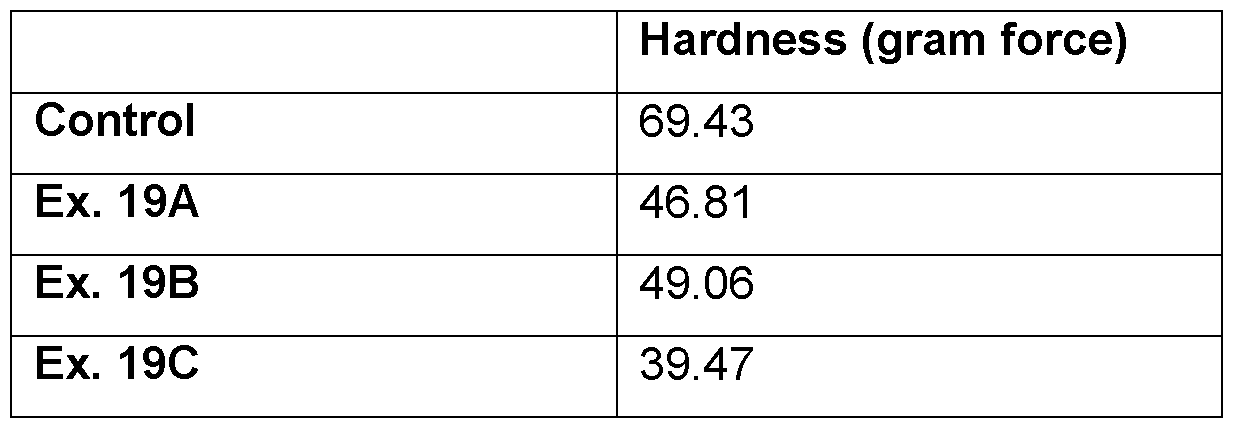






Claims
Priority Applications (6)
| Application Number | Priority Date | Filing Date | Title |
|---|---|---|---|
| MX2016006684A MX2016006684A (en) | 2013-11-22 | 2014-11-21 | Food and beverage products comprising allulose (psicose). |
| BR112016011595A BR112016011595A2 (en) | 2013-11-22 | 2014-11-21 | food and beverage products comprising alulose (psychosis) |
| US15/038,283 US20160302463A1 (en) | 2013-11-22 | 2014-11-21 | Food and beverage products comprising allulose (psicose) |
| CA2931320A CA2931320A1 (en) | 2013-11-22 | 2014-11-21 | Food and beverage products comprising allulose (psicose) |
| JP2016533160A JP2017500019A (en) | 2013-11-22 | 2014-11-21 | Food and beverage products containing allulose (psicose) |
| KR1020167016351A KR20160089551A (en) | 2013-11-22 | 2014-11-21 | Food and beverage products comprising allulose (psicose) |
Applications Claiming Priority (6)
| Application Number | Priority Date | Filing Date | Title |
|---|---|---|---|
| US201361907415P | 2013-11-22 | 2013-11-22 | |
| US61/907,415 | 2013-11-22 | ||
| US201461984444P | 2014-04-25 | 2014-04-25 | |
| US61/984,444 | 2014-04-25 | ||
| US201462056138P | 2014-09-26 | 2014-09-26 | |
| US62/056,138 | 2014-09-26 |
Publications (1)
| Publication Number | Publication Date |
|---|---|
| WO2015075473A1 true WO2015075473A1 (en) | 2015-05-28 |
Family
ID=52000872
Family Applications (1)
| Application Number | Title | Priority Date | Filing Date |
|---|---|---|---|
| PCT/GB2014/053456 Ceased WO2015075473A1 (en) | 2013-11-22 | 2014-11-21 | Food and beverage products comprising allulose (psicose) |
Country Status (8)
| Country | Link |
|---|---|
| US (1) | US20160302463A1 (en) |
| JP (1) | JP2017500019A (en) |
| KR (1) | KR20160089551A (en) |
| BR (1) | BR112016011595A2 (en) |
| CA (1) | CA2931320A1 (en) |
| CL (1) | CL2016001222A1 (en) |
| MX (1) | MX2016006684A (en) |
| WO (1) | WO2015075473A1 (en) |
Cited By (58)
| Publication number | Priority date | Publication date | Assignee | Title |
|---|---|---|---|---|
| WO2015177522A1 (en) * | 2014-05-20 | 2015-11-26 | Tate & Lyle Ingredients Americas Llc | Improved sweetener |
| GB2536304A (en) * | 2015-02-24 | 2016-09-14 | Tate & Lyle Ingredients Americas Llc | Allulose syrups |
| JP2017500043A (en) * | 2013-12-20 | 2017-01-05 | ロケット フレールRoquette Freres | Protein food containing D-allulose |
| WO2017029244A1 (en) * | 2015-08-14 | 2017-02-23 | Pfeifer & Langen GmbH & Co. KG | Powdery allulose composition |
| JP2017051107A (en) * | 2015-09-07 | 2017-03-16 | 国立大学法人 香川大学 | Growth inhibitor of heat-resistant spore-forming bacteria for processed foods and drinks |
| WO2017051166A1 (en) * | 2015-09-23 | 2017-03-30 | Tate & Lyle Ingredients Americas Llc | Methods for improving the gastrointestinal tolerance of food and beverage products comprising sweet, low-digestible carbohydrates |
| WO2017059363A1 (en) | 2015-10-02 | 2017-04-06 | Wm. Wrigley Jr. Company | Chewing gums containing allulose |
| WO2017059352A1 (en) * | 2015-10-02 | 2017-04-06 | Wm. Wrigley Jr. Company | Confections containing allulose |
| WO2017144486A1 (en) * | 2016-02-23 | 2017-08-31 | Roquette Freres | Method of preparation of chewy candies comprising crystalline allulose particles |
| WO2017144485A1 (en) | 2016-02-23 | 2017-08-31 | Roquette Freres | Method of preparation of chewy candies comprising crystalline allulose particles |
| JP2017153398A (en) * | 2016-02-29 | 2017-09-07 | キユーピー株式会社 | Vegetable-containing composition and method for producing vegetable-containing composition |
| WO2017155261A1 (en) * | 2016-03-09 | 2017-09-14 | 씨제이제일제당(주) | Allulose-containing syrup composition and food containing same |
| WO2017155345A1 (en) * | 2016-03-09 | 2017-09-14 | 씨제이제일제당(주) | Sweetener having increased acid resistance of oligosaccharides, food containing same, and method for increasing acid resistance of oligosaccharides |
| KR101817264B1 (en) * | 2015-12-22 | 2018-01-11 | 대상 주식회사 | Sweetener composition for coffee drinks and coffee drinks comprising the same |
| WO2018029351A1 (en) | 2016-08-12 | 2018-02-15 | Pfeifer & Langen GmbH & Co. KG | Liquid allulose composition |
| KR20180035413A (en) * | 2016-09-29 | 2018-04-06 | 주식회사 삼양사 | Allulose syrup and method of preparing the same |
| WO2018066835A1 (en) * | 2016-10-07 | 2018-04-12 | 씨제이제일제당(주) | Sweetener composition with improved taste quality comprising allulose and salt and method for improving taste quality of alulose using salt |
| WO2018066825A1 (en) | 2016-10-06 | 2018-04-12 | 씨제이제일제당(주) | Tomato ketchup with improved storage stability |
| WO2018084535A1 (en) | 2016-11-01 | 2018-05-11 | 주식회사 삼양사 | Low-calorie cereal bar composition |
| KR20180102042A (en) * | 2018-09-06 | 2018-09-14 | 주식회사 삼양사 | Allulose syrup and method of preparing the same |
| CN109661181A (en) * | 2016-09-01 | 2019-04-19 | Cj第制糖株式会社 | Jam and its manufacturing method comprising psicose |
| KR20190049565A (en) * | 2017-10-31 | 2019-05-09 | 씨제이제일제당 (주) | Syrup comprising saccharide comprising allulose and citrus extract and method for preparation thereof |
| EP3373745A4 (en) * | 2015-11-12 | 2019-05-22 | Petiva Private Limited | FOOD AND BEVERAGE PRODUCTS COMPRISING A LOW CALORIE, LOW GLYCEMIC INDEX (GI) SUGAR COMPOSITION AND EXTENDED ENERGY RELEASE |
| CN109922670A (en) * | 2016-10-28 | 2019-06-21 | 株式会社三养社 | Oligosaccharide syrup with improved stability |
| KR20190075888A (en) * | 2019-06-21 | 2019-07-01 | 한상갑 | Rice cake manufacturing method of the same that |
| TWI664914B (en) * | 2016-10-07 | 2019-07-11 | 南韓商Cj第一製糖股份有限公司 | Aerated water, methods for preparing,improving taste, and maintaining carbon dioxide pressure of the same,and use of allulose |
| EP3554275A1 (en) * | 2016-12-13 | 2019-10-23 | Tate & Lyle Ingredients Americas LLC | Modifying or enhancing a flavor of food and beverage products |
| JP2019532627A (en) * | 2016-12-21 | 2019-11-14 | シージェイ チェイルジェダン コーポレーションCj Cheiljedang Corporation | Amino acid beverage containing allulose |
| WO2019241146A1 (en) | 2018-06-11 | 2019-12-19 | Seattle Gummy Company | Low glycemic gummy composition and methods of making and using thereof |
| WO2019241583A1 (en) | 2018-06-14 | 2019-12-19 | Seattle Gummy Company | Low glycemic composition and methods of making and using thereof |
| JP2020500507A (en) * | 2016-11-01 | 2020-01-16 | サムヤン コーポレイション | Low calorie coffee beverage composition |
| JP2020511939A (en) * | 2016-12-09 | 2020-04-23 | シージェイ チェイルジェダン コーポレーションCj Cheiljedang Corporation | Fermented milk containing sugars with high content of allulose |
| TWI693890B (en) * | 2017-11-01 | 2020-05-21 | 南韓商Cj第一製糖股份有限公司 | Liquid composition for manufacturing cake, cake using the same and preparation method thereof |
| EP3560340A4 (en) * | 2016-12-26 | 2020-05-27 | Cj Cheiljedang Corporation | COMPOSITION FOR PROMOTING VEGETABLE LIPID EXCRETION AND COMPRISING ALLULOSIS |
| CN111248288A (en) * | 2018-11-30 | 2020-06-09 | 内蒙古伊利实业集团股份有限公司 | Composition and preparation method thereof |
| EP3536159A4 (en) * | 2016-11-01 | 2020-06-17 | Samyang Corporation | CHOCOLATE COMPOSITION HAVING IMPROVED PROCESSING ABILITY, AND METHOD FOR PREPARING THE SAME |
| TWI699374B (en) * | 2015-02-24 | 2020-07-21 | 美商塔特及賴爾原料美國有限責任公司 | Allulose syrups |
| CN111712136A (en) * | 2017-12-12 | 2020-09-25 | 株式会社三养社 | low calorie drinks |
| WO2020226909A1 (en) | 2019-05-08 | 2020-11-12 | Corn Products Development, Inc. | Binding syrup composition comprising allulose and low sugar syrups, products containing the syrup composition and methods of making |
| WO2020263992A1 (en) | 2019-06-28 | 2020-12-30 | Corn Products Development, Inc. | Fruit preps and other sweet sauces comprising sugar reduction solutions and starch |
| JP2021500051A (en) * | 2017-10-27 | 2021-01-07 | サムヤン コーポレイション | Allulose syrup and its manufacturing method |
| CN112566505A (en) * | 2018-08-10 | 2021-03-26 | 株式会社三养社 | Nutritious drink |
| WO2021080871A1 (en) | 2019-10-22 | 2021-04-29 | Corn Products Development, Inc. | Baked good compositions containing allulose |
| JP2021510493A (en) * | 2017-10-23 | 2021-04-30 | シムライズ アーゲー | Aroma composition |
| EP3714700A4 (en) * | 2017-11-24 | 2021-05-19 | Samyang Corporation | LOW CALORIE HOT SAUCE |
| EP3295808B1 (en) | 2015-05-15 | 2021-06-16 | Samyang Corporation | Saccharide mixture containing psicose with improved sweetness quality and crystallization |
| WO2021160701A1 (en) * | 2020-02-12 | 2021-08-19 | Savanna Ingredients Gmbh | Allulose in crystalline form |
| WO2021247503A2 (en) | 2020-06-02 | 2021-12-09 | Corn Products Development, Inc. | Frozen dessert compositions comprising allulose and low-sugar syrup/solids |
| EP3815540A4 (en) * | 2018-06-28 | 2022-04-20 | Samyang Corporation | SWEETENER POWDER COMPOSITION AND METHOD FOR PREPARATION |
| WO2022119954A1 (en) * | 2020-12-01 | 2022-06-09 | Seattle Gummy Company | Stable semi-solid chewable gel compositions and methods of making and using thereof |
| US20220192216A1 (en) * | 2016-12-26 | 2022-06-23 | Cj Cheiljedang Corporation | Creamer comprising vegetable lipids and allulose |
| US11548907B2 (en) | 2016-10-28 | 2023-01-10 | Tate & Lyle Solutions Usa Llc | Method for producing allulose crystals |
| US11746392B2 (en) | 2020-11-23 | 2023-09-05 | Savanna Ingredients Gmbh | Drying of allulose crystals |
| RU2812470C2 (en) * | 2019-05-08 | 2024-01-30 | Корн Продактс Дивелопмент, Инк. | Binding syrup composition containing allulose and low sugar content syrups, products containing syrup composition and methods of obtaining them |
| WO2024047121A1 (en) | 2022-09-01 | 2024-03-07 | Savanna Ingredients Gmbh | Process for the preparation of a particulate allulose composition |
| WO2024117636A1 (en) * | 2022-12-01 | 2024-06-06 | 농업회사법인 유한회사 제주테라 | Method for producing green tangerines with added sweetener |
| US12133835B2 (en) | 2016-10-10 | 2024-11-05 | Cj Cheiljedang Corporation | Extract from plant steeped in allulose and preparation method therefor |
| US12590116B2 (en) | 2016-10-28 | 2026-03-31 | Tate & Lyle Solutions Usa Llc | Method for producing allulose crystals |
Families Citing this family (78)
| Publication number | Priority date | Publication date | Assignee | Title |
|---|---|---|---|---|
| WO2018066890A2 (en) | 2016-10-06 | 2018-04-12 | 씨제이제일제당(주) | Bacterial, fungal, and yeast growth inhibitor containing allulose |
| KR101892281B1 (en) * | 2016-11-01 | 2018-08-28 | 주식회사 삼양사 | Spread composition with improved spreading property |
| KR102268545B1 (en) * | 2016-11-01 | 2021-06-24 | 주식회사 삼양사 | chocolate composition with processibliity |
| KR101874929B1 (en) * | 2016-11-01 | 2018-07-05 | 주식회사 삼양사 | Whipping cream including allulose and method of preparing the same |
| KR102268544B1 (en) * | 2016-11-01 | 2021-06-24 | 주식회사 삼양사 | method ofpreparing chocolate composition with processibliity |
| WO2018084574A1 (en) * | 2016-11-01 | 2018-05-11 | 주식회사 삼양사 | Oil and fat processing composition and food employing same |
| CN110022694B (en) * | 2016-11-24 | 2023-01-06 | Cj第一制糖株式会社 | Bean curd with improved quality and its preparation method |
| FR3061414B1 (en) | 2017-01-05 | 2021-07-16 | Roquette Freres | D-ALLULOSE CRYSTALLIZABLE SYRUPS |
| WO2018138666A1 (en) * | 2017-01-25 | 2018-08-02 | Petiva Private Ltd. | Low calorie, low glycemic index (gi), and sustained energy release brown sugar substitute |
| CN111246749A (en) | 2017-05-19 | 2020-06-05 | 可口可乐公司 | Fin momordica grosvenori I sweetening composition and application thereof |
| KR101988443B1 (en) * | 2017-06-20 | 2019-06-12 | 주식회사 삼양사 | Nutritional drink |
| KR101976111B1 (en) * | 2017-06-20 | 2019-05-07 | 주식회사 삼양사 | Fruit-vegetable drink |
| WO2019045378A1 (en) * | 2017-08-31 | 2019-03-07 | 주식회사 삼양사 | FERMENTED SOY COMPOSITION AND METHOD FOR PRODUCING SAME |
| KR20190038158A (en) * | 2017-09-29 | 2019-04-08 | 주식회사 삼양사 | Soy bean sauce composition and method for preparing the same |
| KR20190048853A (en) * | 2017-10-31 | 2019-05-09 | 씨제이제일제당 (주) | A sweet jelly comprising allulose and thereof preparation method |
| KR20190049564A (en) * | 2017-10-31 | 2019-05-09 | 씨제이제일제당 (주) | A powder for coating popcorn comprising allulose and method for preparation thereof |
| TW201927163A (en) * | 2017-10-31 | 2019-07-16 | 南韓商Cj第一製糖股份有限公司 | Frozen dough composition having improved freeze-thaw stability |
| WO2019088575A2 (en) * | 2017-10-31 | 2019-05-09 | 씨제이제일제당 (주) | Cocoa beverage premix comprising allulose and method for preparing same |
| WO2019088576A2 (en) * | 2017-10-31 | 2019-05-09 | 씨제이제일제당 (주) | Method for preventing browning of fresh fruits or vegetables by using allulose |
| KR20190048955A (en) * | 2017-10-31 | 2019-05-09 | 씨제이제일제당 (주) | A korea-pancake powder composition comprising allulose and use thereof |
| KR20190048912A (en) * | 2017-10-31 | 2019-05-09 | 씨제이제일제당 (주) | A batter mix composition for prepared frozen food comprising allulose and use thereof |
| KR102663301B1 (en) * | 2017-10-31 | 2024-05-08 | 씨제이제일제당 주식회사 | A yeast doughnut comprising allulose and preparation method thereof |
| WO2019088632A2 (en) * | 2017-10-31 | 2019-05-09 | 씨제이제일제당 (주) | Composition, for preparing chocolate sauce, comprising allulose and use thereof |
| WO2019088548A2 (en) * | 2017-10-31 | 2019-05-09 | 씨제이제일제당 (주) | Bread containing allulose and preparation method therefor |
| KR102612919B1 (en) * | 2017-10-31 | 2023-12-13 | 씨제이제일제당 주식회사 | A iced tea comprising allulose and method for preparation thereof |
| WO2019088631A2 (en) * | 2017-10-31 | 2019-05-09 | 씨제이제일제당 (주) | Composition, for preparing spread, comprising allulose and use thereof |
| WO2019088573A2 (en) * | 2017-10-31 | 2019-05-09 | 씨제이제일제당 (주) | Jelly candy comprising allulose and production method thereof |
| KR20190049304A (en) * | 2017-11-01 | 2019-05-09 | 씨제이제일제당 (주) | A batter mix composition comprising allulose and use thereof |
| KR102204328B1 (en) * | 2017-11-01 | 2021-01-20 | 씨제이제일제당 주식회사 | A cream composition comprising allulose |
| WO2019088710A2 (en) * | 2017-11-01 | 2019-05-09 | 씨제이제일제당 (주) | Composition for manufacturing water-holding capacity enhancer for processed meat product, containing allulose, and use thereof |
| KR20190049534A (en) * | 2017-11-01 | 2019-05-09 | 씨제이제일제당 (주) | A sauce composition comprising allulose and use thereof |
| CN108094772A (en) * | 2017-12-08 | 2018-06-01 | 桂林莱茵生物科技股份有限公司 | A kind of grosvenor momordica fruit juice and preparation method thereof |
| KR102314002B1 (en) * | 2017-12-12 | 2021-10-18 | 주식회사 삼양사 | Water beverage with low calories |
| TWI693891B (en) * | 2017-12-12 | 2020-05-21 | 南韓商Cj第一製糖股份有限公司 | Composition for preparing cream cheese filling for bakery products comprising allulose and use thereof |
| JP7062460B2 (en) * | 2018-02-16 | 2022-05-06 | 森永乳業株式会社 | Fermented milk production method |
| KR101963129B1 (en) * | 2018-03-14 | 2019-03-28 | 김삼범 | Method for manufacturing bread using stevia extract and bread manufactured by the same |
| JP6996744B2 (en) * | 2018-03-29 | 2022-01-17 | 松谷化学工業株式会社 | Stabilizers for acidic dairy beverages and acidic dairy beverages containing them |
| WO2019194757A1 (en) * | 2018-04-07 | 2019-10-10 | Ucar Dilek | Food protection of fruit, cereal and vegetable and derivatives |
| KR102326587B1 (en) * | 2018-06-28 | 2021-11-15 | 주식회사 삼양사 | Low calorie soy milk with reduced soybean odor |
| WO2020005024A1 (en) * | 2018-06-29 | 2020-01-02 | 주식회사 삼양사 | Gel-type food composition and manufacturing method therefor |
| US20210259292A1 (en) * | 2018-06-29 | 2021-08-26 | Samyang Corporation | Gel-type food composition and manufacturing method therefor |
| US20210177004A1 (en) * | 2018-08-08 | 2021-06-17 | Brigham Young University | Carbonated Frozen Dessert |
| EP3834620B1 (en) * | 2018-08-10 | 2025-05-14 | Samyang Corporation | Coffee milk drink composition |
| KR102414674B1 (en) * | 2018-08-10 | 2022-06-29 | 주식회사 삼양사 | Sweetener powder composition and method of preparing the same |
| WO2020032300A1 (en) * | 2018-08-10 | 2020-02-13 | 주식회사 삼양사 | Carbonated drink |
| CN112566506A (en) * | 2018-08-10 | 2021-03-26 | 株式会社三养社 | Fruit and vegetable beverage |
| KR102207366B1 (en) * | 2018-12-20 | 2021-01-26 | 대상 주식회사 | Plum extract composition comprising allulose and method of manufacturing the same |
| KR102071068B1 (en) * | 2018-12-24 | 2020-01-29 | 주식회사 삼양사 | Low calorie cereal bar composition |
| KR102254747B1 (en) * | 2019-01-03 | 2021-05-21 | 홍은비 | Method for Manufacturing Dough Cmposition for Making Bread |
| CA3126077A1 (en) * | 2019-01-22 | 2020-07-30 | The Hershey Company | Filling composition for a confectionery product |
| KR102277493B1 (en) * | 2019-02-19 | 2021-07-14 | 씨제이제일제당 (주) | Composition for production of candy |
| CN113507843A (en) * | 2019-03-05 | 2021-10-15 | 西姆莱斯有限公司 | Contains a blend of rare sugars and taste-modifying compounds |
| EP3704954A1 (en) * | 2019-03-05 | 2020-09-09 | Symrise AG | Mixture comprising d-allulose and taste modifying compounds |
| JP2022551971A (en) * | 2019-10-14 | 2022-12-14 | テイト アンド ライル ソリューションズ ユー・エス・エー エル・エル・シー | Flavor-altering and/or sweetening-enhancing compositions and methods, and food and beverage products based thereon |
| US12302917B2 (en) * | 2019-10-29 | 2025-05-20 | Samyang Corporation | Emulsified composition containing allulose |
| KR102381319B1 (en) * | 2019-10-31 | 2022-03-31 | 주식회사 삼양사 | Thermosensitive food composition |
| EP3864966A1 (en) * | 2020-02-12 | 2021-08-18 | Savanna Ingredients GmbH | Oral compositions comprising allulose crystals |
| US12219972B2 (en) | 2020-02-20 | 2025-02-11 | Top Gum Industries Ltd | Plant based ready to consume gel products with no added sugar and their use in delivery of agents |
| WO2021190982A1 (en) | 2020-03-23 | 2021-09-30 | Unilever Ip Holdings B.V. | Frozen confection |
| WO2021219770A1 (en) * | 2020-04-30 | 2021-11-04 | Firmenich Sa | Flavor particle, its process of manufacture and use for stabilizing flavor |
| WO2021255015A2 (en) * | 2020-06-17 | 2021-12-23 | Frieslandcampina Nederland B.V. | Instant beverage foaming composition |
| US20230309593A1 (en) * | 2020-08-27 | 2023-10-05 | Olam Americas, Llc | Onion Food Product and Methods of Making and Use Thereof |
| CA3192084A1 (en) | 2020-09-07 | 2022-03-10 | Savanna Ingredients Gmbh | Extrusion process for the preparation of a solid allulose composition |
| EP3994999A1 (en) * | 2020-11-06 | 2022-05-11 | Société des Produits Nestlé S.A. | Packaged liquid beverage |
| JP7738840B2 (en) * | 2021-01-08 | 2025-09-16 | 松谷化学工業株式会社 | Baked grain flour foods with good release properties |
| JP7627933B2 (en) * | 2021-02-15 | 2025-02-07 | 松谷化学工業株式会社 | Bean paste products and their manufacturing method |
| US20230013964A1 (en) * | 2021-06-17 | 2023-01-19 | Ocean Spray Cranberries, Inc. | Rare Sugars in Food and Beverage Products |
| JP7716084B2 (en) * | 2021-06-22 | 2025-07-31 | 松谷化学工業株式会社 | Pie dough and its manufacturing method |
| US11696586B1 (en) | 2022-01-28 | 2023-07-11 | Simply Good Foods Usa, Inc. | Starch-free baked foods and methods of making |
| WO2023146531A1 (en) * | 2022-01-28 | 2023-08-03 | Simply Good Foods Usa, Inc. | Starch-free baked foods and methods of making |
| US20230284659A1 (en) * | 2022-03-11 | 2023-09-14 | Brinda Aceituno | Vitamin Enhanced Beverage |
| KR102878418B1 (en) * | 2022-12-12 | 2025-10-29 | 주식회사 삼양사 | Fish cake comprising allulose |
| KR102926170B1 (en) * | 2023-03-30 | 2026-02-11 | 대상 주식회사 | Filling jam with improved storage stability and manufacturing method thereof |
| WO2024226551A1 (en) * | 2023-04-27 | 2024-10-31 | Corn Products Development, Inc. | Reduced sugar gluten-free bread with sucrose-like taste |
| KR102826342B1 (en) * | 2023-08-01 | 2025-06-27 | 이학준 | Glutinous rice ball snack manufacturing method |
| KR20250170747A (en) * | 2024-05-28 | 2025-12-08 | 김동환 | Frozen dessert base composition and method for manufacturing frozen desserts using the same |
| KR102886456B1 (en) * | 2024-09-13 | 2025-11-14 | 농업회사법인 논산고구마 주식회사 | Method for manufacturing sweet potato spread |
| KR102884008B1 (en) * | 2025-05-07 | 2025-11-10 | (주)영수식품 | Sweetener Composition Comprising Aqueous Allulose |
Citations (5)
| Publication number | Priority date | Publication date | Assignee | Title |
|---|---|---|---|---|
| US20090304891A1 (en) * | 2006-11-10 | 2009-12-10 | Matsutani Chemical Industry Co., Ltd. | Sweetener containing d-psicose and foods and drinks obtained by using the same |
| US20120070534A1 (en) * | 2010-09-16 | 2012-03-22 | Matsutani Chemical Industry Co., Ltd. | Alcoholic beverage and beer-flavored beverage each having improved quality of taste and method of producing the same |
| US20120076908A1 (en) * | 2010-09-29 | 2012-03-29 | Matsutani Chemical Industry Co., Ltd. | Composition for improving taste of high-intensity sweetener and application thereof |
| JP5308585B1 (en) * | 2013-03-14 | 2013-10-09 | 株式会社 伊藤園 | Fruit juice-containing beverage, method for producing the same, and refreshing method and aftertaste improving method for fruit juice-containing beverage |
| JP5314207B1 (en) * | 2013-03-14 | 2013-10-16 | 株式会社 伊藤園 | Mineral-containing beverage and method for producing the same, and method for suppressing salty taste of mineral-containing beverage |
-
2014
- 2014-11-21 BR BR112016011595A patent/BR112016011595A2/en not_active Application Discontinuation
- 2014-11-21 US US15/038,283 patent/US20160302463A1/en not_active Abandoned
- 2014-11-21 MX MX2016006684A patent/MX2016006684A/en unknown
- 2014-11-21 CA CA2931320A patent/CA2931320A1/en not_active Abandoned
- 2014-11-21 WO PCT/GB2014/053456 patent/WO2015075473A1/en not_active Ceased
- 2014-11-21 JP JP2016533160A patent/JP2017500019A/en active Pending
- 2014-11-21 KR KR1020167016351A patent/KR20160089551A/en not_active Withdrawn
-
2016
- 2016-05-20 CL CL2016001222A patent/CL2016001222A1/en unknown
Patent Citations (5)
| Publication number | Priority date | Publication date | Assignee | Title |
|---|---|---|---|---|
| US20090304891A1 (en) * | 2006-11-10 | 2009-12-10 | Matsutani Chemical Industry Co., Ltd. | Sweetener containing d-psicose and foods and drinks obtained by using the same |
| US20120070534A1 (en) * | 2010-09-16 | 2012-03-22 | Matsutani Chemical Industry Co., Ltd. | Alcoholic beverage and beer-flavored beverage each having improved quality of taste and method of producing the same |
| US20120076908A1 (en) * | 2010-09-29 | 2012-03-29 | Matsutani Chemical Industry Co., Ltd. | Composition for improving taste of high-intensity sweetener and application thereof |
| JP5308585B1 (en) * | 2013-03-14 | 2013-10-09 | 株式会社 伊藤園 | Fruit juice-containing beverage, method for producing the same, and refreshing method and aftertaste improving method for fruit juice-containing beverage |
| JP5314207B1 (en) * | 2013-03-14 | 2013-10-16 | 株式会社 伊藤園 | Mineral-containing beverage and method for producing the same, and method for suppressing salty taste of mineral-containing beverage |
Non-Patent Citations (4)
| Title |
|---|
| DR SUSAN CARLSON ET AL: "ORIGINAL SUBMISSION 000001 Division of Biot echnology and GRAS Notice Review", 24 August 2011 (2011-08-24), XP055167619, Retrieved from the Internet <URL:http://www.fda.gov/ucm/groups/fdagov-public/@fdagov-foods-gen/documents/document/ucm277372.pdf> [retrieved on 20150205] * |
| FOODNAVIGATOR.COM: "Rare sugar may replace sucrose for bakery and beyond", 9 June 2008 (2008-06-09), XP055184284, Retrieved from the Internet <URL:http://www.foodnavigator.com/Science/Rare-sugar-may-replace-sucrose-for-bakery-and-beyond> [retrieved on 20150420] * |
| HISAKA OSHIMA +ῃ ET AL: "Psicose Contents in Various Food Products and its Origin", 24 April 2006 (2006-04-24), XP055167568, Retrieved from the Internet <URL:http://www.panelamonitor.org/media/docrepo/document/files/psicose-contents-in-various-food-products-and-its-origin.pdf> [retrieved on 20150205] * |
| LONGTAO ZHANG ET AL: "Bioproduction of D-psicose using permeabilized cells of newly isolated Rhodobacter sphaeroides SK011", FRONTIERS OF CHEMICAL ENGINEERING IN CHINA, vol. 3, no. 4, 1 October 2009 (2009-10-01), pages 393 - 398, XP055184282, ISSN: 1673-7369, DOI: 10.1007/s11705-009-0252-z * |
Cited By (150)
| Publication number | Priority date | Publication date | Assignee | Title |
|---|---|---|---|---|
| JP2017500043A (en) * | 2013-12-20 | 2017-01-05 | ロケット フレールRoquette Freres | Protein food containing D-allulose |
| WO2015177522A1 (en) * | 2014-05-20 | 2015-11-26 | Tate & Lyle Ingredients Americas Llc | Improved sweetener |
| JP2020171296A (en) * | 2014-05-20 | 2020-10-22 | テート アンド ライル イングリーディエンツ アメリカズ エルエルシー | Improved sweetener |
| EP3738441A1 (en) * | 2014-05-20 | 2020-11-18 | Tate & Lyle Ingredients Americas LLC | Improved sweetener |
| US11653688B2 (en) | 2015-02-24 | 2023-05-23 | Tate & Lyle Solutions Usa Llc | Allulose syrups |
| EP3261455B1 (en) | 2015-02-24 | 2022-01-26 | Tate & Lyle Ingredients Americas LLC | Allulose syrups |
| TWI699374B (en) * | 2015-02-24 | 2020-07-21 | 美商塔特及賴爾原料美國有限責任公司 | Allulose syrups |
| GB2536304B (en) * | 2015-02-24 | 2019-10-23 | Tate & Lyle Tech Ltd | Allulose syrups |
| US12550923B2 (en) | 2015-02-24 | 2026-02-17 | Tate & Lyle Solutions Usa Llc | Allulose syrups |
| GB2536304A (en) * | 2015-02-24 | 2016-09-14 | Tate & Lyle Ingredients Americas Llc | Allulose syrups |
| EP3295808B1 (en) | 2015-05-15 | 2021-06-16 | Samyang Corporation | Saccharide mixture containing psicose with improved sweetness quality and crystallization |
| WO2017029244A1 (en) * | 2015-08-14 | 2017-02-23 | Pfeifer & Langen GmbH & Co. KG | Powdery allulose composition |
| JP2017051107A (en) * | 2015-09-07 | 2017-03-16 | 国立大学法人 香川大学 | Growth inhibitor of heat-resistant spore-forming bacteria for processed foods and drinks |
| AU2020286207B2 (en) * | 2015-09-23 | 2021-12-02 | Tate & Lyle Solutions Usa Llc | Methods for improving the gastrointestinal tolerance of food and beverage products comprising sweet, low-digestible carbohydrates |
| AU2016325575B2 (en) * | 2015-09-23 | 2020-10-15 | Tate & Lyle Solutions Usa Llc | Methods for improving the gastrointestinal tolerance of food and beverage products comprising sweet, low-digestible carbohydrates |
| US10933074B2 (en) | 2015-09-23 | 2021-03-02 | Tate & Lyle Ingredients Americas Llc | Methods for improving the gastrointestinal tolerance of food and beverage products comprising sweet, low-digestible carbohydrates |
| JP2018527031A (en) * | 2015-09-23 | 2018-09-20 | テート アンド ライル イングリーディエンツ アメリカズ エルエルシー | Method for improving gastrointestinal tolerance of food and beverage products containing sweet and poorly digestible carbohydrates |
| US20180264018A1 (en) * | 2015-09-23 | 2018-09-20 | Tate & Lyle Ingredients Americas Llc | Methods for improving the gastrointestinal tolerance of food and beverage products comprising sweet, low-digestible carbohydrates |
| WO2017051166A1 (en) * | 2015-09-23 | 2017-03-30 | Tate & Lyle Ingredients Americas Llc | Methods for improving the gastrointestinal tolerance of food and beverage products comprising sweet, low-digestible carbohydrates |
| JP7112326B2 (en) | 2015-09-23 | 2022-08-03 | テート アンド ライル ソリューションズ ユーエスエー エルエルシー | Method for improving gastrointestinal tolerance of food and beverage products containing sweet and low-digestible carbohydrates |
| RU2721237C1 (en) * | 2015-10-02 | 2020-05-18 | Вм. Ригли Джр. Компани | Chewing gum containing allulose |
| WO2017059363A1 (en) | 2015-10-02 | 2017-04-06 | Wm. Wrigley Jr. Company | Chewing gums containing allulose |
| CN108135213A (en) * | 2015-10-02 | 2018-06-08 | Wm.雷格利Jr.公司 | Chewing gum containing psicose |
| CN108135209A (en) * | 2015-10-02 | 2018-06-08 | Wm.雷格利Jr.公司 | Confectionery Containing Allulose |
| EP3854217A1 (en) | 2015-10-02 | 2021-07-28 | Wm. Wrigley Jr. Company | Confections containing allulose |
| WO2017059352A1 (en) * | 2015-10-02 | 2017-04-06 | Wm. Wrigley Jr. Company | Confections containing allulose |
| RU2727538C1 (en) * | 2015-10-02 | 2020-07-22 | Вм. Ригли Джр. Компани | Confectionary products containing allulose |
| AU2016331214B2 (en) * | 2015-10-02 | 2021-03-25 | Wm. Wrigley Jr. Company | Confections containing allulose |
| EP3373745A4 (en) * | 2015-11-12 | 2019-05-22 | Petiva Private Limited | FOOD AND BEVERAGE PRODUCTS COMPRISING A LOW CALORIE, LOW GLYCEMIC INDEX (GI) SUGAR COMPOSITION AND EXTENDED ENERGY RELEASE |
| KR101817264B1 (en) * | 2015-12-22 | 2018-01-11 | 대상 주식회사 | Sweetener composition for coffee drinks and coffee drinks comprising the same |
| US11369124B2 (en) | 2016-02-23 | 2022-06-28 | Roquette Freres | Method of preparation of chewy candies comprising crystalline allulose particles |
| US20190053512A1 (en) * | 2016-02-23 | 2019-02-21 | Roquette Freres | Method of preparation of chewy candies comprising crystalline allulose particles |
| JP2019505237A (en) * | 2016-02-23 | 2019-02-28 | ロケット フレールRoquette Freres | Method for preparing chewy candy containing crystalline allulose particles |
| WO2017144486A1 (en) * | 2016-02-23 | 2017-08-31 | Roquette Freres | Method of preparation of chewy candies comprising crystalline allulose particles |
| WO2017144485A1 (en) | 2016-02-23 | 2017-08-31 | Roquette Freres | Method of preparation of chewy candies comprising crystalline allulose particles |
| KR20180116272A (en) * | 2016-02-23 | 2018-10-24 | 로께뜨프레르 | Process for producing chewy candies comprising crystalline alurus particles |
| KR102810710B1 (en) * | 2016-02-23 | 2025-05-21 | 로께뜨프레르 | Method for producing chewy candy comprising crystalline allulose particles |
| JP2017153398A (en) * | 2016-02-29 | 2017-09-07 | キユーピー株式会社 | Vegetable-containing composition and method for producing vegetable-containing composition |
| CN108601383A (en) * | 2016-03-09 | 2018-09-28 | Cj第制糖株式会社 | Sweetener with the increased oligosaccharides of acid resistance, the food comprising the sweetener and the increase acid proof method of oligosaccharides |
| CN108697140A (en) * | 2016-03-09 | 2018-10-23 | Cj第制糖株式会社 | Syrup composition containing allulose and food containing the composition |
| KR101852555B1 (en) * | 2016-03-09 | 2018-04-27 | 씨제이제일제당(주) | Composition for syrup containing allulose and food comprising the composition |
| KR101852556B1 (en) * | 2016-03-09 | 2018-04-27 | 씨제이제일제당(주) | Composition for syrup containing allulose and food comprising the composition |
| CN108601383B (en) * | 2016-03-09 | 2022-08-12 | Cj第一制糖株式会社 | Sweetener with oligosaccharide with increased acid resistance, food composition comprising the same, and method for increasing acid resistance of oligosaccharide |
| US11969000B2 (en) | 2016-03-09 | 2024-04-30 | Cj Cheiljedang Corporation | Sweetener having increased acid resistance of oligosaccharides, food containing same, and method for increasing acid resistance of oligosaccharides |
| TWI660681B (en) * | 2016-03-09 | 2019-06-01 | Cj Cheiljedang Corp. | Sweetener having an improved acid-resistance of oligosaccharide,food composition comprising the same, and methods for improving acid-resistance of ligosaccharide |
| TWI656844B (en) * | 2016-03-09 | 2019-04-21 | Cj第一製糖股份有限公司 | Composition for syrup containing allulose and food comprising the composition |
| US10912322B2 (en) | 2016-03-09 | 2021-02-09 | Cj Cheiljedang Corporation | Allulose-containing syrup composition and food containing same |
| CN108697140B (en) * | 2016-03-09 | 2021-10-29 | Cj第一制糖株式会社 | Allulose-containing syrup composition and food containing the same |
| WO2017155345A1 (en) * | 2016-03-09 | 2017-09-14 | 씨제이제일제당(주) | Sweetener having increased acid resistance of oligosaccharides, food containing same, and method for increasing acid resistance of oligosaccharides |
| JP2020171309A (en) * | 2016-03-09 | 2020-10-22 | シージェイ チェルジェダン コーポレイション | Sweeteners with improved acid resistance of oligosaccharides, foods containing them, and methods for improving acid resistance of oligosaccharides |
| WO2017155261A1 (en) * | 2016-03-09 | 2017-09-14 | 씨제이제일제당(주) | Allulose-containing syrup composition and food containing same |
| JP7175295B2 (en) | 2016-03-09 | 2022-11-18 | シージェイ チェルジェダン コーポレイション | Sweetener with improved acid resistance of oligosaccharide, food containing same, and method for improving acid resistance of oligosaccharide |
| JP2019508035A (en) * | 2016-03-09 | 2019-03-28 | シージェイ チェルジェダン コーポレイション | Syrup composition containing psicose and food containing the same |
| JP2019505219A (en) * | 2016-03-09 | 2019-02-28 | シージェイ チェルジェダン コーポレイション | Sweetener with improved acid resistance of oligosaccharide, food containing the same, and method for improving acid resistance of oligosaccharide |
| JP2020099339A (en) * | 2016-03-09 | 2020-07-02 | シージェイ チェルジェダン コーポレイション | Psicose-containing syrup composition and food containing same |
| JP7108601B2 (en) | 2016-08-12 | 2022-07-28 | サヴァンナ・イングレディエンツ・ゲゼルシャフト・ミット・ベシュレンクテル・ハフツング | Liquid allulose composition |
| WO2018029351A1 (en) | 2016-08-12 | 2018-02-15 | Pfeifer & Langen GmbH & Co. KG | Liquid allulose composition |
| JP2019524139A (en) * | 2016-08-12 | 2019-09-05 | ファイファー・ウント・ランゲン・ゲゼルシャフト・ミット・ベシュレンクテル・ハフツング・ウント・コンパニー・コマンディートゲゼルシャフト | Liquid allulose composition |
| EP3496551B1 (en) | 2016-08-12 | 2024-10-02 | Savanna Ingredients GmbH | Liquid allulose composition |
| EP4461142A2 (en) | 2016-08-12 | 2024-11-13 | Savanna Ingredients GmbH | Liquid allulose composition |
| EP4461142A3 (en) * | 2016-08-12 | 2024-12-25 | Savanna Ingredients GmbH | Liquid allulose composition |
| JP2019526259A (en) * | 2016-09-01 | 2019-09-19 | シージェイ チェイルジェダン コーポレーションCj Cheiljedang Corporation | Fruit jam containing allulose and method for producing the same |
| TWI656842B (en) * | 2016-09-01 | 2019-04-21 | Cj第一製糖股份有限公司 | Fruit jam comprising allulose, method for preparing the same, and method for reducing bubbles of the same |
| EP3508073A4 (en) * | 2016-09-01 | 2020-04-15 | CJ Cheiljedang Corporation | FRUIT JAM WITH ALLULOSE AND METHOD FOR THE PRODUCTION THEREOF |
| CN109661181A (en) * | 2016-09-01 | 2019-04-19 | Cj第制糖株式会社 | Jam and its manufacturing method comprising psicose |
| KR20180035413A (en) * | 2016-09-29 | 2018-04-06 | 주식회사 삼양사 | Allulose syrup and method of preparing the same |
| KR101898221B1 (en) * | 2016-09-29 | 2018-09-12 | 주식회사 삼양사 | Allulose syrup and method of preparing the same |
| EP3524066A4 (en) * | 2016-10-06 | 2020-05-20 | CJ CheilJedang Corporation | TOMATO KETCHUP WITH IMPROVED STORAGE STABILITY |
| WO2018066825A1 (en) | 2016-10-06 | 2018-04-12 | 씨제이제일제당(주) | Tomato ketchup with improved storage stability |
| EP4361241A3 (en) * | 2016-10-06 | 2024-05-08 | CJ Cheiljedang Corporation | Tomato ketchup with improved storage stability |
| US10980261B2 (en) | 2016-10-06 | 2021-04-20 | Cj Cheiljedang Corporation | Tomato ketchup with improved storage stability |
| TWI731171B (en) * | 2016-10-06 | 2021-06-21 | 南韓商Cj第一製糖股份有限公司 | Tomato ketchup having improved storage stability and method for improving storage stability of tomato ketchup |
| JP2019528768A (en) * | 2016-10-06 | 2019-10-17 | シージェイ チェイルジェダン コーポレーションCj Cheiljedang Corporation | Tomato ketchup with improved storage stability |
| JP7031825B2 (en) | 2016-10-06 | 2022-03-08 | シージェイ チェイルジェダン コーポレーション | Tomato ketchup with improved storage stability |
| JP2019528775A (en) * | 2016-10-07 | 2019-10-17 | シージェイ チェイルジェダン コーポレーションCj Cheiljedang Corporation | Sweetness composition with improved taste quality containing allulose and salt and method for improving taste quality of allulose using salt |
| JP2019531080A (en) * | 2016-10-07 | 2019-10-31 | シージェイ チェイルジェダン コーポレーションCj Cheiljedang Corporation | Carbonated water containing allulose and method for producing the same |
| KR101981397B1 (en) * | 2016-10-07 | 2019-05-23 | 씨제이제일제당 (주) | Sweetener compositions having improved quality of taste comprising allulose and salt, and a method for improving the quality of taste of allulose using salt |
| EP3524064A4 (en) * | 2016-10-07 | 2020-06-10 | CJ CheilJedang Corporation | SWEETENER COMPOSITION WITH IMPROVED TASTE QUALITY COMPRISING ALLULOSE AND SALT AND METHOD FOR IMPROVING TASTE QUALITY OF ALULOSE WITH SALT |
| CN109788791A (en) * | 2016-10-07 | 2019-05-21 | Cj第一制糖株式会社 | The method of the sweetener composition comprising psicose and salt with improved taste matter and the taste matter using salt improvement psicose |
| WO2018066835A1 (en) * | 2016-10-07 | 2018-04-12 | 씨제이제일제당(주) | Sweetener composition with improved taste quality comprising allulose and salt and method for improving taste quality of alulose using salt |
| KR20180038967A (en) * | 2016-10-07 | 2018-04-17 | 씨제이제일제당 (주) | Sweetener compositions having improved quality of taste comprising allulose and salt, and a method for improving the quality of taste of allulose using salt |
| US11653684B2 (en) | 2016-10-07 | 2023-05-23 | Cj Cheiljedang Corporation | Sweetener composition with improved taste quality comprising allulose and salt and method for improving taste quality of alulose using salt |
| TWI664914B (en) * | 2016-10-07 | 2019-07-11 | 南韓商Cj第一製糖股份有限公司 | Aerated water, methods for preparing,improving taste, and maintaining carbon dioxide pressure of the same,and use of allulose |
| EP3524060A4 (en) * | 2016-10-07 | 2020-05-27 | CJ Cheiljedang Corporation | CARBONATED WATER CONTAINING ALLULOSE AND PROCESS FOR PREPARING SAME |
| CN109788791B (en) * | 2016-10-07 | 2023-10-13 | Cj第一制糖株式会社 | Sweetener composition containing psicose and salt with improved taste quality and method of using salt to improve the taste quality of allulose |
| US12133835B2 (en) | 2016-10-10 | 2024-11-05 | Cj Cheiljedang Corporation | Extract from plant steeped in allulose and preparation method therefor |
| CN109922670A (en) * | 2016-10-28 | 2019-06-21 | 株式会社三养社 | Oligosaccharide syrup with improved stability |
| IL289910B1 (en) * | 2016-10-28 | 2023-05-01 | Tate And Lyle Ingredients Americas Llc | Method for producing allulose crystals |
| US12590116B2 (en) | 2016-10-28 | 2026-03-31 | Tate & Lyle Solutions Usa Llc | Method for producing allulose crystals |
| US11548907B2 (en) | 2016-10-28 | 2023-01-10 | Tate & Lyle Solutions Usa Llc | Method for producing allulose crystals |
| US12264176B2 (en) | 2016-10-28 | 2025-04-01 | Tate & Lyle Solutions Usa Llc | Method for producing allulose crystals |
| IL289910B2 (en) * | 2016-10-28 | 2023-09-01 | Tate And Lyle Ingredients Americas Llc | Method for producing allulose crystals |
| US11653667B2 (en) | 2016-11-01 | 2023-05-23 | Samyang Corporation | Chocolate composition having improved processability, and preparation method therefor |
| EP3536159A4 (en) * | 2016-11-01 | 2020-06-17 | Samyang Corporation | CHOCOLATE COMPOSITION HAVING IMPROVED PROCESSING ABILITY, AND METHOD FOR PREPARING THE SAME |
| US11019831B2 (en) | 2016-11-01 | 2021-06-01 | Samyang Corporation | Low calorie coffee beverage composition |
| WO2018084535A1 (en) | 2016-11-01 | 2018-05-11 | 주식회사 삼양사 | Low-calorie cereal bar composition |
| JP2020500507A (en) * | 2016-11-01 | 2020-01-16 | サムヤン コーポレイション | Low calorie coffee beverage composition |
| JP2020511939A (en) * | 2016-12-09 | 2020-04-23 | シージェイ チェイルジェダン コーポレーションCj Cheiljedang Corporation | Fermented milk containing sugars with high content of allulose |
| EP3554275A1 (en) * | 2016-12-13 | 2019-10-23 | Tate & Lyle Ingredients Americas LLC | Modifying or enhancing a flavor of food and beverage products |
| JP2019532627A (en) * | 2016-12-21 | 2019-11-14 | シージェイ チェイルジェダン コーポレーションCj Cheiljedang Corporation | Amino acid beverage containing allulose |
| US11812769B2 (en) | 2016-12-21 | 2023-11-14 | Cj Cheiljedang Corporation | Amino acid beverage containing allulose |
| US11968990B2 (en) | 2016-12-26 | 2024-04-30 | Cj Cheiljedang Corporation | Creamer comprising vegetable lipids and allulose |
| EP3560340A4 (en) * | 2016-12-26 | 2020-05-27 | Cj Cheiljedang Corporation | COMPOSITION FOR PROMOTING VEGETABLE LIPID EXCRETION AND COMPRISING ALLULOSIS |
| US11191285B2 (en) | 2016-12-26 | 2021-12-07 | Cj Cheiljedang Corporation | Allulose-containing composition for promoting excretion of vegetable lipids from the body |
| US20220192216A1 (en) * | 2016-12-26 | 2022-06-23 | Cj Cheiljedang Corporation | Creamer comprising vegetable lipids and allulose |
| JP7003249B2 (en) | 2017-10-23 | 2022-01-20 | シムライズ アーゲー | Aroma composition |
| JP2021510493A (en) * | 2017-10-23 | 2021-04-30 | シムライズ アーゲー | Aroma composition |
| JP6992175B2 (en) | 2017-10-27 | 2022-01-13 | サムヤン コーポレイション | Allose syrup and its manufacturing method |
| JP2021500051A (en) * | 2017-10-27 | 2021-01-07 | サムヤン コーポレイション | Allulose syrup and its manufacturing method |
| EP3701808A4 (en) * | 2017-10-27 | 2021-06-02 | Samyang Corporation | ALLULOSE SYRUP AND ITS MANUFACTURING PROCESS |
| KR20190049565A (en) * | 2017-10-31 | 2019-05-09 | 씨제이제일제당 (주) | Syrup comprising saccharide comprising allulose and citrus extract and method for preparation thereof |
| KR102215445B1 (en) | 2017-10-31 | 2021-02-17 | 씨제이제일제당 주식회사 | Syrup comprising saccharide comprising allulose and citrus extract and method for preparation thereof |
| TWI693890B (en) * | 2017-11-01 | 2020-05-21 | 南韓商Cj第一製糖股份有限公司 | Liquid composition for manufacturing cake, cake using the same and preparation method thereof |
| EP3714700A4 (en) * | 2017-11-24 | 2021-05-19 | Samyang Corporation | LOW CALORIE HOT SAUCE |
| US11399557B2 (en) | 2017-11-24 | 2022-08-02 | Samyang Corporation | Low-calorie hot sauce |
| CN111712136A (en) * | 2017-12-12 | 2020-09-25 | 株式会社三养社 | low calorie drinks |
| WO2019241146A1 (en) | 2018-06-11 | 2019-12-19 | Seattle Gummy Company | Low glycemic gummy composition and methods of making and using thereof |
| EP3801531A4 (en) * | 2018-06-11 | 2022-04-20 | Seattle Gummy Company | LOW GLYCEMIC GUMMY COMPOSITION AND METHODS OF MAKING AND USING THEREOF |
| EP3806657A4 (en) * | 2018-06-14 | 2022-03-30 | Seattle Gummy Company | LOW GLYCEMIC INDEX COMPOSITIONS AND METHODS OF MAKING AND USING THEREOF |
| WO2019241583A1 (en) | 2018-06-14 | 2019-12-19 | Seattle Gummy Company | Low glycemic composition and methods of making and using thereof |
| CN112292040A (en) * | 2018-06-14 | 2021-01-29 | 西雅图咖米公司 | Hypoglycemic compositions and methods of making and using the same |
| EP3815540A4 (en) * | 2018-06-28 | 2022-04-20 | Samyang Corporation | SWEETENER POWDER COMPOSITION AND METHOD FOR PREPARATION |
| EP3834623A4 (en) * | 2018-08-10 | 2022-03-02 | Samyang Corporation | NUTRITIONAL DRINK |
| CN112566505A (en) * | 2018-08-10 | 2021-03-26 | 株式会社三养社 | Nutritious drink |
| KR20180102042A (en) * | 2018-09-06 | 2018-09-14 | 주식회사 삼양사 | Allulose syrup and method of preparing the same |
| KR102020027B1 (en) | 2018-09-06 | 2019-11-04 | 주식회사 삼양사 | Allulose syrup and method of preparing the same |
| CN111248288A (en) * | 2018-11-30 | 2020-06-09 | 内蒙古伊利实业集团股份有限公司 | Composition and preparation method thereof |
| CN113710103B (en) * | 2019-05-08 | 2025-01-03 | 玉米产品开发公司 | Binding syrup composition comprising allulose and low-sugar sugar syrup, product comprising the syrup composition, and preparation method |
| CN113710103A (en) * | 2019-05-08 | 2021-11-26 | 玉米产品开发公司 | Cohesive syrup compositions comprising allulose and low sugar syrups, products comprising the syrup compositions, and methods of making |
| RU2812470C2 (en) * | 2019-05-08 | 2024-01-30 | Корн Продактс Дивелопмент, Инк. | Binding syrup composition containing allulose and low sugar content syrups, products containing syrup composition and methods of obtaining them |
| AU2020268178B2 (en) * | 2019-05-08 | 2025-08-21 | Corn Products Development, Inc. | Binding syrup composition comprising allulose and low sugar syrups, products containing the syrup composition and methods of making |
| EP4420527A2 (en) | 2019-05-08 | 2024-08-28 | Corn Products Development, Inc. | Binding syrup composition comprising allulose and low sugar syrups, products containing the syrup composition and methods of making |
| WO2020226909A1 (en) | 2019-05-08 | 2020-11-12 | Corn Products Development, Inc. | Binding syrup composition comprising allulose and low sugar syrups, products containing the syrup composition and methods of making |
| US12285036B2 (en) | 2019-05-08 | 2025-04-29 | Corn Products Development, Inc. | Binding syrup composition comprising allulose and low sugar syrups, products containing the syrup composition and methods of making |
| EP4420527A3 (en) * | 2019-05-08 | 2024-12-04 | Corn Products Development, Inc. | Binding syrup composition comprising allulose and low sugar syrups, products containing the syrup composition and methods of making |
| KR102108009B1 (en) * | 2019-06-21 | 2020-05-08 | 한상갑 | Rice cake manufacturing method of the same that |
| KR20190075888A (en) * | 2019-06-21 | 2019-07-01 | 한상갑 | Rice cake manufacturing method of the same that |
| WO2020263992A1 (en) | 2019-06-28 | 2020-12-30 | Corn Products Development, Inc. | Fruit preps and other sweet sauces comprising sugar reduction solutions and starch |
| WO2021080871A1 (en) | 2019-10-22 | 2021-04-29 | Corn Products Development, Inc. | Baked good compositions containing allulose |
| WO2021160701A1 (en) * | 2020-02-12 | 2021-08-19 | Savanna Ingredients Gmbh | Allulose in crystalline form |
| EP4606436A3 (en) * | 2020-02-12 | 2025-10-15 | Savanna Ingredients GmbH | Allulose in crystalline form |
| WO2021247503A2 (en) | 2020-06-02 | 2021-12-09 | Corn Products Development, Inc. | Frozen dessert compositions comprising allulose and low-sugar syrup/solids |
| US12507711B2 (en) | 2020-06-02 | 2025-12-30 | Corn Products Development, Inc. | Frozen dessert compositions comprising allulose and low-sugar syrup/solids |
| US11746392B2 (en) | 2020-11-23 | 2023-09-05 | Savanna Ingredients Gmbh | Drying of allulose crystals |
| US12325886B2 (en) | 2020-11-23 | 2025-06-10 | Savanna Ingredients Gmbh | Drying of allulose crystals |
| US12553095B2 (en) | 2020-11-23 | 2026-02-17 | Savanna Ingredients Gmbh | Dried allulose crystals |
| WO2022119954A1 (en) * | 2020-12-01 | 2022-06-09 | Seattle Gummy Company | Stable semi-solid chewable gel compositions and methods of making and using thereof |
| WO2024047122A1 (en) | 2022-09-01 | 2024-03-07 | Savanna Ingredients Gmbh | Process for the preparation of a particulate allulose composition |
| WO2024047121A1 (en) | 2022-09-01 | 2024-03-07 | Savanna Ingredients Gmbh | Process for the preparation of a particulate allulose composition |
| WO2024117636A1 (en) * | 2022-12-01 | 2024-06-06 | 농업회사법인 유한회사 제주테라 | Method for producing green tangerines with added sweetener |
Also Published As
| Publication number | Publication date |
|---|---|
| MX2016006684A (en) | 2016-09-08 |
| JP2017500019A (en) | 2017-01-05 |
| BR112016011595A2 (en) | 2017-09-12 |
| KR20160089551A (en) | 2016-07-27 |
| US20160302463A1 (en) | 2016-10-20 |
| CA2931320A1 (en) | 2015-05-28 |
| CL2016001222A1 (en) | 2016-12-02 |
Similar Documents
| Publication | Publication Date | Title |
|---|---|---|
| US20160302463A1 (en) | Food and beverage products comprising allulose (psicose) | |
| AU2005270334C1 (en) | Functional sugar replacement | |
| ES2579631T3 (en) | Carbohydrate composition | |
| AU2014229723B2 (en) | Improved sweetener | |
| US20060093720A1 (en) | Pumpable, semi-solid low calorie sugar substitute compositions | |
| US20130236604A1 (en) | Functional sugar replacement | |
| CN108777991A (en) | Food and beverage products comprising low calorie, low glycemic index (GI) and sustained energy release sugar compositions | |
| WO2014140633A1 (en) | Improved sweetener | |
| CA2521270A1 (en) | Low calorie, palatable sugar substitute with water insoluble bulking agent | |
| US8357417B2 (en) | Low calorie composite sweetener as sugar alternative and methods for producing the same | |
| CN114945282A (en) | High-fiber, low-sugar soluble dietary fiber, products including them, and methods for making and using them | |
| US12161142B2 (en) | Methods for using high-fiber, low-sugar soluble dietary fibers | |
| CN115103605B (en) | Flavor-altering and/or sweetness-enhancing compositions and methods, and food and beverage products based thereon | |
| WO2013107465A1 (en) | Solid or semi-solid cream, dessert kit and method for the preparation thereof | |
| AU2012201398A1 (en) | Functional sugar replacement | |
| EP4608149A1 (en) | Sensory modifiers for whole grain compositions | |
| WO2018163193A1 (en) | A low calorie sugar substitute composition and a process for its preparation |
Legal Events
| Date | Code | Title | Description |
|---|---|---|---|
| 121 | Ep: the epo has been informed by wipo that ep was designated in this application |
Ref document number: 14805643 Country of ref document: EP Kind code of ref document: A1 |
|
| ENP | Entry into the national phase |
Ref document number: 2931320 Country of ref document: CA Ref document number: 2016533160 Country of ref document: JP Kind code of ref document: A |
|
| WWE | Wipo information: entry into national phase |
Ref document number: 15038283 Country of ref document: US Ref document number: MX/A/2016/006684 Country of ref document: MX |
|
| NENP | Non-entry into the national phase |
Ref country code: DE |
|
| REG | Reference to national code |
Ref country code: BR Ref legal event code: B01A Ref document number: 112016011595 Country of ref document: BR |
|
| ENP | Entry into the national phase |
Ref document number: 20167016351 Country of ref document: KR Kind code of ref document: A |
|
| WWE | Wipo information: entry into national phase |
Ref document number: 16163394 Country of ref document: CO |
|
| 122 | Ep: pct application non-entry in european phase |
Ref document number: 14805643 Country of ref document: EP Kind code of ref document: A1 |
|
| ENP | Entry into the national phase |
Ref document number: 112016011595 Country of ref document: BR Kind code of ref document: A2 Effective date: 20160520 |