WO2015080223A1 - アデノ随伴ウイルスの定量方法 - Google Patents
アデノ随伴ウイルスの定量方法 Download PDFInfo
- Publication number
- WO2015080223A1 WO2015080223A1 PCT/JP2014/081448 JP2014081448W WO2015080223A1 WO 2015080223 A1 WO2015080223 A1 WO 2015080223A1 JP 2014081448 W JP2014081448 W JP 2014081448W WO 2015080223 A1 WO2015080223 A1 WO 2015080223A1
- Authority
- WO
- WIPO (PCT)
- Prior art keywords
- primer
- seq
- adeno
- aav
- associated virus
- Prior art date
- Legal status (The legal status is an assumption and is not a legal conclusion. Google has not performed a legal analysis and makes no representation as to the accuracy of the status listed.)
- Ceased
Links
Images


Classifications
-
- C—CHEMISTRY; METALLURGY
- C12—BIOCHEMISTRY; BEER; SPIRITS; WINE; VINEGAR; MICROBIOLOGY; ENZYMOLOGY; MUTATION OR GENETIC ENGINEERING
- C12Q—MEASURING OR TESTING PROCESSES INVOLVING ENZYMES, NUCLEIC ACIDS OR MICROORGANISMS; COMPOSITIONS OR TEST PAPERS THEREFOR; PROCESSES OF PREPARING SUCH COMPOSITIONS; CONDITION-RESPONSIVE CONTROL IN MICROBIOLOGICAL OR ENZYMOLOGICAL PROCESSES
- C12Q1/00—Measuring or testing processes involving enzymes, nucleic acids or microorganisms; Compositions therefor; Processes of preparing such compositions
- C12Q1/70—Measuring or testing processes involving enzymes, nucleic acids or microorganisms; Compositions therefor; Processes of preparing such compositions involving virus or bacteriophage
- C12Q1/701—Specific hybridization probes
-
- C—CHEMISTRY; METALLURGY
- C12—BIOCHEMISTRY; BEER; SPIRITS; WINE; VINEGAR; MICROBIOLOGY; ENZYMOLOGY; MUTATION OR GENETIC ENGINEERING
- C12Q—MEASURING OR TESTING PROCESSES INVOLVING ENZYMES, NUCLEIC ACIDS OR MICROORGANISMS; COMPOSITIONS OR TEST PAPERS THEREFOR; PROCESSES OF PREPARING SUCH COMPOSITIONS; CONDITION-RESPONSIVE CONTROL IN MICROBIOLOGICAL OR ENZYMOLOGICAL PROCESSES
- C12Q2600/00—Oligonucleotides characterized by their use
- C12Q2600/158—Expression markers
Definitions
- the present invention relates to an adeno-associated virus (AAV) genome quantification method, an AAV titer measurement method, a composition for quantifying an AAV genome, an AAV genome quantification kit, an AAV quantification method, and an AAV quantification method.
- AAV adeno-associated virus
- the present invention relates to a composition and a kit for quantifying AAV.
- Adeno-associated virus is a linear single-stranded DNA virus belonging to the family Parvoviridae. AAV can infect a wide variety of cells, including humans, and also infects non-dividing cells that have completed differentiation such as blood cells, muscles, and nerve cells. Wild-type AAV is not pathogenic to humans. AAV particles are very stable physicochemically. Because of these characteristics, AAV is being developed as a vector for gene transfer.
- the AAV particle is composed of a protein capsid having three capsid proteins (VP1, VP2, and VP3) and a single-stranded DNA genome surrounded by the protein capsid.
- the wild-type AAV genome has a nucleic acid sequence that forms a T-shaped hairpin structure called ITR (Inverted Terminal Repeat) at both ends, and half of the linear single-stranded genome between them is It encodes Rep protein (rep gene) and the other half encodes capsid protein (cap gene).
- ITR Inverted Terminal Repeat
- a typical recombinant adeno-associated virus vector has a genome structure in which the rep gene and cap gene of the AAV genome are replaced with desired genes and the like.
- rAAV vector production methods include a vector plasmid in which a target gene is inserted between ITRs at both ends of AAV, a helper plasmid for supplying viral proteins required for AAV replication and virus particle formation, and AAV Adenovirus helper plasmids having a part of the gene region responsible for the helper action of adenovirus required for growth of cells are collectively introduced into host cells such as 293 cells to produce rAAV vectors in the nucleus of the host cell The method of letting it be mentioned.
- rAAV vectors are used for gene transfer into cells, it is necessary to prepare rAAV vectors with sufficiently high titers. For this reason, when an rAAV vector is prepared, measurement of its titer is essential.
- the ITR of the rAAV vector has a secondary structure that is difficult to amplify PCR. For this reason, a foreign gene inserted into the vector is used as a target sequence for measuring the titer of the rAAV vector by real-time PCR. However, when a foreign gene is used as a target sequence, it is necessary to design a primer used for PCR for each constructed vector.
- Non-patent Document 1 a report on a method for measuring the titer of an rAAV vector by real-time PCR using a TaqMan probe using only the ITR sequence as a target sequence.
- real-time PCR using a TaqMan probe is costly compared to quantitative real-time PCR using an intercalating dye because it is necessary to synthesize a double-labeled nucleic acid probe.
- An object of the present invention is to provide a simple and efficient adeno-associated virus (AAV) quantification method, AAV titer measurement method, AAV genome quantification method, composition for quantifying AAV, and quantification of AAV genome It is an object of the present invention to provide a composition, a kit for quantifying AAV, and a kit for quantifying AAV genome.
- AAV adeno-associated virus
- the present inventors have found that the AAV genome can be quantified by quantitative real-time PCR using an intercalating dye having only the ITR sequence as a target sequence, The present invention has been completed.
- a method for quantifying adeno-associated virus genome (A) preparing a composition comprising a specimen, at least one primer pair for amplifying only the nucleic acid sequence contained in the inverted terminal repeat sequence of the adeno-associated virus, and an intercalating dye; (B) a step of performing a nucleic acid amplification reaction using the composition prepared in step (a), and (c) a step of detecting the amplification product obtained in step (b), Including methods.
- the primer pair consists of a primer consisting of the base sequence represented by SEQ ID NO: 1 or 2 in the sequence listing and a primer consisting of the base sequence represented by SEQ ID NO: 7 or 8 in the sequence listing. [1] Or the method as described in [2].
- [5] A method for measuring the titer of adeno-associated virus, comprising the step of quantifying an adeno-associated virus genome by the method according to any one of [1] to [4].
- [6] A composition for quantifying an adeno-associated virus genome, at least one primer pair for amplifying only the nucleic acid sequence contained in the inverted terminal repeat of the adeno-associated virus, and an intercalating dye
- a composition comprising [7] The composition according to [6], wherein the primer pair comprises a primer comprising the base sequence represented by SEQ ID NO: 1 in the sequence listing and a primer comprising the base sequence represented by SEQ ID NO: 7 in the sequence listing. object.
- the primer pair consists of a primer consisting of the base sequence represented by SEQ ID NO: 1 or 2 in the sequence listing and a primer consisting of the base sequence represented by SEQ ID NO: 7 or 8 in the sequence listing.
- Kit for quantification of adeno-associated virus genome, comprising DNA polymerase, at least one primer pair for amplifying only the nucleic acid sequence contained in the inverted terminal repeat of adeno-associated virus, and intercalating A kit containing a dye.
- the primer pair comprises a primer containing the base sequence represented by SEQ ID NO: 1 in the sequence listing and a primer comprising the base sequence represented by SEQ ID NO: 7 in the sequence listing.
- the primer pair consists of a primer consisting of the base sequence represented by SEQ ID NO: 1 or 2 in the sequence listing and a primer consisting of the base sequence represented by SEQ ID NO: 7 or 8 in the sequence listing.
- the kit according to [11] [13] The kit according to any one of [10] to [12], wherein the intercalating dye includes a cyanine dye.
- cyanine dye used in the present invention [2- [N- (3-dimethylaminopropyl) -N-propylamino] -4- [] represented by the following formula (I) of CAS registration number 163795-75-3 2,3-dihydro-3-methyl- (benzo-1,3-thiazol-2-yl) -methylidene] -1-phenyl-quinolinium] or a salt thereof can be used.
- N ′, N′-dimethyl-N- [4-[(E)-(3-methyl-1,3-benzothiol-2-ylidene) methyl] -1-phenylquinolin-1-ium-2-yl ] -N-propylpropane-1,3-diamine or a salt thereof can be used.
- SYBR® Green I SYBR® Green I.
- a simple and efficient adeno-associated virus (AAV) quantification method AAV titer measurement method, AAV genome quantification method, composition for quantifying AAV, and AAV genome quantification , A kit for quantifying AAV, and a kit for quantifying AAV genome.
- AAV adeno-associated virus
- L1_R1 indicates a reaction using primer L1 and primer R1 as a primer pair. It is a figure which shows the result of the amplification curve obtained by real-time PCR in Example 3, and a melting curve analysis.
- L3_R1 indicates a reaction using primer L3 and primer R1 as a primer pair. It is a figure which shows the result of the amplification curve obtained by real-time PCR in Example 3, and a melting curve analysis.
- L5_R1 indicates a reaction using primer L5 and primer R1 as a primer pair.
- L1_R1 indicates a reaction using the primer L1 and the primer R1 as a primer pair.
- the method for quantifying an adeno-associated virus genome of the present invention comprises: (a) a specimen, at least one primer pair for amplifying only a nucleic acid sequence contained in the inverted terminal repeat sequence of adeno-associated virus, and an intercalating dye.
- a step of preparing a composition comprising: (b) a step of performing a nucleic acid amplification reaction using the composition prepared in step (a); and (c) a step of detecting the amplification product obtained in step (b). .
- the method of the present invention can be applied to any known serotype of adeno-associated virus (AAV) genome, for example, AAV1, AAV2, AAV3, AAV4, AAV5, AAV6, AAV7, AAV8, AAV9, AAV10, AAV11 , AAV12, and AAV13, and can be used for quantification of at least one AAV genome selected from the group consisting of AAV13.
- AAV in the method of the present invention is not particularly limited, and a recombinant adeno-associated virus vector (rAAV vector) is exemplified.
- rAAV vector recombinant adeno-associated virus vector
- the serotype of the rAAV vector is determined according to the origin of the cap gene used at the time of rAAV preparation, and does not depend on the origin of the serotype of the AAV genome encapsulated in the rAAV particles.
- the rAAV vector is referred to as serotype 6 in this specification.
- the AAV genome quantification method of the present invention can be used for AAV quantification. Therefore, the AAV quantification method using the AAV genome quantification method of the present invention is a preferred embodiment of the present invention.
- the genomic DNA is released from within the AAV particles, and the genomic DNA is quantified by the method for quantifying the AAV genome of the present invention. Can be estimated.
- the method for measuring the titer of the rAAV vector thus carried out by measuring the amount of AAV is a preferred embodiment of the present invention.
- the AAV titer estimated by quantification of the AAV genome is sometimes referred to as a genome titer (genome titer).
- the rAAV vector may be derived from serotype AAV in which genomic DNA and capsid are different.
- the titer of an rAAV vector having genomic DNA containing ITR derived from AAV2 and a foreign gene inserted inside thereof, and having a capsid derived from AAV of a serotype other than AAV2 is determined. It can also be measured.
- Examples of the specimen in the method of the present invention include specimens obtained through a step of releasing AAV genomic DNA from a sample that requires the confirmation of the presence or absence of AAV.
- Examples of the sample include a composition obtained through a process of extracting AAV produced in the host cell from the host cell, and a culture supernatant of the cell producing AAV, among which rAAV vector-producing cells
- Preferred examples include a composition containing an rAAV vector obtained through the step of extracting an rAAV vector from the above and a culture supernatant of rAAV vector-producing cells.
- the present invention is not particularly limited as a method for extracting AAV from a host cell, for example, a method for extracting an rAAV vector from an rAAV vector-producing cell, for example, a freeze-thaw method, an ultrasonic disruption method, and a solution extraction method Is exemplified.
- the solution extraction method include a method of contacting host cells with an acidic solution.
- the method of bringing a host cell into contact with an acidic solution includes suspending the host cell recovered by centrifugation or filtration in an acidic solution, or adding a component capable of acidifying the culture solution to a culture solution containing the host cell. Is implemented.
- Examples of the pH of the acidic solution include pH 3.0 to 6.9, preferably pH 3.0 to 6.0, and more preferably pH 3.0 to 5.0.
- the acidic solution is not particularly limited to the present invention, but includes citric acid, acetic acid, malic acid, phosphoric acid, hydrochloric acid, sulfuric acid, nitric acid, lactic acid, propionic acid, butyric acid, oxalic acid, malonic acid, succinic acid. At least one selected from the group consisting of acids, fumaric acid, maleic acid, tartaric acid, benzoic acid, sulfosalicylic acid, formic acid, and salts thereof, and a good buffer having a buffer range of less than pH 7, such as MES and Bis-Tris. Examples of the solution to be contained. Of these, citric acid, acetic acid, phosphoric acid, and salts thereof are preferably exemplified in the present invention, and citric acid is more preferably exemplified.
- the contact time between the host cell and the acidic solution is not particularly limited, and examples thereof include 1 minute to 48 hours, preferably 5 minutes to 24 hours.
- Examples of the temperature condition for contacting the host cell with the acidic solution include 0 to 40 ° C., preferably 4 to 37 ° C.
- the AAV extract extracted from the host cell may contain DNA derived from the host cell.
- the DNA may be decomposed by treating the AAV extract with deoxyribonuclease.
- a known method capable of destroying the capsid of AAV may be used. For example, a method of releasing genomic DNA by treating AAV with a solution containing a protein denaturant or a surfactant. And a method of destroying the capsid of AAV by heat treatment.
- the solution containing the free AAV genome thus prepared can be used as a specimen in the AAV quantification method of the present invention.
- At least one primer pair for amplifying only the nucleic acid sequence contained in the inverted terminal repeat of adeno-associated virus in the method of the present invention in a quantitative nucleic acid amplification reaction using an intercalating dye
- a primer pair capable of quantifying the genomic DNA of the AAV vector there is no particular limitation as long as it is a primer pair capable of quantifying the genomic DNA of the AAV vector.
- the present invention is not particularly limited, but at least one AAV selected from the group consisting of AAV1, AAV2, AAV3, AAV6 and AAV7 is used.
- At least one primer pair for amplifying only the nucleic acid sequence contained in the ITR is preferred.
- Examples of such a primer pair include a primer pair consisting of a primer consisting of the base sequence represented by SEQ ID NO: 1 and a primer consisting of the base sequence represented by SEQ ID NO: 7, and a base sequence represented by SEQ ID NO: 1.
- a primer pair comprising a primer pair and a primer comprising the base sequence represented by SEQ ID NO: 2 and a primer comprising the base sequence represented by SEQ ID NO: 8 is preferably exemplified.
- primers are designed based on the ATR sequences derived from AAV2 and AAV6, and are the AAV1, AAV2, AAV3, AAV6 and AAV7 AAV genomes, and the rAAV vector genomes having ITRs derived from these serotypes of AAV Can be used for quantitative determination.
- the range of the amount of template in which high correlation is obtained, and the amplification efficiency of PCR from the base sequence represented by SEQ ID NO: 1 in the sequence listing
- a primer pair consisting of a primer consisting of a primer consisting of the base sequence represented by SEQ ID NO: 7 in the sequence listing is more preferred.
- the amount of each primer used in the nucleic acid amplification reaction in the method of the present invention is not particularly limited, but 0.5 to 15 pmol, preferably 1 to 10 pmol per 25 ⁇ L of the reaction solution for nucleic acid amplification reaction. More preferably, 2 to 8 pmol, for example, 5 pmol is exemplified.
- an intercalating dye refers to a dye whose fluorescence is enhanced by intercalation into a double-stranded nucleic acid.
- the intercalating dye in the present invention is not particularly limited to these, and any intercalating dye in the present invention can be used as long as the fluorescence is enhanced by intercalation to a nucleic acid.
- the dye is not particularly limited, and examples thereof include ethidium bromide and cyanine dyes. Examples of the cyanine dye include SYBR (registered trademark) Green I, PicoGreen, YOYO, TOTO, SYTO9, LCGreen, EvaGreen, and analogs thereof.
- SYBR registered trademark
- Green I is particularly preferable.
- SYBR registered trademark
- Green I is an asymmetric cyanine dye, and its structure has been clarified by Zipper H et al. ("Nucleic Acids Research", 2004, Vol. 32, No. 12, e103).
- [2- [N- (3-dimethylaminopropyl) -N-propylamino] -4- [2,3-dihydro-3-methyl- (benzo-1,3-thiazol) represented by the following formula (I): -2-yl) -methylidene] -1-phenyl-quinolinium] or a salt thereof.
- SYBR registered trademark
- the dye may be a cis-trans isomer of the compound represented by the formula (I), and represented by the following formula (II): N ′, N′-dimethyl-N- [4- [ (Z)-(3-methyl-1,3-benzothiazol-2-ylidene) methyl] -1-phenylquinolin-1-ium-2-yl] -N-propylpropane-1,3-diamine, or a salt thereof is also used. it can.
- the molar concentration of SYBR (registered trademark) Green I in a 10,000-fold diluted solution (x1 concentration) of DMSO solution of SYBR (registered trademark) Green I sold by Life Technologies is About 2 ⁇ M.
- concentration of the intercalating dye suitable for the quantitative nucleic acid amplification reaction can be appropriately determined by those skilled in the art with reference to known information.
- concentration of x0.025 (about 50 nM) or more is preferable.
- a concentration of ⁇ 0.05 (about 100 nM) to ⁇ 2 (about 4 ⁇ M), more preferably ⁇ 0.1 (about 200 nM) to ⁇ 1 (about 2 ⁇ M) is exemplified.
- the nucleic acid amplification reaction that can be used in the method of the present invention is not particularly limited as long as it is a reaction that synthesizes complementary DNA using DNA as a template.
- PCR polymerase chain reaction
- ICAN ICAN
- LAMP Nucleic acid amplification reactions well known in the art such as SDA
- SDA Nucleic acid amplification reactions well known in the art such as SDA
- PCR temperature cycle conditions When PCR is used in the method of the present invention, general conditions can be applied as PCR temperature cycle conditions. For example, by a reaction comprising three steps of dissociation (denaturation) of a double-stranded template DNA into a single strand, annealing of a primer to the single-stranded template DNA, and synthesis of a complementary strand from the primer (extension), or “shuttle PCR ”[“ Forefront of PCR Method ”,“ Protein Nucleic Acid Enzyme ”, Volume 41, No. 5, pp. 425-428 (1996)], primer annealing and extension of the above-mentioned three-step reaction PCR is performed by a two-step reaction in which steps are performed at the same temperature.
- the temperature cycle of PCR does not specifically limit the present invention, it is preferably less than 40 cycles, for example, about 35 cycles in order to avoid production of non-specific amplification products.
- a 35-cycle reaction in which a cycle of 95 ° C. for 2 minutes, 95 ° C. for 5 seconds, and 60 ° C. for 30 seconds is taken as one cycle.
- the detection of the amplification product obtained by the nucleic acid amplification reaction in the method of the present invention can be carried out by measuring the fluorescence intensity of the intercalating dye.
- the measurement of the fluorescence intensity of the intercalating dye may be performed in the course of the step of performing the nucleic acid amplification reaction, and in this case, the nucleic acid amplification process can be monitored.
- a commercially available device for real-time PCR for example, Thermal Cycler Dice (registered trademark) Real Time System II (manufactured by Takara Bio Inc.) may be used.
- a method known in the art may be used.
- the present invention is not particularly limited, for example, a dilution series of standard DNA (positive control DNA) having a nucleic acid sequence serving as a template for nucleic acid amplification by a primer pair used in a nucleic acid amplification reaction is prepared, and this is used as a template.
- a calibration curve is created by calculating the Ct value by the real-time PCR used, and the DNA in the sample can be quantified based on this.
- the standard nucleic acid for example, plasmid DNA can be used.
- a method for calculating the Ct value for example, a method in which an intersection of a threshold and an amplification curve is a Ct value (Crossing Point method), or a method in which the second derivative of an amplification curve is obtained and the point at which the maximum is obtained is a Ct value (2nd Derivative Maximum method) can be used.
- the method of the present invention may further include a step of performing a melting curve analysis.
- the temperature of the reaction solution is gradually raised after the nucleic acid amplification reaction, and the fluorescence signal of the intercalating dye is monitored at that time.
- the nucleic acid amplification product forms a double strand and shows a strong fluorescence signal, but when it reaches a certain temperature, it dissociates into a single strand, and the fluorescence signal intensity of the intercalating dye rapidly decreases.
- the temperature at this time is the melting temperature (Tm value).
- Tm value of the amplification product can be examined by melting curve analysis to confirm whether it is a specific amplification product.
- the composition for quantifying the adeno-associated virus genome of the present invention comprises at least one primer pair for amplifying only the nucleic acid sequence contained in the inverted terminal repeat sequence of the adeno-associated virus, and an intercalating dye. Can be used to implement the method of the present invention.
- the composition of the present invention may further contain at least one selected from the group consisting of a DNA polymerase, a reaction buffer, a divalent metal ion, and deoxyribonucleotide triphosphate.
- the DNA polymerase used in the present invention is not particularly limited as long as it has an activity of synthesizing complementary DNA using DNA as a template.
- the DNA polymerase used in the present invention is preferably a heat-resistant DNA polymerase.
- thermostable DNA polymerases derived from eubacteria such as DNA polymerases derived from Thermus genus bacteria (Thermus aquaticus-derived DNA polymerases etc.) and thermophilic Bacillus genus bacteria-derived DNA polymerases (Bacillus caldotenax-derived DNA polymerases etc.), Pyrococcus archaea-derived DNA polymerase (Pyrococcus sp.-derived DNA polymerase etc.) and Thermococcus archaea-derived DNA polymerase (Thermococcus kodakaraaensis-derived DNA polymerase etc.) are exemplified.
- thermostable DNA polymerases derived from eubacteria such as DNA polymerases derived from Thermus genus bacteria (Thermus aquaticus-derived DNA polymerases etc.) and thermophilic Bacillus genus bacteria-derived DNA polymerases (Bacillus caldotenax
- the DNA polymerase can be used in the present invention regardless of whether it is a naturally occurring enzyme or a recombinant enzyme, and a DNA polymerase in which a naturally occurring amino acid sequence is modified within the range having DNA polymerase activity is also used in the present invention. it can.
- the composition of the present invention may contain two or more types of DNA polymerase.
- the two or more types of DNA polymerases include a combination of a DNA polymerase having 3 ' ⁇ 5' exonuclease activity and a DNA polymerase having substantially no 3 ' ⁇ 5' exonuclease activity.
- a technique for performing PCR using a reaction solution containing two types of DNA polymerases is known as LA-PCR (Long and Accurate PCR).
- LA-PCR Long and Accurate PCR
- a combination of a DNA polymerase having 3 ′ ⁇ 5 ′ exonuclease activity and a DNA polymerase having substantially no 3 ′ ⁇ 5 ′ exonuclease activity is suitable for the present invention. It is.
- the concentration of the DNA polymerase in the composition of the present invention is not particularly limited as long as it is a concentration at which a DNA synthesis reaction can be performed, and examples thereof include a concentration at which PCR can be performed.
- the amount of DNA polymerase in the reaction solution may be about 0.125 to 5 U.
- the activity of the thermostable DNA polymerase described in the present specification is based on the indication of a commercially available enzyme. For example, activated salmon sperm DNA is used as a template / primer, and an activity measurement reaction solution (25 mM TAPS Buffer) is used.
- the reaction buffer refers to a compound or a mixture having an action of reducing fluctuations in the hydrogen ion concentration (pH) of the reaction solution.
- a mixed solution of a weak acid and its salt or a weak base and its salt has a strong buffering action, and is therefore widely used as a reaction buffer for the purpose of pH control.
- the pH of the composition of the present invention is set in a normal range in which PCR is performed, for example, in the range of pH 8.0 to pH 9.5.
- divalent metal ions contained in the composition of the present invention include magnesium ions, manganese ions, and cobalt ions.
- Divalent metal ions and their concentrations suitable for each DNA polymerase are well known in the art.
- Divalent metal ions can be supplied in the form of salts such as chloride, sulfate, or acetate.
- the present invention is not particularly limited, examples of the concentration of the divalent metal ion in the composition of the present invention include 0.5 to 20 mM.
- Deoxyribonucleotide is a compound in which a phosphate group is bonded to deoxyribose bonded to an organic base via a phosphodiester bond.
- deoxyribonucleotides each having adenine, guanine, cytosine and thymine bases, are found in natural DNA.
- the bases adenine, guanine, cytosine, and thymine are often abbreviated as A, G, C, and T, respectively.
- Deoxyribonucleotides include free monophosphate, diphosphate, and triphosphate types (ie, the phosphate group has one, two, or three phosphate moieties, respectively).
- deoxyribonucleoside triphosphates having hypoxanthine or uracil in the base moiety can also be used for nucleic acid amplification reactions.
- at least one of deoxyribonucleoside triphosphates eg, dATP, dCTP, dITP, dGTP, dTTP, and dUTP
- deoxyribonucleoside triphosphates eg, dATP, dCTP, dITP, dGTP, dTTP, and dUTP
- Preferred examples of deoxyribonucleoside triphosphate that can be included in the composition of the present invention include a mixture of dATP, dCTP, dGTP, and dTTP (or dUTP).
- the kit for quantifying adeno-associated virus of the present invention comprises DNA polymerase, at least one primer pair for amplifying only the nucleic acid sequence contained in the inverted terminal repeat sequence of adeno-associated virus, and an intercalating dye.
- DNA polymerase, at least one primer pair for amplifying only the nucleic acid sequence contained in the inverted terminal repeat of adeno-associated virus, and the intercalating dye are mixed in part or all of them. Even if it is included in the kit, each may be included in the kit in the state of a single component.
- the kit of the present invention further comprises a reaction buffer, a divalent metal ion, deoxyribonucleotide triphosphate, a reagent for extracting AAV from the host cell, a reagent for decomposing or removing DNA outside the virus particles of AAV, It may contain at least one selected from the group consisting of a reagent for releasing the AAV genome from AAV, a reagent for diluting the DNA solution, and a positive control DNA for preparing a calibration curve.
- the reagent for extracting AAV from the host cell is not particularly limited, but it is pH 3.0 to 6.9, preferably pH 3.0 to 6.0, more preferably pH 3.0.
- An acidic solution of ⁇ 5.0 is exemplified.
- the acidic solution is not particularly limited to the present invention, but includes citric acid, acetic acid, malic acid, phosphoric acid, hydrochloric acid, sulfuric acid, nitric acid, lactic acid, propionic acid, butyric acid, oxalic acid, malonic acid, succinic acid.
- MES and Bis-Tris a good buffer having a buffer range of less than pH 7, such as MES and Bis-Tris.
- citric acid, acetic acid, phosphoric acid, and salts thereof are preferably exemplified in the present invention, and citric acid is more preferably exemplified.
- kits of the present invention may further contain a reaction buffer for DNase.
- Examples of the reagent for releasing AAV genomic DNA from the AAV include, for example, a solution containing a protein denaturant and a surfactant.
- nucleic acid containing a nucleic acid sequence that can be amplified by a primer pair included in the kit of the present invention is exemplified.
- An example of such a nucleic acid is plasmid DNA.
- Example 1 Primer Design Based on the genomic nucleotide sequence information (RefSeq Acc. No. NC_001401) of type 2 AAV (hereinafter AAV2), a 5 ′ primer and a 3 ′ primer were designed for the ATR of IAV2.
- the 5′-side primers were 6 of L1 (SEQ ID NO: 1), L2 (SEQ ID NO: 2), L3 (SEQ ID NO: 3), L4 (SEQ ID NO: 4), L5 (SEQ ID NO: 5), and L6 (SEQ ID NO: 6).
- 3 ′ side primers are R1 (SEQ ID NO: 7), R2 (SEQ ID NO: 8), R3 (SEQ ID NO: 9), R4 (SEQ ID NO: 10), R5 (SEQ ID NO: 11), R6 (SEQ ID NO: 12), And R7 (SEQ ID NO: 13).
- Example 2 Preparation of rAAV2 vector-derived crude purified genome (1) Seeding of cells for producing rAAV2 vector DMEM (manufactured by Sigma) having 10% FBS (manufactured by Gibco) in a 10 cm dish for cell culture (manufactured by Corning) 293 cells suspended in were seeded. Thereafter, the cells were cultured overnight in a 37 ° C. CO 2 incubator to confirm that the cells were approximately 70% confluent.
- Example 2- (1) Transfection of plasmid for rAAV2 vector production
- the cells prepared in Example 2- (1) were transformed into plasmids encoding AAV2 Rep protein and Cap protein, adenovirus E2A, VA, A plasmid containing the V4 sequence and a plasmid containing the expression cassette of the fluorescent protein ZsGreen1 were transfected between two ITRs of AAV2. Seven hours after transfection, the medium was completely removed, and 15 mL of DMEM containing 10% FBS was added per dish, and cultured in a CO 2 incubator at 37 ° C. for 2 days.
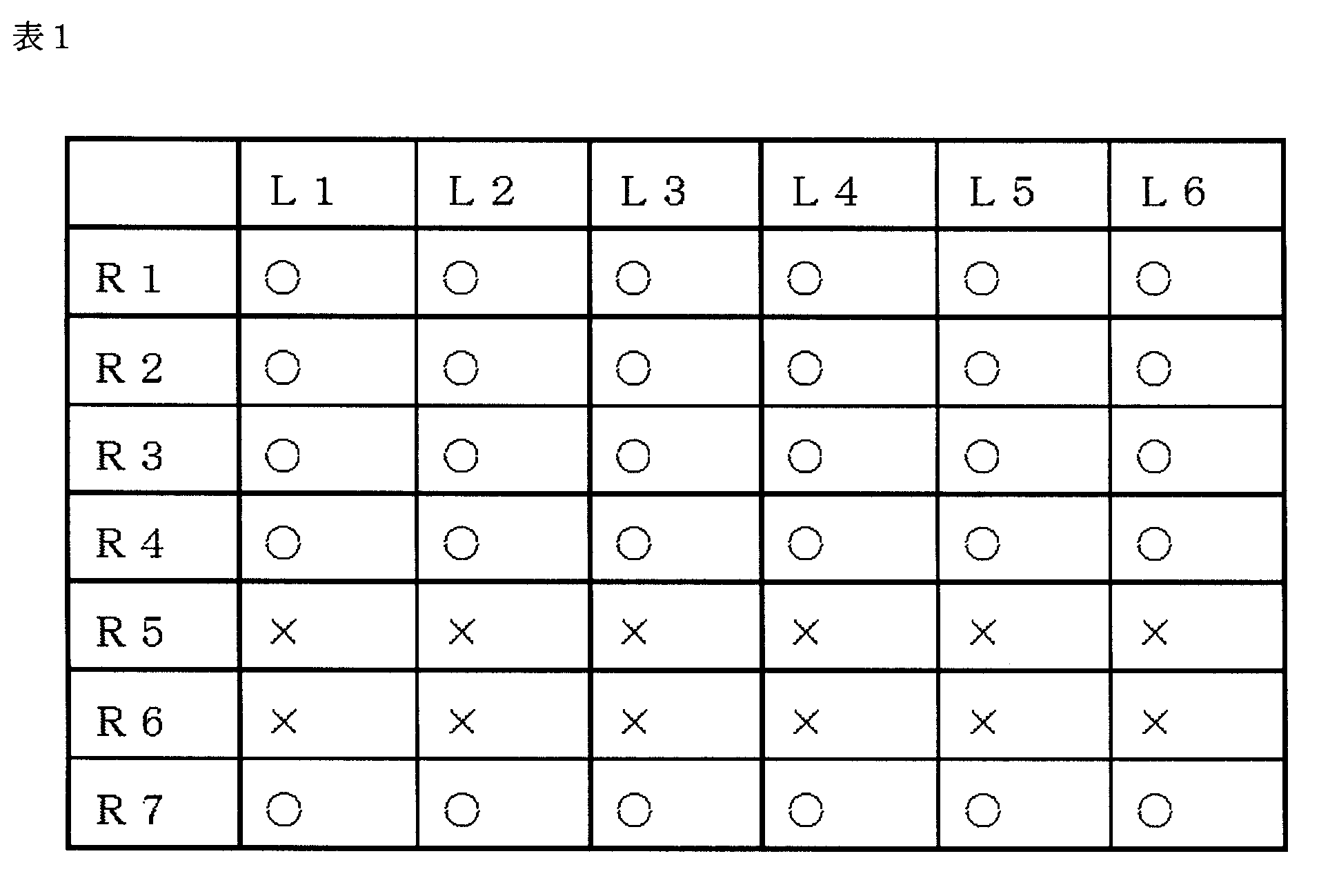
- Example 3 Screening for selecting primer pairs Combined with 6 types of 5'-side primers and 7 types of 3'-side primers designed in Example 1 to make primer pairs (total 42 types), effective for quantification of AAV genome Screening of the correct primer pairs.
- SYBR registered trademark
- Premix Ex Taq II Tli RNase H Plus
- SYBR registered trademark
- Premix Ex Taq II Tli RNase H Plus 2 ⁇ conc.
- a crudely purified genomic solution derived from the rAAV2 vector prepared in Example 2 was used as a positive control.
- a reaction composition similar to the above except that sterile water was used instead of the template was prepared and used as a negative control reaction solution.
- Two reactions were performed for each primer pair for both negative control and positive control. Reaction and detection were performed using Thermal Cycler Dice (registered trademark) Real Time System II, 95 ° C., 2 minutes (initial denaturation), and then 95 cycles of 95 ° C., 5 seconds to 60 ° C., 30 seconds. Real-time PCR. In addition, after completion of PCR, a melting curve analysis was performed.
- Example 4 Confirmation of Quantitative Properties Quantitative properties were confirmed using four types of primer sets L1 / R1, L1 / R2, L2 / R1, and L2 / R2, which were more promising than in Example 3.
- SYBR registered trademark
- Premix Ex Taq II Tli RNase H Plus
- 0.5 ⁇ L of each of the four 10 ⁇ M primer mixes, and 5.0 ⁇ L of the template were mixed. 25 ⁇ L.
- the reaction solution used was a crude genomic solution derived from the rAAV2 vector prepared in Example 2 as a template.
- a control using sterile distilled water instead of the template was prepared as a control. Reaction and detection were carried out by 35 cycles of real-time PCR with 95 ° C.
- L1 / R1 a calibration curve with a correlation coefficient (R 2 ) of 1.000 was obtained in the template amount range of 1 ⁇ 10 3 copies to 1 ⁇ 10 7 copies.
- the reaction efficiency when using L1 / R1 as a primer set in this template amount range was 99.7%, which was the closest to 100% of the reactions using four types of primer sets. It was.
- the four primer sets L1 / R1, L1 / R2, L2 / R1, and L2 / R2 are excellent as primer sets for quantifying AAV2 genomic DNA, and the combination of L1 / R1 is the most preferred. I found it excellent.
- the present invention is particularly useful in the fields of medicine, genetic engineering, and biology.
Landscapes
- Chemical & Material Sciences (AREA)
- Life Sciences & Earth Sciences (AREA)
- Health & Medical Sciences (AREA)
- Organic Chemistry (AREA)
- Zoology (AREA)
- Engineering & Computer Science (AREA)
- Immunology (AREA)
- Wood Science & Technology (AREA)
- Proteomics, Peptides & Aminoacids (AREA)
- Virology (AREA)
- Biotechnology (AREA)
- Microbiology (AREA)
- Molecular Biology (AREA)
- Physics & Mathematics (AREA)
- Biophysics (AREA)
- Analytical Chemistry (AREA)
- Biochemistry (AREA)
- Bioinformatics & Cheminformatics (AREA)
- General Engineering & Computer Science (AREA)
- General Health & Medical Sciences (AREA)
- Genetics & Genomics (AREA)
- Measuring Or Testing Involving Enzymes Or Micro-Organisms (AREA)
Abstract
Description
[1] アデノ随伴ウイルスゲノムの定量方法であって、
(a)検体、アデノ随伴ウイルスの逆方向末端反復配列に含まれる核酸配列のみを増幅するための少なくとも1対のプライマー対、及びインターカレーティング色素を含む組成物を調製する工程、
(b)工程(a)により調製した組成物を用いて核酸増幅反応を行う工程、並びに
(c)工程(b)により得られた増幅産物を検出する工程、
を含む方法。
[2] プライマー対が、配列表の配列番号1で表される塩基配列を含むプライマーと、配列表の配列番号7で表される塩基配列を含むプライマーとからなる、[1]に記載の方法。
[3] プライマー対が、配列表の配列番号1又は2で表される塩基配列からなるプライマーと、配列表の配列番号7又は8で表される塩基配列からなるプライマーとからなる、[1]又は[2]に記載の方法。
[4] インターカレーティング色素が、シアニン系色素を含む、[1]~[3]いずれかに記載の方法。
[5] [1]~[4]いずれかに記載の方法によりアデノ随伴ウイルスゲノムを定量する工程を包含する、アデノ随伴ウイルスの力価測定方法。
[6] アデノ随伴ウイルスゲノムを定量するための組成物であって、アデノ随伴ウイルスの逆方向末端反復配列に含まれる核酸配列のみを増幅するための少なくとも1対のプライマー対、及びインターカレーティング色素を含む組成物。
[7] プライマー対が、配列表の配列番号1で表される塩基配列を含むプライマーと、配列表の配列番号7で表される塩基配列を含むプライマーとからなる、[6]に記載の組成物。
[8] プライマー対が、配列表の配列番号1又は2で表される塩基配列からなるプライマーと、配列表の配列番号7又は8で表される塩基配列からなるプライマーとからなる、[6]又は[7]に記載の組成物。
[9] インターカレーティング色素が、シアニン系色素を含む、[6]~[8]いずれかに記載の組成物。
[10] アデノ随伴ウイルスゲノムの定量用のキットであって、DNAポリメラーゼ、アデノ随伴ウイルスの逆方向末端反復配列に含まれる核酸配列のみを増幅するための少なくとも1対のプライマー対、及びインターカレーティング色素を含むキット。
[11] プライマー対が、配列表の配列番号1で表される塩基配列を含むプライマーと、配列表の配列番号7で表される塩基配列を含むプライマーとからなる、[10]に記載のキット。
[12] プライマー対が、配列表の配列番号1又は2で表される塩基配列からなるプライマーと、配列表の配列番号7又は8で表される塩基配列からなるプライマーとからなる、[10]又は[11]に記載のキット。
[13] インターカレーティング色素が、シアニン系色素を含む、[10]~[12]いずれかに記載のキット。
ここで、本発明で用いるシアニン系色素としては、CAS登録番号 163795-75-3の下記式(I)に示される[2-[N-(3-dimethylaminopropyl)-N-propylamino]-4-[2,3-dihydro-3-methyl-(benzo-1,3-thiazol-2-yl)-methylidene]-1-phenyl-quinolinium]あるいはその塩が使用できる。言い換えると、N’,N’-dimethyl-N-[4-[(E)-(3-methyl-1,3-benzothiazol-2-ylidene)methyl]-1-phenylquinolin-1-ium-2-yl]-N-propylpropane-1,3-diamine、あるいはその塩が使用できる。これらは、SYBR(登録商標)Green Iと称されている。さらにcis-trans異性体であってもよく、下記式(II)に示されるN’,N’-dimethyl-N-[4-[(Z)-(3-methyl-1,3-benzothiazol-2-ylidene)methyl]-1-phenylquinolin-1-ium-2-yl]-N-propylpropane-1,3-diamine、あるいはその塩が使用できる。


2型AAV(以下、AAV2)のゲノム塩基配列情報(RefSeq Acc. No.NC_001401)を元に、AAV2のITRに対して5’側プライマー及び3’側プライマーを設計した。5’側プライマーは、L1(配列番号1)、L2(配列番号2)、L3(配列番号3)、L4(配列番号4)、L5(配列番号5)、及びL6(配列番号6)の6種類、3’側プライマーは、R1(配列番号7)、R2(配列番号8)、R3(配列番号9)、R4(配列番号10)、R5(配列番号11)、R6(配列番号12)、及びR7(配列番号13)の7種類である。
(1)rAAV2ベクター製造用細胞の播種
細胞培養用10cmディッシュ(コーニング社製)に、10%FBS(ギブコ社製)を含むDMEM(シグマ社製)に懸濁した293細胞を播種した。その後、37℃のCO2インキュベーターで終夜培養し、細胞がおよそ70%コンフルエントになっていることを確認した。
前記実施例2-(1)で調製した細胞に、リン酸カルシウム法を用いて、AAV2のRepタンパク質及びCapタンパク質をコードするプラスミド、アデノウイルスのE2A、VA、V4配列を含むプラスミド、並びにAAV2の2つのITRの間に蛍光タンパク質ZsGreen1の発現カセットを含むプラスミドをトランスフェクションした。トランスフェクション7時間後、培地を完全に除去した後、10%FBSを含むDMEMをディッシュ1枚当たり15mL添加し、37℃のCO2インキュベーターで2日間培養した。
(2)の培養終了後、20mM EDTAを含むPBS溶液3mLを各ディッシュへ添加し、室温で数分間反応させることで細胞を剥離させた。その後、溶液ごと細胞を回収し、1,750×g、4℃で10分間遠心分離した後、上清を除去した。細胞ペレットにクエン酸を含有する酸性バッファーを添加し、遠心分離後、その上清をrAAV2ベクター抽出液とした。得られたrAAV2ベクター抽出液中のAAV2のウイルス粒子外の核酸をDNaseIにて消化した後、タンパク質変性剤を用いてAAV2粒子よりゲノムDNAを遊離させた。こうして得られた溶液を、rAAV2ベクター由来の粗精製ゲノム溶液とした。
実施例1において設計した6種類の5’側プライマーと7種類の3’側プライマーとを組み合わせてプライマーペア(全42通り)とし、AAVゲノムの定量に有効なプライマーペアのスクリーニングを行った。スクリーニングには、SYBR(登録商標) Premix Ex Taq II(Tli RNaseH Plus)(タカラバイオ社製)を使用し、以下の反応組成で行った。SYBR(登録商標) Premix Ex Taq II(Tli RNaseH Plus)(2×conc.) 12.5μL、各10μM プライマーミックス 0.5μL、鋳型 5.0μLを混合し、滅菌水にて全量を25μLにした。鋳型にはポジティブコントロールとして実施例2で調製したrAAV2ベクター由来の粗精製ゲノム溶液を用いた。また、鋳型の代わりに滅菌水を使用する以外は上記と同様の反応組成のものを調製し、これをネガティブコントロールの反応液とした。反応は、ネガティブコントロールとポジティブコントロール共に、プライマーペア毎に2反応ずつ行った。反応及び検出は、Thermal Cycler Dice(登録商標) Real Time System IIを使用し、95℃、2分(初期変性)の後、95℃、5秒~60℃、30秒を1サイクルとする35サイクルのリアルタイムPCRにより行った。また、PCR終了後には、融解曲線分析を行った。

実施例3より有望であったプライマーセットL1/R1、L1/R2、L2/R1、L2/R2の4通りを用いて定量性の確認を行った。定量性の確認には、SYBR(登録商標) Premix Ex Taq II(Tli RNaseH Plus)を使用し、以下の反応組成で行った。SYBR(登録商標) Premix Ex Taq II(Tli RNaseH Plus)(2×conc.) 12.5μL、前記4通りの各10μM プライマーミックス 0.5μL、鋳型 5.0μLを混合し、滅菌水にて全量を25μLにした。反応液は、鋳型として実施例2で調製したrAAV2ベクター由来の粗精製ゲノム溶液を使用したもの、AAV2のITR中の増幅領域を搭載したプラスミドDNAの10倍段階希釈物(1×10²コピー/5μL、1×103コピー/5μL、1×104コピー/5μL、1×105コピー/5μL、1×106コピー/5μL、又は1×107コピー/5μL)を使用したもの、及びネガティブコントロールとして鋳型の代わりに滅菌蒸留水を用いたものを調製した。反応及び検出は、95℃、2分(初期変性)の後、95℃、5秒~60℃、30秒を1サイクルとする35サイクルのリアルタイムPCRにより行った。また、リアルタイムPCRの終了後には融解曲線分析を行った。さらに、各コピー数のプラスミドDNAを鋳型として用いたリアルタイムPCRの結果より検量線を作成し、得られた検量線よりrAAV2ベクター由来の粗精製ゲノムの定量解析を行った。
SEQ ID NO:2 ; Designed PCR primer "L2"
SEQ ID NO:3 ; Designed PCR primer "L3"
SEQ ID NO:4 ; Designed PCR primer "L4"
SEQ ID NO:5 ; Designed PCR primer "L5"
SEQ ID NO:6 ; Designed PCR primer "L6"
SEQ ID NO:7 ; Designed PCR primer "R1"
SEQ ID NO:8 ; Designed PCR primer "R2"
SEQ ID NO:9 ; Designed PCR primer "R3"
SEQ ID NO:10 ; Designed PCR primer "R4"
SEQ ID NO:11 ; Designed PCR primer "R5"
SEQ ID NO:12 ; Designed PCR primer "R6"
SEQ ID NO:13 ; Designed PCR primer "R7"
Claims (13)
- アデノ随伴ウイルスゲノムの定量方法であって、
(a)検体、アデノ随伴ウイルスの逆方向末端反復配列に含まれる核酸配列のみを増幅するための少なくとも1対のプライマー対、及びインターカレーティング色素を含む組成物を調製する工程、
(b)工程(a)により調製した組成物を用いて核酸増幅反応を行う工程、並びに
(c)工程(b)により得られた増幅産物を検出する工程、
を含む方法。 - プライマー対が、配列表の配列番号1で表される塩基配列を含むプライマーと、配列表の配列番号7で表される塩基配列を含むプライマーとからなる、請求項1に記載の方法。
- プライマー対が、配列表の配列番号1又は2で表される塩基配列からなるプライマーと、配列表の配列番号7又は8で表される塩基配列からなるプライマーとからなる、請求項1又は2に記載の方法。
- インターカレーティング色素が、シアニン系色素を含む、請求項1~3いずれかに記載の方法。
- 請求項1~4いずれかに記載の方法によりアデノ随伴ウイルスゲノムを定量する工程を包含する、アデノ随伴ウイルスの力価測定方法。
- アデノ随伴ウイルスゲノムを定量するための組成物であって、アデノ随伴ウイルスの逆方向末端反復配列に含まれる核酸配列のみを増幅するための少なくとも1対のプライマー対、及びインターカレーティング色素を含む組成物。
- プライマー対が、配列表の配列番号1で表される塩基配列を含むプライマーと、配列表の配列番号7で表される塩基配列を含むプライマーとからなる、請求項6に記載の組成物。
- プライマー対が、配列表の配列番号1又は2で表される塩基配列からなるプライマーと、配列表の配列番号7又は8で表される塩基配列からなるプライマーとからなる、請求項6又は7に記載の組成物。
- インターカレーティング色素が、シアニン系色素を含む、請求項6~8いずれかに記載の組成物。
- アデノ随伴ウイルスゲノムの定量用のキットであって、DNAポリメラーゼ、アデノ随伴ウイルスの逆方向末端反復配列に含まれる核酸配列のみを増幅するための少なくとも1対のプライマー対、及びインターカレーティング色素を含むキット。
- プライマー対が、配列表の配列番号1で表される塩基配列を含むプライマーと、配列表の配列番号7で表される塩基配列を含むプライマーとからなる、請求項10に記載のキット。
- プライマー対が、配列表の配列番号1又は2で表される塩基配列からなるプライマーと、配列表の配列番号7又は8で表される塩基配列からなるプライマーとからなる、請求項10又は11に記載のキット。
- インターカレーティング色素が、シアニン系色素を含む、請求項10~12いずれかに記載のキット。
Priority Applications (6)
| Application Number | Priority Date | Filing Date | Title |
|---|---|---|---|
| EP14866486.5A EP3075849B1 (en) | 2013-11-29 | 2014-11-27 | Method for quantifying adeno-associated virus |
| US15/034,592 US10161011B2 (en) | 2013-11-29 | 2014-11-27 | Method for quantifying adeno-associated virus |
| CN201480065018.8A CN105765066B (zh) | 2013-11-29 | 2014-11-27 | 用于定量腺伴随病毒的方法 |
| KR1020167016445A KR102245861B1 (ko) | 2013-11-29 | 2014-11-27 | 아데노 수반 바이러스의 정량 방법 |
| JP2015550997A JP6567974B2 (ja) | 2013-11-29 | 2014-11-27 | アデノ随伴ウイルスの定量方法 |
| US16/189,647 US10731226B2 (en) | 2013-11-29 | 2018-11-13 | Method for quantifying adeno-associated virus |
Applications Claiming Priority (2)
| Application Number | Priority Date | Filing Date | Title |
|---|---|---|---|
| JP2013-248277 | 2013-11-29 | ||
| JP2013248277 | 2013-11-29 |
Related Child Applications (2)
| Application Number | Title | Priority Date | Filing Date |
|---|---|---|---|
| US15/034,592 A-371-Of-International US10161011B2 (en) | 2013-11-29 | 2014-11-27 | Method for quantifying adeno-associated virus |
| US16/189,647 Division US10731226B2 (en) | 2013-11-29 | 2018-11-13 | Method for quantifying adeno-associated virus |
Publications (1)
| Publication Number | Publication Date |
|---|---|
| WO2015080223A1 true WO2015080223A1 (ja) | 2015-06-04 |
Family
ID=53199160
Family Applications (1)
| Application Number | Title | Priority Date | Filing Date |
|---|---|---|---|
| PCT/JP2014/081448 Ceased WO2015080223A1 (ja) | 2013-11-29 | 2014-11-27 | アデノ随伴ウイルスの定量方法 |
Country Status (6)
| Country | Link |
|---|---|
| US (2) | US10161011B2 (ja) |
| EP (1) | EP3075849B1 (ja) |
| JP (1) | JP6567974B2 (ja) |
| KR (1) | KR102245861B1 (ja) |
| CN (1) | CN105765066B (ja) |
| WO (1) | WO2015080223A1 (ja) |
Cited By (3)
| Publication number | Priority date | Publication date | Assignee | Title |
|---|---|---|---|---|
| EP3020808A4 (en) * | 2013-07-11 | 2017-03-15 | Takara Bio Inc. | Method for manufacturing non-enveloped virus |
| JP2022514112A (ja) * | 2018-10-15 | 2022-02-09 | リジェネクスバイオ インコーポレイテッド | 複製欠損型ウイルスベクター及びウイルスの感染性を測定するための方法 |
| CN114075610A (zh) * | 2020-08-11 | 2022-02-22 | 北京荷塘生华医疗科技有限公司 | 检测野生型腺相关病毒的通用引物及其应用 |
Families Citing this family (31)
| Publication number | Priority date | Publication date | Assignee | Title |
|---|---|---|---|---|
| WO2015191508A1 (en) | 2014-06-09 | 2015-12-17 | Voyager Therapeutics, Inc. | Chimeric capsids |
| EP3168298B1 (en) | 2014-07-10 | 2019-04-17 | Takara Bio Inc. | Production method for non-enveloped virus particles |
| SG11201703148TA (en) | 2014-11-05 | 2017-05-30 | Voyager Therapeutics Inc | Aadc polynucleotides for the treatment of parkinson's disease |
| CA3193811A1 (en) | 2014-11-14 | 2016-05-19 | Voyager Therapeutics, Inc. | Compositions and methods of treating amyotrophic lateral sclerosis (als) |
| CN119876138A (zh) | 2014-11-14 | 2025-04-25 | 沃雅戈治疗公司 | 调节性多核苷酸 |
| HK1245326A1 (zh) | 2014-12-12 | 2018-08-24 | Voyager Therapeutics, Inc. | 用於生产scaav的组合物和方法 |
| WO2016111343A1 (ja) | 2015-01-09 | 2016-07-14 | タカラバイオ株式会社 | 非エンベロープウイルス粒子の製造方法 |
| EP3448874A4 (en) | 2016-04-29 | 2020-04-22 | Voyager Therapeutics, Inc. | COMPOSITIONS FOR TREATING A DISEASE |
| EP3448987A4 (en) | 2016-04-29 | 2020-05-27 | Voyager Therapeutics, Inc. | COMPOSITIONS FOR TREATING A DISEASE |
| CA3024448C (en) | 2016-05-18 | 2025-09-09 | Voyager Therapeutics, Inc. | MODULATING POLYNUCLEOTIDES |
| CA3024449A1 (en) | 2016-05-18 | 2017-11-23 | Voyager Therapeutics, Inc. | Compositions and methods of treating huntington's disease |
| WO2018044933A1 (en) | 2016-08-30 | 2018-03-08 | The Regents Of The University Of California | Methods for biomedical targeting and delivery and devices and systems for practicing the same |
| JP2020518259A (ja) | 2017-05-05 | 2020-06-25 | ボイジャー セラピューティクス インコーポレイテッドVoyager Therapeutics,Inc. | ハンチントン病治療組成物および方法 |
| EP3618839A4 (en) | 2017-05-05 | 2021-06-09 | Voyager Therapeutics, Inc. | COMPOSITIONS AND METHODS OF TREATMENT OF AMYOTROPHIC LATERAL SCLEROSIS (ALS) |
| JOP20190269A1 (ar) | 2017-06-15 | 2019-11-20 | Voyager Therapeutics Inc | بولي نوكليوتيدات aadc لعلاج مرض باركنسون |
| JP7229989B2 (ja) | 2017-07-17 | 2023-02-28 | ボイジャー セラピューティクス インコーポレイテッド | 軌道アレイガイドシステム |
| US20200263199A1 (en) | 2017-09-29 | 2020-08-20 | Voyager Therapeutics, Inc. | Rescue of central and peripheral neurological phenotype of friedreich's ataxia by intravenous delivery |
| TW202413649A (zh) | 2017-10-16 | 2024-04-01 | 美商航海家醫療公司 | 肌萎縮性脊髓側索硬化症(als)之治療 |
| WO2019079242A1 (en) | 2017-10-16 | 2019-04-25 | Voyager Therapeutics, Inc. | TREATMENT OF AMYOTROPHIC LATERAL SCLEROSIS (ALS) |
| SG11202011296VA (en) | 2018-05-15 | 2020-12-30 | Voyager Therapeutics Inc | Compositions and methods for the treatment of parkinson's disease |
| WO2020028639A1 (en) | 2018-08-01 | 2020-02-06 | Essen Instruments, Inc. D/B/A Essen Bioscience, Inc. | Methods, kits and stain compositions for flow cytometry evaluation of unassociated virus-size particles using multiple fluorogenic dyes |
| US12281321B2 (en) | 2018-09-28 | 2025-04-22 | Voyager Therapeutics, Inc. | Frataxin expression constructs having engineered promoters and methods of use thereof |
| EP3870148A4 (en) * | 2018-10-25 | 2022-11-09 | Takeda Pharmaceutical Company Limited | AAV TRIPLE PLASMID SYSTEM |
| US12455287B2 (en) | 2019-03-26 | 2025-10-28 | Sartorious BioAnalytical Instruments, Inc. | Flow cytometry evaluation for unassociated non-enveloped viral particles |
| EP3990030A1 (en) * | 2019-06-27 | 2022-05-04 | Pfizer Inc. | Methods of treating duchenne muscular dystrophy using aav mini-dystrophin gene therapy |
| US10557149B1 (en) | 2019-07-15 | 2020-02-11 | Vigene Biosciences, Inc. | Recombinantly-modified adeno-associated virus helper vectors and their use to improve the packaging efficiency of recombinantly-modified adeno-associated virus |
| US10653731B1 (en) | 2019-07-15 | 2020-05-19 | Vigene Biosciences Inc. | Recombinantly-modified adeno-associated virus (rAAV) having improved packaging efficiency |
| US10801042B1 (en) | 2019-07-15 | 2020-10-13 | Vigene Biosciences, Inc. | Use of ion concentrations to increase the packaging efficiency of recombinant adeno-associated virus |
| US11709116B2 (en) | 2020-02-04 | 2023-07-25 | Sartorius Bioanalytical Instruments, Inc. | Liquid flourescent dye concentrate for flow cytometry evaluation of virus-size particles and related products and methods |
| CN112877478A (zh) * | 2021-04-12 | 2021-06-01 | 广东省农业科学院动物卫生研究所 | 腺胃坏死病毒实时荧光定量pcr检测试剂及应用 |
| US20250110119A1 (en) * | 2023-03-03 | 2025-04-03 | Sartorius Bioanalytical Instruments, Inc. | Methods for quantitating viral capsids |
Citations (2)
| Publication number | Priority date | Publication date | Assignee | Title |
|---|---|---|---|---|
| WO2012123430A1 (en) * | 2011-03-11 | 2012-09-20 | Association Institut De Myologie | Capsid-free aav vectors, compositions, and methods for vector production and gene delivery |
| JP2013531471A (ja) * | 2010-04-23 | 2013-08-08 | ユニバーシティ オブ マサチューセッツ | Cnsターゲティングaavベクターおよびその使用方法 |
Family Cites Families (3)
| Publication number | Priority date | Publication date | Assignee | Title |
|---|---|---|---|---|
| SE519116C2 (sv) * | 2001-05-10 | 2003-01-14 | Lightup Technologies Ab | Syntes och utvärdering av nya cyaninfärgämnen som binder till minor groove |
| EP1751275B1 (en) * | 2004-06-01 | 2017-08-16 | Avigen, Inc. | Compositions and methods to prevent aav vector aggregation |
| CN103114152B (zh) | 2013-02-04 | 2014-12-17 | 许瑞安 | 一种测定重组腺相关病毒滴度的定量pcr方法 |
-
2014
- 2014-11-27 CN CN201480065018.8A patent/CN105765066B/zh active Active
- 2014-11-27 KR KR1020167016445A patent/KR102245861B1/ko active Active
- 2014-11-27 WO PCT/JP2014/081448 patent/WO2015080223A1/ja not_active Ceased
- 2014-11-27 US US15/034,592 patent/US10161011B2/en active Active
- 2014-11-27 EP EP14866486.5A patent/EP3075849B1/en active Active
- 2014-11-27 JP JP2015550997A patent/JP6567974B2/ja active Active
-
2018
- 2018-11-13 US US16/189,647 patent/US10731226B2/en active Active
Patent Citations (2)
| Publication number | Priority date | Publication date | Assignee | Title |
|---|---|---|---|---|
| JP2013531471A (ja) * | 2010-04-23 | 2013-08-08 | ユニバーシティ オブ マサチューセッツ | Cnsターゲティングaavベクターおよびその使用方法 |
| WO2012123430A1 (en) * | 2011-03-11 | 2012-09-20 | Association Institut De Myologie | Capsid-free aav vectors, compositions, and methods for vector production and gene delivery |
Non-Patent Citations (7)
| Title |
|---|
| "PCR Ho Saizensen (Front Line of PCR Method)", TANPAKUSHITSU KAKUSAN KOSO (PROTEINS, NUCLEIC ACIDS AND ENZYMES), vol. 41, no. 5, 1996, pages 425 - 428 |
| CHRISTINE AURNHAMMER ET AL.: "Universal Real- Time PCR for the Detection and Quantification of Adeno-Associated Virus Serotype 2-Derived Inverted Terminal Repeat Sequences", HUMAN GENE THERAPY METHODS, vol. B23, 1 February 2012 (2012-02-01), pages 18 - 28, XP055346603, DOI: 10.1089/HGTB.2011.034 * |
| HIROHIKO HOJO: "Real Time PCR no Genri", JIKKEN IGAKU BESSATSU GENRI KARA YOKU WAKARU REAL TIME PCR KANZEN JIKKEN GUIDE, 10 October 2013 (2013-10-10), pages 14 - 21, XP008183682 * |
| HUMAN GENE THERAPY METHODS, vol. 23, February 2012 (2012-02-01), pages 18 - 28 |
| KAZUHIKO AOYAGI: "Real Time PCR", MOKUTEKIBETSU DE ERABERU PCR JIKKEN PROTOCOL, 1 January 2011 (2011-01-01), pages 120 - 131, XP008183683 * |
| See also references of EP3075849A4 |
| ZIPPER H ET AL., NUCLEIC ACIDS RESEARCH, vol. 32, no. 12, 2004, pages E103 |
Cited By (4)
| Publication number | Priority date | Publication date | Assignee | Title |
|---|---|---|---|---|
| EP3020808A4 (en) * | 2013-07-11 | 2017-03-15 | Takara Bio Inc. | Method for manufacturing non-enveloped virus |
| JP2022514112A (ja) * | 2018-10-15 | 2022-02-09 | リジェネクスバイオ インコーポレイテッド | 複製欠損型ウイルスベクター及びウイルスの感染性を測定するための方法 |
| CN114075610A (zh) * | 2020-08-11 | 2022-02-22 | 北京荷塘生华医疗科技有限公司 | 检测野生型腺相关病毒的通用引物及其应用 |
| CN114075610B (zh) * | 2020-08-11 | 2023-11-17 | 北京荷塘生华医疗科技有限公司 | 检测野生型腺相关病毒的通用引物及其应用 |
Also Published As
| Publication number | Publication date |
|---|---|
| EP3075849A4 (en) | 2017-06-14 |
| US20190062851A1 (en) | 2019-02-28 |
| CN105765066B (zh) | 2018-12-14 |
| KR20160093027A (ko) | 2016-08-05 |
| JPWO2015080223A1 (ja) | 2017-03-16 |
| EP3075849B1 (en) | 2019-03-13 |
| US10161011B2 (en) | 2018-12-25 |
| CN105765066A (zh) | 2016-07-13 |
| US10731226B2 (en) | 2020-08-04 |
| US20160273058A1 (en) | 2016-09-22 |
| JP6567974B2 (ja) | 2019-08-28 |
| KR102245861B1 (ko) | 2021-04-28 |
| EP3075849A1 (en) | 2016-10-05 |
Similar Documents
| Publication | Publication Date | Title |
|---|---|---|
| JP6567974B2 (ja) | アデノ随伴ウイルスの定量方法 | |
| US12241095B2 (en) | Modified heat-resistant DNA polymerase | |
| CN115335536A (zh) | 用于即时核酸检测的组合物和方法 | |
| JP6029636B2 (ja) | Rnaの検出方法 | |
| KR102648647B1 (ko) | 짧은 호모폴리머릭 반복서열의 개선된 검출법 | |
| WO2023217291A1 (zh) | 一种聚合酶突变体及其应用 | |
| JP7160142B2 (ja) | 核酸増幅用試薬及び核酸増幅法 | |
| JP6201540B2 (ja) | 細胞の遺伝子発現量の定量方法 | |
| Huttunen et al. | Quantitative PCR-based assessment of vaccinia virus RNA and DNA in infected cells | |
| CN112501166A (zh) | 一种化学修饰的高稳定性rna及试剂盒和方法 | |
| RU2698134C2 (ru) | Способ амплификации нуклеиновых кислот с использованием фосфорилгуанидиновых олигонуклеотидов | |
| US20110065151A1 (en) | Nucleic acid amplification with single strand dna binding protein | |
| CN116042783B (zh) | 核酸扩增试剂盒和应用 | |
| CN116023513B (zh) | 一种适用于大鼠肝细胞特异性感染腺相关病毒突变体 | |
| Pande et al. | Droplet digital PCR for growth kinetics of recombinant baculovirus expressing VP2 protein of porcine parvovirus | |
| Zamotaeva et al. | Production and characterization of chimeric Bst-like polymerases and their application in isothermal amplification combined with rapid RNA extraction methods using the example of the mumps virus | |
| KR20260036676A (ko) | 헤어핀 구조를 가진 프라이머를 이용한 pcr 기반의 표적핵산의 검출 방법 | |
| KR20250178704A (ko) | 신호 증가를 통한 pcr 기반의 표적핵산의 검출 방법 | |
| Sastroredjo et al. | Exploration of Gene Encoded Thermostable Enzymes by Using Random PCR from Natural Sample of Domas Crater | |
| JP6300452B2 (ja) | インターカレーティング色素及び界面活性剤を含むdna合成用組成物 | |
| Hou et al. | Total chemical synthesis, assembly of human torque teno virus genome | |
| CN114703321A (zh) | 一种牛纽布病毒TaqMan荧光定量RT-PCR检测引物、探针及应用 | |
| CN121294739A (zh) | 盘羊细小病毒ns1基因的实时荧光定量pcr检测引物、试剂盒和方法 | |
| JP2018029529A (ja) | 標的核酸の検出法 | |
| KR20190012378A (ko) | 아데노 연관 바이러스의 정량방법 |
Legal Events
| Date | Code | Title | Description |
|---|---|---|---|
| 121 | Ep: the epo has been informed by wipo that ep was designated in this application |
Ref document number: 14866486 Country of ref document: EP Kind code of ref document: A1 |
|
| ENP | Entry into the national phase |
Ref document number: 2015550997 Country of ref document: JP Kind code of ref document: A |
|
| WWE | Wipo information: entry into national phase |
Ref document number: 15034592 Country of ref document: US |
|
| NENP | Non-entry into the national phase |
Ref country code: DE |
|
| REEP | Request for entry into the european phase |
Ref document number: 2014866486 Country of ref document: EP |
|
| WWE | Wipo information: entry into national phase |
Ref document number: 2014866486 Country of ref document: EP |
|
| ENP | Entry into the national phase |
Ref document number: 20167016445 Country of ref document: KR Kind code of ref document: A |