USE OF MACROCYCLIC PICOLINAMIDES AS FUNGICIDES
CROSS REFERENCE TO RELATED APPLICATIONS
[0001] This application claims the benefit of U.S. Provisional Patent Application Serial Numbers 61/920,962 and 61/920,966, each filed December 26, 2013, the disclosures of which are hereby incorporated by reference in their entireties.
BACKGROUND & SUMMARY
[0002] Fungicides are compounds, of natural or synthetic origin, which act to protect and/or cure plants against damage caused by agriculturally relevant fungi. Generally, no single fungicide is useful in all situations. Consequently, research is ongoing to produce fungicides that may have better performance, are easier to use, and cost less.
[0003] The present disclosure relates to macrocyclic picolinamides and their use as fungicides. The compounds of the present disclosure may offer protection against ascomycetes, basidiomycetes, deuteromycetes and oomycetes.
[0004] One embodiment of the resent disclosure may include compounds of Formula I:
X is hydrogen or C(0)R3;
Y is hydrogen, C(0)R3, or Q;
Q is
[0005] Ri is hydrogen, alkyl, acyl, alkenyl, aryl, or alkoxy, each optionally substituted with 0, 1 or multiple R^;
[0006] R2 is hydrogen, alkyl, acyl, alkenyl, aryl, or -Si(Rs)3, each optionally substituted with 0, 1 or multiple ¾;
[0007] R3 alkoxy or benzyloxy, each optionally substituted with 0, 1 , or multiple ^;
[0008] R4 is hydrogen, -C(0)R5, or -CH2OC(0)R5;
[0009] R5 is alkyl, alkoxy, or aryl, each optionally substituted with 0, 1 , or multiple 5;
[0010] 5 is hydrogen, alkyl, aryl, halo, acyl, alkenyl, alkoxy, heteroaryl, heterocyclyl, or thioalkyl, each optionally substituted with 0, 1 , or multiple R7; and
[0011] R7 is hydrogen, alkyl, aryl, or halo.
[0012] Another embodiment of the present disclosure may include a fungicidal composition for the control or prevention of fungal attack comprising the compounds described above and a phytologically acceptable carrier material.
[0013] Yet another embodiment of the present disclosure may include a method for the control or prevention of fungal attack on a plant, the method including the steps of applying a fungicidally effective amount of one or more of the compounds described above to at least one of the fungus, the plant, and an area adjacent to the plant.
[0014] It will be understood by the those skilled in the art that the following terms may include generic "R"-groups within their definitions, e.g., "the term alkoxy refers to an -OR substituent". It is also understood that within the definitions for the following terms, these "R" groups are included for illustration purposes and should not be construed as limiting or being limited by substitutions about Formula I.
[0015] The term "alkyl" refers to a branched, unbranched, or saturated cyclic carbon chain, including, but not limited to, methyl, ethyl, propyl, butyl, isopropyl, isobutyl, tertiary butyl, pentyl, hexyl, cyclopropyl, cyclobutyl, cyclopentyl, cyclohexyl and the like. In some exemplary embodiments, the term "alkyl" refers to a branched, unbranched, or saturated cyclic carbon chain, including containg from 1 to 12 carbon atoms, from 1 to 6 carbons, or from 1 to 4 carbons.
[0016] The term "alkenyl" refers to a branched, unbranched or cyclic carbon chain containing one or more double bonds including, but not limited to, ethenyl, propenyl, butenyl, isopropenyl, isobutenyl, cyclobutenyl, cyclopentenyl, cyclohexenyl, and the like. In some exemplary
embodiments, the term "alkenyl" refers to a branched, unbranched, or saturated cyclic carbon chain, including containg from 1 to 12 carbon atoms, from 1 to 6 carbons, or from 1 to 4 carbons.
[0017] The term "alkynyl" refers to a branched or unbranched carbon chain containing one or more triple bonds including, but not limited to, propynyl, butynyl and the like. In some exemplary embodiments, the term "alkynyl" refers to a branched, unbranched, or saturated cyclic carbon chain, including containg from 1 to 12 carbon atoms, from 1 to 6 carbons, or from 1 to 4 carbons.
[0018] The term "aryl" refers to any aromatic, mono- or bi-cyclic ring, containing 0 heteroatoms.
[0019] The term "heterocycle" refers to any aromatic or non-aromatic ring, mono- or bi- cyclic, containing one or more heteroatoms. In some exemplary embodiments, the one or more heteroatoms are independently selected from nitrogen, oxygen, phosphorous, and sulfur.
[0020] The term "alkoxy" refers to an -OR substituent.
[0021] The term "cyano" refers to a -C≡N substituent.
[0022] The term "hydroxyl" refers to an -OH substituent.
[0023] The term "amino" refers to a -NH2 substituent.
[0024] The term "arylalkoxy" refers to -0(CH2)nAr where n is an integer selected from the list 1, 2, 3, 4, 5, or 6.
[0025] The term "haloalkoxy" refers to an -OR-X substituent, wherein X is CI, F, Br, or I, or any combination thereof.
[0026] The term "haloalkyl" refers to an alkyl, which is substituted with CI, F, I, or Br or any combination thereof.
[0027] The term "halogen" or "halo" refers to one or more halogen atoms, defined as F, CI, Br, and I.
[0028] The term "nitro" refers to a -N02 substituent.
[0029] The term thioalkyl refers to an -SR substituent.
[0030] Throughout the disclosure, reference to the compounds of Formula I is read as also including diastereomers, enantiomers, and mixtures thereof. In another embodiment, Formula (I) is read as also including salts or hydrates thereof. Exemplary salts include, but are not limited to: hydrochloride, hydrobromide, and hydroiodide.
[0031] It is also understood by those skilled in the art that additional substitution is allowable, unless otherwise noted, as long as the rules of chemical bonding and strain energy are satisfied and the product still exhibits fungicidal activity.
[0032] Another embodiment of the present disclosure is a use of a compound of Formula I, for protection of a plant against attack by a phytopathogenic organism or the treatment of a plant infested by a phytopathogenic organism, comprising the application of a compound of Formula I, or a composition comprising the compound to soil, a plant, a part of a plant, foliage, and/or roots.
[0033] Additionally, another embodiment of the present disclosure is a composition useful for protecting a plant against attack by a phytopathogenic organism and/or treatment of a plant infested by a phytopathogenic organism comprising a compound of Formula I and a phyto logically acceptable carrier material.
[0034] In one exemplary embodiment, a composition for the control of a fungal pathogen is provided. The compostion at least one of the com ounds of Formula 1 :
X is hydrogen or C(0)R3;
Y is hydrogen, C(0)R3, or Q;
Q is
Ri is hydrogen, alkyl, alkenyl, aryl, alkoxy, or acyl, each optionally substituted with 0, 1 or multiple R^;
R2 is hydrogen, alkyl, acyl, aryl, alkenyl, or -Si(R5)3, each optionally substituted with 0, 1 or multiple R^;
R3 is alkoxy or benzyloxy, each optionally substituted with 0, 1, or multiple R^;
R4 is hydrogen, -C(0)R5, or -CH2OC(0)R5;
R5 is alkyl, alkoxy, or aryl, each optionally substituted with 0, 1, or multiple R^;
Re is hydrogen, alkyl, aryl, acyl, halo, alkenyl, alkoxy, heteroaryl, heterocyclyl,or thioalkyl, each optionally substituted with 0, 1 , or multiple R7; and
R7 is hydrogen, alkyl, aryl, or halo.
[0035] In a one more particular embodiment, X is hydrogen and Y is Q. In another more particular embodiment of any of the above embodiments, R4 is hydrogen. In another more particular embodiment of any of the above embodiments,Ri is chosen from alkyl and aryl, each optionally substituted with 0, 1 or multiple R^. In another more particular embodiment of any of the above embodiments, R2 is chosen from alkyl, aryl, and acyl, each optionally substituted with 0, 1 or multiple R6. In another more particular embodiment of any of the above embodiments, Ri is chosen from alkyl and aryl, each optionally substituted with 0, 1 or multiple R6, and R2 is chosen from alkyl, aryl, and acyl, each optionally substituted with 0, 1 or multiple R6. In another more particular embodiment of any of the above embodiments, R is -C(0)Rs or -CH2OC(0)Rs. In another more particular embodiment of any of the above embodiments, R5 is chosen from alkyl and alkoxy, each optionally substituted with 0, 1, or multiple Re. In another more particular embodiment of any of the above embodiments, Ri is chosen from alkyl and aryl, each optionally substituted with 0, 1 or multiple R6. In another more particular embodiment of any of the above embodiments, R2 is chosen from alkyl, aryl, and acyl, each optionally substituted with 0, 1 or multiple R6. In another more particular embodiment of any of the above embodiments, Ri is chosen from alkyl and aryl, each optionally substituted with 0, 1 or multiple R6, and R2 is chosen from alkyl, aryl, and acyl, each optionally substituted with 0, 1 or multiple R6. In another more particular embodiment of any of the above embodiments, R5 is chosen from -CH3 and -CH2OCH2CH3.
[0036] In another more particular embodiment of any of the above embodiments, the composition further includes a phytologically acceptable carrier material.
[0037] In another more particular embodiment of any of the above embodiments, the composition further includes another pesticide. Exemplary pesticides include fungicides, insecticides, nematocides, miticides, arthropodicides, bactericides and combinations thereof.
[0038] In another more particular embodiment of any of the above embodiments, the fungal pathogen is one of Leaf Blotch of Wheat {Mycosphaerella graminicola; anamorph: Septoria tritici), Wheat Brown Rust (Puccinia triticina), Stripe Rust (Puccinia striiformis), Scab of Apple (Venturia inaequalis), Blister Smut of Maize (Ustilago maydis), Powdery Mildew of Grapevine (Uncinula necator), Barley scald (Rhynchosporium secalis), Blast of Rice (Magnaporthe grisea), Rust of Soybean (Phakopsora pachyrhizi), Glume Blotch of Wheat (Leptosphaeria nodorum), Powdery Mildew of Wheat (Blumeria graminis f. sp. tritici), Powdery Mildew of Barley (Blumeria graminis f. sp. hordei), Powdery Mildew of Cucurbits (Erysiphe dehor acearuni), Anthracnose of Cucurbits (Glomerella lagenarium), Leaf Spot of Beet (Cercospora beticola), Early Blight of Tomato
(Alternaria solani), and Net Blotch of Barley (Pyrenophora teres). In an even more particular embodiment, the fungal pathogen is one of Leaf Blotch of Wheat (Septoria tritici), Wheat Brown Rust (Puccinia triticina), and Rust of Soybean (Phakopsora pachyrhizi).
[0039] In another embodiment, a method for the control and prevention of fungal attack on a plant is provided. The method includes applying a fungicidally effective amount of at least one of any of the above compositions to at least one of the plant, an area adjacent to the plant, soil adapted to support growth of the plant, a root of the plant, and foliage of the plant.
DETAILED DESCRIPTION
[0040] The compounds of the present disclosure may be applied by any of a variety of known techniques, either as the compounds or as formulations comprising the compounds. For example, the compounds may be applied to the roots or foliage of plants for the control of various fungi, without damaging the commercial value of the plants. The materials may be applied in the form of any of the generally used formulation types, for example, as solutions, dusts, wettable powders, flowable concentrate, or emulsifiable concentrates.
[0041] Preferably, the compounds of the present disclosure are applied in the form of a formulation, comprising one or more of the compounds of Formula I with a phyto logically acceptable carrier. Concentrated formulations may be dispersed in water, or other liquids, for
application, or formulations may be dust-like or granular, which may then be applied without further treatment. The formulations can be prepared according to procedures that are conventional in the agricultural chemical art.
[0042] The present disclosure contemplates all vehicles by which one or more of the compounds may be formulated for delivery and use as a fungicide. Typically, formulations are applied as aqueous suspensions or emulsions. Such suspensions or emulsions may be produced from water-soluble, water-suspendible, or emulsifiable formulations which are solids, usually known as wettable powders; or liquids, usually known as emulsifiable concentrates, aqueous suspensions, or suspension concentrates. As will be readily appreciated, any material to which these compounds may be added may be used, provided it yields the desired utility without significant interference with the activity of these compounds as antifungal agents.
[0043] Wettable powders, which may be compacted to form water-dispersible granules, comprise an intimate mixture of one or more of the compounds of Formula I, an inert carrier and surfactants. The concentration of the compound in the wettable powder may be from about 10 percent to about 90 percent by weight based on the total weight of the wettable powder, more preferably about 25 weight percent to about 75 weight percent. In the preparation of wettable powder formulations, the compounds may be compounded with any finely divided solid, such as prophyllite, talc, chalk, gypsum, Fuller's earth, bentonite, attapulgite, starch, casein, gluten, montmorillonite clays, diatomaceous earths, purified silicates or the like. In such operations, the finely divided carrier and surfactants are typically blended with the compound(s) and milled.
[0044] Emulsifiable concentrates of the compounds of Formula I may comprise a convenient concentration, such as from about 1 weight percent to about 50 weight percent of the compound, in a suitable liquid, based on the total weight of the concentrate. The compounds may be dissolved in an inert carrier, which is either a water-miscible solvent or a mixture of water-immiscible organic solvents, and emulsifiers. The concentrates may be diluted with water and oil to form spray mixtures in the form of oil-in-water emulsions. Useful organic solvents include aromatics, especially the high-boiling naphthalenic and olefmic portions of petroleum such as heavy aromatic naphtha. Other organic solvents may also be used, for example, terpenic solvents, including rosin derivatives, aliphatic ketones, such as cyclohexanone, and complex alcohols, such as 2- ethoxyethanol.
[0045] Emulsifiers which may be advantageously employed herein may be readily determined by those skilled in the art and include various nonionic, anionic, cationic and amphoteric emulsifiers, or a blend of two or more emulsifiers. Examples of nonionic emulsifiers useful in preparing the emulsifiable concentrates include the polyalkylene glycol ethers and condensation products of alkyl and aryl phenols, aliphatic alcohols, aliphatic amines or fatty acids with ethylene oxide, propylene oxides such as the ethoxylated alkyl phenols and carboxylic esters solubilized with the polyol or polyoxyalkylene. Cationic emulsifiers include quaternary ammonium compounds and fatty amine salts. Anionic emulsifiers include the oil-soluble salts (e.g., calcium) of alkylaryl sulphonic acids, oil-soluble salts or sulfated polyglycol ethers and appropriate salts of phosphated polyglycol ether.
[0046] Representative organic liquids which may be employed in preparing the emulsifiable concentrates of the compounds of the present disclosure are the aromatic liquids such as xylene, propyl benzene fractions; or mixed naphthalene fractions, mineral oils, substituted aromatic organic liquids such as dioctyl phthalate; kerosene; dialkyl amides of various fatty acids, particularly the dimethyl amides of fatty glycols and glycol derivatives such as the n-butyl ether, ethyl ether or methyl ether of diethylene glycol, the methyl ether of triethylene glycol, petroleum fractions or hydrocarbons such as mineral oil, aromatic solvents, paraffinic oils, and the like; vegetable oils such as soy bean oil, rape seed oil, olive oil, castor oil, sunflower seed oil, coconut oil, corn oil, cotton seed oil, linseed oil, palm oil, peanut oil, safflower oil, sesame oil, tung oil and the like; esters of the above vegetable oils; and the like. Mixtures of two or more organic liquids may also be employed in the preparation of the emulsifiable concentrate. Organic liquids include xylene, and propyl benzene fractions, with xylene being most preferred in some cases. Surface-active dispersing agents are typically employed in liquid formulations and in an amount of from 0.1 to 20 percent by weight based on the combined weight of the dispersing agent with one or more of the compounds. The formulations can also contain other compatible additives, for example, plant growth regulators and other biologically active compounds used in agriculture.
[0047] Aqueous suspensions comprise suspensions of one or more water-insoluble compounds of Formula I, dispersed in an aqueous vehicle at a concentration in the range from about 1 to about 50 weight percent, based on the total weight of the aqueous suspension. Suspensions are prepared by finely grinding one or more of the compounds, and vigorously mixing the ground
material into a vehicle comprised of water and surfactants chosen from the same types discussed above. Other components, such as inorganic salts and synthetic or natural gums, may also be added to increase the density and viscosity of the aqueous vehicle.
[0048] The compounds of Formula I can also be applied as granular formulations, which are particularly useful for applications to the soil. Granular formulations generally contain from about 0.5 to about 10 weight percent, based on the total weight of the granular formulation of the compound(s), dispersed in an inert carrier which consists entirely or in large part of coarsely divided inert material such as attapulgite, bentonite, diatomite, clay or a similar inexpensive substance. Such formulations are usually prepared by dissolving the compounds in a suitable solvent and applying it to a granular carrier which has been preformed to the appropriate particle size, in the range of from about 0.5 to about 3 mm. A suitable solvent is a solvent in which the compound is substantially or completely soluble. Such formulations may also be prepared by making a dough or paste of the carrier and the compound and solvent, and crushing and drying to obtain the desired granular particle.
[0049] Dusts containing the compounds of Formula I may be prepared by intimately mixing one or more of the compounds in powdered form with a suitable dusty agricultural carrier, such as, for example, kaolin clay, ground volcanic rock, and the like. Dusts can suitably contain from about 1 to about 10 weight percent of the compounds, based on the total weight of the dust.
[0050] The formulations may additionally contain adjuvant surfactants to enhance deposition, wetting and penetration of the compounds onto the target crop and organism. These adjuvant surfactants may optionally be employed as a component of the formulation or as a tank mix. The amount of adjuvant surfactant will typically vary from 0.01 to 1.0 percent by volume, based on a spray-volume of water, preferably 0.05 to 0.5 volume percent. Suitable adjuvant surfactants include, but are not limited to ethoxylated nonyl phenols, ethoxylated synthetic or natural alcohols, salts of the esters or sulphosuccinic acids, ethoxylated organosilicones, ethoxylated fatty amines, blends of surfactants with mineral or vegetable oils, crop oil concentrate (mineral oil (85%) + emulsifiers (15%)); nonylphenol ethoxylate; benzylcocoalkyldimethyl quaternary ammonium salt; blend of petroleum hydrocarbon, alkyl esters, organic acid, and anionic surfactant; C9 - Cn
alkylpolyglycoside; phosphated alcohol ethoxylate; natural primary alcohol (C12- C16) ethoxylate; di-sec-butylphenol EO-PO block copolymer; polysiloxane-methyl cap; nonylphenol ethoxylate +
urea ammonium nitrrate; emulsified methylated seed oil; tridecyl alcohol (synthetic) ethoxylate (8EO); tallow amine ethoxylate (15 EO); PEG(400) dioleate-99. The formulations may also include oil-in-water emulsions such as those disclosed in U.S. Patent Application Serial No. 11/495,228, the disclosure of which is expressly incorporated by reference herein.
[0051] The formulations may optionally include combinations that contain other pesticidal compounds. Such additional pesticidal compounds may be fungicides, insecticides, herbicides, nematocides, miticides, arthropodicides, bactericides or combinations thereof that are compatible with the compounds of the present disclosure in the medium selected for application, and not antagonistic to the activity of the present compounds. Accordingly, in such embodiments, the other pesticidal compound is employed as a supplemental toxicant for the same or for a different pesticidal use. The compounds of Formula I and the pesticidal compound in the combination can generally be present in a weight ratio of from 1 : 100 to 100 : 1.
[0052] The compounds of the present disclosure may also be combined with other fungicides to form fungicidal mixtures and synergistic mixtures thereof. The fungicidal compounds of the present disclosure are often applied in conjunction with one or more other fungicides to control a wider variety of undesirable diseases. When used in conjunction with other fungicide(s), the presently claimed compounds may be formulated with the other fungicide(s), tank-mixed with the other fungicide(s) or applied sequentially with the other fungicide(s). Such other fungicides may include 2-(thiocyanatomethylthio)-benzothiazole, 2-phenylphenol, 8-hydroxyquinoline sulfate, ametoctradin, amisulbrom, antimycin, Ampelomyces quisqualis, azaconazole, azoxystrobin, Bacillus subtilis, Bacillus subtilis strain QST713, benalaxyl, benomyl, benthiavalicarb-isopropyl, benzovindiflupyr, benzylaminobenzene-sulfonate (BABS) salt, bicarbonates, biphenyl,
bismerthiazol, bitertanol, bixafen, blasticidin-S, borax, Bordeaux mixture, boscalid, bromuconazole, bupirimate, calcium polysulfide, captafol, captan, carbendazim, carboxin, carpropamid, carvone, chlazafenone, chloroneb, chlorothalonil, chlozolinate, Coniothyrium minitans, copper hydroxide, copper octanoate, copper oxychloride, copper sulfate, copper sulfate (tribasic), cuprous oxide, cyazofamid, cyflufenamid, cymoxanil, cyproconazole, cyprodinil, dazomet, debacarb, diammonium ethylenebis-(dithiocarbamate), dichlofluanid, dichlorophen, diclocymet, diclomezine, dichloran, diethofencarb, difenoconazole, difenzoquat ion, diflumetorim, dimethomorph, dimoxystrobin, diniconazole, diniconazole-M, dinobuton, dinocap, diphenylamine, dithianon, dodemorph,
dodemorph acetate, dodine, dodine free base, edifenphos, enestrobin, enestroburin, epoxiconazole, ethaboxam, ethoxyquin, etridiazole, famoxadone, fenamidone, fenarimol, fenbuconazole, fenfuram, fenhexamid, fenoxanil, fenpiclonil, fenpropidin, fenpropimorph, fenpyrazamine, fentin, fentin acetate, fentin hydroxide, ferbam, ferimzone, fluazinam, fludioxonil, flumorph, fluopicolide, fluopyram, fluoroimide, fluoxastrobin, fluquinconazole, flusilazole, flusulfamide, flutianil, flutolanil, flutriafol, fluxapyroxad, folpet, formaldehyde, fosetyl, fosetyl-aluminium, fuberidazole, furalaxyl, furametpyr, guazatine, guazatine acetates, GY-81, hexachlorobenzene, hexaconazole, hymexazol, imazalil, imazalil sulfate, imibenconazole, iminoctadine, iminoctadine triacetate, iminoctadine tris(albesilate), iodocarb, ipconazole, ipfenpyrazolone, iprobenfos, iprodione, iprovalicarb, isoprothiolane, isopyrazam, isotianil, kasugamycin, kasugamycin hydrochloride hydrate, kresoxim-methyl, laminarin, mancopper, mancozeb, mandipropamid, maneb, mefenoxam, mepanipyrim, mepronil, meptyl-dinocap, mercuric chloride, mercuric oxide, mercurous chloride, metalaxyl, metalaxyl-M, metam, metam-ammonium, metam-potassium, metam-sodium, metconazole, methasulfocarb, methyl iodide, methyl isothiocyanate, metiram, metominostrobin, metrafenone, mildiomycin, myclobutanil, nabam, nitrothal-isopropyl, nuarimol, octhilinone, ofurace, oleic acid (fatty acids), orysastrobin, oxadixyl, oxine-copper, oxpoconazole fumarate, oxycarboxin, pefurazoate, penconazole, pencycuron, penfiufen, pentachlorophenol,
pentachlorophenyl laurate, penthiopyrad, phenylmercury acetate, phosphonic acid, phthalide, picoxystrobin, polyoxin B, polyoxins, polyoxorim, potassium bicarbonate, potassium
hydroxyquinoline sulfate, probenazole, prochloraz, procymidone, propamocarb, propamocarb hydrochloride, propiconazole, propineb, proquinazid, prothioconazole, pyraclostrobin,
pyrametostrobin, pyraoxystrobin, pyrazophos, pyribencarb, pyributicarb, pyrifenox, pyrimethanil, pyriofenone, pyroquilon, quinoclamine, quinoxyfen, quintozene, Reynoutria sachalinensis extract, sedaxane, silthiofam, simeconazole, sodium 2-phenylphenoxide, sodium bicarbonate, sodium pentachlorophenoxide, spiroxamine, sulfur, SYP-Z048, tar oils, tebuconazole, tebufloquin, tecnazene, tetraconazole, thiabendazole, thifluzamide, thiophanate-methyl, thiram, tiadinil, tolclofos-methyl, tolylfluanid, triadimefon, triadimenol, triazoxide, tricyclazole, tridemorph, trifioxystrobin, triflumizole, triforine, triticonazole, validamycin, valifenalate, valiphenal, vinclozolin, zineb, ziram, zoxamide, Candida oleophila, Fusarium oxysporum, Gliocladium spp., Phlebiopsis gigantea, Streptomyces griseoviridis, Trichoderma spp., (i?5)-N-(3,5-dichlorophenyl)-
2-(methoxymethyl)-succinimide, 1 ,2-dichloropropane, 1 ,3-dichloro-l , 1 ,3,3-tetrafluoroacetone hydrate, 1 -chloro-2,4-dinitronaphthalene, 1 -chloro-2-nitropropane, 2-(2-heptadecyl-2-imidazolin- 1 - yl)ethanol, 2,3-dihydro-5-phenyl-l,4-dithi-ine 1,1,4,4-tetraoxide, 2-methoxyethylmercury acetate, 2-methoxyethylmercury chloride, 2-methoxyethylmercury silicate, 3-(4-chlorophenyl)-5- methylrhodanine, 4-(2-nitroprop-l-enyl)phenyl thiocyanateme, ampropylfos, anilazine, azithiram, barium polysulfide, Bayer 32394, benodanil, benquinox, bentaluron, benzamacril; benzamacril- isobutyl, benzamorf, binapacryl, bis(methylmercury) sulfate, bis(tributyltin) oxide, buthiobate, cadmium calcium copper zinc chromate sulfate, carbamorph, CECA, chlobenthiazone,
chloraniformethan, chlorfenazole, chlorquinox, climbazole, copper bis(3-phenylsalicylate), copper zinc chromate, cufraneb, cupric hydrazinium sulfate, cuprobam, cyclafuramid, cypendazole, cyprofuram, decafentin, dichlone, dichlozoline, diclobutrazol, dimethirimol, dinocton, dinosulfon, dinoterbon, dipyrithione, ditalimfos, dodicin, drazoxolon, EBP, ESBP, etaconazole, etem, ethirim, fenaminosulf, fenapanil, fenitropan, fluotrimazole, furcarbanil, furconazole, furconazole-cis, furmecyclox, furophanate, glyodine, griseofulvin, halacrinate, Hercules 3944, hexylthiofos, ICIA0858, isopamphos, isovaledione, mebenil, mecarbinzid, metazoxolon, methfuroxam, methylmercury dicyandiamide, metsulfovax, milneb, mucochloric anhydride, myclozolin, N-3,5- dichlorophenyl-succinimide, N-3-nitrophenylitaconimide, natamycin, N-ethylmercurio-4- toluenesulfonanilide, nickel bis(dimethyldithiocarbamate), OCH, phenylmercury
dimethyldithiocarbamate, phenylmercury nitrate, phosdiphen, prothiocarb; prothiocarb
hydrochloride, pyracarbolid, pyridinitril, pyroxychlor, pyroxyfur, quinacetol; quinacetol sulfate, quinazamid, quinconazole, rabenzazole, salicylanilide, SSF-109, sultropen, tecoram, thiadifluor, thicyofen, thiochlorfenphim, thiophanate, thioquinox, tioxymid, triamiphos, triarimol, triazbutil, trichlamide, urbacid, zarilamid, and any combinations thereof.
[0053] Additionally, the compounds described herein may be combined with other pesticides, including insecticides, nematocides, miticides, arthropodicides, bactericides or combinations thereof that are compatible with the compounds of the present disclosure in the medium selected for application, and not antagonistic to the activity of the present compounds to form pesticidal mixtures and synergistic mixtures thereof. The fungicidal compounds of the present disclosure may be applied in conjunction with one or more other pesticides to control a wider variety of undesirable
pests. When used in conjunction with other pesticides, the presently claimed compounds may be formulated with the other pesticide(s), tank-mixed with the other pesticide(s) or applied sequentially with the other pesticide(s). Typical insecticides include, but are not limited to: 1,2-dichloropropane, abamectin, acephate, acetamiprid, acethion, acetoprole, acrinathrin, acrylonitrile, alanycarb, aldicarb, aldoxycarb, aldrin, allethrin, allosamidin, allyxycarb, alpha-cypermethrin, alpha-ecdysone, alpha-endosulfan, amidithion, aminocarb, amiton, amiton oxalate, amitraz, anabasine, athidathion, azadirachtin, azamethiphos, azinphos-ethyl, azinphos-methyl, azothoate, barium hexafiuorosilicate, barthrin, bendiocarb, benfuracarb, bensultap, beta-cyfluthrin, beta-cypermethrin, bifenthrin, bioallethrin, bioethanomethrin, biopermethrin, bistrifiuron, borax, boric acid, bromfenvinfos, bromocyclen, bromo-DDT, bromophos, bromophos-ethyl, bufencarb, buprofezin, butacarb, butathiofos, butocarboxim, butonate, butoxycarboxim, cadusafos, calcium arsenate, calcium polysulfide, camphechlor, carbanolate, carbaryl, carbofuran, carbon disulfide, carbon tetrachloride, carbophenothion, carbosulfan, cartap, cartap hydrochloride, chlorantraniliprole, chlorbicyclen, chlordane, chlordecone, chlordimeform, chlordimeform hydrochloride, chlorethoxyfos,
chlorfenapyr, chlorfenvinphos, chlorfiuazuron, chlormephos, chloroform, chloropicrin,
chlorphoxim, chlorprazophos, chlorpyrifos, chlorpyrifos-methyl, chlorthiophos, chromafenozide, cinerin I, cinerin II, cinerins, cismethrin, cloethocarb, closantel, clothianidin, copper acetoarsenite, copper arsenate, copper naphthenate, copper oleate, coumaphos, coumithoate, crotamiton, crotoxyphos, crufomate, cryolite, cyanofenphos, cyanophos, cyanthoate, cyantraniliprole, cyclethrin, cycloprothrin, cyfiuthrin, cyhalothrin, cypermethrin, cyphenothrin, cyromazine, cythioate, DDT, decarbofuran, deltamethrin, demephion, demephion-O, demephion-S, demeton, demeton-methyl, demeton-O, demeton-O-methyl, demeton-S, demeton-S-methyl, demeton-S- methylsulphon, diafenthiuron, dialifos, diatomaceous earth, diazinon, dicapthon, dichlofenthion, dichlorvos, dicresyl, dicrotophos, dicyclanil, dieldrin, difiubenzuron, dilor, dimefiuthrin, dimefox, dimetan, dimethoate, dimethrin, dimethylvinphos, dimetilan, dinex, dinex-diclexine, dinoprop, dinosam, dinotefuran, diofenolan, dioxabenzofos, dioxacarb, dioxathion, disulfoton, dithicrofos, d- limonene, DNOC, DNOC-ammonium, DNOC-potassium, DNOC-sodium, doramectin, ecdysterone, emamectin, emamectin benzoate, EMPC, empenthrin, endosulfan, endothion, endrin, EPN, epofenonane, eprinomectin, esdepallethrine, esfenvalerate, etaphos, ethiofencarb, ethion, ethiprole, ethoate-methyl, ethoprophos, ethyl formate, ethyl-DDD, ethylene dibromide, ethylene
dichloride, ethylene oxide, etofenprox, etrimfos, EXD, famphur, fenamiphos, fenazaflor, fenchlorphos, fenethacarb, fenfluthrin, fenitrothion, fenobucarb, fenoxacrim, fenoxycarb, fenpirithrin, fenpropathrin, fensulfothion, fenthion, fenthion-ethyl, fenvalerate, flpronil, flonicamid, flubendiamide, flucofuron, flucycloxuron, flucythrinate, flufenerim, flufenoxuron, flufenprox, fluvalinate, fonofos, formetanate, formetanate hydrochloride, formothion, formparanate, formparanate hydrochloride, fosmethilan, fospirate, fosthietan, furathiocarb, furethrin, gamma- cyhalothrin, gamma-HCH, halfenprox, halofenozide, HCH, HEOD, heptachlor, heptenophos, heterophos, hexaflumuron, HHDN, hydramethylnon, hydrogen cyanide, hydroprene, hyquincarb, imidacloprid, imiprothrin, indoxacarb, iodomethane, IPSP, isazofos, isobenzan, isocarbophos, isodrin, isofenphos, isofenphos-methyl, isoprocarb, isoprothiolane, isothioate, isoxathion, ivermectin, jasmolin I, jasmolin II, jodfenphos, juvenile hormone I, juvenile hormone II, juvenile hormone III, kelevan, kinoprene, lambda-cyhalothrin, lead arsenate, lepimectin, leptophos, lindane, lirimfos, lufenuron, lythidathion, malathion, malonoben, mazidox, mecarbam, mecarphon, menazon, mephosfolan, mercurous chloride, mesulfenfos, metaflumizone, methacrifos,
methamidophos, methidathion, methiocarb, methocrotophos, methomyl, methoprene,
methoxychlor, methoxyfenozide, methyl bromide, methyl isothiocyanate, methylchloroform, methylene chloride, metofluthrin, metolcarb, metoxadiazone, mevinphos, mexacarbate,
milbemectin, milbemycin oxime, mipafox, mirex, molosultap, monocrotophos, monomehypo, monosultap, morphothion, moxidectin, naftalofos, naled, naphthalene, nicotine, nifluridide, nitenpyram, nithiazine, nitrilacarb, novaluron, noviflumuron, omethoate, oxamyl, oxydemeton- methyl, oxydeprofos, oxydisulfoton, para-dichlorobenzene, parathion, parathion-methyl, penfluron, pentachlorophenol, permethrin, phenkapton, phenothrin, phenthoate, phorate, phosalone, phosfolan, phosmet, phosnichlor, phosphamidon, phosphine, phoxim, phoxim-methyl, pirimetaphos, pirimicarb, pirimiphos-ethyl, pirimiphos-methyl, potassium arsenite, potassium thiocyanate, pp'- DDT, prallethrin, precocene I, precocene II, precocene III, primidophos, profenofos, profluralin, promacyl, promecarb, propaphos, propetamphos, propoxur, prothidathion, prothiofos, prothoate, protrifenbute, pyraclofos, pyrafluprole, pyrazophos, pyresmethrin, pyrethrin I, pyrethrin II, pyrethrins, pyridaben, pyridalyl, pyridaphenthion, pyrifluquinazon, pyrimidifen, pyrimitate, pyriprole, pyriproxyfen, quassia, quinalphos, quinalphos-methyl, quinothion, rafoxanide, resmethrin, rotenone, ryania, sabadilla, schradan, selamectin, silafluofen, silica gel, sodium arsenite,
sodium fluoride, sodium hexafiuorosilicate, sodium thiocyanate, sophamide, spinetoram, spinosad, spiromesifen, spirotetramat, sulcofuron, sulcofuron-sodium, sulfiuramid, sulfotep, sulfoxafior, sulfuryl fluoride, sulprofos, tau-fluvalinate, tazimcarb, TDE, tebufenozide, tebufenpyrad, tebupirimfos, teflubenzuron, tefluthrin, temephos, TEPP, terallethrin, terbufos, tetrachloroethane, tetrachlorvinphos, tetramethrin, tetramethylfluthrin, theta-cypermethrin, thiacloprid, thiamethoxam, thicrofos, thiocarboxime, thiocyclam, thiocyclam oxalate, thiodicarb, thiofanox, thiometon, thiosultap, thiosultap-disodium, thiosultap-monosodium, thuringiensin, tolfenpyrad, tralomethrin, transfluthrin, transpermethrin, triarathene, triazamate, triazophos, trichlorfon, trichlormetaphos-3, trichloronat, trifenofos, triflumuron, trimethacarb, triprene, vamidothion, vaniliprole, XMC, xylylcarb, zeta-cypermethrin, zolaprofos, and any combinations thereof.
[0054] Additionally, the compounds described herein may be combined with herbicides that are compatible with the compounds of the present disclosure in the medium selected for application, and not antagonistic to the activity of the present compounds to form pesticidal mixtures and synergistic mixtures thereof. The fungicidal compounds of the present disclosure may be applied in conjunction with one or more herbicides to control a wide variety of undesirable plants. When used in conjunction with herbicides, the presently claimed compounds may be formulated with the herbicide(s), tank-mixed with the herbicide(s) or applied sequentially with the herbicide(s). Typical herbicides include, but are not limited to: 4-CPA; 4-CPB; 4-CPP; 2,4-D; 3,4-DA; 2,4-DB; 3,4-DB; 2,4-DEB; 2,4-DEP; 3,4-DP; 2,3,6-TBA; 2,4,5-T; 2,4,5-TB; acetochlor, acifiuorfen, aclonifen, acrolein, alachlor, allidochlor, alloxydim, allyl alcohol, alorac, ametridione, ametryn, amibuzin, amicarbazone, amidosulfuron, aminocyclopyrachlor, aminopyralid, amiprofos-methyl, amitrole, ammonium sulfamate, anilofos, anisuron, asulam, atraton, atrazine, azafenidin, azimsulfuron, aziprotryne, barban, BCPC, beflubutamid, benazolin, bencarbazone, benfluralin, benfuresate, bensulfuron, bensulide, bentazone, benzadox, benzfendizone, benzipram, benzobicyclon, benzofenap, benzofluor, benzoylprop, benzthiazuron, bicyclopyrone, bifenox, bilanafos, bispyribac, borax, bromacil, bromobonil, bromobutide, bromofenoxim, bromoxynil, brompyrazon, butachlor, butafenacil, butamifos, butenachlor, buthidazole, buthiuron, butralin, butroxydim, buturon, butylate, cacodylic acid, cafenstrole, calcium chlorate, calcium cyanamide, cambendichlor, carbasulam, carbetamide, carboxazole chlorprocarb, carfentrazone, CDEA, CEPC, chlomethoxyfen,
chloramben, chloranocryl, chlorazifop, chlorazine, chlorbromuron, chlorbufam, chloreturon,
chlorfenac, chlorfenprop, chlorflurazole, chlorflurenol, chloridazon, chlorimuron, chlornitrofen, chloropon, chlorotoluron, chloroxuron, chloroxynil, chlorpropham, chlorsulfuron, chlorthal, chlorthiamid, cinidon-ethyl, cinmethylin, cinosulfuron, cisanilide, clethodim, cliodinate, clodinafop, clofop, clomazone, clomeprop, cloprop, cloproxydim, clopyralid, cloransulam, CMA, copper sulfate, CPMF, CPPC, credazine, cresol, cumyluron, cyanatryn, cyanazine, cycloate,
cyclosulfamuron, cycloxydim, cycluron, cyhalofop, cyperquat, cyprazine, cyprazole, cypromid, daimuron, dalapon, dazomet, delachlor, desmedipham, desmetryn, di-allate, dicamba, dichlobenil, dichloralurea, dichlormate, dichlorprop, dichlorprop-P, diclofop, diclosulam, diethamquat, diethatyl, difenopenten, difenoxuron, difenzoquat, diflufenican, diflufenzopyr, dimefuron, dimepiperate, dimethachlor, dimethametryn, dimethenamid, dimethenamid-P, dimexano, dimidazon, dinitramine, dinofenate, dinoprop, dinosam, dinoseb, dinoterb, diphenamid, dipropetryn, diquat, disul, dithiopyr, diuron, DMPA, DNOC, DSMA, EBEP, eglinazine, endothal, epronaz, EPTC, erbon, esprocarb, ethalfluralin, ethametsulfuron, ethidimuron, ethiolate, ethofumesate, ethoxyfen, ethoxysulfuron, etinofen, etnipromid, etobenzanid, EXD, fenasulam, fenoprop, fenoxaprop, fenoxaprop-P, fenoxasulfone, fenteracol, fenthiaprop, fentrazamide, fenuron, ferrous sulfate, flamprop, flamprop- M, flazasulfuron, florasulam, fluazifop, fluazifop-P, fluazolate, flucarbazone, flucetosulfuron, fluchloralin, flufenacet, flufenican, flufenpyr, flumetsulam, flumezin, flumiclorac, flumioxazin, flumipropyn, fluometuron, fluorodifen, fluoroglycofen, fluoromidine, fluoronitrofen, fluothiuron, flupoxam, flupropacil, flupropanate, flupyrsulfuron, fluridone, flurochloridone, fluroxypyr, flurtamone, fluthiacet, fomesafen, foramsulfuron, fosamine, furyloxyfen, glufosinate, glufosinate-P, glyphosate, halauxifen, halosafen, halosulfuron, haloxydine, haloxyfop, haloxyfop-P,
hexachloroacetone, hexaflurate, hexazinone, imazamethabenz, imazamox, imazapic, imazapyr, imazaquin, imazethapyr, imazosulfuron, indanofan, indaziflam, iodobonil, iodomethane, iodosulfuron, ioxynil, ipazine, ipfencarbazone, iprymidam, isocarbamid, isocil, isomethiozin, isonoruron, isopolinate, isopropalin, isoproturon, isouron, isoxaben, isoxachlortole, isoxaflutole, isoxapyrifop, karbutilate, ketospiradox, lactofen, lenacil, linuron, MAA, MAMA, MCPA, MCPA- thioethyl, MCPB, mecoprop, mecoprop-P, medinoterb, mefenacet, mefluidide, mesoprazine, mesosulfuron, mesotrione, metam, metamifop, metamitron, metazachlor, metazosulfuron, metflurazon, methabenzthiazuron, methalpropalin, methazole, methiobencarb, methiozolin, methiuron, methometon, methoprotryne, methyl bromide, methyl isothiocyanate, methyldymron,
metobenzuron, metobromuron, metolachlor, metosulam, metoxuron, metribuzin, metsulfuron, molinate, monalide, monisouron, monochloroacetic acid, monolinuron, monuron, morfamquat, MSMA, naproanilide, napropamide, naptalam, neburon, nicosulfuron, nipyraclofen, nitralin, nitrofen, nitrofluorfen, norflurazon, noruron, OCH, orbencarb, ort/zo-dichlorobenzene,
orthosulfamuron, oryzalin, oxadiargyl, oxadiazon, oxapyrazon, oxasulfuron, oxaziclomefone, oxyfluorfen, parafluron, paraquat, pebulate, pelargonic acid, pendimethalin, penoxsulam, pentachlorophenol, pentanochlor, pentoxazone, perfluidone, pethoxamid, phenisopham, phenmedipham, phenmedipham-ethyl, phenobenzuron, phenylmercury acetate, picloram, picolinafen, pinoxaden, piperophos, potassium arsenite, potassium azide, potassium cyanate, pretilachlor, primisulfuron, procyazine, prodiamine, profluazol, profluralin, profoxydim, proglinazine, prometon, prometryn, propachlor, propanil, propaquizafop, propazine, propham, propisochlor, propoxycarbazone, propyrisulfuron, propyzamide, prosulfalin, prosulfocarb, prosulfuron, proxan, prynachlor, pydanon, pyraclonil, pyraflufen, pyrasulfotole, pyrazolynate, pyrazosulfuron, pyrazoxyfen, pyribenzoxim, pyributicarb, pyriclor, pyridafol, pyridate, pyriftalid, pyriminobac, pyrimisulfan, pyrithiobac, pyroxasulfone, pyroxsulam, quinclorac, quinmerac, quinoclamine, quinonamid, quizalofop, quizalofop-P, rhodethanil, rimsulfuron, saflufenacil, S- metolachlor, sebuthylazine, secbumeton, sethoxydim, siduron, simazine, simeton, simetryn, SMA, sodium arsenite, sodium azide, sodium chlorate, sulcotrione, sulfallate, sulfentrazone, sulfometuron, sulfosulfuron, sulfuric acid, sulglycapin, swep, TCA, tebutam, tebuthiuron, tefuryltrione, tembotrione, tepraloxydim, terbacil, terbucarb, terbuchlor, terbumeton, terbuthylazine, terbutryn, tetrafluron, thenylchlor, thiazafluron, thiazopyr, thidiazimin, thidiazuron, thiencarbazone-methyl, thifensulfuron, thiobencarb, tiocarbazil, tioclorim, topramezone, tralkoxydim, triafamone, tri-allate, triasulfuron, triaziflam, tribenuron, tricamba, triclopyr, tridiphane, trietazine, trifloxysulfuron, trifluralin, triflusulfuron, trifop, trifopsime, trihydroxytriazine, trimeturon, tripropindan, tritac, tritosulfuron, vernolate, and xylachlor.
[0055] Another embodiment of the present disclosure is a method for the control or prevention of fungal attack. This method comprises applying to the soil, plant, roots, foliage, or locus of the fungus, or to a locus in which the infestation is to be prevented (for example applying to cereal or grape plants), a fungicidally effective amount of one or more of the compounds of Formula
I. The compounds are suitable for treatment of various plants at fungicidal levels, while exhibiting low phytotoxicity. The compounds may be useful both in a protectant and/or an eradicant fashion.
[0056] The compounds have been found to have significant fungicidal effect particularly for agricultural use. Many of the compounds are particularly effective for use with agricultural crops and horticultural plants.
[0057] It will be understood by those in the art that the efficacy of the compound for the foregoing fungi establishes the general utility of the compounds as fungicides.
[0058] The compounds have broad ranges of activity against fungal pathogens. Exemplary pathogens may include, but are not limited to, causing agent of wheat leaf blotch {Mycosphaerella graminicola; impect stage: Septoria tritici), wheat brown rust (Puccinia triticina), wheat stripe rust (Puccinia striiformis), scab of apple (Venturia inaequalis), powdery mildew of grapevine (Uncinula necator), barley scald (Rhynchosporium secalis), blast of rice (Magnaporthe grisea), rust of soybean (Phakopsora pachyrhizi), glume blotch of wheat (Leptosphaeria nodorum), powdery mildew of wheat (Blumeria graminis f. sp. tritici), powdery mildew of barley (Blumeria graminis f. sp. hordei), powdery mildew of cucurbits (Erysiphe dehor acearum), anthracnose of cucurbits (Glomerella lagenarium), leaf spot of beet (Cercospora beticola), early blight of tomato (Alternaria solani), and spot blotch of barley (Cochliobolus sativus). The exact amount of the active material to be applied is dependent not only on the specific active material being applied, but also on the particular action desired, the fungal species to be controlled, and the stage of growth thereof, as well as the part of the plant or other product to be contacted with the compound. Thus, all the compounds, and formulations containing the same, may not be equally effective at similar concentrations or against the same fungal species.
[0059] The compounds are effective in use with plants in a disease-inhibiting and phytologically acceptable amount. The term "disease-inhibiting and phytologically acceptable amount" refers to an amount of a compound that kills or inhibits the plant disease for which control is desired, but is not significantly toxic to the plant. This amount will generally be from about 0.1 to about 1000 ppm (parts per million), with 1 to 500 ppm being preferred. The exact concentration of compound required varies with the fungal disease to be controlled, the type of formulation employed, the method of application, the particular plant species, climate conditions, and the like. A
suitable application rate is typically in the range from about 0.10 to about 4 pounds/acre (about 0.01 to 0.45 grams per square meter, g/m2).
[0060] Any range or desired value given herein may be extended or altered without losing the effects sought, as is apparent to the skilled person for an understanding of the teachings herein.
[0061] The compounds of Formula I may be made using well-known chemical procedures. Intermediates not specifically mentioned in this disclosure are either commercially available, may be made by routes disclosed in the chemical literature, or may be readily synthesized from commercial starting materials utilizing standard procedures.
GENERAL SCHEMES
[0062] The following schemes illustrate approaches to generating picolinamide compounds of Formula (I). The following descriptions and examples are provided for illustrative purposes and should not be construed as limiting in terms of substituents or substitution patterns.
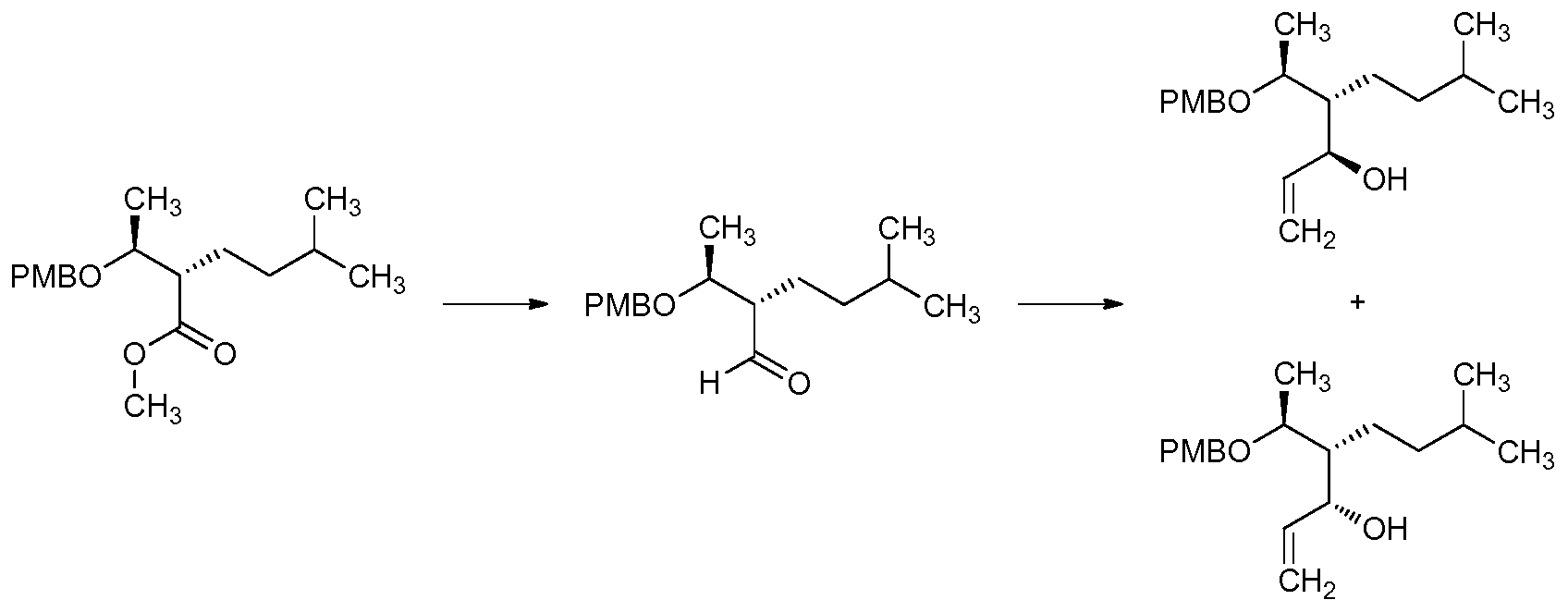
[0063] Compounds of Formula 1.5, where Ri is as originally defined, can be prepared according to the methods outlined in Scheme 1, steps a - g. Compounds of Formula 1.1 , where Ri is as originally defined, can be obtained by reaction of the dianion of an ester of Formula 1.0 formed by treatment with lithium diisopropyl amide (LDA) at -50 °C, with an alkyl halide or allyl halide in a solvent such as tetrahydrofuran (THF) at cryogenic temperatures such as -78 °C, as shown in a. Compounds of Formula 1.2, where Ri is as originally defined, can be obtained by treating compounds of Formula 1.1 , where Ri is an alkenyl functionality, with hydrogen gas in the presence of a catalyst such as palladium on carbon (Pd/C) in a solvent such as ethyl acetate (EtOAc), as shown in b. Compounds of Formula 1.3, where Ri is as orignally defined can be prepared from compounds of Formula 1.1 , where Ri is as defined above, and Formula 1.2, where Ri is as defined above, by treating with an alkylating agent such as 4-methoxybenzyl 2,2,2-trichloroacetimidate in the presence of an acid such as camphor sulfonic acid (CSA) in a solvent such as dichloromethane (DCM), as depicted in c. Aldehydes of Formula 1.4, where Ri is as originally defined, can be obtained by the reduction of esters of Formula 1.3, where Ri is as defined above, using a catalyst such as chlorobis(cyclooctene)iridium(I) dimer in the presence of a reducing agent such as diethylsilane (Et2SiH) in a solvent such as DCM, as shown in d. Aldehydes of Formula 1.4, where Ri is as originally defined, can also be obtained by reduction of esters of Formula 1.3, where Ri is
as defined above, using hydride reducing agents, such as lithium aluminum hydride (L1AIH4, LAH) in ethereal solvents, giving alcohols of Formula 1.6, where Ri is as defined above, as depicted in e. Oxidation of alcohols of Formula 1.6, where Ri is as defined above, using oxidation reagents such as sulfur trioxide-pyridine complex (S03-pyridine/dimethyl sulfoxide (DMSO)) in solvents such as DCM, furnish the aldehydes of Formula 1.4, where Ri is as originally defined, as depicted in The addition of metallated alkenes such as vinyl magnesium bromide to aldehydes of Formula 1.4, where Ri is as defined above, in a solvent such as THF at -78 °C affords allylic alcohols of Formula 1.5, where Ri is as originally defined, as depicted ing.
Scheme 1
1.5 1.4
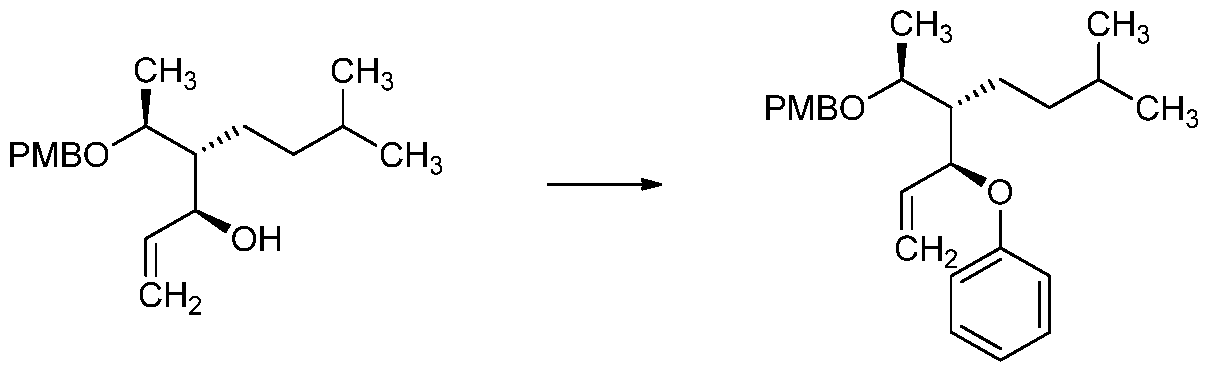
[0064] Compounds of Formulas 2.0 and 2.1, where Ri and R2 are as originally defined, but R2 is not acyl or hydrogen, can be prepared as shown in Scheme 2, steps a-b. Alcohols of Formula 1.5, where Ri is as originally defined, can be alkylated to give compounds of Formula 2.0, where Ri and
R2 are as defined above, by deprotonation with a base such as sodium hydride (NaH) in an aprotic solvent such as N,N-dimethylformamide (DMF), followed by treatement with an alkylating agent, such as cyclopropylmethyl bromide, at an elevated temperature such as 50 °C, as shown in a. Alternatively, alcohols of Formula 1.5, where Ri is as defined above, can be arylated by treating with an arylating agent such as triphenylbismuth(V)diacetate in the presence of a copper catalyst such as diacetoxycopper and a base such as N,N-dicyclohexyl-N-methylamine in a solvent such as toluene at an elevated temperature such as 60 °C to give compounds of Formula 2.1, where Ri and R2 are as defined above, as depicted in b.
Scheme 2
2.0 1.5 2.1
[0065] Compounds of Formula 3.5, where both Ri and R2 are as originally defined, but R2 is not acyl or hydrogen, and X is Boc, can be prepared as outlined in Scheme 3, steps a-e.
Compounds of Formula 3.2, where Ri, R2 and X are as defined above, can be prepared from compounds of Formula 3.0, where Ri is as originally defined, R2 is not acyl or alkenyl, and X is Boc, by treatment with an alkylborane reagent, such as 9-borabicyclo[3.3.1]nonane (9-BBN), in a solvent such as THF, at a temperature between ambient room temperature and about 50 °C. Then, the mixture can be treated with an aqueous basic solution, such as potassium phosphate (K3PO4), a brominated olefin, such as a compound of Formula 3.1, where X is Boc (prepared as in Singh et al. Org. Lett. 2003, 17, 3155-3158), and a catalyst, such as [l,l-bis(diphenylphosphino)ferrocene] dichloropalladium(II) (PdCl2(dppf)) at ambient room temperature to about 55 °C to produce a compound of Formula 3.2 as shown in step a. Compounds of the Formula 3.3, where Ri, R2 and X are as defined above, can be prepared from enamides, generalized by Formula 3.2, where Ri, R2, and X are as defined above, using an asymmetric hydrogenation reaction employing a catalyst such as (+)- 1 ,2-bis((25',55)-2,5-diethylphospholano)benzene( 1 ,5-cyclooctadiene) rhodium(I)
trifluoromethanesulfonate ((S^-Et-DuPHOS-Rh) under a hydrogen atmosphere at a pressure between 40 and 200 pounds per square inch (psi) in a solvent such as methanol (MeOH) as shown in step b. As shown in step c, compounds of Formula 3.3 can be converted to compounds of Formula 3.4, where Ri, R2 and X are as defined above, by removing the para -methoxybenzyl (PMB) protecting group using an oxidant such as 2,3-dichloro-5,6-dicyano-l,4-benzoquinone (DDQ) in an aqueous DCM solvent mixture at a temperature of about 0 °C. Compounds of Formula 3.5, where Ri, R2, and X are as defined above, can be prepared from compounds of Formula 3.4, where Ri, R2, and X are as defined above and the carboxylic acid is protected as either the methyl (Me) or benzyl (Bn) ester, by treating with a hydroxide base, such as lithium hydroxide (LiOH), in an aqueous THF solvent mixture, as shown in step d. Additionally, compounds of Formula 3.5, where Ri and X are as defined above and R2 is as originally defined, but not benzyl, acyl, or hydrogen, can be prepared from compounds of Formula 3.4 wherein the carboxylic acid is protected as the Bn ester and Ri, R2, and X are as defined above by treatment with hydrogen gas in the presence of a catalyst such as Pd/C, in a solvent such as EtOAc, as shown in step e.
Scheme 3
3.3 3.4 3.5
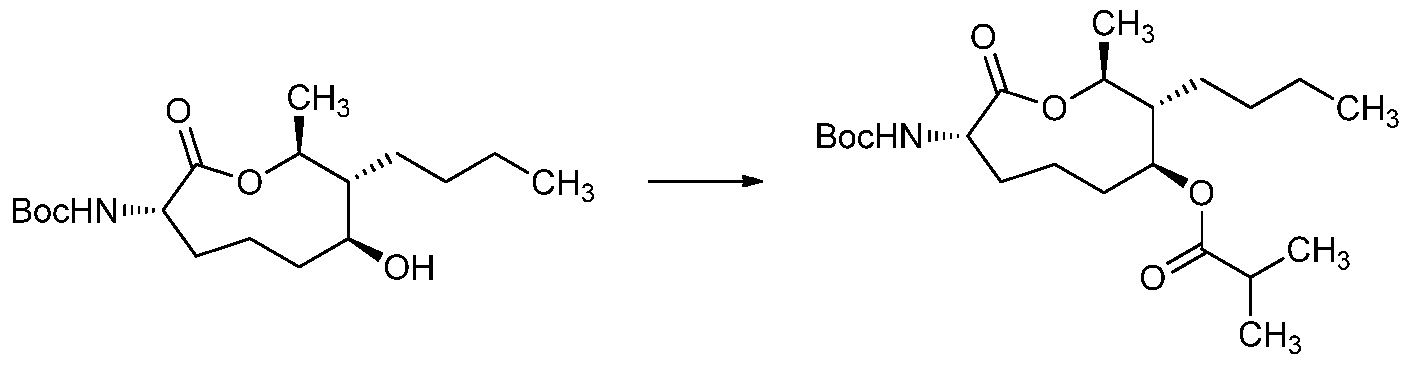
[0066] Compounds of Formula 4.0, where Ri and R2 are as originally defined, but R2 is not acyl or hydrogen, and X is Boc, can be prepared according to the methods outlined in Scheme 4. Compounds of Formula 4.0, can be obtained from compounds of Formula 3.5, where Ri and R2 are as defined above and X is Boc, by the addition of a solution of compounds of Formula 3.5 in a halogenated solvent such as DCM or an aromatic solvent such as toluene to a mixture of a base, such as 4-dimethylaminopyridine (DMAP), and a mixed anhydride, such as 2-methyl-6- nitrobenzoic anhydride (MNBA), in either a halogenated solvent such as DCM or an aromatic solvent such as toluene at a temperature between about 21 °C and about 60 °C over a period of 4 - 12 hours (h), as shown in a.
Scheme 4
[0067] Compounds of Formulas 5.2 and 5.3 can be prepared through the methods shown in Scheme 5, steps a - d. Alcohols of Formula 5.0 are accessed from compounds of Formula 4.0, where Ri is as orginally defined, R2 is benzyl, and X is Boc, by treatment with hydrogen gas in the presence of a catalyst such as Pd/C, in a solvent such as THF, as shown in b. Compounds of Formula 5.1, where Ri is as orginally defined, R2 is acyl, and X is Boc, can be prepared from compounds of Formula 5.0, where Ri and X are as defined above, by treating with a carbonyl chloride such as cyclopropanecarbonyl chloride in the presence of an amine base such as DMAP, in a mixed solvent system such as pyridine and DCM, as shown in step c. Compounds of Formula 5.2, where Ri and R2 are as orginally defined and X and Y are hydrogen, can be obtained from compounds of Formula 4.0 or 5.1, where Ri and R2 are as orginally defined, and X is Boc, by
treating with an acid, such as a 4.0 Molar (M) hydrogen chloride (HC1) solution in dioxane, in a solvent such as DCM, as shown in a. The resulting hydrochloride salt may be neutralized prior to use to give the free amine or neutralized in situ in step d. Compounds of Formula 5.3, where Ri and R2 are as orginally defined, can be prepared from compounds of Formula 5.2 by treatment with 3- hydroxy-4-methoxypicolinic acid in the presence of a base, such as 4-methylmorpholine, and a peptide coupling reagent, such as 0-(7-azabenzotriazol-l-yl)-A,N,N',N'-tetramethyluronium hexafluorophosphate (HATU) or benzotriazol-l-yl-oxytripyrrolidinophosphonium
hexafluorophosphate (PyBOP), in an aprotic solvent such as DCM, as shown in d.
Scheme 5
5.3
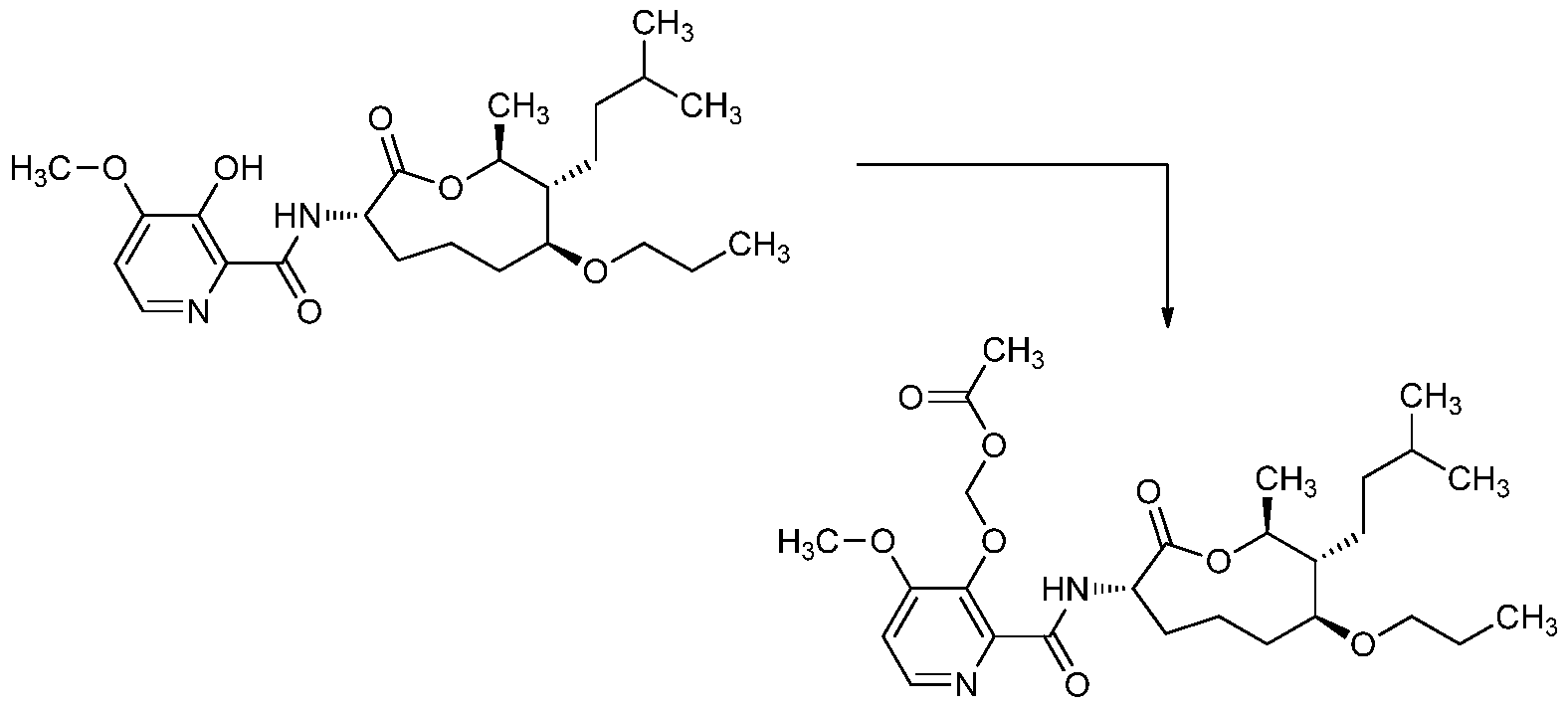
[0068] Compounds of Formula 6.0, where Ri, R2 and R4 are as originally defined, can be prepared by the method shown in Scheme 6. Compounds of Formula 6.0 can be prepared from compounds of Formula 5.3, where Ri and R2 are as originally defined, by treatment with the
appropriate alkyl halide with or without a reagent such as sodium iodide (Nal) and an alkali carbonate base such as sodium carbonate (Na2C03) or potassium carbonate (K2C03) in a solvent such as acetone or by treatment with an acyl halide in the presence of an amine base, such as pyridine, triethylamine (TEA), DMAP, or mixtures thereof in an aprotic solvent such as DCM, as shown in step a.
Scheme 6
5.3 6.0
EXAMPLES
[0069] Example 1, Step 1 : Preparation of (S)-methyl 2-((S)-l-hydroxyethyl)-5-methylhex-4- enoate:
[0070] To a solution of diisopropylamine (19.93 milliliters (mL), 142 millimoles (mmol)) in anhydrous THF (99 mL) at -50 °C (deficient dry ice/acetone bath) was added n-butyllithium (n- BuLi; 54.3 mL, 130 mmol, 2.5 M in hexanes). This solution was removed from the cold bath for 15 minutes (min), then re-cooled to -50 °C. To the lithium diisopropylamide (LDA) was added a solution of (S)-methyl 3-hydroxybutanoate (6.64 ml, 59.3 mmol) in THF (20.0 mL) dropwise over 15 min using a cannula. This solution was allowed to warm to -30 °C over 30 min, stirred at -30 °C for 1 h, and recooled to -78 °C. To the enolate was added a solution of l-bromo-3-methylbut-2-ene (13.7 mL, 119 mmol) in anhydrous 1,2-dimethoxy ethane (20.0 mL, 193 mmol) dropwise over 15 min. The cold bath was at -60 °C after 1 h at which time the reaction flask was removed from the bath and stirred without cooling for 1.5 h. The reaction was quenched by the addition of sat. aq. ammonium chloride (NH4C1; 50 mL), diluted with EtOAc (50 mL), and the phases were separated.
The aqueous phase was further extracted with EtOAc (2 x 50 mL) and the combined organic extracts were washed with sat. aq. sodium chloride (NaCl, brine; 50 mL), dried over sodium sulfate Na2S04, filtered, and concentrated to dryness. The crude residue was purified by flash column chromatography (120 grams (g) silica gel (Si02), 0-^40% EtOAc/hexanes) to afford the title compound (9.5 g, 51.0 mmol, 86%) as a slightly yellow oil: IR (thin film) 3452, 2971, 2929, 1730, 1437, 1198, 1160 cm 1; 1H NMR (400 MHz, CDC13) δ 5.11 - 5.01 (m, 1H), 3.92 (p, J= 6.3 Hz, 1H), 3.70 (s, 3H), 2.78 (s, 1H), 2.46 - 2.28 (m, 3H), 1.69 (d, J= 1.4 Hz, 3H), 1.62 (s, 3H), 1.23 (d, J = 6.4 Hz, 3H); 13C NMR (101 MHz, CDC13) δ 175.54, 134.14, 120.30, 67.78, 52.72, 51.52, 27.90, 25.73, 21.46, 17.64.
[0071] Example 1 , Step 2: Preparation of (S)-methyl 2-((S)-l-hydroxyethyl)-5- methylhexanoate :
[0072] To a well stirred solution of (S)-methyl 2-((5)-l-hydroxyethyl)-5-methylhex-4-enoate (9.5 g, 51.0 mmol) in MeOH (51 mL) was added 10% Pd/C (0.543 g, 5.10 mmol). The reaction was put under a hydrogen atmosphere (balloon) and stirred at room temperature for 20 h. The mixture was filtered through a plug of Celite® and the plug was washed with MeOH (20 mL). The filtrate and washes were combined, the solvent was removed under reduced pressure, and the residue was dissolved in DCM (50 mL). The solution was passed through a phase separator to remove residual water (H20), and the solvent was removed under reduced pressure to afford the title compound
(9.45 g, 50.2 mmol, 98%) as a slightly yellow oil: IR (thin film) 3451, 2954, 2871, 1736, 1719, 1169 cm 1; 1H NMR (400 MHz, CDC13) δ 3.91 (p, J= 6.4 Hz, 1H), 3.72 (s, 3H), 2.77 (s, 1H), 2.36 (ddd, J= 9.2, 6.3, 5.0 Hz, 1H), 1.72 - 1.45 (m, 3H), 1.28 - 1.05 (m, 5H), 0.88 (dd, J= 6.6, 3.2 Hz, 6H); 13C NMR (75 MHz, CDC13) δ 176.13, 68.55, 53.29, 51.67, 36.55, 28.16, 27.37, 22.74, 22.44, 21.68.
[0073] Example 1, Step 3: Preparation of (S)-methyl 2-((5)-l-((4-methoxybenzyl)oxy)ethyl)- 5 -methylhexanoate :
[0074] To a solution of S)-methyl 2-((S)- 1 -hydroxyethyl)-5-methylhexanoate (5.00 g, 26.6 mmol) and ((15',4i?)-7,7-dimethyl-2-oxobicyclo[2.2.1]heptan-l-yl)methanesulfonic acid
(camphorsulfonic acid, CSA; 0.617 g, 2.66 mmol) in DCM (53.1 mL) was added 4-methoxybenzyl 2,2,2 -trichloroacetimidate (8.27 mL, 39.8 mmol) at 0 °C. The reaction mixture was removed from the cold bath and stirred at room temperature for 17 h. Hexane (50 mL) was added to the reaction and the precipitate was removed by filtration. The solids were washed with hexanes (2 x 10 mL), Celite® (2 scoopula tip-fulls) was added to the combined filtrate and washes, and the solvent was removed under reduced pressure. The resulting adsorbed material was directly loaded onto a column and purified using flash column chromatography (80 g Si02, 0- 35% EtOAc/hexanes) to afford the title compound (6.3 g, 20.4 mmol, 77%) as a colorless oil; 1H NMR (400 MHz, CDC13) δ 7.24 -
7.16 (m, 2H), 6.89 - 6.79 (m, 2H), 4.49 (d, J= 11.2 Hz, 1H), 4.33 (d, J= 11.1 Hz, 1H), 3.75 (s, 3H), 3.74 - 3.62 (m, 4H), 2.49 (ddd, J= 10.7, 8.2, 4.0 Hz, 1H), 1.62 - 1.40 (m, 3H), 1.23 - 1.16 (m, 3H), 1.16 - 1.03 (m, 2H), 0.87 (d, J= 3.9 Hz, 3H), 0.85 (d, J= 3.9 Hz, 3H); 13C NMR (101 MHz, CDC13) 5 175.03, 159.10, 130.63, 129.14, 113.62, 76.16, 70.71, 55.11, 52.64, 51.25, 36.58, 27.97, 26.00, 22.69, 22.17, 17.08; ESIMS m/z 331 ([M+Na]+).
[0075] Example 1 , Steps 4 and 5 : Preparation of (3S,4i?)-4-((S)- 1 -((4-methoxy- benzyl)oxy)ethyl)-7-methyloct-l-en-3-ol and (3i?,4i?)-4-((S)-l-((4-methoxybenzyl)oxy)ethyl)-7- methyloct-l-en-3-ol:
Step 4
[0076] To a solution of (S)-methyl 2-((S)- 1 -((4-methoxybenzyl)oxy)ethyl)-5- methylhexanoate (6.00 g, 19.5 mmol) and chlorobis(cyclooctene)-iridium(I) dimer (0.349 g, 0.389 mmol) in dry DCM (19.5 mL) was slowly added Et2SiH (3.76 mL, 29.2 mmol) at 0 °C. The flask was removed from the cold bath and the reaction was stirred at room temperature for 20 h under nitrogen (N2). The reaction mixture was transferred via cannula to an ice-cooled mixture of diethyl ether (Et20; 60 mL) and 2 Normal (N) HC1 (20 mL) over 15 min. The mixture was removed from the cold bath and stirred at room temperature for 30 min. The phases were separated and the aq. phase was further extracted with Et20 (2 x 50 mL). The organics were combined, washed with sat. aq. sodium bicarbonate (NaHC03; 25 mL) and brine (25 mL), dried over Na2S04, filtered, and the filtrate treated with Celite® (5 scoopula tip-fulls). The solvent was removed under reduced pressure and the resulting adsorbed material was directly loaded onto a column and purified using flash column chromatography (120 g Si02, 0-^75% EtOAc/hexanes) to afford the intermediate aldehyde, (S)-2-((S)- 1 -((4-methoxybenzyl)oxy)ethyl)-5-methylhexanal.
Step 5
[0077] The intermediate aldehyde was dissolved in THF (30 mL), the mixture was cooled to -78 °C, vinylmagnesium bromide (29.2 mL, 29.2 mmol, 1M in THF) was slowly added, and the resulting solution was stirred for 30 min. The reaction was removed from the cold bath, stirred at room temperature for 30 min, and quenched by the addition of sat. aq. NH4C1 (30 mL). The phases were separated, and the aq. phase was further extracted with Et20 (3 x 50 mL). The combined organics were dried over Na2S04, filtered, and concentrated to dryness. The residue was dissolved in DCM (20 mL) and the resulting solution was treated with Celite® (5 scoopula tip-fulls). The
solvent was removed under reduced pressure and the resulting adsorbed material was directly loaded onto a column and purified using flash column chromatography (220 g Si02, 0"M5% acetone/hexanes) to afford the individual diastereomers as colorless oils:
[0078] (3lS,4i?)-4-((5)-l-((4-methoxybenzyl)oxy)ethyl)-7-methyloct-l-en-3-ol (2.35 g, 7.67 mmol, 39%): 1H NMR (400 MHz, CDC13) δ 7.27 - 7.19 (m, 2H), 6.91 - 6.82 (m, 2H), 5.84 (ddd, J = 17.2, 10.6, 4.7 Hz, 1H), 5.29 (app dt, J= 17.2, 1.9 Hz, 1H), 5.16 (app dt, J= 10.6, 1.9 Hz, 1H), 4.58 (d, J= 11.0 Hz, 1H), 4.53 - 4.45 (m, 1H), 4.27 (d, J= 10.9 Hz, 1H), 3.83 (d, J= 4.3 Hz, 1H), 3.79 (s, 3H), 3.76 - 3.65 (m, 1H), 1.52 - 1.26 (m, 7H), 1.20 - 1.06 (m, 2H), 0.85 (app dd, J= 6.6, 2.2 Hz, 6H); 13C NMR (101 MHz, CDC13) δ 159.33, 139.16, 130.02, 129.54, 114.61, 113.88, 76.55, 72.08, 70.65, 55.26, 49.31, 37.35, 28.25, 23.51, 22.63, 22.52, 17.71; ESIMS m/z 329 ([M+Na]+).
[0079] (3i?,4i?)-4-((5)-l-((4-methoxybenzyl)oxy)ethyl)-7-methyloct-l-en-3-ol (1.48 g, 4.83 mmol, 25%): 1H NMR (400 MHz, CDC13) δ 7.30 - 7.22 (m, 2H), 6.91 - 6.83 (m, 2H), 5.89 (ddd, J = 17.1, 10.3, 6.7 Hz, 1H), 5.24 (ddd, J= 17.2, 1.8, 1.2 Hz, 1H), 5.12 (ddd, J= 10.4, 1.8, 1.1 Hz, 1H), 4.58 (d, J= 11.1 Hz, 1H), 4.35 (d, J= 11.1 Hz, 1H), 4.22 - 4.13 (m, 1H), 3.80 (s, 3H), 3.70 (p, J= 6.3 Hz, 1H), 3.66 (d, J= 3.2 Hz, 1H), 1.56 (tt, J= 6.8, 5.2 Hz, 1H), 1.49 - 1.24 (m, 6H), 1.19 - 1.08 (m, 2H), 0.84 (dd, J= 6.7, 2.0 Hz, 6H); 13C NMR (101 MHz, CDC13) δ 159.24, 140.20, 130.22, 129.41, 115.17, 113.87, 78.10, 75.83, 70.43, 55.28, 48.98, 36.07, 28.53, 26.08, 22.52, 17.93; ESIMS m/z 329 ([M+Na]+).
[0080] Example 1, Step 6: Preparation of (2i?,35)-2-benzyl-3-((4-methoxybenzyl)-oxy)butan- l-ol:
[0081] To a stirred suspension of LAH (2.77 g, 73.1 mmol) in anhydrous Et20 (140 mL) was added (25',35)-methyl 2-benzyl-3-((4-methoxybenzyl)oxy)butanoate (8.0 g, 24.36 mmol) dissolved in Et20 (104 mL ) dropwise at 0 °C. The reaction was stirred at 0 °C for 15 min, followed by warming to room temperature and stirring for 1 h. The reaction was recooled to 0 °C and carefully quenched by the simultaneous dropwise addition of H20 (2.8 mL ) and IN sodium hydroxide
(NaOH; 2.8 mL). The mixture was filtered and the aluminum salts were washed with Et20 (50 mL). The filtrate was treated with Celite® (20 g) and concentrated to give a solid. The adsorbed material was purified using flash column chromatography (120 g Si02 column, 0-^60%
EtOAc/hexane) to afford the title compound (5.38 g, 74%) as a clear oil: 1H NMR (400 MHz, CDC13) δ 7.30 - 7.10 (m, 7H), 6.93 - 6.84 (m, 2H), 4.59 (d, J= 11.2 Hz, 1H), 4.30 (d, J= 11.2 Hz, 1H), 3.89 (app dt, J= 11.4, 2.9 Hz, 1H), 3.80 (s, 3H), 3.66 (app qd, J= 6.2, 4.3 Hz, 1H), 3.50 (ddd, J= 11.5, 6.9, 4.7 Hz, 1H), 2.93 - 2.85 (m, 1H), 2.75 (app qd, J= 13.7, 7.5 Hz, 2H), 1.76 (dddt, J= 10.9, 6.6, 4.3, 2.3 Hz, 1H), 1.29 (d, J= 6.3 Hz, 3H); 13C NMR (101 MHz, CDC13) δ 159.32, 140.61, 130.35, 129.39, 129.20, 128.36, 125.97, 113.93, 70.70, 62.36, 55.31, 47.81, 35.11, 17.67; ESIMS m/z 323 ([M+Na]+).
[0082] Example 1, ',35)-2-benzyl-3-((4-methoxybenzyl)oxy)butanal:
[0083] To a solution of (2i?,35)-2-benzyl-3-((4-methoxybenzyl)oxy)butan-l-ol (5.38 g, 17.91 mmol) in CH2C12 (90 mL) in a nitrogen flushed 250 mL round bottomed flask was added DMSO (17.9 mL, 25.24 mmol) and TEA (12.5 mL, 90 mmol) via syringe followed by sulfur trioxode- pyridine complex (8.55 g, 53.7 mmol) in three equal portions at 0 °C under N2. The reaction was removed from the cold bath and allowed to warm to room temperature, and stirred for 2 h. The reaction was diluted with ice cold 0.5 N HC1 (100 mL) and EtOAc (150 mL). The phases were separated and the organic phase was washed with sat. aq. NaHC03 (50 mL) and brine (50 mL). The solution was dried over magnesium sulfate (MgS04), filtered, and concentrated to afford the title compound (5.3 g, 96%) as a yellow oil: 1H NMR (400 MHz, CDC13) δ 9.78 (d, J= 2.8 Hz, 1H), 7.29 - 7.09 (m, 7H), 6.89 (d, J= 8.7 Hz, 2H), 4.56 (d, J= 11.3 Hz, 1H), 4.34 (d, J= 11.3 Hz, 1H), 3.82 (s, 3H), 3.03 (dd, J= 14.0, 8.2 Hz, 1H), 2.87 (dd, J= 14.0, 6.4 Hz, 2H), 2.78 - 2.55 (m, 1H), 1.29 (d, J= 6.4 Hz, 3H); ESIMS m/z 321.3 ([M+Na]+).
[0084] Example 1, Step 8: Preparation of (35
*,4i?,55)-4-benzyl-5-((4-methoxybenzyl)oxy)- hex-l-en-3-ol:
[0085] To a 200 mL round-bottomed flask equipped with a magnetic stir bar were added (2S,3S)-2-benzyl-3-((4-methoxybenzyl)oxy)butanal (5.34 g, 17.90 mmol) and THF (36 mL). The flask was cooled to -78 °C and vinylmagnesium bromide (1.0 M in THF, 36 mL, 36 mmol) was added via a syringe. The reaction was maintained at -78 °C for 1.5 h, quenched with sat. aq. NH4CI (25 mL) at -78 °C, and then removed from the cold bath. After warming to room temperature, the biphasic mixture was diluted with EtOAc (100 mL), and the phases were separated. The organic phase was washed with brine (30 mL), dried over MgS04, filtered, and concentrated. The oil was purified by flash column chromatography (120 g Si02 column, 0- 100% EtOAc/hexanes) to afford the pure desired isomer (1.18 g), and a mixture of the isomers (2.53 g). The mixture was re-purified by flash column chromatography (80 g Si02 column, 0- 15% acetone/hexanes) to afford clean separation of the isomers in a 2.23: 1 ratio of diastereomers.
[0086] (3S,4^5S)-4-Benzyl-5-((4-methoxybenzyl)oxy)hex-l-en-3-ol (2.88 g, 49%): 1H NMR (400 MHz, CDCI3) δ 7.28 - 7.17 (m, 5H), 7.05 - 6.98 (m, 2H), 6.92 - 6.84 (m, 2H), 5.91 (ddd, J = 17.1, 10.6, 4.4 Hz, 1H), 5.36 (dt, J= 17.2, 1.9 Hz, 1H), 5.23 (dt, J= 10.6, 1.8 Hz, 1H), 4.65 - 4.59 (m, 1H), 4.56 (d, J= 10.9 Hz, 1H), 4.21 (d, J= 11.0 Hz, 1H), 3.89 (d, J= 2.7 Hz, 1H), 3.78 (s, 3H), 3.65 (qd, J= 6.3, 3.7 Hz, 1H), 2.72 (d, J= 7.3 Hz, 2H), 1.78 - 1.70 (m, 1H), 1.25 (d, J= 6.2 Hz, 3H); 13C NMR (101 MHz, CDC13) δ 159.46, 141.10, 139.22, 130.09, 129.57, 129.23, 128.39, 125.91, 115.02, 114.01, 75.38, 70.99, 70.74, 55.33, 50.95, 31.46, 17.72; ESIMS m/z 349 ([M+Na]+).
[0087] (3i?,4i?,55)-4-Benzyl-5-((4-methoxybenzyl)oxy)hex-l-en-3-ol (1.3 g, 22%): 1H NMR (300 MHz, CDCI3) δ 7.33 - 7.04 (m, 7H), 6.96 - 6.78 (m, 2H), 5.96 (ddd, J= 17.2, 10.4, 5.5 Hz, 1H), 5.25 (dt, J= 17.2, 1.7 Hz, 1H), 5.11 (dt, J= 10.5, 1.6 Hz, 1H), 4.56 (d, J= 11.4 Hz, 1H), 4.31
(d, J= 11.4 Hz, 1H), 4.28 - 4.22 (m, 1H), 3.82 (s, 3H), 3.72 - 3.65 (m, 1H), 2.86 - 2.87 (m, 3H), 2.06 - 1.96 (m, 1H), 1.27 (d, J= 6.4 Hz, 3H): ESIMS m/z 349.3 ([M+Naf).
[0088] Example 2, Step 1 : Preparation of 1 -methoxy-4-((((2S,3S)-6-methyl-3-((S)- 1 - phenoxyallyl)hepta -2-yl)oxy)methyl)benzene:
[0089] A toluene (12.0 mL) solution of (3lS,4i?)-4-((5)-l-((4-methoxybenzyl)oxy)ethyl)-7- methyloct-l-en-3-ol (1.10 g, 3.59 mmol), N-cyclohexyl-N-methylcyclohexanamine (1.14 mL, 5.38 mmol), triphenylbismuth diacetate (3.01 g, 5.38 mmol), and copper(II) acetate (0.130 g, 0.718 mmol) was heated to 50 °C and stirred at this temperature for 16 h. Additional triphenylbismuth diacetate (1.00 g) was added to push the reaction to completion, and after a total reaction time of 38 h, the reaction mixture was cooled to room temperature, loaded onto a Celite® plug and purified by flash column chromatography (40 g Si02, 0~ 15% EtOAc/hexanes) to afford the title compound (1.10 g, 2.30 mmol, 64%): 1H NMR (400 MHz, CDC13) δ 7.29 - 7.20 (m, 3H), 6.99 - 6.86 (m, 4H), 6.76 - 6.68 (m, 2H), 5.85 (ddd, J= 17.4, 10.8, 4.8 Hz, 1H), 5.27 - 5.16 (m, 2H), 5.09 (ddt, J= 4.8, 3.2, 1.7 Hz, lH), 4.39 (d, J= 10.6 Hz, 1H), 4.09 (d, J= 10.6 Hz, 1H), 3.76 (s, 3H), 3.64 (dq, J= 8.0, 6.2 Hz, 1H), 1.68 - 1.56 (m, 2H), 1.55 - 1.42 (m, 1H), 1.41 - 1.17 (m, 6H), 0.88 (app dd, J= 6.6, 1.4 Hz, 6H); ESIMS m/z 405 ([M+Naf).
[0090] Example 2, Step 2 : Preparation of 1 -methoxy-4-((((2S,3S)-6-methyl-3-((S)- 1 - propoxyallyl)hept -2-yl)oxy)methyl)benzene:
[0091] To a solution of (35,4R)-4-((S)- 1 -((4-methoxybenzyl)oxy)ethyl)-7-methyloct- 1 -en-3- ol (1.40 g, 4.57 mmol) and potassium 2-methylpropan-2-olate (0.564 g, 5.03 mmol) in THF (30.5 mL) was added propyl 4-methylbenzenesulfonate (2.15 mL, 11.4 mmol). The reaction was stirred at room temperature for 72 h, diluted with H
20 (15 mL), and the phases were separated. The aq. phase was further extracted with Et
20 (3 x 25 mL), and the combined organics were washed with brine (15 mL), dried over Na
2S0
4, filtered, and the filtrate was treated with Celite
® (4 scoopula tip-fulls). The solvent was removed under reduced pressure and the resulting adsorbed material was directly loaded onto a column and purified using flash column chromatography (80 g Si0
2, 0- 15%
EtOAc/hexanes) to afford the title compound (1.30 g, 3.36 mmol, 74%) as a colorless oil: 1H NMR
(400 MHz, CDC13) δ 7.30 - 7.22 (m, 2H), 6.91 - 6.83 (m, 2H), 5.77 - 5.63 (m, 1H), 5.20 - 5.14 (m, 1H), 5.13 (d, J= 1.1 Hz, 1H), 4.50 - 4.35 (m, 2H), 3.85 - 3.77 (m, 4H), 3.61 (p, J= 6.3 Hz, 1H), 3.43 (app tt, J= 9.8, 6.6 Hz, 1H), 3.12 (app dt, J= 9.1, 6.6 Hz, 1H), 1.69 - 1.20 (m, 8H), 1.15 (d, J = 6.3 Hz, 3H), 0.91 (t, J= 7.4 Hz, 3H), 0.87 (app dd, J= 6.6, 1.1 Hz, 6H); 13C NMR (101 MHz, CDCI3) δ 158.98, 138.54, 131.33, 129.16, 116.04, 113.69, 81.66, 75.17, 70.57, 70.12, 55.26, 47.97, 38.70, 28.65, 23.69, 23.24, 22.63, 16.76, 10.90; ESIMS m/z 371 ([M+Na ).
[0092] Example 2, Step 3: Preparation of l-((((2lS,35)-3-((5)-l-(benzyloxy)allyl)-6- methylheptan-2-yl)ox methyl)-4-methoxybenzene:
[0093] To a solution of (3S,4i?)-4-((S 1 -((4-methoxybenzyl)oxy)ethyl)-7-methyloct- 1 - en-3-ol (2.34 g, 7.64 mmol) in DMF (15.3 mL) was added NaH (0.611 g, 15.3 mmol, 60% dispersion in mineral oil) at 0 °C. After 20 min, benzyl bromide (2.27 mL, 19.1 mmol) was added and the reaction was stirred at 0 °C for 20 min, warmed to 45 °C, and stirred at this temperature for 16 h. The reaction was cooled to room temperature and quenched with sat. aq. NH4C1 (40 mL). The mixture was extracted with Et20 (3 x 50 mL), and the combined organics were washed with brine (40 mL), dried over Na2S04, filtered, and concentrated to dryness. The residue was purified using flash column chromatography (120 g Si02, 0-^20% EtOAc/hexanes) to afford the title compound
(2.75 g, 6.93 mmol, 91%) as a colorless oil: 1H NMR (400 MHz, CDC13) δ 7.38 - 7.34 (m, 2H), 7.32 - 7.25 (m, 3H), 7.22 - 7.17 (m, 2H), 6.87 - 6.78 (m, 2H), 5.78 (ddd, J= 17.4, 9.9, 7.3 Hz, 1H), 5.27 - 5.18 (m, 2H), 4.58 (d, J= 12.4 Hz, 1H), 4.42 (d, J= 11.2 Hz, 1H), 4.29 (d, J= 11.2 Hz, 1H), 4.26 (d, J= 11.9 Hz, 1H), 4.04 - 3.96 (m, 1H), 3.77 (s, 3H), 3.64 (p, J= 6.3 Hz, 1H), 1.73 - 1.63 (m, 1H), 1.55 - 1.42 (m, 2H), 1.43 - 1.21 (m, 3H), 1.15 (d, J= 6.3 Hz, 3H), 0.86 (d, J= 6.6 Hz, 6H); 13C NMR (101 MHz, CDC13) δ 158.92, 139.07, 137.94, 131.19, 129.17, 128.19, 127.77, 127.47, 116.82, 113.65, 81.13, 75.03, 70.36, 70.07, 55.22, 48.17, 38.66, 28.62, 23.67, 22.61, 16.84; ESIMS m/z 419 ([M+Na ).
[0094] Example 3, Step 1 : Preparation of (65',75',Z)-benzyl 2-((tert-butoxycarbonyl)
((S)- 1 -((4-methoxybenzyl)oxy)ethyl)- 10-methyl-6-propoxyundec-2-enoate :
[0095] To a solution of 1 -methoxy-4-((((2lS,35)-6-methyl-3-((5)- 1 -propoxyallyl)heptan-2- yl)oxy)methyl)benzene (1.25 g, 3.59 mmol) in THF (3 mL) was added 9-BBN (10.8 mL, 5.38 mmol, 0.5 M in THF) dropwise, and the reaction was stirred at room temperature for 6 h. The reaction mixture was carefully treated with an aq. solution of K3P04 (3 M, 2.152 mL, 6.46 mmol; gas evolution), followed by a solution of (Z)-benzyl 3-bromo-2-((fert- butoxycarbonyl)amino)acrylate (1.30 g, 3.66 mmol) in DMF (3.59 mL), and PdCl2-dppf (0.262 g, 0.359 mmol). The reaction vessel was fitted with an air condenser and slowly warmed to 55 °C. The solution became homogeneous and bright orange after 30 min. The reaction was maintained at this temperature for 20 h, at which point the color had turned a very dark red (almost black). The reaction was cooled to room temperature, diluted with H20 (30 mL), and the phases were separated. The aq. phase was extracted with Et20 (3 x 50 mL), and the combined organics were washed with
brine (15 mL), dried over Na2S04, filtered, and the filtrate was treated with Celite (2 scoopula tip- fulls). The solvent was removed under reduced pressure and the resulting adsorbed material was directly loaded onto a column and purified using flash column chromatography (80 g Si02, 0- 25% acetone/hexanes) to afford the title compound (1.50 g, 2.397 mmol, 67%) as a colorless oil: 1H NMR (400 MHz, CDC13) δ 7.40 - 7.29 (m, 5H), 7.25 - 7.20 (m, 2H), 6.88 - 6.80 (m, 2H), 6.59 (app t, J= 7.5 Hz, 1H), 6.15 (s, 1H), 5.20 (app d, J= 2.2 Hz, 2H), 4.48 (d, J= 11.4 Hz, 1H), 4.34 (d, J = 11.4 Hz, 1H), 3.78 (s, 3H), 3.57 (p, J= 6.2 Hz, 1H), 3.36 (ddd, J= 7.3, 5.3, 3.7 Hz, 1H), 3.33 - 3.19 (m, 2H), 2.36 - 2.16 (m, 2H), 1.72 - 1.38 (m, 16H), 1.38 - 1.13 (m, 6H), 0.91 - 0.82 (m, 9H); 13C NMR (101 MHz, CDC13) δ 164.82, 158.99, 153.42, 137.06, 135.73, 131.13, 129.21, 128.52, 128.24, 128.22, 113.70, 80.33, 79.43, 74.78, 71.76, 69.86, 67.00, 55.25, 46.35, 38.73, 30.64, 28.68, 28.19, 25.39, 23.88, 23.47, 22.64, 22.61, 17.08, 10.79; ESIMS m/z 648 ([M+Na ).
[0096] Example 3, Step 2: Preparation of (25',65',75)-benzyl 2-((tert-butoxycarbonyl)- amino)-7-((S)- 1 -((4-methoxybenzyl)oxy)ethyl)- 10-methyl-6-propoxyundecanoate:
[0097] A solution of (65*,75*,Z)-benzyl 2-((fert-butoxycarbonyl)amino)-7-((5)- 1 -((4- methoxybenzyl)oxy)ethyl)-10-methyl-6-propoxyundec-2-enoate (1.50 g, 2.40 mmol) in MeOH (9.59 mL) was added to a 45 mL pressure reactor. The system was purged with N2 for 5 min and then (+)- 1 ,2-bis((25',55)-2,5-diethylphospholano)benzene( 1 ,5-cyclooctadiene)rhodium (I) trifluoromethanesulfonate (0.0170 g, 0.0240 mmol) was added. The system was purged with hydrogen gas (200 psi) 3 times, charged to 200 psi with hydrogen gas, and stirred at room temperature for 24 h. The hydrogen was evacuated and the solution was transferred to a round bottom flask rinsing with EtOAc (10 mL), and the solvent was removed under reduced pressure. The residue was dissolved in DCM (10 mL) and the resulting solution was treated with Celite® (3
scoopula tip-fulls). The solvent was removed under reduced pressure and the resulting adsorbed material was directly loaded onto a column and purified using flash column chromatography (40 g Si02, 0^40% EtOAc/hexanes) to afford the title compound (1.10 g, 1.752 mmol, 73%) as a colorless oil: 1H NMR (400 MHz, CDC13) δ 7.38 - 7.27 (m, 5H), 7.29 - 7.21 (m, 2H), 6.90 - 6.83 (m, 2H), 5.21 - 5.09 (m, 2H), 5.04 (d, J= 8.4 Hz, 1H), 4.47 (d, J= 11.3 Hz, 1H), 4.41 - 4.27 (m, 2H), 3.78 (s, 3H), 3.63 - 3.52 (m, 1H), 3.38 - 3.26 (m, 3H), 1.87 - 1.74 (m, 1H), 1.70 - 1.17 (m, 22H), 1.16 (d, J= 6.2 Hz, 3H), 0.92 - 0.83 (m, 9H); 13C NMR (101 MHz, CDC13) δ 172.75, 158.98, 155.35, 135.47, 131.30, 129.09, 128.57, 128.35, 128.20, 113.70, 79.78, 75.02, 71.89, 69.98, 66.92, 55.24, 53.59, 46.51, 38.66, 32.83, 31.98, 28.69, 28.33, 23.83, 23.54, 22.66, 22.64, 22.22, 17.13, 10.84; ESIMS m/z 650 ([M+Na ).
[0098] Example 3, Step 3: Preparation of (25',65',75)-benzyl 2-((fert-butoxycarbonyl)amino)- 7-((S)- 1 -hydroxyethyl)- 10-methyl-6-propoxyundecanoate :
[0099] To a solution of (2S,6S,7S)-benzyl 2-((fert-butoxycarbonyl)amino)-7-((5)- 1 -((4- methoxybenzyl)oxy)-ethyl)-10-methyl-6-propoxyundecanoate (1.10 g, 1.75 mmol) in H20 (0.531 mL) and DCM (5.31 mL) was added DDQ (0.418 g, 1.84 mmol) at 0 °C. The mixture was stirred vigorously at this temperature for 1 h and then IN NaOH (1.84 mL, 1.84 mmol) and H20 (20 mL) were added. The phases were separated and the aqueous phase was extracted with DCM (3 x 15 mL). The combined organic extracts were washed with brine (8 mL), dried over Na2S04, filtered, and the filtrate was treated with Celite® (2 scoopula tip-fulls). The solvent was removed under reduced pressure and the resulting adsorbed material was directly loaded onto a column and purified using flash column chromatography (40 g Si02, 0-^60% EtOAc/hexanes) to afford the title compound (815 mg, 1.61 mmol, 92%) as a colorless oil: 1H NMR (400 MHz, CDC13) δ 7.41 - 7.30
(m, 5H), 5.17 (app q, J= 12.4 Hz, 2H), 5.07 (d, J= 8.5 Hz, 1H), 4.44 - 4.39 (m, 1H), 4.39 - 4.30 (m, 1H), 3.87 - 3.75 (m, 1H), 3.54 (app dt, J= 9.0, 6.6 Hz, 1H), 3.42 - 3.33 (m, 1H), 3.26 (app dt, J = 8.9, 6.6 Hz, 1H), 1.87 - 1.76 (m, 1H), 1.72 - 1.37 (m, 17H), 1.35 - 1.07 (m, 7H), 1.04 - 0.93 (m, 1H), 0.93 - 0.84 (m, 9H); 13C NMR (101 MHz, CDC13) δ 172.66, 155.32, 135.39, 128.59, 128.42, 128.24, 82.50, 79.89, 71.42, 69.10, 66.99, 53.52, 45.46, 37.47, 32.82, 28.82, 28.31, 28.28, 25.27, 23.20, 22.68, 22.54, 22.44, 22.06, 10.66; ESIMS m/z 530 ([M+Na ).
[00100] Example 3, Step 4: Preparation of (2S,6S,7S)-6-(benzyloxy)-2-((tert- butoxycarbonyl)ami -7-((S)- 1 -hydroxyethyl)- 10-methylundecanoic acid:
[00101] To a solution of (25',65',75)-methyl 6-(benzyloxy)-2-((fert-butoxycarbonyl)amino)-7- ((S)- 1 -hydroxyethyl)- 10-methylundecanoate (700 mg, 1.46 mmol) in THF (9.73 mL) and H20 (4.87 mL) was added LiOH · H20 (184 mg, 4.38 mmol), and the reaction was stirred at room temperature for 4 h. The reaction was diluted with EtOAc (15 mL) and 0.2 M HC1 (15 mL), the phases were separated, and the aq. phase was further extracted with EtOAc (3 x 15 mL). The combined organic extracts were washed with brine (8 mL), dried over Na2S04, filtered, and concentrated to dryness to afford the title compound (600 mg, 1.289 mmol, 88 %) as a white solid: 1H NMR (400 MHz, CDC13) δ 7.31 - 7.21 (m, 5H), 5.63 (s, 1H), 4.57 - 4.45 (m, 2H), 3.89 - 3.74 (m, 2H), 3.59 - 3.52 (m, 1H), 1.92 - 1.63 (m, 2H), 1.63 - 0.94 (m, 22H), 0.83 (app dd, J= 6.6, 2.1 Hz, 6H) (carboxylic acid and alcohol peaks are very broad (not listed)); 13C NMR (101 MHz, CDC13) δ 179.67, 156.76, 138.11, 128.33, 128.05, 127.64, 80.99, 79.27, 71.52, 68.79, 56.30, 46.67, 37.81, 32.72, 29.56, 28.48, 28.27, 25.15, 23.19, 22.63, 22.50, 22.21; ESIMS m/z 464 ([M-Hp).
[00102] Example 3, Step 5: Preparation of (25',65',75)-2-((tert-butoxycarbonyl)amino)-7-((5)-l- hydroxyethyl)- 10-methyl-6-propoxyundecanoic acid:
[00103] A solution of (25*,65*,75)-benzyl 2-((fert-butoxycarbonyl)amino)-7-((5)-l- hydroxyethyl)-10-methyl-6-propoxyundecanoate (815 mg, 1.61 mmol) and 10% Pd/C (85 mg, 0.803 mmol) in THF (5.35 mL) was stirred under a hydrogen atmosphere (balloon pressure) at room temperature for 4 h. The hydrogen was removed using a stream of N2 and the reaction was filtered through a plug of Celite®. The plug was washed with DCM (2 x 5 mL) and the combined filtrate and washes were concentrated to dryness under reduced pressure to afford the title compound (660 mg, 1.58 mmol, 98%) as a colorless oil: 1H NMR (400 MHz, CDC13) δ 5.14 (d, J= 8.2 Hz, 1H), 4.36 - 4.26 (m, 1H), 3.95 - 3.83 (m, 1H), 3.63 - 3.52 (m, 1H), 3.49 - 3.41 (m, 1H), 3.37 - 3.27 (m, 1H), 1.93 - 1.81 (m, 2H), 1.79 - 0.80 (m, 33H) (carboxylic acid peak is very broad (not listed) and alcohol proton is not visible); 13C NMR (101 MHz, CDC13) δ 175.98, 155.52, 82.43, 79.93, 71.50, 69.42, 53.26, 45.32, 37.36, 32.61, 28.69, 28.31, 28.26, 25.17, 23.16, 22.66, 22.39, 21.82, 10.63; ESIMS m/z 416 ([M-HD.
[00104] Example 4: Preparation of tert-butyl ((35*,75*,85*,95)-8-isopentyl-9-methyl-2-oxo-7- propoxyoxonan- -y l)carbamate (18):
[00105] A solution of (2
lS
*,65
*,75)-2-((fert-butoxycarbonyl)amino)-7-((5)-l-hydroxyethyl)-10- methyl-6-propoxyundecanoic acid (627 mg, 1.50 mmol) in anhydrous DCM (80 mL) was added over 12 h using a syringe pump to a stirred solution of MNBA (1.03 g, 3.00 mmol) and DMAP (1.10 g, 9.01 mmol) in DCM (150 mL) at room temperature. Stirring was continued for an additional 7 h then the reaction mixture was treated with Celite
® (5 scoopula tip-fulls). The solvent was removed under reduced pressure and the resulting adsorbed material was directly loaded onto a column and purified using flash column chromatography (80 g Si0
2, 0- 30% EtOAc/hexanes) to afford the title compound (355 mg, 0.888 mmol, 59%) as a colorless oil: 1H NMR (400 MHz, CDCls) δ 5.06 (d, J= 8.2 Hz, 1H), 4.70 (dq, J= 10.1, 6.4 Hz, 1H), 4.24 - 4.14 (m, 1H), 3.50 (app dt, J= 9.0, 6.4 Hz, 1H), 3.28 - 3.19 (m, 1H), 3.13 (app dt, J= 8.8, 6.6 Hz, 1H), 2.30 - 2.18 (m, 1H), 2.11 (dddd, J= 15.6, 10.1, 7.9, 5.2 Hz, 1H), 1.87 (app dq, J= 13.1, 4.6 Hz, 1H), 1.78 - 1.35 (m, 16H), 1.31 (d, J = 6.3 Hz, 3H), 1.24 - 1.03 (m, 3H), 0.96 - 0.75 (m, 10H);
13C NMR (101 MHz, CDCI3) δ 173.11, 154.94, 79.93, 79.70, 73.53, 70.41, 52.46, 46.66, 34.41, 33.63, 29.03, 28.75, 28.33, 26.26, 23.30, 22.61, 22.44, 19.26, 17.80, 10.88; ESIMS m/z 422 ([M+Na ).
[00106] Example 5, Step 1 : Preparation of tert-butyl ((3S,7S,8i?,9S)-8-butyl-7-hydroxy-9- methyl-2-oxooxonan-3 -yl)carbamate (21) :
[00107] To a solution of tert-butyl ((3S,7S,8S,9S)-7-(benzyloxy)-8-butyl-9-methyl-2- oxooxonan-3-yl)carbamate (0.600 g, 1.38 mmol) in EtOAc (15 mL) was added 10% Pd/C (0.0740 g, 0.0690 mmol). The reaction flask was placed under 1 arm. of hydrogen (balloon) and stirred vigorously for 72 h. The reaction was filtered through a pad of celite and the pad was washed with EtOAc. The filtrate was concentrated and the residue purified by flash chromatography (Si02; EtOAc/ hexanes) to give the title compound as a colorless oil (0.405g, 1.18 mmol, 85%>): 1H NMR (400 MHz, CDCI3) δ 5.11 (d, J= 8.3 Hz, 1H), 4.71 (dq, J= 10.0, 6.4 Hz, 1H), 4.26 - 4.15 (m, 1H), 3.69 (ddd, J= 8.7, 5.7, 2.2 Hz, 1H), 2.34 - 2.22 (m, 1H), 1.97 (dddd, J= 15.5, 10.1, 7.7, 5.2 Hz, 1H), 1.87 - 1.76 (m, 1H), 1.75 - 1.53 (m, 5H), 1.52 - 1.46 (m, 1H), 1.44 (s, 9H), 1.40 - 1.34 (m,
1H), 1.33 (d, J= 6.3 Hz, 3H), 1.30 (d, J= 7.1 Hz, 1H), 1.23 - 1.13 (m, 2H), 1.10 - 1.00 (m, 1H), 0.90 (t, J= 7.1 Hz, 3H); 13C NMR (101 MHz, CDC13) δ 173.03, 154.09, 79.78, 73.54, 72.41, 52.43, 48.04, 34.24, 33.60, 28.31, 28.26, 27.61, 23.41, 19.21, 17.61, 13.97; ESIMS m/z 407
([M+Na+CH3CN]+).
[00108] Example 5, Step 2: Preparation of (25*,35*,4lS*,85)-8-((tert-butoxycarbonyl)amino)-3- butyl-2-methy -9-oxooxonan-4-yl isobutyrate (14):
[00109] To a solution of tert-butyl ((3S,7S,8^9S)-8-butyl-7-hydroxy-9-methyl-2-oxooxonan- 3-yl)carbamate (0.405 g, 1.179 mmol) in pyridine (3.4 mL) was added DMAP (0.029 g, 0.236 mmol) followed by the slow addition of isobutyryl chloride (0.247 ml, 2.36 mmol) at room temperature. The reaction was warmed to 50 °C and stirred for 3 h, at which point additional isobutyryl chloride (0.247 ml, 2.36 mmol) was added. The reaction was stirred at 50 °C for an additional 14 h, cooled to room temperature, quenched with sat. aq. NH4C1 (5ml), and extracted with EtOAc (3 x 10ml). The combined organic extracts were dried over MgS04, filtered, and concentrated to dryness. The crude residue was purified by flash chromatography (Si02;
EtOAc/hexanes) to give the title compound (0.274 g, 0.663 mmol, 56%) as a colorless oil: 1H NMR (400 MHz, CDC13) δ 5.15 (d, J= 8.3 Hz, 1H), 4.91 - 4.84 (m, 1H), 4.79 (dq, J= 10.0, 6.3 Hz, 1H), 4.27 - 4.16 (m, 1H), 2.60 - 2.44 (m, 1H), 2.23 (dt, J= 13.8, 7.1 Hz, 1H), 2.15 - 1.99 (m, 3H), 1.73 (tdd, J= 13.0, 7.3, 2.3 Hz, 1H), 1.57 - 1.46 (m, 1H), 1.44 (s, 9H), 1.34 (d, J = 6.4 Hz, 4H), 1.33 - 1.19 (m, 5H), 1.18 - 1.12 (m, 6H), 1.04 - 0.94 (m, 1H), 0.87 (t, J= 7.0 Hz, 3H); 13C NMR (101 MHz, CDC13) δ 175.41 , 172.91, 154.98, 79.76, 74.44, 73.12, 52.42, 45.44, 34.24, 33.73, 33.32, 30.88, 28.29, 27.38, 23.25, 19.19, 19.03, 18.88, 18.79, 18.02, 13.82; ESIMS m/z 436 ([M+Na]+).
[00110] Example 6, Steps 1 and 2: Preparation of: 3-hydroxy-N-((3S,7S,8S,9S)-8-isopentyl-9- methyl-2-oxo-7-propoxyoxonan-3-yl)-4-methoxypicolinamide (31):
Step 1
[00111] To a solution of tert-butyl ((3S,7S,8S,9S)-8-isopentyl-9-methyl-2-oxo-7- propoxyoxonan-3-yl)carbamate (330 mg, 0.826 mmol) in DCM (3 mL) was added a solution of HCl in dioxane (2.07 mL, 8.26 mmol, 4M) under N2 and the resulting solution was stirred at room temperature for 2 h. The solvent was removed under a stream of N2, which afforded a white solid. This solid was triturated with Et20 (3 x 3 mL) and the resulting powder was dried under high vacuum for 1 h to give (3S,7S,8S,9S)-8-isopentyl-9-methyl-2-oxo-7-propoxyoxonan-3-aminium chloride (59): ESIMS m/z 300 ([M+H]+).
Step 2
[00112] To the reaction flask containing the hydrochloride salt as a solution in DCM (3 mL) were added PyBop (473 mg, 0.908 mmol) and 3-hydroxy-4-methoxypicolinic acid (154 mg, 0.908 mmol), followed by N-ethyl-N-isopropylpropan-2-amine (475 microliters (μί), 2.73 mmol).
After 10 min, everything had solubilized and stirring was continued for 3 h (turned pink). The reaction was treated with Celite® (2 scoopula tip-fulls) and the solvent was removed under reduced pressure. The resulting adsorbed material was purified using flash column chromatography (40 g
Si02, 0-M00% EtOAc/hexanes) to provide the title compound (250 mg, 0.555 mmol, 67%) as a white powder: mp: 45 - 49 °C; IR (thin film): 3368, 2954, 2872, 1739, 1651, 1529 cm"1; 1H NMR
(400 MHz, CDC13) δ 12.14 (d, J= 0.6 Hz, 1H), 8.48 (d, J= 8.1 Hz, 1H), 7.99 (d, J= 5.2 Hz, 1H),
6.87 (d, J= 5.3 Hz, 1H), 4.76 (dq, J= 10.1, 6.3 Hz, 1H), 4.59 (ddd, J= 10.7, 8.2, 7.3 Hz, 1H), 3.94
(s, 3H), 3.52 (app dt, J= 8.9, 6.4 Hz, 1H), 3.32 - 3.23 (m, 1H), 3.16 (app dt, J= 8.9, 6.6 Hz, 1H),
2.44 - 2.31 (m, 1H), 2.25 - 2.10 (m, 1H), 1.98 - 1.86 (m, 1H), 1.86 - 1.72 (m, 1H), 1.67 - 1.36 (m, 7H), 1.34 (d, J= 6.3 Hz, 3H), 1.27 - 1.03 (m, 2H), 0.98 - 0.83 (m, 10H); HRMS-ESI m/z [M+H)]+ calcd for: C24H39N2O6, 451.2803; found, 451.2804.
[00113] Example 7: Preparation of ((2-(((3S,7S,8S,9S)-8-isopentyl-9-methyl-2- propoxyoxonan-3-yl)carbamoyl)-4-methoxypyridin-3-yl)oxy)methyl acetate (25):
[00114] To a solution of 3-hydroxy-N-((3lS,7lS,8lS,95)-8-isopentyl-9-methyl-2-oxo-7- propoxyoxonan-3-yl)-4-methoxypicolinamide (125 mg, 0.277 mmol) and K2CO3 (77 mg, 0.555 mmol) in acetone (2.77 mL) was added bromomethyl acetate (54.4 μΐ^, 0.555 mmol). The reaction was sealed, heated to 50 °C, stirred at this temperature for 6 h, and then cooled to room temperature. The mixture was diluted with DCM (4 mL) and treated with Celite® (3 scoopula tip-fulls). The solvent was removed under reduced pressure and the resulting adsorbed material was directly loaded onto a column and purified using flash column chromatography (24 g Si02, 0- 100% EtOAc/hexanes) to afford the title compound (112 mg, 0.214 mmol, 77%) as a sticky, slightly yellow oil: IR (thin film): 3378, 2954, 2872, 1740, 1677, 1504, 1202 cm"1; 1H NMR (400 MHz, CDCI3) δ 8.31 (d, J= 8.1 Hz, 1H), 8.28 (d, J= 5.4 Hz, 1H), 6.95 (d, J= 5.4 Hz, 1H), 5.74 (s, 2H), 4.74 (dq, J= 10.1, 6.3 Hz, 1H), 4.61 (app dt, J= 10.7, 7.6 Hz, 1H), 3.91 (s, 3H), 3.52 (app dt, J = 8.9, 6.4 Hz, 1H), 3.31 - 3.22 (m, 1H), 3.15 (app dt, J= 8.9, 6.6 Hz, 1H), 2.45 - 2.33 (m, 1H), 2.21 - 2.09 (m, 1H), 2.07 (s, 3H), 1.98 - 1.86 (m, 1H), 1.85 - 1.70 (m, 1H), 1.67 - 1.28 (m, 10H), 1.24 -
1.03 (m, 2H), 0.97 - 0.84 (m, 10H); HRMS-ESI m/z [M+Na calcd for: C27H42N2Na08, 545.2833; found, 545.2853.
[00115] Example 8: Preparation of 2-(((3S,7S,8S,9S)-8-isopentyl-9-methyl-2-oxo-7- propoxyoxonan-3-yl)carbamoyl)-4-methoxypyridin-3-yl acetate (74):
[00116] To a solution of 3-hydroxy-N-((3lS,7lS,8lS,95)-8-isopentyl-9-methyl-2-oxo-7- propoxyoxonan-3-yl)-4-methoxypicolinamide (75 mg, 0.166 mmol) were added TEA (34.8 μί, 0.250 mmol) and acetyl chloride (17.8 μί, 0.250 mmol) in DCM (0.832 mL). The reaction was stirred at room temperature for 4 h and then treated with Celite® (3 scoopula tip-fulls). The solvent was removed under reduced pressure and the resulting adsorbed material was directly loaded onto a column and purified using flash column chromatography (24 g Si02, 0- 100% EtOAc/hexanes) to afford the title compound (74 mg, 0.150 mmol, 90%>) as a white powder (hygroscopic): IR (thin film): 3383, 2953, 2871, 1772, 1737, 1678, 1506, 1197, 1173 cm 1; 1H NMR (400 MHz, CDC13) δ 8.53 (d, J= 8.2 Hz, 1H), 8.33 (d, J= 5.4 Hz, 1H), 7.00 (d, J= 5.4 Hz, 1H), 4.74 (dq, J= 9.9, 6.3 Hz, 1H), 4.65 - 4.53 (m, 1H), 3.90 (s, 3H), 3.52 (app dt, J= 8.9, 6.4 Hz, 1H), 3.31 - 3.22 (m, 1H), 3.15 (app dt, J= 8.9, 6.6 Hz, 1H), 2.43 - 2.30 (m, 4H), 2.22 - 2.07 (m, 1H), 1.96 - 1.84 (m, 1H), 1.83 - 1.69 (m, 1H), 1.68 - 0.98 (m, 12H), 0.96 - 0.84 (m, 10H); HRMS-ESI m/z [M+H]+ calcd for:
C26H4iN207, 493.2908; found 493.2936.
[00117] Example 9: Preparation of (2lS,3lS,4lS,85)-3-butyl-8-(3-((2-ethoxyacetoxy)methoxy)-4- methoxypicolinamido)-2-methyl-9-oxooxonan-4-yl isobutyrate (71):
[00118] To a solution of (2lS,3lS,4lS,85)-3-butyl-8-(3-hydroxy-4-methoxypicolinamido)-2- methyl-9-oxooxonan-4-yl isobutyrate (45 mg, 0.097 mmol), Na2C03 (20.5 mg, 0.194 mmol), and Nal (22.2 mg, 0.145 mmol) in acetone (2.0 mL) was added chloromethyl 2-ethoxyacetate (22.2 mg, 0.145 mmol). The sealed reaction was warmed to 45 °C and stirred for 16 h. The reaction was cooled to room temperature and concentrated under a stream of N2. The resulting residue was purified by flash column chromatography (4g Si02, 0~ 100% EtOAc/hexanes) to afford the title compound (23.2 mg, 0.040 mmol, 41 %) as a colorless oil: 1H NMR (400 MHz, CDC13) δ 8.34 (d, J = 8.1 Hz, 1H), 8.28 (d, J= 5.4 Hz, 1H), 6.95 (d, J= 5.4 Hz, 1H), 5.82 (s, 2H), 4.90 (ddd, J= 9.1, 5.6, 1.9 Hz, 1H), 4.83 (dq, J= 10.0, 6.4 Hz, 1H), 4.62 (ddd, J= 10.7, 8.1, 7.1 Hz, 1H), 4.10 (s, 2H), 3.90 (s, 3H), 3.59 (q, J= 7.0 Hz, 2H), 2.53 (hept, J= 7.0 Hz, 1H), 2.36 (dt, J= 13.7, 6.8 Hz, 1H), 2.21 - 2.03 (m, 2H), 1.87 - 1.76 (m, 1H), 1.60 - 1.51 (m, 1H), 1.41 - 1.32 (m, 5H), 1.32 - 1.25 (m, 3H), 1.23 (t, J= 7.0 Hz, 4H), 1.17 (dd, J= 7.0, 0.8 Hz, 7H), 1.05 (ddt, J= 15.9, 7.5, 2.2 Hz, 1H), 0.88 (t, J= 7.1 Hz, 3H); 13C NMR (101 MHz, CDC13) δ 176.48, 172.33, 170.05, 162.94, 160.18, 145.80, 143.89, 142.32, 109.69, 89.56, 74.52, 73.29, 67.80, 67.19, 56.22, 51.32, 45.49, 34.29, 32.91, 30.88, 28.17, 27.45, 23.30, 19.22, 19.09, 18.94, 18.14, 15.01, 13.88; HRMS-ESI m/z [M+H]+ calcd for: C29H44N2O10, 581.3069; found 581.3073.
[00119] Example A: Evaluation of Fungicidal Activity: Leaf Blotch of Wheat (Mycosphaerella graminicola; Anamorph: Septoria tritici; Bayer code SEPTTR):
[00120] Technical grades of materials were dissolved in acetone, which were then mixed with nine volumes of water containing 110 ppm Triton X-100. The fungicide solutions were applied onto wheat seedlings using an automated booth sprayer to run-off All sprayed plants were allowed to air dry prior to further handling. All fungicides were evaluated using the aforementioned method for their activity vs. all target diseases. Wheat leaf blotch and brown rust activity were also evaluated using track spray applications, in which case the fungicides were formulated as EC formulations, containing 0.1% Trycol 5941 in the spray solutions.
[00121] Wheat plants (variety Yuma) were grown from seed in a greenhouse in 50% mineral soil/50%) soil-less Metro mix until the first leaf was fully emerged, with 7-10 seedlings per pot. These plants were inoculated with an aqueous spore suspension of Septoria tritici either prior to or after fungicide treatments. After inoculation the plants were kept in 100% relative humidity (one day in a dark dew chamber followed by two to three days in a lighted dew chamber at 20 °C) to permit spores to germinate and infect the leaf. The plants were then transferred to a greenhouse set at 20 °C for disease to develop. When disease symptoms were fully expressed on the 1st leaves of untreated plants, infection levels were assessed on a scale of 0 to 100 percent disease severity. Percent disease control was calculated using the ratio of disease severity on treated plants relative to untreated plants.
[00122] Example B: Evaluation of Fungicidal Activity: Wheat Brown Rust (Puccinia triticina; Synonym: Puccinia recondita f. sp. tritici; Bayer code PUCCRT):
[00123] Wheat plants (variety Yuma) were grown from seed in a greenhouse in 50% mineral soil/50%) soil-less Metro mix until the first leaf was fully emerged, with 7-10 seedlings per pot. These plants were inoculated with an aqueous spore suspension of Puccinia triticina either prior to or after fungicide treatments. After inoculation the plants were kept in a dark dew room at 22 °C with 100% relative humidity overnight to permit spores to germinate and infect the leaf. The plants were then transferred to a greenhouse set at 24 °C for disease to develop. Fungicide formulation, application and disease assessment followed the procedures as described in the Example A.
[00124] Example C: Evaluation of Fungicidal Activity: Wheat Glume Blotch (Leptosphaeria nodorum; Bayer code LEPTNO):
[00125] Wheat plants (variety Yuma) were grown from seed in a greenhouse in 50% mineral soil/50% soil-less Metro mix until the first leaf was fully emerged, with 7-10 seedlings per pot. These plants were inoculated with an aqueous spore suspension of Leptosphaeria nodorum 24 fir after fungicide treatments. After inoculation the plants were kept in 100% relative humidity (one day in a dark dew chamber followed by two days in a lighted dew chamber at 20 °C) to permit spores to germinate and infect the leaf. The plants were then transferred to a greenhouse set at 20 °C for disease to develop. Fungicide formulation, application and disease assessment followed the procedures as described in the Example A.
[00126] Example D: Evaluation of Fungicidal Activity: Apple Scab (Venturia inaequalis; Bayer code VENTIN):
[00127] Apple seedlings (variety Mcintosh) were grown in soil-less Metro mix, with one plant per pot. Seedlings with two expanding young leaves at the top (older leaves at bottom of the plants were trimmed) were used in the test. Plants were inoculated with a spore suspension of Venturia inaequalis 24 hr after fungicide treatment and kept in a 22 °C dew chamber with 100% RH for 48 fir, and then moved to a greenhouse set at 20 °C for disease to develop. Fungicide formulation, application and disease assessment on the sprayed leaves followed the procedures as described in the Example A.
[00128] Example E: Evaluation of Fungicidal Activity: Grape Powdery Mildew (Uncinula necator; Bayer code UNCINE):
[00129] Grape seedlings (variety Carignane) were grown in soil-less Metro mix, with one plant per pot, and used in the test when approximately one month old. Plants were inoculated 24 hr after fungicide treatment by shaking spores from infected leaves over test plants. Plants were maintained in a greenhouse set at 20 °C until disease was fully developed. Fungicide formulation, application and disease assessment on the sprayed leaves followed the procedures as described in the Example A.
[00130] Example F: Evaluation of Fungicidal Activity: Powdery Mildew of Cucumber (Erysiphe cichoracearum; Bayer code ERYSCI):
[00131] Cucumber seedlings (variety Bush Pickle) were grown in soil-less Metro mix, with one plant per pot, and used in the test when 12 to 14 days old. Plants were inoculated with a spore suspension 24 hr following fungicide treatments. After inoculation the plants remained in the greenhouse set at 20 °C until disease was fully expressed. Fungicide formulation, application and disease assessment on the sprayed leaves followed the procedures as described in the Example A.
[00132] Example G: Evaluation of Fungicidal Activity: Leaf Spot of Sugar Beets (Cercospora beticola; Bayer code CERCBE):
[00133] Sugar beet plants (variety HH88) were grown in soil-less Metro mix and trimmed regularly to maintain a uniform plant size prior to test. Plants were inoculated with a spore suspension 24 hr after fungicide treatments. Inoculated plants were kept in a dew chamber at 22 °C for 48 hr then incubated in a greenhouse set at 24 °C under a clear plastic hood with bottom ventilation until disease symptoms were fully expressed. Fungicide formulation, application and disease assessment on the sprayed leaves followed the procedures as described in the Example A.
[00134] Example H: Evaluation of Fungicidal Activity: Asian Soybean Rust (Phakopsora pachyrhizi; Bayer code PHAKPA):
[00135] Technical grades of materials were dissolved in acetone, which were then mixed with nine volumes of water containing 0.011% Tween 20. The fungicide solutions were applied onto soybean seedlings using an automated booth sprayer to run-off All sprayed plants were allowed to air dry prior to further handling.
[00136] Soybean plants (variety Williams 82) were grown in soil-less Metro mix, with one plant per pot. Two weeks old seedlings were used for testing. Plants were inoculated either 3 days prior to or 1 day after fungicide treatments. Plants were incubated for 24 h in a dark dew room at 22 °C and 100 % RH then transferred to a growth room at 23 °C for disease to develop. Disease severity was assessed on the sprayed leaves.
[00137] Example I: Evaluation of Fungicidal Activity: Wheat Powdery Mildew (Blumeria graminis f.sp. tritici; Synonym: Erysiphe graminis f.sp. tritici; Bayer code ERYSGT):
[00138] Wheat plants (variety Yuma) were grown from seed in a greenhouse in 50% mineral soil/50% soil-less Metro mix until the first leaf was fully emerged, with 7-10 seedlings per pot. These plants were inoculated by dusting with infected stock plants 24 hr after fungicide treatments. After inoculation the plants were kept in a greenhouse set at 20 °C for disease to develop. Fungicide formulation, application and disease assessment on the sprayed leaves followed the procedures as described in the Example A.
[00139] Example J: Evaluation of Fungicidal Activity: Barley Powdery Mildew {Blumeria graminis f.sp. hordei; Synonym: Erysiphe graminis f.sp. hordei; Bayer code ERYSGH):
[00140] Barley seedlings (variety Harrington) were propagated in soil-less Metro mix, with each pot having 8 to 12 plants, and used in the test when first leaf was fully emerged. Test plants were inoculated by dusting with infected stock plants 24 hr after fungicide treatments. After inoculation the plants were kept in a greenhouse set at 20 °C for disease to develop. Fungicide formulation, application and disease assessment on the sprayed leaves followed the procedures as described in the Example A.
[00141] Example K: Evaluation of Fungicidal Activity: Barley Scald (Rhyncosporium secalis; Bayer code RHYNSE):
[00142] Barley seedlings (variety Harrington) were propagated in soil-less Metro mix, with each pot having 8 to 12 plants, and used in the test when first leaf was fully emerged. Test plants were inoculated by an aqueous spore suspension of Rhyncosporium secalis 24 hr after fungicide treatments. After inoculation the plants were kept in a dew room at 20 °C with 100% relative humidity for 48 hr. The plants were then transferred to a greenhouse set at 20 °C for disease to develop. Fungicide formulation, application and disease assessment on the sprayed leaves followed the procedures as described in the Example A.
[00143] Example L: Evaluation of Fungicidal Activity: Rice Blast (Magnaporthe grisea; Anamorph: Pyricularia oryzae; Bayer code PYRIOR):
[00144] Rice seedlings (variety Japonica) were propagated in soil-less Metro mix, with each pot having 8 to 14 plants, and used in the test when 12 to 14 days old. Test plants were inoculated with an aqueous spore suspension of Pyricularia oryzae 24 hr after fungicide treatments. After inoculation the plants were kept in a dew room at 22 °C withl00% relative humidity for 48 hr to permit spores to germinate and infect the leaf. The plants were then transferred to a greenhouse set at 24 °C for disease to develop. Fungicide formulation, application and disease assessment on the sprayed leaves followed the procedures as described in the Example A.
[00145] Example M: Evaluation of Fungicidal Activity: Tomato Early Blight {Alternaria solani; Bayer code ALTESO):
[00146] Tomato plants (variety Outdoor girl) were propagated in soil-less Metro mix, with each pot having one plant, and used when 12 to 14 days old. Test plants were inoculated with an aqueous spore suspension of Alternaria solani 24 hr after fungicide treatments. After inoculation the plants were kept in 100% relative humidity (one day in a dark dew chamber followed by two to three days in a lighted dew chamber at 20 °C ) to permit spores to germinate and infect the leaf. The plants were then transferred to a growth room at 22 °C for disease to develop. Fungicide formulation, application and disease assessment on the sprayed leaves followed the procedures as described in the Example A.
[00147] Example N: Evaluation of Fungicidal Activity: Cucumber Anthracnose (Glomerella lagenarium; Anamorph: Colletotrichum lagenarium; Bayer code COLLLA):
[00148] Cucumber seedlings (variety Bush Pickle) were propagated in soil-less Metro mix, with each pot having one plant, and used in the test when 12 to 14 days old. Test plants were inoculated with an aqueous spore suspension of Colletotrichum lagenarium 24 hr after fungicide treatments. After inoculation the plants were kept in a dew room at 22 °C with 100% relative humidity for 48 hr to permit spores to germinate and infect the leaf. The plants were then transferred to a growth room set at 22 °C for disease to develop. Fungicide formulation, application and disease assessment on the sprayed leaves followed the procedures as described in the Example A.
Table 1. Compound Structure and Appearance
Table 2. Analytical Data
1H NMR were run at 400 MHz unless noted otherwise
13C NMR were run at 101 MHz unless noted otherwise
19F NMR were run at 376 MHz unless noted otherwise
Table 3. Biological Testing Rating Scale
Table 4. Biological Activity - Disease Control in High and Low Volume Applications
1DP 3DC 1DP 3DC
Cmpd.
No. Rate Rate
121.5 10°* 121.5 10°* 121.5 10°* 121.5 10°* R H ppm R/H ppm g/H ppm g/H ppm
21 A C B C A C B C
25 A C A C B C A C
26 C A C A C A C B
29 C A C A C A C B
31 c A c B C B c B
32 c A c A C A c A
33 A C A C A C A C
35 A C B C B C B C
36 A c B c A c A c
37 C A C A C A C B
38 c A C B C A C B
40 A C A C A C A C
42 A c B C A c A C
43 A c A C A c A C
44 A c A C A c A C
47 C A C A C A C B
49 c A C A C A C A
50 A c A C A c A C
52 A c A C A c A C
PUCCRT* SEPTTR*
1DP 3DC 1DP 3DC
Cmpd.
No. Rate Rate
121.5 10°* 121.5 10°* 121.5 10°* 121.5 10°* R H ppm R/H ppm g/H ppm g/H ppm
55 A C A C A C B C
56 C A C A C A C A
58 C A C A C B C B
60 c A c A c A C A
61 A C A C A C A C
62 c C c C c C C C
63 A c A c A c A c
64 C A C B C A C A
65 A c A C A c A c
67 C A C A C A C A
70 A A A A A A A A
71 A C A C A C A C
72 A c A C A c A c
73 A c A c A c A c
74 A c A c A c A c
76 C A C A C A C A
PUCCRT - Wheat Brown Rust (Puccinia triticina)
SEPTTR - Wheat Leaf Blotch (Septoria tritici)
1DP - 1 Day Protectant
3DC - 3 Day Curative
g/H - Grams Per Hectare
ppm - Parts Per Million
Table 5. Biological Activity - Disease Control at 100 ppm
ALTESO - Tomato Early Blight (Alternaria solani)
CERCBE - Leaf Spot of Sugar Beets (Cercospora beticola)
COLLLA - Cucumber Anthracnose {Glomerella lagenarium; Anamorph: CoUetotricum lagenarium)
ERYSCI - Powdery Mildew of Cucumber (Erysiphe cichoracearum)
ERYSGH - Barley Powdery Mildew (Blumeria graminis f.sp. hordei; Synonym: Erysiphe graminis f.sp. hordei)
1DP - 1 Day Protectant
Table 6. Biological Activity - Disease Control at 100 ppm
LEPTNO* PYRIOPv* RHYNSE* UNCINE* VENTIN*
Compound.
Number
1DP*
36 A C A A B
40 A A A A A
61 A A A A C
70 A A A A A
73 A A A A C
74 A A A A A
LEPTNO - Wheat Glume Blotch (Leptosphaeria nodorum)
PYRIOR - Rice Blast {Magnaporthe grisea; Anamorph: Pyricularia oryzae)
RHYNSE - Barley Scald (Rhyncosporium secalis)
UNCINE - Grape Powdery Mildew {Uncinula necator)
VENTIN - Apple Scab (Venturia inaequalis)
*1DP - 1 Day Protectant
Table 7. Biological Activity - Disease Control at 25 ppm
PHAKPA - Asian Soybean Rust {Phakopsora pachyrhizi) 1DP - 1 Day Protectant
3DC - 3 Day Curative