WO2015117024A1 - Novel therapeutics for the treatment of glaucoma - Google Patents
Novel therapeutics for the treatment of glaucoma Download PDFInfo
- Publication number
- WO2015117024A1 WO2015117024A1 PCT/US2015/013955 US2015013955W WO2015117024A1 WO 2015117024 A1 WO2015117024 A1 WO 2015117024A1 US 2015013955 W US2015013955 W US 2015013955W WO 2015117024 A1 WO2015117024 A1 WO 2015117024A1
- Authority
- WO
- WIPO (PCT)
- Prior art keywords
- group
- benzothiadiazine
- dioxide
- pharmaceutical composition
- chch
- Prior art date
- Legal status (The legal status is an assumption and is not a legal conclusion. Google has not performed a legal analysis and makes no representation as to the accuracy of the status listed.)
- Ceased
Links
- QSKXSAJDILAEFH-UHFFFAOYSA-N CCC(OCON)=C Chemical compound CCC(OCON)=C QSKXSAJDILAEFH-UHFFFAOYSA-N 0.000 description 1
Classifications
-
- C—CHEMISTRY; METALLURGY
- C07—ORGANIC CHEMISTRY
- C07K—PEPTIDES
- C07K5/00—Peptides containing up to four amino acids in a fully defined sequence; Derivatives thereof
- C07K5/04—Peptides containing up to four amino acids in a fully defined sequence; Derivatives thereof containing only normal peptide links
- C07K5/06—Dipeptides
- C07K5/06008—Dipeptides with the first amino acid being neutral
- C07K5/06017—Dipeptides with the first amino acid being neutral and aliphatic
- C07K5/06026—Dipeptides with the first amino acid being neutral and aliphatic the side chain containing 0 or 1 carbon atom, i.e. Gly or Ala
-
- A—HUMAN NECESSITIES
- A61—MEDICAL OR VETERINARY SCIENCE; HYGIENE
- A61K—PREPARATIONS FOR MEDICAL, DENTAL OR TOILETRY PURPOSES
- A61K31/00—Medicinal preparations containing organic active ingredients
- A61K31/33—Heterocyclic compounds
- A61K31/395—Heterocyclic compounds having nitrogen as a ring hetero atom, e.g. guanethidine or rifamycins
- A61K31/54—Heterocyclic compounds having nitrogen as a ring hetero atom, e.g. guanethidine or rifamycins having six-membered rings with at least one nitrogen and one sulfur as the ring hetero atoms, e.g. sulthiame
- A61K31/549—Heterocyclic compounds having nitrogen as a ring hetero atom, e.g. guanethidine or rifamycins having six-membered rings with at least one nitrogen and one sulfur as the ring hetero atoms, e.g. sulthiame having two or more nitrogen atoms in the same ring, e.g. hydrochlorothiazide
-
- A—HUMAN NECESSITIES
- A61—MEDICAL OR VETERINARY SCIENCE; HYGIENE
- A61K—PREPARATIONS FOR MEDICAL, DENTAL OR TOILETRY PURPOSES
- A61K31/00—Medicinal preparations containing organic active ingredients
- A61K31/33—Heterocyclic compounds
- A61K31/335—Heterocyclic compounds having oxygen as the only ring hetero atom, e.g. fungichromin
- A61K31/35—Heterocyclic compounds having oxygen as the only ring hetero atom, e.g. fungichromin having six-membered rings with one oxygen as the only ring hetero atom
- A61K31/352—Heterocyclic compounds having oxygen as the only ring hetero atom, e.g. fungichromin having six-membered rings with one oxygen as the only ring hetero atom condensed with carbocyclic rings, e.g. methantheline
- A61K31/353—3,4-Dihydrobenzopyrans, e.g. chroman, catechin
-
- A—HUMAN NECESSITIES
- A61—MEDICAL OR VETERINARY SCIENCE; HYGIENE
- A61K—PREPARATIONS FOR MEDICAL, DENTAL OR TOILETRY PURPOSES
- A61K31/00—Medicinal preparations containing organic active ingredients
- A61K31/33—Heterocyclic compounds
- A61K31/395—Heterocyclic compounds having nitrogen as a ring hetero atom, e.g. guanethidine or rifamycins
- A61K31/40—Heterocyclic compounds having nitrogen as a ring hetero atom, e.g. guanethidine or rifamycins having five-membered rings with one nitrogen as the only ring hetero atom, e.g. sulpiride, succinimide, tolmetin, buflomedil
- A61K31/4025—Heterocyclic compounds having nitrogen as a ring hetero atom, e.g. guanethidine or rifamycins having five-membered rings with one nitrogen as the only ring hetero atom, e.g. sulpiride, succinimide, tolmetin, buflomedil not condensed and containing further heterocyclic rings, e.g. cromakalim
-
- A—HUMAN NECESSITIES
- A61—MEDICAL OR VETERINARY SCIENCE; HYGIENE
- A61K—PREPARATIONS FOR MEDICAL, DENTAL OR TOILETRY PURPOSES
- A61K31/00—Medicinal preparations containing organic active ingredients
- A61K31/33—Heterocyclic compounds
- A61K31/395—Heterocyclic compounds having nitrogen as a ring hetero atom, e.g. guanethidine or rifamycins
- A61K31/435—Heterocyclic compounds having nitrogen as a ring hetero atom, e.g. guanethidine or rifamycins having six-membered rings with one nitrogen as the only ring hetero atom
- A61K31/44—Non condensed pyridines; Hydrogenated derivatives thereof
- A61K31/4427—Non condensed pyridines; Hydrogenated derivatives thereof containing further heterocyclic ring systems
- A61K31/4439—Non condensed pyridines; Hydrogenated derivatives thereof containing further heterocyclic ring systems containing a five-membered ring with nitrogen as a ring hetero atom, e.g. omeprazole
-
- A—HUMAN NECESSITIES
- A61—MEDICAL OR VETERINARY SCIENCE; HYGIENE
- A61K—PREPARATIONS FOR MEDICAL, DENTAL OR TOILETRY PURPOSES
- A61K31/00—Medicinal preparations containing organic active ingredients
- A61K31/33—Heterocyclic compounds
- A61K31/395—Heterocyclic compounds having nitrogen as a ring hetero atom, e.g. guanethidine or rifamycins
- A61K31/435—Heterocyclic compounds having nitrogen as a ring hetero atom, e.g. guanethidine or rifamycins having six-membered rings with one nitrogen as the only ring hetero atom
- A61K31/44—Non condensed pyridines; Hydrogenated derivatives thereof
- A61K31/445—Non condensed piperidines, e.g. piperocaine
- A61K31/4523—Non condensed piperidines, e.g. piperocaine containing further heterocyclic ring systems
- A61K31/454—Non condensed piperidines, e.g. piperocaine containing further heterocyclic ring systems containing a five-membered ring with nitrogen as a ring hetero atom, e.g. pimozide, domperidone
-
- A—HUMAN NECESSITIES
- A61—MEDICAL OR VETERINARY SCIENCE; HYGIENE
- A61K—PREPARATIONS FOR MEDICAL, DENTAL OR TOILETRY PURPOSES
- A61K31/00—Medicinal preparations containing organic active ingredients
- A61K31/66—Phosphorus compounds
- A61K31/675—Phosphorus compounds having nitrogen as a ring hetero atom, e.g. pyridoxal phosphate
-
- A—HUMAN NECESSITIES
- A61—MEDICAL OR VETERINARY SCIENCE; HYGIENE
- A61K—PREPARATIONS FOR MEDICAL, DENTAL OR TOILETRY PURPOSES
- A61K9/00—Medicinal preparations characterised by special physical form
-
- A—HUMAN NECESSITIES
- A61—MEDICAL OR VETERINARY SCIENCE; HYGIENE
- A61K—PREPARATIONS FOR MEDICAL, DENTAL OR TOILETRY PURPOSES
- A61K9/00—Medicinal preparations characterised by special physical form
- A61K9/0012—Galenical forms characterised by the site of application
- A61K9/0048—Eye, e.g. artificial tears
-
- A—HUMAN NECESSITIES
- A61—MEDICAL OR VETERINARY SCIENCE; HYGIENE
- A61K—PREPARATIONS FOR MEDICAL, DENTAL OR TOILETRY PURPOSES
- A61K9/00—Medicinal preparations characterised by special physical form
- A61K9/0012—Galenical forms characterised by the site of application
- A61K9/0048—Eye, e.g. artificial tears
- A61K9/0051—Ocular inserts or implants
-
- A—HUMAN NECESSITIES
- A61—MEDICAL OR VETERINARY SCIENCE; HYGIENE
- A61P—SPECIFIC THERAPEUTIC ACTIVITY OF CHEMICAL COMPOUNDS OR MEDICINAL PREPARATIONS
- A61P27/00—Drugs for disorders of the senses
- A61P27/02—Ophthalmic agents
- A61P27/06—Antiglaucoma agents or miotics
-
- C—CHEMISTRY; METALLURGY
- C07—ORGANIC CHEMISTRY
- C07D—HETEROCYCLIC COMPOUNDS
- C07D201/00—Preparation, separation, purification or stabilisation of unsubstituted lactams
-
- C—CHEMISTRY; METALLURGY
- C07—ORGANIC CHEMISTRY
- C07D—HETEROCYCLIC COMPOUNDS
- C07D285/00—Heterocyclic compounds containing rings having nitrogen and sulfur atoms as the only ring hetero atoms, not provided for by groups C07D275/00 - C07D283/00
- C07D285/15—Six-membered rings
- C07D285/16—Thiadiazines; Hydrogenated thiadiazines
- C07D285/18—1,2,4-Thiadiazines; Hydrogenated 1,2,4-thiadiazines
- C07D285/20—1,2,4-Thiadiazines; Hydrogenated 1,2,4-thiadiazines condensed with carbocyclic rings or ring systems
- C07D285/22—1,2,4-Thiadiazines; Hydrogenated 1,2,4-thiadiazines condensed with carbocyclic rings or ring systems condensed with one six-membered ring
- C07D285/24—1,2,4-Thiadiazines; Hydrogenated 1,2,4-thiadiazines condensed with carbocyclic rings or ring systems condensed with one six-membered ring with oxygen atoms directly attached to the ring sulfur atom
-
- C—CHEMISTRY; METALLURGY
- C07—ORGANIC CHEMISTRY
- C07D—HETEROCYCLIC COMPOUNDS
- C07D311/00—Heterocyclic compounds containing six-membered rings having one oxygen atom as the only hetero atom, condensed with other rings
- C07D311/02—Heterocyclic compounds containing six-membered rings having one oxygen atom as the only hetero atom, condensed with other rings ortho- or peri-condensed with carbocyclic rings or ring systems
- C07D311/04—Benzo[b]pyrans, not hydrogenated in the carbocyclic ring
- C07D311/06—Benzo[b]pyrans, not hydrogenated in the carbocyclic ring with oxygen or sulfur atoms directly attached in position 2
- C07D311/20—Benzo[b]pyrans, not hydrogenated in the carbocyclic ring with oxygen or sulfur atoms directly attached in position 2 hydrogenated in the hetero ring
-
- C—CHEMISTRY; METALLURGY
- C07—ORGANIC CHEMISTRY
- C07D—HETEROCYCLIC COMPOUNDS
- C07D311/00—Heterocyclic compounds containing six-membered rings having one oxygen atom as the only hetero atom, condensed with other rings
- C07D311/02—Heterocyclic compounds containing six-membered rings having one oxygen atom as the only hetero atom, condensed with other rings ortho- or peri-condensed with carbocyclic rings or ring systems
- C07D311/04—Benzo[b]pyrans, not hydrogenated in the carbocyclic ring
- C07D311/58—Benzo[b]pyrans, not hydrogenated in the carbocyclic ring other than with oxygen or sulphur atoms in position 2 or 4
- C07D311/70—Benzo[b]pyrans, not hydrogenated in the carbocyclic ring other than with oxygen or sulphur atoms in position 2 or 4 with two hydrocarbon radicals attached in position 2 and elements other than carbon and hydrogen in position 6
-
- C—CHEMISTRY; METALLURGY
- C07—ORGANIC CHEMISTRY
- C07D—HETEROCYCLIC COMPOUNDS
- C07D405/00—Heterocyclic compounds containing both one or more hetero rings having oxygen atoms as the only ring hetero atoms, and one or more rings having nitrogen as the only ring hetero atom
- C07D405/02—Heterocyclic compounds containing both one or more hetero rings having oxygen atoms as the only ring hetero atoms, and one or more rings having nitrogen as the only ring hetero atom containing two hetero rings
- C07D405/04—Heterocyclic compounds containing both one or more hetero rings having oxygen atoms as the only ring hetero atoms, and one or more rings having nitrogen as the only ring hetero atom containing two hetero rings directly linked by a ring-member-to-ring-member bond
-
- C—CHEMISTRY; METALLURGY
- C07—ORGANIC CHEMISTRY
- C07D—HETEROCYCLIC COMPOUNDS
- C07D405/00—Heterocyclic compounds containing both one or more hetero rings having oxygen atoms as the only ring hetero atoms, and one or more rings having nitrogen as the only ring hetero atom
- C07D405/02—Heterocyclic compounds containing both one or more hetero rings having oxygen atoms as the only ring hetero atoms, and one or more rings having nitrogen as the only ring hetero atom containing two hetero rings
- C07D405/12—Heterocyclic compounds containing both one or more hetero rings having oxygen atoms as the only ring hetero atoms, and one or more rings having nitrogen as the only ring hetero atom containing two hetero rings linked by a chain containing hetero atoms as chain links
-
- C—CHEMISTRY; METALLURGY
- C07—ORGANIC CHEMISTRY
- C07D—HETEROCYCLIC COMPOUNDS
- C07D405/00—Heterocyclic compounds containing both one or more hetero rings having oxygen atoms as the only ring hetero atoms, and one or more rings having nitrogen as the only ring hetero atom
- C07D405/14—Heterocyclic compounds containing both one or more hetero rings having oxygen atoms as the only ring hetero atoms, and one or more rings having nitrogen as the only ring hetero atom containing three or more hetero rings
-
- C—CHEMISTRY; METALLURGY
- C07—ORGANIC CHEMISTRY
- C07F—ACYCLIC, CARBOCYCLIC OR HETEROCYCLIC COMPOUNDS CONTAINING ELEMENTS OTHER THAN CARBON, HYDROGEN, HALOGEN, OXYGEN, NITROGEN, SULFUR, SELENIUM OR TELLURIUM
- C07F9/00—Compounds containing elements of Groups 5 or 15 of the Periodic Table
- C07F9/02—Phosphorus compounds
- C07F9/547—Heterocyclic compounds, e.g. containing phosphorus as a ring hetero atom
- C07F9/6536—Heterocyclic compounds, e.g. containing phosphorus as a ring hetero atom having nitrogen and sulfur atoms with or without oxygen atoms, as the only ring hetero atoms
- C07F9/6544—Six-membered rings
- C07F9/6547—Six-membered rings condensed with carbocyclic rings or carbocyclic ring systems
-
- C—CHEMISTRY; METALLURGY
- C07—ORGANIC CHEMISTRY
- C07F—ACYCLIC, CARBOCYCLIC OR HETEROCYCLIC COMPOUNDS CONTAINING ELEMENTS OTHER THAN CARBON, HYDROGEN, HALOGEN, OXYGEN, NITROGEN, SULFUR, SELENIUM OR TELLURIUM
- C07F9/00—Compounds containing elements of Groups 5 or 15 of the Periodic Table
- C07F9/02—Phosphorus compounds
- C07F9/547—Heterocyclic compounds, e.g. containing phosphorus as a ring hetero atom
- C07F9/6558—Heterocyclic compounds, e.g. containing phosphorus as a ring hetero atom containing at least two different or differently substituted hetero rings neither condensed among themselves nor condensed with a common carbocyclic ring or ring system
- C07F9/65586—Heterocyclic compounds, e.g. containing phosphorus as a ring hetero atom containing at least two different or differently substituted hetero rings neither condensed among themselves nor condensed with a common carbocyclic ring or ring system at least one of the hetero rings does not contain nitrogen as ring hetero atom
Definitions
- the present invention relates generally to benzothiadiazine and chroman derivatives and particularly diazoxide and cromakalim derivatives and methods for treating glaucoma and reducing intraocular pressure. It also relates to a process for their preparation and pharmaceutical compositions in which they are present.
- Glaucoma is a group of conditions, which causes a characteristic and progressive optic neuropathy and is the leading cause of irreversible blindness in the world. It is estimated that there are 67 million people in the world with glaucoma; 6.7 million of whom are blind from the condition. There is no cure for glaucoma, a condition which leads to a reduction in visual field and ultimately, legal blindness. Since intraocular pressure is the only modifiable risk factor/causative agent for glaucoma, treatments focus on reducing the intraocular pressure in the eye to slow glaucoma progression and blindness.
- Glaucoma is classified according to three parameters, the underlying cause which is classified as primary (idiopathic) or secondary (associated with some other ocular or systemic conditions); the state of the anterior chamber angle, classified as open angle (open access of the outflowing aqueous humor to trabecular meshwork) or closed angle (narrow angle where the trabecular meshwork is blocked by apposition of the peripheral iris and the cornea); and chronicity, which may be acute or chronic.
- the most common form of glaucoma is primary open angle glaucoma.
- Treatments for glaucoma range from laser trabeculoplasty to topical treatment.
- selective laser trabeculoplasty is a laser treatment of the trabecular meshwork as a means to improve the outflow of aqueous humor from the eye, thereby reducing intraocular pressure.
- Topical treatments are used to slow aqueous humor production or increase aqueous humor drainage. Both processes will help to decrease intraocular pressure.
- glaucoma medical adherence with topical medication is poor, and studies suggest that fewer than half of the patients are able to maintain consistently lowered intraocular pressure with topical agents.
- current intraocular pressure lowering drugs such as brimonidine, timolol, and prostaglandin analogs can have significant side effects.
- U.S. Patent No. 8,063,054, entitled, "Method of Treatment of Retinal Ischemia with Diazoxide” discloses a composition including diazoxide (7-chloro-3-methyl-2H-l,2,4-benzothiadiazine-l,l-dioxide) for the treatment and/or prevention of retinal ischemia and of diseases associated with retinal ischemia.
- Ischemia is a restriction in blood supply to tissues, causing a shortage of oxygen and glucose needed for cellular metabolism (to keep tissue alive). Ischemia is generally caused by problems with blood vessels, with resultant damage to or dysfunction of tissue.
- the compositions are soluble in organic solvents.
- U.S. Patent No. 5,985,856, entitled, "Prodrugs and Methods of Making and Using the Same,” discloses prodrugs of parent drugs and methods of making and using the same.
- the prodrugs comprise an amine- containing parent drug moiety and a prodrug moiety, such as methoxyphosphonic acid or ethoxyphosphonic acid.
- the prodrugs may be employed in therapy for the treatment of various indications, such as pain, and in methods of decreasing the abuse potential of abuse-prone drugs and/or delaying the onset of parent drug activity and/or prolonging parent drug activity as compared to administration of a parent drug.
- U.S. Patent No. 5,965,620 entitled, “Methods and Compositions for ATP-sensitive K+ Channel Inhibition for Lowering Intraocular Pressure," discloses ATP-sensitive K+ channel modulating compounds are incorporated into ophthalmically acceptable carriers for administration to the eye in order to affect intraocular pressure.
- the present invention provides benzothiadiazine and chroman derivatives and particularly diazoxide and cromakalim derivatives for use in treating glaucoma, ocular hypertension, retinopathy, treating age related macular degeneration, treating, stabilizing and/or inhibiting blood and lymph vascularization, and reducing intraocular pressure.
- the present invention provides a method for reducing intraocular pressure in an eye of a patient by administering a pharmaceutically effective amount of a prodrug disposed in an ophthalmically acceptable aqueous carrier to the eye, wherein the prodrug or released drug specifically modulates a K ATP channel, wherein the prodrug has the formula:
- R9 and RIO may independently be a -H; -CH 2 CHCH 3 CH 3 ; -CHCH 3 CH 3 ; -CH 3 ; - CHCH 3 CH 2 CH 3 ; -CH 2 (CH 2 ) 3 NH 2 ; -CH 2 CH 2 SCH 3 ; -CH 2 OH; or -CHOHCH 3 .
- the present invention provides a pharmaceutical composition
- a benzothiadiazine or chroman derivative disposed in an ophthalmically acceptable aqueous carrier.
- the benzothiadiazine derivative has the formula:
- the present invention provides a method for treating ocular hypertension and glaucoma in an eye of a patient by identifying a patient suffering from glaucoma in an eye; administering a pharmaceutically effective amount of a prodrug disposed in an ophthalmically acceptable carrier to the eye, wherein the prodrug specifically modulates a K A TP channel to reduce intraocular pressure and treat glaucoma, wherein the prodrug has the formula:
- R9 and RIO may independently be a -H; -CH 2 CHCH 3 CH 3 ; -CHCH 3 CH 3
- the present invention provides a cromak compound having the formula:
- R3 is a prodrug moiety of the formula:
- R9 and RIO may independently be a -H; -CH 2 CHCH 3 CH 3 ; -CHCH 3 CH 3 ; -CH 3 CHCH 3 CH 2 CH 3 ; -CH 2 (CH 2 ) 3 NH 2 ; -CH 2 CH 2 SCH 3 ; -CH 2 OH; or -CHOHCH 3 .
- the present invention provides a diazoxide derivative compound having the formula:
- Rl or R2 is a prodrug moiety of the formula:
- the present invention provides a method for treating glaucoma in an eye of a patient by identifying a patient suffering from glaucoma or an elevated IOP in an eye; administering a pharmaceutically effective amount of a prodrug disposed in an ophthalmically acceptable carrier to the eye, wherein the prodrug specifically modulates a K ATP channel to reduce intraocular pressure and treat glaucoma, wherein the prodrug has the formula:
- RIO may independently be a -H; -CH 2 CHCH 3 CH 3 ; -CHCH 3 CH 3 ; -CH 3 ; -CHCH 3 CH 2 CH 3 ; - CH 2 (CH 2 ) 3 NH 2 ; -CH 2 CH 2 SCH 3 ; -CH 2 OH; or -CHOHCH 3 .
- the dosages are administered from 1 to 4 times per day.
- FIGURE 1A is a graph of a pair of anterior eye segments showing the addition of CKLPl (2 ⁇ ) that results in the reduction of pressure.
- FIGURE IB is a graph of the change in C57BL/6 mice intraocular pressure following treatment with cromakalim in DM SO or CKLPl in aqueous carrier.
- FIGURE 2 is a graph of the combination treatment in mice with CKL/CKLPl and prostaglandin showing additive effects.
- CKL -12.77 ⁇ 2.38, CKL+LFA: - 21.43 ⁇ 1.85
- CKLPl - 16.11 ⁇ 2.61, CKLPl +LFA: - 26.06 ⁇ 2.98.
- FIGURE 3 is a graph showing the treatment with various forms of CKL.
- FIGURE 4 is a graph showing the treatment of rabbits with CKL-P1 in PBS, optically active isomer.
- FIGURE 5 is a graph showing the treatment with ent-CKLPl (5mM).
- FIGURE 6 is a graph showing the treatment of mice with CKLP1+LFA+U0126.
- FIGURE 7 is a graph showing the treatment of mice with CKL-P2 (2.5mM) in PBS.
- FIGURE 8 is a graph showing the treatment of rabbits with CKL-CF3 in PBS.
- FIGURE 9 is a graph showing the treatment of mice with PID 3-56 (5mM in PBS).
- FIGURE 10 is a graph showing the treatment of mice with PID-37 (5 mM).
- FIGURE 11 is a graph showing the treatment of mice with PID-57 (5 mM).
- FIGURE 12 is a graph showing the treatment of mice with PID-257 (5 mM).
- FIGURE 13 is a graph showing the treatment of mice with PID-298 (5 mM in DMSO).
- FIGURE 14 is a graph showing the treatment of rabbits with CKL-CF3, CKL-P1 in PBS.
- FIGURE 15 is a graph showing CKLP1 inhibits H2O2 oxidative stress.
- an "effective dosage” or “effective amount” of a prodrug, drug, compound, or pharmaceutical composition is an amount that is expected to be or is sufficient to effect beneficial or desired results.
- beneficial or desired results include results such as suppressing or reducing the onset and/or development of a disease or condition or decreasing one or more symptoms resulting from a disease or condition that is responsive to parent drug therapy, including increasing the quality of life of those suffering from a disease or condition responsive to parent drug therapy and/or decreasing the dose of the same or other medications, drugs, compounds or pharmaceutical compositions required to treat the disease or condition and/or decreasing or eliminating one or more side effects associated with a medication required to treat the individual's disease or condition.
- an effective dosage refers to the dosage of a prodrug, drug, compound, or pharmaceutical composition an amount sufficient to accomplish prophylactic or therapeutic treatment either directly or indirectly.
- An effective dosage can be administered in one or more administrations.
- an effective dosage of a prodrug, drug, compound, or pharmaceutical composition may or may not be achieved in conjunction with another drug, compound, or pharmaceutical composition.
- an "effective dosage” may be considered in the context of administering one or more therapeutic agents, and a single agent may be considered to be given in an effective amount if, in conjunction with one or more other agents, a desirable result may be or is achieved.
- pharmaceutically acceptable carrier includes any material which, when combined with an active ingredient, allows the ingredient to retain biological activity. Examples include, but are not limited to, any of the standard pharmaceutical carriers and any suitable ophthalmically acceptable carrier such as a phosphate buffered saline solution, water, emulsions such as oil/water emulsion, and various types of wetting agents. Compositions comprising such carriers may be formulated by conventional methods.
- parent composition refers to a composition that does not contain a prodrug moiety.
- prodrug moiety or “PM,” refers to any group attached to a composition that is not present in the parent composition.
- prodrug refers to a derivative of a biologically active compound that may independently have pharmaceutical activity or may lack pharmaceutical activity but is converted to an active agent.
- a prodrug, according to the present invention may be converted into an active compound through one or more steps.
- prodrugs refers to those prodrugs of the compounds which are, within the scope of sound medical judgment, suitable for use in contact with the tissues of humans and lower animals without undue toxicity, irritation, allergic response, and the like, commensurate with a reasonable benefit/risk ratio, and effective for their intended use, as well as the zwitterionic forms, where possible, of the compounds of the invention.
- Alkyl refers to linear, branched or cyclic hydrocarbon structures preferably having from 1 to 20 carbon atoms (a "C1-C20 alkyl”) e.g., 1 to 10 carbon atoms or 1 to 6 carbon atoms. This term is exemplified by groups such as methyl, t-butyl, n-heptyl, octyl, cyclobutylmethyl, cyclopropylmethyl and the like. "Unsubstituted alkyl” refers to an alkyl group that is not substituted with any additional substituents.
- butyl is meant to include n-butyl, sec-butyl, isobutyl and t-butyl.
- substituted alkyl refers to an alkyl group of from 1 to 10 carbon atoms, having from 1 to 5 substituents, including but not limited to, groups such as halogen, alkoxy, acyl, acylamino, acyloxy, amino, hydroxyl, mercapto, carboxyl, aryl, cyano, nitro and the like.
- an alkaryl group (alkyl-aryl) is a substituted alkyl and includes moieties such as propylbenzene where the moiety is attached to the parent structure via the aryl or the alkyl portion, most preferably via the alkyl portion of the substituent.
- Alkenyl refers to linear, branched or cyclic hydrocarbon structures preferably having from 2 to 20 carbon atoms (a "C1-C20 alkenyl”) and more preferably 2 to 10 carbon atoms or 2 to 6 carbon atoms and having at least 1 site of alkenyl unsaturation.
- Unsubstituted alkenyl refers to an alkenyl group that is not substituted with any additional substituents.
- alkenyl residue having a specific number of carbons When an alkenyl residue having a specific number of carbons is named, all geometric isomers having that number of carbons are intended to be encompassed.
- the group represented by CH 2 indicates connectivity from, e.g., an sp2 hybridized carbon atom of a parent structure to CH 2 via a double bond.
- Substituted alkenyl refers to an alkenyl group, preferably a C 2 -Ci 0 alkenyl, having from 1 to 5 substituents, including but not limited to, substituents such as halogen, alkoxy, acyl, acylamino, acyloxy, amino, hydroxyl, mercapto, carboxyl, aryl, cyano, nitro and the like.
- Alkoxy refers to the group “alkyl-O— " which includes, by way of example, methoxy, ethoxy, n-propoxy, iso-propoxy, n-butoxy, tert-butoxy, sec-butoxy, n-pentoxy, n-hexoxy, 1,2- dimethylbutoxy, and the like.
- Substituted alkoxy refers to the group “substituted alkyl-O— ".
- Alkoxyalkyl refers to the group “alkyl-O-alkyl-” which includes, by way of example, methoxy methyl and the like.
- C 3 ⁇ Cs monocyclic cycloalkyl as used herein is a 3-, 4-, 5-, 6-, 7- or 8-membered saturated non-aromatic monocyclic cycloalkyl ring.
- Representative C 3 -Cs monocyclic cycloalkyl groups include, but are not limited to, cyclopropyl, cyclobutyl, cyclopentyl, cyclohexyl, cycloheptyl and cyclooctyl.
- the C 3 -Cs monocyclic cycloalkyl group is substituted with one or more of the following groups: -halo, -0-( C-.-C 6 alkyl), -OH, -CN, -COOR', -OC(0)R', -N(R) 2 , -NHC(0)R' or— C(0)NHR' groups wherein each R' is independently -H or unsubstituted -Cj -Ce alkyl. Unless indicated, the C 3 -C 8 monocyclic cycloalkyl is unsubstituted.
- C 3 -C 3 monocyclic cycloalkenyl as used herein is a 3-, 4-, 5-, 6-, 7- or 8-membered non- aromatic monocyclic carbocyclic ring having at least one endocyclic double bond, but which is not aromatic. It is to be understood that when any two groups, together with the carbon atom to which they are attached form a C 3 -Cs monocyclic cycloalkenyl group, the carbon atom to which the two groups are attached remains tetravalent.
- Representative C 3 -Cs monocyclic cycloalkenyl groups include, but are not limited to, cyclopropenyl, cyclobutenyl, 1,3-cyclobutadienyl, cyclopentenyl, 1,3-cyclopentadienyl, cyclohexenyl, 1,3-cyclohexadienyl, cycloheptenyl, 1,3-cycloheptadienyl, 1,4-cycloheptadienyl, 1,3,5- cycloheptatrienyl, cyclooctenyl, 1,3-cyclooctadienyl, 1,4-cyclooctadienyl, or 1,3,5-cyclooctatrienyl.
- the C 3 -Cs monocyclic cycloalkenyl group is substituted with one or more of the following groups: -halo, -0-(C r C 6 alkyl), -OH, -CN, -COOR', -OC(0)R', -N(R') 2 , -NHC(0)R or - -C(0)NHR' groups wherein each R is independently -H or unsubstituted — C;-C 6 alkyl. Unless indicated, the C Q monocyclic cycloalkenyl is unsubstituted.
- halo refers to— F,—CI,—Br or—I.
- 3- to 7-membered monocyclic heterocycle refers to: a 3-, 4-, 5-, 6-, or 7-membered aromatic or non-aromatic monocyclic cycloalkyl in which 1-4 of the ring carbon atoms have been independently replaced with an NH, an O, or an S moiety.
- the non-aromatic 3- to 7-membered monocyclic heterocycles can be attached via a ring nitrogen, sulfur, or carbon atom.
- the aromatic 3- to 7-membered monocyclic heterocycles are attached via a ring carbon atom.
- a 3- to 7-membered monocyclic heterocycle group include, but are not limited to furanyl, furazanyl, imidazolidinyl, imidazolinyl, imidazolyl, isothiazolyl, isoxazolyl, morpholinyl, oxadiazolyl, oxazolidinyl, oxazolyl, oxazolidinyl, pyrimidinyl, phenanthridinyl, phenanthrolinyl, piperazinyl, piperidinyl, pyranyl, pyrazinyl, pyrazolidinyl, pyrazolinyl, pyrazolyl, pyridazinyl, pyridooxazole, pyridoimidazole, pyridothiazole, pyridinyl, pyrimidinyl, pyrrolidinyl, pyrrolinyl, quinuclidinyl,
- direct administration refers to the compounds being applied topically, or by injection or instillation, into the eye. Such direct administration does not include systemic forms of administration, such as oral or parenteral administration, e.g., intramuscular, subcutaneous, or intraperitoneal injection although the present invention may also be administered by this method.
- Direct administration of the modulating compounds of the present invention is intended to introduce the compounds directly into the eye so that they will be transported into the anterior chamber where the compounds will be effective to lower intraocular pressure, by enhancing the transport or release of intraocular fluid from the anterior chamber or by decreasing fluid production.
- the present invention shows both CKLP-1 and its enantiomer are active in vivo in eyes.
- the enantiomer of CKLP1 is referred to as "ent-CKLPl”.
- CKLP1 can be synthesized from levcromakalim while ent- CKLP1 can be synthesized from (+)-cromakalim.
- the methods and compositions of the present invention are also intended to reduce intraocular pressure conditions of the eye to a point where optic nerve damage is slowed. Such conditions may result from a variety of causes, such as surgery for glaucoma, retinal detachment, uveitis, and the like.
- the methods and compositions of the present invention rely on administering compounds which specifically modulate, i.e. inhibit or potentiate the K A TP channel compounds directly to the eye of the patient or host.
- the compositions may be administered to reduce the intraocular pressures to below 20 mmHg, or preferably between 10-20 mmHg, more preferably between 10-15 mmHg, or between 12-15 mmHg.
- the KATP channel is regulated by intracellular adenosine triphosphate (ATP) such that it is spontaneously active in the absence of ATP and closed by increasing ATP concentration in the cytoplasmic side of the membrane.
- ATP adenosine triphosphate
- the K A TP channel is not activated by intraocular Ca +2 , and gating of the channel is independent of membrane potential.
- KATP channels are regulated by changes in the intracellular concentration of ATP and have been found in cells from various tissues such as cardiac cells, pancreatic cells, skeletal muscles, smooth muscles, central neurons and adenohypophysis cells. K A TP channels are found in a variety of different human tissues and have different effects clinically depending on that tissue.
- the K A TP channels have been associated with diverse cellular functions for example hormone secretion (insulin from pancreatic beta-cells, growth hormone and prolactin from adenohypophysis cells), vasodilation (in smooth muscle cells), cardiac action potential duration, neurotransmitter release in the central nervous system.
- hormone secretion insulin from pancreatic beta-cells, growth hormone and prolactin from adenohypophysis cells
- vasodilation in smooth muscle cells
- cardiac action potential duration neurotransmitter release in the central nervous system.
- KATP channels are octamers made up of 4 copies of a K+ inward rectifying (K ir ) subunit (K ir 6.1 or Ki r 6.2) and 4 parts of a sulfonylurea receptor (SUR) subunit (SUR1, SUR2A, or SUR2B).
- K ir K+ inward rectifying
- SUR sulfonylurea receptor
- At least 6 different K A TP channels can be made of the different K ⁇ and SUR subunits and thus the K A TP channel openers represent a heterogeneous group of compounds.
- the known K A TP channel openers have poor aqueous solubility and are not used in therapeutic application for treating glaucoma and intraocular pressure.
- K A TP channel openers have been found to relax vascular smooth muscles and have therefore been used for the treatment of hypertension.
- K AT p channel openers can be used as bronchodilators in the treatment of asthma and various other diseases.
- K AT p channel openers have been shown to promote hair growth, and have been used for the treatment of baldness.
- K AT p channel openers are also able to relax urinary bladder smooth muscle and therefore, can be used for the treatment of urinary incontinence.
- K AT p channel openers which relax smooth muscle of the uterus can be used for treatment of premature labor.
- K AT p channel openers which act on the central nervous system can be used for treatment of various neurological and psychiatric diseases such as Alzheimer, epilepsy and cerebral ischemia.
- K AT p channel openers in the prior art have poor aqueous solubility and are generally unsuited for use in ocular tissues.
- the skilled artisan would generally not study or look to K A Tp channels modulators for use in ocular tissues.
- K AT p channels modulators in ocular tissues discloses 1,2,4-benzothiadiazine derivative compounds useful in the treatment of diseases of the central nervous system, the cardiovascular system, the pulmonary system, the gastrointestinal system and the endocrinological system.
- the present invention provides aqueous soluble K ATP channel modulators that function in ocular tissues to reduce intraocular pressure which is both surprising and unexpected as K ATP channel openers in the prior art have poor aqueous solubility and are generally unsuited for use in ocular tissues.
- the aqueous soluble benzothiadiazine and chroman derivative K ATP channel modulators of the present invention are effective at concentrations at equal to or lower than the parent composition.
- the benzothiadiazine and chroman derivatives maybe administered at concentrations up to 75% less than the parent composition concentration, e.g., 75, 70, 65, 60, 55, 50, 45, 40, 35, 30, 25, 20, 15, 10, 5 or incremental variations thereof of the concentration of the parent composition.
- Compounds useful in the present invention will specifically modulate the K ATP channels in the eye.
- a decrease in intraocular pressure occurs when the eye is treated with K ATP channel openers and no change in intraocular pressure occurs when the eye is treated with K ATP channel closer.
- Some embodiments of the present invention includes diazoxide and cromakalim prodrugs, diazoxide and cromakalim derivative, and substituted diazoxide and cromakalim compositions that are aqueous soluble and function as K ATP channel openers to reduce intraocular pressure. These compositions provide surprising and unexpected results as K ATP channel modulators that function in ocular tissues to reduce intraocular pressure.
- the present invention includes benzothiadiazine and chroman derivatives that may be prodrugs and/or derivative compositions, and more particularly to diazoxide and cromakalim prodrugs and derivatives, for treating glaucoma and elevated intraocular pressure. It also relates to a process for their preparation and pharmaceutical compositions in which they are present.
- compositions of the present invention are aqueous soluble.
- the present invention includes benzothiadiazine and chroman derivatives and more particularly to diazoxide and cromakalim prodrugs and derivative that are aqueous soluble and can be used to treat glaucoma and elevated intraocular pressure.
- the present invention includes diazoxide and cromakalim prodrugs, diazoxide and cromakalim derivative, and substituted diazoxide and cromakalim compositions that are aqueous soluble and can be used to treat glaucoma and elevated intraocular pressure.
- the present invention provides a series of prodrugs of cromakalim, using both racemic and optically active cromakalim (levcromakalim) as starting materials.
- Levcromakalim may also be called (3S,4R)-3-hydroxy-2,2-dimethyl-4-(2-oxopyrrolidin-l-yl)chroman-6-carbonitrile or (3S,4R)-3,4-dihydro-3-hydroxy-2,2-dimethyl-4-(2-oxo-l-pyrrolidinyl)2H-l-benzopyran-6-carbonitrile.
- Levcromakalim (the optically active cromakalim) is generally referred to as being in the (3S, 4R)- configuration.
- the ent-CKLPl would thus be (3R, 4S). All compounds tested so far showed biological activity in a normotensive mouse. For example, CKLPl showed good activity in both the mouse and rabbit models and in an ex vivo human eyeball model.
- CKLPl has since been synthesized in an optically active form starting from levcromakalim.
- Optically active CKLPl has been synthesized via the same route starting from levcromakalim instead of racemic cromakalim.
- ent-CKLPl The enantiomer of CKLPl, referred to as ent-CKLPl, has been synthesized from the same route starting from (+)-cromakalim.
- FIGURE 1A is a graph of pressure readings obtained from a pair of human anterior eye segments where one eye was treated with a K ATP channel opener prodrug (CKLPl) while the fellow anterior segment was treated with vehicle alone. Results show that addition of CKLPl (2 ⁇ ) reduces pressure in human anterior segment perfusion organ culture.
- FIGURE IB is a graph of pressure change obtained in normotensive C57BL/6 mice following treatment with parent (CKL) and prodrug (CKLPl).
- FIGURE 2 is a graph of the combination treatment in mice with CKL/CKLP1 and prostaglandin analog latanoprost free acid (LFA) that shows additive effects: -12.77 ⁇ 2.38, CKL+LFA: - 21.43 ⁇ 1.85 CKLPl : - 16.11 ⁇ 2.61, CKLP1+LFA: - 26.06 ⁇ 2.98.
- LFA latanoprost free acid
- FIGURE 3 is a graph showing the treatment with various forms of CKL.
- FIGURE 5 is a graph showing the treatment with ent-CKLPl (5mM).
- FIGURE 9 is a graph showing the treatment of mice with PID 3-56 (5mM in PBS).
- FIGURE 10 is a graph showing the treatment of mice with PID-37 (5 mM).
- FIGURE 11 is a graph showing the treatment of mice with PID-57 (5 mM).
- FIGURE 12 is a graph showing the treatment of mice with PID-257 (5 mM).
- FIGURE 13 is a graph showing the treatment of mice with PID-298 (5 mM in DMSO).
- FIGURE 15 is a graph showing CKLPl inhibits H 2 O 2 oxidative stress.
- the present invention also provides a CKLPl composition used to treat neurons; a CKLPl composition used for neuroprotection; a method of neuroprotection using a CKLPl composition; a method of treating neurons using a CKLPl composition; and methods and compositions for the treatment of ocular hypertension, blindness and loss of vision using a CKLPl composition.
- the claimed CKLPl composition provides neuroprotective properties. As seen in FIGURE 15, rat cortical neurons were treated with 75 ⁇ ⁇ 2 ⁇ 2 for 24 hours with and without CKLPl and the levels of lactate dehydrogenase were assayed.
- CKLPl inhibited H 2 O 2 oxidative stress in rat cortical neurons and in turn provides protection for the optic nerves. This is significant since current treatments for ocular hypertension do not protect the optic nerve, which is the site of damage and ultimate vision loss. Therefore, CKLPl and other prodrugs (as disclosed herein) may represent the first in class treatment for glaucoma that can treat the main risk factor (elevated intraocular pressure) and also the sight of damage (optic nerve).
- the present invention provides a series of prodrugs of levcromakalim conjugated to dipeptides. These dipeptides increase solubility and allow the prodrugs to be actively transported into the eye via oligopeptide transporters.
- compositions for the treatment of glaucoma and/or reducing intraocular pressure in patients.
- One of the compositions is a benzopyrylium derivative which is soluble in aqueous solution.
- the composition has the structure:
- R 1 is a protecting group and R 2 -R 5 are functional groups as disclosed herein.
- R 1 may be a nitrile group, alky I group, haloalkane group, fluoroalkane group, nitro group, amine group, carbonylalkyl group, sulfonyl group, or substituted sulfonyl group.
- Rl may be a -CN, -CF 3 , -CCF 2 CF 3 , -CF 2 CF 3 , -CF(CF 3 ) 2 , -NO 2 , -NH 2 , -COCH 3 ,
- R2 is shown above as a substituted monocyclic heterocycle ring, R2 may be a Cj-Cs member monocyclic heterocycle ring or a substituted Ca-Cs member monocyclic heterocycle ring having one or more substitutions and/or hetero atoms.
- R 2 may be
- R3 is shown as a prodrug moiety and may be selected from:
- R9 is a -H group (Gly) and RI O is a -CH 2 CHCH 3 CH 3 group (Leu); where R9 is a -H group (Gly) and RI O is a -CHCH 3 CH 3 group (Val); and where R9 and RIO are both a -CHCH 3 CH 3 group (Val).
- Leu can be in the D isomer configuration or the L isomer configuration.
- the amino acids may include any of the known amino acids, modified amino acids or non-naturally occurring amino acids and may include 1, 2, 3, 4, 5 or more amino acid residues.
- R4 and R5 are independently shown above as alkyl group, R4 and R5 may independently be a -
- R6, R7 and R8 are independently shown above as hydrogens each may be an alkyl group, a substituted alkyl group, a nitrile functional group, an isothiocyanate group, an isocyanate functional group, a thiocyanate functional group, or a trifluoromethyl functional group.
- the present disclosure provides aqueous-soluble compositions for the treatment of glaucoma and/or reducing intraocular pressure in patients.
- One of the composition is a benzopyrylium, levcromakalim or chroman (3,4-dihydro-2H-l-benzopyran) derivative which is soluble in aqueous solution.
- the composition has the structure:
- R6, R7 and R8 are H and PM is a prodrug moiety selected from:
- R9 is a -H group (Gly) and RI O is a -CH 2 CHCH 3 CH 3 group (Leu); where R9 is a -H group (Gly) and RI O is a -CHCH 3 CH 3 group (Val); and where R9 and RIO are both a -CHCH 3 CH 3 group (Val).
- Leu can be in the D isomer configuration or the L isomer configuration.
- the amino acids may include any of the known amino acids, modified amino acids or non-naturally occurring amino acids and may include 1, 2, 3, 4, 5 or more amino acid residues.
- R1 -R8 may individually be a functional group selected from Alkyl, Substituted alkyl, alkenyl, alkoxy, alkoxyalkyl, carbonylalkyl, alkoxyphosphonic acid, alkylcarbonylalkoxy, cycloalkyl, cycloalkenyl, heterocycle, sulfur group, halogen, hydrogen, nitrogen group, -CN, -CH 2 F, -CF 3 ,-CF 2 CF 3 , -CF 2 CF 2 CF 3 .
- compositions for the treatment of glaucoma and/or reducing intraocular pressure in patients include composition having the structure:
- compositions may have other protecting groups at the Rl location and still retain the aqueous solubility, e.g.,
- the protecting group may include one or more amino acids.
- the amino acids may include any of the known amino acids, modified amino acids or non-naturally occurring amino acids. The specific sequence or order of the amino acids may be varied as necessary:
- R9 and RIO may independently be a -H; -CH 2 CHCH 3 CH 3 ; -CHCH 3 CH 3 ; -CH 3 ; - CHCH 3 CH 2 CH 3 ; -CH 2 (CH 2 ) 3 NH 2 ; -CH 2 CH 2 SCH 3 ; -CH 2 OH; or -CHOHCH 3 .
- levcromakalim derivative examples include the levcromakalim structure where R 1 is a -H group (Gly) and R2 is a - CH 2 CHCH 3 CH 3 group (Leu); where R9 is a -H group (Gly) and RI O is a -CH 2 CHCH 3 CH 3 group (Leu); where R9 is a -H group (Gly) and RI O is a -CHCH 3 CH 3 group (Val); and where R9 and RI O are both a - CHCH 3 CH 3 group (Val).
- Leu can be in the D isomer configuration or the L isomer configuration.
- the amino acids may include any of the known amino acids, modified amino acids or non-naturally occurring amino acids and may include 1, 2, 3, 4, 5 or more amino acid residues.
- linking bonds between the amino acid residues and the core levcromakalim derivative composition may be varied as necessary, e.g.,
- R9 and RIO may independently be a -H; -CH 2 CHCH 3 CH 3 ; -CHCH 3 CH 3 ; -CH 3 ; - CHCH 3 CH 2 CH 3 ; -CH 2 (CH 2 ) 3 NH 2 ; -CH 2 CH 2 SCH 3 ; -CH 2 OH; or -CHOHCH 3 .
- levcromakalim derivative examples include the levcromakalim structure where R 1 is a -H group (Gly) and R2 is a - CH 2 CHCH 3 CH 3 group (Leu); where R9 is a -H group (Gly) and RI O is a -CH 2 CHCH 3 CH 3 group (Leu); where R9 is a -H group (Gly) and RI O is a -CHCH 3 CH 3 group (Val); and where R9 and RI O are both a - CHCH 3 CH 3 group (Val).
- Leu can be in the D isomer configuration or the L isomer configuration.
- the amino acids may include any of the known amino acids, modified amino acids or non-naturally occurring amino acids and may include 1 , 2, 3, 4, 5 or more amino acid residues.
- compositions for the treatment of glaucoma and/or reducing intraocular pressure in patients.
- the composition has the structure:
- R6, R7 and R8 are H and PM is selected from:
- R9 is a -H group (Gly) and RIO is a -CH 2 CHCH 3 CH 3 group (Leu); where R9 is a -H group (Gly) and RIO is a -CHCH 3 CH 3 group (Val); and where R9 and RIO are both a -CHCH 3 CH 3 group (Val).
- Leu can be in the D isomer configuration or the L isomer configuration.
- the amino acids may include any of the known amino acids, modified amino acids or non-naturally occurring amino acids and may include 1, 2, 3, 4, 5 or more amino acid residues.
- the present disclosure also provides aqueous-soluble compositions for the treatment of glaucoma and/or reducing intraocular pressure in patients.
- One of the composition is a benzopyrylium, levcromakalim or chroman (3,4-dihydro-2H-l-benzopyran) derivative which is soluble in aqueous solution.
- the composition has the structure:
- R9 is a -H group (Gly) and RIO is a -CH 2 CHCH 3 CH 3 group (Leu); where R9 is a -H group (Gly) and RIO is a -CHCH 3 CH 3 group (Val); and where R9 and RIO are both a -CHCH 3 CH 3 group (Val).
- Leu can be in the D isomer configuration or the L isomer configuration.
- the amino acids may include any of the known amino acids, modified amino acids or non-naturally occurring amino acids and may include 1, 2, 3, 4, 5 or more amino acid residues.
- compositions for the treatment of glaucoma and/or reducing intraocular pressure in patients.
- the composition has the structure:
- R6, R7 and R8 are H and PM is selected from:
- R9 is a -H group (Gly) and RI O is a -CH 2 CHCH 3 CH 3 group (Leu); where R9 is a -H group (Gly) and RI O is a -CHCH 3 CH 3 group (Val); and where R9 and RIO are both a -CHCH 3 CH 3 group (Val).
- Leu can be in the D isomer configuration or the L isomer configuration.
- the amino acids may include any of the known amino acids, modified amino acids or non-naturally occurring amino acids and may include 1, 2, 3, 4, 5 or more amino acid residues.
- the present disclosure provides aqueous-soluble compositions for the treatment of glaucoma and/or reducing intraocular pressure in patients.
- the composition has the structure: where R9 is a -H group (Gly) and RIO is a -CH 2 CHCH 3 CH 3 group (Leu); where R9 is a -H group (Gly) and RIO is a -CHCH 3 CH 3 group (Val); and where R9 and RIO are both a -CHCH 3 CH 3 group (Val).
- Leu can be in the D isomer configuration or the L isomer configuration.
- the amino acids may include any of the known amino acids, modified amino acids or non-naturally occurring amino acids and may include 1, 2, 3, 4, 5 or more amino acid residues.
- compositions for the treatment of glaucoma and/or reducing intraocular pressure in patients.
- the composition has the structure:
- R6, R7 and R8 are H and PM is selected from:
- R9 is a -H group (Gly) and RI O is a -CH 2 CHCH 3 CH 3 group (Leu); where R9 is a -H group (Gly) and RI O is a -CHCH 3 CH 3 group (Val); and where R9 and RIO are both a -CHCH 3 CH 3 group (Val).
- Leu can be in the D isomer configuration or the L isomer configuration.
- the amino acids may include any of the known amino acids, modified amino acids or non-naturally occurring amino acids and may include 1, 2, 3, 4, 5 or more amino acid residues.
- R1 -R8 may individually be a functional group selected from Alkyl, Substituted alkyl, alkenyl, alkoxy, alkoxyalkyl, carbonylalkyl, alkoxyphosphonic acid, alkylcarbonylalkoxy, cycloalkyl, cycloalkenyl, heterocycle, sulfur group, halogen, hydrogen, nitrogen group, -CN, -CH 2 F, -CF 3 ,-CF 2 CF 3 , -CF 2 CF 2 CF 3 .
- X may be a Alkyl, Substituted alkyl, CyCg monocyclic cycloalkyl, C 3 -C 8 monocyclic cycloalkenyl, 3- to 7-membered monocyclic heterocycle, 3- to 7-membered monocyclic heterocycle, e.g., azetidine, azete, oxetane, oxete, thietane, thiete, diazetidine, dioxetane, dioxete, pyrrolidine, pyrrole, tetrahydrofuran, furan, thiolane, thiophene, imidazolidine, imidazole, pyrazolidine, pyrazole, oxazolidine, oxazole, isoxazolidine, isoxazole, isothiazolidine, isothiazole, thiazolidine
- a 1 cm wide column was filled with 12 cm of DOWEX 50W2 (50-100 mesh) ion exchange resin.
- the column was prepared by sequentially washing with 1 : 1 acetonitrile/water, 1M aqueous NaHCC , water, and then finally 1 : 1 acetonitrile/water.
- the reaction product was dissolved in 1 : 1 acetonitrile/water and loaded onto the column, which was eluted with 1 : 1 acetonitrile/water.
- the product containing fractions were lyophilized to furnish as a white solid 40.9 mg, 83% yield).
- the column was prepared by sequentially washing with 1 : 1 acetonitrile/water, 1M aqueous NaHC03 (lots of gas evolution), water, and then finally 1 :1 acetonitrile/water.
- the reaction product was dissolved in 1 : 1 acetonitrile/water and loaded onto the column, which was eluted with 1 : 1 acetonitrile/water.
- the product containing fractions were lyophilized to furnish CKLP2 as a white solid (7.7 mg, 20% yield).
- Boc-epimer 1 (26 mg, 0.047 mmol) was dissolved in 4 M HC1 in dioxane (5 mL) and stirred for 30 min. The reaction mixture was concentrated under reduced pressure. The resulting residue was purified by chromatography (10% acetonitrile/water with 0.1% formic acid to 100% acetonitrile, Ci ⁇ column) to yield 5.0 mg after lyophilization (21% yield) as a formic acid salt.
- Boc-epimer 2 (18.5 mg, 0.033 mmol) was dissolved in 4 M HC1 in dioxane (5 mL) and stirred for 30 min. The reaction mixture was concentrated under reduced pressure. The resulting residue was purified by chromatography (10% acetonitrile/water with 0.1% formic acid to 100% acetonitrile, CI 8 column) to yield 4.1 mg after lyophilization (25% yield) as a formic acid salt.
- a 1 cm wide column was filled with 12 cm of DOWEX 50W2 (50-100 mesh, strongly acidic) ion exchange resin.
- the column was prepared by sequentially washing with 1 : 1 acetonitrile/water, 1M aqueous NaHC0 3 (lots of gas evolution), water, and then finally 1 :1 acetonitrile/water.
- the reaction product was dissolved in 1 : 1 acetonitrile/water and loaded onto the column, which was eluted with 1 : 1 acetonitrile/water.
- the product containing fractions were lyophilized to furnish CKL-CF3 as a white solid (56.4 mg, 80% yield).
- the present disclosure also provides aqueous-soluble compositions for the treatment of glaucoma and/or reducing intraocular pressure in patients.
- One of the composition is a Benzothiadiazine derivative which is soluble in aqueous solution.
- the composition has the structure:
- R1-R6 may individually be a functional group selected from Alkyl, Substituted alkyl, alkenyl, alkoxy, alkoxyalkyl, carbonylalkyl, alkoxyphosphonic acid, alkylcarbonylalkoxy, cycloalkyl, cycloalkenyl, heterocycle, sulfur group, halogen, hydrogen, nitrogen group, -CN, -CH 2 F, - CF 3 ,-CF 2 CF 3 , -CF 2 CF 2 CF 3 .
- Specific example include:
- Rl or R2 is a prodrug moiety of the formula:
- X may be a Alkyl, Substituted alkyl, C;,-C 3 monocyclic cycloalkyl, C 3 -C 3 monocyclic cycloalkenyl, 3- to 7-membered monocyclic heterocycle, 3- to 7-membered monocyclic heterocycle, e.g., azetidine, azete, oxetane, oxete, thietane, thiete, diazetidine, dioxetane, dioxete, pyrrolidine, pyrrole, tetrahydrofuran, furan, thiolane, thiophene, imidazolidine, imidazole, pyrazolidine, pyrazole, oxazolidine, oxazole, isoxazolidine, isoxazole, isothiazolidine, isothiazole, thiazole, piperidine, or substitute
- the present disclosure provides prodrug compositions of the parent compositions: 3-Benzyloxyamino-7- chloro-4H- 1 ,2,4-benzothiadiazine 1 , 1 -dioxide; 7-Chloro-3 -methoxyamino-4H- 1 ,2,4-benzothiadiazine 1 , 1 -dioxide; 7-Bromo-3-isopropylamino-4H- 1 ,2,4-benzothiadiazine 1 , 1 -dioxide; 7-Chloro-3-(N-ethyl- N-methylamino)-4H-l ,2,4-benzothiadiazine 1 ,1 -dioxide; 6-Chloro-3-methoxyamino-4H-l ,2,4- benzothiadiazine 1 , 1 -dioxide; 6-Chloro-3-( 1 ,2,2-trimethylpropyl)amino-4H-l ,2,4-benzothiadiazin
- compositions of the present invention may be formulated into a variety of topically or injectable administrable ophthalmic compositions, such as solutions, suspensions, gels, ointments, micelles and emulsions such as water-in-oil emulsion or oil-in-water emulsion, the emulsion being cationic or anionic.
- topically or injectable administrable ophthalmic compositions such as solutions, suspensions, gels, ointments, micelles and emulsions such as water-in-oil emulsion or oil-in-water emulsion, the emulsion being cationic or anionic.
- a liquid which is ophthalmically acceptable is formulated such that it can be administered topically to the eye.
- the comfort should be maximized as much as practicable, although sometimes formulation considerations (e.g. drug stability, bioavailability, etc.) may necessitate less than optimal comfort.
- the liquid should be formulated such that the liquid is tolerable to the patient for topical ophthalmic use.
- an ophthalmically acceptable liquid should either be packaged for single use, or contain a preservative to prevent contamination over multiple uses.
- said ophthalmic pharmaceutical composition is sterile.
- solutions or medicaments are often prepared using a physiological saline solution as a major vehicle.
- Ophthalmic solutions are often maintained at a comfortable pH (usually within the range of pH 5.5-8) and an ophthalmically acceptable osmolality (generally about 150-450 mOsm, preferably 250-350 mOsm).
- the formulations may also contain conventional, pharmaceutically acceptable preservatives, stabilizers and surfactants.
- Various buffers and means for adjusting pH may be used so long as the resulting preparation is ophthalmically acceptable. Accordingly, buffers include, but are not limited to, acetate buffers, citrate buffers, phosphate buffers, tris(hydroxymethyl)aminomethane (Tris) buffers and borate buffers. Acids or bases may be used to adjust the pH of these formulations as needed.
- the composition contains a preservative.
- preservatives that may be used in the pharmaceutical compositions disclosed herein include, but are not limited to, cationic preservatives such as quaternary ammonium compounds including benzalkonium chloride, poly quad, and the like; guanidine-based preservatives including PHMB, chlorhexidine, and the like; chlorobutanol; mercury preservatives such as thimerosal, phenylmercuric acetate and phenylmercuric nitrate; and oxidizing preservatives such as stabilized oxychloro complexes.
- the composition contains a surfactant.
- a surfactant may be used for assisting in dissolving an excipient or an active agent, dispersing a solid or liquid in a composition, enhancing wetting, modifying drop size, or a number of other purposes.
- Useful surfactants include, but are not limited to surfactants of the following classes: alcohols; amine oxides; block polymers; carboxylated alcohol or alkylphenol ethoxylates; carboxylic acids/fatty acids; ethoxylated alcohols; ethoxylated alkylphenols; ethoxylated aryl phenols; ethoxylated fatty acids; ethoxylated; fatty esters or oils (animal and veg.); fatty esters; fatty acid methyl ester ethoxylates; glycerol esters; glycol esters; lanolin-based derivatives; lecithin and lecithin derivatives; lignin and lignin derivatives; methyl esters; monoglycerides and derivatives; polyethylene glycols; polymeric surfactants; propoxylated and ethoxylated fatty acids, alcohols, or alkyl phenols; protein-based surfactants; sarcosine derivatives
- ethoxylate surfactants are useful.
- An ethoxylate surfactants is one that comprises the moiety -0(CH 2 CH 2 0) n -OH, wherein n is at least about 1.
- excipient components which may be included in the ophthalmic preparations are chelating agents.
- a useful chelating agent is edetate disodium, although other chelating agents may also be used in place or in conjunction with it.
- compositions in the form of aqueous suspensions may include excipients suitable for the manufacture of aqueous suspensions.
- excipients are suspending agents, for example, sodium carboxymethylcellulose, methylcellulose, hydroxypropyl-methylcellulose, sodium alginate, polyvinylpyrrolidone, gun tragacanth and gun acacia; dispersing or wetting agents may be a naturally occurring phosphatide, for example, lecithin, or condensation products of ethylene oxide with long chain aliphatic alcohols, for example, heptadeca-ethyleneoxycetanol, or condensation products of ethylene oxide with partial esters derived from fatty acids and a hexitol such as polyoxyethylene sorbitol mono- oleate, or condensation products of ethylene oxide with partial esters derived from fatty acids and hexitol anhydrides, for example, polyoxyethylene sorbitan mono-oleate, and the like and mixtures thereof.
- said pharmaceutical composition as described here above is packaged in the form of unit dose.
- said unit dose is a container capable of dispensing eye drops such as common manual bulb-operated pipette or small squeeze bottle with a dropper tip.
- said unit dose is a container to which a device for the placement of eye drops may be applied.
- said unit dose is a container capable of atomizing drops or droplets.
- said unit dose is a disposable syringe.
- said pharmaceutical composition as described here above is for treating glaucoma.
- glaucoma is selected in the group of primary open angle glaucoma (POAG), primary angle closure glaucoma, normal tension glaucoma (NTG), pediatric glaucoma, pseudoexfoliative glaucoma, pigmentary glaucoma, traumatic glaucoma, neovascular glaucoma, irido corneal endothelial glaucoma.
- POAG primary open angle glaucoma
- NSG normal tension glaucoma
- pediatric glaucoma pseudoexfoliative glaucoma
- pigmentary glaucoma pigmentary glaucoma
- traumatic glaucoma traumatic glaucoma
- neovascular glaucoma irido corneal endothelial glaucoma
- Primary open angle glaucoma is also known as chronic open angle glaucoma, chronic simple glaucoma,
- said pharmaceutical composition as described here above is for treating retinopathy, especially diabetic retinopathy and retinopathy of prematurity.
- the pharmaceutical composition as described here above is for treating age related macular degeneration.
- the pharmaceutical composition as described here above is for treating ocular hypertension including ocular hypertension resulting from trauma or surgery.
- controlled-release is used to define a release profile to effect delivery of an active over an extended period of time, defined herein as being between about 60 minutes and about 2, 4, 6 or even 8 hours.
- Controlled-release may also be defined functionally as the release of over 80 to 90 percent (%) of the active ingredient after about 60 minutes and about 2, 4, 6 or even 8 hours.
- Controlled-release as used herein may also be defined as making the active ingredient available to the patient or subject regardless of uptake.
- the total dosage of the compound will be within the limits described above for non-controlled-release formulations, but in some cases may be greater, particularly when the controlled release formulations act over relatively longer periods of time.
- Suitable controlled release articles for use with the compositions of the present invention include solid ocular inserts.
- Other controlled-release formulations may be based on polymeric carriers, including both aqueous-soluble polymers and porous polymers having desirable controlled-release characteristics, e.g., various cellulose derivatives, such as methylcellulose, sodium carboxymethylcellulose, hydroxyethylcellulose, and the like.
- Suitable porous polymeric carriers can be formed as polymers and copolymers of acrylic acid, polyacrylic acids, ethylacrylates, methylmethacrylates, polyacrylamides, and the like. Certain natural biopolymers may also find use, such as gelatins, alginates, pectins, agars, starches, and the like. A wide variety of controlled-release carriers are known in the art and available for use with the present invention.
- Topical compositions for delivering the aqueous-soluble compositions of the present invention will typically comprise the compound present in a suitable ophthalmically acceptable carrier, including both organic and inorganic carriers.
- Exemplary ophthalmically acceptable carriers include water, buffered aqueous solutions, isotonic mixtures of water and water-immiscible solvents, such as alkanols, arylalkanols, vegetable oils, polyalkalene glycols, petroleum-based jellies, ethyl cellulose, ethyl oleate, carboxymethylcelluloses, polyvinylpyrrolidones, isopropyl myristates, and the like.
- Suitable buffers include sodium chloride, sodium borate, sodium acetate, gluconates, phosphates, and the like.
- the formulations of the present invention may also contain ophthalmically acceptable auxiliary components, such as emulsifiers, preservatives, wetting agents, thixotropic agents (e.g., polyethylene glycols, antimicrobials, chelating agents, and the like).
- auxiliary components such as emulsifiers, preservatives, wetting agents, thixotropic agents (e.g., polyethylene glycols, antimicrobials, chelating agents, and the like).
- antimicrobial agents include quaternary ammonium compounds, benzalkonium chloride, phenylmercuric salts, thimerosal, methyl paraben, propyl paraben, benzyl alcohol, phenylethanol, sorbitan, monolaurate, triethanolamine oleate, polyoxyethylene sorbitan monopalmitylate, dioctyl sodium sulfosuccinate, monothioglycerol, and the like.
- Ethylenediamine tetracetic acid (EDTA) is a suitable chelating agent. It will be understood that particular embodiments described herein are shown by way of illustration and not as limitations of the invention.
Landscapes
- Chemical & Material Sciences (AREA)
- Health & Medical Sciences (AREA)
- Organic Chemistry (AREA)
- General Health & Medical Sciences (AREA)
- Life Sciences & Earth Sciences (AREA)
- Medicinal Chemistry (AREA)
- Veterinary Medicine (AREA)
- Public Health (AREA)
- Pharmacology & Pharmacy (AREA)
- Animal Behavior & Ethology (AREA)
- Epidemiology (AREA)
- Ophthalmology & Optometry (AREA)
- Molecular Biology (AREA)
- Biochemistry (AREA)
- Biophysics (AREA)
- Genetics & Genomics (AREA)
- Proteomics, Peptides & Aminoacids (AREA)
- Engineering & Computer Science (AREA)
- Bioinformatics & Cheminformatics (AREA)
- Chemical Kinetics & Catalysis (AREA)
- Nuclear Medicine, Radiotherapy & Molecular Imaging (AREA)
- General Chemical & Material Sciences (AREA)
- Pharmaceuticals Containing Other Organic And Inorganic Compounds (AREA)
Abstract
The present invention provides benzothiadiazine and chroman derivatives and particularly diazoxide and cromakalim derivatives for use in treating glaucoma, retinopathy, treating age related macular degeneration, treating, stabilizing and/or inhibiting blood and lymph vascularization, and reducing intraocular pressure by administering a pharmaceutically effective amount of a prodrug disposed in an ophthalmically acceptable carrier to the eye, wherein the prodrug specifically modulates a KATP channel to reduce an intraocular pressure.
Description
NOVEL THERAPEUTICS FOR THE TREATMENT OF GLAUCOMA
Technical Field of the Invention
The present invention relates generally to benzothiadiazine and chroman derivatives and particularly diazoxide and cromakalim derivatives and methods for treating glaucoma and reducing intraocular pressure. It also relates to a process for their preparation and pharmaceutical compositions in which they are present.
Background Art
Without limiting the scope of the invention, its background is described in connection with methods and compositions for treating glaucoma and reducing intraocular pressure. Glaucoma is a group of conditions, which causes a characteristic and progressive optic neuropathy and is the leading cause of irreversible blindness in the world. It is estimated that there are 67 million people in the world with glaucoma; 6.7 million of whom are blind from the condition. There is no cure for glaucoma, a condition which leads to a reduction in visual field and ultimately, legal blindness. Since intraocular pressure is the only modifiable risk factor/causative agent for glaucoma, treatments focus on reducing the intraocular pressure in the eye to slow glaucoma progression and blindness. Glaucoma is classified according to three parameters, the underlying cause which is classified as primary (idiopathic) or secondary (associated with some other ocular or systemic conditions); the state of the anterior chamber angle, classified as open angle (open access of the outflowing aqueous humor to trabecular meshwork) or closed angle (narrow angle where the trabecular meshwork is blocked by apposition of the peripheral iris and the cornea); and chronicity, which may be acute or chronic. The most common form of glaucoma is primary open angle glaucoma.
Treatments for glaucoma range from laser trabeculoplasty to topical treatment. For example, selective laser trabeculoplasty is a laser treatment of the trabecular meshwork as a means to improve the outflow of aqueous humor from the eye, thereby reducing intraocular pressure. Topical treatments are used to slow aqueous humor production or increase aqueous humor drainage. Both processes will help to decrease intraocular pressure. However, glaucoma medical adherence with topical medication is poor, and studies suggest that fewer than half of the patients are able to maintain consistently lowered intraocular pressure with topical agents. In addition, current intraocular pressure lowering drugs such as brimonidine, timolol, and prostaglandin analogs can have significant side effects.
U.S. Patent No. 8,063,054, entitled, "Method of Treatment of Retinal Ischemia with Diazoxide" discloses a composition including diazoxide (7-chloro-3-methyl-2H-l,2,4-benzothiadiazine-l,l-dioxide) for the treatment and/or prevention of retinal ischemia and of diseases associated with retinal ischemia. Ischemia is a restriction in blood supply to tissues, causing a shortage of oxygen and glucose needed for cellular metabolism (to keep tissue alive). Ischemia is generally caused by problems with blood vessels, with resultant damage to or dysfunction of tissue. In addition the compositions are soluble in organic solvents. U.S. Patent No. 7,186,707, entitled, "Prodrugs for use as Ophthalmic Agents," discloses a mechanism by which steroidal quinol compounds confer beneficial ophthalmic effects. The subject compounds possess
a lipophilic-hydrophilic balance for transcorneal penetration and are readily reduced into parent phenolic A-ring steroid compounds to provide protection or treatment against various ocular symptoms and disorders. These prodrugs confer lipid solubility optimal for transocorneal penetration and are readily converted to endogenous reducing agents into active phenolic A-ring steroid compounds.
U.S. Patent No. 5,985,856, entitled, "Prodrugs and Methods of Making and Using the Same," discloses prodrugs of parent drugs and methods of making and using the same. The prodrugs comprise an amine- containing parent drug moiety and a prodrug moiety, such as methoxyphosphonic acid or ethoxyphosphonic acid. The prodrugs may be employed in therapy for the treatment of various indications, such as pain, and in methods of decreasing the abuse potential of abuse-prone drugs and/or delaying the onset of parent drug activity and/or prolonging parent drug activity as compared to administration of a parent drug.
U.S. Patent No. 5,965,620, entitled, "Methods and Compositions for ATP-sensitive K+ Channel Inhibition for Lowering Intraocular Pressure," discloses ATP-sensitive K+ channel modulating compounds are incorporated into ophthalmically acceptable carriers for administration to the eye in order to affect intraocular pressure.
Disclosure of the Invention
The present invention provides benzothiadiazine and chroman derivatives and particularly diazoxide and cromakalim derivatives for use in treating glaucoma, ocular hypertension, retinopathy, treating age related macular degeneration, treating, stabilizing and/or inhibiting blood and lymph vascularization, and reducing intraocular pressure.
The present invention provides a method for reducing intraocular pressure in an eye of a patient by administering a pharmaceutically effective amount of a prodrug disposed in an ophthalmically acceptable aqueous carrier to the eye, wherein the prodrug or released drug specifically modulates a KATP channel, wherein the prodrug has the formula:

The present invention provides a pharmaceutical composition comprising: a benzothiadiazine or chroman derivative disposed in an ophthalmically acceptable aqueous carrier. The benzothiadiazine derivative has the formula:
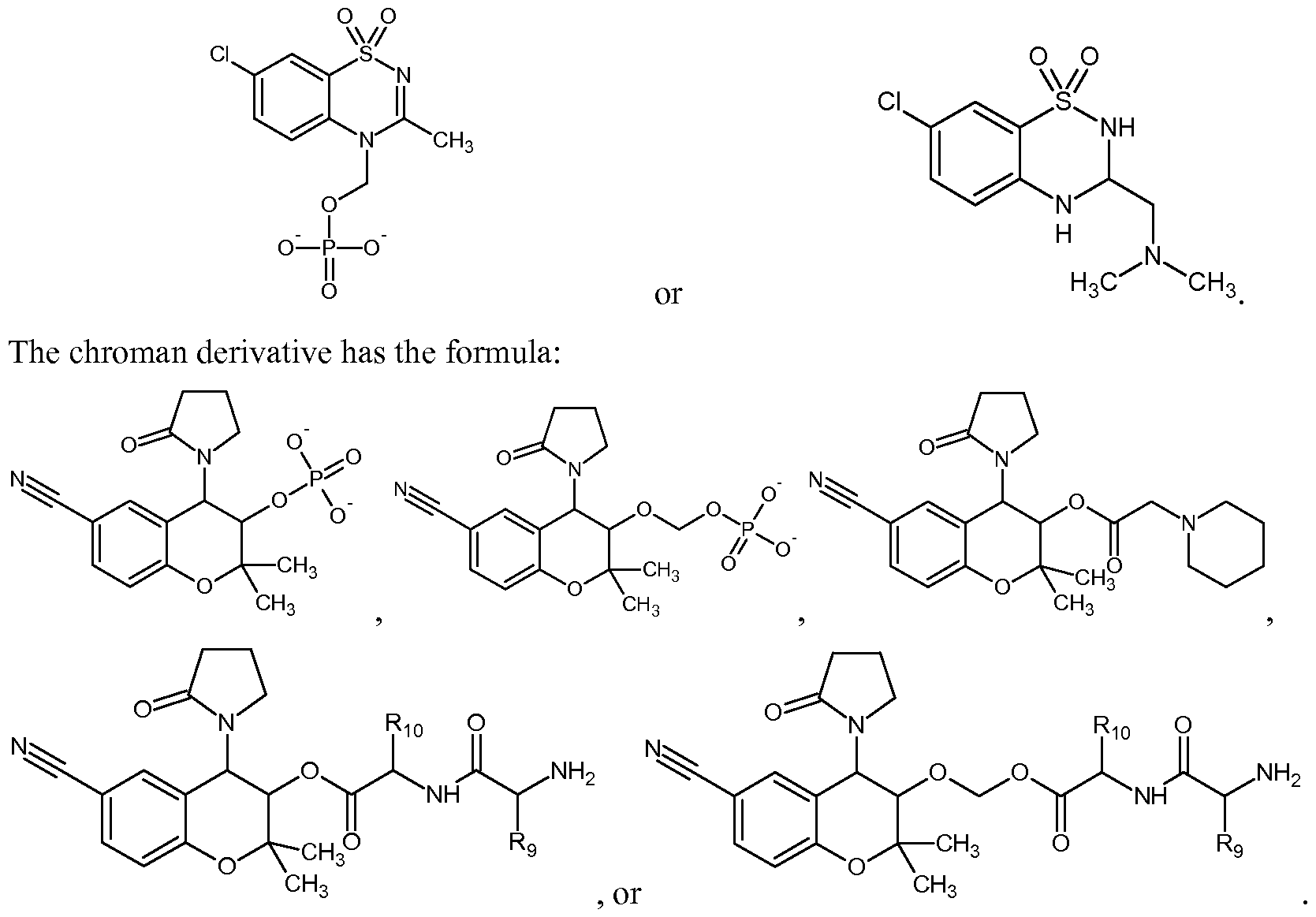
The present invention provides a method for treating ocular hypertension and glaucoma in an eye of a patient by identifying a patient suffering from glaucoma in an eye; administering a pharmaceutically effective amount of a prodrug disposed in an ophthalmically acceptable carrier to the eye, wherein the prodrug specifically modulates a KATP channel to reduce intraocular pressure and treat glaucoma, wherein the prodrug has the formula:


wherein R9 and RIO may independently be a -H; -CH2CHCH3CH3; -CHCH3CH3
CHCH3CH2CH3; -CH2(CH2)3NH2; -CH2CH2SCH3; -CH2OH; or -CHOHCH3.
The present invention provides a cromak compound having the formula:


wherein R9 and RIO may independently be a -H; -CH2CHCH3CH3; -CHCH3CH3; -CH3 CHCH3CH2CH3; -CH2(CH2)3NH2; -CH2CH2SCH3; -CH2OH; or -CHOHCH3.
The present invention provides a diazoxide derivative compound having the formula:


The present invention provides a method for treating glaucoma in an eye of a patient by identifying a patient suffering from glaucoma or an elevated IOP in an eye; administering a pharmaceutically effective amount of a prodrug disposed in an ophthalmically acceptable carrier to the eye, wherein the prodrug specifically modulates a KATP channel to reduce intraocular pressure and treat glaucoma, wherein the prodrug has the formula:

RIO may independently be a -H; -CH2CHCH3CH3; -CHCH3CH3; -CH3; -CHCH3CH2CH3; - CH2(CH2)3NH2; -CH2CH2SCH3; -CH2OH; or -CHOHCH3. The dosages are administered from 1 to 4 times per day.
Description of the Drawings
For a more complete understanding of the features and advantages of the present invention, reference is now made to the detailed description of the invention along with the accompanying figures and in which: FIGURE 1A is a graph of a pair of anterior eye segments showing the addition of CKLPl (2μΜ) that results in the reduction of pressure.
FIGURE IB is a graph of the change in C57BL/6 mice intraocular pressure following treatment with cromakalim in DM SO or CKLPl in aqueous carrier.
FIGURE 2 is a graph of the combination treatment in mice with CKL/CKLPl and prostaglandin showing additive effects. CKL: -12.77±2.38, CKL+LFA: - 21.43±1.85 CKLPl : - 16.11±2.61, CKLPl +LFA: - 26.06±2.98.
FIGURE 3 is a graph showing the treatment with various forms of CKL.
FIGURE 4 is a graph showing the treatment of rabbits with CKL-P1 in PBS, optically active isomer. FIGURE 5 is a graph showing the treatment with ent-CKLPl (5mM).
FIGURE 6 is a graph showing the treatment of mice with CKLP1+LFA+U0126.
FIGURE 7 is a graph showing the treatment of mice with CKL-P2 (2.5mM) in PBS.
FIGURE 8 is a graph showing the treatment of rabbits with CKL-CF3 in PBS.
FIGURE 9 is a graph showing the treatment of mice with PID 3-56 (5mM in PBS).
FIGURE 10 is a graph showing the treatment of mice with PID-37 (5 mM).
FIGURE 11 is a graph showing the treatment of mice with PID-57 (5 mM).
FIGURE 12 is a graph showing the treatment of mice with PID-257 (5 mM).
FIGURE 13 is a graph showing the treatment of mice with PID-298 (5 mM in DMSO).
FIGURE 14 is a graph showing the treatment of rabbits with CKL-CF3, CKL-P1 in PBS.
FIGURE 15 is a graph showing CKLP1 inhibits H2O2 oxidative stress.
Description of Embodiments
While the making and using of various embodiments of the present invention are discussed in detail below, it should be appreciated that the present invention provides many applicable inventive concepts that can be embodied in a wide variety of specific contexts. The specific embodiments discussed herein are merely illustrative of specific ways to make and use the invention and do not delimit the scope of the invention.
To facilitate the understanding of this invention, a number of terms are defined below. Terms defined herein have meanings as commonly understood by a person of ordinary skill in the areas relevant to the present invention. Terms such as "a", "an" and "the" are not intended to refer to only a singular entity, but include the general class of which a specific example may be used for illustration. The terminology herein is used to describe specific embodiments of the invention, but their usage does not delimit the invention, except as outlined in the claims.
As used herein, an "effective dosage" or "effective amount" of a prodrug, drug, compound, or pharmaceutical composition is an amount that is expected to be or is sufficient to effect beneficial or desired results. For therapeutic use, beneficial or desired results include results such as suppressing or reducing the onset and/or development of a disease or condition or decreasing one or more symptoms resulting from a disease or condition that is responsive to parent drug therapy, including increasing the quality of life of those suffering from a disease or condition responsive to parent drug therapy and/or decreasing the dose of the same or other medications, drugs, compounds or pharmaceutical compositions required to treat the disease or condition and/or decreasing or eliminating one or more side effects associated with a medication required to treat the individual's disease or condition. As used herein, "effective dosage" refers to the dosage of a prodrug, drug, compound, or pharmaceutical composition an amount sufficient to accomplish prophylactic or therapeutic treatment either directly or indirectly. An effective dosage can be administered in one or more administrations. As is understood in the clinical context, an effective dosage of a prodrug, drug, compound, or pharmaceutical composition may or may not be achieved in conjunction with another drug, compound, or pharmaceutical composition. Thus, an "effective dosage" may be considered in the context of administering one or more therapeutic agents, and
a single agent may be considered to be given in an effective amount if, in conjunction with one or more other agents, a desirable result may be or is achieved.
As used herein, "pharmaceutically acceptable carrier" includes any material which, when combined with an active ingredient, allows the ingredient to retain biological activity. Examples include, but are not limited to, any of the standard pharmaceutical carriers and any suitable ophthalmically acceptable carrier such as a phosphate buffered saline solution, water, emulsions such as oil/water emulsion, and various types of wetting agents. Compositions comprising such carriers may be formulated by conventional methods.
As used herein, "parent composition" refers to a composition that does not contain a prodrug moiety. As used herein, "prodrug moiety" or "PM," refers to any group attached to a composition that is not present in the parent composition.
As used herein, "prodrug" refers to a derivative of a biologically active compound that may independently have pharmaceutical activity or may lack pharmaceutical activity but is converted to an active agent. A prodrug, according to the present invention, may be converted into an active compound through one or more steps.
As used herein, "pharmaceutically acceptable prodrugs," refers to those prodrugs of the compounds which are, within the scope of sound medical judgment, suitable for use in contact with the tissues of humans and lower animals without undue toxicity, irritation, allergic response, and the like, commensurate with a reasonable benefit/risk ratio, and effective for their intended use, as well as the zwitterionic forms, where possible, of the compounds of the invention.
As used herein, "Alkyl" refers to linear, branched or cyclic hydrocarbon structures preferably having from 1 to 20 carbon atoms (a "C1-C20 alkyl") e.g., 1 to 10 carbon atoms or 1 to 6 carbon atoms. This term is exemplified by groups such as methyl, t-butyl, n-heptyl, octyl, cyclobutylmethyl, cyclopropylmethyl and the like. "Unsubstituted alkyl" refers to an alkyl group that is not substituted with any additional substituents. When an alkyl residue having a specific number of carbons is named, all geometric isomers having that number of carbons are intended to be encompassed; thus, for example, "butyl" is meant to include n-butyl, sec-butyl, isobutyl and t-butyl.
As used herein, "Substituted alkyl" refers to an alkyl group of from 1 to 10 carbon atoms, having from 1 to 5 substituents, including but not limited to, groups such as halogen, alkoxy, acyl, acylamino, acyloxy, amino, hydroxyl, mercapto, carboxyl, aryl, cyano, nitro and the like. For instance, an alkaryl group (alkyl-aryl) is a substituted alkyl and includes moieties such as propylbenzene where the moiety is attached to the parent structure via the aryl or the alkyl portion, most preferably via the alkyl portion of the substituent.
As used herein, "Alkenyl" refers to linear, branched or cyclic hydrocarbon structures preferably having from 2 to 20 carbon atoms (a "C1-C20 alkenyl") and more preferably 2 to 10 carbon atoms or 2 to 6 carbon atoms and having at least 1 site of alkenyl unsaturation.
As used herein, "Unsubstituted alkenyl" refers to an alkenyl group that is not substituted with any additional substituents. When an alkenyl residue having a specific number of carbons is named, all
geometric isomers having that number of carbons are intended to be encompassed. This term is exemplified by groups such as propen-3-yl (— CH2— CH=CH2), 3-methyl-but-2-enyl and (=CH2). The group represented by =CH2 indicates connectivity from, e.g., an sp2 hybridized carbon atom of a parent structure to CH2 via a double bond.
As used herein, "Substituted alkenyl" refers to an alkenyl group, preferably a C2-Ci0 alkenyl, having from 1 to 5 substituents, including but not limited to, substituents such as halogen, alkoxy, acyl, acylamino, acyloxy, amino, hydroxyl, mercapto, carboxyl, aryl, cyano, nitro and the like.
As used herein, "Alkoxy" refers to the group "alkyl-O— " which includes, by way of example, methoxy, ethoxy, n-propoxy, iso-propoxy, n-butoxy, tert-butoxy, sec-butoxy, n-pentoxy, n-hexoxy, 1,2- dimethylbutoxy, and the like.
As used herein, "Substituted alkoxy" refers to the group "substituted alkyl-O— ".
As used herein, "Alkoxyalkyl" refers to the group "alkyl-O-alkyl-" which includes, by way of example, methoxy methyl and the like.
As used herein, "Alkanoate" refers to "alkyl-C(=0)— O— " which includes, by way of example, ethanoate and pentanoate. "Alkyl-Alkanoate" refers to "-alkyl-O— C(=0)alkyl" such as in — CH(CH2CH3)— O— C(=0)— CH3.
As used herein, "Carbonylalkyl" refers to— C(=0)-alkyl, which includes, by way of example,
C(=0)— CH2CH3.
As used herein, "Alkoxyphosphonic acid" refers to "alkyl— O— P(=0)(OH)2" or when referred to or implied as a moiety attached to a parent structure, the radical "-alkyl-O— P(=0)(OH)2" such that the alkoxyphosphonic acid is attached to a parent structure via the alkyl moiety. This term is exemplified by groups such as methoxyphosphonic acid and ethoxyphosphonic acid and their radicals— CH2— O— P(=0)(OH)2— CH(CH3)OP(0)(OH)2 and— CH2CH2— O— P(=0)(OH)2.
As used herein, "Alkylcarbonylalkoxy" refers to alkyl-C(=0)— O-alkyl. In one variation, the alkylcarbonylalkoxy refers to a moiety C1-C4 alkyl-C(==0)— O— Ct-Q alkyl. An exemplary alkylcarbonylalkoxy is— CH2CH2C(=0)OCH3.
As used herein, "C3~Cs monocyclic cycloalkyl" as used herein is a 3-, 4-, 5-, 6-, 7- or 8-membered saturated non-aromatic monocyclic cycloalkyl ring. Representative C3-Cs monocyclic cycloalkyl groups include, but are not limited to, cyclopropyl, cyclobutyl, cyclopentyl, cyclohexyl, cycloheptyl and cyclooctyl. In one embodiment, the C3-Cs monocyclic cycloalkyl group is substituted with one or more of the following groups: -halo, -0-( C-.-C6 alkyl), -OH, -CN, -COOR', -OC(0)R', -N(R)2, -NHC(0)R' or— C(0)NHR' groups wherein each R' is independently -H or unsubstituted -Cj -Ce alkyl. Unless indicated, the C3-C8 monocyclic cycloalkyl is unsubstituted.
As used herein, "C3-C3 monocyclic cycloalkenyl" as used herein is a 3-, 4-, 5-, 6-, 7- or 8-membered non- aromatic monocyclic carbocyclic ring having at least one endocyclic double bond, but which is not aromatic. It is to be understood that when any two groups, together with the carbon atom to which they are attached form a C3-Cs monocyclic cycloalkenyl group, the carbon atom to which the two groups are attached remains tetravalent. Representative C3-Cs monocyclic cycloalkenyl groups include, but are not
limited to, cyclopropenyl, cyclobutenyl, 1,3-cyclobutadienyl, cyclopentenyl, 1,3-cyclopentadienyl, cyclohexenyl, 1,3-cyclohexadienyl, cycloheptenyl, 1,3-cycloheptadienyl, 1,4-cycloheptadienyl, 1,3,5- cycloheptatrienyl, cyclooctenyl, 1,3-cyclooctadienyl, 1,4-cyclooctadienyl, or 1,3,5-cyclooctatrienyl. In one embodiment, the C3-Cs monocyclic cycloalkenyl group is substituted with one or more of the following groups: -halo, -0-(CrC6 alkyl), -OH, -CN, -COOR', -OC(0)R', -N(R')2, -NHC(0)R or - -C(0)NHR' groups wherein each R is independently -H or unsubstituted — C;-C6 alkyl. Unless indicated, the C Q monocyclic cycloalkenyl is unsubstituted.
The term "halo" as used herein refers to— F,—CI,—Br or—I.
The term "3- to 7-membered monocyclic heterocycle" refers to: a 3-, 4-, 5-, 6-, or 7-membered aromatic or non-aromatic monocyclic cycloalkyl in which 1-4 of the ring carbon atoms have been independently replaced with an NH, an O, or an S moiety. The non-aromatic 3- to 7-membered monocyclic heterocycles can be attached via a ring nitrogen, sulfur, or carbon atom. The aromatic 3- to 7-membered monocyclic heterocycles are attached via a ring carbon atom. Representative examples of a 3- to 7-membered monocyclic heterocycle group include, but are not limited to furanyl, furazanyl, imidazolidinyl, imidazolinyl, imidazolyl, isothiazolyl, isoxazolyl, morpholinyl, oxadiazolyl, oxazolidinyl, oxazolyl, oxazolidinyl, pyrimidinyl, phenanthridinyl, phenanthrolinyl, piperazinyl, piperidinyl, pyranyl, pyrazinyl, pyrazolidinyl, pyrazolinyl, pyrazolyl, pyridazinyl, pyridooxazole, pyridoimidazole, pyridothiazole, pyridinyl, pyrimidinyl, pyrrolidinyl, pyrrolinyl, quinuclidinyl, tetrahydrofuranyl, thiadiazinyl, thiadiazolyl, thienyl, thienothiazolyl, thienooxazolyl, thienoimidazolyl, thiomorpholinyl, thiophenyl, triazinyl, triazolyl, In one embodiment, the 3- to 7-membered monocyclic heterocycle group is substituted with one or more of the following groups: -halo, -0-( C-.-C£i alkyl),—OH,— CN,—COOR',— OC(0)R', -N(R')2, -NHC(0)R or -C(0)NHR groups wherein each R' is independently -H or unsubstituted — Q-Ce alkyl. Unless indicated, the 3- to 7-membered monocyclic heterocycle is unsubstituted.
The term "direct administration," as used herein refers to the compounds being applied topically, or by injection or instillation, into the eye. Such direct administration does not include systemic forms of administration, such as oral or parenteral administration, e.g., intramuscular, subcutaneous, or intraperitoneal injection although the present invention may also be administered by this method. Direct administration of the modulating compounds of the present invention is intended to introduce the compounds directly into the eye so that they will be transported into the anterior chamber where the compounds will be effective to lower intraocular pressure, by enhancing the transport or release of intraocular fluid from the anterior chamber or by decreasing fluid production.
The present invention shows both CKLP-1 and its enantiomer are active in vivo in eyes. The enantiomer of CKLP1 is referred to as "ent-CKLPl". CKLP1 can be synthesized from levcromakalim while ent- CKLP1 can be synthesized from (+)-cromakalim.
The methods and compositions of the present invention are also intended to reduce intraocular pressure conditions of the eye to a point where optic nerve damage is slowed. Such conditions may result from a variety of causes, such as surgery for glaucoma, retinal detachment, uveitis, and the like. The methods
and compositions of the present invention rely on administering compounds which specifically modulate, i.e. inhibit or potentiate the KATP channel compounds directly to the eye of the patient or host. In some instances the compositions may be administered to reduce the intraocular pressures to below 20 mmHg, or preferably between 10-20 mmHg, more preferably between 10-15 mmHg, or between 12-15 mmHg. The KATP channel is regulated by intracellular adenosine triphosphate (ATP) such that it is spontaneously active in the absence of ATP and closed by increasing ATP concentration in the cytoplasmic side of the membrane. The KATP channel is not activated by intraocular Ca+2, and gating of the channel is independent of membrane potential. KATP channels are regulated by changes in the intracellular concentration of ATP and have been found in cells from various tissues such as cardiac cells, pancreatic cells, skeletal muscles, smooth muscles, central neurons and adenohypophysis cells. KATP channels are found in a variety of different human tissues and have different effects clinically depending on that tissue. The KATP channels have been associated with diverse cellular functions for example hormone secretion (insulin from pancreatic beta-cells, growth hormone and prolactin from adenohypophysis cells), vasodilation (in smooth muscle cells), cardiac action potential duration, neurotransmitter release in the central nervous system.
KATP channels are octamers made up of 4 copies of a K+ inward rectifying (Kir) subunit (Kir 6.1 or Kir 6.2) and 4 parts of a sulfonylurea receptor (SUR) subunit (SUR1, SUR2A, or SUR2B). At least 6 different KATP channels can be made of the different K^ and SUR subunits and thus the KATP channel openers represent a heterogeneous group of compounds. Currently, the known KATP channel openers have poor aqueous solubility and are not used in therapeutic application for treating glaucoma and intraocular pressure. KATP channel openers have been found to relax vascular smooth muscles and have therefore been used for the treatment of hypertension. In addition, KATp channel openers can be used as bronchodilators in the treatment of asthma and various other diseases. Furthermore, KATp channel openers have been shown to promote hair growth, and have been used for the treatment of baldness. KATp channel openers are also able to relax urinary bladder smooth muscle and therefore, can be used for the treatment of urinary incontinence. KATp channel openers which relax smooth muscle of the uterus can be used for treatment of premature labor. KATp channel openers which act on the central nervous system can be used for treatment of various neurological and psychiatric diseases such as Alzheimer, epilepsy and cerebral ischemia. However, KATp channel openers in the prior art have poor aqueous solubility and are generally unsuited for use in ocular tissues. As a result, the skilled artisan would generally not study or look to KATp channels modulators for use in ocular tissues. This is supported by the lack of studies of KATp channels modulators in ocular tissues. For example, U.S. Patent No. 6,242,443, entitled "1,2,4- benzothiadiazine derivatives, their preparation and use'" discloses 1,2,4-benzothiadiazine derivative compounds useful in the treatment of diseases of the central nervous system, the cardiovascular system, the pulmonary system, the gastrointestinal system and the endocrinological system. However, these compositions were dissolved in DMSO, added to a buffer and added to pancreatic β-cell for testing. In another study Diazoxide was dissolved in a pure solution of dimethyl sulfoxide (DMSO) and diluted in sterile physiological serum to obtain a final ophthalmic solution at 0.01 % active principle and 0.4%
DMSO. Thus the prior art KATP channels modulators are not aqueous soluble and not suitable for use in ocular tissues.
The present invention provides aqueous soluble KATP channel modulators that function in ocular tissues to reduce intraocular pressure which is both surprising and unexpected as KATP channel openers in the prior art have poor aqueous solubility and are generally unsuited for use in ocular tissues. In addition the aqueous soluble benzothiadiazine and chroman derivative KATP channel modulators of the present invention are effective at concentrations at equal to or lower than the parent composition. For example the benzothiadiazine and chroman derivatives maybe administered at concentrations up to 75% less than the parent composition concentration, e.g., 75, 70, 65, 60, 55, 50, 45, 40, 35, 30, 25, 20, 15, 10, 5 or incremental variations thereof of the concentration of the parent composition.
Compounds useful in the present invention will specifically modulate the KATP channels in the eye. Thus, a decrease in intraocular pressure occurs when the eye is treated with KATP channel openers and no change in intraocular pressure occurs when the eye is treated with KATP channel closer.
Some embodiments of the present invention includes diazoxide and cromakalim prodrugs, diazoxide and cromakalim derivative, and substituted diazoxide and cromakalim compositions that are aqueous soluble and function as KATP channel openers to reduce intraocular pressure. These compositions provide surprising and unexpected results as KATP channel modulators that function in ocular tissues to reduce intraocular pressure.
The present invention includes benzothiadiazine and chroman derivatives that may be prodrugs and/or derivative compositions, and more particularly to diazoxide and cromakalim prodrugs and derivatives, for treating glaucoma and elevated intraocular pressure. It also relates to a process for their preparation and pharmaceutical compositions in which they are present.
The composition also includes prodrugs and/or derivative compositions that show activity in the prodrugs and/or derivative form without removal of the prodrug moiety. As such, the prodrug may be administered without need to be converted to an active form to treat glaucoma and/or elevated intraocular pressure. In addition, compositions of the present invention are aqueous soluble.
In one embodiment, the present invention includes benzothiadiazine and chroman derivatives and more particularly to diazoxide and cromakalim prodrugs and derivative that are aqueous soluble and can be used to treat glaucoma and elevated intraocular pressure.
In one embodiment, the present invention includes diazoxide and cromakalim prodrugs, diazoxide and cromakalim derivative, and substituted diazoxide and cromakalim compositions that are aqueous soluble and can be used to treat glaucoma and elevated intraocular pressure.
In one embodiment, the present invention provides a series of prodrugs of cromakalim, using both racemic and optically active cromakalim (levcromakalim) as starting materials. Levcromakalim may also be called (3S,4R)-3-hydroxy-2,2-dimethyl-4-(2-oxopyrrolidin-l-yl)chroman-6-carbonitrile or (3S,4R)-3,4-dihydro-3-hydroxy-2,2-dimethyl-4-(2-oxo-l-pyrrolidinyl)2H-l-benzopyran-6-carbonitrile. Levcromakalim (the optically active cromakalim) is generally referred to as being in the (3S, 4R)- configuration. The ent-CKLPl would thus be (3R, 4S). All compounds tested so far showed biological
activity in a normotensive mouse. For example, CKLPl showed good activity in both the mouse and rabbit models and in an ex vivo human eyeball model.
Two phosphate prodrugs were made and tested in racemic forms: rac-CKLPl and rac-CKLP2. CKLPl has since been synthesized in an optically active form starting from levcromakalim.

racemic racemic ion exchange racemic
cromakalim MTM-cromakalim CKLP2
Optically active CKLPl has been synthesized via the same route starting from levcromakalim instead of racemic cromakalim.

levcromakalim
The enantiomer of CKLPl, referred to as ent-CKLPl, has been synthesized from the same route starting from (+)-cromakalim.

(+)-cromakalim
FIGURE 1A is a graph of pressure readings obtained from a pair of human anterior eye segments where one eye was treated with a KATP channel opener prodrug (CKLPl) while the fellow anterior segment was treated with vehicle alone. Results show that addition of CKLPl (2μΜ) reduces pressure in human anterior segment perfusion organ culture. FIGURE IB is a graph of pressure change obtained in normotensive C57BL/6 mice following treatment with parent (CKL) and prodrug (CKLPl).
FIGURE 2 is a graph of the combination treatment in mice with CKL/CKLP1 and prostaglandin analog latanoprost free acid (LFA) that shows additive effects: -12.77±2.38, CKL+LFA: - 21.43±1.85 CKLPl : - 16.11±2.61, CKLP1+LFA: - 26.06±2.98.
FIGURE 3 is a graph showing the treatment with various forms of CKL. FIGURE 4 is a graph showing the treatment of rabbits (n=5) with CKL-P1 in PBS, optically active isomer. FIGURE 5 is a graph showing the treatment with ent-CKLPl (5mM). FIGURE 6 is a graph showing the treatment of mice (n=10) with CKLP1+LFA+U0126 (shows importance of the ERK pathway-different from PG analogs).
This suggests that CKLPl works through the Erkl/2 signaling pathway. In the presence of Erkl/2 inhibitor U0126,, CKLPl is not able to lower pressure, while LFA can lower IOP (in mice).
FIGURE 7 is a graph showing the treatment of mice (n=5) with CKL-P2 (2.5mM) in PBS. FIGURE 8 is a graph showing the treatment of rabbits (n=5) with CKL-CF3 in PBS.
FIGURE 9 is a graph showing the treatment of mice with PID 3-56 (5mM in PBS). FIGURE 10 is a graph showing the treatment of mice with PID-37 (5 mM). FIGURE 11 is a graph showing the treatment of mice with PID-57 (5 mM). FIGURE 12 is a graph showing the treatment of mice with PID-257 (5 mM). FIGURE 13 is a graph showing the treatment of mice with PID-298 (5 mM in DMSO). FIGURE 14 is a graph showing the treatment of rabbits (n=5) with CKL-CF3, CKL-P1 in PBS.
FIGURE 15 is a graph showing CKLPl inhibits H2O2 oxidative stress. The present invention also provides a CKLPl composition used to treat neurons; a CKLPl composition used for neuroprotection; a method of neuroprotection using a CKLPl composition; a method of treating neurons using a CKLPl composition; and methods and compositions for the treatment of ocular hypertension, blindness and loss of vision using a CKLPl composition. The claimed CKLPl composition provides neuroprotective properties. As seen in FIGURE 15, rat cortical neurons were treated with 75 μΜ Η2θ2 for 24 hours with and without CKLPl and the levels of lactate dehydrogenase were assayed. CKLPl inhibited H2O2 oxidative stress in rat cortical neurons and in turn provides protection for the optic nerves. This is significant since current treatments for ocular hypertension do not protect the optic nerve, which is the site of damage and ultimate vision loss. Therefore, CKLPl and other prodrugs (as disclosed herein) may represent the first in class treatment for glaucoma that can treat the main risk factor (elevated intraocular pressure) and also the sight of damage (optic nerve).
In another one embodiment, the present invention provides a series of prodrugs of levcromakalim conjugated to dipeptides. These dipeptides increase solubility and allow the prodrugs to be actively transported into the eye via oligopeptide transporters.
The present disclosure provides aqueous-soluble compositions for the treatment of glaucoma and/or reducing intraocular pressure in patients. One of the compositions is a benzopyrylium derivative which is soluble in aqueous solution. For example the composition has the structure:

wherein R1 is a protecting group and R2-R5 are functional groups as disclosed herein. R1 may be a nitrile group, alky I group, haloalkane group, fluoroalkane group, nitro group, amine group, carbonylalkyl group, sulfonyl group, or substituted sulfonyl group. For example Rl may be a -CN, -CF3, -CCF2CF3, -CF2CF3, -CF(CF3)2, -NO2, -NH2, -COCH3,
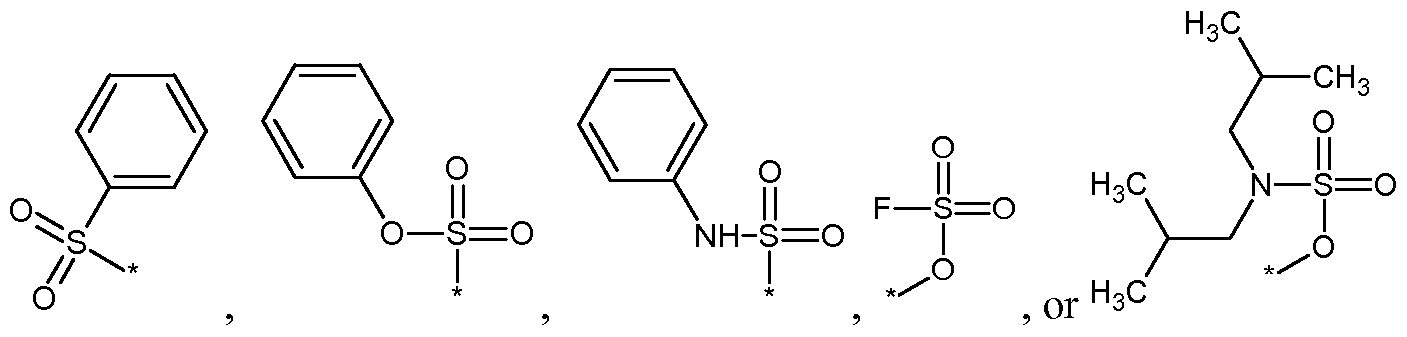
Although R2 is shown above as a substituted monocyclic heterocycle ring, R2 may be a Cj-Cs member monocyclic heterocycle ring or a substituted Ca-Cs member monocyclic heterocycle ring having one or more substitutions and/or hetero atoms. For example, R2 may be

R3 is shown as a prodrug moiety and may be selected from:

where R9 is a -H group (Gly) and RI O is a -CH2CHCH3CH3 group (Leu); where R9 is a -H group (Gly) and RI O is a -CHCH3CH3 group (Val); and where R9 and RIO are both a -CHCH3CH3 group (Val). In addition, Leu can be in the D isomer configuration or the L isomer configuration. The amino acids may include any of the known amino acids, modified amino acids or non-naturally occurring amino acids and may include 1, 2, 3, 4, 5 or more amino acid residues.
Although R4 and R5 are independently shown above as alkyl group, R4 and R5 may independently be a -
CH3, -CH2F, -OCH3, -CF3, -CCF2CF3, -CF2CF3, -CF(CF3)2, -N02, -NH2, -COCH3, or O- Although R6, R7 and R8 are independently shown above as hydrogens each may be an alkyl group, a substituted alkyl group, a nitrile functional group, an isothiocyanate group, an isocyanate functional group, a thiocyanate functional group, or a trifluoromethyl functional group.
The present disclosure provides aqueous-soluble compositions for the treatment of glaucoma and/or reducing intraocular pressure in patients. One of the composition is a benzopyrylium, levcromakalim or chroman (3,4-dihydro-2H-l-benzopyran) derivative which is soluble in aqueous solution. For example the composition has the structure:


wherein R6, R7 and R8 are H and PM is a prodrug moiety selected from:

where R9 is a -H group (Gly) and RI O is a -CH2CHCH3CH3 group (Leu); where R9 is a -H group (Gly) and RI O is a -CHCH3CH3 group (Val); and where R9 and RIO are both a -CHCH3CH3 group (Val). In addition, Leu can be in the D isomer configuration or the L isomer configuration. The amino acids may include any of the known amino acids, modified amino acids or non-naturally occurring amino acids and may include 1, 2, 3, 4, 5 or more amino acid residues. It is understood that R1 -R8 may individually be a functional group selected from Alkyl, Substituted alkyl, alkenyl, alkoxy, alkoxyalkyl, carbonylalkyl, alkoxyphosphonic acid, alkylcarbonylalkoxy, cycloalkyl, cycloalkenyl, heterocycle, sulfur group, halogen, hydrogen, nitrogen group, -CN, -CH2F, -CF3,-CF2CF3, -CF2CF2CF3.
Specific examples of the aqueous-soluble compositions for the treatment of glaucoma and/or reducing intraocular pressure in patients include composition having the structure:

The compositions may have other protecting groups at the Rl location and still retain the aqueous solubility, e.g.,

In addition, the protecting group may include one or more amino acids. The amino acids may include any of the known amino acids, modified amino acids or non-naturally occurring amino acids. The specific sequence or order of the amino acids may be varied as necessary:

wherein R9 and RIO may independently be a -H; -CH2CHCH3CH3; -CHCH3CH3; -CH3; - CHCH3CH2CH3; -CH2(CH2)3NH2; -CH2CH2SCH3; -CH2OH; or -CHOHCH3. Specific levcromakalim derivative examples, include the levcromakalim structure where R1 is a -H group (Gly) and R2 is a - CH2CHCH3CH3 group (Leu); where R9 is a -H group (Gly) and RI O is a -CH2CHCH3CH3 group (Leu); where R9 is a -H group (Gly) and RI O is a -CHCH3CH3 group (Val); and where R9 and RI O are both a - CHCH3CH3 group (Val). In addition, Leu can be in the D isomer configuration or the L isomer configuration. The amino acids may include any of the known amino acids, modified amino acids or non-naturally occurring amino acids and may include 1, 2, 3, 4, 5 or more amino acid residues.
In addition the linking bonds between the amino acid residues and the core levcromakalim derivative composition may be varied as necessary, e.g.,

wherein R9 and RIO may independently be a -H; -CH2CHCH3CH3; -CHCH3CH3; -CH3; - CHCH3CH2CH3; -CH2(CH2)3NH2; -CH2CH2SCH3; -CH2OH; or -CHOHCH3. Specific levcromakalim derivative examples, include the levcromakalim structure where R1 is a -H group (Gly) and R2 is a - CH2CHCH3CH3 group (Leu); where R9 is a -H group (Gly) and RI O is a -CH2CHCH3CH3 group (Leu); where R9 is a -H group (Gly) and RI O is a -CHCH3CH3 group (Val); and where R9 and RI O are both a - CHCH3CH3 group (Val). In addition, Leu can be in the D isomer configuration or the L isomer configuration. The amino acids may include any of the known amino acids, modified amino acids or non-naturally occurring amino acids and may include 1 , 2, 3, 4, 5 or more amino acid residues.
The present disclosure provides aqueous-soluble compositions for the treatment of glaucoma and/or reducing intraocular pressure in patients. For example the composition has the structure:


Wherein R6, R7 and R8 are H and PM is selected from:

where R9 is a -H group (Gly) and RIO is a -CH2CHCH3CH3 group (Leu); where R9 is a -H group (Gly) and RIO is a -CHCH3CH3 group (Val); and where R9 and RIO are both a -CHCH3CH3 group (Val). In addition, Leu can be in the D isomer configuration or the L isomer configuration. The amino acids may include any of the known amino acids, modified amino acids or non-naturally occurring amino acids and may include 1, 2, 3, 4, 5 or more amino acid residues.
The present disclosure also provides aqueous-soluble compositions for the treatment of glaucoma and/or reducing intraocular pressure in patients. One of the composition is a benzopyrylium, levcromakalim or chroman (3,4-dihydro-2H-l-benzopyran) derivative which is soluble in aqueous solution. For example the composition has the structure:


where R9 is a -H group (Gly) and RIO is a -CH2CHCH3CH3 group (Leu); where R9 is a -H group (Gly) and RIO is a -CHCH3CH3 group (Val); and where R9 and RIO are both a -CHCH3CH3 group (Val). In addition, Leu can be in the D isomer configuration or the L isomer configuration. The amino acids may include any of the known amino acids, modified amino acids or non-naturally occurring amino acids and may include 1, 2, 3, 4, 5 or more amino acid residues.
The present disclosure provides aqueous-soluble compositions for the treatment of glaucoma and/or reducing intraocular pressure in patients. For example the composition has the structure:
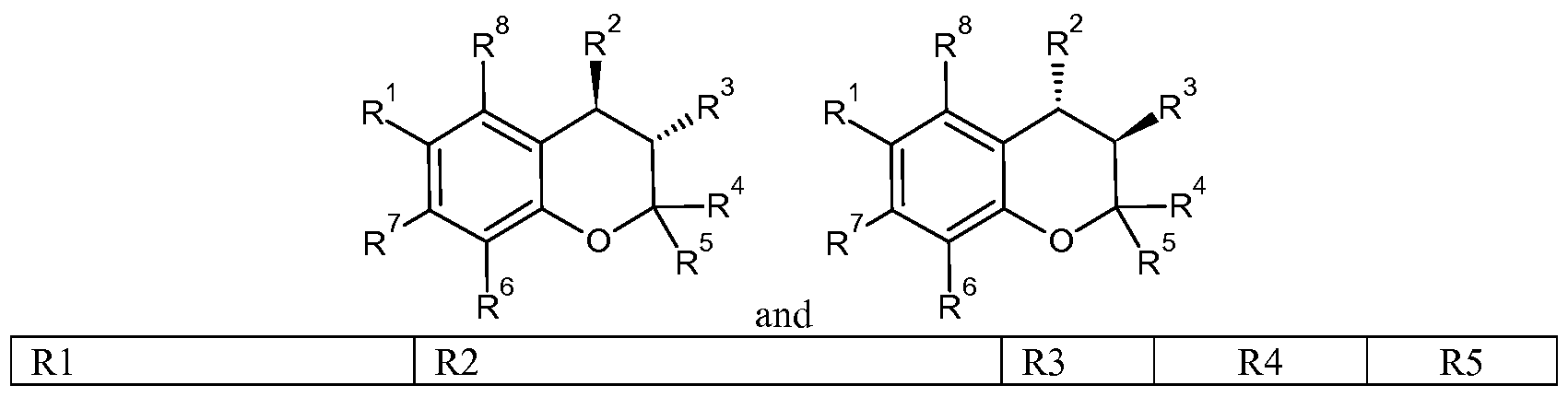

Wherein R6, R7 and R8 are H and PM is selected from:

where R9 is a -H group (Gly) and RI O is a -CH2CHCH3CH3 group (Leu); where R9 is a -H group (Gly) and RI O is a -CHCH3CH3 group (Val); and where R9 and RIO are both a -CHCH3CH3 group (Val). In addition, Leu can be in the D isomer configuration or the L isomer configuration. The amino acids may include any of the known amino acids, modified amino acids or non-naturally occurring amino acids and may include 1, 2, 3, 4, 5 or more amino acid residues.
The present disclosure provides aqueous-soluble compositions for the treatment of glaucoma and/or reducing intraocular pressure in patients. For example the composition has the structure:
 where R9 is a -H group (Gly) and RIO is a -CH2CHCH3CH3 group (Leu); where R9 is a -H group (Gly) and RIO is a -CHCH3CH3 group (Val); and where R9 and RIO are both a -CHCH3CH3 group (Val). In addition, Leu can be in the D isomer configuration or the L isomer configuration. The amino acids may include any of the known amino acids, modified amino acids or non-naturally occurring amino acids and may include 1, 2, 3, 4, 5 or more amino acid residues.
The present disclosure provides aqueous-soluble compositions for the treatment of glaucoma and/or reducing intraocular pressure in patients. For example the composition has the structure:


Wherein R6, R7 and R8 are H and PM is selected from:

where R9 is a -H group (Gly) and RI O is a -CH2CHCH3CH3 group (Leu); where R9 is a -H group (Gly) and RI O is a -CHCH3CH3 group (Val); and where R9 and RIO are both a -CHCH3CH3 group (Val). In addition, Leu can be in the D isomer configuration or the L isomer configuration. The amino acids may include any of the known amino acids, modified amino acids or non-naturally occurring amino acids and may include 1, 2, 3, 4, 5 or more amino acid residues. It is understood that R1 -R8 may individually be a functional group selected from Alkyl, Substituted alkyl, alkenyl, alkoxy, alkoxyalkyl, carbonylalkyl, alkoxyphosphonic acid, alkylcarbonylalkoxy, cycloalkyl, cycloalkenyl, heterocycle, sulfur group, halogen, hydrogen, nitrogen group, -CN, -CH2F, -CF3,-CF2CF3, -CF2CF2CF3. In addition other prodrug moiety or protecting groups may be used:
 where X may be a Alkyl, Substituted alkyl, CyCg monocyclic cycloalkyl, C3-C8 monocyclic cycloalkenyl, 3- to 7-membered monocyclic heterocycle, 3- to 7-membered monocyclic heterocycle, e.g., azetidine, azete, oxetane, oxete, thietane, thiete, diazetidine, dioxetane, dioxete, pyrrolidine, pyrrole, tetrahydrofuran, furan, thiolane, thiophene, imidazolidine, imidazole, pyrazolidine, pyrazole, oxazolidine,
oxazole, isoxazolidine, isoxazole, isothiazolidine, isothiazole, thiazolidine, thiazole, or substituted variations thereof.
where X may be a Alkyl, Substituted alkyl, CyCg monocyclic cycloalkyl, C3-C8 monocyclic cycloalkenyl, 3- to 7-membered monocyclic heterocycle, 3- to 7-membered monocyclic heterocycle, e.g., azetidine, azete, oxetane, oxete, thietane, thiete, diazetidine, dioxetane, dioxete, pyrrolidine, pyrrole, tetrahydrofuran, furan, thiolane, thiophene, imidazolidine, imidazole, pyrazolidine, pyrazole, oxazolidine,
oxazole, isoxazolidine, isoxazole, isothiazolidine, isothiazole, thiazolidine, thiazole, or substituted variations thereof.
!H NMR and 13C NMR Spectra were recorded on a Bruker 400 spectrometer. The !H NMR data are reported as follows: chemical shift in parts per million downfield of tetramethylsilane (TMS), multiplicity (s = singlet, bs = broad singlet, d = doublet, t = triplet, q = quartet, quint = quintet and m = multiplet), coupling constant (Hz), and integrated value. Coupling constants listed as J p disappeared when !H NMR spectra were taken with 31P decoupling. The 13C NMR spectra were measured with complete proton decoupling. 31P NMR spectra taken for compound characterization were measured with complete proton decoupling and were referenced to 85% phosphoric acid, which was added to the NMR tube in a sealed capillary tube. LC/MS analysis was carried out using a BEH Cis column (2.1mm x 50 mm, 5 um) on a Waters Acquity UPLC system with a Waters ZQ mass detector.

To a stirred suspension of cromakalim (50 mg, 0.175 mmol) in CH2CI2 (5 mL) was added 0.45 M tetrazole in acetonitrile (3.9 mL, 1.76 mmol) followed by dibenzyl AyV-dimethylphosphoramidite (0.200 mL, 0.75 mmol). The reaction mixture was stirred at rt for 2.5 h. After cooling the mixture in an ice bath, THF (5 mL) was added, followed by drop wise addition of 30% H202 (1 mL). After stirring for 5 min., saturated aqueous Na2S203 (30 mL) was added slowly. The mixture was diluted with water (50 mL) and extracted with CH2C12 (2 x 50 mL). The combined organic layers were dried (Na2S04), filtered, and concentrated under reduced pressure. Purification by flash chromatography (35% ethyl acetate/hexanes) on silica gel followed by a second flash chromatography (60% ethyl acetate/hexanes) on silica gel furnished 89.8 mg product (94% yield) as a clear colorless oil.

To a solution of dibenzyl ((3S,4R)-6-cyano-2,2-dimethyl-4-(2-oxopyrrolidin-l-yl)chroman-3-yl) phosphate (65.5 mg, 0.120 mmol) in dry CH2C12 (3 mL) was added TMSBr (53 μί, 0.40 mmol) by syringe. After stirring for 6 hours, the reaction mixture was concentrated under reduced pressure. The resulting residue was purified by chromatography (0% acetonitrile/20 mM triethylammonium acetate buffer to 100% acetonitrile, Cis column) to yield 53.5 mg white solid after lyophilization. To prepare the sodium salt, a 1 cm wide column was filled with 12 cm of DOWEX 50W2 (50-100 mesh) ion exchange resin. The column was prepared by sequentially washing with 1 : 1 acetonitrile/water, 1M aqueous NaHCC , water, and then finally 1 : 1 acetonitrile/water. The reaction product was dissolved in 1 : 1
acetonitrile/water and loaded onto the column, which was eluted with 1 : 1 acetonitrile/water. The product containing fractions were lyophilized to furnish as a white solid 40.9 mg, 83% yield).

To a solution of cromakalim (188.2 mg, 0.657 mmol) in DMSO (10 mL) was added acetic anhydride (10 mL) and acetic acid (6 mL). After stirring at rt for 24 hours, the reaction mixture was diluted with water (400 mL) and carefully neutralized with solid NaHCC . The mixture was extracted with ethyl acetate (3 x 400 mL). The organic layers were then each further extracted with water (400 mL), combined, dried (Na2S04), filtered, and concentrated under reduced pressure. Purification by flash chromatography (30% to 100%o ethyl acetate/hexanes) on silica gel furnished 202.5 mg of product (89%o yield) as a white solid.

To a stirred suspension of (3S,4R)-2,2-dimethyl-3-((methylthio)methoxy)-4-(2-oxopyrrolidin-l- yl)chromane-6-carbonitrile (30.8 mg, 0.089 mmol), phosphoric acid (74.1 mg, 0.756 mmol) and 4 A molecular sieves (239 mg) in THF (3 mL) at 0 °C, was added a solution of N-iodosuccinimide (32.9 mg, 0.146 mmol) in THF (1 mL). After warming to rt over 2 hours, a TLC showed starting material remaining, so additional NIS was added (37 mg, 0.164 mmol). An hour later, the mixture was decanted to remove the sieves. Aqueous sodium thiosulfate was added until the color disappeared and then 0.5 mL of 1 M triethylammonium acetate buffer was added. The THF was removed under reduced pressure and the resulting residue purified by chromatography (0% acetonitrile/20 mM triethylammonium acetate buffer to 100% acetonitrile, CI 8 column) to yield 13.4 mg of brown solid after lyophilization. To prepare the sodium salt, a 1 cm wide column was filled with 12 cm of DOWEX 50W2 (50-100 mesh, strongly acidic) ion exchange resin. The column was prepared by sequentially washing with 1 : 1 acetonitrile/water, 1M aqueous NaHC03 (lots of gas evolution), water, and then finally 1 :1 acetonitrile/water. The reaction product was dissolved in 1 : 1 acetonitrile/water and loaded onto the column, which was eluted with 1 : 1 acetonitrile/water. The product containing fractions were lyophilized to furnish CKLP2 as a white solid (7.7 mg, 20% yield).


Boc-epimer 1 (26 mg, 0.047 mmol) was dissolved in 4 M HC1 in dioxane (5 mL) and stirred for 30 min. The reaction mixture was concentrated under reduced pressure. The resulting residue was purified by chromatography (10% acetonitrile/water with 0.1% formic acid to 100% acetonitrile, Ci§ column) to yield 5.0 mg after lyophilization (21% yield) as a formic acid salt. Epimer 2:

Boc-epimer 2 (18.5 mg, 0.033 mmol) was dissolved in 4 M HC1 in dioxane (5 mL) and stirred for 30 min. The reaction mixture was concentrated under reduced pressure. The resulting residue was purified by chromatography (10% acetonitrile/water with 0.1% formic acid to 100% acetonitrile, CI 8 column) to yield 4.1 mg after lyophilization (25% yield) as a formic acid salt.

A suspension of levcromakalim (28.7 mg, 0.100 mmol), DMAP (116.9 mg, 0.957 mmol), and piperidin- 1-yl-acetic acid (49.0 mg, 0.342 mmol) was stirred for 10 min. in DCM (2 mL). HATU (119.8 mg, 0.315 mmol) was added and the mixture stirred at rt for 72 h. The reaction mixture was filtered and the solvent was removed under reduced pressure. The resulting residue purified by chromatography (10%o to 100%o ethyl acetate/hexanes) on a RediSep Rf amine column to furnish 39.5 mg of product (96% yield) as a white solid.


To a solution of (3S,4R)-2,2-dimethyl-3-((methylthio)methoxy)-4-(2-oxopyrrolidin-l -yl)chromane-6- carbonitrile (57.0 mg, 0.165 mmol) in DCE (1.5 mL) was added sulfuryl chloride (0.95 mL of 1 M in DCM solution, 0.95 mmol). After stirring for 90 min., the solvent was removed under reduced pressure and the resulting residue was left under vacuum for 10 min. The residue was then dissolved in acetonitrile (1 mL) and a solution of Boc-Gly-Leu-OH (1 10.8 mg, 0.384 mmol) in acetonitrile (3 mL) added by syringe. After 3 h., the solvent was removed under reduced pressure and the resulting residue was purified by chromatography (30% to 100% ethyl acetate/hexanes) on silica gel to furnish 96.1 mg of product as a white solid (99%o yield).

Chemical Formula: C25H34N 06
Exact Mass: 486.2478
Molecular Weight: 486.5607
The material from the previous section (42.4 mg, 0.072 mmol) was dissolved in 4 M HC1 in dioxane (2 mL) and stirred for 30 min. The reaction mixture was concentrated under reduced pressure. The resulting residue was washed with diethyl ether, which was then discarded. The remaining material was purified by chromatography (10% acetonitrile/water to 100% acetonitrile, Ci§ column). The product containing fractions were lyophilized after a small amount of dilute HC1 was added to them. 8.8 mg white solid (23% yield) as an HC1 salt.

To a stirred suspension of the CF3-analog of cromakalim (161.1 mg, 0.489 mmol) in CH2Cl2 (15 mL) was added 0.45 M tetrazole in acetonitrile (1 1.5 mL, 5.18 mmol) followed by dibenzyl N,N-
dimethylphosphoramidite (0.600 mL, 2.26 mmol). The reaction mixture was stirred at rt for 4 h. A TLC showed remaining starting material so additional dibenzyl Λ^,Λ^-dimethylphosphoramidite (0.300 mL, 1.13 mmol) was added and stirring continued for an additional 60 min. After cooling the mixture in an ice bath, THF (15 mL) was added, followed by dropwise addition of 30% H202 (3 mL). After stirring for 5 min., saturated aqueous Na2S203 (60 mL) was added slowly. The mixture was diluted with water (100 mL) and extracted with CH2C12 (2 x 150 mL). The combined organic layers were dried (Na2SOt), filtered, and concentrated under reduced pressure. Purification by flash chromatography (40% ethyl acetate/hexanes) on silica gel followed by a second flash chromatography (50% ethyl acetate/hexanes) on silica gel furnished 182.9 mg product clear colorless oil.

To a solution of dibenzyl ((3S,4R)-2,2-dimethyl-4-(2-oxopyrrolidin-l-yl)-6-(trifluoromethyl)chroman-3- yl) phosphate (92 mg, 0.156 mmol) in dry CH2C12 (10 mL) was added TMSBr (250 μί, 1.89 mmol) by syringe. After stirring for overnight, the reaction mixture was concentrated under reduced pressure. The resulting residue was purified by chromatography (0% acetonitrile/20 mM triethylammonium acetate buffer to 50% acetonitrile, Ci§ column) to yield 71.5 mg white solid after lyophilization. To prepare the sodium salt of X, a 1 cm wide column was filled with 12 cm of DOWEX 50W2 (50-100 mesh, strongly acidic) ion exchange resin. The column was prepared by sequentially washing with 1 : 1 acetonitrile/water, 1M aqueous NaHC03 (lots of gas evolution), water, and then finally 1 :1 acetonitrile/water. The reaction product was dissolved in 1 : 1 acetonitrile/water and loaded onto the column, which was eluted with 1 : 1 acetonitrile/water. The product containing fractions were lyophilized to furnish CKL-CF3 as a white solid (56.4 mg, 80% yield).
The present disclosure also provides aqueous-soluble compositions for the treatment of glaucoma and/or reducing intraocular pressure in patients. One of the composition is a Benzothiadiazine derivative which is soluble in aqueous solution. For example the composition has the structure:

Rl R2 R3 R4 R5 R6
* k 0 -CH3 -H -CI -H -H
\ II
O— P— 0
1 .
0

It is understood that R1-R6 may individually be a functional group selected from Alkyl, Substituted alkyl, alkenyl, alkoxy, alkoxyalkyl, carbonylalkyl, alkoxyphosphonic acid, alkylcarbonylalkoxy, cycloalkyl, cycloalkenyl, heterocycle, sulfur group, halogen, hydrogen, nitrogen group, -CN, -CH2F, - CF3,-CF2CF3, -CF2CF2CF3. Specific example, include:

wherein Rl or R2 is a prodrug moiety of the formula:
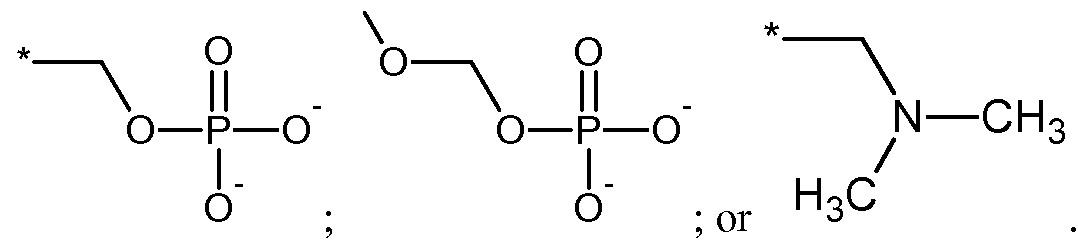
In addition other protecting groups may be used

where X may be a Alkyl, Substituted alkyl, C;,-C3 monocyclic cycloalkyl, C3-C3 monocyclic cycloalkenyl, 3- to 7-membered monocyclic heterocycle, 3- to 7-membered monocyclic heterocycle, e.g., azetidine, azete, oxetane, oxete, thietane, thiete, diazetidine, dioxetane, dioxete, pyrrolidine, pyrrole, tetrahydrofuran, furan, thiolane, thiophene, imidazolidine, imidazole, pyrazolidine, pyrazole, oxazolidine, oxazole, isoxazolidine, isoxazole, isothiazolidine, isothiazole, thiazolidine, thiazole, piperidine, or substituted variations thereof.
The present disclosure provides prodrug compositions of the parent compositions: 3-Benzyloxyamino-7- chloro-4H- 1 ,2,4-benzothiadiazine 1 , 1 -dioxide; 7-Chloro-3 -methoxyamino-4H- 1 ,2,4-benzothiadiazine 1 , 1 -dioxide; 7-Bromo-3-isopropylamino-4H- 1 ,2,4-benzothiadiazine 1 , 1 -dioxide; 7-Chloro-3-(N-ethyl- N-methylamino)-4H-l ,2,4-benzothiadiazine 1 ,1 -dioxide; 6-Chloro-3-methoxyamino-4H-l ,2,4- benzothiadiazine 1 , 1 -dioxide; 6-Chloro-3-( 1 ,2,2-trimethylpropyl)amino-4H-l ,2,4-benzothiadiazine 1,1- dioxide; 7-Bromo-3-(l ,2,2-trimethylpropyl)amino-4H- 1 ,2,4-benzothiadiazine 1 , 1 -dioxide; 6-Chloro-3- (N-ethyl-N-methylamino)-4H- 1 ,2,4-benzothiadiazine 1 , 1 -dioxide; 5 -Amino-7-chloro-3 -isopropylamino- 4H- 1 ,2,4-benzothiadiazine 1 , 1 -dioxide; 7-Chloro-3 -( 1 ,3 -dimethylpentyl)amino-4H- 1 ,2,4- benzothiadiazine 1 , 1 -dioxide; 7-Chloro-3-( 1 ,5 -dimethylhexyl)amino-4H- 1 ,2,4-benzothiadiazine 1,1- dioxide; 7-Chloro-3-( 1 ,4-dimethylpentyl)amino-4H- 1 ,2,4-benzothiadiazine 1 , 1 -dioxide; 5,7-Dichloro-3 - isopropylamino-4H- 1 ,2,4-benzothiadiazine 1 , 1 -dioxide; 7-Bromo-6-trifluoromethyl-3 -isopropylamino- 4H-l,2,4-benzothiadiazine 1,1-dioxide; 7-Chloro-3-(3,3-diphenylpropylamino)-4H-l,2,4- benzothiadiazine 1 , 1 -dioxide; 7-Chloro-3 -(4-phenylbutylamino)-4H- 1 ,2,4-benzothiadiazine 1 , 1 -dioxide; 7-Chloro-3-(3-diethylamino-l-methylpropylamino)-4H-l,2,4-benzothiadiazine 1,1-dioxide; 3- Isopropylamino-4H-l,2,4-benzothiadiazine-5-carboxaldehyde 1,1-dioxide; 3-Isopropylamino-4H-l,2,4- benzothiadiazine-7-carboxaldehyde 1 , 1 -dioxide; 3-Isopropylamino-4H- 1 ,2,4-benzothiadiazine-6- carboxylic acid 1,1-dioxide; 7-Cyano-3-isopropylamino-4H-l,2,4-benzothiadiazine 1,1-dioxide; 6-Chloro-7-iodo-3 -isopropylamino-4H- 1 ,2,4-benzothiadiazine 1 , 1 -dioxide; 6-Chloro-3- cyanomethylamino-4H-l ,2,4-benzothiadiazine 1 , 1 -dioxide; 5,7-Dichloro-3-isopropylamino-6- trifluoromethyl-4H- 1 ,2,4-benzothiadiazine 1 , 1 -dioxide; 7-Chloro-3 -(3-( 1 H-imidazol-4-yl)propyl)amino- 4H-l,2,4-benzothiadiazine 1,1-dioxide; 3-Isopropylamino-6,7-dimethoxy-4H-l,2,4-benzothiadiazine 1,1-dioxide; 3-(l-Azabicyclo[2.2.2]oct-3-yl)amino-7-chloro-4H-l,2,4-benzothiadiazine 1,1-dioxide; 6- Chloro-3-(l,2-dimethylpropyl)amino-4H-l,2,4-benzothiadiazine 1,1-dioxide; 6-Chloro-3-(l,2- dimethylpropyl)amino-7-sulfamoyl-4H- 1 ,2,4-benzothiadiazine 1 , 1 -dioxide; 3-Anilino-7-chloro-4H-
1 ,2,4-benzothiadiazine 1 , 1 -dioxide; 7-Chloro-3 -(imidazol-2-yl)amino-4H- 1 ,2,4-benzothiadiazine 1,1- dioxide; 7-Chloro-3-(4-pyridyl)amino-4H-l,2,4-benzothiadiazine 1,1-dioxide; 6-Chloro-3- isobutylamino-4H-l,2,4-benzothiadiazine 1,1-dioxide; 3-sec-Butylamino-6-chloro-4H-l,2,4- benzothiadiazine 1,1-dioxide; 6-Chloro-3-cyclohexylmethylamino-4H-l,2,4-benzothiadiazine 1,1- dioxide; 6-Fluoro-3-isopropylamino-4H-l,2,4-benzothiadiazine 1,1-dioxide; 3-Cyclopentylamino-6- fluoro-4H-l ,2,4-benzothiadiazine 1 , 1 -dioxide; 7-Chloro-3-isopropylamino-5-nitro-4H- 1 ,2,4- benzothiadiazine 1,1-dioxide; 3-tert-Butylamino-6-chloro-4H-l,2,4-benzothiadiazine 1,1-dioxide; 7- Iodo-3-isopropylamino-4H- 1 ,2,4-benzothiadiazine 1 , 1 -dioxide; 6-Chloro-7-fluoro-3 -isopropylamino- 4H- 1 ,2,4-benzothiadiazine 1 , 1 -dioxide; 3 -Isopropylamino-6-trifluoromethyl-4H- 1 ,2,4-benzothiadiazine 1,1-dioxide; 7-Chloro-3-cyclopropylmethylamino-4H-l,2,4-benzothiadiazine 1,1-dioxide; 3- Isopropylamino-7-methyl-4H-l ,2,4-benzothiadiazine 1 ,1 -dioxide; 5,7-Dibromo-3-isopropylamino-4H- 1 ,2,4-benzothiadiazine 1 , 1 -dioxide; 6-Acetyl-3 -isopropylamino-4H- 1 ,2,4-benzothiadiazine 1 , 1 -dioxide; 3-Allylamino-6-chloro-4H- 1 ,2,4-benzothiadiazine 1 , 1 -dioxide; 6-Chloro-3 -( 1 -ethylpropyl)amino-4H- 1,2,4-benzothiadiazine 1,1-dioxide; 6-Chloro-3-butylamino-4H-l,2,4-benzothiadiazine 1,1-dioxide; 6- Chloro-3-hexylamino-4H-l,2,4-benzothiadiazine 1,1-dioxide; 6,7-Dichloro-3-(l,2- dimethylpropyl)amino-4H- 1 ,2,4-benzothiadiazine 1 , 1 -dioxide; 6,7-Dichloro-3 -( 1 -methylbutyl)amino- 4H-l,2,4-benzothiadiazine 1,1-dioxide; 7-Chloro-3-(l,2-dimethylpropyl)amino-2-methyl-2H-l,2,4- benzothiadiazine 1 , 1 -dioxide; 6,8-Dichloro-3 -isopropylamino-4H- 1 ,2,4-benzothiadiazine 1 , 1 -dioxide; 7-Chloro-3-isopropylamino-2-methyl-2H-l ,2,4-benzothiadiazine 1 , 1 -dioxide; 3-Isopropylamino-6- benzenesulfonyl-4H- 1 ,2,4-benzothiadiazine 1 , 1 -dioxide; 3 -Isopropylamino-6-methanesulfonyl-4H- 1 ,2,4-benzothiadiazine 1 , 1 -dioxide; 5-Chloro-3 -isopropylamino-4H- 1 ,2,4-benzothiadiazine 1 , 1 -dioxide; 3-Isopropylamino-6-methyl-4H-l ,2,4-benzothiadiazine 1 , 1 -dioxide; 6-Chloro-3-isopropylamino-7- methyl-4H-l ,2,4-benzothiadiazine 1 , 1 -dioxide; 6-Ethoxycarbonylmethyl-3-isopropylamino-4H- 1 ,2,4- benzothiadiazine 1,1-dioxide; 6-Carboxymethyl-3-isopropylamino-4H-l,2,4-benzothiadiazine 1,1- dioxide; 8-Chloro-3-isopropylamino-4H-l,2,4-benzothiadiazine 1,1-dioxide; 6-Isopropyl-3- isopropylamino-4H- 1 ,2,4-benzothiadiazine 1 , 1 -dioxide; 7-tert-Butyl-3-isopropylamino-4H-l ,2,4- benzothiadiazine 1,1-dioxide; 3-Isopropylamino-6-phenoxy-4H-l,2,4-benzothiadiazine 1,1-dioxide; 6- Hexyl-3-isopropylamino-4H-l,2,4-benzothiadiazine 1,1-dioxide; 6-Cyclohexyl-3-isopropylamino-4H- 1 ,2,4-benzothiadiazine 1 , 1 -dioxide; 6-(3-Cyclopropyl- 1 ,2,4-oxadiazol-5-yl)methyl-3-isopropylamino- 4H-l,2,4-benz othiadiazine 1,1-dioxide; 6-Cyanomethyl-3-isopropylamino-4H-l,2,4-benzothiadiazine 1,1-dioxide;
7-Chloro-3-(2-phenylethyl)amino-4H- 1 ,2,4-benzothiadiazine 1 , 1 -dioxide; 3-sec-Butylamino-7-iodo-4H- 1 ,2,4-benzothiadiazine 1 , 1 -dioxide; 7-Iodo-3 -( 1 ,2-dimethylpropyl)amino-4H- 1 ,2,4-benzothiadiazine 1,1- dioxide; 7-Iodo-3-(l ,2,2-trimethylpropyl)amino-4H-l,2,4-benzothiadiazine 1 ,1 -dioxide; 7-Chloro-3- cyclohexylmethylamino-4H-l,2,4-benzothiadiazine 1,1-dioxide; (R)-7-Chloro-3-(l- cy clohexylethyl)amino-4H- 1 ,2,4-benzothiadiazine 1 , 1 -dioxide; (S)-7-Chloro-3 -( 1 - cy clohexylethyl)amino-4H- 1 ,2,4-benzothiadiazine 1 , 1 -dioxide; (R)-7-Chloro-3 -( 1 -phenylethyl)amino- 4H-1 ,2,4-benzothiadiazine 1 ,1 -dioxide; (S)-7-Chloro-3-(l -phenylethyl)amino-4H-l ,2,4-benzothiadiazine
1,1-dioxide; 3-Cyclohexyimethylamino-7-iodo-4H-l,2,4-benzothiadiazine 1,1-dioxide; (R)-3-(l- Cyclohexylethyl)amino-7-iodo-4H-l,2,4-benzothiadiazine 1,1-dioxide; (S)-3-(l-Cyclohexylethyl)amino- 7-iodo-4H- 1 ,2,4-benzothiadiazine 1 , 1 -dioxide; 3-Benzyiamino-7-iodo-4H- 1 ,2,4-benzothiadiazine 1,1- dioxide; (R)-7-Iodo-3-(l-phenylethyl)amino-4H-l,2,4-benzothiadiazine 1,1-dioxide; (S)-7-Iodo-3-(l- phenylethyl)amino-4H-l,2,4-benzothiadiazine 1,1-dioxide; 3-sec-Butylamino-7-bromo-4H- 1,2,4- benzothiadiazine 1 , 1 -dioxide; 7-Bromo-3-(l ,2-dimethylpropyl)amino-4H- 1 ,2,4-benzothiadiazine 1,1- dioxide; 7-Fluoro-3-isopropylamino-4H-l,2,4-benzothiadiazine 1,1-dioxide; 3-sec-Butylamino-7- fluoro-4H-l,2,4-benzothiadiazine 1,1-dioxide; 7-Fluoro-3-(l,2-dimethylpropyl)amino-4H-l,2,4- benzothiadiazine 1,1-dioxide; 7-Bromo-3-cyclopropylamino-4H-l,2,4-benzothiadiazine 1,1-dioxide; 7- Chloro-3-cyclobutylamino-4H-l,2,4-benzothiadiazine 1,1-dioxide; 7-Chloro-3-(2,2,2- trifluoroethyl)amino-4H- 1 ,2,4-benzothiadiazine 1 , 1 -dioxide; 3-Isopropylamino-7-nitro-4H- 1 ,2,4- benzothiadiazine 1,1-dioxide; 3-Allylamino-7-chloro-4H-l,2,4-benzothiadiazine 1,1-dioxide; 7-Chloro- 3-(2-methoxy- 1 -methylethyl)amino-4H- 1 ,2,4-benzothiadiazine 1 , 1 -dioxide; 7-Chloro-3 -( 1 - ethylpropyl)amino-4H- 1 ,2,4-benzothiadiazine 1 , 1 -dioxide; 3-(l -Ethylpropyl)amino-7-iodo-4H- 1 ,2,4- benzothiadiazine 1,1-dioxide; 3-sec-Butylamino-7-nitro-4H-l,2,4-benzothiadiazine 1,1-dioxide; 3-(l,2- Dimethylpropyl)amino-7-nitro-4H- 1 ,2,4-benzothiadiazine 1 , 1 -dioxide; 7-Chloro-3 -(2- hydroxypropyl)amino-4H- 1 ,2,4-benzothiadiazine 1 , 1 -dioxide; 7-Chloro-3 -(2-hydroxy- 1 - methylethyl)amino-4H-l,2,4-benzothiadiazine 1,1-dioxide; 3-(2-Aminoethyl)amino-7-chloro-4H-l,2,4- benzothiadiazine 1 ,1 -dioxide; 7-Chloro-3-(2,2-diethoxyethyl)amino-4H- 1 ,2,4-benzothiadiazine 1,1- dioxide; 3-Ethylamino-7-fluoro-4H-l,2,4-benzothiadiazine 1,1-dioxide; 7-Fluoro-3-propylamino-4H- 1,2,4-benzothiadiazine 1,1-dioxide; 3-Cyclopropylamino-7-fluoro-4H-l,2,4-benzothiadiazine 1,1- dioxide; 3-Cyclobutylamino-7-fluoro-4H-l,2,4-benzothiadiazine 1,1-dioxide; 3-Cyclopentylamino-7- fluoro-4H- 1 ,2,4-benzothiadiazine 1 , 1 -dioxide; 3 -Cyclopropylmethylamino-7-fhioro-4H- 1 ,2,4- benzothiadiazine 1,1-dioxide; 3-Allylamino-7-fluoro-4H-l,2,4-benzothiadiazine 1,1-dioxide; 7-Fluoro- 3-(2-methoxy-l-methylethyl)amino-4H-l,2,4-benzothiadiazine 1,1-dioxide; 6-Chloro-3- cyclobutylamino-4H- 1 ,2,4-benzothiadiazine 1 , 1 -dioxide; 6-Chloro-3-(2,2,2-trifluoroethyl)amino-4H- 1,2,4-benzothiadiazine 1,1-dioxide; 7-Bromo-3-methylamino-4H-l,2,4-benzothiadiazine 1,1-dioxide; 7- Bromo-3-ethylamino-4H- 1 ,2,4-benzothiadiazine 1 , 1 -dioxide; 7-Bromo-3-cyclobutylamino-4H- 1 ,2,4- benzothiadiazine 1 , 1 -dioxide; 7-Bromo-3-(2,2,2-trifluoroethyl)amino-4H- 1 ,2,4-benzothiadiazine 1,1- dioxide; 7-Fluoro-3-methylamino-4H-l,2,4-benzothiadiazine 1,1-dioxide; 7-Chloro-3-hexylamino-4H- 1 ,2,4-benzothiadiazine 1 , 1 -dioxide; 6,7-Dichloro-3 -hexylamino-4H- 1 ,2,4-benzothiadiazine 1 , 1 -dioxide; 3-(2,2-Diethoxyethyl)amino-7-fluoro-4H-l ,2,4-benzothiadiazine 1 , 1 -dioxide; 7-Fluoro-3-(2,2,2- trifluoroethyl)amino-4H- 1 ,2,4-benzothiadiazine 1 , 1 -dioxide; 7-Bromo-3-propylamino-4H- 1 ,2,4- benzothiadiazine 1,1-dioxide; 6-Chloro-3-cyclopropylmethylamino-4H-l,2,4-benzothiadiazine 1,1- dioxide; 3-Cyclopropylmethylamino-7-nitro-4H-l,2,4-benzothiadiazine 1,1-dioxide; 7-Nitro-3- propylamino-4H- 1 ,2,4-benzothiadiazine 1 , 1 -dioxide; 3 -Cyclobutylamino-7-nitro-4H- 1 ,2,4- benzothiadiazine 1 , 1 -dioxide; 6,7-Dichloro-3-cyclobutylamino-4H- 1 ,2,4-benzothiadiazine 1 , 1 -dioxide; 7-Amino-3-isopropylamino-4H- 1 ,2,4-benzothiadiazine 1 , 1 -dioxide; 7-Acetamido-3-isopropylamino-4H-
1,2,4-benzothiadiazine 1,1 -dioxide; 3-Cyclobutylamino-7-methyl-4H-l,2,4-benzothiadiazine 1,1- dioxide; 3-Isopropylamino-7-methoxy-4H- 1,2,4-benzothiadiazine 1,1 -dioxide; 7-Methoxy-3- propylamino-4H-l ,2,4-benzothiadiazine 1 , 1 -dioxide; 7-Chloro-3-(2-formylaminoethyl)amino-4H- 1 ,2,4- benzothiadiazine 1 , 1 -dioxide; 3 -(2-Acetylaminoethyl)amino-7-chloro-4H- 1 ,2,4-benzothiadiazine 1,1- dioxide; 5-Chloro-3-cyclobutylamino-4H- 1,2,4-benzothiadiazine 1,1-dioxide; 5-Chloro-3-propylamino- 4H- 1 ,2,4-benzothiadiazine 1 , 1 -dioxide; 5-Chloro-3 -hexylamino-4H- 1 ,2,4-benzothiadiazine 1 , 1 -dioxide;
6- Chloro-3-octylamino-4H- 1,2,4-benzothiadiazine 1,1-dioxide; 6-Chloro-3-(l,5-dimethylhexyl)amino- 4H- 1 ,2,4-benzothiadiazine 1 , 1 -dioxide; 3 -Isopropylamino-7-trifluoromethyl-4H- 1 ,2,4-benzothiadiazine 1,1-dioxide; 3-sec-Butylamino-7-trifluoromethyl-4H-l,2,4-benzothiadiazine 1,1-dioxide; 3- Isopropylamino-4H-l,2,4-benzothiadiazine-7-carboxylic acid 1,1-dioxide; 3-sec-Butylamino-4H-l,2,4- benzothiadiazine-7-carboxylic acid 1,1-dioxide; 3-Propylamino-7-trifluoromethyl-4H-l,2,4- benzothiadiazine 1 , 1 -dioxide; 3-Cyclopropylmethylamino-7-trifluoromethyl-4H- 1 ,2,4-benzothiadiazine 1,1-dioxide; 3-Propylamino-4H-l,2,4-benzothiadiazine-7-carboxylic acid 1,1-dioxide; 7-Chloro-3- (pyridin-2-yl)amino-4H- 1 ,2,4-benzothiadiazine 1 , 1 -dioxide; 3 -Ethylamino-6,7-difhioro-4H- 1 ,2,4- benzothiadiazine 1,1-dioxide; 7-Fluoro-3,6-di(isopropylamino)-4H-l,2,4-benzothiadiazine 1,1-dioxide; 6,8-Difluoro-3-isopropylamino-4H-l,2,4-benzothiadiazine 1,1-dioxide; 6,7-Difluoro-3-isopropylamino- 4H- 1,2,4-benzothiadiazine 1,1-dioxide; 6,7,8-Trifluoro-3-isopropylamino-4H- 1,2,4-benzothiadiazine 1 , 1 -dioxide; 7-Fluoro-3 -isopropylamino-6-methyl-4H- 1 ,2,4-benzothiadiazine 1 , 1 -dioxide; 7-Chloro-3- isopropylamino-6-methoxy-4H-l ,2,4-benzothiadiazine 1 , 1 -dioxide; 6,8-Dichloro-3-ethylamino-4H- 1,2,4-benzothiadiazine 1,1-dioxide; 6,8-Dichloro-3-propylamino-4H-l,2,4-benzothiadiazine 1,1-dioxide; 6,8-Dichloro-3-cyclopropylamino-4H-l,2,4-benzothiadiazine 1,1-dioxide; 6,8-Dichloro-3- cyclopropylmethylamino-4H- 1,2,4-benzothiadiazine 1,1-dioxide; 6,8-Dichloro-3-cyclobutylamino-4H- 1 ,2,4-benzothiadiazine 1 , 1 -dioxide; 6,8-Dichloro-3-cyclopentylamino-4H-l ,2,4-benzothiadiazine 1,1- dioxide; 7-Chloro-3-(2-pyridyl)methylamino-4H- 1 ,2,4-benzothiadiazine 1 , 1 -dioxide; 7-Chloro-3-(3- pyridyl)methylamino-4H-l ,2,4-benzothiadiazine 1 , 1 -dioxide; 7-Chloro-3-(4-pyridyl)methylamino-4H- 1 ,2,4-benzothiadiazine 1 , 1 -dioxide; 7-Chloro-3 -(2-pyridyl)ethylamino-4H- 1 ,2,4-benzothiadiazine 1,1- dioxide; 7-Chloro-3 -(3 -pyridyl)ethylamino-4H- 1 ,2,4-benzothiadiazine 1 , 1 -dioxide; 7-Chloro-3 -(4- pyridyl)ethylamino-4H- 1 ,2,4-benzothiadiazine 1 , 1 -dioxide; 6-Chloro-3 -(2-pyridyl)methylamino-4H- 1 ,2,4-benzothiadiazine 1 , 1 -dioxide; 6-Chloro-3-(3-pyridyl)methylamino-4H- 1 ,2,4-benzothiadiazine 1,1- dioxide; 6-Chloro-3-(4-pyridyl)methylamino-4H- 1,2,4-benzothiadiazine 1,1-dioxide; 6-Chloro-3-(2- pyridyl)ethylamino-4H- 1 ,2,4-benzothiadiazine 1 , 1 -dioxide; 6-Chloro-3 -(3 -pyridyl)ethylamino-4H- 1 ,2,4- benzothiadiazine 1 , 1 -dioxide; 6-Chloro-3-(4-pyridyl)ethylamino-4H-l ,2,4-benzothiadiazine 1 , 1 -dioxide;
7- Fluoro-3-(2-pyridyl)methylamino-4H- 1 ,2,4-benzothiadiazine 1 , 1 -dioxide; 7-Fluoro-3-(3- pyridyl)methylamino-4H- 1 ,2,4-benzothiadiazine 1 , 1 -dioxide; 7-Fluoro-3 -(4-pyridyl)methylamino-4H- 1,2,4-benzothiadiazine 1,1-dioxide; 7-Fluoro-3-(2-pyridyl)ethylamino-4H-l,2,4-benzothiadiazine 1,1- dioxide; 7-Fluoro-3-(3-pyridyl)ethylamino-4H- 1 ,2,4-benzothiadiazine 1 , 1 -dioxide; 7-Fluoro-3-(4- pyridyl)ethylamino-4H- 1 ,2,4-benzothiadiazine 1 , 1 -dioxide; 6-Fluoro-3-(2-pyridyl)methylamino-4H- 1 ,2,4-benzothiadiazine 1 , 1 -dioxide; 6-Fluoro-3-(3-pyridyl)methylamino-4H- 1 ,2,4-benzothiadiazine 1,1-
dioxide; 6-Fluoro-3-(4-pyridyl)methylamino-4H-l ,2,4-benzothiadiazine 1 , 1 -dioxide; 6-Fluoro-3-(2- pyridyl)ethylamino-4H- 1 ,2,4-benzothiadiazine 1 , 1 -dioxide; 6-Fluoro-3 -(3-pyridyl)ethylamino-4H- 1 ,2,4- benzothiadiazine 1 , 1 -dioxide; 6-Fluoro-3 -(4-pyridyl)ethylamino-4H- 1 ,2,4-benzothiadiazine 1 , 1 -dioxide; 6,7-Dichloro-3-(2-pyridyl)methylamino-4H-l,2,4-benzothiadiazine 1,1 -dioxide; 6,7-Dichloro-3-(3- pyridyl)methylamino-4H- 1 ,2,4-benzothiadiazine 1 , 1 -dioxide; 6,7-Dichloro-3 -(4-pyridyl)methylamino- 4H-l,2,4-benzothiadiazine 1,1 -dioxide; 6,7-Dichloro-3-(2-pyridyl)ethylamino-4H- 1 ,2,4- benzothiadiazine 1 , 1 -dioxide; 6,7-Dichloro-3-(3 -pyridyl)ethylamino-4H- 1 ,2,4-benzothiadiazine 1,1- dioxide; 6,7-Dichloro-3 -(4-pyridyl)ethylamino-4H- 1 ,2,4-benzothiadiazine 1 , 1 -dioxide; 6,8-Dichloro-3 - (2-pyridyl)methylamino-4H- 1 ,2,4-benzothiadiazine 1 , 1 -dioxide; 6,8-Dichloro-3 -(3 - pyridyl)methylamino-4H-l,2,4-benzothiadiazine 1,1 -dioxide; 6,8-Dichloro-3-(4-pyridyl)methylamino- 4H-l,2,4-benzothiadiazine 1,1 -dioxide; 6,8-Dichloro-3-(2-pyridyl)ethylamino-4H- 1 ,2,4- benzothiadiazine 1 , 1 -dioxide; 6, 8-Dichloro-3-(3-pyridyl)ethylamino-4H-l ,2,4-benzothiadiazine 1,1- dioxide; 6,8-Dichloro-3-(4-pyridyl)ethylamino-4H-l,2,4-benzothiadiazine 1,1 -dioxide; 6,7-Difluoro-3- (2-pyridyl)methylamino-4H- 1 ,2,4-benzothiadiazine 1 , 1 -dioxide; 6,7-Difluoro-3 -(3 - pyridyl)methylamino-4H- 1 ,2,4-benzothiadiazine 1 , 1 -dioxide; 6,7-Difluoro-3-(4-pyridyl)methylamino- 4H- 1 ,2,4-benzothiadiazine 1 , 1 -dioxide; 6,7-Difluoro-3 -(2-pyridyl)ethylamino-4H- 1 ,2,4- benzothiadiazine 1 , 1 -dioxide; 6,7-Difluoro-3 -(3-pyridyl)ethylamino-4H- 1 ,2,4-benzothiadiazine 1,1- dioxide; 6,7-Difluoro-3-(4-pyridyl)ethylamino-4H- 1 ,2,4-benzothiadiazine 1 , 1 -dioxide; 6,8-Difluoro-3- (2-pyridyl)methylamino-4H-l,2,4-benzothiadiazine 1,1 -dioxide; 6,8-Difluoro-3-(3- pyridyl)methylamino-4H-l ,2,4-benzothiadiazine 1 , 1 -dioxide; 6,8-Difluoro-3-(4-pyridyl)methylamino- 4H-1 ,2,4-benzothiadiazine 1 , 1 -dioxide; 6,8-Difluoro-3-(2-pyridyl)ethylamino-4H- 1 ,2,4- benzothiadiazine 1 , 1 -dioxide; 6,8-Difluoro-3-(3-pyridyl)ethylamino-4H- 1 ,2,4-benzothiadiazine 1,1- dioxide; 6,8-Difluoro-3-(4-pyridyl)ethylamino-4H-l,2,4-benzothiadiazine 1,1-dioxide; 6,8- Bis(trifluoromethyl)-3-(l,4-dimethylpentyl)amino-4H-l,2,4-benzothiadiaz ine 1,1-dioxide; 6,8- Bis(trifluoromethyl)-3-isopropylamino-4H- 1 ,2,4-benzothiadiazine 1 , 1 -dioxide; 6,8-Bis(trifluoromethyl)- 3-cyclopentylamino-4H- 1 ,2,4-benzothiadiazine 1 ,1 -dioxide; 6,8-Bis(trifluoromethyl)-3- cyclopropylamino-4H- 1 ,2,4-benzothiadiazine 1 , 1 -dioxide; 6,8-Bis(trifluoromethyl)-3-propylamino-4H- 1 ,2,4-benzothiadiazine 1 , 1 -dioxide; 6, 8-Bis(trifluoromethyl)-3-cyclobutylamino-4H-l ,2,4- benzothiadiazine 1 , 1 -dioxide; 6.8-Bis(trifluoromethyl)-3 -ethylamino-4H- 1 ,2,4-benzothiadiazine 1,1- dioxide; 3-isopropylamino-4H-l,2,4-benzothiadiazine 1,1- dioxide; 3-isobutylamino-4H- 1,2,4- benzothiadiazine 1,1- dioxide; (2-ethylhexylamino)-4H-l,2,4-benzothiadiazine 1,1- dioxide; cy clopropylamino-4H- 1 ,2,4-benzothiadiazine 1,1- dioxide; cyclohexylamino-4H- 1 ,2,4-benzothiadiazine 1,1- dioxide; 7-chloro-3-(l,2,2-trimethylpropylamino)-4H-l,2,4-benzothiadiazine 1,1- dioxide; 7- chloro-3-(l,2-dimethylpropylamino)-4H-l,2,4-benzothiadiazine 1,1- dioxide; 7-chloro-3-(l- methylpropylamino)-4H-l,2,4-benzothiadiazine 1,1- dioxide; 7-chloro-3-isopropylamino-4H-l,2,4- benzothiadiazine 1,1- dioxide; 7-chloro-3-cyclopropylamino-4H-l,2,4-benzothiadiazine 1,1- dioxide; 7- chloro-3-cyclohexylamino-4H-l,2,4-benzothiadiazine 1,1- dioxide; 6-chloro-3-isopropylamino-4H- 1,2,4-benzothiadiazine 1,1- dioxide; 6-chloro-3-cyclopropylamino-4H-l,2,4-benzothiadiazine 1,1-
dioxide; 6,7-dichloro-3-isopropylamino-4H-l,2,4-benzothiadiazine 1,1- dioxide; 6,7-dichloro-3- cyclopropylamino-4H-l,2,4-benzothiadiazine 1,1- dioxide; 3-isobutylamino-7-methyl-4H-l,2,4- benzothiadiazine 1,1- dioxide; 3-cyclopentylamino-7-methyl-4H-l,2,4-benzothiadiazine 1,1- dioxide; 3- cyclohexylamino-6-trifluoromethyl-4H-l,2,4-benzotriiadiazine 1,1- dioxide; (N-cyclohexyl-N- methylamino)-4H-l,2,4-benzothiadiazine 1,1- dioxide; 3-cyclohexylamino-4-methyl-4H-l,2,4- benzothiadiazine 1,1- dioxide; 3-cyclohexylamino-2-methyl-2H-l,2,4-benzothiadiazine 1,1- dioxide. The pharmaceutical composition of the present invention may be formulated into a variety of topically or injectable administrable ophthalmic compositions, such as solutions, suspensions, gels, ointments, micelles and emulsions such as water-in-oil emulsion or oil-in-water emulsion, the emulsion being cationic or anionic.
A liquid which is ophthalmically acceptable is formulated such that it can be administered topically to the eye. The comfort should be maximized as much as practicable, although sometimes formulation considerations (e.g. drug stability, bioavailability, etc.) may necessitate less than optimal comfort. In the case that comfort cannot be maximized, the liquid should be formulated such that the liquid is tolerable to the patient for topical ophthalmic use. Additionally, an ophthalmically acceptable liquid should either be packaged for single use, or contain a preservative to prevent contamination over multiple uses.
Usually, said ophthalmic pharmaceutical composition is sterile. For ophthalmic application, solutions or medicaments are often prepared using a physiological saline solution as a major vehicle. Ophthalmic solutions are often maintained at a comfortable pH (usually within the range of pH 5.5-8) and an ophthalmically acceptable osmolality (generally about 150-450 mOsm, preferably 250-350 mOsm).
The formulations may also contain conventional, pharmaceutically acceptable preservatives, stabilizers and surfactants. Various buffers and means for adjusting pH may be used so long as the resulting preparation is ophthalmically acceptable. Accordingly, buffers include, but are not limited to, acetate buffers, citrate buffers, phosphate buffers, tris(hydroxymethyl)aminomethane (Tris) buffers and borate buffers. Acids or bases may be used to adjust the pH of these formulations as needed.
In another embodiment, the composition contains a preservative. Preservatives that may be used in the pharmaceutical compositions disclosed herein include, but are not limited to, cationic preservatives such as quaternary ammonium compounds including benzalkonium chloride, poly quad, and the like; guanidine-based preservatives including PHMB, chlorhexidine, and the like; chlorobutanol; mercury preservatives such as thimerosal, phenylmercuric acetate and phenylmercuric nitrate; and oxidizing preservatives such as stabilized oxychloro complexes.
In another embodiment, the composition contains a surfactant. A surfactant may be used for assisting in dissolving an excipient or an active agent, dispersing a solid or liquid in a composition, enhancing wetting, modifying drop size, or a number of other purposes. Useful surfactants include, but are not limited to surfactants of the following classes: alcohols; amine oxides; block polymers; carboxylated alcohol or alkylphenol ethoxylates; carboxylic acids/fatty acids; ethoxylated alcohols; ethoxylated alkylphenols; ethoxylated aryl phenols; ethoxylated fatty acids; ethoxylated; fatty esters or oils (animal and veg.); fatty esters; fatty acid methyl ester ethoxylates; glycerol esters; glycol esters; lanolin-based
derivatives; lecithin and lecithin derivatives; lignin and lignin derivatives; methyl esters; monoglycerides and derivatives; polyethylene glycols; polymeric surfactants; propoxylated and ethoxylated fatty acids, alcohols, or alkyl phenols; protein-based surfactants; sarcosine derivatives; sorbitan derivatives; sucrose and glucose esters and derivatives.
In particular, ethoxylate surfactants are useful. An ethoxylate surfactants is one that comprises the moiety -0(CH2CH20)n-OH, wherein n is at least about 1.
Other excipient components which may be included in the ophthalmic preparations are chelating agents. A useful chelating agent is edetate disodium, although other chelating agents may also be used in place or in conjunction with it.
The present compositions in the form of aqueous suspensions may include excipients suitable for the manufacture of aqueous suspensions. Such excipients are suspending agents, for example, sodium carboxymethylcellulose, methylcellulose, hydroxypropyl-methylcellulose, sodium alginate, polyvinylpyrrolidone, gun tragacanth and gun acacia; dispersing or wetting agents may be a naturally occurring phosphatide, for example, lecithin, or condensation products of ethylene oxide with long chain aliphatic alcohols, for example, heptadeca-ethyleneoxycetanol, or condensation products of ethylene oxide with partial esters derived from fatty acids and a hexitol such as polyoxyethylene sorbitol mono- oleate, or condensation products of ethylene oxide with partial esters derived from fatty acids and hexitol anhydrides, for example, polyoxyethylene sorbitan mono-oleate, and the like and mixtures thereof.
In one embodiment of the invention, said pharmaceutical composition as described here above is packaged in the form of unit dose. In one embodiment, said unit dose is a container capable of dispensing eye drops such as common manual bulb-operated pipette or small squeeze bottle with a dropper tip. In another embodiment, said unit dose is a container to which a device for the placement of eye drops may be applied. In another embodiment, said unit dose is a container capable of atomizing drops or droplets. In another embodiment, said unit dose is a disposable syringe.
In another embodiment, said pharmaceutical composition as described here above is for treating glaucoma. In one embodiment, glaucoma is selected in the group of primary open angle glaucoma (POAG), primary angle closure glaucoma, normal tension glaucoma (NTG), pediatric glaucoma, pseudoexfoliative glaucoma, pigmentary glaucoma, traumatic glaucoma, neovascular glaucoma, irido corneal endothelial glaucoma. Primary open angle glaucoma is also known as chronic open angle glaucoma, chronic simple glaucoma, glaucoma simplex.
In another embodiment, said pharmaceutical composition as described here above is for treating retinopathy, especially diabetic retinopathy and retinopathy of prematurity. In another embodiment, the pharmaceutical composition as described here above is for treating age related macular degeneration. In another embodiment, the pharmaceutical composition as described here above is for treating ocular hypertension including ocular hypertension resulting from trauma or surgery.
It will also be possible to incorporate the aqueous-soluble compositions of the present invention into controlled-release formulations and articles, where the total amount of compound is released over time, e.g., over a number of minutes or hours. The term controlled-release is used to define a release profile to
effect delivery of an active over an extended period of time, defined herein as being between about 60 minutes and about 2, 4, 6 or even 8 hours. Controlled-release may also be defined functionally as the release of over 80 to 90 percent (%) of the active ingredient after about 60 minutes and about 2, 4, 6 or even 8 hours. Controlled-release as used herein may also be defined as making the active ingredient available to the patient or subject regardless of uptake. Typically, the total dosage of the compound will be within the limits described above for non-controlled-release formulations, but in some cases may be greater, particularly when the controlled release formulations act over relatively longer periods of time. Suitable controlled release articles for use with the compositions of the present invention include solid ocular inserts. Other controlled-release formulations may be based on polymeric carriers, including both aqueous-soluble polymers and porous polymers having desirable controlled-release characteristics, e.g., various cellulose derivatives, such as methylcellulose, sodium carboxymethylcellulose, hydroxyethylcellulose, and the like. Suitable porous polymeric carriers can be formed as polymers and copolymers of acrylic acid, polyacrylic acids, ethylacrylates, methylmethacrylates, polyacrylamides, and the like. Certain natural biopolymers may also find use, such as gelatins, alginates, pectins, agars, starches, and the like. A wide variety of controlled-release carriers are known in the art and available for use with the present invention. Topical compositions for delivering the aqueous-soluble compositions of the present invention will typically comprise the compound present in a suitable ophthalmically acceptable carrier, including both organic and inorganic carriers. Exemplary ophthalmically acceptable carriers include water, buffered aqueous solutions, isotonic mixtures of water and water-immiscible solvents, such as alkanols, arylalkanols, vegetable oils, polyalkalene glycols, petroleum-based jellies, ethyl cellulose, ethyl oleate, carboxymethylcelluloses, polyvinylpyrrolidones, isopropyl myristates, and the like. Suitable buffers include sodium chloride, sodium borate, sodium acetate, gluconates, phosphates, and the like. The formulations of the present invention may also contain ophthalmically acceptable auxiliary components, such as emulsifiers, preservatives, wetting agents, thixotropic agents (e.g., polyethylene glycols, antimicrobials, chelating agents, and the like). Particularly suitable antimicrobial agents include quaternary ammonium compounds, benzalkonium chloride, phenylmercuric salts, thimerosal, methyl paraben, propyl paraben, benzyl alcohol, phenylethanol, sorbitan, monolaurate, triethanolamine oleate, polyoxyethylene sorbitan monopalmitylate, dioctyl sodium sulfosuccinate, monothioglycerol, and the like. Ethylenediamine tetracetic acid (EDTA) is a suitable chelating agent. It will be understood that particular embodiments described herein are shown by way of illustration and not as limitations of the invention. The principal features of this invention can be employed in various embodiments without departing from the scope of the invention. Those skilled in the art will recognize, or be able to ascertain using no more than routine experimentation, numerous equivalents to the specific procedures described herein. In addition the present embodiments are meant to encompass both stereo chemical structures and combinations of different stereo chemical structures in the same composition. Such equivalents are considered to be within the scope of this invention and are covered by the claims.
Claims
1. A pharmaceutical composition comprising a benzothiadiazme or chroman derivative disposed in an ophthalmically acceptable aqueous carrier.
2. The composition of claim 1, wherein the benzothiadiazme or chroman derivative has the formula:

R9 and RIO may independently be a -H; -CH2CHCH3CH3; -CHCH3CH3; -CH3; -CHCH3CH2CH3; - CH2(CH2)3NH2; -CH2CH2SCH3; -CH2OH; or -CHOHCH3.
3. The composition of claim 1, wherein the benzothiadiazme or chroman derivative has the formula:

4. A unit dose container comprising the pharmaceutical composition according to claims 1 to 3.
5. The unit dose container according to claim 4, wherein the unit dose container is an eye drop dispenser.
6. A pharmaceutical composition for the treatment of increased intraocular pressure in an eye comprising: a pharmaceutically effective amount of a prodrug disposed in an ophthalmically acceptable carrier suitable for administering to the eye, wherein the pharmaceutical composition specifically
modulates a KATP channel to reduce intraocular pressure, wherein the pharmaceutical composition has the formula:

R9 and RI O may independently be a -H; -CH2CHCH3CH3; -CHCH3CH3; -CH3; -CHCH3CH2CH3; - CH2(CH2)3NH2; -CH2CH2SCH3; -CH2OH; or -CHOHCH3.
7. A pharmaceutical composition of claim 6, wherein the benzothiadiazine or chroman derivative has the structure

8. A pharmaceutical composition of claim 6, wherein the benzothiadiazine or chroman derivative is comprise a 3S,4R stereo chemistry or a 3R,4S stereo chemistry.
9. The pharmaceutical composition of claim 6, wherein the compound is administered by topical application to the eye or administered by injection into the anterior chamber.
10. The pharmaceutical composition of claim 6, wherein the compound is administered using an ocular insert.
11. The pharmaceutical composition of claim 6, wherein the pharmaceutical composition is a prodrug that is activated by removing one or more groups from the pharmaceutical composition.
12. A chroman derivative compound having the formula:

13. A composition as in claim 12, wherein the R2 is a 2-pyrrolidinone group; R4 and R5 are -CH3; and R6, R7 and R8 are -H.
14. A composition as in claim 12 or 13, wherein the Rl is a CN, -CF3, -CCF2CF3, -CF2CF3, -CF(CF3)2, - N02, -NH2, -COCH3, -OCH2OR,

15. A diazoxide derivative compound having the formula:

16. A composition as in claim 15, wherein the Rl is a

and R2 is a a k group.
17. A composition as in claim 15, wherein the R2 is a

and Rl is a H.
Priority Applications (4)
| Application Number | Priority Date | Filing Date | Title |
|---|---|---|---|
| US15/113,773 US10981951B2 (en) | 2014-01-31 | 2015-01-30 | Therapeutics for the treatment of glaucoma |
| EP15743644.5A EP3099304B1 (en) | 2014-01-31 | 2015-01-30 | Chroman derivatives and their use in the treatment of glaucoma |
| US17/077,859 US11505572B2 (en) | 2014-01-31 | 2020-10-22 | Therapeutics for the treatment of glaucoma |
| US17/991,558 US12209140B2 (en) | 2014-01-31 | 2022-11-21 | Therapeutics for the treatment of glaucoma |
Applications Claiming Priority (2)
| Application Number | Priority Date | Filing Date | Title |
|---|---|---|---|
| US201461934310P | 2014-01-31 | 2014-01-31 | |
| US61/934,310 | 2014-01-31 |
Related Child Applications (2)
| Application Number | Title | Priority Date | Filing Date |
|---|---|---|---|
| US15/113,773 A-371-Of-International US10981951B2 (en) | 2014-01-31 | 2015-01-30 | Therapeutics for the treatment of glaucoma |
| US17/077,859 Continuation US11505572B2 (en) | 2014-01-31 | 2020-10-22 | Therapeutics for the treatment of glaucoma |
Publications (1)
| Publication Number | Publication Date |
|---|---|
| WO2015117024A1 true WO2015117024A1 (en) | 2015-08-06 |
Family
ID=53757788
Family Applications (1)
| Application Number | Title | Priority Date | Filing Date |
|---|---|---|---|
| PCT/US2015/013955 Ceased WO2015117024A1 (en) | 2014-01-31 | 2015-01-30 | Novel therapeutics for the treatment of glaucoma |
Country Status (3)
| Country | Link |
|---|---|
| US (3) | US10981951B2 (en) |
| EP (1) | EP3099304B1 (en) |
| WO (1) | WO2015117024A1 (en) |
Cited By (5)
| Publication number | Priority date | Publication date | Assignee | Title |
|---|---|---|---|---|
| CN105294599A (en) * | 2015-09-17 | 2016-02-03 | 三峡大学 | Thiadiazine compound and asymmetric synthetic method thereof |
| WO2021119503A1 (en) * | 2019-12-12 | 2021-06-17 | Qlaris Bio, Inc. | Controlled-delivery cromakalim prodrugs |
| US11505572B2 (en) | 2014-01-31 | 2022-11-22 | Mayo Foundation For Medical Education And Research | Therapeutics for the treatment of glaucoma |
| US12247015B2 (en) | 2019-04-29 | 2025-03-11 | Solent Therapeutics, Llc | 3-amino-4H-benzo[e][1,2,4]thiadiazine 1,1-dioxide derivatives as inhibitors of MRGX2 |
| US12564572B2 (en) | 2022-11-04 | 2026-03-03 | Qlaris Bio, Inc. | Topical ocular delivery of cromakalim |
Families Citing this family (3)
| Publication number | Priority date | Publication date | Assignee | Title |
|---|---|---|---|---|
| US11382881B2 (en) | 2017-05-05 | 2022-07-12 | Nino Sorgente | Methods and compositions for diagnosing and treating glaucoma |
| WO2018204721A1 (en) * | 2017-05-05 | 2018-11-08 | Nino Sorgente | Methods and compositions for improving eye health |
| CN115768419A (en) * | 2020-02-07 | 2023-03-07 | 奎拉里斯生物公司 | Improved methods and compositions for chromankaline prodrug therapy |
Citations (9)
| Publication number | Priority date | Publication date | Assignee | Title |
|---|---|---|---|---|
| US3251837A (en) * | 1962-09-14 | 1966-05-17 | Pfizer & Co C | Derivatives of 1, 2, 4-benzothiadiazine-1, 1-dioxides |
| US4634698A (en) * | 1984-09-24 | 1987-01-06 | Schering Corporation | Antiglaucoma agents |
| WO1989010757A1 (en) | 1988-05-10 | 1989-11-16 | Leo Pharmaceutical Products Ltd. A/S (Løvens Kemis | New ophthalmic preparation for treating glaucoma |
| US5965620A (en) | 1993-07-23 | 1999-10-12 | Vide Pharmaceuticals | Methods and compositions for ATP-sensitive K+ channel inhibition for lowering intraocular pressure |
| US5985856A (en) | 1997-12-31 | 1999-11-16 | University Of Kansas | Water soluble prodrugs of secondary and tertiary amine containing drugs and methods of making thereof |
| US6242443B1 (en) | 1996-06-21 | 2001-06-05 | Novo Nordisk Ais | 1,2,4-benzothiadiazine derivatives, their preparation and use |
| US20060025386A1 (en) * | 2003-03-11 | 2006-02-02 | Centre National De La Recherche Scientifique-Cnrs | Method of treatment of retinal ischemia with diazoxide |
| US7186707B2 (en) | 2002-04-01 | 2007-03-06 | University Of Florida | Prodrugs for use as ophthalmic agents |
| WO2013130411A1 (en) * | 2012-02-27 | 2013-09-06 | Essentialis, Inc. | Salts of potassium atp channel openers and uses thereof |
Family Cites Families (25)
| Publication number | Priority date | Publication date | Assignee | Title |
|---|---|---|---|---|
| US2986573A (en) | 1961-01-18 | 1961-05-30 | Schering Corp | Method for the treatment of hypertension |
| US3361816A (en) | 1961-02-20 | 1968-01-02 | Schering Corp | Novel therapeutic compounds and processes for their manufacture |
| US4200640A (en) | 1976-04-02 | 1980-04-29 | Chugai Seiyaku Kabushiki Kaisha | Nitric ester of N-(2-hydroxyethyl)nicotinamide and pharmaceutical use |
| IE52935B1 (en) | 1981-04-15 | 1988-04-13 | Leo Pharm Prod Ltd | Pharmaceutical preparation |
| GB8308062D0 (en) | 1983-03-24 | 1983-05-05 | Beecham Group Plc | Active compounds |
| US4616012A (en) * | 1983-11-25 | 1986-10-07 | Schering Corporation | Carboxyalkyl dipeptides as antiglaucoma agents |
| GB8730051D0 (en) * | 1987-12-23 | 1988-02-03 | Beecham Group Plc | Novel compounds |
| AU628331B2 (en) | 1988-05-06 | 1992-09-17 | Merck Patent Gesellschaft Mit Beschrankter Haftung | Chroman derivatives |
| GB8822743D0 (en) | 1988-09-28 | 1988-11-02 | Beecham Group Plc | Novel compounds |
| GB8927980D0 (en) | 1989-12-11 | 1990-02-14 | Beecham Group Plc | Pharmaceuticals |
| US5565560A (en) | 1991-05-13 | 1996-10-15 | Merck & Co., Inc. | O-Aryl,O-alkyl,O-alkenyl and O-alkynylmacrolides having immunosuppressive activity |
| US5328830A (en) | 1992-09-08 | 1994-07-12 | Miles Inc. | Potassium channel modulators |
| FR2767692B1 (en) | 1997-09-01 | 2000-03-03 | Oreal | USE OF A AGONIST SUBSTANCE OF A RECEPTOR ASSOCIATED WITH A CHLORINE OR POTASSIAL CHANNEL IN THE TREATMENT OF SENSITIVE SKIN |
| US6204257B1 (en) * | 1998-08-07 | 2001-03-20 | Universtiy Of Kansas | Water soluble prodrugs of hindered alcohols |
| CN103143022A (en) | 2002-07-30 | 2013-06-12 | 奥默罗斯公司 | Ophthalmologic irrigation solutions and method |
| CN104958270A (en) | 2004-08-25 | 2015-10-07 | 伊森舍丽斯有限公司 | Pharmaceutical formulations of potassium ATP channel openers and uses thereof |
| GB0702972D0 (en) | 2007-02-15 | 2007-03-28 | Cambridge Entpr Ltd | Induction of autography |
| ES2524127T3 (en) * | 2009-11-20 | 2014-12-04 | Rigel Pharmaceuticals, Inc. | 2,4-Pyrimidinodiamine compounds and their prodrugs and their uses |
| JP2011136923A (en) * | 2009-12-28 | 2011-07-14 | Lion Corp | Eye drop for soft contact lens |
| JP6203820B2 (en) | 2012-04-16 | 2017-09-27 | ケース ウエスタン リザーブ ユニバーシティ | Compositions and methods for modulating 15-PGDH activity |
| WO2015117024A1 (en) | 2014-01-31 | 2015-08-06 | Mayo Foundation For Medical Education And Research | Novel therapeutics for the treatment of glaucoma |
| TN2016000578A1 (en) | 2014-07-30 | 2018-04-04 | Ngm Biopharmaceuticals Inc | Compositions and methods of use for treating metabolic disorders |
| MA41252A (en) | 2014-12-23 | 2017-10-31 | Gilead Sciences Inc | SOLID FORMS OF AN ASK 1 INHIBITOR |
| EA201990560A1 (en) | 2016-09-08 | 2019-09-30 | Регенера Фарма Лтд. | COMPOSITIONS CONTAINING TRITERPENOIDS AND THEIR APPLICATION FOR TREATMENT OF OPTICAL NEUROPATHY |
| CN115768419A (en) * | 2020-02-07 | 2023-03-07 | 奎拉里斯生物公司 | Improved methods and compositions for chromankaline prodrug therapy |
-
2015
- 2015-01-30 WO PCT/US2015/013955 patent/WO2015117024A1/en not_active Ceased
- 2015-01-30 EP EP15743644.5A patent/EP3099304B1/en active Active
- 2015-01-30 US US15/113,773 patent/US10981951B2/en active Active
-
2020
- 2020-10-22 US US17/077,859 patent/US11505572B2/en active Active
-
2022
- 2022-11-21 US US17/991,558 patent/US12209140B2/en active Active
Patent Citations (10)
| Publication number | Priority date | Publication date | Assignee | Title |
|---|---|---|---|---|
| US3251837A (en) * | 1962-09-14 | 1966-05-17 | Pfizer & Co C | Derivatives of 1, 2, 4-benzothiadiazine-1, 1-dioxides |
| US4634698A (en) * | 1984-09-24 | 1987-01-06 | Schering Corporation | Antiglaucoma agents |
| WO1989010757A1 (en) | 1988-05-10 | 1989-11-16 | Leo Pharmaceutical Products Ltd. A/S (Løvens Kemis | New ophthalmic preparation for treating glaucoma |
| US5965620A (en) | 1993-07-23 | 1999-10-12 | Vide Pharmaceuticals | Methods and compositions for ATP-sensitive K+ channel inhibition for lowering intraocular pressure |
| US6242443B1 (en) | 1996-06-21 | 2001-06-05 | Novo Nordisk Ais | 1,2,4-benzothiadiazine derivatives, their preparation and use |
| US5985856A (en) | 1997-12-31 | 1999-11-16 | University Of Kansas | Water soluble prodrugs of secondary and tertiary amine containing drugs and methods of making thereof |
| US7186707B2 (en) | 2002-04-01 | 2007-03-06 | University Of Florida | Prodrugs for use as ophthalmic agents |
| US20060025386A1 (en) * | 2003-03-11 | 2006-02-02 | Centre National De La Recherche Scientifique-Cnrs | Method of treatment of retinal ischemia with diazoxide |
| US8063054B2 (en) | 2003-03-11 | 2011-11-22 | Centre National De La Recherche Scientifique-Cnrs | Method of treatment of retinal ischemia with diazoxide |
| WO2013130411A1 (en) * | 2012-02-27 | 2013-09-06 | Essentialis, Inc. | Salts of potassium atp channel openers and uses thereof |
Non-Patent Citations (2)
| Title |
|---|
| CHIANG, CH ET AL., JOURNAL OF OCULAR PHARMACOLOGY AND THERAPEUTICS, vol. 11, no. 3, 1 January 1995 (1995-01-01), pages 195 - 201 |
| See also references of EP3099304A4 |
Cited By (11)
| Publication number | Priority date | Publication date | Assignee | Title |
|---|---|---|---|---|
| US11505572B2 (en) | 2014-01-31 | 2022-11-22 | Mayo Foundation For Medical Education And Research | Therapeutics for the treatment of glaucoma |
| US12209140B2 (en) | 2014-01-31 | 2025-01-28 | Mayo Foundation For Medical Education And Research | Therapeutics for the treatment of glaucoma |
| CN105294599A (en) * | 2015-09-17 | 2016-02-03 | 三峡大学 | Thiadiazine compound and asymmetric synthetic method thereof |
| US12247015B2 (en) | 2019-04-29 | 2025-03-11 | Solent Therapeutics, Llc | 3-amino-4H-benzo[e][1,2,4]thiadiazine 1,1-dioxide derivatives as inhibitors of MRGX2 |
| WO2021119503A1 (en) * | 2019-12-12 | 2021-06-17 | Qlaris Bio, Inc. | Controlled-delivery cromakalim prodrugs |
| JP2023506776A (en) * | 2019-12-12 | 2023-02-20 | クラリス バイオ インコーポレイテッド | Controlled-delivery cromakalim prodrug |
| EP4072543A4 (en) * | 2019-12-12 | 2024-02-07 | Qlaris Bio, Inc. | Controlled-delivery cromakalim prodrugs |
| JP7636742B2 (en) | 2019-12-12 | 2025-02-27 | クラリス バイオ インコーポレイテッド | Controlled delivery cromakalim prodrugs |
| US12454539B2 (en) | 2019-12-12 | 2025-10-28 | Qlaris Bio, Inc. | Controlled-delivery cromakalim prodrugs |
| US12564572B2 (en) | 2022-11-04 | 2026-03-03 | Qlaris Bio, Inc. | Topical ocular delivery of cromakalim |
| US12564573B2 (en) | 2022-11-04 | 2026-03-03 | Qlaris Bio, Inc. | Topical ocular delivery of cromakalim |
Also Published As
| Publication number | Publication date |
|---|---|
| US12209140B2 (en) | 2025-01-28 |
| US20230101009A1 (en) | 2023-03-30 |
| US11505572B2 (en) | 2022-11-22 |
| US20210040148A1 (en) | 2021-02-11 |
| EP3099304B1 (en) | 2024-07-17 |
| EP3099304C0 (en) | 2024-07-17 |
| US10981951B2 (en) | 2021-04-20 |
| US20170002040A1 (en) | 2017-01-05 |
| EP3099304A4 (en) | 2018-01-10 |
| EP3099304A1 (en) | 2016-12-07 |
Similar Documents
| Publication | Publication Date | Title |
|---|---|---|
| US12209140B2 (en) | Therapeutics for the treatment of glaucoma | |
| CA2454976C (en) | Therapeutic agent for glaucoma comprising compound having pi3 kinase inhibitory action as active ingredient | |
| JPH10507743A (en) | Methods and means for drug administration | |
| KR20100067684A (en) | Water-immiscible materials as vehicles for drug delivery | |
| KR20100072333A (en) | Non-aqueous water-miscible materials as vehicles for drug delivery | |
| EP2114398B1 (en) | Isosorbide mononitrate derivatives for the treatment of ocular hypertension | |
| JP5875585B2 (en) | Adenosine A1 agonist for the treatment of glaucoma and ocular hypertension | |
| US10973758B2 (en) | Methods of eye treatment using therapeutic compositions containing dipyridamole | |
| JP2023506776A (en) | Controlled-delivery cromakalim prodrug | |
| EP0681840B1 (en) | Use of phosphate diester for the treatment of retinal diseases | |
| JPH0725765A (en) | Eye disease drug | |
| KR20070040326A (en) | Improvement of cataracts, macular degeneration and other eye diseases | |
| JPH05507286A (en) | Analogs of carbonic anhydrase inhibitors and their use as topical intraocular pressure inhibitors | |
| CN116898800A (en) | Preservative-free ophthalmic pharmaceutical emulsions and their applications | |
| EP4465980A1 (en) | Esters of 8-methyl-8-azabicyclo[3.2.1] octan-3-yl 3-hydroxy-2-phenylpropanoate | |
| US20250101009A1 (en) | Compounds, Compositions and Methods for Treatment of Age-Related Ocular Disorders | |
| HK1188138B (en) | Adenosine a1 agonists for the treatment of glaucoma and ocular hypertension | |
| HK1185539B (en) | Ester pro-drugs of [3-(1-(1h-imidazol-4-yl)ethyl)-2-methylphenyl]methanol for treating retinal diseases | |
| JPH03135952A (en) | Novel sulfonamide |
Legal Events
| Date | Code | Title | Description |
|---|---|---|---|
| 121 | Ep: the epo has been informed by wipo that ep was designated in this application |
Ref document number: 15743644 Country of ref document: EP Kind code of ref document: A1 |
|
| WWE | Wipo information: entry into national phase |
Ref document number: 15113773 Country of ref document: US |
|
| NENP | Non-entry into the national phase |
Ref country code: DE |
|
| REEP | Request for entry into the european phase |
Ref document number: 2015743644 Country of ref document: EP |
|
| WWE | Wipo information: entry into national phase |
Ref document number: 2015743644 Country of ref document: EP |