WO2015122087A1 - 情報処理システム、情報処理方法、及びプログラム - Google Patents
情報処理システム、情報処理方法、及びプログラム Download PDFInfo
- Publication number
- WO2015122087A1 WO2015122087A1 PCT/JP2014/082591 JP2014082591W WO2015122087A1 WO 2015122087 A1 WO2015122087 A1 WO 2015122087A1 JP 2014082591 W JP2014082591 W JP 2014082591W WO 2015122087 A1 WO2015122087 A1 WO 2015122087A1
- Authority
- WO
- WIPO (PCT)
- Prior art keywords
- information processing
- information
- image
- processing apparatus
- control unit
- Prior art date
- Legal status (The legal status is an assumption and is not a legal conclusion. Google has not performed a legal analysis and makes no representation as to the accuracy of the status listed.)
- Ceased
Links
Images









Classifications
-
- G—PHYSICS
- G06—COMPUTING OR CALCULATING; COUNTING
- G06F—ELECTRIC DIGITAL DATA PROCESSING
- G06F3/00—Input arrangements for transferring data to be processed into a form capable of being handled by the computer; Output arrangements for transferring data from processing unit to output unit, e.g. interface arrangements
- G06F3/14—Digital output to display device ; Cooperation and interconnection of the display device with other functional units
- G06F3/1454—Digital output to display device ; Cooperation and interconnection of the display device with other functional units involving copying of the display data of a local workstation or window to a remote workstation or window so that an actual copy of the data is displayed simultaneously on two or more displays, e.g. teledisplay
-
- G—PHYSICS
- G06—COMPUTING OR CALCULATING; COUNTING
- G06F—ELECTRIC DIGITAL DATA PROCESSING
- G06F13/00—Interconnection of, or transfer of information or other signals between, memories, input/output devices or central processing units
-
- G—PHYSICS
- G06—COMPUTING OR CALCULATING; COUNTING
- G06F—ELECTRIC DIGITAL DATA PROCESSING
- G06F16/00—Information retrieval; Database structures therefor; File system structures therefor
-
- G—PHYSICS
- G06—COMPUTING OR CALCULATING; COUNTING
- G06F—ELECTRIC DIGITAL DATA PROCESSING
- G06F16/00—Information retrieval; Database structures therefor; File system structures therefor
- G06F16/90—Details of database functions independent of the retrieved data types
- G06F16/95—Retrieval from the web
- G06F16/954—Navigation, e.g. using categorised browsing
-
- G—PHYSICS
- G06—COMPUTING OR CALCULATING; COUNTING
- G06F—ELECTRIC DIGITAL DATA PROCESSING
- G06F3/00—Input arrangements for transferring data to be processed into a form capable of being handled by the computer; Output arrangements for transferring data from processing unit to output unit, e.g. interface arrangements
- G06F3/01—Input arrangements or combined input and output arrangements for interaction between user and computer
- G06F3/048—Interaction techniques based on graphical user interfaces [GUI]
- G06F3/0484—Interaction techniques based on graphical user interfaces [GUI] for the control of specific functions or operations, e.g. selecting or manipulating an object, an image or a displayed text element, setting a parameter value or selecting a range
- G06F3/0486—Drag-and-drop
-
- G—PHYSICS
- G06—COMPUTING OR CALCULATING; COUNTING
- G06F—ELECTRIC DIGITAL DATA PROCESSING
- G06F3/00—Input arrangements for transferring data to be processed into a form capable of being handled by the computer; Output arrangements for transferring data from processing unit to output unit, e.g. interface arrangements
- G06F3/01—Input arrangements or combined input and output arrangements for interaction between user and computer
- G06F3/048—Interaction techniques based on graphical user interfaces [GUI]
- G06F3/0487—Interaction techniques based on graphical user interfaces [GUI] using specific features provided by the input device, e.g. functions controlled by the rotation of a mouse with dual sensing arrangements, or of the nature of the input device, e.g. tap gestures based on pressure sensed by a digitiser
- G06F3/0488—Interaction techniques based on graphical user interfaces [GUI] using specific features provided by the input device, e.g. functions controlled by the rotation of a mouse with dual sensing arrangements, or of the nature of the input device, e.g. tap gestures based on pressure sensed by a digitiser using a touch-screen or digitiser, e.g. input of commands through traced gestures
- G06F3/04883—Interaction techniques based on graphical user interfaces [GUI] using specific features provided by the input device, e.g. functions controlled by the rotation of a mouse with dual sensing arrangements, or of the nature of the input device, e.g. tap gestures based on pressure sensed by a digitiser using a touch-screen or digitiser, e.g. input of commands through traced gestures for inputting data by handwriting, e.g. gesture or text
-
- G—PHYSICS
- G06—COMPUTING OR CALCULATING; COUNTING
- G06F—ELECTRIC DIGITAL DATA PROCESSING
- G06F3/00—Input arrangements for transferring data to be processed into a form capable of being handled by the computer; Output arrangements for transferring data from processing unit to output unit, e.g. interface arrangements
- G06F3/14—Digital output to display device ; Cooperation and interconnection of the display device with other functional units
- G06F3/1454—Digital output to display device ; Cooperation and interconnection of the display device with other functional units involving copying of the display data of a local workstation or window to a remote workstation or window so that an actual copy of the data is displayed simultaneously on two or more displays, e.g. teledisplay
- G06F3/1462—Digital output to display device ; Cooperation and interconnection of the display device with other functional units involving copying of the display data of a local workstation or window to a remote workstation or window so that an actual copy of the data is displayed simultaneously on two or more displays, e.g. teledisplay with means for detecting differences between the image stored in the host and the images displayed on the remote displays
-
- G—PHYSICS
- G09—EDUCATION; CRYPTOGRAPHY; DISPLAY; ADVERTISING; SEALS
- G09G—ARRANGEMENTS OR CIRCUITS FOR CONTROL OF INDICATING DEVICES USING STATIC MEANS TO PRESENT VARIABLE INFORMATION
- G09G5/00—Control arrangements or circuits for visual indicators common to cathode-ray tube indicators and other visual indicators
- G09G5/003—Details of a display terminal, the details relating to the control arrangement of the display terminal and to the interfaces thereto
- G09G5/005—Adapting incoming signals to the display format of the display terminal
-
- G—PHYSICS
- G09—EDUCATION; CRYPTOGRAPHY; DISPLAY; ADVERTISING; SEALS
- G09G—ARRANGEMENTS OR CIRCUITS FOR CONTROL OF INDICATING DEVICES USING STATIC MEANS TO PRESENT VARIABLE INFORMATION
- G09G5/00—Control arrangements or circuits for visual indicators common to cathode-ray tube indicators and other visual indicators
- G09G5/12—Synchronisation between the display unit and other units, e.g. other display units, video-disc players
-
- G—PHYSICS
- G09—EDUCATION; CRYPTOGRAPHY; DISPLAY; ADVERTISING; SEALS
- G09G—ARRANGEMENTS OR CIRCUITS FOR CONTROL OF INDICATING DEVICES USING STATIC MEANS TO PRESENT VARIABLE INFORMATION
- G09G5/00—Control arrangements or circuits for visual indicators common to cathode-ray tube indicators and other visual indicators
- G09G5/14—Display of multiple viewports
-
- H—ELECTRICITY
- H04—ELECTRIC COMMUNICATION TECHNIQUE
- H04L—TRANSMISSION OF DIGITAL INFORMATION, e.g. TELEGRAPHIC COMMUNICATION
- H04L67/00—Network arrangements or protocols for supporting network services or applications
- H04L67/01—Protocols
- H04L67/10—Protocols in which an application is distributed across nodes in the network
- H04L67/1095—Replication or mirroring of data, e.g. scheduling or transport for data synchronisation between network nodes
-
- H—ELECTRICITY
- H04—ELECTRIC COMMUNICATION TECHNIQUE
- H04L—TRANSMISSION OF DIGITAL INFORMATION, e.g. TELEGRAPHIC COMMUNICATION
- H04L67/00—Network arrangements or protocols for supporting network services or applications
- H04L67/14—Session management
- H04L67/148—Migration or transfer of sessions
-
- G—PHYSICS
- G06—COMPUTING OR CALCULATING; COUNTING
- G06F—ELECTRIC DIGITAL DATA PROCESSING
- G06F3/00—Input arrangements for transferring data to be processed into a form capable of being handled by the computer; Output arrangements for transferring data from processing unit to output unit, e.g. interface arrangements
- G06F3/01—Input arrangements or combined input and output arrangements for interaction between user and computer
- G06F3/048—Interaction techniques based on graphical user interfaces [GUI]
- G06F3/0484—Interaction techniques based on graphical user interfaces [GUI] for the control of specific functions or operations, e.g. selecting or manipulating an object, an image or a displayed text element, setting a parameter value or selecting a range
- G06F3/04845—Interaction techniques based on graphical user interfaces [GUI] for the control of specific functions or operations, e.g. selecting or manipulating an object, an image or a displayed text element, setting a parameter value or selecting a range for image manipulation, e.g. dragging, rotation, expansion or change of colour
-
- G—PHYSICS
- G09—EDUCATION; CRYPTOGRAPHY; DISPLAY; ADVERTISING; SEALS
- G09G—ARRANGEMENTS OR CIRCUITS FOR CONTROL OF INDICATING DEVICES USING STATIC MEANS TO PRESENT VARIABLE INFORMATION
- G09G2340/00—Aspects of display data processing
- G09G2340/04—Changes in size, position or resolution of an image
-
- G—PHYSICS
- G09—EDUCATION; CRYPTOGRAPHY; DISPLAY; ADVERTISING; SEALS
- G09G—ARRANGEMENTS OR CIRCUITS FOR CONTROL OF INDICATING DEVICES USING STATIC MEANS TO PRESENT VARIABLE INFORMATION
- G09G2354/00—Aspects of interface with display user
-
- G—PHYSICS
- G09—EDUCATION; CRYPTOGRAPHY; DISPLAY; ADVERTISING; SEALS
- G09G—ARRANGEMENTS OR CIRCUITS FOR CONTROL OF INDICATING DEVICES USING STATIC MEANS TO PRESENT VARIABLE INFORMATION
- G09G2370/00—Aspects of data communication
- G09G2370/02—Networking aspects
-
- G—PHYSICS
- G09—EDUCATION; CRYPTOGRAPHY; DISPLAY; ADVERTISING; SEALS
- G09G—ARRANGEMENTS OR CIRCUITS FOR CONTROL OF INDICATING DEVICES USING STATIC MEANS TO PRESENT VARIABLE INFORMATION
- G09G2370/00—Aspects of data communication
- G09G2370/02—Networking aspects
- G09G2370/025—LAN communication management
Definitions
- the present disclosure relates to an information processing system, an information processing method, and a program.
- Patent Document 1 discloses a technique for reflecting an operation performed by a certain user on a web page on a web page being browsed by another user.
- operation information related to an operation performed by a certain user on a web page is transmitted to a server.
- a server performs the process with respect to a web page based on operation information, and transmits the web page after a process to each user's terminal (information processing apparatus). Then, the information processing apparatus of each user displays information given from the server.
- each user's information processing device only displays information provided by the server. Therefore, this technology cannot synchronize these image display applications when each information processing apparatus independently executes the image display application.
- a control unit that performs control to synchronize the first image display application executed by the first information processing device and the second image display application executed by the second information processing device.
- An information processing system is provided.
- information including control for synchronizing the first image display application executed by the first information processing apparatus and the second image display application executed by the second information processing apparatus.
- a processing method is provided.
- a control function that controls a computer to synchronize the first image display application executed by the first information processing apparatus and the second image display application executed by the second information processing apparatus.
- a program for realizing the above is provided.
- control unit can synchronize the image display applications when the first and second information processing apparatuses are independently executing the image display applications.
- the control unit when the first and second information processing apparatuses are independently executing image display applications, the control unit can synchronize these image display applications.
- the technology according to the present disclosure may have any of the effects described in the present specification or other effects.
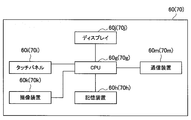
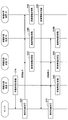
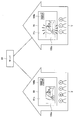
- FIG. 1 is a block diagram illustrating an overall configuration of an information processing system according to an embodiment of the present disclosure. It is a block diagram which shows an example of information processing apparatus. It is a hardware block diagram which shows an example of information processing apparatus. It is a block diagram which shows an example of information processing apparatus. It is a hardware block diagram which shows an example of information processing apparatus. It is a block diagram which shows an example of information processing apparatus. It is a hardware block diagram which shows an example of information processing apparatus. It is a hardware block diagram which shows an example of information processing apparatus. It is a flowchart which shows the procedure of the process by an information processing system. It is a flowchart which shows the procedure of the process by an information processing system. It is a flowchart which shows the procedure of the process by an information processing system.
- the information processing system 10 includes a server 20, information processing devices 30 to 70, and a network 80.
- the server 20 synchronizes image display applications that are independently executed by the information processing apparatuses 30 to 70.
- the information processing apparatuses 30 to 70 each independently execute an image display application.
- the server 20 and the information processing apparatuses 30 to 70 can communicate with each other via the network 80.
- the network 80 may be connected to a device other than the device shown in FIG.
- the information processing devices 30 to 50 are information processing devices that can be carried by the user.
- the information processing apparatuses 30 to 50 are, for example, smartphones, smart tablets, mobile phones, and the like.
- the information processing devices 60 to 70 are display devices that can be viewed by a plurality of users.
- the configuration in FIG. 1 is merely an example of this embodiment.
- the information processing apparatus is not limited to the above example, and may be any apparatus that can execute an image display application.
- the number of information processing apparatuses is not limited to the above example.
- the function of the server 20 may be distributed to a plurality of devices.
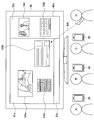
- FIG. 13 users A to D exist around the information processing apparatus 60, and the users A to D are viewing the display unit 60 c (display screen) of the information processing apparatus 60.
- the users A to C hold the information processing apparatuses 30 to 50.
- the user D does not carry the information processing apparatus, but can operate the information processing apparatus 60.
- other users A to C can also operate the information processing apparatus 60.
- the server 20 first forms a session including the information processing apparatuses 30 to 60.
- the session of this embodiment means a group of information processing apparatuses that share image information.
- each session preferably includes one of the information processing apparatuses 60 and 70 that are large screen displays.
- the server 20 causes an information processing apparatus that has been requested to participate in the session to participate in the session.
- the server 20 receives the information transmitted from the information processing apparatus which participated in the session.
- the information processing apparatuses 30 to 60 each independently execute an image display application.
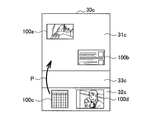
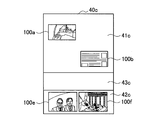
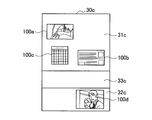
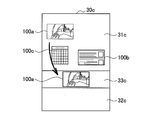
- the display areas of the display units 30c to 60c are divided into shared areas 31c to 61c, individual areas 32c to 62c, and temporary storage areas 33c to 63c.
- the shared area, the individual area, and the temporary storage area are also collectively referred to as a divided area.
- the information processing apparatuses 30 to 60 move each piece of image information within the display area by an input operation (drag operation or the like) by the users A to C.
- the image information 100a and 100b are displayed in the shared areas 31c to 61c at a certain point in time.
- image information 100c and 100d are displayed in the individual area 32c
- image information 100e and 100f are displayed in the individual area 42c.
- image information 100g and 100h are displayed in the individual area 52c
- the image information 100i and 100j are displayed in the individual area 62c.
- the server 20 if there is a change in the shared area and the temporary storage area of any information processing apparatus, the server 20 reflects the change in the shared area and the temporary storage area of the other information processing apparatus.
- the information processing apparatus 30 is shown in FIG. As described above, the image information 100c is moved into the shared area 31c. Furthermore, the information processing apparatus 30 transmits information to that effect to the server 20.
- the server 20 calculates the display position in the other information processing apparatuses 40 to 60 of the image information 100c.
- the server 20 transmits information related to the display position to the other information processing apparatuses 40 to 60. Based on this information, the other information processing apparatuses 40 to 60 move the image information 100c to the shared areas 41c to 61c as shown in FIGS.
- the user A can also perform various input operations (for example, change of TV channel, HP scroll, etc.) other than the movement of the image information on the image information 100a to 100c in the shared area 31c.
- the information processing apparatus 30 performs processing corresponding to the input operation on the image information 100a to 100c, and transmits information related to the input operation to the server 20.
- the server 20 transmits the information to the other information processing apparatuses 40-60.
- the information processing apparatuses 40 to 60 perform processing corresponding to the input operation on the image information 100a to 100c in the shared areas 41c to 61c.
- the information processing apparatus 30 stores the image information 100c in the temporary storage area. 33c is moved. Furthermore, the information processing apparatus 30 transmits information to that effect to the server 20.
- the server 20 calculates the display position in the other information processing apparatuses 40 to 60 of the image information 100c.
- the server 20 transmits information about the display position to the other information processing apparatuses 40 to 60, and the other information processing apparatuses 40 to 60 temporarily store the image information 100a in the shared areas 41c to 51c based on this information. Move to areas 43c-63c.
- the server 20 when there is a change in the shared area and the temporary storage area of any one of the information processing apparatuses, the server 20 reflects the change in the shared area and the temporary storage area of the other information processing apparatus. That is, the server 20 synchronizes the image display applications executed by the information processing apparatuses 30 to 70. As a result, the server 20 can share image information with the users A to D of the information processing apparatuses 30 to 60.
- the server 20 is not involved in input operations performed in the individual areas 32c to 62c. Accordingly, the users A to D can perform individual work using the individual areas 32c to 62c, and move the image information desired to be shared by other users to the shared areas 31c to 61c or the temporary storage areas 33c to 63c. . Of course, the server 20 may be involved in the processing of the individual areas 32c to 62c in some form.
- each user can work on each task or work together while browsing a plurality of pieces of image information (task status) in parallel.
- each user can perform tasks dynamically and graphically.
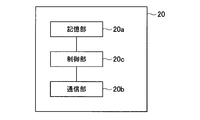
- the server 20 includes a storage unit 20a, a communication unit 20b, and a control unit 20c.
- the storage unit 20a stores information transmitted from the information processing apparatuses 30 to 70 in addition to programs necessary for processing performed by the server 20. Details of such information will be described later.
- the communication unit 20b communicates with the information processing apparatuses 30 to 70.
- the control unit 20c controls each component in the server 20, and also performs processing for synchronizing image display applications executed by the information processing apparatuses 30 to 70.
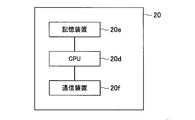
- the server 20 includes a CPU 20d, a storage device 20e, and a communication device 20f as a hardware configuration.
- the server 20 implements the storage unit 20a, the communication unit 20b, and the control unit 20c described above with these hardware configurations. These hardware configurations are realized by an electronic circuit or the like.
- the CPU 20d reads out and executes the program stored in the storage device 20e. Therefore, the CPU 20d is a substantial operation subject of the server 20.
- the storage device 20e includes a ROM, a RAM, a hard disk, a nonvolatile memory, and the like.
- the storage device 20e stores a program for causing the server 20 to realize the storage unit 20a, the communication unit 20b, and the control unit 20c.
- the storage device 20e stores information transmitted from the information processing devices 30 to 70.
- the communication device 20f communicates with the information processing devices 30 to 70.
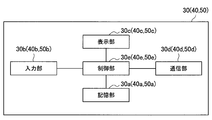
- the information processing apparatus 30 includes a storage unit 30a, an input unit 30b, a display unit 30c, a communication unit 30d, and a control unit 30e.
- the storage unit 30a stores various types of information in addition to programs necessary for processing performed by the information processing apparatus 30.
- the storage unit 30a stores a program for executing an image display application as the program.
- the type of the image display application is not particularly limited, but it is preferable that the display area of the display unit 30c is divided into a shared area, an individual area, and a temporary storage area, and image information can be displayed in these display areas.
- the storage unit 30a stores device identification information (ID or the like) for identifying the information processing device 30.
- the storage unit 30a stores display area information related to the display area.
- the display area information includes, for example, the resolution (dpi) of the display area, the total number of pixels in the display area (the number of pixels on the long side ⁇ the number of pixels on the short side, etc.), the aspect ratio of the display area, Information on the total number of pixels (long side pixel number ⁇ short side pixel number) is included.
- an xy plane is defined for each area, and the storage unit 30a stores the xy coordinate value of each pixel and the divided area to which the pixel belongs in association with each other.
- the x axis corresponds to the long side and the y axis corresponds to the short side.
- the input unit 30b receives various input operations by the user, and is a touch panel, for example.
- the display unit 30c displays various images.
- the display area of the display unit 30c is divided into, for example, a shared area 31c, an individual area 32c, and a temporary storage area 33c. Image information is displayed in each area.
- the type of image information is not particularly limited.
- the communication unit 30d performs communication between the server 20 and the other information processing apparatuses 40 to 70.
- the control unit 30e executes each image display application and controls each component of the information processing apparatus 30.
- the information processing apparatus 30 includes a CPU 30f, a storage device 30g, a touch panel 30h, a display 30i, and a communication device 30j as hardware configurations.
- the information processing apparatus 30 implements the storage unit 30a, the input unit 30b, the display unit 30c, the communication unit 30d, and the control unit 30e described above with these hardware configurations.
- These hardware configurations are realized by an electronic circuit or the like.
- the CPU 30f reads and executes the program stored in the storage device 30g. Therefore, the CPU 30 f is a substantial operation subject of the information processing apparatus 30.
- the storage device 30g includes a ROM, a RAM, a nonvolatile memory, and the like.
- the storage device 30g stores a program and various information for realizing the storage unit 30a, the input unit 30b, the display unit 30c, the communication unit 30d, and the control unit 30e in the information processing device 30.
- This program includes a program for executing the image display application.
- the storage device 30g stores the above-described device identification information, display area information, and the like as various types of information.
- the storage device 30g is also used as a work area by the CPU 30f.
- the touch panel 30h is provided on the surface of the display 30i and receives an input operation by the user.
- the display 30i displays various information, for example, the above-described image information. That is, the display area of the display 30i is divided into a shared area, an individual area, and a temporary storage area, and image information is displayed in each area.
- the communication device 30j communicates with the server 20 and the other information processing devices 40 to 70.
- the information processing apparatus 40 includes a storage unit 40a, an input unit 40b, a display unit 40c, a communication unit 40d, and a control unit 40e.
- the information processing apparatus 40 includes a CPU 40f, a storage device 40g, a touch panel 40h, a display 40i, and a communication device 40j as hardware configurations. Since these functions are the same as those of the information processing apparatus 30, description thereof will be omitted.
- the information processing apparatus 50 includes a storage unit 50a, an input unit 50b, a display unit 50c, a communication unit 50d, and a control unit 50e. Further, as illustrated in FIG. 5, the information processing apparatus 50 includes a CPU 50f, a storage device 50g, a touch panel 50h, a display 50i, and a communication device 50j as hardware configurations. Since these functions are the same as those of the information processing apparatus 30, description thereof will be omitted.
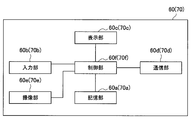
- the information processing apparatus 60 includes a storage unit 60a, an input unit 60b, a display unit 60c, a communication unit 60d, an imaging unit 60e, and a control unit 60f.
- the storage unit 60a stores various types of information in addition to programs necessary for processing performed by the information processing apparatus 60.
- the storage unit 60a stores a program for executing an image display application as the program.
- the type of the image display application is not particularly limited, but it is preferable that the display area of the display unit 60c is divided into a shared area, an individual area, and a temporary storage area, and image information can be displayed in each area.
- the storage unit 60a stores device identification information (ID or the like) for identifying the information processing device 60.
- the storage unit 60a stores display area information related to the display area.
- the display area information includes, for example, the resolution (dpi) of the display area, the total number of pixels in the display area (the number of pixels on the long side ⁇ the number of pixels on the short side, etc.), the aspect ratio of the display area, and the total number of pixels in each divided area Information on (number of pixels on the long side ⁇ number of pixels on the short side) is included.
- an xy plane is defined for each area, and the storage unit 30a stores the xy coordinate value of each pixel and the divided area to which the pixel belongs in association with each other.
- the input unit 60b receives various input operations by the user, and is a touch panel, for example.
- the display unit 60c displays various images.
- the display area of the display unit 60c is divided into, for example, a shared area 61c, an individual area 62c, and a temporary storage area 63c.
- Image information is displayed in each area.
- the type of image information is not particularly limited.
- the communication unit 60d performs communication between the server 20 and the other information processing apparatuses 40 to 50 and 70.
- the imaging unit 60e acquires a captured image by imaging the periphery of the information processing device 60.
- the captured image is used for session formation, input operation (for example, gesture operation), and the like.
- the control unit 60f executes each image display application and controls each component of the information processing apparatus 60.
- the information processing device 60 includes a CPU 60g, a storage device 60h, a touch panel 60i, a display 60j, an imaging device 60k, and a communication device 60m as hardware configurations.
- the information processing apparatus 30 implements the storage unit 60a, the input unit 60b, the display unit 60c, the communication unit 60d, the imaging unit 60e, and the control unit 60f described above with these hardware configurations. These hardware configurations are realized by an electronic circuit or the like.
- the CPU 60g reads and executes the program stored in the storage device 60h. Therefore, the CPU 60g is a substantial operation subject of the information processing apparatus 60.
- the storage device 60h includes a ROM, a RAM, a hard disk, a nonvolatile memory, and the like.
- the storage device 60h stores a program and various information for realizing the storage unit 60a, the input unit 60b, the display unit 60c, the communication unit 60d, the imaging unit 60e, and the control unit 60f in the information processing device 60.
- This program includes a program for executing the image display application.
- the storage device 60h stores the above-described device identification information, display area information, and the like as various types of information.
- the storage device 60h is also used as a work area by the CPU 60g.
- the touch panel 60i is provided on the surface of the display 60j and accepts an input operation by the user.
- the display 60j displays various information, for example, the above-described image information. That is, the display area of the display 60j is divided into a shared area, an individual area, and a temporary storage area, and image information is displayed in each area.
- the imaging device 60k acquires a captured image by imaging the periphery of the information processing device 60.
- the communication device 60m communicates with the server 20 and the other information processing devices 40 to 50, 70.
- the information processing apparatus 70 includes a storage unit 70a, an input unit 70b, a display unit 70c, a communication unit 70d, an imaging unit 70e, and a control unit 70f.
- the information processing apparatus 70 includes a CPU 70g, a storage device 70h, a touch panel 70i, a display 70j, an imaging device 70k, and a communication device 70m as hardware configurations. Since these functions are the same as those of the information processing apparatus 60, description thereof is omitted.
- the information processing system 10 Prior to performing the basic processing shown in FIG. 8, the information processing system 10 performs the following premise processing. That is, the information processing system 10 first forms a session.
- the method for forming the session is not particularly limited.
- a session forming method including the information processing apparatus 60 will be described as an example of a session forming method.
- the users A to C want to cause the information processing apparatuses 30 to 50 to participate in the session, they input the fact to the information processing apparatuses 30 to 50.
- the user D wants to cause the information processing apparatus 60 to participate in the session, the user D inputs the fact to the information processing apparatus 60.
- Input of information to the information processing apparatus 60 is performed by a touch operation or a gesture operation on the input unit 60b.
- the control unit 30e of the information processing device 30 outputs participation request information requesting participation in the session, device identification information, and display area information to the communication unit 30d, and the communication unit 30d outputs the information to the server 20. Send to.
- the other information processing apparatuses 40 to 60 perform the same processing.
- the communication unit 20b of the server 20 receives these information and outputs them to the control unit 20c. Based on these pieces of information, the control unit 20c causes the information processing apparatuses 30 to 60 to participate in the session. Furthermore, the control unit 20c stores these pieces of information in the storage unit 20a. Note that it is not necessary for all of the users A to D to be in the vicinity of the information processing apparatus 60. Hereinafter, the processing of the information processing system 10 will be described on the assumption that the information processing apparatuses 30 to 60 form one session and the users A to D exist in the vicinity of the information processing apparatus 60.
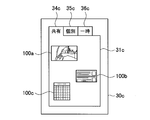
- the control units 30e to 60f of the information processing apparatuses 30 to 60 independently activate the image display application. Then, as shown in FIGS. 13 to 16, the control units 30e to 60f divide the display areas of the display units 30c to 60c into shared areas 31c to 61c, individual areas 32c to 62c, and temporary storage areas 33c to 63c. It should be noted that the layout of each area shown in FIGS. 13 to 16 is an example, and other layouts may be used. Further, since the display areas of the information processing devices 30 to 50 are narrower than the display area of the information processing device 60, the information processing devices 30 to 50 may display each area as a tab (see FIGS. 22 to 25). ).
- Shared areas 32c to 62c are areas where image information is shared by users A to D. The same image information is displayed in the shared areas 32c to 62c. The display position of each image information is also almost the same between the shared areas 32c to 62c. The display position may be different between the shared areas 32c to 62c.
- Temporary storage areas 33c to 63c are also areas where image information is shared by users A to D, but this area is an area for temporarily storing image information. Therefore, the control units 30e to 60f temporarily store the image information in the temporary storage areas 33c to 63c (for example, store in the storage units 30a to 60a), but the image information may not be displayed. In addition, the control units 30e to 60f may reduce and display the temporary storage areas 33c to 63c. In this case, the control units 30e to 60f may enlarge the temporary storage areas 33c to 63c when the user selects the temporary storage areas 33c to 63c (for example, the user touches the temporary storage areas 33c to 63c).
- control units 30e to 60f may display the image information in the temporary storage areas 33c to 63c.
- the control units 30e to 60f may display the image information in the temporary storage areas 33c to 63c only on the information processing apparatus of the user who is performing a task for the image information.
- the individual areas 32c to 62c are areas unique to the user of the information processing apparatuses 30 to 60, and the image information displayed in the individual areas 32c to 62c is not shared between the users A to D. That is, for example, the image information displayed in the individual area 32c of the information processing apparatus 30 is image information unique to the user A and is not displayed on the other information processing apparatuses 40 to 60.
- control units 30e to 60f arrange the image information in the individual areas 32c to 62c based on the input operation from the user.
- the image information may exist in advance in the storage units 30a to 50a and 60a, or may exist on the network 80.
- the users A to C perform an input operation to the information processing apparatuses 30 to 50 using the input units 30b to 50b which are touch panels.
- the users A to D perform an input operation to the information processing apparatus 60 using the input unit 60b which is a touch panel. Users A to D may perform an input operation through a gesture operation.
- the information processing system 10 performs basic processing shown in FIG. 8 in order to share the image information among the users A to D.
- the information processing devices 30 and 60 move the image information.
- the same processing is performed when the other information processing devices 40 and 50 move the image information. Of course.
- step S ⁇ b> 10 the user A performs an input operation for moving any image information displayed in the display area of the information processing apparatus 30.
- the user A touches the image information displayed in the display area and drags it to a desired display position.
- the user A wants to move the image information displayed in the individual area 32c to the shared area 31c
- the user A touches the image information and drags the finger to a desired display position in the shared area 31c.
- the user A wants to move the image information displayed in the individual area 32c to the temporary storage area 33c
- the user A touches the image information and drags the finger to a desired display position in the temporary storage area 33c.
- the control unit 30e of the information processing apparatus 30 moves the image information based on the input operation.
- the control unit 30e performs the following process when the destination of the image information is the shared area 31c or the temporary storage area 33c. That is, the control unit 30e generates movement notification information related to the image information to be moved, the section area to which the moved image information belongs, and the display position of the moved image information. Then, the control unit 30e outputs the device identification information and the movement notification information to the communication unit 30d.
- the image information to be moved is also referred to as “movement object image information”.
- the divided area to which the image information after movement belongs is also referred to as “post-movement divided area”.
- the display position of the image information after movement is also referred to as “post-movement display position”.
- the display position is indicated by xy coordinate values.
- the communication unit 30d transmits the movement notification information and the device identification information to the server 20.
- the control unit 30e does not have to generate such movement notification information as long as the image information moves within the individual area 32c. Further, the control unit 30e may transmit information (for example, URL) indicating the location of the image information to the server 20 instead of the image information.
- step S20 the communication unit 20b of the server 20 receives the device identification information and the movement notification information and outputs them to the control unit 20c. Based on the device identification information, the control unit 20c identifies the source of the movement notification information (here, the information processing device 30). Then, the control unit 20c searches for a session including the transmission source of the movement notification information. Furthermore, the control unit 20c identifies other information processing apparatuses (in this case, the information processing apparatuses 40 to 60) that constitute the session.
- the control unit 20c identifies the source of the movement notification information (here, the information processing device 30). Then, the control unit 20c searches for a session including the transmission source of the movement notification information. Furthermore, the control unit 20c identifies other information processing apparatuses (in this case, the information processing apparatuses 40 to 60) that constitute the session.
- control unit 20c performs the following processing based on the movement notification information and the display area information of another information processing apparatus.
- the control unit 20c uses the post-movement section area (hereinafter also referred to as “transmission destination section area”) of another information processing apparatus as the post-movement section area (hereinafter referred to as “transmission source section area”) indicated by the movement notification information.
- transmission destination section area the post-movement section area
- the control unit 20c determines the other information processing apparatus based on the display position after movement indicated by the movement notification information (hereinafter, also referred to as “transmission source display position”) and the display area information of the other information processing apparatus.
- a display position after movement hereinafter also referred to as “transmission destination display position” is determined.
- the control unit 20c sets the transmission destination display position to the same position as the transmission source display position.
- the control unit 20c displays after moving other information processing apparatuses based on the aspect ratio of these division areas. Determine the position. For example, when the long side of the transmission destination division area has twice as many pixels as the long side of the transmission source division area, the control unit 20c uses the x coordinate value of the transmission destination display position as the x coordinate value of the transmission source display position. The value is doubled.
- the control unit 20c determines a transmission destination division area and a transmission destination display position for each of the other information processing apparatuses.
- the control unit 20c generates movement notification information regarding the image information to be moved, the transmission destination classification area, and the transmission destination display position, and outputs the movement notification information to the communication unit 20b.
- the communication unit 20b transmits the movement notification information to other information processing apparatuses (in this case, the information processing apparatuses 40 to 60).
- the communication units 40d to 60d of the other information processing apparatuses 40 to 60 receive the movement notification information and output them to the control units 40e to 60f.
- the control units 40e to 60f display the image information indicated by the movement notification information in the section area and the display position indicated by the movement notification information.
- the server 20 uses the change to share the areas 41c to 61c and the temporary storage areas 43c to 43c of the other information processing apparatuses 40 to 60. This is reflected in 63c.
- step S60 the user D performs an input operation to move any image information displayed in the display area of the information processing apparatus 60.
- the user D touches the image information displayed in the display area and drags it to a desired display position.
- User D may point the image information displayed in the display area with the fingertip, and move the fingertip until the extension line of the fingertip reaches a desired display position. That is, the user D may perform an input operation by a gesture operation.
- An example of the extension line is shown in FIG. In FIG. 13, the extension line 500 of the fingertip of the user D points to the image information 100b.
- the gesture operation there is an operation such as removing a hand.
- the control unit 60f of the information processing apparatus 60 moves the image information based on the input operation. Thereafter, the control unit 60f generates the movement notification information by performing the same process as in step S10. Thereafter, the control unit 60f outputs the device identification information and the movement notification information to the communication unit 60d.
- the communication unit 60d transmits the movement notification information and the device identification information to the server 20. Note that the control unit 60f may not generate such movement notification information as long as the image information moves within the individual area 62c.
- step S70 the communication unit 20b of the server 20 receives the device identification information and the movement notification information and outputs them to the control unit 20c. Based on the device identification information, the control unit 20c identifies the source of the movement notification information (here, the information processing device 60). Then, the control unit 20c searches for a session including the transmission source of the movement notification information. Furthermore, the control unit 20c identifies other information processing apparatuses (in this case, the information processing apparatuses 30 to 50) that constitute the session.
- the control unit 20c identifies the source of the movement notification information (here, the information processing device 60). Then, the control unit 20c searches for a session including the transmission source of the movement notification information. Furthermore, the control unit 20c identifies other information processing apparatuses (in this case, the information processing apparatuses 30 to 50) that constitute the session.
- control part 20c performs the process similar to step S20 based on movement notification information and the display area information of another information processing apparatus. And the control part 20c produces
- the communication unit 20b transmits the movement notification information to other information processing apparatuses (in this case, the information processing apparatuses 30 to 50).
- steps S80 to S100 the other information processing apparatuses 30 to 50 display the image information indicated by the movement notification information in the section area and the display position indicated by the movement notification information.
- the server 20 takes the change into the shared areas 31c to 51c and the temporary storage areas 33c to 33c of the other information processing apparatuses 30 to 60. This is reflected in 53c.
- the image information 100a and 100b are displayed in the shared areas 31c to 61c at a certain point in time.
- image information 100c and 100d are displayed in the individual area 32c
- image information 100e and 100f are displayed in the individual area 42c.
- image information 100g and 100h are displayed in the individual area 52c
- the image information 100i and 100j are displayed in the individual area 62c.
- the control unit 30e of the information processing device 30 displays the information shown in FIG. As shown in FIG. 4, the image information 100c is moved into the shared area 31c. Therefore, the movement target image information is the image information 100c, and the post-movement division area is the shared area 31c. Further, the display position after movement is any position within the shared area 31c. Therefore, the control unit 30e generates movement notification information regarding these pieces of information. Then, the control unit 30e outputs the device identification information and the movement notification information to the communication unit 30d. The communication unit 30d transmits the movement notification information and the device identification information to the server 20.
- the communication unit 20b of the server 20 receives the device identification information and the movement notification information and outputs them to the control unit 20c. Based on the device identification information, the control unit 20c identifies the source of the movement notification information (here, the information processing device 30). Then, the control unit 20c searches for a session including the transmission source of the movement notification information. Furthermore, the control unit 20c identifies other information processing apparatuses (in this case, the information processing apparatuses 40 to 60) that constitute the session.
- control unit 20c performs the following processing based on the movement notification information and the display area information of another information processing apparatus.
- the control part 20c determines a transmission destination division area as a shared area. Further, the control unit 20c determines the transmission destination display position based on the transmission source display position and the display area information of the other information processing apparatuses 40-60. The control unit 20c determines a transmission destination division area and a transmission destination display position for each of the other information processing apparatuses.
- the control unit 20c generates movement notification information regarding the image information to be moved, the transmission destination classification area, and the transmission destination display position, and outputs the movement notification information to the communication unit 20b.
- the communication unit 20b transmits the movement notification information to other information processing apparatuses (in this case, the information processing apparatuses 40 to 60). As shown in FIGS. 17, 19, and 20, the other information processing apparatuses 40 to 60 display the image information 100c indicated by the movement notification information in the shared areas 41c to 61c.
- the users A to D perform a desired task.
- the users A to D may perform user-specific tasks using the image information displayed in the individual areas 32c to 62c, or collaborate with other users using the image information in the shared areas 31c to 61c.
- You may do the task at Tasks performed in the shared areas 31c to 61c are also shared between the information processing apparatuses 30 to 60, that is, between the users A to D.
- control unit 30e of the information processing device 30 generates task information regarding a task (that is, an input operation) performed by the user A on the image information in the shared area 31c.
- the control unit 30e transmits task information and device identification information to the communication unit 30d.
- the communication unit 30d transmits task information and device identification information to the server 20.
- the communication unit 20b of the server 20 transmits task information and device identification information to the control unit 20c.
- the control unit 20c identifies the source of the movement notification information (here, the information processing device 30) based on the device identification information. Then, the control unit 20c searches for a session including the transmission source of the movement notification information. Furthermore, the control unit 20c identifies other information processing apparatuses (in this case, the information processing apparatuses 40 to 60) that constitute the session. Then, the control unit 20c transmits the task information to the communication unit 20b, and the communication unit 20b transmits to the other information processing apparatuses 40 to 60.
- the communication units 40d to 60d of the other information processing apparatuses 40 to 60 receive the task information and output it to the control units 40e to 60f.
- the control units 40e to 60f update the image information in the shared areas 41c to 61c based on the task information. Therefore, the task status is also shared among the users A to D.
- the control unit 20c may apply any of these tasks to the image information.
- the control unit 20c may set the priority of the user in advance, and may apply the task of the user with a high priority to the image information when a task conflict occurs. Further, the control unit 20c may apply the previously performed task to the image information.
- the control unit 20c may apply the owner task to the image information.
- the owner of the image information means a user who has the authority to use the image information or a user who has moved the image information from the individual area to the shared area. Details will be described later. Further, the control unit 20c may apply a task having a larger operation amount to the image information.
- the users A to D store the image information in the temporary storage areas 33c to 63c. It may be moved to. As a result, the temporarily stored image information is also shared among the users A to D.
- the information processing apparatuses 30 to 60 divide the display area into three divided areas. Since the information processing apparatus 60 is a large display, even if the display area is divided into three divided areas, there is a high possibility that each divided area has a sufficient actual size. However, since the information processing devices 30 to 50 are small information processing devices carried by the user, the actual size of the display area is smaller than that of the information processing device 60. Therefore, in the information processing apparatuses 30 to 50, the visibility of each divided area may be lowered. Therefore, the actual size of these divided areas may be enlarged by displaying each divided area as a tab. A specific example will be described with reference to FIGS.
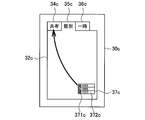
- the control unit 30e of the information processing apparatus 30 may display the segment display tabs 34c to 36c indicating the type of the segment area, and may display the segment area corresponding to the tab selected by the user. In the example shown in FIG. 22, since the tab 34c is selected, the control unit 30e displays the shared area 31c.
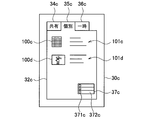
- FIG. 23 shows a state where the individual area 32c is displayed.
- the control unit 30e displays the character information 101c and 101d indicating the outline of the image information 100c and 100d in addition to the image information 100c and 100d in the individual area 32c. Furthermore, the control unit 30e displays a selection list 37c.
- the selection list 37c includes a check box 371c and a summary display field 372c. The control unit 30e switches whether the check box 371c is checked in accordance with a user input operation (for example, an operation of touching the check box 371c).
- the summary display field 372c displays a summary of the image information.
- the user A touches desired image information among the image information 100c and 100d displayed in the individual area 32c, and moves the fingertip to the selection list 37c.
- the control unit 30e registers the image information in the selection list 37c. Specifically, the control unit 30e displays the outline of the image information in the outline display field 372c of the selection list 37c.
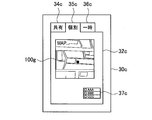
- FIG. 24 shows another example of image information displayed in the individual area 32c.
- the image information 100g shown in this example is so-called map information.
- the control unit 30e checks the check box 371c. Then, as shown in FIG. 25, the user A touches the selection list 37c and moves the fingertip to the shared tab 34c. In response to this, the control unit 30e moves the image information in which the check box 371c is checked to the shared area 31c. Thereafter, the information processing system 10 performs the processing after step S20 described above.
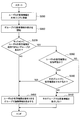
- the image size of the image information displayed by the information processing apparatus 30 is smaller than the image size of the image information displayed by the information processing apparatus 40. Therefore, when the server 20 transmits the image information transmitted from these information processing devices 30 and 40 to the other information processing devices 50 and 60 as they are, the other information processing devices 50 and 60 Depending on the resolution of 40, image information with different display sizes is displayed. In this case, the user may feel uncomfortable with the image information. Therefore, in the present embodiment, the display size adjustment process is performed to make the display size of the image information uniform regardless of the resolution of the transmission source of the image information. The contents of the display size adjustment process will be described below. In the following description, processing when the information processing apparatus 30 transmits image information to the server 20 will be described.
- step S110 the user A performs an input operation of moving any image information displayed in the display area of the information processing apparatus 30 to the shared area 31c.
- the control unit 30e moves the image information to the shared area 31c based on the input operation. Further, the control unit 30e associates the actual size information with the image information.
- the actual size information is information indicating the actual size of the object drawn in the movement target image information.
- the actual size information may be stored in advance in the storage unit 30 a or may be acquired via the network 80.
- the control unit 30e generates movement notification information regarding the movement target image information, the post-movement division area, and the post-movement display position. Specific processing contents are as described above.
- the control unit 30e outputs the device identification information and the movement notification information to the communication unit 30d.
- the communication unit 30d transmits the movement notification information and the device identification information to the server 20.
- step S120 the communication unit 20b of the server 20 receives the device identification information and the movement notification information and outputs them to the control unit 20c. Based on the device identification information, the control unit 20c identifies the source of the movement notification information (here, the information processing device 30). Then, the control unit 20c searches for a session including the transmission source of the movement notification information. Furthermore, the control unit 20c identifies other information processing apparatuses 40 to 60 that constitute a session.
- control unit 20c determines the transmission destination classification area and the transmission destination display position based on the movement notification information and the display area information of the other information processing apparatuses 40 to 60. Specific processing contents are as described above.
- step S130 the control unit 20c determines whether the moving target image information has actual size information (is associated). When determining that the actual size information is associated with the movement target image information, the control unit 20c proceeds to step S140. If the control unit 20c determines that the actual size information is not associated with the movement target image information, the control unit 20c proceeds to step S160.
- step S140 the control unit 20c adjusts the image size of the movement target image information based on the actual size information and the resolutions of the other information processing apparatuses 40 to 60. Specifically, the control unit 20c adjusts the image size of the movement target image information so that the image information is displayed in actual size on the other information processing apparatuses 40 to 60. Then, the control unit 20c generates movement notification information related to the movement target image information, the transmission destination classification area, and the transmission destination display position, and outputs the movement notification information to the communication unit 20b. The communication unit 20b transmits the movement notification information to the other information processing apparatuses 40 to 60.
- step S150 the other information processing apparatuses 30 to 60 display the image information indicated by the movement notification information in the section area and the display position indicated by the movement notification information.
- the other information processing apparatuses 40 to 60 display the movement target image information in actual size. That is, the other information processing apparatuses 40 to 60 can display the movement target image information having a certain display size regardless of the resolution of the transmission source (information processing apparatus 30 in this case) of the movement target image information.
- the other information processing apparatuses 40 to 60 not only display the movement target image information as it is, but also display a three-dimensional space in the display area and display the movement target image information at any position in the three-dimensional space. It may be displayed.
- the display area may be mostly occupied by the moving target image information.
- the other information processing apparatuses 40 to 60 may display the movement target image information on the back side of the screen in the three-dimensional space.
- the movement target image information is reduced by being multiplied by a predetermined coefficient (reduction rate). Thereafter, the information processing system 10 ends this process.
- step S160 the control unit 20c determines whether there is a difference between the resolution of the information processing apparatus 30 that is the transmission source and the resolution of the other information processing apparatuses 40 to 60. If the control unit 20c determines that these resolutions are different, the process proceeds to step S170. If the control unit 20c determines that these resolutions are the same, the process proceeds to step S200. In other words, the control unit 20c performs the processing in and after step S170 for the other information processing apparatuses 40 to 60 that have different resolutions, and performs the processing in step S200 for those having the same resolution.
- step S170 the control unit 20c displays the image of the movement target image information so that the display size of the movement target image information displayed on the other information processing apparatuses 40 to 60 does not vary depending on the resolution of the information processing apparatus 30. Adjust the size. For example, the control unit 20c sets the reference image size for each type of object drawn by the resolution of the other information processing apparatuses 40 to 60 and the movement target image information. Then, the control unit 20c sets the image size of the movement target image information to the reference image size according to the resolution of the other information processing apparatuses 40 to 60 and the object drawn by the movement target image information.
- control unit 20c generates movement notification information related to the movement target image information, the transmission destination classification area, and the transmission destination display position, and outputs the movement notification information to the communication unit 20b.
- the communication unit 20b transmits the movement notification information to the other information processing apparatuses 40 to 60.
- step S180 the other information processing apparatuses 30 to 60 display the image information indicated by the movement notification information in the section area and the display position indicated by the movement notification information.
- the other information processing apparatuses 40 to 60 display the movement target image information in the reference image size. That is, the other information processing apparatuses 40 to 60 can display the movement target image information having a certain display size regardless of the resolution of the transmission source (information processing apparatus 30 in this case) of the movement target image information.
- the other information processing apparatuses 40 to 60 not only display the movement target image information as it is, but also display a three-dimensional space in the display area and display the movement target image information at any position in the three-dimensional space. It may be displayed. Thereafter, the information processing system 10 ends this process.
- step S200 the control unit 20c continues the process without changing the image size of the movement target image information. That is, the control unit 20c generates movement notification information regarding the movement target image information, the transmission destination classification area, and the transmission destination display position, and outputs the movement notification information to the communication unit 20b.
- the communication unit 20b transmits the movement notification information to the other information processing apparatuses 40 to 60.
- the other information processing apparatuses 30 to 60 display the image information indicated by the movement notification information in the section area and the display position indicated by the movement notification information.
- the other information processing apparatuses 40 to 60 may display the movement target image information with the image size obtained by multiplying the image size of the movement target image information by a predetermined coefficient. Thereafter, the information processing system 10 ends this process.
- the information processing devices 30 to 60 may adjust the above-described coefficient and reference image size according to an input operation by the user.
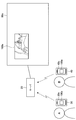
- the resolution of the information processing apparatus 30 is lower than the resolution of the information processing apparatus 40.
- the information processing apparatuses 30 and 40 display the image information 100a having the same display size.
- the image information 100a is transmitted to the server 20.
- the server 20 does not perform the above-described processing
- the information processing device 60 displays the image information 100a having a different display size depending on the resolution of the information processing devices 30 and 40 as the transmission sources.
- the server 20 performs the above-described processing, the image information 100a having a certain display size can be displayed regardless of the difference in resolution between the information processing apparatuses 30 and 40 that are the transmission sources.
- the image size of the movement target image information is changed based on the actual size of the object and the resolution of the information processing devices 30 to 60.
- the information processing system 10 may perform this process (or instead of this process) and adjust the image size based on the total number of pixels in the display areas of the information processing apparatuses 30 to 60.
- the total number of pixels of the information processing device 60 may be very large with respect to the total number of pixels of the information processing devices 30 to 50. Therefore, when the movement target image information transmitted from the information processing devices 30 to 50 is transmitted to another information processing device 60, the control unit 20c may increase the image size.
- the information processing system 10 may adjust the aspect ratio of the movement target image information in accordance with the aspect ratio of the transmission destination section area together with the above-described process (or instead of the above-described process).
- the control unit 20c may match the aspect ratio of the movement target image information with the aspect ratio of the transmission destination division area.
- a large number of image information may be displayed in the shared areas 31c to 61c. Therefore, as the image information increases, it becomes more difficult for the users A to D to view the image information. Therefore, the control units 30e to 60f may reduce the image size of each image information as the image information in the shared areas 31c to 61c increases.
- image information has a use authority given only to a specific user.
- image information is protected by, for example, copyright, and corresponds to, for example, movie content.
- image information may be shared among a plurality of users.
- a user who has the authority to use image information leaves the session it may be preferable not to share the image information with other users.
- the session includes the information processing apparatus 60 that is a large display, the image information displayed in the shared area 61c of the information processing apparatus 60 may be viewed by many users.
- the information processing system 10 performs the user leaving process shown below.
- a process when the information processing apparatus 30 transmits image information that the user A has authority to use to the server 20 will be described.
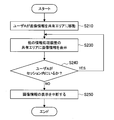
- step S210 shown in FIG. 10 the user A performs an input operation of moving, to the shared area 31c, image information that the user A has usage authority out of the image information displayed in the display area of the information processing apparatus 30.
- the control unit 30e moves the image information to the shared area 31c based on the input operation.
- the control unit 30e generates movement notification information regarding the movement target image information, the post-movement division area, and the post-movement display position. Specific processing contents are as described above.
- the control unit 30e outputs the device identification information and the movement notification information to the communication unit 30d.
- the communication unit 30d transmits the movement notification information and the device identification information to the server 20.
- step S230 the communication unit 20b of the server 20 receives the device identification information and the movement notification information and outputs them to the control unit 20c. Based on the device identification information, the control unit 20c identifies the source of the movement notification information (here, the information processing device 30). Then, the control unit 20c searches for a session including the transmission source of the movement notification information. Furthermore, the control unit 20c identifies other information processing apparatuses 40 to 60 that constitute a session.
- control unit 20c determines the transmission destination classification area and the transmission destination display position based on the movement notification information and the display area information of the other information processing apparatuses 40 to 60. Specific processing contents are as described above. Then, the control unit 20c generates movement notification information related to the movement target image information, the transmission destination classification area, and the transmission destination display position, and outputs the movement notification information to the communication unit 20b.
- the communication unit 20b transmits the movement notification information to the other information processing apparatuses 40 to 60.
- the other information processing apparatuses 30 to 60 display the image information indicated by the movement notification information in the section area and the display position indicated by the movement notification information.
- step S240 the control unit 20c determines whether or not the user A exists in a predetermined place (that is, in the session). When it is determined that the user A exists at the predetermined location, the control unit 20c determines that the user A is participating in the session, and returns to step S230. On the other hand, if the control unit 20c determines that the user A does not exist at the predetermined location, the control unit 20c determines that the user A has left the session, and proceeds to step S250.
- a predetermined place that is, in the session.
- the predetermined place is not particularly limited, and examples thereof include a place where the display area of the information processing apparatus 60 can be visually recognized.
- the control unit 60f acquires image information from the imaging unit 60e, and determines whether or not the user A is reflected in the image information. When the user A is reflected in the image information, the control unit 60f determines that the user A exists at a predetermined location. When the user A is not shown in the image information, the control unit 60f determines that the user A does not exist at the predetermined location.
- the predetermined place is an imageable range of the imaging unit 60e.
- control unit 20c may monitor the communication state between the information processing apparatuses 30 and 50. And control part 20c judges with user A existing in a predetermined place, when information processor 30 exists in the communicable range of information processor 50. The control unit 20c determines that the user A does not exist in a predetermined place when the information processing apparatus 30 does not exist within the communicable range of the information processing apparatus 50.
- the predetermined location is a communicable range of the information processing apparatus 50.
- the predetermined location is not limited to the above example.
- step S250 the control unit 20c stops the transmission of image information that the user A has the authority to use.
- the image information for which user A is authorized to use is deleted from the shared areas 41c to 61c of the other information processing apparatuses 40 to 60. Thereafter, the information processing system 10 ends this process.
- the image information 100a to 100c is displayed in the shared area 61c of the information processing apparatus 60. Of these pieces of image information 100a to 100c, only the user A is authorized to use the image information 100a.
- the control unit 20c acquires image information from the imaging unit 60e, and determines whether or not the user A is reflected in the image information.
- the user A has left the imaging range of the imaging unit 60e. Therefore, the user A is not shown in the image information. Therefore, the control unit 20c stops transmission of the image information 100a. As a result, the image information 100a is deleted from the shared area 61c of the information processing apparatus 60.
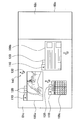
- the information processing apparatuses 30 to 60 may add an indicator to the image information in the shared areas 31c to 61c.
- a display example is shown in FIG.
- the control unit 61f of the information processing device 60 assigns the indicators 110 and 120 to the image information 100a to 100c in the shared area 61c.
- the indicator 110 indicates the owner of the image information.
- the owner of the image information is, for example, a user who is authorized to use the image information.
- a user who has moved the image information from the individual area to the shared area may be the owner of the image information.
- the indicator 120 indicates a person who is performing a task based on the image information.
- information regarding the owner of the image information may be transmitted to the server 20 from the information processing apparatus of the owner.
- information regarding the user who is performing the task based on the image information may be transmitted to the server 20 from the information processing apparatus of the user performing the task.
- control unit 60f displays a cursor 130 operated by the user, and also displays an indicator 140 in the vicinity of the cursor 130.
- the indicator 140 indicates a user who is an operation subject of the cursor. According to this display example, the users A to D can easily grasp the owner of the image information and the users participating in the image information task.
- control units 30e to 60f may display an indicator of a so-called observer who does not participate in the task in addition to the indicators 110, 120, and 140 described above.
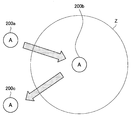
- session management processing will be described with reference to FIG.
- a user wants to participate in a session (specifically, when the user's information processing apparatus wants to participate in the session), it is necessary to apply for participation in the session.
- an event venue or party venue
- a user who exists remotely from the event venue can participate in the event in a pseudo manner by sharing image information with the users in the event venue. Therefore, the information processing system 10 performs the session management process shown below.
- processing when user A participates in a session will be described.
- the users B to D described above do not necessarily have to participate in this session.
- step S270 the control unit 20c determines whether or not the user A is invited to the session.
- the control part 20c should just memorize
- the control unit 20c proceeds to step S280.
- the control unit 20c determines that the user A is not invited to the session, the control unit 20c proceeds to step S285.
- step S280 the control unit 20c determines whether or not the user A satisfies a session participation condition.
- the session participation conditions are not particularly limited, but examples include the following.
- a condition for participating in the session the user A exists in a specific place (for example, an event venue).
- a base station for wireless communication is arranged in a specific place.
- the control unit 20c monitors whether communication is possible between the base station and the information processing apparatus 30 of the user A. When the information processing apparatus 30 exists within the communicable range of the base station, the control unit 20c determines that the user A exists in a specific place, that is, the session participation condition is satisfied.
- control unit 20c determines that the user A does not exist in a specific place, that is, the session participation condition is not satisfied. Moreover, the control part 20c may determine the conditions for session participation using GPS. That is, the control unit 20c specifies the position of the user A (that is, the position of the information processing device 30) using the GPS, and determines whether the user A exists in a specific place based on the result. Also good.
- an image display application is executed within a specific time (for example, event holding time).
- the control unit 20c may inquire of the information processing apparatus 30 whether or not the image display application is being executed at an arbitrary timing within a specific time. When the information processing apparatus 30 is executing the image display application within a specific time, the control unit 20c determines that the session participation condition is satisfied. When the information processing apparatus 30 does not execute the image display application within a specific time, the control unit 20c determines that the session participation condition is not satisfied.
- the session participation condition may be a combination of the above two conditions.
- the control unit 20c may adjust the session participation condition (access permission level) arbitrarily (or according to an input operation by the session manager).
- step S290 the control unit 20c proceeds to step S285.
- step S285 the control unit 20c does not permit the user A to participate in the session. That is, the control unit 20 c does not permit access from the information processing device 30. Thereafter, the information processing system 10 ends this process.
- the control unit 20c may allow the user A to participate in the session with restrictions even when the user A is not invited to the session. Examples of such a restriction include not accepting an input operation for specific image information.
- the control part 20c may set an invitation level for every user, and may set said restriction
- step S290 the control unit 20c automatically causes the user A to participate in the session. Specifically, the control unit 20c causes the information processing apparatus 30 to participate in the session.
- step S330 the control unit 20c determines whether the user A continues to satisfy the session participation condition. When it is determined that the user A continues to satisfy the session participation condition, the control unit 20c proceeds to step S290, and when the user A determines that the session participation condition is not satisfied, the control unit 20c proceeds to step S340. .
- step S340 the control unit 20c automatically disconnects the user A from the session. That is, the control unit 20c automatically disconnects the information processing apparatus 30 from the session. Thereafter, the information processing system 10 ends this process.
- the communicable range of the base station is indicated by region Z.
- the control unit 20c does not permit the user A to participate in the session when the user A exists at the position 200a outside the communicable range of the base station. Thereafter, when the user A moves to a position 200b within the communicable range of the base station, the control unit 20c determines that the user A satisfies the session participation condition, and automatically causes the user A to participate in the session. Thereafter, when the user A moves to a position 200c outside the communicable range of the base station, the control unit 20c determines that the user A does not satisfy the session participation condition, and automatically disconnects the user A from the session. To do.
- the user A can perform session connection or disconnection temporarily and simply. Therefore, the information processing system 10 can achieve both user convenience and session safety (security, copyright protection, etc.). Further, the server 20 can easily grasp the participation status in the session.
- the inter-group sharing process will be described with reference to FIG.
- the users A to D form one group, and a session is formed only by this group.
- the group of this embodiment means the group of users who visually recognize one of the information processing apparatuses 60 and 70 that are large displays.
- a plurality of groups may constitute one session.
- the group X including the information processing apparatus 60 and the group Y including the information processing apparatus 70 may form the same session.
- Group X includes users A to D
- group Y includes users E to G.
- the information processing apparatuses 30 to 70 may apply to the server 20 for session participation in the above-described premise processing.
- the server 20 performs the above-described basic processing between the groups X and Y in the session.
- the information processing apparatus 70 displays only the shared area 71c, but it goes without saying that the individual area and the temporary storage area may be displayed.
- the groups X and Y shown in FIG. 30 exist in different places (in different houses). Therefore, image information that only the user A has the right to use may be shared in the group X, but it may not be preferable to share it in the group Y. Therefore, the information processing system 10 performs the following inter-group sharing process. In the following description, processing when the groups X and Y shown in FIG. 30 form one session will be described.
- step S350 shown in FIG. 12 the user A performs an input operation of moving the image information that the user A has authority to use to the shared area 31c among the image information displayed in the display area of the information processing apparatus 30.
- the information regarding the use authority may be associated with the image information in advance.
- the control unit 30e moves the image information to the shared area 31c based on the input operation.
- the control unit 30e generates movement notification information regarding the movement target image information, the post-movement division area, and the post-movement display position. Specific processing contents are as described above.
- the control unit 30e outputs the device identification information and the movement notification information to the communication unit 30d.
- the communication unit 30d transmits the movement notification information and the device identification information to the server 20.
- step S360 the communication unit 20b of the server 20 receives the device identification information and the movement notification information and outputs them to the control unit 20c. Based on the device identification information, the control unit 20c identifies the source of the movement notification information (here, the information processing device 30). Then, the control unit 20c searches for a session including the transmission source of the movement notification information. Further, the control unit 20c identifies the information processing apparatuses 40 to 60 that constitute the same group X as the transmission source in the session.
- the group discrimination method is not particularly limited, and examples thereof include the following methods. That is, the communication unit 60d of the information processing device 60 tries to perform wireless communication with surrounding information processing devices. Then, the control unit 60f determines that the information processing apparatuses that have responded are the same group, and notifies the server 20 of the result.
- the information processing apparatus 70 performs similar processing.
- control unit 20c determines the transmission destination classification area and the transmission destination display position based on the movement notification information and the display area information of the information processing apparatuses 40 to 60. Specific processing contents are as described above. Then, the control unit 20c generates movement notification information related to the movement target image information, the transmission destination classification area, and the transmission destination display position, and outputs the movement notification information to the communication unit 20b.
- the communication unit 20b transmits the movement notification information to the information processing devices 40 to 60.
- the other information processing apparatuses 40 to 60 display the image information indicated by the movement notification information in the section area and the display position indicated by the movement notification information. As a result, the server 20 starts displaying (sharing) the image information within the group X.
- step S370 the server 20 determines whether there is a group to which the usage right of the user A cannot be applied in the session. In this example, the server 20 determines whether or not the usage authority of the user A can be applied to the group Y. If the server 20 determines that the user A's use authority can be applied to the group Y, the process proceeds to step S400. If the server 20 determines that the user A's use authority cannot be applied to the group Y, the process proceeds to step S380.
- step S380 the server 20 determines whether or not the usage right of the user A can be extended to another group (that is, the information processing apparatus 70). If the use authority of the user A cannot be expanded to another group under any condition, the server 20 proceeds to step S410. On the other hand, if the use authority of the user A can be extended to other users under some conditions (for example, when a charge is made), the server 20 proceeds to step S390.
- step S ⁇ b> 390 the server 20 determines whether or not to grant the use authority of the user A to the group Y. For example, the server 20 grants the use authority of the user A to the group Y when the use authority of the user A can be expanded under some condition and the group Y satisfies the condition. As such a condition, for example, it is possible to deal with charging of a predetermined amount.
- the control unit 20 c may display this condition on the information processing device 70.
- the server 20 transmits character information indicating that “image information can be displayed when paying up to yen” to the information processing device 70, and the control unit 70 f of the information processing device 70 transmits such character information. May be displayed on the display unit 70c.
- step S400 If the server 20 determines to grant the usage authority to the group Y, the process proceeds to step S400. On the other hand, if the server 20 does not grant the use authority of the user A to the group Y (for example, if the above-described condition is not satisfied), the server 20 proceeds to step S410.
- step S400 the server 20 displays (shares) the image information in a group to which the usage right of the user A can be applied, in this example, the groups X and Y. Specifically, the server 20 also transmits the above-described movement notification information to the information processing apparatus 70. The control unit 70f of the information processing device 70 displays image information in the shared area 71c based on the movement notification information. Thereafter, the information processing system 10 ends this process.
- step S410 the server 20 does not display (share) the image information in the group Y. Thereafter, the information processing system 10 ends this process.
- the information processing devices 30 to 70 and the server 20 may perform the following processing in addition to the above processing.
- the control unit 20c of the server 20 may prevent the image information in the shared area from being shared with some information processing apparatuses. That is, the control unit 20c may switch between synchronous and asynchronous of the image display application. As a specific process, the control unit 20c may not transmit the above-described movement notification information to some information processing apparatuses.
- the control unit 20c may perform synchronous or asynchronous switching according to, for example, an input operation by the user.
- the information processing system 10 may display image information in the shared areas 31c to 71c of the information processing devices 30 to 70, while restricting participation in a task based on the image information to only a specific user.
- the control units 30e to 70f of the information processing devices 30 to 70 do not accept an input operation to the image information when the image information is displayed in the shared areas 31c to 71c by other information processing devices. You may do it. In this case, only the information processing apparatus that has moved the image information from the individual area to the shared area accepts the input operation.
- the control units 60f and 70f of the information processing apparatuses 60 and 70 may adjust the display size (that is, the image size) of the image information based on the degree of attention of the image information. For example, the control units 60f and 70f may increase the display size of image information with a high degree of attention. As a result, the users A to D can perform tasks more efficiently.
- the degree of attention of the image information is indicated, for example, as the number of users browsing the image information. The more users viewing the image information, the greater the degree of attention.
- the control units 60f and 70f may specify the attention level of the image information based on the captured images given from the imaging units 60e and 70e.
- the degree of attention of image information is indicated as the number of users who are talking about image information. The more users who are talking about image information, the greater the degree of attention.
- the information processing apparatuses 60 and 70 are provided with a voice recognition unit (for example, a microphone). Then, the control units 60f and 70f specify the number of users who are talking about the image information based on the voice information given from the voice recognition unit.
- the control units 60f and 70f of the information processing devices 60 and 70 may share such fluctuations in image information with the other information processing devices 30 to 50.
- sharing of fluctuations in image information may be performed by a method similar to the basic processing described above.
- the other information processing apparatuses 30 to 50 may perform the same processing.
- control units 30e to 70f of the information processing devices 30 to 70 may adjust the display size of the image information based on the status of the task performed on the image information. For example, the control units 30e to 70f may increase the display size of image information on which tasks are frequently performed. As a result, the users A to D can perform tasks more efficiently.
- the information processing apparatuses 30 to 70 may share such changes in image information among the information processing apparatuses 30 to 70. For example, sharing of fluctuations in image information may be performed by a method similar to the basic processing described above.
- the information processing devices 60 and 70 may be provided with a microphone.
- control part 60f, 70f may memorize
- the user's operation history may be stored as, for example, a change history (moving image) of image information displayed in the display area.
- the operation history may be operation information (for example, touch operation, drag operation, gesture operation) input from the user.
- the information processing system 10 can synchronize the image display applications executed by the information processing apparatuses 30 to 70. Therefore, the user can perform various tasks using the synchronized image display application.
- the user can perform a task using the synchronized image information. That is, the user can divide each task while browsing a plurality of pieces of image information (task status) in parallel, or can work together. In addition, each user can perform tasks dynamically and graphically.
- the information processing system 10 synchronizes the image information displayed in the shared areas 31c to 71c, the user can easily grasp which image information is synchronized.
- the information processing system 10 displays the image information in the shared areas 31c to 71c of the other information processing apparatuses 40 to 70. . Therefore, each user can easily share image information with other users.
- the information processing system 10 also displays images displayed in the shared areas 41c to 71c of the other information processing apparatuses 40 to 70, for example, when the information processing apparatus 30 moves the image information from the shared area 31c to the temporary storage area 33c. Move information to the temporary storage area. Therefore, each user can easily share image information that the user wants to temporarily store with other users.
- the information processing system 10 adjusts the image size of the image information displayed on the information processing devices 30 to 70 based on the display areas of the information processing devices 30 to 70. Therefore, each user can browse the image information more smoothly.
- the information processing system 10 adjusts the image size of the image information based on the resolution of the display area. Therefore, each user can browse the image information more smoothly.
- the information processing system 10 adjusts the image size of the image information based on the actual size of the object drawn by the image information. Therefore, each user can browse the image information more smoothly.
- the information processing system 10 adjusts the image size of the image information based on a preset reference image size. Therefore, each user can browse the image information more smoothly.
- the information processing system 10 determines whether or not to synchronize the image display application based on the state of the user A. To decide. Therefore, the information processing system 10 can share image information among users while maintaining session safety (for example, copyright protection).
- the state of the user A includes, for example, whether or not the user A exists in a predetermined place, and whether or not the use authority of the user A can be extended (applied) to other information processing apparatuses. .
- the information processing system 10 synchronizes the image display applications performed by the information processing devices 30 to 70 when the use authority of the user A can be extended to other information processing devices 70 and a predetermined condition is satisfied. Let Specifically, the information processing system 10 causes the information processing apparatus 70 to display image information for which the user A has usage authority.
- the information processing system 10 determines whether or not to synchronize the image display application based on the state of the information processing apparatus 30, for example. In other words, the information processing system 10 determines whether or not the user A of the information processing apparatus 30 is to participate in the session. Therefore, the user can join or leave the session temporarily or simply.
- the information processing system 10 determines whether or not to synchronize the image display application based on the position of the information processing apparatus 30, for example. In other words, the information processing system 10 determines whether or not the user A of the information processing apparatus 30 is to participate in the session. Therefore, the user can join or leave the session temporarily or simply.
- the information processing system 10 determines whether or not to synchronize the image display application based on, for example, the time when the information processing apparatus 30 executes the image display application. In other words, the information processing system 10 determines whether or not the user A of the information processing apparatus 30 is to participate in the session. Therefore, the user can join or leave the session temporarily or simply.
- the said effect is an illustration to the last, Comprising: This embodiment may have either the effect described in this specification, or another effect.
- the information processing system 10 may perform the processes shown in FIGS. 8 to 10 for the group X shown in FIG. Then, the information processing system 10 may perform a process for participating in the session of the group X, that is, the process shown in FIG.
- An information processing system comprising a control unit that performs control to synchronize a first image display application executed by a first information processing apparatus and a second image display application executed by a second information processing apparatus.
- the information processing system according to (1) wherein the control unit synchronizes image information displayed on the first information processing apparatus and image information displayed on the second information processing apparatus.
- the first and second information processing devices set a shared area within a display area for image information, The information processing system according to (2), wherein the control unit synchronizes image information displayed in the shared area.
- the first information processing apparatus and the second information processing apparatus set an individual area in a display area for image information and, based on an input operation by a user, the image information between the individual area and the shared area. Move When one of the first information processing device and the second information processing device moves one piece of image information from the individual area to the shared area, the control unit The information processing system according to (3), wherein the one image information is displayed in the shared area.
- the first information processing apparatus and the second information processing apparatus set an individual area in a display area for image information and, based on an input operation by a user, the image information between the individual area and the shared area.
- the control unit moves When one of the first information processing apparatus and the second information processing apparatus moves one piece of image information from the shared area to the individual area, the control unit The information processing system according to (3) or (4), wherein the one piece of image information is erased from the shared area.
- the first information processing apparatus and the second information processing apparatus set a temporary storage area in an image information display area and, based on an input operation by a user, the image information between the shared area and the temporary storage area. Move between When one of the first and second information processing apparatuses moves one piece of image information from the shared area to the temporary storage area, the control unit moves to the temporary storage area.
- the information processing system according to any one of (3) to (5), wherein the one image information displayed in the shared area is moved to the temporary storage area.
- the control unit adjusts an image size of image information displayed on the first and second information processing devices based on display areas of the first and second information processing devices.
- the information processing system according to any one of (6).
- (8) The information processing system according to (7), wherein the control unit adjusts an image size of the image information based on a resolution of the display area.
- (9) The information processing system according to (7) or (8), wherein the control unit adjusts an image size of the image information based on an actual size of an object drawn by the image information.
- any one of the first and second information processing apparatuses displays image information for which a user of the one information processing apparatus is authorized to use.
- whether to synchronize the first and second image display applications is determined based on a state of a user of the one information processing apparatus.
- the information processing system described. The control unit is configured to display the first and second image display applications when a user's authority to use the one information processing apparatus can be extended to the other information processing apparatus and a predetermined condition is satisfied.
- the control unit determines whether to synchronize the first and second image display applications based on a state of at least one of the first and second information processing devices.
- the information processing system determines whether to synchronize the first and second image display applications based on a position of at least one of the first and second information processing devices.
- the control unit includes at least one of a time during which the first information processing apparatus executes the first image display application and a time during which the second information processing apparatus executes the second image display application.
- An information processing method including performing control to synchronize a first image display application executed by a first information processing apparatus and a second image display application executed by a second information processing apparatus.
Landscapes
- Engineering & Computer Science (AREA)
- Theoretical Computer Science (AREA)
- General Physics & Mathematics (AREA)
- Physics & Mathematics (AREA)
- General Engineering & Computer Science (AREA)
- Human Computer Interaction (AREA)
- Computer Hardware Design (AREA)
- Databases & Information Systems (AREA)
- Signal Processing (AREA)
- Computer Networks & Wireless Communication (AREA)
- Data Mining & Analysis (AREA)
- Multimedia (AREA)
- Remote Sensing (AREA)
- Radar, Positioning & Navigation (AREA)
- Information Transfer Between Computers (AREA)
- User Interface Of Digital Computer (AREA)
Abstract
Description
1.情報処理システムの構成
1-1.全体構成
1-2.処理の概要
1-3.サーバの構成
1-4.情報処理装置の構成
2.情報処理システムによる処理
2-1.前提処理
2-2.基本処理
2-3.情報処理装置の表示例
2-4.表示サイズ調整処理
2-5.ユーザ離脱処理
2-6.セッション管理処理
2-7.グループ間共有処理
2-8.その他の処理
(1-1.全体構成)
まず、図1に基づいて、情報処理システム10の全体構成について説明する。情報処理システム10は、サーバ20と、情報処理装置30~70と、ネットワーク80とを備える。サーバ20は、情報処理装置30~70が独自に実行する画像表示アプリケーションを同期させる。情報処理装置30~70は、各々独自に画像表示アプリケーションを実行する。サーバ20及び情報処理装置30~70は、ネットワーク80を介して互いに通信可能である。ネットワーク80は、図1に示す装置以外の装置、例えば画像情報のストレージ等にも接続されていてもよい。
次に、図1、図13~図21に基づいて、情報処理システム1が行う処理の概要について説明する。図13では、情報処理装置60の周囲にユーザA~Dが存在し、ユーザA~Dが情報処理装置60の表示部60c(表示画面)を視認している。また、ユーザA~Cは、情報処理装置30~50を保持している。ユーザDは、情報処理装置を携行していないが、情報処理装置60を操作することができる。もちろん、他のユーザA~Cも情報処理装置60を操作することができる。
つぎに、図2及び図3に基づいて、サーバ20の構成について説明する。サーバ20は、記憶部20a、通信部20b、及び制御部20cを備える。記憶部20aは、サーバ20が行う処理に必要なプログラムの他、情報処理装置30~70から送信される情報を記憶する。これらの情報の詳細については後述する。通信部20bは、情報処理装置30~70との間で通信を行う。制御部20cは、サーバ20内の各構成要素を制御する他、情報処理装置30~70が実行する画像表示アプリケーションを同期させる処理も行う。
次に、図4~図7に基づいて、情報処理装置30~70の構成について説明する。図4に示すように、情報処理装置30は、記憶部30a、入力部30b、表示部30c、通信部30d、及び制御部30eを備える。記憶部30aは、情報処理装置30が行う処理に必要なプログラムの他、各種情報を記憶する。例えば、記憶部30aは、上記プログラムとして、画像表示アプリケーションを実行するためのプログラムを記憶する。画像表示アプリケーションの種類は特に問わないが、表示部30cの表示エリアを共有エリア、個別エリア、一時保存エリアに区分し、これらの表示エリアに画像情報を表示できるものが好ましい。
つぎに、情報処理システム1による処理の手順について説明する。
(2-1.前提処理)
情報処理システム10は、図8に示す基本処理を行うに先立って、以下の前提処理を行う。すなわち、情報処理システム10は、まず、セッションを形成する。セッションの形成方法は特に制限されない。以下、セッション形成方法の一例として、情報処理装置60を含むセッションの形成方法について説明する。
次に、図8に基づいて、情報処理システム10が行う基本処理の手順について説明する。ステップS10において、ユーザAは、情報処理装置30の表示エリアに表示されたいずれかの画像情報を移動させる入力操作を行う。例えば、ユーザAは、表示エリアに表示された画像情報にタッチし、所望の表示位置までドラッグする。具体的には、ユーザAは、個別エリア32cに表示された画像情報を共有エリア31cに移動させたい場合、当該画像情報にタッチし、指を共有エリア31c内の所望の表示位置までドラッグする。また、ユーザAは、個別エリア32cに表示された画像情報を一時保存エリア33cに移動させたい場合、当該画像情報にタッチし、指を一時保存エリア33c内の所望の表示位置までドラッグする。
上述したように、情報処理装置30~60は、表示エリアを3つの区分エリアに区分する。情報処理装置60は、大型ディスプレイであるので、表示エリアを3つの区分エリアに区分しても、各区分エリアは十分な実寸を有する可能性が高い。しかし、情報処理装置30~50は、ユーザに携行される小型の情報処理装置であるため、表示エリアの実寸が情報処理装置60に比べて小さい。したがって、情報処理装置30~50では、各区分エリアの視認性が落ちる可能性がある。そこで、各区分エリアをタブ表示することで、これらの区分エリアの実寸を大きくしてもよい。具体例を図22~図25に基づいて説明する。
つぎに、図9に基づいて、表示サイズ調整処理について説明する。上述したように、本実施形態では、ある情報処理装置が画像情報を共有エリアに移動させた場合、その画像情報は他の情報処理装置の共有エリアにも表示される。したがって、情報処理装置同士の解像度が異なると、以下の事象が発生しうる。例えば、情報処理装置30の解像度は、情報処理装置40の解像度より低い場合が想定される。この場合、これらの情報処理装置30、40に同じ画像情報が同じ表示サイズ(表示エリア上での実寸)で表示されていたとしても、これらの画像情報の画像サイズ(総画素数)は異なる。すなわち、情報処理装置30が表示する画像情報の画像サイズは、情報処理装置40が表示する画像情報の画像サイズよりも小さい。したがって、サーバ20は、これらの情報処理装置30、40から送信された画像情報をそのまま他の情報処理装置50、60に送信した場合、他の情報処理装置50、60は、情報処理装置30、40の解像度によって異なる表示サイズの画像情報を表示することになる。この場合、ユーザは、画像情報に違和感を持つ可能性がある。そこで、本実施形態では、表示サイズ調整処理を行うことで、画像情報の送信元の解像度に関わらず、画像情報の表示サイズを均質化する。以下、表示サイズ調整処理の内容について説明する。なお、以下の説明では、情報処理装置30がサーバ20に画像情報を送信する際の処理について説明する。
次に、図10に基づいて、ユーザ離脱処理について説明する。画像情報には、特定のユーザにのみ使用権限が与えられたものが存在する。このような画像情報は、例えば著作権等により保護されたものであり、例えば映画コンテンツ等が該当する。本実施形態では、このような画像情報を複数ユーザ間で共有させてもよい。ただし、画像情報の使用権限を有するユーザがセッションから離脱した場合、画像情報を他のユーザに共有させない方が好ましい場合がある。特に、セッションに大型ディスプレイである情報処理装置60が含まれる場合、情報処理装置60の共有エリア61cに表示された画像情報は多くのユーザに視認される可能性がある。したがって、特定のユーザにのみ使用権限のある画像情報が情報処理装置60の共有エリア61cに表示されている間に、そのユーザがセッションから離脱した場合、画像情報を他のユーザに共有させない方が特に好ましい。そこで、情報処理システム10は、以下に示すユーザ離脱処理を行う。なお、以下の例では、なお、以下の説明では、情報処理装置30がユーザAに使用権限のある画像情報をサーバ20に送信する際の処理について説明する。
次に、図11に基づいて、セッション管理処理について説明する。上述したように、ユーザは、セッションに参加したい(詳細には、ユーザの情報処理装置をセッションに参加させたい)場合、セッションへの参加申請を行う必要がある。しかし、例えばイベント会場(またはパーティ会場)で形成されるセッションでは、ユーザがイベント会場に入った際に自動的にユーザをセッションに参加させた方が好ましい場合がある。この場合、ユーザにとっては、参加申請の手間が省けるので便利である。また、イベント会場の遠隔に存在するユーザは、イベント会場内のユーザとの間で画像情報を共有することで、擬似的にイベントに参加することができる。そこで、情報処理システム10は、以下に示すセッション管理処理を行う。以下の説明では、ユーザAがセッションに参加する場合の処理について説明する。このセッションには、上述したユーザB~Dは必ずしも参加している必要はない。
次に、図12に基づいて、グループ間共有処理について説明する。上述した例では、ユーザA~Dが1つのグループを形成し、このグループのみでセッションが形成されていた。なお、本実施形態のグループは、大型ディスプレイである情報処理装置60、70のうち、いずれかを視認するユーザのグループを意味する。しかし、複数のグループが1つのセッションを構成する場合がある。例えば、図30に示すように、情報処理装置60を含むグループXと、情報処理装置70を含むグループYとが同一セッションを形成する場合がある。グループXは、ユーザA~Dを含み、グループYはユーザE~Gを含む。このようなセッションを形成するためには、上述した前提処理において、情報処理装置30~70がセッション参加の申請をサーバ20に行えばよい。サーバ20は、上述した基本処理等をセッション内のグループX、Y間で行う。なお、図30では、情報処理装置70は共有エリア71cのみを表示しているが、個別エリア及び一時保存エリアを表示して良いことはもちろんである。
情報処理装置30~70、サーバ20は、上記処理に加え、以下の処理を行ってもよい。サーバ20の制御部20cは、共有エリア内の画像情報を一部の情報処理装置に対して共有させないようにしてもよい。すなわち、制御部20cは、画像表示アプリケーションの同期、非同期を切り替えてもよい。具体的な処理として、制御部20cは、上述した移動通知情報を一部の情報処理装置に送信しないようにすればよい。制御部20cは、同期、非同期の切り替えを例えばユーザによる入力操作に応じて行ってもよい。
(1)
第1の情報処理装置が実行する第1の画像表示アプリケーションと、第2の情報処理装置が実行する第2の画像表示アプリケーションとを同期させる制御を行う制御部を備える、情報処理システム。
(2)
前記制御部は、前記第1の情報処理装置に表示される画像情報と前記第2の情報処理装置に表示される画像情報とを同期させる、前記(1)記載の情報処理システム。
(3)
前記第1及び第2の情報処理装置は、画像情報の表示エリア内に共有エリアを設定し、
前記制御部は、前記共有エリア内に表示される画像情報を同期させる、前記(2)記載の情報処理システム。
(4)
前記第1及び第2の情報処理装置は、画像情報の表示エリア内に個別エリアを設定し、かつ、ユーザによる入力操作に基づいて、前記画像情報を前記個別エリアと前記共有エリアとの間で移動させ、
前記制御部は、前記第1及び第2の情報処理装置のうち、いずれか一方の情報処理装置が一の画像情報を前記個別エリアから前記共有エリアに移動させた場合、他方の情報処理装置の前記共有エリアに前記一の画像情報を表示させる、前記(3)記載の情報処理システム。
(5)
前記第1及び第2の情報処理装置は、画像情報の表示エリア内に個別エリアを設定し、かつ、ユーザによる入力操作に基づいて、前記画像情報を前記個別エリアと前記共有エリアとの間で移動させ、
前記制御部は、前記第1及び第2の情報処理装置のうち、いずれか一方の情報処理装置が一の画像情報を前記共有エリアから前記個別エリアに移動させた場合、他方の情報処理装置の前記共有エリアから前記一の画像情報を消去する、前記(3)または(4)記載の情報処理システム。
(6)
前記第1及び第2の情報処理装置は、画像情報の表示エリア内に一時保存エリアを設定し、かつ、ユーザによる入力操作に基づいて、前記画像情報を前記共有エリアと前記一時保存エリアとの間で移動させ、
前記制御部は、前記第1及び第2の情報処理装置のうち、いずれか一方の情報処理装置が一の画像情報を前記共有エリアから前記一時保存エリアに移動させた場合、他方の情報処理装置の前記共有エリアに表示された前記一の画像情報を前記一時保存エリアに移動させる、前記(3)~(5)のいずれか1項に記載の情報処理システム。
(7)
前記制御部は、前記第1及び第2の情報処理装置に表示される画像情報の画像サイズを、前記第1及び第2の情報処理装置の表示エリアに基づいて調整する、前記(1)~(6)のいずれか1項に記載の情報処理システム。
(8)
前記制御部は、前記画像情報の画像サイズを、前記表示エリアの解像度に基づいて調整する、前記(7)記載の情報処理システム。
(9)
前記制御部は、前記画像情報の画像サイズを、前記画像情報が描くオブジェクトの実寸に基づいて調整する、前記(7)または(8)記載の情報処理システム。
(10)
前記制御部は、前記画像情報の画像サイズを、予め設定された基準画像サイズに基づいて調整する、前記(7)または(8)に記載の情報処理システム。
(11)
前記制御部は、前記第1及び第2の情報処理装置のうち、いずれか一方の情報処理装置が、前記一方の情報処理装置のユーザに使用権限が与えられている画像情報を表示している場合、前記一方の情報処理装置のユーザの状態に基づいて、前記第1及び第2の画像表示アプリケーションを同期させるか否かを決定する、前記(1)~(10)のいずれか1項に記載の情報処理システム。
(12)
前記制御部は、前記一方の情報処理装置のユーザの使用権限が他方の情報処理装置に拡張可能であり、かつ、所定の条件が満たされる場合に、前記第1及び第2の画像表示アプリケーションを同期させる、前記(11)記載の情報処理システム。
(13)
前記制御部は、前記第1及び第2の情報処理装置のうち、少なくとも一方の情報処理装置の状態に基づいて、前記第1及び第2の画像表示アプリケーションを同期させるか否かを決定する、前記(1)~(12)のいずれか1項に記載の情報処理システム。
(14)
前記制御部は、前記第1及び第2の情報処理装置のうち、少なくとも一方の情報処理装置の位置に基づいて、前記第1及び第2の画像表示アプリケーションを同期させるか否かを決定する、前記(13)に記載の情報処理システム。
(15)
前記制御部は、前記第1の情報処理装置が前記第1の画像表示アプリケーションを実行する時間、及び前記第2の情報処理装置が前記第2の画像表示アプリケーションを実行する時間のうち、少なくとも一方に基づいて、前記第1及び第2の画像表示アプリケーションを同期させるか否かを決定する、前記(13)に記載の情報処理システム。
(16)
第1の情報処理装置が実行する第1の画像表示アプリケーションと、第2の情報処理装置が実行する第2の画像表示アプリケーションとを同期させる制御を行うことを含む、情報処理方法。
(17)
コンピュータに、
第1の情報処理装置が実行する第1の画像表示アプリケーションと、第2の情報処理装置が実行する第2の画像表示アプリケーションとを同期させる制御を行う制御機能を実現させる、プログラム。
20 サーバ
20c 制御部
30~70 情報処理装置
30e、40e、50e、60f、70f 制御部
31c~71c 共有エリア
32c~62c 個別エリア
33c~63c 一時保存エリア
Claims (17)
- 第1の情報処理装置が実行する第1の画像表示アプリケーションと、第2の情報処理装置が実行する第2の画像表示アプリケーションとを同期させる制御を行う制御部を備える、情報処理システム。
- 前記制御部は、前記第1の情報処理装置に表示される画像情報と前記第2の情報処理装置に表示される画像情報とを同期させる、請求項1記載の情報処理システム。
- 前記第1及び第2の情報処理装置は、画像情報の表示エリア内に共有エリアを設定し、
前記制御部は、前記共有エリア内に表示される画像情報を同期させる、請求項2記載の情報処理システム。 - 前記第1及び第2の情報処理装置は、画像情報の表示エリア内に個別エリアを設定し、かつ、ユーザによる入力操作に基づいて、前記画像情報を前記個別エリアと前記共有エリアとの間で移動させ、
前記制御部は、前記第1及び第2の情報処理装置のうち、いずれか一方の情報処理装置が一の画像情報を前記個別エリアから前記共有エリアに移動させた場合、他方の情報処理装置の前記共有エリアに前記一の画像情報を表示させる、請求項3記載の情報処理システム。 - 前記第1及び第2の情報処理装置は、画像情報の表示エリア内に個別エリアを設定し、かつ、ユーザによる入力操作に基づいて、前記画像情報を前記個別エリアと前記共有エリアとの間で移動させ、
前記制御部は、前記第1及び第2の情報処理装置のうち、いずれか一方の情報処理装置が一の画像情報を前記共有エリアから前記個別エリアに移動させた場合、他方の情報処理装置の前記共有エリアから前記一の画像情報を消去する、請求項3記載の情報処理システム。 - 前記第1及び第2の情報処理装置は、画像情報の表示エリア内に一時保存エリアを設定し、かつ、ユーザによる入力操作に基づいて、前記画像情報を前記共有エリアと前記一時保存エリアとの間で移動させ、
前記制御部は、前記第1及び第2の情報処理装置のうち、いずれか一方の情報処理装置が一の画像情報を前記共有エリアから前記一時保存エリアに移動させた場合、他方の情報処理装置の前記共有エリアに表示された前記一の画像情報を前記一時保存エリアに移動させる、請求項3記載の情報処理システム。 - 前記制御部は、前記第1及び第2の情報処理装置に表示される画像情報の画像サイズを、前記第1及び第2の情報処理装置の表示エリアに基づいて調整する、請求項1記載の情報処理システム。
- 前記制御部は、前記画像情報の画像サイズを、前記表示エリアの解像度に基づいて調整する、請求項7記載の情報処理システム。
- 前記制御部は、前記画像情報の画像サイズを、前記画像情報が描くオブジェクトの実寸に基づいて調整する、請求項7記載の情報処理システム。
- 前記制御部は、前記画像情報の画像サイズを、予め設定された基準画像サイズに基づいて調整する、請求項7記載の情報処理システム。
- 前記制御部は、前記第1及び第2の情報処理装置のうち、いずれか一方の情報処理装置が、前記一方の情報処理装置のユーザに使用権限が与えられている画像情報を表示している場合、前記一方の情報処理装置のユーザの状態に基づいて、前記第1及び第2の画像表示アプリケーションを同期させるか否かを決定する、請求項1記載の情報処理システム。
- 前記制御部は、前記一方の情報処理装置のユーザの使用権限が他方の情報処理装置に拡張可能であり、かつ、所定の条件が満たされる場合に、前記第1及び第2の画像表示アプリケーションを同期させる、請求項11記載の情報処理システム。
- 前記制御部は、前記第1及び第2の情報処理装置のうち、少なくとも一方の情報処理装置の状態に基づいて、前記第1及び第2の画像表示アプリケーションを同期させるか否かを決定する、請求項1記載の情報処理システム。
- 前記制御部は、前記第1及び第2の情報処理装置のうち、少なくとも一方の情報処理装置の位置に基づいて、前記第1及び第2の画像表示アプリケーションを同期させるか否かを決定する、請求項13記載の情報処理システム。
- 前記制御部は、前記第1の情報処理装置が前記第1の画像表示アプリケーションを実行する時間、及び前記第2の情報処理装置が前記第2の画像表示アプリケーションを実行する時間のうち、少なくとも一方に基づいて、前記第1及び第2の画像表示アプリケーションを同期させるか否かを決定する、請求項13記載の情報処理システム。
- 第1の情報処理装置が実行する第1の画像表示アプリケーションと、第2の情報処理装置が実行する第2の画像表示アプリケーションとを同期させる制御を行うことを含む、情報処理方法。
- コンピュータに、
第1の情報処理装置が実行する第1の画像表示アプリケーションと、第2の情報処理装置が実行する第2の画像表示アプリケーションとを同期させる制御を行う制御機能を実現させる、プログラム。
Priority Applications (3)
| Application Number | Priority Date | Filing Date | Title |
|---|---|---|---|
| JP2015562701A JP6455448B2 (ja) | 2014-02-17 | 2014-12-09 | 情報処理システム、情報処理方法、及びプログラム |
| US15/117,242 US10168980B2 (en) | 2014-02-17 | 2014-12-09 | Information processing system and information processing method |
| EP14882468.3A EP3109743B1 (en) | 2014-02-17 | 2014-12-09 | Information processing system, information processing method and program |
Applications Claiming Priority (2)
| Application Number | Priority Date | Filing Date | Title |
|---|---|---|---|
| JP2014027951 | 2014-02-17 | ||
| JP2014-027951 | 2014-02-17 |
Publications (1)
| Publication Number | Publication Date |
|---|---|
| WO2015122087A1 true WO2015122087A1 (ja) | 2015-08-20 |
Family
ID=53799842
Family Applications (1)
| Application Number | Title | Priority Date | Filing Date |
|---|---|---|---|
| PCT/JP2014/082591 Ceased WO2015122087A1 (ja) | 2014-02-17 | 2014-12-09 | 情報処理システム、情報処理方法、及びプログラム |
Country Status (4)
| Country | Link |
|---|---|
| US (1) | US10168980B2 (ja) |
| EP (1) | EP3109743B1 (ja) |
| JP (1) | JP6455448B2 (ja) |
| WO (1) | WO2015122087A1 (ja) |
Cited By (3)
| Publication number | Priority date | Publication date | Assignee | Title |
|---|---|---|---|---|
| EP3232316A1 (en) * | 2016-04-15 | 2017-10-18 | Beijing Xiaomi Mobile Software Co., Ltd. | Method and device for data migration |
| JP2018109893A (ja) * | 2017-01-05 | 2018-07-12 | 富士通株式会社 | 情報処理方法、装置、及びプログラム |
| JP2022008717A (ja) * | 2016-08-19 | 2022-01-14 | ヒュンダイ・アイティー カンパニー リミテッド | 音声と動作認識に基づいたスマートボードを制御する方法およびその方法を使用した仮想レーザーポインター |
Families Citing this family (9)
| Publication number | Priority date | Publication date | Assignee | Title |
|---|---|---|---|---|
| US10877714B2 (en) * | 2015-03-10 | 2020-12-29 | Zoho Corporation Private Limited | Methods and apparatus for enhancing electronic presentations |
| WO2017184872A1 (en) * | 2016-04-20 | 2017-10-26 | Servicenow, Inc. | Visualization of chat task record, linking messaging, and record keeping |
| JP7292024B2 (ja) * | 2018-10-22 | 2023-06-16 | キヤノン株式会社 | 情報処理装置、情報処理装置の制御方法、コンピュータプログラム |
| JP7141327B2 (ja) * | 2018-12-20 | 2022-09-22 | シャープ株式会社 | 情報処理装置 |
| JP7354702B2 (ja) * | 2019-09-05 | 2023-10-03 | 富士通株式会社 | 表示制御方法、表示制御プログラムおよび情報処理装置 |
| JP7476596B2 (ja) * | 2020-03-23 | 2024-05-01 | 株式会社リコー | 通信端末、方法、プログラム、およびシステム |
| US11144275B1 (en) * | 2020-06-29 | 2021-10-12 | Microsoft Technology Licensing, Llc | Method for sharing content and tools independently from devices, applications, users, and times |
| CN115079969A (zh) * | 2021-03-12 | 2022-09-20 | 北京小米移动软件有限公司 | 一种设备间交互方法、装置及介质 |
| US12693825B2 (en) * | 2024-09-30 | 2026-07-28 | Lenovo (United States) Inc. | Application window transferring between displays |
Citations (3)
| Publication number | Priority date | Publication date | Assignee | Title |
|---|---|---|---|---|
| JP2006518507A (ja) * | 2003-02-19 | 2006-08-10 | コーニンクレッカ フィリップス エレクトロニクス エヌ ヴィ | ポータブル装置間でのコンテンツアイテムのアドホック共有のためのシステムと、そのインタラクション方法 |
| JP2009105818A (ja) * | 2007-10-25 | 2009-05-14 | Pioneer Electronic Corp | データ会議用端末装置及びコンピュータプログラム |
| JP2011070511A (ja) * | 2009-09-28 | 2011-04-07 | Sony Corp | 端末装置、サーバ装置、表示制御方法、及びプログラム |
Family Cites Families (9)
| Publication number | Priority date | Publication date | Assignee | Title |
|---|---|---|---|---|
| US20010037367A1 (en) * | 2000-06-14 | 2001-11-01 | Iyer Sridhar V. | System and method for sharing information via a virtual shared area in a communication network |
| JP4738805B2 (ja) * | 2004-12-16 | 2011-08-03 | 株式会社リコー | 画面共有システム、画面共有方法、画面共有プログラム |
| JP2008242367A (ja) * | 2007-03-29 | 2008-10-09 | Fuji Xerox Co Ltd | 表示制御装置、表示装置、表示システム及びプログラム |
| JP2012238218A (ja) | 2011-05-12 | 2012-12-06 | Sony Corp | 情報処理装置、情報処理方法及びコンピュータプログラム |
| US9124657B2 (en) * | 2011-12-14 | 2015-09-01 | International Business Machines Corporation | Dynamic screen sharing for optimal performance |
| US8510381B1 (en) * | 2012-02-14 | 2013-08-13 | Google Inc. | Sharing electronic resources with users of nearby devices |
| US9760244B2 (en) * | 2012-11-30 | 2017-09-12 | Empire Technology Development Llc | Application equivalence map for synchronized positioning of application icons across device platforms |
| TW201445497A (zh) * | 2013-05-16 | 2014-12-01 | Fong-Yuan Chang | 檔案於不同裝置間的同步方法 |
| JP2015127944A (ja) * | 2013-11-28 | 2015-07-09 | 株式会社リコー | 情報処理システム、情報処理装置、情報処理方法、及びプログラム |
-
2014
- 2014-12-09 WO PCT/JP2014/082591 patent/WO2015122087A1/ja not_active Ceased
- 2014-12-09 JP JP2015562701A patent/JP6455448B2/ja not_active Expired - Fee Related
- 2014-12-09 US US15/117,242 patent/US10168980B2/en active Active
- 2014-12-09 EP EP14882468.3A patent/EP3109743B1/en active Active
Patent Citations (3)
| Publication number | Priority date | Publication date | Assignee | Title |
|---|---|---|---|---|
| JP2006518507A (ja) * | 2003-02-19 | 2006-08-10 | コーニンクレッカ フィリップス エレクトロニクス エヌ ヴィ | ポータブル装置間でのコンテンツアイテムのアドホック共有のためのシステムと、そのインタラクション方法 |
| JP2009105818A (ja) * | 2007-10-25 | 2009-05-14 | Pioneer Electronic Corp | データ会議用端末装置及びコンピュータプログラム |
| JP2011070511A (ja) * | 2009-09-28 | 2011-04-07 | Sony Corp | 端末装置、サーバ装置、表示制御方法、及びプログラム |
Non-Patent Citations (1)
| Title |
|---|
| See also references of EP3109743A4 * |
Cited By (3)
| Publication number | Priority date | Publication date | Assignee | Title |
|---|---|---|---|---|
| EP3232316A1 (en) * | 2016-04-15 | 2017-10-18 | Beijing Xiaomi Mobile Software Co., Ltd. | Method and device for data migration |
| JP2022008717A (ja) * | 2016-08-19 | 2022-01-14 | ヒュンダイ・アイティー カンパニー リミテッド | 音声と動作認識に基づいたスマートボードを制御する方法およびその方法を使用した仮想レーザーポインター |
| JP2018109893A (ja) * | 2017-01-05 | 2018-07-12 | 富士通株式会社 | 情報処理方法、装置、及びプログラム |
Also Published As
| Publication number | Publication date |
|---|---|
| EP3109743A4 (en) | 2017-10-04 |
| US20160350059A1 (en) | 2016-12-01 |
| JPWO2015122087A1 (ja) | 2017-03-30 |
| EP3109743A1 (en) | 2016-12-28 |
| EP3109743B1 (en) | 2020-10-21 |
| US10168980B2 (en) | 2019-01-01 |
| JP6455448B2 (ja) | 2019-01-23 |
Similar Documents
| Publication | Publication Date | Title |
|---|---|---|
| JP6455448B2 (ja) | 情報処理システム、情報処理方法、及びプログラム | |
| US12549614B2 (en) | Video sharing method, apparatus, device and medium | |
| EP2840472B1 (en) | Menu layout processing method and apparatus | |
| US9106792B2 (en) | Conference supporting system, control apparatus and input terminal | |
| RU2700188C2 (ru) | Представление вычислительной среды на множественных устройствах | |
| US11256400B2 (en) | Terminal, split-screen display method for screen thereof, and storage device | |
| CN109388620A (zh) | 一种跨设备访问数据的方法及第一电子设备 | |
| EP2905945A1 (en) | Inter-terminal image sharing method, terminal device and communication system | |
| JP2009296449A (ja) | 映像編集システム、映像編集サーバ、通信端末 | |
| KR20130119225A (ko) | 디스플레이장치 및 디스플레이장치의 ui 제공방법 | |
| CN114071230B (zh) | 多端投屏方法、计算机设备及计算机可读存储介质 | |
| JP2025522615A (ja) | 会話メッセージの表示方法、装置、機器及び記憶媒体 | |
| US20180302352A1 (en) | Instant messaging method and system, and electronic apparatus | |
| US10241736B2 (en) | System, display position determination method, and computer-readable recording medium | |
| CN115729500A (zh) | 投屏端和显示端的投屏方法、电子设备及存储介质 | |
| CN119127015B (zh) | 组件显示方法、装置、设备及存储介质 | |
| CN106293563B (zh) | 一种控制方法和电子设备 | |
| JP2026502966A (ja) | ターゲットコンテンツ及びインタフェースの表示方法、装置、機器並びに記憶媒体 | |
| JP2013145557A (ja) | 携帯式電子装置に用いられるインスタントメッセージング方法及びそのシステム | |
| CN115729502A (zh) | 投屏端和显示端的响应方法、电子设备及存储介质 | |
| CN112312058A (zh) | 交互方法、装置和电子设备 | |
| KR20210125596A (ko) | 표시 제어 방법, 단말, 정보처리 장치 및 프로그램을 기록한 기록 매체 | |
| JP2012256278A (ja) | コンテンツ共有システム、コンテンツ共有端末、サーバ、コンテンツ共有方法、および、コンピュータ・プログラム | |
| EP3048524B1 (en) | Document display support device, terminal, document display method, and computer-readable storage medium for computer program | |
| JP2013114396A (ja) | 情報処理装置、情報処理方法及びプログラム |
Legal Events
| Date | Code | Title | Description |
|---|---|---|---|
| 121 | Ep: the epo has been informed by wipo that ep was designated in this application |
Ref document number: 14882468 Country of ref document: EP Kind code of ref document: A1 |
|
| ENP | Entry into the national phase |
Ref document number: 2015562701 Country of ref document: JP Kind code of ref document: A |
|
| WWE | Wipo information: entry into national phase |
Ref document number: 15117242 Country of ref document: US |
|
| REEP | Request for entry into the european phase |
Ref document number: 2014882468 Country of ref document: EP |
|
| WWE | Wipo information: entry into national phase |
Ref document number: 2014882468 Country of ref document: EP |
|
| NENP | Non-entry into the national phase |
Ref country code: DE |