WO2015141341A1 - 関係性グラフ用オブジェクト表示システム - Google Patents
関係性グラフ用オブジェクト表示システム Download PDFInfo
- Publication number
- WO2015141341A1 WO2015141341A1 PCT/JP2015/053934 JP2015053934W WO2015141341A1 WO 2015141341 A1 WO2015141341 A1 WO 2015141341A1 JP 2015053934 W JP2015053934 W JP 2015053934W WO 2015141341 A1 WO2015141341 A1 WO 2015141341A1
- Authority
- WO
- WIPO (PCT)
- Prior art keywords
- node
- relationship
- unit
- evaluation index
- evaluation
- Prior art date
- Legal status (The legal status is an assumption and is not a legal conclusion. Google has not performed a legal analysis and makes no representation as to the accuracy of the status listed.)
- Ceased
Links
Images




Classifications
-
- G—PHYSICS
- G06—COMPUTING OR CALCULATING; COUNTING
- G06F—ELECTRIC DIGITAL DATA PROCESSING
- G06F16/00—Information retrieval; Database structures therefor; File system structures therefor
- G06F16/20—Information retrieval; Database structures therefor; File system structures therefor of structured data, e.g. relational data
- G06F16/25—Integrating or interfacing systems involving database management systems
- G06F16/258—Data format conversion from or to a database
-
- G—PHYSICS
- G06—COMPUTING OR CALCULATING; COUNTING
- G06F—ELECTRIC DIGITAL DATA PROCESSING
- G06F16/00—Information retrieval; Database structures therefor; File system structures therefor
- G06F16/90—Details of database functions independent of the retrieved data types
- G06F16/901—Indexing; Data structures therefor; Storage structures
- G06F16/9024—Graphs; Linked lists
-
- G—PHYSICS
- G06—COMPUTING OR CALCULATING; COUNTING
- G06F—ELECTRIC DIGITAL DATA PROCESSING
- G06F16/00—Information retrieval; Database structures therefor; File system structures therefor
- G06F16/90—Details of database functions independent of the retrieved data types
- G06F16/904—Browsing; Visualisation therefor
-
- G—PHYSICS
- G06—COMPUTING OR CALCULATING; COUNTING
- G06Q—INFORMATION AND COMMUNICATION TECHNOLOGY [ICT] SPECIALLY ADAPTED FOR ADMINISTRATIVE, COMMERCIAL, FINANCIAL, MANAGERIAL OR SUPERVISORY PURPOSES; SYSTEMS OR METHODS SPECIALLY ADAPTED FOR ADMINISTRATIVE, COMMERCIAL, FINANCIAL, MANAGERIAL OR SUPERVISORY PURPOSES, NOT OTHERWISE PROVIDED FOR
- G06Q10/00—Administration; Management
- G06Q10/10—Office automation; Time management
-
- G—PHYSICS
- G06—COMPUTING OR CALCULATING; COUNTING
- G06Q—INFORMATION AND COMMUNICATION TECHNOLOGY [ICT] SPECIALLY ADAPTED FOR ADMINISTRATIVE, COMMERCIAL, FINANCIAL, MANAGERIAL OR SUPERVISORY PURPOSES; SYSTEMS OR METHODS SPECIALLY ADAPTED FOR ADMINISTRATIVE, COMMERCIAL, FINANCIAL, MANAGERIAL OR SUPERVISORY PURPOSES, NOT OTHERWISE PROVIDED FOR
- G06Q10/00—Administration; Management
- G06Q10/40—Business processes related to social networking or social networking services
-
- G—PHYSICS
- G06—COMPUTING OR CALCULATING; COUNTING
- G06Q—INFORMATION AND COMMUNICATION TECHNOLOGY [ICT] SPECIALLY ADAPTED FOR ADMINISTRATIVE, COMMERCIAL, FINANCIAL, MANAGERIAL OR SUPERVISORY PURPOSES; SYSTEMS OR METHODS SPECIALLY ADAPTED FOR ADMINISTRATIVE, COMMERCIAL, FINANCIAL, MANAGERIAL OR SUPERVISORY PURPOSES, NOT OTHERWISE PROVIDED FOR
- G06Q10/00—Administration; Management
- G06Q10/40—Business processes related to social networking or social networking services
- G06Q10/48—Business processes related to social networking or social networking services using social graphs
-
- H—ELECTRICITY
- H04—ELECTRIC COMMUNICATION TECHNIQUE
- H04L—TRANSMISSION OF DIGITAL INFORMATION, e.g. TELEGRAPHIC COMMUNICATION
- H04L43/00—Arrangements for monitoring or testing data switching networks
- H04L43/04—Processing captured monitoring data, e.g. for logfile generation
- H04L43/045—Processing captured monitoring data, e.g. for logfile generation for graphical visualisation of monitoring data
Definitions
- the present invention relates to a relationship graph object display system for arranging each object based on a relationship graph in which nodes related to a plurality of objects are connected by links and displaying each object on a screen of a terminal device.
- this relationship graph represents objects such as people, things, places, and contents as nodes, and the presence or absence of the relationship between these objects is represented by a link. Further, the strength of the relationship between nodes directly connected to each other is given by the link length, and the strength of the relationship between nodes connected via other nodes is given by the path length. For this reason, when a certain node is selected as the base node, the relationship of the certain node with the base node is determined by the network graph structure of the route from the base node to the node.
- an object group included in the input source is generated as a node.
- a small relationship graph (partial graph) is formed by generating links between nodes.
- a large relationship graph is formed by connecting a plurality of subgraphs via a common node, and this graph is held in a database (see Patent Document 1).
- the link length becomes short, so that the same link overlaps at the time of coupling
- the relationship graph stored in the database is referenced and used by various applications. For example, if a relationship graph of only people is formed using SNS (social networking service) information as an input source, there is no direct link with one person, but another person with a short path length is presented as a future friend ( Can be recommended).
- SNS social networking service
- a relationship graph is formed from a visit history to a place and a purchase history of a product, when a consumer visits a place, the consumer is displayed on the relationship graph. It is possible to recommend a product with a short path length from the location.
- the object group has a network graph structure as in the above relationship graph
- the network graph structure is displayed as it is on a general two-dimensional plane as shown in FIG.
- the relationship graph may be difficult to operate.
- portable information terminals such as smartphones and tablets have become widespread, but such problems become more conspicuous on a small screen in such portable information terminals.
- the present invention has been made in view of the above-described problems, and can easily and reliably display an object related to a relationship graph on a screen of a terminal device, which can contribute to browsing and operation by a user.
- An object of the present invention is to provide an object display system for a relationship graph.
- the present invention arranges each object based on a relationship graph in which nodes related to a plurality of objects are connected by links, and a relationship for displaying each object on the screen of the terminal device
- An object graph object display system comprising: a node table storage unit storing a node table corresponding to an object and a node; a relationship graph database unit storing one or more relationship graphs; and object information from a terminal device.
- the object information received by the object information receiving unit is converted into a corresponding node by referring to the received object information receiving unit and the node table stored in the node table storage unit, and the node is set as a base node.
- a node conversion unit and a node conversion unit Based on the converted base node, a relationship graph extraction unit that extracts a relationship graph including the base node from the relationship graph database, and each node in the relationship graph extracted by the relationship graph extraction unit Evaluation by the node relationship evaluation unit by referring to a node relationship evaluation unit that evaluates the relationship to the base node with scores of at least two kinds of evaluation indexes and a node table stored in the node table storage unit.
- Each converted node is converted into a corresponding object, and each object converted from each node is arranged while the score of at least two kinds of evaluation indexes of each node by the node relationship evaluation unit corresponds to at least two-dimensional coordinates.
- Object placement section and each object placed by the object placement section The characterized in that it comprises an object output portion that outputs to the terminal device.
- the node relationship evaluation unit uses one of the number of hops or the path length of each node with respect to the base node as a first evaluation index and the other as a second evaluation index. While making the score of the evaluation index correspond to one of the first coordinate axis or the second coordinate axis of the two-dimensional coordinate and the score of the second evaluation index corresponds to the other coordinate axis of the two-dimensional coordinate, Each object converted from the node may be arranged.
- the node relationship evaluation unit uses one of the path length or the number of common nodes of each node with respect to the base node as a first evaluation index, and the other as a second evaluation index.
- Each of the nodes while the score of the index is made to correspond to either the first coordinate axis or the second coordinate axis of the two-dimensional coordinate, and the score of the second evaluation index is made to correspond to the other coordinate axis of the two-dimensional coordinate
- Each object converted from may be arranged.
- the node relationship evaluation unit uses one of the number of hops or the number of common nodes with respect to the base node of each node as a first evaluation index and the other as a second evaluation index, and the object placement unit performs a first evaluation Each of the nodes while the score of the index is made to correspond to either the first coordinate axis or the second coordinate axis of the two-dimensional coordinate, and the score of the second evaluation index is made to correspond to the other coordinate axis of the two-dimensional coordinate Each object converted from may be arranged.
- the object information accepting unit accepts object information relating to a plurality of objects from a terminal device
- the node conversion unit accepts the object information accepting unit by referring to a node table stored in the node table storage unit.
- the plurality of objects in the object information obtained are converted into corresponding nodes, and each node is set as a base node, and the relationship graph extraction unit is based on the plurality of base point nodes converted by the node conversion unit.
- the relationship graph including each base node is extracted from the property graph database, and the node relationship evaluation unit determines the relationship of each node in the relationship graph extracted by the relationship graph extraction unit to each of the plurality of base nodes.
- the node placement unit converts each node evaluated by the node relationship evaluation unit into a corresponding object by referring to the node table stored in the node table storage unit, and each node relationship evaluation unit Each object converted from each node may be arranged while the scores of at least two kinds of evaluation indices of the nodes correspond to at least two-dimensional coordinates.
- the evaluation index may be an average value of the number of hops from each base node of the node in the relationship graph, the path length, or the number of common nodes.
- the evaluation index may be the minimum value or the maximum value of the number of hops, the path length, or the number of common nodes from each base node of the node in the relationship graph.
- each object is arranged with a predetermined evaluation index based on the relationship graph, the object related to the relationship graph can be easily and reliably displayed on the screen of the terminal device, and thus the object by the user It is possible to contribute to browsing and operation.
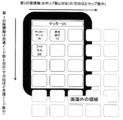
- FIG. 10 is a diagram illustrating a screen display of an object according to the first embodiment.
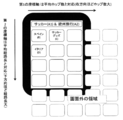
- FIG. 10 is a diagram illustrating a screen display of an object according to the second embodiment.
- FIG. 10 is a diagram illustrating a screen display of an object according to a third embodiment.
- FIG. 10 is a diagram illustrating a screen display of an object according to a fourth embodiment.
- FIG. 10 is a diagram illustrating a screen display of an object according to a fifth embodiment. It is a figure which shows the screen display of the network structure of a relationship graph.
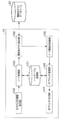
- FIG. 1 is a diagram showing an overall configuration of a system model including the system 1.
- the system 1 includes a processing server 10, a relationship graph database 20, and a cache server 30.
- the system 1 is connected to a user terminal device 40 through a network such as the Internet. Has been.
- the terminal device 40 may be, for example, a mobile phone, a smartphone, or a tablet terminal having a touch panel screen.
- the user selects an object on a touch panel screen or inputs an interesting keyword to designate the object.
- Each function of the system 1 or the terminal device 40 functions by executing a computer program installed in a computer functioning as the processing server 10 of the system 1 or a storage device of the terminal device 40.
- This computer program can be downloaded from a predetermined server, or recorded on a storage medium and transferred / sold.
- the processing server 10 can communicate with the terminal device 40 via a network such as the Internet. A specific configuration of the processing server 10 will be described later.
- the relationship graph database 20 stores a plurality of relationship graphs.
- This relationship graph represents objects such as people, things, places, and contents as nodes, and the presence or absence of the relationship between these objects is represented by a link. Further, the strength of the relationship between nodes directly connected to each other is given by the link length, and the strength of the relationship between nodes connected via other nodes is given by the path length.
- an object group included in the input source is generated as a node.
- a small relationship graph (partial graph) is formed by generating links between nodes. Moreover, one large relationship graph is formed by combining a plurality of subgraphs via a common node. This is held in the relationship graph database 20.
- the link length becomes short, so that the same link overlaps at the time of coupling
- the cache server 30 stores the results of processing performed in the processing server 10 and is for speeding up the processing in the processing server 10. [Configuration of processing server 10]
- the processing server 10 includes a node table storage unit 101, an object information reception unit 102, a node conversion unit 103, a relationship graph extraction unit 104, a node relationship evaluation unit 105, an object An arrangement unit 106 and an object output unit 107 are provided.
- the node table storage unit 101 stores a node table corresponding to an object and a node.
- This object is, for example, a person, a thing, a place, or content, and a node is each node on the above-described relationship graph.
- the node table is represented in a tabular form so that these objects and nodes correspond to each other in a one-to-one relationship.
- the object information receiving unit 102 receives predetermined object information from the terminal device 40 via the network.
- This object information is information relating to an object selected or designated by the user on the terminal device 40. Specific examples of the object will be described in Examples 1 to 5 described later.
- the node conversion unit 103 converts an object into a node. Specifically, the node conversion unit 103 converts the object information received by the object information reception unit 102 into a corresponding node by referring to the node table stored in the node table storage unit 101. The node conversion unit 103 defines the converted node as a base node. For example, when the object information received by the object information receiving unit 102 is “soccer”, the node conversion unit 103 refers to the node table stored in the node table storage unit 101 and sets the object “soccer” to the corresponding node. Transform and define the node as the base node.
- the relationship graph extraction unit 104 extracts a predetermined relationship graph from the relationship graph database 20. Specifically, the relationship graph extraction unit 104 extracts a relationship graph including the base point node from the relationship graph database 20 based on the base point node converted by the node conversion unit 103. At this time, the relationship graph extraction unit 104 extracts a partial relationship graph within a certain range from the base node. The certain range of the relationship graph indicates that the route length and the number of hops with respect to the base node are within a certain value, for example.
- the relationship graph extraction unit 104 is not limited to extracting a partial relationship graph, and may extract the entire relationship graph.
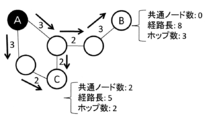
- the node relationship evaluation unit 105 evaluates each node in the relationship graph. Specifically, the node relationship evaluation unit 105 evaluates the relationship with respect to the base node for each node in the relationship graph extracted by the relationship graph extraction unit 104 using at least two types of evaluation index scores. Examples of the evaluation index include the number of hops with respect to the base node, the path length with respect to the base node, and the number of common nodes.
- the path length of the node to the base node is a second evaluation index
- the number of common nodes of the nodes is a third evaluation index.
- the score (3) of the first evaluation index (number of hops), the score (8) of the second evaluation index (path length), and the score (0 of the third evaluation index (number of common nodes)) is 0.
- the number of hops from base node A is 2
- the path length from base node A is 5
- the number of common nodes is 2, so that the base node of node C As the relationship to A, the score (2) of the first evaluation index (number of hops), the score (5) of the second evaluation index (path length), the score (2 of the third evaluation index (number of common nodes)) ).
- the object placement unit 106 converts each node of the relationship graph into an object, and places each object in a predetermined format. Specifically, the object placement unit 106 converts each node evaluated by the node relationship evaluation unit 105 into a corresponding object by referring to the node table stored in the node table storage unit 101. Then, the object placement unit 106 places each object converted from each node while making the score of at least two kinds of evaluation indexes of each node by the node relationship evaluation unit 105 correspond to at least two-dimensional coordinates.
- the object placement unit 106 refers to the node table to change the node B to the corresponding object “soccer ball”. Convert.
- the score of the first evaluation index (number of hops) that is the relationship of the node B to the base node A is 3, the score of the second evaluation index (path length) is 8, and the third evaluation index (common node)
- the object placement unit 106 determines that the score (3) of the first evaluation index (number of hops) is the coordinate value of the first coordinate axis, and the score of the second evaluation index (path length).
- the object “soccer” converted from node B so that (8) is the coordinate value of the second coordinate axis and the score (0) of the third evaluation index (number of common nodes) is the coordinate value of the third coordinate axis.
- a “ball” is placed in correspondence with the three-dimensional coordinates.
- the object output unit 107 outputs an object group composed of the objects arranged by the object arrangement unit 106 to the terminal device 40 via the network and displays the object group on the screen of the terminal device 40.
- the object output unit 107 When displaying the screen of each object on the terminal device 40, it is displayed so that one object group can be browsed on the screen of the terminal device 40, or one object group can be browsed by scrolling the screen of the terminal device 40. Or may be displayed so that one object group can be viewed by switching the screen of the terminal device 40.
- the user can browse the object group displayed on the screen of the terminal device 40 and operate the object group on the screen.
- the node relationship evaluation unit 105 evaluates the relationship of the node to the base node with the scores of the three evaluation indexes of the first evaluation index, the second evaluation index, and the third evaluation index. Although it was assumed, you may evaluate by the score of two or four or more evaluation indexes.
- the node relationship evaluation unit 105 uses the number of hops of the node with respect to the base node as the first evaluation index, the path length with respect to the base node of the node as the second evaluation index, and the number of common nodes of the node as the third evaluation index.
- the present invention is not limited to these combinations, and may be a combination of other evaluation indexes.
- the object placement unit 106 displays an object in three-dimensional coordinates, it may be displayed in two-dimensional coordinates or four-dimensional or more coordinates.
- the object placement unit 106 associates the first evaluation index with the first coordinate axis, the second evaluation index with the second coordinate axis, and the third evaluation index with the third coordinate axis. It is not limited to the relationship, but may be another correspondence relationship.
- the object placement unit 106 places the first and second evaluation index scores in absolute terms so as to correspond to the coordinate values of the first and second coordinate axes of the two-dimensional coordinates. You may arrange
- the evaluation index for one base node of the nodes in the relationship graph is evaluated, the evaluation index for a plurality of base nodes may be evaluated.
- the score of the evaluation index for a plurality of base nodes of the node includes the average number of hops, the average route length, or the average number of common nodes.
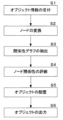
- step is abbreviated as “S”.
- the object information receiving unit 102 receives predetermined object information from the terminal device 40 via a network (S1).
- the node conversion unit 103 converts the object information received by the object information reception unit 102 into a corresponding node by referring to the node table stored in the node table storage unit 101 (S2).
- the relationship graph extraction unit 104 extracts a relationship graph including the base point node from the relationship graph based on the base point node converted by the node conversion unit 103 (S3).
- the node relationship evaluation unit 105 evaluates the relationship with respect to the base node for each node in the relationship graph extracted by the relationship graph extraction unit 104 using scores of at least two kinds of evaluation indexes (S4).
- S4 evaluation indexes
- the object placement unit 106 refers to the node table stored in the node table storage unit 101 to convert each node evaluated by the node relationship evaluation unit 105 into a corresponding object.
- Each object converted from each node is arranged while the scores of at least two kinds of indices of each node by the node relationship evaluation unit 105 correspond to at least two-dimensional coordinates (S5). Note that a method for arranging each object by the object arranging unit 106 will be specifically described in the following first to fifth embodiments.
- the object output unit 107 outputs the object group composed of the objects arranged by the object arrangement unit 106 to the terminal device 40 via the network, and displays it on the screen of the terminal device 40 (S6).
- Example 1 two-dimensional coordinate display of hop count / path length
- the first evaluation is performed by using the number of hops of the node to the base node in the relationship graph as the first evaluation index and the path length of the node to the base node as the second evaluation index.
- the index and the second evaluation index are respectively associated with the first coordinate axis and the second coordinate axis of the two-dimensional coordinates.
- the node relationship evaluation unit 105 uses, for each node in the relationship graph extracted by the relationship graph extraction unit 104, the number of hops with respect to the base node of the node as a first evaluation index, and the base point of the node Using the path length for the node as a second evaluation index, the relationship of each node to the base node is evaluated.
- the object placement unit 106 refers to the node table stored in the node table storage unit 101 to convert each node evaluated by the node relationship evaluation unit 105 into a corresponding object.
- the first evaluation index (number of hops) score of each node by the node relationship evaluation unit 105 is the coordinate value of the first coordinate axis
- the second evaluation index (path length) is the coordinate value of the first coordinate axis
- the objects converted from the nodes are arranged in correspondence with the two-dimensional coordinates so that the score becomes the coordinate value of the second coordinate axis.
- the coordinate value is set to be larger as it goes to the right of the first coordinate axis, and the coordinate value is set to be larger as it goes downward of the second coordinate axis.
- the base node A and nodes B, C, and D close to the base node A in a relationship graph the base node A and the object “soccer”, the node B and the object “soccer ball”, and the node C and the object “Europe” It is assumed that “travel”, node D, and object “training wear” correspond to each other.
- the node B is assumed to have the minimum number of hops for the base node A and 1 among the nodes, and the path length to the base node A of 1 and the minimum among the nodes.
- the node C has the second smallest hop count with respect to the base node A and is the second smallest among the nodes, and the node length with respect to the base node A is 1 and is the smallest among the nodes in the same manner as the node B.
- the node D is assumed to have the smallest number of hops with respect to the base node A and 1 among the nodes, the path length with respect to the base node A being 2, and the second smallest among the nodes.
- the node relationship evaluation unit 105 has a first evaluation index (hop count) score of 1 and a second evaluation index (path length) score of the relationship between the node B and the base node A. Evaluate as 1, respectively. Further, as a relationship between the node C and the base node A, the score of the first evaluation index (hop count) is evaluated as 2, and the score of the second evaluation index (path length) is evaluated as 1. Further, as the relationship between the node D and the base node A, the score of the first evaluation index (hop count) is 1 and the score of the second evaluation index (path length) is 2, respectively.
- the object placement unit 106 refers to the node table stored in the node table storage unit 101, so that each node B, C, D evaluated by the node relationship evaluation unit 105 corresponds to the object “soccer ball”. "Europe travel” and “training wear” respectively.
- the object placement unit 106 has a score (1) of the first evaluation index (number of hops) as the coordinate value of the first coordinate axis, and a score (1) of the second evaluation index (path length) as the second coordinate axis.
- the object “soccer ball” converted from the node B is arranged in the first column of the first coordinate axis and the first column of the second coordinate axis of the two-dimensional coordinates so that the coordinate value becomes.
- the score (2) of the first evaluation index (number of hops) is the coordinate value of the first coordinate axis
- the score (1) of the second evaluation index (path length) is the coordinate value of the second coordinate axis.
- the object “Europe travel” converted from the node C is arranged in the second column of the first coordinate axis and the first column of the second coordinate axis of the two-dimensional coordinates.
- the score (1) of the first evaluation index is the coordinate value of the first coordinate axis
- the score (2) of the second evaluation index is the coordinate value of the second coordinate axis.
- the object “training wear” converted from the node D is arranged in the first column of the first coordinate axis and the second column of the second coordinate axis of the two-dimensional coordinates.
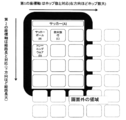
- the screen of the terminal device 40 is a two-dimensional array arranged such that the first evaluation index (hop count) corresponds to the first coordinate axis and the second evaluation index (path length) corresponds to the second coordinate axis.
- An object group is displayed. If the screen is scrolled to the right, an object with a larger number of hops is displayed in sequence. If an operation is performed to scroll the screen downward, an object with a longer path length is displayed in sequence. .
- the number of hops indicates whether other objects for the object “soccer” are directly or indirectly related, and the path length is for users interested in the object “soccer” to other objects. It shows the level of interest you will feel. For this reason, as the screen of the terminal device 40 is scrolled to the right, an object that is more unexpected to the user is displayed, and as the screen of the terminal device 40 is scrolled downward, an object that is less interested for the user is displayed. .
- Example 2 two-dimensional coordinate display of the number of common nodes / path length
- the first evaluation index is the number of common nodes with respect to the base node of the node in the relationship graph
- the first evaluation index is the path length with respect to the base node of the node.
- the evaluation index and the second evaluation index correspond to the first coordinate axis and the second coordinate axis of the two-dimensional coordinates, respectively.
- the node relationship evaluation unit 105 sets, for each node in the relationship graph extracted by the relationship graph extraction unit 104, the number of common nodes with respect to the base node of the node as a first evaluation index, and Using the path length for the base point node as a second evaluation index, the relationship of each node to the base point node is evaluated.
- the object placement unit 106 refers to the node table stored in the node table storage unit 101 to convert each node evaluated by the node relationship evaluation unit 105 into a corresponding object.
- the score of the first evaluation index (number of common nodes) of each node by the node relationship evaluation unit 105 is the coordinate value of the first coordinate axis
- the second evaluation index (path length) is the object converted from the node.
- the object converted from the node is arranged so as to correspond to the two-dimensional coordinates so that the score becomes the coordinate value of the second coordinate axis.
- the coordinate value is set to be smaller as it goes to the right of the first coordinate axis, and the coordinate value is set to be larger as it goes downward of the second coordinate axis.
- Node D and object“ training wear ” correspond to each other.
- the node B is assumed that the number of common nodes with respect to the base node A is 100, which is the maximum among the nodes, and the path length with respect to the base node A is 1 and is the minimum among the nodes.
- Node C has 99 common nodes with respect to base node A, which is the second smallest among the nodes.
- node C has a path length of 1 and is the shortest among the nodes.
- node D has the maximum number of common nodes with respect to the base node A of 100 and is the largest among the nodes, and the path length with respect to the base node A is 2 and is the second smallest among the nodes. .
- the node relationship evaluation unit 105 has a score of the first evaluation index (number of common nodes) of 100 and a score of the second evaluation index (path length) as the relationship of the node B to the base node A. Evaluates to 1 respectively. Further, as a relationship between the node C and the base node A, the score of the first evaluation index (number of common nodes) is 99 and the score of the second evaluation index (path length) is 1. Further, as the relationship between the node D and the base node A, the score of the first evaluation index (number of common nodes) is 100 and the score of the second evaluation index (path length) is 2, respectively.
- the object placement unit 106 refers to the node table stored in the node table storage unit 101, so that each node B, C, D evaluated by the node relationship evaluation unit 105 corresponds to the object “soccer ball”. ”,“ Futsal ”and“ training wear ”.
- the object placement unit 106 has a first evaluation index (number of common nodes) score (100) as the coordinate value of the first coordinate axis, and a second evaluation index (path length) score (1) as the second.
- the object “soccer ball” converted from the node B is arranged in the first column of the first coordinate axis and the first column of the second coordinate axis of the two-dimensional coordinates so that the coordinate value of the coordinate axis is obtained.
- the score (99) of the first evaluation index (number of common nodes) is the coordinate value of the first coordinate axis
- the score (1) of the second evaluation index (path length) is the coordinate value of the second coordinate axis.
- the object “futsal” converted from the node C is arranged in the second column of the first coordinate axis and the first column of the second coordinate axis of the two-dimensional coordinates.
- the score (100) of the first evaluation index (number of common nodes) is the coordinate value of the first coordinate axis
- the score (2) of the second evaluation index (path length) is the coordinate value of the second coordinate axis.
- the object “training wear” converted from the node D is arranged in the first column of the first coordinate axis and the second column of the second coordinate axis of the two-dimensional coordinates.
- the screen of the terminal device 40 is a two-dimensional arrangement in which the first evaluation index (number of common nodes) corresponds to the first coordinate axis and the second evaluation index (path length) corresponds to the second coordinate axis.
- the first evaluation index number of common nodes
- path length path length
- the number of common nodes indicates the similarity of another object to the object “soccer”, and the path length indicates the degree of interest that a user interested in the object “soccer” will feel to the other object. Is shown. Therefore, as the screen of the terminal device 40 is scrolled to the right, an object having a lower similarity to the object “soccer” is displayed, and as the screen of the terminal device 40 is scrolled downward, an object having a lower degree of interest for the user is displayed. Is done.
- Example 3 two-dimensional coordinate display of hop count / common node count
- the first evaluation index is the number of hops to the base node of the node in the relationship graph
- the first evaluation index is the number of common nodes for the base node of the node.
- the evaluation index and the second evaluation index correspond to the first coordinate axis and the second coordinate axis of the two-dimensional coordinates, respectively.
- the node relationship evaluation unit 105 uses, for each node in the relationship graph extracted by the relationship graph extraction unit 104, the number of hops with respect to the base node of the node as a first evaluation index, and the base point of the node Using the number of common nodes for the node as the second evaluation index, the relationship of each node to the base node is evaluated.
- the object placement unit 106 refers to the node table stored in the node table storage unit 101 to convert each node evaluated by the node relationship evaluation unit 105 into a corresponding object.
- the score of the first evaluation index (hop count) of each node by the node relationship evaluation unit 105 is the coordinate value of the first coordinate axis
- the second evaluation index (number of common nodes) is the object converted from the node.
- the object converted from the node is arranged so as to correspond to the two-dimensional coordinates so that the score becomes the coordinate value of the second coordinate axis.
- the coordinate value is set to increase as it goes to the right of the first coordinate axis, and the coordinate value becomes smaller as it goes down to the second coordinate axis.
- the base node A and nodes B, C, and D close to the base node A in a relationship graph For example, paying attention to the base node A and nodes B, C, and D close to the base node A in a relationship graph, the base node A and the object “soccer”, the node B and the object “soccer ball”, and the node C and the object “Europe” Assume that “travel”, node D, and object “futsal” correspond to each other.
- the node B is assumed to have the minimum number of hops for the base node A and 1 among the nodes, and the common node number for the base node A of 100 and the maximum among the nodes.
- Node C has the second smallest hop count with respect to base node A and 2 among each node, and has the same number of common nodes with respect to base node A as 100 and has the largest number among the nodes. .
- the node D has the minimum number of hops for the base node A and 1 among the nodes, and the common node number for the base node A is 99 and is the second smallest among the nodes. .
- the node relationship evaluation unit 105 has a score of the first evaluation index (number of hops) of 1 and a score of the second evaluation index (number of common nodes) as the relationship of the node B to the base node A. Evaluates to 100 respectively. Further, as the relationship between the node C and the base node A, the score of the first evaluation index (number of hops) is 2, and the score of the second evaluation index (number of common nodes) is 100. Further, as the relationship between the node D and the base node A, the score of the first evaluation index (hop count) is 1 and the score of the second evaluation index (common node count) is 99.
- the object placement unit 106 refers to the node table stored in the node table storage unit 101, so that each node B, C, D evaluated by the node relationship evaluation unit 105 corresponds to the object “soccer ball”. "Europe travel” and “futsal” respectively.
- the object placement unit 106 has a score (1) of the first evaluation index (number of hops) as the coordinate value of the first coordinate axis, and a score (100) of the second evaluation index (number of common nodes) as the second.
- the object “soccer ball” converted from the node B is arranged in the first column of the first coordinate axis and the first column of the second coordinate axis of the two-dimensional coordinates so that the coordinate value of the coordinate axis is obtained.
- the score (2) of the first evaluation index (hop count) is the coordinate value of the first coordinate axis
- the score (100) of the second evaluation index (number of common nodes) is the coordinate value of the second coordinate axis.
- the object “Europe travel” converted from the node C is arranged in the second column of the first coordinate axis and the first column of the second coordinate axis of the two-dimensional coordinates.
- the score (1) of the first evaluation index (hop count) is the coordinate value of the first coordinate axis
- the score (99) of the second evaluation index (number of common nodes) is the coordinate value of the second coordinate axis.
- the object “futsal” converted from the node D is arranged in the first column of the first coordinate axis and the second column of the second coordinate axis of the two-dimensional coordinates.
- the screen of the terminal device 40 is a two-dimensional arrangement in which the first evaluation index (hop number) corresponds to the first coordinate axis and the second evaluation index (common node number) corresponds to the second coordinate axis. If you perform an operation to scroll the screen to the right, an object with a larger number of hops will be displayed in sequence, and an operation to scroll the screen to the lower will display an object with a smaller number of common nodes in sequence. Is done.
- the number of hops indicates whether other objects for the object “soccer” are directly or indirectly related, and the number of common nodes indicates the similarity of the other objects to the object “soccer”. . For this reason, as the screen of the terminal device 40 is scrolled to the right, an object that is more surprising to the user is displayed, and as the screen of the terminal device 40 is scrolled downward, an object having a lower similarity to the object “soccer” is displayed. Is done.
- Example 4 (2-dimensional coordinate display using two base nodes)
- object information related to two objects is received from the terminal device 40, and these two objects are respectively set as base nodes of the relationship graph.
- the first evaluation index and the second evaluation are obtained by using the average number of hops for each base node of the node in the relationship graph as the first evaluation index and the average path length of each node for the base node as the second evaluation index.
- the indices are respectively associated with the first coordinate axis and the second coordinate axis of the two-dimensional coordinates.
- the node relationship evaluation unit 105 uses, for each node in the relationship graph extracted by the relationship graph extraction unit 104, the average number of hops with respect to the base node of the node as a first evaluation index, and Using the average path length for the base node as a second evaluation index, the relationship of each node to each base node is evaluated.
- the object placement unit 106 refers to the node table stored in the node table storage unit 101 to convert each node evaluated by the node relationship evaluation unit 105 into a corresponding object.
- the object placement unit 106 determines that the score of the first evaluation index (average number of hops) of each node by the node relationship evaluation unit 105 is the coordinate value of the first coordinate axis, the second evaluation index (average path length)
- the object converted from the node is arranged so as to correspond to the two-dimensional coordinates so that the score of) becomes the coordinate value of the second coordinate axis.
- the coordinate value is set to be larger as it goes to the right of the first coordinate axis, and the coordinate value is set to be larger as it goes downward of the second coordinate axis.
- Node B has an average number of hops of 1 for the base nodes A1 and A2 and is the smallest among the nodes, and an average path length for the base nodes A1 and A2 of 1 and the smallest of the nodes.
- the average number of hops for the base nodes A1 and A2 is 2 and the node C is the second smallest among the nodes.
- the average path length for the base nodes A1 and A2 is 1 and Let it be the minimum.
- the node D has an average number of hops of 1 for the base nodes A1 and A2, which is the smallest among the nodes, and an average path length of 2 for the base nodes A1 and A2 and 2 of the nodes. Suppose it is the second smallest.
- the node relationship evaluation unit 105 has a first evaluation index (average number of hops) score of 1 and a second evaluation index (average path length) as the relationship between the node B and the base nodes A1 and A2. ) Score of 1 respectively. Further, as the relationship between the node C and the base nodes A1 and A2, the score of the first evaluation index (average hop count) is 2, and the score of the second evaluation index (average path length) is 1, respectively. Further, as the relationship of the node D to the base nodes A1 and A2, the score of the first evaluation index (average hop count) is 1 and the score of the second evaluation index (average path length) is 2, respectively.
- the object placement unit 106 refers to the node table stored in the node table storage unit 101, and thereby associates each node B, C, and D evaluated by the node relationship evaluation unit 105 with the corresponding object “Spain”. Convert to “soccer goods” and “Italy” respectively.
- the object placement unit 106 has a first evaluation index (average hop count) score (1) of the coordinate value of the first coordinate axis and a second evaluation index (average path length) score (1) of the second.
- the object “Spain” converted from the node B is arranged in the first column of the first coordinate axis and the first column of the second coordinate axis of the two-dimensional coordinate so that the coordinate value of the coordinate axis of Further, the score (2) of the first evaluation index (average hop count) is the coordinate value of the first coordinate axis, and the score (1) of the second evaluation index (average path length) is the coordinate value of the second coordinate axis.
- the object “soccer goods” converted from the node C is arranged in the second column of the first coordinate axis and the first column of the second coordinate axis of the two-dimensional coordinates. Further, the score (1) of the first evaluation index (average number of hops) is the coordinate value of the first coordinate axis, and the score (2) of the second evaluation index (average path length) is the coordinate value of the second coordinate axis. In this way, the object “Italy” converted from the node D is arranged in the first column of the first coordinate axis and the second column of the second coordinate axis of the two-dimensional coordinates.
- the screen of the terminal device 40 is arranged so that the first evaluation index (average number of hops) corresponds to the first coordinate axis and the second evaluation index (average path length) corresponds to the second coordinate axis. If you perform an operation that scrolls the screen to the right, an object with a larger average hop count is displayed in turn, and an operation that scrolls the screen downward causes an object with a larger average path length to be displayed. Displayed sequentially.
- the average number of hops indicates whether other objects for the object “soccer” or “European travel” are directly or indirectly related, and the average path length is concerned with the object “soccer” or “European travel”. This shows the level of interest that a certain user may feel with respect to other objects. For this reason, as the screen of the terminal device 40 is scrolled to the right, an object that is more unexpected to the user is displayed, and as the screen of the terminal device 40 is scrolled downward, an object that is less interested for the user is displayed. .
- the average number of hops that is the average value of the number of hops for each base node of the node is used as the score of the first evaluation index, but the minimum or maximum number of hops for each base node of the node is used. A value may be used.
- the average path length that is the average value of the path length for each base node of the node is used, but the minimum or maximum value of the path length for each base node of the node is used. Also good.
- the average number of hops or the average route length is used as the first and second evaluation indexes
- the average number of common nodes that is an average value of the number of common nodes of nodes may be used.
- the object group can be selected from two or more viewpoints, and the directness, interest, Or it can display based on similarity etc.
- Embodiment 5 (3D coordinate display of hop count / path length / common node count)
- the first evaluation index, the second evaluation index, and the third evaluation index are used as the first evaluation index, the second evaluation index, and the third evaluation index for the hop count, the path length, and the common node count of the node.
- the evaluation index, the second evaluation index, and the third evaluation index correspond to the first coordinate axis, the second coordinate axis, and the third coordinate axis of the three-dimensional coordinates, respectively.
- the node relationship evaluation unit 105 determines, for each node in the relationship graph extracted by the relationship graph extraction unit 104, the number of hops to the base node of the node, the path length, and the number of common nodes. As the first evaluation index, the second evaluation index, and the third evaluation index, the relationship of each node to the base node is evaluated.
- the object placement unit 106 refers to the node table stored in the node table storage unit 101 to convert each node evaluated by the node relationship evaluation unit 105 into a corresponding object. Then, the object placement unit 106 determines that the first evaluation index score of each node by the node relationship evaluation unit 105 is the coordinate value of the first coordinate axis, and the second evaluation index score is the coordinate of the second coordinate axis.
- the objects converted from the nodes are arranged so as to correspond to the three-dimensional coordinates so that the score of the second evaluation index becomes the coordinate value of the third coordinate axis.
- the screen of the terminal device 40 is arranged such that the first evaluation index corresponds to the first coordinate axis, the second evaluation index corresponds to the second coordinate axis, and the third evaluation index corresponds to the second coordinate axis.
- a group of objects arranged in three dimensions is displayed.
- an object group consisting of a large number of objects is converted into three-dimensional coordinates based on the scores of the three evaluation indices. It is possible to display while making it correspond, and it becomes possible to improve visibility and operability.
Landscapes
- Engineering & Computer Science (AREA)
- Theoretical Computer Science (AREA)
- Databases & Information Systems (AREA)
- Data Mining & Analysis (AREA)
- Physics & Mathematics (AREA)
- General Physics & Mathematics (AREA)
- Business, Economics & Management (AREA)
- General Engineering & Computer Science (AREA)
- Entrepreneurship & Innovation (AREA)
- Strategic Management (AREA)
- Human Resources & Organizations (AREA)
- Tourism & Hospitality (AREA)
- General Business, Economics & Management (AREA)
- Marketing (AREA)
- Quality & Reliability (AREA)
- Economics (AREA)
- Operations Research (AREA)
- Software Systems (AREA)
- Computer Networks & Wireless Communication (AREA)
- Signal Processing (AREA)
- Information Retrieval, Db Structures And Fs Structures Therefor (AREA)
- Computing Systems (AREA)
Abstract
Description
[全体構成]
[処理サーバ10の構成]
[本システム1の動作]
本実施例では、図5に示すように、関係性グラフにおけるノードの基点ノードに対するホップ数を第1の評価指標とし、ノードの基点ノードに対する経路長を第2の評価指標として、第1の評価指標および第2の評価指標を2次元座標の第1の座標軸および第2の座標軸にそれぞれ対応させている。
本実施例では、図6に示すように、関係性グラフにおけるノードの基点ノードに対する共通ノード数を第1の評価指標とし、ノードの基点ノードに対する経路長を第2の評価指標として、第1の評価指標および第2の評価指標を2次元座標の第1の座標軸および第2の座標軸にそれぞれ対応させている。
本実施例では、図7に示すように、関係性グラフにおけるノードの基点ノードに対するホップ数を第1の評価指標とし、ノードの基点ノードに対する共通ノード数を第2の評価指標として、第1の評価指標および第2の評価指標を2次元座標の第1の座標軸および第2の座標軸にそれぞれ対応させている。
本実施例では、図8に示すように、端末装置40から2つのオブジェクトに係るオブジェクト情報を受け付けるものとし、これら2つのオブジェクトをそれぞれ関係性グラフの基点ノードとしている。また、関係性グラフにおけるノードの各基点ノードに対する平均ホップ数を第1の評価指標とし、ノードの各基点ノードに対する平均経路長を第2の評価指標として、第1の評価指標および第2の評価指標を2次元座標の第1の座標軸および第2の座標軸にそれぞれ対応させている。
本実施例では、図9に示すように、ノードの基点ノードに対するホップ数、経路長、および共通ノード数について、第1の評価指標、第2の評価指標および第3の評価指標として、第1の評価指標、第2の評価指標および第3の評価指標を3次元座標の第1の座標軸、第2の座標軸および第3の座標軸にそれぞれ対応させている。
10・・・処理サーバ
101・・・ノードテーブル記憶部
102・・・オブジェクト情報受付部
103・・・ノード変換部
104・・・関係性グラフ抽出部
105・・・ノード関係性評価部
106・・・オブジェクト配置部
107・・・オブジェクト出力部
20・・・関係性グラフデータベース
30・・・キャッシュサーバ
Claims (7)
- 複数のオブジェクトに係るノードをリンクで接続した関係性グラフに基づいて各オブジェクトを配置して、それら各オブジェクトを端末装置の画面に表示させるための関係性グラフ用オブジェクト表示システムであって、
オブジェクトとノードが対応したノードテーブルを記憶するノードテーブル記憶部と、
一ないし複数の関係性グラフを記憶する関係性グラフデータベース部と、
端末装置からオブジェクト情報を受け付けるオブジェクト情報受付部と、
前記ノードテーブル記憶部に記憶されたノードテーブルを参照することにより、前記オブジェクト情報受付部により受け付けられたオブジェクト情報を対応するノードに変換し、該ノードを基点ノードとするノード変換部と、
該ノード変換部により変換された基点ノードに基づいて、前記関係性グラフデータベースから該基点ノードが含まれる関係性グラフを抽出する関係性グラフ抽出部と、
該関係性グラフ抽出部により抽出された関係性グラフにおける各ノードについて、基点ノードに対する関係性を少なくとも2種の評価指標のスコアで評価するノード関係性評価部と、
前記ノードテーブル記憶部に記憶されたノードテーブルを参照することにより、前記ノード関係性評価部により評価された各ノードを対応するオブジェクトに変換し、前記ノード関係性評価部による各ノードの少なくとも2種の評価指標のスコアを少なくとも2次元座標に対応させながら、各ノードから変換した各オブジェクトを配置するオブジェクト配置部と、
該オブジェクト配置部により配置された各オブジェクトを端末装置に出力するオブジェクト出力部とを備えることを特徴とする関係性グラフ用オブジェクト表示システム。 - 前記ノード関係性評価部は、各ノードの基点ノードに対するホップ数または経路長の一方を第1の評価指標とし、かつ他方を第2の評価指標とし、
前記オブジェクト配置部は、第1の評価指標のスコアを2次元座標の第1の座標軸または第2の座標軸のいずれか一方の座標軸に対応させ、かつ第2の評価指標のスコアを2次元座標の他方の座標軸に対応させながら、各ノードから変換した各オブジェクトを配置する請求項1に記載の関係性グラフ用オブジェクト表示システム。 - 前記ノード関係性評価部は、各ノードの基点ノードに対する経路長または共通ノード数の一方を第1の評価指標とし、かつ他方を第2の評価指標とし、
前記オブジェクト配置部は、第1の評価指標のスコアを2次元座標の第1の座標軸または第2の座標軸のいずれか一方の座標軸に対応させ、かつ第2の評価指標のスコアを2次元座標の他方の座標軸に対応させながら、各ノードから変換した各オブジェクトを配置する請求項1に記載の関係性グラフ用オブジェクト表示システム。 - 前記ノード関係性評価部は、各ノードの基点ノードに対するホップ数または共通ノード数の一方を第1の評価指標とし、かつ他方を第2の評価指標とし、
前記オブジェクト配置部は、第1の評価指標のスコアを2次元座標の第1の座標軸または第2の座標軸のいずれか一方の座標軸に対応させ、かつ第2の評価指標のスコアを2次元座標の他方の座標軸に対応させながら、各ノードから変換した各オブジェクトを配置する請求項1に記載の関係性グラフ用オブジェクト表示システム。 - 前記オブジェクト情報受付部は、端末装置から複数のオブジェクトに係るオブジェクト情報を受け付け、
前記ノード変換部は、前記ノードテーブル記憶部に記憶されたノードテーブルを参照することにより、前記オブジェクト情報受付部により受け付けられたオブジェクト情報の複数のオブジェクトを対応するノードに変換し、各ノードをいずれも基点ノードとし、
前記関係性グラフ抽出部は、ノード変換部により変換された複数の各基点ノードに基づいて、関係性グラフデータベースから各基点ノードが含まれる関係性グラフを抽出し、
前記ノード関係性評価部は、前記関係性グラフ抽出部により抽出された関係性グラフにおける各ノードについて、複数の各基点ノードに対する関係性を少なくとも2種の評価指標のスコアで評価し、
前記オブジェクト配置部は、前記ノードテーブル記憶部に記憶されたノードテーブルを参照することにより、前記ノード関係性評価部により評価された各ノードを対応するオブジェクトに変換し、前記ノード関係性評価部による各ノードの少なくとも2種の評価指標のスコアを少なくとも2次元座標に対応させながら、各ノードから変換した各オブジェクトを配置する請求項1に記載の関係性グラフ用オブジェクト表示システム。 - 前記評価指標は、関係性グラフにおけるノードの各基点ノードからのホップ数、経路長または共通ノード数の平均値である請求項5に記載の関係性グラフ用オブジェクト表示システム。
- 前記評価指標は、関係性グラフにおけるノードの各基点ノードからのホップ数、経路長または共通ノード数の最小値または最大値である請求項5に記載の関係性グラフ用オブジェクト表示システム。
Priority Applications (4)
| Application Number | Priority Date | Filing Date | Title |
|---|---|---|---|
| EP15764051.7A EP3121736A4 (en) | 2014-03-19 | 2015-02-13 | Object display system for relatedness graph |
| SG11201607660UA SG11201607660UA (en) | 2014-03-19 | 2015-02-13 | Object display system for relatedness graph |
| US15/126,738 US10366125B2 (en) | 2014-03-19 | 2015-02-13 | Object display system for relationship graph |
| IL247877A IL247877A0 (en) | 2014-03-19 | 2016-09-18 | An object display system for a relation graph |
Applications Claiming Priority (2)
| Application Number | Priority Date | Filing Date | Title |
|---|---|---|---|
| JP2014-056303 | 2014-03-19 | ||
| JP2014056303A JP5926755B2 (ja) | 2014-03-19 | 2014-03-19 | 関係性グラフ用オブジェクト表示システム |
Publications (1)
| Publication Number | Publication Date |
|---|---|
| WO2015141341A1 true WO2015141341A1 (ja) | 2015-09-24 |
Family
ID=54144321
Family Applications (1)
| Application Number | Title | Priority Date | Filing Date |
|---|---|---|---|
| PCT/JP2015/053934 Ceased WO2015141341A1 (ja) | 2014-03-19 | 2015-02-13 | 関係性グラフ用オブジェクト表示システム |
Country Status (6)
| Country | Link |
|---|---|
| US (1) | US10366125B2 (ja) |
| EP (1) | EP3121736A4 (ja) |
| JP (1) | JP5926755B2 (ja) |
| IL (1) | IL247877A0 (ja) |
| SG (1) | SG11201607660UA (ja) |
| WO (1) | WO2015141341A1 (ja) |
Families Citing this family (5)
| Publication number | Priority date | Publication date | Assignee | Title |
|---|---|---|---|---|
| JP6362728B1 (ja) * | 2017-04-12 | 2018-07-25 | ノーステックテレコム株式会社 | 電子クーポンシステム |
| KR102327585B1 (ko) * | 2019-11-20 | 2021-11-17 | 엔에이치엔 주식회사 | 맞춤 의류 추천 서비스 제공 장치 및 시스템 및 방법 |
| CN111026973B (zh) * | 2019-12-27 | 2023-04-18 | 支付宝(杭州)信息技术有限公司 | 一种商品兴趣度预测方法、装置及电子设备 |
| JP7782567B2 (ja) * | 2021-09-15 | 2025-12-09 | 日本電気株式会社 | 品種改良支援装置、品種改良支援方法、及び品種改良支援プログラム |
| CN114155410B (zh) * | 2021-12-09 | 2025-08-19 | 京东科技信息技术有限公司 | 图池化、分类模型训练、重建模型训练方法和装置 |
Citations (4)
| Publication number | Priority date | Publication date | Assignee | Title |
|---|---|---|---|---|
| US6154220A (en) * | 1998-10-19 | 2000-11-28 | Microsoft Corporation | Rectilinear layout |
| JP2002541571A (ja) * | 1999-03-31 | 2002-12-03 | コーニンクレッカ フィリップス エレクトロニクス エヌ ヴィ | 格子表示装置及び方法 |
| WO2012176317A1 (ja) * | 2011-06-23 | 2012-12-27 | サイバーアイ・エンタテインメント株式会社 | 画像認識システムを組込んだ関連性検索によるインタレスト・グラフ収集システム |
| JP5413867B1 (ja) * | 2013-05-31 | 2014-02-12 | 国立大学法人京都大学 | 関係性グラフ相互連携システム |
Family Cites Families (6)
| Publication number | Priority date | Publication date | Assignee | Title |
|---|---|---|---|---|
| JP2009177272A (ja) * | 2008-01-22 | 2009-08-06 | Sony Corp | 撮像装置、その制御方法およびプログラム |
| JP5243865B2 (ja) * | 2008-07-07 | 2013-07-24 | 浜松ホトニクス株式会社 | 脳疾患診断システム |
| US8949834B2 (en) * | 2010-04-07 | 2015-02-03 | Yahoo! Inc. | Modeling and scheduling asynchronous incremental workflows |
| JP5170481B2 (ja) * | 2011-08-25 | 2013-03-27 | 国立大学法人京都大学 | 関係性グラフデータベースシステム |
| AU2013214801B2 (en) * | 2012-02-02 | 2018-06-21 | Visa International Service Association | Multi-source, multi-dimensional, cross-entity, multimedia database platform apparatuses, methods and systems |
| US9342991B2 (en) * | 2013-03-14 | 2016-05-17 | Canon Kabushiki Kaisha | Systems and methods for generating a high-level visual vocabulary |
-
2014
- 2014-03-19 JP JP2014056303A patent/JP5926755B2/ja active Active
-
2015
- 2015-02-13 SG SG11201607660UA patent/SG11201607660UA/en unknown
- 2015-02-13 US US15/126,738 patent/US10366125B2/en active Active
- 2015-02-13 WO PCT/JP2015/053934 patent/WO2015141341A1/ja not_active Ceased
- 2015-02-13 EP EP15764051.7A patent/EP3121736A4/en not_active Ceased
-
2016
- 2016-09-18 IL IL247877A patent/IL247877A0/en unknown
Patent Citations (4)
| Publication number | Priority date | Publication date | Assignee | Title |
|---|---|---|---|---|
| US6154220A (en) * | 1998-10-19 | 2000-11-28 | Microsoft Corporation | Rectilinear layout |
| JP2002541571A (ja) * | 1999-03-31 | 2002-12-03 | コーニンクレッカ フィリップス エレクトロニクス エヌ ヴィ | 格子表示装置及び方法 |
| WO2012176317A1 (ja) * | 2011-06-23 | 2012-12-27 | サイバーアイ・エンタテインメント株式会社 | 画像認識システムを組込んだ関連性検索によるインタレスト・グラフ収集システム |
| JP5413867B1 (ja) * | 2013-05-31 | 2014-02-12 | 国立大学法人京都大学 | 関係性グラフ相互連携システム |
Non-Patent Citations (1)
| Title |
|---|
| See also references of EP3121736A4 * |
Also Published As
| Publication number | Publication date |
|---|---|
| US20170220704A1 (en) | 2017-08-03 |
| EP3121736A1 (en) | 2017-01-25 |
| SG11201607660UA (en) | 2016-10-28 |
| JP5926755B2 (ja) | 2016-05-25 |
| EP3121736A4 (en) | 2017-08-16 |
| IL247877A0 (en) | 2016-11-30 |
| US10366125B2 (en) | 2019-07-30 |
| JP2015179387A (ja) | 2015-10-08 |
Similar Documents
| Publication | Publication Date | Title |
|---|---|---|
| US10469412B2 (en) | Answer message recommendation method and device therefor | |
| US10013145B2 (en) | Terminal device and method for designing network application product | |
| US20190163437A1 (en) | Information processing device, information processing method, and program | |
| JP5926755B2 (ja) | 関係性グラフ用オブジェクト表示システム | |
| US20140250147A1 (en) | Generating Search Results Containing State Links to Applications | |
| JP5559295B2 (ja) | 情報提供装置、情報提供方法、情報提供プログラム及びネットワークシステム | |
| US20200410567A1 (en) | Information recommendation device, method, and computer-readable storage medium | |
| KR102607377B1 (ko) | 컨텐츠 추천 방법 및 사용자 단말 | |
| CN107256509A (zh) | 比价方法及装置、终端、服务器及存储介质 | |
| JP7167229B2 (ja) | 融合関係ネットワークの構築方法、融合関係ネットワークの構築装置、電子デバイス、記憶媒体及びプログラム | |
| US20210319501A1 (en) | Method and system for managing and displaying product images with progressive resolution display with artifical realities | |
| CN103905595A (zh) | 一种联系人信息显示方法及移动终端 | |
| CN104077337A (zh) | 搜索方法及装置 | |
| JP2023541584A (ja) | 自動データモデル生成 | |
| JP6879407B1 (ja) | 情報処理システム及び情報処理方法 | |
| US12354138B2 (en) | Systems and methods for utilizing augmented reality and voice commands to capture and display product information | |
| CN104156391A (zh) | 一种在移动搜索结果中展现菜谱的装置和方法 | |
| CN103631947B (zh) | 一种列表的搜索方法及搜索系统 | |
| CN104123070A (zh) | 一种信息处理方法及电子设备 | |
| JP2018190091A (ja) | 検索プログラム、検索装置及び検索方法 | |
| CN104008490A (zh) | 一种商品展示方法及装置 | |
| WO2020068241A1 (en) | Fashion by trend user interfaces | |
| JP2013235528A (ja) | ファッションコーディネート生成装置、ファッションコーディネート生成システム、ファッションコーディネート生成方法、プログラムおよび記録媒体 | |
| CN102663004A (zh) | 图形化呈现条件组合的方法和装置 | |
| JP2017058781A (ja) | オンラインストア作成装置、オンラインストア作成プログラムおよびオンラインストア作成方法 |
Legal Events
| Date | Code | Title | Description |
|---|---|---|---|
| 121 | Ep: the epo has been informed by wipo that ep was designated in this application |
Ref document number: 15764051 Country of ref document: EP Kind code of ref document: A1 |
|
| WWE | Wipo information: entry into national phase |
Ref document number: 15126738 Country of ref document: US |
|
| WWE | Wipo information: entry into national phase |
Ref document number: 247877 Country of ref document: IL |
|
| NENP | Non-entry into the national phase |
Ref country code: DE |
|
| REEP | Request for entry into the european phase |
Ref document number: 2015764051 Country of ref document: EP |
|
| WWE | Wipo information: entry into national phase |
Ref document number: 2015764051 Country of ref document: EP |