WO2015145788A1 - セリウム-ジルコニウム系複合酸化物及びその製造方法 - Google Patents
セリウム-ジルコニウム系複合酸化物及びその製造方法 Download PDFInfo
- Publication number
- WO2015145788A1 WO2015145788A1 PCT/JP2014/061662 JP2014061662W WO2015145788A1 WO 2015145788 A1 WO2015145788 A1 WO 2015145788A1 JP 2014061662 W JP2014061662 W JP 2014061662W WO 2015145788 A1 WO2015145788 A1 WO 2015145788A1
- Authority
- WO
- WIPO (PCT)
- Prior art keywords
- cerium
- zirconium
- composite oxide
- oxide
- metal element
- Prior art date
- Legal status (The legal status is an assumption and is not a legal conclusion. Google has not performed a legal analysis and makes no representation as to the accuracy of the status listed.)
- Ceased
Links
Images





Classifications
-
- B—PERFORMING OPERATIONS; TRANSPORTING
- B01—PHYSICAL OR CHEMICAL PROCESSES OR APPARATUS IN GENERAL
- B01J—CHEMICAL OR PHYSICAL PROCESSES, e.g. CATALYSIS OR COLLOID CHEMISTRY; THEIR RELEVANT APPARATUS
- B01J23/00—Catalysts comprising metals or metal oxides or hydroxides, not provided for in group B01J21/00
- B01J23/70—Catalysts comprising metals or metal oxides or hydroxides, not provided for in group B01J21/00 of the iron group metals or copper
- B01J23/76—Catalysts comprising metals or metal oxides or hydroxides, not provided for in group B01J21/00 of the iron group metals or copper combined with metals, oxides or hydroxides provided for in groups B01J23/02 - B01J23/36
- B01J23/83—Catalysts comprising metals or metal oxides or hydroxides, not provided for in group B01J21/00 of the iron group metals or copper combined with metals, oxides or hydroxides provided for in groups B01J23/02 - B01J23/36 with rare earths or actinides
-
- B—PERFORMING OPERATIONS; TRANSPORTING
- B01—PHYSICAL OR CHEMICAL PROCESSES OR APPARATUS IN GENERAL
- B01J—CHEMICAL OR PHYSICAL PROCESSES, e.g. CATALYSIS OR COLLOID CHEMISTRY; THEIR RELEVANT APPARATUS
- B01J21/00—Catalysts comprising the elements, oxides, or hydroxides of magnesium, boron, aluminium, carbon, silicon, titanium, zirconium, or hafnium
- B01J21/06—Silicon, titanium, zirconium or hafnium; Oxides or hydroxides thereof
- B01J21/066—Zirconium or hafnium; Oxides or hydroxides thereof
-
- B—PERFORMING OPERATIONS; TRANSPORTING
- B01—PHYSICAL OR CHEMICAL PROCESSES OR APPARATUS IN GENERAL
- B01J—CHEMICAL OR PHYSICAL PROCESSES, e.g. CATALYSIS OR COLLOID CHEMISTRY; THEIR RELEVANT APPARATUS
- B01J23/00—Catalysts comprising metals or metal oxides or hydroxides, not provided for in group B01J21/00
- B01J23/10—Catalysts comprising metals or metal oxides or hydroxides, not provided for in group B01J21/00 of rare earths
-
- B—PERFORMING OPERATIONS; TRANSPORTING
- B01—PHYSICAL OR CHEMICAL PROCESSES OR APPARATUS IN GENERAL
- B01J—CHEMICAL OR PHYSICAL PROCESSES, e.g. CATALYSIS OR COLLOID CHEMISTRY; THEIR RELEVANT APPARATUS
- B01J23/00—Catalysts comprising metals or metal oxides or hydroxides, not provided for in group B01J21/00
- B01J23/16—Catalysts comprising metals or metal oxides or hydroxides, not provided for in group B01J21/00 of arsenic, antimony, bismuth, vanadium, niobium, tantalum, polonium, chromium, molybdenum, tungsten, manganese, technetium or rhenium
- B01J23/32—Manganese, technetium or rhenium
- B01J23/34—Manganese
-
- B—PERFORMING OPERATIONS; TRANSPORTING
- B01—PHYSICAL OR CHEMICAL PROCESSES OR APPARATUS IN GENERAL
- B01J—CHEMICAL OR PHYSICAL PROCESSES, e.g. CATALYSIS OR COLLOID CHEMISTRY; THEIR RELEVANT APPARATUS
- B01J23/00—Catalysts comprising metals or metal oxides or hydroxides, not provided for in group B01J21/00
- B01J23/70—Catalysts comprising metals or metal oxides or hydroxides, not provided for in group B01J21/00 of the iron group metals or copper
- B01J23/72—Copper
-
- B—PERFORMING OPERATIONS; TRANSPORTING
- B01—PHYSICAL OR CHEMICAL PROCESSES OR APPARATUS IN GENERAL
- B01J—CHEMICAL OR PHYSICAL PROCESSES, e.g. CATALYSIS OR COLLOID CHEMISTRY; THEIR RELEVANT APPARATUS
- B01J23/00—Catalysts comprising metals or metal oxides or hydroxides, not provided for in group B01J21/00
- B01J23/70—Catalysts comprising metals or metal oxides or hydroxides, not provided for in group B01J21/00 of the iron group metals or copper
- B01J23/74—Iron group metals
- B01J23/745—Iron
-
- B—PERFORMING OPERATIONS; TRANSPORTING
- B01—PHYSICAL OR CHEMICAL PROCESSES OR APPARATUS IN GENERAL
- B01J—CHEMICAL OR PHYSICAL PROCESSES, e.g. CATALYSIS OR COLLOID CHEMISTRY; THEIR RELEVANT APPARATUS
- B01J23/00—Catalysts comprising metals or metal oxides or hydroxides, not provided for in group B01J21/00
- B01J23/70—Catalysts comprising metals or metal oxides or hydroxides, not provided for in group B01J21/00 of the iron group metals or copper
- B01J23/74—Iron group metals
- B01J23/75—Cobalt
-
- B—PERFORMING OPERATIONS; TRANSPORTING
- B01—PHYSICAL OR CHEMICAL PROCESSES OR APPARATUS IN GENERAL
- B01J—CHEMICAL OR PHYSICAL PROCESSES, e.g. CATALYSIS OR COLLOID CHEMISTRY; THEIR RELEVANT APPARATUS
- B01J23/00—Catalysts comprising metals or metal oxides or hydroxides, not provided for in group B01J21/00
- B01J23/70—Catalysts comprising metals or metal oxides or hydroxides, not provided for in group B01J21/00 of the iron group metals or copper
- B01J23/74—Iron group metals
- B01J23/755—Nickel
-
- B—PERFORMING OPERATIONS; TRANSPORTING
- B01—PHYSICAL OR CHEMICAL PROCESSES OR APPARATUS IN GENERAL
- B01J—CHEMICAL OR PHYSICAL PROCESSES, e.g. CATALYSIS OR COLLOID CHEMISTRY; THEIR RELEVANT APPARATUS
- B01J35/00—Catalysts, in general, characterised by their form or physical properties
- B01J35/30—Catalysts, in general, characterised by their form or physical properties characterised by their physical properties
-
- B—PERFORMING OPERATIONS; TRANSPORTING
- B01—PHYSICAL OR CHEMICAL PROCESSES OR APPARATUS IN GENERAL
- B01J—CHEMICAL OR PHYSICAL PROCESSES, e.g. CATALYSIS OR COLLOID CHEMISTRY; THEIR RELEVANT APPARATUS
- B01J35/00—Catalysts, in general, characterised by their form or physical properties
- B01J35/40—Catalysts, in general, characterised by their form or physical properties characterised by dimensions, e.g. grain size
-
- B—PERFORMING OPERATIONS; TRANSPORTING
- B01—PHYSICAL OR CHEMICAL PROCESSES OR APPARATUS IN GENERAL
- B01J—CHEMICAL OR PHYSICAL PROCESSES, e.g. CATALYSIS OR COLLOID CHEMISTRY; THEIR RELEVANT APPARATUS
- B01J35/00—Catalysts, in general, characterised by their form or physical properties
- B01J35/60—Catalysts, in general, characterised by their form or physical properties characterised by their surface properties or porosity
- B01J35/61—Surface area
-
- B—PERFORMING OPERATIONS; TRANSPORTING
- B01—PHYSICAL OR CHEMICAL PROCESSES OR APPARATUS IN GENERAL
- B01J—CHEMICAL OR PHYSICAL PROCESSES, e.g. CATALYSIS OR COLLOID CHEMISTRY; THEIR RELEVANT APPARATUS
- B01J35/00—Catalysts, in general, characterised by their form or physical properties
- B01J35/60—Catalysts, in general, characterised by their form or physical properties characterised by their surface properties or porosity
- B01J35/61—Surface area
- B01J35/612—Surface area less than 10 m2/g
-
- B—PERFORMING OPERATIONS; TRANSPORTING
- B01—PHYSICAL OR CHEMICAL PROCESSES OR APPARATUS IN GENERAL
- B01J—CHEMICAL OR PHYSICAL PROCESSES, e.g. CATALYSIS OR COLLOID CHEMISTRY; THEIR RELEVANT APPARATUS
- B01J35/00—Catalysts, in general, characterised by their form or physical properties
- B01J35/70—Catalysts, in general, characterised by their form or physical properties characterised by their crystalline properties, e.g. semi-crystalline
- B01J35/735—Pyrochlore-type A2B2O7
-
- B—PERFORMING OPERATIONS; TRANSPORTING
- B01—PHYSICAL OR CHEMICAL PROCESSES OR APPARATUS IN GENERAL
- B01J—CHEMICAL OR PHYSICAL PROCESSES, e.g. CATALYSIS OR COLLOID CHEMISTRY; THEIR RELEVANT APPARATUS
- B01J37/00—Processes, in general, for preparing catalysts; Processes, in general, for activation of catalysts
- B01J37/0009—Use of binding agents; Moulding; Pressing; Powdering; Granulating; Addition of materials ameliorating the mechanical properties of the product catalyst
- B01J37/0027—Powdering
- B01J37/0036—Grinding
-
- B—PERFORMING OPERATIONS; TRANSPORTING
- B01—PHYSICAL OR CHEMICAL PROCESSES OR APPARATUS IN GENERAL
- B01J—CHEMICAL OR PHYSICAL PROCESSES, e.g. CATALYSIS OR COLLOID CHEMISTRY; THEIR RELEVANT APPARATUS
- B01J37/00—Processes, in general, for preparing catalysts; Processes, in general, for activation of catalysts
- B01J37/04—Mixing
-
- B—PERFORMING OPERATIONS; TRANSPORTING
- B01—PHYSICAL OR CHEMICAL PROCESSES OR APPARATUS IN GENERAL
- B01J—CHEMICAL OR PHYSICAL PROCESSES, e.g. CATALYSIS OR COLLOID CHEMISTRY; THEIR RELEVANT APPARATUS
- B01J37/00—Processes, in general, for preparing catalysts; Processes, in general, for activation of catalysts
- B01J37/08—Heat treatment
-
- B—PERFORMING OPERATIONS; TRANSPORTING
- B01—PHYSICAL OR CHEMICAL PROCESSES OR APPARATUS IN GENERAL
- B01J—CHEMICAL OR PHYSICAL PROCESSES, e.g. CATALYSIS OR COLLOID CHEMISTRY; THEIR RELEVANT APPARATUS
- B01J37/00—Processes, in general, for preparing catalysts; Processes, in general, for activation of catalysts
- B01J37/34—Irradiation by, or application of, electric, magnetic or wave energy, e.g. ultrasonic waves ; Ionic sputtering; Flame or plasma spraying; Particle radiation
- B01J37/341—Irradiation by, or application of, electric, magnetic or wave energy, e.g. ultrasonic waves ; Ionic sputtering; Flame or plasma spraying; Particle radiation making use of electric or magnetic fields, wave energy or particle radiation
- B01J37/342—Irradiation by, or application of, electric, magnetic or wave energy, e.g. ultrasonic waves ; Ionic sputtering; Flame or plasma spraying; Particle radiation making use of electric or magnetic fields, wave energy or particle radiation of electric, magnetic or electromagnetic fields, e.g. for magnetic separation
-
- C—CHEMISTRY; METALLURGY
- C01—INORGANIC CHEMISTRY
- C01G—COMPOUNDS CONTAINING METALS NOT COVERED BY SUBCLASSES C01D OR C01F
- C01G25/00—Compounds of zirconium
-
- C—CHEMISTRY; METALLURGY
- C01—INORGANIC CHEMISTRY
- C01G—COMPOUNDS CONTAINING METALS NOT COVERED BY SUBCLASSES C01D OR C01F
- C01G25/00—Compounds of zirconium
- C01G25/006—Compounds containing zirconium, with or without oxygen or hydrogen, and containing two or more other elements
-
- C—CHEMISTRY; METALLURGY
- C01—INORGANIC CHEMISTRY
- C01G—COMPOUNDS CONTAINING METALS NOT COVERED BY SUBCLASSES C01D OR C01F
- C01G45/00—Compounds of manganese
- C01G45/12—Complex oxides containing manganese and at least one other metal element
- C01G45/1221—Manganates or manganites with trivalent manganese, tetravalent manganese or mixtures thereof
-
- C—CHEMISTRY; METALLURGY
- C01—INORGANIC CHEMISTRY
- C01G—COMPOUNDS CONTAINING METALS NOT COVERED BY SUBCLASSES C01D OR C01F
- C01G45/00—Compounds of manganese
- C01G45/20—Compounds containing manganese, with or without oxygen or hydrogen, and containing one or more other elements
- C01G45/22—Compounds containing manganese, with or without oxygen or hydrogen, and containing two or more other elements
-
- C—CHEMISTRY; METALLURGY
- C01—INORGANIC CHEMISTRY
- C01G—COMPOUNDS CONTAINING METALS NOT COVERED BY SUBCLASSES C01D OR C01F
- C01G49/00—Compounds of iron
- C01G49/0018—Mixed oxides or hydroxides
- C01G49/0054—Mixed oxides or hydroxides containing one rare earth metal, yttrium or scandium
-
- C—CHEMISTRY; METALLURGY
- C01—INORGANIC CHEMISTRY
- C01G—COMPOUNDS CONTAINING METALS NOT COVERED BY SUBCLASSES C01D OR C01F
- C01G49/00—Compounds of iron
- C01G49/009—Compounds containing iron, with or without oxygen or hydrogen, and containing two or more other elements
-
- C—CHEMISTRY; METALLURGY
- C01—INORGANIC CHEMISTRY
- C01G—COMPOUNDS CONTAINING METALS NOT COVERED BY SUBCLASSES C01D OR C01F
- C01G51/00—Compounds of cobalt
- C01G51/40—Complex oxides containing cobalt and at least one other metal element
-
- C—CHEMISTRY; METALLURGY
- C01—INORGANIC CHEMISTRY
- C01G—COMPOUNDS CONTAINING METALS NOT COVERED BY SUBCLASSES C01D OR C01F
- C01G51/00—Compounds of cobalt
- C01G51/80—Compounds containing cobalt, with or without oxygen or hydrogen, and containing one or more other elements
- C01G51/82—Compounds containing cobalt, with or without oxygen or hydrogen, and containing two or more other elements
-
- C—CHEMISTRY; METALLURGY
- C01—INORGANIC CHEMISTRY
- C01G—COMPOUNDS CONTAINING METALS NOT COVERED BY SUBCLASSES C01D OR C01F
- C01G53/00—Compounds of nickel
- C01G53/40—Complex oxides containing nickel and at least one other metal element
-
- C—CHEMISTRY; METALLURGY
- C01—INORGANIC CHEMISTRY
- C01G—COMPOUNDS CONTAINING METALS NOT COVERED BY SUBCLASSES C01D OR C01F
- C01G53/00—Compounds of nickel
- C01G53/80—Compounds containing nickel, with or without oxygen or hydrogen, and containing one or more other elements
- C01G53/82—Compounds containing nickel, with or without oxygen or hydrogen, and containing two or more other elements
-
- C—CHEMISTRY; METALLURGY
- C04—CEMENTS; CONCRETE; ARTIFICIAL STONE; CERAMICS; REFRACTORIES
- C04B—LIME, MAGNESIA; SLAG; CEMENTS; COMPOSITIONS THEREOF, e.g. MORTARS, CONCRETE OR LIKE BUILDING MATERIALS; ARTIFICIAL STONE; CERAMICS; REFRACTORIES; TREATMENT OF NATURAL STONE
- C04B35/00—Shaped ceramic products characterised by their composition; Ceramics compositions; Processing powders of inorganic compounds preparatory to the manufacturing of ceramic products
- C04B35/01—Shaped ceramic products characterised by their composition; Ceramics compositions; Processing powders of inorganic compounds preparatory to the manufacturing of ceramic products based on oxide ceramics
- C04B35/48—Shaped ceramic products characterised by their composition; Ceramics compositions; Processing powders of inorganic compounds preparatory to the manufacturing of ceramic products based on oxide ceramics based on zirconium or hafnium oxides, zirconates, zircon or hafnates
- C04B35/486—Fine ceramics
-
- C—CHEMISTRY; METALLURGY
- C04—CEMENTS; CONCRETE; ARTIFICIAL STONE; CERAMICS; REFRACTORIES
- C04B—LIME, MAGNESIA; SLAG; CEMENTS; COMPOSITIONS THEREOF, e.g. MORTARS, CONCRETE OR LIKE BUILDING MATERIALS; ARTIFICIAL STONE; CERAMICS; REFRACTORIES; TREATMENT OF NATURAL STONE
- C04B35/00—Shaped ceramic products characterised by their composition; Ceramics compositions; Processing powders of inorganic compounds preparatory to the manufacturing of ceramic products
- C04B35/50—Shaped ceramic products characterised by their composition; Ceramics compositions; Processing powders of inorganic compounds preparatory to the manufacturing of ceramic products based on rare-earth compounds
-
- C—CHEMISTRY; METALLURGY
- C04—CEMENTS; CONCRETE; ARTIFICIAL STONE; CERAMICS; REFRACTORIES
- C04B—LIME, MAGNESIA; SLAG; CEMENTS; COMPOSITIONS THEREOF, e.g. MORTARS, CONCRETE OR LIKE BUILDING MATERIALS; ARTIFICIAL STONE; CERAMICS; REFRACTORIES; TREATMENT OF NATURAL STONE
- C04B35/00—Shaped ceramic products characterised by their composition; Ceramics compositions; Processing powders of inorganic compounds preparatory to the manufacturing of ceramic products
- C04B35/622—Forming processes; Processing powders of inorganic compounds preparatory to the manufacturing of ceramic products
- C04B35/653—Processes involving a melting step
-
- B—PERFORMING OPERATIONS; TRANSPORTING
- B01—PHYSICAL OR CHEMICAL PROCESSES OR APPARATUS IN GENERAL
- B01J—CHEMICAL OR PHYSICAL PROCESSES, e.g. CATALYSIS OR COLLOID CHEMISTRY; THEIR RELEVANT APPARATUS
- B01J2235/00—Indexing scheme associated with group B01J35/00, related to the analysis techniques used to determine the catalysts form or properties
-
- B—PERFORMING OPERATIONS; TRANSPORTING
- B01—PHYSICAL OR CHEMICAL PROCESSES OR APPARATUS IN GENERAL
- B01J—CHEMICAL OR PHYSICAL PROCESSES, e.g. CATALYSIS OR COLLOID CHEMISTRY; THEIR RELEVANT APPARATUS
- B01J2235/00—Indexing scheme associated with group B01J35/00, related to the analysis techniques used to determine the catalysts form or properties
- B01J2235/15—X-ray diffraction
-
- C—CHEMISTRY; METALLURGY
- C01—INORGANIC CHEMISTRY
- C01P—INDEXING SCHEME RELATING TO STRUCTURAL AND PHYSICAL ASPECTS OF SOLID INORGANIC COMPOUNDS
- C01P2002/00—Crystal-structural characteristics
- C01P2002/30—Three-dimensional structures
- C01P2002/36—Three-dimensional structures pyrochlore-type (A2B2O7)
-
- C—CHEMISTRY; METALLURGY
- C01—INORGANIC CHEMISTRY
- C01P—INDEXING SCHEME RELATING TO STRUCTURAL AND PHYSICAL ASPECTS OF SOLID INORGANIC COMPOUNDS
- C01P2002/00—Crystal-structural characteristics
- C01P2002/70—Crystal-structural characteristics defined by measured X-ray, neutron or electron diffraction data
- C01P2002/72—Crystal-structural characteristics defined by measured X-ray, neutron or electron diffraction data by d-values or two theta-values, e.g. as X-ray diagram
-
- C—CHEMISTRY; METALLURGY
- C01—INORGANIC CHEMISTRY
- C01P—INDEXING SCHEME RELATING TO STRUCTURAL AND PHYSICAL ASPECTS OF SOLID INORGANIC COMPOUNDS
- C01P2002/00—Crystal-structural characteristics
- C01P2002/70—Crystal-structural characteristics defined by measured X-ray, neutron or electron diffraction data
- C01P2002/74—Crystal-structural characteristics defined by measured X-ray, neutron or electron diffraction data by peak-intensities or a ratio thereof only
-
- C—CHEMISTRY; METALLURGY
- C01—INORGANIC CHEMISTRY
- C01P—INDEXING SCHEME RELATING TO STRUCTURAL AND PHYSICAL ASPECTS OF SOLID INORGANIC COMPOUNDS
- C01P2006/00—Physical properties of inorganic compounds
- C01P2006/12—Surface area
-
- C—CHEMISTRY; METALLURGY
- C01—INORGANIC CHEMISTRY
- C01P—INDEXING SCHEME RELATING TO STRUCTURAL AND PHYSICAL ASPECTS OF SOLID INORGANIC COMPOUNDS
- C01P2006/00—Physical properties of inorganic compounds
- C01P2006/90—Other properties not specified above
-
- C—CHEMISTRY; METALLURGY
- C04—CEMENTS; CONCRETE; ARTIFICIAL STONE; CERAMICS; REFRACTORIES
- C04B—LIME, MAGNESIA; SLAG; CEMENTS; COMPOSITIONS THEREOF, e.g. MORTARS, CONCRETE OR LIKE BUILDING MATERIALS; ARTIFICIAL STONE; CERAMICS; REFRACTORIES; TREATMENT OF NATURAL STONE
- C04B2235/00—Aspects relating to ceramic starting mixtures or sintered ceramic products
- C04B2235/02—Composition of constituents of the starting material or of secondary phases of the final product
- C04B2235/30—Constituents and secondary phases not being of a fibrous nature
- C04B2235/32—Metal oxides, mixed metal oxides, or oxide-forming salts thereof, e.g. carbonates, nitrates, (oxy)hydroxides, chlorides
- C04B2235/3205—Alkaline earth oxides or oxide forming salts thereof, e.g. beryllium oxide
-
- C—CHEMISTRY; METALLURGY
- C04—CEMENTS; CONCRETE; ARTIFICIAL STONE; CERAMICS; REFRACTORIES
- C04B—LIME, MAGNESIA; SLAG; CEMENTS; COMPOSITIONS THEREOF, e.g. MORTARS, CONCRETE OR LIKE BUILDING MATERIALS; ARTIFICIAL STONE; CERAMICS; REFRACTORIES; TREATMENT OF NATURAL STONE
- C04B2235/00—Aspects relating to ceramic starting mixtures or sintered ceramic products
- C04B2235/02—Composition of constituents of the starting material or of secondary phases of the final product
- C04B2235/30—Constituents and secondary phases not being of a fibrous nature
- C04B2235/32—Metal oxides, mixed metal oxides, or oxide-forming salts thereof, e.g. carbonates, nitrates, (oxy)hydroxides, chlorides
- C04B2235/3205—Alkaline earth oxides or oxide forming salts thereof, e.g. beryllium oxide
- C04B2235/3206—Magnesium oxides or oxide-forming salts thereof
-
- C—CHEMISTRY; METALLURGY
- C04—CEMENTS; CONCRETE; ARTIFICIAL STONE; CERAMICS; REFRACTORIES
- C04B—LIME, MAGNESIA; SLAG; CEMENTS; COMPOSITIONS THEREOF, e.g. MORTARS, CONCRETE OR LIKE BUILDING MATERIALS; ARTIFICIAL STONE; CERAMICS; REFRACTORIES; TREATMENT OF NATURAL STONE
- C04B2235/00—Aspects relating to ceramic starting mixtures or sintered ceramic products
- C04B2235/02—Composition of constituents of the starting material or of secondary phases of the final product
- C04B2235/30—Constituents and secondary phases not being of a fibrous nature
- C04B2235/32—Metal oxides, mixed metal oxides, or oxide-forming salts thereof, e.g. carbonates, nitrates, (oxy)hydroxides, chlorides
- C04B2235/3205—Alkaline earth oxides or oxide forming salts thereof, e.g. beryllium oxide
- C04B2235/3208—Calcium oxide or oxide-forming salts thereof, e.g. lime
-
- C—CHEMISTRY; METALLURGY
- C04—CEMENTS; CONCRETE; ARTIFICIAL STONE; CERAMICS; REFRACTORIES
- C04B—LIME, MAGNESIA; SLAG; CEMENTS; COMPOSITIONS THEREOF, e.g. MORTARS, CONCRETE OR LIKE BUILDING MATERIALS; ARTIFICIAL STONE; CERAMICS; REFRACTORIES; TREATMENT OF NATURAL STONE
- C04B2235/00—Aspects relating to ceramic starting mixtures or sintered ceramic products
- C04B2235/02—Composition of constituents of the starting material or of secondary phases of the final product
- C04B2235/30—Constituents and secondary phases not being of a fibrous nature
- C04B2235/32—Metal oxides, mixed metal oxides, or oxide-forming salts thereof, e.g. carbonates, nitrates, (oxy)hydroxides, chlorides
- C04B2235/3224—Rare earth oxide or oxide forming salts thereof, e.g. scandium oxide
-
- C—CHEMISTRY; METALLURGY
- C04—CEMENTS; CONCRETE; ARTIFICIAL STONE; CERAMICS; REFRACTORIES
- C04B—LIME, MAGNESIA; SLAG; CEMENTS; COMPOSITIONS THEREOF, e.g. MORTARS, CONCRETE OR LIKE BUILDING MATERIALS; ARTIFICIAL STONE; CERAMICS; REFRACTORIES; TREATMENT OF NATURAL STONE
- C04B2235/00—Aspects relating to ceramic starting mixtures or sintered ceramic products
- C04B2235/02—Composition of constituents of the starting material or of secondary phases of the final product
- C04B2235/30—Constituents and secondary phases not being of a fibrous nature
- C04B2235/32—Metal oxides, mixed metal oxides, or oxide-forming salts thereof, e.g. carbonates, nitrates, (oxy)hydroxides, chlorides
- C04B2235/3224—Rare earth oxide or oxide forming salts thereof, e.g. scandium oxide
- C04B2235/3225—Yttrium oxide or oxide-forming salts thereof
-
- C—CHEMISTRY; METALLURGY
- C04—CEMENTS; CONCRETE; ARTIFICIAL STONE; CERAMICS; REFRACTORIES
- C04B—LIME, MAGNESIA; SLAG; CEMENTS; COMPOSITIONS THEREOF, e.g. MORTARS, CONCRETE OR LIKE BUILDING MATERIALS; ARTIFICIAL STONE; CERAMICS; REFRACTORIES; TREATMENT OF NATURAL STONE
- C04B2235/00—Aspects relating to ceramic starting mixtures or sintered ceramic products
- C04B2235/02—Composition of constituents of the starting material or of secondary phases of the final product
- C04B2235/30—Constituents and secondary phases not being of a fibrous nature
- C04B2235/32—Metal oxides, mixed metal oxides, or oxide-forming salts thereof, e.g. carbonates, nitrates, (oxy)hydroxides, chlorides
- C04B2235/3224—Rare earth oxide or oxide forming salts thereof, e.g. scandium oxide
- C04B2235/3227—Lanthanum oxide or oxide-forming salts thereof
-
- C—CHEMISTRY; METALLURGY
- C04—CEMENTS; CONCRETE; ARTIFICIAL STONE; CERAMICS; REFRACTORIES
- C04B—LIME, MAGNESIA; SLAG; CEMENTS; COMPOSITIONS THEREOF, e.g. MORTARS, CONCRETE OR LIKE BUILDING MATERIALS; ARTIFICIAL STONE; CERAMICS; REFRACTORIES; TREATMENT OF NATURAL STONE
- C04B2235/00—Aspects relating to ceramic starting mixtures or sintered ceramic products
- C04B2235/02—Composition of constituents of the starting material or of secondary phases of the final product
- C04B2235/30—Constituents and secondary phases not being of a fibrous nature
- C04B2235/32—Metal oxides, mixed metal oxides, or oxide-forming salts thereof, e.g. carbonates, nitrates, (oxy)hydroxides, chlorides
- C04B2235/3224—Rare earth oxide or oxide forming salts thereof, e.g. scandium oxide
- C04B2235/3229—Cerium oxides or oxide-forming salts thereof
-
- C—CHEMISTRY; METALLURGY
- C04—CEMENTS; CONCRETE; ARTIFICIAL STONE; CERAMICS; REFRACTORIES
- C04B—LIME, MAGNESIA; SLAG; CEMENTS; COMPOSITIONS THEREOF, e.g. MORTARS, CONCRETE OR LIKE BUILDING MATERIALS; ARTIFICIAL STONE; CERAMICS; REFRACTORIES; TREATMENT OF NATURAL STONE
- C04B2235/00—Aspects relating to ceramic starting mixtures or sintered ceramic products
- C04B2235/02—Composition of constituents of the starting material or of secondary phases of the final product
- C04B2235/30—Constituents and secondary phases not being of a fibrous nature
- C04B2235/32—Metal oxides, mixed metal oxides, or oxide-forming salts thereof, e.g. carbonates, nitrates, (oxy)hydroxides, chlorides
- C04B2235/3231—Refractory metal oxides, their mixed metal oxides, or oxide-forming salts thereof
- C04B2235/3244—Zirconium oxides, zirconates, hafnium oxides, hafnates, or oxide-forming salts thereof
-
- C—CHEMISTRY; METALLURGY
- C04—CEMENTS; CONCRETE; ARTIFICIAL STONE; CERAMICS; REFRACTORIES
- C04B—LIME, MAGNESIA; SLAG; CEMENTS; COMPOSITIONS THEREOF, e.g. MORTARS, CONCRETE OR LIKE BUILDING MATERIALS; ARTIFICIAL STONE; CERAMICS; REFRACTORIES; TREATMENT OF NATURAL STONE
- C04B2235/00—Aspects relating to ceramic starting mixtures or sintered ceramic products
- C04B2235/02—Composition of constituents of the starting material or of secondary phases of the final product
- C04B2235/30—Constituents and secondary phases not being of a fibrous nature
- C04B2235/32—Metal oxides, mixed metal oxides, or oxide-forming salts thereof, e.g. carbonates, nitrates, (oxy)hydroxides, chlorides
- C04B2235/3262—Manganese oxides, manganates, rhenium oxides or oxide-forming salts thereof, e.g. MnO
-
- C—CHEMISTRY; METALLURGY
- C04—CEMENTS; CONCRETE; ARTIFICIAL STONE; CERAMICS; REFRACTORIES
- C04B—LIME, MAGNESIA; SLAG; CEMENTS; COMPOSITIONS THEREOF, e.g. MORTARS, CONCRETE OR LIKE BUILDING MATERIALS; ARTIFICIAL STONE; CERAMICS; REFRACTORIES; TREATMENT OF NATURAL STONE
- C04B2235/00—Aspects relating to ceramic starting mixtures or sintered ceramic products
- C04B2235/02—Composition of constituents of the starting material or of secondary phases of the final product
- C04B2235/30—Constituents and secondary phases not being of a fibrous nature
- C04B2235/32—Metal oxides, mixed metal oxides, or oxide-forming salts thereof, e.g. carbonates, nitrates, (oxy)hydroxides, chlorides
- C04B2235/327—Iron group oxides, their mixed metal oxides, or oxide-forming salts thereof
- C04B2235/3272—Iron oxides or oxide forming salts thereof, e.g. hematite, magnetite
-
- C—CHEMISTRY; METALLURGY
- C04—CEMENTS; CONCRETE; ARTIFICIAL STONE; CERAMICS; REFRACTORIES
- C04B—LIME, MAGNESIA; SLAG; CEMENTS; COMPOSITIONS THEREOF, e.g. MORTARS, CONCRETE OR LIKE BUILDING MATERIALS; ARTIFICIAL STONE; CERAMICS; REFRACTORIES; TREATMENT OF NATURAL STONE
- C04B2235/00—Aspects relating to ceramic starting mixtures or sintered ceramic products
- C04B2235/02—Composition of constituents of the starting material or of secondary phases of the final product
- C04B2235/30—Constituents and secondary phases not being of a fibrous nature
- C04B2235/32—Metal oxides, mixed metal oxides, or oxide-forming salts thereof, e.g. carbonates, nitrates, (oxy)hydroxides, chlorides
- C04B2235/327—Iron group oxides, their mixed metal oxides, or oxide-forming salts thereof
- C04B2235/3275—Cobalt oxides, cobaltates or cobaltites or oxide forming salts thereof, e.g. bismuth cobaltate, zinc cobaltite
-
- C—CHEMISTRY; METALLURGY
- C04—CEMENTS; CONCRETE; ARTIFICIAL STONE; CERAMICS; REFRACTORIES
- C04B—LIME, MAGNESIA; SLAG; CEMENTS; COMPOSITIONS THEREOF, e.g. MORTARS, CONCRETE OR LIKE BUILDING MATERIALS; ARTIFICIAL STONE; CERAMICS; REFRACTORIES; TREATMENT OF NATURAL STONE
- C04B2235/00—Aspects relating to ceramic starting mixtures or sintered ceramic products
- C04B2235/02—Composition of constituents of the starting material or of secondary phases of the final product
- C04B2235/30—Constituents and secondary phases not being of a fibrous nature
- C04B2235/32—Metal oxides, mixed metal oxides, or oxide-forming salts thereof, e.g. carbonates, nitrates, (oxy)hydroxides, chlorides
- C04B2235/327—Iron group oxides, their mixed metal oxides, or oxide-forming salts thereof
- C04B2235/3279—Nickel oxides, nickalates, or oxide-forming salts thereof
-
- C—CHEMISTRY; METALLURGY
- C04—CEMENTS; CONCRETE; ARTIFICIAL STONE; CERAMICS; REFRACTORIES
- C04B—LIME, MAGNESIA; SLAG; CEMENTS; COMPOSITIONS THEREOF, e.g. MORTARS, CONCRETE OR LIKE BUILDING MATERIALS; ARTIFICIAL STONE; CERAMICS; REFRACTORIES; TREATMENT OF NATURAL STONE
- C04B2235/00—Aspects relating to ceramic starting mixtures or sintered ceramic products
- C04B2235/02—Composition of constituents of the starting material or of secondary phases of the final product
- C04B2235/30—Constituents and secondary phases not being of a fibrous nature
- C04B2235/32—Metal oxides, mixed metal oxides, or oxide-forming salts thereof, e.g. carbonates, nitrates, (oxy)hydroxides, chlorides
- C04B2235/3281—Copper oxides, cuprates or oxide-forming salts thereof, e.g. CuO or Cu2O
-
- C—CHEMISTRY; METALLURGY
- C04—CEMENTS; CONCRETE; ARTIFICIAL STONE; CERAMICS; REFRACTORIES
- C04B—LIME, MAGNESIA; SLAG; CEMENTS; COMPOSITIONS THEREOF, e.g. MORTARS, CONCRETE OR LIKE BUILDING MATERIALS; ARTIFICIAL STONE; CERAMICS; REFRACTORIES; TREATMENT OF NATURAL STONE
- C04B2235/00—Aspects relating to ceramic starting mixtures or sintered ceramic products
- C04B2235/02—Composition of constituents of the starting material or of secondary phases of the final product
- C04B2235/50—Constituents or additives of the starting mixture chosen for their shape or used because of their shape or their physical appearance
- C04B2235/54—Particle size related information
- C04B2235/5409—Particle size related information expressed by specific surface values
-
- C—CHEMISTRY; METALLURGY
- C04—CEMENTS; CONCRETE; ARTIFICIAL STONE; CERAMICS; REFRACTORIES
- C04B—LIME, MAGNESIA; SLAG; CEMENTS; COMPOSITIONS THEREOF, e.g. MORTARS, CONCRETE OR LIKE BUILDING MATERIALS; ARTIFICIAL STONE; CERAMICS; REFRACTORIES; TREATMENT OF NATURAL STONE
- C04B2235/00—Aspects relating to ceramic starting mixtures or sintered ceramic products
- C04B2235/02—Composition of constituents of the starting material or of secondary phases of the final product
- C04B2235/50—Constituents or additives of the starting mixture chosen for their shape or used because of their shape or their physical appearance
- C04B2235/54—Particle size related information
- C04B2235/5418—Particle size related information expressed by the size of the particles or aggregates thereof
- C04B2235/5436—Particle size related information expressed by the size of the particles or aggregates thereof micrometer sized, i.e. from 1 to 100 micron
-
- C—CHEMISTRY; METALLURGY
- C04—CEMENTS; CONCRETE; ARTIFICIAL STONE; CERAMICS; REFRACTORIES
- C04B—LIME, MAGNESIA; SLAG; CEMENTS; COMPOSITIONS THEREOF, e.g. MORTARS, CONCRETE OR LIKE BUILDING MATERIALS; ARTIFICIAL STONE; CERAMICS; REFRACTORIES; TREATMENT OF NATURAL STONE
- C04B2235/00—Aspects relating to ceramic starting mixtures or sintered ceramic products
- C04B2235/70—Aspects relating to sintered or melt-casted ceramic products
- C04B2235/80—Phases present in the sintered or melt-cast ceramic products other than the main phase
Definitions
- the present invention relates to a cerium-zirconium composite oxide that can be used, for example, as an exhaust gas purification catalyst and a method for producing the same.
- Hazardous substances such as hydrocarbons (HC), carbon monoxide (CO), and nitrogen oxides (NOx) that cause air pollution etc. in exhaust gas emitted from internal combustion engines such as automobiles and combustion engines such as boilers It is included. Efficient purification of these harmful substances is an important issue from the standpoint of preventing environmental pollution, and research on exhaust gas purification technology that can simultaneously purify the above three toxic substances has been actively conducted. Yes.
- a technique is known in which a catalyst having an action of purifying a harmful substance is provided in an internal combustion engine or a combustion engine, and this catalyst function simultaneously purifies three-component harmful substances.
- such a catalyst is called a three-way catalyst for exhaust gas and has already been put into practical use in part.
- Ceria powder is known as an OSC agent. Since ceria powder has a relatively large OSC, it has been clarified that when it is used as an OSC agent for an exhaust gas purification catalyst, the exhaust gas treatment efficiency is increased.
- Various proposals have been made for ceria-based powders with improved oxygen storage capacity and release characteristics, such as ceria-zirconia-based composite oxides, and exhaust gas purification catalysts using ceria-based powders as cocatalysts. .
- Patent Document 1 discloses a composite oxide in which at least one metal or oxide selected from ceria, zirconia, and iron and at least one element metal or oxide selected from silver and praseodymium are dissolved. It is disclosed. Since this composite oxide does not use a noble metal such as platinum, it is provided as an inexpensive catalyst. However, the catalyst disclosed in Patent Document 1 is disadvantageous in that it is difficult to reduce the cost because an expensive element such as silver or praseodymium is used to provide catalytic activity.
- Patent Document 2 discloses a purification catalyst including a catalyst powder made of a transition metal oxide and an oxygen releasing material.
- This purification catalyst contains iron as a transition metal oxide, cerium as an oxygen release material, and zirconium as an inorganic oxide, and has a purification action even when noble metal is not used as an essential component.
- the purification catalyst has a limit in exhaust gas purification efficiency.
- Patent Document 3 discloses an exhaust purification catalyst comprising particles containing noble metal, particles containing ceria and zirconia supporting an iron compound.
- This exhaust purification catalyst has a high NOx conversion performance, and the amount of noble metal used is reduced as compared with the prior art.
- the amount of noble metal used can be reduced, it still requires a noble metal element such as rhodium, which is disadvantageous in terms of cost.
- Patent Document 4 a noble metal is supported on a composite oxide of CeO 2 , ZrO 2, and a metal oxide that does not react with these and having a pyrochlore phase in which Ce and Zr are regularly arranged.
- An exhaust gas purifying cocatalyst is disclosed.
- the metal oxide intervenes between the ceria-zirconia composite oxide, which becomes a barrier to each other, thereby suppressing grain growth and having a high specific surface area.
- this composite oxide exhibits a high OSC because it has a pyrochlore phase in which Ce and Zr are regularly arranged.
- this composite oxide has a problem in terms of durability at high temperatures because the catalytic activity after heat treatment at high temperatures tends to decrease.
- Patent Document 5 discloses a catalyst having an exhaust gas purification catalyst including a first catalyst supported on an inorganic structure carrier and a second catalyst (cerium-zirconium-based composite oxide) different from the first catalyst.
- a system is disclosed.
- the cerium-zirconium composite oxide as the second catalyst is obtained by heating and cooling a mixture of raw materials of the composite oxide at a temperature equal to or higher than its melting point to obtain an ingot, which is then pulverized. It is disclosed that it can manufacture.
- NOx can be purified particularly efficiently.
- even the exhaust gas purification catalyst has a limit in purification efficiency, and there is room for further improvement.
- Patent Documents 1 to 5 various composite oxides for exhaust gas purification catalysts have been proposed, but there remains room for improvement in the exhaust gas purification performance.
- the noble metal is contained in the composite oxide, there is a problem that the manufacturing cost increases.
- the composite oxide disclosed in the above-mentioned patent document has a problem in heat resistance because it may cause a decrease in OSC when exposed to high temperatures.
- the present invention has been made in view of the above points.
- a cerium-zirconium having a pyrochlore phase stably present in a crystal structure even when exposed to a high temperature for a long time, and having a high OSC and excellent exhaust gas purification performance. It is an object of the present invention to provide a composite oxide and a method for producing the cerium-zirconium composite oxide.
- the composite oxide for exhaust gas purification catalyst with reduced noble metal has been actively developed, but no precious metal is added to the composite oxide and no other precious metal is used. There has been no sufficient study on the direct blending of the three elements. Therefore, the present inventors pay attention to the above points, and by adding a third element to the cerium-zirconium-based composite oxide, or through a specific process when manufacturing the composite oxide, the composite A study was carried out to further improve the oxide purification performance. As described above, as a result of intensive studies, the present inventors have found that the above object can be achieved by a cerium-zirconium composite oxide that maintains a specific crystal structure even when exposed to a high temperature for a long time. It came to be completed.
- the present invention relates to the following cerium-zirconium composite oxide and a method for producing the same.
- the third element is (a) a transition metal element, or (b) at least one element selected from rare earth elements and alkaline earth metal elements, Either After heat treatment at 1000 ° C-1100 ° C for 3 hours, (1)
- the crystal structure includes a pyrochlore phase, (2)
- the value of ⁇ I111 / (I111 + I222) ⁇ ⁇ 100 is 1 or more, where the peak intensity value of the (111) plane measured by the X-ray diffraction method is I111 and the peak intensity value of the (222) plane is I222.
- the oxygen storage / release capacity at 600 ° C. is 0.05 mmol / g or more
- the oxygen storage / release capacity at 750 ° C. is 0.3 mmol / g or more
- the third element is (a) a transition metal element; Item 1.
- the oxygen absorption / release ability at 600 ° C. is 0.3 mmol / g or more and the oxygen absorption / release ability at 750 ° C. is 0.4 mmol / g or more after heat treatment at 1000 ° C. to 1100 ° C. for 3 hours.
- the cerium-zirconium-based composite oxide according to item 2 wherein (a) the transition metal element is at least one selected from the group consisting of iron, manganese, cobalt, nickel and copper. 4). 4. The cerium-zirconium-based composite oxide according to item 2 or 3, containing the transition metal element in a range of 0.01 to 10 mol% in terms of oxide. 5. The third element is at least one element selected from (b) a rare earth element and an alkaline earth metal element; 2. The cerium-zirconium-based composite oxide according to item 1, wherein the oxygen storage / release capacity at 450 ° C. is 0.01 mmol / g or more after heat treatment at 1000 ° C. to 1100 ° C. for 3 hours. 6).
- the rare earth element is at least one selected from the group of lanthanum, neodymium, praseodymium and yttrium; 6.
- the method for producing a cerium-zirconium-based composite oxide according to any one of items 1 to 8, The following steps (1) to (5): (1) A step of preparing a starting raw material containing a cerium raw material, a zirconium raw material, and a third element raw material other than these, wherein (a) a transition metal element raw material or (b ) At least one selected from rare earth element raw materials and alkaline earth metal element raw materials, Step 1, using (2) The starting material is heated at an electric energy of 600 to 800 kWh / kg in terms of electric power consumption, and then heated at an electric energy of 800 to 1000 kWh / kg in terms of electric power intensity, so that the temperature is higher than the melting point.
- a method for producing a cerium-zirconium-based composite oxide comprising:
- the cerium-zirconium-based composite oxide of the present invention has a specific crystal structure even after heat treatment at 1000 ° C. to 1100 ° C. for 3 hours. Therefore, the composite oxide is a material having high heat resistance, and has excellent OSC and high catalytic activity before and after heat treatment.
- the cerium-zirconium composite oxide in which the pyrochlore phase is stably present is obtained. Can be easily obtained. Further, the composite oxide obtained by the above production method has excellent OSC and high catalytic activity.
- FIG. 3 is a flow sheet diagram showing an example of a process for producing a cerium-zirconium based composite oxide of the present invention. It is a flow sheet figure which shows the other example of the process of manufacturing the cerium-zirconium-type complex oxide of this invention.
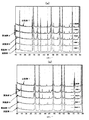
- the X-ray chart by the XRD analysis of the cerium-zirconium-based composite oxides of Examples 1 to 3 and Comparative Example 1 is shown, (a) is before the heat endurance test (before heat treatment at 1000 ° C. for 3 hours), (b) is It is an X-ray chart after a heat endurance test (after heat processing for 3 hours at 1000 ° C).
- the X-ray chart by XRD analysis of the cerium-zirconium-based composite oxides of Examples 8 to 11 and Comparative Example 1 is shown, (a) is before the heat durability test (before heat treatment at 1000 ° C. for 3 hours), (b) is It is an X-ray chart after a heat endurance test (after heat processing for 3 hours at 1000 ° C).
- 3 is a graph showing the results of measuring oxygen adsorption rates at 600 ° C. and 750 ° C. before and after the heat durability test (heat treatment at 1000 ° C. or 1100 ° C. for 3 hours) of Examples 1 to 3 and Comparative Example 1; is there.
- FIG. 6 is a graph showing measurement results of oxygen adsorption rates at 450 ° C., 600 ° C. and 750 ° C. before and after the heat durability test (heat treatment at 1000 ° C. for 3 hours) of Examples 8 to 11 and Comparative Example 1; is there.
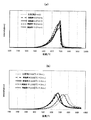
- the temperature-reduction (Temperature Programming Reduction) profiles of the cerium-zirconium-based composite oxides of Examples 1 to 3 and Comparative Example 1 are shown, (a) before the heat durability test (before heat treatment at 1000 ° C. for 3 hours), (B) is a profile after the heat endurance test (after heat treatment at 1000 ° C. for 3 hours).
- the temperature-reduction (Temperature Programming Reduction) profiles of the cerium-zirconium-based composite oxides of Examples 8 to 11 and Comparative Example 1 are shown, (a) before the heat durability test (before heat treatment at 1000 ° C. for 3 hours), (B) is a profile after the heat endurance test (after heat treatment at 1000 ° C. for 3 hours). It is a schematic explanatory drawing which shows an example of the melting apparatus (arc type electric furnace) used in manufacturing the cerium-zirconium based complex oxide of the present invention.
- cerium-zirconium-based composite oxide The cerium-zirconium-based composite oxide includes cerium, zirconium, and a third element other than these.
- the third element is either (a) a transition metal element or (b) at least one element selected from a rare earth element and an alkaline earth metal element.
- the cerium-zirconium composite oxide when heat-treated at a temperature range of 1000 ° C. to 1100 ° C. for 3 hours, it has the following features (1) to (3).
- the crystal structure includes a pyrochlore phase
- the value of ⁇ I111 / (I111 + I222) ⁇ ⁇ 100 is 1 or more, where the peak intensity value of (111) plane measured by X-ray diffraction method is I111, the peak intensity value of (222) plane is I222 , (3)
- the oxygen storage / release capacity at 600 ° C. is 0.05 mmol / g or more, and the oxygen storage / release capacity at 750 ° C. is 0.3 mmol / g or more.
- the cerium-zirconium composite oxide constituted as described above has excellent OSC, high catalytic activity, and high heat resistance.
- cerium-zirconium composite oxide is abbreviated as “composite oxide”.
- the oxygen storage / release capacity (Oxygen Storage Capacity) is hereinafter abbreviated as “OSC”.
- composite oxide when the third element is (a) a transition metal element is referred to as “composite oxide of the first embodiment”, and the third element is derived from (b) a rare earth element and an alkaline earth metal element.
- a complex oxide in the case of at least one element selected is referred to as “a complex oxide of the second embodiment”. Note that the simple expression “composite oxide” refers to one or both of the “composite oxide of the first embodiment” and the “composite oxide of the second embodiment”.
- the composite oxide according to the first embodiment is a compound containing at least cerium (Ce), zirconium (Zr), and (a) transition metal elements excluding Ce and Zr as essential elements, and a plurality of kinds of oxidations. It is a compound formed as a complex of products.
- the transition metal element is not particularly limited, and examples thereof include vanadium, chromium, manganese, iron, cobalt, nickel, copper, and zinc.
- the transition metal element contained in the composite oxide of the first embodiment may be one type or two or more types.
- the transition metal element is preferably at least one selected from the group consisting of iron, manganese, cobalt, nickel and copper.
- the composite oxide exhibits higher catalytic activity and heat resistance. Further increase.
- a particularly preferred transition metal element is iron.
- the content ratio of the transition metal element contained in the composite oxide of the first embodiment is not particularly limited, but can be, for example, 0.01 to 10 mol% in terms of oxide. In this case, there is less possibility that the OSC becomes small and the catalytic activity is lowered, and problems such as a decrease in the dispersibility of the transition metal element during the production of the composite oxide of the first embodiment are less likely to occur. Therefore, when the content ratio of the transition metal element contained in the composite oxide of the first embodiment is in the above range, the OSC of the composite oxide is improved to show high catalytic activity, and the heat resistance can be further increased. .
- the content ratio of the transition metal element contained in the composite oxide of the first embodiment is preferably 0.05 to 5 mol%, more preferably 0.1 to 1 mol%.
- the composite oxide of the second embodiment includes at least one element selected from at least cerium (Ce), zirconium (Zr), and (b) rare earth elements and alkaline earth metal elements excluding cerium.
- Ce cerium
- Zr zirconium
- b rare earth elements and alkaline earth metal elements excluding cerium.
- At least one element selected from rare earth elements other than cerium and alkaline earth metal elements may be abbreviated as “element (b)”.
- the rare earth element examples include, but are not limited to, scandium, yttrium, lanthanum, praseodymium, neodymium, promethium, samarium, europium, gadolinium, terbium, dysprosium, holmium, erbium, thulium, ytterbium, and lutetium.
- the rare earth element contained in the composite oxide of the second embodiment may be one type or two or more types.
- the rare earth element is preferably at least one selected from the group consisting of lanthanum, neodymium, praseodymium and yttria. In this case, the composite oxide exhibits higher catalytic activity and further increases heat resistance.
- Particularly preferred rare earth elements are lanthanum and yttria.
- the alkaline earth metal element is not particularly limited, and examples thereof include strontium, calcium, and magnesium. Among these, the alkaline earth metal element is preferably at least one of calcium and magnesium. In this case, the composite oxide of the second embodiment exhibits higher catalytic activity and further increases heat resistance. .
- the content ratio of the element (b) contained in the composite oxide of the second embodiment is not particularly limited, but can be, for example, 0.01 to 30 mol% in terms of oxide. In this case, there is less possibility that the OSC becomes small and the catalytic activity decreases, and problems such as difficulty in obtaining the desired fired product during the production of the composite oxide of the second embodiment are less likely to occur. Therefore, when the content ratio of the third element contained in the composite oxide of the second embodiment is in the above range, the OSC of the composite oxide is improved to exhibit high catalytic activity, and the heat resistance is further increased. obtain.
- the content ratio of the third element contained in the composite oxide of the second embodiment is preferably 0.01 to 20 mol%, more preferably 0.01 to 10 mol%, and still more preferably 0.1 to 1 mol%. It is.
- cerium and zirconium contained in the composite oxides of the first embodiment and the second embodiment are not limited.
- the molar ratio standard (CeO 2 : ZrO 2 ) in terms of oxide of cerium and zirconium is in the above range, the composite oxide has a superior OSC and exhibits high catalytic activity, and heat resistance is also improved.
- the OSC As long as the OSC, catalytic activity, and heat resistance of the composite oxide are not inhibited, elements other than cerium, zirconium, and the third element may be included in the composite oxide. Note that the complex oxide inevitably contains impurities such as hafnium oxide.
- the crystal structure of the composite oxide of the first embodiment and the second embodiment is configured to have a pyrochlore phase type ordered arrangement phase. Therefore, the composite oxide has high heat resistance, and has a higher level of OSC even after being exposed to high temperatures.
- the composite oxide may contain a crystal phase other than the pyrochlore phase type as long as OSC, catalytic activity, and heat resistance are not inhibited.
- the peak intensity value of the (111) plane measured by the X-ray diffraction method is I111
- the peak intensity value of the (222) plane is I222.
- Expression ⁇ I111 / (I111 + I222) ⁇ ⁇ 100 is 1 or more.
- the above (111) plane and (222) plane are mirror index representations.
- the Miller index display is an index for describing the crystal plane and direction in the crystal lattice.
- the crystal structure of the composite oxide includes a pyrochlore phase, and the composite oxide is heated at a high temperature, for example, after heat treatment at a temperature range of 1000 ° C. to 1100 ° C. for 3 hours. Also, the OSC is not easily lowered, and the composite oxide has high heat resistance. If the T value is 0, a pyrochlore phase cannot be included in the crystal structure of the composite oxide. A particularly preferable T value is 2 or more. In this case, OSC is more excellent and heat resistance is further improved.
- the change in the crystal structure of the composite oxide before and after the heat treatment can be determined by an X-ray diffraction method (XRD) using an X-ray diffraction apparatus.
- XRD X-ray diffraction method
- the crystal structure of the composite oxide includes a pyrochlore phase. Can do.
- the analysis of the specific crystal structure from the X-ray chart obtained by XRD will be described in detail in the examples described later.
- the specific surface area of the composite oxide of the first embodiment and the second embodiment is not limited, but is about 0.1 to 50 m 2 / g. In general, it is considered that the OSC increases in proportion to the specific surface area of the composite oxide. However, the specific surface area of the composite oxide is much smaller than that of the conventional cerium-zirconium composite oxide. Nevertheless, the composite oxides of the first embodiment and the second embodiment both have excellent OSC. This is because the composite oxide contains cerium and zirconia and a third element, and the third element is dissolved in the composite oxide, so that the pyrochlore phase is stably present in the crystal structure. It is thought that it is because.
- the pyrochlore phase is stable in the crystal structure, it is considered that OSC is hardly lowered even at high temperature heat treatment, and as a result, heat resistance is considered to be improved.
- all of the third element may be dissolved in the composite oxide, or only a part thereof may be dissolved.
- the composite oxide of the first embodiment may have an OSC at 600 ° C. of 0.3 mmol / g or more and an OSC at 750 ° C. of 0.4 mmol / g or more.
- the composite oxide of the first embodiment has an oxygen absorption / release start temperature before heat treatment of 700 ° C. or lower, and the oxygen absorption / release start temperature after heat treatment at 1000 ° C. to 1100 ° C. for 3 hours. It is 400 degrees C or less. Since the oxygen storage / release start temperature of the composite oxide before the heat treatment is 700 ° C. or lower, the function of oxygen storage / release functions even in a low temperature range.
- the oxygen absorption / release start temperature is 400 ° C. or lower, which is higher than before the heat endurance test. Further, the oxygen absorption / release function can be performed at a lower temperature.
- the composite oxide of the first embodiment is heat-treated at 1000 ° C. to 1100 ° C. for 3 hours, the OSC can be 0.3 mmol / g or more at 600 ° C. and 0.4 mmol / g or more at 750 ° C. . Therefore, it can be said that the composite oxide of the first embodiment is a material that can maintain a high OSC even after the heat durability test.
- the OSC at 450 ° C. can be 0.01 mmol / g or more
- the OSC at 600 ° C. can be 0.05 mmol / g or more
- the OSC at 750 ° C. can be 0.3 mmol / g or more.
- the oxygen absorption / release start temperature before heat treatment is 600 ° C. or less
- after heat treatment at 1000 ° C. to 1100 ° C. for 3 hours, the oxygen absorption / release start temperature is low. It is 500 degrees C or less.
- the oxygen absorption / release start temperature of the composite oxide before the heat treatment is 600 ° C.
- the function of oxygen absorption / release functions even in a low temperature range.
- the oxygen absorption / release start temperature becomes 500 ° C. or less
- the oxygen absorbing / releasing function can be performed at a lower temperature than before the heat durability test.
- the composite oxide of the second embodiment is heat-treated at 1000 ° C. to 1100 ° C. for 3 hours, the OSC at 450 ° C. can be 0.01 mmol / g or more. Therefore, it can be said that the composite oxide of the second embodiment is a material that can maintain a high OSC even after the heat durability test.
- the composite oxides of both the first embodiment and the second embodiment are excellent in OSC even though they contain no noble metal element because the pyrochlore phase is stably present. As a result, it shows high catalytic activity.
- the composite oxide is a material that can be applied to various catalysts such as an exhaust gas purification catalyst, and can be suitably used as an OSC agent for constructing a high-performance purification system.
- the OSC of the cerium-zirconium-based composite oxide can be measured as follows.
- the oxygen release start temperature and the release amount can be obtained by a temperature programmed reduction method using hydrogen called H 2 -TPR (Temperature Programmed Reduction).
- H 2 -TPR Temperatur Programmed Reduction
- a commercially available measuring device BEL JAPAN INC., “MULTITASK TPR”
- the oxygen absorption amount can be obtained by using the O 2 pulse method.
- measurement can be performed through the following steps (a) to (g) in order.
- A) The composite oxide is pulverized into a powder form, and 0.2 g is weighed.
- B) The weighed powder is set in a flow reactor, and the atmosphere is heated to 600 ° C. in a He stream, and then held for 1 hour.
- C) The temperature of the composite oxide is adjusted to a predetermined temperature.
- D) A certain amount of oxygen is introduced into the atmosphere.
- E The amount of unadsorbed oxygen is confirmed by a thermal conductivity detector (TCD).
- TCD thermal conductivity detector
- the composite oxide can be manufactured by a manufacturing process including the following steps 1 to 5 of (1) to (5).
- the starting material is heated at an electric energy of 600 to 800 kWh / kg in terms of electric power consumption, and then heated at an electric energy of 800 to 1000 kWh / kg in terms of electric power intensity, so that the temperature is higher than the melting point.
- Step 3 Heating to obtain a melt 2
- Step 3 of gradually cooling the melt to form an ingot
- Step 4 of pulverizing the ingot to obtain powder
- Step 5 of heating the powder in an atmosphere of 700 to 1100 ° C.
- Step 1 is a step of preparing a starting material including a cerium material, a zirconium material, and a third element material other than cerium and zirconium.
- the third element material is at least one element material selected from (a) a transition metal element material, or (b) a rare earth element material and an alkaline earth metal element material.
- the composite oxide of the first embodiment can be manufactured.
- the composite oxide of the second embodiment can be produced.
- the cerium raw material used in step 1 is a material for introducing cerium element into the composite oxide. Although it does not specifically limit as such a cerium raw material, It is preferable that it is a cerium oxide. This cerium oxide can be synthesized from various raw materials such as nitrate, carbonate, sulfate, acetate, chloride and bromide.
- the cerium raw material may be a composite oxide of cerium and an element containing at least one of zirconium and a transition metal element.
- the cerium raw material may contain compounds such as cerium or zirconium nitrate, carbonate, sulfate, chloride or bromide.
- the zirconium raw material used in step 1 is a material for introducing zirconium element into the composite oxide.
- the zirconium raw material is not particularly limited, and for example, various zirconium-based materials such as baderite, desiliconized zirconia, and zirconium oxide, and other zirconium materials including zirconium oxide can be used.
- Zirconium oxide can be synthesized from various raw materials such as nitrate, carbonate, sulfate, acetate, chloride, bromide.
- the zirconium raw material may be a complex oxide of zirconium and an element containing at least one of cerium and a transition metal element.
- the zirconium raw material may contain a compound such as cerium or zirconium nitrate, carbonate, sulfate, chloride or bromide.
- the third element raw material used in step 1 is a material for introducing the third element into the composite oxide.
- the transition metal element material is a material for introducing a transition metal element into the complex oxide
- the rare earth element material is a material for introducing a rare earth element into the complex oxide, alkaline earth.
- the elemental metal element raw material is a material for introducing an alkaline earth metal element into the composite oxide.
- the rare earth element raw material or the alkaline earth metal element may be collectively referred to as “element raw material (b)”.
- the transition metal element raw material is not particularly limited, and examples thereof include at least one transition metal composed of a group of vanadium, chromium, manganese, iron, cobalt, nickel, copper, and zinc.
- a compound such as an oxide containing at least one element of these transition metals may be used as the transition metal element raw material.
- the transition metal element material is preferably at least one selected from the group consisting of iron, manganese, cobalt, nickel and copper, or an oxide containing at least one of these elements.
- the transition metal element raw material is a compound containing an iron element, it is preferably iron oxide.
- This iron oxide can be synthesized from various raw materials such as nitrate, carbonate, sulfate, acetate, chloride and bromide.
- the transition metal element raw material may be a composite oxide of a transition metal element and an element containing at least one of cerium and zirconium.
- Rare earth elements are not particularly limited. For example, scandium, yttrium, lanthanum, praseodymium, neodymium, promethium, samarium, europium, gadolinium, terbium, dysprosium, holmium, erbium, thulium, ytterbium, lutetium
- the material include at least one material made of a group.
- the rare earth element raw material may be a compound such as an oxide containing at least one element selected from the materials listed above.
- a more preferable rare earth element raw material is at least one material selected from the group of lanthanum, neodymium, praseodymium, and yttria, or an oxide containing at least one of these elements. In this case, the obtained composite oxide exhibits higher catalytic activity and further increases heat resistance.
- a particularly preferable rare earth element raw material is at least one selected from the group consisting of lanthanum, yttrium, lanthanum oxide, and yttria.
- Lanthanum oxide can be synthesized from various raw materials such as nitrates, carbonates, sulfates, acetates, chlorides and bromides.
- Yttrium oxide can also be synthesized from various raw materials such as nitrates, carbonates, sulfates, acetates, chlorides and bromides.
- the alkaline earth metal element raw material is not particularly limited, and examples thereof include strontium, calcium, and magnesium.
- the alkaline earth metal element raw material may be a compound such as an oxide containing at least one element of the materials listed above. More preferable alkaline earth metal element materials include at least one material selected from the group of strontium, calcium and magnesium, or at least one oxide selected from the group of strontium oxide, calcium oxide and magnesium oxide. is there. In this case, the obtained composite oxide exhibits higher catalytic activity and further increases heat resistance.
- Calcium oxide and magnesium oxide can be synthesized from various raw materials such as nitrate, carbonate, sulfate, acetate, chloride and bromide.
- the rare earth element raw material may be a complex oxide of a rare earth element, an element containing at least one of cerium and zirconium, and an alkaline earth metal element.
- the alkaline earth metal element raw material may be a complex oxide of an alkaline earth metal element, an element containing at least one of cerium and zirconium, and a rare earth element.
- the purity of the cerium raw material, the zirconium raw material, and the third element raw material is not particularly limited, but is preferably 99.9% or more in terms of increasing the purity of the target product.
- Each of the cerium raw material, the zirconium raw material, and the third element raw material may contain other substances as long as the properties of the composite oxide are not impaired. Examples of other substances include cerium or zirconium nitrate, carbonate, sulfate, chloride, bromide, and the like.
- the cerium raw material As a combination of the cerium raw material, the zirconium raw material, and the third element raw material, when the raw material is heated in the step subsequent to step 1, specifically, in step 3 to be described later, at least one of the above raw materials. Is preferably melted.
- the crystal structure of the generated composite oxide can easily form a pyrochlore phase, and the OSC of the obtained composite oxide can be further improved.
- the melting point of cerium oxide is known as 2200 ° C.
- the melting point of zirconium oxide is known as 2720 ° C.
- the melting point of the oxide is relatively high.
- cerium oxide and zirconium oxide are used as the cerium raw material and the zirconium raw material, respectively, the melting point is affected. In some cases, a molten state can be obtained even when heated at a low temperature.
- step 1 a predetermined amount of the above cerium raw material, zirconium raw material, and third element raw material is prepared, and these are mixed to obtain a starting raw material.
- the mixing method of each raw material is not particularly limited.
- the starting material thus obtained is, for example, a mixture of the above various oxides, or a composite oxide containing cerium, zirconium and a third element.
- Step 2 is a step of melting the starting material by applying a predetermined amount of heat to the starting material prepared in step 1 using a melting apparatus or the like.
- this step it is only necessary to melt at least one of various raw materials, that is, a cerium raw material, a zirconium raw material, and a third element raw material, but it is particularly preferable that all of these raw materials are melted.
- the crystal structure of the obtained composite oxide is stable, and it is possible to have a high OSC.
- the amount of heat should be given to the starting materials so that the temperature is equal to or higher than the highest melting point of the various starting materials contained in the starting materials.
- the method for melting the starting material is not particularly limited, and examples thereof include an arc method, a high-frequency thermal plasma method, and the like. Among them, it is preferable to adopt a general electromelting method, that is, a melting method using an arc electric furnace.
- heat may be applied with electric power of 600 to 800 kWh / kg in terms of electric power consumption, and then heat may be applied with electric power of 800 to 1000 kWh / kg in terms of electric power consumption.
- the temperature of the starting material can be raised to a temperature exceeding the highest melting point among the melting points of various starting materials contained in the starting material, and a starting material melt can be obtained.
- the process 2 includes a two-step heating process.
- the starting material may be substantially melted by the first stage heating, and the starting material may be completely melted by the next second stage heating.
- the heating process is performed in two stages, it is difficult to form a crystal structure including a pyrochlore phase in the finally obtained composite oxide, and there is a possibility that an excellent OSC composite oxide cannot be obtained.
- the heating process is not made in two stages, it will be difficult to sufficiently melt the composite oxide, resulting in a non-uniform state as a whole. For this reason, the specific surface area of the obtained composite oxide varies, and sufficient catalytic activity cannot be obtained.
- the heating process is divided into two stages as described above, so that there is an advantage that damage to the device can be minimized and sufficient heating can be performed safely. More specifically, when a starting material containing cerium oxide is heated and melted, the following chemical reaction “CeO 2 ⁇ 1 / 2Ce 2 O 3 + 1 / 4O 2 ” occurs in the melting apparatus.
- a carbon layer C is generally provided on the bottom surface of the arc electric furnace A.
- the carbon layer C and the arc electric furnace A are provided.
- the electrode E is in contact.
- the position of the electrode E is adjusted so that the electrode E is gradually separated from the carbon layer C.
- oxygen generated by the chemical reaction of the cerium oxide reacts with the carbon layer C to generate carbon dioxide.
- the carbon layer C is eroded.
- the carbon layer C is eroded in this way, a hole is formed in the carbon layer C, which increases the risk that the melt may leak out, and also requires replacement of the carbon layer C. Become. Therefore, in the first stage, heating is performed gently so that the melt enters between the carbon layer C and the electrode E, then the position of the electrode E is adjusted, and the distance between the carbon layer C and the electrode E is sufficient. At the time of separation, the second stage heating is performed.
- the amount of power applied in the first heating step is preferably 625 to 775 kWh / kg, more preferably 650 to 750 kWh / kg in terms of power consumption. In the first heating step, it is preferable to apply power for 1 to 3 hours.
- the amount of electric power applied in the second heating step is 825 to 975 kWh / kg, more preferably 850 to 950 kWh / kg.
- a predetermined amount of coke or the like may be added as a conductive material in advance to promote initial energization of the starting material when performing the heating step.
- the amount of coke added and the like is changed as appropriate according to the mixing ratio of each raw material used in step 1.
- the atmosphere at the time of melting the starting material in step 2 is not particularly limited, and an inert gas atmosphere such as argon or helium can be adopted in addition to the air and nitrogen atmosphere.
- the pressure at the time of melting is not particularly limited, and any of atmospheric pressure, pressurization, and depressurization may be used, but it is usually performed under atmospheric pressure.
- Step 3 is a step of slowly cooling the melt obtained in step 2 to form an ingot.
- the method for forming the ingot is not particularly limited.
- a method of attaching the carbon lid to the electric furnace and gradually cooling the furnace over 20 to 60 hours can be mentioned.
- the slow cooling time is preferably 30 to 50 hours, more preferably 35 to 45 hours, and further preferably 35 to 40 hours.
- the melt may be allowed to cool in the atmosphere so that the temperature of the melt is 100 ° C. or less, preferably 50 ° C. or less. If there is a possibility that the temperature of the melt will drop sharply and the slow cooling time will be shorter than 20-60 hours, the temperature of the melt may be reduced rapidly by heating the melt appropriately during the slow cooling process. You can avoid it.
- the elements contained in the raw material are likely to be in solid solution with each other.
- the finally obtained composite oxide easily forms a crystal structure having a stable pyrochlore phase even in a high temperature region.
- Step 4 is a step in which the ingot obtained in step 3 is pulverized into powder.
- the method of pulverizing the ingot is not particularly limited, but examples thereof include a method of pulverizing with a pulverizer such as a jaw crusher or a roll crusher, and pulverization may be performed using a plurality of pulverizers in combination.
- the ingot in consideration of the handleability of the powder in the subsequent process, the ingot may be pulverized so that the average particle diameter of the pulverized powder is 3 mm or less, preferably 1 mm or less.
- classification may be performed. For example, a powder having a desired average particle diameter can be collected using a sieve or the like.
- Step 5 is a step of heating the powder obtained in step 4 in an atmosphere of 700 to 1100 ° C.
- the powder may be heated in an atmosphere of 700 to 1100 ° C. using an electric furnace or the like.
- the heating temperature is preferably 700 ° C. to 1000 ° C., more preferably 600 ° C. to 900 ° C. In any case, distortion in the suboxide and crystals is easily removed.
- the heating time is not particularly limited, and can be, for example, 1 to 5 hours, preferably 2 to 3 hours.
- the heating may be performed in the air or in an oxygen atmosphere.
- a solid or powdery complex oxide is obtained as a product.
- This product may be further finely pulverized by a pulverizer such as a planetary mill, a ball mill, or a jet mill, and may be appropriately performed according to the intended use of the composite oxide.
- the product may be processed with the above pulverizer for about 5 to 30 minutes.
- the average particle size of the composite oxide can be, for example, 0.3 to 2.0 ⁇ m, and preferably 0.5 to 1.5 ⁇ m.
- the average particle size of the composite oxide can be measured with a laser diffraction scattering apparatus.
- the cerium-zirconium-based composite oxide can be manufactured by a simple method through the manufacturing process including the steps 1 to 5 of the composite oxide. And according to said manufacturing method, the composite oxide finally manufactured is obtained as a solid solution by heating until a starting raw material will be in a molten state.
- the steps 1 to 5 are included as essential steps, but other steps may be included as necessary.
- the composite oxide obtained by the above production method has a close intermetallic distance in the crystal structure and a high solid solubility, so that the pyrochlore phase exists stably. Therefore, the composite oxide obtained by the above production method tends to improve the OSC and easily exhibits high catalytic activity. In addition, since the pyrochlore phase is stably present, even if the composite oxide is heat-treated at a high temperature (heat treatment at 1000 ° C. to 1100 ° C. for 3 hours), the oxygen absorption / release capability is excellent. Specifically, the composite oxide of the first embodiment manufactured using (a) a transition metal element raw material as the third element raw material has an oxygen absorption / release capacity at 600 ° C. of 0.3 mmol / g or more.
- the oxygen absorption / release capacity at 750 ° C. is 0.4 mmol / g or more, and excellent OSC is maintained.
- the OSC at 450 ° C. The OSC at 0.01 mmol / g or more, 600 ° C. is 0.05 mmol / g or more, and the OSC at 750 ° C. is 0.3 mmol / g or more, so that an excellent OSC is maintained.
- the composite oxide obtained by the above production method is a material that can be applied to various catalysts such as an exhaust gas purification catalyst, and is suitable as an OSC agent for constructing a high-performance purification system. Available.
- the materials obtained in the examples and comparative examples contain 1 to 2% by weight of hafnium oxide with respect to zirconium oxide as an inevitable impurity.
- Example 1 High-purity zirconium oxide (purity 99.9%, manufactured by Daiichi Rare Element Chemical Co., Ltd.) was prepared as a zirconium raw material, and high-purity cerium oxide (purity 99.9%, manufactured by Mitsuwa Chemicals) was prepared as a cerium raw material. Moreover, high purity iron oxide (purity 99.9%, manufactured by Wako Pure Chemical Industries) was prepared as a transition metal element raw material.
- the production was carried out using the above raw materials according to the procedure of the production process shown in FIG. First, 4.17 kg of the above high purity zirconium oxide, 5.82 kg of high purity cerium oxide, and 0.01 kg of high purity iron oxide were fractionated, and these raw materials were mixed to obtain a starting material (Step 1). ).
- Step 1). using an electric arc furnace, first, heating was performed for 2 hours at a power consumption of 650 kWh / kg in terms of power consumption, and then for 6 hours at a power consumption of 900 kWh / kg in terms of power consumption.
- melting was performed at 2200 ° C. or more (step 2). Through this process, all starting materials were melted. In this melting process, 500 g of coke was used to promote initial energization.
- step 3 After completion of the above melting, the electric furnace was covered with carbon and slowly cooled in the atmosphere for 24 hours to obtain an ingot (step 3).
- the ingot thus obtained was pulverized to 3 mm or less with a jaw crusher and a roll crusher, and then a powder of 1 mm or less was collected using a sieve (step 4).
- the powder obtained above was heat-treated in the atmosphere at 800 ° C. for 3 hours using an electric furnace, and it was generated by removing suboxide generated in the previous melting step or by supercooling. The distortion in the crystal was removed (step 5). Thereafter, the product obtained by the heat treatment was pulverized by a planetary mill for 10 minutes to obtain a powdered composite oxide.
- Example 2 Example 1 except that the amount of high-purity zirconium oxide used was changed to 4.15 kg, the amount of high-purity cerium oxide used was 5.80 kg, and the amount of high-purity iron oxide used was 0.05 kg in the preparation of the starting material.
- a composite oxide was prepared in the same manner as in Example 1.
- Example 3 Example 1 except that the amount of high-purity zirconium oxide used was changed to 4.06 kg, the amount of high-purity cerium oxide used was 5.67 kg, and the amount of high-purity iron oxide used was 0.27 kg.
- a composite oxide was prepared in the same manner as in Example 1.
- Example 4 In the preparation of the starting material, the amount of high-purity zirconium oxide used was changed to 4.17 kg, the amount of high-purity cerium oxide used was changed to 5.82 kg, and high-purity manganese oxide (Mitsuwa Chemical Co., Ltd.) was used instead of high-purity iron oxide. A composite oxide was produced in the same manner as in Example 1 except that the chemical was changed to 0.12 kg.
- Example 5 In the preparation of starting materials, the amount of high-purity zirconium oxide used was changed to 4.17 kg, the amount of high-purity cerium oxide used was changed to 5.82 kg, and high-purity nickel oxide (Mitsuwa Chemical Co., Ltd.) was used instead of high-purity iron oxide. A composite oxide was produced in the same manner as in Example 1 except that the chemical was changed to 0.10 kg.
- Example 6 In the preparation of the starting materials, the amount of high-purity zirconium oxide used was changed to 4.17 kg, the amount of high-purity cerium oxide used was changed to 5.82 kg, and high-purity copper oxide (Mitsuwa Chemical Co., Ltd.) was used instead of high-purity iron oxide. A composite oxide was produced in the same manner as in Example 1 except that the chemical was changed to 0.11 kg.
- Example 7 In the preparation of starting materials, the amount of high-purity zirconium oxide used was changed to 4.17 kg, the amount of high-purity cerium oxide used was changed to 5.82 kg, and high-purity cobalt oxide (Mitsuwa Chemical Co., Ltd.) was used instead of high-purity iron oxide. A composite oxide was produced in the same manner as in Example 1 except that the chemical was changed to 0.11 kg.
- Example 8 High-purity zirconium oxide (purity 99.9%, manufactured by Daiichi Rare Element Chemical Co., Ltd.) was prepared as a zirconium raw material, and high-purity cerium oxide (purity 99.9%, manufactured by Mitsuwa Chemicals) was prepared as a cerium raw material. Moreover, high purity lanthanum oxide (purity 99.9%, manufactured by Wako Pure Chemical Industries) was prepared as a rare earth element raw material.
- the production was performed using the above-mentioned raw materials according to the procedure of the production process shown in FIG. First, 3.94 kg of the above high purity zirconium oxide, 5.51 kg of high purity cerium oxide and 0.55 kg of high purity lanthanum oxide were fractionated, and these raw materials were mixed to obtain a starting material (Step 1). ).
- Step 1). using an electric arc furnace, first, heating was performed for 2 hours at a power consumption of 650 kWh / kg in terms of power consumption, and then for 6 hours at a power consumption of 900 kWh / kg in terms of power consumption.
- melting was performed at 2200 ° C. or more (step 2). Through this process, all starting materials were melted. In this melting process, 500 g of coke was used to promote initial energization.
- step 3 After completion of the above melting, the electric furnace was covered with carbon and slowly cooled in the atmosphere for 24 hours to obtain an ingot (step 3).
- the ingot thus obtained was pulverized to 3 mm or less with a jaw crusher and a roll crusher, and then a powder of 1 mm or less was collected using a sieve (step 4).
- the powder obtained above was heat-treated in the atmosphere at 800 ° C. for 3 hours using an electric furnace, and it was generated by removing suboxide generated in the previous melting step or by supercooling. The distortion in the crystal was removed (step 5). Thereafter, the product obtained by the heat treatment was pulverized by a planetary mill for 10 minutes to obtain a powdered composite oxide.
- Example 9 In the preparation of the starting material, the amount of high-purity zirconium oxide used was changed to 4.01 kg and the amount of high-purity cerium oxide used was changed to 5.60 kg. Further, instead of high-purity lanthanum oxide, high-purity yttrium oxide (purity 99. 99%, manufactured by Wako Pure Chemical Industries, Ltd.) A composite oxide was produced in the same manner as in Example 8 except that the amount was changed to 0.39 kg.
- Example 10 In the preparation of starting materials, the amount of high-purity zirconium oxide used was changed to 4.01 kg, the amount of high-purity cerium oxide used was changed to 5.60 kg, and high-grade alkaline earth metal element materials were used instead of high-purity lanthanum oxide.
- a composite oxide was produced in the same manner as in Example 8 except that the purity was changed to 0.14 kg of purity magnesium oxide (purity 99.9%, manufactured by Kamishima Chemical).
- Example 11 In the preparation of starting materials, the amount of high-purity zirconium oxide used was changed to 4.09 kg, the amount of high-purity cerium oxide used was changed to 5.71 kg, and carbon dioxide was used as an alkaline earth metal element raw material instead of high-purity lanthanum oxide.
- a composite oxide was produced in the same manner as in Example 8 except that calcium (purity 99%, manufactured by Kamijima Chemical Co., Ltd.) was changed to 0.36 kg.
- Example 12 except that the amount of high-purity zirconium oxide used was changed to 4.18 kg, the amount of high-purity cerium oxide used was 5.60 kg, and the amount of high-purity lanthanum oxide used was changed to 0.22 kg.
- a composite oxide was prepared in the same manner as in Example 1.
- Example 8 except that the amount of high-purity zirconium oxide used was changed to 4.19 kg, the amount of high-purity cerium oxide used was 5.26 kg, and the amount of high-purity lanthanum oxide used was changed to 0.55 kg.
- a composite oxide was prepared in the same manner as in Example 1.
- Example 14 Example 8 except that the amount of high-purity zirconium oxide used was changed to 4.20 kg, the amount of high-purity cerium oxide used was 4.69 kg, and the amount of high-purity lanthanum oxide used was changed to 1.11 kg in the preparation of starting materials.
- a composite oxide was prepared in the same manner as in Example 1.
- Example 15 Example 9 except that in the preparation of the starting material, the amount of high-purity zirconium oxide used was changed to 4.21 kg, the amount of high-purity cerium oxide used was changed to 5.64 kg, and the amount of high-purity yttrium oxide used was changed to 0.15 kg.
- a composite oxide was prepared in the same manner as in Example 1.
- Example 16 Example 9 except that the amount of high-purity zirconium oxide used was changed to 4.21 kg, the amount of high-purity cerium oxide used was 5.35 kg, and the amount of high-purity yttrium oxide used was 0.39 kg.
- a composite oxide was prepared in the same manner as in Example 1.
- Example 9 except that the amount of high-purity zirconium oxide used was changed to 4.35 kg, the amount of high-purity cerium oxide used was 4.86 kg, and the amount of high-purity yttrium oxide used was changed to 0.79 kg.
- a composite oxide was prepared in the same manner as in Example 1.
- Example 18 In the preparation of the starting material, the amount of high-purity zirconium oxide used was changed to 4.17 kg, the amount of high-purity cerium oxide used was changed to 5.59 kg, and high-purity neodymium oxide (purity 99.99. 9%, manufactured by Wako Pure Chemical Industries, Ltd.) A composite oxide was produced in the same manner as in Example 8, except that the weight was changed to 0.23 kg.
- Example 19 In the preparation of the starting material, the amount of high-purity zirconium oxide used was changed to 4.17 kg, the amount of high-purity cerium oxide used was changed to 5.60 kg, and high-purity praseodymium (purity 99.99. 9%, manufactured by Wako Pure Chemical Industries, Ltd.) A composite oxide was produced in the same manner as in Example 8 except that the weight was changed to 0.21 kg.
- the pulverized composite oxide obtained in each Example and Comparative Example was analyzed using a laser diffraction scattering apparatus (COULTER Co., LTD, “LS230”).
- the oxygen release start temperature and release amount are measured by a commercially available measurement device (BEL JAPAN INC., “MULTITASK T.P.”) using a temperature programmed reduction method using hydrogen called H 2 -TPR (Temperature Programmed Reduction). . R. ").
- the oxygen absorption amount was determined by using the O 2 pulse method. Specifically, the measurement was performed through the following steps (a) to (g) in order.
- the weighed powder was set in a flow reactor, and the atmosphere was heated to 450 ° C., 600 ° C. or 750 ° C.
- the above OSC measurement was performed on both the composite oxide before the heat endurance test (Fresh) and the composite oxide after the heat endurance test.
- the heat durability test 5 g of the composite oxide was heated in an atmosphere of 1000 ° C. for 3 hours (hereinafter referred to as “heat durability test 1”) and 5 g of the composite oxide in an atmosphere of 1100 ° C. for 3 hours.
- the heat treatment was performed under one of two conditions (hereinafter referred to as “heat durability test 2”).
- X-ray source CuK ⁇ Sampling interval: 0.02 degrees Scanning speed: 1.0 degrees / minute Divergence slit (DS): 1 degree Divergence length limit slit: 5 mm Scattering slit (SS): 1 degree Light receiving slit (RS): 0.3 mm Monochrome light receiving slit: 0.8mm Tube voltage: 50 kV Tube current: 300mA
- FIG. 3 shows, as an example, the results of XRD analysis before and after the heat durability test of a total of four types of composite oxides obtained in Examples 1 to 3 and Comparative Example 1.
- FIG. 4 shows Example 8 as an example.
- 11 shows the results of XRD analysis before and after the heat durability test of a total of five types of composite oxides obtained in ⁇ 11 and Comparative Example 1.
- FIGS. 3A and 4A are X-ray charts before the heat durability test
- FIGS. 3B and 4B are X-ray charts after the heat durability test 1.
- 600 ° C. OSC (1100 ° C. ⁇ 3 h) and 750 ° C. OSC (1100 ° C. ⁇ 3 h) indicate OSCs of the composite oxide after the heat durability test 2 at 600 ° C. and 750 ° C., respectively.
- 450 ° C. OSC (1000 ° C. ⁇ 3 h)” “600 ° C. OSC (1000 ° C. ⁇ 3 h)” and “750 ° C. OSC (1000 ° C. ⁇ 3 h)” are respectively complex oxides after the heat durability test.
- OSC at 450 ° C., 600 ° C. and 750 ° C. are shown.
- all of the composite oxides obtained in Examples 1 to 3 had a T value of 1 or more and a half width of 0.1 to 0.3 degrees. It was in the range. From these results, it can be seen that in the composite oxides obtained in Examples 1 to 3, the pyrochlore phase is confirmed even after the heat treatment at 1000 ° C. to 1100 ° C. for 3 hours.
- the presence of the pyrochlore phase was confirmed before and after the heat durability test for the composite oxides of Examples 4 to 7 from the result of the same XRD analysis.
- the cerium-zirconium-based composite oxides obtained in Examples 1 to 7 clearly have a crystal structure after the heat endurance test as compared with the conventional product not containing a transition metal element (Comparative Example 1). I can see that they are different.
- the cerium-zirconium-based composite oxides obtained in Examples 8 to 19 are clearly different in crystal structure after the heat endurance test compared to the conventional product (Comparative Example 1) that does not contain the element (b). I understand that.
- FIG. 5 shows OSCs at a predetermined temperature before and after the heat durability tests 1 and 2 in the composite oxides obtained in Examples 1 to 3 and Comparative Example 1.
- Table 1 shows OSCs of all Examples and Comparative Example 1.
- all of the composite oxides obtained in Examples 1 to 7 had an OSC at 600 ° C. of 0.3 mmol / g or more and an OSC at 750 ° C. after the heat durability test.
- the composite oxide of Comparative Example 1 had a value lower than the OSC of the composite oxide of the Example after the heat durability test. This is because the composite oxide of Comparative Example 1 does not form a pyrochlore phase after the heat durability test.
- FIG. 6 shows the composite oxides obtained in Examples 8 to 11 and Comparative Example 1 before the heat durability test (Fresh) and after the heat durability test (1000 ° C. ⁇ 3 hrs.) At a predetermined temperature (450 ° C., 600 And OSC at 750C).
- Table 2 shows OSCs of all Examples and Comparative Example 1.
- all of the composite oxides obtained in Examples 8 to 19 had an OSC at 450 ° C. of 0.01 mmol / g or more and an OSC at 600 ° C. after the heat durability test. Of 0.05 mmol / g or more and OSC at 750 ° C. of 0.3 mmol / g or more.
- the composite oxide of Comparative Example 1 had a value lower than the OSC of the composite oxide of the Example after the heat durability test. This is because the composite oxide of Comparative Example 1 does not form a pyrochlore phase after the heat durability test.
- FIG. 7 shows the profile of temperature reduction (temperature programming reduction) of the cerium-zirconium-based composite oxide, (a) before the heat endurance test, (b) after the heat endurance test 1 (1000 ° C. for 3 hours) It is a profile after heat treatment. Specifically, FIG. 7 shows the temperature rise reduction profiles of the composite oxides of Examples 1 to 3 and Comparative Example 1, and FIG. 8 shows the composite oxides of Examples 8 to 11 and Comparative Example 1.
- the composite oxides of Examples 1 to 3 and Examples 8 to 11 are comparative examples. It can be seen that the peak is shifted to a lower temperature side than the composite oxide No. 1. From this, it can be said that the composite oxides of Examples 1 to 3 and Examples 8 to 11 have a lower oxygen absorption / release start temperature than the composite oxide of Comparative Example 1 after the heat treatment. Further, from the results of FIGS. 7 and 8, in the composite oxides of Examples 1 to 3 and Examples 8 to 11, the oxygen absorption / release start temperature after the heat endurance test is further increased as compared with that before the heat endurance test. It can be seen that it is lower, and the function of oxygen absorption and release is demonstrated at lower temperatures.
- the composite oxides of the examples have excellent OSC despite containing no precious metal element, and the pyrochlore phase has a stable crystal structure even after heat treatment. Excellent OSC is maintained even when exposed to high temperatures. Therefore, it was shown that the composite oxide of the example is a catalyst material that can exhibit high catalytic activity and is excellent in heat resistance.
- the cerium-zirconium based composite oxide of the present invention is a material having excellent OSC, high catalytic activity, and excellent heat resistance. Therefore, the cerium-zirconium-based composite oxide of the present invention can be used as an exhaust gas purification catalyst used in automobiles and the like, and can be used as an OSC agent for various catalysts. Therefore, according to the composite oxide, it is possible to construct a purification system with excellent purification performance.
Landscapes
- Chemical & Material Sciences (AREA)
- Organic Chemistry (AREA)
- Engineering & Computer Science (AREA)
- Materials Engineering (AREA)
- Chemical Kinetics & Catalysis (AREA)
- Inorganic Chemistry (AREA)
- Ceramic Engineering (AREA)
- Manufacturing & Machinery (AREA)
- Physics & Mathematics (AREA)
- Structural Engineering (AREA)
- Geology (AREA)
- General Life Sciences & Earth Sciences (AREA)
- Life Sciences & Earth Sciences (AREA)
- Composite Materials (AREA)
- Toxicology (AREA)
- Electromagnetism (AREA)
- Optics & Photonics (AREA)
- Plasma & Fusion (AREA)
- Health & Medical Sciences (AREA)
- Thermal Sciences (AREA)
- Catalysts (AREA)
- Inorganic Compounds Of Heavy Metals (AREA)
Abstract
優れたOSC及び高い触媒活性を有し,耐熱性にも優れるセリウム-ジルコニウム系複合酸化物及びその製造方法を提供する。該セリウム-ジルコニウム系複合酸化物は,セリウムと,ジルコニウムと,これら以外の第3の元素とを含む。第3の元素は(a)遷移金属元素,又は(b)希土類元素及びアルカリ土類金属元素から選ばれる少なくとも1種以上の元素,のいずれか一方である。1000℃~1100℃で3時間の熱処理後において,(1)結晶構造はパイロクロア相を含み,(2)X線回折法により測定したときの(111)面のピーク強度値をI111,(222)面のピーク強度値をI222として{I111/(I111+I222)}×100の値が1以上,(3)600℃での酸素吸放出能が0.05mmol/g以上,750℃での酸素吸放出能が0.3mmol/g以上である。
Description
本発明は,例えば排気ガス浄化触媒として用いることができるセリウム-ジルコニウム系複合酸化物及びその製造方法に関する。
自動車等の内燃機関やボイラー等の燃焼機関から排出される排気ガス中には,大気汚染等の原因となる炭化水素(HC),一酸化炭素(CO),窒素酸化物(NOx)といった有害物質が含まれている。これら有害物質を効率良く浄化させることは,環境汚染防止等の観点から重要な課題であり,上記三成分の有害物質を同時に浄化することが可能な排気ガス浄化技術の研究も盛んに行われている。例えば,有害物質を浄化する作用を有する触媒を内燃機関や燃焼機関に設け,この触媒機能によって,三成分の有害物質を同時に浄化させる技術が知られている。一般的にこのような触媒は,排気ガス用三元触媒と称されており,既に一部で実用化がされている。
近年,自動車用途における排気ガス用三元触媒では,有害物質(CO,HC,NOx)濃度が数ppmから数%の間で急激に変化したとしても高効率に浄化させることが望まれている。すなわち,有害ガス濃度の急激な変化に対して柔軟に対応できる排気ガス用三元触媒の要求が高まっている。また,上記のような触媒を用いた有害成分の浄化システムにおいては,酸素濃度を一定以上に保つことも望まれている。排気ガス中に存在する酸素は,CO,HCの酸化やNOxの還元反応を促進させる作用を有しているため,酸素濃度を一定に保つことで浄化システムの機能がさらに向上するからである。しかし,自動車の場合,道路の混み具合などによって走行状況が変化するのでエンジンの燃焼状態を一定に保つことは難しく,排気ガス中の酸素濃度も刻々と変化する。そして,仮に酸素濃度が低くなると,触媒による有害物質の浄化性能も低下するので,高い浄化システムを構築することが難しくなるという問題がある。このような観点から,最近では,酸素吸蔵放出能(Oxygen Storage Capacity:以下,OSCと略記する)を有する化合物をOSC剤として,排気ガスの浄化触媒に配合させる方法が採用されている。OSC剤は,排気ガス中の酸素濃度が低い場合には酸素を供給することができる性質を有しているので,浄化システムにおいて有害成分の浄化機能が低下するのを防止しやすくなる。
OSC剤としては,セリア粉末が知られている。セリア粉末は,比較的大きなOSCを有するため,排気ガスの浄化触媒用のOSC剤として用いることで,排気ガスの処理効率が増大することが明らかにされている。これまでにもセリア-ジルコニア系複合酸化物など,酸素の吸蔵容量や放出特性を向上させたセリア系粉末や,このセリア系粉末を助触媒とした排気ガス浄化触媒について種々の提案がされている。
例えば,特許文献1には,セリアとジルコニア及び鉄から選ばれる少なくとも一種の金属又は酸化物と,銀及びプラセオジムから選ばれる少なくとも一種の元素の金属又は酸化物を固溶してなる複合酸化物が開示されている。この複合酸化物は,白金などの貴金属を用いていないため,安価な触媒として提供される。しかし,特許文献1に開示の触媒は,触媒活性をもたせるために銀やプラセオジムといった高価な元素を使用するため,コストダウンが難しいという点で不利である。
また,特許文献2には,遷移金属酸化物からなる触媒粉末と酸素放出材料を包含する浄化触媒が開示されている。この浄化触媒は,遷移金属酸化物として鉄を,酸素放出材料としてセリウムを,無機酸化物としてジルコニウムを含んでおり,貴金属を必須成分として用いない場合であっても浄化作用を有している。しかしながら,当該浄化触媒であっても排ガスの浄化効率には限界がある。
さらに,特許文献3には,貴金属を含む粒子,鉄化合物を担持したセリア及びジルコニアを含む粒子を含有してなる排気浄化触媒が開示されている。この排気浄化触媒は,NOxの転化性能が高く,しかも,貴金属の使用量が従来よりも低減されている。しかし,貴金属の使用量を低減できるといっても,やはりロジウム等の貴金属元素を必要としなければならないため,コスト面では不利となる。
特許文献4には,CeO2と,ZrO2と,これらと反応しない金属酸化物との複合酸化物であって,Ce及びZrが規則配列したパイロクロア相をもつ複合酸化物に,貴金属を担持させた排ガス浄化用助触媒が開示されている。この複合酸化物では,前記金属酸化物がセリア-ジルコニア複合酸化物の間に介在することでこれが互いの障壁となり,これにより粒成長が抑制されて高い比表面積を有する。特に,この複合酸化物では,Ce及びZrが規則配列したパイロクロア相を有していることで,高いOSCが発現される。しかしながら,この複合酸化物においては,高温で加熱処理を行った後における触媒活性が低下しやすく,高温耐久性という観点で問題がある。
また,特許文献5には,無機構造担体に担持された第一の触媒と,これとは別の第2の触媒(セリウム-ジルコニウム系複合酸化物)とを含む排気ガス浄化触媒を備えた触媒系が開示されている。また,第2の触媒であるセリウム-ジルコニウム系複合酸化物は,当該複合酸化物の原料の混合物を,その融点以上の温度で加熱熔融及び冷却をすることでインゴットを得て,このインゴットを粉砕して製造できることが開示されている。このような複合酸化物を含む排気ガス浄化触媒を用いた触媒系では,NOxを特に効率的に浄化することができるものである。しかし,当該排気ガス浄化触媒であっても浄化効率には限度があり,さらなる改善の余地が残されている。
上記特許文献1乃至5に開示されているように,排気ガス浄化触媒用の複合酸化物は種々提案されているものの,その排ガスの浄化性能については依然として改善の余地が残されていた。また,複合酸化物中に貴金属が含まれるような場合は,製造コストが上昇するという問題もあった。さらに,上記特許文献に開示の複合酸化物では,高温に晒された場合にOSCの低下が生じるおそれもあり,耐熱性に課題を有しているものであった。
本発明は,上記点に鑑みてなされたものであり,長時間高温に晒されても結晶構造中にパイロクロア相が安定に存在し,その上,OSCが高く,排ガス浄化性能に優れるセリウム-ジルコニウム系複合酸化物及びこのセリウム-ジルコニウム系複合酸化物の製造方法を提供することを目的とする。
上記のように,従来,貴金属を低減した排気ガス浄化触媒用複合酸化物については開発が積極的に進められているのに対し,複合酸化物に貴金属を配合せず,かつ,貴金属以外の第3の元素を直接配合する検討についてはこれまで十分になされていない。そこで,本発明者らは上記の点に着目し,セリウム-ジルコニウム系複合酸化物に第3の元素を配合することや,複合酸化物を製造する際に特定の工程を経ること等により,複合酸化物の浄化性能をさらに向上させる検討を行った。このように本発明者らは鋭意研究を重ねた結果,長時間高温に晒されても特定の結晶構造が維持されるセリウム-ジルコニウム複合酸化物により,上記目的を達成できることを見出し,本発明を完成するに至った。
即ち,本発明は,下記のセリウム-ジルコニウム系複合酸化物及びその製造方法に関する。
1.セリウムと,ジルコニウムと,これら以外の第3の元素を含み,
前記第3の元素が
(a)遷移金属元素,又は
(b)希土類元素及びアルカリ土類金属元素から選ばれる少なくとも1種以上の元素,
のいずれか一方であり,
1000℃~1100℃で3時間の熱処理後において,
(1)結晶構造はパイロクロア相を含み,
(2)X線回折法により測定したときの(111)面のピーク強度値をI111,(222)面のピーク強度値をI222として{I111/(I111+I222)}×100の値が1以上であり,
(3)600℃での酸素吸放出能が0.05mmol/g以上,750℃での酸素吸放出能が0.3mmol/g以上,
であることを特徴とするセリウム-ジルコニウム系複合酸化物。
2.前記第3の元素が(a)遷移金属元素であり,
1000℃~1100℃で3時間の熱処理後において,600℃での酸素吸放出能が0.3mmol/g以上,750℃での酸素吸放出能が0.4mmol/g以上である,上記項1に記載のセリウム-ジルコニウム系複合酸化物。
3.前記(a)遷移金属元素が鉄,マンガン,コバルト,ニッケル及び銅の群から選ばれる少なくとも1種以上である,上記項2に記載のセリウム-ジルコニウム系複合酸化物。
4.前記遷移金属元素を,酸化物換算で0.01~10mol%の範囲で含有する,上記項2又は3に記載のセリウム-ジルコニウム系複合酸化物。
5.前記第3の元素が(b)希土類元素及びアルカリ土類金属元素から選ばれる少なくとも1種以上の元素であり,
1000℃~1100℃で3時間の熱処理後において,450℃での酸素吸放出能が0.01mmol/g以上である,上記項1に記載のセリウム-ジルコニウム系複合酸化物。
6.前記希土類元素がランタン,ネオジム,プラセオジム及びイットリウムの群から選ばれる少なくとも1種以上であり,
前記アルカリ土類金属元素がカルシウム及びマグネシウムの少なくとも一方である,上記項5に記載のセリウム-ジルコニウム系複合酸化物。
7.前記(b)希土類元素及びアルカリ土類金属元素から選ばれる少なくとも1種以上の元素を,酸化物換算で0.01~30mol%の範囲で含有する,上記項5又は6に記載のセリウム-ジルコニウム系複合酸化物。
8.前記セリウムと前記ジルコニウムが,酸化物換算のモル比基準でCeO2:ZrO2=1:9~9:1の割合で含まれる,上記項1~7のいずれか1項に記載のセリウム-ジルコニウム系複合酸化物。
9.上記項1~8のいずれか1項に記載のセリウム-ジルコニウム系複合酸化物の製造方法であって,
以下の(1)~(5)の工程:
(1)セリウム原料と,ジルコニウム原料と,これら以外の第3の元素原料とを含む出発原料を準備する工程であって,前記第3の元素原料として
(a)遷移金属元素原料,又は
(b)希土類元素原料及びアルカリ土類金属元素原料から選ばれる少なくとも一方,
を使用する工程1,
(2)前記出発原料を電力原単位換算で600~800kWh/kgの電力量で加熱をし,次いで,電力原単位換算で800~1000kWh/kgの電力量で加熱をすることにより融点以上の温度に加熱して熔融物を得る工程2,
(3)前記熔融物を徐冷却してインゴットを形成する工程3,
(4)前記インゴットを粉砕して粉体とする工程4,
(5)前記粉体を700~1100℃で加熱する工程5,
を含むことを特徴とするセリウム-ジルコニウム系複合酸化物の製造方法。
1.セリウムと,ジルコニウムと,これら以外の第3の元素を含み,
前記第3の元素が
(a)遷移金属元素,又は
(b)希土類元素及びアルカリ土類金属元素から選ばれる少なくとも1種以上の元素,
のいずれか一方であり,
1000℃~1100℃で3時間の熱処理後において,
(1)結晶構造はパイロクロア相を含み,
(2)X線回折法により測定したときの(111)面のピーク強度値をI111,(222)面のピーク強度値をI222として{I111/(I111+I222)}×100の値が1以上であり,
(3)600℃での酸素吸放出能が0.05mmol/g以上,750℃での酸素吸放出能が0.3mmol/g以上,
であることを特徴とするセリウム-ジルコニウム系複合酸化物。
2.前記第3の元素が(a)遷移金属元素であり,
1000℃~1100℃で3時間の熱処理後において,600℃での酸素吸放出能が0.3mmol/g以上,750℃での酸素吸放出能が0.4mmol/g以上である,上記項1に記載のセリウム-ジルコニウム系複合酸化物。
3.前記(a)遷移金属元素が鉄,マンガン,コバルト,ニッケル及び銅の群から選ばれる少なくとも1種以上である,上記項2に記載のセリウム-ジルコニウム系複合酸化物。
4.前記遷移金属元素を,酸化物換算で0.01~10mol%の範囲で含有する,上記項2又は3に記載のセリウム-ジルコニウム系複合酸化物。
5.前記第3の元素が(b)希土類元素及びアルカリ土類金属元素から選ばれる少なくとも1種以上の元素であり,
1000℃~1100℃で3時間の熱処理後において,450℃での酸素吸放出能が0.01mmol/g以上である,上記項1に記載のセリウム-ジルコニウム系複合酸化物。
6.前記希土類元素がランタン,ネオジム,プラセオジム及びイットリウムの群から選ばれる少なくとも1種以上であり,
前記アルカリ土類金属元素がカルシウム及びマグネシウムの少なくとも一方である,上記項5に記載のセリウム-ジルコニウム系複合酸化物。
7.前記(b)希土類元素及びアルカリ土類金属元素から選ばれる少なくとも1種以上の元素を,酸化物換算で0.01~30mol%の範囲で含有する,上記項5又は6に記載のセリウム-ジルコニウム系複合酸化物。
8.前記セリウムと前記ジルコニウムが,酸化物換算のモル比基準でCeO2:ZrO2=1:9~9:1の割合で含まれる,上記項1~7のいずれか1項に記載のセリウム-ジルコニウム系複合酸化物。
9.上記項1~8のいずれか1項に記載のセリウム-ジルコニウム系複合酸化物の製造方法であって,
以下の(1)~(5)の工程:
(1)セリウム原料と,ジルコニウム原料と,これら以外の第3の元素原料とを含む出発原料を準備する工程であって,前記第3の元素原料として
(a)遷移金属元素原料,又は
(b)希土類元素原料及びアルカリ土類金属元素原料から選ばれる少なくとも一方,
を使用する工程1,
(2)前記出発原料を電力原単位換算で600~800kWh/kgの電力量で加熱をし,次いで,電力原単位換算で800~1000kWh/kgの電力量で加熱をすることにより融点以上の温度に加熱して熔融物を得る工程2,
(3)前記熔融物を徐冷却してインゴットを形成する工程3,
(4)前記インゴットを粉砕して粉体とする工程4,
(5)前記粉体を700~1100℃で加熱する工程5,
を含むことを特徴とするセリウム-ジルコニウム系複合酸化物の製造方法。
本発明のセリウム-ジルコニウム系複合酸化物は,1000℃~1100℃で3時間の熱処理後においても特定の結晶構造を有している。そのため,上記複合酸化物は,耐熱性が高い材料であり,熱処理の前後において優れたOSC及び高い触媒活性を有する。
また,本発明に係る製造方法によれば,得られる複合酸化物の金属間距離が近接しており,固溶度が高いため,パイロクロア相が安定して存在するセリウム-ジルコニウム系複合酸化物を容易に得ることができる。また,上記製造方法で得られる複合酸化物は,優れたOSC及び高い触媒活性を有する。
以下,本発明の実施形態について詳細に説明する。尚,本明細書において,「%」とは,特に断りがない場合,「重量%=質量%」を示す。
1.セリウム-ジルコニウム系複合酸化物
セリウム-ジルコニウム系複合酸化物は,セリウムと,ジルコニウムと,これら以外の第3の元素を含んで構成される。ここで,第3の元素は,(a)遷移金属元素,又は,(b)希土類元素及びアルカリ土類金属元素から選ばれる少なくとも1種以上の元素,のいずれか一方である。また,セリウム-ジルコニウム系複合酸化物を1000℃~1100℃の温度範囲で3時間熱処理した場合において,次の(1)~(3)の構成を具備することに特徴を有する。
(1)結晶構造はパイロクロア相を含み,
(2)X線回折法により測定したときの(111)面のピーク強度値をI111,(222)面のピーク強度値をI222として{I111/(I111+I222)}×100の値が1以上であり,
(3)600℃での酸素吸放出能が0.05mmol/g以上,750℃での酸素吸放出能が0.3mmol/g以上。
セリウム-ジルコニウム系複合酸化物は,セリウムと,ジルコニウムと,これら以外の第3の元素を含んで構成される。ここで,第3の元素は,(a)遷移金属元素,又は,(b)希土類元素及びアルカリ土類金属元素から選ばれる少なくとも1種以上の元素,のいずれか一方である。また,セリウム-ジルコニウム系複合酸化物を1000℃~1100℃の温度範囲で3時間熱処理した場合において,次の(1)~(3)の構成を具備することに特徴を有する。
(1)結晶構造はパイロクロア相を含み,
(2)X線回折法により測定したときの(111)面のピーク強度値をI111,(222)面のピーク強度値をI222として{I111/(I111+I222)}×100の値が1以上であり,
(3)600℃での酸素吸放出能が0.05mmol/g以上,750℃での酸素吸放出能が0.3mmol/g以上。
上記のように構成されるセリウム-ジルコニウム系複合酸化物は,優れたOSC及び高い触媒活性を有し,しかも,耐熱性が高いという特徴を有する。
尚,以下ではセリウム-ジルコニウム系複合酸化物を「複合酸化物」と略記する。また,上記酸素吸放出能(Oxygen Storage Capacity)は,以下,「OSC」と略記する。
また,第3の元素が(a)遷移金属元素である場合の複合酸化物を「第1の実施形態の複合酸化物」,第3の元素が(b)希土類元素及びアルカリ土類金属元素から選ばれる少なくとも1種以上の元素である場合の複合酸化物を「第2の実施形態の複合酸化物」と表記する。尚,単に「複合酸化物」と表記した場合は,「第1の実施形態の複合酸化物」及び「第2の実施形態の複合酸化物」の一方又は両方の複合酸化物のことを指す。
第1の実施形態の複合酸化物は,少なくともセリウム(Ce)と,ジルコニウム(Zr)と,Ce及びZrを除く(a)遷移金属元素を必須の元素として含む化合物であって,複数種の酸化物の複合体として形成された化合物である。
上記遷移金属元素としては,特に限定されないが,バナジウム,クロム,マンガン,鉄,コバルト,ニッケル,銅及び亜鉛等が例示される。第1の実施形態の複合酸化物に含まれる遷移金属元素は,1種であってもよいし,2種以上であってもよい。特に,遷移金属元素としては,鉄,マンガン,コバルト,ニッケル及び銅の群から選ばれる少なくとも1種以上であることが好ましく,この場合,複合酸化物は,より高い触媒活性を示し,耐熱性もさらに高まる。特に好ましい遷移金属元素は,鉄である。
第1の実施形態の複合酸化物に含まれる遷移金属元素の含有割合は特に制限されないが,酸化物換算で,例えば0.01~10mol%とすることができる。この場合,OSCが小さくなって触媒活性が低下するおそれが小さくなり,また,第1の実施形態の複合酸化物の製造時において遷移金属元素の分散性が低下する等の不具合が生じにくくなる。よって,第1の実施形態の複合酸化物に含まれる遷移金属元素の含有割合が上記範囲であることで,複合酸化物のOSCが向上して高い触媒活性を示し,耐熱性もさらに高くなり得る。第1の実施形態の複合酸化物に含まれる遷移金属元素の含有割合は,好ましくは0.05~5mol%,さらに好ましくは0.1~1mol%である。
一方,第2の実施形態の複合酸化物は,少なくともセリウム(Ce)と,ジルコニウム(Zr)と,セリウムを除く(b)希土類元素及びアルカリ土類金属元素から選ばれる少なくとも1種以上の元素として含む化合物であって,複数種の酸化物の複合体として形成された化合物である。
尚,以下では,セリウムを除く希土類元素及びアルカリ土類金属元素から選ばれる少なくとも1種以上の元素を「(b)の元素」と略記することがある。
上記希土類元素としては,特に限定されないが,スカンジウム,イットリウム,ランタン,プラセオジム,ネオジム,プロメチウム,サマリウム,ユウロピウム,ガドリニウム,テルビウム,ジスプロシウム,ホルミウム,エルビウム,ツリウム,イッテルビウム,ルテチウム等が例示される。第2の実施形態の複合酸化物に含まれる希土類元素は,1種であってもよいし,2種以上であってもよい。希土類元素としては,ランタン,ネオジム,プラセオジム及びイットリアの群から選ばれる少なくとも1種以上であることが好ましく,この場合,複合酸化物は,より高い触媒活性を示し,耐熱性もさらに高まる。特に好ましい希土類元素としては,ランタン又はイットリアである。
また,上記アルカリ土類金属元素としては,特に限定されないが,ストロンチウム,カルシウム,マグネシウム等が例示される。これらの中でも,アルカリ土類金属元素としては,カルシウム及びマグネシウムの少なくとも一方であることが好ましく,この場合,第2の実施形態の複合酸化物は,より高い触媒活性を示し,耐熱性もさらに高まる。
第2の実施形態の複合酸化物に含まれる(b)の元素の含有割合は特に制限されないが,酸化物換算で,例えば0.01~30mol%とすることができる。この場合,OSCが小さくなって触媒活性が低下するおそれが小さくなり,また,第2の実施形態の複合酸化物の製造時において目的とする焼成物が得られにくい等の不具合が生じにくくなる。よって,第2の実施形態の複合酸化物に含まれる第3の元素の含有割合が上記範囲であることで,複合酸化物のOSCが向上して高い触媒活性を示し,耐熱性もさらに高くなり得る。第2の実施形態の複合酸化物に含まれる第3の元素の含有割合は,好ましくは0.01~20mol%,さらに好ましくは0.01~10mol%,より一層好ましくは0.1~1mol%である。
第1の実施形態及び第2の実施形態の複合酸化物に含まれるセリウム及びジルコニウムの含有量はいずれも限定されないが,例えば,セリウムとジルコニウムのモル比が酸化物換算で1:9~9:1(すなわち,CeO2:ZrO2=1:9~9:1)の範囲となるようにすることができる。セリウムとジルコニウムの酸化物換算のモル比基準(CeO2:ZrO2)が上記範囲であることで,複合酸化物はより優れたOSCを有して高い触媒活性を示し,耐熱性も向上する。セリウムとジルコニウムのモル比は,2:8~8:2(すなわち,CeO2:ZrO2=2:8~8:2)であることが好ましく,3:7~7:3(すなわち,CeO2:ZrO2=3:7~7:3)であることがさらに好ましく,4:6~6:4(すなわち,CeO2:ZrO2=4:6~6:4)であることが特に好ましい。
複合酸化物のOSCや触媒活性,さらには耐熱性が阻害されない程度であれば,セリウム,ジルコニウム及び第3の元素以外の元素が複合酸化物に含まれていてもよい。尚,上記複合酸化物には,不可避的に酸化ハフニウム等の不純物が含まれることもある。
第1の実施形態及び第2の実施形態の複合酸化物の結晶構造は,パイロクロア相型の規則配列相を有して構成されている。そのため,複合酸化物は,高い耐熱性を有しており,しかも,高温に晒された後においてもより高い水準のOSCを有する。尚,複合酸化物は,OSCや触媒活性,さらには耐熱性が阻害されない程度であれば,パイロクロア相型以外の結晶相が含まれていてもよい。
第1の実施形態及び第2の実施形態の複合酸化物は,X線回折法により測定したときの(111)面のピーク強度値をI111,(222)面のピーク強度値をI222としたとき,式{I111/(I111+I222)}×100の値が1以上である。上記の(111)面及び(222)面はミラー指数表示である。ミラー指数表示とは,結晶の格子中における結晶面や方向を記述するための指数のことをいう。上記複合酸化物では,X線回折法の測定により得られるX線チャートにおいて,2θ=14~15度に現れる回折ピークを(111)面,2θ=28.5~30.5度に現れる回折ピークを(222)面とすることができる。
尚,式{I111/(I111+I222)}×100は,以下では単に「T値」と略記することがある。
上記のT値が1以上であれば,複合酸化物の結晶構造はパイロクロア相を含み,しかも,複合酸化物を高温で加熱処理,例えば,1000℃~1100℃の温度範囲で3時間熱処理した後においてもOSCが低下しにくく,複合酸化物は高い耐熱性を有する。T値が0であれば,複合酸化物の結晶構造においてパイロクロア相を含むことができない。特に好ましいT値は2以上であり,この場合,OSCがより優れ,耐熱性もさらに向上する。
複合酸化物の熱処理前後における結晶構造の変化については,X線回析装置を用いたX線回折法(XRD)により判断することができる。例えば,複合酸化物のXRDで得られたX線チャートにおいて,2θ/°=15付近にシャープなピークが認められた場合は,複合酸化物の結晶構造はパイロクロア相を含んでいると判断することができる。尚,XRDで得られたX線チャートからの具体的な結晶構造の解析については,後述の実施例で詳述する。
第1の実施形態及び第2の実施形態の複合酸化物の比表面積は限定的ではないが,0.1~50m2/g程度である。一般的に,OSCは複合酸化物の比表面積に比例して高まると考えられているところ,上記複合酸化物の比表面積は,従来のセリウム-ジルコニウム系複合酸化物に比して非常に小さい。それにもかかわらず,第1の実施形態及び第2の実施形態の複合酸化物はいずれも優れたOSCを有する。これは,複合酸化物がセリウム及びジルコニアと,第3の元素とを含み,この第3の元素が複合酸化物中で固溶していることで結晶構造中にパイロクロア相が安定して存在しているからであると考えられる。そして,結晶構造中にパイロクロア相が安定していることで,高温の熱処理に対してもOSCの低下が起こりにくく,結果として,耐熱性が向上するものと考えられる。尚,第3の元素は,上記複合酸化物中において全てが固溶していてもよいし,一部が固溶しているだけであってもよい。
第1の実施形態の複合酸化物は,600℃におけるOSCが0.3mmol/g以上であり,750℃におけるOSCが0.4mmol/g以上になり得る。また,第1の実施形態の複合酸化物は,熱処理前の酸素吸放出開始温度が700℃以下であり,かつ,1000℃~1100℃で3時間熱処理した後においては,酸素吸放出開始温度が400℃以下である。熱処理前の複合酸化物の酸素吸放出開始温度が700℃以下であることで,低い温度領域であっても酸素吸放出の機能がはたらく。特に注目すべきは,1000℃~1100℃で3時間の熱処理をした後,つまり,加熱耐久試験の実施後においては酸素吸放出開始温度が400℃以下になり,加熱耐久試験前に比してさらに低い温度で酸素吸放出の機能がはたらくことが可能となる点である。
また,第1の実施形態の複合酸化物を1000℃~1100℃で3時間熱処理した後においても,OSCは,600℃では0.3mmol/g以上,750℃では0.4mmol/g以上となり得る。従って,第1の実施形態の複合酸化物は加熱耐久試験の実施後においても高いOSCを維持できる材料であるといえる。
一方,第2の実施形態の複合酸化物は,450℃におけるOSCが0.01mmol/g以上,600℃におけるOSCが0.05mmol/g以上,750℃におけるOSCが0.3mmol/g以上となり得る。また,第2の実施形態の複合酸化物は,熱処理前の酸素吸放出開始温度が600℃以下であり,かつ,1000℃~1100℃で3時間熱処理した後においては,酸素吸放出開始温度が500℃以下である。熱処理前の複合酸化物の酸素吸放出開始温度が600℃以下であることで,低い温度領域であっても酸素吸放出の機能がはたらく。第1の実施形態と同様,特に注目すべきは,1000℃~1100℃で3時間の熱処理をした後,つまり,加熱耐久試験の実施後においては酸素吸放出開始温度が500℃以下になり,加熱耐久試験前に比してさらに低い温度で酸素吸放出の機能がはたらくことが可能となる点である。
また,第2の実施形態の複合酸化物を1000℃~1100℃で3時間熱処理した後においても,OSCは,450℃におけるOSCが0.01mmol/g以上となり得る。従って,第2の実施形態の複合酸化物は加熱耐久試験の実施後においても高いOSCを維持できる材料であるといえる。
以上のように,第1の実施形態,第2の実施形態いずれの複合酸化物もパイロクロア相が安定して存在していることで,貴金属元素を含有していないにもかかわらず,優れたOSCを有しており,その結果,高い触媒活性を示す。また,1000℃~1100℃で3時間の熱処理後においても結晶構造が安定しているので,熱処理後も高いOSCを維持することができ,耐熱性が高い材料であるといえる。そのため,上記複合酸化物は,排気ガス浄化用の触媒等,各種の触媒に適用することができる材料であり,高性能の浄化システムを構築するためのOSC剤として好適に利用できる。
ここで,上記のセリウム-ジルコニウム系複合酸化物のOSCは次のように測定することができる。まず,酸素の放出開始温度と放出量については,H2-TPRと称される水素を利用した昇温還元法(Temperature Programmed Reduction)により求めることができる。この測定では,市販の測定装置(BEL JAPAN INC.,「MULTITASK T.P.R.」)を用いることができる。また,酸素吸収量はO2パルス法を用いることにより求めることができる。
一例として,以下の(a)~(g)の過程を順に経て測定することができる。
(a)複合酸化物を粉砕して粉末状とし,0.2gを秤量する。
(b)秤量した粉末を流通系反応装置にセットし,雰囲気内をHe気流中600℃まで昇温した後,1時間保持する。
(c)複合酸化物の温度を所定の温度に調整する。
(d)一定量の酸素を雰囲気内に導入する。
(e)未吸着酸素量を熱伝導度検出器(TCD)にて確認する。
(f)上記(d)における一定量酸素の雰囲気内への導入と,(e)における未吸着酸素量の確認とを,導入酸素量と未吸着酸素量とが等しくなるまで繰り返す。
(g)吸着酸素量,すなわち,OSC量を計算により算出する。この算出は,あらかじめ決定している導入酸素量から未吸着酸素量を差し引くことで決定できる。
(a)複合酸化物を粉砕して粉末状とし,0.2gを秤量する。
(b)秤量した粉末を流通系反応装置にセットし,雰囲気内をHe気流中600℃まで昇温した後,1時間保持する。
(c)複合酸化物の温度を所定の温度に調整する。
(d)一定量の酸素を雰囲気内に導入する。
(e)未吸着酸素量を熱伝導度検出器(TCD)にて確認する。
(f)上記(d)における一定量酸素の雰囲気内への導入と,(e)における未吸着酸素量の確認とを,導入酸素量と未吸着酸素量とが等しくなるまで繰り返す。
(g)吸着酸素量,すなわち,OSC量を計算により算出する。この算出は,あらかじめ決定している導入酸素量から未吸着酸素量を差し引くことで決定できる。
2.セリウム-ジルコニウム系複合酸化物の製造方法
次に上記複合酸化物の製造方法の実施形態の一例について説明する。尚,本発明に係る製造方法は,本実施形態に何ら制限されるものではない。
次に上記複合酸化物の製造方法の実施形態の一例について説明する。尚,本発明に係る製造方法は,本実施形態に何ら制限されるものではない。
複合酸化物は,次の(1)~(5)の工程1~工程5を含む製造工程によって製造することができる。
(1)セリウム原料と,ジルコニウム原料と,これら以外の第3の元素原料とを含む出発原料を準備する工程であって,前記第3の元素原料として(a)遷移金属元素原料,又は,(b)希土類元素原料及びアルカリ土類金属元素原料から選ばれる少なくとも一方を使用する工程1,
(2)前記出発原料を電力原単位換算で600~800kWh/kgの電力量で加熱をし,次いで,電力原単位換算で800~1000kWh/kgの電力量で加熱をすることにより融点以上の温度に加熱して熔融物を得る工程2,
(3)前記熔融物を徐冷却してインゴットを形成する工程3,
(4)前記インゴットを粉砕して粉体とする工程4,
(5)前記粉体を700~1100℃の雰囲気下で加熱する工程5
以下,各工程について詳述する。
(1)セリウム原料と,ジルコニウム原料と,これら以外の第3の元素原料とを含む出発原料を準備する工程であって,前記第3の元素原料として(a)遷移金属元素原料,又は,(b)希土類元素原料及びアルカリ土類金属元素原料から選ばれる少なくとも一方を使用する工程1,
(2)前記出発原料を電力原単位換算で600~800kWh/kgの電力量で加熱をし,次いで,電力原単位換算で800~1000kWh/kgの電力量で加熱をすることにより融点以上の温度に加熱して熔融物を得る工程2,
(3)前記熔融物を徐冷却してインゴットを形成する工程3,
(4)前記インゴットを粉砕して粉体とする工程4,
(5)前記粉体を700~1100℃の雰囲気下で加熱する工程5
以下,各工程について詳述する。
(工程1)
工程1は,セリウム原料と,ジルコニウム原料と,セリウム及びジルコニウム以外の第3の元素原料とを含む出発原料を準備する工程である。ここで,第3の元素原料は,(a)遷移金属元素原料,又は,(b)希土類元素原料及びアルカリ土類金属元素原料から選ばれる少なくとも1種以上の元素原料である。
工程1は,セリウム原料と,ジルコニウム原料と,セリウム及びジルコニウム以外の第3の元素原料とを含む出発原料を準備する工程である。ここで,第3の元素原料は,(a)遷移金属元素原料,又は,(b)希土類元素原料及びアルカリ土類金属元素原料から選ばれる少なくとも1種以上の元素原料である。
工程1の第3の元素原料として(a)遷移金属元素原料を使用する場合は,第1の実施形態の複合酸化物を製造することができる。また,工程1の第3の元素原料として(b)希土類元素原料及びアルカリ土類金属元素原料から選ばれる少なくとも一方を使用する場合は,第2の実施形態の複合酸化物を製造することができる。
工程1で使用するセリウム原料は,複合酸化物にセリウム元素を導入するための材料である。このようなセリウム原料としては,特に限定されないが,酸化セリウムであることが好ましい。この酸化セリウムは,例えば,硝酸塩,炭酸塩,硫酸塩,酢酸塩,塩化物,臭化物等の各種原料から合成することができる。また,セリウム原料は,セリウムと,ジルコニウム及び遷移金属元素の少なくとも一方を含む元素との複合酸化物であってもよい。尚,セリウム原料には,セリウム又はジルコニウムの硝酸塩,炭酸塩,硫酸塩,塩化物又は臭化物等の化合物が含まれていてもよい。
工程1で使用するジルコニウム原料は,複合酸化物にジルコニウム元素を導入するための材料である。このようなジルコニウム原料としては,特に限定されないが,例えば,バデライト,脱珪ジルコニア,酸化ジルコニウム等の各種ジルコミウム系材料,その他,酸化ジルコニウムを含むジルコニウム材料などを使用することができる。酸化ジルコニウムは,硝酸塩,炭酸塩,硫酸塩,酢酸塩,塩化物,臭化物等の各種原料から合成することができる。また,ジルコニウム原料は,ジルコニウムと,セリウム及び遷移金属元素の少なくとも一方を含む元素との複合酸化物であってもよい。尚,ジルコニウム原料には,セリウム又はジルコニウムの硝酸塩,炭酸塩,硫酸塩,塩化物又は臭化物等の化合物が含まれていてもよい。
工程1で使用する第3の元素原料とは,複合酸化物に第3の元素を導入するための材料である。第3の元素原料のうち,遷移金属元素原料とは,複合酸化物に遷移金属元素を導入するための材料,希土類元素原料とは,複合酸化物に希土類元素を導入するための材料,アルカリ土類金属元素原料とは,複合酸化物にアルカリ土類金属元素を導入するための材料である。尚,以下,希土類元素原料又はアルカリ土類金属元素をまとめて「(b)の元素原料」と称することがある。
遷移金属元素原料は,特に限定されないが,例えば,バナジウム,クロム,マンガン,鉄,コバルト,ニッケル,銅及び亜鉛の群からなる少なくとも1種以上の遷移金属が例示される。あるいは,これらの遷移金属のうちの少なくとも1種の元素を含む酸化物等の化合物などを遷移金属元素原料として使用してもよい。特に,遷移金属元素原料としては,鉄,マンガン,コバルト,ニッケル及び銅の群からなる少なくとも1種以上,あるいは,これらのうちの少なくとも1種の元素を含む酸化物であることが好ましい。例えば,前記遷移金属元素原料が,鉄元素を含む化合物である場合は,酸化鉄であることが好ましい。この酸化鉄は硝酸塩,炭酸塩,硫酸塩,酢酸塩,塩化物,臭化物等の各種原料から合成することができる。また,遷移金属元素原料は,遷移金属元素と,セリウム及びジルコニウムの少なくとも一方を含む元素との複合酸化物であってもよい。
希土類元素(セリウムを除く)原料としては特に限定されず,例えば,スカンジウム,イットリウム,ランタン,プラセオジム,ネオジム,プロメチウム,サマリウム,ユウロピウム,ガドリニウム,テルビウム,ジスプロシウム,ホルミウム,エルビウム,ツリウム,イッテルビウム,ルテチウム等の群からなる少なくとも1種以上の材料が例示される。あるいは,希土類元素原料としては上記例示列挙した材料のうちの少なくとも1種の元素を含む酸化物等の化合物であってもよい。より好ましい希土類元素原料としては,ランタン,ネオジム,プラセオジム及びイットリアの群から選ばれる少なくとも1種以上の材料,もしくはこれらのうちの少なくとも1種の元素を含む酸化物である。この場合,得られる複合酸化物は,より高い触媒活性を示し,耐熱性もさらに高まる。特に好ましい希土類元素原料としては,ランタン,イットリウム,酸化ランタン,イットリアの群から選ばれる少なくとも1種以上である。酸化ランタンは硝酸塩,炭酸塩,硫酸塩,酢酸塩,塩化物,臭化物等の各種原料から合成することができる。酸化イットリウムも硝酸塩,炭酸塩,硫酸塩,酢酸塩,塩化物,臭化物等の各種原料から合成することができる。
アルカリ土類金属元素原料についても特に限定されず,例えば,ストロンチウム,カルシウム,マグネシウム等が例示される。あるいは,アルカリ土類金属元素原料としては,上記例示列挙した材料のうちの少なくとも1種の元素を含む酸化物等の化合物であってもよい。より好ましいアルカリ土類金属元素原料としては,ストロンチウム,カルシウム及びマグネシウムの群から選ばれる少なくとも1種以上の材料,もしくは酸化ストロンチウム,酸化カルシウム及び酸化マグネシウムの群から選ばれる少なくとも1種以上の酸化物である。この場合,得られる複合酸化物は,より高い触媒活性を示し,耐熱性もさらに高まる。酸化カルシウムや酸化マグネシウムは,硝酸塩,炭酸塩,硫酸塩,酢酸塩,塩化物,臭化物等の各種原料から合成することができる。
希土類元素原料は,希土類元素と,セリウム及びジルコニウムの少なくとも一方を含む元素と,アルカリ土類金属元素との複合酸化物であってもよい。同様に,アルカリ土類金属元素原料も,アルカリ土類金属元素と,セリウム及びジルコニウムの少なくとも一方を含む元素と,希土類元素との複合酸化物であってもよい。
セリウム原料,ジルコニウム原料,第3の元素原料の純度は,特に限定されるものではないが,目的生成物の純度を高くできるという点で99.9%以上の純度であることが好ましい。尚,セリウム原料,ジルコニウム原料,第3の元素原料の各々の原料には,複合酸化物の特性が阻害されない程度であればその他の物質が含まれていてもよい。その他の物質としては,例えば,セリウム又はジルコニウムの硝酸塩,炭酸塩,硫酸塩,塩化物,臭化物等である。
上記セリウム原料,ジルコニウム原料,第3の元素原料の組み合わせとしては,工程1の後に続く工程,具体的には後述する工程3において原料を加熱したときに,上記各原料のうちの少なくとも一つの原料が熔融することが好ましい。この場合,生成する複合酸化物の結晶構造がパイロクロア相を形成しやすくなり,得られる複合酸化物のOSCをより向上させることができる。例えば,酸化セリウムの融点は2200℃,酸化ジルコニウムの融点は2720℃として知られている。また,酸化物の融点は比較的高い温度であるが,セリウム原料及びジルコニウム原料としてそれぞれ酸化セリウム及び酸化ジルコニウムを用いる場合は,融点降下の影響があるので,単体の場合の酸化物の融点よりも低い温度で加熱させても熔融状態を得ることができる場合がある。
工程1では,上記のセリウム原料と,ジルコニウム原料と,第3の元素原料とを所定の量準備し,これらを各々混合することで出発原料を得ることができる。各原料の配合方法は特に限定されない。このように得られた出発原料は,例えば,上記各種酸化物の混合物であるか,もしくは,セリウム,ジルコニウムや第3の元素を含んでなる複合酸化物の状態である。
(工程2)
工程2は,熔融装置等を用いて,工程1で調製した出発原料に所定の熱量を与えることにより,当該出発原料を熔融させる工程である。この工程では,各種原料,すなわち,セリウム原料,ジルコニウム原料及び第3の元素原料のうちの少なくとも一種を熔融させることができればよいが,特に,それらすべての原料が熔融されることが好ましい。この場合,得られる複合酸化物の結晶構造が安定し,高いOSCを有することが可能となる。すべての原料を熔融させるには,出発原料の含まれる各種原料の融点のうちの最も高い融点以上の温度となるように,出発原料に熱量を与えるようにすればよい。
工程2は,熔融装置等を用いて,工程1で調製した出発原料に所定の熱量を与えることにより,当該出発原料を熔融させる工程である。この工程では,各種原料,すなわち,セリウム原料,ジルコニウム原料及び第3の元素原料のうちの少なくとも一種を熔融させることができればよいが,特に,それらすべての原料が熔融されることが好ましい。この場合,得られる複合酸化物の結晶構造が安定し,高いOSCを有することが可能となる。すべての原料を熔融させるには,出発原料の含まれる各種原料の融点のうちの最も高い融点以上の温度となるように,出発原料に熱量を与えるようにすればよい。
出発原料を熔融させる方法は,特に限定されないが,例えば,アーク式,高周波熱プラズマ式等の熔融方法が例示される。中でも一般的な電融法,すなわち,アーク式電気炉を用いた熔融方法を採用することが好ましい。
出発原料を加熱するには,例えば,電力原単位換算で600~800kWh/kgの電力によって熱を加え,次いで,電力原単位換算で800~1000kWh/kgの電力によって熱を加えればよい。この加熱により,出発原料に含まれる各種原料の融点のうちの最も高い融点を超える温度にまで出発原料を昇温させることができ,出発原料の熔融物を得ることができる。
上記のように工程2においては,2段階の加熱工程を含む。一段階目の加熱によって,ほぼ出発原料を熔融させ,次の二段階目の加熱で出発原料を完全に熔融させればよい。このように加熱工程を2段階にしなければ,最終的に得られる複合酸化物は,パイロクロア相を含む結晶構造を形成することが困難となり,優れたOSCの複合酸化物を得られなくなるおそれがある。また,加熱工程を2段階にしなければ,複合酸化物が充分に熔融することが困難となり,全体として不均一な状態になる。そのため,得られた複合酸化物の比表面積にばらつきが生じ,十分な触媒活性を得ることができない。
また,熔融装置として,アーク式電気炉を用いる場合,上記のように加熱工程を2段階に分けることで,装置の損傷を最低限に抑えることができ,安全に十分加熱できるという利点もある。具体的に説明すると,酸化セリウムを含む出発原料を加熱熔融させると,熔融装置内では次のような化学反応「CeO2 → 1/2Ce2O3+1/4O2」が起こる。
図9に示すアーク式電気炉Aのように,一般的にアーク式電気炉Aの底面にはカーボン層Cが設けられており,加熱当初は,このカーボン層Cとアーク式電気炉Aに備え付けられている電極Eとが接触した状態となっている。そして,熔融反応が進むとカーボン層Cと電極Eとの間に熔融物が入り込むため,電極Eが少しずつカーボン層Cから離れるように,電極Eの位置を調節する。ここで,熔融工程において上記酸化セリウムの化学反応で生じた酸素とカーボン層Cが反応して,二酸化炭素が生成する結果,カーボン層Cが浸食される現象が起こる。このようにカーボン層Cが浸食されてしまうと,カーボン層Cに穴が形成されるため,熔融物が漏出する可能性があるなどの危険性が高まり,また,カーボン層Cの交換も必要になる。そこで,一段階目では,カーボン層Cと電極Eとの間に熔融物が入り込むように穏やかに加熱し,次に,電極Eの位置を調節し,カーボン層Cと電極Eとの距離が十分離れた時点で二段階目の加熱を行う。
このような加熱方法を採ることで,安全に加熱ができると共に装置の損傷を抑制することができ,しかも,均一な熔融物,すなわち,各種原料が均一に混ざり合った熔融物を得ることができる。
最初の一段階目の加熱工程で与える電力量は,好ましくは電力原単位換算で625~775kWh/kg,より好ましくは,650~750kWh/kgである。また,一段階目の加熱工程では,1~3時間にわたって電力を与えることが好ましい。また,二段階目の加熱工程で与える電力量は,825~975kWh/kg,より好ましくは,850~950kWh/kgである。また,二段階目の加熱工程では,6~10時間,好ましくは6~8時間,より好ましくは7~8時間にわたって電力を与えることが好ましい。これらの電力量や加熱時間を採用した場合,最終的に得られる複合酸化物は,パイロクロア相を含む結晶構造を形成しやすく,OSCがさらに向上し,触媒活性に優れる。
上記アーク式電気炉を用いた熔融方法を採用する場合,加熱工程を行うにあたっては,あらかじめ出発原料に初期の通電を促すためにコークス等を導電材として所定量添加しておいてもよい。ただし,コークスの添加量等は,工程1で使用する各原料の混合割合に応じて適宜変更する。
尚,工程2における出発原料の熔融時の雰囲気については,特に限定されず,大気,窒素雰囲気の他,アルゴン,ヘリウムなどの不活性ガス雰囲気を採用できる。また,熔融時の圧力も特に限定されず,大気圧,加圧,減圧のいずれでもよいが,通常は大気圧下で行われる。
(工程3)
工程3は,工程2で得られた熔融物を徐冷却してインゴットを形成する工程である。
工程3は,工程2で得られた熔融物を徐冷却してインゴットを形成する工程である。
インゴットを形成する方法は特に限定されないが,例えば,工程3の熔融を電気炉で行った場合には,この電気炉に炭素蓋を装着させ,20~60時間かけて徐冷却する方法が挙げられる。徐冷却時間は,好ましくは30~50時間であり,より好ましくは35~45時間であり,さらに好ましくは35~40時間である。また,熔融物を徐冷却するにあたっては,例えば,大気中にて,熔融物の温度が100℃以下,好ましくは50℃以下となるように放冷すればよい。熔融物の温度が急激に下がって徐冷却時間が20~60時間より短くなるおそれがある場合には,適宜,徐冷却工程中に熔融物を加熱するなどして熔融物の急激な温度低下を回避すればよい。
上記のように徐冷却工程中における熔融物の急激な温度低下を回避しながら徐冷却を行うことで,原料中に含まれる元素が互いに均一に固溶しやすくなる。これにより,最終的に得られる複合酸化物は,高温領域においても安定したパイロクロア相を有する結晶構造を形成しやすくなる。
(工程4)
工程4は,工程3で得られたインゴットを粉砕して粉体とする工程である。
工程4は,工程3で得られたインゴットを粉砕して粉体とする工程である。
インゴットを粉砕する方法は特に限定されないが,ジョークラッシャー又はロールクラッシャー等の粉砕機で粉砕する方法が例示され,複数の粉砕機を併用して粉砕を行ってもよい。インゴットを粉砕するにあたっては,後工程での粉体の取り扱い性を考慮して,粉砕後の粉体の平均粒子径が3mm以下,好ましくは1mm以下になるように粉砕してもよい。粉砕後は分級を行ってもよく,例えば,篩等を使用して所望の平均粒子径の粉末を捕集することが可能である。
(工程5)
工程5は,工程4で得られた粉体を700~1100℃の雰囲気下で加熱する工程である。
工程5は,工程4で得られた粉体を700~1100℃の雰囲気下で加熱する工程である。
上記の加熱をするにあたって,あらかじめ粉体を磁力選鉱して不純物などを分離しておくことが好ましい。この後,電気炉等を用いて,粉体を700~1100℃の雰囲気下で加熱すればよい。この加熱によって粉体は加熱焼成され,工程3における熔融工程で生成した亜酸化物や過冷却によって発生した結晶内の歪みが除去され得る。上記加熱温度は,好ましくは700℃~1000℃,より好ましくは600℃~900℃であり,いずれの場合も亜酸化物や結晶内の歪みが除去されやすくなる。また,加熱の時間は,特に限定されないが,例えば,1~5時間,好ましくは2~3時間とすることができる。上記加熱は,大気下で行ってもよいし,酸素雰囲気下で行ってもよい。
上記工程5によって,固体状又は粉末状の複合酸化物が生成物として得られる。この生成物は,遊星ミル,ボールミル又はジェットミル等の粉砕機でさらに微粉砕してもよく,複合酸化物の使用用途に応じて適宜行えばよい。微粉砕する場合,生成物を上記粉砕機で5~30分程度処理すればよい。また,生成物を上記微粉砕した場合,複合酸化物の平均粒径は,例えば,0.3~2.0μmとすることができ,0.5~1.5μmとすることが好ましい。尚,複合酸化物の平均粒径は,レーザー回折散乱装置などで測定できる。
上記のように,複合酸化物は工程1~工程5の各工程を具備する製造工程を経ることで,簡便な方法でセリウム-ジルコニウム系複合酸化物を製造することができる。そして,上記の製造方法によれば,出発原料が熔融状態になるまで加熱されることで,最終的に製造される複合酸化物は固溶体として得られる。尚,上記の製造方法では工程1~工程5の各工程を必須の工程として具備するが,必要に応じてその他の工程を具備していてもよいものである。
上記製造方法で得られた複合酸化物は,結晶構造において金属間距離が近接しており,固溶度が高いため,パイロクロア相が安定して存在する。そのため,上記製造方法で得られる複合酸化物は,OSCが向上しやすく,高い触媒活性を示しやすい。しかも,パイロクロア相が安定して存在することで,複合酸化物を高温で加熱処理(1000℃~1100℃で3時間熱処理)しても,酸素吸放出能が優れる。具体的に,第3の元素原料として(a)遷移金属元素原料を使用して製造された第1の実施形態の複合酸化物では,600℃での酸素吸放出能が0.3mmol/g以上,750℃での酸素吸放出能が0.4mmol/g以上であり,優れたOSCが維持されるものである。また,第3の元素原料として(b)希土類元素原料及びアルカリ土類金属元素原料から選ばれる少なくとも一方を使用して製造された第2の実施形態の複合酸化物では,450℃でのOSCが0.01mmol/g以上,600℃でのOSCが0.05mmol/g以上,750℃でのOSCが0.3mmol/g以上であり,優れたOSCが維持されるものである。
そのため,上記製造方法で得られた複合酸化物は,排気ガス浄化用の触媒等,各種の触媒に適用することができる材料であり,高性能の浄化システムを構築するためのOSC剤として好適に利用できる。
以下に実施例を示し,本発明をより具体的に説明する。ただし,本発明は以下の実施例によって何ら限定されるものではない。また,各実施例及び比較例において得られた材料中には,不可避不純物として酸化ジルコニウムに対して酸化ハフニウムを1~2重量%含有している。
(実施例1)
ジルコニウム原料として高純度酸化ジルコニウム(純度99.9%,第一稀元素化学工業製)を,セリウム原料として高純度酸化セリウム(純度99.9%,三津和化学薬品製)を準備した。また,遷移金属元素原料としては高純度酸化鉄(純度99.9%,和光純薬製)を準備した。
ジルコニウム原料として高純度酸化ジルコニウム(純度99.9%,第一稀元素化学工業製)を,セリウム原料として高純度酸化セリウム(純度99.9%,三津和化学薬品製)を準備した。また,遷移金属元素原料としては高純度酸化鉄(純度99.9%,和光純薬製)を準備した。
図1に示す製造工程の手順に従い,上記各原料を用いて製造を行った。まず,上記の高純度酸化ジルコニウム4.17kg,高純度酸化セリウム5.82kg及び高純度酸化鉄0.01kgをそれぞれ分取し,これらの各原料を混合することで出発原料を得た(工程1)。次に,アーク式電気炉を用いて,最初に,電力原単位換算で650kWh/kgの電力量で2時間にわたって加熱した後,次いで,電力原単位換算で900kWh/kgの電力量で6時間にわたって加熱することで,2200℃以上で熔融を行った(工程2)。この工程により,出発原料をすべて熔融させた。尚,この熔融工程においては,初期の通電を促すためにコークス500gを使用した。
上記熔融終了後,電気炉に炭素蓋をし,24時間,大気中において徐冷することにより,インゴットを得た(工程3)。このように得られたインゴットをジョークラッシャー及びロールクラッシャーで3mm以下まで粉砕した後,篩を用いて1mm以下の粉末を捕集した(工程4)。次に,上記得られた粉末を,電気炉を用いて大気中,800℃雰囲気下にて3時間にわたって熱処理し,前工程の熔融工程で生成した亜酸化物の除去,あるいは過冷却によって発生した結晶内の歪みの除去を行った(工程5)。この後,熱処理により得られた生成物を遊星ミルにより10分間にわたって粉砕処理を行うことで,粉末状の複合酸化物を得た。
(実施例2)
出発原料の調製において,高純度酸化ジルコニウムの使用量を4.15kg,高純度酸化セリウムの使用量を5.80kg及び高純度酸化鉄の使用量を0.05kgに変更したこと以外は実施例1と同じ方法で複合酸化物を作製した。
出発原料の調製において,高純度酸化ジルコニウムの使用量を4.15kg,高純度酸化セリウムの使用量を5.80kg及び高純度酸化鉄の使用量を0.05kgに変更したこと以外は実施例1と同じ方法で複合酸化物を作製した。
(実施例3)
出発原料の調製において,高純度酸化ジルコニウムの使用量を4.06kg,高純度酸化セリウムの使用量を5.67kg及び高純度酸化鉄の使用量を0.27kgに変更したこと以外は実施例1と同じ方法で複合酸化物を作製した。
出発原料の調製において,高純度酸化ジルコニウムの使用量を4.06kg,高純度酸化セリウムの使用量を5.67kg及び高純度酸化鉄の使用量を0.27kgに変更したこと以外は実施例1と同じ方法で複合酸化物を作製した。
(実施例4)
出発原料の調製において,高純度酸化ジルコニウムの使用量を4.17kg,高純度酸化セリウムの使用量を5.82kgに変更し,さらに,高純度酸化鉄の代わりに高純度酸化マンガン(三津和化学薬品製)0.12kgに変更したこと以外は実施例1と同じ方法で複合酸化物を作製した。
出発原料の調製において,高純度酸化ジルコニウムの使用量を4.17kg,高純度酸化セリウムの使用量を5.82kgに変更し,さらに,高純度酸化鉄の代わりに高純度酸化マンガン(三津和化学薬品製)0.12kgに変更したこと以外は実施例1と同じ方法で複合酸化物を作製した。
(実施例5)
出発原料の調製において,高純度酸化ジルコニウムの使用量を4.17kg,高純度酸化セリウムの使用量を5.82kgに変更し,さらに,高純度酸化鉄の代わりに高純度酸化ニッケル(三津和化学薬品製)0.10kgに変更したこと以外は実施例1と同じ方法で複合酸化物を作製した。
出発原料の調製において,高純度酸化ジルコニウムの使用量を4.17kg,高純度酸化セリウムの使用量を5.82kgに変更し,さらに,高純度酸化鉄の代わりに高純度酸化ニッケル(三津和化学薬品製)0.10kgに変更したこと以外は実施例1と同じ方法で複合酸化物を作製した。
(実施例6)
出発原料の調製において,高純度酸化ジルコニウムの使用量を4.17kg,高純度酸化セリウムの使用量を5.82kgに変更し,さらに,高純度酸化鉄の代わりに高純度酸化銅(三津和化学薬品製)0.11kgに変更したこと以外は実施例1と同じ方法で複合酸化物を作製した。
出発原料の調製において,高純度酸化ジルコニウムの使用量を4.17kg,高純度酸化セリウムの使用量を5.82kgに変更し,さらに,高純度酸化鉄の代わりに高純度酸化銅(三津和化学薬品製)0.11kgに変更したこと以外は実施例1と同じ方法で複合酸化物を作製した。
(実施例7)
出発原料の調製において,高純度酸化ジルコニウムの使用量を4.17kg,高純度酸化セリウムの使用量を5.82kgに変更し,さらに,高純度酸化鉄の代わりに高純度酸化コバルト(三津和化学薬品製)0.11kgに変更したこと以外は実施例1と同じ方法で複合酸化物を作製した。
出発原料の調製において,高純度酸化ジルコニウムの使用量を4.17kg,高純度酸化セリウムの使用量を5.82kgに変更し,さらに,高純度酸化鉄の代わりに高純度酸化コバルト(三津和化学薬品製)0.11kgに変更したこと以外は実施例1と同じ方法で複合酸化物を作製した。
(実施例8)
ジルコニウム原料として高純度酸化ジルコニウム(純度99.9%,第一稀元素化学工業製)を,セリウム原料として高純度酸化セリウム(純度99.9%,三津和化学薬品製)を準備した。また,希土類元素原料としては高純度酸化ランタン(純度99.9%,和光純薬製)を準備した。
ジルコニウム原料として高純度酸化ジルコニウム(純度99.9%,第一稀元素化学工業製)を,セリウム原料として高純度酸化セリウム(純度99.9%,三津和化学薬品製)を準備した。また,希土類元素原料としては高純度酸化ランタン(純度99.9%,和光純薬製)を準備した。
図2に示す製造工程の手順に従い,上記各原料を用いて製造を行った。まず,上記の高純度酸化ジルコニウム3.94kg,高純度酸化セリウム5.51kg及び高純度酸化ランタン0.55kgをそれぞれ分取し,これらの各原料を混合することで出発原料を得た(工程1)。次に,アーク式電気炉を用いて,最初に,電力原単位換算で650kWh/kgの電力量で2時間にわたって加熱した後,次いで,電力原単位換算で900kWh/kgの電力量で6時間にわたって加熱することで,2200℃以上で熔融を行った(工程2)。この工程により,出発原料をすべて熔融させた。尚,この熔融工程においては,初期の通電を促すためにコークス500gを使用した。
上記熔融終了後,電気炉に炭素蓋をし,24時間,大気中において徐冷することにより,インゴットを得た(工程3)。このように得られたインゴットをジョークラッシャー及びロールクラッシャーで3mm以下まで粉砕した後,篩を用いて1mm以下の粉末を捕集した(工程4)。次に,上記得られた粉末を,電気炉を用いて大気中,800℃雰囲気下にて3時間にわたって熱処理し,前工程の熔融工程で生成した亜酸化物の除去,あるいは過冷却によって発生した結晶内の歪みの除去を行った(工程5)。この後,熱処理により得られた生成物を遊星ミルにより10分間にわたって粉砕処理を行うことで,粉末状の複合酸化物を得た。
(実施例9)
出発原料の調製において,高純度酸化ジルコニウムの使用量を4.01kg,高純度酸化セリウムの使用量を5.60kgに変更し,さらに,高純度酸化ランタンの代わりに高純度酸化イットリウム(純度99.99%,和光純薬製)0.39kgに変更したこと以外は実施例8と同じ方法で複合酸化物を作製した。
出発原料の調製において,高純度酸化ジルコニウムの使用量を4.01kg,高純度酸化セリウムの使用量を5.60kgに変更し,さらに,高純度酸化ランタンの代わりに高純度酸化イットリウム(純度99.99%,和光純薬製)0.39kgに変更したこと以外は実施例8と同じ方法で複合酸化物を作製した。
(実施例10)
出発原料の調製において,高純度酸化ジルコニウムの使用量を4.01kg,高純度酸化セリウムの使用量を5.60kgに変更し,さらに,高純度酸化ランタンの代わりにアルカリ土類金属元素原料として高純度酸化マグネシウム(純度99.9%,神島化学製)0.14kgに変更したこと以外は実施例8と同じ方法で複合酸化物を作製した。
出発原料の調製において,高純度酸化ジルコニウムの使用量を4.01kg,高純度酸化セリウムの使用量を5.60kgに変更し,さらに,高純度酸化ランタンの代わりにアルカリ土類金属元素原料として高純度酸化マグネシウム(純度99.9%,神島化学製)0.14kgに変更したこと以外は実施例8と同じ方法で複合酸化物を作製した。
(実施例11)
出発原料の調製において,高純度酸化ジルコニウムの使用量を4.09kg,高純度酸化セリウムの使用量を5.71kgに変更し,さらに,高純度酸化ランタンの代わりにアルカリ土類金属元素原料として炭酸カルシウム(純度99%,神島化学製)0.36kgに変更したこと以外は実施例8と同じ方法で複合酸化物を作製した。
出発原料の調製において,高純度酸化ジルコニウムの使用量を4.09kg,高純度酸化セリウムの使用量を5.71kgに変更し,さらに,高純度酸化ランタンの代わりにアルカリ土類金属元素原料として炭酸カルシウム(純度99%,神島化学製)0.36kgに変更したこと以外は実施例8と同じ方法で複合酸化物を作製した。
(実施例12)
出発原料の調製において,高純度酸化ジルコニウムの使用量を4.18kg,高純度酸化セリウムの使用量を5.60kg,高純度酸化ランタンの使用量を0.22kgに変更したこと以外は実施例8と同じ方法で複合酸化物を作製した。
出発原料の調製において,高純度酸化ジルコニウムの使用量を4.18kg,高純度酸化セリウムの使用量を5.60kg,高純度酸化ランタンの使用量を0.22kgに変更したこと以外は実施例8と同じ方法で複合酸化物を作製した。
(実施例13)
出発原料の調製において,高純度酸化ジルコニウムの使用量を4.19kg,高純度酸化セリウムの使用量を5.26kg,高純度酸化ランタンの使用量を0.55kgに変更したこと以外は実施例8と同じ方法で複合酸化物を作製した。
出発原料の調製において,高純度酸化ジルコニウムの使用量を4.19kg,高純度酸化セリウムの使用量を5.26kg,高純度酸化ランタンの使用量を0.55kgに変更したこと以外は実施例8と同じ方法で複合酸化物を作製した。
(実施例14)
出発原料の調製において,高純度酸化ジルコニウムの使用量を4.20kg,高純度酸化セリウムの使用量を4.69kg,高純度酸化ランタンの使用量を1.11kgに変更したこと以外は実施例8と同じ方法で複合酸化物を作製した。
出発原料の調製において,高純度酸化ジルコニウムの使用量を4.20kg,高純度酸化セリウムの使用量を4.69kg,高純度酸化ランタンの使用量を1.11kgに変更したこと以外は実施例8と同じ方法で複合酸化物を作製した。
(実施例15)
出発原料の調製において,高純度酸化ジルコニウムの使用量を4.21kg,高純度酸化セリウムの使用量を5.64kg,高純度酸化イットリウムの使用量を0.15kgに変更したこと以外は実施例9と同じ方法で複合酸化物を作製した。
出発原料の調製において,高純度酸化ジルコニウムの使用量を4.21kg,高純度酸化セリウムの使用量を5.64kg,高純度酸化イットリウムの使用量を0.15kgに変更したこと以外は実施例9と同じ方法で複合酸化物を作製した。
(実施例16)
出発原料の調製において,高純度酸化ジルコニウムの使用量を4.21kg,高純度酸化セリウムの使用量を5.35kg,高純度酸化イットリウムの使用量を0.39kgに変更したこと以外は実施例9と同じ方法で複合酸化物を作製した。
出発原料の調製において,高純度酸化ジルコニウムの使用量を4.21kg,高純度酸化セリウムの使用量を5.35kg,高純度酸化イットリウムの使用量を0.39kgに変更したこと以外は実施例9と同じ方法で複合酸化物を作製した。
(実施例17)
出発原料の調製において,高純度酸化ジルコニウムの使用量を4.35kg,高純度酸化セリウムの使用量を4.86kg,高純度酸化イットリウムの使用量を0.79kgに変更したこと以外は実施例9と同じ方法で複合酸化物を作製した。
出発原料の調製において,高純度酸化ジルコニウムの使用量を4.35kg,高純度酸化セリウムの使用量を4.86kg,高純度酸化イットリウムの使用量を0.79kgに変更したこと以外は実施例9と同じ方法で複合酸化物を作製した。
(実施例18)
出発原料の調製において,高純度酸化ジルコニウムの使用量を4.17kg,高純度酸化セリウムの使用量を5.59kgに変更し,さらに,高純度酸化ランタンの代わりに高純度酸化ネオジム(純度99.9%,和光純薬製)0.23kgに変更したこと以外は実施例8と同じ方法で複合酸化物を作製した。
出発原料の調製において,高純度酸化ジルコニウムの使用量を4.17kg,高純度酸化セリウムの使用量を5.59kgに変更し,さらに,高純度酸化ランタンの代わりに高純度酸化ネオジム(純度99.9%,和光純薬製)0.23kgに変更したこと以外は実施例8と同じ方法で複合酸化物を作製した。
(実施例19)
出発原料の調製において,高純度酸化ジルコニウムの使用量を4.17kg,高純度酸化セリウムの使用量を5.60kgに変更し,さらに,高純度酸化ランタンの代わりに高純度酸化プラセオジム(純度99.9%,和光純薬製)0.21kgに変更したこと以外は実施例8と同じ方法で複合酸化物を作製した。
出発原料の調製において,高純度酸化ジルコニウムの使用量を4.17kg,高純度酸化セリウムの使用量を5.60kgに変更し,さらに,高純度酸化ランタンの代わりに高純度酸化プラセオジム(純度99.9%,和光純薬製)0.21kgに変更したこと以外は実施例8と同じ方法で複合酸化物を作製した。
(比較例1)
出発原料の調製において,遷移金属元素原料は使用せず,高純度酸化ジルコニウム4.17kg及び高純度酸化セリウム5.83kgのみを用いたこと以外は,実施例1及び実施例8と同じ方法で複合酸化物を作製した。
[評価方法]
各実施例及び比較例で得られた複合酸化物の比表面積,平均粒子径,OSC,XRDにおける半価幅及びXRDにおける{I111/(I111+I222)}×100の値(すなわち,T値)をそれぞれ下記の方法で評価した。
出発原料の調製において,遷移金属元素原料は使用せず,高純度酸化ジルコニウム4.17kg及び高純度酸化セリウム5.83kgのみを用いたこと以外は,実施例1及び実施例8と同じ方法で複合酸化物を作製した。
[評価方法]
各実施例及び比較例で得られた複合酸化物の比表面積,平均粒子径,OSC,XRDにおける半価幅及びXRDにおける{I111/(I111+I222)}×100の値(すなわち,T値)をそれぞれ下記の方法で評価した。
(比表面積)
比表面積計(Mountech社製「Macsorb」)を用いて,BET法によって測定した。
比表面積計(Mountech社製「Macsorb」)を用いて,BET法によって測定した。
(平均粒子径)
各実施例及び比較例で得られた粉砕処理後の複合酸化物について,レーザー回折散乱装置(COULTER Co.,LTD,「LS230」)を用いて分析した。
各実施例及び比較例で得られた粉砕処理後の複合酸化物について,レーザー回折散乱装置(COULTER Co.,LTD,「LS230」)を用いて分析した。
(OSC;酸素吸放出能)
まず,酸素の放出開始温度と放出量については,H2-TPRと称される水素を利用した昇温還元法(Temperature Programmed Reduction)により市販の測定装置(BEL JAPAN INC.,「MULTITASK T.P.R.」)を用いることにより求めた。また,酸素吸収量はO2パルス法を用いることにより求めた。具体的には,以下の(a)~(g)の過程を順に経て測定した。
(a)複合酸化物を粉砕して粉末状とし,0.2gを秤量した。
(b)秤量した粉末を流通系反応装置にセットし,雰囲気内をHe気流中450℃,600℃又は750℃まで昇温した後,1h保持した。
(c)複合酸化物を450℃,600℃又は750℃に調整した。
(d)一定量の酸素を雰囲気内に導入した。
(e)未吸着酸素量を熱伝導度検出器(TCD)にて確認した。
(f)上記(d)における一定量酸素の雰囲気内への導入と,(e)における未吸着酸素量の確認とを,導入酸素量と未吸着酸素量とが等しくなるまで繰り返した。
(g)吸着酸素量,すなわち,OSC量を計算により算出する。この算出は,あらかじめ決定しておいた導入酸素量から未吸着酸素量を差し引くことで行った。
まず,酸素の放出開始温度と放出量については,H2-TPRと称される水素を利用した昇温還元法(Temperature Programmed Reduction)により市販の測定装置(BEL JAPAN INC.,「MULTITASK T.P.R.」)を用いることにより求めた。また,酸素吸収量はO2パルス法を用いることにより求めた。具体的には,以下の(a)~(g)の過程を順に経て測定した。
(a)複合酸化物を粉砕して粉末状とし,0.2gを秤量した。
(b)秤量した粉末を流通系反応装置にセットし,雰囲気内をHe気流中450℃,600℃又は750℃まで昇温した後,1h保持した。
(c)複合酸化物を450℃,600℃又は750℃に調整した。
(d)一定量の酸素を雰囲気内に導入した。
(e)未吸着酸素量を熱伝導度検出器(TCD)にて確認した。
(f)上記(d)における一定量酸素の雰囲気内への導入と,(e)における未吸着酸素量の確認とを,導入酸素量と未吸着酸素量とが等しくなるまで繰り返した。
(g)吸着酸素量,すなわち,OSC量を計算により算出する。この算出は,あらかじめ決定しておいた導入酸素量から未吸着酸素量を差し引くことで行った。
上記のOSC測定は,加熱耐久試験前(Fresh)の複合酸化物及び加熱耐久試験後の複合酸化物の両方で行った。ここで,加熱耐久試験は,複合酸化物5gを1000℃の雰囲気下で3時間にわたって加熱する処理(以下,「加熱耐久試験1」という)及び複合酸化物5gを1100℃の雰囲気下で3時間にわたって加熱する処理(以下,「加熱耐久試験2」という)のうちの2種類のいずれかの条件で行った。
(T値)
{I111/(I111+I222)}×100の値(T値)は,加熱耐久試験1の条件で加熱処理した複合酸化物を,XRD測定から得られたXRDチャートに基づいて算出した。具体的には,XRDチャートにおける,2θ=14~15度に現れる回折ピークを(111)面,2θ=28.5~30.5度に現れる回折ピークを(222)面として,これらのピーク強度比率を算出することで,T値を求めた。尚,XRD測定は,RINT2500(リガク社製)を用い,以下の測定条件で行った。
{I111/(I111+I222)}×100の値(T値)は,加熱耐久試験1の条件で加熱処理した複合酸化物を,XRD測定から得られたXRDチャートに基づいて算出した。具体的には,XRDチャートにおける,2θ=14~15度に現れる回折ピークを(111)面,2θ=28.5~30.5度に現れる回折ピークを(222)面として,これらのピーク強度比率を算出することで,T値を求めた。尚,XRD測定は,RINT2500(リガク社製)を用い,以下の測定条件で行った。
X線源:CuKα
サンプリング間隔:0.02度
スキャン速度:1.0度/分
発散スリット(DS):1度
発散縦制限スリット:5mm
散乱スリット(SS):1度
受光スリット(RS):0.3mm
モノクロ受光スリット:0.8mm
管電圧:50kV
管電流:300mA
ここで,2θ=14~15度に現れる回折ピークを(111)面,2θ=28.5~30.5度に現れる回折ピークを(222)面とした。
サンプリング間隔:0.02度
スキャン速度:1.0度/分
発散スリット(DS):1度
発散縦制限スリット:5mm
散乱スリット(SS):1度
受光スリット(RS):0.3mm
モノクロ受光スリット:0.8mm
管電圧:50kV
管電流:300mA
ここで,2θ=14~15度に現れる回折ピークを(111)面,2θ=28.5~30.5度に現れる回折ピークを(222)面とした。


図3には,一例として,実施例1~3及び比較例1で得られた計4種の複合酸化物の加熱耐久試験前後におけるXRD分析の結果,図4には,一例として,実施例8~11及び比較例1で得られた計5種の複合酸化物の加熱耐久試験前後におけるXRD分析の結果を示している。具体的に,図3(a)及び図4(a)は,加熱耐久試験前,図3(b)及び図4(b)は加熱耐久試験1後のX線チャートである。
また,表1,2には,上記の各実施例及び比較例で得られた複合酸化物における元素組成(mol%),及び,比表面積(m2/g),平均粒子径(μm),OSC(mmol/g),半価幅(度),並びにT値(%)の結果を示している。表1中,「600℃ OSC(Fresh)」及び「750℃ OSC(Fresh)」はそれぞれ,上記加熱耐久試験を行っていない複合酸化物の600℃及び750℃におけるOSCを示す。また,「600℃ OSC(1000℃×3h)」及び「750℃ OSC(1000℃×3h)」は,上記加熱耐久試験1後の複合酸化物の600℃及び750℃におけるOSCを示す。また,「600℃ OSC(1100℃×3h)」及び「750℃ OSC(1100℃×3h)」はそれぞれ,上記加熱耐久試験2後の複合酸化物の600℃及び750℃におけるOSCを示す。表2中,「450℃ OSC(1000℃×3h)」「600℃ OSC(1000℃×3h)」及び「750℃ OSC(1000℃×3h)」はそれぞれ,上記加熱耐久試験後の複合酸化物の450℃,600℃及び750℃におけるOSCを示す。
図3(a),(b)からわかるように,実施例1~3で得られた複合酸化物ではいずれも加熱耐久試験の前後において,パイロクロア相の存在を示す2θ/°=15付近にシャープなピークが認められた。また,上記のXRD分析の結果及び表1に示す結果から,実施例1~3で得られた複合酸化物では,いずれもT値は1以上,半価幅が0.1~0.3度の範囲内であった。これらの結果から,実施例1~3で得られた複合酸化物では,いずれも1000℃~1100℃で3時間の熱処理後においてもパイロクロア相が確認されることがわかる。尚,図示はしていないが,実施例4~7の複合酸化物についても,同様のXRD分析の結果から,加熱耐久試験の前後において,パイロクロア相の存在が確認された。
図4(a),(b)からわかるように,実施例8~11得られた複合酸化物ではいずれも加熱耐久試験の前後において,パイロクロア相の存在を示す2θ/°=15付近にシャープなピークが認められた。また,上記のXRD分析の結果及び表1に示す結果から,実施例1~4で得られた複合酸化物では,いずれもT値は1以上,半価幅が0.1~0.3度の範囲内であった。これらの結果から,実施例1~4で得られた複合酸化物では,いずれも1000℃で3時間の熱処理後においてもパイロクロア相が確認されることがわかる。尚,図示はしていないが,実施例12~19の複合酸化物についても,同様のXRD分析の結果から,加熱耐久試験の前後において,パイロクロア相の存在が確認された。
一方,比較例1の第3の元素を含まないセリウム-ジルコニウムのみからなる複合酸化物では,加熱耐久試験後においては2θ/°=15付近に認められていたピークが消失したことが図3(b),図4(b)からわかる。これは,比較例1の複合酸化物では加熱耐久試験によりパイロクロア相が存在しなくなったことを示している。
以上のように,実施例1~7で得られたセリウム-ジルコニウム系複合酸化物は,遷移金属元素を含まない従来品(比較例1)に比べて,加熱耐久試験後の結晶構造が明らかに異なることがわかる。また,実施例8~19で得られたセリウム-ジルコニウム系複合酸化物は,(b)の元素を含まない従来品(比較例1)に比べて,加熱耐久試験後の結晶構造が明らかに異なることがわかる。
図5は,実施例1~3及び比較例1で得られた複合酸化物において,上記加熱耐久試験1,2前後における所定温度でのOSCを示している。また,表1には,全ての実施例及び比較例1のOSCを示している。図5及び表1からわかるように,実施例1~7で得られた複合酸化物はいずれも,加熱耐久試験後において,600℃でのOSCが0.3mmol/g以上,750℃でのOSCが0.4mmol/g以上であった。それに対し,比較例1の複合酸化物は,加熱耐久試験後において,実施例の複合酸化物のOSCよりも低い値であった。比較例1の複合酸化物では,加熱耐久試験後はパイロクロア相を形成していないためである。
図6は,実施例8~11及び比較例1で得られた複合酸化物において,上記加熱耐久試験前(Fresh)及び加熱耐久試験後(1000℃×3hrs.)における所定温度(450℃,600℃及び750℃)でのOSCを示している。また,表2には,全ての実施例及び比較例1のOSCを示している。図6及び表1からわかるように,実施例8~19で得られた複合酸化物はいずれも,加熱耐久試験後において,450℃でのOSCが0.01mmol/g以上,600℃でのOSCが0.05mmol/g以上,750℃でのOSCが0.3mmol/g以上であった。それに対し,比較例1の複合酸化物は,加熱耐久試験後において,実施例の複合酸化物のOSCよりも低い値であった。比較例1の複合酸化物では,加熱耐久試験後はパイロクロア相を形成していないためである。
図7は,セリウム-ジルコニウム系複合酸化物の昇温還元(Temperature Programming Reduction)のプロファイルであり,(a)は加熱耐久試験前,(b)は加熱耐久試験1後(1000℃で3時間の熱処理後)のプロファイルである。具体的に,図7は実施例1~3及び比較例1の,図8は実施例8~11及び比較例1の複合酸化物の昇温還元プロファイルである。
図7,8から明らかなように,加熱耐久試験後では(図7(b),図8(b)),実施例1~3及び実施例8~11の複合酸化物の方が,比較例1の複合酸化物よりも低温側にピークがシフトしていることがわかる。このことから,加熱処理後において,実施例1~3及び実施例8~11の複合酸化物は比較例1の複合酸化物よりも酸素吸放出開始温度が低いといえる。また,図7,8の結果から,実施例1~3及び実施例8~11の複合酸化物では,加熱耐久試験の実施後の酸素吸放出開始温度は,加熱耐久試験前に比してさらに低くなっていることがわかり,より低い温度で酸素吸放出の機能が発揮されている。
以上より,実施例の複合酸化物は貴金属元素を含有していないにもかかわらず優れたOSCを有しており,しかも,加熱処理をしてもパイロクロア相の結晶構造が安定に存在することで,高温に晒されても,優れたOSCが維持されている。そのため,実施例の複合酸化物は,高い触媒活性を示すことが可能であり,また,耐熱性にも優れる触媒材料であることが示された。
本発明のセリウム-ジルコニウム系複合酸化物は,優れたOSCを有し,触媒活性が高く,しかも,耐熱性に優れる材料である。そのため,本発明のセリウム-ジルコニウム系複合酸化物は,自動車等に使用される排気ガス浄化触媒として用いることができる他,各種の触媒用途のOSC剤として用いることができる。従って,上記複合酸化物によれば,浄化性能に優れた浄化システムを構築することが可能となる。
Claims (9)
- セリウムと,ジルコニウムと,これら以外の第3の元素を含み,
前記第3の元素が
(a)遷移金属元素,又は
(b)希土類元素及びアルカリ土類金属元素から選ばれる少なくとも1種以上の元素,
のいずれか一方であり,
1000℃~1100℃で3時間の熱処理後において,
(1)結晶構造はパイロクロア相を含み,
(2)X線回折法により測定したときの(111)面のピーク強度値をI111,(222)面のピーク強度値をI222として{I111/(I111+I222)}×100の値が1以上であり,
(3)600℃での酸素吸放出能が0.05mmol/g以上,750℃での酸素吸放出能が0.3mmol/g以上,
であることを特徴とするセリウム-ジルコニウム系複合酸化物。 - 前記第3の元素が(a)遷移金属元素であり,
1000℃~1100℃で3時間の熱処理後において,600℃での酸素吸放出能が0.3mmol/g以上,750℃での酸素吸放出能が0.4mmol/g以上である,請求項1に記載のセリウム-ジルコニウム系複合酸化物。 - 前記(a)遷移金属元素が鉄,マンガン,コバルト,ニッケル及び銅の群から選ばれる少なくとも1種以上である,請求項2に記載のセリウム-ジルコニウム系複合酸化物。
- 前記遷移金属元素を,酸化物換算で0.01~10mol%の範囲で含有する,請求項2又は3に記載のセリウム-ジルコニウム系複合酸化物。
- 前記第3の元素が(b)希土類元素及びアルカリ土類金属元素から選ばれる少なくとも1種以上の元素であり,
1000℃~1100℃で3時間の熱処理後において,450℃での酸素吸放出能が0.01mmol/g以上である,請求項1に記載のセリウム-ジルコニウム系複合酸化物。 - 前記希土類元素がランタン,ネオジム,プラセオジム及びイットリウムの群から選ばれる少なくとも1種以上であり,
前記アルカリ土類金属元素がカルシウム及びマグネシウムの少なくとも一方である,請求項5に記載のセリウム-ジルコニウム系複合酸化物。 - 前記(b)希土類元素及びアルカリ土類金属元素から選ばれる少なくとも1種以上の元素を,酸化物換算で0.01~30mol%の範囲で含有する,請求項5又は6に記載のセリウム-ジルコニウム系複合酸化物。
- 前記セリウムと前記ジルコニウムが,酸化物換算のモル比基準でCeO2:ZrO2=1:9~9:1の割合で含まれる,請求項1~7のいずれか1項に記載のセリウム-ジルコニウム系複合酸化物。
- 請求項1~8のいずれか1項に記載のセリウム-ジルコニウム系複合酸化物の製造方法であって,
以下の(1)~(5)の工程:
(1)セリウム原料と,ジルコニウム原料と,これら以外の第3の元素原料とを含む出発原料を準備する工程であって,前記第3の元素原料として
(a)遷移金属元素原料,又は
(b)希土類元素原料及びアルカリ土類金属元素原料から選ばれる少なくとも一方,
を使用する工程1,
(2)前記出発原料を電力原単位換算で600~800kWh/kgの電力量で加熱をし,次いで,電力原単位換算で800~1000kWh/kgの電力量で加熱をすることにより融点以上の温度に加熱して熔融物を得る工程2,
(3)前記熔融物を徐冷却してインゴットを形成する工程3,
(4)前記インゴットを粉砕して粉体とする工程4,
(5)前記粉体を700~1100℃で加熱する工程5,
を含むことを特徴とするセリウム-ジルコニウム系複合酸化物の製造方法。
Priority Applications (4)
| Application Number | Priority Date | Filing Date | Title |
|---|---|---|---|
| US15/125,430 US9962684B2 (en) | 2014-03-25 | 2014-04-25 | Cerium-zirconium-based composite oxide and method for producing same |
| PL14887678T PL3067322T3 (pl) | 2014-03-25 | 2014-04-25 | Złożony tlenek na bazie ceru i cyrkonu i sposób jego wytwarzania |
| EP14887678.2A EP3067322B1 (en) | 2014-03-25 | 2014-04-25 | Cerium-zirconium-based composite oxide and method for producing same |
| CN201480072542.8A CN105899463B (zh) | 2014-03-25 | 2014-04-25 | 铈-锆系复合氧化物及其制造方法 |
Applications Claiming Priority (4)
| Application Number | Priority Date | Filing Date | Title |
|---|---|---|---|
| JP2014062327A JP6147215B2 (ja) | 2014-03-25 | 2014-03-25 | セリウム−ジルコニウム系複合酸化物及びその製造方法 |
| JP2014-062334 | 2014-03-25 | ||
| JP2014-062327 | 2014-03-25 | ||
| JP2014062334A JP2015182932A (ja) | 2014-03-25 | 2014-03-25 | セリウム−ジルコニウム系複合酸化物及びその製造方法 |
Publications (1)
| Publication Number | Publication Date |
|---|---|
| WO2015145788A1 true WO2015145788A1 (ja) | 2015-10-01 |
Family
ID=54194369
Family Applications (1)
| Application Number | Title | Priority Date | Filing Date |
|---|---|---|---|
| PCT/JP2014/061662 Ceased WO2015145788A1 (ja) | 2014-03-25 | 2014-04-25 | セリウム-ジルコニウム系複合酸化物及びその製造方法 |
Country Status (5)
| Country | Link |
|---|---|
| US (1) | US9962684B2 (ja) |
| EP (1) | EP3067322B1 (ja) |
| CN (1) | CN105899463B (ja) |
| PL (1) | PL3067322T3 (ja) |
| WO (1) | WO2015145788A1 (ja) |
Cited By (1)
| Publication number | Priority date | Publication date | Assignee | Title |
|---|---|---|---|---|
| JP2023519053A (ja) * | 2020-03-30 | 2023-05-10 | ジョンソン、マッセイ、パブリック、リミテッド、カンパニー | 酸素吸蔵能材料 |
Families Citing this family (12)
| Publication number | Priority date | Publication date | Assignee | Title |
|---|---|---|---|---|
| US10058846B2 (en) * | 2016-09-05 | 2018-08-28 | Toyota Jidosha Kabushiki Kaisha | Catalyst for purifying exhaust gas |
| JP6701581B2 (ja) * | 2017-03-02 | 2020-05-27 | 株式会社豊田中央研究所 | 酸素吸放出材 |
| JP6710181B2 (ja) * | 2017-06-12 | 2020-06-17 | 株式会社豊田中央研究所 | 酸素貯蔵材料及びその製造方法 |
| WO2019003424A1 (ja) * | 2017-06-30 | 2019-01-03 | 第一稀元素化学工業株式会社 | アルミナ系複合酸化物及びその製造方法 |
| US10124320B1 (en) * | 2017-11-15 | 2018-11-13 | King Abdulaziz University | Vanadium oxide catalyst supported on CeO2—ZrO2 for dimethyl ether production via oxidative dehydration of methanol |
| JP6759272B2 (ja) * | 2018-04-24 | 2020-09-23 | 株式会社豊田中央研究所 | 酸素貯蔵材料及びその製造方法 |
| WO2020061723A1 (en) * | 2018-09-24 | 2020-04-02 | Rhodia Operations | Mixed oxide with improved reducibility |
| CN110026179B (zh) * | 2019-04-30 | 2021-11-19 | 山东国瓷功能材料股份有限公司 | 一种高储氧量的铈锆复合氧化物及其制备方法 |
| JP7255459B2 (ja) * | 2019-11-15 | 2023-04-11 | トヨタ自動車株式会社 | 排ガス浄化用触媒 |
| EP4066922B1 (en) * | 2019-11-28 | 2024-06-19 | Mitsui Mining & Smelting Co., Ltd. | Catalyst composition for exhaust gas purification use, and catalyst for exhaust gas purification use |
| EP3965195A1 (en) * | 2020-09-03 | 2022-03-09 | Indian Oil Corporation Limited | Electro catalyst composition with redox buffer metal oxides for bi-functional air electrode |
| CN112827491A (zh) * | 2020-11-27 | 2021-05-25 | 四川大学 | 铈锆基复合氧化物及其制备方法和负载的汽车尾气净化催化剂 |
Citations (6)
| Publication number | Priority date | Publication date | Assignee | Title |
|---|---|---|---|---|
| JP2005231951A (ja) * | 2004-02-19 | 2005-09-02 | Tosoh Corp | 複合酸化物及び排ガス浄化用触媒 |
| WO2006030763A1 (ja) * | 2004-09-16 | 2006-03-23 | Daiichi Kigenso Kagaku Kogyo Co., Ltd. | セリウム-ジルコニウム系複合酸化物、その製造方法、それを用いた酸素吸蔵放出材料、排気ガス浄化触媒、及び排気ガス浄化方法 |
| JP2009084061A (ja) * | 2007-09-27 | 2009-04-23 | Toyota Central R&D Labs Inc | セリア−ジルコニア系複合酸化物及びその製造方法、並びにそのセリア−ジルコニア系複合酸化物を用いた排ガス浄化用触媒 |
| JP2011219329A (ja) * | 2010-04-13 | 2011-11-04 | Toyota Central R&D Labs Inc | セリア−ジルコニア系複合酸化物及びその製造方法、並びにそのセリア−ジルコニア系複合酸化物を用いた排ガス浄化用触媒 |
| JP2012239982A (ja) * | 2011-05-19 | 2012-12-10 | Toyota Motor Corp | 内燃機関の排気浄化用触媒 |
| JP2014114180A (ja) * | 2012-12-07 | 2014-06-26 | Toyota Motor Corp | 複合酸化物材料およびそれを用いた排ガス浄化触媒 |
Family Cites Families (21)
| Publication number | Priority date | Publication date | Assignee | Title |
|---|---|---|---|---|
| US6458741B1 (en) * | 1999-12-20 | 2002-10-01 | Eltron Research, Inc. | Catalysts for low-temperature destruction of volatile organic compounds in air |
| JP4352300B2 (ja) | 2001-08-30 | 2009-10-28 | 株式会社豊田中央研究所 | 複合酸化物とその製造方法及び排ガス浄化用助触媒 |
| US7214643B2 (en) * | 2002-03-22 | 2007-05-08 | Kabushiki Kaisha Toyota Chuo Kenkyusho | Metal oxide and method for producing the same, and catalyst |
| JP4547607B2 (ja) | 2004-04-23 | 2010-09-22 | トヨタ自動車株式会社 | 排ガス浄化用触媒 |
| JP5216189B2 (ja) * | 2005-12-22 | 2013-06-19 | 株式会社キャタラー | 排ガス浄化用触媒 |
| JP4789794B2 (ja) * | 2005-12-28 | 2011-10-12 | 第一稀元素化学工業株式会社 | セリウム・ジルコニウム複合酸化物及びその製造方法 |
| EP1894620B2 (en) * | 2006-08-22 | 2023-06-07 | Daiichi Kigenso Kagaku Kogyo Co., Ltd. | Method to produce a porous zirconia powder |
| JP4787704B2 (ja) | 2006-09-15 | 2011-10-05 | 第一稀元素化学工業株式会社 | 自動車用排気ガス浄化装置に用いられる触媒系、それを用いた排気ガス浄化装置、及び排気ガス浄化方法 |
| JP5100244B2 (ja) * | 2006-10-12 | 2012-12-19 | 第一稀元素化学工業株式会社 | ジルコニア・セリア・イットリア系複合酸化物及びその製造方法 |
| US8202819B2 (en) * | 2007-02-01 | 2012-06-19 | Daiichi Kigenso Kagaku Kogyo Co., Ltd. | Catalyst system to be used in automobile exhaust gas purification apparatus, exhaust gas purification apparatus using the same and exhaust gas purification method |
| EP2221104B1 (en) | 2007-12-14 | 2021-08-18 | Nissan Motor Co., Ltd. | Purification catalyst |
| WO2009101886A1 (ja) | 2008-02-12 | 2009-08-20 | Osaka University | 酸素放出吸収特性を有する複合酸化物 |
| US8337791B2 (en) * | 2008-12-03 | 2012-12-25 | Daiichi Kigenso Kagaku Kogyo Co., Ltd. | Exhaust gas purification catalyst, exhaust gas purification apparatus using the same and exhaust gas purification method |
| JPWO2010101219A1 (ja) | 2009-03-06 | 2012-09-10 | 株式会社アイシーティー | 排ガス浄化用触媒 |
| JPWO2010103870A1 (ja) * | 2009-03-09 | 2012-09-13 | 第一稀元素化学工業株式会社 | 排気ガス浄化触媒、それを用いた排気ガス浄化装置、及び排気ガス浄化方法 |
| JP5567923B2 (ja) * | 2010-07-23 | 2014-08-06 | トヨタ自動車株式会社 | 排ガス浄化用触媒 |
| JP5625894B2 (ja) | 2010-12-27 | 2014-11-19 | 日産自動車株式会社 | 排気浄化触媒 |
| JP5287884B2 (ja) * | 2011-01-27 | 2013-09-11 | トヨタ自動車株式会社 | 排ガス浄化用触媒 |
| JP6120309B2 (ja) * | 2011-02-01 | 2017-04-26 | ユミコア日本触媒株式会社 | 排ガス浄化用触媒 |
| JP5724856B2 (ja) * | 2011-12-02 | 2015-05-27 | トヨタ自動車株式会社 | 排ガス浄化用触媒 |
| JP5883425B2 (ja) | 2013-10-04 | 2016-03-15 | 株式会社豊田中央研究所 | セリア−ジルコニア系複合酸化物及びその製造方法、並びにそのセリア−ジルコニア系複合酸化物を用いた排ガス浄化用触媒 |
-
2014
- 2014-04-25 CN CN201480072542.8A patent/CN105899463B/zh active Active
- 2014-04-25 US US15/125,430 patent/US9962684B2/en active Active
- 2014-04-25 WO PCT/JP2014/061662 patent/WO2015145788A1/ja not_active Ceased
- 2014-04-25 PL PL14887678T patent/PL3067322T3/pl unknown
- 2014-04-25 EP EP14887678.2A patent/EP3067322B1/en active Active
Patent Citations (6)
| Publication number | Priority date | Publication date | Assignee | Title |
|---|---|---|---|---|
| JP2005231951A (ja) * | 2004-02-19 | 2005-09-02 | Tosoh Corp | 複合酸化物及び排ガス浄化用触媒 |
| WO2006030763A1 (ja) * | 2004-09-16 | 2006-03-23 | Daiichi Kigenso Kagaku Kogyo Co., Ltd. | セリウム-ジルコニウム系複合酸化物、その製造方法、それを用いた酸素吸蔵放出材料、排気ガス浄化触媒、及び排気ガス浄化方法 |
| JP2009084061A (ja) * | 2007-09-27 | 2009-04-23 | Toyota Central R&D Labs Inc | セリア−ジルコニア系複合酸化物及びその製造方法、並びにそのセリア−ジルコニア系複合酸化物を用いた排ガス浄化用触媒 |
| JP2011219329A (ja) * | 2010-04-13 | 2011-11-04 | Toyota Central R&D Labs Inc | セリア−ジルコニア系複合酸化物及びその製造方法、並びにそのセリア−ジルコニア系複合酸化物を用いた排ガス浄化用触媒 |
| JP2012239982A (ja) * | 2011-05-19 | 2012-12-10 | Toyota Motor Corp | 内燃機関の排気浄化用触媒 |
| JP2014114180A (ja) * | 2012-12-07 | 2014-06-26 | Toyota Motor Corp | 複合酸化物材料およびそれを用いた排ガス浄化触媒 |
Cited By (1)
| Publication number | Priority date | Publication date | Assignee | Title |
|---|---|---|---|---|
| JP2023519053A (ja) * | 2020-03-30 | 2023-05-10 | ジョンソン、マッセイ、パブリック、リミテッド、カンパニー | 酸素吸蔵能材料 |
Also Published As
| Publication number | Publication date |
|---|---|
| EP3067322B1 (en) | 2020-11-18 |
| EP3067322A4 (en) | 2017-06-21 |
| CN105899463A (zh) | 2016-08-24 |
| PL3067322T3 (pl) | 2021-05-04 |
| US20170072386A1 (en) | 2017-03-16 |
| US9962684B2 (en) | 2018-05-08 |
| CN105899463B (zh) | 2018-04-13 |
| EP3067322A1 (en) | 2016-09-14 |
Similar Documents
| Publication | Publication Date | Title |
|---|---|---|
| WO2015145788A1 (ja) | セリウム-ジルコニウム系複合酸化物及びその製造方法 | |
| JP6147215B2 (ja) | セリウム−ジルコニウム系複合酸化物及びその製造方法 | |
| JP6120309B2 (ja) | 排ガス浄化用触媒 | |
| Trovarelli et al. | Nanophase fluorite-structured CeO2–ZrO2Catalysts prepared by high-energy mechanical milling | |
| US7871956B2 (en) | Cerium/zirconium-base composite oxide, method for producing the same, oxygen storage/release component using said cerium-zirconium-base composite oxide, exhaust gas purification catalyst, and exhaust gas purification method using the same | |
| US9931614B2 (en) | Ceria-zirconia-based composite oxide and method for producing same, and catalyst for exhaust gas purification including ceria-zirconia-based composite oxide | |
| EP1435338B1 (en) | Ceric oxide and method for production thereof, and catalyst for exhaust gas clarification | |
| JP3595874B2 (ja) | ジルコニウム−セリウム系複合酸化物及びその製造方法 | |
| JP5763722B2 (ja) | セリア−ジルコニア系複合酸化物及びその製造方法、並びにそのセリア−ジルコニア系複合酸化物を用いた排ガス浄化用触媒 | |
| JP2015182932A (ja) | セリウム−ジルコニウム系複合酸化物及びその製造方法 | |
| US10258964B2 (en) | Composite oxide | |
| JP6242807B2 (ja) | 複合酸化物、その製造方法、および排ガス精製用の触媒 | |
| EP2543638B1 (en) | Cerium oxide-zirconium oxide composite oxide and method for producing the same | |
| JP2018145087A (ja) | 酸素吸放出材 | |
| JP7178526B1 (ja) | 多孔質ジルコニア系複合酸化物、及び、多孔質ジルコニア系複合酸化物の製造方法 | |
| JP5989023B2 (ja) | セリウム−ジルコニウム系複合酸化物及びその製造方法 | |
| JP6498094B2 (ja) | プラセオジム−ジルコニウム系複合酸化物およびその製造方法 | |
| JP2017052683A5 (ja) |
Legal Events
| Date | Code | Title | Description |
|---|---|---|---|
| 121 | Ep: the epo has been informed by wipo that ep was designated in this application |
Ref document number: 14887678 Country of ref document: EP Kind code of ref document: A1 |
|
| DPE1 | Request for preliminary examination filed after expiration of 19th month from priority date (pct application filed from 20040101) | ||
| REEP | Request for entry into the european phase |
Ref document number: 2014887678 Country of ref document: EP |
|
| WWE | Wipo information: entry into national phase |
Ref document number: 2014887678 Country of ref document: EP |
|
| WWE | Wipo information: entry into national phase |
Ref document number: 15125430 Country of ref document: US |
|
| NENP | Non-entry into the national phase |
Ref country code: DE |