WO2015146103A1 - 有機薄膜形成用溶液及びそれを用いた有機薄膜形成方法 - Google Patents
有機薄膜形成用溶液及びそれを用いた有機薄膜形成方法 Download PDFInfo
- Publication number
- WO2015146103A1 WO2015146103A1 PCT/JP2015/001570 JP2015001570W WO2015146103A1 WO 2015146103 A1 WO2015146103 A1 WO 2015146103A1 JP 2015001570 W JP2015001570 W JP 2015001570W WO 2015146103 A1 WO2015146103 A1 WO 2015146103A1
- Authority
- WO
- WIPO (PCT)
- Prior art keywords
- group
- thin film
- atom
- organic thin
- substituent
- Prior art date
- Legal status (The legal status is an assumption and is not a legal conclusion. Google has not performed a legal analysis and makes no representation as to the accuracy of the status listed.)
- Ceased
Links
Images


Classifications
-
- C—CHEMISTRY; METALLURGY
- C07—ORGANIC CHEMISTRY
- C07F—ACYCLIC, CARBOCYCLIC OR HETEROCYCLIC COMPOUNDS CONTAINING ELEMENTS OTHER THAN CARBON, HYDROGEN, HALOGEN, OXYGEN, NITROGEN, SULFUR, SELENIUM OR TELLURIUM
- C07F7/00—Compounds containing elements of Groups 4 or 14 of the Periodic Table
- C07F7/02—Silicon compounds
- C07F7/08—Compounds having one or more C—Si linkages
- C07F7/10—Compounds having one or more C—Si linkages containing nitrogen having a Si-N linkage
-
- C—CHEMISTRY; METALLURGY
- C08—ORGANIC MACROMOLECULAR COMPOUNDS; THEIR PREPARATION OR CHEMICAL WORKING-UP; COMPOSITIONS BASED THEREON
- C08G—MACROMOLECULAR COMPOUNDS OBTAINED OTHERWISE THAN BY REACTIONS ONLY INVOLVING UNSATURATED CARBON-TO-CARBON BONDS
- C08G77/00—Macromolecular compounds obtained by reactions forming a linkage containing silicon with or without sulfur, nitrogen, oxygen or carbon in the main chain of the macromolecule
- C08G77/04—Polysiloxanes
- C08G77/22—Polysiloxanes containing silicon bound to organic groups containing atoms other than carbon, hydrogen and oxygen
- C08G77/26—Polysiloxanes containing silicon bound to organic groups containing atoms other than carbon, hydrogen and oxygen nitrogen-containing groups
-
- C—CHEMISTRY; METALLURGY
- C09—DYES; PAINTS; POLISHES; NATURAL RESINS; ADHESIVES; COMPOSITIONS NOT OTHERWISE PROVIDED FOR; APPLICATIONS OF MATERIALS NOT OTHERWISE PROVIDED FOR
- C09D—COATING COMPOSITIONS, e.g. PAINTS, VARNISHES OR LACQUERS; FILLING PASTES; CHEMICAL PAINT OR INK REMOVERS; INKS; CORRECTING FLUIDS; WOODSTAINS; PASTES OR SOLIDS FOR COLOURING OR PRINTING; USE OF MATERIALS THEREFOR
- C09D183/00—Coating compositions based on macromolecular compounds obtained by reactions forming in the main chain of the macromolecule a linkage containing silicon, with or without sulfur, nitrogen, oxygen, or carbon only; Coating compositions based on derivatives of such polymers
- C09D183/04—Polysiloxanes
- C09D183/08—Polysiloxanes containing silicon bound to organic groups containing atoms other than carbon, hydrogen, and oxygen
Definitions
- the present invention relates to the formation of an organic thin film, and particularly relates to an organometallic compound suitable for forming an organic thin film on a substrate surface, an organic thin film forming solution containing the same, and an organic thin film forming method using them.
- This application claims priority to Japanese Patent Application No. 2014-64035 filed on March 26, 2014, the contents of which are incorporated herein by reference.
- Patent Documents 1 to 5 R n MX mn (In the formula, R represents an optionally substituted hydrocarbon group having 10 to 30 carbon atoms, an optionally substituted halogenated hydrocarbon group having 10 to 30 carbon atoms, and a linking group.
- M represents at least one metal atom selected from the group consisting of a silicon atom, a germanium atom, a tin atom, a titanium atom and a zirconium atom, Represents a hydroxyl group or a hydrolyzable group
- m represents a valence of M
- n represents a positive integer from 1 to (m ⁇ 1), and when n is 2 or more, R may be the same or different.
- Non-Patent Document 1 describes that when a silicon wafer is immersed in a toluene solution of (N, N-dimethylamino) -octadecyldimethylsilane, a covalent monomolecular film can be formed on the surface.
- Patent Documents 1 to 5 it is necessary to use a hydrolysis catalyst in order to produce a high-speed and dense crystalline monomolecular film, and the amount of water in the organic thin film forming solution is strictly controlled. Necessitating proper composition control.
- the hydrolyzable group an alkoxy group having 1 to 6 carbon atoms which may have a substituent, an acyloxy group which may have a substituent, a fluorine atom, a chlorine atom, a bromine atom, iodine
- Illustrative are halogen atoms such as atoms, isocyanate groups, cyano groups, amino groups, or amide groups.
- Non-Patent Document 1 describes that a monomolecular film can be obtained by an immersion method without using a hydrolysis catalyst. However, it takes 3 days to form the film, and the film thickness is thin and the hydrophobicity is low. Thus, it is difficult to say that the formed film is a dense film.
- the present invention has been made in view of the circumstances of the prior art, and an object of the present invention is to provide a method for forming a colorless, transparent, and dense organic thin film easily and quickly.
- the present inventors have used a substituted or unsubstituted amino group as a hydrolyzable group of an organometallic compound, so that a dense organic compound can be obtained in a short time without using a hydrolysis catalyst.
- the present inventors have found that a thin film can be formed and that complicated composition management of a solution for forming an organic thin film is unnecessary, and the present invention has been completed.
- R 1 is an aliphatic hydrocarbon group having 14 to 30 carbon atoms which may have a substituent or a linking group, and a halogenated aliphatic carbon atom having 14 to 30 carbon atoms which may have a substituent or a linking group.
- M represents at least one metal atom selected from the group consisting of a silicon atom, a germanium atom, a tin atom, a titanium atom, and a zirconium atom
- X represents a hydroxyl group or a —NR 2 2 group, at least two of X represent a —NR 2 2 group
- R 2 represents a hydrogen atom or an optionally substituted carbon atom having 1 to 10 carbon atoms.
- An alkyl group or a phenyl group which may have a substituent, R 2 may be the same or different, and m represents the valence of M.
- n represents any positive integer from 1 to (m ⁇ 2), and when n is 2 or more, R 1 may be the same or different.
- An organometallic compound represented by (2) The organometallic compound according to (1), wherein the organometallic compound represented by the formula (I) is tris (N, N-dimethylamino) octadecylsilane, (3) The organic thin film forming solution containing the organometallic compound according to (1) or (2), and (4) the organic thin film forming solution according to (3), wherein the organic thin film is a monomolecular film.
- R 1 is an aliphatic hydrocarbon group having 14 to 30 carbon atoms which may have a substituent or a linking group, and a halogenated aliphatic carbon atom having 14 to 30 carbon atoms which may have a substituent or a linking group.
- M represents at least one metal atom selected from the group consisting of a silicon atom, a germanium atom, a tin atom, a titanium atom, and a zirconium atom
- X represents a hydroxyl group or a —NR 2 2 group, at least two of X represent a —NR 2 2 group
- R 2 represents a hydrogen atom or an optionally substituted carbon atom having 1 to 10 carbon atoms.
- An alkyl group or a phenyl group which may have a substituent, R 2 may be the same or different, and m represents the valence of M.
- n represents any positive integer from 1 to (m ⁇ 2), and when n is 2 or more, R 1 may be the same or different.
- an organic thin film having dense crystallinity can be formed in a short time without using a hydrolysis catalyst. Moreover, since complicated composition management of the solution for forming an organic thin film is unnecessary, the solution can be easily prepared.
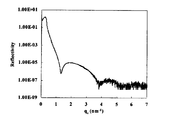
- FIG. It is a figure which shows the measurement result of the film thickness by the X ray diffraction of the organic thin film of Example 1.
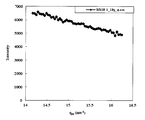
- FIG. It is a figure which shows the measurement result of the crystallinity by the X ray diffraction of the organic thin film of Example 1.
- FIG. It is a figure which shows the measurement result of the crystallinity by the X-ray diffraction of the organic thin film of the comparative example 1.
- Organometallic compound The organometallic compound of the present invention has the formula (I) R 1 n MX mn (I) It is a compound represented by these.
- R 1 is an aliphatic hydrocarbon group having 14 to 30 carbon atoms that may have a substituent or a linking group, 14 to carbon atoms that may have a substituent or a linking group.
- M represents at least one metal atom selected from the group consisting of a silicon atom, a germanium atom, a tin atom, a titanium atom, and a zirconium atom
- X represents a hydroxyl group or —NR 2 2 group, at least two of X represent —NR 2 2 groups
- R 2 represents a hydrogen atom, an optionally substituted alkyl group having 1 to 10 carbon atoms, or Represents a phenyl group which may have a substituent
- R 2 may be the same or different
- m represents the valence of M.
- n represents any positive integer from 1 to (m ⁇ 2), and when n is 2 or more, R 1 may be the same or different.
- (Mn) is 2 or more, and X may be the same or different. Below, each substituent is demonstrated.
- the “—NR 2 2 group” of X is an amino group, an alkyl group having 1 to 10 carbon atoms which may have 1 or 2 substituents, or a phenyl group which may have substituents. It means a substituted amino group.
- the mono-substituted amino group includes a methylamino group, an ethylamino group, an n-propylamino group, an isopropylamino group, an n-butylamino group, an isobutylamino group, a t-butylamino group, and an n-pentylamino group. And anilino group.
- the di-substituted amino group includes a dimethylamino group, a diethylamino group, a di-n-propylamino group, a diisopropylamino group, a methylethylamino group, a methyl n-propylamino group, a methylphenylamino group, a diphenylamino group, etc. Is mentioned.
- Substituents for “optionally substituted alkyl group having 1 to 10 carbon atoms” and “optionally substituted phenyl group” include carboxyl group; amide group; imide group; ester group Alkoxy groups such as methoxy group and ethoxy group; hydroxyl groups; halogen atoms and the like.
- the “aliphatic hydrocarbon group having 14 to 30 carbon atoms” of the “aliphatic hydrocarbon group having 14 to 30 carbon atoms which may have a substituent or a linking group” for R 1 includes 14 to 30 carbon atoms.
- the alkyl group, alkenyl group and alkynyl group may be linear or branched.
- alkyl group having 14 to 30 carbon atoms examples include a tetradecyl group, a palmityl group, a stearyl group, an eicosanyl group, a docosanyl group, a tetracosanyl group, an octacosanyl group, and a triacontanyl group;
- alkenyl group having 14 to 30 carbon atoms include a tetradecenyl group, a palmitoleinyl group (9-hexadecenyl group), an oleinyl group (cis-9-octadecenyl group), a buccenyl group (11-octadecenyl group), a linolyl group (cis).
- Cis-9,12-octadecadienyl group 9,12,15-linolenyl group (9,12,15-octadecanetrienyl group), 6,9,12-linolenyl group (9,12,15- Octadecanetrienyl group), eleostearinyl group (9,11,13-octadecatrienyl group), 8,11-eicosadienyl group, 5,8,11-eicosatrienyl group, arachidonyl group (5,8,11) , 13-eicosatetraenyl group), nerbonyl group (cis-15-tetracosaenyl group), docosahexaenyl group, Printer eicosapentaenoic enyl group or the like;
- Examples of the alkynyl group having 14 to 30 carbon atoms include 8-tetradecynyl group, 8-pentadecynyl group, 8
- R 1 preferably has 14 to 22 carbon atoms, more preferably 16 to 20 carbon atoms.
- Examples of the “substituent” of the “aliphatic hydrocarbon group having 14 to 30 carbon atoms which may have a substituent or a linking group” for R 1 include a carboxyl group; an amide group; an imide group; an ester group; , An alkoxy group such as an ethoxy group; or a hydroxyl group.
- the number of these substituents is preferably 0-3.
- linking group of the “aliphatic hydrocarbon group having 14 to 30 carbon atoms which may have a substituent or a linking group” of R 1 include —O—, —S—, — SO 2 —, —CO—, —C ( ⁇ O) O— or —C ( ⁇ O) NR 51 — (wherein R 51 represents a hydrogen atom; methyl group, ethyl group, n-propyl group, isopropyl group) An alkyl group such as; a phenyl group; a benzyl group, etc.).
- the position at which the linking group is inserted is not particularly limited, but is preferably present between the carbon-carbon bonds of the aliphatic hydrocarbon group.
- the “halogenated aliphatic hydrocarbon group having 14 to 30 carbon atoms” of the “halogenated aliphatic hydrocarbon group having 14 to 30 carbon atoms which may have a substituent or a linking group” of the substituent R 1 is: And a group in which one or more hydrogen atoms in the aliphatic hydrocarbon group having 14 to 30 carbon atoms are substituted with a halogen atom.
- a halogen atom a fluorine atom, a chlorine atom, a bromine atom, etc. are mentioned, A fluorine atom is preferable.
- the branched portion is a short chain having 1 to 4 carbon atoms, preferably 1 to 2 carbon atoms Is preferred.
- a fluorinated alkyl group is preferable, a group in which one or more fluorine atoms are bonded to a terminal carbon atom is preferable, and a group in which three or more fluorine atoms are bonded to a terminal carbon atom is more preferable.
- a carbon chain having an aliphatic hydrocarbon group that is not substituted with a fluorine atom at the end of the carbon chain and an aliphatic hydrocarbon group substituted with a fluorine atom inside the carbon chain may be used.
- the terminal has a perfluoroalkyl group in which all hydrogen atoms of the alkyl group are substituted with fluorine atoms, and — (CH 2 ) h — (in the formula, between the perfluoroalkyl group and a metal atom M described later) , H represents an integer of 1 to 6, preferably an integer of 2 to 4.), and particularly preferred is a group having an alkylene group.
- the number of fluorine atoms in the fluorinated alkyl group is [(number of fluorine atoms in the fluorinated alkyl group) / (number of hydrogen atoms present in the alkyl group having the same carbon number corresponding to the fluorinated alkyl group) ⁇ 100]%. Is preferably 60% or more, and more preferably 80% or more.
- the “substituent” and the “linking group” of the “halogenated aliphatic hydrocarbon group having 14 to 30 carbon atoms which may have a substituent or a linking group” of the substituent R 1 are the above-mentioned “substituent or linking group”. This is the same as the “substituent” and “linking group” of the “aliphatic hydrocarbon group having 14 to 30 carbon atoms which may have a group”.
- the position at which the linking group is inserted is not particularly limited, but is preferably present between the carbon-carbon bonds of the halogenated aliphatic hydrocarbon group.
- M represents one kind of atom selected from the group consisting of a silicon atom, a germanium atom, a tin atom, a titanium atom, and a zirconium atom.
- a silicon atom is particularly preferable from the viewpoints of availability of raw materials and reactivity.
- M is the valence of M, and n is any positive integer from 1 to (m ⁇ 2). In order to produce a dense organic thin film, n is preferably 1.
- organometallic compound represented by the formula (I) those not commercially available can be synthesized by a known method, for example, by the following method.
- R 1 , R 2 , M, n, and m have the same meaning as in formula (I), and Y is a leaving group such as a halogen atom, an alkoxy group, a phenoxy group, an acyloxy group, a cyano group, and an isocyanate group.
- Y is a leaving group such as a halogen atom, an alkoxy group, a phenoxy group, an acyloxy group, a cyano group, and an isocyanate group.
- the base examples include organic bases such as triethylamine, diisopropylethylamine, and pyridine; carbonates such as potassium carbonate and potassium hydrogencarbonate.
- organic bases such as triethylamine, diisopropylethylamine, and pyridine
- carbonates such as potassium carbonate and potassium hydrogencarbonate.
- an organic base is preferable, and when the base is absent, it is preferable to use the amine compound (2) in excess in place of the base.
- the amount of the base used is not particularly limited, but is preferably 1 to 2 moles per 1 mole of Y in the organometallic compound (1).
- the solvent used in the reaction is not particularly limited as long as it is an inert solvent for the reaction.
- aromatic hydrocarbons such as benzene, toluene and xylene: aliphatic hydrocarbons such as pentane and hexane; alicyclic hydrocarbons such as cyclopentane and cyclohexane; esters such as methyl acetate and ethyl acetate; diethyl Ethers such as ether, diisopropyl ether, 1,2-dimethoxyethane, tetrahydrofuran (THF), 1,4-dioxane; ketones such as acetone, methyl ethyl ketone, methyl isobutyl ketone, cyclohexanone, etc., which were dehydrated Is preferred.
- the desired product can be isolated by carrying out usual post-treatment operations, separation and purification in ordinary organic synthetic chemistry.
- the structure of the target product can be confirmed by performing NMR spectrum, mass spectrum, IR spectrum measurement, elemental analysis, and the like.
- the organic thin film forming solution of the present invention is not particularly limited as long as it is a solution containing an organometallic compound represented by the formula (I).
- the organic thin film forming solution can be prepared, for example, by stirring a mixture containing an organometallic compound and an organic solvent.
- a hydrocarbon solvent, a fluorocarbon solvent, and a silicone solvent are preferable, and a hydrocarbon solvent is more preferable.
- those having a boiling point of 100 to 250 ° C. are particularly preferable.
- hydrocarbon solvents such as n-hexane, cyclohexane, benzene, toluene, xylene, petroleum naphtha, solvent naphtha, petroleum ether, petroleum benzine, isoparaffin, normal paraffin, decalin, industrial gasoline, kerosene, ligroin, etc .; CBr 2 ClCF 3, CClF 2 CF 2 CCl 3, CClF 2 CF 2 CHFCl, CF 3 CF 2 CHCl 2, CF 3 CBrFCBrF 2, CClF 2 CClFCF 2 CCl 3, Cl (CF 2 CFCl) 2 Cl, Cl (CF 2 CFCl ) Fluorocarbon solvents such as 2 CF 2 CCl 3 , Cl (CF 2 CFCl) 3 Cl, fluorocarbon solvents such as Fluorinate (product of 3M), Afludo (product of Asahi Glass); dimethyl silicone, phenyl silicone, alkyl Modified
- the content of the organometallic compound in the organic thin film forming solution is not particularly limited, but is in the range of 0.1 to 30% by weight with respect to the organic thin film forming solution from the viewpoint of producing a denser monomolecular film. It is preferable.
- the base material used for the method for forming the organic thin film is not particularly limited.
- the substrate may not be a substrate having a functional group on the surface that can interact with the molecules forming the organic thin film in the organic thin film forming solution, but the organic thin film in the organic thin film forming solution is formed.
- a substrate having a functional group capable of interacting with a molecule on the surface is preferable, and a substrate having an active hydrogen on the surface is particularly preferable.
- the active hydrogen on the substrate surface and the molecules in the solution for forming an organic thin film easily form a chemisorbed film on the substrate surface due to chemical interaction. Can do.
- the base material having a functional group capable of interacting with a molecule forming the organic thin film in the organic thin film forming solution is chemically bonded to the molecule forming the organic thin film in the organic thin film forming solution.
- the base material which has the functional group to obtain on the surface is meant.
- active hydrogen refers to those that are easily dissociated as protons
- functional groups containing active hydrogen include hydroxyl groups (—OH), carboxyl groups (—COOH), formyl groups (—CHO), imino groups ( ⁇ NH ), An amino group (—NH 2 ), a thiol group (—SH), etc., among which a hydroxyl group is preferred.
- the base material having a hydroxyl group on the surface thereof include metals such as aluminum, copper, stainless steel, and nickel; glass; silicon wafers; ceramics; paper; natural fibers; leather; and other hydrophilic substances; A base material is mentioned.
- the base material which consists of a metal, glass, a silicon wafer, ceramics, paper, natural fiber, and a mineral is preferable.
- a base material made of a material having no hydroxyl group on its surface such as plastic, diamond, and synthetic fiber
- the base material surface is previously treated in an oxygen-containing plasma atmosphere (for example, 100 W for 20 minutes) or corona treated.
- a hydrophilic group can be introduced.
- a substrate made of a polyamide resin or a polyurethane resin has an imino group on the surface, and an active hydrogen of this imino group and an alkoxysilyl group of an organometallic compound undergo a dealcoholization reaction to form a siloxane bond (—Si—). No special surface treatment is required since O-) is formed.
- a method for forming the organic thin film is not particularly limited, and examples thereof include a dipping method (dipping method), spray coating, spin coating, roller coating, brush coating, and screen printing. Among these, the dip method is preferable.
- the dipping method is a method in which a base material is immersed in a solution containing a thin film substance to form a thin film on the surface of the base material.
- Spray coating is a method of forming a thin film on the surface of a substrate by spraying a solution containing the thin film substance onto the substrate.
- Spin coating is a method in which a thin film material solution is placed on a substrate placed on a disk, and the disk is rotated to form a uniform liquid film, which is fired to form a thin film.
- Roller coating is a method in which a thin film is formed by thinly applying an organic thin film substance solution onto a substrate surface with a roller.
- Brush coating is a method in which a thin film is formed by applying a thin organic thin film substance solution onto a substrate surface with a brush.
- Screen printing is a method of forming a thin film on a substrate by placing a thin film substance (paste) on a screen (cloth) stretched around a frame and sliding it while applying pressure.
- the time for immersing the base material in the organic thin film forming solution depends on the type of the base material and the like. Minutes to 10 hours are preferred.
- the method for forming the organic thin film derived from the organometallic compound of the present invention is preferably produced by bringing the substrate into contact with the solution for forming an organic thin film containing the organometallic compound of the present invention using the dipping method. Thereby, a denser organic thin film with fewer impurities can be rapidly formed.
- the step of bringing the substrate into contact with the solution for forming an organic thin film may be performed for a long time at once, or may be performed in a short time by dividing it into a plurality of times.
- ultrasonic waves can be used to promote the formation of the organic thin film.
- the temperature of the organic thin film forming solution when the substrate is brought into contact with the organic thin film forming solution is not particularly limited as long as the solution can maintain stability, but usually the temperature of the solvent used for preparing the solution from room temperature is not limited. The range is up to the reflux temperature.
- the organic thin film forming solution may be heated, the substrate itself may be heated, or both of them may be heated.
- the method for producing an organic thin film derived from an organometallic compound may include a step of washing the substrate with an organic solvent after the step of forming the organic thin film. If there exists such a washing
- the organic solvent in the step of washing with an organic solvent is not particularly limited, but hydrocarbon solvents such as hexane, heptane, octane, nonane, decane, benzene, toluene, xylene and the like are preferable.
- the cleaning method is not particularly limited as long as it can remove deposits on the substrate surface.
- a method of immersing the substrate in an organic solvent as described above; in a vacuum or in the atmosphere under normal pressure examples thereof include a method of allowing the deposit on the surface of the substrate to evaporate; a method of blowing an inert gas such as dry nitrogen gas to blow away the deposit on the surface of the substrate; and the like.
- the drying method is not particularly limited, and the solution on the surface of the substrate may be an air knife or the like, may be naturally dried, and can be exemplified by a method such as applying hot air.
- a method of applying warm air is preferable because the organic thin film is further stabilized by applying heat to the formed organic thin film.
- the heating temperature can be appropriately selected depending on the stability of the base material and the organic thin film, and for example, a range of 40 to 100 ° C. can be preferably mentioned.
- organic thin film By using the method for producing an organic thin film, an organic thin film such as a monomolecular film, a chemical adsorption film, and a self-assembled film can be obtained.
- the organic thin film in the present invention is preferably a monomolecular film in which molecules are arranged in a single layer on the substrate surface, and more preferably a chemical adsorption film and / or a self-assembled film.
- the self-assembled film means a film formed with an ordered structure without external forcing.
- the organic thin film in the present invention preferably has crystallinity.
- the crystallinity may be polycrystalline or single crystal. Examples of the present invention are shown below, but the technical scope of the present invention is not limited to these examples.
- Example 1 Synthesis of organometallic compounds
- a thermometer, a condenser, and a stirring blade were set in a 100 ml four-necked flask, charged with 16.2 g of a 2M dimethylamine THF solution (manufactured by Aldrich), and cooled to 5 ° C. with ice water while stirring.
- a solution prepared by dissolving 2.0 g of octadecyltrichlorosilane (manufactured by Gelest Co., Ltd.) in 10 g of dehydrated toluene was added dropwise over 1 hour to carry out the reaction. Thereafter, the reaction was allowed to proceed at room temperature for 2 hours.
Landscapes
- Chemical & Material Sciences (AREA)
- Organic Chemistry (AREA)
- Chemical Kinetics & Catalysis (AREA)
- Life Sciences & Earth Sciences (AREA)
- Engineering & Computer Science (AREA)
- Materials Engineering (AREA)
- Wood Science & Technology (AREA)
- Health & Medical Sciences (AREA)
- Medicinal Chemistry (AREA)
- Polymers & Plastics (AREA)
- Surface Treatment Of Glass (AREA)
Abstract
Description
本願は、2014年3月26日に出願された日本国特許出願第2014-64035号に対し優先権を主張し、その内容をここに援用する。
例えば、下記式で表される金属系界面活性剤を用いて単分子膜等の有機薄膜を製造する方法が知られている。(特許文献1~5)
RnMXm-n
(式中、Rは、置換基を有していてもよい炭素数10~30の炭化水素基、置換基を有していてもよい炭素数10~30のハロゲン化炭化水素基、連結基を含む炭化水素基又は連結基を含むハロゲン化炭化水素基を表し、Mは、ケイ素原子、ゲルマニウム原子、スズ原子、チタン原子及びジルコニウム原子からなる群から選ばれる少なくとも1種の金属原子を表し、Xは水酸基又は加水分解性基を表し、mはMの原子価を表す。nは1から(m-1)の正整数を表し、nが2以上のとき、Rは同一でも相異なっていてもよく、(m-n)が2以上のとき、Xは同一でも相異なっていてもよい。)
一方、非特許文献1には、(N,N-ジメチルアミノ)-オクタデシルジメチルシランのトルエン溶液にシリコンウエハーを浸すと、表面に共有結合性の単分子膜が形成できることが記載されている。
上記式中、加水分解性基として、置換基を有していてもよい炭素数1~6のアルコキシ基、置換基を有していてもよいアシルオキシ基、フッ素原子、塩素原子、臭素原子、ヨウ素原子等のハロゲン原子、イソシアネート基、シアノ基、アミノ基、又はアミド基等が例示されている。しかし実際に使用されているのはアルコキシ基のみで、アミノ基については具体的な例や使用に関する記載はない。
非特許文献1には、加水分解触媒を用いずに浸漬法で単分子膜が得られると記載されているが、成膜に3日間かかり、膜厚が薄くて疎水性度が低く、後述するように、形成された膜が緻密な膜であるとは言い難い。
本発明は、かかる従来技術の実情に鑑みてなされたものであって、簡便かつ速やかに、無色透明で緻密な有機薄膜を形成するための方法を提供することを目的とする。
(1)式(I)
R1 nMXm-n (I)
(式(I)中、
R1は置換基又は連結基を有していてもよい炭素数14~30の脂肪族炭化水素基、置換基又は連結基を有していてもよい炭素数14~30のハロゲン化脂肪族炭化水素基を表し、
Mは、ケイ素原子、ゲルマニウム原子、スズ原子、チタン原子、及びジルコニウム原子からなる群から選ばれる少なくとも1種の金属原子を表し、
Xは、水酸基又は-NR2 2基を表し、Xのうち少なくとも2つは、-NR2 2基を表し、R2は、水素原子、置換基を有していてもよい炭素数1~10のアルキル基、又は、置換基を有していてもよいフェニル基を表し、R2同士は、同一でも相異なっていてもよく、mはMの原子価を表す。
nは、1から(m-2)のいずれかの正の整数を表し、nが2以上の場合、R1は、同一でも相異なっていてもよい。)
で表される有機金属化合物、
(2)式(I)で表される有機金属化合物が、トリス(N,N-ジメチルアミノ)オクタデシルシランである(1)に記載の有機金属化合物、
(3)(1)又は(2)に記載の有機金属化合物を含有する有機薄膜形成用溶液、及び
(4)有機薄膜が単分子膜である(3)に記載の有機薄膜形成用溶液に関する。
(5)式(I)
R1 nMXm-n (I)
(式(I)中、
R1は置換基又は連結基を有していてもよい炭素数14~30の脂肪族炭化水素基、置換基又は連結基を有していてもよい炭素数14~30のハロゲン化脂肪族炭化水素基を表し、
Mは、ケイ素原子、ゲルマニウム原子、スズ原子、チタン原子、及びジルコニウム原子からなる群から選ばれる少なくとも1種の金属原子を表し、
Xは、水酸基又は-NR2 2基を表し、Xのうち少なくとも2つは、-NR2 2基を表し、R2は、水素原子、置換基を有していてもよい炭素数1~10のアルキル基、又は、置換基を有していてもよいフェニル基を表し、R2同士は、同一でも相異なっていてもよく、mはMの原子価を表す。
nは、1から(m-2)のいずれかの正の整数を表し、nが2以上の場合、R1は、同一でも相異なっていてもよい。)
で表される有機金属化合物を含有する有機薄膜形成用溶液を、基板と接触させることにより、前記基板表面に有機薄膜を形成する有機薄膜形成方法、及び
(6)有機薄膜が単分子膜である(5)に記載の有機薄膜形成方法に関する。
本発明の有機金属化合物は、式(I)
R1 nMXm-n(I)
で表される化合物である。
上記式(I)中、R1は置換基又は連結基を有していてもよい炭素数14~30の脂肪族炭化水素基、置換基又は連結基を有していてもよい炭素数14~30のハロゲン化脂肪族炭化水素基を表し、Mは、ケイ素原子、ゲルマニウム原子、スズ原子、チタン原子、及びジルコニウム原子からなる群から選ばれる少なくとも1種の金属原子を表し、Xは、水酸基又は-NR2 2基を表し、Xのうち少なくとも2つは、-NR2 2基を表し、R2は、水素原子、置換基を有していてもよい炭素数1~10のアルキル基、又は、置換基を有していてもよいフェニル基を表し、R2同士は、同一でも相異なっていてもよく、mはMの原子価を表す。nは、1から(m-2)のいずれかの正の整数を表し、nが2以上の場合、R1は、同一でも相異なっていてもよい。
(m-n)は2以上であって、Xは同一であっても、相異なっていてもよい。以下に、各置換基について説明する。
上記のうち、モノ置換アミノ基としては、メチルアミノ基、エチルアミノ基、n-プロピルアミノ基、イソプロピルアミノ基、n-ブチルアミノ基、イソブチルアミノ基、t-ブチルアミノ基、n-ペンチルアミノ基、アニリノ基等が挙げられる。
「置換基を有していてもよい炭素数1~10のアルキル基」及び「置換基を有していてもよいフェニル基」の置換基としては、カルボキシル基;アミド基;イミド基;エステル基;メトキシ基、エトキシ基等のアルコキシ基;水酸基;ハロゲン原子等が挙げられる。
炭素数14~30のアルケニル基としては、例えばテトラデセニル基、パルミトレイニル基(9-ヘキサデセニル基)、オレイニル基(cis-9-オクタデセニル基)、バクセニル基(11-オクタデセニル基)、リノリル基(cis,cis-9,12-オクタデカジエニル基)、9,12,15-リノレニル基(9,12,15-オクタデカントリエニル基)、6,9,12-リノレニル基(9,12,15-オクタデカントリエニル基)、エレオステアリニル基(9,11,13-オクタデカトリエニル基)、8,11-エイコサジエニル基、5,8,11-エイコサトリエニル基、アラキドニル基(5,8,11,13-エイコサテトラエニル基)、ネルボニル基(cis-15-テトラコサエニル基)、ドコサヘキサエニル基、ペンタエイコサエニル基等;
炭素数14~30のアルキニル基としては、例えば8-テトラデシニル基、8-ペンタデシニル基、8-ヘキサデシニル基、8-ヘプタデシニル基、8-オクタデシニル基、8-イコシニル基、8-ドコシニル基、ヘプタデカ-8,11-ジイニル基等が挙げられる。
ハロゲン原子としては、フッ素原子、塩素原子、臭素原子等が挙げられ、フッ素原子が好ましい。さらに好ましくは2個以上がフッ素原子に置換されたフッ素化脂肪族炭化水素基であり、分岐構造を有する場合には、分岐部分は炭素数1~4、好ましくは炭素数1~2の短鎖であるのが好ましい。
CH3(CH2)14Si[N(CH3)2]3
CH3(CH2)15Si[N(CH3)2]3
CH3(CH2)17Si[N(CH3)2]3
CH3(CH2)25Si[N(CH3)2]3
CH3(CH2)14Si[N(C2H5)2]3
CH3(CH2)15Si[N(C2H5)2]3
CH3(CH2)17Si[N(C2H5)2]3
CH3(CH2)25Si[N(C2H5)2]3
CH3(CH2)14Si[N(C6H6)2]3
CH3(CH2)15Si[N(C6H6)2]3
CH3(CH2)17Si[N(C6H6)2]3
CH3(CH2)25Si[N(C6H6)2]3
CH3(CH2)14Si[NH(CH3)]3
CH3(CH2)15Si[NH(CH3)]3
CH3(CH2)17Si[NH(CH3)]3
CH3(CH2)25Si[NH(CH3)]3
CH3(CH2)14Si[NH2]3
CH3(CH2)15Si[NH2]3
CH3(CH2)17Si[NH2]3
CH3(CH2)25Si[NH2]3
CH3(CH2)14Si[NH(C6H6)]3
CF3(CH2)14Si[N(CH3)2]3
CF3(CH2)15Si[N(CH3)2]3
CF3(CH2)17Si[N(CH3)2]3
CF3(CH2)25Si[N(CH3)2]3
CF3(CH2)14Si[N(C2H5)2]3
CF3(CH2)15Si[N(C2H5)2]3
CF3(CH2)17Si[N(C2H5)2]3
CF3(CH2)25Si[N(C2H5)2]3
CF3(CH2)14Si[N(C6H6)2]3
CF3CH2O(CH2)15Si[N(CH3)2]3
CH3COO(CH2)15Si[N(CH3)2]3
CH3CH2O(CH2)15Si[N(C2H5)2]3
CH3COO(CH2)15Si[N(C2H5)2]3
CF3COO(CH2)15Si[N(C2H5)2]3
CF3(CF2)9(CH2)2Si[N(C2H5)2)]3
CF3(CF2)5(CH2)2Si[N(C2H5)2)]3
CF3(CF2)13(CH2)2Si[N(CH3)2]3
CF3(CF2)14(CH2)2Si[N(CH3)2]3
CF3(CF2)15CH=CHSi[N(CH3)2]3
CF3(CF2)4CONH(CH2)10Si[N(CH3)2]3
CF3(CF2)3O[CF(CF3)CF(CF3)O]2CF(CF3)-
CONH(CH2)3Si[N(CH3)2]3
CH3(CH2)14Si[(N(CH3)2]2[N(C2H5)2]
CH3(CH2)15Si[(N(CH3)2]2[N(C2H5)2]
CH3(CH2)17Si[(N(CH3)2]2[N(C2H5)2]
CH3(CH2)25Si[(N(CH3)2]2[N(C2H5)2]
CF3(CH2)14Si[(N(CH3)2]2[N(C2H5)2]
CF3(CH2)15Si[(N(CH3)2]2[N(C2H5)2]
CF3(CH2)17Si[(N(CH3)2]2[N(C2H5)2]
CF3(CH2)25Si[(N(CH3)2]2[N(C2H5)2]
CH3(CH2)17Si[(N(CH3)2][N(C2H5)2]2
CF3(CF2)13(CH2)2Si[(N(CH3)2][(N(C2H5)2]2
CH3(CH2)14Si[(N(CH3)2]2[N(C6H6)2]
CF3CH2O(CH2)15Si[N(CH3)2]2(OH)
CH3COO(CH2)15Si[N(CH3)2]2(OH)
これらの化合物は1種単独で、あるいは2種以上を組み合わせて用いることができる。

すなわち、有機溶媒中において、脱離基Yを有する有機金属化合物(1)とアミン化合物(2)とを、塩基の存在又は非存在下で0~50℃で1~24時間反応させることにより、有機金属アミノ誘導体(3)を合成することができる。
塩基としては、トリエチルアミン、ジイソプロピルエチルアミン、ピリジン等の有機塩基;炭酸カリウム、炭酸水素カリウム等の炭酸塩等が挙げられる。これらの中でも、有機塩基が好ましく、塩基非存在化の場合には、アミン化合物(2)を塩基に代用して過剰に用いるのが好ましい。塩基の使用量は特に制限されないが、好ましくは、有機金属化合物(1)中のY1モルに対して、1~2倍モルである。
本発明の有機薄膜形成用溶液は、式(I)で表される有機金属化合物を含有する溶液であれば、特に制限されない。有機薄膜形成用溶液は、例えば、有機金属化合物及び有機溶媒を含む混合物を攪拌するなどして調製することができる。
有機溶媒としては、炭化水素系溶媒、フッ化炭素系溶媒、及びシリコーン系溶媒が好ましく、炭化水素系溶媒がより好ましい。なかでも、沸点が100~250℃のものが特に好ましい。
以下に、本発明の有機薄膜形成用溶液を用いて基材上に有機薄膜を形成する方法について説明する。
有機薄膜の形成方法に用いる基材は、特に制限されない。基材としては、有機薄膜形成用溶液中の有機薄膜を形成する分子と相互作用し得る官能基を表面に有する基材でなくてもよいが、有機薄膜形成用溶液中の有機薄膜を形成する分子と相互作用し得る官能基を表面に有する基材であることが好ましく、活性水素を表面に有する基材であることが特に好ましい。活性水素を表面に有する基材を用いると、基材表面の活性水素と、有機薄膜形成用溶液中の分子とが、化学的な相互作用により基材表面に容易に化学吸着膜を形成することができる。ここで、有機薄膜形成用溶液中の有機薄膜を形成する分子と相互作用し得る官能基を表面に有する基材とは、有機薄膜形成用溶液中の有機薄膜を形成する分子と、化学結合し得る官能基を表面に有する基材を意味する。
有機薄膜を形成させる方法は、特に制限はないが、ディップ法(浸漬法)、スプレーコート、スピンコート、ローラーコート、刷毛塗り、スクリーン印刷等が挙げられる。これらの中でも、ディップ法が好ましい。
スプレーコートとは、薄膜物質を含む溶液を基材にスプレーすることにより基材表面に薄膜を形成させる方法である。
スピンコートとは、円盤上に設置した基材に薄膜物質溶液をのせ、円盤を回転させる事によりこれを均一な液膜とし、これを焼成し薄膜を形成させる方法である。
ローラーコートとは、ローラーで有機薄膜物質溶液を基材表面上に薄く塗布し薄膜を形成させる方法である。
刷毛塗りとは、刷毛で有機薄膜物質溶液を基材表面上に薄く塗布し薄膜を形成させる方法である。
スクリーン印刷とは、枠に張ったスクリーン(布)の上から、薄膜物質(ペースト)をのせ、加圧しながら摺動することにより基材上の薄膜を形成させる方法である。
また、ディップ法の場合において、基材を有機薄膜形成用溶液に浸漬する時間は基材の種類等にも左右され、一概にはいえないが、5分~24時間とすることができ、5分~10時間が好ましい。
有機薄膜形成用溶液に基材を接触させる工程は、一度に長い時間行ってもよいし、複数回に分けて短時間で行ってもよい。また、有機薄膜の形成を促進するために超音波を用いることもできる。
洗浄方法としては、基材表面の付着物を除去できる方法であれば特に制限されないが、例えば、上記のような有機溶媒中に基材を浸漬させる方法;真空中、又は常圧下で大気中に放置して、基材表面の付着物を蒸発させる方法;乾燥窒素ガス等の不活性ガスをブローして、基材表面の付着物を吹き飛ばす方法;等を例示することができる。また、より優れた洗浄効果が得られることから、基材を前述の有機溶媒に浸漬した状態で、超音波処理することが、より好ましい方法として挙げられる。
上記有機薄膜の製造方法を用いることにより、単分子膜、化学吸着膜、自己集合膜等の有機薄膜を得ることができる。
本発明における有機薄膜は、基材表面に分子が一層に並んでできる単分子膜であることが好ましく、化学吸着膜及び/又は自己集合膜であることがさらに好ましい。本発明において、自己集合膜とは、外部からの強制力なしに秩序だった構造を形成してなる膜を意味する。
以下に、本発明の実施例を示すが、本発明の技術的範囲はこれらの実施例に限定されるものではない。
(有機金属化合物の合成)
100mlの四つ口フラスコに温度計、コンデンサ、撹拌羽根をセットし、2M濃度のジメチルアミンTHF溶液16.2g(アルドリッチ社製)を仕込み、撹拌しながら5℃まで氷水で冷却した。
その中に、オクタデシルトリクロロシラン2.0g(ゲレスト社製)を脱水トルエン10gに溶解した溶液を1時間掛けて滴下し、反応を行った。
その後、室温で2時間反応させ、反応により析出したジメチルアミン塩酸塩を濾過、脱水トルエンで洗浄後、濾液を減圧濃縮し、油状物のトリス(N,N-ジメチルアミノ)オクタデシルシラン2.1gを得た。
1H(NMR、CDCl3、400MHz)δ 0.89(t、3H)、1.26(brs、34H)、2.48(s、18H)
得られたトリス(N,N-ジメチルアミノ)オクタデシルシラン0.5gを脱水トルエン99.5gに溶解し、有機薄膜形成溶液を調製した。
UVオゾン処理を行なったシリコンウエハーを、上記有機薄膜形成溶液に60分間浸漬し、NSクリーン100で洗浄後に60℃で乾燥させて、有機薄膜形成基板を得た。成膜面における静的接触角を測定したところ、水で110°、テトラデカンで40°を示した。
この膜のX線回折を行った結果、膜厚は2.39nmと面間隔は0.420nmであった。この結果から得られた膜は結晶性を有する自己集合単分子膜(SAM)であることが確認できた。
その結果を図1及び2に示す。
(有機金属化合物の合成)
オクタデシルトリクロロシランの代わりにオクチルトリクロロシラン(アルドリッチ社製)を用いる以外は、実施例1と同様に反応を行い、トリス(N,N-ジメチルアミノ)オクチルシラン2.0gを得た。
得られたトリス(N,N-ジメチルアミノ)オクチルシラン0.5gをトルエン99.5gに溶解し、有機薄膜形成溶液を調製した。
UVオゾン処理を行なったシリコンウエハーを、上記有機薄膜形成溶液に60分間浸漬し、NSクリーン100で洗浄後に60℃で乾燥させて、有機薄膜形成基板を得た。成膜面における静的接触角を測定したところ、水で94.2°、テトラデカンで7.0°を示した。X線回折を行った結果を図3に示す。
この結果から得られた膜は、撥水性が不十分で結晶性を有する膜ではなかった。
(有機金属化合物の合成)
オクタデシルトリクロロシランの代わりにオクタデシルジメチルクロロシラン(アルドリッチ社製)を用いる以外は、実施例1と同様に反応を行い、N,N-ジメチルアミノ-オクタデシルジメチルシラン3.1gを得た。
得られたN,N-ジメチルアミノ-オクタデシルジメチルシラン0.5gをトルエン99.5gに溶解し、有機薄膜形成溶液を調製した。
UVオゾン処理を行なったシリコンウエハーを、上記有機薄膜形成溶液に60分間浸漬し、NSクリーン100で洗浄後に60℃で乾燥させて、有機薄膜形成基板を得た。成膜面における静的接触角を測定したところ、水で94.2°、テトラデカンで7.4°を示した。X線回折を行った結果を図4に示す。
この結果から得られた膜は、撥水性が不十分で結晶性を有する膜ではなかった。
Claims (6)
- 式(I)
R1 nMXm-n (I)
(式(I)中、
R1は置換基又は連結基を有していてもよい炭素数14~30の脂肪族炭化水素基、置換基又は連結基を有していてもよい炭素数14~30のハロゲン化脂肪族炭化水素基を表し、
Mは、ケイ素原子、ゲルマニウム原子、スズ原子、チタン原子、及びジルコニウム原子からなる群から選ばれる少なくとも1種の金属原子を表し、
Xは、水酸基又は-NR2 2基を表し、Xのうち少なくとも2つは、-NR2 2基を表し、R2は、水素原子、置換基を有していてもよい炭素数1~10のアルキル基、又は、置換基を有していてもよいフェニル基を表し、R2同士は、同一でも相異なっていてもよく、mはMの原子価を表す。
nは、1から(m-2)のいずれかの正の整数を表し、nが2以上の場合、R1は、同一でも相異なっていてもよい。)
で表される有機金属化合物。 - 式(I)で表される有機金属化合物が、トリス(N,N-ジメチルアミノ)オクタデシルシランである請求項1に記載の有機金属化合物。
- 請求項1又は2に記載の有機金属化合物を含有する有機薄膜形成用溶液。
- 有機薄膜が単分子膜である請求項3に記載の有機薄膜形成用溶液。
- 式(I)
R1 nMXm-n (I)
(式(I)中、
R1は置換基又は連結基を有していてもよい炭素数14~30の脂肪族炭化水素基、置換基又は連結基を有していてもよい炭素数14~30のハロゲン化脂肪族炭化水素基を表し、
Mは、ケイ素原子、ゲルマニウム原子、スズ原子、チタン原子、及びジルコニウム原子からなる群から選ばれる少なくとも1種の金属原子を表し、
Xは、水酸基又は-NR2 2基を表し、Xのうち少なくとも2つは、-NR2 2基を表し、R2は、水素原子、置換基を有していてもよい炭素数1~10のアルキル基、又は、置換基を有していてもよいフェニル基を表し、R2同士は、同一でも相異なっていてもよく、mはMの原子価を表す。
nは、1から(m-2)のいずれかの正の整数を表し、nが2以上の場合、R1は、同一でも相異なっていてもよい。)
で表される有機金属化合物を含有する有機薄膜形成用溶液を、基板と接触させることにより、前記基板表面に有機薄膜を形成する有機薄膜形成方法。 - 有機薄膜が単分子膜である請求項5に記載の有機薄膜形成方法。
Priority Applications (3)
| Application Number | Priority Date | Filing Date | Title |
|---|---|---|---|
| KR1020167025684A KR20160122840A (ko) | 2014-03-26 | 2015-03-20 | 유기 박막 형성용 용액 및 그것을 사용한 유기 박막 형성 방법 |
| CN201580014513.0A CN106103455A (zh) | 2014-03-26 | 2015-03-20 | 有机薄膜形成用溶液及使用该溶液的有机薄膜形成方法 |
| JP2016510007A JP6263605B2 (ja) | 2014-03-26 | 2015-03-20 | 有機薄膜形成用溶液及びそれを用いた有機薄膜形成方法 |
Applications Claiming Priority (2)
| Application Number | Priority Date | Filing Date | Title |
|---|---|---|---|
| JP2014064035 | 2014-03-26 | ||
| JP2014-064035 | 2014-03-26 |
Publications (1)
| Publication Number | Publication Date |
|---|---|
| WO2015146103A1 true WO2015146103A1 (ja) | 2015-10-01 |
Family
ID=54194653
Family Applications (1)
| Application Number | Title | Priority Date | Filing Date |
|---|---|---|---|
| PCT/JP2015/001570 Ceased WO2015146103A1 (ja) | 2014-03-26 | 2015-03-20 | 有機薄膜形成用溶液及びそれを用いた有機薄膜形成方法 |
Country Status (5)
| Country | Link |
|---|---|
| JP (1) | JP6263605B2 (ja) |
| KR (1) | KR20160122840A (ja) |
| CN (1) | CN106103455A (ja) |
| TW (1) | TWI595000B (ja) |
| WO (1) | WO2015146103A1 (ja) |
Cited By (4)
| Publication number | Priority date | Publication date | Assignee | Title |
|---|---|---|---|---|
| WO2016152226A1 (ja) * | 2015-03-24 | 2016-09-29 | Jnc株式会社 | ジアルキルアミノシランの製造方法 |
| JP2019081711A (ja) * | 2017-10-27 | 2019-05-30 | 住友精化株式会社 | アミノシラン類の製造方法 |
| WO2024034670A1 (ja) * | 2022-08-10 | 2024-02-15 | ダイキン工業株式会社 | 表面処理層を含む物品 |
| WO2025013822A1 (ja) * | 2023-07-07 | 2025-01-16 | ダイキン工業株式会社 | シラン化合物 |
Families Citing this family (2)
| Publication number | Priority date | Publication date | Assignee | Title |
|---|---|---|---|---|
| WO2021170226A1 (de) * | 2020-02-26 | 2021-09-02 | Wacker Chemie Ag | Halogenierte tetrasilylboranate |
| KR20260003386A (ko) * | 2020-07-03 | 2026-01-06 | 엔테그리스, 아이엔씨. | 유기주석 화합물의 제조 방법 |
Citations (4)
| Publication number | Priority date | Publication date | Assignee | Title |
|---|---|---|---|---|
| US2429883A (en) * | 1946-05-16 | 1947-10-28 | Corning Glass Works | Alkyl-dialkylaminosilanes |
| JPH0798414A (ja) * | 1993-04-15 | 1995-04-11 | Seiko Epson Corp | 偏光板および偏光板の製造方法 |
| US5783299A (en) * | 1986-01-21 | 1998-07-21 | Seiko Epson Corporation | Polarizer plate with anti-stain layer |
| WO2006009202A1 (ja) * | 2004-07-22 | 2006-01-26 | Nippon Soda Co., Ltd. | 有機薄膜形成方法、有機薄膜形成用補助剤及び有機薄膜形成用溶液 |
Family Cites Families (8)
| Publication number | Priority date | Publication date | Assignee | Title |
|---|---|---|---|---|
| US5759643A (en) * | 1987-01-16 | 1998-06-02 | Seiko Epson Corporation | Polarizing plate and method of production |
| JP3986275B2 (ja) | 2001-09-03 | 2007-10-03 | シャープ株式会社 | 静電潜像現像用トナー |
| JP4312606B2 (ja) * | 2002-03-12 | 2009-08-12 | 日本曹達株式会社 | 化学吸着膜製造方法及びそれに用いる化学吸着膜製造用溶液 |
| JP2004091810A (ja) | 2002-08-29 | 2004-03-25 | Toshiba Corp | イオン注入装置及びイオン注入方法 |
| JP4129446B2 (ja) | 2004-06-28 | 2008-08-06 | 株式会社サンファッション | 立体細幅帯状体 |
| JP2008059840A (ja) | 2006-08-30 | 2008-03-13 | Noritsu Koki Co Ltd | プラズマ発生装置およびそれを用いるワーク処理装置 |
| JP2008246959A (ja) * | 2007-03-30 | 2008-10-16 | Kagawa Univ | 撥水撥油防汚性反射板およびその製造方法ならびにそれを用いたトンネル、道路標識、表示板、乗り物および建物 |
| JP2009104424A (ja) | 2007-10-24 | 2009-05-14 | Hitachi Ltd | Etcカード不正使用防止システム |
-
2015
- 2015-03-20 JP JP2016510007A patent/JP6263605B2/ja not_active Expired - Fee Related
- 2015-03-20 WO PCT/JP2015/001570 patent/WO2015146103A1/ja not_active Ceased
- 2015-03-20 KR KR1020167025684A patent/KR20160122840A/ko not_active Ceased
- 2015-03-20 CN CN201580014513.0A patent/CN106103455A/zh active Pending
- 2015-03-24 TW TW104109434A patent/TWI595000B/zh not_active IP Right Cessation
Patent Citations (4)
| Publication number | Priority date | Publication date | Assignee | Title |
|---|---|---|---|---|
| US2429883A (en) * | 1946-05-16 | 1947-10-28 | Corning Glass Works | Alkyl-dialkylaminosilanes |
| US5783299A (en) * | 1986-01-21 | 1998-07-21 | Seiko Epson Corporation | Polarizer plate with anti-stain layer |
| JPH0798414A (ja) * | 1993-04-15 | 1995-04-11 | Seiko Epson Corp | 偏光板および偏光板の製造方法 |
| WO2006009202A1 (ja) * | 2004-07-22 | 2006-01-26 | Nippon Soda Co., Ltd. | 有機薄膜形成方法、有機薄膜形成用補助剤及び有機薄膜形成用溶液 |
Non-Patent Citations (1)
| Title |
|---|
| MARIA G.L. PETRUCCI ET AL.: "A new catalytic hybrid material from simple acid-base hydrolytic chemistry", JOURNAL OF MOLECULAR CATALYSIS A: CHEMICAL, vol. 146, no. 1-2, 1999, pages 309 - 315, XP055227097 * |
Cited By (10)
| Publication number | Priority date | Publication date | Assignee | Title |
|---|---|---|---|---|
| WO2016152226A1 (ja) * | 2015-03-24 | 2016-09-29 | Jnc株式会社 | ジアルキルアミノシランの製造方法 |
| JPWO2016152226A1 (ja) * | 2015-03-24 | 2017-11-24 | Jnc株式会社 | ジアルキルアミノシランの製造方法 |
| US10150785B2 (en) | 2015-03-24 | 2018-12-11 | Jnc Corporation | Method for producing dialkylaminosilane |
| JP2019081711A (ja) * | 2017-10-27 | 2019-05-30 | 住友精化株式会社 | アミノシラン類の製造方法 |
| WO2024034670A1 (ja) * | 2022-08-10 | 2024-02-15 | ダイキン工業株式会社 | 表面処理層を含む物品 |
| JP2024025759A (ja) * | 2022-08-10 | 2024-02-26 | ダイキン工業株式会社 | 表面処理層を含む物品 |
| JP7829525B2 (ja) | 2022-08-10 | 2026-03-13 | ダイキン工業株式会社 | 表面処理層を含む物品 |
| WO2025013822A1 (ja) * | 2023-07-07 | 2025-01-16 | ダイキン工業株式会社 | シラン化合物 |
| JP2025010528A (ja) * | 2023-07-07 | 2025-01-21 | ダイキン工業株式会社 | シラン化合物 |
| JP7723318B2 (ja) | 2023-07-07 | 2025-08-14 | ダイキン工業株式会社 | シラン化合物 |
Also Published As
| Publication number | Publication date |
|---|---|
| JP6263605B2 (ja) | 2018-01-17 |
| CN106103455A (zh) | 2016-11-09 |
| TWI595000B (zh) | 2017-08-11 |
| KR20160122840A (ko) | 2016-10-24 |
| JPWO2015146103A1 (ja) | 2017-04-13 |
| TW201540722A (zh) | 2015-11-01 |
Similar Documents
| Publication | Publication Date | Title |
|---|---|---|
| JP6263605B2 (ja) | 有機薄膜形成用溶液及びそれを用いた有機薄膜形成方法 | |
| US11898058B2 (en) | Fluorine compounds | |
| US20070232822A1 (en) | Azasilanes and method for making and using the same | |
| US7393515B2 (en) | Fluorinated compound, water repellent composition and thin film | |
| CN118922426A (zh) | 化合物、组合物、表面处理剂、物品和物品的制造方法 | |
| TW201935522A (zh) | 表面處理方法、表面處理劑以及於基板上區域選擇性地製膜之方法 | |
| JP2007523894A (ja) | パーフルオロポリエーテルベンゾトリアゾール誘導体および塗料としてのその用途 | |
| CN119013333A (zh) | 化合物、组合物、表面处理剂、物品和物品的制造方法 | |
| JP2003321479A (ja) | 光分解性シランカップリング剤 | |
| JPS58167597A (ja) | フルオロアミノシラン化合物 | |
| JP2005280020A (ja) | 金型とその製造方法及びそれを用いて作成した成型品 | |
| US20250026958A1 (en) | Compound, composition, surface treatment agent, method of producing article, and article | |
| KR19980019029A (ko) | 화학흡착막 및 그 제조방법과 또한 그것에 이용하는 화학흡착액 | |
| JP5992039B2 (ja) | 有機ケイ素化合物、それを用いた薄膜形成用組成物および有機薄膜 | |
| US20250026936A1 (en) | Compound, composition, surface treatment agent, article, and method of producing article | |
| WO2006009202A1 (ja) | 有機薄膜形成方法、有機薄膜形成用補助剤及び有機薄膜形成用溶液 | |
| JP5276024B2 (ja) | 有機薄膜形成用溶液及びその製造方法 | |
| JP5385538B2 (ja) | o−ニトロベンジル基含有シラザン化合物、その製造方法及び用途 | |
| CN104292251B (zh) | 一种防水剂、制备方法及其应用 | |
| WO2022180817A1 (ja) | スルホベタイン基含有有機ケイ素化合物およびその製造方法 | |
| JP5793504B2 (ja) | 有機薄膜積層板の製造方法、及び有機薄膜形成用固形物又は油状物の製造方法 | |
| JP5482713B2 (ja) | ナノインプリントモールド用離型剤、表面処理方法並びにナノインプリント用モールド | |
| JP5347359B2 (ja) | o−ニトロベンジル基含有シラザン化合物及び用途 | |
| JP2006122748A (ja) | 有機薄膜形成方法及び有機薄膜形成用溶液 | |
| JP5252810B2 (ja) | 金属系界面活性剤オリゴマーを用いた有機薄膜形成方法 |
Legal Events
| Date | Code | Title | Description |
|---|---|---|---|
| 121 | Ep: the epo has been informed by wipo that ep was designated in this application |
Ref document number: 15769924 Country of ref document: EP Kind code of ref document: A1 |
|
| ENP | Entry into the national phase |
Ref document number: 2016510007 Country of ref document: JP Kind code of ref document: A |
|
| ENP | Entry into the national phase |
Ref document number: 20167025684 Country of ref document: KR Kind code of ref document: A |
|
| NENP | Non-entry into the national phase |
Ref country code: DE |
|
| 122 | Ep: pct application non-entry in european phase |
Ref document number: 15769924 Country of ref document: EP Kind code of ref document: A1 |