WO2015155765A1 - Methods and kits for identifying pre-cancerous colorectal polyps and colorectal cancer - Google Patents
Methods and kits for identifying pre-cancerous colorectal polyps and colorectal cancer Download PDFInfo
- Publication number
- WO2015155765A1 WO2015155765A1 PCT/IL2015/050362 IL2015050362W WO2015155765A1 WO 2015155765 A1 WO2015155765 A1 WO 2015155765A1 IL 2015050362 W IL2015050362 W IL 2015050362W WO 2015155765 A1 WO2015155765 A1 WO 2015155765A1
- Authority
- WO
- WIPO (PCT)
- Prior art keywords
- seq
- biomarker
- nos
- nucleic acid
- subject
- Prior art date
- Legal status (The legal status is an assumption and is not a legal conclusion. Google has not performed a legal analysis and makes no representation as to the accuracy of the status listed.)
- Ceased
Links
Classifications
-
- C—CHEMISTRY; METALLURGY
- C12—BIOCHEMISTRY; BEER; SPIRITS; WINE; VINEGAR; MICROBIOLOGY; ENZYMOLOGY; MUTATION OR GENETIC ENGINEERING
- C12Q—MEASURING OR TESTING PROCESSES INVOLVING ENZYMES, NUCLEIC ACIDS OR MICROORGANISMS; COMPOSITIONS OR TEST PAPERS THEREFOR; PROCESSES OF PREPARING SUCH COMPOSITIONS; CONDITION-RESPONSIVE CONTROL IN MICROBIOLOGICAL OR ENZYMOLOGICAL PROCESSES
- C12Q1/00—Measuring or testing processes involving enzymes, nucleic acids or microorganisms; Compositions therefor; Processes of preparing such compositions
- C12Q1/68—Measuring or testing processes involving enzymes, nucleic acids or microorganisms; Compositions therefor; Processes of preparing such compositions involving nucleic acids
- C12Q1/6876—Nucleic acid products used in the analysis of nucleic acids, e.g. primers or probes
- C12Q1/6883—Nucleic acid products used in the analysis of nucleic acids, e.g. primers or probes for diseases caused by alterations of genetic material
- C12Q1/6886—Nucleic acid products used in the analysis of nucleic acids, e.g. primers or probes for diseases caused by alterations of genetic material for cancer
-
- A—HUMAN NECESSITIES
- A61—MEDICAL OR VETERINARY SCIENCE; HYGIENE
- A61K—PREPARATIONS FOR MEDICAL, DENTAL OR TOILETRY PURPOSES
- A61K31/00—Medicinal preparations containing organic active ingredients
- A61K31/33—Heterocyclic compounds
- A61K31/395—Heterocyclic compounds having nitrogen as a ring hetero atom, e.g. guanethidine or rifamycins
- A61K31/495—Heterocyclic compounds having nitrogen as a ring hetero atom, e.g. guanethidine or rifamycins having six-membered rings with two or more nitrogen atoms as the only ring heteroatoms, e.g. piperazine or tetrazines
- A61K31/505—Pyrimidines; Hydrogenated pyrimidines, e.g. trimethoprim
- A61K31/513—Pyrimidines; Hydrogenated pyrimidines, e.g. trimethoprim having oxo groups directly attached to the heterocyclic ring, e.g. cytosine
-
- A—HUMAN NECESSITIES
- A61—MEDICAL OR VETERINARY SCIENCE; HYGIENE
- A61K—PREPARATIONS FOR MEDICAL, DENTAL OR TOILETRY PURPOSES
- A61K31/00—Medicinal preparations containing organic active ingredients
- A61K31/33—Heterocyclic compounds
- A61K31/395—Heterocyclic compounds having nitrogen as a ring hetero atom, e.g. guanethidine or rifamycins
- A61K31/495—Heterocyclic compounds having nitrogen as a ring hetero atom, e.g. guanethidine or rifamycins having six-membered rings with two or more nitrogen atoms as the only ring heteroatoms, e.g. piperazine or tetrazines
- A61K31/505—Pyrimidines; Hydrogenated pyrimidines, e.g. trimethoprim
- A61K31/519—Pyrimidines; Hydrogenated pyrimidines, e.g. trimethoprim ortho- or peri-condensed with heterocyclic rings
-
- A—HUMAN NECESSITIES
- A61—MEDICAL OR VETERINARY SCIENCE; HYGIENE
- A61K—PREPARATIONS FOR MEDICAL, DENTAL OR TOILETRY PURPOSES
- A61K31/00—Medicinal preparations containing organic active ingredients
- A61K31/33—Heterocyclic compounds
- A61K31/555—Heterocyclic compounds containing heavy metals, e.g. hemin, hematin, melarsoprol
-
- A—HUMAN NECESSITIES
- A61—MEDICAL OR VETERINARY SCIENCE; HYGIENE
- A61K—PREPARATIONS FOR MEDICAL, DENTAL OR TOILETRY PURPOSES
- A61K31/00—Medicinal preparations containing organic active ingredients
- A61K31/70—Carbohydrates; Sugars; Derivatives thereof
- A61K31/7042—Compounds having saccharide radicals and heterocyclic rings
- A61K31/7052—Compounds having saccharide radicals and heterocyclic rings having nitrogen as a ring hetero atom, e.g. nucleosides, nucleotides
- A61K31/706—Compounds having saccharide radicals and heterocyclic rings having nitrogen as a ring hetero atom, e.g. nucleosides, nucleotides containing six-membered rings with nitrogen as a ring hetero atom
- A61K31/7064—Compounds having saccharide radicals and heterocyclic rings having nitrogen as a ring hetero atom, e.g. nucleosides, nucleotides containing six-membered rings with nitrogen as a ring hetero atom containing condensed or non-condensed pyrimidines
- A61K31/7068—Compounds having saccharide radicals and heterocyclic rings having nitrogen as a ring hetero atom, e.g. nucleosides, nucleotides containing six-membered rings with nitrogen as a ring hetero atom containing condensed or non-condensed pyrimidines having oxo groups directly attached to the pyrimidine ring, e.g. cytidine, cytidylic acid
-
- C—CHEMISTRY; METALLURGY
- C12—BIOCHEMISTRY; BEER; SPIRITS; WINE; VINEGAR; MICROBIOLOGY; ENZYMOLOGY; MUTATION OR GENETIC ENGINEERING
- C12Q—MEASURING OR TESTING PROCESSES INVOLVING ENZYMES, NUCLEIC ACIDS OR MICROORGANISMS; COMPOSITIONS OR TEST PAPERS THEREFOR; PROCESSES OF PREPARING SUCH COMPOSITIONS; CONDITION-RESPONSIVE CONTROL IN MICROBIOLOGICAL OR ENZYMOLOGICAL PROCESSES
- C12Q2600/00—Oligonucleotides characterized by their use
- C12Q2600/112—Disease subtyping, staging or classification
-
- C—CHEMISTRY; METALLURGY
- C12—BIOCHEMISTRY; BEER; SPIRITS; WINE; VINEGAR; MICROBIOLOGY; ENZYMOLOGY; MUTATION OR GENETIC ENGINEERING
- C12Q—MEASURING OR TESTING PROCESSES INVOLVING ENZYMES, NUCLEIC ACIDS OR MICROORGANISMS; COMPOSITIONS OR TEST PAPERS THEREFOR; PROCESSES OF PREPARING SUCH COMPOSITIONS; CONDITION-RESPONSIVE CONTROL IN MICROBIOLOGICAL OR ENZYMOLOGICAL PROCESSES
- C12Q2600/00—Oligonucleotides characterized by their use
- C12Q2600/118—Prognosis of disease development
-
- C—CHEMISTRY; METALLURGY
- C12—BIOCHEMISTRY; BEER; SPIRITS; WINE; VINEGAR; MICROBIOLOGY; ENZYMOLOGY; MUTATION OR GENETIC ENGINEERING
- C12Q—MEASURING OR TESTING PROCESSES INVOLVING ENZYMES, NUCLEIC ACIDS OR MICROORGANISMS; COMPOSITIONS OR TEST PAPERS THEREFOR; PROCESSES OF PREPARING SUCH COMPOSITIONS; CONDITION-RESPONSIVE CONTROL IN MICROBIOLOGICAL OR ENZYMOLOGICAL PROCESSES
- C12Q2600/00—Oligonucleotides characterized by their use
- C12Q2600/158—Expression markers
Definitions
- the present invention relates, according to some embodiments, to methods and kits for identifying a subject having pre-cancerous advanced polyps or colorectal cancer based on the expression profile(s) of specific mRNA biomarkers.
- the present invention further comprises methods and kits for diagnosing, preventing, managing therapy, monitoring and identifying predisposition to colorectal cancer.
- Colorectal cancer is one of the most common cancers accounting for approximately 10% of all cancer cases and approximately 8% of all cancer deaths. Solid cancers are normally diagnosed based on a histo pathological tissue evaluation, where the gold standard for CRC is fiber-optic colonoscopy. This technology is labor intensive, time consuming, costly and extremely invasive. The alternative of fecal occult blood test (FOBT), while not as invasive, is known to suffer from low sensitivity.
- FBT fecal occult blood test
- Blood-based tests enable large-scale screening of clinically asymptomatic (supposedly healthy) individuals, for diagnosis, monitoring and prediction of cancer. Furthermore, blood-based sampling is prevalent and convenient, and therefore may increase compliance in asymptomatic populations.
- Bonilla et al. disclose mRNA biomarkers associated with poor outcome in patients suffering from advanced stages of colorectal cancer.
- WO 2011/012136 discloses a method for discriminating between CRC and non- cancerous samples based on the expression level of a group of miRNAs.
- the present invention provides methods and kits for identifying colon cancer and precancerous polyps in a subject.
- the methods and kits of the invention differentiate a colon having precancerous advanced polyps from colorectal cancer, based on a non-invasive molecular based analysis.
- the methods and kits of the invention provide a diagnostic platform with high sensitivity (at least 60%) and high specificity (above 85%).
- the present invention is premised on the discovery that disease-associated biomarkers can be identified in plasma or other bodily fluids long before an overt disease is apparent. Another advantage conferred by the biomarkers of the present invention arises from the fact that the biomarkers are extracellular, thereby originate from all body tissues. Moreover, these biomarkers are not affected by the immune response. The presence or absence of these biomarkers from the plasma footprints of patients suffering from colorectal cancer is provided herein as early diagnostic tools, for which treatment strategies can be devised and administered to prevent, delay or reverse the formation of neoplastic colorectal cells. One or combinations of several of the disease-associated biomarkers of the present invention are useful to diagnose subjects suffering from precancerous advanced polyps or colorectal cancer, or advantageously, to diagnose those subjects who are asymptomatic for colorectal cancer.
- the methods of the invention use the expression profile of a finite number of nucleic acid sequences biomarkers to identify a healthy subject, a subject having colorectal cancer and a subject having precancerous advanced polyps. Furthermore, the biomarkers of the invention are identified in plasma specimen, which is remote from the site of disease. Unexpectedly, said plasma based biomarkers provide a differentially expressed gene profile which correlates at high specificity and high sensitivity with the pathology examination report.
- a method for identifying a subject having colorectal cancer or precancerous advanced colorectal polyps comprising:
- said biomarker comprises SEQ ID NO: 1 and further comprises at least one nucleic acid sequences selected from SEQ ID NOs: 2, 3, 5-7, 12 and 17.
- SEQ ID NOs: 2 3, 5-7, 12 and 17.
- said biomarker comprises the nucleic acid sequences set forth in SEQ ID NOs: 1-3, 5-7, 12 and 17 and said subject is identified as having colorectal cancer.
- said biomarker is consisting of the nucleic acid sequences set forth in SEQ ID NOs: 1-3, 5-7, 12 and 17.
- said biomarker further comprises the nucleic acid sequences set forth in SEQ ID NOs: l and 5 and said subject is identified as having precancerous advanced colorectal polyps.
- said biomarker is consisting the nucleic acid sequences set forth in SEQ ID NOs: 1 and 5.
- said biomarker comprises SEQ ID NO: 1 and further comprises at least one nucleic acid sequences selected from SEQ ID NOs: 3, 4, 6 and 14. Each possibility is a separate embodiment of the present invention. According to some embodiments, said biomarker comprises SEQ ID NOs: 1 and 4 and at least one nucleic acid sequences selected from SEQ ID NOs: 3, 6 and 14. Each possibility is a separate embodiment of the present invention.
- said biomarker comprises SEQ ID Nos: 1, 3 and 4.
- said biomarker comprises SEQ ID Nos: 1, 4, 6 and 14.
- said biomarker comprises SEQ ID Nos: 1, 3, 4 and 14.
- said biological sample is selected from the group consisting of blood, plasma, saliva, serum or a combination thereof.
- said biological sample is selected from the group consisting of blood, plasma, saliva, serum or a combination thereof.
- said biological sample is plasma extracted from peripheral blood.
- the biomarker is circulating mRNA.
- measuring the expression of said biomarker comprises at least one nucleic acid analysis technique selected from: polymerase chain reaction (PCR), quantitative PCR, nucleic acid sequencing technology, restriction digestion, specific hybridization, single stranded conformation polymorphism assays (SSCP) and electrophoretic analysis.
- PCR polymerase chain reaction
- SSCP single stranded conformation polymorphism assays
- electrophoretic analysis comprises at least one nucleic acid analysis technique selected from: polymerase chain reaction (PCR), quantitative PCR, nucleic acid sequencing technology, restriction digestion, specific hybridization, single stranded conformation polymorphism assays (SSCP) and electrophoretic analysis.
- measuring the expression of said biomarker comprises extracting mRNA from the plasma, reverse transcribing said mRNA into cDNA and measuring the expression level of said cDNA using quantitative-PCR.
- a method for identifying a subject having colorectal cancer or precancerous advanced colorectal polyps comprising:
- said biomarker comprises SEQ ID NO: 2 and further comprises at least one nucleic acid sequences selected from SEQ ID NOs: 1, 3, 5-7, 12 and 17.
- SEQ ID NO: 2 comprises SEQ ID NO: 1 and further comprises at least one nucleic acid sequences selected from SEQ ID NOs: 1, 3, 5-7, 12 and 17.
- a method for identifying a subject having colorectal cancer or precancerous advanced colorectal polyps comprising:
- a method for identifying a subject having colorectal cancer or precancerous advanced colorectal polyps comprising:
- the method further comprises providing the cutoff value for said biomarker. According to some embodiments, the method further comprises providing the cutoff value for each nucleic acid sequence corresponding to the biomarker. According to some embodiments, the method further comprises providing the cutoff value for the plurality of nucleic acid sequences corresponding to the biomarkers.
- the method further comprises treating the subject having colorectal cancer or precancerous advanced colorectal polyps.
- treating comprises at least one of administering a chemotherapeutic agent, performing bowel resection, applying radiation therapy and a combination thereof.
- the chemotherapeutic agent is selected from the group consisting of: 5-fluorouraeil, leucovorin, oxaliplatin, capecitabine and a combination thereof.
- 5-fluorouraeil leucovorin
- oxaliplatin oxaliplatin
- capecitabine a combination thereof.
- kits for identifying a subject having colorectal cancer comprising: (a) means for measuring the expression level of a biomarker comprising at least one nucleic acid sequences selected from the group consisting of SEQ ID NO: 1 to 17 in a biological sample obtained from a subject; and (b) means for determining a cutoff value for said at least biomarker or information regarding the cutoff value of said at least one biomarker, wherein an expression level of the at least one biomarker above said cutoff value identifies said subject as having colorectal cancer.
- the means for measuring the expression levels of said biomarker are at least one oligonucleotide capable of amplifying at least one nucleic acid sequences selected from the group consisting of SEQ ID NO: 1 to 17, at least one oligonucleotide capable of hybridizing to said at least one nucleic acid sequence, a nucleotide primer pair flanking the at least one nucleic acid sequence and a combination thereof.
- the at least one oligonucleotide capable of hybridizing to said at least one nucleic acid sequence comprises a detectable label.
- the detectable label produces a signal that correlates with the expression level of said at least one biomarker.
- the detectable label produces an optical signal.
- said means is a nucleotide primer pair flanking the at least one nucleic acid sequence and the nucleotide primer pair comprises a detectable label.
- the kit further comprising instructions of use thereof for identifying a subject having colorectal cancer.
- FIG 1 shows an embodiment of the experimental procedures that are described in the examples below.
- Figure 2 depicts concentration calibration curves of the primers for each of the house keeping genes HPRT1 (A) and TFRC (B).
- Figure 3 depicts pie charts of true positive percentages (sensitivity) of subjects having colorectal cancer (Cancer), subjects having precancerous advanced polyps (Advanced Polyp) and the false positive percentage (one (1) minus specificity) of healthy (Normal) subpopulation for 6 different biomarkers: BAD (A; SEQ ID NO: 2), BAMBI (B; SEQ ID NO: 3), NEK6 (C; SEQ ID NO: 5), FKBP5 (D; SEQ ID NO: 7), EPASl (E; SEQ ID NO: 6) and CHD2 (F; SEQ ID NO: 1).
- Figure 4 exhibits the normalized expression levels (each column refers to a single subject) of two biomarker combinations: (A) COX11 , KIAA1199 and BAD; and (B) CHD2 and EPASl, in healthy (Normal-textured grey) subjects, subjects having precancerous advanced polyps (Precancerous-solid grey) and subjects having colorectal cancer (Cancer- solid black).
- Figure 5 is a ROC analysis for the maximum values of the biomarkers BAD; BAMBI; CHD2; FKBP5; SASH3; NEK6; EPASl and KLF9 (SEQ ID NOs: 2, 3, 1, 7, 17, 5, 6, and 12, respectively, and AUC of cluster-model in healthy (Control) and cancer (CA) yielding sensitivity of 75% and specificity of 93%.
- Figure 6 shows sample distribution, corresponding to the markers of Figure 5, of cluster-model healthy (Control) and cancer (CA), with the dashed line denoting specificity above 85% and Max Youden index point (0.84).
- Figure 7 is a ROC analysis for the maximum values of the biomarkers BAD and NEK6, and AUC of cluster-model in healthy (Control) and precancerous (AD) yielding sensitivity of 60% and specificity of 87%.
- Figure 8 shows sample distribution, corresponding to the markers of Figure 7, of cluster-model healthy (Control) and precancerous (AD), with the dashed line denoting specificity above 85% and Max Youden index point (2).
- the present invention provides biomarkers and combinations thereof, applied for identifying precancerous advanced polyps and colorectal cancer.
- the present invention thus concerns biomarkers and biomarker combinations and methods for analyzing plasma biomarkers implicated in precancerous advanced polyps and colorectal cancer.
- the biomarker of the invention includes one or more mRNA segments corresponding to 17 genes, set forth in SEQ ID NOs: 75-91, or fragments thereof, including the gene fragments set forth in SEQ ID NOs: 1-17.
- kits, biomarkers and biomarker combinations of the present invention are designed to screen and identify colorectal cancer preferably with sensitivity equals or superior to 60% and specificity equals or superior to 85%.
- the methods of the present invention are useful for obtaining biomarker profiles and quantitative information about the expression of many different genes related to diagnosis, including early diagnosis, of precancerous advanced polyps and colorectal cancer in a blood sample.
- the level of biomarkers may be measured electrophoretically or immunochemically, wherein the immunochemical detection may be achieved by radioimmunoassay, immunofluorescence assay or by an enzyme-linked immunosorbent assay. In some embodiments, the level of biomarkers is measured by qPCR.
- the diagnostic platform provided herein, offering high specificity and high sensitivity, yet low cost and improved patient compliance, overcomes the deficiencies of the current CRC diagnostics.
- a method for identifying a subject having colorectal cancer or precancerous advanced colorectal polyps comprising:
- a method for identifying a subject having colorectal cancer or precancerous advanced colorectal polyps comprising:
- the biomarker comprises the nucleic acid sequence set forth in SEQ ID NO: 3. According to some embodiments, the biomarker comprises the nucleic acid sequence set forth in SEQ ID NO: 4. According to some embodiments, the biomarker comprises the nucleic acid sequence set forth in SEQ ID NO: 5. According to some embodiments, the biomarker comprises the nucleic acid sequence set forth in SEQ ID NO: 6. According to some embodiments, the biomarker comprises the nucleic acid sequence set forth in SEQ ID NO: 7. According to some embodiments, the biomarker comprises the nucleic acid sequence set forth in SEQ ID NO: 8. According to some embodiments, the biomarker comprises the nucleic acid sequence set forth in SEQ ID NO: 9.
- the biomarker comprises the nucleic acid sequence set forth in SEQ ID NO: 10. According to some embodiments, the biomarker comprises the nucleic acid sequence set forth in SEQ ID NO: 11. According to some embodiments, the biomarker comprises the nucleic acid sequence set forth in SEQ ID NO: 12. According to some embodiments, the biomarker comprises the nucleic acid sequence set forth in SEQ ID NO: 13. According to some embodiments, the biomarker comprises the nucleic acid sequence set forth in SEQ ID NO: 14. According to some embodiments, the biomarker comprises the nucleic acid sequence set forth in SEQ ID NO: 15. According to some embodiments, the biomarker comprises the nucleic acid sequence set forth in SEQ ID NO: 16. According to some embodiments, the biomarker comprises the nucleic acid sequence set forth in SEQ ID NO: 17.
- the biomarker comprises a plurality of nucleic acid sequences selected from SEQ ID NO: 1-17.
- the method comprises measuring the expression levels of the biomarker and determining a cutoff value for each nucleic acid sequence selected from SEQ ID NO: 1-17, wherein an expression level of at least one nucleic acid sequence of said plurality above the cutoff value indicates that said subject is having colorectal cancer or precancerous advanced colorectal cancer.
- said biomarker comprises the nucleic acid sequences set forth in SEQ ID NO: 1 and further comprise at least one of SEQ ID NOs: 2- 3, 5-7, 12 and 17 and said subject is identified as having colorectal cancer.
- said biomarker comprises the nucleic acid sequences set forth in SEQ ID NOs: 1-3, 5-7, 12 and 17 and said subject is identified as having colorectal cancer.
- said biomarker is consisting of the nucleic acid sequences set forth in SEQ ID NOs: 1-3, 5-7, 12 and 17. According to some embodiments, said biomarker comprises SEQ ID NO: 1 and SEQ ID NO: 5.
- said biomarker is consisting of SEQ ID NO: 1 and SEQ ID NO: 5.
- said biomarker comprises SEQ ID NO: 1 and SEQ
- said biomarker comprises SEQ ID NO: 1 and SEQ ID NO: 4. According to some embodiments, said biomarker comprises SEQ ID NO: 1 and SEQ ID NO: 6. According to some embodiments, said biomarker comprises SEQ ID NO: 1 and SEQ ID NO: 14. According to some embodiments, said biomarker comprises SEQ ID NO: 1, SEQ ID NO: 3 and SEQ ID NO: 4. According to some embodiments, said biomarker comprises SEQ ID NO: 1, SEQ ID NO: 3 and SEQ ID NO: 6. According to some embodiments, said biomarker comprises SEQ ID NO: 1, SEQ ID NO: 3 and SEQ ID NO: 14.
- said biomarker comprises SEQ ID NO: 1, SEQ ID NO: 3, SEQ ID NO: 6 and SEQ ID NO: 14. According to some embodiments, said biomarker comprises SEQ ID NO: 1, SEQ ID NO: 4 and SEQ ID NO: 6. According to some embodiments, said biomarkers comprise SEQ ID NO: 1, SEQ ID NO: 4, SEQ ID NO: 6 and SEQ ID NO: 14. According to some embodiments, said biomarker comprises SEQ ID NO: 1, SEQ ID NO: 6 and SEQ ID NO: 14. According to some embodiments, said biomarker comprises SEQ ID NO: 6 and SEQ ID NO: 9. According to some embodiments, said biomarker comprises SEQ ID NO: 6 and SEQ ID NO: 14.
- said biomarker comprises SEQ ID NO: 9 and SEQ ID NO: 14. According to some embodiments, said biomarker comprise SEQ ID NO: 6, SEQ ID NO: 9 and SEQ ID NO: 14. According to some embodiments, said biomarker is consisting of any of the aforementioned combinations.
- the present invention provides a method for identifying a subject having pre-cancerous advanced colorectal polyps comprising: obtaining a biological sample from the subject; measuring the expression levels a biomarker comprising at least one nucleic acid sequence selected from the group set forth in SEQ ID NO: 1 to 17 (Table IB) in said biological sample; and determining an expression level of said at least one nucleic acid sequence above its cutoff value thereby identifying the subject as having pre-cancerous advanced colorectal polyps or colon cancer.
- determining an expression level of SEQ ID NO: 1 below the cutoff value of SEQ ID NO: 1, an expression level of at least one first biomarker below the cutoff value of said at least one first biomarker and an expression level of at least one second biomarker above a the cutoff value of said at least one second biomarker identifies the subject as having pre-cancerous advanced colorectal polyps, wherein said first biomarker is any one or more of SEQ ID NOs: 3-8 and 10-13 and 15-17 and wherein said second biomarker comprises at least one of SEQ ID NOs: 2, 9 and 14.
- said second biomarker comprises SEQ ID NO: 2. According to some embodiments, said second biomarker comprises SEQ ID NO: 9. According to some embodiments, said second biomarker comprises SEQ ID NO: 14. According to some embodiments, said second biomarker comprises SEQ ID NOs: 2 and 9. According to some embodiments, said second biomarker comprises SEQ ID NOs: 2 and 14. According to some embodiments, said second biomarker comprises SEQ ID NOs: 9 and 14.
- precancerous advanced polyps are defined by the terms “precancerous advanced polyps”.
- precancerous “advanced adenoma”, “AD”, “AA”, and “polyps”, as used herein, are interchangeable and refer to a colorectal polyp, neoplastic pre-cancerous lesions or other abnormal tissue growth or lesion that is likely to develop into a malignant tumor or adenomatous polyps. It has been shown that detection of precancerous advanced polyps lowers the incidence and mortality from CRC. In fact, around 85% of CRCs are sporadic and developed from adenomas.
- adenomas that are larger than 1 cm, or those with severe dysplasia or a villous architecture are referred to as "advanced adenomas" and are generally considered to be the most relevant subset to detect in screening.
- the development of CRC from adenoma is estimated to require 5 to 10 years. Since most CRC cases develop from precancerous lesions, screening has substantial clinical benefits to patients.
- a “biomarker” includes, but is not limited to, one or more of: a molecular indicator of a specific biological property; a biochemical feature or fact that can be used to detect colorectal cancer.
- biomarker encompasses, without limitation, proteins, nucleic acids, and metabolites, together with their polymorphisms, mutations, variants, modifications, subunits, fragments, protein-ligand complexes, and degradation products, protein-ligand complexes, elements, related metabolites, electrolytes, elements, and other analytes or sample-derived measures.
- Biomarkers may also include mutated proteins or mutated nucleic acids.
- Biomarkers may also refer to non-analyte physiological markers of health status encompassing other clinical characteristics or risk factors of colorectal cancer such as, without limitation, age, ethnicity, and family history of cancer.
- biomarker refers to a nucleic acid sequence of a gene or a fragment thereof the expression of which is indicative of colon cancer or precancerous advanced colorectal polyps.
- the biomarker may be an mRNA or the cDNA corresponding thereto, which represent the gene or a fragment thereof.
- the biomarker comprise any one or more of SEQ ID NOs: 1-17.
- the biomarker comprises any one or more of SEQ ID NOs: 75-91 or fragments thereof, including but not limited to, any one or more of SEQ ID NOs: 1-17.
- nucleic acid sequence and “polynucleotide”, as used herein, are used interchangeably, and include polymeric forms of nucleotides of any length, either deoxyribonucleotides or ribonucleotides, or analogs thereof.
- polynucleotides a gene or gene fragment, exons, introns, messenger RNA (mRNA), transfer RNA (tRNA), ribosomal RNA (rRNA), ribozymes, cDNA, recombinant polynucleotides, branched polynucleotides, plasmids, vectors, isolated DNA of any sequence, isolated RNA of any sequence, nucleic acid probes, and primers.
- a polynucleotide may comprise modified nucleotides, such as methylated nucleotides and nucleotide analogs.
- the sequence of nucleotides may be interrupted by non- nucleotide components.
- a polynucleotide may be further modified after polymerization, such as by conjugation with a labeling component. The term also includes both double- and single- stranded molecules.
- RNA is highly labile, easily degradable, and therefore not likely to be stable or detectable outside of the protective cellular environment.
- RNA expression which is highly regulated in normal state becomes increasingly dysregulated in a pathological state, such as, cancer. Therefore, profiling RNA expression is useful for identifying cancer type and stage.
- circulating RNA from the plasma for the analysis of cancer is highly attractive for a number of reasons: (a) sampling requires a minimally invasive method (extraction of a small amount of blood);
- sampling can be obtained repeatedly and at any time during tumor progression, allowing for analyzing response to treatment
- the nucleic acid sequence representing the biomarker is circulating mRNA.
- the term “circulating” refers to segments of nucleic acids found in the bloodstream.
- the nucleic acid sequence representing the biomarker is a cDNA corresponding to circulating mRNA.
- cDNA refers to complementary DNA.
- cDNA refers to an isolated polynucleotide, nucleic acid molecule, or any fragment or complement thereof.
- the cDNA is obtained by recombinant techniques or synthesized synthetically, may be double- stranded or single- stranded, representing coding and/or non-coding 5' and 3' sequences.
- an "analyte” as used herein refers to any substance to be measured and optionally, utilized, for identifying subpopulations having certain disease or disorder. Stated otherwise, a biomarker (analyte) may be a characteristic that is objectively measured and evaluated as an indicator of normal biological processes, pathogenic processes or pharmacological responses to a therapeutic intervention.
- colon cancer refers to cancers and/or neoplasms that form in the tissues of the colon (the longest part of the large intestine). Typically, colon cancers are adenocarcinomas (cancers that are initiated in cells that produce and release mucus and other fluids).
- rectal cancer refers to cancers and/or neoplasms that form in the tissues of the rectum (the last several inches of the large intestine preceding the anus).
- colonal cancer in the context of the present invention includes, but is not limited to, cancer arises in either the colon or the rectum.
- the present invention is based, in part, on the unexpected discovery that a distinct biomarker and a distinct set of biomarkers in a fluid (blood) sample or any excretions from a subject identify a cancerous state or a precancerous state of the subject with high specificity and sensitivity.
- identification according to the invention is accurate and reliable.
- the biomarkers of the invention are obtained from fluid samples (e.g., serum, plasma, or blood) or from excretions (e.g., stool or urine), the methods of the invention are advantageously non-invasive.
- the terms “identification”, “identifying a subject as” and “identifies the subject as having” are interchangeable and encompass any one or more of screening for colorectal cancer; detecting the presence of, or severity of, cancer; prognosis of cancer; early diagnosis of cancer; diagnosing a precancerous advanced polyps; treatment efficacy and/or relapse of cancer; as well as a platform for selecting therapy and/or a treatment for cancer, optimization of a given therapy for cancer, and/or predicting the suitability of a therapy for specific subjects (e.g., patients) or subpopulations or determining the appropriate dosing of a therapeutic product in patients or subpopulations.
- Each possibility is a separate embodiment of the present invention.
- the subject is a human subject.
- the sample obtained from the subject is a body fluid or excretion sample including, but not limited to, seminal plasma, blood, peripheral blood, serum, urine, prostatic fluid, seminal fluid, semen, the external secretions of the skin, respiratory, intestinal, and genitourinary tracts, tears, cerebrospinal fluid, sputum, saliva, milk, peritoneal fluid, pleural fluid, peritoneal fluid, cyst fluid, lavage of body cavities, broncho alveolar lavage, lavage of the reproductive system and/or lavage of any other organ of the body or system in the body and stool.
- a body fluid or excretion sample including, but not limited to, seminal plasma, blood, peripheral blood, serum, urine, prostatic fluid, seminal fluid, semen, the external secretions of the skin, respiratory, intestinal, and genitourinary tracts, tears, cerebrospinal fluid, sputum, saliva, milk, peritoneal fluid, pleural fluid, peritoneal fluid, cyst fluid,
- obtaining a biological sample comprising tissue or fluid is carried out by any one or more of the following collection methods blood sampling, urine sampling, stool sampling, sputum sampling, aspiration of pleural or peritoneal fluids, fine needle biopsy, needle biopsy, core needle biopsy and surgical biopsy, and lavage.
- blood sampling urine sampling, stool sampling, sputum sampling, aspiration of pleural or peritoneal fluids, fine needle biopsy, needle biopsy, core needle biopsy and surgical biopsy, and lavage.
- the sample obtained from the subject is peripheral blood.
- peripheral blood refers to blood comprising of red blood cells, white blood cells and platelets.
- the sample is a pool of circulating blood.
- the sample is a peripheral blood sample not sequestered within the lymphatic system, spleen, liver, or bone marrow.
- the sample is a plasma sample. According to some embodiments, the sample is a plasma sample derived from peripheral blood.
- the plurality of biomarkers described herein optionally includes any sub-combination of biomarkers, and/or a combination featuring at least one other biomarker, for example a known biomarker.
- the plurality of biomarkers is correlated with colorectal cancer.
- the term "a plurality”, as used herein, refers to at least two. According to some embodiments, the term “a plurality” refers to at least 2, 3, 4, 5, 6, 7, 8, 9, 10, 11, 12, 13, 14, 15, 16 and 17.
- "measuring the expression levels” comprises assessing the presence, absence, quantity or relative amount (which can be an "effective amount") of either a given substance, typically an mRNA or a cDNA, within a clinical or subject-derived sample, including qualitative or quantitative concentration levels of such substances, or otherwise evaluating the values or categorization of a subject's clinical parameters.
- "measuring the expression levels” comprises determining the mRNA expression levels of said plurality of biomarkers or determining the amount, or relative amount, of cDNA corresponding to the expression level of the mRNA biomarker(s).
- the cutoff value of the biomarker refers to an expression level which differentiates the population of healthy subjects from the population of non-healthy subject. According to some embodiments, the level of each biomarker set forth in SEQ ID NO: 1 to 17 is below the cutoff value of each of said biomarker in a population of healthy subject.
- the cutoff value is a statistically significant value. According to some embodiments, the p value of the cutoff value is at most 0.05. According to some embodiments, an expression level of at least one biomarker above or below said cutoff value of said at least biomarker determines the CRC state of the subject.
- determining the cutoff value for each biomarker includes measuring the expression level of said at least one biomarker in a large population of subjects that are either healthy, have precancerous advanced polyps or have colorectal cancer.
- the methods of the invention further comprise reverse transcribing each of the mRNA biomarkers and obtaining the corresponding complimentary DNA (cDNA).
- measuring of the quantity of each cDNA is performed by quantitative polymerase chain reaction (qPCR).
- the expression levels are measured by quantitative real-time PCR (qRT-PCR).
- the pair of oligonucleotides are preferably selected to have compatible melting temperatures (Tm), e.g., melting temperatures which differ by less than that 7 °C, preferably less than 5 °C, more preferably less than 4 °C, most preferably less than 3 °C, ideally between 3 °C and 0 °C.
- Tm melting temperatures
- qPCR quantitative polymerase chain reaction
- This technology utilizes oligonucleotides probes that have a fluorescent probe attached to the 5' end and a quencher to the 3' end. During PCR amplification, these probes hybridize to the target sequences located in the amplicon and as polymerase replicates the template with the probe bound, it also cleaves the fluorescent probe due to polymerase 5'- nuclease activity. Due to the close proximity between the quench molecule and the fluorescent probe normally prevents fluorescence from being detected, the decoupling results in the increase of intensity of fluorescence proportional to the number of the probe cleavage cycles.
- the length of the segment of the desired target sequence is determined by the relative positions of the primers with respect to each other, and, therefore, this length is a controllable parameter. Because the desired segments of the target sequence become the dominant sequences (in terms of concentration) in the mixture, they are said to be "PCR-amplified". Many variables can influence the mean efficiency of PCR, including target DNA length and secondary structure, primer length and design, primer and dNTP concentrations, and buffer composition, to name but a few. Contamination of the reaction with exogenous DNA (e.g., DNA spilled onto lab surfaces) or cross-contamination is also a major consideration. These reaction conditions must be carefully optimized for each different primer pair and target sequence.
- determining the expression levels of the biomarkers may comprise detection of the expression or expression levels of specific nucleic acid sequences via any means known in the art, and as described herein.
- determining the quantity and/or concentration of cDNA or mRNA is performed by employing at least one probe or at least one primer, preferably a primer pair.
- the nucleic acid probe or primer is suitable for detecting the expression or expression levels of a specific biomarker of the present invention.
- a "primer” defines an oligonucleotide which is capable of annealing to (hybridizing with) a target sequence, thereby creating a double stranded region which can serve as an initiation point for DNA synthesis under suitable conditions.
- the terminology "primer pair” refers herein to a pair of oligonucleotides (oligos) according to at least some embodiments of the present invention, which are selected to be used together in amplifying a selected nucleic acid sequence by one of a number of types of amplification processes, preferably a polymerase chain reaction.
- amplification processes include ligase chain reaction, strand displacement amplification, or nucleic acid sequence-based amplification, as explained in greater detail below.
- the oligos are designed to bind to a complementary sequence under selected conditions.
- oligonucleotide primers may be of any suitable length, depending on the particular assay format and the particular needs and targeted genomes employed.
- the oligonucleotide primers are at least 12 nucleotides in length, preferably between 15 and 24 molecules, and they may be adapted to be especially suited to a chosen nucleic acid amplification system.
- the oligonucleotide primers can be designed by taking into consideration the melting point of hybridization thereof with its targeted sequence (Sambrook et al., 1989, Molecular Cloning -A Laboratory Manual, 2nd Edition, CSH Laboratories).
- the expression levels of the biomarkers of the present invention are determined using the primers listed in Table 2.
- the "sensitivity" of a diagnostic assay is the percentage of diseased individuals who test positive (percent of "true positives"). Diseased individuals not detected by the assay are “false negatives". Subjects who are not diseased and who test negative in the assay are termed “true negatives.”
- the "specificity" of the diagnostic assay is one (1) minus the false positive rate, where the "false positive” rate is defined as the proportion of those without the disease who test positive. While a particular diagnostic method may not provide a definitive diagnosis of a condition, it suffices if the method provides a positive indication that aids in diagnosis.
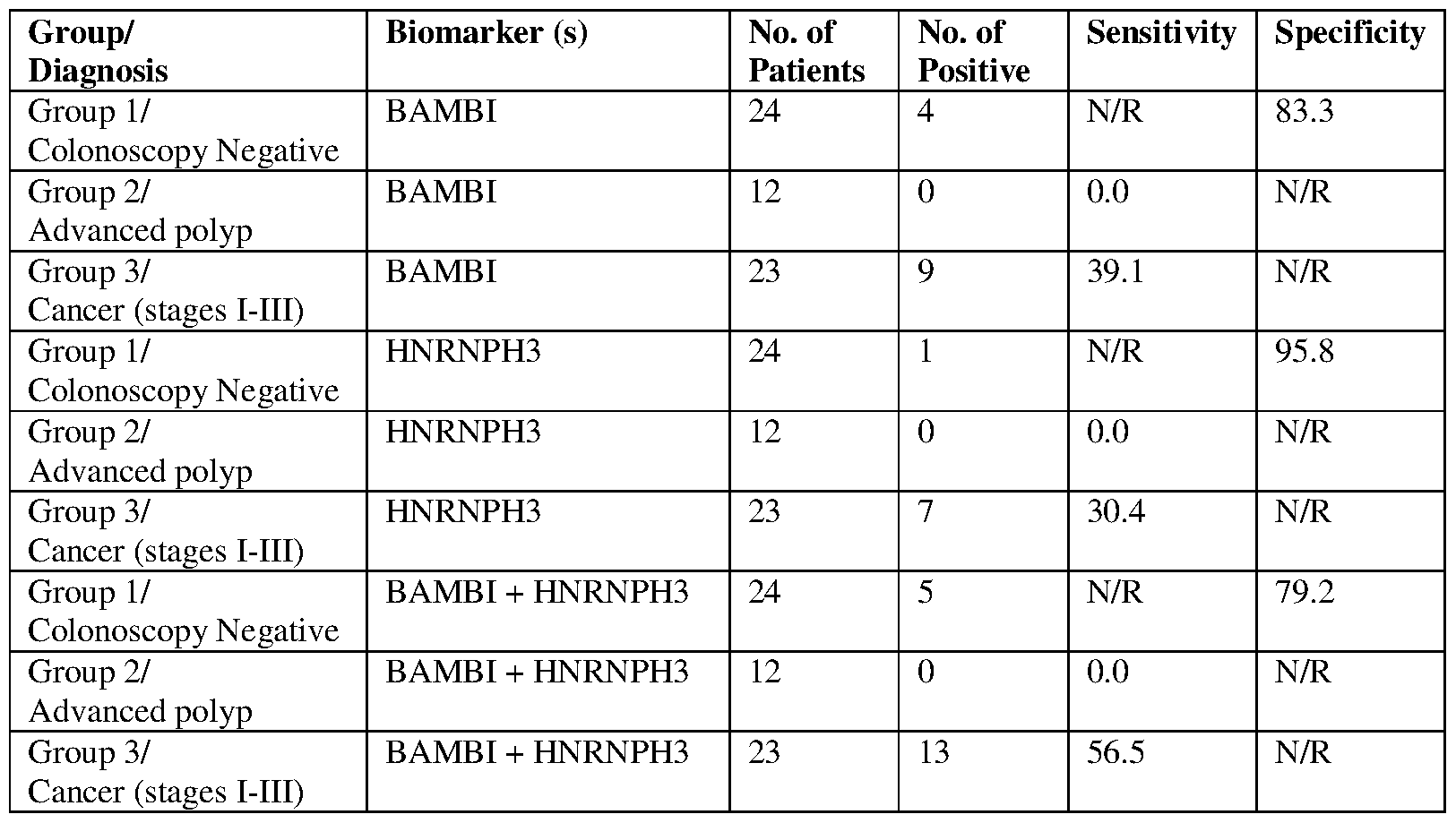
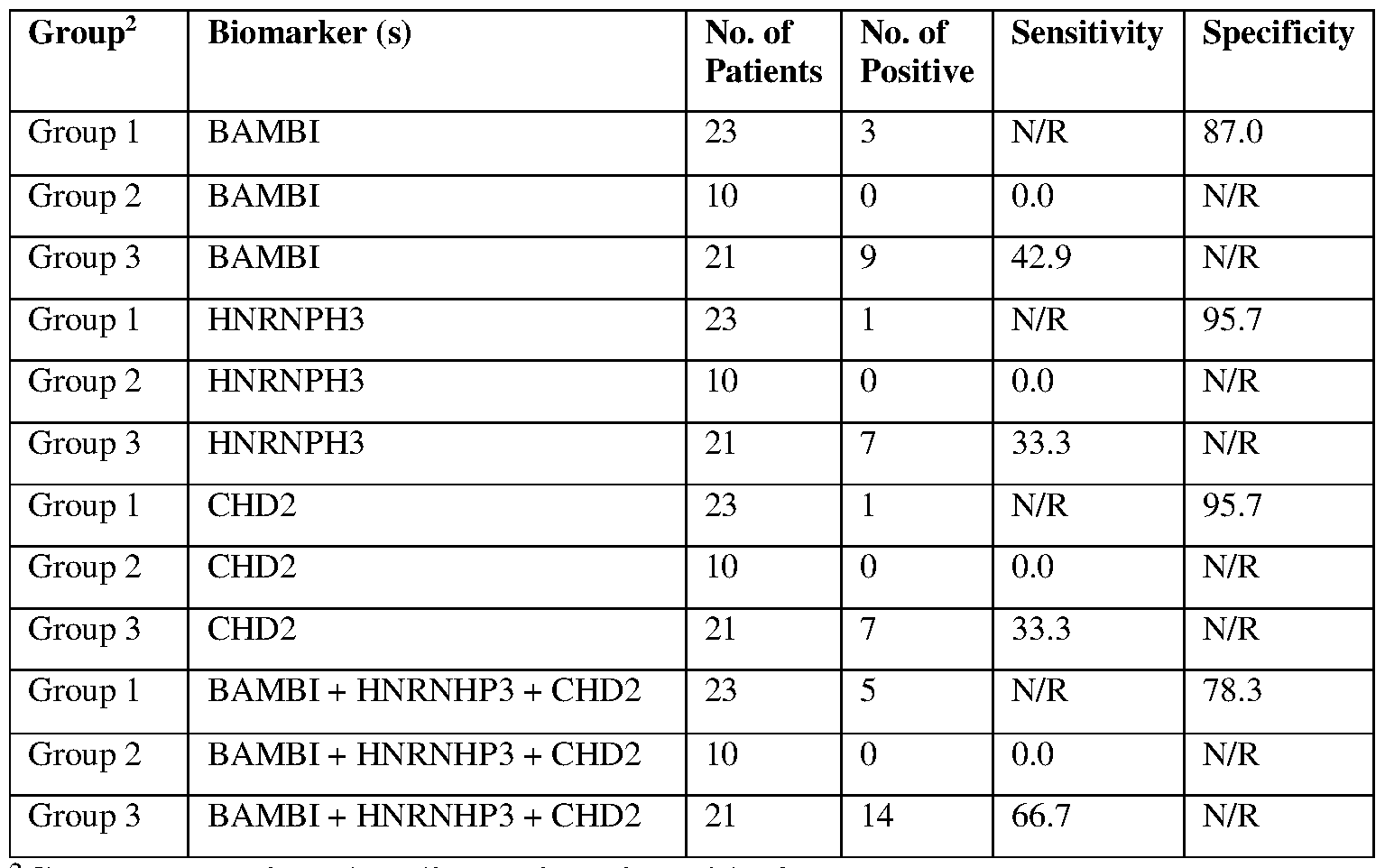
- the method disclosed herein distinguishes a disease or condition (particularly colorectal cancer) with a sensitivity of at least 19% at a specificity of at least 97% when compared to normal subjects (e.g., a healthy individual not afflicted with cancer). According to some embodiments, the method distinguishes a disease or condition with a sensitivity of at least 44% at a specificity of at least 92% when compared to normal subjects. According to some embodiments, the method distinguishes a disease or condition with a sensitivity of at least 56.5% at a specificity of at least 79% when compared to normal subjects.
- the method distinguishes a disease or condition with a sensitivity of at least 58% at a specificity of at least 92% when compared to subjects exhibiting symptoms that mimic disease or condition symptoms. According to some embodiments, the method distinguishes a disease or condition with a sensitivity of at least 66% at a specificity of at least 78% when compared to normal subjects. According to some embodiments, the method distinguishes a disease or condition with a sensitivity of at least 100% at a specificity of at least 85% when compared to normal subjects. According to some embodiments, the method distinguishes a disease or condition with a sensitivity of at least 56.5% at a specificity of at least 79% when compared to normal subjects.
- the method distinguishes precancerous advanced polyps with a sensitivity of at least 53% and colorectal cancer with a sensitivity of at least 87.5% at a specificity of at least 81% when compared to normal subjects.
- the term "relative quantity" of a biomarker refers to an amount of a biomarker in a subject's sample that is consistent with diagnosis of a particular disease or condition.
- a relative quantity can be either in absolute amount (e.g., microgram/ml) or a relative amount (e.g., relative intensity of signals).
- individual biomarkers and/or combinations of biomarkers may optionally be used for diagnosis of time of onset of a disease or condition. Such diagnosis may optionally be useful for a wide variety of conditions, including those conditions with an abrupt onset.
- an RNA biomarker expression level of greater than a pre-set cutoff value may signal that a patient is having CRC whereas an RNA biomarker expression level less than or equal to the pre-set cutoff value may indicate that a subject is healthy, or not having CRC.
- a change in biomarker concentration from baseline levels may be reflective of the status of a disease or its progression (if temporal monitoring is involved), or of the therapeutic effect of a treatment whereas the degree of change in biomarker expression level may be related to the severity of CRC.
- Statistical significance is often determined by comparing two or more populations, and determining a confidence interval (CI) and/or a p value.
- the confidence intervals (CI) of the invention are integers. According to some embodiments, the confidence intervals (CI) of the invention are integers.
- the detection of a nucleic acid of interest in a biological sample may be carried out by any method known in the art.
- detection of a nucleic acid of interest is effected by hybridization-based assays using an oligonucleotide probe.
- Traditional hybridization assays include PCR, reverse-transcriptase PCR, Real-time PCR, quantitative PCR, quantitative real-time PCR, RNase protection, in- situ hybridization, primer extension, dot or slot blots (RNA), and Northern blots (i.e., for RNA detection).
- Other detection methods include kits containing probes on a dipstick setup and the like.
- probes may be labeled according to numerous well known methods.
- detectable markers include ligands, fluorophores, chemiluminescent agents, enzymes, and antibodies.
- the probes are selected from the probes listed in Table 2.
- the probe oligonucleotides may be labeled subsequent to synthesis, by incorporating biotinylated dNTPs or rNTP, or some similar means (e.g., photo-cross-linking a psoralen derivative of biotin to RNAs), followed by addition of labeled streptavidin (e.g., phycoerythrin-conjugated streptavidin) or the equivalent.
- biotinylated dNTPs or rNTP or some similar means (e.g., photo-cross-linking a psoralen derivative of biotin to RNAs)
- streptavidin e.g., phycoerythrin-conjugated streptavidin
- fluorescein, FAM, lissamine, phycoerythrin, rhodamine, Cy2, Cy3, Cy3.5, Cy5, Cy5.5, Cy7, FluorX and others can be attached to the oligonucleotides.
- detection of the biomarkers of the invention is achieved by using TaqMan assays, preferably by using combined reporter and quencher molecules (Roche Molecular Systems Inc.).
- detection of a nucleic acid of interest in a biological sample may also optionally be effected by NAT-based assays, which involve nucleic acid amplification technology, such as PCR for example (or variations thereof such as qPCR for example).
- NAT-based assays which involve nucleic acid amplification technology, such as PCR for example (or variations thereof such as qPCR for example).
- Amplification of a selected, or target, nucleic acid sequence may be carried out by a number of suitable methods. Numerous amplification techniques have been described and can be readily adapted to suit particular needs of a person of ordinary skill. Non-limiting examples of amplification techniques include polymerase chain reaction (PCR), ligase chain reaction (LCR), strand displacement amplification (SDA), transcription-based amplification, the q3 replicase system and NASBA.
- PCR polymerase chain reaction
- LCR ligase chain reaction
- SDA strand displacement amplification
- transcription-based amplification the q3 replicase system
- NASBA NASBA
- a nucleic acid sample from a subject is amplified under conditions which favor the amplification of the most abundant differentially expressed nucleic acid.
- reverse transcription into cDNA is carried out on an mRNA sample from a patient.
- the amplification of the differentially expressed nucleic acids is carried out simultaneously. It will be realized by a person skilled in the art that such methods could be adapted for the detection of differentially expressed proteins instead of differentially expressed nucleic acid sequences.
- the nucleic acid e.g., mRNA
- the nucleic acid for practicing the present invention may be obtained according to well known methods.
- detection may also optionally be performed with a chip or other such device.
- the nucleic acid sample which includes the candidate region to be analyzed is optionally isolated, amplified and labeled with a reporter group.
- This reporter group may be a fluorescent group such as phycoerythrin.
- the labeled nucleic acid is then incubated with the probes immobilized on the chip using a fluidics station. Once the reaction is completed, the chip is inserted into a scanner and patterns of hybridization are detected. The hybridization data is collected, as a signal emitted from the reporter groups already incorporated into the nucleic acid, which is now bound to the probes attached to the chip. Since the sequence and position of each probe immobilized on the chip is known, the identity of the nucleic acid hybridized to a given probe can be determined.
- the above described detection methods may be used to screen multiple samples for a disease and/or pathological condition both rapidly and easily.
- kit for identifying colorectal cancer or precancerous advanced colorectal polyps in a biological sample comprising one or more containers filled with a nucleotide primer pair flanking a biomarker comprising a nucleic acid sequences set forth in SEQ ID NO: 1, wherein said nucleotide primer pair is designed to selectively amplify a fragment of the genome of the individual in said sample that includes the biomarker.
- the nucleotide primer pair is selected from the nucleotide primer pairs listed in Table 2.
- said nucleotide primer pair comprises SEQ ID NOs: 40 and 41.
- said biomarker further comprises at least one nucleic acid sequences selected from SEQ ID NOs: 2, 3, 5-7, 12 and 17 and said nucleotide primer pair comprises at least one of SEQ ID NOs: 30 and 31 ; SEQ ID NOs: 34 and 35; SEQ ID NOs: 67 and 68; SEQ ID NOs: 49 and 50; SEQ ID NOs: 52 and 53; SEQ ID NOs: 64 and 65; and SEQ ID NOs: 73 and 74, respectively.
- said biomarker comprises the nucleic acid sequences set forth in SEQ ID NOs: 1-3, 5-7, 12 and 17, said nucleotide primer pair comprises SEQ ID NOs: 40 and 41 ; SEQ ID NOs: 30 and 31 ; SEQ ID NOs: 34 and 35; SEQ ID NOs: 67 and 68; SEQ ID NOs: 49 and 50; SEQ ID NOs: 52 and 53; SEQ ID NOs: 64 and 65; and SEQ ID NOs: 73 and 74 and said kit is for identifying colorectal cancer.
- said biomarker is consisting the nucleic acid sequences set forth in SEQ ID NOs: 1-3, 5-7, 12 and 17, said nucleotide primer pair comprises SEQ ID NOs: 40 and 41 ; SEQ ID NOs: 30 and 31 ; SEQ ID NOs: 34 and 35; SEQ ID NOs: 67 and 68; SEQ ID NOs: 49 and 50; SEQ ID NOs: 52 and 53; SEQ ID NOs: 64 and 65; and SEQ ID NOs: 73 and 74 and said kit is for identifying colorectal cancer.
- said biomarker comprises the nucleic acid sequences set forth in SEQ ID NOs: 1 and 5, said nucleotide primer pair comprises SEQ ID NOs: 95 and 96; and SEQ ID NOs: 67 and 68, and said subject is identified as having precancerous advanced colorectal polyps.
- said biomarker is consisting the nucleic acid sequences set forth in SEQ ID NOs: 1 and 5, said nucleotide primer pair comprises SEQ ID NOs: 40 and 41; and SEQ ID NOs: 67 and 68 and said subject is identified as having precancerous advanced colorectal polyps.
- said biomarker comprises SEQ ID NO: 1 and at least one nucleic acid sequences selected from SEQ ID NOs: 3, 4, 6 and 14, and said nucleotide primer pair comprises SEQ ID NOs: 40 and 41 ; and at least one of SEQ ID NOs: 34 and 35; SEQ ID NOs: 55 and 56; SEQ ID NOs: 49 and 50; SEQ ID NOs: 61 and 62, respectively.
- said biomarker comprises SEQ ID NOs: 1 and 4 and at least one nucleic acid sequences selected from SEQ ID NOs: 3, 6 and 14 and said nucleotide primer pair comprises SEQ ID NOs: 40 and 41 and SEQ ID NOs: 55 and 56; and at least one of SEQ ID NOs: 34 and 35; SEQ ID NOs: 49 and 50; SEQ ID NOs: 61 and 62, respectively.
- said biomarker comprises SEQ ID NOs: 1, 3 and 4 and said nucleotide primer pair comprises SEQ ID NOs: 40 and 41 ; SEQ ID NOs: 34 and 35 and SEQ ID NOs: 55 and 56.
- said biomarker comprises SEQ ID NOs: 1, 4, 6 and 14 and said nucleotide primer pair comprises SEQ ID NOs: 40 and 41 SEQ ID NOs: 55 and 56; SEQ ID NOs: 49 and 50; and SEQ ID NOs: 61 and 62.
- said biomarker comprises SEQ ID NOs: 1, 3, 4 and 14 and said nucleotide primer pair comprises SEQ ID NOs: 40 and 41 ; SEQ ID NOs: 34 and 35; SEQ ID NOs: 55 and 56; and SEQ ID NOs: 61 and 62.
- cancer and “colorectal cancer” are interchangeable.
- the cancer is invasive. According to other embodiments, the cancer is non-invasive. According to yet other embodiments, the cancer is non metastatic. According to some embodiments, the cancer is metastatic. According to some embodiments, the cancer is a metastasis of colorectal cancer.
- kits and methods of the invention are used for monitoring individuals who are at high risk for colorectal cancer, such as, those who have been diagnosed in the past with localized disease, metastasized disease or those who are genetically linked to the disease, or those who have family members of first and second degree diagnosed in the past with cancer.
- Individuals with a history of inflammatory conditions of the colon such as ulcerative colitis or Crohn's colitis may also be considered as individuals who are in high risk groups for colorectal cancer.
- Molecular diagnostics according to the present invention may be used for monitoring individuals who are undergoing, or have been treated for, colorectal cancer, in order to determine if the cancer has been eliminated.
- Screening and diagnostic kits and methods according to the present invention may be used in the monitoring of individuals who have been identified as genetically predisposed such as by genetic screening and/or family histories. Screening and diagnostic kits and methods according to the present invention may be used in the monitoring of asymptomatic individuals whether or not identified as genetically predisposed.
- the invention is useful for identifying individuals who show at least one symptom or characteristic of cancer, e.g. presence of polyps in the colon.
- the present invention is used for monitoring individuals who have been identified as having family medical histories which include relatives who have suffered from colorectal cancer. Likewise, the invention is particularly useful to monitor individuals who have been treated and had tumors removed or are otherwise experiencing remission.
- the present invention further provides a method for treating a subject having colorectal cancer, the method comprising identifying a subject having colorectal cancer or precancerous advanced colorectal polyps, and treating said subject, wherein treating comprises at least one of administering a chemotherapeutic agent, performing bowel resection, applying radiation therapy and a combination thereof.
- the chemotherapeutic agents includes, but is not limited to, 5-fluorouraeii, leucovorin, or oxaliplatin or capecitabine; and/or a monoclonal antibody, such as bevacizumab, cetuximab, or pamtunvumab, or alternative monoclonal antibody, or a combination thereof.
- a monoclonal antibody such as bevacizumab, cetuximab, or pamtunvumab, or alternative monoclonal antibody, or a combination thereof.
- treating a subject for precancerous advanced polyps comprises removal of said precancerous advanced polyps.
- removal of said precancerous advanced polyps comprises performing one or more of colonoscopy, flexible sigmoidoscopy and open surgery.
- colonoscopy flexible sigmoidoscopy
- open surgery open surgery
- the identification, diagnosis, early diagnosis and/or prognosis of said subject according to the present invention enables a man skilled in the art (i.e., clinician or physician) to determine and/or manage the subject treatment regimen.
- Managing subject treatment includes determination of the severity of the cancerous state (e.g., cancer status). For example, if the severity of the cancerous state indicates that surgery is appropriate, the physician may schedule the patient for surgery. Likewise, if the severity of the cancerous state indicates late stage cancer or if the status is acute, no further action may be warranted. Furthermore, if the results show that treatment has been successful, no further management or treatment may be necessary.
- the physician may order more diagnostic tests. Accordingly, patients that are found to have at least one biomarker with an expression level above the cutoff value that identifies them as having colorectal cancer may undergo additional diagnostic procedures.
- a "subject" commonly refers to mammalian subject.
- a mammalian subject may be human or non-human, preferably human.
- a healthy subject is defined as a subject without detectable colorectal diseases or symptoms, colorectal associated diseases or precancerous advanced polyps, determined by conventional diagnostic methods.
- Subjects at least 50 years old and scheduled for colonoscopy were participated in the study. To ensure that only average risk individuals were enrolled, the following were excluded from the study: previous CRC or adenomas; iron deficiency anemia or haematochezia (blood in the stool) within the previous 6 months; or family history indicating increased risk for the disease (two or more first degree relatives with CRC or one or more with CRC at age 50 years or less; or known Lynch syndrome or familial adenomatous polyposis).
- Colonoscopy procedures including polypectomy and biopsy, were performed by board certified endoscopists using screening standards and site specific standards for sedation, monitoring, imaging and equipment. Histopathology, diagnostic procedures, and staging of biopsy and surgical specimens used routine procedures. Samples from 137 subjects were available for selection into laboratory analysis, including 55 normal subjects, 47 with advanced adenomas and 35 with CRC. The clinical as well as histological parameters of the study groups are depicted in Table 1A.
- the plasma was homogenized with TRIzol® Reagent (Invitrogen). Each volume of plasma was mixed with 3.5 volumes of TRIzol reagent. The mixture was divided into storage micro tubes and stored at -80°C until further purification.
- Total RNA extraction was performed according to the following protocol: 300 ⁇ chloroform (119.38 g/mol) was added to each of four micro-tubes containing TRIzolTM- plasma mixture of the same individual. The solution was mixed vigorously and incubated for 10 minutes at room temperature. Subsequently, the mixture was centrifuged for 15 minutes at 14,000 rpm at 4°C.
- the aqueous phase was transferred to a new tube and mixed vigorously with equal volume of chloroform, incubated for 3 minutes at room temperature and centrifuged for 15 minutes at 14,000 rpm at 4°C. Following the centrifugation, the upper phase was transferred to a new micro tube; next, a total of 1.4 ml RLT buffer from RNeasyTM mini kit (Qiagen) was added and tubes were mixed. Thereafter, 1.5 times volume of 100% EtOH per each separated upper phase was added. The solution was well mixed and incubated at -20°C for overnight.
- RNA purification was completed by following the RNeasyTM mini kit protocol (Qiagen). In short, spin column was loaded with the sample and was washed twice with 500 ⁇ of RPE buffer were. Finally, RNA was eluted by adding 35 ⁇ of RNase-free water.
- RNA quantity was measured using NanoDropTM instrument (Thermo Scientific).
- RNA was purified using TRIzol-plasma mixture of the same individual, thawed on ice and 15 mg of linear acrylamide and 200 ⁇ of chloroform were added per each 1 ml of Trizol and mixed vigorously. After 10 minutes incubation at room temperature, the mixture was centrifuged for 15 minutes at 14000 rpm at 4°C. The aqueous phase was isolated and further RNA purification steps were performed as above described for RNA specimen preparation for qPCR.
- cDNA was synthesized, purified and was subjected to fragmentation and biotin labeling.
- cDNA was diluted x4, of which 2 ⁇ were used for qPCR.
- PerfeCTa qPCR SuperMix catalog # 95065, Quanta
- forwards and reverse primers Table 2 set specific for each gene, hydrolysis probes and diluted cDNA in a final volume of 20 ⁇ .
- qPCR was performed in a 96 well PCR plate, for 52 cycles at Quanta's specified conditions, in ABI Prism 7900 system.
- the probes, fluorescently labeled, listed in Table 2 include one or more of the following labels: FAM at the 5' end (also known as 56-FAM), IABkFQ at the 3' end and may further include N,N-diethyl-4-(4-nitronaphthalen-l-ylazo)-phenylamine (also known as 'ZEN').
- ZEN may be incorporated at any position. For example, ZEN may be incorporated at position 9 from the 3' end, position 10 from the 3' end, or in the middle of the probe (such that about the same number of nucleotides are stretched at the 3' and 5' directions counting from the ZEN position).
- the reference genes for normalization were human HPRT1 and human TFRC.
- Delta-delta Ct and relative quantification for each gene was calculated by DataAssist v3.0.
- Reference genes primers and probe sequences are as followed: hHPRTl gene, forwards primer- TATGCTGAGGATTTGGAAAGG (SEQ ID NO: 18), reverse primer- CATCTCCTTCATCACATCTCG (SEQ ID NO: 19; final concentration 300nM) probe- FAM-TATGGACAGGACTGAACG-3'IABkFQ (SEQ ID NO: 20) with addition of 4 LNAs (final concentration 200nM).
- hTFRC forwards primer - TTGCATATTCTGGAATCCCA (SEQ ID NO: 21), reverse primer - TCAGTTCCTTATAGGTGTCCATG (SEQ ID NO: 22; final concentration 500nM), probe- FAM-TCTGTGTCCTCGCAAAAA-3'IABkFQ (SEQ ID NO: 23) with addition of 5 LNAs (final concentration 250nM).
- An exemplary flow chart of the process is shown in Figure 1.
- KLF9 86 Probe AG TGC ATA CA GGT GAA CGG CCC 63
- Primer 1 (Fw) AGG CTG TAG TCT GGA GAT GTC 73
- RQ Relative Quantity
- a value of 2 was assigned to a combination of biomarkers if the expression level of at least one biomarker in said combination was above its predetermined cutoff value.
- the assigned values (1 or 2) are also referred herein as normalized expression levels.
- the normalized expression levels in healthy (N), precancerous (AD) and cancer (CA) populations of the combinations COX11, KIAA1199 and BAD (SEQ ID NOs: 9, 14 and 2; Table 4A) and CHD2 and EPAS1 (SEQ ID NOs: 1 and 6; Table 4B) are presented in Figures 4A and 4B, respectively, where expression levels above the cutoff are presented in bold (Tables 4A and 4B).
- a combination or a subgroup of biomarkers may be used for identification of the subject as having colorectal cancer, while not compromising the specificity, by applying the combinatorial data analysis algorithm.
- combinatorial data analysis may increase the sensitivity of identification of two biomarkers, BAMBI (SEQ ID NO: 3) and HNRNHP3 (SEQ ID NO: 4) in comparison to the sensitivity of each of the biomarkers alone.
- Cluster 1 includes the genes CHD2, BAD and BAMBI (SEQ ID NOs: 1-3, respectively) and Cluster 2 includes the genes NEK6, FKBP5 and SASH3 (SEQ ID NOs: 5, 7 and 17, respectively).
- Max_BAD_BAMBI_CHD2 this feature corresponds to the maximum value from the three genes CHD2, BAD and BAMBI (SEQ ID NOs: 1-3, respectively);
- Max_FKBP5_SASH3_NEK6 this feature corresponds to the maximum value from the three genes NEK6, FKBP5 and SASH3 (SEQ ID NOs: 5, 7 and 17, respectively).
- Logistic regression was used to develop a classification model for Cancer-Healthy using four features:
Landscapes
- Health & Medical Sciences (AREA)
- Chemical & Material Sciences (AREA)
- Life Sciences & Earth Sciences (AREA)
- General Health & Medical Sciences (AREA)
- Organic Chemistry (AREA)
- Proteomics, Peptides & Aminoacids (AREA)
- Medicinal Chemistry (AREA)
- Pharmacology & Pharmacy (AREA)
- Epidemiology (AREA)
- Animal Behavior & Ethology (AREA)
- Public Health (AREA)
- Veterinary Medicine (AREA)
- Genetics & Genomics (AREA)
- Zoology (AREA)
- Analytical Chemistry (AREA)
- Immunology (AREA)
- Pathology (AREA)
- Wood Science & Technology (AREA)
- Engineering & Computer Science (AREA)
- Molecular Biology (AREA)
- Physics & Mathematics (AREA)
- Microbiology (AREA)
- Biotechnology (AREA)
- Hospice & Palliative Care (AREA)
- Biophysics (AREA)
- Oncology (AREA)
- Biochemistry (AREA)
- Bioinformatics & Cheminformatics (AREA)
- General Engineering & Computer Science (AREA)
- Measuring Or Testing Involving Enzymes Or Micro-Organisms (AREA)
Abstract
Description





Claims
Priority Applications (8)
| Application Number | Priority Date | Filing Date | Title |
|---|---|---|---|
| US15/300,859 US10407737B2 (en) | 2014-04-10 | 2015-04-02 | Methods and kits for identifying pre-cancerous colorectal polyps and colorectal cancer |
| AU2015246009A AU2015246009B2 (en) | 2014-04-10 | 2015-04-02 | Methods and kits for identifying pre-cancerous colorectal polyps and colorectal cancer |
| CA2945080A CA2945080A1 (en) | 2014-04-10 | 2015-04-02 | Methods and kits for identifying pre-cancerous colorectal polyps and colorectal cancer |
| CN201580021875.2A CN106460047B (en) | 2014-04-10 | 2015-04-02 | Method and kit for identifying precancerous colorectal polyps and colorectal cancers |
| EP15777241.9A EP3129509B1 (en) | 2014-04-10 | 2015-04-02 | Methods and kits for identifying pre-cancerous colorectal polyps and colorectal cancer |
| JP2017504292A JP6608424B2 (en) | 2014-04-10 | 2015-04-02 | Methods and kits for identifying precancerous colorectal polyps and colorectal cancer |
| IL248178A IL248178B (en) | 2014-04-10 | 2016-10-05 | Methods and kits for identifying pre-cancerous colorectal polyps and colorectal cancer |
| US16/539,680 US20190360061A1 (en) | 2014-04-10 | 2019-08-13 | Methods and kits for identifying pre-cancerous colorectal polyps and colorectal cancer |
Applications Claiming Priority (2)
| Application Number | Priority Date | Filing Date | Title |
|---|---|---|---|
| US201461977636P | 2014-04-10 | 2014-04-10 | |
| US61/977,636 | 2014-04-10 |
Related Child Applications (2)
| Application Number | Title | Priority Date | Filing Date |
|---|---|---|---|
| US15/300,859 A-371-Of-International US10407737B2 (en) | 2014-04-10 | 2015-04-02 | Methods and kits for identifying pre-cancerous colorectal polyps and colorectal cancer |
| US16/539,680 Continuation US20190360061A1 (en) | 2014-04-10 | 2019-08-13 | Methods and kits for identifying pre-cancerous colorectal polyps and colorectal cancer |
Publications (1)
| Publication Number | Publication Date |
|---|---|
| WO2015155765A1 true WO2015155765A1 (en) | 2015-10-15 |
Family
ID=54287389
Family Applications (1)
| Application Number | Title | Priority Date | Filing Date |
|---|---|---|---|
| PCT/IL2015/050362 Ceased WO2015155765A1 (en) | 2014-04-10 | 2015-04-02 | Methods and kits for identifying pre-cancerous colorectal polyps and colorectal cancer |
Country Status (8)
| Country | Link |
|---|---|
| US (2) | US10407737B2 (en) |
| EP (1) | EP3129509B1 (en) |
| JP (1) | JP6608424B2 (en) |
| CN (1) | CN106460047B (en) |
| AU (1) | AU2015246009B2 (en) |
| CA (1) | CA2945080A1 (en) |
| IL (1) | IL248178B (en) |
| WO (1) | WO2015155765A1 (en) |
Families Citing this family (4)
| Publication number | Priority date | Publication date | Assignee | Title |
|---|---|---|---|---|
| WO2018184112A1 (en) * | 2017-04-05 | 2018-10-11 | Metabolomic Technologies Inc. | Methods of high-throughput mass spectrometry based urine test for colorectal states |
| CN111868260B (en) | 2017-08-07 | 2025-02-21 | 约翰斯霍普金斯大学 | Methods and materials for evaluating and treating cancer |
| AU2019252672B2 (en) | 2018-04-12 | 2025-08-14 | Board Of Regents, The University Of Texas System | Biomarker for detecting cancer |
| CN109371023A (en) * | 2018-12-11 | 2019-02-22 | 宁夏医科大学总医院 | A kind of circular RNA hsa_circKIAA1199_006 and its specific amplification primer and application |
Citations (5)
| Publication number | Priority date | Publication date | Assignee | Title |
|---|---|---|---|---|
| US20050048494A1 (en) * | 2003-08-28 | 2005-03-03 | Yixin Wang | Colorectal cancer prognostics |
| US20100330079A1 (en) | 2007-06-04 | 2010-12-30 | Curzio Ruegg | Biomarkder combinations for colorectal cancer |
| WO2011012136A1 (en) | 2009-07-28 | 2011-02-03 | Exiqon A/S | A method for classifying a human cell sample as cancerous |
| WO2012103250A2 (en) * | 2011-01-25 | 2012-08-02 | Almac Diagnostics Limited | Colon cancer gene expression signatures and methods of use |
| US20120329077A1 (en) | 2002-08-26 | 2012-12-27 | Case Western Reserve University | Methods and compositions for categorizing patients |
Family Cites Families (13)
| Publication number | Priority date | Publication date | Assignee | Title |
|---|---|---|---|---|
| US7700359B2 (en) * | 2000-06-02 | 2010-04-20 | Novartis Vaccines And Diagnostics, Inc. | Gene products differentially expressed in cancerous cells |
| WO2002058534A2 (en) * | 2000-11-20 | 2002-08-01 | Corixa Corporation | Compositions and methods for the therapy and diagnosis of colon cancer |
| EP1627916B1 (en) | 2003-05-28 | 2009-11-25 | Takeda Pharmaceutical Company Limited | Anti-BAMBI antibodies or RNA for diagnosis and therapy of colon or liver cancer |
| US20050014165A1 (en) * | 2003-07-18 | 2005-01-20 | California Pacific Medical Center | Biomarker panel for colorectal cancer |
| CA2475769C (en) | 2003-08-28 | 2018-12-11 | Veridex, Llc | Colorectal cancer prognostics |
| US7534562B2 (en) * | 2003-09-30 | 2009-05-19 | Daiichi Pharmaceutical Co., Ltd. | Tetrahydrofolate synthetase gene |
| CA2643225A1 (en) | 2006-02-28 | 2007-09-07 | Pfizer Products Inc. | Gene predictors of response to metastatic colorectal chemotherapy |
| CA2644586A1 (en) | 2006-03-03 | 2008-04-17 | Veridex Llc | Molecular assay to predict recurrence of duke's b colon cancer |
| CN101970499B (en) | 2008-02-11 | 2014-12-31 | 治疗科技公司 | Monoclonal Antibodies for Cancer Therapy |
| ES2663843T3 (en) * | 2011-03-02 | 2018-04-17 | Institut de Cancérologie de l'Ouest (I.C.O) | Use of olfactomedin-4 protein (OLFM4) in the diagnosis of colorectal cancer |
| US20140155280A1 (en) | 2011-05-05 | 2014-06-05 | Commonwealth Scientific And Industrial Research Organisation | Method of diagnosing neoplasms |
| WO2013110817A1 (en) | 2012-01-27 | 2013-08-01 | Vib Vzw | Monocyte biomarkers for cancer detection |
| CN103667437B (en) | 2012-09-25 | 2016-05-25 | 生物梅里埃股份公司 | A kind of colorectal cancer screening kit |
-
2015
- 2015-04-02 EP EP15777241.9A patent/EP3129509B1/en not_active Not-in-force
- 2015-04-02 WO PCT/IL2015/050362 patent/WO2015155765A1/en not_active Ceased
- 2015-04-02 CA CA2945080A patent/CA2945080A1/en not_active Abandoned
- 2015-04-02 AU AU2015246009A patent/AU2015246009B2/en not_active Ceased
- 2015-04-02 US US15/300,859 patent/US10407737B2/en not_active Expired - Fee Related
- 2015-04-02 JP JP2017504292A patent/JP6608424B2/en not_active Expired - Fee Related
- 2015-04-02 CN CN201580021875.2A patent/CN106460047B/en not_active Expired - Fee Related
-
2016
- 2016-10-05 IL IL248178A patent/IL248178B/en not_active IP Right Cessation
-
2019
- 2019-08-13 US US16/539,680 patent/US20190360061A1/en not_active Abandoned
Patent Citations (5)
| Publication number | Priority date | Publication date | Assignee | Title |
|---|---|---|---|---|
| US20120329077A1 (en) | 2002-08-26 | 2012-12-27 | Case Western Reserve University | Methods and compositions for categorizing patients |
| US20050048494A1 (en) * | 2003-08-28 | 2005-03-03 | Yixin Wang | Colorectal cancer prognostics |
| US20100330079A1 (en) | 2007-06-04 | 2010-12-30 | Curzio Ruegg | Biomarkder combinations for colorectal cancer |
| WO2011012136A1 (en) | 2009-07-28 | 2011-02-03 | Exiqon A/S | A method for classifying a human cell sample as cancerous |
| WO2012103250A2 (en) * | 2011-01-25 | 2012-08-02 | Almac Diagnostics Limited | Colon cancer gene expression signatures and methods of use |
Non-Patent Citations (8)
| Title |
|---|
| BANDRES, EVA ET AL.: "A gene signature of 8 genes could identify the risk of recurrence and progression in Dukes", B COLON CANCER PATIENTS., vol. 17, no. 5, 1 May 2007 (2007-05-01), pages 1089 - 1094, XP002514752, ISSN: 1021-335x * |
| BONILLA ET AL., ONCOLOGY LETTERS, vol. 2, 2011, pages 719 - 714 |
| GARCIA ET AL., CLINICAL CHEM., vol. 53, no. 10, 2007, pages 1860 - 1863 |
| KIM ET AL., HISTOPATHOLOGY, vol. 58, no. 5, 30 March 2011 (2011-03-30), pages 660 - 668 |
| MARSHALL ET AL., INT J CANCER, vol. 126, 2010, pages 1177 - 1186 |
| SAMBROOK ET AL.: "Molecular Cloning -A Laboratory Manual", 1989, CSH LABORATORIES |
| See also references of EP3129509A4 |
| YE ET AL., PLOS ONE, vol. 8, no. 5, 2013, pages e62870 |
Also Published As
| Publication number | Publication date |
|---|---|
| JP2017510304A (en) | 2017-04-13 |
| IL248178B (en) | 2020-08-31 |
| US20170058357A1 (en) | 2017-03-02 |
| CN106460047B (en) | 2019-11-26 |
| CN106460047A (en) | 2017-02-22 |
| US10407737B2 (en) | 2019-09-10 |
| IL248178A0 (en) | 2016-11-30 |
| EP3129509A1 (en) | 2017-02-15 |
| AU2015246009B2 (en) | 2020-07-09 |
| US20190360061A1 (en) | 2019-11-28 |
| EP3129509A4 (en) | 2017-12-06 |
| EP3129509B1 (en) | 2020-06-17 |
| AU2015246009A1 (en) | 2016-10-20 |
| JP6608424B2 (en) | 2019-11-20 |
| CA2945080A1 (en) | 2015-10-15 |
Similar Documents
| Publication | Publication Date | Title |
|---|---|---|
| US20230366034A1 (en) | Compositions and methods for diagnosing lung cancers using gene expression profiles | |
| US9068974B2 (en) | Biomarkers in peripheral blood mononuclear cells for diagnosing or detecting lung cancers | |
| JP6897970B2 (en) | How to check for colorectal tumors | |
| US20190360061A1 (en) | Methods and kits for identifying pre-cancerous colorectal polyps and colorectal cancer | |
| CN102947468B (en) | Method for detection of colorectal tumor | |
| WO2021004215A1 (en) | Multi-gene combined detection reagent | |
| US20250137066A1 (en) | Compostions and methods for diagnosing lung cancers using gene expression profiles | |
| EP3987062B1 (en) | Detection of hypermethylated genes for diagnosing gastric cancer | |
| CN110229899B (en) | Plasma marker combinations for early diagnosis or prognosis prediction of colorectal cancer | |
| CN113355415B (en) | Detection reagents and kits for esophageal cancer diagnosis or auxiliary diagnosis | |
| WO2014159425A1 (en) | Bladder cancer detection and monitoring | |
| EP3368684B1 (en) | Biomarker for breast cancer | |
| CN116144782A (en) | A combination marker for lung cancer detection and its application | |
| CN113278692A (en) | Method and kit for identifying pulmonary nodule status | |
| CN118028469A (en) | Composition for detecting ovarian cancer and application thereof | |
| CN105779612A (en) | Lynch syndrome gene detection reagent kit and application thereof | |
| CN114746551A (en) | Marker for diagnosing colorectal cancer, method for assisting diagnosis of colorectal cancer, method for collecting data to be used for diagnosis of colorectal cancer, diagnostic kit for colorectal cancer, therapeutic agent for colorectal cancer, method for treating colorectal cancer, and method for diagnosing colorectal cancer | |
| CN119570930B (en) | Application of the biomarker PATJ-DT in the diagnosis or prognostic prediction of colorectal cancer | |
| CN110184357A (en) | Prognosis prediction diagnosis gene marker of colon cancer and application thereof | |
| KR102152893B1 (en) | Use for detection of hepatocellular carcinoma specific MLH1 circulating tumor DNA mutation | |
| US20170226592A1 (en) | Methods and kits used in classifying adrenocortical carcinoma | |
| EP4735641A1 (en) | Detection of hypermethylated genes for diagnosing colorectal cancer | |
| WO2023222927A2 (en) | Biomarkers for colorectal neoplasia | |
| TW202444925A (en) | Bladder Cancer Biomarkers |
Legal Events
| Date | Code | Title | Description |
|---|---|---|---|
| 121 | Ep: the epo has been informed by wipo that ep was designated in this application |
Ref document number: 15777241 Country of ref document: EP Kind code of ref document: A1 |
|
| WWE | Wipo information: entry into national phase |
Ref document number: 15300859 Country of ref document: US |
|
| WWE | Wipo information: entry into national phase |
Ref document number: 248178 Country of ref document: IL |
|
| ENP | Entry into the national phase |
Ref document number: 2945080 Country of ref document: CA |
|
| ENP | Entry into the national phase |
Ref document number: 2017504292 Country of ref document: JP Kind code of ref document: A |
|
| NENP | Non-entry into the national phase |
Ref country code: DE |
|
| ENP | Entry into the national phase |
Ref document number: 2015246009 Country of ref document: AU Date of ref document: 20150402 Kind code of ref document: A |
|
| REEP | Request for entry into the european phase |
Ref document number: 2015777241 Country of ref document: EP |
|
| WWE | Wipo information: entry into national phase |
Ref document number: 2015777241 Country of ref document: EP |