WO2015156452A1 - 요약 컨텐츠 서비스를 위한 방송 수신 장치 및 방법 - Google Patents
요약 컨텐츠 서비스를 위한 방송 수신 장치 및 방법 Download PDFInfo
- Publication number
- WO2015156452A1 WO2015156452A1 PCT/KR2014/007280 KR2014007280W WO2015156452A1 WO 2015156452 A1 WO2015156452 A1 WO 2015156452A1 KR 2014007280 W KR2014007280 W KR 2014007280W WO 2015156452 A1 WO2015156452 A1 WO 2015156452A1
- Authority
- WO
- WIPO (PCT)
- Prior art keywords
- content
- image
- section
- event
- video
- Prior art date
- Legal status (The legal status is an assumption and is not a legal conclusion. Google has not performed a legal analysis and makes no representation as to the accuracy of the status listed.)
- Ceased
Links
Images




Classifications
-
- H—ELECTRICITY
- H04—ELECTRIC COMMUNICATION TECHNIQUE
- H04N—PICTORIAL COMMUNICATION, e.g. TELEVISION
- H04N21/00—Selective content distribution, e.g. interactive television or video on demand [VOD]
- H04N21/40—Client devices specifically adapted for the reception of or interaction with content, e.g. set-top-box [STB]; Operations thereof
- H04N21/43—Processing of content or additional data, e.g. demultiplexing additional data from a digital video stream; Elementary client operations, e.g. monitoring of home network or synchronising decoder's clock; Client middleware
- H04N21/44—Processing of video elementary streams, e.g. splicing a video clip retrieved from local storage with an incoming video stream or rendering scenes according to encoded video stream scene graphs
- H04N21/44008—Processing of video elementary streams, e.g. splicing a video clip retrieved from local storage with an incoming video stream or rendering scenes according to encoded video stream scene graphs involving operations for analysing video streams, e.g. detecting features or characteristics in the video stream
-
- H—ELECTRICITY
- H04—ELECTRIC COMMUNICATION TECHNIQUE
- H04N—PICTORIAL COMMUNICATION, e.g. TELEVISION
- H04N21/00—Selective content distribution, e.g. interactive television or video on demand [VOD]
- H04N21/40—Client devices specifically adapted for the reception of or interaction with content, e.g. set-top-box [STB]; Operations thereof
- H04N21/43—Processing of content or additional data, e.g. demultiplexing additional data from a digital video stream; Elementary client operations, e.g. monitoring of home network or synchronising decoder's clock; Client middleware
- H04N21/439—Processing of audio elementary streams
- H04N21/4394—Processing of audio elementary streams involving operations for analysing the audio stream, e.g. detecting features or characteristics in audio streams
-
- H—ELECTRICITY
- H04—ELECTRIC COMMUNICATION TECHNIQUE
- H04N—PICTORIAL COMMUNICATION, e.g. TELEVISION
- H04N21/00—Selective content distribution, e.g. interactive television or video on demand [VOD]
- H04N21/80—Generation or processing of content or additional data by content creator independently of the distribution process; Content per se
- H04N21/85—Assembly of content; Generation of multimedia applications
- H04N21/854—Content authoring
- H04N21/8549—Creating video summaries, e.g. movie trailer
Definitions
- the present invention relates to a broadcast receiving apparatus and method, and more particularly, to a broadcast receiving apparatus and method for providing a summary content service for sports-related content.
- the broadcast receiving apparatus receives a summary content (hereinafter, referred to as a highlight image) of content currently being displayed from the outside and displays it on the screen.
- a highlight image is generated from an external server and transmitted to a broadcast receiving device after a predetermined time elapses from playback of the content related to the highlight image.
- the external server generates a highlight image of the sports content after the first half or the whole half of the soccer game and transmits the highlight image to the broadcast receiving device.
- the broadcast receiving apparatus receives a highlight image generated from an external server related to the soccer game after the first half or the first half of the soccer game and displays it on the screen.
- the present invention has been made to solve the above-described problem, and an object of the present invention is to generate a summary content of content being played in a broadcast receiving apparatus in real time.
- an object of the present invention is to provide a summary content service for reproducing at least one of content and summary content being reproduced in a broadcast receiving device.
- a method of generating summary content of a broadcast receiving device comprising: receiving content, analyzing at least one of video and audio data included in the content to a predetermined condition; Detecting at least one corresponding event section and generating summary content based on the detected at least one event section.
- the content is sports-related content
- the broadcast receiving device stores a game situation condition related to a summary content of sports-related content
- the detecting of the content comprises analyzing the image data included in the content to store the game.
- An image section corresponding to a situation condition may be detected as at least one event section.
- the detecting may include detecting an image section having an audio signal level higher than or equal to a predetermined threshold level as an event section by analyzing audio data included in the content.
- the detecting may include generating text data by performing STT analysis on the audio data included in the content, and using the generated text data to event an image section including a predetermined word related to summary content. It can be detected as a section.
- the generating may include determining whether the content is a sports-related content based on a color and a ratio of each color included in image information of an image section of the detected at least one event section and the sports. If the content is related, the method may include determining a content summary section based on time information when the at least one event section is detected.
- the determining may include determining whether a ratio of a color corresponding to a predetermined field color among colors included in the image information of the image section of the at least one event section is equal to or greater than a first threshold value. It may be determined whether the broadcast sport is the sports-related content.
- the determining may include: a second threshold value in which a ratio value of a color corresponding to the field color is preset among colors included in the image information of the image section of the detected at least one event section and the adjacent image section; Depending on whether or not the above, the play state for the sport can be determined.
- the determining may include extracting a guide region for guiding a game progress from the image of the image section of the detected at least one event section, and determining a play state of the sport based on the extracted guide region.
- the guide area may be an area indicating at least one of a game score and a game progress time.
- the determining of the summary content section may include acquiring a front and rear image section existing at a predetermined fixed time based on the detected time of the at least one event section, and obtaining the obtained front and rear image section and the at least one section.
- An image section about an event section may be determined as the content summary section.
- the determining of the content summary section may vary the fixed time according to whether a change in at least one scene of the acquired front and rear image sections occurs.
- the method may further include outputting a summary content of the pre-stored content and a thumbnail image matched with the summary content according to the storing and the user command.
- the acquiring step may include: when the thumbnail image has a plurality of thumbnail images, a thumbnail image having the smallest number of colors corresponding to a predetermined pay field color among the plurality of thumbnail images or the same object included in each of the plurality of thumbnail images.
- the thumbnail image including the largest object among the sizes can be obtained.
- the broadcast receiving apparatus analyzes at least one of a receiving unit for receiving the content, an output unit for outputting the content and the video and audio data included in the content And a control unit configured to detect at least one event section corresponding to a preset condition, to generate a summary content based on the detected at least one event section, and to output the summary content through the output unit.
- a method of summary content service of a broadcast receiving device comparing the pixel values of a plurality of image frames to detect an event area for a summary content service, image When a frame is input, detecting a region corresponding to the detected event region from the input image frame, detecting a change in a character of the corresponding region to detect whether an event has occurred, and a result of detecting the event occurrence. Generating summary content based on the result.
- the detecting may include comparing a pixel difference for each pixel region corresponding to each other between a first image frame and a second image frame among a plurality of image frames and a preset threshold value of the pixel region having a pixel difference less than the threshold value. Calculating a number, if the number of pixel areas having a pixel difference less than the threshold is less than a predetermined threshold number of pixels, determining whether the number of pixels is continuously detected more than a predetermined threshold number and continuously more than the predetermined threshold number If detected, the method may include detecting and storing the event area based on a pixel area having a pixel difference less than the threshold.
- the calculating may include differently applying a variable of a pixel area having a pixel difference less than the threshold value and a remaining pixel area to differently apply the variable from the number of variables applied to the pixel area having a pixel difference less than the threshold value. It can be calculated from the number of regions.
- the detecting may further include generating source information for determining whether an event occurs by analyzing the event area, wherein the event area is a scoreboard area related to a sporting event, and the source information is a game time. It may include at least one of an area, a score area, and a team area.
- the generating of the source information may generate and store source information including the game time area based on a pixel area set as a variable representing a pixel difference generation among variables set for each pixel area in the event area. .
- the generating of the source information may include detecting a number from the event region by using a number recognition algorithm, and if the detected number is continuously present at least two or more, the number is based on the detected pixel region.
- Source information including game time domain can be created and stored.
- the generating of the source information may generate and store source information including at least one of the game time area, score area, and team area by using a character recognition algorithm.
- the detecting may include determining whether a region corresponding to the event region exists by analyzing a pixel region of the image frame corresponding to each pixel region of the event region when the image frame is input; If there is an area corresponding to the event area, the method may include detecting the event occurrence by analyzing the event area and the area corresponding to the event area based on the source information.
- the determining may include: a pixel difference less than a predetermined threshold value among pixel differences calculated from a pixel area of the event area except the race time area and a pixel area of the image frame corresponding to the remaining pixel area. Acquiring the number of pixel regions of the image frame having a predetermined value and a ratio of a number of pixel regions having a pixel difference less than the predetermined threshold value to the number of pixel regions other than the game time region among the event regions; If less than a ratio value, the method may include determining an area corresponding to the event area as an event area.
- the detecting may include: if the score information is not included in the source information, a score area based on a parameter set in a pixel area corresponding to the remaining pixel area except the game time area among areas corresponding to the event area. Determining a score area corresponding to the determined score area from the event area, and recognizing a number from each score area using a number recognition algorithm to detect whether an event occurs according to whether or not the number changes. It may include.
- the detecting may include detecting a region corresponding to the score region among regions corresponding to the event region when the score information is included in the source information, and using the number recognition algorithm to detect the region and the score region.
- a number may be recognized from the score area to detect whether an event occurs according to whether the number changes.
- the detecting step when it is detected that an event occurs according to a change of a number recognized from each score area, the event area and source information are converted into an area corresponding to the event area and source information related to the area. You can update it.
- the broadcast receiving apparatus compares the pixel values of the storage unit for recording and storing the content and the plurality of image frames for the content event for a summary content service Detects an area, stores the detected event area in the storage unit; if an image frame is input after the event area is detected, detects an area corresponding to the detected event area from the input image frame; And a controller for detecting an event occurrence by detecting a change in a character of the corresponding area, and generating a summary content based on a result of detecting the event occurrence.
- the method of the summary content service of the broadcast receiving device comprises the steps of decoding the video and audio data of the content selected by the user, the video image of the decoded video data Analyzing and determining and storing at least one candidate thumbnail image, analyzing at least one of the decoded video and audio data to generate a summary content according to an event occurrence, and based on time information included in the summary content And determining a candidate thumbnail image corresponding to the summary content as a representative thumbnail image of the summary content.
- the storing may include determining and storing a zoom-in shot of the decoded image data as the at least one candidate thumbnail image.
- the storing may include analyzing the decoded image data of the image data to calculate a pixel ratio value of a color corresponding to an effective field color, and comparing the calculated pixel ratio value with a preset reference pixel ratio value.
- a video image having a pixel ratio value less than the reference pixel ratio value may be determined and stored as a candidate thumbnail image.
- the storing may include determining and storing a video image including an object having a predetermined threshold size or more among objects included in the decoded video data for each image data as a candidate thumbnail image.
- the storing may include determining a scene change rate based on a histogram of a video image and a previous video image determined as the at least one candidate thumbnail image, and comparing the determined scene change rate with a predetermined reference change rate.
- the previously stored candidate thumbnail images except for the candidate thumbnail image having a scene change rate less than the change rate may be deleted.
- the determining may include determining whether a candidate thumbnail image belonging to a playback section of the summary content is pre-stored, and if the candidate thumbnail image belonging to a playback section of the summary content is pre-stored, the candidate thumbnail. Determining an image as a representative thumbnail image, and if a candidate thumbnail image belonging to a playback section of the summary content is not pre-stored, determining a video image of a section where playback of the summary content ends as a representative thumbnail image and the determined And matching and storing a representative thumbnail image with the summary contents.
- the black image is continuously detected in at least one of up, down, left, and right areas by analyzing the video image of the decoded video data and the front and rear video images of the video image.
- the method may further include generating a video image from which the black image is removed.
- the broadcast receiving apparatus includes a decoding unit for decoding the video and audio data of the content selected by the user, a storage unit for storing at least one candidate thumbnail image and the Analyze at least one of the decoded video and audio data to generate a summary content according to an event occurrence, and correspond to the summary content among at least one candidate thumbnail image stored in the storage based on time information included in the summary content. And a controller configured to determine a candidate thumbnail image as a representative thumbnail image of the summary content and store the candidate thumbnail image as the representative thumbnail image.
- the method of summary content service of the broadcast receiving device comprises the steps of decoding the video and audio data of at least one content, the video and audio data of the decoded content Analyzing at least one of the at least one event section corresponding to a predetermined condition, generating a summary content based on the detected event section, and according to a user command, at least one of the content and the summary content Outputting one.
- the outputting may include simultaneously outputting the content and the summary content related to the content according to a first user command, and simultaneously outputting the summary content related to the content and the other content according to a second user command. have.
- the decoding may include decoding the video and audio data of the content through a first decoding unit, decoding the summary content related to the content through a second decoding unit, and outputting the first command if the user command is a first user command.
- the performing may include simultaneously outputting content decoded through the first and second decoders and summary content related to the content.
- the method may further include extracting content of a channel corresponding to a user command from among a plurality of channels through a demux, wherein the decoding comprises: decoding the video and audio data of the content extracted from the demux from the first decoding unit; The decoding may be performed through the unit, and the generating may include generating summary content based on the content extracted from the demux.
- the method may further include extracting content of a channel corresponding to a user command among a plurality of channels through the first and second demux, wherein the decoding comprises: an image of the content extracted from the first demux and The decoding of the audio data through the first decoding unit, and the generating may include generating summary content based on the content extracted from the second demux and the time information on which the event section is detected.
- the method may further include extracting contents of a channel corresponding to a user command among a plurality of channels through first to third demuxes, wherein the decoding comprises: an image of the contents extracted from the first demux; Decoding the audio data through the first decoding unit, decoding the video and audio data of the content extracted from the third demux unit through the third decoding unit, and generating the content, the content extracted from the second demux unit And the summary content may be generated based on the time information at which the event section is detected.
- the method may further include extracting first and second contents through the first and second demux units, wherein the decoding comprises: extracting the first content extracted from the first demux unit through the first decoder unit. Decode video and audio data, Decode video and audio data of the second content extracted from the second demux through a second decoding unit, Second content extracted from the third demux through a third decoding unit And decoding the pre-generated summary content with respect to the first content and the second content decoded by the first and second decoding units if the user command is a second user command. Summary content can be output at the same time.
- the broadcast receiving apparatus includes a decoding unit for decoding the video and audio data included in at least one content, an output unit for outputting the decoded content And an event detector for detecting at least one event section corresponding to a preset condition by analyzing at least one of the video and audio data of the decoded content, and generating summary content based on the detected event section.
- the controller may include a controller configured to control the output unit to simultaneously output the content and the summary content.
- a summary content service method of a broadcast receiving device analyzes at least one of video and audio data of a content to detect an event section corresponding to a preset condition. And automatically generating bookmarking information for selectively outputting an image section related to the detected event section in the content, and storing the generated bookmarking information.
- the bookmarking information may include time information of a start and end time of a summary content section including the event section, and the generating may include one of a video image included in an image section related to the event section.
- the video image may be determined as a representative thumbnail image, and bookmarking information including the video image determined as the representative thumbnail image may be generated.
- the method may further include simultaneously outputting the recorded content or the representative thumbnail image included in the recorded content and the bookmarking information about the recorded content according to a user command.
- only an image section corresponding to the time information included in the bookmarking information on the recorded content may be selectively output based on the reproduction time information of the recorded content.
- the detecting may include detecting an event section by analyzing one of decoded image data, deinterlaced image data, scaled image data, and image data output according to a driving control signal of a timing driver. .
- the method may further include outputting content of a channel tuned through the first tuner unit among the plurality of tuners and recording and storing content of the channel tuned through the second tuner unit among the plurality of tuners.
- the detecting may include detecting an event section corresponding to a preset condition by analyzing at least one of video and audio data of content of a channel selected through the second tuner unit.
- the broadcast receiving device is a storage unit for storing the recorded content, a data processing unit for processing the image and audio data of the content in a form capable of output, the signal processing
- An event section corresponding to a predetermined condition is detected by analyzing at least one of an output unit for outputting video and audio data of the content and the video and audio data of the signal-processed content, and detecting the event section corresponding to a preset condition.
- a controller for automatically generating bookmarking information for selectively outputting a related video section and storing the bookmarking information in the book.
- the broadcast reception device may generate a summary content of content requested by a user.
- the broadcast reception device according to the present invention may simultaneously play content requested by a user and summary content related to the corresponding content or summary content related to other content.
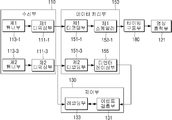
- FIG. 1 and 2 are block diagrams of a broadcast receiving apparatus according to an embodiment of the present invention.
- FIG. 3 is an exemplary diagram for determining a content summary section based on a pre-detected event section in a broadcast receiving device according to an embodiment of the present invention
- 4 and 5 are exemplary diagrams for generating a summary content according to an embodiment of the present invention.
- FIG. 6 is a flowchart of a method for providing a summary content service in a broadcast receiving device according to an embodiment of the present invention
- FIG. 7 is a flowchart illustrating a method of determining a content summary section for generating summary content based on an image section corresponding to at least one event section previously detected by the broadcast receiving device according to an embodiment of the present invention
- FIG. 8 is a flowchart illustrating a method of generating summary content in a broadcast receiving device according to an embodiment of the present invention
- FIG. 9 is an exemplary diagram of detecting an event region in a broadcast receiving device according to an embodiment of the present invention.
- FIG. 10 is an exemplary diagram illustrating a variable set in an initial image frame in a broadcast receiving device according to an embodiment of the present invention
- FIG. 11 is an exemplary diagram illustrating a variable set in an image frame having a pixel difference less than a preset threshold based on a plurality of image frames in the broadcast receiving device according to an embodiment of the present invention
- FIGS. 12 and 13 are views illustrating whether an event occurs in a broadcast reception device according to an embodiment of the present invention.
- FIG. 14 is a flowchart illustrating a method for providing a summary content service in a broadcast receiving device according to an embodiment of the present invention
- 15 is a flowchart of a method for detecting an event region in a broadcast receiving device according to an embodiment of the present invention.
- 16 is a flowchart illustrating a method of detecting whether an event occurs in a broadcast reception device according to an embodiment of the present invention
- 17 is a flowchart of a method for detecting an area corresponding to an event area in a broadcast receiving device according to an embodiment of the present invention.
- FIG. 18 is an exemplary view of processing a video image including a black image in a broadcast receiving device according to an embodiment of the present invention
- FIG. 19 illustrates an example of determining a candidate thumbnail image in a broadcast receiving device according to an embodiment of the present invention
- 20 is an exemplary diagram of determining a final candidate thumbnail image based on a scene change rate among predetermined candidate thumbnail images in the broadcast receiving apparatus according to an embodiment of the present invention
- 21 and 22 illustrate examples of generating and playing summary content in a broadcast receiving device according to an embodiment of the present invention
- FIG. 23 is a flowchart of a method for providing a summary content service in a broadcast receiving device according to an embodiment of the present invention.
- 24 to 28 are flowcharts of a method for determining and storing a candidate thumbnail image in a broadcast receiving device according to an embodiment of the present invention
- 29 is a flowchart of a method of determining a representative thumbnail image in a broadcast receiving device according to an embodiment of the present invention.
- FIG. 30 is an exemplary diagram for determining validity for generating summary content based on an event section detected by a broadcast receiving device according to an embodiment of the present invention
- FIG. 31 is an exemplary diagram for generating summary content based on an image section of an event section in a broadcast receiving device according to an embodiment of the present invention
- 32 and 33 are exemplary diagrams of providing a summary content service in a broadcast receiving device according to an embodiment of the present invention.
- 34 to 44 are block diagrams of a broadcast reception device for generating summary content and simultaneous playback of content according to an embodiment of the present invention
- 46 is a flowchart illustrating a method for generating and playing back summary content in a broadcast receiving device according to an embodiment of the present invention
- 49 to 53 are block diagrams of a broadcast reception device for providing a summary content service according to an embodiment of the present invention.
- 54 to 58 are block diagrams of a broadcast receiving apparatus that provides a summary content service for content different from content being viewed according to an embodiment of the present invention
- FIG. 59 is a flowchart illustrating a method of generating bookmarking information related to summary content service in a broadcast receiving device according to an embodiment of the present invention
- 60 is a flowchart illustrating outputting recorded content related to a summary content service in a broadcast receiving device according to an embodiment of the present invention.
- FIG. 1 is a block diagram of a broadcast receiving apparatus according to an embodiment of the present invention.
- the broadcast reception device 100 is a terminal device capable of receiving content provided by a broadcast server (not shown).
- a terminal device such as a smart TV, a smart phone, and a tablet PC may be used.
- a set top box that outputs content provided from a broadcasting server (not shown) to a terminal device such as a smart TV.
- the broadcast receiving device 100 includes a receiver 110, an outputter 120, and a controller 130.
- the receiver 110 receives content through a channel selected by a user from among a plurality of contents provided from a broadcast server (not shown).
- the outputter 120 outputs the content received through the receiver 110.
- the receiver 110 may tune a channel requested by a user through the tuner 113 and receive content such as terrestrial or cable broadcasting provided from a broadcast server (not shown) through the tuned channel.
- Such content may include video and audio data and may be signal processed in a form that can be output from the broadcast receiving device 100.
- the output unit 120 may output content including image and audio data processed in a form that can be output.
- the outputter 120 may output the summary content related to the content or output the content and the summary content at the same time according to a control command of the controller 130.
- the controller 130 controls overall operations of each component of the broadcast reception device 100.
- the controller 130 detects at least one event section corresponding to a preset condition by analyzing at least one of video and audio data included in content received through the receiver 110.
- the present invention is not limited thereto, and the controller 130 analyzes at least one of video and audio data included in content pre-stored in the storage 160 to be described later, and at least one event section corresponding to a preset condition. Can be detected.
- the controller 130 when at least one event section for the content is detected, the controller 130 generates the summary content based on the detected at least one event section.
- the summary content may be a highlight image of content that is streamed in real time through a broadcast server (not shown) or content recorded and stored in the storage 160.
- the controller 130 may control the output unit 120 to output the pre-generated summary content according to a user command. Accordingly, the output unit 120 may output the summary content generated in relation to the content or the recorded content streamed in real time, or may simultaneously output the content and the summary content related to the same content. In addition, the outputter 120 may output the streamed content in real time according to a control command of the controller 130, and at the same time, output the pre-stored summary content with respect to another content.
- FIG. 2 is a detailed block diagram of a broadcast receiving apparatus according to an embodiment of the present invention.
- the broadcast receiving device 100 includes a receiver 110, an outputter 120, and a controller 130, as described above, and additionally, a communicator 140 and a data processor 150. ) May further include a storage 160 and an input unit 170.
- the communication unit 140 performs a wired or wireless communication with a content server (not shown) that provides content to receive a content requested by a user or a remote control device (not shown) that controls the operation of the broadcast receiving device 100. Communicate with the user to receive a user command.
- the communication unit 170 may receive a user command such as a channel selection command, a summary content generation command, a summary content reproduction command, and the like through a remote control device (not shown).
- the communication unit 140 may include various communication modules such as a short range wireless communication module (not shown), a wireless communication module (not shown), and the like.
- the short range wireless communication module is a module for performing wireless communication with external devices such as a broadcast receiving device (not shown) and a user terminal device (not shown) located in a short distance according to a short range wireless communication method such as Bluetooth, Zigbee method, or the like. to be.
- the wireless communication module is a module connected to an external network and performing communication according to a wireless communication protocol such as WIFI, IEEE, and the like.
- the wireless communication module further includes a mobile communication module for accessing and communicating with the mobile communication network according to various mobile communication standards such as 3rd generation (3G), 3rd generation partnership project (3GPP), long term evolution (LTE), and the like. You may.
- the data processor 150 demultiplexes the content received through the receiver 110 or the communicator 140 and separates the content into video and audio data. Meanwhile, the aforementioned content may further include additional data such as text information and EPG information, as well as video and audio data. In this case, the data processor 150 may demultiplex the received content to separate video and audio data and additional data included in the content.
- the data processor 150 processes the video and audio data in a form capable of outputting the video and audio data.
- the data processor 150 decodes the image data separated from the content, and then converts the decoded image data into image data in an outputable form.
- the data processor 150 decodes the audio data separated from the content, and then converts the decoded audio data into analog data.
- the output unit 120 may output the image data and the audio data processed through the data processor 150 through the image output unit 121 and the audio output unit 123.
- the controller 130 analyzes at least one of the signal-processed video and audio data to at least correspond to a preset condition.
- One event section is detected and a summary content is generated based on the detected at least one event section.
- the controller 130 may detect at least one event section corresponding to a preset condition by analyzing at least one of video and audio data included in content through the event detector 131 which will be described later. Thereafter, the controller 130 obtains an image section of the detected event section and obtains a front and rear image section based on the obtained image section. Thereafter, the controller 130 may determine a content summary section including the image section and the front and rear image sections of the acquired event section, and generate the summary content based on the determined content summary section.
- the storage 160 may store an event detection module, a content summary module, and a summary content generation module. Accordingly, the controller 130 may use the event detection module, the content summary module, and the summary content generation module pre-stored in the storage 160 to detect an event for the content, determine the content summary section, and generate the summary content.
- the event detection module is a module for detecting at least one event section in relation to the summary content of the content.
- the content summary module is a module for determining whether to determine an image section of at least one event section detected by the event detection module and a before and after video section that is planned and acquired in relation to the corresponding video section as the content summary section.
- the summary content generation module is a module for generating summary content based on the video section and the front and rear video sections of the event section determined as the content summary section.
- the controller 130 detects the event section using the event detection module, the content summary module, and the summary content generation module, and the video section of the detected event section and the front and rear image sections related to the video section are summarized. It may be determined whether the interval is valid, and a summary content of the corresponding content may be generated.
- the storage 160 is managed by an operating system program and operating system for controlling the operation of the broadcast receiving device 100, as well as the above-described event detection module, content summary module and summary content generation module, and uses resources of the operating system.
- the operating system may be a program that is read from the storage 160 and compiled to operate each component of the broadcast receiving device 100.
- the application program is read from the storage unit 160 by the operating system by the user's execution command, transferred to an executable form, and performs various operations.
- the storage 160 may store various multimedia data, content data, and data received from an external source processed by the controller 130.
- the storage unit 160 may be a memory card (eg, an SD card, a memory stick), a nonvolatile memory, a volatile memory, or a hard disk that may be attached to or detached from a ROM, a RAM, or the broadcast reception device 100. At least one of a drive (HDD) or a solid state drive (SSD) may be implemented.
- the input unit 170 receives a user command input from an input unit such as an operation unit (not shown) or a touch panel (not shown) included in the broadcast receiving device 100 and transmits it to the controller 130.
- the user command may be a channel selection command, a summary content generation command, a summary content reproduction command, or the like.
- the input unit 170 may include a voice recognition module (not shown) capable of recognizing a user's voice.
- the input unit 170 recognizes user voices for various user commands such as channel selection command, summary content generation command, and summary content playback command through a voice recognition module (not shown), and controls the recognized voice recognition result. 130).
- the controller 130 may include an image included in the content using the event detection module pre-stored in the storage 160. At least one event section may be detected by analyzing at least one of the audio data.
- the controller 130 that detects an event section using the event detection module may detect at least one event section from the content through the following embodiments.
- the controller 130 may analyze the image data included in the content and detect the image section corresponding to the game situation condition pre-stored in the storage 160 as at least one event section.
- the game situation condition pre-stored in the storage unit 160 may be a condition for detecting an event section from sports-related content among various genres of content.
- the content is soccer-related sports content
- the game situation condition may be a scoring scene, a player's entrance scene, a shooting scene, or the like. Therefore, the controller 130 may analyze the image data included in the sports-related content and detect the video section corresponding to the race condition such as the scoring scene, the player's entrance scene, the shooting scene, etc. as at least one event section.
- the controller 130 may analyze the audio data included in the content and detect an image section having an audio signal level higher than or equal to a threshold level previously stored in the storage 160 as an event section. For example, an audio signal level of audio data corresponding to an image section associated with a scoring scene in which a goal is entered may have a level higher than a general audio signal level. Therefore, the controller 130 may analyze the audio data included in the content and detect an image section related to the corresponding audio section as the event section based on the audio section having the audio signal level higher than or equal to a predetermined threshold level.
- the controller 130 performs text to text (STT) analysis on the audio data included in the content to generate text data, and an image including a preset word using the generated text data.
- the section may be detected as an event section. For example, if the content is soccer-related sports content, the predetermined word may be "goal”, “goal”, etc. If the content is baseball-related sports content, the preset words are "home in”, “home run” And so on.
- the controller 130 obtains a word preset in relation to the corresponding sport content among preset words for each sport genre pre-stored in the storage 160. Thereafter, the controller 130 generates text data from the audio data included in the sports content by using the STT analysis algorithm, and obtains the text data including the word set in relation to the sports item of the corresponding content among the generated text data. do.
- the controller 130 may detect an image section related to the text data including the predetermined word as an event section.
- the present invention is not limited thereto, and the receiver 110 or the communicator 140 may receive sports-related content and event information on a corresponding sport from a broadcast server (not shown) or a content server (not shown).
- the controller 130 may detect the specific video section as the event section by analyzing the video data or the audio data included in the sports-related content received based on the received event information.
- the sports-related content received from the broadcast server (not shown) or the content server (not shown) may further include additional data including subtitle information in the form of text as well as video and audio data.
- the controller 130 may analyze the additional data included in the sports-related content and detect an image section related to the additional data including a text image including a preset word as an event section.
- the controller 130 may select an image section of the at least one event section previously detected by using the content summary module pre-stored in the storage 160.
- the analysis determines whether the content for the corresponding video section is sports-related content.
- the controller 130 determines whether the received content is sports-related content based on the color and the ratio of each color included in the image information of the image section of the at least one event section.
- the storage unit 160 may store a first threshold value that is set in relation to a field color predefined for each sport and a ratio value of a color corresponding to the field color.
- a field color predefined for each sport may be defined as green
- the field color of ice hockey sport may be defined as white
- the field color of swimming sports can be defined as blue.
- each field color may be defined for each sport, and a first threshold value may be set for a degree of display of each field color on the screen.
- the controller 130 may define a predetermined value among the color information included in the image information of the image section for the at least one event section previously detected based on the field color for each sporting event and the first threshold value pre-stored in the storage 160. It is determined whether or not the included field color is included. For example, when the received content is a soccer-related sports content, the controller 130 is a field color (Green) and a first threshold value for a soccer sport among the field colors for each sport item previously stored in the storage 160. Can be obtained. Thereafter, the controller 130 determines whether there is a color corresponding to the field color acquired from the color information included in the image information of the image section of each event section previously detected.
- Green field color
- the controller 130 calculates a ratio value of the color corresponding to the predefined field color. That is, the controller 130 calculates a degree of the color corresponding to the predefined field color among the colors applied to the image section of the at least one event section.
- the ratio value of the color corresponding to the predefined field color may be calculated through a known calculation algorithm.
- the controller 130 determines whether the calculated ratio value is greater than or equal to the preset first threshold value, and if the ratio value is greater than or equal to the preset first threshold value, the corresponding content. May be determined to be sports-related content.
- the controller 130 may further determine whether a play state of a corresponding sport is present.
- the controller 130 is a ratio of a color corresponding to a predefined field color among colors included in the image information of the image section of the at least one event section and the neighboring image section adjacent to each other. It may be determined whether the state of play for the sport depends on whether the second threshold value or more is set.
- the second threshold value may be a value set to the same or new value as the above-described first threshold value.
- the controller 130 may determine a predetermined section around the first video section. Obtain image information of the previous video section and the subsequent video section to belong.
- the controller 130 determines whether the color corresponding to the predefined field color is included based on the image information of each of the image section detected as the event section and the adjacent image section. As a result of the determination, if at least one of the neighboring video sections adjacent to the video section detected as the event section does not include a color corresponding to the predefined field color, the controller 130 does not proceed to play for the sport. It can be determined that the state does not.
- the controller 130 may define a color among the colors related to the peripheral video section.
- a ratio value of the color corresponding to the field color is calculated, and each of the calculated ratio values and the predefined second threshold value are compared.
- the controller 130 determines that the play for the sport is not in progress. can do.
- the controller 130 is playing the sport. It can be judged that.
- the state in which the play for the sport is not progressed may be, for example, half time in the case of soccer sports, and in the state of karate shift in the case of baseball sports.
- advertisement content may be inserted in the middle of a sporting event. Therefore, the controller 130 may determine the play progress state for the sport through the determination condition.
- the controller 130 extracts a guide region for guiding a game progress from an image of an image section for at least one event section previously detected, and plays a sport on the basis of the extracted guide region.
- the state can be determined.
- the guide area may include at least one of a game score and a game progress time.
- the controller 130 analyzes the game score or the game progress time included in the guide area for guiding the game progress in the image section of the at least one event section pre-detected to determine the play progress state for the sport. You can judge.
- the controller 130 controls the at least one event section. Based on the detected time, a front and rear image section existing at a predetermined fixed time is obtained. Thereafter, the controller 130 determines whether there is a section in which a scene scene is changed among the acquired before and after video sections. As a result of the determination, when there is no section in which the scene scene is converted, the controller 130 may determine an image section at a time when at least one event section is detected and a front and rear image section existing within a predetermined fixed time as the content summary section.
- the controller 130 obtains a before and after video section related to the video section of the detected event section by varying a predetermined fixed time. Subsequently, the controller 130 may determine the image section for the previously detected event section and the front and rear image section within the fixed fixed time as the content summary section.
- the controller 130 determines whether there is a section in which the scene scene is changed among the acquired before and after image sections when the before and after image section existing at a predetermined fixed time is obtained based on the time when the at least one event section is detected. . As a result of the determination, when there is no section in which the scene scene is converted, the controller 130 may determine a content summary section including an image section of a time at which one or more event sections are detected and a front and rear image section falling within a preset fixed time.
- the controller 130 is preset to a time period in which the front and rear image sections related to the section image of the time at which one or more event sections are detected, are detected. Vary fixed time. Subsequently, the controller 130 may determine the content summary section including the video section at the time when the at least one event section is detected and the before and after video section within the variable fixed time.
- the fixed time according to the present invention may include an absolute fixed time, such an absolute fixed time is not variable. Accordingly, the controller 130 determines whether there is a section in which the scene scene is changed among the remaining front and rear image sections except for the front and rear image sections existing within the absolute fixed time. As a result of the determination, when there is a section in which the scene scene is changed, the controller 130 may obtain a before and after image section related to the image section of the detected event section by varying the fixed time within the remaining fixed time except for the absolute fixed time. .
- the controller 130 may determine a content summary section including the video section of the planned event section and the before and after video section existing within a predetermined fixed time or a variable fixed time based on the video section. Thereafter, the controller 130 may generate summary content for the predetermined content summary section based on the summary content generation module 165 previously stored in the storage 160.
- the controller 130 obtains a thumbnail image from the video image of the video section of the event section among the video sections included in the predetermined content summary section in which the content summary section for generating the summary content is determined, and obtains the thumbnail image and the corresponding image.
- the summary contents generated based on the content summary section are matched with each other and stored in the storage 160.
- the controller 130 may have a thumbnail image having the smallest number of colors corresponding to a predetermined pay field color among the plurality of thumbnail images.
- the thumbnail image including the largest object among the same objects included in each of the plurality of thumbnail images may be determined as the representative thumbnail image.
- the present invention is not limited thereto, and when the objects included in each of the plurality of thumbnail images are not the same as each other, the controller 130 selects an object having the smallest or largest size in each thumbnail image.
- the thumbnail image to be included may be determined as the representative thumbnail image.
- the controller 130 matches the representative thumbnail image and the pre-generated summary content among the plurality of thumbnail images and stores the matching thumbnail images in the storage 160. Accordingly, the storage 160 may match and store at least one summary content generated for each content and a thumbnail image of the summary content.
- the controller 130 controls the output unit 120 to play the summary content corresponding to the playback command input among the summary content previously stored in the storage 160.
- the outputter 120 may output the summary content corresponding to the playback command of the user and the thumbnail image of the summary content through the image outputter 121.
- the controller 130 may control the output unit 120 to reproduce from the summary contents related to the selected thumbnail image. Accordingly, the outputter 120 may sequentially output the summary content associated with the thumbnail image selected by the user through the image outputter 121.
- FIG. 3 is an exemplary diagram for determining a content summary section based on a pre-detected event section in a broadcast receiving device according to an embodiment of the present invention.
- the broadcast reception device 100 may display soccer-related sports content, and the currently displayed video image may be an video section detected as an event section.
- the controller 130 determines whether a color corresponding to the predefined field color is included among the colors included in the image information of the image section of the detected event section.
- the controller 130 determines whether to include the green color which is the predefined field color in the image information of the image section for the pre-detected event section. As shown, it can be seen that the green color 310 of the color representing the image section represents most of the entire image.
- the controller 130 calculates the green color ratio value of the corresponding video section, and the calculated threshold value of the green color is the first threshold. It is determined whether or not it is greater than the value. As a result of the determination, if it is equal to or more than the first threshold value, the controller 130 may determine that the received content is soccer-related sports content.
- the controller 130 determines whether a soccer game is in progress. In detail, the controller 130 determines whether the green color, which is a predefined field color, is included among the colors representing the peripheral image section based on the image information of the neighboring image section adjacent to the image section detected as the event section. As a result of the determination, when at least one video section of the surrounding video sections does not include the green color which is a predefined field color, or when the ratio value of the green color of the at least one video section of the surrounding video sections is less than the preset threshold, The controller 130 may determine that play for a soccer game is not in progress.
- the color of the surrounding video section includes all of the green color which is a predetermined field color, and if the ratio value of the green color is greater than or equal to a predetermined threshold value, the controller 130 indicates that a soccer game is in progress. You can judge.
- the controller 130 extracts the guide region 320 for guiding the game progress from the image of the image section detected as the event section, and analyzes the game score or the game progress time displayed on the extracted guide region 320. It can be determined whether a soccer game is in progress.
- the controller 130 determines that the video section detected as the event section is an effective section for generating the summary content. Can be. Subsequently, the controller 130 obtains a before and after image section related to the image section detected as the event section based on a preset time based on the time when the event section determined as the valid section is detected, The content summary section may be determined based on the front and rear image sections, and the summary content may be generated based on the determined content summary section.
- FIG. 4 is an exemplary diagram for generating summary content based on a fixed time according to an embodiment of the present invention
- FIG. 5 is an example of generating summary content based on a variable fixed time according to an embodiment of the present invention. It is also.
- the controller 130 may include the image section of the acquired event section. Based on this, the front and rear image sections existing within a predetermined fixed time may be acquired.
- the image section 410-1 corresponding to the event section B 410 may be determined as a valid section for generating summary content.
- the controller 130 may be configured based on the video section 410-1 corresponding to the event section B 410. An image section belonging to a preset fixed time A 420 and A ′ 430 is obtained.
- the controller 130 may preset a fixed time A among the image sections before the image section 410-1 based on the time when the image section 410-1 corresponding to the event section B 410 is detected. First to third image sections 420-1 to 420-3 belonging to 420 may be obtained. In addition, the controller 130 may preset a fixed time A '430 among the image sections after the image section 410-1 based on the time when the image section 410-1 corresponding to the event section B 410 is detected. ) Fourth to sixth image sections 430-1 to 430-3 may be obtained.
- the controller 130 determines whether there is a section in which a scene change has occurred among the image sections belonging to the fixed time A 420 and the fixed time A '430. As a result of the determination, the third image section 420-3 among the first to third image sections 420-1 to 420-3 belonging to the fixed time A 420 and the fourth to belonging to the fixed time B 430 are determined.
- the sixth image section 430-3 of the sixth image section 430-1 ⁇ 43-3 may be determined as a section in which a scene change occurs.
- the third image section 420-3 may be a section in which a scene scene to the first and second image sections 420-1 and 420-2 starts, and the sixth image section 430-3 may include a second image section 430-3.
- the scene scenes of the fourth and fifth image sections 430-1 and 430-2 may end.
- the controller 130 may determine a predetermined fixed time A ( 420 is varied to a fixed time a 420 ', and a fixed time A' 430 is varied to a fixed time a '430'. That is, the controller 130 includes the remaining first and second image sections 420-1 and 420-2 except for the third image section 420-3 in which a scene change has occurred in relation to the preset fixed time A 420.
- the fixed time A '420 is varied to a fixed time a 420' so as to be possible.
- controller 130 controls the remaining fourth and fifth image sections 430-1 and 430-2 except for the sixth image section 430-3 in which a scene change occurs in relation to the preset fixed time A ′ 430.
- the fixed time A '430 is varied to a fixed time a' 430 'to include.
- the control unit 130 as shown in FIG. ,
- the content summary section including the fourth and fifth image sections 430-1 ′ and 430-2 ′ existing at '430' may be determined, and the summary content may be generated based on the determined content summary section. .
- the present invention is not limited thereto, and the fixed time A 420 and the fixed time A ′ 430 may include absolute fixed times 420 ′′ and 430 ′′, such as hatched areas.
- the video section existing within the absolute fixed times 420 ′′ and 430 ′′ may be included in the content summary section together with the video section 410-1 corresponding to the event section B 410 ′. That is, the controller 130 may determine the absolute fixed time 420 'in relation to the image sections 420-1 to 420-3 and 430-1 to 430-3 that exist in the fixed time A 420 and the fixed time A' 430.
- the controller 130 generates the summary content based on the video section for the event section and the content summary section including the video section within a predetermined fixed time or a variable fixed time, thereby generating an event section such as a bone scene. More natural summary content can be generated.
- FIG. 6 is a flowchart illustrating a method of providing a summary content service in a broadcast receiving device according to an embodiment of the present invention.
- the broadcast receiving device 100 analyzes at least one of video and audio data included in the received content. At least one event section corresponding to a preset condition is detected (S610 and S620). However, the present invention is not limited thereto, and the broadcast reception device 100 may detect at least one event section corresponding to a preset condition by analyzing at least one of video and audio data included in pre-stored recorded content. .
- the broadcast receiving device 100 demultiplexes the received content or the recorded content into video and audio data. Subsequently, when the broadcast receiving device 100 is divided into video and audio data from the content, the broadcast receiving device 100 decodes the separated video and audio data and processes the signal in a form that can be output.
- the broadcast reception device 100 may analyze at least one of the signal-processed video and audio data to detect at least one event section corresponding to a preset condition. Can be. When at least one event section is detected, the broadcast reception device 100 determines a content summary section based on the video section of the detected at least one event section and the front and rear video sections related to the video section, and determines the determined content summary section. Based on the generated summary content (S630, S640). According to an embodiment, the broadcast reception device 100 may generate an event detection, a content summary section determination, and a summary content for the content by using the pre-stored event detection module, the content summary module, and the summary content generation module. When summary content is generated through such a module, the broadcast receiving device 100 stores the generated summary content. Thereafter, the broadcast receiving device 100 outputs summary content related to the content corresponding to the user command or simultaneously outputs the content and the summary content according to the user command.
- the broadcast reception device 100 may detect at least one event section corresponding to a preset condition from the content requested by the user through the following embodiments.
- the broadcast receiving device 100 may analyze the video data included in the content and detect the video section corresponding to the pre-stored game situation condition as at least one event section.
- the pre-stored game situation condition may be a condition for detecting at least one event section from sports-related content among various genres of content.
- the broadcast receiving device 100 may analyze the audio data included in the content and detect an image section having an audio signal level equal to or greater than a previously stored threshold level as an event section.
- the broadcast reception device 100 generates text data by performing STT analysis on audio data included in content, and uses the generated text data to event an image section including a preset word. It can be detected as a section.
- the broadcast reception device 100 may receive sport-related content and event information on a corresponding sport from a broadcast server (not shown) or a content server (not shown).
- the broadcast reception device 100 may detect a specific video section as an event section by analyzing video data or audio data included in content requested by a user based on the received event information.
- the sports-related content received from the broadcast server (not shown) or the content server (not shown) may further include additional data including caption information in the form of text as well as video and audio data.
- the broadcast receiving device 100 may analyze additional data included in sports-related content and detect an image section related to additional data including a text image including a preset word as an event section.
- the broadcast receiving device 100 determines whether the at least one detected event section is a valid section for generating summary content, and the detected event section is If it is a valid section, the content summary section may be determined based on the video section for the corresponding event section and the front and rear sections of the video section.
- the broadcast receiving device 100 determines whether the at least one detected event section is a valid section for generating summary content, and the detected event section is If it is a valid section, the content summary section may be determined based on the video section for the corresponding event section and the front and rear sections of the video section.
- FIG. 7 is a flowchart illustrating a method of determining a content summary section for generating summary content based on an image section corresponding to at least one event section detected by the broadcast reception device according to an embodiment of the present invention.
- the broadcast receiving device 100 may detect an image of the detected at least one event section. On the basis of the color included in the image information of the section and the ratio value for each color, it is determined whether the received content is sports related content (S710).
- the broadcast reception device 100 may store a first threshold value preset with respect to a field color predefined for each sport and a ratio value of a color corresponding to the field color. Accordingly, the broadcast reception device 100 may include a predefined field color among color information included in image information of an image section of at least one event section based on a pre-stored field color for each sporting event and a first threshold value. It is determined whether there is a corresponding color. As a result of the determination, if there is a color corresponding to the planned field color, the broadcast reception device 100 calculates a ratio value of the color corresponding to the predefined field color, and determines whether the calculated ratio value is equal to or greater than a predetermined first threshold value. Determine whether or not. As a result of the determination, if it is equal to or greater than the first threshold value, the broadcast reception device 100 may determine that the received content is sports-related content.
- the broadcast receiving device 100 determines whether the play state for the sport (S720).
- the broadcast reception device 100 may determine a ratio of a color corresponding to a predefined field color among colors included in image information of an adjacent video section and an image section of at least one event section. It may be determined whether the state of play for the sport is determined based on whether or not the second threshold value is greater than or equal to the preset second threshold value.
- the second threshold value may be a value set to the same or new value as the above-described first threshold value.
- the broadcast reception device 100 may not include a color corresponding to a field color defined in at least one neighboring video section among an image section detected as an event section and an adjacent surrounding video section, or may be a predefined field.
- the ratio value of the color corresponding to the color is less than the second threshold value, it may be determined that the play for the sport is not in progress.
- the state in which the play for the sport is not progressed may be, for example, half time in the case of soccer sports, and in the state of karate shift in the case of baseball sports.
- the broadcast receiving device 100 may determine that play of a sport is in progress.
- the broadcast reception device 100 extracts a guide area for guiding a game progress from an image of an image section of at least one event section that has been previously detected, and transmits a guide area to a sport based on the extracted guide area. Play status can be determined.
- the guide area may include at least one of a game score and a game progress time.
- the broadcast reception device 100 analyzes a game score or a game progress time included in a guide area for guiding a game progress status among images of an image section of at least one event section previously detected and proceeds to play the sport.
- the state can be determined.
- the broadcast receiving device 100 may determine at least one content. Based on the detected time of the image section for the event section, a front and rear image section existing at a predetermined fixed time is obtained (S730). Thereafter, the broadcast reception device 100 determines whether a scene change occurs in at least one video section among the front and rear video sections existing at a predetermined fixed time (S740).
- the broadcast reception device 100 may select the front and rear image sections existing within the fixed fixed time from among the front and rear image sections within the preset fixed time.
- Acquire (S750) That is, the broadcast receiving device 100 varies the preset fixed time to a time to which the front and rear image section related to the section image of the time at which one or more event sections are detected, from among the front and rear image sections within the preset fixed time. Thereafter, the broadcast reception device 100 determines a video section for at least one event section existing between the front and rear video sections within the fixed fixed time and the corresponding front and back video sections as the content summary section (S760).
- step S740 if it is determined in step S740 that no scene change occurs in the front and rear image sections existing at the preset fixed time, the broadcast receiving device 100 exists between the front and rear image sections and the front and rear image sections existing at the preset fixed time.
- An image section of at least one event section may be determined as the content summary section.
- the fixed time according to the present invention may include an absolute fixed time, such an absolute fixed time is not variable. Accordingly, the broadcast receiving device 100 determines whether there is a section in which the scene scene is changed among the remaining front and rear image sections except for the front and rear image sections existing within the absolute fixed time. As a result of the determination, when there is a section in which the scene scene is changed, the broadcast reception device 100 may obtain a before and after video section related to the video section for the previously detected event section by varying the fixed time within the remaining fixed time except for the absolute fixed time. Can be.
- the broadcast reception device 100 determines a content summary section including an image section of an event section and a front and rear image section existing within a predetermined fixed time or a variable fixed time based on the video section, and the determined content summary
- the summary content is generated and stored based on the section (S770).
- FIG. 8 is a flowchart illustrating a method of generating summary content in a broadcast receiving device according to an embodiment of the present invention.
- the broadcast reception device 100 when at least one event section is detected, stores thumbnail information on the detected event section. In this case, the broadcast receiving device 100 may also store time information when the event section is detected. Subsequently, the broadcast reception device 100 determines a content summary section including an image section of a time when at least one event section is detected and a front and rear image section existing within a predetermined fixed time or a variable fixed time. A thumbnail image is obtained (S810). Here, the obtained thumbnail image is for identifying the summary content generated based on the predetermined content summary section. When such a thumbnail image is acquired, the broadcast receiving device 100 determines whether there are a plurality of thumbnail images obtained (S820).
- the broadcast reception device 100 obtains a representative thumbnail image of a thumbnail image that satisfies a predetermined condition among the plurality of thumbnail images in operation S830.
- the broadcast receiving device 100 may determine the number of colors corresponding to the predefined pay field color among the obtained plurality of thumbnail images.
- the thumbnail image including the smallest thumbnail image or the same object included in each of the plurality of thumbnail images may be determined as the representative thumbnail image.
- the broadcast reception device 100 represents a thumbnail image including an object having the smallest or largest size in each thumbnail image. Decide on a thumbnail image.
- the broadcast receiving device 100 generates the summary content based on the predetermined content summary section, and matches the generated summary content with the predetermined representative thumbnail image and stores them in operation S840.
- the broadcast receiving device 100 determines whether there are only one thumbnail image acquired in association with the content summary section in step S820 described above. If there are only one thumbnail image acquired in association with the content summary section in step S820 described above, the broadcast receiving device 100 generates the summary content based on the content summary section predetermined in step S840 and generates the summary content. You can match and save a single thumbnail image that you have planned. Subsequently, when a play command for the summary content is input from the user, the broadcast receiving device 100 sequentially plays at least one summary content corresponding to the play command among a plurality of prestored summary content. In this case, the broadcast receiving device 100 may display a thumbnail image of at least one summary content corresponding to the playback command on the screen. Accordingly, when one of the thumbnail images displayed on the screen is selected, the broadcast receiving device 100 may sequentially play back from the summary content associated with the selected thumbnail image.
- the controller 130 may determine the pixel values of the plurality of image frames of the content related to the input summary content service command. Compare and detect an event area for the summary content service. In this case, the controller 130 may detect an event area for the summary content service by comparing pixel values of a plurality of image frames with respect to content at the time when the summary content service command is input.
- the content related to the summary content service may be content about a sporting event
- the event area may be a scoreboard area for guiding a sporting event situation including time information, team information, and score information guiding the sporting event time. have.
- the controller 130 detects an area corresponding to the previously detected event area from the input image frame after the event area is detected and then inputs an image frame for the corresponding content. Detects an event occurrence by detecting a change in a character of a region corresponding to the corresponding event region.
- the sensing of the character change may be, for example, in the case of soccer sports, whether the score related number changes after the goal is entered. Accordingly, the controller 130 may detect that an event occurs according to whether the score related number is changed.
- the controller 130 generates a summary content such as a highlight image based on an image frame section at the time when the event occurs, and stores the generated summary content in the storage 160.
- the controller 130 when an image frame at the time when the event occurs is obtained, the controller 130 is based on the front and rear image frames existing at a predetermined fixed time among the image frame at the time when the event occurs and the front and rear image frames of the video frame. Summary content may be generated.
- the controller 130 identifies the summary content of the video image of one of the plurality of video frames including the generated summary content. It can be determined as a representative thumbnail image.
- the controller 130 may determine a video image of the video frame corresponding to the zoom-in shot image as the representative thumbnail image by analyzing the video images for each video frame including the summary content. As such, when the representative thumbnail image for identifying the summary content is determined, the controller 130 matches the pre-generated summary content and the image determined as the representative thumbnail image to identify the summary content with each other, and the storage unit 160. Can be stored in
- the controller 130 detects an event region based on the pixel difference of the plurality of image frames constituting the content, and based on the detected event region, whether the region corresponding to the event region is present in the subsequent image frame. To judge. Thereafter, the controller 130 analyzes the event area and the area corresponding to the event area and detects whether an event has occurred according to whether a text change occurs.
- the controller 130 may detect the event area through the event detector 131 which will be described later.
- the event detector 131 compares the pixel difference for each pixel region corresponding to each other between the first and second image frames among the plurality of image frames constituting the content and a predetermined threshold value to determine a pixel less than the predetermined threshold value. The number of pixel areas having a difference is calculated. Thereafter, the event detector 131 determines whether the number of pixel areas having the pixel difference less than the predetermined threshold value is less than the predetermined threshold number of pixels or more, and continuously detecting the predetermined threshold number of times.
- the event area detecting unit 131 selects an event area based on the pixel area having a pixel difference less than a threshold value.
- the detected event area is stored in the storage 160.
- an image frame of content corresponding to the command may be input.
- the event detector 121 may display each pixel area of the first input image frame (hereinafter referred to as a first image frame) I n-1 and a next image frame (hereinafter referred to as a second image frame). and it calculates the pixel difference (D n-1) from the pixel regions of the image referred to as a frame) (I n). Afterwards, when the pixel difference D n-1 for each pixel region is calculated, the event detector 131 compares the calculated pixel difference D n-1 with a predetermined threshold value, which is smaller than the preset threshold value. The number of pixel regions having the pixel difference D n-1 is calculated.
- the event detector 131 applies a pixel area having a pixel difference less than a threshold value differently from the variables of the remaining pixel area, so that the pixel is determined from the number of variables applied to the pixel area having a pixel difference less than the threshold value.
- the number of regions can be calculated.
- the event detector 131 initializes the variable of each pixel area of the first image frame I n-1 to 1. Thereafter, the event detector 131 sets the variable of the pixel area having the pixel difference D n-1 that is less than the preset threshold based on the first and second image frames I n-1 (I n ). The variable of the pixel area having the pixel difference D n-1 equal to or greater than the predetermined threshold value is converted to 0. Accordingly, the event detector 131 may calculate the number of pixel areas in which each pixel area of the first image frame I n- 1 is maintained as a variable 1 among variables.
- the event detector 131 compares the number of pixel regions maintained by the variable 1 with the predetermined threshold pixel number to determine whether the number of pixel regions maintained by the variable 1 is less than the predetermined threshold pixel number. Determine whether or not. If the determination result is less than the predetermined threshold number of pixels, the event detector 131 increases the Static_Count by one. Thereafter, the event detector 131 may include a pixel difference of each pixel region of the first image frame I n-1 and the third image frame I n + 1 after the second image frame I n with the variable changed.
- the event detector 131 may select the pixel area maintained as the variable 1 among the variables of the first image frame I n-1 . It may be detected as an event area for the summary content service.
- the event detector 131 may use the connected component algorithm, such as the flood fill algorithm, to extract the event region from the pixel region maintained as variable 1 among the variables of the first image frame I n-1 . Can be detected. Since such an algorithm is a known technique, detailed description thereof will be omitted.
- the connected component algorithm such as the flood fill algorithm
- the event detector 131 analyzes the previously detected event region to generate source information for determining whether an event has occurred, and stores the generated source information in the storage 160.
- the event area may be a score board area related to a sporting event
- the source information may include at least one of a game time area, a score area, and a team area.
- the event detector 131 generates source information including a game time area based on a pixel area set as a variable representing a pixel difference generation among variables set for each pixel area in the previously detected event area,
- the generated source information may be stored in the storage 160.
- the event area detected as the scoreboard area may include a game time area indicating a game time
- the game time area may include a time in minutes and a time in seconds. . Therefore, the variable of the pixel region of the region representing the time in seconds of the game time region and the variable of the pixel region of the remaining event region may be different. That is, the variable of the pixel area representing the time in seconds among the pixel areas of the event area may be 0, and the variable of the pixel area of the remaining event areas except the pixel area representing the time in seconds may be 1.
- the event detector 131 determines the preset pixel area as a game time area based on the pixel area having a variable of 0. Can be. At this time, the event detection unit 131 preferably determines the pixel area as the race time area based on the preset left area based on the pixel area having a variable of zero.
- the event detector 131 may match source information including the detected event area and the predetermined game time area with each other and store the matched information in the storage unit 160.
- the event detection unit 131 detects a number from the event area detected by using a number recognition algorithm, and if the detected number exists at least two consecutively, the event detection unit 131 may be located in the detected pixel area.
- source information including a game time range may be generated and stored in the storage 160.
- the numeric recognition algorithm is an Optical Digit Recognition (ODR) algorithm, and since such numeric recognition algorithm is a known technique, detailed description thereof will be omitted.
- ODR Optical Digit Recognition
- the event area detected as the scoreboard area includes an area indicating a score and a game time, and a numerical image may be displayed through each area.
- a single numeric image may be displayed in an area representing a score, and a plurality of numerical images may be displayed in an area for playing a game time.
- the event detector 131 detects a number that continuously exists at least two or more of the detected numbers, and the pixel in which the number is detected.
- the predetermined pixel area may be determined as the game time area based on the area.
- the event detector 131 may determine a predetermined pixel area as a score area based on the pixel area where the number is detected with respect to the remaining numbers except for numbers that are present in two or more consecutively.
- the event detector 131 when the playing time area or the playing time area and the score area are determined, the event detector 131 generates source information including the playing time area or the playing time area and the score area, and generates the generated source information and the pre-detected source information.
- the event regions may be matched with each other and stored in the storage 160.
- the event detector 131 may generate source information including at least one of a game time region, a score region, and a team region by using a character recognition algorithm and store the source information in the storage 160.
- the character recognition algorithm is an Optical Character Recognition (OCR) algorithm. Since such a character recognition algorithm is a known technique, detailed description thereof will be omitted.
- the event area detected as the score board area includes an area indicating a score, a team name, and a game time, and a number and a letter image may be displayed through each area.
- the event detector 131 determines the area indicating the letter image as the team area, and scores the area indicating the number image. It can be decided as the area representing the game time.
- a single numeric image may be displayed in an area representing a score, and a plurality of numerical images may be displayed in an area for playing a game time.
- the event detector 131 determines the preset pixel region as the race time region based on the pixel region in which at least two consecutive numbers among the detected numbers are detected. Can be.
- the event detector 131 may determine a predetermined pixel area as a score area based on the pixel area where the number is detected in relation to the remaining numbers except for numbers that are present in two or more consecutively. As such, when the team area, the score area, and the game time area are determined, the event detector 131 generates source information including the team area, the score area, and the game time area, and generates the generated source information and the previously detected event area. May be matched with each other and stored in the storage 160.
- the controller 130 analyzes the pixel region corresponding to the event region among the pixel regions of the input image frame after the event region is detected to correspond to the event region. It is determined whether a region exists.
- the controller 130 may select a pixel difference less than a predetermined threshold value among pixel differences calculated from the pixel area of the image frame corresponding to the remaining pixel area except for the game time area among the previously detected event areas. Obtain the number of pixel areas of the video frame. Thereafter, the controller 130 determines that the ratio of the number of pixel areas of the image frame having a pixel difference less than the predetermined threshold value to the number of remaining pixel areas other than the playing time area among the previously detected event areas is less than the predetermined pixel rate value. The region corresponding to the event region is determined as an event region.
- the controller 130 corresponds to the pixel region of the pixel region of the detected event region among the pixel regions of the input image frame. (Hereinafter referred to as event candidate region).
- the controller 130 may include pixel regions of the remaining region other than the game time region included in the source information generated in advance with respect to the previously detected event region among the pixel regions of the event candidate region. Acquire a pixel region corresponding to the second remaining pixel region. Subsequently, the controller 130 calculates a pixel difference for each pixel area from the pixel area of the pixel area of the event area except the race time area and the second remaining pixel area obtained from the event candidate area. Thereafter, the controller 130 compares the pixel difference calculated for each pixel area with a preset threshold to obtain the number of second remaining pixel areas having a pixel difference less than the preset threshold. Thereafter, the controller 130 calculates a ratio value of the number of pixel areas of the image frame having a pixel difference less than a predetermined threshold value to the number of remaining pixel areas of the event area.
- the variable of the remaining region except for the playing time region among the pixel regions of the event region may be 1.
- the variable of the second remaining pixel area of the event candidate area may be 1.
- the controller 130 obtains the number of pixel areas for the remaining areas of the event area having the variable 1.
- the controller 130 changes the variable of the second remaining pixel area having the pixel difference less than the preset threshold value from 1 to 0 and sets the variable of the second remaining pixel area having the pixel difference greater than the preset threshold value to 1.
- the controller 130 calculates a ratio of the number of pixel regions for which the variable remains 1 to the number of pixel regions for the remaining regions of the planned event region.
- the controller 130 may compare the calculated ratio value with a predetermined threshold value and determine that the event candidate region corresponding to the event region is the event region when the calculated ratio value is less than the predetermined threshold value.
- the controller 130 detects whether an event occurs by analyzing the event area and the area corresponding to the event area based on source information of the detected event area.
- the controller 130 determines whether the score area is included in previously stored source information in relation to the previously detected event area. As a result of the determination, if the score area is not included, the controller 130 is based on the variable of the pixel area corresponding to the remaining pixel area except the playing time area included in the source information among the pixel areas of the area corresponding to the event area. Determine the score area. Thereafter, the controller 130 determines the score region from the previously detected event region based on the previously detected score region. Thereafter, the controller 130 recognizes a number from each score area by using a number recognition algorithm and detects whether an event occurs according to whether the number changes.
- the variable of the region corresponding to the event region (hereinafter referred to as the first event region) (hereinafter referred to as the second event region) is 1 to 0 according to the pixel difference between the pixel regions of the first and second event regions. Or may be kept at 1.
- the variable of the pixel area in which the pixel difference between the pixel areas of the first and second event areas is greater than or equal to a preset threshold among the second remaining pixel areas of the second event area may be 1, and the variable of the remaining pixel areas Can be zero.
- the controller 130 obtains a pixel area having a variable of 1 among the pixel areas of the second event area except for the game time area. Thereafter, the controller 130 determines whether the pixel areas having the variable 1 are adjacent to each other more than a predetermined number consecutively, and if the adjacent areas are continuously adjacent, the controller 130 determines the score area from the pixel area having the variable 1 using the connection area algorithm. do. Thereafter, the controller 130 may determine the score area of the first event area based on the score area determined from the second event area. As such, when the score areas of the first and second event areas are respectively determined, the controller 130 recognizes a number from each score area by using a number recognition algorithm. Thereafter, the controller 130 may compare the numbers recognized from each score area and determine that an event has occurred when the two numbers are different from each other.
- the number recognized from the score area of the first event area may be 0, and the number recognized from the score area of the second event area may be 1.
- the controller 130 may detect that an event has occurred.
- the controller 130 detects the score area from the second event area based on the score area. Thereafter, the controller 130 may recognize the number from the score areas of the first and second event areas by using a number recognition algorithm, compare the recognized numbers, and detect that an event has occurred when the two numbers are different from each other. As such, when it is detected that an event has occurred through the numbers recognized from the two score areas, the controller 130 may compare the first event area and the source information previously stored in the storage unit 160 with the second event area and the second event area. Update with relevant source information.
- the event detector 131 may detect a new event region based on the updated event region and the source information, and the controller 130 The event detection unit 131 may detect whether an event occurs based on the event area detected.
- the controller 130 determines a video image of the video frame corresponding to the zoom-in shot image among the plurality of video frames including the generated summary content as a representative thumbnail image for identifying the corresponding summary content, and then generates the generated summary content. And match with each other to store in the storage 160.
- FIG 9 is an exemplary view of detecting an event region in a broadcast reception device according to an embodiment of the present invention.
- the controller 130 detects an event region through the event detector 131.
- the event detector 131 calculates a pixel difference for each pixel region of the first and second image frames, and then compares the calculated pixel difference with a predetermined threshold value to determine a pixel difference less than a predetermined threshold value. Extract the pixel region having.
- score boards 910 and 910 ′ may be displayed on the upper left of the first and second image images 900 and 900 ′ corresponding to the first and second image frames.
- the pixel areas corresponding to the score boards 910 and 910 ′ may have a pixel difference less than a preset threshold.
- the event detector 131 may detect a pixel area corresponding to the score boards 910 and 910 'displayed on the upper left of the first and second video images 900 and 900' as the event area, respectively.
- FIG. 10 is an exemplary diagram illustrating a variable set in an initial image frame in a broadcast receiving device according to an embodiment of the present invention
- FIG. 11 is a diagram illustrating a variable based on a plurality of video frames in the broadcast receiving device according to an embodiment of the present invention. It is an exemplary view showing a variable set in an image frame having a pixel difference less than the set threshold.
- the event detector 131 When the first image frame corresponding to the first image image 900 of FIG. 9A is input, the event detector 131 initially sets the variable of the pixel region of the first image frame to 1. That is, as shown in FIG. 10, the event detector 131 generates the image frame 1010 in which the variable for each pixel region is initially set to 1 with respect to the first image frame. As described above, in the state in which the image frame 1010 in which the variable for each pixel region is initially set to 1 is generated, the second image frame corresponding to the second image image 900 'in FIG. When input, the event detector 131 calculates a pixel difference for each pixel area of the first and second image frames. Thereafter, the event detector 131 compares the pixel difference calculated for each region with a preset threshold value and changes the variables of the remaining pixel regions from 1 to 0 except for the pixel region having a pixel difference less than the predetermined threshold value.
- score boards 910 and 910 ′ may be displayed on the upper left of the first and second image images 900 and 900 ′ corresponding to the first and second image frames, respectively. Therefore, the remaining pixel areas except the pixel areas corresponding to the score boards 910 and 910 'may have a pixel difference greater than or equal to a predetermined threshold value.
- the event detector 131 may include a pixel area having a pixel difference greater than or equal to a predetermined threshold value among variables set for each pixel area of the image frame 1010 generated in relation to the first image frame. The variable of is changed from 1 to 0, and the variable of the pixel region having the pixel difference less than the preset threshold is kept as the preset 1. That is, the event detector 131 may maintain the variable of the pixel area corresponding to the score boards 910 and 910 ′ at a preset 1 and convert the variable of the remaining pixel area from the preset 1 to 0.
- the event detector 131 may detect the event region 1110 from the pixel region in which the variable of the pixel region is set to 1 using a connection region algorithm.
- the score board 910 corresponding to the first image frame may include time information indicating a game time, and the time information may include time in minutes and time in seconds. Can be. Therefore, an area in which time in seconds is displayed may have a pixel difference greater than or equal to a preset threshold between the first and second image frames. Therefore, the variable of the pixel area corresponding to the area in which the time in seconds is displayed among the pixel areas in the previously detected event area 1110 may be zero.
- the event detector 131 determines that the pixel region is a game time related region. Accordingly, the event detector 131 may determine the predetermined pixel area as the game time area 1130 based on the pixel area 1120 having a variable of 0 in the previously detected event area 1110.
- FIG. 12 is a first exemplary diagram of detecting an event occurrence in a broadcast reception device according to an embodiment of the present invention
- FIG. 13 is a diagram of detecting whether an event occurs in a broadcast reception device according to another embodiment of the present invention. 2 is an illustration.
- the controller 130 may determine the detected event area and the area corresponding to the event area. Whether an event occurs may be detected from a variable set based on the pixel difference of each pixel region.
- the score board 1210 may be displayed on the upper left side with respect to the image image 1200 of the input image frame, and the score board 1210 may be displayed.
- the area may be an area determined as an area corresponding to the event area.
- the controller 130 determines whether an event occurs based on a variable set for each pixel region of the event region and a variable set for each pixel region of the region in which the score board 1210 is displayed. If the pixel area 1210 'of the event area is the same for the pixel area of the remaining area except the pixel area 1210'-1 of the game time area based on the variable set for each pixel area of the two areas, the same is maintained. Can be.
- the score image 1220 may be displayed on the score board 1210 displayed on the image image 1200 of the input image frame, and the number displayed on the score image 1220 is displayed on the score image of the previous image image. It may be the same as the number shown.
- the variables of the pixel areas of the pixel area 1210 ′ of the event area except for the pixel area 1210 ′-1 of the game time area are the same. Can be maintained. As such, when the variables for the pixel areas of the remaining areas except for the pixel area 1210 ′-1 of the playing time area remain the same, the controller 130 determines that no event occurs.
- the score image 1320 may be displayed on the score board 1310 displayed on the upper left side in relation to the image image 1300 of the input image frame.
- the number displayed on the score image 1320 may be different from the number displayed on the score board of the previous video image.
- a score related number of 0: 0 may be displayed on the score image 1220 included in the score board 1210 of the image image 1200 described with reference to FIG. 12. That is, a score related number of 0: 0 may be displayed on the score image 1220 included in the score board of the image image until the image image 1200 is input. Meanwhile, after the image image 1200 is input, the image image 1300 described with reference to FIG. 13 may be input, and 0 may be input on the score image 1320 included in the score board 1310 of the input image image 1300. A score related number of 1 may be displayed.
- the variable in 2) can be changed from 1 to 0.
- the controller 130 changes the variable by using a number recognition algorithm. A number is recognized from the score area for the pixel area 1320 ′ -2 and the score area for the pixel area corresponding to the score image 1320 included in the score board 1310. Then, if the numbers recognized from each score area are different from each other, the controller 130 may detect that an event has occurred.
- FIG. 14 is a flowchart illustrating a method of providing a summary content service in a broadcast receiving device according to an embodiment of the present invention.
- the broadcast reception device 100 receives an image frame for content requested by a user according to a summary content service command of the user.
- the broadcast receiving device 100 detects an event area for a summary content service by comparing pixel values of a first input image frame and a subsequent input image frame among the plurality of input image frames.
- the content related to the summary content service may be content about a sporting event
- the event area may be a scoreboard area for guiding a sporting event situation including time information, team information, and score information guiding the sporting event time. have.
- the broadcast receiving device 100 detects an area corresponding to the event area detected previously from the input image frame when an image frame for the corresponding content is input after the event area is detected.
- it is detected whether an event occurs by detecting a change in a character of an event area and an area corresponding to the event area.
- the sensing of the character change may be, for example, in the case of soccer sports, whether the score related number changes after the goal is entered. Accordingly, the broadcast reception device 100 may detect that an event occurs according to whether the score-related number changes.
- the broadcast receiving device 100 When it is detected that such an event has occurred, the broadcast receiving device 100 generates summary content such as a highlight image based on an image frame section at the time when the event occurs and stores the generated summary content (S1430). In this case, when the summary content is generated based on the video frame section at the time when the event occurs, the broadcast receiving device 100 displays a video image of one video frame among the plurality of video frames including the generated summary content. It may be determined as a representative thumbnail image for identifying the. Subsequently, the broadcast reception device 100 may match and store the pre-generated summary content and the video image determined as the representative thumbnail image to identify the summary content.
- summary content such as a highlight image based on an image frame section at the time when the event occurs
- the broadcast receiving device 100 displays a video image of one video frame among the plurality of video frames including the generated summary content. It may be determined as a representative thumbnail image for identifying the. Subsequently, the broadcast reception device 100 may match and store the pre-generated summary content and the video image determined
- 15 is a flowchart illustrating a method for detecting an event region in a broadcast reception device according to an embodiment of the present invention.
- the broadcast reception device 100 may correspond to each pixel area corresponding to each other between a first image frame first input among a plurality of image frames and a second image frame input after the first image frame is input.
- the pixel difference of each other is calculated (S1510).
- the broadcast receiving device 100 compares the pixel difference calculated for each pixel region with a preset threshold value to calculate the number of pixel regions having a pixel difference less than the preset threshold value (S1520). ). When the number of pixel areas having a pixel difference less than the preset threshold is calculated, the broadcast receiving apparatus 100 determines whether the number of pixel areas having a pixel difference less than the preset threshold is less than the preset threshold pixel number (S1530). . If the determination result is equal to or greater than the predetermined threshold pixel number, the broadcast receiving device 100 may lower the threshold value based on the pixel value between the second image frame and the image frame input after the second image frame through steps S1510 to S1530. It is determined whether the number of pixel areas having the pixel difference of is less than the predetermined threshold pixel number.
- the broadcast receiving device 100 determines whether the preset threshold number of times is continuously detected or not (S1540). As a result of the determination, if it is determined that the detection is less than the preset threshold number, the broadcast receiving device 100 repeatedly performs the above-described operations of steps S1510 to S1540 until the preset threshold number is detected.
- the broadcast reception device 100 detects an event area based on a pixel area having a pixel difference less than a predetermined threshold value, and detects the detected event area. Save (S1550). Thereafter, the broadcast reception device 100 analyzes the previously detected event region to generate source information for determining whether an event has occurred, and stores the generated source information (S1560).
- the event area may be a score board area related to a sporting event, and the source information may include at least one of a game time area, a score area, and a team area.
- the broadcast reception device 100 generates source information including a game time area based on a pixel area set as a variable representing a pixel difference generation among variables set for each pixel area in a previously detected event area.
- the generated source information can be stored.
- the broadcast receiving apparatus 100 detects a number from a pre-detected event area by using a number recognition algorithm, and if the detected number is present at least two consecutively, the pixel area in which the number is detected Based on the generated source information including the game time range can be generated and stored.
- the broadcast receiving device 100 may generate and store source information including at least one of a game time area, a score area, and a team area by using a text recognition algorithm.
- the broadcast receiving device 100 when the team area, the score area, and the game time area are determined, the broadcast receiving device 100 generates source information including the team area, the score area, and the game time area, and generates the generated source information and the previously detected event. Areas can be matched and stored.
- FIG. 16 is a flowchart illustrating a method of detecting whether an event occurs in a broadcast receiving device according to an embodiment of the present invention
- FIG. 17 illustrates detecting an area corresponding to an event area in a broadcast receiving device according to an embodiment of the present invention. A flowchart of the method.
- the broadcast receiving device 100 analyzes a pixel region corresponding to the event region among the pixel regions of the input image frame and analyzes the event region. It is determined whether a corresponding region exists (S1610, S1620).
- the broadcast receiving apparatus 100 may determine a pixel difference from a pixel area of the pre-detected event area except the race time area and a pixel area of an image frame corresponding to the remaining pixel area. It calculates (S1710). Thereafter, the broadcast reception device 100 obtains the number of pixel areas of an image frame having a pixel difference less than a predetermined threshold value calculated for each pixel area in operation S1720.
- the broadcast reception device 100 calculates a ratio value of the number of pixel areas of an image frame having a pixel difference less than a predetermined threshold value compared to the number of remaining pixel areas except the playing time area among the previously detected event areas (S1730). .
- the broadcast receiving device 100 compares the calculated ratio value with the preset pixel ratio value to determine whether the ratio is less than the preset pixel ratio value (S1740).
- the broadcast reception device 100 detects an area corresponding to the event area as the same area as the event area (S1750).
- the broadcast reception device 100 determines whether the score area is included in previously stored source information in relation to the previously detected event area (S1630). . As a result of the determination, if the score area is not included, the broadcast reception device 100 may determine a variable of the pixel area corresponding to the remaining pixel area except for the game time area included in the source information among the pixel areas of the area corresponding to the event area. A score area is determined based on the operation (S1640).
- a variable of an area corresponding to an event area may vary from 1 to 0 according to a pixel difference between pixel areas of the first and second event areas. Or may be kept at 1. Accordingly, the broadcast reception device 100 obtains a pixel area having a variable of 1 among pixel areas of the second event area except for the game time area. Subsequently, the broadcast receiving apparatus 100 determines whether the pixel areas having the variable 1 are adjacent to each other more than a predetermined number consecutively, and if they are adjacent to each other continuously, the broadcast receiving device 100 uses the connection area algorithm to score points from the pixel area having the variable 1. Determine. Thereafter, the broadcast reception device 100 determines a score area from the pre-detected event area based on the pre-detected score area.
- the broadcast reception device 100 recognizes a number from each score area by using a number recognition algorithm and generates an event according to whether the number changes. Detect (S1650).
- the broadcast receiving device 100 detects the score area as an area corresponding to the event area based on the score area. Thereafter, the broadcast reception device 100 recognizes a number from each score area by using a number recognition algorithm as described in step S1650 and compares the recognized numbers to detect that an event has occurred when the two numbers differ from each other. Can be. As such, when it is detected that an event has occurred through the numbers recognized from the two score areas, the broadcast reception device 100 updates the pre-stored event area and source information with the area corresponding to the event area and the source information for the corresponding area. do.
- the broadcast receiving device 100 detects a new event region based on the updated event region and the source information, and the event based on the detected event region. It can detect whether or not it occurred.
- the data processor 150 may include a decoder 151 that decodes video and audio data included in content. Therefore, when the content of the channel requested by the user is received, the decoding unit 151 decodes the video and audio data included in the received content.
- the present invention is not limited thereto, and the decoding unit 120 may decode video and audio data of content corresponding to a user command among contents previously stored in the storage 160.
- the storage unit 160 may store recorded content recorded in relation to content being viewed or reserved content according to a user's request.
- the storage 160 may store a summary content for the content being viewed or the recorded content and a representative thumbnail image for identifying the summary content.
- the summary content may be a highlight image of the content streamed in real time or the recorded recording content
- the representative thumbnail image may be a Joint Photographic Experts Group (JPEG) image image.
- JPEG Joint Photographic Experts Group
- the present invention is not limited thereto, and the representative thumbnail image may be a video image such as BMP (Bitmap) or GIF (Graphic Interchange Format).
- the above-described output unit 120 is pre-stored in the content or storage unit 160 of the channel requested by the user through the image output unit 121 and the audio output unit 123 according to the control command of the control unit 130.
- video and audio data for the summary content may be output.
- the image output unit 121 may display the summary content and the representative thumbnail image identifying the summary content together on the screen. Accordingly, when the user selects the representative thumbnail image, the image output unit 121 may sequentially display the summary contents corresponding to the representative thumbnail image selected according to the control command of the controller 130. An operation of displaying the summary content and the representative thumbnail image will be described in detail below.
- the controller 130 analyzes at least one of the decoded video and audio data to generate a summary content according to an event occurrence.
- the controller 130 analyzes the video image of the decoded video data in relation to the currently reproduced content, determines a video image corresponding to a preset condition as a candidate thumbnail image, and stores the video image in the storage 160. That is, the controller 130 analyzes the video image of the video data of the corresponding content from the time when the content is played back and synchronizes the video image corresponding to the predetermined condition as a candidate thumbnail image, and determines the determined candidate thumbnail image.
- the storage unit 160 may store the same.
- the controller 130 obtains a candidate thumbnail image corresponding to the summary content among at least one candidate thumbnail image previously stored in the storage 160 based on time information included in the summary content.
- the determined candidate thumbnail image is determined as a representative thumbnail image of the corresponding summary content and stored in the storage 160.
- the time information included in the summary content may be a time at which the corresponding summary content is played based on a time synchronized with a reproduction time of the content related to the summary content.
- the controller 130 may convert the candidate thumbnail image determined as the representative thumbnail image of the summary content into a JPEG image image and store it in the storage 160.
- the controller 130 analyzes the video image of the decoded video data to determine a candidate thumbnail image, and analyzes the video image of the decoded video data and the front and rear video images of the video image to at least one of up, down, left, and right sides. It is determined whether the black image is continuously detected.
- the output aspect ratio of the displayed image data may be different from the output aspect ratio of the image data in the general image format. Therefore, in the case of the image data in the SD image format or the HD image format, the black image may be included in at least one of up, down, left and right. Accordingly, when playback of content is started, the controller 130 analyzes a predetermined number of image data among the image data consecutively output from the image data output through the initial image output unit 121 and at least one of up, down, left, and right. It is determined whether the black image is continuously detected in the region. As a result of the determination, when the black image is continuously detected in at least one area, the controller 130 removes at least one area including the black image, and then resizes the image image as much as the area including the black image is removed.
- the controller 130 may analyze the resized video image or the original video image to determine a video image corresponding to a zoom-in shot image as a candidate thumbnail image and store it in the storage 160. Accordingly, the storage 160 may store at least one candidate thumbnail image for the content currently being played.
- the controller 130 that determines the zoom-in shot image as a candidate thumbnail image by analyzing the video image of the decoded video data is a zoomed shot image according to the following embodiments.
- the candidate thumbnail image may be determined by determining whether the candidate thumbnail image is present.
- the controller 130 analyzes the decoded image data for each image data, and selects a thumbnail image of the image data of the image data determined as the zoom-in shot image based on the pixel ratio value of the color corresponding to the effective field color. Can be determined.
- the storage 160 stores a reference pixel ratio value indicating a ratio of the effective field color representing the representative color among the colors representing the video image for each sporting event, and a ratio of the pixel of the effective field color to the pixels of all the colors of the video image. Can be stored.
- the controller 130 analyzes the decoded image data for each image data and calculates a pixel ratio value of the color corresponding to the effective field color. Subsequently, the controller 130 compares the calculated pixel ratio value with a reference pixel ratio value for the corresponding effective field color stored in the storage 160 and has an image ratio having a pixel ratio value less than the reference pixel ratio value. Can be determined as a zoomed-in shot image. Accordingly, the controller 130 may determine the video image determined as the zoomed-in shot image as a candidate thumbnail image and store it in the storage 160.
- the effective field color of football, baseball, football, and golf sports may be set to a green color
- the effective field color of swimming sports may be set to a blue color, ice hockey
- the effective field color of the speed skating sport may be set to a white color.
- the storage unit 160 may set an effective field color indicating a representative color for each sport item for each sport item.
- the storage unit 160 may store a reference pixel ratio value indicating a pixel ratio of an effective field color for a corresponding sport to a pixel of an entire color representing an image image of image data of sports-related content.
- the controller 130 analyzes the video image for each video data of the content being played to determine the pixel value of the green color, which is an effective field color of soccer sports, and the color representing the entire video image.
- the pixel ratio value with respect to the green color is calculated from the pixel value.
- the controller 130 compares the calculated pixel ratio value for the green color with a preset football sport-related reference pixel ratio value, and reads out an image image having a pixel ratio value less than the reference pixel ratio value.
- the video image is determined as a candidate thumbnail image and temporarily stored in the storage 160.
- the controller 130 stores time information of the time point at which the video image determined as the candidate thumbnail image is reproduced together in the storage 160.
- the storage 160 may store at least one candidate thumbnail image related to the content being played and time information on the corresponding candidate thumbnail image.
- the controller 130 analyzes the decoded image data for each image data and compares the number of pixels representing the image image with a predetermined threshold pixel number. Thereafter, the controller 130 determines a video image including the number of pixels less than a predetermined threshold pixel among the decoded video data for each image as a zoom-in shot image and uses the video image determined as the zoom-in shot image as a candidate thumbnail image. Determine and store in the storage unit 160. In this case, the controller 130 obtains time information of the time point at which the video image determined as the candidate thumbnail image is reproduced and stores it in the storage unit 160 together with the video image determined as the candidate thumbnail image. Accordingly, the storage 160 may store at least one candidate thumbnail image related to the content being played and time information on the corresponding candidate thumbnail image.
- the first image image of the decoded image data for each image data may include the number of pixels for five colors
- the second image image may include the number of pixels for ten colors
- the preset threshold number of pixels may be set to seven.
- the controller 130 may compare the number of pixels of the first and second image images with the number of threshold pixels to determine a first image image including the number of pixels smaller than the number of threshold pixels as the candidate thumbnail image.
- the controller 130 may store time information at the time when the first video image determined as the candidate thumbnail image and the first video image determined as the candidate thumbnail image are reproduced in the storage 160.
- the controller 130 determines an image image including an object of a predetermined threshold size or more among the objects included in the image image for each of the decoded image data as the zoom-in shot image, and determines the image as the zoom-in shot image.
- the image is determined as a candidate thumbnail image and stored in the storage 160.
- the controller 130 obtains time information of the time point at which the video image determined as the candidate thumbnail image is reproduced and stores it in the storage unit 160 together with the video image determined as the candidate thumbnail image.
- the storage unit 160 may store at least one candidate thumbnail image related to the content being played and time information on the candidate thumbnail image.
- the controller 130 compares and analyzes the decoded image data for each image data.
- the controller 130 may compare and analyze the image image for each image data through one of the various embodiments described above. Thereafter, the controller 130 may determine one video image among the compared video images as the candidate thumbnail image and store the video image determined as the candidate thumbnail image.
- the controller 130 determines a scene change rate based on the histogram of the at least one candidate thumbnail image and the previous video image. Thereafter, the controller 130 compares the predetermined scene change rate with a predetermined reference change rate, and deletes the remaining candidate thumbnail images from the storage 160 except for the candidate thumbnail image having a scene change rate less than the predetermined reference change rate. Accordingly, the storage 160 may store only candidate thumbnail images having a scene change rate less than a preset reference change rate.
- the controller 130 generates a histogram for each of a predetermined video image of at least one candidate thumbnail image and a previous video image of the corresponding video image. Thereafter, the controller 130 may calculate a difference value of each histogram using the Euclidean distance, and determine a scene change rate for the candidate thumbnail image according to the calculated difference value. As described above, when the scene change rate of the candidate thumbnail image is determined, the controller 130 stores the candidate thumbnail image according to whether the scene change rate of the predetermined candidate thumbnail image is a scene change rate of less than the predetermined reference change rate. ), You can decide whether or not to delete it.
- the controller 130 may store the time information of the at least one candidate thumbnail image previously stored and the play related time information of the summary content. On the basis of this, it is determined whether the candidate thumbnail image belonging to the playback section of the corresponding summary content is stored in the storage unit 160. As a result of the determination, if a candidate thumbnail image belonging to a playback section of the pre-generated summary content is stored in the storage unit 160, the controller 130 may determine the candidate thumbnail image as a representative thumbnail image of the pre-generated summary content. have.
- the controller 149 is representative thumbnail image representing the video image of the section where the playback of the pre-generated summary content is finished Can be determined.
- the controller 130 may represent a video image related to a zoom-in shot image among a plurality of video images constituting a video image or a plurality of video images constituting the summary content at which playback of pre-generated summary content starts. You can decide by the image.
- the controller 130 may match the predetermined representative thumbnail image and the corresponding summary content with each other and store the same in the storage unit 160.
- the controller 130 may detect at least one of the decoded video and audio data to detect an event section according to an event occurrence and generate a summary content based on the detected event section.
- the controller 130 may generate summary content based on the image section corresponding to the detected event section and the image section before and after the image section.
- the front and rear image sections may be image sections corresponding to preset conditions.
- the controller 130 may acquire a front and rear image section existing within a preset fixed time based on the image section corresponding to the detected event section.
- the controller 130 may generate the summary content based on the image section corresponding to the event section and the front and rear image sections existing within the predetermined fixed time.
- the controller 130 analyzes the video image of the front and rear video section existing within a fixed time, depending on whether there is a video section in which the scene scene has changed, some of the video section and the video section corresponding to the event section Based on the summary content may be generated.
- FIG. 18 is an exemplary view of processing a video image including a black image in the broadcast receiving device according to an embodiment of the present invention.
- the video image 1810 of the image data included in the content of the SD image format or the HD image format may include black images in the upper, lower, left, and right regions 1820.
- the controller 130 removes the black image included in the top, bottom, left, and right areas 1820, and then resizes the video image 1810. do. That is, the controller 130 removes the black image included in the top, bottom, left, and right regions 1820 of the image image 1810, and then resizes the image image 1810 as much as the region 1820 from which the black image is removed. Therefore, as shown in FIG. 18B, the controller 130 may generate an image image 1810 ′ whose size is enlarged by an area 1820 including a black image.
- FIG. 19 illustrates an example of determining a candidate thumbnail image in a broadcast receiving device according to an embodiment of the present invention.
- the controller 130 analyzes the video image of the video data included in the content from the time when the content is reproduced.
- the content may be sequentially displayed on the screen starting from the first video image 1910. Therefore, the controller 130 may analyze sequentially from the first image image 1910.
- the first output image image 1910 ′ is an image image corresponding to the first image image 1910, and the controller 130 corresponds to the effective field color of the first output image image 1910 ′.
- the pixel ratio value of the color is calculated. For example, if the color corresponding to the effective field color is green, the controller 130 obtains a pixel ratio value from the pixel of the green color corresponding to the effective field color with respect to the pixel of the color representing the first output image image 1910 ′.
- the controller 130 determines whether the pixel ratio value for the green color corresponding to the effective field color of the first output image image 1910 ′ is less than the preset reference pixel ratio value. . As a result of the determination, when the pixel ratio value for the green color corresponding to the effective field color of the first output image image 1910 ′ is equal to or greater than the preset reference pixel ratio value, the controller 130 corresponds to the first image image 1910. It is determined that the first output video image 1910 ′ is not a zoom-in shot image.
- the controller 130 may be a shot image in which the second video image 1920 and the third video image 1930 are zoomed out of the video images sequentially displayed on the screen from the first video image 1910. You can judge.
- the second and third output image images 1920 'and 1930' corresponding to the second and third image images 1920 and 1930 that are determined as the zoom-in shot images may be applied to the green color corresponding to the effective field color.
- the pixel ratio value may be an image image smaller than the preset reference pixel ratio value.
- the controller 130 determines the second and third image images 1920 and 1930 having a pixel ratio value smaller than the predetermined reference pixel ratio value with respect to the effective field color as the zoom-in shot image, and determines the zoom-in shot image.
- the corresponding second and third video images 1920 and 1930 may be determined as candidate thumbnail images.
- FIG. 20 is an exemplary diagram of determining a final candidate thumbnail image based on a scene change rate among predetermined candidate thumbnail images in the broadcast receiving apparatus according to an embodiment of the present invention.
- the first and second video images 2010 and 2020 illustrated in FIGS. 20A and 20B may be video images determined as candidate thumbnail images based on preset conditions.
- the controller 130 may determine a scene change rate based on the histograms of the first video image 2010 and the previous video image determined as the candidate thumbnail images. Determine.
- the controller 130 determines a scene change rate based on the histogram of the second video image 2020 determined as the candidate thumbnail image and the previous video image. Subsequently, the controller 130 compares the scene change rates of the first and second image images 2010 and 2020 determined as candidate thumbnail images with a preset reference change rate, and finally generates a candidate thumbnail image having a scene change rate less than the preset reference change rate. Determined as the candidate thumbnail image.
- the first image image 2010 among the first and second image images 2010 and 2020 may be an image image in which a blur phenomenon occurs due to a sudden movement of the camera angle. Therefore, since the scene change rate with the previous image image is large, the first image image 2010 in which the blur occurs may have a change rate larger than the preset reference change rate. Accordingly, the controller 130 may determine only the second video image 2020 as the final candidate thumbnail image except for the first video image among the first and second video images 2010 and 2020 from the candidate thumbnail image.
- FIG. 21 illustrates an example of generating summary content in a broadcast reception device according to an embodiment of the present invention.
- the controller 130 may detect at least one of the decoded video and audio data to detect an event section corresponding to a preset condition. As described above, the controller 130 may detect an event section corresponding to a predetermined condition by analyzing at least one of the video and audio data decoded by the event detector 131.
- the controller 130 may determine the front and rear image sections existing within a predetermined fixed time based on the first image section 2111 detected as the event section. Acquire. Accordingly, the second image section 2113 of the previous image section 2113 and 2120 exists within a preset fixed time based on the first image section 2111, and the subsequent image section based on the first image section 2111. The third image section 2115 among the 2115 and 2130 may exist within a predetermined fixed time.
- the controller 130 may control the first to third image sections 2111. Based on, 2113 and 2115, the summary content 2110 may be generated.
- the controller 130 analyzes the video images included in the planned second and third video sections 2113 and 2115 to determine whether there is an image section in which a scene change occurs, and if there is an image section in which a scene change occurs,
- the summary content may be generated based on the remaining video section excluding the corresponding video section and the first video section 2111 corresponding to the previously detected event section.
- 22 is an exemplary diagram of reproducing summary content in the broadcast reception device according to an embodiment of the present invention.
- the broadcast reception device 100 displays the summary content 2210 corresponding to the input summary content service command in the upper area of the screen, and the summary.
- the first to third representative thumbnail images 2220 to 2240 generated in relation to the content may be displayed in the lower area of the screen.
- the first representative thumbnail image 2220 may be an image for identifying the summary content according to the occurrence of the first event from the content related to the summary content 2210
- the third representative thumbnail image 2230 may be from the corresponding content. It may be an image for identifying the summary content according to the event.
- the broadcast reception device 100 matches the summary content 2210 matched with the first representative thumbnail image 2210 through the image output unit 121. ) Can be output sequentially.
- the broadcast reception device 100 stops the summary content 2210 currently being played and outputs an image when a selection command for the second representative thumbnail image 2220 is input.
- the summary content 2210 matched with the second representative thumbnail image 720 may be sequentially output.
- FIG. 23 is a flowchart illustrating a method of providing a summary content service in a broadcast receiving device according to an embodiment of the present invention.
- the broadcast reception device 100 decodes video and audio data of at least one content requested by a user in operation S2310.
- the content requested by the user may be recorded content that is streamed or pre-stored in real time through a broadcast server (not shown).
- the broadcast receiving device 100 analyzes the video image of the decoded video data and the front and rear video images of the corresponding video image to display a black image in at least one of up, down, left, and right areas. It is determined whether is detected continuously (S2320).
- the output aspect ratio of the displayed image data may be different from the output aspect ratio of the image data in the general image format. Therefore, in the case of the image data in the SD image format or the HD image format, the black image may be included in at least one of up, down, left and right. Accordingly, when playback of content is started, the broadcast receiving device 100 analyzes a predetermined number of video data among continuous video data from the first decoded video data, and continuously black images in at least one of up, down, left, and right areas. It is determined whether or not detected.
- the broadcast reception device 100 removes at least one area including the black image, and then resizes the image image as much as the area including the black image is removed (S2330). ).
- the broadcast receiving device 100 analyzes the video image of the decoded video data to determine and store at least one candidate thumbnail image (S2340).
- the video image of the decoded video data may be an original video image including no black image or a resized video image.
- the broadcast receiving device 100 analyzes at least one of the decoded video and audio data to generate a summary content according to the event generation (S2350). Subsequently, the broadcast receiving device 100 determines a candidate thumbnail image corresponding to the summary content as the representative thumbnail image for the summary content based on the time information included in the summary content, and determines the determined representative thumbnail image and the summary content from each other. Match and store (S2360).
- step S2340 of determining the candidate thumbnail image and step S2350 of generating the summary content may be simultaneously performed. That is, the broadcast reception device 100 may generate candidate thumbnail images and summary content by analyzing at least one of video and audio data of the corresponding content from the time when the content is played according to a user's command.
- the broadcast receiving apparatus 100 determines whether the video image is a zoomed shot image and determines the candidate thumbnail image according to the following embodiments. You can decide.
- a method of determining a video image of at least one video data decoded by the broadcast receiving apparatus 100 as a candidate thumbnail image will be described in detail with reference to FIGS. 24 to 28.
- FIG. 24 is a flowchart illustrating a method of determining and storing a candidate thumbnail image in a broadcast receiving device according to an embodiment of the present invention.
- the broadcast reception device 100 analyzes a video image for each decoded video data and detects a video image determined to be a zoom-in shot image ( S2410). Thereafter, the broadcast receiving device 100 determines the video image determined as the zoom-in shot image as the candidate thumbnail image, and stores the video image determined as the candidate thumbnail image (S2420). At this time, the broadcast receiving device 100 obtains time information of a time point at which the video image determined as the candidate thumbnail image is reproduced and stores the time information together with the video image determined as the candidate thumbnail image.
- the broadcast receiving device 100 may store the candidate thumbnail image based on the time information included in the summary content in step S2360.
- the candidate thumbnail image corresponding to the summary content may be determined as the representative thumbnail image for the summary content.
- 25 is a flowchart illustrating a method of determining and storing a candidate thumbnail image in a broadcast reception device according to another embodiment of the present invention.
- the broadcast reception device 100 analyzes a video image for each of the decoded video data to calculate a pixel ratio value of a color corresponding to the effective field color (S2510). Thereafter, the broadcast receiving apparatus 100 compares the pixel ratio value calculated for each image data with the reference pixel ratio value, and determines and stores the image data having a pixel ratio value less than the reference pixel ratio value as a candidate thumbnail image (S2520). ). At this time, the broadcast receiving device 100 obtains time information of a time point at which the video image determined as the candidate thumbnail image is reproduced and stores the time information together with the video image determined as the candidate thumbnail image.
- the broadcast reception device 100 may include a reference pixel ratio value indicating a ratio of the effective field color representing the representative color among the colors representing the video image for each sport item, and a ratio of the pixel of the effective field color to the pixels of all the colors of the video image. Can be saved. Accordingly, the broadcast reception device 100 calculates a pixel ratio value of a color corresponding to the effective field color by analyzing the decoded video image for each image data. Subsequently, the broadcast reception device 100 compares the calculated pixel ratio value with a reference pixel ratio value for the preset effective field color, and selects a video image having a pixel ratio value less than the reference pixel ratio value as a candidate thumbnail image. Can be determined and stored. At this time, the broadcast receiving device 100 obtains time information of a time point at which the video image determined as the candidate thumbnail image is reproduced and stores the time information together with the video image determined as the candidate thumbnail image.
- a reference pixel ratio value indicating a ratio of the effective field color representing the representative color among the
- the broadcast receiving apparatus 100 determines a candidate thumbnail image corresponding to the summary content among the previously stored candidate thumbnail images based on the time information included in the summary content as the representative thumbnail image for the summary content through the above-described step S2360. Can be.
- FIG. 26 is a third flowchart of a method of determining and storing a candidate thumbnail image in a broadcast receiving device according to another embodiment of the present invention.
- the broadcast receiving apparatus 100 analyzes a video image for each of decoded video data and compares the number of pixels representing the video image with a predetermined threshold pixel number in operation S2610. Thereafter, the broadcast reception device 100 determines and stores a video image including a pixel number less than a predetermined threshold pixel among the decoded video data for each image data as a candidate thumbnail image (S2620). At this time, the broadcast receiving device 100 obtains time information of a time point at which the video image determined as the candidate thumbnail image is reproduced and stores the time information together with the video image determined as the candidate thumbnail image.
- the broadcast receiving apparatus 100 determines a candidate thumbnail image corresponding to the summary content among the previously stored candidate thumbnail images based on the time information included in the summary content as the representative thumbnail image for the summary content through the above-described step S2360. Can be.
- FIG. 27 is a fourth flowchart of a method of determining and storing a candidate thumbnail image in a broadcast receiving device according to another embodiment of the present invention.
- the broadcast reception device 100 compares an object included in a decoded video data for each video data with a preset threshold size in operation S2710. Thereafter, the broadcast reception device 100 determines and stores a video image including an object having a size of a threshold size or more as a candidate thumbnail image in operation S2720. At this time, the broadcast receiving device 100 obtains time information of a time point at which the video image determined as the candidate thumbnail image is reproduced and stores the time information together with the video image determined as the candidate thumbnail image.
- the broadcast receiving apparatus 100 determines a candidate thumbnail image corresponding to the summary content among the previously stored candidate thumbnail images based on the time information included in the summary content as the representative thumbnail image for the summary content through the above-described step S2360. Can be.
- FIG. 28 is a fifth flowchart of a method of determining and storing a candidate thumbnail image in a broadcast receiving device according to another embodiment of the present invention.
- the broadcast receiving apparatus 100 compares and analyzes video images of decoded video data (S2810).
- the broadcast receiving device 100 may compare and analyze the video image for each video data through at least one embodiment of FIGS. 24 to 27. Thereafter, the broadcast reception device 100 determines one video image among the video images compared with each other as a candidate thumbnail image, and stores the video image determined as the candidate thumbnail image (S2820).
- the broadcast receiving apparatus 100 determines a candidate thumbnail image corresponding to the summary content among the previously stored candidate thumbnail images based on the time information included in the summary content as the representative thumbnail image for the summary content through the above-described step S2360. Can be.
- the broadcast receiving apparatus 100 determines a scene change rate based on a histogram of the at least one candidate thumbnail image and the previous video image. do. Thereafter, the broadcast reception device 100 deletes the remaining candidate thumbnail images except for the candidate thumbnail image having a scene change rate less than the predetermined reference change rate by comparing the predetermined scene change rate with the predetermined reference change rate. Accordingly, the broadcast reception device 100 may store only candidate thumbnail images having a scene change rate less than a predetermined reference change rate.
- 29 is a flowchart of a method of determining a representative thumbnail image in a broadcast receiving device according to an embodiment of the present invention.
- the broadcast receiving device 100 may include time information of at least one candidate thumbnail image previously stored and corresponding information.
- the broadcast reception device 100 determines the candidate thumbnail image as the representative thumbnail image of the pre-generated summary content (S2920).
- the broadcast receiving apparatus 100 determines one video image among the video images constituting the summary content as the representative thumbnail image. (S2930). According to an embodiment, if the candidate thumbnail image belonging to the playback section of the pre-generated summary content is not stored, the broadcast reception device 100 may determine the video image of the section where the playback of the summary content is terminated as the representative thumbnail image. . As such, when the representative thumbnail image of the pre-generated summary content is determined, the broadcast receiving device 100 converts the video image determined as the representative thumbnail image into a JPEG video image, and converts the representative thumbnail image into a JPEG video image and the corresponding thumbnail image. The summary contents are matched with each other and stored (S2940, S2950).
- the receiver 110 that receives content through a channel tuned from a broadcast server (not shown) may include a tuner 113 and a demux 111.
- the tuner unit 113 receives a plurality of channel-specific contents provided from a broadcast server (not shown), and the demux unit 111 of the channel-requested channel among the plurality of channel contents received through the tuner unit 113. Extract the content.
- the data processor 150 decodes the video and audio data included in the corresponding content through the decoder 151 and outputs the decoded video and audio data.
- the output unit 120 may output the signal-processed image and audio data through the image output unit 121 and the audio output unit 123.
- the controller 130 generates a summary content of the content based on the event section detected by the event detector 131 and stores the summary content of the content in the storage 160.
- the controller 130 may control the outputter 120 to simultaneously output the content of the channel requested by the user and the summary content previously stored in the storage 160 according to a user command.
- the summary content may be a highlight image of content that is streamed in real time or recorded video content.
- the controller 130 may control the output unit 120 to simultaneously output the content being viewed and the summary content of the content.
- the controller 130 may control the output unit 120 to simultaneously output summary content of content being viewed and content of another channel different from the content.
- the first user command may be a summary content service request command for the content being viewed
- the second user command may be a summary content service request command of another channel different from the content being viewed. Therefore, when the first user command is input, the controller 130 generates a summary content of the content being viewed and stores it in the storage 160. Thereafter, the controller 130 may simultaneously output the content being viewed and the summary content of the previously stored corresponding content. Meanwhile, when the second user command is input, the controller 130 generates a summary content of the content of the channel corresponding to the input second user command and stores the summary content in the storage 160. Thereafter, the controller 130 may simultaneously output summary contents of the content being viewed and the content corresponding to the pre-stored second user command.
- the storage 160 stores the recorded content and the summary content of the content being viewed in relation to the content being viewed at the request of the user.
- the storage 160 may detect at least one event section from the content, and store various setting information for generating summary content based on the detected event section.
- the storage unit 160 stores a predetermined game situation condition and threshold level value to detect an event section from video and audio data of sports-related content, or the event section from additional data of sports-related content. Preset word information may be stored in order to detect.
- the storage unit 160 may store a threshold value for determining a field color and a ratio of the field color for determining whether an image section of the previously detected event section is valid.
- the controller 130 controls the event detector 131 to detect at least one event section corresponding to a preset condition by analyzing at least one of the video and audio data of the content requested by the user. According to the control command, the event detector 131 analyzes at least one of the video and audio data of the content requested by the user based on a preset condition prestored in the storage unit 160 to correspond to the preset condition. Detects an event section.
- the event detector 131 transmits time information on the detected at least one event section to the controller 130. Accordingly, the controller 130 determines an image section of the event section based on the time information of the corresponding event section of the video section of the pre-stored recorded content or the real-time content pre-stored in a predetermined time unit. Can be obtained.
- the time information at which the event section is detected may be a time at which the video section for the corresponding event section is output through the output unit 120 or a total playback time for the video section for the event section.
- the storage 160 may store recorded content of content related to the summary content.
- the event detector 131 may transmit time information of an event section in which an event corresponding to a preset condition among the contents output through the output unit 120 occurs, to the controller 130.
- the controller 130 may acquire an image section of a time corresponding to the time information in which the event section is detected by the event detector 131 among the image sections of the recorded content previously stored in the storage 160.
- the event detector 131 may set an image section between 30 minutes, 15 seconds, and 20 seconds based on a time point at which the corresponding content is output among the image sections of the content output through the output unit 120. It may be detected as an event section in which a corresponding event occurs.
- the storage 160 may record or store the content at a time synchronized with the time output through the output unit 120. In this case, the controller 130 may acquire an image section of 30 minutes 15 to 20 seconds among the image sections of the content previously stored in the storage 160 based on the time information detected as the event section.
- the storage 160 may temporarily store an image section of the real-time content related to the summary content on a predetermined time basis.
- the event detector 131 may transmit time information for maintaining an event section in which an event corresponding to a predetermined condition among the contents output through the output unit 120 is maintained, to the controller 130.
- the time information for which the event section is maintained may be the total reproduction time for reproducing the video section for the event section as described above.
- the controller 130 temporarily stores the image section temporarily stored in the storage 160 based on the time information of the event section detected by the event detector 131 at a time corresponding to the time at which the event section is maintained. The stored image section may be acquired.
- the storage 160 may temporarily store an image section of the content in units of 1 minute. Meanwhile, the time for which the event section detected by the event detector 131 is maintained may be 5 seconds. In this case, the controller 130 acquires the first stored video section from the temporarily stored video section to the temporarily stored video section within 5 seconds and stores the obtained video section at the time when the event section is maintained. It may be determined as an image section for an event section.
- the controller 130 analyzes the image section obtained through the above-described embodiment, and the content for the corresponding video section is related to sports. Determine whether the content.
- the controller 130 may preset a fixed time based on the video section for the previously detected event section. Acquire the before and after image section existing in. Thereafter, the controller 130 determines whether there is a section in which the scene scene is changed among the acquired before and after video sections. As a result of the determination, when there is no section in which the scene scene is converted, the controller 130 may determine the content section as the content section as the video section within the preset fixed time and the video section at the time when the at least one event section is detected.
- the controller 130 obtains a before and after image section related to the image section of the detected event section by varying a predetermined fixed time. Subsequently, the controller 130 may determine the image section for the previously detected event section and the front and rear image section within the fixed fixed time as the content summary section.
- the fixed time may include an absolute fixed time, as described above, such an absolute fixed time can not be changed. Accordingly, the controller 130 determines whether there is a section in which the scene scene is changed among the remaining front and rear image sections except for the front and rear image sections existing within the absolute fixed time. As a result of the determination, when there is a section in which the scene scene is changed, the controller 130 may obtain a before and after image section related to the image section of the detected event section by varying the fixed time within the remaining fixed time except for the absolute fixed time. .
- the controller 130 determines a content summary section including a video section of the planned event section and a front and rear video section existing at a predetermined fixed time based on the video section, and summarizes the content section based on the determined content summary section.
- the content is generated and stored in the storage 160.
- the controller 130 determines a video image of one video section corresponding to a predetermined condition among the video sections constituting the generated summary content as a thumbnail image, and matches the determined thumbnail image with the pre-generated summary content. Stored in the storage unit 160.
- FIG. 30 is an exemplary diagram for determining validity of generating summary content based on an event section detected by a broadcast receiving device according to an embodiment of the present invention
- FIG. 31 is a broadcast reception according to an embodiment of the present invention.
- the broadcast reception device 100 may display soccer-related sports content, and the currently displayed video image is detected as an event section corresponding to a preset condition by the event detector 131. It may be an image section acquired based on.
- the controller 130 determines whether a green color corresponding to the predefined field color is included among the colors applied to the image section for the event section. As shown, it can be seen that the green color 3010 represents most of the entire image among the colors representing the image section. As such, if the green color is the predefined field color among the colors representing the video section, the controller 130 calculates the green color ratio value of the corresponding video section, and determines whether the calculated ratio value is greater than or equal to a preset threshold value. To judge. As a result of the determination, if it is equal to or greater than a predetermined threshold value, the event detector 131 may determine that the content currently being displayed is soccer-related sports content.
- the controller 130 may extract the guide region 3030 that guides the game progress from the video image of the video section detected as the event section.
- the controller 130 may determine that the content currently being displayed is soccer-related sports content by analyzing a game score or a game progress time displayed on the extracted guide region 3030.
- the controller 130 may be before and after a predetermined time based on the video section of the corresponding event section. An image section may be obtained.
- the controller 130 when it is determined that the video section 3110-1 for the event section B 3110 is sports-related content, the controller 130 is configured based on the video section 3110-1. First to third image sections 3120-1 to 3120-3 belonging to the first preset fixed time 3120, and fourth to sixth image sections 3300-3 belonging to the preset second fixed time 3130. 1 to 3130-3).
- the controller 130 may adjust the first and second fixed times 3120 and 3130 based on the remaining image sections except for the section in which the scene change occurs among the image sections belonging to the first and second fixed times 3120 and 3130.
- the controller 130 is a fixed time corresponding to the remaining image sections except for the third and sixth image sections 3120-3 and 3130-3 where the scene change occurs, and the first and second fixed times 3120 and 3130.
- the first fixed time 3120 may vary with the fixed time a 3120 ′
- the second fixed time 3130 may vary with the fixed time b 3130 ′.
- the controller 130 controls the image section 3110-1 for the event section B 3110 and the fixed fixed time a (3120 '). ) And the first and second image sections 3120-1 and 3120-2, and the fourth and fifth image sections 3130-1 and 3130-2 for the variable fixed time b 3130 ′.
- the content summary section may be determined, and summary content may be generated based on the determined content summary section.
- the present invention is not limited thereto, and the first and second fixed times 3120 and 3130 may include absolute fixed times 3120 " and 3130 ", such as hatched areas, respectively.
- An image section existing within the times 3120 ′′ and 3130 ′′ may be included in the content summary section together with the image section for the event section B 3110 regardless of the scene change.
- the controller 130 simultaneously outputs the content requested by the user and the summary content pre-generated with respect to the corresponding content according to the first or second user command, or the content requested by the user and other content.
- the output unit 120 is controlled to simultaneously output the pre-generated summary content.
- the first user command may be a request command for a summary content service related to the content being viewed
- the second user command may be a request command for a summary content service related to other content different from the content being viewed.
- the output unit 120 adjusts the image data of the content requested by the user to the first screen size through the image output unit 121, and adjusts the image data of the summary content to fit the second screen size.
- the thumbnail image for the summary content is adjusted to fit the third screen size.
- the outputter 120 outputs audio data of the content requested by the user or audio data of the summary content through the audio outputter 123 to the speaker.
- the controller 130 stops output of audio data of content requested by the user and outputs the output unit 120 to output audio data for summary content. Can be controlled.
- the output unit 120 may output audio data about the summary content output through the audio output unit 123. Therefore, the speaker may stop the output of the audio signal for the content and output the audio signal for the summary content output through the audio output unit 123.
- the controller 130 may control the outputter 120 to selectively output at least one of a plurality of summary contents sequentially generated in relation to the contents according to a user command. Specifically, as described above, in accordance with the first or second user command, the content, the summary content, and the thumbnail image output through the image output unit 121 in the first to third screen areas of the broadcast reception device 100. May be output. Meanwhile, the user may select one thumbnail image among the plurality of thumbnail images displayed in the third screen area. When such a selection command is input or received, the controller 130 may determine the thumbnail image corresponding to the selection command, and control the output unit 120 to sequentially output the summary contents matched with the determined thumbnail image. . Accordingly, the output unit 120 may sequentially output the summary contents matched with the thumbnail image corresponding to the user's selection command among the plurality of thumbnail images matched through the video and audio output units 121 and 123. .
- 32 is an exemplary view of providing a summary content service for content in a broadcast receiving device according to an embodiment of the present invention.
- the broadcast reception device 100 may display content requested by a user on a full screen.
- a summary content service request command first user command
- the broadcast reception device 100 may display the content requested by the user on the first area 3210 of the screen.
- the summary content generated in relation to the content displayed in the first area 3210 may be sequentially displayed in the second area 3220 of the screen.
- the broadcast reception device 100 may display thumbnail images of the summary contents sequentially generated in the third area 3230 of the screen. Therefore, when a selection command for the first thumbnail image 3231 is displayed among the thumbnail images displayed in the third area 3230, the broadcast receiving device 100 sequentially starts from the summary content matched with the first thumbnail image 3231. Display on the second area 3220.
- 33 is an exemplary view of providing a summary content service for other content different from content in the broadcast receiving device according to an embodiment of the present invention.
- the broadcast reception device 100 may display content requested by a user on a full screen.
- the broadcast reception device 100 may be configured on the first area 3310 of the screen.
- the content requested by the user may be displayed on the screen, and the summary content generated in relation to other content different from the content displayed on the first area 3310 may be sequentially displayed on the second area 3320 of the screen.
- the broadcast receiving device 100 may display thumbnail images of the summary contents sequentially generated in the third region 3330 of the screen. Therefore, when a selection command for the first thumbnail image 3331 is input from among the thumbnail images displayed in the third area 3330, the broadcast receiving device 100 sequentially starts from the summary content matched with the first thumbnail image 3331.
- the display may be displayed on the second area 3320.
- 34 is a first block diagram of a broadcast receiving apparatus for generating summary content of content according to an embodiment of the present invention.
- the broadcast reception device 100 may generate summary content of content that is being viewed with only minimal configuration and reproduce the generated summary content.
- the broadcast reception device 100 may use the demux 111, the decoder 151, the output 120, the event detector 131, the controller 130, and the storage 160. Each of these components may comprise a single configuration.
- the demux 111 extracts the content of the channel corresponding to the user command from among the content for each channel and outputs the content to the decoding unit 151 and the controller 130.
- the decoding unit 151 decodes the video and audio data included in the content output from the demux 111, and accordingly, the controller 130 outputs the decoded content through the output unit 120.
- the controller 130 stores the content output from the demux 111 in the storage 160.
- the present invention is not limited thereto, and the controller 130 may store the content decoded by the decoder 151 in the storage 160.
- the event detector 131 detects at least one event section corresponding to a preset condition by analyzing at least one of video and audio data of the content output from the decoder 151. As such, when at least one event section corresponding to a preset condition is detected by analyzing at least one of video and audio data of the decoded content, the event detector 131 may provide time information on the detected at least one event section. Transfer to the controller 130.
- the controller 130 based on the time information on the pre-detected event section of the video section of the pre-stored recording content or the content temporarily stored in a predetermined time unit in the storage unit 160, the video section for the event section Acquire.
- the controller 130 obtains a front and rear video section existing at a predetermined fixed time based on the video section, and the video section and the front and rear video sections for the acquired event section.
- the summary content may be generated based on the content summary section including the content summary section.
- the controller 130 determines one image section corresponding to a predetermined condition among the image sections constituting the generated summary content as the thumbnail image, and compares the generated summary content and the thumbnail image with each other. The match is stored in the storage unit 160.
- the controller 130 controls the decoding unit 151 to decode the video and audio data of the prestored summary content, and the output unit 120 decodes the decoding unit.
- the decoded video and audio data are output from 151.
- the outputter 120 may display a matched thumbnail image for each summary content on the screen together with the video and audio data decoded from the decoder 151 according to a control command of the controller 130.
- the controller 130 may decode the summary contents matched with the selected thumbnail image through the decoder 151 and sequentially play them.
- the broadcast reception device 100 may generate summary content of content with only minimal configuration for each of the above-described configurations, and reproduce the generated summary content.
- 35 is a first block diagram of a broadcast receiving apparatus for simultaneously playing back content and summary content of the same content according to an embodiment of the present invention.
- the broadcast reception device 100 may simultaneously play content that is being viewed and summary content related to the same content with only minimal configuration.
- the broadcast reception device 100 may include a demux 111, a first and second decoders 151-1 and 151-2, an output unit 120, an event detector 131, a controller 130, and a storage unit. 160 may be included.
- the demux 111 extracts the content of the channel corresponding to the user command from among the content for each channel and outputs the content of the channel to the first decoding unit 151-1 and the controller 130.
- the first decoding unit 151-1 decodes the video and audio data included in the content output from the demux 111, and the controller 130 reproduces the decoded content through the output unit 120. Can be.
- the controller 130 stores the content output through the demux 111 in the storage 160.
- the present invention is not limited thereto, and the controller 130 may store the content decoded from the first decoder 151-1 in the storage 160.
- the first decoder 151-1 outputs the decoded content to the event detector 131
- the event detector 131 outputs video and audio data of the content decoded through the first decoder 151-1.
- Analyze at least one of the at least one event section corresponding to a predetermined condition is detected.
- the event detector 131 may provide time information on the detected at least one event section. Transfer to the controller 130.
- the controller 130 obtains an image section of the event section based on time information of the previously detected event section among the image sections of the content previously stored in the storage 160. After that, if the acquired video section is sports-related content, the controller 130 obtains a front and rear video section existing at a predetermined fixed time based on the video section, and the video section and the front and rear video sections for the acquired event section.
- the summary content may be generated based on the content summary section including the content summary section.
- the controller 130 determines one image section corresponding to a predetermined condition among the image sections constituting the generated summary content as the thumbnail image, and compares the generated summary content and the thumbnail image with each other. The match is stored in the storage unit 160.
- the controller 130 controls the output unit 120 to output image data of content currently being played on the first area of the screen.
- the controller 130 decodes the video and audio data of the summary content previously stored in the storage 160 through the second decoding unit 151-3, and the image data of the decoded summary content is sequentially displayed.
- the output unit 120 is controlled to be output to the second region of the controller.
- the controller 130 controls the output unit 120 to display a matched thumbnail image for each summary content previously stored in the third area of the screen. Accordingly, the content of the channel requested by the user is played in the first area of the broadcast receiving device 100, the summary content related to the content of the corresponding channel is played in the second area, and the thumbnail image of the summary content is displayed in the third area. Can be displayed.
- the controller 130 may output the output unit 120 to be sequentially output to the second region of the screen from image data about the summary content matched with the selected thumbnail image.
- the second area of the broadcast receiving device 100 may be sequentially played from the summary content matched with the thumbnail image selected by the user.
- the broadcast receiving apparatus 100 may simultaneously reproduce the content and the summary content related to the same content with only the minimum configuration for each of the aforementioned configurations.
- 36 is a second block diagram of a broadcast receiving apparatus for generating summary content of content according to another embodiment of the present invention.
- the broadcast receiving apparatus 100 includes the first and second demuxes 111-1 and 111-3, the decoder 151, the outputter 120, and the event detector 131. It may include a controller 130 and a storage 160.
- the first demux 111-1 extracts the content of the channel corresponding to the user command from among the plurality of contents for each channel, and outputs the content to the decoding unit 151.
- the content of the same channel as the first demux 111-1 is extracted and output to the controller 130.
- the decoder 151 receiving the content output from the first demux 111-1 decodes the video and audio data included in the received content, and the controller 130 outputs the decoded content.
- the output may be made through 120.
- the controller 130 stores the content output from the second demux 111-3 in the storage 160.
- the present invention is not limited thereto, and the controller 130 may decode the content output from the second demux 111-3 through the decoder 151 and store the decoded content in the storage 160.
- the decoder 151 outputs the decoded content to the event detector 131, and the event detector 131 analyzes at least one of video and audio data of the content decoded by the decoder 151 to be preset. At least one event section corresponding to the condition is detected. As such, when at least one event section corresponding to a preset condition is detected by analyzing at least one of video and audio data of the decoded content, the event detector 131 may provide time information on the detected at least one event section. Transfer to the controller 130.
- the controller 130 based on the time information on the pre-detected event section of the video section of the pre-stored recording content or the content temporarily stored in a predetermined time unit in the storage unit 160, the video section for the event section Acquire.
- the controller 130 obtains a front and rear video section existing at a predetermined fixed time based on the video section, and the video section and the front and rear video sections for the acquired event section.
- the summary content may be generated based on the content summary section including the content summary section.
- the controller 130 determines one image section corresponding to a predetermined condition among the image sections constituting the generated summary content as the thumbnail image, and compares the generated summary content and the thumbnail image with each other. The match is stored in the storage unit 160.
- the controller 130 decodes and reproduces the video and audio data of the prestored summary content through the decoding unit 151 and reproduces the matched thumbnail image for each summary content. Can be displayed on the screen. Meanwhile, when one of the thumbnail images displayed on the screen is selected, the controller 130 may decode the summary contents matched with the selected thumbnail image through the decoder 151 and sequentially play them.
- the broadcast receiving device 100 extracts content requested by a user through the first and second demuxes 111-1 and 111-3, thereby having the minimum configuration. Compared to), it is possible to more efficiently generate a reproduction of the content requested by the user and generate summary content related to the corresponding content.
- FIG. 37 is a second block diagram of a broadcast receiving apparatus that simultaneously reproduces content and summary content of the same content according to another embodiment of the present invention.
- FIG. 37 is a second block diagram of a broadcast receiving apparatus that simultaneously reproduces content and summary content of the same content according to another embodiment of the present invention.
- the broadcast receiving apparatus 100 includes first and second demuxes 111-1 and 111-3, first and second decoders 151-1 and 151-3, and an output unit 120. It may include an event detector 131, a controller 130, and a storage 160.
- the first demux 111-1 extracts the content of the channel corresponding to the user command from among the contents for each channel and outputs the content to the first decoder 151-1, and the second demux 111-1. 3) extracts the content of the same channel as the first demux 111-1 and outputs the same to the controller 130.
- the first decoding unit 151-1 decodes the video and audio data included in the content output from the first demux 111-1, and the controller 130 outputs the decoded content to the output unit 120. Play through).
- the controller 130 stores the content output through the second demux 111-3 in the storage 160.
- the present invention is not limited thereto, and the controller 130 may store the content decoded from the first decoder 151-1 in the storage 160.
- the first decoder 151-1 outputs the decoded content to the event detector 131
- the event detector 131 outputs video and audio data of the content decoded through the first decoder 151-1.
- Analyze at least one of the at least one event section corresponding to a predetermined condition is detected.
- the event detector 131 may provide time information on the detected at least one event section. Transfer to the controller 130.
- the controller 130 obtains an image section of the event section based on time information of the previously detected event section among the image sections of the content previously stored in the storage 160. After that, if the acquired video section is sports-related content, the controller 130 obtains a front and rear video section existing at a predetermined fixed time based on the video section, and the video section and the front and rear video sections for the acquired event section.
- the summary content may be generated based on an event summary section including the event summary section.
- the controller 130 determines one image section corresponding to a predetermined condition among the image sections constituting the generated summary content as the thumbnail image, and compares the generated summary content and the thumbnail image with each other. The match is stored in the storage unit 160.
- the controller 130 controls the output unit 120 to output image data of content currently being played on the first area of the screen.
- the controller 130 decodes the video and audio data of the summary content previously stored in the storage 160 through the second decoder 151-3, and decodes the second decoder 151-3.
- the output unit 120 is controlled to sequentially output the image data of the summarized content to the second area of the screen.
- the controller 130 controls the output unit 120 to display a matched thumbnail image for each summary content previously stored in the third area of the screen. Accordingly, the content of the channel requested by the user is played in the first area of the broadcast receiving device 100, the summary content related to the content of the corresponding channel is played in the second area, and the thumbnail image of the summary content is displayed in the third area. Can be displayed.
- the controller 130 may output the output unit 120 to be sequentially output to the second region of the screen from image data about the summary content matched with the selected thumbnail image.
- the second area of the broadcast receiving device 100 may be sequentially played from the summary content matched with the thumbnail image selected by the user.
- the broadcast receiving apparatus 100 includes the first and second demuxes 111-1 and 111-3 and the first and second decoders 151-1 and 151-3, thereby minimizing the configuration.
- the content requested by the user and the summary content related to the same content may be simultaneously played more efficiently than the broadcast reception device 100 having the configuration.
- 38 is a third block diagram of a broadcast receiving apparatus for generating summary content of content according to another embodiment of the present invention.
- the broadcast receiving apparatus 100 includes the first to third demuxes 111-1 to 111-5, the first and second decoders 151-1 and 151-3,
- the output unit 120 may include an event detector 131, a controller 130, and a storage 160.
- the first demux 111-1 extracts the content of the channel corresponding to the user command from among the contents for each channel and outputs the content to the first decoder 151-1, and the second demux 111-1. 3) extracts the content of the same channel as the first demux 111-1 and outputs the same to the second decoding unit 151-3.
- the third demux 111-5 extracts content of the same channel as the first and second demuxes 111-1 and 111-3, and outputs the same content to the controller 130.
- the first decoding unit 151-1 receiving the content output from the first demux 111-1 decodes video and audio data included in the received content, and the controller 130 decodes the decoded image and audio data.
- the content may be output through the output unit 120.
- the controller 130 stores the content output from the third demux 111-5 in the storage 160.
- the present invention is not limited thereto, and the controller 130 may decode the content output from the third demux 111-5 through the first decoder 151-1 to store the content in the storage 160. have.
- the second decoder 151-3 decodes the content output from the second demux 111-3, and outputs the decoded content to the event detector 131.
- the event detector 131 detects at least one event section corresponding to a preset condition by analyzing at least one of video and audio data of the content decoded by the second decoder 151-3.
- the event detector 131 may provide time information on the detected at least one event section. Transfer to the controller 130.
- the controller 130 based on the time information on the pre-detected event section of the video section of the pre-stored recording content or the content temporarily stored in a predetermined time unit in the storage unit 160, the video section for the event section Acquire.
- the controller 130 obtains a front and rear video section existing at a predetermined fixed time based on the video section, and the video section and the front and rear video sections for the acquired event section.
- the summary content may be generated based on an event summary section including the event summary section.
- the controller 130 determines one image section corresponding to a predetermined condition among the image sections constituting the generated summary content as the thumbnail image, and compares the generated summary content and the thumbnail image with each other. The match is stored in the storage unit 160.
- the controller 130 decodes and reproduces video and audio data of the prestored summary content through the first or second decoding units 151-1 and 151-3.
- the thumbnail images matched with the summary contents may be displayed on the screen. Meanwhile, when one of the thumbnail images displayed on the screen is selected, the controller 130 may decode the summary contents matched with the selected thumbnail image through the first decoding unit 151-1 and sequentially play them.
- the broadcast receiving apparatus 100 includes the first to third demuxes 111-1 to 111-5 and the first and second decoders 151-1 and 151-3. Compared to the broadcast receiving apparatus 100 described with reference to FIG. 34 or FIG. 36, playback of content requested by a user and summary content related to the corresponding content may be generated more stably and efficiently.
- FIG. 39 is a third block diagram of a broadcast receiving apparatus that simultaneously reproduces content and summary content of the same content according to another embodiment of the present invention.
- FIG. 39 is a third block diagram of a broadcast receiving apparatus that simultaneously reproduces content and summary content of the same content according to another embodiment of the present invention.
- the broadcast receiving apparatus 100 outputs the first to third demuxes 111-1 to 111-5, the first to third decoders 151-1 to 151-5, and outputs the same.
- the unit 120 may include an event detector 131, a controller 130, and a storage 160.
- the first demux 111-1 extracts the content of the channel corresponding to the user command from among the contents for each channel and outputs the content to the first decoder 151-1, and the second demux 111-1. 3) extracts the content of the same channel as the first demux 111-1 and outputs the same to the second decoding unit 151-3.
- the third demux 111-5 extracts content from the same channel as the first and second demuxes 111-1 and 111-3 and outputs the content to the controller 130.
- the first decoding unit 151-1 decodes the video and audio data included in the content output from the first demux 111-1, and the controller 130 controls the first decoding unit 151-1. ) Can be played back through the output unit 120.
- the controller 130 stores the content output through the third demux 111-5 in the storage 160.
- the present invention is not limited thereto, and the controller 130 may store the content decoded from one of the first to third decoding units 151-1 to 151-5 in the storage unit 160.
- the second decoder 151-3 outputs the decoded content to the event detector 131, and the event detector 131 outputs video and audio data of the content decoded through the second decoder 151-3. Analyze at least one of the at least one event section corresponding to a predetermined condition is detected. As such, when at least one event section corresponding to a preset condition is detected by analyzing at least one of video and audio data of the decoded content, the event detector 131 may provide time information on the detected at least one event section. Transfer to the controller 130.
- the controller 130 obtains an image section of the event section based on time information of the previously detected event section among the image sections of the content previously stored in the storage 160. After that, if the acquired video section is sports-related content, the controller 130 obtains a front and rear video section existing at a predetermined fixed time based on the video section, and the video section and the front and rear video sections for the acquired event section.
- the summary content may be generated based on an event summary section including the event summary section.
- the controller 130 determines one image section corresponding to a predetermined condition among the image sections constituting the generated summary content as the thumbnail image, and compares the generated summary content and the thumbnail image with each other. The match is stored in the storage unit 160.
- the controller 130 controls the output unit 120 to output image data of content currently being played on the first area of the screen.
- the controller 130 decodes the video and audio data of the summary content previously stored in the storage 160 through the third decoder 151-5, and decodes the third decoder 151-5.
- the output unit 120 is controlled to sequentially output the image data of the summarized content to the second area of the screen.
- the controller 130 controls the output unit 120 to display a matched thumbnail image for each summary content previously stored in the third area of the screen. Accordingly, the content of the channel requested by the user is played in the first area of the broadcast receiving device 100, the summary content related to the content of the corresponding channel is played in the second area, and the thumbnail image of the summary content is displayed in the third area. Can be displayed.
- the controller 130 may output the output unit 120 to be sequentially output to the second region of the screen from image data about the summary content matched with the selected thumbnail image.
- the second area of the broadcast receiving device 100 may be sequentially played from the summary content matched with the thumbnail image selected by the user.
- the broadcast reception device 100 comprises the first to third demuxes 111-1 to 111-5 and the first to third decoders 151-1 to 151-5.
- the content requested by the user and the summary content related to the same content may be simultaneously reproduced more stably and efficiently than the broadcast receiving apparatus 100 described with reference to FIG. 35 or FIG. 37.
- FIG. 40 is a fourth block diagram of a broadcast receiving apparatus for generating summary content of content according to another embodiment of the present invention.
- the broadcast reception device 100 includes a demux 111, a first and second decoders 151-1 and 151-3, an output unit 120, and an event detector 131. It may include a controller 130 and a storage 160.
- the demux 111 extracts the contents of the channel corresponding to the user command from among the contents for each channel and outputs the contents of the channel to the first and second decoding units 151-1 and 151-3 and the controller 130.
- the first decoding unit 151-1 receiving the content output from the demux 111 performs decoding on video and audio data included in the received content, and the controller 130 outputs the decoded content.
- the output may be made through 120.
- controller 130 stores the content output from the demux 111 in the storage 160.
- the controller 130 may decode the content output from the demux 111 through the first decoder 151-1 and store the content in the storage 160.
- the second decoder 151-3 decodes the content output from the demux 111, and outputs the decoded content to the event detector 131. Accordingly, the event detector 131 detects at least one event section corresponding to a preset condition by analyzing at least one of the video and audio data of the content decoded by the second decoder 151-3 and detecting the detected condition. The controller transmits time information on the event section to the controller 130.
- the controller 130 based on the time information on the pre-detected event section of the video section of the pre-stored recording content or the content temporarily stored in a predetermined time unit in the storage unit 160, the video section for the event section Acquire.
- the controller 130 obtains a front and rear video section existing at a predetermined fixed time based on the video section, and the video section and the front and rear video sections for the acquired event section.
- the summary content may be generated based on the content summary section including the content summary section.
- the controller 130 determines one image section corresponding to a predetermined condition among the image sections constituting the generated summary content as the thumbnail image, and compares the generated summary content and the thumbnail image with each other. The match is stored in the storage unit 160.
- the controller 130 decodes and reproduces the video and audio data of the prestored summary content through the first decoding unit 151-1, and for each summary content.
- the matched thumbnail image may be displayed on the screen. Meanwhile, when one of the thumbnail images displayed on the screen is selected, the controller 130 may decode the summary contents matched with the selected thumbnail image through the first decoding unit 151-1 and sequentially play them.
- the broadcast reception device 100 includes the first and second decoding units 151-1 and 151-3, and the user is provided through the first and second decoding units 151-1 and 151-3.
- the broadcast reception device 100 includes the first and second decoding units 151-1 and 151-3, and the user is provided through the first and second decoding units 151-1 and 151-3.
- FIG. 41 is a first block diagram of a broadcast receiving apparatus generating summary content for other content different from content being viewed according to an embodiment of the present invention.
- the broadcast receiving apparatus 100 includes first and second demuxes 111-1 and 111-3, first and second decoders 151-1 and 151-3, and an output unit 120. It may include an event detector 131, a controller 130, and a storage 160.
- the first demux 111-1 extracts the first content of the first channel corresponding to the user command from among the plurality of channel contents and outputs the first content to the first decoder 151-1.
- the second demux 111-3 extracts the second content of the second channel among the plurality of channel contents and outputs the second content to the second decoding unit 151-3 and the controller 130.
- the first decoding unit 151-1 decodes the video and audio data included in the first content output from the first demux 111-1, and the controller 130 controls the first decoding unit 151.
- the first content decoded in -1) may be output through the output unit 120.
- the controller 130 stores the second content output from the second demux 111-3 in the storage 160.
- the second decoder 151-3 decodes the second content output from the second demux 111-3, and outputs the decoded second content to the event detector 131. Accordingly, the event detector 131 detects at least one event section corresponding to a preset condition by analyzing at least one of video and audio data of the second content decoded by the second decoder 151-3. The controller transmits time information on the detected event section to the controller 130.
- the controller 130 is based on the time information on the event section previously detected among the recorded content of the second content pre-stored in the storage 160 or an image section of the second content temporarily stored in a predetermined time unit. To obtain an image section for the event section. After that, if the acquired video section is sports-related content, the controller 130 obtains a front and rear video section existing at a predetermined fixed time based on the video section, and the video section and the front and rear video sections for the acquired event section.
- the summary content may be generated based on the content summary section including the content summary section. When such summary content is generated, the controller 130 determines one image section corresponding to a predetermined condition among the image sections constituting the generated summary content as the thumbnail image, and compares the generated summary content and the thumbnail image with each other. The match is stored in the storage unit 160.
- the controller 130 decodes and reproduces the video and audio data of the prestored summary content through the first decoding unit 151-1, and for each summary content.
- the matched thumbnail image may be displayed on the screen. Meanwhile, when one of the thumbnail images displayed on the screen is selected, the controller 130 may decode the summary contents matched with the selected thumbnail image through the first decoding unit 151-1 and sequentially play them.
- the broadcast reception device 100 may generate the summary content related to the reproduction and the second content for the first content requested by the user with a minimum configuration.
- FIG. 42 is a first block diagram of a broadcast receiving apparatus that simultaneously reproduces summary content of different content from viewing content according to an embodiment of the present invention.
- the broadcast receiving apparatus 100 includes first and second demuxes 111-1 and 111-3, first to third decoders 151-1 to 151-5, and an output unit ( 120, an event detector 131, a controller 130, and a storage 160.
- the first demux 111-1 extracts the first content of the first channel corresponding to the user command from among the contents for each channel, outputs the first content to the first decoder 151-1, and the second demux.
- the singer 111-3 extracts the second content of the second channel corresponding to the user command and outputs the second content to the second decoder 151-3 and the controller 130.
- the first decoding unit 151-1 decodes the video and audio data included in the first content output from the first demux 111-1, and the controller 130 controls the first decoding unit 151.
- the first content decoded in -1) may be reproduced through the output unit 120.
- the controller 130 stores the second content output through the second demux 111-3 in the storage 160.
- the present invention is not limited thereto, and the controller 130 may store the second content decoded from the second or third decoders 151-3 and 151-5 in the storage 160.
- the second decoder 151-3 outputs the decoded second content to the event detector 131
- the event detector 131 outputs the decoded second content through the second decoder 151-3.
- At least one of the video and audio data is analyzed to detect at least one event section corresponding to a preset condition.
- the event detector 131 may provide time information on the detected at least one event section. Transfer to the controller 130.
- the controller 130 obtains an image section of the event section based on time information of the previously detected event section of the image section of the second content previously stored in the storage 160.
- the controller 130 obtains a front and rear video section existing at a predetermined fixed time based on the video section, and the video section and the front and rear video sections for the acquired event section.
- the summary content may be generated based on the content summary section including the content summary section.
- the controller 130 determines one image section corresponding to a predetermined condition among the image sections constituting the generated summary content as the thumbnail image, and compares the generated summary content and the thumbnail image with each other. The match is stored in the storage unit 160.
- the controller 130 controls the output unit 120 to output image data of the first content currently being reproduced to the first area of the screen.
- the controller 130 decodes the video and audio data of the summary content related to the second content previously stored in the storage 160 through the third decoder 151-5, and then decodes the third decoder 151.
- the output unit 120 is controlled to sequentially output image data of the summary content decoded from -5) to the second area of the screen.
- the controller 130 controls the output unit 120 to display a matched thumbnail image for each summary content previously stored in the third area of the screen. Accordingly, the first content of the first channel requested by the user is played in the first area of the broadcast reception device 100, the summary content related to the second content of the second channel is played in the second area, and the third area.
- the thumbnail image for the summary content may be displayed.
- the controller 130 may output the output unit 120 to be sequentially output to the second region of the screen from image data about the summary content matched with the selected thumbnail image.
- the second area of the broadcast receiving device 100 may be sequentially played from the summary content matched with the thumbnail image selected by the user.
- the broadcast reception device 100 may simultaneously play the first content and the summary content related to the second content requested by the user with only minimal configuration.
- FIG. 43 is a second block diagram of a broadcast reception device for generating summary content for other content that is different from content being viewed according to another embodiment of the present invention.
- the broadcast receiving apparatus 100 includes first to third demuxes 111-1 to 111-5, first and second decoding units 151-1 and 151-3, and an output unit ( 120, an event detector 131, a controller 130, and a storage 160.
- the first demux 111-1 extracts the first content of the first channel corresponding to the user command from among the plurality of channel contents and outputs the first content to the first decoder 151-1.
- the second demux 111-3 extracts the second content of the second channel among the plurality of channel contents and outputs the second content to the second decoder 151-3, and the third demux 111-5. Extracts the second content of the same second channel as the second demux 111-3 and outputs the second content to the controller 130.
- the first decoding unit 151-1 decodes the video and audio data included in the first content output from the first demux 111-1, and the controller 130 controls the first decoding unit 151.
- the first content decoded in -1) may be output through the output unit 120.
- the controller 130 stores the second content output from the third demux 111-5 in the storage 160.
- the second decoder 151-3 decodes the second content output from the second demux 111-3, and outputs the decoded second content to the event detector 131. Accordingly, the event detector 131 detects at least one event section corresponding to a preset condition by analyzing at least one of video and audio data of the second content decoded by the second decoder 151-3. The controller transmits time information on the detected event section to the controller 130.
- the controller 130 is based on the time information on the event section previously detected among the recorded content of the second content pre-stored in the storage 160 or an image section of the second content temporarily stored in a predetermined time unit. To obtain an image section for the event section. After that, if the acquired video section is sports-related content, the controller 130 obtains a front and rear video section existing at a predetermined fixed time based on the video section, and the video section and the front and rear video sections for the acquired event section.
- the summary content may be generated based on the content summary section including the content summary section. When such summary content is generated, the controller 130 determines one image section corresponding to a predetermined condition among the image sections constituting the generated summary content as the thumbnail image, and compares the generated summary content and the thumbnail image with each other. The match is stored in the storage unit 160.
- the controller 130 decodes and reproduces the video and audio data of the prestored summary content through the first decoding unit 151-1, and for each summary content.
- the matched thumbnail image may be displayed on the screen. Meanwhile, when one of the thumbnail images displayed on the screen is selected, the controller 130 may decode the summary contents matched with the selected thumbnail image through the first decoding unit 151-1 and sequentially play them.
- the broadcast reception device 100 includes the first to third demuxes 111-1 to 111-5 and the first and second decoders 151-1 and 151-3.
- a more stable and efficient user can generate a reproduction of the first content requested by the user and a summary content of the second content.
- FIG. 44 is a second block diagram of a broadcast reception device for reproducing summary content for other content different from the content being viewed according to another embodiment of the present invention.
- the broadcast receiving apparatus 100 outputs the first to third demuxes 111-1 to 111-5, the first to third decoders 151-1 to 151-5, and outputs the same.
- the unit 120 may include an event detector 131, a controller 130, and a storage 160.
- the first demux 111-1 extracts the first content of the first channel corresponding to the user command from among the plurality of channel contents and outputs the first content to the first decoder 151-1.
- the second demux 111-3 extracts the second content of the second channel corresponding to the user command and outputs the second content to the second decoder 151-3, and the third demux 111-5 Similarly to the second demux 111-3, the second content of the second channel is extracted and output to the controller 130.
- the first decoding unit 151-1 decodes the video and audio data included in the first content output from the first demux 111-1, and the controller 130 controls the first decoding unit 151.
- the first content decoded in -1) may be reproduced through the output unit 120.
- the controller 130 stores the second content output through the third demux 111-5 in the storage 160.
- the present invention is not limited thereto, and the controller 130 may store the second content decoded by the third decoder 151-3 in the storage 160.
- the second decoder 151-3 outputs the decoded second content to the event detector 131
- the event detector 131 outputs the decoded second content through the second decoder 151-3.
- At least one of the video and audio data is analyzed to detect at least one event section corresponding to a preset condition.
- the event detector 131 may provide time information on the detected at least one event section. Transfer to the controller 130.
- the controller 130 obtains an image section of the event section based on time information of the previously detected event section of the image section of the second content previously stored in the storage 160.
- the controller 130 obtains a front and rear video section existing at a predetermined fixed time based on the video section, and the video section and the front and rear video sections for the acquired event section.
- the summary content may be generated based on the content summary section including the content summary section.
- the controller 130 determines one image section corresponding to a predetermined condition among the image sections constituting the generated summary content as the thumbnail image, and compares the generated summary content and the thumbnail image with each other. The match is stored in the storage unit 160.
- the controller 130 controls the output unit 120 to output image data of the first content currently being reproduced to the first area of the screen.
- the controller 130 decodes the video and audio data of the summary content related to the second content previously stored in the storage 160 through the third decoder 151-5, and then decodes the third decoder 151.
- the output unit 120 is controlled to sequentially output image data of the summary content decoded from -5) to the second area of the screen.
- the controller 130 controls the output unit 120 to display a matched thumbnail image for each summary content previously stored in the third area of the screen. Accordingly, the first content of the first channel requested by the user is played in the first area of the broadcast reception device 100, the summary content related to the second content of the second channel is played in the second area, and the third area.
- the thumbnail image for the summary content may be displayed.
- the controller 130 may output the output unit 120 to be sequentially output to the second region of the screen from image data about the summary content matched with the selected thumbnail image.
- the second area of the broadcast receiving device 100 may be sequentially played from the summary content matched with the thumbnail image selected by the user.
- the broadcast reception device 100 includes the first to third demuxes 111-1 to 111-5 and the first to third decoders 151-1 to 151-5.
- the first content and the summary content related to the second content requested by the user may be simultaneously played more stably and efficiently.
- 45 is a flowchart illustrating a method of providing a summary content service in a broadcast receiving device according to an embodiment of the present invention.
- the broadcast reception device 100 extracts content of a channel corresponding to a user command from among a plurality of channels through the demuxing unit (S4510).
- the broadcast receiving device 100 decodes video and audio data included in the extracted content (S4520).
- the broadcast receiving device 100 detects at least one event section corresponding to a preset condition by analyzing at least one of video and audio data of the decoded content (S4530).
- the broadcast receiving device 100 determines a content summary section based on the detected event section, and generates a summary content based on the determined content summary section (S4540). S4550).
- the broadcast reception device 100 may display an image of an event section among video sections of pre-stored recorded content or pre-stored real-time content based on a preset time unit based on the detected time information. Obtain the interval.
- the broadcast reception device 100 analyzes the acquired video section to determine whether the content for the video section is sports-related content. As a result of the determination, if the content is sports-related, the broadcast reception device 100 obtains the before and after video section existing at a predetermined fixed time based on the video section of the detected event section.
- the broadcast reception device 100 determines whether there is a section in which the scene scene is changed among the acquired front and rear image sections, and if there is no section in which the scene scene is changed, the broadcast reception device 100 refers to the video section for the previously detected event section and the corresponding video section
- the front and rear video sections existing at the fixed time are determined as the content summary section.
- the broadcast reception device 100 varies a predetermined fixed time and the front and rear video sections associated with the video section for the previously detected event section. Acquire. Thereafter, the broadcast reception device 100 may determine the video section for the detected event section and the front and rear video sections existing within the variable fixed time as the content summary section.
- the fixed time according to the present invention may include an absolute fixed time, such an absolute fixed time is not variable. Therefore, the broadcast reception device 100 determines whether there is a section in which a scene scene is changed among the remaining front and rear image sections except for the front and rear image sections existing within the absolute fixed time. As a result of the determination, when there is a section in which the scene scene is changed, the broadcast reception device 100 may obtain a before and after video section related to the video section for the previously detected event section by varying the fixed time within the remaining fixed time except for the absolute fixed time. Can be.
- the broadcast reception device 100 determines a content summary section including an image section of an event section and a front and rear image section existing at a predetermined fixed time or a variable fixed time based on the video section, and the determined content summary The summary content is generated based on the section.
- the broadcast receiving device 100 determines a video image of one video section corresponding to a predetermined condition among broadcast sections constituting the summary content as a thumbnail image, and determines the determined thumbnail image and the summary content. Match and store
- the broadcast reception device 100 simultaneously plays back the content requested by the user and the pre-stored summary content according to the user command (S4560).
- the summary content may be content related to content currently being viewed or content related to other content different from content currently being viewed. That is, if the user command is a summary content service command for the same content as the content being viewed, the broadcast receiving device 100 simultaneously plays the content being viewed and the summary content related to the content. Meanwhile, if the user command is a summary content service command for content different from the content being viewed, the broadcast receiving device 100 simultaneously plays the summary content related to the content being viewed and other contents.
- 46 is a flowchart illustrating a method of generating and playing back summary content in a broadcast receiving device according to an embodiment of the present invention.
- the broadcast reception device 100 determines whether the input user command is a summary content service request for the same channel. As a result of the determination, if the summary content service request for the same channel, the broadcast receiving device 100 generates the summary content from the content currently being played (S4610). As described above, the broadcast reception device 100 detects an event section corresponding to a preset condition from the content currently being played, and obtains an image section of the event section based on the detected time information. Subsequently, the broadcast reception device 100 obtains a front and rear video section existing at a predetermined fixed time based on the acquired video section, and then, based on the video section and the front and rear video sections of the acquired event section, the content is currently being played.
- the summary content is generated (S4620). Thereafter, the broadcast receiving device 100 simultaneously outputs the content requested by the user and the summary content related to the corresponding content (S4630). That is, the broadcast receiving device 100 displays the content currently being played in the first area and displays the summary content related to the content in the second area.
- the broadcast receiving device 100 may display a thumbnail image of the summary content generated in relation to the corresponding content in the third area.
- the broadcast reception device 100 may sequentially display the summary content matched with the selected thumbnail image in the second area.
- the broadcast reception device 100 may provide a summary related to the second content.
- the content is generated (S4640). Thereafter, the broadcast receiving device 100 simultaneously outputs summary content related to the first content and the second content (S4650).
- the broadcast receiving device 100 extracts the first content through the first demux and decodes the first content through the first decoder to display the first content in the first area.
- the broadcast receiving device 100 extracts the second content through the second demux and detects an event section corresponding to a preset condition from the extracted second content. Thereafter, the broadcast reception device 100 obtains an image section of the event section based on time information of the event section detected from the second content. Subsequently, the broadcast reception device 100 obtains a front and rear video section existing at a predetermined fixed time based on the acquired video section, and based on the video section and the front and rear video sections of the acquired event section, Create summary content.
- the broadcast receiving device 100 may play the first content in the first area and simultaneously play the summary content related to the second content in the second area. Meanwhile, the broadcast reception device 100 may display a thumbnail image of the summary content generated in relation to the second content in the third area. When one of the thumbnail images is selected, the broadcast reception device 100 may sequentially display the summary content matched with the selected thumbnail image in the second area.
- the data processor 150 processes the image and audio data of the received content or pre-stored recorded content in a form that can be output.
- the data processor 150 may include at least one of a decoder 151, a scaler 153, and a deinterlacing unit 155.
- the decoding unit 151 decodes the video and audio data of the received content or pre-stored recorded content.
- the scaler 153 performs scaling on the decoded image data
- the deinterlacing unit 155 decodes the data processing unit 150 which performs deinterlacing for converting the decoded image data into a sequential scanned image.
- 151, the scaler 153, and the deinterlacing unit 155 are well-known components for performing image processing, and thus detailed description thereof will be omitted.
- the controller 130 records the content received through the receiving unit 110 or the communication unit 140 and stores the recorded content of the corresponding content. Stored in the unit 160.
- the controller 130 performs an operation for providing a summary content service for content requested by the user according to a summary content generation command input through the input unit 170.
- the controller 130 detects an event section corresponding to a preset condition by analyzing at least one of video and audio data of content signal-processed by the data processor 150. Thereafter, the controller 130 generates bookmarking information for selectively outputting only an image section related to an event section previously detected from the recorded content related to the corresponding content, and stores the bookmarking information in the storage 160.
- the video section related to the event section may be a video section selected as a highlight image from the recorded content.
- the bookmarking information for selectively outputting the video section associated with the event section may include time information at the start and end points of the summary content section including the event section.
- the bookmarking information may include a video image determined as a representative thumbnail image among video images included in the summary content section including the corresponding event section.
- the controller 130 includes time information of the start and end time points of the summary content section including the event section and the video image determined as the representative thumbnail image among the video images included in the summary content section including the corresponding event section.
- the bookmarking information may be generated and stored in the storage 160.
- the storage unit 160 for storing the recorded content, the summary content and the thumbnail image for the summary content is recorded content recorded in relation to the content being viewed or reserved content at the request of the user and the corresponding content.
- the bookmarking information for selectively outputting the summary content section from the recorded content may be stored.
- the controller 130 may determine a summary content section including the detected event section and determine a representative thumbnail image for the corresponding summary content section.
- the controller 130 includes time information at the start and end time points of the summary content section including the event section, and bookmarking information including a video image determined as the representative thumbnail image. May be generated and stored in the storage 160.
- the controller 130 when the recording content reproduction command is input through the input unit 170, the controller 130 outputs the recording content corresponding to the recording content reproduction command among the plurality of recording contents previously stored in the storage unit 160. ) Can be controlled. At this time, the controller 130 controls the output unit 120 to selectively output only the video section corresponding to the summary content section in the recorded content if the command to play the recorded content input through the input unit 170 is a summary content service command. can do.
- the controller 130 obtains bookmarking information on the recorded content output through the output unit 120 according to the summary content service command. Thereafter, the controller 130 extracts an image section corresponding to the time information included in the bookmarking information on the corresponding recording content based on the reproduction time information of the recording content, and outputs only the extracted summary room image section selectively.
- the unit 120 may be controlled. Accordingly, the output unit 120 may selectively output only the video section corresponding to the summary content section in the recorded content through at least one of the image output unit 121 and the audio output unit 123.
- the controller 130 may obtain previously stored bookmarking information related to the recorded content requested by the user.
- the controller 130 obtains time information at the start of playback of the summary content section included in the acquired bookmarking information and time information at the end of the playback.
- the playback start time of the A summary content section 4710 may be a time
- the playback end time may be a 'time.
- the playback start time of the B summary content section 4720 may be b time
- the playback end time may be b 'time.
- the playback start time of the C summary content section 4730 may be c time
- the playback end time may be c 'time.
- the controller 130 determines a 'time to a' time based on a time point at which the recorded content is played.
- the output unit 120 is controlled to output an image section corresponding to the output unit 120. Accordingly, the output unit 120 outputs a video section corresponding to a 'time from a time to the video section of the recorded content.
- the controller 130 is based on the time point at which the recorded content is played back.
- the output unit 120 is controlled to output an image section corresponding to time b ′ in time. Accordingly, the outputter 120 outputs a video section corresponding to b 'time from b time of the video section of the recorded content. Subsequently, when the playback of the video section corresponding to the b 'time is finished from the time b, that is, when the playback of the video section corresponding to the b' time is finished, the controller 130 c based on the time point at which the recorded content is played. The output unit 120 is controlled to output an image section corresponding to time c 'in time. Accordingly, the outputter 120 outputs a video section corresponding to c 'time from c time of the video section of the recorded content.
- the broadcast reception device 100 may selectively play only the summary content section corresponding to the highlight image among the video sections of the recorded content based on the bookmarking information.
- the controller 130 obtains recording content corresponding to the input content playing command among a plurality of pre-stored recording contents, and whether bookmarking information related to the obtained recording content is stored. Judge. As a result of the determination, when bookmarking information related to the recorded content is stored, the controller 130 controls the output unit 120 to output the representative thumbnail image included in the recorded content and the bookmarking information corresponding to the content reproduction command. Accordingly, the outputter 120 may output the image data of the recorded content to the first region through the image outputter 151 and output the plurality of representative thumbnail images to the second region.
- the controller 130 when a user inputs a recording content reproduction command, the controller 130 obtains recording contents corresponding to an input recording content reproduction command among a plurality of previously stored recording contents. In this case, the controller 130 determines whether book marking information related to the recorded content is stored in the storage 160. As a result of the determination, if bookmarking information related to the recorded content is stored, the controller 130 outputs the representative thumbnail image included in the recorded content 4810 corresponding to the recorded content playback command and the bookmarking information related to the recorded content.
- the output unit 120 is controlled. Accordingly, the output unit 120 outputs the image data 4810 of the recorded content to the first area through the image output unit 121, and includes the first to the second to the bookmarking information related to the recorded content in the second area.
- the third representative thumbnail images 4820 to 4840 are output.
- the controller 130 selects the selected first representative thumbnail image 4820.
- the outputs are sequentially output from the summary content section associated with the selected first representative thumbnail image 4820, or the first to third recording contents are reproduced from the summary content section associated with the first representative thumbnail image 4820. Only the summary content section related to the representative thumbnail images 4820 to 4840 may be selectively output.
- the controller 130 for detecting an event section for content detects an event section from image data among signal-processed video and audio data, and differs depending on a signal processing state of the corresponding video data. It is preferable to detect an event section by applying an algorithm. That is, the image data signal-processed through the data processor 150 may be decoded image data, deinterlaced image data, and scaled image data. In addition, the image data may be data output according to a driving control signal of the timing driver 180 generating a driving control signal corresponding to the signal processed image data.
- the controller 130 may decode the image data decoded through the decoding unit 151 constituting the data processor 150, the image data deinterlaced through the deinterlacing unit 155, the image data scaled through the scaler 153, and the like.
- An event section may be detected by analyzing each image data by applying a different algorithm according to the image data output according to the driving control signal of the timing driver 180.
- the controller 130 when detecting an event section from the demuxed content through the demux 111, the controller 130 decodes the image data included in the corresponding content, and analyzes the decoded image data in a predetermined condition. The corresponding event section may be detected.
- the controller 130 may analyze an interlaced video image to detect an event section corresponding to a preset condition.
- the controller 130 may detect an event section corresponding to a preset condition in consideration of the resolution of the scaled image data.
- the controller 130 may detect an event section corresponding to a preset condition in consideration of an input resolution of the image image of the input image data. have.
- the controller 130 outputs a low voltage differential signal (LVDS) or differential signal (LVDS) for the image image of the corresponding image data.
- the analysis may detect an event section corresponding to a preset condition.
- the controller 130 detecting the recording and the event section of the content according to the user's summary content service command may be performed through the above-described event detector 131 and the recording unit 133.
- the event detector 131 analyzes at least one of video and audio data of content received through the receiver 110 to detect an event section corresponding to a preset condition, and the recording unit 153 uses the receiver 110. Recording of the received content is performed to generate recorded content of the corresponding content.
- the controller 130 controls the data processor 150 and the output unit 120 to output the content received through the receiver 110.
- the controller 130 controls the recording unit 133 and the event detector 131 to perform recording and event detection for the corresponding content.
- the recording unit 133 generates recorded content by recording the content received through the receiving unit 110, and at the same time, the event detecting unit 131 performs video and audio of the content received through the receiving unit 110.
- At least one of the data may detect an event section corresponding to a preset condition.
- the controller 130 determines the summary content section based on the event section detected by the event detector 131, generates bookmarking information on the determined summary content section, and records the recording generated by the recording unit 133.
- the content may be matched with the content and stored in the storage 160.
- the controller 130 controls the output unit 120 to output the content of the channel selected through the first tuner 113-1 when a summary content service command for content different from the content being viewed is input. .
- the controller 130 controls the recording unit 133 and the event detection unit 131 to perform recording and event detection on the content of the channel tuned through the second tuner 113-3.
- the recording unit 133 performs recording on the received and tuned content through the second tuner 113-3 to generate the recorded content
- the event detector 131 performs the second tuner 113.
- At least one of the video and audio data of the content selected and received through -3) may detect an event section corresponding to a preset condition.
- the controller 130 determines the summary content section for the corresponding content based on the event section detected by the event detector 131, generates the bookmarking information for the determined summary content section, and generates the recording unit 133.
- the recording content may be matched with the generated recording content and stored in the storage 160.
- 49 is a first block diagram of a broadcast reception device providing a summary content service, according to an embodiment of the present invention.
- the demux 111 extracts content of a channel requested by a user from a plurality of channels tuned through the tuner 113, and extracts the extracted content from the data processor 150 and the controller 130. Are printed respectively.
- the data processor 150 which has received the content through the demux 111, decodes the video and audio data of the content through the decoder 151 and outputs the decoded image to the scaler 153.
- the scaler 153 decodes the data.
- the image data is scaled and output to the timing driver 180.
- the timing driver 180 generates a driving control signal corresponding to the image data scaled by the scaler 153, and the image output unit 121 generates the image data based on the driving control signal generated by the timing driver 180.
- the controller 130 detects recording and event sections of the corresponding content through the recording unit 133 and the event detector 131.
- the recording unit 133 records the content output from the demux 111 to generate recorded content for the corresponding content.
- the event detector 131 decodes the video and audio data of the content output from the demux 111, and analyzes the decoded video data to detect an event section corresponding to a preset condition. In this case, the event detector 131 may also analyze the decoded audio data and detect an event section corresponding to a preset condition. In the following description, only the event detection unit 131 analyzes the image data of the content and detects an event section corresponding to a preset condition.
- the controller 130 determines a summary content section including the event section as described above, and includes playback related time information and the representative thumbnail image of the determined summary content section. Create bookmarking information. Thereafter, the controller 130 may match the recorded content generated by the recording unit 133 with the bookmarking information with each other and store the same in the storage unit 160.
- FIG. 50 is a second block diagram of a broadcast reception device providing a summary content service according to another embodiment of the present invention.
- the demux 111 when the content of the channel requested by the user is extracted, the demux 111 outputs the corresponding content to the data processor 150 and the controller 130. Accordingly, the data processor 150 performs signal processing on the image data, and the image output unit 121 outputs the image data based on the driving control signal of the timing driver 180.
- the decoding unit 151 of the data processing unit 150 performs control on the decoded image data when the image data is decoded from the content output through the demux 111.
- the recording unit 133 records the content output from the demux 111 to generate recorded content for the corresponding content.
- the event detector 131 analyzes the image data output from the decoder 151 and detects an event section corresponding to a preset condition.
- the controller 130 When the recording content generation and the event section are detected through the recording unit 133 and the event detection unit 131, the controller 130 generates bookmarking information on the recorded content as described above, and generates the generated bookmarking information. And the recorded content may be matched with each other and stored in the storage 160.
- 51 is a third block diagram of a broadcast reception device providing a summary content service according to another embodiment of the present invention.
- the demux 111 when the content of the channel requested by the user is extracted, the demux 111 outputs the corresponding content to the data processor 150 and the controller 130.
- the data processor 150 performs signal processing on the image data, and the image output unit 121 is applied to the driving control signal of the timing driver 180. Based on this, the video data is output.
- the scaler 153 of the data processor 150 outputs the scaled image data to the controller 130 as illustrated in FIG. 51. do. Accordingly, the recording unit 133 records the content output from the demux 111 to generate recorded content for the corresponding content.
- the event detector 131 analyzes the scaled image data from the scaler 153 and detects an event section corresponding to a preset condition. In this case, the event detector 131 may detect the event section in consideration of the resolution of the scaled image data.
- the controller 130 When the content generation and the event section are detected through the recording unit 133 and the event detector 131, the controller 130 generates bookmarking information on the recorded content as described above, and generates the generated bookmarking information and The recorded contents may be matched with each other and stored in the storage 160.
- FIG. 52 is a fourth block diagram of a broadcast reception device providing a summary content service according to another embodiment of the present invention.
- the demux 111 when the content of the channel requested by the user is extracted, the demux 111 outputs the corresponding content to the data processor 150 and the controller 130. Accordingly, the data processor 150 performs signal processing on the image data, and the image output unit 121 outputs the image data based on the driving control signal of the timing driver 180.
- the timing driver 180 generates a drive control signal related to the output of the scaled image data through the scaler 153 and based on the generated drive control signal, the image output unit 121.
- the image data is output to the controller 130 at the timing output to the control unit 130.
- the recording unit 133 records the content output from the demux 111 to generate recorded content for the corresponding content.
- the event detector 131 analyzes the image data output from the timing driver 180 to detect an event section corresponding to a preset condition. At this time, the event detector 131 analyzes a low voltage differential signal (LVDS) or a differential signal of the image data output based on the driving control signal of the timing driver 180 to correspond to a preset condition. Can be detected.
- LVDS low voltage differential signal
- the controller 130 When the content generation and the event section are detected through the recording unit 133 and the analysis engine unit 131, the controller 130 generates bookmarking information on the recorded content as described above, and generates the generated bookmarking information. And the recorded content may be matched with each other and stored in the storage 160.
- FIG. 53 is a fifth block diagram of a broadcast reception device providing a summary content service according to another embodiment of the present invention.
- the demux 111 when the content of the channel requested by the user is extracted, the demux 111 outputs the corresponding content to the data processor 150 and the controller 130. Accordingly, the data processor 150 performs signal processing on image data of the corresponding content. At this time, the data processor 150 converts the image data decoded by the deinterlacing unit 155 into a sequential scan image before scaling the image data decoded by the decoder 151 described above by the scaler 153. Thereafter, scaling may be performed on the image data converted into the sequential scan image through the scaler 153.
- the deinterlacing unit 155 outputs the image data converted into the sequentially scanned image to the scaler 153 and outputs the image data to the controller 130. Accordingly, the recording unit 133 records the content output from the demux 11 to generate recorded content of the corresponding content.
- the event detector 131 may detect an event section corresponding to a preset condition in consideration of an input resolution of image data converted into a sequential scan image through the deinterlacing unit 155.
- the controller 130 When the content generation and the event section are detected through the recording unit 133 and the event detector 131, the controller 130 generates bookmarking information on the recorded content as described above, and generates the generated bookmarking information and The recorded contents may be matched with each other and stored in the storage 160.
- FIG. 54 is a first block diagram of a broadcast receiving apparatus providing a summary content service for contents different from content being viewed according to an embodiment of the present invention.
- the first demux 111-1 extracts and extracts first content of a channel for which a user requests viewing from among a plurality of channels tuned through the first tuner 113-1.
- the first content is output to the data processor 150.
- the data processor 150 receiving the content through the first demux 111-1 decodes the video and audio data of the content through the decoding unit 151 and outputs the decoded image to the scaler 153.
- 153 performs scaling on the decoded image data and outputs the scaling to the timing driver 180.
- the timing driver 180 generates a driving control signal corresponding to the image data scaled by the scaler 153, and the image output unit 121 generates the image data based on the driving control signal generated by the timing driver 180.
- the second demux 111-3 extracts second content of a channel for which the user requests a summary content service among a plurality of channels tuned through the second tuner 113-3, and extracts the extracted second content. Output to the controller 130.
- the controller 130 detects recording and event sections of the second content through the recording unit 133 and the event detector 131.
- the recording unit 133 records the second content output from the second demux 111-3 to generate recorded content for the second content.
- the event detector 131 decodes the image data of the second content output from the second demux 111-3, and analyzes the decoded image data to detect an event section corresponding to a preset condition. do.
- the controller 130 When the content generation and the event section are detected through the recording unit 133 and the event detection unit 131, the controller 130 generates bookmarking information on the recorded content, and generates the bookmarking information and the recorded content to each other.
- the matching may be stored in the storage 160.
- 55 is a second block diagram of a broadcast reception device providing a summary content service for content different from content being viewed according to another embodiment of the present invention.
- the first demux 111-1 when the first content of the channel for which the user requests viewing is extracted, the first demux 111-1 outputs the first content to the data processor 150. Accordingly, the first decoder 151-1 of the data processor 150 decodes video and audio data of the first content, and the first scaler 143-1 decodes the first decoder 141-. The decoded image data from 1) is scaled and transmitted to the timing driver 180. Accordingly, the image output unit 151 outputs image data of the first content based on the driving control signal of the timing driver 180.
- the second demux 111-3 extracts second content of a channel for which the user requests a summary content service among a plurality of channels tuned through the second tuner 113-3, and extracts the extracted second content.
- the data is output to the data processor 150 and the controller 130.
- the second decoder 151-3 of the data processor 150 decodes the video and audio data of the second content and outputs the decoded video data to the controller 130.
- the controller 130 records the recording unit 133 and the event detector ( In operation 131, the recording and the event section of the second content are detected.
- the recording unit 133 generates recording content for the second content by recording the second content output from the second demux 111-3.
- the event detector 131 analyzes the image data decoded by the second decoder 151-3 and detects an event section corresponding to a preset condition.
- the controller 130 When the content generation and the event section are detected through the recording unit 133 and the event detection unit 131, the controller 130 generates bookmarking information on the recorded content, and generates the bookmarking information and the recorded content to each other.
- the matching may be stored in the storage 160.
- FIG. 56 is a third block diagram of a broadcast reception device providing a summary content service for content different from content being watched according to another embodiment of the present invention.
- the first demux 111-1 when the first content of the channel for which the user requests viewing is extracted, the first demux 111-1 outputs the first content to the data processor 150. Accordingly, the first decoder 151-1 of the data processor 150 decodes the video and audio data of the first content, and the first scaler 153-1 decodes the first decoder 151-.
- the decoded image data from 1) is scaled and output to the timing driver 180. Accordingly, the image output unit 121 outputs image data of the first content based on the driving control signal of the timing driver 180.
- the second demux 111-3 extracts second content of a channel for which the user requests a summary content service among a plurality of channels tuned through the second tuner 113-3, and extracts the extracted second content.
- the data is output to the data processor 150 and the controller 130.
- the second decoding unit 151-3 of the data processing unit 150 decodes the video and audio data of the second content
- the second scaler 153-3 performs the second decoding unit 151-.
- the video data decoded from 3) is scaled and output to the controller 130.
- the controller 130 records the recording unit 133 and the event detector 131. Detects the recording and the event section for the second content.
- the recording unit 133 generates recording content for the second content by recording the second content output from the second demux 111-3.
- the event detector 131 analyzes the scaled image data from the second scaler 153-3 and detects an event section corresponding to a preset condition. In this case, the event detector 131 may detect the event section in consideration of the resolution of the scaled image data.
- the controller 130 When the content generation and the event section are detected through the recording unit 133 and the event detection unit 131, the controller 130 generates bookmarking information on the recorded content, and generates the bookmarking information and the recorded content to each other.
- the matching may be stored in the storage 160.
- 57 is a fourth block diagram of a broadcast reception device providing a summary content service for content different from content being viewed according to another embodiment of the present invention.
- the first demux 111-1 when the first content of the channel for which the user requests viewing is extracted, the first demux 111-1 outputs the first content to the data processor 150. Accordingly, the first decoder 151-1 of the data processor 150 decodes the video and audio data of the first content, and the first scaler 153-1 decodes the first decoder 151-.
- the decoded image data from 1) is scaled and output to the timing driver 180. Accordingly, the image output unit 121 outputs image data of the first content based on the driving control signal of the timing driver 180.
- the second demux 111-3 extracts second content of a channel for which the user requests a summary content service among a plurality of channels tuned through the second tuner 113-3, and extracts the extracted second content.
- the data is output to the data processor 150 and the controller 130.
- the second decoding unit 151-3 of the data processing unit 150 decodes the video and audio data of the second content
- the deinterlacing unit 155 receives the second decoding unit 151-3 from the second decoding unit 151-3.
- the decoded image data is converted into a sequential scan image and then output to the controller 130.
- the controller 130 and the event detection unit In operation 131, the recording and the event section of the second content are detected.
- the recording unit 133 generates recording content for the second content by recording the second content output from the second demux 111-3.
- the event detector 131 may detect an event section corresponding to a preset condition in consideration of an input resolution of image data converted into a sequential scan image through the deinterlacing unit 155.
- the controller 130 When the content generation and the event section are detected through the recording unit 133 and the event detection unit 131, the controller 130 generates bookmarking information on the recorded content, and generates the bookmarking information and the recorded content to each other.
- the matching may be stored in the storage 160.
- FIG. 58 is a fifth block diagram of a broadcast reception device providing a summary content service for content different from content being viewed according to another embodiment of the present invention.
- the first demux 111-1 transfers the first content to the data processor 150. Accordingly, the first decoder 151-1 of the data processor 150 decodes the video and audio data of the first content, and the first scaler 153-1 decodes the first decoder 151-.
- the decoded image data from 1) is scaled and output to the first timing driver 180-1. Accordingly, the image output unit 121 outputs image data of the first content based on the driving control signal of the first timing driver 180-1.
- the second demux 111-3 extracts second content of a channel for which the user requests a summary content service among a plurality of channels tuned through the second tuner 113-3, and extracts the extracted second content.
- the data is transmitted to the data processor 150 and the controller 130.
- the second decoder 151-3 of the data processor 150 decodes the video and audio data of the second content
- the second scaler 143-2 scales the decoded video data.
- the output is performed to the second timing driver 180-2.
- the second timing driver 180-2 generating the driving control signal for outputting the image data outputs the corresponding image data to the controller 130.
- the controller 130 records the recording unit 133 and the event detector ( In operation 131, the recording and the event section of the second content are detected.
- the recording unit 133 records the second content delivered from the second demux 111-3 to generate recorded content for the second content.
- the event detector 131 analyzes a low voltage differential signal (LVDS) or a differential signal on a video image of the video data output through the second timing driver 180-2 to correspond to a preset condition. The event section may be detected.
- LVDS low voltage differential signal
- the event section may be detected.
- the controller 130 When the content generation and the event section are detected through the recording unit 133 and the event detection unit 131, the controller 130 generates bookmarking information on the recorded content, and generates the bookmarking information and the recorded content to each other.
- the matching may be stored in the storage 160.
- FIG. 59 is a flowchart illustrating a method of generating bookmarking information related to summary content service in a broadcast receiving device according to an embodiment of the present invention.
- the broadcast reception device 100 may receive content from a channel corresponding to a corresponding user command and output video and audio data of the received content according to a user command for a summary content service.
- the signal is processed and output as (S5910).
- the broadcast receiving device 100 determines whether a recording command for other content is input (S5920).
- the broadcast reception device 100 determines the generation of the recorded content for the output content and the summary content section for the corresponding content in operation S5930.
- the broadcast receiving device 100 analyzes at least one of video and audio data of output content and detects an event section corresponding to a preset condition.
- the broadcast receiving device 100 may select other content (hereinafter referred to as first content) that is different from content output from a channel corresponding to the input recording command (hereinafter referred to as second content). Receive.
- the broadcast receiving device 100 determines the generation of the recorded content for the second content and the summary content section for the second content (S5940).
- the broadcast receiving device 100 generates bookmarking information for the corresponding summary content section, and matches the generated bookmarking information and the recorded content with each other ( S5950).
- the broadcast receiving device 100 detects an event section corresponding to a preset condition by analyzing at least one of video and audio data of the first content being viewed or the second content different from the first content being viewed.
- the broadcast receiving device 100 may analyze the image data of the first or second content and detect an image section corresponding to a preset game condition as an event section.
- the broadcast receiving device 100 may analyze the audio data for the first or second content and detect an image section having an audio signal level of a predetermined threshold level or more as an event section.
- the broadcast reception device 100 determines a summary content section including the previously detected event section, and generates bookmarking information for selectively outputting only the summary content section.
- the bookmarking information may include time information at the start and end of the playback of the summary content section including the event section.
- the broadcast receiving device 100 determines one video image among the video images included in the determined summary content section as the representative thumbnail image.
- the broadcast receiving device 100 may determine a zoomed-in image image among the video images included in the summary content section including the event section as the representative thumbnail image.
- the broadcast reception device 100 may include a book including time information at the start and end points of playback of the predetermined representative thumbnail image and the summary content section associated with the representative thumbnail image. Create marking information. Thereafter, the broadcast receiving device 100 matches and stores the recorded content related to the first or second content and the bookmarking information on the corresponding recorded content.
- 60 is a flowchart illustrating outputting recorded content related to a summary content service in a broadcast receiving device according to an embodiment of the present invention.
- the broadcast reception device 100 when a user command related to content playback is input, the broadcast reception device 100 outputs video and audio data of recorded content corresponding to the input user command among a plurality of pre-stored recorded content ( S6010). In the state where such recorded content is being output, the broadcast reception device 100 determines whether a user command related to summary content service is input (S60020). As a result of the determination, when a user command related to the summary content service is input, the broadcast receiving device 100 selectively outputs only a specific video section of the recorded content in operation S6030.
- the specific video section may be a summary content section including the pre-detected event section.
- the broadcast receiving device 100 may include a summary content corresponding to time information included in bookmarking information on the corresponding recorded content based on the playback time information of the recorded content. Output only the section selectively.
- the broadcast reception device 100 obtains recording contents corresponding to an input content reproduction command among a plurality of pre-stored recording contents according to a content reproduction command, and stores bookmarking information related to the obtained recording content. Judge whether it is.
- the broadcast reception device 100 outputs the representative thumbnail image included in the recorded content and the bookmarking information corresponding to the content reproduction command. That is, the broadcast receiving device 100 outputs image data of the recorded content on the first area, and outputs a plurality of representative thumbnail images on the second area.
- the broadcast reception device 100 may output the recorded content from the time when the summary content section associated with the selected representative thumbnail image is played.
- the above-described summary content service method in the broadcast receiving device 100 may be implemented as a program including an executable algorithm that may be executed in a computer, and the program may be a non-transitory computer readable medium. Can be stored and provided.
- the non-transitory readable medium refers to a medium that stores data semi-permanently and is readable by a device, not a medium storing data for a short time such as a register, a cache, a memory, and the like.
- a non-transitory readable medium such as a CD, a DVD, a hard disk, a Blu-ray disk, a USB, a memory card, a ROM, or the like.
Landscapes
- Engineering & Computer Science (AREA)
- Multimedia (AREA)
- Signal Processing (AREA)
- Databases & Information Systems (AREA)
- Computer Security & Cryptography (AREA)
- Two-Way Televisions, Distribution Of Moving Picture Or The Like (AREA)
Abstract
Description
Claims (15)
- 방송 수신 장치의 요약 컨텐츠 서비스 방법에 있어서,컨텐츠를 수신하는 단계;상기 컨텐츠에 포함된 영상 및 오디오 데이터 중 적어도 하나를 분석하여 기설정된 조건에 대응되는 적어도 하나의 이벤트 구간을 검출하는 단계; 및상기 검출된 적어도 하나의 이벤트 구간에 기초하여 요약 컨텐츠를 생성하는 단계;를 포함하는 요약 컨텐츠 서비스 방법.
- 제 1 항에 있어서,상기 컨텐츠는 스포츠 관련 컨텐츠이며,상기 방송 수신 장치는 스포츠 관련 컨텐츠에 대한 요약 컨텐츠와 관련된 경기 상황 조건을 저장하며,상기 검출하는 단계는,상기 컨텐츠에 포함된 영상 데이터를 분석하여 상기 저장된 경기 상황 조건과 대응되는 영상 구간을 적어도 하나의 이벤트 구간으로 검출하는 것을 특징으로 하는 요약 컨텐츠 서비스 방법.
- 제 1 항에 있어서,상기 검출하는 단계는,상기 컨텐츠에 포함된 오디오 데이터를 분석하여 기설정된 임계 레벨 이상의 오디오 신호 레벨을 갖는 영상 구간을 이벤트 구간으로 검출하는 것을 특징으로 하는 요약 컨텐츠 서비스 방법.
- 제 1 항에 있어서,상기 검출하는 단계는,상기 컨텐츠에 포함된 오디오 데이터에 대한 STT 분석을 수행하여 텍스트 데이터를 생성하고, 상기 생성된 텍스트 데이터를 이용하여 요약 컨텐츠와 관련된 기설정된 단어가 포함된 영상 구간을 이벤트 구간으로 검출하는 것을 특징으로 하는 요약 컨텐츠 서비스 방법.
- 제 1 항에 있어서,상기 생성하는 단계는,상기 검출된 적어도 하나의 이벤트 구간에 대한 영상 구간의 이미지 정보에 포함된 색상 및 색상별 비율 값에 기초하여 상기 컨텐츠가 스포츠 관련 컨텐츠인지 여부를 판단하는 단계; 및상기 스포츠 관련 컨텐츠이면, 상기 적어도 하나의 이벤트 구간이 검출된 시간 정보에 기초하여 컨텐츠 요약 구간을 결정하는 단계;를 포함하는 것을 특징으로 하는 요약 컨텐츠 서비스 방법.
- 제 5 항에 있어서,상기 판단하는 단계는,상기 적어도 하나의 이벤트 구간에 대한 영상 구간의 이미지 정보에 포함된 색상 중 기정의된 필드 컬러에 대응되는 색상의 비율 값이 기설정된 제1 임계값 이상인지 여부에 따라 상기 방송 스포츠가 상기 스포츠 관련 컨텐츠인지 여부를 판단하는 것을 특징으로 하는 요약 컨텐츠 서비스 방법.
- 제 6 항에 있어서,상기 판단하는 단계는,상기 검출된 적어도 하나의 이벤트 구간에 대한 영상 구간과 인접한 주변 영상 구간의 이미지 정보에 포함된 색상 중 상기 필드 컬러에 대응되는 색상의 비율 값이 기설정된 제2 임계값 이상인지 여부에 따라, 상기 스포츠에 대한 플레이 상태를 판단하는 것을 특징으로 하는 요약 컨텐츠 서비스 방법.
- 제 6 항에 있어서,상기 판단하는 단계는,상기 검출된 적어도 하나의 이벤트 구간에 대한 영상 구간의 이미지로부터 경기 진행 상황을 안내하는 가이드 영역을 추출하고, 상기 추출된 가이드 영역에 기초하여 상기 스포츠에 대한 플레이 상태를 판단하며,상기 가이드 영역은,경기 스코어 및 경기 진행 시간 중 적어도 하나를 나타내는 영역인 것을 특징으로 하는 요약 컨텐츠 서비스 방법.
- 제 5 항에 있어서,상기 요약 컨텐츠 구간을 결정하는 단계는,상기 적어도 하나의 이벤트 구간이 검출된 시간을 기준으로 기설정된 고정 시간에 존재하는 전후 영상 구간을 획득하고, 상기 획득한 전후 영상 구간과 상기 적어도 하나의 이벤트 구간에 대한 영상 구간을 상기 컨텐츠 요약 구간으로 결정하는 것을 특징으로 하는 요약 컨텐츠 서비스 방법.
- 제 9 항에 있어서,상기 컨텐츠 요약 구간을 결정하는 단계는,상기 획득한 전후 영상 구간 중 적어도 하나의 씬(Scene) 변화 발생 여부에 따라 상기 고정 시간을 가변하는 것을 특징으로 하는 요약 컨텐츠 서비스 방법.
- 제 5 항에 있어서,상기 적어도 하나의 이벤트 구간이 검출되면, 상기 검출된 적어도 하나의 이벤트 구간에 대한 영상 구간으로부터 썸네일 이미지를 획득하는 단계;상기 생성된 요약 컨텐츠 및 상기 요약 컨텐츠와 관련하여 기획득한 썸네일 이미지를 매칭시켜 저장하는 단계; 및사용자 명령에 따라, 기저장된 상기 컨텐츠에 대한 요약 컨텐츠 및 상기 요약 컨텐츠와 매칭된 썸네일 이미지를 출력하는 단계;를 더 포함하는 것을 특징으로 하는 요약 컨텐츠 서비스 방법.
- 제 11 항에 있어서,상기 획득하는 단계는,상기 썸네일 이미지가 복수 개인 경우, 상기 복수의 썸네일 이미지 중 기정의된 유료 필드 컬러에 대응되는 색상의 수가 가장 적은 썸네일 이미지 또는 상기 복수의 썸네일 이미지 각각에 포함된 동일한 오브젝트 중 사이즈가 가장 큰 오브젝트를 포함하는 썸네일 이미지를 획득하는 것을 특징으로 하는 요약 컨텐츠 서비스 방법.
- 컨텐츠를 수신하는 수신부;상기 컨텐츠를 출력하는 출력부; 및상기 컨텐츠에 포함된 영상 및 오디오 데이터 중 적어도 하나를 분석하여 기설정된 조건에 대응되는 적어도 하나의 이벤트 구간을 검출하고,상기 검출된 적어도 하나의 이벤트 구간에 기초하여 요약 컨텐츠를 생성하여 상기 출력부를 통해 출력되도록 제어하는 제어부;를 포함하는 방송 수신 장치.
- 방송 수신 장치의 요약 컨텐츠 서비스 방법에 있어서,복수의 영상 프레임의 화소값을 비교하여 요약 컨텐츠 서비스를 위한 이벤트 영역을 검출하는 단계;영상 프레임이 입력되면, 상기 입력된 영상 프레임으로부터 상기 검출된 이벤트 영역에 대응되는 영역을 검출하고, 상기 대응되는 영역의 문자 변화를 감지하여 이벤트 발생 여부를 감지하는 단계; 및상기 이벤트 발생이 감지된 결과에 기초하여 요약 컨텐츠를 생성하는 단계;를 포함하는 요약 컨텐츠 서비스 방법.
- 제 14 항에 있어서,상기 검출하는 단계는,복수의 영상 프레임 중 제1 및 제2 영상 프레임 간의 서로 대응되는 각 화소 영역별 화소차와 기설정된 임계값을 비교하여 상기 임계값 미만의 화소차를 가지는 화소 영역의 수를 산출하는 단계;상기 임계값 미만의 화소차를 가지는 화소 영역의 수가 기설정된 임계 화소수 미만이면, 기설정된 임계 횟수 이상 연속적으로 검출되는지 여부를 판단하는 단계; 및상기 기설정된 임계 횟수 이상 연속적으로 검출되면, 상기 임계값 미만의 화소차를 가지는 화소 영역에 기초하여 상기 이벤트 영역을 검출 및 저장하는 단계;를 포함하는 요약 컨텐츠 서비스 방법.
Priority Applications (7)
| Application Number | Priority Date | Filing Date | Title |
|---|---|---|---|
| CN201480077664.6A CN106134216B (zh) | 2014-04-11 | 2014-08-06 | 用于摘要内容服务的广播接收装置及方法 |
| MX2016013106A MX364802B (es) | 2014-04-11 | 2014-08-06 | Aparato de recepción de transmisión y método para proporcionar un servicio de contenido de resumen. |
| RU2015104057A RU2669574C2 (ru) | 2014-04-11 | 2014-08-06 | Широковещательное приемное устройство и способ для предоставления услуги обзорного контента |
| EP14888652.6A EP3110165B1 (en) | 2014-04-11 | 2014-08-06 | Broadcast receiving apparatus and method for summarized content service |
| US14/420,259 US20160261929A1 (en) | 2014-04-11 | 2014-08-06 | Broadcast receiving apparatus and method and controller for providing summary content service |
| JP2017505434A JP6419306B2 (ja) | 2014-04-11 | 2014-08-06 | 要約コンテンツサービス方法及び放送受信装置 |
| BR112015002635A BR112015002635A2 (pt) | 2014-04-11 | 2014-08-06 | método para prestar um serviço de conteúdo de resumo de um aparelho receptor de difusão, aparelho receptor de difusão, e método para prestar um serviço de conteúdo de resumo de um aparelho receptor de difusão. |
Applications Claiming Priority (12)
| Application Number | Priority Date | Filing Date | Title |
|---|---|---|---|
| KR10-2014-0043524 | 2014-04-11 | ||
| KR10-2014-0043597 | 2014-04-11 | ||
| KR10-2014-0043641 | 2014-04-11 | ||
| KR20140043639 | 2014-04-11 | ||
| KR20140043524 | 2014-04-11 | ||
| KR20140043597 | 2014-04-11 | ||
| KR10-2014-0043639 | 2014-04-11 | ||
| KR20140043536 | 2014-04-11 | ||
| KR10-2014-0043536 | 2014-04-11 | ||
| KR20140043641 | 2014-04-11 | ||
| KR1020140100489A KR102217186B1 (ko) | 2014-04-11 | 2014-08-05 | 요약 컨텐츠 서비스를 위한 방송 수신 장치 및 방법 |
| KR10-2014-0100489 | 2014-08-05 |
Publications (1)
| Publication Number | Publication Date |
|---|---|
| WO2015156452A1 true WO2015156452A1 (ko) | 2015-10-15 |
Family
ID=54288016
Family Applications (1)
| Application Number | Title | Priority Date | Filing Date |
|---|---|---|---|
| PCT/KR2014/007280 Ceased WO2015156452A1 (ko) | 2014-04-11 | 2014-08-06 | 요약 컨텐츠 서비스를 위한 방송 수신 장치 및 방법 |
Country Status (1)
| Country | Link |
|---|---|
| WO (1) | WO2015156452A1 (ko) |
Citations (5)
| Publication number | Priority date | Publication date | Assignee | Title |
|---|---|---|---|---|
| US20040130567A1 (en) * | 2002-08-02 | 2004-07-08 | Ahmet Ekin | Automatic soccer video analysis and summarization |
| WO2007073349A1 (en) * | 2005-12-19 | 2007-06-28 | Agency For Science, Technology And Research | Method and system for event detection in a video stream |
| KR20070088890A (ko) * | 2006-02-27 | 2007-08-30 | 삼성전자주식회사 | 맞춤형 방송 서비스를 위한 동영상의 중요 자막을 검출하는장치 및 방법 |
| KR20100085720A (ko) * | 2009-01-21 | 2010-07-29 | 삼성전자주식회사 | 하이라이트 영상 구성 방법 및 장치 |
| KR20110062982A (ko) * | 2009-12-04 | 2011-06-10 | 삼성전자주식회사 | 실시간 방송 컨텐츠의 방송 요약 정보 생성 방법 및 장치와, 그 제공방법 및 방송 수신 장치 |
-
2014
- 2014-08-06 WO PCT/KR2014/007280 patent/WO2015156452A1/ko not_active Ceased
Patent Citations (5)
| Publication number | Priority date | Publication date | Assignee | Title |
|---|---|---|---|---|
| US20040130567A1 (en) * | 2002-08-02 | 2004-07-08 | Ahmet Ekin | Automatic soccer video analysis and summarization |
| WO2007073349A1 (en) * | 2005-12-19 | 2007-06-28 | Agency For Science, Technology And Research | Method and system for event detection in a video stream |
| KR20070088890A (ko) * | 2006-02-27 | 2007-08-30 | 삼성전자주식회사 | 맞춤형 방송 서비스를 위한 동영상의 중요 자막을 검출하는장치 및 방법 |
| KR20100085720A (ko) * | 2009-01-21 | 2010-07-29 | 삼성전자주식회사 | 하이라이트 영상 구성 방법 및 장치 |
| KR20110062982A (ko) * | 2009-12-04 | 2011-06-10 | 삼성전자주식회사 | 실시간 방송 컨텐츠의 방송 요약 정보 생성 방법 및 장치와, 그 제공방법 및 방송 수신 장치 |
Similar Documents
| Publication | Publication Date | Title |
|---|---|---|
| WO2015142016A1 (ko) | 컨텐츠의 재생 제어 방법 및 이를 수행하기 위한 컨텐츠 재생 장치 | |
| WO2013119082A1 (ko) | 영상 표시 장치 및 그 동작 방법 | |
| WO2014025207A1 (en) | A method and an apparatus for processing a broadcast signal including an interactive broadcast service | |
| WO2019117409A1 (ko) | 중앙 서버 및 이를 포함하는 공연 시스템 | |
| WO2014129803A1 (en) | Video display apparatus and operating method thereof | |
| WO2011056025A2 (en) | Mobile service reception method and mobile service receiver | |
| WO2016099141A2 (ko) | 멀티미디어 콘텐츠 제작 및 재생 방법, 이를 수행하는 전자 기기 및 이를 실행하는 프로그램이 저장된 기록 매체 | |
| WO2011122914A2 (ko) | 2차원 컨텐트와 3차원 컨텐트를 제공하기 위한 디지털 방송 컨텐트 전송 방법 및 그 장치, 디지털 방송 컨텐트 수신 방법 및 그 장치 | |
| WO2016175467A1 (en) | Source device and control method thereof, and sink device and image quality improvement processing method thereof | |
| WO2018088667A1 (en) | Display device | |
| WO2015080414A1 (ko) | 트릭 플레이 서비스 제공을 위한 방송 신호 송수신 방법 및 장치 | |
| WO2011093677A2 (en) | Method and apparatus for transmitting digital broadcasting stream using linking information about multi-view video stream, and method and apparatus for receiving the same | |
| WO2012030055A1 (en) | Image display apparatus and image displaying method thereof | |
| WO2020149619A1 (ko) | 비디오 월 | |
| WO2015065037A1 (ko) | Hevc 기반의 ip 방송 서비스 제공을 위한 방송 신호 송수신 방법 및 장치 | |
| WO2015046747A1 (ko) | Tv 및 그 동작 방법 | |
| WO2019168332A1 (ko) | 신호 처리 장치 및 이를 구비하는 영상표시장치 | |
| WO2016126048A1 (ko) | 디스플레이 장치 | |
| WO2022050785A1 (ko) | 디스플레이 기기 및 그의 동작 방법 | |
| WO2017135673A1 (ko) | 방송 신호 송신 장치, 방송 신호 수신 장치, 방송 신호 송신 방법, 및 방송 신호 수신 방법 | |
| WO2016182133A1 (ko) | 디스플레이 장치 및 그의 동작 방법 | |
| WO2016171518A2 (ko) | 방송 신호 송신 장치, 방송 신호 수신 장치, 방송 신호 송신 방법, 및 방송 신호 수신 방법 | |
| WO2014200248A1 (ko) | 영상 표시 장치 및 그 동작 방법 | |
| WO2016182124A1 (ko) | 디스플레이 장치 및 그의 동작 방법 | |
| WO2012060569A2 (ko) | 디지털 방송 신호 수신 장치 및 방법 |
Legal Events
| Date | Code | Title | Description |
|---|---|---|---|
| ENP | Entry into the national phase |
Ref document number: 2017505434 Country of ref document: JP Kind code of ref document: A |
|
| WWE | Wipo information: entry into national phase |
Ref document number: 14420259 Country of ref document: US |
|
| 121 | Ep: the epo has been informed by wipo that ep was designated in this application |
Ref document number: 14888652 Country of ref document: EP Kind code of ref document: A1 |
|
| REEP | Request for entry into the european phase |
Ref document number: 2014888652 Country of ref document: EP |
|
| WWE | Wipo information: entry into national phase |
Ref document number: 2014888652 Country of ref document: EP |
|
| WWE | Wipo information: entry into national phase |
Ref document number: MX/A/2016/013106 Country of ref document: MX |
|
| NENP | Non-entry into the national phase |
Ref country code: DE |
|
| ENP | Entry into the national phase |
Ref document number: 2015104057 Country of ref document: RU Kind code of ref document: A |
|
| REG | Reference to national code |
Ref country code: BR Ref legal event code: B01A Ref document number: 112015002635 Country of ref document: BR |
|
| ENP | Entry into the national phase |
Ref document number: 112015002635 Country of ref document: BR Kind code of ref document: A2 Effective date: 20150206 |