WO2015159515A1 - ガス透過部材及びその製造方法 - Google Patents
ガス透過部材及びその製造方法 Download PDFInfo
- Publication number
- WO2015159515A1 WO2015159515A1 PCT/JP2015/001987 JP2015001987W WO2015159515A1 WO 2015159515 A1 WO2015159515 A1 WO 2015159515A1 JP 2015001987 W JP2015001987 W JP 2015001987W WO 2015159515 A1 WO2015159515 A1 WO 2015159515A1
- Authority
- WO
- WIPO (PCT)
- Prior art keywords
- gas permeable
- welding
- working surface
- welding horn
- resin
- Prior art date
- Legal status (The legal status is an assumption and is not a legal conclusion. Google has not performed a legal analysis and makes no representation as to the accuracy of the status listed.)
- Ceased
Links
Images



Classifications
-
- B—PERFORMING OPERATIONS; TRANSPORTING
- B29—WORKING OF PLASTICS; WORKING OF SUBSTANCES IN A PLASTIC STATE IN GENERAL
- B29C—SHAPING OR JOINING OF PLASTICS; SHAPING OF MATERIAL IN A PLASTIC STATE, NOT OTHERWISE PROVIDED FOR; AFTER-TREATMENT OF THE SHAPED PRODUCTS, e.g. REPAIRING
- B29C66/00—General aspects of processes or apparatus for joining preformed parts
- B29C66/80—General aspects of machine operations or constructions and parts thereof
- B29C66/81—General aspects of the pressing elements, i.e. the elements applying pressure on the parts to be joined in the area to be joined, e.g. the welding jaws or clamps
- B29C66/814—General aspects of the pressing elements, i.e. the elements applying pressure on the parts to be joined in the area to be joined, e.g. the welding jaws or clamps characterised by the design of the pressing elements, e.g. of the welding jaws or clamps
- B29C66/8141—General aspects of the pressing elements, i.e. the elements applying pressure on the parts to be joined in the area to be joined, e.g. the welding jaws or clamps characterised by the design of the pressing elements, e.g. of the welding jaws or clamps characterised by the surface geometry of the part of the pressing elements, e.g. welding jaws or clamps, coming into contact with the parts to be joined
- B29C66/81433—General aspects of the pressing elements, i.e. the elements applying pressure on the parts to be joined in the area to be joined, e.g. the welding jaws or clamps characterised by the design of the pressing elements, e.g. of the welding jaws or clamps characterised by the surface geometry of the part of the pressing elements, e.g. welding jaws or clamps, coming into contact with the parts to be joined being toothed, i.e. comprising several teeth or pins, or being patterned
-
- B—PERFORMING OPERATIONS; TRANSPORTING
- B29—WORKING OF PLASTICS; WORKING OF SUBSTANCES IN A PLASTIC STATE IN GENERAL
- B29C—SHAPING OR JOINING OF PLASTICS; SHAPING OF MATERIAL IN A PLASTIC STATE, NOT OTHERWISE PROVIDED FOR; AFTER-TREATMENT OF THE SHAPED PRODUCTS, e.g. REPAIRING
- B29C65/00—Joining or sealing of preformed parts, e.g. welding of plastics materials; Apparatus therefor
- B29C65/02—Joining or sealing of preformed parts, e.g. welding of plastics materials; Apparatus therefor by heating, with or without pressure
- B29C65/08—Joining or sealing of preformed parts, e.g. welding of plastics materials; Apparatus therefor by heating, with or without pressure using ultrasonic vibrations
-
- B—PERFORMING OPERATIONS; TRANSPORTING
- B29—WORKING OF PLASTICS; WORKING OF SUBSTANCES IN A PLASTIC STATE IN GENERAL
- B29C—SHAPING OR JOINING OF PLASTICS; SHAPING OF MATERIAL IN A PLASTIC STATE, NOT OTHERWISE PROVIDED FOR; AFTER-TREATMENT OF THE SHAPED PRODUCTS, e.g. REPAIRING
- B29C65/00—Joining or sealing of preformed parts, e.g. welding of plastics materials; Apparatus therefor
- B29C65/02—Joining or sealing of preformed parts, e.g. welding of plastics materials; Apparatus therefor by heating, with or without pressure
- B29C65/18—Joining or sealing of preformed parts, e.g. welding of plastics materials; Apparatus therefor by heating, with or without pressure using heated tools
-
- B—PERFORMING OPERATIONS; TRANSPORTING
- B29—WORKING OF PLASTICS; WORKING OF SUBSTANCES IN A PLASTIC STATE IN GENERAL
- B29C—SHAPING OR JOINING OF PLASTICS; SHAPING OF MATERIAL IN A PLASTIC STATE, NOT OTHERWISE PROVIDED FOR; AFTER-TREATMENT OF THE SHAPED PRODUCTS, e.g. REPAIRING
- B29C66/00—General aspects of processes or apparatus for joining preformed parts
- B29C66/01—General aspects dealing with the joint area or with the area to be joined
- B29C66/05—Particular design of joint configurations
- B29C66/10—Particular design of joint configurations particular design of the joint cross-sections
- B29C66/11—Joint cross-sections comprising a single joint-segment, i.e. one of the parts to be joined comprising a single joint-segment in the joint cross-section
- B29C66/112—Single lapped joints
-
- B—PERFORMING OPERATIONS; TRANSPORTING
- B29—WORKING OF PLASTICS; WORKING OF SUBSTANCES IN A PLASTIC STATE IN GENERAL
- B29C—SHAPING OR JOINING OF PLASTICS; SHAPING OF MATERIAL IN A PLASTIC STATE, NOT OTHERWISE PROVIDED FOR; AFTER-TREATMENT OF THE SHAPED PRODUCTS, e.g. REPAIRING
- B29C66/00—General aspects of processes or apparatus for joining preformed parts
- B29C66/01—General aspects dealing with the joint area or with the area to be joined
- B29C66/05—Particular design of joint configurations
- B29C66/10—Particular design of joint configurations particular design of the joint cross-sections
- B29C66/11—Joint cross-sections comprising a single joint-segment, i.e. one of the parts to be joined comprising a single joint-segment in the joint cross-section
- B29C66/112—Single lapped joints
- B29C66/1122—Single lap to lap joints, i.e. overlap joints
-
- B—PERFORMING OPERATIONS; TRANSPORTING
- B29—WORKING OF PLASTICS; WORKING OF SUBSTANCES IN A PLASTIC STATE IN GENERAL
- B29C—SHAPING OR JOINING OF PLASTICS; SHAPING OF MATERIAL IN A PLASTIC STATE, NOT OTHERWISE PROVIDED FOR; AFTER-TREATMENT OF THE SHAPED PRODUCTS, e.g. REPAIRING
- B29C66/00—General aspects of processes or apparatus for joining preformed parts
- B29C66/01—General aspects dealing with the joint area or with the area to be joined
- B29C66/05—Particular design of joint configurations
- B29C66/10—Particular design of joint configurations particular design of the joint cross-sections
- B29C66/13—Single flanged joints; Fin-type joints; Single hem joints; Edge joints; Interpenetrating fingered joints; Other specific particular designs of joint cross-sections not provided for in groups B29C66/11 - B29C66/12
- B29C66/131—Single flanged joints, i.e. one of the parts to be joined being rigid and flanged in the joint area
-
- B—PERFORMING OPERATIONS; TRANSPORTING
- B29—WORKING OF PLASTICS; WORKING OF SUBSTANCES IN A PLASTIC STATE IN GENERAL
- B29C—SHAPING OR JOINING OF PLASTICS; SHAPING OF MATERIAL IN A PLASTIC STATE, NOT OTHERWISE PROVIDED FOR; AFTER-TREATMENT OF THE SHAPED PRODUCTS, e.g. REPAIRING
- B29C66/00—General aspects of processes or apparatus for joining preformed parts
- B29C66/01—General aspects dealing with the joint area or with the area to be joined
- B29C66/05—Particular design of joint configurations
- B29C66/20—Particular design of joint configurations particular design of the joint lines, e.g. of the weld lines
- B29C66/23—Particular design of joint configurations particular design of the joint lines, e.g. of the weld lines said joint lines being multiple and parallel or being in the form of tessellations
- B29C66/232—Particular design of joint configurations particular design of the joint lines, e.g. of the weld lines said joint lines being multiple and parallel or being in the form of tessellations said joint lines being multiple and parallel, i.e. the joint being formed by several parallel joint lines
-
- B—PERFORMING OPERATIONS; TRANSPORTING
- B29—WORKING OF PLASTICS; WORKING OF SUBSTANCES IN A PLASTIC STATE IN GENERAL
- B29C—SHAPING OR JOINING OF PLASTICS; SHAPING OF MATERIAL IN A PLASTIC STATE, NOT OTHERWISE PROVIDED FOR; AFTER-TREATMENT OF THE SHAPED PRODUCTS, e.g. REPAIRING
- B29C66/00—General aspects of processes or apparatus for joining preformed parts
- B29C66/01—General aspects dealing with the joint area or with the area to be joined
- B29C66/05—Particular design of joint configurations
- B29C66/20—Particular design of joint configurations particular design of the joint lines, e.g. of the weld lines
- B29C66/24—Particular design of joint configurations particular design of the joint lines, e.g. of the weld lines said joint lines being closed or non-straight
- B29C66/242—Particular design of joint configurations particular design of the joint lines, e.g. of the weld lines said joint lines being closed or non-straight said joint lines being closed, i.e. forming closed contours
- B29C66/2422—Particular design of joint configurations particular design of the joint lines, e.g. of the weld lines said joint lines being closed or non-straight said joint lines being closed, i.e. forming closed contours being circular, oval or elliptical
- B29C66/24221—Particular design of joint configurations particular design of the joint lines, e.g. of the weld lines said joint lines being closed or non-straight said joint lines being closed, i.e. forming closed contours being circular, oval or elliptical being circular
-
- B—PERFORMING OPERATIONS; TRANSPORTING
- B29—WORKING OF PLASTICS; WORKING OF SUBSTANCES IN A PLASTIC STATE IN GENERAL
- B29C—SHAPING OR JOINING OF PLASTICS; SHAPING OF MATERIAL IN A PLASTIC STATE, NOT OTHERWISE PROVIDED FOR; AFTER-TREATMENT OF THE SHAPED PRODUCTS, e.g. REPAIRING
- B29C66/00—General aspects of processes or apparatus for joining preformed parts
- B29C66/50—General aspects of joining tubular articles; General aspects of joining long products, i.e. bars or profiled elements; General aspects of joining single elements to tubular articles, hollow articles or bars; General aspects of joining several hollow-preforms to form hollow or tubular articles
- B29C66/51—Joining tubular articles, profiled elements or bars; Joining single elements to tubular articles, hollow articles or bars; Joining several hollow-preforms to form hollow or tubular articles
- B29C66/53—Joining single elements to tubular articles, hollow articles or bars
- B29C66/532—Joining single elements to the wall of tubular articles, hollow articles or bars
- B29C66/5326—Joining single elements to the wall of tubular articles, hollow articles or bars said single elements being substantially flat
-
- B—PERFORMING OPERATIONS; TRANSPORTING
- B29—WORKING OF PLASTICS; WORKING OF SUBSTANCES IN A PLASTIC STATE IN GENERAL
- B29C—SHAPING OR JOINING OF PLASTICS; SHAPING OF MATERIAL IN A PLASTIC STATE, NOT OTHERWISE PROVIDED FOR; AFTER-TREATMENT OF THE SHAPED PRODUCTS, e.g. REPAIRING
- B29C66/00—General aspects of processes or apparatus for joining preformed parts
- B29C66/50—General aspects of joining tubular articles; General aspects of joining long products, i.e. bars or profiled elements; General aspects of joining single elements to tubular articles, hollow articles or bars; General aspects of joining several hollow-preforms to form hollow or tubular articles
- B29C66/51—Joining tubular articles, profiled elements or bars; Joining single elements to tubular articles, hollow articles or bars; Joining several hollow-preforms to form hollow or tubular articles
- B29C66/53—Joining single elements to tubular articles, hollow articles or bars
- B29C66/534—Joining single elements to open ends of tubular or hollow articles or to the ends of bars
- B29C66/5346—Joining single elements to open ends of tubular or hollow articles or to the ends of bars said single elements being substantially flat
-
- B—PERFORMING OPERATIONS; TRANSPORTING
- B29—WORKING OF PLASTICS; WORKING OF SUBSTANCES IN A PLASTIC STATE IN GENERAL
- B29C—SHAPING OR JOINING OF PLASTICS; SHAPING OF MATERIAL IN A PLASTIC STATE, NOT OTHERWISE PROVIDED FOR; AFTER-TREATMENT OF THE SHAPED PRODUCTS, e.g. REPAIRING
- B29C66/00—General aspects of processes or apparatus for joining preformed parts
- B29C66/70—General aspects of processes or apparatus for joining preformed parts characterised by the composition, physical properties or the structure of the material of the parts to be joined; Joining with non-plastics material
- B29C66/71—General aspects of processes or apparatus for joining preformed parts characterised by the composition, physical properties or the structure of the material of the parts to be joined; Joining with non-plastics material characterised by the composition of the plastics material of the parts to be joined
-
- B—PERFORMING OPERATIONS; TRANSPORTING
- B29—WORKING OF PLASTICS; WORKING OF SUBSTANCES IN A PLASTIC STATE IN GENERAL
- B29C—SHAPING OR JOINING OF PLASTICS; SHAPING OF MATERIAL IN A PLASTIC STATE, NOT OTHERWISE PROVIDED FOR; AFTER-TREATMENT OF THE SHAPED PRODUCTS, e.g. REPAIRING
- B29C66/00—General aspects of processes or apparatus for joining preformed parts
- B29C66/70—General aspects of processes or apparatus for joining preformed parts characterised by the composition, physical properties or the structure of the material of the parts to be joined; Joining with non-plastics material
- B29C66/71—General aspects of processes or apparatus for joining preformed parts characterised by the composition, physical properties or the structure of the material of the parts to be joined; Joining with non-plastics material characterised by the composition of the plastics material of the parts to be joined
- B29C66/712—General aspects of processes or apparatus for joining preformed parts characterised by the composition, physical properties or the structure of the material of the parts to be joined; Joining with non-plastics material characterised by the composition of the plastics material of the parts to be joined the composition of one of the parts to be joined being different from the composition of the other part
-
- B—PERFORMING OPERATIONS; TRANSPORTING
- B29—WORKING OF PLASTICS; WORKING OF SUBSTANCES IN A PLASTIC STATE IN GENERAL
- B29C—SHAPING OR JOINING OF PLASTICS; SHAPING OF MATERIAL IN A PLASTIC STATE, NOT OTHERWISE PROVIDED FOR; AFTER-TREATMENT OF THE SHAPED PRODUCTS, e.g. REPAIRING
- B29C66/00—General aspects of processes or apparatus for joining preformed parts
- B29C66/70—General aspects of processes or apparatus for joining preformed parts characterised by the composition, physical properties or the structure of the material of the parts to be joined; Joining with non-plastics material
- B29C66/72—General aspects of processes or apparatus for joining preformed parts characterised by the composition, physical properties or the structure of the material of the parts to be joined; Joining with non-plastics material characterised by the structure of the material of the parts to be joined
- B29C66/727—General aspects of processes or apparatus for joining preformed parts characterised by the composition, physical properties or the structure of the material of the parts to be joined; Joining with non-plastics material characterised by the structure of the material of the parts to be joined being porous, e.g. foam
-
- B—PERFORMING OPERATIONS; TRANSPORTING
- B29—WORKING OF PLASTICS; WORKING OF SUBSTANCES IN A PLASTIC STATE IN GENERAL
- B29C—SHAPING OR JOINING OF PLASTICS; SHAPING OF MATERIAL IN A PLASTIC STATE, NOT OTHERWISE PROVIDED FOR; AFTER-TREATMENT OF THE SHAPED PRODUCTS, e.g. REPAIRING
- B29C66/00—General aspects of processes or apparatus for joining preformed parts
- B29C66/70—General aspects of processes or apparatus for joining preformed parts characterised by the composition, physical properties or the structure of the material of the parts to be joined; Joining with non-plastics material
- B29C66/73—General aspects of processes or apparatus for joining preformed parts characterised by the composition, physical properties or the structure of the material of the parts to be joined; Joining with non-plastics material characterised by the intensive physical properties of the material of the parts to be joined, by the optical properties of the material of the parts to be joined, by the extensive physical properties of the parts to be joined, by the state of the material of the parts to be joined or by the material of the parts to be joined being a thermoplastic or a thermoset
- B29C66/731—General aspects of processes or apparatus for joining preformed parts characterised by the composition, physical properties or the structure of the material of the parts to be joined; Joining with non-plastics material characterised by the intensive physical properties of the material of the parts to be joined, by the optical properties of the material of the parts to be joined, by the extensive physical properties of the parts to be joined, by the state of the material of the parts to be joined or by the material of the parts to be joined being a thermoplastic or a thermoset characterised by the intensive physical properties of the material of the parts to be joined
- B29C66/7311—Thermal properties
- B29C66/73115—Melting point
- B29C66/73116—Melting point of different melting point, i.e. the melting point of one of the parts to be joined being different from the melting point of the other part
-
- B—PERFORMING OPERATIONS; TRANSPORTING
- B29—WORKING OF PLASTICS; WORKING OF SUBSTANCES IN A PLASTIC STATE IN GENERAL
- B29C—SHAPING OR JOINING OF PLASTICS; SHAPING OF MATERIAL IN A PLASTIC STATE, NOT OTHERWISE PROVIDED FOR; AFTER-TREATMENT OF THE SHAPED PRODUCTS, e.g. REPAIRING
- B29C66/00—General aspects of processes or apparatus for joining preformed parts
- B29C66/70—General aspects of processes or apparatus for joining preformed parts characterised by the composition, physical properties or the structure of the material of the parts to be joined; Joining with non-plastics material
- B29C66/73—General aspects of processes or apparatus for joining preformed parts characterised by the composition, physical properties or the structure of the material of the parts to be joined; Joining with non-plastics material characterised by the intensive physical properties of the material of the parts to be joined, by the optical properties of the material of the parts to be joined, by the extensive physical properties of the parts to be joined, by the state of the material of the parts to be joined or by the material of the parts to be joined being a thermoplastic or a thermoset
- B29C66/731—General aspects of processes or apparatus for joining preformed parts characterised by the composition, physical properties or the structure of the material of the parts to be joined; Joining with non-plastics material characterised by the intensive physical properties of the material of the parts to be joined, by the optical properties of the material of the parts to be joined, by the extensive physical properties of the parts to be joined, by the state of the material of the parts to be joined or by the material of the parts to be joined being a thermoplastic or a thermoset characterised by the intensive physical properties of the material of the parts to be joined
- B29C66/7318—Permeability to gases or liquids
- B29C66/73181—Permeability to gases or liquids permeable
- B29C66/73182—Permeability to gases or liquids permeable to gases
-
- B—PERFORMING OPERATIONS; TRANSPORTING
- B29—WORKING OF PLASTICS; WORKING OF SUBSTANCES IN A PLASTIC STATE IN GENERAL
- B29C—SHAPING OR JOINING OF PLASTICS; SHAPING OF MATERIAL IN A PLASTIC STATE, NOT OTHERWISE PROVIDED FOR; AFTER-TREATMENT OF THE SHAPED PRODUCTS, e.g. REPAIRING
- B29C66/00—General aspects of processes or apparatus for joining preformed parts
- B29C66/70—General aspects of processes or apparatus for joining preformed parts characterised by the composition, physical properties or the structure of the material of the parts to be joined; Joining with non-plastics material
- B29C66/73—General aspects of processes or apparatus for joining preformed parts characterised by the composition, physical properties or the structure of the material of the parts to be joined; Joining with non-plastics material characterised by the intensive physical properties of the material of the parts to be joined, by the optical properties of the material of the parts to be joined, by the extensive physical properties of the parts to be joined, by the state of the material of the parts to be joined or by the material of the parts to be joined being a thermoplastic or a thermoset
- B29C66/735—General aspects of processes or apparatus for joining preformed parts characterised by the composition, physical properties or the structure of the material of the parts to be joined; Joining with non-plastics material characterised by the intensive physical properties of the material of the parts to be joined, by the optical properties of the material of the parts to be joined, by the extensive physical properties of the parts to be joined, by the state of the material of the parts to be joined or by the material of the parts to be joined being a thermoplastic or a thermoset characterised by the extensive physical properties of the parts to be joined
- B29C66/7352—Thickness, e.g. very thin
-
- B—PERFORMING OPERATIONS; TRANSPORTING
- B29—WORKING OF PLASTICS; WORKING OF SUBSTANCES IN A PLASTIC STATE IN GENERAL
- B29C—SHAPING OR JOINING OF PLASTICS; SHAPING OF MATERIAL IN A PLASTIC STATE, NOT OTHERWISE PROVIDED FOR; AFTER-TREATMENT OF THE SHAPED PRODUCTS, e.g. REPAIRING
- B29C66/00—General aspects of processes or apparatus for joining preformed parts
- B29C66/70—General aspects of processes or apparatus for joining preformed parts characterised by the composition, physical properties or the structure of the material of the parts to be joined; Joining with non-plastics material
- B29C66/73—General aspects of processes or apparatus for joining preformed parts characterised by the composition, physical properties or the structure of the material of the parts to be joined; Joining with non-plastics material characterised by the intensive physical properties of the material of the parts to be joined, by the optical properties of the material of the parts to be joined, by the extensive physical properties of the parts to be joined, by the state of the material of the parts to be joined or by the material of the parts to be joined being a thermoplastic or a thermoset
- B29C66/739—General aspects of processes or apparatus for joining preformed parts characterised by the composition, physical properties or the structure of the material of the parts to be joined; Joining with non-plastics material characterised by the intensive physical properties of the material of the parts to be joined, by the optical properties of the material of the parts to be joined, by the extensive physical properties of the parts to be joined, by the state of the material of the parts to be joined or by the material of the parts to be joined being a thermoplastic or a thermoset characterised by the material of the parts to be joined being a thermoplastic or a thermoset
- B29C66/7392—General aspects of processes or apparatus for joining preformed parts characterised by the composition, physical properties or the structure of the material of the parts to be joined; Joining with non-plastics material characterised by the intensive physical properties of the material of the parts to be joined, by the optical properties of the material of the parts to be joined, by the extensive physical properties of the parts to be joined, by the state of the material of the parts to be joined or by the material of the parts to be joined being a thermoplastic or a thermoset characterised by the material of the parts to be joined being a thermoplastic or a thermoset characterised by the material of at least one of the parts being a thermoplastic
-
- B—PERFORMING OPERATIONS; TRANSPORTING
- B29—WORKING OF PLASTICS; WORKING OF SUBSTANCES IN A PLASTIC STATE IN GENERAL
- B29C—SHAPING OR JOINING OF PLASTICS; SHAPING OF MATERIAL IN A PLASTIC STATE, NOT OTHERWISE PROVIDED FOR; AFTER-TREATMENT OF THE SHAPED PRODUCTS, e.g. REPAIRING
- B29C66/00—General aspects of processes or apparatus for joining preformed parts
- B29C66/70—General aspects of processes or apparatus for joining preformed parts characterised by the composition, physical properties or the structure of the material of the parts to be joined; Joining with non-plastics material
- B29C66/73—General aspects of processes or apparatus for joining preformed parts characterised by the composition, physical properties or the structure of the material of the parts to be joined; Joining with non-plastics material characterised by the intensive physical properties of the material of the parts to be joined, by the optical properties of the material of the parts to be joined, by the extensive physical properties of the parts to be joined, by the state of the material of the parts to be joined or by the material of the parts to be joined being a thermoplastic or a thermoset
- B29C66/739—General aspects of processes or apparatus for joining preformed parts characterised by the composition, physical properties or the structure of the material of the parts to be joined; Joining with non-plastics material characterised by the intensive physical properties of the material of the parts to be joined, by the optical properties of the material of the parts to be joined, by the extensive physical properties of the parts to be joined, by the state of the material of the parts to be joined or by the material of the parts to be joined being a thermoplastic or a thermoset characterised by the material of the parts to be joined being a thermoplastic or a thermoset
- B29C66/7392—General aspects of processes or apparatus for joining preformed parts characterised by the composition, physical properties or the structure of the material of the parts to be joined; Joining with non-plastics material characterised by the intensive physical properties of the material of the parts to be joined, by the optical properties of the material of the parts to be joined, by the extensive physical properties of the parts to be joined, by the state of the material of the parts to be joined or by the material of the parts to be joined being a thermoplastic or a thermoset characterised by the material of the parts to be joined being a thermoplastic or a thermoset characterised by the material of at least one of the parts being a thermoplastic
- B29C66/73921—General aspects of processes or apparatus for joining preformed parts characterised by the composition, physical properties or the structure of the material of the parts to be joined; Joining with non-plastics material characterised by the intensive physical properties of the material of the parts to be joined, by the optical properties of the material of the parts to be joined, by the extensive physical properties of the parts to be joined, by the state of the material of the parts to be joined or by the material of the parts to be joined being a thermoplastic or a thermoset characterised by the material of the parts to be joined being a thermoplastic or a thermoset characterised by the material of at least one of the parts being a thermoplastic characterised by the materials of both parts being thermoplastics
-
- B—PERFORMING OPERATIONS; TRANSPORTING
- B29—WORKING OF PLASTICS; WORKING OF SUBSTANCES IN A PLASTIC STATE IN GENERAL
- B29C—SHAPING OR JOINING OF PLASTICS; SHAPING OF MATERIAL IN A PLASTIC STATE, NOT OTHERWISE PROVIDED FOR; AFTER-TREATMENT OF THE SHAPED PRODUCTS, e.g. REPAIRING
- B29C66/00—General aspects of processes or apparatus for joining preformed parts
- B29C66/80—General aspects of machine operations or constructions and parts thereof
- B29C66/81—General aspects of the pressing elements, i.e. the elements applying pressure on the parts to be joined in the area to be joined, e.g. the welding jaws or clamps
- B29C66/814—General aspects of the pressing elements, i.e. the elements applying pressure on the parts to be joined in the area to be joined, e.g. the welding jaws or clamps characterised by the design of the pressing elements, e.g. of the welding jaws or clamps
- B29C66/8141—General aspects of the pressing elements, i.e. the elements applying pressure on the parts to be joined in the area to be joined, e.g. the welding jaws or clamps characterised by the design of the pressing elements, e.g. of the welding jaws or clamps characterised by the surface geometry of the part of the pressing elements, e.g. welding jaws or clamps, coming into contact with the parts to be joined
-
- B—PERFORMING OPERATIONS; TRANSPORTING
- B29—WORKING OF PLASTICS; WORKING OF SUBSTANCES IN A PLASTIC STATE IN GENERAL
- B29C—SHAPING OR JOINING OF PLASTICS; SHAPING OF MATERIAL IN A PLASTIC STATE, NOT OTHERWISE PROVIDED FOR; AFTER-TREATMENT OF THE SHAPED PRODUCTS, e.g. REPAIRING
- B29C66/00—General aspects of processes or apparatus for joining preformed parts
- B29C66/80—General aspects of machine operations or constructions and parts thereof
- B29C66/81—General aspects of the pressing elements, i.e. the elements applying pressure on the parts to be joined in the area to be joined, e.g. the welding jaws or clamps
- B29C66/814—General aspects of the pressing elements, i.e. the elements applying pressure on the parts to be joined in the area to be joined, e.g. the welding jaws or clamps characterised by the design of the pressing elements, e.g. of the welding jaws or clamps
- B29C66/8141—General aspects of the pressing elements, i.e. the elements applying pressure on the parts to be joined in the area to be joined, e.g. the welding jaws or clamps characterised by the design of the pressing elements, e.g. of the welding jaws or clamps characterised by the surface geometry of the part of the pressing elements, e.g. welding jaws or clamps, coming into contact with the parts to be joined
- B29C66/81427—General aspects of the pressing elements, i.e. the elements applying pressure on the parts to be joined in the area to be joined, e.g. the welding jaws or clamps characterised by the design of the pressing elements, e.g. of the welding jaws or clamps characterised by the surface geometry of the part of the pressing elements, e.g. welding jaws or clamps, coming into contact with the parts to be joined comprising a single ridge, e.g. for making a weakening line; comprising a single tooth
-
- B—PERFORMING OPERATIONS; TRANSPORTING
- B29—WORKING OF PLASTICS; WORKING OF SUBSTANCES IN A PLASTIC STATE IN GENERAL
- B29C—SHAPING OR JOINING OF PLASTICS; SHAPING OF MATERIAL IN A PLASTIC STATE, NOT OTHERWISE PROVIDED FOR; AFTER-TREATMENT OF THE SHAPED PRODUCTS, e.g. REPAIRING
- B29C66/00—General aspects of processes or apparatus for joining preformed parts
- B29C66/80—General aspects of machine operations or constructions and parts thereof
- B29C66/81—General aspects of the pressing elements, i.e. the elements applying pressure on the parts to be joined in the area to be joined, e.g. the welding jaws or clamps
- B29C66/814—General aspects of the pressing elements, i.e. the elements applying pressure on the parts to be joined in the area to be joined, e.g. the welding jaws or clamps characterised by the design of the pressing elements, e.g. of the welding jaws or clamps
- B29C66/8141—General aspects of the pressing elements, i.e. the elements applying pressure on the parts to be joined in the area to be joined, e.g. the welding jaws or clamps characterised by the design of the pressing elements, e.g. of the welding jaws or clamps characterised by the surface geometry of the part of the pressing elements, e.g. welding jaws or clamps, coming into contact with the parts to be joined
- B29C66/81431—General aspects of the pressing elements, i.e. the elements applying pressure on the parts to be joined in the area to be joined, e.g. the welding jaws or clamps characterised by the design of the pressing elements, e.g. of the welding jaws or clamps characterised by the surface geometry of the part of the pressing elements, e.g. welding jaws or clamps, coming into contact with the parts to be joined comprising a single cavity, e.g. a groove
-
- B—PERFORMING OPERATIONS; TRANSPORTING
- B29—WORKING OF PLASTICS; WORKING OF SUBSTANCES IN A PLASTIC STATE IN GENERAL
- B29C—SHAPING OR JOINING OF PLASTICS; SHAPING OF MATERIAL IN A PLASTIC STATE, NOT OTHERWISE PROVIDED FOR; AFTER-TREATMENT OF THE SHAPED PRODUCTS, e.g. REPAIRING
- B29C66/00—General aspects of processes or apparatus for joining preformed parts
- B29C66/80—General aspects of machine operations or constructions and parts thereof
- B29C66/81—General aspects of the pressing elements, i.e. the elements applying pressure on the parts to be joined in the area to be joined, e.g. the welding jaws or clamps
- B29C66/814—General aspects of the pressing elements, i.e. the elements applying pressure on the parts to be joined in the area to be joined, e.g. the welding jaws or clamps characterised by the design of the pressing elements, e.g. of the welding jaws or clamps
- B29C66/8141—General aspects of the pressing elements, i.e. the elements applying pressure on the parts to be joined in the area to be joined, e.g. the welding jaws or clamps characterised by the design of the pressing elements, e.g. of the welding jaws or clamps characterised by the surface geometry of the part of the pressing elements, e.g. welding jaws or clamps, coming into contact with the parts to be joined
- B29C66/81433—General aspects of the pressing elements, i.e. the elements applying pressure on the parts to be joined in the area to be joined, e.g. the welding jaws or clamps characterised by the design of the pressing elements, e.g. of the welding jaws or clamps characterised by the surface geometry of the part of the pressing elements, e.g. welding jaws or clamps, coming into contact with the parts to be joined being toothed, i.e. comprising several teeth or pins, or being patterned
- B29C66/81435—General aspects of the pressing elements, i.e. the elements applying pressure on the parts to be joined in the area to be joined, e.g. the welding jaws or clamps characterised by the design of the pressing elements, e.g. of the welding jaws or clamps characterised by the surface geometry of the part of the pressing elements, e.g. welding jaws or clamps, coming into contact with the parts to be joined being toothed, i.e. comprising several teeth or pins, or being patterned comprising several parallel ridges, e.g. for crimping
-
- B—PERFORMING OPERATIONS; TRANSPORTING
- B29—WORKING OF PLASTICS; WORKING OF SUBSTANCES IN A PLASTIC STATE IN GENERAL
- B29C—SHAPING OR JOINING OF PLASTICS; SHAPING OF MATERIAL IN A PLASTIC STATE, NOT OTHERWISE PROVIDED FOR; AFTER-TREATMENT OF THE SHAPED PRODUCTS, e.g. REPAIRING
- B29C66/00—General aspects of processes or apparatus for joining preformed parts
- B29C66/80—General aspects of machine operations or constructions and parts thereof
- B29C66/82—Pressure application arrangements, e.g. transmission or actuating mechanisms for joining tools or clamps
- B29C66/824—Actuating mechanisms
- B29C66/8242—Pneumatic or hydraulic drives
-
- B—PERFORMING OPERATIONS; TRANSPORTING
- B29—WORKING OF PLASTICS; WORKING OF SUBSTANCES IN A PLASTIC STATE IN GENERAL
- B29C—SHAPING OR JOINING OF PLASTICS; SHAPING OF MATERIAL IN A PLASTIC STATE, NOT OTHERWISE PROVIDED FOR; AFTER-TREATMENT OF THE SHAPED PRODUCTS, e.g. REPAIRING
- B29C66/00—General aspects of processes or apparatus for joining preformed parts
- B29C66/80—General aspects of machine operations or constructions and parts thereof
- B29C66/83—General aspects of machine operations or constructions and parts thereof characterised by the movement of the joining or pressing tools
- B29C66/832—Reciprocating joining or pressing tools
- B29C66/8322—Joining or pressing tools reciprocating along one axis
-
- B—PERFORMING OPERATIONS; TRANSPORTING
- B29—WORKING OF PLASTICS; WORKING OF SUBSTANCES IN A PLASTIC STATE IN GENERAL
- B29C—SHAPING OR JOINING OF PLASTICS; SHAPING OF MATERIAL IN A PLASTIC STATE, NOT OTHERWISE PROVIDED FOR; AFTER-TREATMENT OF THE SHAPED PRODUCTS, e.g. REPAIRING
- B29C66/00—General aspects of processes or apparatus for joining preformed parts
- B29C66/90—Measuring or controlling the joining process
- B29C66/95—Measuring or controlling the joining process by measuring or controlling specific variables not covered by groups B29C66/91 - B29C66/94
- B29C66/951—Measuring or controlling the joining process by measuring or controlling specific variables not covered by groups B29C66/91 - B29C66/94 by measuring or controlling the vibration frequency and/or the vibration amplitude of vibrating joining tools, e.g. of ultrasonic welding tools
- B29C66/9512—Measuring or controlling the joining process by measuring or controlling specific variables not covered by groups B29C66/91 - B29C66/94 by measuring or controlling the vibration frequency and/or the vibration amplitude of vibrating joining tools, e.g. of ultrasonic welding tools by controlling their vibration frequency
-
- F—MECHANICAL ENGINEERING; LIGHTING; HEATING; WEAPONS; BLASTING
- F21—LIGHTING
- F21S—NON-PORTABLE LIGHTING DEVICES; SYSTEMS THEREOF; VEHICLE LIGHTING DEVICES SPECIALLY ADAPTED FOR VEHICLE EXTERIORS
- F21S45/00—Arrangements within vehicle lighting devices specially adapted for vehicle exteriors, for purposes other than emission or distribution of light
- F21S45/30—Ventilation or drainage of lighting devices
-
- F—MECHANICAL ENGINEERING; LIGHTING; HEATING; WEAPONS; BLASTING
- F21—LIGHTING
- F21V—FUNCTIONAL FEATURES OR DETAILS OF LIGHTING DEVICES OR SYSTEMS THEREOF; STRUCTURAL COMBINATIONS OF LIGHTING DEVICES WITH OTHER ARTICLES, NOT OTHERWISE PROVIDED FOR
- F21V31/00—Gas-tight or water-tight arrangements
- F21V31/03—Gas-tight or water-tight arrangements with provision for venting
-
- H—ELECTRICITY
- H05—ELECTRIC TECHNIQUES NOT OTHERWISE PROVIDED FOR
- H05K—PRINTED CIRCUITS; CASINGS OR CONSTRUCTIONAL DETAILS OF ELECTRIC APPARATUS; MANUFACTURE OF ASSEMBLAGES OF ELECTRICAL COMPONENTS
- H05K5/00—Casings, cabinets or drawers for electric apparatus
- H05K5/02—Details
- H05K5/0213—Venting apertures; Constructional details thereof
-
- H—ELECTRICITY
- H05—ELECTRIC TECHNIQUES NOT OTHERWISE PROVIDED FOR
- H05K—PRINTED CIRCUITS; CASINGS OR CONSTRUCTIONAL DETAILS OF ELECTRIC APPARATUS; MANUFACTURE OF ASSEMBLAGES OF ELECTRICAL COMPONENTS
- H05K5/00—Casings, cabinets or drawers for electric apparatus
- H05K5/02—Details
- H05K5/0213—Venting apertures; Constructional details thereof
- H05K5/0216—Venting plugs comprising semi-permeable membranes
-
- B—PERFORMING OPERATIONS; TRANSPORTING
- B29—WORKING OF PLASTICS; WORKING OF SUBSTANCES IN A PLASTIC STATE IN GENERAL
- B29C—SHAPING OR JOINING OF PLASTICS; SHAPING OF MATERIAL IN A PLASTIC STATE, NOT OTHERWISE PROVIDED FOR; AFTER-TREATMENT OF THE SHAPED PRODUCTS, e.g. REPAIRING
- B29C65/00—Joining or sealing of preformed parts, e.g. welding of plastics materials; Apparatus therefor
- B29C65/56—Joining or sealing of preformed parts, e.g. welding of plastics materials; Apparatus therefor using mechanical means or mechanical connections, e.g. form-fits
- B29C65/58—Snap connection
-
- B—PERFORMING OPERATIONS; TRANSPORTING
- B29—WORKING OF PLASTICS; WORKING OF SUBSTANCES IN A PLASTIC STATE IN GENERAL
- B29C—SHAPING OR JOINING OF PLASTICS; SHAPING OF MATERIAL IN A PLASTIC STATE, NOT OTHERWISE PROVIDED FOR; AFTER-TREATMENT OF THE SHAPED PRODUCTS, e.g. REPAIRING
- B29C65/00—Joining or sealing of preformed parts, e.g. welding of plastics materials; Apparatus therefor
- B29C65/78—Means for handling the parts to be joined, e.g. for making containers or hollow articles, e.g. means for handling sheets, plates, web-like materials, tubular articles, hollow articles or elements to be joined therewith; Means for discharging the joined articles from the joining apparatus
- B29C65/7841—Holding or clamping means for handling purposes
-
- B—PERFORMING OPERATIONS; TRANSPORTING
- B29—WORKING OF PLASTICS; WORKING OF SUBSTANCES IN A PLASTIC STATE IN GENERAL
- B29C—SHAPING OR JOINING OF PLASTICS; SHAPING OF MATERIAL IN A PLASTIC STATE, NOT OTHERWISE PROVIDED FOR; AFTER-TREATMENT OF THE SHAPED PRODUCTS, e.g. REPAIRING
- B29C66/00—General aspects of processes or apparatus for joining preformed parts
- B29C66/40—General aspects of joining substantially flat articles, e.g. plates, sheets or web-like materials; Making flat seams in tubular or hollow articles; Joining single elements to substantially flat surfaces
- B29C66/47—Joining single elements to sheets, plates or other substantially flat surfaces
- B29C66/472—Joining single elements to sheets, plates or other substantially flat surfaces said single elements being substantially flat
-
- B—PERFORMING OPERATIONS; TRANSPORTING
- B29—WORKING OF PLASTICS; WORKING OF SUBSTANCES IN A PLASTIC STATE IN GENERAL
- B29C—SHAPING OR JOINING OF PLASTICS; SHAPING OF MATERIAL IN A PLASTIC STATE, NOT OTHERWISE PROVIDED FOR; AFTER-TREATMENT OF THE SHAPED PRODUCTS, e.g. REPAIRING
- B29C66/00—General aspects of processes or apparatus for joining preformed parts
- B29C66/50—General aspects of joining tubular articles; General aspects of joining long products, i.e. bars or profiled elements; General aspects of joining single elements to tubular articles, hollow articles or bars; General aspects of joining several hollow-preforms to form hollow or tubular articles
- B29C66/51—Joining tubular articles, profiled elements or bars; Joining single elements to tubular articles, hollow articles or bars; Joining several hollow-preforms to form hollow or tubular articles
- B29C66/55—Joining tubular articles, profiled elements or bars; Joining single elements to tubular articles, hollow articles or bars; Joining several hollow-preforms to form hollow or tubular articles sealing elements being incorporated into the joints, e.g. gaskets
-
- B—PERFORMING OPERATIONS; TRANSPORTING
- B29—WORKING OF PLASTICS; WORKING OF SUBSTANCES IN A PLASTIC STATE IN GENERAL
- B29C—SHAPING OR JOINING OF PLASTICS; SHAPING OF MATERIAL IN A PLASTIC STATE, NOT OTHERWISE PROVIDED FOR; AFTER-TREATMENT OF THE SHAPED PRODUCTS, e.g. REPAIRING
- B29C66/00—General aspects of processes or apparatus for joining preformed parts
- B29C66/50—General aspects of joining tubular articles; General aspects of joining long products, i.e. bars or profiled elements; General aspects of joining single elements to tubular articles, hollow articles or bars; General aspects of joining several hollow-preforms to form hollow or tubular articles
- B29C66/61—Joining from or joining on the inside
-
- B—PERFORMING OPERATIONS; TRANSPORTING
- B29—WORKING OF PLASTICS; WORKING OF SUBSTANCES IN A PLASTIC STATE IN GENERAL
- B29C—SHAPING OR JOINING OF PLASTICS; SHAPING OF MATERIAL IN A PLASTIC STATE, NOT OTHERWISE PROVIDED FOR; AFTER-TREATMENT OF THE SHAPED PRODUCTS, e.g. REPAIRING
- B29C66/00—General aspects of processes or apparatus for joining preformed parts
- B29C66/70—General aspects of processes or apparatus for joining preformed parts characterised by the composition, physical properties or the structure of the material of the parts to be joined; Joining with non-plastics material
- B29C66/72—General aspects of processes or apparatus for joining preformed parts characterised by the composition, physical properties or the structure of the material of the parts to be joined; Joining with non-plastics material characterised by the structure of the material of the parts to be joined
- B29C66/721—Fibre-reinforced materials
- B29C66/7212—Fibre-reinforced materials characterised by the composition of the fibres
-
- B—PERFORMING OPERATIONS; TRANSPORTING
- B29—WORKING OF PLASTICS; WORKING OF SUBSTANCES IN A PLASTIC STATE IN GENERAL
- B29C—SHAPING OR JOINING OF PLASTICS; SHAPING OF MATERIAL IN A PLASTIC STATE, NOT OTHERWISE PROVIDED FOR; AFTER-TREATMENT OF THE SHAPED PRODUCTS, e.g. REPAIRING
- B29C66/00—General aspects of processes or apparatus for joining preformed parts
- B29C66/80—General aspects of machine operations or constructions and parts thereof
- B29C66/81—General aspects of the pressing elements, i.e. the elements applying pressure on the parts to be joined in the area to be joined, e.g. the welding jaws or clamps
- B29C66/814—General aspects of the pressing elements, i.e. the elements applying pressure on the parts to be joined in the area to be joined, e.g. the welding jaws or clamps characterised by the design of the pressing elements, e.g. of the welding jaws or clamps
- B29C66/8141—General aspects of the pressing elements, i.e. the elements applying pressure on the parts to be joined in the area to be joined, e.g. the welding jaws or clamps characterised by the design of the pressing elements, e.g. of the welding jaws or clamps characterised by the surface geometry of the part of the pressing elements, e.g. welding jaws or clamps, coming into contact with the parts to be joined
- B29C66/81411—General aspects of the pressing elements, i.e. the elements applying pressure on the parts to be joined in the area to be joined, e.g. the welding jaws or clamps characterised by the design of the pressing elements, e.g. of the welding jaws or clamps characterised by the surface geometry of the part of the pressing elements, e.g. welding jaws or clamps, coming into contact with the parts to be joined characterised by its cross-section, e.g. transversal or longitudinal, being non-flat
- B29C66/81421—General aspects of the pressing elements, i.e. the elements applying pressure on the parts to be joined in the area to be joined, e.g. the welding jaws or clamps characterised by the design of the pressing elements, e.g. of the welding jaws or clamps characterised by the surface geometry of the part of the pressing elements, e.g. welding jaws or clamps, coming into contact with the parts to be joined characterised by its cross-section, e.g. transversal or longitudinal, being non-flat being convex or concave
- B29C66/81422—General aspects of the pressing elements, i.e. the elements applying pressure on the parts to be joined in the area to be joined, e.g. the welding jaws or clamps characterised by the design of the pressing elements, e.g. of the welding jaws or clamps characterised by the surface geometry of the part of the pressing elements, e.g. welding jaws or clamps, coming into contact with the parts to be joined characterised by its cross-section, e.g. transversal or longitudinal, being non-flat being convex or concave being convex
-
- B—PERFORMING OPERATIONS; TRANSPORTING
- B29—WORKING OF PLASTICS; WORKING OF SUBSTANCES IN A PLASTIC STATE IN GENERAL
- B29C—SHAPING OR JOINING OF PLASTICS; SHAPING OF MATERIAL IN A PLASTIC STATE, NOT OTHERWISE PROVIDED FOR; AFTER-TREATMENT OF THE SHAPED PRODUCTS, e.g. REPAIRING
- B29C66/00—General aspects of processes or apparatus for joining preformed parts
- B29C66/90—Measuring or controlling the joining process
- B29C66/92—Measuring or controlling the joining process by measuring or controlling the pressure, the force, the mechanical power or the displacement of the joining tools
- B29C66/929—Measuring or controlling the joining process by measuring or controlling the pressure, the force, the mechanical power or the displacement of the joining tools characterized by specific pressure, force, mechanical power or displacement values or ranges
-
- B—PERFORMING OPERATIONS; TRANSPORTING
- B29—WORKING OF PLASTICS; WORKING OF SUBSTANCES IN A PLASTIC STATE IN GENERAL
- B29C—SHAPING OR JOINING OF PLASTICS; SHAPING OF MATERIAL IN A PLASTIC STATE, NOT OTHERWISE PROVIDED FOR; AFTER-TREATMENT OF THE SHAPED PRODUCTS, e.g. REPAIRING
- B29C66/00—General aspects of processes or apparatus for joining preformed parts
- B29C66/90—Measuring or controlling the joining process
- B29C66/94—Measuring or controlling the joining process by measuring or controlling the time
- B29C66/944—Measuring or controlling the joining process by measuring or controlling the time by controlling or regulating the time
-
- B—PERFORMING OPERATIONS; TRANSPORTING
- B29—WORKING OF PLASTICS; WORKING OF SUBSTANCES IN A PLASTIC STATE IN GENERAL
- B29C—SHAPING OR JOINING OF PLASTICS; SHAPING OF MATERIAL IN A PLASTIC STATE, NOT OTHERWISE PROVIDED FOR; AFTER-TREATMENT OF THE SHAPED PRODUCTS, e.g. REPAIRING
- B29C66/00—General aspects of processes or apparatus for joining preformed parts
- B29C66/90—Measuring or controlling the joining process
- B29C66/95—Measuring or controlling the joining process by measuring or controlling specific variables not covered by groups B29C66/91 - B29C66/94
- B29C66/951—Measuring or controlling the joining process by measuring or controlling specific variables not covered by groups B29C66/91 - B29C66/94 by measuring or controlling the vibration frequency and/or the vibration amplitude of vibrating joining tools, e.g. of ultrasonic welding tools
- B29C66/9513—Measuring or controlling the joining process by measuring or controlling specific variables not covered by groups B29C66/91 - B29C66/94 by measuring or controlling the vibration frequency and/or the vibration amplitude of vibrating joining tools, e.g. of ultrasonic welding tools characterised by specific vibration frequency values or ranges
-
- B—PERFORMING OPERATIONS; TRANSPORTING
- B29—WORKING OF PLASTICS; WORKING OF SUBSTANCES IN A PLASTIC STATE IN GENERAL
- B29K—INDEXING SCHEME ASSOCIATED WITH SUBCLASSES B29B, B29C OR B29D, RELATING TO MOULDING MATERIALS OR TO MATERIALS FOR MOULDS, REINFORCEMENTS, FILLERS OR PREFORMED PARTS, e.g. INSERTS
- B29K2309/00—Use of inorganic materials not provided for in groups B29K2303/00 - B29K2307/00, as reinforcement
- B29K2309/08—Glass
-
- B—PERFORMING OPERATIONS; TRANSPORTING
- B29—WORKING OF PLASTICS; WORKING OF SUBSTANCES IN A PLASTIC STATE IN GENERAL
- B29K—INDEXING SCHEME ASSOCIATED WITH SUBCLASSES B29B, B29C OR B29D, RELATING TO MOULDING MATERIALS OR TO MATERIALS FOR MOULDS, REINFORCEMENTS, FILLERS OR PREFORMED PARTS, e.g. INSERTS
- B29K2627/00—Use of polyvinylhalogenides or derivatives thereof for preformed parts, e.g. for inserts
- B29K2627/12—Use of polyvinylhalogenides or derivatives thereof for preformed parts, e.g. for inserts containing fluorine
- B29K2627/18—PTFE, i.e. polytetrafluoroethylene, e.g. ePTFE, i.e. expanded polytetrafluoroethylene
-
- B—PERFORMING OPERATIONS; TRANSPORTING
- B29—WORKING OF PLASTICS; WORKING OF SUBSTANCES IN A PLASTIC STATE IN GENERAL
- B29K—INDEXING SCHEME ASSOCIATED WITH SUBCLASSES B29B, B29C OR B29D, RELATING TO MOULDING MATERIALS OR TO MATERIALS FOR MOULDS, REINFORCEMENTS, FILLERS OR PREFORMED PARTS, e.g. INSERTS
- B29K2867/00—Use of polyesters or derivatives thereof as mould material
- B29K2867/006—PBT, i.e. polybutylene terephthalate
-
- B—PERFORMING OPERATIONS; TRANSPORTING
- B29—WORKING OF PLASTICS; WORKING OF SUBSTANCES IN A PLASTIC STATE IN GENERAL
- B29K—INDEXING SCHEME ASSOCIATED WITH SUBCLASSES B29B, B29C OR B29D, RELATING TO MOULDING MATERIALS OR TO MATERIALS FOR MOULDS, REINFORCEMENTS, FILLERS OR PREFORMED PARTS, e.g. INSERTS
- B29K2995/00—Properties of moulding materials, reinforcements, fillers, preformed parts or moulds
- B29K2995/0037—Other properties
- B29K2995/0065—Permeability to gases
-
- B—PERFORMING OPERATIONS; TRANSPORTING
- B29—WORKING OF PLASTICS; WORKING OF SUBSTANCES IN A PLASTIC STATE IN GENERAL
- B29K—INDEXING SCHEME ASSOCIATED WITH SUBCLASSES B29B, B29C OR B29D, RELATING TO MOULDING MATERIALS OR TO MATERIALS FOR MOULDS, REINFORCEMENTS, FILLERS OR PREFORMED PARTS, e.g. INSERTS
- B29K2995/00—Properties of moulding materials, reinforcements, fillers, preformed parts or moulds
- B29K2995/0037—Other properties
- B29K2995/0068—Permeability to liquids; Adsorption
- B29K2995/0069—Permeability to liquids; Adsorption non-permeable
-
- B—PERFORMING OPERATIONS; TRANSPORTING
- B29—WORKING OF PLASTICS; WORKING OF SUBSTANCES IN A PLASTIC STATE IN GENERAL
- B29L—INDEXING SCHEME ASSOCIATED WITH SUBCLASS B29C, RELATING TO PARTICULAR ARTICLES
- B29L2031/00—Other particular articles
- B29L2031/34—Electrical apparatus, e.g. sparking plugs or parts thereof
- B29L2031/3481—Housings or casings incorporating or embedding electric or electronic elements
-
- B—PERFORMING OPERATIONS; TRANSPORTING
- B29—WORKING OF PLASTICS; WORKING OF SUBSTANCES IN A PLASTIC STATE IN GENERAL
- B29L—INDEXING SCHEME ASSOCIATED WITH SUBCLASS B29C, RELATING TO PARTICULAR ARTICLES
- B29L2031/00—Other particular articles
- B29L2031/747—Lightning equipment
-
- B—PERFORMING OPERATIONS; TRANSPORTING
- B29—WORKING OF PLASTICS; WORKING OF SUBSTANCES IN A PLASTIC STATE IN GENERAL
- B29L—INDEXING SCHEME ASSOCIATED WITH SUBCLASS B29C, RELATING TO PARTICULAR ARTICLES
- B29L2031/00—Other particular articles
- B29L2031/748—Machines or parts thereof not otherwise provided for
- B29L2031/749—Motors
-
- B—PERFORMING OPERATIONS; TRANSPORTING
- B29—WORKING OF PLASTICS; WORKING OF SUBSTANCES IN A PLASTIC STATE IN GENERAL
- B29L—INDEXING SCHEME ASSOCIATED WITH SUBCLASS B29C, RELATING TO PARTICULAR ARTICLES
- B29L2031/00—Other particular articles
- B29L2031/748—Machines or parts thereof not otherwise provided for
- B29L2031/7506—Valves
Definitions
- the present invention relates to a gas permeable member such as a ventilation member and a waterproof sound-permeable member, and a method for manufacturing the same.
- Enclosures for the electrical parts of automobiles such as lamps, sensors, ECUs (electronic control units), etc., are designed to prevent intrusion of foreign objects into the housing while ensuring ventilation between the inside and outside of the housing.
- a ventilation member for blocking is attached.
- Patent Document 1 describes that a gas permeable film is bonded or welded to an opening of a vehicle lamp housing.
- Patent Document 1 discloses adhesion and welding.
- Adhesion is a simple method, but has problems such as poor productivity and a decrease in adhesive strength over time.
- welding has a problem of compatibility of materials.
- the gas permeable membrane is made of a fluororesin and the resin component is made of a thermoplastic resin, it is not easy to weld the gas permeable membrane to the resin component. Therefore, welding ribs are provided on the surface of conventional resin parts. By welding and solidifying the welding rib while pressing the gas permeable film against the welding rib on the surface of the resin part, the welding strength between the resin part and the gas permeable film can be increased (Patent Document 2).
- An object of the present invention is to increase the welding strength between a resin part and a resin film.
- this disclosure A process of welding a gas-permeable fluororesin porous film made of fluororesin to a resin part made of thermoplastic resin using a welding horn provided with a convex portion on the working surface to be in contact with the workpiece A method for manufacturing a gas permeable member is provided.
- the present disclosure provides: Resin parts made of thermoplastic resin, A gas permeable fluororesin porous membrane attached to the resin component and made of fluororesin; With The said fluororesin porous membrane provides the gas permeable member currently welded to the said resin component using the welding horn by which the convex part was provided in the working surface which should touch a process target.
- a gas-permeable fluororesin porous film is welded to the resin part.
- a convex portion is provided on the working surface of the welding horn. Therefore, it is easy to concentrate the load from the welding horn on the interface between the fluororesin porous membrane and the resin component. As a result, the welding strength between the resin component and the fluororesin porous membrane can be easily increased.
- FIG. 5A The longitudinal cross-sectional view of the ventilation member which concerns on 1st Embodiment of this invention
- the ventilation member 10 As shown in FIG. 1, the ventilation member 10 according to the present embodiment includes a support 2, a gas permeable membrane 4, a cover 6, and a seal ring 8.
- the ventilation member 10 is attached to, for example, the opening 20h of the housing 20 (specifically, the lid portion of the housing).
- a ventilation structure 100 is formed by the ventilation member 10 and the housing 20.
- the housing 20 is a housing used for housing electrical components and / or mechanical components.
- the casing 20 is typically a casing of automobile parts such as a lamp, a motor, a sensor, a switch, an ECU, and a gear box.
- the housing 20 can also be used as a housing for housing parts other than automobile parts such as an electric bulletin board and a road sign.
- the ventilation member 10 is a member for ventilating the inside of the housing 20 while preventing intrusion of liquid and solid.
- the gas permeable membrane 4 allows gas to flow between the internal space 22 and the external space 24 of the housing 20, while preventing liquid and solid from entering the internal space 22.
- the support 2 is a resin component made of a thermoplastic resin.
- the gas permeable membrane 4 is a gas permeable fluororesin porous membrane made of fluororesin.
- the gas permeable membrane 4 does not have a reinforcing material or the like, and is composed only of a fluororesin porous membrane.
- Thermoplastic resins have a relatively low melting point, and fluororesins have a relatively high melting point.
- the support 2 has a through hole 2h as a ventilation path.
- a gas permeable membrane 4 is welded to the upper surface of the support 2 so as to close the through hole 2h.
- melts and solidifies is formed.
- the welded portion 14 has an annular shape in plan view.
- thermoplastic resin constituting the support 2 examples include polypropylene, polybutylene terephthalate, acrylonitrile-butadiene-styrene copolymer, and polycarbonate. The melting point of these thermoplastic resins is approximately 100 to 200 ° C.
- the thermoplastic resin constituting the support 2 may contain an additive such as glass fiber.
- fluororesin constituting the gas permeable membrane 4 examples include polytetrafluoroethylene (PTFE), polychlorotrifluoroethylene, tetrafluoroethylene-hexafluoropropylene copolymer, tetrafluoroethylene-ethylene copolymer, and the like. The melting point of these fluororesins is approximately 250 to 350 ° C.
- the thickness of the gas permeable membrane 4 is not particularly limited and is, for example, 0.1 to 0.5 mm.
- the gas permeable membrane 4 is not protected by a cover or the like as in the second embodiment, it is recommended that the gas permeable membrane 4 is relatively thick (for example, 0.2 to 0.4 mm).
- a thin gas permeable film 4 such as a thin fluororesin film or a film composed of a thin fluororesin film and a reinforcing material is easy to transmit heat and vibration, and therefore easily welded.
- the thick gas permeable membrane 4 is difficult to transmit heat and vibration and hardly welds, it is particularly recommended to apply the technique described in this specification.
- the cover 6 is attached to the support 2 so as to protect the gas permeable membrane 4.
- the cover 6 may be made of the same material as the support 2 or may be made of a material different from that of the support 2.
- the support body 2 has a plurality of legs 12.
- the leg portion 12 of the support body 2 is fitted into the opening 20 h of the housing 20.
- the leg 12 is engaged with the inner surface of the housing 20.
- the ventilation member 10 is fixed to the housing 20.
- the seal ring 8 is disposed between the lower surface of the support 2 and the outer surface of the housing 20. A gap between the support 2 and the housing 20 is sealed by the seal ring 8.
- the seal ring 8 is made of an elastomer such as nitrile rubber, ethylene-propylene rubber, silicone rubber, fluorine rubber, acrylic rubber, or hydrogenated nitrile rubber.
- the housing 20 is composed of a plurality of parts, for example, a lid part and a bottom part.
- the opening 20h for attaching the ventilation member 10 may be formed in any part.
- the housing 20 is made of resin, for example. However, in this embodiment, the material of the housing 20 is not limited.
- the housing 20 may be made of metal.
- the support 2, the gas permeable membrane 4 and the cover 6 are prepared.
- the support 2 and the cover 6 can be manufactured by a known resin molding method such as an injection molding method.
- the fluororesin film as the gas permeable film 4 can be produced by a known fluororesin molding method such as a stretching method or an extraction method.
- a PTFE porous membrane suitable as the gas permeable membrane 4 can be obtained from Nitto Denko Corporation, for example.
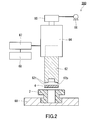
- the welding apparatus 300 shown in FIG. 2 can be used.
- the welding apparatus 300 is an ultrasonic welding apparatus, and includes a fixing base 60, a welding horn 62, an ultrasonic vibrator 64, a cylinder 65, an air compressor 66, an ultrasonic oscillator 67, and a controller 68.
- the welding horn 62 can be a welding horn for ultrasonic welding. Ultrasonic welding can achieve high strength welding with high productivity.
- the configuration of the welding apparatus 300 is the same as that of a commercially available ultrasonic welding apparatus except for the welding horn 62.
- the support 2 (resin component) on which the gas permeable membrane 4 is to be welded is disposed on the fixed base 60.
- the cylinder 65 uses the compressed air generated by the air compressor 66 to bring the welding horn 62 and the ultrasonic vibrator 64 close to the gas permeable membrane 4 and the pressure applied from the welding horn 62 to the gas permeable membrane 4. Adjust.
- the controller 68 controls the ultrasonic oscillator 67 and adjusts the frequency of ultrasonic vibration to be applied to the welding horn 62 via the ultrasonic vibrator 64.
- the welding horn 62 is a welding horn in which a convex portion 62t is provided on the working surface 62p to be in contact with the gas permeable film 4 to be processed. Therefore, it is easy to concentrate the load from the welding horn 62 on the interface between the gas permeable membrane 4 and the support 2. As a result, the welding strength between the support 2 and the gas permeable membrane 4 can be easily increased.
- the welding horn 62 is made of a metal such as an aluminum alloy or a titanium alloy, for example.
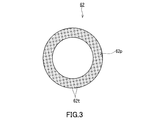
- the working surface 62p of the welding horn 62 is annular in plan view.
- the working surface 62p is provided with a plurality of convex portions 62t.
- the plurality of convex portions 62t are arranged in a lattice shape (irregular shape) on the action surface 62p.
- Each convex portion 62t has a quadrangular pyramid shape.
- the convex part 62t has a square shape in plan view.
- Such convex portions 62t are arranged on the action surface 62p without any gaps (closely densely). According to such a configuration, it is easy to concentrate the load from the welding horn 62 on the interface between the gas permeable membrane 4 and the support 2. In addition, the welding strength between the support 2 and the gas permeable membrane 4 can be easily increased.
- a welding horn 72 shown in FIG. 4 can also be used.
- the working surface 72p of the welding horn 72 is annular (annular) in plan view.
- Two convex portions 72t are provided on the working surface 72p.
- Each convex portion 72t has an annular shape that is concentric with the working surface 72p in plan view.
- Such a protrusion 72t also makes it easy to concentrate the load from the welding horn 72 on the interface between the gas permeable membrane 4 and the support 2.
- the number of convex parts 72t is not limited to two. Only one convex portion 72t may be provided on the working surface 72p, or three or more convex portions 72t may be provided.
- the shape of the convex portion on the working surface of the welding horn can be appropriately changed according to the thickness of the gas permeable membrane 4, the type of resin of the support 2, and the like. .
- a heat welding device may be used instead of the ultrasonic welding device 300.
- the ultrasonic welding apparatus a part of the resin component (support 2) is melted by frictional heat.
- the heat welding apparatus a part of the resin component is melted by the heat of the welding horn.
- FIG. 2 shows the configuration of the heat welding apparatus.
- the welding horn 62 may be a welding horn for heat welding.
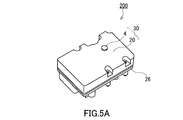
- the gas permeable membrane 4 may be provided in the housing 200.
- the housing 200 includes a plurality of parts including the first part 20 and the second part 26.
- the first portion 20 is a lid portion and the second portion 26 is a bottom portion.
- the 1st part 20 and the 2nd part 26 are made from the thermoplastic resin similarly to the support body 2 in the ventilation member 10 of 1st Embodiment.
- an opening 20 h for ventilation is formed in the first portion 20.
- the gas permeable film 4 is welded to the first portion 20 so as to close the opening 20h.
- the ventilation opening 20 h may be formed in the second portion 26, or may be formed in both the first portion 20 and the second portion 26.
- the first portion 20 of the housing 200 and the gas permeable membrane 4 form a ventilation member 30 (gas permeable member) for performing ventilation while preventing the permeation of liquid and solid.
- a welded portion 14 is formed between the gas permeable membrane 4 and the first portion 20 of the housing 200.
- the welding part 14 is annular in plan view.
- the gas permeable membrane 4 is welded to the first portion 20 of the casing 200 using the welding horn 62 or 72 described with reference to FIG. 3 or FIG.
- the rib for raising welding strength is not provided in the upper surface of the resin component (the support body 2 or the 1st part 20 of a housing
- a rib may be provided on the upper surface of the resin component.
- the gas permeable membrane 4 plays a role of ventilation and internal pressure adjustment of the casing. That is, the gas permeable membrane 4 is a gas permeable membrane. However, the gas permeable membrane 4 is not limited to a gas permeable membrane.
- the gas permeable member to be manufactured by the method disclosed in the present specification may be a waterproof sound-permeable member for transmitting sound while preventing permeation of water.
- the waterproof sound-permeable member including the gas permeable membrane 4 is provided, for example, at the earpiece and the mouthpiece of a communication device such as a mobile phone.
- a casing component (a lid portion of the ECU casing: see FIG. 5A) made of a resin material containing 30% by mass glass fiber and 70% by mass polybutylene terephthalate was prepared. After forming an opening with a diameter of 5 mm in the casing part, a PTFE porous membrane (manufactured by Nitto Denko Corporation) NTF810A, thickness 0.3 mm, diameter 10 mm) was welded to the housing parts. The frequency of ultrasonic waves was 28.5 kHz, the welding time was 0.16 seconds, and the welding pressure (air pressure) was 0.15 MPa. A welding horn having the structure described with reference to FIGS. 2 and 3 was used. Thus, the ventilation member of the Example comprised by the PTFE porous membrane and housing
- gas permeable members such as a ventilation member and a waterproof sound-permeable member.
Landscapes
- Engineering & Computer Science (AREA)
- Mechanical Engineering (AREA)
- Physics & Mathematics (AREA)
- General Engineering & Computer Science (AREA)
- Thermal Sciences (AREA)
- Fluid Mechanics (AREA)
- Microelectronics & Electronic Packaging (AREA)
- Lining Or Joining Of Plastics Or The Like (AREA)
- Separation Using Semi-Permeable Membranes (AREA)
- Arrangement Of Elements, Cooling, Sealing, Or The Like Of Lighting Devices (AREA)
- Non-Portable Lighting Devices Or Systems Thereof (AREA)
Abstract
Description
加工対象に接するべき作用面に凸部が設けられた溶着ホーンを使用して、フッ素樹脂で作られたガス透過性のフッ素樹脂多孔質膜を熱可塑性樹脂で作られた樹脂部品に溶着する工程を含む、ガス透過部材の製造方法を提供する。
熱可塑性樹脂で作られた樹脂部品と、
前記樹脂部品に取り付けられ、フッ素樹脂で作られたガス透過性のフッ素樹脂多孔質膜と、
を備え、
前記フッ素樹脂多孔質膜は、加工対象に接するべき作用面に凸部が設けられた溶着ホーンを使用して前記樹脂部品に溶着されている、ガス透過部材を提供する。
図1に示すように、本実施形態に係る通気部材10は、支持体2、ガス透過膜4、カバー6及びシールリング8を備えている。通気部材10は、例えば、筐体20(詳細には、筐体の蓋部分)の開口部20hに取り付けられている。通気部材10及び筐体20によって通気構造100が形成されている。
図5A及び図5Bに示すように、ガス透過膜4は、筐体200に設けられていてもよい。筐体200は、第一部分20及び第二部分26を含む複数の部分で構成されている。例えば、第一部分20が蓋部分であり、第二部分26が底部分である。第一部分20及び第二部分26は、第1実施形態の通気部材10における支持体2と同様、熱可塑性樹脂で作られている。本実施形態では、第一部分20に通気用の開口部20hが形成されている。開口部20hを塞ぐように、第一部分20にガス透過膜4が溶着されている。通気用の開口部20hは、第二部分26に形成されていてもよいし、第一部分20及び第二部分26の両方に形成されていてもよい。筐体200の第一部分20及びガス透過膜4は、液体及び固体の透過を防ぎつつ換気を行うための通気部材30(ガス透過部材)を形成している。
各実施形態において、ガス透過膜4が溶着される前の樹脂部品(支持体2又は筐体の第一部分20)の上面には、溶着強度を高めるためのリブが設けられていない。ただし、樹脂部品の上面にそのようなリブが設けられていてもよい。
30質量%のガラスファイバー及び70質量%のポリブチレンテレフタレートを含む樹脂材料で作られた筐体部品(ECU筐体の蓋部分:図5A参照)を準備した。筐体部品に直径5mmの開口部を形成した後、超音波溶着装置(静電舎社製、小型精密プレスシリーズ)を用い、開口部を塞ぐように、PTFE多孔質膜(日東電工社製、NTF810A、厚さ0.3mm、直径10mm)を筐体部品に溶着した。超音波の周波数は28.5kHz、溶着時間は0.16秒、溶着圧力(エアー圧)は0.15MPaであった。溶着ホーンとして、図2及び図3を参照して説明した構造を有するものを使用した。このようにして、PTFE多孔質膜及び筐体部品で構成された実施例の通気部材を得た。
作用面が平坦な溶着ホーンを使用したことを除き、実施例と同じ条件で筐体部品の開口部にPTFE多孔質膜を溶着することを試みた。しかし、PTFE多孔質膜は、筐体部品に溶着されず、筐体部品から簡単に剥がれ落ちた。
日本工業規格JIS L 1092(B法、高水圧法)に基づき、実施例の通気部材の耐水圧を調べた。具体的には、水漏れが発生する水圧(耐水圧)を測定した。結果を表1に示す。表1に示すように、実施例の通気部材は、十分な耐水圧を達成した。なお、実施例のようにPTFE多孔質膜を筐体部品に問題なく溶着できた場合、溶着結果を「良」と判断した。比較例のようにPTFE多孔質膜を筐体部品に溶着できなかった場合、溶着結果を「否」と判断した。

Claims (6)
- 加工対象に接するべき作用面に凸部が設けられた溶着ホーンを使用して、フッ素樹脂で作られたガス透過性のフッ素樹脂多孔質膜を熱可塑性樹脂で作られた樹脂部品に溶着する工程を含む、ガス透過部材の製造方法。
- 前記溶着ホーンの前記作用面には、前記複数の凸部が設けられ、
前記複数の凸部は、前記作用面において格子状に並んでいる、請求項1に記載のガス透過部材の製造方法。 - 前記作用面は、平面視で環状であり、
前記凸部は、平面視で、前記作用面と同心状の環状である、請求項1に記載のガス透過部材の製造方法。 - 前記溶着ホーンは、超音波溶着用の溶着ホーンである、請求項1に記載のガス透過部材の製造方法。
- 前記ガス透過部材は、(a)液体及び固体の透過を防ぎつつ換気を行うための通気部材であるか、(b)水の透過を防ぎつつ音声を透過させるための防水通音部材である、請求項1に記載のガス透過部材の製造方法。
- 熱可塑性樹脂で作られた樹脂部品と、
前記樹脂部品に取り付けられ、フッ素樹脂で作られたガス透過性のフッ素樹脂多孔質膜と、
を備え、
前記フッ素樹脂多孔質膜は、加工対象に接するべき作用面に凸部が設けられた溶着ホーンを使用して前記樹脂部品に溶着されている、ガス透過部材。
Priority Applications (5)
| Application Number | Priority Date | Filing Date | Title |
|---|---|---|---|
| US15/304,788 US10300665B2 (en) | 2014-04-18 | 2015-04-08 | Gas-permeable member and method for producing the same |
| KR1020227031594A KR20220129677A (ko) | 2014-04-18 | 2015-04-08 | 가스 투과 부재 및 그 제조 방법 |
| KR1020167028176A KR20160147737A (ko) | 2014-04-18 | 2015-04-08 | 가스 투과 부재 및 그 제조 방법 |
| CN201580020284.3A CN106232325B (zh) | 2014-04-18 | 2015-04-08 | 气体透过构件及其制造方法 |
| EP15779897.6A EP3132915B1 (en) | 2014-04-18 | 2015-04-08 | Gas permeation member and production method therefor |
Applications Claiming Priority (2)
| Application Number | Priority Date | Filing Date | Title |
|---|---|---|---|
| JP2014085993A JP6486014B2 (ja) | 2014-04-18 | 2014-04-18 | ガス透過部材及びその製造方法 |
| JP2014-085993 | 2014-04-18 |
Publications (1)
| Publication Number | Publication Date |
|---|---|
| WO2015159515A1 true WO2015159515A1 (ja) | 2015-10-22 |
Family
ID=54323740
Family Applications (1)
| Application Number | Title | Priority Date | Filing Date |
|---|---|---|---|
| PCT/JP2015/001987 Ceased WO2015159515A1 (ja) | 2014-04-18 | 2015-04-08 | ガス透過部材及びその製造方法 |
Country Status (7)
| Country | Link |
|---|---|
| US (1) | US10300665B2 (ja) |
| EP (1) | EP3132915B1 (ja) |
| JP (1) | JP6486014B2 (ja) |
| KR (2) | KR20160147737A (ja) |
| CN (1) | CN106232325B (ja) |
| TW (1) | TWI674188B (ja) |
| WO (1) | WO2015159515A1 (ja) |
Cited By (1)
| Publication number | Priority date | Publication date | Assignee | Title |
|---|---|---|---|---|
| CN105346066A (zh) * | 2015-11-16 | 2016-02-24 | 江苏泛亚微透科技股份有限公司 | 汽车用透气膜组件自动生产线及其装配工艺 |
Families Citing this family (9)
| Publication number | Priority date | Publication date | Assignee | Title |
|---|---|---|---|---|
| JP6010641B2 (ja) * | 2015-01-28 | 2016-10-19 | 富士重工業株式会社 | 樹脂部材及び樹脂部材の接合方法 |
| JP6006822B2 (ja) * | 2015-03-19 | 2016-10-12 | 富士重工業株式会社 | 樹脂部材 |
| CN105965873A (zh) * | 2016-05-06 | 2016-09-28 | 合肥市航嘉电子技术有限公司 | 一种涨型法高精度低熔脂壳体的熔敷装置 |
| US10577240B2 (en) * | 2017-04-17 | 2020-03-03 | Macao Commercial & Industrial Spring Mattress Manufacturer Macao TAIWA Machinery | Automatic bagged spring production apparatus |
| KR20190127934A (ko) | 2017-04-28 | 2019-11-13 | 닛토덴코 가부시키가이샤 | 통기 유닛 |
| CN107318059A (zh) * | 2017-08-02 | 2017-11-03 | 苏州孝义家精密金属有限公司 | 一种超薄防水透声复合模组 |
| US11554350B2 (en) * | 2017-12-11 | 2023-01-17 | Nitto Denko Corporation | Infernal pressure adjustment member and electrical component for transport equipment |
| CN114514064B (zh) * | 2019-09-26 | 2023-09-05 | 东洋纺Mc 株式会社 | 浸渍型平膜元件及其制造方法 |
| CN114747429A (zh) * | 2022-04-08 | 2022-07-15 | 灌南县园艺技术指导站 | 一种食用菌培养基灭菌方法 |
Citations (5)
| Publication number | Priority date | Publication date | Assignee | Title |
|---|---|---|---|---|
| JPS58193114A (ja) * | 1982-05-07 | 1983-11-10 | Daicel Chem Ind Ltd | 積層フィルムの超音波融着方法 |
| JPS6124427A (ja) * | 1984-07-13 | 1986-02-03 | Sumitomo Electric Ind Ltd | 弗素樹脂多孔質膜と樹脂部材の接、融着方法 |
| JPH05154355A (ja) * | 1991-12-05 | 1993-06-22 | Tsuchiya Mfg Co Ltd | 四ふっ化エチレン樹脂微細多孔質膜の溶着方法 |
| JPH07505836A (ja) * | 1992-04-10 | 1995-06-29 | ダブリュ.エル.ゴア アンド アソシエーツ,インコーポレイティド | 多孔質ポリテトラフルオロエチレン物品の超音波溶接方法 |
| JP2006142705A (ja) * | 2004-11-22 | 2006-06-08 | Kasai Kogyo Co Ltd | 繊維質マットの固定構造 |
Family Cites Families (10)
| Publication number | Priority date | Publication date | Assignee | Title |
|---|---|---|---|---|
| JPS5563222A (en) * | 1978-11-06 | 1980-05-13 | Multi Giken Kk | Method of fitting eyelet to resin film by supersonic wave |
| US4767492A (en) * | 1986-04-18 | 1988-08-30 | Pola Chemical Industries, Inc. | Ultrasonic fuse-bonding sealing apparatus with improved contact surfaces |
| JPS63247935A (ja) * | 1987-04-02 | 1988-10-14 | Fuji Photo Film Co Ltd | 情報記録媒体の製造方法 |
| DE4213066A1 (de) | 1992-04-21 | 1993-11-11 | Huels Troisdorf | Heizkeilschweißen |
| US6210014B1 (en) | 1997-01-21 | 2001-04-03 | Gore Enterprise Holdings, Inc. | System for reducing condensation in enclosed lamp housings |
| JPH1125644A (ja) * | 1997-07-03 | 1999-01-29 | Fuji Photo Film Co Ltd | 磁気テープカートリッジ用リールの溶着方法及び溶着装置 |
| CN100457449C (zh) * | 2004-12-30 | 2009-02-04 | 河西工业株式会社 | 纤维质罩面的固定结构及车辆用吸音构件 |
| JP4717648B2 (ja) * | 2005-02-02 | 2011-07-06 | 日東電工株式会社 | 溶着装置およびそれを用いた通気部材付支持体の製造方法 |
| JP5234763B2 (ja) | 2007-09-04 | 2013-07-10 | 日東電工株式会社 | 通気部材およびその製造方法 |
| WO2009044560A1 (ja) * | 2007-10-03 | 2009-04-09 | Panasonic Corporation | 粘着テープ貼付装置及びテープ接続方法 |
-
2014
- 2014-04-18 JP JP2014085993A patent/JP6486014B2/ja active Active
-
2015
- 2015-04-08 KR KR1020167028176A patent/KR20160147737A/ko not_active Ceased
- 2015-04-08 KR KR1020227031594A patent/KR20220129677A/ko not_active Ceased
- 2015-04-08 US US15/304,788 patent/US10300665B2/en active Active
- 2015-04-08 EP EP15779897.6A patent/EP3132915B1/en active Active
- 2015-04-08 CN CN201580020284.3A patent/CN106232325B/zh active Active
- 2015-04-08 WO PCT/JP2015/001987 patent/WO2015159515A1/ja not_active Ceased
- 2015-04-15 TW TW104112018A patent/TWI674188B/zh not_active IP Right Cessation
Patent Citations (5)
| Publication number | Priority date | Publication date | Assignee | Title |
|---|---|---|---|---|
| JPS58193114A (ja) * | 1982-05-07 | 1983-11-10 | Daicel Chem Ind Ltd | 積層フィルムの超音波融着方法 |
| JPS6124427A (ja) * | 1984-07-13 | 1986-02-03 | Sumitomo Electric Ind Ltd | 弗素樹脂多孔質膜と樹脂部材の接、融着方法 |
| JPH05154355A (ja) * | 1991-12-05 | 1993-06-22 | Tsuchiya Mfg Co Ltd | 四ふっ化エチレン樹脂微細多孔質膜の溶着方法 |
| JPH07505836A (ja) * | 1992-04-10 | 1995-06-29 | ダブリュ.エル.ゴア アンド アソシエーツ,インコーポレイティド | 多孔質ポリテトラフルオロエチレン物品の超音波溶接方法 |
| JP2006142705A (ja) * | 2004-11-22 | 2006-06-08 | Kasai Kogyo Co Ltd | 繊維質マットの固定構造 |
Non-Patent Citations (1)
| Title |
|---|
| See also references of EP3132915A4 * |
Cited By (1)
| Publication number | Priority date | Publication date | Assignee | Title |
|---|---|---|---|---|
| CN105346066A (zh) * | 2015-11-16 | 2016-02-24 | 江苏泛亚微透科技股份有限公司 | 汽车用透气膜组件自动生产线及其装配工艺 |
Also Published As
| Publication number | Publication date |
|---|---|
| EP3132915A1 (en) | 2017-02-22 |
| US20170036393A1 (en) | 2017-02-09 |
| CN106232325B (zh) | 2021-03-09 |
| CN106232325A (zh) | 2016-12-14 |
| KR20160147737A (ko) | 2016-12-23 |
| EP3132915B1 (en) | 2020-11-18 |
| US10300665B2 (en) | 2019-05-28 |
| TW201600313A (zh) | 2016-01-01 |
| JP2015205420A (ja) | 2015-11-19 |
| EP3132915A4 (en) | 2018-01-03 |
| TWI674188B (zh) | 2019-10-11 |
| KR20220129677A (ko) | 2022-09-23 |
| JP6486014B2 (ja) | 2019-03-20 |
Similar Documents
| Publication | Publication Date | Title |
|---|---|---|
| JP6486014B2 (ja) | ガス透過部材及びその製造方法 | |
| CN101795900B (zh) | 透气构件及其制造方法 | |
| TWI690212B (zh) | 透音膜與具備其之透音膜構件、以及麥克風及電子機器 | |
| US8178023B2 (en) | Method for manufacture of housing part provided with ventilation filter, and method for manufacture of housing provided with ventilation filter | |
| CN103597849B (zh) | 防水通音构件 | |
| US8705790B2 (en) | Speaker diaphragm, and speaker and handheld terminal device using said speaker diaphragm | |
| KR20140018840A (ko) | 방수 통음 부재 및 그 제조 방법, 및 방수 통음 부재 담지체 | |
| JP2010167475A (ja) | 異種材料と金属材料との界面が気密性を有する異種材料接合金属材料及びその製造方法 | |
| CN102342194B (zh) | 电子部件安装装置及其制造方法 | |
| JP2009252508A (ja) | 通気部材 | |
| JP2013111881A (ja) | 金属部品の製造方法、及び複合成形体 | |
| JP6670947B2 (ja) | 振動膜及び振動膜の製造方法 | |
| KR20140090931A (ko) | 금속 수지 복합성형체용 인서트 금속부재 및 금속 수지 복합성형체 | |
| US9736560B2 (en) | Liquid impermeable sealed speaker design | |
| CN111093932A (zh) | 金属树脂复合成型品及其制造方法 | |
| CN106899917A (zh) | 发声器装置 | |
| JP2014004729A (ja) | 熱溶着装置 | |
| GB2521918A (en) | Apparatus and method for providing a seal around a perimeter of a bi-material enclosure | |
| CN204733373U (zh) | 微型扬声器 | |
| JP2011018859A (ja) | シール構造体 | |
| CN221930045U (zh) | 一种声学模块和声学设备 | |
| CN111373719B (zh) | 前置摄像头的密封安装结构及终端 | |
| CN120238794A (zh) | 一种声学模块和声学设备 | |
| CN206977698U (zh) | 一种锁车提示音装置的防水结构 | |
| CN121220060A (zh) | 一种声学模块和声学设备 |
Legal Events
| Date | Code | Title | Description |
|---|---|---|---|
| 121 | Ep: the epo has been informed by wipo that ep was designated in this application |
Ref document number: 15779897 Country of ref document: EP Kind code of ref document: A1 |
|
| ENP | Entry into the national phase |
Ref document number: 20167028176 Country of ref document: KR Kind code of ref document: A |
|
| WWE | Wipo information: entry into national phase |
Ref document number: 15304788 Country of ref document: US |
|
| NENP | Non-entry into the national phase |
Ref country code: DE |
|
| REEP | Request for entry into the european phase |
Ref document number: 2015779897 Country of ref document: EP |
|
| WWE | Wipo information: entry into national phase |
Ref document number: 2015779897 Country of ref document: EP |
|
| WWR | Wipo information: refused in national office |
Ref document number: 1020227031594 Country of ref document: KR |