WO2015162930A1 - タンパク質発現を向上させる方法およびタンパク質発現用組成物 - Google Patents
タンパク質発現を向上させる方法およびタンパク質発現用組成物 Download PDFInfo
- Publication number
- WO2015162930A1 WO2015162930A1 PCT/JP2015/002208 JP2015002208W WO2015162930A1 WO 2015162930 A1 WO2015162930 A1 WO 2015162930A1 JP 2015002208 W JP2015002208 W JP 2015002208W WO 2015162930 A1 WO2015162930 A1 WO 2015162930A1
- Authority
- WO
- WIPO (PCT)
- Prior art keywords
- mrna
- protein
- composition
- poly
- disorder
- Prior art date
- Legal status (The legal status is an assumption and is not a legal conclusion. Google has not performed a legal analysis and makes no representation as to the accuracy of the status listed.)
- Ceased
Links
Images



Classifications
-
- A—HUMAN NECESSITIES
- A61—MEDICAL OR VETERINARY SCIENCE; HYGIENE
- A61K—PREPARATIONS FOR MEDICAL, DENTAL OR TOILETRY PURPOSES
- A61K38/00—Medicinal preparations containing peptides
- A61K38/16—Peptides having more than 20 amino acids; Gastrins; Somatostatins; Melanotropins; Derivatives thereof
- A61K38/17—Peptides having more than 20 amino acids; Gastrins; Somatostatins; Melanotropins; Derivatives thereof from animals; from humans
- A61K38/18—Growth factors; Growth regulators
- A61K38/185—Nerve growth factor [NGF]; Brain derived neurotrophic factor [BDNF]; Ciliary neurotrophic factor [CNTF]; Glial derived neurotrophic factor [GDNF]; Neurotrophins, e.g. NT-3
-
- C—CHEMISTRY; METALLURGY
- C07—ORGANIC CHEMISTRY
- C07K—PEPTIDES
- C07K14/00—Peptides having more than 20 amino acids; Gastrins; Somatostatins; Melanotropins; Derivatives thereof
- C07K14/435—Peptides having more than 20 amino acids; Gastrins; Somatostatins; Melanotropins; Derivatives thereof from animals; from humans
- C07K14/575—Hormones
- C07K14/65—Insulin-like growth factors, i.e. somatomedins, e.g. IGF-1, IGF-2
-
- A—HUMAN NECESSITIES
- A61—MEDICAL OR VETERINARY SCIENCE; HYGIENE
- A61K—PREPARATIONS FOR MEDICAL, DENTAL OR TOILETRY PURPOSES
- A61K31/00—Medicinal preparations containing organic active ingredients
- A61K31/70—Carbohydrates; Sugars; Derivatives thereof
- A61K31/7088—Compounds having three or more nucleosides or nucleotides
- A61K31/7105—Natural ribonucleic acids, i.e. containing only riboses attached to adenine, guanine, cytosine or uracil and having 3'-5' phosphodiester links
-
- A—HUMAN NECESSITIES
- A61—MEDICAL OR VETERINARY SCIENCE; HYGIENE
- A61K—PREPARATIONS FOR MEDICAL, DENTAL OR TOILETRY PURPOSES
- A61K38/00—Medicinal preparations containing peptides
- A61K38/16—Peptides having more than 20 amino acids; Gastrins; Somatostatins; Melanotropins; Derivatives thereof
- A61K38/17—Peptides having more than 20 amino acids; Gastrins; Somatostatins; Melanotropins; Derivatives thereof from animals; from humans
- A61K38/22—Hormones
- A61K38/30—Insulin-like growth factors, i.e. somatomedins, e.g. IGF-1, IGF-2
-
- A—HUMAN NECESSITIES
- A61—MEDICAL OR VETERINARY SCIENCE; HYGIENE
- A61K—PREPARATIONS FOR MEDICAL, DENTAL OR TOILETRY PURPOSES
- A61K48/00—Medicinal preparations containing genetic material which is inserted into cells of the living body to treat genetic diseases; Gene therapy
-
- A—HUMAN NECESSITIES
- A61—MEDICAL OR VETERINARY SCIENCE; HYGIENE
- A61K—PREPARATIONS FOR MEDICAL, DENTAL OR TOILETRY PURPOSES
- A61K48/00—Medicinal preparations containing genetic material which is inserted into cells of the living body to treat genetic diseases; Gene therapy
- A61K48/005—Medicinal preparations containing genetic material which is inserted into cells of the living body to treat genetic diseases; Gene therapy characterised by an aspect of the 'active' part of the composition delivered, i.e. the nucleic acid delivered
- A61K48/0066—Manipulation of the nucleic acid to modify its expression pattern, e.g. enhance its duration of expression, achieved by the presence of particular introns in the delivered nucleic acid
-
- A—HUMAN NECESSITIES
- A61—MEDICAL OR VETERINARY SCIENCE; HYGIENE
- A61P—SPECIFIC THERAPEUTIC ACTIVITY OF CHEMICAL COMPOUNDS OR MEDICINAL PREPARATIONS
- A61P25/00—Drugs for disorders of the nervous system
-
- A—HUMAN NECESSITIES
- A61—MEDICAL OR VETERINARY SCIENCE; HYGIENE
- A61P—SPECIFIC THERAPEUTIC ACTIVITY OF CHEMICAL COMPOUNDS OR MEDICINAL PREPARATIONS
- A61P25/00—Drugs for disorders of the nervous system
- A61P25/02—Drugs for disorders of the nervous system for peripheral neuropathies
-
- A—HUMAN NECESSITIES
- A61—MEDICAL OR VETERINARY SCIENCE; HYGIENE
- A61P—SPECIFIC THERAPEUTIC ACTIVITY OF CHEMICAL COMPOUNDS OR MEDICINAL PREPARATIONS
- A61P43/00—Drugs for specific purposes, not provided for in groups A61P1/00-A61P41/00
-
- C—CHEMISTRY; METALLURGY
- C12—BIOCHEMISTRY; BEER; SPIRITS; WINE; VINEGAR; MICROBIOLOGY; ENZYMOLOGY; MUTATION OR GENETIC ENGINEERING
- C12N—MICROORGANISMS OR ENZYMES; COMPOSITIONS THEREOF; PROPAGATING, PRESERVING, OR MAINTAINING MICROORGANISMS; MUTATION OR GENETIC ENGINEERING; CULTURE MEDIA
- C12N15/00—Mutation or genetic engineering; DNA or RNA concerning genetic engineering, vectors, e.g. plasmids, or their isolation, preparation or purification; Use of hosts therefor
- C12N15/09—Recombinant DNA-technology
Definitions
- the present invention relates to a method for improving protein expression and a composition for protein expression.
- Protein is extremely promising as a physiologically active substance. For example, protein replacement therapy is effective in treating diseases caused by a decrease in a particular protein. Therefore, techniques for producing a large amount of protein intracellularly or extracellularly have been developed so far.
- Protein is produced by transcription from DNA encoding the protein to mRNA and translation of the protein from the mRNA.
- Transcriptional regulators are involved in transcription of mRNA from DNA, and the amount of mRNA production is controlled by transcriptional regulation.
- protein translation from mRNA is thought to be controlled by the association of translation initiation factors to mRNA. It is also known that mRNA is unstable in cells and its stability varies depending on poly A added to the 3 'UTR of mRNA.
- Poly A is usually added to the 3 'UTR of mRNA by a poly A addition signal.
- a complex containing a cleavage / polyadenylation factor (CPSF) recognizes the poly A addition signal region of the 3′UTR of the mRNA, and 10 to 10 of the signal.
- MRNA is cleaved 30 bases downstream, and poly-A is initiated from the cleavage site. Then, it is considered that the synthesis of poly A is terminated when poly A reaches about 100 to 300 bases (Non-patent Document 1). However, the synthesis of poly A is not strictly controlled.
- the length of poly A is considered to be related to the amount of protein translation from mRNA.
- Non-Patent Document 2 discloses that the translation efficiency of mRNA is increased when the length of poly A added to the 3'UTR of mRNA is 120 bases.
- poly A is enzymatically added to mRNA based on the poly A addition signal region.
- the expression level is controlled by selecting a promoter, and various expression vectors in which the promoter sequence is devised to enhance protein expression have been commercially available.
- the present invention provides a method for improving protein expression and a composition for protein expression.
- the present inventors have found that mRNA with a polyA length in a certain range significantly enhances the binding with eukaryotic translation initiation factor 4E (eIF4E).
- eIF4E eukaryotic translation initiation factor 4E
- the present inventors have also found that mRNA with a poly A length in a certain range shows a significantly high translation efficiency.
- the present invention is based on these findings.
- a composition for use in expressing a target protein comprises mRNA encoding the protein of interest, 80% or more of the mRNA contained in the composition has a sequence consisting essentially of polyA having a length of 230 to 250 bases on the 3 ′ end side of the protein coding region, Composition.
- Composition Composition.
- composition (3) The above (1), wherein 95% or more of the mRNA contained in the composition has a sequence consisting essentially of polyA having a length of 230 to 250 bases on the 3 ′ end side of the protein coding region. Composition. (4) The composition according to any one of the above (1) to (3), wherein 20% or less of the mRNA contained in the composition is mRNA having poly A having a length of 270 bases or more. (5) a protein expression vector, A gene encoding a protein operably linked to a promoter; A protein expression vector comprising a sequence substantially consisting of 230 to 250 bases in length and comprising poly A downstream of a protein coding region of a gene encoding a protein.
- a pharmaceutical composition for use in treating a disease or disorder in a subject suffering from a disease or a subject having a disorder comprising mRNA encoding a protein capable of treating the disease or disorder And 80% or more of the mRNA contained in the composition has a sequence consisting essentially of a polyA sequence having a length of 230 to 250 bases on the 3 ′ end side of the protein coding region of the mRNA .
- the disease or disorder is a disease or disorder caused by protein reduction or deficiency, and the protein capable of treating the disease or disorder is a protein that is reduced or deficient in a subject (the above)
- the composition according to 8 ).
- composition according to (8) above wherein the disease or disorder is spinal cord injury and the protein capable of treating the disease or disorder is brain-derived neurotrophic factor (BDNF).
- BDNF brain-derived neurotrophic factor
- IGF-1 insulin-like growth factor
- FIG. 1 is an electrophoresis photograph of purified mRNA.
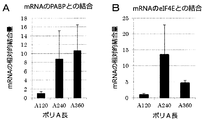
- FIG. 2 is a graph showing the effect of poly A length on the amount of mRNA bound to the protein described in the figure.
- FIG. 3 is a graph showing the relationship between poly A length and translation efficiency in cultured cells.
- FIG. 4 is a diagram showing the relationship between poly A length and translation efficiency in a cell-free extraction system.
- FIG. 4A shows the results in a human cell-free extraction system
- FIG. 4B shows the results in a rabbit reticulocyte lysate.
- FIG. 5 is a diagram showing the relationship between poly A length and translation efficiency in vivo.
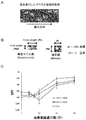
- FIG. 6 is a diagram showing the influence of poly A length on the therapeutic effect of the sciatic nerve injury model.
- mRNA means messenger RNA.
- the mRNA is preferably derived from a eukaryote.
- eukaryotes include bacteria such as E. coli, fungi such as yeast, insects such as silkworm, and mammals such as human. More preferably, the eukaryote is E. coli, yeast, silkworm or human.
- mRNA is produced in vivo by transcription from DNA. When transcription is completed, poly A is added to the 3 'end of the mRNA.
- a 3 'untranslated region (3'UTR) is usually interposed between a protein coding region (CDS) and polyA.
- CDS protein coding region
- protein coding region means a region encoding a protein on DNA and a region encoding a protein on RNA.
- the “3 ′ end side of the protein coding region” means a region outside the protein coding region and 3 ′ end side in mRNA, and preferably a region further outside the 3 ′ UTR. Yes, may mean the 3 'end of the 3'UTR.
- upstream means a region existing on the opposite side to the direction in which genetic information is read when viewed from the protein coding region of a gene.
- downstream means a region that exists in a direction in which genetic information is read when viewed from the protein coding region of a gene.
- poly A means DNA or RNA formed by polymerizing adenine.
- sequence consisting essentially of poly A means 90% or more, preferably 95% or more, more preferably 97% or more, and even more preferably 100% of all bases of the sequence. Means that it consists of That is, the base consisting essentially of poly A may contain a base other than adenine (A).
- bases other than adenine (A) are concentrated in a region of, for example, 3 or less, preferably 2 or less, more preferably 1 or less.
- the base other than adenine (A) is, for example, a restriction enzyme cleavage site.
- the “promoter” means a transcriptional control region of mRNA existing on DNA.
- an in vitro transcription system promoter and a eukaryotic promoter can be used as the “promoter”.
- promoters for in vitro transcription systems include SP6 promoter, T3 promoter and T7 promoter, which can be used in the present invention.
- eukaryotic promoters include bacterial promoters such as E. coli and mammalian promoters, which can be appropriately selected according to the host cell and used in the present invention.
- Examples of the promoter for E. coli include T7 promoter, tac promoter, and T7lac promoter.
- the promoter for mammals include ⁇ -actin promoter such as CMV promoter and CAG promoter, EF1 ⁇ promoter and SR ⁇ promoter.
- terminal means a termination signal for transcription.
- Poly A chain functions as a binding site for poly A binding protein and promotes transport of mRNA out of nucleus.
- the poly A chain has a role of protecting mRNA from its degradation in the cytoplasm. Thereby, poly A chain contributes to the improvement of the translation efficiency to protein.
- EIF4E is also called eukaryotic translation initiation factor 4E and plays an important role in the translational control of mRNA.
- eIF4E is involved in recognition of the 5 'cap structure of mRNA and plays a role in circularizing mRNA through eIF4G and poly A binding protein (PABP).
- PABP poly A binding protein
- mRNA with long poly A binds more strongly to PABP, while the complex formation between mRNA and eIF4E has a specific length of poly A (specifically 240 bases). Sometimes found to be significantly promoted. Further, when the poly A length exceeded a certain value, the binding to PABP was strengthened, while the binding to eIF4E was weakened. Since eIF4E is thought to bind to (or form a complex with) mRNA polyA via PABP, eIF4E binding to eIF4E is reduced in mRNA having a long polyA that increases the binding between mRNA and PABP. The result of weakening was very surprising.
- the poly A length of mRNA when the poly A length of mRNA is 210 bases or less and when it is 270 bases or more, the translation efficiency is remarkably reduced as compared with 240 bases. Therefore, in the present invention, it is preferable that the poly-A length of mRNA is controlled to a certain length.
- the “certain length” here is, for example, 220 to 260 bases, preferably 225 to 255 bases, particularly preferably 230 to 250 bases, more preferably 230 to 245 bases, Even more preferred is 235 to 245 bases.
- the amount of mRNA having poly A of 270 bases or more is reduced or removed from the composition.
- ⁇ Poly A length can be easily controlled by removing poly A addition signal.
- the mRNA does not have a poly A addition signal.
- the DNA that transcribes mRNA does not have a poly A addition signal between its protein coding region and its terminator.
- the DNA that transcribes mRNA does not have a poly A addition signal between its protein coding region and its terminator, but instead has a sequence consisting of a poly A of a certain length. Have.
- the present inventors have clarified that the binding ability to eIF4E is improved when the mRNA has a certain length of poly A. Accordingly, in one aspect of the present invention, there is provided a method for improving the binding ability of mRNA to eIF4E, wherein the mRNA comprises a sequence consisting essentially of polyA having a certain length on the 3 ′ end side of the protein coding region. There is provided a method comprising adding a sequence consisting of polyA or substantially polyA downstream of the protein coding region of the DNA to which the mRNA is transcribed. In certain preferred embodiments, the constant length is 230 to 250 bases.
- MRNA is obtained by transcription of the region between the transcription initiation region on DNA and the terminator by RNA polymerase II.
- poly A or a sequence consisting essentially of poly A can be inserted between the protein coding region of DNA and the terminator.
- the method for improving the binding ability of mRNA of the present invention to eIF4E may further include removing the poly A addition signal.
- the poly A addition signal is typically AATAAA (or AAUAAAA), and those skilled in the art can easily remove the poly A addition signal. Since the poly A addition signal is contained in the region between the CDS and the terminator, or in the 3'UTR, it can also be removed by removing part or all of these regions.
- the method for improving the binding ability of the mRNA of the present invention to eIF4E may further include, in one embodiment, reducing or removing mRNA having poly A having a length of 270 bases or more. Certain embodiments of the invention may further comprise reducing or removing mRNA having a polyA of 210 bases or less in length. One aspect of the present invention may further include reducing or removing mRNA having a poly A of 210 bases or less and 270 bases or more.
- the inventors have clarified that the translation efficiency is remarkably improved when the poly A length of mRNA is 240 bases.
- the translation efficiency greatly exceeded that of mRNA having a poly A length of 210 bases and mRNA having a poly A length of 270 bases.
- a composition for use in expressing a target protein comprising mRNA encoding the target protein, and 80% of the mRNA contained in the composition. % Or more (molecular ratio, the same applies hereinafter), preferably 90% or more, more preferably 95% or more, still more preferably 97% or more, even more preferably 99% or more, and most preferably 100%.
- a composition having a sequence consisting essentially of polyA having a certain length (for example, 230 to 250 bases) on the 3 ′ end side of the coding region is provided. As described above, it is preferable that the poly-A length of mRNA is controlled to a certain length.
- the ratio (%) of the number of mRNA molecules can be determined by methods well known to those skilled in the art.
- the molecular number ratio can be determined from, for example, an electrophoresis pattern obtained by electrophoresis of mRNA encoding a target protein.
- an electrophoresis method with excellent quantification using a microchip for RNA analysis has been developed and can be used for calculation of the number ratio of mRNA molecules.
- the composition of the present invention is 20% or less, preferably 15% or less, more preferably 10% or less, even more preferably 5% or less, even more preferably, of mRNA encoding the target protein contained in the composition.
- 3% or less, particularly preferably 1% or less is mRNA having poly A having a length of 270 bases or more, and most preferably mRNA encoding a target protein having poly A having a length of 270 bases or more is substantially contained in the composition.
- the composition of the present invention is 20% or less, preferably 15% or less, more preferably 10% or less, even more preferably 5% or less, even more preferably, of mRNA encoding the target protein contained in the composition.
- 3% or less is mRNA having poly A having a length of 210 bases or less, and most preferably mRNA encoding a target protein having poly A having a length of 210 bases or less is contained in the composition.
- 1% or less is mRNA having a poly A of 210 base length or less and 270 base length or more, and most preferably mRNA having a poly A of 210 base length or less or 270 base length or more is contained in the composition. Virtually not included.
- the composition of the present invention contains 80% or more of mRNA whose poly A length is a certain length (for example, 230 to 250 bases) relative to the mRNA encoding the target protein contained in the composition.
- the poly A length is a certain length (for example, 230 to 250 bases)
- the translation efficiency is remarkably increased, which is extremely advantageous from the viewpoint of translation efficiency.
- % Have a sequence consisting essentially of polyA of a certain length (eg, 230 to 250 bases) on the 3 ′ end side of the protein coding region.
- the mRNA does not have a poly A addition signal.
- the composition of the present invention may contain one kind of mRNA or a mixture of plural kinds of mRNA.
- the composition of the present invention may be a mixture of mRNAs having various lengths of poly A.
- the composition of the present invention may contain a carrier such as a buffer or an excipient in addition to mRNA.
- the composition of the present invention may contain a carrier for mRNA delivery.
- composition of the present invention can be used to express a protein in cells in vitro or in vivo.
- compositions of the invention can also be used to express proteins in in vitro translation systems such as cell-free extraction systems.
- a protein expression vector is a gene encoding a protein operably linked to a promoter, and has a certain length (eg, 230-250) downstream of the protein coding region of the gene encoding the protein.
- a protein expression vector comprising a sequence consisting essentially of polyA.
- the protein expression vector of the present invention is used for producing mRNA in which a sequence substantially consisting of poly A having a certain length (for example, 230 to 250 bases) is added to the 3 'UTR region.
- a method for expressing a target protein in a body cell of a subject comprising mRNA encoding the target protein, wherein 80% or more of the mRNA contained in the composition , Preferably 90% or more, more preferably 95% or more, even more preferably 97% or more, even more preferably 99% or more, and most preferably 100% is constant on the 3 ′ end side of the protein coding region of the mRNA.
- the method may further comprise reducing or removing mRNA having a polyA having a length of 270 bases or more.
- Certain embodiments of the invention may further comprise reducing or removing mRNA having a polyA of 210 bases or less in length.
- One aspect of the present invention may further include reducing or removing mRNA having a poly A of 210 bases or less and 270 bases or more.
- a method of treating a disease or disorder in a subject suffering from or having a disorder comprising mRNA encoding a protein capable of treating the disease or disorder.
- a method is provided.
- the disease or disorder is peripheral nerve injury
- the protein capable of treating the disease or disorder is insulin-like growth factor (IGF-1) is there.
- the peripheral nerve injury can be a sciatic nerve injury.
- IGF-1 exhibits muscle hypertrophy effect (or muscle atrophy prevention effect) by intramuscular administration of mRNA encoding IGF-1 and also has a nerve regeneration promoting action, and promotes regeneration of damaged nerves. And the recovery of the motor function of the subject.
- the disease or disorder is spinal cord injury
- the protein capable of treating the disease or disorder is brain-derived neurotrophic factor (BDNF) is there.
- BDNF brain-derived neurotrophic factor promotes recovery of neural function after spinal cord injury, for example, by intrathecal administration of mRNA encoding BDNF.
- the disease or disorder is a disease or disorder caused by protein reduction or deficiency
- the protein capable of treating the disease or disorder is A protein that is reduced or deficient in the disease or disorder. That is, this particular embodiment is protein replacement therapy.
- the protein capable of treating the disease or disorder is a secretory factor or a facilitator that promotes production of the secreted factor, and the disease or disorder Is a disease or disorder caused by a reduction or deficiency of secreted factors.
- a pharmaceutical composition for use in a method of treating a disease or disorder of the present invention there is provided a pharmaceutical composition for use in a method of treating a disease or disorder of the present invention. That is, according to the present invention, there is provided a pharmaceutical composition for use in treating a disease or disorder in a subject afflicted with a disease or a subject having a disorder, and a protein capable of treating the disease or disorder. 80% or more, preferably 90% or more, more preferably 95% or more, still more preferably 97% or more, even more preferably 99% or more of the mRNA contained in the composition.
- a pharmaceutical composition in which 100% has a sequence consisting essentially of a polyA sequence of a certain length (eg, 230 to 250 bases) on the 3 ′ end side of the protein coding region of the mRNA.
- the disease or disorder is peripheral nerve injury and the protein capable of treating the disease or disorder is insulin-like growth factor (IGF-1).
- IGF-1 insulin-like growth factor
- the peripheral nerve injury can be a sciatic nerve injury.
- the disease or disorder is spinal cord injury and the protein capable of treating the disease or disorder is brain-derived neurotrophic factor (BDNF).
- BDNF brain-derived neurotrophic factor
- a pharmaceutical composition for treating and / or preventing a disease or disorder caused by protein reduction or deficiency comprising mRNA encoding the protein.
- mRNA encoding the protein 80% or more of the mRNA contained in the composition, preferably 90% or more, more preferably 95% or more, even more preferably 97% or more, even more preferably 99% or more, most preferably 100%.
- a pharmaceutical composition having a sequence consisting essentially of a polyA sequence having a certain length (for example, 230 to 250 bases) on the 3 ′ end side of the protein coding region of mRNA.
- the protein is a secretory factor.
- a protein capable of treating a disease or disorder in the manufacture of a pharmaceutical composition for use in treating the disease or disorder in a subject suffering from or having a disorder is encoded.
- the present invention relates to the use of mRNA having a sequence consisting essentially of a polyA sequence having a certain length (eg, 230 to 250 bases) on the 3 ′ end side of the protein coding region.
- the composition comprises 80% or more of the mRNA contained in the composition, preferably 90% or more, more preferably 95% or more, still more preferably 97% or more, even more preferably 99% or more, and most preferably 100% is a substantially poly A sequence having a certain length (eg, 230 to 250 bases) on the 3 ′ end side of the protein coding region of the mRNA.
- the disease or disorder is peripheral nerve injury and the protein capable of treating the disease or disorder is insulin-like growth factor (IGF-1).
- IGF-1 insulin-like growth factor
- the peripheral nerve injury can be a sciatic nerve injury.
- the disease or disorder is spinal cord injury and the protein capable of treating the disease or disorder is brain-derived neurotrophic factor (BDNF).
- BDNF brain-derived neurotrophic factor
- the disease or disorder is a disease or disorder caused by a reduction or deficiency of the protein, and the protein capable of treating the disease or disorder is reduced or deficient in the disease or disorder. It is a protein.
- the protein is a secretory factor.
- the pharmaceutical composition of the present invention may contain one kind of mRNA or a mixture of plural kinds of mRNA.
- the pharmaceutical composition of the present invention may be a mixture of mRNAs having various lengths of poly A.
- the pharmaceutical composition of the present invention may contain a pharmaceutically acceptable carrier or excipient such as a buffer in addition to mRNA.
- the composition of the present invention may contain a carrier for mRNA delivery.
- parenteral administration include, but are not limited to, intramuscular administration, intraventricular administration, intravenous administration, intraperitoneal administration, intraventricular administration, intraocular administration, subcutaneous administration, intranasal administration, intravaginal administration and intrathecal.
- Intracavitary administration is included, which allows the pharmaceutical composition to be administered in the present invention.
- the pharmaceutical composition of the present invention is provided as an injection.
- the pharmaceutical composition of the present invention can be administered systemically or locally by an appropriate administration form depending on the disease or disorder.
- treatment means to cure, prevent or ameliorate a disease or disorder or to reduce the rate of progression of a disease or disorder. Treatment can be accomplished by administering a therapeutically effective amount of a pharmaceutical composition.
- a “subject” is preferably a human subject or a human patient.
- the composition or pharmaceutical composition of the present invention is such that the mRNA forms a polyion complex with PEG-PAsp (DET).
- PEG-PAsp refers to a copolymer of a polyethylene glycol block and a polyaspartic acid derivative block.
- PEG has an average degree of polymerization of 5 to 20000, preferably 10 to 5000, more preferably 40 to 500, but inhibition of polyion complex formation between block copolymer and mRNA. As long as it is not done, the degree of polymerization of the PEG content is not limited.
- the aspartic acid derivative has a side chain carboxyl group having a diethyltriamine (DET) group (—NH—CH 2 —CH 2 —NH—CH 2 —CH Aspartic acid substituted with 2- NH 2 ).
- DET diethyltriamine
- R 1 is a hydroxyl group, a protecting group, a hydrophobic group, or a polymerizable group
- R 4 is H, a protecting group, a hydrophobic group, or a polymerizable group
- R 3 is a group represented by — (NH— (CH 2 ) 2 ) 2 —NH 2
- n is an integer of 0 to 5000, for example, an integer of 0 to 500
- m is an integer from 0 to 5000, for example, an integer from 0 to 500
- m + n is an integer from 2 to 5000, for example, an integer from 2 to 500
- n ⁇ m is an integer of 0 or more
- Each repeating unit in the formula is shown in a specific order for convenience of description, but each repeating unit can be present in any order, each repeating unit may be present randomly, and each repeating unit is May be the same or different, However, when the polycation block forms a copolymer with polyethylene glycol, R 1 or
- Example 1 Construction of protein expression plasmid
- a plasmid having a poly A sequence having a different length downstream of the protein coding region of mRNA was constructed.
- the GLuc gene (derived from the animal species Gaussia princeps ) and the NLuc gene (derived from the animal species Oplophorus gracilirostris ) were used. It was cut out from Vector (Primega, catalog number N1001) with restriction enzymes HindIII and XbaI. Each luciferase gene was cloned into the HindIII and XbaI cleavage sites in the multiple cloning site under the control of the T7 promoter of the pSP73 vector (Promega, catalog number P2221). The resulting plasmid is called pSP73-Luc plasmid.
- a poly A sequence 120, 180, 210, 240, 270 or 360 base length
- Oligo DNA was used for the preparation of the poly A chain sequence. Specifically, it is as follows.
- a plasmid having poly A having a length of 1-2.180, 210 or 240 bases Two oligo DNAs 5'-AATTC-A 120 -GATATCA-3 'and 5'-GATCTGATATC-T 120 -G-3' Is inserted into the pSP73-Luc plasmid linearized with restriction enzymes EcoRI and BglII, pSP73-GLuc- containing 120-base polyA and containing the restriction enzyme EcoRV recognition sequence A (120) -EcoRV plasmid was prepared, and then the resulting plasmid was linearized with restriction enzymes EcoRV and BglII.
- 5′-GA X -GAGACGA-3 ′ and 5′-GATCTCGTCTC-T X -C-3 ′ are further added to the restriction enzyme sites of the obtained plasmid.
- Double-stranded DNAs prepared from these two oligo DNAs were inserted, respectively, to prepare plasmids having poly A with a length of 180, 210 or 240 bases.
- a plasmid having poly A having a length of 270 or 360 bases 2 prepared from two oligo DNAs 5′-GA 120 -GATATCA-3 ′ and 5′-GATCTGATATC-T 120 -C-3 ′
- This double-stranded DNA was inserted into a pSP73-Luc-A (120) -EcoRV plasmid linearized with restriction enzymes EcoRV and BglII to prepare a pSP73-GLuc-A (240) -EcoRV plasmid.
- the prepared plasmid was linearized with restriction enzymes EcoRV and BglII.
- the restriction enzyme sites of the obtained plasmid were divided into two of 5′-GA X -GAGACGA-3 ′ and 5′-GATCTCGTCTC-T X -C-3 ′ (where x is 31 or 121). Double-stranded DNAs prepared from oligo DNAs were inserted, respectively, to prepare plasmids having poly-A lengths of 270 and 360 base chains.
- pSP73-Luc-A base length of poly A
- pSP73-Luc-A base length of poly A
- a poly A sequence having a length of 120 bases is represented as pSP73-Luc-A (120).
- This protein expression plasmid was replicated in Escherichia coli by a conventional method, then purified and used in the following examples.
- Example 2 Protein binding ability of mRNA
- the ability of mRNA to bind to protein was confirmed.
- a plasmid having a 120, 180 or 210 base chain length poly A was converted to a linear DNA with typeIIS type restriction enzyme BsmBI and purified by agarose electrophoresis.
- the 240, 270 or 360 base chain length plasmid was converted into linear DNA using two types of restriction enzymes BsmBI and HpaI, and purified by agarose electrophoresis.
- the purified linear DNA has a luciferase gene under the control of the T7 promoter.
- mRNA was prepared by in vitro transcription according to the manufacturer's manual.
- FIG. 1 shows the results of electrophoresis of mRNA having A (120), A (240) and A (360).
- MRNA bound to nuclear protein was obtained as follows. That is, Huh7 cells were seeded at 5,000 cells / well in a 96-well plate and cultured for 24 hours. As the medium, DMEM containing 10% FBS was used. 190 ng of GLuc mRNA having various lengths of poly A purified in Example 1 was introduced into Huh7 cells using a gene introduction reagent LipofectamineLTX (Life Technologies). 24 hours after introduction, a cell lysis sample was obtained using Dynabeads Co-Immunoprecipitation Kit (Life Technologies, Inc.).
- the binding between mRNA and protein was confirmed by immunoprecipitation. That is, the amount of mRNA that was precipitated by precipitating mRNA that bound to these proteins and formed a complex using an antibody against PABP or eIF4E was used as an indicator of protein binding. Specifically, anti-PABP antibody (Abcam, catalog number ab21060) and anti-eIF4E antibody (Santacruz, catalog number sc-13963) were used as antibodies. In the immunoprecipitation reaction, the antibody and the protein were bound by incubating at 4 ° C. for 30 minutes using Dynabeads Co-Immunoprecipitation Kit (Life Technologies).
- RNA was collected using RNeasy® Mini® Kit (QIAGEN), and cDNA was prepared from mRNA contained in the total RNA by RevertraAce® qPCR® RT® Master® Mix® with “gDNA® Remover® (TOYOBO)”.
- the amount of GLuc® mRNA that bound to the protein and precipitated was quantified by quantitative polymerase chain reaction (quantitative PCR) using ABI® Prism® 7500® Sequence® Detector® (Applied® Biosystems). As primers, forward primer: 5'-TTGAACCCAGGAATCTCAGG-3 'and reverse primer: 5'-CACGCCCAAGATGAAGAAGT-3' were used. And the amount of mRNA in the case of poly A length 120 was set to 1, and the quantitative result was standardized. The result was as shown in FIG.
- FIG. 2A explains the result of binding of mRNA to PABP.
- mRNA having A (240) ie, poly A length is 240 bases
- mRNA having A (120) ie, poly A length is 120 bases
- mRNA with A (360) bound more PABP than mRNA with A (240). From this, it was confirmed that mRNA having a long poly A length can be advantageously bound to PABP.
- FIG. 2B mRNA with A (240) was shown to bind significantly more eIF4E than mRNA with A (120) or A (360). It was revealed that a specific length of poly A was suitable for binding to eIF4E, suggesting that too long poly A may inhibit binding to eIF4E.
- PABP is known to bind to poly A of mRNA, and the result that it binds favorably to mRNA having a long poly A was an expected result. Since eIF4E was also thought to bind to polyA of mRNA via PABP, it was similarly expected to bind favorably to mRNA with long polyA. However, according to the above results, eIF4E binds strongly to mRNA having a specific length of poly A (specifically, mRNA having A (240)), while A (120) or A (360) It was shown to bind significantly more strongly than mRNA with That is, in the mRNA having A (360), the binding to eIF4E was unexpectedly weakened despite the strong binding to PABP.
- Example 3 Translation efficiency of protein from mRNA in vitro
- the translation efficiency of protein from the obtained mRNA was examined.
- Huh7 cells were seeded in a 96-well plate at 5,000 cells / well and cultured for 24 hours.
- DMEM containing 10% FBS was used as the medium.
- 190 ng of GLuc mRNA having various lengths of poly A purified in Example 1 was introduced into Huh7 cells using the gene introduction reagent Lipofectamine LTX (Life technologies). Further, as a control, mRNA to which poly A was enzymatically added using a poly A addition signal was prepared.
- the pSP73-Luc plasmid obtained in Example 1 was digested with the restriction enzyme NdeI.
- Quantification was performed based on the amount of luminescence from luciferase. Specifically, the amount of luciferase luminescence from each mRNA was measured with GloMax TM 96 microplate luminometer (Promega) using Renilla® Luciferase assay system (Promega). The amount of luminescence was determined as relative luciferase units (RLU). The result was as shown in FIG.
- mRNA having A (120), A (180) or A (210) showed almost the same level of protein expression.
- mRNA with A (240) showed significantly higher levels of protein expression compared to these. This increase in expression was statistically significant.
- mRNA with A (270) or A (360) was statistically significantly lower in protein expression compared to mRNA with A (240). From this result, it was revealed that when the poly A length is 240, the protein expression is significantly enhanced as compared with the case where the poly A length is 210 or 270. And that the translation efficiency was remarkably reduced by mRNA having A (27) suggests that poly A having 270 bases or more has an activity to inhibit translation.
- MRNA with A (90) showed the same level of protein expression as mRNA with A (120) (data not shown).
- AATAAA poly A addition signal
- the control only an RLU equivalent to mRNA having A (360) was shown. That is, the expression level of the target protein from the mRNA having A (240) far exceeded the expression level from the mRNA with poly A added enzymatically similar to natural mRNA.
- a (180), A (210), A (240), A (270), and A (360) include a restriction enzyme site-derived intervening sequence (GAUG sequence) between poly A and poly A. .
- GAUG sequence a restriction enzyme site-derived intervening sequence between poly A and poly A.
- a (120) and A (60) -GAUG-A (60) were prepared in the same manner as described above, and the expression levels were compared.
- a (60) -GAUG -A (60) showed an expression level of about 80% of A (120), and it was revealed that the influence of the intervening sequence was limited (data not shown).
- Example 4 Efficiency of protein translation from mRNA in vivo
- the expression efficiency of luciferase protein in mouse skeletal muscle was examined.
- the NLuc mRNA having A (120), A (240) or A (360) obtained in Example 1 was used. For administration, it was encapsulated in a nanomicelle type carrier (PLoS One 8 (2): e56220, 2013) encapsulating mRNA. Specifically, as the block copolymer constituting the nano micelle, the number average molecular weight of the PEG block portion is 12,000, and the number average degree of polymerization of the Asp (DET) block portion is 65. PEG-PAsp (DET) was used. PEG-PAsp (DET) is a copolymer of a polyethylene glycol block and a polyaspartic acid derivative block.
- the aspartic acid derivative has a carboxyl group with a diethyltriamine group (-NH-CH 2 -CH 2 -NH-CH 2 Aspartic acid substituted with —CH 2 —NH 2 ).
- PEG-PAsp (DET) and mRNA were each dissolved in 10 mM HEPES buffer, and both were mixed to prepare a nanomicelle solution.
- a nano micelle solution having an N / P ratio of 8 was prepared by setting the molar ratio of the amino group (N) of PEG-PAsp (DET) to the phosphate group (P) of mRNA as the N / P ratio.
- mice were administered to the lower limb skeletal muscles of mice by the hydrodynamics method. Specifically, after anesthetizing the mouse with 3% isoflurane (Abbott Japan), a tourniquet was placed in the proximal part of the thigh to temporarily block the circulation of the lower limbs. Then, 300 ⁇ L of a nano micelle solution containing 5 ⁇ g of mRNA was administered over 5 seconds from the great saphenous vein behind the ankle condyle, and the tourniquet was removed 5 minutes later.
- the amount of luciferase protein expressed in skeletal muscle 72 hours after administration was quantified. Specifically, the lower limb skeletal muscle 72 hours after administration was collected, and the tissue was homogenized using a multi-bead shocker (Yasui Kikai). The luciferase protein was quantified based on the amount of light emitted from the lucifer back. The amount of luminescence was quantified using a Nano-GLoiferLuciferase assay system (Promega) and a Lumat LB9507 luminometer (Berthold), and the amount of luminescence was standardized by the protein concentration in the cell lysate.
- the mRNA having A (240) showed a protein expression at a significantly higher level than the mRNA having A (120) or A (360).
- Example 5 Treatment of Sciatic Nerve Injury Model Mice
- IGF-1-expressing mRNAs having different lengths of poly A were administered to sciatic nerve injury model mice to confirm the therapeutic effect.
- the left sciatic nerve of the mouse (Balb / c albino mouse, female, 10-14 weeks old, purchased from Charles River Laboratories) was exposed near the greater trochanter and the sciatic nerve exposed with tweezers cooled with liquid nitrogen A sciatic nerve injury model mouse was prepared by compression.
- PEG-poly N ′-[N- (2-aminoethyl) -2-aminoethyl] -aspartic acid is prepared by adding polyA having a length of 120 or 240 bases to the 3′UTR region of IGF-1 expressing mRNA.
- a block copolymer PEG-PAsp (DET)
- PEG-PAsp (DET) was prepared according to a conventional method (see ChemMedChem 1 (2006) 439-444). From the H 1 -NMR measurement, the number average molecular weight of the PEG moiety was estimated to be 12,000, and the degree of polymerization of the PAsp (DET) moiety was estimated to be 69. The resulting PEG-PAsp (DET) block copolymer and mRNA are dissolved in 10 mM Tris-HCl (pH 7.4), respectively, and the resulting solution is mixed to form polyion complex micelles for administration. I let you.
- the obtained micelles were intravenously administered to the foot of the above disease model to allow the micelles to penetrate into the muscle tissue.
- the motor function of the mice was evaluated from day 7 to day 28 after administration.
- the motor function of sciatic nerve injury model mice administered with luciferase mRNA instead of IGF-1 was evaluated.
- SFI Sciatic Functional Index
- the footprint was acquired using a gait analyzer Catwalk (Noldus). EPL, NPL, EPW, and NPW are as described in the above formula, but are also illustrated in FIG. 6B. Ideally, when the foot is 100% paralyzed, SFI indicates -100, when normal, it indicates 0, and an increase in SFI value indicates recovery of the motor function of the foot.
Landscapes
- Health & Medical Sciences (AREA)
- Life Sciences & Earth Sciences (AREA)
- Chemical & Material Sciences (AREA)
- Engineering & Computer Science (AREA)
- General Health & Medical Sciences (AREA)
- Medicinal Chemistry (AREA)
- Veterinary Medicine (AREA)
- Public Health (AREA)
- Pharmacology & Pharmacy (AREA)
- Animal Behavior & Ethology (AREA)
- Bioinformatics & Cheminformatics (AREA)
- Molecular Biology (AREA)
- Genetics & Genomics (AREA)
- Epidemiology (AREA)
- Organic Chemistry (AREA)
- Zoology (AREA)
- Biomedical Technology (AREA)
- Biotechnology (AREA)
- Biochemistry (AREA)
- Gastroenterology & Hepatology (AREA)
- Proteomics, Peptides & Aminoacids (AREA)
- Immunology (AREA)
- Neurology (AREA)
- General Engineering & Computer Science (AREA)
- Wood Science & Technology (AREA)
- Neurosurgery (AREA)
- Endocrinology (AREA)
- Diabetes (AREA)
- Biophysics (AREA)
- Chemical Kinetics & Catalysis (AREA)
- General Chemical & Material Sciences (AREA)
- Nuclear Medicine, Radiotherapy & Molecular Imaging (AREA)
- Plant Pathology (AREA)
- Microbiology (AREA)
- Physics & Mathematics (AREA)
- Psychology (AREA)
- Toxicology (AREA)
- Medicines That Contain Protein Lipid Enzymes And Other Medicines (AREA)
- Pharmaceuticals Containing Other Organic And Inorganic Compounds (AREA)
- Peptides Or Proteins (AREA)
Abstract
Description
(1)目的タンパク質を発現させることに用いるための組成物であって、
組成物は、目的タンパク質をコードするmRNAを含んでなり、
組成物中に含まれる該mRNAの80%以上が、そのタンパク質コード領域の3’末端側に230~250塩基長の実質的にポリAからなる配列を有する、
組成物。
(2)組成物中に含まれる該mRNAの90%以上が、そのタンパク質コード領域の3’末端側に230~250塩基長の実質的にポリAからなる配列を有する、上記(1)に記載の組成物。
(3)組成物中に含まれる該mRNAの95%以上が、そのタンパク質コード領域の3’末端側に230~250塩基長の実質的にポリAからなる配列を有する、上記(1)に記載の組成物。
(4)組成物中に含まれる該mRNAの20%以下が、270塩基長以上のポリAを有するmRNAである、上記(1)~(3)のいずれかに記載の組成物。
(5)タンパク質発現ベクターであって、
プロモーターと作動可能に連結したタンパク質をコードする遺伝子と、
タンパク質をコードする遺伝子のタンパク質コード領域の下流に230~250塩基長の実質的にポリAからなる配列と
を含んでなる、タンパク質発現ベクター。
(6)mRNAのeIF4Eへの結合能を向上させる方法であって、
mRNAがそのタンパク質コード領域の3’末端側に230~250塩基長の実質的にポリAからなる配列を有するように、mRNAが転写されるDNAのタンパク質コード領域の下流にポリAまたは実質的にポリAからなる配列を付加すること
を含んでなる、方法。
(7)標的タンパク質を対象の体内細胞で発現させる方法であって、
標的タンパク質をコードするmRNAを含んでなる組成物であって、組成物中に含まれる該mRNAの80%以上が、該mRNAのタンパク質コード領域の3’末端側に230~250塩基長の実質的にポリA配列からなる配列を有する、組成物を提供することと、
組成物を対象に投与することと
を含んでなる、方法。
(8)疾患に罹患した対象または障害を有する対象において該疾患または障害を処置することに用いるための医薬組成物であって、その疾患または障害を治療することができるタンパク質をコードするmRNAを含んでなり、組成物中に含まれる該mRNAの80%以上が、該mRNAのタンパク質コード領域の3’末端側に230~250塩基長の実質的にポリA配列からなる配列を有する、医薬組成物。
(9)疾患または障害が、タンパク質の低減または欠乏を原因とする疾患または障害であり、その疾患または障害を治療することができるタンパク質が、対象において低減または欠乏しているタンパク質である、上記(8)に記載の組成物。
(10)疾患または障害が、脊髄損傷であり、疾患または障害を治療することができるタンパク質は、脳由来神経栄養因子(BDNF)である、上記(8)に記載の組成物。
(11)疾患または障害が、末梢神経損傷であり、疾患または障害を治療することができるタンパク質が、インスリン様成長因子(IGF-1)である、上記(8)に記載の組成物。
組成物を対象に投与することと
を含んでなる、方法が提供される。

R1は、水酸基、保護基、疎水性基、または重合性基であり、
R4は、H、保護基、疎水性基、または重合性基であり、
R3は、-(NH-(CH2)2)2-NH2で表される基であり、
nは、0~5000のいずれかの整数であり、例えば、0~500のいずれかの整数であり、
mは、0~5000のいずれかの整数であり、例えば、0~500のいずれかの整数であり、
m+nは、2~5000のいずれかの整数であり、例えば、2~500のいずれかの整数であり、
n-mは、0以上の整数であり、
式中の各繰り返し単位は記載の都合上特定の順で示しているが、各繰り返し単位は順不同に存在することができ、各繰り返し単位はランダムに存在してもよく、また、各繰り返し単位は同一であっても異なっていてもよく、
但し、ポリカチオンブロックが、ポリエチレングリコールと共重合体を形成している場合には、R1またはR4が結合を表し、ポリエチレングリコールは、該結合を介してポリカチオンブロックと共重合体を形成している。}なお、上記一般式(I)のポリマーでは、各繰り返し単位がペプチド結合により結合している。
本実施例では、異なる長さのポリA配列をmRNAのタンパク質コード領域の下流に有するプラスミドを構築した。
5’-AATTC-A121-GAGACGA-3’と5’-GATCTCGTCTC-T121-G-3’ の2つのオリゴDNAをアニールし、2本鎖DNAを作製した後、制限酵素EcoRIとBglIIを用いて直鎖状化したpSP73-Lucプラスミドに挿入し、120塩基鎖長のポリA(A(120))を有するプラスミドを作製した。上記配列中、Anは、アデニンがn塩基長にわたり存在していることを示し、例えば、A121は、アデニンが121塩基長にわたり連続することを意味する。
5’-AATTC-A120-GATATCA-3’と5’-GATCTGATATC-T120-G-3’ の2つのオリゴDNAから作製した2本鎖DNAを、制限酵素EcoRIとBglIIで直鎖状化したpSP73-Lucプラスミドに挿入し、120塩基長のポリAを有し、かつ制限酵素EcoRV認識配列を含むpSP73-GLuc-A(120)-EcoRVプラスミドを作製し、次いで得られたプラスミドを制限酵素EcoRVとBglIIで直鎖状化した。その後、得られたプラスミドの制限酵素部位に、さらに5’-G-AX-GAGACGA-3’と5’-GATCTCGTCTC-TX-C-3’(ここでxは、61、91または121である)の2つのオリゴDNAから作製した2本鎖DNAをそれぞれ挿入し、各180,210または240塩基鎖長のポリAを有するプラスミドを作製した。
5’-G-A120-GATATCA-3’と5’-GATCTGATATC-T120-C-3’ の2つのオリゴDNAから作製した2本鎖DNAを、制限酵素EcoRVとBglIIで直鎖状化したpSP73-Luc-A(120)-EcoRVプラスミドに挿入し、pSP73-GLuc-A(240)-EcoRVプラスミドを作製した。作製したプラスミドを制限酵素EcoRVとBglIIで直鎖状化した。その後、得られたプラスミドの制限酵素部位に、5’-G-AX-GAGACGA-3’と5’-GATCTCGTCTC-TX-C-3’ (ここでxは、31または121である) の2つのオリゴDNAから作製した2本鎖DNAをそれぞれ挿入し、270および360塩基鎖長のポリAを有するプラスミドを作製した。
本実施例では、mRNAのタンパク質への結合能を確認した。
本実施例では、得られたmRNAからのタンパク質の翻訳効率を調べた。
本実施例では、マウス骨格筋でのルシフェラーゼタンパク質の発現効率を調べた。
本実施例では、坐骨神経損傷モデルマウスに、異なる長さのポリAを有するIGF-1発現mRNAを投与して治療効果を確認した。

Claims (11)
- 目的タンパク質を発現させることに用いるための組成物であって、
組成物は、目的タンパク質をコードするmRNAを含んでなり、
組成物中に含まれる該mRNAの80%以上が、そのタンパク質コード領域の3’末端側に230~250塩基長の実質的にポリAからなる配列を有する、
組成物。 - 組成物中に含まれる該mRNAの90%以上が、そのタンパク質コード領域の3’末端側に230~250塩基長の実質的にポリAからなる配列を有する、請求項1に記載の組成物。
- 組成物中に含まれる該mRNAの95%以上が、そのタンパク質コード領域の3’末端側に230~250塩基長の実質的にポリAからなる配列を有する、請求項1に記載の組成物。
- 組成物中に含まれる該mRNAの20%以下が、270塩基長以上のポリAを有するmRNAである、請求項1~3のいずれか一項に記載の組成物。
- タンパク質発現ベクターであって、
プロモーターと作動可能に連結したタンパク質をコードする遺伝子と、
タンパク質をコードする遺伝子のタンパク質コード領域の下流に230~250塩基長の実質的にポリAからなる配列と
を含んでなる、タンパク質発現ベクター。 - mRNAのeIF4Eへの結合能を向上させる方法であって、
mRNAがそのタンパク質コード領域の3’末端側に230~250塩基長の実質的にポリAからなる配列を有するように、mRNAが転写されるDNAのタンパク質コード領域の下流にポリAまたは実質的にポリAからなる配列を付加すること
を含んでなる、方法。 - 標的タンパク質を対象の体内細胞で発現させる方法であって、
標的タンパク質をコードするmRNAを含んでなる組成物であって、組成物中に含まれる該mRNAの80%以上が、該mRNAのタンパク質コード領域の3’末端側に230~250塩基長の実質的にポリA配列からなる配列を有する、組成物を提供することと、
組成物を対象に投与することと
を含んでなる、方法。 - 疾患に罹患した対象または障害を有する対象において該疾患または障害を処置することに用いるための医薬組成物であって、その疾患または障害を治療することができるタンパク質をコードするmRNAを含んでなり、組成物中に含まれる該mRNAの80%以上が、該mRNAのタンパク質コード領域の3’末端側に230~250塩基長の実質的にポリA配列からなる配列を有する、医薬組成物。
- 疾患または障害が、タンパク質の低減または欠乏を原因とする疾患または障害であり、その疾患または障害を治療することができるタンパク質が、対象において低減または欠乏しているタンパク質である、請求項8に記載の組成物。
- 疾患または障害が、脊髄損傷であり、疾患または障害を治療することができるタンパク質は、脳由来神経栄養因子(BDNF)である、請求項8に記載の組成物。
- 疾患または障害が、末梢神経損傷であり、疾患または障害を治療することができるタンパク質が、インスリン様成長因子(IGF-1)である、請求項8に記載の組成物。
Priority Applications (3)
| Application Number | Priority Date | Filing Date | Title |
|---|---|---|---|
| JP2016514725A JP6581969B2 (ja) | 2014-04-24 | 2015-04-23 | タンパク質発現を向上させる方法およびタンパク質発現用組成物 |
| EP15782362.6A EP3135763A4 (en) | 2014-04-24 | 2015-04-23 | Method for improving protein expression, and composition for protein expression |
| US15/304,900 US20170183389A1 (en) | 2014-04-24 | 2015-04-23 | Method for improving protein expression, and composition for protein expression |
Applications Claiming Priority (2)
| Application Number | Priority Date | Filing Date | Title |
|---|---|---|---|
| JP2014090634 | 2014-04-24 | ||
| JP2014-090634 | 2014-04-24 |
Publications (1)
| Publication Number | Publication Date |
|---|---|
| WO2015162930A1 true WO2015162930A1 (ja) | 2015-10-29 |
Family
ID=54332104
Family Applications (1)
| Application Number | Title | Priority Date | Filing Date |
|---|---|---|---|
| PCT/JP2015/002208 Ceased WO2015162930A1 (ja) | 2014-04-24 | 2015-04-23 | タンパク質発現を向上させる方法およびタンパク質発現用組成物 |
Country Status (4)
| Country | Link |
|---|---|
| US (1) | US20170183389A1 (ja) |
| EP (1) | EP3135763A4 (ja) |
| JP (1) | JP6581969B2 (ja) |
| WO (1) | WO2015162930A1 (ja) |
Families Citing this family (4)
| Publication number | Priority date | Publication date | Assignee | Title |
|---|---|---|---|---|
| JP7568511B2 (ja) | 2018-04-27 | 2024-10-16 | ジーンエディット インコーポレイテッド | カチオン性ポリマーおよびその生体分子送達のための使用 |
| JP2022502384A (ja) | 2018-09-25 | 2022-01-11 | 国立大学法人 東京大学 | 両親媒性ポリアミノ酸、該両親媒性ポリアミノ酸を用いたブロックコポリマー、および該両親媒性ポリアミノ酸または該ブロックコポリマーと核酸とを含む複合体 |
| SG11202105267VA (en) * | 2018-12-19 | 2021-07-29 | Versameb Ag | Rna encoding a protein |
| CN113186171B (zh) * | 2020-12-22 | 2023-01-24 | 北京舜雷科技有限公司 | 一种黄病毒属病毒的减毒病毒及其用途 |
Citations (3)
| Publication number | Priority date | Publication date | Assignee | Title |
|---|---|---|---|---|
| JP2002508299A (ja) * | 1997-09-19 | 2002-03-19 | セクイター, インク. | センスmRNA治療 |
| JP2006517802A (ja) * | 2003-02-14 | 2006-08-03 | バイオジェン・アイデック・エムエイ・インコーポレイテッド | 外来性分子の一過性の発現もしくは安定な発現のための発現カセットおよび発現ベクター |
| JP2010508014A (ja) * | 2006-10-31 | 2010-03-18 | キュアバック ゲーエムベーハー | タンパク質の発現を増加させるための塩基修飾されたrna |
Family Cites Families (4)
| Publication number | Priority date | Publication date | Assignee | Title |
|---|---|---|---|---|
| EP2462938B1 (en) * | 2009-07-23 | 2018-08-29 | The University of Tokyo | Anionic polymer, polyion complex and ternary polymer composite using anionic polymer, and pharmaceutical composition |
| WO2012019630A1 (en) * | 2010-08-13 | 2012-02-16 | Curevac Gmbh | Nucleic acid comprising or coding for a histone stem-loop and a poly(a) sequence or a polyadenylation signal for increasing the expression of an encoded protein |
| WO2013120497A1 (en) * | 2012-02-15 | 2013-08-22 | Curevac Gmbh | Nucleic acid comprising or coding for a histone stem-loop and a poly(a) sequence or a polyadenylation signal for increasing the expression of an encoded therapeutic protein |
| WO2013120498A1 (en) * | 2012-02-15 | 2013-08-22 | Curevac Gmbh | Nucleic acid comprising or coding for a histone stem-loop and a poly(a) sequence or a polyadenylation signal for increasing the expression of an encoded allergenic antigen or an autoimmune self-antigen |
-
2015
- 2015-04-23 WO PCT/JP2015/002208 patent/WO2015162930A1/ja not_active Ceased
- 2015-04-23 EP EP15782362.6A patent/EP3135763A4/en not_active Withdrawn
- 2015-04-23 JP JP2016514725A patent/JP6581969B2/ja active Active
- 2015-04-23 US US15/304,900 patent/US20170183389A1/en not_active Abandoned
Patent Citations (3)
| Publication number | Priority date | Publication date | Assignee | Title |
|---|---|---|---|---|
| JP2002508299A (ja) * | 1997-09-19 | 2002-03-19 | セクイター, インク. | センスmRNA治療 |
| JP2006517802A (ja) * | 2003-02-14 | 2006-08-03 | バイオジェン・アイデック・エムエイ・インコーポレイテッド | 外来性分子の一過性の発現もしくは安定な発現のための発現カセットおよび発現ベクター |
| JP2010508014A (ja) * | 2006-10-31 | 2010-03-18 | キュアバック ゲーエムベーハー | タンパク質の発現を増加させるための塩基修飾されたrna |
Non-Patent Citations (4)
| Title |
|---|
| BECKEL-MITCHENER A. C. ET AL.: "Poly(A) Tail Length-dependent Stabilization of GAP-43 mRNA by theRNA-binding Protein HuD", J. BIOL. CHEM., vol. 277, no. 31, 2002, pages 27996 - 8002, XP055232620 * |
| BEILHARZ T. H. ET AL.: "Widespread use of poly(A) tail length control to accentuate expression of the yeast transcriptome", RNA, vol. 13, 2007, pages 982 - 97, XP055171850 * |
| HOLTKAMP S. ET AL.: "Modification of antigen- encoding RNA increases stability, translational efficacy, and T- cell stimulatory capacity of dendritic cells", BLOOD, vol. 108, no. 13, 2006, pages 4009 - 17, XP055044965 * |
| See also references of EP3135763A4 * |
Also Published As
| Publication number | Publication date |
|---|---|
| JP6581969B2 (ja) | 2019-09-25 |
| EP3135763A1 (en) | 2017-03-01 |
| JPWO2015162930A1 (ja) | 2017-04-13 |
| US20170183389A1 (en) | 2017-06-29 |
| EP3135763A4 (en) | 2017-12-27 |
Similar Documents
| Publication | Publication Date | Title |
|---|---|---|
| Uchida et al. | Systemic delivery of messenger RNA for the treatment of pancreatic cancer using polyplex nanomicelles with a cholesterol moiety | |
| EP2996697B1 (en) | Intracellular translation of circular rna | |
| KR101720063B1 (ko) | 암호화된 단백질의 발현을 증가시키기 위한 히스톤 스템-루프 및 폴리(a) 서열 또는 폴리아데닐레이션 신호를 포함하거나 코딩하는 핵산 | |
| AU2019317789B2 (en) | Cell-penetrating peptides | |
| KR20140137455A (ko) | 인공 핵산 분자 | |
| WO2023286076A1 (en) | Rna adsorbed onto lipid nano-emulsion particles and its formulations. | |
| JP6581969B2 (ja) | タンパク質発現を向上させる方法およびタンパク質発現用組成物 | |
| JP2018502956A (ja) | 核酸を細胞内へ導入するための組成物 | |
| JP2010537640A5 (ja) | ||
| JP2020515572A (ja) | 横隔膜特異的核酸調節エレメントならびにその方法および使用 | |
| JP2021504335A (ja) | フェニルケトン尿症の治療用のフェニルアラニンヒドロキシラーゼをコードするポリヌクレオチド | |
| DE112016002962T5 (de) | Familie der ATP-bindenden Kassetten-codierende Polyribonucleotide und Formulierungen derselben | |
| US20260125673A1 (en) | Artificial polynucleotides for expressing proteins | |
| CN108578709A (zh) | 温敏性长效缓释药物载体及其应用 | |
| JP2011504375A (ja) | 細胞の中に核酸を導入する医薬組成物及びその方法 | |
| CN119013405A (zh) | 包含utr的核酸构建体及其应用 | |
| EP4458967A1 (en) | Pharmaceutical composition comprising multiple suppressor transfer rnas | |
| CN117821468A (zh) | 肺靶向可溶性PD-L1 mRNA脂质纳米颗粒及其应用 | |
| WO2024139837A1 (en) | Recombinant nucleic acids, kits comprising the same, and uses thereof in treating coronavirus infection | |
| EP2814964B1 (en) | Nucleic acid comprising or coding for a histone stem-loop and a poly(a) sequence or a polyadenylation signal for increasing the expression of an encoded allergenic antigen or an autoimmune self-antigen | |
| TW202535429A (zh) | 包含5'utr-3'utr組合的多核苷酸及其用途 | |
| US20230293641A1 (en) | Compositions and methods for reducing uric acid concentration using nanocapsule-based drug delivery system | |
| WO2021067613A1 (en) | Compositions and methods for treating amyotrophic lateral sclerosis | |
| CN120574835B (zh) | 一种靶向rankl基因的小核酸及其在治疗骨科疾病中的应用 | |
| KR102918706B1 (ko) | mRNA 백신 및 치료제의 제조를 위한 변형된 RNA |
Legal Events
| Date | Code | Title | Description |
|---|---|---|---|
| 121 | Ep: the epo has been informed by wipo that ep was designated in this application |
Ref document number: 15782362 Country of ref document: EP Kind code of ref document: A1 |
|
| ENP | Entry into the national phase |
Ref document number: 2016514725 Country of ref document: JP Kind code of ref document: A |
|
| NENP | Non-entry into the national phase |
Ref country code: DE |
|
| REEP | Request for entry into the european phase |
Ref document number: 2015782362 Country of ref document: EP |
|
| WWE | Wipo information: entry into national phase |
Ref document number: 2015782362 Country of ref document: EP |
|
| WWE | Wipo information: entry into national phase |
Ref document number: 15304900 Country of ref document: US |