WO2015163302A1 - リチウム電池用結着剤 - Google Patents
リチウム電池用結着剤 Download PDFInfo
- Publication number
- WO2015163302A1 WO2015163302A1 PCT/JP2015/062049 JP2015062049W WO2015163302A1 WO 2015163302 A1 WO2015163302 A1 WO 2015163302A1 JP 2015062049 W JP2015062049 W JP 2015062049W WO 2015163302 A1 WO2015163302 A1 WO 2015163302A1
- Authority
- WO
- WIPO (PCT)
- Prior art keywords
- group
- carbon atoms
- general formula
- hydrogen atom
- electrode
- Prior art date
- Legal status (The legal status is an assumption and is not a legal conclusion. Google has not performed a legal analysis and makes no representation as to the accuracy of the status listed.)
- Ceased
Links
- 0 C*O[N+](C=C)[O-] Chemical compound C*O[N+](C=C)[O-] 0.000 description 2
- XDTMQSROBMDMFD-UHFFFAOYSA-N C1CCCCC1 Chemical compound C1CCCCC1 XDTMQSROBMDMFD-UHFFFAOYSA-N 0.000 description 1
- YSPMNGJUHMTSJR-UHFFFAOYSA-N C=C[NH+]([O-])OC1CC1 Chemical compound C=C[NH+]([O-])OC1CC1 YSPMNGJUHMTSJR-UHFFFAOYSA-N 0.000 description 1
- UBBYVPXCNDDDLP-UHFFFAOYSA-N CNC(C=C)[O](C)=C Chemical compound CNC(C=C)[O](C)=C UBBYVPXCNDDDLP-UHFFFAOYSA-N 0.000 description 1
- KIKVRUHBEVCAAE-UHFFFAOYSA-N CNO[NH+](C=C)[O-] Chemical compound CNO[NH+](C=C)[O-] KIKVRUHBEVCAAE-UHFFFAOYSA-N 0.000 description 1
- WLDIJYGCAUPQMT-UHFFFAOYSA-N COC(C=C)C=[N]=CNC(C=C)[O](C)=C Chemical compound COC(C=C)C=[N]=CNC(C=C)[O](C)=C WLDIJYGCAUPQMT-UHFFFAOYSA-N 0.000 description 1
- BHQFWMSKASWBNU-UHFFFAOYSA-N C[O](C(CNC(C=C)[O](C)=C)C=C)=C Chemical compound C[O](C(CNC(C=C)[O](C)=C)C=C)=C BHQFWMSKASWBNU-UHFFFAOYSA-N 0.000 description 1
Classifications
-
- H—ELECTRICITY
- H01—ELECTRIC ELEMENTS
- H01M—PROCESSES OR MEANS, e.g. BATTERIES, FOR THE DIRECT CONVERSION OF CHEMICAL ENERGY INTO ELECTRICAL ENERGY
- H01M4/00—Electrodes
- H01M4/02—Electrodes composed of, or comprising, active material
- H01M4/62—Selection of inactive substances as ingredients for active masses, e.g. binders, fillers
- H01M4/621—Binders
- H01M4/622—Binders being polymers
-
- C—CHEMISTRY; METALLURGY
- C08—ORGANIC MACROMOLECULAR COMPOUNDS; THEIR PREPARATION OR CHEMICAL WORKING-UP; COMPOSITIONS BASED THEREON
- C08F—MACROMOLECULAR COMPOUNDS OBTAINED BY REACTIONS ONLY INVOLVING CARBON-TO-CARBON UNSATURATED BONDS
- C08F220/00—Copolymers of compounds having one or more unsaturated aliphatic radicals, each having only one carbon-to-carbon double bond, and only one being terminated by only one carboxyl radical or a salt, anhydride ester, amide, imide or nitrile thereof
- C08F220/02—Monocarboxylic acids having less than ten carbon atoms; Derivatives thereof
- C08F220/04—Acids; Metal salts or ammonium salts thereof
- C08F220/06—Acrylic acid; Methacrylic acid; Metal salts or ammonium salts thereof
-
- C—CHEMISTRY; METALLURGY
- C08—ORGANIC MACROMOLECULAR COMPOUNDS; THEIR PREPARATION OR CHEMICAL WORKING-UP; COMPOSITIONS BASED THEREON
- C08F—MACROMOLECULAR COMPOUNDS OBTAINED BY REACTIONS ONLY INVOLVING CARBON-TO-CARBON UNSATURATED BONDS
- C08F220/00—Copolymers of compounds having one or more unsaturated aliphatic radicals, each having only one carbon-to-carbon double bond, and only one being terminated by only one carboxyl radical or a salt, anhydride ester, amide, imide or nitrile thereof
- C08F220/02—Monocarboxylic acids having less than ten carbon atoms; Derivatives thereof
- C08F220/10—Esters
- C08F220/12—Esters of monohydric alcohols or phenols
- C08F220/16—Esters of monohydric alcohols or phenols of phenols or of alcohols containing two or more carbon atoms
- C08F220/18—Esters of monohydric alcohols or phenols of phenols or of alcohols containing two or more carbon atoms with acrylic or methacrylic acids
- C08F220/1806—C6-(meth)acrylate, e.g. (cyclo)hexyl (meth)acrylate or phenyl (meth)acrylate
-
- C—CHEMISTRY; METALLURGY
- C08—ORGANIC MACROMOLECULAR COMPOUNDS; THEIR PREPARATION OR CHEMICAL WORKING-UP; COMPOSITIONS BASED THEREON
- C08F—MACROMOLECULAR COMPOUNDS OBTAINED BY REACTIONS ONLY INVOLVING CARBON-TO-CARBON UNSATURATED BONDS
- C08F220/00—Copolymers of compounds having one or more unsaturated aliphatic radicals, each having only one carbon-to-carbon double bond, and only one being terminated by only one carboxyl radical or a salt, anhydride ester, amide, imide or nitrile thereof
- C08F220/02—Monocarboxylic acids having less than ten carbon atoms; Derivatives thereof
- C08F220/52—Amides or imides
- C08F220/54—Amides, e.g. N,N-dimethylacrylamide or N-isopropylacrylamide
- C08F220/56—Acrylamide; Methacrylamide
-
- H—ELECTRICITY
- H01—ELECTRIC ELEMENTS
- H01M—PROCESSES OR MEANS, e.g. BATTERIES, FOR THE DIRECT CONVERSION OF CHEMICAL ENERGY INTO ELECTRICAL ENERGY
- H01M10/00—Secondary cells; Manufacture thereof
- H01M10/05—Accumulators with non-aqueous electrolyte
- H01M10/052—Li-accumulators
- H01M10/0525—Rocking-chair batteries, i.e. batteries with lithium insertion or intercalation in both electrodes; Lithium-ion batteries
-
- H—ELECTRICITY
- H01—ELECTRIC ELEMENTS
- H01M—PROCESSES OR MEANS, e.g. BATTERIES, FOR THE DIRECT CONVERSION OF CHEMICAL ENERGY INTO ELECTRICAL ENERGY
- H01M4/00—Electrodes
- H01M4/02—Electrodes composed of, or comprising, active material
- H01M4/13—Electrodes for accumulators with non-aqueous electrolyte, e.g. for lithium-accumulators; Processes of manufacture thereof
- H01M4/134—Electrodes based on metals, Si or alloys
-
- H—ELECTRICITY
- H01—ELECTRIC ELEMENTS
- H01M—PROCESSES OR MEANS, e.g. BATTERIES, FOR THE DIRECT CONVERSION OF CHEMICAL ENERGY INTO ELECTRICAL ENERGY
- H01M4/00—Electrodes
- H01M4/02—Electrodes composed of, or comprising, active material
- H01M4/36—Selection of substances as active materials, active masses, active liquids
-
- H—ELECTRICITY
- H01—ELECTRIC ELEMENTS
- H01M—PROCESSES OR MEANS, e.g. BATTERIES, FOR THE DIRECT CONVERSION OF CHEMICAL ENERGY INTO ELECTRICAL ENERGY
- H01M4/00—Electrodes
- H01M4/02—Electrodes composed of, or comprising, active material
- H01M4/36—Selection of substances as active materials, active masses, active liquids
- H01M4/38—Selection of substances as active materials, active masses, active liquids of elements or alloys
-
- H—ELECTRICITY
- H01—ELECTRIC ELEMENTS
- H01M—PROCESSES OR MEANS, e.g. BATTERIES, FOR THE DIRECT CONVERSION OF CHEMICAL ENERGY INTO ELECTRICAL ENERGY
- H01M4/00—Electrodes
- H01M4/02—Electrodes composed of, or comprising, active material
- H01M4/36—Selection of substances as active materials, active masses, active liquids
- H01M4/38—Selection of substances as active materials, active masses, active liquids of elements or alloys
- H01M4/386—Silicon or alloys based on silicon
-
- H—ELECTRICITY
- H01—ELECTRIC ELEMENTS
- H01M—PROCESSES OR MEANS, e.g. BATTERIES, FOR THE DIRECT CONVERSION OF CHEMICAL ENERGY INTO ELECTRICAL ENERGY
- H01M4/00—Electrodes
- H01M4/02—Electrodes composed of, or comprising, active material
- H01M4/36—Selection of substances as active materials, active masses, active liquids
- H01M4/58—Selection of substances as active materials, active masses, active liquids of inorganic compounds other than oxides or hydroxides, e.g. sulfides, selenides, tellurides, halogenides or LiCoFy; of polyanionic structures, e.g. phosphates, silicates or borates
- H01M4/583—Carbonaceous material, e.g. graphite-intercalation compounds or CFx
- H01M4/587—Carbonaceous material, e.g. graphite-intercalation compounds or CFx for inserting or intercalating light metals
-
- H—ELECTRICITY
- H01—ELECTRIC ELEMENTS
- H01M—PROCESSES OR MEANS, e.g. BATTERIES, FOR THE DIRECT CONVERSION OF CHEMICAL ENERGY INTO ELECTRICAL ENERGY
- H01M4/00—Electrodes
- H01M4/02—Electrodes composed of, or comprising, active material
- H01M4/62—Selection of inactive substances as ingredients for active masses, e.g. binders, fillers
-
- H—ELECTRICITY
- H01—ELECTRIC ELEMENTS
- H01M—PROCESSES OR MEANS, e.g. BATTERIES, FOR THE DIRECT CONVERSION OF CHEMICAL ENERGY INTO ELECTRICAL ENERGY
- H01M4/00—Electrodes
- H01M4/02—Electrodes composed of, or comprising, active material
- H01M4/62—Selection of inactive substances as ingredients for active masses, e.g. binders, fillers
- H01M4/624—Electric conductive fillers
-
- Y—GENERAL TAGGING OF NEW TECHNOLOGICAL DEVELOPMENTS; GENERAL TAGGING OF CROSS-SECTIONAL TECHNOLOGIES SPANNING OVER SEVERAL SECTIONS OF THE IPC; TECHNICAL SUBJECTS COVERED BY FORMER USPC CROSS-REFERENCE ART COLLECTIONS [XRACs] AND DIGESTS
- Y02—TECHNOLOGIES OR APPLICATIONS FOR MITIGATION OR ADAPTATION AGAINST CLIMATE CHANGE
- Y02E—REDUCTION OF GREENHOUSE GAS [GHG] EMISSIONS, RELATED TO ENERGY GENERATION, TRANSMISSION OR DISTRIBUTION
- Y02E60/00—Enabling technologies; Technologies with a potential or indirect contribution to GHG emissions mitigation
- Y02E60/10—Energy storage using batteries
Definitions
- the present invention relates to a binder, an electrode preparation composition, and an electrode used in a lithium battery.
- Lithium ion batteries have been used as power sources for various portable devices such as mobile phones as secondary batteries, but in recent years, research and development of large-scale batteries that are intended for automobile applications and the like have become active. Therefore, it has become essential to further increase the energy density of current lithium ion batteries. Therefore, attention has been focused on using a high-capacity silicon material instead of the carbon-based material as the active material. The reason why silicon has a high capacity is thought to be because silicon can cause an alloy reaction with lithium electrochemically at room temperature, resulting in a higher electric capacity than when carbon is used. . However, when silicon is used as an active material, it is known that a large volume change (larger than three times) occurs during charging and discharging. This volume change causes destruction of the electrode structure during charging and discharging, leading to destruction of the electrode. As a result, there were problems such as a decrease in charge / discharge capacity.
- Patent Documents 1 and 2 various attempts have been made to use a binder for the purpose of increasing the capacity of the battery and improving the stability.
- these target active materials are mainly carbon materials, and are not intended to solve the above problems when silicon is used.
- An object of the present invention is to provide an excellent binder that solves the above problems and an electrode using the same.
- the present inventors have made various studies on methods using a polymer binder. As a result, it was found that by using a crosslinked copolymer as a binder, an excellent charge / discharge capacity can be obtained even when an active material containing silicon is used, and the present invention has been completed.
- the present invention includes “a monomer unit derived from acrylic acid and one or two monomer units derived from a compound represented by the following general formula (I), general formula (II) or general formula (III) as constituent components.
- a binder for a lithium battery comprising a polymer crosslinked by a crosslinking agent selected from compounds represented by the following general formulas [1] to [13] and a polymer represented by the following general formula [14], “1) containing silicon Active material, 2) conductive auxiliary agent, and 3) composition for preparing an electrode of a lithium battery comprising the above-mentioned binder for a battery ”,“ 1) active material containing silicon, 2) conductive auxiliary agent, 3
- the present invention relates to a) a binder for a battery, and 4) an electrode for a lithium battery having a current collector.
- R 1 represents a hydrogen atom or a methyl group (provided that when R 2 is a hydrogen atom, R 1 represents a methyl group), and R 2 represents a hydrogen atom, an alkyl group having 1 to 20 carbon atoms.
- V represents an integer of 2 to 20); or a group represented by the following general formula (V) (Wherein R 5 to R 7 each independently represents an alkyl group having 1 to 3 carbon atoms, and R 8 represents an alkylene group having 1 to 3 carbon atoms). ];
- R 11 represents a hydrogen atom or a methyl group
- R 12 represents a hydrogen atom or an alkyl group having 1 to 6 carbon atoms
- R 13 represents a hydrogen atom, an alkyl group having 1 to 6 carbon atoms, carbon Represents a dialkylaminoalkyl group having 3 to 9 carbon atoms or a hydroxyalkyl group having 1 to 6 carbon atoms
- R 11 is the same as above
- R 25 and R 26 each independently represent a hydrogen atom or a methyl group
- R 20 represents an alkylene group having 1 to 20 carbon atoms, a group represented by the following general formula [2-1], (Wherein R 21 represents an alkylene group having 1 to 6 carbon atoms, and r represents an integer of 1 to 6) Or a group represented by the following general formula [2-2] (Wherein R 22 and R 23 each independently represents an alkylene group having 1 to 6 carbon atoms, and t represents an integer of 1 to 12).
- R 20 represents an alkylene group having 1 to 20 carbon atoms, a group represented by the following general formula [2-1]
- R 21 represents an alkylene group having 1 to 6 carbon atoms, and r represents an integer of 1 to 6
- R 22 and R 23 each independently represents an alkylene group having 1 to 6 carbon atoms, and t represents an integer of 1 to 12).
- R 27 to R 33 each independently represents an alkylene group having 1 to 3 carbon atoms
- R 34 to R 37 each independently represents an alkylene group having 1 to 6 carbon atoms, l represents an integer of 1 to 6, m represents an integer of 0 to 6, v1 and v2 Each independently represents an integer of 0 or 1.
- R 38 to R 45 each independently represents a hydrogen atom, a vinyl group or a vinyl ketone group, at least two of which are a vinyl group or a vinyl ketone group.
- R 46 to R 48 each independently represents an alkylene group having 1 to 6 carbon atoms
- ring Ar 1 represents a benzene ring or a naphthalene ring
- R 51 represents an alkylene group having 1 to 6 carbon atoms
- q represents an integer of 2 to 4
- each of the ring Ar 2 and the ring Ar 3 independently represents a benzene ring or a naphthalene ring, and R 52 represents an alkylene group having 1 to 6 carbon atoms).
- ring Ar 4 represents a benzene ring or a naphthalene ring
- R 53 represents an alkylene group having 1 to 6 carbon atoms
- R 54 represents a substituted or unsubstituted alkylene group having 1 to 6 carbon atoms, a substituted or unsubstituted arylene group having 6 to 10 carbon atoms, or a group represented by the following general formula [12-A]: Group represented by (Wherein R 55 represents an alkyl group having 1 to 6 carbon atoms, R 56 represents an alkylene group having 1 to 6 carbon atoms, ring Ar 5 represents a benzene ring or a naphthalene ring, and b represents 0 to Represents an integer of 4), or a group represented by the following general formula [12-B] (Wherein R 57 represents an alkylene group having 1 to 6 carbon atoms, and R 55 , R 56 , and rings Ar 5 and b are the same as above). ],
- each R 58 independently represents a substituted or unsubstituted alkyl group having 1 to 6 carbon atoms, a substituted or unsubstituted aryl group having 6 to 10 carbon atoms, or Group represented by general formula [13-A] (Wherein R 59 represents an alkyl group having 1 to 6 carbon atoms, R 60 represents an alkylene group having 1 to 6 carbon atoms, ring Ar 6 represents a benzene ring or a naphthalene ring, and c represents 0 to Represents an integer of 5],
- R 61 represents a substituted or unsubstituted alkylene group having 1 to 6 carbon atoms, a substituted or unsubstituted arylene group having 6 to 10 carbon atoms, or a group represented by the following general formula [14-A]: Or a group represented by [14-B] (Wherein R 62 represents an alkyl group having 1 to 6 carbon atoms, R 63 represents an alkylene group having 1 to 6 carbon atoms, ring Ar 7 represents a benzene ring or a naphthalene ring, and a represents Represents an integer of 0-4), Alternatively, a group represented by the following general formula [14-C] (Wherein R 64 represents an alkylene group having 1 to 6 carbon atoms, and R 62 , R 63 , and ring Ar 7 , a are the same as above), and s represents an integer of 10 to 10,000. ].
- a lithium electrode using the binder of the present invention, it is possible to provide an electrode having a high charge / discharge capacity, particularly a high discharge capacity, even when an active material containing silicon is used.
- the electrode since the electrode exhibits high Coulomb efficiency in the initial cycle and also exhibits a high capacity retention rate even when charging and discharging are repeated, it is possible to provide a battery that can maintain a high capacity over a long period of time.
- the alkyl group having 1 to 20 carbon atoms in R 2 of the general formula (I) preferably has 1 to 10 carbon atoms, more preferably 1 to 6 carbon atoms, and may be linear, branched or cyclic, and linear The shape is preferred.
- methyl group, ethyl group, n-propyl group, n-butyl group N-pentyl group and n-hexyl group are more preferable, n-butyl group, n-pentyl group and n-hexyl group are more preferable, and n-hexyl group is particularly preferable.
- alkyl group having 1 to 20 carbon atoms substituted by a fluorine atom in R 2 of the general formula (I) those having a terminal portion that are fluorinated are preferred, those having 1 to 10 carbon atoms are preferred, and linear is preferred .
- (perfluorohexyl) methyl group (perfluorohexyl) ethyl group , (Perfluorobuty ) Methyl group, (perfluorobutyl) ethyl group, a trifluoromethyl group, more preferably trifluoroethyl group, (perfluorohexyl) ethyl group is particularly preferred.
- alkyl group having 1 to 20 carbon atoms substituted with a hydroxyl group in R 2 of the general formula (I) one having a terminal portion substituted with a hydroxyl group is preferable, and 1 to 2 hydrogen atoms are substituted with a hydroxyl group. In which one hydrogen is replaced by a hydroxyl group is more preferable.
- the number of carbon atoms is preferably 1 to 6, and the straight chain is preferable.
- hydroxyethyl group dihydroxyethyl group, hydroxypropyl group, dihydroxypropyl group, hydroxybutyl group, dihydroxybutyl group, hydroxypentyl group, dihydroxypentyl group, hydroxyhexyl group, dihydroxyhexyl group, hydroxyheptyl group, hydroxyoctyl group, Hydroxynonyl group, hydroxydecyl group, hydroxydodecyl group, hydroxytetradecyl group, hydroxypentadecyl group, hydroxyhexadecyl group, hydroxyheptadecyl group, hydroxyoctadecyl group, hydroxynonadecyl group, hydroxyicosyl group, etc.
- hydroxymethyl group, hydroxyethyl group, hydroxypropyl group and the like are more preferable, and hydroxyethyl group are particularly preferred.
- alkyl group having 1 to 20 carbon atoms substituted with a cyano group in R 2 of the general formula (I) those having a terminal portion substituted with a cyano group are preferred, and 1 to 2 hydrogen atoms are substituted with a cyano group. Those in which one hydrogen is replaced with a cyano group are more preferable.
- the number of carbon atoms is preferably 1 to 6, and the straight chain is preferable.
- Examples of the aryl group having 6 to 10 carbon atoms in R 2 of the general formula (I) include a phenyl group and a naphthyl group, and a phenyl group is preferable.
- the arylalkyl group having 7 to 13 carbon atoms in R 2 of the general formula (I) preferably has 7 to 9 carbon atoms, and specifically includes, for example, benzyl group, phenylethyl group, phenylpropyl group, naphthylmethyl group, naphthyl group. An ethyl group, a naphthylpropyl group, etc. are mentioned, A benzyl group is preferable.
- Examples of the alkoxyalkyl group having 2 to 9 carbon atoms in R 2 of the general formula (I) include methoxymethyl group, methoxyethyl group, methoxypropyl group, methoxybutyl group, methoxypentyl group, methoxyhexyl group, methoxyheptyl group, methoxy Octyl group, ethoxymethyl group, ethoxyethyl group, ethoxypropyl group, ethoxybutyl group, ethoxypentyl group, ethoxyhexyl group, ethoxyheptyl group, propoxymethyl group, propoxyethyl group, propoxypropyl group, propoxybutyl group, propoxypentyl group And propoxyhexyl group.
- Examples of the alkoxyalkoxyalkyl group having 3 to 9 carbon atoms in R 2 of the general formula (I) include methoxymethoxymethyl group, methoxymethoxyethyl group, methoxymethoxypropyl group, ethoxymethoxymethyl group, ethoxymethoxyethyl group, ethoxymethoxypropyl Group, propoxymethoxymethyl group, propoxymethoxyethyl group, propoxymethoxypropyl group, ethoxyethoxymethyl group, ethoxyethoxyethyl group, ethoxyethoxypropyl group, ethoxyethoxymethyl group, ethoxyethoxyethyl group, ethoxyethoxypropyl group, propoxyethoxymethyl Group, propoxyethoxyethyl group, propoxyethoxypropyl group and the like.
- the aryloxyalkyl group having 7 to 13 carbon atoms in R 2 of the general formula (I) preferably has 7 to 9 carbon atoms, and specifically includes, for example, a phenoxymethyl group, a phenoxyethyl group, a phenoxypropyl group, and a naphthyloxymethyl group.
- a phenoxymethyl group a phenoxyethyl group, a phenoxypropyl group, and a naphthyloxymethyl group.
- Phenoxymethyl group, phenoxyethyl group, phenoxypropyl group, and the like are preferable, and phenoxyethyl group is more preferable.
- Examples of the morpholinoalkyl group having 5 to 7 carbon atoms in R 2 of the general formula (I) include morpholinomethyl group, morpholinoethyl group, morpholinopropyl group and the like.
- Examples of the trialkylsilyl group having 3 to 9 carbon atoms in R 2 of the general formula (I) include a trimethylsilyl group, a tolylethylsilyl group, a tripropylsilyl group, a dimethylethylsilyl group, and a diethylmethylsilyl group.
- Examples of the alicyclic hydrocarbon group having 6 to 10 carbon atoms having an oxygen atom in R 2 of the general formula (I) include a dicyclopentenyloxyethyl group.
- Examples of the alicyclic hydrocarbon group having 6 to 10 carbon atoms having no oxygen atom in R 2 of the general formula (I) include a cyclohexyl group, an isobornyl group, and a dicyclopentanyl group.
- dialkylaminoalkyl group having 3 to 9 carbon atoms in R 2 of the general formula (I) examples include a dimethylaminomethyl group, a dimethylaminoethyl group, a dimethylaminopropyl group, a diethylaminomethyl group, a diethylaminoethyl group, a diethylaminopropyl group, A propylaminomethyl group, a dipropylaminoethyl group, a dipropylaminopropyl group, etc. are mentioned.
- the alkyl group of the hexahydrophthalimide-N-alkyl group in R 2 of the general formula (I) usually has 1 to 6 carbon atoms, preferably 1 to 3 carbon atoms, and is preferably a straight chain.
- Examples of the hexahydrophthalimide-N-alkyl group having 9 to 15 carbon atoms include 2-hexahydrophthalimidomethyl group, 2-hexahydrophthalimidoethyl group, 2-hexahydrophthalimidopropyl group, 2-hexahydrophthalimidobutyl group, Examples thereof include 2-hexahydrophthalimidopentyl group and 2-hexahydrophthalimidohexyl group.
- the alkylene group having 1 to 6 carbon atoms having a hydroxyl group as a substituent in R 3 of the general formula (IV) preferably has 1 to 3 carbon atoms, specifically, a hydroxymethylene group, a hydroxyethylene group, a hydroxy-n -Propylene group, hydroxy-n-butylene group, hydroxy-n-pentyne group, hydroxy-n-hexylene group and the like, hydroxymethylene group, hydroxyethylene group, hydroxy-n-propylene group are preferable, hydroxy-n -A propylene group is more preferable.
- the unsubstituted alkylene group having 1 to 6 carbon atoms in R 3 of the general formula (IV) preferably has 1 to 3 carbon atoms, and specifically includes a methylene group, an ethylene group, an n-propylene group, and an n-butylene group. , N-pentyne group, n-hexylene group and the like, methylene group, ethylene group and n-propylene group are preferable, and ethylene group is more preferable.
- R 3 in the general formula (IV) is preferably an unsubstituted alkylene group having 1 to 6 carbon atoms, more preferably an unsubstituted alkylene group having 1 to 3 carbon atoms, and particularly preferably an ethylene group.
- the alkyl group having 1 to 6 carbon atoms in R 4 of the general formula (IV) preferably has 1 to 3 carbon atoms, may be linear, branched or cyclic, and is preferably linear. Specifically, for example, methyl group, ethyl group, n-propyl group, isopropyl group, n-butyl group, isobutyl group, sec-butyl group, tert-butyl group, n-pentyl group, isopentyl group, sec-pentyl group Tert-pentyl group, neopentyl group, n-hexyl group and the like, among which methyl group, ethyl group, n-propyl group and isopropyl group are preferable, and methyl group is more preferable.
- R 4 in the general formula (IV) is preferably a hydrogen atom, an alkyl group having 1 to 3 carbon atoms, a phenyl group, or the like, more preferably a hydrogen atom or a methyl group.
- v is preferably 2 to 10, more preferably 4 to 10. Further, the v — (R 3 —O) — groups may be the same or different.
- Specific examples of the group represented by the general formula (IV) include a polyethylene glycol group, a methyl polyethylene glycol group, an ethyl polyethylene glycol group, a propyl polyethylene glycol group, etc. Among them, a polyethylene glycol group, a methyl polyethylene glycol group and the like are preferable. .
- Examples of the alkyl group having 1 to 3 carbon atoms in R 5 to R 7 in the general formula (V) include a methyl group, an ethyl group, and a propyl group, and a methyl group is preferable.
- Examples of the alkylene group having 1 to 3 carbon atoms in R 8 in the general formula (V) include a methylene group, an ethylene group, and a propylene group.
- Specific examples of the group represented by the general formula (V) include trimethyl ammonium methyl group, trimethyl ammonium ethyl group, triethyl ammonium methyl group, triethyl ammonium ethyl group and the like.
- R 2 in the general formula (I) is, among the above, an alkyl group having 1 to 20 carbon atoms, an alkyl group having 1 to 20 carbon atoms substituted with a fluorine atom, a hydroxyl group or a cyano group, and having 7 to 13 carbon atoms.
- An aryloxyalkyl group, a group represented by the general formula (IV), or a hydrogen atom is preferable, an alkyl group having 1 to 20 carbon atoms substituted with a fluorine atom, a hydroxyl group or a cyano group, aryloxy having 7 to 13 carbon atoms
- An alkyl group, a group represented by the general formula (IV), or a hydrogen atom is more preferable, a C 1-20 alkyl group substituted with a fluorine atom, a hydroxyl group, or a cyano group, or a hydrogen atom is more preferable, and a hydroxyl group
- An alkyl group having 1 to 20 carbon atoms or a hydrogen atom substituted with is particularly preferable.
- R 101 represents a hydrogen atom or a methyl group (provided that when R 201 is a hydrogen atom, R 101 represents a methyl group), and R 201 represents a hydrogen atom or an alkyl group having 1 to 20 carbon atoms.
- an alkyl group having 1 to 20 carbon atoms an alkyl group having 1 to 20 carbon atoms substituted with a fluorine atom, a hydroxyl group or a cyano group, and an arylalkyl group having 7 to 13 carbon atoms , An aryloxyalkyl group having 7 to 13 carbon atoms, and a hexahydrophthalimide-N-alkyl group having 9 to 15 carbon atoms, an alkyl group having 1 to 20 carbon atoms in R 2 of the above general formula (I), fluorine An alkyl group having 1 to 20 carbon atoms, an arylalkyl group having 7 to 13 carbon atoms, an aryloxyalkyl group having 7 to 13 carbon atoms, and hexahydro having 9 to 15 carbon atoms substituted with an atom, a hydroxyl group or a cyano group; Examples thereof are the same as those described in the section of
- R 201 in the general formula (II) is an alkyl group having 1 to 20 carbon atoms, an alkyl group having 1 to 20 carbon atoms substituted with a fluorine atom, a hydroxyl group or a cyano group, or an aryloxyalkyl having 7 to 13 carbon atoms.
- Group, a group represented by general formula (IV-I), or a hydrogen atom is preferable, a fluorine atom, a hydroxyl group or an alkyl group having 1 to 20 carbon atoms substituted with a cyano group, or a hydrogen atom is more preferable, and a hydroxyl group
- An alkyl group having 1 to 20 carbon atoms or a hydrogen atom substituted with is particularly preferable.
- Examples of the unsubstituted or substituted alkylene group having 1 to 3 carbon atoms in R 301 of the general formula (IV-I) include a methylene group, an ethylene group, a propylene group, a hydroxymethylene group, a hydroxyethylene group, Examples thereof include a hydroxypropylene group, and among them, an ethylene group and a hydroxypropylene group are preferable.
- Examples of the alkyl group having 1 to 6 carbon atoms in R 401 of the general formula (IV-I) include the same as the specific examples of R 4 in the general formula (IV), and preferable ones are also the same.
- More preferred specific examples of the general formula (I) include compounds represented by the following general formula (I-II). [Wherein R 102 represents a hydrogen atom or a methyl group (provided that when R 202 is a hydrogen atom, R 102 represents a methyl group), and R 202 represents a hydrogen atom, an alkyl group having 1 to 20 carbon atoms.
- an alkyl group having 1 to 20 carbon atoms, an alkyl group having 1 to 20 carbon atoms substituted with a fluorine atom, a hydroxyl group or a cyano group, and the number of carbon atoms Specific examples of 7 to 13 aryloxyalkyl groups are the same, and preferable examples are also the same.
- Examples of the alkylene group having 1 to 3 carbon atoms in R 302 of the general formula (IV-II) include a methylene group, an ethylene group, and a propylene group.
- Examples of the alkyl group having 1 to 6 carbon atoms in R 402 of the general formula (IV-II) include the same as the specific examples of R 4 in the general formula (IV), and preferable ones are also the same. More specific examples of the compound represented by the general formula (I) include, for example, methacrylic acid, hydroxymethyl (meth) acrylate, hydroxyethyl (meth) acrylate, hydroxypropyl (meth) acrylate, (meth) Hydroxybutyl acrylate, hydroxypentyl (meth) acrylate, hydroxyhexyl (meth) acrylate, dihydrocypropyl (meth) acrylate, polyethylene glycol monomethyl ether (meth) acrylate, polyethylene glycol (meth) acrylate, (meth) acrylic Cyanomethyl acid, cyanoethyl (meth) acrylate, 2- (perfluorohexyl) ethyl (meth) acrylate,
- the compound represented by the general formula (I) may be a commercially available one or may be synthesized by a method known per se.
- R 11 in the general formula (II) is preferably a hydrogen atom.
- the alkyl group having 1 to 6 carbon atoms in R 12 and R 13 in the general formula (II) is preferably an alkyl group having 1 to 3 carbon atoms.
- the dialkylaminoalkyl group having 3 to 9 carbon atoms in R 13 in the general formula (II) preferably has 3 to 6 carbon atoms.
- Specific examples thereof include, for example, dimethylaminomethyl group, dimethylaminoethyl group, dimethylaminopropyl group, diethylaminomethyl group, diethylaminoethyl group, diethylaminopropyl group, dipropylaminomethyl group, dipropylaminoethyl group, dipropylaminopropyl group. Groups and the like.
- the hydroxyalkyl group having 1 to 6 carbon atoms in R 13 in the general formula (II) preferably has 1 to 3 carbon atoms, preferably has 1 to 2 hydrogen atoms substituted with hydroxyl groups. More preferably, the hydrogen atom is substituted with a hydroxyl group.
- One having one hydroxyl group is preferable, and specific examples include hydroxymethyl group, hydroxyethyl group, hydroxypropyl group, hydroxybutyl group, hydroxypentyl group, hydroxyhexyl group and the like, and hydroxyethyl group is preferable.
- R 12 and R 13 in the general formula (II) are each independently preferably a hydrogen atom or an alkyl group having 1 to 6 carbon atoms, more preferably a hydrogen atom or an alkyl group having 1 to 3 carbon atoms, The case of atoms is more preferable.
- Preferable specific examples of the general formula (II) include compounds represented by the following general formula (II-I). (Wherein R 111 represents a hydrogen atom or a methyl group, R 121 represents a hydrogen atom or an alkyl group having 1 to 6 carbon atoms, and R 131 represents a hydrogen atom, an alkyl group having 1 to 6 carbon atoms or a carbon atom) Represents a hydroxyalkyl group of formula 1-6.)
- Examples of the alkyl group having 1 to 6 carbon atoms in R 121 and R 131 of the general formula (II-I) include the same examples as the specific examples of the alkyl group having 1 to 6 carbon atoms in the above R 12 and R 13 .
- the preferred ones are the same.
- Examples of the hydroxyalkyl group having 1 to 6 carbon atoms in R 131 of the general formula (II-I) include the same examples as the specific examples of the hydroxyalkyl group having 1 to 6 carbon atoms in R 13 , and preferred examples thereof are also the same. It is.
- More preferred specific examples of the general formula (II) include compounds represented by the following general formula (II-II). (Wherein R 112 represents a hydrogen atom or a methyl group, and R 122 and R 132 each independently represents a hydrogen atom or an alkyl group having 1 to 3 carbon atoms.) Examples of the alkyl group having 1 to 3 carbon atoms in R 122 and R 132 in the general formula (II-II) include a methyl group, an ethyl group, an n-propyl group, and an isopropyl group, and an isopropyl group is preferable.
- More specific examples of the compound represented by the general formula (II) include (meth) acrylamide, N-dimethyl (meth) acrylamide, N-methyl (meth) acrylamide, N-ethyl (meth) acrylamide, and N-propyl.
- (meth) acrylamide, more preferably N- (meth) acrylamide, more preferably (meth) acrylamide, acrylamide is particularly preferred.
- the compound represented by the general formula (II) may be a commercially available one or may be synthesized by a method known per se.
- R 11 in the general formula (III) is preferably a hydrogen atom. That is, examples of the compound represented by the general formula (III) include acrylonitrile and methacrylonitrile, but acrylonitrile is preferable. Further, the compound represented by the general formula (III) may be a commercially available product or a compound synthesized by a method known per se.
- k is usually 1 to 6, preferably 1 to 3, and more preferably 1. Further, the k — (CH 2 ) — groups may be the same or different.
- Preferable specific examples of the compound represented by the general formula [1] according to the present invention include compounds represented by the following formulas [1-1] to [1-6]. Is particularly preferred.
- the alkylene group having 1 to 20 carbon atoms in R 20 of the general formula [2] according to the present invention may be linear, branched or cyclic, but is preferably linear.
- the number of carbon atoms is preferably 1 to 12, and more preferably 1 to 6.
- tert-pentylene group neopentylene group, n-hexylene group, isohexylene group, sec-hexylene group, tert-hexylene group, n-heptylene group, isoheptylene group, sec-heptylylene group, tert-heptylene group, n-octylene group , Sec-octylene group, tert-octylene group, nonylene group, decylene group, undecylene group, dodecylene group, tridecylene group, tetradecylene group, pentadecylene group, hexadecylene group, heptadecylene group, octadecylene group, nonadecylene group, icosylene group, cyclopropylene group , Cyclopentylene group, cyclohe Cylene group, cycloheptylene group, cyclooo
- Methylene group ethylene group, ethylene group, n-propylene group, n-butylene group, n-pentylene group, n-hexylene group, n-heptylene group, n-octylene group, nonylene group, decylene group, undecylene group, dodecylene group, etc. preferable.
- the alkylene group having 1 to 6 carbon atoms in R 21 , R 22 and R 23 of the general formula [2-1] or [2-2] according to the present invention may be linear, branched or cyclic. A straight chain is preferred.
- the number of carbon atoms is preferably 1 to 3, more preferably 2 to 3, and particularly preferably 2.
- Group, cyclohexylene group and the like, methylene group, ethylene group and propylene group are preferable, and ethylene group and propylene group are more preferable.
- r is preferably an integer of 2 to 6, more preferably an integer of 4 to 6.
- the r — (R 21 —O —) — groups may be the same or different.
- T in the general formula [2-2] according to the present invention is preferably an integer of 1 to 7, more preferably an integer of 1 to 5, and still more preferably an integer of 1 to 3.
- the t — (R 22 —O —) — groups may be the same or different.
- Preferred specific examples of the compound represented by the general formula [2] according to the present invention include compounds represented by the following general formulas [2-01] to [2-14]. ] To [2-07] and [2-12] to [2-14] are preferred, general formulas [2-06] and [2-13] are more preferred, and [2-06] is particularly preferred.
- u represents an integer of 1 to 6, preferably 4 to 6, and more preferably 6.
- u represents an integer of 1 to 6, preferably 4 to 6, and more preferably 6.
- the alkylene group having 1 to 3 carbon atoms in R 27 to R 32 of the general formula [3] according to the present invention may be linear or branched, but is preferably linear.
- the number of carbon atoms is preferably 1 to 2, and more preferably 1.
- Specific examples include a methylene group, an ethylene group, and a trimethylene group. A methylene group and an ethylene group are preferable, and a methylene group is more preferable.
- Preferable specific examples of the compound represented by the general formula [3] according to the present invention include, for example, compounds represented by the following formulas [3-1] to [3-3], and the formula [3-1] Particularly preferred.
- the alkylene group having 1 to 6 carbon atoms in R 34 to R 37 of the general formula [4] according to the present invention is the same as the alkylene group having 1 to 6 carbon atoms in R 21 of the general formula [2-1]. Can be mentioned.
- l represents an integer of 1 to 6, preferably an integer of 1 to 4.
- the plurality of R 34 may be the same or different.
- m represents an integer of 0 to 6, preferably an integer of 1 to 3, and more preferably 1.
- the plurality of R 35 may be the same or different.
- —R 35 O— represents a bond. That is, it represents that adjacent —O— and — (R 37 ) v2 — are directly bonded.
- the bond means the same meaning.
- v1 and v2 each independently represent an integer of 0 or 1.
- v1 is 0, —R 36 — represents a bond (bond), and when v2 is 0, —R 37 — represents a bond (bond).
- Specific examples of the compound represented by the general formula [4] according to the present invention include the following general formula [4 ′] and general formula [4 ′′], among which the general formula [4 ′] is preferable.
- R 34 ′ and R 35 ′ represent a methylene group, an ethylene group, or an n-propylene group (preferably an ethylene group)
- l ′ represents an integer of 1 to 2
- m ′ represents an integer of 0 to 2.
- R 34 ′′ represents a methylene group, ethylene group, n-propylene group, n-butylene group, n-pentylene group, n-hexylene group, and l ′′ represents an integer of 1 to 4.
- Preferable specific examples of the general formula [4] include, for example, compounds represented by the following formulas [4-1] to [4-10], among which the formulas [4-1] to [4-4] are preferable. .
- R 38 to R 45 may be vinyl groups or vinyl ketone groups, and 5 to 8 groups are preferably vinyl groups or vinyl ketone groups. More preferably, 7 are vinyl groups or vinyl ketone groups.
- Preferable specific examples of the compound represented by the general formula [5] according to the present invention include compounds represented by the following formulas [5-1] to [5-6].
- the alkylene group having 1 to 6 carbon atoms in R 46 to R 48 of the general formula [6] according to the present invention is the same as the alkylene group having 1 to 6 carbon atoms in R 21 of the general formula [2-1]. Can be mentioned.
- R 46 and R 48 a methylene group or an ethylene group is preferable, and a methylene group is more preferable.
- R 47 a cyclopentylene group and a cyclohexylene group are preferable, and a cyclohexylene group is more preferable.
- Preferable specific examples of the compound represented by the general formula [6] according to the present invention include, for example, compounds represented by the following formulas [6-1] to [6-3], among which the formula [6-1] Is preferred.
- the alkylene group having 1 to 6 carbon atoms in R 51 of the general formula [7] according to the present invention is preferably one having 1 to 3 carbon atoms. Specific examples include the same alkylene groups having 1 to 6 carbon atoms as R 21 in the general formula [2-1]. As a preferable thing, a methylene group or ethylene group is preferable, and a methylene group is more preferable.
- the ring Ar 1 of the general formula [7] according to the present invention is preferably a benzene ring.
- q represents an integer of 2 to 4, preferably an integer of 3 to 4. Further, q groups below may be the same or different.
- Preferred specific examples of the compound represented by the general formula [7] according to the present invention include compounds represented by the following formulas [7-1] to [7-2].
- the ring Ar 2 or ring Ar 3 of the general formula [8] according to the present invention is preferably a benzene ring.
- Examples of the alkylene group having 1 to 6 carbon atoms in R 52 of the general formula [8] according to the present invention include the same alkylene groups having 1 to 6 carbon atoms as R 21 in the general formula [2-1].
- a methylene group or an ethylene group is preferable, and an ethylene group is more preferable.
- Preferred specific examples of the compound represented by the general formula [8] according to the present invention include, for example, compounds represented by the following formulas [8-1] to [8-2], and the formula [8-1] preferable.
- the ring Ar 4 of the general formula [9] according to the present invention is preferably a benzene ring.
- Preferable specific examples of the compound represented by the general formula [9] according to the present invention include compounds represented by the following formulas [9-1] to [9-2], and the formula [9-1] preferable.
- p is preferably 0 to 2, particularly preferably 0.
- Preferable specific examples of the compound represented by the general formula [10] according to the present invention include, for example, compounds represented by the following formulas [10-1] to [10-4], and the formula [10-1] preferable.
- Examples of the alkylene group having 1 to 6 carbon atoms in R 53 of the general formula [11] according to the present invention include the same alkylene groups having 1 to 6 carbon atoms as R 21 in the general formula [2-1].
- a methylene group, ethylene group, and n-propylene group are preferable, and a methylene group is more preferable.
- Preferable specific examples of the compound represented by the general formula [11] according to the present invention include compounds represented by the following formulas [11-1] to [11-3], and the formula [11-1] preferable.
- the alkylene group having 1 to 6 carbon atoms in R 54 of the general formula [12] according to the present invention may be linear, branched or cyclic, and specifically includes, for example, methylene group, ethylene group , Trimethylene group, propylene group, methylmethylene group, methylethylene group, ethylmethylene group, tetramethylene group, pentamethylene group, hexamethylene group, cyclopropylene group, cyclopentylene group, cyclohexylene group and the like.
- Preferred examples of the arylene group having 6 to 10 carbon atoms in R 54 of the general formula [12] according to the present invention include those having 6 carbon atoms, and specific examples include a phenylene group and a naphthylene group. Groups are preferred.
- the alkyl group having 1 to 6 carbon atoms in R 55 of the general formulas [12-A] and [12-B] according to the present invention may be linear, branched or cyclic. preferable. Specifically, for example, methyl group, ethyl group, n-propyl group, isopropyl group, n-butyl group, isobutyl group, sec-butyl group, tert-butyl group, n-pentyl group, isopentyl group, sec-pentyl group, Examples thereof include a tert-pentyl group, a neopentyl group, and an n-hexyl group.
- Examples of the alkylene group having 1 to 6 carbon atoms in R 56 of the general formulas [12-A] and [12-B] according to the present invention include the same alkylene groups having 1 to 6 carbon atoms as R 54 described above.
- the ring Ar 5 of the general formulas [12-A] and [12-B] according to the present invention is preferably a benzene ring.
- b is preferably 0 to 1.
- b is 0, it represents that the benzene ring or naphthalene ring of the ring Ar 5 has no substituent.
- Examples of the alkylene group having 1 to 6 carbon atoms in R 57 of the general formula [12-B] according to the present invention include the same alkylene groups having 1 to 6 carbon atoms as R 54 described above.
- the alkyl group having 1 to 6 carbon atoms in R 58 of the general formula [13] according to the present invention is the same as the alkyl group having 1 to 6 carbon atoms in R 55 of [12-A] according to the present invention. Can be mentioned.
- the aryl group having 6 to 10 carbon atoms in R 58 of the general formula [13] according to the present invention is the same as the aryl group having 6 to 10 carbon atoms in the aryl group in Ar 1 of the general formula [7] according to the present invention. And the same substituents.
- Examples of the alkyl group having 1 to 6 carbon atoms in R 59 of the general formula [13-A] according to the present invention include the same as the alkyl group having 1 to 6 carbon atoms in R 55 of [12-A].
- Examples of the alkylene group having 1 to 6 carbon atoms in R 59 of the general formula [13-A] according to the present invention include the same alkylene groups having 1 to 6 carbon atoms as R 54 described above.
- the ring Ar 6 of the general formula [13-A] according to the present invention is preferably a benzene ring.
- c represents an integer of 0 to 5, preferably 0 to 2.
- c is 0, it means that the benzene ring or naphthalene ring of the ring Ar 6 has no substituent.
- general formula [13] include the following general formulas [13-1] and [13-2]. Of these, general formula [13-1] is preferred. Among the general formula [13-1], R 59 is preferably a methyl group, an ethyl group, an n-propyl group, an isopropyl group or the like, and more preferably an isopropyl group. Among general formulas [13-1], those in which c is 1 to 3 are preferable, and 2 is more preferable.
- R 59 represents an alkyl group having 1 to 6 carbon atoms, and c represents an integer of 0 to 4).
- the alkylene group having 1 to 6 carbon atoms in R 61 of the general formula [14] according to the present invention is the same as the alkylene group having 1 to 6 carbon atoms in R 54 of the general formula [12] according to the present invention. And the same substituents may be mentioned.
- the arylene group having 6 to 10 carbon atoms in R 61 of the general formula [14] according to the present invention is examples of the arylene group having 6 to 10 carbon atoms in R 54 of the general formula [12] according to the present invention include the same substituents.
- Examples of the alkyl group having 1 to 6 carbon atoms in R 62 of the general formulas [14-A] to [14-C] according to the present invention include alkyl having 1 to 6 carbon atoms in R 55 of the general formula [12-A]. The same thing as a group is mentioned.
- Examples of the alkylene group having 1 to 6 carbon atoms in R 63 of the general formulas [14-A] to [14-C] according to the present invention include the same alkylene groups having 1 to 6 carbon atoms as R 54 described above.
- the ring Ar 7 of the general formulas [14-A] to [14-C] according to the present invention is preferably a benzene ring.
- a is preferably 0 to 1.
- a is 0, it means that the benzene ring or naphthalene ring of the ring Ar 7 has no substituent.
- Examples of the alkylene group having 1 to 6 carbon atoms in R 64 of the general formula [14-C] according to the present invention include the same alkylene groups having 1 to 6 carbon atoms as R 54 described above.
- R 61 in the general formula [14] according to the present invention is an alkylene group having 1 to 6 carbon atoms having a substituent, an unsubstituted alkylene group having 1 to 6 carbon atoms, or an arylene having 6 to 10 carbon atoms having a substituent.
- Group or an unsubstituted arylene group having 6 to 10 carbon atoms is preferable, and an arylene group having 6 to 10 carbon atoms having a substituent is more preferable, and an arylene group having 6 to 10 carbon atoms having an alkyl group as a substituent is particularly preferable. preferable.
- S in the general formula [14] according to the present invention is usually 10 to 10000, preferably 10 to 1000, more preferably 10 to 100.
- R 63 represents an alkylene group having 1 to 6 carbon atoms.
- R 62 , a and s are the same as above).
- R 62 , R 63 , a, and s are the same as those described above, provided that two R 63 are each independent and may be different groups
- R 65 represents an alkylene group having 1 to 6 carbon atoms. S is the same as described above.
- R 65 represents an alkylene group having 1 to 6 carbon atoms. S is the same as described above.
- the general formula [14-1] is preferable, and more specifically, the following general formulas [14-1-1] to [14-1-3] are exemplified, and the general formula [14-1-1] is preferable.
- crosslinking agent As the crosslinking agent according to the present invention, among the compounds represented by the general formulas [1] to [13] and the polymer represented by the general formula [14], the general formula [2], the general formula [3], the general formula [4] , Compounds represented by general formula [9], general formula [10] and general formula [11], and polymers represented by general formula [14] are preferred, and are represented by general formula [2], general formula [3], and general formula [4]. ] And the compound of the general formula [10] are more preferable, and the compound of the general formula [4] is particularly preferable.
- the crosslinking agent according to the present invention may be a commercially available one or may be synthesized by a method known per se.
- the polymer according to the present invention is contained in the binder of the present invention, and is a monomer unit derived from acrylic acid and a monomer unit 1 derived from a compound represented by the general formula (I), (II) or (III). These are crosslinked with a crosslinking agent selected from compounds represented by the following general formulas [1] to [13] and polymers represented by the following general formula [14].
- the monomer unit is a unit in which the double bond in the acrylic acid monomer, general formula (I), (II) or (III) is a single bond and an ethylenyl group.
- the ratio of the monomer unit derived from acrylic acid and the monomer unit derived from the compound represented by formula (I) (II) or (III) is usually a monomer unit derived from acrylic acid /
- the monomer derived from the compound represented by formula (I) (II) or (III) 70/30 to 99/1, preferably 75/25 to 99/1.
- the polymer according to the present invention may be neutralized.
- a part or all of the carboxyl groups in the polymer according to the present invention may be a salt.
- the neutralized polymer according to the present invention is preferably neutralized with an alkali metal such as sodium hydroxide, lithium hydroxide or potassium hydroxide, more preferably neutralized with sodium hydroxide.
- an alkali metal such as sodium hydroxide, lithium hydroxide or potassium hydroxide, more preferably neutralized with sodium hydroxide.
- the degree of neutralization at this time is usually 60 to 100%, preferably 70 to 100%, more preferably 70 to 90%.
- the crosslinked polymer according to the present invention is usually neutralized. You may use the polymer based on this invention bridge
- the neutralization method may be performed according to a method known per se.
- the lower limit of the viscosity of the polymer according to the present invention is usually 30 mPa ⁇ S at a rotational viscometer of 60 rpm, preferably 40 mPa ⁇ S, and the upper limit is 800,000 mPa ⁇ S, preferably 450,000 mPa ⁇ S, at a rotational viscometer of 0.6 rpm. More preferably, it is 400000 mPa ⁇ S.
- the rotational viscometer of 60 rpm was used with an upper limit viscosity of 10,000 mPa ⁇ S, and the rotational viscometer of 0.6 rpm was used with a lower limit viscosity of 10,000 mPa ⁇ S.
- the viscosity is a value obtained by dispersing (suspending) the polymer according to the present invention in water at a concentration of 1% by weight at 20 to 25 ° C. using a B-type rotational viscometer.
- the weight average molecular weight of the polymer according to the present invention is usually 1,000 to 10,000,000, preferably 10,000 to 5,000,000.
- the polymer according to the present invention is produced as follows. That is, acrylic acid, one or two compounds represented by general formula (I), (II) or (III), a compound represented by general formulas [1] to [13] or a polymer represented by general formula [14] If necessary, it can be produced by a polymerization / crosslinking reaction in the presence of a polymerization initiator.
- the usage-amount of the compound shown by general formula (I), (II) or (III) is the monomer unit derived from acrylic acid in the polymer which concerns on the said invention, and general formula (I), (II) or ( What is necessary is just to set suitably so that it may become a weight ratio of the monomer unit derived from the compound shown by III).
- the amount of the compounds represented by the above general formulas [1] to [11] is usually 0.001 to 10 mol%, preferably 0.01 to 1 mol%, more preferably 0.05 to 0. The amount is 5 mol%, more preferably 0.1 to 0.3 mol%.
- the amount of the compound of the general formulas [12] to [13] or the polymer of the general formula [14] is usually 0.01 to 40% by weight, preferably 0.01 to 20% by weight, based on the weight of acrylic acid. More preferably, the content is 0.1 to 10% by weight.
- the polymerization / crosslinking reaction may be carried out according to a method known per se. Specifically, it is usually 30 to 200 ° C., preferably 70 to 180 ° C., more preferably 80 to 150 ° C. in a suitable solvent. The reaction may be performed for 0.1 to 10 hours, preferably 0.1 to 5 hours.
- the polymerization initiator used in the above polymerization reaction include azobisisobutyronitrile, 2,2′-azobis (2,4-dimethylvaleronitrile), and 2,2′-azobis (2-methylpropionate). 2,2′-azobis (2-methylbutyronitrile), benzoyl peroxide, lauroyl peroxide and the like.
- the amount of the polymerization initiator used is usually 0.01 to 30% by weight based on the total amount of the reaction product.
- the solvent is not particularly limited as long as it is usually used in this field, and examples thereof include toluene, 1,4-dioxane, tetrahydrofuran, isopropanol, methyl ethyl ketone, propylene glycol monomethyl ether acetate and the like, among which propylene glycol monomethyl Ether acetate is preferred.
- the amount used is 1 to 10 times the total volume of the reactants.
- the polymerization / crosslinking reaction may be performed after the polymerization reaction.
- the conditions in that case may be appropriately set according to the above polymerization / crosslinking reaction.
- the polymer according to the present invention may be neutralized with an alkali metal such as sodium hydroxide, lithium hydroxide or potassium hydroxide after the polymerization / crosslinking reaction according to a method known per se.
- an alkali metal such as sodium hydroxide, lithium hydroxide or potassium hydroxide
- the polymer according to the present invention is prepared as follows. That is, acrylic acid, 10 to 1 part by weight of the compound represented by the general formula (I), (II) or (III) with respect to 90 to 99 of acrylic acid, and the above general formula [1]
- the compound of [13] or the polymer of the general formula [14] is dissolved or dispersed in a solvent such as propylene glycol monomethyl ether acetate having a volume of 1 to 10 times the total volume. Thereafter, a polymerization reaction and a crosslinking reaction are performed at 80 to 150 ° C. for 0.1 to 10 hours to prepare a polymer according to the present invention.
- the compounds of the general formulas [1] to [11] are used, they are used in an amount of 0.001 to 10 mol% with respect to 1 mol of acrylic acid, and the compounds of the general formulas [12] to [13] or of the general formula [14] When a polymer is used, it is used in an amount of 0.01 to 20% by weight based on the weight of acrylic acid.
- the polymer according to the present invention When neutralizing the polymer according to the present invention, it may be neutralized according to a method known per se. For example, it may be neutralized by adding an alkali metal such as sodium hydroxide in an amount of 0.6 to 1 mol with respect to 1 mol of the carboxyl group in the obtained polymer of the present invention.
- an alkali metal such as sodium hydroxide
- the solvent used in this reaction include a solvent for dissolving or dispersing the polymer according to the present invention.
- the polymerization reaction and the cross-linking reaction may be performed separately, and the method is specifically prepared as follows. Is done. That is, acrylic acid and 10 to 1 part by weight of the compound represented by the general formula (I), (II) or (III) with respect to 90 to 99 of acrylic acid, It is dissolved or dispersed in 1 to 10 times volume of a solvent such as propylene glycol monomethyl ether acetate. Thereafter, a polymerization reaction is carried out at 80 to 150 ° C. for 0.1 to 10 hours to prepare a copolymer according to the present invention.
- a solvent such as propylene glycol monomethyl ether acetate
- the polymer according to the present invention is prepared by dissolving or dispersing in 1 to 10 times volume of a solvent such as propylene glycol monomethyl ether acetate and reacting at 80 to 150 ° C. for 0.1 to 10 hours. The What is necessary is just to carry out similarly to the above, when neutralizing.
- the binder of the present invention is composed of the polymer according to the present invention.
- the binder of the present invention contains, upon storage, a copolymer according to the present invention and a crosslinking agent selected from a compound of the general formula [12], a compound of the general formula [13], and a polymer of the general formula [14]. (Non-crosslinked), and those crosslinked by the above-mentioned crosslinking agent at the time of use are also included.
- the binder of the present invention is preferably one in which the polymer according to the present invention is dissolved or dispersed in a solvent.
- the solvent include water, N-methyl-2-pyrrolidone (NMP), dimethylformamide, dimethylacetamide. , Methylformamide, dimethyl sulfoxide, acetonitrile, tetrahydrofuran, ⁇ -butyrolactone, toluene, methyl ethyl ketone, ethyl acetate, dioxane and the like.
- NMP N-methyl-2-pyrrolidone
- dimethylformamide dimethylacetamide.
- Methylformamide dimethyl sulfoxide
- acetonitrile tetrahydrofuran
- ⁇ -butyrolactone acetonitrile
- toluene methyl ethyl ketone
- ethyl acetate dioxane and the like.
- the active material according to the present invention includes carbon, germanium, tin, lead, zinc, aluminum, indium, antimony, bismuth, silicon, silicon oxide (SiO, SiO 2 etc.), silicon bonded to a metal (SiM: M is magnesium) , Iron, calcium, cobalt, nickel, boron, copper, manganese, silver, vanadium, cerium, zinc, or other metals), or a mixture of at least two of these.
- the active material according to the present invention is particularly preferably one containing silicon and / or silicon oxide.
- Examples of the carbon include graphite-based carbon materials (graphite) such as natural graphite, artificial graphite, and expanded graphite, carbon black, activated carbon, carbon fiber, coke, soft carbon, and hard carbon.
- graphite such as natural graphite, artificial graphite, and expanded graphite.
- Examples of the natural graphite include flaky graphite and massive graphite.
- Examples of the artificial graphite include massive graphite, vapor grown graphite, flaky graphite, and fibrous graphite.
- the average particle size of the active material according to the present invention varies depending on the type of the active material, but is usually 1 nm to 100 ⁇ m, preferably 1 nm to 50 ⁇ m, more preferably 1 nm to 20 ⁇ m.
- the silicon content is usually 10 to 60% by weight, preferably 20 to 50% by weight.
- Examples of the conductive auxiliary according to the present invention include carbon blacks such as acetylene black, ketjen black, furnace black, and thermal black. Among them, acetylene black and ketjen black are preferable, and acetylene black is more preferable.
- composition for electrode preparation comprises 1) an active material containing silicon according to the present invention, 2) a conductive additive according to the present invention, and 3) a polymer according to the present invention.
- the composition may be used for preparing an anode or a negative electrode, but is preferably used for preparing a negative electrode.
- the content of the active material containing silicon according to the present invention is 60 to 98% by weight, more preferably 70 to 98% by weight based on the weight of the composition for electrode preparation not containing a solvent. It is 98% by weight, more preferably 80 to 98% by weight.
- the content of the conductive additive according to the present invention in the composition for electrode preparation of the present invention is 1 to 20% by weight, more preferably 1 to 15% by weight, based on the weight of the composition for electrode preparation not containing a solvent. More preferably, it is 1 to 10% by weight.
- the content of the polymer according to the present invention in the composition for electrode preparation of the present invention is 1 to 30% by weight, more preferably 1 to 20% by weight, more preferably 1 to 20% by weight, based on the weight of the composition for electrode preparation not containing a solvent.
- the amount is preferably 1 to 15% by weight, particularly preferably 1 to 10% by weight.
- the composition for producing an electrode of the present invention includes, for example, a supporting salt, an ion conductive polymer, a binder ( Except for the polymer according to the present invention).
- a supporting salt include Li (C 2 F 5 SO 2 ) 2 N (LiBETI), LiPF 6 , LiBF 4 , LiClO 4 , LiAsF 6 , LiCF 3 SO 3 and the like.
- the ion conductive polymer include polyethylene oxide (PEO) -based and polypropylene oxide (PPO) -based polymers.
- binder examples include polyvinylidene fluoride (PVDF), polytetrafluoroethylene (PTFE), carboxymethyl cellulose (CMC), styrene butadiene copolymer (SBR), acrylonitrile butadiene copolymer (NBR), acrylonitrile (PAN), Examples thereof include ethylene vinyl alcohol copolymer (EVOH), polyurethane, polyacrylate, polyvinyl ether, polyimide and the like.
- PVDF polyvinylidene fluoride
- PTFE polytetrafluoroethylene
- CMC carboxymethyl cellulose
- SBR styrene butadiene copolymer
- NBR acrylonitrile butadiene copolymer
- PAN acrylonitrile
- EVOH ethylene vinyl alcohol copolymer
- the contents of the supporting salt, the ion conductive polymer and the binder may be set according to the amounts usually used in this field.
- the composition for electrode preparation of the present invention is such that the active material containing silicon according to the present invention, the conductive assistant according to the present invention, and the polymer according to the present invention are in the above-mentioned concentration ranges in an appropriate solvent. It is obtained by mixing.
- the solvent include N-methyl-2-pyrrolidone (NMP), dimethylformamide, dimethylacetamide, methylformamide, dimethylsulfoxide, acetonitrile, tetrahydrofuran, ⁇ -butyrolactone, toluene, methyl ethyl ketone, ethyl acetate, dioxane and the like. NMP is preferred.
- the composition for electrode preparation of the present invention is a silicon according to the present invention.
- An active material containing, a conductive auxiliary according to the present invention, a copolymer according to the present invention, a compound represented by general formula [12] or [13] or a polymer of general formula [14] After dispersing or dissolving in a solvent, it may be produced by subjecting to a crosslinking reaction.
- the electrode preparation composition may be produced simultaneously with the crosslinking of the copolymer according to the present invention by the crosslinking agent (the compound represented by the general formula [12] or [13] or the polymer represented by the general formula [14]).
- the conditions for the crosslinking reaction and the like are the same as those described in the method for preparing the polymer according to the present invention of [Binder for Lithium Battery].
- the weight average molecular weight of the copolymer according to the present invention used in this case is usually 1,000 to 10,000,000, preferably 10,000 to 5,000,000.
- the amount of the copolymer according to the present invention used in this case is the resulting composition for producing an electrode of the present invention.
- the amount of the crosslinking agent used is usually 0.01 to 40% by weight, preferably 0.01 to 20% by weight, more preferably 0.1 to 10% by weight based on the copolymer of the present invention.
- the composition for electrode preparation of the present invention may be produced using the copolymer according to the present invention that has been neutralized in advance.
- the current collector according to the present invention includes a foil, a mesh, an expanded grid (expanded metal), a punched metal, and the like using a conductive material such as nickel, copper, and stainless steel (SUS).
- the mesh opening, wire diameter, number of meshes, etc. are not particularly limited, and conventionally known ones can be used.
- the preferred thickness of the current collector is 5 to 30 ⁇ m. However, a current collector having a thickness outside this range may be used.
- the size of the current collector is determined according to the intended use of the battery. If a large electrode used for a large battery is manufactured, a current collector having a large area is used. If a small electrode is produced, a current collector with a small area is used.
- the electrode of the present invention has 1) an active material containing silicon according to the present invention, 2) a conductive additive according to the present invention, 3) a polymer according to the present invention, and 4) a current collector according to the present invention. It is. Specifically, the current collector according to the present invention, the active material containing silicon according to the present invention formed on the surface thereof, the conductive auxiliary according to the present invention, and the active material layer containing the polymer according to the present invention. (A composition for producing an electrode according to the present invention).
- the electrode of the present invention can be used as a negative electrode or an anode, but is preferably used as a negative electrode.
- the electrode of the present invention is excellent in reversibility. . Furthermore, since the polymer according to the present invention greatly increases the binding force between the active materials or between the active material and the current collector due to an appropriate degree of crosslinking, the electrode of the present invention is also excellent in cycle characteristics.
- the thickness of the active material layer (the thickness of the coating layer) is usually 1 to 500 ⁇ m, preferably 1 to 300 ⁇ m, more preferably 1 to 150 ⁇ m.
- the method for producing an electrode of the present invention can be produced according to a method known per se, except that the composition for producing an electrode of the present invention is used.
- the composition for producing an electrode according to the present invention ( It is produced by applying (1) an active material containing silicon, 2) a conductive assistant, and 3) containing a polymer according to the present invention onto a current collector, drying it, and pressing it. What is necessary is just to use the quantity used as the said thickness after drying the composition for electrode preparations concerning this invention.
- the compound represented by the general formula [12] or [13] or the polymer represented by the general formula [14] is used as the crosslinking agent in the polymer according to the present invention, the present invention is replaced with the polymer according to the present invention.
- the electrode of the present invention may be produced by applying a solution containing such a copolymer and a crosslinking agent onto a current collector, cross-linking the current collector, drying, and pressing.
- a solution containing such a copolymer and a crosslinking agent onto a current collector, cross-linking the current collector, drying, and pressing.
- crosslinking degree may be apply
- a method for applying the electrode preparation composition of the present invention to a current collector for example, a self-propelled coater, an ink jet method, a doctor blade method, a spray method, or a combination thereof can be used.
- a doctor blade method and an ink jet method that can be formed are preferable, and a doctor blade method is more preferable.
- Drying may be performed according to a method known per se, but is usually performed by heat treatment.
- the drying conditions at the time of heating may be appropriately set according to the coating amount and volatilization rate of the electrode preparation composition of the present invention.
- the pressing method may be performed according to a method known per se, and examples thereof include a calender roll and a flat plate press, and the calender roll method is preferable.
- the electrode of the above basic invention can be used for a lithium battery, and can be used for any ordinary battery composed of a positive electrode, an electrolyte, and a negative electrode.
- Examples of the electrolyte include vinylene carbonate, fluorovinylene carbonate, methyl vinylene carbonate, fluoromethyl vinylene carbonate, ethyl vinylene carbonate, propyl vinylene carbonate, butyl vinylene carbon nade, dipropyl vinylene carbonate, 4,5-dimethyl vinylene carbonate, 4,5 -Those having additives such as diethyl vinylene carbonate, vinyl ethylene carbonate, divinyl ethylene carbonate, phenyl ethylene carbonate, diallyl carbonate, fluoroethylene carbonate (FEC), catechol carbonate, 1,3-propane sultone and butane sultone are preferred. Those having ethylene carbonate (FEC) are particularly preferred.
- the content of the additive in the electrolyte is usually 0.5% to 15%, preferably 0.5 to 5%.
- Synthesis Example 1 Synthesis of cross-linked copolymer P-01 A propylene glycol monomethyl ether acetate 10 g (manufactured by Wako Pure Chemical Industries, Ltd.) was placed in a 200 ml round bottom flask equipped with a stirrer, cooling tube, thermometer, and nitrogen introduction tube. Then, heating was performed under a nitrogen stream until the internal temperature reached 90 ° C.
- Synthesis Example 3 Synthesis of Crosslinked Copolymer P-03 Instead of 9.2 g of acrylic acid and 0.78 g of 2-hydroxyethyl acrylate, 7.5 g (0.10 mol) of acrylic acid, 2.5 g of methoxypolyethylene glycol methacrylate (5.4 mmol, Shinnakamura Chemical)
- Synthesis Example 8 Synthesis of crosslinked copolymer P-08 9.2 g of acrylic acid, 42.0 g (0.58 mol) of acrylic acid instead of 0.78 g of 2-hydroxyethyl acrylate, 3.5 g of N-isopropylacrylamide (30.7 mmol, Wako Pure Chemical Industries, Ltd.)
- Example 1 Production of Battery Using Electrode of the Present Invention (1) Preparation of Binder 2.3 g of crosslinked copolymer P-01 was added to 230 ml of water and dispersed by stirring for 2 hours. 18% sodium hydroxide was added to the obtained dispersion to adjust the pH to 6.8, and a 1 wt% neutralized copolymer gel solution was obtained. The obtained copolymer gel solution was used as a binder.
- 0.045 g of the electrode material was added to 0.5 g of the binder obtained in (1), 0.4 g of water was added, and the mixture was mixed at room temperature for 20 minutes to prepare a slurry for electrode preparation.
- the slurry for electrode preparation contains 15 mg of silicon, 25 mg of graphite, 5 mg of KB, and 5 mg of a crosslinked copolymer in 900 ⁇ L of the slurry. That is, the slurry for electrode preparation is coated on a current collector and then dried to form a film containing 30 wt% silicon, 50 wt% graphite, 10 wt% KB, and 10 wt% crosslinked copolymer.
- a coin-type battery was assembled in a glove box filled with argon.
- a coin-type battery comprising an electrode obtained in (3), a lithium foil electrode, an ethylene carbonate (EC) / dimethyl carbonate (DMC) (1: 1 by volume) solution containing 1M LiPF 6 and a separator is used. Assembled.
- Examples 2 to 8 Production of Battery Using Electrode of the Present Invention
- the electrodes obtained using the crosslinked copolymers P-02 to P-08 are designated as CLPAH02 electrode, CLPAH03 electrode, CLPAH04 electrode, CLPAH05 electrode, CLPAH06 electrode, CLPAH07 electrode, and CLPAH08 electrode, respectively.
- Example 9 an electrode having a thick active material layer, which can be expected as a battery having a higher capacity than the batteries of Examples 1 to 8, was produced.
- the cross-linked copolymer P-01 (5.0 g) was added to water (61 ml). Furthermore, 10.4 ml of 5M sodium hydroxide aqueous solution was added and dispersed by stirring for 12 hours to obtain a 10 wt% neutralized copolymer gel solution. The obtained copolymer gel solution was used as a binder.
- composition for electrode preparation 4.50 g of binder obtained in (1), 4.5 g of ion-exchanged water, 1.35 g of silicon powder (Silgrain e-Si400, particle size: 2.4 ⁇ m, ELKEM) ), Natural graphite 2.25 g (particle size: 3 ⁇ m, manufactured by SEC Carbon) and acetylene black 0.045 g (Denka Black, manufactured by Denki Kagaku Kogyo Co., Ltd.) using a planetary ball mill (Pulverisette 7, manufactured by Fritsch). And thoroughly mixed at 600 rpm for 30 minutes. The obtained mixture was used as a slurry for electrode preparation.
- the slurry for electrode preparation contains 1.35 g of silicon, 2.25 g of graphite, 0.045 g of acetylene black, and 0.45 g of a crosslinked copolymer in the total amount of the slurry. That is, the electrode-forming slurry is coated on a current collector and then dried to form a film containing 33 wt% silicon, 55 wt% graphite, 1 wt% acetylene black, and 11 wt% cross-linked copolymer.
- Examples 10 to 18 Production of a battery using the electrode of the present invention Example 1 except that the crosslinked copolymers P-02 and P-05 to P-12 were used in place of the crosslinked copolymer P-01 in Example 9, respectively.
- Various lithium battery electrodes and coin-type batteries were produced by the same method.
- the electrodes obtained using the cross-linked copolymers P-02 and P-05 to P-12 were CLPAH02-2 electrode, CLPAH05-2 electrode, CLPAH06-2 electrode, CLPAH07-2 electrode, CLPAH08-2 electrode, CLPAH09-2 electrode, respectively.
- CLPAH01-2, CLPAH07-2, CLPAH09-2, CLPAH10-2, CLPAH12-2 and CLPA07-2 the discharge capacity after 10 cycles was also confirmed.
- the discharge capacities after 10 cycles were CLPAH01-2: 1104 mAh / g, CLPAH07-2: 1006 mAh / g, CLPAH09-2: 1164 mAh / g, CLPAH10-2: 1020 mAh / g, CLPAH12-2: 1027 mAh / g, respectively. It was found that the value was higher than the result of CLPA07-2 (974 mAh / g).
- CLPAH01-2, CLPAH09-2, and CLPAH10-2 strongly suppress the collapse of the electrode by strongly interacting with the active material by hydrogen bonding or ⁇ -electron interaction
- CLPAH12-2 has a high glass transition temperature.
- the binder becomes rigid, so that the collapse of the electrode is suppressed, and the capacity is considered to be improved.
Landscapes
- Chemical & Material Sciences (AREA)
- Chemical Kinetics & Catalysis (AREA)
- Electrochemistry (AREA)
- General Chemical & Material Sciences (AREA)
- Health & Medical Sciences (AREA)
- Medicinal Chemistry (AREA)
- Polymers & Plastics (AREA)
- Organic Chemistry (AREA)
- Engineering & Computer Science (AREA)
- Materials Engineering (AREA)
- Inorganic Chemistry (AREA)
- Manufacturing & Machinery (AREA)
- Battery Electrode And Active Subsutance (AREA)
- Addition Polymer Or Copolymer, Post-Treatments, Or Chemical Modifications (AREA)
- Secondary Cells (AREA)
- Macromonomer-Based Addition Polymer (AREA)
Abstract
Description
しかしながら、シリコンは、活物質として用いた場合、充放電の際に大きな体積変化(3倍以上に肥大化)を起こすことが知られている。そして、この体積変化により充放電時に電極構造の破壊が起き、電極の破壊につながる。結果として、充放電容量が低下する等の問題を有していた。
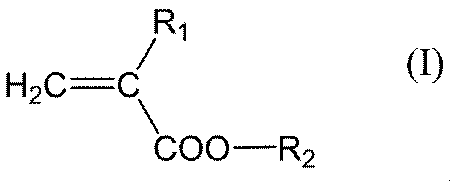

(式中、R3は、ヒドロキシル基を置換基として有する又は無置換の炭素数1~6のアルキレン基を表し、R4は、水素原子、炭素数1~6のアルキル基、又はフェニル基を表し、vは2~20の整数を表す。);或いは、下記一般式(V)で示される基
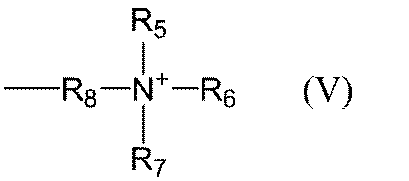
(式中、R5~R7は、それぞれ独立して炭素数1~3のアルキル基を表し、R8は炭素数1~3のアルキレン基を表す。)を表す。];
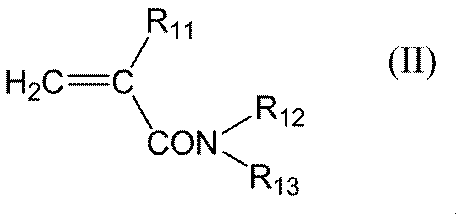


又は下記一般式[2-2]で示される基
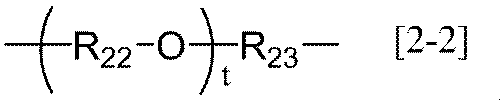


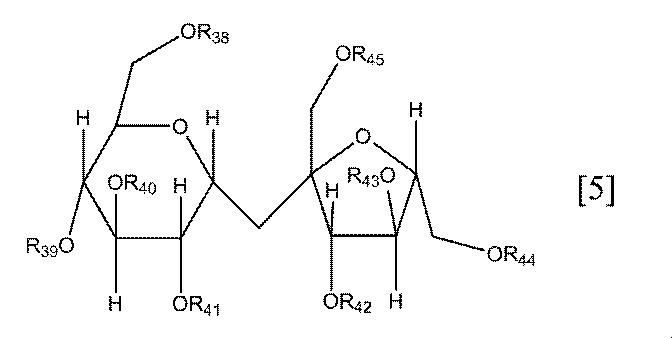


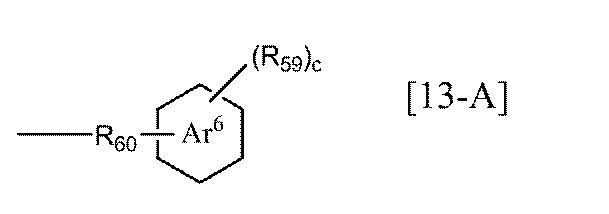


或いは、下記一般式[14-C]で示される基
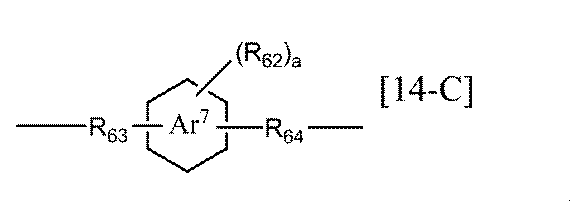
一般式(I)のR2における炭素数1~20のアルキル基は、炭素数1~10が好ましく、炭素数1~6がより好ましく、直鎖状でも分枝状でも環状でもよく、直鎖状が好ましい。具体的には、例えばメチル基、エチル基、n-プロピル基、イソプロピル基、n-ブチル基、イソブチル基、sec-ブチル基、tert-ブチル基、n-ペンチル基、イソペンチル基、sec-ペンチル基、tert-ペンチル基、ネオペンチル基、n-ヘキシル基、3-メチルペンチル基、2-メチルペンチル基、1,2-ジメチルブチル基、n-ヘプチル基、イソヘプチル基、sec-ヘプチル基、n-オクチル基、イソオクチル基、sec-オクチル基、n-ノニル基、n-デシル基、n-ウンデシル基、n-ドデシル基、n-トリデシル基、n-テトラデシル基、n-ペンタデシル基、n-ヘキサデシル基、n-ヘプタデシル基、n-オクタデシル基、n-ノナデシル基、n-イコシル基、シクロプロピル基、シクロペンチル基、シクロヘキシル基、シクロヘプチル基、シクロオクチル基、シクロデシル基、シクロウンデシル基、シクロドデシル基、シクロテトラデシル基、シクロオクタデシル基等が挙げられ、中でも、メチル基、エチル基、n-プロピル基、イソプロピル基、n-ブチル基、イソブチル基、sec-ブチル基、tert-ブチル基、n-ペンチル基、イソペンチル基、sec-ペンチル基、tert-ペンチル基、ネオペンチル基、n-ヘキシル基等が好ましく、メチル基、エチル基、n-プロピル基、n-ブチル基、n-ペンチル基、n-ヘキシル基がより好ましく、n-ブチル基、n-ペンチル基、n-ヘキシル基が更に好ましく、n-ヘキシル基が特に好ましい。


(式中、R301は、ヒドロキシル基を置換基として有する又は無置換の炭素数1~3のアルキレン基を表し、R401は、水素原子、炭素数1~6のアルキル基、又はフェニル基を表す。vは上記と同じ。)]


(式中、R302は、炭素数1~3のアルキレン基を表し、R402は、水素原子又は炭素数1~6のアルキル基を表す。vは上記と同じ。)を表す]
上記一般式(I)で示される化合物のより具体的なものとしては、例えばメタクリル酸、(メタ)アクリル酸ヒドロキシメチル、(メタ)アクリル酸ヒドロキシエチル、(メタ)アクリル酸ヒドロキシプロピル、(メタ)アクリル酸ヒドロキシブチル、(メタ)アクリル酸ヒドロキシペンチル、(メタ)アクリル酸ヒドロキシヘキシル、(メタ)アクリル酸ジヒドロシプロピル、ポリエチレングリコールモノメチルエーテル(メタ)クリレート、ポリエチレングリコール(メタ)クリレート、(メタ)アクリル酸シアノメチル、(メタ)アクリル酸シアノエチル、(メタ)アクリル酸-2-(パーフルオロヘキシル)エチル、(メタ)アクリル酸フェノキシメチル、(メタ)アクリル酸フェノキシエチル、(メタ)アクリル酸フェノキシプロピル等が挙げられ、中でも、メタクリル酸、(メタ)アクリル酸ヒドロキシメチル、(メタ)アクリル酸ヒドロキシエチル、(メタ)アクリル酸ヒドロキシプロピル、(メタ)アクリル酸ヒドロキシブチル、(メタ)アクリル酸ヒドロキシペンチル、(メタ)アクリル酸ヒドロキシヘキシル、(メタ)アクリル酸フェノキシメチル、(メタ)アクリル酸フェノキシエチル、(メタ)アクリル酸フェノキシプロピル等が好ましく、メタクリル酸、(メタ)アクリル酸ヒドロキシメチル、(メタ)アクリル酸ヒドロキシエチル、(メタ)アクリル酸ヒドロキシプロピル等がより好ましい。


一般式(II-II)のR122及びR132における炭素数1~3のアルキル基としては、メチル基、エチル基、n-プロピル基、イソプロピル基等が挙げられ、イソプロピル基が好ましい。
本発明に係る一般式[1]におけるkは、通常1~6、好ましくは1~3、より好ましくは1である。また、k個の-(CH2)-基は、それぞれ同じでも異なっていてもよい。


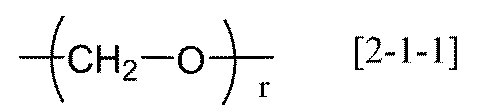





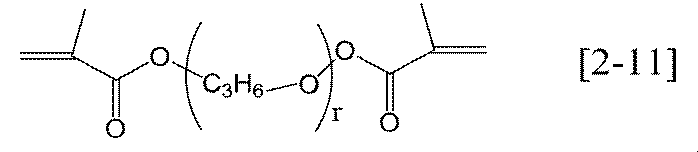
(上記式中、rは何れも上記と同じ。)



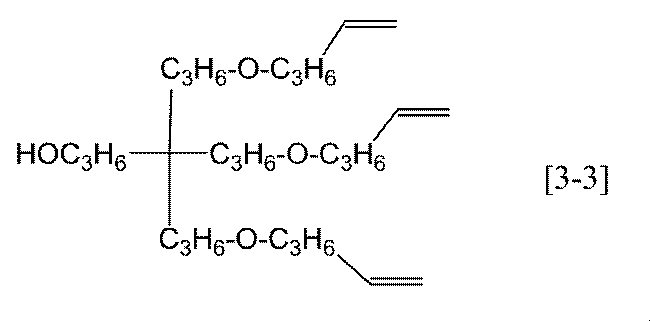


一般式[4]の好ましい具体例としては、例えば下記式[4-1]~[4-10]で示される化合物等が挙げられ、中でも式[4-1]~[4-4]が好ましい。





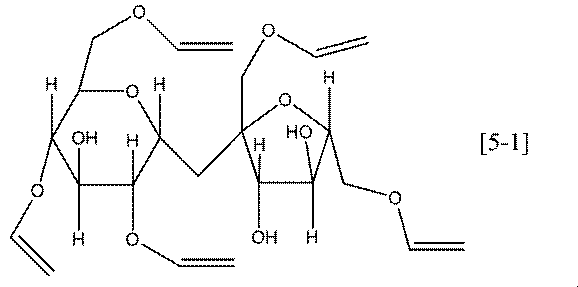


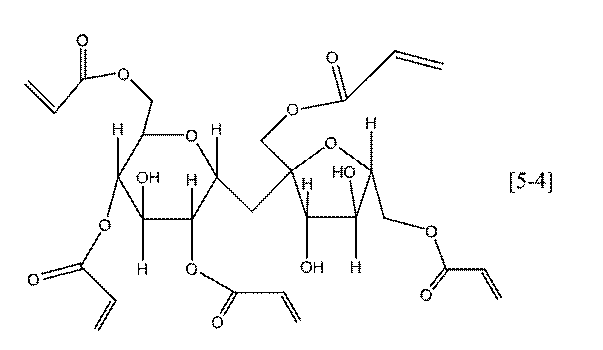


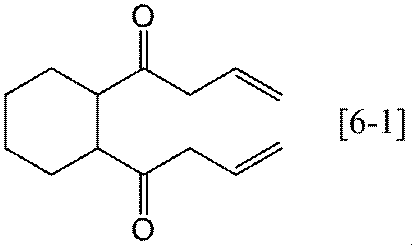


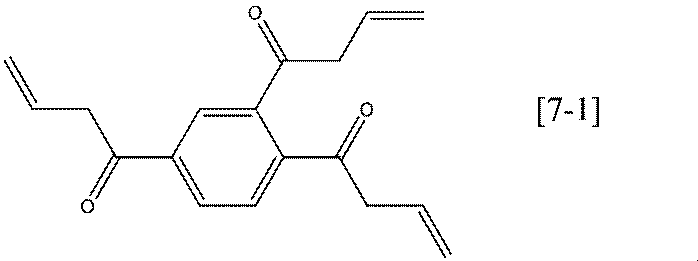


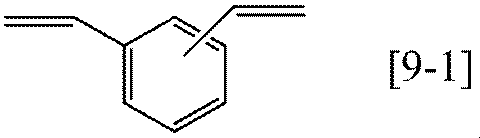


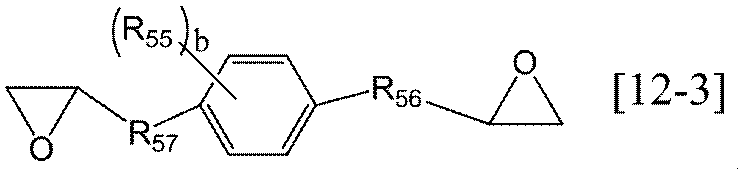
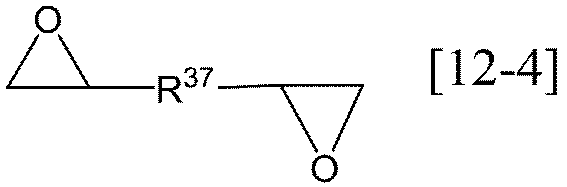

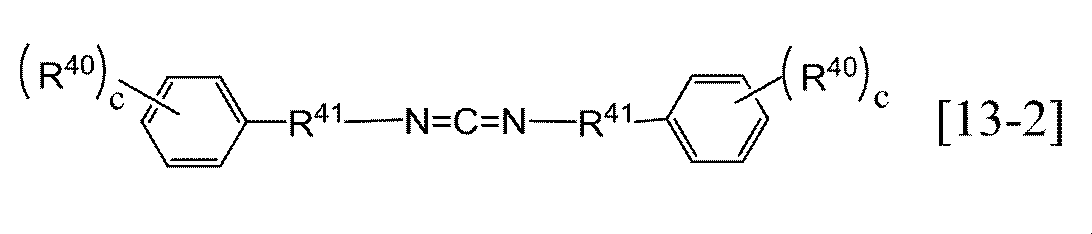
上記本発明に係る一般式[12]のR54における炭素数6~10のアリーレン基と同じものが挙げられ、置換基も同じものが挙げられる。


中でも一般式[14-1]が好ましく、より具体的には、下記一般式[14-1-1]~[14-1-3]等が挙げられ、一般式[14-1-1]が好ましい。


本発明に係るポリマーは、以下の如く製造される。即ち、アクリル酸と、一般式(I)、(II)又は(III)で示される化合物1~2種と、一般式[1]~[13]の化合物又は一般式[14]のポリマーとを、要すれば重合開始剤の存在下、重合・架橋反応させることにより製造することができる。
尚、一般式(I)、(II)又は(III)で示される化合物の使用量は、上記本発明に係るポリマー中のアクリル酸由来のモノマー単位と一般式(I)、(II)又は(III)で示される化合物由来のモノマー単位の重量比となるように適宜設定されればよい。上記一般式[1]~[11]の化合物の使用量は、アクリル酸1molに対して、通常0.001~10mol%、好ましくは0.01~1mol%、より好ましくは0.05~0.5mol%、更に好ましくは0.1~0.3mol%である。一般式[12]~[13]の化合物又は一般式[14]のポリマーの使用量は、アクリル酸の重量に対して、通常0.01~40重量%、好ましくは0.01~20重量%、より好ましくは0.1~10重量%である。
即ち、アクリル酸と、アクリル酸90~99に対して10~1重量部の一般式(I)、(II)又は(III)で示される化合物の1~2種と、上記一般式[1]~[13]の化合物又は一般式[14]のポリマーとを、総容量に対して1~10倍容量の例えばプロピレングリコールモノメチルエーテルアセテート等の溶媒に溶解又は分散させる。その後、80~150℃で0.1~10時間重合反応及び架橋反応させ、本発明に係るポリマーを調製する。上記一般式[1]~[11]の化合物を用いる場合、アクリル酸1molに対して0.001~10mol%量用いられ、一般式[12]~[13]の化合物又は一般式[14]のポリマーを用いる場合には、アクリル酸の重量に対して、0.01~20重量%用いられる。
即ち、アクリル酸と、アクリル酸90~99に対して10~1重量部の一般式(I)、(II)又は(III)で示される化合物の1~2種とを、総容量に対して1~10倍容量の例えばプロピレングリコールモノメチルエーテルアセテート等の溶媒に溶解又は分散させる。その後、80~150℃で0.1~10時間重合反応させ、本発明に係るコポリマーを調製する。次いで、得られたコポリマーと、アクリル酸の重量に対して0.01~20重量%の上記一般式[12]又は[13]の化合物或いは一般式[14]のポリマーとを、これらの総容量に対して1~10倍容量の例えばプロピレングリコールモノメチルエーテルアセテート等の溶媒中に溶解又は分散させ、80~150℃で、0.1~10時間反応させることにより、本発明に係るポリマーは調製される。中和する場合は、上記と同様に行えばよい。
本発明の結着剤は、上記本発明に係るポリマーからなるものである。尚、本発明の結着剤は、保存時に、本発明に係るコポリマーと一般式[12]の化合物、一般式[13]の化合物及び一般式[14]のポリマーから選ばれる架橋剤とを含有し(非架橋のもの)、使用時に上記架橋剤により架橋されるものも含まれる。
本発明に係る活物質は、炭素、ゲルマニウム、錫、鉛、亜鉛、アルミニウム、インジウム、アンチモン、ビスマス、シリコン、シリコン酸化物(SiO、SiO2等)、金属と結合したシリコン(SiM:Mはマグネシウム、鉄、カルシウム、コバルト、ニッケル、ホウ素、銅、マンガン、銀、バナジウム、セリウム、亜鉛等の金属)、或いはこれらのうち少なくとも2種以上を混合したものを含有するものである。中でも、炭素、錫、シリコン、シリコン酸化物、金属と結合したシリコン、或いはこれらのうち少なくとも2種以上を混合したものを含有するのが好ましく、炭素、シリコン、シリコン酸化物、金属と結合したシリコン、或いはこれらのうち少なくとも2種以上を混合したものを含有するのがより好ましく、炭素、シリコン、シリコン酸化物、或いはこれらのうち少なくとも2種以上を混合したものを含有するのが更に好ましい。本発明に係る活物質は、特に、シリコン又は/及びシリコン酸化物を含有するものが好ましい。
本発明に係る導電助剤は、例えば、アセチレンブラック、ケッチェンブラック、ファーネスブラック、サーマルブラック等のカーボンブラックが挙げられ、中でもアセチレンブラック、ケッチェンブラックが好ましく、アセチレンブラックがより好ましい。
本発明の電極作製用組成物は、1)本発明に係るシリコンを含有する活物質、2)本発明に係る導電助剤、及び3)本発明に係るポリマーを含んでなるものである。該組成物は、陽極作製用であっても負極作製用であってもよいが、負極作製用が好ましい。
本発明に係る集電体は、ニッケル、銅、ステンレス(SUS)などの導電性の材料を用いた箔、メッシュ、エキスパンドグリッド(エキスパンドメタル)、パンチドメタルなどから構成される。メッシュの目開き、線径、メッシュ数などは、特に制限されず、従来公知のものが使用できる。集電体の好ましい厚さは、5~30μmである。ただし、この範囲を外れる厚さの集電体を用いてもよい。
本発明の電極は、1)本発明に係るシリコンを含有する活物質、2) 本発明に係る導電助剤、3) 本発明に係るポリマー、及び4)本発明に係る集電体を有するものである。具体的には、本発明に係る集電体と、その表面に形成された、本発明に係るシリコンを含有する活物質、本発明に係る導電助剤、本発明に係るポリマーを含む活物質層(本発明に係る電極作製用組成物)とを有するものである。本発明の電極は、負極でも陽極でも用いることができるが、負極として用いるのが好ましい。
攪拌装置、冷却管、温度計、窒素導入管を備えた200mlの丸底フラスコに、プロピレングリコールモノメチルエーテルアセテート10g(和光純薬工業(株)製)を入れ、窒素気流下で内温が90℃になるまで加熱した。次いで、アクリル酸9.2g(0.13mol、和光純薬工業(株)製)、アクリル酸-2-ヒドロキシエチル0.78g(6.7mmol、東京化成社製)、ジエチレングリコールジアリルエーテル0.03g(0.18mmol、和光純薬工業(株)製)及びプロピレングリコールモノメチルエーテルアセテート13gを混合した溶液を、2時間かけて丸底フラスコに滴下した。その後、得られた溶液を90℃で2時間反応させた。反応後、室温まで冷却し、プロピレングリコールモノメチルエーテルアセテート30gを加えて希釈し、架橋されたコポリマーを得た。これを架橋コポリマーP-01(アクリル酸/アクリル酸-2-ヒドロキシエチル=95/5)とする。
アクリル酸-2-ヒドロキシエチル0.78gの代わりにジメチルアクリルアミド0.68g(6.8mmol、和光純薬工業(株)製)を用いた以外は、合成例1と同様の方法で重合反応に付し、架橋されたコポリマーを得た。これを架橋コポリマーP-02(アクリル酸/ジメチルアクリルアミド=95/5)とする。
アクリル酸9.2g、アクリル酸-2-ヒドロキシエチル0.78gの代わりにアクリル酸7.5g(0.10mol)、メタクリル酸メトキシポリエチレングリコール2.5g(5.4mmol、新仲村化学社製)を用いた以外は、合成例1と同様の方法で重合反応に付し、架橋されたコポリマーを得た。これを架橋コポリマーP-03(アクリル酸/メタクリル酸メトキシポリエチレングリコール=95/5)とする。
アクリル酸-2-ヒドロキシエチル0.78gの代わりにアクリル酸-2-シアノエチル0.84g(6.7mmol、東京化成社製)を用いた以外は、合成例1と同様の方法で重合反応に付し、架橋されたコポリマーを得た。これを架橋コポリマーP-04(アクリル酸/アクリル酸-2-シアノエチル=95/5)とする。
アクリル酸9.2g、アクリル酸-2-ヒドロキシエチル0.78gの代わりにアクリル酸7.6g(0.11mol)アクリル酸-2-(パーフルオロヘキシル)エチル2.3g(5.6mmol、ユニマテック社製)を用いた以外は、合成例1と同様の方法で重合反応に付し、架橋されたコポリマーを得た。これを架橋コポリマーP-05(アクリル酸/アクリル酸-2-(パーフルオロヘキシル)エチル=95/5)とする。
アクリル酸9.2g、アクリル酸-2-ヒドロキシエチル0.78gの代わりにアクリル酸7.6g(0.11mol)、アクリル酸ヘキシル1.0g(0.12mol)を用いた以外は、合成例1と同様の方法で重合反応に付し、架橋されたコポリマーを得た。これを架橋コポリマーP-06(アクリル酸/アクリル酸ヘキシル=95/5)とする。
アクリル酸9.2g、アクリル酸-2-ヒドロキシエチル0.78gの代わりにアクリル酸8.8g(0.12mol)、アクリル酸フェノキシエチル1.2g(6.4mmol、東京化成社製)を用いた以外は、合成例1と同様の方法で重合反応に付し、架橋されたコポリマーを得た。これを架橋コポリマーP-07(アクリル酸/アクリル酸フェノキシエチル=95/5)とする。
アクリル酸9.2g、アクリル酸-2-ヒドロキシエチル0.78gの代わりにアクリル酸42.0g(0.58mol)、N-イソプロピルアクリルアミド3.5g(30.7mmol、和光純薬工業社製)を用いた以外は、合成例1と同様の方法で重合反応に付し、架橋されたコポリマーを得た。これを架橋コポリマーP-08(アクリル酸/ N-イソプロピルアクリルアミド=95/5)とする。
アクリル酸9.2g、アクリル酸-2-ヒドロキシエチル0.78gの代わりにアクリル酸45.0g(0.62mol)、アクリルアミド11.25g(0.16mol、和光純薬工業社製)を用いた以外は、合成例1と同様の方法で重合反応に付し、架橋されたコポリマーを得た。これを架橋コポリマーP-09(アクリル酸/アクリルアミド=80/20)とする。
アクリル酸9.2g、アクリル酸-2-ヒドロキシエチル0.78gの代わりにアクリル酸45.0g(0.62mol)、アクリロニトリル11.25g(0.21mol、和光純薬工業社製)を用いた以外は、合成例1と同様の方法で重合反応に付し、架橋されたコポリマーを得た。これを架橋コポリマーP-10(アクリル酸/アクリロニトリル=75/25)とする。
アクリル酸9.2g、アクリル酸-2-ヒドロキシエチル0.78gの代わりにアクリル酸45.0g(0.62mol)、ブレンマーAE-200 11.25g(0.04mol、日油製)を用いた以外は、合成例1と同様の方法で重合反応に付し、架橋されたコポリマーを得た。これを架橋コポリマーP-11(アクリル酸/ブレンマーAE-200=94/6)とする。
アクリル酸9.2g、アクリル酸-2-ヒドロキシエチル0.78gの代わりにアクリル酸35.0g(0.49mol)、メタクリル酸 10.45g(0.10mol、和光純薬工業製)を用いた以外は、合成例1と同様の方法で重合反応に付し、架橋されたコポリマーを得た。これを架橋コポリマーP-12(アクリル酸/メタクリル酸=80/20)とする。
(1)結着剤の調製
架橋コポリマーP-01 2.3gを水230mlに加え、2時間撹拌して分散させた。得られた分散液に18%水酸化ナトリウムを加えてpHを6.8に調整し、1wt%の中和したコポリマーのゲル溶液を得た。得られたコポリマーのゲル溶液を結着剤とした。
ナノサイズ化されたシリコン粉末18mg(粒子サイズ:100nm、Sigma-Aldrich社製)、天然黒鉛30mg(粒子サイズ:3μm、SEC Carbon社製)及びケッチェンブラック6mg(KB、Lion社製)を、遊星ボールミル(Pulverisette7、Fritsch社製)を用いて、600rpmで12時間十分に混合した。得られた混合物(重量比でSi:黒鉛:KB=30:50:10)を電極材料とした。次いで、(1)で得られた結着剤0.5gに上記電極材料0.045gを加え、水0.4gを添加して室温で20分混合して電極作製用スラリーを作製した。該電極作製用スラリーにおいては、スラリー900μL中シリコン15mg、黒鉛25mg、KB5mg、架橋コポリマー5mgをそれぞれ含む。即ち、電極作製用スラリーは、集電体上に塗布した後乾燥させることにより、シリコンを30wt%、黒鉛を50wt%、KBを10wt%、架橋コポリマーを10wt%含有する被膜となる。
(2)で得られた電極作製用スラリーを、ドクターブレードを用いて銅の集電体上に塗布した。その後、空気中にて80℃で乾燥し、次いで真空下にて150℃で24時間乾燥した。尚、使用前にロールでプレスしたものを電極(CLPAH01電極)とした。尚、集電体上の膜の厚さは、ノギスで測定し、約10~15μmであった。
コイン型電池を、アルゴンで満たしたグローブボックス中で組み立てた。ここでは、(3)で得られた電極、リチウム箔電極、1MのLiPF6を含む炭酸エチレン(EC)/炭酸ジメチル(DMC)(体積比で1:1)溶液及びセパレータからなるコイン型電池を組み立てた。
実施例1における架橋コポリマーP-01の代わりに、それぞれ架橋コポリマーP-02~P-08を用いた以外は実施例1と同様の方法により、各種リチウム電池用電極及びコイン型電池を製造した。架橋コポリマーP-02~P-08を用いて得た電極をそれぞれCLPAH02電極、CLPAH03電極、CLPAH04電極、CLPAH05電極、CLPAH06電極、CLPAH07電極、CLPAH08電極とする。
(1)架橋ホモポリマーCLPA-07の合成
アクリル酸9.2g、アクリル酸-2-ヒドロキシエチル0.78g、ジエチレングリコールジアリルエーテル0.03g及びプロピレングリコールモノメチルエーテルアセテート13gを混合した溶液の代わりに、アクリル酸 9.65g(0.14mol、和光純薬工業(株)製)、ジエチレングリコールジアリルエーテル0.03g(0.18mmol)及びプロピレングリコールモノメチルエーテルアセテート13gを混合した溶液を用いた以外は、合成例1と同様の方法で重合反応に付し、架橋されたホモポリマーを得た。これを架橋ホモポリマーCLPA-07とした。
(2)架橋ホモポリマーを用いた電池の製造
実施例1における架橋コポリマーP-01の代わりに架橋ホモポリマーCLPA-07を用いた以外は実施例1と同様の方法により、リチウム電池用電極及びコイン型電池を製造した。架橋ホモポリマーCLPA-07を用いて得た電極をCLPA-07電極とした。
CLPAH01~08電極及びCLPA-07電極の各電極を用いて、下記条件で定電流充放電試験を行った。各電極を用いた、初回充放電の結果及び10回目充放電の結果について、その充放電容量、クーロン効率及び維持率を表1に示す。
・対極:Li箔
・電解液:1M LiPF6 EC/DMC混合溶液(体積比1:1)
・測定装置:ABE1024-5∨0.1A-4充放電試験装置(エレクトロフィールド社製)
・電位及び電流密度
初回サイクル
電位範囲 2.0-0.0V(vs.Li/Li+)
電流密度 50mA g-1
2サイクル目以降
電位範囲 2.0-0.0V(vs.Li/Li+)
電流密度 100mA g-1


ここでは、実施例1~8の電池と比較して、より高容量の電池として期待ができる活物質層の厚い電極を作製した。
(1)結着剤の調製
架橋コポリマーP-01 5.0gを水61mlに加えた。さらに5M水酸化ナトリウム水溶液10.4mlを加えて12時間撹拌して分散し、10wt%の中和したコポリマーのゲル溶液を得た。得られたコポリマーのゲル溶液を結着剤とした。
(1)で得られた結着剤4.50g、イオン交換水4.5g、シリコン粉末1.35g(Silgrain e-Si400、粒子サイズ:2.4μm、ELKEM社製)、天然黒鉛2.25g(粒子サイズ:3μm、SEC Carbon社製)及びアセチレンブラック0.045g(デンカブラック、電気化学工業社製)を、遊星ボールミル(Pulverisette7、Fritsch社製)を用いて、600rpmで30分十分に混合した。得られた混合物を電極作製用スラリーとした。該電極作製用スラリーにおいては、スラリー全量中にシリコン1.35g、黒鉛2.25g、アセチレンブラック0.045g、架橋コポリマー0.45gをそれぞれ含む。即ち、電極作製用スラリーは、集電体上に塗布した後乾燥させることにより、シリコンを33wt%、黒鉛を55wt%、アセチレンブラックを1wt%、架橋コポリマーを11wt%含有する被膜となる。
(2)で得られた電極作製用スラリーを、ドクターブレードを用いて銅の集電体上に塗布した。その後、空気中にて80℃で12時間乾燥し、次いで真空下にて150℃で24時間乾燥した。尚、使用前にロールでプレスしたものを電極(CLPAH01-2電極)とした。尚、集電体上の膜の厚さは、ノギスで測定し、約30~70μmであった。
電極としてCLPAH01-2を用いた以外は、実施例1(4)と同様の方法により、コイン型電池を組み立てた。
実施例9における架橋コポリマーP-01の代わりに、それぞれ架橋コポリマーP-02、P-05~P-12を用いた以外は実施例1と同様の方法により、各種リチウム電池用電極及びコイン型電池を製造した。架橋コポリマーP-02、P-05~P-12を用いて得た電極をそれぞれCLPAH02-2電極、CLPAH05-2電極、CLPAH06-2電極、CLPAH07-2電極、CLPAH08-2電極、CLPAH09-2電極、CLPAH10-2電極、CLPAH11-2電極、CLPAH12-2電極とする。
架橋ホモポリマーを用いた電池の製造
実施例9における架橋コポリマーP-01の代わりに架橋ホモポリマーCLPA-07を用いた以外は実施例9と同様の方法により、リチウム電池用電極及びコイン型電池を製造した。架橋ホモポリマーCLPA-07を用いて得た電極をCLPA-07-2電極とした。
CLPAH01-2~02-2、05-2~12-2電極及びCLPA-07-2電極の各電極を用いて、実施例1と同等の条件で定電流充放電試験を行った。

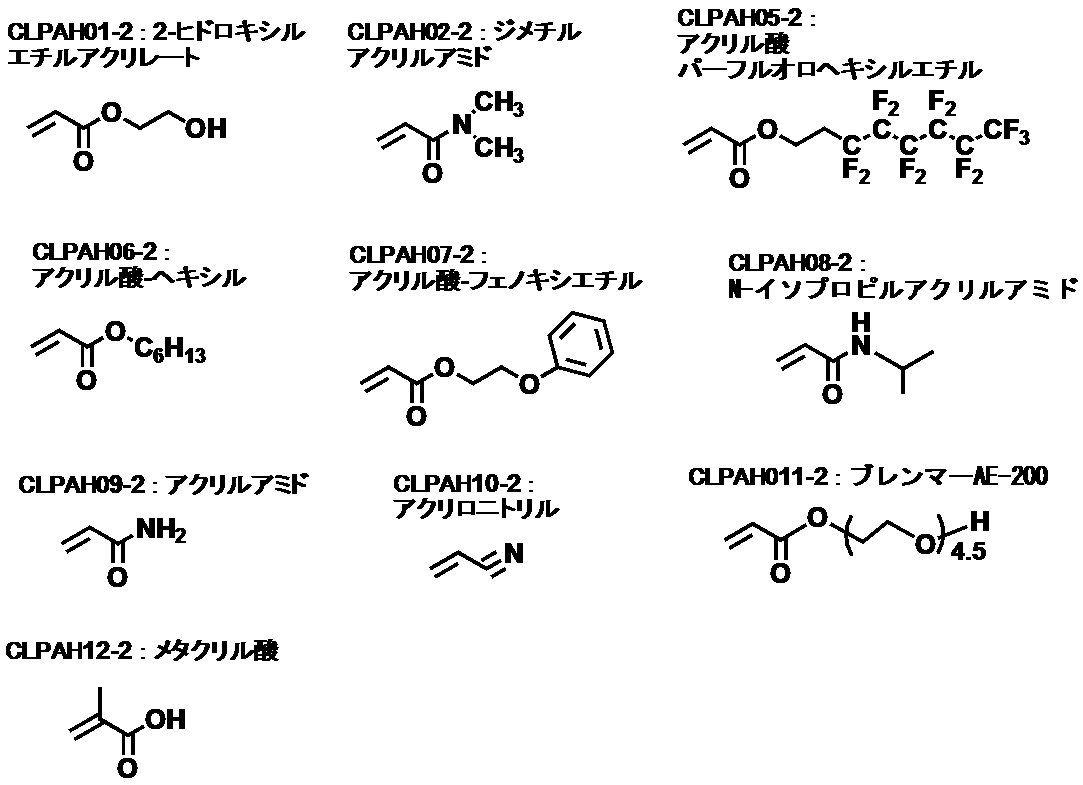
Claims (11)
- アクリル酸由来のモノマー単位と、下記一般式(I)、一般式(II)又は一般式(III)で示される化合物由来のモノマー単位1~2種とを構成成分とし、下記一般式[1]~[13]記載の化合物及び下記一般式[14]記載のポリマーから選ばれる架橋剤により架橋されたポリマーからなるリチウム電池用結着剤;
[式中、R1は、水素原子又はメチル基を表し(但し、R2が水素原子の場合、R1はメチル基を表す)、R2は、水素原子、炭素数1~20のアルキル基;フッ素原子、ヒドロキシル基又はシアノ基で置換された炭素数1~20のアルキル基;炭素数6~10のアリール基、炭素数7~13のアリールアルキル基;炭素数2~9のアルコキシアルキル基;炭素数3~9のアルコキシアルコキシアルキル基;炭素数7~13のアリールオキシアルキル基;;炭素数5~7のモルホリノアルキル基;炭素数3~9のトリアルキルシリル基;酸素を有する又は酸素を有さない炭素数6~10の脂環式炭化水素基;炭素数3~9のジアルキルアミノアルキル基;炭素数9~15のヘキサヒドロフタルイミド-N-アルキル基;下記一般式(IV)で示される基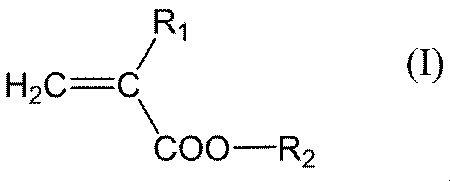
(式中、R3は、ヒドロキシル基を置換基として有する又は無置換の炭素数1~6のアルキレン基を表し、R4は、水素原子、炭素数1~6のアルキル基、又はフェニル基を表し、vは2~20の整数を表す。);或いは、下記一般式(V)で示される基
(式中、R5~R7は、それぞれ独立して炭素数1~3のアルキル基を表し、R8は炭素数1~3のアルキレン基を表す。)を表す。];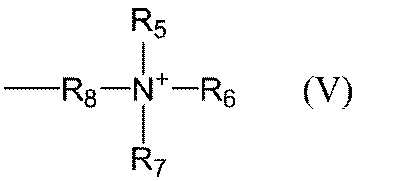
(式中、R11は水素原子又はメチル基を表し、R12は、水素原子又は炭素数1~6のアルキル基を表し、R13は、水素原子、炭素数1~6のアルキル基、炭素数3~9のジアルキルアミノアルキル基、又は炭素数1~6のヒドロキシアルキル基を表す。);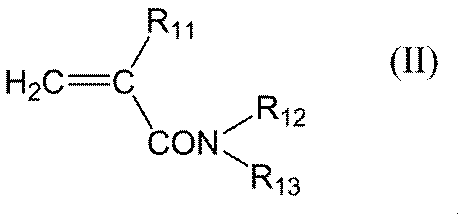
(式中、R11は上記と同じ);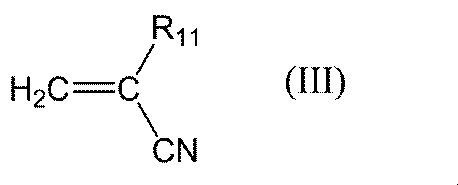
(式中、kは1~6の整数を表す。)、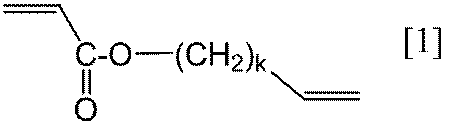
[式中、R25及びR26は、それぞれ独立して、水素原子又はメチル基を表し、R20は、炭素数1~20のアルキレン基、下記一般式[2-1]で示される基、
(式中、R21は、炭素数1~6のアルキレン基を表し、rは1~6の整数を表す。)
又は下記一般式[2-2]で示される基
(式中、R22及びR23は、それぞれ独立して、炭素数1~6のアルキレン基を表し、tは1~12の整数を表す。)を表す。]、
(式中、R27~R33は、それぞれ独立して、炭素数1~3のアルキレン基を表す。)、
(式中、R34~R37は、それぞれ独立して、炭素数1~6のアルキレン基を表し、lは1~6の整数を表し、mは0~6の整数を表し、v1及びv2はそれぞれ独立して0又は1の整数を表す。)、
(式中、R38~R45は、それぞれ独立して、水素原子、ビニル基又はビニルケトン基を表すが、これらの少なくとも2つ以上はビニル基又はビニルケトン基である。)
(式中、R46~R48は、それぞれ独立して、炭素数1~6のアルキレン基を表す。)、
(式中、環Ar1は、ベンゼン環又はナフタレン環を表し、R51は、炭素数1~6のアルキレン基を表し、qは2~4の整数を表す。)、
(式中、環Ar2及び環Ar3は、それぞれ独立して、ベンゼン環又はナフタレン環を表し、R52は、炭素数1~6のアルキレン基を表す。)、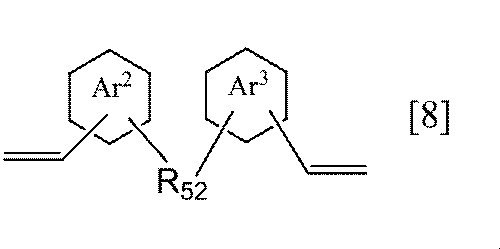
(式中、環Ar4は、ベンゼン環又はナフタレン環を表す。)、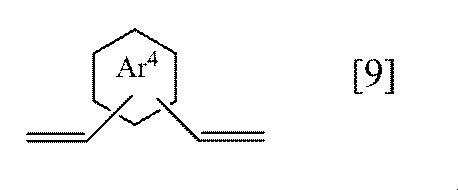
(式中、pは0~6の整数を表す。)、
(式中、R53は、炭素数1~6のアルキレン基を表す。)、
[式中、R54は、置換基を有する又は無置換の炭素数1~6のアルキレン基、置換基を有する又は無置換の炭素数6~10のアリーレン基、下記一般式[12-A]で示される基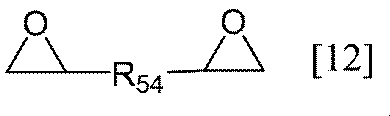
(式中、R55は、炭素数1~6のアルキル基を表し、R56は、炭素数1~6のアルキレン基、環Ar5は、ベンゼン環又はナフタレン環を表し、bは、0~4の整数を表す。)、或いは、下記一般式[12-B]で示される基
(式中、R57は、炭素数1~6のアルキレン基を表し、R55、R56、環Ar5、bは、上記と同じ。)を表す。]、
[式中、R58は、それぞれ独立して、置換基を有する又は無置換の炭素数1~6のアルキル基、置換基を有する又は無置換の炭素数6~10のアリール基、或いは、下記一般式[13-A]で示される基
(式中、R59は、炭素数1~6のアルキル基を表し、R60は、炭素数1~6のアルキレン基、環Ar6は、ベンゼン環又はナフタレン環を表し、cは、0~5の整数を表す]、
[式中、R61は、置換基を有する又は無置換の炭素数1~6のアルキレン基、置換基を有する又は無置換の炭素数6~10のアリーレン基、下記一般式[14-A]又は[14-B]で示される基
(式中、R62は、炭素数1~6のアルキル基を表し、R63は、炭素数1~6のアルキレン基を表し、環Ar7は、ベンゼン環又はナフタレン環を表し、aは、0~4の整数を表す)、
或いは、下記一般式[14-C]で示される基
(式中、R64は、炭素数1~6のアルキレン基を表し、R62、R63、環Ar7、aは、上記と同じ。)を表し、sは10~10000の整数を表す。]。
- ポリマーが、アクリル酸由来のモノマー単位と下記一般式(I-I)、一般式(II-I)又は一般式(III)で示される化合物由来のモノマー単位1~2種とを構成成分とするものである、請求項1~3の何れかに記載の結着剤;
[式中、R101は、水素原子又はメチル基を表し(但し、R201が水素原子の場合、R101はメチル基を表す)、R201は、水素原子、炭素数1~20のアルキル基、フッ素原子、ヒドロキシル基又はシアノ基で置換された炭素数1~20のアルキル基、炭素数7~13のアリールアルキル基、炭素数7~13のアリールオキシアルキル基、炭素数9~15のヘキサヒドロフタルイミド-N-アルキル基、又は、下記一般式(IV-I)で示される基を表す
(式中、R301は、ヒドロキシル基を置換基として有する又は無置換の炭素数1~3のアルキレン基を表し、R401は、水素原子、炭素数1~6のアルキル基、又はフェニル基を表す。vは上記と同じ。)];
(式中、R111は水素原子又はメチル基を表し、R121は、水素原子又は炭素数1~6のアルキル基を表し、R131は、水素原子、炭素数1~6のアルキル基又は炭素数1~6のヒドロキシアルキル基を表す。);
(式中、R11は上記と同じ)。
- ポリマーが、アクリル酸由来のモノマー単位と下記一般式(I-II)、一般式(II-II)又は一般式(III)で示される化合物由来のモノマー単位1~2種とを構成成分とするものである、請求項1~3の何れかに記載の結着剤;
[式中、R102は、水素原子又はメチル基を表し(但し、R202が水素原子の場合、R102はメチル基を表す)、R202は、水素原子、炭素数1~20のアルキル基、フッ素原子、ヒドロキシル基又はシアノ基で置換された炭素数1~20のアルキル基、炭素数7~13のアリールオキシアルキル基、又は、下記一般式(IV-II)で示される基
(式中、R302は、炭素数1~3のアルキレン基を表し、R402は、水素原子又は炭素数1~6のアルキル基を表す。vは上記と同じ。)を表す];
(式中、R112は水素原子又はメチル基を表し、R122及びR132は、それぞれ独立して、水素原子又は炭素数1~3のアルキル基を表す。)
(式中、R11は上記と同じ)。
- 架橋剤が、一般式[1]、一般式[3]、一般式[9]、一般式[10]、一般式[11]又は一般式[14]である、請求項1記載の結着剤。
- 架橋剤が、一般式[1]、一般式[3]、又は一般式[10]である、請求項1記載の結着剤。
- 1)シリコンを含有する活物質、2)導電助剤、及び3)請求項1記載の電池用結着剤
を含んでなるリチウム電池の電極作製用組成物。 - シリコンを含有する活物質が、炭素、シリコン、シリコン酸化物、金属と結合したシリコン、或いはこれらのうち少なくとも2種以上を混合したものを含有する、請求項6記載の組成物。
- 電極が負極である、請求項7記載の組成物。
- 1)シリコンを含有する活物質、2)導電助剤、3)請求項1記載の電池用結着剤、及び4)集電体を有するリチウム電池用の電極。
- シリコンを含有する活物質が、炭素、シリコン、シリコン酸化物、金属と結合したシリコン、或いはこれらのうち少なくとも2種以上を混合したものを含有する、請求項9記載の電極。
- 電極が負極である、請求項10記載の電極。
Priority Applications (6)
| Application Number | Priority Date | Filing Date | Title |
|---|---|---|---|
| KR1020167031420A KR20160145672A (ko) | 2014-04-21 | 2015-04-21 | 리튬전지용 결착제 |
| EP15782731.2A EP3136483B1 (en) | 2014-04-21 | 2015-04-21 | Binder for lithium cell |
| JP2016514936A JP6581568B2 (ja) | 2014-04-21 | 2015-04-21 | リチウム電池用結着剤 |
| PL15782731T PL3136483T3 (pl) | 2014-04-21 | 2015-04-21 | Spoiwo dla ogniwa litowego |
| CN201580020942.9A CN106233514B (zh) | 2014-04-21 | 2015-04-21 | 锂电池用粘结剂 |
| US15/305,521 US10854881B2 (en) | 2014-04-21 | 2015-04-21 | Binder for lithium cell |
Applications Claiming Priority (2)
| Application Number | Priority Date | Filing Date | Title |
|---|---|---|---|
| JP2014087747 | 2014-04-21 | ||
| JP2014-087747 | 2014-04-21 |
Publications (1)
| Publication Number | Publication Date |
|---|---|
| WO2015163302A1 true WO2015163302A1 (ja) | 2015-10-29 |
Family
ID=54332466
Family Applications (1)
| Application Number | Title | Priority Date | Filing Date |
|---|---|---|---|
| PCT/JP2015/062049 Ceased WO2015163302A1 (ja) | 2014-04-21 | 2015-04-21 | リチウム電池用結着剤 |
Country Status (9)
| Country | Link |
|---|---|
| US (1) | US10854881B2 (ja) |
| EP (1) | EP3136483B1 (ja) |
| JP (1) | JP6581568B2 (ja) |
| KR (1) | KR20160145672A (ja) |
| CN (2) | CN106233514B (ja) |
| HU (1) | HUE039113T2 (ja) |
| PL (1) | PL3136483T3 (ja) |
| TW (1) | TWI635646B (ja) |
| WO (1) | WO2015163302A1 (ja) |
Cited By (31)
| Publication number | Priority date | Publication date | Assignee | Title |
|---|---|---|---|---|
| WO2017130940A1 (ja) * | 2016-01-29 | 2017-08-03 | 東亞合成株式会社 | 非水電解質二次電池電極用バインダー及びその製造方法、並びに、その用途 |
| CN108779216A (zh) * | 2016-03-31 | 2018-11-09 | 富士胶片和光纯药株式会社 | 共聚物、含有该共聚物的增稠剂及调配有该共聚物的化妆品 |
| CN109923711A (zh) * | 2017-02-03 | 2019-06-21 | 富士胶片和光纯药株式会社 | 锂电池用粘结剂组合物 |
| WO2019155773A1 (ja) * | 2018-02-08 | 2019-08-15 | 東亞合成株式会社 | 二次電池電極用バインダー及びその用途 |
| WO2019167730A1 (ja) * | 2018-02-27 | 2019-09-06 | 日本ゼオン株式会社 | リチウムイオン二次電池用スラリー組成物およびリチウムイオン二次電池用電極 |
| WO2019202985A1 (ja) * | 2018-04-17 | 2019-10-24 | 東亞合成株式会社 | 二次電池電極用バインダー及びその利用 |
| EP3579312A4 (en) * | 2017-02-03 | 2020-01-08 | FUJIFILM Wako Pure Chemical Corporation | BINDING COMPOSITION FOR LITHIUM BATTERY ELECTRODE AND ELECTRODE WITH USE THEREOF |
| JP2020017504A (ja) * | 2018-07-27 | 2020-01-30 | 荒川化学工業株式会社 | リチウムイオン電池電極用スラリー及びその製造方法、リチウムイオン電池用電極、並びにリチウムイオン電池 |
| WO2020066734A1 (ja) * | 2018-09-28 | 2020-04-02 | 松本油脂製薬株式会社 | 二次電池負極用スラリー組成物、二次電池負極スラリー用分散剤組成物、二次電池用負極、及び二次電池 |
| WO2020110847A1 (ja) * | 2018-11-27 | 2020-06-04 | 東亞合成株式会社 | 二次電池電極用バインダー、二次電池電極合剤層用組成物及び二次電池電極 |
| JP2020521279A (ja) * | 2017-05-18 | 2020-07-16 | ジョンソン、マッセイ、パブリック、リミテッド、カンパニーJohnson Matthey Public Limited Company | 電気化学セル用材料並びにその製造及び使用方法 |
| WO2020217730A1 (ja) | 2019-04-22 | 2020-10-29 | 第一工業製薬株式会社 | 電極用結着剤組成物、電極用塗料組成物、蓄電デバイス用電極、および蓄電デバイス |
| EP3736893A1 (en) | 2019-04-26 | 2020-11-11 | Samsung SDI Co., Ltd. | Binder for non-aqueous electrolyte rechargeable battery, negative electrode slurry for rechargeable battery including the same, negative electrode for rechargeable battery including the same, and rechargeable battery including the same |
| WO2021039959A1 (ja) | 2019-08-29 | 2021-03-04 | 富士フイルム和光純薬株式会社 | 導電助剤の分散性を改善する蓄電デバイス用結着剤 |
| KR20210104095A (ko) | 2018-12-18 | 2021-08-24 | 도아고세이가부시키가이샤 | 이차전지 전극용 바인더 및 그 이용 |
| JP2021532253A (ja) * | 2019-06-10 | 2021-11-25 | エルジー・ケム・リミテッド | 新規な架橋剤化合物およびこれを用いて製造される重合体 |
| KR20210153610A (ko) | 2019-04-22 | 2021-12-17 | 다이이치 고교 세이야쿠 가부시키가이샤 | 전극용 결착제 조성물, 전극용 도공액 조성물, 축전 디바이스용 전극, 및 축전 디바이스 |
| CN114388795A (zh) * | 2021-12-01 | 2022-04-22 | 广州理文科技有限公司 | 锂离子电池硅碳负极粘结剂及其制备方法 |
| WO2022138613A1 (ja) | 2020-12-25 | 2022-06-30 | 東亞合成株式会社 | 二次電池電極用バインダー及びその利用 |
| WO2023089134A1 (en) | 2021-11-22 | 2023-05-25 | Solvay Specialty Polymers Italy S.P.A. | Silicon anode binder |
| WO2023089133A1 (en) | 2021-11-22 | 2023-05-25 | Solvay Specialty Polymers Italy S.P.A. | Silicon anode binder |
| US11824196B2 (en) | 2020-10-14 | 2023-11-21 | Samsung Sdi Co., Ltd. | Negative electrode slurry, negative electrode, and rechargeable battery |
| JP2024041052A (ja) * | 2022-09-13 | 2024-03-26 | 三洋化成工業株式会社 | リチウムイオン電池用負極組成物及びリチウムイオン電池用負極の製造方法 |
| JP2024524976A (ja) * | 2022-02-03 | 2024-07-09 | エルジー エナジー ソリューション リミテッド | リチウム二次電池 |
| KR20240158671A (ko) * | 2023-04-27 | 2024-11-05 | 삼성에스디아이 주식회사 | 리튬 이차 전지용 음극 및 이를 포함하는 리튬 이차 전지 |
| WO2025033492A1 (ja) * | 2023-08-09 | 2025-02-13 | 三菱ケミカル株式会社 | 重合体、相容化剤、鎖長延長剤、熱可塑性樹脂組成物、物品、繊維、不織布、熱可塑性樹脂組成物の製造方法 |
| KR20250123784A (ko) | 2022-12-21 | 2025-08-18 | 도아고세이가부시키가이샤 | 2차 전지 전극용 바인더와 그 이용, 및 2차 전지 전극용 바인더의 제조 방법 |
| WO2025181033A1 (en) | 2024-02-27 | 2025-09-04 | Syensqo Specialty Polymers Italy S.p.A. | Silicon anode binder |
| KR20250168352A (ko) | 2023-04-10 | 2025-12-02 | 도아고세이가부시키가이샤 | 카본 나노튜브를 포함하는 2차 전지 전극을 구비하는 2차 전지의 전극용 바인더 및 그 이용 |
| KR20250168351A (ko) | 2023-04-10 | 2025-12-02 | 도아고세이가부시키가이샤 | 카본 나노튜브를 포함하는 2차 전지 전극을 구비하는 2차 전지의 전극용 바인더 및 그 이용 |
| WO2026014353A1 (ja) * | 2024-07-11 | 2026-01-15 | 東亞合成株式会社 | 二次電池電極用バインダー及びその利用、並びに、二次電池電極用バインダーの製造方法 |
Families Citing this family (18)
| Publication number | Priority date | Publication date | Assignee | Title |
|---|---|---|---|---|
| KR102290957B1 (ko) * | 2017-03-31 | 2021-08-20 | 주식회사 엘지에너지솔루션 | 이차전지용 바인더 조성물, 이를 포함하는 이차전지용 전극 및 리튬 이차전지 |
| KR102211109B1 (ko) * | 2017-09-15 | 2021-02-02 | 주식회사 엘지화학 | 실리콘 전극 바인더 |
| CN108063256A (zh) * | 2017-12-13 | 2018-05-22 | 广州鹏辉能源科技股份有限公司 | 锂离子电池负极材料、锂离子电池负极片及其制备方法和锂离子电池 |
| CN113690443B (zh) * | 2017-12-22 | 2022-07-08 | 宁德时代新能源科技股份有限公司 | 一种粘结剂,使用该粘结剂的电极极片及二次电池 |
| KR102242810B1 (ko) * | 2018-07-24 | 2021-04-21 | 주식회사 엘지화학 | 음극 슬러리 조성물 |
| CN109728305B (zh) * | 2018-08-31 | 2021-05-07 | 郑州中科新兴产业技术研究院 | 一种用于硅碳负极材料的复合型粘结剂及其制备方法 |
| WO2020047674A1 (en) * | 2018-09-07 | 2020-03-12 | HYDRO-QUéBEC | Polymer binders for silicon or silicon-graphite composite electrodes and their use in electrochemical cells |
| CN109880017B (zh) * | 2019-01-14 | 2020-07-21 | 浙江大学 | 一种含氟聚合物粘结剂及其制备方法和在硅基电极锂离子电池中的应用 |
| CN109904454B (zh) * | 2019-01-14 | 2020-12-25 | 浙江大学 | 一种含硅聚合物粘结剂及其制备方法和在硅基电极锂离子电池中的应用 |
| CN111933864B (zh) * | 2019-04-25 | 2022-12-20 | 聚电材料股份有限公司 | 能量储存装置 |
| WO2020251227A1 (ko) * | 2019-06-10 | 2020-12-17 | 주식회사 엘지화학 | 신규한 가교제 화합물 및 이를 이용하여 제조되는 중합체 |
| CN112094372B (zh) * | 2019-06-17 | 2023-07-14 | 荒川化学工业株式会社 | 锂离子电池用粘合剂水溶液、负极用浆料、负极、负极用材料以及锂离子电池及其制造方法 |
| JP7707531B2 (ja) * | 2020-01-28 | 2025-07-15 | 株式会社リコー | 電気化学素子作製用非水系液体組成物、電極の製造方法、電気化学素子の製造方法及び電極 |
| US11749805B2 (en) * | 2020-01-28 | 2023-09-05 | Ricoh Company, Ltd. | Liquid composition for forming electrochemical device, method of manufacturing electrodes, method of manufacturing electrochemical device and electrodes |
| JP2022034555A (ja) * | 2020-08-18 | 2022-03-03 | 財團法人工業技術研究院 | 負極活物質、負極および電池 |
| KR20230112434A (ko) * | 2022-01-20 | 2023-07-27 | 삼성에스디아이 주식회사 | 리튬 이차 전지용 음극 및 이를 포함하는 리튬 이차 전지 |
| US20260011733A1 (en) * | 2022-12-26 | 2026-01-08 | Lg Energy Solution, Ltd. | Anode composition, method for preparing same, anode slurry, anode, and lithium secondary battery |
| CN115763819B (zh) * | 2022-12-26 | 2025-10-21 | 蜂巢能源科技(上饶)有限公司 | 电极粘结剂组合物、正极材料组合物、正极及电池 |
Citations (5)
| Publication number | Priority date | Publication date | Assignee | Title |
|---|---|---|---|---|
| WO2010098380A1 (ja) * | 2009-02-25 | 2010-09-02 | 日本ゼオン株式会社 | リチウムイオン二次電池用電極 |
| WO2014051067A1 (ja) * | 2012-09-28 | 2014-04-03 | 日本ゼオン株式会社 | リチウムイオン二次電池 |
| WO2014196547A1 (ja) * | 2013-06-04 | 2014-12-11 | 日本ゼオン株式会社 | リチウムイオン二次電池電極用バインダー組成物、リチウムイオン二次電池電極用スラリー組成物、リチウムイオン二次電池用電極及びリチウムイオン二次電池 |
| JP5673987B1 (ja) * | 2013-03-27 | 2015-02-18 | Jsr株式会社 | 蓄電デバイス用バインダー組成物 |
| WO2015064570A1 (ja) * | 2013-10-29 | 2015-05-07 | ダイソー株式会社 | 電池電極用バインダー、およびそれを用いた電極ならびに電池 |
Family Cites Families (17)
| Publication number | Priority date | Publication date | Assignee | Title |
|---|---|---|---|---|
| DE3609829A1 (de) * | 1986-03-22 | 1987-09-24 | Basf Ag | Verfahren zur herstellung von pulverfoermigen vernetzten copolymerisaten |
| CN1076040C (zh) * | 1997-09-19 | 2001-12-12 | 中国科学院化学研究所 | 一种电池用粘合剂及其制备方法和用途 |
| JP4389282B2 (ja) * | 1998-12-28 | 2009-12-24 | 日本ゼオン株式会社 | リチウムイオン二次電池電極用バインダー組成物およびその利用 |
| JP2001093575A (ja) * | 1999-09-24 | 2001-04-06 | Oji Paper Co Ltd | ポリマー電池用ゲル電解質 |
| JP4682401B2 (ja) * | 2000-07-31 | 2011-05-11 | 日本ゼオン株式会社 | 二次電池電極用バインダー、二次電池電極および二次電池 |
| JP2003268053A (ja) * | 2002-03-13 | 2003-09-25 | Hitachi Chem Co Ltd | 電池用バインダ樹脂、これを含有する電極及び電池 |
| TW200410439A (en) | 2002-11-22 | 2004-06-16 | Kureha Chemical Ind Co Ltd | Binder composition for electrode of nonaqueous electrolyte battery, and use thereof |
| EP1803033A2 (en) * | 2004-09-13 | 2007-07-04 | Dow Corning Corporation | Lithography technique using silicone molds |
| JP5252386B2 (ja) | 2007-09-25 | 2013-07-31 | 学校法人東京理科大学 | リチウムイオン電池用負極 |
| KR101698623B1 (ko) * | 2009-04-03 | 2017-01-20 | 토요잉크Sc홀딩스주식회사 | 비수계 이차전지 전극용 바인더 조성물 |
| US8853290B2 (en) * | 2009-06-08 | 2014-10-07 | Sanyo Chemical Industries, Ltd. | Photosensitive composition |
| JP5701519B2 (ja) * | 2010-05-19 | 2015-04-15 | 昭和電工株式会社 | リチウムイオン二次電池電極用バインダー、これら電極用バインダーを用いて得られるスラリー、これらスラリーを用いて得られる電極およびこれら電極を用いて得られるリチウムイオン二次電池 |
| KR101161143B1 (ko) * | 2010-06-16 | 2012-06-29 | 주식회사 엘지화학 | 사이클 성능이 우수한 이차전지용 바인더 |
| KR101135500B1 (ko) * | 2010-11-25 | 2012-04-13 | 삼성에스디아이 주식회사 | 리튬 이차 전지용 음극, 이의 제조 방법 및 이를 포함하는 리튬 이차 전지 |
| EP2752927B1 (en) * | 2011-08-30 | 2017-02-22 | Zeon Corporation | Binder composition for secondary battery negative electrode, negative electrode for secondary battery, negative electrode slurry composition, manufacturing method, and secondary battery |
| KR101978462B1 (ko) * | 2012-05-25 | 2019-05-14 | 제온 코포레이션 | 리튬 이온 2 차 전지 |
| JP5447720B1 (ja) | 2012-05-31 | 2014-03-19 | ダイソー株式会社 | 電池電極用バインダー、およびそれを用いた電極ならびに電池 |
-
2015
- 2015-04-21 JP JP2016514936A patent/JP6581568B2/ja not_active Expired - Fee Related
- 2015-04-21 TW TW104112671A patent/TWI635646B/zh not_active IP Right Cessation
- 2015-04-21 CN CN201580020942.9A patent/CN106233514B/zh not_active Expired - Fee Related
- 2015-04-21 US US15/305,521 patent/US10854881B2/en not_active Expired - Fee Related
- 2015-04-21 WO PCT/JP2015/062049 patent/WO2015163302A1/ja not_active Ceased
- 2015-04-21 CN CN202010206786.8A patent/CN111253513A/zh active Pending
- 2015-04-21 PL PL15782731T patent/PL3136483T3/pl unknown
- 2015-04-21 EP EP15782731.2A patent/EP3136483B1/en active Active
- 2015-04-21 KR KR1020167031420A patent/KR20160145672A/ko not_active Ceased
- 2015-04-21 HU HUE15782731A patent/HUE039113T2/hu unknown
Patent Citations (5)
| Publication number | Priority date | Publication date | Assignee | Title |
|---|---|---|---|---|
| WO2010098380A1 (ja) * | 2009-02-25 | 2010-09-02 | 日本ゼオン株式会社 | リチウムイオン二次電池用電極 |
| WO2014051067A1 (ja) * | 2012-09-28 | 2014-04-03 | 日本ゼオン株式会社 | リチウムイオン二次電池 |
| JP5673987B1 (ja) * | 2013-03-27 | 2015-02-18 | Jsr株式会社 | 蓄電デバイス用バインダー組成物 |
| WO2014196547A1 (ja) * | 2013-06-04 | 2014-12-11 | 日本ゼオン株式会社 | リチウムイオン二次電池電極用バインダー組成物、リチウムイオン二次電池電極用スラリー組成物、リチウムイオン二次電池用電極及びリチウムイオン二次電池 |
| WO2015064570A1 (ja) * | 2013-10-29 | 2015-05-07 | ダイソー株式会社 | 電池電極用バインダー、およびそれを用いた電極ならびに電池 |
Non-Patent Citations (1)
| Title |
|---|
| See also references of EP3136483A4 * |
Cited By (67)
| Publication number | Priority date | Publication date | Assignee | Title |
|---|---|---|---|---|
| US10847837B2 (en) | 2016-01-29 | 2020-11-24 | Toagosei Co. Ltd. | Binder for nonaqueous electrolyte secondary battery electrode, manufacturing method thereof, and use thereof |
| CN108604684A (zh) * | 2016-01-29 | 2018-09-28 | 东亚合成株式会社 | 非水电解质二次电池电极用粘合剂及其制造方法、以及其用途 |
| JPWO2017130940A1 (ja) * | 2016-01-29 | 2018-11-08 | 東亞合成株式会社 | 非水電解質二次電池電極用バインダー及びその製造方法、並びに、その用途 |
| CN108604684B (zh) * | 2016-01-29 | 2021-06-29 | 东亚合成株式会社 | 非水电解质二次电池电极用粘合剂及其制造方法、以及其用途 |
| US20190036164A1 (en) * | 2016-01-29 | 2019-01-31 | Toagosei Co., Ltd. | Binder for nonaqueous electrolyte secondary battery electrode, manufacturing method thereof, and use thereof |
| WO2017130940A1 (ja) * | 2016-01-29 | 2017-08-03 | 東亞合成株式会社 | 非水電解質二次電池電極用バインダー及びその製造方法、並びに、その用途 |
| TWI751149B (zh) * | 2016-03-31 | 2022-01-01 | 日商富士軟片和光純藥股份有限公司 | 調配有共聚物之化妝料及含有該共聚物之增黏劑 |
| EP3438143A4 (en) * | 2016-03-31 | 2019-10-02 | FUJIFILM Wako Pure Chemical Corporation | COPOLYMER, SAID COPOLYMER THICKENER AND COSMETIC PREPARATION IN WHICH THIS COPOLYMER IS MIXED |
| CN108779216B (zh) * | 2016-03-31 | 2021-08-03 | 富士胶片和光纯药株式会社 | 共聚物、含有该共聚物的增稠剂及调配有该共聚物的化妆品 |
| CN108779216A (zh) * | 2016-03-31 | 2018-11-09 | 富士胶片和光纯药株式会社 | 共聚物、含有该共聚物的增稠剂及调配有该共聚物的化妆品 |
| US10973750B2 (en) | 2016-03-31 | 2021-04-13 | Fujifilm Wako Pure Chemical Corporation | Copolymer, thickening agent containing said copolymer, and cosmetic preparation in which said copolymer is blended |
| US11258066B2 (en) | 2017-02-03 | 2022-02-22 | Fujifilm Wako Pure Chemical Corporation | Binder agent composition for lithium battery |
| EP3579313A4 (en) * | 2017-02-03 | 2020-01-08 | FUJIFILM Wako Pure Chemical Corporation | BINDING COMPOSITION FOR LITHIUM BATTERY |
| EP3579312A4 (en) * | 2017-02-03 | 2020-01-08 | FUJIFILM Wako Pure Chemical Corporation | BINDING COMPOSITION FOR LITHIUM BATTERY ELECTRODE AND ELECTRODE WITH USE THEREOF |
| CN109923711A (zh) * | 2017-02-03 | 2019-06-21 | 富士胶片和光纯药株式会社 | 锂电池用粘结剂组合物 |
| JP7128210B2 (ja) | 2017-05-18 | 2022-08-30 | ジョンソン、マッセイ、パブリック、リミテッド、カンパニー | 電気化学セル用材料並びにその製造及び使用方法 |
| JP2020521279A (ja) * | 2017-05-18 | 2020-07-16 | ジョンソン、マッセイ、パブリック、リミテッド、カンパニーJohnson Matthey Public Limited Company | 電気化学セル用材料並びにその製造及び使用方法 |
| JP2019139893A (ja) * | 2018-02-08 | 2019-08-22 | 東亞合成株式会社 | 二次電池電極用バインダー及びその用途 |
| WO2019155773A1 (ja) * | 2018-02-08 | 2019-08-15 | 東亞合成株式会社 | 二次電池電極用バインダー及びその用途 |
| WO2019167730A1 (ja) * | 2018-02-27 | 2019-09-06 | 日本ゼオン株式会社 | リチウムイオン二次電池用スラリー組成物およびリチウムイオン二次電池用電極 |
| JP7298592B2 (ja) | 2018-02-27 | 2023-06-27 | 日本ゼオン株式会社 | リチウムイオン二次電池用スラリー組成物およびリチウムイオン二次電池用電極 |
| JPWO2019167730A1 (ja) * | 2018-02-27 | 2021-02-04 | 日本ゼオン株式会社 | リチウムイオン二次電池用スラリー組成物およびリチウムイオン二次電池用電極 |
| JPWO2019202985A1 (ja) * | 2018-04-17 | 2021-05-20 | 東亞合成株式会社 | 二次電池電極用バインダー及びその利用 |
| JP7211418B2 (ja) | 2018-04-17 | 2023-01-24 | 東亞合成株式会社 | 二次電池電極用バインダー及びその利用 |
| WO2019202985A1 (ja) * | 2018-04-17 | 2019-10-24 | 東亞合成株式会社 | 二次電池電極用バインダー及びその利用 |
| JP7147331B2 (ja) | 2018-07-27 | 2022-10-05 | 荒川化学工業株式会社 | リチウムイオン電池電極用スラリー及びその製造方法、リチウムイオン電池用電極、並びにリチウムイオン電池 |
| JP2020017504A (ja) * | 2018-07-27 | 2020-01-30 | 荒川化学工業株式会社 | リチウムイオン電池電極用スラリー及びその製造方法、リチウムイオン電池用電極、並びにリチウムイオン電池 |
| JPWO2020066734A1 (ja) * | 2018-09-28 | 2021-01-07 | 松本油脂製薬株式会社 | 二次電池負極用スラリー組成物、二次電池負極スラリー用分散剤組成物、二次電池用負極、及び二次電池 |
| CN112840481A (zh) * | 2018-09-28 | 2021-05-25 | 松本油脂制药株式会社 | 二次电池负极用浆料组合物、二次电池负极浆料用分散剂组合物、二次电池用负极及二次电池 |
| WO2020066734A1 (ja) * | 2018-09-28 | 2020-04-02 | 松本油脂製薬株式会社 | 二次電池負極用スラリー組成物、二次電池負極スラリー用分散剤組成物、二次電池用負極、及び二次電池 |
| JP7680209B2 (ja) | 2018-11-27 | 2025-05-20 | 東亞合成株式会社 | 二次電池電極用バインダー、二次電池電極合剤層用組成物及び二次電池電極 |
| WO2020110847A1 (ja) * | 2018-11-27 | 2020-06-04 | 東亞合成株式会社 | 二次電池電極用バインダー、二次電池電極合剤層用組成物及び二次電池電極 |
| JPWO2020110847A1 (ja) * | 2018-11-27 | 2021-10-21 | 東亞合成株式会社 | 二次電池電極用バインダー、二次電池電極合剤層用組成物及び二次電池電極 |
| US12308435B2 (en) | 2018-12-18 | 2025-05-20 | Toagosei Co. Ltd. | Binder for a secondary battery electrode and use thereof |
| KR20210104095A (ko) | 2018-12-18 | 2021-08-24 | 도아고세이가부시키가이샤 | 이차전지 전극용 바인더 및 그 이용 |
| KR20210153610A (ko) | 2019-04-22 | 2021-12-17 | 다이이치 고교 세이야쿠 가부시키가이샤 | 전극용 결착제 조성물, 전극용 도공액 조성물, 축전 디바이스용 전극, 및 축전 디바이스 |
| KR20210153611A (ko) | 2019-04-22 | 2021-12-17 | 다이이치 고교 세이야쿠 가부시키가이샤 | 전극용 결착제 조성물, 전극용 도료 조성물, 축전 디바이스용 전극, 및 축전 디바이스 |
| WO2020217730A1 (ja) | 2019-04-22 | 2020-10-29 | 第一工業製薬株式会社 | 電極用結着剤組成物、電極用塗料組成物、蓄電デバイス用電極、および蓄電デバイス |
| US12244016B2 (en) | 2019-04-22 | 2025-03-04 | Dks Co. Ltd. | Electrode binder composition, electrode coating composition, power storage device electrode, and power storage device |
| US12237513B2 (en) | 2019-04-22 | 2025-02-25 | Dks Co. Ltd. | Electrode binder composition, electrode coating composition, power storage device electrode, and power storage device |
| US11575133B2 (en) | 2019-04-26 | 2023-02-07 | Samsung Sdi Co., Ltd. | Binder for non-aqueous electrolyte rechargeable battery, negative electrode slurry for rechargeable battery including the same, negative electrode for rechargeable battery including the same, and rechargeable battery including the same |
| EP3736893A1 (en) | 2019-04-26 | 2020-11-11 | Samsung SDI Co., Ltd. | Binder for non-aqueous electrolyte rechargeable battery, negative electrode slurry for rechargeable battery including the same, negative electrode for rechargeable battery including the same, and rechargeable battery including the same |
| JP2021532253A (ja) * | 2019-06-10 | 2021-11-25 | エルジー・ケム・リミテッド | 新規な架橋剤化合物およびこれを用いて製造される重合体 |
| JP7139016B2 (ja) | 2019-06-10 | 2022-09-20 | エルジー・ケム・リミテッド | 新規な架橋剤化合物およびこれを用いて製造される重合体 |
| JPWO2021039960A1 (ja) * | 2019-08-29 | 2021-03-04 | ||
| WO2021039959A1 (ja) | 2019-08-29 | 2021-03-04 | 富士フイルム和光純薬株式会社 | 導電助剤の分散性を改善する蓄電デバイス用結着剤 |
| US11735737B2 (en) | 2019-08-29 | 2023-08-22 | Fujifilm Wako Pure Chemical Corporation | Binder for electricity storage devices improving dispersibility of conductive assistant |
| WO2021039960A1 (ja) * | 2019-08-29 | 2021-03-04 | 富士フイルム株式会社 | 蓄電デバイス用結着剤 |
| US11824196B2 (en) | 2020-10-14 | 2023-11-21 | Samsung Sdi Co., Ltd. | Negative electrode slurry, negative electrode, and rechargeable battery |
| US12212003B2 (en) | 2020-10-14 | 2025-01-28 | Samsung Sdi Co., Ltd. | Negative electrode slurry, negative electrode, and rechargeable battery |
| KR20230124934A (ko) | 2020-12-25 | 2023-08-28 | 도아고세이가부시키가이샤 | 이차전지 전극용 바인더 및 그 이용 |
| WO2022138613A1 (ja) | 2020-12-25 | 2022-06-30 | 東亞合成株式会社 | 二次電池電極用バインダー及びその利用 |
| WO2023089133A1 (en) | 2021-11-22 | 2023-05-25 | Solvay Specialty Polymers Italy S.P.A. | Silicon anode binder |
| WO2023089134A1 (en) | 2021-11-22 | 2023-05-25 | Solvay Specialty Polymers Italy S.P.A. | Silicon anode binder |
| CN114388795A (zh) * | 2021-12-01 | 2022-04-22 | 广州理文科技有限公司 | 锂离子电池硅碳负极粘结剂及其制备方法 |
| CN114388795B (zh) * | 2021-12-01 | 2024-02-20 | 广州理文科技有限公司 | 锂离子电池硅碳负极粘结剂及其制备方法 |
| JP2024524976A (ja) * | 2022-02-03 | 2024-07-09 | エルジー エナジー ソリューション リミテッド | リチウム二次電池 |
| JP7744082B2 (ja) | 2022-02-03 | 2025-09-25 | エルジー エナジー ソリューション リミテッド | リチウム二次電池 |
| JP2024041052A (ja) * | 2022-09-13 | 2024-03-26 | 三洋化成工業株式会社 | リチウムイオン電池用負極組成物及びリチウムイオン電池用負極の製造方法 |
| KR20250123784A (ko) | 2022-12-21 | 2025-08-18 | 도아고세이가부시키가이샤 | 2차 전지 전극용 바인더와 그 이용, 및 2차 전지 전극용 바인더의 제조 방법 |
| KR20250168352A (ko) | 2023-04-10 | 2025-12-02 | 도아고세이가부시키가이샤 | 카본 나노튜브를 포함하는 2차 전지 전극을 구비하는 2차 전지의 전극용 바인더 및 그 이용 |
| KR20250168351A (ko) | 2023-04-10 | 2025-12-02 | 도아고세이가부시키가이샤 | 카본 나노튜브를 포함하는 2차 전지 전극을 구비하는 2차 전지의 전극용 바인더 및 그 이용 |
| KR20240158671A (ko) * | 2023-04-27 | 2024-11-05 | 삼성에스디아이 주식회사 | 리튬 이차 전지용 음극 및 이를 포함하는 리튬 이차 전지 |
| KR102907168B1 (ko) | 2023-04-27 | 2025-12-31 | 삼성에스디아이 주식회사 | 리튬 이차 전지용 음극 및 이를 포함하는 리튬 이차 전지 |
| WO2025033492A1 (ja) * | 2023-08-09 | 2025-02-13 | 三菱ケミカル株式会社 | 重合体、相容化剤、鎖長延長剤、熱可塑性樹脂組成物、物品、繊維、不織布、熱可塑性樹脂組成物の製造方法 |
| WO2025181033A1 (en) | 2024-02-27 | 2025-09-04 | Syensqo Specialty Polymers Italy S.p.A. | Silicon anode binder |
| WO2026014353A1 (ja) * | 2024-07-11 | 2026-01-15 | 東亞合成株式会社 | 二次電池電極用バインダー及びその利用、並びに、二次電池電極用バインダーの製造方法 |
Also Published As
| Publication number | Publication date |
|---|---|
| CN106233514A (zh) | 2016-12-14 |
| EP3136483B1 (en) | 2018-08-01 |
| US10854881B2 (en) | 2020-12-01 |
| PL3136483T3 (pl) | 2018-12-31 |
| TWI635646B (zh) | 2018-09-11 |
| JP6581568B2 (ja) | 2019-09-25 |
| TW201607130A (zh) | 2016-02-16 |
| CN106233514B (zh) | 2020-04-21 |
| EP3136483A4 (en) | 2017-03-01 |
| JPWO2015163302A1 (ja) | 2017-04-20 |
| US20170040612A1 (en) | 2017-02-09 |
| CN111253513A (zh) | 2020-06-09 |
| KR20160145672A (ko) | 2016-12-20 |
| EP3136483A1 (en) | 2017-03-01 |
| HUE039113T2 (hu) | 2018-12-28 |
Similar Documents
| Publication | Publication Date | Title |
|---|---|---|
| JP6581568B2 (ja) | リチウム電池用結着剤 | |
| JP6457043B2 (ja) | リチウム電池用結着剤、電極作製用組成物および電極 | |
| CN109937500B (zh) | 锂电池电极用粘结剂组合物和使用了该粘结剂组合物的电极 | |
| JP7041399B2 (ja) | リチウム電池用結着剤組成物 | |
| JP7838762B2 (ja) | リチウムイオン二次電池負極用バインダー組成物、リチウムイオン二次電池用負極、およびリチウムイオン二次電池 |
Legal Events
| Date | Code | Title | Description |
|---|---|---|---|
| 121 | Ep: the epo has been informed by wipo that ep was designated in this application |
Ref document number: 15782731 Country of ref document: EP Kind code of ref document: A1 |
|
| ENP | Entry into the national phase |
Ref document number: 2016514936 Country of ref document: JP Kind code of ref document: A |
|
| REEP | Request for entry into the european phase |
Ref document number: 2015782731 Country of ref document: EP |
|
| WWE | Wipo information: entry into national phase |
Ref document number: 2015782731 Country of ref document: EP |
|
| WWE | Wipo information: entry into national phase |
Ref document number: 15305521 Country of ref document: US |
|
| NENP | Non-entry into the national phase |
Ref country code: DE |
|
| ENP | Entry into the national phase |
Ref document number: 20167031420 Country of ref document: KR Kind code of ref document: A |