WO2015164747A1 - Methods for diagnosing celiac disease using circulating cytokines/chemokines - Google Patents
Methods for diagnosing celiac disease using circulating cytokines/chemokines Download PDFInfo
- Publication number
- WO2015164747A1 WO2015164747A1 PCT/US2015/027522 US2015027522W WO2015164747A1 WO 2015164747 A1 WO2015164747 A1 WO 2015164747A1 US 2015027522 W US2015027522 W US 2015027522W WO 2015164747 A1 WO2015164747 A1 WO 2015164747A1
- Authority
- WO
- WIPO (PCT)
- Prior art keywords
- peptide
- seq
- composition
- subject
- chemokine
- Prior art date
- Legal status (The legal status is an assumption and is not a legal conclusion. Google has not performed a legal analysis and makes no representation as to the accuracy of the status listed.)
- Ceased
Links
Classifications
-
- A—HUMAN NECESSITIES
- A61—MEDICAL OR VETERINARY SCIENCE; HYGIENE
- A61K—PREPARATIONS FOR MEDICAL, DENTAL OR TOILETRY PURPOSES
- A61K39/00—Medicinal preparations containing antigens or antibodies
- A61K39/0005—Vertebrate antigens
- A61K39/0008—Antigens related to auto-immune diseases; Preparations to induce self-tolerance
-
- A—HUMAN NECESSITIES
- A61—MEDICAL OR VETERINARY SCIENCE; HYGIENE
- A61K—PREPARATIONS FOR MEDICAL, DENTAL OR TOILETRY PURPOSES
- A61K38/00—Medicinal preparations containing peptides
- A61K38/16—Peptides having more than 20 amino acids; Gastrins; Somatostatins; Melanotropins; Derivatives thereof
- A61K38/168—Peptides having more than 20 amino acids; Gastrins; Somatostatins; Melanotropins; Derivatives thereof from plants
-
- A—HUMAN NECESSITIES
- A61—MEDICAL OR VETERINARY SCIENCE; HYGIENE
- A61P—SPECIFIC THERAPEUTIC ACTIVITY OF CHEMICAL COMPOUNDS OR MEDICINAL PREPARATIONS
- A61P1/00—Drugs for disorders of the alimentary tract or the digestive system
-
- A—HUMAN NECESSITIES
- A61—MEDICAL OR VETERINARY SCIENCE; HYGIENE
- A61P—SPECIFIC THERAPEUTIC ACTIVITY OF CHEMICAL COMPOUNDS OR MEDICINAL PREPARATIONS
- A61P1/00—Drugs for disorders of the alimentary tract or the digestive system
- A61P1/04—Drugs for disorders of the alimentary tract or the digestive system for ulcers, gastritis or reflux esophagitis, e.g. antacids, inhibitors of acid secretion, mucosal protectants
-
- C—CHEMISTRY; METALLURGY
- C07—ORGANIC CHEMISTRY
- C07K—PEPTIDES
- C07K14/00—Peptides having more than 20 amino acids; Gastrins; Somatostatins; Melanotropins; Derivatives thereof
- C07K14/435—Peptides having more than 20 amino acids; Gastrins; Somatostatins; Melanotropins; Derivatives thereof from animals; from humans
- C07K14/52—Cytokines; Lymphokines; Interferons
- C07K14/54—Interleukins [IL]
- C07K14/55—IL-2
-
- C—CHEMISTRY; METALLURGY
- C07—ORGANIC CHEMISTRY
- C07K—PEPTIDES
- C07K7/00—Peptides having 5 to 20 amino acids in a fully defined sequence; Derivatives thereof
- C07K7/04—Linear peptides containing only normal peptide links
- C07K7/06—Linear peptides containing only normal peptide links having 5 to 11 amino acids
-
- C—CHEMISTRY; METALLURGY
- C07—ORGANIC CHEMISTRY
- C07K—PEPTIDES
- C07K7/00—Peptides having 5 to 20 amino acids in a fully defined sequence; Derivatives thereof
- C07K7/04—Linear peptides containing only normal peptide links
- C07K7/08—Linear peptides containing only normal peptide links having 12 to 20 amino acids
-
- G—PHYSICS
- G01—MEASURING; TESTING
- G01N—INVESTIGATING OR ANALYSING MATERIALS BY DETERMINING THEIR CHEMICAL OR PHYSICAL PROPERTIES
- G01N33/00—Investigating or analysing materials by specific methods not covered by groups G01N1/00 - G01N31/00
- G01N33/48—Biological material, e.g. blood, urine; Haemocytometers
- G01N33/50—Chemical analysis of biological material, e.g. blood, urine; Testing involving biospecific ligand binding methods; Immunological testing
- G01N33/5005—Chemical analysis of biological material, e.g. blood, urine; Testing involving biospecific ligand binding methods; Immunological testing involving human or animal cells
- G01N33/5091—Chemical analysis of biological material, e.g. blood, urine; Testing involving biospecific ligand binding methods; Immunological testing involving human or animal cells for testing the pathological state of an organism
-
- G—PHYSICS
- G01—MEASURING; TESTING
- G01N—INVESTIGATING OR ANALYSING MATERIALS BY DETERMINING THEIR CHEMICAL OR PHYSICAL PROPERTIES
- G01N33/00—Investigating or analysing materials by specific methods not covered by groups G01N1/00 - G01N31/00
- G01N33/48—Biological material, e.g. blood, urine; Haemocytometers
- G01N33/50—Chemical analysis of biological material, e.g. blood, urine; Testing involving biospecific ligand binding methods; Immunological testing
- G01N33/53—Immunoassay; Biospecific binding assay; Materials therefor
- G01N33/564—Immunoassay; Biospecific binding assay; Materials therefor for pre-existing immune complex or autoimmune disease, i.e. systemic lupus erythematosus, rheumatoid arthritis, multiple sclerosis, rheumatoid factors or complement components C1-C9
-
- G—PHYSICS
- G01—MEASURING; TESTING
- G01N—INVESTIGATING OR ANALYSING MATERIALS BY DETERMINING THEIR CHEMICAL OR PHYSICAL PROPERTIES
- G01N33/00—Investigating or analysing materials by specific methods not covered by groups G01N1/00 - G01N31/00
- G01N33/48—Biological material, e.g. blood, urine; Haemocytometers
- G01N33/50—Chemical analysis of biological material, e.g. blood, urine; Testing involving biospecific ligand binding methods; Immunological testing
- G01N33/68—Chemical analysis of biological material, e.g. blood, urine; Testing involving biospecific ligand binding methods; Immunological testing involving proteins, peptides or amino acids
- G01N33/6863—Cytokines, i.e. immune system proteins modifying a biological response such as cell growth proliferation or differentiation, e.g. TNF, CNF, GM-CSF, lymphotoxin, MIF or their receptors
-
- G—PHYSICS
- G01—MEASURING; TESTING
- G01N—INVESTIGATING OR ANALYSING MATERIALS BY DETERMINING THEIR CHEMICAL OR PHYSICAL PROPERTIES
- G01N33/00—Investigating or analysing materials by specific methods not covered by groups G01N1/00 - G01N31/00
- G01N33/48—Biological material, e.g. blood, urine; Haemocytometers
- G01N33/50—Chemical analysis of biological material, e.g. blood, urine; Testing involving biospecific ligand binding methods; Immunological testing
- G01N33/68—Chemical analysis of biological material, e.g. blood, urine; Testing involving biospecific ligand binding methods; Immunological testing involving proteins, peptides or amino acids
- G01N33/6893—Chemical analysis of biological material, e.g. blood, urine; Testing involving biospecific ligand binding methods; Immunological testing involving proteins, peptides or amino acids related to diseases not provided for elsewhere
-
- A—HUMAN NECESSITIES
- A61—MEDICAL OR VETERINARY SCIENCE; HYGIENE
- A61K—PREPARATIONS FOR MEDICAL, DENTAL OR TOILETRY PURPOSES
- A61K39/00—Medicinal preparations containing antigens or antibodies
- A61K2039/55—Medicinal preparations containing antigens or antibodies characterised by the host/recipient, e.g. newborn with maternal antibodies
-
- A—HUMAN NECESSITIES
- A61—MEDICAL OR VETERINARY SCIENCE; HYGIENE
- A61K—PREPARATIONS FOR MEDICAL, DENTAL OR TOILETRY PURPOSES
- A61K39/00—Medicinal preparations containing antigens or antibodies
- A61K2039/57—Medicinal preparations containing antigens or antibodies characterised by the type of response, e.g. Th1, Th2
- A61K2039/577—Medicinal preparations containing antigens or antibodies characterised by the type of response, e.g. Th1, Th2 tolerising response
-
- G—PHYSICS
- G01—MEASURING; TESTING
- G01N—INVESTIGATING OR ANALYSING MATERIALS BY DETERMINING THEIR CHEMICAL OR PHYSICAL PROPERTIES
- G01N2333/00—Assays involving biological materials from specific organisms or of a specific nature
- G01N2333/415—Assays involving biological materials from specific organisms or of a specific nature from plants
-
- G—PHYSICS
- G01—MEASURING; TESTING
- G01N—INVESTIGATING OR ANALYSING MATERIALS BY DETERMINING THEIR CHEMICAL OR PHYSICAL PROPERTIES
- G01N2333/00—Assays involving biological materials from specific organisms or of a specific nature
- G01N2333/435—Assays involving biological materials from specific organisms or of a specific nature from animals; from humans
- G01N2333/52—Assays involving cytokines
- G01N2333/521—Chemokines
- G01N2333/522—Alpha-chemokines, e.g. NAP-2, ENA-78, GRO-alpha/MGSA/NAP-3, GRO-beta/MIP-2alpha, GRO-gamma/MIP-2beta, IP-10, GCP-2, MIG, PBSF, PF-4 or KC
-
- G—PHYSICS
- G01—MEASURING; TESTING
- G01N—INVESTIGATING OR ANALYSING MATERIALS BY DETERMINING THEIR CHEMICAL OR PHYSICAL PROPERTIES
- G01N2333/00—Assays involving biological materials from specific organisms or of a specific nature
- G01N2333/435—Assays involving biological materials from specific organisms or of a specific nature from animals; from humans
- G01N2333/52—Assays involving cytokines
- G01N2333/54—Interleukins [IL]
- G01N2333/55—IL-2
-
- G—PHYSICS
- G01—MEASURING; TESTING
- G01N—INVESTIGATING OR ANALYSING MATERIALS BY DETERMINING THEIR CHEMICAL OR PHYSICAL PROPERTIES
- G01N2333/00—Assays involving biological materials from specific organisms or of a specific nature
- G01N2333/435—Assays involving biological materials from specific organisms or of a specific nature from animals; from humans
- G01N2333/52—Assays involving cytokines
- G01N2333/555—Interferons [IFN]
- G01N2333/57—IFN-gamma
-
- G—PHYSICS
- G01—MEASURING; TESTING
- G01N—INVESTIGATING OR ANALYSING MATERIALS BY DETERMINING THEIR CHEMICAL OR PHYSICAL PROPERTIES
- G01N2800/00—Detection or diagnosis of diseases
- G01N2800/06—Gastro-intestinal diseases
-
- G—PHYSICS
- G01—MEASURING; TESTING
- G01N—INVESTIGATING OR ANALYSING MATERIALS BY DETERMINING THEIR CHEMICAL OR PHYSICAL PROPERTIES
- G01N2800/00—Detection or diagnosis of diseases
- G01N2800/50—Determining the risk of developing a disease
Definitions
- Celiac disease is an autoimmune-like disorder of the small intestine that occurs in people of all ages and affects approximately 1% of people in Europe and North America. Celiac disease causes damage to the villi of the small intestine due to an inappropriate immune response to gluten peptides, leading to malabsorption and an increased risk of intestinal cancer. Correctly diagnosing celiac disease is important in order to ensure that those affected by celiac disease receive proper treatment.
- the disclosure relates, at least in part, to the measurement of circulating cytokines and chemokines for use in identifying subjects having or suspected of having Celiac disease.
- aspects of the disclosure relate to a method, comprising measuring a level of at least one circulating cytokine or chemokine in a subject that has or is suspected of having celiac disease, wherein the subject has been administered a first composition comprising at least one gluten peptide, and assessing the likelihood the subject has celiac disease.
- the method further comprises obtaining a sample from the subject and the measuring is performed on the sample.
- the sample from the subject is obtained 1 hour to 6 hours after the subject has been administered the first composition.
- the sample from the subject is obtained 4 hours to 6 hours after the subject has been administered the first composition.
- the sample from the subject is a plasma, serum or urine sample.
- the subject has been administered the first composition by injection.
- the method further comprises administering the first composition to the subject prior to measuring the level of the at least one circulating cytokine or chemokine.
- the at least one circulating cytokine or chemokine is MCP-1, IP-10, IL-6, IL-8, G-CSF, IL-2, IL-IRA, GRO, EOTAXIN, GM-CSF, IL-10, TNFa, IFNa2, MIP-lb, IL-12P70, IL-la, IL-17A, EGF, MIP-la, FRACTALKINE, IFNg, VEGF, IL-9, FGF-2, IL-lb, Flt-3L, I- 15, TNFb, IL-12(P40), MCP-3, IL-4, MDC, IL-13, TGF-a, IL-3, IL-5, IL-7 or sCD40L.
- the at least one circulating cytokine or chemokine is MCP-1, IL-6, IL-8 or G-CSF. In some embodiments, the at least one circulating cytokine or chemokine is MCP- 1. In some embodiments, the at least one circulating cytokine or chemokine is IL-2. In some embodiments, the at least one circulating cytokine or chemokine is IL-2, IL-8, or MCP-1. In some embodiments, the at least one circulating cytokine or chemokine is at least four circulating cytokines or chemokines comprising IL-2, IL-8, and MCP-1. In some embodiments,
- the at least one circulating cytokine or chemokine is at least two circulating cytokines or chemokines comprising IL-8 and MCP-1. In some embodiments, the at least one circulating cytokine or chemokine is selected from MCP-1, IL-10, IL-6, IL-8, IL-2 and G-CSF. In some embodiments, the at least one circulating cytokine or chemokine is MCP-1. In some embodiments, the at least one circulating cytokine or chemokine is IL-2. In some embodiments, the at least one circulating cytokine or chemokine is IL-2, IL-8, IL-10, or MCP-1.
- the at least one circulating cytokine or chemokine is at least three circulating cytokines or chemokines comprising IL-2, IL-8, and MCP-1. In some embodiments, the at least one circulating cytokine or chemokine is at least two circulating cytokines or chemokines comprising IL-8 and MCP-1.
- an elevated level of the at least one circulating cytokine or chemokine compared to a control level of the at least one circulating cytokine or chemokine indicates that the subject has celiac disease
- the step of assessing comprises comparing the level of the at least one circulating cytokine or chemokine to a control level of the at least one circulating cytokine or chemokine.
- the control level is a baseline level.
- the baseline level is a level of the at least one circulating cytokine or chemokine prior to administration of the first composition.
- the method further comprises recording whether or not the subject has celiac disease based on the assessing. In some embodiments, the method further comprises treating, suggesting a treatment, or giving information in regard to a treatment to the subject. In some embodiments, the treating or treatment comprises administration of a second composition comprising a gluten peptide to the subject. In some embodiments, measuring the level of the at least one circulating cytokine or chemokine comprises an immuno-based assay. In some embodiments, the immuno-based assay comprises an ELISA or a multiplex bead-based assay.
- the first composition comprises at least one of: (a) a first peptide comprising the amino acid sequence PFPQPELPY (SEQ ID NO: 1) and
- the first composition comprises the first and second peptide, the first and third peptide, or the second and third peptide. In some embodiments, the first composition comprises the first and second peptide. In some embodiments, the first composition comprises the first, second, and third peptide.
- the first peptide comprises LQPFPQPELPYPQPQ (SEQ ID NO: 6); the second peptide comprises QPFPQPEQPFPWQP (SEQ ID NO: 7); and the third peptide comprises PEQPIPEQPQPYPQQ (SEQ ID NO: 8).
- the first, second and/or third peptides comprise an N-terminal acetyl group or pyroglutamate group, and/or a C terminal amide group.
- the first peptide comprises ELQPFPQPELPYPQPQ (SEQ ID NO: 9), wherein the N-terminal E is a pyroglutamate; the second peptide comprises EQPFPQPEQPFPWQP (SEQ ID NO: 10), wherein the N-terminal E is a pyroglutamate; and the third peptide comprises EPEQPIPEQPQPYPQQ (SEQ ID NO: 11), wherein the N-terminal E is a pyroglutamate.
- the first composition comprises 10 micrograms of the first peptide and an equimolar amount of each of the second and third peptides; 15 micrograms of the first peptide and an equimolar amount of each of the second and third peptides; 20 micrograms of the first peptide and an equimolar amount of each of the second and third peptides; or 50 micrograms of the first peptide and an equimolar amount of each of the second and third peptides.
- the first composition is administered once to the subject.
- the second composition comprises at least one of:
- the second composition comprises the first and second peptide, the first and third peptide, or the second and third peptide. In some embodiments, the second composition comprises the first and second peptide. In some embodiments, the second composition comprises the first, second, and third peptide. In some embodiments, the first peptide comprises LQPFPQPELPYPQPQ (SEQ ID NO: 6); the second peptide comprises QPFPQPEQPFPWQP (SEQ ID NO: 7); and the third peptide comprises
- the first, second and/or third peptides comprise an N-terminal acetyl group or pyroglutamate group, and/or a C terminal amide group.
- the first peptide comprises ELQPFPQPELPYPQPQ (SEQ ID NO: 9), wherein the N-terminal E is a pyroglutamate; the second peptide comprises EQPFPQPEQPFPWQP (SEQ ID NO: 10), wherein the N-terminal E is a pyroglutamate; and the third peptide comprises EPEQPIPEQPQPYPQQ (SEQ ID NO: 11), wherein the N- terminal E is a pyroglutamate.
- the subject is HLA-DQ2.5 positive.
- the method further comprises measuring a T cell response to the first composition comprising the at least one gluten peptide.
- measuring a T cell response comprises contacting a sample comprising a T cell from the subject with the first composition comprising the at least one gluten peptide and measuring the T cell response in the sample.
- the T cell response is measured by measuring a level of IFN- ⁇ .
- measuring the level of IFN- ⁇ comprises an immuno-based assay.
- the immuno-based assay comprises an ELISA or a multiplex bead-based assay.
- the kit comprises i) the first composition as defined in any one of the embodiments above, ii) a means for injecting the first composition, and iii) a binding partner for the at least one cytokine or chemokine as defined in any one of the embodiments above.
- the kit comprises i) the first composition as defined in any one of the embodiments above and ii) a binding partner for MCP-1.
- the kit further comprises a binding partner for IL-2, a binding partner for IL-8, and/or a binding partner for IL-10.
- the kit further comprises a binding partner for IFN- ⁇ .
- the kit further comprises the second composition as defined in any one of the embodiments above.
- the composition comprising at least one gluten peptide, such as the first composition is a composition comprising a protein that comprises the at least one gluten peptide.
- the composition comprising at least one gluten peptide, such as the first composition is administered orally.
- the composition comprising at least one gluten peptide, such as the first composition is a composition comprising a protein that comprises the at least one gluten peptide and the composition is administered orally.
- the composition comprising a protein that comprises the at least one gluten peptide is a composition comprising gluten, such as a foodstuff that contains gluten.
- the composition comprising a gluten peptide may be a foodstuff (e.g., a baked good such a cookie, muffin, or bread) containing wheat gluten, barley hordein, and/or rye secalin.
- the foodstuff contains 3 grams of gluten.
- the composition is administered orally once to the subject.
- the subject has been on a gluten-free diet for a defined period of time or has not been on a gluten free diet prior to performance of the method. In some embodiments, the subject has been on a gluten-free diet for no more than 14 days, no more than 30 days, no more than 60 days, or no more than 90 days. In some embodiments, the subject has been on a gluten-free diet for 14 days, 30 days, 60 days, or 90 days. In some embodiments, the subject has not been on a gluten-free diet prior to performance of any one of the methods described herein.
- the subject is a subject who has been subjected to or is subjected to a gluten challenge, e.g., by administering a composition comprising a gluten protein or any composition described herein. In some embodiments of any one of the methods described herein, the subject is a subject who has been administered a composition comprising a gluten protein or any composition described herein.
- the disclosure also relates, in part, to circulating cytokines and chemokines and T cells for use in assessing tolerance or efficacy of treatment of Celiac disease.
- aspects of the disclosure relate to a method for assessing tolerance to gluten or a gluten peptide in a subject having or suspected of having Celiac disease, the method comprising: (a) measuring in a subject having or suspected of having Celiac disease that has been administered a first composition comprising at least one gluten peptide a level of at least one circulating cytokine or chemokine; and (b) assessing the tolerance of the subject to the at least one gluten peptide based on the measuring.
- aspects of the disclosure relate to a method for assessing tolerance to gluten or a gluten peptide in a subject having or suspected of having Celiac disease, the method comprising: (a) measuring T cell response in a subject having or suspected of having Celiac disease that has been administered a first composition comprising at least one gluten peptide to the at least one gluten peptide of the first composition; and (b) assessing the tolerance of the subject to the at least one gluten peptide based on the measuring.
- the measuring of the T cell response may be performed alone or in combination with a measurement of the at least one circulating cytokine or chemokine.
- the method comprises measuring in a subject having or suspected of having Celiac disease that has been administered the composition comprising at least one gluten peptide a level of at least one circulating cytokine or chemokine; and assessing the suitability of treating the subject with the composition.
- the method comprises measuring in a subject having or suspected of having Celiac disease that has been administered the composition comprising a T cell response to the composition; and assessing the suitability of treating the subject with the composition.
- the method further comprises obtaining a sample from the subject and the measuring is performed on the sample.
- the subject has been administered the first composition by injection, such as intradermal injection, or oral administration.
- the subject has been administered the first composition by injection, such as intradermal injection.
- the method further comprises administering the first composition to the subject prior to the measuring.
- the assessing comprises comparing the level of the at least one circulating cytokine or chemokine to a circulating cytokine or chemokine control level.
- the method further comprises treating the subject prior to measuring and assessing. In some embodiments of any one of the methods provided herein, the method further comprises treating the subject or suggesting a treatment to the subject based on the assessing. In some embodiments of any one of the methods provided herein, the treating comprises continuing with the treatment, or the suggesting comprises suggesting the subject continue with the treatment, based on the assessing. In some embodiments of any one of the methods provided herein, the treating comprises ceasing the treatment, or the suggesting comprises suggesting the subject cease the treatment, based on the assessing. In some embodiments of any one of the methods provided herein, the treating comprises administering a different or additional treatment, or the suggesting comprises suggesting the subject be treated with an additional or different treatment, based on the assessing.
- the method further comprises recording the level(s), the result(s) of the assessing and/or the treatment, or suggestion for treatment, based on the assessing.
- the at least one circulating cytokine or chemokine is selected from MCP-1, IP-10, IL-6, IL-8, G-CSF, IL-2, IL-IRA, GRO, EOTAXIN, GM-CSF, IL-10, TNFa, IFNa2, MIP-lb, IL-12P70, IL-la, IL- 17A, EGF, MIP-la, FRACTALKINE, IFNg, VEGF, IL-9, FGF-2, IL-lb, Flt-3L, 1-15, TNFb, IL-12(P40), MCP-3, IL-4, MDC, IL-13, TGF-a, IL-3, IL-5, IL-7 and sCD40L.
- the at least one circulating cytokine or chemokine is selected from MCP-1, IL- 10, IL-6, IL-8, IL-2 and G-CSF. In some embodiments, the at least one circulating cytokine or chemokine is MCP-1. In some embodiments, the at least one circulating cytokine or chemokine is IL-2. In some embodiments, the at least one circulating cytokine or chemokine is IL-2, IL-8, IL-10, or MCP-1. In some embodiments, the at least one circulating cytokine or chemokine is at least three circulating cytokines or chemokines comprising IL-2, IL-8, and MCP-1. In some embodiments, the at least one circulating cytokine or chemokine is at least two circulating cytokines or chemokines comprising IL-8 and MCP-1.
- measuring the level of the at least one circulating cytokine or chemokine comprises an immuno-based assay.
- the immuno-based assay comprises an ELISA or a multiplex bead-based assay.
- the sample obtained from the subject is a plasma, serum, or urine sample.
- the sample obtained from the subject is a plasma or serum sample.
- the sample obtained from the subject is a urine sample.
- the composition comprises at least one of:
- composition comprises the first and second peptide, the first and third peptide, or the second and third peptide. In some embodiments, the
- composition comprises the first and second peptide.
- the composition comprises the first, second, and third peptide.
- the first peptide comprises LQPFPQPELPYPQPQ (SEQ ID NO: 6); the second peptide comprises
- the first, second and/or third peptides comprise an N-terminal acetyl group or pyroglutamate group, and/or a C terminal amide group.
- the first peptide comprises ELQPFPQPELPYPQPQ (SEQ ID NO: 9), wherein the N-terminal E is a pyroglutamate; the second peptide comprises EQPFPQPEQPFPWQP (SEQ ID NO: 10), wherein the N-terminal E is a pyroglutamate; and the third peptide comprises EPEQPIPEQPQPYPQQ (SEQ ID NO: 11), wherein the N- terminal E is a pyroglutamate.
- the method further comprises orally administering or directing the subject to consume gluten.
- the subject is orally administered or directed to consume gluten for three days.
- a measuring step is performed six days after the last of the gluten is orally administered or consumed.
- the measuring comprises determining a T cell response to the first composition comprising the at least one gluten peptide.
- measuring a T cell response comprises contacting a sample comprising a T cell from the subject (e.g., a whole blood sample) with the first composition comprising the at least one gluten peptide and measuring the T cell response in the sample.
- the T cell response is measured by measuring a level of IFN- ⁇ .
- measuring the level of IFN- ⁇ comprises an immuno-based assay.
- the immuno-based assay comprises an ELISA or a multiplex bead-based assay.
- the method further comprises measuring a T cell response to the first composition comprising the at least one gluten peptide.
- measuring a T cell response comprises contacting a sample comprising a T cell from the subject (e.g., a whole blood sample) with the first composition comprising the at least one gluten peptide and measuring the T cell response in the sample.
- the T cell response is measured by measuring a level of IFN- ⁇ .
- measuring the level of IFN- ⁇ comprises an immuno-based assay.
- the immuno-based assay comprises an ELISA or a multiplex bead-based assay.
- aspects of the disclosure relate to a method for assessing the efficacy of treatment of celiac disease, the method comprising (a) measuring in a subject that has been administered a first composition comprising at least one gluten peptide (i) a level of at least one circulating cytokine or chemokine, and/or (ii) a level of at least one circulating T cell; and (b) assessing the efficacy based on the measuring.
- the method can further comprise (c) treating the subject, or suggesting a treatment to the subject, based on the assessing.
- the method further comprises obtaining a sample from the subject and the measuring is performed on the sample.
- the subject has been administered the first composition by injection, such as intradermal injection, or oral administration. In some embodiments, the subject has been administered the first composition by injection, such as intradermal injection. In some embodiments, the method further comprises administering the first composition to the subject prior to the measuring.
- the assessing comprises comparing the level of the at least one circulating cytokine or chemokine and/or the level of at least one circulating T cell to a circulating cytokine or chemokine control level and/or a circulating T cell control level.
- the treating comprises continuing with the treatment, or the suggesting comprises suggesting the subject continue with the treatment, based on the assessing. In some embodiments, the treating comprises ceasing the treatment, or the suggesting comprises suggesting the subject cease the treatment, based on the assessing. In some embodiments, the treating comprises
- the method further comprises recording the level(s), the result(s) of the assessing and/or the treatment, or suggestion for treatment, based on the assessing.
- the at least one circulating cytokine or chemokine is selected from MCP-1, IP-10, IL-6, IL-8, G-CSF, IL-2, IL-IRA, GRO, EOTAXIN, GM-CSF, IL-10, TNFa, IFNa2, MIP-lb, IL-12P70, IL-la, IL- 17A, EGF, MIP-la, FRACTALKINE, IFNg, VEGF, IL-9, FGF-2, IL-lb, Flt-3L, 1-15, TNFb, IL-12(P40), MCP-3, IL-4, MDC, IL-13, TGF-a, IL-3, IL-5, IL-7 and sCD40L.
- the at least one circulating cytokine or chemokine is selected from MCP-1, IL- 10, IL-6, IL-8, IL-2 and G-CSF. In some embodiments, the at least one circulating cytokine or chemokine is MCP-1. In some embodiments, the at least one circulating cytokine or chemokine is IL-2. In some embodiments, the at least one circulating cytokine or chemokine is IL-2, IL-8, IL-10, or MCP-1. In some embodiments, the at least one circulating cytokine or chemokine is at least three circulating cytokines or chemokines comprising IL-2, IL-8, and MCP-1. In some embodiments, the at least one circulating cytokine or chemokine is at least two circulating cytokines or chemokines comprising IL-8 and MCP-1. In some embodiments,
- measuring the level of the at least one circulating cytokine or chemokine comprises an immuno-based assay.
- the immuno-based assay comprises an ELISA or a multiplex bead-based assay.
- the at least one circulating T cell recognizes the at least one gluten peptide in the composition.
- measuring the level of the at least one circulating T cell comprises a Major Histocompatibility Complex (MHC) tetramer assay.
- MHC Major Histocompatibility Complex
- the sample obtained from the subject is a plasma, serum, or urine sample. In some embodiments, the sample obtained from the subject is a plasma or serum sample. In some embodiments, the sample obtained from the subject is a urine sample. In some embodiments, the sample is obtained from the sample is obtained within 4 hours to 6 hours of administration of the composition. In some embodiments of any one of the methods provided herein, the composition comprises at least one of:
- composition comprises the first and second peptide, the first and third peptide, or the second and third peptide. In some embodiments, the composition comprises the first and second peptide. In some embodiments, the composition comprises the first, second, and third peptide. In some embodiments, the first peptide comprises LQPFPQPELPYPQPQ (SEQ ID NO: 6); the second peptide comprises
- the first, second and/or third peptides comprise an N-terminal acetyl group or pyroglutamate group, and/or a C terminal amide group.
- the first peptide comprises ELQPFPQPELPYPQPQ (SEQ ID NO: 9), wherein the N-terminal E is a pyroglutamate; the second peptide comprises EQPFPQPEQPFPWQP (SEQ ID NO: 10), wherein the N-terminal E is a pyroglutamate; and the third peptide comprises EPEQPIPEQPQPYPQQ (SEQ ID NO: 11), wherein the N- terminal E is a pyroglutamate.
- the first composition comprises 10 micrograms of the first peptide and an equimolar amount of each of the second and third peptides; 15 micrograms of the first peptide and an equimolar amount of each of the second and third peptides; 20 micrograms of the first peptide and an equimolar amount of each of the second and third peptides; or 50 micrograms of the first peptide and an equimolar amount of each of the second and third peptides.
- the first composition is administered once to the subject.
- the method further comprises orally administering or directing the subject to consume gluten.
- the subject is orally administered or directed to consume gluten for three days.
- a measuring step is performed six days after the last of the gluten is orally administered or consumed.
- the measuring comprises determining a T cell response to the first composition comprising the at least one gluten peptide.
- measuring a T cell response comprises contacting a sample comprising a T cell from the subject (e.g., a whole blood sample) with the first composition comprising the at least one gluten peptide and measuring the T cell response in the sample.
- the T cell response is measured by measuring a level of IFN- ⁇ .
- measuring the level of IFN- ⁇ comprises an immuno-based assay.
- the immuno-based assay comprises an ELISA or a multiplex bead-based assay.
- the method further comprises measuring a T cell response to the first composition comprising the at least one gluten peptide.
- the measuring a T cell response comprises contacting a sample comprising a T cell from the subject (e.g., a whole blood sample) with the first composition comprising the at least one gluten peptide and measuring the T cell response in the sample.
- the T cell response is measured by measuring a level of IFN- ⁇ .
- measuring the level of IFN- ⁇ comprises an immuno-based assay.
- the immuno-based assay comprises an ELISA or multiplex bead-based assay.
- kits comprising i) the first composition as defined in any one of the embodiments herein, ii) a means for injecting the first composition, and iii) a binding partner for the at least one cytokine, chemokine, or T cell as defined in any one of the embodiments above.
- the kit comprises i) the first composition as defined in any one of the embodiments herein, ii) a means for injecting the first composition, and iii) a binding partner for the at least one cytokine, chemokine, or T cell as defined in any one of the embodiments above.
- the kit comprises i) the first composition as defined in any one of the embodiments herein and ii) a binding partner for MCP-1, IL-2 or IL-8.
- the kit when the kit comprises a binding partner for MCP-1, the kit further comprises a binding partner for IL-2, a binding partner for IL-8, or a binding partner for IL-10. In some embodiments, when the kit comprises a binding partner for MCP-1, the kit further comprises a binding partner for IL-2 and a binding partner for IL-8. In some embodiments of any one of the kits provided, the kit further comprises a binding partner for IFN- ⁇ .
- the composition comprising at least one gluten peptide, such as the first composition is a composition comprising a protein that comprises the at least one gluten peptide.
- the composition comprising at least one gluten peptide, such as the first composition is a composition comprising a protein that comprises the at least one gluten peptide and the composition is administered orally.
- the composition comprising a protein that comprises the at least one gluten peptide is a composition comprising gluten, such as a foodstuff that contains gluten.
- the composition comprising a gluten peptide may be a foodstuff (e.g., a baked good such a cookie, muffin, or bread) containing wheat gluten, barley hordein, and/or rye secalin.
- the foodstuff contains 3 grams of gluten.
- the composition is administered orally once to the subject.
- the subject has been on a gluten-free diet for a defined period of time or has not been on a gluten free diet prior to performance of the method. In some embodiments, the subject has been on a gluten-free diet for no more than 14 days, no more than 30 days, no more than 60 days, or no more than 90 days. In some embodiments, the subject has been on a gluten-free diet for 14 days, 30 days, 60 days, or 90 days. In some embodiments, the subject has not been on a gluten-free diet prior to performance of any one of the methods described herein.
- the subject is a subject who has been subjected to or is subjected to a gluten challenge, e.g., by administering a composition comprising a gluten protein or any composition described herein.
- the subject is a subject who has been administered a composition comprising a gluten protein or any composition described herein.
- the method further comprises recording a value (e.g., an amount or level) of one or more circulating cytokines or chemokines.
- FIGS. 1A-P are a series of graphs showing the mean fold-change in
- cytokine/chemokine plasma levels up to 6 hours after subjects were administered their initial dose of a gluten peptide composition or placebo (normal saline). All subjects were HLA- DQ2.5+, followed strict gluten free diet, and had celiac disease. Subjects in Cohort 1 and Cohort 2 were dosed 4 or 5 weeks following 3-day oral challenge with gluten 9g/day.
- the gluten peptide composition was administered intradermally, O.lmL, to 8 subjects in Cohort 1 (15( ⁇ g; A, E, I, M), 10 in Cohort 2 (300 ⁇ g; B, F, J, N), and 7 in Cohort 7 (150 ⁇ g; C, G, K, O).
- Placebo (O.lmL normal saline) was administered to 4 subjects in Cohort 1, 3 in Cohort 2 and 7 in Cohort 7 (D, H, L, P). Two-fold-increase in levels measured in triplicate plasma samples by Luminex 38-plex bead assay was considered significant.
- FIGs. 2A-C are graphs of plasma levels of interleukin(IL)-2 (A), IL-8 (B), and monocyte chemo tactic protein- 1 (MCP-1), in individual subjects, which showed pronounced elevations in HLA-DQ2.5+ celiac disease patients on gluten free diet following
- Cytokine and chemokine levels during the six hours after intradermal injection of the gluten peptide composition are expressed as fold-change compared to immediate pre-dose.
- FIG. 3 is a diagram that shows the dosage regimen for administration in Example 1.
- FIG. 4 is a table showing a representative subject from Cohort 1 who received 15C ⁇ g of the gluten peptide composition intradermally for 4-5 weeks after 3-day oral gluten challenge. The GI symptoms as well as the IL-2, IL-8, IL-10, and MCP-1 fold increase at visit 6 (first dose) and visit 21 (last dose).
- FIGs. 5A-5U are a series of graphs showing the plasma levels of cytokines and chemokines in HLA-DQ2.5+ subjects administered the gluten peptide composition intradermally (150ug in Cohorts 1 and 7, or 300ug in Cohort 2) or placebo (O. lmL normal saline) immediately after the 1st dose, or after the 16 th dose (the last dose after a regimen of twice a week for 8 weeks).
- FIGs. 5A-5D show the plasma levels of cytokines and chemokines 2 hours after the 1 st dose in Cohort 1, 2, 7, and placebo, respectively.
- FIGs. 5E-5H show the plasma levels of cytokines and chemokines 4 hours after the 1 st dose in Cohort 1, 2, 7, and placebo, respectively.
- FIGs. 5I-5L show the plasma levels of cytokines and chemokines 6 hours after the 1 st dose in Cohort 1, 2, 7, and placebo, respectively.
- FIGs. 5M-50 show the plasma levels of cytokines and chemokines 2 hours after the 16 th dose in Cohort 1, 7, and placebo, respectively.
- FIG. 5P-5R show the plasma levels of cytokines and chemokines 4 hours after the 16 th dose in Cohort 1, 7, and placebo, respectively.
- FIGs. 5S-5U show the plasma levels of cytokines and chemokines 6 hours after the 16 th dose in Cohort 1, 7, and placebo, respectively.
- FIG. 6 is a table showing responsiveness and tolerance by ex vivo whole blood cytokine release stimulated by immuno-dominant gluten-derived T cell epitopes before and after HLA-DQ2.5+ celiac disease patients were treated with the gluten peptide composition. Reactivity was defined by IFN- ⁇ levels being greater than or equal to 7.2 pg/ml.
- FIG. 7 is a diagram showing the study design described in Example 2.
- FIG. 8 is a series of graphs of an IL-2 timecourse for plasma from subjects from cohort 1 (150 micrograms of peptide composition).
- FIG. 9 is a series of graphs of an IL-8 timecourse for plasma from subjects from cohort 1 (150 micrograms of peptide composition).
- FIG. 10 is a series of graphs of an MCP-1 timecourse for plasma from subjects from cohort 1 (150 micrograms of peptide composition).
- FIG. 11 is a series of graphs of an IL-2 timecourse for plasma from subjects from cohort 2 (300 micrograms of peptide composition).
- FIG. 12 is a series of graphs of an IL-8 timecourse for plasma from subjects from cohort 2 (300 micrograms of peptide composition).
- FIG. 13 is a series of graphs of an MCP-1 timecourse for plasma from subjects from cohort 2 (300 micrograms of peptide composition).
- FIG. 14 is a series of graphs of an IL-2 timecourse for plasma from subjects from cohort 7 (150 micrograms of peptide composition, biopsy).
- FIG. 15 is a series of graphs of an IL-8 timecourse for plasma from subjects from cohort 7 (150 micrograms of peptide composition, biopsy).
- FIG. 16 is a series of graphs of an MCP-1 timecourse for plasma from subjects from cohort 7 (150 micrograms of peptide composition, biopsy).
- FIGs. 18A-F are a series of graphs showing IL-8 and MCP-1 After 1st Dose of peptide composition 150mcg intradermal (i.d.) or saline i.d. vs. oral cookie (3g gluten) in DQ2.5+ Celiac Disease Subjects on a Gluten-free diet.
- FIGs. 18G-L are a series of graphs showing IL-2 and IL-6 After 1st Dose of peptide composition 150mcg i.d. or saline i.d. vs. oral cookie (3g gluten) in DQ2.5+ Celiac Disease Subjects on a Gluten-free diet.
- FIGs. 18M-R are a series of graphs showing IP- 10 and IL-10 After 1st Dose of peptide composition 150mcg i.d. or saline i.d. vs. oral cookie (3g gluten) in DQ2.5+ Celiac Disease Subjects on a Gluten-free diet.
- FIG. 19A is a schedule of assessments for Cohorts A-E as outlined in Example 4.
- FIG. 19B is a schedule of assessments for Cohorts F and G as outlined in Example 4.
- Celiac disease is diagnosed by small bowel biopsy showing villous atrophy, crypt hyperplasia and raised intra-epithelial lymphocytes, and supported by the presence of celiac disease-specific serology (IgA specific for transglutaminase and/or IgA and IgG specific for deamidated gliadin peptide). Intestinal histology and serological abnormalities normalize or improve within weeks to months of adopting gluten-free diet. In general, celiac disease can be excluded if certain alleles encoding HLA-DQA1*05, DQB1*02 and DQB1*0302 are not present.
- Small bowel biopsy typically requires an endoscopy, which is inconvenient and may be inconclusive if biopsies are not performed at multiple sites in the duodenum, processed meticulously and interpreted correctly. Requiring small bowel biopsy may also delay treatment because of the importance of continuing to consume gluten until after the procedure. Furthermore, celiac disease cannot be diagnosed in patients who have excluded gluten from their diet if serology and histology do show typical diagnostic features.
- Oral gluten challenge for 3 days mobilizes gluten-reactive T cells that can generally be measured six days after commencing the challenge.
- patients may not tolerate consuming gluten for three days and results are not available for a number of days.
- one or more levels of circulating cytokines and/or chemokines may be used to identify (e.g., diagnose) subjects as having Celiac disease after being administered one or more gluten peptides, such as by injection.
- the circulating cytokines and/or chemokines can then be measured soon after the administration. This allows for a diagnostic of Celiac disease that avoids the consumption of gluten for a number of days with results being more rapidly available.
- the disclosure provides compositions, methods, and kits related to measuring the level of at least one circulating cytokine and/or chemokine in subjects having or suspected of having Celiac disease as described herein.
- one or more levels of circulating cytokines, chemokines, or T cells may also be used to assess the therapeutic effectiveness of a celiac disease treatment, such as in restoring tolerance to gluten and allowing gluten to be safely included in the diet without causing disease relapse.
- the disclosure provides compositions, methods, and kits related to measuring the level of at least one circulating cytokine, chemokine, and/or T cell (or T cell response) in subjects having or suspected of having Celiac disease. Diagnostic Methods
- One aspect of the disclosure relates to methods of identifying (e.g., diagnosing) subjects, such as subjects having or suspected of having Celiac disease.
- the method comprises measuring a level of at least one circulating cytokine or chemokine in a subject that has or is suspected of having celiac disease, wherein the subject has been administered a composition comprising at least one gluten peptide as described herein.
- the method further comprises assessing the likelihood the subject has celiac disease.
- assessing comprises comparing the level of the at least one circulating cytokine or chemokine to a control level of the at least one circulating cytokine or chemokine. Levels as used herein can be absolute or relative amounts.
- assessing comprises determining the ratio of the level of the at least one circulating cytokine or chemokine to the control level.
- control level of the at least one circulating cytokine or chemokine is a baseline level of the circulating cytokine or chemokine.
- the baseline level is the level of the circulating cytokine or chemokine in the subject prior to the administration of the one or more gluten peptides.
- the method can further comprise the step of determining a baseline level of the circulating cytokine or chemokine in the subject.
- an elevated level of the at least one circulating cytokine or chemokine compared to a control level, such as a baseline level, of the at least one circulating cytokine or chemokine indicates that the subject has or is likely to have celiac disease.
- a ratio greater than 1 (e.g., greater than 2, 3, 4, 5, 6, 7, 8, 9, 10 or more) of the at least one circulating cytokine or chemokine to the control level, such as a baseline level indicates that the subject has or is likely to have celiac disease.
- the method further comprises recording whether or not the subject has or is likely to have celiac disease based on the level or ratio.
- the level of the at least one circulating cytokine or chemokine is measured in a sample, e.g., a serum, plasma or urine sample, obtained from the subject. Samples are described elsewhere herein. In some embodiments, the sample is obtained from the subject within 1-24 hours, such as within 1-6 hours, of administration of the composition.
- the method further comprises administering the composition comprising at least one gluten peptide as described herein to the subject, e.g., by injection.
- the composition is administered to the subject, e.g., by injection.
- composition is administered via intradermal injection.
- the composition is administered via intradermal injection.
- the composition is administered via intradermal injection.
- the composition is administered once.
- the composition is administered once via intradermal injection.
- the method further comprises performing other testing. Any method of other testing as described herein is contemplated.
- the other testing comprises a serology test, genotyping, an intestinal biopsy, and/or a T cell response test.
- the method further comprises performing one or more additional tests on the subject.
- the method further comprises contacting a sample comprising a T cell from the subject with a gluten peptide and measuring a T cell response in the sample.
- a T cell response is measured by measuring a level of IFN- ⁇ , where an increased level of IFN- ⁇ compared to a control level (e.g., a level of IFN- ⁇ in a sample that has not been contacted with a gluten peptide) may identify a subject as having Celiac disease.
- a level of IFN- ⁇ at or above a cut-off level e.g., at or above 7.2 pg/ml
- the method further comprising treating or suggesting a treatment if the subject is identified as having or likely of having celiac disease. In some embodiments of any one of the methods provided herein, the method further comprises recommending a gluten-free diet and/or providing information in regard thereto to the subject. In some embodiments of any one of the methods provided herein, the method further comprises administering a treatment, or providing information in regard thereto, to the subject. Suitable treatments are described herein. In some
- the treatment is a composition comprising a gluten peptide as described herein. In some embodiments, the treatment comprises a gluten-free diet.
- One aspect of the disclosure relates to methods of assessing the efficacy of treatment of celiac disease (e.g., responsiveness to a therapeutic gluten peptide composition).
- the method comprises (a) measuring in a subject that has been administered a first composition comprising at least one gluten peptide
- the method in some embodiments, can further include (c) treating the subject, or suggesting a treatment to the subject, based on the assessing.
- assessing comprises comparing the level of the at least one circulating cytokine, chemokine, or T cell to a control level of the at least one circulating cytokine, chemokine, or T cell.
- Levels as used herein can be absolute or relative amounts.
- assessing comprises determining the ratio of the level of the at least one circulating cytokine, chemokine, or T cell to the control level.
- the control level of the at least one circulating cytokine, chemokine, or T cell is a baseline level of the circulating cytokine, chemokine, or T cell.
- the baseline level is the level of the circulating cytokine, chemokine, or T cell in the subject prior to the administration of the one or more gluten peptides.
- the method can further comprise the step of determining a baseline level of the circulating cytokine, chemokine, or T cell in the subject.
- the assessing comprises comparing the level of the at least one circulating cytokine or chemokine, and/or the level of at least one circulating T cell to a circulating cytokine or chemokine control level, such as a baseline level, and/or a circulating T cell control level, respectively.
- the method further comprises recording the level(s), the result(s) of the assessing and/or the treatment, or suggestion for treatment, based on the assessing.
- a ratio of about 1 of the at least one circulating cytokine, chemokine, or T cell compared to a control level, such as a baseline level or negative control, of the at least one circulating cytokine, chemokine, or T cell indicates that a treatment has been effective.
- a ratio of greater than 1 of the at least one circulating cytokine, chemokine, or T cell compared to a control level, such as a baseline level or negative control, of the at least one circulating cytokine, chemokine, or T cell indicates that a treatment has not been effective or completely effective.
- a ratio of greater than or about equal to 1 of the at least one circulating cytokine, chemokine, or T cell compared to a control level, such as a positive control, of the at least one circulating cytokine, chemokine, or T cell indicates that a treatment has not been effective or completely effective.
- a ratio of less than 1 of the at least one circulating cytokine, chemokine, or T cell compared to a control level, such as a positive control, of the at least one circulating cytokine, chemokine, or T cell indicates that a treatment has been effective.
- the method further comprises recording whether or not the treatment has been effective or completely effective based on the level or ratio.
- a level of the at least one circulating cytokine, chemokine, or T cell that is no more than two-fold above a control level, such as a baseline level or negative control, of the at least one circulating cytokine, chemokine, or T cell indicates that a treatment has been effective.
- a level of the at least one circulating cytokine, chemokine, or T cell that is two-fold or more above a control level, such as a baseline level or negative control, of the at least one circulating cytokine, chemokine, or T cell indicates that a treatment has not been effective or completely effective.
- a level of IL-2 and IL-8 that are each no more than two-fold above a control level, such as a baseline level or negative control, of IL-2 and IL-8 indicates that a treatment has been effective.
- a level of IL-2 and IL-8 that is two-fold or more above a control level, such as a baseline level or negative control, of IL-2 and IL-8 indicates that a treatment has not been effective or completely effective.
- the measuring is performed on a sample obtained from the subject, e.g., a serum, plasma or urine sample. Samples are described herein.
- the method further comprises obtaining the sample from the subject. In some embodiments, the sample is obtained from the subject within 4-6 hours of administration of the composition. In some embodiments, the sample is obtained from the subject within 1-24 hours, such as within 1-6 hours, of administration of the composition.
- the method further comprises administering the composition comprising at least one gluten peptide as described herein to the subject, e.g., by injection or oral administration.
- the composition is administered via intradermal injection.
- the composition is administered once.
- the composition is administered once via intradermal injection.
- treating comprises continuing with the treatment, or suggesting comprises suggesting the subject continue with the treatment, based on the assessing. In some embodiments, treating comprises ceasing the treatment, or suggesting comprises suggesting the subject cease the treatment, based on the assessing. In some embodiments, treating comprises administering a different or additional treatment, or the suggesting comprises suggesting the subject be treated with an additional or different treatment, based on the assessing. Exemplary treatments are described herein. In some embodiments, the treatment is a composition comprising a gluten peptide as described herein.
- the method further comprises orally administering or directing the subject to consume gluten prior to the measuring step.
- the subject is orally administered or directed to consume gluten for at least three days.
- the measuring step is performed six days after the last of the gluten is orally administered or consumed.
- the method further comprises performing other testing. Any method of other testing as described herein is contemplated.
- the other testing comprises a serology test, genotyping, an intestinal biopsy, and/or a T-cell response test.
- the method further comprises contacting a sample comprising a T cell from the subject (e.g., a whole blood sample) with a gluten peptide and measuring a T cell response in the sample.
- a T cell response is measured by measuring a level of IFN- ⁇ .
- a decreased or similar level of IFN- ⁇ compared to a control level indicates that a treatment has been effective.
- a level of IFN- ⁇ below a cut-off level indicates that a treatment has been effective.
- a T cell response is measured by measuring a level of IFN- ⁇ , where an elevated level of IFN- ⁇ compared to a control level (e.g., a level of IFN- ⁇ in a sample that has not been contacted with a gluten peptide) indicates that a treatment has not been effective.
- a level of IFN- ⁇ at or above a cut-off level indicates that a treatment has not been effective.
- tolerance is a state of lessened responsiveness or non-responsiveness of the immune system to a gluten peptide.
- the method can be any of the methods provided herein.
- the method comprises (a) measuring in a subject that has been administered a first composition comprising at least one gluten peptide a level of at least one circulating cytokine or chemokine; and (b) assessing the tolerance of the subject to the at least one gluten peptide based on the measuring.
- the subject is a subject that has previously received or is receiving treatment for Celiac disease.
- the treatment is a composition comprising a gluten peptide as described herein.
- assessing comprises comparing the level of the at least one circulating cytokine or chemokine to a control level of the at least one circulating cytokine or chemokine.
- Levels as used herein can be absolute or relative amounts.
- assessing comprises determining the ratio of the level of the at least one circulating cytokine or chemokine to the control level.
- the control level of the at least one circulating cytokine or chemokine is a baseline level of the circulating cytokine or chemokine.
- the baseline level is the level of the circulating cytokine or chemokine in the subject prior to the administration of the one or more gluten peptides.
- the method can further comprise the step of determining a baseline level of the circulating cytokine or chemokine in the subject.
- the assessing comprises comparing the level of the at least one circulating cytokine or chemokine to a circulating cytokine or chemokine control level, such as a baseline level. In some embodiments, the method further comprises recording the level(s) or the result(s) of the assessing.
- a ratio of about 2 or less (e.g., less than 2, less than 1, or less than 0.5) of the at least one circulating cytokine or chemokine compared to a control level, such as a baseline level or negative control, of the at least one circulating cytokine or chemokine indicates that the subject has been tolerized to the gluten peptide.
- a ratio of greater than about 2 e.g., at least 2, at least 3, at least 4, at least 5, at least 6, at least 7, at least 8, at least 9, at least 10, at least 11, at least 12, at least 13, at least 14, at least 15, at least 16, at least 17, at least 18, at least 19, at least 20, at least 25, or at least 30
- a control level such as a baseline level or negative control, of the at least one circulating cytokine or chemokine indicates that the subject has not been tolerized to the gluten peptide.
- the method further comprises recording whether or not the subject has been tolerized to a gluten peptide based on the level or ratio.
- the measuring is performed on a sample obtained from the subject, e.g., a serum, plasma, or urine sample. Samples are described herein.
- the method further comprises obtaining the sample from the subject. In some embodiments, the sample is obtained from the subject within 1-24 hours, such as within 1-6 hours, of administration of the composition.
- the method further comprises administering the composition comprising at least one gluten peptide as described herein to the subject, e.g., by injection or oral administration.
- the composition is administered via intradermal injection.
- the composition is administered once.
- the composition is administered once via intradermal injection.
- the method further comprises treating the subject or recommending a treatment to the subject based on the assessing.
- treating comprises continuing with the treatment, or suggesting comprises suggesting the subject continue with the treatment, based on the assessing.
- treating comprises ceasing the treatment, or suggesting comprises suggesting the subject cease the treatment, based on the assessing.
- treating comprises administering a different or additional treatment, or the suggesting comprises suggesting the subject be treated with an additional or different treatment, based on the assessing. Exemplary treatments are described herein.
- the treatment is a composition comprising a gluten peptide as described herein.
- the method further comprises orally administering or directing the subject to consume gluten prior to the measuring step.
- the subject is orally administered or directed to consume gluten for at least three days.
- the measuring step is performed six days after the gluten is orally administered or consumed.
- the method further comprises performing other testing. Any method of other testing as described herein is contemplated.
- the other testing comprises a serology test, genotyping, an intestinal biopsy, and/or a T cell response test.
- the method further comprises contacting a sample comprising a T cell from the subject (e.g., a whole blood sample) with a gluten peptide and measuring a T cell response in the sample.
- a T cell response is measured by measuring a level of IFN- ⁇ .
- a decreased or similar level of IFN- ⁇ compared to a control level may indicate that a subject has been tolerized to the gluten peptide.
- a level of IFN- ⁇ below a cut-off level e.g., below 7.2 pg/ml
- a T cell response is measured by measuring a level of IFN- ⁇ , where an elevated level of IFN- ⁇ compared to a control level (e.g., a level of IFN- ⁇ ⁇ a sample that has not been contacted with a gluten peptide) may indicate that a subject has not been tolerized to the gluten peptide.
- a level of IFN- ⁇ at or above a cut-off level e.g., above 7.2 pg/ml
- a "circulating cytokine or chemokine” is a cytokine or chemokine present in vivo in a subject, e.g., within the blood, plasma, serum, urine etc. of the subject, that may be measured in a sample obtained from the subject, e.g., in a blood (such as plasma or serum) or urine sample.
- the levels of such circulating cytokines or chemokines may be increased or decreased in the subject as a result of administration of a composition comprising a gluten peptide to the subject, such as for a treatment of Celiac disease.
- Non-limiting examples of circulating cytokines and chemokines that can be used in any one of the methods, compositions and kits described herein include, but are not limited to, those shown in Table 1.
- the sequences of the genes, mRNAs, and proteins for each cytokines/chemokine can be determined by one of ordinary skill in the art using the National Center for Biotechnology Information (NCBI) gene database at www.ncbi.nlm.nih.gov/gene.
- NCBI National Center for Biotechnology Information
- the at least one circulating cytokine or chemokine is MCP-1, IL-6, IL-10, IL-8, or G-CSF. In some embodiments, the at least one circulating cytokine or chemokine is IL-2, IL-8, IL-10, or MCP-1. In some embodiments, the at least one circulating cytokine or chemokine comprises one or more of IL-2, IL-8, IL-10, and MCP-1. In some embodiments, the at least one circulating cytokine or chemokine comprises IL-2, IL-8, IL-10, and MCP-1.
- the at least one circulating cytokine or chemokine comprises IL-8, IL-10, and MCP-1. In some embodiments, the at least one circulating cytokine or chemokine comprises IL-2, IL-10, and MCP-1. In some embodiments, the at least one circulating cytokine or chemokine comprises IL-2, IL-8, and MCP-1. In some embodiments, the at least one circulating cytokine or chemokine comprises IL-2, IL-8, and IL-10. In some embodiments, the at least one circulating cytokine or chemokine is MCP-1, IL-6, IL-8, or G-CSF.
- the at least one circulating cytokine or chemokine is IL-2, IL-8, or MCP-1. In some embodiments, the at least one circulating cytokine or chemokine comprises one or more of IL-2, IL-8, and MCP-1. In some embodiments, the at least one circulating cytokine or chemokine comprises IL-8 and MCP-1. In some embodiments, the at least one circulating cytokine or chemokine comprises IL-2 and MCP-1. In some embodiments, the at least one circulating cytokine or chemokine comprises IL-2 and IL-8. In some embodiments, the at least one circulating cytokine or chemokine comprises IL-2.
- the at least one circulating cytokine or chemokine comprises IL-8. In some embodiments, the at least one circulating cytokine or chemokine comprises MCP-1. In some embodiments, the at least one circulating cytokine or chemokine comprises one or more of IL-2, IP- 10, and IFN- ⁇ . In some embodiments, the at least one circulating cytokine or chemokine comprises IL-2, IP- 10, and IFN- ⁇ .
- an elevated level e.g., an elevated level of protein or nucleic acid (e.g., mRNA level)
- a control level of the at least one circulating cytokine or chemokine indicates that the subject has or is likely to have celiac disease.
- methods provided herein comprise use of the ratio of the level of the at least one circulating cytokine or chemokine to a control level, such as a baseline level.
- the level of more than one circulating cytokine or chemokine is measured, e.g., the level of 2, 3, 4, 5, 6, 7, 8, 9, 10, 11, 12, 13, 14, 15, 16, 17, 18, 19, 20, 21, 22, 23, 24, 25, 26, 27, 28, 29, 30 or more circulating cytokines or chemokines.
- Assays for detecting cytokine or chemokine protein levels include, but are not limited to, immunoassays (also referred to herein as immune -based or immuno-based assays, e.g., Western blot or enzyme-linked immunosorbent assay (ELISA)), Mass spectrometry, and multiplex bead-based assays.
- Binding partners for protein detection can be designed using methods known in the art and as described herein.
- the protein binding partners e.g., antibodies, bind to a part of or an entire amino acid sequence of at least one cytokine or chemokine, the sequence(s) being identifiable using the Genbank IDs described herein.
- protein detection and quantitation methods include multiplexed immunoassays as described for example in U.S. Patent Nos. 6939720 and 8148171, and published U.S. Patent Application No. 2008/0255766, and protein microarrays as described for example in published U.S. Patent Application No. 2009/0088329.
- An exemplary ELISA involves at least one binding partner, e.g., an antibody or antigen-binding fragment thereof, with specificity for the at least one cytokine or chemokine.
- the sample with an unknown amount of the at least one cytokine or chemokine can be immobilized on a solid support (e.g., a polystyrene microtiter plate) either non-specific ally (via adsorption to the surface) or specifically (via capture by another binding partner specific to the same at least one cytokine, as in a "sandwich" ELISA).
- a solid support e.g., a polystyrene microtiter plate
- the binding partner for the at least one cytokine or chemokine can be added, forming a complex with the immobilized at least one cytokine or chemokine.
- the binding partner can be attached to a detectable label as described herein (e.g., a fluorophore or an enzyme), or can itself be detected by an agent that recognizes the at least one cytokine or chemokine binding partner that is attached to a detectable label as described herein (e.g., a fluorophore or an enzyme). If the detectable label is an enzyme, a substrate for the enzyme is added, and the enzyme elicits a chromogenic or fluorescent signal by acting on the substrate. The detectable label can then be detected using an appropriate machine, e.g., a fluorimeter or spectrophotometer, or by eye.
- Assays may also include a multiplex bead-based assay, such as an assay
- Assays for detecting cytokine or chemokine nucleic acid, such as RNA include, but are not limited to, Northern blot analysis, RT-PCR, sequencing technology, RNA in situ hybridization (using e.g., DNA or RNA probes to hybridize RNA molecules present in the sample), in situ RT-PCR (e.g., as described in Nuovo GJ, et al. Am J Surg Pathol. 1993, 17: 683-90; Karlinoth P, et al. Pathol Res Pract.
- oligonucleotide microarray e.g., by hybridization of polynucleotide sequences derived from a sample to oligonucleotides attached to a solid surface (e.g., a glass wafer with addressable location, such as Affymetrix microarray (Affymetrix®, Santa Clara, CA)).
- Affymetrix microarray Affymetrix®, Santa Clara, CA
- the nucleic acid binding partners bind to a part of or an entire nucleic acid sequence of at least one cytokine or chemokine, the sequence(s) being identifiable using the Genbank IDs described herein.
- a "circulating T cell” is a T cell present in vivo in a subject, e.g., within the blood of the subject, that may be measured in a sample obtained from the subject, e.g., in a blood (such as plasma or serum) sample.
- the levels of such circulating T cells may be increased or decreased in the subject as a result of administration of a composition comprising a gluten peptide to the subject.
- Non-limiting examples of circulating T cells that can be used in the methods and kits described herein include, but are not limited to, at least one circulating T cell that recognizes at least one gluten peptide, e.g., a gluten peptide comprised in a composition described herein.
- the T cells recognizes at least one of: (i) a first peptide comprising the amino acid sequence PFPQPELPY (SEQ ID NO: 1) and PQPELPYPQ (SEQ ID NO: 2), (ii) a second peptide comprising the amino acid sequence PFPQPEQPF (SEQ ID NO: 3) and PQPEQPFPW (SEQ ID NO: 4), and (iii) a third peptide comprising the amino acid sequence PIPEQPQPY (SEQ ID NO: 5).
- a T cell that recognizes a gluten peptide is a T cell that comprises a T cell receptor that binds to the gluten peptide and/or that binds to the gluten peptide attached to one or more Major Histocompatibility Complex (MHC) molecules.
- MHC Major Histocompatibility Complex
- the circulating T cell is a CD4 + T cell. In some embodiments, the level of more than one circulating T cell is measured.
- the circulating T cell may be measured by direct assessment of T cells, for example by staining with MHC -peptide multimer and flow cytometery or by functional cytokine release assays, such as interferon- ⁇ secretion in plasma from whole blood incubated with the cognate peptide of the T cell population of interest (e.g., a gluten peptide described herein) or another T cell response method described herein or otherwise known in the art.
- Assays for detecting circulating T cells include, but are not limited to, a Major Histocompatibility Complex (MHC) tetramer assay and a T cell response assay. Such assays are known in the art (see, e.g., John D. Altman et al. (1996).
- MHC Major Histocompatibility Complex
- T cell response assays are described herein and are known in the art (see, e.g., Ontiveros N, Tye-Din JA, Hardy MY, Anderson RP.
- IFN- ⁇ interferon- ⁇
- IP- 10 IFN-y-inducible protein- 10
- An exemplary MHC tetramer assay involves use of DQ2 (DQA1*0501/DQB1*0201) MHC molecules containing a biotin.
- the DQ2 molecules are mixed with peptides, e.g., gluten peptides, to form DQ2-peptide complexes.
- Tetramers may be made by conjugating the DQ2-peptide complexes with streptavidin labeled with a fluorophore.
- circulating T cells are contacted with the tetramers and the tetramers bound to the circulating T cells are then detected, e.g., by flow cytometry.
- Secondary T cell markers may also be used in connection with the tetramer assay, e.g., anti-CD4 antibodies, anti-CD3 antibodies, and anti-CD45RA antibodies.
- Samples refer to biological samples taken or derived from a subject, e.g., a subject having or suspected of having Celiac disease. Examples of samples include fluid samples.
- the sample comprises plasma, serum or urine.
- the methods comprise obtaining or providing the sample.
- the sample is obtained from the subject after administration to the subject of a composition comprising a gluten peptide as described herein.
- the sample is obtained, e.g., at least 1, 2, 3, 4, 5, or 6 hours after administration of the composition to the subject.
- the sample is obtained, e.g., within 4 hours of administration of the composition.
- the sample is obtained, e.g., 4 hours after administration of the composition. In some embodiments, the sample is obtained, e.g., within 24 hours or within 6 hours of administration of the composition. In some embodiments, the sample is obtained, e.g., within 1 hour to 24 hours, within 1 hour to 6 hours, within 2 hours to 6 hours, within 2 hours to 4 hours, within 3 hours to 5 hours, within 3 hours to 6 hours, within 4 hours to 6 hours, or within 5 hours to 6 hours of administration of the composition. In some embodiments, the sample is obtained within 4 hours to 6 hours of administration of the composition.
- a second sample is obtained, e.g., a control sample. Controls and control samples are described herein. In some embodiments, the second sample is obtained prior to administration of a composition comprising a gluten peptide as described herein. In some embodiments, the second sample is obtained at least, e.g., 1, 2, 3, 4, 5, 6, 12, 24, or more hours before administration of the composition. In some embodiments, the second sample is obtained no more than 1, 2, 3, 4, 5, 6, 7, 8, 9, 10, 15, 20, 25, 30 or 60 minutes before administration of the composition. In some embodiments, the second sample is obtained at least, e.g., 1, 2, 3, 4, 5, 6, 12, 24, or more hours before administration of the composition. In some embodiments, additional samples are obtained, e.g., at different time points during treatment of a subject.
- a sample is not contacted with a gluten peptide or a composition comprising a gluten peptide ex vivo after the sample is obtained from the subject.
- a subject may include any subject that has or is suspected of having Celiac disease.
- the subject is a human.
- the subject has one or more HLA- DQA and HLA-DQB susceptibility alleles encoding HLA-DQ2.5 (DQA1 *05 and DQBl *02), HLA-DQ2.2 (DQAl *02 and DQBl *02) or HLA-DQ8 (DQAl *03 and DQBl *0302).
- the subject is HLA-DQ2.5 positive (i.e., has both susceptibility alleles DQAl *05 and DQBl *02).
- a subject may have a family member that has one or more HLA-DQA and HLA-DQB susceptibility alleles encoding HLA-DQ2.5
- the subject is on a gluten-free diet. In some embodiments, the subject is a subject having been administered a treatment as described herein.
- the subject has been on a gluten-free diet for a defined period of time or has not been on a gluten free diet prior to performance of any one of the methods described herein. In some embodiments, the subject has been on a gluten-free diet for at least 14 days, at least 30 days, at least 60 days, or at least 90 days prior to performance of any one of the methods described herein. In some embodiments, the subject has been on a gluten-free for at least 14 days, at least 30 days, at least 60 days, or at least 90 days prior, but no more than 1 year. In some embodiments, the subject has been on a gluten-free diet for no more than 14 days, no more than 30 days, no more than 60 days, or no more than 90 days.
- the subject has been on a gluten-free diet for 14 days, 30 days, 60 days, or 90 days. In some embodiments, the subject has not been on a gluten-free diet prior to performance of any one of the methods described herein. In some embodiments, a subject may be determined to have been on a gluten-free diet or not on a gluten-free diet by asking the subject whether they have ingested gluten during the defined period of time. In some embodiments, a subject may be determined to have been on a gluten-free diet or not on a gluten-free diet by performing other testing as described herein (e.g., biopsy or serology) or a T cell response assay as described herein. Controls and Control Subjects
- methods provided herein comprise measuring a level of at least one circulating cytokine or chemokine in a sample obtained from a subject after administration of a composition comprising a gluten peptide and comparing the level to one or more control levels.
- the control level is the level of the circulating cytokine or chemokine prior to administration of the composition comprising a gluten peptide.
- the control level is the level of the circulating cytokine or chemokine without the influence of the composition.
- the control level is a baseline level.
- methods provided herein comprise measuring a level of a circulating cytokine or chemokine, or a circulating T cell in a sample obtained from a subject after administration of a composition comprising a gluten peptide and comparing the level to one or more control levels.
- the control level is the level of the circulating cytokine or chemokine, or circulating T cell prior to administration of the composition comprising a gluten peptide.
- the control level is the level of the circulating cytokine or chemokine, or circulating T cell without the influence of the composition.
- the control level is a baseline level.
- the control level is a positive control level where the level is indicative of an immune response against a gluten peptide.
- a control level may be a level in a sample from a control subject (or subjects).
- a control subject has one or more HLA-DQA and HLA-DQB susceptibility alleles encoding HLA-DQ2.5 (DQA1 *05 and DQB1 *02), DQ2.2 (DQA1 *02 and DQB1 *02) or DQ8
- a control subject does not have any of the HLA-DQA and HLA-DQB susceptibility alleles encoding HLA-DQ2.5 (DQA1 *05 and DQB1 *02), DQ2.2 (DQA1 *02 and DQB1 *02) or DQ8 (DQA1 *03 and DQB1 *0302) described herein.
- HLA-DQA and HLA-DQB susceptibility alleles encoding HLA-DQ2.5 (DQA1 *05 and DQB1 *02), DQ2.2 (DQA1 *02 and DQB1 *02) or DQ8 (DQA1 *03 and DQB1 *0302) described herein.
- a control subject is a healthy individual not having or suspected of having Celiac disease.
- a control level is a pre-determined value from a control subject or subjects, such that the control level need not be measured every time the methods described herein are performed.
- the term "gluten peptide” includes any peptide comprising a sequence derived from, or encompassed within, one or more of gluten proteins alpha (a), beta ( ⁇ ), ⁇ ( ⁇ ) and omega ( ⁇ ) gliadins, and low and high molecular weight (LMW and HMW) glutenins in wheat, B, C and D hordeins in barley, ⁇ , ⁇ and ⁇ secalins in rye, and optionally avenins in oats, including deamidated variants thereof containing one or more glutamine to glutamate substitutions.
- the gluten peptide(s) stimulate a CD4+ T cell specific response.
- a gluten peptide may include one or more sequences of epitopes known to be recognized by a CD4 + T cell in a subject with Celiac disease, e.g., PELP (SEQ ID NO: 12), PELPY (SEQ ID NO: 13), QPELPYP (SEQ ID NO: 89), PQPELPY (SEQ ID NO: 90), FPQPELP, (SEQ ID NO: 91), PELPYPQ (SEQ ID NO: 92), FPQPELPYP (SEQ ID NO: 93), PYPQPELPY (SEQ ID NO: 14), PFPQPELPY (SEQ ID NO: 1), PQPELPYPQ (SEQ ID NO: 2), PFPQPEQPF (SEQ ID NO: 3), PQPEQPFPW (SEQ ID NO: 4), PIPEQPQPY (SEQ ID NO: 5), EQPIPEQPQ (SEQ ID NO: 106), PQPELPYPQ (SEQ ID NO
- the gluten peptides that comprise sequences of epitopes such as those set forth in SEQ ID NO: 12, 13, etc., also comprise additional amino acids flanking either or both sides of the epitope.
- the gluten peptide(s) is/are at least 8 or 9 amino acids in length.
- Exemplary gluten peptides and method for synthesizing or obtaining such peptides are known in the art (see, e.g., PCT Publication Nos.: WO/2001/025793, WO/2003/104273, WO/2005/105129, and WO/2010/060155, which are incorporated herein by reference in their entirety).
- a gluten peptide can be recombinantly and/or synthetically produced.
- a gluten peptide is chemically synthesized, e.g., using a method known in the art.
- Non-limiting examples of peptide synthesis include liquid-phase synthesis and solid- phase synthesis.
- a gluten peptide is produced by enzymatic digestion, e.g., by enzymatic digestion of a larger polypeptide into short peptides.
- one or more glutamate residues of a gluten peptide may be generated by tissue transglutaminase (tTG) deamidation activity upon one or more glutamine residues of the gluten peptide.
- tTG tissue transglutaminase
- This deamidation of glutamine to glutamate can cause the generation of gluten peptides that can bind to HLA-DQ2 or -DQ8 molecules with high affinity.
- This reaction may occur in vitro by contacting the gluten peptide composition with tTG outside of the subject or in vivo following administration through deamidation via tTG in the body.
- Deamidation of a peptide may also be accomplished by synthesizing a peptide de novo with glutamate residues in place of one or more glutamine residues, and thus deamidation does not necessarily require use of tTG.
- PFPQPQLPY SEQ ID NO: 15
- PFPQPELPY SEQ ID NO: 1
- Conservative substitution of E with D is also contemplated herein (e.g., PFPQPELPY (SEQ ID NO: 1) could become PFPQPDLPY (SEQ ID NO: 27).
- Exemplary peptides including an E to D substitution include peptide comprising or consisting of PFPQPDLPY (SEQ ID NO: 27), PQPDLPYPQ (SEQ ID NO: 94), PFPQPDQPF (SEQ ID NO: 95), PQPDQPFPW (SEQ ID NO: 96), PIPDQPQPY (SEQ ID NO: 97), LQPFPQPDLPYPQPQ (SEQ ID NO: 98), QPFPQPDQPFPWQP (SEQ ID NO: 99), or PQQPIPDQPQPYPQQ (SEQ ID NO: 100).
- Such substituted peptides can be the gluten peptides of any of the methods and compositions provided herein.
- gluten peptides that have not undergone deamidation are also contemplated herein (e.g., gluten peptides comprising or consisting of PQLP (SEQ ID NO: 16), PQLPY (SEQ ID NO: 17), QPQLPYP (SEQ ID NO: 101), PQPQLPY (SEQ ID NO: 102), FPQPQLP, (SEQ ID NO: 103), PQLPYPQ (SEQ ID NO: 104), FPQPQLPYP (SEQ ID NO: 105), PYPQPQLPY (SEQ ID NO: 18), PFPQPQLPY (SEQ ID NO: 19), PQPQLPYPQ (SEQ ID NO: 20), PFPQPQQPF (SEQ ID NO: 21), PQPQQPFPW (SEQ ID NO: 22), PIPQQPQPY (SEQ ID NO: 23), LQPFPQPQLPYPQPQ (SEQ ID NO: 24
- QPFPQPQQPFPWQP (SEQ ID NO: 25), or PEQPIPQQPQPYPQQ (SEQ ID NO: 26), PQPQLPYPQ (SEQ ID NO: 57), FRPQQPYPQ (SEQ ID NO: 58), PQQSFPQQ (SEQ ID NO: 59), IQPQQPAQL (SEQ ID NO: 60), QQPQQPYPQ (SEQ ID NO: 61), SQPQQQFPQ (SEQ ID NO: 62), PQPQQQFPQ (SEQ ID NO: 63), QQPQQPFPQ (SEQ ID NO: 64), PQPQQPFCQ (SEQ ID NO: 65), QQPFPQQPQ (SEQ ID NO: 66), PFPQPQQPF (SEQ ID NO: 67), PQPQQPFPW (SEQ ID NO: 68), PFSQQQQPV (SEQ ID
- LQPFPQPELPYPQPQ (SEQ ID NO: 86), QPFPQPQQPFPWQP (SEQ ID NO: 87), PQQPIPQQPQPYPQQ (SEQ ID NO: 88), or EQPIPQQPQ (SEQ ID NO: 107)).
- a gluten peptide may also be an analog of any of the peptides described herein.
- the analog is recognized by a CD4 + T cell that recognizes one or more of the epitopes listed herein.
- Exemplary analogs comprise a peptide that has a sequence that is, e.g., 75%, 80%, 85%, 90%, 95%, 96%, 97%, 98%, or 99% homologous to the epitopes specifically recited herein.
- the analogs comprise a peptide that is, e.g., 75%, 80%, 85%, 90%, 95%, 96%, 97%, 98%, or 99% homologous to the peptides specifically recited herein.
- Analogs may also be a variant of any of the peptides provided, such variants can include conservative amino acid substitution variants, e.g., E to D substitution.
- analogs may include one or more amino acid substitutions as shown in Table A (see, e.g., Anderson et al. Antagonists and non-toxic variants of the dominant wheat gliadin T cell epitope in coeliac disease. Gut. 2006 April; 55(4): 485-491; and PCT Publication WO2003104273, the contents of which are incorporated herein by reference).
- the gluten peptides provided herein include analogs of SEQ ID NO:93 comprising one or more of the listed amino acid substitutions.
- the analog is an analog of SEQ ID NO: 93 comprising one of the amino acid substitutions provided in Table A below.
- the length of the peptide may vary.
- peptides are, e.g., 4, 5, 6, 7, 8, 9, 10, 11, 12, 13, 14, 15, 16, 17, 18, 19, 20, 21, 22, 23, 24, 25, 26, 27, 28, 29, 30, 31, 32, 33, 34, 35, 36, 37, 38, 39, 40, 41, 42, 43, 44, 45, 46, 47, 48, 49, 50 or more amino acids in length.
- peptides are, e.g., 5, 6, 7, 8, 9, 10, 11, 12, 13, 14, 15, 16, 17, 18, 19, 20, 21, 22, 23, 24, 25, 26, 27, 28, 29, 30, 31, 32, 33, 34, 35, 36, 37, 38, 39, 40, 41, 42, 43, 44, 45, 46, 47, 48, 49, 50, 60, 70, 80, 90, or 100 or fewer amino acids in length.
- peptides are, e.g., 4-1000, 4-500, 4-100, 4-50, 4-40, 4-30, or 4-20 amino acids in length.
- peptides are 4-20, 5-20, 6-20, 7-20, 8-20, 9-20, 10-20, 11- 20, 12-20, 13-20, 14-20, or 15-20 amino acids in length. In some embodiments, peptides are e.g., 5-30, 10-30, 15-30 or 20-30 amino acids in length. In some embodiments, peptides are 4-50, 5-50, 6-50, 7-50, 8-50, 9-50, 10-50, 11-50, 12-50, 13-50, 14-50, or 15-50 amino acids in length. In some embodiments, peptides are 8-30 amino acids in length.
- a composition comprising at least one or one or more gluten peptide(s) is contemplated.
- the methods described herein comprise administering the composition to a subject (e.g., a subject having or suspected of having Celiac disease).
- the composition is formulated for intradermal administration to a subject.
- the composition is formulated as a bolus for intradermal injection to a subject.
- the composition is formulated as a sterile, injectable solution.
- the composition is formulated as a bolus for oral administration to a subject.
- the sterile, injectable solution is sodium chloride.
- the sodium chloride is sterile sodium chloride 0.9% USP.
- the composition comprises at least one of: (i) a first peptide comprising the amino acid sequence PFPQPELPY (SEQ ID NO: 1) and PQPELPYPQ (SEQ ID NO: 2), (ii) a second peptide comprising the amino acid sequence PFPQPEQPF (SEQ ID NO: 3) and PQPEQPFPW (SEQ ID NO: 4), and (iii) a third peptide comprising the amino acid sequence PIPEQPQPY (SEQ ID NO: 5).
- the composition comprises at least one of: (i) a first peptide comprising the amino acid sequence PFPQPELPY (SEQ ID NO: 1) and PQPELPYPQ (SEQ ID NO: 2), (ii) a second peptide comprising the amino acid sequence PFPQPEQPF (SEQ ID NO: 3) and PQPEQPFPW (SEQ ID NO: 4), or (iii) a third peptide comprising the amino acid sequence PIPEQPQPY (SEQ ID NO: 5) and EQPIPEQPQ (SEQ ID NO: 106).
- “First”, “second”, and “third” are not meant to imply an order of use or importance, unless specifically stated otherwise.
- the peptides are 8-30 amino acids in length.
- the composition comprises the first and second peptide, the first and third peptide, or the second and third peptide. In some embodiments, the composition comprises the first and second peptide. In some embodiments, the composition comprises the first, second, and third peptide. In some embodiments, the first peptide comprises LQPFPQPELPYPQPQ (SEQ ID NO: 6); the second peptide comprises QPFPQPEQPFPWQP (SEQ ID NO: 7); and/or the third peptide comprises PEQPIPEQPQPYPQQ (SEQ ID NO: 8).
- the composition comprises at least one of: (i) a first peptide comprising the amino acid sequence PFPQPQLPY (SEQ ID NO: 19) and
- PQPQLPYPQ (SEQ ID NO: 20), (ii) a second peptide comprising the amino acid sequence PFPQPQQPF (SEQ ID NO: 21) and PQPQQPFPW (SEQ ID NO: 22), and (iii) a third peptide comprising the amino acid sequence PIPQQPQPY (SEQ ID NO: 23).
- the composition comprises at least one of: (i) a first peptide comprising the amino acid sequence PFPQPQLPY (SEQ ID NO: 19) and PQPQLPYPQ (SEQ ID NO: 20), (ii) a second peptide comprising the amino acid sequence PFPQPQQPF (SEQ ID NO: 21) and PQPQQPFPW (SEQ ID NO: 22), or (iii) a third peptide comprising the amino acid sequence PIPQQPQPY (SEQ ID NO: 23) and EQPIPQQPQ (SEQ ID NO: 107).
- the first peptide comprises LQPFPQPQLPYPQPQ (SEQ ID NO: 86); the second peptide comprises QPFPQPQQPFPWQP (SEQ ID NO: 87); and/or the third peptide comprises PQQPIPQQPQPYPQQ (SEQ ID NO: 88).
- the peptides are 8-30 amino acids in length.
- Modifications to a gluten peptide are also contemplated herein. This modification may occur during or after translation or synthesis (for example, by farnesylation, prenylation, myristoylation, glycosylation, palmitoylation, acetylation, phosphorylation (such as phosphotyrosine, phosphoserine or phosphothreonine), amidation, pyrolation, derivatisation by known protecting/blocking groups, proteolytic cleavage, linkage to an antibody molecule or other cellular ligand, and the like).
- translation or synthesis for example, by farnesylation, prenylation, myristoylation, glycosylation, palmitoylation, acetylation, phosphorylation (such as phosphotyrosine, phosphoserine or phosphothreonine), amidation, pyrolation, derivatisation by known protecting/blocking groups, proteolytic cleavage, linkage to an antibody molecule or other cellular ligand, and the
- any of the numerous chemical modification methods known within the art may be utilized including, but not limited to, specific chemical cleavage by cyanogen bromide, trypsin, chymotrypsin, papain, V8 protease, NaBH4, acetylation, formylation, oxidation, reduction, metabolic synthesis in the presence of tunicamycin, etc.
- protecting group refers to modifications to the peptide which protect it from undesirable chemical reactions, particularly chemical reactions in vivo.
- protecting groups include esters of carboxylic acids and boronic acids, ethers of alcohols and acetals, and ketals of aldehydes and ketones.
- suitable groups include acyl protecting groups such as, for example, furoyl, formyl, adipyl, azelayl, suberyl, dansyl, acetyl, theyl, benzoyl, trifluoroacetyl, succinyl and methoxysuccinyl; aromatic urethane protecting groups such as, for example,
- benzyloxycarbonyl Cbz
- aliphatic urethane protecting groups such as, for example, t- butoxycarbonyl (Boc) or 9-fluorenylmethoxy-carbonyl (FMOC); pyroglutamate and amidation.
- the peptides may comprise one or more modifications, which may be natural post- translation modifications or artificial modifications.
- the modification may provide a chemical moiety (typically by substitution of a hydrogen, for example, of a C-H bond), such as an amino, acetyl, acyl, carboxy, hydroxy or halogen (for example, fluorine) group, or a carbohydrate group.
- the modification is present on the N- and/or C-terminal.
- one or more of the peptides may be PEGylated, where the PEG
- polyethyleneoxy group provides for enhanced lifetime in the blood stream.
- One or more of the peptides may also be combined as a fusion or chimeric protein with other proteins, or with specific binding agents that allow targeting to specific moieties on a target cell.
- a gluten peptide may also be chemically modified at the level of amino acid side chains, of amino acid chirality, and/ or of the peptide backbone.
- a preferred such modification includes the use of an N-terminal acetyl group or pyroglutamate and/ or a C-terminal amide.
- Such modifications have been shown in the art to significantly increase the half -life and bioavailability of the peptides compared to the parent peptides having a free N- and C- terminus (see, e.g., PCT Publication No.: WO/2010/060155).
- a gluten peptide comprises an N-terminal acetyl group or pyroglutamate group, and/or a C-terminal amide group.
- the first, second and/or third peptides described above comprise an N-terminal acetyl group or pyroglutamate group, and/or a C-terminal amide group.
- the first peptide comprises ELQPFPQPELPYPQPQ (SEQ ID NO: 9), wherein the N-terminal E is a pyroglutamate; the second peptide comprises
- EQPFPQPEQPFPWQP (SEQ ID NO: 10), wherein the N-terminal E is a pyroglutamate; and/or the third peptide comprises EPEQPIPEQPQPYPQQ (SEQ ID NO: 11), wherein the N- terminal E is a pyroglutamate.
- the first peptide comprises the amino acid sequence ELQPFPQPELPYPQPQ (SEQ ID NO: 9), wherein the N-terminal glutamate is a pyroglutamate and the C-terminal glutamine is amidated (e.g., the free C-terminal COO is amidated);
- the second peptide comprises the amino acid sequence EQPFPQPEQPFPWQP (SEQ ID NO: 10), wherein the N-terminal glutamate is a pyroglutamate and the C-terminal proline is amidated (e.g., the free C-terminal COO is amidated);
- the third peptide comprises the amino acid sequence EPEQPIPEQPQPYPQQ (SEQ ID NO: 11), wherein the N-terminal glutamate is a pyroglutamate and the C-terminal glutamine is amidated (e.g., the free C-terminal COO is amidated).
- the first peptide consists of the amino acid sequence ELQPFPQPELPYPQPQ (SEQ ID NO: 9), wherein the N-terminal glutamate is a pyroglutamate and the C-terminal glutamine is amidated (e.g., the free C- terminal COO is amidated); the second peptide consists of the amino acid sequence
- EQPFPQPEQPFPWQP (SEQ ID NO: 10), wherein the N-terminal glutamate is a
- the C-terminal proline is amidated (e.g., the free C-terminal COO is amidated); and/or the third peptide consists of the amino acid sequence
- EPEQPIPEQPQPYPQQ (SEQ ID NO: 11), wherein the N-terminal glutamate is a
- the composition comprises 30 micrograms of the peptides (i.e., 10 micrograms of the first peptide and an equimolar amount of each of the second and third peptides). In some embodiments, the composition comprises 45 micrograms of the peptides (i.e., 15 micrograms of the first peptide and an equimolar amount of each of the second and third peptides).
- the composition comprises 60 micrograms of the peptides (i.e., 20 micrograms of the first peptide and an equimolar amount of each of the second and third peptides). In some embodiments, the composition comprises 150 micrograms of the peptides (i.e., 50 micrograms of the first peptide and an equimolar amount of each of the second and third peptides). In some embodiments, the composition comprises 300 micrograms of the peptides (i.e., 100 micrograms of the first peptide and an equimolar amount of each of the second and third peptides).
- methods described herein further comprise other testing of a subject (e.g., based on the results of the methods described herein).
- other testing describes use of at least one additional method, such as a diagnostic method, in addition to the methods provided herein. Any method, such as a diagnostic method, or combinations thereof for Celiac disease is contemplated as other testing.
- Exemplary other testing includes, but is not limited to, intestinal biopsy, serology (measuring the levels of one or more antibodies present in the serum), genotyping (see, e.g., Walker- Smith JA, et al. Arch Dis Child 1990), and measurement of a T cell response.
- Such other testing may be performed as part of the methods described herein or after the methods described herein (e.g., as a companion assay, such as a diagnostic), or before use of the methods described herein (e.g., as a first-pass screen to eliminate certain subjects before use of the methods described herein, e.g., eliminating those that do not have one or more HLA- DQA and HLA-DQB susceptibility alleles).
- serum antibodies Detection of serum antibodies (serology) is also contemplated.
- the presence of such serum antibodies can be detected using methods known to those of skill in the art, e.g., by ELISA, histology, cytology, immunofluorescence or western blotting.
- Such antibodies include, but are not limited to: IgA ant-endomysial antibody (IgA EMA), IgA anti-tissue transglutaminase antibody (IgA tTG), IgA anti-deamidated gliadin peptide antibody (IgA DGP), and IgG anti-deamidated gliadin peptide antibody (IgG DGP).
- IgA EMA IgA endomysial antibodies bind to endomysium, the connective tissue around smooth muscle, producing a characteristic staining pattern that is visualized by indirect immunofluorescence.
- the target antigen has been identified as tissue
- transglutaminase tTG or transglutaminase 2.
- IgA endomysial antibody testing is thought to be moderately sensitive and highly specific for untreated (active) Celiac disease.
- IgA tTG The antigen is tTG.
- Anti-tTG antibodies are thought to be highly sensitive and specific for the diagnosis of Celiac disease.
- Enzyme-linked immunosorbent assay (ELISA) tests for IgA anti-tTG antibodies are now widely available and are easier to perform, less observer-dependent, and less costly than the immunofluorescence assay used to detect IgA endomysial antibodies.
- the diagnostic accuracy of IgA anti-tTG immunoassays has been improved further by the use of human tTG in place of the nonhuman tTG preparations used in earlier immunoassay kits.
- Kits for IgA tTG are commercially available (INV 708760, 704525, and 704520, INOVA Diagnostics, San Diego, CA).
- DGP-IgA Deamidated gliadin peptide-IgA
- DGP-IgG deamidated gliadin peptide-IgG
- INOVA Diagnostics San Diego, CA
- HLA-DQA and HLA-DQB susceptibility alleles encoding HLA-DQ2.5 (DQA1 *05 and DQB1 *02), DQ2.2 (DQA1 *02 and DQB1 *02) or DQ8 (DQA1 *03 and DQB1 *0302).
- Exemplary sequences that encode the DQA and DQB susceptibility alleles include HLA-DQA1*0501 (Genbank accession number: AF515813.1) HLA-DQA1*0505 (AH013295.2), HLA-DQB1*0201 (AY375842.1) or HLA-DQB 1*0202 (AY375844.1).
- Methods of genetic testing are well known in the art (see, e.g., Bunce M, et al. Phototyping: comprehensive DNA typing for HLA-A, B, C, DRB1, DRB3, DRB4, DRB5 & DQB1 by PCR with 144 primer mixes utilizing sequence- specific primers (PCR-SSP).
- Detection of the presence of susceptibility alleles can be accomplished by any nucleic acid assay known in the art, e.g., by polymerase chain reaction (PCR) amplification of DNA extracted from the patient followed by hybridization with sequence- specific oligonucleotide probes or using leukocyte-derived DNA (Koskinen L, Romanos J, Kaukinen K, Mustalahti K, Korponay-Szabo I, Barisani D, Bardella MT, Ziberna F, Vatta S, Szeles G et al: Cost-effective HLA typing with tagging SNPs predicts Celiac disease risk haplotypes in the Finnish, Hungarian, and Italian populations.
- PCR polymerase chain reaction
- a T cell response test comprises contacting a sample comprising a T cell with a gluten peptide and measuring a T cell response in the sample.
- a T cell response is measured by measuring a level of IFN- ⁇ , where an increased level of IFN- ⁇ compared to a control level (e.g., a level of IFN- ⁇ in a sample that has not been contacted with a gluten peptide) may identify a subject as having Celiac disease.
- T cell response tests are known in the art (see, e.g., PCT Publication Nos.: WO/2001/025793, WO/2003/104273,
- the methods described herein further comprise a treatment step, such as treating a subject identified as having or likely as having Celiac disease.
- the methods comprise a step where information regarding treatment is provided to the subject. Such information can be given orally or in written form, such as with written materials. Written materials may be in an electronic form. Any known treatment of Celiac disease is contemplated herein. Exemplary treatments include, e.g., a gluten-free diet.
- exemplary treatments include endopeptidases, such as ALV003 (Alvine) and AT1001 (Alba), agents that inhibit transglutaminase activity, agents that block peptide presentation by HLA DQ2.5, or oral resins that bind to gluten peptides and reduce their bioavailability.
- endopeptidases such as ALV003 (Alvine) and AT1001 (Alba)
- agents that inhibit transglutaminase activity agents that block peptide presentation by HLA DQ2.5
- oral resins that bind to gluten peptides and reduce their bioavailability.
- compositions comprising gluten peptides for use in treating Celiac disease are known in the art (see, e.g., PCT Publication Nos.: WO/2001/025793, WO/2003/104273,
- the composition comprises at least one of: (i) a first peptide comprising the amino acid sequence PFPQPELPY (SEQ ID NO: 1) and PQPELPYPQ (SEQ ID NO: 1)
- the composition comprises at least one of: (i) a first peptide comprising the amino acid sequence PFPQPELPY (SEQ ID NO: 1) and PQPELPYPQ (SEQ ID NO: 2), (ii) a second peptide comprising the amino acid sequence PFPQPEQPF (SEQ ID NO: 3) and PQPEQPFPW (SEQ ID NO: 4), and (iii) a third peptide comprising the amino acid sequence PIPEQPQPY (SEQ ID NO: 5) and EQPIPEQPQ (SEQ ID NO: 106).
- the composition comprises the first and second peptide, the first and third peptide, or the second and third peptide.
- the composition comprises the first and second peptide. In some embodiments, the composition comprises the first, second, and third peptide. In some embodiments, the first peptide comprises the amino acid sequence LQPFPQPELPYPQPQ (SEQ ID NO: 6); the second peptide comprises the amino acid sequence
- QPFPQPEQPFPWQP (SEQ ID NO: 7); and/or the third peptide comprises the amino acid sequence PEQPIPEQPQPYPQQ (SEQ ID NO: 8). Modifications to such peptides, e.g., an N-terminal pyro-glutamate and/or C-terminal amide, are contemplated and described herein.
- the first peptide comprises the amino acid sequence
- the second peptide comprises the amino acid sequence EQPFPQPEQPFPWQP (SEQ ID NO: 10), wherein the N-terminal glutamate is a pyroglutamate and the C-terminal proline is amidated (e.g., the free C-terminal COO is amidated); and/or the third peptide comprises the amino acid sequence EPEQPIPEQPQPYPQQ (SEQ ID NO: 11), wherein the N-terminal glutamate is a pyroglutamate and the C-terminal glutamine is amidated (e.g., the free C-terminal COO is amidated).
- the first peptide consists of the amino acid sequence ELQPFPQPELPYPQPQ (SEQ ID NO: 9), wherein the N-terminal glutamate is a pyroglutamate and the C-terminal glutamine is amidated (e.g., the free C- terminal COO is amidated); the second peptide consists of the amino acid sequence
- EQPFPQPEQPFPWQP (SEQ ID NO: 10), wherein the N-terminal glutamate is a pyroglutamate and the C-terminal proline is amidated (e.g., the free C-terminal COO is amidated); and/or the third peptide consists of the amino acid sequence
- the composition comprises 150 micrograms of the peptides (i.e., 50 micrograms of the first peptide and an equimolar amount of each of the second and third peptides). In some embodiments, the composition comprises 300 micrograms of the peptides (i.e., 100 micrograms of the first peptide and an equimolar amount of each of the second and third peptides). Treatments may be administered through any method known in the art.
- compositions suitable for each administration route are well known in the art (see, e.g., Remington's Pharmaceutical Sciences, 16th Ed. Mack Publishing Company, 1980 and Remington: The Science and Practice of Pharmacy, 21st Ed. Lippincott Williams & Wilkins, 2005).
- a treatment e.g., a composition comprising a gluten peptide
- injection such as intradermal injection.
- compositions provided herein may be in a salt form, preferably, a pharmaceutically acceptable salt form.
- a pharmaceutically acceptable salt form includes the conventional non-toxic salts or quaternary ammonium salts of a peptide, for example, from non-toxic organic or inorganic acids.
- non-toxic salts include, for example, those derived from inorganic acids such as hydrochloride, hydrobromic, sulphuric, sulfonic, phosphoric, nitric, and the like; and the salts prepared from organic acids such as acetic, propionic, succinic, glycolic, stearic, lactic, malic, tartaric, citric, ascorbic, palmitic, maleic, hydroxymaleic, phenylacetic, glutamic, benzoic, salicyclic, sulfanilic, 2-acetoxybenzoic, fumaric, toluenesulfonic, methanesulfonic, ethane disulfonic, oxalic, isothionic, and the like.
- inorganic acids such as hydrochloride, hydrobromic, sulphuric, sulfonic, phosphoric, nitric, and the like
- organic acids such as acetic, propionic, succinic, glycolic
- compositions such as pharmaceutical compositions, may include a pharmaceutically acceptable carrier.
- pharmaceutically acceptable carrier refers to molecular entities and compositions that do not produce an allergic, toxic or otherwise adverse reaction when administered to a subject, particularly a mammal, and more particularly a human.
- the pharmaceutically acceptable carrier may be solid or liquid.
- pharmaceutically acceptable carriers include, but are not limited to, diluents, excipients, solvents, surfactants, suspending agents, buffering agents, lubricating agents, adjuvants, vehicles, emulsifiers, absorbents, dispersion media, coatings, stabilizers, protective colloids, adhesives, thickeners, thixotropic agents, penetration agents, sequestering agents, isotonic and absorption delaying agents that do not affect the activity of the active agents of the pharmaceutical composition.
- the carrier can be any of those conventionally used and is limited only by chemico-physical considerations, such as solubility and lack of reactivity with the active agent, and by the route of administration. Suitable carriers for the
- compositions include those conventionally used, for example, water, saline, aqueous dextrose, lactose, Ringer's solution, a buffered solution, hyaluronan, glycols, starch, cellulose, glucose, lactose, sucrose, gelatin, malt, rice, flour, chalk, silica gel, magnesium stearate, sodium stearate, glycerol monostearate, sodium chloride, glycerol, propylene glycol, water, ethanol, and the like.
- Liposomes may also be used as carriers. Other carriers are well known in the art (see, e.g., Remington's Pharmaceutical Sciences, 16th Ed. Mack Publishing Company, 1980 and Remington: The Science and Practice of Pharmacy, 21st Ed. Lippincott Williams & Wilkins, 2005).
- the pharmaceutical composition(s) may be in the form of a sterile injectable aqueous or oleagenous suspension.
- the composition is formulated as a sterile, injectable solution.
- This suspension or solution may be formulated according to known methods using those suitable dispersing or wetting agents and suspending agents which have been mentioned above.
- the sterile injectable preparation may be a suspension in a non-toxic parenterally- acceptable diluent or solvent, for example as a solution in 1,3-butanediol.
- the composition is formulated as a sterile, injectable solution, wherein the solution is a sodium chloride solution (e.g., sodium chloride 0.9% USP).
- the composition is formulated as a bolus for intradermal injection. Examples of appropriate delivery mechanisms for intradermal administration include, but are not limited to, syringes, needles, and osmotic pumps.
- Dosage unit form refers to physically discrete units suited as unitary dosages for the subject to be treated; each unit containing a predetermined quantity of active agent calculated to produce the desired therapeutic effect in association with the required pharmaceutical carrier.
- the specification for the dosage unit forms are dictated by and directly dependent on the unique characteristics of the active agent and the particular therapeutic effect to be achieved, and the limitations inherent in the art of compounding such an active agent for the treatment of subjects.
- compositions may be presented in multi-dose form.
- dosage units include sealed ampoules and vials and may be stored in a freeze-dried condition requiring only the addition of the sterile liquid carrier immediately prior to use.
- the actual amount administered (or dose or dosage) and the rate and time-course of administration will depend on the nature and severity of the condition being treated as well as the characteristics of the subject to be treated (weight, age, etc.). Prescription of treatment, for example, decisions on dosage, timing, frequency, etc., is within the responsibility of general practitioners or specialists (including human medical practitioner, veterinarian or medical scientist) and typically takes account of the disorder to be treated, the condition of the subject, the site of delivery, the method of administration and other factors known to practitioners. Examples of techniques and protocols can be found in, e.g., Remington's Pharmaceutical Sciences, 16th Ed. Mack Publishing Company, 1980 and Remington: The Science and Practice of Pharmacy, 21st Ed. Lippincott Williams & Wilkins, 2005. Effective amounts may be measured from ng/kg body weight to g/kg body weight per minute, hour, day, week or month.
- the terms “treat”, “treating”, and “treatment” include abrogating, inhibiting, slowing, or reversing the progression of a disease or condition, or ameliorating or preventing a clinical symptom of the disease (for example, Celiac disease).
- Treatment may include induction of immune tolerance (for example, to gluten or peptides thereof), modification of the cytokine secretion profile of the subject and/or induction of suppressor T cell subpopulations to secrete cytokines.
- a subject treated according to the disclosure preferably, in some embodiments, is able to eat at least wheat, rye, and/or barley without a significant T cell response which would normally lead to symptoms of Celiac disease.
- an effective amount of a treatment is administered.
- the term "effective amount" means the amount of a treatment sufficient to provide the desired therapeutic or physiological effect when administered under appropriate or sufficient conditions.
- Toxicity and therapeutic efficacy of the agent can be determined by standard pharmaceutical procedures in cell cultures or experimental animals by determining the IC50 and the maximal tolerated dose.
- the data obtained from these cell culture assays and animal studies can be used to formulate a range suitable for humans. Kits
- kits comprising a composition comprising a gluten peptide as described herein.
- the kit comprises: (a) a composition comprising at least one gluten peptide, and (b) a binding partner for a circulating cytokine or chemokine described herein.
- the kit comprises: (a) a composition comprising at least one of: (i) a first peptide comprising the amino acid sequence PFPQPELPY (SEQ ID NO: 1) and
- PQPELPYPQ (SEQ ID NO: 2), (ii) a second peptide comprising the amino acid sequence PFPQPEQPF (SEQ ID NO: 3) and PQPEQPFPW (SEQ ID NO: 4), or (iii) a third peptide comprising the amino acid sequence PIPEQPQPY (SEQ ID NO: 5) or comprising the amino acid sequence PIPEQPQPY (SEQ ID NO: 5) and EQPIPEQPQ (SEQ ID NO: 106); and (b) a binding partner for a circulating cytokine or chemokine described herein.
- the kit comprises: (a) a composition comprising (i) a first peptide comprising the amino acid sequence PFPQPELPY (SEQ ID NO: 1) and PQPELPYPQ (SEQ ID NO: 2), (ii) a second peptide comprising the amino acid sequence PFPQPEQPF (SEQ ID NO: 3) and PQPEQPFPW (SEQ ID NO: 4), and (iii) a third peptide comprising the amino acid sequence PIPEQPQPY (SEQ ID NO: 5) or comprising the amino acid sequence PIPEQPQPY (SEQ ID NO: 5) and EQPIPEQPQ (SEQ ID NO: 106); and (b) a binding partner for a circulating cytokine or chemokine described herein.
- the kit comprises more than one binding partner for more than one circulating cytokine or chemokine, e.g., 2, 3, 4, 5, 6, 7,
- the binding partner is an antibody.
- the kit further comprises an agent that recognizes the binding partner for the cytokine or chemokine.
- the agent is an antibody.
- the composition contained in the kit is contained within a container suitable for injection of the composition into a subject, e.g., depot, syringe, or osmotic pump.
- the kit further comprises a container suitable for injection of the composition into a subject, e.g., depot, syringe, or osmotic pump.
- the kit comprises a composition comprising a gluten peptide as described herein and a binding partner for a circulating cytokine or chemokine and/or circulating T cell as provided herein.
- the kit comprises: (a) a composition comprising at least one of: (i) a first peptide comprising the amino acid sequence PFPQPELPY (SEQ ID NO: 1) and PQPELPYPQ (SEQ ID NO: 2), (ii) a second peptide comprising the amino acid sequence PFPQPEQPF (SEQ ID NO: 3) and PQPEQPFPW (SEQ ID NO: 4), and (iii) a third peptide comprising the amino acid sequence PIPEQPQPY (SEQ ID NO: 5) or comprising the amino acid sequence PIPEQPQPY (SEQ ID NO: 5) and EQPIPEQPQ (SEQ ID NO: 106); and (b) a binding partner for a circulating cytokine
- the kit comprises: (a) a composition comprising (i) a first peptide comprising the amino acid sequence PFPQPELPY (SEQ ID NO: 1) and PQPELPYPQ (SEQ ID NO: 2), (ii) a second peptide comprising the amino acid sequence PFPQPEQPF (SEQ ID NO: 3) and
- kits comprises more than one binding partner for more than one circulating cytokine or chemokine and/or circulating T cell.
- the binding partner is an antibody or a MHC tetramer.
- the kit further comprises an agent that recognizes the binding partner.
- the agent is an antibody.
- the composition contained in the kit is contained within a container suitable for injection of the composition into a subject, e.g., an implant, depot, syringe, or osmotic pump.
- the composition contained in the kit is a composition suitable for oral administration, e.g., a foodstuff.
- the composition contained in the kit comprises the first and second peptide, the first and third peptide, or the second and third peptide. In some embodiments, the composition comprises the first and second peptide. In some embodiments, the composition comprises the first, second, and third peptide. In some embodiments, the first peptide comprises LQPFPQPELPYPQPQ (SEQ ID NO: 6); the second peptide comprises QPFPQPEQPFPWQP (SEQ ID NO: 7); and/or the third peptide comprises PEQPIPEQPQPYPQQ (SEQ ID NO: 8).
- the first, second and/or third peptides comprise an N-terminal acetyl group or pyroglutamate group, and/or a C terminal amide group.
- the first peptide comprises the amino acid sequence ELQPFPQPELPYPQPQ (SEQ ID NO: 9), wherein the N-terminal glutamate is a pyroglutamate and the C-terminal glutamine is amidated (e.g., the free C-terminal COO is amidated);
- the second peptide comprises the amino acid sequence EQPFPQPEQPFPWQP (SEQ ID NO: 10), wherein the N-terminal glutamate is a pyroglutamate and the C-terminal proline is amidated (e.g., the free C-terminal COO is amidated);
- the third peptide comprises the amino acid sequence EPEQPIPEQPQPYPQQ (SEQ ID NO: 11), wherein the
- N-terminal glutamate is a pyroglutamate and the C-terminal glutamine is amidated (e.g., the free C-terminal COO is amidated).
- the composition comprises 30 micrograms of the peptides (i.e., 10 micrograms of the first peptide and an equimolar amount of each of the second and third peptides). In some embodiments, the composition comprises 45 micrograms of the peptides (i.e., 15 micrograms of the first peptide and an equimolar amount of each of the second and third peptides).
- the composition comprises 60 micrograms of the peptides (i.e., 20 micrograms of the first peptide and an equimolar amount of each of the second and third peptides). In some embodiments, the composition comprises 150 micrograms of the peptides (i.e., 50 micrograms of the first peptide and an equimolar amount of each of the second and third peptides).
- the composition comprising a gluten peptide is contained within a container in the kit.
- the composition is contained within a solution separate from the container, such that the composition may be added to the container prior to administration.
- the composition is in lyophilized form in a separate container, such that the composition may be reconstituted and added to the container prior to administration, in some embodiments.
- the container is present in the kit in duplicate or triplicate.
- the kit further comprises a container suitable for injection of a composition to a subject, e.g., a syringe.
- the kit further comprises a container for containing a sample obtained from a subject, e.g., a plasma, serum or urine sample.
- a sample obtained from a subject e.g., a plasma, serum or urine sample.
- Containers for plasma, urine serum, etc. are known in the art and are commercially available (e.g., a VacutainerTM or urine collection container from Becton Dickinson).
- the container further contains an anti-coagulant, such as heparin, EDTA, citrate, sodium polyanethol sulfonate, or oxalate.
- the container is structured to hold a defined volume, e.g., 1 mL or 5 mL.
- the container is present in the kit in duplicate or triplicate.
- the kit further comprises a negative control, e.g., a
- the kit further comprises a positive control, e.g., a composition comprising a chemokine, cytokine, or T cell at a known concentration or level.
- the kit comprises any combination of the components mentioned above.
- the binding partner is any molecule that binds specifically to a circulating cytokine or chemokine, or a circulating T cell as provided herein.
- Any one of the kits provided may include binding partners for any one of the embodiments of pairs or sets of circulating cytokines or chemokines as provided herein.
- "binds specifically” means that the molecule is more likely to bind to a portion of or the entirety of an antigen to be measured than to a portion of or the entirety of another molecule.
- the binding partner is an antibody.
- antibody also includes antigen-binding fragments thereof, such as Fab, F(ab)2, Fv, single chain antibodies, Fab and sFab fragments, F(ab')2, Fd fragments, scFv, or dAb fragments.
- Methods for producing antibodies are well known in the art (see, e.g., Sambrook et al, “Molecular Cloning: A Laboratory Manual” (2nd Ed.), Cold Spring Harbor Laboratory Press (1989); Lewin, “Genes IV", Oxford University Press, New York, (1990), and Roitt et al., "Immunology” (2nd Ed.), Gower Medical
- Binding partners also include other peptide molecules and aptamers that bind specifically. Methods for producing peptide molecules and aptamers are well known in the art (see, e.g., published US Patent Application No. 2009/0075834, US Patent Nos.
- the binding partner is an MHC tetramer.
- the binding partner is any molecule that binds specifically to an cytokine or chemokine nucleic acid, such as mRNA.
- binds specifically to an mRNA means that the molecule is more likely to bind to a portion of or the entirety of the mRNA to be measured (e.g., by complementary base-pairing) than to a portion of or the entirety of another mRNA or other nucleic acid.
- the binding partner that binds specifically to an mRNA is a nucleic acid, e.g., a probe.
- the kit further comprises a first and second binding partner for a cytokine or chemokine provided herein.
- the first and second binding partners are antibodies or antigen binding fragments thereof.
- the first and second binding partners are nucleic acids, such as nucleic acid probes.
- the first or second binding partner is bound to a surface.
- the first or second binding partner may be bound to the surface covalently or non-covalently.
- the first or second binding partner may be bound directly to the surface, or may be bound indirectly, e.g., through a linker.
- linkers include, but are not limited to, carbon-containing chains, polyethylene glycol (PEG), nucleic acids, monosaccharide units, and peptides.
- the surface can be made of any material, e.g., metal, plastic, paper, or any other polymer, or any combination thereof.
- the first binding partner is washed over the cytokine bound to the second binding partner (e.g., as in a sandwich ELISA).
- the first binding partner may comprise a detectable label, or an agent that recognizes the first binding partner (e.g., a secondary antibody) may comprise a detectable label.
- the binding partner is any molecule that binds specifically to the binding partner.
- the agent is an antibody (e.g., a secondary antibody). Agents also include other peptide molecules and aptamers that bind specifically to a binding partner.
- the binding partner comprises a biotin moiety and the agent is a composition that binds to the biotin moiety (e.g., an avidin or strep tavidin).
- the agent is a nucleic acid, such as a complementary nucleic acid.
- the binding partner and/or the agent comprise a detectable label.
- Any suitable detectable label is contemplated.
- Detectable labels include any composition detectable by spectroscopic, photochemical, biochemical, immunochemical, chemical, or other physical means, e.g., an enzyme, a radioactive label, a fluorophore, an electron dense reagent, biotin, digoxigenin, or a hapten.
- detectable labels are well- known in the art are detectable through use of, e.g., an enzyme assay, a chromogenic assay, a luminometric assay, a fluorogenic assay, or a radioimmune assay.
- the reaction conditions to perform detection of the detectable label depend upon the detection method selected.
- the kit further comprises instructions for performing any one of the methods provided herein and/or for detecting a level of at least one circulating cytokine or chemokine and/or circulating T cell in a sample from a subject having or suspected of having Celiac disease or a subject undergoing treatment for Celiac disease.
- the instructions include the methods described herein. Instructions can be in any suitable form, e.g., as a printed insert or a label.
- the peptide composition administered included 3 peptides in sodium chloride 0.9% USP: ELQPFPQPELPYPQPQ (SEQ ID NO: 9), EQPFPQPEQPFPWQP (SEQ ID NO: 10), and EPEQPIPEQPQPYPQQ (SEQ ID NO: 11).
- the N-terminal glutamate was a pyroglutamate and the carboxyl group of the C- terminal proline or glutamine was amidated.
- the doses were either 150 micrograms (Cohort 1 and 7) or 300 micrograms (Cohort 2) of an equimolar mixture of the three peptides.
- Plasma samples were collected from the subjects in each cohort multiple times, pre- and post- first dose of the peptide composition (visit 6) and pre- and post- last dose of the peptide composition (visit 21). Cytokines and chemokines levels were measured in each plasma sample using the MAGPIX® multiplexing platform (Luminex, Texas, USA).
- the cytokines and chemokines measured were EGF, FGF-2, EOTAXIN, TGF-a, G-CSF, Flt-3L, GM-CSF, FRACTALKINE, IFNa2, IFNg, GRO, IL-10, MCP-3, IL-12(P40), MDC, IL-12P70, IL-13, IL-15, sCD40L, IL-17A, IL-IRA, IL-la, IL-9, IL-lb, IL-2, IL-3, IL-4, IL-5, IL-6, IL-7, IL-8, IP- 10, MCP-1, MIP-la, MIP-lb, TNFa, TNFb, and VEGF.
- Pretreatment gluten challenge was 4-5 weeks prior to commencing dosing. Post-treatment 3- day gluten challenge was commenced the day after the last dose.
- Plasma cytokines and chemokines were measured from plasma samples collected at several time points pre- and post- the first and last dose of the peptide composition (visits 6 and 21).
- circulating cytokines and chemokines may be used to identify a subject having Celiac disease after administration of a gluten peptide-containing composition because subjects having Celiac disease had elevated levels of cytokines and chemokines after an initial administration of the peptide composition but not after treatment with the peptide composition for several weeks.
- Reactivity of subjects having Celiac disease to the peptides was also assessed using an ex vivo whole blood cytokine release assay both pre- and post-treatment of the subjects with the peptide composition.
- Each subject was determined to be either reactive or non-reactive by incubating whole blood with the three peptides and measuring the levels of cytokines and chemokines released in the blood.
- a subject was determined to be reactive if IFN- ⁇ levels in plasma after 24-hour incubation were greater than or equal to 7.2 pg/ml. Most subjects were determined to be reactive to the peptides pre-treatment and non-reactive to the peptides post- treatment (FIG. 6).
- an ex vivo whole blood cytokine release assay may also be used for identifying subjects that are likely to be responsive to a Celiac disease therapy such as the peptide composition and also for identifying subjects that have developed tolerance to gluten after therapy, either alone or in combination with the levels of one or more circulating cytokines or chemokines described herein.
- the second-to-last column is Mean Predose: Peptide composition treated.
- the second-to-last column is Mean Predose: Peptide composition treated.
- the second-to-last column is Mean Predose: Peptide composition treated.
- the last column is SD Predose: Peptide composition treated. Table 2. (continued)
- the second-to-last column is Mean PredoserPlacebo treated.
- the last column is SD PredoserPlacebo treated.
- Table 3 Plasma cytokine and chemokine fold-change at 2h post dose peptide composition or placebo compared to pre-dose
- the second-to-last column is Mean 2hr Post dose:Cohort 1.
- the last column is SD 2hr Post dose:Cohort 1.
- the second-to-last column is Mean 2hr Post dose:Cohort 2.
- the last column is SD 2hr Post dose:Cohort 2.
- the second- to-last column is Mean 2hr Post dose:Cohort 7.
- the last column is SD 2hr Post dose:Cohort 7.
- the second-to-last column is Mean 2hr Post dose placebo.
- the last column is SD 2hr Post dose placebo.
- the second-to-last column is Mean 4hr Post dose:Cohort 1.
- the last column is SD 4hr Post dose:Cohort 1.
- the second-to-last column is Mean 4hr Post dose:Cohort 2.
- the last column is SD 4hr Post dose:Cohort 2.
- the second- to-last column is Mean 4hr Post dose:Cohort 7.
- the last column is SD 4hr Post dose:Cohort 7. Table 4. (continued)
- the second-to-last column is Mean 4hr Post dose placebo.
- the last column is SD 4hr Post dose placebo.
- the second-to-last column is Mean 6hr Post dose:Cohort 1.
- the last column is SD 6hr Post dose:Cohort 1.
- the second-to-last column is Mean 6hr Post dose:Cohort 2.
- the last column is SD 6hr Post dose:Cohort 2.
- the second- to-last column is Mean 6hr Post dose:Cohort 7.
- the last column is SD 6hr Post dose:Cohort 7. Table 5. (continued)
- the second-to-last column is Mean 6hr Post dose placebo.
- the last column is SD 6hr Post dose placebo.
- gluten peptide therapies have only been tested in patients on a gluten-free diet for at least 12 months. However, >80 of celiac disease patients are not diagnosed, therefore, determining the minimum time needed on a gluten-free diet to permit peptide therapy responsiveness is needed.
- Newly diagnosed celiac disease patients who are HLA-DQ2.5+ / DQ8-; biopsy + serology proven on a gluten containing diet.
- the proportion of patients is tested who respond to the circulating cytokine or chemokine assay described in Example 1 after one of five time points: zero, 14, 30, 60 and 90 days on a gluten-free diet (see FIG. 7). Both serial circulating cytokine assays as well as one time after a fixed time on a gluten-free diet are tested.
- Aim To assess cytokines and chemokines circulating in blood during
- Subjects 10 subjects with Celiac disease, biopsy and serology proven, followed GFD for 1 month
- MAGPIX® 38plex multiplexing platform and compared at 1-6 Hours after peptide composition intradermal vs. oral gluten challenge. The results are summarized in the table below.
- each cytokine/chemokine measured are shown in FIG. 18 side-by-side for peptide composition intradermal injection, placebo intradermal injection and oral challenge. It was found that oral challenge with a 3g gluten-cookie bolus was followed by elevated levels of circulating cytokines/chemokines at a similar time and pattern as following peptide composition intradermal injection. The amplitude of cytokine/chemokine elevation following oral gluten (3g) was less than the peptide composition intradermal injection. The most pronounced elevation in circulating cytokines/chemokines in vivo after injection of the peptide composition or with oral gluten were IL-8 and MCP-1. These results confirm that circulating cytokine/chemokine levels are upregulated by gluten peptide administration and also shown that oral administration is an alternative route of administration from injection for inducing the elevation of the circulating cytokine/chemokine levels.
- Example 4 Assessment of circulating cytokine and chemokine levels in connection with administration with a gluten peptide composition
- Patient Population Male or female patients aged 18 to 70 years with celiac disease on GFD.
- Patient is between 18 and 70 years old (inclusive). Patient has been diagnosed with celiac disease on the basis of intestinal histology showing villous atrophy according to expert guidelines current at the time of diagnosis, e.g. ESPGHAN 1990(1990). GFD for at least one-month. Patients is positive for HLA-DQA1*05 and/or HLA-DQB 1*02 and/or HLA-DQB 1*0302 alleles, and if enrolled in Cohorts A-E is positive for both HLA- DQA1*05 and HLA-DQB 1*02 ("HLA-DQ2.5+"). Patient is sero-negative for tTG IgA and is not IgA deficient if enrolled in Cohorts A-E.
- Screening laboratory tests will include: HLA-DQA and HLA-DQB alleles, recombinant human tTG IgA, total IgA, full blood count with differential and platelet count, clotting, liver and renal function with urinalysis. Subjects will have completed a Celiac Dietary Adherence
- Each of Cohorts A-D will include two subjects who have no other HLA-DQA allele apart from HLA- DQA 1*05 and no other HLA-DQB allele apart from HLA-DQB 1*02 (homozygous for HLA- DQ2.5).
- Cohort E will include four subjects who are homozygous for HLA-DQ2.5.
- Cohorts A-E will enroll in parallel and assess a single intradermal administration of four dose levels of a gluten peptide composition or placebo (Cohort A: 30 ⁇ g, Cohort B: 45 ⁇ g, Cohort C: 60 ⁇ g, and Cohort D: 150 ⁇ g; and Cohort E: placebo) injected in 0.1 mL using a syringe fitted with a West Intradermal Adaptor.
- Subjects in Cohorts F and G will enroll in parallel, and within each cohort subjects will be randomized to receive a single intradermal dose of the gluten peptide composition or placebo in a 2: 1 ratio.
- celiac disease patients will not be required to be sero-negative for tTG IgA, and will possess any of the HLA-DQA and HLA-DQB alleles associated with celiac disease (HLA- DQA1*05, HLA-DQB 1*02, and HLA-DQB 1*0302) not just HLA-DQ2.5.
- planned assessments will be performed pre-dose, 2h, 4h, 6h, 24h and 6-days after dosing.
- the schedule of assessments and procedures in Cohorts F and G will be identical to one another except that EGD with D2-3 biopsy will be performed during Screening (before dosing) in Cohort F.
- laboratory tests will include liver function, full blood examination with differential and platelet count, tTG-IgA, DGP-IgA, DGP-IgG, serum cytokines (including IL-2, IL-6, IL-8, IL- 10, TNF-a, IP-10, MCP-1, and eotaxin), whole blood RNA expression profiling, CRP, and gluten peptide-stimulated whole blood IP-10 release.
- Vital signs will be recorded at the same times as blood is collected for serum cytokine levels.
- investigators will be required to grade severity of symptoms described in the FDA Guidance for Industry, "Toxicity Grading Scale for Healthy Adult and Adolescent
- Serum cytokines including IL-2, IL-6, IL-8, IL-10, TNF-a, IP-10, MCP-1, and eotaxin
- CRP whole blood RNA expression profiling
- gluten-peptide- stimulated whole blood IP-10 release will be assessed at the time points outlined in the Schedule of Assessments (SOA, see FIG. 19A and 19B).
- the gluten peptide composition administered includes 3 peptides in equimolar amounts in sodium chloride 0.9% USP:
- the N- terminal glutamate is a pyroglutamate and the carboxyl group of the C-terminal proline or glutamine is amidated.
- TNF-a TNF-a, IP-10, MCP-1, eotaxin, or CRP and correlate with the timing and severity of the cytokine release syndrome (MedDRA v.15 Code 10052015) and reported symptoms after administering a single dose of the gluten peptide composition.
- Cytokine concentrations will be analyzed as an absolute value (pg/mL), as a delta value compared to pre-dose levels (pg/mL), and as a ratio to pre-dose levels.
- Adverse events will be summarized for each dosing cohort, presenting the numbers and percent of patients having any adverse event (AE) and having AEs in each system organ class (SOC) and preferred term.
- AE adverse event
- SOC system organ class
- This study is designed to optimize biomarker selection and establish a minimal dose of the gluten peptide composition that provokes a readily detectable increase in the biomarker.
- Dose ranging in Cohorts A-D will provide a single dose level to be studied in larger numbers of subjects in Cohort F and G.
- the current study will also provide greater understanding of factors that may influence or correlate with the magnitude of cytokine elevations and change in gene expression profiles in blood as well as clinical responses following a single dose of the gluten peptide composition: prior gluten exposure, compliance with GFD, intestinal tissue injury assessed by quantitative histology and gene expression profile, and pharmacogenetics.
- the highest dose level to be assessed in the current study is 150 ⁇ g and the lowest dose level to be assessed is 30 ⁇ g.
- the first phase of the study (Cohorts A-E) is a double-blind dose ranging study to evaluate the immunological and clinical response to a single intradermal dose of the gluten peptide composition in HLA-DQ2.5+ patients with celiac disease on a GFD who are sero-negative for tTG IgA and not IgA deficient.
- the second phase of the study is a double-blind study evaluating the immunological and clinical response to a single intra-dermal fixed dose of the gluten peptide composition in patients with celiac disease on a GFD to correlate response with reported compliance with GFD, serum levels of tTG IgA, DGP IgG, and DGP IgA, intestinal injury measured by quantitative histology and by duodenal gene expression.
- the study will consist of a Screening Period lasting up to six weeks followed by a one-day Treatment Period, and a 6-day Follow-up Period.
- the study will include four visits (one at Screening, one on the treatment day, and two during follow-up).
- Prior to screening copies of medical reports shall be collected confirming intestinal villous atrophy and other laboratory and clinical abnormalities present when celiac disease was first diagnosed.
- a self-administered dietary survey (Celiac Dietary Adherence Test, CD AT) will be completed to assess compliance with GFD (Leffler, Dennis et al. 2009).
- a medical history will be taken and a physical examination performed.
- HLA-DQ genotyping to test for a panel of HLA-DQA and HLA- DQB alleles, recombinant human tTG IgA, and total IgA, full blood count with differential and platelet count, clotting, liver and renal function. Urinalysis will also be performed.
- Randomization of subjects in Cohorts A-E will account for the requirement that two subjects in each of Cohort A-D and four subjects in Cohort E will have demonstrated no other HLA-DQA allele apart from HLA-DQA 1*05 and no other HLA-DQB allele apart from HLA-DQB 1*02 ("homozygous for HLA-DQ2.5").
- subjects will complete the GSRS according to the symptoms experienced during the prior one week. On the treatment day, subjects will arrive before 9am after an overnight fast (no breakfast). The symptom diary applying to the previous 2h will be completed prior to vital signs including HR, SBP, DBP, RR, Sa0 2 , and aural temperature being recorded. An ECG will also be performed. An 18-gauge intra- venous cannula will be inserted, preferably into a large antecubital vein. A 3-way tap will be attached and flushed with 2.5 mL of sterile normal saline containing heparin 10 U/mL.
- a loose tourniquet may be applied if necessary to facilitate blood collection, which will be preceded by withdrawing and discarding a volume of 2.5 mL.
- Blood is then collected via an adaptor directly into appropriate tubes for full blood count with differential and platelet count, clotting, liver and renal function, serum tTG-IgA, DGP-IgA, DGP-IgG, serum cytokines, CRP, whole blood RNA expression, and gluten peptide-stimulated whole blood cytokine release.
- the cannula will be flushed with 2.5 mL of sterile normal saline containing heparin 10 U/mL.
- Gluten peptide composition or placebo will be administered in 0.1 mL using a syringe fitted with a West Intradermal Adaptor.
- the intra-venous cannula will be removed and the subject discharged from the study site.
- GSRS Gastrointestinal Symptom Rating Scale
- a single dose level of the gluten peptide composition will be chosen and compared with placebo in Cohorts F and G. Subjects will be given the option to select whether they wish to enroll in Cohort E or Cohort F. The ratio of subjects randomized to receive the gluten peptide composition or placebo will be 2: 1.
- Subjects enrolled in Cohorts F and G will meet the same entry criteria as Cohorts A-E except that they will not be required to be sero-negative for tTG IgA, and will possess any of the HLA-DQA and HLA-DQB alleles associated with celiac disease (HLA-DQA1*05, HLA- DQB 1*02, and HLA-DQB 1*0302) not just HLA-DQ2.5.
- Subjects may be enrolled in Cohorts F and G after being re-screened if they were excluded from enrolling in Cohorts A-E because tTG IgA serology was elevated, or because of IgA deficiency, or because they were not HLA-DQ2.5+, or because there was no further requirement in these cohorts for patients homozygous for HLA-DQ2.5 or for patients who were not homozygous for HLA-DQ2.5.
- Clinical Laboratory Assessments Clinical laboratory tests (hematology and biochemistry) will be taken at several time points during the trial per the following schedule:
- Urinalysis will be performed via dipstick and a microscopic exam performed only if needed, depending on the result of the dipstick. Urine samples for urinalysis will be obtained at:
- Screening samples will be obtained under fasting conditions (no food or drink, except water, for at least 8 hours before sample collection).
- the laboratory tests to be performed are presented in the table below.
- Hct hematocrit
- WBC white blood cell
- liver function tests alkaline phosphatase, aspartate aminotransferase (AST), alanine aminotransferase (ALT), total bilirubin, direct bilirubin
- Urinalysis Urinalysis will be performed via dipstick and a
- HBV Serum Hepatitis B
- HCV Ab hepatitis C
- HCV Ab human immunodeficiency virus
- Cytokine Tests Serum IL-2, IL-6, IL-8, IL-10, TNF-cc, IP-10, MCP-1, eotaxin and additional cytokines and chemokines according to multiplex panels available
- Gene Expression Tests Gene expression profiles will be determined by reverse transcription and amplification of RNA in whole blood or intestinal tissue collected into dedicated tubes containing an RNA-inhibitor.
- the gluten peptide compositions is provided as a 1.5 mg/mL stock and is supplied in sterile 2 ml vials for single-use with a concentration of each of the individual peptides at 0.5 mg/ml dissolved in sterile 0.9% sodium chloride. Vials are provided frozen and will be allowed to thaw at room temperature immediately prior to being prepared for administration to study subjects. The final injection volume of each syringe is 0.1 mL (100 ⁇ ). Sterile 0.9% sodium chloride for injection will be used to dilute the stock 1.5 mg/mL to the appropriate concentration for administration, and will also be used to prepare the placebo (0.9% sodium chloride).
- the doses used are: 30 ⁇ g, 45 ⁇ g, 60 ⁇ g or 150 ⁇ g in syringes.
- Each patient will receive one intradermal dose containing the same dose volume (100 ⁇ ).
- the following will be performed: 20 ⁇ ⁇ from the stock vial diluted with 80 ⁇ ⁇ 0.9 % saline for the 30 ⁇ g dose; 30 ⁇ ⁇ from the stock vial diluted with 70 ⁇ ⁇ 0.9 % saline for the 45 ⁇ g dose; 40 ⁇ ⁇ of from the stock vial diluted with 60 ⁇ ⁇ 0.9 % saline for the 60 ⁇ g dose.
- the 150 ⁇ g dose 100 ⁇ ⁇ will be drawn from the stock 1.5 mg/mL vial.
- the placebo will be 100 ⁇ ⁇ 0.9 % saline.
- the West Intradermal Adaptor will be fitted to the syringe immediately before the injection is administered to the patient.
- Proportion of subjects receiving a dose of the gluten peptide composition that does not cause AE's with severity graded as any more than moderate and causes elevation of serum cytokines including IL-2, IL-6, IL-8, IL-10, TNF-a, IP-10, eotaxin and MCP-1 or CRP greater than any subject dosed with placebo (Cohort E).
- serum cytokines including IL-2, IL-6, IL-8, IL-10, TNF-a, IP-10, eotaxin and MCP-1 or CRP
- Example 5 Further quantitative analysis of prominent cytokines and chemokines identified in Example 1
- Plasma levels of IL-2, IL-8, and MCP-1 exhibited the greatest relative elevations from pre-dose levels after the first administration of the peptide composition.
- peak plasma concentrations for IL-2 and IL-8 were observed at 4 hours, but other cytokines and chemokines that were commonly elevated generally peaked at 6 hours or plateaued between 4 and 6 hours (see below table).
- IL-2 and IL-8 were significantly elevated above pre-dose levels by 2 hours after dosing, while several other cytokines and chemokines that showed less substantial elevations were significantly different from pre-dose concentrations as early as 1.5 hours after dosing.
- median concentrations of IL-8, IL-2, and MCP-1 were substantially lower in all Cohorts after the last dose on Day 53.
- the highest median increase in plasma concentrations of any cytokine or chemokine compared to pre-dose levels was observed for IL-8.
- peak IL-8 levels were 32-fold higher than pre-dose levels, representing a greater fold change than for either of the other 2 cohorts.
- median peak plasma concentration of MCP-1 was 483 pg/mL greater than median pre-dose levels (200 pg/mL), and in Cohort 7 median peak plasma concentration of MCP-1 was 815 pg/mL higher than pre-dose (170 pg/mL).
- Plasma MCP-1 concentrations increased by over 5000 pg/mL after the first dose of the peptide composition in 2 subjects (one subject in Cohort 1, pre-dose: 313 pg/mL, 6 hours: 5626 pg/mL; and another subject in Cohort 2, pre-dose: 310 pg/mL, 4 hours: 5368 pg/mL). After the final dose of the peptide composition, median plasma concentrations of MCP-1 at 6 hours were relatively unchanged from pre-dose levels (249 pg/mL versus 228 pg/mL pre- dose in Cohort 7).
- Plasma cytokine levels after the first administration of the peptide composition were higher and more consistently elevated in Cohort 1 than Cohort 7, even though all subjects received the same dose (150 ⁇ g/mL) and peak plasma concentrations of the constituent peptides were similar.
- the maximum elevation in plasma concentration from pre-dose levels during the 6 hours after the first dose of the peptide composition was always highest in Cohort 1 and lowest in Cohort 7.
- the maximal change from pre-dose concentrations for the following analytes was also greater in Cohort 1 than in Cohort 7:
- IL-6 214 g/mL in Cohort 1 versus 33 pg/mL in Cohort 7
- IP-10 6117 pg/mL in Cohort 1 versus 3218 pg/mL in Cohort 7
- IL-10 160 pg/mL in Cohort 1 versus 20 pg/mL in Cohort 7
- TNF-a 47 pg/mL in Cohort 1 versus 16 pg/mL in Cohort 7
- Macrophage inflammatory protein ( ⁇ )- ⁇ 50 pg/mL in Cohort 1 versus 5 pg/mLin Cohort 7
- G-CSF Granulocyte-colony stimulating factor
- inventive embodiments are presented by way of example only and that, within the scope of the appended claims and equivalents thereto, inventive embodiments may be practiced otherwise than as specifically described and claimed.
- inventive embodiments of the present disclosure are directed to each individual feature, system, article, material, kit, and/or method described herein.
- a reference to "A and/or B", when used in conjunction with open-ended language such as “comprising” can refer, in one embodiment, to A only (optionally including elements other than B); in another embodiment, to B only (optionally including elements other than A); in yet another embodiment, to both A and B (optionally including other elements); etc.
- the phrase "at least one,” in reference to a list of one or more elements, should be understood to mean at least one element selected from any one or more of the elements in the list of elements, but not necessarily including at least one of each and every element specifically listed within the list of elements and not excluding any combinations of elements in the list of elements.
- This definition also allows that elements may optionally be present other than the elements specifically identified within the list of elements to which the phrase "at least one" refers, whether related or unrelated to those elements specifically identified.
- At least one of A and B can refer, in one embodiment, to at least one, optionally including more than one, A, with no B present (and optionally including elements other than B); in another
Landscapes
- Health & Medical Sciences (AREA)
- Life Sciences & Earth Sciences (AREA)
- Chemical & Material Sciences (AREA)
- Immunology (AREA)
- Engineering & Computer Science (AREA)
- Molecular Biology (AREA)
- Medicinal Chemistry (AREA)
- General Health & Medical Sciences (AREA)
- Hematology (AREA)
- Organic Chemistry (AREA)
- Urology & Nephrology (AREA)
- Biomedical Technology (AREA)
- Biochemistry (AREA)
- Proteomics, Peptides & Aminoacids (AREA)
- Cell Biology (AREA)
- Microbiology (AREA)
- Analytical Chemistry (AREA)
- General Physics & Mathematics (AREA)
- Physics & Mathematics (AREA)
- Food Science & Technology (AREA)
- Pathology (AREA)
- Biotechnology (AREA)
- Biophysics (AREA)
- Genetics & Genomics (AREA)
- Animal Behavior & Ethology (AREA)
- Veterinary Medicine (AREA)
- Public Health (AREA)
- Pharmacology & Pharmacy (AREA)
- Gastroenterology & Hepatology (AREA)
- Bioinformatics & Cheminformatics (AREA)
- Rheumatology (AREA)
- Epidemiology (AREA)
- Rehabilitation Therapy (AREA)
- Botany (AREA)
- Nuclear Medicine, Radiotherapy & Molecular Imaging (AREA)
- Chemical Kinetics & Catalysis (AREA)
- General Chemical & Material Sciences (AREA)
- Toxicology (AREA)
- Zoology (AREA)
- Mycology (AREA)
Abstract
Description


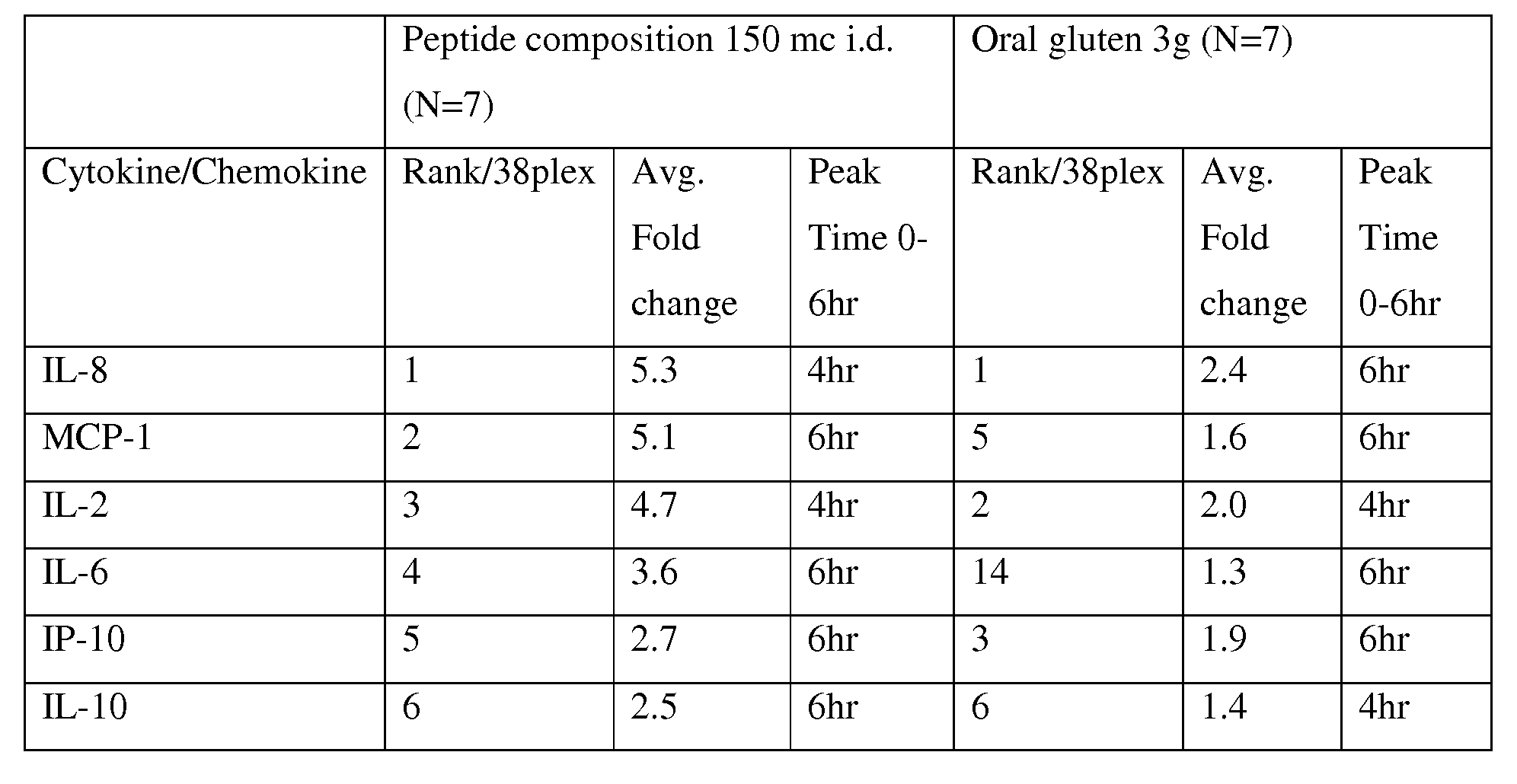
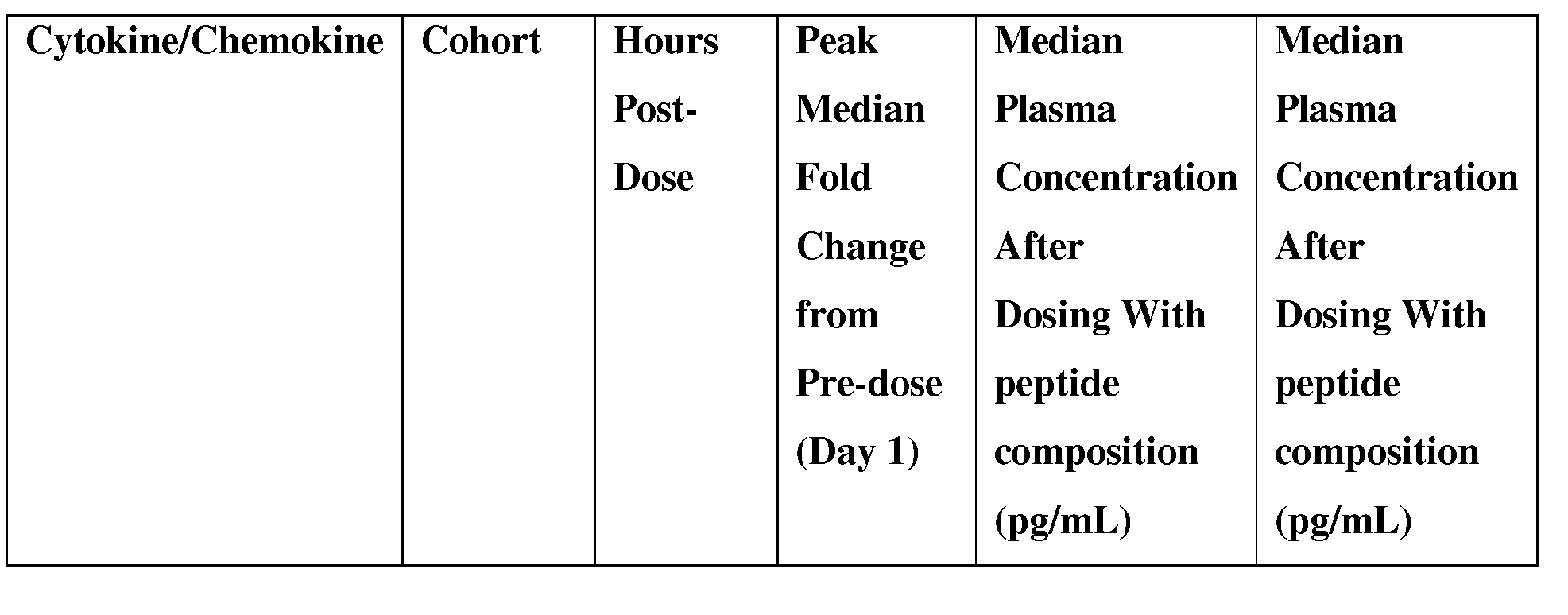

Claims
Priority Applications (4)
| Application Number | Priority Date | Filing Date | Title |
|---|---|---|---|
| CA2946869A CA2946869A1 (en) | 2014-04-24 | 2015-04-24 | Methods for diagnosing celiac disease using circulating cytokines/chemokines |
| US15/306,126 US20170059582A1 (en) | 2014-04-24 | 2015-04-24 | Methods for diagnosing celiac disease using circulating cytokines/chemokines |
| AU2015249378A AU2015249378A1 (en) | 2014-04-24 | 2015-04-24 | Methods for diagnosing Celiac disease using circulating cytokines/chemokines |
| EP15782996.1A EP3134730A4 (en) | 2014-04-24 | 2015-04-24 | Methods for diagnosing celiac disease using circulating cytokines/chemokines |
Applications Claiming Priority (61)
| Application Number | Priority Date | Filing Date | Title |
|---|---|---|---|
| US201461984028P | 2014-04-24 | 2014-04-24 | |
| US201461983989P | 2014-04-24 | 2014-04-24 | |
| US201461983981P | 2014-04-24 | 2014-04-24 | |
| US201461983993P | 2014-04-24 | 2014-04-24 | |
| US61/983,993 | 2014-04-24 | ||
| US61/983,989 | 2014-04-24 | ||
| US61/984,028 | 2014-04-24 | ||
| US61/983,981 | 2014-04-24 | ||
| US201461984043P | 2014-04-25 | 2014-04-25 | |
| US61/984,043 | 2014-04-25 | ||
| US201462009090P | 2014-06-06 | 2014-06-06 | |
| US201462009146P | 2014-06-06 | 2014-06-06 | |
| US62/009,146 | 2014-06-06 | ||
| US62/009,090 | 2014-06-06 | ||
| US201462011566P | 2014-06-12 | 2014-06-12 | |
| US201462011540P | 2014-06-12 | 2014-06-12 | |
| US201462011493P | 2014-06-12 | 2014-06-12 | |
| US201462011508P | 2014-06-12 | 2014-06-12 | |
| US201462011561P | 2014-06-12 | 2014-06-12 | |
| US62/011,561 | 2014-06-12 | ||
| US62/011,493 | 2014-06-12 | ||
| US62/011,540 | 2014-06-12 | ||
| US62/011,566 | 2014-06-12 | ||
| US62/011,508 | 2014-06-12 | ||
| US201462011794P | 2014-06-13 | 2014-06-13 | |
| US62/011,794 | 2014-06-13 | ||
| US201462014401P | 2014-06-19 | 2014-06-19 | |
| US201462014676P | 2014-06-19 | 2014-06-19 | |
| US201462014666P | 2014-06-19 | 2014-06-19 | |
| US201462014681P | 2014-06-19 | 2014-06-19 | |
| US201462014373P | 2014-06-19 | 2014-06-19 | |
| US62/014,373 | 2014-06-19 | ||
| US62/014,681 | 2014-06-19 | ||
| US62/014,666 | 2014-06-19 | ||
| US62/014,401 | 2014-06-19 | ||
| US62/014,676 | 2014-06-19 | ||
| US201462043390P | 2014-08-28 | 2014-08-28 | |
| US201462043395P | 2014-08-28 | 2014-08-28 | |
| US201462043386P | 2014-08-28 | 2014-08-28 | |
| US60/043,386 | 2014-08-28 | ||
| US62/043,390 | 2014-08-28 | ||
| US62/043,386 | 2014-08-28 | ||
| US62/043,395 | 2014-08-28 | ||
| US201462057163P | 2014-09-29 | 2014-09-29 | |
| US201462057152P | 2014-09-29 | 2014-09-29 | |
| US62/057,152 | 2014-09-29 | ||
| US62/057,163 | 2014-09-29 | ||
| US201462082832P | 2014-11-21 | 2014-11-21 | |
| US62/082,832 | 2014-11-21 | ||
| US201562116027P | 2015-02-13 | 2015-02-13 | |
| US201562116002P | 2015-02-13 | 2015-02-13 | |
| US201562116052P | 2015-02-13 | 2015-02-13 | |
| US201562115897P | 2015-02-13 | 2015-02-13 | |
| US201562115963P | 2015-02-13 | 2015-02-13 | |
| US201562115925P | 2015-02-13 | 2015-02-13 | |
| US62/116027 | 2015-02-13 | ||
| US62/115897 | 2015-02-13 | ||
| US62/115,963 | 2015-02-13 | ||
| US62/116052 | 2015-02-13 | ||
| US62/115925 | 2015-02-13 | ||
| US62/116002 | 2015-02-13 |
Publications (2)
| Publication Number | Publication Date |
|---|---|
| WO2015164747A1 true WO2015164747A1 (en) | 2015-10-29 |
| WO2015164747A8 WO2015164747A8 (en) | 2017-01-26 |
Family
ID=54333249
Family Applications (7)
| Application Number | Title | Priority Date | Filing Date |
|---|---|---|---|
| PCT/US2015/027522 Ceased WO2015164747A1 (en) | 2014-04-24 | 2015-04-24 | Methods for diagnosing celiac disease using circulating cytokines/chemokines |
| PCT/US2015/027488 Ceased WO2015164721A1 (en) | 2014-04-24 | 2015-04-24 | Methods of diagnosing celiac disease using ip-10 |
| PCT/US2015/027483 Ceased WO2015164717A1 (en) | 2014-04-24 | 2015-04-24 | Methods of diagnosis and treatment of celiac disease in children |
| PCT/US2015/027497 Ceased WO2015164727A1 (en) | 2014-04-24 | 2015-04-24 | Methods of measuring antigen-specific t cells |
| PCT/US2015/027489 Ceased WO2015164722A1 (en) | 2014-04-24 | 2015-04-24 | Compositions comprising gluten |
| PCT/US2015/027477 Ceased WO2015164714A1 (en) | 2014-04-24 | 2015-04-24 | Use of interleukin-2 for diagnosis of celiac disease |
| PCT/US2015/027530 Ceased WO2015164752A1 (en) | 2014-04-24 | 2015-04-24 | Compositions comprising gluten peptides and uses thereof |
Family Applications After (6)
| Application Number | Title | Priority Date | Filing Date |
|---|---|---|---|
| PCT/US2015/027488 Ceased WO2015164721A1 (en) | 2014-04-24 | 2015-04-24 | Methods of diagnosing celiac disease using ip-10 |
| PCT/US2015/027483 Ceased WO2015164717A1 (en) | 2014-04-24 | 2015-04-24 | Methods of diagnosis and treatment of celiac disease in children |
| PCT/US2015/027497 Ceased WO2015164727A1 (en) | 2014-04-24 | 2015-04-24 | Methods of measuring antigen-specific t cells |
| PCT/US2015/027489 Ceased WO2015164722A1 (en) | 2014-04-24 | 2015-04-24 | Compositions comprising gluten |
| PCT/US2015/027477 Ceased WO2015164714A1 (en) | 2014-04-24 | 2015-04-24 | Use of interleukin-2 for diagnosis of celiac disease |
| PCT/US2015/027530 Ceased WO2015164752A1 (en) | 2014-04-24 | 2015-04-24 | Compositions comprising gluten peptides and uses thereof |
Country Status (5)
| Country | Link |
|---|---|
| US (4) | US20170045513A1 (en) |
| EP (5) | EP3134425A4 (en) |
| AU (5) | AU2015249383A1 (en) |
| CA (4) | CA2946862A1 (en) |
| WO (7) | WO2015164747A1 (en) |
Cited By (3)
| Publication number | Priority date | Publication date | Assignee | Title |
|---|---|---|---|---|
| US9464120B2 (en) | 2008-11-30 | 2016-10-11 | Immusant, Inc. | Compositions for treatment of celiac disease |
| US10370718B2 (en) | 2014-09-29 | 2019-08-06 | Immusant, Inc. | Use of HLA genetic status to assess or select treatment of celiac disease |
| US10449228B2 (en) | 2013-09-10 | 2019-10-22 | Immusant, Inc. | Dosage of a gluten peptide composition |
Families Citing this family (8)
| Publication number | Priority date | Publication date | Assignee | Title |
|---|---|---|---|---|
| WO2015164747A1 (en) * | 2014-04-24 | 2015-10-29 | Immusant, Inc. | Methods for diagnosing celiac disease using circulating cytokines/chemokines |
| HK1244821A1 (en) | 2014-11-21 | 2018-08-17 | Immusant Inc. | Peptides for use in treatment and diagnosis of type 1 diabetes |
| US10570185B2 (en) * | 2015-05-11 | 2020-02-25 | Northwestern University | Method to detect autoantibody reactivity for deamidated insulin autoantigen in diabetes |
| IT201600070384A1 (en) * | 2016-07-07 | 2018-01-07 | A M T Service S R L | "KIT FOR THE NON-CELIAC GLUTEN SENSITIVITY" |
| WO2019104391A1 (en) * | 2017-12-01 | 2019-06-06 | St Vincent's Institute Of Medical Research | Type 1 diabetes treatment |
| JP7691927B2 (en) | 2019-03-06 | 2025-06-12 | キュー バイオファーマ, インコーポレイテッド | T cell modulating antigen presenting polypeptides and methods of use thereof |
| EP4326311A1 (en) * | 2021-04-22 | 2024-02-28 | The United States of America, as represented by the Secretary, Department of Health and Human Services | Human insulin c-alpha-peptides and methods of use |
| GB202412620D0 (en) * | 2024-08-28 | 2024-10-09 | Alivedx Suisse Sa | Diagnosis of coeliac disease |
Citations (15)
| Publication number | Priority date | Publication date | Assignee | Title |
|---|---|---|---|---|
| WO2001025793A2 (en) | 1999-10-01 | 2001-04-12 | Isis Innovation Limited | Diagnosis of coeliac disease using a gliadin epitope |
| WO2003002609A2 (en) | 2001-06-28 | 2003-01-09 | Domantis Limited | Dual-specific ligand and its use |
| WO2003104273A2 (en) | 2002-06-05 | 2003-12-18 | Isis Innovation Limited | Therapeutic epitopes and uses thereof |
| US6939720B2 (en) | 1995-10-11 | 2005-09-06 | Luminex Corporation | Multiplexed analysis of clinical specimens apparatus and method |
| WO2005105129A2 (en) | 2004-04-28 | 2005-11-10 | Btg International Limited | Epitopes related to coeliac disease |
| WO2006040153A2 (en) | 2004-10-13 | 2006-04-20 | Ablynx N.V. | Single domain camelide anti -amyloid beta antibodies and polypeptides comprising the same for the treatment and diagnosis of degenarative neural diseases such as alzheimer's disease |
| WO2006122786A2 (en) | 2005-05-18 | 2006-11-23 | Ablynx Nv | Improved nanobodies™ against tumor necrosis factor-alpha |
| US7239742B2 (en) | 2001-09-19 | 2007-07-03 | Casio Computer Co., Ltd. | Display device and control system thereof |
| US7435542B2 (en) | 2002-06-24 | 2008-10-14 | Cornell Research Foundation, Inc. | Exhaustive selection of RNA aptamers against complex targets |
| US20080255766A1 (en) | 2007-02-16 | 2008-10-16 | Rules-Based Medicine, Inc. | Methods and kits for the diagnosis of sickle cell |
| US20090075834A1 (en) | 2003-09-04 | 2009-03-19 | The Regents Of The University Of California | Aptamers and methods for their in vitro selection and uses thereof |
| US20090088329A1 (en) | 2002-11-01 | 2009-04-02 | Brennan John D | Multicomponent protein microarrays |
| WO2010060155A1 (en) | 2008-11-30 | 2010-06-03 | Nexpep Pty Ltd | Compositions and methods for treatment of celiac disease |
| US7807351B2 (en) | 2003-11-22 | 2010-10-05 | Techno Medica Co., Ltd. | Method of detecting target molecule by using aptamer |
| US8148171B2 (en) | 2001-10-09 | 2012-04-03 | Luminex Corporation | Multiplexed analysis of clinical specimens apparatus and methods |
Family Cites Families (24)
| Publication number | Priority date | Publication date | Assignee | Title |
|---|---|---|---|---|
| DE3779909T2 (en) | 1986-03-06 | 1993-01-07 | Commw Scient Ind Res Org | IN VITRO TEST PROCEDURE FOR DETECTING CELLULAR IMMUNE RESPONSES. |
| US6410252B1 (en) | 1995-12-22 | 2002-06-25 | Case Western Reserve University | Methods for measuring T cell cytokines |
| US5939281A (en) | 1996-09-16 | 1999-08-17 | Case Western Reserve University | Detecting alloreactivity |
| GB9624456D0 (en) | 1996-11-25 | 1997-01-15 | Isis Innovation | Assay method |
| EP0905518A1 (en) * | 1997-09-23 | 1999-03-31 | Academisch Ziekenhuis Leiden | Peptides specific for gluten-sensitive T-cells and use thereof |
| US6632526B1 (en) | 1997-10-14 | 2003-10-14 | Luminex Corporation | Precision fluorescently dyed particles and methods of making and using same |
| US20030166589A1 (en) * | 2001-06-05 | 2003-09-04 | Nathan Karin | Method and pharmaceutical composition for the treatment of multiple sclerosis |
| EP1332760A1 (en) * | 2002-02-04 | 2003-08-06 | Academisch Ziekenhuis Leiden | Novel epitopes for celiac disease and autoimmune diseases, methods for detecting those and novel non-antigenic food compounds |
| ATE554392T1 (en) * | 2002-11-20 | 2012-05-15 | Univ Leland Stanford Junior | DIAGNOSTIC PROCEDURE FOR SPRUE/CELIAC DISEASE |
| US7341816B2 (en) | 2003-02-24 | 2008-03-11 | Promerus, Llc | Method of controlling the differential dissolution rate of photoresist compositions, polycyclic olefin polymers and monomers used for making such polymers |
| CN100541677C (en) | 2005-01-20 | 2009-09-16 | 卢米尼克斯股份有限公司 | Magnetic Microspheres for Fluorescence-Based Applications |
| EP4071458B1 (en) | 2005-09-21 | 2025-11-05 | Luminex Corporation | Methods and systems for image data processing |
| US20090304754A1 (en) * | 2005-10-12 | 2009-12-10 | Srebrenka Robic | Pegylated glutenase polypeptides |
| US8296088B2 (en) | 2006-06-02 | 2012-10-23 | Luminex Corporation | Systems and methods for performing measurements of one or more materials |
| US8026076B2 (en) * | 2006-09-05 | 2011-09-27 | Hvidovre Hospital | IP-10 based immunological monitoring |
| US8034776B2 (en) * | 2006-10-26 | 2011-10-11 | Alba Therapeutics Corporation | Materials and methods for the treatment of celiac disease |
| KR101529062B1 (en) * | 2008-09-05 | 2015-06-16 | 가부시키가이샤 한도오따이 에네루기 켄큐쇼 | Organic semiconductor material and light-emitting element, light-emitting device, lighting system, and electronic device using the same |
| US8274656B2 (en) | 2010-06-30 | 2012-09-25 | Luminex Corporation | Apparatus, system, and method for increasing measurement accuracy in a particle imaging device |
| EA201391582A1 (en) * | 2011-04-29 | 2014-03-31 | Бристол-Майерс Сквибб Компани | MODES OF INCREASING ANTIBODY DOSE AGAINST IP-10 |
| WO2013016427A1 (en) * | 2011-07-25 | 2013-01-31 | Alvine Pharmaceuticals, Inc. | Methods and pharmaceutical compositions for treating celiac disease and gluten intolerance |
| WO2013036296A1 (en) * | 2011-09-06 | 2013-03-14 | Selecta Biosciences, Inc. | Compositions and methods for producing antigen-specific induced tolerogenic dendritic cells with synthetic nanocarriers |
| US20140342936A1 (en) * | 2011-12-15 | 2014-11-20 | Inserm (Institut National De La Sante Et De La Recherche Medicale) | Methods and kits for diagnosing latent tuberculosis infection |
| WO2014152233A1 (en) * | 2013-03-14 | 2014-09-25 | Immusant, Inc. | Placebo-controlled gluten challenge method |
| WO2015164747A1 (en) * | 2014-04-24 | 2015-10-29 | Immusant, Inc. | Methods for diagnosing celiac disease using circulating cytokines/chemokines |
-
2015
- 2015-04-24 WO PCT/US2015/027522 patent/WO2015164747A1/en not_active Ceased
- 2015-04-24 EP EP15783033.2A patent/EP3134425A4/en not_active Withdrawn
- 2015-04-24 WO PCT/US2015/027488 patent/WO2015164721A1/en not_active Ceased
- 2015-04-24 WO PCT/US2015/027483 patent/WO2015164717A1/en not_active Ceased
- 2015-04-24 AU AU2015249383A patent/AU2015249383A1/en not_active Abandoned
- 2015-04-24 WO PCT/US2015/027497 patent/WO2015164727A1/en not_active Ceased
- 2015-04-24 AU AU2015249348A patent/AU2015249348A1/en not_active Abandoned
- 2015-04-24 EP EP15783897.0A patent/EP3134736A4/en not_active Withdrawn
- 2015-04-24 US US15/306,189 patent/US20170045513A1/en not_active Abandoned
- 2015-04-24 WO PCT/US2015/027489 patent/WO2015164722A1/en not_active Ceased
- 2015-04-24 CA CA2946862A patent/CA2946862A1/en not_active Abandoned
- 2015-04-24 WO PCT/US2015/027477 patent/WO2015164714A1/en not_active Ceased
- 2015-04-24 US US15/306,154 patent/US20170232083A1/en not_active Abandoned
- 2015-04-24 EP EP15782996.1A patent/EP3134730A4/en not_active Withdrawn
- 2015-04-24 US US15/306,136 patent/US20170042991A1/en not_active Abandoned
- 2015-04-24 US US15/306,164 patent/US20170045529A1/en not_active Abandoned
- 2015-04-24 WO PCT/US2015/027530 patent/WO2015164752A1/en not_active Ceased
- 2015-04-24 AU AU2015249378A patent/AU2015249378A1/en not_active Abandoned
- 2015-04-24 CA CA2946887A patent/CA2946887A1/en not_active Abandoned
- 2015-04-24 AU AU2015249592A patent/AU2015249592A1/en not_active Abandoned
- 2015-04-24 EP EP15783910.1A patent/EP3134737A4/en not_active Withdrawn
- 2015-04-24 CA CA2946869A patent/CA2946869A1/en not_active Abandoned
- 2015-04-24 CA CA2946864A patent/CA2946864A1/en not_active Abandoned
- 2015-04-24 EP EP15782759.3A patent/EP3134735A4/en not_active Withdrawn
-
2019
- 2019-11-08 AU AU2019261780A patent/AU2019261780A1/en not_active Abandoned
Patent Citations (15)
| Publication number | Priority date | Publication date | Assignee | Title |
|---|---|---|---|---|
| US6939720B2 (en) | 1995-10-11 | 2005-09-06 | Luminex Corporation | Multiplexed analysis of clinical specimens apparatus and method |
| WO2001025793A2 (en) | 1999-10-01 | 2001-04-12 | Isis Innovation Limited | Diagnosis of coeliac disease using a gliadin epitope |
| WO2003002609A2 (en) | 2001-06-28 | 2003-01-09 | Domantis Limited | Dual-specific ligand and its use |
| US7239742B2 (en) | 2001-09-19 | 2007-07-03 | Casio Computer Co., Ltd. | Display device and control system thereof |
| US8148171B2 (en) | 2001-10-09 | 2012-04-03 | Luminex Corporation | Multiplexed analysis of clinical specimens apparatus and methods |
| WO2003104273A2 (en) | 2002-06-05 | 2003-12-18 | Isis Innovation Limited | Therapeutic epitopes and uses thereof |
| US7435542B2 (en) | 2002-06-24 | 2008-10-14 | Cornell Research Foundation, Inc. | Exhaustive selection of RNA aptamers against complex targets |
| US20090088329A1 (en) | 2002-11-01 | 2009-04-02 | Brennan John D | Multicomponent protein microarrays |
| US20090075834A1 (en) | 2003-09-04 | 2009-03-19 | The Regents Of The University Of California | Aptamers and methods for their in vitro selection and uses thereof |
| US7807351B2 (en) | 2003-11-22 | 2010-10-05 | Techno Medica Co., Ltd. | Method of detecting target molecule by using aptamer |
| WO2005105129A2 (en) | 2004-04-28 | 2005-11-10 | Btg International Limited | Epitopes related to coeliac disease |
| WO2006040153A2 (en) | 2004-10-13 | 2006-04-20 | Ablynx N.V. | Single domain camelide anti -amyloid beta antibodies and polypeptides comprising the same for the treatment and diagnosis of degenarative neural diseases such as alzheimer's disease |
| WO2006122786A2 (en) | 2005-05-18 | 2006-11-23 | Ablynx Nv | Improved nanobodies™ against tumor necrosis factor-alpha |
| US20080255766A1 (en) | 2007-02-16 | 2008-10-16 | Rules-Based Medicine, Inc. | Methods and kits for the diagnosis of sickle cell |
| WO2010060155A1 (en) | 2008-11-30 | 2010-06-03 | Nexpep Pty Ltd | Compositions and methods for treatment of celiac disease |
Non-Patent Citations (58)
| Title |
|---|
| "Current Protocols in Molecular Biology", 1988, GREENE PUB. ASSOCIATES AND WILEY-INTERSCIENCE |
| "DNA Cloning: A Practical Approach", vol. 1-4, 1995, IRL PRESS |
| "Essential Molecular Biology: A Practical Approach", vol. 1, 2, 1991, IRL PRESS |
| "Genbank", Database accession no. AF515813.1 |
| "Remington's Pharmaceutical Sciences", 1980, MACK PUBLISHING COMPANY |
| "Toxicity Grading Scale for Healthy Adult and Adolescent Volunteers Enrolled in Preventive Vaccine Clinical Trials", 2007, U. S. D. O. H. A. H. SERVICES, article "Guidance for Industry" |
| ANDERSON ET AL.: "Antagonists and non-toxic variants of the dominant wheat gliadin T cell epitope in coeliac disease", GUT, vol. 55, no. 4, April 2006 (2006-04-01), pages 485 - 491, XP009108340, DOI: 10.1136/gut.2005.064550 |
| ANDERSON, R. P.: "Coeliac disease", AUST FAM PHYSICIAN, vol. 34, no. 4, 2005, pages 239 - 242 |
| ANDERSON, R. P.M. J. HENRYR. TAYLORE. L. DUNCANP. DANOYM. J. COSTAK. ADDISONJ. A. TYE-DINM. A. KOTOWICZR. E. KNIGHT: "A novel serogenetic approach determines the community prevalence of celiac disease and informs improved diagnostic pathways", BMC MED, vol. 11, no. 1, 2013, pages 188, XP021160371, DOI: 10.1186/1741-7015-11-188 |
| ANDERSON, R. P.P. DEGANOA. J. GODKIND. P. JEWELLA. V. HILL: "In vivo antigen challenge in celiac disease identifies a single transglutaminase-modified peptide as the dominant A-gliadin T-cell epitope", NAT MED, vol. 6, no. 3, 2000, pages 337 - 342, XP000982628, DOI: 10.1038/73200 |
| BARDELLA, M. T.P. VELIOB. M. CESANAL. PRAMPOLINIG. CASELLAC. DI BELLAA. LANZINIM. GAMBAROTTIG. BASSOTTIV. VILLANACCI: "Coeliac disease: a histological follow-up study", HISTOPATHOLOGY, vol. 50, no. 4, 2007, pages 465 - 471 |
| BODD, M.C. Y. KIMK. E. LUNDINL. M. SOLLID: "T-cell response to gluten in patients with HLA-DQ2.2 reveals requirement of peptide-MHC stability in celiac disease", GASTROENTEROLOGY, vol. 142, no. 3, 2012, pages 552 - 561, XP055322332, DOI: 10.1053/j.gastro.2011.11.021 |
| BROTTVEIT, M.M. RAKIE. BERGSENGL. E. FALLANGB. SIMONSENA. LOVIKS. LARSENE. M. LOBERGF. L. JAHNSENL. M. SOLLID: "Assessing possible celiac disease by an HLA-DQ2-gliadin Tetramer Test", AM J GASTROENTEROL, vol. 106, no. 7, 2011, pages 1318 - 1324, XP055160550, DOI: 10.1038/ajg.2011.23 |
| BUNCE M ET AL.: "Phototyping: comprehensive DNA typing for HLA-A, B, C, DRB 1, DRB3, DRB4, DRB5 & DQB 1 by PCR with 144 primer mixes utilizing sequence-specific primers (PCR-SSP", TISSUE ANTIGENS, vol. 46, 1995, pages 355 - 367 |
| CATASSI, C.R. P. ANDERSONI. D. HILLS. KOLETZKOE. LIONETTIN. MOUANEM. SCHUMANNS. K. YACHHA: "World perspective on celiac disease", J PEDIATR GASTROENTEROL NUTR, vol. 55, no. 5, 2012, pages 494 - 499 |
| CHEN, Z.N. DUDEKO. WIJBURGR. STRUGNELLL. BROWNG. DELIYANNISD. JACKSONF. KOENTGENT. GORDONJ. MCCLUSKEY: "A 320-kilobase artificial chromosome encoding the human HLA DR3-DQ2 MHC haplotype confers HLA restriction in transgenic mice", J IMMUNOL, vol. 168, no. 6, 2002, pages 3050 - 3056 |
| CHOWERS Y. ET AL.: "Increased proinflammatory cytokine gene expression in the colonic mucosa of coeliac disease patients in the early period after gluten challenge", CLIN. EXP. IMMUNOL., vol. 107, 1997, pages 141 - 147, XP 055232199 * |
| DE KAUWE, A. L.Z. CHENR. P. ANDERSONC. L. KEECHJ. D. PRICEO. WIJBURGD. C. JACKSONJ. LADHAMSJ. ALLISONJ. MCCLUSKEY: "Resistance to celiac disease in humanized HLA-DR3-DQ2-transgenic mice expressing specific anti-gliadin CD4+ T cells", J IMMUNOL, vol. 182, no. 12, 2009, pages 7440 - 7450, XP002659640, DOI: 10.4049/JIMMUNOL.0900233 |
| FORNARI CECILIA M. ET AL.: "Pre- and Post-Treatment Serum Levels of Cytokines IL -1beta, IL -6, and IL -1 Receptor Antagonist in Celiac Disease. Are They Related to the Associated Osteopenia?", THE AMERICAN JOURNAL OF GASTROENTEROLOGY, vol. 93, no. 3, 1998, pages 413 - 418, XP055325484 * |
| GIANFRANI, C.R. TRONCONEP. MUGIONEE. COSENTINIM. DE PASCALEC. FARUOLOS. SENGERG. TERRAZZANOS. SOUTHWOODS. AURICCHIO: "Celiac disease association with CD8+ T cell responses: identification of a novel gliadin-derived HLA-A2-restricted epitope", J IMMUNOL, vol. 170, no. 5, 2003, pages 2719 - 2726 |
| HANNE QUARSTEN ET AL.: "Staining of Celiac Disease-Relevant T Cells by Peptide-DQ2 Multimers", JOURNAL OF IMMUNOLOGY, vol. 167, no. 9, 2001, pages 4861 - 4868 |
| HENDERSON, K. N.J. A. TYE-DINH. H. REIDZ. CHENN. A. BORGT. BEISSBARTHA. TATHAMS. I. MANNERINGA. W. PURCELLN. L. DUDEK: "A structural and immunological basis for the role of human leukocyte antigen DQ8 in celiac disease", IMMUNITY, vol. 27, no. 1, 2007, pages 23 - 34, XP055173114, DOI: 10.1016/j.immuni.2007.05.015 |
| J. PERBAL: "A Practical Guide to Molecular Cloning", 1984, JOHN WILEY AND SONS |
| J. SAMBROOK ET AL.: "Molecular Cloning: A Laboratory Manual", 1989, COLD SPRING HARBOUR LABORATORY PRESS |
| JABRI, B.L. M. SOLLID: "Tissue-mediated control of immunopathology in coeliac disease", NAT REV IMMUNOL, vol. 9, no. 12, 2009, pages 858 - 870 |
| JOHN D. ALTMAN ET AL.: "Phenotypic Analysis of Antigen-Specific T Lymphocytes", SCIENCE, vol. 274, no. 5284, 1996, pages 94 - 96, XP002135711, DOI: 10.1126/science.274.5284.94 |
| KARELL, K.A. S. LOUKAS. J. MOODIEH. ASCHERF. CLOTL. GRECOP. J. CICLITIRAL. M. SOLLIDJ. PARTANEN: "HLA types in celiac disease patients not carrying the DQA1*05-DQB1*02 (DQ2) heterodimer: results from the European Genetics Cluster on Celiac Disease", HUM IMMUNOL, vol. 64, no. 4, 2003, pages 469 - 477, XP002456767 |
| KAUKINEN, K.M. PERAAHOK. LINDFORSJ. PARTANENN. WOOLLEYP. PIKKARAINENA. L. KARVONENT. LAASANENH. SIEVANENM. MAKI: "Persistent small bowel mucosal villous atrophy without symptoms in coeliac disease", ALIMENT PHARMACOL THER, vol. 25, no. 10, 2007, pages 1237 - 1245 |
| KEECH, C. L.MCLUSKEY, J.: "Bioactivity assessment of Nexvax2 in a relevant in vivo mouse model", 2011, U. S. D. O. H. A. H. SERVICES |
| KEECH, C. L.MCLUSKEY, J.: "Bioactivity assessment of Nexvax2 in a relevant in vivo mouse model: immune modulation following repeat administration of Nexvax2", 2008, UNIVERSITY OF MELBOURNE |
| KOMMINOTH P ET AL., PATHOL RES PRACT., vol. 190, 1994, pages 1017 - 25 |
| KOSKINEN LROMANOS JKAUKINEN KMUSTALAHTI KKORPONAY-SZABO IBARISANI DBARDELLA MTZIBERNA FVATTA SSZELES G ET AL.: "Cost-effective HLA typing with tagging SNPs predicts Celiac disease risk haplotypes in the Finnish, Hungarian, and Italian populations", IMMUNOGENETICS, vol. 61, no. 4, 2009, pages 247 - 256, XP019705375 |
| KOSKINEN, L.J. ROMANOSK. KAUKINENK. MUSTALAHTII. KORPONAY-SZABOD. BARISANIM. T. BARDELLAF. ZIBERNAS. VATTAG. SZELES: "Cost-effective HLA typing with tagging SNPs predicts celiac disease risk haplotypes in the Finnish, Hungarian, and Italian populations", IMMUNOGENETICS, vol. 61, no. 4, 2009, pages 247 - 256, XP019705375 |
| LEFFLER, D. A.M. DENNISJ. B. EDWARDS GEORGES. JAMMAS. MAGGEE. F. COOKD. SCHUPPANC. P. KELLY: "A simple validated gluten-free diet adherence survey for adults with celiac disease", CLIN GASTROENTEROL HEPATOL, vol. 7, no. 5, 2009, pages 530 - 536, XP026639633, DOI: 10.1016/j.cgh.2008.12.032 |
| LEFFLER, D.D. SCHUPPANK. PALLAVR. NAJARIANJ. D. GOLDSMITHJ. HANSENT. KABBANIM. DENNISC. P. KELLY: "Kinetics of the histological, serological and symptomatic responses to gluten challenge in adults with coeliac disease", GUT, vol. 62, no. 7, 2013, pages 996 - 1004, XP008163476, DOI: 10.1136/gutjnl-2012-302196 |
| LEWIN: "Genes IV", 1990, OXFORD UNIVERSITY PRESS |
| LIU, E.H. S. LEEC. A. ARONSSONW. A. HAGOPIANS. KOLETZKOM. J. REWERSG. S. EISENBARTHP. J. BINGLEYE. BONIFACIOV. SIMELL: "Risk of pediatric celiac disease according to HLA haplotype and country", N ENGL J MED, vol. 371, no. 1, 2014, pages 42 - 49 |
| MELINDA RAKI ET AL.: "Tetramer visualization of gut-homing gluten-specific T cells in the peripheral blood of celiac disease patients", PNAS, vol. 104, no. 8, 2007, pages 2831 - 2836 |
| MONSUUR AJDE BAKKER PIZHERNAKOVA APINTO DVERDUIJN W ET AL.: "Effective detection of human leukocyte antigen risk alleles in celiac disease using tag single nucleotide polymorphisms", PLOS ONE, vol. 3, 2008, pages e2270 |
| MONSUUR AJDE BAKKER PIZHERNAKOVA APINTO DVERDUIJN WROMANOS JAURICCHIO RLOPEZ AVAN HEEL DACRUSIUS JB ET AL.: "Effective detection of human leukocyte antigen risk alleles in Celiac disease using tag single nucleotide polymorphisms", PLOS ONE, vol. 3, no. 5, 2008, pages e2270 |
| MULLER ET AL.: "Successful immunotherapy with T-cell epitope peptides of bee venom phospholipase A2 induces specific T-cell anergy in patient allergic to bee venom", J. ALLERGY CLIN. IMMUNOL., vol. 101, no. 6, 1998, pages 747 - 754 |
| MULLIGHAN CGBUNCE MWELSH KI: "High-resolution HLA-DQB 1 typing using the polymerase chain reaction and sequence-specific primers", TISSUE-ANTIGENS, vol. 50, 1997, pages 688 - 92 |
| MURRAY, J. A.T. WATSONB. CLEARMANF. MITROS: "Effect of a gluten-free diet on gastrointestinal symptoms in celiac disease", AM J CLIN NUTR, vol. 79, no. 4, 2004, pages 669 - 673 |
| NUOVO GJ ET AL., AM J SURG PATHOL, vol. 17, 1993, pages 683 - 90 |
| OLERUP OALDENER AFOGDELL A: "HLA-DQB 1 and DQA1 typing by PCR amplification with sequence-specific primers in 2 hours", TISSUE ANTIGENS, vol. 41, 1993, pages 119 - 134 |
| ONTIVEROS NTYE-DIN JAHARDY MYANDERSON RP: "Ex vivo whole blood secretion of interferon-y (IFN-y) and IFN-y-inducible protein-10 (IP-10) measured by ELISA are as sensitive as IFN-y ELISpot for the detection of gluten-reactive T cells in HLA-DQ2.5+ associated celiac disease", CLIN EXP IMMUNOL, vol. 175, 2014, pages 305 - 315 |
| ONTIVEROS, N.J. A. TYE-DINM. Y. HARDYR. P. ANDERSON: "Ex-vivo whole blood secretion of interferon (IFN)-gamma and IFN-gamma-inducible protein-10 measured by enzyme-linked immunosorbent assay are as sensitive as IFN-gamma enzyme-linked immunospot for the detection of gluten-reactive T cells in human leucocyte antigen (HLA)-DQ2.5(+) -associated coeliac d", CLIN EXP IMMUNOL, vol. 175, no. 2, 2014, pages 305 - 315 |
| OYVIND MOLBERGSTEPHEN MCADAMKNUT E.A. LUNDINCHRISTEL KRISTIANSENHELENE ARENTZ-HANSENKJELL KETTLUDVIG M. SOLLID: "T cells from celiac disease lesions recognize gliadin epitopes deamidated in situ by endogenous tissue transglutaminase", EUR. J. IMMUNOL., vol. 31, 2001, pages 1317 - 1323 |
| PATERSON B.M.: "The safety, tolerance, pharmacokinetic and pharmacodynamic effects of single doses of AT -1001 in coeliac disease subjects: a proof of concept study.", ALIMENT. PHARMACOL.THER., vol. 26, 2007, pages 757 - 766, XP055325492 * |
| PRZEMIOSLO R.T. ET AL.: "Raised pro-inflammatory cytokines interleukin 6 and tumour necrosis factor a in coeliac disease mucosa detected by immunohistochemistry", GUT, vol. 35, 1994, pages 1398 - 1403, XP 055233689 * |
| RAKI, M.L. E. FALLANGM. BROTTVEITE. BERGSENGH. QUARSTENK. E. LUNDINL. M. SOLLID: "Tetramer visualization of gut-homing gluten-specific T cells in the peripheral blood of celiac disease patients", PROC NATL ACAD SCI USA, vol. 104, no. 8, 2007, pages 2831 - 6 |
| SIMELL, S.A. KUPILAS. HOPPUA. HEKKALAT. SIMELLM. R. STAHLBERGM. VIANDERT. HURMEM. KNIPJ. ILONEN: "Natural history of transglutaminase autoantibodies and mucosal changes in children carrying HLA-conferred celiac disease susceptibility", SCAND J GASTROENTEROL, vol. 40, no. 10, 2005, pages 1182 - 1191 |
| SIMELL, S.S. HOPPUA. HEKKALAT. SIMELLM. R. STAHLBERGM. VIANDERH. YRJANAINENJ. GRONLUNDP. MARKULAV. SIMELL: "Fate of five celiac disease-associated antibodies during normal diet in genetically at-risk children observed from birth in a natural history study", AM J GASTROENTEROL, vol. 102, no. 9, 2007, pages 2026 - 2035 |
| SOLLID LMQIAO SWANDERSON RPGIANFRANI CKONING F: "Nomenclature and listing of celiac disease relevant gluten epitopes recognized by CD4+ T cells", IMMUNOGENETICS, vol. 64, 2012, pages 455 - 60 |
| SOLLID, L. M.S. W. QIAOR. P. ANDERSONC. GIANFRANIF. KONING: "Nomenclature and listing of celiac disease relevant gluten T-cell epitopes restricted by HLA-DQ molecules", IMMUNOGENETICS, vol. 64, no. 6, 2012, pages 455 - 460, XP035054204, DOI: 10.1007/s00251-012-0599-z |
| TYE-DIN, J. A.R. P. ANDERSONR. A. FFRENCHG. J. BROWNP. HODSMANM. SIEGELW. BOTWICKR. SHREENIWAS: "The effects of ALV003 pre-digestion of gluten on immune response and symptoms in celiac disease in vivo", CLIN IMMUNOL, vol. 134, no. 3, 2010, pages 289 - 295, XP055041227, DOI: 10.1016/j.clim.2009.11.001 |
| VADER, W.D. STEPNIAKY. KOOYL. MEARINA. THOMPSONJ. J. VAN ROODL. SPAENIJF. KONING: "The HLA-DQ2 gene dose effect in celiac disease is directly related to the magnitude and breadth of gluten-specific T cell responses", PROC NATL ACAD SCI U S A, vol. 100, no. 21, 2003, pages 12390 - 12395 |
| WALKER- SMITH JA ET AL.: "Revised criteria for diagnosis of coeliac disease. Report of Working Group of European Society of Paediatric Gastroenterology and Nutrition", ARCH DIS CHILD, vol. 65, no. 8, 1990, pages 909 - 911 |
Cited By (3)
| Publication number | Priority date | Publication date | Assignee | Title |
|---|---|---|---|---|
| US9464120B2 (en) | 2008-11-30 | 2016-10-11 | Immusant, Inc. | Compositions for treatment of celiac disease |
| US10449228B2 (en) | 2013-09-10 | 2019-10-22 | Immusant, Inc. | Dosage of a gluten peptide composition |
| US10370718B2 (en) | 2014-09-29 | 2019-08-06 | Immusant, Inc. | Use of HLA genetic status to assess or select treatment of celiac disease |
Also Published As
| Publication number | Publication date |
|---|---|
| EP3134730A4 (en) | 2018-01-17 |
| WO2015164717A1 (en) | 2015-10-29 |
| US20170045529A1 (en) | 2017-02-16 |
| EP3134735A4 (en) | 2018-06-20 |
| CA2946869A1 (en) | 2015-10-29 |
| EP3134735A1 (en) | 2017-03-01 |
| WO2015164722A1 (en) | 2015-10-29 |
| EP3134737A4 (en) | 2018-01-17 |
| WO2015164747A8 (en) | 2017-01-26 |
| AU2015249348A1 (en) | 2016-12-15 |
| US20170045513A1 (en) | 2017-02-16 |
| EP3134736A1 (en) | 2017-03-01 |
| EP3134730A1 (en) | 2017-03-01 |
| US20170042991A1 (en) | 2017-02-16 |
| AU2015249378A1 (en) | 2016-12-15 |
| AU2015249383A1 (en) | 2016-12-15 |
| EP3134425A4 (en) | 2018-06-20 |
| WO2015164721A1 (en) | 2015-10-29 |
| US20170232083A1 (en) | 2017-08-17 |
| CA2946862A1 (en) | 2015-10-29 |
| CA2946864A1 (en) | 2015-10-29 |
| AU2015249592A1 (en) | 2016-12-15 |
| WO2015164727A1 (en) | 2015-10-29 |
| EP3134736A4 (en) | 2018-01-17 |
| AU2019261780A1 (en) | 2019-11-28 |
| EP3134737A1 (en) | 2017-03-01 |
| CA2946887A1 (en) | 2015-10-29 |
| EP3134425A1 (en) | 2017-03-01 |
| WO2015164752A1 (en) | 2015-10-29 |
| WO2015164714A1 (en) | 2015-10-29 |
Similar Documents
| Publication | Publication Date | Title |
|---|---|---|
| EP3134730A1 (en) | Methods for diagnosing celiac disease using circulating cytokines/chemokines | |
| Castillo et al. | The present and the future in the diagnosis and management of celiac disease | |
| US10370718B2 (en) | Use of HLA genetic status to assess or select treatment of celiac disease | |
| US20160041148A1 (en) | Placebo-controlled gluten challenge method | |
| US20170059582A1 (en) | Methods for diagnosing celiac disease using circulating cytokines/chemokines | |
| Tye-Din et al. | Immunopathogenesis of celiac disease | |
| AU2014318889B2 (en) | Dosage of a gluten peptide composition | |
| US20170097346A1 (en) | Use of interleukin-2 for diagnosis of celiac disease | |
| US20160238590A1 (en) | Compositions and methods related to oat sensitivity | |
| Carroccio et al. | Non-Celiac Gluten Sensitivity: The New Frontier of Gluten Related Disorders | |
| KELLEHER et al. | The immunology of coeliac |
Legal Events
| Date | Code | Title | Description |
|---|---|---|---|
| 121 | Ep: the epo has been informed by wipo that ep was designated in this application |
Ref document number: 15782996 Country of ref document: EP Kind code of ref document: A1 |
|
| ENP | Entry into the national phase |
Ref document number: 2946869 Country of ref document: CA |
|
| NENP | Non-entry into the national phase |
Ref country code: DE |
|
| WWE | Wipo information: entry into national phase |
Ref document number: 15306126 Country of ref document: US |
|
| REEP | Request for entry into the european phase |
Ref document number: 2015782996 Country of ref document: EP |
|
| WWE | Wipo information: entry into national phase |
Ref document number: 2015782996 Country of ref document: EP |
|
| ENP | Entry into the national phase |
Ref document number: 2015249378 Country of ref document: AU Date of ref document: 20150424 Kind code of ref document: A |