WO2015175678A1 - Organic light-emitting diode materials - Google Patents
Organic light-emitting diode materials Download PDFInfo
- Publication number
- WO2015175678A1 WO2015175678A1 PCT/US2015/030598 US2015030598W WO2015175678A1 WO 2015175678 A1 WO2015175678 A1 WO 2015175678A1 US 2015030598 W US2015030598 W US 2015030598W WO 2015175678 A1 WO2015175678 A1 WO 2015175678A1
- Authority
- WO
- WIPO (PCT)
- Prior art keywords
- moiety
- compound
- molecule
- independently
- list
- Prior art date
- Legal status (The legal status is an assumption and is not a legal conclusion. Google has not performed a legal analysis and makes no representation as to the accuracy of the status listed.)
- Ceased
Links
- 0 CC1(C)c2ccccc2N(c(cc2)ccc2-c(cc2)cc(C(C)(C)c3cc(-c(cc4)ccc4N4c5ccc(*)cc5C(C)(C)c5c4ccc(*)c5)ccc33)c2N3N)c2ccccc12 Chemical compound CC1(C)c2ccccc2N(c(cc2)ccc2-c(cc2)cc(C(C)(C)c3cc(-c(cc4)ccc4N4c5ccc(*)cc5C(C)(C)c5c4ccc(*)c5)ccc33)c2N3N)c2ccccc12 0.000 description 17
- JVKDURKNIPRNEX-UHFFFAOYSA-N CC1(C)c2ccccc2N(c(cc2)ccc2-c(cc2)cc(C3(C)C)c2Nc(cc2)c3cc2-c(cc2)ccc2N2c3ccccc3C(C)(C)c3c2cccc3)c2c1cccc2 Chemical compound CC1(C)c2ccccc2N(c(cc2)ccc2-c(cc2)cc(C3(C)C)c2Nc(cc2)c3cc2-c(cc2)ccc2N2c3ccccc3C(C)(C)c3c2cccc3)c2c1cccc2 JVKDURKNIPRNEX-UHFFFAOYSA-N 0.000 description 2
- KHLFSYVSYWSEEB-UHFFFAOYSA-N c(cc1)cc2c1Oc1ccccc1N2c(cc1)ccc1-c1ccc2[nH]c(ccc(-c(cc3)ccc3N3c(cccc4)c4Oc4c3cccc4)c3)c3c2c1 Chemical compound c(cc1)cc2c1Oc1ccccc1N2c(cc1)ccc1-c1ccc2[nH]c(ccc(-c(cc3)ccc3N3c(cccc4)c4Oc4c3cccc4)c3)c3c2c1 KHLFSYVSYWSEEB-UHFFFAOYSA-N 0.000 description 2
- NPRKDXLXHDATHX-UHFFFAOYSA-N c(cc1)ccc1N(c1ccccc1)c(cc1)ccc1-c(cc1)cc2c1[nH]c1ccccc21 Chemical compound c(cc1)ccc1N(c1ccccc1)c(cc1)ccc1-c(cc1)cc2c1[nH]c1ccccc21 NPRKDXLXHDATHX-UHFFFAOYSA-N 0.000 description 2
- CEAOTMKCEVGXML-UHFFFAOYSA-N CC1(C)c(cccc2)c2N(c(cc2)cc(c3c4)c2[nH]c3ccc4N(c2ccccc2C2(C)C)c(cc3)c2cc3-c2c3Oc(cccc4)c4N(c4ccc5[nH]c(ccc(N6c(ccc(-c7cccc(-c(cc8c9c%10ccc(-c%11ccccc%11)c9)ccc8[n]%10-c(cc8)ccc8N(c8ccccc8)c8ccccc8)c7)c7)c7Oc7ccccc67)c6)c6c5c4)c3ccc2)c2ccccc12 Chemical compound CC1(C)c(cccc2)c2N(c(cc2)cc(c3c4)c2[nH]c3ccc4N(c2ccccc2C2(C)C)c(cc3)c2cc3-c2c3Oc(cccc4)c4N(c4ccc5[nH]c(ccc(N6c(ccc(-c7cccc(-c(cc8c9c%10ccc(-c%11ccccc%11)c9)ccc8[n]%10-c(cc8)ccc8N(c8ccccc8)c8ccccc8)c7)c7)c7Oc7ccccc67)c6)c6c5c4)c3ccc2)c2ccccc12 CEAOTMKCEVGXML-UHFFFAOYSA-N 0.000 description 1
- QTAJZDZSXBIMOZ-UHFFFAOYSA-N N[n]1c(ccc(N(c2ccccc2)c2ccccc2)c2)c2c2ccccc12 Chemical compound N[n]1c(ccc(N(c2ccccc2)c2ccccc2)c2)c2c2ccccc12 QTAJZDZSXBIMOZ-UHFFFAOYSA-N 0.000 description 1
- PLXFRDQUOPPVHF-UHFFFAOYSA-N Nc1nc(-c2ccccc2)nc(-c2ccccc2)c1 Chemical compound Nc1nc(-c2ccccc2)nc(-c2ccccc2)c1 PLXFRDQUOPPVHF-UHFFFAOYSA-N 0.000 description 1
- AAHNWFITFYWGST-UHFFFAOYSA-N c(cc1)ccc1-c1cc(-[n]2c(ccc(N(c3ccccc3)c3ccccc3)c3)c3c3ccccc23)nc(-c2ccccc2)n1 Chemical compound c(cc1)ccc1-c1cc(-[n]2c(ccc(N(c3ccccc3)c3ccccc3)c3)c3c3ccccc23)nc(-c2ccccc2)n1 AAHNWFITFYWGST-UHFFFAOYSA-N 0.000 description 1
- VKFWHTYHLBFBPG-UHFFFAOYSA-N c(cc1)ccc1-c1nc(-c2ccccc2)nc(-c(cc2)ccc2-[n]2c(ccc(-[n]3c4ccccc4c4c3cccc4)c3)c3c3ccccc23)c1 Chemical compound c(cc1)ccc1-c1nc(-c2ccccc2)nc(-c(cc2)ccc2-[n]2c(ccc(-[n]3c4ccccc4c4c3cccc4)c3)c3c3ccccc23)c1 VKFWHTYHLBFBPG-UHFFFAOYSA-N 0.000 description 1
Classifications
-
- C—CHEMISTRY; METALLURGY
- C07—ORGANIC CHEMISTRY
- C07C—ACYCLIC OR CARBOCYCLIC COMPOUNDS
- C07C225/00—Compounds containing amino groups and doubly—bound oxygen atoms bound to the same carbon skeleton, at least one of the doubly—bound oxygen atoms not being part of a —CHO group, e.g. amino ketones
- C07C225/22—Compounds containing amino groups and doubly—bound oxygen atoms bound to the same carbon skeleton, at least one of the doubly—bound oxygen atoms not being part of a —CHO group, e.g. amino ketones having amino groups bound to carbon atoms of six-membered aromatic rings of the carbon skeleton
-
- C—CHEMISTRY; METALLURGY
- C07—ORGANIC CHEMISTRY
- C07D—HETEROCYCLIC COMPOUNDS
- C07D209/00—Heterocyclic compounds containing five-membered rings, condensed with other rings, with one nitrogen atom as the only ring hetero atom
- C07D209/56—Ring systems containing three or more rings
- C07D209/80—[b, c]- or [b, d]-condensed
- C07D209/82—Carbazoles; Hydrogenated carbazoles
- C07D209/86—Carbazoles; Hydrogenated carbazoles with only hydrogen atoms, hydrocarbon or substituted hydrocarbon radicals, directly attached to carbon atoms of the ring system
-
- C—CHEMISTRY; METALLURGY
- C07—ORGANIC CHEMISTRY
- C07D—HETEROCYCLIC COMPOUNDS
- C07D209/00—Heterocyclic compounds containing five-membered rings, condensed with other rings, with one nitrogen atom as the only ring hetero atom
- C07D209/56—Ring systems containing three or more rings
- C07D209/80—[b, c]- or [b, d]-condensed
- C07D209/82—Carbazoles; Hydrogenated carbazoles
- C07D209/88—Carbazoles; Hydrogenated carbazoles with hetero atoms or with carbon atoms having three bonds to hetero atoms with at the most one bond to halogen, e.g. ester or nitrile radicals, directly attached to carbon atoms of the ring system
-
- C—CHEMISTRY; METALLURGY
- C07—ORGANIC CHEMISTRY
- C07D—HETEROCYCLIC COMPOUNDS
- C07D251/00—Heterocyclic compounds containing 1,3,5-triazine rings
- C07D251/02—Heterocyclic compounds containing 1,3,5-triazine rings not condensed with other rings
- C07D251/12—Heterocyclic compounds containing 1,3,5-triazine rings not condensed with other rings having three double bonds between ring members or between ring members and non-ring members
- C07D251/14—Heterocyclic compounds containing 1,3,5-triazine rings not condensed with other rings having three double bonds between ring members or between ring members and non-ring members with hydrogen or carbon atoms directly attached to at least one ring carbon atom
- C07D251/24—Heterocyclic compounds containing 1,3,5-triazine rings not condensed with other rings having three double bonds between ring members or between ring members and non-ring members with hydrogen or carbon atoms directly attached to at least one ring carbon atom to three ring carbon atoms
-
- C—CHEMISTRY; METALLURGY
- C07—ORGANIC CHEMISTRY
- C07D—HETEROCYCLIC COMPOUNDS
- C07D265/00—Heterocyclic compounds containing six-membered rings having one nitrogen atom and one oxygen atom as the only ring hetero atoms
- C07D265/28—1,4-Oxazines; Hydrogenated 1,4-oxazines
- C07D265/34—1,4-Oxazines; Hydrogenated 1,4-oxazines condensed with carbocyclic rings
- C07D265/38—[b, e]-condensed with two six-membered rings
-
- C—CHEMISTRY; METALLURGY
- C07—ORGANIC CHEMISTRY
- C07D—HETEROCYCLIC COMPOUNDS
- C07D401/00—Heterocyclic compounds containing two or more hetero rings, having nitrogen atoms as the only ring hetero atoms, at least one ring being a six-membered ring with only one nitrogen atom
- C07D401/02—Heterocyclic compounds containing two or more hetero rings, having nitrogen atoms as the only ring hetero atoms, at least one ring being a six-membered ring with only one nitrogen atom containing two hetero rings
- C07D401/10—Heterocyclic compounds containing two or more hetero rings, having nitrogen atoms as the only ring hetero atoms, at least one ring being a six-membered ring with only one nitrogen atom containing two hetero rings linked by a carbon chain containing aromatic rings
-
- C—CHEMISTRY; METALLURGY
- C07—ORGANIC CHEMISTRY
- C07D—HETEROCYCLIC COMPOUNDS
- C07D401/00—Heterocyclic compounds containing two or more hetero rings, having nitrogen atoms as the only ring hetero atoms, at least one ring being a six-membered ring with only one nitrogen atom
- C07D401/14—Heterocyclic compounds containing two or more hetero rings, having nitrogen atoms as the only ring hetero atoms, at least one ring being a six-membered ring with only one nitrogen atom containing three or more hetero rings
-
- C—CHEMISTRY; METALLURGY
- C07—ORGANIC CHEMISTRY
- C07D—HETEROCYCLIC COMPOUNDS
- C07D403/00—Heterocyclic compounds containing two or more hetero rings, having nitrogen atoms as the only ring hetero atoms, not provided for by group C07D401/00
- C07D403/02—Heterocyclic compounds containing two or more hetero rings, having nitrogen atoms as the only ring hetero atoms, not provided for by group C07D401/00 containing two hetero rings
- C07D403/10—Heterocyclic compounds containing two or more hetero rings, having nitrogen atoms as the only ring hetero atoms, not provided for by group C07D401/00 containing two hetero rings linked by a carbon chain containing aromatic rings
-
- C—CHEMISTRY; METALLURGY
- C07—ORGANIC CHEMISTRY
- C07D—HETEROCYCLIC COMPOUNDS
- C07D403/00—Heterocyclic compounds containing two or more hetero rings, having nitrogen atoms as the only ring hetero atoms, not provided for by group C07D401/00
- C07D403/14—Heterocyclic compounds containing two or more hetero rings, having nitrogen atoms as the only ring hetero atoms, not provided for by group C07D401/00 containing three or more hetero rings
-
- C—CHEMISTRY; METALLURGY
- C07—ORGANIC CHEMISTRY
- C07D—HETEROCYCLIC COMPOUNDS
- C07D409/00—Heterocyclic compounds containing two or more hetero rings, at least one ring having sulfur atoms as the only ring hetero atoms
- C07D409/14—Heterocyclic compounds containing two or more hetero rings, at least one ring having sulfur atoms as the only ring hetero atoms containing three or more hetero rings
-
- C—CHEMISTRY; METALLURGY
- C07—ORGANIC CHEMISTRY
- C07D—HETEROCYCLIC COMPOUNDS
- C07D413/00—Heterocyclic compounds containing two or more hetero rings, at least one ring having nitrogen and oxygen atoms as the only ring hetero atoms
- C07D413/02—Heterocyclic compounds containing two or more hetero rings, at least one ring having nitrogen and oxygen atoms as the only ring hetero atoms containing two hetero rings
- C07D413/10—Heterocyclic compounds containing two or more hetero rings, at least one ring having nitrogen and oxygen atoms as the only ring hetero atoms containing two hetero rings linked by a carbon chain containing aromatic rings
-
- C—CHEMISTRY; METALLURGY
- C07—ORGANIC CHEMISTRY
- C07D—HETEROCYCLIC COMPOUNDS
- C07D413/00—Heterocyclic compounds containing two or more hetero rings, at least one ring having nitrogen and oxygen atoms as the only ring hetero atoms
- C07D413/14—Heterocyclic compounds containing two or more hetero rings, at least one ring having nitrogen and oxygen atoms as the only ring hetero atoms containing three or more hetero rings
-
- C—CHEMISTRY; METALLURGY
- C07—ORGANIC CHEMISTRY
- C07D—HETEROCYCLIC COMPOUNDS
- C07D471/00—Heterocyclic compounds containing nitrogen atoms as the only ring hetero atoms in the condensed system, at least one ring being a six-membered ring with one nitrogen atom, not provided for by groups C07D451/00 - C07D463/00
- C07D471/02—Heterocyclic compounds containing nitrogen atoms as the only ring hetero atoms in the condensed system, at least one ring being a six-membered ring with one nitrogen atom, not provided for by groups C07D451/00 - C07D463/00 in which the condensed system contains two hetero rings
- C07D471/04—Ortho-condensed systems
-
- C—CHEMISTRY; METALLURGY
- C07—ORGANIC CHEMISTRY
- C07D—HETEROCYCLIC COMPOUNDS
- C07D487/00—Heterocyclic compounds containing nitrogen atoms as the only ring hetero atoms in the condensed system, not provided for by groups C07D451/00 - C07D477/00
- C07D487/02—Heterocyclic compounds containing nitrogen atoms as the only ring hetero atoms in the condensed system, not provided for by groups C07D451/00 - C07D477/00 in which the condensed system contains two hetero rings
- C07D487/04—Ortho-condensed systems
-
- C—CHEMISTRY; METALLURGY
- C09—DYES; PAINTS; POLISHES; NATURAL RESINS; ADHESIVES; COMPOSITIONS NOT OTHERWISE PROVIDED FOR; APPLICATIONS OF MATERIALS NOT OTHERWISE PROVIDED FOR
- C09K—MATERIALS FOR MISCELLANEOUS APPLICATIONS, NOT PROVIDED FOR ELSEWHERE
- C09K11/00—Luminescent materials, e.g. electroluminescent or chemiluminescent
- C09K11/06—Luminescent materials, e.g. electroluminescent or chemiluminescent containing organic luminescent materials
-
- H—ELECTRICITY
- H10—SEMICONDUCTOR DEVICES; ELECTRIC SOLID-STATE DEVICES NOT OTHERWISE PROVIDED FOR
- H10K—ORGANIC ELECTRIC SOLID-STATE DEVICES
- H10K85/00—Organic materials used in the body or electrodes of devices covered by this subclass
- H10K85/60—Organic compounds having low molecular weight
- H10K85/631—Amine compounds having at least two aryl rest on at least one amine-nitrogen atom, e.g. triphenylamine
-
- H—ELECTRICITY
- H10—SEMICONDUCTOR DEVICES; ELECTRIC SOLID-STATE DEVICES NOT OTHERWISE PROVIDED FOR
- H10K—ORGANIC ELECTRIC SOLID-STATE DEVICES
- H10K85/00—Organic materials used in the body or electrodes of devices covered by this subclass
- H10K85/60—Organic compounds having low molecular weight
- H10K85/631—Amine compounds having at least two aryl rest on at least one amine-nitrogen atom, e.g. triphenylamine
- H10K85/636—Amine compounds having at least two aryl rest on at least one amine-nitrogen atom, e.g. triphenylamine comprising heteroaromatic hydrocarbons as substituents on the nitrogen atom
-
- H—ELECTRICITY
- H10—SEMICONDUCTOR DEVICES; ELECTRIC SOLID-STATE DEVICES NOT OTHERWISE PROVIDED FOR
- H10K—ORGANIC ELECTRIC SOLID-STATE DEVICES
- H10K85/00—Organic materials used in the body or electrodes of devices covered by this subclass
- H10K85/60—Organic compounds having low molecular weight
- H10K85/649—Aromatic compounds comprising a hetero atom
- H10K85/654—Aromatic compounds comprising a hetero atom comprising only nitrogen as heteroatom
-
- H—ELECTRICITY
- H10—SEMICONDUCTOR DEVICES; ELECTRIC SOLID-STATE DEVICES NOT OTHERWISE PROVIDED FOR
- H10K—ORGANIC ELECTRIC SOLID-STATE DEVICES
- H10K85/00—Organic materials used in the body or electrodes of devices covered by this subclass
- H10K85/60—Organic compounds having low molecular weight
- H10K85/649—Aromatic compounds comprising a hetero atom
- H10K85/657—Polycyclic condensed heteroaromatic hydrocarbons
-
- H—ELECTRICITY
- H10—SEMICONDUCTOR DEVICES; ELECTRIC SOLID-STATE DEVICES NOT OTHERWISE PROVIDED FOR
- H10K—ORGANIC ELECTRIC SOLID-STATE DEVICES
- H10K85/00—Organic materials used in the body or electrodes of devices covered by this subclass
- H10K85/60—Organic compounds having low molecular weight
- H10K85/649—Aromatic compounds comprising a hetero atom
- H10K85/657—Polycyclic condensed heteroaromatic hydrocarbons
- H10K85/6572—Polycyclic condensed heteroaromatic hydrocarbons comprising only nitrogen in the heteroaromatic polycondensed ring system, e.g. phenanthroline or carbazole
-
- H—ELECTRICITY
- H10—SEMICONDUCTOR DEVICES; ELECTRIC SOLID-STATE DEVICES NOT OTHERWISE PROVIDED FOR
- H10K—ORGANIC ELECTRIC SOLID-STATE DEVICES
- H10K85/00—Organic materials used in the body or electrodes of devices covered by this subclass
- H10K85/60—Organic compounds having low molecular weight
- H10K85/649—Aromatic compounds comprising a hetero atom
- H10K85/657—Polycyclic condensed heteroaromatic hydrocarbons
- H10K85/6576—Polycyclic condensed heteroaromatic hydrocarbons comprising only sulfur in the heteroaromatic polycondensed ring system, e.g. benzothiophene
-
- C—CHEMISTRY; METALLURGY
- C09—DYES; PAINTS; POLISHES; NATURAL RESINS; ADHESIVES; COMPOSITIONS NOT OTHERWISE PROVIDED FOR; APPLICATIONS OF MATERIALS NOT OTHERWISE PROVIDED FOR
- C09K—MATERIALS FOR MISCELLANEOUS APPLICATIONS, NOT PROVIDED FOR ELSEWHERE
- C09K2211/00—Chemical nature of organic luminescent or tenebrescent compounds
- C09K2211/10—Non-macromolecular compounds
- C09K2211/1003—Carbocyclic compounds
- C09K2211/1007—Non-condensed systems
-
- C—CHEMISTRY; METALLURGY
- C09—DYES; PAINTS; POLISHES; NATURAL RESINS; ADHESIVES; COMPOSITIONS NOT OTHERWISE PROVIDED FOR; APPLICATIONS OF MATERIALS NOT OTHERWISE PROVIDED FOR
- C09K—MATERIALS FOR MISCELLANEOUS APPLICATIONS, NOT PROVIDED FOR ELSEWHERE
- C09K2211/00—Chemical nature of organic luminescent or tenebrescent compounds
- C09K2211/10—Non-macromolecular compounds
- C09K2211/1003—Carbocyclic compounds
- C09K2211/1011—Condensed systems
-
- C—CHEMISTRY; METALLURGY
- C09—DYES; PAINTS; POLISHES; NATURAL RESINS; ADHESIVES; COMPOSITIONS NOT OTHERWISE PROVIDED FOR; APPLICATIONS OF MATERIALS NOT OTHERWISE PROVIDED FOR
- C09K—MATERIALS FOR MISCELLANEOUS APPLICATIONS, NOT PROVIDED FOR ELSEWHERE
- C09K2211/00—Chemical nature of organic luminescent or tenebrescent compounds
- C09K2211/10—Non-macromolecular compounds
- C09K2211/1003—Carbocyclic compounds
- C09K2211/1014—Carbocyclic compounds bridged by heteroatoms, e.g. N, P, Si or B
-
- C—CHEMISTRY; METALLURGY
- C09—DYES; PAINTS; POLISHES; NATURAL RESINS; ADHESIVES; COMPOSITIONS NOT OTHERWISE PROVIDED FOR; APPLICATIONS OF MATERIALS NOT OTHERWISE PROVIDED FOR
- C09K—MATERIALS FOR MISCELLANEOUS APPLICATIONS, NOT PROVIDED FOR ELSEWHERE
- C09K2211/00—Chemical nature of organic luminescent or tenebrescent compounds
- C09K2211/10—Non-macromolecular compounds
- C09K2211/1018—Heterocyclic compounds
- C09K2211/1022—Heterocyclic compounds bridged by heteroatoms, e.g. N, P, Si or B
-
- C—CHEMISTRY; METALLURGY
- C09—DYES; PAINTS; POLISHES; NATURAL RESINS; ADHESIVES; COMPOSITIONS NOT OTHERWISE PROVIDED FOR; APPLICATIONS OF MATERIALS NOT OTHERWISE PROVIDED FOR
- C09K—MATERIALS FOR MISCELLANEOUS APPLICATIONS, NOT PROVIDED FOR ELSEWHERE
- C09K2211/00—Chemical nature of organic luminescent or tenebrescent compounds
- C09K2211/10—Non-macromolecular compounds
- C09K2211/1018—Heterocyclic compounds
- C09K2211/1025—Heterocyclic compounds characterised by ligands
- C09K2211/1029—Heterocyclic compounds characterised by ligands containing one nitrogen atom as the heteroatom
-
- C—CHEMISTRY; METALLURGY
- C09—DYES; PAINTS; POLISHES; NATURAL RESINS; ADHESIVES; COMPOSITIONS NOT OTHERWISE PROVIDED FOR; APPLICATIONS OF MATERIALS NOT OTHERWISE PROVIDED FOR
- C09K—MATERIALS FOR MISCELLANEOUS APPLICATIONS, NOT PROVIDED FOR ELSEWHERE
- C09K2211/00—Chemical nature of organic luminescent or tenebrescent compounds
- C09K2211/10—Non-macromolecular compounds
- C09K2211/1018—Heterocyclic compounds
- C09K2211/1025—Heterocyclic compounds characterised by ligands
- C09K2211/1029—Heterocyclic compounds characterised by ligands containing one nitrogen atom as the heteroatom
- C09K2211/1033—Heterocyclic compounds characterised by ligands containing one nitrogen atom as the heteroatom with oxygen
-
- C—CHEMISTRY; METALLURGY
- C09—DYES; PAINTS; POLISHES; NATURAL RESINS; ADHESIVES; COMPOSITIONS NOT OTHERWISE PROVIDED FOR; APPLICATIONS OF MATERIALS NOT OTHERWISE PROVIDED FOR
- C09K—MATERIALS FOR MISCELLANEOUS APPLICATIONS, NOT PROVIDED FOR ELSEWHERE
- C09K2211/00—Chemical nature of organic luminescent or tenebrescent compounds
- C09K2211/10—Non-macromolecular compounds
- C09K2211/1018—Heterocyclic compounds
- C09K2211/1025—Heterocyclic compounds characterised by ligands
- C09K2211/1044—Heterocyclic compounds characterised by ligands containing two nitrogen atoms as heteroatoms
-
- C—CHEMISTRY; METALLURGY
- C09—DYES; PAINTS; POLISHES; NATURAL RESINS; ADHESIVES; COMPOSITIONS NOT OTHERWISE PROVIDED FOR; APPLICATIONS OF MATERIALS NOT OTHERWISE PROVIDED FOR
- C09K—MATERIALS FOR MISCELLANEOUS APPLICATIONS, NOT PROVIDED FOR ELSEWHERE
- C09K2211/00—Chemical nature of organic luminescent or tenebrescent compounds
- C09K2211/10—Non-macromolecular compounds
- C09K2211/1018—Heterocyclic compounds
- C09K2211/1025—Heterocyclic compounds characterised by ligands
- C09K2211/1044—Heterocyclic compounds characterised by ligands containing two nitrogen atoms as heteroatoms
- C09K2211/1048—Heterocyclic compounds characterised by ligands containing two nitrogen atoms as heteroatoms with oxygen
-
- C—CHEMISTRY; METALLURGY
- C09—DYES; PAINTS; POLISHES; NATURAL RESINS; ADHESIVES; COMPOSITIONS NOT OTHERWISE PROVIDED FOR; APPLICATIONS OF MATERIALS NOT OTHERWISE PROVIDED FOR
- C09K—MATERIALS FOR MISCELLANEOUS APPLICATIONS, NOT PROVIDED FOR ELSEWHERE
- C09K2211/00—Chemical nature of organic luminescent or tenebrescent compounds
- C09K2211/10—Non-macromolecular compounds
- C09K2211/1018—Heterocyclic compounds
- C09K2211/1025—Heterocyclic compounds characterised by ligands
- C09K2211/1059—Heterocyclic compounds characterised by ligands containing three nitrogen atoms as heteroatoms
-
- C—CHEMISTRY; METALLURGY
- C09—DYES; PAINTS; POLISHES; NATURAL RESINS; ADHESIVES; COMPOSITIONS NOT OTHERWISE PROVIDED FOR; APPLICATIONS OF MATERIALS NOT OTHERWISE PROVIDED FOR
- C09K—MATERIALS FOR MISCELLANEOUS APPLICATIONS, NOT PROVIDED FOR ELSEWHERE
- C09K2211/00—Chemical nature of organic luminescent or tenebrescent compounds
- C09K2211/10—Non-macromolecular compounds
- C09K2211/1018—Heterocyclic compounds
- C09K2211/1025—Heterocyclic compounds characterised by ligands
- C09K2211/1059—Heterocyclic compounds characterised by ligands containing three nitrogen atoms as heteroatoms
- C09K2211/1062—Heterocyclic compounds characterised by ligands containing three nitrogen atoms as heteroatoms with oxygen
-
- C—CHEMISTRY; METALLURGY
- C09—DYES; PAINTS; POLISHES; NATURAL RESINS; ADHESIVES; COMPOSITIONS NOT OTHERWISE PROVIDED FOR; APPLICATIONS OF MATERIALS NOT OTHERWISE PROVIDED FOR
- C09K—MATERIALS FOR MISCELLANEOUS APPLICATIONS, NOT PROVIDED FOR ELSEWHERE
- C09K2211/00—Chemical nature of organic luminescent or tenebrescent compounds
- C09K2211/10—Non-macromolecular compounds
- C09K2211/1018—Heterocyclic compounds
- C09K2211/1025—Heterocyclic compounds characterised by ligands
- C09K2211/1074—Heterocyclic compounds characterised by ligands containing more than three nitrogen atoms as heteroatoms
-
- C—CHEMISTRY; METALLURGY
- C09—DYES; PAINTS; POLISHES; NATURAL RESINS; ADHESIVES; COMPOSITIONS NOT OTHERWISE PROVIDED FOR; APPLICATIONS OF MATERIALS NOT OTHERWISE PROVIDED FOR
- C09K—MATERIALS FOR MISCELLANEOUS APPLICATIONS, NOT PROVIDED FOR ELSEWHERE
- C09K2211/00—Chemical nature of organic luminescent or tenebrescent compounds
- C09K2211/10—Non-macromolecular compounds
- C09K2211/1018—Heterocyclic compounds
- C09K2211/1025—Heterocyclic compounds characterised by ligands
- C09K2211/1074—Heterocyclic compounds characterised by ligands containing more than three nitrogen atoms as heteroatoms
- C09K2211/1081—Heterocyclic compounds characterised by ligands containing more than three nitrogen atoms as heteroatoms with sulfur
-
- C—CHEMISTRY; METALLURGY
- C09—DYES; PAINTS; POLISHES; NATURAL RESINS; ADHESIVES; COMPOSITIONS NOT OTHERWISE PROVIDED FOR; APPLICATIONS OF MATERIALS NOT OTHERWISE PROVIDED FOR
- C09K—MATERIALS FOR MISCELLANEOUS APPLICATIONS, NOT PROVIDED FOR ELSEWHERE
- C09K2211/00—Chemical nature of organic luminescent or tenebrescent compounds
- C09K2211/10—Non-macromolecular compounds
- C09K2211/1018—Heterocyclic compounds
- C09K2211/1025—Heterocyclic compounds characterised by ligands
- C09K2211/1092—Heterocyclic compounds characterised by ligands containing sulfur as the only heteroatom
-
- H—ELECTRICITY
- H10—SEMICONDUCTOR DEVICES; ELECTRIC SOLID-STATE DEVICES NOT OTHERWISE PROVIDED FOR
- H10K—ORGANIC ELECTRIC SOLID-STATE DEVICES
- H10K2101/00—Properties of the organic materials covered by group H10K85/00
- H10K2101/10—Triplet emission
-
- H—ELECTRICITY
- H10—SEMICONDUCTOR DEVICES; ELECTRIC SOLID-STATE DEVICES NOT OTHERWISE PROVIDED FOR
- H10K—ORGANIC ELECTRIC SOLID-STATE DEVICES
- H10K2101/00—Properties of the organic materials covered by group H10K85/00
- H10K2101/20—Delayed fluorescence emission
-
- H—ELECTRICITY
- H10—SEMICONDUCTOR DEVICES; ELECTRIC SOLID-STATE DEVICES NOT OTHERWISE PROVIDED FOR
- H10K—ORGANIC ELECTRIC SOLID-STATE DEVICES
- H10K50/00—Organic light-emitting devices
-
- H—ELECTRICITY
- H10—SEMICONDUCTOR DEVICES; ELECTRIC SOLID-STATE DEVICES NOT OTHERWISE PROVIDED FOR
- H10K—ORGANIC ELECTRIC SOLID-STATE DEVICES
- H10K50/00—Organic light-emitting devices
- H10K50/10—OLEDs or polymer light-emitting diodes [PLED]
- H10K50/11—OLEDs or polymer light-emitting diodes [PLED] characterised by the electroluminescent [EL] layers
Definitions
- OLED organic light emitting diode
- LED light-emitting diode
- a problem inherent in OLED displays is the limited lifetime of the organic materials. OLEDs which emit blue light, in particular, degrade at a significantly increased rate as compared to green or red OLEDs.
- OLED materials rely on the radiative decay of molecular excited states (excitons) generated by recombination of electrons and holes in a host transport material.
- excitons molecular excited states
- the nature of excitation results in interactions between electrons and holes that split the excited states into bright singlets (with a total spin of 0) and dark triplets (with a total spin of 1). Since the recombination of electrons and holes affords a statistical mixture of four spin states (one singlet and three triplet sublevels), conventional OLEDs have a maximum theoretical efficiency of 25%.
- OLED material design has focused on harvesting the remaining energy from the normally dark triplets into an emissive state.
- Recent work to create efficient phosphors, which emit light from the normally dark triplet state have resulted in green and red OLEDs.
- Other colors, such as blue, however, require higher energy excited states which enhance the degradation process of the OLED.
- the fundamental limiting factor to the triplet-singlet transition rate is a value of the parameter
- Traditional phosphorescent OLEDs rely on the mixing of singlet and triplet states due to spin-orbital (SO) interaction, increasing Hf, and affording a lowest emissive state shared between a heavy metal atom and an organic ligand. This results in energy harvesting from all higher singlet and triplet states, followed by phosphorescence (relatively short-lived emission from the excited triplet). The shortened triplet lifetime reduces triplet exciton annihilation by charges and other excitons. Recent work by others suggests that the limit to the performance of phosphorescent materials has been reached.
- thermally activated delayed fluorescence which relies on minimization of ⁇ as opposed to maximization of i3 ⁇ 4, can transfer population between singlet levels and triplet sublevels in a relevant timescale, such as, for example, 1 10 ⁇ 8.
- TADF thermally activated delayed fluorescence
- the present invention is a molecule represented by structural formula (XII):
- Ei, E 2 , E 3 , E 4 , E 5 , and E 6 are, each independently, CH or N.
- R 1 and R 2 are, each independently, H, a Ci-C 6 alkyl, a C 6 -Ci8 aryl, or a (5-20) atom heteroaryl.
- R 2! , R 22 , R 23 , and R 24 are, each independently, H, or a C r C 3 alkyl.
- Fi and F 2 are, each independently, CR' or N, wherein R' is H, a C]-C 6 alkyl, a C 6 -Ci 8 aryl, or -(Ar 5 ) q -G.
- Ar 4 or Ar 5 are, each independently, phenyl optionally substituted with one to four C ⁇ - C 3 alkyls.
- p 0, 1, or 2.
- q 0 or 1.
- G is H, or a moiety represented by one of the following structural formula: wherein E 7 , E 8 , Eg, and E 10 are, each independently, CH or N, and R 3 , R 4 , R 5 , and R 6 are, each independently, a C1-C3 alkyl, a C 6 -Ci 8 aryl, a halo, or -CN.
- each R' is not the moiety represented by the structural formula:
- the present invention is a molecule comprising at least one acceptor moiety A, at least one donor moiety D, and optionally, a bridge moiety B.
- Each moiety A is bonded either to moiety B or moiety D
- each moiety B is bonded either to moiety A, moiety D, or a second moiety B
- each moiety D is bonded either to moiety A or moiety B.
- the moiety A for each occurrence independently, is selected from List Al, List A2, List A3, or any combination thereof.
- the moiety D for each occurrence independently, is selected from List Dl, List D2, List D3, or any combination thereof.
- the moiety B for each occurrence independently, is selected from List Bl , B2, or both.
- the molecule is represented by any one of the structural formulas in Tables 1 -14, wherein the carbon or heteroatom denoted by (*) in the structural formulas represented in Tables 1-14 is unsubstituted or substituted by a Ci-C 6 alkyl, -OH, -CN, a halo, a C 6 -Ci 2 aryl, a 5-20 atom heteroaryl, -N(R 19 ) 2; or -N(R 20 ) 2 .
- Each R 19 independently, is H, a Ci-C 6 alkyl, or a C 5 -Ci 2 cycloalkyl
- each R 20 independently, is H or a C 6 -Ci 8 aryl.
- the molecule is not represented by the structural formulas B4, J68, J79, K39, K55, K57, K100, K177, or N6 in Tables 1-14.
- the present invention is a molecule represented by structural formulas (II)-(XI):
- Ari and Ar 3 for each occurrence independently, are selected from List Ml, with the understanding that Ari and Ar 3 are different.
- Ar 2 is, for each occurrence independently, selected List M2.
- the molecule is represented by any one of the structural formulas in Tables 1 - 14, wherein the carbon or heteroatom denoted by (*) in the structural formulas represented in Tables 1 -14 is unsubstituted or substituted by a Ci-C 6 alkyl, -OH, -CN, a halo, a C 6 -Ci 2 aryl, a 5-20 atom heteroaryl, -N(R 19 ) 2, or -N(R 20 ) 2 .
- Each R 19 is H or a Ci-C 6 alkyl, or a C 5 -Ci 2 cycloalkyl, and each R 20 , independently, is H or a C 6 -Ci8 aryl.
- the molecule is not represented by the structural formulas B4, J68, J79, K39, K55, K57, K100, K177, or N6 in Tables 1-14.
- the present invention is an organic light-emitting device comprising a first electrode, a second electrode, and an organic layer between the first electrode and the second electrode.
- the organic layer comprises at least one light- emitting molecule selected from structural formulas (II)-(XII) or the structural formulas represented in Tables 1 - 14.
- FIG. 1 is a scatter plot illustrating the relationship between the brightness of an OLED as compared to the time of decay after excitation. The plot illustrates that brightness of the OLED decreases as the time of decay increases.
- FIGs. 2-30C are synthetic schemes (Schemes 1-31) illustrating synthesis of example embodiments of the present invention.
- FIGs. 31 A-44 are Tables 1-14, which illustrate structural formulas of example embodiments of molecules useful in the present invention.
- FIGs. 45A-45B is Table 15, which illustrates structural formulas of example embodiments of the present invention.
- FIG. 46A-46H is Table 16, which illustrates structural formulas of certain compounds.
- FIGs. 47A-47CCC is Table 17, which illustrates emission data for the example compounds in Tables 1-14.
- the data includes calculated HOMO and LUMO values, vertical absorption, emission wavelength, the singlet-triplet energy gap, and the SI to SO oscillator strength.
- FIG. 48A-48B is Table 18, which illustrates structural formulas of certain compounds.
- alkyl refers to a saturated aliphatic branched or straight- chain monovalent hydrocarbon radical having the specified number of carbon atoms.
- Ci-C 6 alkyl means a radical having from 1-6 carbon atoms in a linear or branched arrangement.
- C]-C 6 alkyl examples include, ⁇ -propyl, / ' -propyl, w-butyl, / ' -butyl, sec- butyl, t-butyl, -pentyl, -hexyl, 2-methylbutyl, 2-methylpentyl, 2-ethylbutyl, 3- methylpentyl, and 4-methylpentyl.
- An alkyl can be optionally substituted with halogen, -OH, Ci-C 6 alkyl, C r C 6 alkoxy, -N0 2 , -CN, and -N ⁇ XR 2 ) wherein R 1 and R 2 are each independently selected from -H and C1-C3 alkyl.
- alkenyl refers to a straight-chain or branched alkyl group having one or more carbon-carbon double bonds.
- C 2 -C 6 alkenyl means a radical having 2-6 carbon atoms in a linear or branched arrangement having one or more double bonds.
- Examples of “C 2 -C 6 alkenyl” include ethenyl, propenyl, butenyl, pentenyl, hexenyl, butadienyl, pentadienyl, and hexadienyl.
- An alkenyl can be optionally substituted with the substituents listed above with respect to alkyl.
- alkynyl refers to a straight- chain or branched alkyl group having one or more carbon-carbon triple bonds.
- C 2 -C 6 alkynyl means a radical having 2-6 carbon atoms in a linear or branched arrangement having one or more triple bonds.
- Examples of C 2 -C 6 "alkynyl” include ethynyl, propynyl, butynyl, pentynyl, and hexynyl.
- An alkynyl can be optionally substituted with the substituents listed above with respect to alkyl.
- cycloalkyl refers to a saturated monocyclic or fused polycyclic ring system containing from 3-12 carbon ring atoms.
- Saturated monocyclic cycloalkyl rings include, for example, cyclopropyl, cyclobutyl, cyclopentyl, cyclohexyl, and cyclooctyl.
- Saturated bicyclic and polycyclic cycloalkyl rings include, for example, norbornane, [2.2.2]bicyclooctane, decahydronaphthalene and adamantane.
- a cycloalkyl can be optionally substituted with the substituents listed above with respect to alkyl.
- amino means an "-NH 2 ,” an “NHR P ,” or an “NR p R q ,” group, wherein R p and R q can be alkyl, alkenyl, alkynyl, alkoxy, cycloalkyl, aryl, and heteroaryl. Amino may be primary (NH 2 ), secondary (NHR P ) or tertiary (NR p R q ).
- alkylamino refers to an "NHR P ,” or an "NR p R q " group, wherein R p and R q can be alkyl, alkenyl, alkynyl, alkoxy, or cycloalkyl.
- dialkylamino refers to an "NR p R q " group, wherein R p and R q can be alkyl, alkenyl, alkynyl, alkoxy, or cycloalkyl.
- alkoxy refers to an "alkyl-O-" group, wherein alkyl is defined above.
- alkoxy group include methoxy or ethoxy groups.
- alkyl portion of alkoxy can be optionally substituted as described above with respect to alkyl.
- aryl refers to an aromatic monocyclic or polycyclic ring system consisting of carbon atoms.
- C 6 -Ci8 aryl is a monocylic or polycyclic ring system containing from 6 to 18 carbon atoms.
- aryl groups include phenyl, indenyl, naphthyl, azulenyl, heptalenyl, biphenyl, indacenyl, acenaphthylenyl, fluorenyl, phenalenyl, phenanthrenyl, anthracenyl, cyclopentacyclooctenyl or benzocyclooctenyl.
- An aryl can be optionally substituted with halogen, -OH, Q-C6 alkyl, C 2 -C6 alkenyl, C 2 -C 6 alkynyl, Cj-C 6 haloalkyl, Cj-C 6 alkoxy, C 6 -Ci8 aryl, C 6 -Ci8 haloaryl, (5-20 atom) heteroaryl, - C(0)Ci-C 3 haloalkyl, -S(0) 2 -, -N0 2 , -CN, and oxo.
- halogen refers to fluorine, chlorine, bromine, or iodine.
- heteroaryl refers a monocyclic or fused polycyclic aromatic ring containing one or more heteroatoms, such as oxygen, nitrogen, or sulfur.
- a heteroaryl can be a "5-20 atom heteroaryl,” which means a 5 to 20 membered monocyclic or fused polycyclic aromatic ring containing at least one heteroatom.
- heteroaryl groups include pyridinyl, pyridazinyl, imidazolyl, pyrimidinyl, pyrazolyl, triazolyl, pyrazinyl, quinolyl, isoquinolyl, tetrazolyl, furyl, thienyl, isoxazolyl, thiazolyl, oxazolyl, isothiazolyl, pyrrolyl, quinolinyl, isoquinolinyl, indolyl, benzimidazolyl, benzofuranyl, cinnolinyl, indazolyl, indolizinyl, phthalazinyl, pyridazinyl, triazinyl, isoindolyl, purinyl, oxadiazolyl, thiazolyl, thiadiazolyl, furazanyl, benzofurazanyl, benzothiophenyl, benzotriazolyl,
- a heteroaryl can be optionally substituted with the same substituents listed above with respect to aryl.
- a "5-20 member heteroaryl” refers to a fused polycyclic ring system wherein aromatic rings are fused to a heterocycle.
- heteroaryls include:
- haloalkyl includes an alkyl substituted with one or more of F, CI, Br, or I, wherein alkyl is defined above.
- alkyl portion of haloalkyl can be optionally substituted as described above with respect to alkyl.
- haloaryl includes an aryl substituted with one or more of F, CI, Br, or I, wherein aryl is defined above.
- aryl portion of haloaryl can be optionally substituted as described above with respect to aryl.
- nitro refers to -N0 2 .
- symmetrical molecule refers to molecules that are group symmetric or synthetic symmetric.
- group symmetric refers to molecules that have symmetry according to the group theory of molecular symmetry.
- synthetic symmetric refers to molecules that are selected such that no regioselective synthetic strategy is required.
- donor refers to a molecular fragment that can be used in organic light emitting diodes and is likely to donate electrons from its highest occupied molecular orbital to an acceptor upon excitation.
- donors have an ionization potential greater than or equal to -6.5 eV.
- acceptor refers to a molecular fragment that can be used in organic light emitting diodes and is likely to accept electrons into its lowest unoccupied molecular orbital from a donor that has been subject to excitation.
- acceptors have an electron affinity less than or equal to -0.5 eV.
- bridge refers to a ⁇ -conjugated molecular fragment that can be included in a molecule which is covalently linked between acceptor and donor moieties.
- the bridge can, for example, be further conjugated to the acceptor moiety, the donor moiety, or both. Without being bound to any particular theory, it is believed that the bridge moiety can sterically restrict the acceptor and donor moieties into a specific configuration, thereby preventing the overlap between the conjugated ⁇ system of donor and acceptor moieties.
- suitable bridge moieties include phenyl, ethenyl, and ethynyl.
- multivalent refers to a molecular fragment that is connected to at least two other molecular fragments.
- a bridge moiety is multivalent.
- OLEDs are typically composed of a layer of organic materials or compounds between two electrodes, an anode and a cathode.
- the organic molecules are electrically conductive as a result of delocalization of ⁇ electronics caused by conjugation over part or all of the molecule.
- HOMO highest occupied molecular orbital
- LUMO lowest unoccupied molecular orbital
- Removal of electrons from the HOMO is also referred to as inserting electron holes into the HOMO.
- Electrostatic forces bring the electrons and the holes towards each other until they recombine and form an exciton (which is the bound state of the electron and the hole).
- an exciton which is the bound state of the electron and the hole.
- radiation is emitted having a frequency in the visible spectrum. The frequency of this radiation depends on the band gap of the material, which is the difference in energy between the HOMO and the LUMO.
- an exciton may either be in a singlet state or a triplet state depending on how the spins of the electron and hole have been combined. Statistically, three triplet excitons will be formed for each singlet exciton. Decay from triplet states is spin forbidden, which results in increases in the timescale of the transition and limits the internal efficiency of fluorescent devices. Phosphorescent organic light-emitting diodes make use of spin-orbit interactions to facilitate intersystem crossing between singlet and triplet states, thus obtaining emission from both singlet and triplet states and improving the internal efficiency.
- the prototypical phosphorescent material is iridium tris(2-phenylpyridine) (Ir(ppy) 3 ) in which the excited state is a charge transfer from the Ir atom to the organic ligand.
- Ir(ppy) 3 iridium tris(2-phenylpyridine)
- Such approaches have reduced the triplet lifetime to about ⁇ , several orders of magnitude slower than the radiative lifetimes of fully-allowed transitions such as fluorescence.
- Ir-based phosphors have proven to be acceptable for many display applications, but losses due to large triplet densities still prevent the application of OLEDs to solid-state lighting at higher brightness.
- thermally activated delayed fluorescence seeks to minimize energetic splitting between singlet and triplet states ( ⁇ ).
- TADF thermally activated delayed fluorescence
- thermal agitation can transfer population between singlet levels and triplet sublevels in a relevant timescale even if the coupling between states is small.
- Example TADF molecules consist of donor and acceptor moieties connected directly by a covalent bond or via a conjugated linker (or "bridge”).
- a "donor” moiety is likely to transfer electrons from its HOMO upon excitation to the "acceptor” moiety.
- An “acceptor” moiety is likely to accept the electrons from the "donor” moiety into its LUMO.
- the donor-acceptor nature of TADF molecules results in low-lying excited states with charge-transfer character that exhibit very low ⁇ .
- the molecules of the present invention when excited via thermal or electronic means, can produce light in the blue or green region of the visible spectrum.
- the molecules comprise molecular fragments including at least one donor moiety, at least one acceptor moiety, and optionally, a bridge moiety.
- Electronic properties of the example molecules of the present invention can be computed using known ab initio quantum mechanical computations. By scanning a library of small chemical compounds for specific quantum properties, molecules can be constructed which exhibit the desired spin-orbit/thermally activated delayed fluorescence (SO/TADF) properties described above.
- SO/TADF spin-orbit/thermally activated delayed fluorescence
- a donor moiety can be selected because it has a HOMO energy (e.g., an ionization potential) of greater than or equal to -6.5 eV.
- An acceptor moiety can be selected because it has, for example, a LUMO energy (e.g., an electron affinity) of less than or equal to -0.5 eV.
- the bridge moiety can be a rigid conjugated system which can, for example, sterically restrict the acceptor and donor moieties into a specific configuration, thereby preventing the overlap between the conjugated ⁇ system of donor and acceptor moieties.
- the present invention is a molecule comprising at least one acceptor moiety A, at least one donor moiety D, and optionally, a bridge moiety B.
- the moiety D for each occurrence independently, is a monocyclic or fused polycyclic aryl or heteroaryl having between 5 and 20 atoms, optionally substituted with one or more substituents.
- the moiety A for each occurrence independently, is -CF 3 , -CN, or a monocyclic or fused polycyclic aryl or heteroaryl having between 5 and 20 atoms, optionally substituted with one or more substituents.
- the moiety B for each occurrence independently, is phenyl optionally substituted with one to four substituents.
- each moiety A is covalently attached to either the moiety B or the moiety D
- each moiety D is covalently attached to either the moiety B or the moiety A
- each moiety B is covalently attached to at least one moiety A and at least one moiety D.
- each moiety A is bonded either to moiety B or moiety D
- each moiety B is bonded either to moiety
- moieties A are different than the moieties D.
- the present invention is a molecule comprising at least one acceptor moiety A, at least one donor moiety D, and optionally, one or more bridge moieties
- the moiety D can be - N(C 6 -C 18 aryl)2.
- the moiety A can be -S(0) 2 -.
- the moiety B can be C 2 -C 6 alkenyl, C 2 -C 6 alkynyl, or C 5 -C 12 cycloalkyl optionally substituted with one to four substituents.
- the present invention is a molecule defined by the structural formula (I)
- the moiety D for each occurrence independently, is optionally substituted with one or more substituents each independently selected from Q-Q alkyl, C 2 -C 6 alkenyl, C 2 -C6 alkynyl, C 6 -Cig aryl, (5-20 atom) heteroaryl, Ci-C 6 alkoxy, amino, Ci-C 3 alkylamino, C C 3 dialkylamino, or oxo;
- the moiety A for each occurrence independently, is optionally substituted with one or more substituents independently selected from Ci-C 6 alkyl, C 2 -C6 alkenyl, C 2 -C6 alkynyl, C 6 - Ci8 aryl, (5-20 atom) heteroaryl, C r C 6 alkoxy, -C(0)Ci-C 3 haloalkyl, -S(0 2 )H, -N0 2; , -CN, oxo, halogen, or C 6 -Ci8 haloaryl;
- the moiety B for each occurrence independently, is optionally substituted with one to four substituents, each independently selected from Ci-C 6 alkyl, C 2 -C 6 alkenyl, C 2 -C 6 alkynyl, C 6 -Ci8 aryl, or (5-20 atom) heteroaryl;
- n is an integer greater than 1;
- p is an integer greater than 1 ;
- 1 is either 0 or an integer greater than one. In an example embodiment, 1 is greater than 1. In another example embodiment, 1 is 0, 1, or 2.
- the present invention is a molecule defined by the structural formula (I)
- the moiety D for each occurrence independently, is optionally substituted, in addition to the substituents described above with respect to the third aspect of the present invention, with -N(C 6 -C, 8 aryl) 2 ;
- n is an integer greater than 1 ;
- p is an integer greater than 1 ;
- 1 is either 0 or an integer greater than one. In an example embodiment, 1 is greater than 1. In another example embodiment, 1 is 0, 1, or 2.
- the present invention is molecule defined by the structural formula (I)
- the moiety D for each occurrence independently, is optionally substituted as described above with respect to the third and fourth aspects, and further wherein, each alkyl, alkenyl, alkynyl, aryl, and heteroaryl optionally further substituted with one or more substituents selected from Ci-C 6 alkyl, 5-20 atom heteroaryl, or -N(C6-Cisaryl) 2 ;
- n is an integer greater than 1 ;
- p is an integer greater than 1 ;
- 1 is either 0 or an integer greater than one. In an example embodiment, 1 is greater than 1. In another example embodiment, 1 is 0, 1, or 2.
- the present invention is a molecule as defined above with respect to the first or second aspects of the present invention, and wherein the moiety D, for each occurrence independently, can be selected from List Dl .
- the present invention is a molecule as defined above with respect to the first or second aspects of the present invention, and wherein the moiety D, for each occurrence independently, can be selected from List Dl, List D2, or both.
- the present invention is a molecule as defined above with respect to the first or second aspects of the present invention, and wherein the moiety D, for each occurrence independently, can be selected from List Dl, List D2, List D3, or any combination thereof.
- the present invention is a molecule as defined above with respect to the first or second aspects of the present invention, and wherein the moiety A, for each occurrence independently, can be selected from List Al .
- the present invention is a molecule as defined above with respect to the first, second, third, aspects of the present invention, and wherein the moiety A, for each occurrence independently, can be selected from List Al, List A2, or both.
- moiety A can be optionally substituted as described above with respect to the third, fourth, and fifth aspects of the present invention.
- the present invention is a molecule as defined above with respect to the first or second aspects of the present invention, and wherein the moiety A, for each occurrence independently, can be selected from List Al, List A2, List A3, or any combination thereof.
- the present invention is a molecule as defined above with respect to the first or second aspects of the present invention, and wherein the moiety B, for each occurrence independently, can be selected from List Bl :
- the present invention is a molecule as defined above with respect to the first or second aspects of the present invention, and wherein the moiety B, for each occurrence independently, can be selected from List Bl, List B2, or both.
- the moiety D for each occurrence independently, is selected from List D4.
- Q is the moiety A or a moiety B 0 . 2 -A and each M is the moiety A or the moiety B 0-2 -
- each group Q is the same or different from any group M, and the moieties A and B are defined above with respect to the first, second, and third aspects of the present invention.
- the moiety D for each occurrence independently, is selected from List D4, List D5, or both.
- Q is independently selected from the group consisting of the moiety A, a moiety B 0 - 2 - A , H, Ci-C 3 alkyl, C 6 -C 18 aryl, oxo, (5-20 atom) heteroaryl, and -N(C 6 -Ci 8 aryl) 2 , and wherein the moieties A and B are defined above with respect to the first, second, and third aspects of the present invention.
- the moiety D for each occurrence independently, can also be selected from List D6.
- Q is independently selected from the group consisting of the moiety A, a moiety B 0 - 2 - A , H, C1 -C3 alkyl, C 6 -Ci8 aryl, oxo, (5-20 atom) heteroaryl, and -N(C 6 -Ci8 aryl) 2 ,
- M is independently selected from the group consisting of the moiety A, a moiety B 0-2 - A , H, C1-C3 alkyl, C 6 -Ci 8 aryl, oxo, (5-20 atom) heteroaryl, and -N(C 6 -C 18 aryl) 2 ,
- At least one of Q and M is the moiety Bo -2 -A,
- each group Q is the same or different from any group M, and wherein the moieties A and B are defined above with respect to the first, second, and third aspects of the present invention.
- the moiety A for each occurrence independently, is selected from List A4.
- W is the moiety D or a moiety Bo -2 -D and each X is the moiety D or the moiety B 0-2 -
- each group W is the same or different from any group X, and wherein the moieties D and B are defined above with respect to the first, second, and third aspects of the present invention.
- the moiety A for each occurrence independently, can be selected from List A4, List A5, or both.
- X is selected from the group consisting of the moiety D, a moiety Bo-2-D, H, C1-C3 alkyl, C 6 -Ci 8 aryl , oxo, d-C 3 haloalkyl, -CN, -CF 3 , -C(0)d-C 3 haloalkyl, -F, and -S(0 2 )H, and wherein the moieties D and B are defined above with respect to the first, second, and third aspects of the present invention.
- the moiety A for each occurrence independently, can be selected from List A4, List A5, List A6, or any combination thereof.
- X is selected from the group consisting of a moiety B 0 - 2 -D, H, C 1 -C3 alkyl, C 6 -Ci 8 aryl , oxo, C 1 -C3 haloalkyl, -CN, -CF 3 , -C(0)d-C 3 haloalkyl, -F, and -S(0 2 )H,
- W is selected from the group consisting of the moiety B 0 - 2 -D, H, Ci-C 3 alkyl, C 1 -C3 acylalkyl, C 6 -Ci 8 aryl , oxo, C 1 -C3 haloalkyl, -CN, -CF 3 , -C(0)Ci-C 3 haloalkyl, -F, and -S(0 2 )H,
- W and X is the moiety B 0 - 2 -D,
- each group W is the same or different from any group X, and wherein the moieties D and B are defined above with respect to the first, second, and third aspects of the present invention.
- the moiety B for each occurrence independently, is selected from List B3.
- Y is the moiety A, the moiety B 0-1 -A, the moiety D, or the moiety B0- 1 -D and each Z is the moiety A, a moiety Bo-i-A, the moiety D, or a moiety B 0 - 1 -D,
- the moiety B can also be selected from List B3, List B4, or both.
- Z is independently selected from the group consisting of the moiety A, a moiety Bo-r A, the moiety D, a moiety B0 -D, H, -C3 alkyl, and C 6 -Ci 8 aryl, and wherein the moieties A and D are defined above with respect to the first, second, and third aspects of the present invention.
- the moiety B can also be selected from List B3, List B4, List B5, or any combination thereof.
- Z is the moiety A, a moiety Bo-i-A, the moiety D, a moiety B 0- i-D, H, C 1 -C3 alkyl, or C 6 -Ci 8 aryl
- Y is the moiety A, the moiety Bo-i-A, the moiety D, or the moiety Bo-i-D and each Z is the moiety A, a moiety Bo-i-A, the moiety D, or a moiety Bo-i-D,
- the moiety B for each occurrence independently, is selected from List B3, List B4, List B5, List B6, or any combination thereof.
- Y is the moiety A, the moiety Bo-i-A, the moiety D, or the moiety Bo-i-D and each Z is the moiety A, a moiety B 0- i-A, the moiety D, or a moiety Bo-i-D,
- the moiety B for each occurrence independently, is selected from List B3, List B4, List B5, List B6, List B7, or any combination thereof.
- Z is the moiety A, the moiety B 0-1 -A, the moiety D, the moiety Bo-i-D, H, Ci-C3 alkyl, or C 6 -Ci8 aryl, and wherein the moieties A and D are defined above with respect to the first, second, and third aspects of the present invention.
- the moiety B for each occurrence independently, is selected from List B3, List B4, List B5, List B6, List B7, List B8 or any combination thereof,
- Z is the moiety A, the moiety B 0-1 -A, the moiety D, the moiety Bo-i-D, H, C1-C3 alkyl, or C 6 -C 18 aryl
- Y is the moiety A, the moiety Bo-i-A, the moiety D, the moiety Bo-i-D, H, Cj-C 3 alkyl, or C 6 -Ci8 aryl
- the moiety D is optionally substituted with one or more substituents each independently selected from Ci-C 3 alkyl, C 6 -Ci8 aryl, or oxo, and wherein A, B, and D are defined above with respect to the first or second aspects of the present invention.
- the moiety D is optionally substituted with one or more substituents each independently selected from (5-20 atom) heteroaryl or -N(C6-Ci8aryl) 2 , and wherein A, B, and D are defined above with respect to the first or second aspects of the present invention.
- the moiety D is optionally substituted with one or more substituents each independently selected from Ci-C 3 alkyl, C 6 -Ci8 aryl, oxo, (5-20 atom) heteroaryl, or -N(C6-Ci8aryl) 2 , and wherein A, B, and D are defined above with respect to the first or second aspects of the present invention.
- the moiety A is optionally substituted with one or more substituents each independently selected from Ci-C 3 alkyl, C 6 -Ci8 aryl, oxo, Cj-C 3 haloalkyl, -CN, -CF 3 , -C(0)Ci-C 3 haloalkyl, -F, and -S(0 2 )H, and wherein A, B, and D are defined above with respect to the first or second aspects of the present invention.
- the moiety B is optionally substituted with Cj-C 3 alkyl, and wherein A, B, and D are defined above with respect to the first or second aspects of the present invention.
- the moiety B is optionally substituted with C 6 -Ci8 aryl, and wherein A, B, and D are defined above with respect to the first or second aspects of the present invention.
- the moiety B is optionally substituted with one or more substituents each independently selected from C 1 -C3 alkyl or C 6 -Cis aryl, and wherein A, B, and D are defined above with respect to the first or second aspects of the present invention.
- the present invention is a molecule of one of the structural formulas represented in Tables 1-14.
- the carbon or heteroatom denoted by (*) in the structural formulas of Tables 1-14 are unsubstituted or substituted by a C]-C 6 alkyl, -OH, - CN, a halo, a C 6 -Ci 2 aryl, a 5-20 atom heteroaryl, -N(R 19 ) 2; or -N(R 20 ) 2 , wherein each R 19 , independently, is H or a Ci-C 6 alkyl, or a C 5 -Ci 2 cycloalkyl, and wherein each R 20 , independently, is H or a C 6 -Cis aryl.
- the molecule is not represented by the structural formulas B4, J68, J79, K39, K55, K57, K100, K177, or N6 in Tables 1-14.
- the present invention is a molecule selected from Table 15.
- the present invention is a molecule represented by structural formulas (II) - (XI):
- Arj and Ar 3 for each occurrence independently, are selected from List Ml .
- Ar 2 for each occurrence independently, is selected from List M2.
- the molecule is of one of the structural formulas represented in Tables 1-14, wherein the carbon wherein the carbon or heteroatom denoted by (*) in the structural formulas represented in Tables 1-14 is unsubstituted or substituted by a Ci-C 6 alkyl, -OH, -CN, a halo, a C6-Ci 2 aryl, a 5-20 atom heteroaryl, -N(R 19 ) 2i or -N(R 20 ) 2 , wherein each R 19 , independently, is H or a Ci-C 6 alkyl and wherein each R 20 , independently, is H or a C 6 -Ci8 aryl.
- the molecule is not of one of the structural formulas represented by B4, J68, J79, K39, K55, K57, K100, K177, or N6 in Tables 1-14.
- the present invention is a molecule represented by structural formula (XII):
- Ei, E 2 , E 3 , E 4 , E 5 , and E 6 are, each independently, CH or N.
- R 1 and R 2 are, each independently, H, a Ci-C 6 alkyl, a C 6 -Ci8 aryl, or a (5-20) atom heteroaryl.
- R 1 and R 2 are, each independently, H or C 6 -Ci 2 aryl.
- R 21 , R 22 , R 23 , and R 24 are, each independently, H, or a Ci-C 3 alkyl.
- R , R 22 , R 23 , and R 24 are each H.
- Fi and F 2 are, each independently, CR' or N, wherein R' is H, a Ci-C 6 alkyl, a C6-C]g aryl, or -(Ars) q -G.
- Fi and F 2 each is a CR' .
- Fi is C-H and F 2 is a C-G.
- Ar 4 or Ar 5 are, each independently, phenyl optionally substituted with one to four Q- C 3 alkyls.
- Ar 4 or Ar 5 each independently, a moiety represented by the following structural formula:
- Ar 4 is a moiety represented by the following structural formula:
- p is 0, 1 , or 2.
- p is 1.
- q is 0 or 1. For example, q is 0.
- G is H, or a moiety represented by one of the following structural formula: wherein E 7 , Eg, Eg, and E ]0 are, each independently, CH or N, and R 3 , R 4 , R 5 , and R 6 are, each independently, a -C3 alkyl, a C 6 -Ci8 aryl, a halo, or -CN.
- E 7 , Eg, Eg, and E ]0 are, each independently, CH or N
- R 3 , R 4 , R 5 , and R 6 are, each independently, a -C3 alkyl, a C 6 -Ci8 aryl, a halo, or -CN.
- G is H or a moiety represented by the following structural formula:
- each R' is not the moiety represented by the structural formula:
- Rj and R 2 are, each independently, H or C 6 -Ci2 aryl and p is 1, and wherein the values and example values of the remaining variables are described above with respect to structural formula (XII).
- Ar 4 or Ar 5 are, each independently, a moiety represented by the following structural formula:
- Fi and F 2 each is a CR', and wherein the values and example values of the remaining variables are described above with respect to structural formula (XII).
- G is H or is a moiety represented by the following structural formula:
- the molecule is represented by the following structural formula:
- R 1 and R 2 are, each independently, H or C 6 -C 12 aryl
- R 10 and R n are, each independently, H or a moiety represented by the following structural formula: and wherein the values and example values of the remaining variables are defined above with respect to structural formula (XII).
- the molecule is represented by the following structural formula:
- the molecule is represented by the following structural formula:
- the present invention is an organic light-emitting device comprising a first electrode, a second electrode, and an organic layer disposed between the first electrode and the second electrode.
- the organic layer comprises a molecule from any one of the one through eighteen aspects of the present invention described above.
- the organic layer comprises at least one light-emitting molecule represented by a structural formula selected from Tables 1- 14.
- the organic layer comprises at least one light- emitting molecule represented by any one of the structural formulas in Table 15.
- the present invention is not represented by the structural formulas represented in Table 16.
- the present invention is not represented by the structural formulas represented in Table 18.
- the present invention is not represented by the structural formulas represented in Table 16 or Table 18.
- the moiety A and the moiety D are different.
- the moiety D has a highest occupied molecular orbital (HOMO) energy above -6.5 eV and the moiety A has a lowest unoccupied molecular orbital (LUMO) energy below -0.5 eV.
- HOMO highest occupied molecular orbital
- LUMO lowest unoccupied molecular orbital
- the molecule is group symmetric or synthetic symmetric.
- Example molecules of the present invention having desirable properties, such as color of visible emission, can be constructed from the acceptor, donor, and bridge moieties described above using a combinatorial process described below. While only a few example compounds are illustrated below, it is understood that different combinations of different moieties can be used to create a combinatorial library of compounds. The example moieties below are intended only to illustrate the concepts herein, and are not intended to be limiting. [00114] In the first step, a library of chemical moieties are screened for their abilities to function as acceptor or donor moieties.
- Example properties examined include desirable quantum mechanical computations such as the ionization potential of the highest occupied molecular orbital (i.e., a "donor” moiety) and the electron affinity of the lowest unoccupied molecular orbital (i.e., an "acceptor” moiety).
- a donor moiety can be selected if it is calculated that it has an ionization potential of greater than or equal to - 6.5 eV.
- an acceptor moiety can be selected if it is calculated that it has an electron affinity of less than or equal to -0.5 eV.
- An example donor moiety selected after screening could be:
- (*) represents a point of attachment for the donor and acceptor moieties either to each other or to a bridge moiety.
- the multi-site donor moiety is combined with a single-site bridge moiety, and/or the multi-site acceptor moiety is combined with a single-site bridge moiety.
- the donor and/or acceptor moieties are "single-site” moieties, then multi-site bridge moieties can be combined with the selected moieties.
- the number of "sites” refers to how many potentially different moieties can be attached. For example, the moiety below has one "site”: because all moieties attached at the position labeled Q must be the same. Similarly, the moiety below has two "sites" because Q and M can be the same or different:
- the nitrogen atom in the molecule is "multi-site.”
- both moieties are single-site.
- An example "multi-site" bridge could be:
- the second step can be repeated to continuously add bridge moieties to the molecule.
- the only limitation is the size of final molecules that are going to be generated.
- the bridge molecules can be added at position Y or Z, indicated above, and can be the same bridge moiety, or a different bridge moiety.
- the number of bridge moieties can be limited to a number between 0 and 3.
- the number of donor moieties and acceptor moieties, or the total molecular weight of the molecule can be limited.
- the molecules are symmetrical. The symmetry can be used to limit the molecules in the combinatorial process to those that are stable. Therefore, for example, an additional bridge moiety added to the moieties from step two could be:
- the unattached point on the bridge moieties only combine with either (1) a donor moiety or an acceptor moiety that does not have a bridge moiety attached; or (2) other bridge moieties that is attached to either an acceptor moiety or a donor moiety such that the size limitation in step three is not violated, and that each molecule comprises at least one donor moiety and one acceptor moiety.
- the combined potential donors, acceptors, and bridges can be screened based on quantum mechanical computations such as desired HOMO and LUMO values, as well as vertical absorption (the energy required to excite the molecule from the ground state to the excited state), rate of decay (SI to SO oscillator strength, e.g., how fast and/or how bright the molecule's emission after excitation), estimated color of visible light emission in nanometers, and the singlet-triplet gap (the energy difference between the lowest singlet excited state, S I , the lowest triplet excited state, Tl). Examples of these calculations for molecules embodied in the present invention are provided in Table 17. Exemplification
- Compound J78 can be synthesized by a person of ordinary skill following Scheme 1 illustrated in FIG. 2.
- the starting material Sl-1 is available for purchase from Alfa Aesar (CAS No. 57102-42-8).
- the starting material SI -2 is available for purchase from Acros Organics (CAS No. 95-51-2).
- compound Sl-1 is combined with compound S I -2, potassium tert-butoxide, Pd(OAc) 2 , and PtBu 3 in toluene at 120 °C for 24 hours to form compound S I -3.
- compound S I -3 is combined with potassium carbonate, Pd(OAc) 2 , and PtBu 3 HBF 4 , in DMA at 180 °C for 24 hours to form compound S I -4.
- compound SI -4 is combined with compound S 1-5 (available for purchase from Acros Organics, CAS No. 589-87-7), K 3 P0 4 and copper iodide in toluene at 80 °C for 10 minutes to form compound SI -6.
- compound SI -6 is cooled to 0 °C in a hexanesxyclopentylmethyl ether solution before dropwise addition of nBuLi and subsequent dropwise addition of Bu 3 SnCl to form compound S l-7.
- Compound Kl 09 can be synthesized by a person of ordinary skill following Scheme 2 illustrated in FIG. 3.
- compound S2-1 available for purchase from Acros Organics, CAS No. 86-74-8
- compound S2-2 available for purchase from Alfa Aesar, CAS No. 116632-39-4
- K 2 C0 3 available for purchase from Alfa Aesar, CAS No. 116632-39-4
- K 2 C0 3 available for purchase from Alfa Aesar, CAS No. 116632-39-4
- Cul in toluene 80 °C
- compound S2-3 is added to hexanes and cooled to 0 °C before dropwise addition of nBuLi, followed by addition of B(OMe) 3 .
- the reaction can be allowed to stir before being quenched with aqueous HCl to form compound S2-4.
- compound S2-4 is combined with compound S2-5 (available for purchase from Alfa Aesar, CAS No. 3842-55-5), Pd(OAc) 2 and K 3 P0 4 in THF at 45 °C for 24 hours to form compound Kl 09. It is understood that steps 1 , 2, and 3 can be performed and optimized by a person having ordinary skill in the art without undue experimentation.
- Compound F57
- Compound F57 can be synthesized by a person of ordinary skill following Scheme 3 illustrated in FIG. 4.
- compound S3-1 available for purchase from Combi- Blocks, Inc., CAS No. 206559-43-5
- compound S3-2 available for purchase from Acros Organics, CAS No. 494-19-9
- K 2 C0 3 and Cul in toluene at 80 °C to form compound S3-3.
- compound S3-3 is cooled to 0 °C in a
- step 1 compound S3-4 is combined with compound S3-5 (available for purchase from Matrix Scientific, CAS No. 1700-02-3), Pd(OAc) 2 and K 3 P0 4 in THF at 45 °C for 24 hours to form compound F57. It is understood that steps 1 , 2, and 3 can be performed and optimized by a person having ordinary skill in the art without undue experimentation.
- Compound G32 can be synthesized by a person of ordinary skill following Scheme 4 illustrated in FIG. 5.
- compound S4-1 available for purchase from Alfa Aesar, CAS No. 105946-82-5
- compound S4-2 available for purchase from Acros Organics, CAS No. 135-67-1
- K 2 C0 3 and Cul in toluene 80 °C
- compound S4-3 is combined with compound S4-4 (available for purchase from Alfa Aesar, CAS No. 681812-07-7), Pd(OAc) 2 and K 3 P0 4 in THF at 45 °C for 24 hours to form compound G32.
- steps 1 and 2 can be performed and optimized by a person having ordinary skill in the art without undue experimentation.
- Compound 125 can be synthesized by a person of ordinary skill following Scheme 5 illustrated in FIG. 6.
- compound S5-1 available for purchase from Acros Organics, CAS No. 589-87-7
- compound S5-2 available for purchase from ArkPharm, Inc., CAS No. 6267-02-3
- nBuONa and Cul in dioxane at 80 °C for 6 hours to form compound S5-3.
- compound S5-3 is is added to hexanes and cooled to 0 °C before dropwise addition of nBuLi, followed by addition of B(OMe) 3 .
- the reaction can be allowed to stir before being quenched with aqueous HC1 to form compound S5-4.
- compound S5-4 can be combined with compound S5-5 (available for purchase from Acros Organics, CAS No 626-39-1), Pd(OAc) 2 and K 3 P0 4 in THF at 45 °C for 24 hours to form compound S5-6.
- compound S5-6 can be combined with compound
- steps 1, 2, 3, and 4 can be performed and optimized by a person having ordinary skill in the art without undue experimentation.
- Compound L23 can be synthesized by a person of ordinary skill following Scheme 6 illustrated in FIG. 7.
- compound S6-1 available for purchase from ArkPharm, Inc., CAS No. 57103-02-3
- compound S6-2 available for purchase from Alfa Aesar, CAS No. 201802-67-7
- Pd(OAc) 2 and K 3 P0 4 in THF:DMF at 45 °C and stirred for 24 hours to give compound S6-3.
- compound S6-3 is combined with compound S6-4 (available for purchase from Alfa Aesar, CAS No. 105946- 82-5), K 2 C0 3 and Cul in toluene at 80 °C and allowed to stir for 6 hours to give compound
- step 1 compound S6-5 is combined with compound S6-6 (available for purchase from Sigma-Alrdich Co., CAS No. 153435-63-3) and Pd(OAc) 2 in THF at 45 °C and stirred for 24 hours to give compound L23. It is understood that steps 1, 2 and 3 can be performed and optimized by a person having ordinary skill in the art without undue experimentation.
- Compound J70 can be synthesized by a person of ordinary skill following Scheme 7 illustrated in FIG. 8.
- compound S7-1 available for purchase from Acros Organics, CAS No. 1592-95-6) is combined with BOC anhydride and DMAP in THF. The mixture is taken, without purification and combined with HNPh 2 , tBu 3 P, and Pd 2 dba 3 in toluene. This mixture is taken, without purification and combined with TFA to produce compound S7-2.
- compound S7-2 is combined with compound S7-3 (available for purchase from Acros Organics, CAS No.
- compound S7-4 is cooled to -78 °C in hexanes solution before dropwise addition of nBuLi and subsequent dropwise addition of Bu 3 SnCl to form compound S7-5.
- step 1 compound S7-7 (available for purchase from Sigma-Aldrich, Co. CAS No. 41963-20-6) is combined with ammonium chloride and AlMe 3 in toluene to give compound S7-8.
- step 8 compound S7-8 is combined with compound S7-9 (compound S7-9 is prepared according to the method described in WO 1998004260) and NaOMe in methanol to form compound S7-6.
- step 7-6 compound S7-6 is combined with compound S7-5 and Pd(OAc) 2 in THF at 45 °C and stirred for 24 hours to give compound J70. It is understood that steps 1 , 2, 3, 4, 5 and 6 can be performed and optimized by a person having ordinary skill in the art without undue experimentation.
- Compound M22 can be synthesized by a person of ordinary skill following Scheme 8 illustrated in FIG. 9.
- compound S8-1 available for purchase from Acros Organics, CAS No. 1592-95-6
- BOC anhydride and DMAP in THF.
- the mixture is taken, without purification and combined with HNPh 2 , tBu 3 P, and Pd 2 dba 3 in toluene.
- This mixture is taken, without purification and combined with TFA to produce compound S8-2.
- compound S8-2 is combined with compound S8-3 (available for purchase from Acros Organics, CAS No.
- step 1 compound S8-4 is cooled to -78 °C in hexanes solution before dropwise addition of nBuLi and subsequent dropwise addition of Bu 3 SnCl to form compound S8-5.
- step 4 compound S8-5 is combined with compound S8-6 (available for purchase from A-Tech Chemicals, CAS No. 69231-87-4) and Pd(OAc) 2 in THF at 45 °C and stirred for 24 hours to give compound M22. It is understood that steps 1 , 2, 3, and 4 can be performed and optimized by a person having ordinary skill in the art without undue experimentation.
- Compound B5 can be synthesized by a person of ordinary skill following Scheme 9 illustrated in FIG. 10.
- compound S9-1 available for purchase from A-Tech Chemicals, CAS No. 187275-73-6
- compound S9-2 is added to hexanes and cooled to 0 °C before dropwise addition of nBuLi, followed by addition of B(OMe) 3 .
- the reaction can be allowed to stir before being quenched with aqueous HC1 to form compound S9-3.
- compound S9-3 is combined with compound S9-4 (available for purchase from Matrix Scientific, CAS No. 1700-02-3), Pd(OAc) 2 and K 3 P0 4 in THF at 45 °C for 24 hours to form compound B5. It is understood that steps 1, 2, and 3 can be performed and optimized by a person having ordinary skill in the art without undue experimentation.
- Compound H52 can be synthesized by a person of ordinary skill following Scheme 10 illustrated in FIG. 1 1.
- compound SI 0-1 available for purchase from Acros Organics, CAS No. 5570-19-4
- compound SI 0-2 available for purchase from Acros Organics, 583-53-9
- Pd(PPh 3 ) 4 and K 2 C0 3 in toluene at 45 °C and stirred for 24 hours to form compound SI 0-3.
- compound SI 0-4 available for purchase from Acros Organics CAS No. 5122-99-6) is combined with compound SI 0-5 (available for purchase from Acros Organics, CAS No.
- Compound F33 can be synthesized by a person of ordinary skill following Scheme 1 1 illustrated in FIG. 12.
- compound SI 1-1 available for purchase from Acros Organics, CAS No. 589-87-7
- compound SI 1-2 available for purchase from Acros Organics, CAS No. 135-67-1
- K 2 C0 3 and Cul in toluene 80 °C
- compound SI 1-3 is combined with compound SI 1-4 (available for purchase from Acros Organics, CAS 1692-15-5), Pd(OAc) 2 and K 3 P0 4 in THF at 45 °C for 24 hours to form compound F33.
- steps 1 and 2 can be performed and optimized by a person having ordinary skill in the art without undue experimentation.
- Compound E3 can be performed and optimized by a person having ordinary skill in the art without undue experimentation.
- Compound E3 can be synthesized by a person of ordinary skill following Scheme 12 illustrated in FIG. 13.
- compound SI 2-1 is combined with S0C1 2 .
- the intermediate is taken without purification and combined with PhMgBr in THF at 0°C and stirred for 4 hours to give compound S I 2-2.
- compound SI 2-3 (available for purchase from Sigma-Aldrich Co., CAS No. 78600-33-6) is added to hexanes and cooled to 0 °C before dropwise addition of nBuLi.
- B(OiPr) 3 is subsequently added and the reaction is allowed to stir for 1 hour before being quenched with aqueous HC1 to give compound SI 2- 4.
- step 1 compound S I 2-4 and compound SI 2-3 are combined with Pd(OAc) 2 and K 3 P0 4 in THF at 45 °C and stirred for 24 hours to give compound E3. It is understood that steps 1, 2, and 3 can be performed and optimized by a person having ordinary skill in the art without undue experimentation.
- Compound H45 can be synthesized by a person of ordinary skill following Scheme 13 illustrated in FIG. 14.
- compound S13-1 available for purchase from Acros Organics, CAS No. 589-87-7
- compound SI 3-2 available for purchase from Acros Organics, CAS No. 135-67-14
- K 2 C0 3 and Cul in toluene at 80 °C for 6 hours
- compound SI 3-3 is is added to hexanes and cooled to 0 °C before dropwise addition of nBuLi, followed by addition of B(OMe) 3 .
- the reaction can be allowed to stir before being quenched with aqueous HCl to form compound S 13-4.
- compound S 13-4 can be combined with compound S13-5 (available for purchase from Acros Organics, CAS No 626-39-1), Pd(OAc) 2 and K 3 P0 4 in THF at 45 °C for 24 hours to form compound S13-6.
- compound S13-6 can be combined with compound SI 3-7 (available for purchase from Acros Organics, CAS No 191162-39-7), Pd(OAc) 2 and K 3 P0 4 in THF at 45 °C for 24 hours to form compound H45. It is understood that steps 1 , 2, 3, and 4 can be performed and optimized by a person having ordinary skill in the art without undue experimentation.
- Compound J62 can be synthesized by a person of ordinary skill following Scheme 14 illustrated in FIG. 15.
- compound SI 4-1 available for purchase from ArkPharm, Inc., CAS No. 57103-02-3
- BOC anhydride and DMAP in THF.
- the mixture is taken, without purification and combined with HNPh 2 , tBu 3 P, and Pd 2 dba 3 in toluene.
- This mixture is taken, without purification and combined with TFA to produce compound S14-2.
- compound SI 4-2 is combined with compound SI 4-3 (available for purchase from Alfa Aesar, CAS No.
- step 1 compound SI 4-4 is combined with compound SI 4-5 (available for purchase from Acros Organics, CAS No. 191162-39-7), Pd(OAc) 2 , and K 2 C0 3 in THF at 45 °C and stirred for 24 hours to give compound J62. It is understood that steps 1 , 2, and 3 can be performed and optimized by a person having ordinary skill in the art without undue experimentation.
- Compound L59 can be synthesized by a person of ordinary skill following Scheme 15 illustrated in FIG. 16.
- compound S 15-1 available for purchase from ArkPharm, Inc., CAS No. 57103-02-3
- BOC anhydride and DMAP in THF.
- the mixture is taken, without purification and combined with HNPh 2 , tBu 3 P, and Pd 2 dba 3 in toluene.
- This mixture is taken, without purification and combined with TFA to produce compound SI 5-2.
- compound SI 5-2 is combined with compound SI 5-3 (available for purchase from Alfa Aesar, CAS No.
- step 1 compound S 15-4 is combined with compound S 15-5 (available for purchase from Alfa Aesar, CAS No. 1582-24-7), Pd(OAc) 2 , and K 2 C0 3 in THF at 45 °C and stirred for 24 hours to give compound L59. It is understood that steps 1, 2, and 3 can be performed and optimized by a person having ordinary skill in the art without undue experimentation.
- Compound 199 can be synthesized by a person of ordinary skill following Scheme 16 illustrated in FIG. 17.
- compound S 16-1 (available for purchase from ArkPharm, Inc., CAS No. 23449-08-3) is added to hexanes and cooled to 0 °C before dropwise addition of nBuLi. B(OiPr) 3 is subsequently added and the reaction is allowed to stir for 1 hour before being quenched with aqueous HC1 to give compound S I 6-2.
- compound 16-3 available for purchase from Combi-Blocs, Inc., CAS No. 206559-43-5
- compound SI 6-4 available for purchase from Acros Organics, CAS No.
- compound 16-5 is combined with compound 16-5, Pd(OAc) 2 and K 3 P0 4 in THF at 45 °C and stirred for 24 hours to give compound 199.
- Compound M31 can be synthesized by a person of ordinary skill following Scheme 17 illustrated in FIG. 18.
- compound S17-1 available for purchase from Acros Organics, CAS No. 1592-95-6) is combined with BOC anhydride and DMAP in THF. The mixture is taken, without purification and combined with HNPh 2 , tBu 3 P, and Pd 2 dba 3 in toluene. This mixture is taken, without purification and combined with TFA to produce compound S 17-2.
- compound SI 7-2 is combined with compound
- Compound K28 can be synthesized by a person of ordinary skill following Scheme 18 illustrated in FIG. 19.
- compound SI 8-1 available for purchase from ArkPharm, Inc., CAS No. 57103-02-3
- BOC anhydride and DMAP in THF.
- the mixture is taken, without purification and combined with HNPh 2 , tBu 3 P, and Pd 2 dba 3 in toluene.
- This mixture is taken, without purification and combined with TFA to produce compound SI 8-2.
- compound S I 8-2 is combined with compound
- step 1 compound S I 8-4 is combined with compound SI 4-5 (available for purchase from Acros Organics, CAS No. 95-14-7), K 2 C0 3 , and Cul in toluene at 80 °C and stirred for 6 hours to give compound K28. It is understood that steps 1, 2, and 3 can be performed and optimized by a person having ordinary skill in the art without undue experimentation.
- Compound H32 can be synthesized by a person of ordinary skill following Scheme 19 illustrated in FIG. 20.
- compound SI 9-1 available for purchase from Acros Organics, CAS No. 589-87-7
- compound S19-2 available for purchase from Acros Organics, CAS No. 135-67-1
- K 2 C0 3 and Cul in toluene 80 °C
- compound S I 9-3 is combined with compound S I 9-3
- compound SI 9-3 is combined with compound S19-4 (available for purchase from Alfa Aesar, CAS No. 913835-35-5), Pd(OAc) 2 and K 3 P0 4 in THF at 45 °C for 24 hours to form compound H32.
- steps 1 and 2 can be performed and optimized by a person having ordinary skill in the art without undue experimentation.
- Compound B231 can be synthesized by a person of ordinary skill following Scheme 20 illustrated in FIG. 21.
- compound S20-1 available for purchase from Combi-Blocks, Inc., CAS No. 206559-43-5
- compound S20-2 available for purchase from Acros Organics, CAS No. 86-74-8
- K 2 C0 3 and Cul in toluene at 80 °C to form compound S20-3.
- compound S20-3 is cooled to 0 °C in hexanes before dropwise addition of nBuLi and subsequent dropwise addition of Bu 3 SnCl to form compound S20-4.
- compound S20-4 is combined with compound S20-5 (available for purchase from Alfa Aesar, CAS No. 3842-55-5), Pd(OAc) 2 and K 3 P0 4 in THF at 45 °C for 24 hours to form compound B231. It is understood that steps 1, 2, and 3 can be performed and optimized by a person having ordinary skill in the art without undue experimentation.
- compound S21-1 (available for purchase from Spectra Scientific, CAS No. 149428-64-8) is combined with compound S21-2 (available for purchase from Acros Organics, CAS No. 86-74-8), K 2 C0 3 and Cul in toluene at 80 °C to form compound S21 -3.
- compound S21-3 is combined with compound
- steps 1 and 2 can be performed and optimized by a person having ordinary skill in the art without undue experimentation.
- compound S22-1 (available for purchase from Acros Organics, CAS No. 589-87-7) is combined with compound S22-2 (available for purchase from ArkPharm, Inc., CAS No. 6267-02-3), nBuONa and Cul in dioxane at 80 °C for 6 hours to form compound S22-3.
- compound S22-3 is is added to hexanes and cooled to 0 °C before dropwise addition of nBuLi, followed by addition of B(OMe) 3 .
- the reaction can be allowed to stir before being quenched with aqueous HC1 to form compound S22-4.
- compound S22-4 can be combined with compound
- step 1 compound S22-6 can be combined with compound S22-7 (available for purchase from Anichem, Inc., CAS No. 14431 12-43-3), Pd(OAc) 2 and K 3 P0 4 in THF at 45 °C for 24 hours to form compound 127. It is understood that steps 1, 2, 3, and 4 can be performed and optimized by a person having ordinary skill in the art without undue experimentation.
- Compound K103 can be synthesized by a person of ordinary skill following Scheme 23 illustrated in FIG. 24.
- compound S23-1 available for purchase from Acros Organics, CAS No. 1592-95-6) is combined with BOC anhydride and DMAP in THF. The mixture is taken, without purification and combined with HNPh 2 , tBu 3 P, and Pd 2 dba 3 in toluene. This mixture is taken, without purification and combined with TFA to produce compound S23-2.
- compound S23-2 is combined with compound S23-3 (available for purchase from Acros Organics, CAS No.
- step 1 compound S23-4 is cooled to -78 °C in hexanes solution before dropwise addition of nBuLi and subsequent dropwise addition of Bu 3 SnCl to form compound S23-5.
- step 23-5 compound S23-5 is combined with compound S23-6 (available for purchase from eNovation Chemicals, CAS No. 40000-20-2) and Pd(OAc) 2 in THF at 45 °C and stirred for 24 hours to give compound K103. It is understood that steps 1, 2, 3 and 4 can be performed and optimized by a person having ordinary skill in the art without undue experimentation.
- Compound L3 can be synthesized by a person of ordinary skill following Scheme 24 illustrated in FIG. 25.
- compound S24-1 (available for purchase from Combi-Blocs, Inc., CAS No. 19752-57-9) is combined with HNPh 2 , K 3 P0 4 , and Cul in toluene at 80 °C and stirred for 6 hours to form compound S24-2.
- compound S24-2 is cooled to -78 °C in hexanes before dropwise addition of nBuLi and subsequent dropwise addition of Bu 3 SnCl to form compound S24-3.
- compound 24-3 is combined with compound 24-4 (available for purchase from Aces Pharma, CAS No.
- steps 1, 2, and 3 can be performed and optimized by a person having ordinary skill in the art without undue experimentation.
- Compound K45 can be synthesized by a person of ordinary skill following Scheme 25 illustrated in FIG. 26.
- compound S25-1 available for purchase from ArkPharm, Inc., CAS No. 57103-02-3
- BOC anhydride and DMAP in THF.
- the mixture is taken, without purification and combined with HNPh 2 , tBu 3 P, and Pd 2 dba 3 in toluene.
- This mixture is taken, without purification and combined with TFA to produce compound S25-2.
- compound S25-2 is combined with compound S25-3 (available for purchase from Alfa Aesar, CAS No.
- compound S25-4 is cooled to -78 °C in hexanes solution before dropwise addition of nBuLi and subsequent dropwise addition of Bu 3 SnCl to form compound S25-5.
- compound 25-5 is combined with compound S25-6 (available for purchase from Acros Organics, CAS No. 106-37-6) and Pd(OAc) 2 in THF at 45 °C and stirred for 24 hours to give compound S25-6.
- compound S25-6 is cooled to -78 °C in hexanes solution before dropwise addition of nBuLi and subsequent dropwise addition of Bu 3 SnCl to form compound S25-7.
- compound S25-7 is combined with compouns S25-8 (available for purchase from eNovation Chemicals, CAS No. 40000-20-2) and Pd(OAc) 2 in THF at 45 °C and stirred for 24 hours to give compound K45. It is understood that steps 1, 2, 3, 4, 5, and 6 can be performed and optimized by a person having ordinary skill in the art without undue experimentation.
- Compound M53 can be synthesized by a person of ordinary skill following Scheme 26 illustrated in FIG. 27.
- compound S26-1 available for purchase from Acros Organics, CAS No. 95-55-6
- compound S26-2 available for purchase from Matrix Chemicals, CAS No. 50670-58-1) in DMSO to form compound 26-3.
- compound 26-4 available for purchase from ArkPharm, CAS No. 57103- 02-3
- BOC anhydride and DMAP in THF is taken, without purification and combined with compound 26-5 (available for purchase from Sigma- Aldrich Co., CAS No. 201802-67-7).
- Compound J64 can be synthesized by a person of ordinary skill following Scheme 27 illustrated in FIG. 28.
- compound S27-1 (available for purchase from ArkPharm, CAS No. 31574-87-5) is stirred with H 2 0 2 , H 2 0, and AcOH to form compound S27-2.
- compound S27-3 (available for purchase from Alfa Aesar, CAS No. 57102-42-8) is combined with compound S27-4 (available for purchase from Acros Organics, CAS No. 95-51-2), tBuOK, Pd(OAc) 2 , and PtBu 3 in toluene at 120 °C and stirred for 24 hours to form compound S27-5.
- compound S27-5 is combined with K 2 C0 3 , Pd(OAc) 2 , PtBu 3 , and HBF 4 in DMA at 180 °C and stirred for 24 hours to form compound S27-6.
- compound 27-6 is combined with compound 27-7 (available for purchase from Acros Organics, CAS No. 589-87-7), K 3 P0 4 , and Cul in toluene at 80 °C for 10 minutes to form compound S27-8.
- compound S27-8 is cooled to 0 °C in a hexanes yclopentylmethyl ether solution before drop wise addition of nBuLi and subsequent dropwise addition of Bu 3 SnCl to form compound S27-9.
- compound 27-9 is combined with compound S27-2 and Pd(OAc) 2 in THF at 45 °C and stirred for 24 hours to form compound J64.
- Compound S28-8 is the starting material for the reaction schemes described in FIGs. 30A-C.
- Compound S28-8 can be synthesized by a person of ordinary skill following Scheme 28 illustrated in FIG. 29.
- compound S28-1 available for purchase from Sigma- Aldrich Co., CAS No. 108-67-8
- bromine and Fe in chloroform at room temperature.
- the reaction was allowed to stir for 24 hours to produce compound S28-2 in 90% yield.
- compound 28-2 was combined with bromine in dichloroethane, heated to 100 °C, and exposed to light. The reaction was allowed to stir for 12 hours to produce compound S28-3 in 95% yield.
- compound S28-3 was combined with KOAc in acetic acid and heated to 140 °C. The reaction was allowed to stir for 24 hours to produce compound S28-4.
- compound S28-4 was combined with KOH in water and heated to 100 °C. The reaction was allowed to stir for 12h to form compound S28-5.
- compound S28-5 was combined with KMnC>4 in water and heated to 100 °C. The reaction was allowed to stir for 12 hours to form compound S28-6.
- compound S28-6 was combined with SOCl 2 in THF to form compound S28-7 in 100% yield.
- Compound N7 can be synthesized by a person of ordinary skill following Scheme 31 illustrated in FIG. 30 C.
- Starting material S28-9 is combined with S29-5 and TEA in 1 ,4- dioxane and heated to 80 °C.
- the reaction can be allowed to stir for 24 hours to produce compound N7. It is understood that these steps can be performed and optimized by a person having ordinary skill in the art without undue experimentation.
Landscapes
- Chemical & Material Sciences (AREA)
- Organic Chemistry (AREA)
- Engineering & Computer Science (AREA)
- Materials Engineering (AREA)
- Physics & Mathematics (AREA)
- Spectroscopy & Molecular Physics (AREA)
- Electroluminescent Light Sources (AREA)
- Nitrogen Condensed Heterocyclic Rings (AREA)
- Compositions Of Macromolecular Compounds (AREA)
- Organic Low-Molecular-Weight Compounds And Preparation Thereof (AREA)
- Quinoline Compounds (AREA)
- Plural Heterocyclic Compounds (AREA)
- Heterocyclic Carbon Compounds Containing A Hetero Ring Having Nitrogen And Oxygen As The Only Ring Hetero Atoms (AREA)
- Nitrogen And Oxygen Or Sulfur-Condensed Heterocyclic Ring Systems (AREA)
- Indole Compounds (AREA)
Abstract
Description


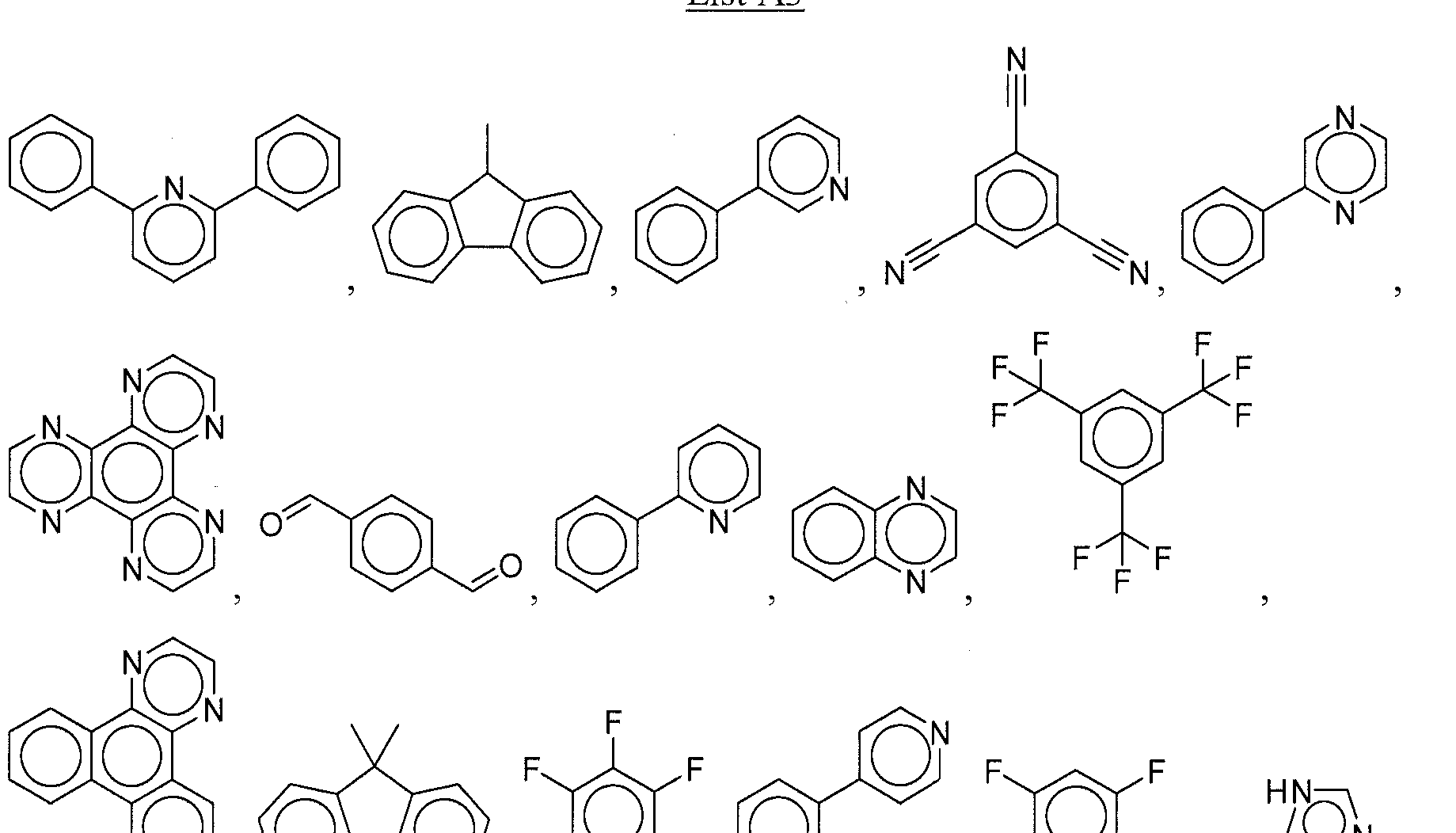


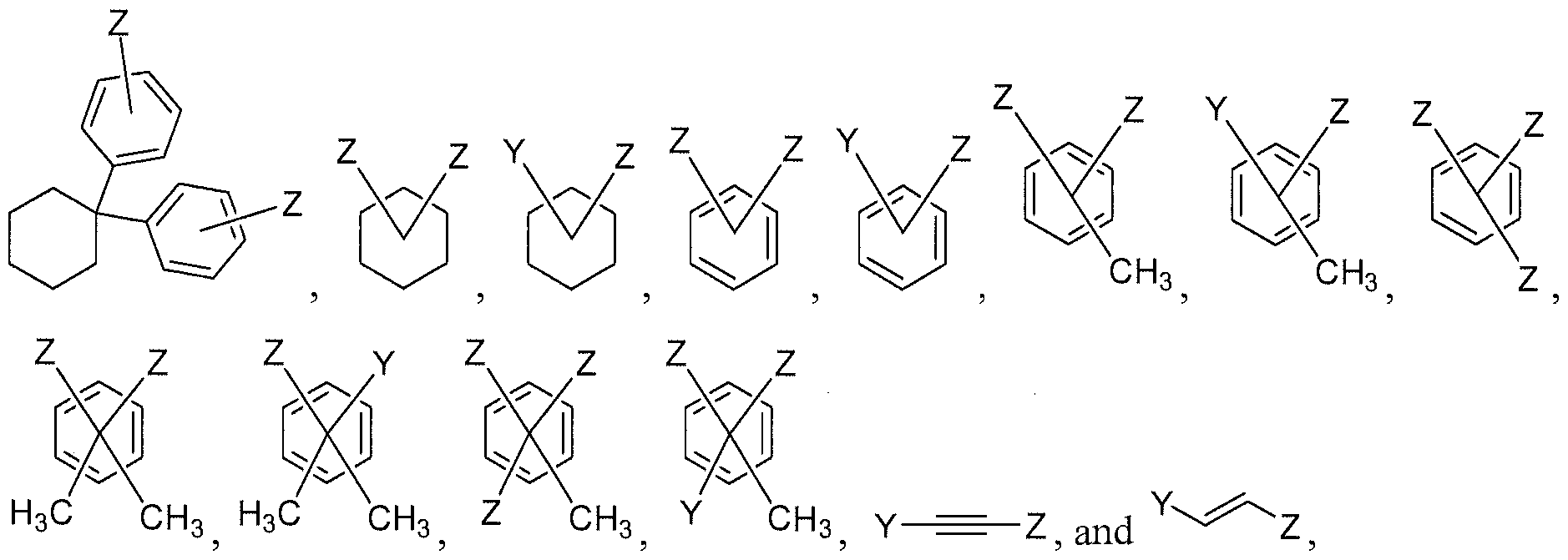


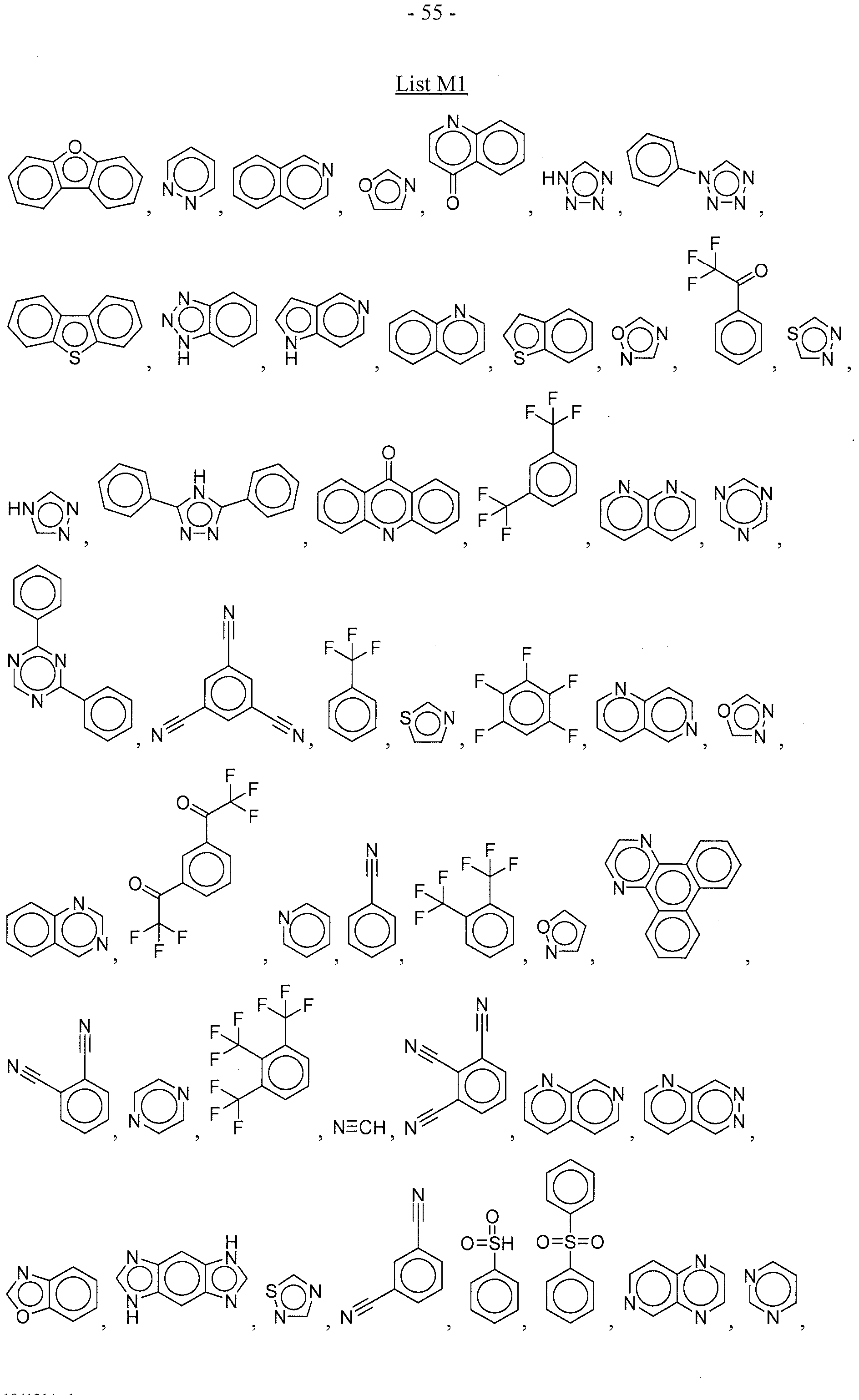


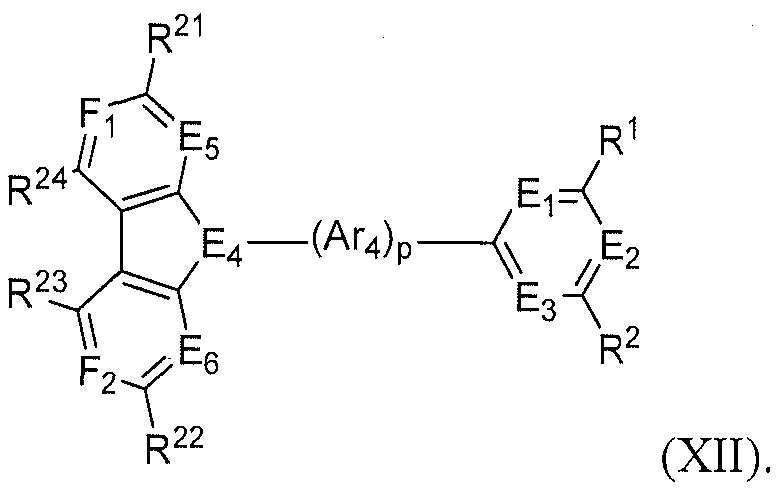


Claims


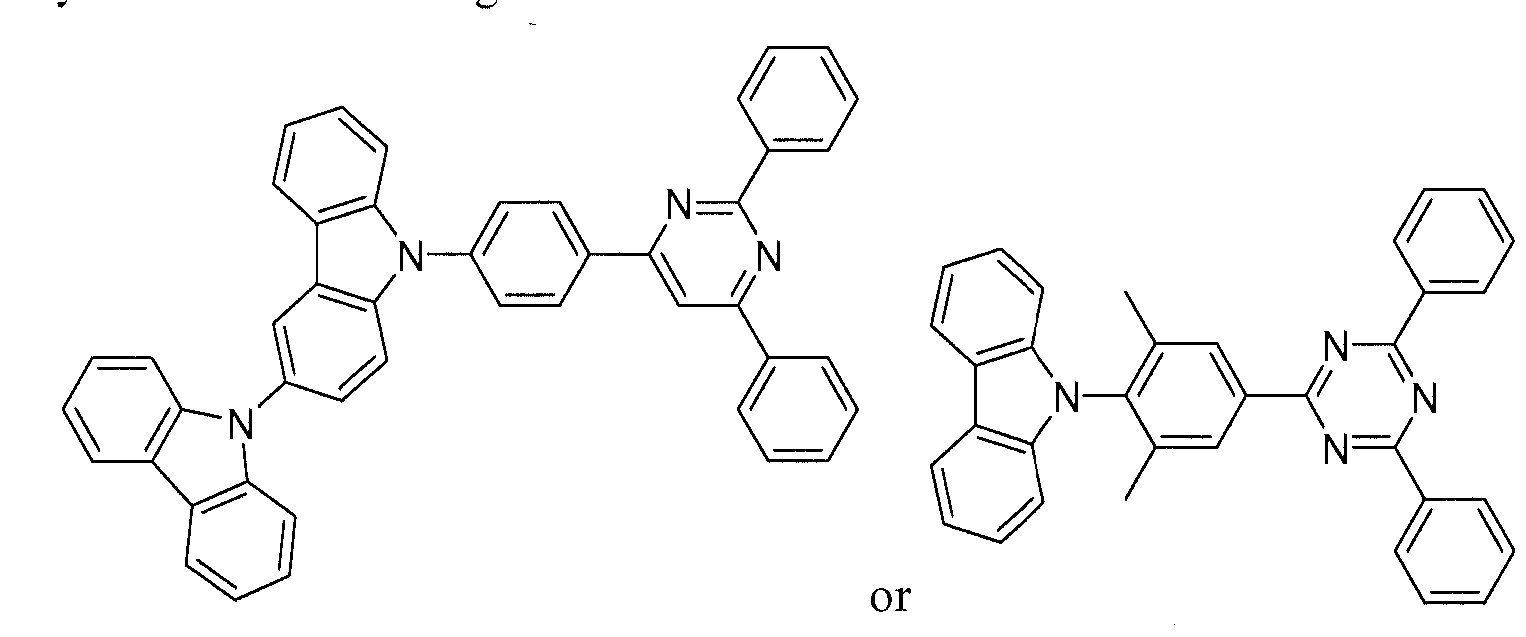
Priority Applications (5)
| Application Number | Priority Date | Filing Date | Title |
|---|---|---|---|
| EP15727132.1A EP3143100A1 (en) | 2014-05-14 | 2015-05-13 | Organic light-emitting diode materials |
| US15/310,234 US20170244049A1 (en) | 2014-05-14 | 2015-05-13 | Organic light-emitting diode materials |
| KR1020167034925A KR20170005853A (en) | 2014-05-14 | 2015-05-13 | Organic light-emitting diode materials |
| JP2016567427A JP2017518281A (en) | 2014-05-14 | 2015-05-13 | Organic light emitting diode material |
| CN201580038816.6A CN106661001A (en) | 2014-05-14 | 2015-05-13 | Organic light-emitting diode materials |
Applications Claiming Priority (24)
| Application Number | Priority Date | Filing Date | Title |
|---|---|---|---|
| US201461996836P | 2014-05-14 | 2014-05-14 | |
| US61/996,836 | 2014-05-14 | ||
| US201461997579P | 2014-06-05 | 2014-06-05 | |
| US61/997,579 | 2014-06-05 | ||
| US201462028045P | 2014-07-23 | 2014-07-23 | |
| US62/028,045 | 2014-07-23 | ||
| US201462033869P | 2014-08-06 | 2014-08-06 | |
| US62/033,869 | 2014-08-06 | ||
| US201462048497P | 2014-09-10 | 2014-09-10 | |
| US62/048,497 | 2014-09-10 | ||
| US201462061369P | 2014-10-08 | 2014-10-08 | |
| US201462061460P | 2014-10-08 | 2014-10-08 | |
| US62/061,369 | 2014-10-08 | ||
| US62/061,460 | 2014-10-08 | ||
| US201462075490P | 2014-11-05 | 2014-11-05 | |
| US62/075,490 | 2014-11-05 | ||
| US201462093097P | 2014-12-17 | 2014-12-17 | |
| US62/093,097 | 2014-12-17 | ||
| US201562117045P | 2015-02-17 | 2015-02-17 | |
| US62/117,045 | 2015-02-17 | ||
| US201562139336P | 2015-03-27 | 2015-03-27 | |
| US62/139,336 | 2015-03-27 | ||
| US201562155764P | 2015-05-01 | 2015-05-01 | |
| US62/155,764 | 2015-05-01 |
Publications (1)
| Publication Number | Publication Date |
|---|---|
| WO2015175678A1 true WO2015175678A1 (en) | 2015-11-19 |
Family
ID=53284535
Family Applications (1)
| Application Number | Title | Priority Date | Filing Date |
|---|---|---|---|
| PCT/US2015/030598 Ceased WO2015175678A1 (en) | 2014-05-14 | 2015-05-13 | Organic light-emitting diode materials |
Country Status (6)
| Country | Link |
|---|---|
| US (1) | US20170244049A1 (en) |
| EP (1) | EP3143100A1 (en) |
| JP (1) | JP2017518281A (en) |
| KR (1) | KR20170005853A (en) |
| CN (1) | CN106661001A (en) |
| WO (1) | WO2015175678A1 (en) |
Cited By (86)
| Publication number | Priority date | Publication date | Assignee | Title |
|---|---|---|---|---|
| CN105399696A (en) * | 2015-12-25 | 2016-03-16 | 上海天马有机发光显示技术有限公司 | Organic electroluminescence compound and organic photoelectric device thereof |
| CN105418486A (en) * | 2015-12-25 | 2016-03-23 | 上海天马有机发光显示技术有限公司 | Organic electroluminescent compound and organic photoelectric device thereof |
| CN105567217A (en) * | 2015-12-15 | 2016-05-11 | 华南理工大学 | Multi-stimulus-response organic small-molecular luminescent material, and preparation and application thereof |
| CN105602552A (en) * | 2015-12-11 | 2016-05-25 | 友达光电股份有限公司 | Fluorescent organic light-emitting material and organic electroluminescent device |
| US20160164004A1 (en) * | 2014-12-08 | 2016-06-09 | Lg Display Co., Ltd. | Organic light emitting display device |
| WO2016111196A1 (en) * | 2015-01-08 | 2016-07-14 | 国立大学法人九州大学 | Compound, mixture, light-emitting layer, organic light-emitting element, and assist dopant |
| CN106045977A (en) * | 2016-05-31 | 2016-10-26 | 太原理工大学 | Bipolar blue phosphorescent host material based on carbazole and 1,2,4-triazole |
| WO2016174377A1 (en) * | 2015-04-29 | 2016-11-03 | University Court Of The University Of St Andrews | Light emitting devices and compounds |
| CN106083825A (en) * | 2016-06-07 | 2016-11-09 | 石家庄诚志永华显示材料有限公司 | Pyrazines derivatives and the application in organic electroluminescence device thereof |
| JP2016204366A (en) * | 2015-04-14 | 2016-12-08 | 株式会社半導体エネルギー研究所 | Heterocyclic compound, light-emitting element, light-emitting device, electronic device and lighting device |
| US20160380205A1 (en) * | 2013-11-28 | 2016-12-29 | Kyulux, Inc. | Light-emitting material, organic light-emitting device, and compound |
| CN106279203A (en) * | 2016-04-25 | 2017-01-04 | 中节能万润股份有限公司 | Compound containing ketone and nitrogen heterocycle and application thereof in organic electroluminescent device |
| WO2017014951A1 (en) * | 2015-07-17 | 2017-01-26 | Dow Global Technologies Llc | N-aryl-hydroacridines as light emitting elements for electroluminescent devices |
| WO2017012694A1 (en) * | 2015-07-23 | 2017-01-26 | Merck Patent Gmbh | Phenyl derivatives substituted with at least two electron acceptors and at least two electron donors for use in organic electronic devices |
| CN106467533A (en) * | 2016-08-08 | 2017-03-01 | 江苏三月光电科技有限公司 | A kind of compound with acridone as core and its application |
| JP2017075121A (en) * | 2015-10-15 | 2017-04-20 | コニカミノルタ株式会社 | π-CONJUGATED COMPOUND, ORGANIC ELECTROLUMINESCENT ELEMENT MATERIAL, LUMINESCENT MATERIAL, LUMINESCENT THIN FILM, ORGANIC ELECTROLUMINESCENT ELEMENT, DISPLAY DEVICE AND LUMINAIRE |
| CN106699659A (en) * | 2016-12-14 | 2017-05-24 | 中节能万润股份有限公司 | N-phenyl acridone type organic electroluminescence material as well as preparation method and application thereof |
| KR20170084190A (en) * | 2014-11-11 | 2017-07-19 | 메르크 파텐트 게엠베하 | Materials for organic electroluminescent devices |
| CN106966955A (en) * | 2017-04-21 | 2017-07-21 | 瑞声光电科技(常州)有限公司 | Biphenol compound and luminescent device |
| CN107057682A (en) * | 2016-04-25 | 2017-08-18 | 中节能万润股份有限公司 | A kind of compound as core using acridone and its application on organic electroluminescence device |
| CN107056770A (en) * | 2016-04-25 | 2017-08-18 | 中节能万润股份有限公司 | A kind of compound as core using nitrogenous five-ring heterocycles and its application on organic electroluminescence device |
| DE102016120373B3 (en) * | 2016-10-25 | 2017-08-24 | Cynora Gmbh | Organic molecules, in particular for use in organic optoelectronic devices |
| KR20170103565A (en) * | 2016-03-04 | 2017-09-13 | 주식회사 동진쎄미켐 | Novel compound and organic electroluminescent device comprising the same |
| JP2017197482A (en) * | 2016-04-28 | 2017-11-02 | コニカミノルタ株式会社 | π-conjugated compound, organic electroluminescence element material, light emitting material, charge transport material, light emitting thin film, organic electroluminescence element, display device and lighting device |
| KR20170122023A (en) * | 2016-04-26 | 2017-11-03 | 덕산네오룩스 주식회사 | Delayed-fluorescence material, organic electric element comprising the same and electronic device thereof |
| JP2017210464A (en) * | 2016-05-26 | 2017-11-30 | 三星ディスプレイ株式會社Samsung Display Co.,Ltd. | Nitrogen-containing compound and organic electroluminescent device containing nitrogen-containing compound |
| DE102016112377A1 (en) * | 2016-07-06 | 2018-01-11 | Cynora Gmbh | Organic molecules, in particular for use in organic optoelectronic devices |
| WO2018008718A1 (en) * | 2016-07-07 | 2018-01-11 | 保土谷化学工業株式会社 | Compound having benzazole ring structure and organic electroluminescent element |
| DE102016115854B3 (en) * | 2016-08-25 | 2018-01-25 | Cynora Gmbh | Organic molecules, in particular for use in organic optoelectronic devices |
| KR20180015794A (en) * | 2016-08-03 | 2018-02-14 | 삼성디스플레이 주식회사 | Aromatic compound and organic electroluminescence device including the same |
| EP3287450A1 (en) * | 2016-08-25 | 2018-02-28 | Cynora Gmbh | Organic molecules, in particular for use in organic optoelectronic devices |
| JP2018035135A (en) * | 2016-08-30 | 2018-03-08 | 国立大学法人山形大学 | Novel isonicotinonitrile derivative and organic EL device using the same |
| JP2018035129A (en) * | 2015-10-27 | 2018-03-08 | 国立大学法人山形大学 | Pyrimidine derivative, light-emitting material comprising the same, and organic EL device using the same |
| CN107778294A (en) * | 2016-08-24 | 2018-03-09 | 西诺拉股份有限公司 | Organic molecule, it is specifically for use in organic photoelectric device |
| DE102017103542B3 (en) * | 2017-02-21 | 2018-03-29 | Cynora Gmbh | Organic molecules, in particular for use in optoelectronic devices |
| CN107880027A (en) * | 2016-09-30 | 2018-04-06 | 江苏三月光电科技有限公司 | It is a kind of using triazine as the compound of core and its application on organic electroluminescence device |
| WO2018077492A1 (en) * | 2016-10-25 | 2018-05-03 | Cynora Gmbh | Organic molecules, especially for use in organic optoelectronic devices |
| CN108003140A (en) * | 2016-11-01 | 2018-05-08 | 辛诺拉有限公司 | Organic Molecules Particularly Suitable for Organic Optoelectronic Devices |
| KR20180047306A (en) * | 2016-10-31 | 2018-05-10 | 성균관대학교산학협력단 | Delayed fluorescence material and organic light emitting device having the delayed fluorescence material |
| KR20180065193A (en) * | 2016-12-07 | 2018-06-18 | 주식회사 두산 | Organic compound and organic electroluminescent device using the same |
| JP2018111751A (en) * | 2017-01-10 | 2018-07-19 | 国立大学法人九州大学 | Light emitting material, compound and organic light emitting element |
| US20180219159A1 (en) * | 2015-07-30 | 2018-08-02 | Sichuan Knowledge Express Institute For Innovative Technologies So., Ltd | Organic molecules having two non-conjugated bridges between a donor and an acceptor for effective thermally activated delayed fluorescence for use in optoelectronic devices |
| US10069082B2 (en) | 2015-11-20 | 2018-09-04 | Shanghai Tianma AM-OLED Co., Ltd. | Organic electroluminescent compounds and organic optoelectronic devices comprising the same |
| DE102017114250B3 (en) * | 2017-06-27 | 2018-09-13 | Cynora Gmbh | Organic molecules, in particular for use in optoelectronic devices |
| WO2018181370A1 (en) * | 2017-03-28 | 2018-10-04 | 保土谷化学工業株式会社 | Compound having azacarbazole structure, and organic electroluminescence device |
| DE102017114372B3 (en) | 2017-06-28 | 2018-10-11 | Cynora Gmbh | ORGANIC MOLECULES, IN PARTICULAR FOR USE IN OPTOELECTRONIC DEVICES |
| JP2018535184A (en) * | 2015-09-24 | 2018-11-29 | エルジー・ケム・リミテッド | Compound and organic light emitting device including the same |
| DE102017112435A1 (en) * | 2017-06-06 | 2018-12-06 | Cynora Gmbh | Organic molecules, in particular for use in optoelectronic devices |
| CN109096279A (en) * | 2018-09-28 | 2018-12-28 | 武汉天马微电子有限公司 | Nitrogen heterocyclic compound, display panel and display device |
| DE102017114345A1 (en) * | 2017-06-28 | 2019-01-03 | Cynora Gmbh | Organic molecules, in particular for use in organic optoelectronic devices |
| DE102017122471B3 (en) * | 2017-09-27 | 2019-01-24 | Cynora Gmbh | ORGANIC MOLECULES, IN PARTICULAR FOR USE IN OPTOELECTRONIC DEVICES |
| WO2019076965A1 (en) * | 2017-10-19 | 2019-04-25 | Cynora Gmbh | Organic molecules for use in optoelectronic devices |
| US20190296246A1 (en) * | 2015-06-23 | 2019-09-26 | Kaneka Corporation | Organic el material and organic el element employing same |
| WO2019218360A1 (en) * | 2018-05-18 | 2019-11-21 | 深圳市柔宇科技有限公司 | Aggregation-induced blue light emitting material and preparation method therefor, and display device |
| US20200203628A1 (en) * | 2017-06-06 | 2020-06-25 | Cynora Gmbh | Organic molecules for use in organic optoelectronic devices |
| CN111484515A (en) * | 2020-04-21 | 2020-08-04 | 濮阳惠成电子材料股份有限公司 | Synthesis method of s-triazine pinacol borate |
| JP2020525497A (en) * | 2017-06-30 | 2020-08-27 | トゥサン ソーラス カンパニー リミテッドDoosan Solus Co., Ltd. | Organic compound and organic electroluminescent device containing the same |
| US10790455B2 (en) | 2017-05-18 | 2020-09-29 | Universal Display Corporation | Organic electroluminescent materials and devices |
| CN111747938A (en) * | 2020-07-03 | 2020-10-09 | 长春海谱润斯科技有限公司 | Arylamine compound and organic electroluminescent device thereof |
| US10833276B2 (en) | 2016-11-21 | 2020-11-10 | Universal Display Corporation | Organic electroluminescent materials and devices |
| US20200381631A1 (en) * | 2019-05-27 | 2020-12-03 | Shanghai Tianma AM-OLED Co., Ltd. | Compound, display panel and display apparatus |
| US20210017164A1 (en) * | 2016-05-26 | 2021-01-21 | Incyte Corporation | Heterocyclic compounds as immunomodulators |
| US10934248B2 (en) | 2013-11-28 | 2021-03-02 | Kyulux, Inc. | Light-emitting material, organic light-emitting device, and compound |
| US10957863B2 (en) | 2017-02-27 | 2021-03-23 | Samsung Electronics Co., Ltd. | Condensed cyclic compound and organic light-emitting device including the same |
| US20210098712A1 (en) * | 2019-09-30 | 2021-04-01 | Shanghai Tianma AM-OLED Co., Ltd. | Compound, display panel, and display apparatus |
| DE102016212614B4 (en) * | 2015-12-25 | 2021-05-20 | Shanghai Tianma AM-OLED Co., Ltd. | Nitrogen-containing heterocyclic compound, organic photoelectric device and method for manufacturing an organic photoelectric device |
| US20210328151A1 (en) * | 2018-08-03 | 2021-10-21 | Guangdong Juhua Printed Display Technology Co., Ltd | Electron transport material and application thereof |
| JP2022075698A (en) * | 2016-04-28 | 2022-05-18 | メルク パテント ゲゼルシャフト ミット ベシュレンクテル ハフツング | π-conjugated compounds, organic electroluminescence element materials, light emitting materials, charge transport materials, light emitting thin films, organic electroluminescence elements, display devices and lighting devices |
| US11339143B2 (en) | 2018-06-26 | 2022-05-24 | Samsung Electronics Co., Ltd. | Condensed cyclic compound and organic light-emitting device including the same |
| US11456426B2 (en) | 2017-02-07 | 2022-09-27 | Samsung Display Co., Ltd. | Organic molecules for use in organic optoelectronic devices |
| US11469381B2 (en) | 2018-04-09 | 2022-10-11 | Samsung Electronics Co., Ltd. | Condensed cyclic compound and organic light-emitting device including the same |
| US11718605B2 (en) | 2016-07-14 | 2023-08-08 | Incyte Corporation | Heterocyclic compounds as immunomodulators |
| US11760756B2 (en) | 2020-11-06 | 2023-09-19 | Incyte Corporation | Crystalline form of a PD-1/PD-L1 inhibitor |
| US11780836B2 (en) | 2020-11-06 | 2023-10-10 | Incyte Corporation | Process of preparing a PD-1/PD-L1 inhibitor |
| US11787793B2 (en) | 2016-12-22 | 2023-10-17 | Incyte Corporation | Heterocyclic compounds as immunomodulators |
| US11866435B2 (en) | 2015-12-22 | 2024-01-09 | Incyte Corporation | Heterocyclic compounds as immunomodulators |
| US11866434B2 (en) | 2020-11-06 | 2024-01-09 | Incyte Corporation | Process for making a PD-1/PD-L1 inhibitor and salts and crystalline forms thereof |
| US11866451B2 (en) | 2019-11-11 | 2024-01-09 | Incyte Corporation | Salts and crystalline forms of a PD-1/PD-L1 inhibitor |
| US11873309B2 (en) | 2016-06-20 | 2024-01-16 | Incyte Corporation | Heterocyclic compounds as immunomodulators |
| US11980094B2 (en) * | 2016-11-14 | 2024-05-07 | Universal Display Corporation | Organic electroluminescent materials and devices |
| US12098143B2 (en) | 2018-08-29 | 2024-09-24 | Samsung Display Co., Ltd. | Organic molecules for optoelectronic devices |
| US12187743B2 (en) | 2018-05-11 | 2025-01-07 | Incyte Corporation | Heterocyclic compounds as immunomodulators |
| US12247026B2 (en) | 2018-03-30 | 2025-03-11 | Incyte Corporation | Heterocyclic compounds as immunomodulators |
| US12247038B2 (en) | 2019-09-30 | 2025-03-11 | Incyte Corporation | Pyrido[3,2-d]pyrimidine compounds as immunomodulators |
| US12466822B2 (en) | 2016-12-22 | 2025-11-11 | Incyte Corporation | Heterocyclic compounds as immunomodulators |
| US12516044B2 (en) | 2015-12-17 | 2026-01-06 | Incyte Corporation | Heterocyclic compounds as immunomodulators |
Families Citing this family (71)
| Publication number | Priority date | Publication date | Assignee | Title |
|---|---|---|---|---|
| US9972795B2 (en) * | 2014-05-14 | 2018-05-15 | Presidents And Fellows Of Harvard College | Organic light-emitting diode materials |
| CN113793905A (en) * | 2014-09-26 | 2021-12-14 | Udc 爱尔兰有限责任公司 | Fluorescent organic light emitting element with high efficiency |
| JP6656800B2 (en) * | 2014-10-22 | 2020-03-04 | 三星ディスプレイ株式會社Samsung Display Co.,Ltd. | Organic electroluminescent element material and organic electroluminescent element using the same |
| KR102131478B1 (en) * | 2015-04-24 | 2020-07-08 | 주식회사 엘지화학 | Organic light emitting device |
| JP6701649B2 (en) * | 2015-09-10 | 2020-05-27 | コニカミノルタ株式会社 | Organic electroluminescence element, display device, lighting device, π-conjugated compound, and light-emitting thin film |
| KR102572294B1 (en) * | 2015-09-25 | 2023-08-30 | 덕산네오룩스 주식회사 | Compound for organic electronic element, organic electronic element using the same, and an electronic device thereof |
| JP6770899B2 (en) * | 2017-01-12 | 2020-10-21 | 日本放送協会 | Organic electroluminescence element |
| KR102072208B1 (en) * | 2017-05-31 | 2020-01-31 | 삼성에스디아이 주식회사 | Composition for organic optoelectric device and organic optoelectric device and display device |
| CN109111433A (en) * | 2017-06-22 | 2019-01-01 | 北京鼎材科技有限公司 | A kind of organic electroluminescent compounds and application thereof and organic electroluminescence device |
| EP3421452A1 (en) * | 2017-06-27 | 2019-01-02 | Cynora Gmbh | Carbazole derivatives and their use in optoelectronic devices |
| CN107417690B (en) * | 2017-09-07 | 2019-01-29 | 南方科技大学 | Method for asymmetric catalytic synthesis of pyrrolindoline |
| CN109574909A (en) * | 2017-09-29 | 2019-04-05 | 江苏三月光电科技有限公司 | It is a kind of using ketone structure as the organic compound of core and its application in OLED device |
| KR102194248B1 (en) | 2017-11-08 | 2020-12-22 | 시노라 게엠베하 | Organic molecules for use in optoelectronic devices |
| US11444250B2 (en) * | 2017-12-05 | 2022-09-13 | Kyulux, Inc. | Composition of matter for use in organic light-emitting diodes |
| CN108129381A (en) * | 2017-12-14 | 2018-06-08 | 江苏第二师范学院 | purple delayed fluorescence material and preparation method thereof, crystal form and application |
| KR102148199B1 (en) * | 2017-12-19 | 2020-08-26 | 재단법인대구경북과학기술원 | Organic semiconductor for electron transport |
| KR102536247B1 (en) * | 2017-12-22 | 2023-05-25 | 삼성디스플레이 주식회사 | Heterocyclic compound and organic light-emitting device comprising the same |
| WO2019135633A1 (en) * | 2018-01-04 | 2019-07-11 | 주식회사 엘지화학 | Novel compound and organic light-emitting device comprising same |
| CN108191853B (en) * | 2018-01-10 | 2020-08-07 | 北京鼎材科技有限公司 | Organic electroluminescent material and device |
| CN108178767B (en) * | 2018-01-19 | 2020-09-22 | 华南理工大学 | Organic small-molecule luminescent material based on pyrazine receptor unit and preparation method and application thereof |
| CN110066227A (en) * | 2018-01-24 | 2019-07-30 | 北京鼎材科技有限公司 | Electroluminescent organic material and luminescent device |
| KR102054489B1 (en) * | 2018-03-06 | 2019-12-10 | 한남대학교 산학협력단 | A host material for blue phosphorescence and manufacturing method thereof |
| KR20190121418A (en) | 2018-04-17 | 2019-10-28 | 삼성디스플레이 주식회사 | Organic electroluminescence device and nitrogen-containing compound for organic electroluminescence device |
| CN108658980A (en) * | 2018-05-18 | 2018-10-16 | 长春海谱润斯科技有限公司 | A kind of aromatic amine compounds and its organic electroluminescence device containing phenanthroline |
| KR102617841B1 (en) * | 2018-05-29 | 2023-12-26 | 덕산네오룩스 주식회사 | Compound for organic electronic element, organic electronic element using the same, and an electronic device thereof |
| CN108864068B (en) * | 2018-07-27 | 2021-12-28 | 武汉天马微电子有限公司 | Compound and organic light-emitting display device |
| CN109627233A (en) * | 2018-07-27 | 2019-04-16 | 华南理工大学 | A kind of organic photoelectrical material of azacyclic molecules and its preparation method and application replaced based on carbazole derivates |
| CN108912148A (en) * | 2018-08-12 | 2018-11-30 | 瑞声科技(南京)有限公司 | It is a kind of to contain azepine carbazole-imidazole unit compound and its application |
| CN108929322A (en) * | 2018-08-12 | 2018-12-04 | 瑞声科技(南京)有限公司 | A kind of compound containing azepine carbazole unit and its application |
| EP3613744B1 (en) * | 2018-08-21 | 2024-03-20 | Samsung Display Co., Ltd. | Organic molecules for optoelectronic devices |
| US11485706B2 (en) * | 2018-09-11 | 2022-11-01 | Universal Display Corporation | Organic electroluminescent materials and devices |
| CN109232474B (en) * | 2018-09-27 | 2021-08-06 | 武汉尚赛光电科技有限公司 | 1,2, 4-thiadiazole compound and preparation method and application thereof |
| CN109096252B (en) * | 2018-09-29 | 2020-09-22 | 湘潭大学 | Organic thermal activity delayed fluorescent material based on 2,10' -biacridine derivative and application thereof |
| CN109593079A (en) * | 2018-11-15 | 2019-04-09 | 华南理工大学 | Universal bipolar material of main part and its preparation containing pyridine groups and the application in Organic Light Emitting Diode |
| CN109734608B (en) * | 2018-11-29 | 2022-04-08 | 宇瑞(上海)化学有限公司 | Organic compound and organic electroluminescent device using same |
| KR102329345B1 (en) * | 2018-12-06 | 2021-11-19 | 한국생산기술연구원 | Compounds comprising benzophenone group, Organic electronic device comprising organic layers comprising the photo-cured of the monomer compounds |
| KR102794030B1 (en) | 2018-12-14 | 2025-04-09 | 엘지디스플레이 주식회사 | Organic compound, and Organic light emitting diode and Organic light emitting display device including the same |
| CN109503481B (en) * | 2018-12-17 | 2020-06-02 | 武汉华星光电半导体显示技术有限公司 | Thermal activation delayed fluorescence compound, preparation method thereof and organic light-emitting diode device |
| CN111349040B (en) * | 2018-12-21 | 2023-02-03 | 陕西师范大学 | Organic room temperature phosphorescent and white light emitting material and preparation method thereof |
| CN111377908A (en) * | 2018-12-27 | 2020-07-07 | 北京鼎材科技有限公司 | A thermally activated delayed fluorescence compound and its application |
| KR102753926B1 (en) * | 2019-03-11 | 2025-01-15 | 삼성디스플레이 주식회사 | Heterocyclic compound and organic light emitting device including the same |
| CN109942601B (en) * | 2019-03-18 | 2021-09-21 | 深圳大学 | Fluorescent material, preparation method and application |
| CN109913205B (en) * | 2019-03-18 | 2021-12-07 | 深圳大学 | Fluorescent material, preparation method and application |
| CN110003115B (en) * | 2019-03-21 | 2022-09-20 | 北京大学深圳研究生院 | Blue organic luminescent material, luminescent device and preparation method |
| CN111747933B (en) * | 2019-03-29 | 2022-03-01 | 吉林省元合电子材料有限公司 | A kind of substituted 1,3,5-triazine compound, composition and application thereof |
| CN111747937B (en) * | 2019-03-29 | 2022-01-14 | 吉林省元合电子材料有限公司 | 1,3, 5-triazine compound, composition and application thereof |
| KR102816264B1 (en) * | 2019-04-05 | 2025-06-05 | 삼성디스플레이 주식회사 | Organic electroluminescence device and compound for organic electroluminescence device |
| CN111808076A (en) * | 2019-04-12 | 2020-10-23 | 冠能光电材料(深圳)有限责任公司 | Electron transport hole blocking organic material and application thereof in thin film light-emitting diode |
| CN110143960B (en) * | 2019-05-30 | 2021-06-01 | 武汉华星光电半导体显示技术有限公司 | Green light thermal activation delayed fluorescent material, preparation method thereof and organic electroluminescent device |
| KR102801363B1 (en) * | 2019-07-17 | 2025-05-07 | 삼성디스플레이 주식회사 | Organic electroluminescence device and polycyclic compound for organic electroluminescence device |
| CN110305121A (en) * | 2019-07-25 | 2019-10-08 | 硕明(常州)光源科技有限公司 | A kind of N- acyl group carbazole compound and its preparation method and application |
| CN112430217B (en) * | 2019-08-26 | 2024-03-19 | 北京鼎材科技有限公司 | A compound and its application |
| KR102516811B1 (en) | 2019-10-23 | 2023-03-31 | 삼성에스디아이 주식회사 | Compound for organic optoelectronic device, composition for organic optoelectronic device, organic optoelectronic device and display device |
| CN110804047A (en) | 2019-11-06 | 2020-02-18 | 武汉华星光电半导体显示技术有限公司 | Thermal activation delayed fluorescent material and preparation method thereof |
| CN112851565B (en) * | 2019-11-27 | 2023-02-10 | 杭州师范大学 | A kind of room temperature phosphorescent organic luminescent material and its preparation method and application |
| CN111171010A (en) * | 2020-01-13 | 2020-05-19 | 北京大学深圳研究生院 | A cathodic electrical stimulation responsive material and preparation method thereof |
| TWI908783B (en) * | 2020-04-03 | 2025-12-21 | 日商半導體能源研究所股份有限公司 | Aromatic amine compounds, materials for hole transport layers, materials for hole injection layers, light-emitting devices, light-emitting apparatus, electronic devices, and lighting equipment. |
| CN111662286B (en) * | 2020-05-19 | 2021-08-24 | 浙江虹舞科技有限公司 | Visible light delayed fluorescent material containing pyrido triazole and derivative receptor structural unit and application |
| CN111620817B (en) * | 2020-06-04 | 2022-09-27 | 常州大学 | Novel blue thermally active delayed fluorescent materials and their applications |
| CN113782697B (en) * | 2020-06-09 | 2025-08-26 | 常州强力电子新材料股份有限公司 | organic electroluminescent elements |
| KR102517277B1 (en) * | 2020-09-24 | 2023-04-04 | (주)랩토 | Cyano-group substituted aryl or heteroaryl derivatives and organic electroluminescent device including the same |
| CN112174959B (en) * | 2020-11-04 | 2022-11-18 | 浙江虹舞科技有限公司 | Organic luminescent material based on 1,6-naphthyridine receptor structural unit and application thereof |
| CN113429388A (en) * | 2021-06-28 | 2021-09-24 | 常州大学 | Blue thermal activity delayed fluorescent material based on trifluoromethyl pyridine derivative receptor and application thereof |
| CN113480410A (en) * | 2021-07-07 | 2021-10-08 | 南京伊派森化学科技有限公司 | Synthetic method of 2, 4-dibromobenzyl alcohol |
| CN113831343B (en) * | 2021-07-23 | 2023-09-05 | 安徽秀朗新材料科技有限公司 | Thermal activity delayed fluorescent material based on imidazopyrazine receptor material, preparation method and application thereof |
| WO2023085860A1 (en) * | 2021-11-12 | 2023-05-19 | 주식회사 엘지화학 | Compound and organic light-emitting device comprising same |
| CN116813502A (en) * | 2022-03-18 | 2023-09-29 | 中国石油化工股份有限公司 | A high-level dipole-oriented tetraphenylbenzene derivative and its preparation method and application |
| KR102885090B1 (en) * | 2022-03-29 | 2025-11-13 | 주식회사 엘지화학 | Compound and organic light emitting device comprising same |
| CN115160217B (en) * | 2022-08-04 | 2023-09-22 | 山东达因海洋生物制药股份有限公司 | Preparation method of pirenzenenaphthalene, synthetic intermediate and preparation method of degradation impurity |
| CN115974861A (en) * | 2022-12-26 | 2023-04-18 | 苏州奥为光电新材料有限公司 | A thermally activated delay material of triazine derivatives and its preparation method and application |
| CN116355226A (en) * | 2023-02-22 | 2023-06-30 | 闽都创新实验室 | A kind of organic phosphorescent material and its preparation method and application |
Citations (3)
| Publication number | Priority date | Publication date | Assignee | Title |
|---|---|---|---|---|
| US20020034656A1 (en) * | 1998-09-14 | 2002-03-21 | Thompson Mark E. | Organometallic complexes as phosphorescent emitters in organic LEDs |
| WO2012069121A1 (en) * | 2010-11-24 | 2012-05-31 | Merck Patent Gmbh | Materials for organic electroluminescent devices |
| EP2709183A1 (en) * | 2011-05-13 | 2014-03-19 | Sony Corporation | Organic el multi-color light-emitting device |
Family Cites Families (20)
| Publication number | Priority date | Publication date | Assignee | Title |
|---|---|---|---|---|
| JPH02178670A (en) * | 1988-12-29 | 1990-07-11 | Canon Inc | Electrophotographic sensitive body |
| JP2556572B2 (en) * | 1989-01-10 | 1996-11-20 | キヤノン株式会社 | Electrophotographic photoreceptor |
| US7990046B2 (en) * | 2002-03-15 | 2011-08-02 | Idemitsu Kosan Co., Ltd. | Material for organic electroluminescent devices and organic electroluminescent devices made by using the same |
| JP4103491B2 (en) * | 2002-08-07 | 2008-06-18 | コニカミノルタホールディングス株式会社 | Organic electroluminescence element and display device |
| JP5119775B2 (en) * | 2007-07-11 | 2013-01-16 | コニカミノルタホールディングス株式会社 | Organic electroluminescence element, display device and lighting device |
| KR101597994B1 (en) * | 2007-12-03 | 2016-02-26 | 가부시키가이샤 한도오따이 에네루기 켄큐쇼 | Carbazole derivative, and light-emitting element, light-emitting device, and electronic device using carbazole derivative |
| US8221905B2 (en) * | 2007-12-28 | 2012-07-17 | Universal Display Corporation | Carbazole-containing materials in phosphorescent light emitting diodes |
| JP5735229B2 (en) * | 2009-07-31 | 2015-06-17 | ユー・ディー・シー アイルランド リミテッド | Organic electroluminescence device |
| JP4590020B1 (en) * | 2009-07-31 | 2010-12-01 | 富士フイルム株式会社 | Charge transport material and organic electroluminescent device |
| KR101420318B1 (en) * | 2010-06-17 | 2014-07-16 | 이-레이 옵토일렉트로닉스 테크놀로지 컴퍼니 리미티드 | Compound for organic electroluminescent device and organic electroluminescent device having the same |
| TWI549942B (en) * | 2010-08-26 | 2016-09-21 | 首威公司 | N-phenyl triscarbazole |
| US8932734B2 (en) * | 2010-10-08 | 2015-01-13 | Universal Display Corporation | Organic electroluminescent materials and devices |
| WO2012077902A2 (en) * | 2010-12-08 | 2012-06-14 | 제일모직 주식회사 | Compound for an organic optoelectronic device, organic light-emitting diode including the compound, and display device including the organic light-emitting diode |
| JP5862079B2 (en) * | 2011-07-06 | 2016-02-16 | コニカミノルタ株式会社 | Organic electroluminescence element, display device and lighting device |
| CN103959502B (en) * | 2011-12-02 | 2017-03-01 | 九州有机光材股份有限公司 | Organic illuminating element and the delayed fluorescence material using it and compound |
| JP5520972B2 (en) * | 2012-01-13 | 2014-06-11 | ▲いく▼▲雷▼光電科技股▲分▼有限公司 | Carbazole derivative, organic electroluminescence device using the same, and manufacturing method thereof |
| KR20140096182A (en) * | 2012-05-02 | 2014-08-04 | 롬엔드하스전자재료코리아유한회사 | Novel Organic Electroluminescence Compounds and Organic Electroluminescence Device Containing the Same |
| KR102102580B1 (en) * | 2012-07-20 | 2020-04-22 | 롬엔드하스전자재료코리아유한회사 | Organic Electroluminescence Device |
| US9209411B2 (en) * | 2012-12-07 | 2015-12-08 | Universal Display Corporation | Organic electroluminescent materials and devices |
| TWI615389B (en) * | 2013-03-01 | 2018-02-21 | 九州有機光材股份有限公司 | Compound, light-emitting material and organic light-emitting device |
-
2015
- 2015-05-13 CN CN201580038816.6A patent/CN106661001A/en active Pending
- 2015-05-13 JP JP2016567427A patent/JP2017518281A/en active Pending
- 2015-05-13 US US15/310,234 patent/US20170244049A1/en not_active Abandoned
- 2015-05-13 WO PCT/US2015/030598 patent/WO2015175678A1/en not_active Ceased
- 2015-05-13 EP EP15727132.1A patent/EP3143100A1/en not_active Withdrawn
- 2015-05-13 KR KR1020167034925A patent/KR20170005853A/en not_active Withdrawn
Patent Citations (3)
| Publication number | Priority date | Publication date | Assignee | Title |
|---|---|---|---|---|
| US20020034656A1 (en) * | 1998-09-14 | 2002-03-21 | Thompson Mark E. | Organometallic complexes as phosphorescent emitters in organic LEDs |
| WO2012069121A1 (en) * | 2010-11-24 | 2012-05-31 | Merck Patent Gmbh | Materials for organic electroluminescent devices |
| EP2709183A1 (en) * | 2011-05-13 | 2014-03-19 | Sony Corporation | Organic el multi-color light-emitting device |
Non-Patent Citations (2)
| Title |
|---|
| CHRISTIAN MAYR ET AL: "Efficiency Enhancement of Organic Light-Emitting Diodes Incorporating a Highly Oriented Thermally Activated Delayed Fluorescence Emitter", ADVANCED FUNCTIONAL MATERIALS, vol. 24, no. 33, 11 June 2014 (2014-06-11), pages 5232 - 5239, XP055202571, ISSN: 1616-301X, DOI: 10.1002/adfm.201400495 * |
| TOMAS SEREVICIUS ET AL: "Enhanced electroluminescence based on thermally activated delayed fluorescence from a carbazole-triazine derivative", PHYSICAL CHEMISTRY CHEMICAL PHYSICS, vol. 15, no. 38, 1 January 2013 (2013-01-01), pages 15850, XP055202583, ISSN: 1463-9076, DOI: 10.1039/c3cp52255e * |
Cited By (143)
| Publication number | Priority date | Publication date | Assignee | Title |
|---|---|---|---|---|
| US20160380205A1 (en) * | 2013-11-28 | 2016-12-29 | Kyulux, Inc. | Light-emitting material, organic light-emitting device, and compound |
| US10934248B2 (en) | 2013-11-28 | 2021-03-02 | Kyulux, Inc. | Light-emitting material, organic light-emitting device, and compound |
| US10381573B2 (en) * | 2013-11-28 | 2019-08-13 | Kyulux, Inc. | Light-emitting material, organic light-emitting device, and compound |
| JP2017537085A (en) * | 2014-11-11 | 2017-12-14 | メルク パテント ゲーエムベーハー | Materials for organic electroluminescent devices |
| KR102496045B1 (en) * | 2014-11-11 | 2023-02-03 | 메르크 파텐트 게엠베하 | Materials for organic electroluminescent devices |
| KR20170084190A (en) * | 2014-11-11 | 2017-07-19 | 메르크 파텐트 게엠베하 | Materials for organic electroluminescent devices |
| US9893298B2 (en) * | 2014-12-08 | 2018-02-13 | Lg Display Co., Ltd. | Organic light emitting display device |
| US20160164004A1 (en) * | 2014-12-08 | 2016-06-09 | Lg Display Co., Ltd. | Organic light emitting display device |
| WO2016111196A1 (en) * | 2015-01-08 | 2016-07-14 | 国立大学法人九州大学 | Compound, mixture, light-emitting layer, organic light-emitting element, and assist dopant |
| JP2016204366A (en) * | 2015-04-14 | 2016-12-08 | 株式会社半導体エネルギー研究所 | Heterocyclic compound, light-emitting element, light-emitting device, electronic device and lighting device |
| JP2018522815A (en) * | 2015-04-29 | 2018-08-16 | ユニヴァーシティー コート オブ ザ ユニヴァーシティー オブ セント アンドリューズ | Light emitting device and compound |
| WO2016174377A1 (en) * | 2015-04-29 | 2016-11-03 | University Court Of The University Of St Andrews | Light emitting devices and compounds |
| US10593893B2 (en) | 2015-04-29 | 2020-03-17 | University Court Of The University Of St Andrews | Light emitting devices and compouds |
| US20190296246A1 (en) * | 2015-06-23 | 2019-09-26 | Kaneka Corporation | Organic el material and organic el element employing same |
| WO2017014951A1 (en) * | 2015-07-17 | 2017-01-26 | Dow Global Technologies Llc | N-aryl-hydroacridines as light emitting elements for electroluminescent devices |
| WO2017012694A1 (en) * | 2015-07-23 | 2017-01-26 | Merck Patent Gmbh | Phenyl derivatives substituted with at least two electron acceptors and at least two electron donors for use in organic electronic devices |
| US11581495B2 (en) | 2015-07-23 | 2023-02-14 | Merck Patent Gmbh | Phenyl derivatives substituted with at least two electron acceptors and at least two electron donors for use in organic electronic devices |
| US20180219159A1 (en) * | 2015-07-30 | 2018-08-02 | Sichuan Knowledge Express Institute For Innovative Technologies So., Ltd | Organic molecules having two non-conjugated bridges between a donor and an acceptor for effective thermally activated delayed fluorescence for use in optoelectronic devices |
| US11201291B2 (en) * | 2015-07-30 | 2021-12-14 | Sichuan Knowledge Express Institute For Innovative Technologies Co., Ltd | Organic molecules having two non-conjugated bridges between a donor and an acceptor for effective thermally activated delayed fluorescence for use in optoelectronic devices |
| JP2018535184A (en) * | 2015-09-24 | 2018-11-29 | エルジー・ケム・リミテッド | Compound and organic light emitting device including the same |
| US11730009B2 (en) | 2015-09-24 | 2023-08-15 | Lg Chem, Ltd. | Compound and organic light-emitting element comprising same |
| JP2017075121A (en) * | 2015-10-15 | 2017-04-20 | コニカミノルタ株式会社 | π-CONJUGATED COMPOUND, ORGANIC ELECTROLUMINESCENT ELEMENT MATERIAL, LUMINESCENT MATERIAL, LUMINESCENT THIN FILM, ORGANIC ELECTROLUMINESCENT ELEMENT, DISPLAY DEVICE AND LUMINAIRE |
| JP2018035129A (en) * | 2015-10-27 | 2018-03-08 | 国立大学法人山形大学 | Pyrimidine derivative, light-emitting material comprising the same, and organic EL device using the same |
| US10069082B2 (en) | 2015-11-20 | 2018-09-04 | Shanghai Tianma AM-OLED Co., Ltd. | Organic electroluminescent compounds and organic optoelectronic devices comprising the same |
| CN105602552A (en) * | 2015-12-11 | 2016-05-25 | 友达光电股份有限公司 | Fluorescent organic light-emitting material and organic electroluminescent device |
| CN105567217A (en) * | 2015-12-15 | 2016-05-11 | 华南理工大学 | Multi-stimulus-response organic small-molecular luminescent material, and preparation and application thereof |
| US12516044B2 (en) | 2015-12-17 | 2026-01-06 | Incyte Corporation | Heterocyclic compounds as immunomodulators |
| US11866435B2 (en) | 2015-12-22 | 2024-01-09 | Incyte Corporation | Heterocyclic compounds as immunomodulators |
| CN105399696A (en) * | 2015-12-25 | 2016-03-16 | 上海天马有机发光显示技术有限公司 | Organic electroluminescence compound and organic photoelectric device thereof |
| CN105418486A (en) * | 2015-12-25 | 2016-03-23 | 上海天马有机发光显示技术有限公司 | Organic electroluminescent compound and organic photoelectric device thereof |
| US10700287B2 (en) | 2015-12-25 | 2020-06-30 | Shanghai Tianma AM-OLED Co., Ltd. | Organic electroluminescent compound and organic photoelectric apparatus |
| DE102016212614B4 (en) * | 2015-12-25 | 2021-05-20 | Shanghai Tianma AM-OLED Co., Ltd. | Nitrogen-containing heterocyclic compound, organic photoelectric device and method for manufacturing an organic photoelectric device |
| US9899609B2 (en) | 2015-12-25 | 2018-02-20 | Shanghai Tianma AM-OLED Co., Ltd. | Organic electroluminescent compound and organic photoelectric apparatus thereof |
| CN105399696B (en) * | 2015-12-25 | 2019-12-24 | 上海天马有机发光显示技术有限公司 | Organic electroluminescence compound and its organic optoelectronic device |
| KR20170103565A (en) * | 2016-03-04 | 2017-09-13 | 주식회사 동진쎄미켐 | Novel compound and organic electroluminescent device comprising the same |
| CN108779080A (en) * | 2016-03-04 | 2018-11-09 | 东进世美肯株式会社 | New compound and organic illuminating element comprising it |
| CN108779080B (en) * | 2016-03-04 | 2022-07-26 | 东进世美肯株式会社 | Novel compound and organic light-emitting element comprising same |
| KR102659372B1 (en) * | 2016-03-04 | 2024-04-22 | 주식회사 동진쎄미켐 | Novel compound and organic electroluminescent device comprising the same |
| CN107056770A (en) * | 2016-04-25 | 2017-08-18 | 中节能万润股份有限公司 | A kind of compound as core using nitrogenous five-ring heterocycles and its application on organic electroluminescence device |
| CN106279203A (en) * | 2016-04-25 | 2017-01-04 | 中节能万润股份有限公司 | Compound containing ketone and nitrogen heterocycle and application thereof in organic electroluminescent device |
| CN107057682A (en) * | 2016-04-25 | 2017-08-18 | 中节能万润股份有限公司 | A kind of compound as core using acridone and its application on organic electroluminescence device |
| KR102501267B1 (en) * | 2016-04-26 | 2023-02-21 | 덕산네오룩스 주식회사 | Delayed-fluorescence material, organic electric element comprising the same and electronic device thereof |
| KR20170122023A (en) * | 2016-04-26 | 2017-11-03 | 덕산네오룩스 주식회사 | Delayed-fluorescence material, organic electric element comprising the same and electronic device thereof |
| JP2017197482A (en) * | 2016-04-28 | 2017-11-02 | コニカミノルタ株式会社 | π-conjugated compound, organic electroluminescence element material, light emitting material, charge transport material, light emitting thin film, organic electroluminescence element, display device and lighting device |
| JP7081898B2 (en) | 2016-04-28 | 2022-06-07 | メルク パテント ゲゼルシャフト ミット ベシュレンクテル ハフツング | Organic electroluminescence elements, display devices and lighting devices |
| JP7253646B2 (en) | 2016-04-28 | 2023-04-06 | メルク パテント ゲゼルシャフト ミット ベシュレンクテル ハフツング | π-conjugated compound, organic electroluminescence device material, light-emitting material, charge transport material, light-emitting thin film, organic electroluminescence device, display device and lighting device |
| JP2022075698A (en) * | 2016-04-28 | 2022-05-18 | メルク パテント ゲゼルシャフト ミット ベシュレンクテル ハフツング | π-conjugated compounds, organic electroluminescence element materials, light emitting materials, charge transport materials, light emitting thin films, organic electroluminescence elements, display devices and lighting devices |
| US11673883B2 (en) * | 2016-05-26 | 2023-06-13 | Incyte Corporation | Heterocyclic compounds as immunomodulators |
| JP2017210464A (en) * | 2016-05-26 | 2017-11-30 | 三星ディスプレイ株式會社Samsung Display Co.,Ltd. | Nitrogen-containing compound and organic electroluminescent device containing nitrogen-containing compound |
| US20210017164A1 (en) * | 2016-05-26 | 2021-01-21 | Incyte Corporation | Heterocyclic compounds as immunomodulators |
| KR102651014B1 (en) * | 2016-05-26 | 2024-03-26 | 삼성디스플레이 주식회사 | Compound including nitrogen and organic electroluminescence device including the same |
| US10686139B2 (en) | 2016-05-26 | 2020-06-16 | Samsung Display Co., Ltd. | Nitrogen-containing compound and organic electroluminescence device including the same |
| KR20170134841A (en) * | 2016-05-26 | 2017-12-07 | 삼성디스플레이 주식회사 | Compound including nitrogen and organic electroluminescence device including the same |
| CN106045977A (en) * | 2016-05-31 | 2016-10-26 | 太原理工大学 | Bipolar blue phosphorescent host material based on carbazole and 1,2,4-triazole |
| CN106083825A (en) * | 2016-06-07 | 2016-11-09 | 石家庄诚志永华显示材料有限公司 | Pyrazines derivatives and the application in organic electroluminescence device thereof |
| US11873309B2 (en) | 2016-06-20 | 2024-01-16 | Incyte Corporation | Heterocyclic compounds as immunomodulators |
| DE102016112377A1 (en) * | 2016-07-06 | 2018-01-11 | Cynora Gmbh | Organic molecules, in particular for use in organic optoelectronic devices |
| DE102016112377B4 (en) | 2016-07-06 | 2020-06-04 | Cynora Gmbh | Organic molecules, in particular for use in organic optoelectronic devices |
| US12317744B2 (en) | 2016-07-07 | 2025-05-27 | Hodogaya Chemical Co., Ltd. | Compound having a fused-azole ring structure and organic electroluminescent element |
| KR102440762B1 (en) * | 2016-07-07 | 2022-09-05 | 호도가야 가가쿠 고교 가부시키가이샤 | A compound having a benzoazole ring structure and an organic electroluminescent device |
| KR20190026796A (en) * | 2016-07-07 | 2019-03-13 | 호도가야 가가쿠 고교 가부시키가이샤 | A compound having a benzoazole ring structure and an organic electroluminescence element |
| JPWO2018008718A1 (en) * | 2016-07-07 | 2019-04-18 | 保土谷化学工業株式会社 | Compound having benzoazole ring structure and organic electroluminescent device |
| WO2018008718A1 (en) * | 2016-07-07 | 2018-01-11 | 保土谷化学工業株式会社 | Compound having benzazole ring structure and organic electroluminescent element |
| US11718605B2 (en) | 2016-07-14 | 2023-08-08 | Incyte Corporation | Heterocyclic compounds as immunomodulators |
| KR102631944B1 (en) * | 2016-08-03 | 2024-02-02 | 삼성디스플레이 주식회사 | Aromatic compound and organic electroluminescence device including the same |
| KR20180015794A (en) * | 2016-08-03 | 2018-02-14 | 삼성디스플레이 주식회사 | Aromatic compound and organic electroluminescence device including the same |
| CN106467533A (en) * | 2016-08-08 | 2017-03-01 | 江苏三月光电科技有限公司 | A kind of compound with acridone as core and its application |
| CN107778294B (en) * | 2016-08-24 | 2021-07-09 | 西诺拉股份有限公司 | Organic molecules, especially in organic optoelectronic devices |
| CN107778294A (en) * | 2016-08-24 | 2018-03-09 | 西诺拉股份有限公司 | Organic molecule, it is specifically for use in organic photoelectric device |
| US11588114B2 (en) | 2016-08-24 | 2023-02-21 | Samsung Display Co., Ltd. | Organic molecules for use in optoelectronic devices |
| EP3287450A1 (en) * | 2016-08-25 | 2018-02-28 | Cynora Gmbh | Organic molecules, in particular for use in organic optoelectronic devices |
| US10439151B2 (en) | 2016-08-25 | 2019-10-08 | Cynora Gmbh | Organic molecules, especially for use in organic optoelectronic devices |
| CN107778214B (en) * | 2016-08-25 | 2020-03-31 | 西诺拉股份有限公司 | Organic molecules, in particular for organic optoelectronic devices |
| JP2018070586A (en) * | 2016-08-25 | 2018-05-10 | サイノラ ゲゼルシャフト ミット ベシュレンクテル ハフツング | Organic molecules especially for use in organic optoelectronic devices |
| CN107778214A (en) * | 2016-08-25 | 2018-03-09 | 西诺拉股份有限公司 | Organic molecule, the particularly organic molecule for organic electro-optic device |
| DE102016115854B3 (en) * | 2016-08-25 | 2018-01-25 | Cynora Gmbh | Organic molecules, in particular for use in organic optoelectronic devices |
| JP2018035135A (en) * | 2016-08-30 | 2018-03-08 | 国立大学法人山形大学 | Novel isonicotinonitrile derivative and organic EL device using the same |
| CN107880027B (en) * | 2016-09-30 | 2021-03-02 | 中节能万润股份有限公司 | A compound with triazine as its core and its application in organic electroluminescent devices |
| CN107880027A (en) * | 2016-09-30 | 2018-04-06 | 江苏三月光电科技有限公司 | It is a kind of using triazine as the compound of core and its application on organic electroluminescence device |
| CN109996795A (en) * | 2016-10-25 | 2019-07-09 | 辛诺拉有限公司 | It is used in particular for the organic molecule of organic electro-optic device |
| DE102016120373B3 (en) * | 2016-10-25 | 2017-08-24 | Cynora Gmbh | Organic molecules, in particular for use in organic optoelectronic devices |
| WO2018077492A1 (en) * | 2016-10-25 | 2018-05-03 | Cynora Gmbh | Organic molecules, especially for use in organic optoelectronic devices |
| CN109996795B (en) * | 2016-10-25 | 2021-01-12 | 辛诺拉有限公司 | Organic molecules, in particular for organic opto-electronic devices |
| US10971688B2 (en) | 2016-10-25 | 2021-04-06 | Cynora Gmbh | Organic molecules for use in organic optoelectronic devices |
| US20190248741A1 (en) * | 2016-10-25 | 2019-08-15 | Cynora Gmbh | Organic molecules for use in organic optoelectronic devices |
| KR101970863B1 (en) * | 2016-10-31 | 2019-04-19 | 성균관대학교산학협력단 | Delayed fluorescence material and organic light emitting device having the delayed fluorescence material |
| KR20180047306A (en) * | 2016-10-31 | 2018-05-10 | 성균관대학교산학협력단 | Delayed fluorescence material and organic light emitting device having the delayed fluorescence material |
| CN108003140A (en) * | 2016-11-01 | 2018-05-08 | 辛诺拉有限公司 | Organic Molecules Particularly Suitable for Organic Optoelectronic Devices |
| US11980094B2 (en) * | 2016-11-14 | 2024-05-07 | Universal Display Corporation | Organic electroluminescent materials and devices |
| US10833276B2 (en) | 2016-11-21 | 2020-11-10 | Universal Display Corporation | Organic electroluminescent materials and devices |
| KR20180065193A (en) * | 2016-12-07 | 2018-06-18 | 주식회사 두산 | Organic compound and organic electroluminescent device using the same |
| KR102685454B1 (en) * | 2016-12-07 | 2024-07-16 | 솔루스첨단소재 주식회사 | Organic compound and organic electroluminescent device using the same |
| CN106699659A (en) * | 2016-12-14 | 2017-05-24 | 中节能万润股份有限公司 | N-phenyl acridone type organic electroluminescence material as well as preparation method and application thereof |
| US11787793B2 (en) | 2016-12-22 | 2023-10-17 | Incyte Corporation | Heterocyclic compounds as immunomodulators |
| US12466822B2 (en) | 2016-12-22 | 2025-11-11 | Incyte Corporation | Heterocyclic compounds as immunomodulators |
| JP2018111751A (en) * | 2017-01-10 | 2018-07-19 | 国立大学法人九州大学 | Light emitting material, compound and organic light emitting element |
| US11456426B2 (en) | 2017-02-07 | 2022-09-27 | Samsung Display Co., Ltd. | Organic molecules for use in organic optoelectronic devices |
| DE102017103542B3 (en) * | 2017-02-21 | 2018-03-29 | Cynora Gmbh | Organic molecules, in particular for use in optoelectronic devices |
| US11825743B2 (en) | 2017-02-21 | 2023-11-21 | Samsung Display Co., Ltd. | Organic molecules for use in organic optoelectronic devices |
| US10957863B2 (en) | 2017-02-27 | 2021-03-23 | Samsung Electronics Co., Ltd. | Condensed cyclic compound and organic light-emitting device including the same |
| WO2018181370A1 (en) * | 2017-03-28 | 2018-10-04 | 保土谷化学工業株式会社 | Compound having azacarbazole structure, and organic electroluminescence device |
| CN106966955A (en) * | 2017-04-21 | 2017-07-21 | 瑞声光电科技(常州)有限公司 | Biphenol compound and luminescent device |
| US10790455B2 (en) | 2017-05-18 | 2020-09-29 | Universal Display Corporation | Organic electroluminescent materials and devices |
| US20200203628A1 (en) * | 2017-06-06 | 2020-06-25 | Cynora Gmbh | Organic molecules for use in organic optoelectronic devices |
| DE102017112435A1 (en) * | 2017-06-06 | 2018-12-06 | Cynora Gmbh | Organic molecules, in particular for use in optoelectronic devices |
| US12486449B2 (en) * | 2017-06-06 | 2025-12-02 | Samsung Display Co., Ltd. | Organic molecules for use in organic optoelectronic devices |
| DE102017112435B4 (en) * | 2017-06-06 | 2019-01-17 | Cynora Gmbh | Organic molecules, in particular for use in optoelectronic devices |
| DE102017114250B3 (en) * | 2017-06-27 | 2018-09-13 | Cynora Gmbh | Organic molecules, in particular for use in optoelectronic devices |
| US11021473B2 (en) | 2017-06-27 | 2021-06-01 | Cynora Gmbh | Organic molecules for use in organic optoelectronic devices |
| DE102017114372B3 (en) | 2017-06-28 | 2018-10-11 | Cynora Gmbh | ORGANIC MOLECULES, IN PARTICULAR FOR USE IN OPTOELECTRONIC DEVICES |
| US11661412B2 (en) | 2017-06-28 | 2023-05-30 | Samsung Display Co., Ltd. | Organic molecules for use in organic optoelectronic devices |
| US11957049B2 (en) | 2017-06-28 | 2024-04-09 | Samsung Display Co., Ltd. | Organic molecules, in particular for use in optoelectronic devices |
| DE102017114345B4 (en) | 2017-06-28 | 2019-01-17 | Cynora Gmbh | Organic molecules, in particular for use in organic optoelectronic devices |
| DE102017114345A1 (en) * | 2017-06-28 | 2019-01-03 | Cynora Gmbh | Organic molecules, in particular for use in organic optoelectronic devices |
| JP2020525497A (en) * | 2017-06-30 | 2020-08-27 | トゥサン ソーラス カンパニー リミテッドDoosan Solus Co., Ltd. | Organic compound and organic electroluminescent device containing the same |
| JP6991254B2 (en) | 2017-06-30 | 2022-01-12 | ソリュース先端素材株式会社 | Organic compounds and organic electroluminescent devices containing them |
| US12398316B2 (en) | 2017-06-30 | 2025-08-26 | Doosan Solus Co., Ltd. | Organic compound and organic electroluminescent device comprising same |
| DE102017122471B3 (en) * | 2017-09-27 | 2019-01-24 | Cynora Gmbh | ORGANIC MOLECULES, IN PARTICULAR FOR USE IN OPTOELECTRONIC DEVICES |
| US10978646B2 (en) | 2017-09-27 | 2021-04-13 | Cynora Gmbh | Organic molecules for use in optoelectronic devices |
| WO2019076965A1 (en) * | 2017-10-19 | 2019-04-25 | Cynora Gmbh | Organic molecules for use in optoelectronic devices |
| US12247026B2 (en) | 2018-03-30 | 2025-03-11 | Incyte Corporation | Heterocyclic compounds as immunomodulators |
| US11469381B2 (en) | 2018-04-09 | 2022-10-11 | Samsung Electronics Co., Ltd. | Condensed cyclic compound and organic light-emitting device including the same |
| US12187743B2 (en) | 2018-05-11 | 2025-01-07 | Incyte Corporation | Heterocyclic compounds as immunomodulators |
| WO2019218360A1 (en) * | 2018-05-18 | 2019-11-21 | 深圳市柔宇科技有限公司 | Aggregation-induced blue light emitting material and preparation method therefor, and display device |
| US11339143B2 (en) | 2018-06-26 | 2022-05-24 | Samsung Electronics Co., Ltd. | Condensed cyclic compound and organic light-emitting device including the same |
| US11778906B2 (en) * | 2018-08-03 | 2023-10-03 | Guangdong Juhua Printed Display Technology Co. Ltd | Electron transport material and application thereof |
| US20210328151A1 (en) * | 2018-08-03 | 2021-10-21 | Guangdong Juhua Printed Display Technology Co., Ltd | Electron transport material and application thereof |
| US12098143B2 (en) | 2018-08-29 | 2024-09-24 | Samsung Display Co., Ltd. | Organic molecules for optoelectronic devices |
| CN109096279A (en) * | 2018-09-28 | 2018-12-28 | 武汉天马微电子有限公司 | Nitrogen heterocyclic compound, display panel and display device |
| US12144248B2 (en) * | 2019-05-27 | 2024-11-12 | Wuhan Tianma Microelectronics Co., Ltd. | Compound, display panel and display apparatus |
| US20200381631A1 (en) * | 2019-05-27 | 2020-12-03 | Shanghai Tianma AM-OLED Co., Ltd. | Compound, display panel and display apparatus |
| US11758809B2 (en) * | 2019-09-30 | 2023-09-12 | Shanghai Tianma AM-OLED Co., Ltd. | Compound, display panel, and display apparatus |
| US20210098712A1 (en) * | 2019-09-30 | 2021-04-01 | Shanghai Tianma AM-OLED Co., Ltd. | Compound, display panel, and display apparatus |
| US12247038B2 (en) | 2019-09-30 | 2025-03-11 | Incyte Corporation | Pyrido[3,2-d]pyrimidine compounds as immunomodulators |
| US11866451B2 (en) | 2019-11-11 | 2024-01-09 | Incyte Corporation | Salts and crystalline forms of a PD-1/PD-L1 inhibitor |
| CN111484515B (en) * | 2020-04-21 | 2023-04-14 | 濮阳惠成电子材料股份有限公司 | Synthesis method of s-triazine pinacol borate |
| CN111484515A (en) * | 2020-04-21 | 2020-08-04 | 濮阳惠成电子材料股份有限公司 | Synthesis method of s-triazine pinacol borate |
| CN111747938A (en) * | 2020-07-03 | 2020-10-09 | 长春海谱润斯科技有限公司 | Arylamine compound and organic electroluminescent device thereof |
| US11866434B2 (en) | 2020-11-06 | 2024-01-09 | Incyte Corporation | Process for making a PD-1/PD-L1 inhibitor and salts and crystalline forms thereof |
| US12404272B2 (en) | 2020-11-06 | 2025-09-02 | Incyte Corporation | Process for making a PD-1/PD-L1 inhibitor and salts and crystalline forms thereof |
| US11760756B2 (en) | 2020-11-06 | 2023-09-19 | Incyte Corporation | Crystalline form of a PD-1/PD-L1 inhibitor |
| US11780836B2 (en) | 2020-11-06 | 2023-10-10 | Incyte Corporation | Process of preparing a PD-1/PD-L1 inhibitor |
| US12084443B2 (en) | 2020-11-06 | 2024-09-10 | Incyte Corporation | Process of preparing a PD-1/PD-L1 inhibitor |
Also Published As
| Publication number | Publication date |
|---|---|
| CN106661001A (en) | 2017-05-10 |
| KR20170005853A (en) | 2017-01-16 |
| JP2017518281A (en) | 2017-07-06 |
| EP3143100A1 (en) | 2017-03-22 |
| CN106661001A8 (en) | 2017-07-07 |
| US20170244049A1 (en) | 2017-08-24 |
Similar Documents
| Publication | Publication Date | Title |
|---|---|---|
| EP3143100A1 (en) | Organic light-emitting diode materials | |
| JP6927497B2 (en) | Delayed fluorescent organic electroluminescent device | |
| WO2017011531A2 (en) | Organic light-emitting diode materials | |
| TWI692119B (en) | Light-emitting element | |
| KR102517591B1 (en) | Organic electroluminescence device and electronic device | |
| JP6611825B2 (en) | Polycyclic aromatic compounds | |
| TWI675501B (en) | Light-emitting element | |
| CN101952389B (en) | Luminescent element material and luminescent element | |
| KR102660767B1 (en) | Organic electroluminescent devices and electronic devices | |
| JP6705148B2 (en) | π-conjugated compound, organic electroluminescent element material, light emitting material, light emitting thin film, organic electroluminescent element, display device and lighting device | |
| WO2017205425A1 (en) | Compounds for organic light emitting diode materials | |
| WO2017176841A1 (en) | Compounds for organic light emitting diode materials | |
| TW202024303A (en) | Organic electroluminescent compound and organic electroluminescent device containing the same | |
| Qi et al. | Excellent Electroluminescent Property of Eu3+-Induced Polystyrene-co-poly (acrylic acid) Aggregates (EIPAs) in Polymeric Light-Emitting Diodes | |
| US10135001B1 (en) | Organic electroluminescent compound and organic electroluminescent device containing the same | |
| JP7823828B2 (en) | Polycyclic aromatic compounds | |
| Lee | Extremely Highly Horizontal Orientation Ratio OLEDs Materials | |
| KR20250003713A (en) | Compounds, materials for organic electroluminescent devices, organic electroluminescent devices and electronic devices | |
| KR20260012743A (en) | Organic electroluminescent devices, electronic devices and compounds | |
| CN121152494A (en) | Organic electroluminescent elements and electronic devices | |
| JP2024094440A (en) | Organic electroluminescence element, electronic device, and method for manufacturing organic electroluminescence element |
Legal Events
| Date | Code | Title | Description |
|---|---|---|---|
| 121 | Ep: the epo has been informed by wipo that ep was designated in this application |
Ref document number: 15727132 Country of ref document: EP Kind code of ref document: A1 |
|
| ENP | Entry into the national phase |
Ref document number: 2016567427 Country of ref document: JP Kind code of ref document: A |
|
| WWE | Wipo information: entry into national phase |
Ref document number: 15310234 Country of ref document: US |
|
| NENP | Non-entry into the national phase |
Ref country code: DE |
|
| REEP | Request for entry into the european phase |
Ref document number: 2015727132 Country of ref document: EP |
|
| WWE | Wipo information: entry into national phase |
Ref document number: 2015727132 Country of ref document: EP |
|
| ENP | Entry into the national phase |
Ref document number: 20167034925 Country of ref document: KR Kind code of ref document: A |