WO2015178020A1 - Benzisoxazole derivative salt - Google Patents
Benzisoxazole derivative salt Download PDFInfo
- Publication number
- WO2015178020A1 WO2015178020A1 PCT/JP2015/002528 JP2015002528W WO2015178020A1 WO 2015178020 A1 WO2015178020 A1 WO 2015178020A1 JP 2015002528 W JP2015002528 W JP 2015002528W WO 2015178020 A1 WO2015178020 A1 WO 2015178020A1
- Authority
- WO
- WIPO (PCT)
- Prior art keywords
- methyl
- salt
- tetrahydro
- pyran
- benzisoxazol
- Prior art date
- Legal status (The legal status is an assumption and is not a legal conclusion. Google has not performed a legal analysis and makes no representation as to the accuracy of the status listed.)
- Ceased
Links
Images




Classifications
-
- C—CHEMISTRY; METALLURGY
- C07—ORGANIC CHEMISTRY
- C07D—HETEROCYCLIC COMPOUNDS
- C07D413/00—Heterocyclic compounds containing two or more hetero rings, at least one ring having nitrogen and oxygen atoms as the only ring hetero atoms
- C07D413/14—Heterocyclic compounds containing two or more hetero rings, at least one ring having nitrogen and oxygen atoms as the only ring hetero atoms containing three or more hetero rings
-
- A—HUMAN NECESSITIES
- A61—MEDICAL OR VETERINARY SCIENCE; HYGIENE
- A61K—PREPARATIONS FOR MEDICAL, DENTAL OR TOILETRY PURPOSES
- A61K31/00—Medicinal preparations containing organic active ingredients
- A61K31/33—Heterocyclic compounds
- A61K31/395—Heterocyclic compounds having nitrogen as a ring hetero atom, e.g. guanethidine or rifamycins
- A61K31/435—Heterocyclic compounds having nitrogen as a ring hetero atom, e.g. guanethidine or rifamycins having six-membered rings with one nitrogen as the only ring hetero atom
- A61K31/44—Non condensed pyridines; Hydrogenated derivatives thereof
- A61K31/445—Non condensed piperidines, e.g. piperocaine
- A61K31/4523—Non condensed piperidines, e.g. piperocaine containing further heterocyclic ring systems
- A61K31/454—Non condensed piperidines, e.g. piperocaine containing further heterocyclic ring systems containing a five-membered ring with nitrogen as a ring hetero atom, e.g. pimozide, domperidone
-
- A—HUMAN NECESSITIES
- A61—MEDICAL OR VETERINARY SCIENCE; HYGIENE
- A61P—SPECIFIC THERAPEUTIC ACTIVITY OF CHEMICAL COMPOUNDS OR MEDICINAL PREPARATIONS
- A61P1/00—Drugs for disorders of the alimentary tract or the digestive system
-
- A—HUMAN NECESSITIES
- A61—MEDICAL OR VETERINARY SCIENCE; HYGIENE
- A61P—SPECIFIC THERAPEUTIC ACTIVITY OF CHEMICAL COMPOUNDS OR MEDICINAL PREPARATIONS
- A61P1/00—Drugs for disorders of the alimentary tract or the digestive system
- A61P1/04—Drugs for disorders of the alimentary tract or the digestive system for ulcers, gastritis or reflux esophagitis, e.g. antacids, inhibitors of acid secretion, mucosal protectants
-
- A—HUMAN NECESSITIES
- A61—MEDICAL OR VETERINARY SCIENCE; HYGIENE
- A61P—SPECIFIC THERAPEUTIC ACTIVITY OF CHEMICAL COMPOUNDS OR MEDICINAL PREPARATIONS
- A61P1/00—Drugs for disorders of the alimentary tract or the digestive system
- A61P1/08—Drugs for disorders of the alimentary tract or the digestive system for nausea, cinetosis or vertigo; Antiemetics
-
- A—HUMAN NECESSITIES
- A61—MEDICAL OR VETERINARY SCIENCE; HYGIENE
- A61P—SPECIFIC THERAPEUTIC ACTIVITY OF CHEMICAL COMPOUNDS OR MEDICINAL PREPARATIONS
- A61P1/00—Drugs for disorders of the alimentary tract or the digestive system
- A61P1/10—Laxatives
-
- A—HUMAN NECESSITIES
- A61—MEDICAL OR VETERINARY SCIENCE; HYGIENE
- A61P—SPECIFIC THERAPEUTIC ACTIVITY OF CHEMICAL COMPOUNDS OR MEDICINAL PREPARATIONS
- A61P1/00—Drugs for disorders of the alimentary tract or the digestive system
- A61P1/14—Prodigestives, e.g. acids, enzymes, appetite stimulants, antidyspeptics, tonics, antiflatulents
-
- A—HUMAN NECESSITIES
- A61—MEDICAL OR VETERINARY SCIENCE; HYGIENE
- A61P—SPECIFIC THERAPEUTIC ACTIVITY OF CHEMICAL COMPOUNDS OR MEDICINAL PREPARATIONS
- A61P11/00—Drugs for disorders of the respiratory system
-
- A—HUMAN NECESSITIES
- A61—MEDICAL OR VETERINARY SCIENCE; HYGIENE
- A61P—SPECIFIC THERAPEUTIC ACTIVITY OF CHEMICAL COMPOUNDS OR MEDICINAL PREPARATIONS
- A61P11/00—Drugs for disorders of the respiratory system
- A61P11/16—Central respiratory analeptics
-
- A—HUMAN NECESSITIES
- A61—MEDICAL OR VETERINARY SCIENCE; HYGIENE
- A61P—SPECIFIC THERAPEUTIC ACTIVITY OF CHEMICAL COMPOUNDS OR MEDICINAL PREPARATIONS
- A61P25/00—Drugs for disorders of the nervous system
-
- A—HUMAN NECESSITIES
- A61—MEDICAL OR VETERINARY SCIENCE; HYGIENE
- A61P—SPECIFIC THERAPEUTIC ACTIVITY OF CHEMICAL COMPOUNDS OR MEDICINAL PREPARATIONS
- A61P25/00—Drugs for disorders of the nervous system
- A61P25/02—Drugs for disorders of the nervous system for peripheral neuropathies
-
- A—HUMAN NECESSITIES
- A61—MEDICAL OR VETERINARY SCIENCE; HYGIENE
- A61P—SPECIFIC THERAPEUTIC ACTIVITY OF CHEMICAL COMPOUNDS OR MEDICINAL PREPARATIONS
- A61P25/00—Drugs for disorders of the nervous system
- A61P25/04—Centrally acting analgesics, e.g. opioids
-
- A—HUMAN NECESSITIES
- A61—MEDICAL OR VETERINARY SCIENCE; HYGIENE
- A61P—SPECIFIC THERAPEUTIC ACTIVITY OF CHEMICAL COMPOUNDS OR MEDICINAL PREPARATIONS
- A61P25/00—Drugs for disorders of the nervous system
- A61P25/06—Antimigraine agents
-
- A—HUMAN NECESSITIES
- A61—MEDICAL OR VETERINARY SCIENCE; HYGIENE
- A61P—SPECIFIC THERAPEUTIC ACTIVITY OF CHEMICAL COMPOUNDS OR MEDICINAL PREPARATIONS
- A61P25/00—Drugs for disorders of the nervous system
- A61P25/28—Drugs for disorders of the nervous system for treating neurodegenerative disorders of the central nervous system, e.g. nootropic agents, cognition enhancers, drugs for treating Alzheimer's disease or other forms of dementia
-
- A—HUMAN NECESSITIES
- A61—MEDICAL OR VETERINARY SCIENCE; HYGIENE
- A61P—SPECIFIC THERAPEUTIC ACTIVITY OF CHEMICAL COMPOUNDS OR MEDICINAL PREPARATIONS
- A61P3/00—Drugs for disorders of the metabolism
- A61P3/08—Drugs for disorders of the metabolism for glucose homeostasis
- A61P3/10—Drugs for disorders of the metabolism for glucose homeostasis for hyperglycaemia, e.g. antidiabetics
-
- A—HUMAN NECESSITIES
- A61—MEDICAL OR VETERINARY SCIENCE; HYGIENE
- A61P—SPECIFIC THERAPEUTIC ACTIVITY OF CHEMICAL COMPOUNDS OR MEDICINAL PREPARATIONS
- A61P43/00—Drugs for specific purposes, not provided for in groups A61P1/00-A61P41/00
-
- A—HUMAN NECESSITIES
- A61—MEDICAL OR VETERINARY SCIENCE; HYGIENE
- A61P—SPECIFIC THERAPEUTIC ACTIVITY OF CHEMICAL COMPOUNDS OR MEDICINAL PREPARATIONS
- A61P9/00—Drugs for disorders of the cardiovascular system
-
- A—HUMAN NECESSITIES
- A61—MEDICAL OR VETERINARY SCIENCE; HYGIENE
- A61P—SPECIFIC THERAPEUTIC ACTIVITY OF CHEMICAL COMPOUNDS OR MEDICINAL PREPARATIONS
- A61P9/00—Drugs for disorders of the cardiovascular system
- A61P9/04—Inotropic agents, i.e. stimulants of cardiac contraction; Drugs for heart failure
-
- A—HUMAN NECESSITIES
- A61—MEDICAL OR VETERINARY SCIENCE; HYGIENE
- A61P—SPECIFIC THERAPEUTIC ACTIVITY OF CHEMICAL COMPOUNDS OR MEDICINAL PREPARATIONS
- A61P9/00—Drugs for disorders of the cardiovascular system
- A61P9/06—Antiarrhythmics
-
- C—CHEMISTRY; METALLURGY
- C07—ORGANIC CHEMISTRY
- C07B—GENERAL METHODS OF ORGANIC CHEMISTRY; APPARATUS THEREFOR
- C07B2200/00—Indexing scheme relating to specific properties of organic compounds
- C07B2200/13—Crystalline forms, e.g. polymorphs
Definitions
- the present invention relates to novel salts of 4- ⁇ [4-( ⁇ [4-(2,2,2-trifluoroethoxy)-1,2-benzisoxazol-3-yl]oxy ⁇ methyl)piperidin-1-yl]methyl ⁇ tetrahydro-2H-pyran-4-carboxylic acid, which may be called Compound A through the present specification. More particularly, the invention relates to hydrochloride (HCl-salt), hydrobromide (HBr-salt), p-toluenesulfonate salt (pTSA-salt) and ethanedisulfonate salt (EDSA-salt). The invention also relates to processes for the preparation of the salts, compositions containing the salts, and uses of the salts.
- 5-HT4 receptor agonist 4- ⁇ [4-( ⁇ [4-(2,2,2-trifluoroethoxy)-1,2-benzisoxazol-3-yl]oxy ⁇ methyl)piperidin-1-yl]methyl ⁇ tetrahydro-2H-pyran-4-carboxylic acid
- 5-HT4 receptor agonistic activity such as gastroesophageal reflux disease (GERD), gastrointestinal disease, gastric motility disorder, non-ulcer dyspepsia, functional dyspepsia (FD), irritable bowel syndrome (IBS), constipation, dyspepsia, esophagitis, gastroesophageal disease, gastritis, nausea, central nervous system disease, Alzheimer's disease, cognitive disorder, emesis, migraine, neurological disease, pain, cardiovascular disorders, cardiac failure, heart arrhythmia, diabetes, and apnea syndrome (See NPL
- GUD gastroesophageal reflux disease
- FD non-ulcer dyspepsia
- FD functional dys
- HCl-salt, HBr-salt, pTSA-salt and EDSA-salt of 4- ⁇ [4-( ⁇ [4-(2,2,2-trifluoroethoxy)-1,2-benzisoxazol-3-yl]oxy ⁇ methyl)piperidin-1-yl]methyl ⁇ tetrahydro-2H-pyran-4-carboxylic acid shown below can be isolated as a crystalline form which has advantageous properties such as ease of making a formulation, high solubility, and good stability.
- the salts of the present invention are more easily purified than a non-crystalline form disclosed in PL 1 (WO2006/090224) and crystalline form disclosed in PL 3 (WO2012/157288).
- a white solid of the said compound is dissolved in n-BuOH at 70 o C and to which conc. HCl (37wt%, 35.5 microL, 0.425 mmol) is added. The mixture is stirred at 70 o C overnight, then gradually cooled down to room temperature. Resulting precipitates are collected by filtration, washed with EtOH and dried in vacuo to give the HCl-salt.
- a white solid of the said compound is dissolved in n-BuOH at 65 o C and to which EtOH solution of HBr is added. The mixture is stirred at 65 o C overnight, then gradually cooled down to room temperature. Resulting precipitates are collected by filtration, washed with EtOH and dried in vacuo to give the HBr-salt.
- a white solid of the said compound is dissolved in n-BuOH at 65 o C and to which a solution of p-toluenesulfonic acid monohydrate in CH 3 CN is added.
- the mixture is stirred at 65 o C for 3 min, then gradually cooled down to room temperature. Resulting precipitates are collected by filtration, washed with AcOEt and dried in vacuo to give the pTSA-salt.
- a white solid of the said compound is dissolved in n-BuOH at 65 o C and to which a solution of ethanedisulfonic acid dihydrate in EtOH is added.
- the mixture is stirred at 65 o C for 3 min, then gradually cooled down to room temperature. Resulting precipitates are filtered, washed with AcOEt and dried in vacuo to give the EDSA-salt.
- salts including, phosphoric acid salt, sulfuric acid salt, methanesulfonic acid salt, ethanesulfonic acid salt, benzenesulfonic acid salt, (+)-(1S)-camphor-10-sulfonic acid salt, napthalene-2-sulfonic acid salt, naphthalene-1,5-disulfonic acid salt, maleic acid salt, sodium salt, potassium salt, calcium salt, magnesium salt, zinc salt, betaine salt, choline salt, diethylamine salt, piperazine salt and benzathine salt other than the HCl-salt, the HBr-salt, the pTSA-salt, and the EDSA-salt are prepared in the following manner.
- a white solid of the said compound is dissolved in an appropriate solvent which includes EtOH, n-BuOH, AcOEt, MEK, CH 3 CN or THF at 55 o C to 70 o C and to which a solution of the counterion source in an appropriate solvent which includes MeOH, EtOH, i-PrOH, dioxane and/or water is added.
- the mixture is stirred at room temperature to reflux temperature of the solvent, preferably at 55 o C to 70 o C, for 3 min to overnight, then gradually cooled down to room temperature. Resulting precipitates are collected by filtration, washed with an appropriate solvent which includes EtOH, n-BuOH, AcOEt, MEK, CH 3 CN or THF, and dried in vacuo to give the corresponding salt.
- oils are obtained from some experiments such as benzenesulfonic acid in both EtOH and CH 3 CN, pTSA in EtOH and zinc acetate in EtOH.
- Solids are obtained from some experiments such as sulfuric acid in both n-BuOH and MEK, phosphoric acid salt in both n-BuOH and CH 3 CN, sodium hydroxide in both EtOH and CH 3 CN and potassium acetate in n-BuOH and MEK.
- sulfuric acid in both n-BuOH and MEK sulfuric acid in both n-BuOH and MEK
- phosphoric acid salt in both n-BuOH and CH 3 CN sodium hydroxide in both EtOH and CH 3 CN
- potassium acetate in n-BuOH and MEK.
- Solids are obtained from some experiments such as sulfuric acid in both n-BuOH and MEK, phosphoric acid salt in both n-BuOH and CH 3 CN, sodium hydroxide in both EtOH and CH 3 CN and potassium acetate in n-BuOH and MEK.
- the same salt can generally be easily obtained in a small scale synthesis.
- temperature control is essential for preparing a pharmaceutically suitable salt.
- the invention provides: [1] 4- ⁇ [4-( ⁇ [4-(2,2,2-trifluoroethoxy)-1,2-benzisoxazol-3-yl]oxy ⁇ methyl)piperidin-1-yl]methyl ⁇ tetrahydro-2H-pyran-4-carboxylic acid HCl-salt, which is characterized by a powder X-ray diffraction (PXRD) pattern obtained by irradiation with Cu-K-alpha radiation which includes main peaks at 2-theta 5.9, 9.4, 11.1, 11.9, 13.2, 18.2, 18.6, 22.1, 25.2 and 26.5 ( o ), wherein each peak has a margin of error of +/- 0.2 ( o );
- PXRD powder X-ray diffraction
- a pharmaceutical composition including 4- ⁇ [4-( ⁇ [4-(2,2,2-trifluoroethoxy)-1,2-benzisoxazol-3-yl]oxy ⁇ methyl)piperidin-1-yl]methyl ⁇ tetrahydro-2H-pyran-4-carboxylic acid salt form as described in any one of [1] to [12], together with one or more pharmaceutically acceptable excipients;
- a method of treating disease conditions mediated by 5-HT4 receptor activity which comprises administering an effective amount of 4- ⁇ [4-( ⁇ [4-(2,2,2-trifluoroethoxy)-1,2-benzisoxazol-3-yl]oxy ⁇ methyl)piperidin-1-yl]methyl ⁇ tetrahydro-2H-pyran-4-carboxylic acid salt form as described in any one of [1] to [12], or a pharmaceutical composition as described in [13], to an animal, including a human, in need of such treatment;
- the present invention provides salt forms of 4- ⁇ [4-( ⁇ [4-(2,2,2-trifluoroethoxy)-1,2-benzisoxazol-3-yl]oxy ⁇ methyl)piperidin-1-yl]methyl ⁇ tetrahydro-2H-pyran-4-carboxylic acid known as the HCl-salt, the HBr-salt, the pTSA-salt, and the EDSA-salt.
- Free form of 4- ⁇ [4-( ⁇ [4-(2,2,2-trifluoroethoxy)-1,2-benzisoxazol-3-yl]oxy ⁇ methyl)piperidin-1-yl]methyl ⁇ tetrahydro-2H-pyran-4-carboxylic acid is disclosed in WO2006/090224 as a white powder and is also disclosed in WO2012/157288 as Polymorph Form I and Polymorph Form II. All of the salts of the present invention have an excellent and unexpected advantage over the free forms disclosed in the prior art, WO2006/090224 and WO2012/157288.
- the HCl-salt, the HBr-salt, the pTSA-salt, and the EDSA-salt are found to be more stable than the free forms known to the public.
- the salts of the present invention have an excellent and unexpected advantage over the free forms of the compound disclosed in the prior art.
- the HCl-salt, the HBr-salt, the pTSA-salt, and the EDSA-salt have a good solid-state stability as water uptake after 5 days comparing with the free forms disclosed in the prior art, and particularly, the HBr-salt and the pTSA-salt are preferable in the solid-state stability.
- the HCl-salt, the HBr-salt, the pTSA-salt, and the EDSA-salt have a good solid-state stability under 40 o C/75% RH comparing with the free forms disclosed in the prior art, and particularly, the HBr-salt, the pTSA-salt, and the EDSA-salt are preferable in the solid-state stability.
- the HCl-salt, the HBr-salt, the pTSA-salt, and the EDSA-salt of the present invention are found to be applicable for a large scale synthesis. They have acceptable solid-state properties for solid-dosage form development.
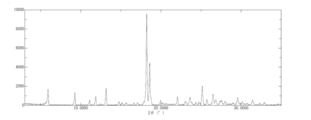
- Figure 1 shows the PXRD pattern of Polymorph Form I obtained from the method of preparing 4- ⁇ [4-( ⁇ [4-(2,2,2-trifluoroethoxy)-1,2-benzisoxazol-3-yl]oxy ⁇ methyl)piperidin-1-yl]-methyl ⁇ tetrahydro-2H-pyran-4-carboxylic acid described in Example 2 of WO2012/157288.
- Figure 2 shows the PXRD pattern of 4- ⁇ [4-( ⁇ [4-(2,2,2-trifluoroethoxy)-1,2-benzisoxazol-3-yl]oxy ⁇ methyl)piperidin-1-yl]methyl ⁇ tetrahydro-2H-pyran-4-carboxylic acid HCl-salt.
- Figure 3 shows the PXRD pattern of 4- ⁇ [4-( ⁇ [4-(2,2,2-trifluoroethoxy)-1,2-benzisoxazol-3-yl]oxy ⁇ methyl)piperidin-1-yl]methyl ⁇ tetrahydro-2H-pyran-4-carboxylic acid HBr-salt.
- Figure 4 shows the PXRD pattern of 4- ⁇ [4-( ⁇ [4-(2,2,2-trifluoroethoxy)-1,2-benzisoxazol-3-yl]oxy ⁇ methyl)piperidin-1-yl]methyl ⁇ tetrahydro-2H-pyran-4-carboxylic acid pTSA-salt.
- Figure 5 shows the PXRD pattern of 4- ⁇ [4-( ⁇ [4-(2,2,2-trifluoroethoxy)-1,2-benzisoxazol-3-yl]oxy ⁇ methyl)piperidin-1-yl]methyl ⁇ tetrahydro-2H-pyran-4-carboxylic acid EDSA-salt.
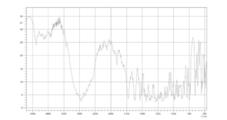
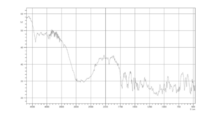
- Figure 6 shows the IR spectra (diffuse reflection) of 4- ⁇ [4-( ⁇ [4-(2,2,2-trifluoroethoxy)-1,2-benzisoxazol-3-yl]oxy ⁇ methyl)piperidin-1-yl]methyl ⁇ tetrahydro-2H-pyran-4-carboxylic acid Polymorph Form I.
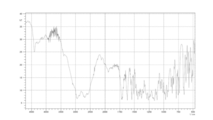
- Figure 7 shows the IR spectra (diffuse reflection) of 4- ⁇ [4-( ⁇ [4-(2,2,2-trifluoroethoxy)-1,2-benzisoxazol-3-yl]oxy ⁇ methyl)piperidin-1-yl]methyl ⁇ tetrahydro-2H-pyran-4-carboxylic acid HCl-salt.
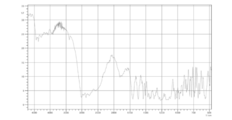
- Figure 8 shows the IR spectra (diffuse reflection) of 4- ⁇ [4-( ⁇ [4-(2,2,2-trifluoroethoxy)-1,2-benzisoxazol-3-yl]oxy ⁇ methyl)piperidin-1-yl]methyl ⁇ tetrahydro-2H-pyran-4-carboxylic acid HBr-salt.
- Figure 9 shows the IR spectra (diffuse reflection) of4- ⁇ [4-( ⁇ [4-(2,2,2-trifluoroethoxy)-1,2-benzisoxazol-3-yl]oxy ⁇ methyl)piperidin-1-yl]methyl ⁇ tetrahydro-2H-pyran-4-carboxylic acid pTSA-salt.
- Figure 10 shows the IR spectra (diffuse reflection) of4- ⁇ [4-( ⁇ [4-(2,2,2-trifluoroethoxy)-1,2-benzisoxazol-3-yl]oxy ⁇ methyl)piperidin-1-yl]methyl ⁇ tetrahydro-2H-pyran-4-carboxylic acid EDSA-salt.
- the present invention provides 4- ⁇ [4-( ⁇ [4-(2,2,2-trifluoroethoxy)-1,2-benzisoxazol-3-yl]oxy ⁇ methyl)piperidin-1-yl]methyl ⁇ tetrahydro-2H-pyran-4-carboxylic acid HCl-salt, which is characterized by a powder X-ray diffraction (PXRD) pattern obtained by irradiation with Cu-K-alpha radiation which includes main peaks at 2-theta 5.9, 9.4, 11.1, 11.9, 13.2, 18.2, 18.6, 22.1, 25.2 and 26.5 ( o ), wherein each peak has a margin of error of +/- 0.2 ( o );
- PXRD powder X-ray diffraction
- a pharmaceutical composition including 4- ⁇ [4-( ⁇ [4-(2,2,2-trifluoroethoxy)-1,2-benzisoxazol-3-yl]oxy ⁇ methyl)piperidin-1-yl]methyl ⁇ tetrahydro-2H-pyran-4-carboxylic acid salt form of the present invention, together with one or more pharmaceutically acceptable excipients;
- a method for the treatment of any disease which mediated by a 5-HT4 receptor antagonist particularly for the curative, prophylactic or palliative treatment of gastroesophageal reflux disease (GERD), gastrointestinal disease, gastric motility disorder, non-ulcer dyspepsia, functional dyspepsia (FD), irritable bowel syndrome (IBS), constipation, dyspepsia, esophagitis, gastroesophageal disease, gastritis, nausea, central nervous system disease, Alzheimer's disease, cognitive disorder, emesis, migraine, neurological disease, pain, cardiovascular disorders, cardiac failure, heart arrhythmia, diabetes, and apnea syndrome, including administration of a therapeutically effective amount of 4- ⁇ [4-( ⁇ [4-(2,2,2-trifluoroethoxy)-1,2-benzisoxazol-3-yl]oxy ⁇ methyl)piperidin-1-yl]methyl ⁇ tetrahydro-2H-pyran-4-carboxylic
- the 4- ⁇ [4-( ⁇ [4-(2,2,2-trifluoroethoxy)-1,2-benzisoxazol-3-yl]oxy ⁇ methyl)piperidin-1-yl]- methyl ⁇ tetrahydro-2H-pyran-4-carboxylic acid salt form of the present invention is useful for the general treatment of disease conditions mediated by 5-HT4 receptor activity.
- the 4- ⁇ [4-( ⁇ [4-(2,2,2-trifluoroethoxy)-1,2-benzisoxazol-3-yl]oxy ⁇ methyl)piperidin-1-yl]- methyl ⁇ tetrahydro-2H-pyran-4-carboxylic acid salt form of the present invention can also be useful for the treatment of a disorder or condition selected from the group consisting of gastroesophageal reflux disease (GERD), gastrointestinal disease, gastric motility disorder, non-ulcer dyspepsia, functional dyspepsia (FD), irritable bowel syndrome (IBS), constipation, dyspepsia, esophagitis, gastroesophageal disease, gastritis, nausea, central nervous system disease, Alzheimer's disease, cognitive disorder, emesis, migraine, neurological disease, pain, cardiovascular disorders, cardiac failure, heart arrhythmia, diabetes, and apnea syndrome.
- GGID gastroesophageal reflux disease
- FD functional dyspepsia
- HCl-salt 4- ⁇ [4-( ⁇ [4-(2,2,2-trifluoroethoxy)-1,2-benzisoxazol-3-yl]oxy ⁇ methyl)piperidin-1-yl]methyl ⁇ tetrahydro-2H-pyran-4-carboxylic acid HCl-salt can be prepared by exposing the compound with HCl solution.
- the reducing rate of temperature at the crystallization is generally lower than 70 o C/hour at the concentration of about 0.1 mg/mL to about 200 mg/mL.
- Preferable solvent for the salt preparation includes EtOH, n-BuOH, MEK, or CH 3 CN, and more preferably n-BuOH and MEK.
- HBr-salt 4- ⁇ [4-( ⁇ [4-(2,2,2-trifluoroethoxy)-1,2-benzisoxazol-3-yl]oxy ⁇ methyl)piperidin-1-yl]methyl ⁇ tetrahydro-2H-pyran-4-carboxylic acid HBr-salt can be prepared by exposing the compound with HBr solution.
- the reducing rate of temperature at the crystallization is generally lower than 65 o C/hour at the concentration of about 0.1 mg/mL to about 200 mg/mL.
- Preferable solvent for the salt preparation includes EtOH, AcOEt, MEK, CH 3 CN or THF, and more preferably n-BuOH, AcOEt and MEK.
- pTSA-salt 4- ⁇ [4-( ⁇ [4-(2,2,2-trifluoroethoxy)-1,2-benzisoxazol-3-yl]oxy ⁇ methyl)piperidin-1-yl]methyl ⁇ tetrahydro-2H-pyran-4-carboxylic acid pTSA-salt can be prepared by exposing the compound with p-toluenesulfonic acid solution.
- the reducing rate of temperature at the crystallization is generally lower than 65 o C/hour at the concentration of about 0.1 mg/mL to about 200 mg/mL.
- Preferable solvent for the salt preparation includes AcOEt.
- EDSA-salt can be prepared by exposing the compound with ethanedisulfonic acid solution.
- the reducing rate of temperature at the crystallization is generally lower than 65 o C/hour at the concentration of about 0.1 mg/mL to about 200 mg/mL.
- Preferable solvent for the salt preparation includes n-BuOH or AcOEt.
- the 4- ⁇ [4-( ⁇ [4-(2,2,2-trifluoroethoxy)-1,2-benzisoxazol-3-yl]oxy ⁇ methyl)piperidin-1-yl]- methyl ⁇ tetrahydro-2H-pyran-4-carboxylic acid salt form of the present invention can be administered alone or in combination with one or more other drugs (or as any combination thereof). Generally, they will be administered as a formulation in association with one or more pharmaceutically acceptable excipients.
- the term 'excipient' is used herein to describe any ingredient other than the compound of the invention. The choice of excipient will to a large extent depend on factors such as the particular mode of administration, the effect of the excipient on solubility and stability, and the nature of the dosage form.
- composition including 4- ⁇ [4-( ⁇ [4-(2,2,2-trifluoroethoxy)-1,2-benzisoxazol-3-yl]oxy ⁇ methyl)- piperidin-1-yl]methyl ⁇ tetrahydro-2H-pyran-4-carboxylic acid salt form and one or more suitable excipients.
- the composition is suitable for the treatment of disease conditions mediated by 5-HT4 receptor activity.
- salt form(s) includes HCl-salt, HBr-salt, pTSA-salt, and/or EDSA-salt.
- Weight purity of 4- ⁇ [4-( ⁇ [4-(2,2,2-trifluoroethoxy)-1,2-benzisoxazol-3-yl]oxy ⁇ methyl)piperidin-1-yl]methyl ⁇ tetrahydro-2H-pyran-4-carboxylic acid salt form of the present invention is not limited, but preferably an essentially pure salt form can be used for specific embodiments in this invention.
- treatment includes references to curative, palliative and prophylactic treatment.
- compositions suitable for the delivery of salt form of the invention and methods for the preparation will be readily apparent to those skilled in the art. Such compositions and methods for the preparation may be found, for example, in Remington's Pharmaceutical Sciences, 19th Edition (Mack Publishing Company, 1995).
- ORAL ADMINISTRATION Salt form of the invention may be administered orally.
- Oral administration may involve swallowing, so that the compound enters the gastrointestinal tract, and/or buccal, lingual, or sublingual administration by which the compound enters the blood stream directly from the mouth.
- Formulations suitable for oral administration include solid, semi-solid and liquid systems such as tablets; soft or hard capsules containing multi- or nano-particulates, liquids, or powders; lozenges (including liquid-filled); chews; gels; fast dispersing dosage forms; films; ovules; sprays; and buccal or mucoadhesive patches.
- Liquid formulations include suspensions, solutions, syrups and elixirs. Such formulations may be employed as fillers in soft or hard capsules (made, for example, from gelatin or hydroxypropylmethylcellulose) and typically comprise a carrier, for example, water, ethanol, polyethylene glycol, propylene glycol, methylcellulose, or a suitable oil, and one or more emulsifying agents and/or suspending agents. Liquid formulations may also be prepared by the reconstitution of a solid taken from a sachet etc.
- Salt form of the invention may also be used in fast-dissolving, fast- disintegrating dosage forms such as those described in Wermuth, C.G. and Stahl, P.H. (Eds.), Handbook of Pharmaceutical Salts: Properties, Selection, and Use, PP19-39 and 83-116, Wiley-Verlag Helvetica Acta, (2002).
- the drug may make up from 1 weight % to 80 weight % of the dosage form, more typically from 5 weight % to 60 weight % of the dosage form.
- tablets generally contain a disintegrant.
- disintegrants include sodium starch glycolate, sodium carboxymethyl cellulose, calcium carboxymethyl cellulose, croscarmellose sodium, crospovidone, polyvinylpyrrolidone, methyl cellulose, microcrystalline cellulose, lower alkyl-substituted hydroxypropyl cellulose, starch, pregelatinized starch and sodium alginate.
- the disintegrant comprises from 1 weight % to 25 weight %, preferably from 5 weight % to 20 weight % of the dosage form.
- Binders are generally used to impart cohesive qualities to a tablet formulation. Suitable binders include microcrystalline cellulose, gelatin, sugars, polyethylene glycol, natural and synthetic gums, polyvinylpyrrolidone, pregelatinized starch, hydroxypropyl cellulose and hydroxypropyl methylcellulose. Tablets may also contain diluents, such as lactose (monohydrate, spray-dried monohydrate, anhydrous and the like), mannitol, xylitol, dextrose, sucrose, sorbitol, microcrystalline cellulose, starch and dibasic calcium phosphate dihydrate.
- lactose monohydrate, spray-dried monohydrate, anhydrous and the like
- mannitol xylitol
- dextrose sucrose
- sorbitol microcrystalline cellulose
- starch dibasic calcium phosphate dihydrate
- Tablets may also optionally comprise surface active agents, such as sodium lauryl sulfate and polysorbate 80, and glidants such as silicon dioxide and talc.
- surface active agents such as sodium lauryl sulfate and polysorbate 80
- glidants such as silicon dioxide and talc.
- surface active agents may be contained from 0.2 weight % to 5 weight % of the tablet, and glidants may be contained from 0.2 weight % to 1 weight % of the tablet.
- Tablets also generally contain lubricants such as magnesium stearate, calcium stearate, zinc stearate, sodium stearyl fumarate, and mixtures of magnesium stearate with sodium lauryl sulphate.
- Lubricants generally comprise from 0.25 weight % to 10 weight %, preferably from 0.5 weight % to 3 weight % of the tablet.
- Other possible ingredients include anti-oxidants, colourants, flavouring agents, preservatives and taste-masking agents.
- Exemplary tablets contain up to about 80 % drug, from about 10 weight % to about 90 weight % binder, from about 0 weight % to about 85 weight % diluent, from about 2 weight % to about 10 weight % disintegrant, and from about 0.25 weight % to about 10 weight % lubricant.
- Tablet blends may be compressed directly or by roller to form tablets. Tablet blends or portions of blends may alternatively be wet-, dry-, or melt-granulated, melt congealed, or extruded before tableting.
- the final formulation may comprise one or more layers and may be coated or uncoated; it may even be encapsulated.
- Consumable oral films for human or veterinary use are typically pliable water-soluble or water-swellable thin film dosage forms which may be rapidly dissolving or mucoadhesive and typically comprise a salt form in accordance with the invention, a film-forming polymer, a binder, a solvent, a humectant, a plasticizer, a stabilizer or emulsifier, a viscosity-modifying agent and a solvent.
- Some components of the formulation may perform more than one function.
- Salt forms of the invention may be water-soluble or insoluble depending upon circumstances or conditions.
- a water-soluble compound typically may be contained from 1 weight % to 80 weight %, more typically from 20 weight % to 50 weight %, of the solutes. Less soluble compounds may be contained in a greater proportion of the composition, typically up to 88 weight % of the solutes.
- salt forms of the invention may be in the form of multiparticulate beads.
- the film-forming polymer may be selected from natural polysaccharides, proteins, or synthetic hydrocolloids and is typically present in the range of 0.01 to 99 weight %, more typically in the range of 30 to 80 weight %.
- ingredients include anti-oxidants, colorants, flavourings and flavour enhancers, preservatives, salivary stimulating agents, cooling agents, co- solvents (including oils), emollients, bulking agents, anti-foaming agents, surfactants and taste-masking agents.
- Films in accordance with the invention are typically prepared by evaporative drying of thin aqueous films coated onto a peelable backing support or paper.
- This may be done in a drying oven or tunnel, typically a combined coater dryer, or by freeze-drying or vacuuming.
- Solid formulations for oral administration may be formulated to be immediate and/or modified release.
- Modified release formulations include delayed-, sustained-, pulsed-, controlled-, targeted and programmed release.
- Suitable modified release formulations for the purposes of the invention are described in US Patent No. 6,106,864. Details of other suitable release technologies such as high energy dispersions and osmotic and coated particles are to be found in Pharmaceutical Technology On-line, 25(2), 1-14, by Verma et al. (2001). The use of chewing gum to achieve controlled release is described in WO 00/35298.
- the salt form of the invention may also be administered directly into the blood stream, into muscle, or into an internal organ.
- Suitable means for parenteral administration include intravenous, intraarterial, intraperitoneal, intrathecal, intraventricular, intraurethral, intrastemal, intracranial, intramuscular, intrasynovial and subcutaneous.
- Suitable devices for parenteral administration include needle (including microneedle) injectors, needle-free injectors and infusion techniques.
- Parenteral formulations are typically aqueous solutions which may contain excipients such as carbohydrates and buffering agents (preferably to a pH of from 3 to 9), but, for some applications, they may be more suitably formulated as a sterile non-aqueous solution or as a dried form to be used in conjunction with a suitable vehicle such as sterile, pyrogen-free water.
- excipients such as carbohydrates and buffering agents (preferably to a pH of from 3 to 9)
- a suitable vehicle such as sterile, pyrogen-free water.
- parenteral formulations under sterile conditions may readily be accomplished using standard pharmaceutical techniques well known to those skilled in the art.
- Formulations for parenteral administration may be formulated to be immediate and/or modified release.
- Modified release formulations include delayed-, sustained-, pulsed-, controlled-, targeted and programmed release.
- the Salt form of the invention may be formulated as a suspension or as a solid, semi-solid, or thixotropic liquid for administration as an implanted depot providing modified release of the active compound.
- examples of such formulations include drug-coated stents and semi-solids and suspensions comprising drug-loaded poly(lactic-co-glycolic acid) (PLGA) microspheres.
- PLGA poly(lactic-co-glycolic acid)
- the salt form of the invention may also be administered topically, (intra)dermally, or transdermally to the skin or mucosa.
- Typical formulations for this purpose include gels, hydrogels, lotions, solutions, creams, ointments, dusting powders, dressings, foams, films, skin patches, wafers, implants, sponges, fibers, bandages and microemulsions. Liposomes may also be used.
- Typical carriers include alcohol, water, mineral oil, liquid petrolatum, white petrolatum, glycerin, polyethylene glycol and propylene glycol. Penetration enhancers may be incorporated - see, for example, J Pharm Sci, 88 (10), 955- 958, by Finnin and Morgan (October 1999).
- Topical administration may also be achieved using a patch, such as a transdermal iontophoretic patch.
- Formulations for topical administration may be formulated to be immediate and/or modified release.
- Modified release formulations include delayed-, sustained-, pulsed-, controlled-, targeted and programmed release.
- the salt form of the invention can also be administered intranasally or by inhalation, typically in the form of a dry powder (either alone, as a mixture, for example, in a dry blend with lactose, or as a mixed component particle, for example, mixed with phospholipids, such as phosphatidylcholine) from a dry powder inhaler, as an aerosol spray from a pressurized container, pump, spray, atomizer (preferably an atomizer using electrohydrodynamics to produce a fine mist), or nebulizer, with or without the use of a suitable propellant, such as 1,1,1,2-tetrafluoroethane or 1,1,1,2,3,3,3-heptafluoropropane, or as nasal drops.
- the powder may comprise a bioadhesive agent, for example, chitosan or cyclodextrin.
- the pressurized container, pump, spray, atomizer, or nebulizer contains a solution or suspension of a salt form in accordance with the invention comprising, for example, ethanol, aqueous ethanol, or a suitable alternative agent for dispersing, solubilizing, or extending release of the active, a propellant(s) as solvent and an optional surfactant, such as sorbitan trioleate, oleic acid, or an oligolactic acid.
- the drug product Prior to use in a dry powder or suspension formulation, the drug product is micronized to a size suitable for delivery by inhalation (typically less than 5 microns). This may be achieved by any appropriate comminuting method, such as spiral jet milling, fluid bed jet milling, supercritical fluid processing to form nanoparticles, high pressure homogenization, or spray drying.
- comminuting method such as spiral jet milling, fluid bed jet milling, supercritical fluid processing to form nanoparticles, high pressure homogenization, or spray drying.
- Capsules made, for example, from gelatin or hydroxypropylmethylcellulose
- blisters and cartridges for use in an inhaler or insufflator may be formulated to contain a powder mix of the compound of the invention, a suitable powder base such as lactose or starch and a performance modifier such as /-leucine, mannitol, or magnesium stearate.
- the lactose may be anhydrous or in the form of the monohydrate, preferably the latter.
- Other suitable excipients include dextran, glucose, maltose, sorbitol, xylitol, fructose, sucrose and trehalose.
- a suitable solution formulation for use in an atomizer using electrohydrodynamics to produce a fine mist may contain from 1 micro g to 20 mg of the compound of the invention per actuation and the actuation volume may vary from 1 micro L to 100 micro L.
- a typical formulation may comprise a salt form in accordance with the invention, propylene glycol, sterile water, ethanol and sodium chloride.
- Alternative solvents which may be used instead of propylene glycol include glycerol and polyethylene glycol.
- Suitable flavours such as menthol and levomenthol, or sweeteners, such as saccharin or saccharin sodium, may be added to those formulations of the invention intended for inhaled/intranasal administration.
- Formulations for inhaled/intranasal administration may be formulated to be immediate and/or modified release using, for example, PLGA.
- Modified release formulations include delayed-, sustained-, pulsed-, controlled-, targeted and programmed release.
- the dosage unit is determined by means of a valve which delivers a metered amount.
- Units in accordance with the invention are typically arranged to administer a metered dose or "puff" containing from 1 microg to 20 mg of the Compound A.
- the overall daily dose will typically be in the range of 1 microg to 100 mg which may be administered in a single dose or, more usually, as divided doses throughout the day.
- RECTAL/INTRAVAGINAL ADMINISTRATION Salt form of the invention may be administered rectally or vaginally, for example, in the form of a suppository, pessary, or enema. Cocoa butter is a traditional suppository base, but various alternatives may be used as appropriate.
- Formulations of the invention for rectal/vaginal administration may be formulated to be immediate and/or modified release.
- Modified release formulations include delayed-, sustained-, pulsed-, controlled-, targeted and programmed release.
- OCULAR/AURAL ADMINISTRATION Salt form of the invention may also be administered directly to the eye or ear, typically in the form of drops of a micronized suspension or solution in isotonic, pH-adjusted, sterile saline.
- Other formulations suitable for ocular and aural administration include ointments, gels, biodegradable (e.g. absorbable gel sponges, collagen) and non-biodegradable (e.g. silicone) implants, wafers, lenses and particulate or vesicular systems, such as niosomes or liposomes.
- a polymer such as crossed-linked polyacrylic acid, polyvinylalcohol, hyaluronic acid, a cellulosic polymer, for example, hydroxypropylmethylcellulose, hydroxyethylcellulose, or methyl cellulose, or a heteropolysaccharide polymer, for example, gellan gum, may be incorporated together with a preservative, such as benzalkonium chloride.
- a preservative such as benzalkonium chloride.
- Such formulations may also be delivered by iontophoresis.
- Formulations including the salt of the invention for ocular/aural administration may be formulated to be immediate and/or modified release.
- Modified release formulations include delayed-, sustained-, pulsed-, controlled-, targeted, or programmed release.
- OTHER TECHNOLOGIES Salt form of the invention may be combined with soluble macromolecular entities, such as cyclodextrin and suitable derivatives thereof or polyethylene glycol-containing polymers, in order to improve their solubility, dissolution rate, taste-masking, bioavailability and/or stability for use in any of the aforementioned modes of administration.
- Drug-cyclodextrin complexes for example, are found to be generally useful for most dosage forms and administration routes. Both inclusion and non-inclusion complexes may be used.
- the cyclodextrin may be used as an auxiliary additive, i.e. as a carrier, diluent, or solubilizer.
- a suitable dosage level of salt form of this invention is about 0.0001 to 1000 mg per day, preferably about 0.001 to 100 mg per day, and more preferably about 0.005 to 50 mg per day, and most preferably 1 to 50 mg per day of the active compound.
- the compounds may be administered on a regimen of 1 to 4 times per day. In some cases, however, a dosage outside these limits may be used.
- dosages are based on an average human subject having a weight of about 60 kg to 70 kg.
- the physician will readily be able to determine doses for subjects whose weight falls outside this range, such as infants and the elderly.
- references herein to "treatment” include references to curative, palliative and prophylactic treatment.
- Salt form of the present invention may also optionally be combined with another pharmacologically active compound, or with two or more other pharmacologically active compounds, particularly for the treatment of disease conditions mediated by 5-HT4 receptor activity.
- the salt form of the present invention as defined above, may be administered simultaneously, sequentially or separately in combination with one or more agents selected from:
- an opioid analgesic e.g. morphine, heroin, hydromorphone, oxymorphone, levorphanol, levallorphan, methadone, meperidine, fentanyl, cocaine, codeine, dihydrocodeine, oxycodone, hydrocodone, propoxyphene, nalmefene, nalorphine, naloxone, naltrexone, buprenorphine, butorphanol, nalbuphine or pentazocine;
- opioid analgesic e.g. morphine, heroin, hydromorphone, oxymorphone, levorphanol, levallorphan, methadone, meperidine, fentanyl, cocaine, codeine, dihydrocodeine, oxycodone, hydrocodone, propoxyphene, nalmefene, nalorphine, naloxone, naltrexone, buprenorphine, butorphanol, nal
- NSAID nonsteroidal antiinflammatory drug
- diclofenac diflusinal, etodolac
- fenbufen fenoprofen
- flufenisal flurbiprofen
- ibuprofen indomethacin
- ketoprofen ketorolac
- meclofenamic acid mefenamic acid, meloxicam
- nabumetone naproxen
- nimesulide nitroflurbiprofen
- olsalazine oxaprozin
- phenylbutazone piroxicam
- sulfasalazine sulindac
- tolmetin or zomepirac a nonsteroidal antiinflammatory drug
- a barbiturate sedative e.g. amobarbital, aprobarbital, butabarbital, butalbital, mephobarbital, metharbital, methohexital, pentobarbital, phenobartital, secobarbital, talbutal, thiamylal or thiopental;
- a benzodiazepine having a sedative action e.g. chlordiazepoxide, clorazepate, diazepam, flurazepam, lorazepam, oxazepam, temazepam or triazolam;
- an H1 antagonist having a sedative action e.g. diphenhydramine, pyrilamine, promethazine, chlorpheniramine or chlorcyclizine; - a sedative such as glutethimide, meprobamate, methaqualone or dichloralphenazone;
- a skeletal muscle relaxant e.g. baclofen, carisoprodol, chlorzoxazone, cyclobenzaprine, methocarbamol or orphenadrine;
- an NMDA receptor antagonist e.g. dextromethorphan ((+)-3-hydroxy-N-methylmorphinan) or its metabolite dextrorphan ((+)-3-hydroxy-N-methylmorphinan), ketamine, memantine, pyrroloquinoline quinine, cis-4-(phosphonomethyl)-2-piperidinecarboxylic acid, budipine, EN-3231 (MorphiDex (registered trademark), a combination formulation of morphine and dextromethorphan), topiramate, neramexane or perzinfotel including an NR2B antagonist, e.g.
- an NMDA receptor antagonist e.g. dextromethorphan ((+)-3-hydroxy-N-methylmorphinan) or its metabolite dextrorphan ((+)-3-hydroxy-N-methylmorphinan), ketamine, memantine, pyrroloquinoline quinine, cis-4-(phosphon
- an alpha-adrenergic e.g. doxazosin, tamsulosin, clonidine, guanfacine, dexmedetomidine, modafinil, or 4-amino-6,7-dimethoxy-2-(5-methane-sulfonamido-1,2,3,4-tetrahydroisoquinol-2-yl)-5-(2-pyridyl) quinazoline;
- a tricyclic antidepressant e.g. desipramine, imipramine, amitriptyline or nortriptyline;
- an anticonvulsant e.g. carbamazepine, lamotrigine, topiramate or valproate;
- a tachykinin (NK) antagonist particularly an NK-3, NK-2 or NK-1 antagonist, e.g. alphaR,9R)-7-[3,5-bis(trifluoromethyl)benzyl]-8,9,10,11-tetrahydro-9-methyl-5-(4-methylphenyl)-7H-[1,4]diazocino[2,1-g][1,7]-naphthyridine-6,13-dione (TAK-637), 5-[[(2R,3S)-2-[(1R)-1-[3,5-bis(trifluoromethyl)phenyl]ethoxy-3-(4-fluorophenyl)-4-morpholinyl]-methyl]-1,2-dihydro-3H-1,2,4-triazol-3-one (MK-869), aprepitant, lanepitant, dapitant or 3-[[2-methoxy-5-(trifluoromethoxy)phenyl]-methylamin
- a muscarinic antagonist e.g. oxybutynin, tolterodine, propiverine, trospium chloride, darifenacin, solifenacin, temiverine and ipratropium;
- COX-2 selective inhibitor e.g. celecoxib, rofecoxib, parecoxib, valdecoxib, deracoxib, etoricoxib, or lumiracoxib;
- coal-tar analgesic in particular paracetamol
- a neuroleptic such as droperidol, chlorpromazine, haloperidol, perphenazine, thioridazine, mesoridazine, trifluoperazine, fluphenazine, clozapine, olanzapine, risperidone, ziprasidone, quetiapine, sertindole, aripiprazole, sonepiprazole, blonanserin, iloperidone, perospirone, raclopride, zotepine, bifeprunox, asenapine, lurasidone, amisulpride, balaperidone, palindore, eplivanserin, osanetant, rimonabant, meclinertant, Miraxion (registered trademark) or sarizotan;
- vanilloid receptor agonist e.g. resiniferatoxin
- antagonist e.g. capsazepine
- V1, V2, V3, V4, M8, A1 a transient receptor potential cation channel subtype (V1, V2, V3, V4, M8, A1) agonist or antagonist;
- beta-adrenergic such as propranolol
- corticosteroid such as dexamethasone
- a 5-HT receptor agonist or antagonist particularly a 5-HT1B/1D agonist such as eletriptan, sumatriptan, naratriptan, zolmitriptan or rizatriptan;
- a 5-HT2A receptor antagonist such as R(+)-alpha-(2,3-dimethoxy-phenyl)-1-[2-(4-fluorophenylethyl)]-4-piperidinemethanol (MDL-100907);
- a cholinergic (nicotinic) analgesic such as ispronicline (TC-1734), (E)-N-methyl-4-(3-pyridinyl)-3-buten-1-amine (RJR-2403), (R)-5-(2-azetidinylmethoxy)-2-chloropyridine (ABT-594) or nicotine;
- a PDEV inhibitor such as 5-[2-ethoxy-5-(4-methyl-1-piperazinyl-sulphonyl)phenyl]-1-methyl-3-n-propyl-1,6-dihydro-7H-pyrazolo[4,3-d]pyrimidin-7-one (sildenafil), (6R,12aR)-2,3,6,7,12,12a-hexahydro-2-methyl-6-(3,4-methylenedioxyphenyl)-pyrazino[2',1':6,1]-pyrido[3,4-b]indole-1,4-dione (IC-351 or tadalafil), 2-[2-ethoxy-5-(4-ethyl-piperazin-1-yl-1-sulphonyl)-phenyl]-5-methyl-7-propyl-3H-imidazo[5,1-f][1,2,4]triazin-4-one (vardenafil), 5-(5-acetyl-
- an alpha-2-delta ligand such as gabapentin, pregabalin, 3-methylgabapentin, (1alpha,3alpha,5alpha)(3-amino-methyl-bicyclo[3.2.0]hept-3-yl)-acetic acid, (3S,5R)-3 aminomethyl-5 methyl-heptanoic acid, (3S,5R)-3 amino-5 methyl-heptanoic acid, (3S,5R)-3 amino-5 methyl-octanoic acid, (2S,4S)-4-(3-chlorophenoxy)proline, (2S,4S)-4-(3-fluorobenzyl)-proline, [(1R,5R,6S)-6-(aminomethyl)bicyclo[3.2.0]hept-6-yl]acetic acid, 3-(1-aminomethyl-cyclohexylmethyl)-4H-[1,2,4]oxadiazol-5-one, C-[1-(1H-te
- mGluR1 metabotropic glutamate subtype 1 receptor
- a serotonin reuptake inhibitor such as sertraline, sertraline metabolite demethylsertraline, fluoxetine, norfluoxetine (fluoxetine desmethyl metabolite), fluvoxamine, paroxetine, citalopram, citalopram metabolite desmethylcitalopram, escitalopram, d,l-fenfluramine, femoxetine, ifoxetine, cyanodothiepin, litoxetine, dapoxetine, nefazodone, cericlamine and trazodone;
- noradrenaline (norepinephrine) reuptake inhibitor such as maprotiline, lofepramine, mirtazapine, oxaprotiline, fezolamine, tomoxetine, mianserin, bupropion, bupropion metabolite hydroxybupropion, nomifensine and viloxazine (Vivalan (registered trademark)), especially a selective noradrenaline reuptake inhibitor such as reboxetine, in particular (S,S)-reboxetine;
- a dual serotonin-noradrenaline reuptake inhibitor such as venlafaxine, venlafaxine metabolite O-desmethylvenlafaxine, clomipramine, clomipramine metabolite desmethylclomipramine, duloxetine, milnacipran and imipramine;
- an inducible nitric oxide synthase (iNOS) inhibitor such as S-[2-[(1-iminoethyl)amino]ethyl]-L-homocysteine, S-[2-[(1-iminoethyl)-amino]ethyl]-4,4-dioxo-L-cysteine, S-[2-[(1-iminoethyl)amino]ethyl]-2-methyl-L-cysteine, (2S,5Z)-2-amino-2-methyl-7-[(1-iminoethyl)amino]-5-heptenoic acid, 2-[[(1R,3S)-3-amino-4-hydroxy-1-(5-thiazolyl)-butyl]thio]-5-chloro-3-pyridinecarbonitrile; 2-[[[(1R,3S)-3-amino-4-hydroxy-1-(5-thiazolyl)
- an acetylcholinesterase inhibitor such as donepezil
- a prostaglandin E2 subtype 4 (EP4) antagonist such as N-[( ⁇ 2-[4-(2-ethyl-4,6-dimethyl-1H-imidazo[4,5-c]pyridin-1-yl)phenyl]ethyl ⁇ amino)-carbonyl]-4-methylbenzenesulfonamide or 4-[(1S)-1-( ⁇ [5-chloro-2-(3-fluorophenoxy)pyridin-3-yl]carbonyl ⁇ amino)ethyl]benzoic acid;
- leukotriene B4 antagonist such as 1-(3-biphenyl-4-ylmethyl-4-hydroxy-chroman-7-yl)-cyclopentanecarboxylic acid (CP-105696), 5-[2-(2-Carboxyethyl)-3-[6-(4-methoxyphenyl)-5E-hexenyl]oxyphenoxy]-valeric acid (ONO-4057) or DPC-11870,
- a 5-lipoxygenase inhibitor such as zileuton, 6-[(3-fluoro-5-[4-methoxy-3,4,5,6-tetrahydro-2H-pyran-4-yl])phenoxy-methyl]-1-methyl-2-quinolone (ZD-2138), or 2,3,5-trimethyl-6-(3-pyridylmethyl),1,4-benzoquinone (CV-6504);
- a sodium channel blocker such as lidocaine
- a calcium channel blocker such as ziconotide, zonisamide, mibefradil
- a 5-HT3 antagonist such as ondansetron
- a chemotherapy drug such as oxaliplatin, 5-fluorouracil, leucovorin, paclitaxel
- a calcitonin gene related peptide (CGRP) antagonist e.g., CGRP
- BK1 and BK2 e.g., CGRP
- BK1 and BK2 a bradykinin
- CGRP calcitonin gene related peptide
- BK1 and BK2 bradykinin
- - a voltage gated sodium dependent channel blocker Na v1.3 , Na v1.7 , Na v1.8
- - a voltage dependent calcium channel blocker -type, T-type
- a P2X (ion channel type ATP receptor) antagonist - an acid-sensing ion channel (ASIC1a, ASIC3) antagonist
- - an Angiotensin AT2 antagonist - a Chemokine CCR2B receptor antagonist
- One embodiment of the present invention is a combination of salt form of the present invention, and a drug for gastrointestinal diseases, which is different from salt form of the present invention.
- a “combination” according to the invention may be present as a "fix combination” or as a “kit of parts combination”.
- a “fix combination” is defined as a combination wherein the (i) at least one drug for gastrointestinal diseases, which is different from salt form of the present invention, and (ii) salt form are present in one unit.
- a “kit of parts combination” is defined as a combination wherein the (i) at least one drug for gastrointestinal diseases, which is different from salt form of the present invention, and (ii) salt form are present in more than one unit.
- the components of the "kit of parts combination” may be administered simultaneously, sequentially or separately.
- the molar ratio of the drug for gastrointestinal diseases, which is different from salt form of the present invention, to salt form used according to the invention is within the range of from 1:100 to 100:1, such as from 1:50 to 50:1 or from 1:20 to 20:1 or from 1:10 to 10:1.
- the two drugs may be administered separately in the same ratio.
- acid secretion inhibiting agents are other 5-HT4 agonists, proton pump inhibitors, H2 receptor antagonists, and drugs for IBS or constipations.
- H2 blocking agents such as cimetidine, ranitidine; as well as proton pump inhibitors such as pyridinylmethylsulfinyl benzimidazoles such as omeprazole, esomeprazole, lansoprazole, pantoprazole, rabeprazole or related substances such as leminoprazole.
- the present invention extends to a combination comprising 4- ⁇ [4-( ⁇ [4-(2,2,2-trifluoroethoxy)-1,2-benzisoxazol-3-yl]oxy ⁇ methyl)piperidin-1-yl]methyl ⁇ tetrahydro-2H-pyran-4-carboxylic acid salt form and one or more therapeutic agents, such as those listed above, for simultaneous, separate or sequential use in the curative, prophylactic or palliative treatment of disease conditions mediated by 5-HT4 receptor activity.
- Powder X-Ray Diffraction The PXRD analyses are performed using a Rigaku RINT-TTR X-ray powder diffractometer using Cu-K-alpha radiation. The samples can also be measured under the high/low temperature condition by using the attachment of the variant-temperature sample holder.
- the instrument is equipped with a fine focus X-ray tube. The tube voltage and amperage are set to 50 kV and 300 mA respectively. The divergence and scattering slits are set at 0.5° and the receiving slit is set at 0.15 mm. Diffracted radiation is detected by a NaI scintillation detector.
- a theta-two theta continuous scan at 4 o /min (step size 0.02 o ) from 3 to 40 2-theta ( o ) is used.
- a silicon standard is analyzed to check the machine alignment. Data are collected and analyzed using Rigaku X-ray system. Samples are prepared for analysis by placing them in an aluminum sample holder that is horizontally rotated at 60 rpm during data acquisition.
- FT-IR Spectroscopy Infrared spectra are acquired on Fourier Transform Infrared Spectrophotometer (FT-IR), a Shimadzu IRPrestige-21, equipped with air cooled high energy ceramic light source, Germanium-coated on potassium bromide (KBr) beamsplitter, a high sensitivity pyroelectric detector (DLATGS) and DRS-8000 diffuse reflectance accessory. Each spectrum represents 40 co-added scans collected at a spectral resolution of 4 cm -1 . A small amount of the sample is put on the plate (6 mm in diameter and 1.5 mm in depth) of the auto-sampler. A background data set is acquired with a blank sample plate. Reported values are rounded and should therefore be considered approximate.
- DSC Differential scanning calorimetry
- TG/DTA Thermogravimetry / differential thermal analysis (TG/DTA) TG/DTA is performed using Seiko 6200R system. The sample is placed into an aluminum TG/DTA pan. Each sample is heated under a nitrogen purge at a rate of 5 o C/min, up to a final temperature of 300 o C. Indium metal is used as the calibration standard. Reported values are rounded and should therefore be considered approximate.
- Room temperature means 15 to 35 o C, but not limited to that as long as the purpose is achieved.
- Chemical symbols have their usual meanings throughout the specification; M (mole(s) per liter), L(liter(s)), mL (milliliter(s)), g (gram(s)), mg (milligram(s)), mol (moles), mmol (millimoles), N (normal concentration), n-BuOH (normal butyl alcohol), EtOH (ethyl alcohol), AcOEt (ethyl acetate), MEK (methyl ethyl ketone), THF (tetrahydrofuran), i-PrOH (isopropyl alcohol).
- the solution is cooled to 64 o C during 35 min and 200 mg of seed crystal (0.423 mmol) is seeded to the mixture.
- the mixture is cooled to 40 o C over 5 h period and stirred at this temperature for 14.5 h.
- the slurry is gradually cooled to 19 o C during 6 h period and the mixture is stirred at this temperature for 46 h.
- the formed precipitate is collected by filtration and the filter cake is washed with 2.0 L of ethyl acetate.
- Crystallinity by PXRD Crystal ( Figure 1): Main peaks at 2-Theta: 5.9, 9.3, 9.8, 11.9, 13.7, 14.3, 15.0, 17.8, 18.2-19.3, 19.7, 22.6, 23.4-24.5 and 24.9 ( o ). Each peak has a margin of error of +/- 0.2.
- IR nu (diffuse reflection) ( Figure 6): 4389-4383, 3426, 2943-2937, 2120, 1904, 1724, 1614, 1535, 1508, 1437, 1420, 1287, 1261, 1221, 1180, 1121, 1094, 1059, 1022, 991, 974, 957, 934, 918, 868, 827, 783, 746, 731, 654, 638, 615, 588, 554, 542 and 507 cm -1 . Each peak has a margin of error of +/- 2 cm -1 .
- Anal. Calcd for C 22 H 27 N 2 O 6 F 3 C, 55.93; H, 5.76; N, 5.93. Found: C, 55.76; H, 5.74; N, 5.85.
- PXRD Principle 2: Main peaks at 2-theta: 5.9, 9.4, 11.1, 11.9, 13.2, 18.2, 18.6, 22.1, 25.2 and 26.5 ( o ). Each peak has a margin of error of +/- 0.2.
- IR nu diffuse reflection
- Figure 7 4392, 3393, 2953, 2517, 1942, 1705, 1618, 1541, 1508, 1439, 1377, 1288, 1261, 1223, 1155, 1111, 1059, 1040, 1011, 966, 941, 878, 856, 787, 754, 733, 654, 625, 590, 573, 557, 529, 503, and 478 cm -1 .
- Each peak has a margin of error of +/- 2 cm -1 . m.p. (DSC onset): 232 o C.
- the temperature has a margin of error of +/- 1 o C.
- PXRD ( Figure 3): Main peaks at 2-Theta: 9.4, 13.3, 18.4, 18.7, 22.2, 23.2, 23.8, 24.8, 25.2, 25.9 and 26.6 ( o ). Each peak has a margin of error of +/- 0.2.
- IR nu diffuse reflection
- Figure 8 4405, 3397, 2941, 2693, 2122, 1942, 1717, 1618, 1545, 1508, 1441, 1410, 1377, 1352, 1287, 1261, 1225, 1157, 1111, 1059, 1040, 1011, 968, 941, 874, 856, 787, 754, 735, 652, 621, 590, 571, 557, 525, 503 and 478 cm -1 .
- Each peak has a margin of error of +/- 2 cm -1 .
- PXRD ( Figure 4): Main peaks at 2-theta: 5.3, 11.9, 14.6, 16.0, 18.5, 18.7, 20.1, 20.6, 21.1, 22.7 and 23.0 ( o ). Each peak has a margin of error of +/- 0.2.
- IR nu (diffuse reflection) ( Figure 9): 4438, 4369, 3397, 3017, 2868, 2768 1902, 1701, 1616, 1541, 1508, 1466, 1436, 1422, 1371, 1290, 1267, 1206, 1180, 1150, 1117, 1038, 1013, 972, 918, 881, 860, 847, 812, 783, 738, 708, 677, 650, 611, 565 and 492 cm -1 . Each peak has a margin of error of +/- 2 cm -1 .
- PXRD ( Figure 5): Main peaks at 2-Theta: 11.3, 13.8, 15.1, 15.9, 18.8, 19.5, 20.2, 20.4, 20.7, 24.0, 24.7 and 26.2 ( o ). Each peak has a margin of error of +/- 0.2.
- IR nu (diffuse reflection) ( Figure 10): 4388, 3948, 3422, 2741, 1937, 1717, 1616, 1539, 1506, 1435, 1373, 1285, 1244, 1204, 1169, 1146, 1107, 1030, 989, 972, 951, 901, 854, 789, 772, 756, 741, 729, 652, 615, 546, 532 and 490 cm -1 .
- Each peak has a margin of error of +/- 2 cm -1 .
- EXAMPLE 6 [Hygroscopicity study] The salt samples are weighed into aluminum crucibles, placed onto a sample holder, and stored in the humidity chamber at 90%RH (BaCl 2 -2H 2 O). The samples are visually inspected with a hand magnifying lens and weighed on an analytical balance after five days. The samples are analyzed by PXRD after five days, then allowed to equilibrate at ambient temperatures overnight and re-analyzed by PXRD to evaluate stability of suspected hydrates under ambient conditions. No deliquescence is observed by visual observations after five days, however, significant weight increases (> 15 wt%) are observed for Free form, moderate weight increases (ca.
- Solid-state stability study is performed using Nagano Science Constant temperature/humidity control chamber LH-20-11M or LH-21-11M. The sample is placed in the chamber and exposed under 40 o C/75 % RH. The crystalline form and thermal behavior of the resultant sample after the exposure are evaluated by PXRD and TG/DTA, respectively. The remaining% and the purity are determined by HPLC measurement.
- the remaining% of the HCl-salt, the HBr-salt, the pTSA-salt and the EDSA-salt after storage at 40 o C/75% RH for 6 month are 97%, 99%, 98% and 99%, respectively, while the remaining of Free form is 87% (Table 2).
- the purity of Free form (95.6%) is obviously lower than these four salts (98.8-100.0%) and a lot of degradation products are observed in Free form.
- EDSA-salt is the most stable among these four salts.
- the sodium salt is not for practical use as a pharmaceutical acceptable salt.
- Salt formation with potassium acetate is conducted by the general procedure using the said compound in n-BuOH and potassium acetate solution in MeOH. It provides a unique PXRD pattern compared to the free base of the said compound.
- the 1 H-NMR analysis thereof shows no significant residual organic solvent and 0.8 equivalent of acetate present, indicating possible dual salt formation with both potassium and acetate.
- potassium salt is not observed, but potassium acetate salt is observed, which is not for practical use as a pharmaceutical acceptable salt.
- REFERENCE 2 [Hygroscopicity study] Salts other than the HCl-salt, the HBr-salt, the pTSA-salt and the EDSA-salt, which include salts described in REFERENCE 1(a)-1(l) are not suitable for hygroscopicity study in EXAMPLE 6.
Landscapes
- Health & Medical Sciences (AREA)
- Chemical & Material Sciences (AREA)
- Organic Chemistry (AREA)
- Medicinal Chemistry (AREA)
- Pharmacology & Pharmacy (AREA)
- Life Sciences & Earth Sciences (AREA)
- Animal Behavior & Ethology (AREA)
- General Health & Medical Sciences (AREA)
- Public Health (AREA)
- Veterinary Medicine (AREA)
- Engineering & Computer Science (AREA)
- Bioinformatics & Cheminformatics (AREA)
- Chemical Kinetics & Catalysis (AREA)
- General Chemical & Material Sciences (AREA)
- Nuclear Medicine, Radiotherapy & Molecular Imaging (AREA)
- Biomedical Technology (AREA)
- Neurology (AREA)
- Neurosurgery (AREA)
- Cardiology (AREA)
- Epidemiology (AREA)
- Heart & Thoracic Surgery (AREA)
- Diabetes (AREA)
- Hospice & Palliative Care (AREA)
- Pulmonology (AREA)
- Pain & Pain Management (AREA)
- Endocrinology (AREA)
- Obesity (AREA)
- Psychiatry (AREA)
- Nutrition Science (AREA)
- Hematology (AREA)
- Otolaryngology (AREA)
- Emergency Medicine (AREA)
- Pharmaceuticals Containing Other Organic And Inorganic Compounds (AREA)
- Plural Heterocyclic Compounds (AREA)
Abstract
Description
It has been found that HCl-salt, HBr-salt, pTSA-salt and EDSA-salt of 4-{[4-({[4-(2,2,2-trifluoroethoxy)-1,2-benzisoxazol-3-yl]oxy}methyl)piperidin-1-yl]methyl}tetrahydro-2H-pyran-4-carboxylic acid shown below, can be isolated as a crystalline form which has advantageous properties such as ease of making a formulation, high solubility, and good stability. In addition the salts of the present invention are more easily purified than a non-crystalline form disclosed in PL 1 (WO2006/090224) and crystalline form disclosed in PL 3 (WO2012/157288).
{PL 2} US Patent No. 6,106,864.
{PL 3} WO2012/157288
{PL 4} WO00/35298.
{PL 5} WO91/11172.
{PL 6} WO94/02518.
{PL 7} WO98/55148.
{NPL 2} Ford A. P et al., Med. Res. Rev. 13: 633-662, 1993.
{NPL 3} Gullikson G. W. et al., Drug Dev. Res. 26; 405-417, 1992.
{NPL 4} Richard M. Eglen et al., TiPs 16; 391-398, 1995.
{NPL 5} Bockaert J. et al., CNS Drugs 1; 6-15, 1994.
{NPL 6} Romanelli M. N. et al., Arzheim Forsch./Drug Res., 43; 913-918, 1993.
{NPL 7} Kaumann A. J. et al., Naunyn-Schmiedebergs Arch Pharmacol., 344; 150-159, 1991.
{NPL 8} Remington's Pharmaceutical Sciences, 19th Edition (Mack Publishing Company, 1995).
{NPL 9} Expert Opinion in Therapeutic Patents, H (6), 981-986, by Liang and Chen (2001).
{NPL 10} Tablets, Vol. 1, by H. Lieberman and L. Lachman (Marcel Dekker, New York, 1980).
{NPL 11} Pharmaceutical Technology On-line, 25(2), 1-14, by Verma et al. (2001).
{NPL 12} J Pharm Sci, 88 (10), 955-958, by Finnin and Morgan (October 1999).
{NPL 13} Evrard, B., et al., Journal of Controlled Release 96 (3), pp. 403-410, 2004.
{NPL 14} Byrn S. R. et al., Solid-State Chemistry of Drugs 2nd ed., pp 3-43 and 461-503, 1999, SSCI, Inc.
However they are not practically useful as a pharmaceutical acceptable salt.
In addition, once the seed of the salt is obtained, where applicable, the same salt can generally be easily obtained in a small scale synthesis. On large scale synthesis, temperature control is essential for preparing a pharmaceutically suitable salt.
[1] 4-{[4-({[4-(2,2,2-trifluoroethoxy)-1,2-benzisoxazol-3-yl]oxy}methyl)piperidin-1-yl]methyl}tetrahydro-2H-pyran-4-carboxylic acid HCl-salt, which is characterized by a powder X-ray diffraction (PXRD) pattern obtained by irradiation with Cu-K-alpha radiation which includes main peaks at 2-theta 5.9, 9.4, 11.1, 11.9, 13.2, 18.2, 18.6, 22.1, 25.2 and 26.5 (o ), wherein each peak has a margin of error of +/- 0.2 (o );
A pharmaceutical composition including 4-{[4-({[4-(2,2,2-trifluoroethoxy)-1,2-benzisoxazol-3-yl]oxy}methyl)piperidin-1-yl]methyl}tetrahydro-2H-pyran-4-carboxylic acid salt form as described in any one of [1] to [12], together with one or more pharmaceutically acceptable excipients;
A use of 4-{[4-({[4-(2,2,2-trifluoroethoxy)-1,2-benzisoxazol-3-yl]oxy}methyl)piperidin-1-yl]methyl}tetrahydro-2H-pyran-4-carboxylic acid salt form as described in any one of [1] to [12], or a pharmaceutical composition as described in [13], in the preparation of a medicament for the curative, palliative or prophylactic treatment of disease conditions mediated by 5-HT4 receptor activity;
A method of treating disease conditions mediated by 5-HT4 receptor activity, which comprises administering an effective amount of 4-{[4-({[4-(2,2,2-trifluoroethoxy)-1,2-benzisoxazol-3-yl]oxy}methyl)piperidin-1-yl]methyl}tetrahydro-2H-pyran-4-carboxylic acid salt form as described in any one of [1] to [12], or a pharmaceutical composition as described in [13], to an animal, including a human, in need of such treatment;
A process for preparing 4-{[4-({[4-(2,2,2-trifluoroethoxy)-1,2-benzisoxazol-3-yl]oxy}methyl)piperidin-1-yl]methyl}tetrahydro-2H-pyran-4-carboxylic acid HCl-salt as described in any one of [1] to [3], comprising the step of exposing the compound with HCl;
A process for preparing 4-{[4-({[4-(2,2,2-trifluoroethoxy)-1,2-benzisoxazol-3-yl]oxy}methyl)piperidin-1-yl]methyl}tetrahydro-2H-pyran-4-carboxylic acid HBr-salt as described in any one of [4] to [6], comprising the step of exposing the compound with HBr;
A process for preparing 4-{[4-({[4-(2,2,2-trifluoroethoxy)-1,2-benzisoxazol-3-yl]oxy}methyl)piperidin-1-yl]methyl}tetrahydro-2H-pyran-4-carboxylic acid pTSA-salt as described in any one of [7] to [9], comprising the step of exposing the compound with p-toluenesulfonic acid;
A process for preparing 4-{[4-({[4-(2,2,2-trifluoroethoxy)-1,2-benzisoxazol-3-yl]oxy}methyl)piperidin-1-yl]methyl}tetrahydro-2H-pyran-4-carboxylic acid EDSA-salt as described in any one of [10] to [12], comprising the step of exposing the compound with ethanedisulfonic acid.
No pharmaceutically suitable salt forms of the said compound other than the above salts have been identified in spite of great efforts of those skilled in the art.
All of the salts of the present invention have an excellent and unexpected advantage over the free forms disclosed in the prior art, WO2006/090224 and WO2012/157288. The HCl-salt, the HBr-salt, the pTSA-salt, and the EDSA-salt are found to be more stable than the free forms known to the public.
Preferable solvent for the salt preparation includes EtOH, n-BuOH, MEK, or CH3CN, and more preferably n-BuOH and MEK.
Preferable solvent for the salt preparation includes EtOH, AcOEt, MEK, CH3CN or THF, and more preferably n-BuOH, AcOEt and MEK.
Preferable solvent for the salt preparation includes AcOEt.
Preferable solvent for the salt preparation includes n-BuOH or AcOEt.
Salt form of the invention may be administered orally. Oral administration may involve swallowing, so that the compound enters the gastrointestinal tract, and/or buccal, lingual, or sublingual administration by which the compound enters the blood stream directly from the mouth.
Tablets may also optionally comprise surface active agents, such as sodium lauryl sulfate and polysorbate 80, and glidants such as silicon dioxide and talc. When present, surface active agents may be contained from 0.2 weight % to 5 weight % of the tablet, and glidants may be contained from 0.2 weight % to 1 weight % of the tablet.
Other possible ingredients include anti-oxidants, colourants, flavouring agents, preservatives and taste-masking agents.
Exemplary tablets contain up to about 80 % drug, from about 10 weight % to about 90 weight % binder, from about 0 weight % to about 85 weight % diluent, from about 2 weight % to about 10 weight % disintegrant, and from about 0.25 weight % to about 10 weight % lubricant.
The salt form of the invention may also be administered directly into the blood stream, into muscle, or into an internal organ. Suitable means for parenteral administration include intravenous, intraarterial, intraperitoneal, intrathecal, intraventricular, intraurethral, intrastemal, intracranial, intramuscular, intrasynovial and subcutaneous. Suitable devices for parenteral administration include needle (including microneedle) injectors, needle-free injectors and infusion techniques.
The salt form of the invention may also be administered topically, (intra)dermally, or transdermally to the skin or mucosa. Typical formulations for this purpose include gels, hydrogels, lotions, solutions, creams, ointments, dusting powders, dressings, foams, films, skin patches, wafers, implants, sponges, fibers, bandages and microemulsions. Liposomes may also be used. Typical carriers include alcohol, water, mineral oil, liquid petrolatum, white petrolatum, glycerin, polyethylene glycol and propylene glycol. Penetration enhancers may be incorporated - see, for example, J Pharm Sci, 88 (10), 955- 958, by Finnin and Morgan (October 1999).
Salt form of the invention may be administered rectally or vaginally, for example, in the form of a suppository, pessary, or enema. Cocoa butter is a traditional suppository base, but various alternatives may be used as appropriate.
Salt form of the invention may also be administered directly to the eye or ear, typically in the form of drops of a micronized suspension or solution in isotonic, pH-adjusted, sterile saline. Other formulations suitable for ocular and aural administration include ointments, gels, biodegradable (e.g. absorbable gel sponges, collagen) and non-biodegradable (e.g. silicone) implants, wafers, lenses and particulate or vesicular systems, such as niosomes or liposomes. A polymer such as crossed-linked polyacrylic acid, polyvinylalcohol, hyaluronic acid, a cellulosic polymer, for example, hydroxypropylmethylcellulose, hydroxyethylcellulose, or methyl cellulose, or a heteropolysaccharide polymer, for example, gellan gum, may be incorporated together with a preservative, such as benzalkonium chloride. Such formulations may also be delivered by iontophoresis.
Salt form of the invention may be combined with soluble macromolecular entities, such as cyclodextrin and suitable derivatives thereof or polyethylene glycol-containing polymers, in order to improve their solubility, dissolution rate, taste-masking, bioavailability and/or stability for use in any of the aforementioned modes of administration.
Drug-cyclodextrin complexes, for example, are found to be generally useful for most dosage forms and administration routes. Both inclusion and non-inclusion complexes may be used. As an alternative to direct complexation with the drug, the cyclodextrin may be used as an auxiliary additive, i.e. as a carrier, diluent, or solubilizer. Most commonly used for these purposes are alpha-, beta- and gamma-cyclodextrins, examples of which may be found in International Patent Publication Nos. WO 91/11172, WO 94/02518, WO 98/55148 and Evrard, B.,et al., Journal of Controlled Release 96 (3), pp. 403-410, 2004.
For treating or preventing the disease conditions mediated by 5-HT4 receptor activity such as gastrointestinal diseases, a suitable dosage level of salt form of this invention is about 0.0001 to 1000 mg per day, preferably about 0.001 to 100 mg per day, and more preferably about 0.005 to 50 mg per day, and most preferably 1 to 50 mg per day of the active compound. The compounds may be administered on a regimen of 1 to 4 times per day. In some cases, however, a dosage outside these limits may be used.
- a sedative such as glutethimide, meprobamate, methaqualone or dichloralphenazone;
- a chemotherapy drug such as oxaliplatin, 5-fluorouracil, leucovorin, paclitaxel;
- a calcitonin gene related peptide (CGRP) antagonist;
- a bradykinin (BK1 and BK2) antagonist;
- a voltage gated sodium dependent channel blocker (Nav1.3, Nav1.7, Nav1.8);
- a voltage dependent calcium channel blocker (N-type, T-type);
- a P2X (ion channel type ATP receptor) antagonist;
- an acid-sensing ion channel (ASIC1a, ASIC3) antagonist;
- an Angiotensin AT2 antagonist;
- a Chemokine CCR2B receptor antagonist;
- a Cathepsin (B, S, K) inhibitor;
- a sigma1 receptor agonist or antagonist;
One embodiment of the present invention is a combination of salt form of the present invention, and a drug for gastrointestinal diseases, which is different from salt form of the present invention. A "combination" according to the invention may be present as a "fix combination" or as a "kit of parts combination". A "fix combination" is defined as a combination wherein the (i) at least one drug for gastrointestinal diseases, which is different from salt form of the present invention, and (ii) salt form are present in one unit. A "kit of parts combination" is defined as a combination wherein the (i) at least one drug for gastrointestinal diseases, which is different from salt form of the present invention, and (ii) salt form are present in more than one unit. The components of the "kit of parts combination" may be administered simultaneously, sequentially or separately. The molar ratio of the drug for gastrointestinal diseases, which is different from salt form of the present invention, to salt form used according to the invention is within the range of from 1:100 to 100:1, such as from 1:50 to 50:1 or from 1:20 to 20:1 or from 1:10 to 10:1. The two drugs may be administered separately in the same ratio. Examples of acid secretion inhibiting agents are other 5-HT4 agonists, proton pump inhibitors, H2 receptor antagonists, and drugs for IBS or constipations. These examples are H2 blocking agents such as cimetidine, ranitidine; as well as proton pump inhibitors such as pyridinylmethylsulfinyl benzimidazoles such as omeprazole, esomeprazole, lansoprazole, pantoprazole, rabeprazole or related substances such as leminoprazole.
4-{[4-({[4-(2,2,2-trifluoroethoxy)-1,2-benzisoxazol-3-yl]oxy}methyl)piperidin-1-yl]methyl}tetrahydro-2H-pyran-4-carboxylic acid salt form and one or more therapeutic agents, such as those listed above, for simultaneous, separate or sequential use in the curative, prophylactic or palliative treatment of disease conditions mediated by 5-HT4 receptor activity.
The following examples are for reference only.
NMR data are determined at 270 MHz (JEOL JNM-LA 270 spectrometer) or 300 MHz (JEOL JNM-LA300 spectrometer) using deuterated dimethylsulfoxide (99.9 % D) as solvent, relative to tetramethylsilane (TMS) as internal standard in parts per million (ppm); conventional abbreviations used are: s = singlet, d = doublet, t = triplet, q = quartet, m = multiplet, br = broad, etc.
The PXRD analyses are performed using a Rigaku RINT-TTR X-ray powder diffractometer using Cu-K-alpha radiation. The samples can also be measured under the high/low temperature condition by using the attachment of the variant-temperature sample holder. The instrument is equipped with a fine focus X-ray tube. The tube voltage and amperage are set to 50 kV and 300 mA respectively. The divergence and scattering slits are set at 0.5° and the receiving slit is set at 0.15 mm. Diffracted radiation is detected by a NaI scintillation detector. A theta-two theta continuous scan at 4 o/min (step size 0.02 o) from 3 to 40 2-theta (o ) is used. A silicon standard is analyzed to check the machine alignment. Data are collected and analyzed using Rigaku X-ray system. Samples are prepared for analysis by placing them in an aluminum sample holder that is horizontally rotated at 60 rpm during data acquisition.
Infrared spectra are acquired on Fourier Transform Infrared Spectrophotometer (FT-IR), a Shimadzu IRPrestige-21, equipped with air cooled high energy ceramic light source, Germanium-coated on potassium bromide (KBr) beamsplitter, a high sensitivity pyroelectric detector (DLATGS) and DRS-8000 diffuse reflectance accessory. Each spectrum represents 40 co-added scans collected at a spectral resolution of 4 cm-1. A small amount of the sample is put on the plate (6 mm in diameter and 1.5 mm in depth) of the auto-sampler. A background data set is acquired with a blank sample plate. Reported values are rounded and should therefore be considered approximate.
DSC analysis is performed using Mettler Toledo DSC822. The sample is placed into an aluminum DSC pan and the weight is accurately recorded. The pan is covered with a lid with a pinhole and then crimped. Each sample is heated under a nitrogen purge at a rate of 5 oC/min, up to a final temperature of 220-290 oC. Indium metal is used as the calibration standard. Reported values are rounded and should therefore be considered approximate.
HPLC data are obtained by Waters Alliance 2695 HPLC system with 2996 PDA detector using the following conditions;
Column: Inertsil ODS-3 (3 microm, 4.6 x 150 mm),
Eluent: acetonitrile/10mM ammonium acetate = 32/68,
Detection: UV at 215 nm,
Flow rate: 1 mL/min, and
Column temperature: 40 oC.
Data processing is performed with Empower 2 software supplied from Waters Corporation.
TG/DTA is performed using Seiko 6200R system. The sample is placed into an aluminum TG/DTA pan. Each sample is heated under a nitrogen purge at a rate of 5 oC/min, up to a final temperature of 300 oC. Indium metal is used as the calibration standard. Reported values are rounded and should therefore be considered approximate.
Chemical symbols have their usual meanings throughout the specification; M (mole(s) per liter), L(liter(s)), mL (milliliter(s)), g (gram(s)), mg (milligram(s)), mol (moles), mmol (millimoles), N (normal concentration), n-BuOH (normal butyl alcohol), EtOH (ethyl alcohol), AcOEt (ethyl acetate), MEK (methyl ethyl ketone), THF (tetrahydrofuran), i-PrOH (isopropyl alcohol).
Preparation of
4-{[4-({[4-(2,2,2-trifluoroethoxy)-1,2-benzisoxazol-3-yl]oxy}methyl)piperidin-1-yl]methyl}tetrahydro-2H-pyran-4-carboxylic acid according to the conventional process
A slurry of 4-{[4-({[4-(2,2,2-trifluoroethoxy)-1,2-benzisoxazol-3-yl]oxy}methyl)piperidin-1-yl]-methyl}tetrahydro-2H-pyran-4-carboxylic acid (1.326 kg, 2.807 mol, a white solid) in ethyl acetate (18.564 L) is dissolved at 70 oC. The solution is cooled to 64 oC during 35 min and 200 mg of seed crystal (0.423 mmol) is seeded to the mixture. The mixture is cooled to 40 oC over 5 h period and stirred at this temperature for 14.5 h. The slurry is gradually cooled to 19 oC during 6 h period and the mixture is stirred at this temperature for 46 h. The formed precipitate is collected by filtration and the filter cake is washed with 2.0 L of ethyl acetate. The filter cake is dried under reduced pressure at 50 oC to afford 1.140 kg of the desired crystalline form of 4-{[4-({[4-(2,2,2-trifluoroethoxy)-1,2-benzisoxazol-3-yl]oxy}methyl)piperidin-1-yl]-
methyl}tetrahydro-2H-pyran-4-carboxylic acid (86%).

A signal due to CO2H is not observed.
m.p. (DSC onset): 169 oC.
The temperature has a margin of error of +/- 1 oC.
Crystallinity by PXRD: Crystal (Figure 1): Main peaks at 2-Theta: 5.9, 9.3, 9.8, 11.9, 13.7, 14.3, 15.0, 17.8, 18.2-19.3, 19.7, 22.6, 23.4-24.5 and 24.9 (o ). Each peak has a margin of error of +/- 0.2.
IR nu (diffuse reflection) (Figure 6): 4389-4383, 3426, 2943-2937, 2120, 1904, 1724, 1614, 1535, 1508, 1437, 1420, 1287, 1261, 1221, 1180, 1121, 1094, 1059, 1022, 991, 974, 957, 934, 918, 868, 827, 783, 746, 731, 654, 638, 615, 588, 554, 542 and 507 cm-1. Each peak has a margin of error of +/- 2 cm-1.
Anal. Calcd for C22H27N2O6F3: C, 55.93; H, 5.76; N, 5.93. Found: C, 55.76; H, 5.74; N, 5.85.
Preparation of 4-{[4-({[4-(2,2,2-trifluoroethoxy)-1,2-benzisoxazol-3-yl]oxy}methyl)piperidin-1-yl]methyl}tetrahydro-2H-pyran-4-carboxylic acid hydrochloride salt (HCl-salt)
4-{[4-({[4-(2,2,2-trifluoroethoxy)-1,2-benzisoxazol-3-yl]oxy}methyl)piperidin-1-yl]methyl}tetrahydro-2H-pyran-4-carboxylic acid (244 mg, 0.516 mmol) is dissolved in n-BuOH (4.5 mL) at 70 °C, to which conc. HCl (37wt%, 35.5 microL, 0.425 mmol) is added. The mixture is stirred at 70 °C overnight, then gradually cooled down to room temperature.
Resulting precipitates are collected by filtration, washed with EtOH and dried in vacuo to give 178 mg (0.350 mmol) of 4-{[4-({[4-(2,2,2-trifluoroethoxy)-1,2-benzisoxazol-3-yl]oxy}methyl)piperidin-1-yl]methyl}tetrahydro-2H-pyran-4-carboxylic acid hydrochloride (HCl-salt) as a whites solid (82% yield).
1H-NMR delta: 7.61 (t, 1 H, J = 8.4 Hz), 7.27 (d, 1 H, J = 8.8 Hz), 6.96 (d, 1 H, J = 8.0 Hz), 4.96 (q, 2 H, J = 8.5 Hz), 4.35-4.15 (m, 2 H), 3.80-3.65 (m, 2 H), 3.65-3.30 (m, 4 H), 3.41 (s, 2 H), 3.25-3.00 (m, 2 H), 2.30-2.05 (m, 1 H), 2.05-1.85 (m, 4 H), 1.85-1.55 (m, 4 H).
PXRD (Figure 2): Main peaks at 2-theta: 5.9, 9.4, 11.1, 11.9, 13.2, 18.2, 18.6, 22.1, 25.2 and 26.5 (o ). Each peak has a margin of error of +/- 0.2.
IR nu (diffuse reflection) (Figure 7): 4392, 3393, 2953, 2517, 1942, 1705, 1618, 1541, 1508, 1439, 1377, 1288, 1261, 1223, 1155, 1111, 1059, 1040, 1011, 966, 941, 878, 856, 787, 754, 733, 654, 625, 590, 573, 557, 529, 503, and 478 cm-1. Each peak has a margin of error of +/- 2 cm-1.
m.p. (DSC onset): 232 oC.
The temperature has a margin of error of +/- 1 oC.
Anal. Calcd for C22H28ClF3N2O6: C, 51.92; H, 5.55; N, 5.50; F, 11.20; Cl, 6.97. Found: C, 51.92; H, 5.55; N, 5.45; F, 11.11; Cl, 6.98.
Preparation of 4-{[4-({[4-(2,2,2-trifluoroethoxy)-1,2-benzisoxazol-3-yl]oxy}methyl)piperidin-1-yl]methyl}tetrahydro-2H-pyran-4-carboxylic acid hydrobromide salt (HBr-salt)
4-{[4-({[4-(2,2,2-trifluoroethoxy)-1,2-benzisoxazol-3-yl]oxy}methyl)piperidin-1-yl]methyl}tetrahydro-2H-pyran-4-carboxylic acid (351 mg, 0.744 mmol) is dissolved in n-BuOH (14 mL) at 65 °C, to which EtOH solution of HBr (0.5M, 1.51 mL, 0.759 mmol) is added. The mixture is stirred at 65 oC overnight, then gradually cooled down to room temperature.
Resulting precipitates are collected by filtration, washed with EtOH and dried in vacuo to give 254 mg (0.459 mmol) of 4-{[4-({[4-(2,2,2-trifluoroethoxy)-1,2-benzisoxazol-3-yl]oxy}methyl)piperidin-1-yl]methyl}tetrahydro-2H-pyran-4-carboxylic acid hydrobromide (HBr-salt) as a white solid (62% yield).
IR nu (diffuse reflection) (Figure 8): 4405, 3397, 2941, 2693, 2122, 1942, 1717, 1618, 1545, 1508, 1441, 1410, 1377, 1352, 1287, 1261, 1225, 1157, 1111, 1059, 1040, 1011, 968, 941, 874, 856, 787, 754, 735, 652, 621, 590, 571, 557, 525, 503 and 478 cm-1. Each peak has a margin of error of +/- 2 cm-1.
The temperature has a margin of error of +/- 1 oC.
Preparation of 4-{[4-({[4-(2,2,2-trifluoroethoxy)-1,2-benzisoxazol-3-yl]oxy}methyl)piperidin-1-yl]methyl}tetrahydro-2H-pyran-4-carboxylic acid p-toluenesulfonate salt (pTSA-salt)
4-{[4-({[4-(2,2,2-trifluoroethoxy)-1,2-benzisoxazol-3-yl]oxy}methyl)piperidin-1-yl]methyl}tetrahydro-2H-pyran-4-carboxylic acid (211 mg, 0.477 mmol) is dissolved in AcOEt (6.33 mL) at 65 °C and to which a solution of p-toluenesulfonic acid monohydrate (85.0 mg, 0.447 mmol) in CH3CN (1.48 mL) is added. The mixture is stirred at 65 °C for 3 min, then gradually cooled down to room temperature.
Resulting precipitates are collected by filtration, washed with AcOEt and dried in vacuo to give 249 mg (0.387 mmol) of 4-{[4-({[4-(2,2,2-trifluoroethoxy)-1,2-benzisoxazol-3-yl]oxy}methyl)piperidin-1-yl]methyl}tetrahydro-2H-pyran-4-carboxylic acid p-toluenesulfonate salt (pTSA-salt) as a white solid (87% yield).
The temperature has a margin of error of +/- 1 oC.
Preparation of 4-{[4-({[4-(2,2,2-trifluoroethoxy)-1,2-benzisoxazol-3-yl]oxy}methyl)piperidin-1-yl]methyl}tetrahydro-2H-pyran-4-carboxylic acid hemi-ethanedisulfonate salt (EDSA-salt)
4-{[4-({[4-(2,2,2-trifluoroethoxy)-1,2-benzisoxazol-3-yl]oxy}methyl)piperidin-1-yl]methyl}tetrahydro-2H-pyran-4-carboxylic acid (207 mg, 0.438 mmol) is dissolved in AcOEt (6.21 mL) at 65 °C and to which a solution of ethanedisulfonic acid dihydrate (49.6 mg, 0.219 mmol) in EtOH (0.311 mL) is added. The mixture is stirred at 65 oC for 3 min, then gradually cooled down to room temperature.
Resulting precipitates are filtered, washed with AcOEt and dried in vacuo to give 223 mg (0.394 mmol) of 4-{[4-({[4-(2,2,2-trifluoroethoxy)-1,2-benzisoxazol-3-yl]oxy}methyl)piperidin-1-yl]methyl}tetrahydro-2H-pyran-4-carboxylic acid hemi-ethanedisulfonate salt (EDSA-salt) as a white solid (90% yield).
The temperature has a margin of error of +/- 1 oC.
[Hygroscopicity study]
The salt samples are weighed into aluminum crucibles, placed onto a sample holder, and stored in the humidity chamber at 90%RH (BaCl2-2H2O). The samples are visually inspected with a hand magnifying lens and weighed on an analytical balance after five days. The samples are analyzed by PXRD after five days, then allowed to equilibrate at ambient temperatures overnight and re-analyzed by PXRD to evaluate stability of suspected hydrates under ambient conditions.
No deliquescence is observed by visual observations after five days, however, significant weight increases (> 15 wt%) are observed for Free form, moderate weight increases (ca. 5 wt%) are observed for the EDSA-salt, while the HCl-salt, the HBr-salt and the pTSA-salt show very little weight gain.
No crystal form changes are observed by PXRD after both 5 days and following equilibration at ambient temperature for all four salt samples, however, PXRD pattern of Free form is different from the intact bulk indicating hydrate formation.
These results are summarized in Table 1.
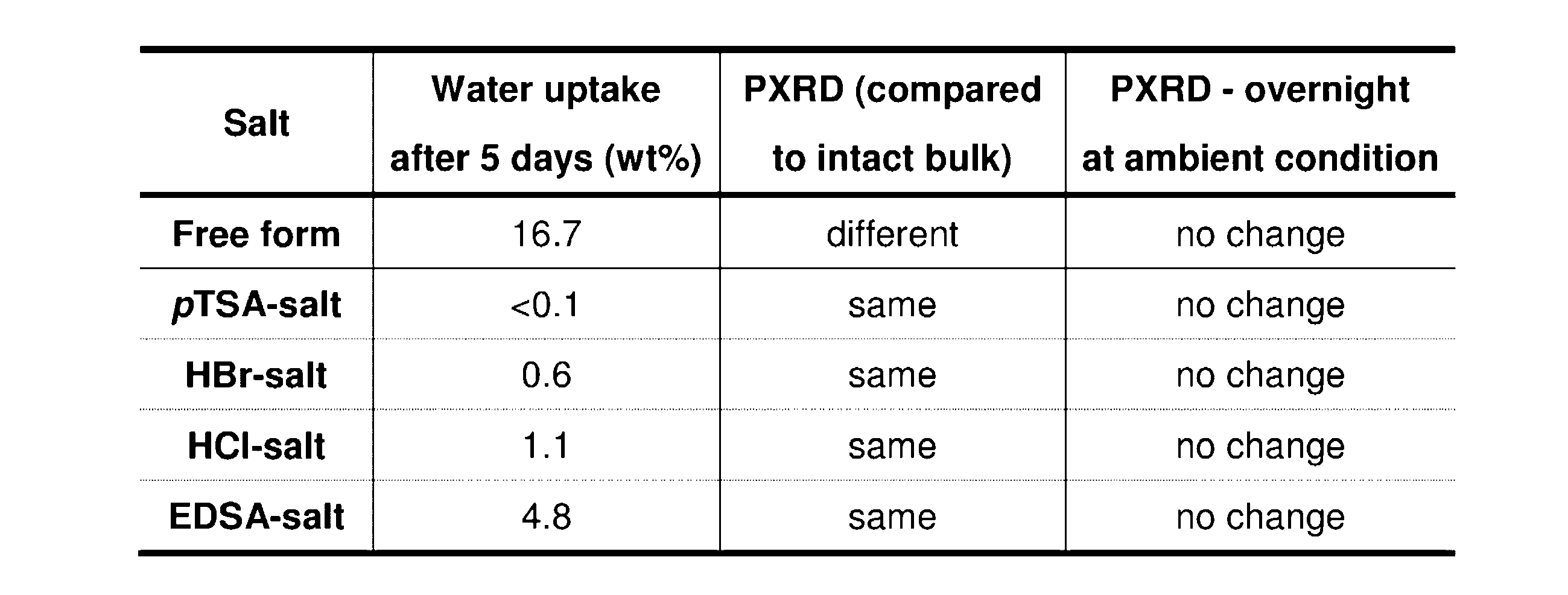
[Solid-state stability study]
Solid-state stability study is performed using Nagano Science Constant temperature/humidity control chamber LH-20-11M or LH-21-11M. The sample is placed in the chamber and exposed under 40 oC/75 % RH. The crystalline form and thermal behavior of the resultant sample after the exposure are evaluated by PXRD and TG/DTA, respectively. The remaining% and the purity are determined by HPLC measurement.

N.D. means not detected.
Area of the counterion in each salt sample is excluded from the calculation.
General procedure for preparation of 4-{[4-({[4-(2,2,2-trifluoroethoxy)-1,2-benzisoxazol-3-yl]oxy}methyl)piperidin-1-yl]methyl}tetrahydro-2H-pyran-4-carboxylic acid salts other than the HCl-salt, the HBr-salt, the pTSA-salt and the EDSA-salt:
Preparation of 4-{[4-({[4-(2,2,2-trifluoroethoxy)-1,2-benzisoxazol-3-yl]oxy}methyl)piperidin-1-yl]methyl}tetrahydro-2H-pyran-4-carboxylic acid benzenesulfonic acid salt
Trial of salt formation with benzenesulfonic acid is conducted by the general procedure using the said compound in EtOH and benzenesulfonic acid solution in dioxane. The mixture is clear after an addition of the counterion and no solids are observed after cooling. The solution is concentrated by rotavap providing oil and no solids of the salt are obtained.
Preparation of 4-{[4-({[4-(2,2,2-trifluoroethoxy)-1,2-benzisoxazol-3-yl]oxy}methyl)piperidin-1-yl]methyl}tetrahydro-2H-pyran-4-carboxylic acid p-toluenesulfonic acid salt
Trial of salt formation with p-toluenesulfonic acid is conducted by the general procedure using the said compound in EtOH and p-toluenesulfonic acid solution in dioxane. The mixture is clear after an addition of the counterion and no solids are observed after cooling. The solution is concentration by rotavap providing oil and no solids are obtained.
REFERENCE 1(c)
Preparation of 4-{[4-({[4-(2,2,2-trifluoroethoxy)-1,2-benzisoxazol-3-yl]oxy}methyl)piperidin-1-yl]methyl}tetrahydro-2H-pyran-4-carboxylic acid zinc salt
Trial of salt formation with zinc acetate is conducted by the general procedure using the said compound in EtOH and zinc acetate solution in water. The mixture is clear after an addition of the counterion and no solids are observed after cooling. The solution is concentrated by rotavap providing oil and no solids of the salt are obtained.
Preparation of 4-{[4-({[4-(2,2,2-trifluoroethoxy)-1,2-benzisoxazol-3-yl]oxy}methyl)piperidin-1-yl]methyl}tetrahydro-2H-pyran-4-carboxylic acid (+)-(1S)-camphor-10-sulfonic acid salt
Trial of salt formation with (+)-(1S)-camphor-10-sulfonic acid is conducted by the general procedure using the said compound in EtOH and (+)-(1S)-camphor-10-sulfonic acid solution in EtOH. It affords solids whose PXRD pattern is consistent with the free form of the said compound. Only the free form is recovered.
Preparation of 4-{[4-({[4-(2,2,2-trifluoroethoxy)-1,2-benzisoxazol-3-yl]oxy}methyl)piperidin-1-yl]methyl}tetrahydro-2H-pyran-4-carboxylic acid napthalene-2-sulfonic acid salt
Trial of salt formation with napthalene-2-sulfonic acid is conducted by the general procedure using the said compound in EtOH and napthalene-2-sulfonic acid solution in EtOH. It affords solids whose PXRD pattern is consistent with the free form of the said compound. Only the free form is recovered.
Preparation of 4-{[4-({[4-(2,2,2-trifluoroethoxy)-1,2-benzisoxazol-3-yl]oxy}methyl)piperidin-1-yl]methyl}tetrahydro-2H-pyran-4-carboxylic acid sodium salt
Trial of salt formation with sodium acetate is conducted by the general procedure using the said compound in CH3CN and sodium acetate solution in MeOH. It affords solids whose PXRD pattern is consistent with the free form of the said compound. Only the free form is recovered.
Preparation of 4-{[4-({[4-(2,2,2-trifluoroethoxy)-1,2-benzisoxazol-3-yl]oxy}methyl)piperidin-1-yl]methyl}tetrahydro-2H-pyran-4-carboxylic acid betaine salt
Trial of salt formation with betaine is conducted by the general procedure using the said compound in MEK and betaine solution in MeOH. It affords solids whose PXRD pattern is consistent with the free form of the said compound. Only the free form is recovered.
Preparation of 4-{[4-({[4-(2,2,2-trifluoroethoxy)-1,2-benzisoxazol-3-yl]oxy}methyl)piperidin-1-yl]methyl}tetrahydro-2H-pyran-4-carboxylic acid diethylamine salt
Trial of salt formation with diethylamine is conducted by the general procedure using the said compound in n-BuOH and diethylamine solution in EtOH. It affords solids whose PXRD pattern is consistent with the free form of the said compound. Only the free form is recovered.
Preparation of 4-{[4-({[4-(2,2,2-trifluoroethoxy)-1,2-benzisoxazol-3-yl]oxy}methyl)piperidin-1-yl]methyl}tetrahydro-2H-pyran-4-carboxylic acid sulfuric acid salt
Salt formation with sulfuric acid is conducted by the general procedure using the said compound in n-BuOH and sulfuric acid solution in EtOH. It affords a unique PXRD pattern compared to the free form of the said compound, however, 1H-NMR analysis shows 14.0 wt% of n-BuOH, which is consistent with mono-solvates. It is not for practical use as a pharmaceutical acceptable salt.
Preparation of 4-{[4-({[4-(2,2,2-trifluoroethoxy)-1,2-benzisoxazol-3-yl]oxy}methyl)piperidin-1-yl]methyl}tetrahydro-2H-pyran-4-carboxylic acid phosphoric acid salt
Salt formation with phosphoric acid is conducted by the general procedure using the said compound in n-BuOH and phosphoric acid solution in EtOH. It provides a unique PXRD pattern compared to the free form of the said compound, however, 1H-NMR analysis shows 0.1 wt% of EtOH and 0.3 wt% of n-BuOH. It is not for practical use as a pharmaceutical acceptable salt.
Preparation of 4-{[4-({[4-(2,2,2-trifluoroethoxy)-1,2-benzisoxazol-3-yl]oxy}methyl)piperidin-1-yl]methyl}tetrahydro-2H-pyran-4-carboxylic acid sodium salt
Salt formation with sodium hydroxide is conducted by the general procedure using the said compound in EtOH and sodium hydroxide in EtOH/water. It provides a unique PXRD pattern compared to the free form of the said compound and its 1H-NMR spectra shows no significant organic solvent, however, adsorption of more than 40 wt% water after five days at 90%RH is observed in Hygroscopicity study.
Preparation of 4-{[4-({[4-(2,2,2-trifluoroethoxy)-1,2-benzisoxazol-3-yl]oxy}methyl)piperidin-1-yl]methyl}tetrahydro-2H-pyran-4-carboxylic acid potassium salt
[Hygroscopicity study]
Salts other than the HCl-salt, the HBr-salt, the pTSA-salt and the EDSA-salt, which include salts described in REFERENCE 1(a)-1(l) are not suitable for hygroscopicity study in EXAMPLE 6.
Salts other than the HCl-salt, the HBr-salt, the pTSA-salt and the EDSA-salt, which include salts described in REFERENCE 1(a)-1(l) are not suitable for Solid-state stability study in EXAMPLE 7.
Claims (20)
- 4-{[4-({[4-(2,2,2-Trifluoroethoxy)-1,2-benzisoxazol-3-yl]oxy}methyl)piperidin-1-yl]methyl}tetrahydro-2H-pyran-4-carboxylic acid HCl-salt, which is characterized by a powder X-ray diffraction (PXRD) pattern obtained by irradiation with Cu-K-alpha radiation which includes main peaks at 2-theta 5.9, 9.4, 11.1, 11.9, 13.2, 18.2, 18.6, 22.1, 25.2 and 26.5 (o ), wherein each peak has a margin of error of +/- 0.2 (o ).
- 4-{[4-({[4-(2,2,2-Trifluoroethoxy)-1,2-benzisoxazol-3-yl]oxy}methyl)piperidin-1-yl]methyl}tetrahydro-2H-pyran-4-carboxylic acid HCl-salt, which is characterized by an infrared (IR) spectrum (diffuse reflection) which shows absorption bands at 4392, 3393, 2953, 2517, 1942, 1705, 1618, 1541, 1508, 1439, 1377, 1288, 1261, 1223, 1155, 1111, 1059, 1040, 1011, 966, 941, 878, 856, 787, 754, 733, 654, 625, 590, 573, 557, 529, 503, and 478 cm-1, wherein each peak has a margin of error of +/- 2 cm-1;
- 4-{[4-({[4-(2,2,2-Trifluoroethoxy)-1,2-benzisoxazol-3-yl]oxy}methyl)piperidin-1-yl]methyl}tetrahydro-2H-pyran-4-carboxylic acid HCl-salt as described in Claim 1 or Claim 2, which is further characterized by differential scanning calorimetry (DSC) in which it exhibits an endothermic event at 232 oC, wherein the temperature has a margin of error of +/- 1 oC.
- 4-{[4-({[4-(2,2,2-Trifluoroethoxy)-1,2-benzisoxazol-3-yl]oxy}methyl)piperidin-1-yl]methyl}tetrahydro-2H-pyran-4-carboxylic acid HBr-salt, which is characterized by a powder X-ray diffraction (PXRD) pattern obtained by irradiation with Cu-K-alpha radiation which includes main peaks at 2-theta 9.4, 13.3, 18.4, 18.7, 22.2, 23.2, 23.8, 24.8, 25.2, 25.9 and 26.6 (o ), wherein each peak has a margin of error of +/- 0.2 (o ).
- 4-{[4-({[4-(2,2,2-Trifluoroethoxy)-1,2-benzisoxazol-3-yl]oxy}methyl)piperidin-1-yl]methyl}tetrahydro-2H-pyran-4-carboxylic acid HBr-salt, which is characterized by an infrared (IR) spectrum (diffuse reflection) which shows absorption bands at 4405, 3397, 2941, 2693, 2122, 1942, 1717, 1618, 1545, 1508, 1441, 1410, 1377, 1352, 1287, 1261, 1225, 1157, 1111, 1059, 1040, 1011, 968, 941, 874, 856, 787, 754, 735, 652, 621, 590, 571, 557, 525, 503 and 478 cm-1, wherein each peak has a margin of error of +/- 2 cm-1.
- 4-{[4-({[4-(2,2,2-Trifluoroethoxy)-1,2-benzisoxazol-3-yl]oxy}methyl)piperidin-1-yl]methyl}tetrahydro-2H-pyran-4-carboxylic acid HBr-salt as described in Claim 4 or Claim 5, which is further characterized by differential scanning calorimetry (DSC) in which it exhibits an endothermic event at 256 oC, wherein the temperature has a margin of error of +/- 1 oC.
- 4-{[4-({[4-(2,2,2-Trifluoroethoxy)-1,2-benzisoxazol-3-yl]oxy}methyl)piperidin-1-yl]methyl}tetrahydro-2H-pyran-4-carboxylic acid pTSA-salt, which is characterized by a powder X-ray diffraction (PXRD) pattern obtained by irradiation with Cu-K-alpha radiation which includes main peaks at 2-theta 5.3, 11.9, 14.6, 16.0, 18.5, 18.7, 20.1, 20.6, 21.1, 22.7 and 23.0 (o ), wherein each peak has a margin of error of +/- 0.2 (o ).
- 4-{[4-({[4-(2,2,2-Trifluoroethoxy)-1,2-benzisoxazol-3-yl]oxy}methyl)piperidin-1-yl]methyl}tetrahydro-2H-pyran-4-carboxylic acid pTSA-salt, which is characterized by an infrared (IR) spectrum (diffuse reflection) which shows absorption bands at 4438, 4369, 3397, 3017, 2868, 2768, 1902, 1701, 1616, 1541, 1508, 1466, 1436, 1422, 1371, 1290, 1267, 1206, 1180, 1150, 1117, 1038, 1013, 972, 918, 881, 860, 847, 812, 783, 738, 708, 677, 650, 611, 565 and 492 cm-1, wherein each peak has a margin of error of +/- 2 cm-1.
- 4-{[4-({[4-(2,2,2-Trifluoroethoxy)-1,2-benzisoxazol-3-yl]oxy}methyl)piperidin-1-yl]methyl}tetrahydro-2H-pyran-4-carboxylic acid pTSA-salt as described in Claim 7 or Claim 8, which is further characterized by differential scanning calorimetry (DSC) in which it exhibits an endothermic event at 207 oC, wherein the temperature has a margin of error of +/- 1 oC.
- 4-{[4-({[4-(2,2,2-Trifluoroethoxy)-1,2-benzisoxazol-3-yl]oxy}methyl)piperidin-1-yl]methyl}tetrahydro-2H-pyran-4-carboxylic acid EDSA-salt, which is characterized by a powder X-ray diffraction (PXRD) pattern obtained by irradiation with Cu-K-alpha radiation which includes main peaks at 2-theta 11.3, 13.8, 15.1, 15.9, 18.8, 19.5, 20.2, 20.4, 20.7, 24.0, 24.7 and 26.2 (o ), wherein each peak has a margin of error of +/- 0.2 (o ).
- 4-{[4-({[4-(2,2,2-Trifluoroethoxy)-1,2-benzisoxazol-3-yl]oxy}methyl)piperidin-1-yl]methyl}tetrahydro-2H-pyran-4-carboxylic acid EDSA-salt, which is characterized by an infrared (IR) spectrum (diffuse reflection) which shows absorption bands at 4388, 3948, 3422, 2741, 1937, 1717, 1616, 1539, 1506, 1435, 1373, 1285, 1244, 1204, 1169, 1146, 1107, 1030, 989, 972, 951, 901, 854, 789, 772, 756, 741, 729, 652, 615, 546, 532 and 490 cm-1, wherein each peak has a margin of error of +/- 2 cm-1.
- 4-{[4-({[4-(2,2,2-Trifluoroethoxy)-1,2-benzisoxazol-3-yl]oxy}methyl)piperidin-1-yl]methyl}tetrahydro-2H-pyran-4-carboxylic acid EDSA-salt as described in Claim 10 or Claim 11, which is further characterized by differential scanning calorimetry (DSC) in which it exhibits an endothermic event at 246 oC, wherein the temperature has a margin of error of +/- 1 oC.
- A pharmaceutical composition including 4-{[4-({[4-(2,2,2-trifluoroethoxy)-1,2-benzisoxazol-3-yl]oxy}methyl)piperidin-1-yl]methyl}tetrahydro-2H-pyran-4-carboxylic acid salt form as described in any one of Claim 1 to Claim 12, together with one or more pharmaceutically acceptable excipients.
- 4-{[4-({[4-(2,2,2-Trifluoroethoxy)-1,2-benzisoxazol-3-yl]oxy}methyl)piperidin-1-yl]methyl}tetrahydro-2H-pyran-4-carboxylic acid salt as described in any one of Claim 1 to Claim 12 for use as a medicament.
- A use of 4-{[4-({[4-(2,2,2-trifluoroethoxy)-1,2-benzisoxazol-3-yl]oxy}methyl)piperidin-1-yl]methyl}tetrahydro-2H-pyran-4-carboxylic acid salt form as described in any one of Claim 1 to Claim 12, or a pharmaceutical composition as described in Claim 13, in the preparation of a medicament for the curative, palliative or prophylactic treatment of disease conditions mediated by 5-HT4 receptor activity.
- A method of treating disease conditions mediated by 5-HT4 receptor activity, which comprises administering an effective amount of 4-{[4-({[4-(2,2,2-trifluoroethoxy)-1,2-benzisoxazol-3-yl]oxy}methyl)piperidin-1-yl]methyl}tetrahydro-2H-pyran-4-carboxylic acid salt form as described in any one of Claim 1 to Claim 12, or a pharmaceutical composition as described in Claim 13, to an animal, including a human, in need of such treatment.
- A process for preparing 4-{[4-({[4-(2,2,2-trifluoroethoxy)-1,2-benzisoxazol-3-yl]oxy}methyl)piperidin-1-yl]methyl}tetrahydro-2H-pyran-4-carboxylic acid HCl-salt as described in any one of Claim 1 to Claim 3, comprising the step of exposing the compound with HCl.
- A process for preparing 4-{[4-({[4-(2,2,2-trifluoroethoxy)-1,2-benzisoxazol-3-yl]oxy}methyl)piperidin-1-yl]methyl}tetrahydro-2H-pyran-4-carboxylic acid HBr-salt as described in any one of Claim 4 to Claim 6, comprising the step of exposing the compound with HBr.
- A process for preparing 4-{[4-({[4-(2,2,2-trifluoroethoxy)-1,2-benzisoxazol-3-yl]oxy}methyl)piperidin-1-yl]methyl}tetrahydro-2H-pyran-4-carboxylic acid pTSA-salt as described in any one of Claim 7 to Claim 9, comprising the step of exposing the compound with p-toluenesulfonic acid.
- A process for preparing 4-{[4-({[4-(2,2,2-trifluoroethoxy)-1,2-benzisoxazol-3-yl]oxy}methyl)piperidin-1-yl]methyl}tetrahydro-2H-pyran-4-carboxylic acid EDSA-salt as described in any one of Claim 10 to Claim 12, comprising the step of exposing the compound with ethanedisulfonic acid.
Priority Applications (11)
| Application Number | Priority Date | Filing Date | Title |
|---|---|---|---|
| HK17105284.5A HK1231483B (en) | 2014-05-20 | 2015-05-20 | Benzisoxazole derivative salt |
| KR1020167030272A KR102471082B1 (en) | 2014-05-20 | 2015-05-20 | Benzisoxazole derivative salt |
| CA2944982A CA2944982C (en) | 2014-05-20 | 2015-05-20 | Benzisoxazole derivative salt |
| ES15796887T ES2747989T3 (en) | 2014-05-20 | 2015-05-20 | Benzisoxazole derivative salt |
| EP15796887.6A EP3145926B1 (en) | 2014-05-20 | 2015-05-20 | Benzisoxazole derivative salt |
| BR112016024213A BR112016024213A2 (en) | 2014-05-20 | 2015-05-20 | benzisoxazole-derived salt, method for treating disease conditions mediated by 5-ht4 receptor activity, process for preparation and use of salt |
| JP2016568452A JP6572414B2 (en) | 2014-05-20 | 2015-05-20 | Benzisoxazole derivative salt |
| RU2016149650A RU2679619C2 (en) | 2014-05-20 | 2015-05-20 | Benzisoxazole salt derivative |
| CN201580022256.5A CN107074837B (en) | 2014-05-20 | 2015-05-20 | Benzisoxazole derivative salt |
| US15/312,440 US9988370B2 (en) | 2014-05-20 | 2015-05-20 | Benzisoxazole derivative salt |
| MX2016014948A MX366985B (en) | 2014-05-20 | 2015-05-20 | Benzisoxazole derivative salt. |
Applications Claiming Priority (2)
| Application Number | Priority Date | Filing Date | Title |
|---|---|---|---|
| US201462000687P | 2014-05-20 | 2014-05-20 | |
| US62/000,687 | 2014-05-20 |
Publications (1)
| Publication Number | Publication Date |
|---|---|
| WO2015178020A1 true WO2015178020A1 (en) | 2015-11-26 |
Family
ID=54553701
Family Applications (1)
| Application Number | Title | Priority Date | Filing Date |
|---|---|---|---|
| PCT/JP2015/002528 Ceased WO2015178020A1 (en) | 2014-05-20 | 2015-05-20 | Benzisoxazole derivative salt |
Country Status (13)
| Country | Link |
|---|---|
| US (1) | US9988370B2 (en) |
| EP (1) | EP3145926B1 (en) |
| JP (1) | JP6572414B2 (en) |
| KR (1) | KR102471082B1 (en) |
| CN (2) | CN107074837B (en) |
| BR (1) | BR112016024213A2 (en) |
| CA (1) | CA2944982C (en) |
| ES (1) | ES2747989T3 (en) |
| HK (1) | HK1251553A1 (en) |
| MX (1) | MX366985B (en) |
| RU (1) | RU2679619C2 (en) |
| TW (1) | TWI672300B (en) |
| WO (1) | WO2015178020A1 (en) |
Families Citing this family (2)
| Publication number | Priority date | Publication date | Assignee | Title |
|---|---|---|---|---|
| EP3145926B1 (en) * | 2014-05-20 | 2019-07-03 | RaQualia Pharma Inc. | Benzisoxazole derivative salt |
| JP7765130B2 (en) * | 2021-07-30 | 2025-11-06 | ラクオリア創薬株式会社 | Crystal form |
Citations (4)
| Publication number | Priority date | Publication date | Assignee | Title |
|---|---|---|---|---|
| WO2006090224A1 (en) * | 2005-02-25 | 2006-08-31 | Pfizer Japan Inc. | Benzisoxazole derivatives |
| WO2011101774A1 (en) * | 2010-02-16 | 2011-08-25 | Pfizer Inc. | (r)-4-((4-((4-(tetrahydrofuran-3-yloxy)benzo[d]isoxazol-3-yloxy)methyl)piperidin-1-yl)methyl)tetrahydro-2h-pyran-4-ol, a partial agonist of 5-ht4 receptors |
| WO2012127878A1 (en) * | 2011-03-23 | 2012-09-27 | Raqualia Pharma Inc. | A 5-ht4 receptor agonist as a prokinetic agent |
| WO2012157288A1 (en) * | 2011-05-18 | 2012-11-22 | Raqualia Pharma Inc. | Polymorph form of 4-{[4-({[4-(2,2,2-trifluoroethoxy)-1,2-benzisoxazol-3-yl]oxy}methyl)piperidin-1-yl]methyl}-tetrahydro-2h-pyran-4-carboxylic acid |
Family Cites Families (7)
| Publication number | Priority date | Publication date | Assignee | Title |
|---|---|---|---|---|
| US5376645A (en) | 1990-01-23 | 1994-12-27 | University Of Kansas | Derivatives of cyclodextrins exhibiting enhanced aqueous solubility and the use thereof |
| KR0166088B1 (en) | 1990-01-23 | 1999-01-15 | . | Cyclodextrin derivatives with increased water solubility and uses thereof |
| GB9518953D0 (en) | 1995-09-15 | 1995-11-15 | Pfizer Ltd | Pharmaceutical formulations |
| WO2000035296A1 (en) | 1996-11-27 | 2000-06-22 | Wm. Wrigley Jr. Company | Improved release of medicament active agents from a chewing gum coating |
| GB9711643D0 (en) | 1997-06-05 | 1997-07-30 | Janssen Pharmaceutica Nv | Glass thermoplastic systems |
| RU2328483C2 (en) * | 2002-08-29 | 2008-07-10 | Мерк Энд Ко., Инк. | Indoles with antidiabetic activity |
| EP3145926B1 (en) * | 2014-05-20 | 2019-07-03 | RaQualia Pharma Inc. | Benzisoxazole derivative salt |
-
2015
- 2015-05-20 EP EP15796887.6A patent/EP3145926B1/en active Active
- 2015-05-20 KR KR1020167030272A patent/KR102471082B1/en active Active
- 2015-05-20 ES ES15796887T patent/ES2747989T3/en active Active
- 2015-05-20 TW TW104116120A patent/TWI672300B/en active
- 2015-05-20 CN CN201580022256.5A patent/CN107074837B/en active Active
- 2015-05-20 CN CN201810233844.9A patent/CN108329305A/en active Pending
- 2015-05-20 CA CA2944982A patent/CA2944982C/en active Active
- 2015-05-20 WO PCT/JP2015/002528 patent/WO2015178020A1/en not_active Ceased
- 2015-05-20 JP JP2016568452A patent/JP6572414B2/en active Active
- 2015-05-20 MX MX2016014948A patent/MX366985B/en active IP Right Grant
- 2015-05-20 RU RU2016149650A patent/RU2679619C2/en active
- 2015-05-20 BR BR112016024213A patent/BR112016024213A2/en not_active IP Right Cessation
- 2015-05-20 US US15/312,440 patent/US9988370B2/en active Active
-
2018
- 2018-08-23 HK HK18110880.2A patent/HK1251553A1/en unknown
Patent Citations (4)
| Publication number | Priority date | Publication date | Assignee | Title |
|---|---|---|---|---|
| WO2006090224A1 (en) * | 2005-02-25 | 2006-08-31 | Pfizer Japan Inc. | Benzisoxazole derivatives |
| WO2011101774A1 (en) * | 2010-02-16 | 2011-08-25 | Pfizer Inc. | (r)-4-((4-((4-(tetrahydrofuran-3-yloxy)benzo[d]isoxazol-3-yloxy)methyl)piperidin-1-yl)methyl)tetrahydro-2h-pyran-4-ol, a partial agonist of 5-ht4 receptors |
| WO2012127878A1 (en) * | 2011-03-23 | 2012-09-27 | Raqualia Pharma Inc. | A 5-ht4 receptor agonist as a prokinetic agent |
| WO2012157288A1 (en) * | 2011-05-18 | 2012-11-22 | Raqualia Pharma Inc. | Polymorph form of 4-{[4-({[4-(2,2,2-trifluoroethoxy)-1,2-benzisoxazol-3-yl]oxy}methyl)piperidin-1-yl]methyl}-tetrahydro-2h-pyran-4-carboxylic acid |
Non-Patent Citations (1)
| Title |
|---|
| See also references of EP3145926A4 * |
Also Published As
| Publication number | Publication date |
|---|---|
| MX366985B (en) | 2019-08-01 |
| CN107074837B (en) | 2020-07-28 |
| RU2016149650A (en) | 2018-06-20 |
| MX2016014948A (en) | 2017-05-25 |
| JP6572414B2 (en) | 2019-09-11 |
| CN108329305A (en) | 2018-07-27 |
| EP3145926B1 (en) | 2019-07-03 |
| TWI672300B (en) | 2019-09-21 |
| JP2017515868A (en) | 2017-06-15 |
| CA2944982A1 (en) | 2015-11-26 |
| CN107074837A (en) | 2017-08-18 |
| BR112016024213A2 (en) | 2017-08-15 |
| RU2679619C2 (en) | 2019-02-12 |
| HK1231483A1 (en) | 2017-12-22 |
| ES2747989T3 (en) | 2020-03-12 |
| HK1251553A1 (en) | 2019-02-01 |
| TW201625602A (en) | 2016-07-16 |
| CA2944982C (en) | 2022-06-07 |
| RU2016149650A3 (en) | 2018-11-30 |
| EP3145926A1 (en) | 2017-03-29 |
| US9988370B2 (en) | 2018-06-05 |
| KR102471082B1 (en) | 2022-11-25 |
| EP3145926A4 (en) | 2017-12-27 |
| KR20170007737A (en) | 2017-01-20 |
| US20170081318A1 (en) | 2017-03-23 |
Similar Documents
| Publication | Publication Date | Title |
|---|---|---|
| US9187463B2 (en) | Polymorph form of 4-{[4-({[4-(2,2,2-trifluoroethoxy)-1,2-benzisoxazol-3-yl]oxy}methyl)piperidin-1-yl]methyl}-tetrahydro-2H-pyran-4-carboxylic acid | |
| US10179779B2 (en) | Polymorph forms | |
| US9988370B2 (en) | Benzisoxazole derivative salt | |
| JP7765130B2 (en) | Crystal form | |
| US9499543B2 (en) | Polymorph forms | |
| HK1231483B (en) | Benzisoxazole derivative salt | |
| HK1209122B (en) | Polymorphs of 4-{[4-({[4-(2,2,2-trifluoroethoxy)-1,2-benzisoxazol-3-yl]oxy}methyl)piperidin-1-yl]methyl}-tetrahydro-2h-pyran-4-carboxylic acid as 5-hydroxytryptamine-4 (5-ht4) receptor agonists for the treatment of gastrointestinal diseases | |
| HK1195559B (en) | Polymorph form of 4-{[4-({[4-(2,2,2-trifluoroethoxy)-1,2-benzisoxazol-3-yl]oxy}methyl)piperidin-1-yl]methyl}-tetrahydro-2h-pyran-4-carboxylic acid |
Legal Events
| Date | Code | Title | Description |
|---|---|---|---|
| 121 | Ep: the epo has been informed by wipo that ep was designated in this application |
Ref document number: 15796887 Country of ref document: EP Kind code of ref document: A1 |
|
| DPE1 | Request for preliminary examination filed after expiration of 19th month from priority date (pct application filed from 20040101) | ||
| ENP | Entry into the national phase |
Ref document number: 2944982 Country of ref document: CA |
|
| ENP | Entry into the national phase |
Ref document number: 20167030272 Country of ref document: KR Kind code of ref document: A |
|
| REG | Reference to national code |
Ref country code: BR Ref legal event code: B01A Ref document number: 112016024213 Country of ref document: BR |
|
| WWE | Wipo information: entry into national phase |
Ref document number: MX/A/2016/014948 Country of ref document: MX |
|
| ENP | Entry into the national phase |
Ref document number: 2016568452 Country of ref document: JP Kind code of ref document: A |
|
| WWE | Wipo information: entry into national phase |
Ref document number: 15312440 Country of ref document: US |
|
| NENP | Non-entry into the national phase |
Ref country code: DE |
|
| REEP | Request for entry into the european phase |
Ref document number: 2015796887 Country of ref document: EP |
|
| WWE | Wipo information: entry into national phase |
Ref document number: 2015796887 Country of ref document: EP |
|
| ENP | Entry into the national phase |
Ref document number: 2016149650 Country of ref document: RU Kind code of ref document: A |
|
| ENP | Entry into the national phase |
Ref document number: 112016024213 Country of ref document: BR Kind code of ref document: A2 Effective date: 20161017 |