WO2015197981A1 - Sondes moléculaires activables hydrosolubles, intermédiaires pour leur synthèse et procédés de détection assocés - Google Patents
Sondes moléculaires activables hydrosolubles, intermédiaires pour leur synthèse et procédés de détection assocés Download PDFInfo
- Publication number
- WO2015197981A1 WO2015197981A1 PCT/FR2015/051705 FR2015051705W WO2015197981A1 WO 2015197981 A1 WO2015197981 A1 WO 2015197981A1 FR 2015051705 W FR2015051705 W FR 2015051705W WO 2015197981 A1 WO2015197981 A1 WO 2015197981A1
- Authority
- WO
- WIPO (PCT)
- Prior art keywords
- group
- compound
- groups
- alkyl
- substrate
- Prior art date
- Legal status (The legal status is an assumption and is not a legal conclusion. Google has not performed a legal analysis and makes no representation as to the accuracy of the status listed.)
- Ceased
Links
Classifications
-
- A—HUMAN NECESSITIES
- A61—MEDICAL OR VETERINARY SCIENCE; HYGIENE
- A61K—PREPARATIONS FOR MEDICAL, DENTAL OR TOILETRY PURPOSES
- A61K49/00—Preparations for testing in vivo
- A61K49/001—Preparation for luminescence or biological staining
- A61K49/0013—Luminescence
- A61K49/0017—Fluorescence in vivo
- A61K49/0019—Fluorescence in vivo characterised by the fluorescent group, e.g. oligomeric, polymeric or dendritic molecules
- A61K49/0021—Fluorescence in vivo characterised by the fluorescent group, e.g. oligomeric, polymeric or dendritic molecules the fluorescent group being a small organic molecule
-
- A—HUMAN NECESSITIES
- A61—MEDICAL OR VETERINARY SCIENCE; HYGIENE
- A61K—PREPARATIONS FOR MEDICAL, DENTAL OR TOILETRY PURPOSES
- A61K49/00—Preparations for testing in vivo
- A61K49/001—Preparation for luminescence or biological staining
- A61K49/0013—Luminescence
- A61K49/0017—Fluorescence in vivo
- A61K49/005—Fluorescence in vivo characterised by the carrier molecule carrying the fluorescent agent
- A61K49/0052—Small organic molecules
-
- C—CHEMISTRY; METALLURGY
- C07—ORGANIC CHEMISTRY
- C07D—HETEROCYCLIC COMPOUNDS
- C07D241/00—Heterocyclic compounds containing 1,4-diazine or hydrogenated 1,4-diazine rings
- C07D241/02—Heterocyclic compounds containing 1,4-diazine or hydrogenated 1,4-diazine rings not condensed with other rings
- C07D241/04—Heterocyclic compounds containing 1,4-diazine or hydrogenated 1,4-diazine rings not condensed with other rings having no double bonds between ring members or between ring members and non-ring members
-
- C—CHEMISTRY; METALLURGY
- C07—ORGANIC CHEMISTRY
- C07D—HETEROCYCLIC COMPOUNDS
- C07D403/00—Heterocyclic compounds containing two or more hetero rings, having nitrogen atoms as the only ring hetero atoms, not provided for by group C07D401/00
- C07D403/02—Heterocyclic compounds containing two or more hetero rings, having nitrogen atoms as the only ring hetero atoms, not provided for by group C07D401/00 containing two hetero rings
- C07D403/06—Heterocyclic compounds containing two or more hetero rings, having nitrogen atoms as the only ring hetero atoms, not provided for by group C07D401/00 containing two hetero rings linked by a carbon chain containing only aliphatic carbon atoms
-
- C—CHEMISTRY; METALLURGY
- C07—ORGANIC CHEMISTRY
- C07D—HETEROCYCLIC COMPOUNDS
- C07D403/00—Heterocyclic compounds containing two or more hetero rings, having nitrogen atoms as the only ring hetero atoms, not provided for by group C07D401/00
- C07D403/02—Heterocyclic compounds containing two or more hetero rings, having nitrogen atoms as the only ring hetero atoms, not provided for by group C07D401/00 containing two hetero rings
- C07D403/08—Heterocyclic compounds containing two or more hetero rings, having nitrogen atoms as the only ring hetero atoms, not provided for by group C07D401/00 containing two hetero rings linked by a carbon chain containing alicyclic rings
-
- C—CHEMISTRY; METALLURGY
- C07—ORGANIC CHEMISTRY
- C07D—HETEROCYCLIC COMPOUNDS
- C07D403/00—Heterocyclic compounds containing two or more hetero rings, having nitrogen atoms as the only ring hetero atoms, not provided for by group C07D401/00
- C07D403/02—Heterocyclic compounds containing two or more hetero rings, having nitrogen atoms as the only ring hetero atoms, not provided for by group C07D401/00 containing two hetero rings
- C07D403/12—Heterocyclic compounds containing two or more hetero rings, having nitrogen atoms as the only ring hetero atoms, not provided for by group C07D401/00 containing two hetero rings linked by a chain containing hetero atoms as chain links
-
- C—CHEMISTRY; METALLURGY
- C07—ORGANIC CHEMISTRY
- C07D—HETEROCYCLIC COMPOUNDS
- C07D403/00—Heterocyclic compounds containing two or more hetero rings, having nitrogen atoms as the only ring hetero atoms, not provided for by group C07D401/00
- C07D403/14—Heterocyclic compounds containing two or more hetero rings, having nitrogen atoms as the only ring hetero atoms, not provided for by group C07D401/00 containing three or more hetero rings
-
- C—CHEMISTRY; METALLURGY
- C07—ORGANIC CHEMISTRY
- C07D—HETEROCYCLIC COMPOUNDS
- C07D405/00—Heterocyclic compounds containing both one or more hetero rings having oxygen atoms as the only ring hetero atoms, and one or more rings having nitrogen as the only ring hetero atom
- C07D405/02—Heterocyclic compounds containing both one or more hetero rings having oxygen atoms as the only ring hetero atoms, and one or more rings having nitrogen as the only ring hetero atom containing two hetero rings
- C07D405/12—Heterocyclic compounds containing both one or more hetero rings having oxygen atoms as the only ring hetero atoms, and one or more rings having nitrogen as the only ring hetero atom containing two hetero rings linked by a chain containing hetero atoms as chain links
-
- C—CHEMISTRY; METALLURGY
- C07—ORGANIC CHEMISTRY
- C07D—HETEROCYCLIC COMPOUNDS
- C07D405/00—Heterocyclic compounds containing both one or more hetero rings having oxygen atoms as the only ring hetero atoms, and one or more rings having nitrogen as the only ring hetero atom
- C07D405/14—Heterocyclic compounds containing both one or more hetero rings having oxygen atoms as the only ring hetero atoms, and one or more rings having nitrogen as the only ring hetero atom containing three or more hetero rings
-
- C—CHEMISTRY; METALLURGY
- C12—BIOCHEMISTRY; BEER; SPIRITS; WINE; VINEGAR; MICROBIOLOGY; ENZYMOLOGY; MUTATION OR GENETIC ENGINEERING
- C12Q—MEASURING OR TESTING PROCESSES INVOLVING ENZYMES, NUCLEIC ACIDS OR MICROORGANISMS; COMPOSITIONS OR TEST PAPERS THEREFOR; PROCESSES OF PREPARING SUCH COMPOSITIONS; CONDITION-RESPONSIVE CONTROL IN MICROBIOLOGICAL OR ENZYMOLOGICAL PROCESSES
- C12Q1/00—Measuring or testing processes involving enzymes, nucleic acids or microorganisms; Compositions therefor; Processes of preparing such compositions
- C12Q1/34—Measuring or testing processes involving enzymes, nucleic acids or microorganisms; Compositions therefor; Processes of preparing such compositions involving hydrolase
-
- C—CHEMISTRY; METALLURGY
- C12—BIOCHEMISTRY; BEER; SPIRITS; WINE; VINEGAR; MICROBIOLOGY; ENZYMOLOGY; MUTATION OR GENETIC ENGINEERING
- C12Q—MEASURING OR TESTING PROCESSES INVOLVING ENZYMES, NUCLEIC ACIDS OR MICROORGANISMS; COMPOSITIONS OR TEST PAPERS THEREFOR; PROCESSES OF PREPARING SUCH COMPOSITIONS; CONDITION-RESPONSIVE CONTROL IN MICROBIOLOGICAL OR ENZYMOLOGICAL PROCESSES
- C12Q1/00—Measuring or testing processes involving enzymes, nucleic acids or microorganisms; Compositions therefor; Processes of preparing such compositions
- C12Q1/34—Measuring or testing processes involving enzymes, nucleic acids or microorganisms; Compositions therefor; Processes of preparing such compositions involving hydrolase
- C12Q1/44—Measuring or testing processes involving enzymes, nucleic acids or microorganisms; Compositions therefor; Processes of preparing such compositions involving hydrolase involving esterase
-
- C—CHEMISTRY; METALLURGY
- C12—BIOCHEMISTRY; BEER; SPIRITS; WINE; VINEGAR; MICROBIOLOGY; ENZYMOLOGY; MUTATION OR GENETIC ENGINEERING
- C12Y—ENZYMES
- C12Y301/00—Hydrolases acting on ester bonds (3.1)
- C12Y301/01—Carboxylic ester hydrolases (3.1.1)
- C12Y301/01003—Triacylglycerol lipase (3.1.1.3)
-
- C—CHEMISTRY; METALLURGY
- C12—BIOCHEMISTRY; BEER; SPIRITS; WINE; VINEGAR; MICROBIOLOGY; ENZYMOLOGY; MUTATION OR GENETIC ENGINEERING
- C12Y—ENZYMES
- C12Y305/00—Hydrolases acting on carbon-nitrogen bonds, other than peptide bonds (3.5)
- C12Y305/01—Hydrolases acting on carbon-nitrogen bonds, other than peptide bonds (3.5) in linear amides (3.5.1)
- C12Y305/01011—Penicillin amidase (3.5.1.11), i.e. penicillin-amidohydrolase
Definitions
- the invention relates to activating molecular probes useful in the field of diagnosis, incorporating a spacer arm, which in response to a stimulus which may in particular be the presence of an enzyme, a chemical compound or a physicochemical characteristic in which is found the probe, will self-collapse to release a detectable entity of the fluorophore or chromophore type.
- Enzymes are many biomarkers of various pathologies. They are also involved in many cellular processes and are therefore the subject of innumerable studies by cell biologists. Thus, their detection can give information concerning a particular metabolic or morbid state, for example. As a result, probes capable of detecting enzymatic activity are very useful and have been the subject of much work.
- a good aqueous solubility of the molecular probes responding to an enzymatic activity is one of the essential criteria to ensure the reliability of the results they deliver.
- the addition of co-soJvant organic to dissolve a hydrophobic molecule generally decreases the activity of enzymes significantly.
- the use of weakly concentrated solutions is acceptable for some in vitro tests, switching to cellular incubations or systemic injections in vivo requires the use of solutions at much higher concentrations because they will be diluted important way once injected.
- the use of a co-solvent in vivo is excluded.
- a molecule that is too hydrophobic may accumulate in adipose tissue, and not in the target tissues.
- a second solution is the grafting of water-solubilizing groups on the signalophore used, often sulphonate groups (Tung et al., Tetrahedrun 2006, 62, 578, Shabat et al J. Am Chem Soc 2011, 133, 10960).
- the yolosolubilization provided by these units is excellent, but this measurement is unattractive because it risks lowering the performance of the signalophore once released from the initial probe following the enzymatic activity.
- such a solution is simply unthinkable when it is desired to use signalophores in the solid state.
- the inventors propose a new generation of probes which, on the one hand, offers a solubility in satisfactory water and, on the other hand, are easily synthesized Mes and modulable, because of the presence a piperazine group which one of the nitrogen atoms can carry various water-solubilizing groups.
- the inventors have chosen to propose a solution which incorporates a hydrosolutifying part on a 3 "* component of the probe, namely in a spacer connecting the signalophore and the substrate which makes it possible to choose at will any enzymatic substrate and any reporter molecule.
- SE is a leaving group, and in particular an enzymatic substrate
- A is an aromatic group which after cleavage in aqueous solution of the C (X 2 ) -O bond leads to the release of a diromophore or a fluorophore,
- R represents a hydrogen atom or - (L) n-GP, with n which is equal to 0 or 1,
- L is a link arm
- GP is a water-solubilising group
- the present invention enables detecting a chemical or enzymatic analyte capable of cleaving the bond X 1 -SE, by detecting the chromophone or fluorophore which will be released after the cyclisab one of the spacer of the piperazinyl-type formula:
- the substrate according to the invention acts as a molecular probe capable of revealing the presence of a stimulus such as an enzyme, a compound or a physicochemical characteristic of the medium in which the probe is located (in particular a change in pH).
- a stimulus such as an enzyme, a compound or a physicochemical characteristic of the medium in which the probe is located (in particular a change in pH).
- the probe is chemically modified by said stimulus, it breaks down via a cascade reaction to release a detectable chromophore or fluorophore. It is possible that the group A also behaves as a chromophore or a fluorophore when it is bound to the rest of the molecule in the probes of formula (I).
- the group A may be chosen so that the probe of formula (I) is not detectable by absorption or emission of light, before encountering the stimulus, in the form, in particular, of a enzyme, a chemical compound or a physicochemical characteristic of the medium in which the probe is located (that is to say that the probe is called "stealth").
- OH or AO ' a tautomeric or polymerized form of A-OH)
- the probe is composed of four molecular components: i) an intelligent spacer which carries, at one end, H) an SE leaving group and, at the other, an organic group A-O linked by a carbamate or thiocarbamate group; spacer which, when released by fragmentation of the spacer-AO conjugate, to give the corresponding enol or enolate compound, leads to the formation of a detectable chromophore or fluorophore, iv) a water-solubilizing group.
- the presence of the nitrogen atom carrying the R group makes it possible to modulate the properties of the probe and to introduce a third functionalization, beside the leaving group SE and the group A leading, after elimination. SE group and the cydlsation of the spacer, the release of a detectable chromophore or fluorophore.
- the probes of formula (I) according to the invention comprise a multifunctionalizable piperazine-type spacer which allows the incorporation of a wide choice of enzyme substrates, and an additional group R that will, depending on its nature to make the molecule even more water soluble.
- the presence of the nitrogen atom makes it possible, from one and the same synthesis intermediate, to lead to different hydrosolubilizing R functionalizations.
- the probes according to the invention have an improved solubility, relative to their homologs comprising a piperidinyl spacer, exemplified in the applications WO 2013/045854 and WO 2014/020285 and with respect to the commercial reagents not comprising the any spacer such as 4-methyl-7- (phenylacetamyl) coumarin or 4-methylumbelliferyl acetate for example:
- the probe comprises a pre-organized spacer for its cydization after removal of the SE-X 1 bond which accelerates the self-collapse process of the spacer, while ensuring good enzymatic recognition.
- groups are introduced to increase the water-solubility
- the introduction of a charge or the increase in steric hindrance at the level of the R group, and therefore at a position close to the stimulus site of action (FIG. an enzyme, a chemical compound or a variation of a physicochemical characteristic of the medium in which the probe is located, depending on the nature of the group SE), does not modify the reaction obtained under the action of the corresponding stimulus
- the present invention therefore relates to the compounds of formula (I), whatever their implementation variant described in the present patent application, for the detection in vivo, in humans or animals, in vitro, in vitro. or o ex vivo, a stimulus such as an enzyme, a chemical compound or a physicochemical characteristic of the medium in which the probe is located, the presence of which leads to the removal of the SE-X 1 bond.
- a stimulus such as an enzyme, a chemical compound or a physicochemical characteristic of the medium in which the probe is located, the presence of which leads to the removal of the SE-X 1 bond.
- the invention relates to an in vitro method for detecting, by means of a probe of formula (I) according to the invention, the presence of a stimulus such as an enzyme, a chemical compound or a characteristic physicochemical of the medium in which the probe is located, the presence of which leads to the division of the SE-X 1 bond. More precisely, the invention relates to a method for detecting the presence of a stimulus such as an enzyme, a chemical compound or a physicochemical characteristic of the medium in which the probe is located, the presence of which leads to the cleavage of the SE-X 1 bond, comprising the steps of:
- the sample may be any suitable biological sample.
- This may include a sample of biological fluid, including a sample of whole blood, serum, plasma, urine, a tissue sample or isolated cells, and in particular a cell medium.
- This sample may be used as it is, or may be submitted before bringing the probe into contact with an enrichment-type preparation or culture, which is well known to those skilled in the art.
- the compounds of formula (I) behave as probes operating in an off / on mode, ie before cleavage by the stimulus (ie an enzyme, a chemical compound or a variation a physicochemical characteristic of the medium in which the probe is located, depending on the nature of the group SE), the probe is "invisible”. It is also possible to choose the group A, so as to obtain different spectral properties between i) the group released after cleavage of the CO bond between the carbon atom carrying the atom (X 2 ) and the atom of oxygen carrier group A and ii) the probe of formula (I).
- the detection method according to the invention can be carried out under physiological conditions, in particular in an aqueous medium buffered at a pH in the range from 4 to 9, and in particular at a pH of the order of 7.4.
- a fluorophore is released and its analysis comprises the following steps:
- a chromophore is released and its analysis comprises the following steps:
- a color change will be detected following the action of the stimulus (ie, an enzyme, a chemical compound or a variation of a physicochemical characteristic of the medium in which the probe is located, depending of the nature of the SE group).
- the stimulus ie, an enzyme, a chemical compound or a variation of a physicochemical characteristic of the medium in which the probe is located, depending of the nature of the SE group.
- SE is a labile group, eliminated in aqueous solution under the action of a stimulus which may in particular be the presence of an enzyme, a chemical compound or a physicochemical characteristic of the medium in which the probe is located.
- the elimination of SE can in particular be carried out in an aqueous medium.
- the leaving group SE is susceptible to a chemical compound (a target reagent) or an enzyme.
- An enzyme is defined as a natural protein that catalyzes a chemical reaction.
- the leaving group SE ensures the recognition of a target (chemical or enzymatic compound, physico-chemical parameter of the medium), and in particular of an enzyme, selectively localized in a targeted tissue or cell type.
- the SE groups have the characteristic of being able to be cleaved from the rest of the molecule under the action of a stimulus which may notably be the presence of an enzyme, a chemical compound or a physicochemical characteristic of the medium in which find the probe.
- a stimulus which may notably be the presence of an enzyme, a chemical compound or a physicochemical characteristic of the medium in which find the probe.
- the enzyme then acts as a catalyst for the cleavage between SE and the X 1 atom to which it is attached.
- Such a cut is the consequence of hydrolysis in an aqueous medium for which the enzyme will act as a catalyst.
- the cleavage involves hydrolysis, it will be referred to as splitting under the action of an enzyme which is catalytically active for the hydrolysis reaction.
- X 1 will be adapted according to the SE group, and in particular the selected enzyme substrate, so as to obtain the desired divide.
- X 1 will be an oxygen in the case where SE will be an esterase, glycosidase, phosphatase, sulphatase, or glucuronidase substrate
- X 1 will be NH in the case where SE will be a protease substrate, in particular amidase, or transferase
- X 1 will be sulfur in the case where X 1 -SE will be a disulfide bridge which will be cleaved by a reducing agent.
- a person skilled in the art may choose a substrate for at least one enzyme chosen from esterases such as carboxylesterases or lipases; alkaline phosphatases; glucuronidases such as ⁇ -glucuronidase; glycosidases; proteases such as metalloproteases; peptidases and amidases.
- esterases such as carboxylesterases or lipases; alkaline phosphatases; glucuronidases such as ⁇ -glucuronidase; glycosidases; proteases such as metalloproteases; peptidases and amidases.
- the SE group will preferably be chosen to be specific for an enzyme of interest.
- some enzymes have the ability to cleave a set of different SE moieties; among them, there may be mentioned hexosaminidase, and esterases.
- Such enzyme substrates will in particular be chosen from glycosyl groups bonded by their anomeric carbon to the rest of the molecule, fatty acids linked by their acyl function to the rest of the molecule, peptidyl groups bound to the rest of the molecule by a function acyl borne by their terminal carbon or a side member, or a sulfonyl group forming a sulfonamide with X 1 which then represents NH.
- SE may be a glycoside substrate, and in particular galactosidase, and correspond to a glycosyl group bonded by its anomeric carbon to the rest of the molecule.
- glycosidase is meant a fatty acid enzyme which has the ability to catalyze the hydrolysis of glycosidic linkages so as to release at least one osidic compound.
- glycosyl any sugar, mono- or polysaccharide bound to the rest of the molecule by a glycosyl bond, that is to say via its anomeric carbon.
- Anomeric carbon can adopt the alpha or beta configuration.
- group SE mention may be made of mono-glycosyl groups, that is to say formed of a single saccharide and poly-glycosyl unit, that is to say formed of several identical saccharide units. or different.
- the saccharide units may especially be of the hexose or pentose type, and chosen from galactose, glucose, mannose, gulose, allose, altrose, idose, talose, fucose, fructose, arabinose, lyxose, ribose and xylose, for example.
- the saccharide units may be of L or D stereochemistry. Any possible glycosyl groups constituting glycosidase substrates may be used as SEs.
- the glycosyl units may be functionalized or not, in particular with an acetyl or amino group. N-acetylhexosamines are examples of glycosyl groups.
- the SE group will comprise from 1 to 50 saccharide units. In the case of a polyglycosyl, it may be a homopolymer or a copolymer with a random, alternating or block structure.
- SE groups acting as glycosidase substrates are given below: mono-glycosyl groups selected from galactosyl, glucosyl, mannosyte, gulosyte, allosyl, altrosyl, lodosyl, talosyl fucosyl, fructosyte, arabinosyte, lyxosyl, ribosyte, xylosyl, glucuronyl and N-acetyl-hexosamyl and polyglycosyl groups consisting of several (especially 2 to 20, preferably 3 to 10, and more particularly from 4 to 6) of these identical or different monoglycosyl groups.
- glycosidase enzyme which can be targeted by the probes according to the invention, mention may be made of N-acetyl-p-galactosaminidase; N-acetyl- ⁇ -glucosaminidase; ⁇ -amylase; ⁇ -arabinofuranosidase; a-arabinosidase; p-cellobiosidase; ⁇ -chlorosidase; ⁇ -galactosidase; ⁇ -galactosidase; ⁇ -glucosidase; ⁇ -glucosidase; ⁇ -glucurontdase; ⁇ -maltosidase; the a-mannosWase; ⁇ -mannosidase; ⁇ -xylosklase; ⁇ -D-fucosidase; ⁇ -L-fucosidase; ⁇ -L-fucosidase; L-iduronidase and cellula
- SE can also be a substrate for galactosidase, and in particular ⁇ -galactosidase, induronidase, glucosidase, N-acetyl-D-glucosaminidase, N-acetyl-D-galactosaminidase, mannosidase , fucosidase or glucuronidase, especially ⁇ -glucuronidase.
- SE groups acting as galactosidase substrates are given below: mono-glycosyl groups selected from D-glucuronyl, L-iduronyl, D-glucopyranosyl, D-galactopyranosyl, N-acetyl -D-glucosaminyl, N-acetyl-D-galactosaminyl, D-mannopyranosyl, L-fucopyranosyl and polyglycosyl groups consisting of several (especially 2 to 20, preferably 3 to 10, and more particularly 4 to 6 ) of these identical or different monoglycosyl groups.
- SE can also be an esterase substrate, especially lipase.
- SE is an acyl group, linked by its C (O) function to the rest of the molecule.
- SE may be -C (O) R 1 with R 1 which represents, for example, an alkyl group preferably of 1 to 20 carbon atoms, alkenyl preferably of 1 to 20 carbon atoms, a benzyl, aryl or heteroaryl.
- SE can also be a substrate for a protease or a peptidase, in particular a cathepsin or metalloprotease substrate, in particular PSMA (Prostate Specifies Membrane Antigen).
- a substrate for a protease or a peptidase in particular a cathepsin or metalloprotease substrate, in particular PSMA (Prostate Specifies Membrane Antigen).
- SE is a peptidyl or amlnoatide group linked by an acyl function carried by its terminal carbon or by a side link to the rest of the molecule.
- peptidyl group is meant a sequence of at least two amino acids linked together by a peptide bond.
- the N-terminal function of the terminal amino acid may optionally be salified or functionalized.
- salified form mention may be made of the hydrochloride, tosylate or trifluoroacetate form.
- any possible peptidyl or amino groups constituting peptidase substrates can be used as an SE group.
- Amino acids may or may not be functionalized, particularly at the N-terminus of SE.
- the peptidyl SE residue has at most 10 amino acids which may be the same or different.
- the amino acids of the peptidyl residue SE are preferably chosen from natural amino acids.
- the N-terminus of the amino acid or peptidyl group may be functionalized with an acyl group -CORo, f3 ⁇ 4 being a group (Ci-Q ⁇ lkyle or -O- (Ci-C f e) alkyl
- acyl group Rost-
- f3 ⁇ 4 being a group (Ci-Q ⁇ lkyle or -O- (Ci-C f e) alkyl
- RhCO- acyl group
- this N-terminal functionalization will be preferred in the case where SE represents a peptidyl group, whereas in the case where SE represents an amino adde, its N-terminal function will be free, or preferably salified in the form of an ammonium.
- Solid phase peptide synthesis using carbamate protecting groups (which also constitute "acyl” groups in this context) often makes it easier to synthesize a probe having a carbamate at this N-terminus.
- carbamate protecting groups which also constitute "acyl” groups in this context
- SE group which represents an amino adde it is preferred to use an SE group which represents an amino adde, while in the case of endopeptidases, it will be preferable to use an SE group which represents a peptidyl group.
- the following peptidyl groups may be mentioned: Leu (for leudne aminopeptidase), Ser-GIn-Asn-Tyr (the N-terminal part of the preferred cleavage sequence of HIV-1 peptidase), Asp-Glu-Val-Asp- (for Caspase 3), His-Ser-Ser-Lys-Leu-GIn (for prostate-specific antigen "PSA") where the N-terminus may be free or be substituted with a -CORO acyl group, Ro being a (C 1 -C 4) alkyl group or a -O- (C 1 -C 6) alkyl group (for example a -COMe group).
- the peptidyl or aminoacid group is chosen for its suitability with the known sequence selectivity of the targeted peptidase, which will recognize it.
- the peptidyl or aminoadde group may be chosen for the preferred action that a peptidase involved in certain diseases will have on the latter, as shown, in particular, in Table 1.
- Table 1 (Examples of peptidases that can serve as biomarkers for biological phenomena or diseases during imaging
- SE can also be an amidase substrate, a catalyst for the hydrolysis of non-peptide amide linkages, in particular a substrate for penicillin amidases, fatty acid amide hydrolysis, or malonamidases.
- SE can also be a transferase substrate, a catalyst for the transfer of a functional group from one substrate to another, in particular a transaminase substrate, or glutathione transferase or gamma-glutamyl / transferase.
- SE corresponds to a peptidyl or amino acid group e linked by an acyl function carried by its terminal carbon or by a lateral link or sulphonyl group forming a sulphonamide with X 1 which then represents NH.
- protease substrates are well known and in particular described in the "Handbook of Proteofytic Enzymes” (Ralings and Salvesen, 2013, 3 * “edition, Elsevier Ltd) and in the MEROPS database accessible online. (http://merops.sanger.ac.uk.index.shtml, Bateman et al., Nudeic acid res 2014, 42, D503), which can be referred to for further details.
- SE may also be a substrate reacting with a chemical compound, and in particular a disulfide bond forming group with X 1 which is a sulfur atom which will be reduced / released by a reducing agent, in particular by dithiottiritol or by cysteine present in the sample to be analyzed, or a substrate reacting by a divide of a labile bond in an acid medium during the acidification of the sample analyzed and in particular an acetate-forming group with X s which is an oxygen atom, such as SE groups corresponding to methyloxymethyl (-CH 2 -O-CH 3 ), methyloxyethyl (-CH 2 -O-CH 2 CH 3 ), methyloxyphenyl (-CH 2 -O-Ph), methyloxyallyl (-CH 2 -O-Allyl) ).
- X 1 is a sulfur atom which will be reduced / released by a reducing agent, in particular by dithiottiritol or by cysteine present in the sample to
- A is an aromatic group which after splitting the CXz-O bond allows the formation of a chromophore or fluorophore.
- This chromophore or fluorophore may correspond directly to the compound released A-OH or to its form AO " which is formed in aqueous solution, or to a compound resulting from a post-distillation reaction of the compound A-OH or AO ' released such that a dimerization or a compound resulting from a post-cleavage rearrangement of the compound A-OH or AO " , for example to lead to a tautomeric form.
- A comprises, for example, preferably from 4 to 40 carbon atoms and from 0 to 10 heteroatoms selected from nitrogen, oxygen or sulfur atoms.
- the aromatic groups include aryl and heteroaryl groups, unsubstituted or substituted.
- phenyl, naphthyl, 2-, 3- or 4-pyridinyl, 2- or 3-furoyl, 2- or 3-thiophenyl, pyrrolyl groups may be mentioned.
- a chromophore is a molecule capable of absorbing a part of the spectrum of visible light.
- the hydroxyindolyls may be substituted with one or more identical or different X 3 chosen from chlorine, bromine, iodine or fluorine atoms and positioned at any position on the benzene ring.
- a fluorophore is a molecule capable of generating fluorescence when subjected to a light excitation of appropriate wavelength.
- Fluorescence is the property by which a molecule that is excited by light of a given wavelength emits light at a longer wavelength. Fluorescence is a phenomenon that results from the interaction of a fluorophore with an incident photon This process is called excitation. The absorption of the photon causes an electron in the fluorophore to move from its ground state to a higher energy level. Then the electron returns to its original level by emitting a photon. This process is called fluorescence emission.
- Ced is simply due to the fact that the energy of the emitted photon is lower than that of the absorbed photon, because of the dissipation of energy during the lifetime of the excited state This definition is given in the patent application WO 2004/058787.
- the -OA group is selected so as to obtain, after divarcing the C-O bond between the carbon atom bearing the atom (X 2 ) and the oxygen atom carrying the group A in the compounds of formula (I), a compound AOH which corresponds to a fluorophore ESIPT, which may or may not precipitate in aqueous solution.
- An ESIPT fluorophore is a compound that comprises at least one hydroxyl group that is involved in intra-molecular proton transfer, allowing for tautomerization of the fluorophore molecule and fluorescence emission. Examples of such -OA groups correspond to the formula (AA):
- X 5 is an oxygen atom and X 4 is -NH 2 , -OH, -SH, alkyl, an / le, -O-alkyl, -O-phenyl, -NH-alkyl, -NH-phenyl, -S-alkyl or -S-aryl, wherein said alkyl and phenyl groups may be substituted or unsubstituted, or X 5 represents a nitrogen atom and is bonded to X 4 which then represents CH, O, S, N or NH to form a substituted or unsubstituted heteroaryl, said substituted or unsubstituted heteroaryl being preferably selected from quinazole, imidazole, benzoimidazole, thiazole, benzothlazole, oxazote, benzooxazole, pyridine and quinoline,
- aryl or heteroaryl for example selected from phenyl, naphthyl, and
- said groups may be substituted or unsubstituted
- a fluorophore ESIPT When in a group -OA, which represents in form AOH a fluorophore ESIPT, comprises several hydroxyl groups, then the oxygen atom of the group -OA is the oxygen atom of the hydroxyl group which is involved in the intramolecular proton transfer. .
- the incorporation of this hydroxyl into the carbamate group of the compounds of formula (I) prevents the formation of the internal hydrogen bond and the tautomerization of the fluorophore.
- ESIPT fluorophores show a Stokes shift that exceeds 100 nm and often reaches 200 nm. All fluorophores ESIPT lose this fluorescence emission corresponding to a Stokes shift of greater than 100 nm, if the OH group of the phenolic type is alkylated, acylated or otherwise functionalized, which prevents transfer of hydrogen to Chcherroatome X 5 on the illustration given with the formula (AA), during excitation by irradiation, and thus prevents the fluorescence emission characteristic of the proton transfer process.
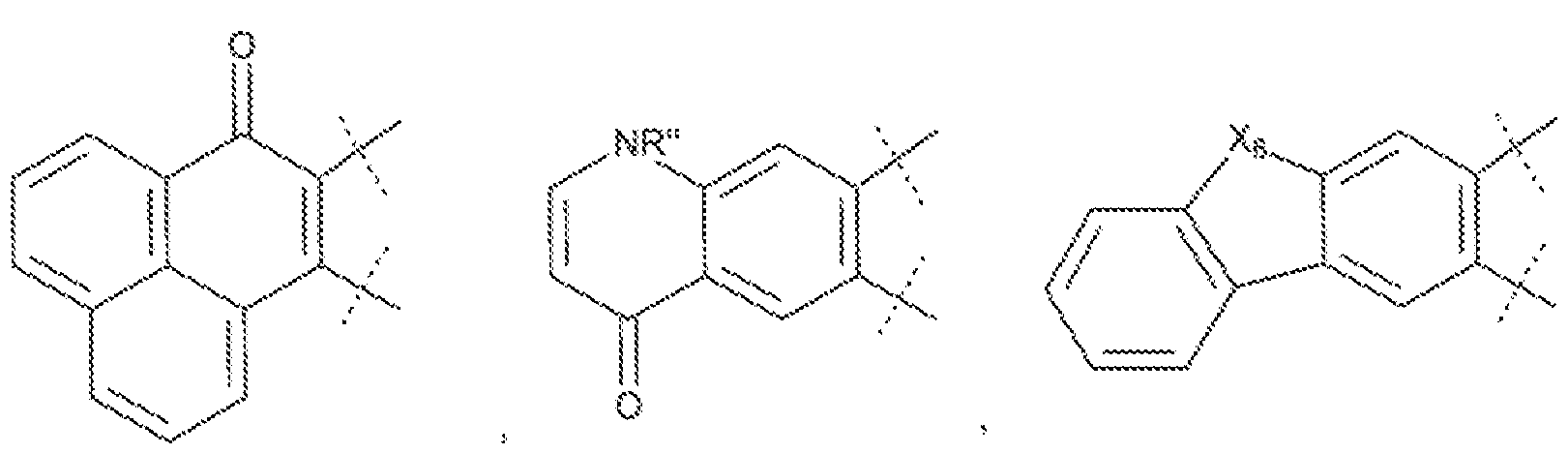
- the group A corresponds to a phenyl group which is unsubstituted or substituted and / or which is fused with one or more unsaturated carbocides optionally comprising a heteroatom such as nitrogen.
- -OA groups of the phenoxy type correspond, for example, to the following preferred structures (BB) or (CC):
- - T is -NH-C (O, -S-, -O-, -NH, N-alkyl or N-aryl,
- Ra is hydrogen or an electron-withdrawing carbon substituent, such as -CN or -COORd, with Rd which represents a (C 1 -C 6) alkyl group, or Ra is -CONReRf, with R e and R f, the same or different, which represent hydrogen or a (Ci-Ct) alkyl group, or Ra is -CF 3 or a 2-oxazolyl, 2-thiazotyl, 2-imidazolyl, 2-benzoimidazolyl, 4-pyrimidiron-2 yl or quinazolinon-2-yte,
- Rb is hydrogen, a chlorine, bromine, iodine or fluorine atom, -OH, -NH2, -NRgRh, -NHRg or -ORg, with Rg and Rh each independently representing a (C1-C-Oalkyl) or else Ra and Rb are linked together to form a saturated or unsaturated, substituted or unsubstituted, 4 or 5-membered hydrocarbon-based chain optionally interrupted by one or more heteroatoms chosen from N, S and O,
- - Rc is hydrogen, Br, Cl, I or F
- - T is IMH2, OH, an aryte group, a group (QC, alkyl, SH, NHR'c, OR'c, NR'cR'd or SR'c, with R'c and R'd, identical or different, which represent a (CrC) alkyl or aryte group,
- R'a is hydrogen or an electron-withdrawing carbon-containing substituent such as -C, or -COOR'e, with R'e which represents a group (C C4) alkyl, or R'a is -CO RfR'g with R'f and R'g, identical or different, which represent hydrogen or a group (Ci-QJalkyl, or R'a is -CF3 or a 2-oxazolyl, 2-thiazolyl, 2-lmidazolyte, 2 enzoimidazolyl, 4-pyrimidinon-2-yl or quinazolinon-2-yl,
- R'b is hydrogen, a chlorine atom, bromine, iodine or fluorine, -OH, -NH3 ⁇ 4 -NR'hR'i or -OR'h, with R * h and R'i, identical or different, which represent a group (Ci-C-alkyl),
- R'a and R'b are linked together to form a saturated or unsaturated, substituted or unsubstituted 4 or 5-membered hydrocarbon-based chain optionally interrupted by one or more heteroatoms chosen from N, S and O.
- OA group corresponding to a fluorophore of the ESIPT type, mention may be made, more particularly, of the following groups:
- R can represent a hydrogen atom or - (L) n-GP, with n which is equal to 0 or 1.
- n 1 and L is a linker, and in particular an arm - (L1) m1- (L2) m2- (l1) l1- (in the piperazine direction - > GP group) with:
- L1 and I identical or different, which are selected from -O-, -NH-,
- L 2 which is selected from the following bivalent groups: (C 1 -C 20) alkyl, C 1 -C 20 alkenyl, C 1 -C 20 alkynyl, (C 12 -C 20) aryl, (C 7 -C) alkylaryl, (C 7 -Alkenylaryl, (C7-4-i) alkynylaryl, (C1-4alkyl) cycloalkyl,
- GP is a water-solubilising group
- water-solubilising group is meant a hydrophilic group which makes it possible to improve the solubility of the probe, with respect in particular to a probe which differs only in the replacement of the nitrogen atom carrying L-GP with CH 2 / to obtain a piperalkin as described in applications WO 2013/045854 and WO 2014/020285.
- a water-solubilising group mention may be made of groups capable of forming a charged species in aqueous solution.
- a water-solubilising group GP By way of example of a water-solubilising group GP, mention may be made of the functions F 1 chosen from amines (primary, secondary, or tertiary), amidine, guanidine or tetrazole; the functions F 2 chosen from anionic functions of the carboxylate, sulphonate or phosphate type; groups comprising one or more of these functions Fi and or F 2 ; polyethylene glycols; sugars or polysaccharides such as glucose, galactose and mannose; peptide groups such as poly-lysine, poly-arginine, TAT-pepbdes, etc.
- amine functions By way of example of amine functions, mention may be made of -MH 2 / -NH (C 1-6 alkyl) and the dialkylamines in alkyl groups are the same or different and comprise from 1 to 4 carbon atoms, and "groups comprising one or more of these functions Fi and / or F 2 " means alkyl group (such as (C 3 ) alkyl), an anl group (such as an aryl group having 6 carbon atoms), a heteroaryl group (such as a heteroaryl having 6 carbon atoms) in which one or more hydrogen atoms of these groups has (have) been substituted by one or more functions Fi, or by one or more functions F 2 or else at least one hydrogen atom has been substituted by a function Fi and another hydrogen atom was substituted by a function F
- acyle function we mean a function:
- alkyl group unless otherwise specified, is meant a hydrocarbon chain, saturated, linear or branched. Alkyl groups having 1 to 6 carbon atoms will be preferred. By way of example of an alkyl group comprising from 1 to 6 carbon atoms, named Ci-e alkyl or (Ci-Ce) alkyl, it is possible to determine, in particular, the methyl, ethyl, propyl, and propyl groups, bub, tert-butyl, sec-butyl, n-pentyl, n-hexyl.
- aryl group is meant a mono-, bi- or polycydic carbocyde, comprising at least one aromatic group, for example a phenyl, dinamyl or naphthyl group.
- Aryl groups having from 6 to 12 carbon atoms will be preferred. Phenyl is the most preferred aryl group.
- a group when it is stated that a group is substituted, it means that it is substituted by one or more substituents, in particular chosen from chlorine, bromine, iodine or fluorine atoms, cyano, alkyl, fluoroalkyl, trifluoromethyl, alkenyl and alkynyl groups.
- substituents in particular chosen from chlorine, bromine, iodine or fluorine atoms, cyano, alkyl, fluoroalkyl, trifluoromethyl, alkenyl and alkynyl groups.
- cycloalkyl, aryl, heterocycloalkyl amino, alkylamino, dialkylamino, hydroxy, alkoxy, aryloxy, -COOH, nitro, acyl groups, aromatic groups (especially aryl and heteroaryl), alkenyl, alkynyl, cycloalkyl, heterocycloalkyl, acyte groups and aromatic groups may themselves be unsubstituted or substituted.
- the terms used for the definition of these substituents are those usually recognized by those skilled in the art.
- alkenyl denotes a hydrocarbon chain, linear or branched comprising at least one double bond, and preferably having from 2 to 20 carbon atoms, and preferably from 2 to 6 carbon atoms
- alkynyl denotes a hydrocarbon chain, linear or branched comprising at least one triple bond, and preferably having from 2 to 12 carbon atoms, and preferably from 2 to 6 carbon atoms
- fluoroalkyl denotes a hydrocarbon chain, saturated, linear or branched in which at least one hydrogen atom has been replaced by a fluorine atom, and preferably having from 2 to 12 carbon atoms, and preferably from 2 to 6 carbon atoms
- alkoxy and aryloxy
- cycloalkyl is meant a saturated hydrocarbon group consisting of at least one ring, optionally bridged. Alkyl groups having 3 to 12 carbon atoms will be preferred. By way of example, mention may be made of the cyclopropyl, cyclobutyl, cyclopentyl, cyclohexyl, cycloheptyl and adamantyl groups.
- heterocycloalkyl is meant a cycloalkyl group as defined above, in which at least one carbon atom is replaced by a heteroatom selected from O, S or N.
- heterocycloalkyl mention may be made of piperidinyie, piperazinyl, morpholirr / te, tetrahydropyranyl ...
- heteroaryl group is meant a mono-, bi- or polycydic carbocyde, preferably comprising from 6 to 12 members, and comprising at least one aromatic group and at least one heteroatom chosen from oxygen, nitrogen or sulfur atoms. integrated within the carbocyde.
- heteroaryl group By way of example of a heteroaryl group, mention may be made of 2-, 3- or 4-pyridinyls, 2- or 3-furoyte, 2- or 3-thiophenyl, pyrrofyl, imidazolyl, pyrazolyl, thiazolyl, oxazolyl, isoxazolyl, pyridinyl, pyrazinyl, pyrimidinyl, tetrazolyl, thiadiazolyl, oxadiazolyl, triazolyl, pyridazinyl, indolyl.
- (Cr) alkylaryl “,” (Cr 4> alkenylaryl “,” (Cr ”) alkynylaryl” is meant respectively an alkyl, alkenyl or alkynyl chain starting, interrupted or terminating with an aryl group. alkylaryl, alkenylaryl and alkynylaryl groups comprising from 7 to 22 and preferably from 7 to 16 carbon atoms.
- temporary amine protecting group is meant protecting groups such as those described in Protectlve Groups in Organic Synthesis, Greene TW and PGM Wuts, ed John Wlley and Sons, 2006 and in Pro ecting Groups, Kocienski PJ., 1994, Georg Thieme Verlag.
- benzyl groups Bn
- -C (O) OR 'groups with R' 1 which represents an alkyl or alkenyl group of 1 to 12 carbon atoms or a group - (CH 2 ) m3R "i with R” i which represents an aryl, cycloalkyl or fluorenyl group and m3 which is equal to 0, 1, 2 or 3, and in particular carbobenzyloxy (Cbz), tert-butyloxycarbonyl (Boc) and 9-fluorenylmethyloxycarbonyl (Fmoc), allyloxycarbonyl (Alloc ).
- the piperazine cyde is obtained by a reduction of the piperazinone ring (XIII), itself synthesized from a malonate bromide (XIV) and a compound of the ethylene diamine type (X ).
- R groups different from H which correspond to an L-GP group, may be introduced by nucleophilic substitution, reductive amination or amide bond formation reactions.
- the link between the L and GP groups can be obtained by innumerable synthetic routes according to the chemical functions present on the linker L.
- ionization reactions such as nucleophilic substitutions, peptide couplings, cycloaddition such as the cydoaddition of Huisgen or Diels-Alder, paladocatalyzed couplings such as the coupling of Sonogashira or Heck.
- A, X 1 , X 2 , SE, L l, L 1, L 2, ml, moi, and m 2 are as defined for (I), Z represents C ⁇ CH, 3, an N-oxysuccinimide or maleimide function, and R'p represents a group protecting the amine functions, preferably selected from benzyl groups, -C (O) OR 'groups with R'i which represents an alkyl or alkenyl group of 1 to 12 carbon atoms or a -CCH 2 group) m3R "i with R" i which represents aryie, cycloalkyl or fluorenyl group and m3 which is equal to 0, 1, 2 or 3.
- R'p preferred group there may be mentioned carbobenzyloxy, tert-butyloxycarbonyl, 9-fluorenylmettiyloxycarbonyl, and allyloxycarbonyl.
- the starting reagents are commercially available or readily available.
- the molecules of formula (I) are therefore of relatively simple chemical access, and can be obtained at a relatively low cost of preparation, for the technical field considered.
- the salts of the compounds according to the invention are prepared according to techniques well known to those skilled in the art.
- the salts of the compounds of formula (I) according to the present invention include those with acids or bases, depending on the substituents present. These acids or bases may be chosen from inorganic and organic addes and bases which allow a suitable separation or crystallization of the compounds of formula (I), as well as physiologically acceptable salts, that is to say compatible with inventive applications. in vivo and in vitro.
- Suitable acids are: oxalic acid or an optically active adde, for example tartaric acid, benzoyl triaric acid, mandelic acid or camphorsulfonic acid, and those which form physiologically acceptable salts, such as hydrochloride, hydrobromide, sulphate, hydroxjenosulphate, dihydrogenphosphate, maleate, fumarate, 2-naphthalenesulphonate, para-toluenesulphonate, mesylate, besylate, and lotion.
- Suitable bases include: lysine, arginine, meglumine, benethamine, benzathine and those which form physiologically acceptable salts, such as sodium, potassium, calcium salts.
- sorvat means a form of the compound associated with one or more solvent molecules, especially used during its synthesis or during its purification, without being in solution in the latter.
- the various compounds of formula (I) according to the invention can be found in all forms of possible optical isomers, optionally in a mixture in all proportions, unless specified other.
- the compounds according to the invention comprising an asymmetric carbon are in a racemic form, the R and S forms being in substantially equal proportions.
- the compounds of formula (I) of the invention may be in a form enriched in a diastereoisomer or enantiomer, with a diastereoisomeric or enantiomeric excess greater than 80%, or even greater than 95%, or even in a pure isomeric form that is to say with a diastereoisomeric or enantiomeric excess greater than 99%.
- the compounds (I) may be isolated in a form enriched in a diastereoisomer or enantiomer by conventional separation techniques: it is possible to use, for example, fractional recrystallizations of a racemic salt with an adde or an optically active base whose principle is well known or, most often, conventional techniques of chiral or non-chiral phase chromatography.
- the probes according to the invention will have one or other of the following characteristics, or all of the following characteristics:
- R represents L-GP with:
- the probes according to the invention are attractive for several applications with high sensitivity in the life sciences, and in particular: (1) the high-throughput screening of an activity, in particular of an enzymatic activity, expressed by bacterial colonies on an agar plate (colony analysis); (2) the in vitro detection of an activity, in particular an enzymatic activity, in biological fluids (hematology and others); (3) the detection of an activity, in particular an enzymatic activity, at the level of a single cell by flow cytometry; (4) visualization of an activity, in particular an enzymatic activity, intracellularly in cultured cells (fluorescence microscopy and confocal microscopy); (5) histochemical detection of an enzyme (at the tissue level); and also (6) in vivo molecular imaging.
- the probes according to the present invention have a large number of potential applications.
- Examples of such applications include the design of bacterial colony assays. These are currently performed on an agar plate (petri dish) where up to 3000 colonies can be distinguished without having to actively separate them in separate compartments such as wells contained in a multiwell plate. It is possible, for example, to design tests on clinical samples making it possible to identify, among a set of bacterial lines, a pathogenic line of interest.
- the probes according to the invention can also be used for macroscopic fluorescence imaging, that is to say at the level of an entire organism.
- the probe will penetrate the cell wall to reach the activity of interest (a stimulus such as an enzyme, a chemical compound or a physicochemical characteristic of the medium in which the probe is located).
- THF Tetrahydrofuran
- DCC Dicydohexylcarbodiimide
- the RN spectra were obtained at 297K using a Bruker AVANCE 300 spectrometer (300 MHz & 75 MHz for * H and U C, respectively) or a Bruker AVANCE 500 (500 MHz & 125 MHz for 1 H and 13 C, respectively) .
- TLC Thin Layer Chromatography
- Mass measurements in high resolution were obtained using a MicrOTOFQ spectr mass spectrometer, Bruker.
- Fluorescence or absorbance measurements were obtained using an EnSpire plate fluorometer, Perkin-Elmer.
- the crude reaction product is purified by chromatography column on silica gel (eluent: firstly pure DCM then DCM: MeOH / 95: 5 / v: v) to obtain compound 3 in the form of a colorless oil which crystallizes with the time (12.8g, 46mmol, yield: 86%).
- the organic phase is separated and the aqueous phase is washed twice with ⁇ 3 ⁇ 40 (2x20mL).
- the organic phases are combined, dried with Na 2 SO 4 , filtered and evaporated.
- the reaction crude is purified by silica gel chromatography column (eluent: petroleum ether: ethyl acetate / 7: 3 / v: v) to obtain compound 4 in the form of a yellow oil (625 mg, 2%). 0 mmol, yield: 57%).
- reaction crude is purified by silica gel chromatography column (eluent: petroleum ether: ethyl acetate / 55: 45: v) to obtain compound 7 in viscous solid form (500 mg, 1.16 mmol, yield: 46% on 2 stages).
- reaction crude is purified by silica gel chromatography column (eluent: gradient of DCM: MeOH / 99: 1, 98: 2, 97: 3 / v: v) to obtain compound 11 in the form of a colorless oil. (160mg, 0.31mmol, yield: 33%).
- the resulting suspension is filtered and the filtrate is washed twice with saturated aqueous NaHCO 3 solution (2 ⁇ 50 mL).
- the organic phase is then extracted several times with a 10% aqueous solution of ⁇ 2 ⁇ ⁇ 1 ⁇ 4 until the pH of the aqueous phase is stable around pH 3.
- DCM 150 ml
- Recombinant aqueous and aqueous NaOH solution (2M) is added until the pH of the aqueous phase reaches pH 12.
- the organic phase is withdrawn and the basic aqueous phase is extracted twice with DCM (2 ⁇ 100 mL).
- reaction crude is purified by silica gel chromatography column (eluent: gradient of DCM: MeOH / 99: 1, 98: 2, 97: 3 / v: v) to obtain compound 15 in the form of a colorless oil. (35mg, 0.31 mmol, yield:
- reaction crude is purified by silica gel chromatography column (eluent: DCM gradient: MeOH / 100: 0.099: 1, 98: 2, 97: 3,%: 4, 95: 5 / v: v). to give compound 31 as a white powder (19mg, 0.027mmol, yield: 46%).
- reaction mixture is diluted with DCM (20mL) and washed twice with saturated aqueous NaHG 4 solution (2x50mL) and once with brine (50mL).
- the organic phase is dried with a 2 S0, filtered and evaporated.
- the reaction crude is purified by neutral alumina chromatography column (petroleum ether: ethyl acetate / 15:85 / v: v) to obtain compound 33 in the form of a slightly yellow solid (552 mg, yield: quantitative).
- the crude reaction product is purified by two successive silica gel chromatography columns (petroleum ether: ethyl acetate / 2: 8 / v: v; and DCM gradient: MeOH / 99: 1, 98: 2, 97: 3 / v: v) for obtain compound 38 in the form of a white solid (52 mg, 0.080 mmol, yield: 69%).
- the water solubility of the compounds was evaluated according to the presence or absence of precipitate in buffered solutions of the compounds in question at different concentrations. These solutions were prepared as follows:
- a known amount of product is dissolved in a suitable volume of DMSO in order to obtain a clear 100mM stock solution in DMSO (except in the case of commercial AMC-Leucine (denoted AMC-Leu) which gave a cloudy solution under these conditions and the concentration of the stock solution in DMSO had to be lowered to 50 mM).
- These stock solutions are then diluted in commercial PBS buffer to obtain a range of final concentrations of between 1mM and 50 ⁇ .
- a compound is declared insoluble if a precipitate appears and persists after dilution.
- the compounds according to the invention have a better solubility in aqueous solution, with respect to a commercial substrate without a spacer arm, or with respect to a substrate incorporating a spacer arm described in applications WO 2013/045854. and WO 2014/020285.
- the plate is then incubated at 37 ° C and the fluorescence or absorbance is recorded over time with a multiwell plate reader (EnSpire, Perkin Elmer).
- EndSpire, Perkin Elmer The resulting curves are the result of triplicates.
- FIGURE 1 The evolution of the fluorescence following the acuvation of compound 12 by PGA is presented FIGURE 1.
- FIGURE 2 The evolution of the fluorescence following the acuvation of compound 15 by PGA is presented FIGURE 2.
- FIGURE 5 The evolution of the absorbance following the acuvation of compound 36 by PGA is presented FIGURE 5.
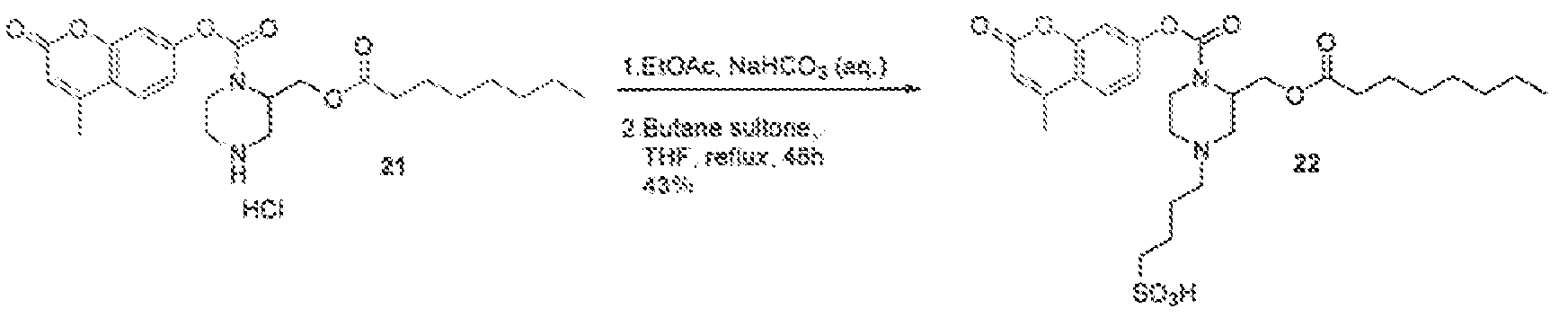
- FIGURE 6 The evolution of the fluorescence following the activation of compound 21 by the lipase is presented FIGURE 7.
- the compounds according to the invention effectively make it possible to detect the presence of an enzymatic activity by means of fluorescence or absorbance measurements. Enzymatic recognition is still good despite (ncorporation of a charge or group relatively sterically bulky on the spacer arm.
Landscapes
- Chemical & Material Sciences (AREA)
- Organic Chemistry (AREA)
- Health & Medical Sciences (AREA)
- Life Sciences & Earth Sciences (AREA)
- Engineering & Computer Science (AREA)
- General Health & Medical Sciences (AREA)
- Zoology (AREA)
- Wood Science & Technology (AREA)
- Proteomics, Peptides & Aminoacids (AREA)
- Genetics & Genomics (AREA)
- General Engineering & Computer Science (AREA)
- Bioinformatics & Cheminformatics (AREA)
- Biochemistry (AREA)
- Animal Behavior & Ethology (AREA)
- Public Health (AREA)
- Veterinary Medicine (AREA)
- Epidemiology (AREA)
- Biomedical Technology (AREA)
- Analytical Chemistry (AREA)
- Immunology (AREA)
- Microbiology (AREA)
- Molecular Biology (AREA)
- Biotechnology (AREA)
- Physics & Mathematics (AREA)
- Biophysics (AREA)
- Mycology (AREA)
- Measuring Or Testing Involving Enzymes Or Micro-Organisms (AREA)
- Plural Heterocyclic Compounds (AREA)
- Medicines Containing Antibodies Or Antigens For Use As Internal Diagnostic Agents (AREA)
Abstract
Description







Claims




Priority Applications (6)
| Application Number | Priority Date | Filing Date | Title |
|---|---|---|---|
| CA2952332A CA2952332C (fr) | 2014-06-26 | 2015-06-24 | Sondes moleculaires activables hydrosolubles, intermediaires pour leur synthese et procedes de detection associes |
| EP15742341.9A EP3160517B1 (fr) | 2014-06-26 | 2015-06-24 | Sondes moléculaires activables hydrosolubles, intermédiaires pour leur synthèse et procédés de détection associés |
| ES15742341T ES2985847T3 (es) | 2014-06-26 | 2015-06-24 | Sondas moleculares activables solubles en agua, intermediarios para su síntesis y procedimientos de detección asociados |
| US15/320,448 US10179929B2 (en) | 2014-06-26 | 2015-06-24 | Water-soluble activatable molecular probes, intermediates for the synthesis thereof and associated detection methods |
| CN201580034492.9A CN106470977B (zh) | 2014-06-26 | 2015-06-24 | 水溶性可活化分子探针、其合成中间体及相关检测方法 |
| JP2016575183A JP6793040B2 (ja) | 2014-06-26 | 2015-06-24 | 活性化可能な水溶性の分子プローブ、その合成のための中間体、および関連する検出方法 |
Applications Claiming Priority (2)
| Application Number | Priority Date | Filing Date | Title |
|---|---|---|---|
| FR1456014 | 2014-06-26 | ||
| FR1456014A FR3022784B1 (fr) | 2014-06-26 | 2014-06-26 | Sondes moleculaires activables hydrosolubles, intermediaires pour leur synthese et procedes de detection associes |
Publications (1)
| Publication Number | Publication Date |
|---|---|
| WO2015197981A1 true WO2015197981A1 (fr) | 2015-12-30 |
Family
ID=51610269
Family Applications (1)
| Application Number | Title | Priority Date | Filing Date |
|---|---|---|---|
| PCT/FR2015/051705 Ceased WO2015197981A1 (fr) | 2014-06-26 | 2015-06-24 | Sondes moléculaires activables hydrosolubles, intermédiaires pour leur synthèse et procédés de détection assocés |
Country Status (8)
| Country | Link |
|---|---|
| US (1) | US10179929B2 (fr) |
| EP (1) | EP3160517B1 (fr) |
| JP (1) | JP6793040B2 (fr) |
| CN (1) | CN106470977B (fr) |
| CA (1) | CA2952332C (fr) |
| ES (1) | ES2985847T3 (fr) |
| FR (1) | FR3022784B1 (fr) |
| WO (1) | WO2015197981A1 (fr) |
Cited By (4)
| Publication number | Priority date | Publication date | Assignee | Title |
|---|---|---|---|---|
| WO2018114933A1 (fr) | 2016-12-19 | 2018-06-28 | Ecole Normale Superieure De Lyon | Substrat de glycosidase fluorogene et procede de detection associe |
| JP2020502256A (ja) * | 2016-10-13 | 2020-01-23 | ユニベルシテ ド ジュネーヴ | 新規化合物及びサンプル中の標的分子の検出のためのその使用 |
| WO2021105512A1 (fr) | 2019-11-29 | 2021-06-03 | Molsid | Substrat de bêta-lactamase fluorogénique et méthode de détection associée |
| US12503439B2 (en) | 2022-04-22 | 2025-12-23 | Vertex Pharmaceuticals Incorporated | Heteroaryl compounds for the treatment of pain |
Families Citing this family (6)
| Publication number | Priority date | Publication date | Assignee | Title |
|---|---|---|---|---|
| US11634384B2 (en) | 2014-11-25 | 2023-04-25 | Concentric Analgesics, Inc. | Prodrugs of phenolic TRPV1 agonists |
| CN106588892B (zh) * | 2015-10-14 | 2021-11-02 | 西南大学 | 香豆素衍生的氟康唑类似物及其制备方法和应用 |
| CA3025268A1 (fr) | 2016-05-25 | 2017-11-30 | Concentric Analgesics, Inc. | Promedicaments a base d'agonistes de trpv1 phenoliques en association avec des anesthesiques locaux et des vasoconstricteurs pour ameliorer une anesthesie locale |
| EP3630742B1 (fr) * | 2017-05-24 | 2023-08-16 | Ramot at Tel-Aviv University Ltd. | Sondes chimioluminescentes pour imagerie/détection de protéases |
| US10717712B2 (en) * | 2018-07-27 | 2020-07-21 | Concentric Analgesics, Inc. | Pegylated prodrugs of phenolic TRPV1 agonists |
| CN115976156B (zh) * | 2022-12-13 | 2025-07-01 | 华中科技大学 | 一种gpi转酰胺酶的酶活测定方法 |
Citations (6)
| Publication number | Priority date | Publication date | Assignee | Title |
|---|---|---|---|---|
| WO2000059510A1 (fr) * | 1999-04-01 | 2000-10-12 | Pfizer Products Inc. | Aminopyrimidines comme inhibiteurs de sorbitol deshydrogenase |
| WO2004058787A2 (fr) | 2002-12-27 | 2004-07-15 | Tibotec Bvba | Substrats d'enzymes fluorogenes et procedes de preparation associes |
| WO2007146066A2 (fr) * | 2006-06-06 | 2007-12-21 | Critical Therapeutics, Inc. | Nouvelles pipérazines, compositions pharmaceutiques et procédés d'utilisation de celles-ci |
| WO2012122420A2 (fr) * | 2011-03-09 | 2012-09-13 | Pharmacofore, Inc. | Promédicaments opioïdes présentant des groupes de liaison hétérocycliques |
| WO2013045854A1 (fr) | 2011-09-29 | 2013-04-04 | Ecole Normale Superieure De Lyon | Substrat de peptidase fluorogene |
| WO2014020285A1 (fr) | 2012-08-02 | 2014-02-06 | Ecole Normale Superieure De Lyon | Substrat de glycosidase fluorogene et procede de detection associe |
-
2014
- 2014-06-26 FR FR1456014A patent/FR3022784B1/fr active Active
-
2015
- 2015-06-24 EP EP15742341.9A patent/EP3160517B1/fr active Active
- 2015-06-24 US US15/320,448 patent/US10179929B2/en active Active
- 2015-06-24 JP JP2016575183A patent/JP6793040B2/ja active Active
- 2015-06-24 WO PCT/FR2015/051705 patent/WO2015197981A1/fr not_active Ceased
- 2015-06-24 CA CA2952332A patent/CA2952332C/fr active Active
- 2015-06-24 ES ES15742341T patent/ES2985847T3/es active Active
- 2015-06-24 CN CN201580034492.9A patent/CN106470977B/zh active Active
Patent Citations (6)
| Publication number | Priority date | Publication date | Assignee | Title |
|---|---|---|---|---|
| WO2000059510A1 (fr) * | 1999-04-01 | 2000-10-12 | Pfizer Products Inc. | Aminopyrimidines comme inhibiteurs de sorbitol deshydrogenase |
| WO2004058787A2 (fr) | 2002-12-27 | 2004-07-15 | Tibotec Bvba | Substrats d'enzymes fluorogenes et procedes de preparation associes |
| WO2007146066A2 (fr) * | 2006-06-06 | 2007-12-21 | Critical Therapeutics, Inc. | Nouvelles pipérazines, compositions pharmaceutiques et procédés d'utilisation de celles-ci |
| WO2012122420A2 (fr) * | 2011-03-09 | 2012-09-13 | Pharmacofore, Inc. | Promédicaments opioïdes présentant des groupes de liaison hétérocycliques |
| WO2013045854A1 (fr) | 2011-09-29 | 2013-04-04 | Ecole Normale Superieure De Lyon | Substrat de peptidase fluorogene |
| WO2014020285A1 (fr) | 2012-08-02 | 2014-02-06 | Ecole Normale Superieure De Lyon | Substrat de glycosidase fluorogene et procede de detection associe |
Non-Patent Citations (20)
| Title |
|---|
| BATEMAN ET AL., NUCLEIC ACID RES., vol. 42, 2014, pages D503 |
| BOLTON ET AL., CHEM. RES. TOXICOL., vol. 8, 1995, pages 323 |
| GREENE T.W.; WUTS P.G.M: "Protective Groups in Organic Synthesis", 2006 |
| HAUGLAND, ANAL. BIOCHEM., vol. 207, 1992, pages 32 |
| KOCIENSKI PJ.: "Protecting Groups", 1994, GEORG THIEME VERLAG |
| LIU ET AL., J. AM. CHEM. SOC., vol. 134, 2012, pages 17972 |
| MAXIME PROST: "Sondes moléculaires comprenant des espaceurs auto-effondrables multifonctionnels pour la détection d'activités enzymatiques - Ecole Normale Supérieure de Lyon", 3 July 2014 (2014-07-03), XP055164724, Retrieved from the Internet <URL:http://www.ens-lyon.eu/recherche/sondes-moleculaires-comprenant-des-espaceurs-auto-effondrables-multifonctionnels-pour-la-detection-d-activites-enzymatiques-232636.kjsp?RH=THESE_SOUT> [retrieved on 20150126] * |
| ORENGA, S.; JAMES, A. L.; MANAFI, M.; PERRY, J. D.; PINCUS, D. H.: "Enzymatic substrates in microbiology", JOURNAL OF MICROBIOLOGICAL METHODS, vol. 79, no. 2, 2009, pages 139 - 155 |
| ORG. LETT., vol. 12, 2010, pages 4176 |
| RALINGS; SALVESEN: "Handbook of proteolytic enzymes", 2013, ELSEVIER LTD |
| ROKITA: "Quinone Methides", 2009, JOHN WILEY AND SONS INC. |
| ROMIEU ET AL., ORG. LETT., vol. 10, 2008, pages 1517 |
| SHABAT ET AL., BIOCONJUGATE CHEM., vol. 17, 2006, pages 1432 |
| SHABAT ET AL., BIOORG. MED. CHEM., vol. 15, 2007, pages 7318 |
| SHABAT ET AL., J. AM. CHEM. SOC., vol. 130, 2008, pages 5434 |
| SHABAT ET AL., J. AM. CHEM. SOC., vol. 133, 2011, pages 10960 |
| SHABAT ET AL., J. AM. CHEM. SOC., vol. 134, 2012, pages 20412 |
| THATCHER ET AL., J. ORG. CHEM., vol. 62, 1997, pages 1820 |
| TUNG ET AL., TETRAHEDRON, vol. 62, 2006, pages 578 |
| WU ET AL., BIOORG. MED. CHEM., vol. 20, 2012, pages 3465 |
Cited By (6)
| Publication number | Priority date | Publication date | Assignee | Title |
|---|---|---|---|---|
| JP2020502256A (ja) * | 2016-10-13 | 2020-01-23 | ユニベルシテ ド ジュネーヴ | 新規化合物及びサンプル中の標的分子の検出のためのその使用 |
| JP7046082B2 (ja) | 2016-10-13 | 2022-04-01 | ユニベルシテ ド ジュネーヴ | 新規化合物及びサンプル中の標的分子の検出のためのその使用 |
| WO2018114933A1 (fr) | 2016-12-19 | 2018-06-28 | Ecole Normale Superieure De Lyon | Substrat de glycosidase fluorogene et procede de detection associe |
| US11078226B2 (en) | 2016-12-19 | 2021-08-03 | Ecole Normale Superieure De Lyon | Fluorogenic glycosidase substrate and associated detection method |
| WO2021105512A1 (fr) | 2019-11-29 | 2021-06-03 | Molsid | Substrat de bêta-lactamase fluorogénique et méthode de détection associée |
| US12503439B2 (en) | 2022-04-22 | 2025-12-23 | Vertex Pharmaceuticals Incorporated | Heteroaryl compounds for the treatment of pain |
Also Published As
| Publication number | Publication date |
|---|---|
| JP2017522296A (ja) | 2017-08-10 |
| EP3160517B1 (fr) | 2024-06-12 |
| CN106470977A (zh) | 2017-03-01 |
| US20170159100A1 (en) | 2017-06-08 |
| JP6793040B2 (ja) | 2020-12-02 |
| CA2952332A1 (fr) | 2015-12-30 |
| US10179929B2 (en) | 2019-01-15 |
| CA2952332C (fr) | 2023-09-26 |
| EP3160517A1 (fr) | 2017-05-03 |
| FR3022784B1 (fr) | 2017-09-08 |
| ES2985847T3 (es) | 2024-11-07 |
| FR3022784A1 (fr) | 2016-01-01 |
| CN106470977B (zh) | 2021-07-09 |
Similar Documents
| Publication | Publication Date | Title |
|---|---|---|
| EP3160517A1 (fr) | Sondes moléculaires activables hydrosolubles, intermédiaires pour leur synthèse et procédés de détection associés | |
| EP3626699B1 (fr) | Inhibiteur de ssao | |
| US20120107849A1 (en) | Coelenterazine derivatives and methods of using same | |
| CN110546154B (zh) | 糖苷酶的荧光底物及其相关检测方法 | |
| EP0447324A1 (fr) | Dérivés de pyrimidinedione-2,4 et médicaments les contenant | |
| EP2760844B1 (fr) | Substrat de peptidase fluorogene | |
| EP3196274A1 (fr) | Coumarines sulfonatees, procede d'obtention de ces produits et leurs applications | |
| EP2183230B1 (fr) | Nouveaux dérivés fluorescents de polyamines, leur procédé de préparation et leurs applications en tant qu'outils de diagnostic dans le traitement des tumeurs cancéreuses. | |
| CN112939887B (zh) | 一种基于碱性染料的近红外荧光探针及其制备方法和应用 | |
| WO2008145830A2 (fr) | Nouveaux composes pro-fluorescents | |
| FR2510571A1 (fr) | Spirothiazolidinedione, son procede de production et preparation pharmaceutique la contenant | |
| JP2004101389A (ja) | アルミニウムイオン及び/又は第二鉄イオン測定用プローブ | |
| US20250313879A1 (en) | Fluorescent Probe for Detecting Peptide Bond Hydrolase | |
| US8715529B1 (en) | Synthesis and applications of triazaborolopyridinium compounds and substituted triazaborolopyridinium compounds and methods of use | |
| EP0693064B1 (fr) | Derives d'aminocoumarines hydrophobes, et leur utilisation comme substrats d'enzymes proteolytiques ou pour la preparation de tels substrats | |
| JPWO2010026743A1 (ja) | 低酸素環境測定用試薬 | |
| EP2185525A2 (fr) | Dérivés de pyrazole 3,5-carboxylates, leur préparation et leur application en thérapeutique | |
| EP2260841A2 (fr) | Composés à activité antiparasitaire et médicaments les renfermant |
Legal Events
| Date | Code | Title | Description |
|---|---|---|---|
| 121 | Ep: the epo has been informed by wipo that ep was designated in this application |
Ref document number: 15742341 Country of ref document: EP Kind code of ref document: A1 |
|
| ENP | Entry into the national phase |
Ref document number: 2952332 Country of ref document: CA |
|
| WWE | Wipo information: entry into national phase |
Ref document number: 15320448 Country of ref document: US |
|
| REEP | Request for entry into the european phase |
Ref document number: 2015742341 Country of ref document: EP |
|
| WWE | Wipo information: entry into national phase |
Ref document number: 2015742341 Country of ref document: EP |
|
| ENP | Entry into the national phase |
Ref document number: 2016575183 Country of ref document: JP Kind code of ref document: A |
|
| NENP | Non-entry into the national phase |
Ref country code: DE |