WO2016000104A1 - 一种下行多址接入的方法、基站及终端 - Google Patents
一种下行多址接入的方法、基站及终端 Download PDFInfo
- Publication number
- WO2016000104A1 WO2016000104A1 PCT/CN2014/079868 CN2014079868W WO2016000104A1 WO 2016000104 A1 WO2016000104 A1 WO 2016000104A1 CN 2014079868 W CN2014079868 W CN 2014079868W WO 2016000104 A1 WO2016000104 A1 WO 2016000104A1
- Authority
- WO
- WIPO (PCT)
- Prior art keywords
- terminal
- information corresponding
- codeword
- information
- terminals
- Prior art date
- Legal status (The legal status is an assumption and is not a legal conclusion. Google has not performed a legal analysis and makes no representation as to the accuracy of the status listed.)
- Ceased
Links
Classifications
-
- H—ELECTRICITY
- H04—ELECTRIC COMMUNICATION TECHNIQUE
- H04L—TRANSMISSION OF DIGITAL INFORMATION, e.g. TELEGRAPHIC COMMUNICATION
- H04L1/00—Arrangements for detecting or preventing errors in the information received
- H04L1/0001—Systems modifying transmission characteristics according to link quality, e.g. power backoff
- H04L1/0009—Systems modifying transmission characteristics according to link quality, e.g. power backoff by adapting the channel coding
-
- H—ELECTRICITY
- H04—ELECTRIC COMMUNICATION TECHNIQUE
- H04J—MULTIPLEX COMMUNICATION
- H04J11/00—Orthogonal multiplex systems, e.g. using WALSH codes
- H04J11/0023—Interference mitigation or co-ordination
- H04J11/0026—Interference mitigation or co-ordination of multi-user interference
-
- H—ELECTRICITY
- H04—ELECTRIC COMMUNICATION TECHNIQUE
- H04J—MULTIPLEX COMMUNICATION
- H04J11/00—Orthogonal multiplex systems, e.g. using WALSH codes
- H04J11/0023—Interference mitigation or co-ordination
- H04J11/0026—Interference mitigation or co-ordination of multi-user interference
- H04J11/003—Interference mitigation or co-ordination of multi-user interference at the transmitter
-
- H—ELECTRICITY
- H04—ELECTRIC COMMUNICATION TECHNIQUE
- H04J—MULTIPLEX COMMUNICATION
- H04J11/00—Orthogonal multiplex systems, e.g. using WALSH codes
- H04J11/0023—Interference mitigation or co-ordination
- H04J11/0026—Interference mitigation or co-ordination of multi-user interference
- H04J11/0036—Interference mitigation or co-ordination of multi-user interference at the receiver
- H04J11/0046—Interference mitigation or co-ordination of multi-user interference at the receiver using joint detection algorithms
-
- H—ELECTRICITY
- H04—ELECTRIC COMMUNICATION TECHNIQUE
- H04J—MULTIPLEX COMMUNICATION
- H04J11/00—Orthogonal multiplex systems, e.g. using WALSH codes
- H04J11/0023—Interference mitigation or co-ordination
- H04J11/005—Interference mitigation or co-ordination of intercell interference
-
- H—ELECTRICITY
- H04—ELECTRIC COMMUNICATION TECHNIQUE
- H04L—TRANSMISSION OF DIGITAL INFORMATION, e.g. TELEGRAPHIC COMMUNICATION
- H04L1/00—Arrangements for detecting or preventing errors in the information received
- H04L1/0001—Systems modifying transmission characteristics according to link quality, e.g. power backoff
- H04L1/0002—Systems modifying transmission characteristics according to link quality, e.g. power backoff by adapting the transmission rate
-
- H—ELECTRICITY
- H04—ELECTRIC COMMUNICATION TECHNIQUE
- H04L—TRANSMISSION OF DIGITAL INFORMATION, e.g. TELEGRAPHIC COMMUNICATION
- H04L5/00—Arrangements affording multiple use of the transmission path
-
- H—ELECTRICITY
- H04—ELECTRIC COMMUNICATION TECHNIQUE
- H04L—TRANSMISSION OF DIGITAL INFORMATION, e.g. TELEGRAPHIC COMMUNICATION
- H04L5/00—Arrangements affording multiple use of the transmission path
- H04L5/003—Arrangements for allocating sub-channels of the transmission path
- H04L5/0058—Allocation criteria
- H04L5/0073—Allocation arrangements that take into account other cell interferences
Definitions
- the present invention relates to the field of communications, and in particular, to a method, a base station, and a terminal for downlink multiple access.
- the detection order of the UE is certain, and the UE with poor channel conditions must first detect and the UE with good channel conditions detect, which will result in a decrease in the transmission rate of the UE with poor channel conditions. Because it must detect the signal of the UE with good channel condition as noise when it is detected, it is equivalent to lowering the signal-to-interference-plus-noise ratio (SI NR ). In order to ensure that the message can be detected correctly, it must be reduced. Code rate. That is to say, although the sum of the rates is increased, the increase is mainly for UEs with good channel conditions, which is unfair to UEs with poor channel conditions. Summary of the invention
- the embodiments of the present invention provide a method for downlink multi-access (MA), a base station, and a terminal, which can implement a flexible compromise between transmission rate and fairness between different terminals that communicate with the base station.
- MA downlink multi-access
- a first aspect provides a method for downlink multiple access to an MA, where the method includes: sending, by a first base station, a superposition of a codeword of a first information corresponding to each terminal of the N terminals and a codeword of the second information For N terminals, N is a positive integer;
- the codeword of the first information corresponding to the rth terminal is obtained according to the transmission rate and the transmission power of the codeword of the first information corresponding to the rth terminal, and the code of the second information corresponding to the rth terminal
- the word is obtained according to the transmission rate and the transmission power of the codeword of the second information corresponding to the rth terminal, and the transmission rate of the codeword of the first information corresponding to the rth terminal satisfies the first condition
- the transmission rate of the codeword of the second information corresponding to the rth terminal satisfies a second condition, where the first condition is that when the codeword of the second information corresponding to the N terminals is regarded as noise, the rth
- the first information corresponding to the terminals can be correctly translated at any of the N terminals
- the second condition is that when the codewords of the second information corresponding to the other N-1 terminals are regarded as noise
- the second information corresponding to the rth terminal can be correctly translated at the rth
- the first information is information for performing joint detection on a terminal that can receive the first information, where the second information is used.
- Information for single-user detection at the terminal is information for performing joint detection on a terminal that can receive the first information, where the second information is used.
- the transmission rate of the codeword of the first information corresponding to the rth terminal satisfies
- the transmission rate of the codeword indicating the second information corresponding to the rth terminal; the transmission rate of the codeword indicating the first information corresponding to the rth terminal; N (> indicates the rth terminal a local noise power; a channel fading factor between the rth terminal and the first base station; a transmit power of a codeword indicating a second information corresponding to the rth terminal; ⁇ indicating a jth terminal Transmit power of the codeword corresponding to the second information; h ', ' represents a channel fading factor between the mth terminal and the first base station; ⁇ represents a codeword of the first information corresponding to the jth terminal Transmit power; ⁇ denotes the transmit power of the codeword of the first information corresponding to the rth terminal; V denotes that all the values of the variable are valid for the aforementioned inequality.
- the rth terminal if there is interference of the second base station of the neighboring cell, the rth terminal The transmission rate of the codeword corresponding to the first information satisfies the first condition, and includes:
- the transmission rate of the codeword of the first information corresponding to the third terminal of the N terminals meets a third condition, and the N terminals correspond to the nth terminal of the N-1 terminals other than the third terminal.
- the transmission rate of the codeword of the first information satisfies the fourth condition;
- the third condition is a codeword of the first information corresponding to the N-1 terminals except the third terminal, and the second information corresponding to the N terminals.
- the codeword of the second information corresponding to the fourth terminal of the second base station is regarded as noise, the codeword of the first information corresponding to the third terminal, and the first information corresponding to the fourth terminal.
- the superposition of the codewords can be correctly decoded at the second terminal of the N terminals, the second terminal is an edge user terminal of the first base station, and the third terminal and the fourth terminal are interference Aligned user terminal;
- the fourth condition is a codeword and a location of the second information corresponding to the N terminals.
- the codeword of the second information corresponding to the fourth terminal is regarded as noise
- the first information corresponding to the nth terminal can be correctly translated at the second terminal, and the N terminals are correspondingly
- the codeword of the second information is regarded as noise
- the first information corresponding to the nth terminal can be at any one of the N terminals of the N terminals except the second terminal. Correctly translated;
- the transmission rate of the codeword of the second information corresponding to the rth terminal satisfies the second condition, and includes:
- the transmission rate of the codeword of the second information corresponding to the second terminal of the N terminals satisfies a fifth condition, and the N terminals are the sth terminal of the other N-1 terminals except the second terminal. Transmitting a codeword of the corresponding second information to meet a sixth condition;
- the fifth condition is a codeword of the second information corresponding to the other N-th terminals except the second terminal, and the second information corresponding to the fourth terminal.
- the codeword is regarded as noise, the second information corresponding to the second terminal can be correctly translated at the second terminal;
- the sixth condition is that when the codeword of the second information corresponding to the N-1 terminals other than the sth terminal of the N terminals is regarded as noise, the s terminal corresponds to the first The second information can be correctly translated at the sth terminal.
- the detection order of the SD is from the first terminal, the second terminal, ..., the Nth terminal
- the transmission rate of the codeword of the first information corresponding to the third terminal of the N terminals meets the third condition, and includes:
- the transmission rate of the codeword of the second information corresponding to the second terminal of the N terminals is satisfied.
- the transmission rate of the codeword of the second information corresponding to the sth terminal of the Nth terminals other than the second terminal meets the sixth condition, and includes:
- ⁇ ⁇ indicates the transmission rate of the codeword of the first information corresponding to the third terminal and the codeword of the first information corresponding to the fourth terminal; 'representing the second terminal and the first a channel fading factor between the base stations; a transmission rate of the codeword indicating the first information corresponding to the third terminal; a channel fading factor indicating the fourth terminal and the second base station; Transmit power of the codeword of the second information corresponding to the fourth terminal; indicating local noise power; ⁇ indicating the transmit power of the codeword of the second information corresponding to the jth terminal of the N terminals of the first base station; Transmit power of the codeword of the first information corresponding to the jth terminal; code indicating the first information corresponding to the nth terminal of the N-1 terminals other than the third terminal a transmission rate of the word; a transmission power of the codeword indicating the first information corresponding to the nth terminal; indicating a s terminal of the Nth terminals other than the second terminal Channel fading factor with the first
- the codeword of the first information corresponding to the third terminal and the first information corresponding to the fourth terminal can be correctly translated at the second terminal of the N terminals, including:
- any constellation point on the constellation diagram, c tc satisfies the following condition: h kl c kc e ⁇ Am: me Z 2xl ⁇ , h k2 c tc e ⁇ Am : m Z 2xl ) ,
- Ae C lx2 is a preset two-dimensional complex vector, representing an integer column vector of 2 rows * 1 column.
- a second aspect provides a method for downlink multiple access ⁇ , the method includes: if there is interference of a first base station of a neighboring cell, the second base station uses a codeword and a second information of the first information corresponding to the fourth terminal The superposition of the codewords is sent to the fourth terminal and the second terminal, the fourth terminal is a user terminal that interferes with the alignment, and the second terminal is an edge user terminal of the first base station;
- the codeword of the first information corresponding to the fourth terminal is obtained according to a transmission rate and a transmission power of a codeword of the first information corresponding to the fourth terminal, where the fourth The codeword of the second information corresponding to the terminal is obtained according to the transmission rate and the transmission power of the codeword of the second information corresponding to the fourth terminal, and the transmission rate of the codeword of the first information corresponding to the fourth terminal is satisfied.
- a first condition the transmission rate of the second information corresponding to the fourth terminal satisfies a second condition, where the first condition is that the first one of the N terminals of the first base station is N-1 terminals other than the third terminal.
- the first terminal corresponds to the first
- the superposition of the codeword of the information and the codeword of the first information corresponding to the fourth terminal can be correctly translated at the second terminal of the N terminals, where the second information corresponding to the fourth terminal is
- the codeword is regarded as noise
- the first information corresponding to the fourth terminal can be correctly translated at the fourth terminal; the second condition is that the fourth terminal can be correctly translated at the fourth terminal.
- the third terminal is a user terminal that interferes with alignment.
- the first information is information for performing joint detection on all terminals that can receive the first information, where the second information is used.
- Information for single-user detection at the terminal is information for performing joint detection on all terminals that can receive the first information, where the second information is used.
- the sending rate of the codeword corresponding to the first information of the fourth terminal satisfies the first condition
- the transmission rate of the second information should satisfy the second condition, including:
- the transmission rate of the codeword indicating the first information corresponding to the fourth terminal, the transmission rate of the codeword corresponding to the second information corresponding to the fourth terminal, and the first information corresponding to the third terminal First information corresponding to the fourth terminal of the codeword The rate at which the codeword is superimposed, ⁇ .
- the codeword and the first information of the first information corresponding to the third terminal can be correctly translated at the second terminal of the N terminals, including:
- any constellation point on the constellation diagram, c tc satisfies the following condition: h kl c kc e [Am: me Z 2x1 ⁇ , h k2 c tc e [Am: me Z 2x1 ⁇ ,
- the channel fading factor of the terminal corresponding to the constellation point, A e C lx2 is a preset two-dimensional complex vector, and Z 2xl represents an integer column vector of 2 rows*1 column.
- a third aspect provides a method for downlink multiple access MA, which is used in a cellular communication system, where a channel between M first terminals and a first base station belongs to a first channel, and a second terminal The channel between the first base stations belongs to the second channel, The channel fading factor of the first channel is greater than the channel fading factor of the second channel, where M > 1 and M is an integer.
- the method includes:
- the fifth terminal acquires the first receiving signal, where the fifth terminal is any one of the M first terminals and the second terminal;
- the first receiving policy is a receiving policy that satisfies the first information and the second information corresponding to the fifth terminal respectively being correctly translated.
- the first information is information for performing joint detection on all terminals that can receive the first information, where the second information is used.
- Information for single-user detection at the terminal is information for performing joint detection on all terminals that can receive the first information, where the second information is used.
- the first receiving policy includes:
- the fifth terminal After the fifth terminal acquires the first received signal, the fifth terminal detects the first information corresponding to the M first terminals according to the first received signal;
- the cellular communication system further includes a second base station, and the first base station and the second base station are Interference, the central user terminal of the second base station is a fourth terminal;
- the first receiving policy includes: after the second terminal acquires the first receiving signal, the second terminal detects the Superposition of a codeword of the first information corresponding to the third terminal of the first base station and a codeword of the first information corresponding to the fourth terminal, the third terminal And the fourth terminal is a user terminal aligned by interference;
- a fourth aspect provides a method for downlink multiple access to an MA, where the cellular communication system includes a first base station and a second base station, and the first base station and the second base station exist
- the central user terminal of the second base station is a fourth terminal, and the method includes:
- the fourth terminal acquires the first received signal
- the second receiving policy is a receiving policy that satisfies the first information and the second information corresponding to the fourth terminal respectively being correctly translated.
- the first information is information for performing joint detection on all terminals that can receive the first information, where the second information is used.
- the second receiving policy includes:
- the fourth terminal After the fourth terminal acquires the first received signal, the fourth terminal detects the first information corresponding to the fourth terminal according to the first received signal;
- a fifth base station where the first base station includes: a sending unit and a processing unit;
- the sending unit is configured to send, to the N terminals, a superposition of a codeword of the first information corresponding to each terminal of the N terminals and a codeword of the second information, where N is a positive integer;
- the codeword of the first information corresponding to the rth terminal is obtained by the processing unit according to the transmission rate and the transmit power of the codeword of the first information corresponding to the rth terminal, and the rth terminal corresponds to the first
- the codeword of the second information is obtained by the processing unit according to the transmission rate and the transmission power of the codeword of the second information corresponding to the rth terminal, and the codeword of the first information corresponding to the rth terminal is transmitted.
- the rate meets the first condition, and the transmission rate of the codeword of the second information corresponding to the rth terminal meets the second condition, where the first condition is that the codeword of the second information corresponding to the N terminals is viewed
- the first condition is that the codeword of the second information corresponding to the N terminals is viewed
- the second condition is a second corresponding to the other N-1 terminals.
- the code word of the information is regarded as noise
- the second information corresponding to the rth terminal can be correctly translated at the rth terminal, l ⁇ r ⁇ N.
- the first information is information for performing joint detection on all terminals that can receive the first information, where the second information is used Information for single-user detection at the terminal.
- the transmission rate of the codeword of the first information corresponding to the rth terminal satisfies
- the transmission rate of the codeword indicating the second information corresponding to the rth terminal; the transmission rate of the codeword indicating the first information corresponding to the rth terminal; N (> indicates the rth terminal a local noise power; a channel fading factor between the rth terminal and the first base station; a transmit power of a codeword indicating a second information corresponding to the rth terminal; ⁇ indicating a jth terminal Transmit power of the codeword corresponding to the second information; h ', ' represents a channel fading factor between the mth terminal and the first base station; ⁇ represents a codeword of the first information corresponding to the jth terminal Transmit power; ⁇ denotes the transmit power of the codeword of the first information corresponding to the rth terminal; V denotes that all the values of the variable are valid for the aforementioned inequality.
- the rth terminal if there is interference of the second base station of the neighboring cell, the rth terminal The transmission rate of the codeword corresponding to the first information satisfies the first condition, and includes:
- the transmission rate of the codeword of the first information corresponding to the third terminal of the N terminals meets a third condition, and the N terminals correspond to the nth terminal of the N-1 terminals other than the third terminal.
- the transmission rate of the codeword of the first information satisfies the fourth condition;
- the third condition is a codeword of the first information corresponding to the N-1 terminals except the third terminal, and the second information corresponding to the N terminals.
- the codeword of the second information corresponding to the fourth terminal of the second base station is regarded as noise, the codeword of the first information corresponding to the third terminal, and the first information corresponding to the fourth terminal.
- the superposition of codewords can be correctly translated at the second terminal of the N terminals
- the second terminal is an edge user terminal of the first base station, and the third terminal and the fourth terminal are user terminals that are interfered with each other;
- the fourth condition is that when the codeword of the second information corresponding to the N terminals and the codeword of the second information corresponding to the fourth terminal are regarded as noise, the first terminal corresponding to the nth terminal The information can be correctly decoded at the second terminal.
- the codeword of the second information corresponding to the N terminals is regarded as noise, the first information corresponding to the nth terminal can be in the N
- the terminals are correctly translated at any of the N-1 terminals except the second terminal;
- the transmission rate of the codeword of the second information corresponding to the rth terminal satisfies the second condition, and includes:
- the transmission rate of the codeword of the second information corresponding to the second terminal of the N terminals satisfies a fifth condition, and the N terminals are the sth terminal of the other N-1 terminals except the second terminal. Transmitting a codeword of the corresponding second information to meet a sixth condition;
- the fifth condition is a codeword of the second information corresponding to the other N-th terminals except the second terminal, and the second information corresponding to the fourth terminal.
- the codeword is regarded as noise, the second information corresponding to the second terminal can be correctly translated at the second terminal;
- the sixth condition is that when the codeword of the second information corresponding to the N-1 terminals other than the sth terminal of the N terminals is regarded as noise, the s terminal corresponds to the first The second information can be correctly translated at the sth terminal.
- the detection order of the SD is from the first terminal, the second terminal, ..., the Nth terminal
- the transmission rate of the codeword of the first information corresponding to the third terminal of the N terminals meets the third condition, and includes:
- the transmission rate of the codeword of the second information corresponding to the second terminal of the N terminals is satisfied.
- the transmission rate of the codeword of the second information corresponding to the sth terminal of the Nth terminals other than the second terminal meets the sixth condition, and includes:
- ⁇ ⁇ indicates the transmission rate of the codeword of the first information corresponding to the third terminal and the codeword of the first information corresponding to the fourth terminal; 'representing the second terminal and the first a channel fading factor between the base stations; a transmission rate of the codeword indicating the first information corresponding to the third terminal; a channel fading factor indicating the fourth terminal and the second base station; Transmit power of the codeword of the second information corresponding to the fourth terminal; indicating local noise power; ⁇ indicating the transmit power of the codeword of the second information corresponding to the jth terminal of the N terminals of the first base station; Transmit power of the codeword of the first information corresponding to the jth terminal; code indicating the first information corresponding to the nth terminal of the N-1 terminals other than the third terminal a transmission rate of the word; a transmission power of the codeword indicating the first information corresponding to the nth terminal; indicating a s terminal of the Nth terminals other than the second terminal Channel fading factor with the first
- the codeword of the first information corresponding to the third terminal and the first information corresponding to the fourth terminal can be correctly translated at the second terminal of the N terminals, including:
- any constellation point on the constellation diagram, c tc satisfies the following condition: h kl c kc e ⁇ Am: me Z 2x1 ⁇ , h k2 c tc e ⁇ Am: me Z 2x1 ⁇ ,
- Ae C lx2 is a preset two-dimensional complex vector, representing an integer column vector of 2 rows * 1 column.
- a sixth base station where the second base station includes: a sending unit and a processing unit;
- the sending unit is configured to: if there is interference of the first base station of the neighboring cell, send the superposition of the codeword of the first information corresponding to the fourth terminal and the codeword of the second information to the fourth terminal and the second terminal,
- the fourth terminal is an interference-aligned user terminal
- the second terminal is an edge user terminal of the first base station;
- the codeword of the first information corresponding to the fourth terminal is the processing unit.
- the codeword of the second information corresponding to the fourth terminal is obtained by the processing unit according to the fourth terminal, according to the transmission rate and the transmission power of the codeword of the first information corresponding to the fourth terminal.
- the transmission rate of the codeword of the second information is obtained by the transmission rate of the codeword of the second information, the transmission rate of the codeword corresponding to the first information of the fourth terminal meets the first condition, and the transmission rate of the second information corresponding to the fourth terminal satisfies the first a second condition
- the first condition is a codeword of the first information corresponding to the N-1 terminals other than the third terminal
- the second information corresponding to the N terminals When the codeword of the second information corresponding to the fourth terminal is regarded as noise, the codeword of the first information corresponding to the third terminal and the codeword of the first information corresponding to the fourth terminal
- the superposition can be correctly decoded at the second terminal of the N terminals.
- the codeword of the second information corresponding to the fourth terminal is regarded as noise, the first information corresponding to the fourth terminal can be The fourth terminal is correctly translated; Two conditions can be correctly decoded at the fourth terminal, the third terminal is a user terminal interference alignment.
- the first information is information for performing joint detection on all terminals that can receive the first information, where the second information is used.
- Information for single-user detection at the terminal is information for performing joint detection on all terminals that can receive the first information, where the second information is used.
- the code rate of the first information corresponding to the fourth terminal is higher than the first one.
- the transmission rate of the second information should satisfy the second condition, including:
- the codeword and the first information of the first information corresponding to the third terminal are combined with any one of the second possible implementation manners of the sixth aspect
- the superposition of the codewords of the first information corresponding to the four terminals can be correctly translated at the second terminal of the N terminals, including:
- any constellation point on the constellation diagram, c tc satisfies the following condition: h kl c kc e [Am: me Z 2x1 ⁇ , h k2 c tc e [Am: me Z 2x1 ⁇ ,
- the channel fading factor of the terminal corresponding to the constellation point, A e C lx2 is a preset two-dimensional complex vector, and Z 2xl represents an integer column vector of 2 rows*1 column.
- a fifth terminal for a cellular communication system, where a channel between the M first terminals and the first base station belongs to a first channel, The channel between the second terminal and the first base station belongs to the second channel, and the channel fading factor of the first channel is greater than the channel fading factor of the second channel, where M > 1 and M is an integer, where the The fifth terminal is any one of the M first terminal and the second terminal, and the fifth terminal includes: an acquiring unit and a determining unit;
- the acquiring unit is configured to acquire a first received signal
- the determining unit is configured to determine, according to the first received signal, the first information and the second information corresponding to the fifth terminal, according to the pre-configured first receiving policy;
- the first receiving policy is a receiving policy that satisfies the first information and the second information corresponding to the fifth terminal respectively being correctly translated.
- the first information is information for performing joint detection on all terminals that can receive the first information, where the second information is used.
- Information for single-user detection at the terminal is information for performing joint detection on all terminals that can receive the first information, where the second information is used.
- the first receiving policy includes:
- the fifth terminal After the fifth terminal acquires the first received signal, the fifth terminal detects the first information corresponding to the M first terminals according to the first received signal;
- the cellular communication system further includes a second base station, and the first base station and the second base station are Interference, the central user terminal of the second base station is a fourth terminal;
- the first receiving policy includes: after the second terminal acquires the first receiving signal, the second terminal detects the First information corresponding to the third terminal of the first base station And superimposing a codeword and a codeword of the first information corresponding to the fourth terminal, where the third terminal and the fourth terminal are interference-aligned user terminals;
- a fourth terminal for a cellular communication system, where the cellular communication system includes a first base station and a second base station, and the first base station and the second base station have interference,
- the central user terminal of the second base station is a fourth terminal, and the fourth terminal includes: an acquiring unit and a determining unit;
- the acquiring unit is configured to acquire a first received signal
- the second receiving policy is a receiving policy that satisfies the first information and the second information corresponding to the fourth terminal respectively being correctly translated.
- the first information is a message for performing joint detection on all terminals that can receive the first information.
- the second information is information used by the terminal for single-user detection.
- the second receiving policy includes:
- the fourth terminal After the fourth terminal acquires the first received signal, the fourth terminal detects the first information corresponding to the fourth terminal according to the first received signal;
- a ninth aspect a first base station is provided, where the first base station includes: a transmitter, a processor;
- the transmitter is configured to send, to the N terminals, a superposition of the codeword of the first information corresponding to each terminal of the N terminals and the codeword of the second information, where N is a positive integer;
- the codeword of the first information corresponding to the rth terminal is obtained by the processor according to the transmission rate and the transmit power of the codeword of the first information corresponding to the rth terminal, and the rth terminal corresponds to the first
- the codeword of the second information is obtained by the processor according to the transmission rate and the transmission power of the codeword of the second information corresponding to the rth terminal, and the codeword of the first information corresponding to the rth terminal is transmitted.
- the rate meets the first condition, and the transmission rate of the codeword of the second information corresponding to the rth terminal meets the second condition, where the first condition is that the codeword of the second information corresponding to the N terminals is viewed
- the first condition is that the codeword of the second information corresponding to the N terminals is viewed
- the second condition is a second corresponding to the other N-1 terminals.
- the code word of the information is regarded as noise
- the second information corresponding to the rth terminal can be correctly translated at the rth terminal, l ⁇ r ⁇ N.
- the first information is information for performing joint detection on all terminals that can receive the first information, where the second information is used Information for single-user detection at the terminal.
- the codeword of the second information corresponding to the rth terminal Two conditions, including:
- the transmission rate of the codeword of the first information corresponding to the rth terminal satisfies
- the transmission rate of the codeword indicating the second information corresponding to the rth terminal; the transmission rate of the codeword indicating the first information corresponding to the rth terminal; N (> indicates the rth terminal a local noise power; a channel fading factor between the rth terminal and the first base station; a transmission power of a codeword indicating a second information corresponding to the rth terminal; ⁇ indicating a jth terminal Transmit power of the codeword corresponding to the second information; h ', ' represents a channel fading factor between the mth terminal and the first base station; ⁇ represents a codeword of the first information corresponding to the jth terminal Transmit power; ⁇ denotes the transmit power of the codeword of the first information corresponding to the rth terminal; V denotes that all the values of the variable are valid for the aforementioned inequality.
- the rth terminal if there is interference of the second base station of the neighboring cell, the rth terminal The transmission rate of the codeword corresponding to the first information satisfies the first condition, and includes:
- the transmission rate of the codeword of the first information corresponding to the third terminal in the two terminals meets a third condition, and the one terminal corresponds to the nth terminal of the ⁇ -1 terminals other than the third terminal.
- the transmission rate of the codeword of the first information satisfies the fourth condition;
- the third condition is a codeword of the first information corresponding to the ⁇ -1 terminals except the third terminal, and the second information corresponding to the one terminal
- the codeword and the codeword of the second information corresponding to the fourth terminal of the second base station are regarded as noise
- the codeword of the first information corresponding to the third terminal corresponds to the fourth terminal
- the superposition of the codewords of the first information can be correctly translated at the second terminal of the N terminals
- the second terminal is an edge user terminal of the first base station
- the fourth terminal is a user terminal that interferes with alignment
- the fourth condition is that when the codeword of the second information corresponding to the N terminals and the codeword of the second information corresponding to the fourth terminal are regarded as noise, the first terminal corresponding to the nth terminal The information can be correctly decoded at the second terminal.
- the codeword of the second information corresponding to the N terminals is regarded as noise, the first information corresponding to the nth terminal can be in the N
- the terminals are correctly translated at any of the N-1 terminals except the second terminal;
- the transmission rate of the codeword of the second information corresponding to the rth terminal satisfies the second condition, and includes:
- the transmission rate of the codeword of the second information corresponding to the second terminal of the N terminals satisfies a fifth condition, and the N terminals are the sth terminal of the other N-1 terminals except the second terminal. Transmitting a codeword of the corresponding second information to meet a sixth condition;
- the fifth condition is a codeword of the second information corresponding to the other N-th terminals except the second terminal, and the second information corresponding to the fourth terminal.
- the codeword is regarded as noise, the second information corresponding to the second terminal can be correctly translated at the second terminal;
- the sixth condition is that when the codeword of the second information corresponding to the N-1 terminals other than the sth terminal of the N terminals is regarded as noise, the s terminal corresponds to the first The second information can be correctly translated at the sth terminal.
- the detection order of the SD is from the first terminal, the second terminal, ..., the Nth terminal
- the transmission rate of the codeword of the first information corresponding to the third terminal of the N terminals meets the third condition, and includes:
- the transmission rate of the codeword corresponding to the first information satisfies the fourth condition, and includes:
- the transmission rate of the codeword of the second information corresponding to the second terminal of the N terminals satisfies the fifth condition, and includes:
- the transmission rate of the codeword of the second information corresponding to the sth terminal of the Nth terminals other than the second terminal meets the sixth condition, and includes:
- ⁇ ⁇ indicates the transmission rate of the codeword of the first information corresponding to the third terminal and the codeword of the first information corresponding to the fourth terminal; 'representing the second terminal and the first a channel fading factor between the base stations; a transmission rate of the codeword indicating the first information corresponding to the third terminal; a channel fading factor indicating the fourth terminal and the second base station; Transmit power of the codeword of the second information corresponding to the fourth terminal; indicating local noise power; ⁇ indicating the transmit power of the codeword of the second information corresponding to the jth terminal of the N terminals of the first base station; Transmit power of the codeword of the first information corresponding to the jth terminal; code indicating the first information corresponding to the nth terminal of the N-1 terminals other than the third terminal a transmission rate of the word; a transmission power of the codeword indicating the first information corresponding to the nth terminal; and indicating other N-1s of the N terminals except the second terminal a channel fading factor between the S
- the codeword of the first information corresponding to the third terminal and the first information corresponding to the fourth terminal can be correctly translated at the second terminal of the N terminals, including:
- any constellation point on the constellation diagram, tc satisfies the following condition: h kl c kc e ⁇ Am: me Z 2x1 ⁇ , h k 2 c tc e ⁇ Am: me Z 2x1 ⁇ ,
- Ae C lx2 is a preset two-dimensional complex vector, representing an integer column vector of 2 rows * 1 column.
- a second base station includes: a transmitter and a processor
- the transmitter is configured to: if there is interference of the first base station of the neighboring cell, send the superposition of the codeword of the first information corresponding to the fourth terminal and the codeword of the second information to the fourth terminal and the second terminal,
- the fourth terminal is an interference-aligned user terminal, and the second terminal is an edge user terminal of the first base station;
- the codeword of the first information corresponding to the fourth terminal is obtained by the processor according to a transmission rate and a transmission power of a codeword of the first information corresponding to the fourth terminal, where the fourth terminal corresponds
- the codeword of the second information is obtained by the processor according to the transmission rate and the transmission power of the codeword of the second information corresponding to the fourth terminal, and the transmission rate of the codeword of the first information corresponding to the fourth terminal Satisfying the first condition, the transmission rate of the second information corresponding to the fourth terminal satisfies the second condition, where the first condition is that the first base station is N-1 except the third terminal
- the first information is information for performing joint detection on all terminals that can receive the first information, where the second information is used.
- Information for single-user detection at the terminal is information for performing joint detection on all terminals that can receive the first information, where the second information is used.
- the transmitting rate of the codeword corresponding to the first information of the fourth terminal is the first
- the transmission rate of the second information should satisfy the second condition, including:
- indicating a transmission rate of a codeword of the first information corresponding to the fourth terminal a transmission rate of the codeword indicating the second information corresponding to the fourth terminal, indicating that the codeword of the first information corresponding to the third terminal is superimposed with the codeword of the first information corresponding to the fourth terminal Rate, .
- the codeword of the first information corresponding to the third terminal in combination with any one of the tenth aspect to the second possible implementation manner of the tenth aspect, can be correctly translated at the second terminal of the N terminals, including:
- any constellation point on the constellation diagram, c tc satisfies the following condition: h kl c kc e ⁇ Am: me Z 2x1 ⁇ , h k2 c tc e ⁇ Am: me Z 2x1 ⁇ ,
- the channel fading factor of the terminal corresponding to the constellation point, A e C lx2 is a preset two-dimensional complex vector, and Z 2xl represents an integer column vector of 2 rows*1 column.
- a fifth terminal for a cellular communication system, the bee
- the channel between the M first terminals and the first base station belongs to the first channel
- the channel between the second terminal and the first base station belongs to the second channel
- the channel fading factor of the first channel is greater than
- M is an integer
- the fifth terminal is any one of the M first terminals and the second terminal, and the fifth terminal Includes: processor, transceiver, memory, and communication bus;
- the communication bus is used for communication between the processor, the transceiver, and the storage;
- the transceiver is configured to communicate with the external terminal by the fifth terminal;
- the processor configured to invoke stored program code in the memory, to perform the method of any one of the third aspects.
- a fourth terminal for a cellular communication system, where the cellular communication system includes a first base station and a second base station, and the first base station and the second base station have interference,
- the central user terminal of the second base station is a fourth terminal, and the fourth terminal includes: a processor, a transceiver, a memory, and a communication bus;
- the communication bus is used for communication between the processor, the transceiver, and the storage;
- the transceiver is configured to communicate with the fourth terminal and the outside;
- the processor configured to invoke stored program code in the memory, to perform the method of any one of the fourth aspects.
- the embodiment of the present invention provides a downlink MA method, a base station, and a terminal, where the first base station sends an uplink of codewords of the first information corresponding to each terminal of the N terminals and codewords of the second information to the N terminals.
- the first condition that the transmission rate of the codeword of the first information corresponding to the rth terminal is satisfied, and the second condition that the transmission rate of the codeword of the second information corresponding to the rth terminal are satisfied is known to be introduced in the embodiment of the present invention.
- the message splitting mechanism is adopted, that is, the first base station adopts a message splitting mechanism, and divides the message corresponding to each terminal into two parts: the first information and the second information, and the codeword of the first information corresponding to the rth terminal is transmitted.
- the rate is related to the transmit power of the codeword of the second information corresponding to the N terminals, and the transmit rate of the codeword of the second information corresponding to the rth terminal is compared with other N-1
- the transmit power of the codeword corresponding to the second information is related.
- the first base station can flexibly adjust the N that communicates with the first base station by controlling the transmit power of the codeword of the first information corresponding to each terminal of the N terminals and the transmit power of the codeword of the second information.
- the transmission rate of the terminals enables a flexible compromise between transmission rate and fairness between different terminals communicating with the base station.
- the first condition is that when the codeword of the second information corresponding to the N terminals is regarded as noise, the first information corresponding to the rth terminal can be used at any terminal of the N terminals.
- the second condition is that when the codeword of the second information corresponding to the other N-1 terminals is regarded as noise, the second information corresponding to the rth terminal can be Correctly translated, l ⁇ r ⁇ N.
- FIG. 1 is a schematic diagram of rate domain comparison of 0MA technology and S C-S D mechanism sequence detection according to an embodiment of the present invention
- FIG. 2 is a schematic diagram of a two-user degraded broadcast channel according to an embodiment of the present invention
- FIG. 3 is a schematic flowchart of a method for downlink MA according to an embodiment of the present invention
- FIG. 4 is a schematic diagram of two cells according to an embodiment of the present invention; a model of the constructed cellular system;
- FIG. 5 is a schematic flowchart of a downlink MA method according to an embodiment of the present invention
- FIG. 6 is a schematic flowchart of another downlink MA method according to an embodiment of the present invention
- FIG. 8 is a schematic structural diagram of a first base station according to an embodiment of the present invention
- FIG. 9 is a schematic structural diagram of a second base station according to an embodiment of the present disclosure.
- FIG. 10 is a schematic structural diagram of a fifth terminal according to an embodiment of the present invention
- FIG. 1 is a schematic structural diagram of a fourth terminal according to an embodiment of the present invention
- FIG. 13 is a schematic structural diagram of a second base station according to an embodiment of the present invention
- FIG. 14 is a schematic structural diagram of a fifth terminal according to an embodiment of the present invention
- FIG. 15 is a schematic structural diagram of a fourth terminal according to an embodiment of the present invention; .
- Terminal 1 uses a reliable coding and modulating scheme (CMS), which is recorded as CMS to encode message m as a codeword with a transmission rate of R, where R, ⁇ log; 1+ terminal 2 through some sort Reliable CMS, recorded as CMS 2 , will be eliminated
- the information m 2 is encoded as a codeword x 2 of rate R 2 .
- the reliable CMS means that for a given channel condition and transmission rate, the originating end uses the scheme to perform coding and modulation, and the demodulation and decoding algorithm corresponding to the scheme is used for detecting at the receiving end, and the error rate can be made. Any low; or in an actual system, the error rate can be made less than a preset threshold, and the CMS can be considered reliable.
- /3 ⁇ 4 and /3 ⁇ 4 represent the channel fading factor between terminal 1, terminal 2 and the base station, respectively.
- the base station uses the following steps to detect:
- Step 1 The base station treats X as noise, and uses the demodulation and decoding mechanism corresponding to CMS 2
- DDS demodulating and decoding scheme
- Step 3 The base station uses the DDS corresponding to the CMS, and records that the DDS 1 detects m from /, and the detection result is ⁇ . So far, the base station has completed the detection of the transmission messages of the two UEs.
- step 1 the base station will be regarded as noise.
- the power of the equivalent noise / ⁇ at this time can be known as No + I ⁇ l 2 / ⁇ .
- R 2 does not exceed the channel capacity, and CMS 2 is reliable, so that m 2 can be detected correctly.
- the transmission rate is:
- the rate domain we achieve through the SC-SD mechanism is the capacity domain of the MAC, that is, in the MAC, the SC-SD mechanism is optimal.
- DoCoMo proposed a multiple access technology called NOMA. This technology is identical to the above-mentioned SC-SD mechanism in the uplink, so it will not be described again.
- NOMA multiple access technology
- Dual channel two-user degraded broadcast channel with the above two user MACs (degraded broadcas t channel, DBC) is explained as an example, and the channel is as shown in FIG. 2.
- a single antenna base station transmits corresponding messages to the terminal 1 and the terminal 2 with powers of S and > 2 , respectively, assuming that the base station is to be sent to the terminal 1, and the messages of the terminal 2 are respectively m, m 2 .
- the channel between the base station and the terminal 1 and the terminal 2 has a flat fading, and the channel fading factors are /3 ⁇ 4 and /3 ⁇ 4, respectively.
- the local noise power of both UEs is N. .
- NOMA transceiver port Under the NOMA transceiver port:
- the base station through some reliable CMS will be referred to as a CMS 1 message m, the coding rate becomes R, the codeword X,, wherein R, ⁇ log 1 + - ⁇ 2 ⁇ ,
- the message m 2 coding rate R becomes the codeword 2 x 2, wherein R 2 ⁇ l. g : 1
- the base station transmits the superposition of two codewords + and + as the transmission signal.
- Receiving process The receiving policies of terminal 1 and terminal 2 will be respectively described below.
- Terminal 1 The signal received by terminal 1 is j ⁇ / ⁇ + x ⁇ +
- /3 ⁇ 4 denotes the channel fading factor between the terminal 1 and the base station
- ⁇ denotes the codeword of the message ⁇
- ⁇ denotes the codeword of the message ⁇
- " denotes the local noise of the terminal 1.
- the detection process of terminal 1 is as follows:
- the terminal 1 regards x 2 as noise, and uses the DDS corresponding to the CMS, and records that DDS 1 detects m from it, and the detection result is ⁇ .
- Terminal 2 The signal received by terminal 2 is + + +
- /3 ⁇ 4 represents the channel fading factor between the terminal 2 and the base station
- ⁇ represents the codeword of the message ⁇
- ⁇ represents the codeword of the message ⁇
- 2 represents the local noise of the terminal 2.
- the detection process of terminal 2 is as follows:
- Step 1 Terminal 2 first considers ⁇ 2 as noise, and uses DDS A ⁇ to detect m, and the detection result is ⁇ .
- Step 3 Terminal 2 uses DDS corresponding to CMS 2 and records it as DDS 2 , from which m 2 is detected. Record the test result as
- N n + ⁇ U is limited to ⁇ 1 + - so if R is satisfied, IW ⁇ IW is required to satisfy the qualification, which means
- the detection order of the UE is certain, and it must be detected by the UE with poor channel conditions and after the UE with good channel conditions.
- the words “first” and “second” are used to distinguish the same items or similar items whose functions and functions are substantially the same, in the field. Technicians can understand “first”, “second” The words do not limit the quantity and execution order.
- the method of the present invention provides a method for downlink MA. Specifically, as shown in FIG. 3, the method includes: 301.
- a first base station superimposes a codeword of a first information corresponding to each terminal of each of the N terminals and a codeword of the second information. Sent to N terminals, N is a positive integer.
- the codeword of the first information corresponding to the rth terminal is obtained according to the transmission rate and the transmission power of the codeword of the first information corresponding to the rth terminal
- the codeword of the second information corresponding to the rth terminal is According to the transmission rate and the transmission power of the codeword of the second information corresponding to the rth terminal
- the transmission rate of the codeword of the first information corresponding to the rth terminal satisfies the first condition
- the second terminal corresponds to the second condition.
- the transmission rate of the codeword of the information satisfies the second condition.
- the first condition is that when the codeword of the second information corresponding to the N terminals is regarded as noise, the first information corresponding to the rth terminal can be used in the N terminals.
- a terminal is correctly translated.
- the second condition is that when the codeword of the second information corresponding to the other N-1 terminals is regarded as noise, the second information corresponding to the rth terminal can be Correctly translated, 1 ⁇
- the message corresponding to each terminal is divided into two parts: the first information and the second information, and each part of the information may be detected by using different detection methods.
- the first information is information for joint detection of all terminals capable of receiving the first information
- the second information is information for performing single-user detection by the terminal.
- the second information corresponding to i is translated at terminal i using a conventional single-user detection method, and is equivalent to noise at a non-corresponding receiving terminal.
- the transmission rate of the codeword indicating the second information corresponding to the rth terminal; the transmission rate of the codeword indicating the first information corresponding to the rth terminal; Indicates the local noise power of the rth terminal; indicates the channel fading factor between the rth terminal and the first base station; indicates the transmit power of the second information corresponding to the rth terminal; ⁇ indicates the second corresponding to the jth terminal.
- the transmission power of the codeword of the information; h '" indicates the channel fading factor between the mth terminal and the first base station; ⁇ indicates the transmission power of the codeword of the first information corresponding to the jth terminal; ⁇ indicates the rth
- the transmission power of the codeword of the first information corresponding to the terminal; V indicates that all the inequalities are true for all values of the variable.
- the first base station may encode the first information and the second information corresponding to the two terminals by using a reliable CMS, and then acquire the codewords and the first terminals of the first information corresponding to the two terminals.
- the corresponding code word of the second information For a description of "Reliable CMS", refer to the description of the preamble of the specific implementation. The embodiment of the present invention is not described here.
- the codeword of the first information corresponding to the rth terminal is obtained according to the transmission rate and the transmission power of the codeword of the first information corresponding to the rth terminal, and the rth terminal corresponds to
- the codeword of the second information is obtained according to the transmission rate and the transmission power of the codeword of the second information corresponding to the rth terminal.
- the first base station may be recorded as CMS lE by using a reliable CMS, and the first information corresponding to the first terminal is coded to be a transmission rate of ⁇ h ⁇ P,
- Step 1 The base station determines the code of the second information corresponding to the terminal 1 according to the formula (1).
- the transmission power of the word is the transmission rate? lp satisfies R lp ⁇ log 1 + Determine the terminal
- 2 corresponding code information of the second information has a transmission power of 0, and a transmission rate of 0;
- the base station determines the codeword of the first information corresponding to the terminal 2 according to the formula (2)
- the shooting power is, the transmission rate is satisfied. Determining that the transmission power of the code word ⁇ corresponding to the terminal 1 is ⁇ , and the transmission rate R lc is satisfied.
- Step 2 The base station records m as a CMS lp through a certain reliability CMS. ⁇ l. g 1 + rate is, the code power is ⁇ , and the code is satisfied.
- the base station will pass the reliability of the CMS, and the transmission rate is the codeword of the transmission power.
- the base station will be recorded as CMS lE by a certain reliability CMS, and the transmission rate is
- the sum of the transmission powers of the three codewords should be ensured not to be greater than the maximum transmit power of the base station, that is, the constraint relationship + + ⁇ corpse should be satisfied, where P is the maximum transmit power of the base station.
- the total transmission rate of the signal transmitted by the base station is: max(R lc + R lp
- NOMA can be seen as a special case of this technical solution.
- the embodiment of the present invention introduces a segmentation mechanism for the message, so that the transmission rate between the terminal 1 and the transmission rate of the terminal 2 can be adjusted, thereby achieving the transmission rate and fairness between the terminal 1 and the terminal 2. Flexible compromise.
- the first base station sends, to the N terminals, the superposition of the codeword of the first information corresponding to each terminal of the N terminals and the codeword of the second information, and the The first condition that the transmission rate of the codeword of the first information corresponding to the r terminal is satisfied, and the second condition that the transmission rate of the codeword of the second information corresponding to the rth terminal are satisfied, the embodiment of the present invention introduces the message to the message.
- the segmentation mechanism that is, the first base station adopts a message segmentation mechanism, and divides the message corresponding to each terminal into two parts: the first information and the second information, and the transmission rate of the codeword of the first information corresponding to the rth terminal and the N
- the transmission power of the codeword of the second information corresponding to the terminal is related, and the transmission rate of the codeword of the second information corresponding to the rth terminal is related to the transmission power of the codeword of the second information corresponding to the other N-1 terminals.
- the first base station can flexibly adjust the N that communicates with the first base station by controlling the transmit power of the codeword of the first information corresponding to each terminal of the N terminals and the transmit power of the codeword of the second information.
- the transmission rate of the terminals enables a flexible compromise between transmission rate and fairness between different terminals communicating with the base station.
- the first condition is that when the codeword of the second information corresponding to the N terminals is regarded as noise, the first information corresponding to the rth terminal can be correctly translated at any terminal of the N terminals, and the second The condition is that when the codeword of the second information corresponding to the other N-1 terminals is regarded as noise, the second information corresponding to the rth terminal can be correctly translated at the rth terminal, 1 ⁇ r ⁇ N.
- the interference problem is not considered in the NOMA mechanism, in the actual wireless communication system, since the uncoordinated transmission and reception may use the same medium transmission, thereby causing interference, it becomes another destructive factor outside the noise. And as the cell radius of the cellular communication system continues to shrink, the interference becomes more and more serious, and the noise has become the main factor that restricts the performance. If the interference problem is not considered in the NOMA mechanism, when the interference exists, the receiving end SI NR will be caused. Reduced, resulting in the inability to detect the transmitted signal. Therefore, in the downlink MA method provided by the embodiment of the present invention, if there is interference of the second base station of the neighboring cell, the transmission rate of the codeword of the first information corresponding to the rth terminal meets the first condition, and specifically includes:
- the transmission rate of the codeword of the first information corresponding to the third terminal of the N terminals satisfies the third condition, and the Nth terminal corresponds to the nth terminal of the N-1 terminals other than the third terminal.
- the transmission rate of the codeword of the first information satisfies the fourth condition.
- the third condition is a codeword of the first information corresponding to N-1 terminals other than the third terminal, a codeword of the second information corresponding to the N terminals, and a second base station.
- the codeword of the second information corresponding to the fourth terminal is regarded as noise
- the superposition of the codeword of the first information corresponding to the third terminal and the codeword of the first information corresponding to the fourth terminal can be at the second terminal of the N terminals.
- the second terminal is an edge user terminal of the first base station, and the third terminal and the fourth terminal are interference-aligned user terminals.
- the fourth condition is that when the codeword of the second information corresponding to the N terminals and the codeword of the second information corresponding to the fourth terminal of the second base station are regarded as noise, the first information corresponding to the nth terminal can be in the first The second terminal is correctly translated.
- the codeword of the second information corresponding to the N terminals is regarded as noise, the first information corresponding to the nth terminal can be N-1 except the second terminal of the N terminals. Any of the terminals is correctly translated.
- the transmission rate of the codeword of the second information corresponding to the rth terminal meets the second condition, and specifically includes:
- the transmission rate of the codeword of the second information corresponding to the second terminal of the N terminals satisfies the fifth condition, and the second information of the Nth terminal corresponding to the sth terminal of the other N-1 terminals other than the second terminal
- the transmission rate of the codeword satisfies the sixth condition.
- the fifth condition is that the codeword of the second information corresponding to the N-th terminal other than the second terminal of the N terminals and the codeword of the second information corresponding to the fourth terminal of the second base station are regarded as In the case of noise, the second information corresponding to the second terminal can be correctly translated at the second terminal.
- the sixth condition is that when the codeword of the second information corresponding to the N-th terminal other than the sth terminal of the N terminals is regarded as noise, the second information corresponding to the sth terminal can be at the sth terminal. The place was correctly translated.
- the transmission rate of the codeword corresponding to the first information of the third terminal of the N terminals satisfies
- the three conditions can be as shown in formula (3): RIA ⁇ l. g;
- the transmission rate of the codeword of the second information corresponding to the second terminal of the N terminals satisfies the fifth condition, which may be specifically as shown in formula (6):
- the transmission rate of the codeword of the second information corresponding to the sth terminal of the N-1 terminals other than the second terminal satisfies the sixth condition, and may be specifically as shown in formula (7).
- ⁇ ⁇ represents the transmission rate of the codeword of the first information corresponding to the third terminal and the codeword of the first information corresponding to the fourth terminal; ⁇ represents a channel fading factor between the second terminal and the first base station; a transmission rate of the codeword indicating the first information corresponding to the third terminal; 2 indicating a channel fading factor between the fourth terminal and the second base station; P' indicating a transmission power of the codeword of the second information corresponding to the fourth terminal; W. Indicates local noise power;
- ⁇ indicates the transmission power of the codeword of the second information corresponding to the jth terminal of the N terminals of the first base station; ⁇ indicates the transmission power of the codeword of the first information corresponding to the jth terminal; a transmission rate of a codeword of the first information corresponding to the nth terminal of the N-1 terminals other than the third terminal; a transmission power of the codeword indicating the first information corresponding to the nth terminal; a channel fading factor between the sth terminal and the first base station of the other N-1 terminals other than the second terminal; a transmission rate of the codeword indicating the second information corresponding to the second terminal;
- the superposition of the codeword of the first information corresponding to the third terminal and the codeword of the first information corresponding to the fourth terminal can be correctly translated at the second terminal of the N terminals, which may specifically include:
- Equation (9) Any constellation point c tc on the constellation diagram satisfies the following conditions: h k , c kc e ⁇ Am: me Z 2x1 ⁇ , h k2 c tc e ⁇ Am: me Z 2x1 ⁇ where, the meanings of the symbols in the formulas (8) and (9) can be referred to the formula (3) _ The meaning of the representation of each symbol in (7) is not repeated here; Ae C lx2 is a preset two-dimensional complex vector, and Z 2xl represents an integer column vector of 2 rows * 1 column.
- the base station 1 is directed to the terminal 1
- the terminal 2 transmits a message
- the base station 2 transmits a message to the terminal 3.
- terminal 1 and terminal 3 are central user terminals
- terminal 2 is an edge user terminal.
- the base station 1 to the terminal 1 and the channel fading of the terminal 2 are respectively and from the base station 2 to the terminal 2, and the channel fading of the terminal 3 is 2 and respectively.
- the first information corresponding to terminal 1 is that the second information corresponding to terminal 1 is " ⁇ , and the first information corresponding to terminal 2 is m 2c .
- Step 1 The base station 1 determines, according to the formula (4) and the formula (5), that the transmit power of the codeword corresponding to the first message of the terminal 2 is ⁇ , and the transmission rate R 2f satisfies
- R 2c ⁇ log determines the first corresponding to terminal 1 according to formula (3)
- the base station 1 determines the transmission of the codeword of the second information corresponding to the terminal 1 according to the formula (7).
- the codeword of the second information corresponding to the terminal 2 has a transmission power of 0 and a transmission rate of 0.
- Step 2 The base station 1 will be recorded as CMS lp by a certain reliability CMS.
- the rate of the transmission is , the codeword with a transmission power of ⁇ , and satisfies
- Base station 1 will pass some kind of reliability CMS,
- the code word of the transmit power is 1 ⁇ 2, and ⁇ is satisfied
- Base station 1 is recorded as CMS by some kind of reliability CMS.
- CMS lE CMS 3 .
- the constellation used is in the same cell at terminal 2, ie CMS lE , CMS 3 are required . Any constellation point of the constellation used, satisfied e ⁇ Am : m e Z 2xl ⁇ .
- C lx2 is a preset two-dimensional complex vector
- x ' represents an integer column vector of 2 rows * 1 column.
- a method of selecting a CMS to satisfy the above conditions is given here: First, considering any constellation point on the constrained constellation, the following conditions are satisfied: h 2l c lc , h 22 c 3c e ⁇ Am: me Z 2x1 ⁇ .
- QAM QAM
- CMSi. h 22 corresponding to the code word of the first information corresponding to the terminal 1
- CMS CMS 3 .
- the sum of the transmit powers of the three codewords should be guaranteed to be no greater than the maximum transmit power of the base station 1, that is, the constraint relationship + + ⁇ should be satisfied, where is the maximum transmit power of the base station 1.
- a cell center user in an actual system, generally has a lower path loss due to a distance from a base station, and is derived from other base stations.
- the signal experienced by the signal has a large path loss, so the SI NR is higher; at the cell edge, the signal power of the cell is less than the signal power of the neighboring cell, so the SI NR is lower. Therefore, the main consideration in the embodiments of the present invention is how to suppress interference at the edge users, while the central users think that their higher SI NR values are sufficient to resist interference.
- the embodiment of the present invention provides a method for considering the downlink MA when the second base station of the neighboring cell considers interference, and prevents the problem that the receiving end SI NR is reduced and the transmitted signal cannot be detected if the interference problem is not considered.
- the correct detection rate of the signal transmitted by the receiving end is improved, and the transmission rate of the codeword of the first information corresponding to the third terminal of the N terminals satisfies the third condition, and the embodiment of the present invention suppresses interference of the neighboring cell by interference alignment, The transmission rate of the user terminal that interferes with the alignment can be improved.
- An embodiment of the present invention provides a method for downlink MA, as shown in FIG. 5, which includes:
- the second base station sends the superposition of the codeword of the first information corresponding to the fourth terminal and the codeword of the second information to the fourth terminal and the second terminal, and the fourth terminal To interfere with the aligned user terminals, the second terminal is an edge user terminal of the first base station.
- the codeword of the first information corresponding to the fourth terminal is obtained according to the transmission rate and the transmission power of the codeword of the first information corresponding to the fourth terminal, and the codeword of the second information corresponding to the fourth terminal is according to the fourth
- the transmission rate of the codeword of the second information corresponding to the second information of the terminal and the transmission rate of the codeword of the first information corresponding to the fourth terminal satisfy the first condition, and the transmission rate of the second information corresponding to the fourth terminal satisfies the first
- the second condition is that the codeword of the first information corresponding to the N-1 terminals other than the third terminal of the N terminals of the first base station, the codeword of the second information corresponding to the N terminals, and the fourth
- the superposition of the codeword of the first information corresponding to the third terminal and the codeword of the first information corresponding to the fourth terminal can be performed at the second terminal of the N terminals.
- the codeword of the second information corresponding to the fourth terminal is regarded as noise
- the first information corresponding to the fourth terminal can be correctly translated at the fourth terminal
- the second condition is that the fourth terminal can be Is correctly translated
- the first Terminal is a user terminal interference alignment.
- the message corresponding to each terminal is divided into two parts: the first information and the second information, and each part of the information may be detected by using different detection modes.
- the first information is information for joint detection of all terminals capable of receiving the first information
- the second information is information for performing single-user detection by the terminal.
- the message sent by the second base station to the fourth terminal is m 3 , which is divided into two parts m 3p and m 3c , and m 3f is called first information, and for this part of information, all the information needs to be received.
- the receiving end uses the SD detection method to translate it; ⁇ 3 ⁇ 4 p is called the second information, and the partial information can be translated by the traditional single-user detection method at the corresponding terminal, that is, the fourth terminal, and Non-corresponding ends are equivalent to noise.
- the transmission rate of the codeword of the first information corresponding to the fourth terminal satisfies the first condition, 1 1):
- the transmission rate of the second information corresponding to the fourth terminal satisfies the second condition, which may be specifically as shown in the formula (1 2 ):
- R represents the transmission rate of the codeword of the first information corresponding to the fourth terminal, and represents the transmission rate of the codeword of the second information corresponding to the fourth terminal, indicating the third a transmission rate of the codeword of the first information corresponding to the terminal and the codeword of the first information corresponding to the fourth terminal, N.
- the second base station may encode the first information and the second information corresponding to the fourth terminal by using a reliable CMS, and then acquire the codeword of the first information corresponding to the fourth terminal and the fourth terminal.
- the code word of the second information For a description of the "Reliable CMS", reference may be made to the description of the preamble of the specific embodiment, and the embodiments of the present invention are not described herein.
- the superposition of the codeword of the first information corresponding to the third terminal and the codeword of the first information corresponding to the fourth terminal can be correctly translated at the second terminal of the N terminals, which may specifically include:
- Ae lx2 is a preset two-dimensional complex vector
- Z 2xl represents an integer column vector of 2 rows * 1 column.
- the following is a description of the method for the downlink MA on the second base station side provided by the embodiment of the present invention.
- the following describes the method for the downlink MA on the second base station side according to the embodiment of the present invention.
- One information is m 3f
- the second information corresponding to terminal 3 is:
- Step 1 The base station 2 determines, according to the formula (10) and the formula (11), the transmit power of the codeword corresponding to the first information of the terminal 3, and the transmission rate R3c satisfies
- the base station 2 determines the transmission of the codeword of the second information corresponding to the terminal 3 according to the formula (12). Shooting power is
- Step 2 the base station 2 will " ⁇ pass some kind of reliability CMS, denoted as CMS 3
- the firing rate is the codeword with the transmit power, and 7 ⁇ is satisfied
- the base station 2 is referred to as CMS 3 by a certain reliability CMS. , code ⁇ as the codeword X 3c and R, satisfying the transmission rate
- CMS lE CMS 3 .
- CMS lE CMS 3 .
- the constellation used is in the same cell at terminal 2, ie CMS lE , CMS 3 are required . Any constellation point of the constellation used, satisfied e ⁇ Am : m e Z 2xl ⁇ .
- C lx2 is a preset two-dimensional complex vector
- x ' represents an integer column vector of 2 rows * 1 column.
- the method for selecting the CMS to meet the above conditions may be referred to the description of the first embodiment, and details are not described herein again.
- Step 3 The base station 2 superimposes J ⁇ X and sends it to the terminal 2 and the terminal 3. It should be noted that the sum of the transmission powers of the two codewords should be ensured not to be greater than the maximum transmit power of the base station 2, that is, the constraint should be met.
- the embodiment of the present invention provides a method for considering a downlink MA when considering interference of a first base station of a neighboring cell, where the second base station sends an uplink of a codeword of the first information corresponding to the fourth terminal and a codeword of the second information.
- the interference is prevented from being present
- the SI NR of the receiving end is reduced without considering the interference problem, the problem of transmitting the signal cannot be detected, the correct detection rate of the transmitted signal at the receiving end is improved, and the transmission of the code word of the first information corresponding to the fourth terminal is improved.
- the first condition that the rate is satisfied is that the embodiment of the present invention suppresses neighbor cell interference by interference alignment, which can improve the transmission rate of the user terminal that interferes with the alignment.
- the present invention provides a downlink MA method, which is used in a cellular communication system, in which a channel between M first terminals and a first base station belongs to a first channel, and between a second terminal and a first base station.
- the channel belongs to the second channel, and the channel fading factor of the first channel is not less than the channel fading factor of the second channel, M > 1 , and M is an integer.
- the method includes:
- the fifth terminal acquires the first receiving signal, where the fifth terminal is any one of the second terminal and the M first terminals.
- the fifth terminal of the executor of the present invention may be any one of the M first terminals, or may be the second terminal, which is not specifically limited in this embodiment of the present invention.
- the second terminal determines the first information and the second information corresponding to the fifth terminal according to the first received signal and the pre-configured first receiving policy.
- the first receiving policy is a receiving policy that satisfies the first information and the second information corresponding to the fifth terminal respectively being correctly translated.
- the message corresponding to each terminal is divided into two parts: the first information and the second information, and each part of the information may be detected by using different detection methods.
- the first information is information for joint detection of all terminals capable of receiving the first information
- the second information is information for performing single-user detection by the terminal.
- the message corresponding to the fifth terminal is m '', and is divided into two parts. It is called the first information.
- the first information For this part of the information, all the terminals that can receive the information need to be translated by SD detection method; called the second information, which can be at the corresponding receiving end, that is, the terminal.
- the second information corresponding to i adopts the tradition at terminal i
- the single-user detection method translates it, and at the non-corresponding receiving terminal it is equivalent to noise.
- the first receiving policy may specifically include:
- the fifth terminal After the fifth terminal acquires the first received signal, the fifth terminal detects the first information corresponding to the M first terminals according to the first received signal;
- the first information corresponding to the second terminal is a message corresponding to the second terminal. This embodiment of the present invention does not specifically limit this.
- the second terminal can obtain a higher SINR, so that the transmission between the first base station and the terminal can be improved. rate.
- the whole process of the method is explained.
- terminal 1 is The first terminal, the terminal 2 is the second terminal, and the whole process of the downlink MA method on the terminal 1 side is as follows:
- Step 2 Treat both ⁇ and D as noise, and use DDS corresponding to CMS lc , denoted as DDS lc , to detect the first information corresponding to terminal 1, and record the detection result as .
- Step 5 Terminal 1 uses CMS 2 .
- the code is re-encoded to obtain an estimate of the pair, and h is reconstructed according to the channel fading, and then subtracted therefrom to obtain a third signal _/ ⁇ 2c .
- Step 6 The DDS corresponding to the CMS lp is recorded as DDS lp , and the second information record corresponding to the terminal 1 is detected as p.
- Step 1 The terminal 2 acquires the first received signal.
- Step 2 Treat both ⁇ and ⁇ ⁇ as noise, and use DDS lc to detect the first information corresponding to terminal 1 from " ⁇ , and record the detection result as.
- Step 3 Terminal 2 uses CMSi. Re-encoding, obtaining an estimate of ⁇ , and reconstructing from the channel fading and subtracting from it to obtain the second signal
- Step four the "* ⁇ regarded as noise, with DDS 2. Therefrom detecting the first information corresponding to the terminal 2 '3 ⁇ 4 detection result is referred to 2f.
- the transmission rate between the terminal 2 and the base station 1 is known as R d .
- the message corresponding to the terminal 2 includes only the first information.
- the second information is 0, and the message corresponding to the terminal 2 is regarded as the first information as a whole. In this case, the steps of step 5 and step 6 on the side of the terminal 1 need not be performed.
- the first information corresponding to the terminal 2 is the message corresponding to the terminal 2.
- the cellular communication system further includes a second base station, where there is interference between the first base station and the second base station, and the central user terminal of the second base station is the fourth terminal.
- the second terminal, the first receiving policy may include: after the second terminal acquires the first receiving signal, the second terminal detects, according to the first receiving signal, a codeword and a fourth code of the first information corresponding to the third terminal of the first base station The superposition of codewords of the first information corresponding to the terminal, the third terminal and the fourth terminal being interference-aligned user terminals.
- the message corresponding to the second terminal includes only the first information, and the second information is 0, the entire message corresponding to the second terminal is regarded as the first information, and the receiving policy at this time is detected. After the first information corresponding to the second terminal, it may not be needed The second information corresponding to the second terminal is continuously detected, and the first information corresponding to the second terminal is the message corresponding to the second terminal, which is not specifically limited in this embodiment of the present invention.
- the whole process of the MA method is explained.
- the terminal 2 is the second terminal
- the terminal 1 is the first terminal
- the terminal 1 is the third terminal
- the terminal 3 is the fourth terminal.
- the method of " ⁇ is the method of downlinking on the terminal 2 side of the model" The whole process is explained as follows:
- Step 1 The terminal 2 obtains the first received signal as step 2, and the terminal 2 treats it as noise, and directly detects the codeword of the first information corresponding to the terminal 1 from the codeword of the first information corresponding to the terminal 3 Superimposed
- Step 3 Subtract the result after the detection from the second signal step 4.
- the terminal 2 will treat the noise as DDS 2 .
- the first information corresponding to the terminal 2 is detected from the " ⁇ ", and the detection result is as follows.
- the message corresponding to the terminal 2 includes only the first information, and the second information is 0, that is, the message corresponding to the terminal 2 is regarded as the first information as a whole, and the second corresponding to the terminal 2 may not need to be detected.
- Information, the first information corresponding to the terminal 2 is the message corresponding to the terminal 2.
- CMS 3 Since we require CMS lE , CMS 3 .
- the constellation used is:
- the minimum Euclidean distance between the constellation points is any two of the possible values of + ⁇
- the Euclidean distance between values is greater than twice the standard deviation of the equivalent noise ( , ⁇ ⁇ and local noise). According to the relevant conclusions of the information theory, this ensures that we can translate ⁇ + ⁇ without error. After subtracting ⁇ + ⁇ and subtracting it from it, it also plays the role of interference cancellation. Therefore, the message corresponding to the final terminal 2 can also be ensured to be detected. That is, by aligning the two interferences on one constellation, the detectability of the sum of the interferences is ensured.
- the present invention implements a message splitting mechanism, and divides a message corresponding to each terminal that is in communication with the base station into two parts: the first information and the second information, and the fifth terminal combines the pre-configured first receiving policy after acquiring the first received signal. Determining, by the fifth terminal, the first information and the second information, where the first receiving policy is a receiving policy that satisfies the first information and the second information corresponding to the fifth terminal, and the fifth terminal is M Any one of the first terminal and the second terminal.
- the first base station can flexibly adjust by controlling the transmit power of the codeword of the first information corresponding to each terminal of the N terminals and the transmit power of the codeword of the second information.
- the transmission rate of the N terminals communicating with the first base station can further achieve a flexible compromise between transmission rate and fairness between different terminals communicating with the base station. Therefore, the downlink MA method provided by the embodiment of the present invention can ensure that the receiving terminal correctly detects the transmitting signal of the first base station in a flexible compromise between transmission rate and fairness between different terminals that communicate with the base station.
- the present invention provides a downlink MA method, which is used in a cellular communication system, where the cellular communication system includes a first base station and a second base station, and there is interference between the first base station and the second base station, and the central user terminal of the second base station is
- the fourth terminal as shown in Figure 7, Methods include:
- the fourth terminal acquires the first received signal.
- the fourth terminal determines, according to the first received signal, the first information and the second information corresponding to the fourth terminal, by combining the pre-configured second receiving policy.
- the second receiving policy is a receiving policy that satisfies the first information and the second information corresponding to the fourth terminal respectively being correctly translated.
- the message corresponding to each terminal is divided into two parts: the first information and the second information, and each part of the information may be detected by using different detection methods.
- the first information is information for joint detection of all terminals capable of receiving the first information
- the second information is information for performing single-user detection by the terminal.
- the message sent by the second base station to the fourth terminal is m 3 , which is divided into two parts m 3p and m 3c , and m 3f is called first information, and for this part of information, all the information needs to be received.
- the receiving end uses the SD detection method to translate it; ⁇ 3 ⁇ 4 p is called the second information, and the partial information can be translated by the traditional single-user detection method at the corresponding terminal, that is, the fourth terminal, and Non-corresponding ends are equivalent to noise.
- the second receiving policy may specifically include:
- the fourth terminal After the fourth terminal acquires the first received signal, the fourth terminal detects the first information corresponding to the fourth terminal according to the first received signal;
- the whole process of the downlink MA method of the fourth terminal provided by the embodiment of the present invention by using the cellular system shown in FIG. 4 as an example, and the method of the method for performing the downlink MA on the second base station side in the second embodiment.
- the whole process of the method in which the terminal 3 is the fourth terminal and the downlink MA on the terminal 3 side is as follows:
- Step 1 The terminal 3 acquires the first received signal. +W
- Step 2 consider it as noise, use DDS corresponding to CMS 3c , record as DDS 3c , from The first information corresponding to the terminal 3 is detected, and the detection result is .
- Step 3 Terminal 3 uses CMS 3 . Re-encoding, obtaining an estimate of ⁇ , and reconstructing h from the channel fading and subtracting from ⁇ to obtain the second signal-h 32 x 3c
- Step 4 The DDS corresponding to the CMS 3p is recorded as DDS 3p , and the second information corresponding to the terminal 3 is detected from the " ⁇ , and the detection result is ⁇ .
- the terminal 3 determines that the first information corresponding to the terminal 3 is the second information, that is, the message corresponding to the terminal 3, ⁇ , according to the first received signal and the pre-configured third receiving policy.
- the effectiveness of the above steps is also easily demonstrated by the analysis similar to the NOMA.
- the embodiments of the present invention are not described herein again.
- the method of the present invention divides the message corresponding to the fourth terminal into two parts: the first information and the second information, and the fourth terminal, after acquiring the first received signal, combines the pre-configured second receiving policy to determine the first The first information and the second information corresponding to the four terminals, and the second receiving policy is a receiving policy that satisfies the first information and the second information corresponding to the fourth terminal respectively being correctly translated.
- the downlink MA method provided by the embodiment of the present invention can ensure that the receiving terminal correctly detects the correct detection rate and the transmission rate of the transmitting signal of the receiving terminal by considering the interference of the neighboring cell.
- the transmission signal of the second base station is a receiving policy that satisfies the first information and the second information corresponding to the fourth terminal respectively being correctly translated.
- the embodiment of the present invention provides a first base station 800.
- the first base station 800 includes: a sending unit 801 and a processing unit 802.
- the sending unit 801 is configured to send, to the N terminals, a superposition of a codeword of the first information corresponding to each terminal of the N terminals and a codeword of the second information, where N is a positive integer.
- the codeword of the first information corresponding to the rth terminal is obtained by the processing unit 802 according to the transmission rate and the transmit power of the codeword of the first information corresponding to the rth terminal, where the rth terminal corresponds.
- the codeword of the second information is obtained by the processing unit 802 according to the transmission rate and the transmission power of the codeword of the second information corresponding to the rth terminal.
- a condition is that when the codeword of the second information corresponding to the N terminals is regarded as noise, the first information corresponding to the rth terminal can be correctly translated at any terminal of the N terminals.
- the second condition is that when the codeword of the second information corresponding to the other N-1 terminals is regarded as noise, the second information corresponding to the rth terminal can be correctly performed at the rth terminal.
- the first information is information for joint detection of all terminals that can receive the first information
- the second information is information for performing single-user detection on the terminal.
- the detection order of the sequence decoding S D is from the first terminal, the second terminal, ..., the Nth terminal, the codeword transmission of the second information corresponding to the rth terminal
- the transmission rate of the codeword of the first information corresponding to the rth terminal satisfies the first inclusion:
- the transmission rate of the codeword indicating the second information corresponding to the rth terminal; the transmission rate of the codeword indicating the first information corresponding to the rth terminal; N (> indicates the rth terminal a local noise power; a channel fading factor between the rth terminal and the first base station 800; a transmission power of a codeword indicating a second information corresponding to the rth terminal; The transmission power of the codeword of the second information corresponding to the terminal; the channel fading factor between the mth terminal and the first base station 00; ⁇ the codeword indicating the first information corresponding to the jth terminal Transmit power; ⁇ indicates the transmit power of the codeword of the first information corresponding to the rth terminal; It means that all the above inequalities are true for all values of the variable.
- the transmission rate of the codeword of the first information corresponding to the rth terminal satisfies the first condition, and includes: the third of the N terminals.
- the transmission rate of the codeword of the first information corresponding to the terminal satisfies a third condition, where the N terminals are codewords of the first information corresponding to the nth terminal of the N-1 terminals other than the third terminal.
- the emission rate satisfies the fourth condition.
- the third condition is a codeword of the first information corresponding to the N-1 terminals except the third terminal, and the second information corresponding to the N terminals.
- the codeword of the second information corresponding to the fourth terminal of the second base station is regarded as noise, the codeword of the first information corresponding to the third terminal, and the first information corresponding to the fourth terminal.
- the superposition of the codewords can be correctly decoded at the second terminal of the N terminals, the second terminal being the edge user terminal of the first base station 800, the third terminal and the fourth terminal
- the terminal is a user terminal that is interfered with the alignment;
- the fourth condition is that when the codeword of the second information corresponding to the N terminals and the codeword of the second information corresponding to the fourth terminal are regarded as noise, the first terminal corresponding to the nth terminal The information can be correctly decoded at the second terminal.
- the codeword of the second information corresponding to the N terminals is regarded as noise, the first information corresponding to the nth terminal can be in the N The terminals are correctly translated at any of the N-1 terminals other than the second terminal.
- the transmission rate of the codeword of the second information corresponding to the rth terminal satisfies the second condition, and includes:
- the transmission rate of the codeword of the second information corresponding to the second terminal of the N terminals satisfies a fifth condition, and the N terminals are the sth terminal of the other N-1 terminals except the second terminal.
- the transmission rate of the codeword of the corresponding second information satisfies the sixth condition.
- the fifth condition is a codeword of the second information corresponding to the other N-th terminals except the second terminal, and the second information corresponding to the fourth terminal.
- the codeword is regarded as noise, the second information corresponding to the second terminal can be correctly translated at the second terminal;
- the sixth condition is that the N terminals are other than the sth terminal
- the codeword of the second information corresponding to the N-1 terminals is regarded as noise
- the second information corresponding to the sth terminal can be correctly translated at the sth terminal.
- the detection order of the SD is from the first terminal, the second terminal, ..., the Nth terminal, the codeword of the first information corresponding to the third terminal of the N terminals is transmitted.
- ⁇ ⁇ indicates the transmission rate of the codeword of the first information corresponding to the third terminal and the codeword of the first information corresponding to the fourth terminal; 'representing the second end a channel fading factor between the terminal and the first base station 800; a transmission rate of a codeword indicating the first information corresponding to the third terminal; and indicating between the fourth terminal and the second base station a channel fading factor; a corpse' indicating a transmission power of a codeword of the second information corresponding to the fourth terminal; Representing the local noise power; ⁇ indicating the transmission power of the codeword of the second information corresponding to the jth terminal of the first base station 80 0 N terminals; ⁇ indicating the first information corresponding to the jth terminal Transmit power of the codeword; a transmission rate of the codeword indicating the first information of the Nth terminal corresponding to the nth terminal of the N terminals other than the third terminal; indicating the nth terminal Transmit power of the codeword corresponding to the first information; indicating that
- the superposition of the codeword of the first information corresponding to the third terminal and the codeword of the first information corresponding to the fourth terminal can be correctly translated at the second terminal of the N terminals, including :
- any constellation point on the constellation diagram, c tc satisfies the following condition: h kl c kc e [Am: me Z 2x1 ⁇ , h k2 c tc e [Am: me Z 2x1 ⁇ , Where Ae C lx2 is a preset two-dimensional complex vector, ⁇ 2 ⁇ ' represents an integer column vector of 2 rows * 1 column.
- the sending unit 8 01 may be specifically implemented by the transmitter 801a; the processing unit 820 may specifically The embodiment of the present invention does not specifically limit this.
- the method for performing the downlink MA access by using the first base station 800 can refer to the description of the first embodiment, and details are not described herein again.
- the first base station provided in this embodiment can be used to perform the foregoing method. Therefore, the technical effects can be obtained by referring to the description in the foregoing method embodiments, and details are not described herein again.
- the embodiment of the present invention provides a second base station 9 00.
- the second base station 9 00 includes: a sending unit 901 and a processing unit 902.
- the sending unit 910 is configured to: if there is interference of the first base station of the neighboring cell, send the superposition of the codeword of the first information corresponding to the fourth terminal and the codeword of the second information to the fourth terminal and the second The terminal, the fourth terminal is a user terminal that is interfered with, and the second terminal is an edge user terminal of the first base station.
- the codeword of the first information corresponding to the fourth terminal is obtained by the processing unit 902 according to a transmission rate and a transmission power of a codeword of the first information corresponding to the fourth terminal, where the fourth terminal
- the codeword of the corresponding second information is obtained by the processing unit 902 according to the transmission rate and the transmission power of the codeword of the second information corresponding to the fourth terminal, and the code of the first information corresponding to the fourth terminal.
- the transmission rate of the word satisfies the first condition
- the transmission rate of the second information corresponding to the fourth terminal satisfies the second condition, where the first condition is that the third terminal of the first base station is other than the third terminal.
- the third terminal When the codeword of the first information corresponding to the N-th terminal, the codeword of the second information corresponding to the N terminals, and the codeword of the second information corresponding to the fourth terminal are regarded as noise, the third The superposition of the codeword of the first information corresponding to the terminal and the codeword of the first information corresponding to the fourth terminal can be correctly translated at the second terminal of the N terminals, where the fourth terminal pair is When the codeword of the second information is regarded as noise, the first information corresponding to the fourth terminal can be correctly translated at the fourth terminal; the second condition is that the fourth terminal can be Is correctly translated, the third terminal is a user terminal that interferes with alignment.
- the first information is information for joint detection of all terminals that can receive the first information
- the second information is information for performing single-user detection on the terminal.
- the transmission rate of the codeword of the first information corresponding to the fourth terminal satisfies the first
- the transmission rate of the second information should satisfy the second condition, including:
- the transmission rate of the codeword indicating the first information corresponding to the fourth terminal, the transmission rate of the codeword corresponding to the second information corresponding to the fourth terminal, and the first information corresponding to the third terminal a transmission rate after the codeword is superimposed with the codeword of the first information corresponding to the fourth terminal.
- the codeword of the first information corresponding to the third terminal and the fourth terminal can be correctly translated at the second terminal of the N terminals, including:
- any constellation point on the constellation diagram, c tc satisfies the following condition: h kl c kc e [Am: me Z 2x1 ⁇ , h k2 c tc e [Am: me Z 2x1 ⁇ ,
- the channel fading factor of the terminal corresponding to the constellation point, A e C lx2 is a preset two-dimensional complex vector, and Z 2xl represents an integer column vector of 2 rows*1 column.
- the sending unit 901 may be specifically implemented by the transmitter 901 a; the processing unit 902 may specifically This is implemented by the processor 902a; the embodiment of the present invention does not specifically limit this.
- the method for performing the downlink MA access by the second base station 9 00 can refer to the description of the second embodiment, and details are not described herein again.
- the second base station provided in this embodiment can be used to perform the foregoing method. Therefore, the technical effects can be obtained by referring to the description in the foregoing method embodiments, and details are not described herein again.
- the embodiment of the present invention provides a fifth terminal 1 000, which is used in a cellular communication system, where a channel between the M first terminals and the first base station belongs to a first channel, and the second terminal and the first A channel between a base station belongs to a second channel, and a channel fading factor of the first channel is greater than a channel fading factor of the second channel, M > 1 , M And the fifth terminal 1000 is any one of the M first terminals and the second terminal. As shown in FIG. 10, the fifth terminal 1000 includes: an obtaining unit 1001, determining Unit 1002.
- the acquiring unit 1001 is configured to acquire a first received signal.
- the determining unit 1002 is configured to determine, according to the first received signal, the first information and the second information corresponding to the fifth terminal 1000 by using a pre-configured first receiving policy.
- the first receiving policy is a receiving policy that satisfies the first information and the second information corresponding to the fifth terminal 1000, respectively, being correctly translated.
- the first information is information for joint detection of all terminals that can receive the first information
- the second information is information for performing single-user detection on the terminal.
- the first receiving policy includes:
- the fifth terminal 1000 After the fifth terminal 1000 acquires the first received signal, the fifth terminal 1000 detects, according to the first received signal, the first message corresponding to the M first terminals according to the first received signal and the Decoding the first information corresponding to the M first terminals, and acquiring the second signal;
- the cellular communication system further includes a second base station, where there is interference between the first base station and the second base station, and a central user terminal of the second base station is a fourth terminal;
- the first receiving policy includes:
- the second terminal After the second terminal acquires the first received signal, the second terminal detects, according to the first received signal, the first information corresponding to the third terminal of the first base station. And superimposing a codeword and a codeword of the first information corresponding to the fourth terminal, where the third terminal and the fourth terminal are interference-aligned user terminals;
- the method for performing the downlink MA access by the fifth terminal 1000 can be referred to the description of the third embodiment, and details are not described herein again.
- the fifth terminal provided in this embodiment can be used to perform the foregoing method. Therefore, the technical effects can be obtained by referring to the description in the foregoing method embodiments, and details are not described herein again.
- the embodiment of the present invention provides a fourth terminal 1100, which is used in a cellular communication system, where the cellular communication system includes a first base station and a second base station, and the first base station and the second base station have interference,
- the central user terminal of the second base station is the fourth terminal
- the fourth terminal 1100 includes: an obtaining unit 1101 and a determining unit 1102.
- the acquiring unit 1101 is configured to acquire a first received signal.
- the fourth terminal 1100 determines the first information and the second information corresponding to the fourth terminal 1100 according to the first received signal and the pre-configured second receiving policy.
- the second receiving policy is a receiving policy that satisfies the first information and the second information corresponding to the fourth terminal 1100, respectively.
- the first information is information for joint detection of all terminals that can receive the first information
- the second information is information for performing single-user detection on the terminal.
- the second receiving policy includes:
- the fourth terminal 1100 After the fourth terminal 1100 acquires the first received signal, the fourth terminal 1100 is located in the first received signal, and detects the first information corresponding to the fourth terminal 1100.
- the second signal is detected, and the second information corresponding to the fourth terminal 1100 is detected.
- the method for performing the downlink MA access by the fourth terminal 1100 can refer to the description of the fourth embodiment, and details are not described herein again.
- the fourth terminal provided in this embodiment can be used to perform the foregoing method. Therefore, the technical effects can be obtained by referring to the description in the foregoing method embodiments, and details are not described herein again.
- the embodiment of the present invention provides a fifth terminal 1400, which is used in a cellular communication system, where a channel between the M first terminals and the first base station belongs to a first channel, and the second terminal and the first The channel between the base stations belongs to the second channel, and the channel fading factor of the first channel is greater than the channel fading factor of the second channel, where M > 1 and M is an integer, where the fifth terminal 1400 is the M The first terminal and any one of the second terminals, as shown in FIG. 14, the fifth terminal 1400 includes: a processor 1401, a transceiver 1402, a memory 1403, and a communication bus 1404.
- the communication bus 1404 is used by the processor 1401, the transceiver 1402 The connection between the storages is in communication.
- the transceiver 1402 is configured to communicate with the external terminal 1400.
- the processor 1401 is configured to invoke the stored program code 14031 in the memory 1403, and perform the following operations:
- the first receiving policy is a receiving policy that satisfies the first information and the second information corresponding to the fifth terminal 1400 respectively being correctly translated.
- the first information is information for joint detection of all terminals that can receive the first information
- the second information is information for performing single-user detection on the terminal.
- the first receiving policy includes:
- the fifth terminal 1400 After the fifth terminal 1400 acquires the first received signal, the fifth terminal 1400 detects, according to the first received signal, the first message corresponding to the M first terminals according to the first received signal and the Decoding the first information corresponding to the M first terminals, and acquiring the second signal;
- the cellular communication system further includes a second base station, where there is interference between the first base station and the second base station, and the central user terminal of the second base station is a fourth terminal.
- the first receiving policy includes:
- the second terminal After the second terminal acquires the first received signal, the second terminal detects, according to the first received signal, the first information corresponding to the third terminal of the first base station.
- the codeword is superimposed with the codeword of the first information corresponding to the fourth terminal, and the third terminal and the fourth terminal are interference-aligned user terminals.
- the method for performing the downlink MA access by the fifth terminal 1400 can be referred to the description of the third embodiment, and details are not described herein again.
- the fifth terminal provided in this embodiment can be used to perform the foregoing method. Therefore, the technical effects can be obtained by referring to the description in the foregoing method embodiments, and details are not described herein again.
- the embodiment of the present invention provides a fourth terminal 1500, which is used in a cellular communication system, where the cellular communication system includes a first base station and a second base station, and the first base station and the second base station have interference,
- the central user terminal of the second base station is the fourth terminal 1500.
- the fourth terminal 1500 includes: a processor 1501, a transceiver 1502, a memory 1503, and a communication bus 1504.
- the communication bus 1504 is used for connection communication between the processor 1501, the transceiver 1502, and the storage.
- the transceiver 1502 is configured to communicate with the fourth terminal 1500 and the outside.
- the processor 1501 is configured to invoke the stored program code 15031 in the memory 1503, and perform the following operations:
- the second receiving policy is a receiving policy that satisfies the first information and the second information corresponding to the fourth terminal 1500 respectively being correctly translated.
- the first information is information for joint detection of all terminals that can receive the first information
- the second information is information for performing single-user detection on the terminal.
- the second receiving policy includes:
- the fourth terminal 1500 After the fourth terminal 1500 obtains the first received signal, the fourth terminal 1500 is located in the first received signal, and detects the first information corresponding to the fourth terminal 1500;
- the second signal is detected, and the second information corresponding to the fourth terminal 1500 is detected.
- the method for performing the downlink MA access by the fourth terminal 1500 can be referred to the description of the fourth embodiment, and details are not described herein again.
- the fourth terminal provided in this embodiment can be used to perform the foregoing method. Therefore, the technical effects can be obtained by referring to the description in the foregoing method embodiments, and details are not described herein again.
- the disclosed system, apparatus, and method may be implemented in other manners.
- the device embodiments described above are merely illustrative.
- the division of the modules or units is only a logical function division.
- there may be another division manner for example, multiple units or components may be used. Combined or can be integrated into another system, or some features can be ignored, or not executed.
- the coupling or direct coupling or communication connection shown or discussed may be an indirect coupling or communication connection through some interface, device or unit, and may be electrical, mechanical or otherwise.
- the units described as separate components may or may not be physically separated, and the components displayed as the units may or may not be physical units, and may be located in one place or may be distributed to multiple network units. Some or all of the units may be selected to achieve the objectives of the embodiment of the present invention.
- each functional unit in each embodiment of the present invention may be integrated into one processing unit, or each unit may exist physically separately, or two or more units may be integrated into one unit.
- the above integrated unit can be implemented in the form of hardware or in the form of a software functional unit.
- the integrated unit if implemented in the form of a software functional unit and sold or used as a standalone product, may be stored in a computer readable storage medium. Based on such understanding, the technical solution of the present invention may contribute to the prior art or all or part of the technical solution may be embodied in the form of a software product stored in a storage medium.
- the instructions include a plurality of instructions for causing a computer device (which may be a personal computer, a server, or a network device, etc.) or a processor to perform all or part of the steps of the methods of the various embodiments of the present invention.
- the foregoing storage medium includes: a U disk, a removable hard disk, a read-only memory (ROM), a random access memory (RAM), a magnetic disk, or an optical disk, and the like, which can store program code.
- ROM read-only memory
- RAM random access memory
- magnetic disk or an optical disk, and the like, which can store program code.
Landscapes
- Engineering & Computer Science (AREA)
- Signal Processing (AREA)
- Computer Networks & Wireless Communication (AREA)
- Quality & Reliability (AREA)
- Mobile Radio Communication Systems (AREA)
Abstract
本发明实施例提供一种下行多址接入的方法、基站及终端,能够实现与基站通信的不同终端之间在传输速率与公平性上的灵活折中。方法包括:第一基站将N个终端中每个终端对应的第一信息的码字和第二信息的码字的叠加发送给N个终端,N为正整数;其中,第r个终端对应的第一信息的码字是根据第r个终端对应的第一信息的码字的发射速率和发射功率获取的,第r个终端对应的第二信息的码字是根据第r个终端对应的第二信息的码字的发射速率和发射功率获取的,第r个终端对应的第一信息的码字的发射速率满足第一条件,第r个终端对应的第二信息的码字的发射速率满足第二条件,1≤r ≤N。本发明适用于通信领域。
Description
一种下行多址接入的方法、 基站及终端 技术领域
本发明涉及通信领域, 尤其涉及一种下行多址接入的方法、 基 站及终端。
背景技术
随着通信技术的发展, 使用 正交多 址接入 ( orthogonal mul t i - access, 0MA ) 技术同时向多个终端 ( User Equipment , UE ) 提供服务成为蜂窝通信系统必不可少的一项功能。 0MA 技术的基本 思想为将资源分割为若干彼此正交的资源块后分配给不同的 UE。 从 信息论的角度看, 0MA 机制在多数情况下是严格次优的, 具体分析 见具体实施方式部分的前序部分, 此处不再赞述。
由 分 析 可 知 , 叠 力口 编 码 -次 序 译码 ( superposition coding-successive decoding, SC-SD ) 机制所能达到的传输速率是 严格高于 0MA机制的。 受到 SC-SD机制的启发, DoCoMo提出一种名 为非正交多址 ( non-orthogonal multi-access, NOMA ) 的多址技术, 该技术在上行时与 SC-SD机制完全相同, 故不再赘述。 但是在下行 时若要运作成功需要在 |/¾|≤|/¾|的前提下, 若 |/¾|>|/¾|, 则消息 m,在终端 2 处无法正确检测出来, 而错误的译码必然导致差错传播, 进而使 消息 m2也无法正确检测。
由此可见, 在 NOMA 中, UE 的检测顺序是一定的, 必须是信道 条件差的 UE先检测, 信道条件好的 UE后检测, 这将导致信道条件 差的 UE 的传输速率降低。 因为它在检测时必须将信道条件好的 UE 的 信 号 当 做 噪 声 , 等 于 降 低 了 信 干 噪 比 ( signal-to-interference-plus-noise ratio , S I NR ), 为了保证 消息能够正确检测, 必须要降低码率。 也就是说, 虽然速率总和增 加了, 但是增加的主要是信道条件好的 UE, 这对信道条件差的 UE 并不公平。
发明内容
本发明实施例提供一种下行多址接入 ( multi-access, MA ) 的 方法、 基站及终端, 能够实现与基站通信的不同终端之间在传输速 率与公平性上的灵活折中。
为达到上述目 的, 本发明实施例提供以下方案:
第一方面, 提供一种下行多址接入 MA的方法, 所述方法包括: 第一基站将 N个终端中每个终端对应的第一信息的码字和第二 信息的码字的叠加发送给 N个终端, N为正整数;
其中, 第 r个终端对应的第一信息的码字是根据所述第 r个终 端对应的第一信息的码字的发射速率和发射功率获取的, 第 r 个终 端对应的第二信息的码字是根据所述第 r 个终端对应的第二信息的 码字的发射速率和发射功率获取的, 所述第 r 个终端对应的第一信 息的码字的发射速率满足第一条件, 所述第 r 个终端对应的第二信 息的码字的发射速率满足第二条件, 所述第一条件为在将所述 N个 终端对应的第二信息的码字视作噪声时, 所述第 r 个终端对应的第 一信息能在所述 N 个终端的任一终端处被正确译出, 所述第二条件 为在将其他 N-1 个终端对应的第二信息的码字视作噪声时, 所述第 r 个终端对应的第二信息能在所述第 r 个终端处被正确译出, l < r < N。
在第一方面第一种可能的实现方式中, 结合第一方面, 所述第 一信息为用于所有能接收到所述第一信息的终端进行联合检测的信 息, 所述第二信息为用于该终端进行单用户检测的信息。
在第一方面第二种可能的实现方式中, 结合第一方面第一种可 能的实现方式, 若次序译码 SD的检测顺序是从第 1个终端, 第 2个 终端, ..., 第 N个终端, 则所述第 r 个终端对应的第二信息的码字 的发射速率满足第二条件, 包括:
Rrp≤ log211 + I, Vr = l,2,--,N


其中, 表示所述第 r个终端对应的第二信息的码字的发射速 率; 表示所述第 r个终端对应的第一信息的码字的发射速率; N(>表 示所述第 r 个终端的本地噪声功率; 表示所述第 r 个终端与所述 第一基站之间的信道衰落因子; 表示所述第 r 个终端对应的第二 信息的码字的发射功率; ^表示第 j 个终端对应的第二信息的码字 的发射功率; h','表示第 m 个终端与所述第一基站之间的信道衰落因 子; ^表示所述第 j个终端对应的第一信息的码字的发射功率; ^表 示所述第 r个终端对应的第一信息的码字的发射功率; V 表示对于 变量的所有取值前述不等式都成立。
在第一方面第三种可能的实现方式中, 结合第一方面至第一方 面第二种可能的实现方式中的任一, 若存在邻小区的第二基站的干 扰, 所述第 r 个终端对应的第一信息的码字的发射速率满足第一条 件, 包括:
所述 N个终端中第三终端对应的第一信息的码字的发射速率满 足第三条件, 所述 N个终端除所述第三终端之外的 N- 1 个终端中第 n个终端对应的第一信息的码字的发射速率满足第四条件;
其中, 所述第三条件为在将所述 N个终端中除所述第三终端之 外的 N- 1 个终端对应的第一信息的码字、 所述 N个终端对应的第二 信息的码字和所述第二基站的第四终端对应的第二信息的码字视作 噪声时, 所述第三终端对应的第一信息的码字和所述第四终端对应 的第一信息的码字的叠加能在所述 N 个终端的第二终端处被正确译 出, 所述第二终端为所述第一基站的边缘用户终端, 所述第三终端 和所述第四终端为干扰对齐的用户终端;
所述第四条件为在将所述 N个终端对应的第二信息的码字和所
述第四终端对应的第二信息的码字视作噪声时, 所述第 n 个终端对 应的第一信息能在所述第二终端处被正确译出, 在将所述 N 个终端 对应的第二信息的码字视作噪声时, 所述第 n 个终端对应的第一信 息能在所述 N个终端除所述第二终端之外的 N- 1 个终端中的任一终 端处被正确译出;
所述第 r 个终端对应的第二信息的码字的发射速率满足第二条 件, 包括:
所述 N个终端中第二终端对应的第二信息的码字的发射速率满 足第五条件, 所述 N个终端除所述第二终端之外的其他 N- 1 个终端 中第 s个终端对应的第二信息的码字的发射速率满足第六条件;
其中, 所述第五条件为在将所述 N个终端除所述第二终端之外 的其他 N- 1 个终端对应的第二信息的码字和所述第四终端对应的第 二信息的码字视作噪声时, 所述第二终端对应的第二信息能在所述 第二终端处被正确译出;
所述第六条件为在将所述 N 个终端除所述第 s 个终端之外的 N- 1 个终端对应的第二信息的码字视作噪声时, 所述第 s 个终端对 应的第二信息能在所述第 s个终端处被正确译出。
在第一方面第四种可能的实现方式中, 结合第一方面第三种可 能的实现方式, 若 S D的检测顺序是从第 1个终端, 第 2个终端, ..., 第 N个终端, 则所述 N个终端中第三终端对应的第一信息的码字的 发射速率满足第三条件, 包括:

所述 Ν个终端除所述第三终端之外的 N- 1个终端中第 η个终端 对应的第一信息的码字的发射速率满足第四条件, 包括:
Rnc≤ log n = l,---,t-l,t + l,---,N

h P
Rnc≤ log 1 + - = !,■·■, t-l,t + !,■·■, N- s = l,---,k-l,k + !,■·■, N j=n+i
所述 N个终端中第二终端对应的第二信息的码字的发射速率满 足第
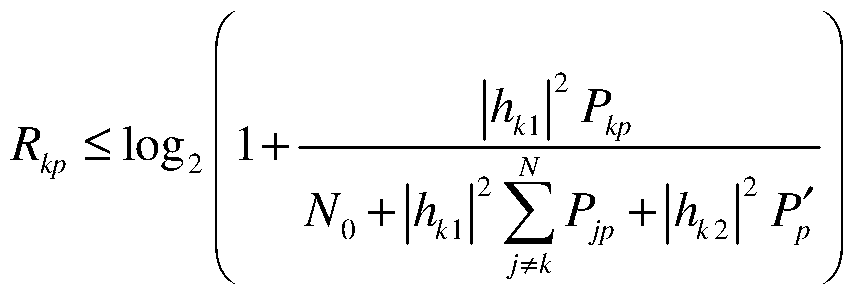
所述 N个终端除所述第二终端之外的其他 N-1个终端中第 s个 终端对应的第二信息的码字的发射速率满足第六条件, 包括:
KXP^
≤ log; 1 + - s = l,---k-l,k + l,N
其中, ^ ^表示所述第三终端对应的第一信息的码字与所述第四 终端对应的第一信息的码字叠加后的发射速率; '表示所述第二终 端与所述第一基站之间的信道衰落因子; 表示所述第三终端对应 的第一信息的码字的发射速率; 表示所述第四终端与所述第二基 站之间的信道衰落因子; 尸'表示所述第四终端对应的第二信息的码 字的发射功率; 表示本地噪声功率; ^表示所述第一基站 N个终 端中的第 j 个终端对应的第二信息的码字的发射功率; ^表示所述 第 j个终端对应的第一信息的码字的发射功率; 表示所述 N个终 端除所述第三终端之外的 N-1 个终端中第 n个终端对应的第一信息 的码字的发射速率; 表示所述第 n 个终端对应的第一信息的码字 的发射功率; 表示所述 N 个终端除所述第二终端之外的其他 N-1 个终端中第 s 个终端与所述第一基站之间的信道衰落因子; 表示
所述第二终端对应的第二信息的码字的发射速率; ^表示所述第二 终端对应的第二信息的码字的发射功率; ^表示所述第 S 个终端对 应的第二信息的码字的发射速率; V 表示对于变量的所有取值前述 不等式都成立; 其中用户 k为所述第一基站的第二终端, 用户 t 为 所述第一基站的第三终端。
在第一方面第五种可能的实现方式中, 结合第一方面第四种可 能的实现方式, 所述第三终端对应的第一信息的码字和所述第四终 端对应的第一信息的码字的叠加能在所述 N 个终端的第二终端处被 正确译出, 包括:
所述第三终端对应的第一信息的码字和所述第四终端对应的第 一信息的码字对应的编码调制机制 CM S 所采用的星座图的星座点的 最小欧式距离 rf'、 分别满足如下条件:

且所述星座 图 上的任意星座点 、 ctc满足如下条件: hklckc e {Am: m e Z2xl }、 hk2ctc e {Am : m Z2xl ) ,
其中, Ae Clx2,为预设的二维复数向量, 表示 2 行 * 1 列的整 数列向量。
第二方面, 提供一种下行多址接入 ΜΑ的方法, 所述方法包括: 若存在邻小区第一基站的干扰, 第二基站将第四终端对应的第 一信息的码字和第二信息的码字的叠加发送给所述第四终端和第二 终端, 所述第四终端为干扰对齐的用户终端, 所述第二终端为所述 第一基站的边缘用户终端;
其中, 所述第四终端对应的第一信息的码字是根据所述第四终 端对应的第一信息的码字的发射速率和发射功率获取的, 所述第四
终端对应的第二信息的码字是根据所述第四终端对应的第二信息的 码字的发射速率和发射功率获取的, 所述第四终端对应的第一信息 的码字的发射速率满足第一条件, 所述第四终端对应的第二信息的 发射速率满足第二条件, 所述第一条件为将所述第一基站 N 个终端 中除第三终端之外的 N- 1 个终端对应的第一信息的码字、 所述 N个 终端对应的第二信息的码字和所述第四终端对应的第二信息的码字 视作噪声时, 所述第三终端对应的第一信息的码字和所述第四终端 对应的第一信息的码字的叠加能在所述 N 个终端的第二终端处被正 确译出, 在将所述第四终端对应的第二信息的码字视作噪声时, 所 述第四终端对应的第一信息能在所述第四终端处被正确译出; 所述 第二条件为能在所述第四终端处被正确译出, 所述第三终端为干扰 对齐的用户终端。
在第二方面第一种可能的实现方式中, 结合第二方面, 所述第 一信息为用于所有能接收到所述第一信息的终端进行联合检测的信 息, 所述第二信息为用于该终端进行单用户检测的信息。
在第二方面第二种可能的实现方式中, 结合第二方面第一种可 能的实现方式, 所述第四终端对应的第一信息的码字的发射速率满 足第一条件,

应的第二信息的发射速率满足第二条件, 包括:

其中, 表示所述第四终端对应的第一信息的码字的发射速率, 表示所述第四终端对应的第二信息的码字的发射速率, 表示所 述第三终端对应的第一信息的码字与所述第四终端对应的第一信息
的码字叠加后的发射速率, ^。表示所述第四终端的本地噪声功率; h" 表示所述第二终端与所述第一基站之间的信道衰落因子; ^表示所 述第二终端与所述第二基站之间的信道衰落因子; ^表示所述第四 终端与所述第二基站之间的信道衰落因子; ^表示所述第一基站 N 个终端中的第 j 个终端对应的第二信息的码字的发射功率; ^表示 所述第 j 个终端对应的第一信息的码字的发射功率; 表示所述第 四终端对应的第二信息的码字的发射功率; 表示所述第四终端对 应的第一信息的码字的发射功率, 用户 k 为所述第一基站的第二终 端, 用户 t为所述第一基站的第三终端。
在第二方面第三种可能的实现方式中, 结合第二方面至第二方 面第二种可能的实现方式中的任一, 所述第三终端对应的第一信息 的码字和所述第四终端对应的第一信息的码字的叠加能在所述 N 个 终端的第二终端处被正确译出, 包括:
所述第三终端对应的第一信息的码字和所述第四终端对应的第 一信息的码字对应的编码调制机制 CMS 所采用的星座图的星座点的 最小欧式距离 rf'、 分别满足如下条件:

且所述星座 图 上的任意星座点 、 ctc满足如下条件: hklckc e [Am: m e Z2x1}、 hk2ctc e [Am: m e Z2x1 } ,
其中, 所述星座点对应的终端与的信道衰落因子, A e Clx2,为预 设的二维复数向量, Z2xl表示 2行 * 1列的整数列向量。
第三方面, 提供一种下行多址接入 MA的方法, 用于蜂窝通信系 统, 所述蜂窝通信系统中 M 个第一终端与第一基站之间的信道属于 第一信道, 第二终端与所述第一基站之间的信道属于第二信道, 所
述第一信道的信道衰落因子大于所述第二信道的信道衰落因子, M > 1 , M为整数, 所述方法包括:
第五终端获取第一接收信号, 其中, 所述第五终端为所述 M个 第一终端与所述第二终端中的任一终端;
所述第五终端根据所述第一接收信号, 结合预先配置的第一接 收策略, 确定所述第五终端对应的第一信息和第二信息;
其中, 所述第一接收策略为满足所述第五终端对应的第一信息 和第二信息分别被正确译出的接收策略。
在第三方面第一种可能的实现方式中, 结合第三方面, 所述第 一信息为用于所有能接收到所述第一信息的终端进行联合检测的信 息, 所述第二信息为用于该终端进行单用户检测的信息。
在第三方面第二种可能的实现方式中, 结合第三方面第一种可 能的实现方式, 所述第一接收策略包括:
在所述第五终端获取第一接收信号之后, 所述第五终端根据所 述第一接收信号, 检测所述 M个第一终端对应的第一信息;
根据所述第一接收信号以及所述 M 个第一终端对应的第一信 息, 获取第二信号;
根据所述第二信号, 检测所述第二终端对应的第一信息; 根据所述第二信号以及所述第二终端对应的第一信息, 获取第 三信号;
根据所述第三信号, 检测所述第五终端对应的第二信息。
在第三方面第三种可能的实现方式中, 结合第三方面第一种可 能的实现方式, 所述蜂窝通信系统中还包括第二基站, 所述第一基 站与所述第二基站间存在干扰, 所述第二基站的中心用户终端为第 四终端;
若所述第五终端为所述第二终端, 所述第一接收策略包括: 在所述第二终端获取第一接收信号之后, 所述第二终端根据所 述第一接收信号, 检测所述第一基站的第三终端对应的第一信息的 码字和所述第四终端对应的第一信息的码字的叠加, 所述第三终端
和所述第四终端为干扰对齐的用户终端;
根据所述第一接收信号、 所述第一基站的第三终端对应的第一 信息的码字和所述第四终端对应的第一信息的码字的叠加, 获取第 二信号;
若 M= l , 根据所述第二信号, 检测所述第二终端对应的第一信 息;
根据所述第二信号以及所述第二终端对应的第一信息, 获取第 三信号;
根据所述第三信号, 检测所述第二终端对应的第二信息; 若 M > 1 , 居所述第二信号, 检测所述 M个第一终端中除所述 第三终端之外的 M- 1个第一终端对应的第一信息;
根据所述第二信号, 以及所述 M个第一终端中除所述第三终端 之外的 M- 1个第一终端对应的第一信息, 获取第三信号;
根据所述第三信号, 检测所述第二终端对应的第一信息; 根据所述第三信号以及所述第二终端对应的第一信息, 获取第 四信号;
根据所述第四信号, 检测所述第二终端对应的第二信息。
第四方面, 提供一种下行多址接入 MA的方法, 用于蜂窝通信系 统, 所述蜂窝通信系统中包括第一基站和第二基站, 所述第一基站 与所述第二基站间存在干扰, 所述第二基站的中心用户终端为第四 终端, 所述方法包括:
第四终端获取第一接收信号;
所述第四终端根据所述第一接收信号, 结合预先配置的第二接 收策略, 确定所述第四终端对应的第一信息和第二信息;
其中, 所述第二接收策略为满足所述第四终端对应的第一信息 和第二信息分别被正确译出的接收策略。
在第四方面第一种可能的实现方式中, 结合第四方面, 所述第 一信息为用于所有能接收到所述第一信息的终端进行联合检测的信 息, 所述第二信息为用于该终端进行单用户检测的信息。
在第四方面第二种可能的实现方式中, 结合第四方面第一种可 能的实现方式, 所述第二接收策略包括:
在所述第四终端获取第一接收信号之后, 所述第四终端根据所 述第一接收信号, 检测所述第四终端对应的第一信息;
根据所述第一接收信号以及所述第四终端对应的第一信息, 获 取第二信号;
根据所述第二信号, 检测所述第四终端对应的第二信息。
第五方面, 提供一种第一基站, 所述第一基站包括: 发送单元、 处理单元;
所述发送单元, 用于将 N个终端中每个终端对应的第一信息的 码字和第二信息的码字的叠加发送给 N个终端, N为正整数;
其中, 第 r个终端对应的第一信息的码字是所述处理单元根据 所述第 r 个终端对应的第一信息的码字的发射速率和发射功率获取 的, 第 r 个终端对应的第二信息的码字是所述处理单元根据所述第 r 个终端对应的第二信息的码字的发射速率和发射功率获取的, 所 述第 r 个终端对应的第一信息的码字的发射速率满足第一条件, 所 述第 r个终端对应的第二信息的码字的发射速率满足第二条件, 所 述第一条件为在将所述 N 个终端对应的第二信息的码字视作噪声 时, 所述第 r 个终端对应的第一信息能在所述 N个终端的任一终端 处被正确译出, 所述第二条件为在将其他 N- 1 个终端对应的第二信 息的码字视作噪声时, 所述第 r 个终端对应的第二信息能在所述第 r个终端处被正确译出, l < r < N。
在第五方面第一种可能的实现方式中, 结合第五方面, 所述第 一信息为用于所有能接收到所述第一信息的终端进行联合检测的信 息, 所述第二信息为用于该终端进行单用户检测的信息。
在第五方面第二种可能的实现方式中, 结合第五方面第一种可 能的实现方式, 若次序译码 S D的检测顺序是从第 1个终端, 第 2个 终端, ..., 第 N个终端, 则所述第 r 个终端对应的第二信息的码字 的发射速率满足第二条件, 包括:

所述第 r 个终端对应的第一信息的码字的发射速率满足第

其中, 表示所述第 r个终端对应的第二信息的码字的发射速 率; 表示所述第 r个终端对应的第一信息的码字的发射速率; N(>表 示所述第 r 个终端的本地噪声功率; 表示所述第 r 个终端与所述 第一基站之间的信道衰落因子; 表示所述第 r 个终端对应的第二 信息的码字的发射功率; ^表示第 j 个终端对应的第二信息的码字 的发射功率; h','表示第 m 个终端与所述第一基站之间的信道衰落因 子; ^表示所述第 j个终端对应的第一信息的码字的发射功率; ^表 示所述第 r个终端对应的第一信息的码字的发射功率; V 表示对于 变量的所有取值前述不等式都成立。
在第五方面第三种可能的实现方式中, 结合第五方面至第五方 面第二种可能的实现方式中的任一, 若存在邻小区的第二基站的干 扰, 所述第 r 个终端对应的第一信息的码字的发射速率满足第一条 件, 包括:
所述 N个终端中第三终端对应的第一信息的码字的发射速率满 足第三条件, 所述 N个终端除所述第三终端之外的 N- 1 个终端中第 n个终端对应的第一信息的码字的发射速率满足第四条件;
其中, 所述第三条件为在将所述 N个终端中除所述第三终端之 外的 N- 1 个终端对应的第一信息的码字、 所述 N个终端对应的第二 信息的码字和所述第二基站的第四终端对应的第二信息的码字视作 噪声时, 所述第三终端对应的第一信息的码字和所述第四终端对应 的第一信息的码字的叠加能在所述 N 个终端的第二终端处被正确译
出, 所述第二终端为所述第一基站的边缘用户终端, 所述第三终端 和所述第四终端为干扰对齐的用户终端;
所述第四条件为在将所述 N个终端对应的第二信息的码字和所 述第四终端对应的第二信息的码字视作噪声时, 所述第 n 个终端对 应的第一信息能在所述第二终端处被正确译出, 在将所述 N 个终端 对应的第二信息的码字视作噪声时, 所述第 n 个终端对应的第一信 息能在所述 N个终端除所述第二终端之外的 N- 1 个终端中的任一终 端处被正确译出;
所述第 r 个终端对应的第二信息的码字的发射速率满足第二条 件, 包括:
所述 N个终端中第二终端对应的第二信息的码字的发射速率满 足第五条件, 所述 N个终端除所述第二终端之外的其他 N- 1 个终端 中第 s个终端对应的第二信息的码字的发射速率满足第六条件;
其中, 所述第五条件为在将所述 N个终端除所述第二终端之外 的其他 N- 1 个终端对应的第二信息的码字和所述第四终端对应的第 二信息的码字视作噪声时, 所述第二终端对应的第二信息能在所述 第二终端处被正确译出;
所述第六条件为在将所述 N 个终端除所述第 s 个终端之外的 N- 1 个终端对应的第二信息的码字视作噪声时, 所述第 s 个终端对 应的第二信息能在所述第 s个终端处被正确译出。
在第五方面第四种可能的实现方式中, 结合第五方面第三种可 能的实现方式, 若 S D的检测顺序是从第 1个终端, 第 2个终端, ..., 第 N个终端, 则所述 N个终端中第三终端对应的第一信息的码字的 发射速率满足第三条件, 包括:

所述 N个终端除所述第三终端之外的 N- 1个终端中第 n个终端 对应的第一信息的码字的发射速率满足第四条件, 包括:
Rnc≤ log n = l,---,t-l,t + l,---,N

h P
Rnc≤ log 1 + - n = !,■·■, t-l,t + !,■·■, N- s = l,---,k-l,k + !,■·■, N j=n+i
所述 N个终端中第二终端对应的第二信息的码字的发射速率满 足第

所述 N个终端除所述第二终端之外的其他 N-1个终端中第 s个 终端对应的第二信息的码字的发射速率满足第六条件, 包括:
KXP^
≤ log; 1 + - s = l,---k-l,k + l,N
其中, ^ ^表示所述第三终端对应的第一信息的码字与所述第四 终端对应的第一信息的码字叠加后的发射速率; '表示所述第二终 端与所述第一基站之间的信道衰落因子; 表示所述第三终端对应 的第一信息的码字的发射速率; 表示所述第四终端与所述第二基 站之间的信道衰落因子; 尸'表示所述第四终端对应的第二信息的码 字的发射功率; 表示本地噪声功率; ^表示所述第一基站 N个终 端中的第 j 个终端对应的第二信息的码字的发射功率; ^表示所述 第 j个终端对应的第一信息的码字的发射功率; 表示所述 N个终 端除所述第三终端之外的 N-1 个终端中第 n个终端对应的第一信息 的码字的发射速率; 表示所述第 n 个终端对应的第一信息的码字 的发射功率; 表示所述 N 个终端除所述第二终端之外的其他 N-1 个终端中第 s 个终端与所述第一基站之间的信道衰落因子; 表示
所述第二终端对应的第二信息的码字的发射速率; ^表示所述第二 终端对应的第二信息的码字的发射功率; ^表示所述第 S 个终端对 应的第二信息的码字的发射速率; V 表示对于变量的所有取值前述 不等式都成立; 其中用户 k为所述第一基站的第二终端, 用户 t 为 所述第一基站的第三终端。
在第五方面第五种可能的实现方式中, 结合第五方面第四种可 能的实现方式, 所述第三终端对应的第一信息的码字和所述第四终 端对应的第一信息的码字的叠加能在所述 N 个终端的第二终端处被 正确译出, 包括:
所述第三终端对应的第一信息的码字和所述第四终端对应的第 一信息的码字对应的编码调制机制 CMS 所采用的星座图的星座点的 最小欧式距离 rf'、 分别满足如下条件:

且所述星座 图 上的任意星座点 、 ctc满足如下条件: hklckc e {Am: m e Z2x1 }、 hk2ctc e {Am: m e Z2x1 } ,
其中, Ae Clx2,为预设的二维复数向量, 表示 2 行 * 1 列的整 数列向量。
第六方面, 提供一种第二基站, 所述第二基站包括: 发送单元、 处理单元;
所述发送单元, 用于若存在邻小区第一基站的干扰, 将第四终 端对应的第一信息的码字和第二信息的码字的叠加发送给所述第四 终端和第二终端, 所述第四终端为干扰对齐的用户终端, 所述第二 终端为所述第一基站的边缘用户终端;
其中, 所述第四终端对应的第一信息的码字是所述处理单元才艮
据所述第四终端对应的第一信息的码字的发射速率和发射功率获取 的, 所述第四终端对应的第二信息的码字是所述处理单元根据所述 第四终端对应的第二信息的码字的发射速率和发射功率获取的, 所 述第四终端对应的第一信息的码字的发射速率满足第一条件, 所述 第四终端对应的第二信息的发射速率满足第二条件, 所述第一条件 为将所述第一基站 N个终端中除第三终端之外的 N- 1 个终端对应的 第一信息的码字、 所述 N 个终端对应的第二信息的码字和所述第四 终端对应的第二信息的码字视作噪声时, 所述第三终端对应的第一 信息的码字和所述第四终端对应的第一信息的码字的叠加能在所述 N 个终端的第二终端处被正确译出, 在将所述第四终端对应的第二 信息的码字视作噪声时, 所述第四终端对应的第一信息能在所述第 四终端处被正确译出; 所述第二条件为能在所述第四终端处被正确 译出, 所述第三终端为干扰对齐的用户终端。
在第六方面第一种可能的实现方式中, 结合第六方面, 所述第 一信息为用于所有能接收到所述第一信息的终端进行联合检测的信 息, 所述第二信息为用于该终端进行单用户检测的信息。
在第六方面第二种可能的实现方式中, 结合第六方面第一种可 能的实现方式, 所述第四终端对应的第一信息的码字的发射速率满 足第一

应的第二信息的发射速率满足第二条件, 包括:
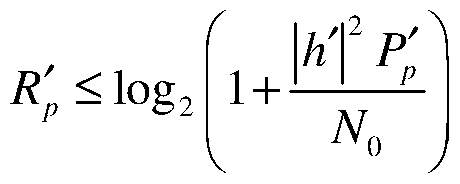
其中, 表示所述第四终端对应的第一信息的码字的发射速率, ';表示所述第四终端对应的第二信息的码字的发射速率, ^ ^表示所
述第三终端对应的第一信息的码字与所述第四终端对应的第一信息 的码字叠加后的发射速率, 。表示所述第四终端的本地噪声功率; h" 表示所述第二终端与所述第一基站之间的信道衰落因子; ^表示所 述第二终端与所述第二基站之间的信道衰落因子; ^表示所述第四 终端与所述第二基站之间的信道衰落因子; ^表示所述第一基站 N 个终端中的第 j 个终端对应的第二信息的码字的发射功率; ^表示 所述第 j 个终端对应的第一信息的码字的发射功率; 表示所述第 四终端对应的第二信息的码字的发射功率; 表示所述第四终端对 应的第一信息的码字的发射功率, 用户 k 为所述第一基站的第二终 端, 用户 t为所述第一基站的第三终端。
在第六方面第三种可能的实现方式中, 结合第六方面至第六方 面第二种可能的实现方式中的任一, 所述第三终端对应的第一信息 的码字和所述第四终端对应的第一信息的码字的叠加能在所述 N 个 终端的第二终端处被正确译出, 包括:
所述第三终端对应的第一信息的码字和所述第四终端对应的第 一信息的码字对应的编码调制机制 CMS 所采用的星座图的星座点的 最小欧式距离 rf'、 分别满足如下条件:

且所述星座 图 上的任意星座点 、 ctc满足如下条件: hklckc e [Am: m e Z2x1}、 hk2ctc e [Am: m e Z2x1 } ,
其中, 所述星座点对应的终端与的信道衰落因子, A e Clx2,为预 设的二维复数向量, Z2xl表示 2行 * 1列的整数列向量。
第七方面, 提供一种第五终端, 用于蜂窝通信系统, 所述蜂窝 通信系统中 M 个第一终端与第一基站之间的信道属于第一信道, 第
二终端与所述第一基站之间的信道属于第二信道, 所述第一信道的 信道衰落因子大于所述第二信道的信道衰落因子, M > 1 , M为整数, 其中, 所述第五终端为所述 M 个第一终端与所述第二终端中的任一 终端, 所述第五终端包括: 获取单元、 确定单元;
所述获取单元, 用于获取第一接收信号;
所述确定单元, 用于根据所述第一接收信号, 结合预先配置的 第一接收策略, 确定所述第五终端对应的第一信息和第二信息;
其中, 所述第一接收策略为满足所述第五终端对应的第一信息 和第二信息分别被正确译出的接收策略。
在第七方面第一种可能的实现方式中, 结合第七方面, 所述第 一信息为用于所有能接收到所述第一信息的终端进行联合检测的信 息, 所述第二信息为用于该终端进行单用户检测的信息。
在第七方面第二种可能的实现方式中, 结合第七方面第一种可 能的实现方式, 所述第一接收策略包括:
在所述第五终端获取第一接收信号之后, 所述第五终端根据所 述第一接收信号, 检测所述 M个第一终端对应的第一信息;
根据所述第一接收信号以及所述 M 个第一终端对应的第一信 息, 获取第二信号;
根据所述第二信号, 检测所述第二终端对应的第一信息; 根据所述第二信号以及所述第二终端对应的第一信息, 获取第 三信号;
根据所述第三信号, 检测所述第五终端对应的第二信息。
在第七方面第三种可能的实现方式中, 结合第七方面第一种可 能的实现方式, 所述蜂窝通信系统中还包括第二基站, 所述第一基 站与所述第二基站间存在干扰, 所述第二基站的中心用户终端为第 四终端;
若所述第五终端为所述第二终端, 所述第一接收策略包括: 在所述第二终端获取第一接收信号之后, 所述第二终端根据所 述第一接收信号, 检测所述第一基站的第三终端对应的第一信息的
码字和所述第四终端对应的第一信息的码字的叠加, 所述第三终端 和所述第四终端为干扰对齐的用户终端;
根据所述第一接收信号、 所述第一基站的第三终端对应的第一 信息的码字和所述第四终端对应的第一信息的码字的叠加, 获取第 二信号;
若 M= l , 根据所述第二信号, 检测所述第二终端对应的第一信 息;
根据所述第二信号以及所述第二终端对应的第一信息, 获取第 三信号;
根据所述第三信号, 检测所述第二终端对应的第二信息; 若 M > 1 , 居所述第二信号, 检测所述 M个第一终端中除所述 第三终端之外的 M- 1个第一终端对应的第一信息;
根据所述第二信号, 以及所述 M个第一终端中除所述第三终端 之外的 M- 1个第一终端对应的第一信息, 获取第三信号;
根据所述第三信号, 检测所述第二终端对应的第一信息; 根据所述第三信号以及所述第二终端对应的第一信息, 获取第 四信号;
根据所述第四信号, 检测所述第二终端对应的第二信息。
第八方面, 提供一种第四终端, 用于蜂窝通信系统, 所述蜂窝 通信系统中包括第一基站和第二基站, 所述第一基站与所述第二基 站间存在干扰, 所述第二基站的中心用户终端为第四终端, 所述第 四终端包括: 获取单元、 确定单元;
所述获取单元, 用于获取第一接收信号;
所述第四终端根据所述第一接收信号, 结合预先配置的第二接 收策略, 确定所述第四终端对应的第一信息和第二信息;
其中, 所述第二接收策略为满足所述第四终端对应的第一信息 和第二信息分别被正确译出的接收策略。
在第八方面第一种可能的实现方式中, 结合第八方面, 所述第 一信息为用于所有能接收到所述第一信息的终端进行联合检测的信
息, 所述第二信息为用于该终端进行单用户检测的信息。
在第八方面第二种可能的实现方式中, 结合第八方面, 所述第 二接收策略包括:
在所述第四终端获取第一接收信号之后, 所述第四终端根据所 述第一接收信号, 检测所述第四终端对应的第一信息;
根据所述第一接收信号以及所述第四终端对应的第一信息, 获 取第二信号;
根据所述第二信号, 检测所述第四终端对应的第二信息。
第九方面, 提供一种第一基站, 所述第一基站包括: 发送器, 处理器;
所述发送器, 用于将 N个终端中每个终端对应的第一信息的码 字和第二信息的码字的叠加发送给 N个终端, N为正整数;
其中, 第 r个终端对应的第一信息的码字是所述处理器根据所 述第 r 个终端对应的第一信息的码字的发射速率和发射功率获取 的, 第 r 个终端对应的第二信息的码字是所述处理器根据所述第 r 个终端对应的第二信息的码字的发射速率和发射功率获取的, 所述 第 r 个终端对应的第一信息的码字的发射速率满足第一条件, 所述 第 r个终端对应的第二信息的码字的发射速率满足第二条件, 所述 第一条件为在将所述 N 个终端对应的第二信息的码字视作噪声时, 所述第 r 个终端对应的第一信息能在所述 N个终端的任一终端处被 正确译出, 所述第二条件为在将其他 N- 1 个终端对应的第二信息的 码字视作噪声时, 所述第 r 个终端对应的第二信息能在所述第 r 个 终端处被正确译出, l < r < N。
在第九方面第一种可能的实现方式中, 结合第九方面, 所述第 一信息为用于所有能接收到所述第一信息的终端进行联合检测的信 息, 所述第二信息为用于该终端进行单用户检测的信息。
在第九方面第二种可能的实现方式中, 结合第九方面第一种可 能的实现方式, 若次序译码 S D的检测顺序是从第 1个终端, 第 2个 终端, ..., 第 N个终端, 则所述第 r 个终端对应的第二信息的码字
的发 二条件, 包括:

所述第 r 个终端对应的第一信息的码字的发射速率满足第

其中, 表示所述第 r个终端对应的第二信息的码字的发射速 率; 表示所述第 r个终端对应的第一信息的码字的发射速率; N(>表 示所述第 r 个终端的本地噪声功率; 表示所述第 r 个终端与所述 第一基站之间的信道衰落因子; 表示所述第 r 个终端对应的第二 信息的码字的发射功率; ^表示第 j 个终端对应的第二信息的码字 的发射功率; h','表示第 m 个终端与所述第一基站之间的信道衰落因 子; ^表示所述第 j个终端对应的第一信息的码字的发射功率; ^表 示所述第 r个终端对应的第一信息的码字的发射功率; V 表示对于 变量的所有取值前述不等式都成立。
在第九方面第三种可能的实现方式中, 结合第九方面至第九方 面第一种可能的实现方式中的任一, 若存在邻小区的第二基站的干 扰, 所述第 r 个终端对应的第一信息的码字的发射速率满足第一条 件, 包括:
所述 Ν个终端中第三终端对应的第一信息的码字的发射速率满 足第三条件, 所述 Ν个终端除所述第三终端之外的 Ν- 1 个终端中第 n个终端对应的第一信息的码字的发射速率满足第四条件;
其中, 所述第三条件为在将所述 Ν个终端中除所述第三终端之 外的 Ν- 1 个终端对应的第一信息的码字、 所述 Ν个终端对应的第二 信息的码字和所述第二基站的第四终端对应的第二信息的码字视作 噪声时, 所述第三终端对应的第一信息的码字和所述第四终端对应
的第一信息的码字的叠加能在所述 N 个终端的第二终端处被正确译 出, 所述第二终端为所述第一基站的边缘用户终端, 所述第三终端 和所述第四终端为干扰对齐的用户终端;
所述第四条件为在将所述 N个终端对应的第二信息的码字和所 述第四终端对应的第二信息的码字视作噪声时, 所述第 n 个终端对 应的第一信息能在所述第二终端处被正确译出, 在将所述 N 个终端 对应的第二信息的码字视作噪声时, 所述第 n 个终端对应的第一信 息能在所述 N个终端除所述第二终端之外的 N- 1 个终端中的任一终 端处被正确译出;
所述第 r 个终端对应的第二信息的码字的发射速率满足第二条 件, 包括:
所述 N个终端中第二终端对应的第二信息的码字的发射速率满 足第五条件, 所述 N个终端除所述第二终端之外的其他 N- 1 个终端 中第 s个终端对应的第二信息的码字的发射速率满足第六条件;
其中, 所述第五条件为在将所述 N个终端除所述第二终端之外 的其他 N- 1 个终端对应的第二信息的码字和所述第四终端对应的第 二信息的码字视作噪声时, 所述第二终端对应的第二信息能在所述 第二终端处被正确译出;
所述第六条件为在将所述 N 个终端除所述第 s 个终端之外的 N- 1 个终端对应的第二信息的码字视作噪声时, 所述第 s 个终端对 应的第二信息能在所述第 s个终端处被正确译出。
在第九方面第四种可能的实现方式中, 结合第九方面第三种可 能的实现方式, 若 S D的检测顺序是从第 1个终端, 第 2个终端, ..., 第 N个终端, 则所述 N个终端中第三终端对应的第一信息的码字的 发射速率满足第三条件, 包括:

所述 Ν个终端除所述第三终端之外的 Ν- 1个终端中第 η个终端
对应的第一信息的码字的发射速率满足第四条件, 包括:
Rnc≤ log 1 + n = l,---,t-l,t + l,---,N
 h P
h P
Rnc≤ log 1 + - n = !,■·■, t-l,t + !,■·■, N- s = l,---,k-l,k + !,■·■, N
所述 N个终端中第二终端对应的第二信息的码字的发射速率满 足第五条件, 包括:

所述 N个终端除所述第二终端之外的其他 N-1个终端中第 s个 终端对应的第二信息的码字的发射速率满足第六条件, 包括:
KXP^
≤ log 1 + - s = l,---k-l,k + l,N
其中, ^ ^表示所述第三终端对应的第一信息的码字与所述第四 终端对应的第一信息的码字叠加后的发射速率; '表示所述第二终 端与所述第一基站之间的信道衰落因子; 表示所述第三终端对应 的第一信息的码字的发射速率; 表示所述第四终端与所述第二基 站之间的信道衰落因子; 尸'表示所述第四终端对应的第二信息的码 字的发射功率; 表示本地噪声功率; ^表示所述第一基站 N个终 端中的第 j 个终端对应的第二信息的码字的发射功率; ^表示所述 第 j个终端对应的第一信息的码字的发射功率; 表示所述 N个终 端除所述第三终端之外的 N-1 个终端中第 n个终端对应的第一信息 的码字的发射速率; 表示所述第 n 个终端对应的第一信息的码字 的发射功率; 表示所述 N 个终端除所述第二终端之外的其他 N-1
个终端中第 S 个终端与所述第一基站之间的信道衰落因子; 表示 所述第二终端对应的第二信息的码字的发射速率; ^表示所述第二 终端对应的第二信息的码字的发射功率; ^表示所述第 S 个终端对 应的第二信息的码字的发射速率; V 表示对于变量的所有取值前述 不等式都成立; 其中用户 k为所述第一基站的第二终端, 用户 t 为 所述第一基站的第三终端。
在第九方面第五种可能的实现方式中, 结合第九方面第四种可 能的实现方式, 所述第三终端对应的第一信息的码字和所述第四终 端对应的第一信息的码字的叠加能在所述 N 个终端的第二终端处被 正确译出, 包括:
所述第三终端对应的第一信息的码字和所述第四终端对应的第 一信息的码字对应的编码调制机制 CMS 所采用的星座图的星座点的 最小欧式距离 rf'、 分别满足如下条件:

且所述星座 图 上的任意星座点 、 tc满足如下条件: hk lckc e {Am: m e Z2x1 }、 hk 2ctc e {Am: m e Z2x1 } ,
其中, Ae Clx2,为预设的二维复数向量, 表示 2 行 * 1 列的整 数列向量。
第十方面, 提供一种第二基站, 所述第二基站包括: 发送器、 处理器;
所述发送器, 用于若存在邻小区第一基站的干扰, 将第四终端 对应的第一信息的码字和第二信息的码字的叠加发送给所述第四终 端和第二终端, 所述第四终端为干扰对齐的用户终端, 所述第二终 端为所述第一基站的边缘用户终端;
其中, 所述第四终端对应的第一信息的码字是所述处理器根据 所述第四终端对应的第一信息的码字的发射速率和发射功率获取 的, 所述第四终端对应的第二信息的码字是所述处理器根据所述第 四终端对应的第二信息的码字的发射速率和发射功率获取的, 所述 第四终端对应的第一信息的码字的发射速率满足第一条件, 所述第 四终端对应的第二信息的发射速率满足第二条件, 所述第一条件为 将所述第一基站 Ν个终端中除第三终端之外的 N- 1 个终端对应的第 一信息的码字、 所述 Ν 个终端对应的第二信息的码字和所述第四终 端对应的第二信息的码字视作噪声时, 所述第三终端对应的第一信 息的码字和所述第四终端对应的第一信息的码字的叠加能在所述 Ν 个终端的第二终端处被正确译出, 在将所述第四终端对应的第二信 息的码字视作噪声时, 所述第四终端对应的第一信息能在所述第四 终端处被正确译出; 所述第二条件为能在所述第四终端处被正确译 出, 所述第三终端为干扰对齐的用户终端。
在第十方面第一种可能的实现方式中, 结合第十方面, 所述第 一信息为用于所有能接收到所述第一信息的终端进行联合检测的信 息, 所述第二信息为用于该终端进行单用户检测的信息。
在第十方面第二种可能的实现方式中, 结合第十方面第一种可 能的实现方式, 所述第四终端对应的第一信息的码字的发射速率满 足第一

应的第二信息的发射速率满足第二条件, 包括:

其中, 表示所述第四终端对应的第一信息的码字的发射速率,
表示所述第四终端对应的第二信息的码字的发射速率, 表示所 述第三终端对应的第一信息的码字与所述第四终端对应的第一信息 的码字叠加后的发射速率, 。表示所述第四终端的本地噪声功率; h" 表示所述第二终端与所述第一基站之间的信道衰落因子; ^表示所 述第二终端与所述第二基站之间的信道衰落因子; ^表示所述第四 终端与所述第二基站之间的信道衰落因子; ^表示所述第一基站 N 个终端中的第 j 个终端对应的第二信息的码字的发射功率; ^表示 所述第 j 个终端对应的第一信息的码字的发射功率; 表示所述第 四终端对应的第二信息的码字的发射功率; 表示所述第四终端对 应的第一信息的码字的发射功率, 用户 k 为所述第一基站的第二终 端, 用户 t为所述第一基站的第三终端。
在第十方面第三种可能的实现方式中, 结合第十方面至第十方 面第二种可能的实现方式中的任一, 所述第三终端对应的第一信息 的码字和所述第四终端对应的第一信息的码字的叠加能在所述 N 个 终端的第二终端处被正确译出, 包括:
所述第三终端对应的第一信息的码字和所述第四终端对应的第 一信息的码字对应的编码调制机制 CMS 所采用的星座图的星座点的 最小欧式距离 rf'、 分别满足如下条件:

且所述星座 图 上的任意星座点 、 ctc满足如下条件: hklckc e {Am: m e Z2x1}、 hk2ctc e {Am: m e Z2x1 } ,
其中, 所述星座点对应的终端与的信道衰落因子, A e Clx2,为预 设的二维复数向量, Z2xl表示 2行 * 1列的整数列向量。
第十一方面, 提供一种第五终端, 用于蜂窝通信系统, 所述蜂
窝通信系统中 M 个第一终端与第一基站之间的信道属于第一信道, 第二终端与所述第一基站之间的信道属于第二信道, 所述第一信道 的信道衰落因子大于所述第二信道的信道衰落因子, M > 1 , M 为整 数, 其中, 所述第五终端为所述 M 个第一终端与所述第二终端中的 任一终端, 所述第五终端包括: 处理器、 收发器、 存储器和通信总 线;
所述通信总线, 用于所述处理器, 所述收发器、 所述储存器之 间的连接通信;
所述收发器, 用于所述第五终端与外部的通信;
所述处理器, 用于调用所述存储器中的存储的程序代码, 执行 如第三方面任一项所述的方法。
第十二方面, 提供一种第四终端, 用于蜂窝通信系统, 所述蜂 窝通信系统中包括第一基站和第二基站, 所述第一基站与所述第二 基站间存在干扰, 所述第二基站的中心用户终端为第四终端, 所述 第四终端包括: 处理器、 收发器、 存储器和通信总线;
所述通信总线, 用于所述处理器, 所述收发器、 所述储存器之 间的连接通信;
所述收发器, 用于所述第四终端与外部的通信;
所述处理器, 用于调用所述存储器中的存储的程序代码, 执行 如第四方面任一项所述的方法。
本发明实施例提供一种下行 MA的方法、 基站及终端, 由第一基 站将 N 个终端中每个终端对应的第一信息的码字和第二信息的码字 的叠加发送给 N个终端, 并且第 r 个终端对应的第一信息的码字的 发射速率满足的第一条件以及第 r 个终端对应的第二信息的码字的 发射速率满足的第二条件可知, 本发明实施例引入了对消息的分割 机制, 即, 第一基站采用了消息分割机制, 将各个终端对应的消息 分割为第一信息和第二信息两部分, 第 r 个终端对应的第一信息的 码字的发射速率与 N 个终端对应的第二信息的码字的发射功率相 关, 第 r 个终端对应的第二信息的码字的发射速率与其他 N- 1 个终
端对应的第二信息的码字的发射功率相关。 这样, 第一基站可以通 过控制 N 个终端中每个终端对应的第一信息的码字的发射功率与第 二信息的码字的发射功率的大小, 灵活的调节与该第一基站通信的 N 个终端的传输速率, 进而可以实现与基站通信的不同终端之间在 传输速率与公平性上的灵活折中。 其中, 第一条件为在将所述 N 个 终端对应的第二信息的码字视作噪声时, 所述第 r 个终端对应的第 一信息能在所述 N 个终端的任一终端处被正确译出, 第二条件为在 将其他 N- 1 个终端对应的第二信息的码字视作噪声时, 所述第 r 个 终端对应的第二信息能在所述第 r个终端处被正确译出, l < r < N。 附图说明 面将对实施例或现有技术描述中所需要使用的附图作简单地介绍, 显而易见地, 下面描述中的附图仅仅是本发明的一些实施例, 对于 本领域普通技术人员来讲, 在不付出创造性劳动的前提下, 还可以 根据这些附图获得其他的附图。
图 1 为本发明实施例提供的 0MA技术与 S C- S D机制序列检测的 速率域比较示意图;
图 2为本发明实施例提供的两用户退化广播信道的模型; 图 3为本发明实施例提供的一种下行 MA的方法流程示意图; 图 4 为本发明实施例提供的一种由两个小区构成的蜂窝系统的 模型;
图 5为本发明实施例提供的一种下行 MA的方法流程示意图; 图 6为本发明实施例提供的另一种下行 MA的方法流程示意图; 图 7为本发明实施例提供的又一种下行 MA的方法流程示意图; 图 8为本发明实施例提供的一种第一基站结构示意图;
图 9为本发明实施例提供的一种第二基站结构示意图;
图 1 0为本发明实施例提供的一种第五终端结构示意图; 图 1 1为本发明实施例提供的一种第四终端结构示意图; 图 1 2为本发明实施例提供的一种第一基站结构示意图;
图 13为本发明实施例提供的一种第二基站结构示意图; 图 14为本发明实施例提供的一种第五终端结构示意图; 图 15为本发明实施例提供的一种第四终端结构示意图。
具体实施方式
为了方便理解, 首先给出 0MA技术的简要介绍:
考 虑一个上行传输 的 例 子 : 在一个 两 用 户 多 址信道 ( multi-access channel, MAC ) 中。 两个单天线的 UE 同以 i = i,2 的发射功率向一个单天线的基站发送消息, 记终端 1、 终端 2 要发 送的消息分别为 m, m2 , 终端 1、终端 2与基站间的信道呈平坦衰落, 信道衰落因子分别为 / ¾和/ ¾, 基站的本地噪声功率为 N。。 在没有终端 2/终端 1 的情况下, 根据香农公式可知, 终端 1/终端 2与基站之间 的最大传输功率为 R; =log 1 + ( bit/symbol ), = 1,2。 如果在两
N,、
个 UE间正交分割资源,则最终两个 UE的总传输速率为 = Ω +(1-Ω^2, 其中。表示分配给终端 1 的频谱资源在全部资源中的比例, [0,1] 即若将 R,作为纵轴, R2作为横轴, 则如图 1所示, 采用正交分割多址 的 情 况 下 , 所 能 达 到 的 速 率 范 围 为 (iog2(i + |/¾|2s/N。),o) ,
( 00

叠加编码:
终端 1通过某种可靠的编码调制机制 ( coding and modulating scheme, CMS ), 记为 CMS 将消息 m,编码为传输速率为 R,的码字 , 其中 R,≤ log; 1+ 终端 2通过某种可靠的 CMS, 记为 CMS2, 将消
N,、
息 m2编码为速率 R2的码字 x2发射, 而

需要说明的是, 所述可靠的 CMS, 指对于给定的信道条件和传 输速率, 发端采用该方案进行编码调制, 在收端采用该方案对应的 解调译码算法进行检测, 能够使差错率任意低; 或者在实际系统中, 能够使差错率小于一个预设阈值, 也可认为该 CMS是可靠的。
次序译码:
在基站处, 接收的信号来自两个 UE的信号与本地噪声的叠加, 即《y = x +h2x2 +η ,
其中, /¾和/ ¾分别表示终端 1、终端 2与基站间的信道衰落因子,
X,表示消息 ,的码字, x2表示消息 2的码字, 《表示本地噪声。
基站采用如下步骤进行检测:
步骤一、 基站将 X,视作噪声 , 用 CMS2对应的解调译码机制
( demodulating and decoding scheme , DDS ), 记为 DDS2 , 从 j中 检测出 m2 , 记检测结果为 ;
步骤二、 基站用 CMS2重新对 ^进行编码, 得到对 x2的估计值^。 并才艮据/ ½重建出 / ½ 2, 并从 j中减去, 得到 / = _ - /½
步骤三、 基站用 CMS 对应的 DDS, 记为 DDS1 从/中检测出 m, 记检测结果为 ^。 至此基站完成了对两个 UE的发送消息的检测。
结果验证如下:
步骤一中, 基站将 视作噪声, 此时的等效噪声 /^ 的功率可 知为 No + I^l2/^通过这样的等效, 我们把原本 MAC转变成了点对点 的高斯信道, 根据香农公式可知该信道的容量 根

据条件可知, 此时 R2未超过信道容量, 且 CMS2是可靠的, 因此是可 以正确检测出 m2的。
之后基站重建出 /^ 2并从 j中减去, y =h,x,+n + h2{x2-x2) , 最后 一项表示步骤一的检测 -重建-干扰消除过程中引入的误差。 显然, 在正确译码的情况下, 此项为 0。 即终端 2 的消息被完全消除了。
在终端 2 的消息被完全消除的情况下, 基站与终端 1 之间 被转换成了一个点对点高斯信道。此信道的容量可知为 log:

类似地我们可知, 此时 R,未超过信道容量, 且 CMS 是可靠的, ,也 可以被正确译出。
通过 传输速率为:
RVR2)

交换上面流程中终端 1 和终端 2 的位置, 用类似的方法, 同样 可以

综上,通过上述的 SC-SD过程,我们可以达到的速率区域是(0,0)、
,log: 1 +
围成的切角五边

形区域, 如图 1所示。
显然, 由图 1 可知, SC-SD机制所能达到的传输速率是要严格 高于 MA机制的。 实际上, 通过分析可以证明随着两个 UE 的接收功 Ρ的增加, SC-SD在速率上相较正交分割的增益会越来
 越大
越大
信息论研究还表明,我们通过 SC-SD机制达到的速率域正是 MAC 的容量域, 即在 MAC中, SC-SD机制是最优的。
受上述 SC-SD机制的启发, DoCoMo提出了一种名为 NOMA的多 址技术, 该技术在上行时与上述 SC-SD机制完全相同, 故不再赘述, 下行时的情况简要介绍如下:
以上述两用 户 MAC 的对偶信道一 两用 户 退化广播信道
( degraded broadcas t channel, DBC ) 为例进行说明 , 该信道如图 2所示。 在该信道中, 一个单天线基站分别用 S和 >2的功率向终端 1、 终端 2发送对应的消息, 假设基站要发送给终端 1, 终端 2 的消息 分别为 m,、 m2。 基站与终端 1、 终端 2 间的信道呈平坦衰落, 信道衰 落因子分别为 / ¾和/ ¾。 两个 UE的本地噪声功率均为 N。。 NOMA的收发 口下:
发端处理:
基站通过某种可靠的 CMS, 记为 CMS1 将消息 m,编码成为速率 为 R,的码字 X, , 其中 R,≤ log 1 + - Δ2Ρ,
通过某种可靠的 CMS, 记为
N0 + |/¾| P2
CMS2, 将消息 m2编码成为速率为 R2的码字 x2, 其中 R2≤l。g: 1

基站将两个码字的叠加 ΛΤ,+ 作为发送信号进行发送。
收端处理: 以下将分别说明终端 1和终端 2的接收策略。
终端 1: 终端 1接收到的信号为 j^/^^ + x^ +
其中, /¾表示终端 1与基站间的信道衰落因子, ^表示消息 ^的 码字, ^表示消息 ^的码字, 《,表示终端 1 的本地噪声。
终端 1 的检测流程如下:
终端 1 把 x2视作噪声, 用 CMS 对应的 DDS, 记为 DDS1 从 中 检测 m、 , 记检测结果为 ^。
终端 2: 终端 2接收到的信号为 + +
其中, /¾表示终端 2与基站间的信道衰落因子, ^表示消息 ^的 码字, ^表示消息 ^的码字, 《2表示终端 2的本地噪声。
终端 2的检测流程如下:
步骤一、 终端 2 首先将 χ2视作噪声, 用 DDS A^检测出 m,, 记 检测结果为 ^。
步骤二、终端 2用 CMSi重新对 ^进行编码,得到对 ^的估计值 ,。 并才艮据/ ½重建出 , 并从 中减去, 得到 = ^- /½·ί2。
步骤三、终端 2用 CMS2对应的 DDS ,记为 DDS2 ,从 中检测出 m2 ,
记检测结果为
结果验证如下:
在终端 2 处, 在检测出 之前是需要先从 ^中检测出 ^的, 在 检测 ^的时候, 将 x2视作噪声。 此时的 DBC 被等效为了噪声功率为
\hA2 R
W。+ | |2 P2的高斯信道, 其容量为 log 1 + - 而我们前面对 R,的
Nn + \U 限定是 ≤ 1 + - 因此若要 R,满足限定条件, 需要 IW≤IW , 则意味着

P、 P、
显然, 当 log: 1 + - < R, < log 1 + - 时, m,在终端 2处是无法
N。+ /¾ P2 正确检测出来的。 而错误的译码必然导致差错传播, 进而使 m2也无 法正确检测。 由此可见, 在 NOMA 中, UE 的检测顺序是一定的, 必须是信道 条件差的 UE先检测, 信道条件好的 UE后检测。
下面将结合本发明实施例中的附图, 对本发明实施例中的技术 方案进行清楚、 完整地描述, 显然, 所描述的实施例仅仅是本发明 一部分实施例, 而不是全部的实施例。 基于本发明中的实施例, 本 领域普通技术人员在没有做出创造性劳动前提下所获得的所有其他 实施例, 都属于本发明保护的范围。
为了便于清楚描述本发明实施例的技术方案,在本发明的实施 例中, 采用了 "第一"、 "第二" 等字样对功能和作用基本相同的相 同项或相似项进行区分,本领域技术人员可以理解"第一"、 "第二"
等字样并不对数量和执行次序进行限定。
实施例一、
本发明实施提供一种下行 MA的方法, 具体如图 3所示, 包括: 301、第一基站将 N个终端中每个终端对应的第一信息的码字和 第二信息的码字的叠加发送给 N个终端, N为正整数。
其中, 第 r个终端对应的第一信息的码字是根据第 r个终端对 应的第一信息的码字的发射速率和发射功率获取的, 第 r 个终端对 应的第二信息的码字是根据第 r 个终端对应的第二信息的码字的发 射速率和发射功率获取的, 第 r 个终端对应的第一信息的码字的发 射速率满足第一条件, 第 r 个终端对应的第二信息的码字的发射速 率满足第二条件, 第一条件为在将 N 个终端对应的第二信息的码字 视作噪声时, 第 r 个终端对应的第一信息能在 N个终端的任一终端 处被正确译出, 第二条件为在将其他 N- 1 个终端对应的第二信息的 码字视作噪声时, 第 r 个终端对应的第二信息能在第 r 个终端处被 正确译出, 1 < r < N。
具体的, 本发明实施例中, 每个终端对应的消息被分割为第一 信息和第二信息两部分, 对每部分信息可以采用不同的检测方式进 行检测。
优选的, 第一信息为用于所有能接收到第一信息的终端进行联 合检测的信息, 第二信息为用于该终端进行单用户检测的信息。
示例性的, N个终端对应的消息 m'', = 1,2,…… ,Ν , 分成两部分 和 。 称为第一信息, 对于此部分信息, 需要在所有能接收到该 信息的终端采用 S D检测方式将其译出; 称为第二信息, 对此部分 信息, 可以在对应的收端, 即终端 i 对应的第二信息在终端 i 处采 用传统的单用户检测方式将其译出, 而在非对应的接收终端处则将 其等效为噪声。
特别的,假设第 k个终端与第一基站之间的信道衰落因子最差, 则可以特别限定 mfc = mt , 即《¾整体都作为第一信息, 第二信息为 0 , 从而在所有能接收到该第一信息的终端都需要通过 S D 检测方式将
其译出, 由于在本方案的 S D检测顺序中, 第 k个终端对应的第一信 息是最后检测的, 因此第 k个终端可以获得更高的 S I NR , 从而可以 提高第一基站与该终端之间的传输速率。
进一步的,若 S D的检测顺序是从第 1个终端、第 2个终端, , 第 N个终端, 则第 r 个终端对应的第二信息的码字的发射速率满足 第二条件, 具体可以如公式 ( 1 ) 所示: h \ P
≤ log 1 + - Vr = l, 2, - - - , N 公式 ( 1 ) 第 r个终端对应的第一信息的码字的发射速率满足第一条件, 具体可以如 ( 2 ) 所示:
1 + 公式 ( 2 )

其中, 表示第 r个终端对应的第二信息的码字的发射速率; 表示第 r 个终端对应的第一信息的码字的发射速率; W。表示第 r 个 终端的本地噪声功率; 表示第 r 个终端与第一基站之间的信道衰 落因子; 表示第 r 个终端对应的第二信息的发射功率; ^表示第 j个终端对应的第二信息的码字的发射功率; h '"表示第 m个终端与第 一基站之间的信道衰落因子; ^表示第 j 个终端对应的第一信息的 码字的发射功率; ^表示第 r个终端对应的第一信息的码字的发射功 率; V 表示对于变量的所有取值前述不等式都成立, 示例性的, 对 于公式 ( 2 ) , 令 r = 1 时, 则 m的取值为 1, 2 , , Ν共 Ν个, 即 对所有的接收终端均存在一个相应的公式, 这也就意味着 Rk在信道 条件最差的终端处仍满足条件。
需要说明的是, 第一基站可以通过某种可靠的 CMS , 分别对 Ν 个终端对应的第一信息和第二信息进行编码, 进而获取 Ν 个终端对 应的第一信息的码字和 Ν个终端对应的第二信息的码字。 其中, "可 靠的 CMS " 的相关描述可参考具体实施方式前序部分的描述, 本发
明实施例在此不再赘述, 第 r 个终端对应的第一信息的码字是根据 第 r 个终端对应的第一信息的码字的发射速率和发射功率获取的, 第 r 个终端对应的第二信息的码字是根据第 r 个终端对应的第二信 息的码字的发射速率和发射功率获取的。
示例性的, 第一基站可以通过某种可靠的 CMS, 记为 CMSlE, 将 第 1 个终端对应的第一信息 编码为发射速率为 发射功率为 ^ h \ P,
的码字 ^, 而 满足: ?k<io. 1 + Vm = l,2,---N
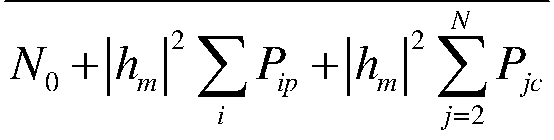
下面以图 2所示的 DBC为例 ( N = 2 ), 对本发明实施例提供的第 一基站侧的下行 MA的方法的整个过程阐述如下:
在该系统中, 为了不失一般性, 支设 |/¾|≥|/¾|, 记终端 1对应的第 一信息为 , 终端 1对应的第二信息为 m 终端 2对应的第一信息 为 m2f , 终端 2对应的第二信息为 特别的, 令 m2c =m2 , 第一信息 为用于所有能接收到第一信息的终端进行联合检测的信息, 第二信 息为用于该终端进行单用户检测的信息, 则,
步骤一、 基站根据公式 ( 1 ), 确定终端 1对应的第二信息的码
P、.
字 的发射功率为 发射速率 ?lp满足 Rlp≤log 1 + 确定终端
2对应的第二信息的码字 的发射功率为 0, 发射速率为 0;
基站根据公式 ( 2 ), 确定终端 2对应的第一信息的码字
射功率为 , 发射速率 满足
 ; 确定终端 1对应 一 息 的 码字 ^的发射功 率 为 ^ , 发射速率 Rlc满足

步骤二: 基站将 m 通过某种可靠性 CMS, 记为 CMSlp, 编为发射
≤l。g 1 + 速率为 , 发射功率为 ^的码字 , 而 满足
基站将 通过某种可靠性 CMS, 射速率为 发射功率为 的码字 ·½, 而 满足

基站将 通过某种可靠性 CMS,记为 CMSlE, 编为发射速率为
发射功率为 的码字 , 而 ^满足
 步骤三、 基站将 、 x, X
. 叠加后发送给终端 1和终端 2, 基站的发射信号为 X=X1 +X2 +
需要说明的是, 这 3个码字的发射功率之和应保证不大于基站 的最大发射功率, 即应当满足约束关系 + + ≤尸, 其中, P 为基 站的最大发射功率。
此时, 基站发射信号的总传输速率为: max(Rlc + Rlp
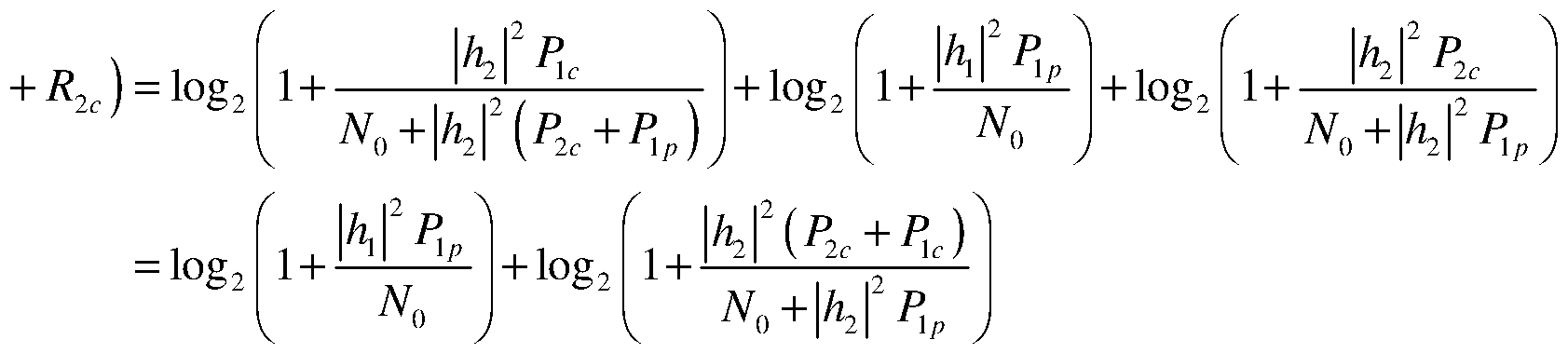
与具体实施方式前序部分的 NOMA方案相比,可见若 =υ ,即 整 体都作为第二信息, 则本示例与现有技术的技术方案完全相同, 而 达到的总传输速率也完全相同。 也就是说, NOMA可以看作是本技术 方案的一个特例。 而本发明实施例通过引入了对消息的分割机制, 使得能够在终端 1 的传输速率与终端 2 的传输速率之间进行调节, 从而达到终端 1 与终端 2之间在传输速率与公平性上的灵活折中。 例如若我们希望提高终端 2 的传输速率, 我们可以不改变各个终端 对应的消息的发射功率值, 而仅仅是通过降低 ^ ^提高 ^, 即降低终 端 1 对应的第二信息的发射功率在终端 1 对应的消息的发射功率中 的比例, 就可以达到提高终端 2所在信道上的传输速率的效果。
基于本发明上述实施例提供的下行 MA的方法, 由第一基站将 N 个终端中每个终端对应的第一信息的码字和第二信息的码字的叠加 发送给 N个终端, 并且第 r 个终端对应的第一信息的码字的发射速 率满足的第一条件以及第 r 个终端对应的第二信息的码字的发射速 率满足的第二条件可知, 本发明实施例引入了对消息的分割机制, 即, 第一基站采用了消息分割机制, 将各个终端对应的消息分割为 第一信息和第二信息两部分, 第 r 个终端对应的第一信息的码字的 发射速率与 N 个终端对应的第二信息的码字的发射功率相关, 第 r 个终端对应的第二信息的码字的发射速率与其他 N- 1 个终端对应的 第二信息的码字的发射功率相关。 这样, 第一基站可以通过控制 N 个终端中每个终端对应的第一信息的码字的发射功率与第二信息的 码字的发射功率的大小, 灵活的调节与该第一基站通信的 N 个终端 的传输速率, 进而可以实现与基站通信的不同终端之间在传输速率 与公平性上的灵活折中。 其中, 第一条件为在将 N 个终端对应的第 二信息的码字视作噪声时, 第 r 个终端对应的第一信息能在 N个终 端的任一终端处被正确译出, 第二条件为在将其他 N- 1 个终端对应 的第二信息的码字视作噪声时, 第 r 个终端对应的第二信息能在所 述第 r个终端处被正确译出, 1 < r < N。
进一步的, 由于 NOMA机制中并未考虑干扰问题, 而在实际无线 通信系统中, 由于未经协调的收发可能使用相同的介质传输, 进而 导致干扰的发生, 成为噪声外的另一破坏性因素。 并且随着蜂窝通 信系统的小区半径不断缩小, 干扰越来越严重, 已经取代噪声成为 制约性能的主要因素, 若在 NOMA机制中不考虑干扰问题, 当干扰存 在的时候,将导致接收端 S I NR降低,从而导致无法检测出发射信号。 因此, 本发明实施例提供的下行 MA的方法中, 若存在邻小区的第二 基站的干扰, 上述第 r 个终端对应的第一信息的码字的发射速率满 足第一条件, 具体可以包括:
N 个终端中第三终端对应的第一信息的码字的发射速率满足第 三条件, N个终端除第三终端之外的 N- 1 个终端中第 n个终端对应
的第一信息的码字的发射速率满足第四条件。
其中, 第三条件为在将 N个终端中除第三终端之外的 N- 1个终 端对应的第一信息的码字、 N 个终端对应的第二信息的码字和第二 基站的第四终端对应的第二信息的码字视作噪声时, 第三终端对应 的第一信息的码字和第四终端对应的第一信息的码字的叠加能在 N 个终端的第二终端处被正确译出, 第二终端为第一基站的边缘用户 终端, 第三终端和第四终端为干扰对齐的用户终端。
第四条件为在将 N个终端对应的第二信息的码字和第二基站的 第四终端对应的第二信息的码字视作噪声时, 第 n 个终端对应的第 一信息能在第二终端处被正确译出, 在将 N 个终端对应的第二信息 的码字视作噪声时, 第 n个终端对应的第一信息能在 N个终端除第 二终端之外的 N- 1个终端中的任一终端处被正确译出。
上述第 r 个终端对应的第二信息的码字的发射速率满足第二条 件, 具体可以包括:
N 个终端中第二终端对应的第二信息的码字的发射速率满足第 五条件, N个终端除第二终端之外的其他 N- 1 个终端中第 s 个终端 对应的第二信息的码字的发射速率满足第六条件。
其中 , 第五条件为在将 N个终端除第二终端之外的其他 N- 1 个 终端对应的第二信息的码字和第二基站的第四终端对应的第二信息 的码字视作噪声时, 第二终端对应的第二信息能在第二终端处被正 确译出。
第六条件为在将 N个终端除第 s个终端之外的 N- 1 个终端对应 的第二信息的码字视作噪声时, 第 s 个终端对应的第二信息能在第 s个终端处被正确译出。
特别的, 若 S D的检测顺序是从第 1个终端, 第 2个终端, ..., 第 N个终端, 则 N个终端中第三终端对应的第一信息的码字的发射 速率满足第三条件, 具体可以如公式 ( 3 ) 所示:
RIA≤l。g;

公式 ( 3 )
N个终端除第三终端之外的 N-1 个终端中第 n个终端对应的第 一信息的码字的发射速率满足第四条件, 具体可以如公式 ( 4 ) 和公 式 ( 5 ) 所示: c≤ n = l,---,t-l,t + l,---,N

公式 ( 4 )
Rnc≤ log 1 + n = !,■·■, t-l,t + !,■·■, N- s = !,■·■, k-l,k + !,■·■, N

公式 ( 5 )
N 个终端中第二终端对应的第二信息的码字的发射速率满足第 五条件, 具体可以如公式 ( 6 ) 所示:

N个终端除第二终端之外的其他 N-1个终端中第 s个终端对应的 第二信息的码字的发射速率满足第六条件, 具体可以如公式 ( 7 ) 所
≤ log 1 s = l,---k-l,k + l,N

J 公式 ( 7 )
其中, ^ ^表示第三终端对应的第一信息的码字与第四终端对应 的第一信息的码字叠加后的发射速率; ^表示第二终端与第一基站 之间的信道衰落因子; 表示第三终端对应的第一信息的码字的发 射速率; 2表示第四终端与第二基站之间的信道衰落因子; P'表示 第四终端对应的第二信息的码字的发射功率; W。表示本地噪声功率;
^表示第一基站 N个终端中的第 j 个终端对应的第二信息的码字的 发射功率; ^表示第 j个终端对应的第一信息的码字的发射功率; 表示 N个终端除第三终端之外的 N- 1 个终端中第 n个终端对应的第 一信息的码字的发射速率; 表示第 n 个终端对应的第一信息的码 字的发射功率; 表示 N个终端除第二终端之外的其他 N- 1 个终端 中第 s 个终端与第一基站之间的信道衰落因子; 表示第二终端对 应的第二信息的码字的发射速率; 表示第二终端对应的第二信息 的码字的发射功率; ^表示第 s 个终端对应的第二信息的码字的发 射速率; V 表示对于变量的所有取值前述不等式都成立; 其中用户 k为第一基站的第二终端, 用户 t为第一基站的第三终端。
优选的, 第三终端对应的第一信息的码字和第四终端对应的第 一信息的码字的叠加能在 N 个终端的第二终端处被正确译出, 具体 可以包括:
第三终端对应的第一信息的码字和第四终端对应的第一信息的 码字对应的编码调制机制 CMS 所采用的星座图的星座点的最小欧式 距离 4、 ^ 分别满足公式 ( 8 ) 和公式 ( 9 ) :

下面以图 4所示的由两个小区所组成的蜂窝系统为例, 对本发 明实施例提供的第一基站侧的下行 MA的方法的整个过程阐述如下: 在该系统中, 基站 1 向终端 1 和终端 2传输消息, 基站 2 向终端 3 传输消息。 其中, 终端 1、 终端 3 为中心用户终端, 终端 2 为边缘 用户终端, 我们认为对于中心用户终端来说, 来自邻小区的信号已 经衰减到了可以忽略的程度。 记基站 1 到终端 1 , 终端 2 的信道衰 落分别为 和 从基站 2到终端 2 , 终端 3的信道衰落分别为 2和 。 为了不失一般性, 假设 ' fel , 1^1 > 1^1; 记终端 1 对应的第一 信息为 , 终端 1对应的第二信息为 " ^, 终端 2对应的第一信息为 m2c, 终端 2对应的第二信息为 特别的, 令 m2f =m2 , 第一信息为 用于所有能接收到第一信息的终端进行联合检测的信息, 第二信息 为用于该终端进行单用户检测的信息, 则,
步骤一、 基站 1根据公式 ( 4 ) 和公式 ( 5 ), 确定终端 2对应的 第 一 信 的 码 字 的 发 射 功 率 为 ^ , 发 射 速 率 R2f 满 足
R2c≤log 根据公式 ( 3 ) 确定终端 1对应的第一

为 , 发 射 速 率 满 足

基站 1根据公式( 7 )确定终端 1对应的第二信息的码字的发射
功率为 发射速率 满足
 根据公式 ( 6 ),
终端 2对应的第二信息的码字的发射功率为 0, 发射速率 为 0。 步骤二、 基站 1将 通过某种可靠性 CMS, 记为 CMSlp, 编为发
根据公式 ( 6 ),
终端 2对应的第二信息的码字的发射功率为 0, 发射速率 为 0。 步骤二、 基站 1将 通过某种可靠性 CMS, 记为 CMSlp, 编为发
,、
Rlp≤ log 1 +
N
射速率为 , 发射功率为 ^的码字 , 而 满足
基站 1将 通过某种可靠性 CMS, 为
, 发射功率为 的码字 ·½, 而 ^满足

基站 1通过某种可靠性 CMS, 记为 CMS
, 发 射 功 率 为 ^ 的 码 字
 此外, 我们对 CMS。和 CMS3。有下列的特殊要求:
第一、 CMSlE, CMS3。所采用的星座图 距离

第二、 CMSlE, CMS3。所采用的星座图在终端 2处落在同一个格, 即, 要求 CMSlE, CMS3。所采用的星座图的任意星座点 , 满足
 e{Am :me Z2xl}。 其中, Clx2 ,为预设的二维复数向量, x '表 示 2行 *1列的整数列向量。
示例性的, 这里给出一种选择 CMS以满足上述条件的方法: 首先, 考虑约束星座图上的任意星座点 , 满足如下条件: h2lclc,h22c3c e ^Am: m e Z2x1}。
实际上正交幅度调制 ( Quadrature Amplitude Modulation ,
QAM ) 即为一种满足要求的调制方式, 因为 QAM的任一星座点总可以 将其表示为 an bki, n,ke Z, a, be Z ·> 因 jth A = [a,bi] , m = [n,kf。 则我们分另' J
CMSlc , CMS3c 所采用 的调制 星座 图 为 :

其中, CMSi。为终端 1对应的第一信息的码字对应的 h 22
CMS, CMS3。为终端 2对应的第一信息的码字对应的 CMS
其次, 考虑约束 CMS所采用的星座 距离

显
本领域技术人员容易理解, CMSlE, CMS3。的星座点间最小距离 min(|。|,|b| minilaUbl
别 为 如 a = b = 2、 N0 + \h2,
 PiD , 我们就得到了满足要求的调制方式, 我 分另' J为: CMS, n + ki):n,k Z


需要注意的是, 这 3个码字的发射功率之和应保证不大于基站 1 的最大发射功率, 即应当满足约束关系 + + ≤ , 其中, 为 基站 1 的最大发射功率。
需要说明的是, 在实际系统中, 小区中心用户一般由于与基站 的距离较近, 接收到的信号所经历的路损较低, 并且来自其他基站
的信号所经历的路损较大, 因此 S I NR较高; 而在小区边缘处, 本小 区的信号功率与邻小区的信号功率相差较小, 因此 S I NR较低。 因此 本发明实施例中主要考虑的是如何在边缘用户处抑制干扰, 而中心 用户则认为他们较高的 S I NR值足以对抗干扰。
本发明实施例给出 了考虑邻小区第二基站的干扰时的下行 MA 的方法,防止了干扰存在时,若不考虑干扰问题而导致的接收端 S I NR 降低, 无法检测出发送信号的问题, 提高了接收端发射信号的正确 检测率, 并且由 N 个终端中第三终端对应的第一信息的码字的发射 速率满足第三条件可知, 本发明实施例通过干扰对齐抑制邻小区干 扰, 这样可以提高干扰对齐的用户终端的传输速率。
实施例二、
本发明实施例提供了一种下行 MA的方法, 具体如图 5所示, 包 括:
5 01、 若存在邻小区第一基站的干扰, 第二基站将第四终端对应 的第一信息的码字和第二信息的码字的叠加发送给第四终端和第二 终端, 第四终端为干扰对齐的用户终端, 第二终端为第一基站的边 缘用户终端。
其中, 第四终端对应的第一信息的码字是根据第四终端对应的 第一信息的码字的发射速率和发射功率获取的, 第四终端对应的第 二信息的码字是根据第四终端对应的第二信息的码字的发射速率和 发射功率获取的, 第四终端对应的第一信息的码字的发射速率满足 第一条件, 第四终端对应的第二信息的发射速率满足第二条件, 第 一条件为将第一基站 N个终端中除第三终端之外的 N- 1 个终端对应 的第一信息的码字、 N 个终端对应的第二信息的码字和第四终端对 应的第二信息的码字视作噪声时, 第三终端对应的第一信息的码字 和第四终端对应的第一信息的码字的叠加能在 N 个终端的第二终端 处被正确译出, 在将第四终端对应的第二信息的码字视作噪声时, 第四终端对应的第一信息能在第四终端处被正确译出; 第二条件为 能在第四终端处被正确译出, 第三终端为干扰对齐的用户终端。
具体的, 本发明实施例中, 每个终端对应的消息被分割为第一 信息和第二信息两部分, 对每部分信息可以采用不同的检测方式进 行检测。
优选的, 第一信息为用于所有能接收到第一信息的终端进行联 合检测的信息, 第二信息为用于该终端进行单用户检测的信息。
示例性的,假设第二基站向第四终端发送的消息为 m3,分成两部 分 m3p和 m3c , m3f称为第一信息, 对于此部分信息, 需要在所有能接收 到该信息的接收端采用 S D检测方式将其译出; 》¾p称为第二信息, 对 此部分信息, 可以在对应的终端, 即第四终端处采用传统的单用户 检测方式将其译出, 而在非对应的收端处则将其等效为噪声。
进一步的, 第四终端对应的第一信息的码字的发射速率满足第 一条件, 1 1 ) 所示:
R!A≤l0g 公式( 1 0 )
R'≤ log 公式( 1 1 )

第四终端对应的第二信息的发射速率满足第二条件, 具体可以 如公式 ( 1 2 ) 所示:
Pi
≤log2 1 +」 公式( 1 2 ) 其中, R:表示第四终端对应的第一信息的码字的发射速率, 表 示第四终端对应的第二信息的码字的发射速率, 表示第三终端对 应的第一信息的码字与第四终端对应的第一信息的码字叠加后的发 射速率, N。表示第四终端的本地噪声功率; 表示第二终端与第一 基站之间的信道衰落因子; /¾2表示第二终端与第二基站之间的信道 衰落因子; 表示第四终端与第二基站之间的信道衰落因子; Pjp表 示第一基站 N个终端中的第 j 个终端对应的第二信息的码字的发射
功率; ^表示第 j 个终端对应的第一信息的码字的发射功率; P;表 示第四终端对应的第二信息的码字的发射功率; 表示第四终端对 应的第一信息的码字的发射功率, 用户 k 为第一基站的第二终端, 用户 t为第一基站的第三终端。
需要说明的是, 第二基站可以通过某种可靠的 CMS, 对第四终 端对应的第一信息和第二信息进行编码, 进而获取第四终端对应的 第一信息的码字和第四终端对应的第二信息的码字。 其中, "可靠的 CMS" 的相关描述可参考具体实施方式前序部分的描述, 本发明实施 例在此不再赘述。 优选的, 第三终端对应的第一信息的码字和第四终端对应的第 一信息的码字的叠加能在 N 个终端的第二终端处被正确译出, 具体 可以包括:
第三终端对应的第一信息的码字和第四终端对应的第一信息的 码字对应的编码调制机制 CMS 所采用的星座图的星座点的最小欧式 距离 d、、 d2 分别满足公式 ( 8 ) 和公式 ( 9 ), 且星座图上的任意星座 点 ckc、 c,c满足如下条件: huckc e {Am: m e Z2xl }、 hk2ctc e {Am :meZ2xi] 其中,
Ae lx2,为预设的二维复数向量, Z2xl表示 2行 *1列的整数列向量。
下面以实施例一中图 4 所示的由两个小区所组成的蜂窝系统为 例, 对本发明实施例提供的第二基站侧的下行 MA的方法的整个过程 阐述如下, 记终端 3对应的第一信息为 m3f, 终端 3对应的第二信息 为 , 则:
步骤一、 基站 2根据公式 ( 10 ) 和公式 ( 11 ) 确定终端 3对应 第 一 信 息 的 码 字 的 发射 功 率 为 , 发射 速 率 R3c 满 足

基站 2根据公式 ( 12 ) 确定终端 3对应的第二信息的码字的发
射功率为

步骤二、 基站 2将"^通过某种可靠性 CMS, 记为 CMS3
射速率为 发射功率为 的码字 , 而 7^满足

基站 2通过某种可靠性 CMS, 记为 CMS3。, 将 ^编为发射速率为 的 码 字 X 3c 而 R, 满 足

此外, 我们对 CMS。和 CMS3。有下列的特殊要求:
第一、 CMSlE, CMS3。所采用的星座图 离

第二、 CMSlE, CMS3。所采用的星座图在终端 2处落在同一个格, 即, 要求 CMSlE, CMS3。所采用的星座图的任意星座点 , 满足
 e{Am:me Z2xl}。 其中, Clx2 ,为预设的二维复数向量, x '表 示 2行 *1列的整数列向量。
具体的, 选择 CMS 以满足上述条件的方法可参考实施例一的描 述, 本发明实施例在此不再赘述。
步骤三、 基站 2 将J夂 X 叠加后发送给终端 2 和终端 3, 即 需要注意的是, 这 2个码字的发射功率之和应保证不大于基站 2的最大发射功率, 即应当满足约束关系 ^+J^≤p 2, 其中, A为基站 2的最大发射功率。
本发明实施例给出 了考虑邻小区第一基站的干扰时的下行 MA 的方法, 该方法中第二基站将第四终端对应的第一信息的码字和第 二信息的码字的叠加发送给第四终端和第二终端, 防止了干扰存在
时, 若不考虑干扰问题而导致的接收端 S I NR降低, 无法检测出发送 信号的问题, 提高了接收端发射信号的正确检测率, 并且由第四终 端对应的第一信息的码字的发射速率满足的第一条件可知, 本发明 实施例通过干扰对齐抑制邻小区干扰, 这样可以提高干扰对齐的用 户终端的传输速率。
实施例三、
本发明实施提供一种下行 MA的方法, 用于蜂窝通信系统, 该蜂 窝通信系统中 M 个第一终端与第一基站之间的信道属于第一信道, 第二终端与第一基站之间的信道属于第二信道, 第一信道的信道衰 落因子不小于第二信道的信道衰落因子, M > 1 , M 为整数, 具体如 图 6所示, 方法包括:
6 01、 第五终端获取第一接收信号, 其中, 第五终端为第二终端 与 M个第一终端中的任一终端。
需要说明的是, 本发明的执行主体第五终端可以是 M个第一终 端中的任一第一终端, 也可以是第二终端, 本发明实施例对此不作 具体限定。
6 02、 第五终端根据第一接收信号, 结合预先配置的第一接收策 略, 确定第五终端对应的第一信息和第二信息。
其中, 第一接收策略为满足第五终端对应的第一信息和第二信 息分别被正确译出的接收策略。
具体的, 本发明实施例中, 每个终端对应的消息被分割为第一 信息和第二信息两部分, 对每部分信息可以采用不同的检测方式进 行检测。
优选的, 第一信息为用于所有能接收到第一信息的终端进行联 合检测的信息, 第二信息为用于该终端进行单用户检测的信息。
示例性的, 假设第五终端对应的消息为 m'', 分成两部分 和 。 称为第一信息, 对于此部分信息, 需要在所有能接收到该信息的 终端采用 S D检测方式将其译出; 称为第二信息, 对此部分信息, 可以在对应的收端, 即终端 i对应的第二信息在终端 i 处采用传统
的单用户检测方式将其译出, 而在非对应的接收终端处则将其等效 为噪声。
进一步的, 第一接收策略具体可以包括:
在第五终端获取第一接收信号之后, 第五终端根据第一接收信 号, 检测 M个第一终端对应的第一信息;
根据第一接收信号以及 M个第一终端对应的第一信息, 获取第 二信号;
根据第二信号, 检测第二终端对应的第一信息;
根据第二信号以及第二终端对应的第一信息, 获取第三信号; 根据第三信号, 检测第五终端对应的第二信息。
特别的, 假设第二终端为第 k个终端, 由于第二终端与第一基 站之间的信道衰落因子最差, 则可以特别限定 mfc =mt , 即》¾整体都作 为第一信息, 第二信息为 0, 则若第五终端具体为第二终端, 此时 的接收策略中, 在检测出第二终端对应的第一信息之后, 可以无需 继续检测第二终端对应的第二信息。 该第二终端对应的第一信息即 为第二终端对应的消息。 本发明实施例对此不作具体限定。
由于该情况对应的本方案的 SD检测顺序中,第二终端对应的第 一信息是最后检测的, 因此第二终端可以获得更高的 SINR, 从而可 以提高第一基站与该终端之间的传输速率。
下面以图 2所示的 DBC为例 ( Μ=1 , N = 2 ), 结合实施例一中第一 基站侧的下行 MA的方法的阐述过程, 对本发明实施例提供的第五终 端的下行 MA的方法的整个过程进行阐述, 其中, 在图 2所示的 DBC 中, 为了不失一般性, 假设 |/¾|≥|/¾|, 特别的, 令 m2f =m2 , 则终端 1为 第一终端, 终端 2为第二终端, 终端 1侧的下行 MA的方法的整个过 程阐述如下:
步骤一、 终端 1获取第一接收信号为 Ί = hlxlc + xlc + htxlp + ηγ。
步骤二、把 ^和 都视作噪声,用 CMSlc对应的 DDS,记为 DDSlc, 从 中检测终端 1对应的第一信息 , 记检测结果为 。
步骤三、终端 1用 CMS。重新对 进行编码,得到对 ^的估计 ,
并根据信道衰落 重建出 后从 中减去,得到第二信号 = -^。 步骤四、 把 x 视作噪声, 用 CMS2。对应的 DDS, 记为 DDS2。, 从 中检测终端 2对应的第一信息"^ , 记检测结果为
步骤五、终端 1用 CMS2。重新对 进行编码,得到对 的估计 , 并根据信道衰落 重建出 h、 后从 中 减去 , 得到第 三信号 _/^2c。
步骤六、 用 CMSlp对应的 DDS, 记为 DDSlp, 从 中检测终端 1对 应的第二信息 记检测结果为 p。
通过上述过程, 终端 1检测出了所需要的第一信息为 、 第二 信息为
 ^虽然对终端 1来说没 有用处, 但是这里需要首先将其检测出来后, 将它的影响减去, 以 消除它的干扰。 通过与 NOMA类似的分析, 不难证明上述过程确实是 能够有效地检测出所需的信息的。 于是终端 1 和基站之间的传输速 率为 = +Κ 1ρ。
类似的, 终端 2侧的下行 ΜΑ的方法的整个过程进行阐述如下: 步骤一、 终端 2获取第一接收信号

步骤二、 把 ^和 · ^都视作噪声, 用 DDSlc从" ^中检测终端 1对应 的第一信息 , 记检测结果为 。
步骤三、终端 2用 CMSi。重新对 进行编码,得到对 ^的估计 , 并根据信道衰落 重建出 后从 中 减去 , 得到第 二信号
步骤四、 把"* ^视作噪声, 用 DDS2。从 中检测终端 2对应的第一 信息" ¾ 记检测结果为 2f 。
至此, 终端 2根据第一接收信号, 结合预先配置的第二接收策 略, 确定终端 2对应的消息 m2 = m2c
通过与 NOMA类似的分析, 上述步骤的有效性也很容易证明, 本 发明实施例在此不再赘述。 其中, 终端 2 与基站 1 之间的传输速率 可知为 Rd。
需要说明的是,本示例中终端 2对应的消息中仅包含第一信息,
第二信息为 0 , 即将终端 2 对应的消息整体视为第一信息, 此时可 以无需执行类似终端 1 侧的步骤五和步骤六的步骤。 终端 2对应的 第一信息即为终端 2对应的消息。
类似的, 以图 4所示的蜂窝系统为例 ( M= l , N= 2 ) , 结合实施例 一中第一基站侧的下行 MA 的方法的阐述过程, 终端 1 侧的下行 MA 的方法可参考图 2所示的 DBC 中终端 1侧的下行 MA的方法, 此处不 再赘述, 其中, 该模型下的第一接收信号为 j1 = /¾1xk. + /¾1x2 + /¾1xli7 +w1。
另一种可能的场景下, 该蜂窝通信系统中还包括第二基站, 第 一基站与第二基站间存在干扰, 第二基站的中心用户终端为第四终 端, 此时若第五终端为第二终端, 第一接收策略具体可以包括: 在第二终端获取第一接收信号之后, 第二终端根据第一接收信 号, 检测第一基站的第三终端对应的第一信息的码字和第四终端对 应的第一信息的码字的叠加, 第三终端和第四终端为干扰对齐的用 户终端。
根据第一接收信号、 第一基站的第三终端对应的第一信息的码 字和第四终端对应的第一信息的码字的叠加, 获取第二信号。
若 M= l , 根据第二信号, 检测第二终端对应的第一信息; 根据第二信号以及第二终端对应的第一信息, 获取第三信号; 根据第三信号, 检测第二终端对应的第二信息。
若 M > 1 , 根据第二信号, 检测 M个第一终端中除第三终端之外 的 M- 1个第一终端对应的第一信息;
根据第二信号, 以及 M个第一终端中除第三终端之外的 M- 1 个 第一终端对应的第一信息, 获取第三信号;
根据第三信号, 检测第二终端对应的第一信息;
根据第三信号以及第二终端对应的第一信息, 获取第四信号; 根据第四信号, 检测第二终端对应的第二信息。
需要说明的是, 若第二终端对应的消息中仅包含第一信息, 第 二信息为 0 , 即将第二终端对应的消息整体视为第一信息, 则此时 的接收策略中, 在检测出第二终端对应的第一信息之后, 可以无需
继续检测第二终端对应的第二信息, 该第二终端对应的第一信息即 为第二终端对应的消息, 本发明实施例对此不作具体限定。
下面以图 4所示的蜂窝系统为例 ( Μ=1 , N = 2 ), 结合实施例一中 第一基站侧的下行 MA的方法的阐述过程, 对本发明实施例提供的第 二终端的下行 MA的方法的整个过程进行阐述, 其中, 在图 4所示的 蜂窝系统中, 为了不失一般性, 假设 l^ l^l, \>\^\, 终端 1 和终 端 3为干扰对齐的终端, 则终端 2为第二终端, 终端 1为第一终端, 且终端 1 为第三终端, 终端 3 为第四终端, 特别的, 令"^ 则 该模型下终端 2侧的下行 ΜΑ的方法的整个过程进行阐述如下:
步骤一、 终端 2获取第一接收信号为 步骤二、 终端 2 把 , , 视作噪声, 从 ^中直接检测终端 1 对应的第一信息的码字与终端 3 对应的第一信息的码字的叠加
/¾Xlc + k22X3c , 己检;则 6々结果为
 + l^ic。
步骤三 、 将检测之后的结果从 中减去, 得到第二信号 步骤四、 终端 2将 , 视作噪声, 用 DDS2。从 中检测终端 2 对应的第一信息"^ , 记检测结果为 。
至此, 终端 2根据第一接收信号, 结合预先配置的第二接收策 略, 确定终端 2对应的消息 m2 = f , 其中, 终端 2与基站 1之间的传 输速率可知为 R 。
需要说明的是,本示例中终端 2对应的消息中仅包含第一信息, 第二信息为 0, 即将终端 2 对应的消息整体视为第一信息, 此时可 以无需检测终端 2对应的第二信息, 终端 2对应的第一信息即为终 端 2对应的消息。
下面给出终端 2的接收机制有效性的证明如下:
由于我们要求 CMSlE, CMS3。所采用的星座图满足:
CMSlc, CMS3。所采用的星座图的星座点的最小欧式距离 4、 d2 分 别满足公式 ( 8 ) 和公式 ( 9 ), 且星座图上的任意星座点 , 满足
如下条件: h21clc , h22c3c e {Am : m e Z2xi ) 其中, Ae Clx2,为预设的二维复数 向量, Z2xl表示 2行 * 1 列的整数列向量。
则 显 然 此 时 星 座 点 间 的 最 小 欧 式 距 离 为 +Ζ^Λ^的任意两个可能取
 值之间的欧式距离都大于等效噪声 ( , · ^与本地噪声的叠加) 标准差的两倍。 根据信息论的相关结论, 这保证了我们能够无差错 地将 ^^ + ^译出。 译出 ^^ +^·^之后将其从 中减去, 同样是起 到了干扰消除的效果。 因此, 最终终端 2 对应的消息也是可以确保 检测出来的。 即, 通过将两个干扰对齐在一个星座图上, 保证了干 扰之和的可检测性。
本发明实施通过引入消息分割机制, 将与基站通信的各终端对 应的消息分割为第一信息和第二信息两部分, 第五终端在获取第一 接收信号之后, 结合预先配置的第一接收策略, 确定第五终端对应 的第一信息和第二信息, 而该第一接收策略为满足第五终端对应的 第一信息和第二信息分别被正确译出的接收策略, 第五终端为 M 个 第一终端与第二终端中的任一终端。 结合第一基站侧的分析可知, 由于第一基站可以通过控制 N 个终端中每个终端对应的第一信息的 码字的发射功率与第二信息的码字的发射功率的大小, 灵活的调节 与该第一基站通信的 N 个终端的传输速率, 进而可以实现与基站通 信的不同终端之间在传输速率与公平性上的灵活折中。 因此本发明 实施例提供的下行 MA 的方法可以在实现与基站通信的不同终端之 间在传输速率与公平性上的灵活折中的情况下, 保证接收终端正确 检测出第一基站的发射信号。
实施例四、
本发明实施提供一种下行 MA的方法, 用于蜂窝通信系统, 该蜂 窝通信系统中包括第一基站和第二基站, 第一基站与第二基站间存 在干扰, 第二基站的中心用户终端为第四终端, 具体如图 7 所示,
方法包括:
701、 第四终端获取第一接收信号。
702、 第四终端根据第一接收信号, 结合预先配置的第二接收策 略, 确定第四终端对应的第一信息和第二信息。
其中, 第二接收策略为满足第四终端对应的第一信息和第二信 息分别被正确译出的接收策略。
具体的, 本发明实施例中, 每个终端对应的消息被分割为第一 信息和第二信息两部分, 对每部分信息可以采用不同的检测方式进 行检测。
优选的, 第一信息为用于所有能接收到第一信息的终端进行联 合检测的信息, 第二信息为用于该终端进行单用户检测的信息。
示例性的,假设第二基站向第四终端发送的消息为 m3,分成两部 分 m3p和 m3c , m3f称为第一信息, 对于此部分信息, 需要在所有能接收 到该信息的接收端采用 SD检测方式将其译出; 》¾p称为第二信息, 对 此部分信息, 可以在对应的终端, 即第四终端处采用传统的单用户 检测方式将其译出, 而在非对应的收端处则将其等效为噪声。
进一步的, 第二接收策略具体可以包括:
在第四终端获取第一接收信号之后, 第四终端根据第一接收信 号, 检测第四终端对应的第一信息;
根据第一接收信号以及第四终端对应的第一信息, 获取第二信 号;
根据第二信号, 检测第四终端对应的第二信息。
下面以图 4所示的蜂窝系统为例, 结合实施例二中第二基站侧 的下行 MA的方法的阐述过程, 对本发明实施例提供的第四终端的下 行 MA的方法的整个过程进行阐述,其中,在图 4所示的蜂窝系统中, 终端 3为第四终端, 终端 3侧的下行 MA的方法的整个过程进行阐述 如下:
步骤一、 终端 3获取第一接收信号
 +W
+W
步骤二、 把 视作噪声, 用 CMS3c对应的 DDS , 记为 DDS3c, 从
中检测终端 3对应的第一信息 , 记检测结果为 。
步骤三、终端 3用 CMS3。重新对 进行编码,得到对^的估计 , 并根据信道衰落 重建出 h 后从 ^中减去, 得到第二信号 一 —h32x3c
步骤四、 用 CMS3p对应的 DDS, 记为 DDS3p, 从 中检测终端 3对 应的第二信息"^, 记检测结果为 ^ 。
至此, 终端 3根据第一接收信号, 结合预先配置的第三接收策 略, 确定终端 3对应的第一信息为 第二信息为 即终端 3对 应的消息" ^^^+^^。
通过与 NOMA类似的分析, 上述步骤的有效性也很容易证明, 本 发明实施例在此不再赘述。 其中, 终端 3与基站 1 和基站 2之间的 传输速率可知为 R3 =R3c+R3p。
本发明实施通过引入消息分割机制, 将第四终端对应的消息分 割为第一信息和第二信息两部分, 第四终端在获取第一接收信号之 后, 结合预先配置的第二接收策略, 确定第四终端对应的第一信息 和第二信息, 而该第二接收策略为满足第四终端对应的第一信息和 第二信息分别被正确译出的接收策略。 结合第二基站侧的分析可知, 本发明实施例提供的下行 MA的方法, 能够在考虑邻小区的干扰, 提 高接收终端发射信号的正确检测率和传输速率的情况下, 保证接收 终端正确检测出第二基站的发射信号。
实施例五、
本发明实施例提供一种第一基站 800, 具体如图 8 所示, 所述 第一基站 800 包括: 发送单元 801、 处理单元 802。
所述发送单元 801, 用于将 N 个终端中每个终端对应的第一信 息的码字和第二信息的码字的叠加发送给 N个终端, N为正整数。
其中, 第 r 个终端对应的第一信息的码字是所述处理单元 802 根据所述第 r 个终端对应的第一信息的码字的发射速率和发射功率 获取的, 第 r 个终端对应的第二信息的码字是所述处理单元 802根 据所述第 r 个终端对应的第二信息的码字的发射速率和发射功率获
取的, 所述第 r 个终端对应的第一信息的码字的发射速率满足第一 条件, 所述第 r 个终端对应的第二信息的码字的发射速率满足第二 条件, 所述第一条件为在将所述 N个终端对应的第二信息的码字视 作噪声时, 所述第 r 个终端对应的第一信息能在所述 N个终端的任 一终端处被正确译出, 所述第二条件为在将其他 N- 1 个终端对应的 第二信息的码字视作噪声时, 所述第 r 个终端对应的第二信息能在 所述第 r个终端处被正确译出, l < r < N。
优选的, 所述第一信息为用于所有能接收到所述第一信息的终 端进行联合检测的信息, 所述第二信息为用于该终端进行单用户检 测的信息。
特别的, 若次序译码 S D的检测顺序是从第 1个终端, 第 2个终 端, ..., 第 N个终端, 则所述第 r 个终端对应的第二信息的码字的 发射

所述第 r 个终端对应的第一信息的码字的发射速率满足第 包括:

其中, 表示所述第 r个终端对应的第二信息的码字的发射速 率; 表示所述第 r个终端对应的第一信息的码字的发射速率; N(>表 示所述第 r 个终端的本地噪声功率; 表示所述第 r 个终端与所述 第一基站 8 00之间的信道衰落因子; 表示所述第 r 个终端对应的 第二信息的码字的发射功率; ^表示第 j 个终端对应的第二信息的 码字的发射功率; 表示第 m个终端与所述第一基站 8 00之间的信 道衰落因子; ^表示所述第 j 个终端对应的第一信息的码字的发射 功率; ^表示所述第 r个终端对应的第一信息的码字的发射功率; V
表示对于变量的所有取值前述不等式都成立。
一种可能的场景下, 若存在邻小区的第二基站的干扰, 所述第 r个终端对应的第一信息的码字的发射速率满足第一条件, 包括: 所述 N个终端中第三终端对应的第一信息的码字的发射速率满 足第三条件, 所述 N个终端除所述第三终端之外的 N- 1 个终端中第 n个终端对应的第一信息的码字的发射速率满足第四条件。
其中, 所述第三条件为在将所述 N个终端中除所述第三终端之 外的 N- 1 个终端对应的第一信息的码字、 所述 N个终端对应的第二 信息的码字和所述第二基站的第四终端对应的第二信息的码字视作 噪声时, 所述第三终端对应的第一信息的码字和所述第四终端对应 的第一信息的码字的叠加能在所述 N 个终端的第二终端处被正确译 出, 所述第二终端为所述第一基站 8 0 0 的边缘用户终端, 所述第三 终端和所述第四终端为干扰对齐的用户终端;
所述第四条件为在将所述 N个终端对应的第二信息的码字和所 述第四终端对应的第二信息的码字视作噪声时, 所述第 n 个终端对 应的第一信息能在所述第二终端处被正确译出, 在将所述 N 个终端 对应的第二信息的码字视作噪声时, 所述第 n 个终端对应的第一信 息能在所述 N个终端除所述第二终端之外的 N- 1 个终端中的任一终 端处被正确译出。
所述第 r 个终端对应的第二信息的码字的发射速率满足第二条 件, 包括:
所述 N个终端中第二终端对应的第二信息的码字的发射速率满 足第五条件, 所述 N个终端除所述第二终端之外的其他 N- 1 个终端 中第 s个终端对应的第二信息的码字的发射速率满足第六条件。
其中, 所述第五条件为在将所述 N个终端除所述第二终端之外 的其他 N- 1 个终端对应的第二信息的码字和所述第四终端对应的第 二信息的码字视作噪声时, 所述第二终端对应的第二信息能在所述 第二终端处被正确译出;
所述第六条件为在将所述 N 个终端除所述第 s 个终端之外的
N-1 个终端对应的第二信息的码字视作噪声时, 所述第 s 个终端对 应的第二信息能在所述第 s个终端处被正确译出。
特别的, 若 SD的检测顺序是从第 1个终端, 第 2个终端, ..., 第 N个终端, 则所述 N个终端中第三终端对应的第一信息的码字的 发射

所述 N个终端除所述第三终端之外的 N-1个终端中第 n个终端 对应的第一信息的码字的发射速率满足第四条件, 包括: c≤ log 1 + n = l,---,t-l,t + l,---,N
 h P
h P
Rnc≤ log 1 + - n = !,■·■, t-l,t + !,■·■, N- s = l,---,k-l,k + !,■·■, N
所述 N个终端中第二终端对应的第二信息的码字的发射速率满 足第五条件, 包括:
 所述 N个终端除所述第二终端之外的其他 N-1个终端中第 s个 终端对应的 二信息的码字的发射速率满足第六条件, 包括: ≤ log s = l,---k-l,k + l,N

具体的, 所述第三终端对应的第一信息的码字和所述第四终端 对应的第一信息的码字的叠加能在所述 N 个终端的第二终端处被正 确译出, 包括:
所述第三终端对应的第一信息的码字和所述第四终端对应的第 一信息的码字对应的编码调制机制 CM S 所采用的星座图的星座点的 最小欧式距离 rf'、 分别满足如下条件:

άΊ≥2 JN。
k 2
且所述星座 图 上的任意星座点 、 ctc满足如下条件: hklckc e [Am: m e Z2x1 }、 hk2ctc e [Am: m e Z2x1 } ,
其中, Ae Clx2,为预设的二维复数向量, Ζ2χ '表示 2 行 * 1 列的整 数列向量。
需要说明的是, 如图 1 2所示, 在本发明实施例提供的第一基 站 8 00的单元模块中, 发送单元 8 01 具体可以通过发送器 8 01 a来 实现; 处理单元 8 02具体可以通过处理器 8 02 a来实现; 本发明实 施例对此不作具体限定。
具体的,通过所述第一基站 8 00进行下行 MA接入的方法可参考 实施例一的描述, 本发明实施例在此不再赘述。
由于本实施例提供的第一基站能够用于执行上述方法, 因此, 其所能获得的技术效果也可以参照上述方法实施例中的描述, 此处 不再赘述。
实施例六、
本发明实施例提供一种第二基站 9 00 , 具体如图 9 所示, 所述 第二基站 9 00 包括: 发送单元 9 01、 处理单元 9 02。
所述发送单元 9 01 , 用于若存在邻小区第一基站的干扰, 将第 四终端对应的第一信息的码字和第二信息的码字的叠加发送给所述 第四终端和第二终端, 所述第四终端为干扰对齐的用户终端, 所述 第二终端为所述第一基站的边缘用户终端。
其中, 所述第四终端对应的第一信息的码字是所述处理单元 9 02 根据所述第四终端对应的第一信息的码字的发射速率和发射功 率获取的,所述第四终端对应的第二信息的码字是所述处理单元 9 02 根据所述第四终端对应的第二信息的码字的发射速率和发射功率获 取的, 所述第四终端对应的第一信息的码字的发射速率满足第一条 件, 所述第四终端对应的第二信息的发射速率满足第二条件, 所述 第一条件为将所述第一基站 N个终端中除第三终端之外的 N- 1 个终 端对应的第一信息的码字、 所述 N 个终端对应的第二信息的码字和 所述第四终端对应的第二信息的码字视作噪声时, 所述第三终端对 应的第一信息的码字和所述第四终端对应的第一信息的码字的叠加 能在所述 N 个终端的第二终端处被正确译出, 在将所述第四终端对
应的第二信息的码字视作噪声时, 所述第四终端对应的第一信息能 在所述第四终端处被正确译出; 所述第二条件为能在所述第四终端 处被正确译出, 所述第三终端为干扰对齐的用户终端。
优选的, 所述第一信息为用于所有能接收到所述第一信息的终 端进行联合检测的信息, 所述第二信息为用于该终端进行单用户检 测的信息。
特别的, 所述第四终端对应的第一信息的码字的发射速率满足 第一

应的第二信息的发射速率满足第二条件, 包括:

其中, 表示所述第四终端对应的第一信息的码字的发射速率, 表示所述第四终端对应的第二信息的码字的发射速率, 表示所 述第三终端对应的第一信息的码字与所述第四终端对应的第一信息 的码字叠加后的发射速率, 。表示所述第四终端的本地噪声功率; h" 表示所述第二终端与所述第一基站之间的信道衰落因子; ^表示所 述第二终端与所述第二基站 9 00 之间的信道衰落因子; ^表示所述 第四终端与所述第二基站 9 00之间的信道衰落因子; ^表示所述第 一基站 N个终端中的第 j个终端对应的第二信息的码字的发射功率; ^表示所述第 j 个终端对应的第一信息的码字的发射功率; 表示 所述第四终端对应的第二信息的码字的发射功率; 表示所述第四 终端对应的第一信息的码字的发射功率, 用户 k 为所述第一基站的 第二终端, 用户 t为所述第一基站的第三终端。
具体的, 所述第三终端对应的第一信息的码字和所述第四终端
对应的第一信息的码字的叠加能在所述 N 个终端的第二终端处被正 确译出, 包括:
所述第三终端对应的第一信息的码字和所述第四终端对应的第 一信息的码字对应的编码调制机制 CMS 所采用的星座图的星座点的 最小欧式距离 rf'、 分别满足如下条件:

且所述星座 图 上的任意星座点 、 ctc满足如下条件: hklckc e [Am: m e Z2x1}、 hk2ctc e [Am: m e Z2x1 } ,
其中, 所述星座点对应的终端与的信道衰落因子, A e Clx2,为预 设的二维复数向量, Z2xl表示 2行 * 1列的整数列向量。
需要说明的是, 如图 1 3所示, 在本发明实施例提供的第二基站 9 00的单元模块中,发送单元 9 01具体可以通过发送器 9 01 a来实现; 处理单元 9 02具体可以通过处理器 9 02 a来实现; 本发明实施例对此 不作具体限定。
具体的,通过所述第二基站 9 00进行下行 MA接入的方法可参考 实施例二的描述, 本发明实施例在此不再赘述。
由于本实施例提供的第二基站能够用于执行上述方法, 因此, 其所能获得的技术效果也可以参照上述方法实施例中的描述, 此处 不再赘述。
实施例七、
本发明实施例提供一种第五终端 1 000 , 用于蜂窝通信系统, 所 述蜂窝通信系统中 M个第一终端与第一基站之间的信道属于第一信 道, 第二终端与所述第一基站之间的信道属于第二信道, 所述第一 信道的信道衰落因子大于所述第二信道的信道衰落因子, M > 1 , M
为整数, 其中, 所述第五终端 1000为所述 M个第一终端与所述第二 终端中的任一终端, 如图 10所示, 所述第五终端 1000 包括: 获取 单元 1001、 确定单元 1002。
所述获取单元 1001, 用于获取第一接收信号。
所述确定单元 1002, 用于根据所述第一接收信号, 结合预先配 置的第一接收策略, 确定所述第五终端 1000对应的第一信息和第二 信息。
其中,所述第一接收策略为满足所述第五终端 1000对应的第一 信息和第二信息分别被正确译出的接收策略。
优选的, 所述第一信息为用于所有能接收到所述第一信息的终 端进行联合检测的信息, 所述第二信息为用于该终端进行单用户检 测的信息。
具体的, 所述第一接收策略包括:
在所述第五终端 1000 获取第一接收信号之后, 所述第五终端 1000根据所述第一接收信号, 检测所述 M个第一终端对应的第一信 根据所述第一接收信号以及所述 M 个第一终端对应的第一信 息, 获取第二信号;
根据所述第二信号, 检测所述第二终端对应的第一信息; 根据所述第二信号以及所述第二终端对应的第一信息, 获取第 三信号;
居所述第三信号, 检测所述第五终端 1000对应的第二信息。 一种可能的场景下, 所述蜂窝通信系统中还包括第二基站, 所 述第一基站与所述第二基站间存在干扰, 所述第二基站的中心用户 终端为第四终端;
若所述第五终端 1000 为所述第二终端, 所述第一接收策略包 括:
在所述第二终端获取第一接收信号之后, 所述第二终端根据所 述第一接收信号, 检测所述第一基站的第三终端对应的第一信息的
码字和所述第四终端对应的第一信息的码字的叠加, 所述第三终端 和所述第四终端为干扰对齐的用户终端;
根据所述第一接收信号、 所述第一基站的第三终端对应的第一 信息的码字和所述第四终端对应的第一信息的码字的叠加, 获取第 二信号;
若 M=l, 根据所述第二信号, 检测所述第二终端对应的第一信 息;
根据所述第二信号以及所述第二终端对应的第一信息, 获取第 三信号;
根据所述第三信号, 检测所述第二终端对应的第二信息; 若 M> 1, 居所述第二信号, 检测所述 M个第一终端中除所述 第三终端之外的 M-1个第一终端对应的第一信息;
根据所述第二信号, 以及所述 M个第一终端中除所述第三终端 之外的 M-1个第一终端对应的第一信息, 获取第三信号;
根据所述第三信号, 检测所述第二终端对应的第一信息; 根据所述第三信号以及所述第二终端对应的第一信息, 获取第 四信号;
根据所述第四信号, 检测所述第二终端对应的第二信息。
具体的, 通过所述第五终端 1000进行下行 MA接入的方法可参 考实施例三的描述, 本发明实施例在此不再赘述。
由于本实施例提供的第五终端能够用于执行上述方法, 因此, 其所能获得的技术效果也可以参照上述方法实施例中的描述, 此处 不再赘述。
实施例八、
本发明实施例提供一种第四终端 1100, 用于蜂窝通信系统, 所 述蜂窝通信系统中包括第一基站和第二基站, 所述第一基站与所述 第二基站间存在干扰, 所述第二基站的中心用户终端为第四终端
1100, 具体如图 11所示, 所述第四终端 1100 包括: 获取单元 1101、 确定单元 1102。
所述获取单元 1101, 用于获取第一接收信号。
所述第四终端 1100根据所述第一接收信号,结合预先配置的第 二接收策略, 确定所述第四终端 1100对应的第一信息和第二信息。
其中,所述第二接收策略为满足所述第四终端 1100对应的第一 信息和第二信息分别被正确译出的接收策略。
优选的, 所述第一信息为用于所有能接收到所述第一信息的终 端进行联合检测的信息, 所述第二信息为用于该终端进行单用户检 测的信息。
具体的, 所述第二接收策略包括:
在所述第四终端 1100 获取第一接收信号之后, 所述第四终端 1100 居所述第一接收信号, 检测所述第四终端 1100 对应的第一 信息;
根据所述第一接收信号以及所述第四终端 1100 对应的第一信 息, 获取第二信号;
居所述第二信号, 检测所述第四终端 1100对应的第二信息。 具体的, 通过所述第四终端 1100进行下行 MA接入的方法可参 考实施例四的描述, 本发明实施例在此不再赘述。
由于本实施例提供的第四终端能够用于执行上述方法, 因此, 其所能获得的技术效果也可以参照上述方法实施例中的描述, 此处 不再赘述。
实施例九、
本发明实施例提供一种第五终端 1400, 用于蜂窝通信系统, 所 述蜂窝通信系统中 M 个第一终端与第一基站之间的信道属于第一信 道, 第二终端与所述第一基站之间的信道属于第二信道, 所述第一 信道的信道衰落因子大于所述第二信道的信道衰落因子, M > 1 , M 为整数, 其中, 所述第五终端 1400为所述 M个第一终端与所述第二 终端中的任一终端, 如图 14 所示, 所述第五终端 1400 包括: 处理 器 1401、 收发器 1402、 存储器 1403和通信总线 1404。
所述通信总线 1404, 用于所述处理器 1401, 所述收发器 1402、
所述储存器之间的连接通信。
所述收发器 1402, 用于所述第五终端 1400与外部的通信。 所述处理器 1401, 用于调用所述存储器 1403 中的存储的程序 代码 14031, 执行如下操作:
获取第一接收信号。
根据所述第一接收信号, 结合预先配置的第一接收策略, 确定 所述第五终端 1400对应的第一信息和第二信息。
其中,所述第一接收策略为满足所述第五终端 1400对应的第一 信息和第二信息分别被正确译出的接收策略。
优选的, 所述第一信息为用于所有能接收到所述第一信息的终 端进行联合检测的信息, 所述第二信息为用于该终端进行单用户检 测的信息。
具体的, 所述第一接收策略包括:
在所述第五终端 1400 获取第一接收信号之后, 所述第五终端 1400根据所述第一接收信号, 检测所述 M个第一终端对应的第一信 根据所述第一接收信号以及所述 M 个第一终端对应的第一信 息, 获取第二信号;
根据所述第二信号, 检测所述第二终端对应的第一信息; 根据所述第二信号以及所述第二终端对应的第一信息, 获取第 三信号;
居所述第三信号, 检测所述第五终端 1400对应的第二信息。 一种可能的场景下, 所述蜂窝通信系统中还包括第二基站, 所 述第一基站与所述第二基站间存在干扰, 所述第二基站的中心用户 终端为第四终端。
若所述第五终端 1400 为所述第二终端, 所述第一接收策略包 括:
在所述第二终端获取第一接收信号之后, 所述第二终端根据所 述第一接收信号, 检测所述第一基站的第三终端对应的第一信息的
码字和所述第四终端对应的第一信息的码字的叠加, 所述第三终端 和所述第四终端为干扰对齐的用户终端。
根据所述第一接收信号、 所述第一基站的第三终端对应的第一 信息的码字和所述第四终端对应的第一信息的码字的叠加, 获取第 二信号。
若 M=l, 根据所述第二信号, 检测所述第二终端对应的第一信 息;
根据所述第二信号以及所述第二终端对应的第一信息, 获取第 三信号;
根据所述第三信号, 检测所述第二终端对应的第二信息。
若 M> 1, 居所述第二信号, 检测所述 M个第一终端中除所述 第三终端之外的 M-1个第一终端对应的第一信息;
根据所述第二信号, 以及所述 M个第一终端中除所述第三终端 之外的 M-1个第一终端对应的第一信息, 获取第三信号;
根据所述第三信号, 检测所述第二终端对应的第一信息; 根据所述第三信号以及所述第二终端对应的第一信息, 获取第 四信号;
根据所述第四信号, 检测所述第二终端对应的第二信息。
具体的, 通过所述第五终端 1400进行下行 MA接入的方法可参 考实施例三的描述, 本发明实施例在此不再赘述。
由于本实施例提供的第五终端能够用于执行上述方法, 因此, 其所能获得的技术效果也可以参照上述方法实施例中的描述, 此处 不再赘述。
实施例十、
本发明实施例提供一种第四终端 1500, 用于蜂窝通信系统, 所 述蜂窝通信系统中包括第一基站和第二基站, 所述第一基站与所述 第二基站间存在干扰, 所述第二基站的中心用户终端为第四终端 1500, 如图 15所示, 所述第四终端 1500 包括: 处理器 1501、 收发 器 1502、 存储器 1503和通信总线 1504。
所述通信总线 1504, 用于所述处理器 1501, 所述收发器 1502、 所述储存器之间的连接通信。
所述收发器 1502, 用于所述第四终端 1500与外部的通信。
所述处理器 1501, 用于调用所述存储器 1503 中的存储的程序 代码 15031, 执行如下操作:
获取第一接收信号。
根据所述第一接收信号, 结合预先配置的第二接收策略, 确定 所述第四终端 1500对应的第一信息和第二信息。
其中,所述第二接收策略为满足所述第四终端 1500对应的第一 信息和第二信息分别被正确译出的接收策略。
优选的, 所述第一信息为用于所有能接收到所述第一信息的终 端进行联合检测的信息, 所述第二信息为用于该终端进行单用户检 测的信息。
具体的, 所述第二接收策略包括:
在所述第四终端 1500 获取第一接收信号之后, 所述第四终端 1500 居所述第一接收信号, 检测所述第四终端 1500 对应的第一 信息;
根据所述第一接收信号以及所述第四终端 1500 对应的第一信 息, 获取第二信号;
居所述第二信号, 检测所述第四终端 1500对应的第二信息。 具体的, 通过所述第四终端 1500进行下行 MA接入的方法可参 考实施例四的描述, 本发明实施例在此不再赘述。
由于本实施例提供的第四终端能够用于执行上述方法, 因此, 其所能获得的技术效果也可以参照上述方法实施例中的描述, 此处 不再赘述。
所属领域的技术人员可以清楚地了解到,为描述的方便和简洁, 上述描述的装置, 仅以上述各功能模块的划分进行举例说明, 实际 应用中, 可以根据需要而将上述功能分配由不同的功能模块完成, 即将装置的内部结构划分成不同的功能模块, 以完成以上描述的全
部或者部分功能。 上述描述的系统、 装置和单元的具体工作过程, 可以参考前述方法实施例中的对应过程, 在此不再赘述。
在本申请所提供的几个实施例中, 应该理解到, 所揭露的系统, 装置和方法, 可以通过其它的方式实现。 例如, 以上所描述的装置 实施例仅仅是示意性的, 例如, 所述模块或单元的划分, 仅仅为一 种逻辑功能划分, 实际实现时可以有另外的划分方式, 例如多个单 元或组件可以结合或者可以集成到另一个系统, 或一些特征可以忽 略, 或不执行。 另一点, 所显示或讨论的相互之间的耦合或直接耦 合或通信连接可以是通过一些接口, 装置或单元的间接耦合或通信 连接, 可以是电性, 机械或其它的形式。
所述作为分离部件说明的单元可以是或者也可以不是物理上分 开的, 作为单元显示的部件可以是或者也可以不是物理单元, 即可 以位于一个地方, 或者也可以分布到多个网络单元上。 可以 居实 际的需要选择其中的部分或者全部单元来实现本实施例方案的目 的。
另外, 在本发明各个实施例中的各功能单元可以集成在一个处 理单元中, 也可以是各个单元单独物理存在, 也可以两个或两个以 上单元集成在一个单元中。 上述集成的单元既可以采用硬件的形式 实现, 也可以采用软件功能单元的形式实现。
所述集成的单元如果以软件功能单元的形式实现并作为独立的 产品销售或使用时, 可以存储在一个计算机可读取存储介质中。 基 于这样的理解, 本发明的技术方案本质上或者说对现有技术做出贡 献的部分或者该技术方案的全部或部分可以以软件产品的形式体现 出来, 该计算机软件产品存储在一个存储介质中, 包括若干指令用 以使得一台计算机设备 (可以是个人计算机, 服务器, 或者网络设 备等) 或处理器 ( processor ) 执行本发明各个实施例所述方法的全 部或部分步骤。 而前述的存储介质包括: U 盘、 移动硬盘、 只读存 储器( ROM, Read-Only Memory )、随机存取存储器( RAM, Random Access Memory )、 磁碟或者光盘等各种可以存储程序代码的介质。
以上所述, 仅为本发明的具体实施方式, 但本发明的保护范围 并不局限于此, 任何熟悉本技术领域的技术人员在本发明揭露的技 术范围内, 可轻易想到变化或替换, 都应涵盖在本发明的保护范围 之内。 因此, 本发明的保护范围应以所述权利要求的保护范围为准。
Claims
1、 一种下行多址接入 MA的方法, 其特征在于, 所述方法包括: 第一基站将 N 个终端中每个终端对应的第一信息的码字和第二 信息的码字的叠加发送给 N个终端, N为正整数;
其中,第 r个终端对应的第一信息的码字是根据所述第 r个终端 对应的第一信息的码字的发射速率和发射功率获取的, 第 r个终端对 应的第二信息的码字是根据所述第 r 个终端对应的第二信息的码字 的发射速率和发射功率获取的, 所述第 r个终端对应的第一信息的码 字的发射速率满足第一条件, 所述第 r个终端对应的第二信息的码字 的发射速率满足第二条件, 所述第一条件为在将所述 N个终端对应 的第二信息的码字视作噪声时, 所述第 r个终端对应的第一信息能在 所述 N 个终端的任一终端处被正确译出, 所述第二条件为在将其他 N- 1个终端对应的第二信息的码字视作噪声时, 所述第 r个终端对应 的第二信息能在所述第 r个终端处被正确译出, l < r < N。
2、 根据权利要求 1 所述的方法, 其特征在于, 所述第一信息为 用于所有能接收到所述第一信息的终端进行联合检测的信息, 所述第 二信息为用于该终端进行单用户检测的信息。
3、 根据权利要求 2 所述的方法, 其特征在于, 若次序译码 SD 的检测顺序是从第 1个终端, 第 2个终端, ..., 第 N个终端, 则所述 第 r个终端对应的第二信息的码字的发射速率满足第二条件, 包括: h \ P
≤ log 1 + - Vr = l, 2, - - - , N ;
所述第 r 个终端对应的第一信息的码字的发射速率满足第一条 件, 包括:

其中, 表示所述第 r 个终端对应的第二信息的码字的发射速
率; Rrc表示所述第 r个终端对应的第一信息的码字的发射速率; N。表 示所述第 r个终端的本地噪声功率; 表示所述第 r个终端与所述第 一基站之间的信道衰落因子; 表示所述第 r个终端对应的第二信息 的码字的发射功率; Pjp表示第 j个终端对应的第二信息的码字的发射 功率; 表示第 m个终端与所述第一基站之间的信道衰落因子; 表 示所述第 j 个终端对应的第一信息的码字的发射功率; ^表示所述第 r 个终端对应的第一信息的码字的发射功率; V 表示对于变量的所 有取值前述不等式都成立。
4、 根据权利要求 1 - 3任一项所述的方法, 其特征在于, 若存在 邻小区的第二基站的干扰, 所述第 r个终端对应的第一信息的码字的 发射速率满足第一条件, 包括:
所述 N 个终端中第三终端对应的第一信息的码字的发射速率满 足第三条件, 所述 N个终端除所述第三终端之外的 N- 1个终端中第 n 个终端对应的第一信息的码字的发射速率满足第四条件;
其中,所述第三条件为在将所述 N个终端中除所述第三终端之外 的 N- 1个终端对应的第一信息的码字、 所述 N个终端对应的第二信息 的码字和所述第二基站的第四终端对应的第二信息的码字视作噪声 时, 所述第三终端对应的第一信息的码字和所述第四终端对应的第一 信息的码字的叠加能在所述 N个终端的第二终端处被正确译出, 所述 第二终端为所述第一基站的边缘用户终端, 所述第三终端和所述第四 终端为干扰对齐的用户终端;
所述第四条件为在将所述 N 个终端对应的第二信息的码字和所 述第四终端对应的第二信息的码字视作噪声时, 所述第 n个终端对应 的第一信息能在所述第二终端处被正确译出, 在将所述 N个终端对应 的第二信息的码字视作噪声时, 所述第 n个终端对应的第一信息能在 所述 N个终端除所述第二终端之外的 N- 1个终端中的任一终端处被正 确译出;
所述第 r 个终端对应的第二信息的码字的发射速率满足第二条 件, 包括:
所述 N 个终端中第二终端对应的第二信息的码字的发射速率满 足第五条件, 所述 N个终端除所述第二终端之外的其他 N-1个终端中 第 s个终端对应的第二信息的码字的发射速率满足第六条件;
其中,所述第五条件为在将所述 N个终端除所述第二终端之外的 其他 N-1 个终端对应的第二信息的码字和所述第四终端对应的第二 信息的码字视作噪声时, 所述第二终端对应的第二信息能在所述第二 终端处被正确译出;
所述第六条件为在将所述 N个终端除所述第 s个终端之外的 N-1 个终端对应的第二信息的码字视作噪声时, 所述第 s个终端对应的第 二信息能在所述第 s个终端处被正确译出。
5、 根据权利要求 4所述的方法, 其特征在于, 若 SD的检测顺序 是从第 1个终端, 第 2个终端, …, 第 N个终端, 则所述 N个终端中 第三终端对应的第一信息的码字的发射速率满足第三条件, 包括:
 所述 N个终端除所述第三终端之外的 N-1个终端中第 n个终端对 应的第一信息的码字的发射速率满足第四条件, 包括: c≤ log VM = 1, l,i + l,-'-,N

R„c≤log; 1 + n = !,■·■, t-l,t + !,■·■, N- s = !,■·■, k-l,k + !,■·■, N
 ii Pjc+htiiPj 所述 N 个终端中第二终端对应的第二信息的码字的发射速率满足 第五条件, 包括:
 所述 N个终端除所述第二终端之外的其他 N-1个终端中第 端对应的第二信息的码字的发射速率满足第六条件, 包括:
≤ log 1 + - s = l,---k-l,k + l,N
N0+h\ ∑PS 其中, 表示所述第三终端对应的第一信息的码字与所述第四 终端对应的第一信息的码字叠加后的发射速率; 表示所述第二终端 与所述第一基站之间的信道衰落因子; ^表示所述第三终端对应的第 一信息的码字的发射速率; /¾2表示所述第四终端与所述第二基站之间 的信道衰落因子; P '表示所述第四终端对应的第二信息的码字的发射 功率; N。表示本地噪声功率; ^表示所述第一基站 N个终端中的第 j 个终端对应的第二信息的码字的发射功率; ^表示所述第 j个终端对 应的第一信息的码字的发射功率; Rnc 表示所述 N个终端除所述第三 终端之外的 N-1个终端中第 n个终端对应的第一信息的码字的发射速 率; 表示所述第 n个终端对应的第一信息的码字的发射功率; hsl表 示所述 N个终端除所述第二终端之外的其他 N-1个终端中第 s个终端 与所述第一基站之间的信道衰落因子; 表示所述第二终端对应的第 二信息的码字的发射速率; ^表示所述第二终端对应的第二信息的码 字的发射功率; ^表示所述第 s个终端对应的第二信息的码字的发射 速率; V 表示对于变量的所有取值前述不等式都成立; 其中用户 k 为所述第一基站的第二终端, 用户 t为所述第一基站的第三终端。
6、 根据权利要求 5所述的方法, 其特征在于, 所述第三终端对 应的第一信息的码字和所述第四终端对应的第一信息的码字的叠加 能在所述 N个终端的第二终端处被正确译出, 包括:
所述第三终端对应的第一信息的码字和所述第四终端对应的第 一信息的码字对应的编码调制机制 CMS 所采用的星座图的星座点的 最小欧式距离 4、 d2 分别满足如下条件:

7、 一种下行多址接入 MA的方法, 其特征在于, 所述方法包括: 若存在邻小区第一基站的干扰,第二基站将第四终端对应的第一 信息的码字和第二信息的码字的叠加发送给所述第四终端和第二终 端, 所述第四终端为干扰对齐的用户终端, 所述第二终端为所述第一 基站的边缘用户终端;
其中,所述第四终端对应的第一信息的码字是根据所述第四终端 对应的第一信息的码字的发射速率和发射功率获取的, 所述第四终端 对应的第二信息的码字是根据所述第四终端对应的第二信息的码字 的发射速率和发射功率获取的, 所述第四终端对应的第一信息的码字 的发射速率满足第一条件, 所述第四终端对应的第二信息的发射速率 满足第二条件, 所述第一条件为将所述第一基站 N个终端中除第三终 端之外的 N- 1个终端对应的第一信息的码字、 所述 N个终端对应的第 二信息的码字和所述第四终端对应的第二信息的码字视作噪声时, 所 述第三终端对应的第一信息的码字和所述第四终端对应的第一信息
的码字的叠加能在所述 N个终端的第二终端处被正确译出, 在将所述 第四终端对应的第二信息的码字视作噪声时, 所述第四终端对应的第 一信息能在所述第四终端处被正确译出; 所述第二条件为能在所述第 四终端处被正确译出, 所述第三终端为干扰对齐的用户终端。
8、 根据权利要求 7所述的方法, 其特征在于, 所述第一信息为 用于所有能接收到所述第一信息的终端进行联合检测的信息, 所述第 二信息为用于该终端进行单用户检测的信息。
9、 根据权利要求 8所述的方法, 其特征在于, 所述第四终端对 应 一信息的码字的发射速率满足第一条件, 包括:

应的第二信息的发射速率满足第二条件, 包括:

其中, R:表示所述第四终端对应的第一信息的码字的发射速率, 表示所述第四终端对应的第二信息的码字的发射速率, 表示所述 第三终端对应的第一信息的码字与所述第四终端对应的第一信息的 码字叠加后的发射速率, N。表示所述第四终端的本地噪声功率; hki表 示所述第二终端与所述第一基站之间的信道衰落因子; /¾2表示所述第 二终端与所述第二基站之间的信道衰落因子; 表示所述第四终端与 所述第二基站之间的信道衰落因子; ^表示所述第一基站 N个终端中 的第 j个终端对应的第二信息的码字的发射功率; ^表示所述第 j个 终端对应的第一信息的码字的发射功率; 表示所述第四终端对应的 第二信息的码字的发射功率; P表示所述第四终端对应的第一信息的 码字的发射功率, 用户 k为所述第一基站的第二终端, 用户 t为所述 第一基站的第三终端。
1 0、 根据权利要求 7 - 9任一项所述的方法, 其特征在于, 所述第 三终端对应的第一信息的码字和所述第四终端对应的第一信息的码 字的叠加能在所述 N个终端的第二终端处被正确译出, 包括:
所述第三终端对应的第一信息的码字和所述第四终端对应的第 一信息的码字对应的编码调制机制 CMS 所采用的星座图的星座点的 最小欧式距离 4、 d2 分别满足如下条件:

且所述星座 图 上 的任意星座点 Cfc、 Ctc满足如下条件: hk、ckc e [Am: m e Z2x1}、 hk2ctc e [Am: m e Z2x1} 其中, 所述星座点对应的终端与的信道衰落因子, Ae Clx2,为预设 的二维复数向量, Z2xl表示 2行 * 1列的整数列向量。
1 1、 一种下行多址接入 MA的方法, 用于蜂窝通信系统, 所述蜂 窝通信系统中 M个第一终端与第一基站之间的信道属于第一信道, 第 二终端与所述第一基站之间的信道属于第二信道, 所述第一信道的信 道衰落因子大于所述第二信道的信道衰落因子, M > 1 , M为整数, 其 特征在于, 所述方法包括:
第五终端获取第一接收信号, 其中, 所述第五终端为所述 M个第 一终端与所述第二终端中的任一终端;
所述第五终端根据所述第一接收信号,结合预先配置的第一接收 策略, 确定所述第五终端对应的第一信息和第二信息;
其中,所述第一接收策略为满足所述第五终端对应的第一信息和 第二信息分别被正确译出的接收策略。
1 2、 根据权利要求 1 1 所述的方法, 其特征在于, 所述第一信息 为用于所有能接收到所述第一信息的终端进行联合检测的信息, 所述 第二信息为用于该终端进行单用户检测的信息。
1 3、 根据权利要求 1 2所述的方法, 其特征在于, 所述第一接收 策略包括:
在所述第五终端获取第一接收信号之后,所述第五终端根据所述 第一接收信号, 检测所述 M个第一终端对应的第一信息;
根据所述第一接收信号以及所述 M个第一终端对应的第一信息, 获取第二信号;
根据所述第二信号, 检测所述第二终端对应的第一信息; 根据所述第二信号以及所述第二终端对应的第一信息,获取第三 信号;
根据所述第三信号, 检测所述第五终端对应的第二信息。
1 4、 根据权利要求 1 2所述的方法, 其特征在于, 所述蜂窝通信 系统中还包括第二基站, 所述第一基站与所述第二基站间存在干扰, 所述第二基站的中心用户终端为第四终端;
若所述第五终端为所述第二终端, 所述第一接收策略包括: 在所述第二终端获取第一接收信号之后,所述第二终端根据所述 第一接收信号, 检测所述第一基站的第三终端对应的第一信息的码字 和所述第四终端对应的第一信息的码字的叠加, 所述第三终端和所述 第四终端为干扰对齐的用户终端;
根据所述第一接收信号、所述第一基站的第三终端对应的第一信 息的码字和所述第四终端对应的第一信息的码字的叠加, 获取第二信 号;
若 M= l ,根据所述第二信号,检测所述第二终端对应的第一信息; 根据所述第二信号以及所述第二终端对应的第一信息,获取第三 信号;
根据所述第三信号, 检测所述第二终端对应的第二信息; 若 M > 1 , 居所述第二信号, 检测所述 M个第一终端中除所述
第三终端之外的 M- 1个第一终端对应的第一信息;
根据所述第二信号,以及所述 M个第一终端中除所述第三终端之 外的 M- 1个第一终端对应的第一信息, 获取第三信号;
根据所述第三信号, 检测所述第二终端对应的第一信息; 根据所述第三信号以及所述第二终端对应的第一信息,获取第四 信号;
根据所述第四信号, 检测所述第二终端对应的第二信息。
1 5、 一种下行多址接入 MA的方法, 用于蜂窝通信系统, 所述蜂 窝通信系统中包括第一基站和第二基站, 所述第一基站与所述第二基 站间存在干扰, 所述第二基站的中心用户终端为第四终端, 其特征在 于, 所述方法包括:
第四终端获取第一接收信号;
所述第四终端根据所述第一接收信号,结合预先配置的第二接收 策略, 确定所述第四终端对应的第一信息和第二信息;
其中,所述第二接收策略为满足所述第四终端对应的第一信息和 第二信息分别被正确译出的接收策略。
1 6、 根据权利要求 1 5所述的方法, 其特征在于, 所述第一信息 为用于所有能接收到所述第一信息的终端进行联合检测的信息, 所述 第二信息为用于该终端进行单用户检测的信息。
1 7、 根据权利要求 1 6所述的方法, 其特征在于, 所述第二接收 策略包括:
在所述第四终端获取第一接收信号之后,所述第四终端根据所述 第一接收信号, 检测所述第四终端对应的第一信息;
根据所述第一接收信号以及所述第四终端对应的第一信息,获取 第二信号;
根据所述第二信号, 检测所述第四终端对应的第二信息。
1 8、 一种第一基站, 其特征在于, 所述第一基站包括: 发送单元、 处理单元;
所述发送单元,用于将 N个终端中每个终端对应的第一信息的码
字和第二信息的码字的叠加发送给 N个终端, N为正整数; 其中,第 r个终端对应的第一信息的码字是所述处理单元根据所 述第 r个终端对应的第一信息的码字的发射速率和发射功率获取的, 第 r个终端对应的第二信息的码字是所述处理单元根据所述第 r个终 端对应的第二信息的码字的发射速率和发射功率获取的, 所述第 r个 终端对应的第一信息的码字的发射速率满足第一条件, 所述第 r个终 端对应的第二信息的码字的发射速率满足第二条件, 所述第一条件 为在将所述 N个终端对应的第二信息的码字视作噪声时, 所述第 r个 终端对应的第一信息能在所述 N个终端的任一终端处被正确译出, 所 述第二条件为在将其他 N- 1 个终端对应的第二信息的码字视作噪声 时, 所述第 r个终端对应的第二信息能在所述第 r个终端处被正确译 出, 1 " < N。
1 9、 根据权利要求 1 8所述的第一基站, 其特征在于, 所述第一 信息为用于所有能接收到所述第一信息的终端进行联合检测的信息, 所述第二信息为用于该终端进行单用户检测的信息。
2 0、 根据权利要求 1 9所述的第一基站, 其特征在于, 若次序译 码 SD的检测顺序是从第 1 个终端, 第 2个终端, ..., 第 N个终端, 则所述第 r个终端对应的第二信息的码字的发射速率满足第二条件, 包

所述第 r 个终端对应的第一信息的码字的发射速率满足第一条 件, 包括:

其中, Rfp表示所述第 r 个终端对应的第二信息的码字的发射速 率; Rrc表示所述第 r个终端对应的第一信息的码字的发射速率; N。表
示所述第 r个终端的本地噪声功率; 表示所述第 r个终端与所述第 一基站之间的信道衰落因子; 表示所述第 r个终端对应的第二信息 的码字的发射功率; Pjp表示第 j个终端对应的第二信息的码字的发射 功率; 表示第 m个终端与所述第一基站之间的信道衰落因子; 表 示所述第 j 个终端对应的第一信息的码字的发射功率; ^表示所述第 r 个终端对应的第一信息的码字的发射功率; V 表示对于变量的所 有取值前述不等式都成立。
2 1、 根据权利要求 1 8 - 20任一项所述的第一基站, 其特征在于, 若存在邻小区的第二基站的干扰, 所述第 r个终端对应的第一信息的 码字的发射速率满足第一条件, 包括:
所述 N 个终端中第三终端对应的第一信息的码字的发射速率满 足第三条件, 所述 N个终端除所述第三终端之外的 N- 1个终端中第 n 个终端对应的第一信息的码字的发射速率满足第四条件;
其中,所述第三条件为在将所述 N个终端中除所述第三终端之外 的 N- 1个终端对应的第一信息的码字、 所述 N个终端对应的第二信息 的码字和所述第二基站的第四终端对应的第二信息的码字视作噪声 时, 所述第三终端对应的第一信息的码字和所述第四终端对应的第一 信息的码字的叠加能在所述 N个终端的第二终端处被正确译出, 所述 第二终端为所述第一基站的边缘用户终端, 所述第三终端和所述第四 终端为干扰对齐的用户终端;
所述第四条件为在将所述 N 个终端对应的第二信息的码字和所 述第四终端对应的第二信息的码字视作噪声时, 所述第 n个终端对应 的第一信息能在所述第二终端处被正确译出, 在将所述 N个终端对应 的第二信息的码字视作噪声时, 所述第 n个终端对应的第一信息能在 所述 N个终端除所述第二终端之外的 N- 1个终端中的任一终端处被正 确译出;
所述第 r 个终端对应的第二信息的码字的发射速率满足第二条 件, 包括:
所述 N 个终端中第二终端对应的第二信息的码字的发射速率满
足第五条件, 所述 N个终端除所述第二终端之外的其他 N-1个终端中 第 s个终端对应的第二信息的码字的发射速率满足第六条件;
其中,所述第五条件为在将所述 N个终端除所述第二终端之外的 其他 N-1 个终端对应的第二信息的码字和所述第四终端对应的第二 信息的码字视作噪声时, 所述第二终端对应的第二信息能在所述第二 终端处被正确译出;
所述第六条件为在将所述 N个终端除所述第 s个终端之外的 N-1 个终端对应的第二信息的码字视作噪声时, 所述第 s个终端对应的第 二信息能在所述第 s个终端处被正确译出。
22、 根据权利要求 21所述的第一基站, 其特征在于, 若 SD的检 测顺序是从第 1个终端, 第 2个终端, ..., 第 N个终端, 则所述 N个 终端中第三终端对应的第一信息的码字的发射速率满足第三条件, 包 括:
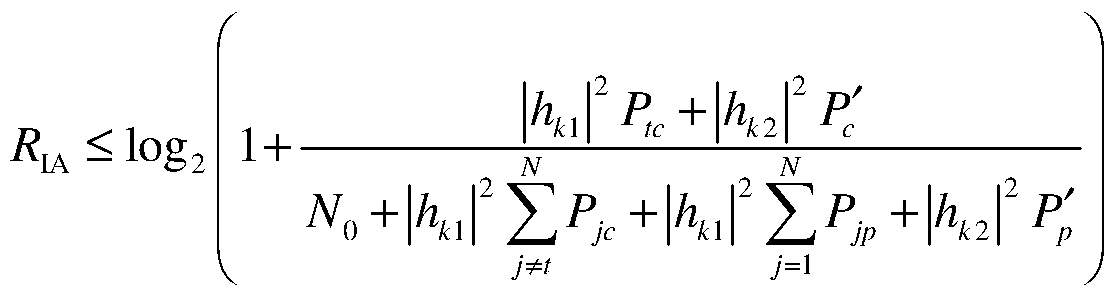

Rnc≤ log; 1 + - n = !,■·■, t-l,t + !,■·■, N- s = !,■·■, k-l,k + !,■·■, N 所述 N 个终端中第二终端对应的第二信息的码字的发射速率满足 第五条件, 包括:
 所述 N个终端除所述第二终端之外的其他 N-1个终端中第 端对应的第二信息的码字的发射速率满足第六条件, 包括:
≤ log s = l,---k-l,k + l,N

23、 根据权利要求 22所述的第一基站, 其特征在于, 所述第三 终端对应的第一信息的码字和所述第四终端对应的第一信息的码字 的叠加能在所述 N个终端的第二终端处被正确译出, 包括:
所述第三终端对应的第一信息的码字和所述第四终端对应的第 一信息的码字对应的编码调制机制 CMS 所采用的星座图的星座点的 最小欧式距离 4、 d2 分别满足如下条件:

且所述星座 图 上 的任意星座点 Cfc、 Ctc满足如下条件: hklckc e {Am: m e Z2x1}、 hk2ctc e {Am: m e Z2x1 } 其中, A e Clx2,为预设的二维复数向量, Z2xl表示 2行 * 1列的整数 列向量。
2 4、 一种第二基站, 其特征在于, 所述第二基站包括: 发送单元、 处理单元;
所述发送单元, 用于若存在邻小区第一基站的干扰, 将第四终端 对应的第一信息的码字和第二信息的码字的叠加发送给所述第四终 端和第二终端, 所述第四终端为干扰对齐的用户终端, 所述第二终端 为所述第一基站的边缘用户终端;
其中,所述第四终端对应的第一信息的码字是所述处理单元根据 所述第四终端对应的第一信息的码字的发射速率和发射功率获取的, 所述第四终端对应的第二信息的码字是所述处理单元根据所述第四 终端对应的第二信息的码字的发射速率和发射功率获取的, 所述第四 终端对应的第一信息的码字的发射速率满足第一条件, 所述第四终端 对应的第二信息的发射速率满足第二条件, 所述第一条件为将所述第 一基站 N个终端中除第三终端之外的 N- 1个终端对应的第一信息的码 字、 所述 N个终端对应的第二信息的码字和所述第四终端对应的第二
信息的码字视作噪声时, 所述第三终端对应的第一信, 的码字和所述 第四终端对应的第一信息的码字的叠加能在所述 N 个终端的第二终 端处被正确译出, 在将所述第四终端对应的第二信息的码字视作噪声 时, 所述第四终端对应的第一信息能在所述第四终端处被正确译出; 所述第二条件为能在所述第四终端处被正确译出, 所述第三终端为干 扰对齐的用户终端。
25、 根据权利要求 24所述的第二基站, 其特征在于, 所述第一 信息为用于所有能接收到所述第一信息的终端进行联合检测的信息, 所述第二信息为用于该终端进行单用户检测的信息。
26、 根据权利要求 25所述的第二基站, 其特征在于, 所述第四 终 一信息的码字的发射速率满足第一条件, 包括:

应的第二信息的发射速率满足第二条件, 包括:

其中, R:表示所述第四终端对应的第一信息的码字的发射速率, 表示所述第四终端对应的第二信息的码字的发射速率, 表示所述 第三终端对应的第一信息的码字与所述第四终端对应的第一信息的 码字叠加后的发射速率, N。表示所述第四终端的本地噪声功率; hki表 示所述第二终端与所述第一基站之间的信道衰落因子; /¾2表示所述第 二终端与所述第二基站之间的信道衰落因子; 表示所述第四终端与 所述第二基站之间的信道衰落因子; ^表示所述第一基站 N个终端中 的第 j个终端对应的第二信息的码字的发射功率; ^表示所述第 j个 终端对应的第一信息的码字的发射功率; 表示所述第四终端对应的 第二信息的码字的发射功率; P表示所述第四终端对应的第一信息的
码字的发射功率, 用户 k为所述第一基站的第二终端, 用户 t为所述 第一基站的第三终端。
2 7、 根据权利要求 2 4 - 2 6任一项所述的第二基站, 其特征在于, 所述第三终端对应的第一信息的码字和所述第四终端对应的第一信 息的码字的叠加能在所述 N个终端的第二终端处被正确译出, 包括: 所述第三终端对应的第一信息的码字和所述第四终端对应的第 一信息的码字对应的编码调制机制 CMS 所采用的星座图的星座点的 最小欧式距离 4、 d2 分别满足如下条件:
d、
άΊ

且所述星座 图 上 的任意星座点 Cfc、 Ctc满足如下条件: hk、ckc e {Am: m e Z2x1}、 hk2ctc e {Am: m e Z2x1 } 其中, 所述星座点对应的终端与的信道衰落因子, A e Clx2,为预设 的二维复数向量, Z2xl表示 2行 * 1列的整数列向量。
2 8、 一种第五终端, 用于蜂窝通信系统, 所述蜂窝通信系统中 M 个第一终端与第一基站之间的信道属于第一信道, 第二终端与所述第 一基站之间的信道属于第二信道, 所述第一信道的信道衰落因子大于 所述第二信道的信道衰落因子, M > 1 , M为整数, 其中, 所述第五终 端为所述 M个第一终端与所述第二终端中的任一终端, 其特征在于, 所述第五终端包括: 获取单元、 确定单元;
所述获取单元, 用于获取第一接收信号;
所述确定单元, 用于根据所述第一接收信号, 结合预先配置的第 一接收策略, 确定所述第五终端对应的第一信息和第二信息;
其中,所述第一接收策略为满足所述第五终端对应的第一信息和 第二信息分别被正确译出的接收策略。
2 9、 根据权利要求 2 8所述的第五终端, 其特征在于, 所述第一 信息为用于所有能接收到所述第一信息的终端进行联合检测的信息, 所述第二信息为用于该终端进行单用户检测的信息。
3 0、 根据权利要求 2 9所述的第五终端, 其特征在于, 所述第一 接收策略包括:
在所述第五终端获取第一接收信号之后,所述第五终端根据所述 第一接收信号, 检测所述 M个第一终端对应的第一信息;
根据所述第一接收信号以及所述 M个第一终端对应的第一信息, 获取第二信号;
根据所述第二信号, 检测所述第二终端对应的第一信息; 根据所述第二信号以及所述第二终端对应的第一信息,获取第三 信号;
根据所述第三信号, 检测所述第五终端对应的第二信息。
3 1、 根据权利要求 2 9所述的第五终端, 其特征在于, 所述蜂窝 通信系统中还包括第二基站, 所述第一基站与所述第二基站间存在干 扰, 所述第二基站的中心用户终端为第四终端;
若所述第五终端为所述第二终端, 所述第一接收策略包括: 在所述第二终端获取第一接收信号之后,所述第二终端根据所述 第一接收信号, 检测所述第一基站的第三终端对应的第一信息的码字 和所述第四终端对应的第一信息的码字的叠加, 所述第三终端和所述 第四终端为干扰对齐的用户终端;
根据所述第一接收信号、所述第一基站的第三终端对应的第一信 息的码字和所述第四终端对应的第一信息的码字的叠加, 获取第二信 号;
若 M= l ,根据所述第二信号,检测所述第二终端对应的第一信息; 根据所述第二信号以及所述第二终端对应的第一信息,获取第三 信号;
根据所述第三信号, 检测所述第二终端对应的第二信息; 若 M > 1 , 居所述第二信号, 检测所述 M个第一终端中除所述 第三终端之外的 M- 1个第一终端对应的第一信息;
根据所述第二信号,以及所述 M个第一终端中除所述第三终端之 外的 M- 1个第一终端对应的第一信息, 获取第三信号;
根据所述第三信号, 检测所述第二终端对应的第一信息; 根据所述第三信号以及所述第二终端对应的第一信息,获取第四 信号;
根据所述第四信号, 检测所述第二终端对应的第二信息。
32、 一种第四终端, 用于蜂窝通信系统, 所述蜂窝通信系统中包 括第一基站和第二基站, 所述第一基站与所述第二基站间存在干扰, 所述第二基站的中心用户终端为第四终端, 其特征在于, 所述第四终 端包括: 获取单元、 确定单元;
所述获取单元, 用于获取第一接收信号;
所述第四终端根据所述第一接收信号,结合预先配置的第二接收 策略, 确定所述第四终端对应的第一信息和第二信息;
其中,所述第二接收策略为满足所述第四终端对应的第一信息和 第二信息分别被正确译出的接收策略。
3 3、 根据权利要求 32所述的第四终端, 其特征在于, 所述第一 信息为用于所有能接收到所述第一信息的终端进行联合检测的信息, 所述第二信息为用于该终端进行单用户检测的信息。
34、 根据权利要求 3 3所述的第四终端, 其特征在于, 所述第二 接收策略包括:
在所述第四终端获取第一接收信号之后,所述第四终端根据所述 第一接收信号, 检测所述第四终端对应的第一信息;
根据所述第一接收信号以及所述第四终端对应的第一信息,获取 第二信号;
根据所述第二信号, 检测所述第四终端对应的第二信息。
35、 一种第一基站, 其特征在于, 所述第一基站包括: 发送器,
处理器;
所述发送器,用于将 N个终端中每个终端对应的第一信息的码字 和第二信息的码字的叠加发送给 N个终端, N为正整数;
其中,第 r个终端对应的第一信息的码字是所述处理器根据所述 第 r个终端对应的第一信息的码字的发射速率和发射功率获取的, 第 r个终端对应的第二信息的码字是所述处理器根据所述第 r个终端对 应的第二信息的码字的发射速率和发射功率获取的, 所述第 r个终端 对应的第一信息的码字的发射速率满足第一条件, 所述第 r个终端对 应的第二信息的码字的发射速率满足第二条件, 所述第一条件为在 将所述 N个终端对应的第二信息的码字视作噪声时, 所述第 r个终端 对应的第一信息能在所述 N个终端的任一终端处被正确译出, 所述第 二条件为在将其他 N- 1个终端对应的第二信息的码字视作噪声时, 所 述第 r 个终端对应的第二信息能在所述第 r 个终端处被正确译出, 1 < N。
36、 根据权利要求 35所述的第一基站, 其特征在于, 所述第一 信息为用于所有能接收到所述第一信息的终端进行联合检测的信息, 所述第二信息为用于该终端进行单用户检测的信息。
37、 根据权利要求 36所述的第一基站, 其特征在于, 若次序译 码 SD的检测顺序是从第 1 个终端, 第 2个终端, ..., 第 N个终端, 则所述第 r个终端对应的第二信息的码字的发射速率满足第二条件, 包括: h \ P
R < log 1 + Vr = l, 2, - - - , N ;


38、 根据权利要求 35 - 37任一项所述的第一基站, 其特征在于, 若存在邻小区的第二基站的干扰, 所述第 r个终端对应的第一信息的 码字的发射速率满足第一条件, 包括:
所述 N 个终端中第三终端对应的第一信息的码字的发射速率满 足第三条件, 所述 N个终端除所述第三终端之外的 N- 1个终端中第 n 个终端对应的第一信息的码字的发射速率满足第四条件;
其中,所述第三条件为在将所述 N个终端中除所述第三终端之外 的 N- 1个终端对应的第一信息的码字、 所述 N个终端对应的第二信息 的码字和所述第二基站的第四终端对应的第二信息的码字视作噪声 时, 所述第三终端对应的第一信息的码字和所述第四终端对应的第一 信息的码字的叠加能在所述 N个终端的第二终端处被正确译出, 所述 第二终端为所述第一基站的边缘用户终端, 所述第三终端和所述第四 终端为干扰对齐的用户终端;
所述第四条件为在将所述 N 个终端对应的第二信息的码字和所 述第四终端对应的第二信息的码字视作噪声时, 所述第 n个终端对应 的第一信息能在所述第二终端处被正确译出, 在将所述 N个终端对应 的第二信息的码字视作噪声时, 所述第 n个终端对应的第一信息能在 所述 N个终端除所述第二终端之外的 N- 1个终端中的任一终端处被正 确译出;
所述第 r 个终端对应的第二信息的码字的发射速率满足第二条
件, 包括:
所述 N 个终端中第二终端对应的第二信息的码字的发射速率满 足第五条件, 所述 N个终端除所述第二终端之外的其他 N-1个终端中 第 s个终端对应的第二信息的码字的发射速率满足第六条件;
其中,所述第五条件为在将所述 N个终端除所述第二终端之外的 其他 N-1 个终端对应的第二信息的码字和所述第四终端对应的第二 信息的码字视作噪声时, 所述第二终端对应的第二信息能在所述第二 终端处被正确译出;
所述第六条件为在将所述 N个终端除所述第 s个终端之外的 N-1 个终端对应的第二信息的码字视作噪声时, 所述第 s个终端对应的第 二信息能在所述第 s个终端处被正确译出。
39、 根据权利要求 38所述的第一基站, 其特征在于, 若 SD的检 测顺序是从第 1个终端, 第 2个终端, ..., 第 N个终端, 则所述 N个 终端中第三终端对应的第一信息的码字的发射速率满足第三条件, 包 括:

c≤ VM = 1, l,i + l,-'-,N

Rnc≤ log; 1 + - n = !,■·■, t-l,t + !,■·■, N- s = !,■·■, k-l,k + !,■·■, N
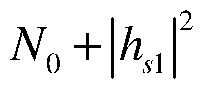 ii Pjc+hi Pj
所述 N 个终端中第二终端对应的第二信息的码字的发射速率满足 第五条件, 包括:
ii Pjc+hi Pj
所述 N 个终端中第二终端对应的第二信息的码字的发射速率满足 第五条件, 包括:

≤ iog2 s = l, - - - k - l, k + l, N

4 0、 根据权利要求 39所述的第一基站, 其特征在于, 所述第三 终端对应的第一信息的码字和所述第四终端对应的第一信息的码字 的叠加能在所述 N个终端的第二终端处被正确译出, 包括:
所述第三终端对应的第一信息的码字和所述第四终端对应的第 一信息的码字对应的编码调制机制 CMS 所采用的星座图的星座点的 最小欧式距离 4、 d2 分别满足如下条件:

且所述星座 图 上 的任意星座点 Cfc、 Ctc满足如下条件: hk、ckc e [Am: m e Z2x1}、 hk2ctc e [Am: m e Z2x1 } 其中, A e Clx2,为预设的二维复数向量, Z2xl表示 2行 * 1列的整数 列向量。
4 1、 一种第二基站, 其特征在于, 所述第二基站包括: 发送器、 处理器;
所述发送器, 用于若存在邻小区第一基站的干扰, 将第四终端对 应的第一信息的码字和第二信息的码字的叠加发送给所述第四终端 和第二终端, 所述第四终端为干扰对齐的用户终端, 所述第二终端为 所述第一基站的边缘用户终端;
其中,所述第四终端对应的第一信息的码字是所述处理器根据所 述第四终端对应的第一信息的码字的发射速率和发射功率获取的, 所 述第四终端对应的第二信息的码字是所述处理器根据所述第四终端 对应的第二信息的码字的发射速率和发射功率获取的, 所述第四终端 对应的第一信息的码字的发射速率满足第一条件, 所述第四终端对应
的第二信息的发射速率满足第二条件, 所述第一条件为将所述第一基 站 N个终端中除第三终端之外的 N- 1个终端对应的第一信息的码字、 所述 N 个终端对应的第二信息的码字和所述第四终端对应的第二信 息的码字视作噪声时, 所述第三终端对应的第一信息的码字和所述第 四终端对应的第一信息的码字的叠加能在所述 N 个终端的第二终端 处被正确译出, 在将所述第四终端对应的第二信息的码字视作噪声 时, 所述第四终端对应的第一信息能在所述第四终端处被正确译出; 所述第二条件为能在所述第四终端处被正确译出, 所述第三终端为干 扰对齐的用户终端。
4 2、 根据权利要求 4 1 所述的第二基站, 其特征在于, 所述第一 信息为用于所有能接收到所述第一信息的终端进行联合检测的信息, 所述第二信息为用于该终端进行单用户检测的信息。
4 3、 根据权利要求 4 2所述的第二基站, 其特征在于, 所述第四 终 一信息的码字的发射速率满足第一条件, 包括:

应的第二信息的发射速率满足第二条件, 包括:

其中, R:表示所述第四终端对应的第一信息的码字的发射速率, 表示所述第四终端对应的第二信息的码字的发射速率, 表示所述 第三终端对应的第一信息的码字与所述第四终端对应的第一信息的 码字叠加后的发射速率, N。表示所述第四终端的本地噪声功率; hki表 示所述第二终端与所述第一基站之间的信道衰落因子; /¾2表示所述第 二终端与所述第二基站之间的信道衰落因子; 表示所述第四终端与 所述第二基站之间的信道衰落因子; ^表示所述第一基站 N个终端中
的第 j个终端对应的第二信息的码字的发射功率; ^表示所述第 j个 终端对应的第一信息的码字的发射功率; 表示所述第四终端对应的 第二信息的码字的发射功率; P表示所述第四终端对应的第一信息的 码字的发射功率, 用户 k为所述第一基站的第二终端, 用户 t为所述 第一基站的第三终端。
4 4、 居权利要求 4 1 - 4 3任一项所述的第二基站, 其特征在于, 所述第三终端对应的第一信息的码字和所述第四终端对应的第一信 息的码字的叠加能在所述 N个终端的第二终端处被正确译出, 包括: 所述第三终端对应的第一信息的码字和所述第四终端对应的第 一信息的码字对应的编码调制机制 CMS 所采用的星座图的星座点的 最小欧式距离 4、 d2 分别满足如下条件:

4 5、 一种第五终端, 用于蜂窝通信系统, 所述蜂窝通信系统中 M 个第一终端与第一基站之间的信道属于第一信道, 第二终端与所述第 一基站之间的信道属于第二信道, 所述第一信道的信道衰落因子大于 所述第二信道的信道衰落因子, M > 1 , M为整数, 其中, 所述第五终 端为所述 M个第一终端与所述第二终端中的任一终端, 其特征在于, 所述第五终端包括: 处理器、 收发器、 存储器和通信总线;
所述通信总线, 用于所述处理器, 所述收发器、 所述储存器之间 的连接通信;
所述收发器, 用于所述第五终端与外部的通信;
所述处理器, 用于调用所述存储器中的存储的程序代码, 执行如 权利要求 11-14任一项所述的方法。
46、 一种第四终端, 用于蜂窝通信系统, 所述蜂窝通信系统中包 括第一基站和第二基站, 所述第一基站与所述第二基站间存在干扰, 所述第二基站的中心用户终端为第四终端, 其特征在于, 所述第四终 端包括: 处理器、 收发器、 存储器和通信总线;
所述通信总线, 用于所述处理器, 所述收发器、 所述储存器之间 的连接通信;
所述收发器, 用于所述第四终端与外部的通信;
所述处理器, 用于调用所述存储器中的存储的程序代码, 执行如 权利要求 15-17任一项所述的方法。
Priority Applications (4)
| Application Number | Priority Date | Filing Date | Title |
|---|---|---|---|
| CN201480034921.8A CN105379169B (zh) | 2014-06-13 | 2014-06-13 | 一种下行多址接入的方法、基站及终端 |
| PCT/CN2014/079868 WO2016000104A1 (zh) | 2014-06-13 | 2014-06-13 | 一种下行多址接入的方法、基站及终端 |
| EP14896422.4A EP3148109A4 (en) | 2014-06-13 | 2014-06-13 | Downlink multi-access method, base station and terminal |
| US15/377,062 US10205555B2 (en) | 2014-06-13 | 2016-12-13 | Downlink multiple access method, base station, and terminal |
Applications Claiming Priority (1)
| Application Number | Priority Date | Filing Date | Title |
|---|---|---|---|
| PCT/CN2014/079868 WO2016000104A1 (zh) | 2014-06-13 | 2014-06-13 | 一种下行多址接入的方法、基站及终端 |
Related Child Applications (1)
| Application Number | Title | Priority Date | Filing Date |
|---|---|---|---|
| US15/377,062 Continuation US10205555B2 (en) | 2014-06-13 | 2016-12-13 | Downlink multiple access method, base station, and terminal |
Publications (1)
| Publication Number | Publication Date |
|---|---|
| WO2016000104A1 true WO2016000104A1 (zh) | 2016-01-07 |
Family
ID=55018206
Family Applications (1)
| Application Number | Title | Priority Date | Filing Date |
|---|---|---|---|
| PCT/CN2014/079868 Ceased WO2016000104A1 (zh) | 2014-06-13 | 2014-06-13 | 一种下行多址接入的方法、基站及终端 |
Country Status (4)
| Country | Link |
|---|---|
| US (1) | US10205555B2 (zh) |
| EP (1) | EP3148109A4 (zh) |
| CN (1) | CN105379169B (zh) |
| WO (1) | WO2016000104A1 (zh) |
Cited By (1)
| Publication number | Priority date | Publication date | Assignee | Title |
|---|---|---|---|---|
| CN106027128A (zh) * | 2016-04-27 | 2016-10-12 | 清华大学 | 一种基于非正交多址接入的上行多用户干扰的抑制方法 |
Families Citing this family (2)
| Publication number | Priority date | Publication date | Assignee | Title |
|---|---|---|---|---|
| CN110366234A (zh) * | 2019-07-05 | 2019-10-22 | 山东交通学院 | 一种适用于非正交多址上行链路的速率分拆方法 |
| CN111245761B (zh) * | 2020-01-09 | 2022-05-31 | 北京航空航天大学杭州创新研究院 | 一种noma上行链路自适应数据接收方法 |
Citations (3)
| Publication number | Priority date | Publication date | Assignee | Title |
|---|---|---|---|---|
| CN1778121A (zh) * | 2003-02-19 | 2006-05-24 | 弗拉里奥恩技术公司 | 在多用户通信系统中增强的编码的方法和装置 |
| CN102907050A (zh) * | 2012-06-06 | 2013-01-30 | 华为技术有限公司 | 多址接入方法、装置及系统 |
| WO2013159207A1 (en) * | 2012-04-27 | 2013-10-31 | The Royal Institution For The Advancement Of Learning/Mcgill University | Methods and devices for communications systems using multiplied rate transmission |
Family Cites Families (10)
| Publication number | Priority date | Publication date | Assignee | Title |
|---|---|---|---|---|
| US6680987B1 (en) * | 1999-08-10 | 2004-01-20 | Hughes Electronics Corporation | Fading communications channel estimation and compensation |
| DE60312163T2 (de) * | 2002-06-14 | 2007-10-31 | Dspace Pty. Ltd. | Verfahren und Empfänger zum verarbeiten eines Mehrbenutzersignals |
| US6788963B2 (en) | 2002-08-08 | 2004-09-07 | Flarion Technologies, Inc. | Methods and apparatus for operating mobile nodes in multiple a states |
| CA2516382C (en) * | 2003-02-19 | 2013-04-16 | Flarion Technologies, Inc. | Controlled superposition coding in multi-user communication systems |
| US7787573B2 (en) * | 2004-11-19 | 2010-08-31 | Broadcom Corporation | Wireless system having channel fading compensation using minimum mean square error |
| US20080084853A1 (en) * | 2006-10-04 | 2008-04-10 | Motorola, Inc. | Radio resource assignment in control channel in wireless communication systems |
| US9521680B2 (en) * | 2007-07-10 | 2016-12-13 | Qualcomm Incorporated | Methods and apparatus for successive interference cancellation based on three rate reports from interfering device in peer-to-peer networks |
| US9020074B2 (en) * | 2010-02-18 | 2015-04-28 | Intel Mobile Communications GmbH | Apparatus and method for antenna diversity reception |
| EP2426974B1 (en) * | 2010-09-03 | 2017-03-01 | Alcatel Lucent | A femtocell base station, and a method of selecting carrier frequency band of a femtocell base station |
| CN102761355A (zh) * | 2011-04-29 | 2012-10-31 | 华为技术有限公司 | 控制信道的通信方法和装置 |
-
2014
- 2014-06-13 WO PCT/CN2014/079868 patent/WO2016000104A1/zh not_active Ceased
- 2014-06-13 CN CN201480034921.8A patent/CN105379169B/zh active Active
- 2014-06-13 EP EP14896422.4A patent/EP3148109A4/en not_active Withdrawn
-
2016
- 2016-12-13 US US15/377,062 patent/US10205555B2/en active Active
Patent Citations (3)
| Publication number | Priority date | Publication date | Assignee | Title |
|---|---|---|---|---|
| CN1778121A (zh) * | 2003-02-19 | 2006-05-24 | 弗拉里奥恩技术公司 | 在多用户通信系统中增强的编码的方法和装置 |
| WO2013159207A1 (en) * | 2012-04-27 | 2013-10-31 | The Royal Institution For The Advancement Of Learning/Mcgill University | Methods and devices for communications systems using multiplied rate transmission |
| CN102907050A (zh) * | 2012-06-06 | 2013-01-30 | 华为技术有限公司 | 多址接入方法、装置及系统 |
Non-Patent Citations (1)
| Title |
|---|
| See also references of EP3148109A4 * |
Cited By (1)
| Publication number | Priority date | Publication date | Assignee | Title |
|---|---|---|---|---|
| CN106027128A (zh) * | 2016-04-27 | 2016-10-12 | 清华大学 | 一种基于非正交多址接入的上行多用户干扰的抑制方法 |
Also Published As
| Publication number | Publication date |
|---|---|
| US10205555B2 (en) | 2019-02-12 |
| CN105379169B (zh) | 2019-04-19 |
| CN105379169A (zh) | 2016-03-02 |
| EP3148109A1 (en) | 2017-03-29 |
| EP3148109A4 (en) | 2017-07-05 |
| US20170093523A1 (en) | 2017-03-30 |
Similar Documents
| Publication | Publication Date | Title |
|---|---|---|
| EP3694130B1 (en) | Method for transmitting and receiving data in wireless communication system, and device therefor | |
| US11283509B2 (en) | Method and apparatus for transmitting and receiving signal in wireless communication system | |
| JP6755875B2 (ja) | より高次のmu−mimoのためのdmrs拡張 | |
| CN105580433B (zh) | 用于网络辅助式干扰消除及抑制的网络信令 | |
| KR101513556B1 (ko) | 통신 시스템에서 네트워크 코딩을 위한 장치 및 방법 | |
| CN105324952B (zh) | 用于对用户设备处的物理下行链路共享信道进行干扰消除和/或抑制的系统和方法 | |
| CN102428682B (zh) | 用于mimo的混合-qrd-sic及不平衡mcs系统和方法 | |
| CN110741706B (zh) | 用于在无线通信系统中传输下行链路控制信道的装置和方法 | |
| CN116034558B (zh) | 用于使用非相干调制来发送解调参考信号的技术 | |
| CN107683595A (zh) | 星座叠加系统及方法 | |
| CN115244889B (zh) | 全双工索引调制 | |
| CN108462552A (zh) | 一种多码字传输方法及装置 | |
| CN106797266A (zh) | 用于在无线通信系统中通过干扰信号消除和抑制来接收下行链路数据的方法和装置 | |
| WO2013139262A1 (zh) | 下行解调参考信号初始化配置参数通知、接收方法及装置 | |
| Dong et al. | On non-orthogonal multiple access with finite-alphabet inputs in Z-channels | |
| CN115336346A (zh) | 用于多输入多输出系统的联合广播和单播设计 | |
| CN119522546A (zh) | 无线信号的概率整形和信道译码 | |
| CN115486017B (zh) | 用于非相干调制的推升型索引调制 | |
| EP4637240A1 (en) | Information transmission method and apparatus, terminal device, and network device | |
| CN117063590A (zh) | 用于报告上行链路传输连续性能力的技术 | |
| CN110602017A (zh) | 一种非正交多址接入解码方法 | |
| CN107294574B (zh) | 多传输点数据传输的方法及装置 | |
| CN115462041A (zh) | 推升型非相干调制 | |
| CN119096489A (zh) | 用于复杂度降低的极化调整后的信道译码设计 | |
| TW200937918A (en) | Methods and apparatus for diversity combining of repeated signals in OFDMA systems |
Legal Events
| Date | Code | Title | Description |
|---|---|---|---|
| 121 | Ep: the epo has been informed by wipo that ep was designated in this application |
Ref document number: 14896422 Country of ref document: EP Kind code of ref document: A1 |
|
| NENP | Non-entry into the national phase |
Ref country code: DE |
|
| REEP | Request for entry into the european phase |
Ref document number: 2014896422 Country of ref document: EP |
|
| WWE | Wipo information: entry into national phase |
Ref document number: 2014896422 Country of ref document: EP |