WO2016002115A1 - 電池状態判定装置 - Google Patents
電池状態判定装置 Download PDFInfo
- Publication number
- WO2016002115A1 WO2016002115A1 PCT/JP2015/002051 JP2015002051W WO2016002115A1 WO 2016002115 A1 WO2016002115 A1 WO 2016002115A1 JP 2015002051 W JP2015002051 W JP 2015002051W WO 2016002115 A1 WO2016002115 A1 WO 2016002115A1
- Authority
- WO
- WIPO (PCT)
- Prior art keywords
- internal resistance
- deterioration
- storage battery
- state
- battery
- Prior art date
- Legal status (The legal status is an assumption and is not a legal conclusion. Google has not performed a legal analysis and makes no representation as to the accuracy of the status listed.)
- Ceased
Links
Images



Classifications
-
- G—PHYSICS
- G01—MEASURING; TESTING
- G01R—MEASURING ELECTRIC VARIABLES; MEASURING MAGNETIC VARIABLES
- G01R31/00—Arrangements for testing electric properties; Arrangements for locating electric faults; Arrangements for electrical testing characterised by what is being tested not provided for elsewhere
- G01R31/36—Arrangements for testing, measuring or monitoring the electrical condition of accumulators or electric batteries, e.g. capacity or state of charge [SoC]
- G01R31/392—Determining battery ageing or deterioration, e.g. state of health
-
- H—ELECTRICITY
- H02—GENERATION; CONVERSION OR DISTRIBUTION OF ELECTRIC POWER
- H02J—ELECTRIC POWER NETWORKS; CIRCUIT ARRANGEMENTS OR SYSTEMS FOR SUPPLYING OR DISTRIBUTING ELECTRIC POWER; SYSTEMS FOR STORING ELECTRIC ENERGY
- H02J7/00—Circuit arrangements for charging or discharging batteries or for supplying loads from batteries
- H02J7/80—Circuit arrangements for charging or discharging batteries or for supplying loads from batteries including monitoring or indicating arrangements
- H02J7/84—Control of state of health [SOH]
-
- G—PHYSICS
- G01—MEASURING; TESTING
- G01R—MEASURING ELECTRIC VARIABLES; MEASURING MAGNETIC VARIABLES
- G01R31/00—Arrangements for testing electric properties; Arrangements for locating electric faults; Arrangements for electrical testing characterised by what is being tested not provided for elsewhere
- G01R31/36—Arrangements for testing, measuring or monitoring the electrical condition of accumulators or electric batteries, e.g. capacity or state of charge [SoC]
-
- G—PHYSICS
- G01—MEASURING; TESTING
- G01R—MEASURING ELECTRIC VARIABLES; MEASURING MAGNETIC VARIABLES
- G01R31/00—Arrangements for testing electric properties; Arrangements for locating electric faults; Arrangements for electrical testing characterised by what is being tested not provided for elsewhere
- G01R31/36—Arrangements for testing, measuring or monitoring the electrical condition of accumulators or electric batteries, e.g. capacity or state of charge [SoC]
- G01R31/3644—Constructional arrangements
- G01R31/3646—Constructional arrangements for indicating electrical conditions or variables, e.g. visual or audible indicators
-
- G—PHYSICS
- G01—MEASURING; TESTING
- G01R—MEASURING ELECTRIC VARIABLES; MEASURING MAGNETIC VARIABLES
- G01R31/00—Arrangements for testing electric properties; Arrangements for locating electric faults; Arrangements for electrical testing characterised by what is being tested not provided for elsewhere
- G01R31/36—Arrangements for testing, measuring or monitoring the electrical condition of accumulators or electric batteries, e.g. capacity or state of charge [SoC]
- G01R31/3644—Constructional arrangements
- G01R31/3648—Constructional arrangements comprising digital calculation means, e.g. for performing an algorithm
-
- G—PHYSICS
- G01—MEASURING; TESTING
- G01R—MEASURING ELECTRIC VARIABLES; MEASURING MAGNETIC VARIABLES
- G01R31/00—Arrangements for testing electric properties; Arrangements for locating electric faults; Arrangements for electrical testing characterised by what is being tested not provided for elsewhere
- G01R31/36—Arrangements for testing, measuring or monitoring the electrical condition of accumulators or electric batteries, e.g. capacity or state of charge [SoC]
- G01R31/389—Measuring internal impedance, internal conductance or related variables
-
- H—ELECTRICITY
- H01—ELECTRIC ELEMENTS
- H01M—PROCESSES OR MEANS, e.g. BATTERIES, FOR THE DIRECT CONVERSION OF CHEMICAL ENERGY INTO ELECTRICAL ENERGY
- H01M10/00—Secondary cells; Manufacture thereof
- H01M10/42—Methods or arrangements for servicing or maintenance of secondary cells or secondary half-cells
- H01M10/48—Accumulators combined with arrangements for measuring, testing or indicating the condition of cells, e.g. the level or density of the electrolyte
-
- H—ELECTRICITY
- H02—GENERATION; CONVERSION OR DISTRIBUTION OF ELECTRIC POWER
- H02J—ELECTRIC POWER NETWORKS; CIRCUIT ARRANGEMENTS OR SYSTEMS FOR SUPPLYING OR DISTRIBUTING ELECTRIC POWER; SYSTEMS FOR STORING ELECTRIC ENERGY
- H02J7/00—Circuit arrangements for charging or discharging batteries or for supplying loads from batteries
-
- Y—GENERAL TAGGING OF NEW TECHNOLOGICAL DEVELOPMENTS; GENERAL TAGGING OF CROSS-SECTIONAL TECHNOLOGIES SPANNING OVER SEVERAL SECTIONS OF THE IPC; TECHNICAL SUBJECTS COVERED BY FORMER USPC CROSS-REFERENCE ART COLLECTIONS [XRACs] AND DIGESTS
- Y02—TECHNOLOGIES OR APPLICATIONS FOR MITIGATION OR ADAPTATION AGAINST CLIMATE CHANGE
- Y02E—REDUCTION OF GREENHOUSE GAS [GHG] EMISSIONS, RELATED TO ENERGY GENERATION, TRANSMISSION OR DISTRIBUTION
- Y02E60/00—Enabling technologies; Technologies with a potential or indirect contribution to GHG emissions mitigation
- Y02E60/10—Energy storage using batteries
Definitions
- the present invention relates to a battery state determination device for determining a deterioration state of a storage battery.
- the history of the internal resistance value, the degree of charge, and the temperature of the storage battery is stored, and the deterioration state of the storage battery is calculated from the history and the internal resistance value.
- the present invention provides a battery state determination device capable of estimating the deterioration state of a storage battery having two types of deterioration modes with high accuracy.
- the battery state determination device includes a voltage measurement unit, a remaining capacity estimation unit, an internal resistance measurement unit, a calculation unit, and an estimation unit.
- a voltage measurement part measures the open circuit voltage of a storage battery.
- a remaining capacity estimation part estimates the remaining capacity of a storage battery based on the measured open circuit voltage.
- the internal resistance measurement unit measures the internal resistance of the storage battery.
- the calculation unit calculates a deterioration rate of the internal resistance from the measured internal resistance.
- the estimation unit performs first estimation on the deterioration state of the storage battery based on the estimated remaining capacity and the calculated deterioration rate of the internal resistance.
- the deterioration state of the storage battery can be estimated with high accuracy.
- FIG. 1 is a block diagram of a battery state determination device according to Embodiment 1 of the present invention.
- the flowchart which shows the process of the battery state determination apparatus by Embodiment 1 of this invention.
- the graph explaining the data table of the battery state determination apparatus by Embodiment 1 of this invention The flowchart which shows the process of the battery state determination apparatus by Embodiment 2 of this invention.
- a storage battery such as a lead battery deteriorates due to two different causes. That is, deterioration due to corrosion of the current collector and deterioration due to sulfation.
- the current collector corrodes, the internal resistance increases and the output decreases.
- the OCV Open Circuit Voltage
- SOC State of Charge
- FIG. 1 is a block diagram showing a battery state determination device 1 according to Embodiment 1 of the present invention.
- the battery state determination device 1 is a device that monitors the state of a lead battery 2 mounted on a vehicle or the like and determines a deterioration state.
- the battery state determination device 1 inputs measurement signals from a voltage sensor 4 that measures the voltage of the lead battery 2 and a current sensor 3 that measures the current of the lead battery 2.
- the battery state determination apparatus 1 includes an open-circuit voltage measurement unit 101, a remaining capacity estimation unit 102, an internal resistance measurement unit 103, an internal resistance deterioration rate calculation unit 104, a data table 105, a deterioration state estimation unit 106, and an output unit 107. .
- the open-circuit voltage measuring unit 101 measures the open-circuit voltage (OCV: Open Circuit Voltage) of the lead battery 2.
- OCV Open Circuit Voltage
- the open-circuit voltage measuring unit 101 measures, for example, the voltage when the current is zero as the open-circuit voltage from the measured current value and the measured voltage value of the lead battery 2.
- the remaining capacity estimation unit 102 estimates the remaining capacity (SOC: State of Charge) of the lead battery 2 from the measured open circuit voltage.
- the remaining capacity estimation unit 102 estimates that the open circuit voltage and the remaining capacity are inversely proportional when the lead battery 2 is fully charged.
- the remaining capacity estimation unit 102 estimates the remaining capacity by applying the open-circuit voltage at the time of full charge to an inversely proportional function or table data.
- the remaining capacity here means the remaining capacity affected by the change in the specific gravity of the electrolyte due to sulfation and deterioration.
- the internal resistance measurement unit 103 measures the internal resistance of the lead battery 2.
- the internal resistance may be an AC internal resistance or a DC internal resistance.
- the internal resistance measurement unit 103 measures the internal resistance using, for example, a measured current value and a measured voltage value of the lead battery 2.
- the internal resistance deterioration rate calculation unit 104 stores the initial internal resistance of the lead battery 2 and calculates the ratio of the current internal resistance to the initial internal resistance as the deterioration rate.
- the deterioration state estimation unit 106 estimates the deterioration state (SOH: State of Health) of the lead battery 2 from the estimated remaining capacity, the calculated internal resistance deterioration rate, and the information in the data table 105. Although details will be described later, first, the deterioration state estimation unit 106 performs the first estimation by calculation from the estimated remaining capacity and the calculated internal resistance deterioration rate. Next, the deterioration state estimation unit 106 performs second estimation with higher accuracy by converting the calculated first estimation result using the data table 105.
- SOH State of Health
- the data table 105 stores regression analysis data representing the distribution of the first estimated value with respect to the actually measured deterioration state for a plurality of sample storage batteries.
- the regression analysis data will be described in detail later with reference to the drawings.
- the output unit 107 outputs the deterioration state estimated by the deterioration state estimation unit 106 to, for example, a device having a storage battery control circuit and a display unit.
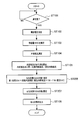
- FIG. 2 is a flowchart showing processing of the battery state determination device of the first embodiment.
- Steps ST102 to ST105 are the processes of the open-circuit voltage measurement unit 101, the remaining capacity estimation unit 102, the internal resistance measurement unit 103, and the internal resistance deterioration rate calculation unit 104, and are omitted because they have been described above.
- the measurements of steps ST102 and ST104 are performed when the lead battery 2 is fully charged.
- step ST106 the deterioration state estimation unit 106 performs the first estimation of the deterioration state by the following equation (1).
- “initial internal resistance / current internal resistance” is the deterioration rate of the internal resistance calculated by the internal resistance deterioration rate calculation unit 104.
- the estimated SOC is the remaining capacity [%] estimated by the remaining capacity estimating unit 102. For example, you may make it perform 1st estimation about the deterioration state of a storage battery, when the deterioration rate of the calculated internal resistance is more than predetermined value. Further, when the output value is lower than a predetermined value, the output unit 107 may output a storage battery replacement notification.
- the value obtained by multiplying the deterioration rate of the internal resistance and the remaining capacity (SOC) estimated from the open circuit voltage is used for the estimation of the deterioration state (SOH) of the lead battery 2, thereby achieving high-precision estimation. It can be carried out.
- step S107 the degradation state estimation unit 106 performs the second estimation of the degradation state by converting using the first estimation SOH and the regression analysis data of the data table 105.
- FIG. 3 is a graph illustrating the regression analysis data of the data table.
- the regression analysis data of the data table 105 is obtained in advance and stored in the data table 105.
- the regression analysis data is a regression line obtained for a plurality of samples so that the correlation between the actual measured value and the first estimated value is increased from the measured value of the actual deterioration state (SOH) and the result of the first estimation. It is data.
- the regression line may be obtained by, for example, the least square method or a similar method.
- samples having a degradation state measurement value of 40% or less for example. This is because when the deterioration state is 40 percent or less, the regularity of the relationship between the deterioration rate of the internal resistance, the remaining capacity (SOC) estimated from the open circuit voltage, and the actual deterioration state (SOH) decreases.
- the regression analysis data is obtained with at least one of the measured values of 40% or less as a fixed point so that the first estimated value becomes the zero point. Good.
- the fixed point does not need to be adjusted to the zero point, and may be different from the zero point as shown in FIG.
- regression analysis data such as the straight line in FIG. 3 is used, the first estimated value of the deterioration state is applied to the horizontal axis in FIG. 3, and the vertical axis of the regression branch data corresponding to this horizontal axis value The value is set as the second estimated value of the deterioration state.
- the second estimated value is obtained from the first estimated value using a function or a data table.
- ST108 is the process of the output unit 107 described above.
- a highly accurate deterioration state in the lead battery 2 having two different types of deterioration, namely deterioration due to corrosion of the current collector and deterioration due to sulfation. (SOH) can be estimated.
- This estimation method is a highly accurate deterioration state (SOH) for lead batteries with heavy load fluctuations, such as lead batteries for idling stop vehicles that are frequently charged and discharged, in addition to ordinary lead batteries for vehicles. It is particularly useful because it can be estimated.
- SOH deterioration state
- FIG. 4 is a flowchart illustrating processing of the battery state determination device according to the second embodiment.
- FIG. 5 is a graph for explaining regression analysis data stored in the data table of the second embodiment.
- the calculation formula of the deterioration state estimation unit 106 is changed, and the regression analysis data of the data table 105 is changed in accordance with the change of the calculation formula.
- the same as in the first embodiment It is. Similar components and steps are denoted by the same reference numerals and description thereof is omitted.
- step ST206 of FIG. 4 the deterioration state estimation unit 106 performs the first estimation of the deterioration state by the following equation (2).
- step S207 the degradation state estimation unit 106 performs second estimation of the degradation state by performing conversion using the first estimation SOH and the regression analysis data in the data table 105.
- the regression analysis data in the data table 105 uses a regression line obtained by regression analysis based on the value of Equation (2) as the first estimated values of a plurality of samples.
- the output unit 107 may output a storage battery replacement notification.
- the first estimation formula of the deterioration state can be transformed as the following formulas (3) to (5).
- g1 and g2 are weighting coefficients.
- the deterioration state estimation unit 106 adds the value obtained by multiplying the estimated remaining capacity (SOC) and the calculated deterioration rate of the internal resistance, and the SOC and the calculated deterioration rate of the internal resistance. It is preferable to estimate the deterioration state of the lead battery 2 using the value.
- ⁇ 1 and ⁇ 2 are non-zero weighting coefficients.
- ⁇ 1 and ⁇ 2 are coefficients.
- the coefficients g1, g2, ⁇ 1, ⁇ 2, ⁇ 1, and ⁇ 2 can be appropriately adjusted according to the storage battery by experiments or the like. Furthermore, another correction formula such as temperature correction may be added to the first estimated SOH.
- data obtained by fitting a straight line is shown as the regression analysis data, but it may be data of a curve obtained by curve fitting.
- the present invention can be applied to an apparatus for determining a deterioration state of a storage battery.
Landscapes
- Physics & Mathematics (AREA)
- General Physics & Mathematics (AREA)
- Engineering & Computer Science (AREA)
- Power Engineering (AREA)
- Manufacturing & Machinery (AREA)
- Chemical & Material Sciences (AREA)
- Chemical Kinetics & Catalysis (AREA)
- Electrochemistry (AREA)
- General Chemical & Material Sciences (AREA)
- Tests Of Electric Status Of Batteries (AREA)
- Secondary Cells (AREA)
- Charge And Discharge Circuits For Batteries Or The Like (AREA)
Abstract
電池状態判定装置は、電圧測定部と、残容量推定部と、内部抵抗測定部と、算出部と、推定部とを有する。電圧測定部は、蓄電池の開放電圧を測定する。残容量推定部は、測定された開放電圧に基づき蓄電池の残容量を推定する。内部抵抗測定部は、蓄電池の内部抵抗を測定する。算出部は、測定された内部抵抗から内部抵抗の劣化率を算出する。推定部は、推定された残容量と、算出された内部抵抗の劣化率とに基づいて、蓄電池の劣化状態について第1の推定を行う。
Description
本発明は、蓄電池の劣化状態を判定する電池状態判定装置に関する。
従来、蓄電池の劣化状態(SOH:State of Health)を算出し、算出された劣化状態に応じて正常または異常などの判定を行う装置が提案されている(特許文献1を参照)。
特許文献1の装置では、蓄電池の内部抵抗値、充電度および温度の履歴を記憶し、履歴と内部抵抗値とから蓄電池の劣化状態を算出している。
本発明は、2種類の劣化モードを有する蓄電池の劣化状態を、高い精度で推定できる電池状態判定装置を提供する。
本発明の一態様に係る電池状態判定装置は、電圧測定部と、残容量推定部と、内部抵抗測定部と、算出部と、推定部とを有する。電圧測定部は、蓄電池の開放電圧を測定する。残容量推定部は、測定された開放電圧に基づき蓄電池の残容量を推定する。内部抵抗測定部は、蓄電池の内部抵抗を測定する。算出部は、測定された内部抵抗から内部抵抗の劣化率を算出する。推定部は、推定された残容量と、算出された内部抵抗の劣化率とに基づいて、蓄電池の劣化状態について第1の推定を行う。
本発明によれば、蓄電池の劣化状態を高い精度で推定することができる。
本発明の実施の形態の説明に先立ち、従来の電池状態判定装置における問題点を簡単に説明する。鉛電池などの蓄電池は、異なる2種類の原因により劣化する。すなわち、集電体の腐食による劣化と、サルフェーションによる劣化である。集電体が腐食すると、内部抵抗が増大して出力が低下する。サルフェーションでは、OCV(Open Circuit Voltage:開放電圧)が低下してSOC(State of Charge:残容量)が低下する。
従来の劣化状態の算出方法では、2種類の劣化に対応しておらず、例えばサルフェーションによる劣化が生じている場合に、劣化状態の精度が低下する。
以下、本発明の各実施の形態について図面を参照して詳細に説明する。
(実施の形態1)
図1は、本発明の実施の形態1の電池状態判定装置1を示すブロック図である。
図1は、本発明の実施の形態1の電池状態判定装置1を示すブロック図である。
実施の形態1の電池状態判定装置1は、車両等に搭載される鉛電池2の状態を監視し、劣化状態を判定する装置である。電池状態判定装置1は、鉛電池2の電圧を計測する電圧センサ4と、鉛電池2の電流を計測する電流センサ3とから、測定信号を入力する。
電池状態判定装置1は、開放電圧測定部101、残容量推定部102、内部抵抗測定部103、内部抵抗劣化率算出部104、データテーブル105、劣化状態推定部106、および、出力部107を有する。
開放電圧測定部101は、鉛電池2の開放電圧(OCV:Open Circuit Voltage)を測定する。開放電圧測定部101は、例えば、鉛電池2の電流の計測値と電圧の計測値とから、電流がゼロのときの電圧を開放電圧として測定する。
残容量推定部102は、測定された開放電圧から鉛電池2の残容量(SOC:State of Charge)を推定する。残容量推定部102は、鉛電池2が満充電のときに、開放電圧と残容量とは反比例すると推定する。残容量推定部102は、満充電のときの開放電圧を反比例の関数或いはテーブルデータに当てはめて残容量を推定する。なお、ここでいう残容量は、サルフェーションと劣化による電解液の比重の変化の影響を受けた残容量を意味する。
内部抵抗測定部103は、鉛電池2の内部抵抗を計測する。内部抵抗は交流内部抵抗でも直流内部抵抗でもよい。内部抵抗測定部103は、例えば、鉛電池2の電流の計測値と電圧の計測値とを用いて内部抵抗を計測する。
内部抵抗劣化率算出部104は、鉛電池2の初期の内部抵抗を記憶しており、初期の内部抵抗に対する現在の内部抵抗の割合を、劣化率として算出する。
劣化状態推定部106は、推定された残容量と、算出された内部抵抗劣化率と、データテーブル105の情報とから、鉛電池2の劣化状態(SOH:State of Health)を推定する。詳細は後述するが、先ず、劣化状態推定部106は、推定された残容量と、算出された内部抵抗劣化率とから、算出によって、第1推定を行う。次いで、劣化状態推定部106は、算出された第1推定の結果を、データテーブル105を用いて換算することで、より精度の高い第2推定を行う。
データテーブル105は、複数のサンプルの蓄電池について、実測された劣化状態に対する第1推定の値の分布を表わす回帰分析データを記憶している。回帰分析データについては、後で、図面を用いて詳細に説明する。
出力部107は、劣化状態推定部106が推定した劣化状態を、例えば、蓄電池の制御回路および表示部などを有する装置に出力する。
[劣化状態推定]
次に、劣化状態推定部106が行う劣化状態の推定方法について説明する。
次に、劣化状態推定部106が行う劣化状態の推定方法について説明する。
図2は、実施の形態1の電池状態判定装置の処理を示すフローチャートである。
ステップST102~ST105は、開放電圧測定部101、残容量推定部102、内部抵抗測定部103、内部抵抗劣化率算出部104の各処理であり、上で説明したので省略する。ステップS101のタイミングを待機する処理により、ステップST102、ST104の測定は、鉛電池2の満充電時に行われる。
ステップST106では、劣化状態推定部106は、次式(1)により、劣化状態の第1推定を行う。

ここで、「初期内部抵抗/現在内部抵抗」は、内部抵抗劣化率算出部104が算出した内部抵抗の劣化率である。推定SOCは、残容量推定部102が推定した残容量[%]である。例えば、算出された内部抵抗の劣化率が、所定の値以上のときに蓄電池の劣化状態について第1推定を行うようにしてもよい。また、所定の値より低いときに出力部107は、蓄電池の交換通知を出力するようにしてもよい。
このように、内部抵抗の劣化率と、開放電圧から推定した残容量(SOC)とを乗算した値を、鉛電池2の劣化状態(SOH)の推定に使用することで、精度の高い推定を行うことができる。
ステップS107では、劣化状態推定部106は、第1推定SOHとデータテーブル105の回帰分析データを用いて換算することで、劣化状態の第2推定を行う。
図3は、データテーブルの回帰分析データを説明するグラフである。
データテーブル105の回帰分析データは、予め求めて、データテーブル105に記憶させておく。回帰分析データは、複数のサンプルについて、実際の劣化状態(SOH)の測定値と、第1推定の結果とから、実測値と第1推定値との相関が高くなるように求めた回帰直線のデータである。回帰直線は、例えば最小二乗法により求めてもよいし、類似の方法により求めてもよい。
ここで、複数のサンプルについて、劣化状態の測定値が、例えば40パーセント以下のものは除外すると良い。劣化状態が40パーセント以下だと、内部抵抗の劣化率と、開放電圧から推定した残容量(SOC)と、実際の劣化状態(SOH)との関係の規則性が少なくなってくるためである。
さらに、劣化状態(SOH)の測定値がゼロ点のときに、第1推定の値がゼロ点になるように、測定値が40%以下の少なくとも1点を固定点として、回帰分析データを求めるとよい。なお、固定点は、ゼロ点に合わせる必要はなく、図3のように、ゼロ点と異なってもよい。
第2推定では、図3の直線のような回帰分析データを用いて、図3の横軸に劣化状態の第1推定値を当てはめ、この横軸の値に対応する回帰分岐データの縦軸の値を、劣化状態の第2推定値とする。なお、実際の推定処理では、グラフを用いる必要はなく、関数あるいはデータテーブルを用いて、第1推定値から第2推定値を求める。
第2推定の処理により、実測値に即した、より精度の高い劣化状態(SOH)の推定を行うことができる。
ST108は、上で説明した、出力部107の処理である。
以上のように、実施の形態1の電池状態判定装置1によれば、集電体の腐食による劣化と、サルフェーションによる劣化と、異なる2種類の劣化のある鉛電池2において、精度の高い劣化状態(SOH)の推定を行うことができる。
この推定方法は、通常の車両の鉛電池に加え、充電と放電とが多く繰り返されるアイドリングストップ車用の鉛電池など、負荷変動の激しい鉛電池に対しても、精度の高い劣化状態(SOH)の推定が行えるため、特に有用である。
(実施の形態2)
図4は、実施の形態2の電池状態判定装置の処理を示すフローチャートである。図5は、実施の形態2のデータテーブルに記憶される回帰分析データを説明するグラフである。
図4は、実施の形態2の電池状態判定装置の処理を示すフローチャートである。図5は、実施の形態2のデータテーブルに記憶される回帰分析データを説明するグラフである。
実施の形態2は、劣化状態推定部106の算出式を変更したのと、この算出式の変更に合わせてデータテーブル105の回帰分析データを変更したものであり、他は実施の形態1と同様である。同様の構成およびステップには、同一符号を付して説明を省略する。
図4のステップST206では、劣化状態推定部106は、次式(2)により、劣化状態の第1推定を行う。

このように、内部抵抗の劣化率と、開放電圧から推定した残容量(SOC)とを加算した値を劣化状態(SOH)の推定に使用することで、精度の高い推定を行うことができる。ここで、「×100」は単位を揃える係数であり、「100-推定SOC」は残容量から容量の減少量への変換を表わす。
ステップS207では、劣化状態推定部106は、第1推定SOHとデータテーブル105の回帰分析データを用いて換算することで、劣化状態の第2推定を行う。
データテーブル105の回帰分析データは、図5に示すように、複数のサンプルの第1推定値として、数式(2)の値に基づいて回帰分析した回帰直線を用いている。
ここで、複数のサンプルについて、劣化状態の測定値が、例えば40パーセント以下のものは除外すると良い。さらに、劣化状態(SOH)の測定値がゼロ点のときに、第1推定の値がゼロ点になるように、測定値が40%以下の少なくとも1点を固定点として、回帰分析データを求めるとよい。なお、第2推定の結果である劣化状態が40%より低いときに、出力部107は蓄電池の交換通知を出力してもよい。
第2推定の処理により、実測値に即した、より精度の高い劣化状態(SOH)の推定を行うことができる。
以上のように、実施の形態2の電池状態判定装置によれば、集電体の腐食による劣化と、サルフェーションによる劣化と、異なる2種類の劣化のある鉛電池2において、精度の高い劣化状態(SOH)の推定を行うことができる。
以上、本発明の各実施の形態について説明した。なお、上記実施の形態では、鉛電池の劣化状態(SOH)の推定について説明したが、少なくとも異なる2種類の劣化がある蓄電池に対して、同様の作用効果を奏することができる。
また、劣化状態の第1推定の式は、次式(3)~(5)のように変形することができる。

ここで、g1、g2は重み付け係数である。
以上のように、劣化状態推定部106は、推定された残容量(SOC)と算出された内部抵抗の劣化率とを乗算した値と、SOCと算出された内部抵抗の劣化率とを加算した値とを用いて、鉛電池2の劣化状態を推定することが好ましい。

ここで、α1、α2は、0でない重み付け係数である。

ここで、β1、β2は係数である。
各係数g1、g2、α1、α2、β1、β2は、実験等により、蓄電池に合わせて、適宜調整することができる。さらに、第1推定SOHに対して、温度補正など、別の補正式を追加してもよい。
また、上記実施の形態では、回帰分析データとして、直線にフィッティングをしたデータを示したが、カーブフィッティングをした曲線のデータとしてもよい。
また、上記実施の形態では、劣化状態の第1推定と第2推定とを行う構成を示したが、第2推定を省いてもよく、この場合でも、従前より高い精度の推定を行うことができる。
また、上記実施の形態では、本発明をハードウェアで構成する場合を例にとって説明したが、本発明はハードウェアとの連携においてソフトウェアで実現することも可能である。
本発明は、蓄電池の劣化状態を判定する装置に適用できる。
1 電池状態判定装置
101 開放電圧測定部
102 残容量推定部
103 内部抵抗測定部
104 内部抵抗劣化率算出部
105 データテーブル
106 劣化状態推定部
107 出力部
101 開放電圧測定部
102 残容量推定部
103 内部抵抗測定部
104 内部抵抗劣化率算出部
105 データテーブル
106 劣化状態推定部
107 出力部
Claims (10)
- 蓄電池の開放電圧を測定する電圧測定部と、
測定された前記開放電圧に基づき前記蓄電池の残容量を推定する残容量推定部と、
前記蓄電池の内部抵抗を測定する内部抵抗測定部と、
測定された前記内部抵抗から内部抵抗の劣化率を算出する算出部と、
推定された前記残容量と、算出された前記内部抵抗の劣化率とに基づいて、前記蓄電池の劣化状態について第1の推定を行う推定部と、を備えた、
電池状態判定装置。 - 前記推定部は、算出された内部抵抗の前記劣化率が、所定の値以上のときに前記蓄電池の劣化状態について前記第1の推定を行う、
請求項1記載の電池状態判定装置。 - 算出された内部抵抗の前記劣化率が、前記所定の値より低いときに前記蓄電池の交換通知を出力する出力部をさらに備えた、
請求項2記載の電池状態判定装置。 - 前記推定部は、推定された前記残容量と、算出された内部抵抗の前記劣化率とを乗算した値を用いて、前記蓄電池の劣化状態を推定する、
請求項1記載の電池状態判定装置。 - 前記推定部は、推定された前記残容量と、算出された内部抵抗の前記劣化率とを加算した値を用いて、前記蓄電池の劣化状態を推定する、
請求項1記載の電池状態判定装置。 - 前記推定部は、推定された前記残容量と算出された内部抵抗の前記劣化率とを乗算した値と、推定された前記残容量と算出された内部抵抗の前記劣化率とを加算した値とを用いて、前記蓄電池の劣化状態を推定する、
請求項1記載の電池状態判定装置。 - 複数の蓄電池のサンプルについて、測定された劣化状態に対する、前記推定された劣化状態の分布傾向を表わす回帰分析データを記憶したデータテーブルをさらに備え、
前記推定部は、前記第1の推定の結果と前記回帰分岐データとから前記蓄電池の劣化状態の第2の推定を行う、
請求項1記載の電池状態判定装置。 - 前記回帰分析データは、測定された前記劣化状態が40%より低いサンプルを除いて得られたデータである、
請求項7記載の電池状態判定装置。 - 前記回帰分析データは、測定された前記劣化状態が40%より低い少なくとも1つの値に対応する前記推定された劣化状態の値を、前記推定部の推定による値と異なる固定値にして得られたデータである、
請求項7記載の電池状態判定装置。 - 前記第2の推定による劣化状態が40%より低いときに前記蓄電池の交換通知を出力する出力部をさらに備えた、
請求項8、9のいずれか一項に記載の電池状態判定装置。
Priority Applications (3)
| Application Number | Priority Date | Filing Date | Title |
|---|---|---|---|
| US15/321,480 US10162014B2 (en) | 2014-07-02 | 2015-04-13 | Battery state determining device |
| EP15814234.9A EP3165933A4 (en) | 2014-07-02 | 2015-04-13 | Battery state determining device |
| CN201580035207.5A CN106461735A (zh) | 2014-07-02 | 2015-04-13 | 电池状态判定装置 |
Applications Claiming Priority (2)
| Application Number | Priority Date | Filing Date | Title |
|---|---|---|---|
| JP2014137128A JP6443656B2 (ja) | 2014-07-02 | 2014-07-02 | 電池状態判定装置 |
| JP2014-137128 | 2014-07-02 |
Publications (1)
| Publication Number | Publication Date |
|---|---|
| WO2016002115A1 true WO2016002115A1 (ja) | 2016-01-07 |
Family
ID=55018699
Family Applications (1)
| Application Number | Title | Priority Date | Filing Date |
|---|---|---|---|
| PCT/JP2015/002051 Ceased WO2016002115A1 (ja) | 2014-07-02 | 2015-04-13 | 電池状態判定装置 |
Country Status (5)
| Country | Link |
|---|---|
| US (1) | US10162014B2 (ja) |
| EP (1) | EP3165933A4 (ja) |
| JP (1) | JP6443656B2 (ja) |
| CN (1) | CN106461735A (ja) |
| WO (1) | WO2016002115A1 (ja) |
Families Citing this family (23)
| Publication number | Priority date | Publication date | Assignee | Title |
|---|---|---|---|---|
| JP6489854B2 (ja) * | 2015-02-03 | 2019-03-27 | キヤノン株式会社 | 充電装置及び電池装置 |
| US10252622B2 (en) * | 2016-10-13 | 2019-04-09 | Ford Global Technologies, Llc | Low charge acceptance mitigation |
| KR102035679B1 (ko) * | 2016-11-29 | 2019-10-23 | 주식회사 엘지화학 | 배터리 노화상태 산출 방법 및 시스템 |
| US11129906B1 (en) | 2016-12-07 | 2021-09-28 | David Gordon Bermudes | Chimeric protein toxins for expression by therapeutic bacteria |
| KR102617992B1 (ko) * | 2016-12-27 | 2023-12-26 | 한화비전 주식회사 | 예측 진단 장치 및 감시 시스템 |
| JP2018169284A (ja) * | 2017-03-30 | 2018-11-01 | 日立オートモティブシステムズ株式会社 | 蓄電池制御装置および制御方法 |
| JP7036121B2 (ja) * | 2017-10-30 | 2022-03-15 | 株式会社Gsユアサ | 蓄電システム、二次電池の容量推定装置、および、鉛蓄電池の容量推定方法 |
| JP7067909B2 (ja) * | 2017-12-04 | 2022-05-16 | トヨタ自動車株式会社 | 二次電池システム |
| CN111527641B (zh) * | 2017-12-26 | 2024-07-02 | 松下知识产权经营株式会社 | 电池管理装置、电池系统、及车辆用电源系统 |
| JP7185437B2 (ja) * | 2018-07-30 | 2022-12-07 | ビークルエナジージャパン株式会社 | 電池管理装置、電池管理方法、電力貯蔵システム |
| KR102520673B1 (ko) * | 2019-03-18 | 2023-04-10 | 주식회사 엘지에너지솔루션 | 배터리 상태 추정 장치 |
| KR102745196B1 (ko) * | 2019-07-22 | 2024-12-23 | 주식회사 엘지에너지솔루션 | 배터리 저항 진단 장치 및 방법 |
| JP6960488B2 (ja) * | 2020-03-03 | 2021-11-05 | 本田技研工業株式会社 | 電動車両、表示方法 |
| CN113740751B (zh) * | 2020-05-27 | 2024-08-16 | 台达电子企业管理(上海)有限公司 | 电池内阻检测装置与方法 |
| US12556021B2 (en) | 2020-06-16 | 2026-02-17 | Black & Decker Inc. | System and method for charging a battery pack |
| WO2021257593A1 (en) | 2020-06-16 | 2021-12-23 | Black & Decker Inc. | Battery charger |
| JP7519625B2 (ja) * | 2020-07-15 | 2024-07-22 | パナソニックIpマネジメント株式会社 | 情報処理方法及び情報処理装置 |
| KR102849365B1 (ko) | 2020-08-10 | 2025-08-25 | 주식회사 엘지에너지솔루션 | 배터리 이상 진단 장치 및 방법 |
| US12062937B2 (en) * | 2020-09-15 | 2024-08-13 | Panasonic Intellectual Property Management Co., Ltd. | Method of controlling secondary battery and battery system |
| KR102892948B1 (ko) * | 2020-10-22 | 2025-11-27 | 주식회사 엘지에너지솔루션 | 배터리 장치 및 저항 상태 추정 방법 |
| KR102928975B1 (ko) * | 2021-01-25 | 2026-02-19 | 주식회사 엘지에너지솔루션 | 배터리 관리 장치 및 방법 |
| US20250028006A1 (en) * | 2021-11-18 | 2025-01-23 | Panasonic Intellectual Property Management Co., Ltd. | Degradation state estimation system, degradation state estimation method, and non-transitory computer-readable recording medium |
| CN116581402B (zh) * | 2023-07-13 | 2023-11-17 | 北京索云科技股份有限公司 | 一种通用型蓄电池的智能运维养护方法及系统 |
Citations (4)
| Publication number | Priority date | Publication date | Assignee | Title |
|---|---|---|---|---|
| JP2006220616A (ja) * | 2005-02-14 | 2006-08-24 | Denso Corp | 車両用蓄電装置の内部状態検出方式 |
| JP2009257784A (ja) * | 2008-04-11 | 2009-11-05 | Furukawa Electric Co Ltd:The | 蓄電池の状態検知方法 |
| JP2014011060A (ja) * | 2012-06-29 | 2014-01-20 | Sanyo Electric Co Ltd | 電池モジュールの入れ替え方法、電源システム、これを備える車両、蓄電装置及び入れ替え管理プログラム |
| WO2014027389A1 (ja) * | 2012-08-13 | 2014-02-20 | 日立ビークルエナジー株式会社 | 電池制御装置、二次電池システム |
Family Cites Families (13)
| Publication number | Priority date | Publication date | Assignee | Title |
|---|---|---|---|---|
| JP2005014707A (ja) * | 2003-06-25 | 2005-01-20 | Denso Corp | 車載バッテリの状態監視装置 |
| JP4638195B2 (ja) | 2004-09-28 | 2011-02-23 | 富士重工業株式会社 | バッテリの劣化度推定装置 |
| KR100756837B1 (ko) * | 2005-06-30 | 2007-09-07 | 주식회사 엘지화학 | 배터리 상태 추정 방법 및 장치 |
| JP2007271424A (ja) * | 2006-03-31 | 2007-10-18 | Auto Network Gijutsu Kenkyusho:Kk | バッテリ状態管理装置 |
| CN101312293B (zh) * | 2007-05-22 | 2011-02-16 | 深圳市金一泰实业有限公司 | 一种动力锂电池智能管理系统 |
| JP2010019758A (ja) * | 2008-07-11 | 2010-01-28 | Mitsumi Electric Co Ltd | 電池状態検知装置 |
| JP5368038B2 (ja) * | 2008-09-11 | 2013-12-18 | ミツミ電機株式会社 | 電池状態検知装置及びそれを内蔵する電池パック |
| CN102104259B (zh) * | 2009-12-16 | 2013-08-07 | 比亚迪股份有限公司 | 一种可充电电池的电量检控方法和装置 |
| JP5163768B2 (ja) * | 2010-07-27 | 2013-03-13 | 株式会社デンソー | 車両用電力管理システム、車両用電力情報管理装置、及び車両用電気負荷 |
| JP5777303B2 (ja) * | 2010-08-05 | 2015-09-09 | 三菱重工業株式会社 | 電池劣化検知装置および電池劣化検知方法ならびにそのプログラム |
| JP5342583B2 (ja) | 2011-03-08 | 2013-11-13 | 三菱重工業株式会社 | 電池セル制御装置及び電池セル |
| JP5547699B2 (ja) * | 2011-08-18 | 2014-07-16 | 日立オートモティブシステムズ株式会社 | 車両の駆動装置 |
| JP5598869B2 (ja) * | 2012-03-27 | 2014-10-01 | 古河電気工業株式会社 | 二次電池状態検出装置および二次電池状態検出方法 |
-
2014
- 2014-07-02 JP JP2014137128A patent/JP6443656B2/ja not_active Expired - Fee Related
-
2015
- 2015-04-13 CN CN201580035207.5A patent/CN106461735A/zh active Pending
- 2015-04-13 EP EP15814234.9A patent/EP3165933A4/en not_active Withdrawn
- 2015-04-13 WO PCT/JP2015/002051 patent/WO2016002115A1/ja not_active Ceased
- 2015-04-13 US US15/321,480 patent/US10162014B2/en active Active
Patent Citations (4)
| Publication number | Priority date | Publication date | Assignee | Title |
|---|---|---|---|---|
| JP2006220616A (ja) * | 2005-02-14 | 2006-08-24 | Denso Corp | 車両用蓄電装置の内部状態検出方式 |
| JP2009257784A (ja) * | 2008-04-11 | 2009-11-05 | Furukawa Electric Co Ltd:The | 蓄電池の状態検知方法 |
| JP2014011060A (ja) * | 2012-06-29 | 2014-01-20 | Sanyo Electric Co Ltd | 電池モジュールの入れ替え方法、電源システム、これを備える車両、蓄電装置及び入れ替え管理プログラム |
| WO2014027389A1 (ja) * | 2012-08-13 | 2014-02-20 | 日立ビークルエナジー株式会社 | 電池制御装置、二次電池システム |
Non-Patent Citations (1)
| Title |
|---|
| See also references of EP3165933A4 * |
Also Published As
| Publication number | Publication date |
|---|---|
| US20170160349A1 (en) | 2017-06-08 |
| JP6443656B2 (ja) | 2018-12-26 |
| EP3165933A1 (en) | 2017-05-10 |
| JP2016014606A (ja) | 2016-01-28 |
| US10162014B2 (en) | 2018-12-25 |
| EP3165933A4 (en) | 2017-08-09 |
| CN106461735A (zh) | 2017-02-22 |
Similar Documents
| Publication | Publication Date | Title |
|---|---|---|
| JP6443656B2 (ja) | 電池状態判定装置 | |
| CN106329021B (zh) | 估算动力电池的剩余可用能量的方法和装置 | |
| CN110914696B (zh) | 用于在电池的操作期间估计电池开路池格电压、充电状态以及健康状态的方法和系统 | |
| JP6634854B2 (ja) | 蓄電素子管理装置、蓄電素子管理方法、蓄電素子モジュール、蓄電素子管理プログラム及び移動体 | |
| KR102080632B1 (ko) | 배터리관리시스템 및 그 운용방법 | |
| JP6040684B2 (ja) | 二次電池の状態評価装置、二次電池の状態評価方法、及び、二次電池の状態評価プログラム | |
| JP5863603B2 (ja) | 電池状態推定装置、電池制御装置、電池システム、電池状態推定方法 | |
| CN108369258B (zh) | 状态估计装置、状态估计方法 | |
| JP6509725B2 (ja) | バッテリの充電状態の推定 | |
| JP4130425B2 (ja) | 二次電池の充放電電気量推定方法および装置、二次電池の分極電圧推定方法および装置、並びに二次電池の残存容量推定方法および装置 | |
| CN108028439B (zh) | 用于估计电池组的当前的空载电压变化过程的方法和设备 | |
| JP6044114B2 (ja) | 状態判定装置、蓄電装置、状態判定方法 | |
| JP7069837B2 (ja) | 電池の診断装置及び方法 | |
| WO2015033504A1 (ja) | バッテリの健全度推定装置および健全度推定方法 | |
| WO2011135609A1 (ja) | 蓄電素子の劣化推定装置および劣化推定方法 | |
| CN109425834B (zh) | 阻抗推定装置 | |
| KR20110134019A (ko) | 차량용 배터리의 셀 열화 진단 방법 | |
| JPWO2008026476A1 (ja) | 二次電池のsoc値を推定する方法及び装置並びに劣化判定方法及び装置 | |
| WO2014136547A1 (ja) | 二次電池の状態検知方法及び状態検知装置 | |
| JP5653881B2 (ja) | 二次電池状態検出装置および二次電池状態検出方法 | |
| CN109669138B (zh) | 一种精准测定动力铅蓄电池组剩余容量的方法 | |
| CN112415409B (zh) | 估算电池容量的方法和装置、存储介质及车辆 | |
| CN109085513B (zh) | 一种电池内阻计算的方法和装置 | |
| JP6541412B2 (ja) | 充電率算出方法及び充電率算出装置 | |
| CN106645953B (zh) | 锂电池内阻值估算方法 |
Legal Events
| Date | Code | Title | Description |
|---|---|---|---|
| 121 | Ep: the epo has been informed by wipo that ep was designated in this application |
Ref document number: 15814234 Country of ref document: EP Kind code of ref document: A1 |
|
| REEP | Request for entry into the european phase |
Ref document number: 2015814234 Country of ref document: EP |
|
| WWE | Wipo information: entry into national phase |
Ref document number: 2015814234 Country of ref document: EP |
|
| WWE | Wipo information: entry into national phase |
Ref document number: 15321480 Country of ref document: US |
|
| NENP | Non-entry into the national phase |
Ref country code: DE |