WO2016043496A1 - 자외선 경화방식을 적용한 섬유사의 고견뢰도 염색 방법 - Google Patents
자외선 경화방식을 적용한 섬유사의 고견뢰도 염색 방법 Download PDFInfo
- Publication number
- WO2016043496A1 WO2016043496A1 PCT/KR2015/009671 KR2015009671W WO2016043496A1 WO 2016043496 A1 WO2016043496 A1 WO 2016043496A1 KR 2015009671 W KR2015009671 W KR 2015009671W WO 2016043496 A1 WO2016043496 A1 WO 2016043496A1
- Authority
- WO
- WIPO (PCT)
- Prior art keywords
- fiber yarn
- curing
- weight
- acrylate
- fiber
- Prior art date
- Legal status (The legal status is an assumption and is not a legal conclusion. Google has not performed a legal analysis and makes no representation as to the accuracy of the status listed.)
- Ceased
Links
Images
Classifications
-
- D—TEXTILES; PAPER
- D06—TREATMENT OF TEXTILES OR THE LIKE; LAUNDERING; FLEXIBLE MATERIALS NOT OTHERWISE PROVIDED FOR
- D06B—TREATING TEXTILE MATERIALS USING LIQUIDS, GASES OR VAPOURS
- D06B3/00—Passing of textile materials through liquids, gases or vapours to effect treatment, e.g. washing, dyeing, bleaching, sizing, impregnating
- D06B3/04—Passing of textile materials through liquids, gases or vapours to effect treatment, e.g. washing, dyeing, bleaching, sizing, impregnating of yarns, threads or filaments
-
- D—TEXTILES; PAPER
- D06—TREATMENT OF TEXTILES OR THE LIKE; LAUNDERING; FLEXIBLE MATERIALS NOT OTHERWISE PROVIDED FOR
- D06B—TREATING TEXTILE MATERIALS USING LIQUIDS, GASES OR VAPOURS
- D06B1/00—Applying liquids, gases or vapours onto textile materials to effect treatment, e.g. washing, dyeing, bleaching, sizing or impregnating
- D06B1/10—Applying liquids, gases or vapours onto textile materials to effect treatment, e.g. washing, dyeing, bleaching, sizing or impregnating by contact with a member carrying the treating material
- D06B1/14—Applying liquids, gases or vapours onto textile materials to effect treatment, e.g. washing, dyeing, bleaching, sizing or impregnating by contact with a member carrying the treating material with a roller
-
- D—TEXTILES; PAPER
- D06—TREATMENT OF TEXTILES OR THE LIKE; LAUNDERING; FLEXIBLE MATERIALS NOT OTHERWISE PROVIDED FOR
- D06B—TREATING TEXTILE MATERIALS USING LIQUIDS, GASES OR VAPOURS
- D06B3/00—Passing of textile materials through liquids, gases or vapours to effect treatment, e.g. washing, dyeing, bleaching, sizing, impregnating
- D06B3/04—Passing of textile materials through liquids, gases or vapours to effect treatment, e.g. washing, dyeing, bleaching, sizing, impregnating of yarns, threads or filaments
- D06B3/06—Passing of textile materials through liquids, gases or vapours to effect treatment, e.g. washing, dyeing, bleaching, sizing, impregnating of yarns, threads or filaments individually handled
-
- D—TEXTILES; PAPER
- D06—TREATMENT OF TEXTILES OR THE LIKE; LAUNDERING; FLEXIBLE MATERIALS NOT OTHERWISE PROVIDED FOR
- D06P—DYEING OR PRINTING TEXTILES; DYEING LEATHER, FURS OR SOLID MACROMOLECULAR SUBSTANCES IN ANY FORM
- D06P1/00—General processes of dyeing or printing textiles, or general processes of dyeing leather, furs, or solid macromolecular substances in any form, classified according to the dyes, pigments, or auxiliary substances employed
- D06P1/0004—General aspects of dyeing
- D06P1/0012—Effecting dyeing to obtain luminescent or phosphorescent dyeings
-
- D—TEXTILES; PAPER
- D06—TREATMENT OF TEXTILES OR THE LIKE; LAUNDERING; FLEXIBLE MATERIALS NOT OTHERWISE PROVIDED FOR
- D06P—DYEING OR PRINTING TEXTILES; DYEING LEATHER, FURS OR SOLID MACROMOLECULAR SUBSTANCES IN ANY FORM
- D06P1/00—General processes of dyeing or printing textiles, or general processes of dyeing leather, furs, or solid macromolecular substances in any form, classified according to the dyes, pigments, or auxiliary substances employed
- D06P1/14—General processes of dyeing or printing textiles, or general processes of dyeing leather, furs, or solid macromolecular substances in any form, classified according to the dyes, pigments, or auxiliary substances employed using phthalocyanine dyes without vatting
-
- D—TEXTILES; PAPER
- D06—TREATMENT OF TEXTILES OR THE LIKE; LAUNDERING; FLEXIBLE MATERIALS NOT OTHERWISE PROVIDED FOR
- D06P—DYEING OR PRINTING TEXTILES; DYEING LEATHER, FURS OR SOLID MACROMOLECULAR SUBSTANCES IN ANY FORM
- D06P1/00—General processes of dyeing or printing textiles, or general processes of dyeing leather, furs, or solid macromolecular substances in any form, classified according to the dyes, pigments, or auxiliary substances employed
- D06P1/44—General processes of dyeing or printing textiles, or general processes of dyeing leather, furs, or solid macromolecular substances in any form, classified according to the dyes, pigments, or auxiliary substances employed using insoluble pigments or auxiliary substances, e.g. binders
-
- D—TEXTILES; PAPER
- D06—TREATMENT OF TEXTILES OR THE LIKE; LAUNDERING; FLEXIBLE MATERIALS NOT OTHERWISE PROVIDED FOR
- D06P—DYEING OR PRINTING TEXTILES; DYEING LEATHER, FURS OR SOLID MACROMOLECULAR SUBSTANCES IN ANY FORM
- D06P1/00—General processes of dyeing or printing textiles, or general processes of dyeing leather, furs, or solid macromolecular substances in any form, classified according to the dyes, pigments, or auxiliary substances employed
- D06P1/44—General processes of dyeing or printing textiles, or general processes of dyeing leather, furs, or solid macromolecular substances in any form, classified according to the dyes, pigments, or auxiliary substances employed using insoluble pigments or auxiliary substances, e.g. binders
- D06P1/52—General processes of dyeing or printing textiles, or general processes of dyeing leather, furs, or solid macromolecular substances in any form, classified according to the dyes, pigments, or auxiliary substances employed using insoluble pigments or auxiliary substances, e.g. binders using compositions containing synthetic macromolecular substances
- D06P1/5207—Macromolecular compounds obtained by reactions involving only carbon-to-carbon unsaturated bonds
- D06P1/5214—Polymers of unsaturated compounds containing no COOH groups or functional derivatives thereof
-
- D—TEXTILES; PAPER
- D06—TREATMENT OF TEXTILES OR THE LIKE; LAUNDERING; FLEXIBLE MATERIALS NOT OTHERWISE PROVIDED FOR
- D06P—DYEING OR PRINTING TEXTILES; DYEING LEATHER, FURS OR SOLID MACROMOLECULAR SUBSTANCES IN ANY FORM
- D06P1/00—General processes of dyeing or printing textiles, or general processes of dyeing leather, furs, or solid macromolecular substances in any form, classified according to the dyes, pigments, or auxiliary substances employed
- D06P1/44—General processes of dyeing or printing textiles, or general processes of dyeing leather, furs, or solid macromolecular substances in any form, classified according to the dyes, pigments, or auxiliary substances employed using insoluble pigments or auxiliary substances, e.g. binders
- D06P1/52—General processes of dyeing or printing textiles, or general processes of dyeing leather, furs, or solid macromolecular substances in any form, classified according to the dyes, pigments, or auxiliary substances employed using insoluble pigments or auxiliary substances, e.g. binders using compositions containing synthetic macromolecular substances
- D06P1/5207—Macromolecular compounds obtained by reactions involving only carbon-to-carbon unsaturated bonds
- D06P1/525—Polymers of unsaturated carboxylic acids or functional derivatives thereof
-
- D—TEXTILES; PAPER
- D06—TREATMENT OF TEXTILES OR THE LIKE; LAUNDERING; FLEXIBLE MATERIALS NOT OTHERWISE PROVIDED FOR
- D06P—DYEING OR PRINTING TEXTILES; DYEING LEATHER, FURS OR SOLID MACROMOLECULAR SUBSTANCES IN ANY FORM
- D06P1/00—General processes of dyeing or printing textiles, or general processes of dyeing leather, furs, or solid macromolecular substances in any form, classified according to the dyes, pigments, or auxiliary substances employed
- D06P1/44—General processes of dyeing or printing textiles, or general processes of dyeing leather, furs, or solid macromolecular substances in any form, classified according to the dyes, pigments, or auxiliary substances employed using insoluble pigments or auxiliary substances, e.g. binders
- D06P1/52—General processes of dyeing or printing textiles, or general processes of dyeing leather, furs, or solid macromolecular substances in any form, classified according to the dyes, pigments, or auxiliary substances employed using insoluble pigments or auxiliary substances, e.g. binders using compositions containing synthetic macromolecular substances
- D06P1/5264—Macromolecular compounds obtained otherwise than by reactions involving only unsaturated carbon-to-carbon bonds
- D06P1/5285—Polyurethanes; Polyurea; Polyguanides
-
- D—TEXTILES; PAPER
- D06—TREATMENT OF TEXTILES OR THE LIKE; LAUNDERING; FLEXIBLE MATERIALS NOT OTHERWISE PROVIDED FOR
- D06P—DYEING OR PRINTING TEXTILES; DYEING LEATHER, FURS OR SOLID MACROMOLECULAR SUBSTANCES IN ANY FORM
- D06P1/00—General processes of dyeing or printing textiles, or general processes of dyeing leather, furs, or solid macromolecular substances in any form, classified according to the dyes, pigments, or auxiliary substances employed
- D06P1/44—General processes of dyeing or printing textiles, or general processes of dyeing leather, furs, or solid macromolecular substances in any form, classified according to the dyes, pigments, or auxiliary substances employed using insoluble pigments or auxiliary substances, e.g. binders
- D06P1/52—General processes of dyeing or printing textiles, or general processes of dyeing leather, furs, or solid macromolecular substances in any form, classified according to the dyes, pigments, or auxiliary substances employed using insoluble pigments or auxiliary substances, e.g. binders using compositions containing synthetic macromolecular substances
- D06P1/56—Condensation products or precondensation products prepared with aldehydes
-
- D—TEXTILES; PAPER
- D06—TREATMENT OF TEXTILES OR THE LIKE; LAUNDERING; FLEXIBLE MATERIALS NOT OTHERWISE PROVIDED FOR
- D06P—DYEING OR PRINTING TEXTILES; DYEING LEATHER, FURS OR SOLID MACROMOLECULAR SUBSTANCES IN ANY FORM
- D06P3/00—Special processes of dyeing or printing textiles, or dyeing leather, furs, or solid macromolecular substances in any form, classified according to the material treated
- D06P3/34—Material containing ester groups
- D06P3/52—Polyesters
-
- D—TEXTILES; PAPER
- D06—TREATMENT OF TEXTILES OR THE LIKE; LAUNDERING; FLEXIBLE MATERIALS NOT OTHERWISE PROVIDED FOR
- D06P—DYEING OR PRINTING TEXTILES; DYEING LEATHER, FURS OR SOLID MACROMOLECULAR SUBSTANCES IN ANY FORM
- D06P5/00—Other features in dyeing or printing textiles, or dyeing leather, furs, or solid macromolecular substances in any form
- D06P5/20—Physical treatments affecting dyeing, e.g. ultrasonic or electric
- D06P5/2005—Treatments with alpha, beta, gamma or other rays, e.g. stimulated rays
Definitions
- the present invention is a dyeing method using a UV curing method irrespective of a material from a conventional wet dyeing method using a medium such as water or a solvent to a color imparting method without using a medium, ranging from general garment fibers to industrial fibers having difficult color expression.
- the method relates to an environmentally friendly dyeing method that can reduce the consumption of resources such as energy and water.
- Processes for color expression of fibers include firstly the process of adding pigments into the raw materials during the manufacture of the fibers, secondly the high temperature dyeing process using dyes in yarn or textile form, and thirdly the coating process of pigments or dye-containing preparations.
- Coloring by the original method is a method that can be applied to the pigment mixture after deforming the fiber, which is a solid by dissolution or melting such as regeneration, semi-synthesis, synthetic fiber except natural fiber to a liquid state.
- dyeing process by high temperature is the most common process to express the color by dye penetrates into the amorphous region of the fiber made of polymer to react or adsorb.
- chemicals such as leveling agents, additives, acid or alkali regulators are added in addition to the dye, and the color may be expressed only when high heat is involved to easily penetrate the dye.
- the fiber material is composed of one component, it is very easy.
- the processing conditions of dye selection, dyeing process and post-processing vary depending on the fiber material. And the burden on wastewater treatment after processing is increased.
- the color coating process has advantages of low cost and various colors due to the conventional coating by high temperature thermal curing, but has very low friction fastness due to poor adhesion between the fiber and the coating liquid, impregnation and heat of the resin or hot melt or low viscosity resin. Because of the high heat by hardening method and many problems in the process, the production rate is low and the possibility of mass production is low.
- Fiber used for industrial use is called a flame retardant fiber because it is a fiber that is hard to express color by dyeing, other additives, and hot water which is commercially available. This is because the fiber polymer is composed of a rigid polymer chain or a chemical structure that cannot react with the dye, and thus, the penetration and durability of the dye are insufficient.
- These fibers include polyethylene (PE), polypropylene (PP) fibers and high-performance industrial fibers such as glass fibers, ultra high molecular weight polyethylene (UHMWPE), aramid fibers, carbon fibers, and polyimide.
- polybenzoxazole Polybenzoxazole, PBO
- polybenzimidazole Polybenzimidazole, PBI
- high-strength, high heat-resistant fibers such as the above problems are used more industrially than clothing.
- the physical properties of the target product depend on the composition of the components.
- dyes or pigments are mixed into silica as the main component in the primary process for color expression, color change is difficult because product properties are unpredictable.
- PE PP fiber is a polyolefin fiber type and it is difficult to express color because there is no dyeing group that can react with dye.
- high-performance fiber such as UHMWPE, aramid, PBO, PBI, etc. It is difficult to penetrate the color.
- carbon fiber is structurally composed only of carbon through a carbonization process, and thus color is difficult to express because the fiber itself is dark black.
- the high visibility textile products market is developing high visibility coloration process using fluorescent dyes to apply not only clothing textiles such as modacryl, PET and nylon, but also industrial textiles such as UHMWPE and aramid, but fluorescent dyes are discolored by sunlight. And the use is limited due to problems such as high visibility degradation, color number limitation.
- the high-temperature dyeing method using dyes does not show high visibility, although the performance range of yellow, red, and orange colors that may exhibit high visibility is suggested.
- thermosetting coating process of the color expression process may apply color coating to the fiber by using UV curing to overcome the problems of durability and productivity of the coating layer due to friction, and limitations of heat sensitive materials.
- UV curing is a method that can improve productivity because the resin in the liquid can be achieved within a few seconds to several minutes until complete curing, and can improve the fastness of the friction by smooth surface formation and can be applied to heat-sensitive fiber materials.
- Patent Document 1 Republic of Korea Patent Publication No. 10-2011-0101755 (Published September 16, 2011)
- Patent Document 2 Korean Patent Registration No. 10-1383087 (August 08, 2014 announcement)
- the present invention as a high-fastness thin film color coating technology of industrial flame retardant fiber in general medical fiber, it has an energy saving rate of about 90% compared to the conventional thermosetting sand coating method, and does not generate waste water without using a medium such as water. It is a technical problem to provide a high-quality dyeing method having excellent adhesion as well as providing an eco-friendly manufacturing method in which the washing process is omitted due to no carbon dioxide emission by combustion and a high degree of conversion.
- UV-curable coating liquid mixed with a pigment 0.4-1% by weight, UV-curable monomer 90-98.5% by weight, UV-curable oligomer 1-8% by weight and photoinitiator 0.1-1% by weight,
- the dyeing method of the fiber yarn of the present invention is a method of forming a thin film coating layer by impregnating a yarn made of clothing and industrial textile materials into an ultraviolet curing coating solution, and then curing the ultraviolet curing coating solution. After compounding, the present invention relates to a method of producing a fiber yarn in which color is expressed by curing ultraviolet light by irradiating ultraviolet light.
- the textile material that is the target of the thin film coating is cotton, wool, silk, hemp, rayon (Rayon), acetate, polyethylene terephthalate (PET), polytriethylene terephthalate (PTT), cationic dye salt Polyethylene terephthalate (Cation dyeable PET, CDP), Nylon (Nylon), Acrylic (Scrydex), Spandex (fibre) Any one or more of the glass fiber yarn, polyethylene (PE) fiber yarn, polypropylene , PP) fiber yarn, Ultra High Molecular Weigh Polyethylene (UHMWPE) fiber yarn, aramid fiber yarn, carbon fiber yarn, polyimide (PI) fiber yarn, polybenzoxazole (Polybenzoxazole, PBO) fiber yarn , Polybenzimidazole (PBI) fiber yarn, or two or more of them are selected from among the fiber yarn, the color expression without the use of hot water or other media For the textile group.
- PBT polyethylene terephthalate
- PTT polytriethylene terephthalate
- the UV curable coating solution for coating on the fiber yarn UV-cured by mixing a pigment 0.4 ⁇ 1% by weight, UV curable monomer 90 ⁇ 98.5% by weight, UV curable oligomer 1 ⁇ 8% by weight and photoinitiator 0.1 ⁇ 1% by weight Use a coating.
- the UV-curable monomer is less than 90% by weight, a problem may occur in the fastness due to a decrease in the adhesion of the coating liquid, and when the content exceeds 98.5% by weight, the pigment or oligomer content is reduced to cause problems in color expression and physical properties.
- the UV curable oligomer is less than 1% by weight, it may be difficult to express colors due to the decrease of the pigment amount of the coating layer due to the low viscosity, and may cause problems such as hard touch.In the case of more than 8% by weight, the coating layer of the thin film is formed by increasing the viscosity. This can cause problems of reduced weaving.
- pigments including inorganic or organic pigments, dyes, inks, etc. which have discoloration durability against ultraviolet rays, and any one of azo, naphthol, and phthalocyanine may be used.
- the dye is preferable because it can improve the visibility by using any one or more high-visible (High Visible) dye selected from fluorescent pigments, fluorescent dyes, fluorescent ink having a colorfast durability to ultraviolet rays.
- high-visible (High Visible) dye selected from fluorescent pigments, fluorescent dyes, fluorescent ink having a colorfast durability to ultraviolet rays.
- the resin used in the UV-curable coating solution is composed mostly of acrylate-based oligomers, monomers that are reactive diluents.
- the monomers and oligomers may be different as follows according to the surface properties of the selected fiber material.
- the curing coating solution is preferably a UV curing coating solution containing a mixture of 0.9 to 10% by weight of pigment, 30 to 89% by weight of UV curing monomer, 10 to 40% by weight of UV curing oligomer and 0.1 to 20% by weight of photoinitiator.
- the content exceeds 89% by weight the pigment or oligomer content is reduced to color expression It can cause problems in the property.
- the UV curable oligomer is less than 10% by weight, it may be difficult to express colors due to the reduction of the pigment amount of the coating layer due to the low viscosity, and may cause problems such as hard touch.In the case of more than 40% by weight, the coating layer of the thin film is formed by increasing the viscosity. This can cause problems of reduced weaving.
- the UV curable monomer in the UV curable coating solution is methyl methacrylate (methyl methacrylate), isobonyl acrylate (Isobonyl acrylate), tetrahydrofurfuryl acrylate (Tetrahydrofurfuryl acrylate), 2-hydroxyethyl acrylate (2-hydroxyethyl acrylate) ), 2-hydroxyethyl methacrylate, 2-hydroxypropyl acrylate, n-butyl acrylate, hexanediol diacrylate It is preferable to use one or more of diacrylate), ethoxy ethoxy ethylacrylate and octadecyl acrylate.
- the UV curable oligomer of the UV curable coating solution is at least one of an urethane acrylate, an epoxy acrylate, an unsaturated polyester acrylate, a vinyl, a polyvinyl butyral, and a polymethylmethacrylate. Can be used.
- the reason why the various monomers and oligomers are used is to prepare a mixture having excellent adhesion between the coating layer and the fiber and to select a coating solution having properties similar to the surface properties of the fiber.
- the photoinitiator in the UV curing coating solution is hydrogen-substituted benzophenone, Irgacure 184 (1-Hydroxy-cyclohexyl-phenyl ketone), Irgacure 1173 (2-Hydroxy-2-methyl-1-phenyl-1-propanone), Irgacure 907 (2 -Methyl-1- [4- (methylthio) phenyl] -2- (4-mor-pholinyl) -1-propanone) or Darocure TPO (Diphenyl (2,4,6-trimethylbenzoyl) phos-phine oxide) It is preferable to make it match with an ultraviolet irradiation wavelength using the above thing.
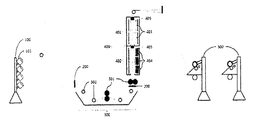
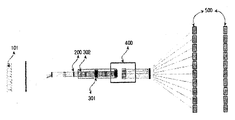
- the sand coating apparatus illustrated in FIG. 1 includes a krill unit 100, a body 200, an impregnation unit 300, a compression roller 301, an ultraviolet curing unit 400, and a winder device 500.
- the department transfers the fiber yarn to the winder device.
- Body 200 is a comb-like shape to prevent agglomeration of more than 20 strands of thread and each fiber yarn is transferred to the impregnation portion containing the coating liquid through the guide roll.
- the impregnation unit 300 has grooves at regular intervals to prevent tangling when the guide roll 302 is used when the fiber yarn is transferred, and may be replaced with the body 200.
- the impregnation conditions should be at least two times or at least one minute through the pressing roller 301 of a constant pressure, in order to offset the surface tension generated at the interface between the coating liquid and the fiber yarn when the fiber yarn is impregnated so that the coating liquid can penetrate into the fiber yarn. .
- the thin film coating layer is formed on the surface of the fiber yarn by the pressing roller before reaching the ultraviolet curing unit 400.
- the pressing roller is pressed to form a coating layer having a predetermined thickness on the surface of the fiber yarn. The possibility of weaving color-coated yarns can be estimated.
- Compression roller to form a coating layer of a constant thickness uses a rubber or silicone material and steel roll of a flexible material capable of pressure control.
- Pressure control of the pressing roller is a device for controlling the thickness of the coating layer on the surface of the fiber yarn.
- a thin film or some uncoated portion may be generated, which may lower the uniformity of color. Since the coating layer is thick, the uniformity of the coating layer may be reduced after curing by the flow of the liquid coating solution, and weaving using the coated yarn may be impossible.
- the coated fiber yarn is irradiated with ultraviolet rays having a wavelength range of 260 to 395 nm while proceeding in a vertical direction from the surface to cure the ultraviolet curable coating liquid.
- the ultraviolet irradiation is a metal material of at least one of Fe, Ga, and Mg. It is preferable to use the UV lamp curing unit 401 and the ultraviolet LED curing unit 402 which can irradiate the longest wavelength (395 nm) ultraviolet rays, which is longer than the mercury lamp or the metal halide lamp.
- the coating layer can be cured within a few seconds to several minutes, thereby improving productivity.
- UV LED is easy to apply to heat-sensitive fiber material because it can be cured at room temperature (20 ⁇ 30 °C) when irradiated.
- Ultraviolet curing is radical polymerization, and the curing rate may be lowered due to the oxygen inhibiting action which is dissolved in the coating liquid or caused by oxygen present in the air in the curing process. Therefore, an apparatus for blocking a curing rate inhibiting element such as oxygen inhibiting action by flowing an inert gas 405 such as argon, nitrogen, or carbon dioxide into the ultraviolet curing part is essential for improving the curing rate.
- a curing rate inhibiting element such as oxygen inhibiting action by flowing an inert gas 405 such as argon, nitrogen, or carbon dioxide into the ultraviolet curing part is essential for improving the curing rate.
- Infrared drying process can be performed by installing an additional infrared drying unit before and after the UV irradiation process, which can dry the contained moisture or improve the degree of curing through moisture drying when water-soluble or water dispersion mixture is used.
- the purpose is to
- the liquid mixture before curing will have flowability in the vertical direction of the coating progress direction by gravity, so that a condensation of round shape will be generated along the thread. It is impossible to form a coating layer so that we can not weave the fabric for the intended use.
- the coated and cured fiber yarns are wound on the same number of winder devices as the fiber yarns to be injected, thereby completing a high-fastness dyed yarn product.
- the high-fastness thin film color coating technology of industrial flame retardant fibers in general textiles for clothes has an energy saving rate of about 90% compared to the conventional thermosetting sand coating method, and waste water without using a medium such as water. Not only does not generate a carbon dioxide emission by combustion, high degree of conversion (degree of conversion) to provide an eco-friendly manufacturing method that can be omitted in the washing process, it can also provide a high fastness dyeing method having excellent adhesion.
- FIG. 1 is a side view of a high fastness dyeing process of a fiber yarn to which the ultraviolet curing method of the present invention is applied,
- FIG. 2 is a plan view of a high fastness dyeing process of a fiber yarn to which the ultraviolet curing method of the present invention is applied.
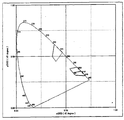
- Example 3 is a chromaticity coordinate (Chromaticity Coordinates) Red graph of the fiber yarn of Example 4 of the present invention.
- Example 1 the non-limiting example of the high-fastness dyeing method of the fiber yarn to which the ultraviolet curing method of this invention is applied is given.
- Example 2 the non-limiting example of the dyeing method of the industrial flame resistant fiber yarn of this invention is given.
- phthalocyanine-based organic pigment 50% by weight of methyl methacrylate monomer, 15% by weight of ethoxy ethoxy ethylacrylate monomer, hexanediol diacrylate 8% by weight of monomer, 15% by weight of tetrahydrofurfuryl acrylate monomer, 10% by weight of polyvivyl butyral oligomer, 0.5% by weight of benzophenone as photoinitiator, 0.3% by weight of Irgacure 1173, After preparing a UV-curable coating solution mixed with 0.2% by weight of Darocure TPO, the ultra-high molecular weight polyethylene fiber yarn ( ⁇ ), which is flame retardant fiber, was advanced to the impregnation portion containing the coating solution, and then coated with a predetermined amount of coating solution.
- ⁇ phthalocyanine-based organic pigment
- phthalocyanine-based organic pigment 50% by weight of methyl methacrylate monomer, 5% by weight of ethoxy ethoxy ethylacrylate monomer, hexanediol diacrylate 2% by weight of monomer, 5% by weight of tetrahydrofurfuryl acrylate monomer, 20% by weight of polyvivyl butyral oligomer, 5% by weight of benzophenone as photoinitiator, 3% by weight of Irgacure 1173, After preparing a UV-curable coating solution mixed with 2% by weight of Darocure TPO, the ultra-high molecular weight polyethylene fiber yarn, which is flame retardant fiber, was advanced to the impregnation portion containing the coating solution, and then coated with a predetermined amount of coating solution.
- Blue phthalocyanine-based organic pigment
- a UV curing coating solution containing 0.5% by weight of benzophenone as a photoinitiator, 0.3% by weight of Irgacure 1173, 0.2% by weight of Darocure TPO, and 1% by weight of Red, a highly visible fluorescent pigment, is mixed with clothing and industrial fibers.
- the modacryl (38%) / cotton (32%) / meta aramid (30%) fiber yarn to the impregnated part containing the coating solution apply a certain amount of coating liquid, and then apply constant pressure (1MPa) to the two pressing rollers.
- the solution was cured by photocuring by the 50m / min speed and finish rolled to form tufts in the rewinder (rewinder) unit.
- Table 4 shows the results of the high-visibility properties of the modacryl blend fiber after the coating process.
- the range of X and Y values for the color is defined in the evaluation method, and the measured X and Y values should be included in the range.
- krill portion 101 fiber yarn
- UV curing unit 401 UV lamp curing unit
- UV LED curing unit 403 metal halide lamp
- UV LED 405 inert gas
Landscapes
- Engineering & Computer Science (AREA)
- Textile Engineering (AREA)
- Chemical & Material Sciences (AREA)
- Chemical Kinetics & Catalysis (AREA)
- Treatments For Attaching Organic Compounds To Fibrous Goods (AREA)
- Coloring (AREA)
- Chemical Or Physical Treatment Of Fibers (AREA)
Abstract
본 발명은 의류용 일반 섬유에서 산업용 난염성 섬유에 이르는 실을 자외선 경화 코팅액에 함침하여 박막 코팅층을 형성시킨 후 자외선 경화 코팅액을 경화시키는 방법으로서 기존의 열경화 사코팅 방식 대비 약 90%의 에너지 절감율을 가지고, 물과 같은 매체를 사용하지 않고 폐수가 발생되지 않으며 연소에 의한 이산화탄소 무배출, 높은 전환도(degree of conversion)로 수세공정이 생략 가능한 친환경적인 제조방법을 제공할 뿐만 아니라, 우수한 접착력을 가지고 다양한 기능성 물질을 분산시켜 다양한 성능을 부여할 수 있는 자외선 경화방식을 적용한 섬유사의 고견뢰도 염색방법을 제공할 수 있다.
Description
본 발명은 기존의 물 또는 용제와 같은 매체를 이용한 습식염색 방법에서 매체를 사용하지 않는 색상부여 방법으로 일반 의류용 섬유에서 색상발현이 어려운 산업용 섬유에 이르기까지 소재와 무관하게 UV 경화 방식을 이용한 염색 방법에 관한 것으로서 에너지와 물 같은 자원 소비를 절감할 수 있는 친환경적인 염색 방법에 관한 것이다.
전 세계적으로 석탄 및 석유 등의 자원 고갈과 산업화에 따른 지구 온난화에 의한 물 부족, 사막화, 해수면 상승 등 환경변화에 대한 관심이 고조됨에 따라 대체 에너지 발굴, 연료 효율 향상, 물과 에너지 사용에 대한 절감을 필수적으로 국가 정책에 반영되고 있고 자연환경에 대한 위해요소를 줄이기 위해 노력하고 있다. 이러한 국내외 환경규제 강화정책에서도 전체 섬유산업 중 에너지 및 물 소비의 약 70%를 염색 및 가공의 습식공정에서 소비하면서 점차 섬유산업의 탄소배출권 및 물 부족에 대한 환경 부담이 증가될 실정이다.
섬유의 색상발현을 위한 공정에는 첫째로 섬유 제조시 원료내에 안료를 첨가하는 원착공정, 둘째로 실 또는 직물 형태에서 염료에 의한 고온 염색공정, 셋째로 안료 또는 염료가 함유된 조제의 코팅공정이 있다. 원착에 의한 색상부여 방법은 천연 섬유를 제외한 재생, 반합성, 합성섬유와 같은 용해 또는 용융에 의해 고체인 섬유가 액체와 같은 상태로 변형시킨 후 색소 배합으로 적용될 수 있는 방법이다. 하지만 천연섬유 또는 내열성 및 고성능 섬유에서는 상태변화가 매우 어려우며 배합되는 색소가 상태변화를 위한 가혹한 조건으로 인해 변색될 우려가 있고 색상 수가 제한되므로 특수한 경우에만 적용되고 있으며 높은 단가로 인해 사용이 제한적이다.
그리고 고온에 의한 염색공정은 고분자로 이루어진 섬유의 비결정영역에 염료가 침투하여 반응 또는 흡착시켜 색상을 발현시켜며 가장 일반적인 공정이다. 이때 염료 이외에 균염제, 첨가제, 산 또는 알칼리 조절제 등의 화학약품이 첨가되며 염료가 침투하기 용이하게 높은 열이 수반되어야 색상을 발현할 수 있다. 또한 섬유소재가 하나의 성분으로 되어 있다면 매우 용이한 방법이지만 다른 성분의 섬유소재가 혼방된 실 또는 원단의 경우 섬유소재에 따라 염료선정, 염색공정 및 후가공의 가공조건이 달라지기 때문에 물 사용이 많아지고 가공 후 폐수처리에 대한 부담이 커진다.
또한 색상 코팅 공정은 기존에 고온의 열경화에 의한 코팅으로 낮은 단가, 다양한 색상 구현에 장점이 있지만 섬유와 코팅액의 접착력 불량으로 마찰견뢰도가 매우 미흡하고 수지의 열 용융 또는 저점도 수지의 함침과 열경화 방식에 의한 높은 열을 사용하고 공정상 많은 문제점 발생하기 때문에 생산속도가 느려 양산화 가능성이 낮다.
의류용 섬유로 사용되는 일반 섬유 중 천연에서 얻어지는 면, 양모, 실크, 마 등이 천연섬유이고 천연섬유인 면에서 화학변화를 통해 재생된 레이온 섬유가 재생섬유로 분류되고 합성섬유로는 폴리에틸렌테레프탈레이트(PET), 폴리트리에틸렌테레프탈레이트(PTT), 양이온 염료 가염 폴리에틸렌테레프탈레이트(Cation dyeable PET, CDP), 나일론(Nylon), 아크릴(Acrylic), 스판덱스(Spandex) 섬유 등이 있다. 셀룰로스계의 천연섬유인 면, 마, 레이온 등은 반응성 염료로, 양모, 실크, 나일론 섬유는 산성 염료로, 아크릴과 모다아크릴 섬유는 양이온 염료로, PET 섬유는 분산염료로 고온 염색방법으로 각각의 염색조건으로 색상발현을 시킨다.
산업용으로 사용되는 섬유는 물성, 내열성 또는 기타 기능성을 향상시킨 섬유로서 기존에 상용화된 염료 및 기타 첨가제, 열수에 의한 염색공정으로는 색상발현하기 어려운 섬유이기에 난염성 섬유라고 일컫는다. 이는 섬유 고분자가 강직한 고분자쇄로 구성되어 있거나 염료와 반응할 수 없는 화학구조로 되어 있어서 염료의 침투 및 내구성이 부족하기 때문이다. 이러한 섬유로는 폴리에틸렌(Polyethylene, PE), 폴리프로필렌(Polypropylene, PP) 섬유와 고성능 산업용 섬유로서 유리섬유, 초고분자량 폴리에틸렌(Ultra High Molecular Weigh Polyethylene, UHMWPE), 아라미드 섬유, 탄소섬유, 폴리이미드(Polyimide, PI), 폴리벤즈옥사졸(Polybenzoxazole, PBO), 폴리벤즈이미다졸(Polybenzimidazole, PBI) 등의 고강도, 고내열성 섬유에 속하고 위와 같은 문제로 의류용 보다 산업용에 많이 사용된다.
유리섬유의 경우 성분구성에 따라 목표로 하는 제품의 물성이 좌우되는데, 색상발현을 위한 원착 공정에서 주성분인 실리카 내부에 염료 또는 안료가 혼합되면 제품 물성변화가 예측 불가능하기 때문에 색상 별현이 어렵다. PE, PP 섬유는 폴리올레핀 섬유 종류로서 염료와 반응할 수 있는 염착기가 존재하지 않아 색상 발현이 어렵고, 그밖에 UHMWPE, 아라미드, PBO, PBI 등의 고성능 섬유의 경우 고분자 구조 및 비결정 영역이 최소화 되어 있기 때문에 염료의 침투가 힘들어 색상 발현이 어렵다. 또한 탄소섬유는 탄화공정을 통해 구조적으로 탄소로만 구성되어 있어 섬유 자체가 농색의 검정이기 때문에 색상발현이 어렵다.
최근 난염성 섬유 중 UHMWPE의 경우에는 기존에 상용화된 염료로는 색상발현이 어려워 신규 염료를 개발된 사례가 있다. 기존 상용화된 분산염료의 색소모체에 섬유 고분자와 유사한 알킬기 치환을 통해 초소수성 염료를 합성하고 염색공정으로 색상발현을 가능하게 하였다. 하지만 섬유 자체의 낮은 내열성으로 높은 온도의 열수를 사용하는 염색공정에서 섬유 자체의 물성변화를 초래할 수 있고 염료의 양산 및 상용화가 어려운 실정이며 다른 난염성 섬유에는 적용되지 못해 용도전개가 어렵다. 그러므로 기존의 색상발현 공정인 원착 공정 또는 염색 공정으로는 착염이 어려운 난염성 섬유에 대한 새로운 색상발현 공정이 필요한 실정이고 섬유의 고유 물성변화가 적고 상용화가 용이하며 저렴한 가격으로 색상발현을 이루어야 할 것이다.
또한 국내뿐만 아니라 전 세계적으로 산업 및 생활 환경에 대한 소비자들의 안전 의식이 고조됨에 따라 주, 야간시 눈에 잘 보일 수 있는 섬유제품의 고가시성 색상부여에 관심이 모아지고 있고 제품 개발에 박차를 가하고 있다. 고가시성의 섬유제품 시장은 모다크릴, PET, 나일론 등과 같은 의류용 섬유 뿐만 아니라 UHMWPE, 아라미드 등과 같은 산업용 섬유에도 적용하고자 형광염료를 이용한 고가시성 색상부여 공정을 개발하고 있지만 형광염료는 일광에 의한 변색 및 고가시성 저하, 색상 수 제한 등의 문제점으로 인해 사용이 제한되고 있다. 사용 예로서 유럽에서의 작업복 시장의 경우 고가시성을 나타낼 수 있는 Yellow, Red, Orange 색상에 대한 성능 범위를 제시하고 있음에도 불구하고 염료를 이용한 고온염색법으로는 고가시성을 나타낼 수 없다.
최근 섬유제품의 소비자는 여가생활, 야외활동 및 안전의식이 증가하고 있어 고가시성, 기능성 또는 고성능 섬유소재를 요구하고 있기 때문에 의류용 일반 섬유 단독으로 사용되지 않고 2종 이상의 의류용 섬유소재를 사용하거나 의류용 섬유소재와 산업용 섬유소재의 혼방제품이 대부분이다. 이러한 경우 염색공정이 복잡하고 물 사용 및 폐수가 증가하며 산업용 섬유소재의 사용이 제한적일 수밖에 없다. 따라서 소재 종류에 상관없이 요구하는 색상을 발현하기 위해서는 코팅공정이 가장 적합할 수 있다.
색상발현 공정 중 열경화 코팅공정은 앞서 언급한 바와 같이 마찰에 의한 코팅층의 내구성과 생산성의 문제점, 열 민감성 소재의 제한을 극복하기 위해서는 자외선 경화를 이용하여 섬유에 색상코팅을 적용할 수 있다. 자외선 경화는 액상의 수지가 완전 경화까지 수초에서 수분 이내에 이룰 수 있기 때문에 생산성을 향상시킬 수 있고 매끄러운 표면형성으로 마찰에 의한 견뢰도가 증진될 수 있으며 열 민감성 섬유소재에 적용될 수 있는 방법이다.
[선행기술문헌]
[특허문헌]
(특허문헌 1) 대한민국공개특허제10-2011-0101755호(2011년09월16일 공개)
(특허문헌 2) 대한민국특허등록제10-1383087호(2014년04월08일 공고)
그러므로 본 발명에서는 의료용 일반섬유에서 산업용 난염성 섬유의 고견뢰도 박막 컬러 코팅 기술로서 기존의 열경화 사코팅 방식 대비 약 90%의 에너지 절감율을 가지고, 물과 같은 매체를 사용하지 않고 폐수가 발생되지 않으며 연소에 의한 이산화탄소 무배출, 높은 전환도(degree of conversion)로 수세공정이 생략가능한 친환경적인 제조방법을 제공할 뿐만 아니라, 우수한 접착력을 가지는 고견뢰도 염색 방법을 제공하는 것을 기술적 과제로 한다.
그러므로 본 발명에 의하면, 색소 0.4~1중량%, 자외선 경화형 모노머 90~98.5 중량%, 자외선 경화형 올리고머 1~8중량% 및 광개시제 0.1~1중량%를 혼합한 자외선 경화 코팅액을 준비한 후,
섬유사를 상기 자외선 경화 코팅액에 함침한 후,
일정한 압력의 압착롤러를 2회 이상 통과시켜 상기 섬유사 표면에 박막 코팅층을 형성시킨 후,
상기 코팅된 섬유사를 지표로부터 수직방향으로 진행시키면서 비활성 가스 분위기에서 파장범위 260~395nm인 자외선 램프와 LED에 조사하여 상기 자외선 경화 코팅액을 경화시키는 것을 특징으로 하는 자외선 경화방식을 적용한 섬유사의 고견뢰도 염색 방법이 제공된다.
이하 본 발명을 보다 상세히 설명하기로 한다.
본 발명의 섬유사의 염색 방법은 의류 및 산업용 섬유소재로 이루어진 실을 자외선 경화 코팅액에 함침하여 박막 코팅층을 형성시킨 후 자외선 경화 코팅액을 경화시키는 방법으로서 색상발현을 위한 안료와 자외선 경화형 수지를 적당한 농도로 배합한 후, 자외선 광을 조사하여 상기 배합액을 경화하여 색상이 발현된 섬유사를 제조하는 방법에 관한 것이다.
본 발명에서 박막 컬러코팅의 대상이 되는 섬유소재는 의류용으로서 면, 양모, 실크, 마, 레이온(Rayon), 아세테이트, 폴리에틸렌테레프탈레이트(PET), 폴리트리에틸렌테레프탈레이트(PTT), 양이온 염료 가염 폴리에틸렌테레프탈레이트(Cation dyeable PET, CDP), 나일론(Nylon), 아크릴(Acrylic), 스판덱스(Spandex)섬유 중 어느 하나이상과 산업용으로서 유리섬유사, 폴리에틸렌(Polyethylene, PE)섬유사, 폴리프로필렌(Polypropylene, PP)섬유사, 초고분자량 폴리에틸렌(Ultra High Molecular Weigh Polyethylene, UHMWPE)섬유사, 아라미드 섬유사, 탄소섬유사, 폴리이미드(Polyimide, PI)섬유사, 폴리벤즈옥사졸(Polybenzoxazole, PBO)섬유사, 폴리벤즈이미다졸(Polybenzimidazole, PBI)섬유사, 또는 이 중 2종 이상이 혼합된 섬유사 중 선택되는 어느 하나인것으로서 열수 또는 기타 매체를 사용하지 않고 색상발현하기 위한 섬유이다.
본 발명에서 상기 섬유사에 코팅하기 위한 자외선 경화 코팅액은 색소 0.4~1중량%, 자외선 경화형 모노머 90~98.5 중량%, 자외선 경화형 올리고머 1~8중량% 및 광개시제 0.1~1중량%를 혼합한 자외선 경화 코팅을 사용한다.
자외선 경화형 모노머 90중량%미만에서는 코팅액의 접착력 저하로 견뢰도에 문제점이 발생할 수 있고, 98.5 중량%를 초과하는 경우에는 색소 또는 올리고머 함량이 감소되어 색상발현 및 물성에 문제점이 발생할 수 있다. 자외선 경화형 올리고머 1중량%미만에서는 낮은 점도로 인한 코팅층의 색소양 감소로 색상 발현이 어려울 수 있고 딱딱한 촉감 등의 문제점이 발생할 수 있고, 8중량%를 초과하는 경우에는 점도 증가로 박막의 코팅층을 형성할 수 없어 제직성이 감소하는 문제점이 발생할 수 있다.
상기 자외선 경화 코팅액 중 색소는 자외선에 대한 변색 내구성을 가지는 무기 또는 유기안료, 염료, 잉크 등을 포함하는 색소들을 사용하는 것이 바람직한데, 아조계, 나프톨계, 프탈로시아닌계 중 어느 하나를 사용할 수 있다.
또한, 상기 색소는 자외선에 대한 변색 내구성을 가지는 형광안료, 형광염료, 형광잉크 중 선택되는 어느 하나 이상의 고가시성(High Visible) 색소인 것을 사용하여 가시성을 향상시킬 수 있어 바람직하다.
일반적으로 자외선 경화 코팅액에 사용되는 수지의 경우 대부분 아크릴레이트 계열의 올리고머, 반응성 희석제인 모노머로 조성되어 있는데, 선택되는 섬유소재의 표면특성에 따라 다음과 같이 모노머와 올리고머를 달리할 수 있다.
본 발명에서 난염성섬유인 유리섬유사, 폴리에틸렌(Polyethylene, PE)섬유사, 폴리프로필렌(Polypropylene, PP)섬유사, 초고분자량 폴리에틸렌(Ultra High Molecular Weigh Polyethylene, UHMWPE)섬유사, 아라미드 섬유사, 탄소섬유사, 폴리이미드(Polyimide, PI)섬유사, 폴리벤즈옥사졸(Polybenzoxazole, PBO)섬유사, 폴리벤즈이미다졸(Polybenzimidazole, PBI)섬유사 중 선택되는 어느하나 이상을 처리하는 경우에 사용되는 자외선 경화 코팅액은 색소 0.9~10중량%, 자외선 경화형 모노머 30~89 중량%, 자외선 경화형 올리고머 10~40중량% 및 광개시제 0.1~20중량%를 혼합한 자외선 경화 코팅액을 사용하는 것이 바람직한데, 자외선 경화형 모노머 30중량%미만에서는 코팅액의 접착력 저하로 견뢰도에 문제점이 발생할 수 있고, 89중량%를 초과하는 경우에는 색소 또는 올리고머 함량이 감소되어 색상발현 및 물성에 문제점이 발생할 수 있다. 자외선 경화형 올리고머 10중량%미만에서는 낮은 점도로 인한 코팅층의 색소양 감소로 색상 발현이 어려울 수 있고 딱딱한 촉감 등의 문제점이 발생할 수 있고, 40중량%를 초과하는경우에는 점도 증가로 박막의 코팅층을 형성할 수 없어 제직성이 감소하는 문제점이 발생할 수 있다.
상기 자외선 경화 코팅액 중 자외선 경화형 모노머는 메틸메타크릴레이트(methyl methacrylate), 이소보닐아크릴레이트(Isobonyl acrylate), 테트라하이드로퍼퓨릴 아크릴레이트(Tetrahydrofurfuryl acrylate), 2-하이드록시에틸아크릴레이트(2-hydroxyethyl acrylate), 2-하이드록시에틸메타크릴레이트(2-hydroxyethyl methacrylate), 2-하이드록시프로필아크릴레이트(2-hydroxypropyl acrylate), n-부틸 아크릴레이트(n-butyl acrylate), 헥산디올디아크릴레이트(Hexanediol diacrylate), 에톡시에톡시에틸아크릴레이트(Etoxy Etoxy ethylacrylate), 옥타데실 아크릴레이트(Octadecyl acrylate) 중 어느 하나 이상인 것을 사용하는 것이 바람직하다.
상기 자외선 경화 코팅액 중 자외선 경화형 올리고머는 우레탄계 아크릴레이트, 에폭시계 아크릴레이트, 불포화 폴리에스터계 아크릴레이트, 비닐계, 폴리비닐부티랄(Polyvinyl butyral), 폴리메틸메타크릴레이트(Polymethylmethacrylate) 중 어느 하나 이상의 올리고머를 사용할 수 있다. 이렇게 다양한 모노머 및 올리고머가 사용되는 이유는 코팅층과 섬유와의 접착력이 우수한 배합액을 제조하기 위해서이고 섬유의 표면특성과 유사한 물성을 가지는 코팅액을 배합하기 위해 선택해야 한다.
상기 자외선 경화 코팅액 중 광개시제는 수소치환형인 벤조페논, Irgacure 184(1-Hydroxy-cyclohexyl-phenyl ketone), Irgacure 1173(2-Hydroxy-2-methyl-1-phenyl-1-propanone), Irgacure 907(2-methyl-1-[4-(methylthio)phenyl]-2-(4-mor-pholinyl)-1-propanone), Darocure TPO(Diphenyl(2,4,6-trimethylbenzoyl)phos-phine oxide) 중 어느 하나 이상인 것을 사용하여 자외선 조사파장과 일치하도록 하는 것이 바람직하다.
이렇게 준비된 상기 자외선 경화 코팅액을 상기 20가닥 이상의 섬유사에 코팅하기 위해서는 일정한 무게로 실이 감겨진 20개 이상의 콘을 준비된 크릴에서 시작하여 압착 롤러로 압력을 가하여 섬유사 내부까지 침투시키고, 자외선 경화 후 컬러 코팅막이 균일하고 박막이어야 하고 같은 수의 와인더 장치에 되감는다. 이 단계는 도 1의 측면도와 도 2의 평면도를 가지는 코팅장치에서 행하는 것이 바람직하다.
도 1에서 도시된 사코팅 장치는 크릴부(100), 바디(200), 함침부(300), 압착롤러(301), 자외선 경화부(400), 와인더 장치(500)를 구비하는 것으로서 크릴부에서 와인더 장치로 섬유사를 이송한다. 이때 크릴부에 꽂은 콘에서 이송되는 섬유사(101)가 이송에 의한 장력으로 절사가 일어날 수 있으므로 무장력으로 섬유사가 이송될 수 있어야 한다. 바디(200)는 빗과 같은 모양으로서 20가닥 이상의 실이 뭉쳐짐을 방지하기 위함이며 각각의 섬유사가 가이드 롤을 통해 코팅액이 담겨진 함침부로 이송된다. 함침부(300)는 섬유사가 이송될 때 가이드 롤(302)을 사용할 경우 엉킴 방지를 위해 일정한 간격으로 홈이 있어야 하고 바디(200)로 대체 가능하다. 일정한 압력의 압착롤러(301)를 통해 2회 이상 또는 1분 이상의 함침 조건이어야 하는데, 이는 섬유사가 함침시 코팅액과 섬유사 계면에 발생되는 표면장력을 상쇄시켜 코팅액이 섬유사 내부까지 침투시키기 위함이다. 그리고 자외선 경화부(400)에 도달하기 전 압착롤러에 의해 상기 섬유사 표면에 박막 코팅층을 형성시키는데, 압착롤러는 섬유 실 표면에 배합액이 일정한 두께의 코팅층이 형성하도록 압착하는 것으로서 코팅층 두께에 따라 색상코팅된 실의 제직가능성을 가늠할 수 있다. 일정한 두께의 코팅층을 형성하기 위한 압착롤러는 압력조절이 가능한 유연한 재질의 고무 또는 실리콘 재질 및 스틸롤을 사용한다. 압착롤러의 압력조절은 섬유 실 표면의 코팅층 두께를 조절하기 위한 장치로서 높은 압력의 압착시 너무 얇은 박막 또는 일부 미코팅 부분이 발생되어 색상의 균일성이 저하될 수 있고, 낮은 압력의 압착시에는 코팅층이 두껍기 때문에 액상의 코팅액의 흐름에 의해 경화 후 코팅층의 균일도가 저하되어 코팅사를 이용한 제직이 불가능할 수 있다.
상기 코팅된 섬유사를 지표로부터 수직방향으로 진행시키면서 파장범위 260~395nm인 자외선을 조사하여 상기 자외선 경화 코팅액을 경화시키는 데, 상기 자외선 조사는 수은 램프에 Fe, Ga, Mg 중 어느 하나 이상의 금속물질이 첨가된 자외선 램프 경화부(401)와 가장 장파장(395nm)의 자외선을 조사시킬 수 있는 자외선 LED 경화부(402)를 사용하는 것이 바람직한데, 이는 수은 램프 또는 메탈 할라이드 램프보다 장파장의 자외선이 조사되어 코팅층의 경화를 수초에서 수분이내에 이룰 수 있어 생산성을 향상시킬 수 있다. 자외선 LED는 조사하였을 경우 상온(20~30℃)에서 경화할 수 있기 때문에 열에 민감한 섬유소재에 적용하기 용이하다.
자외선 경화는 라디칼 중합으로서 코팅액 내에 용해되었거나 경화공정에서 공기 중에 존재하는 산소에 의해 정지반응이 일어나는 산소금지작용으로 인해 경화속도가 저하될 수 있다. 따라서 경화속도를 향상시키기 위한 방법으로 자외선 경화부 내에 아르곤, 질소 또는 이산화탄소 등의 비활성 가스(405)를 흘려보내어 산소금지작용과 같은 경화속도 저해요소를 차단하기 위한 장치가 필수적이다.
자외선 조사공정의 전후에 적외선(Infrared) 건조부를 추가로 설치하여 적외선 건조공정을 행할 수 있는데, 이는 함유되어 있는 수분을 건조시키거나 수용성 또는 수분산 배합액을 사용하는 경우 수분 건조를 통한 경화도를 향상시키는데 목적이 있다.
본 발명에서 20가닥 이상의 섬유사를 이송시키면서 코팅액 함침에서 자외선 조사공정까지 지표로부터 수직방향으로 진행시키는 공정으로 행하는 것이 바람직한데, 이는 함침 및 압착롤러 진행 후 코팅된 배합액이 일정한 두께의 박막을 유지할 수 있도록 하기 위해서다. 만약 지표와 수평방향 또는 일정한 각도를 가지는 방향으로 설계될 경우 경화 전 액상의 배합액이 중력에 의해 코팅 진행방향의 수직방향으로 흐름성을 가지므로 실을 따라 둥근 모양의 맺힘현상이 발생되어 일정한 박막코팅층을 형성할 수 없어 사용용도에 맞는 직물로 제직할 수 없게 된다. 이렇게 코팅 및 경화된 섬유사는 투입되는 섬유사와 동일한 개수의 와인더 장치에 감기어 고견뢰도 염색사 제품이 완성된다.
그러므로 본 발명에 의하면, 의류용 일반섬유에서 산업용 난염성 섬유의 고견뢰도 박막 컬러 코팅 기술로서 기존의 열경화 사코팅 방식 대비 약 90%의 에너지 절감율을 가지고, 물과 같은 매체를 사용하지 않고 폐수가 발생되지 않으며 연소에 의한 이산화탄소 무배출, 높은 전환도(degree of conversion)로 수세공정이 생략가능한 친환경적인 제조방법을 제공할 뿐만 아니라, 우수한 접착력을 가지는 고견뢰도 염색 방법을 제공할 수 있다.
도 1은 본 발명의 자외선 경화방식을 적용한 섬유사의 고견뢰도 염색 공정의 측면도이며,
도 2는 본 발명의 자외선 경화방식을 적용한 섬유사의 고견뢰도 염색 공정의 평면도이다.
도 3은 본 발명의 실시예 4의 섬유사의 색도좌표(Chromaticity Coordinates) Red 그래프이다.
다음의 실시예 1에서는 본 발명의 자외선 경화방식을 적용한 섬유사의 고견뢰도 염색 방법의 비한정적인 예시를 하고 있다.
[실시예 1]
프탈로시아닌계 유기안료(Blue) 1중량%, 메틸메타크릴레이트(Methyl methacrylate) 모노머 84중량%, 지방족 우레탄 아크릴레이트 올리고머 8중량%, 테트라하이드로퍼퓨릴 아크릴레이트(Tetrahydrofurfuryl acrylate) 모노머 12중량%, 히드록시에틸 아크릴레이트(2-Hydroxyethyl acrylate) 모노머 2중량%, 광개시제로서 벤조페논(Benzophenone) 0.5중량%, Irgacure 1173 0.3중량%, Darocure TPO 0.2중량%가 혼합된 자외선 경화 코팅액을 준비한 후 의류용 일반 섬유인 폴리에틸렌테레프탈레이트 섬유사(絲)를 상기 코팅액이 담긴 함침부로 진행시켜 일정량의 코팅액을 도포한 후 두 개의 압착롤러에 일정한 압력(1MPa)으로 압착하여 박막 코팅층을 형성시킨 후, 지표로부터 수직방향으로 비활성 가스인 질소 분위기하에서 파장범위 260~395nm인 자외선 램프와 LED를 조사하고 액상의 코팅액을 광경화를 통해 50m/min의 속도로 경화하고 리와인더(rewinder)부에서 타래 모양으로 감아서 마감하였다. 코팅작업이 완료된 의류용 일반 섬유인 폴리에틸렌테레프탈레이트(PET)의 염색의 물성시험결과는 표 1과 같다.

다음의 실시예 2에서는 본 발명의 산업용 난염성 섬유사의 염색 방법의 비한정적인 예시를 하고 있다.
[실시예 2]
프탈로시아닌계 유기안료(Blue) 1중량%, 메틸메타크릴레이트(Methyl methacrylate) 모노머 50중량%, 에톡시에톡시에틸아크릴레이트(Etoxy Etoxy ethylacrylate) 모노머 15중량%, 헥산디올디아크릴레이트(Hexanediol diacrylate) 모노머 8중량%, 테트라하이드로퍼퓨릴 아크릴레이트(Tetrahydrofurfuryl acrylate) 모노머 15중량%, 폴리비닐부티랄(Polyvivyl butyral) 올리고머 10중량%, 광개시제로서 벤조페논(Benzophenone) 0.5중량%, Irgacure 1173 0.3중량%, Darocure TPO 0.2중량%가 혼합된 자외선 경화 코팅액을 준비한 후 난염성 섬유인 초고분자량 폴리에틸렌 섬유사(絲)를 상기 코팅액이 담긴 함침부로 진행시켜 일정량의 코팅액을 도포한 후 두 개의 압착롤러에 일정한 압력(1MPa)으로 압착하여 박막 코팅층을 형성시킨 후, 지표로부터 수직방향으로 비활성 가스인 질소 분위기하에서 파장범위 260~395nm인 자외선 램프와 LED를 조사하고 액상의 코팅액을 광경화를 통해 50m/min의 속도로 경화하고 리와인더(rewinder)부에서 타래 모양으로 감아서 마감하였다. 코팅작업이 완료된 난염성 섬유인 초고분자량 폴리에틸렌의 염색 제품에 대한 물성시험결과는 표 2와 같다.

[실시예 3]
프탈로시아닌계 유기안료(Blue) 8중량%, 메틸메타크릴레이트(Methyl methacrylate) 모노머 50중량%, 에톡시에톡시에틸아크릴레이트(Etoxy Etoxy ethylacrylate) 모노머 5중량%, 헥산디올디아크릴레이트(Hexanediol diacrylate) 모노머 2중량%, 테트라하이드로퍼퓨릴 아크릴레이트(Tetrahydrofurfuryl acrylate) 모노머 5중량%, 폴리비닐부티랄(Polyvivyl butyral) 올리고머 20중량%, 광개시제로서 벤조페논(Benzophenone) 5중량%, Irgacure 1173 3중량%, Darocure TPO 2중량%가 혼합된 자외선 경화 코팅액을 준비한 후 난염성 섬유인 초고분자량 폴리에틸렌 섬유사(絲)를 상기 코팅액이 담긴 함침부로 진행시켜 일정량의 코팅액을 도포한 후 두 개의 압착롤러에 일정한 압력(1MPa)으로 압착하여 박막 코팅층을 형성시킨 후, 지표로부터 수직방향으로 파장범위 260~395nm인 자외선을 조사하여 액상의 코팅액을 광경화를 통해 경화하고 리와인더(rewinder)부에서 타래 모양으로 감아서 마감하였다. 코팅작업이 완료된 난염성 섬유인 초고분자량 폴리에틸렌의 박막 컬러 코팅의 물성시험결과는 표 3과 같다.

[실시예 4]
메틸메타크릴레이트(Methyl methacrylate) 모노머 70중량%, 지방족 우레탄 아크릴레이트 올리고머 8중량%, 테트라하이드로퍼퓨릴 아크릴레이트(Tetrahydrofurfuryl acrylate) 모노머 12중량%, 히드록시에틸 아크릴레이트(2-Hydroxyethyl acrylate) 모노머 8중량%, 광개시제로서 벤조페논(Benzophenone) 0.5중량%, Irgacure 1173 0.3중량%, Darocure TPO 0.2중량% 및 고가시성 형광안료인 Red 1중량%가 혼합된 자외선 경화 코팅액을 준비한 후 의류용과 산업용 섬유가 혼방된 모다크릴(38%)/면(32%)/메타 아라미드(30%) 섬유사(絲)를 상기 코팅액이 담긴 함침부로 진행시켜 일정량의 코팅액을 도포한 후 두 개의 압착롤러에 일정한 압력(1MPa)으로 압착하여 박막 코팅층을 형성시킨 후, 지표로부터 수직방향으로 비활성 가스인 질소 분위기하에서 파장범위 260~395nm인 자외선 램프와 LED를 조사하고 액상의 코팅액을 광경화를 통해 50m/min의 속도로 경화하고 리와인더(rewinder)부에서 타래 모양으로 감아서 마감하였다. 코팅작업이 완료된 모다크릴 혼방섬유의 고가시성 물성시험결과는 표 4와 같다. 고가시성 성능은 색상에 대한 X, Y값 범위가 평가 방법에 규격으로 정해져 있으며 측정된 X, Y값이 그 범위 안에 포함되어야 하며 이를 그래프로 나타내었다.

[부호의 설명]
100 : 크릴부 101 : 섬유사
200 : 바디 300 : 함침부
301 : 압착롤러 302 : 가이드롤
400 : 자외선 경화부 401 : 자외선 램프 경화부
402 : 자외선 LED 경화부 403 : 메탈 할라이드 램프
404 : 자외선 LED 405 : 비활성 가스
500 : 와인더 장치
Claims (12)
- 색소, 자외선 경화형 모노머, 자외선 경화형 올리고머 및 광개시제를 혼합한 자외선 경화 코팅액을 준비한 후,섬유사를 상기 자외선 경화 코팅액에 함침한 후,일정한 압력의 압착롤러를 2회 이상 통과시켜 상기 섬유사 표면에 박막 코팅층을 형성시킨 후,상기 코팅된 섬유사를 지표로부터 수직방향으로 진행시키면서 비활성 가스 분위기에서 파장범위 260~395nm인 자외선 램프와 LED에 조사하여 상기 자외선 경화 코팅액을 경화시키는 것을 특징으로 하는 자외선 경화방식을 적용한 섬유사의 고견뢰도 염색방법.
- 제 1항에 있어서,상기 자외선 경화 코팅액은 색소 0.4~1중량%, 자외선 경화형 모노머 90~98.5 중량%, 자외선 경화형 올리고머 1~8중량% 및 광개시제 0.1~1중량%를 혼합한 자외선 경화 코팅액이고,상기 섬유사는 의류용으로서 면, 양모, 실크, 마, 레이온(Rayon), 아세테이트, 폴리에틸렌테레프탈레이트(PET), 폴리트리에틸렌테레프탈레이트(PTT), 양이온 염료 가염 폴리에틸렌테레프탈레이트(Cation dyeable PET, CDP), 나일론(Nylon), 아크릴(Acrylic), 스판덱스(Spandex)섬유 중 어느 하나이상과 산업용으로서 유리섬유사, 폴리에틸렌(Polyethylene, PE)섬유사, 폴리프로필렌(Polypropylene, PP)섬유사, 초고분자량 폴리에틸렌(Ultra High Molecular Weigh Polyethylene, UHMWPE)섬유사, 아라미드 섬유사, 탄소섬유사, 폴리이미드(Polyimide, PI)섬유사, 폴리벤즈옥사졸(Polybenzoxazole, PBO)섬유사, 폴리벤즈이미다졸(Polybenzimidazole, PBI)섬유사, 또는 이 중 2종 이상이 혼합된 섬유사 중 선택되는 어느 하나인 것을 특징으로 하는 자외선 경화방식을 적용한 섬유사의 고견뢰도 염색방법.
- 제 1항에 있어서,상기 자외선 경화 코팅액은 색소 0.9~10중량%, 자외선 경화형 모노머 30~89 중량%, 자외선 경화형 올리고머 10~40중량% 및 광개시제 0.1~20중량%를 혼합한 자외선 경화 코팅액이고,상기 섬유사는 유리섬유사, 폴리에틸렌(Polyethylene, PE)섬유사, 폴리프로필렌(Polypropylene, PP)섬유사, 초고분자량 폴리에틸렌(Ultra High Molecular Weigh Polyethylene, UHMWPE)섬유사, 아라미드 섬유사, 탄소섬유사, 폴리이미드(Polyimide, PI)섬유사, 폴리벤즈옥사졸(Polybenzoxazole, PBO)섬유사, 폴리벤즈이미다졸(Polybenzimidazole, PBI)섬유사 중 선택되는 어느하나 이상인 것을 특징으로 하는 자외선 경화방식을 적용한 섬유사의 고견뢰도 염색방법.
- 제 2항 또는 제 3항에 있어서,상기 자외선 경화 코팅액 중 색소는 자외선에 대한 변색 내구성을 가지는 무기안료, 유기안료, 염료, 잉크 중 선택되는 어느 하나 이상인 것을 특징으로 하는 자외선 경화방식을 적용한 섬유사의 고견뢰도 염색방법.
- 제 2항 또는 제 3항에 있어서,상기 색소는 자외선에 대한 변색 내구성을 가지는 형광안료, 형광염료, 형광잉크 중 선택되는 어느 하나 이상의 고가시성(High Visible) 색소인 것을 특징으로 하는 자외선 경화방식을 적용한 섬유사의 고가시성 염색방법.
- 제 2항 또는 제 3항에 있어서,상기 자외선 경화 코팅액 중 자외선 경화형 모노머는 메틸메타크릴레이트(methyl methacrylate), 이소보닐아크릴레이트(Isobonyl acrylate), 테트라하이드로퍼퓨릴 아크릴레이트(Tetrahydrofurfuryl acrylate), 2-하이드록시에틸아크릴레이트(2-hydroxyethyl acrylate), 2-하이드록시에틸메타크릴레이트(2-hydroxyethyl methacrylate), 2-하이드록시프로필아크릴레이트(2-hydroxypropyl acrylate), n-부틸 아크릴레이트(n-butyl acrylate), 헥산디올디아크릴레이트(Hexanediol diacrylate), 에톡시에톡시에틸아크릴레이트(Etoxy Etoxy ethylacrylate), 옥타데실 아크릴레이트(Octadecyl acrylate) 중 어느 하나 이상인 것을 특징으로 하는 자외선 경화방식을 적용한 섬유사의 고견뢰도 염색방법.
- 제 2항 또는 제 3항에 있어서,상기 자외선 경화 코팅액 중 자외선 경화형 올리고머는 우레탄계 아크릴레이트, 에폭시계 아크릴레이트, 불포화 폴리에스터계 아크릴레이트, 비닐계 아크릴레이트, 폴리비닐부티랄(Polyvinyl butyral), 폴리메틸메타크릴레이트(Polymethylmethacrylate) 중 어느 하나 이상의 올리고머인 것을 특징으로 하는 자외선 경화방식을 적용한 섬유사의 고견뢰도 염색방법.
- 제 2항 또는 제 3항에 있어서,상기 자외선 경화 코팅액 중 광개시제는 벤조페논, Irgacure 184(1-Hydroxy-cyclohexyl-phenyl ketone), Irgacure 1173(2-Hydroxy-2-methyl-1-phenyl-1-propanone), Irgacure 907(2-methyl-1-[4-(methylthio)phenyl]-2-(4-mor-pholinyl)-1-propanone), Darocure TPO(Diphenyl(2,4,6-trimethylbenzoyl)phosphine oxide) 중 어느 하나 이상인 것을 특징으로 하는 자외선 경화방식을 적용한 섬유사의 고견뢰도 염색방법.
- 제 1항에 있어서,상기 자외선 조사는 수은 램프에 Fe, Ga, Mg 중 어느 하나 이상의 금속물질이 첨가된 메탈할라이드 램프와 자외선 LED에 의한 조사인 것을 특징으로 하는 자외선 경화방식을 적용한 섬유사의 고견뢰도 염색방법.
- 제 1항에 있어서,상기 자외선 조사 공정에 산소금지작용을 방지하여 경화속도를 향상시킬 수 있는 비활성 가스인 아르곤, 질소, 이산화탄소 중 어느 하나 이상인 것을 특징으로 하는 자외선 경화방식을 적용한 섬유사의 고견뢰도 염색방법.
- 제 1항에 있어서,상기 자외선 조사 공정의 전후에 적외선 건조공정을 추가로 하는 것을 특징으로 하는 자외선 경화방식을 적용한 섬유사의 고견뢰도 염색방법.
- 제 1항에 있어서,상기 섬유사의 코팅액 함침부터 자외선 조사공정까지 지표로부터 수직방향으로 진행시키는 공정을 특징으로 하는 자외선 경화방식을 적용한 섬유사의 고견뢰도 염색방법.
Priority Applications (2)
| Application Number | Priority Date | Filing Date | Title |
|---|---|---|---|
| EP15841183.5A EP3196352A4 (en) | 2014-09-18 | 2015-09-15 | Method for high fastness dyeing of fibrous yarn employing uv curing |
| MYPI2017700477A MY193659A (en) | 2014-09-18 | 2015-09-15 | Method for high fastness dyeing of fibrous yarn employing uv curing |
Applications Claiming Priority (4)
| Application Number | Priority Date | Filing Date | Title |
|---|---|---|---|
| KR10-2014-0124413 | 2014-09-18 | ||
| KR20140124413 | 2014-09-18 | ||
| KR1020150055692A KR101621214B1 (ko) | 2015-04-21 | 2015-04-21 | 자외선 경화방식을 적용한 섬유사의 고견뢰도 염색 방법 |
| KR10-2015-0055692 | 2015-04-21 |
Publications (1)
| Publication Number | Publication Date |
|---|---|
| WO2016043496A1 true WO2016043496A1 (ko) | 2016-03-24 |
Family
ID=55533476
Family Applications (1)
| Application Number | Title | Priority Date | Filing Date |
|---|---|---|---|
| PCT/KR2015/009671 Ceased WO2016043496A1 (ko) | 2014-09-18 | 2015-09-15 | 자외선 경화방식을 적용한 섬유사의 고견뢰도 염색 방법 |
Country Status (3)
| Country | Link |
|---|---|
| EP (1) | EP3196352A4 (ko) |
| MY (1) | MY193659A (ko) |
| WO (1) | WO2016043496A1 (ko) |
Cited By (1)
| Publication number | Priority date | Publication date | Assignee | Title |
|---|---|---|---|---|
| CN106362916A (zh) * | 2016-08-26 | 2017-02-01 | 索菲亚家居股份有限公司 | 一种利用led灯固化的喷涂工艺 |
Families Citing this family (3)
| Publication number | Priority date | Publication date | Assignee | Title |
|---|---|---|---|---|
| ES2741934B2 (es) * | 2019-06-12 | 2020-03-12 | Ondytec 2018 S L | Medio de coloración para tintura y estampación textil |
| CN111139605A (zh) * | 2019-12-22 | 2020-05-12 | 同济大学 | 一种用于极细纤维丝保护膜加工的浸涂设备 |
| US11946173B2 (en) | 2020-05-20 | 2024-04-02 | Glen Raven, Inc. | Yarns and fabrics including modacrylic fibers |
Citations (5)
| Publication number | Priority date | Publication date | Assignee | Title |
|---|---|---|---|---|
| KR0157228B1 (ko) * | 1995-09-01 | 1999-02-18 | 이행우 | 칼라보드용 자외선경화형 코팅조성물 |
| KR20020003556A (ko) * | 1999-03-23 | 2002-01-12 | 다무르 프랑스와-자비에 | 난염성 조성물 및 상기가 코팅된 사 및 직물 구조 |
| KR20060042288A (ko) * | 2004-11-09 | 2006-05-12 | (주)아해 | 자외선 경화형 수지가 코팅된 금은사 필름 |
| KR20110101755A (ko) * | 2010-03-09 | 2011-09-16 | 경북대학교 산학협력단 | 초고분자량 폴리에틸렌 섬유의 염색방법 |
| KR101426834B1 (ko) * | 2013-12-05 | 2014-08-05 | 한상담 | 판재에의 친환경적 uv 도료 도장 방법 |
Family Cites Families (9)
| Publication number | Priority date | Publication date | Assignee | Title |
|---|---|---|---|---|
| FR2336776A1 (fr) * | 1975-12-22 | 1977-07-22 | Commissariat Energie Atomique | Procede et dispositif d'obtention d'une gaine tressee isolante de fibres de verre |
| CH613333B (de) * | 1976-04-09 | 1900-01-01 | Quikoton Ag | Verfahren zum kontinuierlichen faerben von baumwoll-kettgarn mit indigo. |
| JPS5865084A (ja) * | 1981-10-13 | 1983-04-18 | 蛇の目ミシン工業株式会社 | ミシン糸の簡易迅速染色法 |
| JPS63270864A (ja) * | 1987-04-30 | 1988-11-08 | 三菱レイヨン株式会社 | 糸状物の連続式光グラフト処理方法 |
| GB8729998D0 (en) * | 1987-12-23 | 1988-02-03 | British Replin Ltd | Fabrics |
| US6436484B1 (en) * | 1997-12-09 | 2002-08-20 | Coats American, Inc. | Processes for coating sewing thread |
| CN101311408B (zh) * | 2007-05-23 | 2011-11-02 | 郡是株式会社 | 缝纫线的着色方法及被着色的缝纫线 |
| GB0911015D0 (en) * | 2009-06-25 | 2009-08-12 | Sericol Ltd | Printing method |
| DE102010002141A1 (de) * | 2010-02-19 | 2011-08-25 | Momentive Performance Materials GmbH, 51373 | Integrale Bestrahlungseinheit |
-
2015
- 2015-09-15 MY MYPI2017700477A patent/MY193659A/en unknown
- 2015-09-15 EP EP15841183.5A patent/EP3196352A4/en not_active Withdrawn
- 2015-09-15 WO PCT/KR2015/009671 patent/WO2016043496A1/ko not_active Ceased
Patent Citations (5)
| Publication number | Priority date | Publication date | Assignee | Title |
|---|---|---|---|---|
| KR0157228B1 (ko) * | 1995-09-01 | 1999-02-18 | 이행우 | 칼라보드용 자외선경화형 코팅조성물 |
| KR20020003556A (ko) * | 1999-03-23 | 2002-01-12 | 다무르 프랑스와-자비에 | 난염성 조성물 및 상기가 코팅된 사 및 직물 구조 |
| KR20060042288A (ko) * | 2004-11-09 | 2006-05-12 | (주)아해 | 자외선 경화형 수지가 코팅된 금은사 필름 |
| KR20110101755A (ko) * | 2010-03-09 | 2011-09-16 | 경북대학교 산학협력단 | 초고분자량 폴리에틸렌 섬유의 염색방법 |
| KR101426834B1 (ko) * | 2013-12-05 | 2014-08-05 | 한상담 | 판재에의 친환경적 uv 도료 도장 방법 |
Non-Patent Citations (1)
| Title |
|---|
| See also references of EP3196352A4 * |
Cited By (1)
| Publication number | Priority date | Publication date | Assignee | Title |
|---|---|---|---|---|
| CN106362916A (zh) * | 2016-08-26 | 2017-02-01 | 索菲亚家居股份有限公司 | 一种利用led灯固化的喷涂工艺 |
Also Published As
| Publication number | Publication date |
|---|---|
| MY193659A (en) | 2022-10-24 |
| EP3196352A1 (en) | 2017-07-26 |
| EP3196352A4 (en) | 2018-05-02 |
Similar Documents
| Publication | Publication Date | Title |
|---|---|---|
| KR101615315B1 (ko) | 난염성 섬유사의 박막 컬러 코팅방법 | |
| JP6540479B2 (ja) | 紫外線硬化方式を適用した繊維糸の高堅牢度染色方法 | |
| WO2014063028A1 (en) | Process for coloring textile materials | |
| Xie et al. | Synthesis of fluorine‐containing acrylate copolymer and application as resins on dyed polyester microfiber fabric | |
| CN106957618A (zh) | 耐高温的彩色特别是橙色胶粘带以及用于制备其的方法和载体及具有此类胶粘带的电缆束 | |
| Ren et al. | Study on the dyeing properties of hemicyanine dyes. II. Cationic dyeable polyester | |
| WO2018124399A1 (ko) | 고휘도 재귀반사 섬유소재 제조를 위한 uv 경화코팅방법 | |
| EP3196352A1 (en) | Method for high fastness dyeing of fibrous yarn employing uv curing | |
| CN102535196A (zh) | 芳纶1414的染色方法 | |
| KR101737511B1 (ko) | Uv 경화를 이용한 재귀반사 섬유소재의 제조방법 | |
| Yu et al. | Poly (methyl methacrylate)/polysiloxane core‐shell latex as a deepening agent for dyed polyester fabric | |
| US11846046B2 (en) | Method for preparing yarn with cloud dyeing effect | |
| CN105040465A (zh) | 超细纤维染色用涂料染液及提高超细纤维染色色深的方法 | |
| Baysal et al. | Effect of pigment colour on the printing performance of synthetic leather using a ultraviolet‐curable water‐borne polyurethane acrylate binder | |
| CN113389044A (zh) | 一种带涂层的防红外线用迷彩织带 | |
| WO2013148295A2 (en) | Disperse dyeing of textile fibers | |
| CN111105697B (zh) | 一种耐高温的感光标签及其加工方法 | |
| KR102854226B1 (ko) | 광그래프팅을 이용한 분산염료의 섬유 염색 방법 | |
| El-Molla et al. | Use of the newly synthesized aqueous polyurethane acrylate binders for printing cotton and polyester fabrics | |
| CN107447542A (zh) | 一种适用于涤腈棉混纺织物的印染剂的制备方法 | |
| WO2025100804A1 (ko) | 데님 원단용 방적사의 고견뢰 uv 경화 코팅 방법 | |
| CN109763314B (zh) | 一种uhmpe纤维丝束的uv-热双重固化有色涂层方法 | |
| KR101895268B1 (ko) | 형광안료를 저온 조건에서 균일하게 흡착시킨 섬유제품 및 그의 제조방법 | |
| WO2018044107A1 (ko) | 폴리올레핀계 섬유의 염색방법 및 이에 의해 제조된 섬유집합체 | |
| UST101102I4 (en) | Pigmented coating of polyester/cotton spun yarns |
Legal Events
| Date | Code | Title | Description |
|---|---|---|---|
| REEP | Request for entry into the european phase |
Ref document number: 2015841183 Country of ref document: EP |
|
| 121 | Ep: the epo has been informed by wipo that ep was designated in this application |
Ref document number: 15841183 Country of ref document: EP Kind code of ref document: A1 |
|
| NENP | Non-entry into the national phase |
Ref country code: DE |