WO2016052568A1 - リチウムイオン電池スクラップの浸出方法および、リチウムイオン電池スクラップからの金属の回収方法 - Google Patents
リチウムイオン電池スクラップの浸出方法および、リチウムイオン電池スクラップからの金属の回収方法 Download PDFInfo
- Publication number
- WO2016052568A1 WO2016052568A1 PCT/JP2015/077620 JP2015077620W WO2016052568A1 WO 2016052568 A1 WO2016052568 A1 WO 2016052568A1 JP 2015077620 W JP2015077620 W JP 2015077620W WO 2016052568 A1 WO2016052568 A1 WO 2016052568A1
- Authority
- WO
- WIPO (PCT)
- Prior art keywords
- manganese
- iron
- ion battery
- leaching
- lithium ion
- Prior art date
- Legal status (The legal status is an assumption and is not a legal conclusion. Google has not performed a legal analysis and makes no representation as to the accuracy of the status listed.)
- Ceased
Links
Images

Classifications
-
- C—CHEMISTRY; METALLURGY
- C22—METALLURGY; FERROUS OR NON-FERROUS ALLOYS; TREATMENT OF ALLOYS OR NON-FERROUS METALS
- C22B—PRODUCTION AND REFINING OF METALS; PRETREATMENT OF RAW MATERIALS
- C22B3/00—Extraction of metal compounds from ores or concentrates by wet processes
- C22B3/20—Treatment or purification of solutions, e.g. obtained by leaching
- C22B3/26—Treatment or purification of solutions, e.g. obtained by leaching by liquid-liquid extraction using organic compounds
-
- H—ELECTRICITY
- H01—ELECTRIC ELEMENTS
- H01M—PROCESSES OR MEANS, e.g. BATTERIES, FOR THE DIRECT CONVERSION OF CHEMICAL ENERGY INTO ELECTRICAL ENERGY
- H01M10/00—Secondary cells; Manufacture thereof
- H01M10/54—Reclaiming serviceable parts of waste accumulators
-
- C—CHEMISTRY; METALLURGY
- C22—METALLURGY; FERROUS OR NON-FERROUS ALLOYS; TREATMENT OF ALLOYS OR NON-FERROUS METALS
- C22B—PRODUCTION AND REFINING OF METALS; PRETREATMENT OF RAW MATERIALS
- C22B23/00—Obtaining nickel or cobalt
- C22B23/04—Obtaining nickel or cobalt by wet processes
- C22B23/0407—Leaching processes
- C22B23/0415—Leaching processes with acids or salt solutions except ammonium salts solutions
-
- C—CHEMISTRY; METALLURGY
- C22—METALLURGY; FERROUS OR NON-FERROUS ALLOYS; TREATMENT OF ALLOYS OR NON-FERROUS METALS
- C22B—PRODUCTION AND REFINING OF METALS; PRETREATMENT OF RAW MATERIALS
- C22B23/00—Obtaining nickel or cobalt
- C22B23/04—Obtaining nickel or cobalt by wet processes
- C22B23/0453—Treatment or purification of solutions, e.g. obtained by leaching
- C22B23/0461—Treatment or purification of solutions, e.g. obtained by leaching by chemical methods
-
- C—CHEMISTRY; METALLURGY
- C22—METALLURGY; FERROUS OR NON-FERROUS ALLOYS; TREATMENT OF ALLOYS OR NON-FERROUS METALS
- C22B—PRODUCTION AND REFINING OF METALS; PRETREATMENT OF RAW MATERIALS
- C22B26/00—Obtaining alkali, alkaline earth metals or magnesium
- C22B26/10—Obtaining alkali metals
- C22B26/12—Obtaining lithium
-
- C—CHEMISTRY; METALLURGY
- C22—METALLURGY; FERROUS OR NON-FERROUS ALLOYS; TREATMENT OF ALLOYS OR NON-FERROUS METALS
- C22B—PRODUCTION AND REFINING OF METALS; PRETREATMENT OF RAW MATERIALS
- C22B3/00—Extraction of metal compounds from ores or concentrates by wet processes
- C22B3/04—Extraction of metal compounds from ores or concentrates by wet processes by leaching
- C22B3/06—Extraction of metal compounds from ores or concentrates by wet processes by leaching in inorganic acid solutions, e.g. with acids generated in situ; in inorganic salt solutions other than ammonium salt solutions
- C22B3/08—Sulfuric acid, other sulfurated acids or salts thereof
-
- C—CHEMISTRY; METALLURGY
- C22—METALLURGY; FERROUS OR NON-FERROUS ALLOYS; TREATMENT OF ALLOYS OR NON-FERROUS METALS
- C22B—PRODUCTION AND REFINING OF METALS; PRETREATMENT OF RAW MATERIALS
- C22B47/00—Obtaining manganese
-
- C—CHEMISTRY; METALLURGY
- C22—METALLURGY; FERROUS OR NON-FERROUS ALLOYS; TREATMENT OF ALLOYS OR NON-FERROUS METALS
- C22B—PRODUCTION AND REFINING OF METALS; PRETREATMENT OF RAW MATERIALS
- C22B7/00—Working up raw materials other than ores, e.g. scrap, to produce non-ferrous metals and compounds thereof; Methods of a general interest or applied to the winning of more than two metals
-
- C—CHEMISTRY; METALLURGY
- C22—METALLURGY; FERROUS OR NON-FERROUS ALLOYS; TREATMENT OF ALLOYS OR NON-FERROUS METALS
- C22B—PRODUCTION AND REFINING OF METALS; PRETREATMENT OF RAW MATERIALS
- C22B7/00—Working up raw materials other than ores, e.g. scrap, to produce non-ferrous metals and compounds thereof; Methods of a general interest or applied to the winning of more than two metals
- C22B7/006—Wet processes
- C22B7/007—Wet processes by acid leaching
-
- Y—GENERAL TAGGING OF NEW TECHNOLOGICAL DEVELOPMENTS; GENERAL TAGGING OF CROSS-SECTIONAL TECHNOLOGIES SPANNING OVER SEVERAL SECTIONS OF THE IPC; TECHNICAL SUBJECTS COVERED BY FORMER USPC CROSS-REFERENCE ART COLLECTIONS [XRACs] AND DIGESTS
- Y02—TECHNOLOGIES OR APPLICATIONS FOR MITIGATION OR ADAPTATION AGAINST CLIMATE CHANGE
- Y02P—CLIMATE CHANGE MITIGATION TECHNOLOGIES IN THE PRODUCTION OR PROCESSING OF GOODS
- Y02P10/00—Technologies related to metal processing
- Y02P10/20—Recycling
-
- Y—GENERAL TAGGING OF NEW TECHNOLOGICAL DEVELOPMENTS; GENERAL TAGGING OF CROSS-SECTIONAL TECHNOLOGIES SPANNING OVER SEVERAL SECTIONS OF THE IPC; TECHNICAL SUBJECTS COVERED BY FORMER USPC CROSS-REFERENCE ART COLLECTIONS [XRACs] AND DIGESTS
- Y02—TECHNOLOGIES OR APPLICATIONS FOR MITIGATION OR ADAPTATION AGAINST CLIMATE CHANGE
- Y02W—CLIMATE CHANGE MITIGATION TECHNOLOGIES RELATED TO WASTEWATER TREATMENT OR WASTE MANAGEMENT
- Y02W30/00—Technologies for solid waste management
- Y02W30/50—Reuse, recycling or recovery technologies
-
- Y—GENERAL TAGGING OF NEW TECHNOLOGICAL DEVELOPMENTS; GENERAL TAGGING OF CROSS-SECTIONAL TECHNOLOGIES SPANNING OVER SEVERAL SECTIONS OF THE IPC; TECHNICAL SUBJECTS COVERED BY FORMER USPC CROSS-REFERENCE ART COLLECTIONS [XRACs] AND DIGESTS
- Y02—TECHNOLOGIES OR APPLICATIONS FOR MITIGATION OR ADAPTATION AGAINST CLIMATE CHANGE
- Y02W—CLIMATE CHANGE MITIGATION TECHNOLOGIES RELATED TO WASTEWATER TREATMENT OR WASTE MANAGEMENT
- Y02W30/00—Technologies for solid waste management
- Y02W30/50—Reuse, recycling or recovery technologies
- Y02W30/84—Recycling of batteries or fuel cells
Definitions
- the present invention relates to a method for leaching lithium ion battery scrap containing nickel and / or cobalt, and a method for recovering a predetermined metal from the lithium ion battery scrap, and in particular, for processing lithium ion battery scrap.
- the present invention proposes a technique that can contribute to the reduction of required cost.
- lithium ion battery scrap for recovering valuable metals
- powdery or granular lithium ion battery scrap obtained through various processes such as roasting, crushing and sieving as required. Is leached with aqueous hydrogen peroxide, and lithium, nickel, cobalt, manganese, iron, copper, aluminum, and the like that can be contained therein are dissolved in the solution to obtain a solution after leaching.
- a solvent extraction method is performed on the leached solution to sequentially separate each metal element.
- each valuable metal can be recovered by first recovering iron and aluminum, subsequently recovering manganese and copper, then cobalt, then nickel, and finally leaving lithium in the aqueous phase.
- Patent Documents 1 and 2 disclose “a valuable metal recovery method from a Co, Ni, Mn-containing lithium battery case” and “waste secondary "A method for recovering metal from a battery” is disclosed.
- the acid leaching of the target metal contained in the lithium ion battery scrap is performed. It is necessary to add hydrogen peroxide as a reducing agent.
- the positive electrode active material that may be contained in lithium ion battery scrap is in the form of an oxide of lithium or the like, the amount of hydrogen peroxide water as a reducing agent is large in order to sufficiently leach it. Become.
- this hydrogen peroxide solution is relatively expensive, the above-described treatment method has a problem that the treatment cost increases greatly due to the addition of a large amount of hydrogen peroxide solution.
- metals other than expensive metals such as manganese contained in the solution after leaching by the above treatment method can be recovered by a solvent extraction method in a later step as described above.
- solvent extraction method in a later step as described above.
- An object of the present invention is to solve such problems of the prior art, and the object of the invention is to reduce the amount of expensive hydrogen peroxide water added when leaching lithium ion battery scrap.
- Lithium ion battery scrap leaching method and lithium ion battery capable of effectively reducing the processing cost by reducing or eliminating the need to add hydrogen peroxide water and easily recovering metals other than expensive metals
- the object is to provide a method for recovering metal from scrap.
- the method of leaching lithium ion battery scrap according to the present invention is based on the fact that the lithium ion battery scrap containing nickel and / or cobalt is leached with an acidic solution. At least one of a solution containing simple iron, manganese and / or iron compound, and manganese and / or iron metal ions is added to the acidic solution together with the scrap, In the acidic solution in which manganese and / or iron metal ions are present and then the manganese and / or iron metal ions are present, nickel and / or cobalt contained in the scrap, and the manganese and / or iron Metal leaching by leaching nickel and / or cobalt by contacting with metal ions It is intended to include the process.
- the manganese and / or iron metal ions present in the acidic solution are preferably precipitated as oxides by oxidation.
- the raw material of the lithium ion battery positive electrode active material is added to the acidic solution together with the scrap, and the lithium ion battery positive electrode active material contains a manganese and / or iron compound. .
- the metal recovery method from the lithium ion battery scrap of the present invention includes a metal leaching step of any of the above lithium ion battery scrap leaching methods, and a leaching solution obtained in the metal leaching step.
- a solution containing manganese and / or iron metal ions to be added to the acidic solution together with scrap, or manganese and / or iron compounds is added to manganese and / or in the separation and recovery step. It is preferable that it is the acidic liquid back-extracted from the solvent containing iron, or the compound of manganese and / or iron produced
- the metal leaching step at least one of a solution containing manganese and / or iron alone, manganese and / or iron compound, and manganese and / or iron metal ions is used together with the scrap as an acidic solution.
- a solution containing manganese and / or iron alone, manganese and / or iron compound, and manganese and / or iron metal ions is used together with the scrap as an acidic solution.
- One embodiment of the lithium ion battery scrap leaching method according to the present invention is a method for leaching a lithium ion battery scrap containing nickel and / or cobalt with an acidic solution.
- At least one of manganese and / or iron as a non-contained metal, manganese and / or iron compound, and a solution containing manganese and / or iron metal ions is added to the acidic solution together with the scrap.
- manganese and / or iron metal ions are present, and then in the acidic solution in which the manganese and / or iron metal ions are present, nickel and / or cobalt contained in the scrap.
- Metal leaching step of leaching the door includes.
- the lithium ion battery scrap targeted in the present invention is a so-called battery container, a positive electrode material with an aluminum foil or a positive electrode active material, or at least one of these, discarded due to the life of the battery product, manufacturing defects or other reasons
- a battery case or the like can be roasted, chemically treated, crushed, and / or sieved, as described later, as necessary.
- roasting, chemical treatment, crushing, and sieving are not necessarily required depending on the type of lithium ion battery scrap.
- the lithium ion battery scrap is generally composed of one or more elements selected from lithium, nickel, cobalt, and manganese constituting the positive electrode active material.
- the lithium ion battery scrap can generally include the above single metal oxide or composite metal oxide.
- aluminum may be further contained in addition to the single metal oxide or the composite metal oxide.
- Said lithium ion battery scrap can be roasted by a well-known method as needed. Thereby, the unnecessary substance contained in the lithium ion battery scrap can be decomposed, burned or volatilized.
- a heating furnace for performing roasting a fixed bed furnace, an electric furnace, a heavy oil furnace, a kiln furnace, a stalker furnace, a fluidized bed furnace, or the like can be used.
- Metal leaching process In the metal leaching step, the powdery or granular lithium ion battery scrap obtained as described above is added to an acidic solution such as sulfuric acid and leached.
- an acidic solution such as sulfuric acid and leached.
- the simple solution of manganese and / or iron, manganese and / or iron compound, and At least one of the solutions containing manganese and / or iron metal ions is added.
- Manganese and iron are metals not included in lithium ion battery scrap.
- manganese and / or iron alone or manganese and / or iron compounds are dissolved in an acidic solution, and the solution containing manganese and / or iron metal ions is left as it is. And / or the presence of iron metal ions. That is, here, the form before addition of manganese and / or iron is not limited, and metal ions of manganese and / or iron may be present in the acidic solution after the addition.
- the metal to be leached is at least one metal selected from the group consisting of nickel and cobalt that can be included in the lithium ion battery.
- the metal added to the acidic solution is at least one metal selected from the group consisting of manganese and iron.
- the manganese and / or iron compound may be a chloride, sulfide, hydroxide or carbonate of manganese and / or iron.
- manganese and / or iron added to the acidic solution together with the scrap is compared with the redox equilibrium potential of the redox reaction in nickel and / or cobalt. Is a low metal.
- the oxidation-reduction reaction of manganese and / or iron metal ions and nickel and / or cobalt can be effectively promoted, and nickel and / or cobalt can be leached more effectively.
- manganese and / or iron is a metal that can take different oxidation numbers, whereby nickel and / or cobalt is reduced and dissolved, and it is easily oxidized and precipitated as an oxide.
- manganese dioxide is precipitated in the acidic solution and can be recovered.
- the raw material of the lithium ion battery positive electrode active material includes, for example, a compound such as lithium, cobalt, nickel and / or manganese, and here, manganese and / or iron Compounds, such as chlorides, sulfides, hydroxides or carbonates may be included.
- the raw material for the positive electrode active material contains a compound of manganese and / or iron
- the positive electrode active material raw material is added to the acidic solution together with the scrap in the metal leaching step, thereby oxidizing as described above. It is preferable because nickel and / or cobalt leaching can be effectively promoted under the reduction reaction. It is particularly preferable that the positive electrode active material added to the acidic solution together with the scrap contains manganese (II) carbonate among manganese compounds.
- the raw material of such a positive electrode active material can be obtained, for example, as a process scrap in the process of manufacturing a positive electrode active material. If only the raw material of the positive electrode active material is acid leached, cobalt, nickel, manganese, lithium, and the like that can be contained therein are easily dissolved, and the precipitation reaction of manganese once dissolved is not sufficiently performed. It is necessary to process a large amount of manganese ions. On the other hand, as described above, when the positive electrode active material is mixed with scrap and acid leaching, manganese ions once dissolved from manganese carbonate (II) or the like that can be contained in the positive electrode active material are reduced. By acting as an agent, the leaching of cobalt and nickel in scrap is promoted.
- II manganese carbonate
- the leaching time of the lithium ion battery scrap in the metal leaching step is preferably 1 to 24 hours.
- the addition amount of manganese and / or iron in the metal leaching step is preferably 0.1 to 5 times the content of nickel and / or cobalt in the lithium ion battery scrap to be leached.
- the acid used in this metal leaching step examples include mineral acids such as sulfuric acid and hydrochloric acid, and hydrogen peroxide water. Further, after adding manganese and / or iron to the acidic solution, the acidic solution is preferably stirred at a speed of 0 rpm to 750 rpm at a temperature of 20 ° C. to 80 ° C.
- the separation and recovery step is performed after the above-described metal leaching step. More specifically, this embodiment can include, for example, the steps illustrated in FIG. 1 or 2 depending on the metal elements contained in the lithium ion battery scrap.
- each element containing nickel and / or cobalt dissolved in the solution after leaching obtained in the metal leaching step using, for example, a general solvent extraction method or an electrolytic method.
- manganese and / or iron remains dissolved in the solution after leaching, manganese and / or iron is separated from nickel and / or cobalt and recovered.
- an acidic liquid back-extracted from a solvent containing manganese and / or iron can be obtained, and this acidic liquid containing manganese and / or iron is used in the above-described metal leaching process.
- the acidic solution is preferably a sulfate solution, a hydrochloride solution or a nitrate solution, and particularly preferably a manganese (II) sulfate solution.
- manganese (II) sulfate is generally used in this metal leaching process because it cannot be used as it is when reused separately, and further processing is required, which increases costs and man-hours. It is effective.
- Manganese (II) sulfate added to the acidic solution in the metal leaching step can act as a reducing agent and effectively promote nickel and / or cobalt leaching.
- the acid solution is effectively used to promote the dissolution of nickel and / or cobalt and the precipitation of manganese and / or iron.
- concentration of manganese and / or iron in the liquid is preferably 1 g / L to 50 g / L.
- manganese and / or iron compound produced by subjecting the above acidic solution to carbonation, hydroxylation, crystallization, etc. to an acidic solution in the metal leaching step.
- the manganese and / or iron compound thus produced include manganese and / or iron carbonates, hydroxides, sulfates, etc., among which manganese (II) carbonate is It is most suitable for use as an additive in a metal leaching process.
- the lithium ion battery scrap leaching method according to the present invention was experimentally carried out, and the effects thereof were confirmed.
- the description here is for illustrative purposes only and is not intended to be limiting.
- Example 1 After adding 50 ml of manganese sulfate solution (manganese concentration 60 g / L) to 100 ml of dilute sulfuric acid (sulfuric acid concentration 150 g / L), 10 g of LiCoO 2 positive electrode active material was added and stirred at 60 ° C. for 6 hours. As a result, all Co in the LiCoO 2 positive electrode active material could be dissolved.
- Example 2 After adding 6 g of manganese carbonate to 100 ml of dilute sulfuric acid (sulfuric acid concentration 200 g / L), 10 g of LiCoO 2 positive electrode active material was added and stirred at 60 ° C. for 6 hours. As a result, all Co in the LiCoO 2 positive electrode active material could be dissolved.
- LiCoO 2 positive electrode active material 10 g was added to 100 ml of dilute sulfuric acid (sulfuric acid concentration 150 g / L), and stirred at 60 ° C. for 6 hours. As a result, it was not possible to dissolve all Co in the LiCoO 2 positive electrode active material.
Landscapes
- Chemical & Material Sciences (AREA)
- Engineering & Computer Science (AREA)
- Materials Engineering (AREA)
- Manufacturing & Machinery (AREA)
- Organic Chemistry (AREA)
- Metallurgy (AREA)
- Mechanical Engineering (AREA)
- Geology (AREA)
- Life Sciences & Earth Sciences (AREA)
- General Life Sciences & Earth Sciences (AREA)
- Environmental & Geological Engineering (AREA)
- Geochemistry & Mineralogy (AREA)
- Chemical Kinetics & Catalysis (AREA)
- General Chemical & Material Sciences (AREA)
- Electrochemistry (AREA)
- Inorganic Chemistry (AREA)
- Manufacture And Refinement Of Metals (AREA)
- Processing Of Solid Wastes (AREA)
- Secondary Cells (AREA)
Abstract
処理コストを有効に低減させることのできるリチウムイオン電池スクラップの浸出方法および、リチウムイオン電池スクラップからの金属の回収方法を提供する。この発明のリチウムイオン電池スクラップの浸出方法は、ニッケル及び/又はコバルトを含むリチウムイオン電池のスクラップを、酸性溶液にて浸出させるに当り、前記スクラップに含まれないマンガン及び/又は鉄の単体、マンガン及び/又は鉄の化合物、および、マンガン及び/又は鉄の金属イオンを含む溶液のうちの少なくとも一種を、前記スクラップとともに酸性溶液に添加して、前記酸性溶液中に、マンガン及び/又は鉄の金属イオンを存在させ、その後、前記マンガン及び/又は鉄の金属イオンが存在する当該酸性溶液中で、前記スクラップに含まれるニッケル及び/又はコバルトと、前記マンガン及び/又は鉄の金属イオンとを接触させることにより、ニッケル及び/又はコバルトを浸出させる金属浸出工程を含むものである。
Description
この発明は、ニッケル及び/又はコバルトを含むリチウムイオン電池スクラップを浸出させる方法、及び、そのリチウムイオン電池スクラップから所定の金属を回収する方法に関するものであり、特には、リチウムイオン電池スクラップの処理に要するコストの低減に寄与することのできる技術を提案するものである。
各種の電子デバイスをはじめとして多くの産業分野で使用されているリチウムイオン電池は、マンガン、ニッケルおよびコバルトを含有するリチウム金属塩を正極材として用いたものであり、近年は、その使用量の増加および使用範囲の拡大に伴い、電池の製品寿命や製造過程での不良により廃棄される量が増大している状況にある。
かかる状況の下では、大量に廃棄されるリチウムイオン電池スクラップから、上記のニッケルおよびコバルト等の高価な元素を、再利用するべく比較的低コストで容易に回収することが望まれる。
かかる状況の下では、大量に廃棄されるリチウムイオン電池スクラップから、上記のニッケルおよびコバルト等の高価な元素を、再利用するべく比較的低コストで容易に回収することが望まれる。
有価金属の回収のためにリチウムイオン電池スクラップを処理するには、はじめに、たとえば、所要に応じて焙焼、破砕および篩別等の各工程を経て得られた粉状ないし粒状のリチウムイオン電池スクラップを、過酸化水素水を用いて酸浸出し、そこに含まれ得るリチウム、ニッケル、コバルト、マンガン、鉄、銅、アルミニウム等を溶液中に溶解させて浸出後液を得る。
次いで、その浸出後液に対して溶媒抽出法を実施して、各金属元素を順次に分離させる。ここでは、まず鉄およびアルミニウムを回収し、続いてマンガンおよび銅、そしてコバルト、その後にニッケルを回収して、最後に水相にリチウムを残すことで、各有価金属を回収することができる。
次いで、その浸出後液に対して溶媒抽出法を実施して、各金属元素を順次に分離させる。ここでは、まず鉄およびアルミニウムを回収し、続いてマンガンおよび銅、そしてコバルト、その後にニッケルを回収して、最後に水相にリチウムを残すことで、各有価金属を回収することができる。
なお、リチウムイオン電池などの二次電池から有価金属を回収する方法として、特許文献1および2にはそれぞれ、「Co,Ni,Mn含有リチウム電池滓からの有価金属回収方法」および「廃二次電池からの金属の回収方法」が開示されている。
ところで、上述したリチウムイオン電池スクラップの処理方法では、リチウム、マンガン、ニッケルおよびコバルト等の回収対象の金属の回収率を向上させるため、リチウムイオン電池スクラップに含まれる対象金属を酸浸出するに当って、還元剤として過酸化水素水を添加することが必要になる。特に、リチウムイオン電池スクラップに含まれることのある正極活物質は、リチウム等が酸化物の形態をなすので、これを十分に浸出させるには、還元剤としての過酸化水素水の量も多量となる。
しかるに、この過酸化水素水は比較的高価なものであることから、上記の処理方法は、多量の過酸化水素水の添加に起因して、処理コストが大きく嵩むという問題があった。
しかるに、この過酸化水素水は比較的高価なものであることから、上記の処理方法は、多量の過酸化水素水の添加に起因して、処理コストが大きく嵩むという問題があった。
また、上記の処理方法で浸出後液に含まれるマンガン等の、高価な金属以外の金属等は、先述したように後工程で溶媒抽出法により回収することが可能であるが、この場合、当該金属を溶媒抽出するために工数が増大してコストが嵩む他、溶媒抽出後の回収される当該金属の形態によっては、それをそのまま再利用できず、更なる処理が必要になるという問題もある。
この発明は、従来技術が抱えるこのような問題を解決することを課題とするものであり、それの目的とするところは、リチウムイオン電池スクラップの浸出に際して添加する高価な過酸化水素水の量を減らし、又は過酸化水素水の添加を不要とし、また高価な金属以外の金属等を容易に回収可能として、処理コストを有効に低減させることのできるリチウムイオン電池スクラップの浸出方法および、リチウムイオン電池スクラップからの金属の回収方法を提供することにある。
発明者は、ニッケル及び/又はコバルトを含むリチウムイオン電池のスクラップを酸性溶液で浸出するに当って、リチウムイオン電池のスクラップには含まれないマンガン及び/又は鉄を、スクラップとともに酸性溶液に添加することで、酸性溶液中で溶解したマンガン及び/又は鉄の金属イオンとニッケル及び/又はコバルトとが接触することによって、ニッケル及び/又はコバルトの浸出を有効に促進させることができるとの知見を得た。
また、スクラップを酸性溶液で浸出する際に、酸性溶液中で溶解したマンガン及び/又は鉄の金属イオンは析出し、その浸出後液から固液分離等により回収可能であることを見出した。
また、スクラップを酸性溶液で浸出する際に、酸性溶液中で溶解したマンガン及び/又は鉄の金属イオンは析出し、その浸出後液から固液分離等により回収可能であることを見出した。
そして、このことを利用することで、従来は多量に添加することが必要であった過酸化水素水を減少させ、又は削減することができて、処理コストを低減することができると考えた。
このような知見の下、この発明のリチウムイオン電池スクラップの浸出方法は、ニッケル及び/又はコバルトを含むリチウムイオン電池のスクラップを、酸性溶液にて浸出させるに当り、前記スクラップに含まれないマンガン及び/又は鉄の単体、マンガン及び/又は鉄の化合物、および、マンガン及び/又は鉄の金属イオンを含む溶液のうちの少なくとも一種を、前記スクラップとともに酸性溶液に添加して、前記酸性溶液中に、マンガン及び/又は鉄の金属イオンを存在させ、その後、前記マンガン及び/又は鉄の金属イオンが存在する当該酸性溶液中で、前記スクラップに含まれるニッケル及び/又はコバルトと、前記マンガン及び/又は鉄の金属イオンとを接触させることにより、ニッケル及び/又はコバルトを浸出させる金属浸出工程を含むものである。
前記金属浸出工程で、酸性溶液中に存在する前記マンガン及び/又は鉄の金属イオンを、酸化により酸化物として沈殿させることが好ましい。
また、前記金属浸出工程では、リチウムイオン電池正極活物質の原料を、スクラップとともに酸性溶液に添加し、当該リチウムイオン電池正極活物質の原料に、マンガン及び/又は鉄の化合物が含まれることが好ましい。
また、この発明のリチウムイオン電池スクラップからの金属の回収方法は、上記いずれかのリチウムイオン電池スクラップの浸出方法の金属浸出工程と、前記金属浸出工程で得られた浸出後液から、該浸出後液に浸出したマンガン及び/又は鉄を、溶媒抽出によりニッケル及び/又はコバルトと分離させて回収する分離回収工程とを含むものである。
この回収方法では、前記金属浸出工程で、スクラップとともに酸性溶液に添加するマンガン及び/又は鉄の金属イオンを含む溶液、又は、マンガン及び/又は鉄の化合物が、前記分離回収工程におけるマンガン及び/又は鉄を含む溶媒から逆抽出した酸性液、又は、前記酸性液から生成したマンガン及び/又は鉄の化合物であることが好ましい。
この発明では、金属浸出工程で、マンガン及び/又は鉄の単体、マンガン及び/又は鉄の化合物、および、マンガン及び/又は鉄の金属イオンを含む溶液のうちの少なくとも一種を、前記スクラップとともに酸性溶液に添加し、前記酸性溶液中に、マンガン及び/又は鉄の金属イオンを存在させることにより、スクラップに含まれるニッケル及び/又はコバルトと、マンガン及び/又は鉄の金属イオンとが接触して、多量の過酸化水素水の添加なしに、ニッケル及び/又はコバルトの浸出を促進させることができる。
また、酸性溶液中で、添加されるマンガン及び/又は鉄の金属イオンとニッケル及び/又はコバルトとが接触することにより、マンガン及び/又は鉄が酸化物として析出・沈殿し、このマンガン及び/又は鉄を浸出後液から容易に回収することができる。
その結果として、この発明によれば、従来の方法に比して、リチウムイオン電池スクラップの処理に要するコストを有効に低減させることができる。
また、酸性溶液中で、添加されるマンガン及び/又は鉄の金属イオンとニッケル及び/又はコバルトとが接触することにより、マンガン及び/又は鉄が酸化物として析出・沈殿し、このマンガン及び/又は鉄を浸出後液から容易に回収することができる。
その結果として、この発明によれば、従来の方法に比して、リチウムイオン電池スクラップの処理に要するコストを有効に低減させることができる。
以下に、この発明の実施の形態について詳細に例示説明する。
この発明のリチウムイオン電池スクラップの浸出方法の一の実施形態は、ニッケル及び/又はコバルトを含むリチウムイオン電池のスクラップを、酸性溶液にて浸出させるための方法であり、これには、前記スクラップに含まれない金属であるマンガン及び/又は鉄の単体、マンガン及び/又は鉄の化合物、および、マンガン及び/又は鉄の金属イオンを含む溶液のうちの少なくとも一種を、前記スクラップとともに酸性溶液に添加して、前記酸性溶液中に、マンガン及び/又は鉄の金属イオンを存在させ、その後、前記マンガン及び/又は鉄の金属イオンが存在する当該酸性溶液中で、前記スクラップに含まれるニッケル及び/又はコバルトと、前記マンガン及び/又は鉄の金属イオンとを接触させることにより、ニッケル及び/又はコバルトを浸出させる金属浸出工程が含まれる。
この発明のリチウムイオン電池スクラップの浸出方法の一の実施形態は、ニッケル及び/又はコバルトを含むリチウムイオン電池のスクラップを、酸性溶液にて浸出させるための方法であり、これには、前記スクラップに含まれない金属であるマンガン及び/又は鉄の単体、マンガン及び/又は鉄の化合物、および、マンガン及び/又は鉄の金属イオンを含む溶液のうちの少なくとも一種を、前記スクラップとともに酸性溶液に添加して、前記酸性溶液中に、マンガン及び/又は鉄の金属イオンを存在させ、その後、前記マンガン及び/又は鉄の金属イオンが存在する当該酸性溶液中で、前記スクラップに含まれるニッケル及び/又はコバルトと、前記マンガン及び/又は鉄の金属イオンとを接触させることにより、ニッケル及び/又はコバルトを浸出させる金属浸出工程が含まれる。
(リチウムイオン電池スクラップ)
この発明で対象とするリチウムイオン電池スクラップは、電池製品の寿命や製造不良またはその他の理由によって廃棄された、いわゆる電池滓、アルミニウム箔付き正極材もしくは正極活物質、または、これらのうちの少なくとも一種、あるいは、たとえば、電池滓等を、必要に応じて、後述するように焙焼し、化学処理し、破砕し、および/もしくは篩別したもの等とすることができる。但し、リチウムイオン電池スクラップの種類等によっては、このような焙焼や化学処理、破砕、篩分は必ずしも必要ではない。
この発明で対象とするリチウムイオン電池スクラップは、電池製品の寿命や製造不良またはその他の理由によって廃棄された、いわゆる電池滓、アルミニウム箔付き正極材もしくは正極活物質、または、これらのうちの少なくとも一種、あるいは、たとえば、電池滓等を、必要に応じて、後述するように焙焼し、化学処理し、破砕し、および/もしくは篩別したもの等とすることができる。但し、リチウムイオン電池スクラップの種類等によっては、このような焙焼や化学処理、破砕、篩分は必ずしも必要ではない。
なおここで、たとえば、リチウムイオン電池スクラップが電池滓である場合、このリチウムイオン電池スクラップには一般に、正極活物質を構成するリチウム、ニッケル、コバルト、マンガンのうちの、一種以上の元素からなる単独金属酸化物または、二種以上の元素からなる複合金属酸化物の他、アルミニウム、銅、鉄等が含まれることがある。
あるいは、正極活物質である場合、このリチウムイオン電池スクラップには一般に、上記の単独金属酸化物または複合金属酸化物が含まれ得る。また、アルミニウム箔付き正極材の場合は、当該単独金属酸化物または複合金属酸化物に加えて、さらにアルミニウムが含まれることがある。
あるいは、正極活物質である場合、このリチウムイオン電池スクラップには一般に、上記の単独金属酸化物または複合金属酸化物が含まれ得る。また、アルミニウム箔付き正極材の場合は、当該単独金属酸化物または複合金属酸化物に加えて、さらにアルミニウムが含まれることがある。
(焙焼工程)
上記のリチウムイオン電池スクラップは、必要に応じて、既に公知の方法により焙焼することができる。これにより、リチウムイオン電池スクラップに含まれる不要な物質を分解、燃焼もしくは揮発させることができる。焙焼を行う加熱炉としては、固定床炉、電気炉、重油炉、キルン炉、ストーカー炉、流動床炉等を用いることができる。
上記のリチウムイオン電池スクラップは、必要に応じて、既に公知の方法により焙焼することができる。これにより、リチウムイオン電池スクラップに含まれる不要な物質を分解、燃焼もしくは揮発させることができる。焙焼を行う加熱炉としては、固定床炉、電気炉、重油炉、キルン炉、ストーカー炉、流動床炉等を用いることができる。
なお、このような焙焼とともに所要の化学処理を施すことが可能であり、そして、一軸破砕機や二軸破砕機等を用いてリチウムイオン電池スクラップを破砕することで適当な大きさに調整した後、下記の篩別工程を実施することができる。
(篩別工程)
この篩別工程では、上述したように破砕した後のリチウムイオン電池スクラップを篩別することで、アルミニウム等の一部を取り除くことができる。効果的に篩別するには、事前にリチウムイオン電池スクラップに対して上述した熱処理や化学処理を施しておくことが望ましい。
このような篩別は必須ではないものの、篩別を行わない場合は、後述する浸出工程における酸浸出や中和での試薬の使用量が増加することがある。
この篩別工程では、上述したように破砕した後のリチウムイオン電池スクラップを篩別することで、アルミニウム等の一部を取り除くことができる。効果的に篩別するには、事前にリチウムイオン電池スクラップに対して上述した熱処理や化学処理を施しておくことが望ましい。
このような篩別は必須ではないものの、篩別を行わない場合は、後述する浸出工程における酸浸出や中和での試薬の使用量が増加することがある。
(金属浸出工程)
金属浸出工程では、上記のようにして得られた粉状ないし粒状のリチウムイオン電池スクラップを、硫酸等の酸性溶液に添加して浸出させる。
ここにおいて、この実施形態では、酸性溶液にスクラップを添加すると同時に、又は該スクラップの添加から時間をおいて、酸性溶液に、マンガン及び/又は鉄の単体、マンガン及び/又は鉄の化合物、および、マンガン及び/又は鉄の金属イオンを含む溶液のうちの少なくとも一種を添加する。このマンガン及び鉄は、リチウムイオン電池スクラップに含まれない金属である。
金属浸出工程では、上記のようにして得られた粉状ないし粒状のリチウムイオン電池スクラップを、硫酸等の酸性溶液に添加して浸出させる。
ここにおいて、この実施形態では、酸性溶液にスクラップを添加すると同時に、又は該スクラップの添加から時間をおいて、酸性溶液に、マンガン及び/又は鉄の単体、マンガン及び/又は鉄の化合物、および、マンガン及び/又は鉄の金属イオンを含む溶液のうちの少なくとも一種を添加する。このマンガン及び鉄は、リチウムイオン電池スクラップに含まれない金属である。
そして、マンガン及び/又は鉄の単体やマンガン及び/又は鉄の化合物は、酸性溶液中で溶解して、またマンガン及び/又は鉄の金属イオンを含む溶液はそのままの状態で、酸性溶液中にマンガン及び/又は鉄の金属イオンを存在させる。つまり、ここでは、マンガン及び/又は鉄の添加前の形態は問わず、添加後に酸性溶液中でマンガン及び/又は鉄の金属イオンが存在することになればよい。
それにより、酸性溶液中では、上記のマンガン及び/又は鉄の金属イオンとニッケル及び/又はコバルトとが接触し、ニッケル及び/又はコバルトとマンガン及び/又は鉄の金属イオンとの酸化還元反応に基き、ニッケル及び/又はコバルトの浸出が促進することになる。
その結果として、酸性溶液に、多量の過酸化水素水を添加する必要がなくなるので、浸出に要する高価な過酸化水素水の量を低減又は、削減することができて、処理コストを有効に低減させることが可能になる。
その結果として、酸性溶液に、多量の過酸化水素水を添加する必要がなくなるので、浸出に要する高価な過酸化水素水の量を低減又は、削減することができて、処理コストを有効に低減させることが可能になる。
ここで、浸出の対象とする金属は、リチウムイオン電池に含まれ得るニッケル及びコバルトからなる群から選択される少なくとも一種の金属とする。
これらのニッケル及び/又はコバルトの、酸性溶液中での浸出を有効に促進させるため、酸性溶液に添加する金属は、マンガン及び鉄からなる群から選択される少なくとも一種の金属とする。この場合、マンガン及び/又は鉄の化合物としては、マンガン及び/又は鉄の塩化物、硫化物、水酸化物または炭酸塩とすることができる。
これらのニッケル及び/又はコバルトの、酸性溶液中での浸出を有効に促進させるため、酸性溶液に添加する金属は、マンガン及び鉄からなる群から選択される少なくとも一種の金属とする。この場合、マンガン及び/又は鉄の化合物としては、マンガン及び/又は鉄の塩化物、硫化物、水酸化物または炭酸塩とすることができる。
このような金属浸出工程で、スクラップとともに酸性溶液中に添加するマンガン及び/又は鉄は、ニッケル及び/又はコバルトにおける酸化還元反応の酸化還元平衡電位に比して、酸化還元反応の酸化還元平衡電位の低い金属である。これにより、マンガン及び/又は鉄の金属イオンとニッケル及び/又はコバルトとの酸化還元反応を効果的に促進させて、ニッケル及び/又はコバルトをより有効に浸出させることができる。
またここでは、マンガン及び/又は鉄は、異なる酸化数をとりうる金属であり、それにより、ニッケル及び/又はコバルトを還元して溶解させるとともに自らが酸化し酸化物として沈殿しやすくなる。
上記の金属浸出工程を経ることで、後述する回収方法のように、金属浸出工程の後、ニッケル及び/又はコバルトを回収する際に、金属浸出工程で得られる浸出後液にマンガン及び/又は鉄が、少量だけ含まれるか、または全く含まれないようになるので、ニッケル及び/又はコバルトを回収する際のマンガン及び/又は鉄の分離に要する手間および費用をも削減することができる。
たとえば酸性溶液に添加する金属がマンガンである場合、この金属浸出工程では、酸性溶液中に二酸化マンガンが析出し、これを回収することができる。
ところで、リチウムイオン電池正極活物質の原料(いわゆる正極材前駆体等)には、たとえば、リチウム、コバルト、ニッケルおよび/またはマンガン等の化合物を含むものであり、ここにはマンガン及び/又は鉄の化合物、たとえば、塩化物、硫化物、水酸化物または炭酸塩が含まれることがある。
このように正極活物質の原料がマンガン及び/又は鉄の化合物を含むものである場合は、その正極活物質の原料を、金属浸出工程で、スクラップとともに酸性溶液に添加することで、上述したような酸化還元反応の下、ニッケル及び/又はコバルトの浸出を有効に促進させることができるので好適である。スクラップとともに酸性溶液に添加する正極活物質の原料は、マンガン化合物のなかでも、炭酸マンガン(II)を含むものであることが特に好ましい。
このように正極活物質の原料がマンガン及び/又は鉄の化合物を含むものである場合は、その正極活物質の原料を、金属浸出工程で、スクラップとともに酸性溶液に添加することで、上述したような酸化還元反応の下、ニッケル及び/又はコバルトの浸出を有効に促進させることができるので好適である。スクラップとともに酸性溶液に添加する正極活物質の原料は、マンガン化合物のなかでも、炭酸マンガン(II)を含むものであることが特に好ましい。
なお、このような正極活物質の原料は、たとえば、正極活物質製造過程の工程スクラップとして得ることができる。
仮に、この正極活物質の原料だけを酸浸出する場合は、それに含まれ得るコバルト、ニッケル、マンガン、リチウム等は溶解し易く、一旦溶解したマンガンの析出反応が十分に行われず、後工程にて多量のマンガンイオンを処理する必要がある。
これに対し、上述したように、正極活物質の原料を、スクラップと混合させて酸浸出した場合は、正極活物質の原料に含まれ得る炭酸マンガン(II)等から一旦溶解したマンガンイオンが還元剤として働くことにより、スクラップ中のコバルト、ニッケルの浸出を促進し、一方では、一旦溶解したマンガンの、酸化マンガンとしての析出反応が進むため、スクラップのみ、または正極活物質の原料のみを単独で酸浸出する場合に比して、リチウム、コバルト、ニッケル等をより有効に浸出させることができるとともに、より多くの二酸化マンガン等を沈殿させることができる。
仮に、この正極活物質の原料だけを酸浸出する場合は、それに含まれ得るコバルト、ニッケル、マンガン、リチウム等は溶解し易く、一旦溶解したマンガンの析出反応が十分に行われず、後工程にて多量のマンガンイオンを処理する必要がある。
これに対し、上述したように、正極活物質の原料を、スクラップと混合させて酸浸出した場合は、正極活物質の原料に含まれ得る炭酸マンガン(II)等から一旦溶解したマンガンイオンが還元剤として働くことにより、スクラップ中のコバルト、ニッケルの浸出を促進し、一方では、一旦溶解したマンガンの、酸化マンガンとしての析出反応が進むため、スクラップのみ、または正極活物質の原料のみを単独で酸浸出する場合に比して、リチウム、コバルト、ニッケル等をより有効に浸出させることができるとともに、より多くの二酸化マンガン等を沈殿させることができる。
以上に述べた金属浸出工程で、マンガン及び/又は鉄を添加するに当っては、リチウムイオン電池スクラップの浸出開始より、0時間~12時間が経過した後に、マンガン及び/又は鉄を添加することが、金属浸出工程の処理時間の短縮化の観点から好ましい。
またここで、同様に処理時間を短縮化するため、金属浸出工程におけるリチウムイオン電池スクラップの浸出時間は、1時間~24時間とすることが好ましい。
そしてまた、金属浸出工程でのマンガン及び/又は鉄の添加量は、浸出させるリチウムイオン電池スクラップ中のニッケル及び/又はコバルトの含有量に対し、0.1倍~5倍とすることが好ましい。これにより、ニッケル及び/又はコバルトの溶解を有効に促進させるとともに、マンガン及び/又は鉄を十分に沈殿させることができる。
またここで、同様に処理時間を短縮化するため、金属浸出工程におけるリチウムイオン電池スクラップの浸出時間は、1時間~24時間とすることが好ましい。
そしてまた、金属浸出工程でのマンガン及び/又は鉄の添加量は、浸出させるリチウムイオン電池スクラップ中のニッケル及び/又はコバルトの含有量に対し、0.1倍~5倍とすることが好ましい。これにより、ニッケル及び/又はコバルトの溶解を有効に促進させるとともに、マンガン及び/又は鉄を十分に沈殿させることができる。
なおこの金属浸出工程で用いる酸としては、硫酸、塩酸等の鉱酸ならびに、過酸化水素水等を挙げることができる。
また、マンガン及び/又は鉄を酸性溶液中に添加した後、20℃~80℃の温度の下、酸性溶液を、0rpm~750rpmの速度で撹拌することが好ましい。
また、マンガン及び/又は鉄を酸性溶液中に添加した後、20℃~80℃の温度の下、酸性溶液を、0rpm~750rpmの速度で撹拌することが好ましい。
(分離回収工程)
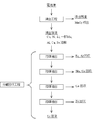
この発明のリチウムイオン電池スクラップからの金属の回収方法の一の実施形態では、上述した金属浸出工程の後、分離回収工程を実施する。より詳細には、この実施形態は、リチウムイオン電池スクラップに含まれる金属元素に応じて、たとえば、図1または2に例示する工程を含むことができる。
この発明のリチウムイオン電池スクラップからの金属の回収方法の一の実施形態では、上述した金属浸出工程の後、分離回収工程を実施する。より詳細には、この実施形態は、リチウムイオン電池スクラップに含まれる金属元素に応じて、たとえば、図1または2に例示する工程を含むことができる。
この分離回収工程では、金属浸出工程で得られた浸出後液に対し、たとえば、一般的な溶媒抽出法または電解法等を用いて、そこに溶解しているニッケル及び/又はコバルトを含む各元素を回収する他、その浸出後液にマンガン及び/又は鉄が溶解した状態で残った場合に、マンガン及び/又は鉄をニッケル及び/又はコバルトと分離させて回収する。
図1に示すところでは、対象のリチウムイオン電池廃棄物に含まれて浸出後液中に溶解しているリチウム、ニッケル、コバルト、マンガン、アルミニウム、銅、鉄等のうち、はじめに、鉄およびアルミニウムを溶媒抽出する。
続いて、それにより得られる溶液から、マンガンおよび銅を回収する。但し、ここでは、先述したように浸出工程での二酸化マンガンの析出反応の促進により、溶液中に含まれるマンガンの量は少なくなる。また条件によっては、溶液中にマンガンが含まれないこともあり、この場合は、マンガンの回収が不要となる。その結果として、ここでのマンガンの回収に要するコストを有効に低減ないし削減することができる。
その後は、コバルトおよびニッケルのそれぞれを順次に回収し、最後に溶液中にリチウムを残して、各金属を回収することができる。
続いて、それにより得られる溶液から、マンガンおよび銅を回収する。但し、ここでは、先述したように浸出工程での二酸化マンガンの析出反応の促進により、溶液中に含まれるマンガンの量は少なくなる。また条件によっては、溶液中にマンガンが含まれないこともあり、この場合は、マンガンの回収が不要となる。その結果として、ここでのマンガンの回収に要するコストを有効に低減ないし削減することができる。
その後は、コバルトおよびニッケルのそれぞれを順次に回収し、最後に溶液中にリチウムを残して、各金属を回収することができる。
一方、図2に示すところでは、リチウムイオン電池廃棄物に含まれる元素は、リチウム、ニッケル、コバルト、マンガンだけであるから、浸出後液からマンガン、コバルトおよびニッケルを順次に回収して、リチウムのみが残留する溶液とすることで、図1に示す方法よりも簡易に行うことができる。
ここで、このような分離回収工程では、マンガン及び/又は鉄を含む溶媒から逆抽出した酸性液を得ることができ、マンガン及び/又は鉄を含むこの酸性液を、先述の金属浸出工程で、マンガン及び/又は鉄の金属イオンを含む溶液として酸性溶液に添加して用いることが好ましい。それにより、金属浸出工程で添加する過酸化水素水の量の低減または過酸化水素水の削減に伴う、処理コストの低減に寄与することができる。
この酸性液としては、硫酸塩溶液、塩酸塩溶液または硝酸塩溶液とすることが好ましく、なかでも硫酸マンガン(II)溶液とすることが特に好ましい。
この酸性液としては、硫酸塩溶液、塩酸塩溶液または硝酸塩溶液とすることが好ましく、なかでも硫酸マンガン(II)溶液とすることが特に好ましい。
なお、特に硫酸マンガン(II)は一般に、別途再利用する場合、そのままの状態では用いることができず、更なる処理が必要となって費用および工数が増大することから、この金属浸出工程で用いることが有効である。
金属浸出工程で酸性溶液に添加された硫酸マンガン(II)は還元剤として働いて、ニッケル及び/又はコバルトの浸出を効果的に促進させることができる。
金属浸出工程で酸性溶液に添加された硫酸マンガン(II)は還元剤として働いて、ニッケル及び/又はコバルトの浸出を効果的に促進させることができる。
上記の酸性液を、金属浸出工程で、マンガン及び/又は鉄の金属イオンを含む溶液として添加する場合、ニッケル及び/又はコバルトの溶解とマンガン及び/又は鉄の析出を有効に促進させるため、酸性液中のマンガン及び/又は鉄の濃度は、1g/L~50g/Lとすることが好ましい。
あるいは、上記の酸性液に、炭酸化、水酸化、晶析等の処理を施すことによって生成したマンガン及び/又は鉄の化合物を、金属浸出工程で酸性溶液に添加して用いることも有効である。
このようにして生成されるマンガン及び/又は鉄の化合物としては、たとえば、マンガン及び/又は鉄の炭酸塩、水酸化物または硫酸塩等を挙げることができ、なかでも、炭酸マンガン(II)が、金属浸出工程での添加剤として用いることに最も好適である。
このようにして生成されるマンガン及び/又は鉄の化合物としては、たとえば、マンガン及び/又は鉄の炭酸塩、水酸化物または硫酸塩等を挙げることができ、なかでも、炭酸マンガン(II)が、金属浸出工程での添加剤として用いることに最も好適である。
次に、この発明のリチウムイオン電池スクラップの浸出方法を試験的に実施し、その効果を確認したので以下に説明する。但し、ここでの説明は、単なる例示を目的としたものであり、これに限定されることを意図するものではない。
(実施例1)
希硫酸(硫酸濃度150g/L)100mlに、硫酸マンガン溶液(マンガン濃度60g/L)50mlを添加した後、LiCoO2系正極活物質10gを入れて、60℃で6時間にわたって撹拌した。その結果、LiCoO2系正極活物質中のCoを全て溶かすことができた。
希硫酸(硫酸濃度150g/L)100mlに、硫酸マンガン溶液(マンガン濃度60g/L)50mlを添加した後、LiCoO2系正極活物質10gを入れて、60℃で6時間にわたって撹拌した。その結果、LiCoO2系正極活物質中のCoを全て溶かすことができた。
(実施例2)
希硫酸(硫酸濃度200g/L)100mlに、炭酸マンガン6gを添加した後、LiCoO2系正極活物質10gを入れて、60℃で6時間にわたって撹拌した。その結果、LiCoO2系正極活物質中のCoを全て溶かすことができた。
希硫酸(硫酸濃度200g/L)100mlに、炭酸マンガン6gを添加した後、LiCoO2系正極活物質10gを入れて、60℃で6時間にわたって撹拌した。その結果、LiCoO2系正極活物質中のCoを全て溶かすことができた。
(比較例)
希硫酸(硫酸濃度150g/L)100mlに、LiCoO2系正極活物質10gを入れ、60℃で6時間にわたって撹拌した。その結果、LiCoO2系正極活物質中のCoを全て溶かすことはできなかった。
希硫酸(硫酸濃度150g/L)100mlに、LiCoO2系正極活物質10gを入れ、60℃で6時間にわたって撹拌した。その結果、LiCoO2系正極活物質中のCoを全て溶かすことはできなかった。
(参考例)
希硫酸(硫酸濃度150g/L)100mlに、過酸化水素水(35%)15mlを添加した後、LiCoO2系正極活物質10gを入れ、60℃で6時間にわたって撹拌したところ、LiCoO2系正極活物質中のCoを全て溶かすことができた。
希硫酸(硫酸濃度150g/L)100mlに、過酸化水素水(35%)15mlを添加した後、LiCoO2系正極活物質10gを入れ、60℃で6時間にわたって撹拌したところ、LiCoO2系正極活物質中のCoを全て溶かすことができた。
上述した実施例1及び2並びに比較例の結果より、酸性溶液に正極活物質のみを添加しても、正極活物質中のコバルトを十分に溶かすことができないが、この正極活物質に含まれないマンガンを添加することにより、過酸化水素水の添加なしで、正極活物質中のコバルトを有効に溶かすことができることが解かる。
Claims (5)
- ニッケル及び/又はコバルトを含むリチウムイオン電池のスクラップを、酸性溶液にて浸出させるに当り、
前記スクラップに含まれないマンガン及び/又は鉄の単体、マンガン及び/又は鉄の化合物、および、マンガン及び/又は鉄の金属イオンを含む溶液のうちの少なくとも一種を、前記スクラップとともに酸性溶液に添加して、前記酸性溶液中に、マンガン及び/又は鉄の金属イオンを存在させ、その後、前記マンガン及び/又は鉄の金属イオンが存在する当該酸性溶液中で、前記スクラップに含まれるニッケル及び/又はコバルトと、前記マンガン及び/又は鉄の金属イオンとを接触させることにより、ニッケル及び/又はコバルトを浸出させる金属浸出工程を含む、リチウムイオン電池スクラップの浸出方法。 - 前記金属浸出工程で、酸性溶液中に存在する前記マンガン及び/又は鉄の金属イオンを、酸化により酸化物として沈殿させる、請求項1に記載のリチウムイオン電池スクラップの浸出方法。
- 前記金属浸出工程で、リチウムイオン電池正極活物質の原料を、スクラップとともに酸性溶液に添加し、当該リチウムイオン電池正極活物質の原料に、マンガン及び/又は鉄の化合物が含まれる、請求項1又は2に記載のリチウムイオン電池スクラップの浸出方法。
- 請求項1~3のいずれか一項に記載のリチウムイオン電池スクラップの浸出方法の金属浸出工程と、前記金属浸出工程で得られた浸出後液から、該浸出後液に浸出したマンガン及び/又は鉄を、溶媒抽出によりニッケル及び/又はコバルトと分離させて回収する分離回収工程とを含む、リチウムイオン電池スクラップからの金属の回収方法。
- 前記金属浸出工程で、スクラップとともに酸性溶液に添加するマンガン及び/又は鉄の金属イオンを含む溶液、あるいは、マンガン及び/又は鉄の化合物が、前記分離回収工程におけるマンガン及び/又は鉄を含む溶媒から逆抽出した酸性液、又は、前記酸性液から生成したマンガン及び/又は鉄の化合物である、請求項4に記載のリチウムイオン電池スクラップからの金属の回収方法。
Priority Applications (3)
| Application Number | Priority Date | Filing Date | Title |
|---|---|---|---|
| EP15847456.9A EP3202929B1 (en) | 2014-09-30 | 2015-09-29 | Leaching method for lithium ion battery scrap and method for recovering metal from lithium ion battery scrap |
| KR1020177010871A KR101919724B1 (ko) | 2014-09-30 | 2015-09-29 | 리튬 이온 전지 스크랩의 침출 방법 및, 리튬 이온 전지 스크랩으로부터의 금속의 회수 방법 |
| CN201580052894.1A CN107002171A (zh) | 2014-09-30 | 2015-09-29 | 锂离子电池废料的浸出方法、及来自于锂离子电池废料的金属的回收方法 |
Applications Claiming Priority (2)
| Application Number | Priority Date | Filing Date | Title |
|---|---|---|---|
| JP2014202053 | 2014-09-30 | ||
| JP2014-202053 | 2014-09-30 |
Publications (1)
| Publication Number | Publication Date |
|---|---|
| WO2016052568A1 true WO2016052568A1 (ja) | 2016-04-07 |
Family
ID=55630593
Family Applications (1)
| Application Number | Title | Priority Date | Filing Date |
|---|---|---|---|
| PCT/JP2015/077620 Ceased WO2016052568A1 (ja) | 2014-09-30 | 2015-09-29 | リチウムイオン電池スクラップの浸出方法および、リチウムイオン電池スクラップからの金属の回収方法 |
Country Status (6)
| Country | Link |
|---|---|
| EP (1) | EP3202929B1 (ja) |
| JP (1) | JP6363578B2 (ja) |
| KR (1) | KR101919724B1 (ja) |
| CN (1) | CN107002171A (ja) |
| TW (2) | TWI656220B (ja) |
| WO (1) | WO2016052568A1 (ja) |
Cited By (5)
| Publication number | Priority date | Publication date | Assignee | Title |
|---|---|---|---|---|
| WO2018218358A1 (en) * | 2017-05-30 | 2018-12-06 | Li-Cycle Corp. | A process, apparatus, and system for recovering materials from batteries |
| EP3604568A4 (en) * | 2017-03-31 | 2020-12-02 | JX Nippon Mining & Metals Corporation | LITHIUM RECOVERY PROCESS |
| US20220127697A1 (en) * | 2018-12-27 | 2022-04-28 | Jx Nippon Mining & Metals Corporation | Method for recovering valuable metal |
| JPWO2023282106A1 (ja) * | 2021-07-09 | 2023-01-12 | ||
| CN115652098A (zh) * | 2022-11-29 | 2023-01-31 | 湘潭大学 | 一种废锂离子电池极粉混料的绿色还原浸出方法 |
Families Citing this family (14)
| Publication number | Priority date | Publication date | Assignee | Title |
|---|---|---|---|---|
| JP6571123B2 (ja) * | 2017-03-01 | 2019-09-04 | Jx金属株式会社 | リチウムイオン電池スクラップの浸出方法および、リチウムイオン電池スクラップからの金属の回収方法 |
| JP6798918B2 (ja) * | 2017-03-30 | 2020-12-09 | Jx金属株式会社 | リチウムイオン電池スクラップの処理方法 |
| JP7217612B2 (ja) * | 2018-10-31 | 2023-02-03 | Jx金属株式会社 | リチウムイオン二次電池の正極活物質廃棄物の処理方法 |
| EP3670686A1 (en) * | 2018-12-21 | 2020-06-24 | A.C.N. 630 589 507 Pty Ltd | Battery recycling process |
| JP7094877B2 (ja) | 2018-12-27 | 2022-07-04 | Jx金属株式会社 | 有価金属の回収方法 |
| KR20220057136A (ko) | 2020-10-29 | 2022-05-09 | 코스모화학 주식회사 | 폐리튬 이차전지의 삼원계 양극활물질로부터 전구체제조용 혼합용액 회수방법 |
| FR3121551B1 (fr) * | 2021-03-30 | 2023-06-02 | Commissariat Energie Atomique | Procede de dissolution d’un materiau d’electrode positive |
| US20240213562A1 (en) * | 2021-04-14 | 2024-06-27 | Metso Finland Oy | Extraction of metals from lithium-ion battery material |
| KR20230172482A (ko) * | 2021-04-14 | 2023-12-22 | 메트소 핀란드 오이 | 리튬 이온 배터리 재료로부터 금속의 추출 |
| WO2023054618A1 (ja) * | 2021-09-30 | 2023-04-06 | 株式会社アサカ理研 | 電池粉の塩酸溶解方法 |
| WO2023105904A1 (ja) * | 2021-12-09 | 2023-06-15 | Jx金属株式会社 | 金属浸出方法 |
| DE102023113281A1 (de) | 2023-05-22 | 2024-11-28 | Bayerische Motoren Werke Aktiengesellschaft | Verfahren zum Recyclen einer Elektrodenbeschichtung einer Batterie |
| WO2025132783A1 (en) * | 2023-12-19 | 2025-06-26 | Basf Se | Recovering value metal from aqueous solutions |
| KR102772835B1 (ko) * | 2024-09-04 | 2025-02-26 | 성일하이텍 주식회사 | 폐이차전지로부터 유가금속의 고순도 회수방법 |
Citations (4)
| Publication number | Priority date | Publication date | Assignee | Title |
|---|---|---|---|---|
| JP2012001750A (ja) * | 2010-06-15 | 2012-01-05 | Mitsui Mining & Smelting Co Ltd | Co含有溶液の製造方法 |
| JP2013512345A (ja) * | 2009-11-30 | 2013-04-11 | 韓国地質資源研究院 | リチウムイオン電池及び三元系正極活物質からのcmb液相触媒の製造方法 |
| JP2013112859A (ja) * | 2011-11-29 | 2013-06-10 | Jx Nippon Mining & Metals Corp | 硫酸マンガンの製造方法 |
| JP2014162982A (ja) * | 2013-02-27 | 2014-09-08 | Jx Nippon Mining & Metals Corp | 金属混合溶液からの金属の分離回収方法 |
Family Cites Families (11)
| Publication number | Priority date | Publication date | Assignee | Title |
|---|---|---|---|---|
| US3761566A (en) * | 1971-09-13 | 1973-09-25 | American Metal Climax Inc | Leaching of nickel lateritic ores with waste iron sulfate solutions |
| TWI231063B (en) * | 2003-11-14 | 2005-04-11 | Ind Tech Res Inst | Process of recovering valuable metals from waste secondary batteries |
| CN101871048B (zh) * | 2010-06-25 | 2012-05-23 | 浙江华友钴业股份有限公司 | 一种从废旧锂电池中回收钴、镍和锰的方法 |
| JP5577926B2 (ja) * | 2010-08-03 | 2014-08-27 | 住友金属鉱山株式会社 | ニッケル及びコバルトの浸出方法、及びリチウムイオン電池からの有価金属の回収方法 |
| JP5533700B2 (ja) * | 2011-01-27 | 2014-06-25 | 住友金属鉱山株式会社 | 有価金属の浸出方法及びこの浸出方法を用いた有価金属の回収方法 |
| KR101325176B1 (ko) * | 2011-03-23 | 2013-11-07 | 한국지질자원연구원 | 삼원계 양극활물질로부터 화학이산화망간의 제조방법, 그 제조방법에 의하여 제조된 화학이산화망간 및 화학이산화망간을 포함하는 이차전지 |
| JP5541336B2 (ja) * | 2011-10-24 | 2014-07-09 | 住友金属鉱山株式会社 | 高純度硫酸コバルト水溶液の製造方法 |
| JP5514844B2 (ja) * | 2012-01-25 | 2014-06-04 | Jx日鉱日石金属株式会社 | 廃二次電池からの有価金属の分離方法及びそれを用いた有価金属の回収方法 |
| CN102703705A (zh) * | 2012-05-28 | 2012-10-03 | 南昌航空大学 | 一种高效强化浸出废弃锂离子电池中金属的方法 |
| JP2013181247A (ja) * | 2012-12-13 | 2013-09-12 | Jx Nippon Mining & Metals Corp | 金属の混合溶液の分離方法 |
| JP5902601B2 (ja) * | 2012-12-13 | 2016-04-13 | Jx金属株式会社 | 金属混合溶液中の金属の分離方法 |
-
2015
- 2015-09-29 EP EP15847456.9A patent/EP3202929B1/en active Active
- 2015-09-29 KR KR1020177010871A patent/KR101919724B1/ko active Active
- 2015-09-29 CN CN201580052894.1A patent/CN107002171A/zh active Pending
- 2015-09-29 WO PCT/JP2015/077620 patent/WO2016052568A1/ja not_active Ceased
- 2015-09-29 JP JP2015192199A patent/JP6363578B2/ja active Active
- 2015-09-30 TW TW104132068A patent/TWI656220B/zh active
- 2015-09-30 TW TW106143575A patent/TW201812030A/zh unknown
Patent Citations (4)
| Publication number | Priority date | Publication date | Assignee | Title |
|---|---|---|---|---|
| JP2013512345A (ja) * | 2009-11-30 | 2013-04-11 | 韓国地質資源研究院 | リチウムイオン電池及び三元系正極活物質からのcmb液相触媒の製造方法 |
| JP2012001750A (ja) * | 2010-06-15 | 2012-01-05 | Mitsui Mining & Smelting Co Ltd | Co含有溶液の製造方法 |
| JP2013112859A (ja) * | 2011-11-29 | 2013-06-10 | Jx Nippon Mining & Metals Corp | 硫酸マンガンの製造方法 |
| JP2014162982A (ja) * | 2013-02-27 | 2014-09-08 | Jx Nippon Mining & Metals Corp | 金属混合溶液からの金属の分離回収方法 |
Non-Patent Citations (1)
| Title |
|---|
| See also references of EP3202929A4 * |
Cited By (11)
| Publication number | Priority date | Publication date | Assignee | Title |
|---|---|---|---|---|
| EP3604568A4 (en) * | 2017-03-31 | 2020-12-02 | JX Nippon Mining & Metals Corporation | LITHIUM RECOVERY PROCESS |
| US11702719B2 (en) | 2017-03-31 | 2023-07-18 | Jx Nippon Mining & Metals Corporation | Method for recovering lithium from lithium ion battery scrap |
| WO2018218358A1 (en) * | 2017-05-30 | 2018-12-06 | Li-Cycle Corp. | A process, apparatus, and system for recovering materials from batteries |
| US10919046B2 (en) | 2017-05-30 | 2021-02-16 | Li-Cycle Corp. | Process, apparatus, and system for recovering materials from batteries |
| US10960403B2 (en) | 2017-05-30 | 2021-03-30 | Li-Cycle Corp. | Process, apparatus, and system for recovering materials from batteries |
| US11077452B2 (en) | 2017-05-30 | 2021-08-03 | Li-Cycle Corp. | Process, apparatus, and system for recovering materials from batteries |
| US12370557B2 (en) | 2017-05-30 | 2025-07-29 | Li-Cycle Corp. | Process, apparatus, and system for recovering materials from batteries |
| US20220127697A1 (en) * | 2018-12-27 | 2022-04-28 | Jx Nippon Mining & Metals Corporation | Method for recovering valuable metal |
| US12319979B2 (en) * | 2018-12-27 | 2025-06-03 | Jx Metals Circular Solutions Co., Ltd. | Method for recovering valuable metal |
| JPWO2023282106A1 (ja) * | 2021-07-09 | 2023-01-12 | ||
| CN115652098A (zh) * | 2022-11-29 | 2023-01-31 | 湘潭大学 | 一种废锂离子电池极粉混料的绿色还原浸出方法 |
Also Published As
| Publication number | Publication date |
|---|---|
| JP2016069733A (ja) | 2016-05-09 |
| EP3202929A4 (en) | 2018-06-06 |
| TW201812030A (zh) | 2018-04-01 |
| TWI656220B (zh) | 2019-04-11 |
| CN107002171A (zh) | 2017-08-01 |
| KR20170057417A (ko) | 2017-05-24 |
| EP3202929A1 (en) | 2017-08-09 |
| KR101919724B1 (ko) | 2018-11-16 |
| EP3202929B1 (en) | 2021-12-22 |
| TW201629235A (zh) | 2016-08-16 |
| JP6363578B2 (ja) | 2018-07-25 |
Similar Documents
| Publication | Publication Date | Title |
|---|---|---|
| JP6363578B2 (ja) | リチウムイオン電池スクラップの浸出方法および、リチウムイオン電池スクラップからの金属の回収方法 | |
| JP6363577B2 (ja) | リチウムイオン電池スクラップの浸出方法および、リチウムイオン電池スクラップからの金属の回収方法 | |
| JP6334450B2 (ja) | リチウムイオン電池リサイクル原料からの金属の回収方法 | |
| JP6352846B2 (ja) | リチウムイオン電池リサイクル原料からの金属の回収方法 | |
| JP6835821B2 (ja) | リチウムイオン電池スクラップの処理方法 | |
| KR102202646B1 (ko) | 리튬 이온 전지 스크랩의 처리 방법 | |
| JP6735192B2 (ja) | リチウムイオン電池スクラップの処理方法 | |
| JP6258890B2 (ja) | リチウムイオン電池スクラップからの銅の除去方法および金属の回収方法 | |
| KR102829860B1 (ko) | 금속 혼합 용액의 제조 방법 및, 혼합 금속염의 제조 방법 | |
| JP6946223B2 (ja) | リチウム回収方法 | |
| JP2019178395A (ja) | リチウムイオン電池スクラップからのリチウムの回収方法 | |
| JP7348130B2 (ja) | 金属含有溶液中のマグネシウムイオン除去方法及び、金属回収方法 | |
| CN107429312B (zh) | 从含铁溶液除去铁的方法和有用金属的回收方法 | |
| WO2021215521A1 (ja) | 混合金属塩の製造方法 | |
| JP6571123B2 (ja) | リチウムイオン電池スクラップの浸出方法および、リチウムイオン電池スクラップからの金属の回収方法 | |
| JP6298002B2 (ja) | リチウムイオン電池スクラップの浸出方法及び、有価金属の回収方法 | |
| JP6397111B2 (ja) | リチウムイオン電池スクラップの浸出方法及び、有価金属の回収方法 |
Legal Events
| Date | Code | Title | Description |
|---|---|---|---|
| 121 | Ep: the epo has been informed by wipo that ep was designated in this application |
Ref document number: 15847456 Country of ref document: EP Kind code of ref document: A1 |
|
| NENP | Non-entry into the national phase |
Ref country code: DE |
|
| ENP | Entry into the national phase |
Ref document number: 20177010871 Country of ref document: KR Kind code of ref document: A |
|
| REEP | Request for entry into the european phase |
Ref document number: 2015847456 Country of ref document: EP |