WO2016068043A1 - リチウム硫黄電池のカソード材料の製造方法、リチウム硫黄電池のカソード材料、およびリチウム硫黄電池 - Google Patents
リチウム硫黄電池のカソード材料の製造方法、リチウム硫黄電池のカソード材料、およびリチウム硫黄電池 Download PDFInfo
- Publication number
- WO2016068043A1 WO2016068043A1 PCT/JP2015/079981 JP2015079981W WO2016068043A1 WO 2016068043 A1 WO2016068043 A1 WO 2016068043A1 JP 2015079981 W JP2015079981 W JP 2015079981W WO 2016068043 A1 WO2016068043 A1 WO 2016068043A1
- Authority
- WO
- WIPO (PCT)
- Prior art keywords
- lithium
- carbon
- sulfur battery
- particles
- cathode
- Prior art date
- Legal status (The legal status is an assumption and is not a legal conclusion. Google has not performed a legal analysis and makes no representation as to the accuracy of the status listed.)
- Ceased
Links
Images











Classifications
-
- H—ELECTRICITY
- H01—ELECTRIC ELEMENTS
- H01M—PROCESSES OR MEANS, e.g. BATTERIES, FOR THE DIRECT CONVERSION OF CHEMICAL ENERGY INTO ELECTRICAL ENERGY
- H01M4/00—Electrodes
- H01M4/02—Electrodes composed of, or comprising, active material
- H01M4/36—Selection of substances as active materials, active masses, active liquids
- H01M4/362—Composites
- H01M4/366—Composites as layered products
-
- C—CHEMISTRY; METALLURGY
- C01—INORGANIC CHEMISTRY
- C01B—NON-METALLIC ELEMENTS; COMPOUNDS THEREOF; METALLOIDS OR COMPOUNDS THEREOF NOT COVERED BY SUBCLASS C01C
- C01B17/00—Sulfur; Compounds thereof
- C01B17/22—Alkali metal sulfides or polysulfides
- C01B17/24—Preparation by reduction
- C01B17/26—Preparation by reduction with carbon
-
- H—ELECTRICITY
- H01—ELECTRIC ELEMENTS
- H01M—PROCESSES OR MEANS, e.g. BATTERIES, FOR THE DIRECT CONVERSION OF CHEMICAL ENERGY INTO ELECTRICAL ENERGY
- H01M10/00—Secondary cells; Manufacture thereof
- H01M10/05—Accumulators with non-aqueous electrolyte
- H01M10/052—Li-accumulators
-
- H—ELECTRICITY
- H01—ELECTRIC ELEMENTS
- H01M—PROCESSES OR MEANS, e.g. BATTERIES, FOR THE DIRECT CONVERSION OF CHEMICAL ENERGY INTO ELECTRICAL ENERGY
- H01M10/00—Secondary cells; Manufacture thereof
- H01M10/05—Accumulators with non-aqueous electrolyte
- H01M10/056—Accumulators with non-aqueous electrolyte characterised by the materials used as electrolytes, e.g. mixed inorganic/organic electrolytes
- H01M10/0564—Accumulators with non-aqueous electrolyte characterised by the materials used as electrolytes, e.g. mixed inorganic/organic electrolytes the electrolyte being constituted of organic materials only
- H01M10/0566—Liquid materials
- H01M10/0568—Liquid materials characterised by the solutes
-
- H—ELECTRICITY
- H01—ELECTRIC ELEMENTS
- H01M—PROCESSES OR MEANS, e.g. BATTERIES, FOR THE DIRECT CONVERSION OF CHEMICAL ENERGY INTO ELECTRICAL ENERGY
- H01M10/00—Secondary cells; Manufacture thereof
- H01M10/05—Accumulators with non-aqueous electrolyte
- H01M10/056—Accumulators with non-aqueous electrolyte characterised by the materials used as electrolytes, e.g. mixed inorganic/organic electrolytes
- H01M10/0564—Accumulators with non-aqueous electrolyte characterised by the materials used as electrolytes, e.g. mixed inorganic/organic electrolytes the electrolyte being constituted of organic materials only
- H01M10/0566—Liquid materials
- H01M10/0569—Liquid materials characterised by the solvents
-
- H—ELECTRICITY
- H01—ELECTRIC ELEMENTS
- H01M—PROCESSES OR MEANS, e.g. BATTERIES, FOR THE DIRECT CONVERSION OF CHEMICAL ENERGY INTO ELECTRICAL ENERGY
- H01M4/00—Electrodes
- H01M4/02—Electrodes composed of, or comprising, active material
- H01M4/04—Processes of manufacture in general
- H01M4/0471—Processes of manufacture in general involving thermal treatment, e.g. firing, sintering, backing particulate active material, thermal decomposition, pyrolysis
-
- H—ELECTRICITY
- H01—ELECTRIC ELEMENTS
- H01M—PROCESSES OR MEANS, e.g. BATTERIES, FOR THE DIRECT CONVERSION OF CHEMICAL ENERGY INTO ELECTRICAL ENERGY
- H01M4/00—Electrodes
- H01M4/02—Electrodes composed of, or comprising, active material
- H01M4/13—Electrodes for accumulators with non-aqueous electrolyte, e.g. for lithium-accumulators; Processes of manufacture thereof
- H01M4/136—Electrodes based on inorganic compounds other than oxides or hydroxides, e.g. sulfides, selenides, tellurides, halogenides or LiCoFy
-
- H—ELECTRICITY
- H01—ELECTRIC ELEMENTS
- H01M—PROCESSES OR MEANS, e.g. BATTERIES, FOR THE DIRECT CONVERSION OF CHEMICAL ENERGY INTO ELECTRICAL ENERGY
- H01M4/00—Electrodes
- H01M4/02—Electrodes composed of, or comprising, active material
- H01M4/13—Electrodes for accumulators with non-aqueous electrolyte, e.g. for lithium-accumulators; Processes of manufacture thereof
- H01M4/139—Processes of manufacture
- H01M4/1393—Processes of manufacture of electrodes based on carbonaceous material, e.g. graphite-intercalation compounds or CFx
-
- H—ELECTRICITY
- H01—ELECTRIC ELEMENTS
- H01M—PROCESSES OR MEANS, e.g. BATTERIES, FOR THE DIRECT CONVERSION OF CHEMICAL ENERGY INTO ELECTRICAL ENERGY
- H01M4/00—Electrodes
- H01M4/02—Electrodes composed of, or comprising, active material
- H01M4/13—Electrodes for accumulators with non-aqueous electrolyte, e.g. for lithium-accumulators; Processes of manufacture thereof
- H01M4/139—Processes of manufacture
- H01M4/1397—Processes of manufacture of electrodes based on inorganic compounds other than oxides or hydroxides, e.g. sulfides, selenides, tellurides, halogenides or LiCoFy
-
- H—ELECTRICITY
- H01—ELECTRIC ELEMENTS
- H01M—PROCESSES OR MEANS, e.g. BATTERIES, FOR THE DIRECT CONVERSION OF CHEMICAL ENERGY INTO ELECTRICAL ENERGY
- H01M4/00—Electrodes
- H01M4/02—Electrodes composed of, or comprising, active material
- H01M4/36—Selection of substances as active materials, active masses, active liquids
- H01M4/362—Composites
- H01M4/364—Composites as mixtures
-
- H—ELECTRICITY
- H01—ELECTRIC ELEMENTS
- H01M—PROCESSES OR MEANS, e.g. BATTERIES, FOR THE DIRECT CONVERSION OF CHEMICAL ENERGY INTO ELECTRICAL ENERGY
- H01M4/00—Electrodes
- H01M4/02—Electrodes composed of, or comprising, active material
- H01M4/36—Selection of substances as active materials, active masses, active liquids
- H01M4/38—Selection of substances as active materials, active masses, active liquids of elements or alloys
- H01M4/381—Alkaline or alkaline earth metals elements
- H01M4/382—Lithium
-
- H—ELECTRICITY
- H01—ELECTRIC ELEMENTS
- H01M—PROCESSES OR MEANS, e.g. BATTERIES, FOR THE DIRECT CONVERSION OF CHEMICAL ENERGY INTO ELECTRICAL ENERGY
- H01M4/00—Electrodes
- H01M4/02—Electrodes composed of, or comprising, active material
- H01M4/36—Selection of substances as active materials, active masses, active liquids
- H01M4/58—Selection of substances as active materials, active masses, active liquids of inorganic compounds other than oxides or hydroxides, e.g. sulfides, selenides, tellurides, halogenides or LiCoFy; of polyanionic structures, e.g. phosphates, silicates or borates
- H01M4/581—Chalcogenides or intercalation compounds thereof
- H01M4/5815—Sulfides
-
- H—ELECTRICITY
- H01—ELECTRIC ELEMENTS
- H01M—PROCESSES OR MEANS, e.g. BATTERIES, FOR THE DIRECT CONVERSION OF CHEMICAL ENERGY INTO ELECTRICAL ENERGY
- H01M4/00—Electrodes
- H01M4/02—Electrodes composed of, or comprising, active material
- H01M4/36—Selection of substances as active materials, active masses, active liquids
- H01M4/58—Selection of substances as active materials, active masses, active liquids of inorganic compounds other than oxides or hydroxides, e.g. sulfides, selenides, tellurides, halogenides or LiCoFy; of polyanionic structures, e.g. phosphates, silicates or borates
- H01M4/583—Carbonaceous material, e.g. graphite-intercalation compounds or CFx
- H01M4/587—Carbonaceous material, e.g. graphite-intercalation compounds or CFx for inserting or intercalating light metals
-
- H—ELECTRICITY
- H01—ELECTRIC ELEMENTS
- H01M—PROCESSES OR MEANS, e.g. BATTERIES, FOR THE DIRECT CONVERSION OF CHEMICAL ENERGY INTO ELECTRICAL ENERGY
- H01M4/00—Electrodes
- H01M4/02—Electrodes composed of, or comprising, active material
- H01M4/62—Selection of inactive substances as ingredients for active masses, e.g. binders, fillers
- H01M4/624—Electric conductive fillers
- H01M4/625—Carbon or graphite
-
- H—ELECTRICITY
- H01—ELECTRIC ELEMENTS
- H01M—PROCESSES OR MEANS, e.g. BATTERIES, FOR THE DIRECT CONVERSION OF CHEMICAL ENERGY INTO ELECTRICAL ENERGY
- H01M4/00—Electrodes
- H01M4/02—Electrodes composed of, or comprising, active material
- H01M2004/021—Physical characteristics, e.g. porosity, surface area
-
- H—ELECTRICITY
- H01—ELECTRIC ELEMENTS
- H01M—PROCESSES OR MEANS, e.g. BATTERIES, FOR THE DIRECT CONVERSION OF CHEMICAL ENERGY INTO ELECTRICAL ENERGY
- H01M4/00—Electrodes
- H01M4/02—Electrodes composed of, or comprising, active material
- H01M2004/026—Electrodes composed of, or comprising, active material characterised by the polarity
- H01M2004/028—Positive electrodes
-
- H—ELECTRICITY
- H01—ELECTRIC ELEMENTS
- H01M—PROCESSES OR MEANS, e.g. BATTERIES, FOR THE DIRECT CONVERSION OF CHEMICAL ENERGY INTO ELECTRICAL ENERGY
- H01M2300/00—Electrolytes
- H01M2300/0017—Non-aqueous electrolytes
- H01M2300/0025—Organic electrolyte
- H01M2300/0045—Room temperature molten salts comprising at least one organic ion
-
- Y—GENERAL TAGGING OF NEW TECHNOLOGICAL DEVELOPMENTS; GENERAL TAGGING OF CROSS-SECTIONAL TECHNOLOGIES SPANNING OVER SEVERAL SECTIONS OF THE IPC; TECHNICAL SUBJECTS COVERED BY FORMER USPC CROSS-REFERENCE ART COLLECTIONS [XRACs] AND DIGESTS
- Y02—TECHNOLOGIES OR APPLICATIONS FOR MITIGATION OR ADAPTATION AGAINST CLIMATE CHANGE
- Y02E—REDUCTION OF GREENHOUSE GAS [GHG] EMISSIONS, RELATED TO ENERGY GENERATION, TRANSMISSION OR DISTRIBUTION
- Y02E60/00—Enabling technologies; Technologies with a potential or indirect contribution to GHG emissions mitigation
- Y02E60/10—Energy storage using batteries
Definitions
- the present invention relates to a method for producing a cathode material for a lithium-sulfur battery comprising a (lithium sulfide / carbon) composite, a cathode material for a lithium-sulfur battery produced by the production method, and a lithium-sulfur battery having the cathode material.
- the theoretical capacity of a lithium-sulfur secondary battery having sulfur as a cathode material is 1672 mAh / g, which is 10 times the theoretical capacity of 137 mAh / g of a lithium secondary battery having LiCoO 2 or the like as a widely used cathode active material. Very expensive. Sulfur is also abundant in resources at low cost.
- Embodiments of the present invention are intended to provide an easy manufacturing method of a cathode material of a high-performance lithium-sulfur battery, a cathode material manufactured by the manufacturing method, and a lithium-sulfur battery having the cathode material.
- the method for producing a cathode material for a lithium-sulfur battery includes a step of producing a first dispersion in which carbon particles are dispersed in a lithium sulfate solution, and a solvent in which lithium sulfate is not dissolved in the first dispersion.
- a cathode material of a lithium-sulfur battery includes a step of producing a first dispersion in which carbon particles are dispersed in a lithium sulfate solution, and a solvent in which lithium sulfate is not dissolved is added to the first dispersion.
- a lithium-sulfur battery in another embodiment, includes a step of preparing a first dispersion in which carbon particles are dispersed in a lithium sulfate solution, and a step of adding a solvent in which lithium sulfate is not dissolved to the first dispersion. And a step of separating the precursor particles from the first dispersion to which the solvent is added, and a step of heating the precursor particles in an inert atmosphere to form cathode active material particles.
- the cathode material of a lithium-sulfur battery according to another embodiment has a (lithium sulfide / carbon) composite made of carbon particles having lithium sulfide formed on the outer surface.
- Another embodiment of the lithium-sulfur battery includes a cathode material having a composite (lithium sulfide / carbon) composed of carbon particles having lithium sulfide formed on the outer surface.
- the embodiment of the present invention it is possible to provide a method for easily producing a cathode material for a high-performance lithium-sulfur battery, a cathode material for a high-performance lithium-sulfur battery, and a lithium-sulfur battery having a high-performance cathode material.
- a lithium-sulfur battery (hereinafter referred to as “battery”) 10 of this embodiment includes a cathode 11, an anode 12, a separator 13, and an electrolytic solution 14.
- the cathode (positive electrode) 11 includes a cathode active material layer 11A including a (lithium sulfide / carbon) composite and a current collector 11B.
- the anode (negative electrode) 12 is made of metallic lithium.
- the cathode 11 and the anode 12 are stacked via a separator 13 into which an electrolytic solution 14 is injected and sealed in a coin cell case 20. That is, a spacer 21 and a spring 22 are disposed on the anode 12, and the coin cell case 20 is sealed with a lid 23. A gasket 24 is interposed on the side wall of the coin cell case 20.
- the anode active material layer 12A of the anode 12 is charged / discharged as shown in the following (formula 1).
- the cathode active material layer 11A of the cathode 11 has sulfur as a cathode active material capable of occluding and releasing lithium ions as shown in the following (formula 2).
- the electrolytic solution 14 is made of various solvents that are also used in conventional lithium ion batteries. Among them, an aprotic solvated ionic liquid in which an ether and a lithium salt form a complex is particularly preferably used because it has poor volatility, low viscosity, high lithium ion concentration, and high lithium ion conductivity. In addition, an electrolytic solution diluted by adding a solvent to the aprotic solvated ionic liquid can also be used. As the additive solvent, a solvent that does not break the structure of the complex formed by the ether and the lithium salt is preferably used.
- hydrofluoroethers such as HF 2 CF 2 CH 2 C—O—CF 2 CF 2 H and F 3 CH 2 C—O—CF 2 CF 2 H, which are fluorine-based solvents. (HFE) is exemplified.
- Examples of the separator 13 disposed between the cathode 11 and the anode 12 include glass fiber, a porous sheet made of a polymer, and a nonwoven fabric.
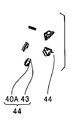
- the cathode 11 (cathode active material) particularly has a (lithium sulfide / carbon) composite (Li 2 S on Carbon) 44 in which lithium sulfide is formed on the outer surface of the carbon particles.
- a first dispersion liquid 30 (FIG. 3) in which precursor particles 41, which are carbon particles 40 (FIG. 3B) on which lithium sulfate 42 is deposited on the outer surface, is dispersed in a lithium sulfate solution. 3A).
- the precursor particles 41 are heated to a high temperature under an inert atmosphere (lithium sulfide 43 / carbon 40A), and the composite (active material particles) 44 (FIG. 3C) is manufactured.
- Lithium sulfide has a low conductivity, but at the cathode 11 of the battery 10, since the lithium sulfide is compounded with carbon particles having a high conductivity, the battery 10 has good charge / discharge characteristics and high performance.
- the carbon particles 40 and 40A may be spherical or amorphous. Since the (lithium sulfide 43 / carbon 40A) composite 44 (FIG. 3C) releases carbon dioxide during the reduction reaction as will be described later, the lithium sulfide 43 has through-holes and cracks, or a plurality of small pieces. It may be divided into two.
- the carbon 40A of the (lithium sulfide / carbon) composite 44 has lithium sulfide formed on the outer surface.
- “formation” means that lithium sulfate deposited on the outer surface is changed to lithium sulfide by a reduction reaction, and is described in, for example, Japanese Patent Application Laid-Open No. 2013-229227, which is simply physically fixed. This is different from the configuration of.
- a lithium sulfate solution that is, a solution containing lithium ions and sulfate ions is prepared by dissolving solid lithium sulfate monohydrate in a first solvent.
- the first solvent it is preferable to use water that has high solubility of lithium sulfate monohydrate and is inexpensive and safe.
- lithium sulfate monohydrate is dissolved in 70 mL of water to produce an aqueous lithium sulfate solution 30.
- the carbon particle 40 Although it does not specifically limit as the carbon particle 40, the graphene laminated
- GNP graphene laminated platelet aggregates
- GNP is a substantially rectangular flat body in which several tens to several hundreds of graphene are stacked, and the maximum thickness is, for example, about several ⁇ m. Since GNP is a fine particle, the specific surface area is 750 m 2 / g, but if it is a GNP having a specific surface area of 200 m 2 / g or more, the number of graphene layers is small and the conductivity is particularly high. The upper limit of the specific surface area is, for example, about 3000 m 2 / g in terms of cost and technology.
- the particle diameter (secondary particle diameter) is 0.3 ⁇ m to 7 ⁇ m.
- the carbon particles 40 and lithium sulfate may be added to water substantially simultaneously, or lithium sulfate may be added to and dissolved in the carbon particle dispersion water.
- the first dispersion 30 is a precursor particle composed of carbon particles 40 with lithium sulfate 42 formed on the outer surface (second lithium sulfate / carbon) composite 41 in which the composite 41 is dispersed in water. To change.
- lithium sulfate hardly dissolves, for example, methanol, ethanol, propyl alcohol, isopropyl alcohol, acetone, acetonitrile, diethyl ether and the like.
- These 2nd solvents may be used by 1 type and may be used in mixture of 2 or more types.
- alcohols such as methanol and ethanol are preferable, and ethanol is particularly preferable from the viewpoint of safety and price.
- lithium sulfate lithium ions / sulfate ions
- water precipitates (crystallizes) with the carbon particles 40 as nuclei. That is, as shown in FIG. 3B, a (lithium sulfate / carbon) composite 41 (Li 2 SO 4 on Carbon), which is carbon particles 40 with lithium sulfate monohydrate 42 deposited on the outer surface, is produced.
- lithium sulfate precipitates on the outer surface of a plurality of agglomerated carbon particles, or lithium sulfate deposits thickly on the surface of the dispersed carbon particles, and is bonded to form a secondary composed of a plurality of carbon particles. In some cases, the periphery of the particles becomes an aggregate covered with lithium sulfate (FIG. 5).
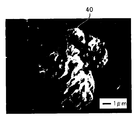
- GNAs carbon particles 40 having a particle size of 0.3 ⁇ m to 7 ⁇ m shown in FIGS. 4A and 4B have an increased particle size due to the precipitation reaction of lithium sulfate, and as shown in FIG. 5, the particle size is 1.0 ⁇ m.
- a (lithium sulfate / carbon) composite (precursor particle) 41 having a particle diameter of ⁇ 10.0 ⁇ m (average particle diameter d50 6.5 ⁇ m) was obtained. The particle size was measured from a scanning electron microscope (SEM) photograph.
- the average particle diameter d50 is an arithmetic average value of the particle diameters of 30 particles.
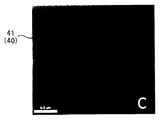
- 6B and 6C show EDX analysis (energy dispersive X-ray spectroscopy) showing carbon distribution (FIG. 6B) or sulfur distribution (FIG. 6C) within the square of the (lithium sulfate / carbon) composite 41 shown in FIG. 6A. Law). 6B and 6C, it can be seen that sulfur is uniformly distributed around the carbon, and lithium sulfate is precipitated with the carbon particles 40 as nuclei.
- the second dispersion 31 is filtered, washed with ethanol, and vacuum dried (40 ° C.) for 12 hours.
- Precursor particles 41 that are black powder (Li 2 SO 4 -GNAs Mix) made of carbon particles on which lithium sulfate is deposited on the outer surface are obtained. Instead of filtering, the precursor particles 41 may be separated by raising the temperature of the dispersion and evaporating the solvent.
- Precursor particles 41 (FIG. 3B, FIG. 5) are heated to about 800 ° C. in an inert atmosphere, whereby (lithium sulfide / carbon) composites (active material particles 44) (FIG. 3C, 7A and 7B) are produced.
- lithium sulfate is reduced by carbon to become lithium sulfide.
- the inert atmosphere is, for example, in an inert gas such as argon and nitrogen, or in a vacuum.
- the (lithium sulfate / carbon) complex 41 is separated from adsorbed water and lithium sulfate crystal water at 84 ° C. to 134 ° C. by measurement using a thermogravimetric-mass simultaneous analyzer (TG-MS).
- TG-MS thermogravimetric-mass simultaneous analyzer
- the generation of CO 2 due to the reaction of (Formula 3) was confirmed at 781 ° C. That is, the heating for the reduction reaction may be performed at 750 ° C. or higher and 850 ° C. or lower in an inert atmosphere. If it is 750 degreeC or more, a reductive reaction will fully advance in a short time, and if it is 850 degreeC or less, undesirable side reactions, such as an oxidation reaction, do not arise easily.
- the (lithium sulfate / carbon) composite 41 was heat-treated while flowing argon through a tube furnace.
- the temperature raising conditions are as follows (A) to (F).
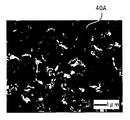
- the (lithium sulfide / carbon) composite (active material particles) 44 is different from the carbon particles 40 of the (lithium sulfate / carbon) composite (precursor particles) 41, and the carbon particles 40A have a part of the outer surface made of lithium sulfide. It may not be covered with.
- a part of the carbon particles 40A may be exposed on the outer surface of the active material particles 44.
- Lithium sulfide dissolves in methanol. For this reason, by washing the (lithium sulfide / carbon) composite 44 with methanol, it is possible to observe the remaining carbon particles 40A that are not consumed by the reduction reaction.
- the thickness of GNP constituting the GNAs is thin.
- the thickness of a certain GNP before the reduction reaction was 90 nm, but another GNP after the reduction reaction was 1.0 nm to 1.3 nm.
- a battery 10 was fabricated using a cathode material made of a (lithium sulfide / carbon) composite 44, and charge / discharge characteristics were evaluated.
- Evaluation uses metallic lithium for the anode 40. That is, the anode 40 was produced by attaching a lithium metal plate having a thickness of 200 ⁇ m to a stainless steel disk having a thickness of 500 ⁇ m.
- the cathode 11 is manufactured by applying a suitable amount of NMP (N-methyl-2-pyrrolidone) after kneading the above mixture and kneading the slurry to a current collector 11B made of an aluminum foil, followed by drying / pressing. It was.
- NMP N-methyl-2-pyrrolidone
- the current collectors 11B and 12B are made of conductive metal such as aluminum, nickel, copper, and stainless steel formed on foil, mesh, expanded grid (expanded metal), punched metal, or the like. Can do. Further, a resin having conductivity or a resin containing a conductive filler may be used as the current collector.
- the thickness of the current collector is, for example, 5 to 30 ⁇ m.
- the separator 13 is a glass filter having a thickness of 200 ⁇ m (manufactured by Toyo Roshi Kaisha, Ltd .: GA-55).
- an aprotic solvated ionic liquid in which an ether and a lithium metal salt formed a complex was diluted with a solvent.
- Tetraglyme (G4: tetraethylene glycol dimethyl ether) is used as the ether
- lithium bis (trifluoromethanesulfonyl) amide (LiTFSA) is used as the lithium metal salt
- HFE hydrofluoroether
- the electrolytic solution 14 is represented by [Li (G4) 1 ] [TFSA] -4HFE in chemical formula.
- tetrahydrofuran THF: manufactured by Wako Pure Chemical Industries
- monoglyme G1: 1,2-dimethoxyethane
- diglyme G2: diethylene glycol dimethyl ether
- Triglyme G3: triethylene glycol dimethyl ether
- tetraglyme G4: tetraethylene glycol dimethyl ether
- THF, G1, G2, G3, and G4 each have one, two, three, four, and five ether oxygen [O] in one molecule.
- lithium polysulfide In the discharge reaction of a secondary battery using sulfur as an active material, it is called lithium polysulfide in the process of reducing sulfur to Li 2 S (Li 2 S N : Li 2 S 8 , Li 2 S 4 , Li 2 S 2 ). Via the chemical species. Since the solvated ionic liquid has extremely low solubility in lithium polysulfide, high cycle characteristics can be realized when used in a lithium / sulfur secondary battery.
- hydrofluoroether for diluting the aprotic solvated ionic liquid for example, any of the following solvents manufactured by Daikin Industries, Ltd. can be preferably used.
- the amount of the solvent added is set so that, for example, the ionic conductivity (30 ° C.) is 0.1 mS / cm or more and the viscosity (30 ° C.) is 10 mPa ⁇ s or less.
- An appropriate amount of the electrolyte solution 14 was added to the cathode 11 in a glove box under an argon atmosphere, and the electrolyte solution was immersed in the cathode 11 at 60 ° C. for 60 minutes.
- the cathode 11 and the anode 12 are laminated via the separator 13 and the electrolyte solution 14 is injected, the cathode 11 and the anode 12 are sealed in a coin cell case 20 (SUS304, thickness 3.2 mm), and the spacer 21 is placed on the anode 12. .
- a spring 22 is disposed on the spacer 21.
- the coin cell case 20 was sealed from above the spring 22 with a lid 23.
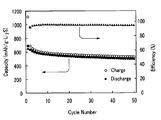
- the initial discharge capacity was as high as 693 mAh / g, and was 497 mAh / g even after 50 charge / discharge tests (50 cycles).
- the average coulomb efficiency for 50 cycles was 95%.
- the composition ratio of the (lithium sulfide / carbon) composite 44 is substantially determined by the mixing ratio of lithium sulfate monohydrate and carbon particles when the first dispersion 30 is produced.
- the weight ratio of the carbon particles 40 to the lithium sulfate monohydrate in the first dispersion 30 is 0.30 (0.48 g / 1. 60g), but preferably 0.20 or more and less than 0.40. If it is at least the lower limit, the carbon content of the (lithium sulfide / carbon) composite 44 is 10% by weight or more, and high electrical conductivity is obtained, so the charge / discharge characteristics are good. Moreover, if it is less than the said upper limit, carbon content will be 30 weight% or less, lithium sulfide content rate is high, and a high capacity
- the content of the carbon component contained in the cathode active material (mixture) including the (lithium sulfide / carbon) composite 44 and carbon black is substantially the same as that of the battery 10 is 30 wt%.
- Batteries were prepared by changing the mixing ratio of carbon (carbon particles 40A) and carbon black contained in the lithium sulfide / carbon composite 44, and charge / discharge characteristics were evaluated.
- carbon black is 10 wt% or more and 15 wt% or less, that is, when the weight ratio of carbon black / carbon particles 40A is 0.33 or more and 0.50 or less, substantially the same high characteristics as in the case of carbon black 13 wt% are confirmed. It was. However, when the carbon black is less than 10% by weight and more than 15% by weight, the flat portion in the first charge is increased to 4.4 V or more in any case, and the activation of Li 2 S is not easy. Moreover, the charge capacity and the results of the 50th charge / discharge test tended to decrease.
- the cathode 11 and the anode 12 are arranged apart from each other with a separator 13 therebetween, and an electrolyte solution 14 is included in the separator to constitute a cell.
- a structure in which a plurality of cells are stacked or wound and accommodated in a case may be employed.
- the cathode and anode current collectors are each pulled out of the case and electrically connected to a tab (terminal).
- lithium sulfur battery 10A having active material particles 44A as a cathode material will be described. Since the lithium-sulfur battery 10A and the like of this embodiment are similar to the lithium-sulfur battery 10 and the like, the same components are denoted by the same reference numerals, and description thereof is omitted.
- Step S15 the step of reducing the particle size of the active material particles 44 after the heat treatment using the precursor particles 41 as the active material particles 44 in Step S ⁇ b> 14 ( Step S15) is further provided.
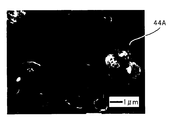
- step S15 the active material particles 44 are converted into active material particles 44A having a smaller particle diameter by planetary ball milling, which is mechanical grinding.
- a battery 10A having the same method / configuration as the battery 10 of the first embodiment was produced using the active material particles 44A as a (lithium sulfide / carbon) composite.
- the overvoltage in the first charging process is 4.2 V as compared with the battery 10 having the large particle size (lithium sulfide / carbon) composite 44. It greatly decreased to 2.9V.
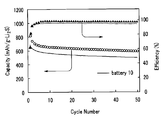
- the initial discharge capacity of the battery 10A was 812 mAh / g, which was higher than that of the battery 10 and was 588 mAh / g even after 50 charge / discharge tests (50 cycles).
- the average coulombic efficiency of 50 cycles of the battery 10A was also higher than that of the battery 10 and was 97%.
- the battery 10A has better characteristics than the battery 10 because the average particle diameter d50 of the active material particles 44A is 1 ⁇ m or less. Turned out to be.
- the average particle diameter d50 of the active material particles 44A is less than 0.1 ⁇ m, it is not easy to disperse with high density when mixing with carbon black or the like to produce a cathode material (mixture).
- step S11 dispersion liquid preparation
- step S14 the particle size of the active material particles produced in the heat treatment step (S14) is reduced by performing a step of mechanically pulverizing the carbon particles 40 to reduce the particle size.
- the battery having active material particles having a particle diameter of 1 ⁇ m or less produced by this method did not have better characteristics than the battery 10A.
- the characteristic of the battery 10A was better than that of the battery 10 because not only the surface area of the active material particles increased, but also the surface of the carbon particles 40A having lower conductivity than lithium sulfide on the outer surface by mechanical grinding. It is thought that was exposed.
- the mechanical pulverization process may be, for example, a rotating ball mill, a vibration ball mill, or a jet mill as long as it is a mechanical process.
- alumina sphere, natural silica, iron ball, zirconia ball or the like is used as the ball of the ball mill.
- the rotation speed is 500 to 2000 rpm and the treatment time is 1 to 72 hours to make the particle size 1 ⁇ m or less.
- the particle size of the active material particles is 1 ⁇ m or less, so that higher performance lithium Sulfur batteries can be manufactured. Furthermore, it is more preferable that the above process is a mechanical pulverization process performed after the process of using the precursor particles as active material particles, because a part of the carbon particles is exposed on the outer surface of the active material particles.
- a lithium sulfur battery 10B having graphite as an anode material will be described. Since the lithium-sulfur battery 10B etc. of this embodiment are similar to the lithium-sulfur battery 10 etc., the same code
- the battery 10 ⁇ / b> B has graphite, which is elemental carbon, as an anode active material in the anode 12.
- the cathode 11 has active material particles 44A which are a pulverized (lithium sulfide / carbon) composite, and the electrolyte solution 14 is an aprotic solvated ionic liquid in which an ether and a lithium salt form a complex. .
- Graphite occludes and releases lithium ions. As shown in the following (Formula 4), since carbon reversibly changes to lithium carbide, it is possible to occlude (charge) / release (discharge) lithium ions.
- the battery 10B had substantially the same characteristics as the batteries 10 and 10A using metallic lithium as an anode active material.
- crystalline single carbon such as natural graphite, artificial graphite, carbon black, acetylene black, graphite, activated carbon, carbon fiber, coke, soft carbon, hard carbon, or non-crystalline single carbon
- an anode active material made of a material containing at least one selected from carbon group elements (elements belonging to Group 14) such as silicon and tin, etc., mixed with a binder or the like. preferable.
- a carbon group element compound can be used as the anode active material.
- the battery 10B whose anode active material is not metallic lithium is safer than the batteries 10 and 10A.
- the lithium sulfide 43 is formed on the outer surface of the carbon particles 40A.
- “formation” means that lithium sulfate deposited on the outer surface of the carbon particles 40 has been changed to lithium sulfide by a reduction reaction. This indicates that the configuration is different from the configuration described in JP2013-229227A.
Landscapes
- Chemical & Material Sciences (AREA)
- General Chemical & Material Sciences (AREA)
- Chemical Kinetics & Catalysis (AREA)
- Electrochemistry (AREA)
- Engineering & Computer Science (AREA)
- Inorganic Chemistry (AREA)
- Manufacturing & Machinery (AREA)
- Composite Materials (AREA)
- Materials Engineering (AREA)
- Organic Chemistry (AREA)
- Physics & Mathematics (AREA)
- Condensed Matter Physics & Semiconductors (AREA)
- General Physics & Mathematics (AREA)
- Battery Electrode And Active Subsutance (AREA)
- Secondary Cells (AREA)
Abstract
Description
図1に示すように本実施形態のリチウム硫黄電池(以下「電池」という)10は、カソード11と、アノード12と、セパレータ13と、電解液14と、を具備する。カソード(正極)11は(硫化リチウム/炭素)複合体を含むカソード活物質層11Aと集電体11Bとからなる。アノード(負極)12は金属リチウムからなる。
一方、カソード11のカソード活物質層11Aは、リチウムイオンを吸蔵放出可能なカソード活物質として、以下の(式2)に示すように硫黄を有する。
充電開始型、すなわち初期状態が放電状態の電池10では、アノード12はアノード活物質として金属リチウムを含み、カソード11はカソード活物質として硫化リチウムを含む。
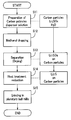
次に、図2に示すフローチャートに沿って、リチウム硫黄系二次電池である電池10のカソード材料の製造方法について説明する。
図3Aに示すように、硫酸リチウム溶液に炭素粒子40が分散された第1の分散液30が作製される。
硫酸リチウムが溶解しない沈殿剤である第2の溶媒が第1の分散液30に加えられる。すると、図3Bに示すように炭素粒子40の外面に硫酸リチウム42が析出する。言い替えれば、第1の分散液30が、硫酸リチウム42が外面に形成された炭素粒子40からなる前駆体粒子である(硫酸リチウム/炭素)複合体41が水に分散した第2の分散液31に変化する。
第2の分散液31を濾過し、エタノールにて洗浄し、真空乾燥(40℃)を12時間行うことで。硫酸リチウムが外面上に析出した炭素粒子からなる黒色粉末(Li2SO4-GNAs Mix)である前駆体粒子41が得られる。なお、濾過しないで、分散液の温度を上げて溶媒を蒸発させて前駆体粒子41を分離してもよい。
前駆体粒子41(図3B、図5)を不活性雰囲気下で約800℃に加熱することで、活物質粒子44である(硫化リチウム/炭素)複合体(図3C、図7A、図7B)が作製される。
不活性雰囲気としては、例えば、アルゴンおよび窒素等の不活性ガス中、または、真空中である。
(硫酸リチウム/炭素)複合体41の炭素粒子40は、(式3)に示した還元反応により消費されるため、小さくなる。残った炭素粒子40Aは、硫化リチウムの電子伝導性の担体としての機能を有する。
次に、(硫化リチウム/炭素)複合体44からなるカソード材料を用いて電池10が作製され、充放電特性が評価された。
すでに説明したように、(硫化リチウム/炭素)複合体44の78.3重量%が硫化リチウムであるため、上記混合物の、(硫化リチウム/炭素)複合体77重量%は、硫化リチウム60重量%とGNAs17重量%とからなる。そして、上記混合物の炭素成分はカーボンブラック13重量%とGNAs17重量%とからなり、合計で30重量%である。
F3CH2C-O-CF2CF2H
溶媒の添加量は、例えば、イオン伝導率(30℃)が、0.1mS/cm以上、粘度(30℃)が、10mPa・s以下となるように設定される。
放電では、2.2Vおよび2.0Vに平坦部が出現した。2.2V平坦部は硫黄(S6)から(Li2SN:4≦N≦8)への還元反応に相当する。そして、2.0V平坦部は(Li2SN:4≦N≦8)から、Li2S2さらにLi2Sへの還元反応に相当する。
次に、カソード材料として活物質粒子44Aを有するリチウム硫黄電池10A等について説明する。本実施形態のリチウム硫黄電池10A等は、リチウム硫黄電池10等と類似しているので同じ構成要素には同じ符号を付し説明は省略する。
次に、アノード材料としてグラファイトを有するリチウム硫黄電池10B等について説明する。本実施形態のリチウム硫黄電池10B等は、リチウム硫黄電池10等と類似しているので同じ構成要素には同じ符号を付し説明は省略する。
図16に示すように、電池10Bは、金属リチウムをアノード活物質とした電池10、10Aと略同じ特性が得られた。
11・・・カソード
11A・・・カソード活物質層
11B・・・集電体
12・・・アノード
12A・・・アノード活物質層
12B・・・集電体
13・・・セパレータ
14・・・電解液
20・・・コインセルケース
21・・・スペーサ
22・・・スプリング
23・・・蓋
24・・・ガスケット
40、40A・・・炭素粒子
41・・・(硫酸リチウム/炭素)複合体(前駆体粒子)
42・・・硫酸リチウム層
43・・・硫化リチウム層
44、44A・・・(硫化リチウム/炭素)複合体(活物質粒子)
Claims (21)
- 炭素粒子が硫酸リチウム溶液に分散している第1の分散液を作製する工程と、
硫酸リチウムが溶解しない溶媒を、前記第1の分散液に加える工程と、
前記溶媒を加えた前記第1の分散液から前駆体粒子を分離する工程と、
前記前駆体粒子を、不活性雰囲気下で加熱し、カソード活物質粒子とする工程と、を順に具備することを特徴とするリチウム硫黄電池のカソード材料の製造方法。 - 前記溶媒を加える工程において、前記炭素粒子を核として前記炭素粒子の外面に硫酸リチウムが析出することを特徴とする請求項1に記載のリチウム硫黄電池のカソード材料の製造方法。
- 前記加熱する工程において、硫酸リチウムが炭素により還元され硫化リチウムとなることを特徴とする請求項2に記載のリチウム硫黄電池のカソード材料の製造方法。
- 前記カソード活物質粒子の粒径を小さくする工程をさらに具備することを特徴とする請求項3に記載のリチウム硫黄電池のカソード材料の製造方法。
- 前記カソード活物質粒子の粒径を小さくする工程が、前記前駆体粒子を前記カソード活物質粒子とする工程の後に行われる、機械的な粉砕処理であることを特徴とする請求項4に記載のリチウム硫黄電池のカソード材料の製造方法。
- 請求項1から請求項5のいずれか1項に記載の製造方法で製造されたことを特徴とするリチウム硫黄電池のカソード材料。
- 請求項6に記載のカソード材料を有することを特徴とするリチウム硫黄電池。
- 含有する電解液が、エーテルとリチウム塩とが錯体を形成した非プロトン性溶媒和イオン液体であることを特徴とする請求項7に記載のリチウム硫黄電池。
- 前記電解液がハイドロフルオロエーテルを含み、イオン伝導率(30℃)が、0.1mS/cm以上、粘度(30℃)が、10mPa・s以下であることを特徴とする請求項8に記載のリチウム硫黄電池。
- アノード活物質が、単体炭素であることを特徴とする請求項7または請求項8に記載のリチウム硫黄電池。
- 外面に硫化リチウムが形成された炭素粒子からなる(硫化リチウム/炭素)複合体であるカソード活物質粒子を有することを特徴とするリチウム硫黄電池のカソード材料。
- 前記カソード活物質粒子の平均粒径が1μm未満であることを特徴とする請求項11に記載のリチウム硫黄電池のカソード材料。
- 前記カソード活物質粒子の外面に前記炭素粒子の一部が露出していることを特徴とする請求項12に記載のリチウム硫黄電池のカソード材料。
- 前記炭素粒子がグラフェン積層微小板の凝集体であることを特徴とする請求項13に記載のリチウム硫黄電池のカソード材料。
- 前記グラフェン積層微小板の比表面積が200m2/g以上であることを特徴とする請求項14に記載のリチウム硫黄電池のカソード材料。
- 前記(硫化リチウム/炭素)複合体の、炭素含有量が10重量%以上30重量%以下であることを特徴とする請求項11から請求項15のいずれか1項に記載のリチウム硫黄電池のカソード材料。
- 前記(硫化リチウム/炭素)複合体に加えて、さらに導電性炭素粒子を含むことを特徴とする請求項11から請求項16のいずれか1項に記載のリチウム硫黄電池のカソード材料。
- 前記導電性炭素粒子/前記(硫化リチウム/炭素)複合体の炭素の重量比が、0.33以上0.50以下であることを特徴とする請求項17に記載のリチウム硫黄電池のカソード材料。
- 請求項11から請求項18のいずれか1項に記載のリチウム硫黄電池のカソード材料を有することを特徴とする電池。
- 含有する電解液が、エーテルとリチウム塩とが錯体を形成した非プロトン性溶媒和イオン液体であることを特徴とする請求項19に記載のリチウム硫黄電池。
- 前記電解液がハイドロフルオロエーテルを含み、イオン伝導率(30℃)が、0.1mS/cm以上、粘度(30℃)が、10mPa・s以下であることを特徴とする請求項20に記載のリチウム硫黄電池。
Priority Applications (5)
| Application Number | Priority Date | Filing Date | Title |
|---|---|---|---|
| EP15855521.9A EP3214674B1 (en) | 2014-10-27 | 2015-10-23 | Method for producing cathode material for lithium-sulfur battery |
| US15/522,154 US10270090B2 (en) | 2014-10-27 | 2015-10-23 | Production method for cathode material of lithium sulfur battery, cathode material of lithium sulfur battery, and lithium sulfur battery |
| CN201580058745.6A CN107078296B (zh) | 2014-10-27 | 2015-10-23 | 锂硫电池的阴极材料的制造方法、锂硫电池的阴极材料以及锂硫电池 |
| KR1020177010983A KR101933329B1 (ko) | 2014-10-27 | 2015-10-23 | 리튬황 전지의 캐소드 재료의 제조 방법, 리튬황 전지의 캐소드 재료, 및 리튬황 전지 |
| JP2016556540A JP6270004B2 (ja) | 2014-10-27 | 2015-10-23 | リチウム硫黄電池のカソード材料、およびリチウム硫黄電池 |
Applications Claiming Priority (2)
| Application Number | Priority Date | Filing Date | Title |
|---|---|---|---|
| JP2014218504 | 2014-10-27 | ||
| JP2014-218504 | 2014-10-27 |
Publications (1)
| Publication Number | Publication Date |
|---|---|
| WO2016068043A1 true WO2016068043A1 (ja) | 2016-05-06 |
Family
ID=55857382
Family Applications (1)
| Application Number | Title | Priority Date | Filing Date |
|---|---|---|---|
| PCT/JP2015/079981 Ceased WO2016068043A1 (ja) | 2014-10-27 | 2015-10-23 | リチウム硫黄電池のカソード材料の製造方法、リチウム硫黄電池のカソード材料、およびリチウム硫黄電池 |
Country Status (6)
| Country | Link |
|---|---|
| US (1) | US10270090B2 (ja) |
| EP (1) | EP3214674B1 (ja) |
| JP (1) | JP6270004B2 (ja) |
| KR (1) | KR101933329B1 (ja) |
| CN (1) | CN107078296B (ja) |
| WO (1) | WO2016068043A1 (ja) |
Cited By (4)
| Publication number | Priority date | Publication date | Assignee | Title |
|---|---|---|---|---|
| CN106229491A (zh) * | 2016-09-10 | 2016-12-14 | 华南理工大学 | 一种生物质废弃物热还原活化硫酸锂制备锂硫电池正极Li2S/NCs复合材料的方法 |
| CN108539265A (zh) * | 2017-03-02 | 2018-09-14 | 深圳格林德能源有限公司 | 一种锂硫电池 |
| WO2019065004A1 (ja) * | 2017-09-27 | 2019-04-04 | 国立研究開発法人物質・材料研究機構 | グラフェンを含有する電極、その製造方法およびそれを用いた蓄電デバイス |
| JP2020004632A (ja) * | 2018-06-29 | 2020-01-09 | 学校法人早稲田大学 | リチウム硫黄電池の活物質の製造方法、リチウム硫黄電池の電極、および、リチウム硫黄電池 |
Families Citing this family (16)
| Publication number | Priority date | Publication date | Assignee | Title |
|---|---|---|---|---|
| CN109088055B (zh) * | 2017-10-24 | 2021-11-09 | 苏州市相城区渭塘城乡发展有限公司 | 硫锂电池 |
| CN110416597B (zh) * | 2018-04-27 | 2021-06-08 | 宁德时代新能源科技股份有限公司 | 一种醚类电解液以及锂硫二次电池 |
| JP2021523547A (ja) * | 2018-04-30 | 2021-09-02 | ライテン・インコーポレイテッド | リチウムイオン電池及び電池材料 |
| JP7082405B2 (ja) * | 2018-06-29 | 2022-06-08 | 学校法人早稲田大学 | リチウム硫黄電池の製造方法 |
| KR102663583B1 (ko) * | 2018-09-28 | 2024-05-03 | 주식회사 엘지에너지솔루션 | 황-탄소 복합체의 제조방법 |
| WO2020067793A1 (ko) * | 2018-09-28 | 2020-04-02 | 주식회사 엘지화학 | 황-탄소 복합체 및 그 제조방법 |
| CN110148781A (zh) * | 2019-04-22 | 2019-08-20 | 华中科技大学 | 一种离子液体凝胶电解质、其制备方法和应用 |
| CN111403716B (zh) * | 2020-03-27 | 2022-07-08 | 清华大学深圳国际研究生院 | 自支撑锂硫电池正极片、其制备方法以及锂硫电池 |
| KR102876039B1 (ko) * | 2020-11-26 | 2025-10-23 | 주식회사 엘지에너지솔루션 | 리튬-황 전지용 전해액 및 이를 포함하는 리튬-황 전지 |
| KR102603627B1 (ko) * | 2020-12-18 | 2023-11-16 | 주식회사 포스코 | 황화리튬 및 이의 제조방법 |
| US20250214838A1 (en) * | 2022-03-31 | 2025-07-03 | Solivis Inc. | Method for producing high-purity alkali metal sulfide |
| FR3134923B1 (fr) * | 2022-04-20 | 2024-04-26 | Ecole Polytech | Batterie Lithium-ions nouvelle génération et procédé de fabrication associé |
| CN116417563A (zh) * | 2023-04-03 | 2023-07-11 | 武汉船用电力推进装置研究所(中国船舶集团有限公司第七一二研究所) | 一种硫/硫化锂复合正极及电池 |
| KR102795495B1 (ko) * | 2023-11-29 | 2025-04-16 | 주식회사 티앨씨 | 황화리튬의 제조방법 |
| CN117566692B (zh) * | 2023-12-06 | 2024-07-12 | 华南师范大学 | 一种硫化锂纳米颗粒的制备方法、硫化锂纳米颗粒及其应用 |
| CN117977044B (zh) * | 2024-04-01 | 2024-07-16 | 四川新能源汽车创新中心有限公司 | 一种硫化物基全固态电池物料的回收方法 |
Citations (2)
| Publication number | Priority date | Publication date | Assignee | Title |
|---|---|---|---|---|
| WO2012102037A1 (ja) * | 2011-01-27 | 2012-08-02 | 出光興産株式会社 | アルカリ金属硫化物と導電剤の複合材料 |
| JP2014112526A (ja) * | 2012-11-07 | 2014-06-19 | Yokohama National Univ | 二次電池、及び、前記二次電池の製造方法 |
Family Cites Families (3)
| Publication number | Priority date | Publication date | Assignee | Title |
|---|---|---|---|---|
| CN103187558B (zh) * | 2011-12-28 | 2015-07-01 | 清华大学 | 硫-石墨烯复合材料的制备方法 |
| JP5770675B2 (ja) * | 2012-04-26 | 2015-08-26 | 古河機械金属株式会社 | 硫化リチウムの製造方法 |
| JP6059449B2 (ja) | 2012-04-26 | 2017-01-11 | 古河機械金属株式会社 | 二次電池用正極材料の製造方法、二次電池用正極の製造方法および二次電池の製造方法 |
-
2015
- 2015-10-23 KR KR1020177010983A patent/KR101933329B1/ko active Active
- 2015-10-23 WO PCT/JP2015/079981 patent/WO2016068043A1/ja not_active Ceased
- 2015-10-23 JP JP2016556540A patent/JP6270004B2/ja active Active
- 2015-10-23 EP EP15855521.9A patent/EP3214674B1/en active Active
- 2015-10-23 CN CN201580058745.6A patent/CN107078296B/zh active Active
- 2015-10-23 US US15/522,154 patent/US10270090B2/en active Active
Patent Citations (2)
| Publication number | Priority date | Publication date | Assignee | Title |
|---|---|---|---|---|
| WO2012102037A1 (ja) * | 2011-01-27 | 2012-08-02 | 出光興産株式会社 | アルカリ金属硫化物と導電剤の複合材料 |
| JP2014112526A (ja) * | 2012-11-07 | 2014-06-19 | Yokohama National Univ | 二次電池、及び、前記二次電池の製造方法 |
Non-Patent Citations (4)
| Title |
|---|
| FEIXIANG WU ET AL.: "Solution-Based Processing of Graphene-Li2S Composite Cathodes for Lithium-Ion and Lithium-Sulfur Batteries", PARTICLE & PARTICLE SYSTEMS CHARACTERIZATION, vol. 31, no. Issue 6, June 2014 (2014-06-01), pages 639 - 644, XP055277875 * |
| JUSEF HASSOUN ET AL.: "Rechargeable lithium sulfide electrode for a polymer tin/sulfur lithium-ion battery", JOURNAL OF POWER SOURCES, vol. 196, no. Issue 1, 2011, pages 343 - 348, XP027261339 * |
| See also references of EP3214674A4 * |
| ZICHAO YANG ET AL.: "In situ synthesis of lithium sulfide-carbon composites as cathode materials for rechargeable lithium batteries", JOURNAL OF MATERIALS CHEMISTRY A, vol. 1, no. 4, 28 January 2013 (2013-01-28), pages 1433 - 1440, XP055169729 * |
Cited By (7)
| Publication number | Priority date | Publication date | Assignee | Title |
|---|---|---|---|---|
| CN106229491A (zh) * | 2016-09-10 | 2016-12-14 | 华南理工大学 | 一种生物质废弃物热还原活化硫酸锂制备锂硫电池正极Li2S/NCs复合材料的方法 |
| CN106229491B (zh) * | 2016-09-10 | 2019-01-15 | 华南理工大学 | 一种生物质废弃物热还原活化硫酸锂制备锂硫电池正极Li2S/NCs复合材料的方法 |
| CN108539265A (zh) * | 2017-03-02 | 2018-09-14 | 深圳格林德能源有限公司 | 一种锂硫电池 |
| WO2019065004A1 (ja) * | 2017-09-27 | 2019-04-04 | 国立研究開発法人物質・材料研究機構 | グラフェンを含有する電極、その製造方法およびそれを用いた蓄電デバイス |
| JPWO2019065004A1 (ja) * | 2017-09-27 | 2020-11-12 | 国立研究開発法人物質・材料研究機構 | グラフェンを含有する電極、その製造方法およびそれを用いた蓄電デバイス |
| JP2020004632A (ja) * | 2018-06-29 | 2020-01-09 | 学校法人早稲田大学 | リチウム硫黄電池の活物質の製造方法、リチウム硫黄電池の電極、および、リチウム硫黄電池 |
| JP7112073B2 (ja) | 2018-06-29 | 2022-08-03 | 学校法人早稲田大学 | リチウム硫黄電池の活物質の製造方法、リチウム硫黄電池の電極、および、リチウム硫黄電池 |
Also Published As
| Publication number | Publication date |
|---|---|
| EP3214674A4 (en) | 2018-05-02 |
| JPWO2016068043A1 (ja) | 2017-07-20 |
| EP3214674B1 (en) | 2019-05-15 |
| KR20170057423A (ko) | 2017-05-24 |
| KR101933329B1 (ko) | 2018-12-27 |
| US10270090B2 (en) | 2019-04-23 |
| CN107078296B (zh) | 2020-09-29 |
| EP3214674A1 (en) | 2017-09-06 |
| CN107078296A (zh) | 2017-08-18 |
| JP6270004B2 (ja) | 2018-01-31 |
| US20170317343A1 (en) | 2017-11-02 |
Similar Documents
| Publication | Publication Date | Title |
|---|---|---|
| JP6270004B2 (ja) | リチウム硫黄電池のカソード材料、およびリチウム硫黄電池 | |
| Wang et al. | Graphene/Co 9 S 8 nanocomposite paper as a binder-free and free-standing anode for lithium-ion batteries | |
| CN103702929B (zh) | 碳-硅复合材料、其制备方法以及包含所述碳-硅复合材料的负极活性材料 | |
| CN108292748B (zh) | 负极活性物质、锂离子二次电池及其制造方法、混合负极活性物质材料、负极 | |
| JP6867821B2 (ja) | 負極活物質、混合負極活物質材料、非水電解質二次電池用負極、リチウムイオン二次電池用負極、リチウムイオン二次電池、負極活物質の製造方法、負極の製造方法、及びリチウムイオン二次電池の製造方法 | |
| US20140080004A1 (en) | Carbonaceous material for non-aqueous electrolyte secondary battery negative electrode | |
| KR102471212B1 (ko) | 고정화 셀레늄, 그 제조방법, 및 재충전식 전지에서 고정화 셀레늄의 사용 | |
| TWI705605B (zh) | 負極活性物質、混合負極活性物質材料、非水電解質二次電池用負極、鋰離子二次電池、負極活性物質的製造方法、以及鋰離子二次電池的製造方法 | |
| JP2015037057A (ja) | リチウム二次電池用複合活物質およびその製造方法 | |
| JP6598247B2 (ja) | 中空体、その製造方法、それを用いたアノード電極材料、および、それを用いたリチウムイオン二次電池 | |
| CN116636036A (zh) | 非水电解质二次电池用负极材料和非水电解质二次电池 | |
| WO2021193662A1 (ja) | リチウム二次電池用複合活物質、リチウム二次電池用電極組成物、リチウム二次電池用電極並びにリチウム二次電池用複合活物質の製造方法 | |
| Su et al. | Hierarchical porous ZnMnO 3 yolk–shell microspheres with superior lithium storage properties enabled by a unique one-step conversion mechanism | |
| Lee et al. | Facile conversion of waste glass into Li storage materials | |
| JP2021166163A (ja) | アノード電極材料、その製造方法、および、それを用いたリチウムイオン二次電池 | |
| JP2022544975A (ja) | リチウム-硫黄二次電池用カプセル及びこれを含むリチウム-硫黄二次電池 | |
| JP2022517702A (ja) | 負極材料、並びにそれを含む電気化学的装置及び電子設備 | |
| JP6328666B2 (ja) | 活性カソード物質及び充電式電気化学電池における活性カソード物質の使用方法 | |
| KR101375997B1 (ko) | 금속산화물 및 그래핀 복합체를 이용한 리튬이차전지용 음극활물질 및 이의 제조방법 | |
| JP2021192365A (ja) | 活物質の製造方法 | |
| JP7112073B2 (ja) | リチウム硫黄電池の活物質の製造方法、リチウム硫黄電池の電極、および、リチウム硫黄電池 | |
| KR20240063150A (ko) | 리튬 황 전지 | |
| JP2019067761A (ja) | NiMHバッテリーの高温性能を改善するための方法および組成物 | |
| TW202545816A (zh) | 碳材料及其製造方法、分散液、電極用組成物、電極用漿料、電極、正極、負極、鋰離子電池、以及碳材料前驅物及其製造方法 | |
| JP2025168263A (ja) | リチウム二次電池用正極活物質、これを含む正極、及びこれを含むリチウム二次電池 |
Legal Events
| Date | Code | Title | Description |
|---|---|---|---|
| 121 | Ep: the epo has been informed by wipo that ep was designated in this application |
Ref document number: 15855521 Country of ref document: EP Kind code of ref document: A1 |
|
| DPE2 | Request for preliminary examination filed before expiration of 19th month from priority date (pct application filed from 20040101) | ||
| ENP | Entry into the national phase |
Ref document number: 2016556540 Country of ref document: JP Kind code of ref document: A |
|
| ENP | Entry into the national phase |
Ref document number: 20177010983 Country of ref document: KR Kind code of ref document: A |
|
| REEP | Request for entry into the european phase |
Ref document number: 2015855521 Country of ref document: EP |
|
| WWE | Wipo information: entry into national phase |
Ref document number: 15522154 Country of ref document: US |
|
| NENP | Non-entry into the national phase |
Ref country code: DE |