WO2016068329A1 - リチウムイオン伝導性結晶体および全固体リチウムイオン二次電池 - Google Patents
リチウムイオン伝導性結晶体および全固体リチウムイオン二次電池 Download PDFInfo
- Publication number
- WO2016068329A1 WO2016068329A1 PCT/JP2015/080825 JP2015080825W WO2016068329A1 WO 2016068329 A1 WO2016068329 A1 WO 2016068329A1 JP 2015080825 W JP2015080825 W JP 2015080825W WO 2016068329 A1 WO2016068329 A1 WO 2016068329A1
- Authority
- WO
- WIPO (PCT)
- Prior art keywords
- lithium ion
- ion conductive
- crystal
- polycrystal
- conductive crystal
- Prior art date
- Legal status (The legal status is an assumption and is not a legal conclusion. Google has not performed a legal analysis and makes no representation as to the accuracy of the status listed.)
- Ceased
Links
Images



Classifications
-
- H—ELECTRICITY
- H01—ELECTRIC ELEMENTS
- H01M—PROCESSES OR MEANS, e.g. BATTERIES, FOR THE DIRECT CONVERSION OF CHEMICAL ENERGY INTO ELECTRICAL ENERGY
- H01M10/00—Secondary cells; Manufacture thereof
- H01M10/05—Accumulators with non-aqueous electrolyte
- H01M10/056—Accumulators with non-aqueous electrolyte characterised by the materials used as electrolytes, e.g. mixed inorganic/organic electrolytes
- H01M10/0561—Accumulators with non-aqueous electrolyte characterised by the materials used as electrolytes, e.g. mixed inorganic/organic electrolytes the electrolyte being constituted of inorganic materials only
- H01M10/0562—Solid materials
-
- H—ELECTRICITY
- H01—ELECTRIC ELEMENTS
- H01B—CABLES; CONDUCTORS; INSULATORS; SELECTION OF MATERIALS FOR THEIR CONDUCTIVE, INSULATING OR DIELECTRIC PROPERTIES
- H01B1/00—Conductors or conductive bodies characterised by the conductive materials; Selection of materials as conductors
- H01B1/06—Conductors or conductive bodies characterised by the conductive materials; Selection of materials as conductors mainly consisting of other non-metallic substances
- H01B1/08—Conductors or conductive bodies characterised by the conductive materials; Selection of materials as conductors mainly consisting of other non-metallic substances oxides
-
- C—CHEMISTRY; METALLURGY
- C01—INORGANIC CHEMISTRY
- C01G—COMPOUNDS CONTAINING METALS NOT COVERED BY SUBCLASSES C01D OR C01F
- C01G25/00—Compounds of zirconium
-
- C—CHEMISTRY; METALLURGY
- C01—INORGANIC CHEMISTRY
- C01G—COMPOUNDS CONTAINING METALS NOT COVERED BY SUBCLASSES C01D OR C01F
- C01G25/00—Compounds of zirconium
- C01G25/006—Compounds containing zirconium, with or without oxygen or hydrogen, and containing two or more other elements
-
- C—CHEMISTRY; METALLURGY
- C01—INORGANIC CHEMISTRY
- C01G—COMPOUNDS CONTAINING METALS NOT COVERED BY SUBCLASSES C01D OR C01F
- C01G35/00—Compounds of tantalum
-
- C—CHEMISTRY; METALLURGY
- C01—INORGANIC CHEMISTRY
- C01G—COMPOUNDS CONTAINING METALS NOT COVERED BY SUBCLASSES C01D OR C01F
- C01G35/00—Compounds of tantalum
- C01G35/006—Compounds containing tantalum, with or without oxygen or hydrogen, and containing two or more other elements
-
- H—ELECTRICITY
- H01—ELECTRIC ELEMENTS
- H01B—CABLES; CONDUCTORS; INSULATORS; SELECTION OF MATERIALS FOR THEIR CONDUCTIVE, INSULATING OR DIELECTRIC PROPERTIES
- H01B1/00—Conductors or conductive bodies characterised by the conductive materials; Selection of materials as conductors
- H01B1/06—Conductors or conductive bodies characterised by the conductive materials; Selection of materials as conductors mainly consisting of other non-metallic substances
- H01B1/12—Conductors or conductive bodies characterised by the conductive materials; Selection of materials as conductors mainly consisting of other non-metallic substances organic substances
- H01B1/122—Ionic conductors
-
- H—ELECTRICITY
- H01—ELECTRIC ELEMENTS
- H01M—PROCESSES OR MEANS, e.g. BATTERIES, FOR THE DIRECT CONVERSION OF CHEMICAL ENERGY INTO ELECTRICAL ENERGY
- H01M10/00—Secondary cells; Manufacture thereof
- H01M10/05—Accumulators with non-aqueous electrolyte
- H01M10/052—Li-accumulators
- H01M10/0525—Rocking-chair batteries, i.e. batteries with lithium insertion or intercalation in both electrodes; Lithium-ion batteries
-
- H—ELECTRICITY
- H01—ELECTRIC ELEMENTS
- H01M—PROCESSES OR MEANS, e.g. BATTERIES, FOR THE DIRECT CONVERSION OF CHEMICAL ENERGY INTO ELECTRICAL ENERGY
- H01M10/00—Secondary cells; Manufacture thereof
- H01M10/05—Accumulators with non-aqueous electrolyte
- H01M10/058—Construction or manufacture
- H01M10/0585—Construction or manufacture of accumulators having only flat construction elements, i.e. flat positive electrodes, flat negative electrodes and flat separators
-
- C—CHEMISTRY; METALLURGY
- C01—INORGANIC CHEMISTRY
- C01P—INDEXING SCHEME RELATING TO STRUCTURAL AND PHYSICAL ASPECTS OF SOLID INORGANIC COMPOUNDS
- C01P2002/00—Crystal-structural characteristics
- C01P2002/30—Three-dimensional structures
-
- C—CHEMISTRY; METALLURGY
- C01—INORGANIC CHEMISTRY
- C01P—INDEXING SCHEME RELATING TO STRUCTURAL AND PHYSICAL ASPECTS OF SOLID INORGANIC COMPOUNDS
- C01P2002/00—Crystal-structural characteristics
- C01P2002/50—Solid solutions
-
- C—CHEMISTRY; METALLURGY
- C01—INORGANIC CHEMISTRY
- C01P—INDEXING SCHEME RELATING TO STRUCTURAL AND PHYSICAL ASPECTS OF SOLID INORGANIC COMPOUNDS
- C01P2002/00—Crystal-structural characteristics
- C01P2002/70—Crystal-structural characteristics defined by measured X-ray, neutron or electron diffraction data
- C01P2002/76—Crystal-structural characteristics defined by measured X-ray, neutron or electron diffraction data by a space-group or by other symmetry indications
-
- C—CHEMISTRY; METALLURGY
- C01—INORGANIC CHEMISTRY
- C01P—INDEXING SCHEME RELATING TO STRUCTURAL AND PHYSICAL ASPECTS OF SOLID INORGANIC COMPOUNDS
- C01P2002/00—Crystal-structural characteristics
- C01P2002/70—Crystal-structural characteristics defined by measured X-ray, neutron or electron diffraction data
- C01P2002/77—Crystal-structural characteristics defined by measured X-ray, neutron or electron diffraction data by unit-cell parameters, atom positions or structure diagrams
-
- C—CHEMISTRY; METALLURGY
- C01—INORGANIC CHEMISTRY
- C01P—INDEXING SCHEME RELATING TO STRUCTURAL AND PHYSICAL ASPECTS OF SOLID INORGANIC COMPOUNDS
- C01P2004/00—Particle morphology
- C01P2004/01—Particle morphology depicted by an image
- C01P2004/02—Particle morphology depicted by an image obtained by optical microscopy
-
- C—CHEMISTRY; METALLURGY
- C01—INORGANIC CHEMISTRY
- C01P—INDEXING SCHEME RELATING TO STRUCTURAL AND PHYSICAL ASPECTS OF SOLID INORGANIC COMPOUNDS
- C01P2006/00—Physical properties of inorganic compounds
- C01P2006/40—Electric properties
-
- H—ELECTRICITY
- H01—ELECTRIC ELEMENTS
- H01M—PROCESSES OR MEANS, e.g. BATTERIES, FOR THE DIRECT CONVERSION OF CHEMICAL ENERGY INTO ELECTRICAL ENERGY
- H01M2300/00—Electrolytes
- H01M2300/0017—Non-aqueous electrolytes
- H01M2300/0065—Solid electrolytes
- H01M2300/0068—Solid electrolytes inorganic
- H01M2300/0071—Oxides
-
- Y—GENERAL TAGGING OF NEW TECHNOLOGICAL DEVELOPMENTS; GENERAL TAGGING OF CROSS-SECTIONAL TECHNOLOGIES SPANNING OVER SEVERAL SECTIONS OF THE IPC; TECHNICAL SUBJECTS COVERED BY FORMER USPC CROSS-REFERENCE ART COLLECTIONS [XRACs] AND DIGESTS
- Y02—TECHNOLOGIES OR APPLICATIONS FOR MITIGATION OR ADAPTATION AGAINST CLIMATE CHANGE
- Y02E—REDUCTION OF GREENHOUSE GAS [GHG] EMISSIONS, RELATED TO ENERGY GENERATION, TRANSMISSION OR DISTRIBUTION
- Y02E60/00—Enabling technologies; Technologies with a potential or indirect contribution to GHG emissions mitigation
- Y02E60/10—Energy storage using batteries
-
- Y—GENERAL TAGGING OF NEW TECHNOLOGICAL DEVELOPMENTS; GENERAL TAGGING OF CROSS-SECTIONAL TECHNOLOGIES SPANNING OVER SEVERAL SECTIONS OF THE IPC; TECHNICAL SUBJECTS COVERED BY FORMER USPC CROSS-REFERENCE ART COLLECTIONS [XRACs] AND DIGESTS
- Y02—TECHNOLOGIES OR APPLICATIONS FOR MITIGATION OR ADAPTATION AGAINST CLIMATE CHANGE
- Y02P—CLIMATE CHANGE MITIGATION TECHNOLOGIES IN THE PRODUCTION OR PROCESSING OF GOODS
- Y02P70/00—Climate change mitigation technologies in the production process for final industrial or consumer products
- Y02P70/50—Manufacturing or production processes characterised by the final manufactured product
Definitions
- the present invention relates to a high-density lithium ion conductive crystal and an all-solid-state lithium ion secondary battery using the lithium ion conductive crystal as a solid electrolyte.
- Lithium ion secondary batteries are widely used in small information devices such as mobile phones and laptop computers because they have higher energy density and can operate at higher potentials than secondary batteries such as nickel-cadmium batteries and nickel metal hydride batteries. .
- secondary batteries such as nickel-cadmium batteries and nickel metal hydride batteries.
- it is easy to reduce the size and weight there is an increasing demand for secondary batteries for hybrid vehicles and electric vehicles.
- all-solid-state lithium ion secondary batteries that do not use flammable electrolytes are being researched and developed. High ion conductivity is required for a solid electrolyte used in an all-solid lithium ion secondary battery.
- Li 7.1 La 3.1 Zr 1.9 O 12 having a cubic garnet-related crystal structure manufactured by a high temperature sintering method is known (Patent Document 1). ).
- Patent Document 1 Li 7.1 La 3.1 Zr 1.9 O 12 having a cubic garnet-related crystal structure manufactured by a high temperature sintering method.
- a crystal having a diameter of several tens to several hundreds ⁇ m can be obtained by the high temperature sintering method. At this size, it cannot be used as a solid electrolyte of an all-solid lithium ion secondary battery product.
- a lithium ion conductive crystal having an area of a circle of about 1 cm in diameter and capable of being sliced to reduce the electric resistance value is required.
- the present invention has been made in view of such circumstances, and includes a high-density and long lithium ion conductive crystal, and an all solid lithium ion secondary battery using the lithium ion conductive crystal as a solid electrolyte.
- the purpose is to provide.
- the present inventors have devised a method for producing a crystal so that high-density Li 7-3x Al x La 3 Zr 2 O 12 (0.05 ⁇ x ⁇ 0.50), Li Crystals of 5 La 3 Ta 2 O 12 and Li 6 BaLa 2 Ta 2 O 12 were obtained, and it was considered that the above problem could be solved.
- Li 7-3x Al x La 3 Zr 2 O 12 (0.05 ⁇ x ⁇ 0.50)
- Li 5 La 3 Ta 2 O 12 , and Li 6 BaLa 2 Ta 2 O 12 crystals can be grown and confirmed that these crystals can be mechanically thinned.
- the lithium ion conductive crystal of the present invention has a chemical composition of Li 7-3x Al x La 3 Zr 2 O 12 (0.05 ⁇ x ⁇ 0.50), Li 5 La 3 Ta 2 O 12 , or Li 6. It is represented by BaLa 2 Ta 2 O 12 , has a relative density of 99% or more, belongs to a cubic system, has a garnet-related structure, and has a length of 2 cm or more.
- the method for producing a lithium ion conductive crystal of the present invention has a chemical composition of Li 7-3x Al x La 3 Zr 2 O 12 (0.05 ⁇ x ⁇ 0.50), Li 5 La 3 Ta 2 O 12 , Or a method for producing a lithium ion conductive crystal represented by Li 6 BaLa 2 Ta 2 O 12 and having a relative density of 99% or more, belonging to a cubic system, and having a garnet-related structure. It includes a step of melting at least a part of the raw material of the polycrystal represented by the same chemical composition as the crystal to form a melted portion and moving the melted portion at a moving speed of 8 mm / h or more.
- the chemical composition is represented by Li 7-3x Al x La 3 Zr 2 O 12 (0.05 ⁇ x ⁇ 0.50), and the relative density is 99. % Or more, a method for producing a lithium ion conductive crystal belonging to a cubic system and having a garnet-related structure, wherein the chemical composition is represented by Li 7 La 3 Zr 2 O 12 and belongs to a tetragonal system, At least a part of a raw material containing a polycrystalline body having a garnet-related structure and at least one of Al 2 O 3 polycrystalline body and LiAlO 2 polycrystalline body is melted to form a melted portion, and a moving speed of 8 mm / h or more And moving the melting part.
- the all solid lithium ion secondary battery of the present invention has a positive electrode, a negative electrode, and a solid electrolyte, and the solid electrolyte is composed of the lithium ion conductive crystal of the present invention.
- a high-density and long lithium ion conductive crystal and an all-solid lithium ion secondary battery using the lithium ion conductive crystal as a solid electrolyte can be obtained.
- Li 5 La 3 Ta 2 O 12 , Li 6 BaLa 2 Ta 2 O 12 and Li 7-3x Al x La 3 Zr 2 O 12 crystal, and all A solid lithium ion secondary battery will be described in detail based on embodiments and examples. Note that repeated explanation is omitted as appropriate.
- the present inventors formed polycrystalline powders of Li 5 La 3 Ta 2 O 12 and Li 6 BaLa 2 Ta 2 O 12 into a rod shape, and then performed floating zone (FZ) method using infrared condensing heating.
- the present invention was completed by finding that a rod-like polycrystal was melted and rapidly cooled to produce a high-density and long crystal.
- the lithium ion conductive crystal according to the embodiment of the present invention has a chemical composition of Li 7-3x Al x La 3 Zr 2 O 12 (0.05 ⁇ x ⁇ 0.50), Li 5 La 3 Ta 2 O 12. Or a Li 6 BaLa 2 Ta 2 O 12 , a relative density of 99% or more, belonging to a cubic system, and having a garnet-related structure.
- the length of the ion conductive crystal is 2 cm or more.
- the relative density is calculated by measuring the outer shape of the manufactured flakes, calculating the apparent volume, and dividing the apparent density calculated from the measured mass by the true density obtained from the single crystal X-ray structural analysis result. .
- the lithium ion conductive crystal of the present embodiment is more preferable as the relative density is higher.
- the lithium ion conductive crystal of this embodiment does not need to have all the crystal domains facing the same direction.
- this high-density lithium ion conductive crystal has high strength, it can be easily cut to an arbitrary thickness with a diamond cutter or the like. For example, a thin piece having a thickness of about 0.1 mm can be mechanically produced.
- the lithium ion conductive crystal having a relative density of 100%, that is, the original lithium ion conductive single crystal is particularly excellent in lithium ion conductivity.
- the ratio of the crystal domains of the lithium ion conductive crystal is high in the same direction, a diffraction spot is observed as a clear point in X-ray diffraction measurement using a single crystal.
- Lithium ion conductive crystals whose crystal domains are not aligned have complicated diffraction spots, or diffraction from various domains overlaps to make the diffraction spots close to a ring shape.
- This crystal was produced by moving the melted part at 10 mm / h in the FZ method. For this reason, the cooling rate of the melted part is increased, and it is not always possible to grow the crystal domains so that the orientation of the crystal domains is uniform.
- the lithium ion conductive crystal of the present embodiment satisfies at least one of the following (1) and (2).
- (1) The Nyquist plot by AC impedance measurement does not show the resistance component due to the crystal grain boundary, but shows only the resistance component of the material itself.
- the lithium ion conductive crystal of the present embodiment is manufactured by melting at least a part of a polycrystalline raw material to form a melted portion and moving the melted portion at a moving speed of 8 mm / h or more.
- a lithium ion conductive crystal is grown by FZ method, Czochralski (CZ) method, Bridgman method, pedestal method and the like. An appropriate method may be selected from these methods according to the size and shape of the lithium ion conductive crystal to be produced.
- the lithium ion conductive crystal of this embodiment may be grown by a melting method using a polycrystal represented by the same chemical composition as a raw material. That is, Li 7-3x Al x La 3 Zr 2 O 12 (0.05 ⁇ x ⁇ 0.50) crystals are respectively Li 7-3x Al x La 3 Zr 2 O 12 (0.05 ⁇ x ⁇ 0. a raw material polycrystal 50), Li 5 La 3 Ta 2 O 12 crystal is a raw material polycrystal Li 5 La 3 Ta 2 O 12 , Li 6 BaLa 2 Ta 2 O 12 crystal is Li 6 It is grown by a melting method using a BaLa 2 Ta 2 O 12 polycrystal as a raw material.
- the chemical composition is represented by Li 7-3x Al x La 3 Zr 2 O 12 (0.05 ⁇ x ⁇ 0.50), the relative density is 99% or more, belongs to the cubic system, and has a garnet-related structure.
- the lithium ion conductive crystal of this embodiment is manufactured by the FZ method, a part of the raw material of the rod-shaped polycrystalline body is melted while rotating on a plane perpendicular to the longitudinal direction, and the molten part is elongated.
- the lithium ion conductive crystal is grown by moving in the direction.
- the moving speed of the melted part is preferably 8 mm / h or more and 19 mm / h or less.
- the bubbles can be removed by increasing the rotation speed of the rod-shaped polycrystalline material to 30 rpm or more.
- the rotation speed of the raw material is preferably 30 rpm or more and 60 rpm or less.
- the melting of the raw material and the movement of the molten part are preferably performed in a dry air atmosphere.
- a lithium ion conductive crystal having a relative density of 99% or more can be produced.
- Lithium ion conductive crystal taking as an example the growth of a Li 5 La 3 Ta 2 O 12 crystal having a relative density of 99% or more, belonging to a cubic system, having a garnet-related structure and a length of 2 cm or more A method for manufacturing a body will be described.
- a raw material of a rod-shaped Li 5 La 3 Ta 2 O 12 polycrystal is prepared as follows. That is, the lithium compound, the lanthanum compound, and the tantalum compound are weighed so that the molar ratio of Li: La: Ta is 6 to 7: 3: 2 in consideration of the volatilization of lithium at a high temperature.
- the lithium compound is not particularly limited as long as it contains lithium, and examples thereof include Li 2 O and Li 2 CO 3 .
- the lanthanum compound is not particularly limited as long as it contains lanthanum, and examples thereof include La 2 O 3 and La (OH) 3 .
- the tantalum compound is not particularly limited as long as it contains tantalum, and examples thereof include Ta 2 O 5 and TaCl 5 .
- a compound containing two or more of lithium, lanthanum, and tantalum for example, LaTaO 4 or LiTaO 3, and weighing so that the molar ratio of Li: La: Ta is 6 to 7: 3: 2. May be.
- each weighed compound is mixed.
- the mixing method is not particularly limited as long as these compounds can be uniformly mixed, and may be mixed by a wet method or a dry method using a mixer such as a mixer.
- a mixer such as a mixer.
- it is calcined at 900 ° C. to 1000 ° C., preferably 930 ° C. to 990 ° C., to obtain a polycrystalline powder as a raw material.
- This polycrystalline powder belongs to the cubic system.
- the obtained polycrystalline powder is pulverized to reduce the particle size.
- the pulverization method is not particularly limited as long as the powder can be refined.
- the pulverization method may be wet or dry using a pulverizer such as a planetary ball mill, pot mill, or bead mill.
- a pulverizer such as a planetary ball mill, pot mill, or bead mill.
- the obtained ground material in a rubber tube, it shape
- the obtained molded body is fired at about 800 ° C. to 1300 ° C., preferably 900 ° C. to 1100 ° C., a polycrystalline body of Li 5 La 3 Ta 2 O 12 which is a rod-shaped raw material is obtained.
- the raw material of this rod-shaped polycrystal belongs to the cubic system.
- the raw material of this rod-shaped polycrystalline body is melted in an infrared condensing heating furnace and then rapidly cooled to have a relative density of 99% or more, a garnet-related structure, and a length of 2 cm or more.
- a Li 5 La 3 Ta 2 O 12 crystal is produced.
- the produced Li 5 La 3 Ta 2 O 12 crystal belongs to the cubic system. In this manner, a high-density and long Li 5 La 3 Ta 2 O 12 crystal can be produced.
- a Li 5 La 3 Ta 2 O 12 crystal having a relative density of 100% can also be produced.
- the lithium ion conductive crystal of this embodiment has a lattice constant a of 1.28 nm ⁇ a ⁇ 1.31 nm.
- a raw material Li 5 La 3 Ta 2 O 12 polycrystal is put in a crucible and heated to melt.
- the seed crystal is put on the raw material melt and pulled up while rotating. It is thought that by increasing the moving speed of the melting part, that is, the pulling speed of the seed crystal to 8 mm / h or more, volatilization of lithium is suppressed, and a high-density Li 5 La 3 Ta 2 O 12 crystal can be obtained.
- the lithium ion conductive crystal of this embodiment has a length of 2 cm or more. For this reason, flakes having the same quality can be easily produced by cutting.
- the method for producing the Li 7-3x Al x La 3 Zr 2 O 12 (0.05 ⁇ x ⁇ 0.50) crystal is the same as the method for producing the Li 5 La 3 Ta 2 O 12 crystal.
- the aluminum compound to be a raw material is not particularly limited as long as it contains aluminum, and the like as Al 2 O 3 and LiAlO 2.
- the zirconium compound as a raw material is not particularly limited as long as it contains zirconium, and examples thereof include ZrO 2 , ZrCl 4 , La 2 Zr 2 O 7 , and Li 2 ZrO 3 .
- the method for producing the Li 6 BaLa 2 Ta 2 O 12 crystal is the same as the method for producing the Li 5 La 3 Ta 2 O 12 crystal.
- the barium compound used as a raw material is not particularly limited as long as it contains barium, and examples thereof include BaCO 3 and BaO.
- the lithium ion conductive crystal of the present invention is excellent in lithium ion conductivity, it can be used as a solid electrolyte of an all solid lithium ion secondary battery. That is, the all solid lithium ion secondary battery of the present invention has a positive electrode, a negative electrode, and a solid electrolyte, and the solid electrolyte is composed of the lithium ion conductive crystal of the present invention. Since the solid electrolyte is a high-density lithium ion conductive crystal, an all-solid lithium battery having a negative electrode made of metallic lithium can prevent a short circuit due to penetration of metallic lithium during charging and discharging. Further, since the solid electrolyte can be thinned, the energy density per unit mass of the battery can be increased.
- Example 1 (Preparation of the powder of Li 7 La 3 Zr 2 O 12 polycrystal) Li 6.46 Al 0.18 La 3 preparation of Zr 2 O 12 crystals
- lithium carbonate Li 2 CO 3 rare metallic, purity 99.99%) 10.8661 g, lanthanum oxide La 2 O 3 (rare metallic, purity 99.99%) 16.8280 g, oxidation 8.4859 g of zirconium ZrO 2 (rare metallic, purity 99.99%) was put in an agate mortar and uniformly mixed by a wet method using ethanol.
- the lanthanum oxide used was pre-baked at 900 ° C.
- the molar ratio Li: La: Zr of the metal in this mixture is 20 mol% more lithium than the stoichiometric ratio of the target product Li 7 La 3 Zr 2 O 12 . That is, the chemical composition is an amount corresponding to Li 8.4 La 3 Zr 2 O 12 .
- an alumina crucible with lid manufactured by Nikkato, C5 type
- this was put in a box type electric furnace (manufactured by Yamato Kagaku, FP100 type) and pre-baked at 950 ° C. for 5 hours to obtain a powder.
- the obtained powder was pulverized in a mortar and then fired twice at 980 ° C. for 10 hours to produce a polycrystalline Li 7 La 3 Zr 2 O 12 powder.
- a mixture of rod-shaped Li 7 La 3 Zr 2 O 12 polycrystal and Al 2 O 3 polycrystal was prepared by the following procedure using the mixed powder classified in the above step. First, 26 g of this mixed powder was filled in a rubber mold and deaerated. Next, this mold was put in water in a sealed state and maintained at 40 MPa for 5 minutes. And after reducing the pressure of water, the molded object was taken out from the type
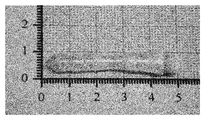
- FIG. 1 shows an appearance photograph of Li 6.46 Al 0.18 La 3 Zr 2 O 12 crystal (hereinafter sometimes referred to as “sample 1”) obtained at a descending speed of 19 mm / h. As shown in FIG. 1, the length of the sample 1 was 2.3 cm.
- Li 7 La 3 Zr 2 O 12 (Preparation of mixed powder of Li 7 La 3 Zr 2 O 12 polycrystal and LiAlO 2 polycrystal) Li 7 La 3 Zr 2 O 12 except that lithium aluminum oxide LiAlO 2 (rare metallic, purity 99.99%) polycrystal 0.8 g was used instead of 0.6 g of Al 2 O 3 polycrystal.
- a mixed powder of Li 7 La 3 Zr 2 O 12 polycrystal and LiAlO 2 polycrystal was produced in the same manner as the method for producing the mixed powder of polycrystal and Al 2 O 3 polycrystal.
- Li 7 La 3 Zr 2 O 12 points using a mixed powder of the polycrystalline body and Al 2 O 3 polycrystal instead of the mixed powder of Li 7 La 3 Zr 2 O 12 polycrystal and LiAlO 2 polycrystals Except for the production method of the mixture of the rod-shaped Li 7 La 3 Zr 2 O 12 polycrystal and the Al 2 O 3 polycrystal, the rod-shaped Li 7 La 3 Zr 2 O 12 polycrystal and the LiAlO A mixture of 2 polycrystals was made.
- Example 2 Production of Li 6.1 Al 0.3 La 3 Zr 2 O 12 crystal (production of mixed powder of polycrystalline raw material) First, as a starting material, lithium carbonate Li 2 CO 3 (rare metallic, purity 99.99%) 7.1588 g, lanthanum oxide La 2 O 3 (rare metallic, purity 99.99%) 12.9254 g, oxidation 6.5196 g of zirconium ZrO 2 (manufactured by Rare Metallic, purity 99.99%) and 0.4045 g of ⁇ -type alumina were placed in a mortar and mixed uniformly by a dry method. The lanthanum oxide used was pre-baked at 900 ° C.
- the metal molar ratio Li: Al: La: Zr in this mixture is 20 mol% more lithium than the stoichiometric ratio of the target product Li 6.1 Al 0.3 La 3 Zr 2 O 12 . That is, the chemical composition is an amount corresponding to Li 7.32 Al 0.3 La 3 Zr 2 O 12 .
- an alumina crucible with a lid made by Nikkato, C5 type was charged with 27 g of this mixture. Then, this was put in a box type electric furnace (manufactured by Denken, model number KDF009 type) and pre-baked at 850 ° C. for 4 hours to obtain a mixed powder of a polycrystalline body.
- a rod-shaped Li 7 La 3 Zr 2 is used except that a mixed powder of the above-mentioned polycrystalline material is used instead of the mixed powder of the Li 7 La 3 Zr 2 O 12 polycrystal and the Al 2 O 3 polycrystal.
- a rod-shaped polycrystal mixture was produced in the same manner as the method for producing a mixture of O 12 polycrystal and Al 2 O 3 polycrystal.
- Example 3 Production of Li 5 La 3 Ta 2 O 12 crystal (Preparation of powder Li 5 La 3 Ta 2 O 12 polycrystal) As starting materials lithium carbonate Li 2 CO 3 (rare metallic, purity 99.99%) 6.9256 g, lanthanum oxide La 2 O 3 (rare metallic, purity 99.99%) 15.2686 g, tantalum oxide Ta A Li 5 La 3 Ta 2 O 12 polycrystal powder was prepared in the same manner as in Example 1 except that 13.8058 g of 2 O 5 (rare metallic, purity 99.99%) was used. In addition, the molar ratio Li: La: Ta of the metal of the mixture of each raw material is 20 mol% of lithium more than the stoichiometric ratio of Li 5 La 3 Ta 2 O 12 which is the target product. That is, the chemical composition is an amount corresponding to Li 6 La 3 Ta 2 O 12 .
- a rod-shaped Li 5 La 3 Ta 2 O 12 polycrystal was produced by the following procedure. First, 26 g of this Li 5 La 3 Ta 2 O 12 polycrystal powder was filled in a rubber mold and deaerated. Next, this mold was put in water in a sealed state and maintained at 40 MPa for 5 minutes. And after reducing the pressure of water, the molded object was taken out from the type
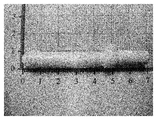
- Example 3 An appearance photograph of the Li 5 La 3 Ta 2 O 12 crystal body (hereinafter sometimes referred to as “sample 3”) obtained at a descending speed of 19 mm / h is shown in FIG. As shown in FIG. 3, the length of the sample 3 was 4 cm.
- Example 4 Production of Li 6 BaLa 2 Ta 2 O 12 Crystal (Production of Li 6 BaLa 2 Ta 2 O 12 Polycrystalline Powder)
- lithium carbonate Li 2 CO 3 rare metallic, purity 99.99%) 6.8699 g
- barium carbonate BaCO 3 rare metallic, purity 99.99%) 5.0964 g
- lanthanum oxide La 2 O 3 rare metallic, purity 99.99%) 12.6215 g
- tantalum oxide Ta 2 O 5 rare metallic, purity 99.99%) 11.4123 g, except that 11.4123 g was used.
- a Li 6 BaLa 2 Ta 2 O 12 polycrystal powder was produced.
- the metal molar ratio Li: Ba: La: Ta of the mixture of starting materials was 20 mol% more lithium than the stoichiometric ratio of the target product Li 6 BaLa 2 Ta 2 O 12 . That is, the chemical composition is an amount corresponding to Li 7.2 BaLa 2 Ta 2 O 12 .
- a rod-shaped Li 6 BaLa 2 Ta 2 O 12 polycrystal was produced by the following procedure. First, 26 g of this Li 6 BaLa 2 Ta 2 O 12 polycrystal powder was filled in a rubber mold and deaerated. Next, this mold was put in water in a sealed state and maintained at 40 MPa for 5 minutes. And after reducing the pressure of water, the molded object was taken out from the type
- FIG. 4 shows a photograph of the appearance of a Li 6 BaLa 2 Ta 2 O 12 crystal body (hereinafter sometimes referred to as “sample 4”) obtained at a descending speed of 19 mm / h. As shown in FIG. 4, the length of the sample 4 was 6 cm.
- the structure of Sample 3 was examined using a single crystal X-ray diffractometer (R-AXIS RAPID-II, manufactured by Rigaku Corporation).
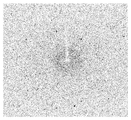
- the X-ray diffraction pattern of Sample 3 is shown in FIG. As shown in FIG. 5, a clear diffraction point could be measured.
- RAPID AUTO attached to the single crystal X-ray diffractometer and the crystal structure of the sample 3 was examined by the crystal structure analysis program Jana 2006, it was found that the sample 3 belonged to a cubic crystal.
- the crystal structure analysis program Jana 2006 it was found that the sample 3 belonged to a cubic crystal.
- the crystal structure analysis program Jana 2006 it was found that the sample 3 belonged to a cubic crystal.
- the crystal structure analysis program Jana 2006 it was found that the sample 3 belonged to a cubic crystal.
- the crystal structure analysis program Jana 2006 it was found that the sample 3 belonged to a cubic crystal.
- the crystal structure analysis program Jana 2006 it was found that the sample 3 belonged to
- the lattice constant a of the sample 2 was determined by the least square method and found to be 1.2816 nm ⁇ 0.003 nm. From this lattice constant, it was confirmed that Sample 2 was a lithium composite oxide belonging to a cubic system and having a garnet-related structure. Further, a thin piece having a thickness of about 0.1 mm was prepared from Sample 3 and Sample 4, and powder X-ray diffraction measurement was performed using a powder X-ray diffractometer (manufactured by Rigaku Corporation, Smart Lab). As a result, for the flakes of Sample 3 and Sample 4, the diffraction pattern of the cubic garnet-related compound reported heretofore was applied.
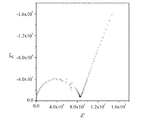
- Sample 2 was cut to produce a flake having a diameter of about 0.8 cm and a thickness of about 0.09 cm. Electrodes were formed on the front and back sides of the thin piece by sputtering gold having a diameter of 0.2 cm and a thickness of 40 nm. The impedance of Sample 2 was measured for this sample at 25 ° C. in a nitrogen atmosphere by the AC impedance method (measuring device: Solarton, 1260). The Nyquist plot at this time is shown in FIG. The lithium ion conductivity was calculated from the Nyquist plot shown in FIG. 8 and found to be 3.3 ⁇ 10 ⁇ 5 S / cm.
- the lithium ion conductive crystal of the present invention can be used as a solid electrolyte material for an all solid lithium ion secondary battery.
Landscapes
- Chemical & Material Sciences (AREA)
- Organic Chemistry (AREA)
- Inorganic Chemistry (AREA)
- Engineering & Computer Science (AREA)
- Chemical Kinetics & Catalysis (AREA)
- General Chemical & Material Sciences (AREA)
- Electrochemistry (AREA)
- Manufacturing & Machinery (AREA)
- Physics & Mathematics (AREA)
- Materials Engineering (AREA)
- General Physics & Mathematics (AREA)
- Condensed Matter Physics & Semiconductors (AREA)
- Spectroscopy & Molecular Physics (AREA)
- Secondary Cells (AREA)
- Conductive Materials (AREA)
- Inorganic Compounds Of Heavy Metals (AREA)
- Crystals, And After-Treatments Of Crystals (AREA)
Abstract
Description
(Li7La3Zr2O12多結晶体の粉末の作製)
まず、出発原料として炭酸リチウムLi2CO3(レアメタリック製、純度99.99%)10.6861gと、酸化ランタンLa2O3(レアメタリック製、純度99.99%)16.8280gと、酸化ジルコニウムZrO2(レアメタリック製、純度99.99%)8.4859gをメノウ製乳鉢に入れて、エタノールを使用した湿式法によって均一に混合した。なお、酸化ランタンは、あらかじめ900℃で仮焼きしたものを使用した。
上記工程で得られたLi7La3Zr2O12多結晶体の粉末30gと、酸化アルミニウムAl2O3(レアメタリック製、純度99.99%)多結晶体0.6gと、直径5mmのジルコニアボール50gと、イオン交換水14mLを容量45mLのジルコニア製粉砕容器に充填し、遊星型ボールミル(ドイツ・フリッチュ製、型式P-6)を用いて、公転回転数200rpmで合計300分回転させて粉砕した。粉砕後の多結晶体の粉末を100℃で24時間乾燥させ、250μm目開きのふるいを用いて分級して、Li7La3Zr2O12多結晶体とAl2O3多結晶体の混合粉末を得た。
上記工程で分級した混合粉末を用いて、以下の手順で棒形状のLi7La3Zr2O12多結晶体とAl2O3多結晶体の混合物を作製した。まず、ゴム製の型にこの混合粉末26gを充填して脱気した。つぎに、この型を密閉した状態で水中に入れて、40MPaで5分間維持した。そして、水の圧力を下げた後、成形体を型から取り出した。成形体は、直径1.0cm、高さ4.8cmの円柱形状をしていた。つぎに、箱型電気炉(デンケン製、型番KDF009)を用いて、この円柱形状の成形体を1150℃で8時間焼成した。焼成後、幅0.8cm、高さ4cmの円柱に近いLi7La3Zr2O12多結晶体とAl2O3多結晶体の混合物が26g得られた。
まず、1kWのハロゲンランプを装備した四楕円型赤外線集光加熱炉(FZ炉) (Crystal System社製、FZ-T-10000H型)に、上記工程で得られた原料である棒形状のLi7La3Zr2O12多結晶体とAl2O3多結晶体の混合物を設置して、乾燥空気雰囲気にした。
Al2O3多結晶体0.6gに代えて酸化リチウムアルミニウムLiAlO2(レアメタリック製、純度99.99%)多結晶体0.8gを用いた点を除き、Li7La3Zr2O12多結晶体とAl2O3多結晶体の混合粉末の作製方法と同様にして、Li7La3Zr2O12多結晶体とLiAlO2多結晶体の混合粉末を作製した。
Li7La3Zr2O12多結晶体とAl2O3多結晶体の混合粉末に代えてLi7La3Zr2O12多結晶体とLiAlO2多結晶体の混合粉末を用いた点を除き、棒形状のLi7La3Zr2O12多結晶体とAl2O3多結晶体の混合物の作製方法と同様にして、棒形状のLi7La3Zr2O12多結晶体とLiAlO2多結晶体の混合物を作製した。
棒形状のLi7La3Zr2O12多結晶体とAl2O3多結晶体の混合物に代えて棒形状のLi7La3Zr2O12多結晶体とLiAlO2多結晶体の混合物を用いた点を除き、上記「Li6.46Al0.18La3Zr2O12結晶体の育成1」の方法と同様にして、Li6.46Al0.18La3Zr2O12結晶体を育成した。このように原料のアルミニウム化合物が異なっていても、同じ結晶体が育成できた。
(原料の多結晶体の混合粉末の作製)
まず、出発原料として炭酸リチウムLi2CO3(レアメタリック製、純度99.99%)7.1588gと、酸化ランタンLa2O3(レアメタリック製、純度99.99%)12.9254gと、酸化ジルコニウムZrO2(レアメタリック製、純度99.99%)6.5196gと、γ型酸化アルミナ0.4045gを乳鉢に入れ、乾式で均一に混合した。なお、酸化ランタンは、あらかじめ900℃で仮焼きしたものを使用した。
Li7La3Zr2O12多結晶体とAl2O3多結晶体の混合粉末に代えて上記原料の多結晶体の混合粉末を用いた点を除き、棒形状のLi7La3Zr2O12多結晶体とAl2O3多結晶体の混合物の作製方法と同様にして、棒形状の多結晶体の混合物を作製した。
棒形状のLi7La3Zr2O12多結晶体とAl2O3多結晶体の混合物に代えて上記棒形状の多結晶体を用いた点を除き、上記「Li6.46Al0.18La3Zr2O12結晶体の育成1」の方法と同様にして、Li6.1Al0.3La3Zr2O12結晶体を育成した。このようにγ型酸化アルミナを用いることで、製造したいリチウムイオン伝導性結晶体と同じ化学組成を有する多結晶体からだけでなく、上記棒形状の多結晶体の混合物からも、同様の結晶体が育成できた。得られたLi6.1Al0.3La3Zr2O12結晶体(以下「試料2」ということがある)の外観写真を図2に示す。図2に示すように、試料2の長さは4cmであった。
(Li5La3Ta2O12多結晶体の粉末の作製)
出発原料として炭酸リチウムLi2CO3(レアメタリック製、純度99.99%)6.9256gと、酸化ランタンLa2O3(レアメタリック製、純度99.99%)15.2686gと、酸化タンタルTa2O5(レアメタリック製、純度99.99%)13.8058gを用いた点を除いて、実施例1と同様にしてLi5La3Ta2O12多結晶体の粉末を作製した。なお、各原料の混合物の金属のモル比Li:La:Taは、目的物であるLi5La3Ta2O12の化学量論比よりもリチウムが20mol%過剰である。すなわち、化学組成がLi6La3Ta2O12に相当する分量である。
上記工程で分級したLi5La3Ta2O12多結晶体の粉末を用いて、以下の手順で棒形状のLi5La3Ta2O12多結晶体を作製した。まず、ゴム製の型にこのLi5La3Ta2O12多結晶体の粉末26gを充填して脱気した。つぎに、この型を密閉した状態で水中に入れて、40MPaで5分間維持した。そして、水の圧力を下げた後、成形体を型から取り出した。成形体は、直径1.2cm、高さ7cmの円柱形状をしていた。つぎに、箱型電気炉(デンケン製、型番KDF009)を用いて、この成形体を1150℃で8時間焼成した。焼成後、幅1cm、長さ7cmの円柱に近い棒形状のLi5La3Ta2O12多結晶体が26g得られた。
実施例1と同様に、棒形状のLi5La3Ta2O12多結晶体を用いてLi5La3Ta2O12結晶体を得た。19mm/hの下降速度で得られたLi5La3Ta2O12結晶体(以下「試料3」ということがある)の外観写真を図3に示す。図3に示すように、試料3の長さは4cmであった。
(Li6BaLa2Ta2O12多結晶体の粉末の作製)
出発原料として炭酸リチウムLi2CO3(レアメタリック製、純度99.99%)6.8699gと、炭酸バリウムBaCO3(レアメタリック製、純度99.99%)5.0964gと、酸化ランタンLa2O3(レアメタリック製、純度99.99%)12.6215gと、酸化タンタルTa2O5(レアメタリック製、純度99.99%)11.4123gを用いた点を除いて、実施例1と同様にしてLi6BaLa2Ta2O12多結晶体の粉末を作製した。なお、出発原料の混合物の金属のモル比Li:Ba : La:Taは、目的物であるLi6BaLa2Ta2O12の化学量論比よりもリチウムが20mol%過剰であった。すなわち、化学組成がLi7.2BaLa2Ta2O12に相当する分量である。
上記工程で分級したLi6BaLa2Ta2O12多結晶体の粉末を用いて、以下の手順で棒形状のLi6BaLa2Ta2O12多結晶体を作製した。まず、ゴム製の型にこのLi6BaLa2Ta2O12多結晶体の粉末26gを充填して脱気した。つぎに、この型を密閉した状態で水中に入れて、40MPaで5分間維持した。そして、水の圧力を下げた後、成形体を型から取り出した。成形体は、直径1.4cm、高さ9cmの円柱形状をしていた。つぎに、箱型電気炉(デンケン製、型番KDF009)を用いて、この成形体を1150℃で8時間焼成した。焼成後、幅1.2cm、長さ8cmの円柱に近い棒形状のLi6BaLa2Ta2O12多結晶体が26g得られた。
実施例1と同様にして、棒形状のLi6BaLa2Ta2O12多結晶体を用いてLi6BaLa2Ta2O12結晶体を得た。19mm/hの下降速度で得られたLi6BaLa2Ta2O12結晶体(以下「試料4」ということがある)の外観写真を図4に示す。図4に示すように、試料4の長さは6cmであった。
試料2の粉末X線回折パターンは、これまでに報告されている立方晶ガーネット関連型構造のLi7-3xAlxLa3Zr2O12のパターンと同様であった。粉末X線構造解析の結果から算出される格子定数aは、a=1.30208nm±0.00004nmであった。
試料3の格子定数a1=1.282227nm±0.000007nm
試料4の格子定数a2=1.29118nm±0.00004nm
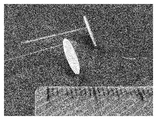
試料3の成型体の密度を複数部分で測定した結果、結晶構造から算出される真密度に対して、相対密度は99.2%、99.5%、99.8%、100%であった。試料4の相対密度も99%以上であった。また、試料4をダイヤモンドカッターで切断したところ、図7に示すように、厚さ0.3mmと0.086mmの薄片が作製できた。このように薄片化が可能なので、本実施形態のリチウムイオン伝導性結晶体を全固体リチウムイオン二次電池の固体電解質として用いれば、固体電解質の電気抵抗値を低減させることができる。
Claims (11)
- 化学組成がLi7-3xAlxLa3Zr2O12(0.05<x<0.50)、Li5La3Ta2O12、またはLi6BaLa2Ta2O12で表され、相対密度が99%以上で、立方晶系に属し、ガーネット関連型構造を有し、長さが2cm以上であるリチウムイオン伝導性結晶体。
- 請求項1において、
化学組成がLi7La3Zr2O12で表され、正方晶系に属し、ガーネット関連型構造を有する多結晶体と、Al2O3多結晶体およびLiAlO2多結晶体の少なくとも一方を含む原料を用いた溶融法で育成され、化学組成がLi7-3xAlxLa3Zr2O12(0.05<x<0.50)で表されるリチウムイオン伝導性結晶体。 - 請求項1において、
同じ化学組成で表される多結晶体を原料とした溶融法で育成されるリチウムイオン伝導性結晶。 - 請求項1から3のいずれかにおいて、
前記相対密度が100%であるリチウムイオン伝導性結晶体。 - 請求項1から4のいずれかにおいて、
格子定数aが1.28nm≦a≦1.31nmであるリチウムイオン伝導性結晶体。 - 化学組成がLi7-3xAlxLa3Zr2O12(0.05<x<0.50)、Li5La3Ta2O12、またはLi6BaLa2Ta2O12で表され、相対密度が99%以上で、立方晶系に属し、ガーネット関連型構造を有するリチウムイオン伝導性結晶体の製造方法であって、
前記リチウムイオン伝導性結晶体と同じ化学組成で表される多結晶体の原料の少なくとも一部を溶融して溶融部を形成し、移動速度8mm/h以上で前記溶融部を移動する工程を有するリチウムイオン伝導性結晶体の製造方法。 - 化学組成がLi7-3xAlxLa3Zr2O12(0.05<x<0.50)で表され、相対密度が99%以上で、立方晶系に属し、ガーネット関連型構造を有するリチウムイオン伝導性結晶体の製造方法であって、
化学組成がLi7La3Zr2O12で表され、正方晶系に属し、ガーネット関連型構造を有する多結晶体と、Al2O3多結晶体およびLiAlO2多結晶体の少なくとも一方を含む原料の少なくとも一部を溶融して溶融部を形成し、移動速度8mm/h以上で前記溶融部を移動する工程を有するリチウムイオン伝導性結晶体の製造方法。 - 請求項6または7において、
前記移動速度が8mm/h以上19mm/h以下であるリチウムイオン伝導性結晶体の製造方法。 - 請求項6から8のいずれかにおいて、
棒形状の前記原料を回転速度30rpm以上で長手方向と垂直な面で回転させながら、前記原料を溶融するリチウムイオン伝導性結晶体の製造方法。 - 請求項9において、
前記回転速度が30rpm以上60rpm以下であるリチウムイオン伝導性結晶体の製造方法。 - 正極と、負極と、固体電解質とを有する全固体リチウムイオン二次電池であって、
前記固体電解質が請求項1から5のいずれかのリチウムイオン伝導性結晶体から構成される全固体リチウムイオン二次電池。
Priority Applications (6)
| Application Number | Priority Date | Filing Date | Title |
|---|---|---|---|
| US15/517,125 US20170309955A1 (en) | 2014-10-31 | 2015-10-30 | Lithium ion conductive crystal body and all-solid state lithium ion secondary battery |
| JP2016556682A JP6296263B2 (ja) | 2014-10-31 | 2015-10-30 | リチウムイオン伝導性結晶体および全固体リチウムイオン二次電池 |
| KR1020177011375A KR101982422B1 (ko) | 2014-10-31 | 2015-10-30 | 리튬 이온 전도성 결정체 및 전고체 리튬 이온 이차 전지 |
| EP15853839.7A EP3214623B1 (en) | 2014-10-31 | 2015-10-30 | Lithium ion conductive crystal body and all-solid state lithium ion secondary battery |
| CN201580054375.9A CN106796825B (zh) | 2014-10-31 | 2015-10-30 | 锂离子传导性晶体及全固体锂离子二次电池 |
| US16/897,119 US11139504B2 (en) | 2014-10-31 | 2020-06-09 | Lithium ion conductive crystal body and all-solid state lithium ion secondary battery |
Applications Claiming Priority (2)
| Application Number | Priority Date | Filing Date | Title |
|---|---|---|---|
| JP2014-223346 | 2014-10-31 | ||
| JP2014223346 | 2014-10-31 |
Related Child Applications (2)
| Application Number | Title | Priority Date | Filing Date |
|---|---|---|---|
| US15/517,125 A-371-Of-International US20170309955A1 (en) | 2014-10-31 | 2015-10-30 | Lithium ion conductive crystal body and all-solid state lithium ion secondary battery |
| US16/897,119 Division US11139504B2 (en) | 2014-10-31 | 2020-06-09 | Lithium ion conductive crystal body and all-solid state lithium ion secondary battery |
Publications (1)
| Publication Number | Publication Date |
|---|---|
| WO2016068329A1 true WO2016068329A1 (ja) | 2016-05-06 |
Family
ID=55857662
Family Applications (1)
| Application Number | Title | Priority Date | Filing Date |
|---|---|---|---|
| PCT/JP2015/080825 Ceased WO2016068329A1 (ja) | 2014-10-31 | 2015-10-30 | リチウムイオン伝導性結晶体および全固体リチウムイオン二次電池 |
Country Status (6)
| Country | Link |
|---|---|
| US (2) | US20170309955A1 (ja) |
| EP (1) | EP3214623B1 (ja) |
| JP (1) | JP6296263B2 (ja) |
| KR (1) | KR101982422B1 (ja) |
| CN (1) | CN106796825B (ja) |
| WO (1) | WO2016068329A1 (ja) |
Cited By (6)
| Publication number | Priority date | Publication date | Assignee | Title |
|---|---|---|---|---|
| KR20170036045A (ko) * | 2014-07-31 | 2017-03-31 | 내셔날 인스티튜트 오브 어드밴스드 인더스트리얼 사이언스 앤드 테크놀로지 | 리튬 함유 가닛 결정체, 그의 제조 방법 및 전고체 리튬 이온 이차 전지 |
| WO2018056082A1 (ja) * | 2016-09-21 | 2018-03-29 | 株式会社村田製作所 | 固体電解質及び全固体電池 |
| KR20190027879A (ko) * | 2016-07-11 | 2019-03-15 | 더 리젠츠 오브 더 유니버시티 오브 미시건 | 세라믹 가넷계 이온 전도성 재료 |
| JPWO2020196921A1 (ja) * | 2019-03-28 | 2020-10-01 | ||
| EP4269352A4 (en) * | 2020-12-24 | 2024-11-27 | Nippon Denko Co.,Ltd. | LITHIUM ION CONDUCTING OXIDE MATERIAL AND ALL-SOLID-STATE LITHIUM SECONDARY BATTERY |
| US12398221B2 (en) | 2018-12-27 | 2025-08-26 | Kaneka Corporation | Resin composition and use for same |
Families Citing this family (1)
| Publication number | Priority date | Publication date | Assignee | Title |
|---|---|---|---|---|
| CN109319837B (zh) * | 2018-11-29 | 2020-12-01 | 江苏海基新能源股份有限公司 | 一种含铝立方相石榴石Li7La3Zr2O12的制备方法 |
Citations (3)
| Publication number | Priority date | Publication date | Assignee | Title |
|---|---|---|---|---|
| JP2011051800A (ja) * | 2008-08-21 | 2011-03-17 | Ngk Insulators Ltd | セラミックス材料及びその製造方法 |
| JP2013219017A (ja) * | 2012-02-21 | 2013-10-24 | Ngk Insulators Ltd | 固体電解質セラミックス材料のイオン伝導率を回復させる方法 |
| JP2013256435A (ja) * | 2012-05-14 | 2013-12-26 | Toyota Central R&D Labs Inc | ガーネット型リチウムイオン伝導性酸化物の製造方法 |
Family Cites Families (11)
| Publication number | Priority date | Publication date | Assignee | Title |
|---|---|---|---|---|
| JP2972873B1 (ja) * | 1998-04-28 | 1999-11-08 | 工業技術院長 | ジルコニア繊維の製造方法 |
| DE102004010892B3 (de) * | 2004-03-06 | 2005-11-24 | Christian-Albrechts-Universität Zu Kiel | Chemisch stabiler fester Lithiumionenleiter |
| US9034525B2 (en) * | 2008-06-27 | 2015-05-19 | Johnson Ip Holding, Llc | Ionically-conductive amorphous lithium lanthanum zirconium oxide |
| US8986895B2 (en) * | 2009-02-04 | 2015-03-24 | Kabushiki Kaisha Toyota Chuo Kenkyusho | Garnet-type lithium ion-conducting oxide and all-solid-state lithium ion secondary battery containing the same |
| JP5376252B2 (ja) * | 2009-09-03 | 2013-12-25 | 日本碍子株式会社 | セラミックス材料及びその利用 |
| JP5649033B2 (ja) * | 2010-03-19 | 2015-01-07 | 独立行政法人産業技術総合研究所 | リチウムイオン伝導性酸化物及びその製造方法、並びにそれを部材として使用した電気化学デバイス |
| JP5290337B2 (ja) * | 2011-02-24 | 2013-09-18 | 国立大学法人信州大学 | ガーネット型固体電解質、当該ガーネット型固体電解質を含む二次電池、及び当該ガーネット型固体電解質の製造方法 |
| JP5686191B2 (ja) * | 2011-07-27 | 2015-03-18 | トヨタ自動車株式会社 | 固体電池の製造方法 |
| JP2013107779A (ja) * | 2011-11-17 | 2013-06-06 | Honda Motor Co Ltd | 焼結体及びその製造方法 |
| JP5910072B2 (ja) | 2011-12-26 | 2016-04-27 | ソニー株式会社 | 固体電解質、固体電解質の製造方法および電気化学デバイス |
| CN106232526B (zh) * | 2014-04-24 | 2019-07-30 | 第一稀元素化学工业株式会社 | 石榴石型化合物的制造方法 |
-
2015
- 2015-10-30 EP EP15853839.7A patent/EP3214623B1/en active Active
- 2015-10-30 WO PCT/JP2015/080825 patent/WO2016068329A1/ja not_active Ceased
- 2015-10-30 US US15/517,125 patent/US20170309955A1/en not_active Abandoned
- 2015-10-30 KR KR1020177011375A patent/KR101982422B1/ko active Active
- 2015-10-30 JP JP2016556682A patent/JP6296263B2/ja active Active
- 2015-10-30 CN CN201580054375.9A patent/CN106796825B/zh active Active
-
2020
- 2020-06-09 US US16/897,119 patent/US11139504B2/en active Active
Patent Citations (3)
| Publication number | Priority date | Publication date | Assignee | Title |
|---|---|---|---|---|
| JP2011051800A (ja) * | 2008-08-21 | 2011-03-17 | Ngk Insulators Ltd | セラミックス材料及びその製造方法 |
| JP2013219017A (ja) * | 2012-02-21 | 2013-10-24 | Ngk Insulators Ltd | 固体電解質セラミックス材料のイオン伝導率を回復させる方法 |
| JP2013256435A (ja) * | 2012-05-14 | 2013-12-26 | Toyota Central R&D Labs Inc | ガーネット型リチウムイオン伝導性酸化物の製造方法 |
Non-Patent Citations (1)
| Title |
|---|
| See also references of EP3214623A4 * |
Cited By (12)
| Publication number | Priority date | Publication date | Assignee | Title |
|---|---|---|---|---|
| KR20170036045A (ko) * | 2014-07-31 | 2017-03-31 | 내셔날 인스티튜트 오브 어드밴스드 인더스트리얼 사이언스 앤드 테크놀로지 | 리튬 함유 가닛 결정체, 그의 제조 방법 및 전고체 리튬 이온 이차 전지 |
| KR101969657B1 (ko) | 2014-07-31 | 2019-04-16 | 내셔날 인스티튜트 오브 어드밴스드 인더스트리얼 사이언스 앤드 테크놀로지 | 리튬 함유 가닛 결정체, 그의 제조 방법 및 전고체 리튬 이온 이차 전지 |
| KR20190027879A (ko) * | 2016-07-11 | 2019-03-15 | 더 리젠츠 오브 더 유니버시티 오브 미시건 | 세라믹 가넷계 이온 전도성 재료 |
| KR102444090B1 (ko) | 2016-07-11 | 2022-09-15 | 더 리젠츠 오브 더 유니버시티 오브 미시건 | 세라믹 가넷계 이온 전도성 재료 |
| WO2018056082A1 (ja) * | 2016-09-21 | 2018-03-29 | 株式会社村田製作所 | 固体電解質及び全固体電池 |
| JPWO2018056082A1 (ja) * | 2016-09-21 | 2019-03-07 | 株式会社村田製作所 | 固体電解質及び全固体電池 |
| US11011778B2 (en) | 2016-09-21 | 2021-05-18 | Murata Manufacturing Co., Ltd. | Solid-state electrolyte and all-solid-state battery |
| US12398221B2 (en) | 2018-12-27 | 2025-08-26 | Kaneka Corporation | Resin composition and use for same |
| JPWO2020196921A1 (ja) * | 2019-03-28 | 2020-10-01 | ||
| JP7451498B2 (ja) | 2019-03-28 | 2024-03-18 | 株式会社カネカ | 樹脂組成物の製造方法および樹脂組成物 |
| US12612514B2 (en) | 2019-03-28 | 2026-04-28 | Kaneka Corporation | Method for producing resin composition, and resin composition |
| EP4269352A4 (en) * | 2020-12-24 | 2024-11-27 | Nippon Denko Co.,Ltd. | LITHIUM ION CONDUCTING OXIDE MATERIAL AND ALL-SOLID-STATE LITHIUM SECONDARY BATTERY |
Also Published As
| Publication number | Publication date |
|---|---|
| KR20170065594A (ko) | 2017-06-13 |
| KR101982422B1 (ko) | 2019-05-27 |
| US20170309955A1 (en) | 2017-10-26 |
| US11139504B2 (en) | 2021-10-05 |
| CN106796825A (zh) | 2017-05-31 |
| US20200303771A1 (en) | 2020-09-24 |
| EP3214623A4 (en) | 2018-07-04 |
| JP6296263B2 (ja) | 2018-03-20 |
| CN106796825B (zh) | 2018-06-29 |
| EP3214623B1 (en) | 2019-03-06 |
| JPWO2016068329A1 (ja) | 2017-07-20 |
| EP3214623A1 (en) | 2017-09-06 |
Similar Documents
| Publication | Publication Date | Title |
|---|---|---|
| JP6120346B2 (ja) | リチウム含有ガーネット結晶体および全固体リチウムイオン二次電池 | |
| JP6278433B2 (ja) | リチウム含有ガーネット結晶体および全固体リチウムイオン二次電池 | |
| JP6296263B2 (ja) | リチウムイオン伝導性結晶体および全固体リチウムイオン二次電池 | |
| JP6667182B2 (ja) | 低対称ガーネット関連型構造固体電解質およびリチウムイオン二次電池 | |
| JP6524089B2 (ja) | リチウム含有ガーネット単結晶体の製造方法 | |
| US12206068B2 (en) | Gallium-substituted solid electrolyte material, and all-solid-state lithium ion secondary battery | |
| JP2019006634A (ja) | 固体電解質の製造方法、及び固体電解質 | |
| KR102759013B1 (ko) | 리튬 복합 산화물 단결정, 리튬 복합 산화물 다결정, 리튬 복합 산화물 재료, 고체 전해질 재료, 전고체 리튬 이온 2차 전지, 및 고체 전해질 재료의 제조 방법 | |
| CN116348415A (zh) | 具备新型晶体结构的复合氧化物、以及使用该复合氧化物作为固体电解质的全固体锂离子二次电池 |
Legal Events
| Date | Code | Title | Description |
|---|---|---|---|
| 121 | Ep: the epo has been informed by wipo that ep was designated in this application |
Ref document number: 15853839 Country of ref document: EP Kind code of ref document: A1 |
|
| ENP | Entry into the national phase |
Ref document number: 2016556682 Country of ref document: JP Kind code of ref document: A |
|
| REEP | Request for entry into the european phase |
Ref document number: 2015853839 Country of ref document: EP |
|
| WWE | Wipo information: entry into national phase |
Ref document number: 2015853839 Country of ref document: EP |
|
| WWE | Wipo information: entry into national phase |
Ref document number: 15517125 Country of ref document: US |
|
| ENP | Entry into the national phase |
Ref document number: 20177011375 Country of ref document: KR Kind code of ref document: A |
|
| NENP | Non-entry into the national phase |
Ref country code: DE |