WO2016074232A1 - 一种传输控制方法及装置 - Google Patents
一种传输控制方法及装置 Download PDFInfo
- Publication number
- WO2016074232A1 WO2016074232A1 PCT/CN2014/091159 CN2014091159W WO2016074232A1 WO 2016074232 A1 WO2016074232 A1 WO 2016074232A1 CN 2014091159 W CN2014091159 W CN 2014091159W WO 2016074232 A1 WO2016074232 A1 WO 2016074232A1
- Authority
- WO
- WIPO (PCT)
- Prior art keywords
- downlink data
- high frequency
- base station
- terminal
- control information
- Prior art date
- Legal status (The legal status is an assumption and is not a legal conclusion. Google has not performed a legal analysis and makes no representation as to the accuracy of the status listed.)
- Ceased
Links
Images




Classifications
-
- H—ELECTRICITY
- H04—ELECTRIC COMMUNICATION TECHNIQUE
- H04L—TRANSMISSION OF DIGITAL INFORMATION, e.g. TELEGRAPHIC COMMUNICATION
- H04L1/00—Arrangements for detecting or preventing errors in the information received
- H04L1/0001—Systems modifying transmission characteristics according to link quality, e.g. power backoff
-
- H—ELECTRICITY
- H04—ELECTRIC COMMUNICATION TECHNIQUE
- H04B—TRANSMISSION
- H04B7/00—Radio transmission systems, i.e. using radiation field
- H04B7/24—Radio transmission systems, i.e. using radiation field for communication between two or more posts
- H04B7/26—Radio transmission systems, i.e. using radiation field for communication between two or more posts at least one of which is mobile
-
- H—ELECTRICITY
- H04—ELECTRIC COMMUNICATION TECHNIQUE
- H04J—MULTIPLEX COMMUNICATION
- H04J11/00—Orthogonal multiplex systems, e.g. using WALSH codes
- H04J11/0069—Cell search, i.e. determining cell identity [cell-ID]
- H04J11/0073—Acquisition of primary synchronisation channel, e.g. detection of cell-ID within cell-ID group
-
- H—ELECTRICITY
- H04—ELECTRIC COMMUNICATION TECHNIQUE
- H04L—TRANSMISSION OF DIGITAL INFORMATION, e.g. TELEGRAPHIC COMMUNICATION
- H04L43/00—Arrangements for monitoring or testing data switching networks
- H04L43/16—Threshold monitoring
-
- H—ELECTRICITY
- H04—ELECTRIC COMMUNICATION TECHNIQUE
- H04W—WIRELESS COMMUNICATION NETWORKS
- H04W72/00—Local resource management
- H04W72/20—Control channels or signalling for resource management
- H04W72/21—Control channels or signalling for resource management in the uplink direction of a wireless link, i.e. towards the network
-
- H—ELECTRICITY
- H04—ELECTRIC COMMUNICATION TECHNIQUE
- H04W—WIRELESS COMMUNICATION NETWORKS
- H04W72/00—Local resource management
- H04W72/20—Control channels or signalling for resource management
- H04W72/23—Control channels or signalling for resource management in the downlink direction of a wireless link, i.e. towards a terminal
-
- H—ELECTRICITY
- H04—ELECTRIC COMMUNICATION TECHNIQUE
- H04W—WIRELESS COMMUNICATION NETWORKS
- H04W72/00—Local resource management
- H04W72/04—Wireless resource allocation
- H04W72/044—Wireless resource allocation based on the type of the allocated resource
- H04W72/0453—Resources in frequency domain, e.g. a carrier in FDMA
Definitions
- the present invention relates to the field of mobile communications, and in particular, to a transmission control method and apparatus.
- terminals and base stations usually work at low frequencies, for example, in Long Term Evolution (LTE) technology. Both the terminal and the base station operate at low frequencies, that is, data transmission through low frequencies.
- LTE Long Term Evolution
- the terminal in order to assist the base station to improve the low-frequency downlink data transmission quality, the terminal usually sends control information to the base station, for example, data retransmission request information, and the base station determines whether to perform data retransmission in response to the data retransmission request.
- the manner in which the terminal sends control information to the base station is to transmit the control information together with the data to be transmitted through the low frequency.
- Low-frequency data transmission has low data rate, wide beam field, low power consumption, high data transmission rate with high frequency, narrow beam field of view, and high power consumption.
- the data transmission rate is generally required to be higher. Therefore, the industry proposes that the base station and the terminal transmit data using high frequency for data transmission, that is, the base station transmits downlink data to the terminal through high frequency. Because the high-frequency transmission data rate is high, the original terminal transmits the control information through the low-frequency method because the transmission time interval (TTI) is relatively long, that is, the feedback time is long, so it is no longer suitable for feedback for improvement.
- TTI transmission time interval
- High-frequency downlink data transmission quality control information and the industry has not proposed a method of timely feedback control information in the high-frequency downlink data transmission process.
- the embodiment of the invention provides a transmission control method and device, which can quickly feedback control information through a high frequency in a high frequency downlink data transmission process, and the feedback time is short.
- a first aspect of the present invention provides a transmission control method, including:
- the base station When it is detected that high-frequency downlink data transmission is required, the base station transmits downlink data to the terminal by high frequency;
- the base station when detecting that high-frequency downlink data transmission is required, the base station sends downlink data to the terminal by using a high frequency, including:
- the base station When the rate of downlink data transmission exceeds a preset threshold, it is determined that high-frequency downlink data transmission is required, and the base station transmits downlink data to the terminal by using a high frequency; or
- the base station When it is detected that the downlink data transmission failure is transmitted through the low frequency, it is determined that high frequency downlink data transmission is required, and the base station transmits the downlink data to the terminal through the high frequency.
- the method further includes:
- the terminal transmits low frequency uplink data for responding to the high frequency downlink data to the base station by using a low frequency.
- the terminal sends control information for assisting the base station to improve the quality of the high-frequency downlink data transmission by using a high frequency to the base station, including:
- the terminal generates a control signal according to the high frequency downlink data, where the control signal includes control information for assisting the base station to improve the quality of the high frequency downlink data transmission;
- the terminal modulates the control signal in a low modulation mode to obtain a modulated signal including the control information
- the terminal processes the modulated signal based on a spread spectrum communication technology to obtain a transmission signal including the control information;
- the terminal transmits the transmission signal including the control information to the base station by high frequency.
- the terminal modulates the control signal by using a low modulation mode to obtain a modulated signal that includes the control information, including:
- the terminal modulates the control signal by using a single carrier or multiple carriers to obtain a modulated signal including the control information.
- the method before the sending, by the high frequency, the terminal, to the base station, the control information for the base station to improve the quality of the high-frequency downlink data transmission, the method further includes:
- the terminal detects the basic synchronization code of the physical shared channel and the auxiliary of the auxiliary synchronization channel Step code, determine to establish high frequency synchronization;
- Transmitting, by the high frequency, the control information for assisting the base station to improve the quality of the high frequency downlink data transmission to the base station by using a high frequency including:
- the terminal sends control information for assisting the base station to improve the quality of the high frequency downlink data transmission by establishing the synchronized high frequency to the base station.
- a second aspect of the present invention provides a base station, including:
- the sending module is configured to send downlink data to the terminal by using a high frequency when detecting that high frequency downlink data transmission is required.
- the sending module is specifically configured to: when the rate of downlink data transmission exceeds a preset threshold, determine that high-frequency downlink data transmission is required, and downlink data is sent by using a high-frequency downlink. To the terminal; or,
- the sending module is specifically configured to: when detecting a downlink data transmission failure by using a low frequency transmission, determine that high frequency downlink data transmission is required, and send downlink data to the terminal by using the high frequency.
- a third aspect of the present invention provides a terminal, including:
- a first sending module configured to: when the base station sends the downlink data to the terminal by using the high frequency, send, by the high frequency, control information for assisting the base station to improve the quality of the high frequency downlink data transmission, so that the The base station controls the transmission process of the high frequency downlink data according to the control information.
- the terminal further includes:
- a second sending module configured to send low frequency uplink data for responding to the high frequency downlink data to the base station by using a low frequency.
- the first sending module includes:
- a generating unit configured to generate a control signal according to the high frequency downlink data, where the control signal includes control information for assisting the base station to improve the quality of the high frequency downlink data transmission;
- a modulating unit configured to modulate the control signal in a low modulation mode to obtain a modulated signal including the control information
- a processing unit configured to process the modulated signal based on a spread spectrum communication technology to obtain a transmit signal including the control information
- a sending unit configured to send the transmission signal including the control information to the base station by using a high frequency.
- the modulating unit is specifically configured to modulate the control signal by using a single carrier or multiple carriers to obtain the control information. Modulated signal.
- the device further includes:
- a synchronization module configured to determine to establish a high frequency synchronization by detecting a basic synchronization code of the physical shared channel and an auxiliary synchronization code of the auxiliary synchronization channel;
- the first sending module is specifically configured to send, by using the high frequency that is synchronized, control information for assisting the base station to improve the quality of the high frequency downlink data transmission to the base station.
- a fourth aspect of the present invention provides a base station, including a transmitter:
- the transmitter is configured to send downlink data to the terminal by using a high frequency when detecting that high frequency downlink data transmission is required.
- the transmitter is further configured to: when the rate of downlink data transmission exceeds a preset threshold, determine that high-frequency downlink data transmission is required, and downlink data is sent by using a high frequency. To the terminal; or,
- the transmitter is further configured to: when detecting a downlink data transmission failure by low frequency transmission, determine that high frequency downlink data transmission is required, and send downlink data to the terminal by high frequency.
- a fifth aspect of the present invention provides a terminal, including a transmitter
- the transmitter is configured to: when the base station sends the downlink data to the terminal by using the high frequency, send, by the high frequency, control information for assisting the base station to improve the quality of the high frequency downlink data transmission, so that the base station is configured according to the base station
- the control information controls a transmission process of the high frequency downlink data.
- the transmitter is further configured to send low frequency uplink data for responding to the high frequency downlink data to the base station by using a low frequency.
- the terminal further includes a processor
- the processor is configured to generate a control signal according to the high frequency downlink data, where the control signal includes control information for assisting the base station to improve the quality of the high frequency downlink data transmission;
- the processor is further configured to modulate the control signal by using a low modulation mode to obtain a modulation signal including the control information;
- the processor is further configured to process the modulated signal based on a spread spectrum communication technology to obtain a transmit signal including the control information;
- the transmitter is further configured to transmit the transmission signal including the control information to the base station by high frequency.
- the processor is further configured to perform modulation on the control signal by using a single carrier or multiple carriers to obtain the control information. Modulated signal.
- the processor is further configured to determine to establish a high frequency synchronization by detecting a basic synchronization code of the physical shared channel and an auxiliary synchronization code of the auxiliary synchronization channel;
- the transmitter is further configured to send, to the base station, control information for assisting the base station to improve the quality of the high frequency downlink data transmission by establishing the synchronized high frequency.
- the base station when it is detected that the high-frequency downlink data transmission is required, the base station sends the downlink data to the terminal by using the high-frequency, and the terminal sends the control information for the base station to improve the high-frequency downlink data transmission quality to the base station by using the high frequency. So that the base station controls the transmission process of the high frequency downlink data according to the control information.
- a method of controlling information by high-frequency feedback is proposed. Since the time interval of the high-frequency is relatively short, the control information can be quickly feedbacked to adapt to the high-speed downlink data high rate. Data transmission reduces feedback time for control information.
- FIG. 1 is a schematic flowchart of a transmission control method according to an embodiment of the present invention.
- FIG. 2 is a schematic flowchart of another transmission control method according to an embodiment of the present invention.
- FIG. 3 is an FDD frame format of an LTE according to an embodiment of the present disclosure
- FIG. 5 is a detailed description table of a control channel according to an embodiment of the present invention.
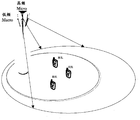
- FIG. 6 is a schematic diagram of a high-low frequency co-station network architecture according to an embodiment of the present invention.
- FIG. 7 is a schematic structural diagram of a base station according to an embodiment of the present disclosure.
- FIG. 8 is a schematic structural diagram of a terminal according to an embodiment of the present disclosure.
- FIG. 9 is a schematic structural diagram of another base station according to an embodiment of the present disclosure.
- FIG. 10 is a schematic structural diagram of another terminal according to an embodiment of the present invention.
- the transmission control method of the embodiment of the present invention can be applied to a high-low frequency co-station network architecture.
- the base station includes a high-frequency antenna and a low-frequency antenna
- the terminal also includes a high-frequency antenna and a low-frequency antenna, that is, high-frequency data can be performed between the base station and the terminal. Transmission, low-frequency data transmission is also possible.
- the high frequency and low frequency here are a relative concept.
- E-band microwave and Long Term Evolution (LTE) can be regarded as high and low frequency embodiments, or both are high frequency or both.
- Low frequency scenes can also be seen as specific embodiments of high and low frequencies.
- the high frequency signals Compared to low frequency signals, the high frequency signals here have the following characteristics: higher data rate; narrower beam field of view; higher frequency; higher data transmission and switching power consumption.
- low frequency signals Compared to high frequency signals, low frequency signals have the following characteristics: lower data rate; wider beam field of view; lower frequency; lower data transmission and switching power consumption.
- the frequency of a radio frequency (RF) antenna When the frequency of a radio frequency (RF) antenna is high, it has a higher data rate, but the antenna beam has a narrower field of view and requires an antenna array. If the data is transmitted for uplink of the terminal, the transmission quality is limited. For example, the influence of the location of the terminal and the transmission power of the terminal are large, so usually the uplink data transmission of the terminal uses a low frequency.
- the frequency of the RF antenna is high, it can be used for downlink data transmission of the base station, and has a high data transmission rate. Therefore, the downlink data transmission of the base station can adopt both high frequency and low frequency.
- the terminal side needs to feed back some control information to the base station (Base Station, BS) side to assist downlink data transmission.
- Base Station Base Station
- the terminal side needs to feed back some control information to the base station (Base Station, BS) side to assist downlink data transmission.
- BS Base Station
- the terminal side needs to feed back some control information to the base station (Base Station, BS) side to assist downlink data transmission.
- the base station Base Station, BS
- BS Base Station
- the industry has gradually proposed to adopt high-frequency downlink data transmission, and high-frequency downlink data transmission requires fast feedback control information and low-power transmission.
- the low-frequency feedback control information is used in the prior art.
- TTI transmission time interval
- the terminal is also not suitable for transmitting uplink data and control information at the same time.
- an embodiment of the present invention provides a control information for improving high-frequency downlink data transmission quality by using high-frequency transmission, and transmitting uplink data for responding to high-frequency downlink data by low-frequency transmission, thereby ensuring a lower terminal.
- the transmit power and the ability to guarantee fast feedback control information are provided.
- the transmission control method in this embodiment includes steps S100-S101;
- the base station when detecting that high-frequency downlink data transmission is required, the base station sends downlink data to the terminal by using a high frequency;
- the method in this embodiment is applied to a network architecture of a high and low frequency co-site
- the terminal includes a high frequency antenna and a low frequency antenna
- the base station includes a high frequency antenna and a low frequency antenna.
- the base station transmits downlink data to the terminal through high frequency.
- the terminal establishes a high frequency link with the base station by using the high frequency antenna, and the downlink of the high frequency link is used for transmitting high frequency downlink data between the base station and the terminal.
- the high frequency link may be a TDD high frequency channel
- the downlink of the high frequency link may be a downlink time slot of the TDD high frequency channel
- the downlink time slot of the TDD high frequency channel transmits downlink data of the base station to the terminal.
- the detection method for detecting high-frequency downlink data transmission may have the following two alternative implementation modes:
- the trigger condition for performing high-frequency downlink data transmission may be that the downlink data transmission rate is relatively high. If the preset threshold is exceeded, the high-frequency downlink data transmission may be determined, and the base station sends the downlink data to the terminal by using the high-frequency. .
- the base station when detecting a downlink data transmission failure by low frequency transmission, it is determined that high frequency downlink data transmission is required, and the base station transmits downlink data to the terminal by high frequency.
- the trigger condition for performing high-frequency downlink data transmission may also be that the downlink data has low transmission faults, for example, when the downlink data transmission is performed by using a low frequency, the transmission is unstable, or the data is transmitted when the downlink data is transmitted by using a low frequency. If the number of retransmissions is high, etc., it can be determined that high-frequency downlink data transmission is required, and the base station transmits downlink data to the terminal through high frequency.
- the terminal sends, to the base station, control information for assisting the base station to improve the quality of the high-frequency downlink data transmission by using a high frequency, so that the base station controls the high-frequency downlink data according to the control information.
- the transfer process is a process for assisting the base station to improve the quality of the high-frequency downlink data transmission by using a high frequency, so that the base station controls the high-frequency downlink data according to the control information.
- the terminal in order to ensure high-frequency downlink data transmission quality, the terminal needs to feed back control information for the base station to improve the high-frequency downlink data transmission quality to the base station, so that the base station adjusts the transmission process of the high-frequency downlink data according to the control information.
- the feedback time of the feedback control information mainly depends on the length of the TTI time slot in the transmission frame format, and the lengths of the low frequency and high frequency TTI time slots are different, as shown in FIG. 3, which is the Frequency Division Duplexing (FDD) of LTE.
- the frame format is shown in the figure.
- the length of one subframe in the FDD frame format defined by LTE is 1 ms, which is the length of one TTI slot of LTE. As shown in FIG.
- the length of one slot divided in the high-frequency frame format is 0.125 ms, which is the length of one TTI slot. It can be seen that the higher the RF frequency, one The shorter the TTI slot length, on the other hand, the lower the RF frequency, the longer the TTI slot length.
- the high-frequency downlink data transmission rate is high, and the fast feedback control information is required to control and adjust the high-frequency downlink data transmission process in time. Therefore, the embodiment of the present invention provides that the high-frequency downlink data is sent to the base station by using the high-frequency to assist the base station. Transmission quality control information.
- the control information is transmitted through the high frequency channel by using the high frequency transmission control information, and the uplink time slot of the high frequency channel may be referred to as a control channel, and the control channel transmission is used to assist the base station to improve the high frequency downlink data. Transmission quality control information.
- control information may include synchronization control information and user control information, as shown in FIG. 5
- the synchronization control information is transmitted on a physical random access channel (PRACH) of the control channel
- the synchronization control information may include a Preamble detection and an uplink synchronization code SYNC-UL
- the user's control information is on the uplink physical control channel.
- the user's control information may include channel state information (CSI) channel estimation sequence, channel quality indicator (CQI), acknowledgement character (Acknowledgement, ACK) ), or Negative Acknowledgement (NCK), beam ID, and scheduling request.
- CSI channel state information
- CQI channel quality indicator
- ACK acknowledgement character
- NCK Negative Acknowledgement
- beam ID and scheduling request.
- the actual feedback control information may also be one or more of the foregoing control information.
- the base station responds differently to different control information. For example, the BS side responds to the ACK/NACK indication. If the NACK is valid, the BS side responds and completes the data retransmission. Otherwise, the BS side does not perform data retransmission. Or, by utilizing the reciprocity of the TDD channel, the terminal transmits the channel estimation sequence by using the high frequency, and the BS side uses the channel estimation sequence for channel estimation, and directly uses the channel estimation result to perform high frequency downlink data transmission.
- the flow of transmitting control information only for the uplink time slot of the TDD high frequency channel is given above. If there are N (N is greater than or equal to 2) different frequencies and the synchronized high frequency channel is completed, the present invention can implement the FDD high frequency channel. Feedback control information. Moreover, since the FDD channel does not have reciprocity, the CSI channel estimation sequence does not need to be transmitted in the FDD uplink feedback control information, and the terminal needs to feed back the downlink time slot estimation result of the high frequency channel.
- the manner in which the terminal sends the control information to the base station by using the high frequency may include steps S10-S13;
- the terminal generates a control signal according to the high frequency downlink data, where the control signal includes control information for assisting the base station to improve the quality of the high frequency downlink data transmission.
- the terminal modulates the control signal by using a low modulation mode to obtain a modulation signal including the control information.
- the terminal in order to reduce the transmission power of the terminal and achieve low SNR communication, the terminal modulates the control signal including the control information by using a low modulation mode.
- the low modulation mode may be that the terminal modulates the control signal by using a single carrier or multiple carriers to obtain a modulation signal that includes the control information.
- the terminal processes the modulated signal based on a spread spectrum communication technology to obtain an inclusion. a transmission signal of the control information;
- the terminal sends the transmission signal including the control information to the base station by using a high frequency.
- the base station when it is detected that the high-frequency downlink data transmission is required, the base station sends the downlink data to the terminal by using the high-frequency, and the terminal sends the control information for the base station to improve the high-frequency downlink data transmission quality to the base station by using the high frequency. So that the base station controls the transmission process of the high frequency downlink data according to the control information.
- a method of controlling information by high-frequency feedback is proposed. Since the time interval of the high-frequency is relatively short, the control information can be quickly feedbacked to adapt to the high-speed downlink data high rate. Data transmission reduces feedback time for control information.
- FIG. 2 is a schematic flowchart of another transmission control method according to an embodiment of the present invention. As shown in the figure, the transmission control method provided in this embodiment includes steps S200-S203;
- the base station when detecting that high-frequency downlink data transmission is required, the base station sends downlink data to the terminal by using a high frequency;
- step S200 of the embodiment of the present invention refer to the step S100 of the embodiment of FIG. 1 , and details are not described herein again.
- the terminal determines to establish a high frequency synchronization by detecting a basic synchronization code of the physical shared channel and an auxiliary synchronization code of the auxiliary synchronization channel.
- the terminal before using the high frequency transmission control information, the terminal needs to detect a Primary Synchronization Code (PSC) of the Physical Shared Channel (PSCH) and a Secondary Synchronization Channel (SSCH).
- PSCH Physical Shared Channel
- SSCH Secondary Synchronization Channel
- the Secondary Synchronization Code (SSC) determines the establishment of high frequency synchronization.
- the terminal sends, to the base station, control information for assisting the base station to improve the quality of the high-frequency downlink data transmission, according to the high frequency that establishes synchronization.
- the terminal sends low frequency uplink data for responding to the high frequency downlink data to the base station by using a low frequency.
- the base station in a process in which the terminal interacts with the base station, can send data to the terminal through the low frequency and the high frequency, and the terminal sends the high frequency downlink data transmission quality to the base station through the high frequency.
- Control information in order to reduce the transmission power of the terminal, in the process of data communication between the terminal and the base station, the terminal transmits low frequency uplink data for responding to the high frequency downlink data to the base station through the low frequency, that is, the terminal only transmits the control information by using the high frequency. All uplink data used to respond to high-frequency downlink data is transmitted through low frequencies to achieve low-power transmission of the terminal.
- the base station when it is detected that the high-frequency downlink data transmission is required, the base station sends the downlink data to the terminal by using the high-frequency, and the terminal sends the control information for the base station to improve the high-frequency downlink data transmission quality to the base station by using the high frequency. So that the base station controls the transmission process of the high frequency downlink data according to the control information.
- a method of controlling information by high-frequency feedback is proposed. Since the time interval of the high-frequency is relatively short, the control information can be quickly feedbacked to adapt to the high-speed downlink data high rate. Data transmission reduces feedback time for control information.
- FIG. 6 is a network architecture of a high and low frequency shared station according to an embodiment of the present invention; the foregoing embodiment method may be applied to the network architecture.
- the network architecture includes a terminal and a base station, the terminal includes a high frequency antenna and a low frequency antenna, and the base station also includes a high frequency antenna and a low frequency antenna. High-frequency data transmission and low-frequency data transmission can be performed between the base station and the terminal. In practical applications, the base station can transmit downlink data to the terminal through low frequency and high frequency.
- the terminal side needs to feed back some control information to the BS side to assist downlink data transmission.
- the low-frequency downlink data transmission process feedback has been provided to improve the control information of the low-frequency downlink data transmission quality.
- the terminal supporting the single-frequency point works at low frequency, control information, and The uplink data is transmitted together through low frequencies.
- the second and third subframes in the TDD frame format of LTE are used to transmit control information and uplink data.
- the control information used to assist in improving the quality of high-frequency downlink data transmission requires fast feedback from the terminal and low-power transmission.
- the low-frequency feedback control information is used in the prior art. Because the transmission time interval (TTI) of the transmission frame format is relatively long, that is, the feedback time is slow, it is no longer suitable for feedback control information in high-frequency downlink data transmission.
- TTI transmission time interval
- the high frequency is also not suitable for simultaneously transmitting uplink data and control information for responding to high frequency downlink data.
- the embodiment of the present invention provides a high-frequency transmission only for controlling the quality of the high-frequency downlink data transmission, and the low-frequency transmission is used for responding to the uplink data of the high-frequency downlink data, thereby ensuring that the terminal is low.
- the transmit power and the ability to guarantee fast feedback control information are used for controlling the quality of the high-frequency downlink data transmission.
- the base station when it is detected that the high-frequency downlink data transmission is required, the base station sends the downlink data to the terminal by using the high-frequency, and the terminal sends the control information for the base station to improve the high-frequency downlink data transmission quality to the base station by using the high frequency. So that the base station controls the transmission process of the high frequency downlink data according to the control information.
- a method of controlling information by high-frequency feedback is proposed. Since the time interval of the high-frequency is relatively short, the control information can be quickly feedbacked to adapt to the high-speed downlink data high rate. Data transmission reduces feedback time for control information.
- FIG. 7 is a schematic structural diagram of a base station according to an embodiment of the present invention. As shown in the figure, the base station in this embodiment may include a sending module 100, and the base station provided in this embodiment is described in detail below;
- the sending module 100 is configured to send downlink data to the terminal by using a high frequency when detecting that high frequency downlink data transmission is required.
- the sending module 100 is specifically configured to: when the rate of downlink data transmission exceeds a preset threshold, determine that high-frequency downlink data transmission is required, and send downlink data to the terminal by using a high frequency; or
- the sending module is specifically configured to: when detecting a downlink data transmission failure by using a low frequency transmission, determine that high frequency downlink data transmission is required, and send downlink data to the terminal by using the high frequency.
- the trigger condition for performing high-frequency downlink data transmission may be that the downlink data transmission rate is relatively high, and the rate of the low-frequency downlink data transmission cannot be met, and the high-frequency downlink data transmission may be determined.
- the transmitting module 100 transmits downlink data to the terminal by high frequency.
- the trigger condition for high-frequency downlink data transmission may also be transmitted through the low-frequency transmission downlink data.
- the transmission is unstable when using low-frequency downlink data transmission, or the number of data retransmissions when using low-frequency downlink data transmission, etc.
- the sending module 100 can determine that it needs to enter The high-frequency downlink data transmission is performed, and the base station transmitting module 100 transmits the downlink data to the terminal through the high frequency.
- the base station when it is detected that the high-frequency downlink data transmission is required, the base station sends the downlink data to the terminal by using the high-frequency, and the terminal sends the control information for the base station to improve the high-frequency downlink data transmission quality to the base station by using the high frequency. So that the base station controls the transmission process of the high frequency downlink data according to the control information.
- a method of controlling information by high-frequency feedback is proposed. Since the time interval of the high-frequency is relatively short, the control information can be quickly feedbacked to adapt to the high-speed downlink data high rate. Data transmission reduces feedback time for control information.
- FIG. 8 is a schematic structural diagram of a terminal according to an embodiment of the present invention. As shown in the figure, the terminal in this embodiment may include a first sending module 200, and the terminal provided in this embodiment is described in detail below;
- the first sending module 200 is configured to: when the base station sends the downlink data to the terminal by using the high frequency, send, by the high frequency, control information for assisting the base station to improve the quality of the high frequency downlink data transmission, so that The base station controls the transmission process of the high frequency downlink data according to the control information.
- the first sending module 101 of the terminal needs to feed back, to the base station, control information for assisting the base station to improve the transmission quality of the high-frequency downlink data, so that the base station adjusts the high-frequency downlink data according to the control information.
- the feedback time of the feedback control information mainly depends on the length of the TTI time slot in the transmission frame format, and the lengths of the low frequency and high frequency TTI time slots are different, as shown in FIG. 3, which is the Frequency Division Duplexing (FDD) of LTE.
- the frame format is shown in the figure.
- the length of one subframe in the FDD frame format defined by LTE is 1 ms, which is the length of one TTI slot of LTE.
- the length of one slot divided in the high-frequency frame format is 0.125 ms, which is the length of one TTI slot. It can be seen that the higher the RF frequency, one The shorter the TTI slot length, on the other hand, the lower the RF frequency, the longer the TTI slot length.
- the embodiment of the present invention provides that the high-frequency downlink data is sent to the base station by the high-frequency to assist the base station.
- Transmission quality control information is transmitted through the high frequency channel by using the high frequency transmission control information, and the uplink time slot of the high frequency channel may be referred to as a control channel, and the control channel transmission is used to assist the base station to improve the high frequency downlink data. Transmission quality Control information.
- control information may include synchronization control information and control information of the user.
- the synchronization control information is transmitted on a physical random access channel (PRACH) of the control channel
- the synchronization control information may include Preamble detection and uplink synchronization code SYNC-UL
- the control information of the user is transmitted on the Physical Uplink Control Channel (PUCCH)
- the control information of the user may include a channel estimation sequence of Channel State Information (CSI).
- CSI Channel State Information
- CQI Channel Quality Indicator
- ACK Acknowledgement
- NCK Negative Acknowledgement
- the base station responds differently to different control information. For example, the BS side responds to the ACK/NACK indication. If the NACK is valid, the BS side responds and completes the data retransmission. Otherwise, the BS side does not perform data retransmission. Or, by utilizing the reciprocity of the TDD channel, the terminal transmits the channel estimation sequence by using the high frequency, and the BS side uses the channel estimation sequence for channel estimation, and directly uses the channel estimation result to perform high frequency downlink data transmission.
- the flow of transmitting control information only for the uplink time slot of the TDD high frequency channel is given above. If there are N (N is greater than or equal to 2) different frequencies and the synchronized high frequency channel is completed, the present invention can implement the FDD high frequency channel. Feedback control information. Moreover, since the FDD channel does not have reciprocity, the CSI channel estimation sequence does not need to be transmitted in the FDD uplink feedback control information, and the terminal needs to feed back the downlink time slot estimation result of the high frequency channel.
- the first sending module 200 may include a generating unit, a modulating unit, a processing unit, and a sending unit.
- a generating unit configured to generate a control signal according to the high frequency downlink data, where the control signal includes control information for assisting the base station to improve the quality of the high frequency downlink data transmission;
- a modulating unit configured to modulate the control signal in a low modulation mode to obtain a modulated signal including the control information
- the modulating unit is specifically configured to modulate the control signal by using a single carrier or multiple carriers to obtain a modulated signal including the control information.
- a processing unit configured to process the modulated signal based on a spread spectrum communication technology to obtain a transmit signal including the control information
- a sending unit configured to send the transmission signal including the control information to the base station by using a high frequency.
- the terminal may further include a second sending module 201;
- the second sending module 201 is configured to send low frequency uplink data for responding to the high frequency downlink data to the base station by using a low frequency.
- the base station can send data to the terminal through the low frequency and the high frequency, and the terminal sends the control information for improving the quality of the high frequency downlink data transmission to the base station through the high frequency, in order to reduce the terminal.
- the second sending module 201 of the terminal transmits the low-frequency uplink data for responding to the high-frequency downlink data to the base station through the low frequency, that is, the terminal only transmits the control information by using the high-frequency, all the The uplink data used to respond to the high-frequency downlink data is transmitted through the low frequency to achieve low-power transmission of the terminal.
- the terminal may further include a synchronization module 202;
- the synchronization module 202 is configured to determine to establish a high frequency synchronization by detecting a basic synchronization code of the physical shared channel and an auxiliary synchronization code of the auxiliary synchronization channel;
- the terminal synchronization module 202 needs to detect a Primary Synchronization Code (PSC) of the Physical Shared Channel (PSCH) and a Secondary Synchronization Channel (Secondary synchronization channel). , SSCH) The Secondary Synchronization Code (SSC) determines the establishment of high frequency synchronization.
- PSCH Primary Synchronization Code
- SSCH Secondary Synchronization Channel
- the first sending module 200 is specifically configured to send, to the base station, control information for assisting the base station to improve the quality of the high frequency downlink data transmission based on the high frequency that establishes synchronization.
- the base station when it is detected that the high-frequency downlink data transmission is required, the base station sends the downlink data to the terminal by using the high-frequency, and the terminal sends the control information for the base station to improve the high-frequency downlink data transmission quality to the base station by using the high frequency. So that the base station controls the transmission process of the high frequency downlink data according to the control information.
- a high-frequency inverse is proposed. The method of feeding the control information, because the time interval of the high frequency is relatively short, can quickly feedback the control information, adapt to the high-speed downlink data high-speed data transmission, and reduce the feedback time of the control information.
- FIG. 9 is a schematic structural diagram of another base station according to an embodiment of the present invention.
- the base station in this embodiment includes a processor 300, a transmitter 301, and a memory 302.
- the memory 302 is configured to store program codes.
- the processor 300 is configured to call program code in the memory 302 to perform a corresponding operation.
- Processor 300, transmitter 301, and memory 302 are all coupled to the bus and communicate over the bus.
- the transmitter is configured to send downlink data to the terminal by using a high frequency when detecting that high frequency downlink data transmission is required.
- the method in this embodiment is applied to a network architecture of a high and low frequency co-site, the terminal includes a high frequency antenna and a low frequency antenna, and the base station includes a high frequency antenna and a low frequency antenna.
- the base station transmits downlink data to the terminal through high frequency.
- the terminal establishes a high frequency link with the base station by using the high frequency antenna, and the downlink of the high frequency link is used for transmitting high frequency downlink data between the base station and the terminal.
- the high frequency link may be a TDD high frequency channel
- the downlink of the high frequency link may be a downlink time slot of the TDD high frequency channel
- the downlink time slot of the TDD high frequency channel transmits downlink data of the base station to the terminal.
- the transmitter is further configured to: when the rate of downlink data transmission exceeds a preset threshold, determine that high-frequency downlink data transmission is required, and send downlink data to the terminal by using a high frequency; or
- the transmitter is further configured to: when detecting a downlink data transmission failure by low frequency transmission, determine that high frequency downlink data transmission is required, and send downlink data to the terminal by high frequency.
- the triggering condition for performing the high-frequency downlink data transmission may be that the downlink data transmission rate is relatively high. If the preset threshold is exceeded, the high-frequency downlink data transmission may be determined, and the base station sends the downlink data to the terminal by using the high-frequency.
- the trigger condition for performing high-frequency downlink data transmission may also be that the downlink data is transmitted through the low-frequency transmission, for example, the transmission is unstable when the downlink data is transmitted by using the low frequency, or the data is heavy when the downlink data is transmitted by using the low frequency. If the number of transmissions is large, etc., it can be determined that high-frequency downlink data transmission is required, and the base station transmits downlink data to the terminal through high frequency.
- the base station when it is detected that high-frequency downlink data transmission is required, transmits downlink data to the terminal through the high-frequency, and the terminal sends the high-frequency downlink number to the base station by using the high-frequency to the base station.
- the base station controls the transmission process of the high frequency downlink data according to the control information.
- a method of controlling information by high-frequency feedback is proposed. Since the time interval of the high-frequency is relatively short, the control information can be quickly feedbacked to adapt to the high-speed downlink data high rate. Data transmission reduces feedback time for control information.
- the terminal in this embodiment includes a processor 400, a transmitter 401, and a memory 402.
- the memory 402 is configured to store program codes.
- the processor 400 is configured to call program code in the memory 302 to perform a corresponding operation.
- Processor 400, transmitter 401, and memory 402 are all coupled to the bus and communicated over the bus.
- the transmitter is configured to: when the base station sends the downlink data to the terminal by using the high frequency, send, by the high frequency, control information for assisting the base station to improve the quality of the high frequency downlink data transmission, so that the base station is configured according to the base station
- the control information controls a transmission process of the high frequency downlink data.
- the terminal needs to feed back control information for the base station to improve the high-frequency downlink data transmission quality to the base station, so that the base station adjusts the transmission process of the high-frequency downlink data according to the control information.
- the feedback time of the feedback control information mainly depends on the length of the TTI time slot in the transmission frame format, and the lengths of the low frequency and high frequency TTI time slots are different, as shown in FIG. 3, which is the Frequency Division Duplexing (FDD) of LTE.
- the frame format is shown in the figure.
- the length of one subframe in the FDD frame format defined by LTE is 1 ms, which is the length of one TTI slot of LTE. As shown in FIG.
- the length of one slot divided in the high-frequency frame format is 0.125 ms, which is the length of one TTI slot. It can be seen that the higher the RF frequency, one The shorter the TTI slot length, on the other hand, the lower the RF frequency, the longer the TTI slot length.
- the high-frequency downlink data transmission rate is high, and the fast feedback control information is required to control and adjust the high-frequency downlink data transmission process in time. Therefore, the embodiment of the present invention provides that the high-frequency downlink data is sent to the base station by using the high-frequency to assist the base station. Transmission quality control information.
- the control information is transmitted through the high frequency channel by using the high frequency transmission control information, and the uplink time slot of the high frequency channel may be referred to as a control channel, and the control channel transmission is used to assist the base station to improve the high frequency downlink data. Transmission quality control information.
- control information may include synchronization control information and control information of the user.
- the synchronization control information is transmitted on a physical random access channel (PRACH) of the control channel
- the synchronization control information may include Preamble detection and uplink synchronization code SYNC-UL
- the control information of the user is transmitted on the Physical Uplink Control Channel (PUCCH)
- the control information of the user may include a channel estimation sequence of Channel State Information (CSI).
- CSI Channel State Information
- CQI Channel Quality Indicator
- ACK Acknowledgement
- NCK Negative Acknowledgement
- the base station responds differently to different control information. For example, the BS side responds to the ACK/NACK indication. If the NACK is valid, the BS side responds and completes the data retransmission. Otherwise, the BS side does not perform data retransmission. Or, by utilizing the reciprocity of the TDD channel, the terminal transmits the channel estimation sequence by using the high frequency, and the BS side uses the channel estimation sequence for channel estimation, and directly uses the channel estimation result to perform high frequency downlink data transmission.
- the flow of transmitting control information only for the uplink time slot of the TDD high frequency channel is given above. If there are N (N is greater than or equal to 2) different frequencies and the synchronized high frequency channel is completed, the present invention can implement the FDD high frequency channel. Feedback control information. Moreover, since the FDD channel does not have reciprocity, the CSI channel estimation sequence does not need to be transmitted in the FDD uplink feedback control information, and the terminal needs to feed back the downlink time slot estimation result of the high frequency channel.
- the transmitter is further configured to send low frequency uplink data for responding to the high frequency downlink data to the base station by using a low frequency.
- the base station may send data to the terminal by using the low frequency and the high frequency, and the terminal sends the control information for improving the quality of the high frequency downlink data transmission to the base station by using the high frequency, in order to reduce the sending of the terminal.
- Power in the process of data communication between the terminal and the base station, the terminal transmits low-frequency uplink data for responding to the high-frequency downlink data to the base station through the low frequency, that is, the terminal only uses the high-frequency to transmit the control information, and all of the signals are used to respond to the high-frequency downlink.
- the uplink data of the data is transmitted through the low frequency to achieve the low power transmission of the terminal.
- the processor is further configured to generate a control signal according to the high frequency downlink data, where the control signal includes control information for assisting the base station to improve the quality of the high frequency downlink data transmission;
- the processor is further configured to modulate the control signal by using a low modulation mode to obtain a modulation signal including the control information;
- the processor is further configured to process the modulated signal based on a spread spectrum communication technology to obtain a transmit signal including the control information;
- the transmitter is further configured to transmit the transmission signal including the control information to the base station by high frequency.
- the terminal modulates the control signal including the control information by using a low modulation mode.
- the processor is further configured to modulate the control signal by using a single carrier or multiple carriers to obtain a modulated signal including the control information.
- the processor is further configured to determine to establish a high frequency synchronization by detecting a basic synchronization code of the physical shared channel and an auxiliary synchronization code of the auxiliary synchronization channel;
- the transmitter is further configured to send, to the base station, control information for assisting the base station to improve the quality of the high frequency downlink data transmission by establishing the synchronized high frequency.
- the terminal before using the uplink transmission control information of the high frequency link, the terminal needs to detect a Primary Synchronization Code (PSC) of the Physical Shared Channel (PSCH) and a Secondary Synchronization Channel (Secondary synchronization channel).
- PSCH Primary Synchronization Code
- SSCH Secondary Synchronization Channel
- SSC Secondary Synchronization Code
- the base station when it is detected that the high-frequency downlink data transmission is required, the base station sends the downlink data to the terminal by using the high-frequency, and the terminal sends the control information for the base station to improve the high-frequency downlink data transmission quality to the base station by using the high frequency. So that the base station controls the transmission process of the high frequency downlink data according to the control information.
- a method of controlling information by high-frequency feedback is proposed. Since the time interval of the high-frequency is relatively short, the control information can be quickly feedbacked to adapt to the high-speed downlink data high rate. Data transmission reduces feedback time for control information.
- the storage medium may be a magnetic disk, an optical disk, a read-only memory (ROM), or a random access memory (RAM).
Landscapes
- Engineering & Computer Science (AREA)
- Computer Networks & Wireless Communication (AREA)
- Signal Processing (AREA)
- Quality & Reliability (AREA)
- Databases & Information Systems (AREA)
- Mobile Radio Communication Systems (AREA)
- Physics & Mathematics (AREA)
- Electromagnetism (AREA)
Abstract
一种传输控制方法,该传输控制方法包括:当检测到需要进行高频下行数据传输时,基站通过高频发送下行数据至终端;所述终端通过高频向所述基站发送用于辅助所述基站提高所述高频下行数据传输质量的控制信息,以使所述基站根据所述控制信息控制所述高频下行数据的传输过程。本发明实施例还公开了一种基站和终端,采用本发明可以在高频下行数据传输过程中终端通过高频快速反馈控制信息,反馈时间短。
Description
本发明涉及移动通信领域,尤其涉及一种传输控制方法及装置。
随着通信技术的发展,终端与基站之间的数据传输已经成为研究的重点方向,现有技术中终端与基站通常都在低频工作,例如,在长期演进(Long Term Evolution,LTE)技术中,终端与基站都工作于低频,即是通过低频进行数据传输。在数据通信过程中,为了辅助基站提高低频下行数据传输质量,终端通常会向基站发送控制信息,例如,数据重传请求信息,基站则响应数据重传请求决定是否进行数据重传。终端向基站发送控制信息的方式是将控制信息与需要传输的数据共同通过低频发送。
利用低频进行数据传输数据速率低,波束视场宽,功耗低,利用高频进行数据传输数据速率高,波束视场窄,功耗高。基站与终端数据传输时,通常要求数据传输速率越高越好,因此业界提出基站与终端数据传输时采用高频进行数据传输,即是基站通过高频发送下行数据至终端。由于高频传输数据速率高,原有的终端通过低频发送控制信息的方法由于其传输时间间隔(Transmission Time Interval,TTI)比较长,即是反馈时间长,因此已不再适用于反馈用于提高高频下行数据传输质量的控制信息,并且业界也未提出在高频下行数据传输过程中及时反馈控制信息的方法。
发明内容
本发明实施例提供了一种传输控制方法及装置,可以在高频下行数据传输过程中终端通过高频快速反馈控制信息,反馈时间短。
本发明第一方面提供一种传输控制方法,包括:
当检测到需要进行高频下行数据传输时,基站通过高频发送下行数据至终端;
所述终端通过高频向所述基站发送用于辅助所述基站提高所述高频下行数据传输质量的控制信息,以使所述基站根据所述控制信息控制所述高频下行
数据的传输过程。
基于第一方面,在第一种可行的实施方式中,所述当检测到需要进行高频下行数据传输时,基站通过高频发送下行数据至终端,包括:
当下行数据传输的速率超过预设阈值时,则确定需要进行高频下行数据传输,基站通过高频发送下行数据至终端;或者,
当检测到通过低频传输下行数据传输故障时,则确定需要进行高频下行数据传输,基站通过高频发送下行数据至终端。
基于第一方面或者第一方面第一种可行的实施方式,在第二种可行的实施方式中,所述方法还包括:
所述终端通过低频向所述基站发送用于响应所述高频下行数据的低频上行数据。
基于第一方面,在第三种可行的实施方式中,所述终端通过高频向所述基站发送用于辅助所述基站提高所述高频下行数据传输质量的控制信息,包括:
所述终端根据所述高频下行数据生成控制信号,所述控制信号包含用于辅助所述基站提高所述高频下行数据传输质量的控制信息;
所述终端采用低调制模式将所述控制信号进行调制,获得包含所述控制信息的调制信号;
所述终端基于扩频通信技术,对所述调制信号进行处理,获得包含所述控制信息的发送信号;
所述终端将包含所述控制信息的所述发送信号通过高频发送至所述基站。
基于第一方面第三种可行的实施方式,在第四种可行的实施方式中,所述终端采用低调制模式将所述控制信号进行调制,获得包含所述控制信息的调制信号,包括:
所述终端采用单载波或者多载波对所述控制信号进行调制,获得包含所述控制信息的调制信号。
基于第一方面,在第五种可行的实施方式中,所述终端通过高频向所述基站发送用于辅助所述基站提高所述高频下行数据传输质量的控制信息之前,还包括:
所述终端通过检测物理共享信道的基本同步码和辅助同步信道的辅助同
步码,确定建立高频同步;
所述终端通过高频向所述基站发送用于辅助所述基站提高所述高频下行数据传输质量的控制信息,包括:
所述终端通过建立同步的所述高频向所述基站发送用于辅助所述基站提高所述高频下行数据传输质量的控制信息。
本发明第二方面提供一种基站,包括:
发送模块,用于当检测到需要进行高频下行数据传输时,通过高频发送下行数据至终端。
基于第二方面,在第一种可行的实施方式中,所述发送模块具体用于当下行数据传输的速率超过预设阈值时,则确定需要进行高频下行数据传输,通过高频发送下行数据至终端;或者,
所述发送模块具体用于当检测到通过低频传输下行数据传输故障时,则确定需要进行高频下行数据传输,通过高频发送下行数据至终端。
本发明第三方面提供一种终端,包括:
第一发送模块,用于当基站通过高频发送下行数据至终端时,通过高频向所述基站发送用于辅助所述基站提高所述高频下行数据传输质量的控制信息,以使所述基站根据所述控制信息控制所述高频下行数据的传输过程。
基于第三方面,在第一种可行的实施方式中,所述终端还包括:
第二发送模块,用于通过低频向所述基站发送用于响应所述高频下行数据的低频上行数据。
基于第三方面,在第二种可行的实施方式中,所述第一发送模块包括:
生成单元,用于根据所述高频下行数据生成控制信号,所述控制信号包含用于辅助所述基站提高所述高频下行数据传输质量的控制信息;
调制单元,用于采用低调制模式将所述控制信号进行调制,获得包含所述控制信息的调制信号;
处理单元,用于基于扩频通信技术,对所述调制信号进行处理,获得包含所述控制信息的发送信号;
发送单元,用于将包含所述控制信息的所述发送信号通过高频发送至所述基站。
基于第三方面第二种可行的实施方式,在第三种可行的实施方式中,所述调制单元具体用于采用单载波或者多载波对所述控制信号进行调制,获得包含所述控制信息的调制信号。
基于第三方面,在第四种可行的实施方式中,所述装置还包括:
同步模块,用于通过检测物理共享信道的基本同步码和辅助同步信道的辅助同步码,确定建立高频同步;
所述第一发送模块具体用于通过建立同步的所述高频向所述基站发送用于辅助所述基站提高所述高频下行数据传输质量的控制信息。
本发明第四方面提供一种基站,包括发射器:
所述发射器,用于当检测到需要进行高频下行数据传输时,通过高频发送下行数据至终端。
基于第四方面,在第一种可行的实施方式中,所述发射器还用于当下行数据传输的速率超过预设阈值时,则确定需要进行高频下行数据传输,通过高频发送下行数据至终端;或者,
所述发射器还用于当检测到通过低频传输下行数据传输故障时,则确定需要进行高频下行数据传输,通过高频发送下行数据至终端。
本发明第五方面提供一种终端,包括发射器;
所述发射器用于当基站通过高频发送下行数据至终端时,通过高频向所述基站发送用于辅助所述基站提高所述高频下行数据传输质量的控制信息,以使所述基站根据所述控制信息控制所述高频下行数据的传输过程。
基于第五方面,在第五方面第一种可行的实施方式中,所述发射器还用于通过低频向所述基站发送用于响应所述高频下行数据的低频上行数据。
基于第五方面,在第二种可行的实施方式中,所述终端还包括处理器;
所述处理器用于根据所述高频下行数据生成控制信号,所述控制信号包含用于辅助所述基站提高所述高频下行数据传输质量的控制信息;
所述处理器还用于采用低调制模式将所述控制信号进行调制,获得包含所述控制信息的调制信号;
所述处理器还用于基于扩频通信技术,对所述调制信号进行处理,获得包含所述控制信息的发送信号;
所述发射器还用于将包含所述控制信息的所述发送信号通过高频发送至所述基站。
基于第五方面第二种可行的实施方式,在第三种可行的实施方式中,所述处理器还用于采用单载波或者多载波对所述控制信号进行调制,获得包含所述控制信息的调制信号。
基于第五方面,在第四种可行的实施方式中,所述处理器还用于通过检测物理共享信道的基本同步码和辅助同步信道的辅助同步码,确定建立高频同步;
所述发射器还用于通过建立同步的所述高频向所述基站发送用于辅助所述基站提高所述高频下行数据传输质量的控制信息。
本发明实施例中,当检测到需要采用高频下行数据传输时,基站通过高频发送下行数据至终端,终端通过高频向基站发送用于辅助基站提高高频下行数据传输质量的控制信息,以使基站根据该控制信息控制高频下行数据的传输过程。在本实施方式中,为了提高高频下行数据传输质量,提出一种通过高频反馈控制信息的方式,由于高频的时间间隔比较短,因此可以快速反馈控制信息,适应高频下行数据高速率的数据传输,减少控制信息的反馈时间。
为了更清楚地说明本发明实施例或现有技术中的技术方案,下面将对实施例中所需要使用的附图作简单地介绍,显而易见地,下面描述中的附图仅仅是本发明的一些实施例,对于本领域普通技术人员来讲,在不付出创造性劳动的前提下,还可以根据这些附图获得其他的附图。
图1为本发明实施例提供的一种传输控制方法的流程示意图;
图2为本发明实施例提供的另一种传输控制方法的流程示意图;
图3为本发明实施例提供的一种LTE的FDD帧格式;
图4为本发明实施例提供的一种高频传输帧格式;
图5为本发明实施例提供的一种控制信道详细说明表格;
图6为本发明实施例提供的一种高低频共站网络架构图;
图7为本发明实施例提供的一种基站的结构示意图;
图8为本发明实施例提供的一种终端的结构示意图;
图9为本发明实施例提供的另一种基站的结构示意图;
图10为本发明实施例提供的另一种终端的结构示意图。
下面将结合本发明实施例中的附图,对本发明实施例中的技术方案进行清楚、完整地描述,显然,所描述的实施例仅仅是本发明一部分实施例,而不是全部的实施例。基于本发明中的实施例,本领域普通技术人员在没有作出创造性劳动前提下所获得的所有其他实施例,都属于本发明保护的范围。
本发明实施例的传输控制方法可以应用于高低频共站网络架构,基站含有高频天线和低频天线,终端也含有高频天线和低频天线,即是基站和终端之间既可以进行高频数据传输,也可以进行低频数据传输。这里的高频和低频是一个相对的概念,例如E-band微波和长期演进技术(Long Term Evolution,LTE)可以看作高低频的具体实施例,或者两个都是高频或两个都是低频的场景也可以看做高低频的具体实施例。
相比低频信号,这里的高频信号具有以下特点:更高的数据速率;波束视场更窄;频率更高;数据传输和交换功耗更高。
相比高频信号,低频信号具有以下特点:更低的数据速率;波束视场更宽;频率更低;数据传输和交换功耗更低。
当射频(Radio Frequency,RF)天线频率较高时,其具有更高的数据速率,但天线波束视场更窄且需要使用天线阵,若用于终端上行的数据传输,传输质量受到很多限制,例如终端摆放位置的影响和终端发送功率大等,因此通常终端上行数据传输采用低频。当RF天线频率较高时,可以用于基站下行数据传输,具有较高的数据传输速率,因此基站下行数据传输既可以采用高频也可以采用低频。无论是高频下行数据传输还是低频下行数据传输,为保证传输
质量,终端侧需反馈一些控制信息给基站(Base Station,BS)侧,以辅助下行数据传输。对于低频下行数据传输过程中反馈控制信息的方式已经有比较成熟的技术方案,例如在LTE技术方案中,支持单频点的终端工作于低频,控制信息以及上行数据共同通过低频传输至基站,例如LTE的TDD帧格式中第二个和第三个子帧可用于传输控制信息和上行数据。
随着通信技术的进一步发展,业界逐渐提出采用高频下行数据传输,高频下行数据传输就终端需要快速的反馈控制信息及其低功率发送。现有技术中采用低频反馈控制信息,由于其传输帧格式的传输时间间隔(Transmission Time Interval,TTI)比较长,即是反馈时间慢,因此不再适用于高频下行数据传输中反馈控制信息,为了降低终端的发射功率,终端也不适合同时传输上行数据以及控制信息。针对此问题,本发明实施例提出一种通过高频传输用于辅助提高高频下行数据传输质量的控制信息,通过低频传输用于响应高频下行数据的上行数据,以此来保证终端较低的发射功率,且能够保证快速反馈控制信息。
请参照图1,为本发明实施例提供的一种传输控制方法的流程示意图,如图所示,本实施例的传输控制方法包括步骤S100-S101;
S100,当检测到需要进行高频下行数据传输时,基站通过高频发送下行数据至终端;
具体实施例中,本实施例的方法应用于高低频共站的网络架构,终端包含高频天线和低频天线,基站包括高频天线和低频天线。当检测到需要进行高频下行数据传输时,基站通过高频发送下行数据至终端。可选的,终端利用高频天线与基站建立高频链路,该高频链路的下行链路用于传输基站和终端之间的高频下行数据。该高频链路可以是TDD高频信道,高频链路的下行链路可以是TDD高频信道的下行时隙,TDD高频信道的下行时隙传输基站到终端的下行数据。
可选的,检测需要进行高频下行数据传输的检测方式可以有以下两种可选的实施方式:
在第一种可选的实施方式中,当下行数据传输的速率超过预设阈值时,则
确定需要进行高频下行数据传输,基站通过高频发送下行数据至终端;
具体实施例中,需要进行高频下行数据传输的触发条件可以是下行数据传输的速率比较高,超过预设阈值,则可以确定需要进行高频下行数据传输,基站通过高频发送下行数据至终端。
在第二种可选的实施方式中,当检测到通过低频传输下行数据传输故障时,则确定需要进行高频下行数据传输,基站通过高频发送下行数据至终端。
具体实施例中,需要进行高频下行数据传输的触发条件也可以是通过低频传输下行数据存在传输故障,例如,采用低频进行下行数据传输时传输不稳定,或者是采用低频进行下行数据传输时数据重传次数多等等,则可以确定需要进行高频下行数据传输,基站通过高频发送下行数据至终端。
S101,所述终端通过高频向所述基站发送用于辅助所述基站提高所述高频下行数据传输质量的控制信息,以使所述基站根据所述控制信息控制所述高频下行数据的传输过程。
具体实施例中,为了保证高频下行数据传输质量,终端需要向基站反馈用于辅助基站提高高频下行数据传输质量的控制信息,以使基站根据控制信息调整高频下行数据的传输过程。反馈控制信息的反馈时间主要取决于传输帧格式中TTI时隙长度,低频与高频的TTI时隙长度不同,如图3所示,为LTE的频分双工(Frequency Division Duplexing,FDD)的帧格式,由图可以看出LTE定义的FDD帧格式中1个子帧长度为1ms,为LTE的1个TTI时隙长度。如图4所示,为典型的高频传输帧格式,高频帧格式中划分的1个时隙长度为0.125ms为1个TTI时隙长度,由此可以看出RF频率越高,1个TTI时隙长度越短,反之,RF频率越低,TTI时隙长度越长。
由于高频下行数据传输的速率高,需要快速反馈控制信息,才能及时控制调整高频下行数据传输过程,因此本发明实施例提供的是通过高频向基站发送用于辅助基站提高高频下行数据传输质量的控制信息。可选的,通过高频发送控制信息可以是通过高频信道的上行时隙传输控制信息,且高频信道的上行时隙可以称为控制信道,控制信道传输用于辅助基站提高高频下行数据传输质量的控制信息。
进一步的,控制信息可以包括同步控制信息和用户的控制信息,如图5
所示,同步控制信息在控制信道的物理随机接入信道(Physical Random Access Channel,PRACH)上传输,同步控制信息可以包括Preamble探测和上行同步码SYNC-UL,用户的控制信息在上行物理控制信道(Physical Uplink Control Channel,PUCCH)上传输,用户的控制信息可以包括信道状态信息(Channel State Information,CSI)的信道估计序列,信道质量指示符(Channel Quality Indicator,CQI),确认字符(Acknowledgement,ACK),或者否定应答(Negative Acknowledgement,NCK),beam ID以及调度请求等。需要说明的是,实际反馈的控制信息也可以是上述控制信息中的一种或者多种。
基站对于不同控制信息的响应方式也不同,比如BS侧响应ACK/NACK指示,若NACK有效则BS侧响应并完成数据重传,否则,BS侧不做数据重传。或者,利用TDD信道的互易性,终端通过高频发送了信道估计序列,BS侧利用该信道估计序列做信道估计,并直接使用信道估计结果进行高频下行数据传输。
以上给出了TDD高频信道上行时隙只传控制信息的流程,若存在N个(N大于等于2)不同频率且已完成同步的高频信道时,本发明方案即可实现FDD高频信道反馈控制信息。且由于FDD信道不具有互易性,故FDD上行反馈控制信息中不需要传输CSI信道估计序列,而需将终端对高频信道的下行时隙估计结果进行反馈。
可选的,终端通过高频向基站发送控制信息的方式可以包括步骤S10-S13;
S10,所述终端根据所述高频下行数据生成控制信号,所述控制信号包含用于辅助所述基站提高所述高频下行数据传输质量的控制信息;
S11,所述终端采用低调制模式将所述控制信号进行调制,获得包含所述控制信息的调制信号;
具体实施例中,为了降低终端的发送功率,实现低信噪比通信,终端采用低调制模式将包括控制信息的控制信号进行调制。
可选的,低调制方式可以是所述终端采用单载波或者多载波对所述控制信号进行调制,获得包含所述控制信息的调制信号。
S12,所述终端基于扩频通信技术,对所述调制信号进行处理,获得包含
所述控制信息的发送信号;
S13,所述终端将包含所述控制信息的所述发送信号通过高频发送至所述基站。
本发明实施例中,当检测到需要采用高频下行数据传输时,基站通过高频发送下行数据至终端,终端通过高频向基站发送用于辅助基站提高高频下行数据传输质量的控制信息,以使基站根据该控制信息控制高频下行数据的传输过程。在本实施方式中,为了提高高频下行数据传输质量,提出一种通过高频反馈控制信息的方式,由于高频的时间间隔比较短,因此可以快速反馈控制信息,适应高频下行数据高速率的数据传输,减少控制信息的反馈时间。
请参照图2,为本发明实施例提供的另一种传输控制方法的流程示意图,如图所示,本实施例提供的传输控制方法包括步骤S200-S203;
S200,当检测到需要进行高频下行数据传输时,基站通过高频发送下行数据至终端;
本发明实施例步骤S200请参照图1的实施例步骤S100,在此不再赘述。
S201,所述终端通过检测物理共享信道的基本同步码和辅助同步信道的辅助同步码,确定建立高频同步;
具体实施例中,在采用高频传输控制信息之前,终端需要通过检测物理共享信道(Physical Shared Channel,PSCH)的基本同步码(Primary Synchronization Code,PSC)和辅助同步信道(Secondary synchronization channel,SSCH)的辅助同步码(Secondary Synchronization Code,SSC),确定建立高频同步。
S202,所述终端基于建立同步的所述高频向所述基站发送用于辅助所述基站提高所述高频下行数据传输质量的控制信息。
S203,所述终端通过低频向所述基站发送用于响应所述高频下行数据的低频上行数据。
具体实施例中,终端与基站进行交互的过程中,基站可以通过低频和高频向终端发送数据,终端通过高频向基站发送用于提高高频下行数据传输质量的
控制信息,为了降低终端的发送功率,在终端与基站进行数据通信的过程中,终端通过低频向基站发送用于响应高频下行数据的低频上行数据,即是终端利用高频仅仅发送控制信息,所有的用于响应高频下行数据的上行数据都通过低频进行发送,以此来达到终端的低功率发送。
本发明实施例中,当检测到需要采用高频下行数据传输时,基站通过高频发送下行数据至终端,终端通过高频向基站发送用于辅助基站提高高频下行数据传输质量的控制信息,以使基站根据该控制信息控制高频下行数据的传输过程。在本实施方式中,为了提高高频下行数据传输质量,提出一种通过高频反馈控制信息的方式,由于高频的时间间隔比较短,因此可以快速反馈控制信息,适应高频下行数据高速率的数据传输,减少控制信息的反馈时间。
请参照图6,为本发明实施例提供的一种高低频共站的网络架构;上述实施例方法可以应用于该网络架构中。如图所示,该网络架构包括终端和基站,终端包含高频天线和低频天线,基站也包括高频天线和低频天线。基站与终端之间可以进行高频数据传输也可以进行低频数据传输,实际应用中基站可以通过低频和高频向终端发送下行数据。
无论是高频下行数据传输还是低频下行数据传输,为保证传输质量,终端侧需反馈一些控制信息给BS侧,以辅助下行数据传输。对于低频下行数据传输过程中反馈用于辅助提高低频下行数据传输质量的控制信息的方式已经有比较成熟的技术方案,例如在LTE技术方案中,支持单频点的终端工作于低频,控制信息以及上行数据共同通过低频进行传输,例如LTE的TDD帧格式中第二个和第三个子帧用于传输控制信息和上行数据。
用于辅助提高高频下行数据传输质量的控制信息就需要终端快速的反馈及其低功率发送。现有技术中采用低频反馈控制信息,由于其传输帧格式的传输时间间隔(Transmission Time Interval,TTI)比较长,即是反馈时间慢,因此不再适用于高频下行数据传输中反馈控制信息,为了降低终端的发射功率,
高频也不适用于同时传输用于响应高频下行数据的上行数据以及控制信息。针对此问题,本发明实施例提出一种高频仅仅传输用于辅助提高高频下行数据传输质量的控制信息,通过低频传输用于响应高频下行数据的上行数据,以此来保证终端较低的发射功率,且能够保证快速反馈控制信息。
本发明实施例中,当检测到需要采用高频下行数据传输时,基站通过高频发送下行数据至终端,终端通过高频向基站发送用于辅助基站提高高频下行数据传输质量的控制信息,以使基站根据该控制信息控制高频下行数据的传输过程。在本实施方式中,为了提高高频下行数据传输质量,提出一种通过高频反馈控制信息的方式,由于高频的时间间隔比较短,因此可以快速反馈控制信息,适应高频下行数据高速率的数据传输,减少控制信息的反馈时间。
请参照图7,为本发明实施例提供的一种基站的结构示意图;如图所示,本实施例的基站可以包括发送模块100,下面对本实施例提供的基站进行详细说明;
发送模块100,用于当检测到需要进行高频下行数据传输时,通过高频发送下行数据至终端。
具体的,所述发送模块100具体用于当下行数据传输的速率超过预设阈值时,则确定需要进行高频下行数据传输,通过高频发送下行数据至终端;或者,
所述发送模块具体用于当检测到通过低频传输下行数据传输故障时,则确定需要进行高频下行数据传输,通过高频发送下行数据至终端。
具体实施例中,需要进行高频下行数据传输的触发条件可以是下行数据传输的速率比较高,超过预设阈值,低频下行数据传输的速率无法满足,则可以确定需要进行高频下行数据传输,发送模块100通过高频发送下行数据至终端。
需要进行高频下行数据传输的触发条件也可以通过低频传输下行数据存在传输故障,例如,采用低频进行下行数据传输时传输不稳定,或者是采用低频进行下行数据传输时数据重传次数多等等,则发送模块100可以确定需要进
行高频下行数据传输,基站发送模块100通过高频发送下行数据至终端。
本发明实施例中,当检测到需要采用高频下行数据传输时,基站通过高频发送下行数据至终端,终端通过高频向基站发送用于辅助基站提高高频下行数据传输质量的控制信息,以使基站根据该控制信息控制高频下行数据的传输过程。在本实施方式中,为了提高高频下行数据传输质量,提出一种通过高频反馈控制信息的方式,由于高频的时间间隔比较短,因此可以快速反馈控制信息,适应高频下行数据高速率的数据传输,减少控制信息的反馈时间。
请参照图8,为本发明实施例提供的一种终端的结构示意图;如图所示,本实施例的终端可以包括第一发送模块200,下面对本实施例提供的终端进行详细说明;
第一发送模块200,用于当基站通过高频发送下行数据至终端时,通过高频向所述基站发送用于辅助所述基站提高所述高频下行数据传输质量的控制信息,以使所述基站根据所述控制信息控制所述高频下行数据的传输过程。
具体实施例中,为了保证高频下行数据传输质量,终端第一发送模块101需要向基站反馈用于辅助基站提高高频下行数据传输质量的控制信息,以使基站根据控制信息调整高频下行数据的传输过程。反馈控制信息的反馈时间主要取决于传输帧格式中TTI时隙长度,低频与高频的TTI时隙长度不同,如图3所示,为LTE的频分双工(Frequency Division Duplexing,FDD)的帧格式,由图可以看出LTE定义的FDD帧格式中1个子帧长度为1ms,为LTE的1个TTI时隙长度。如图4所示,为典型的高频传输帧格式,高频帧格式中划分的1个时隙长度为0.125ms为1个TTI时隙长度,由此可以看出RF频率越高,1个TTI时隙长度越短,反之,RF频率越低,TTI时隙长度越长。
由于高频下行数据传输的速率高,需要快速反馈控制信息,才能及时控制调整高频下行数据传输过程,因此本发明实施例提供的是通过高频向基站发送用于辅助基站提高高频下行数据传输质量的控制信息。可选的,通过高频发送控制信息可以是通过高频信道的上行时隙传输控制信息,且高频信道的上行时隙可以称为控制信道,控制信道传输用于辅助基站提高高频下行数据传输质量
的控制信息。
进一步的,控制信息可以包括同步控制信息和用户的控制信息,如图5所示,同步控制信息在控制信道的物理随机接入信道(Physical Random Access Channel,PRACH)上传输,同步控制信息可以包括Preamble探测和上行同步码SYNC-UL,用户的控制信息在上行物理控制信道(Physical Uplink Control Channel,PUCCH)上传输,用户的控制信息可以包括信道状态信息(Channel State Information,CSI)的信道估计序列,信道质量指示符(Channel Quality Indicator,CQI),确认字符(Acknowledgement,ACK),或者否定应答(Negative Acknowledgement,NCK),beam ID以及调度请求等。需要说明的是,实际反馈的控制信息也可以是上述控制信息中的一种或者多种。
基站对于不同控制信息的响应方式也不同,比如BS侧响应ACK/NACK指示,若NACK有效则BS侧响应并完成数据重传,否则,BS侧不做数据重传。或者,利用TDD信道的互易性,终端通过高频发送了信道估计序列,BS侧利用该信道估计序列做信道估计,并直接使用信道估计结果进行高频下行数据传输。
以上给出了TDD高频信道上行时隙只传控制信息的流程,若存在N个(N大于等于2)不同频率且已完成同步的高频信道时,本发明方案即可实现FDD高频信道反馈控制信息。且由于FDD信道不具有互易性,故FDD上行反馈控制信息中不需要传输CSI信道估计序列,而需将终端对高频信道的下行时隙估计结果进行反馈。
进一步可选的,第一发送模块200可以包括生成单元、调制单元、处理单元以及发送单元;
生成单元,用于根据所述高频下行数据生成控制信号,所述控制信号包含用于辅助所述基站提高所述高频下行数据传输质量的控制信息;
调制单元,用于采用低调制模式将所述控制信号进行调制,获得包含所述控制信息的调制信号;
所述调制单元具体用于采用单载波或者多载波对所述控制信号进行调制,获得包含所述控制信息的调制信号。
处理单元,用于基于扩频通信技术,对所述调制信号进行处理,获得包含所述控制信息的发送信号;
发送单元,用于将包含所述控制信息的所述发送信号通过高频发送至所述基站。
可选的,该终端可以进一步包括第二发送模块201;
第二发送模块201,用于通过低频向所述基站发送用于响应所述高频下行数据的低频上行数据。
具体实施例中,终端与基站进行交互的过程中,基站可以通过低频和高频向终端发送数据,终端通过高频向基站发送用于提高高频下行数据传输质量的控制信息,为了降低终端的发送功率,在终端与基站进行数据通信的过程中,终端第二发送模块201通过低频向基站发送用于响应高频下行数据的低频上行数据,即是终端利用高频仅仅发送控制信息,所有的用于响应高频下行数据的上行数据都通过低频进行发送,以此来达到终端的低功率发送。
可选的,该终端还可以包括同步模块202;
同步模块202,用于通过检测物理共享信道的基本同步码和辅助同步信道的辅助同步码,确定建立高频同步;
具体实施例中,在采用高频传输控制信息之前,终端同步模块202需要通过检测物理共享信道(Physical Shared Channel,PSCH)的基本同步码(Primary Synchronization Code,PSC)和辅助同步信道(Secondary synchronization channel,SSCH)的辅助同步码(Secondary Synchronization Code,SSC),确定建立高频同步。
所述第一发送模块200具体用于基于建立同步的所述高频向所述基站发送用于辅助所述基站提高所述高频下行数据传输质量的控制信息。
本发明实施例中,当检测到需要采用高频下行数据传输时,基站通过高频发送下行数据至终端,终端通过高频向基站发送用于辅助基站提高高频下行数据传输质量的控制信息,以使基站根据该控制信息控制高频下行数据的传输过程。在本实施方式中,为了提高高频下行数据传输质量,提出一种通过高频反
馈控制信息的方式,由于高频的时间间隔比较短,因此可以快速反馈控制信息,适应高频下行数据高速率的数据传输,减少控制信息的反馈时间。
请参照图9,为本发明实施例提供的另一种基站的结构示意图,如图所示,本实施例的基站包括处理器300、发射器301和存储器302;存储器302用于存储程序代码,处理器300用于调用存储器302中的程序代码执行相应的操作。处理器300、发射器301和存储器302均与总线连接,并通过总线进行通信。
所述发射器,用于当检测到需要进行高频下行数据传输时,通过高频发送下行数据至终端。
可选的,本实施例的方法应用于高低频共站的网络架构,终端包含高频天线和低频天线,基站包括高频天线和低频天线。当检测到需要进行高频下行数据传输时,基站通过高频发送下行数据至终端。可选的,终端利用高频天线与基站建立高频链路,该高频链路的下行链路用于传输基站和终端之间的高频下行数据。该高频链路可以是TDD高频信道,高频链路的下行链路可以是TDD高频信道的下行时隙,TDD高频信道的下行时隙传输基站到终端的下行数据。
所述发射器还用于当下行数据传输的速率超过预设阈值时,则确定需要进行高频下行数据传输,通过高频发送下行数据至终端;或者,
所述发射器还用于当检测到通过低频传输下行数据传输故障时,则确定需要进行高频下行数据传输,通过高频发送下行数据至终端。
可选的,需要进行高频下行数据传输的触发条件可以是下行数据传输的速率比较高,超过预设阈值,则可以确定需要进行高频下行数据传输,基站通过高频发送下行数据至终端。
可选的,需要进行高频下行数据传输的触发条件也可以是通过低频传输下行数据存在传输故障,例如,采用低频进行下行数据传输时传输不稳定,或者是采用低频进行下行数据传输时数据重传次数多等等,则可以确定需要进行高频下行数据传输,基站通过高频发送下行数据至终端。
本发明实施例中,当检测到需要采用高频下行数据传输时,基站通过高频发送下行数据至终端,终端通过高频向基站发送用于辅助基站提高高频下行数
据传输质量的控制信息,以使基站根据该控制信息控制高频下行数据的传输过程。在本实施方式中,为了提高高频下行数据传输质量,提出一种通过高频反馈控制信息的方式,由于高频的时间间隔比较短,因此可以快速反馈控制信息,适应高频下行数据高速率的数据传输,减少控制信息的反馈时间。
请参照图10,为本发明实施例提供的另一种终端的结构示意图,如图所示,本实施例的终端包括处理器400、发射器401和存储器402;存储器402用于存储程序代码,处理器400用于调用存储器302中的程序代码执行相应的操作。处理器400、发射器401和存储器402均与总线连接,并通过总线进行通信。
所述发射器用于当基站通过高频发送下行数据至终端时,通过高频向所述基站发送用于辅助所述基站提高所述高频下行数据传输质量的控制信息,以使所述基站根据所述控制信息控制所述高频下行数据的传输过程。
可选的,为了保证高频下行数据传输质量,终端需要向基站反馈用于辅助基站提高高频下行数据传输质量的控制信息,以使基站根据控制信息调整高频下行数据的传输过程。反馈控制信息的反馈时间主要取决于传输帧格式中TTI时隙长度,低频与高频的TTI时隙长度不同,如图3所示,为LTE的频分双工(Frequency Division Duplexing,FDD)的帧格式,由图可以看出LTE定义的FDD帧格式中1个子帧长度为1ms,为LTE的1个TTI时隙长度。如图4所示,为典型的高频传输帧格式,高频帧格式中划分的1个时隙长度为0.125ms为1个TTI时隙长度,由此可以看出RF频率越高,1个TTI时隙长度越短,反之,RF频率越低,TTI时隙长度越长。
由于高频下行数据传输的速率高,需要快速反馈控制信息,才能及时控制调整高频下行数据传输过程,因此本发明实施例提供的是通过高频向基站发送用于辅助基站提高高频下行数据传输质量的控制信息。可选的,通过高频发送控制信息可以是通过高频信道的上行时隙传输控制信息,且高频信道的上行时隙可以称为控制信道,控制信道传输用于辅助基站提高高频下行数据传输质量的控制信息。
进一步的,控制信息可以包括同步控制信息和用户的控制信息,如图5所示,同步控制信息在控制信道的物理随机接入信道(Physical Random Access Channel,PRACH)上传输,同步控制信息可以包括Preamble探测和上行同步码SYNC-UL,用户的控制信息在上行物理控制信道(Physical Uplink Control Channel,PUCCH)上传输,用户的控制信息可以包括信道状态信息(Channel State Information,CSI)的信道估计序列,信道质量指示符(Channel Quality Indicator,CQI),确认字符(Acknowledgement,ACK),或者否定应答(Negative Acknowledgement,NCK),beam ID以及调度请求等。需要说明的是,实际反馈的控制信息也可以是上述控制信息中的一种或者多种。
基站对于不同控制信息的响应方式也不同,比如BS侧响应ACK/NACK指示,若NACK有效则BS侧响应并完成数据重传,否则,BS侧不做数据重传。或者,利用TDD信道的互易性,终端通过高频发送了信道估计序列,BS侧利用该信道估计序列做信道估计,并直接使用信道估计结果进行高频下行数据传输。
以上给出了TDD高频信道上行时隙只传控制信息的流程,若存在N个(N大于等于2)不同频率且已完成同步的高频信道时,本发明方案即可实现FDD高频信道反馈控制信息。且由于FDD信道不具有互易性,故FDD上行反馈控制信息中不需要传输CSI信道估计序列,而需将终端对高频信道的下行时隙估计结果进行反馈。
所述发射器还用于通过低频向所述基站发送用于响应所述高频下行数据的低频上行数据。
可选的,终端与基站进行交互的过程中,基站可以通过低频和高频向终端发送数据,终端通过高频向基站发送用于提高高频下行数据传输质量的控制信息,为了降低终端的发送功率,在终端与基站进行数据通信的过程中,终端通过低频向基站发送用于响应高频下行数据的低频上行数据,即是终端利用高频仅仅发送控制信息,所有的用于响应高频下行数据的上行数据都通过低频进行发送,以此来达到终端的低功率发送。
所述处理器还用于根据所述高频下行数据生成控制信号,所述控制信号包含用于辅助所述基站提高所述高频下行数据传输质量的控制信息;
所述处理器还用于采用低调制模式将所述控制信号进行调制,获得包含所述控制信息的调制信号;
所述处理器还用于基于扩频通信技术,对所述调制信号进行处理,获得包含所述控制信息的发送信号;
所述发射器还用于将包含所述控制信息的所述发送信号通过高频发送至所述基站。
可选的,为了降低终端的发送功率,实现低信噪比通信,终端采用低调制模式将包括控制信息的控制信号进行调制。
所述处理器还用于采用单载波或者多载波对所述控制信号进行调制,获得包含所述控制信息的调制信号。
所述处理器还用于通过检测物理共享信道的基本同步码和辅助同步信道的辅助同步码,确定建立高频同步;
所述发射器还用于通过建立同步的所述高频向所述基站发送用于辅助所述基站提高所述高频下行数据传输质量的控制信息。
可选的,在利用高频链路的上行链路传输控制信息之前,终端需要通过检测物理共享信道(Physical Shared Channel,PSCH)的基本同步码(Primary Synchronization Code,PSC)和辅助同步信道(Secondary synchronization channel,SSCH)的辅助同步码(Secondary Synchronization Code,SSC),确定建立高频同步。
本发明实施例中,当检测到需要采用高频下行数据传输时,基站通过高频发送下行数据至终端,终端通过高频向基站发送用于辅助基站提高高频下行数据传输质量的控制信息,以使基站根据该控制信息控制高频下行数据的传输过程。在本实施方式中,为了提高高频下行数据传输质量,提出一种通过高频反馈控制信息的方式,由于高频的时间间隔比较短,因此可以快速反馈控制信息,适应高频下行数据高速率的数据传输,减少控制信息的反馈时间。
本领域普通技术人员可以理解实现上述实施例方法中的全部或部分流程,是可以通过计算机程序来指令相关的硬件来完成,所述的程序可存储于一计算机可读取存储介质中,该程序在执行时,可包括如上述各方法的实施例的流程。其中,所述的存储介质可为磁碟、光盘、只读存储记忆体(Read-Only Memory,ROM)或随机存储记忆体(Random Access Memory,RAM)等。
以上所揭露的仅为本发明较佳实施例而已,当然不能以此来限定本发明之权利范围,因此依本发明权利要求所作的等同变化,仍属本发明所涵盖的范围。
Claims (20)
- 一种传输控制方法,其特征在于,包括:当检测到需要进行高频下行数据传输时,基站通过高频发送下行数据至终端;所述终端通过高频向所述基站发送用于辅助所述基站提高所述高频下行数据传输质量的控制信息,以使所述基站根据所述控制信息控制所述高频下行数据的传输过程。
- 如权利要求1所述的方法,其特征在于,所述当检测到需要进行高频下行数据传输时,基站通过高频发送下行数据至终端,包括:当下行数据传输的速率超过预设阈值时,则确定需要进行高频下行数据传输,基站通过高频发送下行数据至终端;或者,当检测到通过低频传输下行数据传输故障时,则确定需要进行高频下行数据传输,基站通过高频发送下行数据至终端。
- 如权利要求1-2任意一项所述的方法,其特征在于,所述方法还包括:所述终端通过低频向所述基站发送用于响应所述高频下行数据的低频上行数据。
- 如权利要求1所述的方法,其特征在于,所述终端通过高频向所述基站发送用于辅助所述基站提高所述高频下行数据传输质量的控制信息,包括:所述终端根据所述高频下行数据生成控制信号,所述控制信号包含用于辅助所述基站提高所述高频下行数据传输质量的控制信息;所述终端采用低调制模式将所述控制信号进行调制,获得包含所述控制信息的调制信号;所述终端基于扩频通信技术,对所述调制信号进行处理,获得包含所述控制信息的发送信号;所述终端将包含所述控制信息的所述发送信号通过高频发送至所述基站。
- 如权利要求4所述的方法,其特征在于,所述终端采用低调制模式将所述控制信号进行调制,获得包含所述控制信息的调制信号,包括:所述终端采用单载波或者多载波对所述控制信号进行调制,获得包含所述控制信息的调制信号。
- 如权利要求1所述的方法,其特征在于,所述终端通过高频向所述基站发送用于辅助所述基站提高所述高频下行数据传输质量的控制信息之前,还包括:所述终端通过检测物理共享信道的基本同步码和辅助同步信道的辅助同步码,确定建立高频同步;所述终端通过高频向所述基站发送用于辅助所述基站提高所述高频下行数据传输质量的控制信息,包括:所述终端通过建立同步的所述高频向所述基站发送用于辅助所述基站提高所述高频下行数据传输质量的控制信息。
- 一种基站,其特征在于,包括:发送模块,用于当检测到需要进行高频下行数据传输时,通过高频发送下行数据至终端。
- 如权利要求7所述的基站,其特征在于,所述发送模块具体用于当下行数据传输的速率超过预设阈值时,则确定需要进行高频下行数据传输,通过高频发送下行数据至终端;或者,所述发送模块具体用于当检测到通过低频传输下行数据传输故障时,则确定需要进行高频下行数据传输,通过高频发送下行数据至终端。
- 一种终端,其特征在于,包括:第一发送模块,用于当基站通过高频发送下行数据至终端时,通过高频向所述基站发送用于辅助所述基站提高所述高频下行数据传输质量的控制信息,以使所述基站根据所述控制信息控制所述高频下行数据的传输过程。
- 如权利要求9所述的终端,其特征在于,所述终端还包括:第二发送模块,用于通过低频向所述基站发送用于响应所述高频下行数据的低频上行数据。
- 如权利要求9所述的终端,其特征在于,所述第一发送模块包括:生成单元,用于根据所述高频下行数据生成控制信号,所述控制信号包含用于辅助所述基站提高所述高频下行数据传输质量的控制信息;调制单元,用于采用低调制模式将所述控制信号进行调制,获得包含所述控制信息的调制信号;处理单元,用于基于扩频通信技术,对所述调制信号进行处理,获得包含所述控制信息的发送信号;发送单元,用于将包含所述控制信息的所述发送信号通过高频发送至所述基站。
- 如权利要求11所述的终端,其特征在于,所述调制单元具体用于采用单载波或者多载波对所述控制信号进行调制,获得包含所述控制信息的调制信号。
- 如权利要求9所述的终端,其特征在于,所述终端还包括:同步模块,用于通过检测物理共享信道的基本同步码和辅助同步信道的辅助同步码,确定建立高频同步;所述第一发送模块具体用于通过建立同步的所述高频向所述基站发送用于辅助所述基站提高所述高频下行数据传输质量的控制信息。
- 一种基站,其特征在于,包括发射器:所述发射器,用于当检测到需要进行高频下行数据传输时,通过高频发送下行数据至终端。
- 如权利要求14所述的基站,其特征在于,所述发射器还用于当下行数据传输的速率超过预设阈值时,则确定需要进行高频下行数据传输,通过高频发送下行数据至终端;或者,所述发射器还用于当检测到通过低频传输下行数据传输故障时,则确定需要进行高频下行数据传输,通过高频发送下行数据至终端。
- 一种终端,其特征在于,包括发射器;所述发射器用于当基站通过高频发送下行数据至终端时,通过高频向所述基站发送用于辅助所述基站提高所述高频下行数据传输质量的控制信息,以使所述基站根据所述控制信息控制所述高频下行数据的传输过程。
- 如权利要求16所述的终端,其特征在于,所述发射器还用于通过低频向所述基站发送用于响应所述高频下行数据的低频上行数据。
- 如权利要求16所述的终端,其特征在于,所述终端还包括处理器;所述处理器用于根据所述高频下行数据生成控制信号,所述控制信号包含用于辅助所述基站提高所述高频下行数据传输质量的控制信息;所述处理器还用于采用低调制模式将所述控制信号进行调制,获得包含所述控制信息的调制信号;所述处理器还用于基于扩频通信技术,对所述调制信号进行处理,获得包含所述控制信息的发送信号;所述发射器还用于将包含所述控制信息的所述发送信号通过高频发送至所述基站。
- 如权利要求18所述的终端,其特征在于,所述处理器还用于采用单载波或者多载波对所述控制信号进行调制,获得包含所述控制信息的调制信号。
- 如权利要求16所述的终端,其特征在于,所述处理器还用于通过检测物理共享信道的基本同步码和辅助同步信道的辅助同步码,确定建立高频同步;所述发射器还用于通过建立同步的所述高频向所述基站发送用于辅助所述基站提高所述高频下行数据传输质量的控制信息。
Priority Applications (3)
| Application Number | Priority Date | Filing Date | Title |
|---|---|---|---|
| PCT/CN2014/091159 WO2016074232A1 (zh) | 2014-11-14 | 2014-11-14 | 一种传输控制方法及装置 |
| EP14905670.7A EP3197073B1 (en) | 2014-11-14 | 2014-11-14 | Transmission control methods, base station and terminal |
| US15/594,321 US10425175B2 (en) | 2014-11-14 | 2017-05-12 | Transmission control method and apparatus |
Applications Claiming Priority (1)
| Application Number | Priority Date | Filing Date | Title |
|---|---|---|---|
| PCT/CN2014/091159 WO2016074232A1 (zh) | 2014-11-14 | 2014-11-14 | 一种传输控制方法及装置 |
Related Child Applications (1)
| Application Number | Title | Priority Date | Filing Date |
|---|---|---|---|
| US15/594,321 Continuation US10425175B2 (en) | 2014-11-14 | 2017-05-12 | Transmission control method and apparatus |
Publications (1)
| Publication Number | Publication Date |
|---|---|
| WO2016074232A1 true WO2016074232A1 (zh) | 2016-05-19 |
Family
ID=55953623
Family Applications (1)
| Application Number | Title | Priority Date | Filing Date |
|---|---|---|---|
| PCT/CN2014/091159 Ceased WO2016074232A1 (zh) | 2014-11-14 | 2014-11-14 | 一种传输控制方法及装置 |
Country Status (3)
| Country | Link |
|---|---|
| US (1) | US10425175B2 (zh) |
| EP (1) | EP3197073B1 (zh) |
| WO (1) | WO2016074232A1 (zh) |
Families Citing this family (4)
| Publication number | Priority date | Publication date | Assignee | Title |
|---|---|---|---|---|
| US10484964B2 (en) * | 2017-08-02 | 2019-11-19 | Futurewei Technologies, Inc. | System and method for improving paging |
| CN110913491B (zh) * | 2019-12-17 | 2023-07-18 | 惠州Tcl移动通信有限公司 | 信道分配方法、装置及存储介质 |
| CN111526607B (zh) * | 2020-04-14 | 2022-07-08 | 北京小米移动软件有限公司 | 通信数据的处理方法及装置、终端设备和存储介质 |
| CN114710812B (zh) * | 2021-12-27 | 2023-11-28 | 荣耀终端有限公司 | 通信方法和通信装置 |
Citations (4)
| Publication number | Priority date | Publication date | Assignee | Title |
|---|---|---|---|---|
| JPH08274700A (ja) * | 1995-03-31 | 1996-10-18 | Toshiba Corp | 無線通信システム |
| CN1498463A (zh) * | 2001-03-19 | 2004-05-19 | ����ɭ�绰�ɷ�����˾ | 点到多点混合频带系统体系 |
| WO2012020971A1 (en) * | 2010-08-10 | 2012-02-16 | Lg Electronics Inc. | Method and apparatus for transmitting feedback information in wireless communication system |
| CN103874085A (zh) * | 2012-12-14 | 2014-06-18 | 电信科学技术研究院 | 一种数据传输控制方法及设备 |
Family Cites Families (5)
| Publication number | Priority date | Publication date | Assignee | Title |
|---|---|---|---|---|
| US5754961A (en) * | 1994-06-20 | 1998-05-19 | Kabushiki Kaisha Toshiba | Radio communication system including SDL having transmission rate of relatively high speed |
| JP4522753B2 (ja) * | 2004-06-11 | 2010-08-11 | 株式会社エヌ・ティ・ティ・ドコモ | 周波数選択装置、無線通信システムおよび無線制御チャネル設定方法 |
| WO2009123105A1 (ja) * | 2008-03-31 | 2009-10-08 | シャープ株式会社 | 通信システム、基地局装置および移動局装置 |
| CN105009474A (zh) * | 2013-02-07 | 2015-10-28 | 交互数字专利控股公司 | 用于低延迟毫米波(mmw)回程系统的物理层(phy)设计 |
| US9667556B2 (en) * | 2013-09-24 | 2017-05-30 | Nicira, Inc. | Adjusting connection validating control signals in response to changes in network traffic |
-
2014
- 2014-11-14 WO PCT/CN2014/091159 patent/WO2016074232A1/zh not_active Ceased
- 2014-11-14 EP EP14905670.7A patent/EP3197073B1/en active Active
-
2017
- 2017-05-12 US US15/594,321 patent/US10425175B2/en active Active
Patent Citations (4)
| Publication number | Priority date | Publication date | Assignee | Title |
|---|---|---|---|---|
| JPH08274700A (ja) * | 1995-03-31 | 1996-10-18 | Toshiba Corp | 無線通信システム |
| CN1498463A (zh) * | 2001-03-19 | 2004-05-19 | ����ɭ�绰�ɷ�����˾ | 点到多点混合频带系统体系 |
| WO2012020971A1 (en) * | 2010-08-10 | 2012-02-16 | Lg Electronics Inc. | Method and apparatus for transmitting feedback information in wireless communication system |
| CN103874085A (zh) * | 2012-12-14 | 2014-06-18 | 电信科学技术研究院 | 一种数据传输控制方法及设备 |
Non-Patent Citations (1)
| Title |
|---|
| See also references of EP3197073A4 * |
Also Published As
| Publication number | Publication date |
|---|---|
| EP3197073A4 (en) | 2017-11-01 |
| US10425175B2 (en) | 2019-09-24 |
| EP3197073B1 (en) | 2021-07-14 |
| EP3197073A1 (en) | 2017-07-26 |
| US20170250764A1 (en) | 2017-08-31 |
Similar Documents
| Publication | Publication Date | Title |
|---|---|---|
| KR101999094B1 (ko) | 무선 통신 시스템에서 단말 대 단말 통신 방법 | |
| CN114499803B (zh) | 发送数据的方法、通信装置、计算机存储介质 | |
| US7403789B2 (en) | Synchronization establishment between a mobile station and base station system and method used for them | |
| US11140731B2 (en) | Data transmission method, communication device, and data transmission system | |
| US10660113B2 (en) | Data transmission method and apparatus | |
| US11368915B2 (en) | Systems and methods for fast uplink power control | |
| EP3780773B1 (en) | Power control method for sidelink and terminal device | |
| WO2014186932A1 (en) | Method and apparatus for enhanced secondary cell activation and deactivation | |
| TWI690236B (zh) | 在載波聚合中在次要細胞上處理實體隨機存取通道資源的裝置及方法 | |
| WO2017012587A1 (zh) | 一种设备到设备通信方法及装置 | |
| CN115632747A (zh) | 取决于传输类型和ue处理能力延迟传输 | |
| JP2016505233A (ja) | 接続モード間欠受信での電力消費の低減 | |
| CN101518110A (zh) | 用于提供对分组数据用户连续上行链路连接性的支持的装置、方法和计算机程序产品 | |
| CN111836252A (zh) | 功率余量上报方法、配置方法及终端和基站 | |
| US10425175B2 (en) | Transmission control method and apparatus | |
| EP3621379B1 (en) | Data transmission method, network device and terminal device | |
| US11178664B2 (en) | Power control method and apparatus | |
| CN102422569B (zh) | 用于无线通信系统的反向链路信令技术 | |
| AU2022432447A1 (en) | Techniques to configure a reconfigurable intelligent surface device. | |
| CN118451770A (zh) | 功率余量报告(phr)报告的方法及设备 | |
| CN102685871B (zh) | 提高信道功率的方法及装置 | |
| CN109997409A (zh) | 用于不连续发送的方法、网络节点和无线设备 | |
| WO2019173983A1 (en) | Methods, devices and computer readable medium for transmission scheme | |
| WO2025107553A1 (zh) | 一种通信方法及相应通信装置 | |
| CN104519522B (zh) | 一种报告phr的方法、装置及系统 |
Legal Events
| Date | Code | Title | Description |
|---|---|---|---|
| 121 | Ep: the epo has been informed by wipo that ep was designated in this application |
Ref document number: 14905670 Country of ref document: EP Kind code of ref document: A1 |
|
| REEP | Request for entry into the european phase |
Ref document number: 2014905670 Country of ref document: EP |
|
| NENP | Non-entry into the national phase |
Ref country code: DE |