WO2016092924A1 - 情報処理装置、制御方法、およびプログラム - Google Patents
情報処理装置、制御方法、およびプログラム Download PDFInfo
- Publication number
- WO2016092924A1 WO2016092924A1 PCT/JP2015/075698 JP2015075698W WO2016092924A1 WO 2016092924 A1 WO2016092924 A1 WO 2016092924A1 JP 2015075698 W JP2015075698 W JP 2015075698W WO 2016092924 A1 WO2016092924 A1 WO 2016092924A1
- Authority
- WO
- WIPO (PCT)
- Prior art keywords
- response
- information
- behavior
- user
- unit
- Prior art date
- Legal status (The legal status is an assumption and is not a legal conclusion. Google has not performed a legal analysis and makes no representation as to the accuracy of the status listed.)
- Ceased
Links
Images






Classifications
-
- G—PHYSICS
- G06—COMPUTING OR CALCULATING; COUNTING
- G06F—ELECTRIC DIGITAL DATA PROCESSING
- G06F3/00—Input arrangements for transferring data to be processed into a form capable of being handled by the computer; Output arrangements for transferring data from processing unit to output unit, e.g. interface arrangements
- G06F3/01—Input arrangements or combined input and output arrangements for interaction between user and computer
- G06F3/048—Interaction techniques based on graphical user interfaces [GUI]
- G06F3/0481—Interaction techniques based on graphical user interfaces [GUI] based on specific properties of the displayed interaction object or a metaphor-based environment, e.g. interaction with desktop elements like windows or icons, or assisted by a cursor's changing behaviour or appearance
- G06F3/0482—Interaction with lists of selectable items, e.g. menus
-
- G—PHYSICS
- G06—COMPUTING OR CALCULATING; COUNTING
- G06F—ELECTRIC DIGITAL DATA PROCESSING
- G06F40/00—Handling natural language data
- G06F40/30—Semantic analysis
-
- G—PHYSICS
- G06—COMPUTING OR CALCULATING; COUNTING
- G06F—ELECTRIC DIGITAL DATA PROCESSING
- G06F13/00—Interconnection of, or transfer of information or other signals between, memories, input/output devices or central processing units
-
- G—PHYSICS
- G06—COMPUTING OR CALCULATING; COUNTING
- G06F—ELECTRIC DIGITAL DATA PROCESSING
- G06F16/00—Information retrieval; Database structures therefor; File system structures therefor
-
- G—PHYSICS
- G06—COMPUTING OR CALCULATING; COUNTING
- G06F—ELECTRIC DIGITAL DATA PROCESSING
- G06F3/00—Input arrangements for transferring data to be processed into a form capable of being handled by the computer; Output arrangements for transferring data from processing unit to output unit, e.g. interface arrangements
- G06F3/01—Input arrangements or combined input and output arrangements for interaction between user and computer
- G06F3/048—Interaction techniques based on graphical user interfaces [GUI]
-
- G—PHYSICS
- G06—COMPUTING OR CALCULATING; COUNTING
- G06F—ELECTRIC DIGITAL DATA PROCESSING
- G06F3/00—Input arrangements for transferring data to be processed into a form capable of being handled by the computer; Output arrangements for transferring data from processing unit to output unit, e.g. interface arrangements
- G06F3/01—Input arrangements or combined input and output arrangements for interaction between user and computer
- G06F3/048—Interaction techniques based on graphical user interfaces [GUI]
- G06F3/0481—Interaction techniques based on graphical user interfaces [GUI] based on specific properties of the displayed interaction object or a metaphor-based environment, e.g. interaction with desktop elements like windows or icons, or assisted by a cursor's changing behaviour or appearance
- G06F3/04817—Interaction techniques based on graphical user interfaces [GUI] based on specific properties of the displayed interaction object or a metaphor-based environment, e.g. interaction with desktop elements like windows or icons, or assisted by a cursor's changing behaviour or appearance using icons
-
- G—PHYSICS
- G06—COMPUTING OR CALCULATING; COUNTING
- G06F—ELECTRIC DIGITAL DATA PROCESSING
- G06F3/00—Input arrangements for transferring data to be processed into a form capable of being handled by the computer; Output arrangements for transferring data from processing unit to output unit, e.g. interface arrangements
- G06F3/16—Sound input; Sound output
- G06F3/167—Audio in a user interface, e.g. using voice commands for navigating, audio feedback
-
- G—PHYSICS
- G06—COMPUTING OR CALCULATING; COUNTING
- G06Q—INFORMATION AND COMMUNICATION TECHNOLOGY [ICT] SPECIALLY ADAPTED FOR ADMINISTRATIVE, COMMERCIAL, FINANCIAL, MANAGERIAL OR SUPERVISORY PURPOSES; SYSTEMS OR METHODS SPECIALLY ADAPTED FOR ADMINISTRATIVE, COMMERCIAL, FINANCIAL, MANAGERIAL OR SUPERVISORY PURPOSES, NOT OTHERWISE PROVIDED FOR
- G06Q30/00—Commerce
- G06Q30/02—Marketing; Price estimation or determination; Fundraising
- G06Q30/0241—Advertisements
- G06Q30/0251—Targeted advertisements
-
- G—PHYSICS
- G06—COMPUTING OR CALCULATING; COUNTING
- G06Q—INFORMATION AND COMMUNICATION TECHNOLOGY [ICT] SPECIALLY ADAPTED FOR ADMINISTRATIVE, COMMERCIAL, FINANCIAL, MANAGERIAL OR SUPERVISORY PURPOSES; SYSTEMS OR METHODS SPECIALLY ADAPTED FOR ADMINISTRATIVE, COMMERCIAL, FINANCIAL, MANAGERIAL OR SUPERVISORY PURPOSES, NOT OTHERWISE PROVIDED FOR
- G06Q30/00—Commerce
- G06Q30/02—Marketing; Price estimation or determination; Fundraising
- G06Q30/0282—Rating or review of business operators or products
-
- G—PHYSICS
- G06—COMPUTING OR CALCULATING; COUNTING
- G06Q—INFORMATION AND COMMUNICATION TECHNOLOGY [ICT] SPECIALLY ADAPTED FOR ADMINISTRATIVE, COMMERCIAL, FINANCIAL, MANAGERIAL OR SUPERVISORY PURPOSES; SYSTEMS OR METHODS SPECIALLY ADAPTED FOR ADMINISTRATIVE, COMMERCIAL, FINANCIAL, MANAGERIAL OR SUPERVISORY PURPOSES, NOT OTHERWISE PROVIDED FOR
- G06Q30/00—Commerce
- G06Q30/06—Buying, selling or leasing transactions
- G06Q30/0601—Electronic shopping [e-shopping]
- G06Q30/0631—Recommending goods or services
-
- G—PHYSICS
- G06—COMPUTING OR CALCULATING; COUNTING
- G06Q—INFORMATION AND COMMUNICATION TECHNOLOGY [ICT] SPECIALLY ADAPTED FOR ADMINISTRATIVE, COMMERCIAL, FINANCIAL, MANAGERIAL OR SUPERVISORY PURPOSES; SYSTEMS OR METHODS SPECIALLY ADAPTED FOR ADMINISTRATIVE, COMMERCIAL, FINANCIAL, MANAGERIAL OR SUPERVISORY PURPOSES, NOT OTHERWISE PROVIDED FOR
- G06Q50/00—Information and communication technology [ICT] specially adapted for implementation of business processes of specific business sectors, e.g. utilities or tourism
- G06Q50/10—Services
-
- G—PHYSICS
- G10—MUSICAL INSTRUMENTS; ACOUSTICS
- G10L—SPEECH ANALYSIS TECHNIQUES OR SPEECH SYNTHESIS; SPEECH RECOGNITION; SPEECH OR VOICE PROCESSING TECHNIQUES; SPEECH OR AUDIO CODING OR DECODING
- G10L13/00—Speech synthesis; Text to speech systems
-
- H—ELECTRICITY
- H04—ELECTRIC COMMUNICATION TECHNIQUE
- H04M—TELEPHONIC COMMUNICATION
- H04M1/00—Substation equipment, e.g. for use by subscribers
- H04M1/72—Mobile telephones; Cordless telephones, i.e. devices for establishing wireless links to base stations without route selection
- H04M1/724—User interfaces specially adapted for cordless or mobile telephones
- H04M1/72448—User interfaces specially adapted for cordless or mobile telephones with means for adapting the functionality of the device according to specific conditions
- H04M1/72454—User interfaces specially adapted for cordless or mobile telephones with means for adapting the functionality of the device according to specific conditions according to context-related or environment-related conditions
Definitions
- the present disclosure relates to an information processing device, a control method, and a program.
- Patent Document 1 proposes a system for selecting content that is optimal for the current user and that matches the user's preference and operation habits in a content distribution service for music data and video data. By selecting content such as music based on the user's preference, the selection result has an unexpectedness.
- Patent Document 1 does not take into consideration that a user's behavior is detected and a response according to behavior characteristics is automatically performed. In addition, the system described in Patent Document 1 returns a selection result when a user speaks, and information is not automatically provided.
- the system is highly convenient for the user. For example, it is useful for the user to go to a coffee shop every morning when the location of a nearby coffee shop is automatically presented in the morning when the user visits a different place on a trip or business trip. It can be said that the information was presented at the appropriate time. Also, it is not necessary when you behave in the same way every day, but on the day you walked unusually, “I was tired today” “I got exercise” “Today's calorie consumption is more than usual ⁇ calories
- the information that shows how much it differs from usual, such as words of effort and tune, such as “It was a lot”, is the information that the user wants.
- an information processing device that can present information that the user wants at an appropriate timing by responding to an unusual behavior based on the behavior information of the user, And suggest programs.
- a behavior analysis unit that analyzes a behavior pattern within a predetermined period, and a response to the different behavior is generated when a behavior different from the behavior pattern is detected
- An information processing apparatus includes a generation unit and a determination unit that determines an output timing of the generated response.
- a behavior analysis unit that analyzes a behavior pattern within a predetermined period based on accumulated behavior information, and a response to the different behavior when a behavior different from the behavior pattern is detected
- a program for causing the function to function as a generation unit that generates and a determination unit that determines an output timing of the generated response is proposed.
- the information processing system includes a user terminal 1 possessed by a user and a server 2 that controls response generation and presentation timing.
- the user terminal 1 and the server 2 are connected via, for example, the network 3.
- the user terminal 1 is realized by, for example, a smart eyeglass 1a, a smartphone 1b, a smart watch 1c, or the like.
- the user terminal 1 continuously senses user behavior information and transmits the detected behavior information to the server 2 via the network 3.
- the user terminal 1 is equipped with a GPS (Global Positioning System), an acceleration sensor, a geomagnetic sensor, and the like, and senses position information and motion information (activity).
- the server 2 accumulates the behavior information transmitted from the user terminal 1, and analyzes the behavior pattern of the user from the behavior information. In addition, when the user's behavior is different from the behavior pattern, that is, when an unusual behavior is detected, the server 2 automatically generates a response to the different behavior and presents it to the user from the user terminal 1.
- the server 2 can control the response presentation timing according to the response content. For example, the server 2 performs control so that information based on location information such as information about a store existing near the current location of the user is immediately presented, and the amount of activity of the user (the number of steps, distance traveled, time spent standing, etc.) If it is based on the above, it is controlled so that it is presented, for example, when returning home after the end of the activity of the day.
- the server 2 can also be controlled to present at a predetermined timing according to the user's behavior and behavior pattern (habit).
- the user terminal 1 is not limited to the form shown in FIG. 1, for example, a tablet terminal, a mobile phone terminal, a PDA (Personal Digital Assistant), a PC (Personal Digital Computer), a portable music player, a portable game machine, Alternatively, it may be a wearable terminal (HMD (head mounted display), smart band).
- the user terminal 1 has both a function of sensing a user's action and a function of presenting a response according to the control of the server 2. It may be performed by a terminal, and a sensing function may be provided in a plurality of information processing terminals.
- FIG. 2 is a block diagram illustrating an example of the configuration of the user terminal 1 according to the present embodiment.
- the user terminal 1 includes a control unit 10, a communication unit 11, an input unit 12, a current position measurement unit 13, a motion detection unit 14, a display unit 15, a speaker 16, and a storage unit 17.
- the control unit 10 includes, for example, a microcomputer having a CPU (Central Processing Unit), a ROM (Read Only Memory), a RAM (Random Access Memory), a nonvolatile memory, and an interface unit, and controls each configuration of the user terminal 1. To do. Specifically, the control unit 10 according to the present embodiment receives the current position information measured by the current position measurement unit 13 and the movement information (that is, activity amount information) detected by the movement detection unit 14 from the communication unit 11. Control to send to server 2. Note that the control unit 10 may control to transmit the current position information and the motion information in real time. In addition, the control unit 10 performs control so that the response transmitted from the server 2 via the communication unit 11 is output from the display unit 15 or the speaker 16.
- a microcomputer having a CPU (Central Processing Unit), a ROM (Read Only Memory), a RAM (Random Access Memory), a nonvolatile memory, and an interface unit, and controls each configuration of the user terminal 1. To do. Specifically, the control unit 10 according to the present embodiment receives the current
- the communication unit 11 has a function of connecting to an external device by wireless / wired and transmitting / receiving data.
- the communication unit 11 according to the present embodiment is connected to the server 2, for example, and transmits current position information and motion information or receives a response generated by the server 2 according to the control of the control unit 10.
- the input unit 12 detects an information input operation by the user, and transmits the detected input information to the control unit 10.
- the input unit 12 is realized by a touch panel, a keyboard, a numeric keypad, a button, a switch, and the like.
- gesture input is enabled by realizing the input unit 12 with a camera.
- voice input is possible by realizing the input unit 12 with a microphone.
- the input unit 12 may be realized by a plurality of types of input devices.
- the current position measurement unit 13 has a function of detecting the current position of the user terminal 1 based on an externally acquired signal.
- the current position measurement unit 13 is realized by a GPS positioning unit, receives a radio wave from a GPS satellite, detects a position where the user terminal 1 exists, and detects the detected position information. 10 is output.
- the current position measurement unit 13 may detect the position by, for example, transmission / reception with Wi-Fi (registered trademark), mobile phone / PHS / smartphone, or short distance communication.
- the motion detection unit 14 has a function of detecting the motion of the user terminal 1. Specifically, for example, the motion detection unit 14 is realized by a triaxial acceleration sensor, a geomagnetic sensor, and the like, and uses the data detected by these to detect the amount of user activity (stop time, walking time, number of steps, running time). , Sitting time, standing time, riding time, etc.). The motion detection unit 14 outputs the detected motion information to the control unit 10.
- the display unit 15 has a function of displaying characters, images, and other information on the screen in accordance with instructions from the control unit 10.
- the speaker 16 has a function of reproducing an audio signal in accordance with an instruction from the control unit 10.
- storage part 17 memorize
- FIG. The storage unit 17 may store user schedule information.
- the configuration of the user terminal 1 has been specifically described above.
- the configuration of the user terminal 1 is not limited to the example illustrated in FIG. 2, and may be a configuration that does not include the speaker 16, for example.
- the user terminal 1 is provided with a current position measurement unit 13 and a motion detection unit 14 separately, and short-distance wireless communication (for example, infrared communication, Wi-Fi (registered trademark), Bluetooth (registered trademark)) from the separate unit.
- short-distance wireless communication for example, infrared communication, Wi-Fi (registered trademark), Bluetooth (registered trademark)
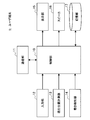
- FIG. 3 is a block diagram illustrating an example of the configuration of the server 2 according to the present embodiment.
- the server 2 includes a control unit 20, a communication unit 21, a behavior information storage unit 22, a habit storage unit 23, and a response storage unit 24.
- the control unit 20 is configured by, for example, a microcomputer including a CPU, a ROM, a RAM, a nonvolatile memory, and an interface unit, and controls each configuration of the server 2.
- the control unit 20 includes a behavior information storage control unit 20a, a habit analysis unit 20b, a response generation unit 20c, a timing determination unit 20d, a response output control unit 20e, and a voice. It functions as a recognition unit 20f, a semantic analysis unit 20g, a weather information acquisition unit 20h, and a feedback unit 20i.
- the behavior information storage control unit 20a stores the current position information and movement information transmitted from the user terminal 1 via the communication unit 21 in the behavior information storage unit 22 as behavior information.
- the movement information is activity amount information indicating the number of steps, the time of walking, the time of running, the boarding time, the time of standing, or the time of sitting.
- the habit analysis unit 20b analyzes the behavior pattern of the user, that is, the habit based on the behavior information stored in the behavior information storage unit 22. Specifically, the habit analyzer 20b analyzes the user's habits based on behavior information for a predetermined period. For example, the habit analysis unit 20b extracts a visit place category (restaurant, convenience store, bookstore, etc.) based on behavior information for the past N months, and detects a category or store name with a high number of visits as a place where the user always goes. To do. The number of visits may be determined in the number of visits by category of the user, or may be determined by comparing with statistics of other users.
- a visit place category restaurant, convenience store, bookstore, etc.
- the habit analysis unit 20b can also detect a place where the user always goes on a weekday morning or night, or a holiday morning or night, by extracting the date and time of visiting a visited place with a high number of visits.
- the habit analysis unit 20b analyzes the usual number of steps (weekdays and holidays), the time and place on the train (standing / sitting rate), etc. based on the behavior information of the past N months. May be.
- the habit analysis unit 20b analyzes averages and variances such as office hours, return time, and return time based on behavior information for the past week, and detects customs such as return time, return time, return time, etc. You can also.
- the habit information analyzed by the habit analysis unit 20 b is stored in the habit storage unit 23.
- the response generation unit 20 c generates a response to the user behavior information received from the user terminal 1 via the communication unit 21.
- the response generation unit 20c refers to the user's habits stored in the habit storage unit 23, and generates a response to the different behaviors when an action different from the habits is detected. For example, when it is determined that the user has visited a place that the user does not normally visit based on the position information, the response generation unit 20c generates a call such as “Is it fun?” Or “Is it different from usual?”. Further, when the user visits a place that the user does not normally visit based on the user's habit of going to a coffee shop every morning, the response generation unit 20c provides information (locations) about coffee shops of the same category or the same name that exist nearby.
- the response generation unit 20c based on the user's preference information, in addition to the user's habits, when the user visits a place that the user does not normally visit, information on a restaurant or the like that the nearby user likes (location information) May be generated.
- the response generation unit 20c finds that the amount of activity is more / less than usual based on habits related to the amount of activity and movement information (number of steps, walking time, standing time, etc.), Generates a call such as “Now,” “I walked a lot today.” In addition, the response generation unit 20c generates information that conveys a difference from normal behavior such as “I walked n steps more than usual today” and “Today's calorie consumption is higher than usual”.
- the response generation unit 20c finds that it was not possible to sit on a train that is always sitting on the basis of lifestyle related habits and movement information, such as “I was sorry today” or “I am tired today” Generate tuned words. Further, when it is found that the return time or return time is later than usual, the response generation unit 20c generates a word of effort or synchronization such as “I worked hard until late, good work”. Further, the response generation unit 20c generates words of effort and synchronization for a predetermined period, such as “I was busy this week” when the return to work or return time continues for a week.
- the response generation by the response generation part 20c by this embodiment is not limited to this.
- the response generation unit 20c may be used when the weather information acquired by the weather information acquisition unit 20h is special when the user has a habit of walking or moving by bicycle during commuting / commuting, shopping, picking up a child, etc. If the discomfort index based on the weather is higher than a predetermined value, a response informing the weather, advice according to the special weather, and words of effort and synchronization according to the special weather are generated. Specifically, the response generation unit 20c “tunes suddenly from the night.
- the weather information acquisition unit 20h acquires information on the weather from an external predetermined server and outputs the information to the response generation unit 20c.
- the discomfort index is obtained by the equation 1: 0.81Td + 0.01H (0.99Td-14.3) +46.3 using temperature (Td) and humidity (H).
- Td temperature
- H humidity
- the response generation unit 20c determines that special weather such as heavy rain or heavy snow is determined according to the region (for example, heavy rain for rain of 20 mm or more per hour, heavy snow for a snowfall depth of 20 cm for 24 hours, etc.). You may judge based on.
- the response generation unit 20c when the user is in the habit of traveling by train at the time of commuting / commuting to school, reports an accident or the like if an unusual situation such as an accident, delay, or arrangement is occurring based on the railway information. Produce responses, advice, words of effort and alignment.
- the response generation unit 20c can generate a response according to the utterance (inquiry by voice) from the user. Specifically, for example, when the user utters at the user terminal 1, the voice collected by the input unit 12 is transmitted to the server 2, and the server 2 performs voice recognition by the voice recognition unit 20f to perform character data. Convert to Next, the meaning analysis unit 20g analyzes the meaning of the character data output from the speech recognition unit 20f. For example, when a character string such as “What is the weather on weekends?” Is output by voice recognition, the semantic analysis unit 20g determines the date of “weekend” from the current date and time.
- the semantic analysis unit 20g is listening to “where the weather” based on the location of the place where the user is going to go on the weekend from the current location or address, work location, or schedule information of the user. Is estimated.
- the semantic analysis unit 20g can analyze the utterance of “weather information on ⁇ (location) on XX month ⁇ day”.
- generation part 20c produces
- the response generation unit 20c generates a response based on the weather information acquired by the weather information acquisition unit 20h.
- the response content generated according to the user's utterance in this way is stored in the response storage unit 24.
- the response generation unit 20c may generate a response for notifying the change. For example, when the weather forecast changes several days after responding the weather information one week later according to the utterance from the user, the response generation unit 20c generates a response based on the latest weather information. As described above, generation of a response by the response generation unit 20c according to the utterance has been described. However, the present embodiment is not limited to this, and a response is generated in response to an inquiry from the user, for example, by character input or a gesture other than voice. It is also possible to do.
- the timing determination unit 20d determines the presentation timing of the response generated by the response generation unit 20c to the user. Specifically, the timing determination unit 20d presents a response immediately, or at a specific timing such as in the morning, when going out, when getting off, at home, before going to bed, at the weekend, etc. (predetermined according to the user's action or action pattern) (Timing). For example, the timing determination unit 20d may determine the timing so as to present it immediately if it is information about a place. Specifically, for example, when a user visits a place where he / she does not normally go, if there is a store of the same category or the same name as the store the user always visits, the store information is determined to be presented immediately.
- the timing determination unit 20d determines to present it in the morning if it is a store of the same category as the store that the user always goes in the morning, and presents it in the evening if it is a store of the same category as the store that always goes at night. You may decide based on a habit to decide.
- the timing determination unit 20d may determine to present it at the end of the activity of the day, that is, when returning home, in the case of a response such as a call when the daily activity amount is different from the usual amount.
- the timing determination unit 20d may determine to present it at the end of the life of the day, that is, at the time of going home or at bedtime, in the case of a response of a word of effort or synchronization when different from the usual lifestyle. In addition, the timing determination unit 20d may determine to present it at the time of getting off in the case of a response of a word of effort or synchronization when the state at the time of boarding is different from usual.
- the timing determination unit 20d decides to present it before departure if it is a response or advice informing about special weather or a railroad accident, or to return it in the case of a word of labor or synchronization according to the special weather or railroad accident. May be.
- the timing determination unit 20d determines to immediately present the response generated according to the utterance from the user.
- the timing determination unit 20d determines to present immediately when there is a change in the response for notifying the change generated by the response generation unit 20c when there is a change in the response already answered. Alternatively, it may be decided to notify the time when the user who has returned home is spending at home.
- the response output control unit 20e controls the user terminal 1 to present the response generated by the response generation unit 20c to the user at the timing determined by the timing determination unit 20d. For example, the response output control unit 20e transmits a response to the user terminal 1 and instructs to present the response when the timing determined by the timing determination unit 20d is reached. Alternatively, the response output control unit 20e may transmit a response from the communication unit 21 to the user terminal 1 and instruct the presentation timing of the response. In the user terminal 1, for example, a response is output (voice output or display output) from the speaker 16 or the display unit 15.
- the response output control unit 20e can also control the response output mode according to the device type of the user terminal 1. For example, when the user terminal 1 is a device having a relatively small display area such as a smart band or a smart watch, the response output control unit 20e performs control so that the granularity of information is coarse, that is, the response outline is presented. On the other hand, when the user terminal 1 is a device having a relatively large display area such as a smartphone or a tablet terminal, the response output control unit 20e performs control so that the granularity of information is fine, that is, detailed information on the response is presented. Further, the response output control unit 20e may control the smart band or the smart watch so that the summary is displayed on the smart band or the smart phone and the detailed information is displayed on the smartphone or the tablet terminal so that the responses are presented with different granularities.
- the feedback unit 20i reflects the user's behavior for the automatically generated response as feedback in the response generation unit 20c, the timing determination unit 20d, and the habit storage unit 23, thereby generating a more appropriate response, timing determination, and habit information. Can be accumulated. Further, the feedback unit 20i may reflect what the user has replied as preference information in the preference information storage unit (not shown) of the server 2.
- the communication unit 21 has a function of connecting to an external device by wireless / wired and transmitting / receiving data.
- the communication unit 21 according to the present embodiment is connected to, for example, the user terminal 1 and receives user behavior information, or transmits response information to the user terminal 1 according to the control of the response output control unit 20e.
- the behavior information storage unit 22 stores user behavior information (position information, movement information, and the like) transmitted from the user terminal 1.
- the habit storage unit 23 stores user habit information (behavior pattern) analyzed by the habit analysis unit 20b.
- the response storage unit 24 stores a response to the utterance from the user generated by the response generation unit 20c.
- the configuration of the server 2 according to the present embodiment has been specifically described above. Note that the configuration of the server 2 is not limited to the example illustrated in FIG. 3.
- the behavior information storage unit 22, the habit storage unit 23, and the response storage unit 24 may be provided in the external server.
- FIG. 4 is a flowchart showing habit analysis processing according to this embodiment.
- the user terminal 1 detects user behavior information.
- the user behavior information includes position information from the current position measurement unit 13 and motion information from the motion detection unit 14. Further, the user terminal 1 transmits the detected user behavior information to the server 2. The transmission of the behavior information can be continuously performed in real time.
- step S106 the behavior information storage control unit 20a of the server 2 stores the behavior information transmitted from the user terminal 1 in the behavior information storage unit 22.
- the habit analysis unit 20b of the server 2 analyzes habits (that is, behavior patterns) based on the behavior information stored in the behavior information storage unit 22. For example, the habit analysis unit 20b analyzes the behavior pattern for each time zone on weekdays and holidays based on behavior information for the past month or week.
- step S112 the habit storage unit 23 of the server 2 stores habit information (for example, information in which a place and a matter are associated with the time axis) as an analysis result by the habit analysis unit 20b.
- habit information for example, information in which a place and a matter are associated with the time axis
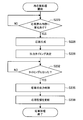
- FIG. 5 is a flowchart showing a response process according to the present embodiment. As shown in FIG. 5, first, in step S ⁇ b> 123, the user terminal 1 detects user behavior information and transmits it to the server 2.
- step S126 the behavior information storage control unit 20a of the server 2 stores the behavior information transmitted from the user terminal 1 in the behavior information storage unit 22.
- step S129 the response generation unit 20c of the server 2 reads the user's habit information from the habit storage unit 23.
- step S132 the response generation unit 20c compares the user behavior information transmitted from the user terminal 1 with the habit information read from the habit storage unit 23, and whether or not the user behavior is different from the habit. Determine whether. Specifically, for example, the response generation unit 20c determines whether the user is in a different place from where the user always goes and whether the user's movement (activity amount) is different from the usual place.
- step S135 the response generation unit 20c generates a response to a different action.
- the response generation unit 20c may generate information on a store in the same category as the store that the user regularly visits using the habit information read from the habit storage unit 23 as necessary.
- the response generation unit 20c generates a call or a word of effort / synchronization as a response when the amount of activity is higher than usual, when it is not possible to sit down on a train that can always be seated, or when the return time is later than usual. May be.
- step S138 the timing determination unit 20d determines the output timing to the user of the response generated by the response generation unit 20c.
- step S144 the response output control unit 20e controls to output a response from the user terminal 1 to the user.
- the response can be output by voice output or display output.
- FIG. 6 is a flowchart showing the response accumulation process according to this embodiment. As shown in FIG. 6, first, in step S ⁇ b> 203, an utterance (voice input) from the user is detected by the input unit 12 of the user terminal 1 and transmitted to the server 2.
- step S ⁇ b> 203 an utterance (voice input) from the user is detected by the input unit 12 of the user terminal 1 and transmitted to the server 2.
- step S206 the voice recognition unit 20f of the server 2 recognizes the voice transmitted from the user terminal 1 and converts the voice into character data.
- step S209 the semantic analysis unit 20g extracts the meaning (the content of the utterance) of the character data converted by the voice recognition unit 20f.
- step S212 the response generation unit 20c generates a response to the meaning of the utterance by the user extracted by the semantic analysis unit 20g, that is, the utterance content. For example, when the utterance from the user is an utterance of weather information, the response generation unit 20c generates the weather information of the date and place extracted by the semantic analysis unit 20g as a response.
- step S215 the response output control unit 20e controls to output the response generated by the response generation unit 20c from the user terminal 1 to the user.
- step S218, the control unit 20 stores the response content in the response storage unit 24.
- the response content is a response content that may change in the future, such as future weather information
- the control unit 20 adds additional information such as an answer when the weather changes by the day ⁇ to the response storage unit 24.
- the control unit 20 may store the preference information storage unit (not shown) of the server 2 as the user's preference information or the habit storage unit 23. It may be reflected as a habit. For example, in the case of a favorite utterance such as “it is fun to go to the coffee shop every morning”, the control unit 20 can reflect the utterance as a habit in the habit storage unit 23.
- FIG. 7 is a flowchart showing a re-response process according to this embodiment. As described above with reference to FIG. 6, since the response once performed is stored in the response storage unit 24, the server 2 can respond again when there is a change in the response content thereafter. is there.
- the response generation unit 20c determines whether or not the response content stored in the response storage unit 24 has changed. For example, the response generation unit 20c determines that there is a change in the response content when the weather information has changed before the weekend arrives after responding to the weather information on the weekend.
- the response generation unit 20c when there is a change in the response content (“Yes” in S223), the response generation unit 20c generates a new response in step S226.
- step S229 the timing determination unit 20d determines the output timing of the response generated again.
- step S229 the response output control unit 20e performs control so that the response generated again by the response generation unit 20c is output from the user terminal 1 to the user. To do.
- step S232 the control unit 20 updates the response information stored in the response storage unit 24.
- the operation processing according to this embodiment has been specifically described above. Subsequently, an example of presenting a response according to the present embodiment will be described.
- the presentation of the response on the user terminal 1 according to the present embodiment may be an audio output from the speaker 16 or a display output from the display unit 15.
- a specific example of the response display screen in the case of display output will be described with reference to FIGS.
- FIG. 8 is a diagram showing a response display example in the case of the smart eyeglass 1a.
- the lens unit positioned in front of the user's eyes when the user wears the smart eyeglass 1a corresponds to the display unit 15a.
- the display unit 15a has transparency, and the user can also see an image displayed on the display unit 15a while viewing the real space through the display unit 15a.
- the smart eyeglass 1a Based on the response data transmitted from the server 2, the smart eyeglass 1a displays a response image 32 at the end of the display unit 15a so as not to disturb the user's field of view as shown in FIG.
- the response image 32 shows that a railway accident occurred when the user had a habit of moving a train during commuting / commuting to school ("Good morning! Trouble with the XX line!) And words of effort / synchronization ("OK? It ’s good if you do n’t have it ”).
- the response image 32 shown in FIG. 8 may include a character and may appear to receive a response from the character. The character can be changed according to the user's preference.
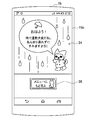
- FIG. 9 is a diagram showing a response display example in the case of the smartphone 1b. As illustrated in FIG. 9, when the user terminal 1 is realized by the smartphone 1b, the smartphone 1b displays the response image 34 on the display unit 15b based on the response data transmitted from the server 2. A return button 36 may also be displayed.
- the response image 34 shows words of effort / synchronization according to raining when the user has a habit of walking or cycling during commuting / commuting (“Good morning! ) ”) Will be presented at the timing before departure. Further, the response image 34 shown in FIG. 9 may include a character, and may appear to receive a response from the character. The character can be changed according to the user's preference.
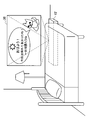
- FIG. 10 is a diagram showing a response display example in the room.
- the response image is displayed on the display unit 15 of the user terminal 1 has been described.
- the present embodiment is not limited thereto, and is embedded in a wall or ceiling of a room as an example of the output unit.
- a display or a projector 15 ′ that projects an image on the wall or ceiling of the room may be used.
- the response image 38 is projected on the wall of the room by the projector 15 '.
- the projector 15 ′ can wirelessly connect to the smartphone 1b with Wi-Fi (registered trademark) or Bluetooth (registered trademark) and function as an output unit of the smartphone 1b. .
- FIG. 11 is a diagram illustrating a response display example in which a plurality of user terminals 1 cooperate with each other.
- the server 2 responds to a plurality of devices with a granularity corresponding to each device. You may control to display data.
- the smartphone 1b and the smart watch 1c are linked by wireless connection with Wi-Fi (registered trademark) or Bluetooth (registered trademark)
- the smartphone 1b adjusts the granularity of the response data transmitted from the server 2
- the smart watch 1c Since the display unit 15c of the smart watch 1c has a relatively small display area, and the display unit 15b of one smartphone 1b has a relatively large display area, the smart watch 1c displays an outline of the response, and details of the response are displayed on the smartphone 1b. By displaying, an appropriate display mode according to the device can be realized.
- the user confirms the outline of the response by the response image 40 on the display unit 15c of the smart watch 1c, and confirms the detailed information on the response image 42 displayed on the display unit 15b of the smartphone 1b. be able to.
- the response image 40 and the response image 42 show information on nearby coffee shops in the morning on the basis of the habit of going to a coffee shop every morning when the user visits a place different from the place where the user always goes. It is to be presented. Since the response image 40 is displayed on the display unit 15c of the smart watch 1c having a relatively small display area, only the presence / absence of the coffee shop, such as “I always have S coffee to go”, is shown. On the other hand, since the response image 42 is displayed on the display unit 15b of the smartphone 1b having a relatively large display area, it is possible to show detailed information such as a map image indicating the location of the coffee shop and store opening hours.
- FIG. 12 is a diagram illustrating an example of character appearance according to a message.
- a message includes words such as “sad”, “sorry”, and “severe”, the appearance of the character is changed to a disappointing expression, and “fun”, “happy”, “good”, etc.
- the appearance of the character is changed to a pleasant expression.
- the effect of healing and labor can be enhanced by changing the appearance of the character to a facial expression showing emotions (joy, sadness, anger, praise, surprise, disgust, fear, etc.) according to the message.
- the information processing system presents information that the user wants at an appropriate timing by responding to unusual behavior based on the behavior information of the user. Is possible.
- a computer program for causing the functions of the user terminal 1 and the server 2 to be performed on hardware such as the CPU, ROM, and RAM incorporated in the user terminal 1 and the server 2 described above can be created.
- a computer-readable storage medium storing the computer program is also provided.
- the information processing system has been described as including a user terminal 1 and a server 2, but the present embodiment is not limited to this, and the information processing system is realized by the user terminal 1. May be. That is, the user terminal 1 has the configuration of the server 2 shown in FIG. 3, and the user terminal 1 can generate and present a response to a behavior different from usual based on the user behavior information.
- this technique can also take the following structures.
- a behavior analysis unit that analyzes a behavior pattern within a predetermined period; When a behavior different from the behavior pattern is detected, a generation unit that generates a response to the different behavior; A determination unit for determining an output timing of the generated response;
- An information processing apparatus comprising: (2) The information processing apparatus according to (1), wherein the generation unit generates location information to be presented to a user based on the behavior pattern or preference information of the user for the different behavior. (3) The information processing apparatus according to (1) or (2), wherein the generation unit generates a call for the different action. (4) The information processing apparatus according to any one of (1) to (3), wherein the generation unit generates a comment of synchronization or effort for the different actions.
- the information processing apparatus according to any one of (1) to (4), wherein the generation unit generates an advice, notification, call, synchronization, or labor comment according to special weather.
- the behavior information is position information or motion information of a user.
- the movement information is activity amount information indicating the number of steps, the walking time, the running time, the boarding time, the standing time, or the sitting time.
- the determination unit determines an output timing so that a response to the different action is immediately output when the different action is detected. .
- the information processing apparatus determines a response to the different behavior at a predetermined timing according to a user behavior or a behavior pattern.
- the determination unit determines a response to the different behavior at a predetermined timing according to a user behavior or a behavior pattern.
- the response is output by voice or display.
- the information processing apparatus according to any one of (1) to (10), wherein the response is output with an information granularity corresponding to a size of a display area of the output device.
- the information processing apparatus further includes a response storage unit that stores a response made to an inquiry from a user, The information processing apparatus according to any one of (1) to (11), wherein the generation unit generates a response again when a change occurs in the content of the stored response.
Landscapes
- Engineering & Computer Science (AREA)
- Theoretical Computer Science (AREA)
- Physics & Mathematics (AREA)
- Business, Economics & Management (AREA)
- General Physics & Mathematics (AREA)
- General Engineering & Computer Science (AREA)
- Strategic Management (AREA)
- Accounting & Taxation (AREA)
- Finance (AREA)
- Human Computer Interaction (AREA)
- Development Economics (AREA)
- Health & Medical Sciences (AREA)
- Economics (AREA)
- General Business, Economics & Management (AREA)
- Marketing (AREA)
- Audiology, Speech & Language Pathology (AREA)
- General Health & Medical Sciences (AREA)
- Multimedia (AREA)
- Computational Linguistics (AREA)
- Tourism & Hospitality (AREA)
- Game Theory and Decision Science (AREA)
- Entrepreneurship & Innovation (AREA)
- Acoustics & Sound (AREA)
- Artificial Intelligence (AREA)
- Human Resources & Organizations (AREA)
- Data Mining & Analysis (AREA)
- Databases & Information Systems (AREA)
- Primary Health Care (AREA)
- User Interface Of Digital Computer (AREA)
- Information Retrieval, Db Structures And Fs Structures Therefor (AREA)
- Management, Administration, Business Operations System, And Electronic Commerce (AREA)
Abstract
Description
1.本開示の一実施形態による情報処理システムの概要
2.構成
2-1.ユーザ端末の構成
2-2.サーバの構成
3.動作処理
3-1.習慣解析処理
3-2.応答処理
3-3.応答蓄積処理および再応答処理
4.応答提示例
5.まとめ
まず、本開示の一実施形態による情報処理システムの概要を図1に示して説明する。図1に示すように、本実施形態による情報処理システムは、ユーザが所持するユーザ端末1と、応答生成および提示タイミングの制御を行うサーバ2とを含む。ユーザ端末1とサーバ2は、例えばネットワーク3を介して接続する。
<2-1.ユーザ端末の構成>
図2は、本実施形態によるユーザ端末1の構成の一例を示すブロック図である。図2に示すように、ユーザ端末1は、制御部10、通信部11、入力部12、現在位置計測部13、動き検知部14、表示部15、スピーカ16、および記憶部17を有する。
制御部10は、例えばCPU(Central Processing Unit)、ROM(Read Only Memory)、RAM(Random Access Memory)、不揮発性メモリ、インターフェース部を備えたマイクロコンピュータにより構成され、ユーザ端末1の各構成を制御する。具体的には、本実施形態による制御部10は、現在位置計測部13により計測された現在位置情報や、動き検知部14により検知された動き情報(すなわち活動量情報)を、通信部11からサーバ2に送信するよう制御する。なお制御部10は、現在位置情報および動き情報をリアルタイムで送信するよう制御してもよい。また、制御部10は、通信部11を介してサーバ2から送信された応答を表示部15またはスピーカ16から出力するよう制御する。
通信部11は、無線/有線により外部装置と接続し、データの送受信を行う機能を有する。本実施形態による通信部11は、例えばサーバ2と接続し、制御部10の制御に従って、現在位置情報および動き情報を送信したり、サーバ2で生成された応答を受信したりする。
入力部12は、ユーザによる情報入力操作を検出し、検出した入力情報を制御部10に送信する。例えば入力部12は、タッチパネル、キーボード、テンキー、ボタン、スイッチ等により実現される。また、入力部12をカメラにより実現することで、ジェスチャー入力が可能となる。また、入力部12をマイクロフォンにより実現することで、音声入力が可能となる。また、入力部12は、複数種類の入力デバイスにより実現されてもよい。
現在位置計測部13は、外部からの取得信号に基づいてユーザ端末1の現在位置を検知する機能を有する。具体的には、例えば現在位置計測部13は、GPS測位部により実現され、GPS衛星からの電波を受信して、ユーザ端末1が存在している位置を検知し、検知した位置情報を制御部10に出力する。また、現在位置計測部13は、GPSの他、例えばWi-Fi(登録商標)、携帯電話・PHS・スマートフォン等との送受信、または近距離通信等により位置を検知するものであってもよい。
動き検知部14は、ユーザ端末1の動きを検知する機能を有する。具体的には、例えば動き検知部14は、3軸加速度センサおよび地磁気センサ等により実現され、これらで検知されるデータを利用して、ユーザの活動量(停止時間、歩行時間、歩数、走行時間、座っていた時間、立っていた時間、乗り物に乗っていた時間等)を検知する。動き検知部14は、検知した動き情報を制御部10に出力する。
表示部15は、制御部10の指示に従って、画面に文字や画像その他の情報を表示する機能を有する。
スピーカ16は、制御部10の指示に従って、音声信号を再生する機能を有する。
記憶部17は、様々なデータを記憶し、例えば制御部10の各処理を実行するためのプログラムを記憶する。また、記憶部17は、ユーザのスケジュール情報を記憶していてもよい。
図3は、本実施形態によるサーバ2の構成の一例を示すブロック図である。図3に示すように、サーバ2は、制御部20、通信部21、行動情報記憶部22、習慣記憶部23、および応答記憶部24を有する。
制御部20は、例えばCPU、ROM、RAM、不揮発性メモリ、インターフェース部を備えたマイクロコンピュータにより構成され、サーバ2の各構成を制御する。具体的には、本実施形態による制御部20は、図3に示すように、行動情報記憶制御部20a、習慣解析部20b、応答生成部20c、タイミング決定部20d、応答出力制御部20e、音声認識部20f、意味解析部20g、天候情報取得部20h、およびフィードバック部20iとして機能する。
通信部21は、無線/有線により外部装置と接続し、データの送受信を行う機能を有する。本実施形態による通信部21は、例えばユーザ端末1と接続し、ユーザの行動情報を受信したり、応答出力制御部20eの制御に従って応答情報をユーザ端末1に送信したりする。
行動情報記憶部22は、ユーザ端末1から送信されたユーザの行動情報(位置情報および動き情報等)を記憶する。
習慣記憶部23は、習慣解析部20bにより解析されたユーザの習慣情報(行動パターン)を記憶する。
応答記憶部24は、応答生成部20cにより生成されたユーザからの発話に対する応答を記憶する。
続いて、本実施形態による情報処理システムの動作処理について、図4~図7を参照して具体的に説明する。
図4は、本実施形態による習慣解析処理を示すフローチャートである。図4に示すように、まず、ステップS103において、ユーザ端末1はユーザの行動情報を検知する。上述したように、ユーザの行動情報は、現在位置計測部13による位置情報、動き検知部14による動き情報が含まれる。また、ユーザ端末1は、検知したユーザの行動情報をサーバ2に送信する。行動情報の送信は継続的にリアルタイムで行われ得る。
図5は、本実施形態による応答処理を示すフローチャートである。図5に示すように、まず、ステップS123において、ユーザ端末1はユーザの行動情報を検知し、サーバ2に送信する。
図6は、本実施形態による応答蓄積処理を示すフローチャートである。図6に示すように、まず、ステップS203において、ユーザ端末1の入力部12によりユーザからの発話(音声入力)が検知され、サーバ2に送信される。
図8は、スマートアイグラス1aの場合における応答表示例を示す図である。図8に示すように、ユーザ端末1がスマートアイグラス1aにより実現されている場合、スマートアイグラス1aをユーザが装着した場合にユーザの眼前に位置するレンズ部が表示部15aに相当する。表示部15aは透過性を有し、ユーザは表示部15aを介して現実空間を視認しつつ、表示部15aに表示された画像も見ることができる。
上述したように、本開示の実施形態による情報処理システムでは、ユーザの行動情報に基づき、普段と異なる行動に対して応答することで、ユーザが欲しいであろう情報を適切なタイミングで提示することを可能とする。
(1)
蓄積された行動情報に基づいて、所定期間内における行動パターンを解析する行動解析部と、
前記行動パターンと異なる行動が検知された際に、当該異なる行動に対する応答を生成する生成部と、
前記生成された応答の出力タイミングを決定する決定部と、
を備える、情報処理装置。
(2)
前記生成部は、前記異なる行動に対して、ユーザの前記行動パターンまたは嗜好情報に基づいてユーザに提示する場所情報を生成する、前記(1)に記載の情報処理装置。
(3)
前記生成部は、前記異なる行動に対する呼びかけを生成する、前記(1)または(2)に記載の情報処理装置。
(4)
前記生成部は、前記異なる行動に対する同調または労りのコメントを生成する、前記(1)~(3)のいずれか1項に記載の情報処理装置。
(5)
前記生成部は、特殊な天候に応じた助言、通知、呼びかけ、同調、または労りのコメントを生成する、前記(1)~(4)のいずれか1項に記載の情報処理装置。
(6)
前記行動情報は、ユーザの位置情報または動き情報である、前記(1)~(5)のいずれか1項に記載の情報処理装置。
(7)
前記動き情報は、歩数、歩いた時間、走った時間、乗車時間、立っていた時間、または座っていた時間を示す活動量情報である、前記(6)に記載の情報処理装置。
(8)
前記決定部は、前記異なる行動が検知された際に、前記異なる行動に対する応答を即時出力するよう出力タイミングを決定する、前記(1)~(7)のいずれか1項に記載の情報処理装置。
(9)
前記決定部は、前記異なる行動に対する応答を、ユーザの行動または行動パターンに応じた所定のタイミングに決定する、前記(1)~(8)のいずれか1項に記載の情報処理装置。
(10)
前記応答は、音声出力または表示出力される、前記(1)~(9)のいずれか1項に記載の情報処理装置。
(11)
前記応答は、出力デバイスの表示領域の大きさに対応した情報粒度で出力される、前記(1)~(10)のいずれか1項に記載の情報処理装置。
(12)
前記情報処理装置は、ユーザからの問い合わせに対して行った応答を記憶する応答記憶部をさらに備え、
前記生成部は、前記記憶した応答の内容に変化が生じた場合、再度応答を生成する、前記(1)~(11)のいずれか1項に記載の情報処理装置。
(13)
蓄積された行動情報に基づいて、所定期間内における行動パターンを解析することと、
前記行動パターンと異なる行動が検知された際に、当該異なる行動に対する応答を生成することと、
前記生成された応答の出力タイミングを決定することと、
を含む、制御方法。
(14)
コンピュータを、
蓄積された行動情報に基づいて、所定期間内における行動パターンを解析する行動解析部と、
前記行動パターンと異なる行動が検知された際に、当該異なる行動に対する応答を生成する生成部と、
前記生成された応答の出力タイミングを決定する決定部と、
として機能させるための、プログラム。
10 制御部
11 通信部
12 入力部
13 現在位置計測部
14 動き検知部
15 表示部
16 スピーカ
17 記憶部
2 サーバ
20 制御部
20a 行動情報記憶制御部
20b 習慣解析部
20c 応答生成部
20d タイミング決定部
20e 応答出力制御部
20f 音声認識部
20g 意味解析部
20h 天候情報取得部
20i フィードバック部
21 通信部
22 行動情報記憶部
23 習慣記憶部
24 応答記憶部
Claims (14)
- 蓄積された行動情報に基づいて、所定期間内における行動パターンを解析する行動解析部と、
前記行動パターンと異なる行動が検知された際に、当該異なる行動に対する応答を生成する生成部と、
前記生成された応答の出力タイミングを決定する決定部と、
を備える、情報処理装置。 - 前記生成部は、前記異なる行動に対して、ユーザの前記行動パターンまたは嗜好情報に基づいてユーザに提示する場所情報を生成する、請求項1に記載の情報処理装置。
- 前記生成部は、前記異なる行動に対する呼びかけを生成する、請求項1に記載の情報処理装置。
- 前記生成部は、前記異なる行動に対する同調または労りのコメントを生成する、請求項1に記載の情報処理装置。
- 前記生成部は、特殊な天候に応じた助言、通知、呼びかけ、同調、または労りのコメントを生成する、請求項1に記載の情報処理装置。
- 前記行動情報は、ユーザの位置情報または動き情報である、請求項1に記載の情報処理装置。
- 前記動き情報は、歩数、歩いた時間、走った時間、乗車時間、立っていた時間、または座っていた時間を示す活動量情報である、請求項6に記載の情報処理装置。
- 前記決定部は、前記異なる行動が検知された際に、前記異なる行動に対する応答を即時出力するよう出力タイミングを決定する、請求項1に記載の情報処理装置。
- 前記決定部は、前記異なる行動に対する応答を、ユーザの行動または行動パターンに応じた所定のタイミングに決定する、請求項1に記載の情報処理装置。
- 前記応答は、音声出力または表示出力される、請求項1に記載の情報処理装置。
- 前記応答は、出力デバイスの表示領域の大きさに対応した情報粒度で出力される、請求項1に記載の情報処理装置。
- 前記情報処理装置は、ユーザからの問い合わせに対して行った応答を記憶する応答記憶部をさらに備え、
前記生成部は、前記記憶した応答の内容に変化が生じた場合、再度応答を生成する、請求項1に記載の情報処理装置。 - 蓄積された行動情報に基づいて、所定期間内における行動パターンを解析することと、
前記行動パターンと異なる行動が検知された際に、当該異なる行動に対する応答を生成することと、
前記生成された応答の出力タイミングを決定することと、
を含む、制御方法。 - コンピュータを、
蓄積された行動情報に基づいて、所定期間内における行動パターンを解析する行動解析部と、
前記行動パターンと異なる行動が検知された際に、当該異なる行動に対する応答を生成する生成部と、
前記生成された応答の出力タイミングを決定する決定部と、
として機能させるための、プログラム。
Priority Applications (3)
| Application Number | Priority Date | Filing Date | Title |
|---|---|---|---|
| JP2016563553A JPWO2016092924A1 (ja) | 2014-12-09 | 2015-09-10 | 情報処理装置、制御方法、およびプログラム |
| EP15867943.1A EP3232395A4 (en) | 2014-12-09 | 2015-09-10 | Information processing device, control method, and program |
| US15/531,059 US20170329766A1 (en) | 2014-12-09 | 2015-09-10 | Information processing apparatus, control method, and program |
Applications Claiming Priority (2)
| Application Number | Priority Date | Filing Date | Title |
|---|---|---|---|
| JP2014248568 | 2014-12-09 | ||
| JP2014-248568 | 2014-12-09 |
Publications (1)
| Publication Number | Publication Date |
|---|---|
| WO2016092924A1 true WO2016092924A1 (ja) | 2016-06-16 |
Family
ID=56107120
Family Applications (1)
| Application Number | Title | Priority Date | Filing Date |
|---|---|---|---|
| PCT/JP2015/075698 Ceased WO2016092924A1 (ja) | 2014-12-09 | 2015-09-10 | 情報処理装置、制御方法、およびプログラム |
Country Status (4)
| Country | Link |
|---|---|
| US (1) | US20170329766A1 (ja) |
| EP (1) | EP3232395A4 (ja) |
| JP (1) | JPWO2016092924A1 (ja) |
| WO (1) | WO2016092924A1 (ja) |
Cited By (5)
| Publication number | Priority date | Publication date | Assignee | Title |
|---|---|---|---|---|
| JP2018152124A (ja) * | 2018-06-04 | 2018-09-27 | ヤフー株式会社 | 抽出装置、抽出方法、及び抽出プログラム |
| JP2018151860A (ja) * | 2017-03-13 | 2018-09-27 | ヤフー株式会社 | 抽出装置、抽出方法、及び抽出プログラム |
| US10706606B2 (en) | 2017-08-24 | 2020-07-07 | Fuji Xerox Co., Ltd. | Information processing apparatus for modifying a graphical object based on sensor input |
| US20220318485A1 (en) * | 2020-09-29 | 2022-10-06 | Google Llc | Document Mark-up and Navigation Using Natural Language Processing |
| JP7325595B1 (ja) | 2022-09-30 | 2023-08-14 | Kddi株式会社 | コンテンツ提供システム、コンテンツ提供装置及び携帯端末 |
Families Citing this family (8)
| Publication number | Priority date | Publication date | Assignee | Title |
|---|---|---|---|---|
| USD822716S1 (en) | 2016-05-13 | 2018-07-10 | Google Llc | Voice interface device |
| CN106463110A (zh) * | 2014-06-03 | 2017-02-22 | 索尼公司 | 信息处理设备、信息处理方法和程序 |
| JP6784044B2 (ja) * | 2016-03-24 | 2020-11-11 | カシオ計算機株式会社 | 行動解析装置、行動解析方法及びプログラム |
| KR102307976B1 (ko) | 2016-05-10 | 2021-09-30 | 구글 엘엘씨 | 디바이스들 상의 보이스 어시스턴트에 대한 구현들 |
| EP3455747B1 (en) * | 2016-05-13 | 2021-07-28 | Google LLC | Voice-controlled closed caption display |
| US10446144B2 (en) * | 2016-11-21 | 2019-10-15 | Google Llc | Providing prompt in an automated dialog session based on selected content of prior automated dialog session |
| US11638869B2 (en) * | 2017-04-04 | 2023-05-02 | Sony Corporation | Information processing device and information processing method |
| US10705789B2 (en) * | 2018-07-25 | 2020-07-07 | Sensory, Incorporated | Dynamic volume adjustment for virtual assistants |
Citations (6)
| Publication number | Priority date | Publication date | Assignee | Title |
|---|---|---|---|---|
| JP2000293506A (ja) * | 1999-04-09 | 2000-10-20 | Sony Corp | 行動予測方法及びその装置 |
| JP2003216752A (ja) * | 2002-01-23 | 2003-07-31 | Fujitsu Ltd | 行動指示プログラムおよび行動指示方法 |
| JP2005062963A (ja) * | 2003-08-18 | 2005-03-10 | Toshiba Corp | 時系列行動パターンを表示する装置、方法、およびプログラム |
| JP2007018350A (ja) * | 2005-07-08 | 2007-01-25 | Hokkaido Univ | 情報検索装置、情報検索方法および情報検索プログラム |
| JP2007072835A (ja) * | 2005-09-08 | 2007-03-22 | Aos Technologies Kk | サービス利用者サポートシステム |
| JP2013206139A (ja) * | 2012-03-28 | 2013-10-07 | Casio Comput Co Ltd | 情報処理装置、情報処理方法及びプログラム。 |
Family Cites Families (15)
| Publication number | Priority date | Publication date | Assignee | Title |
|---|---|---|---|---|
| US20030028377A1 (en) * | 2001-07-31 | 2003-02-06 | Noyes Albert W. | Method and device for synthesizing and distributing voice types for voice-enabled devices |
| US20030167167A1 (en) * | 2002-02-26 | 2003-09-04 | Li Gong | Intelligent personal assistants |
| NO318991B1 (no) * | 2002-09-05 | 2005-05-30 | Opera Software Asa | Presentasjon av HTML-innhold på en liten terminalskjerm |
| US20040215453A1 (en) * | 2003-04-25 | 2004-10-28 | Orbach Julian J. | Method and apparatus for tailoring an interactive voice response experience based on speech characteristics |
| US20060122840A1 (en) * | 2004-12-07 | 2006-06-08 | David Anderson | Tailoring communication from interactive speech enabled and multimodal services |
| US8972268B2 (en) * | 2008-04-15 | 2015-03-03 | Facebook, Inc. | Enhanced speech-to-speech translation system and methods for adding a new word |
| US8566098B2 (en) * | 2007-10-30 | 2013-10-22 | At&T Intellectual Property I, L.P. | System and method for improving synthesized speech interactions of a spoken dialog system |
| CN101727904B (zh) * | 2008-10-31 | 2013-04-24 | 国际商业机器公司 | 语音翻译方法和装置 |
| KR20110002757A (ko) * | 2009-07-02 | 2011-01-10 | 삼성전자주식회사 | 감성 모델 장치, 감성 모델의 성향 학습 장치 및 방법 |
| JP5440080B2 (ja) * | 2009-10-02 | 2014-03-12 | ソニー株式会社 | 行動パターン解析システム、携帯端末、行動パターン解析方法、及びプログラム |
| KR101622111B1 (ko) * | 2009-12-11 | 2016-05-18 | 삼성전자 주식회사 | 대화 시스템 및 그의 대화 방법 |
| JP6031735B2 (ja) * | 2011-06-13 | 2016-11-24 | ソニー株式会社 | 情報処理装置、情報処理方法およびコンピュータプログラム |
| EP2956919A4 (en) * | 2013-02-15 | 2016-09-21 | Voxy Inc | SYSTEMS AND METHOD FOR LEARNING A LANGUAGE |
| US9640173B2 (en) * | 2013-09-10 | 2017-05-02 | At&T Intellectual Property I, L.P. | System and method for intelligent language switching in automated text-to-speech systems |
| US9804820B2 (en) * | 2013-12-16 | 2017-10-31 | Nuance Communications, Inc. | Systems and methods for providing a virtual assistant |
-
2015
- 2015-09-10 JP JP2016563553A patent/JPWO2016092924A1/ja active Pending
- 2015-09-10 US US15/531,059 patent/US20170329766A1/en not_active Abandoned
- 2015-09-10 EP EP15867943.1A patent/EP3232395A4/en not_active Ceased
- 2015-09-10 WO PCT/JP2015/075698 patent/WO2016092924A1/ja not_active Ceased
Patent Citations (6)
| Publication number | Priority date | Publication date | Assignee | Title |
|---|---|---|---|---|
| JP2000293506A (ja) * | 1999-04-09 | 2000-10-20 | Sony Corp | 行動予測方法及びその装置 |
| JP2003216752A (ja) * | 2002-01-23 | 2003-07-31 | Fujitsu Ltd | 行動指示プログラムおよび行動指示方法 |
| JP2005062963A (ja) * | 2003-08-18 | 2005-03-10 | Toshiba Corp | 時系列行動パターンを表示する装置、方法、およびプログラム |
| JP2007018350A (ja) * | 2005-07-08 | 2007-01-25 | Hokkaido Univ | 情報検索装置、情報検索方法および情報検索プログラム |
| JP2007072835A (ja) * | 2005-09-08 | 2007-03-22 | Aos Technologies Kk | サービス利用者サポートシステム |
| JP2013206139A (ja) * | 2012-03-28 | 2013-10-07 | Casio Comput Co Ltd | 情報処理装置、情報処理方法及びプログラム。 |
Non-Patent Citations (1)
| Title |
|---|
| See also references of EP3232395A4 * |
Cited By (7)
| Publication number | Priority date | Publication date | Assignee | Title |
|---|---|---|---|---|
| JP2018151860A (ja) * | 2017-03-13 | 2018-09-27 | ヤフー株式会社 | 抽出装置、抽出方法、及び抽出プログラム |
| US10706606B2 (en) | 2017-08-24 | 2020-07-07 | Fuji Xerox Co., Ltd. | Information processing apparatus for modifying a graphical object based on sensor input |
| JP2018152124A (ja) * | 2018-06-04 | 2018-09-27 | ヤフー株式会社 | 抽出装置、抽出方法、及び抽出プログラム |
| US20220318485A1 (en) * | 2020-09-29 | 2022-10-06 | Google Llc | Document Mark-up and Navigation Using Natural Language Processing |
| US12216983B2 (en) * | 2020-09-29 | 2025-02-04 | Google Llc | Document mark-up and navigation using natural language processing |
| JP7325595B1 (ja) | 2022-09-30 | 2023-08-14 | Kddi株式会社 | コンテンツ提供システム、コンテンツ提供装置及び携帯端末 |
| JP2024051615A (ja) * | 2022-09-30 | 2024-04-11 | Kddi株式会社 | コンテンツ提供システム、コンテンツ提供装置及び携帯端末 |
Also Published As
| Publication number | Publication date |
|---|---|
| JPWO2016092924A1 (ja) | 2017-09-14 |
| EP3232395A4 (en) | 2018-07-11 |
| US20170329766A1 (en) | 2017-11-16 |
| EP3232395A1 (en) | 2017-10-18 |
Similar Documents
| Publication | Publication Date | Title |
|---|---|---|
| WO2016092924A1 (ja) | 情報処理装置、制御方法、およびプログラム | |
| JP6777201B2 (ja) | 情報処理装置、情報処理方法及びプログラム | |
| US8438127B2 (en) | Behaviour pattern analysis system, mobile terminal, behaviour pattern analysis method, and program | |
| JP5071536B2 (ja) | 情報提供装置、及び、情報提供システム | |
| US20170351767A1 (en) | Information processing system, information processing device, control method, and program | |
| US11092454B2 (en) | Device and method for providing content to user | |
| JPWO2019244715A1 (ja) | プログラム、情報処理方法、情報処理装置および情報処理システム | |
| US20170229045A1 (en) | Information processing device, control method, and program | |
| KR20210000078A (ko) | 개인 맞춤형 조절이 가능한 키오스크 및 그 제어 시스템 | |
| US20170160881A1 (en) | Information processing device, information processing method, and program | |
| US11057728B2 (en) | Information processing apparatus, information processing method, and program | |
| JP7136099B2 (ja) | 情報処理装置、情報処理方法、およびプログラム | |
| EP3640824A1 (en) | Information processing device, information processing method, and program | |
| KR20160083760A (ko) | 홈 디바이스를 제어하는 방법 및 디바이스 | |
| JP7060014B2 (ja) | 情報処理装置、情報処理方法及びプログラム | |
| KR102400014B1 (ko) | 이동 단말의 데이터 브로드캐스팅을 이용한 서비스 제공 방법 및 장치 | |
| KR20150110319A (ko) | 영상을 디스플레이 하는 방법 및 디바이스 | |
| CN118214975A (zh) | 无线耳机的控制方法、无线耳机、电子设备及存储介质 | |
| US11455178B2 (en) | Method for providing routine to determine a state of an electronic device and electronic device supporting same | |
| JP7043818B2 (ja) | 情報処理方法及び情報処理装置 | |
| US20240176818A1 (en) | Content playback system, information processing apparatus, and content playback controlling application | |
| KR20210145507A (ko) | 위치 정보를 활용한 세차 서비스 제공자 추천 시스템 | |
| CN110598089A (zh) | 一种基于环境信息处理的语音助手方法和系统 | |
| JP2022085881A (ja) | 携帯端末、携帯端末による報知方法、携帯端末用報知プログラム、及び、携帯端末システム | |
| JP7794691B2 (ja) | 端末装置、情報処理方法、および情報処理プログラム |
Legal Events
| Date | Code | Title | Description |
|---|---|---|---|
| 121 | Ep: the epo has been informed by wipo that ep was designated in this application |
Ref document number: 15867943 Country of ref document: EP Kind code of ref document: A1 |
|
| ENP | Entry into the national phase |
Ref document number: 2016563553 Country of ref document: JP Kind code of ref document: A |
|
| WWE | Wipo information: entry into national phase |
Ref document number: 15531059 Country of ref document: US |
|
| REEP | Request for entry into the european phase |
Ref document number: 2015867943 Country of ref document: EP |
|
| NENP | Non-entry into the national phase |
Ref country code: DE |