WO2016101863A1 - 洗衣机 - Google Patents
洗衣机 Download PDFInfo
- Publication number
- WO2016101863A1 WO2016101863A1 PCT/CN2015/098174 CN2015098174W WO2016101863A1 WO 2016101863 A1 WO2016101863 A1 WO 2016101863A1 CN 2015098174 W CN2015098174 W CN 2015098174W WO 2016101863 A1 WO2016101863 A1 WO 2016101863A1
- Authority
- WO
- WIPO (PCT)
- Prior art keywords
- time
- washing
- reservation mode
- mode
- processes
- Prior art date
- Legal status (The legal status is an assumption and is not a legal conclusion. Google has not performed a legal analysis and makes no representation as to the accuracy of the status listed.)
- Ceased
Links
Images




Classifications
-
- D—TEXTILES; PAPER
- D06—TREATMENT OF TEXTILES OR THE LIKE; LAUNDERING; FLEXIBLE MATERIALS NOT OTHERWISE PROVIDED FOR
- D06F—LAUNDERING, DRYING, IRONING, PRESSING OR FOLDING TEXTILE ARTICLES
- D06F33/00—Control of operations performed in washing machines or washer-dryers
- D06F33/30—Control of washing machines characterised by the purpose or target of the control
- D06F33/44—Control of the operating time, e.g. reduction of overall operating time
-
- D—TEXTILES; PAPER
- D06—TREATMENT OF TEXTILES OR THE LIKE; LAUNDERING; FLEXIBLE MATERIALS NOT OTHERWISE PROVIDED FOR
- D06F—LAUNDERING, DRYING, IRONING, PRESSING OR FOLDING TEXTILE ARTICLES
- D06F34/00—Details of control systems for washing machines, washer-dryers or laundry dryers
- D06F34/28—Arrangements for program selection, e.g. control panels therefor; Arrangements for indicating program parameters, e.g. the selected program or its progress
-
- D—TEXTILES; PAPER
- D06—TREATMENT OF TEXTILES OR THE LIKE; LAUNDERING; FLEXIBLE MATERIALS NOT OTHERWISE PROVIDED FOR
- D06F—LAUNDERING, DRYING, IRONING, PRESSING OR FOLDING TEXTILE ARTICLES
- D06F2101/00—User input for the control of domestic laundry washing machines, washer-dryers or laundry dryers
- D06F2101/14—Time settings
-
- D—TEXTILES; PAPER
- D06—TREATMENT OF TEXTILES OR THE LIKE; LAUNDERING; FLEXIBLE MATERIALS NOT OTHERWISE PROVIDED FOR
- D06F—LAUNDERING, DRYING, IRONING, PRESSING OR FOLDING TEXTILE ARTICLES
- D06F2103/00—Parameters monitored or detected for the control of domestic laundry washing machines, washer-dryers or laundry dryers
- D06F2103/02—Characteristics of laundry or load
- D06F2103/04—Quantity, e.g. weight or variation of weight
-
- D—TEXTILES; PAPER
- D06—TREATMENT OF TEXTILES OR THE LIKE; LAUNDERING; FLEXIBLE MATERIALS NOT OTHERWISE PROVIDED FOR
- D06F—LAUNDERING, DRYING, IRONING, PRESSING OR FOLDING TEXTILE ARTICLES
- D06F2103/00—Parameters monitored or detected for the control of domestic laundry washing machines, washer-dryers or laundry dryers
- D06F2103/38—Time, e.g. duration
-
- D—TEXTILES; PAPER
- D06—TREATMENT OF TEXTILES OR THE LIKE; LAUNDERING; FLEXIBLE MATERIALS NOT OTHERWISE PROVIDED FOR
- D06F—LAUNDERING, DRYING, IRONING, PRESSING OR FOLDING TEXTILE ARTICLES
- D06F2105/00—Systems or parameters controlled or affected by the control systems of washing machines, washer-dryers or laundry dryers
- D06F2105/02—Water supply
-
- D—TEXTILES; PAPER
- D06—TREATMENT OF TEXTILES OR THE LIKE; LAUNDERING; FLEXIBLE MATERIALS NOT OTHERWISE PROVIDED FOR
- D06F—LAUNDERING, DRYING, IRONING, PRESSING OR FOLDING TEXTILE ARTICLES
- D06F2105/00—Systems or parameters controlled or affected by the control systems of washing machines, washer-dryers or laundry dryers
- D06F2105/46—Drum speed; Actuation of motors, e.g. starting or interrupting
- D06F2105/48—Drum speed
-
- D—TEXTILES; PAPER
- D06—TREATMENT OF TEXTILES OR THE LIKE; LAUNDERING; FLEXIBLE MATERIALS NOT OTHERWISE PROVIDED FOR
- D06F—LAUNDERING, DRYING, IRONING, PRESSING OR FOLDING TEXTILE ARTICLES
- D06F2105/00—Systems or parameters controlled or affected by the control systems of washing machines, washer-dryers or laundry dryers
- D06F2105/52—Changing sequence of operational steps; Carrying out additional operational steps; Modifying operational steps, e.g. by extending duration of steps
-
- D—TEXTILES; PAPER
- D06—TREATMENT OF TEXTILES OR THE LIKE; LAUNDERING; FLEXIBLE MATERIALS NOT OTHERWISE PROVIDED FOR
- D06F—LAUNDERING, DRYING, IRONING, PRESSING OR FOLDING TEXTILE ARTICLES
- D06F2105/00—Systems or parameters controlled or affected by the control systems of washing machines, washer-dryers or laundry dryers
- D06F2105/56—Remaining operation time; Remaining operational cycles
-
- D—TEXTILES; PAPER
- D06—TREATMENT OF TEXTILES OR THE LIKE; LAUNDERING; FLEXIBLE MATERIALS NOT OTHERWISE PROVIDED FOR
- D06F—LAUNDERING, DRYING, IRONING, PRESSING OR FOLDING TEXTILE ARTICLES
- D06F33/00—Control of operations performed in washing machines or washer-dryers
- D06F33/30—Control of washing machines characterised by the purpose or target of the control
- D06F33/32—Control of operational steps, e.g. optimisation or improvement of operational steps depending on the condition of the laundry
-
- D—TEXTILES; PAPER
- D06—TREATMENT OF TEXTILES OR THE LIKE; LAUNDERING; FLEXIBLE MATERIALS NOT OTHERWISE PROVIDED FOR
- D06F—LAUNDERING, DRYING, IRONING, PRESSING OR FOLDING TEXTILE ARTICLES
- D06F35/00—Washing machines, apparatus, or methods not otherwise provided for
- D06F35/005—Methods for washing, rinsing or spin-drying
Definitions
- the present invention relates to a washing machine that can perform a scheduled operation that ends the washing and pays attention to the integrity of the laundry and the washing power until the end of the predetermined time.
- a washing machine including: a washing machine main body; a washing tub disposed inside the main body of the washing machine; and a motor that gives a driving force for rotating the laundry such as laundry into the washing tub until the user inputs
- a washing machine capable of performing a scheduled operation.
- the washing machine disclosed in Patent Document 1 does not immediately start the washing operation even if the reserved operation start key is operated, but actually starts the washing operation after the reservation waiting time elapses after the scheduled operation start key is operated.
- Patent Document 1 Japanese Patent Laid-Open Publication No. 2004-65408
- a general washing machine tends to pay attention to shortening of the running time, for example, increasing the number of revolutions of the motor, increasing the rotational speed of the laundry in the washing tub, and increasing the washing power per unit time.
- the number of rotations is increased as described above, the laundry is likely to be damaged and wrinkled, and in order to ensure the shortening of the operation time and the cleaning power, the integrity of the laundry is somewhat sacrificed.
- the washing machine having the reserved operation function as described above generally performs the normal washing operation and the scheduled operation under substantially the same conditions except that the washing operation is started after the waiting time has elapsed. Therefore, the washing machine disclosed in Patent Document 1 considers that the operation time (execution time) of each process and the rotation speed of the motor in each process are substantially the same in the normal washing operation and the scheduled operation, and There is room for improvement in the case where the scheduled operation of the shortened operation time is not required, and the integrity of the laundry is sacrificed.
- An object of the present invention is to provide a washing machine which can perform a scheduled operation for ending the washing and paying attention to the integrity of the laundry and the washing power until the end of the predetermined time.
- the present invention adopts the following scheme in order to achieve the object.
- the washing machine of the present invention includes a washing machine main body having an input unit that can arbitrarily input a predetermined end time of washing, a washing tub disposed inside the washing machine main body, and a motor for giving a quilt for being accommodated in the washing tub.
- the driving force for the rotation of the laundry, and up to the end of the predetermined time, a scheduled operation for ending the plurality of processes for washing the laundry the washing machine characterized by comprising: a time acquisition unit, Before the start of the first process in the process, the remaining time until the end target time set based on the end scheduled time is obtained; and the mode determining unit determines based on the remaining time acquired by the time acquiring unit Reserving a mode to perform each of the plurality of processes, or performing each of the plurality of processes in a special reservation mode, wherein the normal reservation mode is to set an average rotational speed of the motor to a prescribed value And executing a pattern of each of the plurality of processes at a specified execution time, the special appointment mode being Compared to the normal reserve mode, the average rotational speed of the motor is set smaller and the longer the execution time set mode.
- the present invention preferably adopts a scheme in which the plurality of processes are a washing process, a rinsing process, and a dehydrating process, and the mode determining unit determines that the remaining time obtained by the time acquiring unit is a washing process and a rinsing process. And when the dehydration process is performed in a special reservation mode or more, it is determined that all the processes are executed in the special reservation mode; it is judged that the remaining time acquired by the time acquisition unit is not the washing process or the rinsing When the process and the dehydration process are both performed in the special reservation mode or more, it is decided to execute all the processes in the normal reservation mode.
- the present invention preferably adopts a scheme in which the plurality of processes are a washing process, a rinsing process, and a dehydrating process, and the mode determining unit determines that the remaining time obtained by the time acquiring unit is a washing process, a rinsing process, and a dehydration process.
- the present invention preferably employs a scheme in which the plurality of processes are a washing process, a rinsing process, and a dehydrating process, the time obtaining unit being in addition to the initial process, that is, before the start of the washing process, before the start of the rinsing process and during the dehydration process.
- the mode determining unit determines that the next process is the normal reservation mode based on the remaining time when the time acquisition unit obtains the remaining time. Execution is still performed in a special appointment mode.
- the present invention preferably adopts a method of setting a time that is earlier than a predetermined end time input by the input unit by a predetermined time as an end target time.
- the time acquisition means acquires the remaining time from the start of the first process to the end of the target time, and the mode determining means can For the remaining time, it is decided whether the processes are executed in the normal reservation mode or in the special reservation mode. Since the special reservation mode is smaller than the average rotation speed of the motor in the normal reservation mode, the rotation speed of the laundry in the washing tub becomes small, and damage and wrinkles of the laundry can be reduced, and further, compared with the normal reservation mode.
- the present invention can execute the special reservation mode until the predetermined time is ended, the washing can be ended and the clothing or the like can be executed. Scheduled operation with attention to the integrity of the laundry and the importance of the cleaning power.
- the present invention performs all processes in a special reservation mode when it is determined that the remaining time is more than the required time in the case where all processes are executed in the special reservation mode, otherwise, it is decided to execute all processes in the normal reservation mode, according to the present invention Until the end of the target time, the washing can be ended, and the control of the damage and wrinkles of the laundry can be reduced by simple control.
- the present invention determines that only a part of the process is executed in a special reservation mode when it is judged that the remaining time is more than the required time in the case where only a part of the process is executed in the special reservation mode, according to the present invention, the time is not sufficient
- the degree of execution of all the processes can be performed in the special reservation mode, by performing only a part of the processes in the special reservation mode, it is possible to increase the chance of performing the scheduled operation that can reduce the damage or wrinkles of the laundry.
- the present invention determines whether to execute the normal reservation mode or the special reservation mode every time the remaining time is obtained. According to the present invention, it is possible to re-evaluate whether to execute the normal reservation mode or the special reservation mode before the start of each process, even if needed When an abnormal operation or the like occurs and a time loss occurs, the washing can be ended until the predetermined time is ended.
- the present invention is set as the end target time at a time when the predetermined time is earlier than the end scheduled time input by the input unit, and can be set for a predetermined time even when it is necessary to perform a time loss such as an abnormal operation. In order to compensate for this loss, the washing can be ended in the period until the end of the predetermined time. Further, by setting the predetermined time to, for example, about 15 minutes, it is possible to compensate for the time loss and prevent the odor from being generated by the laundry being washed in the washing tub.
- Fig. 1 is a perspective view showing an appearance of a washing machine according to a first embodiment of the present invention.
- Fig. 2 is a longitudinal sectional view showing a schematic configuration of the washing machine.
- Fig. 3 is a block diagram showing the electrical configuration of the washing machine.
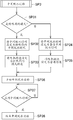
- FIG. 4 is a flow chart showing the flow of a reservation operation process of the washing machine.
- FIG. 5 is a flowchart showing a flow of determination of a reservation mode in the scheduled operation process.
- Fig. 6 is a flow chart showing the flow of a washing process in the process of the scheduled operation.
- Fig. 7 is a flow chart showing the flow of the intermediate dehydration process in the scheduled operation process.
- Fig. 8 is a flow chart showing the flow of a rinsing process in the scheduled operation process.
- Fig. 9 is a flow chart showing the flow of the final dehydration process in the scheduled operation process.
- FIG. 10 is a flowchart showing a flow of determination of a reservation mode of the washing machine in the second embodiment of the present invention.
- FIG. 11 is a flowchart showing a flow of a scheduled operation process of the washing machine in the third embodiment of the present invention.
- Fig. 12 is a flow chart showing the flow of the washing process in the process of the scheduled operation.
- Fig. 13 is a flow chart showing the flow of the intermediate dehydration process in the scheduled operation process.
- Fig. 14 is a flow chart showing the flow of a rinsing process in the scheduled operation process.
- Fig. 15 is a flow chart showing the flow of the final dehydration process in the scheduled operation process.
- FIG. 1 is a perspective view showing an appearance of a vertical washing machine (hereinafter referred to as "washing machine") 1 according to the first embodiment of the present invention.
- FIG. 2 is a vertical cross-sectional view showing a schematic configuration of the washing machine 1 of the first embodiment.
- the washing machine 1 of the present embodiment includes a washing machine body 2, an outer tub 3, a washing tub 4, a pulsator 5, a drive unit 6, and a control unit 7 (see Fig. 3).
- the washing machine 1 as described above can perform a scheduled operation (reservation washing) for ending a plurality of processes of washing laundry, that is, a washing process, an intermediate dehydrating process, a rinsing process, and a final dehydration process, up to the end scheduled time input by the input unit 23.
- the washing machine body 2 has a substantially rectangular shape, and the upper surface 20 has an opening 21 for taking the laundry as the laundry into the washing tub 4; the opening and closing cover 22 opens and closes the opening 21, and the opening and closing cover 22 can be opened.
- the laundry is put into the washing tub 4 via the opening 21.
- the upper surface 20 of the washing machine main body 2 has a reservation operation progress button, a time setting button, an operation start button, and the like, and has an input unit 23 (see FIG. 1) that can arbitrarily input a washing process and a predetermined end time of washing.
- the outer tub 3 shown in Fig. 2 is disposed inside the washing machine main body 2, and is a bottomed cylindrical member that can store water.
- the washing tub 4 is a bottomed cylindrical member that is disposed coaxially with the outer tub 3 inside the outer tub 3 and that is rotatably supported by the outer tub 3 .
- the washing tub 4 has a smaller diameter than the outer tub 3, and has a plurality of water passing holes (not shown) on its wall surface, and also functions as a dewatering tub.
- the water flow is generated through the water passing hole (not shown) during the washing process and the rinsing process, and the water is discharged from the water discharge port (not shown) provided in the outer tub 3 through the water passing hole in the intermediate dehydration process and the final dehydration process.
- the pulsator (stirring blade) 5 is rotatably disposed in the center of the bottom portion 41 of the washing tub 4, and agitates the water stored in the tub 3 to generate a water flow.
- the drive unit 6 includes a motor 61 and a clutch 62 that rotates the washing tub 4 and the pulsator 5, A driving force for rotating the laundry accommodated in the washing tub 4 is given.
- the motor 61 rotates the drive shaft 63 that protrudes toward the bottom portion 41 of the washing tub 4, whereby the washing tub 4 is rotated. Further, the rotational force generated by the motor 61 is also applied to the pulsator 5 by the switching of the clutch 62, and the pulsator 5 is rotated. Therefore, the washing machine 1 mainly rotates only the pulsator 5 during the washing process and the rinsing process in the plurality of processes of washing the laundry, and the washing tub 4 and the pulsator 5 can be integrally integrated in the intermediate dehydration process and the final dehydration process. Rotate.
- FIG. 3 is a block diagram showing an electrical configuration of the washing machine 1 of the present embodiment.
- the operation of the washing machine 1 is controlled by a control unit 7 including a microcomputer.
- the control unit 7 has a ROM 71 and a RAM 72, and executes a predetermined operation operation by executing a program stored in the ROM 71 by a microcomputer.
- the data used when the above-described program is executed (for example, the scheduled end time input via the input unit 23) or the like is temporarily stored in the RAM 72.
- control unit 7 is connected with a water supply valve 24 for supplying water to the outer tub 3, a drain valve 25 for discharging water in the outer tub 3, and the like as control objects. It should be noted that the illustration of the water supply valve 24 and the drain valve 25 is omitted in FIG. 2 described above.
- control unit 7 receives signals from the load amount sensor 26, the time acquisition unit 27 as the time acquisition unit, the timer 28, the water level sensor 29, and the like.
- the load amount sensor 26 detects the weight of the laundry stored in the washing tub 4, and the control unit 7 can determine (determine) the amount of load corresponding to the amount of laundry based on the detection result of the load amount sensor 26.
- the control unit 7 adjusts the data such as the number of revolutions and the execution time of the motor 61, which will be described later, extracted from the OM 71, or the value corresponding to the read load amount stored in the ROM 71 in advance, in the same mode.
- the more the amount of the laundry the more the amount of water supplied to the outer tub 3, the longer the washing time is set.
- the amount of load is sometimes determined based on the amount of water input from the input unit 23. Further, the amount of load can be adjusted by multiplying the data extracted from the ROM 71 by the load factor.
- the time acquisition unit 27 acquires the remaining time until the end target time set by the control unit 7 based on the end scheduled time input by the input unit 23.
- the end target time is set to a time that is a predetermined time earlier than the end scheduled time.
- the predetermined time is preferably 30 minutes, more preferably about 15 minutes.
- the time acquisition unit 27 acquires the remaining time before the start of the washing process in the first process of washing the laundry.
- the timer 28 obtains the elapsed time from the start in each process.
- the water level sensor 29 detects the amount of water in the outer tub 3.
- the normal reservation mode in which the average number of rotations of the motor 61 is set to a predetermined value and executed within a predetermined execution time, or the motor 61 can be compared with the normal reservation mode.
- the control unit 7 determines whether to execute each process in the normal reservation mode or the special reservation mode based on the remaining time acquired by the time acquisition unit 27, in the special reservation mode in which the average rotation speed is smaller and the execution time is set longer. That is, the control unit 7 also functions as a mode determination unit.
- the average rotational speed of the motor 61 refers to the average rotational speed of the motor 61 when each process is performed, and is defined for each process.
- the average number of revolutions of the motor 61 is adjusted by, for example, an inverter control method by changing the number of revolutions of the motor 61 based on the number of revolutions of the motor 61 extracted from the ROM 71.
- the washing machine 1 of the present embodiment can execute the special reservation mode until the end of the predetermined time, and the washing can be ended and the pair can be executed.
- the operation of the clothing is in good condition and the cleaning power is paid attention to.
- the ROM 71 stores in advance the rotation speed of the motor 61 in the normal reservation mode and the execution time (washing time, intermediate dehydration time, rinsing time, final dehydration time), and the rotation speed of the motor 61 in the special reservation mode and the execution time (washing time, intermediate dehydration) Time, rinsing time, final dehydration time, etc.
- the ROM 71 stores the normal washing time applicable in the normal reservation mode and the special scheduled washing time applicable in the special reservation mode, respectively.
- the ordinary water flow value applicable to the normal reservation mode and the special reservation mode applicable when the special reservation mode is applied are separately stored.
- Water flow value. The water flow value is adjusted by adjusting the motor speed, and the water flow value in the special reservation mode is set to be smaller than the normal water flow value. Further, the water flow value can also be adjusted by adjusting the ratio of the rotation time of the pulsator 5 with respect to the execution time of each process.
- the ROM 71 stores the normal intermediate dehydration time applicable in the normal reservation mode and the special reservation intermediate dehydration time applicable in the special reservation mode, respectively.
- the motor rotation speed the normal rotation speed applicable to the normal reservation mode and the special reservation mode rotation speed applicable in the special reservation mode are respectively stored.
- the special reservation mode speed is set to a value smaller than the normal rotation speed.
- the ROM 71 stores the normal rinsing time applicable in the normal reservation mode and the special reservation rinsing time applicable in the special reservation mode, respectively. Further, in the case where the water flow values are different in the washing process and the rinsing process in the same mode, further, as the water flow value for the rinsing process, the ordinary water flow value applicable in the normal reservation mode and the special application applicable in the special reservation mode are respectively stored. Reserve mode water flow value.
- the ROM 71 stores the normal final dehydration time applicable in the normal reservation mode and the special reservation final dehydration time applicable in the special reservation mode.
- the motor rotation speed is different in the intermediate dehydration process and the final dehydration process in the same mode
- the normal rotation speed and the special reservation mode applicable when the normal reservation mode are respectively stored are applied.
- the special reservation mode speed is the case where the motor rotation speed is different in the intermediate dehydration process and the final dehydration process in the same mode.
- FIG. 4 is a flow chart showing a flow of a case where washing is performed in a scheduled operation process.
- FIG. 5 is a flowchart showing the flow of the determination SP1 of the reservation mode in the reservation operation process.
- Fig. 6 is a flowchart showing the flow of the washing process SP2 in the progress of the scheduled operation.
- Fig. 7 is a flowchart showing the flow of the intermediate dehydration process SP3 in the process of the scheduled operation.
- FIG. 8 is a flowchart showing the flow of the rinsing process SP4 in the scheduled operation process.
- FIG. 9 is a flowchart showing the flow of the final dehydration process SP5 in the scheduled operation process.
- step SP1 the control unit 7 determines (determines) whether each process is executed in the normal reservation mode or the special reservation mode.
- step SP2 the control section 7 performs a washing process.
- step SP3 the control section 7 performs an intermediate dehydration process.
- step SP4 the control section 7 performs a rinsing process.
- step SP5 the control section 7 performs a final dehydration process.
- step SP1 the determination flow in the reservation mode of step SP1 shown in Fig. 4 will be described in detail based on Fig. 5 .
- step SP11 whether or not the control unit 7 has the scheduled operation progress button of the input unit 23 is pressed, and the scheduled operation progress is set.
- step SP12 when it is determined that the scheduled operation progress has been set (step SP11: YES), the control unit 7 determines whether or not the input unit 23 has input the end scheduled time. When the end scheduled time is input, the control unit 7 obtains the end target time based on the end scheduled time.
- step SP13 when it is determined that the end scheduled time has been input (step SP12: YES), the control unit 7 determines whether or not the operation start button having the input unit 23 is pressed.
- step SP14 when it is determined that the operation start button has been pressed (step SP13: YES), the control unit 7 determines the load amount based on the detected value of the load amount sensor 26 or the like, and obtains the time required for the special reservation mode.
- the time required for the special reservation mode is the time required in the case where the washing process SP2, the intermediate dehydrating process SP3, the rinsing process SP4, and the final dehydrating process SP5 are all performed in the special reservation mode, and can be stored from the data stored in the ROM 71 in advance, according to The amount of load is obtained.
- the time required for the special reservation mode can be adjusted by the amount of load stored in advance in the ROM 71 as a reference (execution time of each process, total value of these execution times, etc.), or by reading from a table stored in advance in the ROM 71. The value corresponding to the load is obtained. The other required time described later is also the same.
- step SP15 the control unit 7 determines whether or not the remaining time until the end target time acquired by the time acquisition unit 27 is equal to or longer than the time required for the special reservation mode.
- step SP16 step SP15: YES
- step SP17 step SP15: NO
- step SP16 the control unit 7 decides to execute all the processes in the special reservation mode.
- step SP17 the control section 7 decides to execute all the processes in the normal reservation mode.
- step SP21 the control unit 7 determines whether or not all the processes in the special reservation mode are executed in step SP16 shown in Fig. 5 . That is, it is judged whether or not it is a special reservation mode. When it is determined to be the special reservation mode, the process proceeds to step SP22 (step SP21: YES), and when it is determined that the special reservation mode is not, the process proceeds to step SP24 (step SP21: NO).
- step SP22 the control unit 7 obtains a special washing time from the ROM 71, and sets the washing time in accordance with the special washing time. Specifically, the washing time is set based on the special washing time extracted from the ROM 71 by the load amount, or the special washing time corresponding to the load amount is taken out from the table stored in advance in the ROM 71 and set. For washing time. In the later-described steps of setting the execution time, the water flow value, and the motor rotation speed of each process, a value corresponding to such a load amount is also set.
- step SP23 the control unit 7 obtains the special reservation mode water flow value from the ROM 71, and sets the water flow value based on the special reservation mode water flow value.
- step SP24 the control unit 7 obtains the normal washing time from the ROM 71, and sets the washing time based on the normal washing time.
- step SP25 the control unit 7 obtains the normal water flow value from the ROM 71, and sets the water flow value based on the normal water flow value.
- step SP26 the control unit 7 sends a signal to the drive unit 6, the water supply valve 24, and the like to start the washing operation, and starts counting the elapsed time at the timer 28.
- the water flow value during the washing operation is the water flow value set in step SP23 or step SP25, and the water flow value is adjusted by adjusting the rotation speed of the motor 61. To make adjustments. Therefore, the average rotation speed of the motor 61 when the special reservation mode is set is smaller than the average rotation speed of the motor 61 when the normal reservation mode is set.
- step SP27 the control unit 7 determines whether or not the washing time set in step SP22 or step SP24 is reached based on the elapsed time acquired by the timer 28.
- step SP28 the control unit 7 ends the washing operation until the washing time is reached.
- step SP31 the control unit 7 determines whether or not all the processes in the special reservation mode are executed in step SP16 shown in Fig. 5 . That is, it is judged whether or not it is a special reservation mode. When it is determined to be the special reservation mode, the process proceeds to step SP32 (step SP31: YES), and when it is determined that the mode is not the special reservation mode, the process proceeds to step SP34 (step SP31: NO).
- step SP32 the control unit 7 obtains the special reservation intermediate dehydration time from the ROM 71, and sets the intermediate dehydration time according to the special reservation intermediate dehydration time.
- step SP33 the control unit 7 obtains the special reservation mode rotation speed from the ROM 71, and sets the motor rotation speed in accordance with the special reservation mode rotation speed.
- step SP34 the control unit 7 obtains the normal intermediate dehydration time from the ROM 71, and sets the intermediate dehydration time in accordance with the normal intermediate dehydration time.
- step SP35 the control unit 7 obtains the normal rotation speed from the ROM 71, and sets the motor rotation speed in accordance with the normal rotation speed.
- step SP36 the control unit 7 sends a signal to the drive unit 6, the drain valve 25, and the like to start the intermediate dehydration operation, and starts the counting of the elapsed time performed on the timer 28.
- the motor rotation speed during the intermediate dehydration operation is the motor rotation speed set in step SP33 or step SP35. Therefore, in the case where the special reservation mode is set, the average rotation speed of the motor 61 is changed as compared with the case where the normal reservation mode is set. small.
- step SP37 the control unit 7 determines based on the elapsed time acquired by the timer 28 whether or not the intermediate dehydration time set in step SP32 or step SP34 has been reached.
- step SP38 the control unit 7 ends the intermediate dehydration operation until the intermediate dehydration time is reached.
- step SP4 the flow of the rinsing process of step SP4 shown in Fig. 4 will be described in detail based on Fig. 8.
- step SP41 the control unit 7 determines whether or not all the processes in the special reservation mode are executed in step SP16 shown in Fig. 5 . That is, it is judged whether or not it is a special reservation mode.
- step SP42 step SP41: YES
- step SP44 step SP41: NO
- step SP42 the control unit 7 obtains the special reservation rinsing time from the ROM 71, and sets the rinsing time based on the special reservation rinsing time.
- step SP43 the control unit 7 obtains the special reservation mode water flow value from the ROM 71, and sets the water flow value based on the special reservation mode water flow value.
- step SP44 the control section 7 obtains the normal rinsing time from the ROM 71, and sets the rinsing time based on the normal rinsing time.
- step SP45 the control unit 7 obtains the normal water flow value from the ROM 71, and sets the water flow value based on the normal water flow value.
- step SP46 the control unit 7 sends a signal to the drive unit 6, the water supply valve 24, and the like to start the rinsing operation, and starts counting of the elapsed time on the timer 28.
- the water flow value during the rinsing operation is changed to the water flow value set in step SP43 or step SP45, and the water flow value is adjusted by adjusting the number of revolutions of the motor 61. Therefore, when the special reservation mode is set, the average rotation speed of the motor 61 is smaller than the case where the normal reservation mode is set.
- step SP47 the control unit 7 determines whether or not the rinsing time set in step SP42 or step SP44 has been reached, based on the elapsed time acquired by the timer 28.
- step SP48 the control unit 7 ends the rinsing operation until the rinsing time is reached.
- step SP5 shown in Fig. 4
- step SP5 the flow of the final dehydration process of step SP5 shown in Fig. 4 will be described in detail based on Fig. 9 .
- step SP51 the control unit 7 determines whether or not all the processes in the special reservation mode are executed in step SP16 shown in Fig. 5 . That is, it is judged whether or not it is a special reservation mode. When it is determined to be the special reservation mode, the process proceeds to step SP52 (step SP51: YES), and when it is determined that the special reservation mode is not, the process proceeds to step SP54 (step SP51: NO).
- step SP52 the control unit 7 obtains the special reservation final dehydration time from the ROM 71, and sets the final dehydration time according to the special reservation final dehydration.
- step SP53 the control unit 7 obtains the special reservation mode rotation speed from the ROM 71, and sets the motor rotation speed in accordance with the special reservation mode rotation speed.
- step SP54 the control section 7 obtains the normal final dehydration time from the ROM 71, and sets the final dehydration time in accordance with the ordinary final dehydration time.
- step SP55 the control unit 7 obtains the normal rotation speed from the ROM 71, and sets the motor rotation speed in accordance with the normal rotation speed.
- step SP56 the control unit 7 sends a signal to the drive unit 6, the drain valve 25, and the like to start the final dehydration operation, and starts counting of the elapsed time on the timer 28.
- the motor rotation speed at the final dehydration operation is the motor rotation speed set in step SP53 or step SP55. Therefore, when the special reservation mode is set, the average rotation speed of the motor 61 is smaller than the case where the normal reservation mode is set.
- step SP57 the control unit 7 determines whether or not it is up based on the elapsed time obtained by the timer 28. The final dehydration time set in step SP52 or step SP54 is reached.
- step SP58 the control unit 7 ends the final dehydration operation until the final dehydration time is reached.
- FIG. 10 is a flowchart showing a flow of determination of a reservation mode of the washing machine in the second embodiment of the present invention.
- a part of the determination flow of the reservation mode of the washing machine 1 of the present embodiment is different from that of the first embodiment. Except for the scheme described below, it is the same as that of the first embodiment, and the description thereof is omitted.
- step SP15 the control unit 7 determines whether or not the remaining time until the end target time acquired by the time acquisition unit 27 is equal to or longer than the time required for the special reservation mode, and determines that the remaining time is a special reservation.
- the process proceeds to step SP16 (step SP15: YES), and when it is judged that the remaining time is not longer than the time required for the special reservation mode, the process proceeds to step SP18 (step SP15: NO).
- step SP18 the control unit 7 determines whether or not a part of the process can be executed in the special reservation mode. Specifically, it is judged whether or not the remaining time acquired by the time acquisition unit 27 is a part of a process (for example, an intermediate dehydration process and a final dehydration process) in which the washing process, the intermediate dehydration process, the rinsing process, and the final dehydration process are performed in the special reservation mode.
- the normal reservation mode is performed for more than the required time in the case of performing other processes such as a washing process and a rinsing process.
- the required time is the time obtained from the data stored in the ROM 71 in advance and based on the amount of load.
- step SP19 step SP18: YES
- step SP20 step SP18: NO
- step SP19 the control unit 7 decides to execute a part of the process in the special reservation mode to the ordinary pre- The mode performs other processes.
- step SP20 the control section 7 decides to execute all the processes in the normal reservation mode.
- control unit 7 sequentially follows the order of the washing process SP2, the intermediate dehydration process SP3, the rinsing process SP4, and the final dehydration process SP5 shown in FIGS. 6 to 9 in accordance with the determined reservation mode. Run it.
- FIG. 11 is a flow chart showing a flow of a case where washing is performed in a scheduled operation progress.
- FIG. 12 is a flowchart showing the flow of the washing process SP2a in the process of the scheduled operation.
- Fig. 13 is a flowchart showing the flow of the intermediate dehydration process SP3a in the process of the reservation operation.
- FIG. 14 is a flowchart showing the flow of the rinsing process SP4a in the scheduled operation process.
- Fig. 15 is a flowchart showing the flow of the final dehydration process SP5a in the process of the scheduled operation.
- the time acquisition unit 27 (refer to FIG. 3) is obtained before the start of the intermediate dehydration process SP3a, before the start of the rinsing process SP4a, before the start of the rinsing process SP4a, and before the start of the final dehydration process SP5a, respectively, before the start of the washing process SP2a. The remaining time until the target time.
- control unit 7 determines whether to execute the next process in the normal reservation mode or the special reservation mode based on the remaining time.
- step SP1a the setting of the operation progress is performed in step SP1a.
- the flow of setting the operation progress of step SP1a is the same as steps SP11 to SP14 shown in FIG.
- the washing process SP2a, the intermediate dehydration process SP3a, the rinsing process SP4a, and the final dehydration process SP5a are performed in order.
- step SP2a In the washing process of step SP2a shown in FIG. 12, in addition to step SP21a for determining whether or not the remaining time acquired by the time acquisition unit 27 is equal to or longer than the time required for the first special reservation mode, instead of confirming whether or not the special reservation mode is shown in FIG. Except for step 21, it is the same as the flow of washing process SP2 shown in FIG.
- the time required for the first special reservation mode is the time required to execute the washing process SP2a, the intermediate dehydration process SP3a, the rinsing process SP4a, and the final dehydration process SP5a in the special reservation mode.
- step SP3a shown in FIG. 13 is performed in addition to step SP31a for determining whether or not the remaining time acquired by the time acquisition unit 27 is equal to or longer than the time required for the second special reservation mode, instead of confirming whether or not the special reservation mode is shown in FIG.
- the flow of the intermediate dehydration process SP3 shown in Fig. 7 is the same as the step 31 shown.
- the time required for the second special reservation mode is the time required to perform the intermediate dehydration process SP3a, the rinsing process SP4a, and the final dehydration process SP5a in the special reservation mode.
- step SP32 When it is judged that the remaining time is equal to or longer than the time required for the second special reservation mode, the process proceeds to step SP32, and when it is judged that the remaining time is not longer than the time required for the second special reservation mode, the process proceeds to step SP34.
- step SP4a The rinsing process of step SP4a shown in FIG. 14 is performed in step SP41a in which it is determined whether or not the remaining time acquired by the time acquisition unit 27 is equal to or longer than the time required for the third special reservation mode, instead of confirming whether or not the special reservation mode is shown in FIG.
- the step 414 is the same as the rinsing process SP4 shown in FIG.
- the time required for the third special reservation mode is the time required to execute the rinsing process SP4a and the final dehydration process SP5a in the special reservation mode.
- step SP5a shown in FIG. 15 The final dehydration process of step SP5a shown in FIG. 15 is performed in addition to step SP51a for determining whether or not the remaining time acquired by the time acquisition unit 27 is equal to or longer than the time required for the fourth special reservation mode, instead of confirming whether or not the special reservation mode is shown in FIG. Except for the step 51 shown, it is the same as the flow of the final dehydration process SP5 shown in FIG.
- the time required for the fourth special reservation mode is the time required to execute the final dehydration process SP5a in the special reservation mode.
- control unit 7 performs the determinations in steps SP21a to SP51a. Further, the time required for the first to fourth special reservation modes described above is the time obtained from the data stored in the ROM 71 in advance and based on the amount of load.
- the average rotation speed of the motor 61 is adjusted by changing the number of revolutions of the motor 61, etc., but the present invention is not limited to this, and the operation time and the stop time of the motor 61 in each process may be changed by the operation/stop control of the motor 61.
- the ratio is such that the average rotational speed of the motor 61 is adjusted to a predetermined value. It should be noted that, in this case, the water flow value during the washing process and the rinsing process is adjusted by adjusting the ratio of the rotation time of the pulsator 5 with respect to the execution time of each process.
- the end target time is set to be earlier than the end scheduled time, but the end target time may be set to the same time as the end scheduled time.
- the above embodiment is the vertical washing machine 1
- the above-described scheduled operation may be performed in the drum type washing machine.
- the motor 61 rotates the washing tub.
- washing process SP2 (SP2a), the intermediate dehydration process SP3 (SP3a), the rinsing process SP4 (SP4a), and the final dehydration process SP5 (SP5a), and may be employed other than these processes. Process, or not use any of these processes.
Landscapes
- Engineering & Computer Science (AREA)
- Textile Engineering (AREA)
- Control Of Washing Machine And Dryer (AREA)
Abstract
Description
Claims (5)
- 一种洗衣机,具备:洗衣机主体,具有可任意输入洗涤的结束预定时刻的输入部;洗涤桶,配置于该洗衣机主体的内部;以及电机,赋予用于使收容于该洗涤桶内的被洗涤物旋转的驱动力,并且直到所述结束预定时刻为止,可执行使洗涤被洗涤物的多项过程结束的预约运转,所述洗衣机的特征在于,具备:时间取得单元,在所述多项过程中的最初的过程开始前,取得直到基于所述结束预定时刻所设定的结束目标时刻为止的剩余时间;以及模式决定单元,基于所述时间取得单元所取得的剩余时间,决定是以普通预约模式来执行所述多项过程的每一项,还是以特殊预约模式来执行所述多项过程的每一项,其中,所述普通预约模式是将所述电机的平均转速设为规定值并以规定的执行时间来执行所述多项过程的每一项的模式,所述特殊预约模式是与该普通预约模式相比,将所述电机的平均转速设定得更小并且将执行时间设定得更长的模式。
- 根据权利要求1所述的洗衣机,其特征在于,所述多项过程为洗涤过程、漂洗过程以及脱水过程,所述模式决定单元在判断出所述时间取得单元所取得的剩余时间为洗涤过程、漂洗过程以及脱水过程都以特殊预约模式来执行的情况下的所需时间以上时,决定以特殊预约模式来执行所有的过程,在判断出所述时间取得单元所取得的剩余时间不为洗涤过程、漂洗过程以及脱水过程都以特殊预约模式来执行的情况下的所需时间以上时,决定以普通预约模式来执行所有的过程。
- 根据权利要求1所述的洗衣机,其特征在于,所述多项过程为洗涤过程、漂洗过程以及脱水过程,所述模式决定单元在判断出所述时间取得单元所取得的剩余时间为洗涤过程、漂洗过程以及脱水过程都以特殊预约模式来执行的情况下的所需时间以上时,决定以特殊预约模式来执行所有的过程,在判断出所述剩余时间不为以特殊预约模式来执行所有的过程的情况下的所需时间以上时,当判断出该剩余时间为所述多项过程中的一部分过程以特殊 预约模式来执行、其他过程以普通预约模式来执行的情况下的所需时间以上时,决定仅对一部分过程以特殊预约模式来执行。
- 根据权利要求1所述的洗衣机,其特征在于,所述多项过程为洗涤过程、漂洗过程以及脱水过程,所述时间取得单元除了在最初的过程即洗涤过程开始前之外,在漂洗过程开始前以及脱水过程开始前,也分别取得直到所述结束目标时刻为止的剩余时间,所述模式决定单元每逢所述时间取得单元取得剩余时间时,都基于该剩余时间来决定下一项过程是以普通预约模式来执行还是以特殊预约模式来执行。
- 根据权利要求1至4的任一项所述的洗衣机,其特征在于,将由所述输入部输入的结束预定时刻提前规定时间的时刻设定为结束目标时刻。
Priority Applications (4)
| Application Number | Priority Date | Filing Date | Title |
|---|---|---|---|
| EP15871931.0A EP3239382B1 (en) | 2014-12-24 | 2015-12-22 | Washing machine |
| CN201580070858.8A CN107109750B (zh) | 2014-12-24 | 2015-12-22 | 洗衣机 |
| US15/539,096 US20180142395A1 (en) | 2014-12-24 | 2015-12-22 | Washing machine |
| KR1020177020759A KR20170098921A (ko) | 2014-12-24 | 2015-12-22 | 세탁기 |
Applications Claiming Priority (2)
| Application Number | Priority Date | Filing Date | Title |
|---|---|---|---|
| JP2014261072A JP2016120014A (ja) | 2014-12-24 | 2014-12-24 | 洗濯機 |
| JP2014-261072 | 2014-12-24 |
Publications (1)
| Publication Number | Publication Date |
|---|---|
| WO2016101863A1 true WO2016101863A1 (zh) | 2016-06-30 |
Family
ID=56149271
Family Applications (1)
| Application Number | Title | Priority Date | Filing Date |
|---|---|---|---|
| PCT/CN2015/098174 Ceased WO2016101863A1 (zh) | 2014-12-24 | 2015-12-22 | 洗衣机 |
Country Status (6)
| Country | Link |
|---|---|
| US (1) | US20180142395A1 (zh) |
| EP (1) | EP3239382B1 (zh) |
| JP (1) | JP2016120014A (zh) |
| KR (1) | KR20170098921A (zh) |
| CN (1) | CN107109750B (zh) |
| WO (1) | WO2016101863A1 (zh) |
Families Citing this family (7)
| Publication number | Priority date | Publication date | Assignee | Title |
|---|---|---|---|---|
| CN109811505A (zh) * | 2017-11-21 | 2019-05-28 | 青岛海尔洗衣机有限公司 | 一种衣物处理装置的控制方法和系统 |
| CN110016781B (zh) * | 2018-01-08 | 2022-12-09 | 青岛海尔洗衣机有限公司 | 用于衣物处理设备的加急控制方法及衣物处理设备 |
| CN108978117B (zh) * | 2018-07-16 | 2020-11-10 | 无锡小天鹅电器有限公司 | 衣物处理装置的控制方法、装置和衣物处理装置 |
| CN111411473B (zh) * | 2018-12-19 | 2022-06-21 | 天津海尔洗涤电器有限公司 | 一种洗衣机的控制方法及洗衣机 |
| CN110037634B (zh) * | 2019-04-22 | 2021-02-09 | 浙江气派智能科技有限公司 | 一种应用于清洗机的一日式洗涤方法 |
| JP7833636B2 (ja) * | 2022-08-05 | 2026-03-23 | パナソニックIpマネジメント株式会社 | 衣類処理装置システム |
| KR20250052559A (ko) * | 2023-10-11 | 2025-04-21 | 삼성전자주식회사 | 세탁기 및 그 제어 방법 |
Citations (6)
| Publication number | Priority date | Publication date | Assignee | Title |
|---|---|---|---|---|
| JPH0482590A (ja) * | 1990-07-26 | 1992-03-16 | Toshiba Corp | 洗濯機 |
| JPH06343790A (ja) * | 1993-06-11 | 1994-12-20 | Toshiba Corp | 洗濯機 |
| JP2004065408A (ja) * | 2002-08-05 | 2004-03-04 | Sanyo Electric Co Ltd | 洗濯機 |
| CN1891894A (zh) * | 2005-07-07 | 2007-01-10 | 乐金电子(天津)电器有限公司 | 滚桶洗衣机及其控制方法 |
| CN101525834A (zh) * | 2008-11-10 | 2009-09-09 | 南京乐金熊猫电器有限公司 | 洗涤物处理装置及其控制方法 |
| CN102465421A (zh) * | 2010-11-12 | 2012-05-23 | 博西华电器(江苏)有限公司 | 洗衣机的控制方法 |
Family Cites Families (4)
| Publication number | Priority date | Publication date | Assignee | Title |
|---|---|---|---|---|
| JPH0739672A (ja) * | 1993-07-27 | 1995-02-10 | Toshiba Corp | 洗濯機 |
| JP2001204986A (ja) * | 2000-01-31 | 2001-07-31 | Toshiba Corp | 洗濯機及び洗濯方法 |
| US7915624B2 (en) * | 2006-08-06 | 2011-03-29 | Lightwave Photonics, Inc. | III-nitride light-emitting devices with one or more resonance reflectors and reflective engineered growth templates for such devices, and methods |
| KR101594362B1 (ko) * | 2009-05-04 | 2016-02-16 | 엘지전자 주식회사 | 세탁장치 및 제어방법 |
-
2014
- 2014-12-24 JP JP2014261072A patent/JP2016120014A/ja active Pending
-
2015
- 2015-12-22 KR KR1020177020759A patent/KR20170098921A/ko not_active Ceased
- 2015-12-22 WO PCT/CN2015/098174 patent/WO2016101863A1/zh not_active Ceased
- 2015-12-22 EP EP15871931.0A patent/EP3239382B1/en not_active Not-in-force
- 2015-12-22 US US15/539,096 patent/US20180142395A1/en not_active Abandoned
- 2015-12-22 CN CN201580070858.8A patent/CN107109750B/zh active Active
Patent Citations (6)
| Publication number | Priority date | Publication date | Assignee | Title |
|---|---|---|---|---|
| JPH0482590A (ja) * | 1990-07-26 | 1992-03-16 | Toshiba Corp | 洗濯機 |
| JPH06343790A (ja) * | 1993-06-11 | 1994-12-20 | Toshiba Corp | 洗濯機 |
| JP2004065408A (ja) * | 2002-08-05 | 2004-03-04 | Sanyo Electric Co Ltd | 洗濯機 |
| CN1891894A (zh) * | 2005-07-07 | 2007-01-10 | 乐金电子(天津)电器有限公司 | 滚桶洗衣机及其控制方法 |
| CN101525834A (zh) * | 2008-11-10 | 2009-09-09 | 南京乐金熊猫电器有限公司 | 洗涤物处理装置及其控制方法 |
| CN102465421A (zh) * | 2010-11-12 | 2012-05-23 | 博西华电器(江苏)有限公司 | 洗衣机的控制方法 |
Also Published As
| Publication number | Publication date |
|---|---|
| JP2016120014A (ja) | 2016-07-07 |
| KR20170098921A (ko) | 2017-08-30 |
| US20180142395A1 (en) | 2018-05-24 |
| EP3239382B1 (en) | 2021-02-17 |
| CN107109750B (zh) | 2019-08-09 |
| CN107109750A (zh) | 2017-08-29 |
| EP3239382A1 (en) | 2017-11-01 |
| EP3239382A4 (en) | 2018-10-10 |
Similar Documents
| Publication | Publication Date | Title |
|---|---|---|
| CN107109750B (zh) | 洗衣机 | |
| CN105755782B (zh) | 一种干燥过程控制方法及洗干一体机、干衣机 | |
| RU2421558C1 (ru) | Устройство для обработки белья и способ управления им | |
| CN109957955A (zh) | 洗干一体机的控制方法、控制装置和洗干一体机 | |
| JP2018503418A (ja) | ダブルドラム洗濯機の制御方法 | |
| CN111235822B (zh) | 洗涤设备的脱水方法及洗涤设备 | |
| CN112779726B (zh) | 衣物材质识别方法、洗衣机的控制方法和洗衣机 | |
| CN106498653A (zh) | 衣物护理机及其护理衣物的方法 | |
| JP4691059B2 (ja) | 洗濯乾燥機 | |
| CN108149440B (zh) | 洗衣干衣机的控制方法及装置 | |
| CN105755744A (zh) | 洗衣机进水量的设定方法和装置 | |
| CN108699752A (zh) | 衣物处理机及其控制方法 | |
| JPH10127979A (ja) | ドラム式乾燥洗濯機 | |
| JP2013180162A (ja) | 洗濯機 | |
| JP2002315990A (ja) | 洗濯機 | |
| CN102877263B (zh) | 洗涤机 | |
| CN106609437A (zh) | 洗衣机 | |
| CN106319841B (zh) | 双桶式洗衣机的控制方法、装置及洗衣机 | |
| CN108315946A (zh) | 一种防止衣物起皱的方法、介质、装置及洗衣机 | |
| CN114016269B (zh) | 衣物烘干处理方法、装置、洗干一体机及存储介质 | |
| US20040103069A1 (en) | Washing machine control method | |
| CN105568620A (zh) | 洗衣机及洗涤方法 | |
| CN116804306B (zh) | 衣物处理设备及其控制方法、装置和存储介质 | |
| CN115387062A (zh) | 一种洗烘一体设备的控制方法及洗烘一体设备 | |
| CN109811504B (zh) | 洗衣机的控制方法、装置和洗衣机 |
Legal Events
| Date | Code | Title | Description |
|---|---|---|---|
| 121 | Ep: the epo has been informed by wipo that ep was designated in this application |
Ref document number: 15871931 Country of ref document: EP Kind code of ref document: A1 |
|
| NENP | Non-entry into the national phase |
Ref country code: DE |
|
| REEP | Request for entry into the european phase |
Ref document number: 2015871931 Country of ref document: EP |
|
| ENP | Entry into the national phase |
Ref document number: 20177020759 Country of ref document: KR Kind code of ref document: A |
|
| WWE | Wipo information: entry into national phase |
Ref document number: 15539096 Country of ref document: US |