WO2016125478A1 - 情報処理装置、情報処理方法および情報処理システム - Google Patents
情報処理装置、情報処理方法および情報処理システム Download PDFInfo
- Publication number
- WO2016125478A1 WO2016125478A1 PCT/JP2016/000497 JP2016000497W WO2016125478A1 WO 2016125478 A1 WO2016125478 A1 WO 2016125478A1 JP 2016000497 W JP2016000497 W JP 2016000497W WO 2016125478 A1 WO2016125478 A1 WO 2016125478A1
- Authority
- WO
- WIPO (PCT)
- Prior art keywords
- data
- message
- information processing
- state
- animal
- Prior art date
- Legal status (The legal status is an assumption and is not a legal conclusion. Google has not performed a legal analysis and makes no representation as to the accuracy of the status listed.)
- Ceased
Links
Images












Classifications
-
- H—ELECTRICITY
- H04—ELECTRIC COMMUNICATION TECHNIQUE
- H04L—TRANSMISSION OF DIGITAL INFORMATION, e.g. TELEGRAPHIC COMMUNICATION
- H04L51/00—User-to-user messaging in packet-switching networks, transmitted according to store-and-forward or real-time protocols, e.g. e-mail
- H04L51/02—User-to-user messaging in packet-switching networks, transmitted according to store-and-forward or real-time protocols, e.g. e-mail using automatic reactions or user delegation, e.g. automatic replies or chatbot-generated messages
-
- A—HUMAN NECESSITIES
- A01—AGRICULTURE; FORESTRY; ANIMAL HUSBANDRY; HUNTING; TRAPPING; FISHING
- A01K—ANIMAL HUSBANDRY; AVICULTURE; APICULTURE; PISCICULTURE; FISHING; REARING OR BREEDING ANIMALS, NOT OTHERWISE PROVIDED FOR; NEW BREEDS OF ANIMALS
- A01K29/00—Other apparatus for animal husbandry
- A01K29/005—Monitoring or measuring activity
-
- G—PHYSICS
- G06—COMPUTING OR CALCULATING; COUNTING
- G06F—ELECTRIC DIGITAL DATA PROCESSING
- G06F1/00—Details not covered by groups G06F3/00 - G06F13/00 and G06F21/00
- G06F1/16—Constructional details or arrangements
- G06F1/1613—Constructional details or arrangements for portable computers
- G06F1/163—Wearable computers, e.g. on a belt
-
- G—PHYSICS
- G06—COMPUTING OR CALCULATING; COUNTING
- G06F—ELECTRIC DIGITAL DATA PROCESSING
- G06F13/00—Interconnection of, or transfer of information or other signals between, memories, input/output devices or central processing units
-
- G—PHYSICS
- G06—COMPUTING OR CALCULATING; COUNTING
- G06F—ELECTRIC DIGITAL DATA PROCESSING
- G06F3/00—Input arrangements for transferring data to be processed into a form capable of being handled by the computer; Output arrangements for transferring data from processing unit to output unit, e.g. interface arrangements
- G06F3/01—Input arrangements or combined input and output arrangements for interaction between user and computer
- G06F3/011—Arrangements for interaction with the human body, e.g. for user immersion in virtual reality
-
- G—PHYSICS
- G06—COMPUTING OR CALCULATING; COUNTING
- G06Q—INFORMATION AND COMMUNICATION TECHNOLOGY [ICT] SPECIALLY ADAPTED FOR ADMINISTRATIVE, COMMERCIAL, FINANCIAL, MANAGERIAL OR SUPERVISORY PURPOSES; SYSTEMS OR METHODS SPECIALLY ADAPTED FOR ADMINISTRATIVE, COMMERCIAL, FINANCIAL, MANAGERIAL OR SUPERVISORY PURPOSES, NOT OTHERWISE PROVIDED FOR
- G06Q50/00—Information and communication technology [ICT] specially adapted for implementation of business processes of specific business sectors, e.g. utilities or tourism
- G06Q50/10—Services
-
- H—ELECTRICITY
- H04—ELECTRIC COMMUNICATION TECHNIQUE
- H04L—TRANSMISSION OF DIGITAL INFORMATION, e.g. TELEGRAPHIC COMMUNICATION
- H04L51/00—User-to-user messaging in packet-switching networks, transmitted according to store-and-forward or real-time protocols, e.g. e-mail
- H04L51/52—User-to-user messaging in packet-switching networks, transmitted according to store-and-forward or real-time protocols, e.g. e-mail for supporting social networking services
-
- H—ELECTRICITY
- H04—ELECTRIC COMMUNICATION TECHNIQUE
- H04L—TRANSMISSION OF DIGITAL INFORMATION, e.g. TELEGRAPHIC COMMUNICATION
- H04L67/00—Network arrangements or protocols for supporting network services or applications
- H04L67/01—Protocols
- H04L67/12—Protocols specially adapted for proprietary or special-purpose networking environments, e.g. medical networks, sensor networks, networks in vehicles or remote metering networks
-
- A—HUMAN NECESSITIES
- A01—AGRICULTURE; FORESTRY; ANIMAL HUSBANDRY; HUNTING; TRAPPING; FISHING
- A01K—ANIMAL HUSBANDRY; AVICULTURE; APICULTURE; PISCICULTURE; FISHING; REARING OR BREEDING ANIMALS, NOT OTHERWISE PROVIDED FOR; NEW BREEDS OF ANIMALS
- A01K11/00—Marking of animals
- A01K11/006—Automatic identification systems for animals, e.g. electronic devices, transponders for animals
- A01K11/008—Automatic identification systems for animals, e.g. electronic devices, transponders for animals incorporating global positioning system [GPS]
-
- G—PHYSICS
- G06—COMPUTING OR CALCULATING; COUNTING
- G06F—ELECTRIC DIGITAL DATA PROCESSING
- G06F2203/00—Indexing scheme relating to G06F3/00 - G06F3/048
- G06F2203/01—Indexing scheme relating to G06F3/01
- G06F2203/011—Emotion or mood input determined on the basis of sensed human body parameters such as pulse, heart rate or beat, temperature of skin, facial expressions, iris, voice pitch, brain activity patterns
-
- H—ELECTRICITY
- H04—ELECTRIC COMMUNICATION TECHNIQUE
- H04L—TRANSMISSION OF DIGITAL INFORMATION, e.g. TELEGRAPHIC COMMUNICATION
- H04L51/00—User-to-user messaging in packet-switching networks, transmitted according to store-and-forward or real-time protocols, e.g. e-mail
- H04L51/21—Monitoring or handling of messages
- H04L51/222—Monitoring or handling of messages using geographical location information, e.g. messages transmitted or received in proximity of a certain spot or area
Definitions
- This technology relates to an information processing apparatus, an information processing method, and an information processing system used for management of living things such as pets and livestock.
- an animal behavior in which changes caused by animal movements are detected by various types of sensors, the detected information is stored in a storage unit, and the behavior state of the animal is determined based on the detection information stored in the storage unit
- management devices Some of these animal behavior management devices also have a function of providing animal behavior information to a user's terminal via a network (see, for example, Patent Document 1).
- an object of the present technology is to provide an information processing apparatus, an information processing method, and an information processing system that can further improve management of a living organism such as a pet using a network.
- an information processing apparatus includes: An interface for receiving detection data indicating a physical state of the interaction target detected by a sensor terminal including one or more sensors that physically detect the state of the interaction target; The state of the dialogue target is determined from the received detection data, first person speech data is generated from the determined state, a transmission message for the interactive SNS including the speech data is generated, and the interactive SNS is generated. And a controller for transmitting to the above specific user.
- the subject of dialogue may be a living thing.
- the controller may be configured to determine at least one state among the action, emotion, and health of the conversation target.
- the controller analyzes a user utterance included in a message from a specific user on the interactive SNS, generates utterance data for replying to the user utterance, and generates the transmission message including the utterance data. May be configured to transmit to the specific user.
- the controller analyzes a user utterance included in a message from a specific user on the interactive SNS, searches for advertisement data related to the user utterance, and generates the utterance data using the advertisement data. It may be configured as follows.
- the controller may be configured to acquire information on the location of a specific user on the interactive SNS and generate speech data related to the location of the specific user.
- the controller may be configured to acquire vital data of a specific user on the interactive SNS and analyze the vital data to generate the speech data.
- An interface receives detection data indicative of the physical state of the interaction target detected by a sensor terminal comprising one or more sensors that physically detect the state of the interaction target;
- the controller determines the state of the conversation target from the received detection data, generates first person utterance data from the determined state, generates a transmission message for the interactive SNS including the utterance data, and It is sent to a specific user on the interactive SNS.
- Another type of information processing system is as follows: One or more sensors that physically detect the state of the interaction target; A sensor terminal comprising a first communication interface for transmitting detection data of the one or more sensors; A second communication interface for receiving the detection data transmitted from the sensor terminal; The state of the dialogue target is determined from the received detection data, first person speech data is generated from the determined state, a transmission message for the interactive SNS including the speech data is generated, and the interactive SNS is generated. And an information processing apparatus including a controller that transmits to the specific user.
- FIG. 1 is a block diagram illustrating an overall configuration of an information processing system according to a first embodiment of the present technology. It is a block diagram which shows the structure of the sensor terminal 10 in FIG. It is a block diagram which shows the structure of the information processing apparatus 20 in FIG. It is a block diagram which shows the functional structure of the information processing apparatus 20 of FIG. It is a figure which shows the example 1 of transmission / reception of the message displayed on a user's information terminal. It is a figure which shows an example of the state of the animal stored in correlation with the message database 233, and message data. It is a figure which shows a part of relationship between stamp ID and a stamp image. It is a figure which shows the example 2 of transmission / reception of the message displayed on a user's information terminal.
- FIG. 4 is a flowchart of sensor information reception in the information processing apparatus 20. It is a figure which shows the structure of an animal ID conversion table.
- 5 is a flowchart of animal emotion determination in Operation Example 1; 5 is a flowchart of animal desire estimation in an operation example 1; It is a flowchart of the message reception in the operation example 1. It is a figure which shows a human ID conversion table.
- 10 is a flowchart of message analysis in an operation example 1; It is a figure which shows the example of message analysis data. It is a flowchart regarding the speech production
- FIG. It is a figure which shows the example of the desire data of the animal in the operation example 1.
- FIG. It is a figure which shows the flow of a process of the whole system in the operation example 2.
- FIG. 14 is a flowchart of message analysis in an operation example 3. It is a figure which shows the flow of a process of the whole system in the operation example 4.
- FIG. 14 is a flowchart of message analysis in an operation example 3. It is a figure which shows the flow of a process of the whole system in the operation example 4.
- FIG. 1 is a block diagram illustrating an overall configuration of the information processing system according to the first embodiment of the present technology.
- the information processing system 1 includes a sensor terminal 10 and an information processing device 20.
- the sensor terminal 10 may be detachable from an animal A such as a domestic pet.
- Examples of the detachable sensor terminal 10 include a collar integrated type and an accessory type.
- the accessory-type sensor terminal 10 can be attached to and detached from a general collar.
- animal A refers not only to pet animals such as dogs and cats, but also to animals in general, including animals for livestock such as cattle, pigs and chickens, zoo animals, and humans.
- livestock such as cattle, pigs and chickens, zoo animals, and humans.
- the present technology can also be applied to plants and insects by selecting the type of sensor, that is, the detection target data. Therefore, the present technology can be applied to all organisms that can physically detect a change in state.
- FIG. 2 is a block diagram illustrating a configuration of the sensor terminal 10. As shown in the figure, the sensor terminal 10 includes a sensor unit 11, a signal processing circuit 12, a communication interface 13, and a battery 14.
- the sensor unit 11 physically detects the state of the animal A.
- the sensor unit 11 includes one or more sensors 11a, 11b, 11c, 11d, 11e, 11f,.
- Constituting the sensor unit 11 for example, a camera, a microphone, a GPS (Global Positioning System) receiver, an acceleration sensor, a thermometer, a pulse meter, a sphygmomanometer , Respiratory meter, blood glucose meter, weight scale, pedometer and the like.
- GPS Global Positioning System
- Data obtained by a temperature sensor, a pulse meter, a sphygmomanometer, a respirometer, a blood glucose meter, a weight scale, and a pedometer are vital data. be called.
- the signal processing circuit 12 converts the signal detected by the sensor unit 11 into digital data.
- the communication interface 13 is an interface (first communication interface) for communication with the information processing apparatus 20.
- the communication interface 13 may be a wireless communication interface.
- the battery 14 supplies power for operating the sensor terminal 10.
- FIG. 3 is a block diagram illustrating a configuration of the information processing apparatus 20. As illustrated in FIG. 1, the information processing apparatus 20 includes a communication interface 21, a controller 22, and a storage 23.
- the communication interface 21 is an interface (second communication interface) for communicating with the sensor terminal 10 and accessing the interactive SNS.
- the communication interface 21 may be a wireless communication interface.
- the communication interface 21 may be provided separately for communication with the sensor terminal 10 and for access to the interactive SNS.
- the controller 22 includes a CPU (Central Processing Unit) 221 and a memory 222.
- the controller 22 functions as a state analysis unit 223, a message generation unit 224, a message transmission / reception unit 225, and a message analysis unit 226 as shown in FIG. 4 by the CPU 221 executing a program stored in the memory 222.
- a CPU Central Processing Unit
- the controller 22 functions as a state analysis unit 223, a message generation unit 224, a message transmission / reception unit 225, and a message analysis unit 226 as shown in FIG. 4 by the CPU 221 executing a program stored in the memory 222.
- the storage 23 holds various databases.
- the storage 23 is composed of, for example, a hard disk drive.
- the database includes an individual database 231 that stores individual data such as the type, sex, age, medical history, and genetic information of the animal A, a detection database 232 that stores data detected by the sensor unit 11 as detection history data, There are a message database 233 for managing data, an advertisement database 234 for managing advertisement data, and the like.
- the state analysis unit 223 analyzes the data detected by the sensor unit 11 of the sensor terminal 10 and determines the state of the animal A such as behavior, emotion, and health.
- the behavior of the animal A is classified into, for example, “meal”, “sleep”, “walk”, “excretion”, and the like. “Meals” are further classified into “hungry” and “full”. “Sleep” is further classified into “start of sleep”, “sleeping”, “end of sleep”, and the like. The same applies to “walk” and “excretion”.
- the emotions of the animal A are classified into, for example, “joy”, “anger”, “sorrow”, “easy”, “estrus”, and the like.
- the health of the animal A is classified into, for example, “obesity”, “slimming”, “high / low fever”, “high / low blood pressure”, “good”, “bad”, “disease”, and the like. States such as behavior, emotion, and health are not limited to the above categories.
- the state analysis unit 223 extracts a voice component emitted by the animal from the voice data, analyzes the voice component data, and determines the state of the animal's behavior, emotion, health, and the like.
- the call of the animal A includes a feature that reflects the emotion of the animal A.
- the state analysis unit 223 determines the emotion of the animal A by extracting the feature from the voice component data.
- the state analysis unit 223 determines the location of the animal A, the start of the walk, during the walk, the end of the walk, the walk route, the walk distance, and the like from the GPS signal and its time series.
- the state analysis unit 223 determines the movement of the animal A from the acceleration data.
- the state analysis unit 223 determines the state of the animal A such as behavior, emotion, and health from the determined movement. For example, when the animal A has not moved for a long time, it is when it is sleeping, and it can be seen that it has woken up by starting to move after that. In addition, dogs and cats, etc., move around on their backs when relaxed, or furiously when alert.
- the state analysis unit 223 determines the emotional state by determining these animal-specific movements from the acceleration data.
- the state analysis unit 223 analyzes the detected body temperature data and the detection history data thereof, and determines the state of the animal A such as behavior, emotion, and health. For example, the state analysis unit 223 calculates the basal body temperature of the animal A from the detection history data of the body temperature data, and compares the detected temperature with the basal body temperature to determine the health state of the animal A, for example, high / low fever. To do.
- the state analysis unit 223 determines the state of the behavior, emotion, health, and the like of the animal A by analyzing the detected pulse rate data and its detection history data. For example, the state analysis unit 223 calculates the standard pulse rate from the pulse rate detection history data, and compares the detected pulse rate with the standard pulse rate to determine the health state of the animal A, the degree of excitement, and the like. Can be determined. Further, the state analysis unit 223 analyzes the movement of the animal A obtained from the acceleration data together with the analysis of the pulse rate, so that the cause of the increase in the pulse rate is due to the activity or due to a factor other than the activity It can be determined whether it is a thing.
- the state analysis unit 223 analyzes the detection data and the detection history data thereof to analyze the behavior, emotion, Health and other conditions can be determined.
- the state analysis unit 223 analyzes the weight detection data and the detection history data in consideration of individual data such as the type, sex, and age of the animal A, thereby providing health such as “obesity” and “slimming”. Can be determined. Further, the state analysis unit 223 can determine the state of the action such as “insufficient exercise” based on the detection data such as the number of steps. Thus, “obesity” and “insufficient exercise” can be associated.
- the determination of the state of the behavior, emotion, health and the like of the animal A is performed based on the detection data of a plurality of sensors in order to improve the accuracy.
- the speech generation unit 224 generates first person speech data for the determination result of the state of the animal A by the state analysis unit 223.
- Example of speech data generation Assume that the state analysis unit 223 determines “start of walk” as the behavior state of the animal A. In response to the determination result of “start of walk”, the comment generation unit 224 reads the comment data associated with the state of “start of walk” from the comment database 233, and uses this as the generation result of the comment data.
- the speech generation unit 224 reads the speech data associated with the state of “walking” from the speech database 233 with respect to the determination result of “walking”, and uses this as the generation result of speech data.
- the speech generation unit 224 reads the speech data associated with the state of “end of walk” from the speech database 233 in response to the determination result of “end of walk”, and uses this as the generation result of speech data. .
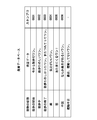
- FIG. 6 is a diagram illustrating an example of an animal state and speech data stored in association with the speech database 233.
- the message database 233 stores one or more message data associated with the state of the animal A determined by the state analysis unit 223.
- the comment data “walk now from one” is stored in association with the state of “start of walk”.
- the comment data “Walking for a walk” is stored in association with the state of “Walking”.
- the comment data “Want to take a walk is stored in association with the comment database 233.
- the speech generation unit 224 can sequentially generate one or more speech data.
- the next speech data may be determined based on the determination result of another state determined by the state analysis unit 223. For example, when the state analysis unit 223 determines that the walk has been taken without taking a rest every day for one month from the history data of the walk state, for example, the remark data such as “This month's walk is a full-time prize is one”. It may be generated.
- the state analysis unit 223 determines “Easy” as the emotional state of the animal A from the voice data or movement data of the animal A.
- the utterance generation unit 224 reads out the utterance data associated with the “easy” state from the utterance database 233, and uses this as the generation result of the utterance data. For example, utterance data such as “I feel good” is generated.
- the speech generation unit 224 reads the speech data associated with the “anger” state from the speech database 233, and It is set as a result of generation of speech data. For example, utterance data such as “One-time Comes!” Is generated.
- the message generation unit 224 reads the message data associated with the “malfunction” state from the message database 233, It is set as a result of generation of speech data. For example, the utterance data such as “something is bad” is generated.
- the statement generation unit 224 reads the statement data associated with the “insufficient exercise” state from the statement database 233, This is the result of generating the utterance data. For example, utterance data such as “One that has not exercised recently” is generated.
- the message generation unit 224 can instruct the message transmission / reception unit 225 to transmit a stamp with a pattern corresponding to the generated message data. For example, a part of the utterance data stored in the utterance database 233 is associated with a stamp ID. When the stamp ID is associated with the message data selected by the message generation unit 224, the message transmission / reception unit 225 is instructed to transmit the stamp based on the stamp ID.
- the stamp ID is information that identifies stamp images having different patterns.
- the stamp image may be stored in the message database 233.
- FIG. 7 is a diagram showing a part of the relationship between the stamp ID and the stamp image.
- speech database 233 for example, for each attribute of the animal A such as gender and age, speech data having different expressions with respect to the content of the speech having the same meaning may be stored.
- utterance data having different expressions for the utterance contents having the same meaning may be stored for each time and region.
- the message transmission / reception unit 225 transmits a message including the message data generated by the message generation unit 224 and an ID for specifying the transmission destination to the interactive SNS.
- An interactive SNS Social Networking Site
- An interactive SNS is a service that realizes a real-time dialogue between users through the Internet using an information terminal such as a personal computer, a smartphone, or an information terminal. Examples of the interactive SNS include LINE (registered trademark), Mixi (registered trademark), Twitter (registered trademark), Facebook (registered trademark), and the like.
- the message transmission / reception unit 225 logs in the interactive SNS using the ID and password assigned to the information processing apparatus 20 with the animal A wearing the sensor terminal 10 as one user on the interactive SNS, and the same on the SNS. Messages are transmitted to and received from information terminals 40 of other users belonging to the group.
- IDs of one or more other users belonging to the same group on the interactive SNS are registered.
- the other users are, for example, each member of a family including the owner of the animal A wearing the sensor terminal 10.
- the speech generation unit 224 can autonomously generate speech data at a random timing or a timing determined by a program, for example.
- the message transmission timing determined by the program is generated in consideration of conditions set in advance by the user. For example, the message may be transmitted at an arbitrary time and time interval.
- message data may be generated and a message may be transmitted.
- the message analysis unit 226 analyzes the meaning of the message data included in the message sent from the information terminal 40 of another user belonging to the same group, analyzes the context of the dialogue with the other user, and The generation unit 224 is instructed on what state of the animal A should be generated.
- the message analysis unit 226 uses the speech included in the message from the information terminal 40 of another user belonging to the same group on the SNS.
- the relationship between data and its meaning may be analyzed by machine learning.
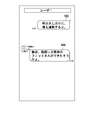
- FIG. 5 shows an example of message exchange between the animal A and another user triggered by message reception from another user belonging to the same group on the SNS on the display screen of the information terminal 40 of the other user.
- the message M1 including the remark data “Will, what are you doing?” Is transmitted from the information terminal 40 of the other user to the ID of the animal A, that is, the information processing apparatus 20.
- the information processing apparatus 20 receives the message M1 at the message transmission / reception unit 225.
- the message transmission / reception unit 225 instructs the message analysis unit 226 to analyze the message data included in the received message.
- the message analysis unit 226 analyzes the meaning of the comment data “Will, what are you doing?”. In this example, the message analysis unit 226 instructs the message generation unit 224 to generate message data related to the behavior state of the animal A based on the analysis result.
- the message generation unit 224 acquires the determination result of the behavior state of the animal A from the state analysis unit 223, generates message data for the determination result, and instructs the message transmission / reception unit 225 to transmit the transmission message. .
- the message transmission / reception unit 225 generates a transmission message including message data, and transmits it to other users belonging to the same group on the SNS. For example, if the animal is taking a walk, language data such as “Now I am taking a walk” is created, and a message M2 including this language data is transmitted to another user.
- the message generation unit 224 can automatically generate message data of natural responses to messages from other users belonging to the same group on the SNS. Thereby, the dialogue with other users can be continued almost without limitation.
- the message generation unit 224 transmits not only the message data stored in the message database 233 but also advertisement data and external information related to the content of other users included in the received message analyzed by the message analysis unit 226 and the advertisement database 234. It is possible to search from outside such as the Internet and generate utterance data using these information.
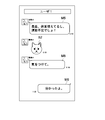
- FIG. 8 is a diagram illustrating a transmission / reception example of a message including message data created using advertisement data and external information. Since the message M3 from another user includes a statement “I will also exercise”, the statement generation unit 224 searches for advertisement data and external information related to the exercise from the advertisement database 234 and the outside such as the Internet. In this example, “It seems that dog-specific fitness has been made in Hakone recently” as message data using advertisement data and external information, and a message M4 including this message data is transmitted to other users.
- the statement generation unit 224 searches for advertisement data and external information related to the exercise from the advertisement database 234 and the outside such as the Internet. In this example, “It seems that dog-specific fitness has been made in Hakone recently” as message data using advertisement data and external information, and a message M4 including this message data is transmitted to other users.
- the advertisement data searched from the advertisement database 234 may be displayed as an advertisement image C1 in a predetermined area set on the message display screen of SNS.
- the advertisement database 234 stores an advertisement image displayed on the message presentation screen, and the advertisement image is transmitted to other users.
- the speech generation unit 224 may perform a search search for the advertisement data in consideration of the individual data of the animal A, the profile information of other users, the purchase history, and the like. Good.
- the speech generation unit 224 determines the other user based on the acquired GPS data of the other user.
- the utterance data reflecting the whereabouts may be generated.
- FIG. 10 is a diagram illustrating a transmission / reception example of a message including message data reflecting the location of another user. It is assumed that the state analysis unit 223 determines that another user is currently in Boston based on the acquired GPS data of the other user. In response to this determination result, the message generation unit 224 generates message data such as “I am on a business trip to Boston” and sends a message M5 including this message data to other users. Furthermore, in this example, the speech generation unit 224 obtains Boston weather data (external information), and based on this weather data, for example, generates speech data such as “Take care because it looks cold.” In this example, the message transmission / reception unit 225 transmits the next message M6 including the message data to another user.
- the state analysis unit 223 determines that another user is currently in Boston based on the acquired GPS data of the other user.
- the message generation unit 224 generates message data such as “I am on a business trip to Boston” and sends a message M5 including this message data to other users.
- ⁇ Modification 4> When the information processing apparatus 20 can access vital data such as the weights of other users belonging to the same group on the SNS, the speech generation unit 224 also obtains the result of the status analysis unit 223 analyzing the vital data of the other users. In addition, utterance data may be generated.
- FIG. 11 is a diagram illustrating a transmission / reception example of a message including speech data generated based on a result of analyzing vital data of another user.
- the state analysis unit 223 analyzes the acquired vital data of other users. As a result, the state analysis unit 223 determines that the other user is in the “obese” state.
- the message generation unit 224 In response to the result of this determination, the message generation unit 224 generates message data that prompts other users to execute a diet, such as “I have recently gained weight and lack of exercise!” A message M7 including the message data is transmitted to another user.
- the stamp S2 and the message M8 including the utterance data “Be careful” are transmitted from the message transmission / reception unit 225 to other users according to the instruction from the utterance generation unit 224. .
- the speech generation unit 224 may be generated based on the result of analyzing the data by the state analysis unit 223.
- FIG. 12 is a diagram illustrating a transmission / reception example of a message including speech data generated based on vital data of all users belonging to the same group on the SNS.
- the value of each user's pedometer is directly incorporated into the utterance data in each message M10-M12. Since each user can compare the pedometer values of all users including himself, the enlightenment effect can be expected.
- the state analysis unit 223 determines the state of the environment in which the animal is present based on the temperature and humidity of the environment based on data detected by an external sensor such as a thermometer and a hygrometer, and the result is a statement generation unit. 224 may be given.
- the remark generation unit 224 generates remark data of contents that the animal will feel with respect to the temperature and humidity of the environment where the animal is present.
- the speech generation unit 224 generates speech data such as “Today is a hot one” and “Today is a steaming one”.
- the sensor terminal 10 may be attached to each of a plurality of animals so that message exchange between the animals can be seen through a display screen of an information terminal of a user belonging to the same group on the SNS. For example, messages can be exchanged between pets between friends and between pets in a zoo.
- FIG. 14 is a diagram illustrating a flow of processing of the entire system in the first operation example.
- Each signal detected by the sensor terminal 10 of the animal A is transmitted as sensor information to the information processing apparatus 20 through the network (FIG. 14: step S1).
- the sensor information transmitted from the sensor terminal 10 to the information processing apparatus 20 includes a device ID previously assigned to the sensor terminal 10 and a plurality of sensors 11a, 11b, 11c, 11d, 11e, 11f,. 2) Each sensor value is included.
- the controller 22 of the information processing apparatus 20 receives the sensor information from the sensor terminal 10 and determines the state of the animal A's physical condition, emotion, behavior, etc., in order to determine the state analysis unit 223 in the controller 22 (see FIG. 4).
- the sensor information is passed to (FIG. 14: step S2).
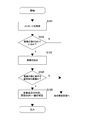
- FIG. 15 is a flowchart of sensor information reception in the information processing apparatus 20.
- An animal ID conversion table is stored in the storage 23 of the information processing apparatus 20 in advance.
- FIG. 16 is a diagram showing the configuration of the animal ID conversion table.
- the animal ID conversion table stores a correspondence relationship between a device ID for identifying the sensor terminal 10 and an animal ID that is an ID for animal management on the service.
- the information of the animal ID conversion table is set by the user who uses the service before using the service, for example.
- the controller 22 of the information processing device 20 When receiving the sensor information from the sensor terminal 10 (FIG. 16: step S21), the controller 22 of the information processing device 20 refers to the animal ID conversion table and replaces the device ID included in the sensor information with the animal ID (FIG. 16: Step S22). The sensor information in which the device ID is replaced with the animal ID is notified to the state analysis unit 223 (FIG. 16: Step S23).
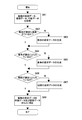
- FIG. 17 is a flowchart of the physical condition determination.
- the state analysis unit 223 compares each sensor value included in the sensor information with each reference value for physical condition determination stored in the storage 23 in advance. Evaluation is performed (FIG. 17: step S32), and based on the evaluation result of each sensor value, the physical condition of the animal is determined as follows (FIG. 17: step S33).
- the animal's physical condition is determined as “good”. 2. If the sensor value of body temperature is above the reference value, the animal's physical condition is "good” by comprehensively evaluating the respiratory rate, pulse rate, and the amount of movement per unit time measured by the acceleration sensor. Differentiate into multiple levels, such as "Slightly unsatisfactory”, “Unsatisfactory”, “Sickness”. Note that this physical condition determination method is merely an example, and physical condition determination may be performed by various other methods.
- the state analysis unit 223 generates a physical condition ID including information for identifying the physical condition of the identified animal and physical condition data including the animal ID (FIG. 17: step S34).
- the generated physical condition data is stored in the storage 23 with management information such as a storage date and time.
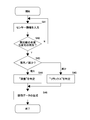
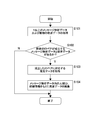
- FIG. 18 is a flowchart of emotion determination by the state analysis unit 223.
- the state analysis unit 223 determines whether or not a significant change has occurred in the pulse rate (current pulse rate) included in the sensor information as compared to the previous pulse rate. Is determined (FIG. 18: step S42).
- the significant change in the pulse rate refers to, for example, a relatively abrupt increase and decrease accompanying an emotional change in an animal.
- the state analysis unit 223 determines whether the significant change in the pulse rate is an increase or decrease in the pulse rate (FIG. 18: Step S43). . If the significant change in the pulse rate is an increase in the pulse rate, the state analysis unit 223 determines that the animal's emotional state is “excited” (FIG. 18: step 44). If the significant change in the pulse rate is a decrease, the state analysis unit 223 determines that the emotional state of the animal has changed from “excited” to “relaxed” (FIG. 18: step S45).
- the state analysis unit 223 generates an emotion ID that is information for identifying an emotion such as “excited” or “relaxed” of the identified animal and emotion data including the animal ID (FIG. 18: step S46).
- the generated emotion data is stored in the storage 23 with management information such as a storage date and time.
- the emotion discrimination method is not limited to the above, and there are various other methods.
- other types of sensor values are comprehensively evaluated, and animal emotions, “excited”, “relaxed”, “fun”, “sad”, “tension” You may divide and discriminate
- determination of an animal is performed as follows (FIG. 14: step S5).
- the state analysis unit 223 performs animal behavior based on sensor values such as one or more sensor values in the input sensor information, for example, body temperature, pulse rate, acceleration data, number of steps, voice emitted by animals, GPS information, and the like. Make a decision.
- the state analysis unit 223 generates an animal action ID that is information for identifying the action of the determined animal and animal action data including the animal ID.
- the generated animal behavior data is stored in the storage 23 with other information such as storage date and time attached.
- Whether or not “walk” has been performed depends on sensor values such as acceleration data (animal movement information), number of steps, and GPS information. Can be determined based on any one or more sensor values. Whether or not “meal” has been taken can be determined based on sensor values such as pulse rate, blood glucose level, respiratory rate, blood pressure, and body temperature. Generally, after a meal, the pulse rate, blood glucose level, blood pressure, and body temperature increase, and the respiratory rate decreases. Similarly, “sleep” can be determined based on sensor values such as acceleration data (animal movement information), pulse rate, blood glucose level, respiratory rate, blood pressure, and body temperature.
- the state analysis unit 223 estimates the animal's desire based on the animal behavior data (FIG. 14: Step S6).
- the target of the animal request will be explained focusing on “walk”, “meal”, and “sleep”.
- FIG. 19 is a flowchart of animal desire estimation by the state analysis unit 223.
- the state analysis unit 223 acquires physical condition data, emotion data, and animal behavior data (FIG. 19: step S61).
- the state analysis unit 223 determines whether or not a walk is appropriately performed by analyzing animal behavior data for a certain period (FIG. 19: step S62). Whether or not the walk has been appropriately carried out is determined according to criteria such as, for example, the frequency of the walk and whether the time of one walk is equal to or greater than a threshold value. More specifically, for example, a criterion such as “whether a walk of 30 minutes or more was taken once every two days in the last two weeks” is used. The criterion is arbitrarily set by the user. When the state analysis unit 223 determines that the walk is not properly performed, the state analysis unit 223 generates desire data for the walk (FIG. 19: step S63).
- the state analysis unit 223 determines that the walk is appropriately performed, the state analysis unit 223 proceeds to the next step S64 without generating the desire data for the walk.
- the state analysis unit 223 determines the feeding state of the animal according to a predetermined determination criterion by analyzing the data regarding the meal in the latest animal behavior data (FIG. 19: step S64).
- the determination of the feeding state is performed using a meal delay time from a predetermined time as an index. More specifically, when the elapsed time when the meal has not been taken since a predetermined time exceeds a specific time (for example, 1 hour, 2 hours, etc.), the state analysis unit 223 generates meal desire data. (FIG. 19: Step S65). If there is no meal delay of a specific time or more from a predetermined time, the state analysis unit 223 proceeds to the next step S66 without generating meal desire data.
- the state analysis unit 223 determines whether or not the animal wants to sleep by analyzing data related to sleep in the latest animal behavior data (FIG. 19: step S66). This determination is performed using, for example, an elapsed time that has been awake since the end of the last sleep (when waking up). Specifically, when the elapsed time that has been awake since the end of the last sleep exceeds a specific time, the state analysis unit 223 generates sleep desire data (FIG. 19: step S67). If the elapsed time that has been awake since the end of the last sleep does not exceed the predetermined time, the state analysis unit 223 proceeds to the next step S68 without generating sleep desire data.
- the state analysis unit 223 corrects the various desire data obtained in the above steps as needed based on the physical condition data and emotion data of the animal (FIG. 19: Step S68). For example, if the animal's physical condition is, for example, “somewhat unwell” or “not well”, the state analysis unit 223 invalidates the desire by clearing the desire data for the walk. Similarly, when the feeling of the animal is not good, for example, when it is “sad”, the state analysis unit 223 similarly invalidates the desire data for the walk, for example. This correction is performed not only on the desire data for the walk but also on the desire data for the meal and the desire data for the sleep.
- FIG. 25 is a diagram showing an example of animal desire data. The figure shows a case where the desire analysis data of each pet a, b, c is generated by the state analysis unit 223 based on each sensor information acquired from the sensor terminal 10 of each of the three pets a, b, c. Is shown.
- each desire data includes an animal ID of pets a, b, and c, a desire ID for identifying the type of desire, and detailed information.
- the figure shows, in order from the top, pet a walk desire data, pet b meal desire data, and pet c sleep desire data. In some cases, all of the desire data is for one pet.
- the detailed information of the desire data for a walk includes, for example, a desire level and location information.
- the desire level is given by, for example, a ratio of an actual walk time to a sufficient walk time. For example, the degree of desire is determined in several stages such as large, medium, and small according to the value of the ratio.
- This desire level can be used as a condition for generating speech data.
- the utterance data can be generated when the desire level is equal to or higher than a predetermined value (medium level).
- the place information may be a name of a walk place such as a park name obtained based on GPS information and map information during a walk. This location information is used, for example, by adding it to message data.
- the detailed information of the meal desire data includes a desire degree indicating the degree of appetite and other information.
- the degree of appetite indicating the degree of appetite is given by, for example, an elapsed time when a meal has not been taken since a predetermined meal time.
- the degree of desire indicating the degree of appetite can be used as a condition for generating speech data.
- the utterance data can be generated when the desire level is equal to or higher than a predetermined value.
- Other information is appropriately set by the user, for example, and used by being added to the message data.
- the other information may be a brand of dock food that the pet likes.
- the detailed information of the sleep desire data includes a desire degree indicating the degree of sleep desire and other information.
- a desire degree indicating the degree of sleep desire for example, an elapsed time that has been kept from the end of the last sleep is used.
- This desire level can also be used as a condition for generating speech data.
- Other information is appropriately set by the user and used by being added to the message data.
- the generated animal desire data is given to the speech generation unit 224.
- the speech generation unit 224 generates first person speech data from the animal desire data and the analysis result of the message transmitted from the user. Before the description of the message generation operation, analysis of a message transmitted from the user will be described.
- the controller of the user information terminal 40 transmits a message in which the messenger ID is added to the message body input by the user to the information processing apparatus 20 (FIG. 14: step S7).
- the controller 22 (message transmission / reception unit 225) of the information processing apparatus 20 receives the message transmitted from the information terminal 40 (FIG. 14: step S8).
- FIG. 20 is a flowchart of message reception in the information processing apparatus 20.
- a human ID conversion table is stored in the storage 23 of the information processing apparatus 20 in advance.
- FIG. 21 is a diagram showing the configuration of the human ID conversion table.
- the human ID conversion table a correspondence relationship between a messenger ID that is an ID on the SNS of the information terminal 40 belonging to one SNS group and a human ID that is an ID for human management on this service is stored.
- the information in the human ID conversion table is set by a user who uses the service before using the service, for example.
- the messenger ID added to the message is referred to by referring to the human ID conversion table. Is replaced with a human ID (FIG. 20: step S82).
- the message transmission / reception unit 225 passes the message in which the messenger ID is replaced with the human ID to the message analysis unit 226 (FIG. 20: Step S83).
- FIG. 22 is a flowchart showing the message analysis operation by the message analysis unit 226.
- the message analysis unit 226 receives a message including the human ID and the message body from the message transmission / reception unit 225 (FIG. 22: step S91)
- the message analysis unit 226 analyzes the message body to obtain a character string related to human behavior (including a schedule). All are extracted (FIG. 22: Step S92). Human behavior is classified into various types such as “return home”, “shopping”, and “club activities”.
- the message analysis unit 226 determines the type of human action from the extracted character string related to the action, and determines the human action ID assigned to the type (FIG. 22: step S93).
- the message analysis unit 226 generates detailed information related to human behavior based on the message body (FIG. 22: Step S94).
- Detailed information related to human behavior includes time information and location information. For example, when a character string related to time exists in the message body, the message analysis unit 226 extracts the character string as time information, or estimates time information by semantic analysis of the message body. Similarly, for example, when a character string related to a location exists in the message body, the message analysis unit 226 extracts the character string as location information or estimates the location information by semantic analysis of the message body.
- the human action ID and detailed information determined by the message analysis unit 226 are stored as message analysis data in the storage 23 together with the human ID.
- FIG. 23 is a diagram illustrating an example of message analysis data.
- the message analysis data 1 at the top of the figure is “Return home at 20:00” for the message body, “Return home” as the type of human action, “20:00” and “Today” as time information, and “Shinagawa as location information” -Indicates the result of determining "Home".
- the location information of “Shinagawa” is obtained based on the GPS information and map information of the information terminal 40.
- the “home” location information is based on the type of human behavior being “return home”.
- the second message analysis data 2 from the top of the figure is "shopping" as the type of human action, "today” as time information, and "home- XX Super "indicates the result of determination.
- the location information of “XX Super” is obtained based on the GPS information and map information of the information terminal 40.
- the location information of “home” is based on the fact that the type of human action is “shopping”.
- the third message analysis data 3 from the top of the figure shows the message text “Saturday, soccer club match.”
- the type of human activity is “club activity”
- the time information is “This Saturday”
- the result of determining “school” as the location information is shown.
- the location information “school” may be information prepared in advance in association with “club activities” that are types of human behavior.
- the message analysis unit 226 passes the message analysis data created as described above to the message generation unit 224. For example, each time message analysis data is generated, the message analysis data may be passed to the message generation unit 224. Alternatively, one or more message analysis data generated at a predetermined time may be passed to the message generation unit 224 all at once.
- the speech generation unit 224 generates animal first person speech data from the animal desire data and human message analysis data, for example, as follows (FIG. 14: Step S10).
- FIG. 24 is a flowchart relating to the generation of animal utterances by the utterance generation unit 224. In this flowchart, it is assumed that one or more message analysis data generated at a predetermined time is passed to the message generation unit 224 all at once.
- the message generation unit 224 acquires one or more message analysis data and animal desire data (step S101).
- the speech generation unit 224 generates a predetermined human being from the acquired one or more message analysis data and animal desire data so as to generate speech data suitable for the content of the human message and the state of the animal.
- Message analysis data and animal desire data that establish a pair of action ID and desire ID (hereinafter referred to as “speech generation ID pair”) are selected.
- speech generation ID pair of a human action ID and a desire ID
- Etc Alternatively, all combinations of defined human action IDs and desire IDs may be prepared as statement generation ID pairs.
- one or more types of utterance data are stored in advance in the storage 23 (the utterance database 233) of the controller 22 for each utterance generation ID pair. Specifically, for example, "Return! Take a walk, please take me back! Is stored for the message generation ID pair of (Return-walk). For the (shopping-meal) message generation ID pair, “I'm hungry now, I want to win what I love!” Is stored.
- the message generation unit 224 determines message analysis data and desire data for which a message generation ID pair is established from one or more message analysis data and animal desire data acquired in step S101 (step S102).
- the speech generation unit 224 reads the speech data corresponding to the established speech generation ID pair from the storage 23 (the speech database 233) (step S103). Note that generation of the utterance data is terminated when no utterance generation ID pair is established.
- the desire degree of the desire data may be taken into account as a condition for establishing the speech generation ID pair.
- the final establishment condition of the speech generation ID pair may be that the desire degree included in the desire data in which the speech generation ID pair is established is equal to or more than a predetermined value for each type of desire.
- the speech generation unit 224 finally corrects the base of the speech data based on the human ID, the detailed information about the time, the detailed information about the place, and the like included in the message analysis data in which the speech generation ID pair is established.
- Utterance data is generated (FIG. 24: step S104).
- the speech data is edited by changing a partial character string of the wording or adding a character string.
- the message generation unit 224 adds the user name corresponding to the human ID included in the message analysis data in which the message generation ID pair is established to the message data. For example, in the case where the user's preset name corresponding to the human ID is “dad”, the remark data of “Please come home! “Dad,” will be added to the beginning of ",” (Dad, please come home! If you haven't taken a walk recently, please bring me back!)
- the speech generation unit 224 can add location information of the desire data for a walk where the speech generation ID pair is established to the speech data. For example, if the location information of the desire data for a walk is “XX Park”, “Please come back! The character string is added, and it is set as the utterance data of "Dad, please come home! If you come back because you haven't taken a walk recently, please take me to (XX Park)!
- the generation of the comment data may be canceled, or a part of the comment data may be changed or deleted.
- you come home later than 10 o'clock for example, “Please come home! If you have n’t taken a walk recently, please take me back!” You can delete “Please bring me back when you come back” and use only “Please come back!” As speech data.
- the speech generation unit 224 may add other detailed information of the desire data of the meal for which the speech generation ID pair is established to the base of the speech data. For example, if the other detailed information of the meal desire data is “ ⁇ Dog food”, “I am hungry now, I want you to win what I love!” It is changed to “Dog food”, and it is the remark data of “I want to win my favorite ( ⁇ Dog food) because I am hungry now!”.
- the message generation unit 224 may control the transmission timing of the message data based on the human ID, time information, and location information included in the message analysis data in which the message generation ID pair is established. For example, based on the time information and the location information included in the message analysis data, the time when the user actually goes home may be estimated, and the utterance data may be transmitted at that time.
- the message generation unit 224 sends the message data generated as described above to the message transmission / reception unit 225 together with the human ID included in the message analysis data in which the message generation ID pair is established and the animal ID included in the desire data. give.
- the message transmission / reception unit 225 generates a transmission message for the interactive SNS by replacing the human ID and the animal ID given from the message generation unit 224 with the messenger ID, and transmits the message to the interactive SNS (FIG. 14: step S11). .
- the speech generation unit 224 acquires external information related to animal physical condition data and emotion data, and the external information is replied. The operation when reflecting in data will be described.
- FIG. 26 is a diagram showing a flow of processing of the entire system in the second operation example.
- sensor information is transmitted (step S1A)
- sensor information is received (step S2A)
- animal physical condition is determined (step S3A)
- animal emotion is determined (step S4A)
- animal behavior is determined (step S5A).
- the operations of message transmission (step S7A), message reception (step S8A), message analysis (step S9A), message transmission (step S11A), and message reception (step S12A) are as follows. Same as operation. Therefore, these overlapping explanations are omitted.
- step S6A animal desire estimation
- speech generation FIG. 26: step S10A
- the state analysis unit 223 clears the desire data for the walk, or the emotional state of the animal is “ If it is "sad”, the desire data is invalidated by clearing the desire data for a walk. On the other hand, in the operation example 2, the desire data is not invalidated.
- the state analysis unit 223 adds a physical condition ID and emotion ID extracted from physical condition data and emotion data to other detailed information of the desire data of the animal, for example, as shown in FIG. 224.
- the speech generation unit 224 acquires external information related to the physical condition and emotion of the animal by accessing the Internet or the like based on the physical condition ID and emotion ID included in the detailed information of the desire data. (FIG. 26: Step S13A). Then, the speech generation unit 224 generates animal speech data based on the animal desire data, message analysis data, and external information (FIG. 26: Step S10A).
- the operation example 2 will be described more specifically by focusing on the case where the speech generation unit 224 acquires external information related to the physical condition of the animal and uses it for generating speech data.
- utterance data is prepared in advance for the utterance generation ID pair of the action ID and the desire ID.
- a combination (set) of the action ID, the desire ID, and the physical condition ID is set.
- speech data is prepared in advance. For example, “Return” to the speech generation ID set of the human action ID of "Return home”, the desire ID of "Walk” and the physical condition ID of "Unwell”! Take a walk again this time because of the cold and illness today! Message data such as “is stored in the storage 23 (message database 233).
- the message generation unit 224 is the message data corresponding to the message generation ID set from the storage 23 (message database 233). Read today because I'm cold and sick today, so take a walk again!
- the speech generation unit 224 acquires external information related to the generated speech data by accessing it through the Internet.
- the generated remark data includes the character string “cold”
- the remark generation unit 224 transmits banner advertisements and web pages such as animal hospitals, veterinary drug stores, and animal insurances via the Internet.
- URL Uniform Resource Locator
- the message generation unit 224 gives the acquired external information to the message transmission / reception unit 225 together with the message data.
- external information C2 such as a banner advertisement is displayed on the display screen of the information terminal 40 together with the message M16 including the message data.
- the utterance generation unit 224 relates to the “cold medicine” in the utterance data.
- the URL of the web page of the animal drug store is acquired as external information
- the URL is transmitted to the information terminal 40 by the message transmission / reception unit 225 together with the message data.
- a message M18 in which the URL of the web page of the animal drug store is set as a hyperlink is displayed on the display screen of the information terminal 40.
- the user of the information terminal 40 can access the web page of the animal drug store using the hyperlink set in the message M18.
- the message generation unit 24 of the information processing apparatus 20 transmits a message transmitted from the user information terminal 40 and the user's pedometer. An operation in the case of generating animal speech data based on sensor information obtained by a sensor terminal such as will be described.
- FIG. 30 is a diagram showing a flow of processing of the entire system in this operation example 3.
- sensor information detected by the sensor terminal 41 such as a pedometer carried by the user is transmitted to the information processing apparatus 20 (step S1B).
- the configuration of the sensor terminal 41 carried by the user is, for example, the same as that of the animal sensor terminal 10 shown in FIG.
- the controller 22 of the information processing apparatus 20 receives the sensor information from the user's sensor terminal 41 and gives it to the state analysis unit 223 (step S2B). At this time, the CPU 221 of the information processing apparatus 20 replaces the device ID included in the sensor information with a human ID, and notifies the state analysis unit 223 of the sensor information in which the device ID is replaced with the human ID.
- the state analysis unit 223 calculates a calorie consumption value corresponding to the value of the number of steps indicated by the notified sensor information based on individual data such as the user's weight, sex, and age.
- the state analysis unit 223 notifies the message generation unit 224 of sensor information analysis data including the human ID, the step value, and the calorie consumption value (step S3B).
- the user of the information terminal 40 instructs the controller of the information terminal 40 to paste the image obtained by photographing the contents of meal using the camera function of the information terminal 40 into a message and transmit it.
- the controller of the information terminal 40 generates a message including at least an image and a messenger ID, and transmits the message to the information processing apparatus 20 (step S4B).
- the message may include a message text input by the user.
- the message transmission / reception unit 225 of the information processing apparatus 20 When the message transmission / reception unit 225 of the information processing apparatus 20 receives the message transmitted from the information terminal 40, it replaces the messenger ID added to this message with the human ID and passes it to the message analysis unit 226 (step S5B).
- step S6B message analysis is performed in the message analysis unit 226 as follows.
- FIG. 31 is a flowchart showing the message analysis operation by the message analysis unit 226 in the operation example 2.
- the message analysis unit 226 determines whether an image is attached to the message (FIG. 31: step S122). If an image is attached, the message analysis unit 226 extracts this image (step S123), and determines whether or not a subject related to the meal content is included in this image by image processing (step S124).
- the message analysis unit 226 determines the meal item of each subject relating to the meal content by image processing, and the calorie for each meal item stored in advance in the storage 23 as a database. The values are determined and added to calculate the intake calorie value (step S125).
- the intake calorie value obtained in this way by the message analysis unit 226 is notified as message analysis data to the message generation unit 224 together with the human ID.
- the utterance generation unit 224 generates the first person utterance data of the animal from the sensor information analysis data notified from the state analysis unit 223 and the message analysis data notified from the message analysis unit 226, for example, as follows (FIG. 30: Step S7B).
- the speech generation unit 224 stores the storage 23 based on the fact that the calorie consumption value is included in the sensor information analysis data, the intake calorie value is included in the message analysis data, and the magnitude of the consumed calorie value and the intake calorie value. From the (speech database 233), speech data relating to calories consumed and calories consumed are read. As an example, assume that “Ykcal is consumed for Xkcal consumption” is read.
- the speech generation unit 224 substitutes the consumed calorie value included in the sensor information analysis data for “X” of the speech data, substitutes the intake calorie value included in the message analysis data for “Y” of the speech data, and further
- the final utterance data is generated by adding the user name corresponding to the human ID included in the sensor information analysis data and the message analysis data to the head of the data. As a result, for example, utterance data such as “Dad, 3,000 kcal for every 2000 kcal consumed” is generated.
- the utterance data related to the calorie consumption value is read from the utterance database 233, and the consumed calorie value included in the sensor information analysis data is substituted. You consumed 2000kcal "on foot. The final speech data such as “is generated.
- the ingestion database 233 The speech data related to the calorie value is read out, and the intake calorie value determined from the image is substituted.
- the final speech data such as “is generated.
- FIG. 32 is a diagram illustrating a flow of processing of the entire system in the operation example 4.
- the speech generation unit 224 of the information processing apparatus 20 receives a plurality of pieces of information transmitted from the sensor terminals 10A and 10B of the plurality of animals A and B. The operation in the case of generating utterance data for each of the plurality of animals A and B based on the sensor information will be described.
- the controller 22 of the information processing apparatus 20 receives the sensor information from each of the sensor terminals 10A and 10B, and sends each sensor to the state analysis unit 223 in order to determine the state of emotion and action of each of the animals A and B. Give information (step S3C).
- the state analysis unit 223 determines emotion and behavior states of the animals A and B based on the sensor information from the sensor terminals 10A and 10B, and emotion data and animal behavior of the animals A and B from the determination results. Data is generated and notified to the message generation unit 224 (steps S4C and S5C).
- the speech generation unit 224 generates speech data of the animals A and B based on the emotion data and animal behavior data of the animals A and B. For example, when the animal A and the animal B are both actively moving in a nearby place and the emotional state of the animal A and the animal B is “fun”, the speech generation unit 224, for example, For example, “I'm playing with black” is generated as the utterance data, and “I am playing at home with Will” is generated as the utterance data of the animal B.
- the speech generation unit 224 for example, “Zzz...” And the like are generated as data, and “sweet” and the like are generated as the utterance data of the animal B.
- Each message data of the animal A and the animal B generated by the message generation unit 224 is given to the message transmission / reception unit 225 together with the human ID and the animal ID that is the message source.
- the human ID may be a user ID of any user or all users of the SNS group.
- this operation example 4 the user can check how the plurality of animals A and B are spending at the destination. That is, this system can be used as a means for confirming whether the relationship between the plurality of animals A and B is good.
- the controller 22 of the information processing device 20 Based on the animal individual data stored in the individual database 231 of the storage 23 or the detection history data stored in the detection database 232, the controller 22 of the information processing device 20 displays a community page related to the pet as external information. Information such as a URL for searching and accessing the community page may be transmitted to the information terminal 40 and displayed on the display screen.
- the controller 22 of the information processing apparatus 20 may use, for example, pet wrinkles and health management from the viewpoints of conditions such as pet type, gender, age, medical history, genetic information, or history of pet physical condition, emotion, and behavior.
- Search for optimal community pages from the web such as information exchange, consultation, friend introduction, pet-related goods sales and auctions, pet insurance, pet hotels, etc., and send them to the information terminal 40 for display on the display screen.
- this technique can also take the following structures.
- the state of the dialogue target is determined from the received detection data, first person speech data is generated from the determined state, a transmission message for the interactive SNS including the speech data is generated, and the interactive SNS is generated.
- An information processing apparatus comprising: a controller that transmits to the specific user.
- the information processing apparatus analyzes a user utterance included in a message from a specific user on the interactive SNS, generates utterance data for replying to the user utterance, and generates the transmission message including the utterance data.
- An information processing apparatus configured to transmit to the specific user.
- the information processing apparatus analyzes a user utterance included in a message from a specific user on the interactive SNS, searches for advertisement data related to the user utterance, and generates the utterance data using the advertisement data.
- An information processing apparatus configured as described above.
- the information processing apparatus is configured to acquire information on a location of a specific user on the interactive SNS and generate speech data related to the location of the specific user.
- the information processing apparatus is configured to acquire vital data of a specific user on the interactive SNS, analyze the vital data, and generate the utterance data.
Landscapes
- Engineering & Computer Science (AREA)
- Theoretical Computer Science (AREA)
- General Engineering & Computer Science (AREA)
- General Physics & Mathematics (AREA)
- Physics & Mathematics (AREA)
- Life Sciences & Earth Sciences (AREA)
- Business, Economics & Management (AREA)
- Environmental Sciences (AREA)
- Tourism & Hospitality (AREA)
- Computer Networks & Wireless Communication (AREA)
- Signal Processing (AREA)
- Human Computer Interaction (AREA)
- Health & Medical Sciences (AREA)
- General Health & Medical Sciences (AREA)
- Computer Hardware Design (AREA)
- Computing Systems (AREA)
- Biodiversity & Conservation Biology (AREA)
- Animal Husbandry (AREA)
- Biophysics (AREA)
- Marketing (AREA)
- Human Resources & Organizations (AREA)
- Primary Health Care (AREA)
- Strategic Management (AREA)
- General Business, Economics & Management (AREA)
- Economics (AREA)
- Medical Informatics (AREA)
- Medical Treatment And Welfare Office Work (AREA)
- Information Transfer Between Computers (AREA)
- Management, Administration, Business Operations System, And Electronic Commerce (AREA)
- Measurement Of The Respiration, Hearing Ability, Form, And Blood Characteristics Of Living Organisms (AREA)
- User Interface Of Digital Computer (AREA)
Abstract
この情報処理装置は、対話対象の状態を物理的に検出する1以上のセンサーを備えるセンサー端末によって検出された対話対象の物理的な状態を示す検出データを受信するインタフェースと、受信した検出データから対話対象の状態を判定し、判定された状態から一人称の発言データを生成し、発言データを含む対話型SNSのための送信メッセージを生成して対話型SNS上の特定のユーザに宛てて送信するコントローラとを有する。
Description
本技術は、ペットや家畜などの生物の管理に用いられる情報処理装置、情報処理方法および情報処理システムに関する。
ペットの行動および健康の状態を飼い主等が十分に把握したいという要請から、動物の管理や情報交換のための仕組みが提供されつつある。例えば、動物の動作によって生じる変化を様々な種類のセンサーで検出して、その検出情報を記憶部に記憶し、記憶部に記憶された検出情報をもとに動物の行動状態を判別する動物行動管理装置などがある。この動物行動管理装置では、動物の行動情報をネットワークを介して利用者の端末に提供する機能をも備えるものがある(例えば、特許文献1参照。)。
しかしながら、ネットワークを用いたペットなどの生物の管理の仕組みにおいては、まだまだ改善すべき課題があり、その解決が求められている。
以上のような事情に鑑み、本技術の目的は、ネットワークを用いたペットなどの生物の管理をより改善することのできる情報処理装置、情報処理方法および情報処理システムを提供することにある。
上記の課題を解決するために、本技術に係る一形態の情報処理装置は、
対話対象の状態を物理的に検出する1以上のセンサーを備えるセンサー端末によって検出された前記対話対象の物理的な状態を示す検出データを受信するインタフェースと、
前記受信した検出データから前記対話対象の状態を判定し、前記判定された状態から一人称の発言データを生成し、前記発言データを含む対話型SNSのための送信メッセージを生成して前記対話型SNS上の特定のユーザに宛てて送信するコントローラと
を具備する。
対話対象の状態を物理的に検出する1以上のセンサーを備えるセンサー端末によって検出された前記対話対象の物理的な状態を示す検出データを受信するインタフェースと、
前記受信した検出データから前記対話対象の状態を判定し、前記判定された状態から一人称の発言データを生成し、前記発言データを含む対話型SNSのための送信メッセージを生成して前記対話型SNS上の特定のユーザに宛てて送信するコントローラと
を具備する。
前記対話対象は生物であってよい。
前記コントローラは、前記対話対象の行動、感情、健康のうち、少なくともいずれか1つの状態を判定するように構成されたものであってよい。
前記コントローラは、前記対話型SNS上の特定のユーザからのメッセージに含まれるユーザ発言を解析して、このユーザ発言に対する返答用の発言データを生成し、この発言データを含む前記送信メッセージを生成して前記特定のユーザに宛てて送信するように構成されてもよい。
前記コントローラは、前記対話型SNS上の特定のユーザからのメッセージに含まれるユーザ発言を解析して、このユーザ発言に関連する広告データを検索し、この広告データを用いて前記発言データを生成するように構成されるものであってよい。
前記コントローラは、前記対話型SNS上の特定のユーザの居場所の情報を取得し、この特定のユーザの居場所に関連する発言データを生成するように構成されるものであってよい。
前記コントローラは、前記対話型SNS上の特定のユーザのバイタルデータを取得し、このバイタルデータを解析して前記発言データを生成するように構成されるものであってよい。
本技術に係る他の形態の情報処理方法は、
インタフェースが、対話対象の状態を物理的に検出する1以上のセンサーを備えるセンサー端末によって検出された前記対話対象の物理的な状態を示す検出データを受信し、
コントローラが、前記受信した検出データから前記対話対象の状態を判定し、前記判定された状態から一人称の発言データを生成し、前記発言データを含む対話型SNSのための送信メッセージを生成して前記対話型SNS上の特定のユーザに宛てて送信する。
インタフェースが、対話対象の状態を物理的に検出する1以上のセンサーを備えるセンサー端末によって検出された前記対話対象の物理的な状態を示す検出データを受信し、
コントローラが、前記受信した検出データから前記対話対象の状態を判定し、前記判定された状態から一人称の発言データを生成し、前記発言データを含む対話型SNSのための送信メッセージを生成して前記対話型SNS上の特定のユーザに宛てて送信する。
本技術に係る他の形態の情報処理システムは、
対話対象の状態を物理的に検出する1以上のセンサーと、
前記1以上のセンサーの検出データを送信する第1の通信インタフェースと
を備えるセンサー端末と、
前記センサー端末より送信された前記検出データを受信する第2の通信インタフェースと、
前記受信した検出データから前記対話対象の状態を判定し、前記判定された状態から一人称の発言データを生成し、前記発言データを含む対話型SNSのための送信メッセージを生成して前記対話型SNS上の特定のユーザに宛てて送信するコントローラと
を備える情報処理装置と、を具備する。
対話対象の状態を物理的に検出する1以上のセンサーと、
前記1以上のセンサーの検出データを送信する第1の通信インタフェースと
を備えるセンサー端末と、
前記センサー端末より送信された前記検出データを受信する第2の通信インタフェースと、
前記受信した検出データから前記対話対象の状態を判定し、前記判定された状態から一人称の発言データを生成し、前記発言データを含む対話型SNSのための送信メッセージを生成して前記対話型SNS上の特定のユーザに宛てて送信するコントローラと
を備える情報処理装置と、を具備する。
以上のように、本技術によれば、ネットワークを用いたペットなどの生物の管理をより改善化することができる。
なお、ここに記載された効果は必ずしも限定されるものではなく、本開示中に記載されたいずれかの効果であってもよい。
なお、ここに記載された効果は必ずしも限定されるものではなく、本開示中に記載されたいずれかの効果であってもよい。
以下、本技術に係る実施形態を、図面を参照しながら説明する。
<第1の実施形態>
図1は、本技術にかかる第1の実施形態の情報処理システムの全体的な構成を示すブロック図である。
<第1の実施形態>
図1は、本技術にかかる第1の実施形態の情報処理システムの全体的な構成を示すブロック図である。
この情報処理システム1は、センサー端末10と情報処理装置20とを備える。
このセンサー端末10は、例えば家庭内のペットなどの動物Aに着脱自在なものであってよい。着脱自在なセンサー端末10としては、例えば、首輪一体型のもの、アクセサリー型のものなどがある。アクセサリー型のセンサー端末10は一般的な首輪などに着脱自在なものである。
ここでいう動物Aとは、犬、猫などのペット動物のみならず、牛、豚、鶏などの家畜のための動物、動物園の動物、人間などを含む動物全般を指す。但し、本技術は、センサーの種別つまり検出対象データの選定によって、植物や昆虫類などにも適用可能である。したがって、本技術は、状態の変化を物理的に検出可能な生物全般に適用し得る。
[センサー端末10]
図2は、センサー端末10の構成を示すブロック図である。
同図に示すように、センサー端末10は、センサー部11と、信号処理回路12と、通信インタフェース13と、バッテリ14とを有する。
図2は、センサー端末10の構成を示すブロック図である。
同図に示すように、センサー端末10は、センサー部11と、信号処理回路12と、通信インタフェース13と、バッテリ14とを有する。
センサー部11は、動物Aの状態を物理的に検出する。センサー部11は1以上のセンサー11a、11b、11c、11d、11e、11f、・・・で構成される。
センサー部11を構成するセンサー11a、11b、11c、11d、11e、11f、・・・としては、例えば、カメラ、マイク、GPS(Global Positioning System)受信機、加速度センサー、体温計、脈拍計、血圧計、呼吸計、血糖値計、体重計、歩数計などが挙げられる。これらのセンサー11a、11b、11c、11d、11e、11f、・・・のうち、温度センサー、脈拍計、血圧計、呼吸計、血糖値計、体重計、歩数計によって得られるデータはバイタルデータと呼ばれる。
センサー部11を構成するセンサー11a、11b、11c、11d、11e、11f、・・・としては、例えば、カメラ、マイク、GPS(Global Positioning System)受信機、加速度センサー、体温計、脈拍計、血圧計、呼吸計、血糖値計、体重計、歩数計などが挙げられる。これらのセンサー11a、11b、11c、11d、11e、11f、・・・のうち、温度センサー、脈拍計、血圧計、呼吸計、血糖値計、体重計、歩数計によって得られるデータはバイタルデータと呼ばれる。
信号処理回路12は、上記のセンサー部11によって検出された信号をデジタルデータに変換する。
通信インタフェース13は、情報処理装置20との通信のためのインタフェース(第1の通信インタフェース)である。通信インタフェース13は無線通信インタフェースであってよい。
バッテリ14は、センサー端末10の動作用の電源を供給する。
[情報処理装置20]
図3は、情報処理装置20の構成を示すブロック図である。
同図に示すように、情報処理装置20は、通信インタフェース21、コントローラ22、およびストレージ23を有する。
図3は、情報処理装置20の構成を示すブロック図である。
同図に示すように、情報処理装置20は、通信インタフェース21、コントローラ22、およびストレージ23を有する。
通信インタフェース21は、センサー端末10との通信および対話型SNSにアクセスするためのインタフェース(第2の通信インタフェース)である。通信インタフェース21は無線通信インタフェースであってよい。なお、通信インタフェース21は、センサー端末10との通信用と対話型SNSへのアクセス用に別々に設けられてもよい。
コントローラ22は、CPU(Central Processing Unit)221とメモリ222とを有する。
コントローラ22は、CPU221がメモリ222に格納されたプログラムを実行することで、図4に示すように、状態解析部223、発言生成部224、メッセージ送受信部225、メッセージ解析部226として機能する。
コントローラ22は、CPU221がメモリ222に格納されたプログラムを実行することで、図4に示すように、状態解析部223、発言生成部224、メッセージ送受信部225、メッセージ解析部226として機能する。
ストレージ23は、各種のデータベースを保有する。ストレージ23は、例えば、ハードディスクドライブなどで構成される。
データベースとしては、動物Aの種別、性別、年齢、病歴、遺伝子情報などの個体データを保存する個体データベース231と、センサー部11により検出されたデータを検出履歴データとして保存する検出データベース232と、発言データを管理する発言データベース233と、広告データを管理する広告データベース234などがある。
データベースとしては、動物Aの種別、性別、年齢、病歴、遺伝子情報などの個体データを保存する個体データベース231と、センサー部11により検出されたデータを検出履歴データとして保存する検出データベース232と、発言データを管理する発言データベース233と、広告データを管理する広告データベース234などがある。
(コントローラ22の機能的な構成)
次に、コントローラ22の機能的な構成である状態解析部223、発言生成部224、メッセージ送受信部225、メッセージ解析部226について説明する。
次に、コントローラ22の機能的な構成である状態解析部223、発言生成部224、メッセージ送受信部225、メッセージ解析部226について説明する。
(状態解析部223)
状態解析部223は、センサー端末10のセンサー部11によって検出されたデータを解析して動物Aの行動、感情、健康などの状態を判定する。
状態解析部223は、センサー端末10のセンサー部11によって検出されたデータを解析して動物Aの行動、感情、健康などの状態を判定する。
動物Aの行動は、例えば、"食事"、"睡眠"、"散歩"、"排泄"などに分類される。"食事"はさらに"空腹"、"満腹"などに分類される。"睡眠"はさらに"睡眠の開始"、"睡眠中"、"睡眠の終了"などに分類される。"散歩"、"排泄"についても同様である。
動物Aの感情は、例えば、"喜"、"怒"、"哀"、"楽"、"発情"などに分類される。
動物Aの健康は、例えば、"肥満"、"痩身"、"高/低熱"、"高/低血圧"、"好調"、"不調"、"病気"などに分類される。
行動、感情、健康などの状態は、上記の分類に限られない。
動物Aの健康は、例えば、"肥満"、"痩身"、"高/低熱"、"高/低血圧"、"好調"、"不調"、"病気"などに分類される。
行動、感情、健康などの状態は、上記の分類に限られない。
(状態の判定例その1)
センサーがマイクである場合、状態解析部223は、音声データから動物が発する音声成分を抽出し、その音声成分データを解析して動物の行動、感情、健康などの状態を判定する。動物Aの鳴き声にはその動物Aの感情を反映する特徴が含まれている。状態解析部223は、音声成分データからその特徴を抽出することによって動物Aの感情を判定する。
センサーがマイクである場合、状態解析部223は、音声データから動物が発する音声成分を抽出し、その音声成分データを解析して動物の行動、感情、健康などの状態を判定する。動物Aの鳴き声にはその動物Aの感情を反映する特徴が含まれている。状態解析部223は、音声成分データからその特徴を抽出することによって動物Aの感情を判定する。
(状態の判定例その2)
センサーがGPS受信機である場合、状態解析部223は、GPS信号およびその時系列から動物Aの居場所、散歩の開始、散歩中、散歩の終了、散歩の経路、散歩の距離などを判定する。
センサーがGPS受信機である場合、状態解析部223は、GPS信号およびその時系列から動物Aの居場所、散歩の開始、散歩中、散歩の終了、散歩の経路、散歩の距離などを判定する。
(状態の判定例その3)
センサーが加速度センサーである場合、状態解析部223は、加速度データから動物Aの動きを判定する。状態解析部223は、判定した動きから動物Aの行動、感情、健康などの状態を判定する。例えば、動物Aが長時間動きがないときは就寝しているときであり、その後動きはじめたことによって起床したことが分かる。また、犬や猫などの場合、リラックス時に仰向けでゴロゴロする動きをしたり、警戒心が起きると激しく吠えたりする。状態解析部223は、これらの動物特有の動きも加速度データから判定することによって、感情の状態を判定する。
センサーが加速度センサーである場合、状態解析部223は、加速度データから動物Aの動きを判定する。状態解析部223は、判定した動きから動物Aの行動、感情、健康などの状態を判定する。例えば、動物Aが長時間動きがないときは就寝しているときであり、その後動きはじめたことによって起床したことが分かる。また、犬や猫などの場合、リラックス時に仰向けでゴロゴロする動きをしたり、警戒心が起きると激しく吠えたりする。状態解析部223は、これらの動物特有の動きも加速度データから判定することによって、感情の状態を判定する。
(状態の判定例その4)
センサーが体温計である場合、状態解析部223は、検出された体温データおよびその検出履歴データを解析して動物Aの行動、感情、健康などの状態を判定する。例えば、状態解析部223は、体温データの検出履歴データから動物Aの基礎体温を算出し、検出された温度と基礎体温と比較することによって動物Aの健康の状態、例えば高熱/低熱などを判定する。
センサーが体温計である場合、状態解析部223は、検出された体温データおよびその検出履歴データを解析して動物Aの行動、感情、健康などの状態を判定する。例えば、状態解析部223は、体温データの検出履歴データから動物Aの基礎体温を算出し、検出された温度と基礎体温と比較することによって動物Aの健康の状態、例えば高熱/低熱などを判定する。
(状態の判定例その5)
センサーが脈拍計である場合、状態解析部223は、検出された脈拍数データおよびその検出履歴データを解析することによって動物Aの行動、感情、健康などの状態を判定する。例えば、状態解析部223は、脈拍数の検出履歴データから標準脈拍数を算出し、検出された脈拍数を標準脈拍数と比較することによって、動物Aの健康の状態や興奮状態の度合いなどを判定することができる。さらに状態解析部223は、脈拍数の解析とともに加速度データなどから得られる動物Aの動きを解析することによって、脈拍数の増大の原因が、活動に起因したものであるか、活動以外の要因によるものであるかを判定することができる。
センサーが脈拍計である場合、状態解析部223は、検出された脈拍数データおよびその検出履歴データを解析することによって動物Aの行動、感情、健康などの状態を判定する。例えば、状態解析部223は、脈拍数の検出履歴データから標準脈拍数を算出し、検出された脈拍数を標準脈拍数と比較することによって、動物Aの健康の状態や興奮状態の度合いなどを判定することができる。さらに状態解析部223は、脈拍数の解析とともに加速度データなどから得られる動物Aの動きを解析することによって、脈拍数の増大の原因が、活動に起因したものであるか、活動以外の要因によるものであるかを判定することができる。
その他のバイタルデータ(血圧、呼吸数、血糖値、体重、歩数など)についても同様に、状態解析部223は、それらの検出データおよびその検出履歴データを解析することによって動物Aの行動、感情、健康などの状態を判定することができる。
例えば、状態解析部223は、体重の検出データおよびその検出履歴データを、動物Aの種別、性別、年齢などの個体データなどを加味して解析することによって、"肥満"、"痩身"といった健康の状態を判定することができる。また、状態解析部223は、歩数などの検出データをもとに"運動不足"などの行動の状態を判定することができる。これにより"肥満"と"運動不足"とを関連付けることができる。
このように、動物Aの行動、感情、健康などの状態の判定は、その精度を高めるために、複数のセンサーの検出データをもとに行われることが好ましい。
[発言生成部224]
発言生成部224は、状態解析部223による動物Aの状態の判定結果に対して、一人称の発言データを生成する。
発言生成部224は、状態解析部223による動物Aの状態の判定結果に対して、一人称の発言データを生成する。
(発言データの生成例)
状態解析部223によって動物Aの行動の状態として"散歩の開始"が判定される場合を想定する。
発言生成部224は、"散歩の開始"の判定結果に対して、発言データベース233から、その"散歩の開始"という状態に関連付けられた発言データを読み出し、これを発言データの生成結果とする。
状態解析部223によって動物Aの行動の状態として"散歩の開始"が判定される場合を想定する。
発言生成部224は、"散歩の開始"の判定結果に対して、発言データベース233から、その"散歩の開始"という状態に関連付けられた発言データを読み出し、これを発言データの生成結果とする。
続いて、状態解析部223によって動物Aの行動の状態として"散歩中"が判定されたものとする。
発言生成部224は、この"散歩中"の判定結果に対して、発言データベース233から、その"散歩中"の状態に関連付けられた発言データを読み出し、これを発言データの生成結果とする。
発言生成部224は、この"散歩中"の判定結果に対して、発言データベース233から、その"散歩中"の状態に関連付けられた発言データを読み出し、これを発言データの生成結果とする。
続いて、状態解析部223によって動物Aの行動の状態として"散歩の終了"が判定されたものとする。
発言生成部224は、この"散歩の終了"の判定結果に対して、発言データベース233から、その"散歩の終了"の状態に関連付けられた発言データを読み出し、これを発言データの生成結果とする。
発言生成部224は、この"散歩の終了"の判定結果に対して、発言データベース233から、その"散歩の終了"の状態に関連付けられた発言データを読み出し、これを発言データの生成結果とする。
図6は、発言データベース233に関連付けて格納された動物の状態と発言データの一例を示す図である。
発言データベース233には、状態解析部223によって判定される動物Aの状態にそれぞれ関連付けられた1以上の発言データが格納されている。
発言データベース233には、状態解析部223によって判定される動物Aの状態にそれぞれ関連付けられた1以上の発言データが格納されている。
例えば、発言データベース233には、"散歩の開始"の状態に対して、例えば"今から散歩だワン。"という発言データが関連付けられて格納されている。また、発言データベース233には、"散歩中"の状態に対して、例えば"散歩たのしいワン。"という発言データが関連付けられて格納されている。さらに、発言データベース233には、"散歩の終了"の状態に対して、例えば"散歩たのしかったワン。またつれてってワン。"という発言データが関連付けられて格納されている。
これにより、"今から散歩だワン。"、"散歩たのしいワン。"、"散歩たのしかったワン。またつれてってワン。"といった一連の発言データが発言生成部224によって自動生成される。
また、状態解析部223による動物Aの状態の判定結果に対して、発言生成部224は1以上の発言データを順次生成することができる。このとき、状態解析部223によって判定される他の状態の判定結果をもとに次の発言データが決定されるようにしてもよい。例えば、散歩の状態の履歴データから、一ヶ月間毎日休まずに散歩をしたことが状態解析部223によって判定された場合には、例えば"今月の散歩は皆勤賞だワン。"といった発言データが生成されるようにしてもよい。
(発言データのその他の生成例)
1.状態解析部223によって、動物Aの音声データや動きデータなどから動物Aの感情の状態として"楽"が判定された場合を想定する。この場合、発言生成部224は、発言データベース233から、その"楽"の状態に関連付けられた発言データを読み出し、これを発言データの生成結果とする。例えば、"気分がいいワン。"といった発言データが生成される。
1.状態解析部223によって、動物Aの音声データや動きデータなどから動物Aの感情の状態として"楽"が判定された場合を想定する。この場合、発言生成部224は、発言データベース233から、その"楽"の状態に関連付けられた発言データを読み出し、これを発言データの生成結果とする。例えば、"気分がいいワン。"といった発言データが生成される。
2.状態解析部223によって、動物Aの感情の状態として"怒"が判定された場合、発言生成部224は、発言データベース233から、その"怒"の状態に関連付けられた発言データを読み出し、これを発言データの生成結果とする。例えば、"あたまにくるワン!"といった発言データが生成される。
3.状態解析部223によって、動物Aの健康の状態として"不調"が判定された場合、発言生成部224は、発言データベース233から、その"不調"の状態に関連付けられた発言データを読み出し、これを発言データの生成結果とする。例えば、"なんか具合がわるいワン。"といった発言データが生成される。
4.状態解析部223によって、動物Aの健康の状態として"運動不足"が判定された場合、発言生成部224は、発言データベース233から、その"運動不足"の状態に関連付けられた発言データを読み出し、これを発言データの生成結果とする。例えば、"最近、運動してないワン。"といった発言データが生成される。
(スタンプの選択)
発言生成部224は、生成した発言データに見合った絵柄のスタンプの送信を、メッセージ送受信部225に対して指示することができる。
例えば、発言データベース233に格納された一部の発言データにはスタンプIDが関連付けられている。発言生成部224によって選択された発言データにスタンプIDが関連付けられている場合には、そのスタンプIDをもとに、そのスタンプの送信をメッセージ送受信部225に指示する。スタンプIDは、絵柄の異なるスタンプイメージを特定する情報である。スタンプイメージは、発言データベース233に格納されていてもよい。図7はスタンプIDとスタンプイメージとの関係の一部を示す図である。
発言生成部224は、生成した発言データに見合った絵柄のスタンプの送信を、メッセージ送受信部225に対して指示することができる。
例えば、発言データベース233に格納された一部の発言データにはスタンプIDが関連付けられている。発言生成部224によって選択された発言データにスタンプIDが関連付けられている場合には、そのスタンプIDをもとに、そのスタンプの送信をメッセージ送受信部225に指示する。スタンプIDは、絵柄の異なるスタンプイメージを特定する情報である。スタンプイメージは、発言データベース233に格納されていてもよい。図7はスタンプIDとスタンプイメージとの関係の一部を示す図である。
発言データベース233には、例えば、性別、年齢などの動物Aの属性毎に、同じ意味の発言内容に対して表現の異なる発言データが格納されていてもよい。
発言データベース233には、例えば、時間、地域毎に、同じ意味の発言内容に対して表現の異なる発言データが格納されていてもよい。
発言データベース233には、例えば、時間、地域毎に、同じ意味の発言内容に対して表現の異なる発言データが格納されていてもよい。
(メッセージ送受信部225)
メッセージ送受信部225は、発言生成部224によって生成された発言データと送信先を特定するIDを含むメッセージを対話型SNSに送信する。対話型SNS(Social Networking Site)は、パーソナルコンピュータ、スマートフォン、情報端末などの情報端末を用いてインターネットを通じてユーザ間でリアルタイムの対話を実現するサービスである。対話型SNSとしては、例えば、LINE(登録商標)、Mixi(登録商標)、ツイッター(登録商標)、Facebook(登録商標)などを挙げることができる。
メッセージ送受信部225は、発言生成部224によって生成された発言データと送信先を特定するIDを含むメッセージを対話型SNSに送信する。対話型SNS(Social Networking Site)は、パーソナルコンピュータ、スマートフォン、情報端末などの情報端末を用いてインターネットを通じてユーザ間でリアルタイムの対話を実現するサービスである。対話型SNSとしては、例えば、LINE(登録商標)、Mixi(登録商標)、ツイッター(登録商標)、Facebook(登録商標)などを挙げることができる。
メッセージ送受信部225は、センサー端末10を装着した動物Aを対話型SNS上の一人のユーザとして、情報処理装置20に割り当てられたIDおよびパスワードを用いて対話型SNSにログインし、SNS上の同じグループに属する他ユーザの情報端末40との間でメッセージを送受信する。
情報処理装置20には、対話型SNS上同じグループに属する1以上の他のユーザのIDが登録されている。他のユーザとは、例えば、センサー端末10を装着した動物Aの飼い主を含む家族の各人などである。
(メッセージ送信のタイミング)
発言生成部224は、例えば、ランダムなタイミング、あるいはプログラムによって決定されるタイミングで自律的に発言データを生成することができる。プログラムによって決定されるメッセージの送信タイミングは、予めユーザによって設定された条件を加味して生成される。例えば、任意の時刻、時間間隔でメッセージが送信されてもよい。あるいは、状態解析部223によって特定の状態の判定結果が生成されると発言データが生成され、メッセージが送信されてもよい。
発言生成部224は、例えば、ランダムなタイミング、あるいはプログラムによって決定されるタイミングで自律的に発言データを生成することができる。プログラムによって決定されるメッセージの送信タイミングは、予めユーザによって設定された条件を加味して生成される。例えば、任意の時刻、時間間隔でメッセージが送信されてもよい。あるいは、状態解析部223によって特定の状態の判定結果が生成されると発言データが生成され、メッセージが送信されてもよい。
(メッセージ解析部226)
メッセージ解析部226は、同じグループに属する他ユーザの情報端末40から送られてきたメッセージに含まれる発言データの意味を解析するとともに、他ユーザとの間での対話の文脈を解析して、発言生成部224に対して動物Aの何の状態に対する発言データを生成させるかを指示する。
メッセージ解析部226は、同じグループに属する他ユーザの情報端末40から送られてきたメッセージに含まれる発言データの意味を解析するとともに、他ユーザとの間での対話の文脈を解析して、発言生成部224に対して動物Aの何の状態に対する発言データを生成させるかを指示する。
なお、受信したメッセージに含まれる発言の意味解析や対話の文脈解析の精度を向上させるため、メッセージ解析部226は、SNS上の同じグループに属する他ユーザの情報端末40からのメッセージに含まれる発言データとその意味との関係を機械学習して解析を行うものであってよい。
(メッセージの送受信例その1)
図5は、SNS上の同じグループに属する他ユーザからのメッセージ受信をトリガとする、動物Aと他ユーザとの間でのメッセージのやりとりの一例を、他ユーザの情報端末40の表示画面において示す図である。
図5は、SNS上の同じグループに属する他ユーザからのメッセージ受信をトリガとする、動物Aと他ユーザとの間でのメッセージのやりとりの一例を、他ユーザの情報端末40の表示画面において示す図である。
他ユーザの情報端末40から"ウィル、なにやっての?"という発言データを含むメッセージM1が、動物Aつまり情報処理装置20のIDに宛てて送信される。情報処理装置20はそのメッセージM1をメッセージ送受信部225にて受信する。メッセージ送受信部225はメッセージを受信すると、この受信メッセージに含まれる発言データの解析をメッセージ解析部226に指示する。
メッセージ解析部226は、"ウィル、なにやっての?"という発言データの意味を解析する。この例では、メッセージ解析部226は、解析結果をもとに動物Aの行動の状態に関する発言データの生成を発言生成部224に指示する。
発言生成部224は、この指示に従って、動物Aの行動の状態の判定結果を状態解析部223より取得し、この判定結果に対する発言データを生成し、メッセージ送受信部225に送信メッセージの送信を指示する。メッセージ送受信部225は、この指示に従って、発言データを含む送信メッセージを生成し、SNS上の同じグループに属する他ユーザに宛てて送信する。例えば、動物が散歩中であったなら、"いま、散歩中だワン"といった言語データが作成され、この言語データを含むメッセージM2が他ユーザに宛てて送信される。
また、この"いま、散歩中だワン"という言語データにはスタンプID(=0001)が発言データベース233において関連付けられている。発言生成部224は、このスタンプID(=0001)に対応するスタンプイメージを発言データベース233から読み出し、メッセージ送受信部225にスタンプの送信を指示する。メッセージ送受信部225は、この指示に従って、スタンプS1をSNS上の同じグループに属する他ユーザに宛てて送信する。
このように、発言生成部224は、SNS上の同じグループに属する他ユーザからの発言に対し自然な返答の発言データを自動生成することができる。これにより、他ユーザとの対話をほぼ制限無く続けることができる。
(広告データおよび外部情報を用いた発言データの生成)
発言生成部224は、発言データベース233に格納された発言データだけではなく、メッセージ解析部226によって解析された受信メッセージに含まれる他ユーザの発言内容に関連する広告データおよび外部情報を広告データベース234およびインターネットなどの外部より検索し、これらの情報を用いて発言データを生成することができる。
発言生成部224は、発言データベース233に格納された発言データだけではなく、メッセージ解析部226によって解析された受信メッセージに含まれる他ユーザの発言内容に関連する広告データおよび外部情報を広告データベース234およびインターネットなどの外部より検索し、これらの情報を用いて発言データを生成することができる。
(メッセージの送受信例その2)
図8は、広告データおよび外部情報を用いて作成された発言データを含むメッセージの送受信例を示す図である。
他ユーザからのメッセージM3に"俺も運動するよ"という発言があることから、発言生成部224は、運動に関連する広告データや外部情報を広告データベース234およびインターネットなどの外部より検索する。この例では、広告データや外部情報を用いた発言データとして"最近、箱根に犬専用のフィットネスができたそうだよ。"が生成され、この発言データを含むメッセージM4が他ユーザに宛てて送信される。
図8は、広告データおよび外部情報を用いて作成された発言データを含むメッセージの送受信例を示す図である。
他ユーザからのメッセージM3に"俺も運動するよ"という発言があることから、発言生成部224は、運動に関連する広告データや外部情報を広告データベース234およびインターネットなどの外部より検索する。この例では、広告データや外部情報を用いた発言データとして"最近、箱根に犬専用のフィットネスができたそうだよ。"が生成され、この発言データを含むメッセージM4が他ユーザに宛てて送信される。
<変形例1>
(メッセージ以外の広告データの表示方法)
例えば、図9に示すように、広告データベース234より検索された広告データは、SNSのメッセージ提示画面に設定された所定の領域に広告画像C1として表示されるようにしてもよい。広告データベース234には、そのメッセージ提示画面に表示される広告画像が保存されており、この広告画像が他ユーザに宛てて送信される。
(メッセージ以外の広告データの表示方法)
例えば、図9に示すように、広告データベース234より検索された広告データは、SNSのメッセージ提示画面に設定された所定の領域に広告画像C1として表示されるようにしてもよい。広告データベース234には、そのメッセージ提示画面に表示される広告画像が保存されており、この広告画像が他ユーザに宛てて送信される。
<変形例2>
また、広告データベース234に対する広告データの検索に関して、発言生成部224は、動物Aの個体データと、他ユーザのプロフィール情報および購買履歴などを加味して、広告データの絞り込み検索をするようにしてもよい。
また、広告データベース234に対する広告データの検索に関して、発言生成部224は、動物Aの個体データと、他ユーザのプロフィール情報および購買履歴などを加味して、広告データの絞り込み検索をするようにしてもよい。
<変形例3>
情報処理装置20がSNS上の同じグループに属する他ユーザの居場所を示すGPSデータを取得することができるならば、発言生成部224は、その取得した他ユーザのGPSデータをもとに、他ユーザの居場所を反映した発言データを生成してもよい。
情報処理装置20がSNS上の同じグループに属する他ユーザの居場所を示すGPSデータを取得することができるならば、発言生成部224は、その取得した他ユーザのGPSデータをもとに、他ユーザの居場所を反映した発言データを生成してもよい。
(メッセージの送受信例その3)
図10は、他ユーザの居場所を反映した発言データを含むメッセージの送受信例を示す図である。
状態解析部223は、取得した他ユーザのGPSデータをもとに他ユーザがいまボストンに居ることを判定した場合を想定する。発言生成部224は、この判定結果に対して、例えば"ボストンへの出張ごくろうさまです。"などの発言データを生成し、他ユーザに宛てて、この発言データを含むメッセージM5を送信する。さらに、この例では発言生成部224が、ボストンの気象データ(外部情報)を取得し、この気象データをもとに例えば"そっちは寒そうだからきをつけてね。"という発言データを生成し、メッセージ送受信部225が、この発言データを含む次のメッセージM6を他ユーザに宛てて送信したケースを示している。
図10は、他ユーザの居場所を反映した発言データを含むメッセージの送受信例を示す図である。
状態解析部223は、取得した他ユーザのGPSデータをもとに他ユーザがいまボストンに居ることを判定した場合を想定する。発言生成部224は、この判定結果に対して、例えば"ボストンへの出張ごくろうさまです。"などの発言データを生成し、他ユーザに宛てて、この発言データを含むメッセージM5を送信する。さらに、この例では発言生成部224が、ボストンの気象データ(外部情報)を取得し、この気象データをもとに例えば"そっちは寒そうだからきをつけてね。"という発言データを生成し、メッセージ送受信部225が、この発言データを含む次のメッセージM6を他ユーザに宛てて送信したケースを示している。
<変形例4>
情報処理装置20がSNS上の同じグループに属する他ユーザの体重などのバイタルデータにアクセスすることができる場合、発言生成部224は、他ユーザのバイタルデータを状態解析部223が解析した結果をもとに発言データを生成してもよい。
情報処理装置20がSNS上の同じグループに属する他ユーザの体重などのバイタルデータにアクセスすることができる場合、発言生成部224は、他ユーザのバイタルデータを状態解析部223が解析した結果をもとに発言データを生成してもよい。
(メッセージの送受信例その4)
図11は、他ユーザのバイタルデータを解析した結果をもとに生成された発言データを含むメッセージの送受信例を示す図である。
状態解析部223は、取得した他ユーザのバイタルデータを解析する。その結果、状態解析部223は他ユーザが"肥満"の状態であることを判定したものとする。
図11は、他ユーザのバイタルデータを解析した結果をもとに生成された発言データを含むメッセージの送受信例を示す図である。
状態解析部223は、取得した他ユーザのバイタルデータを解析する。その結果、状態解析部223は他ユーザが"肥満"の状態であることを判定したものとする。
発言生成部224は、この判定の結果を受けて、例えば"最近、体重増えてるし、運動不足でしょ!"といった他ユーザに対してダイエットの実行を促す発言データを生成し、メッセージ送受信部225がこの発言データを含むメッセージM7を他ユーザに宛てて送信する。
図11の例では、この後、スタンプS2と、"気をつけて。"という発言データを含むメッセージM8が、発言生成部224からの指示に従ってメッセージ送受信部225より他ユーザに宛てて送信される。
<変形例5>
情報処理装置20が、SNS上の同じグループに属するすべてのユーザの歩数計によって得られた歩数の値や体重などのバイタルデータにアクセスできる場合、発言生成部224は、すべてのユーザの各々のバイタルデータを状態解析部223で解析した結果をもとに発言データを生成してもよい。
情報処理装置20が、SNS上の同じグループに属するすべてのユーザの歩数計によって得られた歩数の値や体重などのバイタルデータにアクセスできる場合、発言生成部224は、すべてのユーザの各々のバイタルデータを状態解析部223で解析した結果をもとに発言データを生成してもよい。
(メッセージの送受信例その5)
図12は、SNS上の同じグループに属するすべてのユーザのバイタルデータをもとに生成された発言データを含むメッセージの送受信例を示す図である。
この例では、各々のユーザの歩数計の値が各々のメッセージM10-M12中の発言データの中にそのまま組み込まれる。各ユーザは、自身を含めたすべてのユーザの歩数計の値を比較することができるので、啓発効果を期待できる。
図12は、SNS上の同じグループに属するすべてのユーザのバイタルデータをもとに生成された発言データを含むメッセージの送受信例を示す図である。
この例では、各々のユーザの歩数計の値が各々のメッセージM10-M12中の発言データの中にそのまま組み込まれる。各ユーザは、自身を含めたすべてのユーザの歩数計の値を比較することができるので、啓発効果を期待できる。
<変形例6>
状態解析部223は、気温計、湿度計などの外部センサーによって検出されたデータをもとに環境の温度および湿度などをもとに動物の居る環境の状態を判定し、その結果を発言生成部224に与えてもよい。
状態解析部223は、気温計、湿度計などの外部センサーによって検出されたデータをもとに環境の温度および湿度などをもとに動物の居る環境の状態を判定し、その結果を発言生成部224に与えてもよい。
発言生成部224は、動物のいる環境の気温や湿度に対し、動物が感じるであろう内容の発言データを生成する。発言生成部224は、例えば"今日は暑いワン"、"今日は蒸すワン"などの発言データを生成する。
<変形例7>
複数の動物各々にセンサー端末10を装着させ、動物間でのメッセージのやりとりを、SNS上の同じグループに属するユーザの情報端末の表示画面を通して見ることができるようにしてもよい。例えば、友達同士のペット間、動物園内のペット間でのメッセージのやりとりなどが考えられる。
複数の動物各々にセンサー端末10を装着させ、動物間でのメッセージのやりとりを、SNS上の同じグループに属するユーザの情報端末の表示画面を通して見ることができるようにしてもよい。例えば、友達同士のペット間、動物園内のペット間でのメッセージのやりとりなどが考えられる。
<動作例1>
次に、第1の実施形態の情報処理システム1のより具体的な動作例1として、ユーザの情報端末40から発信されたメッセージに対し、そのメッセージ内容に対応した動物一人称発言メッセージを情報端末40に応答する場合の動作を説明する。
次に、第1の実施形態の情報処理システム1のより具体的な動作例1として、ユーザの情報端末40から発信されたメッセージに対し、そのメッセージ内容に対応した動物一人称発言メッセージを情報端末40に応答する場合の動作を説明する。
具体的には、図13に示すように、ユーザ(お父さん)が"20時には帰るよ。"というメッセージM13を送信すると、そのメッセージM13に対する動物Aからの発言として"最近、お散歩に行っていないから帰ったら連れてってね"といったメッセージM14が応答されるケースである。
図14は、動作例1におけるシステム全体の処理の流れを示す図である。
動物Aのセンサー端末10によって検出された各信号はネットワークを通じて情報処理装置20にセンサー情報として送信される(図14:ステップS1)。ここで、センサー端末10から情報処理装置20に送信されるセンサー情報は、センサー端末10に予め割り当てられた機器IDと複数のセンサー11a、11b、11c、11d、11e、11f、・・・(図2参照)各々のセンサー値とを含む。
動物Aのセンサー端末10によって検出された各信号はネットワークを通じて情報処理装置20にセンサー情報として送信される(図14:ステップS1)。ここで、センサー端末10から情報処理装置20に送信されるセンサー情報は、センサー端末10に予め割り当てられた機器IDと複数のセンサー11a、11b、11c、11d、11e、11f、・・・(図2参照)各々のセンサー値とを含む。
(センサー情報の受信処理)
情報処理装置20のコントローラ22は、センサー端末10からのセンサー情報を受信し、動物Aの体調、感情、行動などの状態を判定するために、コントローラ22内の状態解析部223(図4参照)にセンサー情報をわたす(図14:ステップS2)。
情報処理装置20のコントローラ22は、センサー端末10からのセンサー情報を受信し、動物Aの体調、感情、行動などの状態を判定するために、コントローラ22内の状態解析部223(図4参照)にセンサー情報をわたす(図14:ステップS2)。
図15は、情報処理装置20におけるセンサー情報受信のフローチャートである。
情報処理装置20のストレージ23には動物ID変換テーブルが予め格納される。図16は動物ID変換テーブルの構成を示す図である。動物ID変換テーブルには、センサー端末10を識別する機器IDと本サービス上の動物管理用のIDである動物IDとの対応関係が保存される。この動物ID変換テーブルの情報は、例えば、サービスを利用するユーザによってサービス利用前に設定される。
情報処理装置20のストレージ23には動物ID変換テーブルが予め格納される。図16は動物ID変換テーブルの構成を示す図である。動物ID変換テーブルには、センサー端末10を識別する機器IDと本サービス上の動物管理用のIDである動物IDとの対応関係が保存される。この動物ID変換テーブルの情報は、例えば、サービスを利用するユーザによってサービス利用前に設定される。
情報処理装置20のコントローラ22は、センサー端末10からのセンサー情報を受信すると(図16:ステップS21)、動物ID変換テーブルを参照して、センサー情報に含まれる機器IDを動物IDに置き換える(図16:ステップS22)。機器IDを動物IDに置き換えられたセンサー情報は、状態解析部223に通知される(図16:ステップS23)。
(動物の体調判別)
状態解析部223では、動物の体調判別が次のように行われる(図14:ステップS3)。
図17は、この体調判別のフローチャートである。
状態解析部223は、センサー情報を入力すると(図17:ステップS31)、このセンサー情報に含まれる各々のセンサー値を、ストレージ23に予め保存された体調判別用の各々の基準値との比較により評価し(図17:ステップS32)、各々のセンサー値の評価結果をもとに例えば次のようにして動物の体調判別を行う(図17:ステップS33)。
状態解析部223では、動物の体調判別が次のように行われる(図14:ステップS3)。
図17は、この体調判別のフローチャートである。
状態解析部223は、センサー情報を入力すると(図17:ステップS31)、このセンサー情報に含まれる各々のセンサー値を、ストレージ23に予め保存された体調判別用の各々の基準値との比較により評価し(図17:ステップS32)、各々のセンサー値の評価結果をもとに例えば次のようにして動物の体調判別を行う(図17:ステップS33)。
1.体温のセンサー値が体調判別用の基準値未満である場合には動物の体調は"良好"と判別する。
2.体温のセンサー値が基準値以上である場合、呼吸数、脈拍数、さらには加速度センサーにより測定される単位時間当たりの動き量などを総合的に評価して、動物の体調を"良好"、"やや不調"、"不調"、"病気"のように複数レベルに判別する。
なお、この体調判別の方法は一例にすぎず、その他、様々な方法により体調判別が行われてよい。
2.体温のセンサー値が基準値以上である場合、呼吸数、脈拍数、さらには加速度センサーにより測定される単位時間当たりの動き量などを総合的に評価して、動物の体調を"良好"、"やや不調"、"不調"、"病気"のように複数レベルに判別する。
なお、この体調判別の方法は一例にすぎず、その他、様々な方法により体調判別が行われてよい。
状態解析部223は、判別した動物の体調を識別する情報である体調IDと、動物IDを含む体調データを生成する(図17:ステップS34)。生成された体調データは、保存日時などの管理情報が付けられてストレージ23に保存される。
(動物の感情判別)
状態解析部223では、動物の感情判別が次のように行われる(図14:ステップS4)。
図18は、この状態解析部223による感情判別のフローチャートである。
なお、ここでは判別対象の感情が"興奮"と"リラックス"である場合について説明する。
状態解析部223は、センサー情報を入力すると(図18:ステップS41)、このセンサー情報に含まれる脈拍数(現在の脈拍数)について前回の脈拍数と比較して有意な変化が発生したかどうかを判断する(図18:ステップS42)。ここで脈拍数の有意な変化とは、例えば、動物の感情変化に伴う比較的急な増大および減少を指す。状態解析部223は、脈拍数の有意な変化の発生を判断した場合、続いてその脈拍数の有意な変化が脈拍数の増大であるか減少であるかを判断する(図18:ステップS43)。脈拍数の有意な変化が脈拍数の増大である場合、状態解析部223は、動物が感情状態が"興奮"であることを判別する(図18:ステップ44)。また、脈拍数の有意な変化が減少である場合には、状態解析部223は、動物の感情状態が"興奮"から"リラックス"になっていることを判別する(図18:ステップS45)
状態解析部223では、動物の感情判別が次のように行われる(図14:ステップS4)。
図18は、この状態解析部223による感情判別のフローチャートである。
なお、ここでは判別対象の感情が"興奮"と"リラックス"である場合について説明する。
状態解析部223は、センサー情報を入力すると(図18:ステップS41)、このセンサー情報に含まれる脈拍数(現在の脈拍数)について前回の脈拍数と比較して有意な変化が発生したかどうかを判断する(図18:ステップS42)。ここで脈拍数の有意な変化とは、例えば、動物の感情変化に伴う比較的急な増大および減少を指す。状態解析部223は、脈拍数の有意な変化の発生を判断した場合、続いてその脈拍数の有意な変化が脈拍数の増大であるか減少であるかを判断する(図18:ステップS43)。脈拍数の有意な変化が脈拍数の増大である場合、状態解析部223は、動物が感情状態が"興奮"であることを判別する(図18:ステップ44)。また、脈拍数の有意な変化が減少である場合には、状態解析部223は、動物の感情状態が"興奮"から"リラックス"になっていることを判別する(図18:ステップS45)
状態解析部223は、判別した動物の"興奮"、"リラックス"などの感情を識別する情報である感情IDと、動物IDを含む感情データを生成する(図18:ステップS46)。生成された感情データは、保存日時などの管理情報が付けられてストレージ23に保存される。
感情判別の方法は上記のものに限定されず、その他、様々な方法がある。
例えば、脈拍数に加えて、体温、その他の種類のセンサー値を総合的に評価することによって、動物の感情を、"興奮"、"リラックス"の他、"楽しい"、"悲しい"、"緊張"、"イライラ"のように、より細分化して判別してもよい。
例えば、脈拍数に加えて、体温、その他の種類のセンサー値を総合的に評価することによって、動物の感情を、"興奮"、"リラックス"の他、"楽しい"、"悲しい"、"緊張"、"イライラ"のように、より細分化して判別してもよい。
(動物の行動判別)
また、状態解析部223では、動物の行動判別が次のように行われる(図14:ステップS5)。
状態解析部223は、入力したセンサー情報のなかの1以上のセンサー値、例えば、体温、脈拍数、加速度データ、歩数、動物の発する音声、GPS情報などのセンサー値をもとにして動物の行動判別を行う。状態解析部223は、判別した動物の行動を識別する情報である動物行動IDと、動物IDを含む動物行動データを生成する。生成された動物行動データは、保存日時などの他の情報が付けられてストレージ23に保存される。
また、状態解析部223では、動物の行動判別が次のように行われる(図14:ステップS5)。
状態解析部223は、入力したセンサー情報のなかの1以上のセンサー値、例えば、体温、脈拍数、加速度データ、歩数、動物の発する音声、GPS情報などのセンサー値をもとにして動物の行動判別を行う。状態解析部223は、判別した動物の行動を識別する情報である動物行動IDと、動物IDを含む動物行動データを生成する。生成された動物行動データは、保存日時などの他の情報が付けられてストレージ23に保存される。
例えば、動物の行動を"散歩"、"食事"、"睡眠"に絞って説明すると、"散歩"が行われたかどうかは、加速度データ(動物の動き情報)、歩数、GPS情報などのセンサー値のうち、いずれか1以上のセンサー値をもとにして判別することができる。"食事"がとられたかどうかは、脈拍数、血糖値、呼吸数、血圧、体温などのセンサー値をもとにして判別することができる。一般的に、食後、脈拍数、血糖値、血圧、体温は上昇し、呼吸数は減少する。"睡眠"についても同様に、加速度データ(動物の動き情報)、脈拍数、血糖値、呼吸数、血圧、体温などのセンサー値をもとにして判別することができる。
(動物の欲求推定)
次に、状態解析部223は、上記の動物行動データをもとに動物の欲求を推定する(図14:ステップS6)。ここでは動物の要求の対象を"散歩"、"食事"、"睡眠"に絞って説明する。
次に、状態解析部223は、上記の動物行動データをもとに動物の欲求を推定する(図14:ステップS6)。ここでは動物の要求の対象を"散歩"、"食事"、"睡眠"に絞って説明する。
図19は、状態解析部223による動物の欲求推定のフローチャートである。
状態解析部223は、体調データ、感情データおよび動物行動データを取得する(図19:ステップS61)。
状態解析部223は、体調データ、感情データおよび動物行動データを取得する(図19:ステップS61)。
状態解析部223は、まず、一定期間分の動物行動データを分析することにより、適切に散歩が実施されているかどうかを判定する(図19:ステップS62)。適切に散歩が実施されたかどうかは、例えば、散歩の頻度および一回の散歩の時間が閾値以上であるかどうかなどの判定基準に従って判定される。より具体的には、例えば、"最近の2週間に2日に1回の頻度で30分以上の散歩が行われたかどうか"などの判定基準が用いられる。判定基準は、ユーザによって任意に設定される。状態解析部223は、散歩が適切に実施されていないことを判定すると、散歩の欲求データを生成する(図19:ステップS63)。
状態解析部223は、散歩が適切に実施されていることを判定した場合には、散歩の欲求データを生成せずに次のステップS64に移る。
次に、状態解析部223は、最新の動物行動データの中の食事に関するデータを分析することにより、動物への給餌状態を所定の判定基準に従って判定する(図19:ステップS64)。この給餌状態の判定は、予め決められた時刻からの食事の遅れ時間などを指標にして行われる。より具体的には、予め決められた時刻から未だ食事がとられていない経過時間が特定時間(例えば1時間、2時間など)を超えている場合、状態解析部223は食事の欲求データを生成する(図19:ステップS65)。状態解析部223は、予め決められた時刻から特定時間以上の食事の遅れが発生していない場合には、食事の欲求データを生成せずに次のステップS66に移る。
次に、状態解析部223は、最新の動物行動データの中の睡眠に関するデータを分析することにより、動物が眠たがっているかどうかを所定の判定基準に従って判定する(図19:ステップS66)。この判定は、例えば、最後の睡眠終了時(起床時)から起き続けている経過時間などを指標にして行われる。具体的には、最後の睡眠終了時から起き続けている経過時間が特定時間を超えている場合に、状態解析部223は睡眠の欲求データを生成する(図19:ステップS67)。状態解析部223は、最後の睡眠終了時から起き続けている経過時間が予め決められた時間を超えていない場合には、睡眠の欲求データを生成せずに次のステップS68に移る。
なお、散歩、感情、行動に関する上記の各々の判定は、どのような順に行われてもかまわない。
次に、状態解析部223は、上記の各ステップで得た各種の欲求データを動物の体調データおよび感情データをもとに必要に応じて補正する(図19:ステップS68)。
例えば、動物の体調が例えば"やや不調"あるいは"不調"である場合、状態解析部223は散歩の欲求データをクリアするなどして欲求を無効化する。
同様に、動物の感情が芳しくない場合、例えば"悲しい"などである場合、状態解析部223は同様に散歩の欲求データをクリアするなどして無効化する。
この補正は、散歩の欲求データのみならず、食事の欲求データおよび睡眠の欲求データについても同様に行われる。
例えば、動物の体調が例えば"やや不調"あるいは"不調"である場合、状態解析部223は散歩の欲求データをクリアするなどして欲求を無効化する。
同様に、動物の感情が芳しくない場合、例えば"悲しい"などである場合、状態解析部223は同様に散歩の欲求データをクリアするなどして無効化する。
この補正は、散歩の欲求データのみならず、食事の欲求データおよび睡眠の欲求データについても同様に行われる。
図25は、動物の欲求データの例を示す図である。
同図は、3頭のペットa、b、c各々のセンサー端末10から取得した各センサー情報をもとに状態解析部223により、各々のペットa、b、cの欲求データが生成された場合を示している。
同図は、3頭のペットa、b、c各々のセンサー端末10から取得した各センサー情報をもとに状態解析部223により、各々のペットa、b、cの欲求データが生成された場合を示している。
同図に示すように、各々の欲求テータは、ペットa、b、cの動物IDと、欲求の種類を識別する欲求IDと詳細情報とを含む。同図は、上から順に、ペットaの散歩の欲求データ、ペットbの食事の欲求データ、ペットcの睡眠の欲求データを示している。なお、これらの欲求データは、すべて一頭のペットのものである場合もある。
散歩の欲求テータの詳細情報は、例えば欲求度と場所情報とを含む。欲求度は、例えば、十分な散歩時間に対する実際の散歩時間の割合などによって与えられる。例えば、その割合の値に応じて、大中小などの数段階に欲求度が決められる。この欲求度は、発言データの生成条件として利用できる。例えば、欲求度が所定の値(中レベル)以上であるとき発言データを生成する、といったように利用することができる。場所情報は、散歩中のGPS情報と地図情報をもとに得られる例えば公園名などの散歩場所の名前であってよい。この場所情報は、例えば発言データに付加して利用される。
食事の欲求データの詳細情報は、食欲の程度を示す欲求度とその他の情報とを含む。食欲の程度を示す欲求度は、例えば、予め決められた食事時刻から未だ食事がとられていない経過時間などにより与えられる。この食欲の程度を示す欲求度は、発言データの生成条件として利用できる。例えば、欲求度が所定の値以上であるとき発言データを生成する、といったように利用することができる。その他の情報は、例えばユーザにより適宜設定され、発言データに付加して利用される。その他の情報は、具体的には、ペットが好きなドックフードの銘柄などであってもよい。
睡眠の欲求データの詳細情報は、睡眠欲求の程度を示す欲求度とその他の情報とを含む。睡眠欲求の程度を示す欲求値は、例えば、最後の睡眠終了時から起き続けている経過時間などが用いられる。この欲求度も、発言データの生成条件として利用できる。その他の情報は、ユーザにより適宜設定され、発言データに付加して利用される。
生成された動物の欲求データは発言生成部224に与えられる。発言生成部224は動物の欲求データとユーザから送信されるメッセージの解析結果から一人称発言データを生成する。この発言生成の動作の説明の前に、ユーザから送信されるメッセージの解析について説明する。
(メッセージの解析)
ユーザの情報端末40のコントローラは、ユーザより入力されたメッセージ本文にメッセンジャーIDを付加したメッセージを情報処理装置20に送信する(図14:ステップS7)。情報処理装置20のコントローラ22(メッセージ送受信部225)は、情報端末40から送信されたメッセージを受信する(図14:ステップS8)。
ユーザの情報端末40のコントローラは、ユーザより入力されたメッセージ本文にメッセンジャーIDを付加したメッセージを情報処理装置20に送信する(図14:ステップS7)。情報処理装置20のコントローラ22(メッセージ送受信部225)は、情報端末40から送信されたメッセージを受信する(図14:ステップS8)。
図20は、情報処理装置20におけるメッセージ受信のフローチャートである。
情報処理装置20のストレージ23には人間ID変換テーブルが予め格納される。図21は人間ID変換テーブルの構成を示す図である。人間ID変換テーブルには、1つのSNSグループに属する情報端末40のSNS上のIDであるメッセンジャーIDと、本サービス上の人間管理用のIDである人間IDとの対応関係が保存される。この人間ID変換テーブルの情報は、例えば、サービスを利用するユーザによってサービス利用前に設定される。
情報処理装置20のストレージ23には人間ID変換テーブルが予め格納される。図21は人間ID変換テーブルの構成を示す図である。人間ID変換テーブルには、1つのSNSグループに属する情報端末40のSNS上のIDであるメッセンジャーIDと、本サービス上の人間管理用のIDである人間IDとの対応関係が保存される。この人間ID変換テーブルの情報は、例えば、サービスを利用するユーザによってサービス利用前に設定される。
情報処理装置20のコントローラ22において、メッセージ送受信部225は、情報端末40から送信されたメッセージを受信すると(図20:ステップS81)、人間ID変換テーブルを参照して、メッセージに付加されたメッセンジャーIDを人間IDに置き換える(図20:ステップS82)。メッセージ送受信部225は、メッセンジャーIDを人間IDに置き換えたメッセージをメッセージ解析部226にわたす(図20:ステップS83)。
次に、メッセージ解析部226においてメッセージ解析が次のように行われる(図14:ステップS9)。
図22はメッセージ解析部226によるメッセージ解析の動作を示すフローチャートである。
メッセージ解析部226は、メッセージ送受信部225より人間IDとメッセージ本文を含むメッセージを受け取ると(図22:ステップS91)、メッセージ本文を解析することによって人間の行動(予定を含む。)に関する文字列をすべて抽出する(図22:ステップS92)。人間の行動は例えば"帰宅"、"買い物"、"部活"などの様々な種類に分類される。メッセージ解析部226は抽出した行動に関する文字列から人間の行動の種類を判定し、その種類に割り当てられた人間行動IDを判定する(図22:ステップS93)。
図22はメッセージ解析部226によるメッセージ解析の動作を示すフローチャートである。
メッセージ解析部226は、メッセージ送受信部225より人間IDとメッセージ本文を含むメッセージを受け取ると(図22:ステップS91)、メッセージ本文を解析することによって人間の行動(予定を含む。)に関する文字列をすべて抽出する(図22:ステップS92)。人間の行動は例えば"帰宅"、"買い物"、"部活"などの様々な種類に分類される。メッセージ解析部226は抽出した行動に関する文字列から人間の行動の種類を判定し、その種類に割り当てられた人間行動IDを判定する(図22:ステップS93)。
次に、メッセージ解析部226は、メッセージ本文などをもとに人間の行動に関連する詳細情報を生成する(図22:ステップS94)。人間の行動に関連する詳細情報としては、時間情報および場所情報などがある。メッセージ解析部226は、例えば、メッセージ本文に時間に関する文字列が存在する場合にはその文字列を抽出して時間情報としたり、メッセージ本文の意味解析によって時間情報を推定する。同様に、メッセージ解析部226は、例えば、メッセージ本文に場所に関する文字列が存在する場合にはその文字列を抽出して場所情報としたり、メッセージ本文の意味解析によって場所情報を推定する。
メッセージ解析部226によって判定された人間行動IDおよび詳細情報は人間IDともにストレージ23にメッセージ解析データとして保存される。
図23は、メッセージ解析データの例を示す図である。
図中先頭のメッセージ解析データ1は、"20時に帰るよ。"というメッセージ本文に対して、人間行動の種類として"帰宅"、時間情報として"20時"と"本日"、場所情報として"品川-自宅"が判定された結果を示す。ここで、"品川"の場所情報は、情報端末40のGPS情報と地図情報をもとに得られたものである。"自宅"の場所情報は人間行動の種類が"帰宅"であることに基づく。
図中先頭のメッセージ解析データ1は、"20時に帰るよ。"というメッセージ本文に対して、人間行動の種類として"帰宅"、時間情報として"20時"と"本日"、場所情報として"品川-自宅"が判定された結果を示す。ここで、"品川"の場所情報は、情報端末40のGPS情報と地図情報をもとに得られたものである。"自宅"の場所情報は人間行動の種類が"帰宅"であることに基づく。
図中上から2番目のメッセージ解析データ2は、"これから買い物に出かけるね。"というメッセージ本文に対して、人間行動の種類として"買い物"、時間情報として"本日"、場所情報として"自宅-××スーパー"が判定された結果を示す。"××スーパー"の場所情報は、情報端末40のGPS情報と地図情報をもとに得られたものである。"自宅"の場所情報は人間行動の種類が"買い物"であることに基づく。
図中上から3番目のメッセージ解析データ3は、"今度の土曜日、サッカー部の試合だよ。"というメッセージ本文に対して、人間行動の種類として"部活"、時間情報として" 今週土曜日"、場所情報として"学校"が判定された結果を示す。なお、"学校"という場所情報は、人間行動の種類である"部活"に予め対応付けられて用意された情報であってよい。
メッセージ解析部226は、以上ようにして作成されたメッセージ解析データを発言生成部224にわたす。例えば、1つのメッセージ解析データが生成される都度、そのメッセージ解析データが発言生成部224にわたされてよい。あるいは、所定の時間に生成された1以上のメッセージ解析データが一斉に発言生成部224にわたされてもよい。
[発言生成]
次に、発言生成部224が、動物の欲求データと人間のメッセージ解析データから、動物の一人称発言データを例えば次のように生成する(図14:ステップS10)。
次に、発言生成部224が、動物の欲求データと人間のメッセージ解析データから、動物の一人称発言データを例えば次のように生成する(図14:ステップS10)。
図24は、発言生成部224による動物の発言生成に関するフローチャートである。
なお、このフローチャートでは、所定の時間に生成された1以上のメッセージ解析データが一斉に発言生成部224にわたされる場合を想定している。
なお、このフローチャートでは、所定の時間に生成された1以上のメッセージ解析データが一斉に発言生成部224にわたされる場合を想定している。
まず、発言生成部224は、1以上のメッセージ解析データおよび動物の欲求データを取得する(ステップS101)。
発言生成部224は、人間のメッセージの内容と動物の状態に相応しい発言データを生成することができるように、取得した1以上のメッセージ解析データおよび動物の欲求データの中から、予め決められた人間行動IDと欲求IDとのペア(以下、「発言生成IDペア」と呼ぶ。)が成立するメッセージ解析データと動物の欲求データを選択する。
例えば、人間行動IDと欲求IDとの発言生成IDペアとしては、
"帰宅"の人間行動IDと"散歩"の欲求IDとのペア(帰宅-散歩)、
"買い物"の人間行動IDと"食欲"の欲求IDとのペア(買い物-食欲)、
などが挙げられる。
あるいは、定義される人間行動IDと欲求IDとのすべての組み合わせが発言生成IDペアとして用意されてもよい。
例えば、人間行動IDと欲求IDとの発言生成IDペアとしては、
"帰宅"の人間行動IDと"散歩"の欲求IDとのペア(帰宅-散歩)、
"買い物"の人間行動IDと"食欲"の欲求IDとのペア(買い物-食欲)、
などが挙げられる。
あるいは、定義される人間行動IDと欲求IDとのすべての組み合わせが発言生成IDペアとして用意されてもよい。
さらに、コントローラ22のストレージ23(発言データベース233)には、各々の発言生成IDペアに対して1以上の種類の発言データが予め保存されている。具体的には、例えば、
(帰宅-散歩)の発言生成IDペアに対して"お帰りなさい!最近お散歩行ってないから帰ってきたら連れってね!"などが保存される。
(買い物-食事)の発言生成IDペアに対して"今お腹すいているから、大好きなもの勝ってきてほしいなぁ!"などが保存される。
(帰宅-散歩)の発言生成IDペアに対して"お帰りなさい!最近お散歩行ってないから帰ってきたら連れってね!"などが保存される。
(買い物-食事)の発言生成IDペアに対して"今お腹すいているから、大好きなもの勝ってきてほしいなぁ!"などが保存される。
発言生成部224は、ステップS101で取得した1以上のメッセージ解析データおよび動物の欲求データから、発言生成IDペアが成立するメッセージ解析データと欲求データとを判定する(ステップS102)。発言生成部224は、成立した発言生成IDペアに対応する発言データをストレージ23(発言データベース233)から読み出す(ステップS103)。なお、発言生成IDペアが1つも成立しない場合には発言データの生成を終了する。
なお、発言生成IDペアの成立条件として、欲求テータの欲求度を加味してもよい。例えば、発言生成IDペアが成立した欲求データに含まれる欲求度が欲求の種類毎に予め決められた値以上であることを、発言生成IDペアの最終的な成立条件としてよい。
次に、発言生成部224は、発言生成IDペアが成立するメッセージ解析データに含まれる人間ID、時間に関する詳細情報および場所に関する詳細情報などをもとに発言データのベースを修正することによって最終的な発言データを生成する(図24:ステップS104)。ここで、発言データの編集は文言の一部文字列の変更、文字列の追加などによって行われる。
例えば、発言生成部224は、発言生成IDペアが成立するメッセージ解析データに含まれる人間IDに対応するユーザの呼び名を発言データに付加する。例えば、その人間IDに対応して予め設定されたユーザの呼び名が"お父さん"である場合には、"お帰りなさい!最近お散歩行ってないから帰ってきたら連れってね!"の発言データの先頭に"お父さん、"の文字列が追加され、"(お父さん、)お帰りなさい!最近お散歩行ってないから帰ってきたら連れってね!"の発言データとする。
また、発言生成部224は、発言生成IDペアが成立する散歩の欲求データの場所情報を発言データに付加することも可能である。例えば、散歩の欲求データの場所情報が"○○公園"である場合、"お帰りなさい!最近お散歩行ってないから帰ってきたら連れってね!"の発言データに"○○公園"の文字列が追加され、"お父さん、お帰りなさい!最近お散歩行ってないから帰ってきたら(○○公園)に連れってね!"の発言データとする。
あるいは、メッセージ解析データに含まれる時間情報が、予め決められた散歩時間帯から外れている場合には、発言データの生成をキャンセルしたり、発言データの一部を変更したり削除してもよい。例えば、帰宅時間が10時以降など遅い時間になる場合には、"お帰りなさい!最近お散歩行ってないから帰ってきたら連れってね!"の発言データの"最近お散歩行ってないから帰ってきたら連れってね!"を削除して、"お帰りなさい!"のみを発言データとしてもよい。
さらに、発言生成部224は、発言生成IDペアが成立する食事の欲求データのその他の詳細情報を発言データのベースに付加してもよい。例えば、食事の欲求データのその他の詳細情報が"△△ドッグフード"である場合、"今お腹すいているから、大好きなもの勝ってきてほしいなぁ!"の発言データの"もの"が"△△ドッグフード"に変更され、"今お腹すいているから、大好きな(△△ドッグフード)勝ってきてほしいなぁ!"の発言データとする。
発言生成部224は、発言生成IDペアが成立するメッセージ解析データに含まれる人間ID、時間情報および場所情報などをもとに、発言データの送信タイミングを制御してもよい。
例えば、メッセージ解析データに含まれる時間情報および場所情報をもとに、実際にユーザが帰宅する時刻を推定し、その時刻に発言データを送信するようにしてもよい。
例えば、メッセージ解析データに含まれる時間情報および場所情報をもとに、実際にユーザが帰宅する時刻を推定し、その時刻に発言データを送信するようにしてもよい。
発言生成部224は、以上のように生成された発言データを、発言生成IDペアが成立するメッセージ解析データに含まれていた人間ID、欲求データに含まれていた動物IDとともにメッセージ送受信部225に与える。
メッセージ送受信部225は、発言生成部224から与えられた人間IDおよび動物IDを各々メッセンジャーIDに置き換えて対話型SNS用の送信メッセージを生成し、対話型SNSに送信する(図14:ステップS11)。
<動作例2>
次に、第1の実施形態の情報処理システム1のより具体的な動作例2として、発言生成部224が、動物の体調データ及び感情データに関連する外部情報を取得し、この外部情報を発言データに反映させる場合の動作を説明する。
次に、第1の実施形態の情報処理システム1のより具体的な動作例2として、発言生成部224が、動物の体調データ及び感情データに関連する外部情報を取得し、この外部情報を発言データに反映させる場合の動作を説明する。
図26は、この動作例2におけるシステム全体の処理の流れを示す図である。
この動作例2において、センサー情報の送信(ステップS1A)、センサー情報の受信(ステップS2A)、動物の体調判別(ステップS3A)、動物の感情判別(ステップS4A)、動物の行動判別(ステップS5A)、メッセージ送信(ステップS7A)、メッセージ受信(ステップS8A)、メッセージ解析(ステップS9A)、メッセージ送信(ステップS11A)、メッセージ受信(ステップS12A)の動作は、上記の動作例1における対応する各ステップの動作と同じである。よって、これらの重複する説明は省く。
この動作例2において、センサー情報の送信(ステップS1A)、センサー情報の受信(ステップS2A)、動物の体調判別(ステップS3A)、動物の感情判別(ステップS4A)、動物の行動判別(ステップS5A)、メッセージ送信(ステップS7A)、メッセージ受信(ステップS8A)、メッセージ解析(ステップS9A)、メッセージ送信(ステップS11A)、メッセージ受信(ステップS12A)の動作は、上記の動作例1における対応する各ステップの動作と同じである。よって、これらの重複する説明は省く。
動物の欲求推定(ステップS6A)と発言生成(図26:ステップS10A)の動作は、以下の点で、上記の動作例1の対応する各ステップの動作と異なる。
上記の動作例1では、動物の欲求推定において、動物の体調状態が"やや不調"あるいは"不調"である場合、状態解析部223が散歩の欲求データをクリアしたり、動物の感情状態が"悲しい"などである場合、散歩の欲求データをクリアしたりするなどして欲求データを無効化することを行った。これに対し、動作例2では、この欲求データの無効化は行われない。
動作例2では、状態解析部223は、例えば、図29に示すように、動物の欲求データのその他の詳細情報に、体調データおよび感情データから抽出した体調IDおよび感情IDを加えて発言生成部224に与える。
動作例2では、発言生成部224が、欲求データの詳細情報に含まれる体調IDおよび感情IDをもとに、インターネットなどにアクセスすることにより、動物の体調および感情に関連する外部情報を取得する(図26:ステップS13A)。そして発言生成部224は、動物の欲求データとメッセージ解析データと外部情報をもとにして動物の発言データを生成する(図26:ステップS10A)。
ここで、発言生成部224が、動物の体調に関連する外部情報を取得して発言データの生成に用いる場合に絞って動作例2をより具体的に説明する。
上記の動作例1では、行動IDと欲求IDとの発言生成IDペアに対して発言データが予め用意されるが、動作例2では、行動IDと欲求IDと体調IDとの組み合わせ(セット)に対して発言データが予め用意される。
例えば、"帰宅"の人間行動IDと"散歩"の欲求ID"と"不調"の体調IDとの発言生成IDセットに対して"お帰りなさい!今日は風邪で調子悪いから、お散歩はまた今度連れってね!" などの発言データがストレージ23(発言データベース233)に格納される。
また、"買い物"の人間行動IDと"食事"の欲求ID"と"不調"の体調IDとの発言生成IDセットに対して"お母さん、風邪気味だから、お買い物ついでに風邪薬買ってきてもらえると嬉しいな。"などの発言データがストレージ23(発言データベース233)に格納される。
例えば、"帰宅"の人間行動IDと"散歩"の欲求ID"と"不調"の体調IDとの発言生成IDセットに対して"お帰りなさい!今日は風邪で調子悪いから、お散歩はまた今度連れってね!" などの発言データがストレージ23(発言データベース233)に格納される。
また、"買い物"の人間行動IDと"食事"の欲求ID"と"不調"の体調IDとの発言生成IDセットに対して"お母さん、風邪気味だから、お買い物ついでに風邪薬買ってきてもらえると嬉しいな。"などの発言データがストレージ23(発言データベース233)に格納される。
例えば、(帰宅-散歩-不調)の発言生成IDセットが成立した場合、発言生成部224はストレージ23(発言データベース233)から、この発言生成IDセットに対応する発言データである"お帰りなさい!今日は風邪で調子悪いから、お散歩はまた今度連れってね!"を読み出す。
発言生成部224は、生成した発言データに関連する外部情報を、インターネットを通じてアクセスすることによって取得する。ここで、生成した発言データには"風邪"の文字列が含まれているので、発言生成部224は、インターネットを通じて、例えば、動物病院、動物用ドラッグストア、動物保険などのバナー広告やウェブページのURL(Uniform Resource Locator)を外部情報として取得する。
発言生成部224は、取得した外部情報を発言データとともにメッセージ送受信部225に与える。これにより、例えば、図27に示すように、情報端末40の表示画面に、発言データを含むメッセージM16とともに、バナー広告などの外部情報C2が表示される。
また、"お母さん、風邪気味だから、お買い物ついでに風邪薬買ってきてもらえると嬉しいな。"という発言データが生成された場合、発言生成部224は、この発言データの中の"風邪薬"に関連する外部情報をインターネットを通じて取得する。例えば、動物用ドラッグストアのウェブページのURLが外部情報として取得された場合には、このURLが発言データとともにメッセージ送受信部225によって情報端末40に送信される。この結果、図28に示すように、動物用ドラッグストアのウェブページのURLがハイパーリンクとして設定されたメッセージM18が情報端末40の表示画面に表示される。情報端末40のユーザは、メッセージM18に設定されたハイパーリンクを使って動物用ドラッグストアのウェブページにアクセスすることができる。
<動作例3>
次に、第1の実施形態の情報処理システム1のより具体的な動作例3として、情報処理装置20の発言生成部24が、ユーザの情報端末40から送信されたメッセージと当該ユーザの歩数計などのセンサー端末によって得られたセンサー情報をもとに動物の発言データを生成する場合の動作を説明する。
次に、第1の実施形態の情報処理システム1のより具体的な動作例3として、情報処理装置20の発言生成部24が、ユーザの情報端末40から送信されたメッセージと当該ユーザの歩数計などのセンサー端末によって得られたセンサー情報をもとに動物の発言データを生成する場合の動作を説明する。
図30は、この動作例3におけるシステム全体の処理の流れを示す図である。
まず、ユーザが携帯する歩数計などのセンサー端末41で検出されたセンサー情報が情報処理装置20に送信される(ステップS1B)。ユーザが携帯するセンサー端末41の構成は、例えば、図2に示した動物用のセンサー端末10と同様である。
まず、ユーザが携帯する歩数計などのセンサー端末41で検出されたセンサー情報が情報処理装置20に送信される(ステップS1B)。ユーザが携帯するセンサー端末41の構成は、例えば、図2に示した動物用のセンサー端末10と同様である。
情報処理装置20のコントローラ22は、ユーザのセンサー端末41からのセンサー情報を受信し、状態解析部223に与える(ステップS2B)。この際、情報処理装置20のCPU221は、センサー情報に含まれる機器IDを人間IDに置き換え、この機器IDを人間IDに置き換えたセンサー情報を状態解析部223に通知する。
センサー情報が歩数計の値である場合を想定する。状態解析部223は、通知されたセンサー情報が示す歩数の値に対応する消費カロリー値をユーザの体重、性別、年齢などの個体データをもとに算出する。状態解析部223は、人間ID、歩数値、さらには消費カロリー値を含むセンサー情報解析データを発言生成部224に通知する(ステップS3B)。
一方、情報端末40のユーザは、情報端末40のカメラ機能を使って食事内容を撮影することによって得た画像をメッセージに貼り付けて送信するように情報端末40のコントローラに指示したものとする。情報端末40のコントローラは、この指示に従って、少なくとも画像およびメッセンジャーIDを含むメッセージを生成し、情報処理装置20に送信する(ステップS4B)。なお、このメッセージには、ユーザにより入力されたメッセージ本文も含まれていてよい。
情報処理装置20のメッセージ送受信部225は、情報端末40から送信されたメッセージを受信すると、このメッセージに付加されたメッセンジャーIDを人間IDに置き換えて、メッセージ解析部226にわたす(ステップS5B)。
次に、メッセージ解析部226においてメッセージ解析が次のように行われる(ステップS6B)。
図31は動作例2でのメッセージ解析部226によるメッセージ解析の動作を示すフローチャートである。
メッセージ解析部226は、メッセージ送受信部225よりメッセージを受け取ると(図31:ステップS121)、このメッセージに画像が添付されているかどうかを判断する(図31:ステップS122)。画像が添付されているならば、メッセージ解析部226は、この画像を抽出し(ステップS123)、この画像に食事内容に関する被写体が含まれているかどうかを画像処理により判定する(ステップS124)。画像に食事内容に関する被写体が含まれている場合、メッセージ解析部226は、その食事内容に関する各々の被写体の食事品目を画像処理により判定し、ストレージ23にデータベースとして予め保存された食事品目毎のカロリー値を判定し、合算して、摂取カロリー値を算出する(ステップS125)。
メッセージ解析部226は、メッセージ送受信部225よりメッセージを受け取ると(図31:ステップS121)、このメッセージに画像が添付されているかどうかを判断する(図31:ステップS122)。画像が添付されているならば、メッセージ解析部226は、この画像を抽出し(ステップS123)、この画像に食事内容に関する被写体が含まれているかどうかを画像処理により判定する(ステップS124)。画像に食事内容に関する被写体が含まれている場合、メッセージ解析部226は、その食事内容に関する各々の被写体の食事品目を画像処理により判定し、ストレージ23にデータベースとして予め保存された食事品目毎のカロリー値を判定し、合算して、摂取カロリー値を算出する(ステップS125)。
なお、画像がメッセージに添付されていない場合、および画像がメッセージに添付されていても食事内容に関する被写体の画像でない場合には、メッセージに対する他の解析処理に移行する。
このようにしてメッセージ解析部226で得られた摂取カロリー値は、人間IDとともに発言生成部224にメッセージ解析データとして通知される。
次に、発言生成部224が、状態解析部223より通知されたセンサー情報解析データおよびメッセージ解析部226より通知されたメッセージ解析データから、動物の一人称発言データを例えば次のように生成する(図30:ステップS7B)。
発言生成部224は、センサー情報解析データに消費カロリー値が含まれ、メッセージ解析データに摂取カロリー値が含まれること、さらには消費カロリー値と摂取カロリー値の大小の関係をもとに、ストレージ23(発言データベース233)から、消費カロリーと摂取カロリーに関する発言データを読み出す。例として"Xkcalの消費に対してYkcalも摂取しているよ。"が読み出された場合を想定する。発言生成部224は、発言データの"X"にセンサー情報解析データに含まれる消費カロリー値を代入し、発言データの"Y"にメッセージ解析データに含まれる摂取カロリー値を代入し、さらに、発言データの先頭にセンサー情報解析データおよびメッセージ解析データに含まれる人間IDに対応するユーザの呼び名を付加して最終的な発言データを生成する。これにより、例えば、"お父さん、2000kcalの消費に対して3000kcalも摂取しているよ。"といった発言データが生成される。
なお、メッセージに画像が付加されていない場合には、発言データベース233から、消費カロリー値に関する発言データが読み出され、センサー情報解析データに含まれる消費カロリー値が代入されることによって、例えば、"歩いて2000kcal"消費したね。"といった最終的な発言データが生成される。
また、ユーザのセンサー端末41からのセンサー情報が情報処理装置20に送信されず、画像が添付されたメッセージが情報端末40から情報処理装置20に送信された場合には、発言データベース233から、摂取カロリー値に関する発言データが読み出され、画像から判定した摂取カロリー値が代入されることによって、例えば、"食事で3000kcal"摂取したね。"といった最終的な発言データが生成される。
<動作例4>
図32は、動作例4におけるシステム全体の処理の流れを示す図である。
第1の実施形態の情報処理システム1のより具体的な動作例4として、情報処理装置20の発言生成部224が、複数の動物A、Bの各センサー端末10A、10Bから送信された複数のセンサー情報をもとに複数の動物A、B各々の発言データを生成する場合の動作を説明する。
図32は、動作例4におけるシステム全体の処理の流れを示す図である。
第1の実施形態の情報処理システム1のより具体的な動作例4として、情報処理装置20の発言生成部224が、複数の動物A、Bの各センサー端末10A、10Bから送信された複数のセンサー情報をもとに複数の動物A、B各々の発言データを生成する場合の動作を説明する。
まず、動物A、Bのセンサー端末10A、10Bから送信された2つのセンサー情報が情報処理装置20に送信される(ステップS1C、S2C)。
情報処理装置20のコントローラ22は、各センサー端末10A、10Bからのセンサー情報を各々受信し、動物Aおよび動物Bの各々の感情および行動の状態を判定するために状態解析部223に各々のセンサー情報をわたす(ステップS3C)。
状態解析部223は、各センサー端末10A、10Bからのセンサー情報をもとに動物Aおよび動物Bの感情および行動の各状態を判別し、判別結果から動物Aおよび動物Bの感情データおよび動物行動データを生成し、発言生成部224に通知する(ステップS4C、S5C)。
発言生成部224は、動物Aおよび動物Bの感情データおよび動物行動データをもとに動物A、Bの発言データを生成する。
例えば、動物Aおよび動物Bがともに近い場所で活発に動いている場合であって、動物Aおよび動物Bの感情状態が"楽しい"という場合には、発言生成部224は、例えば、動物Aの発言データとして"クロと遊んでいるよ。"などを生成し、動物Bの発言データとして"ウィルと家でじゃれているよ。"などを生成する。あるいは、動物Aおよび動物Bがともに近い場所で寝ている場合であって、動物Aおよび動物Bが感情の状態が"リラックス"という場合には、発言生成部224は、例えば、動物Aの発言データとして"zzz・・・"などを生成し、動物Bの発言データとして"スヤスヤ"などを生成する。
例えば、動物Aおよび動物Bがともに近い場所で活発に動いている場合であって、動物Aおよび動物Bの感情状態が"楽しい"という場合には、発言生成部224は、例えば、動物Aの発言データとして"クロと遊んでいるよ。"などを生成し、動物Bの発言データとして"ウィルと家でじゃれているよ。"などを生成する。あるいは、動物Aおよび動物Bがともに近い場所で寝ている場合であって、動物Aおよび動物Bが感情の状態が"リラックス"という場合には、発言生成部224は、例えば、動物Aの発言データとして"zzz・・・"などを生成し、動物Bの発言データとして"スヤスヤ"などを生成する。
発言生成部224により生成された動物Aおよび動物Bの各発言データは、人間IDおよび発言元である動物IDとともに、メッセージ送受信部225に与えられる。ここで、人間IDはSNSグループのいずれかのユーザ、あるいはすべてのユーザの人間IDであってよい。
この動作例4では、複数の動物A、Bがどのように過ごしているのかをユーザが出先で確認することができる。つまり、複数の動物A、Bどうしの関係が良好であるかどうかを確認するための手段として本システムを利用することができる。
<その他の変形例>
情報処理装置20のコントローラ22は、ストレージ23の個体データベース231に保存された動物の個体データ、あるいは検出データベース232に保存された検出履歴データをもとに、外部情報としてペットに関連するコミュニティページを検索し、そのコミュニティページにアクセスするためのURLなどの情報を情報端末40に送信して表示画面に表示させてもよい。
情報処理装置20のコントローラ22は、ストレージ23の個体データベース231に保存された動物の個体データ、あるいは検出データベース232に保存された検出履歴データをもとに、外部情報としてペットに関連するコミュニティページを検索し、そのコミュニティページにアクセスするためのURLなどの情報を情報端末40に送信して表示画面に表示させてもよい。
例えば、情報処理装置20のコントローラ22は、ペットの種別、性別、年齢、病歴、遺伝子情報などの条件、あるいはペットの体調、感情、行動の各履歴の観点から、例えばペットの躾や健康管理などに関する情報交換、相談、友達紹介、ペット関連グッズの販売やオークション、ペット保険、ペットホテルなど、最適なコミュニティページをウェブから検索し、情報端末40に送信して表示画面に表示させる。
なお、本技術は以下のような構成もとることができる。
(1)対話対象の状態を物理的に検出する1以上のセンサーを備えるセンサー端末によって検出された前記対話対象の物理的な状態を示す検出データを受信するインタフェースと、
前記受信した検出データから前記対話対象の状態を判定し、前記判定された状態から一人称の発言データを生成し、前記発言データを含む対話型SNSのための送信メッセージを生成して前記対話型SNS上の特定のユーザに宛てて送信するコントローラと
を具備する情報処理装置。
(1)対話対象の状態を物理的に検出する1以上のセンサーを備えるセンサー端末によって検出された前記対話対象の物理的な状態を示す検出データを受信するインタフェースと、
前記受信した検出データから前記対話対象の状態を判定し、前記判定された状態から一人称の発言データを生成し、前記発言データを含む対話型SNSのための送信メッセージを生成して前記対話型SNS上の特定のユーザに宛てて送信するコントローラと
を具備する情報処理装置。
(2)前記(1)に記載の情報処理装置であって、
前記対話対象は生物であることとする
情報処理装置。
前記対話対象は生物であることとする
情報処理装置。
(3)前記(1)または(2)に記載の情報処理装置であって、
前記コントローラは、前記対話対象の行動、感情、健康のうち、少なくともいずれか1つの状態を判定するように構成される
情報処理装置。
前記コントローラは、前記対話対象の行動、感情、健康のうち、少なくともいずれか1つの状態を判定するように構成される
情報処理装置。
(4)前記(1)から(3)のうちいずれか1つに記載の情報処理装置であって、
前記コントローラは、前記対話型SNS上の特定のユーザからのメッセージに含まれるユーザ発言を解析して、このユーザ発言に対する返答用の発言データを生成し、この発言データを含む前記送信メッセージを生成して前記特定のユーザに宛てて送信するように構成される
情報処理装置。
前記コントローラは、前記対話型SNS上の特定のユーザからのメッセージに含まれるユーザ発言を解析して、このユーザ発言に対する返答用の発言データを生成し、この発言データを含む前記送信メッセージを生成して前記特定のユーザに宛てて送信するように構成される
情報処理装置。
(5)前記(1)から(4)のうちいずれか1つに記載の情報処理装置であって、
前記コントローラは、前記対話型SNS上の特定のユーザからのメッセージに含まれるユーザ発言を解析して、このユーザ発言に関連する広告データを検索し、この広告データを用いて前記発言データを生成するように構成される
情報処理装置。
前記コントローラは、前記対話型SNS上の特定のユーザからのメッセージに含まれるユーザ発言を解析して、このユーザ発言に関連する広告データを検索し、この広告データを用いて前記発言データを生成するように構成される
情報処理装置。
(6)前記(1)から(5)のうちいずれか1つに記載の情報処理装置であって、
前記コントローラは、前記対話型SNS上の特定のユーザの居場所の情報を取得し、この特定のユーザの居場所に関連する発言データを生成するように構成される
情報処理装置。
前記コントローラは、前記対話型SNS上の特定のユーザの居場所の情報を取得し、この特定のユーザの居場所に関連する発言データを生成するように構成される
情報処理装置。
(7)前記(1)から(6)のうちいずれか1つに記載の情報処理装置であって、
前記コントローラは、前記対話型SNS上の特定のユーザのバイタルデータを取得し、このバイタルデータを解析して前記発言データを生成するように構成される
情報処理装置。
前記コントローラは、前記対話型SNS上の特定のユーザのバイタルデータを取得し、このバイタルデータを解析して前記発言データを生成するように構成される
情報処理装置。
1…情報処理システム
10…センサー端末
20…情報処理装置
21…通信インタフェース
22…コントローラ
23…ストレージ
40…情報端末
221…CPU
222…メモリ
223…状態解析部
224…発言生成部
225…メッセージ送受信部
226…メッセージ解析部
231…個体データベース
232…検出データベース
233…発言データベース
234…広告データベース
10…センサー端末
20…情報処理装置
21…通信インタフェース
22…コントローラ
23…ストレージ
40…情報端末
221…CPU
222…メモリ
223…状態解析部
224…発言生成部
225…メッセージ送受信部
226…メッセージ解析部
231…個体データベース
232…検出データベース
233…発言データベース
234…広告データベース
Claims (9)
- 対話対象の状態を物理的に検出する1以上のセンサーを備えるセンサー端末によって検出された前記対話対象の物理的な状態を示す検出データを受信するインタフェースと、
前記受信した検出データから前記対話対象の状態を判定し、前記判定された状態から一人称の発言データを生成し、前記発言データを含む対話型SNSのための送信メッセージを生成して前記対話型SNS上の特定のユーザに宛てて送信するコントローラと
を具備する情報処理装置。 - 請求項1に記載の情報処理装置であって、
前記対話対象は生物であることとする
情報処理装置。 - 請求項2に記載の情報処理装置であって、
前記コントローラは、前記対話対象の行動、感情、健康のうち、少なくともいずれか1つの状態を判定するように構成される
情報処理装置。 - 請求項3に記載の情報処理装置であって、
前記コントローラは、前記対話型SNS上の特定のユーザからのメッセージに含まれるユーザ発言を解析して、このユーザ発言に対する返答用の発言データを生成し、この発言データを含む前記送信メッセージを生成して前記特定のユーザに宛てて送信するように構成される
情報処理装置。 - 請求項3に記載の情報処理装置であって、
前記コントローラは、前記対話型SNS上の特定のユーザからのメッセージに含まれるユーザ発言を解析して、このユーザ発言に関連する広告データを検索し、この広告データを用いて前記発言データを生成するように構成される
情報処理装置。 - 請求項3に記載の情報処理装置であって、
前記コントローラは、前記対話型SNS上の特定のユーザの居場所の情報を取得し、この特定のユーザの居場所に関連する発言データを生成するように構成される
情報処理装置。 - 請求項3に記載の情報処理装置であって、
前記コントローラは、前記対話型SNS上の特定のユーザのバイタルデータを取得し、このバイタルデータを解析して前記発言データを生成するように構成される
情報処理装置。 - インタフェースが、対話対象の状態を物理的に検出する1以上のセンサーを備えるセンサー端末によって検出された前記対話対象の物理的な状態を示す検出データを受信し、
コントローラが、前記受信した検出データから前記対話対象の状態を判定し、前記判定された状態から一人称の発言データを生成し、前記発言データを含む対話型SNSのための送信メッセージを生成して前記対話型SNS上の特定のユーザに宛てて送信する
情報処理方法。 - 対話対象の状態を物理的に検出する1以上のセンサーと、
前記1以上のセンサーの検出データを送信する第1の通信インタフェースと
を備えるセンサー端末と、
前記センサー端末より送信された前記検出データを受信する第2の通信インタフェースと、
前記受信した検出データから前記対話対象の状態を判定し、前記判定された状態から一人称の発言データを生成し、前記発言データを含む対話型SNSのための送信メッセージを生成して前記対話型SNS上の特定のユーザに宛てて送信するコントローラと
を備える情報処理装置と
を具備する情報処理システム。
Priority Applications (3)
| Application Number | Priority Date | Filing Date | Title |
|---|---|---|---|
| CN201680007930.7A CN107209730A (zh) | 2015-02-06 | 2016-02-01 | 信息处理装置、信息处理方法和信息处理系统 |
| EP16746310.8A EP3255551A4 (en) | 2015-02-06 | 2016-02-01 | Information processing apparatus, information processing method, and information processing system |
| US15/546,765 US20180054399A1 (en) | 2015-02-06 | 2016-02-01 | Information processing apparatus, information processing method, and information processing system |
Applications Claiming Priority (2)
| Application Number | Priority Date | Filing Date | Title |
|---|---|---|---|
| JP2015-022727 | 2015-02-06 | ||
| JP2015022727A JP2016146070A (ja) | 2015-02-06 | 2015-02-06 | 情報処理装置、情報処理方法および情報処理システム |
Publications (1)
| Publication Number | Publication Date |
|---|---|
| WO2016125478A1 true WO2016125478A1 (ja) | 2016-08-11 |
Family
ID=56563832
Family Applications (1)
| Application Number | Title | Priority Date | Filing Date |
|---|---|---|---|
| PCT/JP2016/000497 Ceased WO2016125478A1 (ja) | 2015-02-06 | 2016-02-01 | 情報処理装置、情報処理方法および情報処理システム |
Country Status (5)
| Country | Link |
|---|---|
| US (1) | US20180054399A1 (ja) |
| EP (1) | EP3255551A4 (ja) |
| JP (1) | JP2016146070A (ja) |
| CN (1) | CN107209730A (ja) |
| WO (1) | WO2016125478A1 (ja) |
Cited By (5)
| Publication number | Priority date | Publication date | Assignee | Title |
|---|---|---|---|---|
| CN106453047A (zh) * | 2016-09-30 | 2017-02-22 | 珠海市魅族科技有限公司 | 快捷回复方法和装置 |
| WO2022138839A1 (ja) * | 2020-12-24 | 2022-06-30 | Assest株式会社 | 動物意思判別プログラム |
| WO2022201293A1 (ja) * | 2021-03-23 | 2022-09-29 | 日本電気株式会社 | 情報処理装置、情報処理方法、及び、記録媒体 |
| WO2023120675A1 (ja) * | 2021-12-23 | 2023-06-29 | アニコム ホールディングス株式会社 | 感情判定システム及び感情判定方法 |
| JP2024118348A (ja) * | 2023-02-20 | 2024-08-30 | Lineヤフー株式会社 | 情報処理装置、情報処理方法、および情報処理プログラム |
Families Citing this family (13)
| Publication number | Priority date | Publication date | Assignee | Title |
|---|---|---|---|---|
| US10905105B2 (en) * | 2018-06-19 | 2021-02-02 | Farm Jenny LLC | Farm asset tracking, monitoring, and alerts |
| CN109033477A (zh) * | 2018-09-12 | 2018-12-18 | 广州粤创富科技有限公司 | 一种宠物情绪识别方法及装置 |
| US20230360403A1 (en) * | 2020-10-09 | 2023-11-09 | Nec Corporation | Information processing device, information processing method, and recording medium |
| US12382932B2 (en) | 2023-06-07 | 2025-08-12 | 701x Inc. | Livestock monitoring system and methods of use |
| MX2023007370A (es) | 2020-12-22 | 2023-09-04 | 701X Inc | Sistema de gestion de ganado. |
| WO2023144877A1 (ja) * | 2022-01-25 | 2023-08-03 | 日本電気株式会社 | 動物管理支援装置、動物管理支援方法、及び、記録媒体 |
| KR20250020655A (ko) * | 2022-06-10 | 2025-02-11 | 마아즈, 인코오포레이티드 | 애완동물 돌봄 데이터의 동적 전자 거래를 위한 통합 플랫폼의 시스템 및 방법 |
| US12029197B1 (en) * | 2023-02-01 | 2024-07-09 | 701x Inc. | Livestock location tracking system |
| US12127531B2 (en) | 2023-02-01 | 2024-10-29 | 701x Inc. | Livestock age verification system |
| US12557789B2 (en) | 2023-04-18 | 2026-02-24 | 701x Inc. | Livestock water monitoring system |
| US12588658B2 (en) | 2023-06-09 | 2026-03-31 | 701x Inc. | Livestock management system |
| US12593820B2 (en) | 2024-01-18 | 2026-04-07 | 701x Inc. | Livestock management system |
| CN119314522A (zh) * | 2024-12-12 | 2025-01-14 | 杭州阿克索生物科技有限责任公司 | 一种宠物情绪识别系统及方法 |
Citations (5)
| Publication number | Priority date | Publication date | Assignee | Title |
|---|---|---|---|---|
| JP2004191872A (ja) * | 2002-12-13 | 2004-07-08 | Casio Comput Co Ltd | 音声分析装置、音声制御方法及び音声制御プログラム |
| JP2004212544A (ja) * | 2002-12-27 | 2004-07-29 | Casio Comput Co Ltd | 音声分析結果送信装置、動物用端末装置、音声分析結果表示装置及びプログラム |
| JP2011024452A (ja) * | 2009-07-23 | 2011-02-10 | Casio Computer Co Ltd | 動物の感情表示システム及び動物の感情表示方法 |
| JP2011044787A (ja) * | 2009-08-19 | 2011-03-03 | Sric Corp | 動物行動管理装置、動物行動管理方法及びそのプログラム |
| JP2014079261A (ja) * | 2014-02-12 | 2014-05-08 | Casio Comput Co Ltd | 情報送信端末、報知制御システム、及び情報送信方法 |
Family Cites Families (11)
| Publication number | Priority date | Publication date | Assignee | Title |
|---|---|---|---|---|
| US7860731B2 (en) * | 2004-12-20 | 2010-12-28 | Confidant Hawaii, Llc | Monitoring and feedback wireless medical system and method |
| CN101030283A (zh) * | 2006-03-03 | 2007-09-05 | 腾讯科技(深圳)有限公司 | 一种发布广告的方法和系统 |
| US20140279050A1 (en) * | 2008-05-21 | 2014-09-18 | The Delfin Project, Inc. | Dynamic chatbot |
| CN101695085A (zh) * | 2009-10-20 | 2010-04-14 | 王志忠 | 一种手机和一种监测人体生理指标的方法和装置 |
| GB2488521A (en) * | 2011-02-16 | 2012-09-05 | Cascom Ltd | Activity recognition in living species using tri-axial acceleration data |
| US20120239743A1 (en) * | 2011-03-14 | 2012-09-20 | Metin Ata Gunsay | Apparatus and method for translating sensor data into anthropomorphic status and control for social networking platforms |
| US9615547B2 (en) * | 2011-07-14 | 2017-04-11 | Petpace Ltd. | Pet animal collar for health and vital signs monitoring, alert and diagnosis |
| CN103310355B (zh) * | 2012-03-12 | 2017-02-08 | 腾讯科技(深圳)有限公司 | 一种基于地理位置提供广告的方法、装置和系统 |
| KR101397572B1 (ko) * | 2012-11-27 | 2014-05-30 | 홍상민 | 반려동물과의 의사소통을 위한 원거리 커뮤니케이션 시스템 및 이를 이용한 반려동물과의 원거리 커뮤니케이션 방법 |
| US9621602B2 (en) * | 2012-11-27 | 2017-04-11 | Facebook, Inc. | Identifying and providing physical social actions to a social networking system |
| CN103126658A (zh) * | 2013-02-05 | 2013-06-05 | 深圳市元征软件开发有限公司 | 医疗监控手表及医疗监控系统 |
-
2015
- 2015-02-06 JP JP2015022727A patent/JP2016146070A/ja active Pending
-
2016
- 2016-02-01 WO PCT/JP2016/000497 patent/WO2016125478A1/ja not_active Ceased
- 2016-02-01 US US15/546,765 patent/US20180054399A1/en not_active Abandoned
- 2016-02-01 CN CN201680007930.7A patent/CN107209730A/zh active Pending
- 2016-02-01 EP EP16746310.8A patent/EP3255551A4/en not_active Withdrawn
Patent Citations (5)
| Publication number | Priority date | Publication date | Assignee | Title |
|---|---|---|---|---|
| JP2004191872A (ja) * | 2002-12-13 | 2004-07-08 | Casio Comput Co Ltd | 音声分析装置、音声制御方法及び音声制御プログラム |
| JP2004212544A (ja) * | 2002-12-27 | 2004-07-29 | Casio Comput Co Ltd | 音声分析結果送信装置、動物用端末装置、音声分析結果表示装置及びプログラム |
| JP2011024452A (ja) * | 2009-07-23 | 2011-02-10 | Casio Computer Co Ltd | 動物の感情表示システム及び動物の感情表示方法 |
| JP2011044787A (ja) * | 2009-08-19 | 2011-03-03 | Sric Corp | 動物行動管理装置、動物行動管理方法及びそのプログラム |
| JP2014079261A (ja) * | 2014-02-12 | 2014-05-08 | Casio Comput Co Ltd | 情報送信端末、報知制御システム、及び情報送信方法 |
Non-Patent Citations (1)
| Title |
|---|
| See also references of EP3255551A4 * |
Cited By (9)
| Publication number | Priority date | Publication date | Assignee | Title |
|---|---|---|---|---|
| CN106453047A (zh) * | 2016-09-30 | 2017-02-22 | 珠海市魅族科技有限公司 | 快捷回复方法和装置 |
| WO2022138839A1 (ja) * | 2020-12-24 | 2022-06-30 | Assest株式会社 | 動物意思判別プログラム |
| WO2022201293A1 (ja) * | 2021-03-23 | 2022-09-29 | 日本電気株式会社 | 情報処理装置、情報処理方法、及び、記録媒体 |
| JPWO2022201293A1 (ja) * | 2021-03-23 | 2022-09-29 | ||
| WO2023120675A1 (ja) * | 2021-12-23 | 2023-06-29 | アニコム ホールディングス株式会社 | 感情判定システム及び感情判定方法 |
| JP2023094426A (ja) * | 2021-12-23 | 2023-07-05 | アニコム ホールディングス株式会社 | 感情判定システム及び感情判定方法 |
| JP7330258B2 (ja) | 2021-12-23 | 2023-08-21 | アニコム ホールディングス株式会社 | 感情判定システム及び感情判定方法 |
| US12417655B2 (en) | 2021-12-23 | 2025-09-16 | Anicom Holdings, Inc. | Emotion determination system and method for determining emotion |
| JP2024118348A (ja) * | 2023-02-20 | 2024-08-30 | Lineヤフー株式会社 | 情報処理装置、情報処理方法、および情報処理プログラム |
Also Published As
| Publication number | Publication date |
|---|---|
| EP3255551A1 (en) | 2017-12-13 |
| CN107209730A (zh) | 2017-09-26 |
| EP3255551A4 (en) | 2018-11-14 |
| JP2016146070A (ja) | 2016-08-12 |
| US20180054399A1 (en) | 2018-02-22 |
Similar Documents
| Publication | Publication Date | Title |
|---|---|---|
| WO2016125478A1 (ja) | 情報処理装置、情報処理方法および情報処理システム | |
| JP6152990B2 (ja) | 健康管理方法 | |
| US10022292B2 (en) | Massager communication device, system, and method | |
| US20170206328A1 (en) | Healthcare server, healthcare server control method, and non-transitory computer readable medium | |
| KR20190020513A (ko) | 반려동물 케어 방법 및 이를 이용하는 시스템 | |
| KR102618437B1 (ko) | 정보 처리 시스템 | |
| WO2016025517A1 (en) | Methods and systems for managing animals | |
| WO2016143049A1 (ja) | 健康管理サーバおよび健康管理サーバ制御方法並びに健康管理プログラム | |
| US20170242971A1 (en) | Characteristic evaluation apparatus, characteristic evaluation system, characteristic evaluation method, and characteristic evaluation program | |
| JPWO2016140332A1 (ja) | 監視装置及び動作検出方法 | |
| US10540599B2 (en) | Behavior prediction | |
| CN109348443A (zh) | 一种宠物信息管理系统 | |
| WO2017033529A1 (ja) | 情報処理装置、情報処理方法およびプログラム | |
| JP2017224188A (ja) | 飼育動物の保険加入支援システム、飼育支援システム、及びプログラム | |
| JP2019053676A (ja) | 情報処理装置、情報処理方法、プログラム、及び情報処理システム | |
| US20180025656A1 (en) | Sequence of contexts wearable | |
| JP2025116100A (ja) | 情報処理装置及び情報処理方法 | |
| JP7193011B2 (ja) | 摂取栄養量推定システム、摂取栄養量推定方法、摂取栄養量推定装置及び摂取栄養量出力方法 | |
| Meegahapola et al. | Quantified canine: Inferring dog personality from wearables | |
| US8127002B2 (en) | Hypothesis development based on user and sensing device data | |
| JP2011044787A (ja) | 動物行動管理装置、動物行動管理方法及びそのプログラム | |
| JP2005073589A (ja) | ペット管理システム、ペット管理装置、ペット管理方法 | |
| US8239488B2 (en) | Hypothesis development based on user and sensing device data | |
| CN111433859B (zh) | 信息处理装置、方法以及程序 | |
| JP6990983B2 (ja) | 推定装置、推定方法、及び推定プログラム |
Legal Events
| Date | Code | Title | Description |
|---|---|---|---|
| 121 | Ep: the epo has been informed by wipo that ep was designated in this application |
Ref document number: 16746310 Country of ref document: EP Kind code of ref document: A1 |
|
| REEP | Request for entry into the european phase |
Ref document number: 2016746310 Country of ref document: EP |
|
| WWE | Wipo information: entry into national phase |
Ref document number: 15546765 Country of ref document: US |
|
| NENP | Non-entry into the national phase |
Ref country code: DE |