WO2016158384A1 - ティシュペーパー - Google Patents
ティシュペーパー Download PDFInfo
- Publication number
- WO2016158384A1 WO2016158384A1 PCT/JP2016/058147 JP2016058147W WO2016158384A1 WO 2016158384 A1 WO2016158384 A1 WO 2016158384A1 JP 2016058147 W JP2016058147 W JP 2016058147W WO 2016158384 A1 WO2016158384 A1 WO 2016158384A1
- Authority
- WO
- WIPO (PCT)
- Prior art keywords
- tissue paper
- less
- paper
- propanediol
- mass
- Prior art date
- Legal status (The legal status is an assumption and is not a legal conclusion. Google has not performed a legal analysis and makes no representation as to the accuracy of the status listed.)
- Ceased
Links
Images
Classifications
-
- D—TEXTILES; PAPER
- D21—PAPER-MAKING; PRODUCTION OF CELLULOSE
- D21H—PULP COMPOSITIONS; PREPARATION THEREOF NOT COVERED BY SUBCLASSES D21C OR D21D; IMPREGNATING OR COATING OF PAPER; TREATMENT OF FINISHED PAPER NOT COVERED BY CLASS B31 OR SUBCLASS D21G; PAPER NOT OTHERWISE PROVIDED FOR
- D21H27/00—Special paper not otherwise provided for, e.g. made by multi-step processes
- D21H27/002—Tissue paper; Absorbent paper
- D21H27/004—Tissue paper; Absorbent paper characterised by specific parameters
-
- D—TEXTILES; PAPER
- D21—PAPER-MAKING; PRODUCTION OF CELLULOSE
- D21H—PULP COMPOSITIONS; PREPARATION THEREOF NOT COVERED BY SUBCLASSES D21C OR D21D; IMPREGNATING OR COATING OF PAPER; TREATMENT OF FINISHED PAPER NOT COVERED BY CLASS B31 OR SUBCLASS D21G; PAPER NOT OTHERWISE PROVIDED FOR
- D21H19/00—Coated paper; Coating material
- D21H19/10—Coatings without pigments
-
- A—HUMAN NECESSITIES
- A47—FURNITURE; DOMESTIC ARTICLES OR APPLIANCES; COFFEE MILLS; SPICE MILLS; SUCTION CLEANERS IN GENERAL
- A47K—SANITARY EQUIPMENT; ACCESSORIES THEREFOR, e.g. TOILET ACCESSORIES
- A47K10/00—Body-drying implements; Toilet paper; Holders therefor
- A47K10/16—Paper towels; Toilet paper; Holders therefor
-
- A—HUMAN NECESSITIES
- A47—FURNITURE; DOMESTIC ARTICLES OR APPLIANCES; COFFEE MILLS; SPICE MILLS; SUCTION CLEANERS IN GENERAL
- A47K—SANITARY EQUIPMENT; ACCESSORIES THEREFOR, e.g. TOILET ACCESSORIES
- A47K7/00—Body washing or cleaning implements
-
- D—TEXTILES; PAPER
- D21—PAPER-MAKING; PRODUCTION OF CELLULOSE
- D21H—PULP COMPOSITIONS; PREPARATION THEREOF NOT COVERED BY SUBCLASSES D21C OR D21D; IMPREGNATING OR COATING OF PAPER; TREATMENT OF FINISHED PAPER NOT COVERED BY CLASS B31 OR SUBCLASS D21G; PAPER NOT OTHERWISE PROVIDED FOR
- D21H17/00—Non-fibrous material added to the pulp, characterised by its constitution; Paper-impregnating material characterised by its constitution
- D21H17/03—Non-macromolecular organic compounds
- D21H17/05—Non-macromolecular organic compounds containing elements other than carbon and hydrogen only
- D21H17/06—Alcohols; Phenols; Ethers; Aldehydes; Ketones; Acetals; Ketals
-
- D—TEXTILES; PAPER
- D21—PAPER-MAKING; PRODUCTION OF CELLULOSE
- D21H—PULP COMPOSITIONS; PREPARATION THEREOF NOT COVERED BY SUBCLASSES D21C OR D21D; IMPREGNATING OR COATING OF PAPER; TREATMENT OF FINISHED PAPER NOT COVERED BY CLASS B31 OR SUBCLASS D21G; PAPER NOT OTHERWISE PROVIDED FOR
- D21H17/00—Non-fibrous material added to the pulp, characterised by its constitution; Paper-impregnating material characterised by its constitution
- D21H17/03—Non-macromolecular organic compounds
- D21H17/05—Non-macromolecular organic compounds containing elements other than carbon and hydrogen only
- D21H17/14—Carboxylic acids; Derivatives thereof
- D21H17/15—Polycarboxylic acids, e.g. maleic acid
-
- D—TEXTILES; PAPER
- D21—PAPER-MAKING; PRODUCTION OF CELLULOSE
- D21H—PULP COMPOSITIONS; PREPARATION THEREOF NOT COVERED BY SUBCLASSES D21C OR D21D; IMPREGNATING OR COATING OF PAPER; TREATMENT OF FINISHED PAPER NOT COVERED BY CLASS B31 OR SUBCLASS D21G; PAPER NOT OTHERWISE PROVIDED FOR
- D21H27/00—Special paper not otherwise provided for, e.g. made by multi-step processes
-
- D—TEXTILES; PAPER
- D21—PAPER-MAKING; PRODUCTION OF CELLULOSE
- D21H—PULP COMPOSITIONS; PREPARATION THEREOF NOT COVERED BY SUBCLASSES D21C OR D21D; IMPREGNATING OR COATING OF PAPER; TREATMENT OF FINISHED PAPER NOT COVERED BY CLASS B31 OR SUBCLASS D21G; PAPER NOT OTHERWISE PROVIDED FOR
- D21H27/00—Special paper not otherwise provided for, e.g. made by multi-step processes
- D21H27/002—Tissue paper; Absorbent paper
-
- D—TEXTILES; PAPER
- D21—PAPER-MAKING; PRODUCTION OF CELLULOSE
- D21H—PULP COMPOSITIONS; PREPARATION THEREOF NOT COVERED BY SUBCLASSES D21C OR D21D; IMPREGNATING OR COATING OF PAPER; TREATMENT OF FINISHED PAPER NOT COVERED BY CLASS B31 OR SUBCLASS D21G; PAPER NOT OTHERWISE PROVIDED FOR
- D21H27/00—Special paper not otherwise provided for, e.g. made by multi-step processes
- D21H27/30—Multi-ply
-
- A—HUMAN NECESSITIES
- A47—FURNITURE; DOMESTIC ARTICLES OR APPLIANCES; COFFEE MILLS; SPICE MILLS; SUCTION CLEANERS IN GENERAL
- A47K—SANITARY EQUIPMENT; ACCESSORIES THEREFOR, e.g. TOILET ACCESSORIES
- A47K10/00—Body-drying implements; Toilet paper; Holders therefor
- A47K10/24—Towel dispensers; Toilet paper dispensers
- A47K10/32—Dispensers for paper towels or toilet paper
- A47K2010/3266—Wet wipes
Definitions
- the present invention relates to tissue paper, and in particular to tissue paper containing a moisturizing agent.
- Tissue paper consists of a moisturizing tissue called moisturizer, a moisturizing tissue containing a moisturizing agent, and a non-humidifying tissue called a general-purpose type that does not contain a moisturizing agent. Can be broadly classified.
- Moisturizing tissue is mainly used for touching the skin, such as a beard and makeup remover, and especially requires good touch when used.
- the quality characteristics of tissue paper mainly include “softness”, “smoothness”, “moistness”, “stickiness”, “thickness”, and “sturdiness (strength / security)”.
- the moisturizing tissue is superior in “softness”, “smoothness” and “moistness” than the non-moisturizing tissue due to the effect of the moisturizing agent, but in the conventional moisturizing tissue, the “smoothness”, “ In “moist feeling”, there is nothing that satisfies both of them at a high level. Further, although further improvement of the touch is demanded by the user, it is extremely difficult to improve both “smoothness” and “moistness”.
- the conventional moisturizing tissue improves the “softness” and “moistness” by increasing the moisture retention in the paper by the moisture absorbing action of the moisturizing agent, and the “smoothness” is also felt accompanying it. It was that. However, when the content of the conventional moisturizing agent is increased, the “moist feeling” is increased, but the “stickiness” is also increased at the same time, and accordingly, the “smoothness” of the surface is reduced and it becomes difficult to feel. Further, the excessive moisturizing agent is a factor that reduces the stiffness of the paper, and this reduction in the stiffness of the paper also makes it difficult to feel “smoothness”.
- the main problem of the present invention is to improve both “moist feeling” and “smoothness” particularly in the moisturizing tissue, and “smoothness” while having the “moist feeling” not found in the conventional moisturizing tissue. It is to provide a moisturizing tissue that can be remarkably felt.
- a two-ply tissue paper The basis weight per ply is less than 13 g / m 2 ;
- the paper thickness at 2 plies is less than 135 ⁇ m,
- a two-ply tissue paper The basis weight per ply is less than 10.8 g / m 2 Ultra 12.7 g / m 2,
- the paper thickness at 2 plies is 102 ⁇ m or more and less than 131 ⁇ m,
- the dry tensile strength in the CD direction of two plies is more than 51 cN / 25 mm and less than 90 cN / 25 mm
- the wet tensile strength in the CD direction of 2 plies is more than 39 cN / 25 mm and not more than 50 cN / 25 mm
- the tissue paper according to claim 1 or 2 wherein the ratio of the wet tensile strength in the CD direction of the two plies to the dry tensile strength in the CD direction of the two plies is 0.45 or more.
- the inventors of the present invention have completed the tissue paper according to the present invention as a result of examining the selection, blending ratio, and paper physical properties of various drugs with the aim of achieving both “moist feeling” and “smoothness” in the moisturizing tissue. .
- the tissue paper of 2-ply 1 basis weight less than 13 g / m 2 per ply, preferably a basis weight of 10.8 g / m 2 Ultra 12.7 g / m of less than 2 per ply, 2-ply
- the thickness of the paper is less than 135 ⁇ m, preferably 2 to less than 131 ⁇ m.
- the total thickness of glycerin and 1,3-propanediol is 83% by mass
- glycerin and 1,3 -A drug having a mass ratio with propanediol (mass ratio of 1,3-propanediol to glycerin 1) of more than 1: 0.18 and less than 5.11 is more than 1.4 g / m 2 and more than 4.9 g / m 2.
- “moistness” and “smoothness” are compatible at a very high level as compared with the conventional moisturizing tissue.
- there is little “stickiness” and “softness” is also high.
- the quality characteristics of tissue paper are “soft”, “smooth”, “moist”, and “sticky”. The above effects are particularly shown in the following examples.
- the dry tensile strength in the CD direction of 2 plies is more than 51 cN / 25 mm and less than 90 cN / 25 mm, and the wet tensile strength in the CD direction of 2 plies is more than 39 cN / 25 mm and not more than 50 cN / 25 mm.
- the ratio of the wet tensile strength in the CD direction to the dry tensile strength in the CD direction is desirably 0.45 or more.
- the tissue paper according to this embodiment is a two-ply tissue paper, and the basis weight per ply is less than 13 g / m 2 , preferably the basis weight per ply is more than 10.8 g / m 2 and 12.7 g. / M 2 , more preferably 11.0 g / m 2 or more and 12.5 g / m 2 or less, and the paper thickness at 2 plies is less than 135 ⁇ m, preferably the paper thickness at 2 plies is 102 ⁇ m or more and less than 131 ⁇ m, More preferably, it is a tissue paper having a relatively low basis weight of 102 ⁇ m or more and 129 ⁇ m or less.
- This tissue paper has such a basis weight and paper thickness, and in combination with a specific moisturizing agent and a moisturizing agent applied amount, in particular, “moist feeling” and “smoothness” can be felt.
- the basis weight is a value measured based on JIS P 8124 (1998).
- the paper thickness is measured by sufficiently adjusting the humidity of the test piece under the conditions of JIS P8111 (1998) and then using the dial thickness gauge (thickness measuring instrument) “PEACOCK G type” (Ozaki Mfg. Co., Ltd.). ) And measured in a two-ply state. Specifically, confirm that there is no dust, dust, etc.
- the terminal of the plunger is made of metal so that a circular plane having a diameter of 10 mm is perpendicular to the plane of the paper, and the load at the time of measuring the paper thickness is about 70 gf.
- the paper thickness is an average value obtained by performing measurement 10 times.
- the tissue paper according to the present embodiment is 83% by mass or more, preferably 83.7% by mass or more, more preferably 83.7% by mass or more and 94.9% by mass in total of glycerin and 1,3-propanediol.
- the mass ratio of glycerin to 1,3-propanediol is more than 1: 0.18 but less than 1: 5.11, preferably 1: 0 .36 least 1: 4.94 drug or less, 1.4 g / m 2 ultra 4.9 g / m of less than 2, preferably contain 1.8 g / m 2 or more 4.6 g / m 2 or less.
- the total amount of glycerin and 1,3-propanediol is less than 83% by mass, both “moist feeling” and “smoothness” are not sufficiently improved.
- the fiber material constituting the tissue paper according to the present embodiment is pulp fiber, and is desirably NBKP and LBKP used for tissue paper.
- waste paper pulp may be blended, it is preferable that it is composed only of NBKP and LBKP of virgin pulp.
- the tissue paper according to this embodiment has a dry tensile strength in the CD direction of 2 plies of more than 51 cN / 25 mm and less than 90 cN / 25 mm, preferably 51 cN / 25 mm or more and 88 cN / 25 mm or less.
- the wet tensile strength is more than 39 cN / 25 mm and not more than 50 cN / 25 mm, preferably not less than 40 cN / 25 mm and not more than 50 cN / 25 mm, and the ratio of the wet tensile strength in the CD direction of 2 plies to the dry tensile strength in the CD direction of 2 plies is It is desirable that it is 0.45 or more.
- the CD direction is also referred to as a horizontal direction of the paper, and is a direction orthogonal to the flow direction during paper making.
- the dry tensile strength is defined in JIS P8113
- the wet tensile strength is defined in JIS P8135 (1998).
- the ratio of the wet tensile strength in the CD direction of the two plies to the dry tensile strength in the CD direction of the two plies is 0.45 or more, as compared with a general moisturizing tissue.
- the strength difference between dry and wet is relatively small. This can be easily achieved by having a characteristic moisturizing agent composition related to the tissue paper according to the present embodiment, and because of such a difference in strength, particularly when biting a wrinkle.
- the user feels “sturdiness (strength / security). Further, it is difficult to feel the change in paper strength in such use modes. Thus, the user does not feel uncomfortable that the “smoothness” changes during use.
- the dry paper strength enhancer or the wet paper strength enhancer is used as a paper material or wet paper as the moisturizing agent composition related to the tissue paper according to the present embodiment.
- the dry paper strength enhancer starch, polyacrylamide, CMC (carboxymethylcellulose) or a salt thereof such as sodium carboxymethylcellulose, carboxymethylcellulose calcium, carboxymethylcellulose zinc and the like can be used.
- the wet paper strength enhancer polyamide polyamine epichlorohydrin resin, urea resin, acid colloid / melamine resin, thermally crosslinkable coating PAM, and the like can be used.
- the amount added is about 0.5 to 1.0 kg / t in terms of the weight ratio to the pulp slurry.
- the wet paper strength enhancer is desirably a cationic one, and the addition amount thereof is about 5.0 to 20.0 kg / pulp t with respect to the pulp slurry.
- the tissue paper according to the present embodiment can be manufactured by a method similar to the method of manufacturing a conventional moisturizing tissue. That is, a single-layer tissue paper base having a crepe made by a paper making facility is wound up to form a primary roll, and two of these are set in a laminating facility also called a ply machine. A single-layer continuous sheet is fed out from the anti-roll and laminated, and then wound as a secondary original roll by appropriately slitting. Then, using this secondary web roll, a laminated bundle is formed in a folding facility or the like also called an interfolder and cut into an appropriate size to produce a product related to tissue paper. And it can manufacture by providing a chemical
- the moisturizing liquid according to this embodiment contains 83% by mass or more of glycerin and 1,3-propanediol in the active ingredient, and the mass ratio of glycerin to 1,3-propanediol (1,1 relative to glycerin 1).
- the mass ratio of 3-propanediol may be adjusted to be more than 1: 0.18 and less than 5.11.
- the moisturizing chemical solution is adjusted to a viscosity according to the coating method using a solvent such as water as appropriate based on the above active ingredient.
- other known auxiliaries can be added as long as the effects of glycerin and 1,3-propanediol are not hindered.
- auxiliaries include moisturizing auxiliary components such as sorbitol, hydrophilic polymer gelling agents such as glucomannan, and surfactants and phosphates, etc., to increase the retention of moisture in tissue paper.
- auxiliaries include improvers, oily components such as liquid paraffin that assist in the expression of smoothness, other emulsifiers, preservatives, antifoaming agents, etc., for improving the stability and stability of the moisturizer.
- These auxiliaries can be incorporated as an active ingredient (absolutely dry) up to a total of less than 17% by mass.
- the moisturizing chemical solution is applied to the tissue paper base by external addition using a known chemical solution application facility such as a roll transfer device such as a flexographic printing machine or a gravure printing machine, or a spray coating device.
- the moisturizing chemical solution may be applied to the tissue paper base from one side, but it is desirable to apply both sides because it is easy to make the smoothness of both sides uniform.
- the amount of moisturizing liquid applied to the tissue paper base paper is appropriately adjusted in consideration of the evaporation of water as a solvent in the manufacturing process and the elongation of the tissue paper base paper generated in the manufacturing process.
- the tissue paper is a crepe paper with crepe
- the tissue paper expands and the applied amount decreases slightly. The tendency to do is seen. Therefore, in consideration of the elongation in such a manufacturing process, it is desirable to adjust so that the application amount of the active ingredient is slightly increased as compared with the desired application amount.
- a test sample according to the tissue paper according to the present invention and a tissue paper different from the present invention is prepared, and in addition to the conventional tissue paper, “softness”, “smoothness”, “thickness”, “moistness”
- the following sensory test was conducted with “stickiness” as an evaluation item.
- the physical property value and composition value of each sample were measured as follows. The physical property values / composition values and test results of each sample are as shown in Tables 1 and 2 below.
- the density is a value obtained by dividing the value (C) obtained by doubling the basis weight of the tissue paper conditioned under the conditions of JIS P 8111 (1998) by the paper thickness (D) of the tissue paper (2 plies). The unit is expressed in g / cm 3 and three decimal places.
- MMD This MMD is an average deviation of the coefficient of static friction and is one of the indices of smoothness. The smaller the numerical value, the smoother, and the larger the numerical value, the less smooth.
- the MMD measurement method is substantially the same as the direction in which the tension is applied while the contact surface of the friction element is brought into contact with the surface of the measurement sample to which a tension of 20 g / cm is applied in a predetermined direction with a contact pressure of 25 g. The sample is moved 2 cm in the same direction at a speed of 0.1 cm / s, and the friction coefficient at this time is measured using a friction tester KES-SE (manufactured by Kato Tech Co., Ltd.).
- the friction element has 20 piano wires P having a diameter of 0.5 mm adjacent to each other, and has a contact surface formed so that the length and the width are both 10 mm.
- the contact surface is assumed to have a unit bulge portion formed with 20 piano wires P (curvature radius 0.25 mm) at the tip.
- the drug content and the drug content can be calculated from the following sample measurements and calculations (1) to (4), and the values in the table are values based on the sample measurements.
- the drug content and the drug content may be calculated based on the composition of the moisturizing liquid and the physical properties of the base paper.
- the flask is left in a constant temperature drier at a temperature of 105 ⁇ 2 ° C. for 90 minutes to completely remove the solvent.
- the mass of the extract (B) (g) is determined by subtracting the constant mass of the flask from the mass of the flask after removal of the solvent.
- the amount and mass ratio of glycerin and 1,3-propanediol contained in the extract can be measured by a gas chromatograph mass spectrometer (GC-MS), high performance liquid chromatography (HPLC) or the like. .
- GC-MS gas chromatograph mass spectrometer
- HPLC high performance liquid chromatography
- “Comprehensive evaluation” is “5” for those who feel “good touch and very high purchase intention”, “4” for those who feel “good touch and high purchase intention”, “ “3” for those who feel that the touch is normal, and that the purchase intention is high or low can be said to be “3”; for those that feel that “the touch is poor and the purchase intention is low”, “2”, “the touch is very Those who felt that they were inferior and almost not intending to purchase were evaluated as “1”, and the average score of each evaluator was calculated as the evaluation value.
- Table 1 shows the results of testing each sample in which the ratio of glycerol was changed in relation to the blending amount of 1,3-propanediol in the drug, with the papermaking conditions and the coating amount of the chemical solution being constant.
- the reference sample for sensory evaluation is a glycerin containing no 1,3-propanediol as a main component (Comparative Example 1).
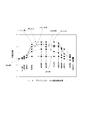
- FIG. 1 is a graph showing the sensory evaluation results of Examples 1 to 6 and Comparative Examples 1 to 7.
- the “softness” in the mass ratio of glycerin and 1,3-propanediol exceeds Comparative Example 4 and is less than Comparative Example 5, particularly in the range of Examples 1 to 6.
- Comparative Example 5 particularly in the range of Examples 1 to 6.
- the results were significantly superior to the reference sample.
- “smoothness”, “moistness” and “tackiness” were very remarkably high. From this, it is recognized that when the mass ratio of glycerin and 1,3-propanediol is within the range of the present invention, it is “smooth and moist”, but it is difficult to feel “stickiness”.
- the “softness” was also highly evaluated.
- This Table 2 shows the result of testing for each sample mainly changing the content of the drug.
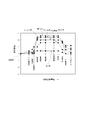
- the reference sample for sensory evaluation is a general-purpose sample (Comparative Example 15) to which no drug is applied. Moreover, what graphed the result of the sensory evaluation is shown in FIG. As shown in Table 2 and FIG. 2, each evaluation of “softness”, “smoothness”, “thickness”, “moistness”, and “stickiness” when the content of the drug is within the range of the present invention. The result was remarkably superior to the reference sample in terms of items. In particular, “smoothness”, “moistness” and “tackiness” were very remarkably high.
Landscapes
- Health & Medical Sciences (AREA)
- Public Health (AREA)
- Epidemiology (AREA)
- General Health & Medical Sciences (AREA)
- Sanitary Thin Papers (AREA)
- Paper (AREA)
Abstract
Description
2プライのティシュペーパーであって、
1プライ当たりの坪量が13g/m2未満であり、
2プライでの紙厚が135μm未満であり、
グリセリンと1,3-プロパンジオールとを合わせて83質量%以上含み、かつ、グリセリンと1,3-プロパンジオールの質量比が1:0.18超1:5.11未満である薬剤を、1.4g/m2超4.9g/m2未満含有する、
ことを特徴とするティシュペーパー。
2プライのティシュペーパーであって、
1プライ当たりの坪量が10.8g/m2超12.7g/m2未満であり、
2プライでの紙厚が102μm以上131μm未満であり、
グリセリンと1,3-プロパンジオールとを合わせて83質量%以上含み、かつ、グリセリンと1,3-プロパンジオールの質量比が1:0.18超1:5.11未満である薬剤を、1.4g/m2超4.9g/m2未満含有する、
ことを特徴とするティシュペーパー。
2プライのCD方向の乾燥引張強度が51cN/25mm超90cN/25mm未満であり、
2プライのCD方向の湿潤引張強度が39cN/25mm超50cN/25mm以下であり、
2プライのCD方向の乾燥引張強度に対する2プライのCD方向の湿潤引張強度の比が、0.45以上である、請求項1又は2記載のティシュペーパー。
JIS P 8124(1998)に従って測定した。表中の値は、各プライの平均値である。
JIS P 8111(1998)の条件下で、ダイヤルシックネスゲージ(厚み測定器)「PEACOCK G型」(尾崎製作所製)を用いて上述の厚みの測定方法に従って測定した。
密度は、JIS P 8111(1998)の条件下において調湿させたティシュペーパーの坪量を2倍した値(C)を、上述のティシュペーパー(2プライ)の紙厚(D)で除した値で、単位をg/cm3、小数点3桁で表した。
JIS P 8113(1998)の引張試験に従って測定した。
JIS P 8135(1998)の引張試験に従って測定した。
JIS P 8113(1998)の引張試験に従って、ミネベア株式会社製「万能引張圧縮試験機 TG-200N」を用いて測定した。
JIS L 1096 E法に準じたハンドルオメータ法に従って測定した。但し、試験片は100mm×100mmの大きさとし、クリアランスは5mmとして実施した。1プライで縦方向、横方向の各々5回ずつ測定し、その全10回の平均値を、cN/100mmを単位として表した。
このMMDは静摩擦係数の平均偏差であり、滑らかさの指標の一つである。数値が小さいほど滑らかであり、数値が大きいほど滑らかさに劣るとされる。なお、MMDの測定方法は、摩擦子の接触面を所定方向に20g/cmの張力が付与された測定試料の表面に対して25gの接触圧で接触させながら、張力が付与された方向と略同じ方向に速度0.1cm/sで2cm移動させ、このときの、摩擦係数を、摩擦感テスター KES-SE(カトーテック株式会社製)を用いて測定する。その摩擦係数を摩擦距離(移動距離=2cm)で除した値がMMDである。なお、摩擦子は、直径0.5mmのピアノ線Pを20本隣接させてなり、長さ及び幅がともに10mmとなるように形成された接触面を有している。接触面には、先端が20本のピアノ線P(曲率半径0.25mm)で形成された単位膨出部が形成されているものとした。
JIS P 8111(1998)の条件下で試料を調湿した後、JIS P 8127(1998)に準じて測定した。
薬剤含有率及び薬剤含有量は、以下の(1)~(4)の試料測定及び計算から算出することができ、表中の値は、試料測定に基づいた値である。なお、薬剤含有率及び薬剤含有量は、保湿薬液の組成及び原紙の物性に基づいて算出してもよい。
JIS P 8111(1998)に規定されている23℃50%R.H.環境下でティシュペーパーを調湿する。ティシュペーパー5組の縦寸法、横寸法をそれぞれ測定し、ティシュペーパーの面積を算出する(なお、プライされたシートを平面に垂直線上にある視点から見た面積であり、プライされた各シート、およびその表裏面の合計面積ではない)。次いで、秤量瓶に試料を入れ温度80℃の乾燥条件下で120分間乾燥する。秤量瓶に蓋をしてデシケーター内で放熱させ、ティシュペーパー1組(2枚)の絶乾質量を求める。その絶乾質量と先に測定した面積とから、5組各々の絶乾坪量(1枚当たり)を算出し、その平均値を試料の絶乾坪量(g/m2)とする。
試料約10gを筒型秤量瓶に入れ80℃120分間乾燥させ絶乾した後、秤量瓶に蓋をしてデシケーター内で放熱させ、試料の絶乾質量を求める。試料を詰めた円筒ろ紙をソックスレー抽出器に入れ、平底フラスコにアセトン:エチルアルコール混合溶媒(混合容積比1:1)120~140mLを入れ、湯浴上で抽出液が軽く沸騰を保つ程度に4時間加熱する。加熱後、抽出液をフラスコに集める。フラスコに分留用曲管と冷却器をセットし湯浴上で加熱し溶媒を除去する。さらにそのフラスコを温度105±2℃の恒温乾燥器中に90分間放置して、溶媒を完全に除去する。溶剤除去後のフラスコ質量から恒量したフラスコ質量を引いて、抽出物の質量(B)(g)を求める。次いで、次式によって、薬剤付着率を求める。
薬剤付着率=[(抽出物の質量)/{(試料の絶乾質量)-(抽出物の質量)}]×100
薬剤含有量は、次式によって算出する。
薬剤含有量(g/m2)=(上記(1)で算出した絶乾坪量)×(プライ数)×(上記(2)で算出した薬剤付着率)÷〔100+(上記(2)で算出した薬剤付着率)〕
薬剤含有率(絶乾)は、JIS P 8111条件下において調湿したティシュペーパーの質量(A)(g)及び、上記(2)で求めた抽出物の質量(B)(g)とから次式によって算出する。薬剤含有率(質量%)=(B)÷(A)×100(質量%)
なお、ティシュペーパーの質量(A)(g)と、薬液中の水分を除いた固形分比率とから算出してもよい。
評価者を30人とし、各試料について、「柔らかさ」、「滑らかさ」、「しっとり感」、「厚み感」、「べたつき感」の各官能性を、基準試料との比較で「大変優れている」と感じたものについては「5」、「優れている」と感じたものについては「4」、「基準と同等」と感じたものについては「3」、「劣る」と感じたものについては「2」、「顕著に劣る」と感じたものについては「1」と評価し、各評価者の平均点を算出したものを評価値とした。なお、「総合評価」は、「肌触りが良く、購入意向が大変高い」と感じたものについては「5」、「肌触りが良く、購入意向が高い」と感じたものについては「4」、「肌触りは普通で、購入意向が高いとも低いとも言えない」と感じたものについては「3」、「肌触りに劣り、購入意向が低い」と感じたものについては「2」、「肌触りが非常に劣り、購入意向はほぼない」と感じたものについては「1」と評価したもので、各評価者の平均点を算出したものを評価値とした。

表1は、原紙の抄造条件や薬液の塗布量等を一定として薬剤中の1,3-プロパンジオールの配合量、それとの関係でグリセリンとの割合を変化させた各試料について試験した結果を示すものである。官能評価の基準試料は、1,3-プロパンジオールを含まないグリセリンを主成分としたもの(比較例1)である。また、実施例1~6及び比較例1~7の官能評価の結果をグラフ化したものは図1に示す。

以上の各試験の結果から、薬剤中におけるグリセリンと1,3-プロパンジオールとを合わせた割合、グリセリンと1,3-プロパンジオールの質量比及び薬剤含有量を本発明の範囲とすることにより、特に「しっとり感」と「滑らかさ」がともに向上し、「しっとり感」を有しつつも、「滑らかさ」を顕著に感じることができるティシュペーパーとなる。さらに、「べたつき感」が少なく、「柔らかさ」も高いものとなる。このように、本発明によれば、ティシュペーパーの品質特性である「柔らかさ」、「滑らかさ」、「しっとり感」、「べたつき感」において優れたものとなる。
Claims (3)
- 2プライのティシュペーパーであって、
1プライ当たりの坪量が13g/m2未満であり、
2プライでの紙厚が135μm未満であり、
グリセリンと1,3-プロパンジオールとを合わせて83質量%以上含み、かつ、グリセリンと1,3-プロパンジオールの質量比が1:0.18超1:5.11未満である薬剤を、1.4g/m2超4.9g/m2未満含有する、
ことを特徴とするティシュペーパー。 - 2プライのティシュペーパーであって、
1プライ当たりの坪量が10.8g/m2超12.7g/m2未満であり、
2プライでの紙厚が102μm以上131μm未満であり、
グリセリンと1,3-プロパンジオールとを合わせて83質量%以上含み、かつ、グリセリンと1,3-プロパンジオールの質量比が1:0.18超1:5.11未満である薬剤を、1.4g/m2超4.9g/m2未満含有する、
ことを特徴とするティシュペーパー。 - 2プライのCD方向の乾燥引張強度が51cN/25mm超90cN/25mm未満であり、
2プライのCD方向の湿潤引張強度が39cN/25mm超50cN/25mm以下であり、
2プライのCD方向の乾燥引張強度に対する2プライのCD方向の湿潤引張強度の比が、0.45以上である、請求項1又は2記載のティシュペーパー。
Priority Applications (5)
| Application Number | Priority Date | Filing Date | Title |
|---|---|---|---|
| CN201680004874.1A CN107109802B (zh) | 2015-03-31 | 2016-03-15 | 薄页纸 |
| KR1020177018637A KR102431705B1 (ko) | 2015-03-31 | 2016-03-15 | 티슈 페이퍼 |
| EP16772267.7A EP3279396B1 (en) | 2015-03-31 | 2016-03-15 | Tissue paper |
| US15/548,648 US11519133B2 (en) | 2015-03-31 | 2016-03-15 | Tissue paper |
| RU2017132842A RU2689752C2 (ru) | 2015-03-31 | 2016-03-15 | Салфеточная бумага |
Applications Claiming Priority (2)
| Application Number | Priority Date | Filing Date | Title |
|---|---|---|---|
| JP2015-074101 | 2015-03-31 | ||
| JP2015074101A JP5956636B1 (ja) | 2015-03-31 | 2015-03-31 | ティシュペーパー |
Publications (1)
| Publication Number | Publication Date |
|---|---|
| WO2016158384A1 true WO2016158384A1 (ja) | 2016-10-06 |
Family
ID=56513732
Family Applications (1)
| Application Number | Title | Priority Date | Filing Date |
|---|---|---|---|
| PCT/JP2016/058147 Ceased WO2016158384A1 (ja) | 2015-03-31 | 2016-03-15 | ティシュペーパー |
Country Status (7)
| Country | Link |
|---|---|
| US (1) | US11519133B2 (ja) |
| EP (1) | EP3279396B1 (ja) |
| JP (1) | JP5956636B1 (ja) |
| KR (1) | KR102431705B1 (ja) |
| CN (1) | CN107109802B (ja) |
| RU (1) | RU2689752C2 (ja) |
| WO (1) | WO2016158384A1 (ja) |
Families Citing this family (5)
| Publication number | Priority date | Publication date | Assignee | Title |
|---|---|---|---|---|
| JP6230580B2 (ja) * | 2015-09-28 | 2017-11-15 | 大王製紙株式会社 | ティシュペーパー |
| JP6188855B1 (ja) * | 2016-03-31 | 2017-08-30 | 大王製紙株式会社 | ティシュペーパー |
| JP6235674B1 (ja) * | 2016-09-30 | 2017-11-22 | 大王製紙株式会社 | ティシュペーパー |
| JP7066600B2 (ja) * | 2018-11-30 | 2022-05-13 | 大王製紙株式会社 | ティシュペーパー |
| JP7310280B2 (ja) * | 2019-05-09 | 2023-07-19 | 王子ホールディングス株式会社 | ティシュペーパー |
Citations (2)
| Publication number | Priority date | Publication date | Assignee | Title |
|---|---|---|---|---|
| JP2013511509A (ja) * | 2009-11-20 | 2013-04-04 | キンバリー クラーク ワールドワイド インコーポレイテッド | 冷却感を与える温度変化組成物及びティッシュ製品 |
| JP2013227707A (ja) * | 2012-03-30 | 2013-11-07 | Daio Paper Corp | 薬液が付与されたティシュペーパー及び薬液が付与されたティシュペーパーの製造方法 |
Family Cites Families (10)
| Publication number | Priority date | Publication date | Assignee | Title |
|---|---|---|---|---|
| US2986489A (en) * | 1958-01-28 | 1961-05-30 | American Cyanamid Co | Melamine resin colloid and manufacture of wet-strength paper therewith |
| JP2604436B2 (ja) | 1988-09-06 | 1997-04-30 | 株式会社クラレ | 湿潤紙力があり且水中分散性を有する紙およびその製造方法 |
| US20030077962A1 (en) * | 1999-08-24 | 2003-04-24 | Krzysik Duane Gerard | Absorbent tissues providing skin barrier enhancement |
| US7332179B2 (en) * | 2003-12-12 | 2008-02-19 | Kimberly-Clark Worldwide, Inc. | Tissue products comprising a cleansing composition |
| US7799169B2 (en) * | 2004-09-01 | 2010-09-21 | Georgia-Pacific Consumer Products Lp | Multi-ply paper product with moisture strike through resistance and method of making the same |
| JP5363698B2 (ja) * | 2005-09-30 | 2013-12-11 | 大王製紙株式会社 | 薬液含有ティシュペーパー |
| US20100136294A1 (en) * | 2008-12-03 | 2010-06-03 | John Allen Manifold | Fibrous structures comprising a lotion and methods for making same |
| US8795717B2 (en) * | 2009-11-20 | 2014-08-05 | Kimberly-Clark Worldwide, Inc. | Tissue products including a temperature change composition containing phase change components within a non-interfering molecular scaffold |
| CN102686138B (zh) * | 2009-12-28 | 2016-02-24 | 大王制纸株式会社 | 薄页纸和薄页纸的制造方法 |
| JP4868620B2 (ja) * | 2010-06-30 | 2012-02-01 | 大王製紙株式会社 | ティシュペーパー及びティシュペーパーの製造方法 |
-
2015
- 2015-03-31 JP JP2015074101A patent/JP5956636B1/ja active Active
-
2016
- 2016-03-15 RU RU2017132842A patent/RU2689752C2/ru active
- 2016-03-15 WO PCT/JP2016/058147 patent/WO2016158384A1/ja not_active Ceased
- 2016-03-15 EP EP16772267.7A patent/EP3279396B1/en active Active
- 2016-03-15 US US15/548,648 patent/US11519133B2/en active Active
- 2016-03-15 KR KR1020177018637A patent/KR102431705B1/ko active Active
- 2016-03-15 CN CN201680004874.1A patent/CN107109802B/zh active Active
Patent Citations (2)
| Publication number | Priority date | Publication date | Assignee | Title |
|---|---|---|---|---|
| JP2013511509A (ja) * | 2009-11-20 | 2013-04-04 | キンバリー クラーク ワールドワイド インコーポレイテッド | 冷却感を与える温度変化組成物及びティッシュ製品 |
| JP2013227707A (ja) * | 2012-03-30 | 2013-11-07 | Daio Paper Corp | 薬液が付与されたティシュペーパー及び薬液が付与されたティシュペーパーの製造方法 |
Non-Patent Citations (1)
| Title |
|---|
| See also references of EP3279396A4 * |
Also Published As
| Publication number | Publication date |
|---|---|
| EP3279396A4 (en) | 2019-03-13 |
| RU2689752C2 (ru) | 2019-05-28 |
| US20180030656A1 (en) | 2018-02-01 |
| RU2017132842A3 (ja) | 2019-04-30 |
| US11519133B2 (en) | 2022-12-06 |
| KR102431705B1 (ko) | 2022-08-10 |
| EP3279396B1 (en) | 2020-09-02 |
| EP3279396A1 (en) | 2018-02-07 |
| CN107109802A (zh) | 2017-08-29 |
| JP5956636B1 (ja) | 2016-07-27 |
| JP2016194166A (ja) | 2016-11-17 |
| CN107109802B (zh) | 2020-09-29 |
| KR20170131344A (ko) | 2017-11-29 |
| RU2017132842A (ru) | 2019-04-30 |
Similar Documents
| Publication | Publication Date | Title |
|---|---|---|
| JP5912196B1 (ja) | ティシュペーパー | |
| JP5956636B1 (ja) | ティシュペーパー | |
| JP6230580B2 (ja) | ティシュペーパー | |
| JP2017063882A5 (ja) | ||
| JP6188855B1 (ja) | ティシュペーパー | |
| JP6633565B2 (ja) | ティシュペーパー及びティシュペーパー製品の製造方法 | |
| JP6633564B2 (ja) | ティシュペーパー及びティシュペーパー製品の製造方法 | |
| WO2017168877A1 (ja) | ティシュペーパー製品の製造方法 |
Legal Events
| Date | Code | Title | Description |
|---|---|---|---|
| 121 | Ep: the epo has been informed by wipo that ep was designated in this application |
Ref document number: 16772267 Country of ref document: EP Kind code of ref document: A1 |
|
| ENP | Entry into the national phase |
Ref document number: 20177018637 Country of ref document: KR Kind code of ref document: A |
|
| REEP | Request for entry into the european phase |
Ref document number: 2016772267 Country of ref document: EP |
|
| NENP | Non-entry into the national phase |
Ref country code: DE |
|
| WWE | Wipo information: entry into national phase |
Ref document number: 2017132842 Country of ref document: RU |