WO2016161268A1 - Hepatitis b antviral agents - Google Patents
Hepatitis b antviral agents Download PDFInfo
- Publication number
- WO2016161268A1 WO2016161268A1 PCT/US2016/025530 US2016025530W WO2016161268A1 WO 2016161268 A1 WO2016161268 A1 WO 2016161268A1 US 2016025530 W US2016025530 W US 2016025530W WO 2016161268 A1 WO2016161268 A1 WO 2016161268A1
- Authority
- WO
- WIPO (PCT)
- Prior art keywords
- optionally substituted
- alkyl
- compound
- group
- mmol
- Prior art date
- Legal status (The legal status is an assumption and is not a legal conclusion. Google has not performed a legal analysis and makes no representation as to the accuracy of the status listed.)
- Ceased
Links
- 0 C*C1(C)*C(*(C)C)C(C)C1 Chemical compound C*C1(C)*C(*(C)C)C(C)C1 0.000 description 8
- UJUQYOZKBWUKSW-UHFFFAOYSA-N OC(CC1)CCN1S(c1cc(-c2cnc(-c(cc3)cc(F)c3F)[nH]2)ccc1Cl)(=O)=O Chemical compound OC(CC1)CCN1S(c1cc(-c2cnc(-c(cc3)cc(F)c3F)[nH]2)ccc1Cl)(=O)=O UJUQYOZKBWUKSW-UHFFFAOYSA-N 0.000 description 1
- MZIXOUCOVQKVFU-OKILXGFUSA-N O[C@H](CC1)CC[C@H]1S(c1cc(-c2ncc(-c(cc3F)cc(F)c3F)[nH]2)ccc1Cl)(=O)=O Chemical compound O[C@H](CC1)CC[C@H]1S(c1cc(-c2ncc(-c(cc3F)cc(F)c3F)[nH]2)ccc1Cl)(=O)=O MZIXOUCOVQKVFU-OKILXGFUSA-N 0.000 description 1
Classifications
-
- C—CHEMISTRY; METALLURGY
- C07—ORGANIC CHEMISTRY
- C07D—HETEROCYCLIC COMPOUNDS
- C07D401/00—Heterocyclic compounds containing two or more hetero rings, having nitrogen atoms as the only ring hetero atoms, at least one ring being a six-membered ring with only one nitrogen atom
- C07D401/02—Heterocyclic compounds containing two or more hetero rings, having nitrogen atoms as the only ring hetero atoms, at least one ring being a six-membered ring with only one nitrogen atom containing two hetero rings
- C07D401/12—Heterocyclic compounds containing two or more hetero rings, having nitrogen atoms as the only ring hetero atoms, at least one ring being a six-membered ring with only one nitrogen atom containing two hetero rings linked by a chain containing hetero atoms as chain links
-
- A—HUMAN NECESSITIES
- A61—MEDICAL OR VETERINARY SCIENCE; HYGIENE
- A61K—PREPARATIONS FOR MEDICAL, DENTAL OR TOILETRY PURPOSES
- A61K31/00—Medicinal preparations containing organic active ingredients
- A61K31/33—Heterocyclic compounds
- A61K31/395—Heterocyclic compounds having nitrogen as a ring hetero atom, e.g. guanethidine or rifamycins
- A61K31/41—Heterocyclic compounds having nitrogen as a ring hetero atom, e.g. guanethidine or rifamycins having five-membered rings with two or more ring hetero atoms, at least one of which being nitrogen, e.g. tetrazole
- A61K31/4164—1,3-Diazoles
-
- A—HUMAN NECESSITIES
- A61—MEDICAL OR VETERINARY SCIENCE; HYGIENE
- A61K—PREPARATIONS FOR MEDICAL, DENTAL OR TOILETRY PURPOSES
- A61K31/00—Medicinal preparations containing organic active ingredients
- A61K31/33—Heterocyclic compounds
- A61K31/395—Heterocyclic compounds having nitrogen as a ring hetero atom, e.g. guanethidine or rifamycins
- A61K31/41—Heterocyclic compounds having nitrogen as a ring hetero atom, e.g. guanethidine or rifamycins having five-membered rings with two or more ring hetero atoms, at least one of which being nitrogen, e.g. tetrazole
- A61K31/4164—1,3-Diazoles
- A61K31/4178—1,3-Diazoles not condensed 1,3-diazoles and containing further heterocyclic rings, e.g. pilocarpine, nitrofurantoin
-
- A—HUMAN NECESSITIES
- A61—MEDICAL OR VETERINARY SCIENCE; HYGIENE
- A61K—PREPARATIONS FOR MEDICAL, DENTAL OR TOILETRY PURPOSES
- A61K31/00—Medicinal preparations containing organic active ingredients
- A61K31/33—Heterocyclic compounds
- A61K31/395—Heterocyclic compounds having nitrogen as a ring hetero atom, e.g. guanethidine or rifamycins
- A61K31/435—Heterocyclic compounds having nitrogen as a ring hetero atom, e.g. guanethidine or rifamycins having six-membered rings with one nitrogen as the only ring hetero atom
- A61K31/44—Non condensed pyridines; Hydrogenated derivatives thereof
- A61K31/445—Non condensed piperidines, e.g. piperocaine
- A61K31/4523—Non condensed piperidines, e.g. piperocaine containing further heterocyclic ring systems
- A61K31/454—Non condensed piperidines, e.g. piperocaine containing further heterocyclic ring systems containing a five-membered ring with nitrogen as a ring hetero atom, e.g. pimozide, domperidone
-
- A—HUMAN NECESSITIES
- A61—MEDICAL OR VETERINARY SCIENCE; HYGIENE
- A61K—PREPARATIONS FOR MEDICAL, DENTAL OR TOILETRY PURPOSES
- A61K31/00—Medicinal preparations containing organic active ingredients
- A61K31/33—Heterocyclic compounds
- A61K31/395—Heterocyclic compounds having nitrogen as a ring hetero atom, e.g. guanethidine or rifamycins
- A61K31/495—Heterocyclic compounds having nitrogen as a ring hetero atom, e.g. guanethidine or rifamycins having six-membered rings with two or more nitrogen atoms as the only ring heteroatoms, e.g. piperazine or tetrazines
- A61K31/496—Non-condensed piperazines containing further heterocyclic rings, e.g. rifampin, thiothixene or sparfloxacin
-
- A—HUMAN NECESSITIES
- A61—MEDICAL OR VETERINARY SCIENCE; HYGIENE
- A61K—PREPARATIONS FOR MEDICAL, DENTAL OR TOILETRY PURPOSES
- A61K31/00—Medicinal preparations containing organic active ingredients
- A61K31/33—Heterocyclic compounds
- A61K31/395—Heterocyclic compounds having nitrogen as a ring hetero atom, e.g. guanethidine or rifamycins
- A61K31/535—Heterocyclic compounds having nitrogen as a ring hetero atom, e.g. guanethidine or rifamycins having six-membered rings with at least one nitrogen and one oxygen as the ring hetero atoms, e.g. 1,2-oxazines
- A61K31/5375—1,4-Oxazines, e.g. morpholine
- A61K31/5377—1,4-Oxazines, e.g. morpholine not condensed and containing further heterocyclic rings, e.g. timolol
-
- A—HUMAN NECESSITIES
- A61—MEDICAL OR VETERINARY SCIENCE; HYGIENE
- A61K—PREPARATIONS FOR MEDICAL, DENTAL OR TOILETRY PURPOSES
- A61K31/00—Medicinal preparations containing organic active ingredients
- A61K31/33—Heterocyclic compounds
- A61K31/395—Heterocyclic compounds having nitrogen as a ring hetero atom, e.g. guanethidine or rifamycins
- A61K31/55—Heterocyclic compounds having nitrogen as a ring hetero atom, e.g. guanethidine or rifamycins having seven-membered rings, e.g. azelastine, pentylenetetrazole
-
- A—HUMAN NECESSITIES
- A61—MEDICAL OR VETERINARY SCIENCE; HYGIENE
- A61K—PREPARATIONS FOR MEDICAL, DENTAL OR TOILETRY PURPOSES
- A61K31/00—Medicinal preparations containing organic active ingredients
- A61K31/33—Heterocyclic compounds
- A61K31/395—Heterocyclic compounds having nitrogen as a ring hetero atom, e.g. guanethidine or rifamycins
- A61K31/55—Heterocyclic compounds having nitrogen as a ring hetero atom, e.g. guanethidine or rifamycins having seven-membered rings, e.g. azelastine, pentylenetetrazole
- A61K31/553—Heterocyclic compounds having nitrogen as a ring hetero atom, e.g. guanethidine or rifamycins having seven-membered rings, e.g. azelastine, pentylenetetrazole having at least one nitrogen and one oxygen as ring hetero atoms, e.g. loxapine, staurosporine
-
- A—HUMAN NECESSITIES
- A61—MEDICAL OR VETERINARY SCIENCE; HYGIENE
- A61K—PREPARATIONS FOR MEDICAL, DENTAL OR TOILETRY PURPOSES
- A61K31/00—Medicinal preparations containing organic active ingredients
- A61K31/66—Phosphorus compounds
- A61K31/661—Phosphorus acids or esters thereof not having P—C bonds, e.g. fosfosal, dichlorvos, malathion or mevinphos
-
- A—HUMAN NECESSITIES
- A61—MEDICAL OR VETERINARY SCIENCE; HYGIENE
- A61K—PREPARATIONS FOR MEDICAL, DENTAL OR TOILETRY PURPOSES
- A61K31/00—Medicinal preparations containing organic active ingredients
- A61K31/695—Silicon compounds
-
- A—HUMAN NECESSITIES
- A61—MEDICAL OR VETERINARY SCIENCE; HYGIENE
- A61K—PREPARATIONS FOR MEDICAL, DENTAL OR TOILETRY PURPOSES
- A61K45/00—Medicinal preparations containing active ingredients not provided for in groups A61K31/00 - A61K41/00
- A61K45/06—Mixtures of active ingredients without chemical characterisation, e.g. antiphlogistics and cardiaca
-
- C—CHEMISTRY; METALLURGY
- C07—ORGANIC CHEMISTRY
- C07D—HETEROCYCLIC COMPOUNDS
- C07D233/00—Heterocyclic compounds containing 1,3-diazole or hydrogenated 1,3-diazole rings, not condensed with other rings
- C07D233/54—Heterocyclic compounds containing 1,3-diazole or hydrogenated 1,3-diazole rings, not condensed with other rings having two double bonds between ring members or between ring members and non-ring members
- C07D233/64—Heterocyclic compounds containing 1,3-diazole or hydrogenated 1,3-diazole rings, not condensed with other rings having two double bonds between ring members or between ring members and non-ring members with substituted hydrocarbon radicals attached to ring carbon atoms, e.g. histidine
-
- C—CHEMISTRY; METALLURGY
- C07—ORGANIC CHEMISTRY
- C07D—HETEROCYCLIC COMPOUNDS
- C07D401/00—Heterocyclic compounds containing two or more hetero rings, having nitrogen atoms as the only ring hetero atoms, at least one ring being a six-membered ring with only one nitrogen atom
- C07D401/14—Heterocyclic compounds containing two or more hetero rings, having nitrogen atoms as the only ring hetero atoms, at least one ring being a six-membered ring with only one nitrogen atom containing three or more hetero rings
-
- C—CHEMISTRY; METALLURGY
- C07—ORGANIC CHEMISTRY
- C07D—HETEROCYCLIC COMPOUNDS
- C07D403/00—Heterocyclic compounds containing two or more hetero rings, having nitrogen atoms as the only ring hetero atoms, not provided for by group C07D401/00
- C07D403/02—Heterocyclic compounds containing two or more hetero rings, having nitrogen atoms as the only ring hetero atoms, not provided for by group C07D401/00 containing two hetero rings
- C07D403/12—Heterocyclic compounds containing two or more hetero rings, having nitrogen atoms as the only ring hetero atoms, not provided for by group C07D401/00 containing two hetero rings linked by a chain containing hetero atoms as chain links
-
- C—CHEMISTRY; METALLURGY
- C07—ORGANIC CHEMISTRY
- C07D—HETEROCYCLIC COMPOUNDS
- C07D409/00—Heterocyclic compounds containing two or more hetero rings, at least one ring having sulfur atoms as the only ring hetero atoms
- C07D409/14—Heterocyclic compounds containing two or more hetero rings, at least one ring having sulfur atoms as the only ring hetero atoms containing three or more hetero rings
-
- C—CHEMISTRY; METALLURGY
- C07—ORGANIC CHEMISTRY
- C07D—HETEROCYCLIC COMPOUNDS
- C07D413/00—Heterocyclic compounds containing two or more hetero rings, at least one ring having nitrogen and oxygen atoms as the only ring hetero atoms
- C07D413/02—Heterocyclic compounds containing two or more hetero rings, at least one ring having nitrogen and oxygen atoms as the only ring hetero atoms containing two hetero rings
- C07D413/12—Heterocyclic compounds containing two or more hetero rings, at least one ring having nitrogen and oxygen atoms as the only ring hetero atoms containing two hetero rings linked by a chain containing hetero atoms as chain links
-
- C—CHEMISTRY; METALLURGY
- C07—ORGANIC CHEMISTRY
- C07D—HETEROCYCLIC COMPOUNDS
- C07D413/00—Heterocyclic compounds containing two or more hetero rings, at least one ring having nitrogen and oxygen atoms as the only ring hetero atoms
- C07D413/14—Heterocyclic compounds containing two or more hetero rings, at least one ring having nitrogen and oxygen atoms as the only ring hetero atoms containing three or more hetero rings
-
- C—CHEMISTRY; METALLURGY
- C07—ORGANIC CHEMISTRY
- C07D—HETEROCYCLIC COMPOUNDS
- C07D417/00—Heterocyclic compounds containing two or more hetero rings, at least one ring having nitrogen and sulfur atoms as the only ring hetero atoms, not provided for by group C07D415/00
- C07D417/14—Heterocyclic compounds containing two or more hetero rings, at least one ring having nitrogen and sulfur atoms as the only ring hetero atoms, not provided for by group C07D415/00 containing three or more hetero rings
-
- C—CHEMISTRY; METALLURGY
- C07—ORGANIC CHEMISTRY
- C07F—ACYCLIC, CARBOCYCLIC OR HETEROCYCLIC COMPOUNDS CONTAINING ELEMENTS OTHER THAN CARBON, HYDROGEN, HALOGEN, OXYGEN, NITROGEN, SULFUR, SELENIUM OR TELLURIUM
- C07F7/00—Compounds containing elements of Groups 4 or 14 of the Periodic Table
- C07F7/02—Silicon compounds
- C07F7/08—Compounds having one or more C—Si linkages
- C07F7/18—Compounds having one or more C—Si linkages as well as one or more C—O—Si linkages
- C07F7/1804—Compounds having Si-O-C linkages
-
- C—CHEMISTRY; METALLURGY
- C07—ORGANIC CHEMISTRY
- C07F—ACYCLIC, CARBOCYCLIC OR HETEROCYCLIC COMPOUNDS CONTAINING ELEMENTS OTHER THAN CARBON, HYDROGEN, HALOGEN, OXYGEN, NITROGEN, SULFUR, SELENIUM OR TELLURIUM
- C07F9/00—Compounds containing elements of Groups 5 or 15 of the Periodic Table
- C07F9/02—Phosphorus compounds
- C07F9/547—Heterocyclic compounds, e.g. containing phosphorus as a ring hetero atom
- C07F9/6558—Heterocyclic compounds, e.g. containing phosphorus as a ring hetero atom containing at least two different or differently substituted hetero rings neither condensed among themselves nor condensed with a common carbocyclic ring or ring system
- C07F9/65583—Heterocyclic compounds, e.g. containing phosphorus as a ring hetero atom containing at least two different or differently substituted hetero rings neither condensed among themselves nor condensed with a common carbocyclic ring or ring system each of the hetero rings containing nitrogen as ring hetero atom
Definitions
- the present invention relates generally to novel antiviral agents. Specifically, the present invention relates to compounds which can inhibit the protein(s) encoded by hepatitis B virus (HBV) or interfere with the function of the HBV life cycle, compositions 10 comprising such compounds, methods for inhibiting HBV viral replication, methods for treating or preventing HBV infection, and processes for making the compounds.
- HBV infection remains a major public health problem, affecting approximately 2 billion people worldwide. Among them, 350 million people worldwide and 1.4 million 15 in the US develop a chronic infection, which can lead to chronic persistent hepatitis, liver cirrhosis, and hepatocellular carcinoma (HCC). Every year 500,000 to 1 million people die from the end stage of liver diseases caused by HBV infection.
- HBV human immunodeficiency virus
- Current treatments do not provide a cure and are limited to only two classes of agents (interferon and nucleoside analogues/inhibitors of the viral polymerase); drug resistance, low efficacy, and tolerability issues limit their impact.
- the low cure rates of HBV are attributed at least in part to the presence and persistence of covalently closed 25 circular DNA (cccDNA) in the nucleus of infected hepatocytes.
- cccDNA covalently closed 25 circular DNA
- persistent suppression of HBV DNA slows liver disease progression and helps to prevent HCC.
- Current therapy goals for HBV-infected patients are directed to reducing serum HBV DNA to low or undetectable levels, and to ultimately reducing or preventing the development of cirrhosis and HCC.
- HBV capsid protein plays essential roles in HBV replication.
- the predominant biological function of capsid protein is to act as a structural protein to encapsidate pre-genomic RNA and form immature capsid particles, which spontaneously self-assemble from many copies of core dimers in the cytoplasm.
- Capsid protein also regulates viral DNA synthesis through different phosphorylation status of its C-terminal phosphorylation sites. Also, capsid protein might facilitate the 5 nuclear translocation of viral relaxed circular genome by means of the nuclear
- capsid protein could play a structural and regulatory role in the functionality of cccDNA minichromosomes. Capsid protein also interacts with viral large envelope protein in 10 endoplasmic reticulum (ER) and triggers the release of intact viral particles from
- phenylpropen-amide derivatives including compounds named AT-61 and AT-130 (Feld J. et al. Antiviral Res.2007, 76, 168), and a class of thiazolidin-4-ones from Valeant 15 (W02006/033995), have been shown to inhibit pregenomic RNA (pgRNA) packaging.
- pgRNA pregenomic RNA
- HAPs Heteroaryldihydropyrimi-dines or HAPs were discovered in a tissue culture-based screening (Weber et al., Antiviral Res.2002, 54, 69). These HAP analogs act as synthetic allosteric activators and are able to induce aberrant capsid formation that leads to degradation of the core protein.
- a subclass of sulphamoyl-arylamides also shows 20 activity against HBV (WO2013/006394, WO2013/096744, and WO2014/184365). It was also shown that the small molecule bis-ANS acts as a molecular 'wedge' and interferes with normal capsid-protein geometry and capsid formation (Zlotnick A. et al. J. Virol.2002, 4848).
- the present invention relates to novel antiviral compounds, pharmaceutical
- compositions comprising such compounds, as well as methods to treat or prevent viral (particularly HBV) infection in a subject in need of such therapy with said compounds.
- Compounds of the present invention inhibit the protein(s) encoded by hepatitis B virus (HBV) or interfere with the life cycle of HBV and are also useful as antiviral agents.
- the present invention includes the process for the preparation of the said compounds.
- the present invention provides a compound of Formula (I): 5 X-A-Y- Z-L- R1 (I)
- X and Y are each independently selected from optionally substituted aryl or optionally substituted heteroaryl; in one embodiment one of X and Y is optionally substituted phenyl; in another embodiment, both X and Y are optionally substituted 10 phenyl;
- A is an optionally substituted azole group; preferably A is optionally substituted imidazolyl, pyrazolyl or triazolyl;
- a and X are taken together to form an optionally substituted fused bicyclic azole group; where said fused bicyclic azole group is connected to Y group via the 15 5-membered azole moiety; preferably A and X are taken together to form an optionally substituted benzimidazolyl or benzopyrazolyl;
- a and Y are taken together to form an optionally substituted fused bicyclic azole group; where said fused bicyclic azole group is connected to X group via the 5-membered azole moiety and is preferably connected to Z via the other ring.
- a and Y are taken together to form an optionally substituted benzimidazolyl or benzopyrazolyl;
- Z is–S(O)2-,–C(O)-, or -C(O)C(O)-;
- L is -NR 2 - or -CR 1 R 2 -;
- R1 and R2 at each occurrence are independently selected from the group of 25 consisting of hydrogen, optionally substituted -C1-C8 alkyl, optionally substituted -C2-C8 alkenyl, optionally substituted -C2-C8 alkynyl, optionally substituted -C3-C8 cycloalkyl, optionally substituted -C 3 -C 8 cycloalkenyl, optionally substituted 3- to 8-membered heterocyclic, optionally substituted aryl and optionally substituted heteroaryl; and
- R1 and R2 are taken together with the atom to which they are30 attached to form an optionally substituted C 3 -C 12 cycloalkyl, optionally substituted -C 3 - C 12 cycloalkenyl, or an optionally substituted 3- to 12-membered heterocyclic.
- the cycloalkyl, cycloalkenyl, or heterocyclic is a di- or tricyclic fused ring system.
- Each preferred group stated above can be taken in combination with one, any or all other preferred groups.
- R 1 and R 2 are each independently selected from the group of consisting of hydrogen, optionally substituted -C 1 -C 8 alkyl, optionally substituted -C 2 -C 8 alkenyl, optionally substituted -C 2 -C 8 alkynyl, optionally substituted -C3-C8 cycloalkyl, optionally substituted 3- to 8-membered
- the present invention relates to compounds of Formula (I), and pharmaceutically acceptable salts thereof, wherein X is optionally substituted phenyl.
- X is phenyl substituted with one or more substituents, such as 1, 2, 3, 4 or 5 substituents.
- substituents are independently selected from halogen, CN, optionally substituted -C 1 -C 3 alkoxy, optionally substituted -C 1 -C 3 alkyl, and optionally substituted -C3-C6 cycloalkyl.
- X is phenyl substituted with one or more substituents independently selected from fluoro, chloro, bromo,
- X is selected from the
- the present invention relates to compounds of Formula (I), and pharmaceutically acceptable salts thereof, wherein Y is phenyl substituted with halogen. In certain embodiments, the present invention relates to compounds of Formula (I), and pharmaceutically acceptable salts thereof, wherein Y is optionally substituted 1, 3-
- the present invention relates to compounds of Formula (I), 10 and pharmaceutically acceptable salts thereof, wherein X is optionally substituted
- the present invention relates to compounds of Formula (I) or, and pharmaceutically acceptable salts thereof, wherein X is optionally substituted thiophenyl, optionally substituted thiazolyl, optionally substituted pyridyl, or optionally substituted pyrimidinyl.
- the present invention relates to compounds of Formula (I), and pharmaceutically acceptable salts thereof, wherein Y is optionally substituted monocyclic heteroaryl. In certain embodiments, the present invention relates to compounds of Formula (I) and pharmaceutically acceptable salts thereof, wherein Y is optionally substituted thiophenyl, optionally substituted thiazolyl, optionally substituted 20 pyridyl, or optionally substituted pyrimidinyl.
- the present invention relates to compounds of Formula (I), and pharmaceutically acceptable salts thereof, wherein X is optionally substituted bicyclic heteroaryl.
- the present invention relates to compounds of Formula (I), and pharmaceutically acceptable salts thereof, wherein X is optionally substituted 5/5 25 or 5/6 fused bicyclic heteroaryl.
- X is a 5/6 fused bicyclic heteroaryl, it is connected to A through either a carbon or nitrogen atom, preferably a carbon atom, of the 6- membered ring of said 5/6 fused bicyclic heteroaryl.
- the present invention relates to compounds of Formula (I), and pharmaceutically acceptable salts thereof, wherein X is optionally substituted benzimidazolyl, benzothiazolyl, benzoxazolyl, 30 indazolyl, quinolyl, isoquinolyl, quinazolyl, or thienothiophenyl.
- the present invention relates to compounds of Formula (I), and pharmaceutically acceptable salts thereof, wherein Y is optionally substituted bicyclic heteroaryl.
- the present invention relates to compounds of Formula (I), and pharmaceutically acceptable salts thereof, wherein Y is optionally substituted 5/5 or 5/6 bicyclic heteroaryl.
- Y is a 5/6 fused bicyclic heteroaryl, it is connected to A through either a carbon or nitrogen atom, preferably a carbon atom, of the 6-membered 5 ring of said 5/6 fused bicyclic heteroaryl.
- the present invention relates to compounds of Formula (I), and pharmaceutically acceptable salts thereof, wherein Y is optionally substituted benzimidazolyl, benzothiazolyl, benzoxazolyl, indazolyl, quinolyl, isoquinolyl, quinazolyl, or thienothiophenyl.
- the present invention relates to compounds of Formula (I), 10 and pharmaceutically acceptable salts thereof, wherein X and Y are each independently optionally substituted monocyclic heteroaryl.
- the present invention relates to compounds of Formula (I), and pharmaceutically acceptable salts thereof, wherein X is optionally substituted phenyl and Y is optionally substituted monocyclic heteroaryl.
- the present invention relates to compounds of Formula (I), and pharmaceutically acceptable salts thereof, wherein X is optionally substituted monocyclic heteroaryl and Y is optionally substituted phenyl.
- the present invention relates to compounds of Formula (I), and pharmaceutically acceptable salts thereof, wherein X and Y are each independently 20 phenyl or monocyclic heteroaryl, each optionally substituted with 1- to 3-substituents independently selected from the group consisting of halo, CN, optionally substituted methyl, optionally substituted methoxy, and optionally substituted cyclopropyl. In certain embodiments, the substituents are independently selected from halo, CN and optionally substituted methyl.
- the present invention relates to compounds of Formula (I), and pharmaceutically acceptable salts thereof, wherein X and Y are each independently selected from the group consisting of optionally substituted phenyl, optionally substituted thiophenyl, optionally substituted pyridyl, and optionally substituted pyrimidyl.
- the present invention relates to compounds of Formula (I), 30 and pharmaceutically acceptable salts thereof, wherein X and Y are each independently optionally substituted phenyl.
- the present invention relates to compounds of Formula (I), and pharmaceutically acceptable salts thereof, wherein A is an azole group which contains one, two, three or four nitrogen atom(s).
- the present invention relates to compounds of Formula (I), or a pharmaceutically acceptable salt thereof, wherein A is an azole group derived from one of the following by removal of two hydrogen atoms:
- groups X and Y may be connected to groups X and Y through either carbon or nitrogen.
- A is selected from the groups set forth below, and can optionally be substituted when possible:
- the present invention relates to compounds of Formula (I), and pharmaceutically acceptable salts thereof, wherein A is connected to X and Y in ortho-substitution position with respect to each other.
- the present invention relates to compounds of Formula (I), and pharmaceutically acceptable salts thereof, wherein X and A are taken together to form an optionally substituted fused bicyclic azole group.
- the present invention relates to compounds of Formula (I), or a pharmaceutically acceptable salt thereof, wherein Y and A are taken together to form an optionally substituted fused bicyclic azole group.
- the present invention relates to compounds of Formula (I), 5 and pharmaceutically acceptable salts thereof, wherein Z is–S(O)2-.
- the present invention relates to compounds of Formula (I), and
- the present invention relates to compounds of Formula (I), and pharmaceutically acceptable salts thereof, Z is–C(O)C(O)-.
- the compound of Formula (I) is represented by Formula (IIa) or (IIb), or a pharmaceutically acceptable salt thereof:
- one U , , 11 , R 12 ; R 11 at each occurrence is independently selected from the groups consisting of hydrogen, optionally 15 substituted -C 1 -C 6 alkyl and optionally substituted–C 3 -C 8 cycloalkyl; R 12 at each
- occurrence is independently selected from the groups consisting of hydrogen, halo, -CN, - NO 2 , optionally substituted -C 1 -C 6 alkyl, optionally substituted -C 1 -C 6 alkoxy and optionally substituted–C3-C8 cycloalkyl;
- X, Y, R1 and R2 are as previously defined.
- the compound of Formula (I) is represented by Formula 20 (IIa-1), (IIa-2), (IIa-3), (IIb-1), (IIb-2) or (IIb-3), or a pharmaceutically acceptable salt thereof:
- the compound of Formula (I) is represented by Formula (IIa-1), (IIa-2), (IIa-3), (IIb-1), (IIb-2) or (IIb-3), or a pharmaceutically acceptable salt 5 thereof, wherein V is N; X, Y, R 1 , R 2 and R 11 are as previously defined.
- the present invention relates to compounds of Formula (I) represented by Formula (IIa-1), (IIa-2), (IIa-3), (IIb-1), (IIb-2) or (IIb-3), and pharmaceutically acceptable salts thereof, wherein X and Y are each independently optionally substituted phenyl, optionally substituted monocyclic heteroaryl or optionally 10 substituted bicyclic heteroaryl.
- the present invention relates to compounds of Formula (I) represented by Formula (IIa-1), (IIa-2), (IIa-3), (IIb-1), (IIb-2) or (IIb-3), and pharmaceutically acceptable salts thereof, X and Y are each independently optionally substituted phenyl.
- the present invention relates to compounds of Formula (I) represented by Formula (IIa-1), (IIa-2), (IIa-3), (IIb-1), (IIb-2) or (IIb-3), and pharmaceutically acceptable salts thereof, wherein X is optionally substituted phenyl and Y is optionally substituted 5-membered heteroaryl.
- the present invention relates to compounds of Formula (I) 20 represented by Formula (IIa-1), (IIa-2), (IIa-3), (IIb-1), (IIb-2) or (IIb-3), and
- the present invention relates to compounds of Formula (I) represented by Formula (IIa-1), (IIa-2), (IIa-3), (IIb-1), (IIb-2) or (IIb-3), and pharmaceutically acceptable salts thereof, wherein X and Y are each independently optionally substituted phenyl, optionally substituted naphthyl, optionally substituted pyridyl, optionally substituted pyrimidinyl, optionally substituted thiophenyl, optionally substituted thiazolyl, optionally substituted thiadiazolyl, optionally substituted oxazolyl, 5 optionally substituted isoxazolyl, optionally substituted oxadiazolyl, optionally substituted imidazolyl, optionally substituted pyrazolyl, optionally substituted triazolyl, or optionally substituted quinolinyl.
- X and Y are each independently optionally substituted phenyl, optionally substituted naphthyl, optionally substituted pyri
- the compound of Formula (I) is represented by Formula (IIa-a), (IIa-b), (IIa-c), (IIb-a), (IIb-b) or (IIb-c), or a pharmaceutically acceptable salt 10 thereof:
- ence is independently selected from the groups consisting of hydrogen, hydroxy, protected hydroxy, halo, -CN, -NO2, amino, protected amino, optionally substituted -C1-C6 alkyl, 15 optionally substituted–C2-C8 alkenyl, optionally substituted–C2-C8 alkynyl, optionally substituted–C 3 -C 8 cycloalkyl, optionally substituted 3- to 8-membered heterocyclic, optionally substituted -C1-C6 alkoxy, -C(O)2-C1-C6 alkyl, -C(O)NH-C1-C6 alkyl, and - C(O)-C 1 -C 6 alkyl; V, R 1, and R 2 are as previously defined.
- the compound of Formula (I) is represented by Formula 20 (IIIa), (IIIb), (IIIc) or (IIId), or a pharmaceutically acceptable salt thereof:
- one Q s O, S, or NR11 an t e ot er Q s N, or CR12, prov e Q is C or N when it is attached to Y ((IIIa) and (IIIb)); W at each occurrence is independently N or CR14, provided W is C when attached to the carbonyl group (IIId) or the sulfonyl group (IIIc); 5 X, Y, R1, R2, R11, R12, and R14 are as previously defined; provided that in (IIIc) and (IIId) R 14 can be replaced with the bond to the sulfonyl group or the carbonyl group respectively.
- the compound of Formula (I) is represented by Formula (IIIa-1), (IIIb-1), (IIIc-1) or (IIId-1), or a pharmaceutically acceptable salt thereof:
- the compound of Formula (I) is represented by Formula 15 (IIIa-1), (IIIb-1), (IIIc-1) or (IIId-1), or a pharmaceutically acceptable salt thereof,
- X and Y are each independently optionally substituted phenyl, optionally substituted monocyclic heteroaryl or optionally substituted bicyclic heteroaryl.
- Y is optionally substituted phenyl, optionally substituted naphthyl, optionally substituted pyridyl, optionally substituted pyrimidinyl, optionally substituted thiophenyl, optionally substituted thiazolyl, optionally substituted thiadiazolyl, optionally substituted oxazolyl, optionally substituted isoxazolyl, optionally substituted oxadiazolyl, optionally substituted imidazolyl, optionally substituted pyrazolyl, optionally substituted triazolyl, or optionally 10 substituted quinolinyl.
- the present invention relates to compounds of Formula (I) represented by Formula (IIIc-1), or (IIId-1), and pharmaceutically acceptable salts thereof, wherein X is optionally substituted phenyl, optionally substituted naphthyl, optionally substituted pyridyl, optionally substituted pyrimidinyl, optionally substituted 15 thiophenyl, optionally substituted thiazolyl, optionally substituted thiadiazolyl, optionally substituted oxazolyl, optionally substituted isoxazolyl, optionally substituted oxadiazolyl, optionally substituted imidazolyl, optionally substituted pyrazolyl, optionally substituted triazolyl, or optionally substituted quinolinyl.
- X is optionally substituted phenyl, optionally substituted naphthyl, optionally substituted pyridyl, optionally substituted pyrimidinyl, optionally substituted 15 thiophenyl, optionally substituted thiazolyl
- the present invention relates to compounds of Formula (I) 20 represented by Formula (IIIa-1), or (IIIb-1), and pharmaceutically acceptable salts
- the present invention relates to compounds of Formula (I) represented by Formula (IIIc-1), or (IIId-1), and pharmaceutically acceptable salts thereof, wherein X is optionally substituted phenyl.
- the compound of Formula (I) is represented by Formula (IIIa-a), (IIIb-a), (IIIc-a) or (IIId-a), or a pharmaceutically acceptable salt thereof:
- the invention relates to compounds of Formula (I) and pharmaceutically acceptable salts thereof, wherein X-A-Y are taken together to form a 5 polycyclic system selected from the following:
- the invention relates to compounds of Formula (I) and pharmaceutically acceptable salts thereof, wherein X-A-Y is taken together to form a 10 polycyclic system selected from the following:
- the invention relates to compounds of Formula (I) and pharmaceutically acceptable salts thereof, wherein X-A-Y are taken together to form a 5 polycyclic system selected from the following:
- the present invention relates to compounds of Formula (I), and pharmaceutically acceptable salts thereof, wherein L is–NR 2 , wherein R 2 is as 10 previously defined.
- the present invention relates to compounds of Formula (I), and pharmaceutically acceptable salts thereof, wherein L is–NR 2 , wherein R 2 is -C 1 -C 8 alkyl, -C 3 -C 8 cycloalkyl, -C 3 -C 8 cycloalkenyl, or 3- to 8-membered heterocyclic, preferably -C1-C8 alkyl, -C3-C8 cycloalkyl, or 3- to 8-membered heterocyclic, each 15 optionally substituted with one, two or three groups independently selected from hydroxy, protected hydroxy, halo, -CN, amino, protected amino, optionally substituted -C 1 -C 6 alkyl, optionally substituted–C3-C8 cycloalkyl, optionally substituted -C1-C3 alkoxy, -C(O)2-C1- C 6 alkyl, -C(O)NH-C 1 -C 6 alkyl, and -C
- the present invention relates to compounds of Formula (I), and pharmaceutically acceptable salts thereof, wherein R 1 is -C 1 -C 8 alkyl, -C 3 -C 8 cycloalkyl, -C3-C8 cycloalkenyl, or 3- to 8-membered heterocyclic, each optionally substituted with one, two or three groups independently selected from a group consisting 5 of hydrogen, halogen, hydroxy, protected hydroxy, -CN, -NO 2 , amino, protected amino, optionally substituted -C1-C6 alkyl, optionally substituted–C2-C8 alkenyl, optionally substituted–C 2 -C 8 alkynyl, optionally substituted–C 3 -C 8 cycloalkyl, optionally substituted 3- to 8-membered heterocyclic, optionally substituted -C1-C6 alkoxy, optionally substituted -C(O) 2 -C 1 -C 6 alkyl, optionally substituted
- the said hydroxy prodrug group is phosphate or sulfamate. In certain embodiments, the said hydroxy prodrug group is an acyl group derived from an amino acid, preferably an ⁇ -amino acid.
- R1 is -C1-C8 alkyl, -C3-C8 cycloalkyl, or 3- to 8-membered heterocyclic, each optionally substituted with one, two or 15 three groups independently selected from hydroxy, protected hydroxy, halo, -CN, amino, protected amino, optionally substituted -C1-C6 alkyl, optionally substituted–C3-C8 cycloalkyl, optionally substituted -C 1 -C 3 alkoxy, -C(O) 2 -C 1 -C 6 alkyl, -C(O)NH-C 1 -C 6 alkyl, and -C(O)-C1-C6 alkyl.
- the present invention relates to compounds of Formula (I), 20 and pharmaceutically acceptable salts thereof, wherein L is–NH or -CH2.
- the present invention relates to compounds of Formula (I), or a pharmaceutically acceptable salt thereof, wherein L is–NH; R1 is optionally substituted arylalkyl or optionally substituted heteroarylalkyl .
- the present invention relates to compounds of Formula (I), 25 and pharmaceutically acceptable salts thereof, wherein L is–NH; R1 is arylalkyl or
- heteroarylalkyl each optionally substituted with one, two or three groups independently selected from hydroxy, protected hydroxy, halo, -CN, amino, protected amino, optionally substituted -C 1 -C 6 alkyl, optionally substituted–C 3 -C 8 cycloalkyl, optionally substituted - C1-C3 alkoxy, -C(O)2-C1-C6 alkyl, -C(O)NH-C1-C6 alkyl, and -C(O)-C1-C6 alkyl.
- the present invention relates to compounds of Formula (I), or a pharmaceutically acceptable salt thereof, wherein L is–NR2 and R2 is optionally substituted arylalkyl or optionally substituted heteroarylalkyl .
- the present invention relates to compounds of Formula (I), and pharmaceutically acceptable salts thereof, wherein L is–NR 2 , and R 2 is arylalkyl or heteroarylalkyl, each optionally substituted with one, two or three groups independently selected from hydroxy, protected hydroxy, halo, -CN, amino, protected amino, optionally 5 substituted -C1-C6 alkyl, optionally substituted–C3-C8 cycloalkyl, optionally substituted - C 1 -C 3 alkoxy, -C(O) 2 -C 1 -C 6 alkyl, -C(O)NH-C 1 -C 6 alkyl, and -C(O)-C 1 -C 6 alkyl.
- the present invention relates to compounds of Formula (I), and pharmaceutically acceptable salts thereof, wherein -L-R 1 taken together represents a C3-C12 cycloalkyl or optionally substituted 3- to 12-membered heterocyclic. 10
- the cycloalkyl or heterocyclic is a di- or tricyclic fused ring
- -L-R1 taken together represents a C3-C8 cycloalkyl or optionally substituted 3- to 8-membered heterocyclic.
- the present invention relates to compounds of Formula (I), and pharmaceutically acceptable salts thereof, wherein -L-R1 taken together 15 represents a C 3 -C 12 cycloalkyl, C 3 -C 12 cycloalkenyl, or 3- to 12-membered heterocyclic containing one or two heteroatoms selected from N, O and S; each optionally substituted with one, two or three groups independently selected from a group consisting of hydrogen, halogen, hydroxy, protected hydroxy, -CN, -NO2, amino, protected amino, optionally substituted -C 1 -C 6 alkyl, optionally substituted–C 2 -C 8 alkenyl, optionally substituted–C 2 -20 C8 alkynyl, optionally substituted–C3-C8 cycloalkyl, optionally substituted 3- to 8- membered heterocyclic, optionally substituted -C 1 -C 6 alkoxy, optionally substituted - C(O)2-C1-C6 alkyl
- the said hydroxy prodrug group is phosphate or sulfamate.
- the said25 hydroxy prodrug group is an acyl group derived from an amino acid, preferably an ⁇ - amino acid.
- -L-R1 taken together represents a C3-C8 cycloalkyl or a 3- to 8-membered heterocyclic containing one or two heteroatoms selected from N, O and S; each optionally substituted with one, two or three groups independently selected from hydroxy, protected hydroxy, halo, -CN, amino, protected amino, optionally
- the present invention relates to compounds of Formula (I), and pharmaceutically acceptable salts thereof, wherein -L-R1 is: ,
- u at each occurrence is same or different and independently selected from 1, 2, and 3; n at each occurrence is same or different and independently selected from 0, 1, 2, 5 and 3; T at each occurrence is same or different and independently selected from C(R 10 ) or N; E at each occurrence is same or different and independently selected from -C(R10)2-, - N(R 10 )-, O or S; wherein R 10 at each occurrence is independently selected from the group consisting of hydrogen, halo, hydroxy, protected hydroxy, -CN, -NO2, amino, protected amino, optionally substituted -C 1 -C 6 alkyl, optionally substituted–C 2 -C 8 alkenyl,
- each R10 is independently selected from hydrogen, halo, hydroxy, protected 15 hydroxy, -CN, -NO2, amino, protected amino, optionally substituted -C1-C6 alkyl,
- the said hydroxy prodrug group is phosphate or sulfamate.
- the said hydroxy prodrug group is an acyl group derived from an amino acid, preferably an ⁇ -amino acid.
- two adjacent R10 groups can be20 taken together with the carbons to which they are attached to form an olefinic double- bond.
- the present invention relates to compounds of Formula (I), and pharmaceutically acceptable salts thereof, wherein -L-R1 is optionally substituted -C5- C 12 cycloalkyl, -C 5 -C 12 cycloalkenyl, or optionally substituted 5- to 12-membered 25 heterocyclic.
- the -C 5 -C 12 cycloalkyl, -C 5 -C 12 cycloalkenyl, or optionally substituted 5- to 12-membered heterocyclic is a bi- or tricyclic fused ring system.
- the present invention relates to compounds of Formula (I), and pharmaceutically acceptable salts thereof, wherein -L-R 1 is selected from 30 the following:
- te compoun o Formua I s represente y Formulae (IVa) - (IVh), or a pharmaceutically acceptable salt thereof:
- any substituent or variable e.g., R1, R2, etc.
- R1, R2, etc. at a particular location in a molecule be independent of its definitions elsewhere in that 5 molecule.
- L-R1 is C(R1)2R2
- each of the two R1 groups may be the same or different.
- the compounds of the present invention may contain one or more asymmetric carbon atoms and may exist in racemic, diastereoisomeric, and optically active forms. It will still be appreciated that certain compounds of the present 10 invention may exist in different tautomeric forms. All tautomers are contemplated to be within the scope of the present invention.
- the compounds of the invention are useful in HBV treatment by disrupting, accelerating, reducing, delaying and/or inhibiting normal viral capsid assembly and/or disassembly of immature or mature particles, thereby inducing aberrant 15 capsid morphology and leading to antiviral effects such as disruption of virion assembly and/or disassembly, virion maturation, and/or virus egress.
- a disruptor of capsid assembly interacts with mature or immature viral capsid to perturb the stability of the capsid, thus affecting assembly and/or disassembly.
- a disruptor of capsid assembly perturbs protein folding and/or salt bridges 20 required for stability, function and/or normal morphology of the viral capsid, thereby disrupting and/or accelerating capsid assembly and/or disassembly.
- the compounds of the invention bind capsid and alter metabolism of cellular polyproteins and precursors, leading to abnormal accumulation of protein monomers and/or oligomers and/or abnormal particles, which causes cellular toxicity 25 and death of infected cells.
- the compounds of the invention cause failure of the formation of capsid of optimal stability, affecting efficient uncoating and/or disassembly of viruses (e.g., during infectivity).
- the compounds of the invention disrupt and/or accelerate capsid assembly and/or disassembly when the capsid protein is immature. In another 30 embodiment, the compounds of the invention disrupt and/or accelerate capsid assembly and/or disassembly when the capsid protein is mature. In yet another embodiment, the compounds of the invention disrupt and/or accelerate capsid assembly and/or disassembly during vial infectivity. In yet another embodiment, the disruption and/or acceleration of capsid assembly and/or disassembly attenuates HBV viral infectivity and/or reduces viral load. In yet another embodiment, disruption, acceleration, inhibition, delay and/or reduction of capsid assembly and/or disassembly eradicates the virus from the host organism. In yet another embodiment, eradication of the HBV from a 5 host advantageously obviates the need for chronic long-term therapy and/or reduces the duration of long-term therapy.
- the compounds described herein are suitable for monotherapy and are effective against natural or native HBV strains and against HBV strains resistant to currently known drugs.
- the compounds 10 described herein are suitable for use in combination therapy.
- the compounds of the invention can be used in methods of modulating (e.g., inhibit, disrupt or accelerate) the activity of HBV cccDNA. In yet another embodiment, the compounds of the invention can be used in methods of diminishing or preventing the formation of HBV cccDNA.
- the 15 additional therapeutic agent is selected from immune modulator or immune stimulator therapies, which includes T-cell response activator AIC649 and biological agents belonging to the interferon class, such as interferon alpha 2a or 2b or modified interferons such as pegylated interferon, alpha 2a, alpha 2b, lambda; or TLR modulators such as TLR- 7 agonists or TLR-9 agonists; or therapeutic vaccines to stimulate an HBV-specific 20 immune response such as virus-like particles composed of HBcAg and HBsAg, immune complexes of HBsAg and HBsAb, or recombinant proteins comprising HBx, HBsAg and HBcAg in the context of a yeast vector; or immunity activator such as SB-9200 of certain cellular viral RNA sensors such as RIG-I, NOD2, and MDA5 protein, or RNA
- RNAi small interfering RNA
- siRNA small interfering RNA
- antiviral agents that block viral entry or maturation or target the HBV polymerase such as nucleoside or nucleotide or non-nucleos(t)ide polymerase inhibitors, and agents of distinct or unknown mechanism including agents that disrupt the function of other essential viral protein(s) or host proteins required for HBV replication or persistence such as REP 2139.
- the reverse transcriptase inhibitor is at least one of Zidovudine, Didanosine, Zalcitabine, ddA, Stavudine, Lamivudine, Aba-cavir, Emtricitabine, Entecavir,
- Atevirapine ribavirin, acyclovir, famciclovir, valacyclovir, ganciclovir, valganciclovir, Tenofovir, Adefovir, PMPA, cidofovir, Efavirenz, Nevirapine,
- the TLR-7 agonist is selected from the group consisting of SM360320 (9-benzyl-8-hydroxy-2-(2-methoxy-ethoxy)ad- 5 enine), AZD 8848 (methyl [3-( ⁇ [3-(6-amino-2-butoxy-8-oxo-7,8-dihydro-9H-purin-9- yl)propyl][3-(4-morpholinyl) propyl] amino Imethyl)phenyl] acetate), GS-9620 (4-Amino- 2-butoxy-8-[3-(1-pyrrolidinylmethyl)benzyl]-7,8-dihydro-6(5H)-pteridinone), and RO6864018.
- SM360320 9-benzyl-8-hydroxy-2-(2-methoxy-ethoxy)ad- 5 enine
- AZD 8848 methyl [3-( ⁇ [3-(6-amino-2-butoxy-8-oxo-7,
- the compound and the additional 10 therapeutic agent are co-formulated. In another embodiment, the compound and the
- administering the compound of the invention allows for administering of the additional therapeutic agent at a lower dose or frequency as compared to the administering of the at least one additional therapeutic 15 agent alone that is required to achieve similar results in prophylactically treating an HBV infection in an individual in need thereof.
- the individual before administering the therapeutically effective amount of the compound of the invention, is known to be refractory to a compound selected from the group consisting of a HBV 20 polymerase inhibitor, interferon, viral entry inhibitor, viral maturation inhibitor, distinct capsid assembly modulator, antiviral compounds of distinct or unknown mechanism, and combination thereof.
- administering the compound of the invention reduces viral load in the individual to a greater extent compared to the
- administering of the compound of the invention causes a 30 lower incidence of viral mutation and/or viral resistance than the administering of a
- HBV polymerase inhibitor selected from the group consisting of a HBV polymerase inhibitor, interferon, viral entry inhibitor, viral maturation inhibitor, distinct capsid assembly modulator, antiviral compounds of distinct or unknown mechanism, and combination thereof. It should be understood that the compounds encompassed by the present invention are those that are suitably stable for use as pharmaceutical agent.
- aryl refers to a mono- or polycyclic carbocyclic ring system comprising at least one aromatic ring, including, but not limited to, phenyl, 10 naphthyl, tetrahydronaphthyl, indanyl, and indenyl.
- a polycyclic aryl is a polycyclic ring system that comprises at least one aromatic ring.
- Polycyclic aryls can comprise fused rings, covalently attached rings or a combination thereof.
- heteroaryl refers to a mono- or polycyclic aromatic radical having one or more ring atom selected from S, O and N; and the remaining ring 15 atoms are carbon, wherein any N or S contained within the ring may be optionally
- Heteroaryl includes, but is not limited to, pyridinyl, pyrazinyl, pyrimidinyl, pyrrolyl, pyrazolyl, imidazolyl, thiazolyl, oxazolyl, isooxazolyl, thiadiazolyl, oxadiazolyl, thiophenyl, furanyl, quinolinyl, isoquinolinyl, benzimidazolyl, benzoxazolyl, quinoxalinyl.
- a polycyclic heteroaryl can comprise fused rings, covalently attached rings or a
- aromatic groups can be substituted or unsubstituted.
- bicyclic aryl or“bicyclic heteroaryl” refers to a ring system consisting of two rings wherein at least one ring is aromatic; and the two rings can be fused or 25 covalently attached.
- azole group refers to 5-membered heteroaromatic ring containing at least one nitrogen atom.
- Preferred azole groups contain a nitrogen atom and at least one additional heteroatom, preferably a nitrogen, oxygen or sulfur atom.
- Azole groups include, but are not limited to pyrazolyl, imidazolyl, thiazolyl, oxazolyl,
- azole group is termed“ortho” substituted in reference to two substituents which are on adjacent ring atoms.
- An azole group is termed“meta” substituted in reference to two substituents which are not on adjacent ring positions.
- the term“bicyclic azole” or“bicyclic azole group” refers to an aromatic ring system consisting of two rings wherein at least one ring is azole group; and the two rings can be fused or covalently attached.
- Preferred bicyclic azole groups are those in which an azole ring is fused to a six-membered aromatic or heteroaromatic ring.
- groups 5 include, but are not limited to, benzimidazole, benzopyrazole, benzotriazole, benzoxazole, benzisoxazole benzothiazole, imidazolopyridine, pyrazolopyridine, thiazolopyridine, oxazolopyridine, isoxazolopyridine, triazolopyridine, and tetrazolopyridine.
- a bicyclic azolyl group is a univalent or bivalent group derived from a biclyclic azole group by removal of one or two hydrogen atoms.
- Such groups include, but are not limited to, 10 benzimidazolyl, benzopyrazolyl, benzotriazolyl, benzoxazolyl, benzisoxazolyl,
- a univalent bicyclic azolyl group can be derived from the corresponding bicyclic azole group by removal of a hydrogen atom from either ring.
- a bivalent bicyclic azolyl group can be derived from the
- alkyl refers to saturated, straight- or branched-chain hydrocarbon radicals.
- C1-C4 alkyl refers to alkyl groups containing from one to four, one to six, one to eight carbon 20 atoms, 2 to 4 and 3 to 6 carbon atoms respectively.
- C1-C8 alkyl radicals include, but are not limited to, methyl, ethyl, propyl, isopropyl, n-butyl, tert-butyl, neopentyl, n-hexyl, heptyl and octyl radicals.
- alkenyl refers to straight- or branched-chain hydrocarbon radicals having at least one carbon-carbon double bond by the removal of a 25 single hydrogen atom.
- “C 2 -C 8 alkenyl,”“C 2 -C 4 alkenyl,”“C 3 -C 4 alkenyl,” or“C 3 -C 6 alkenyl,” refer to alkenyl groups containing from two to eight, two to four, three to four or three to six carbon atoms respectively.
- Alkenyl groups include, but are not limited to, for example, ethenyl, propenyl, butenyl, 1-methyl-2-buten-1-yl, heptenyl, octenyl, and the like.
- alkynyl refers to straight- or branched-chain
- hydrocarbon radicals having at least one carbon-carbon double bond by the removal of a single hydrogen atom “C 2 -C 8 alkynyl,”“C 2 -C 4 alkynyl,”“C 3 -C 4 alkynyl,” or“C 3 -C 6 alkynyl,” refer to alkynyl groups containing from two to eight, two to four, three to four or three to six carbon atoms respectively.
- Representative alkynyl groups include, but are not limited to, for example, ethynyl, 1-propynyl, 1-butynyl, heptynyl, octynyl, and the like.
- cycloalkyl refers to a monocyclic or polycyclic saturated carbocyclic ring, and one or more carbon atoms may be optionally oxo- 5 substituted.
- Preferred cycloalkyl groups include C3-C12 cycloalkyl, C3-C6 cycloalkyl, C3- C 8 cycloalkyl, C 4 -C 7 cycloalkyl and C 5 -C 10 cycloalkyl groups.
- C 3 -C 8 cycloalkyl examples include, but not limited to, cyclopropyl, cyclobutyl, cyclopentyl, cyclohexyl, cyclopentyl and cyclooctyl; and examples of C 5 -C 10 cycloalkyl include, but are not limited to, cyclopentyl, cyclohexyl, bicyclo[2.2.1]heptyl, bicyclo[3.1.0]hexyl, spiro[2.5]octyl, 10 spiro[4.4]nonanyl, and the like.
- cycloalkenyl refers to monocyclic or polycyclic carbocyclic ring having at least one carbon-carbon double bond and one or more carbon atoms may be optionally oxo-substituted.
- Preferred cycloalkenyl groups include C3-C12 cycloalkenyl, C3-C8 cycloalkenyl, C5-C7 cycloalkenyl or C5-C10 cycloalkenyl groups.
- Examples of C 3 -C 8 cycloalkenyl include, but not limited to, cyclopropenyl, cyclobutenyl, cyclopentenyl, cyclohexenyl, cycloheptenyl, cyclooctenyl, and the like; and examples of C 5 -C 10 cycloalkenyl include, but not limited to, cyclopentenyl, cyclohexenyl,
- arylalkyl means a functional group wherein an alkylene chain is attached to an aryl group, e.g., -CH 2 CH 2 -phenyl.
- the tem“substituted arylalkyl” means an arylalkyl functional group in which the aryl group is substituted.
- the term“heteroarylalkyl” means a functional group wherein an alkylene chain is attached to a heteroaryl group.
- substituted heteroarylalkyl means a heteroarylalkyl
- alkoxy employed alone or in combination with other terms means, unless otherwise stated, an alkyl group having the designated number of carbon atoms connected to the rest of the molecule via an oxygen atom, such as, for example, methoxy, ethoxy, 1-propoxy, 2-propoxy (isopropoxy) and the higher homologs 30 and isomers.
- Preferred alkoxy are (C1-C3) alkoxy.
- any alkyl, alkenyl, alkynyl, cycloalkyl, heterocyclic and cycloalkenyl moiety described herein can also be an aliphatic group or an alicyclic group.
- An“aliphatic” group is a non-aromatic moiety comprised of any combination of carbon atoms, hydrogen atoms, halogen atoms, oxygen, nitrogen or other atoms, and optionally contains one or more units of unsaturation, e.g., double and/or triple bonds.
- Examples of aliphatic groups are functional groups, such as alkyl, alkenyl, alkynyl, O, OH, NH, NH2, C(O), S(O)2, C(O)O, C(O)NH, OC(O)O, OC(O)NH, OC(O)NH2,
- An aliphatic group may be straight chained, branched, cyclic, 10 or a combination thereof and preferably contains between about 1 and about 24 carbon atoms, more typically between about 1 and about 12 carbon atoms.
- aliphatic groups expressly include, for example, alkoxyalkyls, polyalkoxyalkyls, such as polyalkylene glycols, polyamines, and
- Aliphatic groups may be optionally substituted.
- heterocyclic and“heterocycloalkyl” can be used interchangeably and refer to a non-aromatic ring or a bi- or tri-cyclic group fused system, where (i) each ring system contains at least one heteroatom independently selected from oxygen, sulfur and nitrogen, (ii) each ring system can be saturated or unsaturated (iii) the nitrogen and sulfur heteroatoms may optionally be oxidized, (iv) the nitrogen heteroatom may optionally be 20 quaternized, (v) any of the above rings may be fused to an aromatic ring, and (vi) the
- ring atoms are carbon atoms which may be optionally oxo-substituted.
- heterocycloalkyl groups include, but are not limited to, 1,3-dioxolane, pyrrolidinyl, pyrazolinyl, pyrazolidinyl, imidazolinyl, imidazolidinyl, piperidinyl, piperazinyl, oxazolidinyl, isoxazolidinyl, morpholinyl, thiazolidinyl, isothiazolidinyl, 25 quinoxalinyl, pyridazinonyl, and tetrahydrofuryl. Such heterocyclic groups may be further substituted. Heteroaryl or heterocyclic groups can be C-attached or N-attached (where possible).
- any alkyl, alkenyl, alkynyl, alicyclic, cycloalkyl, cycloalkenyl, aryl, heteroaryl, heterocyclic, aliphatic moiety or the like, described herein can also be a 30 divalent or multivalent group when used as a linkage to connect two or more groups or substituents, which can be at the same or different atom(s).
- One of skill in the art can readily determine the valence of any such group from the context in which it occurs.
- substituted refers to substitution by independent replacement of one, two, or three or more of the hydrogen atoms with substituents including, but not limited to, -F, -Cl, -Br, -I, -OH, C1-C12-alkyl; C2-C12-alkenyl, C2-C12-alkynyl, protected hydroxy, - NO 2 , -N 3 , -CN, -NH 2 , protected amino, oxo, thioxo, -NH-C 1 -C 12 -alkyl, -NH-C 2 -C 8 - alkenyl, -NH-C2-C8-alkynyl, -NH-C3-C12-cycloalkyl, -NH-aryl, -NH-heteroaryl, -NH- heterocycloalkyl, -dialkylamino, -diarylamino, -diheteroarylamino
- halo or halogen alone or as part of another substituent, as used herein, refers to a fluorine, chlorine, bromine, or iodine atom.
- the term“optionally substituted”, as used herein, means that the referenced group may be substituted or unsubstituted. In one embodiment, the referenced group is optionally substituted with zero substituents, i.e., the referenced group is unsubstituted. In another embodiment, the referenced group is optionally substituted with one or more additional group(s) individually and independently selected from groups described herein. 15
- the term“hydrogen” includes hydrogen and deuterium. In addition, the recitation of an atom includes other isotopes of that atom so long as the resulting compound is pharmaceutically acceptable.
- the compounds of each formula herein include isotopically labelled compounds.
- An“isotopically labelled compound” is a compound in 20 which at least one atomic position is enriched in a specific isotope of the designated
- one or more hydrogen atom positions in a compound can be enriched with deuterium to a level which is significantly greater than the natural abundance of deuterium, for example, enrichment to a level of at least 1%, preferably at least 20% or at 25 least 50%.
- a deuterated compound may, for example, be metabolized more slowly than its non-deuterated analog, and therefore exhibit a longer half-life when administered to a subject.
- Such compounds can synthesize using methods known in the art, for example by employing deuterated starting materials. Unless stated to the contrary, isotopically labelled compounds are pharmaceutically acceptable.
- hydroxy activating group refers to a labile chemical moiety which is known in the art to activate a hydroxyl group so that it will depart during synthetic procedures such as in a substitution or an elimination reaction.
- hydroxyl activating group include, but not limited to, mesylate, tosylate, triflate, p- nitrobenzoate, phosphonate and the like.
- activated hydroxyl refers to a hydroxy group activated with a hydroxyl activating group, as defined above, including mesylate, tosylate, triflate, p-nitrobenzoate, phosphonate groups, for example.
- hydroxy protecting group refers to a labile chemical 5 moiety which is known in the art to protect a hydroxyl group against undesired reactions during synthetic procedures. After said synthetic procedure(s) the hydroxy protecting group as described herein may be selectively removed. Hydroxy protecting groups as known in the art are described generally in T.H. Greene and P.G. M. Wuts, Protective Groups in Organic Synthesis, 3rd edition, John Wiley & Sons, New York (1999).
- hydroxyl protecting groups include benzyloxycarbonyl, 4- methoxybenzyloxycarbonyl, tert-butoxy-carbonyl, isopropoxycarbonyl,
- protected hydroxy refers to a hydroxy group protected with a hydroxy protecting group, as defined above, including benzoyl, acetyl,
- hydroxy prodrug group refers to a promoiety group which is known in the art to change the physicochemical, and hence the biological properties of a parent drug in a transient manner by covering or masking the hydroxy group. After said synthetic procedure(s), the hydroxy prodrug group as described herein must be capable of reverting back to hydroxy group in vivo. Hydroxy prodrug groups as 25 known in the art are described generally in Kenneth B. Sloan, Prodrugs, Topical and
- amino protecting group refers to a labile chemical moiety which is known in the art to protect an amino group against undesired reactions during synthetic procedures. After said synthetic procedure(s) the amino protecting group as described herein may be selectively removed.
- Amino protecting groups as known in the art are described generally in T.H. Greene and P.G.M. Wuts, Protective Groups in Organic Synthesis, 3rd edition, John Wiley & Sons, New York (1999). Examples of amino protecting groups include, but are not limited to, methoxycarbonyl, t- butoxycarbonyl, 9-fluorenyl-methoxycarbonyl, benzyloxycarbonyl, and the like.
- protected amino refers to an amino group protected with an amino protecting group as defined above.
- amino acid refers to naturally occurring and asynthetic ⁇ , ⁇ , ⁇ , or ⁇ amino acids, and includes but is not limited to, amino acids found in proteins or intermediates in metabolism of amino acids or proteins, i.e. glycine, alanine, valine, 10 leucine, isoleucine, methionine, phenylalanine, tryptophan, proline, serine, threonine, cysteine, tyrosine, asparagine, glutamine, aspartate, glutamate, lysine, citrulline, arginine and histidine.
- the amino acid is in the L-configuration.
- the amino acid is in the D-configuration.
- the amino acid is provided as a substituent of a compound described herein, wherein the 15 amino acid is a residue selected from the group consisting of alanyl, valinyl, leucinyl, isoleuccinyl, prolinyl, phenylalaninyl, tryptophanyl, methioninyl, glycinyl, serinyl, threoninyl, cysteinyl, tyrosinyl, asparaginyl, glutaminyl, aspartoyl, glutaroyl, lysinyl, argininyl, histidinyl, ⁇ -alanyl, ⁇ -valinyl, ⁇ -leucinyl, ⁇ -isoleuccinyl, ⁇ -prolinyl, ⁇ - phenylalaninyl, ⁇ -tryptophanyl, ⁇ -methioninyl, ⁇ -glycin
- amino acid derivative refers to a group derivable from a naturally or nonnaturally occurring amino acid, as described and exemplified herein. Amino acid derivatives are apparent to those of skill in the art and include, but are not limited to, 25 ester, amino alcohol, amino aldehyde, amino lactone, and N-methyl derivatives of naturally and non-naturally occurring amino acids.
- an amino acid derivative is provided as a substituent of a compound described herein, wherein the substituent is–NR u -G(Sc)-C(O)-Q 1 , wherein Q 1 is–SR v , -NR v R v or alkoxyl, R v is hydrogen or alkyl, S c is a side-chain of a naturally occurring or non-naturally
- G is Cl-C2 alkyl, and R u is hydrogen; or R u and Sc are taken together with the atoms to which they are attached to form a five-membered heterocyclic ring.
- an amino acid derivative is provided as a substituent of a compound described herein, wherein the substituent is -O-C(O)- G(Sc)-NH-Q 2 , wherein Q 2 is hydrogen or alkoxyl, Sc is a side-chain of a naturally occurring or non-naturally occurring amino acid and G is C 1 -C 2 alkyl.
- Q 2 and Sc are taken together with the atoms to which they are attached to form a five-membered heterocyclic ring.
- G is an amino acid derivative
- an amino acid derivative is provided as a substituent of a compound 10 described herein, wherein the amino acid derivative is in the D-configuration. In an embodiment, an amino acid derivative is provided as a substituent of a compound described herein, wherein the amino acid derivative is in the L-configuration.
- leaving group means a functional group or atom which can be displaced by another functional group or atom in a substitution reaction, such as a 15 nucleophilic substitution reaction.
- representative leaving groups include chloro, bromo and iodo groups; sulfonic ester groups, such as mesylate, tosylate, brosylate, nosylate and the like; and acyloxy groups, such as acetoxy, trifluoroacetoxy and the like.
- aprotic solvent refers to a solvent that is relatively inert 20 to proton activity, i.e., not acting as a proton-donor.
- examples include, but are not limited to, hydrocarbons, such as hexane and toluene, for example, halogenated hydrocarbons, such as, for example, methylene chloride, ethylene chloride, chloroform, and the like, heterocyclic compounds, such as, for example, tetrahydrofuran and N- methylpyrrolidinone, and ethers such as diethyl ether, bis-methoxymethyl ether.
- hydrocarbons such as hexane and toluene
- halogenated hydrocarbons such as, for example, methylene chloride, ethylene chloride, chloroform, and the like
- heterocyclic compounds such as, for example, tetrahydrofuran and N- methylpyrrolidinone
- ethers such as diethyl ether, bis-
- protic solvent refers to a solvent that tends to provide protons, such as an alcohol, for example, methanol, ethanol, propanol, isopropanol, butanol, t-butanol, and the like.
- solvents are well known to those skilled in the art, and it will be obvious to those skilled in the art that individual solvents or mixtures thereof may be preferred for specific compounds and reaction conditions, depending upon such factors as the solubility of reagents, reactivity of reagents and preferred temperature 5 ranges, for example.
- the synthesized compounds can be separated from a reaction mixture and further 15 purified by a method such as column chromatography, high pressure liquid
- subject refers to an animal.
- the animal is a mammal. More preferably, the mammal is a human.
- a subject also refers to, for example, 30 dogs, cats, horses, cows, pigs, guinea pigs, fish, birds and the like.
- the compounds of this invention may be modified by appending appropriate functionalities to enhance selective biological properties.
- modifications are known in the art and may include those which increase biological penetration into a given biological system (e.g., blood, lymphatic system, central nervous system), increase oral availability, increase solubility to allow administration by injection, alter metabolism and alter rate of excretion.
- the compounds described herein contain in certain embodiments one or more asymmetric centers and thus give rise to enantiomers, diastereomers, and other
- Tautomers may be in cyclic or acyclic.
- the configuration of any carbon-carbon double bond appearing herein is selected for convenience only and is not intended to designate a particular configuration unless the text so states; thus a carbon- 20 carbon double bond or carbon-heteroatom double bond depicted arbitrarily herein as trans may be cis, trans, or a mixture of the two in any proportion.
- Certain compounds of the present invention may also exist in different stable conformational forms which may be separable. Torsional asymmetry due to restricted rotation about an asymmetric single bond, for example because of steric hindrance or ring 25 strain, may permit separation of different conformers.
- the present invention includes each conformational isomer of these compounds and mixtures thereof.
- the term "pharmaceutically acceptable salt,” refers to those salts which are, within the scope of sound medical judgment, suitable for use in contact with the tissues of humans and lower animals without undue toxicity, irritation, allergic 30 response and the like, and are commensurate with a reasonable benefit/risk ratio.
- salts are well known in the art. For example, S. M. Berge, et al. describes pharmaceutically acceptable salts in detail in J. Pharmaceutical Sciences, 66: 1-19 (1977).
- the salts can be prepared in situ during the final isolation and purification of the compounds of the invention, or separately by reacting the free base function with a suitable organic acid.
- nontoxic acid addition salts are salts of an amino group formed with inorganic acids such as hydrochloric acid, hydrobromic acid, phosphoric acid, sulfuric acid and perchloric acid or with organic acids such as acetic acid, maleic acid, tartaric acid, citric 5 acid, succinic acid or malonic acid or by using other methods used in the art such as ion exchange.
- salts include, but are not limited to, adipate, alginate, ascorbate, aspartate, benzenesulfonate, benzoate, bisulfate, borate, butyrate, camphorate, camphorsulfonate, citrate, cyclopentane-propionate, digluconate,
- Representative alkali or alkaline earth metal salts include sodium, lithium, potassium, calcium, magnesium, and the like.
- Further pharmaceutically acceptable salts include, when appropriate, nontoxic ammonium, quaternary ammonium, and amine cations formed using counterions such as halide, hydroxide, carboxylate, sulfate, phosphate, nitrate, alkyl having from 1 to 6 carbon atoms, sulfonate and aryl sulfonate.
- pharmaceutically acceptable ester refers to esters which hydrolyze in vivo and include those that break down readily in the human body to leave the parent compound or a salt thereof.
- Suitable ester groups include, for example, those derived from pharmaceutically acceptable aliphatic carboxylic acids, particularly alkanoic, alkenoic, cycloalkanoic and alkanedioic acids, in which each alkyl or alkenyl moiety 25 advantageously has not more than 6 carbon atoms.
- esters include, but are not limited to, esters of C1-C6-alkanoic acids, such as acetate, propionate, butyrate and pivalate esters.
- compositions of the present invention comprise a 30 therapeutically effective amount of a compound of the present invention formulated
- the term "pharmaceutically acceptable carrier or excipient” means a non-toxic, inert solid, semi-solid or liquid filler, diluent, encapsulating material or formulation auxiliary of any type.
- materials which can serve as pharmaceutically acceptable carriers are sugars such as lactose, glucose and sucrose; starches such as corn starch and potato starch; cellulose and its derivatives such as sodium carboxymethyl cellulose, ethyl cellulose and cellulose acetate; powdered tragacanth; malt; 5 gelatin; talc; excipients such as cocoa butter and suppository waxes; oils such as peanut oil, cottonseed oil, safflower oil, sesame oil, olive oil, corn oil and soybean oil; glycols such as propylene glycol; esters such as ethyl oleate and ethyl laurate; agar; buffering agents such as magnesium hydroxide and aluminum hydroxide; alginic acid;
- magnesium stearate as well as coloring agents, releasing agents, coating agents, sweetening, flavoring and perfuming agents, preservatives and antioxidants can also be present in the composition, according to the judgment of the formulator.
- compositions of this invention may be administered orally, 15 parenterally, by inhalation spray, topically, rectally, nasally, buccally, vaginally or via an implanted reservoir, preferably by oral administration or administration by injection.
- the pharmaceutical compositions of this invention may contain any conventional non-toxic pharmaceutically-acceptable carriers, adjuvants or vehicles.
- the pH of the formulation may be adjusted with pharmaceutically acceptable acids, bases or buffers to 20 enhance the stability of the formulated compound or its delivery form.
- parenteral as used herein includes subcutaneous, intracutaneous, intravenous, intramuscular, intraarticular, intra-arterial, intrasynovial, intrasternal, intrathecal, intralesional and intracranial injection or infusion techniques.
- Liquid dosage forms for oral administration include pharmaceutically acceptable 25 emulsions, microemulsions, solutions, suspensions, syrups and elixirs.
- the liquid dosage forms may contain inert diluents commonly used in the art such as, for example, water or other solvents, solubilizing agents and emulsifiers such as ethyl alcohol, isopropyl alcohol, ethyl carbonate, ethyl acetate, benzyl alcohol, benzyl benzoate, propylene glycol, 1,3-butylene glycol, dimethylformamide, oils (in 30 particular, cottonseed, groundnut, corn, germ, olive, castor, and sesame oils), glycerol, tetrahydrofurfuryl alcohol, polyethylene glycols and fatty acid esters of sorbitan, and mixtures thereof.
- inert diluents commonly used in the art such as, for example, water or other solvents, solubilizing agents
- the oral compositions can also include adjuvants such as wetting agents, emulsifying and suspending agents, sweetening, flavoring, and perfuming agents.
- adjuvants such as wetting agents, emulsifying and suspending agents, sweetening, flavoring, and perfuming agents.
- injectable preparations for example, sterile injectable aqueous or oleaginous suspensions, may be formulated according to the known art using suitable dispersing or wetting agents and suspending agents.
- the sterile injectable preparation may also be a sterile injectable solution, suspension or emulsion in a nontoxic parenterally acceptable 5 diluent or solvent, for example, as a solution in 1,3-butanediol.
- acceptable vehicles and solvents that may be employed are water, Ringer's solution, U.S.P.
- sterile, fixed oils are conventionally employed as a solvent or suspending medium.
- any bland fixed oil can be employed including synthetic mono- or diglycerides.
- fatty acids such as oleic 10 acid are used in the preparation of injectable.
- the injectable formulations can be sterilized, for example, by filtration through a bacterial-retaining filter, or by incorporating sterilizing agents in the form of sterile solid compositions which can be dissolved or dispersed in sterile water or other sterile injectable medium prior to use.
- the rate of drug release can be controlled.
- examples of 25 other biodegradable polymers include poly(orthoesters) and poly(anhydrides). Depot injectable formulations are also prepared by entrapping the drug in liposomes or microemulsions that are compatible with body tissues.
- compositions for rectal or vaginal administration are preferably suppositories which can be prepared by mixing the compounds of this invention with suitable non- 30 irritating excipients or carriers such as cocoa butter, polyethylene glycol or a suppository wax which are solid at ambient temperature but liquid at body temperature and therefore melt in the rectum or vaginal cavity and release the active compound.
- suitable non- 30 irritating excipients or carriers such as cocoa butter, polyethylene glycol or a suppository wax which are solid at ambient temperature but liquid at body temperature and therefore melt in the rectum or vaginal cavity and release the active compound.
- Solid dosage forms for oral administration include capsules, tablets, pills, powders, and granules.
- the active compound is mixed with at least one inert, pharmaceutically acceptable excipient or carrier such as sodium citrate or dicalcium phosphate and/or: a) fillers or extenders such as starches, lactose, sucrose, glucose, mannitol, and silicic acid, b) binders such as, for example, carboxymethylcellulose, alginates, gelatin, polyvinylpyrrolidinone, sucrose, and acacia, c) humectants such as 5 glycerol, d) disintegrating agents such as agar-agar, calcium carbonate, potato or tapioca starch, alginic acid, certain silicates, and sodium carbonate, e) solution retarding agents such as paraffin, f) absorption accelerators such as quaternary ammonium compounds, g) wetting agents such as, for example, cetyl alcohol and
- the dosage form may also comprise buffering agents.
- compositions of a similar type may also be employed as fillers in soft and hard-filled gelatin capsules using such excipients as lactose or milk sugar as well as high 15 molecular weight polyethylene glycols and the like.
- the solid dosage forms of tablets, dragees, capsules, pills, and granules can be prepared with coatings and shells such as enteric coatings and other coatings well known in the pharmaceutical formulating art. They may optionally contain opacifying agents and can also be of a composition that they release the active ingredient(s) only, or
- embedding compositions examples include polymeric substances and waxes.
- Dosage forms for topical or transdermal administration of a compound of this invention include ointments, pastes, creams, lotions, gels, powders, solutions, sprays, 25 inhalants or patches.
- the active component is admixed under sterile conditions with a pharmaceutically acceptable carrier and any needed preservatives or buffers as may be required.
- Ophthalmic formulation, ear drops, eye ointments, powders and solutions are also contemplated as being within the scope of this invention.
- the ointments, pastes, creams and gels may contain, in addition to an active 30 compound of this invention, excipients such as animal and vegetable fats, oils, waxes, paraffins, starch, tragacanth, cellulose derivatives, polyethylene glycols, silicones, bentonites, silicic acid, talc and zinc oxide, or mixtures thereof.
- excipients such as animal and vegetable fats, oils, waxes, paraffins, starch, tragacanth, cellulose derivatives, polyethylene glycols, silicones, bentonites, silicic acid, talc and zinc oxide, or mixtures thereof.
- Powders and sprays can contain, in addition to the compounds of this invention, excipients such as lactose, talc, silicic acid, aluminum hydroxide, calcium silicates and polyamide powder, or mixtures of these substances.
- Sprays can additionally contain customary propellants such as chlorofluorohydrocarbons.
- Transdermal patches have the added advantage of providing controlled delivery of a compound to the body.
- dosage forms can be made by dissolving or dispensing the 5 compound in the proper medium.
- Absorption enhancers can also be used to increase the flux of the compound across the skin.
- the rate can be controlled by either providing a rate controlling membrane or by dispersing the compound in a polymer matrix or gel.
- a therapeutic composition of the invention is formulated and administered to the patient in solid or liquid particulate form by direct administration 10 e.g., inhalation into the respiratory system.
- Solid or liquid particulate forms of the active compound prepared for practicing the present invention include particles of respirable size: that is, particles of a size sufficiently small to pass through the mouth and larynx upon inhalation and into the bronchi and alveoli of the lungs.
- Delivery of aerosolized therapeutics, particularly aerosolized antibiotics is known in the art (see, for example U.S. 15 Pat. No.5,767,068 to Van Devanter et al., U.S. Pat. No.5,508,269 to Smith et al., and WO 98/43650 by Montgomery, all of which are incorporated herein by reference).
- ANTIVIRAL ACTIVITY is known in the art (see, for example U.S. 15 Pat. No.5,767,068 to Van Devanter et al., U.S. Pat.
- An inhibitory amount or dose of the compounds of the present invention may range from about 0.01 mg/Kg to about 500 mg/Kg, alternatively from about 1 to about 50 20 mg/Kg. Inhibitory amounts or doses will also vary depending on route of administration, as well as the possibility of co-usage with other agents.
- viral infections, conditions are treated or prevented in a patient such as a human or another animal by administering to the patient a therapeutically effective amount of a compound of the 25 invention, in such amounts and for such time as is necessary to achieve the desired result.
- a “therapeutically effective amount” of a compound of the invention is meant an amount of the compound which confers a therapeutic effect on the treated subject, at a reasonable benefit/risk ratio applicable to any medical treatment.
- the therapeutic effect may be objective (i.e., measurable by some test or marker) or subjective (i.e., subject gives 30 an indication of or feels an effect).
- An effective amount of the compound described above may range from about 0.1 mg/Kg to about 500 mg/Kg, preferably from about 1 to about 50 mg/Kg. Effective doses will also vary depending on route of administration, as well as the possibility of co-usage with other agents. It will be understood, however, that the total daily usage of the compounds and compositions of the present invention will be decided by the attending physician within the scope of sound medical judgment.
- the specific therapeutically effective dose level for any particular patient will depend upon a variety of factors including the disorder being treated and the severity of the disorder; the activity of 5 the specific compound employed; the specific composition employed; the age, body
- the total daily dose of the compounds of this invention administered to a human or other animal in single or in divided doses can be in amounts, for example, from 0.01 to 50 mg/kg body weight or more usually from 0.1 to 25 mg/kg body weight.
- Single dose compositions may contain such amounts or submultiples thereof to make up the daily dose.
- treatment regimens according to the present invention comprise
- the compounds of the present invention described herein can, for example, be administered by injection, intravenously, intra-arterial, subdermally, intraperitoneally, intramuscularly, or subcutaneously; or orally, buccally, nasally, transmucosally, topically, 20 in an ophthalmic preparation, or by inhalation, with a dosage ranging from about 0.1 to about 500 mg/kg of body weight, alternatively dosages between 1 mg and 1000 mg/dose, every 4 to 120 hours, or according to the requirements of the particular drug.
- the methods herein contemplate administration of an effective amount of compound or compound composition to achieve the desired or stated effect.
- the pharmaceutical 25 compositions of this invention will be administered from about 1 to about 6 times per day or alternatively, as a continuous infusion. Such administration can be used as a chronic or acute therapy.
- compositions or carriers to produce a single dosage form will vary depending upon the host treated and the particular mode of administration.
- a typical 30 preparation will contain from about 5% to about 95% active compound (w/w).
- such preparations may contain from about 20% to about 80% active compound.
- a maintenance dose of a compound, composition or combination of this invention may be administered, if necessary.
- the dosage or frequency of administration, or both may be reduced, as a function of the symptoms, to a level at which the improved condition is retained when the symptoms have been alleviated to the desired level.
- Patients may, however, require 10 intermittent treatment on a long-term basis upon any recurrence of disease symptoms.
- compositions of this invention comprise a combination of a compound of the Formula described herein and one or more additional therapeutic or prophylactic agents
- both the compound and the additional agent should be present at dosage levels of between about 1 to 100%, and more preferably between about 5 to 95% of the dosage 15 normally administered in a monotherapy regimen.
- the additional agents may be
- those agents may be part of a single dosage form, mixed together with the compounds of this invention in a single composition.
- the said“additional therapeutic or prophylactic agents” includes but not limited to,20 immune therapies (e.g., interferon), therapeutic vaccines, antifibrotic agents, anti- inflammatory agents such as corticosteroids or NSAIDs, bronchodilators such as beta-2 adrenergic agonists and xanthines (e.g., theophylline), mucolytic agents, anti-muscarinics, anti-leukotrienes, inhibitors of cell adhesion (e.g., ICAM antagonists), anti-oxidants (e.g., N-acetylcysteine), cytokine agonists, cytokine antagonists, lung surfactants and/or 25 antimicrobial and anti-viral agents (e.g., ribavirin and amantidine).
- the compositions according to the invention may also be used in combination with gene replacement therapy. Combination and Alternation Therapy for HBV
- Drug resistance most typically occurs by mutation of a gene that encodes for a protein such as an enzyme used in viral replication, and most typically in the case of HIV, reverse transcriptase, protease, or DNA polymerase, and in the case of HBV, DNA polymerase, or in the case of HCV, RNA polymerase, protease, or helicase.
- the 5 compounds can be used for combination are selected from the group consisting of a HBV polymerase inhibitor, interferon, TLR modulators such as TLR-7 agonists or TLR-9 agonists, therapeutic vaccines, immune activator of certain cellular viral RNA sensors, viral entry inhibitor, viral maturation inhibitor, distinct capsid assembly modulator, antiviral compounds of distinct or unknown mechanism, and combination thereof.
- TLR modulators such as TLR-7 agonists or TLR-9 agonists
- therapeutic vaccines immune activator of certain cellular viral RNA sensors
- viral entry inhibitor viral maturation inhibitor
- distinct capsid assembly modulator distinct capsid assembly modulator
- antiviral compounds of distinct or unknown mechanism and combination thereof.
- the pharmacokinetics, biodistribution, or other parameter of the drug can be altered by such combination or alternation therapy.
- combination therapy is typically preferred over alternation therapy because it induces multiple simultaneous stresses on the virus.
- Preferred compounds for combination or alternation therapy for the treatment of 15 HBV include 3TC, FTC, L-FMAU, interferon, adefovir dipivoxil, entecavir, telbivudine (L-dT), valtorcitabine (3'-valinyl L-dC), ⁇ -D-dioxolanyl-guanine (DXG), ⁇ -D-dioxolanyl- 2,6-diaminopurine (DAPD), and ⁇ -D-dioxolanyl-6-chloropurine (ACP), famciclovir, penciclovir, lobucavir, ganciclovir, and ribavirin. 20 Abbreviations
- azobisisobutyronitrile BINAP for 2,2’-bis(diphenylphosphino)-1,1’-binaphthyl; Boc2O for di-tert-butyl-dicarbonate; Boc for t-butoxycarbonyl; Bpoc for 1-methyl-1-(4-25 biphenylyl)ethyl carbonyl; Bz for benzoyl; Bn for benzyl; BocNHOH for tert-butyl N- hydroxycarbamate; t-BuOK for potassium tert-butoxide; Bu 3 SnH for tributyltin hydride; BOP for (benzotriazol-1-yloxy)tris(dimethylamino)phospho-nium Hexafluorophosphate; Brine for sodium chloride solution in water; BSA for N,O-bis(trimethylsilyl)acetamide; CDI for carbonyldiimidazole; CH2Cl2 for dichloromethane;
- MeOH for methanol Mg for magnesium; MOM for methoxymethyl; Ms for mesyl or - SO2-CH3; Ms2O for methanesulfonic anhydride or mesyl-anhydride; MTBE for t-butyl methyl ether; NaN(TMS) 2 for sodium bis(trimethylsilyl)amide; NaCl for sodium chloride; NaH for sodium hydride; NaHCO3 for sodium bicarbonate or sodium hydrogen carbonate; 15 Na 2 CO 3 sodium carbonate; NaOH for sodium hydroxide; Na 2 SO 4 for sodium sulfate;
- TMEDA for N,N,N’,N’-tetramethylethylene-diamine
- TPP or PPh 3 for triphenyl-phosphine
- Troc for 2,2,2-trichloroethyl carbonyl
- Ts for tosyl or–SO2- 25 C 6 H 4 CH 3
- Ts 2 O for tolylsulfonic anhydride or tosyl-anhydride
- TsOH for p-tolylsulfonic acid
- Pd for palladium
- Ph for phenyl
- POPd for dihydrogen dichlorobis(di-tert- butylphosphinito- ⁇ P)palladate(II);
- Pd2(dba)3 for tris(dibenzylideneacetone) dipalladium (0)
- Pd(PPh3)4 for tetrakis(triphenylphosphine)palladium (0)
- solvents, reagents or reaction conditions may be substituted for those particular solvents, reagents, or reaction conditions described herein without departing from the general scope of the method of synthesis.
- the compounds of the present invention may be prepared via several different 10 synthetic strategies and routes from a variety of phenyl, 5- and 6-membered heteroaryl or fused bicyclic aryl or heteroaryl precursors using the reactions that are known to those skilled in the art.
- specific aryl or heteroaryl moieties in the target molecules are connected together via suitable organometallics catalyzed cross-coupling reactions from properly functionalized aryl or heteroaryl precursors.
- 15 one specific aryl or heteroaryl moieties in the target molecules are constructed from a properly functionalized intermediate and precursor with other aryl/heteroaryl rings in place.
- X, A, Y, L, R1 are as defined previously for formula I; LG 1 , LG 2 and LG 3 at each occurrence are independently selected from halogen, 20 triflate, azido, cyano, alkenyl, or alkynyl; and M is an organometallic reagent including but not limited to boronic acid/ester, organotin or organozinc moiety.
- An optionally substituted aryl or heteroaryl 1-1 reacts with various optionally substituted azole 1-2 to provide a variety of extended key azole intermediates 1-3, under a reaction coupling condition of Suzuki, Stille, Negishi or the like known to those skilled in the art (see 25 reviews: A. Suzuki, Pure Applied Chem., 1991, 63, 419; A. Suzuki, Handbook of
- a further substitution of 1-3 such as bromination can provide intermediate 1-4 with a proper coupling group LG 2 such as bromide.1-4 is then cross-coupled with partners 30 1-5 using similar chemistry described above to afford advanced intermediates 1-6; which reacts with H-L-R1 (wherein L is an amine moiety) by a nucleophilic displacement optionally in the presence of a palladium catalyst to afford a compound of Formula (I).
- the chemistry just described above may be variable to switch the coupling partners at certain steps to afford the same or isomeric target molecule.
- Intermediate 2-3 can be formed by reaction(s) such as ester formation, amide formation, amidate/imidate formation, or aldol 10 reaction of properly functionalized 2-1 and 2-2 which may be commercially available or prepared by simple transformations such as halogenation, saponification, hydrolysis, hydrogenation, reduction, and oxidation.
- bromoketone 2-1a reacts with 15 carboxylic acid 2-2a in the presence of a suitable base such as TEA or DIPEA in
- ester intermediate 2-3a is heated with excess NH4OAc in a proper solvent such as toluene or xylene to afford an advanced imidazole intermediate 1- 6a.
- a switch of the bromoketone in 2-1a and carboxylic acid in 2-2a to reaction partners as 2-1a’ and 2-2a’ will lead to an isomeric imidazole 1-6a’.
- . 2-1b may react with aldehyde 2-2b under an aldol condition such as NaOH in MeOH to provide ⁇ , ⁇ -unsaturated ketone 2-3b, which may be further epoxidized to 2-4b with H 2 O 2 under basic condition (NaOH in MeOH).2-4b may be reacted with hydrazine to afford the desired pyrazole intermediate 1-6b.
- aldehyde 2-2b under an aldol condition such as NaOH in MeOH to provide ⁇ , ⁇ -unsaturated ketone 2-3b, which may be further epoxidized to 2-4b with H 2 O 2 under basic condition (NaOH in MeOH).2-4b may be reacted with hydrazine to afford the desired pyrazole intermediate 1-6b.
- each occurrence is a leaving group and is independently selected from halogen, tosylate, mesylate and triflate.
- an optionally substituted alky or aryl carboxylic ester 2-1c is treated with a reducing reagent or under conditions such as but not limited to triphenylphosphine, SnCl 2 , Sn/HCl, Zn/HCl, or Pd/HCOOH, to provide thiol intermediate 2-2c.
- the thio 2-2c reacts with intermediate 2-3c (R1- LG4) by a nucleophilic displacement 10 fashion optionally in the presence of a base such as but not limited to potassium carbonate, sodium carbonate, triethylamine or DIPEA to afford a sulfide intermediate, which is transformed to a carboxylic acid 2-4c in a reaction sequence involving: 1) oxidation to a sulfone intermediate in suitable solvent in the presence of a oxidizing reagent such as but not limited to hydrogen peroxide, meta-chloroperbenzoic acid, perbenzoic acid or tert- 15 butyl peroxide; 2) saponification with a base, such as but not limited to lithium hydroxide, sodium hydroxide, or potassium hydroxide.
- a base such as but not limited to potassium carbonate, sodium carbonate, triethylamine or DIPEA
- carboxylic acid 2-4c can be converted to bromoketone 2-7c.
- Carboxylic acid 2-4c and bromoketone 2-7c are then transformed into imidazoles 2-6c and 2-9c respectively using chemistry similar to that described in Scheme 2a.
- XA represents an optionally substituted fused bicyclic azole system (3-1) which may be commercially available or prepared similarly by simple transformation as described above.
- Intermediate 3-1 can be coupled with coupling partner 1-5 using the cross-coupling reaction conditions described above to afford 3-2.
- the reaction selectivity of LG 1 over LG 2 may be fine-tuned 5 by choosing an optimal catalyst and/or solvent or intrinsic reactivity difference of these groups.3-3 can be further converted to the compound of Formula Ia using similar chemistry as discussed above.
- AY is an optionally substituted fused 10 bicyclic azole system (4-1), which may be commercially available or prepared similarly by simple transformation as described above.4-1 may be properly substituted such as bromide (with Br2 or NBS) to give coupling intermediated 4-2, which can be coupled with an organometallic species 1-1 to give an extended polycyclic azole 4-3. The latter can be further converted to the compound of Formula Ib using similar chemistry as discussed 15 previously.
- the fused bicyclic azole moiety may be constructed from suitably substituted precursors 5-1 and 5-2 to provide 5-3 through reactions including but not limited to ester formation, amide formation, amidate/imidate 20 formation, and aldol reaction.
- An intramolecular cyclization reaction of the functional group L 3 with ring X or Y in 5-3 can afford the desired fused bicyclic system targets 3-2a and 4-3a through a reaction or combination of reactions including but not limited to dehydration, Friedel-Crafts reaction, and condensation.
- heteroaryl 1,2-diamine 5-1a reacts with a suitably substituted carboxylic acid 5-2a in the presence of a dehydrating reagent such as EDCI or HATU to afford an amide 5-3a; which can be converted aryl or heteroarylimidazole system 3-2a-1 in the presence of acetic acid under an optionally elevated temperature.
- a dehydrating reagent such as EDCI or HATU
- an isomeric aryl or heteroarylimidazole system 4-3a-1 can be synthesized using a similar procedures described above.
- Step 1b A solution of compound from step 1a (1.3 g, 4.80 mmol) and 4-(tert- butyldimethyl-silyloxy)piperidine (1.24 g, 5.76 mmol) in pyridine (10 mL) was stirred for 4 hours at rt. It was concentrated and the residue was partitioned (EtOAc-brine). The organic was dried (Na 2 SO 4 ), filtered and concentrated. The residue was chromatographed 25 (silica, ethyl acetate/petroleum ether) to give the desired compound (1.5 g, 90%) as a yellow solid.
- ESIMS m/z 450.10 [M+H] + .
- Step 3b A solution of compound from step 3a (128 mg, 0.23 mmol) in CH 2 Cl 2 (5 mL) 25 and TFA (3 mL) was stirred for 30 minutes at rt. The reaction was concentrated and the residue was purified by Flash-Prep-HPLC ((IntelFlash-1): Column, C18; mobile phase, MeCN/H2O, Detector, UV 254 nm) to give the title compound (32.4 mg, 32%) as a white solid.
- ESIMS m/z 446.05, 448.05 [M+H] + .
- Step 4a To a suspension of 19.66 mmol ) in 2M NaOH (70
- Step 4b A mixture of the compound from step 4a (2.0 g, 8.64 mmol) in chlorosulfuric acid (15 mL) was stirred for 14 hours at 100 °C. After being cooled to rt, the reaction was poured into ice water slowly. The solids were collected by filtration; washed with water and dried in vacuum to give the desired compound (2.1 g, 74%) as a yellow solid, which was used directly in the next step without further purification.
- Step 5a A mixture of comp ol), (3,4,5-
- Step 6b A solution of compound from step 6a (800 mg, 1.71 mmol), 4,4,5,5-tetramethyl- 2-(tetramethyl-1,3,2-dioxaborolan-2-yl)-1,3,2-dioxaborolane (860 mg, 3.41 mmol), 25 Pd(dppf)Cl 2 (75 mg, 0.10 mmol) and KOAc (670 mg, 6.83 mmol) in dioxane was stirred for 1 hour at 100 o C. After being cooled to rt, it was concentrated and the residue was partitioned (EtOAc-brine). The organic was dried (Na 2 SO 4 ), filtered and concentrated.
- Step 6c A solution of compound from Step 6b (560 mg, 1.09 mmol), 3-bromo-1H- indazole (260 mg, 1.32 mmol), Pd(PPh 3 ) 4 (250 mg, 0.22 mmol) and potassium carbonate (300 mg, 2.17 mmol) in toluene (5 mL) was irradiated with microwave radiation for 2 hours at 120 o C. After being cooled to rt, it was concentrated and the residue was
- Step 7b A solution of compound form Step 7a (1.6 g, 6.81 mmol), NH 4 Ac (1.3 g, 21.31 mmol), AcOH (1.2 g, 19.98 mmol) and urea (1.2 g, 19.98 mmol) in water (20 mL) was stirred for 16 hours at 130°C. The solution was cooled to rt and partitioned (EtOAc-brine). The organic was dried (Na2SO4), filtered and concentrated. The residue was
- Step 7f A solution of compound from Step 7e (300 mg, 0.68 mmol), PdCl 2 (dppf) (30 mg, 0.04 mmol), KOAc (310 mg, 3.16 mmol) and 4,4,5,5-tetramethyl-2-(tetramethyl-1,3,2- dioxaborolan-2-yl)-1,3,2-dioxaborolane (210 mg, 0.83 mmol) in dioxane (5 mL) was stirred for 1 hour at 110°C. The reaction was concentrated and the residue was partitioned (EtOAc-brine). The organic was dried (Na 2 SO 4 ), filtered and concentrated.
- Step 7g A solution of compounds form Step 7c (105 mg, 0.41 mmol) and 7f (180 mg, 0.37 mmol), potassium carbonate (100 mg, 0.72 mmol), Pd(PPh 3 ) 4 (85 mg, 0.07 mmol) in toluene (8 mL) was irradiated with microwave radiation for 1 hour at 110°C. The mixture 25 was partitioned (EtOAc-brine). The organic was dried (Na 2 SO 4 ), filtered and concentrated.
- Step 7h A mixture of compound form step 7g (120 mg, 0.22 mmol) in TFA (5 mL) was stirred for 30 minutes at rt. It was concentrated. The residue was purified by Flash-Prep- 30 HPLC ((IntelFlash-1): Column, C18; mobile phase, MeCN/H2O, Detector, UV 254 nm) to give the title compound (38 mg, 40%) as off-white solid.
- ESIMS m/z 426.07 [M+H] + .
- Step 8b A mixture of the compound from step 8a (4.3 g, 9.91 mmol),
- Step 8d A solution of the compounds from step 8c (3.3 g, 7.64 mmol), 3,4-difluorobenz- aldehyde (1.1 g, 7.74 mmol), NaOH (916 mg, 22.90 mmol) in MeOH (100 mL) was stirred for 2 hours at rt. The solution was partitioned (EtOAc-brine). The organic was dried (Na 2 SO 4 ), filtered and concentrated. The residue was chromatographed (silica, ethyl 25 acetate/ petroleum ether) to give the desired compound as a yellow solid (1.0 g, 24%).
- Step 9b A solution of step 9a (82.8 mg, 0.158 mmol) in AcOH (1.5 mL) was heated to 20 60°C for 1 hour. The mixture was cooled to rt and quenched with aq. NaHCO3, and
- Step 9c A solution of compound from 9b (0.158 mmol) in 70% AcOH (1.2 mL) was heated to 60°C and kept for 12 hours. The mixture was cooled to rt and quenched with aq 25 NaHCO3, and partitioned (CH2Cl2-water). The organic was dried (Na2SO4), filtered and concentrated.
- Step 11b A mixture of the compound from step 11a (97.1 mg, 0.176 mmol) and NH 4 OAc 30 (163 mg, 2.11 mmol) in xylenes (1.8 mL) was heated at 135°C overnight. The mixture was cooled to rt, quenched with aq. NaHCO3 and partitioned (50% EtOAc/hexanes-water). The organic was dried (Na 2 SO 4 ), filtered and concentrated. The residue was
- Step 11c To a solution of the compound from step 11b (59.1 mg, 0.111 mmol) in THF (1.1 mL) was added TBAF (1M in THF, 0.167 mL, 0.167 mmol) at 0°C. It was stirred at 0°C for 4 hours before being quenched with aq. NaHCO3 and partitioned (EtOAc-water). The organic was dried (Na 2 SO 4 ), filtered and concentrated. The residue was
- Step 12a To a solution of mg, 0.191 mmol) in MeCN
- Step 12b A mixture of the compound from step 12a (51.7 mg, 0.0879 mmol) and
- Step 12c To a solution of the compound from step 12b (21.7 mg, 0.0.0382 mmol) in THF (0.76 mL) was added TBAF (1M in THF, 0.114 mL, 0.114 mmol). It was stirred at rt for 4 hours before being quenched with aq. NaHCO3 and partitioned (EtOAc-water). The 30 organic was dried (Na 2 SO 4 ), filtered and concentrated. The residue was chromatographed (silica, CH2Cl2/MeOH) to give the title compound (10.6 mg, 61%) as a yellow solid.
- Step 13b A mixture of the compound from step 13a (104 mg, 0.173 mmol) and NH 4 OAc (160 mg, 2.07 mmol) in xylenes (1.7 mL) was heated at 135°C for 20 hours. The mixture was cooled to rt, quenched with aq. NaHCO 3 and partitioned (EtOAc -water). The organic was dried (Na2SO4), filtered and concentrated. The residue was chromatographed (silica, 15 EtOAc/hexanes) to give the desired compound (40.2 mg, 40%) as a yellow oil.
- Step 14b A mixture of the compound from step 14a (76.8 mg, 0.118 mmol) and NH4OAc (109 mg, 1.42 mmol) in xylenes (1.2 mL) was heated at 135°C for 20 hours. The mixture 5 was cooled to rt, quenched with aq. NaHCO3 and partitioned (EtOAc -water). The organic was dried (Na 2 SO 4 ), filtered and concentrated. The residue was chromatographed (silica, EtOAc/hexanes) to give the desired compound (43.8 mg, 59%) as a yellow oil.
- Step 14c To a solution of the compound from step 14b (43.8 mg, 0.0.0696 mmol) in THF (1.4 mL) was added TBAF (1 M in THF, 0.209 mL, 0.209 mmol). It was stirred at rt for 4 hours before being quenched with aq. NaHCO3 and partitioned (EtOAc-water). The organic was dried (Na2SO4), filtered and concentrated. The residue was chromatographed 15 (silica, CH 2 Cl 2 /MeOH) to give the title compound (31.7 mg, 89%) as a yellow solid.
- Step 15b To a suspension of the compound from step 15a (62.2 mg, 0.212 mmol) in CH 2 Cl 2 (2.1 mL) was added 4-[(tert-butyldimethylsilyl)oxy]-piperidine (91.5 mg, 0.425 mmol) and triethylamine (107 mg, 1.06 mmol). It was stirred at rt overnight before being quenched with aq. NaHCO 3 and partitioned (EtOAc-water). The organic was dried (Na2SO4), filtered and concentrated. The residue was chromatographed (silica,
- Step 16b To a solution of the compound from step 16a (550 mg, 1.15 mmol) in THF (12 mL) at 0°C was added a solution of 3.0 M MeMgBr (1.54 mL, 4.62 mmol) in Et2O. It was 20 stirred at 0°C for 2 hours, then overnight at rt. The mixture was quenched with aq. NH 4 Cl and partitioned (EtOAc-water). The organic was dried (Na2SO4), filtered and concentrated. The residue was chromatographed (silica, EtOAc/hexanes) to give the desired compound (503 mg, 100%) as a yellow solid.
- Step 16c To a solution of the compound from step 16b (120 mg, 0.279 mmol) in CH2Cl2 (2.8 mL) at 0°C was added DIPEA (72.1 mg, 0.558 mmol) and TMSOTf (92.9 mg, 0.418 mmol). The solution was kept at 0°C for 0.5 hour, followed by the addition of NBS (99.3 mg, 0.558 mmol). The solution was warmed to rt and kept for 4 hours. The mixture was 30 quenched with aq. NaHCO3 and partitioned (CH2Cl2-water). The organic was dried
- Step 16d To a solution of the compound from step 16c (88.6 mg, 0.173 mmol) in MeCN 5 (1.7 mL) at rt was added 3,4-difluorobenzoic acid (30.2 mg, 0.191 mmol) and DIPEA (44.7 mg, 0.346 mmol). It was stirred at rt overnight. The mixture was quenched with aq. NaHCO3 and partitioned (EtOAc-water). The organic was dried (Na2SO4), filtered and concentrated. The residue was chromatographed (silica, EtOAc/hexanes) to give the desired compound (78.8 mg, 77%) as a white solid.
- Step 16e A mixture of the compound from step 16d (39.5 mg, 0.0671 mmol) and NH4OAc (62.1 mg, 0.806 mmol) in xylenes (1.7 mL) was heated at 135°C for 14 hours. 15 The mixture was cooled to rt, quenched with aq. NaHCO 3 and partitioned (EtOAc -water).
- Step 17a Imidazole (40.3 tionwise into a solution of
- Step 17b TEA (33 mL, 235.22 mmol) was added dropwise into a solution of the 4- chloro-3-(chlorosulfonyl)benzoic acid (30 g, 117.61 mmol) and the compound from step 17a (30.4 g, 141.13 mmol) in DCM (500 mL). The solution was stirred for 2 h at room temperature. The reaction mixture was diluted with DCM (500 mL) and washed with 5 saturated NH4Cl solution (1 L). The organic layer was dried over anhydrous sodium
- Step 17c DIPEA (95 mL, 552.96 mmol) was added dropwise into a solution of the compound from step 17b (50 g, 115.20 mmol), N,O-dimethylhydroxylamine (12.4 g, 10 203.00 mmol) and HATU (57 g, 149.91 mmol) in DCM (400 mL).
- the solution was
- Step 17f Sodium hydride (920 mg, 38.33 mmol) was added portionwise into a solution of the compound from step 17e (3.5 g, 7.67 mmol) in DMF (100 mL) at 0 o C. The solution 30 was stirred at 0 o C for 30 minutes. Then SEMCl (1.41 g, 8.46 mmol) was added dropwise into the above solution and the solution was stirred for 1 hour at room temperature. The reaction mixture was diluted with DCM (200 mL), washed with saturated NH 4 Cl solution (500 mL) and brine (4x500 mL), dried over anhydrous sodium sulfate, filtered and concentrated to give the desired compound as a yellow oil (4.8 g, 107%). ESI MS m/z 586.20 [M+H] + .
- Step 17g To a solution of the compound from step 17f (1.7 g, 2.90 mmol) in THF (40 mL) was added a solution of NBS (516mg, 2.90 mmol) in THF (10 mL) dropwise over 10 5 minutes at 0 o C. The solution was stirred for 4 hours at 0 o C. The solution was
- Step 17h A mixture of 3-bromo-4-chlorobenzenamine (10.0 g, 48.3 mmol),
- Step 17i A mixture of the compound from step 17h (7.9 g, 47.3 mmol) and CuBr (8.17 g, 56.8 mmol) in MeCN (100 mL) was stirred at 45 o C for 30 minutes. A solution of tert- butylnitrite (5.4 g, 52.7 mmol) in MeCN (20 mL) was added dropwise. The mixture was 20 stirred at 45 o C for 2 hours. The mixture was concentrated and purified by column
- Step 17j A mixture of the compound from step 17i (1.5 g, 6.5 mmol),
- Step 17k Pd(dppf)Cl2 ⁇ CH2Cl2 (25 mg, 0.03 mmol) was added into a solution of the compound from step 17g (100 mg, 0.15 mmol), the compound from step 17j (83 mg, 0.30 mmol) and Cs2CO3 (98 mg, 0.30 mmol) in 1,4-dioxane/H2O (3 mL/0.3 mL) under nitrogen. The resulting solution was stirred for 2 hours at 100 o C. The resulting mixture was concentrated. The residue was chromatographed (silica, ethyl acetate/petroleum ether) to give the desired compound as a yellow solid (88 mg, 80%).
- Step 17l Hydrogen chloride (0.6 mL) was added dropwise into a solution of the compound from step 17k (88 mg, 0.12 mmol) in THF (6 mL) under nitrogen. The solution 5 was stirred for 1.5 hours at 80 o C. The residue was neutralized with saturated sodium
- Step 18a A mixture of (1 g, 4.6 mmol), copper(II) bromide (2.1 g, 9.7 mmol) in EtOAc (50 mL) was stirred for 12 hours at 60 o C. The mixture was allowed to cool down and filtered. The filtrate was concentrated. The residue 15 was chromatographed (silica, ethyl acetate/petroleum ether) to give the desired compound as a yellow solid (600 mg, 44%).
- Step 19b A mixture of the compound from step 19a (22.0 g, 54.7 mol), the compound from step 18a (16.1 g, 54.7 mmol) and NaHCO3 (9.2 g, 109.4 mmol) in MeCN (150 mL) and DMF (20 mL) was stirred overnight at rt. The mixture was quenched with H 2 O and 15 extracted with EtOAc. The organic layer was dried (Na2SO4), filtered and concentrated.
- Step 19c A mixture of the compound from step 19b (2.5 g, 4.1 mmol) and NH4OAc (4.7 g, 61.5 mmol) in xylene (100 mL) was heated for 5 h at 140 o C under N 2 . The mixture was 20 partitioned (EtOAc-brine). The organic layer was dried (Na2SO4), filtered and
- Step 19e The compound from step 19d (4.0 g, 18.58 mmol) was dissolved in toluene (40 30 mL). Cbz-Cl (3.80 g, 22.13 mmol) was added into the solution. The solution was stirred for 16 hours at 110 o C. The mixture was diluted with EA (60 mL) and washed with aq Na2CO3 solution and then brine.
- Step 19f A mixture of the compound from step 19e (3.5 g, 13.46 mmol), Dichloride Zhan catalyst 1B (493.9 mg, 0.67 mmol) in DCM (30 mL) was stirred for 16 hours at rt. 5 The mixture was diluted with DCM (40 mL) and washed with brine. The organic layer was dried (Na 2 SO 4 ), filtered and concentrated.
- Step 19h A mixture of the compound from step 19g (700.0 mg, 2.63 mmol) and 10% Pd/C (150.0 mg) in MeOH (50 mL) was stirred for 1.5 hours under H2 atmosphere at rt. The mixture was filtered and the filtrate was concentrated. The residue was
- Step 19i A mixture of the compound from step 19c (50 mg, 0.083 mmol), the compound from step 19h (13.2 mg, 0.1 mmol) and DIPEA (42.8 mg, 0.33 mmol) in DMF (2 mL) was stirred for 1 hour at 80 o C. The organic layer was purified by flash column
- Step 20a A mixture of 3.02 mmol) and m- CPBA(833.8 mg, 4.83 mmol) in DCM (30 mL) was stirred for 16 hours at rt. The mixture was diluted with DCM (40 mL) and washed with aq. Na 2 SO 3 solution and brine. The 30 organic phase was dried (Na2SO4), filtered and concentrated. The residue was
- Step 20b A mixture of the compound from step 20a (540.0 mg, 2.18 mmol) and H2SO4 (0.6 mL) in H 2 O (30 mL) was stirred for 16 hours at rt. The mixture was diluted with EtOAc (40 mL) and washed with aq NaHCO3 and brine. The organic phase was dried (Na 2 SO 4 ), filtered and concentrated. The residue was chromatographed (silica, ethyl 5 acetate/petroleum ether) to give the desired compound as a yellow oil (460.0 mg, 80.4%).
- Step 20c A mixture of the compound from step 20b (460.0 mg, 1.73 mmol) and 10% Pd/C (150.0 mg) in MeOH (35 mL) was stirred for 1.5 hours under H 2 atmosphere at rt. The mixture was filtered and the filtrate was concentrated. The residue was
- Step 207b A mixture of the compound from step 207a (46 mg, 0.066 mmol) in
- Step 285a A solution of me l)benzoate (3.000 g, 11.15
- Step 285b To a stirred mixture of compound from Step 285a (0.133 g, 0.656 mmol) and potassium carbonate (0.109 g, 0.788 mmol) in DMF (5.0 mL) at rt was added cis-tert- butyl((4-iodocyclohexyl)oxy)dimethylsilane (268 mg, 0.788 mmol). The resulting reaction mixture was stirred at rt overnight and then at 80 o C for 1 h. The reaction mixture was diluted with ethyl acetate, filtered, and washed with water, brine. The organic layer was 10 dried (Na 2 SO 4 ), filtered and concentrated. The residue was chromatographed (silica,
- Step 285c To a stirred mixture of compound from Step 285b (0.240 g, 0.578 mmol) in DCM (10 mL) at 0 o C was added mCPBA (0.454 g, 2.024 mmol). The resulting mixture was stirred at rt overnight. The reaction mixture was diluted with ethyl acetate and washed 15 with a mixture of sat. aqueous NaHCO 3 solution, Na 2 S 2 O 3 solution, and brine. The organic layer was dried (Na2SO4), filtered and concentrated. The residue was chromatographed (silica hexanes/EtOAc) to give the desired compound (0.160 g, 62%).
- HepAD38 cells are maintained as previously reported (Ladner et al, Antimicrob. Agents Chemother.1997, 4, 1715). Briefly, cells are passaged upon attaining 5 confluency in DMEM/F12 media in the presence of 10% FBS, Penn/Strep, 250 ⁇ g/mL G418, and 1 ug/ml tetracycline. Novel compounds are screened by first washing cells three times with PBS to remove tetracycline, and plating in 96 well plates at 35,000 cells/well. Compounds dissolved in DMSO are then diluted 1:200 into wells containing cells. Five days after compound addition, material is harvested for analysis. For an extended 8 day analysis, cells are plated and treated as described above, but media and compound are refreshed on d2 and d5 post initial treatment.
- virion DNA is obtained by lysing with Sidestep Lysis and Stabilization Buffer and then quantified via quantitative real time PCR.
- Commercially 5 available ELISA kits are used to quantitate the viral proteins HBsAg (Alpco) or HbeAg (US Biological) by following the manufacturer’s recommended protocol after diluting samples to match the linear range of their respective assays. Irrespective of readout, compound concentrations that reduce viral product accumulation in the cell lysates or supernatants by 50% relative to no drug controls (EC50) are reported; EC50 ranges are as 10 follows: A ⁇ 1 ⁇ M; B 1-10 ⁇ M; C > 10 ⁇ M.
- Compound toxicity is evaluated by seeding cells at 15,000 cells/well and treating with compound as described above. Three days after compound addition, cells are treated with ATPLite reagent and compound concentrations that reduce total ATP levels in wells by 50% relative to no drug controls (CC 50 ) are reported; CC 50 ranges are as follows: A > 15 30 ⁇ M; B 10-30 ⁇ M; C ⁇ 10 ⁇ M.
Landscapes
- Chemical & Material Sciences (AREA)
- Health & Medical Sciences (AREA)
- Organic Chemistry (AREA)
- Life Sciences & Earth Sciences (AREA)
- General Health & Medical Sciences (AREA)
- Medicinal Chemistry (AREA)
- Epidemiology (AREA)
- Animal Behavior & Ethology (AREA)
- Pharmacology & Pharmacy (AREA)
- Public Health (AREA)
- Veterinary Medicine (AREA)
- Biochemistry (AREA)
- Molecular Biology (AREA)
- Pharmaceuticals Containing Other Organic And Inorganic Compounds (AREA)
Abstract
The present invention discloses compounds of Formula (I), or pharmaceutically acceptable salts, esters, or prodrugs thereof: X-A-Y-Z— L-R1 (I) which inhibit the protein(s) encoded by hepatitis B virus (HBV) or interfere with the function of the HBV life cycle of the hepatitis B virus and are also useful as antiviral agents. The present invention further relates to pharmaceutical compositions comprising the aforementioned compounds for administration to a subject suffering from HBV infection. The invention also relates to methods of treating an HBV infection in a subject by administering a pharmaceutical composition comprising the compounds of the present invention.
Description
HEPATITIS B ANTIVIRAL AGENTS RELATED APPLICATION
This application claims priority to U.S. Application No.62/141,668, filed April 1, 5 2015. The entire teachings of the above application are incorporated herein by reference. TECHNICAL FIELD
The present invention relates generally to novel antiviral agents. Specifically, the present invention relates to compounds which can inhibit the protein(s) encoded by hepatitis B virus (HBV) or interfere with the function of the HBV life cycle, compositions 10 comprising such compounds, methods for inhibiting HBV viral replication, methods for treating or preventing HBV infection, and processes for making the compounds. BACKGROUND OF THE INVENTION HBV infection remains a major public health problem, affecting approximately 2 billion people worldwide. Among them, 350 million people worldwide and 1.4 million 15 in the US develop a chronic infection, which can lead to chronic persistent hepatitis, liver cirrhosis, and hepatocellular carcinoma (HCC). Every year 500,000 to 1 million people die from the end stage of liver diseases caused by HBV infection.
Despite the availability of a prophylactic HBV vaccine, the burden of chronic HBV infection continues to be a significant unmet worldwide medical problem, due to
20 suboptimal treatment options and sustained rates of new infections in most parts of the developing world. Current treatments do not provide a cure and are limited to only two classes of agents (interferon and nucleoside analogues/inhibitors of the viral polymerase); drug resistance, low efficacy, and tolerability issues limit their impact. The low cure rates of HBV are attributed at least in part to the presence and persistence of covalently closed 25 circular DNA (cccDNA) in the nucleus of infected hepatocytes. However, persistent suppression of HBV DNA slows liver disease progression and helps to prevent HCC. Current therapy goals for HBV-infected patients are directed to reducing serum HBV DNA to low or undetectable levels, and to ultimately reducing or preventing the development of cirrhosis and HCC.
30 The HBV is an enveloped, partially double-stranded DNA (dsDNA) virus of the hepadnavirus family (Hepadnaviridae). HBV capsid protein (CP) plays essential roles in HBV replication. The predominant biological function of capsid protein is to act as a
structural protein to encapsidate pre-genomic RNA and form immature capsid particles, which spontaneously self-assemble from many copies of core dimers in the cytoplasm. Capsid protein also regulates viral DNA synthesis through different phosphorylation status of its C-terminal phosphorylation sites. Also, capsid protein might facilitate the 5 nuclear translocation of viral relaxed circular genome by means of the nuclear
localization signals located in the Arginine-rich domain of the C-terminal region of capsid protein. In the nucleus, as a component of viral cccDNA minichromosome, capsid protein could play a structural and regulatory role in the functionality of cccDNA minichromosomes. Capsid protein also interacts with viral large envelope protein in 10 endoplasmic reticulum (ER) and triggers the release of intact viral particles from
hepatocytes.
Capsid related anti-HBV inhibitors have been reported. For example, phenylpropen-amide derivatives, including compounds named AT-61 and AT-130 (Feld J. et al. Antiviral Res.2007, 76, 168), and a class of thiazolidin-4-ones from Valeant 15 (W02006/033995), have been shown to inhibit pregenomic RNA (pgRNA) packaging.
Heteroaryldihydropyrimi-dines or HAPs were discovered in a tissue culture-based screening (Weber et al., Antiviral Res.2002, 54, 69). These HAP analogs act as synthetic allosteric activators and are able to induce aberrant capsid formation that leads to degradation of the core protein. A subclass of sulphamoyl-arylamides also shows 20 activity against HBV (WO2013/006394, WO2013/096744, and WO2014/184365). It was also shown that the small molecule bis-ANS acts as a molecular 'wedge' and interferes with normal capsid-protein geometry and capsid formation (Zlotnick A. et al. J. Virol.2002, 4848).
There is a need in the art for novel therapeutic agents that treat, ameliorate or 25 prevent HBV infection. Administration of these therapeutic agents to an HBV
infected patient, either as monotherapy or in combination with other HBV treatments or ancillary treatments, will lead to significantly improved prognosis, diminished progression of the disease, and enhanced seroconversion rates. SUMMARY OF THE INVENTION
30 The present invention relates to novel antiviral compounds, pharmaceutical
compositions comprising such compounds, as well as methods to treat or prevent viral (particularly HBV) infection in a subject in need of such therapy with said compounds. Compounds of the present invention inhibit the protein(s) encoded by hepatitis B virus
(HBV) or interfere with the life cycle of HBV and are also useful as antiviral agents. In addition, the present invention includes the process for the preparation of the said compounds.
In its principal aspect, the present invention provides a compound of Formula (I): 5 X-A-Y- Z-L- R1 (I)
or a pharmaceutically acceptable salt thereof, wherein:
X and Y are each independently selected from optionally substituted aryl or optionally substituted heteroaryl; in one embodiment one of X and Y is optionally substituted phenyl; in another embodiment, both X and Y are optionally substituted 10 phenyl;
A is an optionally substituted azole group; preferably A is optionally substituted imidazolyl, pyrazolyl or triazolyl;
Alternatively, A and X are taken together to form an optionally substituted fused bicyclic azole group; where said fused bicyclic azole group is connected to Y group via the 15 5-membered azole moiety; preferably A and X are taken together to form an optionally substituted benzimidazolyl or benzopyrazolyl;
Alternatively, A and Y are taken together to form an optionally substituted fused bicyclic azole group; where said fused bicyclic azole group is connected to X group via the 5-membered azole moiety and is preferably connected to Z via the other ring.
20 Preferably A and Y are taken together to form an optionally substituted benzimidazolyl or benzopyrazolyl;
Z is–S(O)2-,–C(O)-, or -C(O)C(O)-;
L is -NR2- or -CR1R2-;
R1 and R2 at each occurrence are independently selected from the group of 25 consisting of hydrogen, optionally substituted -C1-C8 alkyl, optionally substituted -C2-C8 alkenyl, optionally substituted -C2-C8 alkynyl, optionally substituted -C3-C8 cycloalkyl, optionally substituted -C3-C8 cycloalkenyl, optionally substituted 3- to 8-membered heterocyclic, optionally substituted aryl and optionally substituted heteroaryl; and
Alternatively, R1 and R2 are taken together with the atom to which they are30 attached to form an optionally substituted C3-C12 cycloalkyl, optionally substituted -C3- C12 cycloalkenyl, or an optionally substituted 3- to 12-membered heterocyclic. In certain embodiments, the cycloalkyl, cycloalkenyl, or heterocyclic is a di- or tricyclic fused ring system.
Each preferred group stated above can be taken in combination with one, any or all other preferred groups. DETAILED DESCRIPTION OF THE INVENTION
In one embodiment of the present invention is a compound of Formula (I) as 5 described above, or a pharmaceutically acceptable salt thereof.
In certain embodiments of the compounds of Formula (I), R1 and R2 are each independently selected from the group of consisting of hydrogen, optionally substituted -C1-C8 alkyl, optionally substituted -C2-C8 alkenyl, optionally substituted -C2-C8 alkynyl, optionally substituted -C3-C8 cycloalkyl, optionally substituted 3- to 8-membered
10 heterocyclic, optionally substituted aryl and optionally substituted heteroaryl; or R1 and R2 are taken together with the atom to which they are attached to form an optionally substituted C3-C8 cycloalkyl or an optionally substituted 3- to 8-membered heterocyclic.
In certain embodiments, the present invention relates to compounds of Formula (I), and pharmaceutically acceptable salts thereof, wherein X is optionally substituted phenyl. 15 In certain embodiments, X is phenyl substituted with one or more substituents, such as 1, 2, 3, 4 or 5 substituents. Preferably the substituents are independently selected from halogen, CN, optionally substituted -C1-C3 alkoxy, optionally substituted -C1-C3 alkyl, and optionally substituted -C3-C6 cycloalkyl. In certain embodiments, X is phenyl substituted with one or more substituents independently selected from fluoro, chloro, bromo,
20 trifluoromethyl, CN and cyclopropyl. In certain embodiments, X is selected from the
groups below:


In certain embodiments, the present invention relates to compounds of Formula (I), 10 and pharmaceutically acceptable salts thereof, wherein X is optionally substituted
monocyclic heteroaryl. In certain embodiments, the present invention relates to compounds of Formula (I) or, and pharmaceutically acceptable salts thereof, wherein X is optionally substituted thiophenyl, optionally substituted thiazolyl, optionally substituted pyridyl, or optionally substituted pyrimidinyl.
15 In certain embodiments, the present invention relates to compounds of Formula (I), and pharmaceutically acceptable salts thereof, wherein Y is optionally substituted monocyclic heteroaryl. In certain embodiments, the present invention relates to compounds of Formula (I) and pharmaceutically acceptable salts thereof, wherein Y is optionally substituted thiophenyl, optionally substituted thiazolyl, optionally substituted 20 pyridyl, or optionally substituted pyrimidinyl.
In certain embodiments, the present invention relates to compounds of Formula (I), and pharmaceutically acceptable salts thereof, wherein X is optionally substituted bicyclic heteroaryl. In certain embodiments, the present invention relates to compounds of Formula (I), and pharmaceutically acceptable salts thereof, wherein X is optionally substituted 5/5 25 or 5/6 fused bicyclic heteroaryl. When X is a 5/6 fused bicyclic heteroaryl, it is connected to A through either a carbon or nitrogen atom, preferably a carbon atom, of the 6- membered ring of said 5/6 fused bicyclic heteroaryl. In certain embodiments, the present invention relates to compounds of Formula (I), and pharmaceutically acceptable salts thereof, wherein X is optionally substituted benzimidazolyl, benzothiazolyl, benzoxazolyl, 30 indazolyl, quinolyl, isoquinolyl, quinazolyl, or thienothiophenyl.
In certain embodiments, the present invention relates to compounds of Formula (I), and pharmaceutically acceptable salts thereof, wherein Y is optionally substituted bicyclic
heteroaryl. In certain embodiments, the present invention relates to compounds of Formula (I), and pharmaceutically acceptable salts thereof, wherein Y is optionally substituted 5/5 or 5/6 bicyclic heteroaryl. When Y is a 5/6 fused bicyclic heteroaryl, it is connected to A through either a carbon or nitrogen atom, preferably a carbon atom, of the 6-membered 5 ring of said 5/6 fused bicyclic heteroaryl. In certain embodiments, the present invention relates to compounds of Formula (I), and pharmaceutically acceptable salts thereof, wherein Y is optionally substituted benzimidazolyl, benzothiazolyl, benzoxazolyl, indazolyl, quinolyl, isoquinolyl, quinazolyl, or thienothiophenyl.
In certain embodiments, the present invention relates to compounds of Formula (I), 10 and pharmaceutically acceptable salts thereof, wherein X and Y are each independently optionally substituted monocyclic heteroaryl.
In certain embodiments, the present invention relates to compounds of Formula (I), and pharmaceutically acceptable salts thereof, wherein X is optionally substituted phenyl and Y is optionally substituted monocyclic heteroaryl.
15 In certain embodiments, the present invention relates to compounds of Formula (I), and pharmaceutically acceptable salts thereof, wherein X is optionally substituted monocyclic heteroaryl and Y is optionally substituted phenyl.
In certain embodiments, the present invention relates to compounds of Formula (I), and pharmaceutically acceptable salts thereof, wherein X and Y are each independently 20 phenyl or monocyclic heteroaryl, each optionally substituted with 1- to 3-substituents independently selected from the group consisting of halo, CN, optionally substituted methyl, optionally substituted methoxy, and optionally substituted cyclopropyl. In certain embodiments, the substituents are independently selected from halo, CN and optionally substituted methyl.
25 In certain embodiments, the present invention relates to compounds of Formula (I), and pharmaceutically acceptable salts thereof, wherein X and Y are each independently selected from the group consisting of optionally substituted phenyl, optionally substituted thiophenyl, optionally substituted pyridyl, and optionally substituted pyrimidyl.
In certain embodiments, the present invention relates to compounds of Formula (I), 30 and pharmaceutically acceptable salts thereof, wherein X and Y are each independently optionally substituted phenyl.
In certain embodiments, the present invention relates to compounds of Formula (I), and pharmaceutically acceptable salts thereof, wherein A is an azole group which contains one, two, three or four nitrogen atom(s).
In another particular embodiment, the present invention relates to compounds of Formula (I), or a pharmaceutically acceptable salt thereof, wherein A is an azole group derived from one of the following by removal of two hydrogen atoms:
,
5 wherein ea hen possible and

may be connected to groups X and Y through either carbon or nitrogen.
In certain embodiments, A is selected from the groups set forth below, and can optionally be substituted when possible:
I),

15 and pharmaceutically acceptable salts thereof, wherein A is connected to X and Y in meta- substitution position with respect to each other.
In certain embodiments, the present invention relates to compounds of Formula (I), and pharmaceutically acceptable salts thereof, wherein A is connected to X and Y in ortho-substitution position with respect to each other.
20 In another particular embodiment, the present invention relates to compounds of Formula (I), and pharmaceutically acceptable salts thereof, wherein X and A are taken together to form an optionally substituted fused bicyclic azole group.
In still another embodiment, the present invention relates to compounds of Formula (I), or a pharmaceutically acceptable salt thereof, wherein Y and A are taken together to form an optionally substituted fused bicyclic azole group.
In certain embodiments, the present invention relates to compounds of Formula (I), 5 and pharmaceutically acceptable salts thereof, wherein Z is–S(O)2-. In certain
embodiments, the present invention relates to compounds of Formula (I), and
pharmaceutically acceptable salts thereof, wherein Z is–C(O)-. In certain embodiments, the present invention relates to compounds of Formula (I), and pharmaceutically acceptable salts thereof, Z is–C(O)C(O)-.
10 In another embodiment, the compound of Formula (I) is represented by Formula (IIa) or (IIb), or a pharmaceutically acceptable salt thereof:
,
wherein one U
 , , 11, R12; R11 at each occurrence is independently selected from the groups consisting of hydrogen, optionally 15 substituted -C1-C6 alkyl and optionally substituted–C3-C8 cycloalkyl; R12 at each
occurrence is independently selected from the groups consisting of hydrogen, halo, -CN, - NO2, optionally substituted -C1-C6 alkyl, optionally substituted -C1-C6 alkoxy and optionally substituted–C3-C8 cycloalkyl; X, Y, R1 and R2 are as previously defined.
In another embodiment, the compound of Formula (I) is represented by Formula 20 (IIa-1), (IIa-2), (IIa-3), (IIb-1), (IIb-2) or (IIb-3), or a pharmaceutically acceptable salt thereof:
, wherein V is
 defined.
In another embodiment, the compound of Formula (I) is represented by Formula (IIa-1), (IIa-2), (IIa-3), (IIb-1), (IIb-2) or (IIb-3), or a pharmaceutically acceptable salt 5 thereof, wherein V is N; X, Y, R1, R2 and R11 are as previously defined.
In certain embodiments, the present invention relates to compounds of Formula (I) represented by Formula (IIa-1), (IIa-2), (IIa-3), (IIb-1), (IIb-2) or (IIb-3), and pharmaceutically acceptable salts thereof, wherein X and Y are each independently optionally substituted phenyl, optionally substituted monocyclic heteroaryl or optionally 10 substituted bicyclic heteroaryl.
In certain embodiments, the present invention relates to compounds of Formula (I) represented by Formula (IIa-1), (IIa-2), (IIa-3), (IIb-1), (IIb-2) or (IIb-3), and pharmaceutically acceptable salts thereof, X and Y are each independently optionally substituted phenyl.
15 In certain embodiments, the present invention relates to compounds of Formula (I) represented by Formula (IIa-1), (IIa-2), (IIa-3), (IIb-1), (IIb-2) or (IIb-3), and pharmaceutically acceptable salts thereof, wherein X is optionally substituted phenyl and Y is optionally substituted 5-membered heteroaryl.
In certain embodiments, the present invention relates to compounds of Formula (I) 20 represented by Formula (IIa-1), (IIa-2), (IIa-3), (IIb-1), (IIb-2) or (IIb-3), and
pharmaceutically acceptable salts thereof, wherein X is optionally substituted 5-membered heteroaryl and Y is optionally substituted phenyl.
In certain embodiments, the present invention relates to compounds of Formula (I) represented by Formula (IIa-1), (IIa-2), (IIa-3), (IIb-1), (IIb-2) or (IIb-3), and
pharmaceutically acceptable salts thereof, wherein X and Y are each independently optionally substituted phenyl, optionally substituted naphthyl, optionally substituted pyridyl, optionally substituted pyrimidinyl, optionally substituted thiophenyl, optionally substituted thiazolyl, optionally substituted thiadiazolyl, optionally substituted oxazolyl, 5 optionally substituted isoxazolyl, optionally substituted oxadiazolyl, optionally substituted imidazolyl, optionally substituted pyrazolyl, optionally substituted triazolyl, or optionally substituted quinolinyl.
In another embodiment, the compound of Formula (I) is represented by Formula (IIa-a), (IIa-b), (IIa-c), (IIb-a), (IIb-b) or (IIb-c), or a pharmaceutically acceptable salt 10 thereof:
, wherei
 ence is independently selected from the groups consisting of hydrogen, hydroxy, protected hydroxy, halo, -CN, -NO2, amino, protected amino, optionally substituted -C1-C6 alkyl, 15 optionally substituted–C2-C8 alkenyl, optionally substituted–C2-C8 alkynyl, optionally substituted–C3-C8 cycloalkyl, optionally substituted 3- to 8-membered heterocyclic, optionally substituted -C1-C6 alkoxy, -C(O)2-C1-C6 alkyl, -C(O)NH-C1-C6 alkyl, and - C(O)-C1-C6 alkyl; V, R1, and R2 are as previously defined.
In another embodiment, the compound of Formula (I) is represented by Formula 20 (IIIa), (IIIb), (IIIc) or (IIId), or a pharmaceutically acceptable salt thereof:
,

wherein one Q s O, S, or NR11 an t e ot er Q s N, or CR12, prov e Q is C or N when it is attached to Y ((IIIa) and (IIIb)); W at each occurrence is independently N or CR14, provided W is C when attached to the carbonyl group (IIId) or the sulfonyl group (IIIc); 5 X, Y, R1, R2, R11, R12, and R14 are as previously defined; provided that in (IIIc) and (IIId) R14 can be replaced with the bond to the sulfonyl group or the carbonyl group respectively.
In another embodiment, the compound of Formula (I) is represented by Formula (IIIa-1), (IIIb-1), (IIIc-1) or (IIId-1), or a pharmaceutically acceptable salt thereof:
,

10 wherein Q is N or CR12, provided that in (IIIa-1) and (IIIb-1), Q is C when attached to Y; in (IIIc-1) and (IIId-1) R11 can be replaced with the bond to Y; W, X, Y, R1, R2, R11, and R14 are as previously defined; provided that in (IIIc-1) and (IIId-1) R14 can be replaced with the bond to the sulfonyl group or the carbonyl group respectively.
In another embodiment, the compound of Formula (I) is represented by Formula 15 (IIIa-1), (IIIb-1), (IIIc-1) or (IIId-1), or a pharmaceutically acceptable salt thereof,
wherein Q is N; W, X, Y, R1, R2, R11, and R14 are as previously defined.
In some embodiments of the present invention relates to compounds of Formula (I) represented by Formula (IIIa-1), (IIIb-1), (IIIc-1) or (IIId-1), or a pharmaceutically
acceptable salt thereof, X and Y are each independently optionally substituted phenyl, optionally substituted monocyclic heteroaryl or optionally substituted bicyclic heteroaryl.
In some embodiments of the present invention relates to compounds of Formula (I) represented by Formula (IIIa-1), or (IIIb-1), or a pharmaceutically acceptable salt thereof, 5 Y is optionally substituted phenyl, optionally substituted naphthyl, optionally substituted pyridyl, optionally substituted pyrimidinyl, optionally substituted thiophenyl, optionally substituted thiazolyl, optionally substituted thiadiazolyl, optionally substituted oxazolyl, optionally substituted isoxazolyl, optionally substituted oxadiazolyl, optionally substituted imidazolyl, optionally substituted pyrazolyl, optionally substituted triazolyl, or optionally 10 substituted quinolinyl.
In certain embodiments, the present invention relates to compounds of Formula (I) represented by Formula (IIIc-1), or (IIId-1), and pharmaceutically acceptable salts thereof, wherein X is optionally substituted phenyl, optionally substituted naphthyl, optionally substituted pyridyl, optionally substituted pyrimidinyl, optionally substituted 15 thiophenyl, optionally substituted thiazolyl, optionally substituted thiadiazolyl, optionally substituted oxazolyl, optionally substituted isoxazolyl, optionally substituted oxadiazolyl, optionally substituted imidazolyl, optionally substituted pyrazolyl, optionally substituted triazolyl, or optionally substituted quinolinyl.
In certain embodiments, the present invention relates to compounds of Formula (I) 20 represented by Formula (IIIa-1), or (IIIb-1), and pharmaceutically acceptable salts
thereof, wherein Y is optionally substituted phenyl.
In certain embodiments, the present invention relates to compounds of Formula (I) represented by Formula (IIIc-1), or (IIId-1), and pharmaceutically acceptable salts thereof, wherein X is optionally substituted phenyl.
25 In another embodiment, the compound of Formula (I) is represented by Formula (IIIa-a), (IIIb-a), (IIIc-a) or (IIId-a), or a pharmaceutically acceptable salt thereof:
, w

In still another embodiment, the invention relates to compounds of Formula (I) and pharmaceutically acceptable salts thereof, wherein X-A-Y are taken together to form a 5 polycyclic system selected from the following:
N N HN N
, wher

In still another embodiment, the invention relates to compounds of Formula (I) and pharmaceutically acceptable salts thereof, wherein X-A-Y is taken together to form a 10 polycyclic system selected from the following:
, where

In still another embodiment, the invention relates to compounds of Formula (I) and pharmaceutically acceptable salts thereof, wherein X-A-Y are taken together to form a 5 polycyclic system selected from the following:
, wherei

In certain embodiments, the present invention relates to compounds of Formula (I), and pharmaceutically acceptable salts thereof, wherein L is–NR2, wherein R2 is as 10 previously defined.
In certain embodiments, the present invention relates to compounds of Formula (I), and pharmaceutically acceptable salts thereof, wherein L is–NR2, wherein R2 is -C1-C8 alkyl, -C3-C8 cycloalkyl, -C3-C8 cycloalkenyl, or 3- to 8-membered heterocyclic, preferably -C1-C8 alkyl, -C3-C8 cycloalkyl, or 3- to 8-membered heterocyclic, each 15 optionally substituted with one, two or three groups independently selected from hydroxy, protected hydroxy, halo, -CN, amino, protected amino, optionally substituted -C1-C6 alkyl, optionally substituted–C3-C8 cycloalkyl, optionally substituted -C1-C3 alkoxy, -C(O)2-C1- C6 alkyl, -C(O)NH-C1-C6 alkyl, and -C(O)-C1-C6 alkyl.
In certain embodiments, the present invention relates to compounds of Formula (I), and pharmaceutically acceptable salts thereof, wherein R1 is -C1-C8 alkyl, -C3-C8 cycloalkyl, -C3-C8 cycloalkenyl, or 3- to 8-membered heterocyclic, each optionally substituted with one, two or three groups independently selected from a group consisting 5 of hydrogen, halogen, hydroxy, protected hydroxy, -CN, -NO2, amino, protected amino, optionally substituted -C1-C6 alkyl, optionally substituted–C2-C8 alkenyl, optionally substituted–C2-C8 alkynyl, optionally substituted–C3-C8 cycloalkyl, optionally substituted 3- to 8-membered heterocyclic, optionally substituted -C1-C6 alkoxy, optionally substituted -C(O)2-C1-C6 alkyl, optionally substituted -C(O)NH-C1-C6 alkyl, 10 optionally substituted -C(O)-C1-C6 alkyl, and–O-(hydroxy prodrug group). In certain embodiments, the said hydroxy prodrug group is phosphate or sulfamate. In certain embodiments, the said hydroxy prodrug group is an acyl group derived from an amino acid, preferably an α-amino acid. In another embodiment, R1 is -C1-C8 alkyl, -C3-C8 cycloalkyl, or 3- to 8-membered heterocyclic, each optionally substituted with one, two or 15 three groups independently selected from hydroxy, protected hydroxy, halo, -CN, amino, protected amino, optionally substituted -C1-C6 alkyl, optionally substituted–C3-C8 cycloalkyl, optionally substituted -C1-C3 alkoxy, -C(O)2-C1-C6 alkyl, -C(O)NH-C1-C6 alkyl, and -C(O)-C1-C6 alkyl.
In another embodiment, the present invention relates to compounds of Formula (I), 20 and pharmaceutically acceptable salts thereof, wherein L is–NH or -CH2.
In another embodiment, the present invention relates to compounds of Formula (I), or a pharmaceutically acceptable salt thereof, wherein L is–NH; R1 is optionally substituted arylalkyl or optionally substituted heteroarylalkyl.
In another embodiment, the present invention relates to compounds of Formula (I), 25 and pharmaceutically acceptable salts thereof, wherein L is–NH; R1 is arylalkyl or
heteroarylalkyl, each optionally substituted with one, two or three groups independently selected from hydroxy, protected hydroxy, halo, -CN, amino, protected amino, optionally substituted -C1-C6 alkyl, optionally substituted–C3-C8 cycloalkyl, optionally substituted - C1-C3 alkoxy, -C(O)2-C1-C6 alkyl, -C(O)NH-C1-C6 alkyl, and -C(O)-C1-C6 alkyl.
30 In another embodiment, the present invention relates to compounds of Formula (I), or a pharmaceutically acceptable salt thereof, wherein L is–NR2 and R2 is optionally substituted arylalkyl or optionally substituted heteroarylalkyl.
In another embodiment, the present invention relates to compounds of Formula (I), and pharmaceutically acceptable salts thereof, wherein L is–NR2, and R2 is arylalkyl or heteroarylalkyl, each optionally substituted with one, two or three groups independently selected from hydroxy, protected hydroxy, halo, -CN, amino, protected amino, optionally 5 substituted -C1-C6 alkyl, optionally substituted–C3-C8 cycloalkyl, optionally substituted - C1-C3 alkoxy, -C(O)2-C1-C6 alkyl, -C(O)NH-C1-C6 alkyl, and -C(O)-C1-C6 alkyl.
In another particular embodiment, the present invention relates to compounds of Formula (I), and pharmaceutically acceptable salts thereof, wherein -L-R1 taken together represents a C3-C12 cycloalkyl or optionally substituted 3- to 12-membered heterocyclic. 10 In certain embodiments, the cycloalkyl or heterocyclic is a di- or tricyclic fused ring
system. In another embodiment, -L-R1 taken together represents a C3-C8 cycloalkyl or optionally substituted 3- to 8-membered heterocyclic.
In another particular embodiment, the present invention relates to compounds of Formula (I), and pharmaceutically acceptable salts thereof, wherein -L-R1 taken together 15 represents a C3-C12 cycloalkyl, C3-C12 cycloalkenyl, or 3- to 12-membered heterocyclic containing one or two heteroatoms selected from N, O and S; each optionally substituted with one, two or three groups independently selected from a group consisting of hydrogen, halogen, hydroxy, protected hydroxy, -CN, -NO2, amino, protected amino, optionally substituted -C1-C6 alkyl, optionally substituted–C2-C8 alkenyl, optionally substituted–C2-20 C8 alkynyl, optionally substituted–C3-C8 cycloalkyl, optionally substituted 3- to 8- membered heterocyclic, optionally substituted -C1-C6 alkoxy, optionally substituted - C(O)2-C1-C6 alkyl, optionally substituted -C(O)NH-C1-C6 alkyl, optionally substituted - C(O)-C1-C6 alkyl, and–O-(hydroxy prodrug group). In certain embodiments, the said hydroxy prodrug group is phosphate or sulfamate. In certain embodiments, the said25 hydroxy prodrug group is an acyl group derived from an amino acid, preferably an α- amino acid. In certain embodiments, -L-R1 taken together represents a C3-C8 cycloalkyl or a 3- to 8-membered heterocyclic containing one or two heteroatoms selected from N, O and S; each optionally substituted with one, two or three groups independently selected from hydroxy, protected hydroxy, halo, -CN, amino, protected amino, optionally
30 substituted -C1-C6 alkyl, optionally substituted–C3-C8 cycloalkyl, optionally substituted - C1-C3 alkoxy, -C(O)2-C1-C6 alkyl, -C(O)NH-C1-C6 alkyl, and -C(O)-C1-C6 alkyl.
In certain embodiments, the present invention relates to compounds of Formula (I), and pharmaceutically acceptable salts thereof, wherein -L-R1 is:
,

wherein u at each occurrence is same or different and independently selected from 1, 2, and 3; n at each occurrence is same or different and independently selected from 0, 1, 2, 5 and 3; T at each occurrence is same or different and independently selected from C(R10) or N; E at each occurrence is same or different and independently selected from -C(R10)2-, - N(R10)-, O or S; wherein R10 at each occurrence is independently selected from the group consisting of hydrogen, halo, hydroxy, protected hydroxy, -CN, -NO2, amino, protected amino, optionally substituted -C1-C6 alkyl, optionally substituted–C2-C8 alkenyl,
10 optionally substituted–C2-C8 alkynyl, optionally substituted–C3-C8 cycloalkyl, optionally substituted 3- to 8-membered heterocyclic, optionally substituted -C1-C6 alkoxy, optionally substituted -C(O)2-C1-C6 alkyl, optionally substituted -C(O)NH-C1-C6 alkyl, optionally substituted -C(O)-C1-C6 alkyl, and–O-(hydroxy prodrug group). In certain embodiments, each R10 is independently selected from hydrogen, halo, hydroxy, protected 15 hydroxy, -CN, -NO2, amino, protected amino, optionally substituted -C1-C6 alkyl,
optionally substituted -C1-C6 alkoxy, and–O-(hydroxy prodrug group). In certain embodiments, the said hydroxy prodrug group is phosphate or sulfamate. In certain embodiments, the said hydroxy prodrug group is an acyl group derived from an amino acid, preferably an α-amino acid. In certain embodiments, two adjacent R10 groups can be20 taken together with the carbons to which they are attached to form an olefinic double- bond.
In certain embodiments, the present invention relates to compounds of Formula (I), and pharmaceutically acceptable salts thereof, wherein -L-R1 is optionally substituted -C5- C12 cycloalkyl, -C5-C12 cycloalkenyl, or optionally substituted 5- to 12-membered 25 heterocyclic. In certain embodiments, the -C5-C12 cycloalkyl, -C5-C12 cycloalkenyl, or optionally substituted 5- to 12-membered heterocyclic is a bi- or tricyclic fused ring system.
In another particular embodiment, the present invention relates to compounds of Formula (I), and pharmaceutically acceptable salts thereof, wherein -L-R1 is selected from 30 the following:


, wherein

In anoter emo ment, te compoun o Formua I s represente y Formulae (IVa) - (IVh), or a pharmaceutically acceptable salt thereof:
5

It will be appreciated that the description of the present invention herein should be construed in congruity with the laws and principles of chemical bonding. In some
instances, it may be necessary to remove a hydrogen atom in order to accommodate a substituent at any given location.
It is intended that the definition of any substituent or variable (e.g., R1, R2, etc.) at a particular location in a molecule be independent of its definitions elsewhere in that 5 molecule. For example, when L-R1 is C(R1)2R2, each of the two R1 groups may be the same or different.
It will be yet appreciated that the compounds of the present invention may contain one or more asymmetric carbon atoms and may exist in racemic, diastereoisomeric, and optically active forms. It will still be appreciated that certain compounds of the present 10 invention may exist in different tautomeric forms. All tautomers are contemplated to be within the scope of the present invention.
In one aspect, the compounds of the invention are useful in HBV treatment by disrupting, accelerating, reducing, delaying and/or inhibiting normal viral capsid assembly and/or disassembly of immature or mature particles, thereby inducing aberrant 15 capsid morphology and leading to antiviral effects such as disruption of virion assembly and/or disassembly, virion maturation, and/or virus egress. In one embodiment, a disruptor of capsid assembly interacts with mature or immature viral capsid to perturb the stability of the capsid, thus affecting assembly and/or disassembly. In another embodiment, a disruptor of capsid assembly perturbs protein folding and/or salt bridges 20 required for stability, function and/or normal morphology of the viral capsid, thereby disrupting and/or accelerating capsid assembly and/or disassembly. In yet another embodiment, the compounds of the invention bind capsid and alter metabolism of cellular polyproteins and precursors, leading to abnormal accumulation of protein monomers and/or oligomers and/or abnormal particles, which causes cellular toxicity 25 and death of infected cells. In another embodiment, the compounds of the invention cause failure of the formation of capsid of optimal stability, affecting efficient uncoating and/or disassembly of viruses (e.g., during infectivity).
In one embodiment, the compounds of the invention disrupt and/or accelerate capsid assembly and/or disassembly when the capsid protein is immature. In another 30 embodiment, the compounds of the invention disrupt and/or accelerate capsid assembly and/or disassembly when the capsid protein is mature. In yet another embodiment, the compounds of the invention disrupt and/or accelerate capsid assembly and/or disassembly during vial infectivity. In yet another embodiment, the disruption and/or
acceleration of capsid assembly and/or disassembly attenuates HBV viral infectivity and/or reduces viral load. In yet another embodiment, disruption, acceleration, inhibition, delay and/or reduction of capsid assembly and/or disassembly eradicates the virus from the host organism. In yet another embodiment, eradication of the HBV from a 5 host advantageously obviates the need for chronic long-term therapy and/or reduces the duration of long-term therapy.
In one embodiment, the compounds described herein are suitable for monotherapy and are effective against natural or native HBV strains and against HBV strains resistant to currently known drugs. In another embodiment, the compounds 10 described herein are suitable for use in combination therapy.
In another embodiment, the compounds of the invention can be used in methods of modulating (e.g., inhibit, disrupt or accelerate) the activity of HBV cccDNA. In yet another embodiment, the compounds of the invention can be used in methods of diminishing or preventing the formation of HBV cccDNA. In another embodiment, the 15 additional therapeutic agent is selected from immune modulator or immune stimulator therapies, which includes T-cell response activator AIC649 and biological agents belonging to the interferon class, such as interferon alpha 2a or 2b or modified interferons such as pegylated interferon, alpha 2a, alpha 2b, lambda; or TLR modulators such as TLR- 7 agonists or TLR-9 agonists; or therapeutic vaccines to stimulate an HBV-specific 20 immune response such as virus-like particles composed of HBcAg and HBsAg, immune complexes of HBsAg and HBsAb, or recombinant proteins comprising HBx, HBsAg and HBcAg in the context of a yeast vector; or immunity activator such as SB-9200 of certain cellular viral RNA sensors such as RIG-I, NOD2, and MDA5 protein, or RNA
interference (RNAi) or small interfering RNA (siRNA) such as ARC-520, ARC-521, 25 ARB-1467, and ALN-HBV RNAi, or antiviral agents that block viral entry or maturation or target the HBV polymerase such as nucleoside or nucleotide or non-nucleos(t)ide polymerase inhibitors, and agents of distinct or unknown mechanism including agents that disrupt the function of other essential viral protein(s) or host proteins required for HBV replication or persistence such as REP 2139. In an embodiment of the combination 30 therapy, the reverse transcriptase inhibitor is at least one of Zidovudine, Didanosine, Zalcitabine, ddA, Stavudine, Lamivudine, Aba-cavir, Emtricitabine, Entecavir,
Apricitabine, Atevirapine, ribavirin, acyclovir, famciclovir, valacyclovir, ganciclovir,
valganciclovir, Tenofovir, Adefovir, PMPA, cidofovir, Efavirenz, Nevirapine,
Delavirdine, or Etravirine.
In another embodiment of the combination therapy, the TLR-7 agonist is selected from the group consisting of SM360320 (9-benzyl-8-hydroxy-2-(2-methoxy-ethoxy)ad- 5 enine), AZD 8848 (methyl [3-({ [3-(6-amino-2-butoxy-8-oxo-7,8-dihydro-9H-purin-9- yl)propyl][3-(4-morpholinyl) propyl] amino Imethyl)phenyl] acetate), GS-9620 (4-Amino- 2-butoxy-8-[3-(1-pyrrolidinylmethyl)benzyl]-7,8-dihydro-6(5H)-pteridinone), and RO6864018.
In an embodiment of these combination therapies, the compound and the additional 10 therapeutic agent are co-formulated. In another embodiment, the compound and the
additional therapeutic agent are co-administered.
In another embodiment of the combination therapy, administering the compound of the invention allows for administering of the additional therapeutic agent at a lower dose or frequency as compared to the administering of the at least one additional therapeutic 15 agent alone that is required to achieve similar results in prophylactically treating an HBV infection in an individual in need thereof.
In another embodiment of the combination therapy, before administering the therapeutically effective amount of the compound of the invention, the individual is known to be refractory to a compound selected from the group consisting of a HBV 20 polymerase inhibitor, interferon, viral entry inhibitor, viral maturation inhibitor, distinct capsid assembly modulator, antiviral compounds of distinct or unknown mechanism, and combination thereof.
In still another embodiment of the method, administering the compound of the invention reduces viral load in the individual to a greater extent compared to the
25 administering of a compound selected from the group consisting of a HBV polymerase inhibitor, interferon, viral entry inhibitor, viral maturation inhibitor, distinct capsid assembly modulator, antiviral compounds of distinct or unknown mechanism, and combination thereof.
In another embodiment, administering of the compound of the invention causes a 30 lower incidence of viral mutation and/or viral resistance than the administering of a
compound selected from the group consisting of a HBV polymerase inhibitor, interferon, viral entry inhibitor, viral maturation inhibitor, distinct capsid assembly modulator, antiviral compounds of distinct or unknown mechanism, and combination thereof.
It should be understood that the compounds encompassed by the present invention are those that are suitably stable for use as pharmaceutical agent. DEFINITIONS
Listed below are definitions of various terms used to describe this invention. These 5 definitions apply to the terms as they are used throughout this specification and claims, unless otherwise limited in specific instances, either individually or as part of a larger group.
The term "aryl," as used herein, refers to a mono- or polycyclic carbocyclic ring system comprising at least one aromatic ring, including, but not limited to, phenyl, 10 naphthyl, tetrahydronaphthyl, indanyl, and indenyl. A polycyclic aryl is a polycyclic ring system that comprises at least one aromatic ring. Polycyclic aryls can comprise fused rings, covalently attached rings or a combination thereof.
The term "heteroaryl," as used herein, refers to a mono- or polycyclic aromatic radical having one or more ring atom selected from S, O and N; and the remaining ring 15 atoms are carbon, wherein any N or S contained within the ring may be optionally
oxidized. Heteroaryl includes, but is not limited to, pyridinyl, pyrazinyl, pyrimidinyl, pyrrolyl, pyrazolyl, imidazolyl, thiazolyl, oxazolyl, isooxazolyl, thiadiazolyl, oxadiazolyl, thiophenyl, furanyl, quinolinyl, isoquinolinyl, benzimidazolyl, benzoxazolyl, quinoxalinyl. A polycyclic heteroaryl can comprise fused rings, covalently attached rings or a
20 combination thereof.
In accordance with the invention, aromatic groups can be substituted or unsubstituted.
The term“bicyclic aryl” or“bicyclic heteroaryl” refers to a ring system consisting of two rings wherein at least one ring is aromatic; and the two rings can be fused or 25 covalently attached.
The term "azole group," as used herein, refers to 5-membered heteroaromatic ring containing at least one nitrogen atom. Preferred azole groups contain a nitrogen atom and at least one additional heteroatom, preferably a nitrogen, oxygen or sulfur atom. Azole groups include, but are not limited to pyrazolyl, imidazolyl, thiazolyl, oxazolyl,
30 isoxazolyl, 1,2,3-triazolyl, 1,2,4- triazolyl, tetrazolyl. An azole group is termed“ortho” substituted in reference to two substituents which are on adjacent ring atoms. An azole group is termed“meta” substituted in reference to two substituents which are not on adjacent ring positions.
The term“bicyclic azole” or“bicyclic azole group” refers to an aromatic ring system consisting of two rings wherein at least one ring is azole group; and the two rings can be fused or covalently attached. Preferred bicyclic azole groups are those in which an azole ring is fused to a six-membered aromatic or heteroaromatic ring. Such groups 5 include, but are not limited to, benzimidazole, benzopyrazole, benzotriazole, benzoxazole, benzisoxazole benzothiazole, imidazolopyridine, pyrazolopyridine, thiazolopyridine, oxazolopyridine, isoxazolopyridine, triazolopyridine, and tetrazolopyridine. A bicyclic azolyl group is a univalent or bivalent group derived from a biclyclic azole group by removal of one or two hydrogen atoms. Such groups include, but are not limited to, 10 benzimidazolyl, benzopyrazolyl, benzotriazolyl, benzoxazolyl, benzisoxazolyl,
benzothiazolyl, imidazolopyridyl, pyrazolopyridyl, thiazolopyridyl, oxazolopyridyl, isoxazolopyridyl, triazolopyridyl, and tetrazolopyridyl. A univalent bicyclic azolyl group can be derived from the corresponding bicyclic azole group by removal of a hydrogen atom from either ring. A bivalent bicyclic azolyl group can be derived from the
15 corresponding bicyclic azole group by removal of two hydrogen atoms from the same ring or one hydrogen atom from each ring.
The term“alkyl” as used herein, refers to saturated, straight- or branched-chain hydrocarbon radicals. "C1-C4 alkyl,” "C1-C6 alkyl,”“C1-C8 alkyl," "C2-C4 alkyl,” or "C3- C6 alkyl,” refer to alkyl groups containing from one to four, one to six, one to eight carbon 20 atoms, 2 to 4 and 3 to 6 carbon atoms respectively. Examples of C1-C8 alkyl radicals include, but are not limited to, methyl, ethyl, propyl, isopropyl, n-butyl, tert-butyl, neopentyl, n-hexyl, heptyl and octyl radicals.
The term“alkenyl” as used herein, refers to straight- or branched-chain hydrocarbon radicals having at least one carbon-carbon double bond by the removal of a 25 single hydrogen atom.“C2-C8 alkenyl,”“C2-C4 alkenyl,”“C3-C4 alkenyl,” or“C3-C6 alkenyl,” refer to alkenyl groups containing from two to eight, two to four, three to four or three to six carbon atoms respectively. Alkenyl groups include, but are not limited to, for example, ethenyl, propenyl, butenyl, 1-methyl-2-buten-1-yl, heptenyl, octenyl, and the like.
30 The term“alkynyl” as used herein, refers to straight- or branched-chain
hydrocarbon radicals having at least one carbon-carbon double bond by the removal of a single hydrogen atom.“C2-C8 alkynyl,”“C2-C4 alkynyl,”“C3-C4 alkynyl,” or“C3-C6 alkynyl,” refer to alkynyl groups containing from two to eight, two to four, three to four or
three to six carbon atoms respectively. Representative alkynyl groups include, but are not limited to, for example, ethynyl, 1-propynyl, 1-butynyl, heptynyl, octynyl, and the like.
The term“cycloalkyl”, as used herein, refers to a monocyclic or polycyclic saturated carbocyclic ring, and one or more carbon atoms may be optionally oxo- 5 substituted. Preferred cycloalkyl groups include C3-C12 cycloalkyl, C3-C6 cycloalkyl, C3- C8 cycloalkyl, C4-C7 cycloalkyl and C5-C10 cycloalkyl groups. Examples of C3-C8 cycloalkyl include, but not limited to, cyclopropyl, cyclobutyl, cyclopentyl, cyclohexyl, cyclopentyl and cyclooctyl; and examples of C5-C10 cycloalkyl include, but are not limited to, cyclopentyl, cyclohexyl, bicyclo[2.2.1]heptyl, bicyclo[3.1.0]hexyl, spiro[2.5]octyl, 10 spiro[4.4]nonanyl, and the like.
The term“cycloalkenyl”, as used herein, refers to monocyclic or polycyclic carbocyclic ring having at least one carbon-carbon double bond and one or more carbon atoms may be optionally oxo-substituted. Preferred cycloalkenyl groups include C3-C12 cycloalkenyl, C3-C8 cycloalkenyl, C5-C7 cycloalkenyl or C5-C10 cycloalkenyl groups. 15 Examples of C3-C8 cycloalkenyl include, but not limited to, cyclopropenyl, cyclobutenyl, cyclopentenyl, cyclohexenyl, cycloheptenyl, cyclooctenyl, and the like; and examples of C5-C10 cycloalkenyl include, but not limited to, cyclopentenyl, cyclohexenyl,
cycloheptenyl, bicyclo[2.2.1]hept-2-enyl, bicyclo[3.1.0]hex-2-enyl, spiro[2.5]oct-4-enyl, spiro[4.4]non-1-enyl, and the like.
20 As used herein, the term“arylalkyl” means a functional group wherein an alkylene chain is attached to an aryl group, e.g., -CH2CH2-phenyl. The tem“substituted arylalkyl” means an arylalkyl functional group in which the aryl group is substituted. Similarly, the term“heteroarylalkyl” means a functional group wherein an alkylene chain is attached to a heteroaryl group. The term“substituted heteroarylalkyl” means a heteroarylalkyl
25 functional group in which the heteroaryl group is substituted.
As used herein, the term“alkoxy” employed alone or in combination with other terms means, unless otherwise stated, an alkyl group having the designated number of carbon atoms connected to the rest of the molecule via an oxygen atom, such as, for example, methoxy, ethoxy, 1-propoxy, 2-propoxy (isopropoxy) and the higher homologs 30 and isomers. Preferred alkoxy are (C1-C3) alkoxy.
It is understood that any alkyl, alkenyl, alkynyl, cycloalkyl, heterocyclic and cycloalkenyl moiety described herein can also be an aliphatic group or an alicyclic group.
An“aliphatic” group is a non-aromatic moiety comprised of any combination of carbon atoms, hydrogen atoms, halogen atoms, oxygen, nitrogen or other atoms, and
optionally contains one or more units of unsaturation, e.g., double and/or triple bonds. Examples of aliphatic groups are functional groups, such as alkyl, alkenyl, alkynyl, O, OH, NH, NH2, C(O), S(O)2, C(O)O, C(O)NH, OC(O)O, OC(O)NH, OC(O)NH2,
S(O)2NH, S(O)2NH2, NHC(O)NH2, NHC(O)C(O)NH, NHS(O)2NH, NHS(O)2NH2, 5 C(O)NHS(O)2, C(O)NHS(O)2NH or C(O)NHS(O)2NH2, and the like, groups comprising one or more functional groups, non-aromatic hydrocarbons (optionally substituted), and groups wherein one or more carbons of a non-aromatic hydrocarbon (optionally substituted) is replaced by a functional group. Carbon atoms of an aliphatic group can be optionally oxo-substituted. An aliphatic group may be straight chained, branched, cyclic, 10 or a combination thereof and preferably contains between about 1 and about 24 carbon atoms, more typically between about 1 and about 12 carbon atoms. In addition to aliphatic hydrocarbon groups, as used herein, aliphatic groups expressly include, for example, alkoxyalkyls, polyalkoxyalkyls, such as polyalkylene glycols, polyamines, and
polyimines, for example. Aliphatic groups may be optionally substituted.
15 The terms“heterocyclic” and“heterocycloalkyl” can be used interchangeably and refer to a non-aromatic ring or a bi- or tri-cyclic group fused system, where (i) each ring system contains at least one heteroatom independently selected from oxygen, sulfur and nitrogen, (ii) each ring system can be saturated or unsaturated (iii) the nitrogen and sulfur heteroatoms may optionally be oxidized, (iv) the nitrogen heteroatom may optionally be 20 quaternized, (v) any of the above rings may be fused to an aromatic ring, and (vi) the
remaining ring atoms are carbon atoms which may be optionally oxo-substituted.
Representative heterocycloalkyl groups include, but are not limited to, 1,3-dioxolane, pyrrolidinyl, pyrazolinyl, pyrazolidinyl, imidazolinyl, imidazolidinyl, piperidinyl, piperazinyl, oxazolidinyl, isoxazolidinyl, morpholinyl, thiazolidinyl, isothiazolidinyl, 25 quinoxalinyl, pyridazinonyl, and tetrahydrofuryl. Such heterocyclic groups may be further substituted. Heteroaryl or heterocyclic groups can be C-attached or N-attached (where possible).
It is understood that any alkyl, alkenyl, alkynyl, alicyclic, cycloalkyl, cycloalkenyl, aryl, heteroaryl, heterocyclic, aliphatic moiety or the like, described herein can also be a 30 divalent or multivalent group when used as a linkage to connect two or more groups or substituents, which can be at the same or different atom(s). One of skill in the art can readily determine the valence of any such group from the context in which it occurs.
The term“substituted” refers to substitution by independent replacement of one, two, or three or more of the hydrogen atoms with substituents including, but not limited to,
-F, -Cl, -Br, -I, -OH, C1-C12-alkyl; C2-C12-alkenyl, C2-C12-alkynyl, protected hydroxy, - NO2, -N3, -CN, -NH2, protected amino, oxo, thioxo, -NH-C1-C12-alkyl, -NH-C2-C8- alkenyl, -NH-C2-C8-alkynyl, -NH-C3-C12-cycloalkyl, -NH-aryl, -NH-heteroaryl, -NH- heterocycloalkyl, -dialkylamino, -diarylamino, -diheteroarylamino, -O-C1-C12-alkyl, -O- 5 C2-C8-alkenyl, -O-C2-C8-alkynyl, -O-C3-C12-cycloalkyl, -O-aryl, -O-heteroaryl, -O- heterocycloalkyl, -C(O)-C1-C12-alkyl, -C(O)-C2-C8-alkenyl, -C(O)-C2-C8-alkynyl, -C(O)- C3-C12-cycloalkyl, -C(O)-aryl, -C(O)-heteroaryl, -C(O)-heterocycloalkyl, -CONH2, - CONH-C1-C12-alkyl, -CONH-C2-C8-alkenyl, -CONH-C2-C8-alkynyl, -CONH-C3-C12- cycloalkyl, -CONH-aryl, -CONH-heteroaryl, -CONH-heterocycloalkyl, -OCO2-C1-C12-10 alkyl, -OCO2-C2-C8-alkenyl, -OCO2-C2-C8-alkynyl, -OCO2-C3-C12-cycloalkyl, -OCO2- aryl, -OCO2-heteroaryl, -OCO2-heterocycloalkyl, -CO2-C1-C12 alkyl, -CO2-C2-C8 alkenyl, -CO2-C2-C8 alkynyl, CO2-C3-C12-cycloalkyl, -CO2- aryl, CO2-heteroaryl, CO2- heterocyloalkyl, -OCONH2, -OCONH-C1-C12-alkyl, -OCONH-C2-C8-alkenyl, -OCONH- C2-C8-alkynyl, -OCONH-C3-C12-cycloalkyl, -OCONH-aryl, -OCONH-heteroaryl, - 15 OCONH- heterocyclo-alkyl, -NHC(O)H, -NHC(O)-C1-C12-alkyl, -NHC(O)-C2-C8-alkenyl, -NHC(O)-C2-C8-alkynyl, -NHC(O)-C3-C12-cycloalkyl, -NHC(O)-aryl, -NHC(O)- heteroaryl, -NHC(O)-heterocyclo-alkyl, -NHCO2-C1-C12-alkyl, -NHCO2-C2-C8-alkenyl, - NHCO2- C2-C8-alkynyl, -NHCO2-C3-C12-cycloalkyl, -NHCO2-aryl, -NHCO2-heteroaryl, - NHCO2- heterocycloalkyl, -NHC(O)NH2, -NHC(O)NH-C1-C12-alkyl, -NHC(O)NH-C2-20 C8-alkenyl, -NHC(O)NH-C2-C8-alkynyl, -NHC(O)NH-C3-C12-cycloalkyl, -NHC(O)NH- aryl, -NHC(O)NH-heteroaryl, -NHC(O)NH-heterocycloalkyl, NHC(S)NH2, -NHC(S)NH- C1-C12-alkyl, -NHC(S)NH-C2-C8-alkenyl, -NHC(S)NH-C2-C8-alkynyl, -NHC(S)NH-C3- C12-cycloalkyl, -NHC(S)NH-aryl, -NHC(S)NH-heteroaryl, -NHC(S)NH-heterocycloalkyl, -NHC(NH)NH2, -NHC(NH)NH-C1-C12-alkyl, -NHC(NH)NH-C2-C8-alkenyl, -25 NHC(NH)NH-C2-C8-alkynyl, -NHC(NH)NH-C3-C12-cycloalkyl, -NHC(NH)NH-aryl, - NHC(NH)NH-heteroaryl, -NHC(NH)NH-heterocycloalkyl, -NHC(NH)-C1-C12-alkyl, - NHC(NH)-C2-C8-alkenyl, -NHC(NH)-C2-C8-alkynyl, -NHC(NH)-C3-C12-cycloalkyl, - NHC(NH)-aryl, -NHC(NH)-heteroaryl, -NHC(NH)-heterocycloalkyl, -C(NH)NH-C1-C12- alkyl, -C(NH)NH-C2-C8-alkenyl, -C(NH)NH-C2-C8-alkynyl, -C(NH)NH-C3-C12-30 cycloalkyl, -C(NH)NH-aryl, -C(NH)NH-heteroaryl, -C(NH)NH-heterocycloalkyl, -S(O)- C1-C12-alkyl, -S(O)-C2-C8-alkenyl, - S(O)-C2-C8-alkynyl, -S(O)-C3-C12-cycloalkyl, -S(O)- aryl, -S(O)-heteroaryl, -S(O)-heterocycloalkyl, -SO2NH2, -SO2NH-C1-C12-alkyl, -SO2NH- C2-C8-alkenyl, -SO2NH- C2-C8-alkynyl, -SO2NH-C3-C12-cycloalkyl, -SO2NH-aryl, - SO2NH-heteroaryl, -SO2NH- heterocycloalkyl, -NHSO2-C1-C12-alkyl, -NHSO2-C2-C8-
alkenyl, - NHSO2-C2-C8-alkynyl, -NHSO2-C3-C12-cycloalkyl, -NHSO2-aryl, -NHSO2- heteroaryl, -NHSO2-heterocycloalkyl, -CH2NH2, -CH2SO2CH3, -aryl, -arylalkyl, - heteroaryl, -heteroarylalkyl, -heterocycloalkyl, -C3-C12-cycloalkyl, polyalkoxyalkyl, polyalkoxy, -methoxymethoxy, -methoxyethoxy, -SH, -S-C1-C12-alkyl, -S-C2-C8-alkenyl, - 5 S-C2-C8-alkynyl, -S-C3-C12-cycloalkyl, -S-aryl, -S-heteroaryl, -S-heterocycloalkyl, or methylthio-methyl. It is understood that the aryls, heteroaryls, alkyls, cycloalkyls and the like can be further substituted.
The term“halo” or halogen” alone or as part of another substituent, as used herein, refers to a fluorine, chlorine, bromine, or iodine atom.
10 The term“optionally substituted”, as used herein, means that the referenced group may be substituted or unsubstituted. In one embodiment, the referenced group is optionally substituted with zero substituents, i.e., the referenced group is unsubstituted. In another embodiment, the referenced group is optionally substituted with one or more additional group(s) individually and independently selected from groups described herein. 15 The term“hydrogen” includes hydrogen and deuterium. In addition, the recitation of an atom includes other isotopes of that atom so long as the resulting compound is pharmaceutically acceptable.
In certain embodiments, the compounds of each formula herein include isotopically labelled compounds. An“isotopically labelled compound” is a compound in 20 which at least one atomic position is enriched in a specific isotope of the designated
element to a level which is significantly greater than the natural abundance of that isotope. For example, one or more hydrogen atom positions in a compound can be enriched with deuterium to a level which is significantly greater than the natural abundance of deuterium, for example, enrichment to a level of at least 1%, preferably at least 20% or at 25 least 50%. Such a deuterated compound may, for example, be metabolized more slowly than its non-deuterated analog, and therefore exhibit a longer half-life when administered to a subject. Such compounds can synthesize using methods known in the art, for example by employing deuterated starting materials. Unless stated to the contrary, isotopically labelled compounds are pharmaceutically acceptable.
30 The term“hydroxy activating group,” as used herein, refers to a labile chemical moiety which is known in the art to activate a hydroxyl group so that it will depart during synthetic procedures such as in a substitution or an elimination reaction. Examples of hydroxyl activating group include, but not limited to, mesylate, tosylate, triflate, p- nitrobenzoate, phosphonate and the like.
The term“activated hydroxyl,” as used herein, refers to a hydroxy group activated with a hydroxyl activating group, as defined above, including mesylate, tosylate, triflate, p-nitrobenzoate, phosphonate groups, for example.
The term“hydroxy protecting group,” as used herein, refers to a labile chemical 5 moiety which is known in the art to protect a hydroxyl group against undesired reactions during synthetic procedures. After said synthetic procedure(s) the hydroxy protecting group as described herein may be selectively removed. Hydroxy protecting groups as known in the art are described generally in T.H. Greene and P.G. M. Wuts, Protective Groups in Organic Synthesis, 3rd edition, John Wiley & Sons, New York (1999).
10 Examples of hydroxyl protecting groups include benzyloxycarbonyl, 4- methoxybenzyloxycarbonyl, tert-butoxy-carbonyl, isopropoxycarbonyl,
diphenylmethoxycarbonyl, 2,2,2-trichloroethoxycarbonyl, allyloxycarbonyl, acetyl, formyl, chloroacetyl, trifluoroacetyl, methoxyacetyl, phenoxyacetyl, benzoyl, methyl, t- butyl, 2,2,2-trichloroethyl, 2-trimethylsilyl ethyl, allyl, benzyl, triphenyl-methyl (trityl), 15 methoxymethyl, methylthiomethyl, benzyloxymethyl, 2-(trimethylsilyl)-ethoxymethyl, methanesulfonyl, trimethylsilyl, triisopropylsilyl, and the like.
The term "protected hydroxy," as used herein, refers to a hydroxy group protected with a hydroxy protecting group, as defined above, including benzoyl, acetyl,
trimethylsilyl, triethylsilyl, methoxymethyl groups, for example.
20 The term“hydroxy prodrug group,” as used herein, refers to a promoiety group which is known in the art to change the physicochemical, and hence the biological properties of a parent drug in a transient manner by covering or masking the hydroxy group. After said synthetic procedure(s), the hydroxy prodrug group as described herein must be capable of reverting back to hydroxy group in vivo. Hydroxy prodrug groups as 25 known in the art are described generally in Kenneth B. Sloan, Prodrugs, Topical and
Ocular Drug Delivery, (Drugs and the Pharmaceutical Sciences; Volume 53), Marcel Dekker, Inc., New York (1992) and in“Prodrugs of Alcohols and Phenols” by S. S.
Dhareshwar and V. J. Stella, in Prodrugs Challenges and Rewards Part-2, (Biotechnology: Pharmaceutical Aspects), edited by V. J. Stella, et al, Springer and AAPSPress, 2007, pp 30 31-99.
The term“amino protecting group,” as used herein, refers to a labile chemical moiety which is known in the art to protect an amino group against undesired reactions during synthetic procedures. After said synthetic procedure(s) the amino protecting group as described herein may be selectively removed. Amino protecting groups as known in
the art are described generally in T.H. Greene and P.G.M. Wuts, Protective Groups in Organic Synthesis, 3rd edition, John Wiley & Sons, New York (1999). Examples of amino protecting groups include, but are not limited to, methoxycarbonyl, t- butoxycarbonyl, 9-fluorenyl-methoxycarbonyl, benzyloxycarbonyl, and the like.
5 The term“protected amino,” as used herein, refers to an amino group protected with an amino protecting group as defined above.
The term "amino acid" refers to naturally occurring and asynthetic ^, β, ^, or ^ amino acids, and includes but is not limited to, amino acids found in proteins or intermediates in metabolism of amino acids or proteins, i.e. glycine, alanine, valine, 10 leucine, isoleucine, methionine, phenylalanine, tryptophan, proline, serine, threonine, cysteine, tyrosine, asparagine, glutamine, aspartate, glutamate, lysine, citrulline, arginine and histidine. In certain embodiments, the amino acid is in the L-configuration. In certain embodiments, the amino acid is in the D-configuration. In certain embodiments, the amino acid is provided as a substituent of a compound described herein, wherein the 15 amino acid is a residue selected from the group consisting of alanyl, valinyl, leucinyl, isoleuccinyl, prolinyl, phenylalaninyl, tryptophanyl, methioninyl, glycinyl, serinyl, threoninyl, cysteinyl, tyrosinyl, asparaginyl, glutaminyl, aspartoyl, glutaroyl, lysinyl, argininyl, histidinyl, β-alanyl, β-valinyl, β-leucinyl, β-isoleuccinyl, β-prolinyl, β- phenylalaninyl, β-tryptophanyl, β-methioninyl, β-glycinyl, β-serinyl, β-threoninyl, β-20 cysteinyl, β-tyrosinyl, β-asparaginyl, β-glutaminyl, β-aspartoyl, β-glutaroyl, β-lysinyl, β- argininyl and β-histidinyl.
The term "amino acid derivative" refers to a group derivable from a naturally or nonnaturally occurring amino acid, as described and exemplified herein. Amino acid derivatives are apparent to those of skill in the art and include, but are not limited to, 25 ester, amino alcohol, amino aldehyde, amino lactone, and N-methyl derivatives of naturally and non-naturally occurring amino acids. In an embodiment, an amino acid derivative is provided as a substituent of a compound described herein, wherein the substituent is–NRu-G(Sc)-C(O)-Q1, wherein Q1 is–SRv, -NRvRv or alkoxyl, Rv is hydrogen or alkyl, Sc is a side-chain of a naturally occurring or non-naturally
30 occurring amino acid, G is Cl-C2 alkyl, and Ru is hydrogen; or Ru and Sc are taken together with the atoms to which they are attached to form a five-membered heterocyclic ring. In an embodiment, an amino acid derivative is provided as a substituent of a compound described herein, wherein the substituent is -O-C(O)-
G(Sc)-NH-Q2, wherein Q2 is hydrogen or alkoxyl, Sc is a side-chain of a naturally occurring or non-naturally occurring amino acid and G is C1-C2 alkyl. In certain embodiments, Q2 and Sc are taken together with the atoms to which they are attached to form a five-membered heterocyclic ring. In certain embodiments, G is an
5 optionally substituted methylene and Sc is selected from the group consisting of
hydrogen, alkyl, arylalkyl, heterocycloalkyl, carboxylalkyl, heteroarylalkyl, aminoalkyl, hydroxylalkyl, aminoiminoaminoalkyl, aminocarbonylalkyl,
sulfanylalkyl, carbamoylalkyl, alkylsulfanylalkyl and hydroxylarylalkyl. In an embodiment, an amino acid derivative is provided as a substituent of a compound 10 described herein, wherein the amino acid derivative is in the D-configuration. In an embodiment, an amino acid derivative is provided as a substituent of a compound described herein, wherein the amino acid derivative is in the L-configuration.
The term "leaving group" means a functional group or atom which can be displaced by another functional group or atom in a substitution reaction, such as a 15 nucleophilic substitution reaction. By way of example, representative leaving groups include chloro, bromo and iodo groups; sulfonic ester groups, such as mesylate, tosylate, brosylate, nosylate and the like; and acyloxy groups, such as acetoxy, trifluoroacetoxy and the like.
The term "aprotic solvent," as used herein, refers to a solvent that is relatively inert 20 to proton activity, i.e., not acting as a proton-donor. Examples include, but are not limited to, hydrocarbons, such as hexane and toluene, for example, halogenated hydrocarbons, such as, for example, methylene chloride, ethylene chloride, chloroform, and the like, heterocyclic compounds, such as, for example, tetrahydrofuran and N- methylpyrrolidinone, and ethers such as diethyl ether, bis-methoxymethyl ether. Such 25 compounds are well known to those skilled in the art, and it will be obvious to those
skilled in the art that individual solvents or mixtures thereof may be preferred for specific compounds and reaction conditions, depending upon such factors as the solubility of reagents, reactivity of reagents and preferred temperature ranges, for example. Further discussions of aprotic solvents may be found in organic chemistry textbooks or in 30 specialized monographs, for example: Organic Solvents Physical Properties and Methods of Purification, 4th ed., edited by John A. Riddick et al., Vol. II, in the Techniques of Chemistry Series, John Wiley & Sons, NY, 1986.
The term“protic solvent,” as used herein, refers to a solvent that tends to provide protons, such as an alcohol, for example, methanol, ethanol, propanol, isopropanol,
butanol, t-butanol, and the like. Such solvents are well known to those skilled in the art, and it will be obvious to those skilled in the art that individual solvents or mixtures thereof may be preferred for specific compounds and reaction conditions, depending upon such factors as the solubility of reagents, reactivity of reagents and preferred temperature 5 ranges, for example. Further discussions of protogenic solvents may be found in organic chemistry textbooks or in specialized monographs, for example: Organic Solvents Physical Properties and Methods of Purification, 4th ed., edited by John A. Riddick et al., Vol. II, in the Techniques of Chemistry Series, John Wiley & Sons, NY, 1986.
Combinations of substituents and variables envisioned by this invention are only 10 those that result in the formation of stable compounds. The term“stable,” as used herein, refers to compounds which possess stability sufficient to allow manufacture and which maintains the integrity of the compound for a sufficient period of time to be useful for the purposes detailed herein (e.g., therapeutic or prophylactic administration to a subject).
The synthesized compounds can be separated from a reaction mixture and further 15 purified by a method such as column chromatography, high pressure liquid
chromatography, or recrystallization. As can be appreciated by the skilled artisan, further methods of synthesizing the compounds of the Formula herein will be evident to those of ordinary skill in the art. Additionally, the various synthetic steps may be performed in an alternate sequence or order to give the desired compounds. Synthetic chemistry
20 transformations and protecting group methodologies (protection and deprotection) useful in synthesizing the compounds described herein are known in the art and include, for example, those such as described in R. Larock, Comprehensive Organic Transformations, 2nd Ed. Wiley-VCH (1999); T.W. Greene and P.G.M. Wuts, Protective Groups in Organic Synthesis, 3rd Ed., John Wiley and Sons (1999); L. Fieser and M. Fieser, Fieser and 25 Fieser's Reagents for Organic Synthesis, John Wiley and Sons (1994); and L. Paquette, ed., Encyclopedia of Reagents for Organic Synthesis, John Wiley and Sons (1995), and subsequent editions thereof.
The term“subject,” as used herein, refers to an animal. Preferably, the animal is a mammal. More preferably, the mammal is a human. A subject also refers to, for example, 30 dogs, cats, horses, cows, pigs, guinea pigs, fish, birds and the like.
The compounds of this invention may be modified by appending appropriate functionalities to enhance selective biological properties. Such modifications are known in the art and may include those which increase biological penetration into a given biological system (e.g., blood, lymphatic system, central nervous system), increase oral availability,
increase solubility to allow administration by injection, alter metabolism and alter rate of excretion.
The compounds described herein contain in certain embodiments one or more asymmetric centers and thus give rise to enantiomers, diastereomers, and other
5 stereoisomeric forms that may be defined, in terms of absolute stereochemistry, as (R)- or (S)-, or as (D)- or (L)- for amino acids. The present invention is meant to include all such possible isomers, as well as their racemic and optically pure forms. Optical isomers may be prepared from their respective optically active precursors by the procedures described above, or by resolving the racemic mixtures. The resolution can be carried out in the 10 presence of a resolving agent, by chromatography or by repeated crystallization or by some combination of these techniques which are known to those skilled in the art. Further details regarding resolutions can be found in Jacques, et al., Enantiomers, Racemates, and Resolutions (John Wiley & Sons, 1981). When the compounds described herein contain olefinic double bonds, other unsaturation, or other centers of geometric asymmetry, and 15 unless specified otherwise, it is intended that the compounds include both E and Z
geometric isomers or cis- and trans- isomers. Likewise, all tautomeric forms are also intended to be included. Tautomers may be in cyclic or acyclic. The configuration of any carbon-carbon double bond appearing herein is selected for convenience only and is not intended to designate a particular configuration unless the text so states; thus a carbon- 20 carbon double bond or carbon-heteroatom double bond depicted arbitrarily herein as trans may be cis, trans, or a mixture of the two in any proportion.
Certain compounds of the present invention may also exist in different stable conformational forms which may be separable. Torsional asymmetry due to restricted rotation about an asymmetric single bond, for example because of steric hindrance or ring 25 strain, may permit separation of different conformers. The present invention includes each conformational isomer of these compounds and mixtures thereof.
As used herein, the term "pharmaceutically acceptable salt," refers to those salts which are, within the scope of sound medical judgment, suitable for use in contact with the tissues of humans and lower animals without undue toxicity, irritation, allergic 30 response and the like, and are commensurate with a reasonable benefit/risk ratio.
Pharmaceutically acceptable salts are well known in the art. For example, S. M. Berge, et al. describes pharmaceutically acceptable salts in detail in J. Pharmaceutical Sciences, 66: 1-19 (1977). The salts can be prepared in situ during the final isolation and purification of the compounds of the invention, or separately by reacting the free base function with a
suitable organic acid. Examples of pharmaceutically acceptable salts include, but are not limited to, nontoxic acid addition salts are salts of an amino group formed with inorganic acids such as hydrochloric acid, hydrobromic acid, phosphoric acid, sulfuric acid and perchloric acid or with organic acids such as acetic acid, maleic acid, tartaric acid, citric 5 acid, succinic acid or malonic acid or by using other methods used in the art such as ion exchange. Other pharmaceutically acceptable salts include, but are not limited to, adipate, alginate, ascorbate, aspartate, benzenesulfonate, benzoate, bisulfate, borate, butyrate, camphorate, camphorsulfonate, citrate, cyclopentane-propionate, digluconate,
dodecylsulfate, ethanesulfonate, formate, fumarate, glucoheptonate, glycerophosphate, 10 gluconate, hemisulfate, heptanoate, hexanoate, hydroiodide, 2-hydroxy-ethanesulfonate, lactobionate, lactate, laurate, lauryl sulfate, malate, maleate, malonate, methanesulfonate, 2-naphthalenesulfonate, nicotinate, nitrate, oleate, oxalate, palmitate, pamoate, pectinate, persulfate, 3-phenylpropionate, phosphate, picrate, pivalate, propionate, stearate, succinate, sulfate, tartrate, thiocyanate, p-toluenesulfonate, undecanoate, valerate salts, 15 and the like. Representative alkali or alkaline earth metal salts include sodium, lithium, potassium, calcium, magnesium, and the like. Further pharmaceutically acceptable salts include, when appropriate, nontoxic ammonium, quaternary ammonium, and amine cations formed using counterions such as halide, hydroxide, carboxylate, sulfate, phosphate, nitrate, alkyl having from 1 to 6 carbon atoms, sulfonate and aryl sulfonate. 20 As used herein, the term "pharmaceutically acceptable ester" refers to esters which hydrolyze in vivo and include those that break down readily in the human body to leave the parent compound or a salt thereof. Suitable ester groups include, for example, those derived from pharmaceutically acceptable aliphatic carboxylic acids, particularly alkanoic, alkenoic, cycloalkanoic and alkanedioic acids, in which each alkyl or alkenyl moiety 25 advantageously has not more than 6 carbon atoms. Examples of particular esters include, but are not limited to, esters of C1-C6-alkanoic acids, such as acetate, propionate, butyrate and pivalate esters. PHARMACEUTICAL COMPOSITIONS
The pharmaceutical compositions of the present invention comprise a 30 therapeutically effective amount of a compound of the present invention formulated
together with one or more pharmaceutically acceptable carriers or excipients.
As used herein, the term "pharmaceutically acceptable carrier or excipient" means a non-toxic, inert solid, semi-solid or liquid filler, diluent, encapsulating material or
formulation auxiliary of any type. Some examples of materials which can serve as pharmaceutically acceptable carriers are sugars such as lactose, glucose and sucrose; starches such as corn starch and potato starch; cellulose and its derivatives such as sodium carboxymethyl cellulose, ethyl cellulose and cellulose acetate; powdered tragacanth; malt; 5 gelatin; talc; excipients such as cocoa butter and suppository waxes; oils such as peanut oil, cottonseed oil, safflower oil, sesame oil, olive oil, corn oil and soybean oil; glycols such as propylene glycol; esters such as ethyl oleate and ethyl laurate; agar; buffering agents such as magnesium hydroxide and aluminum hydroxide; alginic acid; pyrogen-free water; isotonic saline; Ringer's solution; ethyl alcohol, and phosphate buffer solutions, as 10 well as other non-toxic compatible lubricants such as sodium lauryl sulfate and
magnesium stearate, as well as coloring agents, releasing agents, coating agents, sweetening, flavoring and perfuming agents, preservatives and antioxidants can also be present in the composition, according to the judgment of the formulator.
The pharmaceutical compositions of this invention may be administered orally, 15 parenterally, by inhalation spray, topically, rectally, nasally, buccally, vaginally or via an implanted reservoir, preferably by oral administration or administration by injection. The pharmaceutical compositions of this invention may contain any conventional non-toxic pharmaceutically-acceptable carriers, adjuvants or vehicles. In some cases, the pH of the formulation may be adjusted with pharmaceutically acceptable acids, bases or buffers to 20 enhance the stability of the formulated compound or its delivery form. The term parenteral as used herein includes subcutaneous, intracutaneous, intravenous, intramuscular, intraarticular, intra-arterial, intrasynovial, intrasternal, intrathecal, intralesional and intracranial injection or infusion techniques.
Liquid dosage forms for oral administration include pharmaceutically acceptable 25 emulsions, microemulsions, solutions, suspensions, syrups and elixirs. In addition to the active compounds, the liquid dosage forms may contain inert diluents commonly used in the art such as, for example, water or other solvents, solubilizing agents and emulsifiers such as ethyl alcohol, isopropyl alcohol, ethyl carbonate, ethyl acetate, benzyl alcohol, benzyl benzoate, propylene glycol, 1,3-butylene glycol, dimethylformamide, oils (in 30 particular, cottonseed, groundnut, corn, germ, olive, castor, and sesame oils), glycerol, tetrahydrofurfuryl alcohol, polyethylene glycols and fatty acid esters of sorbitan, and mixtures thereof. Besides inert diluents, the oral compositions can also include adjuvants such as wetting agents, emulsifying and suspending agents, sweetening, flavoring, and perfuming agents.
Injectable preparations, for example, sterile injectable aqueous or oleaginous suspensions, may be formulated according to the known art using suitable dispersing or wetting agents and suspending agents. The sterile injectable preparation may also be a sterile injectable solution, suspension or emulsion in a nontoxic parenterally acceptable 5 diluent or solvent, for example, as a solution in 1,3-butanediol. Among the acceptable vehicles and solvents that may be employed are water, Ringer's solution, U.S.P. and isotonic sodium chloride solution. In addition, sterile, fixed oils are conventionally employed as a solvent or suspending medium. For this purpose, any bland fixed oil can be employed including synthetic mono- or diglycerides. In addition, fatty acids such as oleic 10 acid are used in the preparation of injectable.
The injectable formulations can be sterilized, for example, by filtration through a bacterial-retaining filter, or by incorporating sterilizing agents in the form of sterile solid compositions which can be dissolved or dispersed in sterile water or other sterile injectable medium prior to use.
15 In order to prolong the effect of a drug, it is often desirable to slow the absorption of the drug from subcutaneous or intramuscular injection. This may be accomplished by the use of a liquid suspension of crystalline or amorphous material with poor water solubility. The rate of absorption of the drug then depends upon its rate of dissolution, which, in turn, may depend upon crystal size and crystalline form. Alternatively, delayed 20 absorption of a parenterally administered drug form is accomplished by dissolving or suspending the drug in an oil vehicle. Injectable depot forms are made by forming microencapsule matrices of the drug in biodegradable polymers such as polylactide- polyglycolide. Depending upon the ratio of drug to polymer and the nature of the particular polymer employed, the rate of drug release can be controlled. Examples of 25 other biodegradable polymers include poly(orthoesters) and poly(anhydrides). Depot injectable formulations are also prepared by entrapping the drug in liposomes or microemulsions that are compatible with body tissues.
Compositions for rectal or vaginal administration are preferably suppositories which can be prepared by mixing the compounds of this invention with suitable non- 30 irritating excipients or carriers such as cocoa butter, polyethylene glycol or a suppository wax which are solid at ambient temperature but liquid at body temperature and therefore melt in the rectum or vaginal cavity and release the active compound.
Solid dosage forms for oral administration include capsules, tablets, pills, powders, and granules. In such solid dosage forms, the active compound is mixed with at least one
inert, pharmaceutically acceptable excipient or carrier such as sodium citrate or dicalcium phosphate and/or: a) fillers or extenders such as starches, lactose, sucrose, glucose, mannitol, and silicic acid, b) binders such as, for example, carboxymethylcellulose, alginates, gelatin, polyvinylpyrrolidinone, sucrose, and acacia, c) humectants such as 5 glycerol, d) disintegrating agents such as agar-agar, calcium carbonate, potato or tapioca starch, alginic acid, certain silicates, and sodium carbonate, e) solution retarding agents such as paraffin, f) absorption accelerators such as quaternary ammonium compounds, g) wetting agents such as, for example, cetyl alcohol and glycerol monostearate, h) absorbents such as kaolin and bentonite clay, and i) lubricants such as talc, calcium 10 stearate, magnesium stearate, solid polyethylene glycols, sodium lauryl sulfate, and
mixtures thereof. In the case of capsules, tablets and pills, the dosage form may also comprise buffering agents.
Solid compositions of a similar type may also be employed as fillers in soft and hard-filled gelatin capsules using such excipients as lactose or milk sugar as well as high 15 molecular weight polyethylene glycols and the like.
The solid dosage forms of tablets, dragees, capsules, pills, and granules can be prepared with coatings and shells such as enteric coatings and other coatings well known in the pharmaceutical formulating art. They may optionally contain opacifying agents and can also be of a composition that they release the active ingredient(s) only, or
20 preferentially, in a certain part of the intestinal tract, optionally, in a delayed manner.
Examples of embedding compositions that can be used include polymeric substances and waxes.
Dosage forms for topical or transdermal administration of a compound of this invention include ointments, pastes, creams, lotions, gels, powders, solutions, sprays, 25 inhalants or patches. The active component is admixed under sterile conditions with a pharmaceutically acceptable carrier and any needed preservatives or buffers as may be required. Ophthalmic formulation, ear drops, eye ointments, powders and solutions are also contemplated as being within the scope of this invention.
The ointments, pastes, creams and gels may contain, in addition to an active 30 compound of this invention, excipients such as animal and vegetable fats, oils, waxes, paraffins, starch, tragacanth, cellulose derivatives, polyethylene glycols, silicones, bentonites, silicic acid, talc and zinc oxide, or mixtures thereof.
Powders and sprays can contain, in addition to the compounds of this invention, excipients such as lactose, talc, silicic acid, aluminum hydroxide, calcium silicates and
polyamide powder, or mixtures of these substances. Sprays can additionally contain customary propellants such as chlorofluorohydrocarbons.
Transdermal patches have the added advantage of providing controlled delivery of a compound to the body. Such dosage forms can be made by dissolving or dispensing the 5 compound in the proper medium. Absorption enhancers can also be used to increase the flux of the compound across the skin. The rate can be controlled by either providing a rate controlling membrane or by dispersing the compound in a polymer matrix or gel.
For pulmonary delivery, a therapeutic composition of the invention is formulated and administered to the patient in solid or liquid particulate form by direct administration 10 e.g., inhalation into the respiratory system. Solid or liquid particulate forms of the active compound prepared for practicing the present invention include particles of respirable size: that is, particles of a size sufficiently small to pass through the mouth and larynx upon inhalation and into the bronchi and alveoli of the lungs. Delivery of aerosolized therapeutics, particularly aerosolized antibiotics, is known in the art (see, for example U.S. 15 Pat. No.5,767,068 to Van Devanter et al., U.S. Pat. No.5,508,269 to Smith et al., and WO 98/43650 by Montgomery, all of which are incorporated herein by reference). ANTIVIRAL ACTIVITY
An inhibitory amount or dose of the compounds of the present invention may range from about 0.01 mg/Kg to about 500 mg/Kg, alternatively from about 1 to about 50 20 mg/Kg. Inhibitory amounts or doses will also vary depending on route of administration, as well as the possibility of co-usage with other agents.
According to the methods of treatment of the present invention, viral infections, conditions are treated or prevented in a patient such as a human or another animal by administering to the patient a therapeutically effective amount of a compound of the 25 invention, in such amounts and for such time as is necessary to achieve the desired result.
By a "therapeutically effective amount" of a compound of the invention is meant an amount of the compound which confers a therapeutic effect on the treated subject, at a reasonable benefit/risk ratio applicable to any medical treatment. The therapeutic effect may be objective (i.e., measurable by some test or marker) or subjective (i.e., subject gives 30 an indication of or feels an effect). An effective amount of the compound described above may range from about 0.1 mg/Kg to about 500 mg/Kg, preferably from about 1 to about 50 mg/Kg. Effective doses will also vary depending on route of administration, as well as the possibility of co-usage with other agents. It will be understood, however, that the total
daily usage of the compounds and compositions of the present invention will be decided by the attending physician within the scope of sound medical judgment. The specific therapeutically effective dose level for any particular patient will depend upon a variety of factors including the disorder being treated and the severity of the disorder; the activity of 5 the specific compound employed; the specific composition employed; the age, body
weight, general health, sex and diet of the patient; the time of administration, route of administration, and rate of excretion of the specific compound employed; the duration of the treatment; drugs used in combination or contemporaneously with the specific compound employed; and like factors well known in the medical arts.
10 The total daily dose of the compounds of this invention administered to a human or other animal in single or in divided doses can be in amounts, for example, from 0.01 to 50 mg/kg body weight or more usually from 0.1 to 25 mg/kg body weight. Single dose compositions may contain such amounts or submultiples thereof to make up the daily dose. In general, treatment regimens according to the present invention comprise
15 administration to a patient in need of such treatment from about 10 mg to about 1000 mg of the compound(s) of this invention per day in single or multiple doses.
The compounds of the present invention described herein can, for example, be administered by injection, intravenously, intra-arterial, subdermally, intraperitoneally, intramuscularly, or subcutaneously; or orally, buccally, nasally, transmucosally, topically, 20 in an ophthalmic preparation, or by inhalation, with a dosage ranging from about 0.1 to about 500 mg/kg of body weight, alternatively dosages between 1 mg and 1000 mg/dose, every 4 to 120 hours, or according to the requirements of the particular drug. The methods herein contemplate administration of an effective amount of compound or compound composition to achieve the desired or stated effect. Typically, the pharmaceutical 25 compositions of this invention will be administered from about 1 to about 6 times per day or alternatively, as a continuous infusion. Such administration can be used as a chronic or acute therapy. The amount of active ingredient that may be combined with
pharmaceutically excipients or carriers to produce a single dosage form will vary depending upon the host treated and the particular mode of administration. A typical 30 preparation will contain from about 5% to about 95% active compound (w/w).
Alternatively, such preparations may contain from about 20% to about 80% active compound.
Lower or higher doses than those recited above may be required. Specific dosage and treatment regimens for any particular patient will depend upon a variety of factors,
including the activity of the specific compound employed, the age, body weight, general health status, sex, diet, time of administration, rate of excretion, drug combination, the severity and course of the disease, condition or symptoms, the patient’s disposition to the disease, condition or symptoms, and the judgment of the treating physician.
5 Upon improvement of a patient’s condition, a maintenance dose of a compound, composition or combination of this invention may be administered, if necessary.
Subsequently, the dosage or frequency of administration, or both, may be reduced, as a function of the symptoms, to a level at which the improved condition is retained when the symptoms have been alleviated to the desired level. Patients may, however, require 10 intermittent treatment on a long-term basis upon any recurrence of disease symptoms.
When the compositions of this invention comprise a combination of a compound of the Formula described herein and one or more additional therapeutic or prophylactic agents, both the compound and the additional agent should be present at dosage levels of between about 1 to 100%, and more preferably between about 5 to 95% of the dosage 15 normally administered in a monotherapy regimen. The additional agents may be
administered separately, as part of a multiple dose regimen, from the compounds of this invention. Alternatively, those agents may be part of a single dosage form, mixed together with the compounds of this invention in a single composition.
The said“additional therapeutic or prophylactic agents” includes but not limited to,20 immune therapies (e.g., interferon), therapeutic vaccines, antifibrotic agents, anti- inflammatory agents such as corticosteroids or NSAIDs, bronchodilators such as beta-2 adrenergic agonists and xanthines (e.g., theophylline), mucolytic agents, anti-muscarinics, anti-leukotrienes, inhibitors of cell adhesion (e.g., ICAM antagonists), anti-oxidants (e.g., N-acetylcysteine), cytokine agonists, cytokine antagonists, lung surfactants and/or 25 antimicrobial and anti-viral agents (e.g., ribavirin and amantidine). The compositions according to the invention may also be used in combination with gene replacement therapy. Combination and Alternation Therapy for HBV
It has been recognized that drug-resistant variants of HIV, HBV and HCV can 30 emerge after prolonged treatment with an antiviral agent. Drug resistance most typically occurs by mutation of a gene that encodes for a protein such as an enzyme used in viral replication, and most typically in the case of HIV, reverse transcriptase, protease, or DNA polymerase, and in the case of HBV, DNA polymerase, or in the case of HCV, RNA
polymerase, protease, or helicase. Recently, it has been demonstrated that the efficacy of a drug against HIV infection can be prolonged, augmented, or restored by administering the compound in combination or alternation with a second, and perhaps third, antiviral compound that induces a different mutation from that caused by the principle drug. The 5 compounds can be used for combination are selected from the group consisting of a HBV polymerase inhibitor, interferon, TLR modulators such as TLR-7 agonists or TLR-9 agonists, therapeutic vaccines, immune activator of certain cellular viral RNA sensors, viral entry inhibitor, viral maturation inhibitor, distinct capsid assembly modulator, antiviral compounds of distinct or unknown mechanism, and combination thereof.
10 Alternatively, the pharmacokinetics, biodistribution, or other parameter of the drug can be altered by such combination or alternation therapy. In general, combination therapy is typically preferred over alternation therapy because it induces multiple simultaneous stresses on the virus.
Preferred compounds for combination or alternation therapy for the treatment of 15 HBV include 3TC, FTC, L-FMAU, interferon, adefovir dipivoxil, entecavir, telbivudine (L-dT), valtorcitabine (3'-valinyl L-dC), β-D-dioxolanyl-guanine (DXG), β-D-dioxolanyl- 2,6-diaminopurine (DAPD), and β-D-dioxolanyl-6-chloropurine (ACP), famciclovir, penciclovir, lobucavir, ganciclovir, and ribavirin. 20 Abbreviations
Abbreviations which may be used in the descriptions of the scheme and the examples that follow are: Ac for acetyl; AcOH for acetic acid; AIBN for
azobisisobutyronitrile; BINAP for 2,2’-bis(diphenylphosphino)-1,1’-binaphthyl; Boc2O for di-tert-butyl-dicarbonate; Boc for t-butoxycarbonyl; Bpoc for 1-methyl-1-(4-25 biphenylyl)ethyl carbonyl; Bz for benzoyl; Bn for benzyl; BocNHOH for tert-butyl N- hydroxycarbamate; t-BuOK for potassium tert-butoxide; Bu3SnH for tributyltin hydride; BOP for (benzotriazol-1-yloxy)tris(dimethylamino)phospho-nium Hexafluorophosphate; Brine for sodium chloride solution in water; BSA for N,O-bis(trimethylsilyl)acetamide; CDI for carbonyldiimidazole; CH2Cl2 for dichloromethane; CH3 for methyl; CH3CN for 30 acetonitrile; Cs2CO3 for cesium carbonate; CuCl for copper (I) chloride; CuI for copper (I) iodide; dba for dibenzylidene acetone; dppb for diphenylphos-phinobutane; DBU for 1,8- diazabicyclo[5.4.0]-undec-7-ene; DCC for N,N’-dicyclohexyl-carbodiimide; DEAD for diethylazodicarboxylate; DIAD for diisopropyl azodicarboxylate; DIPEA or (i-Pr)2EtN for N,N,-diisopropylethyl amine; Dess-Martin periodinane for 1,1,1-tris(acetyloxy)-1,1-
dihydro-1,2-benziodoxol-3-(1H)-one; DMAP for 4-dimethylamino-pyridine; DME for 1,2-dimethoxyethane; DMF for N,N-dimethylformamide; DMSO for dimethyl sulfoxide; DMT for di(p-methoxyphenyl)-phenylmethyl or dimethoxytrityl; DPPA for
diphenylphosphoryl azide; EDC for N-(3-dimethylaminopropyl)-N’-ethylcarbodiimide; 5 EDC HCl for N-(3-dimethylaminopropyl)-N’-ethylcarbodiimide hydrochloride; EtOAc for ethyl acetate; EtOH for ethanol; Et2O for diethyl ether; HATU for O-(7-azabenzotriazol-1- yl)-N,N,N’,N’,-tetramethyluronium Hexafluoro-phosphate; HCl for hydrogen chloride; HOBT for 1-hydroxybenzotriazole; K2CO3 for potassium carbonate; n-BuLi for n-butyl lithium; i-BuLi for i-butyl lithium; t-BuLi for t-butyl lithium; PhLi for phenyl lithium; 10 LDA for lithium diisopropylamide; LiTMP for lithium 2,2,6,6-tetramethyl-piperidinate;
MeOH for methanol; Mg for magnesium; MOM for methoxymethyl; Ms for mesyl or - SO2-CH3; Ms2O for methanesulfonic anhydride or mesyl-anhydride; MTBE for t-butyl methyl ether; NaN(TMS)2 for sodium bis(trimethylsilyl)amide; NaCl for sodium chloride; NaH for sodium hydride; NaHCO3 for sodium bicarbonate or sodium hydrogen carbonate; 15 Na2CO3 sodium carbonate; NaOH for sodium hydroxide; Na2SO4 for sodium sulfate;
NaHSO3 for sodium bisulfite or sodium hydrogen sulfite; Na2S2O3 for sodium thiosulfate; NH2NH2 for hydrazine; NH4HCO3 for ammonium bicarbonate; NH4Cl for ammonium chloride; NMO for N-methylmorpholine N-oxide; NaIO4 for sodium periodate; Ni for nickel; OH for hydroxyl; OsO4 for osmium tetroxide; PTSA for p-toluenesulfonic acid; 20 PPTS for pyridinium p-toluenesulfonate; TBAF for tetrabutylammonium fluoride; TEA or Et3N for triethylamine; TES for triethylsilyl; TESCl for triethylsilyl chloride; TESOTf for triethylsilyl trifluoromethanesulfonate; TFA for trifluoroacetic acid; THF for
tetrahydrofuran; TMEDA for N,N,N’,N’-tetramethylethylene-diamine; TPP or PPh3 for triphenyl-phosphine; Troc for 2,2,2-trichloroethyl carbonyl; Ts for tosyl or–SO2- 25 C6H4CH3; Ts2O for tolylsulfonic anhydride or tosyl-anhydride; TsOH for p-tolylsulfonic acid; Pd for palladium; Ph for phenyl; POPd for dihydrogen dichlorobis(di-tert- butylphosphinito- ^P)palladate(II); Pd2(dba)3 for tris(dibenzylideneacetone) dipalladium (0); Pd(PPh3)4 for tetrakis(triphenylphosphine)palladium (0); PdCl2(PPh3)2 for trans- dichlorobis-(triphenylphosphine)palladium (II); Pt for platinum; Rh for rhodium; rt for 30 room temperature; Ru for ruthenium; TBS for tert-butyl dimethylsilyl; TMS for
trimethylsilyl; or TMSCl for trimethylsilyl chloride.
Synthetic Methods
The compounds and processes of the present invention will be better understood in connection with the following synthetic schemes that illustrate the methods by which the compounds of the invention may be prepared. These schemes are of illustrative purpose, 5 and are not meant to limit the scope of the invention. Equivalent, similar, or suitable
solvents, reagents or reaction conditions may be substituted for those particular solvents, reagents, or reaction conditions described herein without departing from the general scope of the method of synthesis.
The compounds of the present invention may be prepared via several different 10 synthetic strategies and routes from a variety of phenyl, 5- and 6-membered heteroaryl or fused bicyclic aryl or heteroaryl precursors using the reactions that are known to those skilled in the art. In one strategy, specific aryl or heteroaryl moieties in the target molecules are connected together via suitable organometallics catalyzed cross-coupling reactions from properly functionalized aryl or heteroaryl precursors. In another strategy, 15 one specific aryl or heteroaryl moieties in the target molecules are constructed from a properly functionalized intermediate and precursor with other aryl/heteroaryl rings in place.
As illustrated in Scheme 1, wherein X, A, Y, L, R1 are as defined previously for formula I; LG1, LG2 and LG3 at each occurrence are independently selected from halogen, 20 triflate, azido, cyano, alkenyl, or alkynyl; and M is an organometallic reagent including but not limited to boronic acid/ester, organotin or organozinc moiety. An optionally substituted aryl or heteroaryl 1-1 reacts with various optionally substituted azole 1-2 to provide a variety of extended key azole intermediates 1-3, under a reaction coupling condition of Suzuki, Stille, Negishi or the like known to those skilled in the art (see 25 reviews: A. Suzuki, Pure Applied Chem., 1991, 63, 419; A. Suzuki, Handbook of
Organopalladium Chemistry for Organic Synthesis, 2002, 1, 249; A. Anastasia, et al., Handbook of Organopalladium Chemistry for Organic Synthesis, 2002, 1, 311).
Optionally a further substitution of 1-3 such as bromination can provide intermediate 1-4 with a proper coupling group LG2 such as bromide.1-4 is then cross-coupled with partners 30 1-5 using similar chemistry described above to afford advanced intermediates 1-6; which reacts with H-L-R1 (wherein L is an amine moiety) by a nucleophilic displacement optionally in the presence of a palladium catalyst to afford a compound of Formula (I). It should be appreciated that the chemistry just described above may be variable to switch the coupling partners at certain steps to afford the same or isomeric target molecule.
As a general approach shown in Scheme 2, wherein L1, L2 and L3 at each occurrence are independently a functional group including but not limited to carboxylic acid, amide, aldehyde, ketone, ^,β-unsaturated ketone, ^-halogenated ketone, hydroxy, 5 amino, alkenyl or alkynyl, the middle azole moiety A of intermediate 1-6 can be
constructed from its advanced precursor 2-3 containing proper functional groups via specific azole ring formations including but not limited to a series of condensation, dehydration, addition, and dipolar cyclization. Intermediate 2-3 can be formed by reaction(s) such as ester formation, amide formation, amidate/imidate formation, or aldol 10 reaction of properly functionalized 2-1 and 2-2 which may be commercially available or prepared by simple transformations such as halogenation, saponification, hydrolysis, hydrogenation, reduction, and oxidation.
As a specific example shown in Scheme 2a, bromoketone 2-1a reacts with 15 carboxylic acid 2-2a in the presence of a suitable base such as TEA or DIPEA in
acetonitrile to provide ester intermediate 2-3a, which is heated with excess NH4OAc in a proper solvent such as toluene or xylene to afford an advanced imidazole intermediate 1- 6a. It should be noted a switch of the bromoketone in 2-1a and carboxylic acid in 2-2a to reaction partners as 2-1a’ and 2-2a’ will lead to an isomeric imidazole 1-6a’.
20


5 each occurrence is a leaving group and is independently selected from halogen, tosylate, mesylate and triflate. In one approach, an optionally substituted alky or aryl carboxylic ester 2-1c is treated with a reducing reagent or under conditions such as but not limited to triphenylphosphine, SnCl2, Sn/HCl, Zn/HCl, or Pd/HCOOH, to provide thiol intermediate 2-2c. The thio 2-2c reacts with intermediate 2-3c (R1- LG4) by a nucleophilic displacement 10 fashion optionally in the presence of a base such as but not limited to potassium carbonate, sodium carbonate, triethylamine or DIPEA to afford a sulfide intermediate, which is transformed to a carboxylic acid 2-4c in a reaction sequence involving: 1) oxidation to a sulfone intermediate in suitable solvent in the presence of a oxidizing reagent such as but not limited to hydrogen peroxide, meta-chloroperbenzoic acid, perbenzoic acid or tert- 15 butyl peroxide; 2) saponification with a base, such as but not limited to lithium hydroxide, sodium hydroxide, or potassium hydroxide. Alternatively, carboxylic acid 2-4c can be converted to bromoketone 2-7c. Carboxylic acid 2-4c and bromoketone 2-7c are then transformed into imidazoles 2-6c and 2-9c respectively using chemistry similar to that described in Scheme 2a.
20
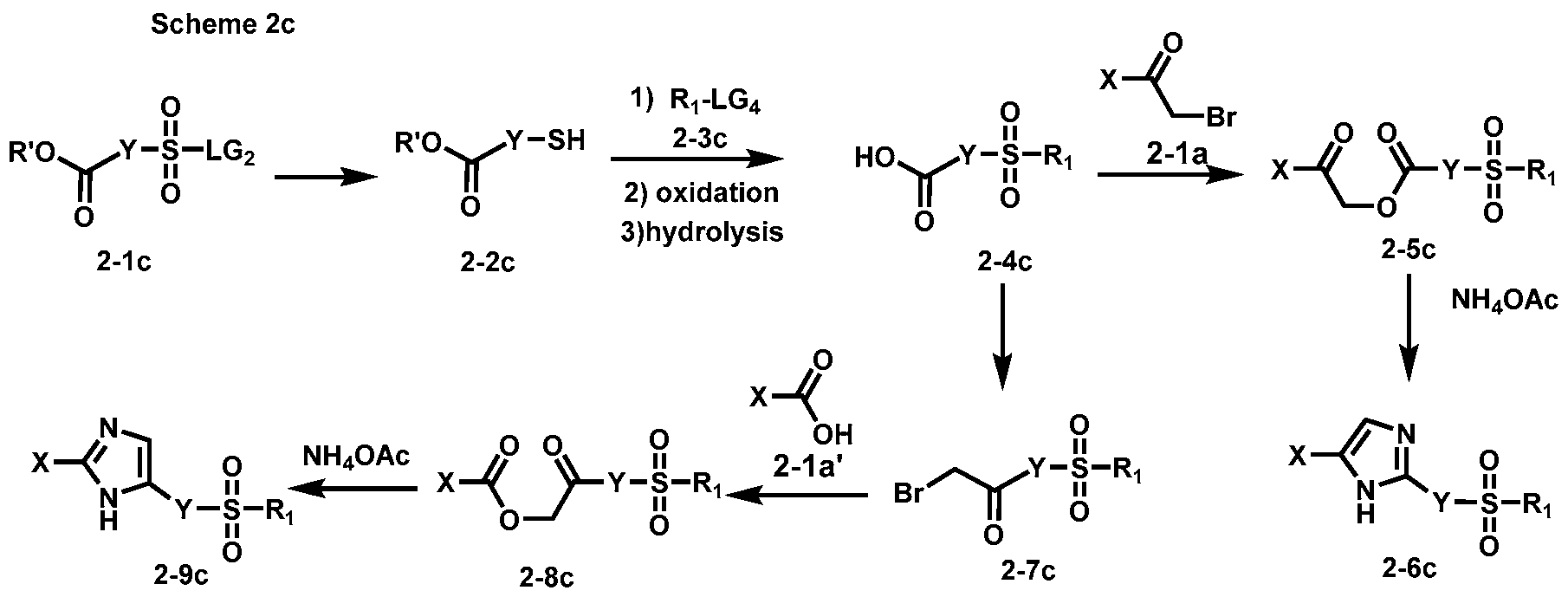
may be generally used similarly to synthesize some compounds of the present invention containing a fused bicyclic azole moiety. As shown in Scheme 3, wherein XA represents
an optionally substituted fused bicyclic azole system (3-1) which may be commercially available or prepared similarly by simple transformation as described above. Intermediate 3-1 can be coupled with coupling partner 1-5 using the cross-coupling reaction conditions described above to afford 3-2. The reaction selectivity of LG1 over LG2 may be fine-tuned 5 by choosing an optimal catalyst and/or solvent or intrinsic reactivity difference of these groups.3-3 can be further converted to the compound of Formula Ia using similar chemistry as discussed above.
Similarly, as shown in Scheme 4, wherein AY is an optionally substituted fused 10 bicyclic azole system (4-1), which may be commercially available or prepared similarly by simple transformation as described above.4-1 may be properly substituted such as bromide (with Br2 or NBS) to give coupling intermediated 4-2, which can be coupled with an organometallic species 1-1 to give an extended polycyclic azole 4-3. The latter can be further converted to the compound of Formula Ib using similar chemistry as discussed 15 previously.
Alternatively, as shown in Scheme 5, the fused bicyclic azole moiety may be constructed from suitably substituted precursors 5-1 and 5-2 to provide 5-3 through reactions including but not limited to ester formation, amide formation, amidate/imidate 20 formation, and aldol reaction. An intramolecular cyclization reaction of the functional group L3 with ring X or Y in 5-3 can afford the desired fused bicyclic system targets 3-2a and 4-3a through a reaction or combination of reactions including but not limited to dehydration, Friedel-Crafts reaction, and condensation.
25 Scheme 5a provides a specific example, where a suitable substituted aryl or
heteroaryl 1,2-diamine 5-1a reacts with a suitably substituted carboxylic acid 5-2a in the
presence of a dehydrating reagent such as EDCI or HATU to afford an amide 5-3a; which can be converted aryl or heteroarylimidazole system 3-2a-1 in the presence of acetic acid under an optionally elevated temperature.
Scheme 5a
5

m ar y, y sw c ng e con ensa on par ners o - an - n e amide formation as shown in Scheme 5b, an isomeric aryl or heteroarylimidazole system 4-3a-1 can be synthesized using a similar procedures described above.
10 It
 , n of any chemical functionality, synthesis of compounds of Formula (I) is accomplished by methods analogous to those above and to those described in the Experimental section. Suitable protecting groups can be found, but are not restricted to, those found in T W Greene and P G M Wuts“Protective Groups in Organic Synthesis”, 3rd Ed (1999), J 15 Wiley and Sons.
All references cited herein, whether in print, electronic, computer readable storage media or other form, are expressly incorporated by reference in their entirety, including but not limited to, abstracts, articles, journals, publications, texts, treatises, internet web sites, databases, patents, and patent publications.
20 Various changes and modifications to the disclosed embodiments will be apparent to those skilled in the art and such changes and modifications including, without limitation, those relating to the chemical structures, substituents, derivatives, formulations and/or methods of the invention may be made without departing from the spirit of the invention and the scope of the appended claims.
25 Although the invention has been described with respect to various preferred
embodiments, it is not intended to be limited thereto, but rather those skilled in the art will recognize that variations and modifications may be made therein which are within the spirit of the invention and the scope of the appended claims.
Examples
The compounds and processes of the present invention will be better understood in connection with the following examples, which are intended as an illustration only and not limiting of the scope of the invention. Various changes and modifications to the disclosed 5 embodiments will be apparent to those skilled in the art and such changes and
modifications including, without limitation, those relating to the chemical structures, substituents, derivatives, formulations and/or methods of the invention may be made without departing from the spirit of the invention and the scope of the appended claims.
Although the invention has been described with respect to various preferred 10 embodiments, it is not intended to be limited thereto, but rather those skilled in the art will recognize that variations and modifications may be made therein which are within the spirit of the invention and the scope of the appended claims.
Example 1
15 Step 1a.5-chloro-2-nitroa to sulfurochloridic acid (5 g,

42.91 mmol) portion-wise at 0°C. The solution was stirred for 3 hours at 100°C. After being cooled to rt, the reaction was poured into ice water slowly. The solid was collected by filtration, washed with water and dried under vacuum to give the desired compound (1.3 g, 83%) as a brown solid which was used directly in next step without further 20 purification.
Step 1b. A solution of compound from step 1a (1.3 g, 4.80 mmol) and 4-(tert- butyldimethyl-silyloxy)piperidine (1.24 g, 5.76 mmol) in pyridine (10 mL) was stirred for 4 hours at rt. It was concentrated and the residue was partitioned (EtOAc-brine). The organic was dried (Na2SO4), filtered and concentrated. The residue was chromatographed 25 (silica, ethyl acetate/petroleum ether) to give the desired compound (1.5 g, 90%) as a yellow solid. ESIMS m/z = 450.10 [M+H]+.
Step 1c. A mixture of compound form step 1b (1.5 g, 3.33 mmol), Fe (1.87 g, 33.39 mmol) and NH4Cl (1.8 g, 33.65 mmol) in ethanol/H2O (1:1, 20 mL) was stirred for 1 hour at 80°C. After being cooled to rt, the mixture was partitioned (EtOAc-brine). The organic 30 was dried (Na2SO4), filtered and concentrated. The residue was chromatographed (silica, ethyl acetate/petroleum ether) to give the desired compound (1.3 g, 93%) as a yellow solid. ESIMS m/z =420.10 [M+H]+.
Step 1d. A solution of compound from step 1c (400 mg, 0.95 mmol), benzaldehyde (120 mg, 1.13 mmol) and PTSA (33 mg, 0.19 mmol) in toluene (30 mL) was stirred for 16 hours under refluxing while exposed to air. After being cooled to rt, it was concentrated and the residue was partitioned (EtOAc-brine). The organic was dried (Na2SO4), filtered 5 and concentrated. The residue was chromatographed (silica, ethyl acetate/petroleum ether) to give the title compound as a yellow solid (120 mg, 25%). ESIMS m/z = 506.15, 508.15 [M+H]+.
Example 2
10 Step 1e. A solution of comp 4 mmol) in CH2Cl2 (5 mL),

TFA (3 mL) was stirred for 30 minutes at rt. It was concentrated. The residue was purified by Flash-Prep-HPLC ((IntelFlash-1): Column, C18; mobile phase, MeCN/H2O, Detector, UV 254 nm) to give the title compound (37.6 mg, 40%) as a white solid. ESIMS m/z = 392.08, 394.08 [M+H]+.
15 Example 3
Step 3a. A solution of co mmol), 3,4,5-trifluorobenz-

aldehyde (185 mg, 1.16 mmol), PTSA (33 mg, 0.19 mmol) in toluene (3 mL) was stirred for 16 hours under refluxing while exposed to air. After being cooled to rt, it was
20 concentrated and the residue was partitioned (EtOAc-brine). The organic was dried
(Na2SO4), filtered and concentrated. The residue was chromatographed (silica, ethyl acetate/petroleum ether) to give the desired compound as a yellow solid (128 mg, 24%). ESIMS m/z = 560.13 [M+H]+.
Step 3b. A solution of compound from step 3a (128 mg, 0.23 mmol) in CH2Cl2 (5 mL) 25 and TFA (3 mL) was stirred for 30 minutes at rt. The reaction was concentrated and the residue was purified by Flash-Prep-HPLC ((IntelFlash-1): Column, C18; mobile phase, MeCN/H2O, Detector, UV 254 nm) to give the title compound (32.4 mg, 32%) as a white solid. ESIMS m/z=446.05, 448.05 [M+H]+.
Example 4
Step 4a. To a suspension of 19.66 mmol ) in 2M NaOH (70

mL) was added a solution of Br2 2.32 g, 14.52 mmo n 2M NaOH (30 mL) drop wise. 5 The mixture was stirred for 1.5 hours at rt. The pH value of the solution was adjusted to 8 with 3M HCl, and partitioned (EtOAc-brine). The organic was dried (Na2SO4), filtered and concentrated. The residue was chromatographed (silica, ethyl acetate/petroleum ether) to give the desired compound as a yellow solid (3.4 g, 44%). ESIMS m/z =233.00
[M+H]+.
10 Step 4b. A mixture of the compound from step 4a (2.0 g, 8.64 mmol) in chlorosulfuric acid (15 mL) was stirred for 14 hours at 100 °C. After being cooled to rt, the reaction was poured into ice water slowly. The solids were collected by filtration; washed with water and dried in vacuum to give the desired compound (2.1 g, 74%) as a yellow solid, which was used directly in the next step without further purification.
15 Step 4c. A solution of the compound from step 4b (1.98 g, 6.0 mmol), 4-[(tert
butyldimethylsilyl)oxy]piperidine (1.29 g, 5.99 mmol) and Pyridine (1.42 g, 17.98 mmol) in CH2Cl2 (50 mL) was stirred for 3 hours at rt. The solution was partitioned (EtOAc- brine). The organic was dried (Na2SO4), filtered and concentrated. The residue was chromatographed (silica, ethyl acetate/petroleum ether) to give the desired compound as a 20 yellow solid (1.0 g, 33%). ESIMS m/z = 510.05 [M+H]+.
Step 4d. A mixture of the compound from step 4c (300 mg, 0.59 mmol), phenylboronic acid (78 mg, 0.64 mmol), Pd(dppf)Cl2 (43 mg, 0.06 mmol) and Cs2CO3 (360 mg, 1.10 mmol) in 1,4-dioxane:H2O (4:1) (15 mL) was stirred for 3 h at 90°C. The solution was partitioned (EtOAc-brine). The organic was dried (Na2SO4), filtered and concentrated. The 25 residue was chromatographed (silica, ethyl acetate/petroleum ether) to give the desired compound as a yellow solid (280 mg, 94%). ESIMS m/z =506.20 [M+H]+.
Step 4e. A solution of the compound from step 4d (200 mg, 0.40 mmol) and TFA (5 mL) in CH2Cl2 (5 mL) was stirred for 1 hour at rt. The solution was concentrated. The residue was chromatographed (silica, ethyl acetate/petroleum ether) to give the title compound as 30 yellow solid (70 mg, 45%). ESIMS m/z = 392.00, 394.00 [M+H]+.
Example 5
Step 5a. A mixture of comp ol), (3,4,5-

trifluorophenyl)boronic aci 110 mg, 0.63 mmo , P pp )Cl2 (43 mg, 0.06 mmol), and 5 Cs2CO3 (360 mg, 1.10 mmol) in 1,4-dioxane:H2O(4:1) (10 mL) was stirred for 3 hours at 90°C. After being cooled to rt, it was concentrated and the residue was partitioned (EtOAc-brine). The organic was dried (Na2SO4), filtered and concentrated. The residue was chromatographed (silica, ethyl acetate/petroleum ether) to give the desired compound as a yellow solid (180 mg, 55%). ESIMS m/z = 560.10 [M+H]+.
10 Step 5b. A solution of the compound from 5a (180 mg, 0.32 mmol) in CH2Cl2 (5 mL) and TFA (5 mL) was stirred for 1 hour at rt. it was concentrated. The residue was partitioned (EtOAc-brine). The organic was dried (Na2SO4), filtered and concentrated. The residue was chromatographed (silica, ethyl acetate/petroleum ether) to give the title compound as a yellow solid (50 mg, 35%). ESIMS m/z = 445.90, 447.90 [M+H]+.
15 Example 6
Step 6a. A solution of 5-bro yl chloride (800 mg, 2.76 mmol)

and 4-[(tert-butyldimethylsilyl)oxy]piperidine (720 mg, 3.34 mmol) in pyridine (5 mL) was stirred for 4 hours at rt. It was concentrated and the residue was partitioned (EtOAc- 20 brine). The organic was dried (Na2SO4), filtered and concentrated. The residue was
chromatographed (silica, ethyl acetate/petroleum ether) to give the desired compound as a yellow solid (0.8 g, 62%). ESIMS m/z = 470.03 [M+H]+.
Step 6b. A solution of compound from step 6a (800 mg, 1.71 mmol), 4,4,5,5-tetramethyl- 2-(tetramethyl-1,3,2-dioxaborolan-2-yl)-1,3,2-dioxaborolane (860 mg, 3.41 mmol), 25 Pd(dppf)Cl2 (75 mg, 0.10 mmol) and KOAc (670 mg, 6.83 mmol) in dioxane was stirred for 1 hour at 100oC. After being cooled to rt, it was concentrated and the residue was partitioned (EtOAc-brine). The organic was dried (Na2SO4), filtered and concentrated. The residue was chromatographed (silica, ethyl acetate/petroleum ether) to give the desired compound as a yellow solid (580 mg, 66%). ESIMS m/z = 516.21 [M+H]+.
Step 6c. A solution of compound from Step 6b (560 mg, 1.09 mmol), 3-bromo-1H- indazole (260 mg, 1.32 mmol), Pd(PPh3)4 (250 mg, 0.22 mmol) and potassium carbonate (300 mg, 2.17 mmol) in toluene (5 mL) was irradiated with microwave radiation for 2 hours at 120oC. After being cooled to rt, it was concentrated and the residue was
5 partitioned (EtOAc-brine). The organic was dried (Na2SO4), filtered and concentrated. The residue was chromatographed (silica, ethyl acetate/petroleum ether) to give the desired compound as a yellow solid (120 mg, 22%). ESIMS m/z = 506.16 [M+H]+.
Step 6d. A solution of compound from step 6c (120 mg, 0.24 mmol) in CH2Cl2 (5 mL) and TFA (3 mL) was stirred for 30 minutes at rt. It was concentrated and the residue was 10 partitioned (EtOAc-brine). The organic was dried (Na2SO4), filtered and concentrated. The residue was chromatographed (silica, ethyl acetate/petroleum ether) to give the title compound as a yellow solid (43.6 mg, 47%). ESIMS m/z = 392.10, 394.10[M+H]+.
Example 7
15 Step 7a. To a solution of 2 g, 12.81 mmol) in CH2Cl2

(15 mL) was added Br2 (2.0 g, 12.52 mmol) drop wise under 0oC. It was stirred for 1 hour at rt. The mixture was quenched with water, and partitioned (EtOAc-brine). The organic was dried (Na2SO4), filtered and concentrated. The residue was chromatographed (silica, ethyl acetate/petroleum ether) to give the desired compound (1.8 g, 60%) as a yellow 20 solid. ESIMS m/z = 234.95 [M+H]+.
Step 7b. A solution of compound form Step 7a (1.6 g, 6.81 mmol), NH4Ac (1.3 g, 21.31 mmol), AcOH (1.2 g, 19.98 mmol) and urea (1.2 g, 19.98 mmol) in water (20 mL) was stirred for 16 hours at 130°C. The solution was cooled to rt and partitioned (EtOAc-brine). The organic was dried (Na2SO4), filtered and concentrated. The residue was
25 chromatographed (silica, ethyl acetate/petroleum ether) to give the desired compound (500 mg, 37%) as a yellow solid. ESIMS m/z =197.04 [M+H]+.
Step 7c. Compound form Step 7b (200 mg, 1.02 mmol) in POBr3 (2.0 g, 7.75 mmol) was stirred for 6 hours at 120°C. After cooling to rt, the mixture was poured into ice water slowly, extracted with ethyl acetate, washed with brine. The organic layer was dried 30 (Na2SO4), filtered and concentrated. The residue was chromatographed to give the desired compound as a yellow solid 150 mg (57%). ESIMS m/z = 259.96 [M+H]+.
Step 7d. To a solution of 2,4-dibromothiophene (500 mg, 2.07 mmol) in THF (30 mL) was added chloro(propan-2-yl)magnesium (1.5 mL,2 M) drop wise at 0°C. The solution was stirred for 1 hour at rt. SO2 (sat. solution in THF, 10 mL) was added and stirred for 30 minutes at -40°C. Then SO2Cl2 (1 mL) was added and stirred another 30 minutes. The 5 reaction was quenched by addition of HCl (2M, 20 mL) slowly. The mixture was extracted with MTBE, washed with brine. The organic was dried by Na2SO4 and concentrated to give the desired product as a gray solid 500 mg, which was used directly in next step without further purification.
Step 7e. A solution of compound form Step 7d (500 mg, 1.91 mmol) in pyridine (2 mL) 10 was added 4-[(tert-butyldimethylsilyl)oxy]piperidine (500 mg, 2.32 mmol). The mixture was stirred for 2 hours at rt before concentrated. The residue was extracted with ethyl acetate, washed with brine. The organic was dried (Na2SO4) and concentrated. The residue was chromatographed (silica, ethyl acetate/petroleum ether) to give the desired compound (800mg, 95%) as yellow oil. ESIMS m/z = 442.03 [M+H]+.
15 Step 7f. A solution of compound from Step 7e (300 mg, 0.68 mmol), PdCl2(dppf) (30 mg, 0.04 mmol), KOAc (310 mg, 3.16 mmol) and 4,4,5,5-tetramethyl-2-(tetramethyl-1,3,2- dioxaborolan-2-yl)-1,3,2-dioxaborolane (210 mg, 0.83 mmol) in dioxane (5 mL) was stirred for 1 hour at 110°C. The reaction was concentrated and the residue was partitioned (EtOAc-brine). The organic was dried (Na2SO4), filtered and concentrated. The residue 20 was chromatographed (silica, ethyl acetate/petroleum ether) to give the desired compound (180 mg, 54%) as a yellow oil. ESIMS m/z = 488.21 [M+H]+.
Step 7g. A solution of compounds form Step 7c (105 mg, 0.41 mmol) and 7f (180 mg, 0.37 mmol), potassium carbonate (100 mg, 0.72 mmol), Pd(PPh3)4 (85 mg, 0.07 mmol) in toluene (8 mL) was irradiated with microwave radiation for 1 hour at 110°C. The mixture 25 was partitioned (EtOAc-brine). The organic was dried (Na2SO4), filtered and concentrated.
The residue was chromatographed (silica, ethyl acetate/petroleum ether) to give the desired compound (80 mg, 40%) as a yellow solid. ESIMS m/z = 540.15 [M+H]+.
Step 7h. A mixture of compound form step 7g (120 mg, 0.22 mmol) in TFA (5 mL) was stirred for 30 minutes at rt. It was concentrated. The residue was purified by Flash-Prep- 30 HPLC ((IntelFlash-1): Column, C18; mobile phase, MeCN/H2O, Detector, UV 254 nm) to give the title compound (38 mg, 40%) as off-white solid. ESIMS m/z = 426.07 [M+H]+.
Example 8
Step 8a. A solution of 4- d (2.3 g, 9.02 mmol) , 4-

[(tert-butyldimethylsilyl)oxy]-piperidine (1.94 g, 9.01 mmol) and TEA (2.73 g, 26.98 5 mmol) in CH2Cl2 (50 mL) was stirred 3 hours at rt. The solution was diluted with CH2Cl2, washed with NH4Cl, brine, dried (Na2SO4) and concentrated. The residue was chromatographed (silica, ethyl acetate/petroleum ether) to give the desired compound as yellow solid (1.8 g, 46%). ESIMS m/z = 434.15 [M+H]+.
Step 8b. A mixture of the compound from step 8a (4.3 g, 9.91 mmol),
10 methoxy(methyl)amine (732 mg, 11.98 mmol), HATU (5.7 g, 14.99 mmol) and DIPEA (1.9 g, 14.70 mmol) in DMF (100 mL) was stirred for 4 hours at rt. The solution was partitioned (EtOAc-brine). The residue was chromatographed (silica, ethyl
acetate/petroleum ether) to give the desired compound as yellow solid (3.8 g, 80%).
ESIMS m/z = 477.20 [M+H]+.
15 Step 8c. To a solution of the compound from step 8b (4.7 g, 9.85 mmol) in THF (250 mL) was added MeMgBr (50 mL) drop-wise at 0°C. The mixture was stirred for 1 hour at rt. It was quenched by addition of H2O (50 mL) and partitioned (EtOAc-brine). The organic was dried (Na2SO4), filtered and concentrated. The residue was chromatographed (silica, ethyl acetate/petroleum ether) to give the desired compound as a yellow solid (3.4 g, 20 80%). ESIMS m/z = 432.20 [M+H]+.
Step 8d. A solution of the compounds from step 8c (3.3 g, 7.64 mmol), 3,4-difluorobenz- aldehyde (1.1 g, 7.74 mmol), NaOH (916 mg, 22.90 mmol) in MeOH (100 mL) was stirred for 2 hours at rt. The solution was partitioned (EtOAc-brine). The organic was dried (Na2SO4), filtered and concentrated. The residue was chromatographed (silica, ethyl 25 acetate/ petroleum ether) to give the desired compound as a yellow solid (1.0 g, 24%).
ESIMS m/z = 556.25 [M+H]+.
Step 8e. A mixture of the compound from step 8d (1.0 g, 1.80 mmol), K2CO3 (496 mg, 3.59 mmol), H2O2 (5 mL), in EtOH (10 mL) was stirred for 2 hours at rt. The solution was partitioned (EtOAc-brine). The organic was dried (Na2SO4), filtered and concentrated. The 30 residue was chromatographed (silica, ethyl acetate/petroleum ether) to give the desired compound as a yellow solid (910 mg, 88%). ESIMS m/z = 572.15 [M+H]+.
Step 8f. A solution of the compound from step 8e (300 mg, 0.52 mmol), hydrazine (5 mL) and TsOH (8.6 mg, 0.05 mmol) in xylene (5 mL) was stirred for 3 hours at 110oC. The solution was partitioned (EtOAc-brine). The organic was dried (Na2SO4), filtered and concentrated. The residue was chromatographed (silica, ethyl acetate/petroleum ether) to 5 give the desired compound as a yellow solid (230 mg, 77%). ESIMS m/z = 568.20
[M+H]+.
Step 8g. A solution of the compound from step 8f (280 mg, 0.49 mmol) in TFA (5 mL) was stirred for 1 hour at rt before it was concentrated. The residue was partitioned (EtOAc-brine). The organic was dried (Na2SO4), filtered and concentrated. The residue 10 was chromatographed (silica, ethyl acetate/petroleum ether) to give the title compound as a yellow solid (60 mg, 27%). ESIMS m/z =454.05, 456.05 [M+H]+.
Example 9
Step 9a. To a solution of the mg, 0.235 mmol), EDC HCl

15 (64.5 mg, 0.336 mmol), DMAP 3.2 mg, 0.0259 mmo n MeCN (3 mL), was added
benzene-1,2-diamine (28.0 mg, 0.259 mmol). It was stirred at rt overnight and
concentrated. The residue was chromatographed (silica, CH2Cl2/MeOH) to give the desired compound (121 mg, 98%) as a yellow oil. ESIMS m/z = 524.18 [M+H]+.
Step 9b. A solution of step 9a (82.8 mg, 0.158 mmol) in AcOH (1.5 mL) was heated to 20 60°C for 1 hour. The mixture was cooled to rt and quenched with aq. NaHCO3, and
partitioned (CH2Cl2-water). The organic was dried (Na2SO4), filtered and concentrated to give the desired compound as a yellow oil (80.1 mg, 100%). ESIMS m/z =506.17 [M+H]+. Step 9c. A solution of compound from 9b (0.158 mmol) in 70% AcOH (1.2 mL) was heated to 60°C and kept for 12 hours. The mixture was cooled to rt and quenched with aq 25 NaHCO3, and partitioned (CH2Cl2-water). The organic was dried (Na2SO4), filtered and concentrated. The residue was chromatographed (silica, CH2Cl2/MeOH) to give the title compound (18.1 mg, 29%) as a yellow solid. ESIMS m/z = 392.08, 394.08 [M+H]+.
Example 10
Step 10a. To a solution of g, 0.200 mmol), EDC HCl

(50 mg, 0.26 mmol) and DMAP (2.4 mg, 0.020 mmol) in MeCN (3 mL), was added 4,5- 5 difluorobenzene-1,2-diamine (31.7 mg, 0.220 mmol). It was stirred at rt overnight and concentrated. The residue was chromatographed (silica, CH2Cl2/MeOH) to give the desired compound (107 mg, 96%) as a yellow oil. ESIMS m/z = 589.27 [M+H]+.
Step 10b. A solution of compound from step 10a (107 mg, 0.192 mmol) in AcOH (2.0 mL) was heated to 60°C for 1 hour. The mixture was cooled to rt and quenched with aq. 10 NaHCO3 aqueous and partitioned (CH2Cl2-water). The organic was dried (Na2SO4), filtered and concentrated. The residue was chromatographed (silica, CH2Cl2/MeOH) to give the desired compound (24.2 mg, 23%) as a yellow solid. ESIMS m/z = 542.15
[M+H]+.
Step 10c. To a solution of the compound from step 10b (24.2 mg, 0.0446 mmol) in THF 15 (2.2 mL) was added TBAF (1 M in THF, 0.134 mL, 0.134 mmol). It was stirred at rt for 4 hours. The mixture was quenched with aq. NaHCO3 and partitioned (EtOAc-water). The organic was dried (Na2SO4), filtered and concentrated. The residue was chromatographed (silica, CH2Cl2/MeOH) to give the title compound (10.1 mg, 53%) as a yellow solid. ESIMS m/z = 428.07, 430.07 [M+H]+.
20 Example 11
Step 11a. To a solution of t mg, 0.465 mmol) in DMF (2.3

mL) was added 2-aminoacetophenone hydrochloride (79.8 mg, 0.465 mmol), DIPEA (120 mg, 0.930 mmol) and HATU (177 mg, 0.465 mmol). It was stirred at rt overnight. The 25 mixture was quenched with aq. NaHCO3 and partitioned (EtOAc-water). The organic was dried (Na2SO4), filtered and concentrated. The residue was chromatographed (silica, EtOAc/hexanes) to give the desired compound (192 mg, 75 %) as yellow oil. ESIMS m/z = 551.18 [M+H]+.
Step 11b. A mixture of the compound from step 11a (97.1 mg, 0.176 mmol) and NH4OAc 30 (163 mg, 2.11 mmol) in xylenes (1.8 mL) was heated at 135°C overnight. The mixture
was cooled to rt, quenched with aq. NaHCO3 and partitioned (50% EtOAc/hexanes-water). The organic was dried (Na2SO4), filtered and concentrated. The residue was
chromatographed (silica, EtOAc/hexanes) to give the desired compound (59.1 mg, 63%) as a yellow oil. ESIMS m/z = 532.19 [M+H]+.
5 Step 11c. To a solution of the compound from step 11b (59.1 mg, 0.111 mmol) in THF (1.1 mL) was added TBAF (1M in THF, 0.167 mL, 0.167 mmol) at 0°C. It was stirred at 0°C for 4 hours before being quenched with aq. NaHCO3 and partitioned (EtOAc-water). The organic was dried (Na2SO4), filtered and concentrated. The residue was
chromatographed (silica, EtOAc/hexanes) to give the title compound (32.4 mg, 70%) as a 10 yellow solid. ESIMS m/z = 418.10, 420.10 [M+H]+.
Example 12
Step 12a. To a solution of mg, 0.191 mmol) in MeCN

(1.9 mL) was added 2-bromo-1-(3,4-difluorophenyl)ethan-1-one (49.4 mg, 0.210 mmol), 15 and DIPEA (49.4 mg, 0.382mmol). It was stirred at rt for 4 hours before being
concentrated. The residue was chromatographed (silica, EtOAc/hexanes) to give the desired compound (51.7 mg, 45 %) as a colorless oil.1H NMR (500 MHz, CDCl3): 8.74 (s, 1H), 8.18 (d, J = 7.8 Hz, 1H), 7.78 (t, J = 8.8 Hz, 1H), 7.71 (s, 1H), 7.60 (d, J = 8.3 Hz, 1H), 7.29 (ddd, J = 8.8, 8.8, 7.8 Hz, 1H), 5.52 (s, 2H), 3.75 (m, 1H), 3.48 (m, 2H), 3.27 20 (m, 2H), 1.76 (m, 2H), 1.56 (m, 2H), 0.86 (s, 9H), 0.02 (s, 6H).
Step 12b. A mixture of the compound from step 12a (51.7 mg, 0.0879 mmol) and
NH4OAc (81.3 mg, 1.05 mmol) in xylenes (0.9 mL) was heated at 135°C for 23 hours. It was cooled to rt and quenched with aq. NaHCO3 and partitioned (EtOAc -water). The organic was dried (Na2SO4), filtered and concentrated. The residue was chromatographed 25 (silica, EtOAc/hexanes) to give the desired compound (21.7 mg, 43%) as yellow oil.
ESIMS m/z = 542.15 [M+H]+.
Step 12c. To a solution of the compound from step 12b (21.7 mg, 0.0.0382 mmol) in THF (0.76 mL) was added TBAF (1M in THF, 0.114 mL, 0.114 mmol). It was stirred at rt for 4 hours before being quenched with aq. NaHCO3 and partitioned (EtOAc-water). The 30 organic was dried (Na2SO4), filtered and concentrated. The residue was chromatographed (silica, CH2Cl2/MeOH) to give the title compound (10.6 mg, 61%) as a yellow solid.
ESIMS m/z = 454.08, 456.08 [M+H]+.
Example 13
Step 13a. To a solution o g, 0.274 mmol) in MeCN

(2.7 mL) was added 2-bromo-1- 3-c oro-4- uorop eny et an-1-one (75.8 mg, 0.302 5 mmol) and DIPEA (70.8 mg, 0.548 mmol). It was heated at 50°C for 5 hours. The mixture was cooled to rt and concentrated. The residue was chromatographed (silica,
EtOAc/hexanes) to give the desired compound (104 mg, 63 %) as a yellow oil.1H NMR (500 MHz, CDCl3): 8.74 (s, 1H), 8.16 (d, J = 8.3 Hz, 1H), 8.01 (d, J = 6.8 Hz, 1H), 7.40 (m, 1H), 7.60 (d, J = 7.8 Hz, 1H), 7.29 (dd, J = 8.3, 6.8 Hz, 1H), 5.52 (s, 2H), 3.89 (m, 10 1H), 3.43 (m, 2H), 3.28 (m, 2H), 1.76 (m, 2H), 1.57 (m, 2H), 0.84 (s, 9H), 0.01 (s, 6H).
Step 13b. A mixture of the compound from step 13a (104 mg, 0.173 mmol) and NH4OAc (160 mg, 2.07 mmol) in xylenes (1.7 mL) was heated at 135°C for 20 hours. The mixture was cooled to rt, quenched with aq. NaHCO3 and partitioned (EtOAc -water). The organic was dried (Na2SO4), filtered and concentrated. The residue was chromatographed (silica, 15 EtOAc/hexanes) to give the desired compound (40.2 mg, 40%) as a yellow oil.1H NMR (500 MHz, CDCl3): 8.49 (s, 1H), 8.22 (d, J = 7.8 Hz, 1H), 7.86(d, J = 6.3 Hz, 1H), 7.64 (m, 1H), 7.55 (d, J = 8.3 Hz, 1H), 7.40 (s, 1H), 7.12 (t, J = 8.3Hz, 1H), 3.86 (m, 1H), 3.45 (m, 2H), 3.28 (m, 2H), 1.72 (m, 2H), 1.55 (m, 2H), 0.84 (s, 9H), 0.01 (s, 6H).
Step 13c. To a solution of the compound from step 13b (40.2 mg, 0.0.0688 mmol) in THF 20 (1.4 mL) was added TBAF (1M in THF, 0.103 mL, 0.103 mmol) at 0°C. It was stirred at 0°C for 1 hour, then rt for 4 hours. The mixture was quenched with aq. NaHCO3 and partitioned (EtOAc-water). The organic was dried (Na2SO4), filtered and concentrated. The residue was chromatographed (silica, CH2Cl2/MeOH) to give the title compound (28.8 mg, 89%) as a yellow solid. ESIMS m/z = 470.05, 472.05 [M+H]+.
25 Example 14
Step 14a. To a solution o g, 0.165 mmol) and 2-

bromo-1-(3-bromo-4-fluorophenyl)ethan-1-one (53.8 mg, 0.182 mmol)in MeCN (1.8 mL) was added DIPEA (42.6 mg, 0.548 mmol). It was stirred at rt for 2 hours, then 40°C for 3 30 hours. The mixture was cooled to rt and concentrated. The residue was chromatographed
(silica, EtOAc/hexanes) to give the desired compound (76.8 mg, 72 %) as a colorless oil. ESIMS m/z =646.06 [M+H]+.
Step 14b. A mixture of the compound from step 14a (76.8 mg, 0.118 mmol) and NH4OAc (109 mg, 1.42 mmol) in xylenes (1.2 mL) was heated at 135°C for 20 hours. The mixture 5 was cooled to rt, quenched with aq. NaHCO3 and partitioned (EtOAc -water). The organic was dried (Na2SO4), filtered and concentrated. The residue was chromatographed (silica, EtOAc/hexanes) to give the desired compound (43.8 mg, 59%) as a yellow oil.1H NMR (500 MHz, CDCl3): 8.52 (s, 1H), 8.16 (d, J = 8.3 Hz, 1H), 8.01 (d, J = 4.4 Hz, 1H), 7.66 (m, 1H), 7.51 (d, J = 8.3Hz, 1H), 7.40 (s, 1H), 3.82 (m, 1H), 3.41 (m, 2H), 3.23 (m, 2H), 10 1.74 (m, 2H), 1.57 (m, 2H), 0.84 (s, 9H), 0.01 (s, 6H).
Step 14c. To a solution of the compound from step 14b (43.8 mg, 0.0.0696 mmol) in THF (1.4 mL) was added TBAF (1 M in THF, 0.209 mL, 0.209 mmol). It was stirred at rt for 4 hours before being quenched with aq. NaHCO3 and partitioned (EtOAc-water). The organic was dried (Na2SO4), filtered and concentrated. The residue was chromatographed 15 (silica, CH2Cl2/MeOH) to give the title compound (31.7 mg, 89%) as a yellow solid.
ESIMS m/z = 514.00, 516.00 [M+H]+.
Example 15
Step 15a. To 2-phenyl-1H- cid (1.21 g, 4.42 mmol) was

20 added DMF (2 drops) and thionyl chloride (5.26 g, 44.2 mmol). It was stirred at rt for 24 hours, and 60°C for 16 hours. The mixture was cooled to rt. Toluene (50 mL) was added. The solid was collected under vacuum, washed with toluene to give the desired product (1.257 g, 97%) as a white solid. ESIMS m/z = 293.02 [M+H]+. This crude product was used directly in next step without further purification.
25 Step 15b. To a suspension of the compound from step 15a (62.2 mg, 0.212 mmol) in CH2Cl2 (2.1 mL) was added 4-[(tert-butyldimethylsilyl)oxy]-piperidine (91.5 mg, 0.425 mmol) and triethylamine (107 mg, 1.06 mmol). It was stirred at rt overnight before being quenched with aq. NaHCO3 and partitioned (EtOAc-water). The organic was dried (Na2SO4), filtered and concentrated. The residue was chromatographed (silica,
30 CH2Cl2/MeOH) to give the desired compound (104 mg, quant.) as a white solid. ESIMS m/z = 472.21 [M+H]+.
Step 15c. To a solution of the compound from step 15b (104 mg, 0.221 mmol) in THF (4.4 mL) was added TBAF (1M in THF, 0.663 mL, 0.663 mmol). The resulting solution was stirred at rt overnight before being quenched with aq. NaHCO3 and partitioned (EtOAc-water). The organic was dried (Na2SO4), filtered and concentrated. The residue 5 was chromatographed (silica, CH2Cl2/MeOH) to give the title compound (75.6 mg, 96%) as a white solid. ESIMS m/z =358.12 [M+H]+.
Example 16
Step 16a. To a solution o g, 1.67 mmol) in DMF (8.4

10 mL) was added HN(OMe)Me ^HCl (163 mg, 1.67 mmol), DIPEA (432 mg, 3.34 mmol) and HATU (635 mg, 1.67 mmol). The solution was stirred at rt overnight. The mixture was quenched with aq. NaHCO3 and partitioned (EtOAc-water). The organic was dried (Na2SO4), filtered and concentrated. The residue was chromatographed (silica,
EtOAc/hexanes) to give the desired compound (550 mg, 69%) as yellow oil.1H NMR 15 (500 MHz, CDCl3): 8.36 (s, 1H), 7.79 (d, J = 7.8 Hz, 1H), 7.54 (d, J = 7.8 Hz, 1H), 3.87 (m, 1H), 3.53 (s, 3H), 3.43 (m, 2H), 3.34 (s, 3H), 3.26 (m, 2H), 1.76 (m, 2H), 1.56 (m, 2H), 0.82 (s, 9H), 0.01 (s, 6H).
Step 16b. To a solution of the compound from step 16a (550 mg, 1.15 mmol) in THF (12 mL) at 0°C was added a solution of 3.0 M MeMgBr (1.54 mL, 4.62 mmol) in Et2O. It was 20 stirred at 0°C for 2 hours, then overnight at rt. The mixture was quenched with aq. NH4Cl and partitioned (EtOAc-water). The organic was dried (Na2SO4), filtered and concentrated. The residue was chromatographed (silica, EtOAc/hexanes) to give the desired compound (503 mg, 100%) as a yellow solid.1H NMR (500 MHz, CDCl3): 8.54 (s, 1H), 8.02 (d, J = 8.3 Hz, 1H), 7.59 (d, J = 8.3 Hz, 1H), 3.89 (m, 1H), 3.42 (m, 2H), 3.29 (m, 2H), 2.61 (s, 25 3H), 1.76 (m, 2H), 1.56 (m, 2H), 0.82 (s, 9H), -0.01 (s, 6H).
Step 16c. To a solution of the compound from step 16b (120 mg, 0.279 mmol) in CH2Cl2 (2.8 mL) at 0°C was added DIPEA (72.1 mg, 0.558 mmol) and TMSOTf (92.9 mg, 0.418 mmol). The solution was kept at 0°C for 0.5 hour, followed by the addition of NBS (99.3 mg, 0.558 mmol). The solution was warmed to rt and kept for 4 hours. The mixture was 30 quenched with aq. NaHCO3 and partitioned (CH2Cl2-water). The organic was dried
(Na2SO4), filtered and concentrated. The residue was chromatographed (silica,
EtOAc/hexanes) to give the desired compound (88.6 mg, 62%) as a white solid. 1H NMR
(500 MHz, CDCl3): 8.57 (s, 1H), 8.06 (d, J = 8.3 Hz, 1H), 7.63 (d, J = 8.3 Hz, 1H), 4.41 (s, 2H), 3.90 (m, 1H), 3.42 (m, 2H), 3.31 (m, 2H), 1.76 (m, 2H), 1.57 (m, 2H), 0.82 (s, 9H), -0.01 (s, 6H).
Step 16d. To a solution of the compound from step 16c (88.6 mg, 0.173 mmol) in MeCN 5 (1.7 mL) at rt was added 3,4-difluorobenzoic acid (30.2 mg, 0.191 mmol) and DIPEA (44.7 mg, 0.346 mmol). It was stirred at rt overnight. The mixture was quenched with aq. NaHCO3 and partitioned (EtOAc-water). The organic was dried (Na2SO4), filtered and concentrated. The residue was chromatographed (silica, EtOAc/hexanes) to give the desired compound (78.8 mg, 77%) as a white solid. 1H NMR (500 MHz, CDCl3): 8.56 (s, 10 1H), 8.02 (d, J = 8.3 Hz, 1H), 7.90 (m, 2H), 7.64 (d, J = 8.3 Hz, 1H), 7.22 (m, 1H), 5.51 (s, 2H), 3.89 (m, 1H), 3.42 (m, 2H), 3.29 (m, 2H), 2.61 (s, 3H), 1.76 (m, 2H), 1.56 (m, 2H), 0.82 (s, 9H), -0.01 (s, 6H).
Step 16e. A mixture of the compound from step 16d (39.5 mg, 0.0671 mmol) and NH4OAc (62.1 mg, 0.806 mmol) in xylenes (1.7 mL) was heated at 135°C for 14 hours. 15 The mixture was cooled to rt, quenched with aq. NaHCO3 and partitioned (EtOAc -water).
The organic was dried (Na2SO4), filtered and concentrated. The residue was
chromatographed (silica, EtOAc/hexanes) to give the desired compound (30.4 mg, 80%) as a yellow oil. ESIMS m/z = 568.17 [M+H].
Step 16f. To a solution of the compound from step 16e (30.4 mg, 0.0535 mmol) in THF 20 (1.7 mL) was added TBAF (1 M in THF, 0.161 mL, 0.161 mmol). It was stirred at rt for 14 hours before being quenched with aq. NaHCO3 and partitioned (CH2Cl2-water). The organic was dried (Na2SO4), filtered and concentrated. The residue was chromatographed (silica, CH2Cl2/MeOH) to give the title compound (20.9 mg, 86%) as a pale solid. ESIMS m/z = 454.08, 456.08 [M+H]+.
25 Example 17
Step 17a. Imidazole (40.3 tionwise into a solution of

piperidin-4-ol (30 g, 296.60 mmol) and TBSCl (53.64 g, 355.89 mmol) in DCM (200 mL) at 0oC. The solution was stirred at room temperature for 12 hours before being washed 30 with water (300 mL) and brine (300 mL). The organic layer was concentrated and
triturated with petroleum ether (800 mL) to yield a solid. The solid was collected by filtration and dried in vacuum to give the desired compound as a white solid (36 g, 56%).
Step 17b. TEA (33 mL, 235.22 mmol) was added dropwise into a solution of the 4- chloro-3-(chlorosulfonyl)benzoic acid (30 g, 117.61 mmol) and the compound from step 17a (30.4 g, 141.13 mmol) in DCM (500 mL). The solution was stirred for 2 h at room temperature. The reaction mixture was diluted with DCM (500 mL) and washed with 5 saturated NH4Cl solution (1 L). The organic layer was dried over anhydrous sodium
sulfate, filtered and concentrated under vacuum to give the desired compound as a yellow oil (50 g, 98%). ESIMS m/z = 434.30 [M+H]+.
Step 17c. DIPEA (95 mL, 552.96 mmol) was added dropwise into a solution of the compound from step 17b (50 g, 115.20 mmol), N,O-dimethylhydroxylamine (12.4 g, 10 203.00 mmol) and HATU (57 g, 149.91 mmol) in DCM (400 mL). The solution was
stirred for 1 h at room temperature. The reaction mixture was washed with water (500 mL) and then brine (3x500 mL). The organic layer was dried over anhydrous sodium sulfate, filtered and concentrated. The residue was chromatographed (silica, ethyl
acetate/petroleum ether) to give the desired compound as a yellow oil (13 g, 24%). ESIMS 15 m/z = 477.05 [M+H]+.
Step 17d. LiAlH4 (1.0 M in THF, 25.5 mL, 25.5 mmol) was added dropwise into a solution of the compound from step 17c (11 g, 23 mmol) in THF (150 mL) at -78oC under nitrogen. The solution was stirred at -78oC for 1 h. The reaction was quenched with water (100 mL), acidified by adding sulfuric acid and extracted with ethyl acetate (100 mL). 20 The organic layer was dried over anhydrous sodium sulfate, filtered and concentrated to give the desired compound as a yellow solid (9 g, 93%). ESIMS m/z = 417.95 [M+H]+. Step 17e. NH4OH (40 mL) and glyoxal (40 mL) was added dropwise into a solution of the compound from step 17d (9 g, 21.53 mmol) in methanol (500 mL) at 0oC under nitrogen. The solution was stirred for 16 hours at room temperature. The reaction mixture 25 was concentrated. The residue was chromatographed (silica, ethyl acetate/petroleum ether) to give the desired compound as a yellow solid (3.5 g, 36%). ESIMS m/z = 456.05
[M+H]+.
Step 17f. Sodium hydride (920 mg, 38.33 mmol) was added portionwise into a solution of the compound from step 17e (3.5 g, 7.67 mmol) in DMF (100 mL) at 0 oC. The solution 30 was stirred at 0 oC for 30 minutes. Then SEMCl (1.41 g, 8.46 mmol) was added dropwise into the above solution and the solution was stirred for 1 hour at room temperature. The reaction mixture was diluted with DCM (200 mL), washed with saturated NH4Cl solution (500 mL) and brine (4x500 mL), dried over anhydrous sodium sulfate, filtered and
concentrated to give the desired compound as a yellow oil (4.8 g, 107%). ESI MS m/z 586.20 [M+H]+.
Step 17g. To a solution of the compound from step 17f (1.7 g, 2.90 mmol) in THF (40 mL) was added a solution of NBS (516mg, 2.90 mmol) in THF (10 mL) dropwise over 10 5 minutes at 0 oC. The solution was stirred for 4 hours at 0 oC. The solution was
concentrated. The residue was chromatographed (silica, ethyl acetate/petroleum ether) to give the desired compound as a yellow solid (1.267 g, 66%). ESIMS m/z = 666.10
[M+H]+.
Step 17h. A mixture of 3-bromo-4-chlorobenzenamine (10.0 g, 48.3 mmol),
10 cyclopropylboronic acid (5.0 g, 58 mmol), Cs2CO3 (39.4 g, 121 mmol) and Pd(dppf)Cl2 (350 mg, 0.42 mmol) in water/1, 4-dioxine (20mL/150 mL) was stirred at 85 oC overnight. After being allowed to cool to rt, the mixture was concentrated and the residue was partitioned (EtOAc-brine). The organic layer was dried (Na2SO4), filtered and
concentrated. The residue was chromatographed (silica, ethyl acetate/petroleum
15 ether=10:1) to give the desired compound as yellow oil (7.9 g, 97%). MS m/z = 167.85 [M+H]+.
Step 17i. A mixture of the compound from step 17h (7.9 g, 47.3 mmol) and CuBr (8.17 g, 56.8 mmol) in MeCN (100 mL) was stirred at 45 oC for 30 minutes. A solution of tert- butylnitrite (5.4 g, 52.7 mmol) in MeCN (20 mL) was added dropwise. The mixture was 20 stirred at 45 oC for 2 hours. The mixture was concentrated and purified by column
chromatographed (silica, petroleum ether) to give the desired compound as a colorless oil (1.5 g, 14%). 1H NMR (300 MHz, CDCl3) δ 0.70– 0.85 (2 H, m), 1.00– 1.15 (2 H, m), 2.12-2.23 (1 H, m), 7.07 (1 H, s), 7.22-7.25(2 H, m).
Step 17j. A mixture of the compound from step 17i (1.5 g, 6.5 mmol),
25 bis(pinacolato)diboron (1.6 g, 6.5 mmol), KOAc (1.3 g, 13.0 mmol) and Pd(dppf)Cl2 (265 mg, 0.33 mmol) in 1,4-dioxane (20 mL) was stirred overnight at 85 oC. The mixture was concentrated. The residue was chromatographed (silica, ethyl acetate/petroleum ether=1:100) to give the desired compound as a yellow solid (1.155g, 64%). GC MS m/z = 278.10 [M+H]+; 1H NMR (300 MHz, CDCl3) δ 0.71-0.77 (2 H, m), 0.95– 1.05 (2 H, m), 30 1.33 (12 H, s), 7.31-7.38 (2 H, m), 7.51 (1 H, d).
Step 17k. Pd(dppf)Cl2·CH2Cl2 (25 mg, 0.03 mmol) was added into a solution of the compound from step 17g (100 mg, 0.15 mmol), the compound from step 17j (83 mg, 0.30 mmol) and Cs2CO3 (98 mg, 0.30 mmol) in 1,4-dioxane/H2O (3 mL/0.3 mL) under nitrogen. The resulting solution was stirred for 2 hours at 100 oC. The resulting mixture
was concentrated. The residue was chromatographed (silica, ethyl acetate/petroleum ether) to give the desired compound as a yellow solid (88 mg, 80%).
Step 17l. Hydrogen chloride (0.6 mL) was added dropwise into a solution of the compound from step 17k (88 mg, 0.12 mmol) in THF (6 mL) under nitrogen. The solution 5 was stirred for 1.5 hours at 80 oC. The residue was neutralized with saturated sodium
bicarbonate solution and extracted with dichloromethane (40 mL). The organic layer was dried over anhydrous sodium sulfate, filtered and concentrated under vacuum. The crude product was purified by Preparative HPLC (MeCN/H2O, with 0.1% formic acid) to give the title compound as a white solid (30 mg, 50%). ESIMS m/z = 492.40, 494.40 [M+H]+. 10 Example 18
Step 18a. A mixture of
 (1 g, 4.6 mmol), copper(II) bromide (2.1 g, 9.7 mmol) in EtOAc (50 mL) was stirred for 12 hours at 60 oC. The mixture was allowed to cool down and filtered. The filtrate was concentrated. The residue 15 was chromatographed (silica, ethyl acetate/petroleum ether) to give the desired compound as a yellow solid (600 mg, 44%).
Step 18b. A mixture of the compound from step 17b (500 mg, 1.15mmol), the compound from step 18a (511mg, 1.73 mmol) and NaHCO3 (194 mg, 2.3 mmol) in MeCN (10 mL) was stirred for 2 hours at rt. The mixture was patitioned (EtOAc-brine). The organic layer 20 was dried over anhydrous sodium sulfate, filtered and concentrated. The residue was chromatographed (silica, ethyl acetate/petroleum ether) to give the desired compound as a yellow semi-solid (540 mg, 72%). ESIMS m/z = 650.40 [M+H]+ .
Step 18c. A solution of the compound from step 18b (500 mg, 0.77 mmol) and NH4OAc (890 mg, 11.5mmol) in AcOH (6 mL) was stirred for 2 hours at 120 oC. The mixture was 25 concentrated. The residue was partitioned (EtOAc-brine). The organic layer was dried (Na2SO4), filtered and concentrated. The residue was chromatographed (silica, ethyl acetate/petroleum ether) to give the desired compound as a yellow solid (250 mg, 52%). ESIMS m/z = 631.15 [M+H]+.
Step 18d. A solution of the compound from step 18c (100 mg, 0.15 mmol), in TFA/DCM 30 (5 mL/5 mL) was stirred for 2 hours at rt before being concentrated. The crude product was purified by HPLC (MeCN/H2O, 0.1% FA) to give the title compound as a yellow solid (37.1 mg, 45%). ESIMS m/z = 513.95, 515.95 [M+H]+ .
Example 19
Step 19a. 2,3,4,5,6-pen s dissolved in THF (50 mL)

and Tris-HCl buffer (50 mL, 50 mM, pH 9). A solution of 4-chloro-3- 5 (chlorosulfonyl)benzoic acid (22.0 g, 86.6 mmol) in THF (50 mL) was added slowly to the above solution. The pH value of the mixture was kept at 8-9 by the addition of 2.5 N NaOH solution. After being stirred at room temperature overnight, the solution was acidified to pH 7 by the addition of 1 N HCl solution and concentrated to remove THF. The product precipitated out when the aqueous residue was acidified with 1 N HCl to pH 10 1. The mixture was filtered to afford the desired compound as a white solid (29.6 g,
85.2%). ESIMS m/z = 401.05 [M-H]-.
Step 19b. A mixture of the compound from step 19a (22.0 g, 54.7 mol), the compound from step 18a (16.1 g, 54.7 mmol) and NaHCO3 (9.2 g, 109.4 mmol) in MeCN (150 mL) and DMF (20 mL) was stirred overnight at rt. The mixture was quenched with H2O and 15 extracted with EtOAc. The organic layer was dried (Na2SO4), filtered and concentrated.
The residue was chromatographed (silica, ethyl acetate/petroleum ether) to give the desired compound as a white solid (24.0 g, 71.2%).
Step 19c. A mixture of the compound from step 19b (2.5 g, 4.1 mmol) and NH4OAc (4.7 g, 61.5 mmol) in xylene (100 mL) was heated for 5 h at 140 oC under N2. The mixture was 20 partitioned (EtOAc-brine). The organic layer was dried (Na2SO4), filtered and
concentrated. The residual was chromatographed (silica, ethyl acetate/petroleum ether) to give the title compound as a yellow solid (1.4 g, 57.8%). ESIMS m/z = 599.0 [M+H]+. Step 19d. A mixture of benzylamine (5.0 g, 46.66mmol,), 4-bromobut-1-ene (12.5 g, 92.68 mmol), and K2CO3 (12.9 g, 93.39 mmol) in DMF (160 mL) was stirred for 1.5 hours 25 at 100 oC. After being allowed to cool to rt, the mixture was concentrated. The residue was partitioned (EtOAc-brine). The organic layer was dried (Na2SO4), filtered and
concentrated. The residue was chromatographed (silica, ethyl acetate/petroleum ether) to give the desired compound as yellow oil (4.42 g, 44%). ESIMS m/z = 216.25 [M+H]+. Step 19e. The compound from step 19d (4.0 g, 18.58 mmol) was dissolved in toluene (40 30 mL). Cbz-Cl (3.80 g, 22.13 mmol) was added into the solution. The solution was stirred for 16 hours at 110 oC. The mixture was diluted with EA (60 mL) and washed with aq Na2CO3 solution and then brine. The organic phase was dried (Na2SO4), filtered and
concentrated. The residue was chromatographed (silica, ethyl acetate/petroleum ether) to give the desired compound as yellow oil (3.5 g, 72.7%). ESIMS m/z = 260.20 [M+H]+. Step 19f. A mixture of the compound from step 19e (3.5 g, 13.46 mmol), Dichloride Zhan catalyst 1B (493.9 mg, 0.67 mmol) in DCM (30 mL) was stirred for 16 hours at rt. 5 The mixture was diluted with DCM (40 mL) and washed with brine. The organic layer was dried (Na2SO4), filtered and concentrated. The residue was chromatographed (silica, ethyl acetate/petroleum ether) to give the desired compound as a yellow oil (1.7 g, 54.4%). ESIMS m/z = 232.10 [M+H]+.
Step 19g. A mixture of the compound from step 19f (1.0 g, 4.31 mmol), NMO (505.0 mg, 10 4.31 mmol) in THF (15 mL) and H2O (6 mL) was stirred for 3 hours at rt. The mixture was diluted with EA (40 mL) and washed with brine. The organic phase was dried (Na2SO4), filtered and concentrated. The residue was chromatographed (silica, ethyl acetate/petroleum ether) to give the desired compound as brown oil (700.0 mg, 61.58%). ESIMS m/z = 266.25 [M+H]+.
15 Step 19h. A mixture of the compound from step 19g (700.0 mg, 2.63 mmol) and 10% Pd/C (150.0 mg) in MeOH (50 mL) was stirred for 1.5 hours under H2 atmosphere at rt. The mixture was filtered and the filtrate was concentrated. The residue was
chromatographed (silica, ethyl acetate/petroleum ether) to give the desired compound as a yellow oil (250.0 mg, 72.0%). ESIMS m/z = 132.25 [M+H]+.
20 Step 19i. A mixture of the compound from step 19c (50 mg, 0.083 mmol), the compound from step 19h (13.2 mg, 0.1 mmol) and DIPEA (42.8 mg, 0.33 mmol) in DMF (2 mL) was stirred for 1 hour at 80 oC. The organic layer was purified by flash column
chromatography followed by preparative HPLC to give the title compound as a white solid (19.3 mg, 42.6%). ESIMS m/z = 544.20, 546.20 [M+H]+.
25 Example 20
Step 20a. A mixture of
 3.02 mmol) and m- CPBA(833.8 mg, 4.83 mmol) in DCM (30 mL) was stirred for 16 hours at rt. The mixture was diluted with DCM (40 mL) and washed with aq. Na2SO3 solution and brine. The 30 organic phase was dried (Na2SO4), filtered and concentrated. The residue was
chromatographed (silica, ethyl acetate/petroleum ether) to give the desired compound as yellow oil (540.0 mg, 72.1%). ESIMS m/z = 247.95 [M+H]+.
Step 20b. A mixture of the compound from step 20a (540.0 mg, 2.18 mmol) and H2SO4 (0.6 mL) in H2O (30 mL) was stirred for 16 hours at rt. The mixture was diluted with EtOAc (40 mL) and washed with aq NaHCO3 and brine. The organic phase was dried (Na2SO4), filtered and concentrated. The residue was chromatographed (silica, ethyl 5 acetate/petroleum ether) to give the desired compound as a yellow oil (460.0 mg, 80.4%).
ESIMS m/z = 266.15 [M+H]+.
Step 20c. A mixture of the compound from step 20b (460.0 mg, 1.73 mmol) and 10% Pd/C (150.0 mg) in MeOH (35 mL) was stirred for 1.5 hours under H2 atmosphere at rt. The mixture was filtered and the filtrate was concentrated. The residue was
10 chromatographed (silica, ethyl acetate/petroleum ether) to give the desired compound as yellow oil (170.0 mg, 74.4%). ESIMS m/z = 132.25 [M+H]+.
Step 20d. A mixture of the compound from step 19c (55.0 mg, 0.092 mmol), the compound from step 20c (21.8 mg, 0.165 mmol) and DIEPA (47.4 mg, 0.37 mmol) in DMF (2 mL) was stirred for 1 hour at 80 oC. The organic layer was purified by flash 15 column chromatography followed by preparative HPLC to give the title compound as a white solid (26.8 mg, 53.4%). ESIMS m/z = 544.15, 546.15 [M+H]+.
Example 169
To a solution of Ex ine (37 mg, 0.194

20 mmol) in DCM (2 mL) was added EDC (56 mg, 0.291 mmol) and DMAP (48 mg, 0.389 mmol). The mixture was stirred at rt for 18 hours. The reaction mixture was diluted with dichloromethane then washed with H2O, and brine. The organic layer was dried
(Na2SO4), filtered and concentrated. The residue was chromatographed (silica, ethyl acetate/hexanes) to give the title compound as a white solid (52 mg, 0.076 mmol, 39.0 % 25 yield). ESI MS m/z = 685.15, 687.15 [M+H]+.
Example 160
A mixture of Example 4-dioxane (1.8 mL, 7.29

mmol) was stirred at 0 °C for 30 min. The mixture was concentrated. The residue was 5 lypholized to give the title compound (HCl salt) (41 mg, 0.070 mmol, 96%) as a white solid. ESI MS m/z = 585.091, 587.073 [M+H]+. Example 207
10 Step 207a. To a soluti n DCM (1.2 mL) was

added bis(2-cyanoethyl) diisopropylphosphoramidite (26 mg, 0.097 mmol), followed by dropwise addtion of 1H-tetrazole (324 µl, 0.146 mmol). The reaction mixture was stirred at rt for 1 h. Additional bis(2-cyanoethyl) diisopropylphosphoramidite (26 mg, 0.097 mmol) was added. After 2 hours, hydrogen peroxide (50 µl, 1.632 mmol) was added to 15 the reaction mixture in one portion. The mixture was stirred at rt for 30 minutes. The reaction mixture was concentrated. The residue was chromatographed (silica, methanol/dichloromethane) to give the desired compound as colorless oil (46 mg, 75 % purity, quantitative yield). ESI MS m/z = 700.00, 702.00 [M-H]-.
Step 207b. A mixture of the compound from step 207a (46 mg, 0.066 mmol) in
20 ammonium hydroxide (500 µl, 12.84 mmol) was stirred at 50 °C for 2 hours. The reaction mixture was concentrated. The residue was chromatographed (silica, methanol (with 20% AcOH)/dichloromethane) to give the title compound as a white solid (15 mg, 0.025 mmol, 38.4 % yield). ESI MS m/z = 591.95, 593.95 [M-H]-.
Example 285
25
Step 285a. A solution of me l)benzoate (3.000 g, 11.15

mmol) and triphenylphosphine 10.23 g, 39.0 mmo n to uene (80 mL) was stirred at 90
oC for 1.5 h. The reaction mixture was diluted with EtOAc and washed with sat. NaHCO3 solution and brine. The organic phase was dried (Na2SO4), filtered and concentrated. The residue was chromatographed (silica, hexanes/EtOAc) to give the desired product as a white solid (1.942 g, 86%). ESI-MS m/z = 200.98, 202.98 [M-H]-.
5 Step 285b. To a stirred mixture of compound from Step 285a (0.133 g, 0.656 mmol) and potassium carbonate (0.109 g, 0.788 mmol) in DMF (5.0 mL) at rt was added cis-tert- butyl((4-iodocyclohexyl)oxy)dimethylsilane (268 mg, 0.788 mmol). The resulting reaction mixture was stirred at rt overnight and then at 80 oC for 1 h. The reaction mixture was diluted with ethyl acetate, filtered, and washed with water, brine. The organic layer was 10 dried (Na2SO4), filtered and concentrated. The residue was chromatographed (silica,
hexanes/EtOAc) to give the desired compound as a white solid (0.251 g, 92%).
Step 285c. To a stirred mixture of compound from Step 285b (0.240 g, 0.578 mmol) in DCM (10 mL) at 0 oC was added mCPBA (0.454 g, 2.024 mmol). The resulting mixture was stirred at rt overnight. The reaction mixture was diluted with ethyl acetate and washed 15 with a mixture of sat. aqueous NaHCO3 solution, Na2S2O3 solution, and brine. The organic layer was dried (Na2SO4), filtered and concentrated. The residue was chromatographed (silica hexanes/EtOAc) to give the desired compound (0.160 g, 62%).
Step 285d. To a stirred solution of the compound from Step 285c (0.160 g, 0.358 mmol) in MeOH (5.0 ml) was added NaOH (0.537 ml, 1.074 mmol, 2N solution in water) at 0 °C. 20 The reaction mixture was allowed to slowly warm to rt and stirred at rt overnight. The reaction mixture was acidified to pH ~2 with 3 N HCl aq, diluted with EtOAc. The organic layer was washed with brine. The residue was dried under vacuum to afford the desired product as a colorless oil (0.155 g, 100%). ESI-MS m/z = 431.11, 433.11[M-H]-. Step 285e. The title compound is prepared following the similar method as that of 25 Example 19.
Example 286
The title compound is prepa d as that of Example 285.

The following examp es were prepare us ng procedures similar to that described 30 above (the observed ESI-MS were recorded in positive mode except that marked with * which are recorded in negative mode):
Example Structure ESIMS (M+H)+


.
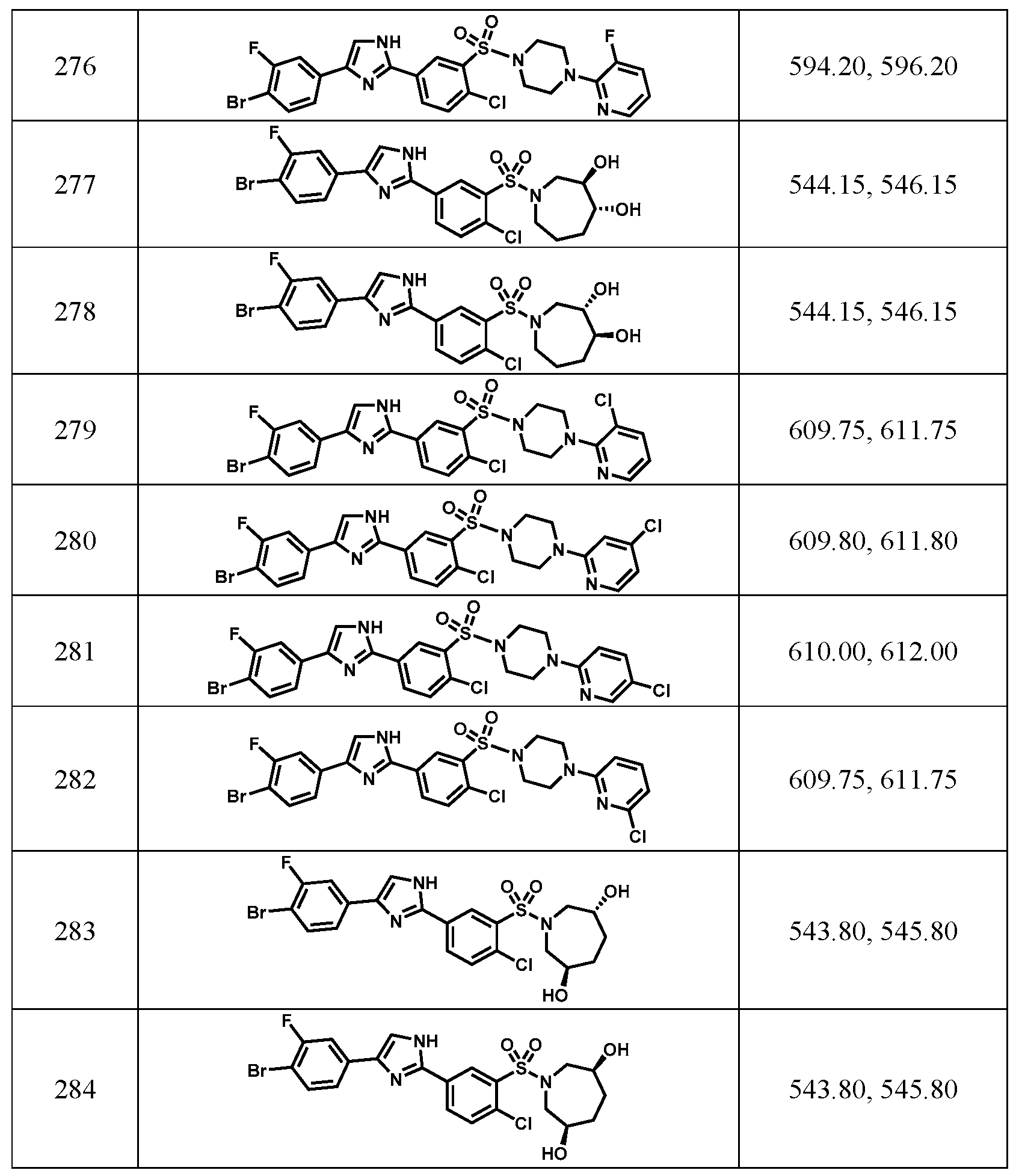
BIOLOGICAL ACTIVITY
Methods: HepAD38 cells are maintained as previously reported (Ladner et al, Antimicrob. Agents Chemother.1997, 4, 1715). Briefly, cells are passaged upon attaining 5 confluency in DMEM/F12 media in the presence of 10% FBS, Penn/Strep, 250 ^g/mL G418, and 1 ug/ml tetracycline. Novel compounds are screened by first washing cells three times with PBS to remove tetracycline, and plating in 96 well plates at 35,000 cells/well. Compounds dissolved in DMSO are then diluted 1:200 into wells containing cells. Five days after compound addition, material is harvested for analysis. For an
extended 8 day analysis, cells are plated and treated as described above, but media and compound are refreshed on d2 and d5 post initial treatment.
On harvest day, virion DNA is obtained by lysing with Sidestep Lysis and Stabilization Buffer and then quantified via quantitative real time PCR. Commercially 5 available ELISA kits are used to quantitate the viral proteins HBsAg (Alpco) or HbeAg (US Biological) by following the manufacturer’s recommended protocol after diluting samples to match the linear range of their respective assays. Irrespective of readout, compound concentrations that reduce viral product accumulation in the cell lysates or supernatants by 50% relative to no drug controls (EC50) are reported; EC50 ranges are as 10 follows: A < 1 ^M; B 1-10 ^M; C > 10 ^M.
Compound toxicity is evaluated by seeding cells at 15,000 cells/well and treating with compound as described above. Three days after compound addition, cells are treated with ATPLite reagent and compound concentrations that reduce total ATP levels in wells by 50% relative to no drug controls (CC50) are reported; CC50 ranges are as follows: A > 15 30 ^M; B 10-30 ^M; C < 10 ^M.
Table 1 Summary of Activities

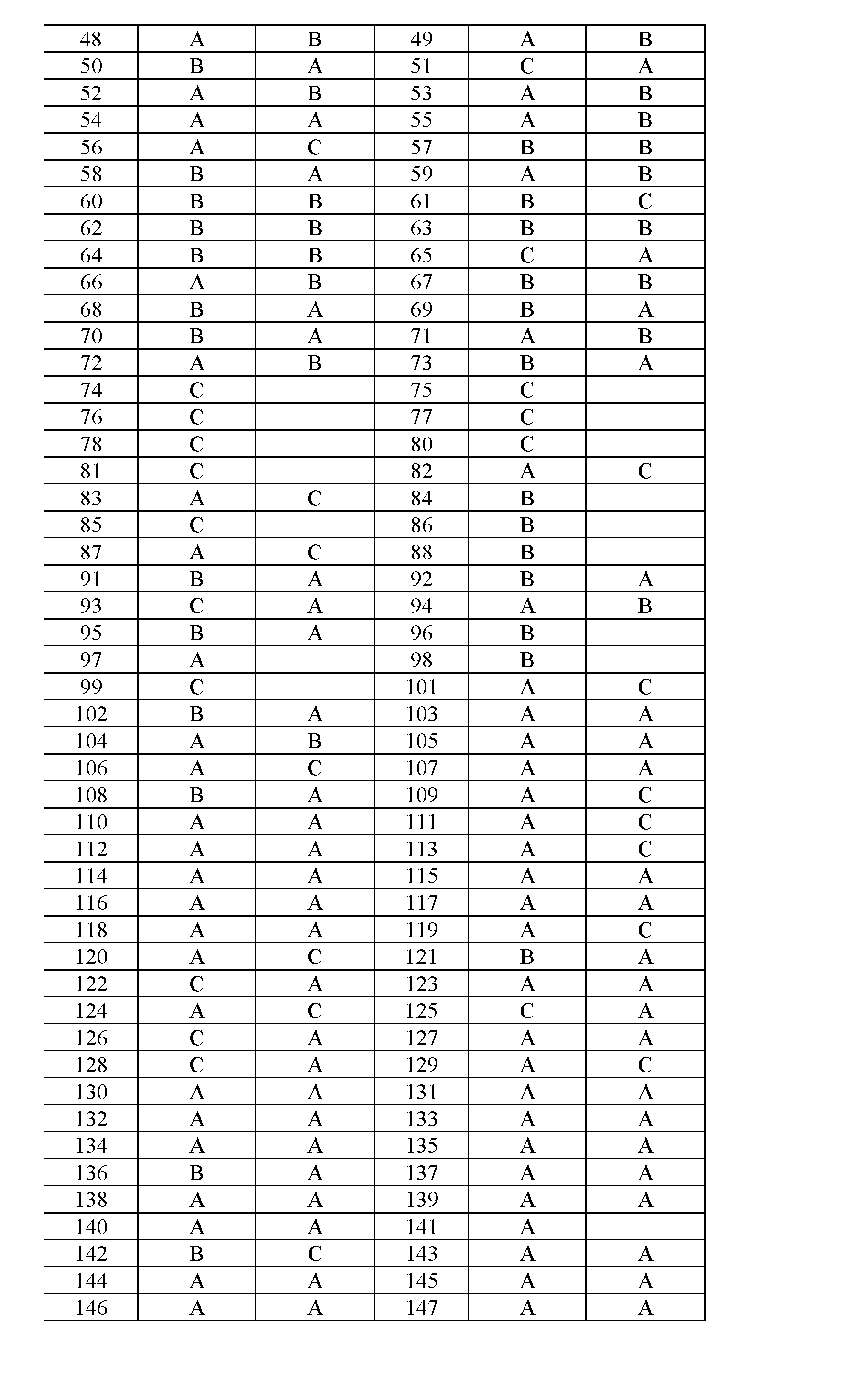


e t s nventon as een partcuary sown an escr e wt reerences to preferred embodiments thereof, it will be understood by those skilled in the art that various changes in form and details may be made therein without departing from the scope of the 5 invention encompassed by the appended claims.
Claims
1. A compound represented by Formula (I):
5 ,
or a pharmaceutically acceptable salt thereof, wherein:
X and Y are each independently selected from optionally substituted aryl or optionally substituted heteroaryl;
A is an optionally substituted azole group;
10 alternatively, A and X are taken together to form an optionally substituted fused bicyclic azole group; where said fused bicyclic azole group is connected to Y group via the 5-membered azole moiety;
alternatively, A and Y are taken together to form an optionally substituted fused bicyclic azole group; where said fused bicyclic azole group is connected to X group via 15 the 5-membered azole moiety;
Z is–S(O)2-,–C(O)-, or -C(O)C(O)-;
L is -NR2- or -CR1R2-; and
R1 and R2 at each occurrence are independently selected from the group of consisting of hydrogen, optionally substituted -C1-C8 alkyl, optionally substituted -C2-C8 20 alkenyl, optionally substituted -C2-C8 alkynyl, optionally substituted -C3-C8 cycloalkyl, optionally substituted -C3-C8 cycloalkenyl, optionally substituted 3- to 8-membered heterocyclic, optionally substituted aryl and optionally substituted heteroaryl; or alternatively, R1 and R2 are taken together with the atom to which they are attached to form an optionally substituted C3-C12 cycloalkyl, optionally substituted -C3-C12 cycloalkenyl, or 25 an optionally substituted 3- to 12-membered heterocyclic.
2. The compound of claim 1, wherein A is selected from the following:
,

30 wherein each of the above shown azole group is optionally substituted and may be
connected to group X and Y through either carbon or nitrogen.
3. The compound of claim 1, represented by Formula (IIa) or (IIb), or a
pharmaceutically acceptable salt thereof:
,
5 wher
 , , 11, 12 R11 at each
occurrence is independently selected from the groups consisting of hydrogen, optionally substituted -C1-C6 alkyl, and optionally substituted–C3-C8 cycloalkyl; R12 at each occurrence is independently selected from the groups consisting of hydrogen, halo, -CN, - NO2, optionally substituted -C1-C6 alkyl, optionally substituted -C1-C6 alkoxy, and 10 optionally substituted–C3-C8 cycloalkyl; and X, Y, R1 and R2 are as defined in claim 1.
4. The compound of claim 1, represented by Formula (IIa-1), (IIa-2), (IIa-3), (IIb- 1), (IIb-2) or (IIb-3), or a pharmaceutically acceptable salt thereof:
,

15 wherein s or 12; 11 a eac occurrence s n epen en y selected from the groups consisting of hydrogen, optionally substituted -C1-C6 alkyl, and optionally substituted–C3-C8 cycloalkyl; R12 at each occurrence is independently selected from the groups consisting of hydrogen, halo, -CN, -NO2, optionally substituted -C1-C6 alkyl, optionally substituted -C1-C6 alkoxy, and optionally substituted–C3-C8 cycloalkyl; and X, 20 Y, R1 and R2 are as defined in claim 1.
5. The compound of claim 1, represented by (IIa-a), (IIa-b), (IIa-c), (IIb-a), (IIb-b) or (IIb-c), or a pharmaceutically acceptable salt thereof:
,
 or 4; R12 5 at each occurrence is independently selected from the groups consisting of hydrogen, halo, -CN, -NO2, optionally substituted -C1-C6 alkyl, optionally substituted -C1-C6 alkoxy, and optionally substituted–C3-C8 cycloalkyl; R14 at each occurrence is independently selected from the groups consisting of hydrogen, hydroxy, protected hydroxy, halo, -CN, -NO2, amino, protected amino, optionally substituted -C1-C6 alkyl, optionally substituted–C2-C8 10 alkenyl, optionally substituted–C2-C8 alkynyl, optionally substituted–C3-C8 cycloalkyl, optionally substituted 3- to 8-membered heterocyclic, optionally substituted -C1-C6 alkoxy, -C(O)2-C1-C6 alkyl, -C(O)NH-C1-C6 alkyl, and -C(O)-C1-C6 alkyl; R1 is selected from the group consisting of -C1-C8 alkyl, -C3-C8 cycloalkyl, C3-C8 cycloalkenyl and 3- to 8-membered heterocyclic, wherein each of said -C1-C8 alkyl, -C3-C8 cycloalkyl, C3-C8 15 cycloalkenyl, or 3- to 8-membered heterocyclic is optionally substituted with one, two or three groups independently selected from the group consisting of hydrogen, halogen, hydroxy, protected hydroxy, -CN, -NO2, amino, protected amino, optionally substituted - C1-C6 alkyl, optionally substituted–C2-C8 alkenyl, optionally substituted–C2-C8 alkynyl, optionally substituted–C3-C8 cycloalkyl, optionally substituted 3- to 8-membered
20 heterocyclic, optionally substituted -C1-C6 alkoxy, optionally substituted -C(O)2-C1-C6 alkyl, optionally substituted -C(O)NH-C1-C6 alkyl, optionally substituted -C(O)-C1-C6 alkyl, and–O-(hydroxy prodrug group); R2 at each occurrence is independently selected from the group of consisting of hydrogen, optionally substituted -C1-C8 alkyl, optionally substituted -C2-C8 alkenyl, optionally substituted -C2-C8 alkynyl, optionally substituted
-C3-C8 cycloalkyl, optionally substituted -C3-C8 cycloalkenyl, optionally substituted 3- to 8-membered heterocyclic, optionally substituted aryl and optionally substituted heteroaryl; or R1 and R2 are taken together with the nitrogen atom to which they are attached to form a 3- to 12-membered heterocyclic, which is optionally substituted with one, two or three 5 groups independently selected from the group consisting of hydrogen, halogen, hydroxy, protected hydroxy, -CN, -NO2, amino, protected amino, optionally substituted -C1-C6 alkyl, optionally substituted–C2-C8 alkenyl, optionally substituted–C2-C8 alkynyl, optionally substituted–C3-C8 cycloalkyl, optionally substituted 3- to 8-membered heterocyclic, optionally substituted -C1-C6 alkoxy, optionally substituted -C(O)2-C1-C6 10 alkyl, optionally substituted -C(O)NH-C1-C6 alkyl, optionally substituted -C(O)-C1-C6 alkyl, and–O-(hydroxy prodrug group).
6. The compound of claim 1, represented by Formula (IVa), (IVb), (IVc), (IVd), (IVe), (IVf,), (IVg), or (IVh), or a pharmaceutically acceptable salt thereof:
15

wherein V is N or CR12; m at each occurrence is independently 0, 1, 2, 3 or 4; R12 at each occurrence is independently selected from the group consisting of hydrogen, halo, - CN, -NO2, optionally substituted -C1-C6 alkyl, optionally substituted -C1-C6 alkoxy, and 20 optionally substituted–C3-C8 cycloalkyl; R14 at each occurrence is independently selected from the group consisting of hydrogen, hydroxy, protected hydroxy, halo, -CN, -NO2,
amino, protected amino, optionally substituted -C1-C6 alkyl, optionally substituted–C2-C8 alkenyl, optionally substituted–C2-C8 alkynyl, optionally substituted–C3-C8 cycloalkyl, optionally substituted 3- to 8-membered heterocyclic, optionally substituted -C1-C6 alkoxy, -C(O)2-C1-C6 alkyl, -C(O)NH-C1-C6 alkyl, and -C(O)-C1-C6 alkyl; u at each 5 occurrence is same or different and independently selected from 1, 2, and 3; n at each occurrence is independently selected from 0, 1, 2, and 3; T at each occurrence is independently selected from C(R10) or N; E at each occurrence is independently selected from -C(R10)2-, -N(R10)-, O or S; R10 at each occurrence is independently selected from the group consisting of hydrogen, halo, hydroxy, protected hydroxy, -CN, -NO2, amino, 10 protected amino, optionally substituted -C1-C6 alkyl, optionally substituted–C2-C8
alkenyl, optionally substituted–C2-C8 alkynyl, optionally substituted–C3-C8 cycloalkyl, optionally substituted 3- to 8-membered heterocyclic, optionally substituted -C1-C6 alkoxy, optionally substituted -C(O)2-C1-C6 alkyl, optionally substituted -C(O)NH-C1-C6 alkyl, optionally substituted -C(O)-C1-C6 alkyl, and–O-(hydroxy prodrug group).
15
7. The compound of claim 5 or 6, represented by Formula (IIa-a), (IIa-b), (IIa-c), (IIb-a), (IIb-b), (IIb-c), (IVa), (IVb), (IVc), (IVd), (IVe), (IVf,), (IVg), or (IVh), or a pharmaceutically acceptable salt thereof, wherein the hydroxy prodrug group is phosphate, sulfamate, or an acyl group derived from an amino acid.
20
8. The compound of claim 1, selected from the compounds set forth below or a pharmaceutically acceptable salt thereof:
Compound Structure


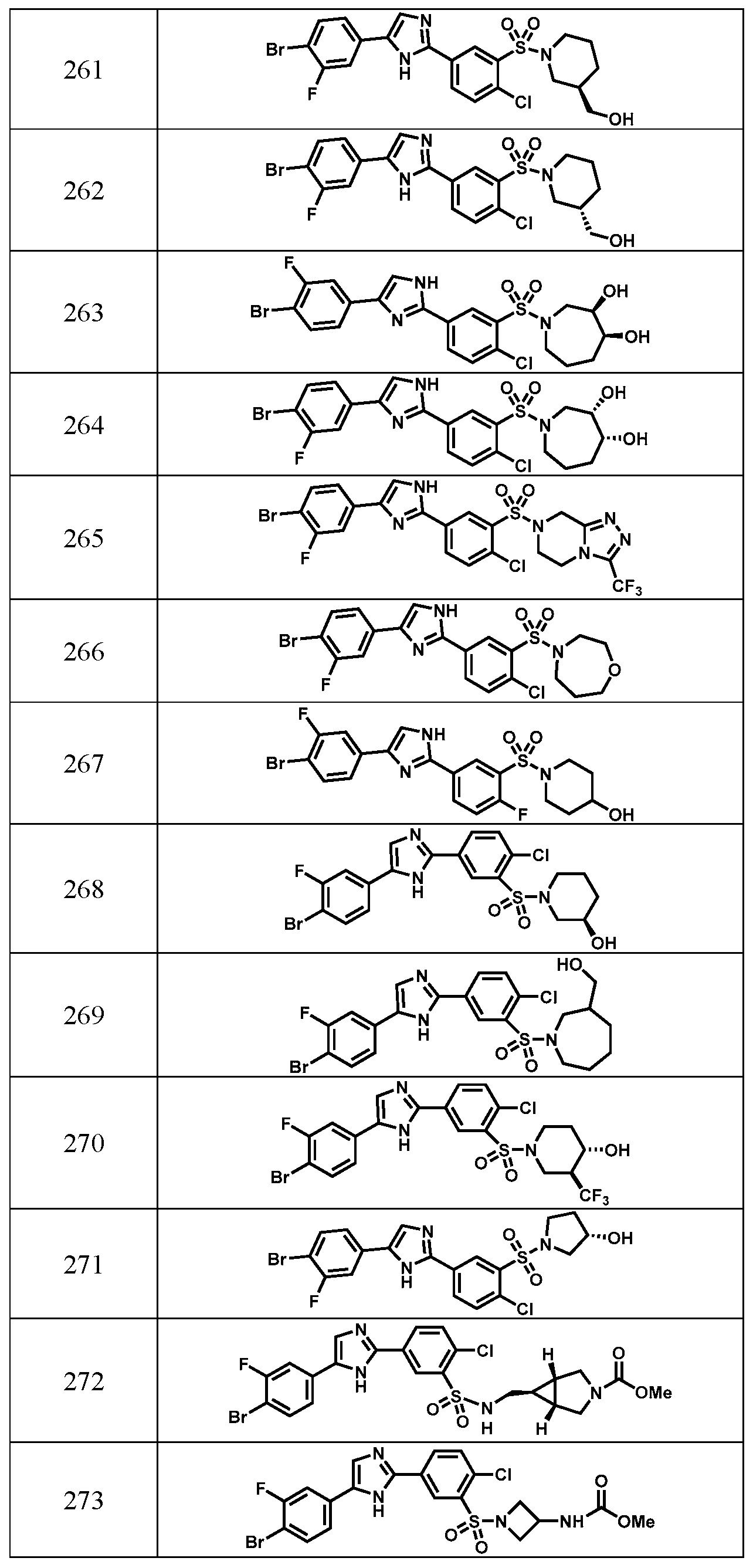
F H O

.

9. A pharmaceutical composition comprising a compound according to claim 1 or a pharmaceutically acceptable salt thereof, in combination with a pharmaceutically
5 acceptable carrier or excipient.
10. A method of treating or preventing an HBV infection in an individual in need thereof, comprising administering to the individual a therapeutically effective amount of a compound or a combination of compounds of claim 1 or a pharmaceutically acceptable 10 salt thereof.
11. The method of claim 10, further comprising administering to the individual at least one additional therapeutic agent selected from the group consisting of a HBV polymerase inhibitor, interferon, viral entry inhibitor, viral maturation inhibitor,15 literature-described capsid assembly modulator, reverse transcriptase inhibitor, TLR- agonist, inducer of cellular viral RNA sensor, therapeutic vaccine, and agents of distinct or unknown mechanism, and a combination thereof.
12. The method of claim 11, wherein the compound and the at least one additional 20 therapeutic agent are co-formulated.
13. The method of claim 11, wherein the compound and the at least one additional therapeutic agent are co-administered.
14. The method of claim 11, wherein administering the compound allows for administering of the at least one additional therapeutic agent at a lower dose or frequency as compared to the administering of the at least one additional therapeutic agent alone that is required to achieve similar results in prophylactically treating an HBV infection in an 5 individual in need thereof.
15. The method of claim 11, wherein before administering the therapeutically effective amount of the compound of Formula (I), the individual is known to be refractory to a compound selected from the group consisting of a HBV polymerase inhibitor, interferon, 10 viral entry inhibitor, viral maturation inhibitor, distinct capsid assembly modulator,
inducer of cellular viral RNA sensor, therapeutic vaccine, antiviral compounds of distinct or unknown mechanism, and combination thereof.
16. The method of claim 11, wherein the administering of the compound reduces viral 15 load in the individual to a greater extent compared to the administering of a compound selected from the group consisting of a HBV polymerase inhibitor, interferon, viral entry inhibitor, viral maturation inhibitor, distinct capsid assembly modulator, inducer of cellular viral RNA sensor, therapeutic vaccine, antiviral compounds of distinct or unknown mechanism, and combination thereof.
20
17. The method of claim 11, wherein the administering of the compound causes a lower incidence of viral mutation and/or viral resistance than the administering of a compound selected from the group consisting of a HBV polymerase inhibitor, interferon, viral entry inhibitor, viral maturation inhibitor, distinct capsid assembly modulator, 25 inducer of cellular viral RNA sensor, therapeutic vaccine, antiviral compounds of
distinct or unknown mechanism, and combination thereof.
Applications Claiming Priority (2)
| Application Number | Priority Date | Filing Date | Title |
|---|---|---|---|
| US201562141668P | 2015-04-01 | 2015-04-01 | |
| US62/141,668 | 2015-04-01 |
Publications (1)
| Publication Number | Publication Date |
|---|---|
| WO2016161268A1 true WO2016161268A1 (en) | 2016-10-06 |
Family
ID=57007368
Family Applications (1)
| Application Number | Title | Priority Date | Filing Date |
|---|---|---|---|
| PCT/US2016/025530 Ceased WO2016161268A1 (en) | 2015-04-01 | 2016-04-01 | Hepatitis b antviral agents |
Country Status (2)
| Country | Link |
|---|---|
| US (1) | US10442788B2 (en) |
| WO (1) | WO2016161268A1 (en) |
Cited By (67)
| Publication number | Priority date | Publication date | Assignee | Title |
|---|---|---|---|---|
| US9873671B2 (en) | 2014-01-16 | 2018-01-23 | Novira Therapeutics, Inc. | Azepane derivatives and methods of treating hepatitis B infections |
| US9884818B2 (en) | 2013-05-17 | 2018-02-06 | Janssen Sciences Ireland Uc | Sulphamoylpyrrolamide derivatives and the use thereof as medicaments for the treatment of hepatitis B |
| US9895349B2 (en) | 2013-04-03 | 2018-02-20 | Janssen Sciences Ireland Us | N-phenyl-carboxamide derivatives and the use thereof as medicaments for the treatment of hepatitis B |
| US10071961B2 (en) | 2013-10-23 | 2018-09-11 | Janssen Sciences Ireland Uc | Carboxamide derivatives and the use thereof as medicaments for the treatment of hepatitis B |
| US10077239B2 (en) | 2015-09-29 | 2018-09-18 | Novira Therapeutics, Inc. | Crystalline forms of a hepatitis B antiviral agent |
| US10125094B2 (en) | 2013-02-28 | 2018-11-13 | Janssen Sciences Ireland Uc | Sulfamoyl-arylamides and the use thereof as medicaments for the treatment of hepatitis B |
| US10160743B2 (en) | 2013-05-17 | 2018-12-25 | Janssen Sciences Ireland Uc | Sulphamoylthiophenamide derivatives and the use thereof as medicaments for the treatment of hepatitis B |
| US10196376B2 (en) | 2011-12-21 | 2019-02-05 | Novira Therapeutics, Inc. | Hepatitis B antiviral agents |
| US10213420B2 (en) | 2014-02-05 | 2019-02-26 | Novira Therapeutics, Inc. | Combination therapy for treatment of HBV infections |
| WO2019086141A1 (en) | 2017-11-02 | 2019-05-09 | Aicuris Gmbh & Co. Kg | Novel, highly active amino-thiazole substituted indole-2-carboxamides active against the hepatitis b virus (hbv) |
| WO2019086142A1 (en) | 2017-11-02 | 2019-05-09 | Aicuris Gmbh & Co. Kg | Novel, highly active pyrazolo-piperidine substituted indole-2-carboxamides active against the hepatitis b virus (hbv) |
| US10392349B2 (en) | 2014-01-16 | 2019-08-27 | Novira Therapeutics, Inc. | Azepane derivatives and methods of treating hepatitis B infections |
| WO2019165374A1 (en) | 2018-02-26 | 2019-08-29 | Gilead Sciences, Inc. | Substituted pyrrolizine compounds as hbv replication inhibitors |
| WO2019193533A1 (en) | 2018-04-06 | 2019-10-10 | Institute Of Organic Chemistry And Biochemistry Ascr, V.V.I. | 2'2'-cyclic dinucleotides |
| WO2019193542A1 (en) | 2018-04-06 | 2019-10-10 | Institute Of Organic Chemistry And Biochemistry Ascr, V.V.I. | 2'3'-cyclic dinucleotides |
| WO2019195181A1 (en) | 2018-04-05 | 2019-10-10 | Gilead Sciences, Inc. | Antibodies and fragments thereof that bind hepatitis b virus protein x |
| WO2019193543A1 (en) | 2018-04-06 | 2019-10-10 | Institute Of Organic Chemistry And Biochemistry Ascr, V.V.I. | 3'3'-cyclic dinucleotides |
| US10441589B2 (en) | 2016-04-15 | 2019-10-15 | Novira Therapeutics, Inc. | Combinations and methods comprising a capsid assembly inhibitor |
| WO2019200247A1 (en) | 2018-04-12 | 2019-10-17 | Precision Biosciences, Inc. | Optimized engineered meganucleases having specificity for a recognition sequence in the hepatitis b virus genome |
| US10450270B2 (en) | 2013-07-25 | 2019-10-22 | Janssen Sciences Ireland Uc | Glyoxamide substituted pyrrolamide derivatives and the use thereof as medicaments for the treatment of hepatitis B |
| WO2019211799A1 (en) | 2018-05-03 | 2019-11-07 | Institute Of Organic Chemistry And Biochemistry Ascr, V.V.I. | 2'3'-cyclic dinucleotide analogue comprising a cyclopentanyl modified nucleotide |
| US10537580B2 (en) | 2015-03-19 | 2020-01-21 | Novira Therapeutics, Inc. | Azocane and azonane derivatives and methods of treating hepatitis B infections |
| WO2020028097A1 (en) | 2018-08-01 | 2020-02-06 | Gilead Sciences, Inc. | Solid forms of (r)-11-(methoxymethyl)-12-(3-methoxypropoxy)-3,3-dimethyl-8-0x0-2,3,8,13b-tetrahydro-1h-pyrido[2,1-a]pyrrolo[1,2-c] phthalazine-7-c arboxylic acid |
| WO2020089452A1 (en) | 2018-11-02 | 2020-05-07 | Aicuris Gmbh & Co. Kg | Novel urea 6,7-dihydro-4h-pyrazolo[4,3-c]pyridines active against the hepatitis b virus (hbv) |
| WO2020092621A1 (en) | 2018-10-31 | 2020-05-07 | Gilead Sciences, Inc. | Substituted 6-azabenzimidazole compounds as hpk1 inhibitors |
| WO2020089456A1 (en) | 2018-11-02 | 2020-05-07 | Aicuris Gmbh & Co. Kg | Novel urea 6,7-dihydro-4h-pyrazolo[1,5-a]pyrazines active against the hepatitis b virus (hbv) |
| WO2020089455A1 (en) | 2018-11-02 | 2020-05-07 | Aicuris Gmbh & Co. Kg | 6,7-dihydro-4h-pyrazolo[1,5-a]pyrazine indole-2-carboxamides active against the hepatitis b virus (hbv) |
| WO2020089460A1 (en) | 2018-11-02 | 2020-05-07 | Aicuris Gmbh & Co. Kg | Novel urea 6,7-dihydro-4h-thiazolo[5,4-c]pyridines active against the hepatitis b virus (hbv) |
| WO2020092528A1 (en) | 2018-10-31 | 2020-05-07 | Gilead Sciences, Inc. | Substituted 6-azabenzimidazole compounds having hpk1 inhibitory activity |
| WO2020089453A1 (en) | 2018-11-02 | 2020-05-07 | Aicuris Gmbh & Co. Kg | Novel 6,7-dihydro-4h-pyrazolo[1,5-a]pyrazine indole-2-carboxamides active against the hepatitis b virus (hbv) |
| WO2020089459A1 (en) | 2018-11-02 | 2020-05-07 | Aicuris Gmbh & Co. Kg | Novel urea 6,7-dihydro-4h-pyrazolo[1,5-a]pyrazines active against the hepatitis b virus (hbv) |
| US10662416B2 (en) | 2016-10-14 | 2020-05-26 | Precision Biosciences, Inc. | Engineered meganucleases specific for recognition sequences in the hepatitis B virus genome |
| US10676429B2 (en) | 2012-08-28 | 2020-06-09 | Janssen Sciences Ireland Uc | Sulfamoyl-arylamides and the use thereof as medicaments for the treatment of hepatitis B |
| WO2020178770A1 (en) | 2019-03-07 | 2020-09-10 | Institute Of Organic Chemistry And Biochemistry Ascr, V.V.I. | 3'3'-cyclic dinucleotides and prodrugs thereof |
| WO2020178769A1 (en) | 2019-03-07 | 2020-09-10 | Institute Of Organic Chemistry And Biochemistry Ascr, V.V.I. | 2'3'-cyclic dinucleotides and prodrugs thereof |
| WO2020178768A1 (en) | 2019-03-07 | 2020-09-10 | Institute Of Organic Chemistry And Biochemistry Ascr, V.V.I. | 3'3'-cyclic dinucleotide analogue comprising a cyclopentanyl modified nucleotide as sting modulator |
| WO2020214652A1 (en) | 2019-04-17 | 2020-10-22 | Gilead Sciences, Inc. | Solid forms of a toll-like receptor modulator |
| WO2020214663A1 (en) | 2019-04-17 | 2020-10-22 | Gilead Sciences, Inc. | Solid forms of a toll-like receptor modulator |
| WO2020221824A1 (en) | 2019-04-30 | 2020-11-05 | Aicuris Gmbh & Co. Kg | Novel indolizine-2-carboxamides active against the hepatitis b virus (hbv) |
| WO2020221811A1 (en) | 2019-04-30 | 2020-11-05 | Aicuris Gmbh & Co. Kg | Novel oxalyl piperazines active against the hepatitis b virus (hbv) |
| WO2020221826A1 (en) | 2019-04-30 | 2020-11-05 | Aicuris Gmbh & Co. Kg | Novel indole-2-carboxamides active against the hepatitis b virus (hbv) |
| WO2020221816A1 (en) | 2019-04-30 | 2020-11-05 | Aicuris Gmbh & Co. Kg | Novel phenyl and pyridyl ureas active against the hepatitis b virus (hbv) |
| WO2020237025A1 (en) | 2019-05-23 | 2020-11-26 | Gilead Sciences, Inc. | Substituted exo-methylene-oxindoles which are hpk1/map4k1 inhibitors |
| US10875876B2 (en) | 2015-07-02 | 2020-12-29 | Janssen Sciences Ireland Uc | Cyclized sulfamoylarylamide derivatives and the use thereof as medicaments for the treatment of hepatitis B |
| WO2020263830A1 (en) | 2019-06-25 | 2020-12-30 | Gilead Sciences, Inc. | Flt3l-fc fusion proteins and methods of use |
| WO2021034804A1 (en) | 2019-08-19 | 2021-02-25 | Gilead Sciences, Inc. | Pharmaceutical formulations of tenofovir alafenamide |
| US10966999B2 (en) | 2017-12-20 | 2021-04-06 | Institute Of Organic Chemistry And Biochemistry Ascr, V.V.I. | 3′3′ cyclic dinucleotides with phosphonate bond activating the sting adaptor protein |
| WO2021067181A1 (en) | 2019-09-30 | 2021-04-08 | Gilead Sciences, Inc. | Hbv vaccines and methods treating hbv |
| US10973801B2 (en) | 2018-03-14 | 2021-04-13 | Janssen Sciences Ireland Unlimited Company | Capsid assembly modulator dosing regimen |
| WO2021113765A1 (en) | 2019-12-06 | 2021-06-10 | Precision Biosciences, Inc. | Optimized engineered meganucleases having specificity for a recognition sequence in the hepatitis b virus genome |
| US11078193B2 (en) | 2014-02-06 | 2021-08-03 | Janssen Sciences Ireland Uc | Sulphamoylpyrrolamide derivatives and the use thereof as medicaments for the treatment of hepatitis B |
| US11096931B2 (en) | 2019-02-22 | 2021-08-24 | Janssen Sciences Ireland Unlimited Company | Amide derivatives useful in the treatment of HBV infection or HBV-induced diseases |
| WO2021188959A1 (en) | 2020-03-20 | 2021-09-23 | Gilead Sciences, Inc. | Prodrugs of 4'-c-substituted-2-halo-2'-deoxyadenosine nucleosides and methods of making and using the same |
| US11203610B2 (en) | 2017-12-20 | 2021-12-21 | Institute Of Organic Chemistry And Biochemistry Ascr, V.V.I. | 2′3′ cyclic dinucleotides with phosphonate bond activating the sting adaptor protein |
| WO2022031894A1 (en) | 2020-08-07 | 2022-02-10 | Gilead Sciences, Inc. | Prodrugs of phosphonamide nucleotide analogues and their pharmaceutical use |
| WO2022087149A2 (en) | 2020-10-22 | 2022-04-28 | Gilead Sciences, Inc. | Interleukin-2-fc fusion proteins and methods of use |
| US11491148B2 (en) | 2019-05-06 | 2022-11-08 | Janssen Sciences Ireland Unlimited Company | Amide derivatives useful in the treatment of HBV infection or HBV-induced diseases |
| WO2022241134A1 (en) | 2021-05-13 | 2022-11-17 | Gilead Sciences, Inc. | COMBINATION OF A TLR8 MODULATING COMPOUND AND ANTI-HBV siRNA THERAPEUTICS |
| WO2022271659A1 (en) | 2021-06-23 | 2022-12-29 | Gilead Sciences, Inc. | Diacylglyercol kinase modulating compounds |
| WO2022271684A1 (en) | 2021-06-23 | 2022-12-29 | Gilead Sciences, Inc. | Diacylglyercol kinase modulating compounds |
| WO2022271650A1 (en) | 2021-06-23 | 2022-12-29 | Gilead Sciences, Inc. | Diacylglyercol kinase modulating compounds |
| WO2022271677A1 (en) | 2021-06-23 | 2022-12-29 | Gilead Sciences, Inc. | Diacylglyercol kinase modulating compounds |
| US11952387B2 (en) | 2018-08-21 | 2024-04-09 | Kyorin Pharmaceutical Co., Ltd | Bicyclic heteroaromatic ring derivative |
| WO2025240244A1 (en) | 2024-05-13 | 2025-11-20 | Gilead Sciences, Inc. | Combination therapies comprising bulevirtide and lonafarnib for use in the treatment of hepatitis d virus infection |
| WO2025240242A1 (en) | 2024-05-13 | 2025-11-20 | Gilead Sciences, Inc. | Combination therapies with ribavirin |
| WO2025240246A1 (en) | 2024-05-13 | 2025-11-20 | Gilead Sciences, Inc. | Combination therapies with ribavirin |
| WO2025240243A1 (en) | 2024-05-13 | 2025-11-20 | Gilead Sciences, Inc. | Combination therapies with bulevirtide and an inhibitory nucleic acid targeting hepatitis b virus |
Families Citing this family (24)
| Publication number | Priority date | Publication date | Assignee | Title |
|---|---|---|---|---|
| US10442788B2 (en) | 2015-04-01 | 2019-10-15 | Enanta Pharmaceuticals, Inc. | Hepatitis B antiviral agents |
| WO2016183266A1 (en) | 2015-05-13 | 2016-11-17 | Enanta Pharmaceuticals, Inc. | Ehpatitis b antiviral agents |
| US10179131B2 (en) | 2015-07-13 | 2019-01-15 | Enanta Pharmaceuticals, Inc. | Hepatitis B antiviral agents |
| US10301255B2 (en) | 2015-07-22 | 2019-05-28 | Enanta Pharmaceuticals, Inc. | Hepatitis B antiviral agents |
| WO2017136403A1 (en) | 2016-02-02 | 2017-08-10 | Enanta Pharmaceuticals, Inc. | Hepatitis b antiviral agents |
| KR102398439B1 (en) | 2016-03-07 | 2022-05-16 | 이난타 파마슈티칼스, 인코포레이티드 | Hepatitis B antiviral drugs |
| CA3028228A1 (en) | 2016-06-10 | 2017-12-14 | Enanta Pharmaceuticals, Inc. | Hepatitis b antiviral agents |
| SG11202001685TA (en) | 2017-08-28 | 2020-03-30 | Enanta Pharm Inc | Hepatitis b antiviral agents |
| WO2019113175A1 (en) | 2017-12-06 | 2019-06-13 | Enanta Pharmaceuticals, Inc. | Hepatitis b antiviral agents |
| WO2019113173A1 (en) | 2017-12-06 | 2019-06-13 | Enanta Pharmaceuticals, Inc. | Hepatitis b antiviral agents |
| US11058678B2 (en) | 2018-01-22 | 2021-07-13 | Enanta Pharmaceuticals, Inc. | Substituted heterocycles as antiviral agents |
| WO2019191166A1 (en) | 2018-03-29 | 2019-10-03 | Enanta Pharmaceuticals, Inc. | Hepatitis b antiviral agents |
| JP2022500466A (en) | 2018-09-21 | 2022-01-04 | エナンタ ファーマシューティカルズ インコーポレイテッド | Functionalized heterocycle as an antiviral agent |
| IL283190B2 (en) | 2018-11-21 | 2025-08-01 | Enanta Pharm Inc | Heterocyclics that function as antibiotic agents |
| WO2020247444A1 (en) | 2019-06-03 | 2020-12-10 | Enanta Pharmaceuticals, Inc, | Hepatitis b antiviral agents |
| WO2020247561A1 (en) | 2019-06-04 | 2020-12-10 | Enanta Pharmaceuticals, Inc, | Hepatitis b antiviral agents |
| WO2020247575A1 (en) | 2019-06-04 | 2020-12-10 | Enanta Pharmaceuticals, Inc. | Hepatitis b antiviral agents |
| US11738019B2 (en) | 2019-07-11 | 2023-08-29 | Enanta Pharmaceuticals, Inc. | Substituted heterocycles as antiviral agents |
| US11236108B2 (en) | 2019-09-17 | 2022-02-01 | Enanta Pharmaceuticals, Inc. | Functionalized heterocycles as antiviral agents |
| CN112574176B (en) * | 2019-09-27 | 2024-03-15 | 隆泰申医药科技(南京)有限公司 | Heteroaryl compound and application thereof |
| WO2021188414A1 (en) | 2020-03-16 | 2021-09-23 | Enanta Pharmaceuticals, Inc. | Functionalized heterocyclic compounds as antiviral agents |
| WO2023023532A2 (en) * | 2021-08-18 | 2023-02-23 | Chemocentryx, Inc. | Aryl sulfonyl (hydroxy) piperidines as ccr6 inhibitors |
| AU2022328634A1 (en) | 2021-08-18 | 2024-02-22 | Chemocentryx, Inc. | Aryl sulfonyl compounds as ccr6 inhibitors |
| CN119053597A (en) * | 2022-03-10 | 2024-11-29 | 华辉安健(北京)生物科技有限公司 | Hepatitis B antiviral agent |
Citations (5)
| Publication number | Priority date | Publication date | Assignee | Title |
|---|---|---|---|---|
| US3975532A (en) * | 1973-06-14 | 1976-08-17 | Ici United States Inc. | Hexahydro-1H-furo(3,4-c) pyrrole compounds for treating pain |
| US20110165118A1 (en) * | 2007-11-16 | 2011-07-07 | Schering Corporation | 3-heterocyclic substituted indole derivatives and methods of use thereof |
| US20120009142A1 (en) * | 2004-07-14 | 2012-01-12 | Ptc Therapeutics, Inc. | Methods for treating hepatitis c |
| WO2013130703A2 (en) * | 2012-02-29 | 2013-09-06 | Institute For Hepatitis And Virus Research | Binhibitors of hepatitis b virus convalently closed circular dna formation and their method of use |
| US20130251673A1 (en) * | 2011-12-21 | 2013-09-26 | Novira Therapeutics, Inc. | Hepatitis b antiviral agents |
Family Cites Families (62)
| Publication number | Priority date | Publication date | Assignee | Title |
|---|---|---|---|---|
| US115280A (en) * | 1871-05-30 | Improvement in traction-engines | ||
| US792901A (en) * | 1905-02-01 | 1905-06-20 | H W Johnsmanville Company | Gasket. |
| US950067A (en) * | 1905-05-26 | 1910-02-22 | Herbert Samuel Elworthy | Manufacture of gas for illuminating, heating, or power purposes. |
| US1026741A (en) * | 1909-01-19 | 1912-05-21 | American Car & Foundry Co | Tandem-spring draft-rigging. |
| US1269203A (en) * | 1915-10-16 | 1918-06-11 | Corona Typewriter Co Inc | Type-writing machine. |
| US1350251A (en) * | 1919-07-23 | 1920-08-17 | Armour Robert | Trick pocket-knife |
| US3385756A (en) | 1965-06-07 | 1968-05-28 | Monsanto Co | Methods of destroying insects with nitro-substituted salicylanilides |
| DE2853220A1 (en) | 1978-12-09 | 1980-07-03 | Hoechst Ag | NEW AMINO-PYRIMIDINE CARBANILIDES, METHOD FOR THE PRODUCTION THEREOF, MEDICINAL PRODUCTS CONTAINING THESE COMPOUNDS, AND THEIR USE |
| US5656644A (en) * | 1994-07-20 | 1997-08-12 | Smithkline Beecham Corporation | Pyridyl imidazoles |
| JP2609434B2 (en) | 1992-11-16 | 1997-05-14 | ボリソビッチ レオニドフ,ニコライ | Antibacterial interferon-inducing drug |
| GB9315595D0 (en) | 1993-07-28 | 1993-09-08 | Res Inst Medicine Chem | New compounds |
| FR2765577A1 (en) | 1997-07-02 | 1999-01-08 | Hoechst Schering Agrevo Sa | NEW AROMATIC AMIDES, THEIR PREPARATION PROCESS AND THEIR APPLICATION AS PESTICIDES |
| GB9805520D0 (en) | 1998-03-17 | 1998-05-13 | Zeneca Ltd | Chemical compounds |
| DE19817262A1 (en) | 1998-04-18 | 1999-10-21 | Bayer Ag | New dihydropyrimidine derivatives and their corresponding mesomers useful in treatment of hepatitis |
| US6525069B1 (en) | 1998-12-18 | 2003-02-25 | Bristol-Myers Squibb Pharma Co. | N-ureidoalkyl-piperidines as modulators of chemokine receptor activity |
| WO2001000213A1 (en) | 1999-06-30 | 2001-01-04 | Merck & Co., Inc. | Src kinase inhibitor compounds |
| DE10012549A1 (en) | 2000-03-15 | 2001-09-20 | Bayer Ag | New heterocyclic-substituted dihydropyrimidine derivatives useful for treatment of viral infections, especially hepatitis B infections |
| DE10012823A1 (en) | 2000-03-16 | 2001-09-20 | Bayer Ag | New alkyl-6-aminoalkyl-dihydropyrimidine-5-carboxylate derivatives, useful for the treatment of viral, especially hepatitis B, infections |
| DE10013126A1 (en) | 2000-03-17 | 2001-09-20 | Bayer Ag | New 6-aminoalkyl-dihydropyrimidine-5-carboxylate ester derivatives, useful as antiviral agents having strong activity against hepatitis B virus and low cytotoxicity |
| EP1505966A4 (en) | 2002-05-10 | 2006-08-30 | Bristol Myers Squibb Co | 1,1-disubstituted cycloalkyl derivatives as factor xa inhibitors |
| US20040209930A1 (en) | 2002-10-02 | 2004-10-21 | Carboni Joan M. | Synergistic methods and compositions for treating cancer |
| US7232825B2 (en) | 2003-05-02 | 2007-06-19 | Guoqing P Chen | Phenylaminopyrimidine derivatives and methods of use |
| EP1663227A2 (en) | 2003-09-10 | 2006-06-07 | Synta Pharmaceuticals Corporation | Dihydropyridine compounds for treating or preventing metabolic disorders |
| DK1696898T3 (en) | 2003-12-02 | 2016-02-22 | Univ Ohio State Res Found | ZN2 + -CHELATING DESIGN-BASED SHORT-CHAIN FAT ACIDS AS AN UNKNOWN CLASS OF HISTONDEACETYLASE INHIBITORS |
| WO2006033995A2 (en) | 2004-09-16 | 2006-03-30 | Valeant Research And Development | Thiazolidin-4-ones having anti-hepatitis b activity |
| EA200800321A1 (en) | 2005-07-14 | 2008-06-30 | Такеда Сан Диего, Инк. | HISTONDEACETYLASE INHIBITORS |
| CA2620179C (en) * | 2005-08-16 | 2013-10-29 | Icagen, Inc. | Inhibitors of voltage-gated sodium channels |
| US20070219239A1 (en) * | 2006-02-10 | 2007-09-20 | Mjalli Adnan M | Nitrogen-containing heterocycle derivatives, pharmaceutical compositions, and methods of use thereof as antiviral agents |
| CN103739595A (en) | 2006-10-02 | 2014-04-23 | Irm责任有限公司 | Compounds and compositions as protein kinase inhibitors |
| WO2008120759A1 (en) | 2007-03-30 | 2008-10-09 | Japan Tobacco Inc. | Urea compound and use thereof |
| TWI394575B (en) | 2007-07-09 | 2013-05-01 | Golden Biotechnology Corp | Application of Cynanchum auranthone Cyclohexenone Compounds in the Preparation of Drugs for the Suppression of Hepatitis B |
| US8124610B2 (en) | 2007-07-13 | 2012-02-28 | Icagen Inc. | Sodium channel inhibitors |
| ES2527589T3 (en) | 2008-04-24 | 2015-01-27 | Msd K.K. | Long chain fatty acid elongation enzyme inhibitor comprising an arylsulfonyl derivative as active ingredient |
| WO2011143314A1 (en) | 2010-05-11 | 2011-11-17 | Arno Therapeutics, Inc | Compositions and methods for reducing proliferation and viability of lymphoblastoid cells |
| JP5977347B2 (en) | 2011-07-01 | 2016-08-24 | バルーク エス.ブルームバーグ インスティテュート | Sulfamoylbenzamide derivatives as antiviral agents against HBV infection |
| EP2800742B1 (en) | 2012-01-06 | 2016-04-06 | Janssen Sciences Ireland UC | 4,4-disubstituted-1,4-dihydropyrimidines and the use thereof as medicaments for the treatment of hepatitis b |
| ES2575398T3 (en) | 2012-03-31 | 2016-06-28 | F. Hoffmann-La Roche Ag | Novel 4-Methyl-dihydropyrimidines for the treatment and prophylaxis of hepatitis B virus infection |
| US20130267517A1 (en) | 2012-03-31 | 2013-10-10 | Hoffmann-La Roche Inc. | Novel 4-methyl-dihydropyrimidines for the treatment and prophylaxis of hepatitis b virus infection |
| AU2013267209B2 (en) | 2012-06-01 | 2017-02-02 | Baruch S. Blumberg Institute | Modulation of hepatitis B virus cccDNA transcription |
| CN104926808B (en) | 2012-08-24 | 2018-09-14 | 广东东阳光药业有限公司 | Dihydropyrimidines and its application in drug |
| KR102271574B1 (en) | 2012-08-28 | 2021-07-01 | 얀센 사이언시즈 아일랜드 언리미티드 컴퍼니 | Sulfamoyl-arylamides and the use thereof as medicaments for the treatment of hepatitis B |
| CA2881322A1 (en) | 2012-09-10 | 2014-03-13 | F. Hoffmann-La Roche Ag | 6-amino acid heteroaryldihydropyrimidines for the treatment and prophylaxis of hepatitis b virus infection |
| HRP20230162T1 (en) | 2012-10-25 | 2023-04-14 | Tetra Discovery Partners Llc | Heteroaryl inhibitors of pde4 |
| BR112015015584A2 (en) | 2012-12-27 | 2017-12-12 | Baruch S Blumberg Inst | new antiviral agents against hbv infection |
| TWI733288B (en) | 2013-05-17 | 2021-07-11 | 愛爾蘭商健生科學愛爾蘭無限公司 | Sulphamoylpyrrolamide derivatives and the use thereof as medicaments for the treatment of hepatitis b |
| DK2997019T3 (en) | 2013-05-17 | 2018-12-03 | Janssen Sciences Ireland Uc | SULFAMOYLTHIOPHENAMIDE DERIVATIVES AND USE THEREOF AS MEDICINES FOR TREATING HEPATITIS B |
| BR112015028873A2 (en) | 2013-05-17 | 2017-07-25 | Hoffmann La Roche | 6-linked heteroaryl dihydropyrimidines for the treatment and prophylaxis of hepatitis B virus infection |
| WO2015074546A1 (en) | 2013-11-19 | 2015-05-28 | Sunshine Lake Pharma Co., Ltd. | Dihydropyrimidine compounds and their application in pharmaceuticals |
| KR102284938B1 (en) | 2013-11-27 | 2021-08-02 | 선샤인 레이크 파르마 컴퍼니 리미티드 | Processes for preparing dihydropyrimidine derivatives and intermediates thereof |
| US9169212B2 (en) | 2014-01-16 | 2015-10-27 | Novira Therapeutics, Inc. | Azepane derivatives and methods of treating hepatitis B infections |
| WO2015115869A1 (en) * | 2014-02-03 | 2015-08-06 | 엘지전자 주식회사 | Signal transmission and reception apparatus and signal transmission and reception method for providing trick play service |
| AU2015226206B2 (en) | 2014-03-07 | 2017-03-16 | F. Hoffmann-La Roche Ag | Novel 6-fused heteroaryldihydropyrimidines for the treatment and prophylaxis of Hepatitis B virus infection |
| CN104945395B (en) | 2014-03-28 | 2018-01-23 | 广东东阳光药业有限公司 | Dihydropyrimidines and its application in medicine |
| CN106459061B (en) | 2014-05-30 | 2020-01-21 | 齐鲁制药有限公司 | Dihydropyrimidocyclic derivatives as HBV inhibitors |
| BR112017002001B1 (en) * | 2014-07-31 | 2022-10-25 | INSERM (Institut National de la Santé et de la Recherche Médicale) | COMPOUNDS AND PHARMACEUTICAL COMPOSITION |
| US10442788B2 (en) | 2015-04-01 | 2019-10-15 | Enanta Pharmaceuticals, Inc. | Hepatitis B antiviral agents |
| WO2016183266A1 (en) | 2015-05-13 | 2016-11-17 | Enanta Pharmaceuticals, Inc. | Ehpatitis b antiviral agents |
| US10179131B2 (en) | 2015-07-13 | 2019-01-15 | Enanta Pharmaceuticals, Inc. | Hepatitis B antiviral agents |
| US10301255B2 (en) | 2015-07-22 | 2019-05-28 | Enanta Pharmaceuticals, Inc. | Hepatitis B antiviral agents |
| WO2017136403A1 (en) * | 2016-02-02 | 2017-08-10 | Enanta Pharmaceuticals, Inc. | Hepatitis b antiviral agents |
| KR102398439B1 (en) | 2016-03-07 | 2022-05-16 | 이난타 파마슈티칼스, 인코포레이티드 | Hepatitis B antiviral drugs |
| CA3028228A1 (en) | 2016-06-10 | 2017-12-14 | Enanta Pharmaceuticals, Inc. | Hepatitis b antiviral agents |
-
2016
- 2016-04-01 US US15/088,517 patent/US10442788B2/en active Active
- 2016-04-01 WO PCT/US2016/025530 patent/WO2016161268A1/en not_active Ceased
Patent Citations (5)
| Publication number | Priority date | Publication date | Assignee | Title |
|---|---|---|---|---|
| US3975532A (en) * | 1973-06-14 | 1976-08-17 | Ici United States Inc. | Hexahydro-1H-furo(3,4-c) pyrrole compounds for treating pain |
| US20120009142A1 (en) * | 2004-07-14 | 2012-01-12 | Ptc Therapeutics, Inc. | Methods for treating hepatitis c |
| US20110165118A1 (en) * | 2007-11-16 | 2011-07-07 | Schering Corporation | 3-heterocyclic substituted indole derivatives and methods of use thereof |
| US20130251673A1 (en) * | 2011-12-21 | 2013-09-26 | Novira Therapeutics, Inc. | Hepatitis b antiviral agents |
| WO2013130703A2 (en) * | 2012-02-29 | 2013-09-06 | Institute For Hepatitis And Virus Research | Binhibitors of hepatitis b virus convalently closed circular dna formation and their method of use |
Non-Patent Citations (3)
| Title |
|---|
| DATABASE Pubchem [O] 11 September 2005 (2005-09-11), "1,3-diaminopropane", XP055319478, retrieved from ncbi Database accession no. 428 * |
| DATABASE Pubchem [O] 14 June 2012 (2012-06-14), "Hexopyranuronic acid", XP055319476, retrieved from pubchem Database accession no. 610 * |
| YANG ET AL.: "Enzyme-mediated hydrolytic activation of prodrugs", ACTA PHARMACEUTICA SINICA B., vol. 1, 9 September 2011 (2011-09-09), pages 143 - 159, XP055225415, DOI: doi:10.1016/j.apsb.2011.08.001 * |
Cited By (89)
| Publication number | Priority date | Publication date | Assignee | Title |
|---|---|---|---|---|
| US10196376B2 (en) | 2011-12-21 | 2019-02-05 | Novira Therapeutics, Inc. | Hepatitis B antiviral agents |
| US10676429B2 (en) | 2012-08-28 | 2020-06-09 | Janssen Sciences Ireland Uc | Sulfamoyl-arylamides and the use thereof as medicaments for the treatment of hepatitis B |
| US10995064B2 (en) | 2012-08-28 | 2021-05-04 | Janssen Sciences Ireland Uc | Sulfamoyl-arylamides and the use thereof as medicaments for the treatment of hepatitis B |
| US10125094B2 (en) | 2013-02-28 | 2018-11-13 | Janssen Sciences Ireland Uc | Sulfamoyl-arylamides and the use thereof as medicaments for the treatment of hepatitis B |
| US10941113B2 (en) | 2013-02-28 | 2021-03-09 | Janssen Sciences Ireland Uc | Sulfamoyl-arylamides and the use thereof as medicaments for the treatment of hepatitis B |
| US10398677B2 (en) | 2013-04-03 | 2019-09-03 | Janssen Sciences Ireland Uc | N-phenyl-carboxamide derivatives and the use thereof as medicaments for the treatment of hepatitis B |
| US9895349B2 (en) | 2013-04-03 | 2018-02-20 | Janssen Sciences Ireland Us | N-phenyl-carboxamide derivatives and the use thereof as medicaments for the treatment of hepatitis B |
| US10160743B2 (en) | 2013-05-17 | 2018-12-25 | Janssen Sciences Ireland Uc | Sulphamoylthiophenamide derivatives and the use thereof as medicaments for the treatment of hepatitis B |
| US10457638B2 (en) | 2013-05-17 | 2019-10-29 | Janssen Sciences Ireland Uc | Sulphamoylpyrrolamide derivatives and the use thereof as medicaments for the treatment of hepatitis B |
| US9884818B2 (en) | 2013-05-17 | 2018-02-06 | Janssen Sciences Ireland Uc | Sulphamoylpyrrolamide derivatives and the use thereof as medicaments for the treatment of hepatitis B |
| US10450270B2 (en) | 2013-07-25 | 2019-10-22 | Janssen Sciences Ireland Uc | Glyoxamide substituted pyrrolamide derivatives and the use thereof as medicaments for the treatment of hepatitis B |
| US10071961B2 (en) | 2013-10-23 | 2018-09-11 | Janssen Sciences Ireland Uc | Carboxamide derivatives and the use thereof as medicaments for the treatment of hepatitis B |
| US10377709B2 (en) | 2013-10-23 | 2019-08-13 | Janssen Sciences Ireland Uc | Carboxamide derivatives and the use thereof as medicaments for the treatment of hepatitis B |
| US10392349B2 (en) | 2014-01-16 | 2019-08-27 | Novira Therapeutics, Inc. | Azepane derivatives and methods of treating hepatitis B infections |
| US9873671B2 (en) | 2014-01-16 | 2018-01-23 | Novira Therapeutics, Inc. | Azepane derivatives and methods of treating hepatitis B infections |
| US10632112B2 (en) | 2014-02-05 | 2020-04-28 | Novira Therapeutics, Inc. | Combination therapy for treatment of HBV infections |
| US10213420B2 (en) | 2014-02-05 | 2019-02-26 | Novira Therapeutics, Inc. | Combination therapy for treatment of HBV infections |
| US11078193B2 (en) | 2014-02-06 | 2021-08-03 | Janssen Sciences Ireland Uc | Sulphamoylpyrrolamide derivatives and the use thereof as medicaments for the treatment of hepatitis B |
| US10537580B2 (en) | 2015-03-19 | 2020-01-21 | Novira Therapeutics, Inc. | Azocane and azonane derivatives and methods of treating hepatitis B infections |
| US10875876B2 (en) | 2015-07-02 | 2020-12-29 | Janssen Sciences Ireland Uc | Cyclized sulfamoylarylamide derivatives and the use thereof as medicaments for the treatment of hepatitis B |
| US10077239B2 (en) | 2015-09-29 | 2018-09-18 | Novira Therapeutics, Inc. | Crystalline forms of a hepatitis B antiviral agent |
| US10441589B2 (en) | 2016-04-15 | 2019-10-15 | Novira Therapeutics, Inc. | Combinations and methods comprising a capsid assembly inhibitor |
| US11129834B2 (en) | 2016-04-15 | 2021-09-28 | Novira Therapeutics, Inc. | Combinations and methods comprising a capsid assembly inhibitor |
| US10662416B2 (en) | 2016-10-14 | 2020-05-26 | Precision Biosciences, Inc. | Engineered meganucleases specific for recognition sequences in the hepatitis B virus genome |
| US11274285B2 (en) | 2016-10-14 | 2022-03-15 | Precision Biosciences, Inc. | Engineered meganucleases specific for recognition sequences in the Hepatitis B virus genome |
| WO2019086142A1 (en) | 2017-11-02 | 2019-05-09 | Aicuris Gmbh & Co. Kg | Novel, highly active pyrazolo-piperidine substituted indole-2-carboxamides active against the hepatitis b virus (hbv) |
| WO2019086141A1 (en) | 2017-11-02 | 2019-05-09 | Aicuris Gmbh & Co. Kg | Novel, highly active amino-thiazole substituted indole-2-carboxamides active against the hepatitis b virus (hbv) |
| US10966999B2 (en) | 2017-12-20 | 2021-04-06 | Institute Of Organic Chemistry And Biochemistry Ascr, V.V.I. | 3′3′ cyclic dinucleotides with phosphonate bond activating the sting adaptor protein |
| US11203610B2 (en) | 2017-12-20 | 2021-12-21 | Institute Of Organic Chemistry And Biochemistry Ascr, V.V.I. | 2′3′ cyclic dinucleotides with phosphonate bond activating the sting adaptor protein |
| WO2019165374A1 (en) | 2018-02-26 | 2019-08-29 | Gilead Sciences, Inc. | Substituted pyrrolizine compounds as hbv replication inhibitors |
| US10973801B2 (en) | 2018-03-14 | 2021-04-13 | Janssen Sciences Ireland Unlimited Company | Capsid assembly modulator dosing regimen |
| WO2019195181A1 (en) | 2018-04-05 | 2019-10-10 | Gilead Sciences, Inc. | Antibodies and fragments thereof that bind hepatitis b virus protein x |
| WO2019193543A1 (en) | 2018-04-06 | 2019-10-10 | Institute Of Organic Chemistry And Biochemistry Ascr, V.V.I. | 3'3'-cyclic dinucleotides |
| US11292812B2 (en) | 2018-04-06 | 2022-04-05 | Institute Of Organic Chemistry And Biochemistry Ascr, V.V.I. | 3′3′-cyclic dinucleotides |
| WO2019193542A1 (en) | 2018-04-06 | 2019-10-10 | Institute Of Organic Chemistry And Biochemistry Ascr, V.V.I. | 2'3'-cyclic dinucleotides |
| WO2019193533A1 (en) | 2018-04-06 | 2019-10-10 | Institute Of Organic Chemistry And Biochemistry Ascr, V.V.I. | 2'2'-cyclic dinucleotides |
| US11149052B2 (en) | 2018-04-06 | 2021-10-19 | Institute Of Organic Chemistry And Biochemistry Ascr, V.V.I. | 2′3′-cyclic dinucleotides |
| WO2019200247A1 (en) | 2018-04-12 | 2019-10-17 | Precision Biosciences, Inc. | Optimized engineered meganucleases having specificity for a recognition sequence in the hepatitis b virus genome |
| US11788077B2 (en) | 2018-04-12 | 2023-10-17 | Precision Biosciences, Inc. | Polynucleotides encoding optimized engineered meganucleases having specificity for a recognition sequence in the Hepatitis B virus genome |
| US11142750B2 (en) | 2018-04-12 | 2021-10-12 | Precision Biosciences, Inc. | Optimized engineered meganucleases having specificity for a recognition sequence in the Hepatitis B virus genome |
| WO2019211799A1 (en) | 2018-05-03 | 2019-11-07 | Institute Of Organic Chemistry And Biochemistry Ascr, V.V.I. | 2'3'-cyclic dinucleotide analogue comprising a cyclopentanyl modified nucleotide |
| WO2020028097A1 (en) | 2018-08-01 | 2020-02-06 | Gilead Sciences, Inc. | Solid forms of (r)-11-(methoxymethyl)-12-(3-methoxypropoxy)-3,3-dimethyl-8-0x0-2,3,8,13b-tetrahydro-1h-pyrido[2,1-a]pyrrolo[1,2-c] phthalazine-7-c arboxylic acid |
| US11952387B2 (en) | 2018-08-21 | 2024-04-09 | Kyorin Pharmaceutical Co., Ltd | Bicyclic heteroaromatic ring derivative |
| EP4371987A1 (en) | 2018-10-31 | 2024-05-22 | Gilead Sciences, Inc. | Substituted 6-azabenzimidazole compounds as hpk1 inhibitors |
| EP4671244A1 (en) | 2018-10-31 | 2025-12-31 | Gilead Sciences, Inc. | SUBSTITUTED 6-AZABENZIMIDAZOLE COMPOUNDS AS HPK1 HIBITORS |
| WO2020092621A1 (en) | 2018-10-31 | 2020-05-07 | Gilead Sciences, Inc. | Substituted 6-azabenzimidazole compounds as hpk1 inhibitors |
| WO2020092528A1 (en) | 2018-10-31 | 2020-05-07 | Gilead Sciences, Inc. | Substituted 6-azabenzimidazole compounds having hpk1 inhibitory activity |
| WO2020089453A1 (en) | 2018-11-02 | 2020-05-07 | Aicuris Gmbh & Co. Kg | Novel 6,7-dihydro-4h-pyrazolo[1,5-a]pyrazine indole-2-carboxamides active against the hepatitis b virus (hbv) |
| WO2020089452A1 (en) | 2018-11-02 | 2020-05-07 | Aicuris Gmbh & Co. Kg | Novel urea 6,7-dihydro-4h-pyrazolo[4,3-c]pyridines active against the hepatitis b virus (hbv) |
| WO2020089456A1 (en) | 2018-11-02 | 2020-05-07 | Aicuris Gmbh & Co. Kg | Novel urea 6,7-dihydro-4h-pyrazolo[1,5-a]pyrazines active against the hepatitis b virus (hbv) |
| WO2020089455A1 (en) | 2018-11-02 | 2020-05-07 | Aicuris Gmbh & Co. Kg | 6,7-dihydro-4h-pyrazolo[1,5-a]pyrazine indole-2-carboxamides active against the hepatitis b virus (hbv) |
| WO2020089460A1 (en) | 2018-11-02 | 2020-05-07 | Aicuris Gmbh & Co. Kg | Novel urea 6,7-dihydro-4h-thiazolo[5,4-c]pyridines active against the hepatitis b virus (hbv) |
| WO2020089459A1 (en) | 2018-11-02 | 2020-05-07 | Aicuris Gmbh & Co. Kg | Novel urea 6,7-dihydro-4h-pyrazolo[1,5-a]pyrazines active against the hepatitis b virus (hbv) |
| US11096931B2 (en) | 2019-02-22 | 2021-08-24 | Janssen Sciences Ireland Unlimited Company | Amide derivatives useful in the treatment of HBV infection or HBV-induced diseases |
| US11766447B2 (en) | 2019-03-07 | 2023-09-26 | Institute Of Organic Chemistry And Biochemistry Ascr, V.V.I. | 3′3′-cyclic dinucleotide analogue comprising a cyclopentanyl modified nucleotide as sting modulator |
| US12318403B2 (en) | 2019-03-07 | 2025-06-03 | Institute Of Organic Chemistry And Biochemistry Ascr, V.V.I. | 2′3′-cyclic dinucleotides and prodrugs thereof |
| WO2020178770A1 (en) | 2019-03-07 | 2020-09-10 | Institute Of Organic Chemistry And Biochemistry Ascr, V.V.I. | 3'3'-cyclic dinucleotides and prodrugs thereof |
| WO2020178769A1 (en) | 2019-03-07 | 2020-09-10 | Institute Of Organic Chemistry And Biochemistry Ascr, V.V.I. | 2'3'-cyclic dinucleotides and prodrugs thereof |
| WO2020178768A1 (en) | 2019-03-07 | 2020-09-10 | Institute Of Organic Chemistry And Biochemistry Ascr, V.V.I. | 3'3'-cyclic dinucleotide analogue comprising a cyclopentanyl modified nucleotide as sting modulator |
| WO2020214652A1 (en) | 2019-04-17 | 2020-10-22 | Gilead Sciences, Inc. | Solid forms of a toll-like receptor modulator |
| WO2020214663A1 (en) | 2019-04-17 | 2020-10-22 | Gilead Sciences, Inc. | Solid forms of a toll-like receptor modulator |
| EP4458416A2 (en) | 2019-04-17 | 2024-11-06 | Gilead Sciences, Inc. | Solid forms of a toll-like receptor modulator |
| WO2020221826A1 (en) | 2019-04-30 | 2020-11-05 | Aicuris Gmbh & Co. Kg | Novel indole-2-carboxamides active against the hepatitis b virus (hbv) |
| WO2020221824A1 (en) | 2019-04-30 | 2020-11-05 | Aicuris Gmbh & Co. Kg | Novel indolizine-2-carboxamides active against the hepatitis b virus (hbv) |
| WO2020221811A1 (en) | 2019-04-30 | 2020-11-05 | Aicuris Gmbh & Co. Kg | Novel oxalyl piperazines active against the hepatitis b virus (hbv) |
| WO2020221816A1 (en) | 2019-04-30 | 2020-11-05 | Aicuris Gmbh & Co. Kg | Novel phenyl and pyridyl ureas active against the hepatitis b virus (hbv) |
| US11491148B2 (en) | 2019-05-06 | 2022-11-08 | Janssen Sciences Ireland Unlimited Company | Amide derivatives useful in the treatment of HBV infection or HBV-induced diseases |
| WO2020237025A1 (en) | 2019-05-23 | 2020-11-26 | Gilead Sciences, Inc. | Substituted exo-methylene-oxindoles which are hpk1/map4k1 inhibitors |
| WO2020263830A1 (en) | 2019-06-25 | 2020-12-30 | Gilead Sciences, Inc. | Flt3l-fc fusion proteins and methods of use |
| WO2021034804A1 (en) | 2019-08-19 | 2021-02-25 | Gilead Sciences, Inc. | Pharmaceutical formulations of tenofovir alafenamide |
| WO2021067181A1 (en) | 2019-09-30 | 2021-04-08 | Gilead Sciences, Inc. | Hbv vaccines and methods treating hbv |
| EP4458975A2 (en) | 2019-09-30 | 2024-11-06 | Gilead Sciences, Inc. | Hbv vaccines and methods treating hbv |
| US12410418B2 (en) | 2019-12-06 | 2025-09-09 | Precision Biosciences, Inc. | Optimized engineered meganucleases having specificity for a recognition sequence in the Hepatitis B virus genome |
| EP4567109A2 (en) | 2019-12-06 | 2025-06-11 | Precision Biosciences, Inc. | Optimized engineered meganucleases having specificity for a recognition sequence in the hepatitis b virus genome |
| WO2021113765A1 (en) | 2019-12-06 | 2021-06-10 | Precision Biosciences, Inc. | Optimized engineered meganucleases having specificity for a recognition sequence in the hepatitis b virus genome |
| WO2021188959A1 (en) | 2020-03-20 | 2021-09-23 | Gilead Sciences, Inc. | Prodrugs of 4'-c-substituted-2-halo-2'-deoxyadenosine nucleosides and methods of making and using the same |
| EP4667477A2 (en) | 2020-08-07 | 2025-12-24 | Gilead Sciences, Inc. | Prodrugs of phosphonamide nucleotide analogues and their pharmaceutical use |
| WO2022031894A1 (en) | 2020-08-07 | 2022-02-10 | Gilead Sciences, Inc. | Prodrugs of phosphonamide nucleotide analogues and their pharmaceutical use |
| EP4667499A2 (en) | 2020-10-22 | 2025-12-24 | Gilead Sciences, Inc. | Interleukin-2-fc fusion proteins and methods of use |
| WO2022087149A2 (en) | 2020-10-22 | 2022-04-28 | Gilead Sciences, Inc. | Interleukin-2-fc fusion proteins and methods of use |
| WO2022241134A1 (en) | 2021-05-13 | 2022-11-17 | Gilead Sciences, Inc. | COMBINATION OF A TLR8 MODULATING COMPOUND AND ANTI-HBV siRNA THERAPEUTICS |
| WO2022271677A1 (en) | 2021-06-23 | 2022-12-29 | Gilead Sciences, Inc. | Diacylglyercol kinase modulating compounds |
| WO2022271659A1 (en) | 2021-06-23 | 2022-12-29 | Gilead Sciences, Inc. | Diacylglyercol kinase modulating compounds |
| WO2022271684A1 (en) | 2021-06-23 | 2022-12-29 | Gilead Sciences, Inc. | Diacylglyercol kinase modulating compounds |
| WO2022271650A1 (en) | 2021-06-23 | 2022-12-29 | Gilead Sciences, Inc. | Diacylglyercol kinase modulating compounds |
| WO2025240244A1 (en) | 2024-05-13 | 2025-11-20 | Gilead Sciences, Inc. | Combination therapies comprising bulevirtide and lonafarnib for use in the treatment of hepatitis d virus infection |
| WO2025240242A1 (en) | 2024-05-13 | 2025-11-20 | Gilead Sciences, Inc. | Combination therapies with ribavirin |
| WO2025240246A1 (en) | 2024-05-13 | 2025-11-20 | Gilead Sciences, Inc. | Combination therapies with ribavirin |
| WO2025240243A1 (en) | 2024-05-13 | 2025-11-20 | Gilead Sciences, Inc. | Combination therapies with bulevirtide and an inhibitory nucleic acid targeting hepatitis b virus |
Also Published As
| Publication number | Publication date |
|---|---|
| US10442788B2 (en) | 2019-10-15 |
| US20160289212A1 (en) | 2016-10-06 |
Similar Documents
| Publication | Publication Date | Title |
|---|---|---|
| US10442788B2 (en) | Hepatitis B antiviral agents | |
| US12054493B2 (en) | Hepatitis B antiviral agents | |
| US10280175B2 (en) | Hepatitis B antiviral agents | |
| KR102556744B1 (en) | Hepatitis B antivirals | |
| US10301255B2 (en) | Hepatitis B antiviral agents | |
| WO2017015451A1 (en) | Hepatitis b antiviral agents | |
| WO2017214395A1 (en) | Hepatitis b antiviral agents | |
| WO2016183266A1 (en) | Ehpatitis b antiviral agents | |
| WO2020247444A1 (en) | Hepatitis b antiviral agents | |
| WO2023169535A1 (en) | Hepatitis b antiviral agents | |
| WO2020247561A1 (en) | Hepatitis b antiviral agents | |
| NZ746955B2 (en) | Hepatitis b antiviral agents | |
| HK1263164B (en) | Hepatitis b antiviral agents | |
| HK1263164A1 (en) | Hepatitis b antiviral agents | |
| EA041670B1 (en) | COMPOUND, PHARMACEUTICAL COMPOSITION CONTAINING IT AND METHOD OF TREATMENT OR PREVENTION OF HEPATITIS B VIRUS INFECTION |
Legal Events
| Date | Code | Title | Description |
|---|---|---|---|
| 121 | Ep: the epo has been informed by wipo that ep was designated in this application |
Ref document number: 16774300 Country of ref document: EP Kind code of ref document: A1 |
|
| NENP | Non-entry into the national phase |
Ref country code: DE |
|
| 122 | Ep: pct application non-entry in european phase |
Ref document number: 16774300 Country of ref document: EP Kind code of ref document: A1 |