WO2016171062A1 - 端末装置および基地局装置 - Google Patents
端末装置および基地局装置 Download PDFInfo
- Publication number
- WO2016171062A1 WO2016171062A1 PCT/JP2016/061982 JP2016061982W WO2016171062A1 WO 2016171062 A1 WO2016171062 A1 WO 2016171062A1 JP 2016061982 W JP2016061982 W JP 2016061982W WO 2016171062 A1 WO2016171062 A1 WO 2016171062A1
- Authority
- WO
- WIPO (PCT)
- Prior art keywords
- signal
- control information
- base station
- terminal device
- information
- Prior art date
- Legal status (The legal status is an assumption and is not a legal conclusion. Google has not performed a legal analysis and makes no representation as to the accuracy of the status listed.)
- Ceased
Links
Images



Classifications
-
- H—ELECTRICITY
- H04—ELECTRIC COMMUNICATION TECHNIQUE
- H04W—WIRELESS COMMUNICATION NETWORKS
- H04W72/00—Local resource management
- H04W72/20—Control channels or signalling for resource management
- H04W72/23—Control channels or signalling for resource management in the downlink direction of a wireless link, i.e. towards a terminal
-
- H—ELECTRICITY
- H04—ELECTRIC COMMUNICATION TECHNIQUE
- H04J—MULTIPLEX COMMUNICATION
- H04J11/00—Orthogonal multiplex systems, e.g. using WALSH codes
- H04J11/0023—Interference mitigation or co-ordination
- H04J11/0026—Interference mitigation or co-ordination of multi-user interference
- H04J11/0036—Interference mitigation or co-ordination of multi-user interference at the receiver
-
- H—ELECTRICITY
- H04—ELECTRIC COMMUNICATION TECHNIQUE
- H04L—TRANSMISSION OF DIGITAL INFORMATION, e.g. TELEGRAPHIC COMMUNICATION
- H04L1/00—Arrangements for detecting or preventing errors in the information received
- H04L1/004—Arrangements for detecting or preventing errors in the information received by using forward error control
- H04L1/0045—Arrangements at the receiver end
- H04L1/0047—Decoding adapted to other signal detection operation
- H04L1/0048—Decoding adapted to other signal detection operation in conjunction with detection of multiuser or interfering signals, e.g. iteration between CDMA or MIMO detector and FEC decoder
-
- H—ELECTRICITY
- H04—ELECTRIC COMMUNICATION TECHNIQUE
- H04L—TRANSMISSION OF DIGITAL INFORMATION, e.g. TELEGRAPHIC COMMUNICATION
- H04L25/00—Baseband systems
- H04L25/02—Details ; arrangements for supplying electrical power along data transmission lines
- H04L25/0202—Channel estimation
- H04L25/0224—Channel estimation using sounding signals
-
- H—ELECTRICITY
- H04—ELECTRIC COMMUNICATION TECHNIQUE
- H04L—TRANSMISSION OF DIGITAL INFORMATION, e.g. TELEGRAPHIC COMMUNICATION
- H04L25/00—Baseband systems
- H04L25/02—Details ; arrangements for supplying electrical power along data transmission lines
- H04L25/03—Shaping networks in transmitter or receiver, e.g. adaptive shaping networks
-
- H—ELECTRICITY
- H04—ELECTRIC COMMUNICATION TECHNIQUE
- H04L—TRANSMISSION OF DIGITAL INFORMATION, e.g. TELEGRAPHIC COMMUNICATION
- H04L25/00—Baseband systems
- H04L25/02—Details ; arrangements for supplying electrical power along data transmission lines
- H04L25/06—DC level restoring means; Bias distortion correction ; Decision circuits providing symbol by symbol detection
- H04L25/067—DC level restoring means; Bias distortion correction ; Decision circuits providing symbol by symbol detection providing soft decisions, i.e. decisions together with an estimate of reliability
-
- H—ELECTRICITY
- H04—ELECTRIC COMMUNICATION TECHNIQUE
- H04L—TRANSMISSION OF DIGITAL INFORMATION, e.g. TELEGRAPHIC COMMUNICATION
- H04L27/00—Modulated-carrier systems
-
- H—ELECTRICITY
- H04—ELECTRIC COMMUNICATION TECHNIQUE
- H04L—TRANSMISSION OF DIGITAL INFORMATION, e.g. TELEGRAPHIC COMMUNICATION
- H04L5/00—Arrangements affording multiple use of the transmission path
- H04L5/003—Arrangements for allocating sub-channels of the transmission path
- H04L5/0037—Inter-user or inter-terminal allocation
-
- H—ELECTRICITY
- H04—ELECTRIC COMMUNICATION TECHNIQUE
- H04L—TRANSMISSION OF DIGITAL INFORMATION, e.g. TELEGRAPHIC COMMUNICATION
- H04L5/00—Arrangements affording multiple use of the transmission path
- H04L5/003—Arrangements for allocating sub-channels of the transmission path
- H04L5/0053—Allocation of signalling, i.e. of overhead other than pilot signals
-
- H—ELECTRICITY
- H04—ELECTRIC COMMUNICATION TECHNIQUE
- H04L—TRANSMISSION OF DIGITAL INFORMATION, e.g. TELEGRAPHIC COMMUNICATION
- H04L5/00—Arrangements affording multiple use of the transmission path
- H04L5/003—Arrangements for allocating sub-channels of the transmission path
- H04L5/0058—Allocation criteria
- H04L5/0062—Avoidance of ingress interference, e.g. ham radio channels
-
- H—ELECTRICITY
- H04—ELECTRIC COMMUNICATION TECHNIQUE
- H04L—TRANSMISSION OF DIGITAL INFORMATION, e.g. TELEGRAPHIC COMMUNICATION
- H04L5/00—Arrangements affording multiple use of the transmission path
- H04L5/02—Channels characterised by the type of signal
- H04L5/04—Channels characterised by the type of signal the signals being represented by different amplitudes or polarities, e.g. quadriplex
-
- H—ELECTRICITY
- H04—ELECTRIC COMMUNICATION TECHNIQUE
- H04W—WIRELESS COMMUNICATION NETWORKS
- H04W72/00—Local resource management
- H04W72/50—Allocation or scheduling criteria for wireless resources
- H04W72/54—Allocation or scheduling criteria for wireless resources based on quality criteria
- H04W72/541—Allocation or scheduling criteria for wireless resources based on quality criteria using the level of interference
-
- H—ELECTRICITY
- H04—ELECTRIC COMMUNICATION TECHNIQUE
- H04B—TRANSMISSION
- H04B1/00—Details of transmission systems, not covered by a single one of groups H04B3/00 - H04B13/00; Details of transmission systems not characterised by the medium used for transmission
- H04B1/06—Receivers
- H04B1/10—Means associated with receiver for limiting or suppressing noise or interference
-
- H—ELECTRICITY
- H04—ELECTRIC COMMUNICATION TECHNIQUE
- H04B—TRANSMISSION
- H04B1/00—Details of transmission systems, not covered by a single one of groups H04B3/00 - H04B13/00; Details of transmission systems not characterised by the medium used for transmission
- H04B1/38—Transceivers, i.e. devices in which transmitter and receiver form a structural unit and in which at least one part is used for functions of transmitting and receiving
- H04B1/40—Circuits
-
- H—ELECTRICITY
- H04—ELECTRIC COMMUNICATION TECHNIQUE
- H04W—WIRELESS COMMUNICATION NETWORKS
- H04W72/00—Local resource management
- H04W72/50—Allocation or scheduling criteria for wireless resources
- H04W72/51—Allocation or scheduling criteria for wireless resources based on terminal or device properties
Definitions
- the present invention relates to a terminal device and a base station device.
- OFDM Orthogonal Frequency Division Multiplexing
- DFT-S-OFDM Discrete Fourier Transform
- NOMA Non-Orthogonal Multiple Multiplex
- SC Superposition Coding
- SCM Superposition Coded ”Modulation
- CWIC Codeword level interference cancellation
- SLIC Symbol level interference interference canceling using a signal before decoding the interference signal
- MLD Maximum Likelihood Detection
- a terminal device that is non-orthogonal multiplexed detects an interference signal in the process of CWIC or SLIC reception processing, and therefore requires MCS information of the interference signal.
- the base station device performs error correction decoding of the interference signal. Therefore, the base station device assigns frequency resource information (resource allocation information, (Resource Allocation Information, Resource Assignment Information) is required.
- resource allocation information Resource allocation information, (Resource Allocation Information, Resource Assignment Information) is required.
- the base station apparatus also needs to notify the terminal apparatus of the power ratio.
- the base station device notifies all non-orthogonal-multiplexed terminal devices of all these pieces of information as downlink control information for each communication opportunity, there is a problem that overhead increases as the amount of control information increases. .
- the MCS and frequency resource allocation in which the notification is required depending on the number of interference signals that need to be detected. There was a problem that the amount of information on RA) and power ratio increased.
- the present invention has been made in view of the above points, and is to provide a communication method capable of suppressing an increase in the amount of control information in NOMA.
- the present invention has been made to solve the above problems, and one aspect of the present invention is a base station apparatus that transmits data signals to a plurality of terminal apparatuses, the base station apparatus Includes at least a signal multiplexing unit that multiplexes data signals of the first terminal device and the second terminal device, and a control that includes information related to the data signal addressed to the second terminal device for the first terminal device
- a control information generating unit that generates information and a radio receiving unit that receives information on the reception processing capability of the terminal device.
- the information on the reception processing capability is a value of an interference signal when the terminal device detects a multiplexed data signal. It is information indicating whether or not error correction decoding is performed, and the control information generation unit includes a data signal addressed to the second terminal device included in the control information generated according to the received information on the reception processing capability. Related information is different That.
- control information generation unit includes the second terminal apparatus included in the control information transmitted to the first terminal apparatus that performs error correction decoding of an interference signal.
- Information related to the addressed data signal is the resource allocation information of the interference signal, the modulation multi-level number, and the coding rate.
- control information generation unit includes the second terminal included in the control information transmitted to the first terminal device that does not perform error correction decoding of an interference signal.
- Information related to the data signal addressed to the device is the modulation multi-level number of the interference signal.
- control information generation unit includes the second terminal included in the control information transmitted to the first terminal device that does not perform error correction decoding of an interference signal.
- the information relating to the data signal addressed to the device is the modulation multi-level number for each subband of the interference signal.
- control information generation unit includes the second terminal included in the control information transmitted to the first terminal device that does not perform error correction decoding of an interference signal.
- the information related to the data signal addressed to the device is the transmission power for each subband of the interference signal.
- control information generation unit generates the control in the first terminal device based on the information of reception processing capability indicating whether or not to perform error correction decoding of an interference signal.
- the number of bits of information is different.
- the base station device multiplexes and transmits data signals addressed to the plurality of terminal devices by superposition coding.
- control information generation unit encodes a predetermined number of interference signal resource allocation information, a modulation multi-level number, and an encoding as additional information based on information related to the reception processing capability.
- the control information including a rate is generated.
- the signal multiplexing unit multiplexes a data signal addressed to the first terminal apparatus and a signal addressed to a plurality of other terminal apparatuses by superposition coding.
- the predetermined number of interference signals included in the control information generated by the control information generation unit is a signal having a large number of frequency resources multiplexed with the data signal of the first terminal device by Superposition Coding.
- the signal multiplexing unit multiplexes a data signal addressed to the first terminal apparatus and a signal addressed to a plurality of other terminal apparatuses by superposition coding.
- the predetermined number of interference signals included in the control information generated by the control information generation unit is a signal with low transmission power among signals multiplexed with the data signal of the first terminal device and superposition coding.
- the signal multiplexing unit multiplexes a data signal addressed to the first terminal apparatus and a signal addressed to a plurality of other terminal apparatuses by superposition coding.
- the predetermined number of interference signals included in the control information generated by the control information generating unit is a signal having a high modulation multi-level number among signals multiplexed with the data signal of the first terminal device and Superposition Coding.
- the signal multiplexing unit multiplexes a data signal addressed to the first terminal apparatus and a signal addressed to a plurality of other terminal apparatuses by superposition coding.
- the predetermined number of interference signals included in the control information generated by the control information generation unit is a signal with a low coding rate among signals multiplexed with the data signal of the first terminal device and Superposition Coding. To do.
- One aspect of the present invention is a terminal device that receives a signal in which data signals of a plurality of terminal devices transmitted from a base station device are multiplexed.
- the terminal device is addressed to another terminal device.
- a signal detection unit that detects a desired signal from signals multiplexed with Superposition Coding and a reception processing capability that indicates whether or not error correction decoding of an interference signal is performed when the signal detection unit detects the desired signal
- a control information transmission unit that transmits information on the control signal, a control information detection unit that detects control information including information related to a transmission parameter of a desired signal transmitted from the base station device, and a data signal addressed to the other terminal device, and And the control information detecting unit blindly decodes control information having a different number of bits based on the reception processing capability information transmitted to the base station apparatus. It is detected by the ring.
- one aspect of the present invention is a terminal device that receives a signal in which data signals of a plurality of terminal devices transmitted from a base station device are multiplexed, and the terminal device is addressed to another terminal device.
- a signal detection unit for detecting a desired signal from the data signal multiplexed with the superposition coding, a transmission parameter of the desired signal transmitted from the base station device, and information related to the data signal addressed to the other terminal device
- a control information detecting unit for detecting the control information to be detected, information relating to the data signal addressed to the other terminal device detected by the control information detecting unit, and resource allocation information of a predetermined number of interference signals and modulation
- the number of values, the coding rate, and other interference signals include a modulation multi-level number, and the signal detection unit receives the interference signal notified of the resource allocation information, the modulation multi-level number, and the coding rate. Performs a interference cancellation using the information after the error correction decoding, the interference signal modulation level is notified perform interference cancellation using the
- an increase in the amount of control information in NOMA can be suppressed.
- the communication system includes a base station device (transmitting device, cell, transmission point, transmitting antenna group, transmitting antenna port group, component carrier, serving cell, eNodeB, Pico eNodeB, small cell, RRH: Radio Remote Head , LPN: Low Power Node) and a terminal device (terminal, mobile terminal, receiving point, receiving terminal, receiving device, receiving antenna group, receiving antenna port group, UE: User Equipment).
- a base station device transmitting device, cell, transmission point, transmitting antenna group, transmitting antenna port group, component carrier, serving cell, eNodeB, Pico eNodeB, small cell, RRH: Radio Remote Head , LPN: Low Power Node
- terminal device terminal, mobile terminal, receiving point, receiving terminal, receiving device, receiving antenna group, receiving antenna port group
- UE User Equipment
- the present specification assumes a downlink (communication from a base station apparatus to a terminal apparatus, hereinafter referred to as a downlink), the method for suppressing an increase in control information according to the present invention is defined as an uplink (terminal apparatus).
- an uplink terminal apparatus
- the present invention includes control information between the base station device and the relay station device, control information between the relay station device and the terminal device, and control information for communication between terminals. May be applied.
- the present invention describes an example in which the base station apparatus multiplexes and transmits data signals addressed to a plurality of terminal apparatuses in the SC.
- the present invention is not limited to this example, and it is possible to eliminate inter-cell interference and single user. You may apply to the control information of MIMO or multiuser MIMO.
- FIG. 1 shows an example of the configuration of a system according to the present invention.
- the system includes a base station apparatus 10 and terminal apparatuses 21 to 25.
- the number of terminal devices is not limited to this example, and the number of antennas of each device may be one or plural.
- the base station apparatus 10 may perform communication using a so-called licensed band obtained from the country or region where the wireless provider provides the service, or use permission from the country or region. Communication using a so-called unlicensed band that is not required may be performed.
- the base station apparatus 10 may be a macro base station apparatus with a wide coverage, or a pico base station apparatus (PicoNBeNB; evolved Node B, SmallCell, Low Power Node, RemoteioRadio) with a narrower coverage than the macro base station device. (Also called Head)).
- the frequency band other than the license band is not limited to the example of the unlicensed band, and may be a white band (white space) or the like.
- the base station apparatus 10 may apply a CA (Carrier-Aggregation) technique that uses a plurality of component carriers (CC: also referred to as "Component Carrier" or Serving "cell”) in a band used in LTE communication.
- CA Carrier-Aggregation
- the base station apparatus 10 transmits a downlink data signal using PDSCH (Physical Downlink Shared CHANnel), and transmits control information including a transmission parameter used for the data signal by PDCCH (Physical Downlink Control CHANnel) or EPDCCH (Enhanced PDCCH). .
- the terminal devices 21 to 25 detect DCI (also referred to as Downlink Control Information, DL grant) of control information notified by PDCCH or EPDCCH by blind decoding, and down-convert based on transmission parameters included in DCI Link data signals are detected. Further, in the uplink, the terminal devices 21 to 25 perform blind decoding on DCI (also referred to as UL grant when reporting uplink transmission parameters) transmitted from the base station device 10 by PDCCH or EPDCCH.
- DCI also referred to as Downlink Control Information, DL grant
- Uplink data transmission is transmitted by PUSCH (Physical-Uplink Shared-CHannel), and uplink control information, for example, ACK / NACK (Acknowledgement / Negative-Acknowledgement) and propagation path quality for SR (Scheduling Request) and downlink data.
- Information (CSI: Channel State Information) is transmitted by PUCCH (Physical Uplink Control CHannel).
- the base station apparatus 10 determines a frequency resource used in downlink data transmission to each terminal apparatus by frequency scheduling.
- the base station apparatus 10 selects data transmission by OFDM by frequency scheduling or uses the received power difference (path loss difference) between terminal apparatuses, Superposition Coding (also called SC or SCM: Superposition Coded Modulation)
- SC Superposition Coding
- NOMA Non-Orthogonal Multiple Access
- the transmission power used for downlink data transmission is distributed to users multiplexed in the SC. Therefore, the transmission power is different from the OFDM transmission in which signals of a plurality of terminal devices are not multiplexed in a normal SC. .
- the terminal device since the terminal device detects the interference between users caused by multiplexing in the SC by removing or suppressing it, the base station device needs to notify control information necessary for detecting the interference signal. For example, when the base station device multiplexes the terminal devices 21 and 22 by SC, it is conceivable that the power allocated to the terminal device 21 with a small path loss is made smaller than the power allocated to the terminal device 22 with a large path loss. In this case, in the terminal device 21, a signal addressed to the terminal device 22 to which more power is allocated becomes an interference signal, and it is difficult to detect a desired signal unless the interference signal having a large power is suppressed or removed. However, in the conventional system, the terminal device does not detect a signal addressed to another terminal device.
- the base station apparatus needs to notify the terminal apparatus that suppresses or removes the interference signal of control information for detecting a signal addressed to another terminal apparatus that causes interference. There is. Therefore, in the following embodiment, a method for realizing NOMA transmission without significantly increasing the amount of control information will be described.
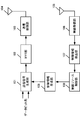
- FIG. 2 shows an example of the configuration of the base station apparatus according to the present invention. However, the minimum blocks necessary for the present invention are shown. In order to simplify the explanation, the figure will be described assuming that one transmitting / receiving antenna of the base station apparatus is provided.
- the base station apparatus receives a signal transmitted from the terminal apparatus via PUCCH or PUSCH by the reception antenna 105 and inputs the signal to the radio reception unit 106.
- the radio reception unit 106 down-converts the received signal to a baseband frequency, performs A / D (Analog / Digital) conversion, and removes a CP (Cyclic Prefix) from the digital signal, thereby controlling the control information detection unit 107. To enter.
- a / D Analog / Digital
- the control information detection unit 107 detects control information transmitted on the PUCCH from the received signal and control information such as PH (Power Headroom) transmitted on the PUSCH, and inputs the detected control information to the radio resource control unit 108.
- control information such as Packet Data Convergence Protocol (PDCP) layer, Radio Link Control (RLC) layer, Radio Resource Control (RRC) layer, which is upper layer control information Information on reception processing capability may be received.
- PDCP Packet Data Convergence Protocol
- RLC Radio Link Control
- RRC Radio Resource Control
- the information regarding the reception processing capability may be notified as information such as FGI (Feature Group Indicator) and UE capability.
- information related to reception processing capability it may be information as to whether CWIC (Codeword Level Interference Cancellation) using the error correction decoding result of the interference signal is applicable, or error correction decoding of the interference signal may be performed.
- SLIC Symbol Level Interference Cancellation
- MLD Maximum Likelihood Detection
- the radio resource control unit 108 determines allocation of frequency resources used for downlink data transmission based on CSI or the like as frequency scheduling.
- the frequency resource allocation will be described on the assumption that it is performed in units of RB (Resource Block) composed of 12 subcarriers in one subframe or in units of RBG (Resource Block Group) in which a plurality of RBs are grouped.
- the invention is not limited to this.
- one subframe is composed of 2 slots, and one slot is composed of 7 OFDM symbols.
- the radio resource control unit 108 determines a combination and resource allocation (RA: Resource Allocation or Resource Assignment, hereinafter referred to as RA information) of a terminal device that performs OFDM transmission that is not multiplexed by SC and a terminal device that is multiplexed by SC in frequency scheduling.
- RA Resource Allocation or Resource Assignment
- the radio resource control unit 108 determines transmission power to be allocated to each terminal device with respect to terminal devices multiplexed by SC. Further, the radio resource control unit 108 performs MCS (Modulation and Coding Scheme) or MIMO (Multiple Input Multiple Output) transmission of data addressed to each terminal device by adaptive modulation and coding (also referred to as link adaptation). In the case of application of MIMO and MIMO transmission, the number of streams (number of transmission layers) is determined. The radio resource control unit 108 inputs RA information, MCS, and information on the number of transmission streams to the control information generation unit 109.
- MCS Modulation and Coding Scheme
- MIMO Multiple Input Multiple Output
- link adaptation also referred to as link adaptation
- the control information generation unit 109 determines the input control information according to the reception processing capability received from the terminal device in addition to the setting of the downlink transmission mode (TM: Transmission Mode) and RRC (Radio Resource Control) of each terminal. Control information corresponding to the DCI format is generated.
- TM Transmission Mode
- RRC Radio Resource Control
- Control information corresponding to the DCI format is generated.
- the DCI format a plurality of formats are defined depending on applications, DCI format 1 for downlink single antenna, 1A, DCI format 2C for MU-MIMO, etc. are defined, and for uplink single antenna DCI format 0 and MIMO DCI format 4 are defined.
- the control information generation unit 109 inputs the generated control information to the transmission signal generation unit 101 in order to generate downlink data and notify the terminal device.
- the base station apparatus uses the DCI format used in the transmission mode of NOMA transmission to the terminal apparatus multiplexed by SC, and notifies control information (additional information) necessary for removing or suppressing the interference signal.
- control information additional information
- the present invention may be applied to an existing transmission mode, or may be realized by setting to add information on an interference signal necessary for reception processing of NOMA transmission by RRC or the like.
- the additional information of the present invention differs depending on whether or not an interference signal such as CWIC is decoded.
- the base station apparatus transmits a predetermined number of interference signal RA information and MCS information included in DCI to a terminal apparatus capable of decoding an interference signal such as a CWIC.
- the base station apparatus transmits RA information of one interference signal and MCS information. This is because the terminal device decodes the interference signal, so that it is difficult to decode without the frequency resource to which the signal constituting one codeword is assigned and the coding rate information.
- the base station apparatus also has interference signals in frequency resources that are not specified by the RA information of the interference signal among frequency resources used for data transmission to a terminal apparatus that can decode the interference signal such as CWIC. There is a case.
- the base station apparatus does not notify the RA information of the interference signal multiplexed with the frequency resource not specified by the RA information of the interference signal, but may notify the modulation multi-level number or MCS.
- a terminal device that performs reception processing that does not decode interference signals such as SLIC and MLD for removing or suppressing interference needs to know only the modulation multi-level number of interference signals, and can provide information on RA information and coding rate. It is unnecessary. Therefore, the base station apparatus notifies only the information of the modulation multi-level number of the interference signal to the terminal apparatus that performs reception processing such as SLIC and MLD. However, a terminal device that performs reception processing such as SLIC or MLD may estimate the modulation multi-level number of the interference signal.
- the base station apparatus uses different DCI formats or transmits control information of different sizes (number of bits) according to the reception processing capability of the terminal apparatus. Also, the additional information of the present invention may be added with information on transmission power applied to the data signal of the terminal device multiplexed by SC.
- the transmission signal generation unit 101 receives a data bit string to be transmitted to each terminal device.
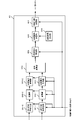
- FIG. 3 shows an example of the configuration of the transmission signal generation unit 101 according to the present invention.
- the input data bit string is input to the error correction encoding units 1011-1 to 1011-2.
- Error correction coding sections 1011-1 to 1011-2 perform error correction code coding on the input data bit string.
- a turbo code, an LDPC (Low Density Parity Check) code, a convolutional code, or the like is used as the error correction code.
- the types of error correction codes performed by error correction coding sections 1011-1 to 1011-2 may be determined in advance by the transmission / reception apparatus, may be notified as control information for each transmission / reception opportunity, or may be transmitted.
- Switching may be performed according to a parameter determined in advance according to the mode and a parameter notified by the control information. Further, the coding rate of error correction coding is input from the control information generation unit 109, and the error correction coding units 1011-1 to 1011-2 are coding rates used for downlink data transmission by puncturing (rate matching). Is realized.
- Modulation sections 1012-1 to 1012-2 receive modulation scheme information from control information generation section 109 and modulate the encoded bit string input from error correction encoding sections 1011-1 to 1011-2. Thus, a modulation symbol string is generated. Examples of the modulation scheme include QPSK (Quaternary Phase Shift Keying), 16 QAM (16-ary Quadrature Amplitude Modulation), 64 QAM, and 256 QAM. Modulation sections 1012-1 to 1012-2 output the generated modulation symbol sequence to transmission power control sections 1013-1 to 1013-2.
- QPSK Quadrature Amplitude Modulation
- Modulation sections 1012-1 to 1012-2 output the generated modulation symbol sequence to transmission power control sections 1013-1 to 1013-2.
- the transmission power control units 1013-1 to 1013-2 receive transmission power information assigned to terminal devices multiplexed by the SC from the control information generation unit 109, and perform transmission power control.
- the signal multiplexer 1014 receives and multiplexes the signals of the terminal device multiplexed by the SC.
- the SC multiplexing method includes a method of modulating a signal addressed to each terminal device with a Gray code and adding it as it is, and a method of adding so that the signal point arrangement after multiplexing at the SC becomes a Gray code.
- it may be determined in advance by the transmission / reception apparatus, may be notified as control information for each transmission / reception opportunity, or may be switched according to a parameter notified by the transmission mode or control information.
- the transmission signal allocation unit 1018 receives the transmission signal sequence from the signal multiplexing unit 1014 and allocates the transmission signal sequence to the RB indicated by the RA information input from the control information generation unit 109.
- the reference signal multiplexing unit 1015 receives a transmission signal sequence from the transmission signal allocation unit 1018, receives a reference signal sequence from the reference signal generation unit 1016, and multiplexes these signal sequences to generate a frame of the transmission signal.
- downlink reference signals include CRS (Cell-Specific Reference Signal), URS (UE-Specific Reference Signal) related to PDSCH, DMRS (De-Modulation Reference Signal) related to EPDCCH, NZP CSI-RS ( Non-Zero Power Channel State Information Reference Signal), ZP CSI-RS (Zero Power Channel State Information Reference Signal) and DRS (Discovery Reference Signal, Discovery Signal).
- the transmission power of the reference signal may be the same in the case of multiplexing a plurality of terminal devices in SC with NOMA and in the case of OFDM transmission in which the signals of the plurality of terminal devices are not multiplexed in SC. It may be different. That is, when data signals addressed to a plurality of terminal devices are multiplexed by NOMA by SC, the transmission power of the data and the reference signal may be the same or different when the transmission power is distributed to these data signals.
- the base station apparatus needs to notify the terminal apparatus of the transmission power as control information, or notify it in association with other control information.
- the control information multiplexer 1017 multiplexes the signal sequence input from the reference signal multiplexer 1015 and the DCI control information input from the control information generator 109 and inputs the multiplexed information to the IFFT unit 102.
- the IFFT unit 102 receives a frame of a transmission signal in the frequency domain, and converts the frequency domain signal sequence into a time domain signal sequence by performing inverse fast Fourier transform for each OFDM symbol.
- the time domain signal sequence is input to the transmission processing unit 103.
- the transmission processing unit 103 inserts a CP into the signal sequence, converts it into an analog signal by D / A (Digital / Analog), and up-converts the converted signal to a radio frequency used for transmission.
- the transmission processing unit 103 amplifies the up-converted signal with PA (Power Amplifier), and transmits the amplified signal via the transmission antenna 104.
- PA Power Amplifier
- the base station apparatus transmits a signal addressed to the terminal apparatus.
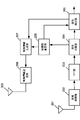
- FIG. 4 shows an example of the configuration of the terminal device according to the present invention. However, the minimum blocks necessary for the present invention are shown. In order to simplify the explanation, the figure will be described assuming that each transmitting / receiving antenna of the terminal device is one.
- the terminal device receives a signal transmitted through the downlink by the receiving antenna 201 and inputs the signal to the reception processing unit 202.
- the reception processing unit 202 down-converts the received signal to the baseband frequency, performs A / D conversion, and removes the CP from the digital signal.
- Reception processing section 202 outputs the signal after CP removal to FFT section 203.
- the FFT unit 203 converts the input received signal sequence from a time domain signal sequence to a frequency domain signal sequence by fast Fourier transform, and outputs the frequency domain signal sequence to the signal separation unit 204.
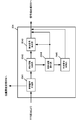
- FIG. 5 shows an example of the configuration of the signal separation unit 204 according to the present invention.
- the frequency domain signal sequence input from the FFT unit 203 is input to the reference signal separation unit 2041.
- the reference signal separation unit 2041 separates the input signal into reference signals CRS, URS, DMRS, CSI-RS, DRS, and other signals, and outputs them to the propagation path estimation unit 206 and the control information separation unit 2042, respectively.
- Control information separation section 2042 separates the input signal into a control signal transmitted on PDCCH, EPDCCH, and PDSCH and a data signal transmitted on PDSCH, and outputs them to control information detection section 2044 and assigned signal extraction section 2043, respectively. .
- the control information detecting unit 2044 performs blind decoding on the DCI format determined by the transmission mode and RRC setting in CSS (Common SS) or USS (UE-specific SS) set in PDCCH or EPDCCH. Is detected.
- control information detection section 2044 detects it by control information reception processing.
- the control information detection unit 2044 outputs transmission parameters (RA information and MCS) of a signal addressed to the own station to the signal detection unit 205.
- a terminal device capable of decoding interference signals such as CWIC detects RA information and MCS information of a predetermined number of interference signals from the control information, and inputs them to the interference signal determination unit 2045.
- the interference signal determination unit 2045 when information such as the transmission power of the interference signal is detected, the information is also input to the interference signal determination unit 2045.
- the interference signal discriminating unit 2045 identifies the frequency resource capable of decoding the interference signal notified of the RA information and the MCS information from the input control information and the frequency resource unable to decode the interference signal, and signals these pieces of information as signals.
- the data is output to the detection unit 205.
- a terminal apparatus that performs reception processing that does not decode interference signals such as SLIC and MLD for removing or suppressing interference is not notified of the RA information and MCS information of the interference signals, and is notified of the modulation multilevel number.
- the interference signal determination unit 2045 does nothing.
- allocation signal extraction section 2043 extracts a transmission signal based on RA information included in a transmission parameter of a signal addressed to the own station.
- the propagation path estimation unit 206 receives a reference signal multiplexed with a data signal and transmits the signal, and outputs a frequency response estimated for demodulation to the signal detection unit 205.
- the terminal apparatus receives information (power ratio) of transmission power allocated to a plurality of terminal apparatuses multiplexed in SC with the control information or estimates from the received power of the reference signal.
- the propagation path estimation part 206 inputs the estimated frequency response into the control information generation part 207 in order to transmit CSI by PUCCH.
- Control information generating section 207 transmits using PUCCH. Control information is generated using a format corresponding to the content to be transmitted at the transmission timing, such as SR, ACK / NACK, and CSI.
- the control information transmission unit 208 inserts a CP into the signal sequence, converts the signal into an analog signal by D / A, and up-converts the converted signal to a radio frequency used for transmission.
- Control information transmission section 208 amplifies the upconverted signal with PA, and transmits the amplified signal via transmission antenna 209.
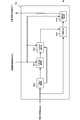
- FIG. 6 shows an example of the configuration of the signal detection unit 205 according to the present invention.
- the signal detection unit 205 receives a transmission parameter of a signal addressed to another terminal device that interferes with the data signal sequence input from the signal separation unit 204, and inputs the data signal sequence and a signal addressed to the local station to the interference signal demodulation unit 2050. Transmission parameters are input to the interference cancellation unit 2053.
- the interference signal demodulation unit 2050 is based on the estimated frequency response value corrected to the power ratio of the interference signal input from the propagation path estimation unit 206 and the transmission parameter (such as the modulation multi-level number) input from the signal separation unit 204. To demodulate the interference signal.
- the interference signal demodulating unit 2050 of the terminal device capable of decoding the interference signal such as CWIC has a result of demodulation of the frequency resource capable of decoding the interference signal input from the interference signal determining unit 2045 and the coding rate of the interference signal.
- Information is input to the interference signal decoding unit 2051, and demodulation results of other frequency resources are input to the interference signal reproduction unit 2052.
- the interference signal demodulation unit 2050 of the terminal apparatus that performs reception processing that does not decode interference signals such as SLIC and MLD for removing or suppressing interference inputs all the demodulation results to the interference signal reproduction unit 2052.
- Interference signal decoding section 2051 performs error correction decoding of the interference signal, and inputs the decoding result to interference signal reproduction section 2052.
- the interference signal decoding unit 2051 performs error correction decoding according to the number of codewords of the interference signal that can be subjected to error correction decoding, and RA information for each codeword is input as control information.
- the signal input from the interference signal demodulation unit 2050 and the interference signal decoding unit 2051 to the interference signal reproduction unit 2052 may use a hard decision value or a soft value (LLR: Log Likelihood Ratio). good.
- LLR Log Likelihood Ratio
- the interference signal reproduction unit 2052 generates a replica of the interference signal from the estimated frequency response corrected to the detected bit sequence of the interference signal or the LLR sequence and the power ratio of the interference signal, and outputs it to the interference removal unit 2053.
- the interference removal unit 2053 performs interference removal by subtracting the replica of the interference signal from the data signal sequence, and inputs the signal sequence after the interference removal and the transmission parameter of the signal addressed to the own station to the desired signal detection unit 2054.
- FIG. 7 shows an example of the configuration of the desired signal detection unit 2054 according to the present invention.
- the desired signal detection unit 2054 has been corrected to the power ratio of the desired signal input from the propagation path estimation unit 206 and the transmission parameter of the signal sequence after interference cancellation input from the interference cancellation unit 2053 and the signal addressed to the own station.
- the estimated value of the frequency response is output to the propagation path compensator 2054-1.
- the propagation path compensator 2054-1 performs a process of compensating for the distortion of the wireless propagation path on the signal sequence after interference cancellation using the input frequency response estimation value.
- the propagation path compensation unit 2054-1 outputs the signal sequence after propagation path compensation to the demodulation unit 2054-2.
- Demodulation section 2054-2 receives information on the modulation method (modulation multi-level number, whether or not the signal after SP is added to become a Gray code, etc.) included in the transmission parameter of the signal addressed to the own station.
- the signal sequence after propagation path compensation is demodulated to obtain a bit-sequence LLR sequence.
- Decoding section 2054-3 receives the coding rate information included in the transmission parameter of the signal addressed to the own station, and performs decoding processing on the LLR sequence.
- Decoding section 2054-3 makes a hard decision on the decoded LLR sequence, determines the presence / absence of an error bit by cyclic redundancy check (CRC: Cyclic Redundancy Check), and outputs the information on the presence / absence of error bit to control information generation unit 207 If there is no error, a data bit string is output.
- CRC Cyclic Redundancy Check
- the desired signal detection unit 2054 uses a successive interference canceller (SIC: Successive InterferencecellCanceller) such as CWIC or SLIC
- SIC Successive InterferencecellCanceller
- PIC Parallel Interference canceller
- MLD maximum likelihood detection
- turbo equalization performs iterative processing
- FIG. 8 is a diagram showing an example of a flowchart of the reception process according to the present invention.
- the control information detection unit 2044 of the terminal device capable of decoding an interference signal such as CWIC, MCS information included in the transmission parameter of the signal addressed to the own station, RA information of one interference signal, and MCS information Is detected (S11).
- the RA information and the MCS information of the interference signal detected by the control information detection unit 2044 may not be one interference signal, may be a predetermined number of interference signals, or the number notified in advance. It is good also as an interference signal.
- the terminal apparatus With the frequency resource included in the RA information of the interference signal, the terminal apparatus performs demodulation and decoding in the interference signal demodulation unit 2050 and the interference signal decoding unit 2051, respectively (S12). Next, in the frequency resource not included in the RA information of the interference signal, the terminal apparatus performs only the demodulation processing based on the modulation multi-level number information in the interference signal demodulation unit 2050 (S13).
- FIG. 9 shows an example of frequency resource allocation to a plurality of terminal apparatuses according to the present invention.
- the terminal device 1 in the figure enables decoding of interference signals such as CWIC, and the base station device uses the RA information and MCS information of the data signal addressed to the terminal device 22 as RA information and MCS information of one interference signal. Notice.
- the terminal device 1 decodes the data signal of the terminal device 2, and the data signals of the terminal devices 3 and 4 are demodulated because information such as RA information is not notified.
- the terminal apparatus In the interference signal detection / reproduction unit 2052, the terminal apparatus generates a replica of the interference signal (S14).
- the interference signal removal unit 2053 performs interference removal by subtracting a replica of the interference signal from the data signal sequence (S15).
- the desired signal detection unit 2054 detects a desired signal using the notified transmission parameter (S16). As described above, the terminal apparatus detects the desired signal multiplexed by the SC.
- control information including information necessary for error correction decoding of a predetermined number of interference signals is notified to the terminal apparatus multiplexed by the base station apparatus on the SC according to the reception processing capability. As a result, the amount of increase in control information can be suppressed.
- the base station apparatus notifies the terminal apparatus of control information including information necessary for error correction decoding of a predetermined number of interference signals according to the reception processing capability of the terminal apparatus multiplexed by SC.
- a method for selecting a signal for notifying the RA information as a decodable interference signal to the terminal device from which the base station apparatus removes or suppresses the interference signal will be described.
- the example of a structure of the base station apparatus in this embodiment is the same as that of previous embodiment, and is FIG.
- the example of a structure of the terminal device in this embodiment is the same as that of previous embodiment, and is FIG.
- the flowchart of the reception process is the same as that of the previous embodiment, and is shown in FIG. Therefore, in the present embodiment, only different processing will be described, and description of similar processing will be omitted.
- the radio resource control unit 108 determines a combination of terminal devices to be multiplexed by SC and resource allocation in frequency scheduling. For example, when the radio resource assignment determined by the radio resource control unit 108 is such an assignment as shown in FIG. 10, the base station selects an interference signal to be notified to a terminal device that needs to suppress or remove the interference signal. That is, an interference signal that requires decoding processing, such as CWIC, is selected.
- the transmission characteristics are better than in the case where interference signals such as SLIC and MLD are not decoded. For this reason, it is preferable to select an interference signal from which high detection accuracy cannot be obtained when decoding is not performed, as the interference signal for which the base station apparatus notifies RA information and MCS.
- the control information generation unit 109 of the base station apparatus gives user interference between the terminal apparatuses multiplexed in the SC, the frequency resource used for transmission of the data signal addressed to the terminal apparatus that needs to eliminate or suppress the interference Interference signal multiplexed by SC with the largest number of frequency resources (the ratio of the number of frequency resources multiplexed with a specific interference signal and SC and the number of all frequency resources allocated to a terminal device that requires interference removal or suppression)
- Control information including the RA information and MCS of the interference signal having a high duplication rate determined by (1) This is because an interference signal having a high overlap rate is considered to have an effect on transmission characteristics when the terminal apparatus detects a desired signal. For example, in the case of the resource allocation example of FIG.
- the interference signal that transmits RA information and MCS to the terminal device 1 is the terminal device 4 that is multiplexed by the SC with the most frequency resources.
- the interference signal to be notified is not determined by the duplication rate, but is determined by the transmission power of the data signal multiplexed by the SC. You can decide.
- the transmission power allocation is different for each combination of data signals multiplexed by the SC.
- the total transmission power of each frequency resource is constant even when the transmission power allocation is different, but the present invention is not limited to this example, and is applicable even if the total transmission power of each frequency resource is different. .
- the terminal device 1 since the transmission power allocated to the data signal addressed to the terminal device 2 is lower than the data signal addressed to the terminal devices 3 and 4 as the interference signal of the terminal device 1, the terminal device 1 It is conceivable that the detection accuracy of the data signal addressed to the terminal device 2 is lowered, and the transmission characteristics are deteriorated in the SLIC and the MLD. Therefore, the base station apparatus notifies the terminal apparatus 1 of control information including RA information and MCS of an interference signal with low transmission power to be allocated.
- the base station apparatus may notify the RA information and MCS of the interference signal having a high modulation multilevel number among the plurality of interference signals. . This is also because the detection accuracy of the interference signal may be lowered when the modulation multi-level number is high as in the other examples.
- the base station apparatus notifies the terminal apparatus 1 of the RA information and MCS of the interference signal
- the RA information and MCS of the interference signal having a low coding rate among the plurality of interference signals may be notified. This means that when the coding rate is high, the effect of error correction decoding is reduced, and therefore, an interference signal having a low coding rate that provides the effect of correction decoding is selected.
- the base station apparatus when the base station apparatus notifies the terminal apparatus 1 of the RA information and MCS of the interference signal, the interference for reporting the RA information and MCS from the combination of the overlap rate, the allocated transmission power, the modulation multi-level number, and the coding rate A signal may be selected.
- the case where the base station apparatus notifies the terminal apparatus of the RA information and MCS of the interference signal has been described in the case of notifying information regarding one interference signal.
- the RA information of a predetermined number of interference signals is described.
- MCS may be notified, or RA information and MCS of the number of interference signals previously notified to the terminal device may be notified.
- the base station apparatus notifies the terminal apparatus multiplexed by SC of the RA information and MCS of a predetermined number of interference signals that have a large influence on the desired signal of the terminal apparatus.
- the increase amount of control information can be suppressed.
- the control information detection unit 107 of the base station apparatus can apply a CWIC or the like that uses the error correction decoding result of the interference signal for interference removal from each connected terminal apparatus, or the interference signal Information relating to whether SLIC or MLD, which uses the demodulation result for interference removal or suppression without error correction decoding, can be applied is detected. That is, when a plurality of data signals are multiplexed and transmitted by the SC, the base station apparatus receives information on whether or not to perform error correction decoding of the interference signal in detecting the desired signal from each terminal apparatus.
- control information generation unit 109 The additional information included in the control information generated by the control information generation unit 109, that is, the information on the interference signal to be notified to the terminal device multiplexed by the SC is whether or not each terminal device performs error correction decoding of the interference signal.
- the control information to be generated is switched according to the information.
- control information generating section 109 generates control information including RA information and MCS of the interference signal for a terminal device that performs error correction decoding of the interference signal, and does not perform error correction decoding of the interference signal.
- a modulation multi-level number of interference signals or MCS is generated for the apparatus.
- the control information notified from the base station apparatus to the terminal apparatus differs depending on whether or not the terminal apparatus performs error correction decoding of the interference signal, and is notified to the terminal apparatus that performs error correction decoding of the interference signal.
- the control information at least RA information is added to the control information notified to the terminal device that does not perform error correction decoding of the interference signal. Therefore, the base station apparatus differs in the number of bits of control information to be transmitted depending on whether or not each terminal apparatus performs error correction decoding of the interference signal.
- the number of bits of the control information may be changed only at the time of transmission by USS, or may be changed when transmitted by either CSS or USS.
- FIG. 12 shows an example of a flowchart relating to transmission of control information of the base station apparatus according to the present invention.
- the control information detection unit 107 receives information on whether or not to perform error correction decoding of an interference signal (S21).
- the radio resource control unit 108 determines allocation of frequency resources used for downlink data transmission based on CSI or the like as frequency scheduling (S22).
- the radio resource control unit 108 determines a combination or RA of a terminal apparatus that performs OFDM transmission that is not multiplexed by SC and a terminal apparatus that is multiplexed by SC in frequency scheduling.
- Radio resource control section 108 also determines the transmission power assigned to each terminal device and the number of streams during MCS and MIMO transmission for the terminal devices multiplexed by SC.
- the base station apparatus receives in advance the reception processing capacity from the terminal apparatus that needs to detect the desired signal by removing or suppressing the interference signal among the terminal apparatuses multiplexed by the SC. It is determined whether or not CWIC that performs error correction decoding of the interference signal is possible (S23). When the base station apparatus determines that the terminal apparatus is capable of CWIC performing error correction decoding of the interference signal, the base station apparatus uses the transmission parameter of the desired signal, the RA information of the interference signal, and the control information format including the MCS. Select (S24).
- the base station apparatus determines that it is a terminal apparatus that applies SLIC or MLD that does not perform error correction decoding of the interference signal
- the base station apparatus includes a transmission parameter of the desired signal and does not include the RA information of the interference signal, that is, It is selected to use a format including only the modulation multi-level number of the interference signal or only MCS (S25).
- the transmission processing unit 103 transmits a signal generated based on the format of the control information (S26). Subsequent processing of the base station apparatus is the same as in the previous embodiment, and a description thereof is omitted.
- the control information transmission unit 208 uses, as reception processing capability, information on whether or not to perform error correction decoding of the interference signal with the control information before receiving a signal in which a plurality of data signals are multiplexed by the SC. Notice.
- the control information detection unit 2044 since the control information detection unit 2044 has previously notified the reception processing capability to the base station apparatus, the control information detection unit 2044 performs blind decoding of the control information transmitted from the base station apparatus according to the reception processing capability.
- the terminal apparatus determines DCI format candidates for blind decoding according to the set transmission mode, and the number of bits of each DCI format is determined by the set downlink bandwidth and other RRC settings. .
- control information is generated by changing the number of bits of the format and transmitted. Therefore, control information detection section 2044 performs blind decoding with the number of bits corresponding to the reception processing capability notified to the base station apparatus.
- the number of bits of the DCI format to be blind-decoded may change depending on the reception processing capability only when notified by USS, or blind decoding by changing the number of bits when reporting by either CSS or USS. You may do it.
- control information detection unit 2044 performs blind decoding according to the reception processing capability notified to the base station apparatus and the transmission mode when receiving a signal in which a plurality of data signals are multiplexed by the SC set from the base station apparatus.
- the number of bits of the format may be changed, or the reception processing capability notified to the base station apparatus and the setting for receiving a signal in which a plurality of data signals are multiplexed by the SC with the upper layer control information such as RRC signaling from the base station apparatus In this case, the number of bits in the DCI format for blind decoding may be changed.
- the amount of increase in control information can be suppressed by switching the control information transmitted according to the reception processing capability of the terminal device multiplexed by the base station device in the SC.
- the control information amount is set to be approximately the same according to the reception processing capability when the base station device switches the control information transmitted according to the reception processing capability of the terminal device multiplexed by the SC.
- the example of a structure of the base station apparatus in this embodiment is the same as that of previous embodiment, and is FIG.
- the example of a structure of the terminal device in this embodiment is the same as that of previous embodiment, and is FIG.
- the flowchart regarding transmission of the control information of a base station apparatus is the same as that of the previous embodiment, and is FIG. Therefore, in the present embodiment, only different processing will be described, and description of similar processing will be omitted.
- the control information detection unit 107 of the base station apparatus can apply a CWIC or the like that uses the error correction decoding result of the interference signal for interference removal from each connected terminal apparatus, or the interference signal Information relating to whether SLIC or MLD, which uses the demodulation result for interference removal or suppression without error correction decoding, can be applied is detected. That is, when a plurality of data signals are multiplexed and transmitted by the SC, the base station apparatus receives information on whether or not to perform error correction decoding of the interference signal in detecting the desired signal from each terminal apparatus.
- control information generation unit 109 The additional information included in the control information generated by the control information generation unit 109, that is, the information on the interference signal to be notified to the terminal device multiplexed by the SC is whether or not each terminal device performs error correction decoding of the interference signal.
- the control information to be generated is switched according to the information.
- control information generating section 109 generates control information including RA information and MCS of the interference signal for a terminal device that performs error correction decoding of the interference signal, and does not perform error correction decoding of the interference signal.
- a modulation multi-level number of interference signals or MCS is generated for the apparatus.
- the terminal apparatus blindly transmits the control information transmitted by the base station apparatus.
- the control information notified to the terminal device that performs error correction decoding of the interference signal includes RA information and MCS of the interference signal as in the previous embodiment, and performs error correction decoding of the interference signal.
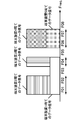
- FIG. 13 shows an example of frequency resource allocation to a plurality of terminal apparatuses according to the present invention.
- the figure shows an example of frequency resource allocation when subbands F01 to F08 exist and terminal devices 1 to 5 transmit downlink data. Since the data signal addressed to the terminal device 1 is multiplexed with the data signal addressed to the terminal device 2 and the terminal device 3 by the SC, it is necessary to remove or suppress these interference signals.
- the terminal apparatus 1 performs error correction decoding of the interference signal
- the base station apparatus generates control information including RA information and MCS of the interference signal in the control information generation unit 109.
- the base station apparatus when the terminal apparatus 1 does not perform error correction decoding of the interference signal, the base station apparatus generates control information including the modulation multilevel number for each subband of the interference signal in the control information generation unit 109. For example, 1 bit may be prepared to notify the modulation multi-level number for each subband, and either QPSK or 16QAM may be notified. In this case, if the number of subbands in the system band is N, notification of N bits is performed. If the value is 0, QPSK may be performed, and if the value is 1, 16QAM may be used.
- the subband is composed of a plurality of resource blocks. For example, one subband may be selected from 1 to 16 resource blocks.
- the system band is 100 resource blocks.
- the RA information when using continuous resource blocks in the system band is 13 bits, and only one MCS is set in the system band of the interference signal is 5 bits.
- control information generation section 109 adds 18 bits of information related to the interference signal to the control information transmitted to the terminal device that performs error correction decoding of the interference signal.
- control information generation section 109 sets the modulation multilevel number in units of subbands when the subband is configured with 6 resource blocks in the control information transmitted to the terminal device that does not perform error correction decoding of the interference signal. Therefore, 17 bits are required for notification, and by adding 1 padding bit, the same number of bits as the control information transmitted to the terminal device performing error correction decoding of the interference signal can be obtained. it can.
- the base station device when the base station device switches control information to be transmitted according to the reception processing capability of the terminal device multiplexed by SC, the amount of control information should be approximately the same according to the reception processing capability. And the complexity of blind decoding can be reduced.
- the control information amount is set to be approximately the same according to the reception processing capability when the base station device switches the control information transmitted according to the reception processing capability of the terminal device multiplexed by the SC.
- the example of a structure of the base station apparatus in this embodiment is the same as that of previous embodiment, and is FIG.
- the example of a structure of the terminal device in this embodiment is the same as that of previous embodiment, and is FIG.
- the flowchart regarding transmission of the control information of a base station apparatus is the same as that of the previous embodiment, and is FIG. Therefore, in the present embodiment, only different processing will be described, and description of similar processing will be omitted.
- the control information detection unit 107 of the base station apparatus can apply a CWIC or the like that uses the error correction decoding result of the interference signal for interference removal from each connected terminal apparatus, or the interference signal Information relating to whether SLIC or MLD, which uses the demodulation result for interference removal or suppression without error correction decoding, can be applied is detected. That is, when a plurality of data signals are multiplexed and transmitted by the SC, the base station apparatus receives information on whether or not to perform error correction decoding of the interference signal in detecting the desired signal from each terminal apparatus.
- control information generation unit 109 The additional information included in the control information generated by the control information generation unit 109, that is, the information on the interference signal to be notified to the terminal device multiplexed by the SC is whether or not each terminal device performs error correction decoding of the interference signal.
- the control information to be generated is switched according to the information.
- control information generation section 109 generates control information including RA information and MCS of the interference signal for the terminal device that performs error correction decoding of the interference signal, and does not perform error correction decoding of the interference signal.
- a modulation multi-level number of interference signals or MCS is generated for the terminal device.
- the terminal apparatus blindly transmits the control information transmitted by the base station apparatus.
- the control information notified to the terminal device that performs error correction decoding of the interference signal includes RA information and MCS of the interference signal as in the previous embodiment, and performs error correction decoding of the interference signal.
- the control information to be notified to a non-terminal device is set to the same number of bits by using the modulation multi-level number and transmission power (power ratio) in subband units.
- the base station apparatus since the data signal addressed to the terminal device 1 is multiplexed with the data signal addressed to the terminal device 2 and the terminal device 3 by SC, it is necessary to remove or suppress these interference signals.
- the base station apparatus When the terminal apparatus 1 performs error correction decoding of the interference signal, the base station apparatus generates control information including RA information and MCS of the interference signal in the control information generation unit 109.
- the base station apparatus uses the control information generation unit 109 to control information including the modulation multi-level number and transmission power (power ratio) for each subband of the interference signal. Is generated.
- the method for notifying the number of modulation multi-levels for each subband is the same as in the previous embodiment, and the transmission power (power ratio) for each subband is reported as one of the following.
- P1 ⁇ 0.0, 0.05, 0.1, 0.15, 0.2, 0.25, 0.3, 0.35, 0. 4, 0.45, 0.5, 0.55, 0.6, 0.65, 0.7, 0.75, 0.8, 0.85, 0.9, 0.95, 1.0 ⁇ It is also good.
- the base station device when the base station device switches control information to be transmitted according to the reception processing capability of the terminal device multiplexed by SC, the amount of control information should be approximately the same according to the reception processing capability. And the complexity of blind decoding can be reduced.
- the program that operates in the base station apparatus and terminal apparatus related to the present invention is a program that controls the CPU or the like (a program that causes a computer to function) so as to realize the functions of the above-described embodiments related to the present invention.
- Information handled by these devices is temporarily stored in the RAM at the time of processing, then stored in various ROMs and HDDs, read out by the CPU, and corrected and written as necessary.
- a recording medium for storing the program a semiconductor medium (for example, ROM, nonvolatile memory card, etc.), an optical recording medium (for example, DVD, MO, MD, CD, BD, etc.), a magnetic recording medium (for example, magnetic tape, Any of a flexible disk etc. may be sufficient.
- the processing is performed in cooperation with the operating system or other application programs.
- the functions of the invention may be realized.
- the program when distributing to the market, can be stored in a portable recording medium for distribution, or transferred to a server computer connected via a network such as the Internet.
- the storage device of the server computer is also included in the present invention.
- LSI which is typically an integrated circuit.
- Each functional block of the base station apparatus and the terminal apparatus may be individually chipped, or a part or all of them may be integrated into a chip.
- the method of circuit integration is not limited to LSI, and may be realized by a dedicated circuit or a general-purpose processor. When each functional block is integrated, an integrated circuit controller for controlling them is added.
- the method of circuit integration is not limited to LSI, and may be realized by a dedicated circuit or a general-purpose processor.
- an integrated circuit based on the technology can also be used.
- the terminal device of the present invention is not limited to application to a mobile station device, but is a stationary or non-movable electronic device installed indoors or outdoors, such as AV equipment, kitchen equipment, cleaning / washing equipment Needless to say, it can be applied to air conditioning equipment, office equipment, vending machines, and other daily life equipment.
- FFT unit 204 ... Signal separation unit 205 ... Signal detection unit 206 ... Propagation path estimation unit 207 ... Control information generation unit 208 ... Control information transmission unit 209 ... Transmission antenna 2041 ... Reference signal Signal separation unit 2042 ; Control information separation unit 2043 ... Allocation signal extraction unit 2044 ... Control information detection unit 2045 ... Interference signal discrimination unit 2050 ... Interference signal demodulation unit 2051 ... Interference signal decoding unit 2052 ... Interference signal reproduction unit 2053 ... Interference removal unit 2054 ... Desired signal detector 2054-1 ... Propagation compensator 2054-2 ... Demodulator 2054-3 ... Decoder
Landscapes
- Engineering & Computer Science (AREA)
- Signal Processing (AREA)
- Computer Networks & Wireless Communication (AREA)
- Power Engineering (AREA)
- Quality & Reliability (AREA)
- Mobile Radio Communication Systems (AREA)
- Noise Elimination (AREA)
- Transmitters (AREA)
Abstract
Description
図2に、本発明に係る基地局装置の構成の一例を示す。ただし、本発明に必要な最低限のブロックを示している。同図は説明を簡単にするために、基地局装置の送受信アンテナをそれぞれ1本として説明する。基地局装置は、端末装置からPUCCHやPUSCHで送信された信号を受信アンテナ105で受信し、無線受信部106に入力する。無線受信部106は、受信信号をベースバンド周波数にダウンコンバートし、A/D(Analog/Digital;アナログ/ディジタル)変換し、ディジタル信号からCP(Cyclic Prefix)を除去した信号を制御情報検出部107に入力する。制御情報検出部107は、受信信号からPUCCHで送信された制御情報やPUSCHで送信されるPH(Power Headroom)などの制御情報を検出し、無線リソース制御部108に入力する。ここで、アップリンクの制御情報で端末装置の受信処理能力に関する情報を受信する。例えば、上位層の制御情報であるパケットデータ統合プロトコル(PDCP: Packet Data Convergence Protocol)層、無線リンク制御(RLC: Radio Link Control)層、無線リソース制御(RRC: Radio Resource Control)層などの制御情報で受信処理能力に関する情報を受信しても良い。また、受信処理能力に関する情報は、FGI(Feature Group Indicator)やUE capabilityなどの情報として通知されても良い。また、受信処理能力に関する情報の例として、干渉信号の誤り訂正復号の結果を用いるCWIC(Codeword level Interference Cancellation)を適用可能であるかの情報であっても良いし、干渉信号の誤り訂正復号をせずに復調結果を用いるSLIC(Symbol level Interference Cancellation)もしくは最尤検出(MLD: Maximum Likelihood Detection)を適用可能であるかの情報であっても良いし、CWICやSLICなどの逐次干渉キャンセラ(SIC: Successive Interference Canceller)を適用可能であるか、並列干渉キャンセラ(PIC: Parallel Interference Canceller)を適用可能であるかの情報であっても良いし、繰り返し処理を行なうターボ等化を適用可能であるかの情報であっても良い。無線リソース制御部108は、周波数スケジューリングとしてCSIなどに基づいてダウンリンクのデータ伝送に用いる周波数リソースの割当を決定する。周波数リソースの割当は、1サブフレームの12サブキャリアから構成されるRB(Resource Block)単位もしくは、複数のRBをグループ化したRBG(Resource Block Group)単位で行なうことを前提に説明するが、本発明はこれに限定されない。ここで、1サブフレームは2スロットで構成され、1スロットは7OFDMシンボルから構成される例とするが、本発明はサブフレーム構成もこの例に限定されない。無線リソース制御部108は、周波数スケジューリングにおいてSCで多重しないOFDM伝送する端末装置とSCで多重する端末装置の組み合わせやリソース割当(RA: Resource AllocationもしくはResource Assignment、以下RA情報とする)を決定する。無線リソース制御部108は、SCで多重する端末装置に対して各端末装置に割り当てる送信電力を決定する。さらに、無線リソース制御部108は、適応変調符号化(Adaptive Modulation and Coding、リンクアダプテーションとも呼称される)で各端末装置宛てのデータのMCS(Modulation and Coding Scheme)やMIMO(Multiple Input Multiple Output)伝送の適用、MIMO伝送の場合はストリーム数(送信レイヤ数)を決定する。無線リソース制御部108は、制御情報生成部109にRA情報、MCS、送信ストリーム数の情報を入力する。
前実施形態では、基地局装置がSCで多重する端末装置の受信処理能力に応じて、端末装置に所定の数の干渉信号の誤り訂正復号に必要な情報を含む制御情報を通知する例について説明したが、本実施形態では基地局装置が干渉信号を除去もしくは抑圧する端末装置に対して、復号可能な干渉信号としてRA情報を通知する信号の選択方法について説明する。まず、本実施形態における基地局装置の構成例は、前実施形態と同様であり、図2、3である。また、本実施形態における端末装置の構成例は、前実施形態と同様であり、図4、5、6、7である。また、受信処理のフローチャートも前実施形態と同様であり、図8である。そのため、本実施形態では、異なる処理のみを説明し、同様の処理の説明は省略する。
第1の実施形態と第2の実施形態では、基地局装置がSCで多重する端末装置の受信処理能力に応じて、端末装置に所定の数の干渉信号の誤り訂正復号に必要な情報を含む制御情報を通知する方法と、誤り訂正復号の対象とする干渉信号の選択例について説明したが、本実施形態ではSCで多重する端末装置の受信処理能力に応じて送信する制御情報を切り替える例について説明する。まず、本実施形態における基地局装置の構成例は、前実施形態と同様であり、図2、3である。また、本実施形態における端末装置の構成例は、前実施形態と同様であり、図4、5、6、7である。そのため、本実施形態では、異なる処理のみを説明し、同様の処理の説明は省略する。
本実施形態では、基地局装置がSCで多重する端末装置の受信処理能力に応じて送信する制御情報を切り替える際に、受信処理能力に応じて制御情報量が同程度にする例を説明する。まず、本実施形態における基地局装置の構成例は、前実施形態と同様であり、図2、3である。また、本実施形態における端末装置の構成例は、前実施形態と同様であり、図4、5、6、7である。また、基地局装置の制御情報の送信に係るフローチャートも前実施形態と同様であり、図12である。そのため、本実施形態では、異なる処理のみを説明し、同様の処理の説明は省略する。
本実施形態では、基地局装置がSCで多重する端末装置の受信処理能力に応じて送信する制御情報を切り替える際に、受信処理能力に応じて制御情報量が同程度にする例を説明する。まず、本実施形態における基地局装置の構成例は、前実施形態と同様であり、図2、3である。また、本実施形態における端末装置の構成例は、前実施形態と同様であり、図4、5、6、7である。また、基地局装置の制御情報の送信に係るフローチャートも前実施形態と同様であり、図12である。そのため、本実施形態では、異なる処理のみを説明し、同様の処理の説明は省略する。
21~25…端末装置
101…送信信号生成部
102…IFFT部
103…送信処理部
104…送信アンテナ
105…受信アンテナ
106…無線受信部
107…制御情報検出部
108…無線リソース制御部
109…制御情報生成部
1011-1~1011-2…誤り訂正符号化部
1012-1~1012-2…変調部
1013-1~1013-2…送信電力制御部
1014…信号多重部
1015…参照信号多重部
1016…参照信号生成部
1017…制御信号多重部
1018…送信信号割当部
201…受信アンテナ
202…受信処理部
203…FFT部
204…信号分離部
205…信号検出部
206…伝搬路推定部
207…制御情報生成部
208…制御情報送信部
209…送信アンテナ
2041…参照信号分離部
2042…制御情報分離部
2043…割当信号抽出部
2044…制御情報検出部
2045…干渉信号判別部
2050…干渉信号復調部
2051…干渉信号復号部
2052…干渉信号再生部
2053…干渉除去部
2054…所望信号検出部
2054-1…伝搬補償部
2054-2…復調部
2054-3…復号部
Claims (14)
- 複数の端末装置に対してデータ信号を送信する基地局装置であって、
前記基地局装置は少なくとも第1の端末装置と第2の端末装置のデータ信号を多重する信号多重部と、前記第1の端末装置に対して前記第2の端末装置宛てのデータ信号に関連する情報を含む制御情報を生成する制御情報生成部と端末装置の受信処理能力の情報を受信する無線受信部とを有し、
前記受信処理能力の情報は、端末装置が多重されたデータ信号を検出時に干渉信号の誤り訂正復号を行なうか否かを示す情報であり、
前記制御情報生成部は受信した前記受信処理能力の情報に応じて生成する前記制御情報に含まれる前記第2の端末装置宛てのデータ信号に関連する情報が異なることを特徴とする基地局装置。 - 前記制御情報生成部は、干渉信号の誤り訂正復号を行なう前記第1の端末装置に対して送信する前記制御情報に含まれる前記第2の端末装置宛てのデータ信号に関連する情報は、干渉信号のリソース割当情報と変調多値数と符号化率であることを特徴とする請求項1記載の基地局装置。
- 前記制御情報生成部は、干渉信号の誤り訂正復号を行なわない前記第1の端末装置に対して送信する前記制御情報に含まれる前記第2の端末装置宛てのデータ信号に関連する情報は、干渉信号の変調多値数であることを特徴とする請求項1記載の基地局装置。
- 前記制御情報生成部は、干渉信号の誤り訂正復号を行なわない前記第1の端末装置に対して送信する前記制御情報に含まれる前記第2の端末装置宛てのデータ信号に関連する情報は、干渉信号のサブバンド毎の変調多値数であることを特徴とする請求項1記載の基地局装置。
- 前記制御情報生成部は、干渉信号の誤り訂正復号を行なわない前記第1の端末装置に対して送信する前記制御情報に含まれる前記第2の端末装置宛てのデータ信号に関連する情報は、干渉信号のサブバンド毎の送信電力であることを特徴とする請求項1記載の基地局装置。
- 前記制御情報生成部は、干渉信号の誤り訂正復号を行なうか否かを示す受信処理能力の前記情報によって前記第1の端末装置に生成する前記制御情報のビット数が異なることを特徴とする請求項1記載の基地局装置。
- 前記基地局装置は、前記複数の端末装置宛てのデータ信号をSuperposition Codingで多重して送信することを特徴とする請求項1記載の基地局装置。
- 前記制御情報生成部は前記受信処理能力に関す情報に基づいて、付加情報として所定の数の干渉信号のリソース割当情報と変調多値数と符号化率を含む前記制御情報を生成することを特徴とする請求項1記載の基地局装置。
- 前記基地局装置は、前記信号多重部が前記第1の端末装置宛てのデータ信号と複数の他の端末装置宛ての信号をSuperposition Codingで多重し、
前記制御情報生成部が生成する前記制御情報に含まれる前記所定の数の干渉信号は、前記第1の端末装置のデータ信号とSuperposition Codingで多重される周波数リソースが多い信号とすることを特徴とする請求項8記載の基地局装置。 - 前記基地局装置は、前記信号多重部が前記第1の端末装置宛てのデータ信号と複数の他の端末装置宛ての信号をSuperposition Codingで多重し、
前記制御情報生成部が生成する前記制御情報に含まれる前記所定の数の干渉信号は、前記第1の端末装置のデータ信号とSuperposition Codingで多重される信号の中で送信電力の小さい信号とすることを特徴とする請求項8記載の基地局装置。 - 前記基地局装置は、前記信号多重部が前記第1の端末装置宛てのデータ信号と複数の他の端末装置宛ての信号をSuperposition Codingで多重し、
前記制御情報生成部が生成する前記制御情報に含まれる前記所定の数の干渉信号は、前記第1の端末装置のデータ信号とSuperposition Codingで多重される信号の中で変調多値数が高い信号とすることを特徴とする請求項8記載の基地局装置。 - 前記基地局装置は、前記信号多重部が前記第1の端末装置宛てのデータ信号と複数の他の端末装置宛ての信号をSuperposition Codingで多重し、
前記制御情報生成部が生成する前記制御情報に含まれる前記所定の数の干渉信号は、前記第1の端末装置のデータ信号とSuperposition Codingで多重される信号の中で符号化率の低い信号とすることを特徴とする請求項8記載の基地局装置。 - 基地局装置より送信される複数の端末装置のデータ信号が多重された信号を受信する端末装置であって、
前記端末装置は、他の端末装置宛てのデータ信号とSuperposition Codingで多重された信号から所望信号を検出する信号検出部と前記信号検出部で前記所望信号を検出する際に干渉信号の誤り訂正復号を行なうか否かを示す受信処理能力の情報を送信する制御情報送信部と前記基地局装置より送信された所望信号の送信パラメータと前記他の端末装置宛てのデータ信号に関連する情報が含まれる制御情報を検出する制御情報検出部とを有し、
前記制御情報検出部は、前記基地局装置へ送信した前記受信処理能力の情報に基づいて異なるビット数の制御情報をブラインドデコーディングで検出することを特徴とする端末装置。 - 基地局装置より送信される複数の端末装置のデータ信号が多重された信号を受信する端末装置であって、
前記端末装置は、他の端末装置宛てのデータ信号とSuperposition Codingで多重された信号から所望信号を検出する信号検出部と前記基地局装置より送信された所望信号の送信パラメータと前記他の端末装置宛てのデータ信号に関連する情報が含まれる制御情報を検出する制御情報検出部とを有し、
前記制御情報検出部で検出する前記他の端末装置宛てのデータ信号に関連する情報に所定の数の干渉信号のリソース割当情報と変調多値数と符号化率と、その他の干渉信号は変調多値数が含まれ、
前記信号検出部は、リソース割当情報と変調多値数と符号化率が通知された干渉信号は誤り訂正復号後の情報を用いて干渉除去を行ない、変調多値数が通知された干渉信号は復調後の情報を用いて干渉除去を行なうことを特徴とする端末装置。
Priority Applications (4)
| Application Number | Priority Date | Filing Date | Title |
|---|---|---|---|
| US15/568,412 US10512069B2 (en) | 2015-04-20 | 2016-04-14 | Terminal device and base station device |
| SG11201708523XA SG11201708523XA (en) | 2015-04-20 | 2016-04-14 | Terminal device and base station device |
| CN201680022344.XA CN107534508B (zh) | 2015-04-20 | 2016-04-14 | 终端装置及基站装置 |
| EP16783083.5A EP3288203B1 (en) | 2015-04-20 | 2016-04-14 | Terminal device and base station device |
Applications Claiming Priority (2)
| Application Number | Priority Date | Filing Date | Title |
|---|---|---|---|
| JP2015-085541 | 2015-04-20 | ||
| JP2015085541A JP2018093256A (ja) | 2015-04-20 | 2015-04-20 | 端末装置および基地局装置 |
Publications (1)
| Publication Number | Publication Date |
|---|---|
| WO2016171062A1 true WO2016171062A1 (ja) | 2016-10-27 |
Family
ID=57143078
Family Applications (1)
| Application Number | Title | Priority Date | Filing Date |
|---|---|---|---|
| PCT/JP2016/061982 Ceased WO2016171062A1 (ja) | 2015-04-20 | 2016-04-14 | 端末装置および基地局装置 |
Country Status (6)
| Country | Link |
|---|---|
| US (1) | US10512069B2 (ja) |
| EP (1) | EP3288203B1 (ja) |
| JP (1) | JP2018093256A (ja) |
| CN (1) | CN107534508B (ja) |
| SG (1) | SG11201708523XA (ja) |
| WO (1) | WO2016171062A1 (ja) |
Cited By (1)
| Publication number | Priority date | Publication date | Assignee | Title |
|---|---|---|---|---|
| CN111713052A (zh) * | 2018-02-20 | 2020-09-25 | 高通股份有限公司 | 在新无线电中使用下行链路控制信息的技术 |
Families Citing this family (20)
| Publication number | Priority date | Publication date | Assignee | Title |
|---|---|---|---|---|
| US10439770B2 (en) | 2015-05-14 | 2019-10-08 | Sharp Kabushiki Kaisha | Base station device and terminal device |
| CN106685863B (zh) * | 2015-11-05 | 2021-02-26 | 索尼公司 | 无线通信系统中的装置和方法 |
| WO2017188548A1 (ko) * | 2016-04-25 | 2017-11-02 | 엘지전자(주) | 무선 통신 시스템에서 비-직교 다중 접속을 이용하여 데이터를 송수신하기 위한 방법 및 장치 |
| JPWO2018083924A1 (ja) * | 2016-11-01 | 2019-08-08 | 日本電気株式会社 | 基地局、端末装置、方法、プログラム、及び記録媒体 |
| US11102818B2 (en) * | 2017-02-10 | 2021-08-24 | Qualcomm Incorporated | Collision handling in new radio (NR) |
| US11496970B2 (en) | 2019-03-06 | 2022-11-08 | Qualcomm Incorporated | Support of high pathloss mode |
| US11463964B2 (en) | 2019-04-17 | 2022-10-04 | Qualcomm Incorporated | Communication configuration for high pathloss operations |
| US11477747B2 (en) | 2019-04-17 | 2022-10-18 | Qualcomm Incorporated | Synchronization signal periodicity adjustment |
| US11510071B2 (en) | 2019-04-17 | 2022-11-22 | Qualcomm Incorporated | Beam direction selection for high pathloss mode operations |
| US12335926B2 (en) | 2019-04-17 | 2025-06-17 | Qualcomm Incorporated | Beam management for high-pathloss mode operations |
| US11445408B2 (en) * | 2019-04-17 | 2022-09-13 | Qualcomm Incorporated | High pathloss mode multiplexing |
| US11438808B2 (en) | 2019-04-17 | 2022-09-06 | Qualcomm Incorporated | Acknowledgment messaging for resource reservations |
| US11272427B2 (en) * | 2019-05-10 | 2022-03-08 | Huawei Technologies Co., Ltd. | Systems and methods for capability indication for a wireless receiving station |
| US11800519B2 (en) | 2020-05-01 | 2023-10-24 | Qualcomm Incorporated | Time-interleaving of code block groups in full-duplex mode |
| US12041608B2 (en) * | 2020-05-01 | 2024-07-16 | Qualcomm Incorporated | Modulation and coding scheme (MCS) adaptation in full-duplex mode |
| FI20215846A1 (en) * | 2021-08-11 | 2022-07-06 | Nokia Solutions & Networks Oy | Control of MIMO connections for multiple users |
| JP7674215B2 (ja) * | 2021-09-30 | 2025-05-09 | トヨタ自動車株式会社 | 情報処理装置、送信側装置、及び、方法 |
| CN117082487A (zh) * | 2022-05-08 | 2023-11-17 | 华为技术有限公司 | 一种多用户数据传输的方法和装置 |
| CN118282562A (zh) * | 2023-04-20 | 2024-07-02 | 中国电信股份有限公司 | Mu-mimo场景下的终端用户间干扰处理方法及相关设备 |
| CN117499989B (zh) * | 2024-01-03 | 2024-03-22 | 青岛创新奇智科技集团股份有限公司 | 一种基于大模型的智能化生产管理方法及系统 |
Citations (2)
| Publication number | Priority date | Publication date | Assignee | Title |
|---|---|---|---|---|
| WO2014017155A1 (ja) * | 2012-07-27 | 2014-01-30 | 株式会社エヌ・ティ・ティ・ドコモ | 無線通信システムおよび無線基地局 |
| JP2014131239A (ja) * | 2012-12-28 | 2014-07-10 | Ntt Docomo Inc | 移動機、受信方法、基地局及び移動機動作制御方法 |
Family Cites Families (11)
| Publication number | Priority date | Publication date | Assignee | Title |
|---|---|---|---|---|
| CN100574506C (zh) * | 2006-06-29 | 2009-12-23 | 华为技术有限公司 | E-dch中信道的信号检测方法 |
| CN103580740B (zh) * | 2012-07-26 | 2017-09-19 | 华为技术有限公司 | 一种信号处理方法以及相关设备 |
| CN104823177B (zh) * | 2012-09-28 | 2018-02-06 | 黑莓有限公司 | 用于在lte异构网络中实现进一步l1增强的方法和装置 |
| JP2014131201A (ja) * | 2012-12-28 | 2014-07-10 | Ntt Docomo Inc | 無線基地局、ユーザ端末、無線通信方法、及び無線通信システム |
| US9203659B2 (en) * | 2013-06-07 | 2015-12-01 | Samsung Electronics Co., Ltd. | Computing system with interference classification mechanism and method of operation thereof |
| JP2015041941A (ja) * | 2013-08-23 | 2015-03-02 | 株式会社Nttドコモ | 無線基地局、中継局及び無線通信方法 |
| CN111818651A (zh) * | 2014-04-09 | 2020-10-23 | Idac控股公司 | 由wtru执行的控制信令的方法及wtru |
| US10051634B2 (en) * | 2014-06-10 | 2018-08-14 | Qualcomm Incorporated | Devices and methods for facilitating non-orthogonal wireless communications |
| US9866364B2 (en) * | 2014-08-29 | 2018-01-09 | Huawei Technologies Co., Ltd. | System and method for semi-orthogonal multiple access |
| US10630410B2 (en) * | 2016-05-13 | 2020-04-21 | Telefonaktiebolaget Lm Ericsson (Publ) | Network architecture, methods, and devices for a wireless communications network |
| WO2019048932A2 (en) * | 2017-09-11 | 2019-03-14 | Lenovo (Singapore) Pte. Ltd. | METHODS AND DEVICES FOR TRANSMITTING DEVICE CAPABILITY INFORMATION |
-
2015
- 2015-04-20 JP JP2015085541A patent/JP2018093256A/ja active Pending
-
2016
- 2016-04-14 CN CN201680022344.XA patent/CN107534508B/zh active Active
- 2016-04-14 WO PCT/JP2016/061982 patent/WO2016171062A1/ja not_active Ceased
- 2016-04-14 SG SG11201708523XA patent/SG11201708523XA/en unknown
- 2016-04-14 EP EP16783083.5A patent/EP3288203B1/en active Active
- 2016-04-14 US US15/568,412 patent/US10512069B2/en active Active
Patent Citations (2)
| Publication number | Priority date | Publication date | Assignee | Title |
|---|---|---|---|---|
| WO2014017155A1 (ja) * | 2012-07-27 | 2014-01-30 | 株式会社エヌ・ティ・ティ・ドコモ | 無線通信システムおよび無線基地局 |
| JP2014131239A (ja) * | 2012-12-28 | 2014-07-10 | Ntt Docomo Inc | 移動機、受信方法、基地局及び移動機動作制御方法 |
Non-Patent Citations (2)
| Title |
|---|
| OSAMU NAKAMURA ET AL.: "Frequency Selection Diversity Effect for Downlink Non-Orthogonal Multiple Access with Maximum Likelihood Detection", IEICE TECHNICAL REPORT, vol. 114, no. 395, 15 January 2015 (2015-01-15), pages 91 - 96, XP055493012 * |
| See also references of EP3288203A4 * |
Cited By (1)
| Publication number | Priority date | Publication date | Assignee | Title |
|---|---|---|---|---|
| CN111713052A (zh) * | 2018-02-20 | 2020-09-25 | 高通股份有限公司 | 在新无线电中使用下行链路控制信息的技术 |
Also Published As
| Publication number | Publication date |
|---|---|
| CN107534508B (zh) | 2019-08-06 |
| EP3288203A1 (en) | 2018-02-28 |
| SG11201708523XA (en) | 2017-11-29 |
| EP3288203B1 (en) | 2025-11-19 |
| US20180160401A1 (en) | 2018-06-07 |
| EP3288203A4 (en) | 2019-05-29 |
| JP2018093256A (ja) | 2018-06-14 |
| US10512069B2 (en) | 2019-12-17 |
| CN107534508A (zh) | 2018-01-02 |
Similar Documents
| Publication | Publication Date | Title |
|---|---|---|
| CN107534508B (zh) | 终端装置及基站装置 | |
| US10728797B2 (en) | Method for cancelling a data transmission of a neighboring cell | |
| CN105144817A (zh) | 用于解调参考信号选择的系统和方法 | |
| WO2016021494A1 (ja) | 基地局装置、端末装置および集積回路 | |
| WO2013133248A1 (ja) | 端末装置、基地局装置、通信方法、集積回路 | |
| JP6478229B2 (ja) | 端末装置、基地局装置、および集積回路 | |
| WO2017094320A1 (ja) | 基地局装置、端末装置および通信方法 | |
| JPWO2017051660A1 (ja) | 基地局装置、端末装置および通信方法 | |
| WO2016027646A1 (ja) | 端末装置、基地局装置および通信方法 | |
| WO2016181861A1 (ja) | 端末装置および基地局装置 | |
| CN108141768B (zh) | 基站装置、终端装置以及通信方法 | |
| WO2016129424A1 (ja) | 基地局装置、端末装置および通信方法 | |
| WO2017077971A1 (ja) | 端末装置および基地局装置 | |
| WO2015137112A1 (ja) | 端末装置、基地局装置、および集積回路 | |
| WO2016182038A1 (ja) | 端末装置および基地局装置 | |
| WO2016171106A1 (ja) | 端末装置および基地局装置 | |
| WO2016129429A1 (ja) | 基地局装置、端末装置および通信方法 | |
| WO2016129425A1 (ja) | 基地局装置、端末装置および通信方法 |
Legal Events
| Date | Code | Title | Description |
|---|---|---|---|
| 121 | Ep: the epo has been informed by wipo that ep was designated in this application |
Ref document number: 16783083 Country of ref document: EP Kind code of ref document: A1 |
|
| WWE | Wipo information: entry into national phase |
Ref document number: 11201708523X Country of ref document: SG |
|
| WWE | Wipo information: entry into national phase |
Ref document number: 15568412 Country of ref document: US |
|
| NENP | Non-entry into the national phase |
Ref country code: DE |
|
| NENP | Non-entry into the national phase |
Ref country code: JP |
|
| WWG | Wipo information: grant in national office |
Ref document number: 2016783083 Country of ref document: EP |