WO2016181547A1 - 無線通信システム - Google Patents
無線通信システム Download PDFInfo
- Publication number
- WO2016181547A1 WO2016181547A1 PCT/JP2015/063883 JP2015063883W WO2016181547A1 WO 2016181547 A1 WO2016181547 A1 WO 2016181547A1 JP 2015063883 W JP2015063883 W JP 2015063883W WO 2016181547 A1 WO2016181547 A1 WO 2016181547A1
- Authority
- WO
- WIPO (PCT)
- Prior art keywords
- transmission source
- terminal devices
- priority value
- source device
- discovery signal
- Prior art date
- Legal status (The legal status is an assumption and is not a legal conclusion. Google has not performed a legal analysis and makes no representation as to the accuracy of the status listed.)
- Ceased
Links
Images





Classifications
-
- H—ELECTRICITY
- H04—ELECTRIC COMMUNICATION TECHNIQUE
- H04W—WIRELESS COMMUNICATION NETWORKS
- H04W8/00—Network data management
- H04W8/005—Discovery of network devices, e.g. terminals
-
- H—ELECTRICITY
- H04—ELECTRIC COMMUNICATION TECHNIQUE
- H04W—WIRELESS COMMUNICATION NETWORKS
- H04W40/00—Communication routing or communication path finding
- H04W40/02—Communication route or path selection, e.g. power-based or shortest path routing
-
- H—ELECTRICITY
- H04—ELECTRIC COMMUNICATION TECHNIQUE
- H04W—WIRELESS COMMUNICATION NETWORKS
- H04W40/00—Communication routing or communication path finding
- H04W40/02—Communication route or path selection, e.g. power-based or shortest path routing
- H04W40/04—Communication route or path selection, e.g. power-based or shortest path routing based on wireless node resources
- H04W40/10—Communication route or path selection, e.g. power-based or shortest path routing based on wireless node resources based on available power or energy
-
- H—ELECTRICITY
- H04—ELECTRIC COMMUNICATION TECHNIQUE
- H04W—WIRELESS COMMUNICATION NETWORKS
- H04W40/00—Communication routing or communication path finding
- H04W40/02—Communication route or path selection, e.g. power-based or shortest path routing
- H04W40/12—Communication route or path selection, e.g. power-based or shortest path routing based on transmission quality or channel quality
-
- H—ELECTRICITY
- H04—ELECTRIC COMMUNICATION TECHNIQUE
- H04W—WIRELESS COMMUNICATION NETWORKS
- H04W40/00—Communication routing or communication path finding
- H04W40/24—Connectivity information management, e.g. connectivity discovery or connectivity update
-
- H—ELECTRICITY
- H04—ELECTRIC COMMUNICATION TECHNIQUE
- H04W—WIRELESS COMMUNICATION NETWORKS
- H04W48/00—Access restriction; Network selection; Access point selection
- H04W48/08—Access restriction or access information delivery, e.g. discovery data delivery
-
- H—ELECTRICITY
- H04—ELECTRIC COMMUNICATION TECHNIQUE
- H04W—WIRELESS COMMUNICATION NETWORKS
- H04W84/00—Network topologies
- H04W84/18—Self-organising networks, e.g. ad-hoc networks or sensor networks
-
- H—ELECTRICITY
- H04—ELECTRIC COMMUNICATION TECHNIQUE
- H04W—WIRELESS COMMUNICATION NETWORKS
- H04W92/00—Interfaces specially adapted for wireless communication networks
- H04W92/16—Interfaces between hierarchically similar devices
- H04W92/18—Interfaces between hierarchically similar devices between terminal devices
-
- H—ELECTRICITY
- H04—ELECTRIC COMMUNICATION TECHNIQUE
- H04W—WIRELESS COMMUNICATION NETWORKS
- H04W40/00—Communication routing or communication path finding
- H04W40/02—Communication route or path selection, e.g. power-based or shortest path routing
- H04W40/22—Communication route or path selection, e.g. power-based or shortest path routing using selective relaying for reaching a BTS [Base Transceiver Station] or an access point
-
- H—ELECTRICITY
- H04—ELECTRIC COMMUNICATION TECHNIQUE
- H04W—WIRELESS COMMUNICATION NETWORKS
- H04W88/00—Devices specially adapted for wireless communication networks, e.g. terminals, base stations or access point devices
- H04W88/02—Terminal devices
- H04W88/04—Terminal devices adapted for relaying to or from another terminal or user
-
- Y—GENERAL TAGGING OF NEW TECHNOLOGICAL DEVELOPMENTS; GENERAL TAGGING OF CROSS-SECTIONAL TECHNOLOGIES SPANNING OVER SEVERAL SECTIONS OF THE IPC; TECHNICAL SUBJECTS COVERED BY FORMER USPC CROSS-REFERENCE ART COLLECTIONS [XRACs] AND DIGESTS
- Y02—TECHNOLOGIES OR APPLICATIONS FOR MITIGATION OR ADAPTATION AGAINST CLIMATE CHANGE
- Y02D—CLIMATE CHANGE MITIGATION TECHNOLOGIES IN INFORMATION AND COMMUNICATION TECHNOLOGIES [ICT], I.E. INFORMATION AND COMMUNICATION TECHNOLOGIES AIMING AT THE REDUCTION OF THEIR OWN ENERGY USE
- Y02D30/00—Reducing energy consumption in communication networks
- Y02D30/70—Reducing energy consumption in communication networks in wireless communication networks
Definitions
- the present invention relates to a wireless communication system that performs D2D (Device-to-Device) communication and a wireless communication device used in the wireless communication system.
- D2D Device-to-Device
- 3GPP Third Generation Partnership Project
- 3GPP standardizes high-speed wireless communication methods such as LTE (Long) TermLEvolution).
- LTE Long
- 3GPP standard release 12 standardization of D2D communication is underway as one of new wireless communication systems.
- D2D communication is one of the extended specifications of LTE, and is sometimes referred to as LTE-Device-to-Device-Proximity-Services.
- D2D communication a terminal device can directly communicate with another terminal device without going through a base station. For this reason, as for D2D communication, communication with little delay is anticipated. Moreover, since D2D communication can be performed even in an area where the radio waves of the base station are difficult to reach (or an area where the base station does not exist), the D2D communication can contribute to the expansion of the cell range (Network Coverage). Furthermore, since D2D communication can be performed even in a situation where the base station cannot be used (for example, when a large earthquake occurs), D2D communication can contribute to securing communication during a disaster. A communication link established between terminal devices for D2D communication may be referred to as a D2D link.
- D2D communication can be used because when a terminal device cannot communicate directly with a base station, another terminal device that supports D2D communication operates as a relay device between the terminal device and the base station. That is, the cell range is substantially expanded by terminal / network relay (UE-to-Network Relay). Further, the D2D communication can also relay data (for example, emergency information) transmitted from the transmission source terminal to the destination terminal without going through the base station. That is, two-hop or more D2D communication is realized by terminal / terminal relay (UE-to-UE-Relay).
- UE-to-UE-Relay two-hop or more D2D communication is realized by terminal / terminal relay
- D2D communication there may be a plurality of terminal devices that can operate as a relay station between a transmission source and a destination.
- one of the plurality of terminal devices operates as a relay station.
- D2D communication is a new technology, and sufficient studies have not yet been made on a relay method using D2D communication. For example, a method for selecting a terminal device that operates as a relay station from a plurality of terminal devices has not been determined. For this reason, if a terminal device that is not preferable as a relay station is selected as a relay station, the quality of communication between the transmission source and the destination may deteriorate. Note that this problem is not limited to the D2D communication described in the 3GPP standard release 12, and may occur in a wireless communication system capable of performing direct communication between terminal devices.
- An object according to one aspect of the present invention is to provide a method for appropriately selecting a terminal device that preferably operates as a relay station from a plurality of terminal devices in a wireless communication system that supports D2D communication. .
- a wireless communication system includes a destination device, a transmission source device that supports D2D (device-to-device) communication and transmits data to the destination device, and a plurality of terminal devices that support D2D communication.
- the transmission source device transmits a discovery signal to the plurality of terminal devices.
- Each of the plurality of terminal devices includes a reception power of a discovery signal transmitted from the transmission source device, a reception power of a reference signal transmitted from the destination device, a remaining battery level of the own device, and a D2D node adjacent to the own device.
- the priority value is calculated based on at least one of the interference received from the D2D node adjacent to the own device.
- Each of the plurality of terminal devices transmits the priority value to the transmission source device.
- the transmission source device selects a terminal device that relays data transmitted from the transmission source device to the destination device from the plurality of terminal devices based on a priority value received from one or more terminal devices. To do.
- a terminal device that preferably operates as a relay station is appropriately selected from a plurality of terminal devices.
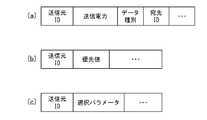
- wireless communications system It is a figure which shows the example of the message used in the procedure which selects a relay station. It is a figure which shows an example of a parameter table. It is a figure which shows an example of a terminal device. It is a figure which shows an example of the hardware constitutions of a terminal device. It is a figure which shows an example of a base station. It is a figure which shows an example of the sequence which selects a relay station in 1st Embodiment. It is a flowchart which shows an example of operation
- FIG. 1 shows an example of a wireless communication system according to an embodiment of the present invention.
- the wireless communication system includes a plurality of terminal apparatuses (DUE: Device to Device User Equipment) 1 to 5 and a base station 6.
- DUE Device to Device User Equipment
- the base station 6 is an eNB (evolved (Node B) in this embodiment.
- eNB is a base station used in LTE. Therefore, the base station 6 manages and controls LTE cellular communication. That is, the base station 6 can receive and process cellular communication data signals and control signals transmitted from the terminal device. Moreover, the base station 6 can transmit the data signal and control signal of cellular communication to a terminal device.
- the base station 6 periodically transmits a notification signal.
- the broadcast signal is received by all the terminal devices in the cell.
- each of the terminal devices 1 to 3, 5 receives a notification signal.
- the terminal device that has received the broadcast signal can determine that it is within the cell of the base station 6.
- the terminal device that has received the broadcast signal may transmit a response signal to the base station 6.
- the base station 6 can manage terminal devices located in the cell.
- Terminal devices 1 to 5 support cellular communication and D2D communication, respectively. That is, each of the terminal devices 1 to 5 can transmit data to other terminal devices via the base station 1 and can receive data from other terminal devices via the base station 1. Also, the terminal devices 1 to 5 can communicate directly with other terminal devices via the D2D link without going through the base station 1, respectively.
- Data transmitted by cellular communication or D2D communication is not particularly limited, and includes audio data, image data, moving image data, text data, and the like.
- a terminal device that supports D2D communication may be referred to as “DUE”.
- Each terminal device broadcasts a discovery signal of D2D communication periodically, for example.
- the discovery signal is used to notify the other terminal devices of the presence of the terminal device that generated the discovery signal. Therefore, the discovery signal transmits a message including identification information of the transmission source terminal device of the discovery signal.
- the discovery signal transmitted from the DUE 4 transmits a message including “source ID: DUE 4”.
- the discovery sequence is based on PRACH (Physical Random Access Channel), SRS (Sounding Reference Signal), and / or PSS (Primary Synchronization Signal) / SSS (Secondary Synchronization Signal), for example.
- the discovery signal message is transmitted using, for example, PUSCH (Physical-Uplink-Shared-Channel).
- the discovery signal transmitted from DUE 4 is received by a terminal device located in the vicinity of DUE 4.
- DUE 1 to 3 each receive a discovery signal transmitted from DUE 4.
- the DUE 4 can receive the discovery signals transmitted from the DUEs 1 to 3, respectively.
- the DUE 4 when the DUE 4 performs cellular communication, for example, a cell search is performed to detect a base station. However, in the example shown in FIG. 1, the DUE 4 cannot detect the base station because it is not located in the cell of the base station 6. In this case, the DUE 4 accesses the base station 6 using D2D communication according to the following procedure.
- the DUE4 broadcasts a relay station discovery signal with a predetermined transmission power.
- the transmission power information is included in the discovery message as shown in the example of FIG. 2A
- the transmission power of the relay station discovery signal may be different for each terminal device.
- the relay station discovery signal transmits a message including identification information of the transmission source terminal device of the relay station discovery signal in the same manner as a normal discovery signal.
- the discovery message transmitted by the relay station discovery signal includes, for example, a transmission source ID, transmission power information, and data type information as shown in FIG.
- the transmission source ID identifies the transmission source of the relay station discovery signal.
- the transmission power information represents the transmission power of the relay station discovery signal.
- the data type information represents the type of data to be transmitted by D2D communication after the D2D link is established.
- the data type may represent emergency communication or non-emergency communication.
- Emergency communications include, for example, calls that call the police or fire department.
- the data type is specified by the user of the terminal device.
- the discovery message may include a destination ID. The destination ID identifies the device that is the destination of the data.
- the relay station discovery signal transmitted from DUE 4 is received by DUE 1 to 3. Then, each of the DUEs 1 to 3 calculates a priority value.
- the priority value which will be described in detail later, represents a priority for operating as a relay station. Note that the DUEs 1 to 3 may calculate the priority value only when the data type information included in the received discovery message represents a type specified in advance (for example, emergency communication).
- DUE 1 to 3 each transmit the calculated priority value to DUE 4. At this time, the DUEs 1 to 3 transmit the calculated priority values to the DUE 4 using the response message shown in FIG.
- the terminal apparatus (DUE 1 to 3 in FIG. 1) that has received the relay station discovery signal transmits the priority value to DUE 4 only when the calculated priority value is higher than a pre-specified threshold value. According to this method, by setting the threshold appropriately, only a preferred number of terminal devices transmit the priority value.
- DUE 4 determines a relay station DUE that operates as a relay station based on priority values received from one or a plurality of terminal devices. At this time, the DUE 4 selects the terminal device that has generated the highest priority value as the relay station DUE. In the example shown in FIG. 1, DUE1 is selected from DUE1 to DUE3. In this case, a D2D link is established between DUE4 and DUE1. Further, the DUE 1 is set so as to transfer data received from the DUE 4 via the D2D link to the base station 6. That is, D2D communication is performed between DUE4 and DUE1, and cellular communication is performed between DUE1 and base station 6.
- the priority value is calculated based on at least one of the following parameters.
- RSRP Reference Signal Received Power
- Destination side RSRP (3) Battery level (4) Number of adjacent DUEs (5) Interference
- the RSRP on the transmission side represents the received power of the signal transmitted from the transmission source of the relay station discovery signal.
- the transmission power of the relay station discovery signal is determined in advance as described above.
- the transmission power of the relay station discovery signal is notified using the relay station discovery signal as shown in FIG. Therefore, the relay station discovery signal is used as a reference signal in RSRP measurement.
- DUE 1 to 3 each measure the reception power of the relay station discovery signal transmitted from DUE 4.
- the RSRP on the destination side represents the received power of the signal transmitted from the destination device.
- “Destination” is, for example, the base station 6.
- each terminal apparatus measures the reception power of the broadcast signal transmitted from the base station 6, for example.
- the notification signal is used as a reference signal in the RSRP measurement.
- each of DUE 1 to 3 measures the reception power of a broadcast signal transmitted from base station 6.
- the remaining battery capacity represents the remaining battery capacity built into the terminal device.
- each of the DUEs 1 to 3 monitors the remaining battery level of its own device.
- the number of adjacent DUEs represents the number of DUEs that can be accessed with one hop.
- each DUE can detect an adjacent DUE.
- the number of discovery signal transmission sources detected corresponds to the number of adjacent DUEs.
- DUE1 to DUE4 broadcast discovery signals.
- DUE1 receives discovery signals from DUE2 to DUE4, respectively.
- the “number of adjacent DUEs” of DUE1 is 3. Since the DUE is a wireless communication node that supports D2D communication, the “number of adjacent DUEs” may be referred to as “the number of adjacent D2D nodes”.
- the interference is not particularly limited, but in this example, the interference is calculated based on the received power of the target signal and the predicted interference power (or based on the ratio of the received power of the target signal to the predicted interference power).
- DUE 1 receives a target signal from DUE 4.
- DUE1 calculates a path loss PL (4,1) between DUE4 and DUE1 by the following equation.
- PL (4,1) P0-Pr (d)
- P0 represents the transmission power of the relay station discovery signal.
- the transmission power of the relay station discovery signal is notified by a relay station discovery message as shown in FIG. Pr (d) is the received power of the relay station discovery signal in DUE1.
- the DUE 1 has previously measured the path loss with the adjacent DUE.
- the DUE 1 has previously measured the path loss PL (2, 1) between the DUE 2 and the DUE 1 and the path loss PL (3, 1) between the DUE 3 and the DUE 1.
- each DUE shall be able to measure or estimate the path loss between adjacent DUEs using the discovery signal broadcast regularly, for example.
- the path loss PL (4, 1) when the path loss PL (4, 1) is small, the received power of the target signal is large in the DUE 1. In this case, interference with the target signal tends to be small.
- the path loss PL (4,1) is large, the received power of the target signal is small in DUE1. In this case, interference with the target signal tends to increase.
- the path loss (PL (2,1), PL (3,1)) between adjacent DUEs the predicted interference power is large in DUE1. In this case, interference with the target signal tends to increase.
- the path loss between adjacent DUEs is large, the predicted interference power is small in DUE1. In this case, interference with the target signal tends to be small.
- DUE1 can calculate interference based on the ratio of the path loss PL between DUE4 and DUE1 and the path loss between adjacent DUEs, for example. At this time, interference may be calculated based on the ratio of the path loss PL between DUE 4 and DUE 1 and the minimum value of the path loss between each adjacent DUE.
- Each DUE may be provided with a parameter table for storing the above parameters.
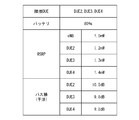
- An example of the parameter table is shown in FIG. FIG. 3 shows an example of a parameter table provided in the DUE 1.
- DUE2, DUE3, and DUE4 are detected as adjacent DUEs.
- the number of adjacent DUEs is 3 in this example.
- the transmission source of the relay station discovery signal (DUE4) may be excluded from the detected DUEs (DUE2 to DUE4).
- the path loss is used to calculate interference as described above.
- the parameter table is periodically updated, for example.
- the terminal device when receiving the relay station discovery signal, calculates a priority value.
- the priority value is calculated by the following formula, for example.
- Priority value w1 * RSRP (S) + w2 * RSRP (D) + w3 * BTT-w4 * NUM_DUE-w5 * INTER w1 to w5 each represent a weight. w1 to w5 are zero or positive values.
- RSRP (S) represents the received power of the reference signal received from the transmission source terminal device.
- RSRP (D) represents the received power of the reference signal received from the destination device.
- BTT represents the remaining battery level.
- NUM_DUE represents the number of adjacent DUEs.
- INTER represents interference.
- the weights w1 to w5 are determined based on the network policy. For example, when communication quality is regarded as important, w1, w2, and w5 are increased. Further, w4 may be increased in order to reduce the concentration of the load on a specific terminal device.
- Priority value is calculated based on at least one of the parameters described above. Therefore, for example, when calculating the priority value based only on RSRP, w1 to w2 are each 1, and w3 to w5 are each zero.
- Each terminal device that has received the relay station discovery signal compares the calculated priority value with a predetermined threshold value. When the priority value is higher than the threshold value, the terminal device notifies the transmission source terminal device of the priority value.
- the transmission source terminal apparatus determines a relay station DUE that operates as a relay station based on a priority value received from one or a plurality of terminal apparatuses. At this time, the DUE 4 selects the terminal device that has generated the highest priority value as the relay station DUE that operates as the relay station.
- the threshold value is determined based on, for example, simulation or measurement in advance.
- the threshold is used to determine whether the DUE can operate as a relay station. For example, when the threshold is high, only the DUE that can provide high performance as a relay station transmits the priority value to the transmission source terminal device. In this case, a DUE that operates as a relay station is selected from one or a plurality of DUEs that can provide high performance as the relay station. Therefore, communication with good quality is provided. However, if the threshold is too high, there is a possibility that a candidate for DUE that operates as a relay station cannot be found. On the other hand, if the threshold is too low, the priority value may be notified from a large number of DUEs to the source terminal device. In this case, D2D communication may be congested by the procedure for transmitting the priority value. Therefore, the threshold is determined so that the number of priority values received by the transmission source terminal device approaches a predetermined number (for example, 5).
- a predetermined number for example, 5
- the threshold may be increased in an area where the density where DUE exists is high compared to an area where the density where DUE exists.
- a threshold may be dynamically set from the base station to each DUE.
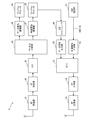
- FIG. 4 shows an example of a terminal device.
- the terminal device 10 corresponds to the DUEs 1 to 4 in the example shown in FIG. Moreover, the terminal device 10 supports cellular communication and D2D communication. The terminal device 10 may have other functions not shown in FIG.
- the terminal device 10 includes a traffic processing unit 11, a channel encoder 12, an IFFT circuit 13, a CP adding unit 14, an RF transmitter 15, an RF receiver 16, and channel demodulation in order to support cellular communication. And a RSRP calculator 18.
- the traffic processing unit 11 generates traffic to be transmitted by cellular communication.
- the channel encoder 12 encodes the traffic output from the traffic processing unit 11.
- the IFFT circuit 13 performs inverse fast Fourier transform on the output signal of the channel encoder 12 to generate a time domain signal.
- the CP adding unit 14 adds a cyclic prefix (CP: Cyclic Prefix) to the time domain signal output from the IFFT circuit 13. Then, the RF transmitter 15 transmits a cellular signal via the antenna. The cellular signal is received by the base station.
- CP Cyclic Prefix
- the RF receiver 16 receives a cellular signal transmitted from the base station.
- the channel demodulator 17 demodulates the received cellular signal.
- the channel demodulator 17 extracts the D2D resource allocation instruction from the received cellular signal and passes it to the D2D scheduler 21 described later.
- the RSRP calculator 18 calculates received power of a reference signal (for example, a broadcast signal) transmitted from the base station. The received power obtained by the RSRP calculator 18 may be used as the destination RSRP when calculating the priority value.
- the terminal device 10 includes a D2D scheduler 21, a D2D data generator 22, a discovery signal generator 23, an RF transmitter 24, an RF receiver 25, a data signal demodulator 26, and a discovery signal detector 27.
- the D2D scheduler 21 can determine a resource to be used for D2D communication from resources provided by the wireless communication system or resources prepared in advance. For example, when the frequency used for D2D communication is determined by the D2D scheduler 21, the terminal device 10 performs D2D communication at the frequency. Further, the D2D scheduler 21 can also control the D2D communication of the terminal device 10 based on the resource allocation instruction received from the base station. For example, when the frequency of D2D communication is designated by the resource allocation instruction, the D2D scheduler 21 controls the D2D data generator 22 and / or the RF transmitter 24 so that the D2D signal is transmitted at the designated frequency. To do. In addition, the D2D scheduler 21 may control the RF receiver 25 and / or the data signal demodulator 26 to receive a D2D signal at a specified frequency.
- the D2D data generator 22 generates transmission data for D2D communication according to control by the D2D scheduler 21.
- the D2D data generator 22 can also generate a response message including the priority value obtained by the priority value calculator 30.
- the discovery signal generator 23 generates a discovery signal / relay station discovery signal.
- the discovery signal / relay station discovery signal carries identification information of the own device.
- the discovery signal / relay station discovery signal is transmitted using, for example, PUSCH.
- the RF transmitter 24 transmits a D2D signal (including a D2D data signal, a discovery signal, and a relay station discovery signal) via an antenna.
- the RF receiver 25 receives a D2D signal (including a D2D data signal, a discovery signal, and a relay station discovery signal) transmitted from another terminal device.
- the data signal demodulator 26 demodulates the received D2D data signal to reproduce D2D data.
- Discovery signal detector 27 detects a discovery signal / relay station discovery signal from a D2D signal transmitted from another terminal device. At this time, the discovery signal detector 27 acquires the identification information of the terminal device that is the transmission source of the discovery signal / relay station discovery signal. Further, the discovery signal detector 27 can extract transmission power information and data type information from the relay station discovery signal.
- the RSRP calculator 28 calculates received power of a reference signal (for example, discovery signal / relay station discovery signal) transmitted from another terminal device. Note that the received power obtained by the RSRP calculator 28 may be used to calculate a priority value.
- the interference calculator 29 calculates the interference that the target signal may receive based on the reception power of the discovery signal / relay station discovery signal. As described above, this interference is calculated based on the path loss between the terminal devices.
- the priority value calculator 30 calculates a priority value using at least one of the parameters (1) to (5) described above when the terminal device 10 receives the relay station discovery signal.
- the RSRP is calculated by the RSRP calculators 18 and 28.
- the remaining battery level is obtained by monitoring a battery (not shown).
- the number of adjacent DUEs can be obtained by counting the terminal devices from which discovery signals are detected by the discovery signal detector 27.
- the interference is calculated by the interference calculator 29.
- the threshold determination unit 31 determines whether or not to transmit the priority value calculated by the priority value calculator 30 to the transmission source terminal device. That is, when the calculated priority value is higher than the threshold value, the threshold value determination unit 31 determines to transmit the priority value to the transmission source terminal device, and when the calculated priority value is equal to or less than the threshold value, the priority value is determined. It is determined that the value is not transmitted to the transmission source terminal device. When it is determined that the priority value is transmitted to the transmission source terminal device, the priority value calculated by the priority value calculator 30 is transmitted to the transmission source terminal using the D2D data generator 22.
- the selection unit 32 selects a DUE that operates as a relay station (hereinafter, relay station DUE) based on the priority value received from one or more other terminal devices. For example, the DUE that generated the highest priority value is selected as the relay station DUE.
- the terminal device 10 has a function of establishing a D2D link with the relay station DUE.
- the communication circuit is set so as to transfer data received from the terminal device 10 via the D2D link to the destination device (base station 6 in the example shown in FIG. 1).
- FIG. 5 shows an example of the hardware configuration of the terminal device.
- the terminal device 10 includes a processor 10a, a memory 10b, a transmission / reception circuit 10c, and a battery 10d. Note that the terminal device 10 may have other hardware elements.
- the processor 10a realizes the function of the terminal device 10 by executing a given program.
- the functions of the signal demodulator 26, discovery signal detector 27, RSRP calculator 28, interference calculator 29, priority value calculator 30, threshold value determination unit 31, and selection unit 32 can be realized by the processor 10a.
- the memory 10b stores a program executed by the processor 10a.
- the memory 10b stores a parameter table shown in FIG.
- the memory 10b includes a work area for the processor 10a.
- the transmission / reception circuit 10c corresponds to the RF transmitter 15, the RF receiver 16, the RF transmitter 24, and the RF receiver 25 shown in FIG.
- the battery 10d supplies power to the processor 10a, the memory 10b, and the transmission / reception circuit 10c. The remaining amount of the battery 10d is periodically monitored by the processor 10a (priority value calculator 30).
- FIG. 6 is a diagram illustrating an example of a base station.
- the base station 6 includes an RF receiver 41, a CP removing unit 42, an FFT circuit 43, a channel separator 44, a data signal demodulator 45, a channel decoder 46, a control signal demodulator 47, and a channel decoder 48.
- D2D resource scheduler 49 data signal generator 50, DUE selection unit 51, control signal generator 52, IFFT circuit 53, CP addition unit 54, and RF transmitter 55.
- the base station 6 may have other functions.
- the RF receiver 41 receives a cellular signal transmitted from the terminal device 10.
- the CP removal unit 42 removes the cyclic prefix from the received cellular signal.
- the FFT circuit 43 performs a fast Fourier transform on the received signal to generate a frequency domain signal.
- the channel separator 44 separates the received signal into a data signal and a control signal in the frequency domain.
- the data signal demodulator 45 demodulates the received data signal and reproduces the data.
- the channel decoder 46 decodes the reproduction data.
- the control signal demodulator 47 demodulates the received control signal.
- the channel decoder 48 reproduces control information by decoding the demodulated control signal.
- the D2D scheduler 49 uses the control information reproduced by the channel decoder 48 to generate a resource allocation instruction for D2D communication.
- the data signal generator 50 generates a data signal to be transmitted to the terminal device 10.
- the DUE selection unit 51 designates one or a plurality of terminal device candidates that operate as a relay station from terminal devices located in the cell. And the DUE selection part 51 outputs the identification information which identifies the designated terminal device.
- the control signal generator 52 generates a control signal for controlling the terminal device 10. Note that the resource allocation instruction generated by the D2D scheduler 49 is transmitted to the terminal device 10 by the data signal generator 50 or the control signal generator 52. Also, identification information representing the terminal device selected by the DUE selection unit 51 is transmitted to the terminal device 10 by the control signal generator 52.
- the IFFT circuit 53 performs inverse fast Fourier transform on the control signal and the data signal to generate a time domain signal.
- the CP adding unit 54 adds a cyclic prefix to the time domain signal output from the IFFT circuit 53. Then, the RF transmitter 55 transmits a cellular signal through the antenna.
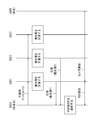
- FIG. 7 shows an example of a sequence for selecting a relay station in the first embodiment.
- the DUE 4 accesses the base station 6. That is, DUE 4 is a transmission source terminal device, and base station 6 is a destination device.
- the DUE 4 is located outside the cell of the base station 6 and cannot directly access the base station 6. That is, the DUE 4 cannot detect the base station 6 when executing the cell search. Therefore, the DUE 4 selects a DUE that operates as a relay station between the DUE 4 and the base station 6.
- DUE4 broadcasts a relay station discovery signal.
- This relay station discovery signal transmits a discovery message including “transmission source ID: DUE4”, “transmission power”, and “data type: emergency”.
- the relay station discovery signals are received by the DUEs 1 to 3, respectively.
- the relay station discovery signal may include a destination ID that designates “base station” to indicate that the relay is UE-to-Network relay.
- the relay station discovery signal does not include a destination ID, each DUE can understand that the relay station discovery signal requests relay of UE-to-Network as a default. In these cases, each DUE that has received the relay station discovery recognizes the nearest base station as the destination.
- the DUE 1 to 3 When each of the DUEs 1 to 3 detects that the data type notified by the discovery message is “emergency”, the DUE 1 to 3 starts processing for calculating a priority value.
- the priority value is calculated using at least one of the transmission source side RSRP, the destination side RSRP, the remaining battery level, the number of adjacent DUEs, and interference.
- the priority value is preferably calculated using at least the source-side RSRP and the destination-side RSRP.
- Each DUE 1 to 3 compares the calculated priority value with a predetermined threshold value. When the calculated priority value is higher than the threshold value, the DUE transmits the priority value to the DUE 4. In the example illustrated in FIG. 7, the priority value is higher than the threshold value in DUE 1 and 2, and the priority value is lower than the threshold value in DUE 3. Therefore, each of DUE 1 and 2 transmits the priority value calculated by its own device to DUE 4. That is, priority value 1 is notified from DUE1 to DUE4, and priority value 2 is notified from DUE2 to DUE4.
- DUE 4 selects a DUE that operates as a relay station based on priority values received from one or a plurality of DUEs.
- DUE 4 receives priority value 1 from DUE 1 and receives priority value 2 from DUE 2.
- the priority value 1 is higher than the priority value 2.
- the DUE 4 selects DUE 1 as the relay station DUE.
- DUE4 establishes a D2D link with DUE1.
- the communication circuit is set so that DUE1 transfers data received from DUE4 via the D2D link to base station 6.
- data transmitted from the DUE 4 to the base station 6 is relayed by the DUE 1 and transmitted to the base station 6.
- D2D communication is performed between the DUE 4 and the DUE 1 via the D2D link, and cellular communication is performed between the DUE 1 and the base station 6.
- a relay station DUE that operates as a relay station is selected from among a plurality of DUEs.
- the relay station DUE is selected in consideration of the communication environment and the operating state of each DUE, the quality of communication between the terminal device and the destination device is good.
- the relay station DUE is selected based on the priority value generated in each DUE. At this time, only a priority value higher than a predetermined threshold is transmitted from the DUE to the terminal device. Therefore, traffic for notification of priority values is suppressed.
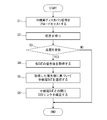
- FIG. 8 is a flowchart showing processing of a terminal device that selects a relay station.
- the process of this flowchart is executed in the DUE 4 shown in FIG. 1 or FIG. 7, for example. Moreover, the process of this flowchart is performed by the processor 10a of the terminal device which selects a relay station. Furthermore, the processing of this flowchart is executed when, for example, the terminal device cannot detect the base station in the cell search.
- the terminal device broadcasts a relay station discovery signal.
- the terminal device waits for a response message corresponding to the relay station discovery signal.
- the processing of the terminal device proceeds to S4.
- the terminal device cannot receive the response message within a predetermined time from when the relay station discovery signal is transmitted, it is determined that the terminal device is isolated. In this case, the processing of the terminal device ends.
- the terminal device acquires a priority value from the received response message. That is, the terminal device acquires the priority value generated in each DUE.
- the terminal device selects the relay station DUE based on the acquired priority value. Then, the terminal device transmits a message instructing the relay station DUE to operate as a relay station, and establishes a D2D link with the relay station DUE.
- FIG. 9 is a flowchart showing processing of a DUE that can be selected as a relay station.
- the processing in this flowchart is executed by, for example, the DUEs 1 to 3 shown in FIG. 1 or FIG.
- the processing of this flowchart is executed by the processor 10a of the DUE.
- the DUE receives the relay station discovery signal from the transmission source terminal device.
- the DUE refers to the data type in the discovery message and determines whether to respond to the relay station discovery signal. For example, if the data type is “emergency”, the DUE determines to respond to the relay station discovery signal.
- the DUE calculates the reception power of the relay station discovery signal. This received power is stored in the parameter table as the source RSRP.
- the DUE acquires other selection parameters (destination side RSRP, remaining battery level, number of adjacent DUEs, interference, etc.). For example, the selection parameter is measured in advance and stored in the parameter table shown in FIG. However, the DUE may measure each selection parameter when receiving the relay station discovery signal.
- the DUE calculates a priority value based on the selection parameters (including the transmission side RSRP).
- the DUE compares the priority value obtained in S15 with a threshold value. When the priority value is higher than the threshold value, the DUE generates a response message including the priority value and transmits it to the transmission source terminal apparatus in S17. On the other hand, if the priority value is equal to or less than the threshold value, the DUE does not respond to the relay station discovery signal.
- the destination device is a base station device, but the present invention is not limited to this form. That is, the destination device may be a terminal device (here, DUE).
- DUE terminal device
- DUE 4 wants to access DUE 5, but a radio signal transmitted from DUE 4 does not reach DUE 5.
- the DUE that operates as the relay station is selected from the DUEs 1 to 3.
- the transmission source terminal device may broadcast a discovery message including the destination ID using a relay station discovery signal.
- the DUE that has received the relay station discovery signal can identify the destination device, and thus can acquire the destination-side RSRP and the like. That is, the DUE that has received the relay station discovery signal can calculate the priority value in the same manner as when the destination is the base station. Therefore, according to the first embodiment, even if the destination device is a DUE, a DUE that preferably operates as a relay station is selected, and a relay operation is provided by the selected DUE.
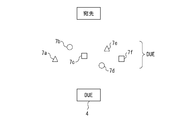
- Terminal devices that can operate as relay stations may be grouped.
- DUEs 7a and 7e belong to the first group
- DUEs 7b and 7d belong to the second group
- DUEs 7c and 7f belong to the third group.
- the DUEs 7a and 7e belonging to the first group calculate the priority value only when receiving the relay station discovery signal designating the data type (for example, report to the police) corresponding to the first group, To DUE4).
- the DUEs 7b and 7d belonging to the second group calculate the priority value and receive the relay station discovery signal that specifies the data type (for example, notification to the fire department) corresponding to the second group, and the transmission source terminal Transmit to the device (DUE4).
- the threshold for determining whether or not to transmit the priority value may be different for each group.
- the transmission source terminal apparatus selects the relay station DUE based on the priority value calculated by each DUE, but the present invention is not limited to this method.
- the base station may select the relay station DUE based on the priority value calculated in each DUE.
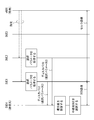
- FIG. 11 shows an example of a sequence in which the base station selects a relay station. Note that the procedure for broadcasting the relay station discovery signal by the transmission source terminal device and the procedure for calculating the priority value by the DUE that has received the relay station discovery signal are substantially the same in FIGS.
- DUE1 and DUE2 transmit priority value 1 and priority value 2 to the base station 6, respectively.
- the base station 6 selects a DUE that operates as a relay station based on the received priority value.
- DUE1 is selected as the relay station DUE.
- the base station 6 transmits a message indicating that DUE1 is selected as the relay station DUE to the DUE1, and the DUE1 transfers this message to the transmission source terminal device (here, DUE4).
- the DUE 1 relays communication between the DUE 4 and the base station 6.
- the source terminal device broadcasts a relay station discovery signal to start a procedure for selecting a DUE that operates as a relay station.
- a DUE that wishes to operate as a relay station broadcasts a source discovery signal. Whether or not it wishes to operate as a relay station is specified by the user of the DUE, for example. Further, the DUE designated by the base station may broadcast the transmission source discovery signal.
- the source discovery signal is broadcast periodically, for example.
- the transmission source discovery signal includes “transmission source ID” and “selection parameter” as shown in FIG.
- the transmission source ID identifies the transmission source of the transmission source discovery signal.
- the selection parameters include the destination RSRP, the remaining battery level, and the number of adjacent DUEs.
- the destination device is the base station 6 shown in FIG.
- the destination-side RSRP represents the received power of a reference signal (for example, a broadcast signal) transmitted from the base station 6.
- the remaining battery level and the number of adjacent DUEs are the same in the first embodiment and the second embodiment.
- the transmission power of the source discovery signal is preferably determined in advance.
- the transmission power of the source discovery signal may be the same as the normal discovery signal or the relay station discovery signal described above.
- the transmission source terminal device performs cell search when communicating with other terminal devices via the base station 6.
- the transmission source terminal apparatus selects a DUE that operates as a relay station using a transmission source discovery signal received from one or a plurality of DUEs.
- the transmission source terminal apparatus calculates a corresponding priority value based on the reception power of the transmission source discovery signal and the selection parameter transmitted by the transmission source discovery signal.
- a transmission source terminal device selects DUE which operate
- FIG. 12 shows an example of a sequence for selecting a relay station in the second embodiment.
- the DUE 4 accesses the base station 6 as in the sequence shown in FIG. That is, DUE 4 is a transmission source terminal device, and base station 6 is a destination device. Further, it is assumed that the DUE 4 cannot detect the base station 6 when executing the cell search.
- the DUEs 1 to 2 periodically broadcast source discovery signals. That is, DUE 1 and 2 are set in a state where they can be selected as relay stations by the user. Alternatively, the DUEs 1 and 2 are designated by the base station 6 as DUEs that can be selected as relay stations.
- the transmission source discovery signal transmits a discovery message including a selection parameter, as shown in FIG.
- the selection parameters include the destination RSRP, the remaining battery level, and the number of adjacent DUEs.
- the selection parameters collected by the DUE 1 include the reception power of the notification signal transmitted from the base station 6, the remaining battery level of the DUE 1, and the number of D2D nodes adjacent to the DUE 1. Note that the selection parameters of each DUE are stored in the parameter table shown in FIG. 3 as described above.
- DUE 4 waits for a source discovery signal broadcast by another DUE.
- the DUE 4 receives the transmission source discovery signal 1 including the selection parameter 1 from the DUE 1, and receives the transmission source discovery signal 1 including the selection parameter 2 from the DUE 2. Then, DUE 4 calculates a priority value for each of DUE 1 and DUE 2.
- the DUE 4 calculates the reception power of the transmission source discovery signal 1 transmitted from the DUE 1.
- the loss of the path from DUE1 to DUE4 and the loss of the path from DUE4 to DUE1 are substantially the same. Therefore, the reception power of the transmission source discovery signal 1 in the DUE 4 corresponds to the RSRP in the DUE 1 when the reference signal is transmitted from the DUE 4 to the DUE 1. That is, the reception power of the transmission source discovery signal 1 in the DUE 4 corresponds to the transmission side RSRP in the DUE 1 when data is transferred from the DUE 4 to the base station 6 via the DUE 1.
- the DUE 4 uses the reception power of the source discovery signal 1 transmitted from the DUE 1 (that is, the source side RSRP), the destination side RSRP included in the selection parameter 1 received from the DUE 1, the remaining battery level, and the number of adjacent DUEs.
- the priority value of DUE1 is calculated.
- DUE4 calculates the priority value of DUE2 using the reception power of transmission source discovery signal 2 transmitted from DUE2 and selection parameter 2.
- a method for selecting a DUE that operates as a relay station based on a priority value and a method for establishing a link using the selected DUE are substantially the same in the first and second embodiments. Therefore, similarly to the example shown in FIG. 7, the D2D link is established between DUE4 and DUE1 in the sequence shown in FIG. Further, the communication circuit is set so that DUE1 transfers data received from DUE4 via the D2D link to base station 6. As a result, data transmitted from the DUE 4 to the base station 6 is relayed by the DUE 1 and transmitted to the base station 6.
Landscapes
- Engineering & Computer Science (AREA)
- Computer Networks & Wireless Communication (AREA)
- Signal Processing (AREA)
- Databases & Information Systems (AREA)
- Computer Security & Cryptography (AREA)
- Mobile Radio Communication Systems (AREA)
Abstract
無線通信システムは、宛先装置と、D2D(device to device)通信をサポートし、宛先装置へデータを送信する送信元装置と、D2D通信をサポートする複数の端末装置とを有する。送信元装置は、複数の端末装置へディスカバリ信号を送信する。複数の端末装置は、それぞれ、送信元装置から送信されるディスカバリ信号の受信電力、宛先装置から送信される参照信号の受信電力、自装置のバッテリ残量、自装置に隣接するD2Dノードの数、自装置に隣接するD2Dノードから受ける干渉のうちの少なくとも1つに基づいて優先値を計算する。複数の端末装置は、それぞれ優先値を送信元装置へ送信する。送信元装置は、1または複数の端末装置から受信する優先値に基づいて、複数の端末装置の中からデータを中継する端末装置を選択する。
Description
本発明は、D2D(Device to Device)通信を行う無線通信システム、およびその無線通信システムで使用される無線通信装置に係わる。
3GPP(Third Generation Partnership Project)は、移動通信方式の標準化を検討している。例えば、LTE(Long Term Evolution)などの高速無線通信方式について3GPPで標準化が行われている。そして、3GPP標準リリース12において、新しい無線通信方式の1つとして、D2D通信の標準化が進められている。なお、D2D通信は、LTEの拡張仕様の1つであり、LTE Device to Device Proximity Servicesと呼ばれることもある。
D2D通信においては、端末装置は、基地局を介することなく、直接的に他の端末装置と通信を行うことができる。このため、D2D通信は、遅延の少ない通信が期待されている。また、基地局の電波が届きにくいエリア(又は、基地局が存在しないエリア)においてもD2D通信を行うことが可能なので、D2D通信はセル範囲(Network Coverage)の拡大に寄与し得る。さらに、基地局が使用できない状況(たとえば、大地震が発生したとき)においてもD2D通信を行うことが可能なので、D2D通信は、災害時の通信の確保にも寄与しうる。なお、D2D通信のために端末装置間に設定される通信リンクは、D2Dリンクと呼ばれることがある。
D2D通信は、端末装置が基地局と直接的に通信できないときに、その端末装置と基地局との間で、D2D通信をサポートする他の端末装置が中継装置として動作するために使用できる。すなわち、端末/網中継(UE-to-Network Relay)により、実質的に、セル範囲が拡大される。また、D2D通信は、基地局を経由することなく送信元端末から宛先端末へ送信されるデータ(例えば、緊急情報など)を中継することもできる。すなわち、端末/端末中継(UE-to-UE Relay)により2ホップ以上のD2D通信が実現される。
D2D通信を利用してデータが中継される場合、送信元と宛先との間に中継局として動作可能な複数の端末装置が存在することがある。この場合、複数の端末装置の中の1つが中継局として動作する。
ところが、D2D通信は新しい技術であり、D2D通信を利用する中継方式について未だ十分な検討は行われていない。例えば、複数の端末装置の中から中継局として動作する端末装置を選択する方法は決められていない。このため、中継局として好ましくない端末装置が中継局として選択されてしまうと、送信元と宛先との間の通信の品質が劣化することがある。なお、この問題は、3GPP標準リリース12に記載されているD2D通信に限定されるものではなく、端末装置間で直接的に通信を行うことができる無線通信システムにおいて発生し得る。
本発明の1つの側面に係わる目的は、D2D通信をサポートする無線通信システムにおいて、複数の端末装置の中から中継局として動作することが好ましい端末装置を適切に選択する方法を提供することである。
本発明の1つの態様の無線通信システムは、宛先装置と、D2D(device to device)通信をサポートし、前記宛先装置へデータを送信する送信元装置と、D2D通信をサポートする複数の端末装置と、を有する。前記送信元装置は、前記複数の端末装置へディスカバリ信号を送信する。前記複数の端末装置は、それぞれ、前記送信元装置から送信されるディスカバリ信号の受信電力、前記宛先装置から送信される参照信号の受信電力、自装置のバッテリ残量、自装置に隣接するD2Dノードの数、自装置に隣接するD2Dノードから受ける干渉のうちの少なくとも1つに基づいて優先値を計算する。前記複数の端末装置は、それぞれ、前記優先値を前記送信元装置へ送信する。前記送信元装置は、1または複数の端末装置から受信する優先値に基づいて、前記複数の端末装置の中から、前記送信元装置から前記宛先装置へ送信されるデータを中継する端末装置を選択する。
上述の態様によれば、D2D通信をサポートする無線通信システムにおいて、複数の端末装置の中から中継局として動作することが好ましい端末装置が適切に選択される。
図1は、本発明の実施形態に係わる無線通信システムの一例を示す。この例では、無線通信システムは、複数の端末装置(DUE:Device to Device User Equipment)1~5および基地局6を含む。
基地局6は、この実施例では、eNB(evolved Node B)である。eNBは、LTEにおいて使用される基地局である。よって、基地局6は、LTEのセルラ通信を管理および制御する。すなわち、基地局6は、端末装置から送信されるセルラ通信のデータ信号および制御信号を受信して処理することができる。また、基地局6は、セルラ通信のデータ信号および制御信号を端末装置へ送信することができる。
基地局6は、定期的に、報知信号を送信する。報知信号は、セル内のすべての端末装置により受信される。図1に示す例では、端末装置1~3、5は、それぞれ報知信号を受信する。報知信号を受信した端末装置は、自分が基地局6のセル内に在圏していると判断することができる。また、報知信号を受信した端末装置は、基地局6へ応答信号を送信してもよい。この場合、基地局6は、セル内に在圏している端末装置を管理できる。
端末装置1~5は、それぞれセルラ通信およびD2D通信をサポートする。すなわち、端末装置1~5は、それぞれ、基地局1を介して他の端末装置へデータを送信することができ、基地局1を介して他の端末装置からデータを受信することができる。また、端末装置1~5は、それぞれ基地局1を介することなく、D2Dリンクを介して他の端末装置と直接的に通信を行うことができる。セルラ通信またはD2D通信で伝送されるデータは、特に限定されるものではなく、音声データ、画像データ、動画像データ、テキストデータなどを含む。なお、以下の記載では、D2D通信をサポートする端末装置を「DUE」と呼ぶことがある。
各端末装置は、例えば定期的に、D2D通信のディスカバリ信号をブロードキャストする。ディスカバリ信号は、ディスカバリ信号を生成した端末装置の存在を他の端末装置へ通知するために使用される。したがって、ディスカバリ信号は、ディスカバリ信号の送信元端末装置の識別情報を含むメッセージを伝送する。例えば、DUE4から送信されるディスカバリ信号は「送信元ID:DUE4」を含むメッセージを伝送する。なお、ディスカバリシーケンスは、例えば、PRACH(Physical Random Access Channel)、SRS(Sounding Reference Signal)、及び/又はPSS(Primary Synchronization Signal)/SSS(Secondary Synchronization Signal)に基づく。また、ディスカバリ信号のメッセージは、例えば、PUSCH(Physical Uplink Shared Channel)を利用して伝送される。
DUE4から送信されるディスカバリ信号は、DUE4の近傍に位置している端末装置により受信される。この例では、DUE1~3がそれぞれDUE4から送信されるディスカバリ信号を受信する。この場合、DUE4は、DUE1~3からそれぞれ送信されるディスカバリ信号を受信することができる。
上記構成の無線通信システムにおいて、DUE4がセルラ通信を行うときは、例えば、基地局を検出するためにセルサーチを実行する。ところが、図1に示す例では、DUE4は、基地局6のセル内に在圏していないので、基地局を検出できない。この場合、DUE4は、以下の手順により、D2D通信を利用して基地局6にアクセスする。
DUE4は、予め決められた送信電力で中継局ディスカバリ信号をブロードキャストする。中継局ディスカバリ信号の送信電力は、図2(a)の例に示すように送信電力情報がディスカバリメッセージに含まれる場合、端末装置ごとに異なっていてもよい。中継局ディスカバリ信号は、通常のディスカバリ信号と同様に、その中継局ディスカバリ信号の送信元端末装置の識別情報を含むメッセージを伝送する。ただし、中継局ディスカバリ信号により伝送されるディスカバリメッセージは、例えば、図2(a)に示すように、送信元ID、送信電力情報、データ種別情報を含む。送信元IDは、中継局ディスカバリ信号の送信元を識別する。送信電力情報は、中継局ディスカバリ信号の送信電力を表す。データ種別情報は、D2Dリンクが確立された後にD2D通信で伝送するデータの種別を表す。例えば、データ種別は、緊急通信であるか非緊急通信であるかを表すようにしてもよい。緊急通信は、例えば、警察または消防を呼び出す呼を含む。なお、データ種別は、端末装置のユーザにより指定される。また、ディスカバリメッセージは、宛先IDを含んでいてもよい。宛先IDは、データの宛先の装置を識別する。
この例では、DUE4から送信される中継局ディスカバリ信号は、DUE1~3により受信される。そうすると、DUE1~3は、それぞれ優先値を計算する。優先値は、後で詳しく説明するが、中継局として動作することについての優先度を表す。なお、DUE1~3は、受信したディスカバリメッセージに含まれるデータ種別情報が予め指定された種別(例えば、緊急通信)を表している場合にのみ、優先値を計算するようにしてもよい。
DUE1~3は、それぞれ計算した優先値をDUE4へ送信する。このとき、DUE1~3は、図2(b)に示す応答メッセージを利用して、計算した優先値をDUE4へ送信する。
ここで、DUE4から送信される中継局ディスカバリ信号が多数の端末装置により受信されるときは、多数の端末装置からDUE4へ優先値が通知される。この場合、優先値を伝送する手順によってD2D通信のためのリソースが輻輳するおそれがある。そこで、中継局ディスカバリ信号を受信した端末装置(図1では、DUE1~3)は、計算した優先値が予め指定されている閾値よりも高いときにのみ、その優先値をDUE4へ送信する。この方法によれば、閾値を適切に設定することにより、好ましい数の端末装置のみが優先値を送信することになる。
DUE4は、1または複数の端末装置から受信する優先値に基づいて、中継局として動作する中継局DUEを決定する。このとき、DUE4は、最も高い優先値を生成した端末装置を中継局DUEとして選択する。図1に示す例では、DUE1~3の中からDUE1が選択されている。この場合、DUE4とDUE1との間にD2Dリンクが確立される。また、DUE1は、DUE4からD2Dリンクを介して受信するデータを基地局6へ転送するように設定される。すなわち、DUE4とDUE1との間ではD2D通信が行われ、DUE1と基地局6との間ではセルラ通信が行われる。
優先値は、下記のパラメータのうちの少なくとも1つに基づいて計算される。
(1)送信元側のRSRP(Reference Signal Received Power)
(2)宛先側のRSRP
(3)バッテリ残量
(4)隣接DUE数
(5)干渉
(1)送信元側のRSRP(Reference Signal Received Power)
(2)宛先側のRSRP
(3)バッテリ残量
(4)隣接DUE数
(5)干渉
送信元側のRSRPは、中継局ディスカバリ信号の送信元から送信される信号の受信電力を表す。ここで、中継局ディスカバリ信号の送信電力は、上述したように、予め決められている。或いは、中継局ディスカバリ信号の送信電力は、図2(a)に示すように、中継局ディスカバリ信号を用いて通知される。よって、中継局ディスカバリ信号は、RSRPの測定において、参照信号として使用される。図1に示す例では、DUE1~3は、それぞれDUE4から送信される中継局ディスカバリ信号の受信電力を測定する。
宛先側のRSRPは、宛先装置から送信される信号の受信電力を表す。「宛先」は、例えば、基地局6である。この場合、各端末装置は、例えば、基地局6から送信される報知信号の受信電力を測定する。ここで、報知信号の送信電力が予め決まっている或いは既知であるときは、RSRPの測定において、報知信号は参照信号として使用される。図1に示す例では、DUE1~3は、それぞれ基地局6から送信される報知信号の受信電力を測定する。
バッテリ残量は、端末装置に内蔵されるバッテリの残量を表す。図1に示す例では、DUE1~3は、それぞれ自装置のバッテリの残量をモニタする。
隣接DUE数は、1ホップでアクセス可能なDUEの個数を表す。ここで、各DUEがそれぞれ定期的にディスカバリ信号をブロードキャストする場合、各DUEは、それぞれ隣接するDUEを検出できる。そして、検出されるディスカバリ信号の送信元の個数が、隣接DUE数に相当する。例えば、図1に示す例において、DUE1~DUE4がそれぞれディスカバリ信号をブロードキャストするものとする。そして、DUE1は、DUE2~4からそれぞれディスカバリ信号を受信するものとする。この場合、DUE1の「隣接DUE数」は3である。尚、DUEはD2D通信をサポートする無線通信ノードなので、「隣接DUE数」を「隣接するD2Dノードの数」と呼ぶことがある。
干渉は、特に限定されるものではないが、この例では、目的信号の受信電力および予測干渉電力に基づいて(あるいは、目的信号の受信電力と予測干渉電力との比に基づいて)計算される。一例として、図1において、DUE1がDUE4から目的信号を受信するものとする。この場合、DUE1は、まず、下式でDUE4とDUE1との間のパス損失PL(4,1)を計算する。
PL(4,1)=P0-Pr(d)
P0は、中継局ディスカバリ信号の送信電力を表す。なお、中継局ディスカバリ信号の送信電力は、図2(a)に示すように、中継局ディスカバリメッセージにより通知される。また、Pr(d)は、DUE1における中継局ディスカバリ信号の受信電力である。さらに、DUE1は、予め、隣接DUEとの間のパス損失を測定してあるものとする。図1に示す例では、DUE1は、予め、DUE2とDUE1との間のパス損失PL(2,1)、およびDUE3とDUE1との間のパス損失PL(3,1)を測定してある。なお、各DUEは、例えば、定期的にブロードキャストされるディスカバリ信号を利用して、隣接DUEとの間のパス損失を測定または推定できるものとする。
PL(4,1)=P0-Pr(d)
P0は、中継局ディスカバリ信号の送信電力を表す。なお、中継局ディスカバリ信号の送信電力は、図2(a)に示すように、中継局ディスカバリメッセージにより通知される。また、Pr(d)は、DUE1における中継局ディスカバリ信号の受信電力である。さらに、DUE1は、予め、隣接DUEとの間のパス損失を測定してあるものとする。図1に示す例では、DUE1は、予め、DUE2とDUE1との間のパス損失PL(2,1)、およびDUE3とDUE1との間のパス損失PL(3,1)を測定してある。なお、各DUEは、例えば、定期的にブロードキャストされるディスカバリ信号を利用して、隣接DUEとの間のパス損失を測定または推定できるものとする。
ここで、パス損失PL(4,1)が小さいときは、DUE1において目的信号の受信電力は大きい。この場合、目的信号に対する干渉は小さくなりやすい。パス損失PL(4,1)が大きいときは、DUE1において目的信号の受信電力は小さい。この場合、目的信号に対する干渉は大きくなりやすい。隣接DUEとの間のパス損失(PL(2,1)、PL(3,1))が小さいときは、DUE1において予測干渉電力は大きい。この場合、目的信号に対する干渉は大きくなりやすい。隣接DUEとの間のパス損失が大きいときは、DUE1において予測干渉電力は小さい。この場合、目的信号に対する干渉は小さくなりやすい。よって、DUE1は、例えば、DUE4とDUE1との間のパス損失PLと、隣接DUEとの間のパス損失との比に基づいて、干渉を計算することができる。このとき、DUE4とDUE1との間のパス損失PLと、各隣接DUEとの間のパス損失の最小値との比に基づいて、干渉を計算してもよい。
各DUEは、上述のパラメータを格納するパラメータテーブルを備えるようにしてもよい。パラメータテーブルの一例を図3に示す。図3は、DUE1に設けられるパラメータテーブルの一例を示す。図3に示す例では、隣接DUEとしてDUE2、DUE3、DUE4が検出されている。隣接DUE数は、この例では3である。ただし、パラメータテーブルを利用して隣接DUE数を計算するときに、検出されているDUE(DUE2~4)から、中継局ディスカバリ信号の送信元(DUE4)を除くようにしてもよい。パス損失は、上述したように、干渉を計算するために使用される。なお、パラメータテーブルは、例えば、定期的に更新される。
端末装置は、上述したように、中継局ディスカバリ信号を受信すると、優先値を計算する。優先値は、例えば、下式で計算される。
優先値=w1*RSRP(S) + w2*RSRP(D) + w3*BTT - w4*NUM_DUE - w5*INTER
w1~w5は、それぞれ重みを表す。w1~w5は、ゼロまたは正の値である。RSRP(S)は、送信元端末装置から受信する参照信号の受信電力を表す。RSRP(D)は、宛先装置から受信する参照信号の受信電力を表す。BTTは、バッテリ残量を表す。NUM_DUEは、隣接DUE数を表す。INTERは、干渉を表す。
優先値=w1*RSRP(S) + w2*RSRP(D) + w3*BTT - w4*NUM_DUE - w5*INTER
w1~w5は、それぞれ重みを表す。w1~w5は、ゼロまたは正の値である。RSRP(S)は、送信元端末装置から受信する参照信号の受信電力を表す。RSRP(D)は、宛先装置から受信する参照信号の受信電力を表す。BTTは、バッテリ残量を表す。NUM_DUEは、隣接DUE数を表す。INTERは、干渉を表す。
重みw1~w5は、ネットワークポリシに基づいて決定される。例えば、通信品質が重要視されるときは、w1、w2、w5を大きくする。また、特定の端末装置に負荷が集中することを緩和するためには、w4を大きくしてもよい。
優先値は、上述したパラメータのうちの少なくとも1つに基づいて計算される。したがって、例えば、RSRPのみに基づいて優先値を計算するときは、w1~w2はそれぞれ1であり、w3~w5はそれぞれゼロである。
中継局ディスカバリ信号を受信した各端末装置は、計算した優先値と予め決められている閾値とを比較する。そして、優先値が閾値よりも高いときは、端末装置は、送信元端末装置へ優先値を通知する。送信元端末装置は、1または複数の端末装置から受信する優先値に基づいて、中継局として動作する中継局DUEを決定する。このとき、DUE4は、最も高い優先値を生成した端末装置を、中継局として動作する中継局DUEとして選択する。
閾値は、例えば、予めシミュレーションまたは測定に基づいて決定される。ここで、閾値は、DUEが中継局として動作できるか否かを判定するために使用される。例えば、閾値が高いときは、中継局として高いパフォーマンスを提供できるDUEのみが、優先値を送信元端末装置へ送信する。この場合、中継局として高いパフォーマンスを提供できる1または複数のDUEの中から、中継局として動作するDUEが選択される。よって、品質の良好な通信が提供される。ただし、閾値が高すぎると、中継局として動作するDUEの候補が見つからないおそれがある。反対に、閾値が低すぎると、多数のDUEから送信元端末装置へ優先値が通知されるおそれがある。この場合、優先値を伝送する手順によってD2D通信が輻輳するおそれがある。そこで、閾値は、送信元端末装置が受信する優先値の数が所定数(例えば、5)に近づくように決定される。
なお、DUEが存在する密度が高い地域においては、DUEが存在する密度が低い地域と比較して、閾値を高くしてもよい。この場合、基地局から各DUEに動的に閾値が設定されるようにしてもよい。
図4は、端末装置の一例を示す。端末装置10は、図1に示す例では、DUE1~4に相当する。また、端末装置10は、セルラ通信およびD2D通信をサポートする。なお、端末装置10は、図4に示していない他の機能を有していてもよい。
端末装置10は、図4に示すように、セルラ通信をサポートするために、トラヒック処理部11、チャネルエンコーダ12、IFFT回路13、CP付加部14、RF送信器15、RF受信器16、チャネル復調器17、RSRP計算機18を有する。
トラヒック処理部11は、セルラ通信で送信するトラヒックを生成する。チャネルエンコーダ12は、トラヒック処理部11から出力されるトラヒックを符号化する。IFFT回路13は、チャネルエンコーダ12の出力信号に対して逆高速フーリエ変換を実行して時間領域信号を生成する。CP付加部14は、IFFT回路13から出力される時間領域信号にサイクリックプレフィックス(CP:Cyclic Prefix)を付加する。そして、RF送信器15は、アンテナを介してセルラ信号を送信する。セルラ信号は、基地局により受信される。
RF受信器16は、基地局から送信されるセルラ信号を受信する。そして、チャネル復調器17は、受信セルラ信号を復調する。なお、受信セルラ信号がD2Dリソース割当て指示を含むときは、チャネル復調器17は、受信セルラ信号からD2Dリソース割当指示を抽出して後述するD2Dスケジューラ21に渡す。RSRP計算機18は、基地局から送信される参照信号(例えば、報知信号)の受信電力を計算する。なお、RSRP計算機18により得られる受信電力は、優先値を計算するときに宛先側RSRPとして使用されることがある。
端末装置10は、D2D通信をサポートするために、D2Dスケジューラ21、D2Dデータ生成器22、ディスカバリ信号生成器23、RF送信器24、RF受信器25、データ信号復調器26、ディスカバリ信号検出器27、RSRP計算機28、干渉計算機29、優先値計算機30、閾値判定部31、選択部32を有する。
D2Dスケジューラ21は、無線通信システムにより提供されるリソースまたは予め用意されているリソースの中から、D2D通信のために使用するリソースを決定することができる。例えば、D2Dスケジューラ21によりD2D通信のために使用する周波数が決定されたときは、端末装置10は、その周波数でD2D通信を行う。また、D2Dスケジューラ21は、基地局から受信するリソース割当指示に基づいて、端末装置10のD2D通信を制御することもできる。例えば、リソース割当指示によりD2D通信の周波数が指定されたときは、D2Dスケジューラ21は、指定された周波数でD2D信号が送信されるように、D2Dデータ生成器22及び/又はRF送信器24を制御する。加えて、D2Dスケジューラ21は、指定された周波数でD2D信号を受信するように、RF受信器25及び/又はデータ信号復調器26を制御してもよい。
D2Dデータ生成器22は、D2Dスケジューラ21による制御に従って、D2D通信の送信データを生成する。また、D2Dデータ生成器22は、優先値計算機30により得られた優先値を含む応答メッセージを生成することもできる。ディスカバリ信号生成器23は、ディスカバリ信号/中継局ディスカバリ信号を生成する。ディスカバリ信号/中継局ディスカバリ信号は、自装置の識別情報を伝送する。また、ディスカバリ信号/中継局ディスカバリ信号は、例えば、PUSCHを利用して送信される。RF送信器24は、アンテナを介してD2D信号(D2Dデータ信号、ディスカバリ信号、中継局ディスカバリ信号を含む)を送信する。
RF受信器25は、他の端末装置から送信されるD2D信号(D2Dデータ信号、ディスカバリ信号、中継局ディスカバリ信号を含む)を受信する。データ信号復調器26は、受信したD2Dデータ信号を復調してD2Dデータを再生する。
ディスカバリ信号検出器27は、他の端末装置から送信されるD2D信号からディスカバリ信号/中継局ディスカバリ信号を検出する。このとき、ディスカバリ信号検出器27は、ディスカバリ信号/中継局ディスカバリ信号の送信元の端末装置の識別情報を取得する。また、ディスカバリ信号検出器27は、中継局ディスカバリ信号から送信電力情報およびデータ種別情報を抽出することができる。
RSRP計算機28は、他の端末装置から送信される参照信号(例えば、ディスカバリ信号/中継局ディスカバリ信号)の受信電力を計算する。なお、RSRP計算機28により得られる受信電力は、優先値を計算するために使用されることがある。干渉計算機29は、ディスカバリ信号/中継局ディスカバリ信号の受信電力に基づいて、目的信号が受ける可能性がある干渉を計算する。この干渉は、上述したように、端末装置間のパス損失に基づいて計算される。
優先値計算機30は、端末装置10が中継局ディスカバリ信号を受信したときに、上述したパラメータ(1)~(5)のうちの少なくとも1つを利用して優先値を計算する。なお、RSRPは、RSRP計算機18、28により計算される。バッテリ残量は、不図示のバッテリをモニタすることにより得られる。隣接DUE数は、ディスカバリ信号検出器27によりディスカバリ信号が検出される端末装置をカウントすることにより得られる。干渉は、干渉計算機29により計算される。
閾値判定部31は、優先値計算機30により計算される優先値を送信元端末装置へ送信するか否かを判定する。すなわち、閾値判定部31は、計算された優先値が閾値よりも高いときに、その優先値を送信元端末装置に送信すると判定し、計算された優先値が閾値以下であるときに、その優先値を送信元端末装置に送信しないと判定する。優先値を送信元端末装置に送信すると判定されたときは、優先値計算機30により計算された優先値は、D2Dデータ生成器22を利用して送信元端末へ送信される。
選択部32は、1または複数の他の端末装置から受信した優先値に基づいて、中継局として動作するDUE(以下、中継局DUE)を選択する。たとえば、最も高い優先値を生成したDUEが中継局DUEとして選択される。なお、端末装置10は、中継局DUEとの間にD2Dリンクを確立する機能を備える。このとき、中継局DUEにおいては、端末装置10からD2Dリンクを介して受信するデータを宛先装置(図1に示す例では、基地局6)へ転送するように、通信回路が設定される。
図5は、端末装置のハードウェア構成の一例を示す。端末装置10は、図5に示すように、プロセッサ10a、メモリ10b、送受信回路10c、バッテリ10dを備える。なお、端末装置10は、他のハードウェア要素を有していてもよい。
プロセッサ10aは、与えられたプログラムを実行することにより、端末装置10の機能を実現する。例えば、図4に示すトラヒック処理部11、チャネルエンコーダ12、IFFT回路13、CP付加部14、チャネル復調器17、RSRP計算機18、D2Dスケジューラ21、D2Dデータ生成器22、ディスカバリ信号生成器23、データ信号復調器26、ディスカバリ信号検出器27、RSRP計算機28、干渉計算機29、優先値計算機30、閾値判定部31、選択部32の機能は、プロセッサ10aにより実現することができる。
メモリ10bは、プロセッサ10aにより実行されるプログラムを格納する。また、メモリ10bは、図3に示すパラメータテーブルを格納する。なお、メモリ10bは、プロセッサ10aの作業領域を含む。送受信回路10cは、図4に示すRF送信器15、RF受信器16、RF送信器24、RF受信器25に相当する。バッテリ10dは、プロセッサ10a、メモリ10b、送受信回路10cに電力を供給する。なお、バッテリ10dの残量は、定期的に、プロセッサ10a(優先値計算機30)によりモニタされる。
図6は、基地局の一例を示す図である。基地局6は、図6に示すように、RF受信器41、CP除去部42、FFT回路43、チャネル分離器44、データ信号復調器45、チャネルデコーダ46、制御信号復調器47、チャネルデコーダ48、D2Dリソーススケジューラ49、データ信号生成器50、DUE選択部51、制御信号生成器52、IFFT回路53、CP付加部54、RF送信器55を有する。なお、基地局6は、他の機能を有していてもよい。
RF受信器41は、端末装置10から送信されるセルラ信号を受信する。CP除去部42は、受信セルラ信号からサイクリックプレフィックスを除去する。FFT回路43は、受信信号に対して高速フーリエ変換を実行して周波数領域信号を生成する。チャネル分離器44は、周波数領域において受信信号をデータ信号および制御信号に分離する。
データ信号復調器45は、受信したデータ信号を復調してデータを再生する。チャネルデコーダ46は、再生データを復号する。制御信号復調器47は、受信した制御信号を復調する。チャネルデコーダ48は、復調された制御信号を復号して制御情報を再生する。
D2Dスケジューラ49は、チャネルデコーダ48により再生された制御情報を利用して、D2D通信のリソース割当指示を生成する。データ信号生成器50は、端末装置10へ送信するデータ信号を生成する。DUE選択部51は、セル内に在圏する端末装置の中から中継局として動作する1または複数の端末装置の候補を指定する。そして、DUE選択部51は、指定した端末装置を識別する識別情報を出力する。制御信号生成器52は、端末装置10を制御する制御信号を生成する。なお、D2Dスケジューラ49により生成されるリソース割当指示は、データ信号生成器50または制御信号生成器52により端末装置10へ送信される。また、DUE選択部51により選択された端末装置を表す識別情報は、制御信号生成器52により端末装置10へ送信される。
IFFT回路53は、制御信号およびデータ信号に対して逆高速フーリエ変換を実行して時間領域信号を生成する。CP付加部54は、IFFT回路53から出力される時間領域信号にサイクリックプレフィックスを付加する。そして、RF送信器55は、アンテナを介してセルラ信号を送信する。
<第1の実施形態>
図7は、第1の実施形態において中継局を選択するシーケンスの一例を示す。この例では、DUE4が基地局6へアクセスするものとする。すなわち、DUE4が送信元端末装置であり、基地局6が宛先装置である。ただし、DUE4は、図1に示すように、基地局6のセルの外に位置しており、直接的には基地局6にアクセスできない。すなわち、DUE4は、セルサーチを実行したときに、基地局6を検出できない。したがって、DUE4は、DUE4と基地局6との間で中継局として動作するDUEを選択する。
図7は、第1の実施形態において中継局を選択するシーケンスの一例を示す。この例では、DUE4が基地局6へアクセスするものとする。すなわち、DUE4が送信元端末装置であり、基地局6が宛先装置である。ただし、DUE4は、図1に示すように、基地局6のセルの外に位置しており、直接的には基地局6にアクセスできない。すなわち、DUE4は、セルサーチを実行したときに、基地局6を検出できない。したがって、DUE4は、DUE4と基地局6との間で中継局として動作するDUEを選択する。
DUE4は、中継局ディスカバリ信号をブロードキャストする。この中継局ディスカバリ信号は、「送信元ID:DUE4」「送信電力」「データ種別:緊急」を含むディスカバリメッセージを伝送する。この中継局ディスカバリ信号は、DUE1~3によりそれぞれ受信される。また、中継局ディスカバリ信号は、UE-to-Networkの中継であることを示すために「基地局」を指定する宛先IDを含んでもよい。中継局ディスカバリ信号が宛先IDを含まない場合、デフォルトとして、中継局ディスカバリ信号がUE-to-Networkの中継を要求している旨を各DUEに理解させることもできる。これらの場合、中継局ディスカバリを受信した各DUEは、最寄りの基地局を宛先として認識する。
各DUE1~3は、ディスカバリメッセージにより通知されるデータ種別が「緊急」であることを検出すると、優先値を計算する処理を開始する。優先値は、上述したように、送信元側RSRP、宛先側RSRP、バッテリ残量、隣接DUE数、干渉のうちの少なくとも1つを利用して計算される。ただし、優先値は、少なくとも送信元側RSRPおよび宛先側RSRPを利用して計算されることが好ましい。
各DUE1~3は、計算した優先値と予め決められている閾値とを比較する。そして、計算した優先値が閾値よりも高いときは、DUEは、その優先値をDUE4へ送信する。図7に示す例では、DUE1、2において優先値が閾値よりも高く、DUE3において優先値が閾値よりも低い。よって、DUE1、2は、それぞれ自装置で計算した優先値をDUE4へ送信する。すなわち、DUE1からDUE4へ優先値1が通知され、DUE2からDUE4へ優先値2が通知される。
DUE4は、1または複数のDUEから受信する優先値に基づいて、中継局として動作するDUEを選択する。この例では、DUE4は、DUE1から優先値1を受信し、DUE2から優先値2を受信する。ここで、優先値1は、優先値2よりも高いものとする。この場合、DUE4は、中継局DUEとしてDUE1を選択する。
DUE4は、DUE1との間にD2Dリンクを確立する。このとき、DUE1は、DUE4からD2Dリンクを介して受信するデータを基地局6へ転送するように、通信回路が設定される。この結果、DUE4から基地局6へ送信されるデータは、DUE1により中継されて基地局6へ伝送される。このとき、DUE4とDUE1との間はD2Dリンクを介してD2D通信が行われ、DUE1と基地局6との間はセルラ通信が行われる。
このように、第1の実施形態によれば、端末装置が宛先装置と直接的に通信できないときには、複数のDUEの中から中継局として動作する中継局DUEが選択される。このとき、中継局DUEは、各DUEの通信環境および動作状態を考慮して選択されるので、端末装置と宛先装置との間の通信の品質は良好である。また、中継局DUEは、各DUEにおいて生成される優先値に基づいて選択される。このとき、所定の閾値よりも高い優先値のみが、DUEから端末装置へ送信される。したがって、優先値の通知のためのトラヒックが抑制される。
図8は、中継局を選択する端末装置の処理を示すフローチャートである。このフローチャートの処理は、例えば、図1または図7に示すDUE4において実行される。また、このフローチャートの処理は、中継局を選択する端末装置のプロセッサ10aにより実行される。さらに、このフローチャートの処理は、例えば、端末装置がセルサーチにおいて基地局を検出できなかったときに実行される。
S1において、端末装置は、中継局ディスカバリ信号をブロードキャストする。S2~S3において、端末装置は、中継局ディスカバリ信号に対応する応答メッセージを待ち受ける。そして、1または複数のDUEから応答メッセージを受信したときは、端末装置の処理はS4へ進む。一方、中継局ディスカバリ信号が送信されたときから所定時間内に端末装置が応答メッセージを受信できなかったときは、端末装置は孤立していると判定される。この場合、端末装置の処理は終了する。
S4において、端末装置は、受信した応答メッセージから優先値を取得する。即ち、端末装置は、各DUEにおいて生成された優先値を取得する。S5において、端末装置は、取得した優先値に基づいて中継局DUEを選択する。そして、端末装置は、中継局DUEに対して中継局として動作することを指示するメッセージを送信し、中継局DUEとの間にD2Dリンクを確立する。
図9は、中継局として選択され得るDUEの処理を示すフローチャートである。このフローチャートの処理は、例えば、図1または図7に示すDUE1~3により実行される。また、このフローチャートの処理は、DUEのプロセッサ10aにより実行される。
S11において、DUEは、送信元端末装置から中継局ディスカバリ信号を受信する。S12において、DUEは、ディスカバリメッセージ中のデータ種別を参照して、中継局ディスカバリ信号に対して応答するか否かを判定する。例えば、データ種別が「緊急」であれば、DUEは、中継局ディスカバリ信号に対して応答すると判定する。
S13において、DUEは、中継局ディスカバリ信号の受信電力を計算する。この受信電力は、送信元側RSRPとしてパラメータテーブルに格納される。S14において、DUEは、他の選択パラメータ(宛先側RSRP、バッテリ残量、隣接DUE数、干渉等)を取得する。選択パラメータは、例えば、予め測定されて図3に示すパラメータテーブルに格納されている。ただし、DUEは、中継局ディスカバリ信号を受信したときに、各選択パラメータを測定してもよい。
S15において、DUEは、選択パラメータ(送信元側RSRPを含む)に基づいて優先値を計算する。S16において、DUEは、S15で得られた優先値と閾値とを比較する。そして、優先値が閾値よりも高いときは、DUEは、S17において、その優先値を含む応答メッセージを生成して送信元端末装置へ送信する。一方、優先値が閾値以下であれば、DUEは、中継局ディスカバリ信号に応答しない。
なお、上述の実施例では、宛先装置は基地局装置であるが、本発明はこの形態に限定されるものではない。すなわち、宛先装置は、端末装置(ここでは、DUE)であってもよい。例えば、図1において、DUE4はDUE5にアクセスしたいが、DUE4から送信される無線信号はDUE5には届かないものとする。第1の実施形態によれば、このようなケースにおいても、DUE1~3の中から中継局として動作するDUEが選択される。
ただし、宛先装置がDUEであるときは、送信元端末装置は、中継局ディスカバリ信号を利用して宛先IDを含むディスカバリメッセージをブロードキャストしてもよい。この場合、中継局ディスカバリ信号を受信したDUEは、宛先装置を特定できるので、宛先側RSRPなどを取得できる。すなわち、中継局ディスカバリ信号を受信したDUEは、宛先が基地局である場合と同様の方法で、優先値を計算することができる。したがって、第1の実施形態によれば、宛先装置がDUEであっても、中継局として動作することが好ましいDUEが選択され、その選択されたDUEによって中継動作が提供される。
中継局として動作し得る端末装置は、グループ化されていてもよい。図10に示す例では、DUE7a、7eは第1グループに属し、DUE7b、7dは第2グループに属し、DUE7c、7fは第3グループに属している。第1グループに属するDUE7a、7eは、第1グループに対応するデータ種別(例えば、警察への通報)を指定する中継局ディスカバリ信号を受信したときのみ、優先値を計算して送信元端末装置(DUE4)へ送信する。また、第2グループに属するDUE7b、7dは、第2グループに対応するデータ種別(例えば、消防への通報)を指定する中継局ディスカバリ信号を受信したときのみ、優先値を計算して送信元端末装置(DUE4)へ送信する。この場合、優先値を送信するか否かを判定するための閾値は、グループ毎に異なっていてもよい。
上述の実施例では、各DUEで計算された優先値に基づいて送信元端末装置が中継局DUEを選択するが、本発明はこの方法に限定されるものではない。例えば、各DUEで計算された優先値に基づいて基地局が中継局DUEを選択してもよい。
図11は、基地局が中継局を選択するシーケンスの一例を示す。なお、送信元端末装置が中継局ディスカバリ信号をブロードキャストする手順、中継局ディスカバリ信号を受信したDUEが優先値を計算する手順は、図7および図11において実質的に同じである。
図11に示す例では、DUE1およびDUE2は、それぞれ優先値1および優先値2を基地局6へ送信する。基地局6は、受信した優先値に基づいて、中継局として動作するDUEを選択する。この例では、DUE1が中継局DUEとして選択される。そうすると、基地局6は、DUE1が中継局DUEとして選択されたことを表すメッセージをDUE1へ送信し、DUE1は、このメッセージを送信元端末装置(ここでは、DUE4)へ転送する。この後、図7に示す例と同様に、DUE1は、DUE4と基地局6との間の通信を中継する。
<第2の実施形態>
第1の実施形態では、送信元端末装置が中継局ディスカバリ信号をブロードキャストすることにより、中継局として動作するDUEを選択する手順が開始される。第2の実施形態では、中継局として動作することを希望するDUEが、送信元ディスカバリ信号をブロードキャストする。中継局として動作することを希望するか否かは、例えば、DUEのユーザにより指定される。また、基地局から指定されたDUEが、送信元ディスカバリ信号をブロードキャストしてもよい。送信元ディスカバリ信号は、例えば、定期的にブロードキャストされる。
第1の実施形態では、送信元端末装置が中継局ディスカバリ信号をブロードキャストすることにより、中継局として動作するDUEを選択する手順が開始される。第2の実施形態では、中継局として動作することを希望するDUEが、送信元ディスカバリ信号をブロードキャストする。中継局として動作することを希望するか否かは、例えば、DUEのユーザにより指定される。また、基地局から指定されたDUEが、送信元ディスカバリ信号をブロードキャストしてもよい。送信元ディスカバリ信号は、例えば、定期的にブロードキャストされる。
送信元ディスカバリ信号は、図2(c)に示すように、「送信元ID」「選択パラメータ」を含む。送信元IDは、送信元ディスカバリ信号の送信元を識別する。選択パラメータは、宛先側RSRP、バッテリ残量、隣接DUE数を含む。この実施例では、宛先装置は、図1に示す基地局6である。この場合、宛先側RSRPは、基地局6から送信される参照信号(例えば、報知信号)の受信電力を表す。また、バッテリ残量および隣接DUE数は、第1の実施形態および第2の実施形態において同じである。なお、送信元ディスカバリ信号の送信電力は、予め決められていることが好ましい。例えば、送信元ディスカバリ信号の送信電力は、通常のディスカバリ信号または上述した中継局ディスカバリ信号と同じであってもよい。
送信元端末装置は、基地局6を介して他の端末装置と通信を行うときは、セルサーチを実行する。そして、セルサーチが失敗したときは、送信元端末装置は、1または複数のDUEから受信する送信元ディスカバリ信号を利用して、中継局として動作するDUEを選択する。このとき、送信元端末装置は、送信元ディスカバリ信号の受信電力および送信元ディスカバリ信号により伝送される選択パラメータに基づいて、対応する優先値を計算する。そして、送信元端末装置は、1または複数のDUEについて計算した優先値に基づいて、中継局として動作するDUEを選択する。
図12は、第2の実施形態において中継局を選択するシーケンスの一例を示す。この例では、図7に示すシーケンスと同様に、DUE4が基地局6へアクセスするものとする。すなわち、DUE4が送信元端末装置であり、基地局6が宛先装置である。また、DUE4は、セルサーチを実行したときに、基地局6を検出できないものとする。
DUE1~4のうち、DUE1~2は、定期的に、送信元ディスカバリ信号をブロードキャストする。すなわち、DUE1~2は、ユーザにより、中継局として選択され得る状態に設定されている。或いは、DUE1~2は、基地局6により、中継局として選択され得るDUEとして指定されている。
送信元ディスカバリ信号は、図2(c)に示すように、選択パラメータを含むディスカバリメッセージを伝送する。選択パラメータは、上述したように、宛先側RSRP、バッテリ残量、隣接DUE数を含む。例えば、DUE1により収集される選択パラメータは、基地局6から送信される報知信号の受信電力、DUE1のバッテリ残量、DUE1に隣接するD2Dノードの数を含む。なお、各DUEの選択パラメータは、上述したように、図3に示すパラメータテーブルに格納されているものとする。
DUE4は、他のDUEによりブロードキャストされる送信元ディスカバリ信号を待ち受ける。この例では、DUE4は、選択パラメータ1を含む送信元ディスカバリ信号1をDUE1から受信し、選択パラメータ2を含む送信元ディスカバリ信号1をDUE2から受信する。そうすると、DUE4は、DUE1~2についてそれぞれ優先値を計算する。
具体的には、DUE4は、DUE1から送信される送信元ディスカバリ信号1の受信電力を計算する。ここで、DUE1からDUE4へ向かうパスの損失およびDUE4からDUE1へ向かうパスの損失は、ほぼ同じである。よって、DUE4における送信元ディスカバリ信号1の受信電力は、DUE4からDUE1へ参照信号が送信されたときのDUE1におけるRSRPに相当する。すなわち、DUE4における送信元ディスカバリ信号1の受信電力は、DUE4からDUE1を経由して基地局6へデータが転送されるときの、DUE1における送信側RSRPに相当する。
DUE4は、DUE1から送信される送信元ディスカバリ信号1の受信電力(即ち、送信元側RSRP)、およびDUE1から受信する選択パラメータ1に含まれる宛先側RSRP、バッテリ残量、隣接DUE数を利用して、DUE1の優先値を計算する。同様に、DUE4は、DUE2から送信される送信元ディスカバリ信号2の受信電力および選択パラメータ2を利用してDUE2の優先値を計算する。
優先値に基づいて中継局として動作するDUEを選択する方法、および選択されたDUEを利用してリンクを確立する方法は、第1および第2の実施形態において実質的に同じである。したがって、図7に示す例と同様に、図12に示すシーケンスでも、DUE4とDUE1との間にD2Dリンクが確立される。また、DUE1は、DUE4からD2Dリンクを介して受信するデータを基地局6へ転送するように、通信回路が設定される。この結果、DUE4から基地局6へ送信されるデータは、DUE1により中継されて基地局6へ伝送される。
Claims (12)
- 宛先装置と、
D2D(device to device)通信をサポートし、前記宛先装置へデータを送信する送信元装置と、
D2D通信をサポートする複数の端末装置と、を有し、
前記送信元装置は、前記複数の端末装置へディスカバリ信号を送信し、
前記複数の端末装置は、それぞれ、前記送信元装置から送信されるディスカバリ信号の受信電力、前記宛先装置から送信される参照信号の受信電力、自装置のバッテリ残量、自装置に隣接するD2Dノードの数、自装置に隣接するD2Dノードから受ける干渉のうちの少なくとも1つに基づいて優先値を計算し、
前記複数の端末装置は、それぞれ、前記優先値を前記送信元装置へ送信し、
前記送信元装置は、1または複数の端末装置から受信する優先値に基づいて、前記複数の端末装置の中から、前記送信元装置から前記宛先装置へ送信されるデータを中継する端末装置を選択する
ことを特徴とする無線通信システム。 - 前記複数の端末装置は、それぞれ、前記優先値が閾値よりも高いときに、前記優先値を前記送信元装置へ送信する
ことを特徴とする請求項1に記載の無線通信システム。 - 前記ディスカバリ信号は、前記送信元装置から前記宛先装置へ送信されるデータの種別を表すデータ種別情報を伝送し、
前記複数の端末装置は、それぞれ、前記データ種別情報に基づいて、前記優先値を計算するか否かを判定する
ことを特徴とする請求項1に記載の無線通信システム。 - 前記送信元装置は、選択された端末装置へD2D通信でデータを送信し、
選択された端末装置は、前記送信元装置から受信したデータを前記宛先装置へ転送する
ことを特徴とする請求項1に記載の無線通信システム。 - 前記宛先装置は、セルラ通信を提供する基地局であり、
前記送信元装置は、セルサーチにおいて前記宛先装置を検出できなかったときに、前記複数の端末装置へディスカバリ信号を送信して前記複数の端末装置の中から前記データを中継する端末装置を選択する
ことを特徴とする請求項1に記載の無線通信システム。 - 宛先装置と、D2D(device to device)通信をサポートし、前記宛先装置へデータを送信する送信元装置と、D2D通信をサポートする複数の端末装置と、を含む無線通信システムにおいて使用される無線通信方法であって、
前記送信元装置は、前記複数の端末装置へディスカバリ信号を送信し、
前記複数の端末装置は、それぞれ、前記送信元装置から送信されるディスカバリ信号の受信電力、前記宛先装置から送信される参照信号の受信電力、自装置のバッテリ残量、自装置に隣接するD2Dノードの数、自装置に隣接するD2Dノードから受ける干渉のうちの少なくとも1つに基づいて優先値を計算し、
前記複数の端末装置は、それぞれ、前記優先値を前記送信元装置へ送信し、
前記送信元装置は、1または複数の端末装置から受信する優先値に基づいて、前記複数の端末装置の中から、前記送信元装置から前記宛先装置へ送信されるデータを中継する端末装置を選択する
ことを特徴とする無線通信方法。 - 前記複数の端末装置は、それぞれ、前記優先値が閾値よりも高いときに、前記優先値を前記送信元装置へ送信する
ことを特徴とする請求項6に記載の無線通信方法。 - 宛先装置と、D2D(device to device)通信をサポートし、前記宛先装置へデータを送信する送信元装置と、を含む無線通信システムにおいて使用される無線通信装置であって、
前記送信元装置からブロードキャストされるディスカバリ信号の受信電力、前記宛先装置から送信される参照信号の受信電力、自装置のバッテリ残量、自装置に隣接するD2Dノードの数、自装置に隣接するD2Dノードから受ける干渉のうちの少なくとも1つに基づいて、前記送信元装置から前記宛先装置へ送信されるデータを中継する端末装置を選択するための指標として使用される優先値を計算する優先値計算部と、
前記優先値を前記送信元装置へ送信する送信部と、
を有する無線通信装置。 - 前記優先値計算部により計算された優先値と閾値とを比較する閾値判定部をさらに備え、
前記送信部は、前記優先値が前記閾値よりも高いときに、前記優先値を前記送信元装置へ送信する
ことを特徴とする請求項8に記載の無線通信装置。 - D2D(device to device)通信をサポートする送信元装置と、
D2D通信およびセルラ通信をサポートする複数の端末装置と、
セルラ通信をサポートする基地局と、を有し、
前記送信元装置は、前記複数の端末装置へディスカバリ信号を送信し、
前記複数の端末装置は、それぞれ、前記送信元装置から送信されるディスカバリ信号の受信電力、前記基地局から送信される参照信号の受信電力、自装置のバッテリ残量、自装置に隣接するD2Dノードの数、自装置に隣接するD2Dノードから受ける干渉のうちの少なくとも1つに基づいて優先値を計算し、
前記複数の端末装置は、それぞれ、前記優先値が閾値よりも高いときに、前記優先値を前記基地局へ送信し、
前記基地局は、1または複数の端末装置から受信する優先値に基づいて、前記複数の端末装置の中から、前記送信元装置から前記基地局へ送信されるデータを中継する端末装置を選択する
ことを特徴とする無線通信システム。 - 宛先装置と、
D2D(device to device)通信をサポートし、前記宛先装置へデータを送信する送信元装置と、
D2D通信をサポートする複数の端末装置と、を有し、
前記複数の端末装置は、それぞれ、前記宛先装置から送信される参照信号の受信電力、自装置のバッテリ残量、自装置に隣接するD2Dノードの数のうちの少なくとも1つを含むパラメータ情報をディスカバリ信号を利用して前記送信元装置へ送信し、
前記送信元装置は、前記複数の端末装置のそれぞれについて、端末装置から送信される前記ディスカバリ信号の受信電力および端末装置から受信する前記パラメータ情報に基づいて優先値を計算し、
前記送信元装置は、前記複数の端末装置のそれぞれについて計算された優先値に基づいて、前記複数の端末装置の中から、前記送信元装置から前記宛先装置へ送信されるデータを中継する端末装置を選択する
ことを特徴とする無線通信システム。 - 宛先装置と、D2D(device to device)通信をサポートし、前記宛先装置へデータを送信する送信元装置と、D2D通信をサポートする複数の端末装置と、を含む無線通信システムにおいて使用される無線通信方法であって、
前記送信元装置は、前記複数の端末装置のそれぞれについて、端末装置から送信される前記ディスカバリ信号の受信電力および端末装置から受信する前記パラメータ情報に基づいて優先値を計算し、
前記送信元装置は、前記複数の端末装置のそれぞれについて計算された優先値に基づいて、前記複数の端末装置の中から、前記送信元装置から前記宛先装置へ送信されるデータを中継する端末装置を選択する
ことを特徴とする無線通信方法。
Priority Applications (6)
| Application Number | Priority Date | Filing Date | Title |
|---|---|---|---|
| CN201580079756.2A CN107615823A (zh) | 2015-05-14 | 2015-05-14 | 无线通信系统 |
| PCT/JP2015/063883 WO2016181547A1 (ja) | 2015-05-14 | 2015-05-14 | 無線通信システム |
| KR1020177032470A KR20170137152A (ko) | 2015-05-14 | 2015-05-14 | 무선 통신 시스템 |
| JP2017517561A JPWO2016181547A1 (ja) | 2015-05-14 | 2015-05-14 | 無線通信システム |
| EP15891871.4A EP3297331A4 (en) | 2015-05-14 | 2015-05-14 | Wireless communication system |
| US15/788,265 US20180041889A1 (en) | 2015-05-14 | 2017-10-19 | Wireless communication system |
Applications Claiming Priority (1)
| Application Number | Priority Date | Filing Date | Title |
|---|---|---|---|
| PCT/JP2015/063883 WO2016181547A1 (ja) | 2015-05-14 | 2015-05-14 | 無線通信システム |
Related Child Applications (1)
| Application Number | Title | Priority Date | Filing Date |
|---|---|---|---|
| US15/788,265 Continuation US20180041889A1 (en) | 2015-05-14 | 2017-10-19 | Wireless communication system |
Publications (1)
| Publication Number | Publication Date |
|---|---|
| WO2016181547A1 true WO2016181547A1 (ja) | 2016-11-17 |
Family
ID=57247867
Family Applications (1)
| Application Number | Title | Priority Date | Filing Date |
|---|---|---|---|
| PCT/JP2015/063883 Ceased WO2016181547A1 (ja) | 2015-05-14 | 2015-05-14 | 無線通信システム |
Country Status (6)
| Country | Link |
|---|---|
| US (1) | US20180041889A1 (ja) |
| EP (1) | EP3297331A4 (ja) |
| JP (1) | JPWO2016181547A1 (ja) |
| KR (1) | KR20170137152A (ja) |
| CN (1) | CN107615823A (ja) |
| WO (1) | WO2016181547A1 (ja) |
Cited By (7)
| Publication number | Priority date | Publication date | Assignee | Title |
|---|---|---|---|---|
| JP2018121171A (ja) * | 2017-01-24 | 2018-08-02 | 株式会社Kddi総合研究所 | 制御装置、通信装置、制御方法、及びプログラム |
| WO2018150514A1 (ja) * | 2017-02-16 | 2018-08-23 | 日本電気株式会社 | 無線アドホックネットワークにおける通信端末、通信方法及び通信プログラム |
| WO2018196497A1 (zh) * | 2017-04-28 | 2018-11-01 | 中兴通讯股份有限公司 | 中继发现及中继转发方法、设备和存储介质 |
| CN110447272A (zh) * | 2017-03-22 | 2019-11-12 | Idac控股公司 | Nr动态tdd系统内的动态干扰管理 |
| CN110786052A (zh) * | 2017-07-10 | 2020-02-11 | 松下电器(美国)知识产权公司 | 功率控制方法和通信装置 |
| JPWO2021132498A1 (ja) * | 2019-12-27 | 2021-07-01 | ||
| JP2023520891A (ja) * | 2020-04-09 | 2023-05-22 | 中興通訊股▲ふん▼有限公司 | 起動方法及び装置、再選択方法及び装置、機器、記憶媒体 |
Families Citing this family (8)
| Publication number | Priority date | Publication date | Assignee | Title |
|---|---|---|---|---|
| CN108770074B (zh) * | 2014-12-22 | 2022-09-30 | 中兴通讯股份有限公司 | 实现设备直通中继选择的方法、网络控制节点和用户设备 |
| HK1256928A1 (zh) * | 2016-05-11 | 2019-10-04 | Oppo广东移动通信有限公司 | 通信方法、终端设备和网络设备 |
| WO2018138554A1 (en) * | 2017-01-30 | 2018-08-02 | Telefonaktiebolaget Lm Ericsson (Publ) | Wireless service extension using d2d and method to determine communication path and emergency service |
| US10827558B2 (en) * | 2017-06-26 | 2020-11-03 | Qualcomm Incorporated | Techniques and apparatuses for communication relay discovery |
| FR3087610B1 (fr) * | 2018-10-17 | 2022-04-01 | Bull Sas | Echange de donnees dans une infrastructure des objets connectes |
| CN110087294B (zh) * | 2019-06-14 | 2021-08-24 | Oppo广东移动通信有限公司 | 通信控制方法、射频电路及电子设备 |
| US12363517B2 (en) * | 2020-04-24 | 2025-07-15 | Adept Tech Solutions Inc. | Communication device, system and method |
| KR102578914B1 (ko) * | 2020-12-17 | 2023-09-15 | 인하대학교 산학협력단 | D2d 기반 ptt 서비스에서 통화시간 및 서비스 커버리지를 극대화하기 위한 릴레이 선택 방법 및 장치 |
Citations (2)
| Publication number | Priority date | Publication date | Assignee | Title |
|---|---|---|---|---|
| WO2014068170A1 (en) * | 2012-11-05 | 2014-05-08 | Nokia Corporation | Method and apparatus for network-controlled proximity device to device discovery and communication |
| WO2015046264A1 (ja) * | 2013-09-27 | 2015-04-02 | 京セラ株式会社 | 通信制御方法及びユーザ端末 |
Family Cites Families (7)
| Publication number | Priority date | Publication date | Assignee | Title |
|---|---|---|---|---|
| GB2497741A (en) * | 2011-12-19 | 2013-06-26 | Renesas Mobile Corp | A verification system for use in requesting access to a D2D communication service |
| CN104584670B (zh) * | 2012-08-23 | 2019-04-19 | 交互数字专利控股公司 | 用于执行装置到装置发现的方法和设备 |
| US9072000B2 (en) * | 2012-10-19 | 2015-06-30 | Qualcomm Incorporated | Power efficient relay discovery protocol |
| CN103906266A (zh) * | 2012-12-31 | 2014-07-02 | 中兴通讯股份有限公司 | 无线通信方法、用户设备、网络设备及系统 |
| CN109890025B (zh) * | 2013-01-16 | 2022-02-22 | 交互数字专利控股公司 | 发现信号生成和接收 |
| US9713072B2 (en) * | 2013-07-29 | 2017-07-18 | Htc Corporation | Method of relay discovery and communication in a wireless communications system |
| WO2016208095A1 (ja) * | 2015-06-25 | 2016-12-29 | 日本電気株式会社 | 無線端末、d2d通信制御装置、基地局、予備中継無線端末選択方法及び非一時的なコンピュータ可読媒体 |
-
2015
- 2015-05-14 CN CN201580079756.2A patent/CN107615823A/zh active Pending
- 2015-05-14 KR KR1020177032470A patent/KR20170137152A/ko not_active Ceased
- 2015-05-14 EP EP15891871.4A patent/EP3297331A4/en not_active Withdrawn
- 2015-05-14 WO PCT/JP2015/063883 patent/WO2016181547A1/ja not_active Ceased
- 2015-05-14 JP JP2017517561A patent/JPWO2016181547A1/ja active Pending
-
2017
- 2017-10-19 US US15/788,265 patent/US20180041889A1/en not_active Abandoned
Patent Citations (2)
| Publication number | Priority date | Publication date | Assignee | Title |
|---|---|---|---|---|
| WO2014068170A1 (en) * | 2012-11-05 | 2014-05-08 | Nokia Corporation | Method and apparatus for network-controlled proximity device to device discovery and communication |
| WO2015046264A1 (ja) * | 2013-09-27 | 2015-04-02 | 京セラ株式会社 | 通信制御方法及びユーザ端末 |
Non-Patent Citations (5)
| Title |
|---|
| CATT: "Discussion on D2D synchronization sources", 3GPP TSG-RAN WG1#78 R1-142894, 10 August 2014 (2014-08-10), XP050788378 * |
| COOLPAD: "Considerations D2D Synchronization", 3GPP TSG-RAN WG1 #76B R1-141721, 27 March 2014 (2014-03-27), XP050787387 * |
| SAMSUNG: "Issues to support UE2NW relay UE in D2D communication", 3GPP TSG-RAN WG2 #89BIS R2-151290, 10 April 2015 (2015-04-10), XP050936241 * |
| SAMSUNG: "Resource allocation for synchronization signal to assist D2D discovery/communication in asynchronous network", 3GPP TSG- RAN WG1#78 R1-143097, 10 August 2014 (2014-08-10), XP050788575 * |
| See also references of EP3297331A4 * |
Cited By (18)
| Publication number | Priority date | Publication date | Assignee | Title |
|---|---|---|---|---|
| JP2018121171A (ja) * | 2017-01-24 | 2018-08-02 | 株式会社Kddi総合研究所 | 制御装置、通信装置、制御方法、及びプログラム |
| WO2018150514A1 (ja) * | 2017-02-16 | 2018-08-23 | 日本電気株式会社 | 無線アドホックネットワークにおける通信端末、通信方法及び通信プログラム |
| JPWO2018150514A1 (ja) * | 2017-02-16 | 2019-11-14 | 日本電気株式会社 | 無線アドホックネットワークにおける通信端末、通信方法及び通信プログラム |
| US11032749B2 (en) | 2017-02-16 | 2021-06-08 | Nec Corporation | Communication terminal in wireless ad-hoc network, communication method, and communication program |
| US11388681B2 (en) | 2017-03-22 | 2022-07-12 | Idac Holdings, Inc. | Dynamic interference management in NR dynamic TDD systems |
| CN110447272A (zh) * | 2017-03-22 | 2019-11-12 | Idac控股公司 | Nr动态tdd系统内的动态干扰管理 |
| CN110447272B (zh) * | 2017-03-22 | 2023-01-24 | Idac控股公司 | Nr动态tdd系统内的动态干扰管理 |
| WO2018196497A1 (zh) * | 2017-04-28 | 2018-11-01 | 中兴通讯股份有限公司 | 中继发现及中继转发方法、设备和存储介质 |
| CN110786052B (zh) * | 2017-07-10 | 2022-08-30 | 松下电器(美国)知识产权公司 | 功率控制方法和通信装置 |
| US11382046B2 (en) | 2017-07-10 | 2022-07-05 | Panasonic Intellectual Property Corporation Of America | Power control method and communication apparatus |
| JP7110239B2 (ja) | 2017-07-10 | 2022-08-01 | パナソニック インテレクチュアル プロパティ コーポレーション オブ アメリカ | 電力制御方法および通信装置 |
| JP2020526949A (ja) * | 2017-07-10 | 2020-08-31 | パナソニック インテレクチュアル プロパティ コーポレーション オブ アメリカPanasonic Intellectual Property Corporation of America | 電力制御方法および通信装置 |
| CN110786052A (zh) * | 2017-07-10 | 2020-02-11 | 松下电器(美国)知识产权公司 | 功率控制方法和通信装置 |
| JPWO2021132498A1 (ja) * | 2019-12-27 | 2021-07-01 | ||
| JP7308982B2 (ja) | 2019-12-27 | 2023-07-14 | 三菱電機株式会社 | 端末装置、通信方法および通信システム |
| JP2023520891A (ja) * | 2020-04-09 | 2023-05-22 | 中興通訊股▲ふん▼有限公司 | 起動方法及び装置、再選択方法及び装置、機器、記憶媒体 |
| JP7547497B2 (ja) | 2020-04-09 | 2024-09-09 | 中興通訊股▲ふん▼有限公司 | 起動方法及び装置、再選択方法及び装置、機器、記憶媒体 |
| US12342258B2 (en) | 2020-04-09 | 2025-06-24 | Zte Corporation | Initiation method and apparatus, reselection method and apparatus, device, and storage medium |
Also Published As
| Publication number | Publication date |
|---|---|
| KR20170137152A (ko) | 2017-12-12 |
| CN107615823A (zh) | 2018-01-19 |
| EP3297331A1 (en) | 2018-03-21 |
| JPWO2016181547A1 (ja) | 2018-02-22 |
| EP3297331A4 (en) | 2018-04-25 |
| US20180041889A1 (en) | 2018-02-08 |
Similar Documents
| Publication | Publication Date | Title |
|---|---|---|
| JPWO2016181547A1 (ja) | 無線通信システム | |
| KR102475657B1 (ko) | 무선 통신을 위한 전자 장치 및 무선 통신 방법 | |
| KR101936149B1 (ko) | Wlan 802.11에서의 고속 연관 | |
| US10440628B2 (en) | D2D information processing method to influence communication service for UEs | |
| US11197180B2 (en) | Terminal apparatus, method, and recording medium | |
| US10165496B2 (en) | Terminal device having a relay function and method of providing information related to a relay function | |
| JP6264458B2 (ja) | 無線通信システム | |
| TWI631836B (zh) | 使用無線電存取網路來對wi-fi和未授權頻帶進行通道可用性協調 | |
| US20210289401A1 (en) | Electronic device and method executed by electronic device | |
| US9544782B2 (en) | Systems, apparatus, and methods for range extension of wireless communication | |
| US20110105109A1 (en) | Mobile station apparatus, base station apparatus, and mobile communication system | |
| US9729388B2 (en) | Method and apparatus for wireless link recovery between BSs in a wireless communication system | |
| JP2020517143A (ja) | 周波数選択方法、ランダムアクセス方法および装置 | |
| CN107820728A (zh) | 随机接入的方法和装置 | |
| JP7505586B2 (ja) | 通信装置及び通信装置の方法 | |
| US20160381694A1 (en) | Wireless communication system, terminal, and processing method | |
| CN114270908A (zh) | 用于物理小区标识符冲突检测的方法和装置 | |
| JPWO2014115185A1 (ja) | 無線通信方法、無線通信システム、無線基地局および無線端末 | |
| JP6959990B2 (ja) | 移動通信システム及び装置 | |
| CN106605444B (zh) | 基于代表的网络间通信 | |
| KR20120081207A (ko) | 무선 통신 시스템, 고전력 기지국, 저전력 기지국, 무선 단말 및 무선 통신 방법 | |
| KR20170062985A (ko) | 사용자 협력 통신을 통한 wlan 통신 커버리지 확대를 위한 단말간 연결생성 기법 | |
| CN105393595B (zh) | 一种干扰数据获取方法和装置 | |
| WO2019043799A1 (ja) | ユーザ端末、基地局及び無線通信方法 | |
| KR20140065356A (ko) | 단말 간 직접 통신을 위한 디스커버리 방법 및 장치 |
Legal Events
| Date | Code | Title | Description |
|---|---|---|---|
| 121 | Ep: the epo has been informed by wipo that ep was designated in this application |
Ref document number: 15891871 Country of ref document: EP Kind code of ref document: A1 |
|
| ENP | Entry into the national phase |
Ref document number: 2017517561 Country of ref document: JP Kind code of ref document: A |
|
| ENP | Entry into the national phase |
Ref document number: 20177032470 Country of ref document: KR Kind code of ref document: A |
|
| NENP | Non-entry into the national phase |
Ref country code: DE |