WO2016182316A1 - 인트라 예측을 수행하는 영상 복호화 방법 및 그 장치 및 인트라 예측을 수행하는 영상 부호화 방법 및 그 장치 - Google Patents
인트라 예측을 수행하는 영상 복호화 방법 및 그 장치 및 인트라 예측을 수행하는 영상 부호화 방법 및 그 장치 Download PDFInfo
- Publication number
- WO2016182316A1 WO2016182316A1 PCT/KR2016/004873 KR2016004873W WO2016182316A1 WO 2016182316 A1 WO2016182316 A1 WO 2016182316A1 KR 2016004873 W KR2016004873 W KR 2016004873W WO 2016182316 A1 WO2016182316 A1 WO 2016182316A1
- Authority
- WO
- WIPO (PCT)
- Prior art keywords
- current block
- contour
- sample
- block
- segment
- Prior art date
- Legal status (The legal status is an assumption and is not a legal conclusion. Google has not performed a legal analysis and makes no representation as to the accuracy of the status listed.)
- Ceased
Links
Images




Classifications
-
- H—ELECTRICITY
- H04—ELECTRIC COMMUNICATION TECHNIQUE
- H04N—PICTORIAL COMMUNICATION, e.g. TELEVISION
- H04N19/00—Methods or arrangements for coding, decoding, compressing or decompressing digital video signals
- H04N19/10—Methods or arrangements for coding, decoding, compressing or decompressing digital video signals using adaptive coding
- H04N19/102—Methods or arrangements for coding, decoding, compressing or decompressing digital video signals using adaptive coding characterised by the element, parameter or selection affected or controlled by the adaptive coding
- H04N19/119—Adaptive subdivision aspects, e.g. subdivision of a picture into rectangular or non-rectangular coding blocks
-
- H—ELECTRICITY
- H04—ELECTRIC COMMUNICATION TECHNIQUE
- H04N—PICTORIAL COMMUNICATION, e.g. TELEVISION
- H04N19/00—Methods or arrangements for coding, decoding, compressing or decompressing digital video signals
- H04N19/10—Methods or arrangements for coding, decoding, compressing or decompressing digital video signals using adaptive coding
- H04N19/102—Methods or arrangements for coding, decoding, compressing or decompressing digital video signals using adaptive coding characterised by the element, parameter or selection affected or controlled by the adaptive coding
- H04N19/103—Selection of coding mode or of prediction mode
- H04N19/105—Selection of the reference unit for prediction within a chosen coding or prediction mode, e.g. adaptive choice of position and number of pixels used for prediction
-
- H—ELECTRICITY
- H04—ELECTRIC COMMUNICATION TECHNIQUE
- H04N—PICTORIAL COMMUNICATION, e.g. TELEVISION
- H04N19/00—Methods or arrangements for coding, decoding, compressing or decompressing digital video signals
- H04N19/10—Methods or arrangements for coding, decoding, compressing or decompressing digital video signals using adaptive coding
- H04N19/102—Methods or arrangements for coding, decoding, compressing or decompressing digital video signals using adaptive coding characterised by the element, parameter or selection affected or controlled by the adaptive coding
- H04N19/103—Selection of coding mode or of prediction mode
- H04N19/11—Selection of coding mode or of prediction mode among a plurality of spatial predictive coding modes
-
- H—ELECTRICITY
- H04—ELECTRIC COMMUNICATION TECHNIQUE
- H04N—PICTORIAL COMMUNICATION, e.g. TELEVISION
- H04N19/00—Methods or arrangements for coding, decoding, compressing or decompressing digital video signals
- H04N19/10—Methods or arrangements for coding, decoding, compressing or decompressing digital video signals using adaptive coding
- H04N19/134—Methods or arrangements for coding, decoding, compressing or decompressing digital video signals using adaptive coding characterised by the element, parameter or criterion affecting or controlling the adaptive coding
- H04N19/136—Incoming video signal characteristics or properties
- H04N19/14—Coding unit complexity, e.g. amount of activity or edge presence estimation
-
- H—ELECTRICITY
- H04—ELECTRIC COMMUNICATION TECHNIQUE
- H04N—PICTORIAL COMMUNICATION, e.g. TELEVISION
- H04N19/00—Methods or arrangements for coding, decoding, compressing or decompressing digital video signals
- H04N19/10—Methods or arrangements for coding, decoding, compressing or decompressing digital video signals using adaptive coding
- H04N19/169—Methods or arrangements for coding, decoding, compressing or decompressing digital video signals using adaptive coding characterised by the coding unit, i.e. the structural portion or semantic portion of the video signal being the object or the subject of the adaptive coding
- H04N19/17—Methods or arrangements for coding, decoding, compressing or decompressing digital video signals using adaptive coding characterised by the coding unit, i.e. the structural portion or semantic portion of the video signal being the object or the subject of the adaptive coding the unit being an image region, e.g. an object
-
- H—ELECTRICITY
- H04—ELECTRIC COMMUNICATION TECHNIQUE
- H04N—PICTORIAL COMMUNICATION, e.g. TELEVISION
- H04N19/00—Methods or arrangements for coding, decoding, compressing or decompressing digital video signals
- H04N19/10—Methods or arrangements for coding, decoding, compressing or decompressing digital video signals using adaptive coding
- H04N19/169—Methods or arrangements for coding, decoding, compressing or decompressing digital video signals using adaptive coding characterised by the coding unit, i.e. the structural portion or semantic portion of the video signal being the object or the subject of the adaptive coding
- H04N19/17—Methods or arrangements for coding, decoding, compressing or decompressing digital video signals using adaptive coding characterised by the coding unit, i.e. the structural portion or semantic portion of the video signal being the object or the subject of the adaptive coding the unit being an image region, e.g. an object
- H04N19/176—Methods or arrangements for coding, decoding, compressing or decompressing digital video signals using adaptive coding characterised by the coding unit, i.e. the structural portion or semantic portion of the video signal being the object or the subject of the adaptive coding the unit being an image region, e.g. an object the region being a block, e.g. a macroblock
-
- H—ELECTRICITY
- H04—ELECTRIC COMMUNICATION TECHNIQUE
- H04N—PICTORIAL COMMUNICATION, e.g. TELEVISION
- H04N19/00—Methods or arrangements for coding, decoding, compressing or decompressing digital video signals
- H04N19/50—Methods or arrangements for coding, decoding, compressing or decompressing digital video signals using predictive coding
- H04N19/593—Methods or arrangements for coding, decoding, compressing or decompressing digital video signals using predictive coding involving spatial prediction techniques
-
- H—ELECTRICITY
- H04—ELECTRIC COMMUNICATION TECHNIQUE
- H04N—PICTORIAL COMMUNICATION, e.g. TELEVISION
- H04N19/00—Methods or arrangements for coding, decoding, compressing or decompressing digital video signals
- H04N19/10—Methods or arrangements for coding, decoding, compressing or decompressing digital video signals using adaptive coding
- H04N19/134—Methods or arrangements for coding, decoding, compressing or decompressing digital video signals using adaptive coding characterised by the element, parameter or criterion affecting or controlling the adaptive coding
- H04N19/146—Data rate or code amount at the encoder output
- H04N19/147—Data rate or code amount at the encoder output according to rate distortion criteria
-
- H—ELECTRICITY
- H04—ELECTRIC COMMUNICATION TECHNIQUE
- H04N—PICTORIAL COMMUNICATION, e.g. TELEVISION
- H04N19/00—Methods or arrangements for coding, decoding, compressing or decompressing digital video signals
- H04N19/46—Embedding additional information in the video signal during the compression process
Definitions
- An image decoding method and apparatus for performing intra prediction and an image encoding method and apparatus for performing intra prediction are described in detail below.
- video codec for efficiently encoding or decoding high resolution or high definition video content.
- video is encoded according to a limited encoding method based on coding units having a tree structure.
- image data in the spatial domain is transformed into coefficients in the frequency domain.
- the video codec divides an image into blocks of a predetermined size for fast computation of a transform, performs a DCT transform for each block, and encodes frequency coefficients in units of blocks. Compared to the image data of the spatial domain, the coefficients of the frequency domain are easily compressed. In particular, since the image pixel value of the spatial domain is expressed as a prediction error through inter prediction or intra prediction of the video codec, a large amount of data may be converted to 0 when the prediction error is transformed.
- the video codec reduces data volume by substituting data repeatedly generated continuously with small size data.
- a more precise and simple prediction method may be provided to increase encoding efficiency and to increase transmission efficiency.
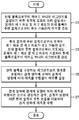
- a video decoding method may include determining whether first and second coordinates of the contour determined according to mode information of a contour for determining at least one segment from a current block are derivable from neighboring blocks of the current block. Determining; If at least a first coordinate and a second coordinate of the contour can be derived from a neighboring block of the current block, the at least from the current block based on the first and second coordinates of the contour derived from a neighboring block of the current block; Determining one segment; Determining whether to perform prediction according to a direction of the boundary with respect to a boundary area including a boundary of segments constituting the current block; And if it is determined that prediction is performed in the boundary area according to the direction of the boundary, performing prediction on the boundary area using the surrounding samples of the current block according to the direction of the boundary.
- FIG. 1A is a block diagram of a video encoding apparatus for performing contour-based intra prediction, according to an embodiment.
- FIG. 1B is a flowchart of a video encoding method of performing contour-based intra prediction, according to an embodiment.
- FIG. 2A is a block diagram of a video decoding apparatus for performing contour-based intra prediction, according to an embodiment.
- 2B is a flowchart of a video decoding method of performing contour-based intra prediction, according to an embodiment.
- FIG. 3 is a block diagram of an image encoder based on coding units, according to an embodiment.
- FIG. 4 is a block diagram of an image decoder based on coding units, according to an exemplary embodiment.
- 5A to 5C illustrate a method of determining a segment that is a prediction unit for prediction encoding from a current block according to various embodiments.
- FIG. 6 illustrates a method of determining a segment for prediction encoding from a current block by using an outline according to an object boundary according to various embodiments.
- FIGS. 7A and 7B are diagrams for describing a mode of an outline for determining at least one segment from a current block according to various embodiments.
- FIG. 8 shows examples of modes of contour for determining at least one segment from the current block of FIG. 7A.
- FIG. 9 shows examples of mode information of an outline indicating a mode of the outline of FIG. 8.
- FIG. 10 illustrates a current block according to an embodiment.
- FIG. 11 illustrates a method of determining coordinates of an outline for determining at least one segment from a current block, according to an embodiment.
- 12 to 14 illustrate a method of determining coordinates of an outline for determining at least one segment from a current block according to various embodiments.
- 15 to 16B illustrate a method of determining the coordinates of an outline according to the precision of a sample, according to various embodiments.
- FIG. 17 illustrates an example of a mask representing segments forming a current block, according to an exemplary embodiment.
- FIG. 18 illustrates examples of various methods of determining a mask value of a sample included in a boundary area of the current block of FIG. 17.
- 19 and 20 illustrate examples of a method of generating a mask of a current block according to various embodiments.
- 21 illustrates an example of a method of generating a mask of the current block, according to an embodiment.
- 22 illustrates a method of performing prediction on segments of a current block, according to an embodiment.
- 23 illustrates a method of performing prediction on segments of a current block according to an embodiment.
- 24 is a diagram for describing a method of transmitting sample values of segments of a current block according to various embodiments.
- 25 and 26 illustrate a method of generating a sample value of a segment of a current block by using neighboring samples of the current block according to various embodiments.
- FIG. 27 is a flowchart of a method of predicting a current block according to the number of segments divided from a current block, according to an embodiment.
- FIG. 28 is a diagram for describing a process of encoding and decoding residual data of a current block according to a transformation unit of a current block, according to an embodiment.
- 29 to 31 illustrate a method of obtaining a contour of a current block from neighboring blocks of the current block according to various embodiments.
- 32 and 33 illustrate a method of performing prediction by using a subblock of a current block according to various embodiments.
- 34 illustrates a method of determining three segments from a current block according to an embodiment.
- 35 illustrates a method of determining segments using subblocks of a current block based on an outline of a current block according to an embodiment.
- 36 illustrates a method of determining a contour of a current block according to an embodiment.
- 37 is a diagram illustrating a method of obtaining a prediction value of a current block, according to an embodiment, in pseudo code.
- 38 illustrates a method of performing prediction on a current block, according to an embodiment.
- 39 illustrates a detailed process of performing prediction using a reference sample with respect to a current block according to an embodiment.
- 40A to 40C illustrate a method of performing prediction on a boundary area of a current block according to various embodiments.
- 41 illustrates a method of performing prediction on a boundary area of a current block according to various embodiments.
- FIG. 42 illustrates a method of performing prediction on a boundary area of a current block according to an embodiment.
- 43 and 44 illustrate a method of performing prediction on a boundary area of a current block according to various embodiments.
- 45 illustrates syntax elements for performing intra prediction, according to an embodiment.
- 46 is a diagram illustrating deeper coding units according to depths, and prediction units, according to various embodiments.
- 48 is a diagram illustrating encoding information according to various embodiments.
- a video decoding method may include determining whether first and second coordinates of the contour determined according to mode information of a contour for determining at least one segment from a current block are derivable from neighboring blocks of the current block. Determining; If at least a first coordinate and a second coordinate of the contour can be derived from a neighboring block of the current block, the at least from the current block based on the first and second coordinates of the contour derived from a neighboring block of the current block; Determining one segment; Determining whether to perform prediction according to a direction of the boundary with respect to a boundary area including a boundary of segments constituting the current block; And if it is determined that prediction is performed in the boundary area according to the direction of the boundary, performing prediction on the boundary area using the surrounding samples of the current block according to the direction of the boundary.
- the performing of the prediction on the boundary area may include: determining the width of the boundary area when it is determined to perform the prediction according to a direction of the boundary on the boundary area; And performing prediction on the boundary area according to the determined width.
- the width of the boundary area may be the number of samples in the horizontal direction or the number of samples in the vertical direction with respect to the samples positioned at the boundaries of the segments constituting the current block.
- the determining of the width of the boundary area may be based on information indicating the width of the boundary area obtained from the bitstream.
- the width of the boundary area may be determined using a neighboring block of the current block.
- the method may further include performing prediction on the remaining areas of the current block except for the boundary area when the current block is not included in all of the boundary areas according to the determined width.
- the method may further include: generating a mask of the current block indicating a boundary of segments constituting the current block when it is determined that prediction is not performed according to the direction of the boundary with respect to the boundary area; Determining sample values of samples included in the at least one segment using the surrounding samples of the current block; And determining a prediction value of the boundary area based on the generated mask and the sample values of the determined samples.
- the mask of the current block may be determined by determining a mask value of a sample of the current block based on a positional relationship between a boundary of segments constituting the current block and a sample of the current block. It may be characterized in that for generating.
- the method may further include filtering the boundary area of the current block based on the mask of the current block.
- the performing of the filtering may include determining whether a sample of the current block is a sample located at a boundary of segments constituting the current block based on a mask of the current block; And if the samples of the current block are located at the boundary, filtering the samples of the current block based on the neighboring samples of the samples of the current block.
- a video encoding method may include determining whether first and second coordinates of the contour determined according to a mode of the contour for determining at least one segment from a current block are derivable from neighboring blocks of the current block. Determining; If at least a first coordinate and a second coordinate of the contour can be derived from a neighboring block of the current block, the at least from the current block based on the first and second coordinates of the contour derived from a neighboring block of the current block; Determining one segment; Determining whether to perform prediction according to a direction of the boundary with respect to a boundary area including a boundary of segments constituting the current block; And encoding information indicating whether to perform prediction according to the direction of the boundary and mode information of an outline indicating the direction of the boundary in the boundary area.
- the method may further include determining a width of the boundary area when it is determined that prediction is performed in the boundary area according to the direction of the boundary.
- the method may further include encoding information indicating the width of the determined boundary region.
- the width of the boundary area may be determined using a neighboring block of the current block.
- the method may further include performing prediction according to a direction of the boundary on the boundary area according to the determined width; And when the current block is not included in all of the boundary regions according to the determined width, performing prediction on the remaining regions of the current block except for the boundary region.
- the method may further include: generating a mask of the current block indicating a boundary of segments constituting the current block when it is determined that prediction is not performed according to the direction of the boundary with respect to the boundary area; Determining sample values of samples included in the at least one segment using the surrounding samples of the current block; And determining a prediction value of the boundary area based on the generated mask and the sample values of the determined samples.
- the mask of the current block may be determined by determining a mask value of a sample of the current block based on a positional relationship between a boundary of segments constituting the current block and a sample of the current block. It may be characterized in that for generating.
- the method may further include filtering the boundary area of the current block based on the mask of the current block.
- the performing of the filtering may include determining whether a sample of the current block is a sample located at a boundary of segments constituting the current block based on a mask of the current block; And if the samples of the current block are located at the boundary, filtering the samples of the current block based on the neighboring samples of the samples of the current block.
- a video decoding apparatus may further include deriving first and second coordinates of a contour from neighboring blocks of the current block, which are determined according to mode information of a contour for determining at least one segment from a current block. Determine whether it is possible, and if the first coordinate and the second coordinate of the contour are derivable from the neighboring block of the current block, based on the first and second coordinates of the contour derived from the neighboring block of the current block; A segment determination unit that determines the at least one segment from a current block; And determining whether to perform prediction according to the direction of the boundary with respect to the boundary region including the boundary of the segments constituting the current block, and determining to perform prediction according to the direction of the boundary in the boundary region. And a prediction performer configured to perform prediction on the boundary area by using the neighboring samples of the current block in the direction of the boundary.
- a contour-based intra prediction coding method and a contour-based intra decoding method according to an embodiment are proposed.
- 46 to 48 a video encoding method and a video decoding method based on coding units having a hierarchical structure according to an embodiment when the intra prediction video encoding method based on the previously proposed contour is not used. Is initiated.
- the 'image' may be a still image of the video or a video, that is, the video itself.
- sample means data to be processed as data allocated to a sampling position of an image.
- residuals of the pixel values or the block in the image of the spatial domain may be samples.
- the term 'current block' may mean a block of an image to be encoded or decoded.
- 'Neighboring Block' indicates at least one coded or decoded block neighboring the current block.
- the neighboring block may be located at the top of the current block, at the top right of the current block, at the left of the current block, or at the top left of the current block. It may also include temporally neighboring blocks as well as spatially neighboring blocks.
- the temporally neighboring neighboring blocks may include co-located blocks or neighboring blocks of the same location block as the current block of the reference picture.
- FIGS. 1A to 45 a video decoding and encoding apparatus and a video decoding and encoding method for performing contour-based intra prediction according to an embodiment are described with reference to FIGS. 1A to 45.
- 1A is a block diagram of a video encoding apparatus 10 that performs contour-based intra prediction, according to an embodiment.
- 1B is a flowchart of a video encoding method of performing contour-based intra prediction, according to an embodiment.
- the video encoding apparatus 10 may include a segment determiner 12, a prediction performer 16, and a bitstream generator 16.
- the current pictures included in the video according to an embodiment may be partitioned into a maximum coding unit that is a coding unit having a maximum size. For example, if the current picture is larger than the maximum coding unit, image data of the current picture may be split into at least one maximum coding unit.
- the maximum coding unit may be a data unit having a size of 16x16, 32x32, 64x64, 128x128, 256x256, etc., and may be a square data unit having a square power of 2 with a horizontal and vertical size greater than eight.
- the coding unit according to an embodiment may be determined according to the maximum size and depth.
- the depth indicates the number of times the coding unit is spatially divided from the maximum coding unit, and as the depth increases, the coding unit for each depth may be split from the maximum coding unit to the minimum coding unit.
- the depth of the largest coding unit may be the highest depth, and the depth of the minimum coding unit may be the coded depth.
- the maximum coding unit decreases as the depth increases, the size of the coding unit for each depth decreases, and thus, the coding unit of the higher depth may include coding units of a plurality of lower depths.
- the image data of the current picture may be divided into maximum coding units according to the maximum size of the coding unit, and each maximum coding unit may include coding units divided by depths. Since the maximum coding unit is divided according to depths, image data of a spatial domain included in the maximum coding unit may be hierarchically classified according to depths.
- the maximum depth and the maximum size of the coding unit that limit the total number of times of hierarchically dividing the height and the width of the maximum coding unit may be preset.
- Image data in a maximum coding unit is encoded based on coding units according to depths according to at least one depth less than or equal to a maximum depth, and encoding results based on coding units for each depth are compared. As a result of comparing the encoding error of the coding units according to depths, a depth having the smallest encoding error may be selected. At least one coding depth may be determined for each maximum coding unit.
- the coding unit is hierarchically divided and the number of coding units increases.
- a coding error of each data is measured, and whether or not division into a lower depth is determined. Therefore, even in the data included in one largest coding unit, since the encoding error for each depth is different according to the position, the coding depth may be differently determined according to the position. Accordingly, one or more coding depths may be set for one maximum coding unit, and data of the maximum coding unit may be partitioned according to coding units of one or more coding depths.
- coding units having a tree structure included in the current maximum coding unit may be determined.
- the coding units having a tree structure according to an embodiment include coding units having a depth determined as a coding depth among all deeper coding units included in the maximum coding unit.
- the coding unit of the coding depth may be hierarchically determined according to the depth in the same region within the maximum coding unit, and may be independently determined for the other regions.
- the coded depth for the current region may be determined independently of the coded depth for the other region.
- the maximum depth according to an embodiment is an index related to the number of divisions from the maximum coding unit to the minimum coding unit.
- the first maximum depth according to an embodiment may represent the total number of divisions from the maximum coding unit to the minimum coding unit.
- the second maximum depth according to an embodiment may represent the total number of depth levels from the maximum coding unit to the minimum coding unit. For example, when the depth of the largest coding unit is 0, the depth of the coding unit obtained by dividing the largest coding unit once may be set to 1, and the depth of the coding unit divided twice may be set to 2. In this case, if the coding unit divided four times from the maximum coding unit is the minimum coding unit, since depth levels of 0, 1, 2, 3, and 4 exist, the first maximum depth is set to 4 and the second maximum depth is set to 5. Can be.
- prediction encoding and transformation of the largest coding unit may be performed.
- prediction encoding and transformation are performed based on depth-wise coding units for each maximum coding unit and for each depth less than or equal to the maximum depth.
- the video encoding apparatus 10 may variously select a size or shape of a data unit for encoding image data.
- the encoding of the image data is performed through prediction encoding, transforming, entropy encoding, and the like.
- the same data unit may be used in every step, or the data unit may be changed in steps.
- the video encoding apparatus 10 may select not only a coding unit for encoding the image data, but also a data unit different from the coding unit in order to perform predictive encoding of the image data in the coding unit.
- prediction encoding may be performed based on a coding unit of a coding depth, that is, a more strange undivided coding unit, according to an embodiment.
- a more strange undivided coding unit that is the basis of prediction coding is referred to as a 'prediction unit'.
- the original image may include a boundary of an object represented by a straight line or the like in the original image, and the current block of the image may determine the outline of the current block according to the boundary of the object.
- the outline of the current block may be a straight line, a curve, a broken line, etc. according to the boundary of the object represented by the values of the samples of the current block.
- the contour of the current block may be divided into segments that are prediction units of the current block.
- the prediction mode of the prediction unit may be at least one of an intra mode, an inter mode, and a skip mode.
- the encoding may be performed independently for each prediction unit within the coding unit to select a prediction mode having the smallest encoding error.
- the segment determiner 12 may determine whether to perform contour-based prediction on the current block. That is, the segment determiner 12 according to an exemplary embodiment may determine whether to determine a prediction unit for performing prediction of the current block based on a contour along a boundary of an object included in the current block.
- the segment determiner 12 may convert the current block into a plurality of segments of various types based on the contour according to the sample values of the current block. Can be split.
- the segment determiner 12 may divide the partition type into one partition type among predetermined partition types of the current block.
- the segment determiner 12 may determine segments to be divided based on the contour of the current block from the current block in order to perform prediction on the current block.
- the contour of the current block according to an embodiment may be determined corresponding to the boundary of an object included in the current block.
- the contour of the current block according to one embodiment may be determined based on the values of the samples of the current block or using the neighboring blocks of the current block.
- the segment determiner 12 may determine a mode of the contour of the current block according to the contour of the current block.
- the mode of the contour of the current block may indicate the direction of the contour in the current block.
- a mode of the contour indicating a side through which the contour passes among respective sides of the current block may be determined.
- the mode of the contour of the current block may represent at least two sides of which the contour touches among the upper side, the right side, the lower side, and the left side of the current block.
- the mode of the contour for determining the at least one segment from the current block according to an embodiment may be determined as one of the first to sixth modes.
- the video encoding apparatus 10 may perform all of the decoding and decoding of the current block according to the first to sixth modes by using a rate-distortion optimization (RDO) method, which is the best among the first to sixth modes. You can select a mode with an RD cost.
- RDO rate-distortion optimization
- the segment determiner 12 may determine mode information of the contour according to the determined mode of the contour of the current block.
- the segment determination unit 12 may assign a number to each side of the current block, and determine a combination of numbers corresponding to the side indicated by the mode of the outline of the current block as mode information of the outline of the current block.
- the segment determiner 12 may determine whether to derive information about coordinates of the contour of the current block from neighboring blocks of the current block.
- the information about the coordinates of the outline is information for specifying the position of the outline and may indicate coordinates of the x-axis and the y-axis of the outline.
- the information about the coordinates of the contour of the current block may include first coordinates indicating a start point of the single straight contour and second coordinates indicating an end point of the contour. It may be information indicating.
- the segment determiner 12 when the information about the coordinates of the contour of the current block can be derived from the neighboring block of the current block, the segment determiner 12 according to an embodiment acquires information about the coordinates of the contour of the current block from the neighboring block. can do. Alternatively, when the information about the coordinates of the contour of the current block is not derivable from the neighboring blocks of the current block, the segment determiner 12 according to an embodiment uses the samples inside the current block to determine the coordinates of the contour. Determine information
- the segment determiner 12 may determine that the neighboring sample adjacent to the outside of the side of the current block indicated by the mode of the outline of the current block is available. Coordinates can be derived from adjacent surrounding samples. For example, a usable sample among neighboring samples adjacent to the outside of the current block may be a sample located above or to the left of the current block.
- the segment determiner 12 may determine that the segment located in the corresponding side of the current block is not available when a neighboring sample adjacent to the outside of the side of the current block indicated by the mode of the current block is not available. Coordinates can be determined from samples inside the current block. For example, a sample that is not available among neighboring samples adjacent to the outside of the current block may be a sample located below or to the right of the current block.
- the samples inside the current block to be used may be samples adjacent to the inside of the side of the current block, Since the coordinates cannot be derived from the neighboring block, the coordinates can be transmitted to the video decoding apparatus 20.
- the segment determiner 12 may determine at least one segment for prediction from the current block based on the determined information about the coordinates of the contour of the current block.
- the prediction performing unit 14 may perform the boundary area corresponding to the contour of the current block with respect to the boundary area representing the boundary of the segments of the current block. You can decide whether to perform the prediction. That is, the prediction performing unit 14 may determine whether to determine the prediction value for the samples included in the boundary area of the current block based on the direction of the boundary.
- the prediction performing unit 14 may select a prediction method having the best RD cost among the prediction method according to the direction of the boundary of the current block and the prediction method using the mask of the current block.
- the boundary area of the current block may be an area composed of samples through which the contour of the current block passes, or may be an area including a predetermined width based on the contour of the current block.
- the predetermined width of the boundary region may represent the number of predetermined samples in the horizontal direction or the number of samples in the vertical direction centering on the samples located at the boundaries of the segments constituting the current block.
- the predetermined width may indicate not only the distance in the horizontal direction or the distance in the vertical direction, but also the distance in the direction orthogonal to the boundary with respect to the boundary of the segments constituting the current block.
- the prediction performing unit 14 may determine the width of the boundary area of the current block using the neighboring blocks of the current block.
- the prediction execution unit 14 may determine the width of the boundary area of the current block as a candidate having the best RD cost among the plurality of predetermined size candidates.
- the prediction performing unit 14 uses neighboring samples of the current block according to the direction of the boundary with respect to the boundary area of the current block. You can make predictions.
- a peripheral sample of the current block may be a sample adjacent to the outside of the current block, and may include, for example, an upper peripheral sample, a right upper peripheral sample, a left peripheral sample, and a lower left peripheral sample of the current block. have.
- the prediction performing unit 14 may determine a reference sample determined according to the direction of the boundary from the current sample of the boundary region among the neighboring samples of the current block.
- the prediction performing unit 14 may generate a prediction value of the samples included in the boundary region of the current block based on the determined sample value of the reference sample.
- the prediction performing unit 14 may perform the prediction on the remaining areas of the current block except the boundary area, that is, the area corresponding to the segment.
- intra prediction according to the DC mode may be performed on the segment region.
- a mask of the current block indicating the boundary between the segments is generated. Can be.
- the mask of the current block is data for determining an area of at least one segment divided from the current block and a boundary between the segments, and may include an array of mask values corresponding to respective samples of the current block. have.
- the mask value of the current block may be generated based on the positional relationship between the contour of the current block and each sample value of the current block.
- the prediction performing unit 14 may perform intra prediction based on contours on segments of the current block.
- the prediction performing unit 14 may perform prediction on the current block by using the neighboring samples of the current block and the generated mask of the current block.
- the prediction performing unit 14 may generate a sample value of a segment of the current block by using neighboring samples of the current block.
- the sample value of the segment may be a sample value of each of the samples included in the segment region.
- an intra prediction scheme such as DC mode may be used.
- the position of the neighboring sample of the current block to be referenced may be determined based on the mode of the contour of the current block.
- the prediction performing unit 14 may generate a prediction value of the segment of the current block by applying a mask of the current block to the sample value of the generated segment of the current block.
- the prediction value of the segment may be a prediction value of each sample included in the segment region, and may be generated using a weighted sum of the sample value of the segment of the current block and the mask value of the current block.
- filtering may be performed on the current block on which prediction is performed, according to an embodiment.
- filtering may be performed on prediction values of samples located at boundaries between segments of the current block of the current block.
- whether the sample of the current block is a sample located at the boundary of the current block may be determined based on a mask of the current block.
- the video encoding apparatus 10 may perform the transformation of the image data of the coding unit based on not only the coding unit for encoding the image data but also a data unit different from the coding unit.
- the transformation may be performed based on a data unit having a size smaller than or equal to the coding unit.
- the data unit for the transformation may include a data unit for the intra mode and a data unit for the inter mode.
- the data unit on which the transformation is based may be referred to as a 'transformation unit'.
- the residual data of the coding unit may be partitioned according to the transform unit having a tree structure according to the transform depth.
- a transform depth indicating a number of divisions between the height and the width of the coding unit divided to the transform unit may be set. For example, if the size of the transform unit of the current coding unit of size 2Nx2N is 2Nx2N, the transform depth is 0, the transform depth 1 if the size of the transform unit is NxN, and the transform depth 2 if the size of the transform unit is N / 2xN / 2. Can be. That is, the transformation unit having a tree structure may also be set for the transformation unit according to the transformation depth.
- the encoded information for each coded depth requires not only the coded depth but also prediction related information and transformation related information. Therefore, not only a coding depth that generates a minimum coding error, but also a partition type obtained by dividing a prediction unit into partitions, a prediction mode for each prediction unit, and a size of a transformation unit for transformation may be determined.
- a coding error of coding units according to depths may be measured by using a Lagrangian multiplier based rate-distortion optimization technique.
- the bitstream generator 16 may generate a bitstream including information necessary for encoding and decoding the current block.
- the bitstream generator 16 may generate a bitstream including information indicating whether to perform contour based prediction on the current block.
- bitstream generator 16 may generate a bitstream including the mode information of the outline indicating the mode of the outline of the current block.
- the bitstream generator 16 may generate a bitstream including information about coordinates of the contour of the current block according to mode information of the contour of the current block. For example, when the mode information of the contour of the current block indicates that the coordinates of the contour of the current block can be derived from neighboring blocks of the current block, the information about the coordinates of the contour of the current block may not be included in the bitstream. In addition, when the mode information of the contour of the current block indicates that the coordinates of the contour of the current block are not derivable from neighboring blocks of the current block, information about the coordinates of the contour of the current block may be included in the bitstream.
- bitstream generation unit 16 may include information indicating whether to perform prediction according to the direction of the boundary with respect to the current block, information about the width of the boundary area of the current block, and prediction values of the current block. Information indicating whether to perform filtering may be further included in the bitstream.
- bitstream generator 16 may include information about a coded depth, information about a coding mode according to depths, partition type information of a prediction unit, prediction mode information, and size information of a transformation unit in a bitstream. You can include more.
- the video encoding apparatus 10 may improve the transmission efficiency and the encoding efficiency by performing the intra prediction based on the contour, thereby improving the quality of the reconstructed image and reducing the amount of information necessary for the prediction of the image.
- FIG. 1B is a flowchart of a video encoding method of performing contour-based intra prediction, according to an embodiment.
- the video encoding apparatus 10 may determine that the first and second coordinates of the contour determined according to the mode of the contour for determining the at least one segment from the current block are from the neighboring blocks of the current block. It can be determined whether or not it can be derived.
- the video encoding apparatus 10 may determine a mode of the contour for determining at least one segment from the current block.
- the video encoding apparatus 10 may determine the outline of the current block based on sample values of samples of the current block. Alternatively, the video encoding apparatus 10 may determine the outline of the current block by using a neighboring block adjacent to the outside of the current block. The video encoding apparatus 10 according to an embodiment may select a mode having the best RD cost among a plurality of modes.
- the video encoding apparatus 10 may determine whether the coordinates of the contour can be derived from a neighboring block adjacent to the outside of the current block based on the determined mode of the contour of the current block.
- the video encoding apparatus 10 may determine that the coordinates of the contour of the current block are derivable from the neighboring blocks of the current block. have.
- the video encoding apparatus 10 may determine that the coordinates of the outline of the current block are not derivable from the neighboring blocks of the current block. have.
- whether the coordinates of the contour of the current block are derivable from neighboring blocks of the current block may be determined for each of the plurality of coordinates of the contour.
- the video encoding apparatus 10 may include the first coordinate of the contour derived from the neighboring block of the current block and At least one segment may be determined from the current block based on the second coordinate.
- the encoding apparatus 10 may derive the coordinates of the contour from the neighboring block of the current block.
- the video encoding apparatus 10 may determine the coordinates of the contour that cannot be derived from the neighboring block by using the samples in the current block.
- the samples in the current block may be samples adjacent to the side indicated by the outline of the current block and located inside the current block.
- the video encoding apparatus 10 may determine the coordinates of the contour of the current block based on the gradient of the sample value for the samples of the neighboring block or the variation of the sample value for the samples in the current block. have.
- the video encoding apparatus 10 may determine at least one segment for performing prediction from the current block based on the coordinates of the outline. For example, the video encoding apparatus 10 according to an embodiment may determine two segments when the current block is divided based on a single straight outline.
- the video encoding apparatus 10 may determine whether to perform prediction according to a direction of a boundary with respect to a boundary area including a boundary of segments constituting a current block.
- the video encoding apparatus 10 may select a prediction method having a best RD cost among a prediction method based on a direction of a boundary of a current block and a prediction method using a mask of a current block.
- the video encoding apparatus 10 may perform prediction on the current block according to the determined method.
- the video encoding apparatus 10 may encode information indicating whether to perform prediction according to the direction of the boundary in the boundary area and mode information of the contour indicating the direction of the boundary.
- the video encoding apparatus 10 may further encode information about the width of the boundary area of the current block.
- the video encoding apparatus 10 when the mode information of the contour of the current block can be derived from a neighboring block in which the coordinates of the contour of the current block are adjacent to the outside of the current block, the video encoding apparatus 10 according to an embodiment may be configured to the coordinates of the contour of the current block.
- the information encoding apparatus 10 may not encode information, and if the mode information of the contour of the current block is not derivable from the neighboring blocks of the current block, the video encoding apparatus 10 according to an embodiment may include the current block.
- Information about the coordinates of the outline can be encoded.
- the video encoding apparatus 10 may include a central processor (not shown) that collectively controls the segment determiner 12, the prediction performer 14, and the bitstream generator 16.
- the segment determiner 12, the prediction performer 14, and the bitstream generator 16 are each operated by their own processors (not shown), and the video as the processors (not shown) operate organically with each other.
- the encoding device 10 may be operated as a whole.
- the segment determiner 12, the prediction performer 14, and the bitstream generator 16 may be controlled under the control of an external processor (not shown) of the video encoding apparatus 10.
- the video encoding apparatus 10 includes one or more data storage units (not shown) in which input / output data of the segment determiner 12, the prediction performer 14, and the bitstream generator 16 are stored. can do. Also, the video encoding apparatus 10 according to an embodiment may include a memory controller (not shown) that controls data input / output of a data storage unit (not shown).
- the video encoding apparatus 10 may perform a video encoding operation including transformation by operating in conjunction with an internal video encoding processor or an external video encoding processor to output a video encoding result.
- the internal video encoding processor of the video encoding apparatus 10 may implement a video encoding operation as a separate processor.
- the video encoding apparatus 10, the central computing unit, or the graphics processing unit may include a video encoding processing module to implement a basic video encoding operation.
- 2A is a block diagram 20 of a video decoding apparatus for performing contour-based intra prediction, according to an exemplary embodiment.
- 2B is a flowchart of a video decoding method of performing contour-based intra prediction, according to an embodiment.
- the video decoding apparatus 20 may include a segment determiner 22 and a prediction performer 24.
- the video decoding apparatus 20 may further include a receiver (not shown) that receives and parses a bitstream of the encoded video.
- the video decoding apparatus 20 may parse image data encoded for each coding unit and information necessary for encoding and decoding of the coding unit.
- the video decoding apparatus 20 reconstructs the current picture by decoding image data of each maximum coding unit based on the information about the coded depth and the encoding mode for each maximum coding unit of the video. That is, the video decoding apparatus 20 may decode the encoded image data based on the information about the determined prediction unit, the prediction mode, the transformation unit, and the like for each coding unit among the coding units included in the maximum coding unit.
- the decoding process may include a prediction process including intra prediction and motion compensation, and a frequency inverse transform process.
- the segment determiner 22 may determine whether to perform contour based prediction on a current block corresponding to a coding unit of a coding depth. That is, the segment determiner 22 according to an exemplary embodiment may determine whether to determine segments, which are prediction units for performing prediction of the current block, based on an outline of a boundary of an object included in the current block.
- the segment determiner 22 may determine whether to perform contour based prediction on the current block by using information indicating the prediction mode received from the video encoding apparatus 10.
- the information indicating the prediction mode for the current block may include prediction that the current block uses a general intra mode using square or rectangular prediction units or is divided using an outline according to a boundary of an object included in the current block. It may include information indicating whether to use the contour-based intra prediction mode using the segment as a unit.
- the segment determiner 22 may divide the current block into a plurality of segments of various types based on the contour of the current block. In addition, if it is determined that the segment determination unit 22 does not perform contour-based prediction, the segment determiner 22 may divide the current block into one partition type among predetermined partition types of the current block.
- the segment determiner 22 may determine the number of segments of the current block based on information about the number of segments of the current block obtained from the bitstream. For example, when the information about the number of segments of the current block indicates that one segment is divided from the current block, the current block may not be divided.
- the segment determiner 22 may determine at least one segment from the current block by using information about the contour of the current block obtained from the bitstream.
- the information about the outline of the current block may include mode information of the outline and information about the coordinates of the outline.
- the segment determiner 22 determines the mode of the outline of the current block based on the mode information of the outline of the current block, and parses information about the coordinates of the outline of the current block from the bitstream. You can decide whether or not.
- the information about the coordinates of the outline of the current block may include first coordinate information and second coordinate information of the outline of the current block.
- the segment determiner 22 may be related to the coordinates of the contour of the current block when the mode information of the contour of the current block indicates the mode of the contour that the coordinates of the contour of the current block can be derived from neighboring blocks of the current block. Information may not be parsed. For example, when the first coordinate or the second coordinate of the contour according to the mode of the contour of the current block is located on the upper side or the left side of the current block, the segment determiner 22 may determine the first coordinate or the first of the contour of the current block. 2 Coordinates may not be parsed.
- the segment determiner 22 when the mode information of the contour of the current block indicates the mode of the contour in which the coordinates of the contour of the current block are not derivable from the neighboring blocks of the current block, the segment determiner 22 according to an embodiment of the present invention may be configured to execute the information. Samples can be used to determine the coordinates of the contour. For example, when the first coordinate or the second coordinate of the contour according to the mode of the contour of the current block is located on the lower side or the right side of the current block, the segment determiner 22 may determine the first coordinate or the first of the contour of the current block. Two coordinates can be parsed from the bitstream.
- the segment determiner 22 may derive the first coordinate of the contour from the neighboring block adjacent to the outer side of the upper side of the current block, and the lowermost end of the upper peripheral block adjacent to the current block.
- the sample value of the series of samples can be used to derive the first coordinate of the contour.
- the segment determiner 22 when deriving the second coordinate of the contour from the neighboring block located on the left side of the current block, the segment determiner 22 according to the exemplary embodiment of the rightmost series of samples of the left block adjacent to the current block.
- the second coordinate of the contour may be derived using the sample value.
- the coordinates of the contour of the current block can be determined based on the amount of change of the sample values of the series of samples of the neighboring block.
- the segment determiner 22 may determine the contour of the current block based on the coordinate information of the contour obtained from the bitstream. Coordinates can be determined.
- the segment determiner 22 may determine at least one segment for prediction from the current block based on the determined contour of the current block.
- a mask of the current block for determining a boundary between segments may be generated.
- the prediction performing unit 24 may determine a mask value for each sample of the current block based on a positional relationship between each sample of the current block and the contour of the current block.
- the mask of the current block may represent an area of segments of the current block and a boundary between the segments.
- the prediction performing unit 24 may be configured in a direction of a boundary corresponding to the outline of the current block with respect to a boundary area including boundaries of segments of the current block. It is possible to determine whether to perform the prediction accordingly. That is, the prediction performing unit 24 may determine whether to determine the prediction value for the samples included in the boundary region of the current block based on the direction of the boundary.
- the prediction performing unit 24 may determine whether to perform prediction according to the direction of the boundary by using information indicating whether to perform prediction according to the direction of the boundary to the current block obtained from the bitstream. have.
- the boundary area of the current block may be an area composed of samples through which the contour of the current block passes, or may be an area including a predetermined width based on the contour of the current block.
- the prediction performing unit 24 may determine the width of the boundary area of the current block using a neighboring block adjacent to the outside of the current block. In addition, the prediction performing unit 24 may determine the width of the boundary area of the current block using information on the width of the boundary area parsed from the bitstream.
- the information about the width of the boundary area may be predetermined numerical information directly indicating the width of the boundary area, or may be index information indicating one of a plurality of predetermined size candidates.
- the prediction performer 24 If it is determined that the prediction performer 24 according to the embodiment performs prediction according to the direction of the boundary with respect to the current block, the neighboring area adjacent to the outside of the current block according to the direction of the boundary with respect to the boundary area of the current block is determined.
- the sample can be used to perform predictions.
- a peripheral sample of the current block may include an upper peripheral sample, a right upper peripheral sample, a left peripheral sample, and a lower left peripheral sample of the current block.
- the prediction performing unit 24 may determine a reference sample determined according to the direction of the boundary from the current sample of the boundary area among the neighboring samples of the current block.
- the prediction performing unit 24 may generate a prediction value of the samples included in the boundary region of the current block based on the determined sample value of the reference sample.
- the prediction performing unit 24 may perform prediction on the remaining areas of the current block except the boundary area, that is, the area corresponding to the segment. For example, intra prediction according to the DC mode may be performed on the segment region.
- the prediction performing unit 24 may apply to the current block by using the neighboring samples of the current block and the generated current block mask. Prediction can be performed.
- the prediction performing unit 24 may generate a sample value of a segment of the current block by using neighboring samples of the current block.
- the sample value of the segment may be a sample value of each of the samples included in the segment region.
- an intra prediction scheme such as DC mode may be used.
- the position of the neighboring sample of the current block to be referenced may be determined based on the mode of the contour of the current block.
- the prediction performing unit 24 may generate a prediction value of a segment of the current block by applying a mask indicating a region and a boundary of the segments of the current block to the sample values of the samples included in the generated segment region.
- the predicted value of the segment may be a predicted value of each sample included in the segment region, and may be generated using a weighted sum of the sample value of the segment of the current block and the mask value of the current block.
- the prediction performing unit 24 may perform filtering on the current block on which the prediction is performed.
- filtering may be performed on prediction values of samples located at boundaries between segments of the current block of the current block.
- the prediction performing unit 24 may determine whether to perform filtering on the prediction value of the current block by using information indicating whether filtering is parsed from the bitstream.
- the video decoding apparatus 20 may reconstruct the video by performing motion compensation using the predicted data.
- the motion compensation may refer to an operation of reconstructing a reconstructed image by synthesizing prediction data and residual data.
- 2B is a flowchart of a video decoding method of performing contour-based intra prediction, according to an embodiment.
- the video decoding apparatus 20 may include a first block and a second coordinate of a contour determined according to mode information of a contour for determining at least one segment from a current block. It can be determined whether or not it can be derived from.
- the video decoding apparatus 20 may obtain mode information of an outline for determining at least one segment from a current block from a bitstream to determine mode information of an outline of the current block.
- the video decoding apparatus 20 may determine whether to perform contour based prediction on the current block by using information indicating a prediction mode for the current block obtained from the bitstream.
- the information indicating the prediction mode for the current block may include prediction that the current block uses a general intra mode using square or rectangular prediction units or is divided using an outline according to a boundary of an object included in the current block. It may include information indicating whether to use the contour-based intra prediction mode using the segment as a unit.
- the video decoding apparatus 20 may obtain mode information of the contour of the current block from the bitstream.
- the video decoding apparatus 20 may determine whether the first coordinate and the second coordinate of the contour are derivable from the neighboring block of the current block based on the acquired mode information of the contour of the current block.
- the video decoding apparatus 20 when the mode information of the contour of the current block indicates a mode in which the coordinates of the contour of the current block are located on the upper side or the left side of the current block, the video decoding apparatus 20 according to an embodiment of the present embodiment It can be determined that the coordinate of can be derived from a neighboring block adjacent to the outside of the current block. Also, when the mode information of the contour of the current block indicates a mode in which the coordinates of the contour of the current block are located on the lower side or the right side of the current block, the video decoding apparatus 20 according to an exemplary embodiment may include It may be determined that is not derivable from a neighboring block adjacent to the outside of the current block.
- the video decoding apparatus 20 may include the first coordinate of the contour derived from the neighboring block of the current block and At least one segment may be determined from the current block based on the second coordinate.
- the neighboring block of the current block may include a block adjacent to the upper side or the left side of the current block.
- the video decoding apparatus 20 may determine that the coordinates of the contour of the current block can be derived from the neighboring blocks of the current block when the side of the current block indicated by the mode of the contour of the current block is the upper side or the left side.
- the video decoding apparatus 20 may obtain information about a coordinate of a non-derivable contour from a bitstream when the first coordinate or the second coordinate of the contour is not derivable from a neighboring block of the current block. Can be.
- the video decoding apparatus 20 may determine at least one segment from the current block by using information about coordinates of the contour of the current block obtained from the bitstream and mode information of the contour.
- the video decoding apparatus 20 may determine whether to perform prediction according to the direction of the boundary with respect to the boundary region including the boundary of the determined segments constituting the current block.
- the video decoding apparatus 20 may determine whether to perform prediction according to the direction of the boundary by using information indicating whether to perform prediction according to the direction of the boundary to the current block obtained from the bitstream. have.
- the video decoding apparatus 20 uses neighboring samples adjacent to the outside of the current block in the direction of the boundary. Prediction can be performed in the boundary region.
- the boundary area of the current block may be an area composed of samples through which the contour of the current block passes, or may be an area including a predetermined width based on the contour of the current block.
- the video decoding apparatus 20 may determine the width of the boundary area of the current block by using the neighboring block of the current block. Also, the video decoding apparatus 20 according to an embodiment may determine the width of the boundary area of the current block by using information about the width of the boundary area parsed from the bitstream.
- the information about the width of the boundary area may be predetermined numerical information directly indicating the width of the boundary area, or may be index information indicating one of a plurality of predetermined size candidates.
- the video decoding apparatus 20 may determine a reference sample determined according to the direction of the boundary from the current sample of the boundary region among the neighboring samples of the current block.
- the video decoding apparatus 20 may generate a prediction value of the samples included in the boundary region of the current block based on the determined sample value of the reference sample.
- the video decoding apparatus 20 may perform prediction on the remaining areas of the current block except the boundary area, that is, the area corresponding to the segment. For example, intra prediction according to the DC mode may be performed on the segment region.
- the video decoding apparatus 20 may apply to the current block by using the neighboring samples of the current block and the generated current block mask. Prediction can be performed.
- the video decoding apparatus 20 may generate a mask of a current block indicating a boundary between segments.
- the video decoding apparatus 20 may determine a mask value of a sample of the current block based on a positional relationship between the contour that determines at least one segment from the current block and the sample of the current block.
- the video decoding apparatus 20 may perform prediction on the current block by using the neighboring samples of the current block and the generated mask of the current block.
- the video decoding apparatus 20 may generate sample values of the samples included in the segment area of the current block by using the neighboring samples of the current block. For example, an intra prediction scheme such as DC mode may be used.
- the video decoding apparatus 20 may generate a predicted value of a segment of the current block by applying a mask indicating a region and a boundary of the segments of the current block to sample values of the samples included in the generated segment region. have.
- the video decoding apparatus 20 may perform filtering on the current block on which prediction is performed. For example, filtering may be performed on prediction values of samples located at boundaries between segments of the current block of the current block.
- the video decoding apparatus 20 may determine whether to perform filtering on the prediction value of the current block by using information indicating whether to perform filtering received from the bitstream.
- the video decoding apparatus 20 may include a central processor (not shown) which collectively controls the segment determiner 22 and the prediction performer 24.
- the segment determiner 22 and the prediction performer 24 are operated by their own processors (not shown), and the video decoding apparatus 20 operates as a whole as the processors (not shown) operate organically with each other. May be Alternatively, the segment determiner 22 and the prediction performer 24 may be controlled under the control of an external processor (not shown) of the video decoding apparatus 20 according to various embodiments.
- the video decoding apparatus 20 may include one or more data storage units (not shown) in which input / output data of the segment determination unit 22 and the prediction execution unit 24 are stored.
- the video decoding apparatus 20 may include a memory controller (not shown) that controls data input / output of the data storage unit (not shown).
- the video decoding apparatus 20 may perform a video decoding operation including an inverse transform by operating in conjunction with an internal video decoding processor or an external video decoding processor to restore video through video decoding.
- the internal video decoding processor of the video decoding apparatus 20 includes not only a separate processor but also a video decoding processing module 20, a central processing unit, and a graphic processing unit including a video decoding processing module. It may also include the case of implementing.
- FIG. 3 is a block diagram of an image encoder 300 based on coding units, according to an exemplary embodiment.
- the image encoder 300 performs operations performed by the encoding unit determiner 120 of the video encoding apparatus 10 or 100 to encode image data. That is, the intra predictor 310 performs intra prediction on the coding unit of the intra mode among the current frames 305, and the motion estimator 320 and the motion compensator 325 perform the current frame 305 of the inter mode. And the inter frame estimation and the motion compensation using the reference frame 395.
- the data output from the intra predictor 310, the motion estimator 320, and the motion compensator 325 are output as quantized transform coefficients through the transformer 330 and the quantizer 340.
- the quantized transform coefficients are restored to the data of the spatial domain through the inverse quantizer 360 and the inverse transformer 370, and the recovered data of the spatial domain is passed through the deblocking unit 380 and the offset applying unit 390. Processed and output to the reference frame 395.
- the quantized transform coefficients may be output to the bitstream 355 via the entropy encoder 350.
- the intra predictor 310, the motion estimator 320, the motion compensator 325 which are components of the image encoder 300, Encoding unit 330, quantization unit 340, entropy encoding unit 350, inverse quantization unit 360, inverse transform unit 370, deblocking unit 380, and offset applying unit 390 all perform maximum coding. In consideration of the maximum depth for each unit, an operation based on each coding unit among the coding units having a tree structure should be performed.
- the intra predictor 310, the motion estimator 320, and the motion compensator 325 predict each coding unit among coding units having a tree structure in consideration of the maximum size and the maximum depth of the current maximum coding unit.
- the unit and the prediction mode may be determined, and the transformer 330 may determine the size of a transform unit in each coding unit among the coding units having a tree structure.
- the intra predictor 310 may perform the same operations as the operations performed by the segment determiner 12 of FIG. 1A.
- FIG. 4 is a block diagram of an image decoder 400 based on coding units, according to an exemplary embodiment.
- the parsing unit 410 parses encoded image data to be decoded from the bitstream 405 and encoding information necessary for decoding.
- the encoded image data is output as inverse quantized data through the entropy decoding unit 420 and the inverse quantization unit 430, and the image data of the spatial domain is restored through the inverse transformation unit 440.
- the intra predictor 450 For the image data of the spatial domain, the intra predictor 450 performs intra prediction on the coding unit of the intra mode, and the motion compensator 460 uses the reference frame 485 together to apply to the coding unit of the inter mode. Perform motion compensation for the For example, the intra predictor 450 may perform the same operations as those performed by the segment determiner 22 and the predictor 24 of FIG. 2A.
- the data of the spatial region passed through the intra predictor 450 and the motion compensator 460 may be post-processed through the deblocking unit 470 and the offset applying unit 480 and output to the reconstructed frame 495.
- the post-processed data through the deblocking unit 470 and the offset applying unit 480 may be output as the reference frame 485.
- step-by-step operations after the parser 410 of the image decoder 400 may be performed.
- the parser 410, the entropy decoder 420, the inverse quantizer 430, and the inverse transform unit 440 which are components of the image decoder 400, may be used.
- the intra predictor 450, the motion compensator 460, the deblocking unit 470, and the offset applying unit 480 must all perform operations based on coding units having a tree structure for each maximum coding unit. do.
- the intra predictor 450 and the motion compensator 460 determine a prediction unit and a prediction mode for each coding unit having a tree structure, and the inverse transformer 440 must determine the size of the transformation unit for each coding unit. do.
- 5A to 5C illustrate a method of determining a segment that is a prediction unit for prediction encoding from a current block according to various embodiments.
- FIG. 5A is a diagram for describing a method of determining at least one segment constituting a current block from a current block according to an embodiment, in comparison with a method of determining a prediction block from a current block in HEVC.
- FIG. 5A is a diagram for describing a method of determining at least one segment constituting a current block from a current block according to an embodiment, in comparison with a method of determining a prediction block from a current block in HEVC.
- the original image may include a boundary of an object represented by a straight line or the like in the original image, and as shown in FIG. 5A, includes a current block 51 including the boundary of the object therein. It may include.
- a prediction unit having a predetermined size obtained by hierarchically dividing the current block 51.
- the intra prediction may be performed to generate a predicted image. That is, in HEVC, the current block 51 is predicted by hierarchically dividing the current block 51 into square or rectangular prediction units. Thus, in order to increase the accuracy of prediction, the current block 51 is very small in the vicinity of an object boundary.
- the prediction must be performed on a plurality of prediction units by dividing the prediction units.
- partition information indicating whether a block is divided partition information indicating whether a block is divided, partition type information indicating a partition type of a divided minimum unit block, and information by partitioning a block such as a prediction mode of the block are additionally required.
- the current block 51 in order to perform prediction with respect to a current block 51 including a boundary of an object, the current block 51 is divided like a block 52 to divide a plurality of prediction units. You can decide.
- the partition information indicating whether to partition each block including split information indicating whether the current block 51 is divided and split information indicating whether the blocks divided from the current block 51 are divided, and the minimum unit to be divided Partition type information indicating a split form of a prediction unit constituting blocks of may be used.
- partition information and partition type information for one block may be information corresponding to one bin or bit, respectively.
- a plurality of pieces of information of 57 bins according to 17 partition information and 40 partition type information may be required.
- a contour-based intra prediction coding method of determining a segment, which is a prediction unit of a current block, from a current block by using a contour according to a boundary of an object included in the current block according to an embodiment.
- the current block 51 may be divided like the block 53 according to the boundary of the object included in the current block 51.
- the information about the partitioning of the block necessary for partitioning the current block 51 like the block 53 is information corresponding to nine bins, which may be much less than when using the partitioning method according to HEVC.
- the current block 51 is a block according to a contour corresponding to a boundary of an object included in the current block 51. It can be divided into four segments of 53. The current block 51 can be divided using three straight lines along the boundary of the object.
- At least one segment may be determined from the current block 51.
- the information about the number of segments determined from the current block 51 is information for indicating the total number of segments constituting the current block 51. For example, the information is divided from the current block 51.
- the information about the number of segments to be used may be 'number of segments-1'. If the current block 51 is not divided, there is one segment, so information about the number of segments divided from the current block 51 may be zero.
- the mode information of the contour for determining the segment from the current block 51 may be information indicating a direction of the contour according to the boundary of an object in the current block 51.
- the information about the coordinates of the contour for determining the segment from the current block 51 is information for specifying the position of the contour, for example, when the contour is a straight line, the first point representing the starting point of the contour. It may include a coordinate and a second coordinate representing the end point of the contour. In this case, each coordinate information may be represented by x coordinate and y coordinate for each coordinate. Coordinate information may be encoded and decoded and transmitted and received, or may be derived from the current block 51 or neighboring blocks of the current block 51.
- the current block 51 is divided according to the contour, so that the video encoding apparatus 10 and the video decoding apparatus 20
- the transmission efficiency can be increased by reducing the amount of data transmitted / received), and the encoding efficiency can also be increased.
- the contour corresponding to the object and the boundary included in the current block 51 it is possible to predict more accurately and reduce the error of the reconstructed image.
- 5B illustrates an example of a method of determining at least one segment constituting the current block 54 from the current block 54 according to another embodiment.
- the current block 54 may be divided like the block 55 according to a boundary of an object included in the current block 54.
- the boundary of the object included in the current block 54 may be a curve, and the current block 54 may be divided like the block 55 according to the contour or the curved straight line of the curve corresponding to the boundary.
- the contour corresponding to the boundary may be one curve, and two segments constituting the current block 54 may be determined.
- the current block 54 may be divided into at least one segment using information about coordinates of the contour of the current block 54.
- the information about the coordinates of the contour is information for specifying the position of the contour, for example, information about the number of points necessary for specifying the contour and the current block 54 of each point. It may include coordinate information indicating a position in.
- the current block 54 may be divided like the block 55 by the contour specified according to three points.
- the contour specified according to the three points may be a straight line or a curved line.
- various algorithms may be used to specify the contour using the points. For example, a piece wise linear curve, a conic section or a Bezier curve may be used.
- the information (num_point_minus2) regarding the number of points required to specify the contour may be 'number of points-2', and in the case of block 55, the information about the number of points required may be 1. have.
- the coordinate information of the three points may include a first coordinate (seg_start) indicating the start point of the outline, a second coordinate (seg_middle) indicating the bending point of the outline, and a third coordinate (seg_end) indicating the end point of the outline.
- the coordinate information may be encoded and decoded and transmitted and received, or may be derived from the current block 54 or neighboring blocks of the current block 54.
- the current block 54 may be divided according to an outline to reduce the amount of data transmitted and received between the video encoding apparatus 10 and the video decoding apparatus 20, thereby increasing transmission efficiency and increasing encoding efficiency. .
- contours such as curves corresponding to objects and boundaries included in the current block 54, more accurate prediction is possible, thereby reducing errors in the reconstructed image.
- 5C illustrates an example of a method of determining at least one segment constituting the current block 56 according to another embodiment.
- a current block 56 may be divided into blocks 57 according to boundaries of objects included in the current block 56.
- the boundary of the object included in the current block 56 may form one closed figure, and the current block 56 may be divided into the block 57 according to the outline of the figure corresponding to the boundary.
- the contour for determining the segment from the current block 56 may be one closed figure, and the segments determined from the current block 56 may be two segments outside and inside the closed figure, respectively. .
- the current block 56 may be divided into at least one segment using information about coordinates of the contour for determining the segment from the current block 56.
- the information about the coordinates of the contour for determining the segment from the current block 56 is information for specifying the position of the contour, for example, information on the number of points necessary for specifying the contour. And coordinate information indicative of a location within the current block 56 of each point.
- the current block 56 may be divided like the block 57 by a contour specified according to four points.
- the contour specified according to the four points may be a closed figure of a rectangle.
- the information num_point_minus2 about the number of points required to specify the contour may be 'number-2', and in the case of block 57, the information about the number of points required may be 2. have.
- the coordinate information of the four points may include a first coordinate (seg_start), a second coordinate (seg_middle), a third coordinate (seg_middle), and a fourth coordinate (seg_end) of the closed figure.
- the coordinate information may be encoded and decoded and transmitted and received, or may be derived from the current block 56 or neighboring blocks of the current block 56.
- the current block 56 may be divided according to an outline to reduce the amount of data transmitted and received between the video encoding apparatus 10 and the video decoding apparatus 20 to increase transmission efficiency, and to increase encoding efficiency.
- an error of the reconstructed image may be reduced by using outlines such as an object included in the current block 56 and a closed figure corresponding to the boundary.
- FIG. 6 illustrates a method of determining a segment for prediction encoding from a current block by using an outline according to an object boundary according to various embodiments.
- a single straight line, a plurality of straight lines, a curved line, a single curve, a plurality of curves, a closed figure, or the like may be used. have.
- a segment for prediction encoding may be determined from the current block by using a combination of the above methods, such as using a single straight line and a single curve at the same time.
- FIGS. 7A and 7B are diagrams for describing a mode of contour for determining at least one segment from a current block 70 according to various embodiments.
- a single straight line contour in the current block 70 may be determined, and two segments constituting the current block 70 may be determined according to the determined single straight line contour.
- the mode of the contour for determining segments divided from the current block 70 may be determined according to the boundary of the object included in the current block 70, and may indicate the direction of the contour.
- the contour used to determine segments from the current block 70 is a straight line, by specifying a side through which the contour passes among four sides of the current block 70, according to an embodiment.
- the direction of the contour can be specified.
- the mode information of the contour may be information indicating at least two sides of the upper side, the right side, the lower side, and the left side of the current block 70 that the contour touches.
- Each of the four sides of the current block 70 may be assigned a number, and may represent all possible directions of the contour as a combination of numbers assigned to the sides.
- 0, 1, 2, and 3 may be allocated to the upper side, the right side, the lower side, and the left side of the current block 70, respectively. Numbers may be assigned to each side of the current block 70 in ascending or descending order in a clockwise direction. For example, when the current block 70 is divided into two segments using a straight outline passing through the right side and the left side of the current block 70, the mode information of the outline corresponds to 1 representing the right side and 3 representing the left side. '1-3 directions' may be indicated.
- the directions of the straight line contour dividing the current block 70 are 0-1 direction, 0-2 direction, 0-3 direction, 1-2 Directions, 1-3 directions, and 2-3 directions.
- the 1-0 direction may be omitted in the same direction as the 0-1 direction.
- the mode information of the contour may be information indicating one of six directions of the linear contour that can be used in the current block 70.
- the direction of the contour of the current block 70 may be specified using not only four sides constituting the current block 70 but also sides constituting neighboring blocks of the current block 70.
- 0, 1, 2, and 3 are allocated to the upper side, the right side, the lower side, and the left side of the current block 70, respectively, and the upper side, the current block (the right side of the right block of the current block 70).
- 4, 5, 6, and 7 may be allocated to the upper side of the left block of 70), the right side of the lower left block of the current block 70, and the left side of the upper block of the current block, respectively.
- the direction of the contour of the current block 70 may be more diversified.
- the mode information of the contour indicating the direction of the contour may indicate one of more than six directions.
- the direction of the contour may be specified by assigning numbers to the sides constituting the current block 70 or the peripheral sides of the current block 70 in various ways. .
- FIG. 8 shows examples of modes of contour for determining at least one segment from the current block 70 of FIG. 7A.
- the current block 70 is the block 80, the block 81, the block of FIG. 8 according to the direction of the contour. 82, block 83, block 84, and block 85 may be divided into one.
- the modes of the contour indicating the direction of the contour dividing the current block 70 are the first mode (0-1 direction) and the second mode.
- One of mode (0-2 directions), third mode (0-3 directions), fourth mode (1-2 directions), fifth mode (1-3 directions), and sixth mode (2-3 directions) Can be.
- block 80, block 81, block 82, block 83, block 84 and block 85 each have a contour mode of the first mode, the second mode, and the third mode. In this case, the fourth mode, the fifth mode, and the sixth mode may be indicated.
- a start point which is one end of the contour dividing block 80, is located on the upper side of block 80, and an end point, which is the other end, is located on the right side of block 80.
- the mode of the contour may be a first mode. At this time, the mode of the contour is the first mode irrespective of which position of the upper side of the block 80 the start point and the end point is located on the right side of the block 80.
- the mode of the contour when the starting point of the contour dividing the block 81 is located on the upper side of the block 81 and the end point is located below the block 81 is the second mode. Can be.
- the mode of the contour in the case where it is located on the upper side of the starting point block 82 of the contour dividing the block 82 and on the left side of the end point block 82 may be the third mode. have.
- the mode of the contour when the starting point of the contour dividing the block 83 is located on the right side of the block 83 and the end point is located on the lower side of the block 83 is the fourth mode. Can be.
- the mode of the contour when the starting point of the contour dividing the block 84 is located on the right side of the block 84 and the end point is located on the left side of the block 84 is the fifth mode. Can be.
- the mode of the contour when the starting point of the contour dividing the block 85 is located at the lower side of the block 85 and the end point is located at the left side of the block 85 is the sixth mode. Can be.
- the mode of the contour for determining the at least one segment from the current block 70 may be determined as one of the first to sixth modes.
- the video encoding apparatus 10 may perform the decoding and decoding of the current block 70 according to the first to sixth modes, using the rate-distortion optimization (RDO) method, and have the best RD cost. Can be selected.
- RDO rate-distortion optimization
- the video encoding apparatus 10 calculates a cost for each side of the current block 70 and based on the calculated cost for each side, the mode of the outline of the current block 70. Can be determined.
- the cost for each side of the current block 70 may be calculated using the samples corresponding to each side. For example, the cost for the top side of the current block 70 may be calculated using samples located in the current block 70 and abutting the top side. Similarly, the cost for the right side, bottom side and left side of the current block 70 may be calculated using the right side adjacent samples, the bottom side adjacent samples and the left side adjacent samples, respectively, in the current block 70.
- the cost for each side in accordance with one embodiment may be the variance of the samples of each side.
- the video encoding apparatus 10 may select two sides having the largest variance of samples corresponding to the sides of each side of the current block 70, and determine a mode of the contour representing the selected two sides.
- the variance of each side of the current block 70 may be obtained only for the luma block, or may be obtained by using both the luma block and the chroma block.
- variances using both luma blocks and chroma blocks may be obtained by giving different weights to variances for the luma blocks and variances for the chroma blocks.
- the cost for each side of the current block 70 may be the total sum of difference values between adjacent samples for the samples of each side.
- the cost for each side according to another embodiment may be a total sum of absolute values of results obtained by applying a 1D Sobel operator to samples of each side.
- the cost for each side of the current block 70 may be calculated in consideration of the availability of each side of the current block 70.
- the availability of each side of the current block 70 may indicate whether a neighboring block adjacent to the outside of each side of the current block 70 is available.
- the video encoding apparatus 10 may determine a mode of the contour from among modes other than a mode including an unusable side in consideration of the availability of each side. For example, when the current block 70 is a block located at the edge of the image, some of the sides of the current block 70 may not be available.
- the mode of the contour for determining at least one segment from the current block 70 may be determined by combining the above-described methods. For example, some of the six modes are selected using the cost for each side of the current block 70, and the decoding and decoding of the current block 70 is performed on the selected some modes to obtain the best mode. One mode with the RD cost can be determined as the mode of the final contour.
- FIG. 9 shows examples of mode information of an outline indicating a mode of the outline of FIG. 8.
- the mode of the contour indicating the direction of the contour may include six modes.
- the mode information of the contour indicating the mode of the contour may be sub-compensated and decoded using various coding schemes such as fixed length coding (FLC), variable length coding (VLC), arithmetic coding, and the like.
- information indicating the second mode and the fifth mode is binarized into two bits, and information indicating the first mode, the third mode, the fourth mode, and the sixth mode is described. It can be binarized to 3 bits.
- the mode information of the contour when the mode of the contour is the first mode (line_orient 0), the mode information of the contour may be represented by binary 100.
- the mode information of the contour when the mode of the contour is the second mode (line_orient 1), the mode information of the contour may be represented by binary 00.
- the mode information of the contour When the mode of the contour is the third mode (line_orient 2), the mode information of the contour may be represented by binary 101.
- the mode of the contour is the fourth mode (line_orient 3), the mode information of the contour may be represented by binary 110.
- the mode of the contour is the fifth mode (line_orient 4)
- the mode information of the contour When the mode of the contour is the sixth mode (line_orient 5), the mode information of the contour may be represented by binary 111.
- the present invention is not limited thereto, and the mode information of the outline may be expressed in various ways.
- Mode information of the binarized contour in the video encoding apparatus may be included in the bitstream through arithmetic encoding, and may be transmitted to the video decoding apparatus 20.
- the video decoding apparatus 20 may perform arithmetic decoding and inverse binarization on the received bitstream to obtain mode information of the contour of the current block.
- FIG. 10 illustrates a current block according to an embodiment.
- the current block may be a block of size 8x8.
- the size of the current block is expressed as width x height, and may include sizes such as 64x64, 32x32, and 16x16. In addition, it may include various sizes such as MxN. In this case, M and N may be different integers.
- the samples in the current block may appear white and the surrounding samples of the current block may appear gray.
- the coordinate of the contour of the current block may be determined using samples in the current block. Specifically, when the contour is a single straight contour, both ends (starting point and end point) of the contour are positioned on the sides indicated by the mode of the contour according to the mode of the contour, so that the coordinates of the contour are the current corresponding to the side indicated by the mode of the contour. Can be determined using the samples in the block. For example, the coordinates of the contour may be determined based on the gradient of the sample value between samples in the current block.
- the first coordinate of the contour may be determined using samples in the current block corresponding to the upper side of the current block, and the second coordinate of the contour May be determined using the samples in the current block corresponding to the right side of the current block. That is, the first coordinate of the contour may be the position of one of the samples inwardly adjacent to the upper side, and the second coordinate of the contour may be the position of one of the samples inwardly adjacent to the right side. . In this case, the position of the sample may be an integer pixel unit or a sub pixel unit.
- the samples in the current block corresponding to the side indicated by the mode of the contour may be samples inwardly adjacent to each side of the current block.
- the samples corresponding to the upper side of the current block may be samples located at the top of the current block.
- samples corresponding to the right side, the bottom side, and the left side of the current block may be the rightmost samples, the bottommost samples, and the leftmost samples in the current block, respectively.
- the topmost samples, the rightmost samples, the bottommost samples, and the leftmost samples in the current block may each be eight white samples.
- the coordinates of the contour for determining the at least one segment from the current block may be derived from neighboring blocks of the current block.
- the coordinates of the contour may be determined using neighboring blocks adjacent to the outside of the side indicated by the mode of the contour.
- the coordinates of the contour may be determined based on a gradient of sample values between samples in the neighboring blocks of the current block. In this case, the samples in the neighboring block may be reconstructed samples.
- the first coordinate of the contour may be derived using samples of the neighboring block adjacent to the upper outer side of the current block.
- the first coordinate of the contour may be determined using the lowest samples of the upper peripheral block of the current block.
- the second coordinate of the contour may be derived using samples of the neighboring block adjacent to the left outer side of the current block.
- the second coordinate of the contour may be determined using the rightmost samples of the left peripheral block of the current block.
- the samples in the neighboring block adjacent to the side indicated by the mode of the contour are samples adjacent to the current block up or to the left, and eight samples (shaded display) adjacent to the upper side and on the left side. It may include eight adjacent gray samples (shaded).
- the coordinates of the contour for determining at least one segment from the current block are derived from the neighboring blocks of the current block, the coordinates of the derived contour are refined to encode and decode the current block using the coordinates of the adjusted contour. You may.
- the video encoding apparatus 10 may encode the coordinates of the contour of the current block and transmit the encoded coordinates to the video decoding apparatus 20.
- the video encoding apparatus 10 may not transmit the coordinates of the contour when the coordinates of the contour of the current block can be derived from the neighboring blocks of the current block.
- the video encoding apparatus 10 uses values of the coordinates of the contour derived from the neighboring block and the samples in the current block.
- the difference value of the coordinate value of the determined contour may be encoded and transmitted to the video decoding apparatus 20.
- the video decoding apparatus 20 may determine the coordinate of the contour of the current block based on the received difference value and the value of the coordinate of the contour derived from the neighboring block of the current block.
- FIG. 11 illustrates a method of determining coordinates of an outline for determining at least one segment from a current block, according to an embodiment.
- the coordinates of the contour of the current block may be determined using samples in the current block or neighboring samples adjacent to the current block as described above in FIG. Can be.
- the position of the sample having the largest gradient of the sample value among the samples in the current block or neighboring samples adjacent to the current block may be determined as the position of the coordinate of the contour.
- a 1D Sobel operator with a filter value such as [-1, 0, 1] can be applied to samples in the current block or neighboring samples adjacent to the current block to determine the coordinates of the contour.
- the coordinates of the contour may be determined as the coordinates of the contour, the position of the sample having the largest absolute value as a result of applying the one-dimensional Sobel operator.
- the first coordinate and the second coordinate of the contour may be determined based on the equation below.
- line_pos1_n arg max n (
- line_pos2_m arg max n (
- S n , S n -1 and S n +1 are the sample values of the sample at n position, the sample value of the sample at n-1 position and the sample value of the sample at n + 1 position, respectively
- S m , S m ⁇ 1 and S m + 1 are the sample values of the sample at the m position, the sample value of the sample at the m-1 position and the sample value of the sample at the m + 1 position, respectively.
- n may be the x coordinate of the sample
- m may be the y coordinate of the sample.
- line_pos1_n may be a coordinate of the first coordinate of the contour
- line_pos2_m may be a y coordinate of the second coordinate of the contour.
- n is the x coordinate of the top samples of the current block or the top samples adjacent to the current block, and the first coordinate of the contour. May be (line_pos1_n, 0).
- n becomes the y coordinate of the rightmost samples of the current block
- the first coordinate of the contour is (nCbS-1, line_pos1_n).
- nCbS may be the horizontal or vertical size of the current block.
- the values of the first coordinate and the second coordinate of the contour may be determined in units of integer pixels or may be determined in units of subpixels.
- the first coordinate of the contour is determined using samples adjacent to the outside of the upper side of the current block or samples adjacent to the inside of the upper side ( line_pos1_n, 0), and the second coordinate of the contour may be determined as (0, line_pos2_m) using samples adjacent to the outside of the left side of the current block or samples adjacent to the inside of the left side.
- the coordinates of the contour of the current block may be determined by first determining the first coordinate of the contour and then determining the second coordinate of the contour using the determined first coordinate.
- the first coordinate may be determined using the above-described method with respect to one side of the current block indicated by the mode of the contour.
- the first coordinate of the contour may be determined based on the equation below.
- line_pos1_n arg max n (
- the second coordinate of the contour may be determined by using samples corresponding to the other side of the current block indicated by the mode of the contour and surrounding samples of the determined first coordinate.
- the second coordinate of the contour may be determined using a correlation between the peripheral samples of the first coordinate and the peripheral samples of the second coordinate.
- the second coordinate of the contour may be determined based on the equation below.
- line_pos2_m arg max m (4 *
- S n -1 and S n +1 which are sample values of the peripheral samples of the first coordinate of the predetermined contour may be used.
- the coordinates of the contour of the current block may be determined using various types of operators used for boundary detection.
- the sample values of the samples in the current block or the neighboring samples adjacent to the current block may be used as they are.
- the filtered sample value may be used by applying a filter to the sample value for removal.
- the filter applied to the sample value may be a low-pass filter or a one-dimensional Gaussian filter having a filter value such as [1, 2, 1].
- the first coordinate or the second coordinate of the contour may be determined as one of the plurality of candidate coordinates.
- N candidate coordinates having an optimal cost may be determined using samples in the current block or neighboring samples adjacent to the current block.
- the cost of candidate coordinates can be calculated according to the equations described above.
- One of the determined N candidate coordinates may be determined as the first coordinate or the second coordinate of the contour.
- index information indicating one candidate among candidate coordinates may be transmitted and received between the video encoding apparatus 10 and the video decoding apparatus 20.
- 12 to 14 illustrate a method of determining coordinates of an outline for determining at least one segment from a current block according to various embodiments.
- the current block may be a block of size 8x8.
- the size of the current block is expressed as width x height, and may include sizes such as 64x64, 32x32, and 16x16. In addition, it may include various sizes such as MxN. In this case, M and N may be integers of different sizes.
- the current block may determine coordinates of an outline for determining a segment using samples in the current block.
- the coordinates of the contour may be determined using the sample value of the samples adjacent to and located inside the side of the current block.
- the first coordinate of the contour is determined using eight samples of adjacent to the upper side in the current block, and the second coordinate of the contour is in the current block. It can be determined using eight samples adjacent to the right side.
- the sample on the upper right side of the current block is an overlapping sample and may be used for both determining the first coordinate and determining the second coordinate.
- the mode of the contour is the second mode
- the first coordinate of the contour is determined using eight samples adjacent to the upper side in the current block
- the second coordinate of the contour is eight samples adjacent to the lower side in the current block.
- the mode of the contour is the third mode
- the first coordinate of the contour is determined using eight samples adjacent to the top side in the current block
- the second coordinate of the contour is eight samples adjacent to the left side in the current block.
- the upper left sample of the current block is an overlapping sample and may be used to determine both the first coordinate and the second coordinate.
- the first coordinate of the contour is determined using eight samples adjacent to the right side in the current block
- the second coordinate of the contour is eight samples adjacent to the lower side in the current block.
- Can be determined using the The lower right sample of the current block is an overlapping sample and may be used for both determining the first coordinate and determining the second coordinate.
- the mode of the contour is the fifth mode
- the first coordinate of the contour is determined using eight samples adjacent to the right side in the current block
- the second coordinate of the contour is eight samples adjacent to the left side in the current block.
- the mode of the contour is the sixth mode
- the first coordinate of the contour is determined using eight samples adjacent to the lower side in the current block
- the second coordinate of the contour is eight samples adjacent to the left side in the current block.
- Can be determined using the The lower left sample of the current block is an overlapping sample and may be used to determine both the first coordinate and the second coordinate.
- the current block may determine the coordinates of the contour for determining the segment using not only the samples in the current block but also the neighboring samples of the current block. If peripheral samples adjacent to the outside of the current block are available, the coordinates of the contour may be determined using the sample values of the peripheral samples adjacent to the outside of the current block. For example, in FIG. 13, the available peripheral samples adjacent to the outside of the current block may include eight samples adjacent to the top side of the current block or eight samples adjacent to the left side of the current block.
- the first coordinate of the contour is determined using eight peripheral samples adjacent to the outside of the upper side of the current block, and the second coordinate of the contour is currently It can be determined using eight samples adjacent to the right side in the block.
- the first coordinate of the contour is determined using eight peripheral samples adjacent to the outside of the upper side of the current block, and the second coordinate of the contour is adjacent to the lower side in the current block. It can be determined using eight samples.
- the first coordinate of the contour is determined using eight peripheral samples adjacent to the outside of the upper side of the current block, and the second coordinate of the contour is outside of the left side of the current block. It can be determined using eight adjacent samples.
- the first coordinate of the contour is determined using eight samples adjacent to the right side in the current block
- the second coordinate of the contour is eight samples adjacent to the lower side in the current block.
- Can be determined using the The lower right sample of the current block is an overlapping sample and may be used for both determining the first coordinate and determining the second coordinate.
- the mode of the contour is the fifth mode
- the first coordinate of the contour is determined using eight samples adjacent to the right side in the current block
- the second coordinate of the contour is 8 adjacent to the outside of the left side of the current block. Can be determined using the four peripheral samples.
- the mode of the contour is the sixth mode
- the first coordinate of the contour is determined using eight samples adjacent to the lower side in the current block
- the second coordinate of the contour is 8 adjacent to the inside of the left side of the current block. Can be determined using the two samples.
- the coordinates of the contour may be determined using peripheral samples adjacent to the outside of the right side or peripheral samples adjacent to the outside of the bottom side. It may be.
- the video encoding apparatus 10 may determine that the coordinates of the inducible contour are not derivable without transmitting to the video decoding apparatus 20. Only information about coordinates can be transmitted.
- the video encoding apparatus 10 encodes a difference value between the value of the coordinate of the outline derived from the neighboring block and the value of the coordinate of the outline determined by using the samples in the current block in case of the coordinate of the inducible outline. 20 may be transmitted.
- the video decoding apparatus 20 may determine the coordinates of the outline of the current block by adding the difference value received from the bitstream to the coordinate of the outline derived from the neighboring block.
- the current block may determine the coordinates of the contour for determining the segment using not only the samples in the current block but also the neighboring samples of the current block.
- the coordinate of the contour may be determined using the samples of the position shifted the samples of FIG. 13. That is, samples extending in the upper, lower, left or right direction of the samples in the current block and the surrounding samples of the current block may be used.
- the first coordinate of the contour is determined by using eight samples at a position in which eight samples adjacent to the outside of the upper side of the current block are moved by one to the left.
- the second coordinate of the contour may be determined using eight samples adjacent to the right side in the current block.
- the mode of the contour is the fourth mode
- the first coordinate of the contour is determined using eight samples of the position where eight samples adjacent to the right side in the current block are moved upward by one
- the second coordinate of the contour May be determined using eight samples adjacent to the lower side in the current block.
- the lower right sample of the current block is an overlapping sample and may be used for both determining the first coordinate and determining the second coordinate.
- the mode of the contour is the sixth mode
- the first coordinate of the contour is determined using eight samples adjacent to the lower side in the current block
- the second coordinate of the contour is 8 adjacent to the outside of the left side of the current block. Samples may be determined using eight samples of a position shifted upward by one.
- the coordinates of the contour are determined by using the samples of the moved position, two sides representing the direction of the contour do not have overlapping coordinates, so that the coordinates of the contour of more various combinations may be determined.
- 15 to 16B illustrate a method of determining the coordinates of an outline according to the precision of a sample, according to various embodiments.
- the coordinates of the contour according to various embodiments may be determined according to the precision of the sample according to various embodiments.
- the coordinates of the contour may be represented using integer pixel precision, half (1/2) pixel precision, or quarter (1/4) pixel precision.
- a block 1501 represented by integer pixel precision, a block 1502 represented by half pixel precision, and a block 1503 represented by quarter pixel precision may be blocks having a size of 4x4.
- the position of the integer sample may be represented by using the center point of the upper left sample of block 1501 as the origin (0, 0).
- the x and y coordinates of the location of the integer samples of block 1501 may be determined by numbers of 0 to 3, respectively.
- the coordinate of the contour according to an embodiment may be determined as the position of the integer sample inside the block 1501 or may be determined as the position of the virtual integer sample outside the block 1501.
- the position of an integer sample can also be represented by making the upper left vertex of the block 1501 the origin (0, 0), and making the side of each sample an integer position.
- the half or quarter sample is assumed to be the upper left vertex origin (0, 0) of block 1502 or block 1503. It can express the position of.
- the x- and y-coordinates of the positions of the half samples in block 1502 may be determined with numbers from 0 to 7, respectively, and the x- and y-coordinates of the positions of the quarter samples in block 1503 may be determined with numbers from 0 to 15, respectively. have.
- the coordinates of the contour may be determined as the position of the half sample or the quarter sample inside the block 1502 or the block 1503, or the virtual half sample outside the block 1502 or the block 1503. It may also be determined by the location of the quarter sample.
- a coordinate transformation function can be used. For example, when further subdividing the precision, such as converting integer pixel precision to half pixel precision or quarter pixel precision, an injective non-surjective function may be used. In addition, when the precision is reduced, for example, when converting half pixel precision to integer pixel precision or converting quarter pixel precision to integer pixel precision or half pixel precision, a non-injective transfer function may be used.
- the coordinates of the contour may be determined using the sample value of integer samples.
- the coordinates of the contour may be determined as the position of the integer sample having the largest change in the sample value with the surrounding integer samples.
- the coordinates of the contour according to an embodiment may be determined as the position of the sample having the largest absolute value by applying a one-dimensional Sobel operator having a filter value such as [-1, 0, 1] to integer samples. .
- the positions of the integer samples may be represented by X, and the height of X may represent the magnitude of the sample value of each of the samples.
- the sample value of the samples may be a number from 0 to 255.
- the position of the integer sample having the largest change in the sample value between the integer samples may be the position of the integer sample 1610. That is, the absolute value of the difference between the sample values of the left and right samples of the integer sample 1610 may be the largest.
- the coordinates of the contour may be determined as the position of the integer sample 1610.
- the coordinates of the contour may be determined using half pixel precision.
- integer samples may be represented by a large X and half samples may be represented by a small X, respectively.
- the height of the samples may represent the magnitude of the sample value of each of the samples.
- the coordinates of the contour may be determined as the position of the half sample 1621.
- sample values of subsamples such as half samples may be generated by interpolation using sample values of integer samples.
- the sample value of the half sample 1621 can be obtained using the sample values of the left integer sample 1620 and the right integer sample 1622.
- the coordinates of the contour may be determined using the sample value of the generated half sample and the sample value of the integer sample.
- the coordinates of the contour may be determined as the position of the sample 1621 having the largest absolute value by applying the one-dimensional Sobel operator to the samples with half pixel precision.
- the coordinates of the contour may be determined using the sample value of the upper sample and the sample value of the lower sample with half pixel precision.
- an integer coordinate 1621 of the contour may be determined based on integer samples, and a sample value of the left half sample 1623 and a right half sample 1621 of the integer coordinate 1620 may be generated. have.
- the coordinates of the contour according to the exemplary embodiment include a sample value and a right sample 1622 of the left sample 1624 of the integer sample 1620 among the sample values of the left half sample 1623 and the sample value of the right half sample 1621. It may be determined as the position of the right half sample (1621) having a sample value close to the average value of the sample value of).
- integer coordinates are determined based on the sample value of the upper integer sample and the lower integer sample of the integer sample, and one of the upper half sample and the lower half sample of the determined integer coordinates is determined.
- the coordinates of the contour can be determined by the position of the sample.
- FIG. 17 illustrates an example of a mask representing segments of the current block 1701 according to an embodiment.
- the mask for the current block 1701 is data for determining an area of segments segmented from the current block 1701 and a boundary between the segments, and includes a mask array corresponding to each sample of the current block 1701. Can be.
- the current block 1701 according to an embodiment may be divided into a plurality of segment areas according to the outline of the current block. Also, an area of the current block 1701 according to an embodiment may be divided into a plurality of segment areas and a boundary area 1720 between the segment areas.
- the boundary area 1720 of the current block may be an area composed of samples through which the contour of the current block passes, or may be an area having a predetermined width around the contour of the current block. have.
- the current block 1701 may be divided into two segments according to the straight outline 1705.
- the current block 1701 may be divided into a left segment that includes the origin (0, 0) and a right segment that does not include the origin (0, 0).
- the origin (0, 0) may be the location of the upper left sample in the current block 1701.
- mask values for samples included in the left segment region of the current block 1701 may be all determined to be 0, and mask values corresponding to samples included in the right segment region may be determined to be all one.
- the samples in the current block 1701 may be samples of a rectangular or square unit, the vicinity of the contour 1705 may be different from the case where the position of the sample of the current block 1701 is included in the left segment area or the right segment area.
- the position of the sample is in the boundary region 1720 of spans the left segment region and the right segment region.
- mask values for samples included in the boundary area 1720 between the left and right segments of the current block 1701 may be determined as 0 or 1 according to the method described below with reference to FIG. 18. Can be.
- Samples included in the boundary area 1720 are samples through which the contour 1705 of the current block 1701 passes.
- ten samples may be included in the boundary area 1720.
- the contour 1705 of the current block 1701 can pass through the sample 1710 located at (3, 5), and the sample 1701 including a portion of the contour 1705 is the boundary area 1720. ) May be included.
- the mask values for the samples included in the left segment region of the current block 1701 are all set to 0, and the mask values corresponding to the samples included in the right segment region are all 255 (or , 256).
- Mask values corresponding to samples included in the boundary area 1720 between the left and right segments of the current block 1701 according to an embodiment are 0 to 255 (or, according to the method described below with reference to FIG. 18). 256).
- Mask values of samples of the left segment area and the right segment area are not limited to the above examples, and may be different values according to the bit depth of the mask value.
- each mask value for all samples included in the current block 1701 may be determined, so that a mask of the current block 1701 including the mask values may be generated.
- a mask of the current block 1701 may be generated for the luma block of the current block 1701 and the chroma block of the current block 1701, respectively.
- the mask for the chroma block may be generated based on the mask for the luma block of the current block 1701.
- the mask for the chroma block may be generated by down-sampling the mask for the luma block of the current block 1701 or applying decimation considering phase shift. When decimation is applied, at least one of a 3-tap Gaussian filter in a horizontal direction and a 3-tap Gaussian filter in a vertical direction may be used.
- a mask for the chroma block may be generated based on the information about the contour of the luma block of the current block 1701. That is, the coordinates of the outline for the luma block of the current block 1701 may be converted to obtain coordinates of the outline for the chroma block, and the mask for the chroma block may be generated using the coordinates of the outline for the chroma block. have.
- the mask for the chroma block of the current block 1701 may be generated first, and then the mask for the luma block may be derived using the mask for the chroma block.
- FIG. 18 illustrates examples of various methods of determining a mask value of a sample 1710 included in the boundary region of the current block 1701 of FIG. 17.
- samples 1801, samples 1802, and samples 1803 that are samples included in the boundary region are shown.
- the mask value corresponding to the sample 1710 included in the boundary area of the current block 1701 of FIG. 17 may be determined in the same manner as the sample 1801, the sample 1802, or the sample 1803 of FIG. 18.
- a mask value corresponding to the sample 1801 is based on an area of two regions in the sample 1801 generated by an outline passing through the sample 1801. Can be determined.
- the two regions in the sample 1801 generated by the contours are the left region (or upper left region) of the sample 1801 and the right region (or lower region) of the sample 1801. Can be.
- the left region of the sample 1801 may be an area including an upper left vertex of the sample 1801 which is the origin of the sample 1801.
- the mask value corresponding to the sample 1801 is The size of the area of the two regions in the sample 1801 generated by the contour may be determined.
- the mask value corresponding to the sample 1801 is compared with the mask value of the right segment of the current block 1701 when the right area (0.75) is wider than the left area (0.25) by comparing the areas of the two areas in the sample 1801. The same value can be determined as 1.
- the mask value corresponding to the sample 1801 according to an embodiment is generated by the outline. It can be determined in proportion to the size of the area of the two regions in the sample 1801 to be.
- the mask value corresponding to the sample 1801 according to the embodiment is "((width of the left region of the sample 1801 * mask value of the left segment) + (width of the right region of the sample 1801) * Mask value of the right segment)) / the width of the sample 1801 ".
- the area of the left area is 0.25
- the area of the right area is 0.75
- the mask value of the left segment of the current block 1701 is 0
- the mask value of the right segment of the current block 1701 is 255
- the sample 1801 If the width of is 1, the mask value corresponding to the sample 1801 may be determined as 191.25.
- the mask value corresponding to the sample 1801 may be determined to be 191, rounded up to a value of 191.25.
- the mask value of the right segment is 256
- the mask value corresponding to the sample 1801 may be determined as 192.
- the mask value of the left segment may be a mask value corresponding to a sample adjacent to the left side of the sample 1801
- the mask value of the right segment may be a mask value corresponding to a sample adjacent to the right side of the sample 1801.
- the mask value of the left segment may be a mask value corresponding to a sample adjacent to the upper side of the sample 1801
- the mask value of the right segment may be a mask value corresponding to a sample adjacent to the lower side of the sample 1801.
- a mask value corresponding to the sample 1802 may be determined based on a vertical distance d between a center of the sample 1802 and a contour passing through the sample 1802. Can be.
- two regions within the sample 1802 generated by the contours are the left region (or upper left region) of the sample 1802 and the right region (or lower region) of the sample 1802. Can be.
- the left region of the sample 1802 may be an area including an upper left vertex of the sample 1802, which is the origin of the sample 1802.
- the mask value corresponding to the sample 1802 according to an embodiment is the center of the sample 1802. And a value between 0 and 255 based on the distance d between the contour passing through the sample 1801.
- the mask value corresponding to the sample 1802 according to an embodiment is “128-clip3 ((when the region including the center of the sample 1802 is the left region including the origin of the sample 1802). 0, 1, d / threshold) * 128 ".
- the mask value corresponding to the sample 1802 is "128 + clip3 (0) when the area including the center of the sample 1802 is a right area not including the origin of the sample 1802. , 1, d / threshold) * 128 ".
- the threshold may be a threshold value that is set in advance to adjust the width of the boundary region
- the Clip3 function may be defined as follows.
- a value of 128 is an exemplary value and may be different depending on the bit depth of the mask value.
- a mask value corresponding to the sample 1803 may include a horizontal distance d x and a vertical distance from a center of the sample 1803 to a contour passing through the sample 1803. It may be determined using the distance d y .
- the mask value corresponding to the sample 1710 may be determined by calculating the cost c for the sample 1710 and comparing the cost for the sample 1710 with zero.
- the cost c for the sample 1710 may be a value representing the distance between the sample 1710 and the contour passing through the current block 1701.
- the cost for a sample 1710 can be calculated as follows.
- (x0, y0) is the first coordinate of the contour 1705 passing through the sample 1710
- (x1, y1) is the second coordinate of the contour 1705 passing through the sample 1710
- (x, y ) May be the coordinates of the current sample 1710.
- 19 and 20 illustrate examples of a method of generating a mask of the current block 1901 according to various embodiments.
- a current block 1901 is shown that is divided into two segments using a single straight outline.
- the current block 1901 may be an 8x8 block, but this is only an example.
- the current block 1901 may be a 64x64, 32x32, 16x16, or the like block.
- the current block 1901 may be divided into two segments according to an outline for determining at least one segment from the current block 1901.
- the current block 1901 may be divided into a first segment and a second segment by an outline.
- the first segment may be a left (or upper left) segment of the current block 1901 and the second segment may be a right (or lower right) segment of the current block 1901.
- an area in which the samples completely included in the first segment of the current block 1901 is located is a first area (white), and an area in which the samples completely included in the second segment is located is a second area. It may be 2 areas (shading display).
- a region in which a portion of the sample of the current block 1901 is included in the left segment and the remaining portion is included in the right segment may be a boundary region (dot display).
- a mask value corresponding to each of the samples of the current block 1901 constituting the mask of the current block 1901 is A bit depth of 1 may be determined as a binary value.
- a mask value corresponding to the first region may be determined as 0, and a mask value corresponding to the second region may be determined as 1. .
- the mask value corresponding to the boundary area of the current block 1901 may be determined to be equal to 0, the same as the mask value corresponding to the first area.
- the mask value corresponding to the boundary area of the current block 1901 may be determined to be 1 as the mask value corresponding to the second area.
- mask values corresponding to some samples among the samples included in the boundary area of the current block 1901 are respectively determined to be zero.
- the mask values corresponding to the remaining samples may be determined to be 1, respectively.
- a grayscale value having two or more bit depths is determined for each sample of the current block 1901, and the grayscale value of the current block 1901 is determined based on the determined grayscale value.
- the mask of the current block 1901 may be generated by determining a binary value having a bit depth of 1 for each sample.
- the grayscale value corresponding to the sample of the current block 1901 may be determined according to various methods of determining a mask value of the sample included in the boundary region described above with reference to FIG. 18. For example, when the bit depth is 8, the grayscale value corresponding to the sample of the current block 1901 may be a value of 0 to 255.
- a mask value corresponding to the first region of the current block 1901 may be determined as 0, and a mask value corresponding to the second region may be determined to be 255.
- the mask value corresponding to the samples included in the boundary region of the current block 1901 may be determined as a value between 0 and 255, respectively, according to various methods described above with reference to FIG. 18.
- the mask values of the current block 1901 may be generated by converting the grayscale mask values determined as values 0 to 255 to binary values.
- a mask value of a binary may be generated based on a grayscale mask value for each sample determined as block 2001. If the mask value of the grayscale corresponding to the first area of the block 2001 is 0, the binary mask value may be determined to be zero. In addition, when the mask value of the grayscale corresponding to the second area of the block 2001 is 255, the binary mask value may be determined as 1.
- the binary mask value of the sample is determined to be 0, and the mask of the grayscale corresponding to the sample is determined. If the value is greater than or equal to 128, the binary mask value of the sample may be determined as 1.
- the binary mask value of the sample is determined to be 0, and the grayscale corresponding to the sample is determined. If the mask value is greater than 128, the binary mask value of the sample may be determined as 1.
- the video decoding apparatus 20 and the video encoding apparatus 10 may more accurately express the boundary of the current block 1901 using the grayscale mask value, and convert the grayscale mask value into a binary mask value. It can reduce the complexity of the operation using the mask and increase the efficiency.
- an area corresponding to a segment including an upper left sample that is an origin (0, 0) of the current block 1901 among the segments of the current block 1901 is determined as the first area, and corresponds to the remaining segments.
- the area may be determined as the second area.
- the cost c of the samples included in the current block 1901 may be calculated as follows, so that the position of the sample having the calculated cost less than zero may be determined as the first region.
- (x0, y0) is the first coordinate of the contour passing through the current block 1901
- (x1, y1) is the second coordinate of the contour
- (x, y) is the coordinate of the sample of the current block 1901 Can be.
- 21 illustrates an example of a method of generating a mask of the current block 2101, according to one embodiment.
- a current block 2101 is shown that is divided into at least one segment using a single straight outline.
- the current block 2101 may be an 8x8 block, but this is only an example and may be a block of 64x64, 32x32, 16x16, or the like.
- the current block 2101 may not be divided into a first region, a second region, and a boundary region as shown in FIG. 17. Can be.
- the contour passing through the current block 2101 does not divide the current block 2101 into two segments, the current block 2101 may not be divided into a first region, a second region, and a boundary region as shown in FIG. 17. Can be.
- the contour passing only one sample located at the vertex of the current block 2101 the current block 2101 may be divided into one segment, and the current block 2101 may be contoured. This can be divided into segmented regions that are not boundary regions and boundary regions.
- the contour may pass only one sample of the upper left sample, the lower left sample, the upper right sample, and the lower right sample of the samples in the current block 2101.
- the mask of the current block 2101 may include a first mask value and a second mask value.
- a mask value corresponding to a sample included in the boundary area of the current block 2101 is determined as a first mask value
- the value may be determined as the second mask value.
- the first mask value and the second mask value may be preset values differently according to bit depths of the mask values.
- the first mask value may be 0 and the second mask value may be 127 (or 128).
- the first mask value may be 255 (or 256), and the second mask value may be zero.
- the first mask value and the second mask value of the current block 2101 may be set differently according to the position of the boundary area within the current block 2101. For example, when the boundary region of the current block 2101 is located at the upper left corner of the current block 2101, the first mask value and the second mask value are determined to be 0 and 127, respectively, and the current block 2101 When the boundary area is located at the upper right side in the current block 2101, the first mask value and the second mask value may be determined as 255 and 127, respectively.
- 22 illustrates a method of performing prediction on a segment of the current block 2201 according to an embodiment.
- At least one segment determined from the current block 2201 may be predicted using an intra prediction scheme.
- the segment of the current block 2201 may be predicted using the intra DC mode.
- the intra DC mode may be a method of generating a prediction value of a segment of the current block 2201 using reference samples around the current block 2201 in a picture including the current block 2201.
- the predicted value of the segment of the current block 2201 may be a DC value, which may be an average value of the surrounding reference samples.
- prediction of the segment of the current block 2201 may be performed in consideration of the boundary between the segments. Specifically, a sample value of a segment, which is a DC value, is first generated based on reference samples around the current block 2201, and a predicted value of the segment is applied by applying a mask indicating a region and a boundary of the segment to the sample value of the generated segment. Can be generated.
- the sample value of the segment may mean sample values for each of the samples included in the region corresponding to the segment.
- the prediction value of the segment may mean prediction values for each of the samples included in the region corresponding to the segment.
- FIG. 22 is a diagram for describing a method of generating a sample value of a segment of the current block 2201 using reference samples around the current block 2201, according to an exemplary embodiment.
- a sample value of a segment of the current block 2201 may be generated based on reference samples adjacent to the outside of the current block 2201.
- Reference samples adjacent to the current block 2201 may include an upper reference sample adjacent to the upper outer side of the current block 2201 and a left reference sample adjacent to the left outer side.
- the current block 2201 may be divided into two segments according to a mode of the contour for determining at least one segment from the current block 2201.
- sample values of the samples included in the two segments of the current block 2201 may be generated based on reference samples adjacent to the outside of each corresponding segment of the reference samples of the current block 2201.
- the current block 2201 may be divided into a left segment and a right segment.
- the sample value of the left segment of the current block 2201 may be generated based on the upper reference sample and the left reference sample adjacent to the upper side and the left outer side of the left segment, respectively.
- the sample value of the samples included in the left segment may be determined as an average value of the sample values of the upper reference samples and the left reference samples of the left segment.
- the upper reference sample adjacent to the left segment may include samples positioned to the left of the first coordinate of the outline of the current block 2201 among the adjacent upper peripheral samples of the current block 2201.
- the sample value of the right segment of the current block 2201 may be generated based on an upper reference sample adjacent to the right segment.
- the upper reference sample adjacent to the right segment may include samples positioned to the right of the first coordinate of the outline of the current block 2201 among the adjacent upper peripheral samples of the current block 2201.
- the current block 2201 may be divided into a left segment and a right segment.
- the sample value of the left segment of the current block 2201 may be generated based on the upper reference sample and the left reference sample adjacent to the left segment, and the sample value of the right segment of the current block 2201 is adjacent to the right segment.
- the upper reference sample adjacent to the left segment may include samples located to the left of the first coordinate of the outline of the current block 2201 among the adjacent upper peripheral samples of the current block 2201
- the adjacent upper reference sample may include samples positioned to the right of the first coordinate of the contour of the current block 2201 among adjacent upper peripheral samples of the current block 2201.
- the current block 2201 may be divided into a left segment and a right segment.
- the sample value of the left segment of the current block 2201 may be generated based on the upper reference sample and the left reference sample adjacent to the left segment.
- the upper reference sample adjacent to the left segment may include samples positioned to the left of the first coordinate of the outline of the current block 2201 among the adjacent upper peripheral samples of the current block 2201
- the adjacent left reference sample may include samples located above the second coordinate of the outline of the current block 2201 among adjacent left peripheral samples of the current block 2201.
- the sample value of the right segment of the current block 2201 may be generated based on the upper reference sample and the left reference sample adjacent to the right segment.
- the upper reference sample adjacent to the right segment may include samples positioned to the right of the first coordinate of the outline of the current block 2201 among the adjacent upper peripheral samples of the current block 2201,
- the adjacent left reference sample may include samples located below the second coordinate of the outline of the current block 2201 among adjacent left peripheral samples of the current block 2201.
- the current block 2201 may be divided into a left segment and a right segment.
- the sample value of the left segment of the current block 2201 may be generated based on the upper reference sample and the left reference sample adjacent to the left segment.
- the sample value of the right segment of the current block 2201 may be directly transmitted without being generated using the neighboring samples of the current block 2201.
- the video decoding apparatus 20 may generate the sample value by receiving information about the sample value of the right segment from the video encoding apparatus 10.
- the sample value of the right segment of the current block 2201 may be generated using neighboring samples that are not adjacent to the current block 2201. A more detailed description thereof will be described later with reference to FIG. 23.
- the current block 2201 may be divided into an upper segment and a lower segment.
- the sample value of the upper segment of the current block 2201 may be generated based on the upper reference sample and the left reference sample adjacent to the upper segment.
- the left reference sample adjacent to the upper segment may include samples located above the second coordinate of the outline of the current block 2201 among the adjacent left neighboring samples of the current block 2201.
- the sample value of the lower segment of the current block 2201 may be generated based on the left reference sample adjacent to the lower segment.
- the left reference sample adjacent to the lower segment may include samples located below the second coordinate of the outline of the current block 2201 among the adjacent left neighboring samples of the current block 2201.
- the current block 2201 may be divided into a left segment and a right segment.
- the sample value of the right segment of the current block 2201 may be generated based on the upper reference sample and the left reference sample adjacent to the right segment.
- the left reference sample adjacent to the right segment may include samples positioned above the second coordinate of the outline of the current block 2201 among the adjacent left neighboring samples of the current block 2201.
- the sample value of the left segment of the current block 2201 may be generated based on the left reference sample adjacent to the left segment.
- the left reference sample adjacent to the left segment may include samples positioned below the second coordinate of the outline of the current block 2201 among the adjacent left neighboring samples of the current block 2201.
- the sample value of the segments may be determined as the sample value of one of the reference samples or the median value of the sample values of the reference samples.
- the sample value of the segment of the current block 2201 may be generated for the luma component and the chroma component, respectively, and the predicted value of the segment may be generated for the luma component and the chroma component, respectively.
- the mode of the contour of the current block 2201 is the fourth mode
- the sample value of the luma component of the right segment of the current block 2201 is determined by being directly transmitted and received between the video encoding apparatus 10 and the video decoding apparatus 20.
- the sample value of the chroma component can be determined by deriving from the sample value of the luma component.
- the sample value of the right segment of the current block 2201 is transmitted and received between the video encoding apparatus 10 and the video decoding apparatus 20. Can be.
- the video encoding apparatus 10 may determine the sample values of all segments of the current block for accurate prediction even when the neighboring reference samples adjacent to the current block are available regardless of the mode of the contour. You can also send.
- the video encoding apparatus 10 calculates a difference value between a sample value of a real segment obtained using samples included in a segment of a current block and a sample value of a segment derived using peripheral reference samples. It may also be transmitted to the video decoding apparatus 20.
- the video decoding apparatus 20 may reconstruct the sample value of the segment of the current block based on the sample value of the segment derived from the segment and the difference value received from the video encoding apparatus 10 using the peripheral reference samples of the current block. have.
- a predicted value of the segment of the current block 2201 may be generated by applying a mask indicating the area and the boundary of the segment to the sample value of the generated segment. Can be.
- a prediction value of the segments of the current block 2201 may be determined based on a sample value of the segments. For example, when the mask value of the first region in which the samples included in the first segment are located is 0 and the mask value of the second region in which the samples included in the second segment are located is 1, the current block 2201 may be used. The predicted value of the first segment may be determined as the sample value of the first segment, and the predicted value of the second segment of the current block 2201 may be determined as the sample value of the second segment.
- the predicted value of the samples included in the boundary region of the current block 2201 may be determined according to the mask value of the boundary region. For example, the predicted value of the sample having a mask value of zero among the samples included in the boundary region of the current block 2201 is determined as the sample value of the first segment having the same mask value, and the predicted value of the sample having a mask value of 1. May be determined as the sample value of the second segment having the same mask value.
- the predicted value of the segments of the current block 2201 is Based on the sample value of the segments can be calculated as follows.
- P represents a prediction value of each sample included in the current block 2201
- M represents a mask value of each sample included in the current block 2201.
- DC0 may represent a sample value of the first segment of the current block 2201
- DC1 may represent a sample value of the second segment of the current block 2201.
- 255 and 128 are the maximum value and the median value according to the bit depth of the mask value of the current block 2201, respectively, and may be changed according to the bit depth of the mask value of the current block 2201.
- the predicted value of the first segment of the current block 2201 having a mask value of 0 is determined as the sample value of the first segment
- the predicted value of the second segment of the current block 2201 having a mask value of 255 is formed of the first value. It can be determined as a sample value of two segments.
- the predicted values of the samples included in the boundary region of the current block 2201 may be determined using the mask value of the boundary region, the sample value of the first segment, and the sample value of the second segment.
- the boundary of an object included in the current block 2201 may be more accurately represented.
- a method of predicting the current block 2201 in consideration of segments determined according to the contour of the current block 2201 according to an embodiment is combined with an intra prediction and inter prediction method using an existing rectangular prediction block.
- a prediction block of block 2201 may be generated.
- the prediction block of the current block 2201 may be generated as follows.
- P0 (x, y) represents a prediction block of the current block 2201 according to a method of predicting the current block 2201 in consideration of segments determined according to the outline of the current block 2201 according to an embodiment.
- P1 (x, y) may represent a prediction block of the current block 2201 according to an intra prediction or inter prediction method using an existing rectangular prediction block.
- P (x, y) may represent the final prediction block of the current block 2201.
- P1 (x, y) may be the prediction block of the current block 2201 generated using the planar mode of HEVC.
- P1 (x, y) may be a prediction block of the current block 2201 generated using the first mode selected by the most probable mode (MPM) rule of HEVC.
- MPM most probable mode
- the final prediction block of the current block 2201 may be generated by assigning a weight to each prediction block as follows.
- the prediction block of the current block 2201 is generated by a combination of various methods as described above, the coding efficiency of the gradient or texture of the sample value in the current block 2201 may be improved.
- the combination of the above various methods of the prediction block of the current block 2201 may be selectively applied on a block basis.
- 23 illustrates a method of performing prediction on a segment of the current block 2301 according to an embodiment.
- a current block 2301 is shown in which the mode of the contour is the fourth mode according to an embodiment.
- the current block 2301 may be divided into a left (or top left) segment and a right (or bottom right) segment. At this time, since the right segment of the current block 2301 is not adjacent to any of the upper reference samples and the left reference samples of the current block 2301, the sample value of the right segment of the current block 2301 is determined by the current block ( Adjacent upper reference samples and left reference samples of 2301 are not available.
- a sample value of the right segment of the current block 2301 may be generated with reference to the neighboring samples of the current block 2301.
- the neighboring sample of the current block 2301 referred to may not be a sample adjacent to the current block 2301.
- the sample value of the right segment of the current block 2301 may be generated by referring to samples of a position in which the upper sample and the left sample that are adjacent to the outside of the current block 2301 are extended.
- the reference sample may be a sample at a position where the upper sample of the current block 2301 is extended to the right and a sample at a position where the left sample of the current block 2301 is extended to the lower side.
- the reference sample may include a sample located at the bottom right of the upper right block 2302 of the current block 2301 and a sample located at the bottom right of the lower left block 2302 of the current block 2301.
- the sample value of the right segment of the current block 2301 is at the lower right of the lower left block 2302 of the block 2301 and the sample value of the sample located at the lower right of the block 2302 according to one embodiment. It may be determined as the average value of the sample values of the located sample.
- the video encoding apparatus 10 and the video decoding apparatus do not refer to adjacent or non-adjacent neighboring reference samples of the current block 2301 for the sample value of the right segment of the current block 2301 according to another embodiment. It can be directly transmitted and received between the (20).
- the video encoding apparatus 10 may determine the sample value of the right segment by using the sample values of the samples included in the region corresponding to the right segment of the current block 2301. For example, the sample value of the right segment may be determined as an average of the sample values of the samples included in the region corresponding to the right segment of the current block 2301. The video encoding apparatus 10 according to an embodiment may transmit the determined sample value of the right segment to the video decoding apparatus 20.
- the sample value of the right segment may be transmitted as data having the same bit depth as the bit depth of the samples of the current block 2301.
- the sample value of the right segment may be transmitted as data having a bit depth smaller than the bit depth of the samples of the current block 2301 through quantization for transmission efficiency.
- 24 is a diagram for describing a method of transmitting sample values of segments of the current block 2301 according to various embodiments.
- the sample value of the segment may be quantized and dequantized for transmission efficiency.
- the video encoding apparatus 10 may uniformly quantize the sample value of the determined segment to a 4-bit value as follows. .
- DCquant may be a quantized sample value
- DCorig may be a sample value before quantization
- the video encoding apparatus 10 may round the sample value of the determined segment and uniformly quantize it to a 4-bit value as follows.
- the video decoding apparatus 20 may dequantize the sample value of the segment received from the video encoding apparatus 10 as follows.
- the video decoding apparatus 20 may dequantize the sample value of the segment received from the video encoding apparatus 10 as follows.
- the video encoding apparatus 10 and the video decoding apparatus 20 may non-uniformly quantize and dequantize the sample values of the segments, respectively.
- a quantization coefficient for non-uniformly quantization when the bit depth of the samples of the current block 2301 is 8 bits is shown.
- the numbers in the graph may be sample values before quantization, and the y coordinate may be quantized sample values.
- the x-coordinate may be a result value in which the quantized sample value is scaled.
- the sample value of the segment may be more quantized in the vicinity of the intermediate value 128, and the quantized sample value may be scaled to 4 bits of data.
- the coding efficiency can be increased.
- the video encoding apparatus 10 may non-uniformly quantize a sample value of a segment as follows.
- the mode of the contour of the current block 2301 is the fourth mode
- the sample value or the prediction value of the right segment of the current block 2301 according to an embodiment of the video encoding apparatus 10 and the video decoding apparatus 20 It can be sent and received between.
- the video encoding apparatus 10 transmits the sample values of all segments of the current block for accurate prediction, even when neighboring reference samples adjacent to the current block are available regardless of the mode of the contour. It may be.
- 25 and 26 illustrate a method of generating sample values of segments of a current block by using neighboring samples of the current blocks 2510, 2610, and 2620, according to various embodiments.
- Peripheral samples of the current block 2510 may include an upper peripheral sample, a left peripheral sample, and an upper left peripheral sample of the current block 2510.
- the samples shown in FIG. 25 may be samples of a luma component.
- the sample value of the current block 2510 may be generated by referring to a reference sample of some of the neighboring samples. For example, peripheral samples that are greater than or equal to a predetermined distance to the contour among the peripheral samples of the current block 2510 may be determined as reference samples.
- a reference sample of the current block 2510 may be determined using the first coordinate 2501 and the second coordinate 2502 of the outline of the current block 2510.
- the first coordinate 2501 and the second coordinate 2502 of the contour of the current block 2510 may be determined as the position of a sample adjacent to the current block according to the method described above with reference to FIGS. 11 to 14.
- the reference sample of the current block 2510 may be determined as a neighboring sample of which the distance between the first coordinate 2501 and the second coordinate 2502 of the contour is greater than or equal to a predetermined distance among the surrounding samples of the current block 2510. Can be.
- the current block 2510 since the mode of the contour of the current block 2510 is the third mode, the current block 2510 may be divided into a first segment on an upper left side and a second segment on a lower right side of the current block 2510.
- the sample value of the first segment of the current block 2510 is predetermined to the left from the first coordinates 2501 of the outline of the current block 2510 among upper peripheral samples adjacent to the first segment. It may be determined using a reference sample that is separated by more than a predetermined distance upward from the second coordinate 2502 of the contour of the current block 2510 among reference samples that are separated by more than a distance and left samples adjacent to the first segment.
- sample value of the second segment of the current block 2510 is to the right from the first coordinates 2501 of the outline of the current block 2510 among the upper peripheral samples adjacent to the second segment. It may be determined using a reference sample that is separated by a predetermined distance or more downward from the second coordinate 2502 of the contour of the current block 2510 among reference samples that are separated by a predetermined distance and the left neighboring samples adjacent to the second segment. .
- the predetermined distance is a predetermined distance in consideration of the size of the current block 2510, the efficiency of the operation, the image quality of the image, and the like, and may be, for example, 2 pixels in FIG.
- Peripheral samples of the current blocks 2610 and 2620 may include upper peripheral samples, left peripheral samples, and upper left peripheral samples of the current blocks 2610 and 2620.
- the samples shown in FIG. 26 may be samples of a chroma component.
- the sample value of the current block 2610 may be generated using reference samples of some of the surrounding samples. For example, peripheral samples that are more than a predetermined distance from the contour among the peripheral samples of the current block 2610 may be determined as reference samples.
- a reference sample of the current block 2610 may be determined using the first coordinate 2601 and the second coordinate 2602 of the outline of the current block 2610.
- the current block 2610 of the chroma component may be a block having half pixel precision.
- the first coordinate 2601 of the contour of the current block 2610 is determined to be an integer sample position above the current block 2610, and the second coordinate 2602 is the current block 2610. It may be determined as the half sample position of the left side of.
- the reference sample of the current block 2610 may be determined as a neighboring sample that is separated from the first coordinate 2601 and the second coordinate 2602 of the contour among the surrounding samples of the current block 2610 by a predetermined distance or more.
- the current block 2610 may be divided into a first segment on an upper left side and a second segment on a lower right side of the current block 2610.
- the sample value of the first segment of the current block 2610 is predetermined to the left from the first coordinates 2601 of the outline of the current block 2610 among the upper peripheral samples adjacent to the first segment. It may be determined using a reference sample that is separated by a distance or more from the second coordinate 2602 of the outline of the current block 2610 among the reference sample that is separated by more than a distance and the left peripheral samples adjacent to the first segment.
- sample value of the second segment of the current block 2610 is to the right from the first coordinate 2601 of the contour of the current block 2610 among the upper peripheral samples adjacent to the second segment. It may be determined using a reference sample that is separated by a predetermined distance or more downward from the second coordinate 2602 of the contour of the current block 2610 among the reference sample that is separated by a predetermined distance and the left side adjacent to the second segment. .
- the predetermined distance is a predetermined distance in consideration of the size of the block, the efficiency of the operation, the image quality of the image, and the like.
- the predetermined distance in FIG. Can be 1 pixel.
- a reference sample of the current block 2620 of the chroma component may be determined based on the first coordinate 2603 and the second coordinate 2604 in integer pixel units.
- the first coordinate 2603 and the second coordinate 2604 of the contour of the current block 2620 of the chroma component are determined as positions of neighboring samples in integer units of the current block 2620, and the current block (
- the reference sample of 2620 may be determined as a peripheral sample spaced a predetermined distance or more from the determined first coordinates 2603 and the second coordinates 2604.
- FIG. 27 is a flowchart of a method of predicting a current block according to the number of segments divided from a current block in the video decoding apparatus 20 according to an embodiment.
- the current block may be predicted using another prediction method according to the number of segments divided from the current block.
- the number of segments divided from the current block may be determined.
- the number of segments divided from the current block may be determined based on information seg_num_minus1 regarding the number of segments.
- the current block when the number of segments divided from the current block is 1, the current block may not include a boundary of an object in the current block. In this case, the current block may be determined as one segment.
- a prediction mode for one segment determined from the current block may be determined.
- the prediction mode for one segment determined from the current block may include a DC mode, a planar mode, a vertical mode, and a horizontal mode, which generate prediction values of the current block using neighboring samples of the current block.
- the mode may be a mode or a combination thereof.
- the current block is divided into two segments based on the contour of the object boundary, and prediction for each segment may be performed.
- step 2730 may include the case of three or more as well as the case where the number of segments is two.
- FIG. 28 is a diagram for describing a process of encoding and decoding residual data of a current block according to a transformation unit of a current block, according to an embodiment.
- the current block may be divided into a transform unit that is a data unit that is a base of transform of a frequency.
- the transformation unit may be processed by dividing the transformation unit including the outline of the current block and the transformation unit not including the outline of the current block.
- the residual data according to the difference between the prediction block generated for the current block and the original block is generated, and the transform, protons, and entropy decoding are performed. It can handle the dual radar.
- prediction may be performed on the transform unit of the current block to generate and process residual data according to a difference between the prediction block and the original block of the transform unit.
- residual data according to the difference between the prediction block generated for the current block and the original block may be generated.
- the prediction block may be generated and used in consideration of the region of each segment of the current block in the transform unit of the current block. For example, when generating a prediction block, a mask of the generated current block may be used, or a mask for a transform unit may be newly generated and used.
- filtering may be performed to reduce an error of a boundary between transform units with respect to a transform unit of a current block according to an embodiment. For example, referring to FIG. 28, an 8 ⁇ 8 transform unit is shown.
- Samples located at the edge of the transform unit may be filtered based on adjacent peripheral samples.
- adjacent neighboring samples may include the upper sample and the left sample of the transform unit as usable samples, and samples located at the edge of the transform unit adjacent to the available surrounding samples may be filtered.
- the filtered sample of the transform unit may be filtered as follows.
- C represents the filtered sample value of the sample in the transform unit
- B represents the sample value before the sample in the transform unit is filtered
- A represents the sample value of the surrounding sample used to filter the sample in the transform unit.
- the filtered sample of the transform unit is the sample value A0 of the upper sample and It can be filtered using all of the sample value A1 of the left sample.
- the filtered sample of the transform unit may be filtered by giving different weights to the sample values as follows.
- Filtering for the transform unit may be applied to the transform block of the luma component and the transform block of the chroma component, respectively, or may be applied only to the luma component to reduce the complexity of the operation.
- 29 to 31 illustrate a method of obtaining a contour of a current block from neighboring blocks of the current block according to various embodiments.
- the neighboring block 2920 of the current block 2910 may be a block adjacent to the left side of the current block 2910.
- the partitioning of the block of the current block 2910 is performed by using information about the partitioning of the block of the neighboring block 2920.
- Information can be obtained.
- the information about the division of the block of the neighboring block 2920 may be information about the coordinate of the outline.
- the mode information of the contour of the current block 2910 and the coordinates of the contour may be determined using coordinate information of the contour of the neighboring block 2920 of the current block.
- the contour of the peripheral block 2920 is a single straight contour passing through the first coordinate 2921 and the second coordinate 2922, and the mode of the contour may be the first mode. Since the outline of the neighboring block 2920 is based on the boundary of the object in the picture, it is highly likely to be connected to the outline of the current block 2910, so that the outline of the neighboring block 2920 exists in the extension of the outline of the neighboring block 2920. The probability can be high. Therefore, the contour of the neighboring block 2920 according to an embodiment may be extended toward the current block 2910 to derive the contour of the current block 2910.
- the contour of the peripheral block 2920 may extend toward the current block 2910 based on the first coordinate 2921 and the second coordinate 2922 of the contour of the peripheral block 2920.
- the contour of the neighboring block 2920 may extend in the direction of the current block 2910 based on the slope of the contour of the neighboring block 2920.
- the outline of the current block 2910 obtained by expanding the outline of the neighboring block 2920 is a straight outline passing through the first coordinate 2911 and the second coordinate 2912 and having a mode of the fifth mode. Can be determined.
- the method of determining the outline of the current block 2910 using the neighboring block 2920 may be performed by the following process.
- the information about the contour of the neighboring block 2920 of the current block 2910 may include mode information and coordinate information of the contour, and whether or not the contour exists in the neighboring block 2920 may be determined based on the information about the number of segments of the neighboring block 2920. .
- the mode and coordinates of the outline of the current block 2910 may be determined based on the outline of the expanded peripheral block 2920.
- the position of the sample through which the contour of the extended peripheral block 2920 is passed among the samples located at the edge of the current block 2910 may be the coordinate of the contour of the current block 2910, and the current block 2910
- the mode of the contour of the current block 2910 may be determined according to the coordinates of the contour of.
- the information on the contour of the current block 2910 derived from the neighboring block 2920 is obtained.
- the information about the contour of the current block 2910 of the quarter pixel precision derived based on the contour of the quarter pixel precision neighboring block 2920 may be converted into information of integer pixel precision.
- information about the contour of the current block 3010 may be obtained using other neighboring blocks in addition to the left block A1 of the current block 3010.
- the left block A1, the lower left block A0, the upper block B1, the upper right block B0, and the upper left block B2 of the current block 3010 may be used.
- a block decoded before the current block 3010 may be used among blocks located near the current block 3010.
- a list of candidate neighboring blocks may be generated.
- the candidate list of neighboring blocks may include a left block A1, an upper block B1, a right upper block B0, a lower left block A0, and an upper left block B2 in order.
- the candidate list of the neighboring block may include a left block A1, an upper block B1, an upper left block B2, an upper right block B0, and a lower left block A0 in this order.
- the candidate list of neighboring blocks including neighboring blocks in various orders may be generated in the video encoding apparatus 10 and the video decoding apparatus 20 in the same manner.
- a candidate list of neighboring blocks may be generated such that only one neighboring block among the plurality of neighboring blocks is included as a candidate.
- a pruning process may be performed to exclude candidates from which contours of the same current block 3010 are derived, such that only one neighboring block of the plurality of neighboring blocks may be included as a candidate.
- index information indicating one candidate among candidate lists of neighboring blocks may be transmitted and received between the video encoding apparatus 10 and the video decoding apparatus 20. Or, if the candidate list of neighboring blocks includes only one candidate, index information may not be transmitted or received.
- the outline of the current block 3010 may be derived using a plurality of candidate blocks among candidates included in the candidate list of the neighboring block.
- the outline of the current block 3010 may be determined by adjusting the coordinates of the outline of the current block 3010 derived from the neighboring block.
- the coordinates of the contour of the current block 3010 derived from the neighboring block can be adjusted by moving according to a predetermined value on the x axis or the y axis.
- the predetermined value may be +1, -1, +2, -2, and the like.
- information about the adjusted outline of the neighboring block may be included in the candidate list of the neighboring block used to obtain the outline of the current block 3010.
- information about the contour of the current block 3010 derived from the neighboring block may be used as prediction data.
- the video decoding apparatus 20 may determine between the information about the outline of the current block 3010 determined using the samples in the current block 3010 and the information about the outline of the current block 3010 derived from the neighboring block.
- the difference value may be encoded and transmitted to the video decoding apparatus 20.
- the video decoding apparatus 20 determines the coordinates of the contour of the current block 3010 based on the received difference value and the information about the contour of the current block 3010 derived from the neighboring blocks of the current block, thereby making the current block more accurate. Decoding of 3010 may be possible.
- the candidate list may further include a default block.
- the candidate list may further include a default block.
- the predetermined number of candidate lists may be five. Referring to FIG. 31, examples of a default block appear.
- the default blocks of FIG. 31 may be sequentially included in the candidate list.
- the information about the contour of the neighboring block may be generated based on the reconstructed neighboring block.
- the information about the contour of the neighboring block generated based on the reconstructed neighboring block may be stored in a buffer and used to determine the contour of the current block 3010 at the time of encoding the current block 3010.
- the video decoding apparatus 20 may also decode the current block 3010 using the neighboring blocks reconstructed in the same manner.
- one of a general block unit prediction method (eg, intra prediction of HEVC) may be used.
- the mode can be selected.
- the prediction mode of the current block 3010 may be determined as the first mode of the list of most probable mode (MPM) modes of the current block 3010.
- the MPM mode list of the current block 3010 may include a mode of a left block or an upper block adjacent to the current block 3010.
- the MPM mode list of the current block 3010 may further include a planner mode, a DC mode, a vertical mode, and the like.
- the prediction mode of the current block 3010 may be determined to be a DC mode
- the prediction mode of the current block 3010 may be determined to be an angular mode of an angle most similar to the slope of the outline of the current block 3010. .
- the information about the contour of the current block 3010 may be obtained by referring to an edge map including information indicating an edge direction of samples included in the current block.
- the edge map of the current block 3010 may be generated in picture units or block units, and may be transmitted by being included in a slice header or a header of the current block 3010.
- 32 and 33 illustrate a method of performing prediction using subblocks of blocks 3210 and 3220 according to various embodiments.
- block 3210 and block 3220 are shown, according to one embodiment.
- the block 3210 and the block 3220 may use sub blocks.
- block 3210 and block 3220 may each be a 64x64 block, and subblocks of block 3210 and 3220 may each be 8x8 blocks.
- coding efficiency may be deteriorated when the block 3210 is divided based on a straight outline. Accordingly, coding efficiency may be improved by dividing the block 3210 according to an embodiment into a plurality of subblocks including the subblock 3211 and dividing the plurality of subblocks based on a linear contour.
- Subblocks of the block 3210 according to an embodiment may be divided into at least one segment based on a linear outline along an object boundary, and prediction may be performed on each segment.
- the sub block not including the boundary of the object may be predicted according to a general intra prediction method.
- a block 3220 that includes boundaries of a plurality of objects is shown. Specifically, since the block 3220 includes a boundary between two objects, the method of using two linear contours along the boundary of the two objects may be more complicated than using a single linear contour. Accordingly, the complexity of the operation can be reduced by dividing the block 3220 into a plurality of subblocks and dividing the plurality of subblocks based on a single linear contour.
- the subblocks of the block 3220 may be divided into at least one segment based on a single straight line contour along an object boundary, and prediction may be performed on each segment.
- the sub block not including the boundary of the object may be predicted according to a general intra prediction method.
- an encoding and decoding order of subblocks included in blocks 3310, 3320, 3330, 3340, and 3350 according to various embodiments is shown.
- the subblocks of the blocks 3310 may be encoded or decoded in the z-scan order.
- the sub-blocks of the block 3320 may be sequentially encoded or decoded from left to right.
- the sub blocks of the block 3330 may be sequentially encoded or decoded from the upper side to the right side.
- the block 3340 when the block 3340 is divided into sub-blocks, the block 3340 may be divided into a plurality of regions first, and sub-blocks of the block 3340 may be encoded or decoded according to the priority of the plurality of regions. .
- the block 3340 may be divided into one region, two regions, three regions, and four regions, and may be sequentially encoded or decoded from subblocks included in the region.
- an order of encoding or decoding of subblocks may be determined according to a z-scan order.
- the block 3350 when the block 3350 is divided into sub-blocks, the block 3350 may be divided into a plurality of regions first, and sub-blocks of the block 3350 may be encoded or decoded according to the priority of the plurality of regions. .
- the block 3350 may be divided into one region, two regions, three regions, fourth regions, and five regions, and may be sequentially encoded or decoded from subblocks included in the region.
- an order of encoding or decoding of subblocks may be determined according to a z-scan order.
- 34 illustrates a method of determining three segments from the current block 3400, according to one embodiment.
- the current block 3400 may be encoded based on the first contour 3401 of the current block 3400, and encoding information about the current block 3400 may be transmitted to the video decoding apparatus 20.
- the transmitted encoding information may include information about the first contour 3401 of the current block 3400.
- the mode of the first contour 3401 of the current block 3400 may be a fourth mode.
- the video decoding apparatus 20 that has received encoding information about the current block 3400 according to an embodiment may obtain information about the first contour 3401 of the current block 3400 from the received encoding information. have.
- the second contour 3402 of the current block 3400 may be obtained by using upper and left peripheral samples adjacent to the current block 3400.
- the current block 3400 is divided into three segments by using a first contour 3401 based on encoding information obtained from a bitstream and a second contour 3401 derived from neighboring samples of the current block. It can be divided and decoded.
- the current block 3400 may be divided into a first segment 3410, a second segment 3420, and a third segment 3430 according to the first contour 3401 and the second contour 3402. .
- the mask of the current block 3400 may be generated based on the first segment 3410, the second segment 3420, and the third segment 3430.
- the mask value of the region corresponding to the first segment 3410 is 0, and the mask value of the region corresponding to the second segment 3420 is 255 (or 256).
- the mask value of the corresponding region may be determined as 511 (or 512).
- the mask value of the boundary region between the first segment 3410 and the second segment 3420 is a value of 0 to 255
- the mask value of the boundary region between the second segment 3420 and the third segment 3430. May be determined as a value from 256 to 511.
- the current block 3400 may reconstruct a more accurate image by using an additional derived second contour.
- 35 illustrates a method of determining segments by using a subblock of the current block 3500 based on the outline of the current block 3500 according to an embodiment.
- the current block 3500 may be divided into a plurality of subblocks based on a contour corresponding to a boundary of an object included in the current block 3500.
- the current block 3500 may determine a contour corresponding to the boundary of the current block 3500, and may be divided into a plurality of sub-blocks using the determined contour.
- the current block 3500 may be divided into four first subblocks having the same size as the first subblock 3510.
- the length of the width and length of the first sub-block 3510 may be half of the length of the width and length of the current block 3500, respectively.
- the current block 3500 may be divided hierarchically into smaller sub-blocks according to whether the current block 3500 includes the outline of the current block 3500.
- a first sub-block including the contour of the current block 3500 of the four first sub-blocks may have four sub-lengths of which the length of the width and length is half the length of the width and length of the first sub-block, respectively. It may be divided into two sub blocks again.
- the first sub block 3510, which does not include the outline of the current block 3500, of the four first sub blocks may not be divided any more.
- the current block 3500 may determine the segment using the divided first sub block and the second sub block. For example, for the second sub block 3520 including the outline of the current block 3500 among the second sub blocks, the outline of the second sub block 3520 based on the outline of the current block 3500 is Can be determined.
- the second sub block 3520 may be divided into at least one segment according to the determined contour of the second sub block 3520. For example, the second sub block 3520 may be divided into two segments according to a straight line contour.
- the second block including the first block 3510 and the second block 3520 and the current block 3500 that do not include the contour of the current block 3500.
- Prediction may be performed using the segments segmented from block 3520.
- intra prediction may be performed on the first block 3510 and the second block 3520 by using an intra mode such as a DC mode, a planar mode, an angular mode, or the like.
- intra mode such as a DC mode, a planar mode, an angular mode, or the like.
- second blocks including the outline of the current block 3500 such as the second block 3520
- intra prediction using segments divided according to boundaries of objects in the blocks described with reference to FIGS. 1 to 4 may be performed. have.
- the split depth in which the current block 3500 is divided may be determined based on coding efficiency, and the determined split depth may be transmitted from the video encoding apparatus 10 to the video decoding apparatus 20.
- 36 illustrates a method of determining an outline of a current block 3600 according to an embodiment.
- the outline of the current block 3600 may be determined using a piece-wise linear outline.
- the first coordinate a indicating the start point of the contour corresponding to the boundary of the object and the second coordinate b indicating the end point of the contour may be determined.
- the contour of the current block 3600 may not be determined as a single straight line connecting the first coordinate a and the second coordinate b, but may be determined as two straight lines using the third coordinate d.
- the third coordinate d may be a coordinate vertically moved by a predetermined displacement amount from a center of a straight line connecting the first coordinate a and the second coordinate b.
- the information used to determine the contour of the current block 3600 may include a first coordinate (a), a second coordinate (b), and a straight line connecting the first coordinate (a) and the second coordinate (b). It may be a predetermined displacement amount representing a vertical distance from the center to the third coordinate d.
- the third coordinate d of the current block 3600 may be determined with an integer pixel precision in order to reduce the complexity of the operation during encoding and decoding. For example, a method of determining the position of the integer sample closest to the actual position may be used.
- a predetermined amount of displacement for representing the third coordinate d may also be determined in integer units.
- the predetermined displacement amount may be indexed among a plurality of preset displacement amounts. That is, the predetermined amount of displacement may be determined using index information indicating one of a plurality of preset displacements, and the index information may be transmitted and received between the video encoding apparatus 10 and the video decoding apparatus 20.
- 37 is a diagram illustrating a method of obtaining a prediction value of a current block, according to an embodiment, in pseudo code.
- the prediction value of the current block may be generated by first generating a sample value of a segment divided from the current block, and applying a mask indicating a region and a boundary of the segment to the sample value of the generated segment.
- an error occurring when the prediction is performed may be reduced.
- the filtering may be performed on the boundary region where the contour of the current block is located.
- filtering may be performed on a predicted value of a sample located at a boundary of segments of a current block among samples of the current block.
- whether the sample of the current block is located at the boundary of the segments may be determined based on the mask of the current block.
- Mask [x] [y] represents a mask value of a sample at the (x, y) position of the current block
- P [x] [y] represents a predicted value of a sample at the (x, y) position of the current block
- P ftr [x] [y] represents the filtered prediction of the sample at position (x, y) of the current block.
- W and H represent the width and height of the current block, respectively.
- whether a sample of the current block is located at a boundary of segments may be determined by comparing mask values of neighboring samples of the current sample. For example, when the mask value of the left sample and the mask value of the right sample are different, it may be determined that the current sample of the current block is located at the boundary of the segments. When the mask value of the left sample and the mask value of the right sample are the same, it may be determined that the current sample of the current block is not located at the boundary of the segments. Alternatively, when the mask value of the upper sample and the mask value of the lower sample are different, it may be determined that the current sample of the current block is located at the boundary of the segments. If the mask value of the upper sample and the mask value of the lower sample are the same, it may be determined that the current sample of the current block is not located at the boundary of the segments.
- the sample value of the current sample and the sample value of the neighboring sample may be compared to use only the samples inside the current block.
- a sample value of a sample determined to be located at a boundary of segments among samples of a current block may be filtered based on sample values of neighboring samples. For example, when the mask value of the left sample and the mask value of the right sample are different, the sample value of the current sample may be filtered by the average of the sample value of the current sample, the sample value of the left sample, and the sample value of the right sample. In this case, a weight may be applied to each sample value used. For example, a horizontal one-dimensional Gaussian filter having a filter value such as [1, 2, 1] may be used.
- the sample value of the current sample may be filtered by the average of the sample value of the current sample, the sample value of the upper sample, and the sample value of the lower sample.
- a vertical one-dimensional Gaussian filter having a filter value such as [1, 2, 1] may be used.
- both horizontal and vertical filtering may be performed regardless of the order.
- only one of filtering in the horizontal direction and filtering in the vertical direction may be performed with respect to the current block.
- one of the filtering in the horizontal direction and the filtering in the vertical direction may be determined based on the slope of the contour of the current block. If the slope of the outline of the current block is larger than the change amount in the horizontal (x axis) than the change amount in the vertical (y axis), the filtering in the vertical direction is performed, and the change amount in the horizontal (x axis) is vertical (y axis). In the case of smaller than the amount of change to the horizontal filtering may be performed.
- At least one of horizontal filtering and vertical filtering may be performed according to the mode of the contour of the current block.
- the mode of the outline of the current block is the second mode representing the vertical outline
- only the filtering in the horizontal direction may be performed
- the mode of the outline of the current block is the fifth mode representing the horizontal outline
- Only vertical filtering can be performed.
- both the horizontal filtering and the vertical filtering may be performed.
- the luma block and the chroma lock may be filtered in different ways.
- the luma component of the current block may be filtered according to the mode of the contour of the current block
- the chroma component of the current block may be filtered according to the slope of the contour of the current block.
- a two-dimensional filter a median filter, an average filter, or the like may be used without being limited to the one-dimensional filter.
- FIGS. 38 to 44 a method of performing prediction for a current block using a contour of the current block directly without generating a mask for the current block is disclosed.
- 38 illustrates a method of performing prediction on the current block 3800 according to an embodiment.
- the contour 3820 corresponding to the boundary of the object included in the current block 3800 may be determined with respect to the current block 3800.
- the contour 3820 of the current block 3800 can be specified by information about the coordinates of the contour 3820 and mode information of the contour 3820.
- the current block 3800 may be divided into at least one segment based on the contour 3820 of the current block 3800, and the contour 3820 may be divided into the plurality of segments when the current block 3800 is divided into a plurality of segments.
- the boundary region including the boundary of the segment may appear.
- whether to perform prediction according to the direction of the boundary may be determined with respect to the current block 3800 according to an embodiment. That is, it may be determined whether to determine the prediction value for the samples included in the boundary area of the current block 3800 according to the direction of the boundary.
- the video encoding apparatus 10 may select a prediction method having the best RD cost among a prediction method based on a boundary direction and a prediction method using a mask, and according to an embodiment, video decoding
- the apparatus 20 may receive and determine information indicating whether to perform prediction according to the direction of the boundary with respect to the current block 3800 from the video encoding apparatus 10.
- the prediction may be performed on the boundary region of the current block 3800 according to the exemplary embodiment, using the surrounding samples of the current block 3800 according to the direction of the boundary. have.
- the boundary area of the current block 3800 is a predetermined area including a boundary between segments corresponding to the outline 3820 of the current block 3800, and has a predetermined width around the outline of the current block. It may be an area specified by. For example, referring to FIG. 38, the boundary area of the current block 3800 represents an area up to the left straight line 3830 and an area up to the right straight line 3840 around the contour 3820 of the current block 3800. It may be an area that includes.
- the predetermined width of the boundary area may be determined by the number of samples in the horizontal direction or the number of samples in the vertical direction, centering on the samples located at the boundaries of the segments constituting the current block 3800.
- the predetermined width can be 2 pixels to the left and to the right.
- the predetermined width may indicate not only a distance in a horizontal direction or a distance in a vertical direction, but also a distance in a direction orthogonal to the boundary about the boundary of the segments constituting the current block 3800.
- the predetermined width of the boundary area may be determined equally or symmetrically with respect to a direction facing each other about samples located at the boundary of the current block 3800.
- the video encoding apparatus 10 may determine a predetermined width of the boundary region as the number having the best RD cost, and the video decoding apparatus 20 according to an embodiment may delimit the video encoding apparatus 10 from the video encoding apparatus 10.
- Information indicating a predetermined width of the area can be received.
- the predetermined width of the boundary region may be derived from the neighboring block of the current block 3800.
- the predetermined width of the boundary area may be determined based on the amount of change in the sample value between the upper peripheral block or the left peripheral block of the current block 3800.
- a prediction value of the samples included in the boundary area of the current block 3800 may be obtained by referring to surrounding samples of the current block 3800 along the direction of the boundary of the current block 3800.
- the peripheral sample of the current block 3800 may include an upper peripheral sample, a right upper peripheral sample, a left peripheral sample, and a lower left peripheral sample of the current block 3800.
- a reference sample to be referred to the prediction of the boundary region among the neighboring samples of the current block 3800 may be determined using the contour 3820 of the current block 3800. For example, if the contour 3820 of the current block 3800 passes through the sample 3810 of the neighboring samples adjacent to the upper outside of the current block 3800, the sample 3810 and the sample 3810 are centered. Samples located within a predetermined width in the horizontal direction may be reference samples. In FIG. 38, when the width of the boundary area of the current block 3800 is 2 pixels in the horizontal direction, the reference sample may be five samples centered on the sample 3810.
- a predicted value of the samples included in the boundary region of the current block 3800 may be generated based on the determined reference sample.
- the prediction may be performed on the remaining areas other than the boundary area of the current block 3800, that is, the area corresponding to the segment.
- intra prediction according to the DC mode may be performed on the segment region.
- 39 illustrates a detailed process of performing prediction on a current block 3900 using a reference sample, according to an embodiment.
- FIG. 39 a portion of the current block 3900 including a boundary area according to the contour 3910 of the current block 3900 and an upper peripheral block adjacent to the outside above the current block 3900 are shown.
- the mode of the contour 3910 of the current block 3900 may be a first mode or a second mode, and the width of the boundary area of the current block 3900 may be 2 pixels.
- FIG. 39 a method of generating a predicted value of a sample 3920 among samples included in a boundary region of the current block 3900 according to an embodiment will be described in detail.
- a sample 3930, a sample 3940, and a sample 3950 of the upper peripheral samples may be included in the reference sample to predict the boundary region of the current block 3900 according to an embodiment.
- the reference position 3960 of the sample 3920 may be determined.
- the reference location 3960 of the sample 3920 may be determined based on the direction of the boundary between the segments constituting the current block 3900, that is, the direction of the contour 3910.
- the boundary region of the current block 3900 The predicted value of the sample included in may be generated using the sample value of the sample of the reference position.
- the predicted value of the sample included in the boundary region of the current block 3900 may be the sample value of the sample of the reference position, or may be a value obtained by refining the sample value of the sample of the reference position.
- the predicted value of the sample 3920 is plural. Can be generated using a reference sample.
- the predicted value of the sample 3920 is the sample value of the reference sample 3940 and the reference. It may be generated based on the sample value of the sample 3950.
- the sample value of the reference position 3960 of the sample 3920 is obtained.
- the sample value of the reference position 3960 of the sample 3920 may be an average value of the sample values of the reference sample 3940 and the reference sample 3950.
- the predicted value of the sample 3920 included in the boundary region of the current block 3900 may be a sample value of the sample of the generated reference position 3960, or a sample value of the sample of the generated reference position 3960. It may be a adjusted value.
- the method of performing interpolation on the reference position of the sample included in the boundary area of the current block 3900 according to an embodiment is not limited thereto and may be replaced with another interpolation method.
- the reference position 3960 of the sample 3920 included in the boundary region of the current block 3900 may be determined with a precision of 1 / n pixel units (n is an integer), and the determined sample 3920 is determined.
- the sample value of the reference position 3960 may be generated with a precision of 1 / n pixel units according to the reference position 3960 of.
- a sample value of the reference position 3960 may be generated by assigning a weight value according to the distance from the reference position 3960 with a precision of 1 / n pixel units to the sample values of the reference samples adjacent to the reference position 3960. have.
- 40A to 40C illustrate a method of performing prediction on a boundary area of a current block according to various embodiments.
- the current block 4010 may include a boundary area including a boundary along a single straight line contour.
- the predicted value of the sample included in the boundary region of the current block 4010 may be generated using the reference sample of the current block 4010 according to the direction of the boundary.
- the reference sample of the current block 4010 may be a sample adjacent to the outside of the current block 4010.
- the reference sample of the current block 4010 may include a left sample and an upper left sample 4011 of the current block 4010.
- the reference position of the sample included in the boundary area of the current block 4010 may be out of the upper left sample 4011 and point upward than the upper left sample 4011.
- the reference sample of the current block 4010 may be further extended to further include an upper sample 4012 of the upper left sample 4011 of the current block 4010.
- the sample value of the upper sample 4012 of the upper left sample 4011 may be obtained from a neighboring block coded and decoded before the current block 4010, or padding the sample value of the upper left sample 4011. It can also be generated by.
- a prediction value of a sample included in a boundary region of the current block 4010 may include a left sample, a top left sample 4011, and a top sample 4012 of the top left sample 4011 of the current block 4010. It can be generated using the sample values of.
- the reference position of the sample included in the boundary area deviates from the upper left sample 4021, and the upper left side.
- the reference sample of the current block 4020 may be extended to further include an upper sample 4022 of the current block 4020.
- the predicted value of the sample included in the boundary region of the current block 4020 uses the sample values of the left sample, the upper left sample 4021, and the upper sample 4022 of the current block 4020. Can be generated.
- the current block 4030 may include a boundary area including a boundary along a single straight line contour.
- the predicted value of the sample included in the boundary region of the current block 4030 may be generated using the reference sample of the current block 4030 according to the direction of the boundary.
- the reference sample of the current block 4030 may include an upper sample and an upper left sample 4031 of the current block 4030.
- the reference position of the sample included in the boundary region of the current block 4030 may leave the sample 4031 and point to the left side of the upper left sample 4031.
- the reference sample of the current block 4030 may be further extended to further include a left sample 4032 of the upper left sample 4031 of the current block 4030.
- the sample value of the left sample 4032 of the upper left sample 4031 may be obtained from a neighboring block decoded before the current block 4030, and generated by padding the sample value of the upper left sample 4031. May be
- the predicted value of the sample included in the boundary region of the current block 4030 may include the upper sample, the upper left sample 4031, and the left sample of the upper left sample 4031 of the current block 4030.
- 4032 may be generated using the sample values.
- the reference position of the sample included in the boundary region of the current block deviates from the upper peripheral sample, the upper right peripheral sample, the left peripheral sample, and the lower left peripheral sample of the current block.
- the sample value of the reference position can be obtained in various ways, such as extending the sample at the closest position among the upper peripheral sample, the upper right peripheral sample, the left peripheral sample and the lower left peripheral sample, or performing interpolation according to the slope of the boundary of the current block. Can be generated.
- 41 illustrates a method of performing prediction on a boundary area of a current block according to various embodiments.
- Peripheral samples along the direction of the boundary of the current block may exist both above the current block and to the left of the current block.
- the prediction value of the sample included in the boundary region of the current block may be generated by referring to at least one of an upper sample adjacent to the upper outer side of the current block and a left sample adjacent to the left outer side of the current block. have. That is, the reference sample of the sample included in the boundary region of the current block may include at least one of an upper sample of the current block and a left sample of the current block.
- a prediction value of a sample included in the boundary region of the current block 4110 may be generated using the sample value of the upper sample of the current block.
- the prediction value of the sample included in the boundary region of the current block 4120 may be generated using the sample value of the left sample of the current block.
- a reference sample along the direction of the boundary of the current block is present in the upper side of the current block and also in the left side of the current block, usable samples of the upper sample and the left sample may be used as the reference sample.
- both the upper sample and the left sample of the current block may be used, or only one of the two samples may be used.
- the predicted value of the sample included in the boundary region of the current block may be the average value of the predicted value according to the upper sample and the predicted value according to the left sample. Can be.
- the prediction value according to the upper sample and the prediction value according to the left sample are considered in consideration of the distance from the sample included in the boundary region of the current block to the upper sample and the distance from the sample included in the boundary region of the current block to the left sample. You can also give weight to.
- the prediction value of the sample included in the boundary region of the current block may be generated using only one sample of the upper sample and the left sample.
- one sample to be referenced among the upper sample and the left sample may be determined based on the slope of the contour of the current block according to an embodiment. If the slope of the outline of the current block is close to the horizontal direction, the left sample may be determined as the reference sample, and if the slope of the outline of the current block is close to the vertical direction, the upper sample may be determined as the reference sample.
- one sample of the upper sample and the left sample may be determined as the reference sample based on the width of the boundary area of the current block according to an embodiment.
- the samples having the smaller number of samples corresponding to the boundary area of the current block among the upper samples and the left samples of the current block may be determined as the reference sample.
- a reference sample may be determined among upper samples and left samples of the current block based on the encoding and decoding efficiency and the decoding performance of the prediction of the boundary area of the current block, according to an embodiment.
- the samples having the larger variance of the sample value among the upper samples and the left samples of the current block may be determined as reference samples.
- FIG. 42 illustrates a method of performing prediction on a boundary area of the current block 4200 according to an embodiment.
- the current block 4200 may be divided into four identical subblocks, and prediction may be performed for each subblock unit.
- the current block 4200 may be an 8x8 coding unit, and each sub block may be a 4x4 transformation unit.
- the current block 4200 may be a coding unit having a maximum size, and each sub block may be a coding unit split from a coding unit having a maximum size.
- a reference sample for generating a prediction value of the sub-block may be determined as neighboring samples adjacent to the current block 4200.
- the lower left side is performed.
- the prediction value of the sub-block located at the lower left may be generated.
- the reference position with respect to the sample included in the sub block located at the lower left of the current block 4200 may be a position of a neighboring sample adjacent to the current block 4200 in the direction of the boundary of the current block 4200. Can be determined.
- 43 and 44 illustrate a method of performing prediction on a boundary area of a current block according to various embodiments.
- the width of the boundary region of the current block may be determined first.
- the width of the boundary area of the current block may represent the number of samples in the horizontal direction or the number of samples in the vertical direction centering on the samples positioned at the boundaries of the segments constituting the current block.
- the width of the boundary area of the current block is the number N of samples to the left and the number M of samples to the right, centering on the samples located at the boundary of the current block. Or the number P of samples upwards and the number Q of samples downwards.
- the width of the boundary region may be determined that N and M or P and Q may be the same or may not be the same.
- N and M or P and Q may be fixed or may be adaptively different for each block. May be adjusted.
- the width of the boundary area of the current block when the width of the boundary area of the current block is fixed in the direction orthogonal to the boundary, the width in the vertical direction or the horizontal direction of the boundary area of the current block may be determined differently according to the slope of the boundary of the current block. Can be.
- the number of reference samples for prediction of the boundary region of the current block may also vary according to the width of the boundary region in the vertical direction or the width in the horizontal direction.
- the predetermined size T may be an integer pixel unit or a sub pixel unit.
- the predetermined size T which is information about the width of the boundary area of the current block, may be encoded and transmitted to the video decoding apparatus 20.
- index information indicating one of a plurality of candidates of a predetermined size T may be used as information about a width of a boundary area of the current block. For example, "0", "4", and "double the width of the current block" for a predetermined size T may be indexed and signaled as 0, 10, 11, respectively.
- the unit of the predetermined size T may be an integer pixel unit.
- the predetermined size T is twice the width of the current block, all samples of the current block may be included in the boundary region, and prediction values of all samples of the current block may be generated by performing prediction on the boundary region.
- the width of the boundary area of the current block may be derived from the neighboring blocks of the current block. For example, information such as variance, average, standard deviation, outlier, and the like for samples included in the neighboring block of the current block may be used.
- samples included in the boundary regions of the current blocks 4310, 4320, and 4330 may be determined according to various criteria.
- a sample included in the boundary area of the current block 4310 may be configured such that a position of the sample among the samples of the current block 4310 is completely in the boundary area of the current block 4310. It may be a sample included.
- a sample included in the boundary area of the current block 4320 includes a center of the position of the sample among the samples of the current block 4320 in the boundary area of the current block 4310. May be a sample.
- the samples included in the boundary area of the current block 4330 may be partially or partially positioned at the boundary area of the current block 4330 among the samples of the current block 4330. It may be a sample spanned.
- FIG. 44 shows examples when the contour of the current blocks 4410, 4420, and 4430 is a curved contour. Samples included in the boundary regions of the current blocks 4410, 4420, and 4430 may be determined according to various criteria as in the current blocks 4310, 4320, and 4330 of FIG. 43.
- the prediction may be performed on the remaining regions except for the boundary regions. That is, in the current blocks 4310, 4320, 4330, 4410, 4420, and 4430 of FIGS. 43 and 44, the remaining areas except the boundary areas correspond to segments, and the white samples are shown in FIGS. 43 and 43. It may be an area that appears.
- intra prediction according to the DC mode may be performed on the segment region.
- filtering between the boundary region and the segment region is performed.
- Filtering may be performed for the samples in which the segment region is adjacent to the left or right side of the samples among the samples of the boundary regions of the current blocks 4310, 4320, 4330, 4410, 4420, 4430 of FIGS. 43 and 44.
- the filtering is performed for the samples of the boundary region to the left or the right of the sample among the samples of the segment regions of the current blocks 4310, 4320, 4330, 4410, 4420 and 4430 of FIGS. 43 and 44. Can be performed.
- filtering may be performed on the samples adjacent to the samples above or below the samples among the samples of the boundary areas of the current blocks 4310, 4320, 4330, 4410, 4420, and 4430 of FIGS. 43 and 44. Can be performed. In addition, for the samples of the segment regions of the current blocks 4310, 4320, 4330, 4410, 4420, 4430 of FIGS. 43 and 44 that the samples in the boundary region are adjacent to the upper or lower portions of the samples, filtering is performed. Can be performed.
- the sampling method may be performed according to the same algorithm as the pseudo code of FIG. 27.
- the mask values of the current blocks 4310, 4320, and 4330 of FIG. 43 may be 1 or 0 depending on whether they are included in the boundary area when determining the samples included in the boundary areas of the current blocks 4310, 4320, and 4330.
- the determined mask value can be used for filtering.
- Filtering performed between the boundary area and the segment area of the current blocks 4310, 4320, 4330, 4410, 4420, and 4430 of FIGS. 43 and 44 may be applied to both the horizontal direction and the vertical direction. It may be applied according to one of the horizontal direction and the vertical direction.
- the filtering is performed on the boundary regions to reduce the error of the prediction values of the boundary regions. You may.
- the prediction values of the samples included in the boundary regions of the current blocks 4310, 4320, 4330, 4410, 4420, and 4430 may be generated and filtered to the generated prediction values.
- a one-dimensional Gaussian filter having a filter value such as [1, 2, 1] may be used.
- the neighboring samples referred to to predict the boundary regions of the current blocks 4310, 4320, 4330, 4410, 4420, and 4430 are first filtered, and the current block 4310, based on the filtered neighboring samples, is filtered.
- a prediction value of samples of the boundary regions of 4320, 4330, 4410, 4420, and 4430 may be generated.
- 45 illustrates syntax elements for performing intra prediction, according to an embodiment.
- information indicating a prediction mode for the current block may be parsed from the bitstream.
- the information representing the prediction mode for the current block may include information about whether the current block uses an intra mode based on a coding unit of a hierarchical structure using a square or rectangular prediction unit or according to a boundary of an object included in the current block. It may include information (intra_mode_flag) indicating whether to use the contour-based intra prediction mode using a segment that is a prediction unit split using the contour.
- the current block may be predicted according to intra modes such as DC mode, planar mode, and angular mode.
- information indicating the prediction mode does not indicate the intra mode in which the current block is general
- information (seg_num_minus1) regarding the number of segments divided from the current block may be parsed.
- the information about the number of segments of the current block indicates that there is one segment divided from the current block
- the current block may not be divided, and information indicating the prediction mode of the same first segment as the current block may be 1seg_mode) may be parsed.
- the information 1seg_mode indicating the prediction mode of the first segment may indicate one of intra modes such as a DC mode, a planar mode, and an angular mode.
- the current block may be divided into segments for prediction of the current block. That is, information about the contour for determining at least one segment from the current block may be parsed.
- Information about the contour of the current block may include mode information of the contour and information about the coordinates of the contour.
- mode information line_orient of the contour of the current block may be parsed.
- the mode information of the contour may be information indicating the direction of the contour.
- the mode information line_orient of the contour of the current block may be information indicating at least two sides of the four sides of the current block that the contour of the current block touches.
- the mode of the contour of the current block may be determined according to the mode information line_orient of the contour of the current block.
- the mode of the contour of the current block it may be determined whether to parse information about the coordinates of the contour of the current block.
- the information about the coordinates of the contour of the current block may include first coordinate information line_pos1 and second coordinate information line_pos2 of the contour of the current block. Specifically, it may be determined whether the coordinates of the contour of the current block are derivable from the neighboring blocks of the current block or should be parsed according to the mode of the contour of the current block.
- the first coordinate information (line_pos1) of the contour of the current block. ) And the second coordinate information line_pos2 may not be parsed. Further, when it is determined that the first coordinate and the second coordinate of the contour of the current block are not derivable from the neighboring blocks of the current block based on the mode of the contour of the block, the first coordinate information (line_pos1) of the contour of the current block. And the second coordinate information line_pos2 may be parsed from the bitstream. Whether to parse the information about the coordinates of the contour of the current block may be determined for each of the first coordinate and the second coordinate.
- both the first coordinate information line_pos1 and the second coordinate information line_pos2 of the contour of the current block are both Can be parsed.
- the sample value or the prediction value seg1_dc of the second segment located at the lower right side of the current block may be parsed without being generated using the neighboring samples of the current block.
- information (boundary_filling_flag) indicating whether prediction is performed according to the direction of the boundary with respect to the current block may be parsed.
- prediction values of samples included in the boundary area of the current block may be generated according to the direction of the boundary. For example, the predicted values of the samples included in the boundary region of the current block may be generated using the method described above with reference to FIGS. 38 to 44.
- the information about the boundary area of the current block may be parsed.
- the information about the boundary area of the current block may include information about the width of the boundary area (boundary_filling_thickness).
- the information indicating the width of the border area may be directly indicating the width of the border area or may be index information indicating one of the candidates of a plurality of predetermined widths.
- the prediction values of the samples included in the boundary region of the current block may be samples and Can be generated using a mask value.
- boundary_filtering_disable_flag indicating whether to perform filtering on the prediction value of the current block according to an embodiment may be parsed.
- An example of the filtering method performed on the predicted value of the boundary region with respect to the current block according to an embodiment may be the same as the method of FIG. 37.
- an intra prediction video encoding method based on the previously proposed contour is not used, and a video encoding method based on a coding unit having a hierarchical structure using a rectangular or square prediction unit is used.
- a video encoding method based on a coding unit having a hierarchical structure using a rectangular or square prediction unit is used.
- the relationship between the depth-dependent coding unit, the prediction unit, and the transformation unit will be described later.
- 46 is a diagram illustrating deeper coding units according to depths, and prediction units, according to various embodiments.
- the video encoding apparatus 10 according to an embodiment and the video decoding apparatus 20 according to an embodiment may use hierarchical coding units to consider image characteristics.
- the maximum height, width, and maximum depth of the coding unit may be adaptively determined according to the characteristics of the image, and may be variously set according to a user's request. According to the maximum size of the preset coding unit, the size of the coding unit for each depth may be determined.
- the hierarchical structure 600 of a coding unit illustrates a case in which a maximum height and a width of a coding unit are 64 and a maximum depth is three.
- the maximum depth indicates the total number of divisions from the maximum coding unit to the minimum coding unit. Since the depth deepens along the vertical axis of the hierarchical structure 600 of the coding unit according to an embodiment, the height and the width of the coding unit for each depth are divided.
- a prediction unit and a partition on which the prediction encoding of each depth-based coding unit is shown along the horizontal axis of the hierarchical structure 600 of the coding unit are illustrated. In this case, the prediction unit and the partition of the depth-based coding unit illustrated in FIG. 46 may represent the prediction unit of the current block when the contour-based prediction coding method is not used.
- the coding unit 610 has a depth of 0 as the largest coding unit of the hierarchical structure 600 of the coding unit, and the size, ie, the height and width, of the coding unit is 64x64.
- a depth deeper along the vertical axis includes a coding unit 620 of depth 1 having a size of 32x32, a coding unit 630 of depth 2 having a size of 16x16, and a coding unit 640 of depth 3 having a size of 8x8.
- a coding unit 640 of depth 3 having a size of 8 ⁇ 8 is a minimum coding unit.
- Prediction units and partitions of the coding unit are arranged along the horizontal axis for each depth. That is, if the coding unit 610 of size 64x64 having a depth of zero is a prediction unit, the prediction unit may include a partition 610 of size 64x64, partitions 612 of size 64x32, and size included in the coding unit 610 of size 64x64. 32x64 partitions 614, 32x32 partitions 616.
- the prediction unit of the coding unit 620 having a size of 32x32 having a depth of 1 includes a partition 620 of size 32x32, partitions 622 of size 32x16 and a partition of size 16x32 included in the coding unit 620 of size 32x32. 624, partitions 626 of size 16x16.
- the prediction unit of the coding unit 630 of size 16x16 having a depth of 2 includes a partition 630 of size 16x16, partitions 632 of size 16x8, and a partition of size 8x16 included in the coding unit 630 of size 16x16. 634, partitions 636 of size 8x8.
- the prediction unit of the coding unit 640 of size 8x8 having a depth of 3 includes a partition 640 of size 8x8, partitions 642 of size 8x4 and a partition of size 4x8 included in the coding unit 640 of size 8x8. 644, partitions 646 of size 4x4.
- the coding unit determiner 120 of the video encoding apparatus 10 or 100 may determine a depth of each of the depths included in the maximum coding unit 610 in order to determine the depth of the maximum coding unit 610. Encoding must be performed for each coding unit.
- the number of deeper coding units according to depths for including data having the same range and size increases as the depth increases. For example, four coding units of depth 2 are required for data included in one coding unit of depth 1. Therefore, in order to compare the encoding results of the same data for each depth, each of the coding units having one depth 1 and four coding units having four depths 2 should be encoded.
- encoding is performed for each prediction unit of each coding unit along a horizontal axis of the hierarchical structure 600 of the coding unit, and a representative coding error, which is the smallest coding error at a corresponding depth, may be selected. have.
- a depth deeper along the vertical axis of the hierarchical structure 600 of the coding unit the encoding may be performed for each depth, and the minimum coding error may be searched by comparing the representative coding error for each depth.
- the depth and partition in which the minimum coding error occurs in the maximum coding unit 610 may be selected as the depth and partition mode of the maximum coding unit 610.
- the video encoding apparatus 10 encodes or decodes an image in coding units having a size smaller than or equal to the maximum coding unit for each maximum coding unit.
- the size of a transformation unit for transformation in the encoding process may be selected based on a data unit that is not larger than each coding unit.
- the 32x32 size conversion unit 720 is The conversion can be performed.
- the data of the 64x64 coding unit 710 is transformed into 32x32, 16x16, 8x8, and 4x4 transform units of 64x64 size or less, and then encoded, and the transform unit having the least error with the original is selected. Can be.
- 48 is a diagram illustrating encoding information according to various embodiments.
- the bitstream generator 16 of the video encoding apparatus 10 may include information about a partition mode 800, information 810 about a prediction mode, and transformation for each coding unit of each depth as split information.
- Information 820 about the unit size may be encoded and transmitted.
- the information 800 about the partition mode illustrated in FIG. 48 may be used when the prediction coding based on the contour of the current block of the image is not used.
- the information about the partition mode 800 is a data unit for predictive encoding of the current coding unit and indicates information about a partition type in which the prediction unit of the current coding unit is divided.
- the current coding unit CU_0 of size 2Nx2N is divided into one of a partition 802 of size 2Nx2N, a partition 804 of size 2NxN, a partition 806 of size Nx2N, and a partition 808 of size NxN.
- the information 800 about the partition mode of the current coding unit represents one of a partition 802 of size 2Nx2N, a partition 804 of size 2NxN, a partition 806 of size Nx2N, and a partition 808 of size NxN. It is set to.
- the information 810 about the prediction mode indicates a prediction mode of the prediction unit. For example, through the information 810 about the prediction mode, the segment determined based on the partition of the current block indicated by the information 800 about the partition mode or the outline of the current block is the intra mode 812, the inter mode 814. And whether the prediction encoding is performed in one of the skip modes 816.
- the information about the transform unit size 820 indicates whether to transform the current coding unit based on the transform unit.
- the transform unit may be one of a first intra transform unit size 822, a second intra transform unit size 824, a first inter transform unit size 826, and a second inter transform unit size 828. have.
- the video decoding apparatus 20 extracts information about partition mode 800, information 810 about prediction mode, and information 820 about transform unit size for each depth-based coding unit. Can be used for decoding.
Landscapes
- Engineering & Computer Science (AREA)
- Multimedia (AREA)
- Signal Processing (AREA)
- Compression Or Coding Systems Of Tv Signals (AREA)
Abstract
Description
Claims (20)
- 현재 블록으로부터 적어도 하나의 세그먼트를 결정하기 위한 윤곽의 모드 정보를 획득하는 단계;상기 윤곽의 모드 정보에 기초하여, 상기 현재 블록의 주변 블록으로부터 상기 윤곽의 제 1 좌표 및 제 2 좌표가 유도 가능한지 여부를 결정하는 단계;상기 현재 블록의 주변 블록으로부터 상기 윤곽의 제 1 좌표 및 제 2 좌표가 유도 가능한 경우, 상기 현재 블록의 주변 블록으로부터 유도되는 상기 윤곽의 제 1 좌표 및 제 2 좌표에 기초하여 상기 현재 블록으로부터 상기 적어도 하나의 세그먼트를 결정하는 단계; 및상기 결정된 적어도 하나의 세그먼트에 대하여 예측을 수행하는 단계를 포함하는 비디오 복호화 방법.
- 제 1 항에 있어서,상기 적어도 하나의 세그먼트를 결정하는 단계는,상기 윤곽의 모드 정보에 따라 상기 현재 블록의 주변 블록으로부터 상기 윤곽의 제 1 좌표 및 제 2 좌표 중 적어도 하나가 유도 가능하지 않은 경우, 비트스트림으로부터 상기 윤곽의 제 1 좌표 및 제 2 좌표 중 적어도 하나를 획득하는 것을 특징으로 하는 방법.
- 제 2 항에 있어서,상기 획득된 윤곽의 모드 정보에 따라 상기 윤곽의 제 1 좌표가 상기 현재 블록의 우측에 위치하는 경우, 상기 제 1 좌표를 비트스트림으로부터 획득하는 단계; 및상기 획득된 윤곽의 모드 정보에 따라 상기 윤곽의 제 2 좌표가 상기 현재 블록의 하단에 위치하는 경우, 상기 제 2 좌표를 비트스트림으로부터 획득하는 단계를 더 포함하는 방법.
- 제 1 항에 있어서,상기 획득된 윤곽의 모드 정보에 따라 상기 윤곽의 제 1 좌표가 상기 현재 블록의 상단에 위치하는 경우, 상기 윤곽의 제 1 좌표를 상기 현재 블록의 상단 블록으로부터 유도하는 단계; 및상기 획득된 윤곽의 모드 정보에 따라 상기 윤곽의 제 2 좌표가 상기 현재 블록의 좌측에 위치하는 경우, 상기 윤곽의 제 2 좌표를 상기 현재 블록의 좌측 블록으로부터 유도하는 단계를 더 포함하는 방법.
- 제 4 항에 있어서,상기 윤곽의 제 1 좌표를 상기 현재 블록의 상단 블록으로부터 유도하는 단계는,상기 현재 블록의 상단 블록의 최하단 샘플들의 샘플값을 이용하여 상기 윤곽의 제 1 좌표를 유도하고,상기 윤곽의 제 2 좌표를 상기 현재 블록의 좌측 블록으로부터 유도하는 단계는,상기 현재 블록의 좌측 블록의 최우측 샘플들의 샘플값을 이용하여 상기 윤곽의 제 2 좌표를 유도하는 것을 특징으로 하는 방법.
- 제 1 항에 있어서,상기 현재 블록으로부터 적어도 하나의 세그먼트를 결정하기 위한 윤곽의 모드 정보는 상기 현재 블록의 상변, 우변, 하변 및 좌변 중 적어도 두 변을 나타내는 정보를 포함하는 하는 방법.
- 제 1 항에 있어서,상기 현재 블록으로부터 결정되는 적어도 하나의 세그먼트의 개수에 관한 정보를 획득하는 단계; 및상기 적어도 하나의 세그먼트의 개수에 관한 정보가 상기 현재 블록이 하나의 세그먼트로 결정됨을 나타내는 경우, 상기 하나의 세그먼트에 대한 예측 모드를 나타내는 정보를 획득하는 단계를 더 포함하는 방법.
- 제 1 항에 있어서,상기 적어도 하나의 세그먼트에 대하여 예측을 수행하는 단계는,상기 현재 블록을 구성하는 세그먼트들의 경계를 나타내는 상기 현재 블록의 마스크를 생성하는 단계;상기 현재 블록의 주변 샘플을 이용하여 상기 적어도 하나의 세그먼트에 포함된 샘플들의 샘플 값을 결정하는 단계; 및상기 생성된 마스크 및 상기 결정된 샘플 값에 기초하여, 상기 적어도 하나의 세그먼트의 예측 값을 결정하는 단계를 포함하는 방법.
- 제 8 항에 있어서,상기 현재 블록의 마스크를 생성하는 단계는,상기 현재 블록으로부터 적어도 하나의 세그먼트를 결정하는 윤곽과 상기 현재 블록의 샘플 간의 위치 관계에 기초하여 상기 현재 블록의 샘플의 마스크 값을 결정함으로써 상기 현재 블록의 마스크를 생성하는 것을 특징으로 하는 방법.
- 제 8 항에 있어서,상기 적어도 하나의 세그먼트에 포함된 샘플들의 샘플 값을 결정하는 단계는,상기 획득된 윤곽의 모드 정보에 기초하여 상기 현재 블록의 주변 블록에 포함된 참조 샘플을 결정하는 단계; 및상기 결정된 참조 샘플을 이용하여 상기 적어도 하나의 세그먼트에 포함된 샘플들의 샘플 값을 결정하는 단계를 포함하는 방법.
- 현재 블록으로부터 적어도 하나의 세그먼트를 결정하기 위한 윤곽의 모드를 결정하는 단계;상기 윤곽의 모드에 기초하여, 상기 현재 블록의 주변 블록으로부터 상기 윤곽의 제 1 좌표 및 제 2 좌표가 유도 가능한지 여부를 결정하는 단계;상기 현재 블록의 주변 블록으로부터 상기 윤곽의 제 1 좌표 및 제 2 좌표가 유도 가능한 경우, 상기 현재 블록의 주변 블록으로부터 유도되는 상기 윤곽의 제 1 좌표 및 제 2 좌표에 기초하여 상기 현재 블록으로부터 상기 적어도 하나의 세그먼트를 결정하는 단계;상기 적어도 하나의 세그먼트를 이용하여 상기 현재 블록에 대하여 예측을 수행하는 단계; 및상기 윤곽의 모드를 나타내는 상기 윤곽의 모드 정보를 부호화하는 단계를 포함하는 비디오 부호화 방법.
- 제 11 항에 있어서,상기 적어도 하나의 세그먼트를 결정하는 단계는,상기 윤곽의 모드 정보에 따라 상기 현재 블록의 주변 블록으로부터 상기 윤곽의 제 1 좌표 및 제 2 좌표 중 적어도 하나가 유도 가능하지 않은 경우, 상기 현재 블록의 가장자리에 위치한 샘플들을 이용하여 결정되는 상기 윤곽의 제 1 좌표 및 제 2 좌표에 기초하여 상기 현재 블록으로부터 상기 적어도 하나의 세그먼트를 결정하는 것을 특징으로 하는 방법.
- 제 12 항에 있어서,상기 현재 블록의 가장자리에 위치한 샘플들 중 상기 현재 블록의 상단 샘플들 또는 상기 현재 블록의 우측 샘플들을 이용하여 상기 윤곽의 제 1 좌표를 결정하는 단계; 및상기 현재 블록의 가장자리에 위치한 샘플들 중 상기 현재 블록의 하단 샘플들 또는 상기 현재 블록의 좌측 샘플들을 이용하여 상기 윤곽에 대한 제 2 좌표를 결정하는 단계를 더 포함하는 방법.
- 제 12 항에 있어서,상기 결정된 윤곽의 모드에 따라 상기 윤곽의 제 1 좌표가 상기 현재 블록의 우측에 위치하는 경우, 상기 현재 블록 내의 우측 샘플들을 이용하여 결정되는 상기 윤곽의 제 1 좌표를 결정하는 단계; 및상기 결정된 윤곽의 모드에 따라 상기 윤곽의 제 2 좌표가 상기 현재 블록의 하단에 위치하는 경우, 상기 현재 블록 내의 하단 샘플들을 이용하여 상기 윤곽의 제 2 좌표를 결정하는 단계를 포함하는 방법.
- 제 11 항에 있어서,상기 결정된 윤곽의 모드에 따라 상기 윤곽의 제 1 좌표가 상기 현재 블록의 상단에 위치하는 경우, 상기 윤곽의 제 1 좌표를 상기 현재 블록의 상단 블록으로부터 유도하는 단계; 및상기 획득된 윤곽의 모드 정보에 따라 상기 윤곽의 제 2 좌표가 상기 현재 블록의 좌측에 위치하는 경우, 상기 윤곽의 제 2 좌표를 상기 현재 블록의 좌측 블록으로부터 유도하는 단계를 더 포함하는 방법.
- 제 15 항에 있어서,상기 윤곽의 제 1 좌표를 상기 현재 블록의 상단 블록으로부터 유도하는 단계는,상기 현재 블록의 상단 블록의 최하단 샘플들을 샘플값을 이용하여 상기 윤곽의 제 1 좌표를 유도하고,상기 윤곽의 제 2 좌표를 상기 현재 블록의 좌측 블록으로부터 유도하는 단계는,상기 현재 블록의 좌측 블록의 최우측 샘플들의 샘플값을 이용하여 상기 윤곽의 제 2 좌표를 유도하는 것을 특징으로 하는 방법.
- 제 11 항에 있어서,상기 현재 블록으로부터 결정되는 적어도 하나의 세그먼트의 개수를 결정하는 단계; 및상기 현재 블록이 하나의 세그먼트로 결정되는 경우, 상기 적어도 하나의 세그먼트의 개수에 관한 정보 및 상기 하나의 세그먼트에 대한 예측 모드를 나타내는 정보를 부호화하는 단계를 더 포함하는 방법.
- 제 11 항에 있어서,상기 현재 블록을 구성하는 세그먼트들의 경계를 나타내는 상기 현재 블록의 마스크를 생성하는 단계;상기 현재 블록의 주변 샘플을 이용하여 상기 적어도 하나의 세그먼트에 포함된 샘플들의 샘플 값을 결정하는 단계; 및상기 생성된 마스크 및 상기 결정된 샘플 값에 기초하여, 상기 적어도 하나의 세그먼트의 예측 값을 결정하는 단계를 더 포함하는 방법.
- 제 18 항에 있어서,상기 현재 블록의 마스크를 생성하는 단계는,상기 현재 블록으로부터 적어도 하나의 세그먼트를 결정하는 윤곽과 상기 현재 블록의 샘플 간의 위치 관계에 기초하여 상기 현재 블록의 샘플의 마스크 값을 결정함으로써 상기 현재 블록의 마스크를 생성하는 것을 특징으로 하는 방법.
- 비디오 복호화 장치에 있어서,현재 블록으로부터 적어도 하나의 세그먼트를 결정하기 위한 윤곽의 모드 정보를 획득하고, 상기 윤곽의 모드 정보에 기초하여 상기 현재 블록의 주변 블록으로부터 상기 윤곽의 제 1 좌표 및 제 2 좌표가 유도 가능한지 여부를 결정하고, 상기 현재 블록의 주변 블록으로부터 상기 윤곽의 제 1 좌표 및 제 2 좌표가 유도 가능한 경우 상기 현재 블록의 주변 블록으로부터 유도되는 상기 윤곽의 제 1 좌표 및 제 2 좌표에 기초하여 상기 현재 블록으로부터 상기 적어도 하나의 세그먼트를 결정하는 세그먼트 결정부; 및상기 결정된 적어도 하나의 세그먼트에 대하여 예측을 수행하는 예측 수행부를 포함하는 비디오 복호화 장치.
Priority Applications (6)
| Application Number | Priority Date | Filing Date | Title |
|---|---|---|---|
| US15/573,320 US20180176595A1 (en) | 2015-05-12 | 2016-05-10 | Image decoding method for performing intra prediction and device thereof, and image encoding method for performing intra prediction and device thereof |
| CN201680040532.5A CN107852506A (zh) | 2015-05-12 | 2016-05-10 | 用于执行帧内预测的图像解码方法及其装置以及用于执行帧内预测的图像编码方法及其装置 |
| AU2016262259A AU2016262259B2 (en) | 2015-05-12 | 2016-05-10 | Image decoding method for performing intra prediction and device thereof, and image encoding method for performing intra prediction and device thereof |
| EP16792962.9A EP3273694A4 (en) | 2015-05-12 | 2016-05-10 | Image decoding method for performing intra prediction and device thereof, and image encoding method for performing intra prediction and device thereof |
| KR1020177032854A KR20180006915A (ko) | 2015-05-12 | 2016-05-10 | 인트라 예측을 수행하는 영상 복호화 방법 및 그 장치 및 인트라 예측을 수행하는 영상 부호화 방법 및 그 장치 |
| JP2017559102A JP6532542B2 (ja) | 2015-05-12 | 2016-05-10 | イントラ予測を行う映像復号方法及びその装置並びにイントラ予測を行う映像符号化方法 |
Applications Claiming Priority (2)
| Application Number | Priority Date | Filing Date | Title |
|---|---|---|---|
| US201562160164P | 2015-05-12 | 2015-05-12 | |
| US62/160,164 | 2015-05-12 |
Publications (1)
| Publication Number | Publication Date |
|---|---|
| WO2016182316A1 true WO2016182316A1 (ko) | 2016-11-17 |
Family
ID=57249274
Family Applications (1)
| Application Number | Title | Priority Date | Filing Date |
|---|---|---|---|
| PCT/KR2016/004873 Ceased WO2016182316A1 (ko) | 2015-05-12 | 2016-05-10 | 인트라 예측을 수행하는 영상 복호화 방법 및 그 장치 및 인트라 예측을 수행하는 영상 부호화 방법 및 그 장치 |
Country Status (7)
| Country | Link |
|---|---|
| US (1) | US20180176595A1 (ko) |
| EP (1) | EP3273694A4 (ko) |
| JP (1) | JP6532542B2 (ko) |
| KR (1) | KR20180006915A (ko) |
| CN (1) | CN107852506A (ko) |
| AU (1) | AU2016262259B2 (ko) |
| WO (1) | WO2016182316A1 (ko) |
Cited By (3)
| Publication number | Priority date | Publication date | Assignee | Title |
|---|---|---|---|---|
| WO2018143496A1 (ko) * | 2017-02-03 | 2018-08-09 | 엘지전자(주) | 예측 모드를 유도하여 비디오 신호를 인코딩, 디코딩하는 방법 및 장치 |
| WO2019041219A1 (zh) * | 2017-08-31 | 2019-03-07 | 深圳市大疆创新科技有限公司 | 编码方法、解码方法以及编码装置和解码装置 |
| CN111213379A (zh) * | 2017-10-16 | 2020-05-29 | 数字洞察力有限公司 | 用于将图像编码/解码的方法、装置和存储比特流的记录介质 |
Families Citing this family (16)
| Publication number | Priority date | Publication date | Assignee | Title |
|---|---|---|---|---|
| US10880548B2 (en) * | 2016-06-01 | 2020-12-29 | Samsung Electronics Co., Ltd. | Methods and apparatuses for encoding and decoding video according to coding order |
| WO2018174617A1 (ko) | 2017-03-22 | 2018-09-27 | 한국전자통신연구원 | 블록 형태에 기반한 예측 방법 및 장치 |
| MX2021003854A (es) * | 2018-10-01 | 2021-05-27 | Op Solutions Llc | Métodos y sistemas de partición exponencial. |
| US10939118B2 (en) * | 2018-10-26 | 2021-03-02 | Mediatek Inc. | Luma-based chroma intra-prediction method that utilizes down-sampled luma samples derived from weighting and associated luma-based chroma intra-prediction apparatus |
| CN113056916B (zh) | 2018-11-22 | 2024-06-11 | 北京字节跳动网络技术有限公司 | 基于子块的运动候选的选择和信令 |
| CN118972556A (zh) * | 2019-01-28 | 2024-11-15 | Op方案有限责任公司 | 指数分区的帧间预测 |
| WO2020256483A1 (ko) * | 2019-06-21 | 2020-12-24 | 삼성전자 주식회사 | 영상 부호화 방법 및 장치, 영상 복호화 방법 및 장치 |
| KR102808776B1 (ko) | 2019-08-13 | 2025-05-15 | 두인 비전 컴퍼니 리미티드 | 서브 블록 기반 인터 예측의 모션 정밀도 |
| CN110730343B (zh) * | 2019-09-20 | 2021-12-07 | 中山大学 | 一种多功能视频编码帧间划分方法、系统及存储介质 |
| WO2021052506A1 (en) | 2019-09-22 | 2021-03-25 | Beijing Bytedance Network Technology Co., Ltd. | Transform unit based combined inter intra prediction |
| US11388419B2 (en) * | 2020-02-05 | 2022-07-12 | Apple Inc. | Smoothed directional and DC intra prediction |
| CN115883834A (zh) * | 2021-09-30 | 2023-03-31 | 维沃移动通信有限公司 | 帧内预测的方法及终端 |
| US12549722B2 (en) | 2022-06-02 | 2026-02-10 | Tencent America LLC | Systems and methods for partition-based predictions |
| CN119788866A (zh) * | 2023-10-08 | 2025-04-08 | 海信视像科技股份有限公司 | 视频编码方法、视频解码方法及装置 |
| CN119788867A (zh) * | 2023-10-08 | 2025-04-08 | 海信视像科技股份有限公司 | 视频编码方法、视频解码方法及装置 |
| KR20250174382A (ko) * | 2024-06-05 | 2025-12-12 | 주식회사 엘지유플러스 | 비선형 기하학적 분할 모드에 기반한 비디오 부호화 및 복호화를 위한 방법 및 장치 |
Citations (6)
| Publication number | Priority date | Publication date | Assignee | Title |
|---|---|---|---|---|
| KR20090074164A (ko) * | 2006-09-29 | 2009-07-06 | 톰슨 라이센싱 | 기하학적 인트라 예측 |
| KR20140070511A (ko) * | 2014-05-15 | 2014-06-10 | 삼성전자주식회사 | 영상의 부호화 방법 및 장치, 영상 복호화 방법 및 장치 |
| KR20140077990A (ko) * | 2011-11-11 | 2014-06-24 | 프라운호퍼 게젤샤프트 쭈르 푀르데룽 데어 안겐반텐 포르슝 에. 베. | 적응적 분할 코딩 |
| KR20140139615A (ko) * | 2010-10-08 | 2014-12-05 | 프라운호퍼 게젤샤프트 쭈르 푀르데룽 데어 안겐반텐 포르슝 에. 베. | 블록 분할 및 블록 병합을 지원하는 픽처 코딩 |
| KR20140142272A (ko) * | 2012-04-20 | 2014-12-11 | 후아웨이 테크놀러지 컴퍼니 리미티드 | 이미지를 처리하는 방법 |
| WO2016182317A1 (ko) * | 2015-05-12 | 2016-11-17 | 삼성전자 주식회사 | 인트라 예측을 수행하는 영상 복호화 방법 및 그 장치 및 인트라 예측을 수행하는 영상 부호화 방법 및 그 장치 |
Family Cites Families (8)
| Publication number | Priority date | Publication date | Assignee | Title |
|---|---|---|---|---|
| KR20090095316A (ko) * | 2008-03-05 | 2009-09-09 | 삼성전자주식회사 | 영상 인트라 예측 방법 및 장치 |
| KR20110117075A (ko) * | 2009-01-29 | 2011-10-26 | 엘지전자 주식회사 | 경계 인트라 코딩을 이용한 비디오 신호 처리 방법 및 장치 |
| CN105898311A (zh) * | 2009-12-01 | 2016-08-24 | 数码士有限公司 | 用于解码高分辨率图像的设备 |
| JP5222878B2 (ja) * | 2010-03-24 | 2013-06-26 | 日本放送協会 | イントラ予測装置、符号化器、復号器及びプログラム |
| JP2013524730A (ja) * | 2010-04-12 | 2013-06-17 | クゥアルコム・インコーポレイテッド | 幾何学的動き区分のための固定小数点実装形態 |
| CN108718413B (zh) * | 2010-04-26 | 2021-12-07 | 太阳专利托管公司 | 用于从周围块的统计推断出针对帧内预测的滤波模式 |
| CN107682702B (zh) * | 2010-09-30 | 2020-08-11 | 太阳专利托管公司 | 图像解码方法、图像解码装置 |
| WO2013068564A1 (en) * | 2011-11-11 | 2013-05-16 | Fraunhofer-Gesellschaft zur Förderung der angewandten Forschung e.V. | Effective wedgelet partition coding using spatial prediction |
-
2016
- 2016-05-10 JP JP2017559102A patent/JP6532542B2/ja not_active Expired - Fee Related
- 2016-05-10 EP EP16792962.9A patent/EP3273694A4/en not_active Withdrawn
- 2016-05-10 WO PCT/KR2016/004873 patent/WO2016182316A1/ko not_active Ceased
- 2016-05-10 US US15/573,320 patent/US20180176595A1/en not_active Abandoned
- 2016-05-10 CN CN201680040532.5A patent/CN107852506A/zh not_active Withdrawn
- 2016-05-10 KR KR1020177032854A patent/KR20180006915A/ko not_active Withdrawn
- 2016-05-10 AU AU2016262259A patent/AU2016262259B2/en not_active Ceased
Patent Citations (6)
| Publication number | Priority date | Publication date | Assignee | Title |
|---|---|---|---|---|
| KR20090074164A (ko) * | 2006-09-29 | 2009-07-06 | 톰슨 라이센싱 | 기하학적 인트라 예측 |
| KR20140139615A (ko) * | 2010-10-08 | 2014-12-05 | 프라운호퍼 게젤샤프트 쭈르 푀르데룽 데어 안겐반텐 포르슝 에. 베. | 블록 분할 및 블록 병합을 지원하는 픽처 코딩 |
| KR20140077990A (ko) * | 2011-11-11 | 2014-06-24 | 프라운호퍼 게젤샤프트 쭈르 푀르데룽 데어 안겐반텐 포르슝 에. 베. | 적응적 분할 코딩 |
| KR20140142272A (ko) * | 2012-04-20 | 2014-12-11 | 후아웨이 테크놀러지 컴퍼니 리미티드 | 이미지를 처리하는 방법 |
| KR20140070511A (ko) * | 2014-05-15 | 2014-06-10 | 삼성전자주식회사 | 영상의 부호화 방법 및 장치, 영상 복호화 방법 및 장치 |
| WO2016182317A1 (ko) * | 2015-05-12 | 2016-11-17 | 삼성전자 주식회사 | 인트라 예측을 수행하는 영상 복호화 방법 및 그 장치 및 인트라 예측을 수행하는 영상 부호화 방법 및 그 장치 |
Non-Patent Citations (1)
| Title |
|---|
| See also references of EP3273694A4 * |
Cited By (6)
| Publication number | Priority date | Publication date | Assignee | Title |
|---|---|---|---|---|
| WO2018143496A1 (ko) * | 2017-02-03 | 2018-08-09 | 엘지전자(주) | 예측 모드를 유도하여 비디오 신호를 인코딩, 디코딩하는 방법 및 장치 |
| WO2019041219A1 (zh) * | 2017-08-31 | 2019-03-07 | 深圳市大疆创新科技有限公司 | 编码方法、解码方法以及编码装置和解码装置 |
| CN111213379A (zh) * | 2017-10-16 | 2020-05-29 | 数字洞察力有限公司 | 用于将图像编码/解码的方法、装置和存储比特流的记录介质 |
| CN111213379B (zh) * | 2017-10-16 | 2023-11-21 | 数字洞察力有限公司 | 用于将图像编码/解码的方法、装置和存储比特流的记录介质 |
| US11831870B2 (en) | 2017-10-16 | 2023-11-28 | Digitalinsights Inc. | Method, device, and recording medium storing bit stream, for encoding/decoding image |
| US12439043B2 (en) | 2017-10-16 | 2025-10-07 | Digitalinsights Inc. | Method, device, and recording medium storing bit stream, for encoding/decoding image |
Also Published As
| Publication number | Publication date |
|---|---|
| JP6532542B2 (ja) | 2019-06-19 |
| AU2016262259A1 (en) | 2017-11-09 |
| AU2016262259B2 (en) | 2019-01-17 |
| EP3273694A4 (en) | 2018-04-25 |
| CN107852506A (zh) | 2018-03-27 |
| EP3273694A1 (en) | 2018-01-24 |
| KR20180006915A (ko) | 2018-01-19 |
| US20180176595A1 (en) | 2018-06-21 |
| JP2018520549A (ja) | 2018-07-26 |
Similar Documents
| Publication | Publication Date | Title |
|---|---|---|
| WO2016182317A1 (ko) | 인트라 예측을 수행하는 영상 복호화 방법 및 그 장치 및 인트라 예측을 수행하는 영상 부호화 방법 및 그 장치 | |
| WO2020222588A1 (ko) | 적응적 모션 벡터 해상도를 이용한 비디오 신호 처리 방법 및 장치 | |
| WO2019177354A1 (ko) | 영상 부호화/복호화 방법, 장치 및 비트스트림을 저장한 기록 매체 | |
| WO2019190224A1 (ko) | 영상 부호화/복호화 방법, 장치 및 비트스트림을 저장한 기록 매체 | |
| WO2020096388A1 (ko) | 영상 신호 부호화/복호화 방법 및 이를 위한 장치 | |
| WO2018226015A1 (ko) | 영상 부호화/복호화 방법, 장치 및 비트스트림을 저장한 기록 매체 | |
| WO2020139059A1 (ko) | 움직임 벡터 차분의 부호화 방법 및 부호화 장치, 및 움직임 벡터 차분의 복호화 방법 및 복호화 장치 | |
| WO2018012886A1 (ko) | 영상 부호화/복호화 방법 및 이를 위한 기록 매체 | |
| WO2019190140A1 (ko) | 영상 부호화/복호화 방법 및 장치 | |
| WO2018128417A1 (ko) | 비디오 복호화 방법 및 그 장치 및 비디오 부호화 방법 및 그 장치 | |
| WO2016137149A1 (ko) | 폴리곤 유닛 기반 영상 처리 방법 및 이를 위한 장치 | |
| WO2018174617A1 (ko) | 블록 형태에 기반한 예측 방법 및 장치 | |
| WO2020004912A1 (ko) | 양자화 파라미터를 이용한 영상 부호화/복호화 방법, 장치 및 비트스트림을 저장한 기록 매체 | |
| WO2017192011A2 (ko) | 화면 내 예측을 이용한 영상 부호화/복호화 방법 및 장치 | |
| WO2018131982A1 (ko) | 영상 신호 부호화/복호화 방법 및 장치 | |
| WO2020050600A1 (ko) | 영상 부호화/복호화 방법, 장치 및 비트스트림을 저장한 기록 매체 | |
| WO2018097700A1 (ko) | 필터링을 위한 방법 및 장치 | |
| WO2019139393A1 (ko) | 색차 성분에 관한 화면내 예측 부호화/복호화 방법 및 장치 | |
| WO2018199675A1 (ko) | 영상 부호화/복호화 방법, 장치 및 비트스트림을 저장한 기록 매체 | |
| WO2018034373A1 (ko) | 영상 처리 방법 및 이를 위한 장치 | |
| WO2020067700A1 (ko) | 영상 부호화/복호화 방법 및 장치 | |
| WO2019074273A1 (ko) | 인터 예측 정보를 사용하는 방법 및 장치 | |
| WO2020226359A1 (ko) | 영상 부호화/복호화 방법, 장치 및 비트스트림을 저장한 기록 매체 | |
| WO2020005046A1 (ko) | 영상 부호화/복호화 방법 및 장치 | |
| WO2022260374A1 (ko) | 개선된 크로스 컴포넌트 선형 모델 예측을 이용하는 비디오 코딩방법 및 장치 |
Legal Events
| Date | Code | Title | Description |
|---|---|---|---|
| 121 | Ep: the epo has been informed by wipo that ep was designated in this application |
Ref document number: 16792962 Country of ref document: EP Kind code of ref document: A1 |
|
| ENP | Entry into the national phase |
Ref document number: 2016262259 Country of ref document: AU Date of ref document: 20160510 Kind code of ref document: A |
|
| ENP | Entry into the national phase |
Ref document number: 2017559102 Country of ref document: JP Kind code of ref document: A |
|
| WWE | Wipo information: entry into national phase |
Ref document number: 15573320 Country of ref document: US |
|
| ENP | Entry into the national phase |
Ref document number: 20177032854 Country of ref document: KR Kind code of ref document: A |
|
| NENP | Non-entry into the national phase |
Ref country code: DE |